DIVERSICARE OF MERIDIAN
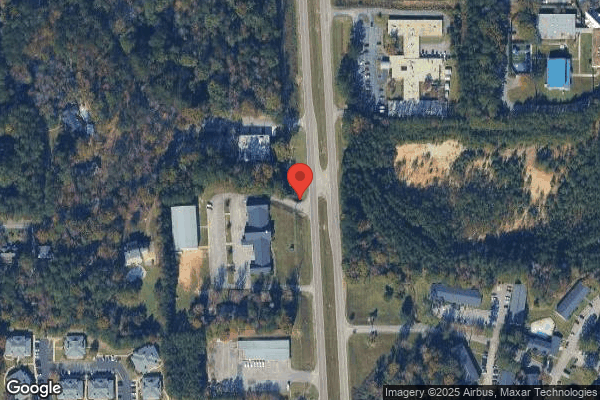
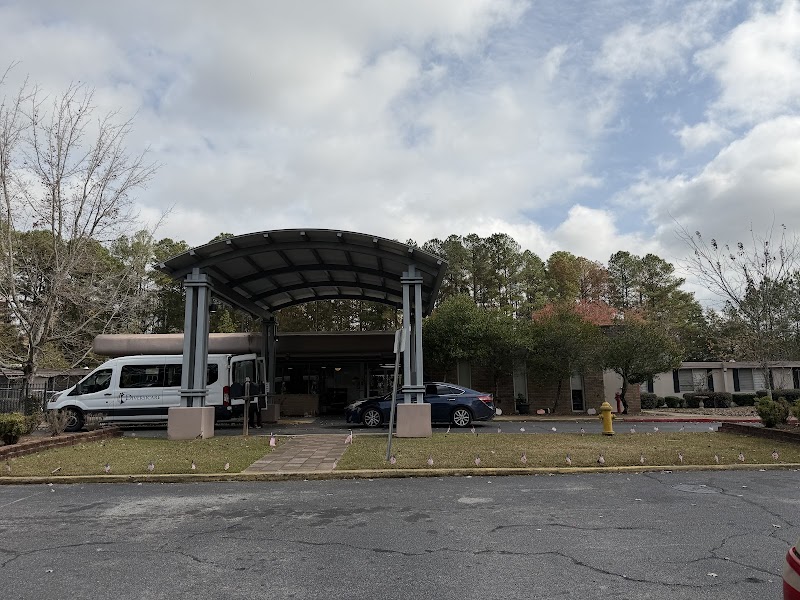
4728 HIGHWAY 39 NORTH, MERIDIAN, MS 39301 (601) 482-8151
For profit - Limited Liability company 120 Beds DIVERSICARE HEALTHCARE Data: November 2025
Trust Grade
48/100
#111 of 200 in MS
Last Inspection: May 2025

Inspected within the last 6 months. Data reflects current conditions.

Overview

Diversicare of Meridian has a Trust Grade of D, indicating below-average quality with some significant concerns. It ranks #111 out of 200 facilities in Mississippi, placing it in the bottom half, and #6 out of 9 in Lauderdale County, meaning there are only two better local options. The facility's trend is worsening, as issues increased from 5 in 2024 to 8 in 2025. Staffing is rated average, with a turnover rate of 41%, which is better than the state average of 47%, suggesting some staff stability, but RN coverage is good, exceeding that of 89% of other facilities, ensuring better oversight. However, there are concerning incidents, including a failure to manage pain effectively for a resident with serious cancer diagnoses, improperly stored food in the kitchen, and inaccuracies in staffing records submitted to Medicare, highlighting both strengths and weaknesses in care.

Trust Score
D
48/100
In Mississippi
#111/200
Bottom 45%
Safety Record
Moderate
Needs review
Inspections
Getting Worse
5 → 8 violations
Staff Stability
○ Average
41% turnover. Near Mississippi's 48% average. Typical for the industry.
Penalties
✓ Good
$12,735 in fines. Lower than most Mississippi facilities. Relatively clean record.
Skilled Nurses
○ Average
Each resident gets 41 minutes of Registered Nurse (RN) attention daily — about average for Mississippi. RNs are the most trained staff who monitor for health changes.
Violations
⚠ Watch
19 deficiencies on record. Higher than average. Multiple issues found across inspections.
★★☆☆☆
2.0
Overall Rating
★★★☆☆
3.0
Staff Levels
★★☆☆☆
2.0
Care Quality
★★☆☆☆
2.0
Inspection Score
Stable
2024: 5 issues
2025: 8 issues

The Good

  • Full Sprinkler Coverage · Fire safety systems throughout facility
  • No fines on record
  • Staff turnover below average (41%)

    7 points below Mississippi average of 48%

Facility shows strength in fire safety.

The Bad

2-Star Overall Rating

Below Mississippi average (2.6)

Below average - review inspection findings carefully

Staff Turnover: 41%

Near Mississippi avg (46%)

Typical for the industry

Federal Fines: $12,735

Below median ($33,413)

Minor penalties assessed

Chain: DIVERSICARE HEALTHCARE

Part of a multi-facility chain

Ask about local staffing decisions and management

The Ugly 19 deficiencies on record

1 actual harm
May 2025 7 deficiencies
CONCERN (D)

Potential for Harm - no one hurt, but risky conditions existed

Safe Environment (Tag F0584)

Could have caused harm · This affected 1 resident

Based on observations, staff interview, record review, and facility policy review, the facility failed to provide a comfortable, homelike environment in the resident rooms for three (3) of 32 rooms on...

Read full inspector narrative →
Based on observations, staff interview, record review, and facility policy review, the facility failed to provide a comfortable, homelike environment in the resident rooms for three (3) of 32 rooms on the North Unit. Findings include: A review of the facility's Resident Rights & Quality of Life Policy, Policy#CC-20, effective March 13,2020 indicated: The patient or resident has the right to . receive services in a center environment that is safe, clean, and comfortable . On 05/19/25 at 10:43 AM, the State Agent (SA) observed exposed sheetrock surrounding the air conditioner in room N2. On 05/21/25 at 10:05 AM, during a room tour and interview with the Maintenance Supervisor, rooms N2, N4, and N8 were observed to have exposed wall areas near the door and air conditioner, chipped paint, and exposed metal on the bottom corner of walls. The Maintenance Supervisor stated that the damage in room N8 occurred while moving a bed and confirmed that all identified areas were in need of repair. Also, on 05/21/25, during an interview with the Maintenance Supervisor, the SA reviewed maintenance work orders from April to May 2025. The review revealed no documented requests for repairs in room N2 room N4, or room N8. The Maintenance Supervisor admitted that more repair requests are communicated to him verbally during rounds than are formally documented.
CONCERN (D)

Potential for Harm - no one hurt, but risky conditions existed

Deficiency F0657 (Tag F0657)

Could have caused harm · This affected 1 resident

Based on observations, interviews, record reviews, and facility policy review, the facility failed to revise a care plan for a resident no longer requiring the use of a lift for transfers for one (1) ...

Read full inspector narrative →
Based on observations, interviews, record reviews, and facility policy review, the facility failed to revise a care plan for a resident no longer requiring the use of a lift for transfers for one (1) of 23 resident care plans reviewed (Resident #14). Findings include: A review of the facility's policy, MDS and Care Plans, dated August 2019, revealed, .MDS will be developed and maintained per RAI (Resident Assessment Instrument) Guidelines. A review of the RAI 3.0 Operations Manual dated October 2019 revealed, .Planning for Care: Individualized care plans should address strengths and weakness .Individualized care plans should be based on an accurate assessment of the resident's self-performance and the amount and type of support being provided to the resident . A record review of Resident #14's Comprehensive Care Plan revealed a care plan with a revision date of 05/15/25 stated, .I have a physical functioning deficit with transfers and require assistance of 1 to two (2) staff as needed . with interventions listed as Hoyer Total Lift Large (Green) Sling and Invacare Total Lift Large (Green) . During an observation and interview on 05/18/25 at 11:41 AM, the State Agency (SA) observed Resident #14 sitting up in his wheelchair in the hallway. Resident #14 complained that the staff would not let him use the large bathroom in the hallway. He stated he could not get in and out of the bathroom in his room and had difficulty getting on the toilet. He reported he could transfer himself but did need assistance, although it took staff a long time to come and help. On 05/19/25 at 12:10 PM, during an interview with Certified Nurse Aide (CNA) #3, she explained Resident #14 is very independent and will do everything for himself. He is to be assisted with transfers but will not wait or even ask for assistance. She stated he requires assistance from one (1) staff member with transfers. On 05/19/25 at 12:25 PM, the SA observed Resident #14 returning to his room with two (2) staff members. During an interview with the Therapy Director, she explained the resident was recently discharged from therapy but was referred back due to his complaint about not being able to use his bathroom. Resident #14 was discharged from therapy with no problems using the bathroom in his room and was walking 10-15 feet with assistance. Resident #14 wheeled himself into the bathroom without concerns, stood, and used the assist bar on the wall. No concerns were noted with the transfer with therapy staff providing contact guard assist. On 05/19/25 at 2:00 PM, during an interview with Registered Nurse (RN) #2, she explained Resident #14 requires assistance from one (1) staff member, but the resident will not call for assistance. On 05/19/25 at 2:30 PM, during an interview with the Therapy Director and record review, she confirmed Resident #14 was discharged from therapy back in February 2025 with stand-by guard assistance. Prior to therapy, the resident could not walk or transfer. She confirmed through a record review of Resident #14's PT (Physical Therapy) Discharge Summary that the resident was contact guard assist with transfers. On 05/21/25 at 12:00 PM, during an interview with RN #1, she explained the facility uses ongoing care plans and updates them daily by reviewing physician orders. She stated she uses physician orders and assessments to complete the Minimum Data Sets (MDS) and care plans. She reviewed Resident #14's care plan and confirmed the resident had a care plan for a lift. She uses the lift evaluation to complete the care plan, and the last lift evaluation completed for the resident was from 11/24, which indicated the resident required a lift. She confirmed she was unaware that the resident was no longer using a lift but acknowledged there were no current orders for a lift. The care plan had not been revised accurately to reflect the individual's current needs. On 05/21/25 at 12:45 PM, during an interview with the Assistant Director of Nursing (ADON), she confirmed Resident #14 does not require a mechanical lift. She stated she expects all care plans to be updated according to current resident assessments. On 05/21/25 at 12:55 PM, during an interview with the Administrator, she confirmed she expects all care plans to reflect an accurate assessment of each resident and be revised according to the RAI guidelines. A record review of Resident #14's admission Record revealed the facility admitted the resident on 02/23/24 with the diagnoses of Other Seizures, Anxiety Disorder, Unspecified, Delusional Disorders, and Personal History of Traumatic Brain Injury. A record review of Resident #14's Order Summary Report with active orders as of 05/20/25 revealed orders for OT clarification: OT to treat patient three (3) times a week times 2 weeks with therapeutic exercise, therapeutic activity, self-care training, and group to increase safety and independence with functional tasks active on 05/19/25. No orders were noted for a mechanical lift. A record review of Resident #14's Annual Minimum Data Set (MDS) with an Assessment Reference Date (ARD) of 05/13/25 revealed a Brief Interview for Mental Status (BIMS) score of 15, indicating the resident was cognitively intact. Section GG revealed the resident required partial/moderate assistance with toilet transfers. A record review of Resident #14's PT Discharge Summary revealed dates of service from 01/23/25 through 02/26/25, with discharge at CGA (contact guard assist) for transfers on 02/26/25.
CONCERN (E)

Potential for Harm - no one hurt, but risky conditions existed

Deficiency F0565 (Tag F0565)

Could have caused harm · This affected multiple residents

Based on record review of resident council minutes, facility policy review, and interviews conducted during the Resident Council meeting, the facility failed to promptly resolve grievances related to ...

Read full inspector narrative →
Based on record review of resident council minutes, facility policy review, and interviews conducted during the Resident Council meeting, the facility failed to promptly resolve grievances related to condiments and call light response times for 12 of 12 Resident Council members. This failure has the potential to affect 87 residents. Cross Reference F725 Findings Include: A review of the facility's Resident Rights and Protections Under State and Federal Law dated 2022 indicates, You have the right to voice grievances and recommend changes . to representatives . and The nursing home must try to resolve the issue promptly. A review of the facility's Customer Concern (Grievance) Policy, effective date July 2018, indicates, Support residents' right to voice concerns . and ensure after receiving a concern, the center actively seeks a resolution ., and Customer concerns will have a prompt response . A record review of the Resident Council meeting minutes dated October 16, 2024, and November 20, 2024, confirmed residents raised concerns about the lack of condiments. On 05/18/25 at 12:30 PM, an observation of the dining room revealed baked potatoes served to residents with no salt or pepper packets on the trays to season the potatoes. No salt and pepper shakers were observed on the tables. On 05/18/25 at 12:55 PM, the State Agent observed Resident #52 having lunch in Styrofoam to-go containers. The resident's lunch consisted of slices of roast beef, carrots, baked potatoes, and a cookie. No condiments were noted on the tray. On 05/18/25 at 01:00 PM, during an interview with a Certified Nursing Assistant (CNA), she confirmed that she assisted Resident #52 with lunch and noted the resident had no condiments on her tray, including butter, salt, or pepper. She explained that she went to the kitchen and was informed there was no butter or salt and pepper. She further explained that the dietary manager had announced over the intercom that all meals would be served in Styrofoam to-go containers due to only two kitchen staff working that day. On 05/19/25 at 1:30 PM, the Resident Council met with the State Agent to discuss concerns raised by residents regarding the quality of care, staff responsiveness, food service, and general facility practices. Resident #14 stated that they pay too much money not to receive basic condiments such as salt, pepper, and butter. Residents reported that no condiments were provided the previous week. Resident #14 stated they were told the absence of condiments was due to milk being wasted on condiment boxes during delivery, and others were told the dietary department was operating on a budget. Resident #32 and Resident #68 reported that call lights often take up to 20 minutes to be answered. Resident #62 stated that during the 11:00 PM to 7:00 AM shift, call lights can go unanswered for up to 30 minutes. Residents alleged that during this shift, staff are often on their personal phones when calls come in and do not respond promptly. Resident #39 shared that she has had to call the facility using her personal phone to be connected to the nurses' station to request assistance because CNAs either took an excessive amount of time to respond or did not respond at all. Resident #14 confirmed similar issues during the day shift, stating that it takes a long time for CNAs to respond to call lights. Resident #68 stated that CNAs sometimes answer a call light only to say they will return but never come back. Resident #72 reported that CNAs often turn off the call light, say they will come back, and by the time they return, she has forgotten what she needed. Resident #39 confirmed that her call light has remained unanswered for more than 30 minutes on multiple occasions. Resident #68 reported that last month, she called 911 for an ambulance because her call light had been ignored for an extended period. On 05/19/25 at 2:46 PM, during an interview, the Ombudsman reported that during her routine visits and rounds at the facility, Certified Nursing Assistants (CNAs) are frequently not present or visible on the units. She stated that when she visits to speak with residents or follow up on areas of potential noncompliance, nurse aides are consistently difficult to locate. On 05/20/25 at 9:27 AM, during an interview conducted with the Social Services Director, she explained that grievances can be submitted by residents through various channels. She shared that common grievances often involve food preferences, response times to call lights, and missing personal items. Once a grievance form is completed, it is forwarded to the appropriate department. For example, concerns related to call lights are directed to the Director of Nursing (DON), who may then coordinate with Human Resources if necessary. She acknowledged that call light response times tend to be slower during breakfast and lunch tray pass because CNAs are actively engaged in meal service. On 05/20/25 at 9:43 AM, during an interview with the Activities Director, she confirmed that call light responsiveness has been an ongoing issue within the facility. She reported that while the problem may be resolved for a period, typically about a month, it often recurs. She stated that she documented the issue as a grievance and submitted it to the nursing department. On 05/21/25 at 9:00 AM, during an interview with the District Manager of Dietary (DMD), she revealed that the truck comes on Wednesday of every week and that last week, she was told something had spilled over the condiments on the truck, and the condiments had to be rejected. The DMD stated that staff could have gone to get condiments from the store so residents could have condiments during meals. She also stated that salt and pepper shakers were on the carts for residents during tray pass. The State Agent did not observe salt and pepper shakers on the trays or in the dining hall during lunch tray pass. On 05/21/25 at 11:35 AM, during an interview with the Dietary Manager (DM), she revealed that the condiments on the week's delivery appeared to have spilled milk or ice cream on the box. Although the condiments were sealed inside the box, she rejected the items and sent them back to the provider. The DM admitted to having run out of condiments. The State Agent informed the DM that, according to Resident Council members, the lack of condiments had been documented as an ongoing issue since October and November 2024, and residents reported they also did not have condiments the prior week.
CONCERN (E)

Potential for Harm - no one hurt, but risky conditions existed

Assessment Accuracy (Tag F0641)

Could have caused harm · This affected multiple residents

**NOTE- TERMS IN BRACKETS HAVE BEEN EDITED TO PROTECT CONFIDENTIALITY** Based on record review, staff interviews, and facility policy review, the facility failed to assure accurate coding of the Minim...

Read full inspector narrative →
**NOTE- TERMS IN BRACKETS HAVE BEEN EDITED TO PROTECT CONFIDENTIALITY** Based on record review, staff interviews, and facility policy review, the facility failed to assure accurate coding of the Minimum Data Set (MDS) related to discharge status (Resident #90) and an anticoagulant medication (Resident #14) for two (2) of 23 residents sampled. The scope/severity for F641 was increased to E because this tag was cited on the last annual recertification survey 1/25/24. This represents a pattern of deficiency. Findings Include: A review of the facility's policy, MDS and Care Plans, dated August 2019, revealed, .MDS will be developed and maintained per RAI (Resident Assessment Instrument) Guidelines. A record review of the Centers for Medicare & Medicaid Services (CMS) Resident Assessment Instrument (RAI) 3.0 Manual, dated October 2019, revealed, .Completion of the RAI . The RAI process has multiple regulatory requirements . (1) the assessment accurately reflects the resident's status . Resident #90: A record review of the admission Record revealed the facility admitted Resident #90 on 03/06/25 with diagnoses including fractured femur. A record review of the clinical record revealed Resident #90 had an order with an end date of 03/22/25 to Discharge home . A record review of the Discharge Summary, dated 03/17/25, revealed Resident #90 would transfer home . A record review of the facility's Notice of Transfer or Discharge revealed that on 03/19/25 the resident was discharged from the facility to home. A record review of the Discharge MDS with an Assessment Reference Date (ARD) of 03/19/25 revealed Resident #90 was coded as discharged to a Short-Term General Hospital. On 05/19/25 at 3:41 PM, in an interview with the Social Services Director (SSD), she acknowledged making an incorrect entry regarding Resident #90's discharge status. The SSD noted it was a simple mistake and confirmed she is responsible for ensuring her sections of the MDS are coded correctly. She affirmed that the importance of having accurate information on the MDS is for proper billing and stated she will be more careful to verify the accuracy of information. On 05/19/25 at 3:43 PM, in an interview with Registered Nurse (RN) #1, she acknowledged the discrepancy in the MDS, which listed the resident's discharge status as Short-Term General Hospital. RN #1 confirmed it is the responsibility of the discipline that coded their section to assure accuracy before submitting the MDS. She stated the MDS is used for reimbursement, and it is important to include accurate information. On 05/19/25 at 3:47 PM, during an interview with the Director of Nursing (DON), she stated the MDS nurse is responsible for ensuring the MDS contains accurate information. The DON emphasized the importance of accurate MDS coding to ensure proper billing and stated she expects the MDS nurse to verify information before submission. Resident #14: A record review of the admission Record revealed Resident #14 was admitted on [DATE] with diagnoses including seizure. A record review of the Quarterly MDS with an ARD of 02/11/25 Section N revealed Resident #14 was taking an anticoagulant. A record review of the physician's orders and the electronic Medication Administration Record (MAR) for the month of February 2025 revealed there were no anticoagulant medications ordered or administered to Resident #14 during the lookback period. On 05/21/25 at 12:00 PM, during an interview, RN #1 explained she was not working in February 2025 and the MDS nurse responsible at the time was no longer employed at the facility. After reviewing Resident #14's physician's orders and MAR, RN #1 confirmed there was no indication the resident was on an anticoagulant medication and that the MDS must have been coded in error. On 05/21/25 at 3:24 PM, in an interview with the Administrator, she acknowledged the discrepancies related to discharge status and medication administration on the MDS. She stated that the discipline completing each section of the MDS is responsible for assuring its accuracy. The Administrator explained that accurate MDS coding is necessary to reflect the true picture of the resident's needs and acuity of care. She stated she will provide training to staff on MDS coding expectations.
CONCERN (E)

Potential for Harm - no one hurt, but risky conditions existed

Deficiency F0725 (Tag F0725)

Could have caused harm · This affected multiple residents

Based on observation, interviews, and facility policy review the facility failed to ensure sufficient nursing staff were available to meet the care needs of residents during a shift change on three (3...

Read full inspector narrative →
Based on observation, interviews, and facility policy review the facility failed to ensure sufficient nursing staff were available to meet the care needs of residents during a shift change on three (3) of six (6) resident halls, as evidenced by the facility having one (1) Certified Nurse Aide (CNA) available during the transition from day shift to evening shift, while three nurses remained at the nurse's station, and five (5) resident call lights were observed activated for approximately 30 minutes without response. Cross Reference F565 Findings include: A review of the facility's Staffing Policy revealed it is the practice of (Proper Name of Facility) to assure that adequate staffing is maintained to provide the necessary care and services for each resident. Staff expectations are based on resident acuity and needs and may fluctuate based on the center population as identified in the facility assessment. The center conducts workforce management meetings daily to discuss open positions and call-ins as related to patient needs. The facility continues to actively recruit staff, offering various incentives. On 5/20/25 at 2:30 PM, the State Agency observed several lights sounding on the North Wing. One light was on in North A Hall, two call lights were sounding in North B Hall, and two call lights were sounding in North C Hall. The State Agency also observed three nurses at the nurse's station-one sitting and two standing-reporting to the oncoming shift. No one answered the call lights. No CNAs were observed on the floor until 2:45 PM. At that time, CNA #8 arrived for the evening shift on the North Unit and began answering call lights. Resident #11 was heard saying, Will someone please help me? Upon entering the room, the resident stated her call light had been on for 30 or 40 minutes and that she needed help. On 5/20/25 at 4:10 PM, CNA #2 confirmed there were no CNAs on the floor at 2:55 PM. She also stated she answered the call lights in Rooms N12 and N19. CNA #2 said she did not know where the other CNAs were but confirmed that nurses were present at the nurse's station when call lights were sounding. CNA #2 added that CNAs should notify nurses before leaving the floor and that she had just been informed that CNA #9, scheduled for the North Hall, was sent home on administrative leave at 2:45 PM. On 5/20/25 at 4:30 PM, during an interview, the Assistant Director of Nursing (ADON) stated she did not know where the CNAs were and was unaware that the Administrator had sent CNA #9 home on administrative leave until the State Agency asked about the unanswered call lights on the North Hall around 3:00 PM. On 5/21/25 at 8:00 AM, Licensed Practical Nurse (LPN) #3 confirmed there were no CNAs on the floor at 2:30 PM on 5/20/25. She was unaware that CNAs had left the floor until the State Agency asked to speak with them. She also did not know how long they had been gone. LPN #3 stated CNAs are supposed to report off to the nurses before leaving or going home but often fail to do so. She said administrative staff are aware that CNAs often leave without notification. On 5/21/25 at 8:10 AM, LPN #1 confirmed she was one of the cart nurses on North Hall during the day shift. She stated she did not know CNA #9 had been sent home on administrative leave and that the CNAs had not informed her they were leaving. On 5/21/25 at 9:00 AM, CNA #4 confirmed she was assigned to North C Hall. She stated she went outside to dump her barrel before the shift change and did not inform nurses she was leaving the hall. On 5/21/25 at 9:15 AM, CNA #1 confirmed she was assigned to North A Hall and also did not inform the nurses she was leaving the hall. She explained she went to dump her barrel before the next shift. She did not think to notify the nurse and was unaware CNA #9 had been placed on administrative leave. CNA #1 said the hall is often short-staffed. She stated, We try to do the best we can with what we have. On 5/21/25 at 9:30 AM, CNA #6 stated CNAs do not perform walking rounds to explain care to the oncoming shift. She said dayshift CNAs are often gone before the evening shift arrives. CNA #6 confirmed only one evening shift CNA was on the floor when she arrived. On 5/21/25 at 11:00 AM, CNA #8 confirmed she clocked in at 2:25 PM on 5/20/25. When she arrived on North Hall, call lights were sounding, and no CNAs were on the hall. She observed three nurses at the nurse's station. CNA #8 stated she normally worked as the transportation aide on dayshift but had been working evenings due to staffing shortages. She also confirmed seeing CNAs #4 and #5 outside. On 5/21/25 at 11:30 AM, LPN #2 confirmed she was at the nurse's station at 2:30 PM on 5/20/25 receiving report from LPN #1. She stated that CNAs do not conduct walking rounds and that the dayshift CNAs were not on the hall when she arrived, which she did not know until asked by the State Agency. She said she would have helped with call lights if she had known and acknowledged that nurses struggle to assist due to CNA shortages. On 5/21/25 at 12:00 PM, the Administrator confirmed she informed CNA #2 around 2:50 PM that CNA #9 had been placed on administrative leave, which left the North Hall down one CNA. She stated she was unaware the other CNAs were not on the hall. The Administrator acknowledged the facility is actively working to increase staffing and confirmed that available shifts are posted for staff to pick up as needed.
CONCERN (F)

Potential for Harm - no one hurt, but risky conditions existed

Food Safety (Tag F0812)

Could have caused harm · This affected most or all residents

Based on observation, interview, and facility policy review, the facility failed to store food and maintain food quality in accordance with professional standards for food safety related to overly rip...

Read full inspector narrative →
Based on observation, interview, and facility policy review, the facility failed to store food and maintain food quality in accordance with professional standards for food safety related to overly ripe produce and improperly stored foods and unlabeled items during one (1) of three (3) kitchen observations. Findings include: A review of the facility's policy, Food Storage: Cold Foods revised 2/2023, revealed, .Procedures .2. All perishable foods will be maintained at a temperature of 41 degrees F or below . On 05/18/25 at 10:35 AM, during an observation and interview of the kitchen with the Dietary Manager (DM), refrigerator #3 revealed a plastic storage container containing 14 overly ripe cucumbers with white slimy rind, soft and pliable to the touch, and liquid formed at the bottom of the container. A further observation of the pantry revealed one (1) opened bottle of yellow mustard with the manufacturer's instructions Best if used by date of April 17, 2025; one (1) opened gallon-sized bottle of soy sauce with the manufacturer's instructions to Refrigerate after opening for quality; 19 overly ripe oranges with green and white bio-growth on the rind; and one (1) overly ripe apple containing a brown soft spot with the interior of the apple exposed. The Dietary Manager acknowledged the overly ripe produce and improperly stored pantry items and stated it is her responsibility to make sure the food is not expired and is stored properly. The DM stated she did not examine the produce that day as she had intended and confirmed the risks of having overly ripe food in the kitchen. The DM noted that going forward she will do a regular check of the produce and pantry items to assure freshness. The DM affirmed that the dietary staff are in-serviced once a month on food safety, which includes lectures and tests. On 05/20/25 at 02:30 PM, in an interview with the Administrator, she acknowledged the overly ripe produce and improperly stored foods. The Administrator stated it is the responsibility of the DM to monitor the food supplies for proper storage and spoilage and stated her expectation is that the DM will get a system of organization to stay on top of monitoring food safety.
CONCERN (F)

Potential for Harm - no one hurt, but risky conditions existed

Staffing Data (Tag F0851)

Could have caused harm · This affected most or all residents

Based on interviews and Certification and Survey Provider Enhanced Reports (CASPER) reporting data review, the provider failed to ensure their Payroll Based Journal (PBJ) (information of the staffing ...

Read full inspector narrative →
Based on interviews and Certification and Survey Provider Enhanced Reports (CASPER) reporting data review, the provider failed to ensure their Payroll Based Journal (PBJ) (information of the staffing hours for the appropriate care of the residents) had been corrected before submitting to the Centers for Medicare and Medicaid Services (CMS) for one (1) of four (4) quarters reviewed. Findings include: Review of the provider's CASPER reporting data revealed the facility triggered for excessively low weekend staffing for one (1) of four (4) quarters: October 1, 2024 - December 31, 2024. Review of the facility's Monthly Schedule dated October, November, and December 2024 revealed the Director of Nursing (DON) worked as supervisor on October 26 and 27, November 3, and December 14 and 29, 2024. She worked on the floor as a nurse on November 5 and December 29, 2024. Review of the facility's Monthly Schedule dated October, November, and December 2025 revealed the Assistant Director of Nursing (ADON) worked as supervisor on October 6 and 19, November 3, 14, 16, and 17, and December 1 and 29, 2024. The ADON worked on the floor on October 5, 12, 13, and 29, November 22, and December 29, 2024. During an interview on 5/19/25 at 11:00 AM with the Director of Nursing (DON), she explained she did not know the facility triggered for low weekend staffing in the first quarter. The DON said she and the Assistant Director of Nursing (ADON) work when the nursing staff is low. The DON revealed that both are salaried employees and were not clocking in and out during the first quarter. The DON said they just started clocking in and out within the last two (2) weeks. The DON also said the only proof they have that they worked is the assignment sheets, where they wrote themselves in. This is not included in the daily Payroll Based Journal. During an interview on 5/19/25 at 11:15 AM with Certified Nursing Assistant (CNA) #2, she revealed she is responsible for the schedule for the nurses and CNAs. CNA #2 stated that if the staff members work a different shift or work beyond their routine shift, she goes into the system and corrects the information. If the staff works on the floor but normally performs other jobs, she changes the code to reflect the correct position the staff worked that day. The corporate office is responsible for sending in the PBJ. During an interview on 05/20/25 at 09:00 AM with the Administrator, she explained she was not aware the facility triggered in the first quarter of 2025 for excessively low weekend staff. The staffing coordinator corrects the staff punches daily. This goes directly to the corporate office. The Administrator confirmed the facility just started two (2) weeks ago a new process requiring all salaried employees to clock in and out when they work on the floor. During an interview with the Director of Payroll, he explained he has not received anything from CMS showing that the facility triggered for excessively low staff for the first quarter. The Director said the PBJ was accepted.
Mar 2025 1 deficiency 1 Harm
SERIOUS (G) 📢 Someone Reported This

A family member, employee, or ombudsman was alarmed enough to file a formal complaint

Actual Harm - a resident was hurt due to facility failures

Deficiency F0697 (Tag F0697)

A resident was harmed · This affected 1 resident

**NOTE- TERMS IN BRACKETS HAVE BEEN EDITED TO PROTECT CONFIDENTIALITY** Based on interviews, record review, and facility policy review, the facility failed to ensure effective and timely pain manageme...

Read full inspector narrative →
**NOTE- TERMS IN BRACKETS HAVE BEEN EDITED TO PROTECT CONFIDENTIALITY** Based on interviews, record review, and facility policy review, the facility failed to ensure effective and timely pain management for one (1) of three (3) sampled residents (Resident #5) with multiple cancer diagnoses, including lung, pancreatic, rectal, and glottic cancer and was admitted with physician orders for scheduled and as-needed (PRN) opioid analgesics but did not receive PRN pain medication for approximately twelve (12) hours following his admission, which resulted in unmanaged pain. Findings include: A review of the facility policy titled Pain Management, dated January 2021, revealed, .To provide guidelines for consistent evaluation, management and documentation of pain in order to provide maximum comfort and enhanced quality of life .Upon admission pain is evaluated .Findings are recorded in the EMR (Electronic Medical Record) .Physician notification occurs as indicated for communication of findings and review of need for pharmacological options . A record review of the admission Record, revealed the facility admitted Resident #5 on 2/14/25 and he had diagnoses including Malignant Neoplasm of Rectum, Pancreas, Glottis, and Bronchus or Lung. A record review of the After Visit Summary from the acute hospital, dated 2/14/25, revealed Instructions included to start fentaNYL Start taking on: February 15, 2025 and HYDROmorphone (Dilaudid). The medication list included fentaNYL 50 mcg (last time patch was given was on 2/12/25) and HYDROmorphone 4 mg every four (4) hours as needed. These orders were received by the facility on 2/14/25 at 2:40 PM. A record review of Resident pain level documented on 2/15/25 at 4:52 AM was three (3). A record review of the Nurse Practioner (NP) note, dated 2/15/25, signed at 10:17 AM revealed, Chief Complaint/Reason for this Visit was new patient needs pain medication .New patient; admitted last night complaints of pain all over. History of cancer; lung. Has a prescription for dilaudid but it is not available at this time. Resident has a fentanyl patch in use with no relief of pain .Nurse reports that his medications should be arrive tomorrow but resident needs relief now .Orders for this visit Norco 10-325 mg (milligrams) take one tablet by PEG (Percutaneous Endoscopic Gastrostomy) every 12 hours x (times) 2 doses. A record review of the Transactions by Patient report revealed LPN #1 removed Hydrocodone 10 mg for Resident #5 on 2/15/25 at 10:46 AM. A record review of the acute care hospital admission records, dated 2/15/25, revealed Resident #5 was, .significant for .lung cancer, rectal cancer, and pancreatic cancer. He has chronic back pain and the right lower extremity pain for which he is on analgesic. He returned because of worsening pain back and right hip. Pain medications were not controlling his pain enough .Patient ultimately succumbed to his illness on 02/20/2025 . On 3/11/25 at 11:15 AM, during a phone interview with one of Resident #5's family members revealed the resident was admitted to the facility late on 2/14/25 at approximately 10:30 PM, and the facility did not have his pain medication available until the next day on 2/15/25 at around 11:00 AM. She revealed her brother had cancer throughout his body and complained of pain frequently. During a phone interview on 3/13/25 at 10:14 AM, with License Practical Nurse (LPN) #1 confirmed that the facility did not have the written prescription of hydromorphone in their emergency medications. She reported to work on 2/15/25 at 7:00 AM, the resident's family member informed her of Resident #5's pain, after realizing the facility did not have the medication. She notified the Nurse Practioner (NP) on call, who returned her call to request a pain medication for the resident. The NP ordered Hydrocodone-Apap 10-325 MG for the resident. On 2/15/25 at 10:46 AM, LPN #1 removed the medication from the emergency medication and administered to the resident. He was later transferred to the hospital for evaluation and treatment due to his pulse oximetry was dropping. On 3/13/25 at 10:21 AM, during an interview with the Director of Nurses (DON), she confirmed that she was aware of Resident #5 being admitted to the facility on [DATE] with a hard copy (written) prescription for hydromorphone (Dilaudid). The facility expected for him to arrive at the facility earlier so that the medication would have been delivered by their pharmacy. The DON revealed there was a delay in the resident receiving his pain medication due to their emergency medication did not have his prescribed medication of Dilaudid. The staff contacted the NP on 2/15/25 to obtain an order for pain medication that they kept at the facility. On 3/13/25 at 3:00 PM, an interview with the Administrator confirmed that the facility policy is to administer pain medication as requested, that the facility failed to give the medication at the requested time, which caused a delay in treatment. On 3/17/25 at 1:00 PM, during a post exit phone interview with Resident #5's other family member, she stated she was at the facility on 2/15/25, at approximately 7:30 AM and the resident stated that he was in pain all night and he was calling out in pain. She stated that his face was red, agitated, and he was coughing. She went to the nurses' station and the night nurse reported that they did not have his medication in the facility, but that they were in the process of contacting the NP to obtain another prescription for a pain medication. The family member reported that she was walking up and down the hall, waiting for the nurse to obtain the resident's pain medication. The family member also reported they brought it to him around 11:00 AM, and Resident #5 kept asking her to take him to the hospital because of his pain. On 3/17/25 at 2:00 PM, during a post exit phone interview, LPN #2, confirmed that on 2/14/25 she worked the night shift and Resident #5 entered the facility around 8:30 PM, with a hard copy prescription for Dilaudid. She reported that she observed Resident #5 sleeping frequently during the night and he did not complain of pain or use his call light. She revealed that she was not aware that she could have contacted the on-call NP during the night for a pain prescription for medication kept in the emergency kit. LPN #2 stated that a family member came to the facility on 2/15/25 and reported that Resident #5 was in pain.
Jan 2024 5 deficiencies
CONCERN (D)

Potential for Harm - no one hurt, but risky conditions existed

Resident Rights (Tag F0550)

Could have caused harm · This affected 1 resident

**NOTE- TERMS IN BRACKETS HAVE BEEN EDITED TO PROTECT CONFIDENTIALITY** Based on observation, staff and resident interview, and facility policy review the facility failed to ensure residents' rights w...

Read full inspector narrative →
**NOTE- TERMS IN BRACKETS HAVE BEEN EDITED TO PROTECT CONFIDENTIALITY** Based on observation, staff and resident interview, and facility policy review the facility failed to ensure residents' rights were respected as evidenced by staff members using their cell phones in the resident's rooms for two (2) of 34 sampled residents. Residents #30, 32, 35 and 61. Findings Include: Review of the facility's policy, Resident's Rights and Quality of Life, with an effective date of 5/1/2012, revealed Policy Statement .It is the policy .that all residents have the right to a dignified existence, self-determination, and communication with an access to people and services inside and outside the facility . Review of the facility's policy, Personal Cell Phone and Portable Electronic Device Usage Policy, with an effective date of 7/1/2014, revealed Purpose .we require that our employee follow the guidelines listed below for the safety of the residents, patients, our associates, and others . Policy .Usage in Work Areas During Work Time .Personal cell phones and/or portable electronic devices may not be used in resident care areas or other work areas during work time. Usage may only take place during regular break and meal periods in non-work areas . An observation and interview on 1/23/24 at 3:30 PM, revealed Certified Nurse Aide (CNA) #1 standing in the corner of Resident #39's room talking on a cell phone with the resident lying in bed. When the State Agency (SA)entered the resident's room, the staff member stated, Ok I've got to get off here. CNA #1 stated he should not have been in the resident's room talking on the phone. During a resident council meeting on 1/24/24 at 10:00 AM, there were four (4) residents (Residents #30, 32, 35 and 61) that complained the staff talked on their cell phone or those ear things while they were in resident rooms. Resident #30 stated that staff came into his room and went behind the curtain to his roommate's side and talked on their phones for personal conversations. He stated that his roommate was bed bound and did not talk much, but they both could hear. Resident #32 revealed he agreed with Resident #30, and he had also had staff come into his room talking on the phone and at times has thought they were talking to him, but they were talking to someone on those ear things. Resident #35 agreed with Resident #30 and #32 and stated that she had complained about staff doing that to her and that several had come into her room and had about a 20-minute conversation. Resident #61 agreed with the other residents and admitted that staff had done that to her in her room on their cell phones. All four residents stated they had complained about this to other staff members but could not remember anyone's name. Resident #35 stated she had told the head nurse on her hall, but nothing had changed. Resident #30 stated they did not need to be coming in our rooms and talking on their phone because that is our home. An observation and interview on 1/24/24 at 10:55 AM, revealed CNA #2 standing in an unsampled resident's room, with the door closed and the resident not present in the room. This observation revealed she was looking at her cell phone and stated in the interview that she was on her cell phone checking messages. She admits that she should not have been in the resident's room doing that and the facility policy was that staff are not to use their cell phones in front of the residents and that they are supposed to use them in a break area. She revealed the reason they should not use their cell phones in resident areas is because it is disrespectful. An interview on 1/24/24 at 11:22 AM, with the Director of Nursing (DON) confirmed that staff should not use their cell phones or earpiece phones while in the resident areas. She stated they are supposed to use those in break areas if needed. She revealed the reason they should not use them was because they would not be able to provide care. She confirmed the facility policy was that cell phone usage was not permitted in the resident care areas. Resident #30 Record review of Resident #30's admission Record revealed the resident was admitted to the facility on [DATE] with medical diagnoses that included Anxiety disorder. Record review of Resident #30's Minimum Data Set (MDS) with an Assessment Reference Date (ARD) of 12/26/23 revealed under Section C a Brief Interview for Mental Status (BIMS) score of 15, which indicates the resident is cognitively intact. Resident #32 Record review of Resident #32's admission Record revealed the resident was admitted to the facility on [DATE] with diagnoses that included Heart Failure and Major Depressive Disorder. Record review of Resident #32's MDS with an ARD of 12/22/23 revealed under Section C a BIMS score of 15, which indicates the resident is cognitively intact. Resident #35 Record review of Resident #35's admission Record revealed the resident was admitted to the facility on [DATE] with diagnoses that included Generalized Anxiety Disorder Record review of Resident #35's MDS with an ARD of 10/31/23 revealed under Section C a BIMS score of 15, which indicates the resident is cognitively intact. Resident #61 Record review of Resident #61's admission Record revealed the resident was admitted to the facility on [DATE] with diagnoses that included Chronic Kidney Disease. Record review of Resident #61's MDS with an ARD of 11/7/23 revealed under Section C a BIMS score of 15, which indicates the resident is cognitively intact.
CONCERN (D)

Potential for Harm - no one hurt, but risky conditions existed

Assessment Accuracy (Tag F0641)

Could have caused harm · This affected 1 resident

**NOTE- TERMS IN BRACKETS HAVE BEEN EDITED TO PROTECT CONFIDENTIALITY** Based on staff interview, record review, and facility policy review, the facility failed to ensure a resident's Minimum Data Set...

Read full inspector narrative →
**NOTE- TERMS IN BRACKETS HAVE BEEN EDITED TO PROTECT CONFIDENTIALITY** Based on staff interview, record review, and facility policy review, the facility failed to ensure a resident's Minimum Data Set (MDS) assessment was accurately coded for ordered medication for one (1) of 21 MDS assessments reviewed. Resident #63 Findings Include: Record review of facility policy titled, RAI (Resident Assessment Instrument) Process Guideline , dated September 2020, revealed, Guideline Statement: The purpose of this guideline is to provide guidance and instruction on how to complete the RAI process. The RAI process consists of three components: The Minimum Data Set (MDS) Version 3.0, The Care Area Assessment (CAA) process, and the RAI utilization guideline .Process .The center will determine how the process is completed ensuring that the process includes direct observation and communication with the residents and direct care staff . Record review of Resident #63's admission Record revealed she was admitted to the facility on [DATE]. She had a diagnosis of Type 2 Diabetes Mellitus with Hyperglycemia with an onset date of 10/30/23. Record review of the Order Summary Report, with active orders as of 1/25/2024, revealed Resident #63 had a Physician's Order, dated 10/30/23, for Ozempic .Inject 0.25 milligrams (mg) subcutaneously weekly .for Diabetes related to Type 2 Diabetes Mellitus. Record review of the Minimum Data Set (MDS), with an Assessment Reference Date (ARD) of 1/11/24, Section N revealed Resident #63 received one (1) Insulin injection during the seven day look back period. Review of the medical record revealed there were no Physician's Orders or documentation recorded that Resident #63 received insulin in January of 2024. During an interview on 1/23/24 at 4:03 PM, the MDS Assistant Coordinator Registered Nurse (RN) revealed she was responsible for entering the information for the MDS, dated [DATE], for Resident #63. She stated she was new to the position and thought that since Ozempic was an injectable medication that lowered the blood sugar for diabetic residents and that it was categorized as Insulin. She stated the MDS assessment provides health information on each resident and confirmed she failed to accurately enter Resident #63's medication information. An interview with the Director of Nursing (DON) on 1/25/24 at 8:45 AM, revealed she thought Ozempic was classified as an insulin. She confirmed after researching this, she determined that it was not an insulin and coding it as an insulin was an MDS discrepancy.
CONCERN (D)

Potential for Harm - no one hurt, but risky conditions existed

Comprehensive Care Plan (Tag F0656)

Could have caused harm · This affected 1 resident

Based on observation, staff interview, record review and facility policy review the facility failed to implement a care plan related to resident activities for one (1) of 21 resident care plans review...

Read full inspector narrative →
Based on observation, staff interview, record review and facility policy review the facility failed to implement a care plan related to resident activities for one (1) of 21 resident care plans reviewed. Resident #39 Findings include: Review of the facility policy, Comprehensive Care Plan, with an effective date of May 1, 2012, revealed .Practice Guidelines . 1. The interdisciplinary care plan is implemented to guide health care center staff in the provision of necessary care and services to obtain and maintain the highest practicable physical, mental, and psychosocial well-being of the resident and promotion of the resident and family in planning care . A record review of the Comprehensive Care Plan revealed Focus (Proper Name) is (dependent on staff .) for meeting emotional, intellectual, physical, and social needs r/t (related to ) CVA (Cerebral Vascular Accident) affected left dominant side or vision deficits . revised 6/2/2023 .Interventions/Tasks .Invite the resident to scheduled activities. The resident needs assistance/escort to activity functions. An interview and observation on 01/22/24 at 03:01 PM, revealed Resident #39 stated he does not usually go out of the room for activities, but would like to, and revealed that he cannot see. He stated he does not know when the activities are, and the staff had not asked or told him. An observation and interview on 1/23/24 at 10:40 AM, revealed a group activity of Devotion was taking place in the room while Resident #39 was sitting up in bed in his room. Resident #39 said that he was not asked if he wanted to attend the activity. During an interview on 1/23/23 at 11:00 AM, with Certified Nurse Aide (CNA) #3, she stated that Resident #39 had to be taken to Activities, because he could not get himself out of bed or self-propel his wheelchair. During an interview on 1/23/24 at 11:15 AM, the Activities Director confirmed that Resident #39 did not attend the group activity of Devotion this morning. She revealed that she does not document who all comes to her group activities and she depends on the staff to help her know when residents are not coming to activities so she can put them on in room activities. She stated that the resident was not documented as having received in room activities for the month of January. During an observation on 1/23/24 at 1:45 PM, a facility staff member was going down the hallway where Resident #39 resides and asking residents if they wanted to go to activities. The staff member did not ask Resident #39 if he wanted to attend the activity. On interview on 1/23/24 at 2:15 PM, with the Director of Nurses (DON) and the Administrator, revealed that Resident #39 should be having one-on-one activities at a minimum. The DON revealed that the purpose of residents going to activities is for socialization and livelihood. During an interview on 1/23/24 at 3:04 PM, the Activities Director confirmed that activities are for residents to socialize with others. She revealed that if Resident #39 had a care plan that indicated the staff should be assisting the resident with his activities, then his care plan was not implemented. An interview with CNA #3 and record review of the Comprehensive Care Plan, on 1/24/24 at 8:30 AM, confirmed Resident #39 had a care plan intervention to invite the resident to scheduled activities #3 confirmed that by not inviting or taking Resident #39 to activities means the care plan was not implemented.
CONCERN (D)

Potential for Harm - no one hurt, but risky conditions existed

ADL Care (Tag F0677)

Could have caused harm · This affected 1 resident

**NOTE- TERMS IN BRACKETS HAVE BEEN EDITED TO PROTECT CONFIDENTIALITY** Based on observation, resident, staff and family interview, record review, and facility policy review, the facility failed to sh...

Read full inspector narrative →
**NOTE- TERMS IN BRACKETS HAVE BEEN EDITED TO PROTECT CONFIDENTIALITY** Based on observation, resident, staff and family interview, record review, and facility policy review, the facility failed to shave a resident who required staff assistance for Activities of Daily Living (ADLs) for one (1) of 21 sampled residents. Resident # 52 Findings Include: A review of the facility policy, ADL's, with an effective date of August 2021, revealed Policy: Ensure ADL's are provided in accordance with accepted standards of practice, the care plan, and reasonable accommodation of the resident's choices and preferences . An observation and interview on 01/22/24 at 2:30 PM, with Resident #52 revealed he had facial hair that was approximately a quarter of an inch in length. The resident's mother was at the bedside and stated, He needs to be shaved and I have told them that I can't do it anymore. The resident confirmed that he wanted to be shaved. An observation and interview on 01/23/24 at 1:30 PM, with the Director of Nursing (DON) confirmed that Resident #52 needed to be shaved. She stated that the resident should have been shaved when he received a bath or shower, and that if a resident refused, the Certified Nurse Aide (CNA) should have reported it to the nurse. She revealed that there was no documentation that Resident #52 refused to be shaved. An interview on 01/23/24 at 01:45 PM, with CNA #4 confirmed that she was responsible for caring for Resident #52 today and she had him every day. She revealed the resident received baths, which included shaving, on Mondays, Wednesdays, and Fridays. CNA #4 revealed that Resident #52 was not shaved on Monday (1/22/24) because she did not think that he needed to be shaved and commented, His facial hair may be long to you, but it is not to him. An observation and interview on 01/23/24 at 2:10 PM, with Resident #52 and the DON confirmed that the resident wanted to be shaved. Record review of Resident #52's admission Record revealed he was initially admitted to the facility on [DATE] with a medical diagnoses that included Type Two Diabetes Mellitus with Diabetic Neuropathy. Record review of the Quarterly Minimum Data Set (MDS) with an Assessment Reference Date (ARD) of 10/30/23 revealed Resident #52 had a Brief Interview for Mental Status (BIMS) score of 12, which indicated his cognition was moderately impaired. A review of Section GG revealed he required assistance with bathing.
CONCERN (D)

Potential for Harm - no one hurt, but risky conditions existed

Deficiency F0679 (Tag F0679)

Could have caused harm · This affected 1 resident

**NOTE- TERMS IN BRACKETS HAVE BEEN EDITED TO PROTECT CONFIDENTIALITY** Based on observation, staff and resident interview, record review, and facility policy review, the facility failed to invite and...

Read full inspector narrative →
**NOTE- TERMS IN BRACKETS HAVE BEEN EDITED TO PROTECT CONFIDENTIALITY** Based on observation, staff and resident interview, record review, and facility policy review, the facility failed to invite and assist a dependent resident to group activities for one (1) of 21 sampled residents. Resident #39 Findings Include: Review of the facility policy titled, Activities, with an effective date of April 2022, revealed, Policy .It is the policy of this center to provide an ongoing program to support residents in their choice of activities based on their comprehensive assessment, care plan, and preferences. Center-sponsored group, individual, and independent activities will be designed to meet the interests of each resident, as well as support their physical, mental, and psychosocial well-being. Activities will encourage both independence and interaction with the community .Policy Explanation and Compliance Guidelines .10. All staff will assist residents to and from activities when necessary . During an interview and observation on 01/22/24 at 03:01 PM, revealed Resident #39 sitting in bed in his room, staring out of the window. He stated he does not usually go out of the room for activities, but would like to, and revealed that he cannot see. He stated he does not know when the activities are, and the staff had not asked or told him. An interview on 1/22/24 at 3:12 PM, with Licensed Practical Nurse (LPN) #2, revealed most of the residents on the hall were at activities because they were having devotion. During an observation and interview on 1/23/24 at 10:40 AM, revealed that Resident #39 was sitting up in bed in his room and there was a group activity of Devotion in process in the dining room. An interview with the resident revealed he was not asked to go to Activities and that he had not done anything but sit there where he was. In an interview on 1/23/23 at 11:00 AM, with Certified Nurse Aide (CNA) #3, she stated that Resident #39 had to be taken to Activities, because he could not get himself out of bed or self-propel his wheelchair. An interview on 1/23/24 at 11:15 AM, with the Activities Director confirmed that Resident #39 did not attend the group activity of Devotion this morning. She revealed that she does not document who all comes to her group activities and she depends on the staff to help her know when residents are not coming to activities so she can put them on in room activities. She stated that the resident was not documented as having received in room activities for the month of January. An observation on 1/23/24 at 1:45 PM revealed a staff member going down the hallway where Resident #39 lives asking residents if they wanted to go to activities, but the staff member did not stop and ask Resident #39. An interview and observation on 1/23/24 at 1:50 PM, with CNA #3 revealed Resident #39 was sitting in bed with his eyes closed. She stated that the resident had diarrhea this morning, so she did not even ask him if he wanted to go to activities. She asked the resident at this time if he would like to go to activities and the resident stated, Yes. On interview on 1/23/24 at 2:15 PM, with the Director of Nurses (DON) and the Administrator, revealed that Resident #39 should be having one-on-one activities at a minimum. The DON revealed that the purpose of residents going to activities is for socialization. An interview on 1/23/24 at 3:04 PM, with the Activities Director confirmed that activities are for residents to have some socialization with other residents. An interview 1/24/24 at 8:30 AM, with CNA #3 confirmed that activities are important for the residents to have something to do and get out of their rooms. Record review of Resident #39's admission Record revealed the resident was admitted to the facility on [DATE] with medical diagnoses that included Hemiplegia and Hemiparesis following Cerebral Infarction affecting Left Non-Dominant Side. Record review of Resident #39's Minimum Data Set with an Assessment Reference Date of 11/16/23 revealed under Section C a Brief Interview for Mental Status score of 12, which indicates the resident's cognition is moderately impaired.
Nov 2023 2 deficiencies
CONCERN (F) 📢 Someone Reported This

A family member, employee, or ombudsman was alarmed enough to file a formal complaint

Potential for Harm - no one hurt, but risky conditions existed

Grievances (Tag F0585)

Could have caused harm · This affected most or all residents

CI MS #23089 Based on observations, interviews, record review, and facility policy review, the facility failed to immediately honor and resolve the food/meal grievances, requests, and concerns of the ...

Read full inspector narrative →
CI MS #23089 Based on observations, interviews, record review, and facility policy review, the facility failed to immediately honor and resolve the food/meal grievances, requests, and concerns of the residents. Five (5) of seven (7) sampled residents voiced unresolved food grievances, food/meal requests, and concerns, Residents #1, #2, #3, #5, and #6 and three (3) of (3) unsampled residents voiced food/meal grievances, concerns, and requests that were unresolved. Findings Include: Review of the facility's policy, Customer Concern (Grievance) Policy dated July 2018, revealed, Purpose: Support each customer's (patient's/resident's) right to voice concerns (grievances) and to ensure after receiving a concern, the center actively seeks a resolution and keeps the customer appropriately apprised of its progress toward resolution .The Administrator shall follow up on the correction of the problem . During a pre-entrance phone interview on 11/28/23 at 2:38 PM, with the Ombudsman, she stated that she visited the facility regularly due to complaints that she received from residents concerning cold food served at breakfast and no meat served with breakfast per residents' request. She stated that she had taken the specific complaints to the facility Administrator (ADM) and to the Social Services Director (SSD). The Ombudsman stated that on 10/18/23 she met with the ADM and SSD and they assured her that they would begin a 90-day improvement plan and that all of the residents' concerns would be resolved in 90 days. The Ombudsman followed up with several residents to see if efforts were being made and the residents reported no changes in the poor quality of food and breakfast was served ice cold. The Ombudsman stated that she had witnessed cold breakfast foods served to the residents well after 9:45 AM and that a resident had made repeated requests to have bacon served to him for breakfast and that he had not received his preferences/requests. Resident #5 During an observation and interviews on 11/29/23 at 8:10 AM, revealed Resident (Res) #5 was in her room with her breakfast tray. Res #5 identified her breakfast food as: Brown gravy poured over a hard as a rock biscuit and uncooked hashbrowns, cold grits that you can't eat and no meat of any kind and no eggs. Res #5 stated that she had issued numerous complaints about her breakfast but it never does any good. Res #5 stated that nothing on her tray was served warm enough to enjoy. Res #5 stated that breakfast was typically her favorite meal of the day, but she had not been served breakfasts the way that she preferred, and she could not eat cold food or food that was not cooked enough. Record review of the admission Record revealed the facility admitted Res #5 on 10/13/23 with a diagnosis of Myocardial Infarction. Record review of the Comprehensive Minimum Data Set (MDS), with an Assessment reference Date (ARD) of 9/25/23, revealed Res #5 had a Brief Interview for Mental Status (BIMS) score of 15, which indicated she was cognitively intact. Unsampled A During an observation an interview on 11/29/23 at 8:15 AM, with unsampled Res A, revealed that she had not been served bacon with her breakfast tray per her requests. She stated that she had requested to be served bacon with her breakfast each morning. She stated that her breakfasts were usually served to her cold and that she had complained about could breakfast foods. Unsampled B During an interview and observation on 11/29/23 at 8:25 AM, unsampled Res B revealed that her breakfast was cold, and she was not served any meat. She stated that she would love to have bacon or ham or sausage each morning, but rarely received meat at breakfast. Res stated that the brown gravy she was served contained no sausage. Res stated that no one had recently assessed her food preferences or concerns and to her knowledge no one from the dietary department had talked to her about her concerns with meals/food served at the facility. Res stated that most days her breakfast arrived cold. Unsampled C During an interview and observation on 11/29/23 at 8:30 AM, with unsampled Res C, she stated that her breakfast was served cold. She stated that most mornings the breakfast was served cold, and she had issued complaints but that she continued to receive cold food. Unsampled Res C confirmed that she had not been served any meat with her breakfast tray. Observation of breakfast tray revealed that there was no bacon, no sausage, and no meat served to unsampled Res C. An observation of the North Unit from 8:35 AM through 9:10 AM on 11/29/23, revealed that the breakfast trays had not been delivered from the kitchen. The breakfast trays arrived at the North Unit at 8:50 AM. The last tray was served at 9:10 AM on the North Unit. Resident #1 During an observation and interview on 11/29/23 at 8:55 AM, Res #1 revealed that he had received his breakfast at 8:55 AM on 11/29/23 and his food was cold. Res #1 stated that he had issued numerous complaints on a regular basis, and he had not been able to get his food preferences served per his request. Res #1 stated that he had requested bacon to be served to him every morning with breakfast and he had not yet received his bacon. Res #1 voiced that he had issued concerns about poor quality food/meals, and he had talked to the Ombudsman several times and he was glad to see the surveyor in hopes that he could get a good hot breakfast served to him in a timelier manner. He stated that he would like to have a hot breakfast served to him daily between 7:00-7:45 AM. Record review of the admission Record revealed the facility admitted Res #1 on 9/16/2015 with a diagnosis of Type 2 Diabetes Mellitus. Record review of the Comprehensive MDS, with an ARD of 11/10/2023, revealed Resident #1 had a BIMS score of 15, which indicated he was cognitively intact. Resident #2 During an observation and interview on 11/29/23 at 8:55 AM, with Res #2, he stated that he received his breakfast on 11/29/23 at approximately 8:55 AM, and his breakfast was cold. He reported that most mornings he and his roommate (Res #1) received cold food and did not receive their breakfasts until approximately 9:00 AM. He stated that he had issued grievances about the breakfast meals being cold and not having meat served with breakfast. Record review of the admission Record revealed the facility admitted Res #2 on 6/3/2020 with a diagnosis of Multiple Myeloma. Record review of the Comprehensive MDS with an ARD of 10/5/23, revealed Res #2 had a BIMS score of 15, which indicated he was cognitively intact. Resident #3 During an observation and Interview on 11/29/23 at 9:00 AM, with Res #3, revealed that he voiced that he was served cold foods for breakfast. On 11/29/23, Res #3 was not served any eggs or meat. Res #3 reported that he had issued food complaints to the facility staff and to the Ombudsman that were not resolved to date. Record review of the admission Record revealed the facility admitted Res #3 on 10/19/23 and he had a diagnosis of Heart Failure. Record review of the Comprehensive MDS with an ARD of 11/13/23, revealed Res #3 had BIMS score of 15, which indicated he was cognitively intact. An interview on 11/29/23 at 10:00 AM, with the Activities Director (AD), revealed that she does not hear the resident council members complain about the food when she meets with them each month. The AD provided the Resident Council Meeting minutes and none of the sampled or unsampled residents were in attendance of the Resident Council Meetings since January 2023. The AD confirmed that the seven (7) or eight (8) members/attendees of the Resident Council were not the sampled or unsampled residents. The AD explained that once per week the residents are encouraged to attend the food committee meeting to issue their concerns directly to the food committee. The AD stated that she did not attend the weekly food committee meeting. During an interview and record review of grievance logs, on 11/29/23 at 11:00 AM, with the SSD, she confirmed that she had received several grievances that residents had issued concerning poor-quality food, cold food/meals, and meals not served in a timely manner. The SSD stated that the Ombudsman had met with her and the ADM back in October of 2023, and that they had planned to correct the residents' food concerns within 90 days from 10/18/23. The SSD confirmed that to date the food concerns of the residents had not been resolved. The SSD provided copies of the grievance logs for the past 10 months dating January 2023 through October 2023. There were 10 documented grievances that various residents had issued concerning dietary and foods. The SSD provided the grievances that were documented as: 2/23/23 Food not the same as on the meal tray menu (ticket); 3/6/23 concerns with the food ticket ; 3/14/23 food always cold; 4/26/23 Resident Council issued group grievance that there was no salt and no pepper and butter on the meal trays; 5/11/23 resident filed a grievance that the food was cold; 8/28/23 Resident #1 voiced a grievance that the food was burnt and glasses were broken; 9/13/23 Resident #1 filed a grievance that his food was cold; 9/18/23 a resident filed a grievance that her food was cold; 10/09/23 a resident filed a grievance that the food was not healthy; 10/11/23 multiple residents on the North Unit filed a grievance of cold food. The Disconfirmed that the grievance log was kept by her and that she handled most all grievances. The SSD confirmed that to date the residents have unresolved food/meal concerns. Resident #6 An interview on 11/29/23 at 2:18 PM, with the Resident Representative (RR) for Res #6 revealed that she and her siblings had several meetings with the facility concerning the diet and foods that were served and not served to Res #6. The RR stated that the facility food was not served timely and that her mother goes to dialysis three (3) times per week from approximately 12:20 PM-5:00 PM and that she or one of her siblings come to the facility each day at approximately 5:00 PM with supper food/meals to serve to Res #6. The RR explained that her mother was hungry by 5:00 PM and could not wait until 6:00 PM-6:30 PM to be served the facility meals/food and that the supper/dinner meal was not served to the residents until 6:00 PM or after and that was too late for Res #6 to wait for meal service. The RR reported the quality of the facility food/meals was poor and that her mother refused to eat much of the food/meals because her preferences were not honored. The RR expressed that the family's concerns with poor quality of foods/meals and the serving not being timely had not been resolved after concerns have been issued on several occasions and felt that the staff just does not care enough about the residents to do the right thing. Record review of the admission Record revealed the facility admitted Res #6 on 3/29/23 with a diagnosis of Heart Failure. Record review of the Quarterly MDS, with an ARD of 9/26/23, revealed Res #6 had a BIMS score of 11, which indicated her cognition was moderately impaired. An interview on 11/29/23 at 3:30 PM, the ADM confirmed that the facility had work to do in the dietary department to provide dietary services that better met the needs of the residents' requests.
CONCERN (F) 📢 Someone Reported This

A family member, employee, or ombudsman was alarmed enough to file a formal complaint

Potential for Harm - no one hurt, but risky conditions existed

Food Safety (Tag F0812)

Could have caused harm · This affected most or all residents

**NOTE- TERMS IN BRACKETS HAVE BEEN EDITED TO PROTECT CONFIDENTIALITY** MS CI #23089 Based on observation, interviews, record review, and facility policy review, the facility failed to provide and ser...

Read full inspector narrative →
**NOTE- TERMS IN BRACKETS HAVE BEEN EDITED TO PROTECT CONFIDENTIALITY** MS CI #23089 Based on observation, interviews, record review, and facility policy review, the facility failed to provide and serve foods/meals to residents in a manner that honored their voiced requests and preferences. Five (5) of seven (7) sampled residents #1, #2, #3, #5 and #6 and three (3) of (3) unsampled residents A, B, and C had made requests for better quality foods/meals to be delivered and served in a more timely and palatable manner. Review of the facility's policy, Meal Distribution, revised 9/2017, revealed .Meals are transported to the dining locations in a manner that ensures proper temperature maintenance, protects against contamination, and are delivered in a timely manner . Review of the facility's policy, Dining and Food Preferences, revised 9/2017, revealed, .Individual dining, food, and beverage preferences are identified for all residents/patients .Procedures .2 .The purpose of identifying individual preferences for dining location, mealtimes, including times outside of the routine schedule, food, and beverage preferences . Findings Include: During an observation and interview on 11/29/23 at 7:45 AM, with the facility's Administrator (ADM) and the Dietary Manager (DM), revealed there were two (2) dietary employees working on the tray line and one (1) cook who was cooking and helping serve on the tray line during the breakfast meal. There were no residents in the dining room area eating or being served breakfast in the dining room on 11/29/23. The ADM stated that since COVID-19, the residents prefer to eat in their rooms and do not come to breakfast in the dining room. The menus for the three (3) meals of the day were not posted in the facility for Wednesday November 29, 2023. The ADM stated that he would have the correct menus posted for Wednesday and he confirmed that the correct daily menus for Wednesday, 11/29/23 were not posted. The ADM also confirmed that the meal service times were not posted in the facility. During the breakfast observation, there were no scheduled times for meals posted in the facility. The DM stated that the South Unit residents had been served their breakfast at 7:45 AM. There were no tray line temperatures recorded and the ADM confirmed that the breakfast temperatures were not obtained by the dietary department prior to the delivery of the meal trays to the South Unit of the facility. The dietary manager (DM) stated that they forgot to take the breakfast temperatures prior to delivering the breakfast trays to the South Unit residents. The staff were observed preparing the trays for the North unit and loading them on to the tray transporter/cart. Resident #5 On 11/29/23 at 8:10 AM, during an observation, interview, and record review of the breakfast trays on the South Unit revealed that all trays had been delivered to the residents in their rooms. Res #5 identified her breakfast food to the surveyor as: Brown gravy poured over a hard as a rock biscuit and uncooked hashbrowns, cold grits that you can't eat and no meat of any kind and no eggs. Observation revealed that Res #5 was correct in her observation of her breakfast food tray. Her tray contained no protein of any type and no meat, and no eggs. There was brown gravy with no meat poured over an open-faced biscuit. Res #5 stated that the breakfasts that she received were always cold and she never was served bacon or sausage per her requests. Resident gave the surveyor her breakfast tray menu slip to compare with what she was served. Record review of the menu slip did not contain eggs or meat. The slip did list sausage gravy 4 oz. (ounces) but there was no sausage in the brown gravy served over the biscuit on the breakfast tray. Res #5 had taken the hashbrowns off of her plate and had discarded them to the side of her plate on her meal tray. Observations revealed that the hashbrowns were white and had no gold or brown visible, the hashbrowns presented as uncooked. Res #5 stated these hashbrowns ain't even cooked and they are cold. Res #5 invited the surveyor to touch her bowl that contained grits and the bowl was not warm to the touch. The resident placed her spoon in the grits, and they were stuck together in a large lump indicating that the grits were no longer warm/hot. Resident stated that nothing on her tray was served warm enough to enjoy. Res #5 stated that breakfast was typically her favorite meal of the day, but she had not been served breakfasts the way that she preferred, and she could not eat cold food or food that was not cooked enough. Record review of the admission Record revealed the facility admitted Res #5 on 10/13/23 with a diagnosis of Myocardial Infarction. Record review of the Comprehensive Minimum Data Set (MDS), with an Assessment reference Date (ARD) of 9/25/23, revealed Res #5 had a Brief Interview for Mental Status (BIMS) score of 15, which indicated she was cognitively intact. Unsampled A During an interview and observation on 11/29/23 at 8:15 AM, with unsampled Res A revealed that she had not been served bacon with her breakfast tray per her requests. She stated that she had requested to be served bacon with her breakfast each morning. She stated that her breakfasts were usually served to her cold and that she had complained about could breakfast foods. Observation of unsampled Res A breakfast tray revealed that she had brown gravy poured over an open-faced biscuit and there was no sausage visible in the brown gravy and the hashbrowns were white and presented as uncooked and/or undercooked. Unsampled Res A stated that her breakfast was cold and the hashbrowns were not cooked. Unsampled B During an interview and observation on 11/29/23 at 8:25 AM, unsampled Res B revealed that her breakfast was cold, and she was not served any meat. She stated that she would love to have bacon or ham or sausage each morning but rarely received meat at breakfast. Res stated that the brown gravy she was served contained no sausage. Resident stated that no one had recently assessed her food preferences or concerns and to her knowledge no one from the dietary department had talked to her about her concerns with meals/food served at the facility. Res stated that most days her breakfast arrived cold. There was no bacon and no sausage served to unsampled Res B on 11/29/23. Unsampled C At 8:30 AM on 11/29/23, in an interview and observation with unsampled Res C, she stated that her breakfast was served cold. Unsampled Res C stated that most mornings the breakfast was served cold and she had issued complaints but that she continued to receive cold food. Unsampled Res C confirmed that she had not been served any meat with her breakfast tray as per her request. Observation of breakfast tray revealed that there was no bacon, no sausage, and no meat served to unsampled Res C. Observation of the North Unit from 8:35 AM through 9:10 AM revealed that the breakfast trays had not been delivered from the kitchen. The breakfast trays arrived at the North Unit at 8:50 AM. The food transportation/cart rolled up and down the North halls with the door to the cart open and the food trays were placed inside the open cart with uncovered liquids and foods. The juices and hot cereals (oatmeal and grits) were served in open bowls/cups/glasses that were uncovered. The uncovered hot cereals were cold when served to residents and juices were not cold when they were served to the residents on 11/29/23 at 9:10 AM. The last tray was served at 9:10 AM on the North Unit. All residents observed and interviewed on the North Unit confirmed that their breakfasts were not served warm enough most mornings and that most mornings they were not served breakfast until after 9:00 AM. None of the residents interviewed knew what time meals were to be served. There were no meal service times posted in the facility on 11/29/23. Staff observed walking through the halls serving breakfast trays with uncovered food and drink items on the tray. Resident #1 On 11/29/23 at 8:55 AM, Res #1 revealed that he had received his breakfast at 8:55 AM on 11/29/23 and his food was cold. He received a small glass of uncovered orange juice that was not cold, and he did not receive his cranberry juice per the menu slip on his tray. He was served oatmeal that was uncovered and was not warm enough per Res #1. Res #1 stated that he had issued numerous complaints on a regular basis, and he had not been able to get his food preferences served per his request. Res #1 stated that he had requested bacon to be served to him every morning with breakfast and he had not yet received his bacon. He stated that he would like to have his hot breakfast served to him daily between 7:00 AM to 7:45 AM. Interview on 11/29/23 at 8:56 AM, with Certified Nursing Assistant, (CNA #1) on the North Unit revealed that the trays contained uncovered foods and juices. CNA #1 confirmed that the North Unit usually did not receive breakfast trays until after 8:30 AM on most mornings Record review of the admission Record revealed the facility admitted Res #1 on 9/16/2015 with a diagnosis of Type 2 Diabetes Mellitus. Record review of the Comprehensive MDS, with an ARD of 11/10/2023, revealed Resident #1 had a BIMS score of 15, which indicated he was cognitively intact. Resident #2 On 11/29/23 at 8:55 AM, during an observation and interview on 11/29/23 at 8:55 AM, with Res #2, who was the roommate of Res #1, he stated that he did not receive his breakfast on 11/29/23 until 8:55 AM and his breakfast was cold. He stated that most mornings he and his roommate received cold food and did not receive their breakfasts until approximately 9:00 AM. Observation on 11/29/23 at 8:55 AM revealed that Res #2 did not receive cranberry juice as documented on his tray menu slip and he did not receive hashbrowns as documented on his tray menu slip. Res #2 did not receive any meat, did not receive beacon as listed on his tray menu slip and was served corn flakes in an uncovered bowl. Res #2 received a small glass of orange juice in an uncovered glass. Res #2's breakfast tray did not match his tray menu slip. Record review of the admission Record revealed the facility admitted Res #2 on 6/3/2020 with a diagnosis of Multiple Myeloma. Record review of the Comprehensive MDS with an ARD of 10/5/23, revealed Res #2 had a BIMS score of 15, which indicated he was cognitively intact. Resident #3 On 11/29/23 at 9:00 AM, in an observation and interview, Res #3 revealed that he voiced that he was served cold foods for breakfast, and he usually was served cold breakfast on most mornings. On 11/29/23 resident #3 was not served any eggs, meat, bacon, or sausage. Res #3's breakfast tray was observed to contain no oatmeal as listed on his tray menu slip. Resident #3's tray menu slip did not contain protein. Resident #3's tray menu slip did not match what was served on his breakfast tray. Res #3 stated that he had issued food complaints to the facility staff and to the Ombudsman that were not resolved. Record review of the admission Record revealed the facility admitted Res #3 on 10/19/23 and he had a diagnosis of Heart Failure. Record review of the Comprehensive MDS with an ARD of 11/13/23, revealed Res #3 had BIMS score of 15, which indicated he was cognitively intact. An observation on 11/29/23 at 9:15 AM, of the meal test tray provided to the surveyor revealed that there was no salt and pepper on the tray, no jelly, no eating utensils, and no napkin. The test tray contained an open-faced biscuit with brown gravy poured over the biscuits. There were scrambled eggs with no salt and pepper and there was approximately one (1) tablespoon of uncooked hashbrowns on the plate with brown gravy running into the hashbrowns and scrambled eggs. The eggs were slightly warm and were not palatable due to no taste and no seasoning and no salt and pepper provided. The hashbrowns were cold and uncooked and white in color. The brown gravy contained no meat, the biscuit was not warm and was not moist. The biscuit was dry and there was no tray menu slip provided with the test tray. On 11/29/23 at 11:00 AM, in an interview with the Director of Social Services (SSD), she confirmed that the Ombudsman had met with her and the ADM back in October 2023 and that they had made a plan to correct the residents' food concerns within 90 days from 10/18/23. SSD stated that to date the food concerns of the residents have not been resolved. Resident #6 On 11/29/23 at 2:18 PM, in an interview with the Resident Representative (RR) for Res #6 revealed that she and her sisters had several meetings with the facility concerning the diet and foods that were served and not served to Res #6. RR stated that the facility food was not served timely and that her mother goes to dialysis three (3) times per week from approximately 12:20 PM-5:00 PM and that she or one of her siblings come to the facility each day at approximately 5:00 PM with supper food/meals to serve to Res #6. RR stated that her mother was hungry by 5:00 PM and could not wait until 6:00 PM-6:30 PM to be served the facility meals/food. RR stated that the quality of the facility food/meals was poor and that her mother refused to eat much of the food/meals because her preferences were not honored. The RR stated that the family's concerns with poor quality of foods/meals and the serving not being timely had not been resolved after concerns have been issued on several occasions. The RR stated that she felt that the staff just does not care enough about the residents to do the right thing. Record review of the admission Record revealed the facility admitted Res #6 on 3/29/23 with a diagnosis of Heart Failure. Record review of the Quarterly MDS, with an ARD of 9/26/23, revealed Res #6 had a BIMS score of 11, which indicated her cognition was moderately impaired. On 11/29/23 at 3:30 PM, during an interview with the facility's ADM revealed that he was aware that there needed to be improvements with the meal service, and he confirmed that he had not posted the meal service times throughout the facility. The ADM stated that he would make sure that the service times were posted and that all residents and staff knew what time meals should be served. The ADM confirmed that the facility had work to do in dietary to provide dietary services that better met the needs of the residents' requests. The ADM stated that they had not served meat with each meal but that he had talked to the corporate office and they had agreed to allow meat at each meal. The ADM stated that the bowls of hot cereals and the side dishes and liquids/juices were not to leave the kitchen uncovered and he had instructed the Dietary Manager to order lids for the bowels and glasses. He stated that they usually had all food items covered but they had run out of covers and had to order more. The ADM provided the surveyor with the meal service times and he confirmed that Breakfast was to be served to all residents in the following manner: Breakfast: Dining room [ROOM NUMBER]:30 AM-7:00 AM; North Unit 7:15 AM-7:30 AM; South Unit 7:20 AM - 7:45 AM; Lunch: Dining room [ROOM NUMBER]:30 AM - 12:00 PM; North Unit 11:45 AM - 12:15 PM; South Unit 12:00 PM - 12:30 PM; Dinner: Dining room [ROOM NUMBER]:30 PM - 4:45 PM; North Unit 4:45 PM - 5:00 PM; South Unit 5:00 PM - 5:15 PM.
Dec 2021 4 deficiencies
CONCERN (D)

Potential for Harm - no one hurt, but risky conditions existed

Resident Rights (Tag F0550)

Could have caused harm · This affected 1 resident

Based on observations, staff interviews, record review and facility procedural guidelines, the facility failed to ensure that residents were treated with respect and dignity while providing personal c...

Read full inspector narrative →
Based on observations, staff interviews, record review and facility procedural guidelines, the facility failed to ensure that residents were treated with respect and dignity while providing personal care for one (1) of six (6) residents reviewed for incontinent/catheter care observations. Resident #1. Findings Include: Record review of the facility's Performance Checklist Procedural Guideline: Perineal Care revealed, .3. Assembled supplies . 5. Performed perineal care for a female: . c. Draped patient appropriately with bath blanket. d. Folded outer corners of blanket around patient's thighs, lifted lower tip of blanket to expose perineum . Record review of the facility's policy titled Residents' Rights Summary dated May 1, 2012 revealed, 1. Exercise of Rights: The resident has the right to exercise his/her rights as a resident of the facility . and to be free from interference, coercion, discrimination . Examples of Violations: . 4. Allowing a resident's body to be exposed. Resident #1 On 11/30/21 at 11:10 AM, the State Survey Agency (SSA) observed Resident #1 being cleaned, washed, and receiving perineal care. The SSA observed Certified Nursing Assistant (CNA) #2 as she removed the resident's gown, washed the resident, and performed incontinent care for Resident #1. Throughout the procedure, CNA #2 did not drape the resident with a blanket to provide privacy. During the procedure, CNA #2 left the room to get supplies and continued to leave the resident uncovered and exposed, wearing only a brief. CNA #3 assisted CNA #2 with the procedure and stayed with the resident. Although the resident complained of being cold, CNA #3 did not cover the resident for comfort or dignity. CNA #2 returned and completed the care. The resident was left exposed for the duration of the procedure which lasted twenty minutes. At 11:30 AM on 11/30/21, during an interview with CNA #2, she stated she was nervous and couldn't remember. The SSA asked CNA #2 about the resident's dignity, she said she did not cover the resident while providing care and left the resident with just her brief on for an extended amount of time. She confirmed she left the room during care to gather supplies and had left the resident uncovered. On 11/30/21 at 11:55 AM, during an interview with CNA #3, she confirmed CNA #2 did leave the resident uncovered for a long period of time and the resident complained of being cold. CNA #3 stated she could have covered the resident but she just forgot. On 12/01/21 at 04:05 PM, during an interview with Registered Nurse (RN) #1, she reported CNA #2 and CNA #3 should have covered the resident and by not covering her up, this was a dignity issue. She explained she completed orientation with CNA #2 upon hire and the CNA completed a performance checklist procedure for perineal care. She reported she also completed an in-service training months ago with all CNA's regarding providing care and dignity to residents. On 12/01/21 at 04:53 PM, during an interview with the Director of Nursing (DON), she stated CNA #2 should have had all supplies available, covered the resident when providing care, and CNA #3 could have covered Resident #1. She explained not covering while providing care is an issue of dignity for Resident #1. Record review of the facility's Performance Checklist Procedural Guideline: Perineal Care revealed CNA #2 completed the check off on 10/26/21 successfully with instructor RN #1, which indicated CNA #2 received training related to perineal care. Record review of an in-service training completed on 09/15/21 and presented by RN #1 revealed the Program Content of the training as perineal care which included, Resident dignity always comes first. CNA #3's signature was on the sign-in sheet which indicated she was present for the training. Record review of Resident #1's admission Record revealed the facility admitted Resident #1 on 5/18/21, with diagnoses including Dementia without behavioral disturbances, Alzheimer's Disease, Cerebral Infarction, and Major Depressive Disorder. Record review of the Quarterly Minimum Data Set (MDS) with an Assessment Reference Date (ARD) of 11/24/21, revealed Section C, staff assessment for Mental Status resident had Brief Interview for Mental Status (BIMS) of 99, which indicated Resident #1 could not complete the assessment and resident had short and long-term memory problems, did not know the current season, location of room, or staff names and faces but did understand she was in a nursing home but rarely understands others. Resident #1 had no behaviors noted in the seven days look back. Section G revealed that Resident #1 required total assistance for eating and toilet use and extensive assistance for dressing, bed mobility, and personal hygiene and was always incontinent of bowel and bladder.
CONCERN (D)

Potential for Harm - no one hurt, but risky conditions existed

Comprehensive Care Plan (Tag F0656)

Could have caused harm · This affected 1 resident

Resident #1 On 11/30/21 at 11:00 AM, SA observed incontinent care provided by Certified Nurse Assistant (CNA) #2. The State Agency (SA) noted Resident #1 had an incontinent episode and had a small bow...

Read full inspector narrative →
Resident #1 On 11/30/21 at 11:00 AM, SA observed incontinent care provided by Certified Nurse Assistant (CNA) #2. The State Agency (SA) noted Resident #1 had an incontinent episode and had a small bowel movement. During the procedure, the resident was lying on her left side and had her back toward the CNA. CNA #2 wiped the resident from behind and continued wiping from front to back until no more bowel movement was noted on the resident. She then placed a clean brief on the resident. CNA #2 did not reposition Resident #1 onto her back so that care could be provided to the groin and perineal areas. CNA #3 was assisting CNA #2 during care. On 11/30/21 at 11:30 AM, during an interview with CNA #2 confirmed she did not clean the groin and perineal area. On 11/30/21 at 11:55 AM, during an interview with CNA #3 confirmed CNA #2 only cleaned Resident #1 from the back and didn't clean the groin or front perineal area. On 12/01/21 at 04:53 PM during an interview with Director of Nursing (DON), she confirmed that CNA #2 provided improper incontinent care and did not follow the plan of care for cleaning the perineal area. Record review of admission Record revealed the facility admitted Resident #1 on 05/18/21 with diagnoses of Dementia without behavioral disturbances, Alzheimer's Disease, and Cerebral Infarction. Record review of Quarterly Minimum Data Set (MDS) with Assessment Reference Date (ARD) of 11/24/21, revealed Section C, Resident #1 had a Brief Interview of Mental Status (BIMS) score of 99, which indicated Resident #1 could not complete the assessment and the staff assessment for mental status revealed Resident #1 had short- and long-term memory problems. Section G revealed Resident #1 required total assistance for eating and toilet use and extensive assistance for dressing, bed mobility, and personal hygiene. Section H revealed Resident #1 was always incontinent of bowel and bladder. Record review of the Comprehensive Care Plan revealed a care plan initiated on 08/05/21 for Resident #1 with focus area (Formal Name) has bowel and bladder incontinence, diarrhea r/t (related to) Dementia, history of Urinary Tract Infection (UTI), and Impaired Mobility .Interventions .Clean peri-area with each incontinence episode .INCONTINENT: Check every two (2) hours and as required for incontinence. Wash, rinse, and dry perineum . Resident #87 On 11/30/21 at 01:35 PM, the SA observed RN #4 performing an in/out catheter procedure for Resident #87. During the observation, RN #4 used one (1) of the three (3) betadine swabs to clean the perineal area. She used only the one swab to clean the meatus, and then inserted the catheter. RN #4 failed to use the other two (2) swabs to clean each side of the labia before inserting the catheter. At 1:38 PM on 11/30/21, during an interview with RN #4, she explained she just got nervous and should have used all three (3) betadine swabs and cleaned the labia and meatus. On 12/01/21 at 4:30 PM, during an interview with the DON, she confirmed the catheter insertion was not completed properly and RN #4 did not follow the plan of care. Record review of admission Record revealed the facility admitted Resident #87 on 05/31/2017 with the diagnoses of Paranoid Schizophrenia, Epilepsy, Retention of urine, and Neuromuscular dysfunction of bladder. Record review of the Comprehensive Care Plan revealed a person centered care plan for Resident #87 initiated 2/26/14, Focus: (Formal Name) has potential for Urinary Tract Infections related to in and out Foley catheterization secondary to Neuromuscular Dysfunction of Bladder, unspecified ., with goal will be free from signs and symptoms of urinary tract infection, .Interventions: Intermittent cath (catheter) (in and out cath) TID (three times a day) every shift . Record review of Order Summary Report for Resident #87 revealed an order dated 11/22/21 orders for intermittent catheter (in and out) three times a day, in and out catheter every eight (8) hours as needed. Record review of Quarterly MDS with an ARD of 11/23/21, revealed Resident #87 had a BIMS score of 15, which indicated cognitively intact. On 12/01/21 at 3:50 PM ,during an interview with Minimum Data Set (MDS) nurse Registered Nurse (RN) #3, she explained she completes the MDS and care plan for the residents. She explained when a care plan is initiated, she expects staff to follow the care plan. Based on observation, interviews, record review, and facility policy review the facility failed to follow the comprehensive care plan for two (2) of (19) care plans reviewed. Resident #1 and Resident #87. Findings Include: Review of the facility's policy Care Plans with an effective date of October 2021, revealed Policy .Care plans are developed by the interdisciplinary team and revised as needed according to resident and status or change.
CONCERN (D)

Potential for Harm - no one hurt, but risky conditions existed

Incontinence Care (Tag F0690)

Could have caused harm · This affected 1 resident

Resident #1 Record review of the PERFORMANCE CHECKLIST PROCEDURAL GUIDELINE 18.1 PERINEAL CARE revealed PROCEDURAL STEPS .5. Performed perineal care for a female: .e. Washed and dried patient's upper ...

Read full inspector narrative →
Resident #1 Record review of the PERFORMANCE CHECKLIST PROCEDURAL GUIDELINE 18.1 PERINEAL CARE revealed PROCEDURAL STEPS .5. Performed perineal care for a female: .e. Washed and dried patient's upper thighs. f. Washed labia majora .g. Separated labia, washed urethral meatus and vaginal orifice front to back .h. Rinsed and dried area thoroughly . On 11/30/21 at 11:00 AM, the State Agency (SA) observed incontinent care provided by Certified Nurse Assistant (CNA) #2 with assistance of CNA #3. The SA noted Resident #1 had an incontinent episode and had a small bowel movement. During the procedure, the resident was lying on her left side and had her back toward the CNA. CNA #2 wiped the resident from behind and continued wiping from front to back until no more bowel movement was noted on the resident. She then placed a clean brief on the resident. CNA #2 did not reposition Resident #1 onto her back so that care could be provided to the groin and perineal areas. On 11/30/21 at 11:30 AM, during an interview with CNA #2, she confirmed she did not clean the groin and perineal area. On 11/30/21 at 11:55 AM, during an interview with CNA #3, she confirmed CNA #2 only cleaned Resident #1 from the back and didn't clean the groin or front perineal area. On 12/01/21 at 04:53 PM, during an interview with Director of Nursing (DON), she confirmed that CNA #2 provided improper incontinent care. Record review of Resident #1's admission Record revealed the facility admitted Resident #1 on 5/18/21, with diagnoses including Dementia without behavioral disturbances, Alzheimer's Disease, Cerebral Infarction, and Major Depressive Disorder. Record review of Quarterly Minimum Data Set (MDS) with Assessment Reference Date (ARD) of 11/24/21 revealed in Section C, Resident #1 had a Brief Interview for Mental Status (BIMS) score of 99, which indicated Resident #1 could not complete the assessment. Section G revealed Resident #1 required total assistance for eating and toilet use and extensive assistance for dressing, bed mobility, and personal hygiene. Section H revealed Resident #1 was always incontinent of bowel and bladder. Record review of orientation checklist packet for CNA #2 Performance Checklist Procedural Guideline Perineal Care was completed on 10/26/21 and the observed by RN #1, which indicated CNA #2 received training on perineal care. Resident #87 Record review of the facility's Performance Checklist Skill for Insertion of a straight or indwelling urinary catheter revealed three (3) parts including Assessment, Planning, and Implementation. The section implementation revealed 1. Checked patient's plan of care for size and type of catheter, used smallest size possible . 15. Cleansed urethral meatus: a. For female patient: (1) separated labia with fingers of nondominant hand. (2) Maintained position of nondominant hand throughout procedure. (3) Cleansed labia with one cotton ball using forceps, cleaned labia and urinary meatus appropriately. On 11/30/21 at 01:35 PM, the SA observed RN #4 performing an in/out catheter procedure for Resident #87. During the observation, RN #4 used one (1) of the three (3) betadine swabs to clean the perineal area. She used only the one swab to clean the meatus, and then inserted the catheter. RN #4 failed to use the other two (2) swabs to clean each side of the labia before inserting the catheter. At 1:38 PM on 11/30/21, during interview with RN #4, she explained she just got nervous and should have used all three (3) betadine swabs and cleaned the labia and meatus. On 12/01/21 at 4:15 PM, during an interview with RN #1, Infection Preventionist, she confirmed that if a nurse does not properly clean a resident prior to inserting an intermittent catheter, it could cause a urinary tract infection. On 12/01/21 at 4:30 PM, during an interview with the DON, she confirmed the catheter insertion was not completed properly. Record review of admission Record revealed the facility admitted Resident #87 on 05/31/2017, with diagnoses of Paranoid Schizophrenia, Epilepsy, Retention of urine and Neuromuscular dysfunction of bladder. Record review of Order Summary Report for Resident #87 revealed an order dated 11/22/21 orders for intermittent catheter (in and out) three times a day, in and out catheter every eight (8) hours as needed. Record review of Quarterly MDS with an ARD of 11/23/21, revealed Resident #87 had a BIMS score of 15, which indicated cognitively intact. Record review of the facility's Performance Checklist Skill: Insertion of a Straight or Indwelling Urinary Catheter for RN #4 revealed the checklist was successfully completed on 10/12/21 with instruction by RN #1, which indicated RN #4 received training on catheter insertion. Based on observations, interviews, record review and performance checklist review, the facility failed to provide appropriate incontinent and catheter care for two (2) of six (6) residents observed for incontinent/catheter care. Resident #1 and Resident #87. Findings Include:
CONCERN (D)

Potential for Harm - no one hurt, but risky conditions existed

Infection Control (Tag F0880)

Could have caused harm · This affected 1 resident

Review of the facility's policy, Handwashing/Hand Hygiene dated November 1, 2017 revealed, POLICY This center considers hand hygiene the primary means to prevent the spread of infection .POLICY INTERP...

Read full inspector narrative →
Review of the facility's policy, Handwashing/Hand Hygiene dated November 1, 2017 revealed, POLICY This center considers hand hygiene the primary means to prevent the spread of infection .POLICY INTERPRETATION AND IMPLEMENTATION .5. Use an alcohol-based hand rub or, alternatively, soap (antimicrobial or non-antimicrobial) and water for the following situations: . h. Before moving from a contaminated body site to a clean body site during resident care; .k. After removing gloves. Resident #8 On 11/30/21 at 1:56 PM, SA observed peri care being provided by Certified Nursing Assistant #1 (CNA) for Resident #8. CNA #1 did not change her gloves after she touched the electric bed remote to adjust the bed for care. The SA observed peri wipes directly on the bedside table with no barrier. During the procedure, CNA #1 changed her gloves after cleaning the resident, but she did not wash her hands or use Alcohol Based Hand Rub (ABHR). The SA observed CNA #1 using a wipe to wipe the resident's buttocks from front to back, three times without rotating the wipe or changing wipes. On 11/30/21 at 2:02 PM, in an interview with CNA #1, she stated she was supposed to have a barrier when placing supplies on the table and she usually places her supplies on a barrier. CNA #1 confirmed that she changed her gloves 2-3 times and she should have sanitized or washed her hands, but she really did not think about it. She stated she could have given the resident an infection. On 12/01/21 at 4:05 PM, in an interview with Registered Nurse #1 (RN)/Infection Preventionist, she stated CNA #1 should have had a barrier in place for the supplies and she should have sanitized her hands before applying cleans gloves. RN #1 also confirmed CNA #1 should have gotten a new wipe instead of using the same wipe because this practice can cause the resident to get a Urinary Tract Infection (UTI) and that could lead to the resident becoming septic. On 12/01/21 at 4:25 PM, in an interview with Assistant Director of Nursing (ADON), she stated CNA #1 should have put the bed in position before applying gloves. The ADON also confirmed CNA #1 should have had a barrier in place and sanitized her hands after she removed her gloves. The ADON said CNA #1 should have never used the same wipe without rotating. The ADON confirmed this is an infection control issue. She stated it can cause the resident to get a UTI and a bacterial infection. She stated the resident can get septic and potentially die. On 12/01/21 at 4:53 PM, in an interview with Director of Nursing (DON), she stated that CNA #1 completed incontinent care incorrectly because she did not have a barrier on the bedside table. The DON stated CNA #1 should have washed hands after removing her gloves and she should have folded the wipe or discarded the wipe and got another one. The DON stated CNA #1's actions could cause the resident to get a UTI, pelvic inflammatory infection, and sepsis. Record review of the admission Record revealed the facility admitted Resident #8 on 5/2/2011 with diagnoses including Unspecified Dementia without behavioral disturbance and Psychosis not due to a substance or known physiological condition. Based on observations, interviews, record reviews, and facility policy review, the facility failed to prevent the potential spread of infection for one (1) of four (4) days of survey. Resident #39 and Resident #8. Findings include: Record review of the facility policy titled, Infection Control Guide, dated January 2021 revealed, .Standard precautions are the recommended practice for the care of all patients and residents receiving care within our centers. When properly followed and adhered to, they reduce the risk of transmission of infectious agents between patient/resident and team member even when the presence of an infectious agent is unknown or not apparent. Standard precautions apply whenever there is potential for contact with blood, body fluids, non-intact skin, mucous membranes, and secretions with the exception of perspiration. Standard precautions include: 1. Hand hygiene before and after patient/resident contact--including after gloves are removed. 2. The use of personal protective equipment (PPE)-- i.e. (that is) gloves, gowns, and eye protection in situations where exposure is likely .Transmission Based Precautions are used to help stop the spread of germs from one person to another. The goal is to protect residents, their families, visitors and healthcare workers - and stop germs from spreading across a Healthcare setting .Transmission Based precautions protect against the spread of COVID-19 organisms . On 11/30/21 at 2:57 PM, the State Agency (SA) observed Registered Nurse (RN) #1, performing a COVID-19 nasal swab test in Resident #39's room. After the specimen was collected, RN #1 did not cover the exposed nasal swab and did not wash or sanitize her hands or remove her gloves. She walked into the hallway carrying the uncovered and exposed specimen and was wearing the same gloves that had been used to collect the nasal swab for the COVID-19 test. RN #1 continued down the hallway for approximately 20 feet to a cart in the hallway. She then placed the specimen inside of a COVID-19 card that is used for testing. While still in the hallway, she removed her gloves, placed the COVID-19 card inside of a biohazard bag, and applied Alcohol Based Hand Rub (ABHR) to her hands. On 11/30/21 at 3:20 PM, during an interview with RN #1, she confirmed she had walked out of the room and into the hallway while wearing the same gloves that were used to collect the specimen and carried an uncovered nasal swab to a cart. She stated that she didn't think of it as being a negative action. She confirmed after realizing what occurred, these actions could have caused spread of infection to other residents that may have been in the hallway. RN #1 revealed she may have caused other residents in the hallway to have gotten sick. On 11/30/21 at 3:34 PM, during an interview with the Director of Nursing (DON), she stated that RN #1's actions of wearing gloves that had been used to obtain a nasal specimen and carrying the uncovered specimen in the hallway would be an infection control issue. The DON confirmed it is not the policy of the facility for staff to be in the hallways wearing gloves. The DON stated RN #1 should have placed the specimen inside of the designated card and then placed the card into the bio-hazard bag prior to leaving the resident's room to prevent contamination in the hallway which could cause other residents to get sick.
Understanding Severity Codes (click to expand)
Life-Threatening (Immediate Jeopardy)
J - Isolated K - Pattern L - Widespread
Actual Harm
G - Isolated H - Pattern I - Widespread
Potential for Harm
D - Isolated E - Pattern F - Widespread
No Harm (Minor)
A - Isolated B - Pattern C - Widespread

Questions to Ask on Your Visit

  • "Can I speak with families of current residents?"
  • "What's your RN coverage like on weekends and overnight?"

Our Honest Assessment

Strengths
  • • 41% turnover. Below Mississippi's 48% average. Good staff retention means consistent care.
Concerns
  • • 19 deficiencies on record, including 1 serious (caused harm) violation. Ask about corrective actions taken.
  • • $12,735 in fines. Above average for Mississippi. Some compliance problems on record.
  • • Grade D (48/100). Below average facility with significant concerns.
Bottom line: Trust Score of 48/100 indicates significant concerns. Thoroughly evaluate alternatives.

About This Facility

What is Diversicare Of Meridian's CMS Rating?

CMS assigns DIVERSICARE OF MERIDIAN an overall rating of 2 out of 5 stars, which is considered below average nationally. Within Mississippi, this rating places the facility higher than 0% of the state's 100 nursing homes. A rating at this level reflects concerns identified through health inspections, staffing assessments, or quality measures that families should carefully consider.

How is Diversicare Of Meridian Staffed?

CMS rates DIVERSICARE OF MERIDIAN's staffing level at 3 out of 5 stars, which is average compared to other nursing homes. Staff turnover is 41%, compared to the Mississippi average of 46%. This relatively stable workforce can support continuity of care.

What Have Inspectors Found at Diversicare Of Meridian?

State health inspectors documented 19 deficiencies at DIVERSICARE OF MERIDIAN during 2021 to 2025. These included: 1 that caused actual resident harm and 18 with potential for harm. Deficiencies causing actual harm indicate documented cases where residents experienced negative health consequences.
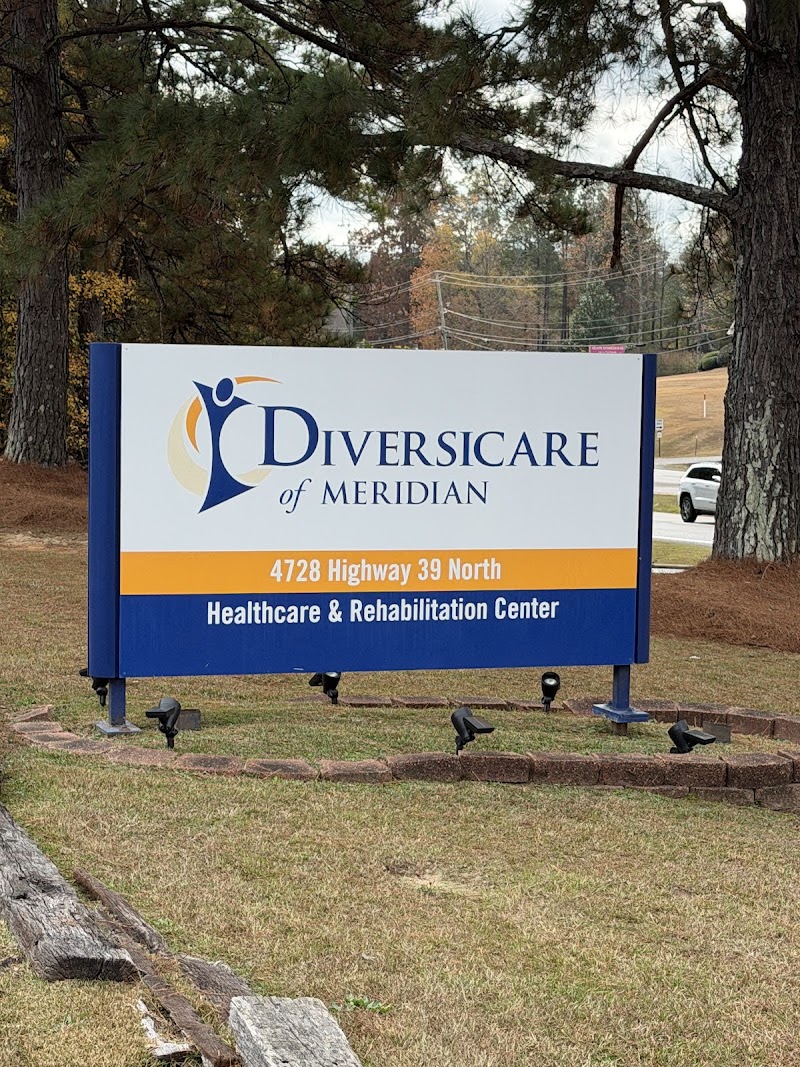
Who Owns and Operates Diversicare Of Meridian?

DIVERSICARE OF MERIDIAN is owned by a for-profit company. For-profit facilities operate as businesses with obligations to shareholders or private owners. The facility is operated by DIVERSICARE HEALTHCARE, a chain that manages multiple nursing homes. With 120 certified beds and approximately 95 residents (about 79% occupancy), it is a mid-sized facility located in MERIDIAN, Mississippi.

How Does Diversicare Of Meridian Compare to Other Mississippi Nursing Homes?

Compared to the 100 nursing homes in Mississippi, DIVERSICARE OF MERIDIAN's overall rating (2 stars) is below the state average of 2.6, staff turnover (41%) is near the state average of 46%, and health inspection rating (2 stars) is below the national benchmark.

What Should Families Ask When Visiting Diversicare Of Meridian?

Based on this facility's data, families visiting should ask: "Can I visit during a mealtime to observe dining assistance and food quality?" "How do you handle medical emergencies, and what is your hospital transfer rate?" "Can I speak with family members of current residents about their experience?"

Is Diversicare Of Meridian Safe?

Based on CMS inspection data, DIVERSICARE OF MERIDIAN has a clean safety record: no substantiated abuse findings (meaning no confirmed cases of resident harm), no Immediate Jeopardy citations (the most serious violation level indicating risk of serious injury or death), and is not on the Special Focus Facility watch list (a federal program monitoring the lowest-performing 1% of nursing homes). The facility has a 2-star overall rating and ranks #100 of 100 nursing homes in Mississippi. While no facility is perfect, families should still ask about staff-to-resident ratios and recent inspection results during their visit.

Do Nurses at Diversicare Of Meridian Stick Around?

DIVERSICARE OF MERIDIAN has a staff turnover rate of 41%, which is about average for Mississippi nursing homes (state average: 46%). Moderate turnover is common in nursing homes, but families should still ask about staff tenure and how the facility maintains care continuity when employees leave.

Was Diversicare Of Meridian Ever Fined?

DIVERSICARE OF MERIDIAN has been fined $12,735 across 1 penalty action. This is below the Mississippi average of $33,206. While any fine indicates a compliance issue, fines under $50,000 are relatively common and typically reflect isolated problems that were subsequently corrected. Families should ask what specific issues led to these fines and confirm they've been resolved.

Is Diversicare Of Meridian on Any Federal Watch List?

DIVERSICARE OF MERIDIAN is not on any federal watch list. The most significant is the Special Focus Facility (SFF) program, which identifies the bottom 1% of nursing homes nationally based on persistent, serious quality problems. Not being on this list means the facility has avoided the pattern of deficiencies that triggers enhanced federal oversight. This is a positive indicator, though families should still review the facility's inspection history directly.