SINGING RIVER SKILLED NURSING FACILITY
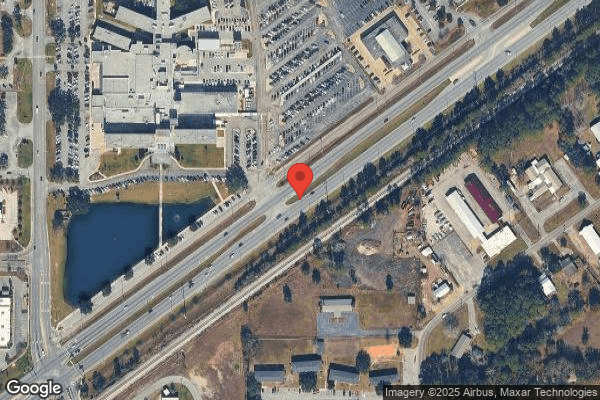

2809 DENNY AVENUE, PASCAGOULA, MS 39581 (228) 809-5060
Government - County 54 Beds Independent Data: November 2025 2 Immediate Jeopardy citations
Trust Grade
0/100
#185 of 200 in MS
Last Inspection: September 2024

Within standard 12-15 month inspection cycle. Federal law requires annual inspections.

Overview

Singing River Skilled Nursing Facility in Pascagoula, Mississippi, has received an overall Trust Grade of F, indicating poor performance with significant concerns. Ranked #185 out of 200 in the state and #5 out of 6 in Jackson County, this facility is in the bottom half of available options. The trend is improving, with issues decreasing from 6 in 2024 to 3 in 2025, but the facility still faces serious challenges, including $31,437 in fines, which is higher than 90% of facilities in Mississippi. Staffing is a relative strength, with a 4 out of 5-star rating, although the turnover rate of 63% is concerning compared to the state average of 47%. Specific incidents of concern include a critical case of physical abuse where a staff member hit a resident and failed to intervene despite witnessing the incident, resulting in physical harm, and another instance where a resident with a latex allergy did not receive proper care, leading to an allergic reaction. Overall, while there are some strengths in staffing, the facility has serious issues that families should consider when making a decision.

Trust Score
F
0/100
In Mississippi
#185/200
Bottom 8%
Safety Record
High Risk
Review needed
Inspections
Getting Better
6 → 3 violations
Staff Stability
⚠ Watch
63% turnover. Above average. Higher turnover means staff may not know residents' routines.
Penalties
⚠ Watch
$31,437 in fines. Higher than 89% of Mississippi facilities, suggesting repeated compliance issues.
Skilled Nurses
✓ Good
Each resident gets 141 minutes of Registered Nurse (RN) attention daily — more than 97% of Mississippi nursing homes. RNs are the most trained staff who catch health problems before they become serious.
Violations
○ Average
10 deficiencies on record. Average for a facility this size. Mostly minor or procedural issues.
★☆☆☆☆
1.0
Overall Rating
★★★★☆
4.0
Staff Levels
★★★★☆
4.0
Care Quality
★☆☆☆☆
1.0
Inspection Score
Stable
2024: 6 issues
2025: 3 issues

The Good

  • 4-Star Staffing Rating · Above-average nurse staffing levels
  • 4-Star Quality Measures · Strong clinical quality outcomes
  • Full Sprinkler Coverage · Fire safety systems throughout facility
  • No fines on record

Facility shows strength in staffing levels, quality measures, fire safety.

The Bad

1-Star Overall Rating

Below Mississippi average (2.6)

Significant quality concerns identified by CMS

Staff Turnover: 63%

17pts above Mississippi avg (46%)

Frequent staff changes - ask about care continuity

Federal Fines: $31,437

Below median ($33,413)

Moderate penalties - review what triggered them

Staff turnover is elevated (63%)

15 points above Mississippi average of 48%

The Ugly 10 deficiencies on record

2 life-threatening 2 actual harm
Feb 2025 1 deficiency
CONCERN (D) 📢 Someone Reported This

A family member, employee, or ombudsman was alarmed enough to file a formal complaint

Potential for Harm - no one hurt, but risky conditions existed

Accident Prevention (Tag F0689)

Could have caused harm · This affected 1 resident

**NOTE- TERMS IN BRACKETS HAVE BEEN EDITED TO PROTECT CONFIDENTIALITY** Based on interviews, record review, and facility policy review, the facility failed to provide adequate supervision to prevent a...

Read full inspector narrative →
**NOTE- TERMS IN BRACKETS HAVE BEEN EDITED TO PROTECT CONFIDENTIALITY** Based on interviews, record review, and facility policy review, the facility failed to provide adequate supervision to prevent a fall for one (1) of five (5) sampled residents. Resident #1 Findings include: A record review of the facility's policy Patient Rights and Responsibilities Policy, effective date 02/2024, revealed . This policy aims to create a framework to protect and promote patients' rights within (Proper Name), guiding employees to deliver care with respect to individuals rights .Patient Rights: you have a right to: 1. Considerate care . 13. Receive care in a safe setting . A record review of the facility's policy Fall Risk Assessment, Prevention, and Management, effective date 09/2022 revealed . (Proper Name) engages in safe practices that support prevention of patient falls and prevention of injury with falls . utilizes risk assessment tools to risk stratify patent risk for fall, subsequently outlining recommendations for actions to consider based on the identified risk . The purpose of this policy is to promote safety . A record review of the Risk Management Worksheet for Resident #1 with event date and time 02/02/25 at 07:40 PM and was entered by Licensed Practical Nurse (LPN) #1 revealed . comments . 02/03/25 08:33 PM . heard a noise when in room with another patient when I heard a sound, when looking in rooms patient noted on floor in bathroom . LPN #1 reported that patient was on commode but was left unattended by Certified Nurse Aide (CNA) #1. CNA #1 put patient on commode, left room to give handoff and then left for the day . He was cooperative and impulsive, but confused and forgetful. After observing the patient transfer, it was obvious patient could not transfer independently . x-ray hip left . 02/03/25 08:16 PM . impression: no evidence of acute abnormality . A record review of Resident #1's Post Fall Analysis dated 02/03/25 at 07:40 PM revealed the known patient related risk included lower extremities weakness, impaired gait, and requires assistive devices. Handwritten notation included that CNA#1 put patient on bedside commode, left patient to give handoff and left for day . A record review of Resident #1's Patient Information form revealed the facility admitted the resident on 01/16/25 and he was discharged home on [DATE] with the admission Complaint listed as Left Hip Fracture. A record review of the admission Minimum Data Set (MDS) with an Assessment Reference Date (ARD) of 01/22/25 revealed Resident #1 had a Brief Interview for Mental Status (BIMS) Summary Score of 1, which indicated his cognition was severely impaired. On 02/20/2025 at 9:00 AM, during a phone interview, the complainant stated a staff member from the facility called him and informed him his father had fallen off the commode while no one was present in the room. According to the complainant, the nurse explained that staff had just left the room, and within seconds, his father fell. The complainant stated that his father had recently undergone surgery on his left hip. Although no new injuries were sustained from the fall and an x-ray was completed, the complainant expressed concern that the incident could have been serious. He stated that he believes no resident, especially those with dementia and confusion, should be left unsupervised. On 02/20/25 at 09:20 AM, during an interview with the facility's Operational Manager, confirmed Resident #1 was no longer at the facility and the son decided to take resident home the day after the fall occurred. On 02/20/2025 at 9:45 AM, during an interview, CNA #2 explained she remembered Resident #1, who resided on a different unit. She recalled assisting his assigned CNA in helping Resident #1 onto the commode in his bathroom on the night of the fall. She confirmed that Resident #1 was safely assisted to the commode before she left the room. CNA #2 stated that the transfer occurred right at shift change, and the incoming night shift CNA was informed that Resident #1 was on the commode. She explained that she left the room because her shift had ended. On 02/20/2025 at 11:00 AM, during an interview, CNA #5 stated that she remembered Resident #1, who had been at the facility for a few weeks. She described Resident #1 as confused and noted that he frequently tried to get up and walk on his own. She stated that Resident #1 had recently undergone hip surgery, and staff would bring him to the hallway to interact with others, which helped keep him calm. CNA #5 recalled that Resident #1 had only one fall during his stay at the facility, which occurred during shift change. She explained that Resident #1 had been sitting at the nurse ' s station, and during the last round, CNA #1 took him to his room and placed him on the commode in the bathroom before leaving the room. CNA #5 stated that Resident #1 was left unattended on the commode because it was shift change. She also stated that both she and CNA #1 repeatedly informed the oncoming staff, including CNA #3, that Resident #1 was on the commode. On 02/20/2025 at 12:30 PM, during an interview, the Operational Manager stated that she was aware of Resident #1 and his fall on 02/03/2025. She explained that an x-ray was obtained the same night to assess for any injuries. She noted that Resident #1 had dementia and frequently attempted to get up and walk on his own. She further stated that Resident #1 did not like anyone near him, was confused, could not be redirected, and was unable to follow instructions to call for assistance. The Operational Manager stated that staff should not have left Resident #1 unattended on the commode in the bathroom. She emphasized that she expects staff to provide adequate supervision to all residents to prevent accidents. On 02/20/2025 at 12:45 PM, during an interview, the Administrator stated that no confused resident should be left unattended or unsupervised while on the commode. He emphasized that he expects staff to provide adequate supervision to all residents to prevent accidents. On 02/20/2025 at 3:00 PM, during a phone interview, LPN #2 confirmed that she was the nurse on duty from 7:00 AM to 7:00 PM on the day Resident #1 was left unattended on the commode and subsequently fell. She stated that she was conducting rounds with the incoming night shift nurse, LPN #1, at the time of the incident. LPN #2 explained that the day shift CNAs had placed Resident #1 on the commode right at shift change and left him unattended. She further stated that instead of the night shift CNA staying with Resident #1, the CNA was obtaining vital signs from other residents. LPN #2 confirmed that both the night shift nurse and the night shift CNA were informed at shift change that Resident #1 was on the commode. LPN #2 stated that while she was in another resident's room with the night shift nurse, they both heard a thump and immediately went to check on Resident #1. They found him lying on the floor in the bathroom beside the commode. On 02/20/2025 at 4:00 PM, during a phone interview, CNA #3 stated that she remembered Resident #1 and the night he fell. However, she did not recall any staff member or day shift CNA informing her that Resident #1 was on the commode. She stated that she was unaware that Resident #1 had been left unattended on the commode. CNA #3 explained that she was obtaining vital signs from other residents when she was informed by Licensed Practical Nurse (LPN) #1 that Resident #1 had fallen. She stated that she then went to assist the nurse with Resident #1 and observed him lying on the floor in his bathroom beside the commode. CNA #3 stated that she did not notice any injuries but was aware that Resident #1 had an x-ray completed following the fall. On 02/20/2025 at 4:30 PM, during a phone interview, LPN #1 confirmed that she was the night nurse on duty when Resident #1 fell. She stated that she was in another resident's room when she heard a thump. She then went from room to room to investigate and eventually heard Resident #1 moaning. She found him lying on the bathroom floor beside the commode. LPN #1 stated that she immediately notified the CNA and then contacted Resident #1's son, physician, and the Director of Nursing (DON). She confirmed that Resident #1 was confused and forgetful and stated that she was aware he had been left unattended on the commode. LPN #1 stated that x-rays were completed and confirmed that Resident #1 did not sustain any injuries from the fall. On 02/20/2025 at 4:45 PM, during a phone interview, CNA #1 confirmed that she was the CNA who assisted Resident #1 to the bathroom commode with the help of another CNA. She stated that Resident #1 was confused, had Dementia, and required assistance for transfers. CNA #1 explained that she expected the night shift CNA to go directly to Resident #1 after being notified that he was on the commode. However, she stated that although the nurses and the night CNA were informed, the night CNA did not go to the bathroom to supervise Resident #1. Instead, she went to obtain vital signs from other residents. CNA #1 confirmed that Resident #1 was left unattended on the commode and acknowledged that he should not have been left alone. However, she was unsure of the exact length of time that Resident #1 was left unsupervised.
Jan 2025 2 deficiencies 2 IJ
CRITICAL (J) 📢 Someone Reported This

A family member, employee, or ombudsman was alarmed enough to file a formal complaint

Immediate Jeopardy (IJ) - the most serious Medicare violation

Free from Abuse/Neglect (Tag F0600)

Someone could have died · This affected 1 resident

Based on observation, interviews, record review, and facility policy review, the facility failed to ensure Resident #1's right to be free from physical abuse from a staff member for one (1) of four (4...

Read full inspector narrative →
Based on observation, interviews, record review, and facility policy review, the facility failed to ensure Resident #1's right to be free from physical abuse from a staff member for one (1) of four (4) sampled residents. Resident #1 Resident #1 was physically abused on 12/17/24 when the Campus Police Officer (CPO) #1 hit the resident with his own shoe, pushed the resident to the floor, and attempted to use a taser improperly. (4) nurses observed the abuse and failed to intervene, allowing the abuse to escalate. This resulted in Resident #1 receiving a hematoma. The facility's failure to protect Resident #1 from abuse caused physical harm, including a hematoma requiring an emergency room evaluation. Additionally, the facility's failure to intervene placed other residents at risk for similar abuse. The situation was determined to be an Immediate Jeopardy (IJ) and Substandard Quality of Care (SQC) that began on 12/17/24. The State Agency (SA) notified the Administrator of the IJ and SQC on 1/10/25 at 12:30 PM and provided an IJ Template. Based on the facility's implementation of corrective actions on 12/18/24, the SA determined the IJ and SQC to be Past-Non-Compliance (PNC) and the IJ was removed on 12/19/24 prior to the SA's entrance on 1/9/25. Findings include: A review of the facility policy titled Abuse or Neglect of a Vulnerable Adult or Child, with an effective date of 8/2024, revealed: .Definitions .Abuse - the commission of a willful act, or the willful omission of the performance of a duty, which act or omission contributes, tends to contribute to, or results in the infliction of physical pain, injury, or mental anguish on or to a vulnerable person .Vulnerable person - A person .whose ability to perform normal activities of daily living or to provide for their own care or protection from abuse .is impaired .The term vulnerable person also include all residents or patients, regardless of age, in a care facility . Record review of the Patient Information revealed the facility admitted Resident #1 on 12/10/24 with diagnoses that included Acute Congestive Heart Failure. A record review of the admission Minimum Data Set (MDS) with an Assessment Reference Date of 12/16/24 revealed Resident #1 had a Brief Interview for Mental Status (BIMS) score of 6, indicating severe cognitive impairment. A record review of the Incident Report for Event 12/17/2024 revealed that Resident #1 was awakened by a Certified Nurse Assistant (CNA) to change his brief and soiled clothing. When awakened, the Resident became aggressive with staff. It was reported that he had not slept well in several days and was agitated that someone woke him. The campus police became aggressive with the resident; staff did not intervene, and campus police aggressively handled the resident, causing him to fall and sustain a head injury (large hematoma/knot to right forehead). The campus police attempted to tase residents twice (unsuccessfully). A second officer then responded to the unit to assist, spoke in Spanish with him, and then transferred him to the Emergency Department for an evaluation. The resident returned to the skilled unit in no apparent distress with examination by providers and continued to be negative. The campus police officer was immediately suspended and then terminated. A record review of the Case Report, dated 12/17/24, completed by the Campus Police Officer (CPO) #1, revealed a Narrative text of .At approximately 0400 (4:00 AM) I was contacted by staff member .in reference to an unruly patient .I asked (Proper Name of Resident) several times to put his clothing on and (Proper Name) openly refused. When I attempted to assist (Proper Name) with putting his clothes on he became aggressive and actively resistant. Do (due) to the height difference I used open hand techniques to assist (Proper Name) back in the chair. Due to (Proper name)'s resistance he fell onto the floor and hit his head .he passively resisted for approximately 30 minutes while the staff tried to coax him to get into the wheelchair. (Proper Name) refused to get in the chair after I told him he would be tased and probably fall again. I tased (Proper Name) twice and he still did not comply . A record review of the Employee Coaching/Corrective Action Report, dated 12/19/24, revealed a Summary of Behavior/Incident/Issue indicated .On 12/17/24 (Proper Name of CPO #1) responded to a call .where assistance was requested with a patient who was reported to be combative. It was reported that (Proper Name) used excessive force, physically shoving pt (patient) to fall and hit his head on the floor. Additionally, it was reported that (Proper Name) used her taser during the interaction with the pt . On 1/9/25 at 10:15 AM, during an observation of the recorded surveillance footage from the event that occurred on 12/17/24 revealed that at 3:45 AM, staff entered Resident #1's room. At 4:03 AM, CPO #1 entered the skilled nursing unit. At 4:04 AM, CPO #1 kicked shoes at Resident #1 and shoved the resident, causing them to fall. At 4:36 AM, Officer #1 unholstered a taser and attempted to use it on Resident #1 twice, while staff were present and failed to intervene. At 4:42 AM, Officer #2 arrived and calmed Resident #1. The resident was then transported to the Emergency Department (ED). A record review of the ED visit, with an encounter date of 12/17/24, revealed a History of Present Illness (HPI) of .campus police tazed him twice . On 1/9/25 at 6:20 AM, during an interview with Certified Nurse Assistant (CNA) #1, she confirmed that she had been employed at the facility for three (3) months and attended in-services on abuse, neglect, and vulnerable adult acts upon hire. She stated CNA #2, and a student CNA requested assistance because Resident #1 was being aggressive and hitting CNA #2. She confirmed that upon the arrival of CPO #1, the officer became very aggressive, causing her to fear assisting Resident #1. She stated it was distressing to hear the taser discharge. On 1/9/25 at 6:30 AM, during an interview with Licensed Practical Nurse (LPN) #1, she confirmed that she had been employed at the facility since November 2024 and attended in-services on abuse, neglect, and vulnerable adults acts. LPN #1 stated that on 12/17/24 at approximately 3:45 AM, Resident #1 became confused and combative during care, hitting CNA #2. LPN #2 phoned CPO #1 for assistance. LPN #1 witnessed CPO #1's aggression toward Resident #1, including pushing him to the floor and attempting to use a taser. She expressed fear of CPO #1, which prevented her from intervening. On 1/9/25 at 6:45 AM, during an interview with LPN #2, she stated she called the CPO because she believed the officer's familiarity with the resident might calm him. She described the officer's actions, including pushing Resident #1 to the floor, throwing shoes at him, and attempting to use a taser twice. She confirmed she did not intervene due to fear and reported the incident to the Director of Nursing (DON). On 1/9/25 at 9:20 AM, during an interview with the Nurse Practitioner (NP), she confirmed being informed of the incident in the early hours of 12/17/24. She stated that Resident #1 had been agitated and sleep-deprived for four (4) nights. The NP noted Resident #1's forehead hematoma upon return from the ED and prescribed sleep medications to prevent further agitation. On 1/9/25 at 10:00 AM, during an interview with the Registered Nurse (RN)/Administrator on Call (AOC) #1, she confirmed receiving a call from LPN #2 at 4:45 AM about Resident #1's aggression and the involvement of the Campus Police. She reviewed surveillance footage and stated that CPO#1's actions were inappropriate and aggressive, and staff failed to intervene. On 1/9/25 at 11:00 AM, during an interview with Human Resources, it was confirmed that CPO #1 was hired on 9/30/24 and completed in-services on de-escalation training on 10/13/24. CPO #1 was suspended on 12/17/24 and terminated on 1/3/25 following the investigation. On 1/9/25 at 11:14 AM, during an interview with LPN #3, she described observing CPO #1 pushing Resident #1 to the floor, throwing his shoes, and attempting to use a taser twice. She confirmed the incident was distressing, and fear prevented her from assisting. On 1/9/25 at 11:40 AM, during an interview with LPN #4, she confirmed that she had been employed at the facility for the last three (3) to 4 months and had attended in-services on abuse, neglect, and vulnerable adults. She stated that when CPO #1 entered the unit, the officer was immediately aggressive toward Resident #1. She explained that everything happened quickly, and she became scared and traumatized, feeling as though she might be attacked. She confirmed that fear prevented her from interacting with the officer. On 1/9/25 at 1:00 PM, during an interview with CNA #2, she described providing incontinent care to Resident #1 when he became aggressive and hit her. She stated that CPO #1's actions escalated the situation, and she was too afraid to intervene. On 1/9/25 at 4:16 PM, during an interview with Resident #1's family member, she confirmed the facility informed her that the resident had been unruly and that the CPO was called to assist with calming him, but instead, she pushed him to the ground and attempted to tase him twice. She also confirmed she was aware of the hematoma he received during the incident. On 1/10/25 at 10:00 AM, during an interview with the Administrator, he confirmed that after reviewing the surveillance videos, his staff should have intervened to assist Resident #1. On 1/10/25 at 11:00 AM, during an interview with the Director of Nursing (DON) she stated that staff failed to intervene during the incident and confirmed immediate corrective actions were implemented. The facility implemented the following corrective actions prior to the State Agency's entrance on 1/9/25: On 12-17-24, resident #1 was sent to the emergency room for evaluation after an incident occurred on the SNF unit involving police officer. Resident #1 returned to the skilled unit on the same day. Upon return, resident #1 was assessed by nurse practitioner for signs and symptoms of distress and for injuries sustained during altercation. Resident #1 denied any pain except for some tenderness to healing ulcers on the lower extremities. On 12/17/24 Social Services conducted interviews with residents with BIMS >/= 13 to determine if they feel safe from abuse at this facility. The police were notified on 12-17-2024 of the incident. The case number that was provided is: 24-8314 The administrator and Director of Nursing (DON) were in -serviced on abuse and neglect on 12-17-2024. These in-services were conducted by Administrative Director and LNFA (Licensed Nursing Facility Administrator) Consultant. On 12/17/24 all SNF staff present during patient incident were interviewed by SNF Admin. The nursing educator provided the following in-services to all SNF nursing staff prior to being allowed to work on the SNF. Abuse and neglect policy, including taking immediate steps to intervene during abusive situations. This was completed on 12-18-2024. Dementia Care, de-escalation, therapeutic communication, nurse responsibility and abuse neglect policies. This in-service was completed on 12-18-2024. The facility conducted an emergency QAPI meeting on 12/17/24. Policies were reviewed with no changes made at this time. Initial monitoring of staff and patients with increased presence on floor. Immediately reviewed previous days incidents to ensure abuse/neglect policy was adhered to and continued daily monitoring of incidents. The Medical Director was notified of patient event on 12/17/2024. Resident #1: care plan updated on 12/17/2024. Mississippi Board of Nursing notified on 12/19/2024 at the direction of state agency. Police officer was suspended on 12/17/24 and terminated from Singing River on 1/3/25. The LPN #1, LPN #2, CNA #1 were issued a corrective action with 3-day suspension: The additional will be monitored per staff for continued effectiveness as follows beginning 1/10/25: Abuse/Neglect Policy & Adherence to Care Plan Quality of corrections will be monitored daily by using a minimum of 5 (five) staff interviews per day 5 (five) days a week for 8 (eight) weeks. Quality of correction will also be monitored by observing interventions and interactions with patients 5 (five) days a week for 8 (eight) weeks. Findings will be reported to QAPI (Quality Assurance Performance Improvement). The facility alleges all corrective actions were completed on 12/18/24, and the Immediate Jeopardy was removed on 12/19/24 prior to the State Agency's entrance on 1/9/25. Validation: The SA validated on 1/13/2025, through interview and record review that all corrective actions had been implemented as of 12/18/24, and the facility was in compliance as of 12/19/24, prior to the SA's entrance on 1/9/2025.
CRITICAL (J) 📢 Someone Reported This

A family member, employee, or ombudsman was alarmed enough to file a formal complaint

Immediate Jeopardy (IJ) - the most serious Medicare violation

Comprehensive Care Plan (Tag F0656)

Someone could have died · This affected 1 resident

Based on interviews, record review, and facility policy review, the facility failed to implement comprehensive care plan interventions for a resident with behaviors for one (1) of four (4) sampled res...

Read full inspector narrative →
Based on interviews, record review, and facility policy review, the facility failed to implement comprehensive care plan interventions for a resident with behaviors for one (1) of four (4) sampled residents. Resident #1 On 12/17/24, when Resident #1 exhibited behaviors, staff failed to implement care plan interventions. Instead, a nurse called the Campus Police Officer (CPO) who physically abused the resident by hitting the resident with their own shoe, pushing the resident to the ground, and attempting to use a taser. The facility's failure to implement the care plan interventions directly resulted in Resident #1, sustaining a hematoma on the head and the need for emergency medical evaluation. Additionally, the facility's failure placed other residents at risk as staff did not follow prescribed actions to manage behaviors and ensure resident safety. The situation was determined to be an Immediate Jeopardy (IJ) that began on 12/17/24. The State Agency (SA) notified the Administrator of the IJ on 1/10/25 at 12:30 PM and provided an IJ Template. Based on the facility's implementation of corrective actions on 12/18/24, the SA determined the IJ to be Past-Non-Compliance (PNC) and the IJ was removed on 12/19/24 prior to the SA's entrance on 1/9/25. Findings include: A review of the facility policy titled SNF (Skilled Nursing Facility) Care Plan Completion, effective date 10/2024, revealed, .Policy .5. The facility will develop a Comprehensive Person-Centered Care Plan for each resident .that includes .b. Services to attain or maintain the resident's highest practicable physical, mental, and psychosocial well-being . Record review of the Patient Information revealed the facility admitted Resident #1 on 12/10/24 with diagnoses that included Acute Congestive Heart Failure. A record review of the Care Plan revealed Problem: Behaviors: (Proper Name) is slow to respond to questions with a goal of Patient will decrease risk factors of harming themselves or others secondary to their behaviors, with a start date of 12/10/24. A Goal Intervention with a start date of 12/10/24 revealed, Intervene as needed to protect the rights and safety of others; approach in a calm manner; divert attention, remove from situation and take to another location as needed . Another Goal Intervention with a start date of 12/10/24 included interventions details to give one-step directions and allow time to process them before giving more directions decrease sudden or loud noises, ask permission before touching or assisting with dressing task, and if startled, allow to refuse, extra processing time, and return once he has calmed down. A record review of the Incident Report for Event 12/17/2024 revealed that Resident #1 was awakened by a Certified Nurse Assistant (CNA) to change his brief and soiled clothing. When awakened, the Resident became aggressive with staff. It was reported that he had not slept well in several days and was agitated that someone woke him. The campus police became aggressive with the resident; staff did not intervene, and campus police aggressively handled the resident, causing him to fall and sustain a head injury (large hematoma/knot to right forehead). The campus police attempted to tase residents twice (unsuccessfully). A second officer then responded to the unit to assist, spoke in Spanish with him, and then transferred him to the Emergency Department for an evaluation. The resident returned to the skilled unit in no apparent distress with examination by providers and continued to be negative. The campus police officer was immediately suspended and then terminated. During an interview on 1/9/25 at 6:30 AM, License Practical Nurse (LPN) #1 revealed if they would have followed the care plan interventions, they may not have had the incident with CPO #1. During an interview on 1/9/25 at 6:45 AM, LPN #2 confirmed that she did not follow the care plan interventions related to behaviors for Resident #1, but they did give him something to drink during the event. On 1/9/25 at 10:00 AM, during an interview with Registered Nurse (RN)/Administrator on Call (AOC) #1, she confirmed the staff did not follow the care plan interventions, and the facility expects all staff to follow the Comprehensive Care Plans. On 1/9/24 at 12:40 PM, during an interview with the RN/Minimum Data Set (MDS) Coordinator, she confirmed that she expects all staff to follow the Comprehensive Care Plans' interventions on residents. The care plans are person-centered and address residents' needs and safety. On 1/10/25 at 11:00 AM, during an interview with the Director of Nursing (DON), she revealed the staff on the unit should have followed the care plan interventions for the safety of the residents. She expected all staff to follow the residents' care plans, and the purpose of the care plan is to provide each resident with care based on their individual needs. The facility implemented the following corrective actions prior to the State Agency's entrance on 1/9/25: On 12-17-24, resident #1 was sent to the emergency room for evaluation after an incident occurred on the SNF unit involving police officer. Resident #1 returned to the skilled unit on the same day. Upon return, resident #1 was assessed by nurse practitioner for signs and symptoms of distress and for injuries sustained during altercation. Resident #1 denied any pain except for some tenderness to healing ulcers on the lower extremities. On 12/17/24 Social Services conducted interviews with residents with BIMS >/= 13 to determine if they feel safe from abuse at this facility. The police were notified on 12-17-2024 of the incident. The case number that was provided is: 24-8314 The administrator and Director of Nursing (DON) were in -serviced on abuse and neglect on 12-17-2024. These in-services were conducted by Administrative Director and LNFA (Licensed Nursing Facility Administrator) Consultant. On 12/17/24 all SNF staff present during patient incident were interviewed by SNF Admin. The nursing educator provided the following in-services to all SNF nursing staff prior to being allowed to work on the SNF. Abuse and neglect policy, including taking immediate steps to intervene during abusive situations. This was completed on 12-18-2024. Dementia Care, de-escalation, therapeutic communication, nurse responsibility and abuse neglect policies. This in-service was completed on 12-18-2024. The facility conducted an emergency QAPI meeting on 12/17/24. Policies were reviewed with no changes made at this time. Initial monitoring of staff and patients with increased presence on floor. Immediately reviewed previous days incidents to ensure abuse/neglect policy was adhered to and continued daily monitoring of incidents. The Medical Director was notified of patient event on 12/17/2024. Resident #1: care plan updated on 12/17/2024. Mississippi Board of Nursing notified on 12/19/2024 at the direction of state agency. Police officer was suspended on 12/17/24 and terminated from Singing River on 1/3/25. The LPN #1, LPN #2, CNA #1 were issued a corrective action with 3-day suspension: The additional will be monitored per staff for continued effectiveness as follows beginning 1/10/25: Abuse/Neglect Policy & Adherence to Care Plan Quality of corrections will be monitored daily by using a minimum of 5 (five) staff interviews per day 5 (five) days a week for 8 (eight) weeks. Quality of correction will also be monitored by observing interventions and interactions with patients 5 (five) days a week for 8 (eight) weeks. Findings will be reported to QAPI (Quality Assurance Performance Improvement). The facility alleges all corrective actions were completed on 12/18/2024 and the IJ removed on 12/19/24 prior to state agency's entrance on 1/9/25. Validation: The SA validated on 1/13/2025, through interview and record review that all corrective actions had been implemented as of 12/18/24, and the facility was in compliance as of 12/19/24, prior to the SA's entrance on 1/9/2025.
Sept 2024 6 deficiencies 2 Harm
SERIOUS (G)

Actual Harm - a resident was hurt due to facility failures

Comprehensive Care Plan (Tag F0656)

A resident was harmed · This affected 1 resident

Based on interviews, record review, and facility policy review, the facility failed to implement care plan interventions related to a latex allergy which resulted in a resident having a topical allerg...

Read full inspector narrative →
Based on interviews, record review, and facility policy review, the facility failed to implement care plan interventions related to a latex allergy which resulted in a resident having a topical allergic reaction treatment for one (1) of 12 care plans reviewed. (Resident #12) Resident #12. Findings Include: Review of the facility's policy, Nursing Assessment and Plan of Care, dated 3/2021, revealed, .Skilled Nursing Facility A. All patients are observed upon admission by a licensed nurse. The initial observation includes: 1. Essential patient history including allergies .Plan of Care A. The nurse analyzes the assessment date in order to identify and prioritize problems to be addressed when developing the plan of care. B. The plan of care .specifies the approach to an individual patient's physiological, psychological, cognitive or education needs. The plan uses evidence based interventions and treatments specific to the diagnosis . Record review of Resident #12's care plan Multidisciplinary Problems undated, revealed Problem: Risk for acute allergic reaction related to allerge(s): Goal: Will be free of s/s (signs/symptoms) of acute allergic reactions .Interventions .List of allergies noted in chart MAR (Medication Administration Record) . A record review of the Allergy Review History for Resident #12 revealed she had a documented allergen since 9/19/2019 for Latex with severity of Medium and the comments included Blisters and swelling. A record review of the Orders revealed Resident #12 had a Physician's Order, dated 8/20/24, for an In & Out cath (catheter) As needed .If bladder scan greater than 300 ml (milliliter). A record review of the facility's Risk Management Worksheet, received 9/18/24, revealed Resident #12 had a patient care complaint on 9/16/24. The Comments revealed, .states that she has a Latex allergy and while trying to bladder train we are having to intermittently straight cath .(patients daughter) states that she noticed a rash in her mothers peri-area and asked the nurse .if the straight cath is latex free .(Proper Name of Nurse) states, Even if it is latex, I have to use it because that's all we carry .At this time I .apologized to both the patient and her daughter for the disrespect, delay in care and the risks she was exposed to using the latex straight cath . A record review of the Nurse Practitioners Progress Note, dated 9/16/24, revealed, (Proper Name of Resident #12) was seen today with family, nursing and therapy. She had a bad weekend .Reaction to latex catheter . Further review revealed, Allergies of Latex and Blisters and swelling. A record review of the Patient Information sheet revealed the facility admitted Resident #12 on 8/19/2024 with a Complaint of Status Post Atrial-fibrillation with Rapid Ventricular Response. A record review of the admission Minimum Data Set (MDS) with an Assessment Reference Date (ARD) of 08/25/24 revealed Resident #12 had a Brief Interview for Mental Status (BIMS) score of fifteen (15), indicating the resident was cognitively intact. A review of Section H revealed she had an indwelling catheter. On 09/17/2024 at 12:00 PM, during an interview, Resident #12 stated on 9/15/24, she was exposed to latex when a nurse inserted a catheter. She explained she told the nurse she had a latex allergy, but the nurse continued with the procedure. On 09/18/2024 at 10:21 AM, in an interview with Registered Nurse (RN) #1, she confirmed that Resident #12's latex allergy had been documented in her records. RN #1 acknowledged being informed of the incident on 09/16/2024 and that the resident received treatment for the allergic reaction. She confirmed that the nurse involved in the incident had been informed of the latex allergy but failed to follow the care plan.
SERIOUS (G)

Actual Harm - a resident was hurt due to facility failures

Incontinence Care (Tag F0690)

A resident was harmed · This affected 1 resident

Based on interviews, record review, and facility policy review, the facility failed to provide catheter care in a manner to prevent complications when facility staff inserted a latex catheter for a re...

Read full inspector narrative →
Based on interviews, record review, and facility policy review, the facility failed to provide catheter care in a manner to prevent complications when facility staff inserted a latex catheter for a resident with a known latex allergy that resulted in the resident having a topical allergic reaction for one (1) of two (2) residents reviewed for bowel/bladder and catheters. Resident #12 Findings Include: A review of the facility's policy titled Urinary Catheter Clinical Practice Guideline, dated 7/2020, revealed, .Insertion of Indwelling Urinary Catheter .Procedure .2. Verify any allergies to latex, iodine, or betadine - if latex allergy: consider silicone catheter . A review of the facility's policy titled Latex Allergy or Sensitivity Management Clinical Practice Guideline, original date 1/2020, revealed, .Latex safe environments should be provided for latex allergic and latex sensitive patients .Procedure: 2. Remove all identifiable latex-containing products from the room .5. Obtain latex-safe equipment/supplies (gloves, catheters .) During an interview on 09/17/2024 at 12:00 PM, Resident #12 revealed that on 09/15/2024, she was exposed to latex during a catheter procedure. She informed the nurse about her latex allergy, and her daughter, who was present at the time, also informed the nurse. Despite this, the nurse used the latex catheter anyway, stating that latex was all they had available. Following the procedure, Resident #12 developed redness, blisters, itching, and burning. The resident's daughter brought ointment and had the Nurse Practitioner (NP) approve it for treatment of the allergic reaction. On 09/17/2024 at 12:25 PM, during an interview, Resident #12's daughter confirmed that her mother had a latex allergy and was exposed to latex during a catheter procedure on 09/15/2024. The daughter noticed a rash developing and informed the nurse, but she continued to use the latex catheter because the facility did not have a non-latex catheter available. The daughter confirmed she later purchased an ointment to treat her mother's allergic reaction. On 09/18/2024 at 10:21 AM, during an interview with Registered Nurse (RN) #1, she confirmed that Resident #12 had a documented latex allergy. RN #1 stated she became aware of the incident on 09/16/2024 and immediately informed the NP. She initiated an investigation, and the employee responsible for the violation was placed on leave and later terminated. On 09/18/2024 at 11:21 AM, during an interview, the NP stated that Resident #12 had a documented latex allergy for several years. She was informed of the incident during rounds on 09/16/2024 and confirmed that the resident had redness and excoriation. The NP emphasized that latex exposure could have caused a serious complication and explained that the resident was treated for the topical allergic reaction. A record review of the Patient Information sheet revealed the facility admitted Resident #12 on 8/19/2024 with a Complaint of Status Post Atrial-fibrillation with Rapid Ventricular Response. A record review of the admission Minimum Data Set (MDS) with an Assessment Reference Date (ARD) of 08/25/24 revealed Resident #12 had a Brief Interview for Mental Status (BIMS) score of 15, indicating the resident was cognitively intact. A review of Section H revealed she had an indwelling catheter. A record review of the Orders revealed Resident #12 had a Physician's Order, dated 9/13/24, for an In & Out cath (catheter) As needed .If bladder scan greater than 300 ml (milliliter). A record review of the facility's Risk Management Worksheet, received 9/18/24, revealed Resident #12 had a patient care complaint on 9/16/24. The Comments revealed, .states that she has a Latex allergy and while trying to bladder train we are having to intermittently straight cath .(patients daughter) states that she noticed a rash in her mothers peri-area and asked the nurse .if the straight cath is latex free .(Proper Name of Nurse) states, Even if it is latex, I have to use it because that's all we carry .At this time I .apologized to both the patient and her daughter for the disrespect, delay in care and the risks she was exposed to using the latex straight cath . A record review of the Allergy Review History for Resident #12 revealed she had a documented allergen since 9/19/2019 for Latex with severity of Medium and the comments included Blisters and swelling. A record review of the Nurse Practitioners Progress Note, dated 9/16/24, revealed, (Proper Name of Resident #12) was seen today with family, nursing and therapy. She had a bad weekend .Reaction to latex catheter . Further review revealed, Allergies of Latex and Blisters and swelling.
CONCERN (D)

Potential for Harm - no one hurt, but risky conditions existed

Resident Rights (Tag F0550)

Could have caused harm · This affected 1 resident

Based on observation, staff interview, record review, and facility policy review, the facility failed to ensure a resident's right to a dignified existence related to a urinary catheter drainage bag w...

Read full inspector narrative →
Based on observation, staff interview, record review, and facility policy review, the facility failed to ensure a resident's right to a dignified existence related to a urinary catheter drainage bag which did not have a privacy bag for one (1) of two (2) residents reviewed for bowel/bladder and catheters. (Resident #12) Findings Include: A review of the facility's Patient Rights and Responsibilities Policy, dated 2/2024, revealed, (Proper name of facility) is committed to upholding and respecting the rights of our patients. This policy outlines .commitment to providing considerate care that respects cultural, psychosocial, spiritual, and personal values, beliefs, and preferences .Patient Rights: You have a right to 1. Considerate care, including respect for your cultural, psychosocial, spiritual, and personal values, beliefs and preferences . A record review of the Orders revealed Resident #12 had a Physician's Order, dated 9/16/24 for Continue Indwelling Urinary Catheter .for .Acute urinary retention . A record review of the Patient Information sheet revealed the facility admitted Resident #12 on 8/19/24. On 09/17/2024 at 12:00 PM, during an observation and interview revealed Resident #12 did not have a privacy cover on her urinary catheter drainage bag. Resident #12 stated that her catheter drainage bag normally had a privacy cover, but it had not had one since it was changed on 09/15/2024. The urine that was collected in the urinary drainage bag was visible to anyone. On 09/17/2024 at 12:25 PM, during an interview, Resident #12's daughter revealed that her mother's indwelling catheter bag had not had a privacy cover since it was changed on 09/15/2024, and it could be seen by anyone passing by if the door was opened. On 09/18/2024 at 10:21 AM, during an interview, Registered Nurse (RN) #1 confirmed that Resident #12's indwelling catheter bag did not have a privacy cover. RN #1 acknowledged that this could be a violation of the resident's right to dignity.
CONCERN (D)

Potential for Harm - no one hurt, but risky conditions existed

Food Safety (Tag F0812)

Could have caused harm · This affected 1 resident

Based on observation, interview and facility policy review, the facility failed to store food and maintain sanitary practices in accordance with professional standards for safety related to foods not ...

Read full inspector narrative →
Based on observation, interview and facility policy review, the facility failed to store food and maintain sanitary practices in accordance with professional standards for safety related to foods not labeled, food with no identified date, exposed foods and unsanitary practices staff for one (1) of two (2) kitchen observations. Findings include: A review of the facility's policy, Food and Supply Storage, revised 1/24, revealed, .All food, non-food items and supplies used in food preparation shall be stored in such a manner as to prevent contamination to maintain the safety and wholesomeness of the food for human consumption .Procedures .Cover, label and date unused portions and open packages .Date and rotate items; first in, first out (FIFO). Discard food past the use-by or expiration date .Dry Storage .Store foods in their original packages. Foods that must be opened must be stored in .containers that have tight fitted lids Hang scoop .Scoops may be stored in bins on a scoop holder . A review of the facility's policy, Hand Hygiene, revised 1/24, revealed, In the Food & Nutrition Services Department: All associates associated with handling of food shall wash hands. Hands are washed with soap and water at the following times .After any other activity that may contaminate the hands . On 09/17/24 at 09:31 AM, in an observation with the Director of Food and Nutrition (Director), refrigerator #1 revealed four (4) unopened bags of spring mix with a facility date label of 9/13 with no indication of what the date meant. One (1) unopened bag of spring mix with a facility date label of 9/11 with no indication of what the date meant. Four (4) unopened bags of spinach with a facility date of 9/13 with no indication of what the date meant. One (1) five (5) pound bag of lettuce opened and exposed, with a Best if Used By date of 9/16/2024. Six (6) bags of iceberg lettuce with a facility date of 9/16 with no indication of what the date meant. One (1) fresh pineapple with the core removed, exposing the inside. An observation of refrigerator #2 revealed one (1) plastic pan of raw fish filets with a facility Good thru date of 9/16/2024. One (1) pan of raw shrimp in pan with a Good thru date of 9/13/24. Seven (7) bags of chicken parts with a facility date label of 9/12 with no indication of what the date meant. Six (6) pans of what the Director identified as meat loaf with no label or date. One (1) pan of what the Director identified as meatloaf with a Good thru date of 9/16/24. One pan of turkey, with a facility Good thru date of 9/16/24. One (1) pan of what the Director described as pulled pork with not date and no label. One (1) container label casserole with a facility Good thru date of 9/16. One (1) container of pickles with the lid off the container, leaving the pickles exposed. One (1) container of what the Director identified as red beans with no identifying label and a facility Good thru date of 9/16. One (1) container of what the director identified as meat sauce with no identifying label and a facility Good thru date of 9/16. Three crates of milk products located inside the refrigerator, near the door, with a sign posted on the wall of the refrigerator reading Expired and damaged product. An observation of freezer #1 revealed one (1) opened box containing cinnamon rolls in a plastic bag that was opened with the cinnamon rolls exposed. An observation of the dry bins revealed the white rice bin with the lid opened and the white rice exposed, the brown rice with the lid opened and the brown rice exposed, a bin with what the Director described as chicken batter with the scoop stored inside the batter. An observation of the pantry revealed a swarm of small flying insects hovering around an opened 25-pound bag of breadcrumbs that was opened and exposed. On 09/17/24 at 10:45 AM, an observation and interview of Patient Services worker (PS) revealed as the meal ticket printer printed out several tickets, the tickets reached the floor. The PS worker picked up meal tickets that were on the floor and proceeded to place the tickets on the resident's trays. The PS did not use hand hygiene following picking up the tickets. The PS confirmed picking up the tickets from the floor. The PS confirmed she should have reprinted the cards and changed her gloves. On 09/17/24 at 10:50 AM, during an observation and interview, the Director was handling the food thermometer and thermometer wipes as the [NAME] was obtaining temperatures of the food items on the steam table and was not wearing a hair restraint for his beard. The Director revealed he acknowledged the unclearly dated foods, outdated foods, and exposed foods. The Director acknowledged the Patient services worker picking up the cards from the floor and proceeding without using hand hygiene. The Director acknowledged that he was not wearing a beard net in the food service area. The Director reported it is important to keep the card off the floor for sanitation. The Director revealed he will move the label maker back on the counter to keep the cards off the floor. The Director stated the importance of wearing a beard net is for sanitation. The Director reported the date labels on the foods were for the date the item was received. The Director confirmed it could be confusing to a new employee to know what the date meant, without making it clear marking on the label. On 09/19/24 at 3:44 PM, during an interview with the Hospital Administrator (HA) revealed she was made aware of the unclearly dated foods, outdated foods and deficient hygiene practices by the staff. The HA reported her expectation is that there will be no expired foods in the kitchen.
CONCERN (E)

Potential for Harm - no one hurt, but risky conditions existed

Deficiency F0578 (Tag F0578)

Could have caused harm · This affected multiple residents

**NOTE- TERMS IN BRACKETS HAVE BEEN EDITED TO PROTECT CONFIDENTIALITY** Based on interviews and record review, the facility failed to offer assistance in formulating an advance directive and did not d...

Read full inspector narrative →
**NOTE- TERMS IN BRACKETS HAVE BEEN EDITED TO PROTECT CONFIDENTIALITY** Based on interviews and record review, the facility failed to offer assistance in formulating an advance directive and did not document discussions related to the resident's right to formulate and establish an advance directive for six (6) of twelve (12) residents reviewed for advance directives, with the potential to affect all 27 residents residing the in the facility. (Residents #1, #7, #9, #11, #222, and #223). Findings Include: Resident #1 A record review of Resident #1's Patient Information revealed the resident was admitted on [DATE] with diagnoses including Paroxysmal Atrial Fibrillation and Type 2 Diabetes Mellitus. A record review of the admission Minimum Data Set (MDS) with an Assessment Reference Date (ARD) of 07/25/24 revealed a Brief Interview for Mental Status (BIMS) score of fifteen (15), indicating the resident was cognitively intact. A review of the medical record for Resident #1 revealed there was no documentation indicating the facility had had offered assistance to the resident or the resident representative (RR) in formulating an advance directive. Resident #7 A record review of Resident #7's Patient Information revealed an admission date of 08/28/24 with diagnoses including Closed Fracture of the Distal End of the Right Fibula with routine healing. A record review of the admission MDS, with an ARD of 9/3/24, revealed a BIMS score of ten (10), indicating moderate cognitive impairment. A review of the medical record for Resident #7 revealed there was no documentation indicating the facility had had offered assistance to the resident or the RR in formulating an advance directive. Resident #9 A record review of Resident #9's Patient Information revealed that the resident was admitted on [DATE] with diagnoses including Chronic Depression, Hypertension (HTN), Gastroesophageal Reflux Disease (GERD), and a Closed Two-Part Intertrochanteric Fracture of the Proximal Femur. A record review of the admission MDS, with an ARD of 08/27/24, revealed a BIMS score of fifteen (15), indicating the resident was cognitively intact. A review of the medical record for Resident #9 revealed there was no documentation indicating the facility had had offered assistance to the resident or the RR in formulating an advance directive. Resident #11 A record review of Resident #11's Patient Information revealed an admission date of 07/23/24 with diagnoses including Chronic Obstructive Pulmonary Disease (COPD), HTN, and Cervical Spinal Stenosis. A record review of the admission MDS, with an ARD of 07/30/24, revealed a BIMS score of eight (8), indicating moderate cognitive impairment. A review of the medical record for Resident #11 revealed there was no documentation indicating the facility had had offered assistance to the resident or the RR in formulating an advance directive. Resident #222 A record review of Resident #222's Patient Information revealed an admission on [DATE] with diagnoses of High Risk for Falls, Right Fibula Fracture, Bilateral Foot Fractures, Lumbar Fractures, and Nose Fractures. A record review of the MDS, with an ARD of 09/16/24, revealed a BIMS score of fifteen (15), indicating the resident was cognitively intact. A review of the medical record for Resident #222 revealed there was no documentation indicating the facility had had offered assistance to the resident or the RR in formulating an advance directive. In an interview on 09/18/24 at 11:45 AM, Resident #222 stated that she was given a lot of papers during admission but did not remember signing any paperwork regarding advance directives and did not have an advance directive. Resident #223 A record review of Resident #223's Patient Information revealed an admission date of 09/10/24 with a diagnosis of High Risk for Falls and Right Hip Fracture. A record review of the MDS, with an ARD of 09/12/24, revealed a BIMS score of twelve (12), indicating moderate cognitive impairment. A review of the medical record for Resident #223 revealed there was no documentation indicating the facility had had offered assistance to the resident or the RR in formulating an advance directive. In an interview on 09/19/24 at 1:15 PM, Resident #223 explained that she was given numerous papers on admission but did not remember signing anything regarding advance directives. In an interview on 09/18/24 at 2:26 PM, the Activities Director stated that advance directives were included in the admission packets but were not reviewed with the residents or families. If the resident wanted more information, they were referred to the Nurse Practitioner (NP) for further clarification. The Activities Director confirmed that residents and families did not sign an acknowledgment form for receiving the admission packet which included information on formulating and executing advance directives. In an interview on 09/18/24 at 2:34 PM, the Director of Nursing (DON) and Registered Nurse (RN) #1 acknowledged that the residents' medical records did not contain documentation related to advance directives. The DON and RN #1 explained that staff only checked a box during admission to indicate whether the resident had an advance directive, without providing further explanation or obtaining the resident's signature. During an interview on 09/19/24 at 10:00 AM, the Chief Nursing Officer (CNO) admitted that she was unaware the facility was not explaining and documenting advance directive discussions. The CNO stated that administration would meet the following Monday to correct the procedure.
CONCERN (E)

Potential for Harm - no one hurt, but risky conditions existed

Deficiency F0725 (Tag F0725)

Could have caused harm · This affected multiple residents

Based on observations, interviews, record reviews, and facility policy review, the facility failed to ensure there was sufficient staff to meet the needs of residents in a timely manner for four (4) o...

Read full inspector narrative →
Based on observations, interviews, record reviews, and facility policy review, the facility failed to ensure there was sufficient staff to meet the needs of residents in a timely manner for four (4) of nine (9) residents observed with call lights on, needing assistance on the Northeast Hall. (Residents #69, #220, #221, and #223). This failure had the potential to affect all nine (9) dependent residents residing on the hall. Findings Include: A review of the facility's Facility Assessment Tool, updated on 1/31/2024, revealed . Staffing plan: 3.2 .Consider if and how .acuity levels impact staffing needs. To provide care for nine (9) residents, the facility required one (1) Registered Nurse (RN) or one (1) Licensed Practical Nurse (LPN) and one (1) Certified Nursing Assistant (CNA). This ratio on (1) employee per (9) residents (1:9) was the requirement for both days and nights. On 09/17/24 at 10:58 AM, during the initial tour, Resident #221's wife stated in an interview that when the call light was pressed, it took a long time for staff to respond. She explained that her husband needed assistance immediately or he would have incontinent accidents. She expressed concerns that there was insufficient staff, as there was only one (1) CNA and one (1) nurse present on the floor. On 09/17/24 at 11:39 AM, during an observation and interviews the State Agency (SA) observed four (4) call lights going off in the Northeast Hall. No staff members were present at the time. The SA observed the call lights going off in the rooms of Residents #69, #220, #221, and #223. The SA also observed Resident #223 attempting to transfer herself to the bathroom. LPN #1 and CNA #1 were assisting Resident #220, a two-person assist resident, to the bathroom. LPN #1 and CNA #1 did not return to the hall until 12:03 PM to answer the remaining call lights. Resident #69 was heard yelling, I got to pee! There were no other staff members on the hall to assist the residents with their needs. Resident #223 stated she attempted to toilet herself because staff took too long, and in the past, she had experienced incontinent accidents as a result. During an interview on 09/17/24 at 12:45 PM, Resident #221 stated that he had several incontinent accidents because staff did not respond to his call light in a timely manner. He expressed that he had difficulty waiting for assistance and could not transfer himself without assistance. On 09/17/24 at 1:00 PM, during an interview, CNA #1 stated that there was always one (1) CNA and one (1) nurse on the floor for nine (9) residents. She explained that she could not meet all the residents' needs in a timely manner because she was the only CNA. She confirmed that residents had experienced incontinent episodes of both bowel and bladder when she could not get to them in time. During an interview on 09/17/24 at 1:30 PM, LPN #1 stated she worked the 7 AM-7 PM shift four (4) to five (5) times a week and was the only nurse on the hall. She expressed that it was difficult to meet the residents' needs in a timely manner due to the high-risk fall residents, many of whom required two-person assistance with transfers. LPN #1 confirmed that some residents had incontinent episodes because both she and the CNA were attending to other residents. On 09/18/24 at 9:00 AM, RN #1 confirmed that the Northeast Hall had nine (9) residents with one (1) nurse and one (1) CNA to provide care. She explained that due to the residents' high fall risk and their need for assistance, staff could not answer multiple call lights or assist with toileting in a timely manner. On 09/18/24 at 9:30 AM, during an interview, the Director of Nursing (DON) stated that he was aware that there was one (1) nurse, and one (1) CNA scheduled on the Northeast Hall. The DON confirmed that additional staff were needed to meet the residents' needs and stated that he was responsible for updating the facility assessment but had not yet done so. He acknowledged that when the nurse and CNA were busy providing care, there were no other staff members available to assist the remaining residents. On 09/19/24 at 9:00 AM, during an interview with the Rehabilitation Director, he confirmed that all residents on the Northeast Hall needed at least one-person standby assistance for transfers, with three (3) residents requiring two-person assistance. He reiterated that this was a high-acuity unit and that more staff were needed to meet the residents' needs. On 09/19/24 at 10:00 AM, during an interview with the Chief Nursing Officer (CNO), she stated that she was unaware of the staffing issues. She was familiar with the Facility Assessment and Centers for Medicare and Medicaid Services (CMS) requirements but did not realize that the facility needed to staff according to residents' acuity.
Jun 2023 1 deficiency
CONCERN (D)

Potential for Harm - no one hurt, but risky conditions existed

MDS Data Transmission (Tag F0640)

Could have caused harm · This affected 1 resident

Based on record review, staff interview, and facility policy review, the facility failed to complete a Discharge Minimum Data Set (MDS) assessment for three (3) of 15 residents sampled. Resident #4, R...

Read full inspector narrative →
Based on record review, staff interview, and facility policy review, the facility failed to complete a Discharge Minimum Data Set (MDS) assessment for three (3) of 15 residents sampled. Resident #4, Resident #5, and Resident #7 Findings Include: A review of the facility's policy MDS Completion and Submission Timeframes, with a revision date of 03/01/2022, revealed, . Our facility will conduct and submit resident assessments in accordance with current federal and state submission timeframes . 1. The Assessment Coordinator or designee is responsible for ensuring that resident assessments are submitted . in accordance with current federal and state guidelines. 2. Timeframes for completion and submission of assessments is based on the current requirements published in the Resident Assessment Instrument Manual . A record review of the CMS's (Center of Medicare Services) Resident Assessment Instrument (RAI) Version 3.0 Manual, dated October 2019, revealed . 09. Discharge Assessment - Return Not Anticipated . Must be completed when the resident is discharged from the facility and the resident is not expected to return to the facility within 30 days. Must be completed (item Z0500B) within 14 days after the discharge date (A2000 + 14 calendar days). Must be submitted within 14 days after the MDS completion date (Z0500B + 14 calendar days) . Resident #4 A record review of the Patient Information revealed the facility admitted Resident #4 on 01/20/23 and discharged the resident on 04/03/23. A record review of the Discharge MDS, with an Assessment Reference Date (ARD) of 04/03/23, revealed Resident #4 was discharged from the facility and return was not anticipated. A review of Section Z revealed the MDS was signed as completed on 06/01/2023, which was more than 14 days from the ARD of 04/03/23. Resident #5 A record review of the Patient Information revealed the facility admitted Resident #5 on 01/18/23 and discharged the resident on 02/07/23. A record review of the Discharge MDS, with an Assessment Reference Date (ARD) of 02/07/23, revealed Resident #5 was discharged from the facility and return was not anticipated. A review of Section Z revealed the MDS was signed as completed on 06/01/2023, which was more than 14 days from the ARD of 02/07/23. Resident #7 A record review of the Patient Information revealed the facility admitted Resident #7 on 01/20/23 and discharged the resident on 02/09/23. A record review of the Discharge MDS, with an Assessment Reference Date (ARD) of 02/09/23, revealed Resident #4 was discharged from the facility and return was not anticipated. A review of Section Z revealed the MDS was signed as completed on 06/01/2023, which was more than 14 days from the ARD of 02/09/2023. On 06/01/23 at 02:00 PM, during an interview with Licensed Practical Nurse (LPN) #1/MDS nurse, she explained she used the RAI manual as a guide when completing the MDS. She confirmed that a Discharge MDS was not completed or submitted for Resident #4, Resident #5, and Resident #7. On 06/01/23 at 02:15 PM, during an interview with the Director of Nursing (DON), she explained that she ran an MDS report at the end of each month which alerted her to any missed, incomplete, or MDS assessments that were not submitted. She stated the report was reviewed on Monday, 05/30/23, and there were no issues identified. She also stated that she checked behind the MDS nurse to review and sign all MDS data. She confirmed that Resident #4, Resident #5, and Resident #7 did not have Discharge MDS assessments completed, and she expected all MDS assessments to be completed and submitted timely.
Understanding Severity Codes (click to expand)
Life-Threatening (Immediate Jeopardy)
J - Isolated K - Pattern L - Widespread
Actual Harm
G - Isolated H - Pattern I - Widespread
Potential for Harm
D - Isolated E - Pattern F - Widespread
No Harm (Minor)
A - Isolated B - Pattern C - Widespread

Questions to Ask on Your Visit

  • "What changes have you made since the serious inspection findings?"
  • "What safeguards are in place to prevent abuse and neglect?"
  • "Why is there high staff turnover? How do you retain staff?"
  • "Can I speak with families of current residents?"
  • "What's your RN coverage like on weekends and overnight?"

Our Honest Assessment

Strengths
  • • Licensed and certified facility. Meets minimum state requirements.
Concerns
  • • Multiple safety concerns identified: Federal abuse finding, 2 life-threatening violation(s), 2 harm violation(s), $31,437 in fines. Review inspection reports carefully.
  • • 10 deficiencies on record, including 2 critical (life-threatening) violations. These warrant careful review before choosing this facility.
  • • $31,437 in fines. Higher than 94% of Mississippi facilities, suggesting repeated compliance issues.
  • • Grade F (0/100). Below average facility with significant concerns.
Bottom line: This facility has a substantiated abuse finding. Extreme caution advised. Explore alternatives.

About This Facility

What is Singing River Skilled Nursing Facility's CMS Rating?

CMS assigns SINGING RIVER SKILLED NURSING FACILITY an overall rating of 1 out of 5 stars, which is considered much below average nationally. Within Mississippi, this rating places the facility higher than 0% of the state's 100 nursing homes. A rating at this level reflects concerns identified through health inspections, staffing assessments, or quality measures that families should carefully consider.

How is Singing River Skilled Nursing Facility Staffed?

CMS rates SINGING RIVER SKILLED NURSING FACILITY's staffing level at 4 out of 5 stars, which is above average compared to other nursing homes. Staff turnover is 63%, which is 17 percentage points above the Mississippi average of 46%. High turnover can affect care consistency as new staff learn residents' individual needs. RN turnover specifically is 69%, which is notably high. RNs provide skilled clinical oversight, so turnover in this role can affect medical care quality.

What Have Inspectors Found at Singing River Skilled Nursing Facility?

State health inspectors documented 10 deficiencies at SINGING RIVER SKILLED NURSING FACILITY during 2023 to 2025. These included: 2 Immediate Jeopardy (the most serious level, indicating potential for serious harm or death), 2 that caused actual resident harm, and 6 with potential for harm. Immediate Jeopardy findings are rare and represent the most serious regulatory concerns. They require immediate corrective action.

Who Owns and Operates Singing River Skilled Nursing Facility?

SINGING RIVER SKILLED NURSING FACILITY is owned by a government entity. Government-operated facilities are typically run by state, county, or municipal agencies. The facility operates independently rather than as part of a larger chain. With 54 certified beds and approximately 21 residents (about 39% occupancy), it is a smaller facility located in PASCAGOULA, Mississippi.

How Does Singing River Skilled Nursing Facility Compare to Other Mississippi Nursing Homes?

Compared to the 100 nursing homes in Mississippi, SINGING RIVER SKILLED NURSING FACILITY's overall rating (1 stars) is below the state average of 2.6, staff turnover (63%) is significantly higher than the state average of 46%, and health inspection rating (1 stars) is much below the national benchmark.

What Should Families Ask When Visiting Singing River Skilled Nursing Facility?

Based on this facility's data, families visiting should ask: "What changes have been made since the serious inspection findings, and how are you preventing similar issues?" "What safeguards and monitoring systems are in place to protect residents from abuse or neglect?" "How do you ensure continuity of care given staff turnover, and what is your staff retention strategy?" "Can I visit during a mealtime to observe dining assistance and food quality?" These questions are particularly relevant given the facility's Immediate Jeopardy citations, the substantiated abuse finding on record, and the facility's high staff turnover rate.

Is Singing River Skilled Nursing Facility Safe?

Based on CMS inspection data, SINGING RIVER SKILLED NURSING FACILITY has documented safety concerns. The facility has 1 substantiated abuse finding (meaning confirmed case of resident harm by staff or other residents). Inspectors have issued 2 Immediate Jeopardy citations (the most serious violation level indicating risk of serious injury or death). The facility has a 1-star overall rating and ranks #100 of 100 nursing homes in Mississippi. Families considering this facility should ask detailed questions about what corrective actions have been taken since these incidents.

Do Nurses at Singing River Skilled Nursing Facility Stick Around?

Staff turnover at SINGING RIVER SKILLED NURSING FACILITY is high. At 63%, the facility is 17 percentage points above the Mississippi average of 46%. Registered Nurse turnover is particularly concerning at 69%. RNs handle complex medical decisions and coordinate care — frequent RN changes can directly impact care quality. High turnover means new staff may not know residents' individual needs, medications, or preferences. It can also be disorienting for residents, especially those with dementia who rely on familiar faces. Families should ask: What is causing the turnover? What retention programs are in place? How do you ensure care continuity during staff transitions?

Was Singing River Skilled Nursing Facility Ever Fined?

SINGING RIVER SKILLED NURSING FACILITY has been fined $31,437 across 4 penalty actions. This is below the Mississippi average of $33,393. While any fine indicates a compliance issue, fines under $50,000 are relatively common and typically reflect isolated problems that were subsequently corrected. Families should ask what specific issues led to these fines and confirm they've been resolved.

Is Singing River Skilled Nursing Facility on Any Federal Watch List?

SINGING RIVER SKILLED NURSING FACILITY is not on any federal watch list. The most significant is the Special Focus Facility (SFF) program, which identifies the bottom 1% of nursing homes nationally based on persistent, serious quality problems. Not being on this list means the facility has avoided the pattern of deficiencies that triggers enhanced federal oversight. This is a positive indicator, though families should still review the facility's inspection history directly.