Country View Nursing
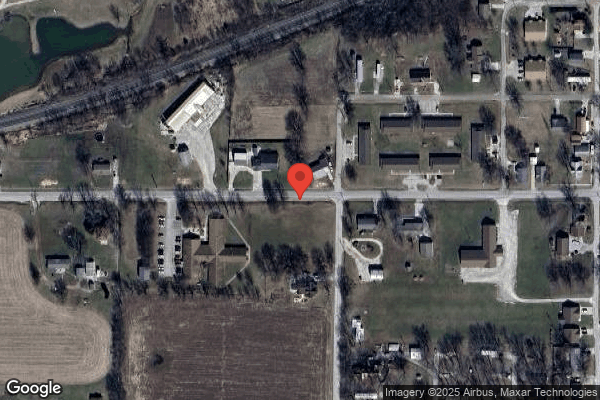
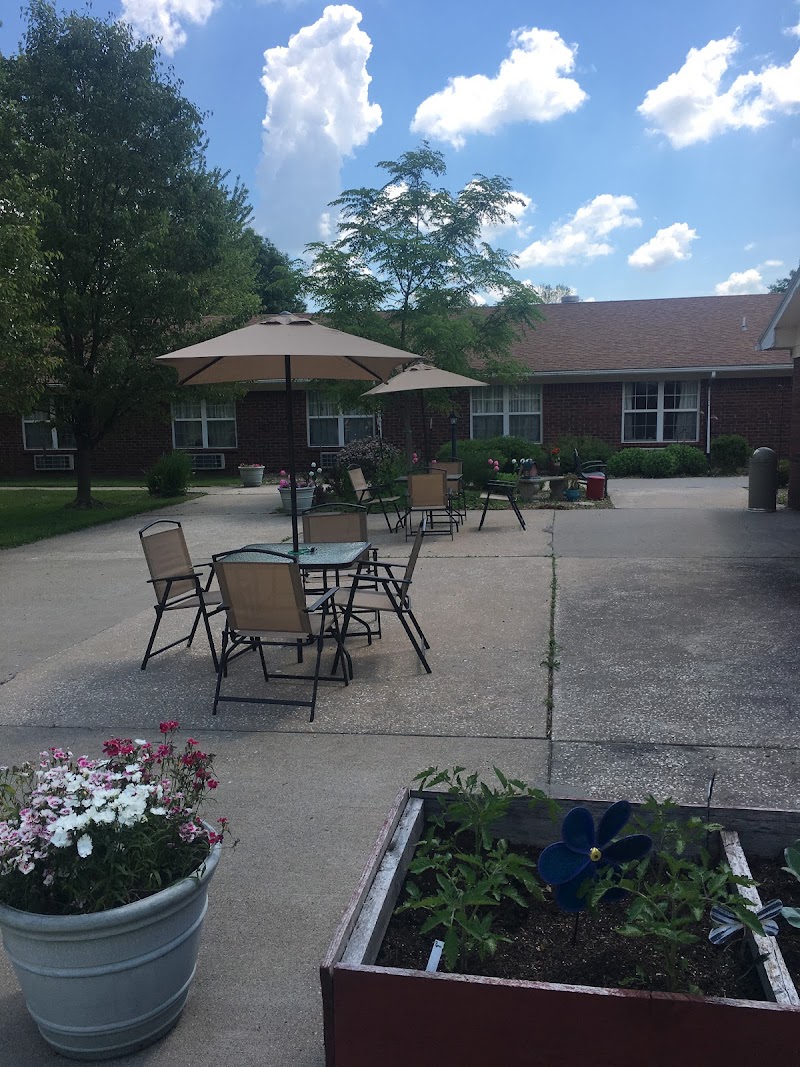
2106 WEST MAIN, BOWLING GREEN, MO 63334 (573) 324-2216
For profit - Corporation 60 Beds COMMUNITY CARE CENTERS Data: November 2025 4 Immediate Jeopardy citations
Trust Grade
0/100
#372 of 479 in MO
Last Inspection: December 2023

Within standard 12-15 month inspection cycle. Federal law requires annual inspections.

Overview

Country View Nursing in Bowling Green, Missouri, has received a Trust Grade of F, indicating a poor rating with significant concerns. It ranks #372 out of 479 facilities in Missouri, placing it in the bottom half, and #2 out of 2 in Pike County, meaning it is the least favorable option available locally. Unfortunately, the facility's trend is worsening, with issues increasing from 5 in 2024 to 7 in 2025. Staffing is a concern, with a below-average rating of 2 out of 5 stars and a high turnover rate of 81%, which is significantly above the state average. Additionally, the facility has accumulated $190,621 in fines, indicating serious compliance problems, and while RN coverage is average, recent inspections revealed critical incidents, including unsafe transport practices that resulted in residents being injured and not receiving proper CPR training. Overall, while there are some staffing strengths, the numerous deficiencies and high turnover raise significant red flags for families considering this nursing home for their loved ones.
Trust Score
F
0/100
In Missouri
#372/479
Bottom 23%
Safety Record
High Risk
Review needed
Inspections
Getting Worse
5 → 7 violations
Staff Stability
⚠ Watch
81% turnover. Very high, 33 points above average. Constant new faces learning your loved one's needs.
Penalties
✓ Good
$190,621 in fines. Lower than most Missouri facilities. Relatively clean record.
Skilled Nurses
⚠ Watch
Each resident gets only 26 minutes of Registered Nurse (RN) attention daily — below average for Missouri. Fewer RN minutes means fewer trained eyes watching for problems.
Violations
⚠ Watch
65 deficiencies on record. Higher than average. Multiple issues found across inspections.
★☆☆☆☆
1.0
Overall Rating
★★☆☆☆
2.0
Staff Levels
★☆☆☆☆
1.0
Care Quality
★☆☆☆☆
1.0
Inspection Score
Stable
2024: 5 issues
2025: 7 issues

The Good

  • Full Sprinkler Coverage · Fire safety systems throughout facility
  • No fines on record

Facility shows strength in fire safety.

The Bad

1-Star Overall Rating

Below Missouri average (2.5)

Significant quality concerns identified by CMS

Staff Turnover: 81%

35pts above Missouri avg (46%)

Frequent staff changes - ask about care continuity

Federal Fines: $190,621

Well above median ($33,413)

Significant penalties indicating serious issues

Chain: COMMUNITY CARE CENTERS

Part of a multi-facility chain

Ask about local staffing decisions and management

Staff turnover is very high (81%)

33 points above Missouri average of 48%

The Ugly 65 deficiencies on record

4 life-threatening 5 actual harm
Jul 2025 1 deficiency
CONCERN (E) 📢 Someone Reported This

A family member, employee, or ombudsman was alarmed enough to file a formal complaint

Potential for Harm - no one hurt, but risky conditions existed

Safe Environment (Tag F0584)

Could have caused harm · This affected multiple residents

**NOTE- TERMS IN BRACKETS HAVE BEEN EDITED TO PROTECT CONFIDENTIALITY** Based on observation, interview and record review, the facility failed to ensure a comfortable and homelike environment by not m...

Read full inspector narrative →
**NOTE- TERMS IN BRACKETS HAVE BEEN EDITED TO PROTECT CONFIDENTIALITY** Based on observation, interview and record review, the facility failed to ensure a comfortable and homelike environment by not maintaining the indoor air temperatures in resident use areas including the end of the 300 hall resident hallway, dining room and nurses' station between 71.0 F. (degrees Fahrenheit) and 81.0 F. The facility census was 39. Review of email communication dated 07/28/25 AT 4:18 p.m., showed the administrator said the facility did not have a policy related to heating and cooling or an emergency heating and cooling policy.1. Observation on 07/20/25 at 1:10 P.M. showed the following:-The nurses station thermostat read 78 degrees F;-The area felt warm if moving or doing any tasks; the air temperature with a thermometer was 84 degrees Fahrenheit;-Staff carried portable battery operated fans. 2. Observation of the dining room on 07/20/25 at 2:08 P.M. and 2:13 P.M. showed the following:-The middle air conditioning unit on the far side of the room was unplugged;-The temperature in the dining room, if more than one table away from the working air conditioner, was 82 degrees F;-The left air conditioning unit was running, with no cold air blowing, and the temperature in front of the unit was 82 degrees F. 3. Observation on 07/20/25 at 2:16 P.M., showed the temperature at the end of the 300 occupied resident hall was 84 degrees F.4. Observation on 07/22/25 at 1:51 P.M., showed the temperature at the dining room entrance was 81.5 degrees and the middle portion of the dining room [ROOM NUMBER].9 degrees F. 6. Review of Resident #2's quarterly Minimum Data Set (MDS), a federally mandated assessment instrument, completed by facility staff, dated 05/29/25, showed the following:-The resident was cognitively intact;-The resident had diagnoses that included high blood pressure and chronic obstructive pulmonary disease (COPD- a group of lung diseases that block airflow and make breathing difficult). During an interview on 07/20/25 at 2:27 P.M., the resident said he sweat and was uncomfortable if he was not sitting by the air conditioning unit in the dining room.7. Review of Resident #15's quarterly MDS, dated [DATE], showed the following:-The resident was cognitively intact;-The resident had diagnoses that included stroke, high blood pressure and hemiplegia (weakness or paralysis affecting one side of the body). During an interview on 07/20/25 at 2:16 P.M. and 07/23/25 at 8:24 A.M., the resident said the following:-The dining room gets hotter than he/she liked; -Today he/she was hot and sweating at lunch in the dining room. 8. Review of Resident #17's quarterly MDS, dated [DATE], showed the following:-Moderate cognitive impairment;-Diagnoses included hypertension. During an interview on 07/20/25 at 4:15 P.M., the resident said the dining room during meals was hot. 9. Review of Resident #18's quarterly MDS, dated [DATE], showed the following:-Moderate cognitive impairment;-Diagnoses included hypertension and stroke. During an interview on 07/20/25 at 4:22 P.M., the resident said the following:-It has been hot and unbearable in the dining room especially when everyone was in the dining room;-Lots of residents like to hang out in the dining room and play games; staff did not offer fans or drinks;-It was so hot that he/she wanted the staff to get him/her a cooler shirt (resident wearing long-sleeve shirt.) 10. During an interview on 07/20/25 at 2:30 P.M., Nursing Assistant (NA) H said the following:-The dining room gets hot depending on the outside temperature;-The residents complained about the dining room and hall temperatures;-The air conditioning had not been working this week;-Staff have not been instructed to do any special monitoring of residents or temperatures. During an interview on 07/20/25 at 1:10 P.M., Certified Nurse Aide (CNA) G said it had been very hot in the halls and the dining rooms this last week; the residents complained about the heat in the dining room. Staff had not been instructed to do any special monitoring of residents or temperatures. During an interview on 07/23/25 at 10:15 A.M., CNA E said the air conditioning at the nurses station was not working well. During an interview on 07/23/25 at 7:55 A.M., the laundry/housekeeping supervisor said the dining room had been very warm the past week. During an interview on 07/23/25 at 12:50 P.M., the dietary director said the following:the dining room areas got hot in the afternoon. During an interview on 07/22/25 at 3:30 P.M., the Director of Nurses (DON) said the following:-The administrator had been moving air conditioning units from unoccupied rooms to the lobby and dining room;-Air conditioning for the hallways and nurses station had not been working well on the very hot days. During interview on 07/20/25 at 1:30 P.M. and 7/22/25 at 2:30 P.M., the administrator said the following;-There had been problems with the main air conditioning, and the individual units in the dining room and the unit in the front waiting room area were not working properly;-Two of the three units in the dining room worked; one of them leaked, so only one unit was in use in the dining room; this had been going on for a week;-Several units in the resident rooms were not working, the residents were moved out of those rooms; -The air conditioning unit in the waiting area had a leak in the unit, so he turned it off this week; -He had not completed temperature checks but planned to when it was forecast to be hotter in the week.-The Heating, Ventilation and Air Conditioning (HVAC) repair man was at the facility two days ago (07/18/25) and need to order several air conditioner (AC) units; they had not been ordered yet; -He had requested to purchase new AC units from the corporate office; -Staff had not been instructed to monitor residents more frequently.-He had been replacing the non-working AC units with units out of unoccupied rooms;-The central AC unit cooled the hallways and nurses station;-He was unaware that it was not cooling properly. MO2566371
Jun 2025 3 deficiencies 1 IJ
CRITICAL (J) 📢 Someone Reported This

A family member, employee, or ombudsman was alarmed enough to file a formal complaint

Immediate Jeopardy (IJ) - the most serious Medicare violation

Accident Prevention (Tag F0689)

Someone could have died · This affected 1 resident

Based on interview and record review, the facility failed to ensure one resident (Resident #1), who utilized a wheelchair for mobility and required assistance of one staff member during a facility van...

Read full inspector narrative →
Based on interview and record review, the facility failed to ensure one resident (Resident #1), who utilized a wheelchair for mobility and required assistance of one staff member during a facility van transport, was appropriately secured in the facility van when two of the four straps in the van were not functional. At the time of the transport on 5/23/25 at about 8:00 A.M., Transport Staff A said he/she could only attach two of the four straps in the van to the resident's wheelchair (front left and back right), because the other two straps were stuck. During the return transport to the facility, Transport Staff A attached the same two straps to secure the wheelchair in the van and a seat belt to secure the resident. During the return transport one strap came loose while driving through a round-a-bout, the resident's wheelchair tipped backwards, the resident hit his/her head on the van lift platform and slid from the wheelchair to the floor of the van. The Activity Director met the facility van at the round-a-bout and assisted Transport Staff A to transfer the resident back to his/her wheelchair. Neither the Transport nor Activity staff were licensed nurses. Staff returned the resident to the facility using the same two van straps to secure the resident's wheelchair. The resident was assessed upon arrival to the facility and was found to have a bump on his/her head. Transport Staff A continued to transport another resident (Resident #3) who utilized an electric wheelchair, after the accident occurred with Resident #1, when returning the resident from a medical appointment. Staff only secured the resident with the front right and back left straps and a seat belt. The facility census was 42. The Administrator was notified on 6/2/25 at 4:35 P.M. of the Immediate Jeopardy (IJ), which began on 5/23/25. The IJ was removed on 6/2/25, as confirmed by surveyor onsite verification. The facility did not provide a policy regarding the facility transport van or training for staff that transport residents upon request. 1. Review of the Resident Council Minutes, dated 3/7/25, showed the residents voiced concerns that the van seatbelts needed to be fixed. Review of the facility Department Response to Issues form, dated 3/7/25 showed the following: -Department: Maintenance -The date of the meeting referred to was 3/7/25; -Issue(s) identified by resident council, family council, or resident was not indicated; -Complaint/Issue was blank (not identified); -Plan of action: therapy said seat belts were fine; -Resolved, left blank (no response); -Communicated to resident was blank; -Maintenance department supervisor signed the form on 3/11/25; -Administrator signature line was blank. Review of the Resident Council Minutes, dated 4/4/25, showed the residents voiced concern about the van seatbelt. Review of the facility Department Response to Issues form, dated 4/4/25 showed the following: -Department: Maintenance; -The date of the meeting referred to was 4/4/25; -Issue(s) identified by resident council; -Complaint/Issues: seatbelt in the van was broken; -Plan of Action: look at seatbelt; -Resolved was blank (no response); -Communicated to resident was left black; -Maintenance Department supervisor signed the form on 4/9/25; -Administrator 2 signed the form on 4/9/25. Review of the Resident Council Minutes, date 5/2/25, showed the following issues for transportation: -Not tying/strapping residents down; -One resident's chair went into another resident because of not being strapped down; -Residents said they must hold on so they did not fly out of their wheelchairs. A Department Response Form from the 5/2/25 meeting was not available from the facility upon request. 2. Review of Resident #1's undated Face Sheet showed the resident had diagnoses that included end stage renal disease (the final stage of chronic kidney disease where the kidneys can no longer adequately filter waste and fluid from the blood), dependence on renal dialysis (a machine used that filters the blood, removing waste and excess fluid when kidneys are unable to do so) hemiplegia (the loss of voluntary movement of one side of the body) and hemiparesis (weakness of one entire side of the body) following a stroke affecting his/her right dominant side. Review of the resident's quarterly Minimum Data Set (MDS), a federally mandated assessment instrument required to be completed by facility staff, dated 4/4/25, showed the following: -The resident was cognitively intact; -The resident did not have any behaviors or rejection of cares; -The resident required partial to moderate assistance of a staff member for chair to bed transfers; -The resident did not have the ability to walk 10 feet due to his/her medical condition. Review of the resident's Care Plan dated, 4/30/25, showed the following: -The resident had limited physical mobility; -Provide supportive care and assistance with mobility as needed; -The resident used a wheelchair for locomotion; -The resident had an activities of daily living self-care performance deficit related to multiple disease processes; -The resident required assistance of one staff member with transfers; -The resident needed dialysis related to end stage renal disease; -The resident had impaired visual function. Review of the resident's Progress Notes, dated 5/23/25, showed the following: -At 8:00 A.M., the resident left the facility via facility van transportation to go to dialysis; -At 12:07 P.M., the resident was picked up by facility transportation from dialysis. The transportation driver went around a round-a-bout and the resident started to go backwards in his/her wheelchair. The seat belt and floor straps were in place and the floor straps came loose. The resident fell back in his/her wheelchair and hit the back of his/her head on the facility van lift bar. Transportation called and notified the facility of the accident, and that transportation needed help to get the resident back in his/her wheelchair to transport the resident back to the facility. The physician was at the facility and gave an order to send the resident to the emergency room (ER). The resident refused to go to the ER. The resident returned to the facility and was assessed by the physician. Acting Director of Nursing (DON) called the corporate DON to notify them of the accident and was awaiting further instructions; -At 12:26 P.M., the resident was assessed by the physician and he/she gave an order for an antibiotic ointment to the scratch/dime size bump to the back or right side of the resident's head for seven days; -At 12:37 P.M., the resident returned from dialysis and a full assessment was completed. The resident was alert and oriented times four (person, place, time, and event), speech was clear, the resident denied a headache, and pupils are equal, round, and reactive to light and accommodation. A small 0.5 inch in length scratch to back side of the head at the top with dime size knot with orders to apply antibiotic ointment daily for seven days; -No open areas to head, face, or neck. No evidence of bruising to upper and lower extremities, no deformities, no dislocations. The resident denied pain to upper and lower extremities. Review of the resident's weekly skin assessment, dated 5/24/25, showed the following: -Staff documented the resident had a new left lower extremity skin discoloration; -Staff documented the resident had a 0.5 inch scratch on the back right side of his/her head due to an accident in the facility van; -Staff obtained a treatment order. Review of the resident's Progress Note, dated 5/27/25, showed at approximately 1:15 P.M. the physician gave an order to send the resident to the hospital. During an interview on 5/29/25 at 9:31 A.M., Licensed Practical Nurse (LPN) H said he/she sent the resident to the emergency room due to a sudden loss of vision. During an interview on 5/29/25 at 9:45 A.M., Administrator L said Resident #1 went to the hospital on 5/27/25 for complaints of a headache and trouble with his/her vision. 3. Review of Resident #3's undated Face Sheet showed the resident had diagnoses that included diabetes, chronic kidney disease (CKD) stage four (severe), morbid obesity and bilateral below the knee amputations. Review of the resident's Care Plan, dated 5/2/25, showed the following: -The resident needed dialysis related to CKD; -The resident had limited physical mobility related to bilateral amputation and morbid obesity; -The resident used an electric wheelchair; -The resident had actual and potential for fall and gait/balance problems related to bilateral lower amputation; -The resident had an activities of daily living self-care performance deficit; -The resident required assistance from two staff for transfers with a Hoyer lift (a mechanical machine used to transfer residents from one place to another). Review of the resident's progress notes showed no documentation staff transported the resident by the facility van to and from dialysis on 5/23/25. During an interview on 6/2/25 at 9:59 A.M. the resident said the following; -On 5/23/25, his/her wheelchair was not secured with straps in the van on the way to dialysis; -On 5/23/25, his/her wheelchair was secured with only two straps, the front right, and the back left and no seatbelt on his/her return to the facility from dialysis; -He/She was not sure why only two straps were used; -When the van went around curves his/her chair would sway without the straps in place; -He/She had to use different transportation now because the sister facility's van could not accommodate his/her wheelchair; -He/She did have to use the sister facility van once, but he/she had to squeeze into a smaller wheelchair to get into the van. 4. During an interview on 5/29/24 at 8:14 A.M., 3:48 P.M. and 6/2/25 at 3:30 P.M., the Maintenance Director said the following: -He transported residents a few times, but did not like how the straps worked; -If a person knew how to operate the straps they worked fine; -If a person could not get the straps tight it would cause a problem; -In February or March 2025, he spoke with the Regional Director of Clinical Operations about the function of the straps and the need for new straps; -Staff (unsure who) said they could work the straps properly and got them tight; -The Regional Director of Clinical Operations said if there were any more issues with the straps to let him/her know and new ones would be ordered; -The Maintenance Director did not have any work orders on the maintenance log for the facility van; -During a morning meeting after the 3/7/25 resident council meeting the van seatbelt was discussed. The Therapy Director spoke up and said the seatbelt in the van was fine so the Maintenance Director did not make any repairs at that time; -He did not make routine checks of the straps or the seatbelts in the transportation van; -He was not aware if the facility had a manufacturer's manual for the straps or seatbelts for the van at the facility. Review of the facility Maintenance Work Log showed there were no requests for repairs to the transportation van, seatbelts, or straps from 10/15/24 through 5/29/25. During an interview on 5/29/25 at 5 9:14 A.M., Resident #4 said the following: -He/She did not always feel safe when he/she rode in the transportation van; -The straps in the transportation van were loose when he/she was transported; -His/Her wheelchair moved about one quarter of a turn when the driver turned or went around a curve. He/She had to hold on to the seat in front of him/her to keep from moving around; -Transport Driver/CNA/CMT G was the driver for Resident #4 most of the time and asked if the resident was all right when the resident's chair moved around. During an interview on 5/29/25 at 1:17 P.M., Resident #6 said the following: -He/She had an electric wheelchair; -Transport Driver/CNA/CMT G never strapped him/her in the transportation van; -He/She held onto a bar in the transportation van, because he/she was afraid of falling when his/her electric wheelchair would move around during transports; -He/She called the transportation van the death trap. During an interview on 5/29/25 at 1:25 P.M. and 6/2/25 at 1:35 P.M., Transport Driver A said the following: -About two months ago Transport Driver A and Administrator L were told the straps in the van were broken. The two of them looked at the straps and they were not frayed or torn. They could pull the straps tight and thought they were all right; -He/She did not know the straps would come loose until he/she began as a transport driver in May; -He/She did not have training on how to secure the residents' wheelchairs in the transportation van; -The Maintenance Director told him/her the straps could be pulled tight, but they could possibly come loose; -He/She fastened the seatbelt, the front left and back right strap to Resident #1's wheelchair to transport the resident to the facility after dialysis. He/She did not use the other two straps because they were stuck and would not reach the wheelchair; -The front left strap came loose from Resident #1's wheelchair and that is when the resident fell backwards and out of the wheelchair; -He/She called the facility and reported the accident and the Activity Director came and helped him/her get Resident #1 back in his/her wheelchair in the van for the return to the facility; -He/She used the same two straps (front left and back right) to secure Resident #1 in the van for the return to the facility; -The MDS Coordinator's spouse (not a facility employee) came to the facility and looked at the straps, sprayed some lubricant on them and said they would be all right to transport Resident #3 from dialysis back to the facility; -He/She picked up Resident #3 from dialysis and used the seatbelt to secure the resident and the front right and back left straps to secure the resident's wheelchair in the van for the return ride to the facility; -Resident #3's straps came loose during transportation and the resident could undo the straps on his/her own after the van stopped; -He/She always only used two straps to secure the residents; -He/She never put a work order on the maintenance work log because everyone already knew there were problems with the straps. During an interview on 5/29/25 at 2:28 P.M., the Regional Director of Clinical Operations said the following: -A few months ago, someone said the straps in the van were not working. Transport Driver A and Administrator L assessed the straps and said there was no need to order new straps; -If there were any more issues with the straps or the van, he/she expected staff to enter it on the maintenance work log. During an interview on 5/29/25 at 3:00 P.M. and 6/2/25 at 12:15 P.M., the Activity Director said the following: -If a grievance was brought up in the Resident Council Meeting, he/she wrote them on a Department Response to Issues form and gave it to the appropriate department head; -The department head returned the form to him/her within 48 hours with a resolution and their signature; -He/She then took the form to the administrator to get a signature; -The 5/2/25 Department Response to Issues form he/she filled out with a grievance from residents that reported staff not strapping resident's wheelchairs down was missing. Transport Driver/CNA/CMT G did sign the form, and he/she took it to Administrator L who also signed it; -On 5/23/25, he/she went to assist Transport Driver A when Resident #1 fell backwards and out of the wheelchair in the van; -He/She rode in the van and stood in the back by Resident #1 on the return to the facility. During an interview on 5/29/25 at 3:29 P.M., Transport Driver/CNA/CMT G said the following: -He/She did not remember getting a Department Response to Issues form in May from the Activity Director; -He/She was able to get one side of the straps tighter than the other side. He/She thought it had to do with the wheelchair brakes; -Resident #6 said his/her electric wheelchair did not have to be strapped in the van so Transport Driver/CNA/CMT G did not secure the resident with the straps; -He/She should have secured Resident #6's electric wheelchair with the straps; -Transport Driver/CNA/CMT G assisted Resident #6 and Resident #1 into the van for a transportation (date unknown). Resident #6 was not secured with straps and ran his/her wheelchair into Resident #1 while he/she was adjusting his/her wheelchair. Resident #6 hit Resident #1's chair so hard it took the rubber off of one of Resident #1's wheelchair wheels. Transport Driver/CNA/CMT G had to use a crowbar to get the rubber piece back on the wheelchair. During an interview on 6/2/25 at 10:16 A.M., the MDS Coordinator's spouse said the following: -He/She went to the facility on 5/23/25 after Resident #1 fell in the facility van to check the straps; -He/She had to clean out one of the tracks that held the straps in place before he/she could get the strap locked in the track; -The front two straps' levers would not spring back in a locked position and hold the strap tight. He/She sprayed a lubricant on the levers of the front two straps before they locked correctly; -He/She felt the straps were safe to use and transport residents at that point. During an interview on 6/2/25 at 11:18 A.M., Registered Nurse (RN) J said the following: -On 5/23/25, Transport Driver A called the facility and told him/her Resident #1 fell backwards in the van and hit his/her head; -The Activity Director and the Social Services Director went to meet the van and help the transport driver get the resident back into his/her wheelchair; -When Resident #1 returned to the facility RN J and the Physician assessed the resident; -The resident had a knot on the upper right back of his/her head about the size of a nickel with a small scratch. The physician ordered an antibiotic ointment to the scratch for five days; -He/She was never aware the straps in the van did not work. During an interview on 5/29/25 at 3:24 P.M., the Certified Occupational Therapy Assistant (COTA) I said the therapy department did not assess any part of the facility transportation van. During an interview on 6/2/25 at 11:33 A.M., the Director of Rehabilitation said the following: -He/She had never assessed the seatbelts in the van; -The function of the seatbelts in the van was not something he/she assessed; -The therapy department only assessed resident's ability to sit and tolerate transport in the van. During an interview on 5/29/25 at 2:21 P.M., Administrator L said the following: -In March 2025 there was discussion about the straps in the transportation van because someone said they were broken; -She and Transport Driver A went to the van and looked at the straps; -The straps were not frayed or broken; -She thought they were fine to continue to use to secure residents during transports; -After Resident #1 fell in the van, the MDS Coordinator's spouse checked out the straps to see if they were defective. The MDS Coordinator's spouse cleaned out the tracks that hold the straps and said he/she could tighten all the straps; -Administrator L called the Regional Director of Clinical Operations and told him/her the straps needed to be replaced; -She did not know the transportation drivers were not trained on how to secure residents in the transportation van with the straps; -She did not think there was anything in place to train transportation drivers on securing residents with the straps in the van; -There was no manufacturer's manual for the straps or seatbelts in the van. During an interview on 6/2/25 at 12:28 P.M., Resident #1's Physician said the following: -Resident #1 fell in the facility van and hit his/her head; -The resident refused to go to the hospital for evaluation; -Upon return to the facility the physician assessed the resident's cranial nerves and completed a physical assessment, and the resident was fine. The resident had a small bump and scratch on the back of his/her head; -The Physician was at the facility on 5/27/25 and the resident presented with a change in condition; -The Physician sent Resident #1 to the hospital for evaluation due to her change in condition that could have been from the fall in the van; -The resident's change on 5/27/25 was a big change from 5/23/25. The resident had vision changes that required an evaluation at the hospital; -He/She expected the facility to have a safe and reliable form of transportation for the residents to get to and from appointments. NOTE: At the time of the survey, the violation was determined to be at the immediate jeopardy level J. Based on interview and record review completed during the onsite visit, it was determined the facility had implemented corrective action to remove the IJ violation at the time. A final revisit will be conducted to determine if the facility is in substantial compliance with participation requirements. At the time of exit, the severity of the deficiency was lowered to the D level. This statement does not denote that the facility has complied with State law (Section 198.026.1 RSMo.) requiring that prompt remedial action to be taken to address Class I violation(s). MO254722
CONCERN (D) 📢 Someone Reported This

A family member, employee, or ombudsman was alarmed enough to file a formal complaint

Potential for Harm - no one hurt, but risky conditions existed

Deficiency F0658 (Tag F0658)

Could have caused harm · This affected 1 resident

**NOTE- TERMS IN BRACKETS HAVE BEEN EDITED TO PROTECT CONFIDENTIALITY** Based on interview and record review, the facility failed to follow professional standards of practice when physician orders for...

Read full inspector narrative →
**NOTE- TERMS IN BRACKETS HAVE BEEN EDITED TO PROTECT CONFIDENTIALITY** Based on interview and record review, the facility failed to follow professional standards of practice when physician orders for wound care for two residents (Resident #2 and Resident #9) in a review of 12 sampled residents, were not completed as ordered. The facility failed to follow all orders from the outside Wound Care Clinic or add orders to the resident physician order sheets (POS). Additionally, the facility failed to ensure Resident #9 had transportation to the Wound Care Clinic for scheduled appointments. The facility census was 42. Review of the facility policy, following physician's orders, undated, showed the following: -The facility was committed to ensuring physician orders were carried out properly; -Nursing staff will follow this policy and Nurse Practice Act in receiving, recording and following physician orders, as well as delegating, communicating and care planning orders; -Transcription of orders such as telephone or fax orders shall be transcribed as given by the physician; -When a physician changes an order that is currently in place, the original order must be discontinued and a new order written to reflect the change; -Orders from consultants and specialists should be reviewed by the primary care physician, unless the primary physician has given previous authorization to accept the specialist or consultants' orders; -The administration of treatments must be signed by the nurse when completed. 1. Review of Resident #2's quarterly Minimum Data Set (MDS), a federally mandated assessment instrument required to be completed by facility staff, dated 1/28/25, showed the following: -The resident was cognitively intact; -The resident was at risk for pressure ulcers; -The resident had one Stage II (intact skin with non-blanchable redness of a localized area usually over a bony prominence) pressure ulcer acquired at the facility; -The resident had one Stage III (partial thickness loss of the middle layer of skin presenting as a shallow open ulcer with a red-pink wound bed, without slough) pressure ulcer acquired at the facility. Review of the resident's contracted Wound Care Company's documentation, dated 4/23/25, showed the following: -The resident had a Stage III pressure ulcer on his/her left heel; -The pressure ulcer measured 1.4 centimeters (cm) x 1.0 cm x 0.3 cm; -Orders: use a normal saline cleanse, apply betadine soaked gauze and cover with an absorbent dressing. Apply ace wraps from toes to knee, on in the morning and off at bedtime. Change dressing daily; -The pressure ulcer had improved. -The pressure ulcer was observed by the wound company nurse via telehealth (the provision of healthcare remotely by means of telecommunications technology) with Licensed Practical Nurse (LPN) B. Review of the resident's POS showed no order to apply ace wraps to the resident's left leg from toes to knee, on in the morning and off at bedtime from the wound care company's orders dated 4/23/25. Review of the resident's Treatment Administration Record (TAR), dated April 2025, showed staff did not document an order to apply ace wraps to the resident's left leg from toes to knee, on in the morning and off at bedtime from the wound care company's orders dated 4/23/25. Review of the resident's POS showed an order, dated 5/1/25, to cleanse the resident's left heel with wound cleanser, apply Aquacel AG (a wound dressing that supports the removal of non-viable tissue) and cover with a foam dressing every three days. Review of the resident's contracted Wound Care Company's documentation, dated 5/7/25, showed the following: -The resident had a Stage III pressure ulcer on his/her left heel; -The wound measured 1.5 cm x 1.0 cm x 0.4 cm; -Orders: normal saline cleanse, apply betadine damp gauze, cover with a non-bordered superabsorbent dressing that does not contain an adhesive layer and a superabsorbent bordered adhesive dressing. Apply ace wraps from toes to knee, on in the morning and off at bedtime. Change dressing daily and as needed; -The pressure ulcer had a mild decline. Review of the resident's POS showed no order to apply ace wraps to the resident's left leg from toes to knee, on in the morning and off at bedtime from the wound care company's orders on 5/7/25. Review of the resident's TAR, dated May 2025, showed no order to apply ace wraps to the resident's left leg from toes to knee, on in the morning and off at bedtime from the wound care company's orders on 5/7/25. Review of the resident's TAR for May 2025 showed the facility did not discontinue the dressing change order that began on 5/1/25 to cleanse the resident's left heel with wound cleanser, apply Aquacel AG (a wound dressing that supports the removal of non-viable tissue) and cover with a foam dressing every three days after the contracted wound care company gave a new dressing change order on 5/7/25. The facility staff continued to follow the 5/1/25 order on 5/10/25 and 5/13/25 along with the new daily dressing change ordered on 5/7/25. Review of the resident's contracted wound care company's documentation, dated 5/14/25, showed the following: -The resident had a Stage III pressure ulcer on his/her left heel; -The pressure ulcer measured 2.5 cm x 2.0 cm x 0.4 cm; -Orders: normal saline cleanse, apply betadine to peri wound, collagen powder to the wound bed, cover with an adhesive silicone bordered dressing. Apply ace wraps from toes to knee, on in the A.M. and off at bedtime. Change dressing every other day and as needed. Review of the resident's physician order sheet showed no order to apply ace wraps to the resident's left leg from toes to knee, on in the morning and off at bedtime from the wound care company's orders on 5/14/25. Review of the resident's TAR showed staff did not document an order to apply ace wraps to the resident's left leg from toes to knee, on in the morning and off at bedtime from the wound care company's orders on 5/14/25. Review of the resident's contracted wound care company's documentation, dated 5/21/25, showed the following: -The resident had a Stage III pressure ulcer on his/her left heel; -The pressure ulcer measured 2.0 cm x 2.0 cm x 0.4 cm with undermining from 12:00 to 6:00 of 1.5 cm; -Orders: normal saline cleanse, apply Santyl (ointment used to help remove dead tissue), calcium alginate (a powder used to absorb drainage to promote healing), 4x4 gauze and wrap with gauze and secure with tape. Apply ace wraps from toes to knee, on in the A.M. and off at bedtime. Change dressing daily and as needed. Review of the resident's physician order sheet showed no order to apply ace wraps to the resident's left leg from toes to knee, on in the morning and off at bedtime from the wound care company's orders on 5/21/25. Review of the resident's TAR showed no documentation of an order to apply ace wraps to the resident's left leg from toes to knee, on in the morning and off at bedtime from the wound care company's orders on 5/21/25. Review of the resident's contracted wound care company's documentation, dated 5/28/25, showed the following: -The resident had a Stage III pressure ulcer on his/her left heel; -The pressure ulcer measured 3 cm x 4.0 cm x 0.3 cm with undermining from 12:00 to 6:00 of 0.5 cm; -Orders: normal saline cleanse, apply Santyl (ointment used to help remove dead tissue), apply calcium alginate (a powder used to absorb drainage to promote healing), apply 4 x 4 gauze, wrap with gauze and secure with tape. Apply ace wraps from toes to knee, on in the morning and off at bedtime. Change dressing daily and as needed. Review of the resident's physician order sheet showed no orders to apply offloading boots while the resident was in bed or order to apply ace wraps to the resident's left leg from toes to knee, on in the morning and off at bedtime from the wound care company's nurse orders on 5/28/25. Review of the resident's TAR showed staff did not document orders to apply offloading boots while the resident was in bed or order to apply ace wraps to the resident's left leg from toes to knee, on in the morning and off at bedtime from the wound care company's nurse orders on 5/28/25. 2. Review of Resident #9's Care Plan, dated 4/1/25, showed the following: -The resident had an actual impairment to skin integrity; -The resident had Stage II pressure ulcers to his/her right and left upper back; -The resident had Stage II pressure ulcers to his/her left buttock and left glutel cleft (a midline groove that separates the buttocks); -The resident had an unstageable pressure ulcer to his/her right buttock; -The resident had a wound vac (vacuum-assisted closure, a device used to promote wound healing by applying controlled negative pressure to the wound bed) to his/her right buttock; -Document location of wound, amount of drainage, peri wound area, pain, swelling, and circumference measurements; -Administer treatments as ordered and monitor for effectiveness. Review of the resident's quarterly MDS, dated [DATE], showed the following: -The resident was cognitively intact; -The resident had diagnoses that included diabetes; -The resident had two Stage II pressure ulcers upon admission; -The resident had no behaviors and did not reject cares; -The resident was always incontinent of bladder and bowel; -The resident was dependent on staff for transfers, bathing, personal hygiene, turning and repositioning in bed, and ambulation in a wheelchair. Review of the resident's POS showed an order dated 4/30/25 to cleanse the sacral wound, apply Urgoclean AG cut to size of the wound then apply Opti foam daily. Review of the facility's Pressure Ulcer Weekly Wound Evaluation, dated 4/30/25, showed the following: -The resident had a Stage II pressure ulcer on the right side of his/her sacrum (lower back above the tailbone) that was present on admission; -The wound bed was moist with 50% eschar tissue (brown, black leathery, scab like tissue) present and macerated peri wound; -The wound had light serous (clear) drainage; -The wound measured 4.5 cm x 2.5 cm x 0.2 cm; -The wound was unchanged; -Orders: cleanse with wound cleanser, apply Urgoclean AG (a wound dressing that supports the removal of slough) and cover with Opti foam (an absorbent adhesive dressing) daily. Review of the resident's TAR, dated 5/2/25, showed no documentation staff completed the treatment to the resident's sacrum as ordered. The date was blank. Review of the resident's POS, dated 5/7/25, showed an order for a wound vac to the sacral wound on Mondays, Wednesdays, and Fridays. Review of the resident's Wound Care Clinic Notes, dated 5/9/25, showed the following: -The resident had a Stage III pressure ulcer on his/her sacrum; -Cleanse pressure ulcer with wound cleanser two times per day for 15 days; -Apply skin prep to peri wound two times per day for 15 days; -Apply DuoDerm (moisture retentive wound dressing) around the pressure ulcer and reddened area on sacrum prior to the application of the wound vac three times a week for 15 days; -Apply Opticell (absorbent dressing to remove drainage) over excoriation near wound two times a day for 15 days; -Change wound vac every Monday, Wednesday, and Friday. Review of the resident's POS showed no documentation of the new orders for the resident's sacrum pressure ulcer from the Wound Care Clinic on 5/9/25. Review of the resident's TAR showed staff did not document new orders for the resident's sacrum from the wound care clinic on 5/9/25. Review of the resident's Wound Care Clinic Notes, dated 5/15/25, showed the following: -Cleanse pressure ulcer with wound cleanser two times per day for 15 days; -Apply skin prep to peri wound two times per day for 15 days; -Apply DuoDerm around the pressure ulcer and reddened area on coccyx prior to the application of the wound vac three times a week for 15 days; -Change wound vac every Monday, Wednesday, and Friday. Review of the resident's POS showed staff did not enter orders for the resident's sacral pressure ulcer from the wound care clinic on 5/15/25. Review of the resident's TAR showed staff did not document new orders for the resident's sacral pressure ulcer from the wound care clinic on 5/15/25. Review of the resident's Wound Care Clinic Notes, dated 5/20/25, showed the following: -Hold wound vac for one week due to skin irritation caused by excessive moisture; -Cleanse pressure ulcer with wound cleanser two times per day; -Apply moisture barrier ointment two times per day; -Pack wound with dry 2x2 gauze two times per day; -Apply an Opti foam dressing over wound two times per day. Review of the resident's POS, dated 5/21/25, showed an order to cleanse the sacral pressure ulcer with wound cleanser, apply a moisture barrier cream, apply gauze and cover with Opti foam two times a day. This order was not the order documented on the wound clinic notes, which listed the pressure ulcer was to be packed with dry 2x2 gauze. Review of the resident's TAR dated May 2025, showed -The resident's wound vac was on hold from 5/21/25 until 5/28/25; -Staff documented the resident was sleeping at 7:00 P.M. on 5/23/25 and 5/24/25 when he/she was scheduled for a dressing change to his/her sacrum. There was no documentation staff changed the resident's dressing on 5/23/25 and 5/24/25. During an interview on 6/17/25 at 11:59 A.M. the resident's spouse said the following: -On 5/23/25 the facility did not have transportation for the resident to get to his/her Wound Care Clinic appointment; -On 5/30/25 the facility did not have transportation for the resident to get to his/her appointment. 3. During an interview on 6/2/25 at 3:12 P.M. and 6/4/25 at 11:30 A.M., LPN B said the following: -Resident #2 had telehealth visits every Wednesday with the contracted wound care company; -Resident #2 had a Stage II pressure ulcer on his/her left heel; -Resident #2 had daily dressing changes to his/her left heel; -LPN B took orders for Resident #2 over the phone and entered them on the resident's POS. He/She must have missed the order for the ace wraps; -LPN B thought whoever got the contracted wound company telehealth visit notes from the fax scanned them to the resident's chart. He/She never saw them before they were scanned to the resident's chart; -Since the facility van was unavailable and the sister facility van was not always available to transport residents, some residents miss wound clinic appointments; -Resident #9 did not go to a wound clinic appointment on 5/16, 5/23, 5/30/25 and a few other times because the facility van was out of commission or Medicaid transportation did not pick up the resident; -When residents went to a wound clinic appointment the orders got faxed to the facility the next day. Whichever nurse got the orders off the fax machine would enter the orders into the resident's POS; -Resident #9's orders from the wound care clinic on 5/20/25 were entered by LPN D. LPN B thought LPN D just missed part of the order for packing the pressure ulcer with 2 x 2 gauze and it did not get entered on the POS; -The physician gave new orders that included packing Resident #9's pressure ulcer with 2 x 2 gauze which was left off of the resident's POS in error; -LPN B was not sure if anyone at the facility reviewed orders that were faxed to the facility to ensure they were entered correctly. During an interview on 6/2/25 at 12:48 P.M. and 6/16/25 10:52 A.M. the Director of Nursing said the following: -She expected LPN B's documentation to match Resident #2's contracted wound care company's documentation; -She expected staff to follow treatment orders as directed by the physician. MO254984 MO255722
CONCERN (F) 📢 Someone Reported This

A family member, employee, or ombudsman was alarmed enough to file a formal complaint

Potential for Harm - no one hurt, but risky conditions existed

Deficiency F0836 (Tag F0836)

Could have caused harm · This affected most or all residents

**NOTE- TERMS IN BRACKETS HAVE BEEN EDITED TO PROTECT CONFIDENTIALITY** Based on observation and interview, the facility failed to comply with state laws and designate a person as an administrator who...

Read full inspector narrative →
**NOTE- TERMS IN BRACKETS HAVE BEEN EDITED TO PROTECT CONFIDENTIALITY** Based on observation and interview, the facility failed to comply with state laws and designate a person as an administrator who was employed in the facility and served in that capacity on a full-time basis. This had the potential to affect all facility residents. The facility census was 42. The facility did not have a policy regarding the administrator or their duties. 1. During an interview on [DATE] at 8:30 A.M. and 11:00 A.M., Administrator L said the following: -She introduced herself as the facility administrator; -She started as the administrator on [DATE] and fulfilled the duties as acting administrator for the facility; -She had not applied for a temporary emergency license; -Administrator K had her license hanging in the facility. During an interview on [DATE] at 12:00 P.M., Licensed Practical Nurse (LPN) H said the following: -He/She did not remember the last time Administrator K was physically in the building; -Around the first of May the facility was without an administrator for at least one week. During an interview on [DATE] at 12:26 P.M., the Minimum Data Sheet (MDS) Coordinator/ Registered Nurse (RN) N said Administrator K was the interim administrator and was only in the facility once a week. During an interview on [DATE] at 3:59 P.M. the Director of Nursing (DON) said the following: -Administrator M's last day in the facility was [DATE]; -Administrator K started as the facility administrator on [DATE]; -Administrator K's first day physically in the building was [DATE]. During an interview on [DATE] at 8:37 A.M. Administrator K said the following: -Administrator L started as the facility administrator on [DATE] and was going to apply for a temporary emergency license, but had not done so; -She thought the last time she was in the facility was [DATE]; -Administrator L was filling in as administrator, but Administrator K's license was the one hanging in the facility. Observation on [DATE] at 12:45 P.M. in the office labeled Administrator, showed a State of Missouri Licensed Nursing Home Administrator License displayed with Administrator K's name that expired [DATE]. During an interview on [DATE] at 12:48 P.M. the Regional Director of Clinical Operations said the following: -Administrator L acted as the facility administrator; -Administrator L was hired as the administrator, but Administrator K hung her license in the facility on [DATE]; -Administrator K worked in the facility on [DATE], [DATE], [DATE], [DATE] and [DATE]; -She was aware an administrator had to have a current license and be in the facility full time.
Feb 2025 3 deficiencies 1 Harm
SERIOUS (G) 📢 Someone Reported This

A family member, employee, or ombudsman was alarmed enough to file a formal complaint

Actual Harm - a resident was hurt due to facility failures

Free from Abuse/Neglect (Tag F0600)

A resident was harmed · This affected 1 resident

**NOTE- TERMS IN BRACKETS HAVE BEEN EDITED TO PROTECT CONFIDENTIALITY** Based on interview and record review, the facility failed to ensure one resident (Resident #1), in a review of fourteen sampled ...

Read full inspector narrative →
**NOTE- TERMS IN BRACKETS HAVE BEEN EDITED TO PROTECT CONFIDENTIALITY** Based on interview and record review, the facility failed to ensure one resident (Resident #1), in a review of fourteen sampled residents, was free from abuse when resident (Resident #2) hit Resident #1 on the head with his/her walker, causing an injury to Resident #1's head. Resident #1 was tearful and expressed fear of Resident #2 after the incident. The facility census was 38. Review of the facility policy, Abuse, Prevention and Prohibition Policy, reviewed 2021, showed the following: - Each resident has the right to be free from abuse, corporal punishment, and involuntary seclusion. Residents must not be subjected to abuse by anyone, including, but not limited to, facility staff, other residents, consultants or volunteers, staff of other agencies serving the resident, family members or legal guardians, friends, or other individuals; Abuse - means the willful infliction of injury, unreasonable confinement, intimidation, or punishment with resulting physical harm, pain or mental anguish. Instances of abuse of all residents, irrespective of any mental or physical condition, cause harm, pain or mental anguish. It includes physical abuse and mental abuse. Willful, as used in this definition of abuse, means that the individual must have acted deliberately, not that the individual must have intended to inflict injury or harm. 1. Review of Resident #1's face sheet showed the following: -Diagnoses included: encephalopathy (a general disturbance in brain function), stroke, mood disorder (a mental health condition that impacts a person's emotional state, causing extreme sadness, happiness, or both), flaccid hemiplegia (paralysis of one side of the body that occurs when muscles are weak and cannot be voluntarily moved) affecting left non-dominant side contracture (muscles, tendons, or other tissues become abnormally shortened and stiff, restricting movement) right hand, muscle weakness, depression (a common mental health condition characterized by persistent feelings of sadness, hopelessness, and loss of interest or pleasure in activities) and anxiety disorder (a mental health condition that involves excessive fear and worry that interferes with daily life); -The resident has a power of attorney (POA); -The resident was on hospice. Review of the resident's care plan, dated 11/28/2023, showed the following: -He/She has impaired thought processes; -The resident has a behavior problem: attention seeking behaviors of yelling, throwing things, hitting and kicking staff; -Intervene as necessary to protect the rights and safety of others. Approach/Speak in a calm manner. Divert attention. Remove from situation and take to alternate location as needed. Review of the resident's annual Minimum Data Set (MDS), a federally mandated assessment instrument completed by facility staff, dated 12/11/24, showed the following: -He/She had minimal depression; -The resident's behavioral symptoms not directed toward others, physical symptoms such as verbal/vocal symptoms like screaming, and disruptive sounds, occurred daily; -The resident's behaviors had an impact which significantly interfered with the resident's participation or social interactions; -The resident's behavior had an impact on others which significantly disrupt care or the living environment; -Functional limitation in range of motion of upper and lower extremities; -Dependent on staff for all mobility functions; -Dependent on staff for wheelchair mobility. Review of the resident's progress notes, dated 02/23/25 at 8:45 A.M., showed the resident was sitting at the nurses station and the aides attempted to lay him/her down after breakfast and the resident began yelling, I wanna stay up, I wanna stay up!. Review of the resident's progress notes, dated 02/23/25 at 9:50 A.M., showed the following: -The nurse was down the hallway for another resident when he/she heard Resident #1 yelling; -The nurse witnessed Resident #2 yelling at the housekeeping staff, I'm going to kill him!; -Resident #2 began crying and said he/she hit Resident #1 in the head; -The nurse moved Resident #1 behind the nurses station and assessed his/her head; -A quarter sized, red raised area was noted to the top of Resident #1's forehead; -At 9:52 A.M. the police department was contacted; -At 9:54 A.M., the on call physician was notified; -An ice pack was applied to Resident #1's forehead. During an interview on 02/26/25 at 1:15 P.M., the resident said the following: -Two days ago, Resident #2 hit him/her on his/her forehead and on the left side of the head with his/her walker; -When Resident #2 hit him/her on the head it hurt; -Resident #2 said he/she was going to kill him/her; -He/She did not know why Resident #2 hit him/her on his/her head with a walker; -He/She had been minding his/her own business and nothing had been going on that morning; -While crying, he/she said he/she did not know if Resident #2 was still in the facility, but he/she did not want Resident #2 to be in the facility any longer; -He/She had been afraid Resident #2 was going to hit him/her again; -His/Her left shoulder had been hurting and had started hurting after he/she was hit on the head with Resident #2's walker; -He/She felt he/she had to move if Resident #2 came back to the facility because he/she (Resident #1) would not feel safe at the facility if Resident #2 came back; -He/She did not know why Resident #2 had been so angry and hit him/her. 2. Review of Resident #2's face sheet showed the following: -The resident's diagnoses included major depressive disorder (a mental health condition that involves persistent feelings of sadness and loss of interest in activities), psychosis not due to a substance or physiological condition (state of psychosis (a loss of contact with reality) that cannot be directly attributed to substance use, medication effects, or any underlying medical or neurological condition), and anxiety disorder. Review of the resident's care plan, dated 10/31/24, showed the following: -The resident had a behavioral problem; -Monitor his/her behavior episodes and attempt to determine underlying cause. Consider location, time of day, persons involved, and situations. Document behavior and potential causes; -Intervene as necessary to protect the rights and safety of others. Approach/Speak in a calm manner. Divert attention. Remove from situation and take to alternate location as needed; -The resident was independent with activities of daily living (ADLs); -The resident was up ad lib (indicates that a resident can take or do something as much or as often as they want, without restrictions) in the facility. Review of the resident's quarterly MDS, dated [DATE], showed the following: -The resident had moderate cognitive impairment; -He/She had no physical or verbal behavioral symptoms directed toward others; -He/She was taking antipsychotic and antidepressant medications; -He/She had no functional limitations in either upper or lower extremities; -He/She used a walker for mobility. Review of the resident's progress notes, dated 02/23/25 at 9:50 A.M., showed the following: -The resident was last seen in his/her room at 9:30 A.M. watching television; -The nurse was down a hallway for another resident when he/she heard yelling coming from the nursing desk area; -The nurse witnessed Resident #2 yelling. I'm going to kill him, I don't care if I go to prison, I'm gonna kill him!; -At 9:52 A.M. the police department was contacted and informed Resident #2 struck Resident #1 with his/her walker; -Two police officers arrived at 10:05 A.M.; -The nurse went into the resident's room with the police while they got his/her statement; -When asked what happened, Resident #2 said,I did hit him/her and I don't care. I'll go to prison for it; -The nurse was told by other staff members, Resident #2 struck Resident #1 two times in the forehead with his/her walker and Resident #2 began yelling, I am going to kill him; -The resident said he/she was sorry that he/she had gotten angry; -The resident said he/she never meant to hit anyone. During an telephone interview on 03/13/25 at 9:10 A.M., the resident said the following: -The day he/she struck Resident #1 with his/her walker, he/she had a really bad headache from the flu and Resident #1 was yelling. He/She had asked Resident #1 to be quiet three to four times and Resident #1 would not stop yelling; -He/She was so enraged with Resident #1's yelling, he/she went out of his/her room and hit Resident #1 in his/her head with his/her walker. 3. Review of Resident #3's quarterly MDS, dated [DATE], showed the following: -He/She was cognitively intact; -He/She had adequate hearing; -He/She had the ability to clearly understand and make him/herself understood. During an interview on 02/28/25 at 12:40 P.M., the resident said the following: -Resident #1 sat next to him/her by the big couch in the common area on the 300 hallway right down from the nurses station after breakfast on 02/23/25. Resident #1 was in his/her broda chair (a special tilt in space chair); -Resident #1 started yelling and he/she tried to calm Resident #1 down but he/she continued to yell; -Resident #2 came out of his/her room into the common area; -He/She heard Resident #2 say to Resident #1, Shut up or I will kill you!; -As soon as Resident #2 swung his/her walker, he/she yelled for staff; -He/She saw the housekeeping supervisor and Certified Nurse Aide (CNA) B coming down the hall. 3. During a telephone interview on 02/26/25 at 3:08 P.M., Certified Nurse Assistant (CNA) C said the following: -He/She had not witnessed Resident #2 hit Resident #1 on his/her head with his/her walker but had been working the day of the incident; -He/She had been providing cares on another hallway; -When he/she came around the corner, he/she heard Resident #1 say, Ow that hurt and Resident #2 said, I did it twice and I am going to kill him/her; -Resident #1 was crying and holding his/her head; -Resident #1 was afraid and kept asking if Resident #2 was gone, was Resident #2 out there?, Resident #1 had not wanted to come out of his/her room because he/she was scared. Staff could not bring up Resident #2's name without Resident #1 becoming upset. During an interview on 02/26/25 at 3:30 P.M., CNA G said after Resident #1 had been hit on the head, he/she was terrified to come out of his/her room During a phone interview on 02/26/25 at 2:26 P.M., the Housekeeping supervisor said the following: -She had been working on the 100 hallway checking linen barrels and was walking back to the nurses station right before she heard the commotion between Resident #1 and Resident #2; -She started walking faster and heard the first hit with the walker, but did not see who was involved; -She came around the corner and saw Resident #2 hit Resident #1 with his/her walker in the head; -Resident #2 said, I want to kill that (expletive) and I don't care if I go to prison. During an interview on 02/26/25 at 1:58 P.M., the MDS Coordinator said the following: -She had worked the weekend and was the nurse working on Sunday, 02/23/25; -Breakfast was finished and Resident #1 sat in the common area near the nurses station; -She had left the nurses station to help with a resident on the 100 hallway; -She heard Resident #1 start yelling and heard a commotion while she was still helping the resident on the 100 hallway; -She came back to the nurses station and was told by the housekeeping supervisor, that Resident #2 hit Resident #1 with his/her walker; -Resident #1 and Resident #2 were separated and placed one on one with a staff member; -She took Resident #1 behind the nurses station and assessed him/her; -When she assessed Resident #1, he/she had a quarter sized bump on his/her forehead; -She contacted the police, the Director of Nursing (DON), the physician and Resident #1's Power of Attorney (POA); -When the police arrived, Resident #2 said he/she could not take the yelling and he/she wanted to kill Resident #1. During an interview on 02/26/25 at 11:06 A.M., Licensed Practical Nurse (LPN) A said the following: -Resident #1 had told him/her about the incident and pointed to his/her head when he/she came back to work on Monday 02/24/25; -Resident #1 cried and voiced he/she was really scared after being hit by Resident #2; -Resident #1 was tearful when he/she recounted the incident of being hit in the head with Resident #2's walker. During an interview on 02/28/25 at 11:36 A.M., the social services director said the following: -Resident #3 had witnessed Resident #2 hit Resident #1 in the head with his/her walker; -Resident #1 and Resident #3 had been sitting in front of a couch on the 300 hallway in the common area and it was about 20 feet from Resident #2's room; -The DON called her on Sunday, 02/23/25, and instructed her to go to the facility to help with the investigation process; -When she arrived at the facility, Resident #1 was sitting in the dining room with CNA B; -She asked Resident #1 what had happened and he/she was crying and pointing to his/her head; -Resident #3 was alert and oriented and had witnessed the incident; -From what she understood, Resident #2 had hit Resident #1 with his/her walker because Resident #1 was yelling. During an interview on 02/26/25 at 4:29 P.M. and 02/28/25 at 2:50 P.M., the DON said the following: -She was not in the building when Resident #2 hit Resident #1 in the head with his/her walker; -She received a phone call from the MDS Coordinator who reported the incident to her; -She called the administrator and told her about the incident and the administrator told her she would go to the facility; During an interview on 02/28/25 at 12:58 P.M., the administrator said the following: -The DON had called her on her phone around 10:00 A.M. on Sunday 02/23/25 and said there had been an incident at the facility; -The DON had given her a brief description that Resident #1 had been hit on the head with Resident #2's walker; -She arrived at the facility around 11:00 A.M. and went to the nurses station; -Resident #2 was in his/her room and Resident #1 was in the dining room with three staff members around him/her; -She spoke to Resident #1 and he/she had tears running down his/her face and he/she was pointing to his/her head; -Resident #1 had a knot on the left side of his/her head and the start of a bruise on his/her right forehead area near his/her hair line; -Her investigation showed the abuse had been founded. MO 250032
CONCERN (D) 📢 Someone Reported This

A family member, employee, or ombudsman was alarmed enough to file a formal complaint

Potential for Harm - no one hurt, but risky conditions existed

Deficiency F0658 (Tag F0658)

Could have caused harm · This affected 1 resident

Based on observation, interview and record review, the facility failed to follow physician orders for one resident (Resident #1), in a review of 14 sampled residents. Staff failed to remove a 100 micr...

Read full inspector narrative →
Based on observation, interview and record review, the facility failed to follow physician orders for one resident (Resident #1), in a review of 14 sampled residents. Staff failed to remove a 100 microgram (mcg) fentanyl patch (topical narcotic pain patch) as ordered before applying another 100 mcg fentanyl patch. Staff who applied the patch failed to follow facility policy and did not label the new 100 mcg fentanyl patch with the date of application and staff initials. The facility census was 38. Review of the facility policy, Specific Medication Administration Procedures, dated June 1, 2018, showed the following: -Transdermal drug delivery system (patch) application; -To administer medication through the skin through proper placement of the patch and care of the applications site(s); -Procedure included to remove the old patch from body and to label the new patch with date and nurse's initials. Do not write on patch after application to resident's skin. Review of the MedlinePlus.gov website for fentanyl patches showed patches that have been worn for three days still contain enough medication to cause serious harm or death. 1. Review of Resident #1's face sheet showed the following: -Diagnoses included cirrhosis of liver (a chronic liver disease characterized by the formation of scar tissue (fibrosis) that replaces healthy liver cells); -The resident was receiving hospice services. Review of the resident's care plan, dated 11/28/2023, showed the following: -The resident has pain related to immobility and neuropathy (damage or dysfunction of the nerves, particularly the peripheral nerves) and dental caries (a disease that causes tooth decay and cavities); -Administer analgesic (specify medication) as per orders; -Hospice services related to diagnosis of encephalopathy. Review of the resident's annual Minimum Data Set (MDS), a federally mandated assessment instrument completed by facility staff, dated 12/11/24, showed the following: -He/She was dependent on staff for all cares except eating; -He/She was on a scheduled medication regimen; -He/She also required pain medication as needed and non-medication methods; -The resident received opioid medications. Review of the resident's physician orders, dated 12/01/24 through 02/28/25, showed an order for fentanyl 100 mcg/ hour (hr) transdermal patch, apply one patch transdermally every 72 hours for pain and remove per schedule, order date 02/14/25, start date 02/16/25. Review of the resident's Medication Administration Record (MAR), dated February 2025, showed the following: -Fentanyl 100 mcg/hr transdermal patch, apply one patch transdermally every 72 hours for pain and remove per schedule; -On 02/19/25 at 9:41 A.M., staff documented the application of a fentanyl 100 mcg/hr transdermal patch; the treatment administration record (TAR) showed staff placed this patch on the resident's left arm. Review of the resident's individual controlled substances record, dated 02/21/25, showed the following: -Fentanyl 100 mcg/hr, apply one patch to skin every three days; -On 2/22/25 the MDS Coordinator documented he/she removed one patch from the resident's supply at 8:30 A.M. Review of the resident's MAR, dated February 2025, showed the following: -Fentanyl 100 mcg/hr transdermal patch, apply one patch transdermally every 72 hours for pain and remove per schedule; -On 02/22/25 at 8:29 A.M., the MDS Coordinator documented, in the remove per schedule box for the resident's order, a code of 9 (other, see progress notes); -On 02/22/25 at 8:30 A.M., the MDS coordinator documented the application of a fentanyl 100 mcg/hr transdermal patch; the treatment administration record showed this patch was placed on the resident's right chest. Review of the nurses notes, dated 02/22/25, showed no documentation related to the MAR code of 9 related to the removal of the fentanyl 100 mcg/hr transdermal patch. During an telephone interview on 02/27/25 at 11:22, the resident's POA said the following: -A medication error happened last week; -He/She had gotten a report from the hospice nurse there were two fentanyl patches on the resident on Monday 02/24/25 when he/she had assessed the resident; -Facility staff had not realized there were two fentanyl patches on the resident; -The error happened over the weekend; -The MDS Coordinator was working over the weekend; -Photos of the fentanyl patches were taken by the hospice nurse; -The hospice nurse had reported the finding to the charge nurse and the Director of Nursing (DON). During an interview on 02/27/25 at 12:14 P.M., the resident's hospice nurse said the following: -He/She was conducting a visit on 02/24/25; -At 11:31 A.M., when he/she assessed the resident, he/she found one fentanyl 100 mcg/hr transdermal patch located on the resident's left upper arm which was initialed and dated on 02/19/25. He/She also found one fentanyl 100 mcg/hr transdermal patch on the resident's right anterior chest which had no initials or date documented on the patch; -He/She requested Licensed Practical Nurse (LPN) A go to the resident's room to witness the two fentanyl 100 mcg/hr transdermal patches on the resident; -LPN A came to the resident's room and was shown the two fentanyl 100 mcg/hr transdermal patches on the resident, left the room and returned with the DON to the resident's room; -The DON was shown the two fentanyl 100 mcg/hr transdermal patches on the resident; -He/She took a picture of the resident's upper body, showing the two fentanyl patches on the resident, for his/her hospice documentation; -LPN A took the fentanyl 100 mcg/hr transdermal patch that was dated 02/19/25 off of the resident's left arm; -LPN A labeled the fentanyl 100 mcg/hr transdermal patch that was affixed to the resident's right anterior chest, with the date and his/her initials; -Two patches being on the resident was a risk of overdosing the resident. During an interview on 02/27/25 at 2:27 P.M. and 02/28/25 at 3:13 P.M., LPN A said the following: -The hospice nurse came and got him/her at the nurses desk on 02/24/25; -The hospice nurse took her to the resident's room; -The resident had one fentanyl 100 mcg/hr transdermal patch on his/her left deltoid; -The resident also had one fentanyl 100 mcg/hr transdermal patch on his/her chest that had no label, no date or nurse initial on the patch; -He/She had looked at the resident's fentanyl 100 mcg/hr transdermal patch individual controlled substances record and saw the MDS Coordinator/RN had signed the fentanyl 100 mcg/her transdermal patch out on 02/22/25; -He/She took the DON to the resident's room to see the two fentanyl transdermal patches on the resident's skin; -He/She took off the old fentanyl transdermal patch that had 02/19/25 written on it; -He/She went to the narcotic book to find out when the last fentanyl transdermal patch was placed; -He/She confirmed with the narcotic book before he/she removed the old fentanyl transdermal patch; -He/She saw in the computer where and when the last fentanyl transdermal patch was applied and knew the one without the date and initials was located on the right chest and left it on the resident; -The DON and the hospice nurse were in the room with him/her when he/she removed the old fentanyl transdermal patch; -He/She removed the old patch dated 02/19/25. During an interview on 02/27/25 at 1:40 P.M. and 02/28/24 at 9:03 A.M., the MDS Coordinator said the following: -She had worked on 02/22/25 and 02/23/25; she was the only nurse working the day shift that weekend, she normally does not work the floor; -She was responsible for all of the narcotic medication administrations and treatments, which included administration of fentanyl patches; -When administering a fentanyl transdermal patch for a resident. The old fentanyl patch should be taken off before a new fentanyl patch is applied. If a fentanyl patch was left on a resident and a new fentanyl patch applied at the same time, the resident could have overdosed; -He/She opened a new box containing the fentanyl 100 mcg/hr transdermal patches prior to the administration on 02/22/25; -She said it was very busy and there were a lot of distractions for her over the weekend because she was the only nurse working the day shift; -If she documented a 9, she did not take the old fentanyl transdermal patch off the resident; -She had not realized she had made a medication error; -No one told her there had been a medication error and the DON did not talk to her about any medication error from when she worked on the 02/22/25 or 02/23/25 until 02/27/25 when the DON re-educated her about removing and replacing fentanyl patches; -She had not been provided, and was not aware of a medication administration policy so she did not know what the policy stated. During an interview on 02/27/25 at 2:06 P.M. and 2:40 P.M. and 02/28/25 at 2:40, 2:45 P.M. and 4:44 P.M., the DON said the following: -LPN A had requested her to go to the resident's room; -The hospice nurse was in the room; -There were two fentanyl transdermal patches on the resident; -No education had been provided with the MDS coordinator; -No in-servicing of staff had been conducted; -The MDS coordinator should have removed the old fentanyl transdermal patch before applying a new fentanyl transdermal patch; -The MDS coordinator should have dated and initialed the new fentanyl transdermal patch before applying the patch to the resident's skin; -She would expect fentanyl transdermal patches to be taken off of a resident before a new patch was applied; -She would expect the documentation to be accurate in the electronic health record; -She would expect nurses to know that a resident had a fentanyl transdermal patch on and to check the computer to find out were the patch was located and take it off the resident; -She would expect nurses to label the new fentanyl transdermal patch with the date, time and their initials before applying it to the resident. During an interview on 02/28/25 at 12:53 P.M., the medical director said the following: -He was notified by staff there were two fentanyl transdermal patches found on the resident; -It should not have happened; -The old fentanyl transdermal patch should be taken off before applying a new patch. During an interview on 02/28/25 at 2:28 P.M., the Administrator said the following: -There should not be two fentanyl transdermal patches on a resident; -The nurse should take off one fentanyl transdermal patch before applying a second patch; -The nurse should document what they do and if they do not do something they should document that as well. MO250342
CONCERN (D) 📢 Someone Reported This

A family member, employee, or ombudsman was alarmed enough to file a formal complaint

Potential for Harm - no one hurt, but risky conditions existed

Deficiency F0806 (Tag F0806)

Could have caused harm · This affected 1 resident

Based on observation, interview and record review, the facility failed to serve food to one resident (Resident #4), in a review of 14 sampled residents, that accommodated the resident's preferences. T...

Read full inspector narrative →
Based on observation, interview and record review, the facility failed to serve food to one resident (Resident #4), in a review of 14 sampled residents, that accommodated the resident's preferences. The facility census was 38. 1. Review of the facility provided, resident diet type report, dated 02/27/25, showed the following: -Resident #4 was listed on the report; -He/She had allergies listed that included milk. 2. Review of Resident #4's Face Sheet showed the following: -His/Her allergies included milk; -He/She had diagnoses that included lactose intolerance (the inability to digest lactose, the sugar in milk; causes digestive symptoms such as diarrhea, gas and bloating after eating or drinking dairy products). Review of the resident's clinical allergies, listed in the resident's electronic medical record (EMR), showed the resident had milk listed as an allergy (noted 06/04/20). Review of the resident's Care Plan, dated 10/31/24, showed the following: -He/She had an intolerance to milk, but was able to have milk related products such as cheese, ice cream, yogurt and food items cooked with milk; -Food dislikes varied from day to day, depending on mood; -His/Her allergies included lactose and milk. Review of the resident's annual Minimum Data Set (MDS), a federally mandated assessment instrument completed by facility staff, dated 12/06/24, showed the resident was cognitively intact. Review of the resident's February 2025 Physician Order Summary (POS) showed the following: -Mechanical soft diet; -No milk or dairy, start date 10/31/24; -May have milk products per resident request, start date 01/29/25; -Gravy with meals for difficulty swallowing, start date 01/29/25. Review of the facility's resident council meeting notes, dated 02/07/25, showed the following: -Resident #4 attended; -Dietary concerns listed not following allergies and orders. Review of the facility's department response to issues, dated 02/07/25, showed the following: -Issue(s) identified by resident council; -Dietary concerns listed not following allergies and orders; -Plan of action: Having in service with staff; -Department supervisor listed current dietary manager signed and dated on 02/11/25. Review of the resident's undated dietary card on 02/26/25, showed it documented allergy: no milk. Review of the facility's lunch menu on 02/26/25 showed the following: -Week II Wednesday; -Serve mechanical soft; -1/2 cup ground chicken; -1/2 cup whipped potatoes with -1/4 cup gravy; -1/2 cup banana layer dessert. Review of the ingredients listed for the following food items served on 02/26/25, showed the following: -Pudding: contained milk; -Country gravy contained milk. Observation on 02/26/25 at 12:59 P.M., showed staff served the resident pudding and mashed potatoes with gravy. The resident did not eat his/her mashed potatoes with gravy or the pudding. During interview on 02/26/25 at 12:59 P.M. and 02/28/25 at 12:25 P.M., the resident said the following: -He/She was not supposed to have milk products; -He/She drank soy milk with his/her breakfast; -He/She had an allergy to milk; -He/She did not like gravy on his/her food; -He/She told staff in the past that he/she did not want gravy on his/her food; -He/She spoke with several staff regarding this issue, but they continued to add the gravy; -He/She had asked staff over and over to not serve gravy or any products with milk and the staff had not listened; -No one from dietary had interviewed him/her about his/her preferences; -Staff had told him/her if he/she did not like something to just not eat the item; -He/She felt like he/she did not matter because he/she had requested milk items to not be served and the staff were still serving them and were not listening to his/her request; -He/She sometimes asks for ice cream when it is being served in the dining room, but he/she only ate a small amount; -He/She would have eaten the mashed potatoes and the pudding if the mashed potatoes were not covered in milk gravy or if the pudding was not made with a milk product. During an interview on 02/26/25 at 1:02 P.M. and 02/28/25 at 9:02 A.M., the Activities Director said the following: -She followed the resident's dietary card and was aware it said no milk; -She plated the food for the resident for the noon meal today; -There was skim milk in the pudding and the powdered gravy that had been served to the resident; -The resident had asked for and eaten ice cream in the past and it was made from milk; -Since the resident had eaten ice cream in the past, it was okay to serve the resident pudding and gravy; -The resident had not told her he/she did not like gravy on his/her food. During an interview on 02/28/25 at 10:15 A.M., the Dietary Manager said the following: -She had worked as the dietary manager since January 2025; -She had not interviewed any of the residents about their likes or dislikes since taking over; -If a resident was allergic to milk, they should not be served anything with milk in it; -If a resident was lactose intolerant, they should not be served anything with milk in it; -Food preferences were important; -If a resident was on a mechanical soft diet and did not want gravy, the meat could be moistened with broth. During an interview on 02/27/25 at 1:56 P.M. and 6:20 P.M., the Dietician said the following: -Her assistant had been at the facility weekly to order food and to help train dietary staff; -It was okay to serve the resident pudding and country gravy because the products were denatured (milk products are dairy products that have been treated with heat to change the structure of milk proteins. These changes can affect the solubility, functionality, and other properties of the milk); -The resident was lactose intolerant and that is different than having a true allergy to milk; -The resident probably did not have an allergy to milk because they grew out of them; -If the resident did not want to be served gravy or pudding, the staff should not have served those items to him/her. During an interview on 02/28/25 at 2:45 P.M., the Director of Nursing (DON) said the following: -She expected the dietary manager to interview residents for preferences; -She expected staff would not serve pudding or gravy to a resident if the resident did not want those items; -She expected no milk products would be served to a resident that was allergic to milk; -She expected no milk products would be served to a resident that was lactose intolerant. During an interview on 02/28/25 at 2:11 P.M., the Administrator said the following: -She would expect a resident to have a choice in what foods they eat; -The dietary manager should have interviewed all the residents about their food preferences; -She expected no milk products to be served to a resident that was allergic to milk; -She expected no milk products to be served to a resident that was lactose intolerant; -She expected staff to not serve pudding or gravy to a resident if the resident did not want those items. MO 247981
Sept 2024 4 deficiencies
CONCERN (D) 📢 Someone Reported This

A family member, employee, or ombudsman was alarmed enough to file a formal complaint

Potential for Harm - no one hurt, but risky conditions existed

Resident Rights (Tag F0550)

Could have caused harm · This affected 1 resident

**NOTE- TERMS IN BRACKETS HAVE BEEN EDITED TO PROTECT CONFIDENTIALITY** Based on observation, interview and record review, the facility failed to provide care in a dignified and respectful manner for ...

Read full inspector narrative →
**NOTE- TERMS IN BRACKETS HAVE BEEN EDITED TO PROTECT CONFIDENTIALITY** Based on observation, interview and record review, the facility failed to provide care in a dignified and respectful manner for two residents (Residents #3 and #4), in a review of eight sampled residents, when staff failed to answer call lights timely, resulting in incontinence and residents waiting in soiled briefs for staff to respond. The facility census was 41. Review of the facility's undated policy, Call Lights, showed the following: -All nursing personnel must be aware of call lights at all times; -Answer ALL call lights promptly whether you are assigned to the resident; -Answer all call lights in a prompt, calm, courteous manner, turn off the call light as soon as you enter the room; -Never make the resident feel you are too busy to give assistance, offer further assistance before you leave the room. 1. Review of Resident #3's Care Plan, updated 6/13/24, showed the following: -The staff checked the resident at least every two hours for incontinence, washed, rinsed, and dried soiled areas; -The resident had an activity of daily living (ADL) self-care performance deficit; -He/She required one staff participation with transfers. Review of the resident's quarterly Minimum Data Set (MDS), a federally mandated assessment completed by staff, dated 7/8/24, showed the following: -The resident was cognitively intact; -He/She required maximal assistance with toileting hygiene and toilet transfer; -He/She was occasionally incontinent of urine and continent of bowel. During an interview on 9/19/24 at 4:10 P.M., the resident said the following: -He/She had his/her call light on for a long time and needed help; -The long wait for staff to answer the call light did not happen every day, but when it did, it was upsetting because he/she did not want his/her pants to get wet. 2. Review of Resident #4's Care Plan, updated 5/30/24, showed the following: -The staff were to keep the call light within reach and answer it promptly; -The resident walked with a wheeled walker and one staff assistance; -He/She required one staff assistance to use the toilet. Review of the resident's quarterly MDS, dated [DATE], showed the following: -The resident was cognitively intact; -He/She required supervision with toileting hygiene, -He/She required moderate assistance with toilet transfer; -He/She was continent of bladder and bowel. During an interview on 9/19/24 at 4:10 P.M., the resident said the following: -He/She needed to use the restroom and sometimes it was too late to get to the restroom before he/she wet his/her pants; -It felt like this happened too often; -His/Her pants had been wet from waiting too long for staff assistance to the bathroom. 3. Observation on 9/19/24 at 4:10 P.M., showed the following: -Three call lights activated on 200 Hall, two call lights activated on 100 Hall, and two call lights activated on 300 Hall; -Licensed Practical Nurse (LPN) D and Certified Medication Technician (CMT) E were in the hallways with separate medication carts preparing medications for administration; -Resident #3 and Resident #4's call lights were activated; -One Certified Nurse Aide (CNA), CNA K, was getting supplies and going to other residents' rooms. -Resident #3 and Resident #4 had to wait 35 minutes for staff to answer their call lights; -Resident #3 was incontinent of urine before staff assisted him/her to the restroom. 4. During an interview on 9/25/24 at 1:55 P.M., the Assistant Director of Nursing (ADON) said the following: -The nurse or CMT could answer call lights; it could be something simple; -The nurse or CNA were to tell the agency staff the care the resident's required. During an interview on 10/3/24 at 11:17 A.M., the Administrator said the following: -She expected the charge nurse and CMT to answer residents' call lights; -The policy regarding the facility's expectation for all staff to answer a call light was shared with the temporary staffing agencies, so agency staff would know the expectations prior to working in the facility; -Temporary agency staff could not use lack of knowledge regarding the residents as a reason for not answering call lights. MO241938
CONCERN (D) 📢 Someone Reported This

A family member, employee, or ombudsman was alarmed enough to file a formal complaint

Potential for Harm - no one hurt, but risky conditions existed

Deficiency F0573 (Tag F0573)

Could have caused harm · This affected 1 resident

Based on interview and record review, the facility failed to provide the resident's representative with a copy of the resident's medical records upon written request within 24 hours of the resident's ...

Read full inspector narrative →
Based on interview and record review, the facility failed to provide the resident's representative with a copy of the resident's medical records upon written request within 24 hours of the resident's representative request for one resident (Resident #8), in a review of 8 sampled residents. The facility census was 41. 1. Review of Resident #8's face sheet showed the following: -The resident was admitted to the facility from the hospital on 7/30/24; -He/She was discharged on 9/7/24. During an interview on 9/20/24 at 8:06 A.M., the resident's power of attorney (POA) said the following: -He/She asked Licensed Practical Nurse (LPN) A to view the resident's medical records. LPN A said he/she was unable because the records were on the computer; -LPN A provided the POA a copy of the resident's physician orders from the facility; -He/She emailed the Social Services Director on 9/8/24 requesting a copy of the resident's medical records; -The Social Services Director emailed the POA back stating the request was forwarded to medical records staff; -He/She did not receive a copy of the resident's medical records from the facility. During an interview on 9/20/24 at 8:31 A.M., the Social Services Director said she received a request for the resident's medical records from the resident's POA via email, so she printed the email and took it to medical records office and left it to be processed. During an interview on 9/19/24 at 4:00 P.M., the Medical Records/Transportation Staff said the following: -She didn't know the resident's POA requested a copy of the resident's medical records; -No one told her or gave her the paperwork requesting a copy of the medical records; -If she received a request, she provided medical records within 24 hours of the request. During an interview on 10/3/24 at 11:17 A.M., the Administrator said when the Social Services Director printed a copy of the medical records request, the Social Service Director should follow up to ensure the medical records staff received the request. MO241938
CONCERN (D) 📢 Someone Reported This

A family member, employee, or ombudsman was alarmed enough to file a formal complaint

Potential for Harm - no one hurt, but risky conditions existed

Notification of Changes (Tag F0580)

Could have caused harm · This affected 1 resident

Based on interview and record review, the facility failed to follow facility policy to notify the resident's power of attorney for two residents (Residents #1 and #2), in a review of eight sampled res...

Read full inspector narrative →
Based on interview and record review, the facility failed to follow facility policy to notify the resident's power of attorney for two residents (Residents #1 and #2), in a review of eight sampled residents, following a resident-to-resident altercation. The facility census was 41. Review of the facility's undated policy, Significant Condition Change and Notification, showed the following: -To ensure the resident's family and/or representative and medical practitioner are notified of resident changes; -A significant change in the resident's physical, mental, or psychosocial status, including resident-to-resident altercation, which require notification for both residents. 1. Review of Resident #1's undated face sheet, showed the following: -The resident had a power of attorney; -Diagnoses of dementia (a condition that causes a person to lose the ability to think, remember, and reason to the point that it interferes with their daily life), disorientation (state of mental confusion), and anxiety disorder. Review of the resident's Care Plan, last updated 6/13/24, showed the resident had impaired cognitive function/dementia or impaired thought process related to diagnosis of dementia. Review of the facility's online abuse report form, dated 9/16/24 at 3:06 P.M., showed the following: -Resident #2 reported on 9/16/24 to the Social Services Director that there was an incident on 9/13/24; -At approximately 8:00 P.M., Resident #1 slapped Resident #2 on the right cheek; -At 9:00 P.M., Resident #1 flipped a privacy curtain in Resident #2's face; -Resident #2 said they were verbally arguing all night; -Both residents were separated immediately. During an interview on 9/19/24 at 12:52 P.M., the resident's power of attorney (POA) said the following: -He/She was not aware the resident hit another resident; -No one from the facility contacted him/her about the altercation; -The facility should have let him/her know about the incident. 2. Review of Resident #2's undated face sheet showed the following: -The resident had a power of attorney; -Diagnoses of schizoaffective disorder (mental health condition that is marked by a mix of schizophrenia symptoms, such as hallucinations and delusions, and mood disorder symptoms, such as depression, mania and a milder form of mania), bipolar depression (mental illness that causes extreme mood swings and shifts in energy, activity, and concentration), and anxiety. Review of the resident's care plan, last updated 7/25/24, showed the following: -The resident received psychotropic medications related to diagnoses of bipolar disorder, major depressive disorder (persistently low or depressed mood, anhedonia or decreased interest in pleasurable activities), and anxiety; -Routine follow up with psychiatry. Review of the facility's online abuse report form, dated 9/16/24 at 3:06 P.M., showed the following: -Resident #2 reported on 9/16/24 to the Social Services Director that there was an incident on 9/13/24; -At approximately 8:00 P.M., Resident #1 slapped Resident #2 on the right cheek; -At 9:00 P.M., Resident #1 flipped a privacy curtain in Resident #2's face; -Resident #2 said they were verbally arguing all night; -Both residents were separated immediately. During an interview on 9/19/24 at 11:52 A.M., the resident said the following: -He/She and Resident #1 had verbal arguments every night; -Resident #1 had never hit him/her previously; -He/She could not remember what the argument was about on the night of the altercation; -Resident #1 hit her/him on the right side of the face and flipped the privacy curtain at him/her. During an interview on 9/19/24 at 1:28 P.M., Licensed Practical Nurse (LPN) B said the following: -He/She worked the night of the altercation and spoke with the resident; -The resident never said Resident #1 hit him/her in the face; -The resident said Resident #1 flipped the privacy curtain in his/her face. During an interview on 9/19/24 at 11:13 A.M., the resident's POA said the following: -The resident sent a text to him/her on Saturday morning regarding the altercation; -The facility did not contact him/her regarding the altercation; -The facility should have contacted him/her about the altercation; -The resident told him/her the facility was to move him/her to a different room on Monday, but no one from the facility told him/her about moving the resident to a different room. 3. During an interview on 9/19/24 at 3:20 P.M.and 10/3/23 at 11:17 A.M., the Administrator said the following: -Resident #2 reported to Social Services Director that Resident #1 hit him/her in the face on 9/13/24; -The staff notified him/her at about 1:00 P.M. about the altercation; -The residents were immediately separated; -Either the charge nurse or Social Services Director contacted the power of attorney when there was a resident-to-resident altercation; -The staff told her the POAs for both residents were contacted; -She was not aware neither of the residents' POAs were contacted about the altercation. MO242162
CONCERN (D) 📢 Someone Reported This

A family member, employee, or ombudsman was alarmed enough to file a formal complaint

Potential for Harm - no one hurt, but risky conditions existed

Deficiency F0658 (Tag F0658)

Could have caused harm · This affected 1 resident

Based on interview and record review, the facility failed to follow hospital discharge orders for post operative appointments and administer anticoagulant medication (medicine that helps prevent blood...

Read full inspector narrative →
Based on interview and record review, the facility failed to follow hospital discharge orders for post operative appointments and administer anticoagulant medication (medicine that helps prevent blood clots) as ordered for one resident (Resident #8), in a review of eight sampled residents. The facility census was 41. Review of the facility's undated policy, Following Physician Orders, showed the following: -admission orders are received from the discharging physician and communicated to the primary care physician at the time of admission; -Medical records will conduct chart audits on a monthly basis to help monitor correct documentation. 1. Review of Resident #8's undated face sheet showed the resident's diagnoses included surgery on the digestive system, cholecystitis (condition that occurs when the gallbladder becomes inflamed, swollen, and red), and hemiplegia and hemiparesis (conditions that cause loss of strength or paralysis on one side of the body) following cerebral infarction (loss of blood flow to part of the brain) left non-dominant side. Review of the resident's undated Care Plan showed the following: -The resident was on anticoagulation therapy; -He/She had hemiplegia/hemiparesis related to history of stroke. Review of the resident's hospital discharge orders, dated 7/30/24, showed the following: -The resident needed to follow up with primary care physician in one week; -He/She needed to follow up with the gastroenterologist (physician who specializes in conditions affecting the digestive system) in two weeks; -He/She needed to follow up with the surgeon in two weeks (on 8/14/24 at 9:40 A.M.); -Eliquis (anticoagulant) 5 milligrams (mg) orally twice a day. Review of the resident's physician's order, dated July 2024, showed Eliquis 5 mg by mouth two times a day (original order dated 7/30/24). Review of the resident's electronic Medication Administration Record, dated July 2024, showed the resident received one dose of Eliquis 5 mg on 7/30/24. The order was discontinued on 7/31/24. Review of the resident's physician's orders, dated July 2024, showed no evidence the physician discontinued the order for Eliquis 5 mg two times a day. During an interview on 9/19/24 at 3:10 P.M., Licensed Practical Nurse (LPN) C said the following: -The hospital sent a packet with the resident containing the discharge orders; -The orders included medications, upcoming appointments, diet, activity, etc.; -He/She transcribed the resident's order for Eliquis; -After he/she entered the order for Eliquis, he/she saw in the discharge orders to hold the Eliquis indefinitely, so he/she discontinued the order. (Review of the resident's medical record including the hospital discharge orders showed no documentation the physician ordered to hold the Eliquis); -One dose of Eliquis was administered, before the order was discontinued; -After he/she transcribed the orders, he/she put the packet in a box for medical records to pick up; -He/She wrote out a list of upcoming appointments and left it for Medical Records/Transportation Staff. Review of the resident's physician's orders, dated August 2024, showed no order for Eliquis 5 mg two times a day from 8/1/24 through 8/10/24. Review of the resident's nurse notes, dated 8/10/24 at 5:59 P.M., showed the resident resumed Eliquis 5 mg twice a day starting the next day (8/11/24) per the resident's request due to history of strokes. Review of the resident's physician orders, dated August 2024, showed Eliquis 5 mg by mouth two times a day (started 8/11/24). Review of the resident's electronic Medication Administration Record, dated August 2024, showed the order for Eliquis 5 mg twice a day was started on 8/11/24. Review of the resident's medical record showed no documentation the resident's physician discontinued the Eliquis on 7/31/24. The resident did not receive the ordered Eliquis from 7/31/24 to 8/11/24. The medication was resumed on 8/11/24 upon the resident's request. Review of the resident's medical record showed no evidence staff coordinated the follow up appointments for the resident with the primary care physician, gastroenterologist or the surgeon, as directed on the hospital discharge orders, dated 7/30/24. During an interview on 9/19/24 at 4:00 P.M., the Medical Records/Transportation Staff said the following: -She did not schedule the resident any transportation services; -She did not remember anyone notifying her the resident had upcoming appointments that the resident needed transportation for; -A copy of the hospital discharge orders was not scanned into the electronic medical record; -She checked the documents waiting to be scanned and did not find the resident's hospital discharge summary or discharge orders. During an interview on 9/20/24 at 8:06 A.M., the resident's Power of Attorney (POA) said the following: -He/She received a copy of the resident's medical records after the resident was discharged to home. (The resident was discharged to home on 9/7/24); -At that time, he/she found the discharge orders to follow up with the gastroenterologist and surgeon. No facility staff told him/her about the needed appointments while the resident was still in the facility; -He/She noticed the facility was to give Eliquis because of the resident's history of strokes, but the resident did not receive the medication until 8/11/24. During an interview on 10/3/24 at 11:17 A.M., the Administrator said the following: -She expected staff to correctly transcribe the physician approved admission orders in the electronic medical record; -She expected staff to give the admission orders/summary to medical records so it could be scanned into the medical record; -She expected staff to notify Medical Records/Transportation Staff of scheduled follow up appointments, so transportation could be arranged. MO241938
May 2024 1 deficiency
CONCERN (E) 📢 Someone Reported This

A family member, employee, or ombudsman was alarmed enough to file a formal complaint

Potential for Harm - no one hurt, but risky conditions existed

Deficiency F0557 (Tag F0557)

Could have caused harm · This affected multiple residents

**NOTE- TERMS IN BRACKETS HAVE BEEN EDITED TO PROTECT CONFIDENTIALITY** Based on observation, interview and record review, the facility failed to ensure three residents, (Resident #1, #2, and #5), in ...

Read full inspector narrative →
**NOTE- TERMS IN BRACKETS HAVE BEEN EDITED TO PROTECT CONFIDENTIALITY** Based on observation, interview and record review, the facility failed to ensure three residents, (Resident #1, #2, and #5), in a sample of 14 residents, were treated with dignity and respect when Nursing Assistant (NA) H told Resident #1 don't cry, I didn't hurt you that much and when Certified Nurse Assistant (CNA) K turned off Resident #1's call light because he/she could not understand Resident #1. CNA I and CNA J made statements to Resident #2 about his/her smoking and medical diagnosis that upset and made Resident #2 mad. Additionally, Resident #5 said NA H was,very rude to him/her in the resident's room. The facility census was 42. Review of the facility's policy, Quality of Life -Dignity, dated 2/2020, showed the following: -Each resident shall be cared for in a manner the promotes and enhances each resident's sense of well-being, level of satisfaction with life, feeling of self-esteem and self-worth; -Residents are treated with dignity and respect at all times; -Staff speak respectfully to residents at all times, including addressing the resident by his/her name of choice and not labeling or referring to the resident by his/her room number, diagnosis or care needs; -Demeaning practices and standards of care that compromise dignity is prohibited. Staff are expected to promote dignity and assist residents. For example; by promptly responding to a resident's request for toileting assistance. 1. Review of Resident #1's quarterly Minimum Data Set (MDS), a federally mandated assessment instrument required to be completed by facility staff, dated 3/3/24, showed the following: -The resident was cognitively intact; -The resident had clear speech, was usually understood by others and could usually understand others; -The resident did not have any behaviors; -The resident did not reject cares; -The resident required substantial to maximum assistance to roll left to right; -The resident was dependent on staff for transfers from the chair to the bed; -The resident was dependent on staff for toileting and was always incontinent of bowel and bladder; -The resident had diagnoses that included dysphagia (difficulty swallowing) unsteadiness on feet, and muscle weakness. Review of the resident's care plan, dated 1/29/24, showed the following: -The resident had a communication problem related to garbled speech; -Encourage the resident to continue to state thoughts even if resident had difficulty; -Monitor/document frustration level. Wait 30 seconds before providing the resident with a word; -The resident had an activities of daily living (ADL) self-care performance deficit related to multiple disease processes; -The resident required extensive assistance of staff for repositioning and turning in bed and personal hygiene care; -The resident required total assistance with a Hoyer lift (mechanical lift machine used to transfer residents from one spot to another) for transfers. -Monitor/document/report to physician as needed any changes in his/her ability to communicate, potential contributing factors for communication problems and potential for improvement. -The resident had impaired cognitive function and impaired thought processes related to forgetfulness and confusion; -Keep the resident's routine consistent and try to provide consistent care givers as much as possible in order to decrease confusion. Review of the resident's care plan, dated 5/1/24, showed the resident used a notebook and pen to communicate his/her thoughts to others. Review of the facility's Grievance Report Form, dated 5/1/24, showed the following: -Resident #1 reported an incident that occurred in the resident's room to staff; -A staff member filled out a grievance form for the resident; -Resident #1 said Nursing Assistant (NA) H was rough and hurt his/her shoulder when NA H rolled the resident over. Review of the facility's Re-education Memo, dated 5/1/24, showed the following: -Employee name: NA H; -Areas of concern: see Attached; -Attached note, dated 5/1/24, showed NA H was interviewed and a statement obtained. NA H was coached in person by the administrator and was immediately suspended pending the investigation and per policy. NA H was later called and was told he/she could return to work on 5/4/24. NA H was coached over the phone on practicing professionalism in the workplace, practicing good communication skills, being mindful of volume, tact, clear communication, using open ended questions and listening for resident responses and feedback. NA H was in-serviced on abuse/neglect/reporting policy and resident rights. The note was signed by the administrator and the business office manager. NA H did not sign the form, indicating that he/she was in-serviced or coached on the above topics. During an interview on 5/9/24 at 11:50 A.M., Resident #1 said the following: -NA H was rough when he/she provided care on 5/1/24. NA H hurt one of his/her shoulders a little bit; -The resident yelled out when NA H rolled the resident over to change his/her brief; -NA H said, don't be crying, I didn't hurt you that much; -On 5/7/24, CNA K (agency staff) came in the resident's room to answer the call light. CNA K asked the resident what the resident wanted and the resident tried to use hand gestures. CNA K did not understand the resident. CNA K wanted the resident to write out his/her needs. The resident was unable to write while lying down. The CNA got upset because he/she could not understand the resident. CNA K turned off the call light and left the resident without helping him/her; -CNA K turned off the resident's call light at least four times without helping the resident on different occasions. During an interview on 5/9/24 at 4:01 P.M., Resident #1's family member said the following: -The resident became non-verbal shortly after he/she arrived at the facility in August 2023; -The resident told the family member he/she was upset and stressed out about the incident with NA H; -The resident would call sometimes and just mumble on the phone and that meant the resident needed assistance and was not getting it. The family member would call the facility to get staff to assist the resident. During an interview on 5/16/24 at 11:55 A.M., Licensed Practical Nurse (LPN) L said the following: -Resident #1 required two staff for most cares; -Resident #1 communicated to LPN L that he/she did not want NA H to take care of him/her or in his/her room because NA H was too rough and rude. 2. During an interview on 5/9/24 at 10:07 A.M. LPN A said the following: -NA H had a loud tone to his/her voice; -LPN A had complaints from residents that NA H was rude when he/she assisted the residents and talked to them. During an interview on 5/9/24 at 10:21 A.M., Resident #5 said NA H was very, very rude when he/she came in the resident's room. 3. Review of Resident #2's quarterly MDS, dated [DATE], showed the following: -The resident was cognitively intact; -The resident had clear speech, was understood by others and could understand others; -The resident wore glasses but could see fine details; -The resident had adequate hearing and did not wear hearing aides; -The resident's tobacco status was not identified; -The resident had no behaviors and did not reject care; -The resident had diagnoses that included anxiety, post-traumatic stress disorder (PTSD, a mental health condition that is triggered by a terrifying event), and methicillin-resistant staphylococcus aureus (MRSA, a bacteria that causes infections in different parts of the body that are resistant to many antibiotics and is spread by contact). Review of the resident's care plan, dated 4/5/23, showed the following: -The resident had an activities of daily living self-care performance deficit related to left sided hemiplegia and multiple disease processes; -The resident required assist of one staff for personal hygiene, transfers, dressing and bathing. Review of the resident's care plan, dated 2/29/24, showed the following -He/She was a smoker; -He/She liked to go outside four times a day to smoke; -He/She was supervised while smoking. Review of the resident's care plan, dated 4/22/24, showed the resident required contact precautions for MRSA in his/her urinary tract. During an interview on 5/9/24 at 12:14 P.M., Resident #2 said the following: -He/She wanted to go outside to smoke and one of the agency staff told the resident he/she was more worried about smoking than he/she was about his/her health; -The resident heard CNA I and CNA J talking in the hallway about the resident's diagnosis of MRSA and how they did not want to help take care of the resident because of the diagnosis; -CNA I and CNA J refused to transfer the resident from his/her bed to the wheelchair. They told the resident he/she had MRSA and they did not want MRSA; -The resident was upset and mad when the staff would talk about him/her. The resident could not help that he/she had MRSA, but he/she still needed help with transfers. The resident was frustrated with the CNAs. During an interview on 5/16/24 at 11:48 A.M., CNA J said the following: -CNA J heard staff say Resident #2 always wanted to smoke instead of taking care of his/her health but CNA J denied saying anything like that to the resident. During an interview on 5/16/24 at 11:55 A.M., Licensed Practical Nurse (LPN) L said he/she reported to the administrator that CNA I and CNA J made comments that Resident #2 was more worried about smoking than his/her own health. During an interview on 5/9/24 at 3:10 P.M. and 4:36 P.M., the Administrator said the following: -The facility did not provide orientation to agency staff before they started working at the facility; -The agency staff refused to write statements regarding the comments made about Resident #2; -She expected NA H to work with a CNA or a nurse at all times when providing cares for residents; -She expected all staff to treat the residents with respect and provide cares as needed for the residents; -She expected call lights to be answered and residents' care needs provided. Staff should not turn off a resident's call light without addressing their needs. MO235493 MO235639
Dec 2023 17 deficiencies
CONCERN (D)

Potential for Harm - no one hurt, but risky conditions existed

Deficiency F0655 (Tag F0655)

Could have caused harm · This affected 1 resident

**NOTE- TERMS IN BRACKETS HAVE BEEN EDITED TO PROTECT CONFIDENTIALITY** Based on interview and record review, the facility failed to develop, implement, and provide a copy of a baseline care plan, con...

Read full inspector narrative →
**NOTE- TERMS IN BRACKETS HAVE BEEN EDITED TO PROTECT CONFIDENTIALITY** Based on interview and record review, the facility failed to develop, implement, and provide a copy of a baseline care plan, consistent with the resident's specific conditions, needs and risks that provide effective person-centered care that met professional standards of quality of care within 48 hours of admission to the facility, for two residents (Resident #41 and #200), in a review of 15 sampled residents. The facility census was 44. Review of the facility's policy, Care Plans - Baseline, revised December 2016, showed the following: -A baseline plan of care to meet the resident's immediate needs shall be developed for each resident within 48 hours of admission; -The baseline care plan will be used until the staff can conduct the comprehensive assessment and develop an interdisciplinary person-centered care plan; -The resident and their representative will be provided a summary of the baseline care plan that includes, but is not limited to: a. The initial goals of the resident; b. A summary of the resident's medications and dietary instructions; c. Any services and treatments to be administered by the facility and personnel acting on behalf of the facility; d. Any updated information based on the details of the comprehensive care plan, as necessary. 1. Review of Resident #41's face sheet showed the following: -He/She was admitted to the facility on [DATE]; -He/She had a responsible party; -Diagnoses included convulsions (where the body muscles contract and relax rapidly and repeatedly), chronic obstructive pulmonary disease (COPD-lung disease that blocks airflow), Type II Diabetes Mellitus (too much sugar in the blood), wedge compression fracture (a partial or complete break of the bone, collapsing the bone in the front of the spine and leaving the back of the same bone unchanged) of thoracic vertebra (backbone to which the ribs are attached) and adult failure to thrive (a state of decline). Review of the resident's admission Minimum Data Set (MDS), a federally mandated assessment instrument completed by facility staff, dated 10/17/23, showed the following: -Moderately impaired cognition; -Assist of one staff for transfers, toileting, hygiene, bathing and dressing; -Incontinent of bladder and bowel; -At risk for pressure ulcers; -Smoker; -Use of anti-depressant. Review of the resident's medical record showed no documentation of a baseline care plan. Review of the resident's comprehensive care plan, on 12/5/23 at 10:00 A.M., showed the plan had a creation date of 10/4/23 but showed there were no focus areas, goals or interventions until 10/25/23. During an interview on 12/6/23 at 1:30 P.M , the resident said he/she did not know what a baseline care plan was and had not received one. 2. Review of Resident #200's face sheet showed the following: -admitted to the facility on [DATE]; -Diagnoses included critical illness myopathy (a group of disorders primarily affecting the skeletal muscle structure causing muscle weakness), methicillin resistant staphylococcus aureus infection (a staff infection that is difficult to treat because of resistance to some antibiotics), hypertension (high blood pressure) and type II diabetes mellitus (too much sugar in the blood); -The resident is his/her own responsible party. Review of the resident's admission MDS, dated [DATE], showed the following: -Cognitively intact; -Adequate hearing and vision; -Able to understand others and makes self understood; -Set-up assistance for personal and oral hygiene; -Partial/Moderate assistance with toileting hygiene and upper body dressing; -Substantial/Maximum assist with shower/bathing, lower body dressing, put on/take off footwear, transfers: sit to stand, chair/bed-to-chair and position change of lying to sitting on the side of the bed; -Presence of pain: frequently with a numeric rating of 8 on a 0-10 scale; -Presence of two unstageable pressure ulcers present on admission; -Presence of surgical wounds with wound care. Review of the resident's December 2023 physician order sheet (POS) showed the following: -Betadine (a liquid used as a wound and skin cleanser) daily to occiput (back of the head or skull) for pressure injury with an order date of 11/15/23; -Heel protectors as needed for pressure relief while in bed or recliner with an order date of 11/15/23; -Normal saline and adherent foam to left lateral lower leg every day for full thickness wound with an order date of 11/15/23; -Wound care with Betadine and dry gauze to left and right heel every day shift for surgical wound with an order date of 11/15/23; -Wound vac (a type of therapy to help heal wounds where the device is used for vacuum-assisted closure of the wound) continuous 125 millimeters of mercury (mmHg) (the vacuum pressure setting), cleanse bilateral lower leg wounds with normal saline, change dressing three times a week on Monday, Wednesday and Friday for wound with an order date of 11/15/23; -Insulin Glargine (a long acting injectable medication used for the treatment of diabetes), inject 28 units subcutaneously at bedtime with a start date of 11/15/23; -Insulin Lispro (a fast acting injectable medication used for the treatment of diabetes) inject per sliding scale (an amount to be determined after a finger stick procedure to determine the amount of sugar in the blood) before meals and at bedtime related to type II diabetes with an order start date of 11/15/23. Review of the resident's electronic health record showed a care plan revised on 12/05/23 that showed the following: -No identification of a baseline care plan; -Focus of activities of daily living (ADL) self care performance deficit related to critical illness myopathy and weakness from recent hospitalization date with an initiated and created date of 11/16/23; -Focus of pain related to surgical wounds bilateral shins and pressure ulcers bilateral heals with an initiated and created date of 11/16/23; -Interventions for ADL self care performance deficit of bathing, bed mobility, dressing, personal hygiene/oral care, toilet use, transfer and pain with an initiated date and created date of 11/16/23; -No other focus set, goal or interventions noted to be initiated or created within 48 hours of admission; -No indication a baseline care plan copy provided to the resident within 48 hours of admission. During an interview on 12/07/23 at 10:58 A.M., the resident said he/she did not know what a baseline care plan was and he/she had not received a copy of anything. During an interview on 12/07/23 at 2:52 P.M., the MDS Coordinator said the following: -The baseline care plan should be done within 48 hours of admission; -The admission nursing assessment generates the start of the baseline care plan; -There is not a specific care plan that is just the baseline, it starts the comprehensive care plan; -A copy of the baseline care plan should be given to the residents; -She has not be providing a copy of the baseline care plan to new admissions. During an interview on 12/07/23 at 3:17 P.M., the Director of Nursing (DON) said the following: -The baseline care plan should be completed on the first day of admission by the charge nurse; -A copy of the baseline care plan should be provided to the resident within the first day or two of admission.
CONCERN (D)

Potential for Harm - no one hurt, but risky conditions existed

Deficiency F0658 (Tag F0658)

Could have caused harm · This affected 1 resident

Based on observation, interview, and record review, the facility failed to follow professional standards of practice for one resident (Residents #1), in a review of 15 sampled residents, and for one a...

Read full inspector narrative →
Based on observation, interview, and record review, the facility failed to follow professional standards of practice for one resident (Residents #1), in a review of 15 sampled residents, and for one additional resident (Resident #200). The facility failed to administer and monitor Resident #1's oxygen therapy as ordered, failed to ensure Resident #1 had geri-sleeves (a sleeve of breathable material worn to protect against skin tears) in place on his/her bilateral upper extremities as directed in his/her care plan, and failed to administer Resident #198's medications at the prescribed time or within one hour of the prescribed time. The facility census was 44. Review of the facility's policy, Administering Medications, revised December 2012, showed the following: -Medications shall be administered in a safe and timely manner and as prescribed; -Medications must be administered in accordance with the orders, including any required time frame; -Medications must be administered within one hour of their prescribed time, unless otherwise specified (for example, before and after meal orders); (Review showed no documentation to show who was responsible for administration of oxygen.). Review of the facility's policy for Use of Oxygen, last revised July 2016, showed the purpose was to promote resident safety in administering oxygen. (Review showed no documentation to show who was responsible for administration and monitoring of oxygen therapy.) Review of the facility's policy for Medication Orders, dated January 2017, showed the following: -Purpose was to establish uniform guidelines in the receiving and recording of medication orders; -When recording orders for oxygen, specify the rate of flow, route, and rationale. (Review showed no documentation to show who was responsible for administration and monitoring of oxygen therapy.) Review of the facility provided, medication pass times, showed the following: -Administration one time a day - pass between 7:00 A.M. to 10:00 A.M.; -Administration two times a day - pass between 7:00 A.M. to 10:00 A.M., and 11:00 A.M. to 2:00 P.M. 1. Review of Resident #1's care plan, last revised on 8/24/23, showed the following: -He/She was on oxygen therapy related to ineffective gas exchange; -He/She had oxygen via nasal prongs continuously; -He/She had the potential for alteration in skin integrity related to history of skin tears; -He/She was to wear geri-sleeves (a sleeve that provides protection for sensitive skin against damage caused by friction and shearing) on bilateral upper extremities at all times. Review of the resident's Minimum Data Set (MDS), a federally mandated assessment to be completed by the facility, dated 9/2/23, showed the following: -His/Her cognition was severely impaired; -No documentation he/she required oxygen therapy. Review of the resident's physician's order (POS), dated November 2023, showed the following: -His/Her diagnoses included anemia (a condition caused by having enough healthy red blood cells to carry oxygen to the body's tissues) and dementia; -Continuous oxygen at 4 liters per nasal cannula with monitoring every shift; -Vital signs every 30 days (original order dated 11/1/23). Review of resident's Medication Administration Record (MAR), dated 11/1/23 to 11/30/23, showed no documentation of the order for the resident to wear continuous oxygen at 4 liters every shift and no documentation of the order for staff to obtain vital signs every 30 days. Review of the resident's Treatment Administration Record (TAR), dated 11/1/23 to 11/30/23, showed no documentation of the order to show the resident was to wear continuous oxygen at 4 liters every shift and no documentation of the order for staff to obtain vital signs every 30 days. Review of the resident's POS, dated December 2023, showed the following: -Continuous oxygen 4 liters per nasal cannula with monitoring every shift; -Vital signs every 30 days. Review of resident's MAR, dated 12/1/23 to 12/7/23, showed no documentation of the order to show the resident was to wear continuous oxygen at 4 liters every shift and no documentation of the order for staff to obtain vital signs every 30 days. Review of the resident's TAR, dated 12/1/23 to 12/7/23, showed no documentation of the order to show the resident was to wear continuous oxygen at 4 liters every shift and no documentation of the order for staff to obtain vital signs every 30 days. Observation on 12/5/23 at 10:00 A.M., showed Certified Nurse Assistant (CNA) H, CNA F, and CNA E transferred the resident to bed with the Hoyer lift (mechanical lift used to transfer from one surface to another). CNA F removed the resident's long-sleeve shirt and discovered a new skin tear on the resident's left inner forearm. The resident's skin was thin and fragile, and he/she was not wearing geri-sleeves. Review of the resident's nurse's note, dated 12/5/23 at 11:36 A.M., showed CNAs who performed Hoyer transfer requested nursing evaluation after noticing a skin tear on the resident's left inner forearm immediately after the transfer. CNAs said the skin tear occurred when removing the resident's long sleeve shirt. CNA said the resident's shirt was tight fitting in the sleeves due to edema and the resident had paper-like skin. Assessment revealed a 1.5 centimeter (cm) by 1.5 cm skin tear with scant bleeding. There was a small amount of fresh blood noted on the inside of the left sleeve of the resident's sweater. Based on the fresh bleeding on the sleeve and the new appearance of the wound, it was determined the tear occurred during the shirt change. Observation on 12/05/23 at 2:00 P.M. showed the resident lay in his/her bed. The resident received oxygen at 3 liters via nasal cannula (the resident's order was for 4 literes of oxygen). He/She was not wearing geri-sleeves on his/her arms. Observation on 12/5/23 at 7:58 P.M. showed the resident lay in his/her bed. The resident received oxygen at 2.5 liters via nasal cannula. He/She did not have geri-sleeves on his/her arms. Observation on 12/6/23 9:33 A.M. showed the resident lay in bed. The resident received oxygen at 3 liters via nasal cannula. He/She did not have geri-sleeves on his/her arms. Observation on 12/7/23 at 8:53 A.M., showed the resident sat in his/her broda chair (specialized reclining wheelchair) at the nurse's station. The resident was not receiving oxygen via nasal cannula. He/She did not have geri-sleeves on his/her arms. During an interview on 12/7/23 at 9:17 A.M., CNA E said CNAs were allowed to place oxygen on residents. He/She thought the resident's oxygen was supposed to be set on 3 liters. He/She would ask the nurse if he/she didn't know what oxygen was supposed to be set on. The resident used to have geri-sleeves to prevent skin tears due to his/her thin skin; he/she had not seen them in quite a while and didn't know where they were. The resident should have them on if it was in his/her care plan. During an interview on 12/7/23 at 10:50 A.M., CNA F said the resident used to have geri-sleeves to prevent skin tears due to his/her thin skin. He/She had not seen them in quite a while and didn't know where they were. The resident should have them on if it was in his/her care plan. During an interview on 12/07/23 at 1:37 P.M., Licensed Practical Nurse (LPN) G said oxygen was considered a treatment and technically CNAs should not do anything with it, but they do. He/She tried to monitor oxygen the best he/she could. On 12/6/23, the resident's oxygen was set on 3 liters and he/she had to change it back to 4 liters as ordered. The resident did not wear geri-sleeves, but could benefit from them as he/she has had quite a few skin tears. 2. Review of Resident #198's POS, dated December 2023, showed the following: -Diagnoses included hypertension, vitamin D deficiency, depression, myocardial infarction (heart attack), iron deficiency anemia, constipation, chronic obstructive pulmonary disease (a group of lung diseases that block airflow). -Apixaban (blood thinner) 5 milligrams (mg) two times daily; -Ascorbic Acid (supplement)1000 mg daily; -Cholcalciferol (vitamin D) 50,000 international units (IU) daily on Wednesdays; -Aspirin (anti-inflammatory) 325 mg two times daily; -Duloxetine Hydrochloride Delayed Release (DR) (anti-depressant) 20 mg two times daily; -Ferosul (supplement) five grains daily; -Senna plus (laxative) 50-8.6 mg, two caps two times daily; -Symbicort inhaler (used for asthma) 160-4.5 micrograms (mcg) two puffs per inhalation two times daily; -Metoprolol tartrate (high blood pressure) 25 mg two times daily; -Miralax (laxative)17 grams daily. Review of the resident's MAR, dated 12/2023, showed the resident's medications listed above were scheduled for 8:00 A.M. Observation on 12/6/23 at 9:55 A.M. showed the following: -At 10:04 A.M., CMT M began to prepare the medications listed above which were timed to be administed at 8:00 A.M.; -At 10:22 A.M. the staff admininstered the medications to the resident one hour and 10 minutes late. During interview on 12/05/23 at 1:05 P.M., 12/6/23 at 9:45 A.M. and 12/07/23 at 9:15 A.M., showed Certified Medication Technician (CMT) M said the following: -He/She got behind due to all of the other things that needed done. Medications should be administered within one hour before or one hour after they are due; -Block times are used to pass medications that are not on a scheduled or specific time; -If a medication has a specific administration time, staff have an hour before and an hour after to give the medication. During an interview on 12/7/23 at 3:17 P.M., the Director of Nursing (DON) said the following: -A CNA could administer oxygen under the supervision of a nurse; -Staff should administer oxygen as ordered; -It should be documented on the TAR for the nurse to monitor every shift to ensure oxygen was on appropriately; -He did not expect geri-sleeves to be applied if there was no order for them; -CNAs have access to the residents' care plans which guides them for resident care; -He would not expect staff to follow the care plan as closely as physician orders as the care plan should reflect the order; -Geri-sleeves could be used to protect the skin; -Staff should document vital signs in the resident's electronic medical record (EMR). He was not aware of any other place the vital signs would be documented. During an interview on 12/07/23, at 3:17 P.M. and 12/19/23 at 11:15 A,M., the administrator said if staff complete vital signs, they should document them in the resident's EMR. If a resident had an order for monthly vital signs, the order should be documented on the TAR, and staff should document the vital signs on the TAR and on the resident's vital signs flow sheet. Orders for oxygen therapy should be on the TAR. The charge nurse was responsible for ensuring oxygen was documented on the TAR and for checking the oxygen as ordered; -She would want staff to follow the rights of administration and follow the orders as written to ensure accuracy when passing medications.
CONCERN (D)

Potential for Harm - no one hurt, but risky conditions existed

Deficiency F0728 (Tag F0728)

Could have caused harm · This affected 1 resident

Based on interview and record review, the facility failed to ensure two nurse aides completed a State-approved training and competency evaluation program within four months of their date of hire. The ...

Read full inspector narrative →
Based on interview and record review, the facility failed to ensure two nurse aides completed a State-approved training and competency evaluation program within four months of their date of hire. The facility census was 44. Review of the facility's nurse aide qualifications and training requirements, dated October 2017, showed the following: -The facility will not employ any individual as a nurse aide for more than four months full-time, temporary, per diem, or otherwise, unless: a. That individual is competent to provide designated nursing care and nursing related services; b. That individual has completed a training program and competency evaluation program, or a competency evaluation program provided by the state; c. That individual has been deemed competent as provided in 483.150(a) and (b) of the Requirements of Participation; -Nursing assistants failing to successfully complete the required training program within the first four months of their date of employment may be terminated from employment or may be reassigned to non-nursing related services. 1. Review of Nurse Aide (NA) I's employee file showed he/she was hired as a nurse aide on 4/6/23. Review of the daily staff sheets dated 11/13/23, showed NA I worked as a nurse aide on the 7:00 A.M.-7:00 P.M. shift. Review of the daily staff sheets dated 11/18/23, showed NA I worked as a nurse aide on the 7:00 A.M.-7:00 P.M. shift. Review of the daily staff sheets dated 11/23/23, showed NA I worked as a nurse aide on the 7:00 A.M.-7:00 P.M. shift. Review of the daily staff sheets dated 12/1/23, showed NA I worked as a nurse aide on the 7:00 A.M.-7:00 P.M. shift. Review of the daily staff sheets dated 12/2/23, showed NA I worked as a nurse aide on the 7:00 A.M.-7:00 P.M. shift. Review of the daily staff sheets dated 12/3/23, showed NA I worked as a nurse aide on the 7:00 A.M.-7:00 P.M. shift. Review of the daily staff sheets dated 12/4/23, showed NA I worked as a nurse aide on the 7:00 A.M.-7:00 P.M. shift. Observation on 12/4/23 at 1:30 P.M., showed the following: -NA I pushed Resident #3 via wheelchair into his/her room and transferred the resident to bed; -NA I assisted Certified Nurse Assistant (CNA) K provide care for the resident, applied a clean incontinence brief and repositioned the resident. Review of the daily staff sheets dated 12/6/23, showed NA I worked as a nurse aide on the 7:00 A.M.-7:00 P.M. shift. During an interview on 12/6/23 at 9:52 A.M., Nurse NA I said he/she worked at the facility as a nurse aide for several months and was not enrolled in a certified nurse aide (CNA) training program. 2. Review of NA S's employee file showed he/she was hired as a nurse aide on 4/6/23. Review of the daily staffing sheets dated 11/25/23, showed NA S worked as a nurse aide on the 7:00 P.M.-7:00 A.M. shift. Review of the daily staffing sheets dated 11/26/23, showed NA S worked as a nurse aide on the 7:00 P.M.-7:00 A.M. shift. 3. During an interview on 12/6/23 at 11:55 A.M. and 12/19/23 at 1:38 P.M., the Administrator said the following: -The previous Director of Nurses (DON) enrolled nurse aide staff in CNA programs and monitored for the completion, but now she (the administrator) was responsible; -NA S was in a CNA class but he/she had not completed the course; -She was working on enrolling NA I in a CNA program; -She expected nurse aide staff to complete the CNA course within four months of hire; -Once a decision to hire was made and the nurse aide completed orientation day, the NA should be enrolled in a CNA program; -If a NA did not complete the CNA program within four months, the expectation was to terminate their employment or move the NA to another department.
CONCERN (D)

Potential for Harm - no one hurt, but risky conditions existed

Unnecessary Medications (Tag F0759)

Could have caused harm · This affected 1 resident

Based on observation, interview, and record review, the facility failed to ensure a medication error rate of less than 5%. Out of 30 opportunities observed, three errors occurred, resulting in a 10% e...

Read full inspector narrative →
Based on observation, interview, and record review, the facility failed to ensure a medication error rate of less than 5%. Out of 30 opportunities observed, three errors occurred, resulting in a 10% error rate which affected three additionally sampled residents (Resident #24, #42 and #200). The facility census was 44. Review of the facility's policy, Administering Medications, revised December 2012, showed the following: -Medications shall be administered in a safe and timely manner and as prescribed; -Medications must be administered in accordance with the orders, including any required time frame; -Medications must be administered within one hour of their prescribed time, unless otherwise specified (for example, before and after meal orders); -The individual administering the medication must check the label three times to verify the right resident, right medication, right dosage, right time and right method (route) of administration before giving the medication. Review of the facility provided, medication pass times, showed the following: -Administration one time a day - pass between 7:00 A.M. to 10:00 A.M.; -Administration two times a day - pass between 7:00 A.M. to 10:00 A.M., and 11:00 A.M. to 2:00 P.M.; -Administration three times a day - pass between 7:00 A.M. to 10:00 A.M., 11:00 A.M. to 2:00 P.M., and 3:00 P.M. - 7:00 P.M.; -Administration four times a day - pass between 7:00 A.M. to 10:00 A.M., 11:00 A.M. to 2:00 P.M., 3:00 P.M. - 7:00 P.M., and 7:00 P.M. to 10:00 P.M. -Nothing in the policy to address medications that were to be administered five times daily. 1. Review of Resident #24's face sheet showed his/her diagnoses included essential hypertension (high blood pressure). Review of the resident's December 2023 physician order sheets (POS) showed an order for hydralazine hydrochloride (a medication given for high blood pressure) 25 milligrams (mg), to be given three times a day (original order dated 11/10/23). Review of the resident's December 2023 medication administration record (MAR) showed hydralazine hydrochloride (HCL) 25 mg to be given three times a day. Observation on 12/05/23 at 1:00 P.M. showed the following: -Certified Medication Technician (CMT) M removed a card of hydralazine hydrochloride 50 mg, labeled for the resident, from the medication cart; -CMT M punched one hydralazine HCL 50 mg from the medication card; -The medication card label instructions read to give hydralazine HCL 50 mg three times a day; -CMT M administered hydralazine 50 mg to the resident; -CMT M did not compare the medication card to the MAR for accuracy. (CMT M administered hydralazine HCL 50 mg instead of the ordered dose of 25 mg.) 2. Review of Resident #42's face sheet showed diagnoses included: Parkinson's disease with dyskinesia (a disorder of the central nervous system that affects movement, often including tremors or involuntary, erratic, writhing movements of the face, arms, legs, or trunk). Review of the resident's December POS showed an order for carbidopa-levodopa (a medication given for Parkinson's disease) 25-100 mg, one tablet five times a day. Review of the resident's MAR showed administration times for carbidopa-levodopa 25-100 mg as midnight, 5:00 A.M., 11:00 A.M., 3:00 P.M. and 7:00 P.M. Observation on 12/05/23 at 12:32 P.M. showed CMT M administered carbidopa-levodopa 25-100 mg to the resident. (The scheduled time to administer the medication was 11:00 A.M.) During interview on 12/6/23 at 9:45 A.M., CMT M said he/she got behind due to all of the other things that needed done. Medications should be administered within one hour before or one hour after they are due. 3. Review of Resident #200's POS, dated December 2023, showed the following: -Diagnoses of type II diabetes mellitus (high blood sugar); -Lispro insulin (fast acting insulin to control sugar in blood) per sliding scale before meals at 11:30 A.M. (for an accu check (blood glucose monitoring; a finger stick procedure to determine the amount of sugar in the blood) of 201-250 milligrams/deciliter (mg/dL), administer four units of insulin) (a normal fasting accu check (before meals) would be between 70 - 130 mg/dL). Review of the resident's care plan, last revised 12/5/23, showed the following: -The resident will have no complications related to diabetes; -Administer diabetes medications as ordered by the physician. During interview on 12/5/23 at 12:42 P.M., Licensed Practical Nurse (LPN) T said the following: -The residents who had scheduled accuchecks were in the dining room; -He/She would check their blood sugar and administer their insulin after lunch. Observation on 12/5/23 at 1:34 P.M. showed the following: -The resident propelled his/her wheelchair to the nurse's desk after consuming his/her lunch; -LPN T checked the resident's blood glucose which resulted 218 mg/dL; -LPN T prepared and injected the resident with four units of Lispro insulin. During an interview on 12/05/23 at 1:05 P.M. and 12/07/23 at 9:15 A.M., CMT M said the following: -Block times are used to pass medications that are not on a scheduled or specific time; -If a medication has a specific administration time, you have an hour before and an hour after to give the medication; -Resident #42's carbidopa-levodopa 25-100 mg was given late on 12/05/23 because he/she was running late on med pass and the resident was not in his/her room when he/she went down the hall; -The hydralazine medication card for Resident #24 was a 50 mg card and the order was for 25 mg; -The medication for Resident #24 was an incorrect dose and was given incorrectly; -The medication card should be compared to the order to make sure they match and the right medication is given. During an interview on 12/07/23, at 3:17 P.M., the Director of Nursing (DON) said the following: -He expects all staff to follow the physician orders as written; -Staff should always follow the rights of administration - right resident, right time, right medication, right dose and right route; -Medications should be given as scheduled - with set times, one hour before and one hour after, with liberal med pass of the three hour block, if before meals before meals, if after meals after meals; -He expected staff to follow physician orders for blood glucose monitoring and insulin administration; During an interview on 12/07/23, at 3:17 P.M., the administrator said she would want staff to follow the rights of administration and follow the orders as written to ensure accuracy when passing medications.
CONCERN (D) 📢 Someone Reported This

A family member, employee, or ombudsman was alarmed enough to file a formal complaint

Potential for Harm - no one hurt, but risky conditions existed

Deficiency F0760 (Tag F0760)

Could have caused harm · This affected 1 resident

**NOTE- TERMS IN BRACKETS HAVE BEEN EDITED TO PROTECT CONFIDENTIALITY** Based on interview and record review, the facility failed to ensure one additional sampled resident (Resident #24) and one close...

Read full inspector narrative →
**NOTE- TERMS IN BRACKETS HAVE BEEN EDITED TO PROTECT CONFIDENTIALITY** Based on interview and record review, the facility failed to ensure one additional sampled resident (Resident #24) and one closed record resident (Resident #500), in a sample of 15 residents, was free from a significant medication error. The facility census was 44. Review of the facility's policy, Medication Orders, effective January 2017, showed the purpose of his procedure is to establish uniform guidelines in the receiving and recording of medication orders. Review of the facility's policy, Administering Medications, revised December 2012, showed the following: -Medications shall be administered in a safe and timely manner, and as prescribed; -Medications must be administered in accordance with the orders; -The individual administering the medication must check the label three times to verify the right resident, right medication, right dosage, right time and right method (route) of administration before giving the medication. 1. Review of Resident #24's electronic health record showed the following: -Diagnoses included hypertension (high blood pressure); -The resident was hospitalized from [DATE]-[DATE]; -Hospital discharge orders on 11/08/23 for hydralazine (antihypertensive) 25 mg orally three times a day. Review of the resident's November 2023 medication administration record (MAR) showed the following: -Hydralazine HCl 50 mg three times a day related to essential hypertension with a discontinue date of 11/06/23; -Hydralazine HCL 25 mg three times a day for essential hypertension with a start date on 11/09/23. Instructions to hold medication for systolic blood pressure under 110 mm/HG (millimeters of mercury) or pulse under 60 and notify physician of medication hold; -On 11/18/23 at 8:00 A.M. the resident's systolic blood pressure was 108 mm/HG, with no indication staff held the medication or notified the physician. Review of the resident's December 2023 physician order sheets (POS), showed an order for hydralazine hydrochloride 25 mg, to be given three times a day with an order start date of 11/10/23. Instructions to hold for systolic blood pressure under 110 mm/HG or pulse under 60 and to notify the physician of holding the medication. Review of the resident's December 2023 MAR showed on 12/01/23 at 12:00 P.M., the resident's systolic blood pressure was 106/72 (normal range is 120/80) and staff held the medication due to vitals outside of the parameter. During a verification of medications after observation of a medication pass on 12/05/23 by the state agency (SA), showed Certified Medication Technician (CMT) M administered hydralazine HCl 50 milligrams (mg) to Resident #24 on 12/05/23 at 1:00 P.M. During verification, it was determined that the order for hydralazine HCl was 25 mg three times a day. Observation on 12/07/23, at 9:10 A.M., showed the following: -Hydralazine HCl 50 mg in the morning medication pass drawer for the resident with a fill date of 08/23/23 and 9 pills remaining in the card with 21 pills missing as punched out and administered; -Hydralazine HCl 50 mg in the lunch medication pass drawer for the resident with a fill date of 08/23/23 and 2 pills remaining in the card with 28 pills missing as punched out and administered; -Hydralazine HCl 50 mg in the evening medication pass drawer for the resident with a fill date of 08/23/23 and 18 pills remaining in the card with 12 pills missing as punched out and administered; -A total of 61 pills of hydralazine HCL 50 mg administered by staff. During an interview on 12/07/23, at 9:15 A.M., CMT M said the following: -The cards of hydralazine HCL for the resident were not the correct dose, and should be 25 mg instead of 50 mg; -The pills were not scored and could not be cut in half to give 25 mg; -He/She had been giving the medication to the resident from the 50 mg cards; -The resident had been getting the wrong dose of the medication for the entire card for the morning pass, lunch pass and evening pass; -Medication cards should be compared to the orders in the MAR. 3. Review of Resident #500's electronic health record showed the following: -Diagnoses of central cord syndrome (incomplete traumatic injury) of the cervical (neck area) spinal cord level, polyneuropathy (condition in which a person's peripheral nerves are damaged and affects the nerves in your skin, muscles and organs; causes a pins-and-needles sensation, numbness and burning pain), arthritis, displaced fracture of third cervical vertebra (series of small bones forming the backbone), and nondisplaced fracture (where the bone breaks or cracks but retains its alignment) of fourth cervical vertebra. Review of the resident's hospital discharge orders, dated 11/16/23, showed methocarbamol 500 mg give one tablet by mouth every six hours. Review of the resident's physician orders, dated November 2023, showed the following: -Methocarbamol 500 mg give one tablet by mouth every six hours as needed for muscle spasms (the order had not been transcribed correctly from the hospital discharge orders, the hospital orders showed the medication was to be scheduled every six hours and the order was transcribed to be given every six hours as needed); -Pregabalin 150 mg give one capsule by mouth every eight hours for nerve pain. Review of the resident's electronic medication administration record, dated November 2023, showed the following: -Methocarbamol 500 mg, give one tablet by mouth every six hours as needed for muscle spasms; staff did not administer the medication as ordered (scheduled every six hours) from 11/16/23 through 11/19/23; the resident missed ten doses of the medication. During an interview on 12/07/23, at 1:35 P.M. and 1:50 P.M.,, Licensed Practical Nurse (LPN) G said the following: -When giving medication you should look at the medication card three times before giving to verify the order and always triple check yourself before giving; -When administering medication you should look at the order on the MAR to make sure the order matches the medication card before administration; -If the medication card does not match the MAR you should not give that medication and pull the medication from the emergency cart; -Hydralazine HCl 25 mg is available in the emergency cart; -Resident #24 returned from the hospital on [DATE] with a new order for hydralazine HCl 25 mg; -He/She contacted the pharmacy and the pharmacy only had the order for hydralazine HCL 50 mg on file; -He/She faxed the current order for hydralazine 25 mg three times a day to the pharmacy; -The charge nurse entered hospital discharge orders when a resident was admitted /readmitted to the facility; -The facility did not have a procedure in place for another staff member to double check medication entry for accuracy. During an interview on 12/07/23, at 3:17 P.M., the Director of Nursing (DON) said the following: -He expects all staff to follow the physician orders as written; -Staff should always follow the rights of administration - right resident, right time, right medication, right dose and right route; -The facility did not have a procedure for a second nurse to check the accuracy of medications entered in the electronic medical record, but he planned on implementing one. During an interview on 12/07/23, at 3:17 P.M., the administrator said she would want staff to follow the rights of administration and follow the orders as written to ensure accuracy when passing medications. MO227783
CONCERN (E)

Potential for Harm - no one hurt, but risky conditions existed

Deficiency F0567 (Tag F0567)

Could have caused harm · This affected multiple residents

Based on record review and interview, the facility failed to ensure resident funds were placed in an account separate from the facility operating account. The facility did not provide residents with r...

Read full inspector narrative →
Based on record review and interview, the facility failed to ensure resident funds were placed in an account separate from the facility operating account. The facility did not provide residents with refunds of their personal funds from the operating account in a timely manner for 11 residents (Resident #9, #12, #15, #26, #30, #502, #503, #504, #505, #506 and #507). The facility census was 44. 1. Record review of the facility maintained Accounts Receivable Aging Report, dated 12/06/23, showed the following residents with personal funds held in the facility operating account. Resident Amount Held in Operating Account #9 $1,694.85 #12 $1,224.87 #15 $959.94 #26 $5,639.96 #30 $75.60 #502 $321.92 #503 $6,724.00 #504 $49.80 #505 $8,697.55 #506 $2,926.00 #507 $4,396.32 Total $32,710.81 During an interview on 12/07/23 at 9:53 A.M., the Business Office Manager (BOM) said residents had credits from resident liability and insurance payments that needed refunded. The BOM also said he/she has been working on cleaning up the operating account but the account still needed improvement.
CONCERN (E)

Potential for Harm - no one hurt, but risky conditions existed

Deficiency F0568 (Tag F0568)

Could have caused harm · This affected multiple residents

Based on interview and record review, the facility failed to provide a written statement of the individual resident's trust fund balance and activity in the account (deposits and withdrawals) to the r...

Read full inspector narrative →
Based on interview and record review, the facility failed to provide a written statement of the individual resident's trust fund balance and activity in the account (deposits and withdrawals) to the resident and/or his/her responsible party quarterly and upon request. The facility managed funds for 24 residents. The facility census was 44. Review of the facility policy, Deposit of Resident Funds, last revised April 2017, showed resident personal funds that are held and managed by the facility will be safeguarded. The resident is provided a confidential quarterly statement of funds on deposit with the facility, including activity since the previous statement. During the group interview on 12/4/23 at 2:22 P.M., the residents in attendance said the following: -Resident #14 said he/she had asked for a statement several times and never received one; -All nine residents said they had never received a quarterly or any type of statement. During an interview on 12/5/23 at 11:15 A.M., the Business Office Manager (BOM) said the following: -The facility held funds for 24 residents; -There were residents who had asked for their account balances. She took the last month's bank balance, subtracted their expenses and gave them that figure as their balance; -She had been in this position for a year and never provided statements to residents or their representatives. During an interview on 12/7/23 at 3:18 P.M., the Administrator said the following: -The BOM would be in charge of providing residents or their representatives with banking statements; -Statements should be provided quarterly.
CONCERN (E)

Potential for Harm - no one hurt, but risky conditions existed

Deficiency F0657 (Tag F0657)

Could have caused harm · This affected multiple residents

**NOTE- TERMS IN BRACKETS HAVE BEEN EDITED TO PROTECT CONFIDENTIALITY** Based on interview and record review, the facility failed to update interventions in the resident's care plan to reflect current...

Read full inspector narrative →
**NOTE- TERMS IN BRACKETS HAVE BEEN EDITED TO PROTECT CONFIDENTIALITY** Based on interview and record review, the facility failed to update interventions in the resident's care plan to reflect current care needs for four residents (Resident #18, #33, #41 and #200) in a sample of 15 residents. The facility census was 44. Review of the facility's policy, Comprehensive Person-Centered Care Plans, revised on October 2018, showed the following: -A comprehensive, person-centered care plan that includes measurable objective and timetables to meet the resident's physical, psychosocial and functional needs is developed and implemented for each resident; -The interdisciplinary team (IDT), in conjunction with the resident and his/her family or legal representative, develops and implements a comprehensive, person-centered care plan for each resident; -The care plan interventions are derived from a thorough analysis of the information gathered as part of the comprehensive assessment; -Assessments of residents are ongoing and care plans are revised as information about the residents and the residents' condition change; -The IDT must review and update the care plan: a. When there has been a significant change in the resident's condition; b. When the desired outcome is not met; c. When the resident has been readmitted to the facility from a hospital stay; d. At least quarterly, in conjunction with the required quarterly Minimum Data Set (MDS), a federally mandated assessment instrument completed by facility staff. Review of the Centers for Medicare and Medicaid Services (CMS), Long-Term Care Facility Resident Assessment Instrument (RAI) 3.0 User's Manual, Version 1.17.1, Chapter 4, revised October 2019, showed the following: -The care plan is driven not only by identified resident issues and/or conditions but also by a resident's unique characteristics, strengths, and needs; -A care plan that is based on a thorough assessment, effective clinical decision making and is compatible with current standards of clinical practice can provide a strong basis for optimal approaches to quality of care and quality of life needs of individual residents; -A well developed and executed assessment and care plan: 1. Looks at each resident as a whole human being with unique characteristics and strengths; 2. Views the resident in distinct functional areas for the purpose of gaining knowledge about the resident's functional status (MDS); 3. Gives the IDT a common understanding of the resident; 4. Re-groups the information gathered to identify possible issues and/or conditions that the resident may have (i.e., triggers); 5. Provides additional clarity of potential issues and/or conditions by looking at possible causes and risks (CAA process); 6. Develops and implements an interdisciplinary care plan based on the assessment information gathered throughout the RAI process, with necessary monitoring and follow- up; 7. Reflects the resident's/resident representative's input, goals, and desired outcomes; 8. Provides information regarding how the causes and risks associated with issues and/or conditions can be addressed to provide for a resident's highest practicable level of well- being (care planning); 9. Re-evaluates the resident's status at prescribed intervals (i.e., quarterly, annually, or if a significant change in status occurs) using the RAI and then modifies the individualized care plan as appropriate and necessary; 10. Reviews and revises the current care plan. 1. Review of Resident #18's face sheet showed the following: -admitted to the facility on [DATE]; -Diagnoses included left femur fracture (broken bone in the left leg), atrial fibrillation (an irregular, often rapid heart rate that commonly causes poor blood flow), dementia (a group of thinking and social symptoms that interferes with daily functioning), retention of urine (difficulty urinating or completely emptying the bladder) and depression (a mood disorder that causes a persistent feeling of sadness and loss of interest). Review of the resident's significant change Minimum Data Set (MDS), a federally mandated assessment instrument to be completed by the facility, dated 11/09/23, showed the following: -Severely impaired cognition; -Urinary catheter use (a tube inserted into the bladder to empty urine); -Always incontinent of bowel; -Identification of Care Assessment Area (CAA's) to be addressed in the care plan included delirium, cognitive loss, and nutritional status. Review of the resident's December 2023 physician order sheet showed the following: -Regular diet, regular texture and consistency for nutrition with an order date of 10/19/23; -Discontinue urinary catheter and monitor for output with an order date of 11/20/23; -Do Not Resuscitate with an order date of 07/29/23. Review of the resident's care plan, revised on 12/04/23 showed the following: -No focus area related to delirium or cognitive loss; -No focus area related to code status; -The focus area of limited physical mobility with an initiated date of 07/29/23 and revision date of 11/23/23 with no noted goal or interventions listed; -The resident has a catheter; -The focus area of nutritional problem or potential nutritional problem with initiated date of 08/03/23 with a goal that was not resident specific and no interventions listed; -The focus area of resident wishes to (specify: return/be discharged ) to (specify; their home, another facility, stay in the SNF) with an initiated date of 07/29/23 was not person-centered and specific to the resident. This focus area was also noted to have no resident specific goal and no interventions listed. Observation of the resident during the survey process from 12/04/23 through 12/07/23 showed the resident with no urinary catheter present. 2. Review of Resident #33's face sheet showed the following: -admitted to the facility on [DATE] with most recent readmission on [DATE]; -Diagnoses included cerebral infarction (stroke), type II diabetes (too much sugar in the blood), anxiety disorder (a mental health disorder characterized by feelings of worry, anxiety, or fear that are strong enough to interfere with one's daily activities), depression and hypertension (high blood pressure). Review of the resident's admission MDS, dated [DATE], showed the CAA's to address included nutritional status. Record review of resident's nursing progress notes showed the following: -On 11/20/23 the nurse practitioner gave an order for a hospice consult; -On 11/29/23 a new nursing order for admission to hospice care. Review of the resident's care plan, revised on 11/29/23, showed the following: -No focus area related to code status; -No focus area related to admission to hospice care; -No focus area related to nutritional status. 3. Review of Resident #41's face sheet showed the following: -He/She admitted to the facility on [DATE]; -Diagnosis of right lower lobe lung cancer. Review of the resident's admission MDS, dated [DATE], showed the resident was not on hospice care. Review of the resident's POS dated 12/2023 showed an order to admit to hospice on 11/17/23. Review of the hospice binder on 12/6/23 at 2:30 P.M , showed a single sheet of paper which listed the resident's basic information. It did not include a plan of care, but showed the resident had been admitted to hospice services. Review of the resident's comprehensive care plan, dated 10/25/23, showed it did not address the resident being admitted to hospice. 4. Review of Resident #200's face sheet showed the following: -admitted to the facility on [DATE]; -Diagnoses included critical illness myopathy (a group of disorders primarily affecting the skeletal muscle structure causing muscle weakness), methicillin resistant staphylococcus aureus infection (a staff infection that is difficult to treat because of resistance to some antibiotics), hypertension and type II diabetes mellitus. Review of the resident's admission MDS, dated [DATE], showed the CAA's to be addressed in the care plan included urinary incontinence, nutritional status and dehydration and fluid maintenance. Review of the resident's December 2023 physician order sheet showed the following: -Consistent carbohydrate diet, regular texture, regular consistency; -Code status is full code. Review of the resident's care plan, revised 12/05/23, showed the following: -No focus area related to code status; -No focus area related to urinary incontinence; -No focus area related to dehydration/fluid maintenance; -A nutritional focus area that was not person-centered. The resident had nutritional problem or potential nutritional problem, with a goal of the resident will maintain adequate nutritional status as evidenced by maintaining weight within (X) % of (specify baseline), no signs or symptoms of malnutrition, and consuming at least (X)% of at least (X) meals daily throughout review date, with an initiated date of 11/21/23 and no listed interventions. During an interview on 12/07/23 at 2:52 P.M., the MDS Coordinator said the following: -Care plans should be updated quarterly, with falls and with any significant change; -Care plans should be complete and person-centered; -If a resident is put on hospice the care plan should be updated. During an interview on 12/07/23 at 3:17 P.M., the Director of Nursing (DON) said the following: -Care plans should be comprehensive and person-centered; -Care plans should be updated upon admission, with any change in condition, quarterly with MDS's, and if placed on hospice. During an interview on 12/07/23 at 3:17 P.M., the administrator said she would expected care plans to be up-to-date and person centered.
CONCERN (E) 📢 Someone Reported This

A family member, employee, or ombudsman was alarmed enough to file a formal complaint

Potential for Harm - no one hurt, but risky conditions existed

ADL Care (Tag F0677)

Could have caused harm · This affected multiple residents

**NOTE- TERMS IN BRACKETS HAVE BEEN EDITED TO PROTECT CONFIDENTIALITY** Based on observation, interview and record review, the facility failed to ensure staff provided four residents (Resident #3, #18...

Read full inspector narrative →
**NOTE- TERMS IN BRACKETS HAVE BEEN EDITED TO PROTECT CONFIDENTIALITY** Based on observation, interview and record review, the facility failed to ensure staff provided four residents (Resident #3, #18, #36 and #41), who were unable to perform their own activities of daily living (ADLs), in a review of 15 sampled residents, the necessary care and services to maintain good personal hygiene. The facility census was 44. Review of the facility's policy, Quality of Life - Dignity, revised August 2009, showed the following: -Each resident shall be cared for in a manner that promotes and enhances quality of life, dignity, respect and individuality; -Residents shall be groomed as they wish to be groomed (hair styles, nails, facial hair, etc.). Review of the facility's policy, Mouth Care, revised February 2018, showed the purposes of this procedure are to keep the resident's lips and oral tissues moist, to cleanse and freshen the resident's mouth, and to prevent oral infection. 1. Review of Resident #18's significant change Minimum Data Set (MDS), a federally mandated assessment instrument completed by facility staff, dated 11/09/23, showed the following: -Severely impaired cognition; -No behaviors or rejection of cares; -Substantial/Maximal assistance from staff for personal hygiene; -Dependent on staff for toileting, hygiene, and chair/bed-to-chair transfers; -Urinary catheter (a tube inserted into the bladder to drain urine). (The resident's urinary catheter was discontinued on 11/20/23); -Always incontinent of bowel; -Wheelchair for mobility. Review of the resident's care plan, revised on 11/10/23, showed the following: -Potential for alteration in skin integrity related to incontinence and multiple disease processes; -The resident has an ADL self-care performance deficit; -The resident required one staff participation with personal hygiene; -The resident required two staff participation and Hoyer lift (a mechanical sling type lift used for transfers for dependent residents) with transfers. Observation on 12/04/23, at 11:30 A.M., showed the following: -The resident sat awake in his/her wheelchair in the common area at the nurses station; -His/Her hair was unkempt and stuck up all over his/her head; -He/She had curly whiskers on his/her chin approximately 1/4 inches in length. Observation on 12/05/23, at 9:06 A.M., showed the following: -The resident sat awake in his/her wheelchair in the common area at the nurses station; -The resident had curly whiskers on his/her chin approximately 1/4 inches in length. During an interview on 12/05/23 at 9:06 A.M., the resident said the following: -He/She would prefer not to have whiskers on his/her chin and would like to be shaved; -Staff changed (incontinence care provided) him/her when staff got him/her up for breakfast (no time given). Continuous observation on 12/05/23 from 9:06 A.M. to 2:15 P.M. showed the following: -At 9:06 A.M. to 10:45 A.M., the resident sat in his/her wheelchair at the nurses station; -At 10:45 A.M., staff took the resident to the dining room for an activity; -At 11:30 A.M., the resident started to fidget during the activity and started to slide down in his/her chair. The resident told the surveyor he/she needed to use the restroom. The activity director removed the resident from the dining room due to the resident was not positioned well in his/her wheelchair. The activity director asked staff to reposition the resident; -At 11:40 A.M., Certified Nurse Assistant (CNA) F and CNA K took the resident into the shower room and repositioned him/her with the hoyer lift (mechanical lift) and took the resident back to the nurses station in his/her wheelchair. Staff did not check the resident for incontinence and did not offer to toilet the resident; -At 11:58 A.M., staff took the resident to the dining room for lunch; -From 11:45 A.M. to 2:15 P.M., the resident sat in his/her wheelchair. Staff did not check the resident for incontinence; -Direct observation from 9:06 A.M. to 2:15 P.M. (five hours and nine minutes) showed staff did not check the resident for incontinence or offer to take the resident to the toilet. Observation on 12/05/23 at 3:45 P.M. showed the resident lay in bed awake. The resident's skin in his/her right and left groin area was slightly pink with a bumpy appearance. The resident's skin on his/her tailbone was slightly pink and blanchable (color immediately returns when pressure is applied), and the area over the resident's mid back was slightly pink and blanchable. During an interview on 12/05/23, at 3:45 P.M., CNA K said the following: -No one staff is assigned to a hall except for charting purposes; -All of the staff work closely to ensure residents are checked and changed every two hours and all staff work on all three halls; -He/She thought the resident had been checked and changed every two hours; -He/She was responsible to ensure the resident got checked and changed since he/she was assigned to that hall for charting and did not ensure that the checks were completed; -All residents should be checked every two hours for incontinence and to provide pressure relief. 2. Record review of Resident #3's quarterly MDS, dated [DATE], showed the following: -Severely impaired cognition; -Required assistance from two staff for personal and oral hygiene; -Incontinent of bladder and bowel. Review of the resident's Physician Order Sheet (POS), dated December 2023, showed the resident's diagnoses included need for assist with personal cares. Review of the resident's care plan, dated 7/5/22, showed the following: -ADL self-care deficit; -Incontinent of bladder and bowel; -Incontinence care; -Edentulous (no teeth); -One staff assist with personal hygiene and oral care. Observation on 12/4/23 at 1:30 P.M. showed the following: -After the lunch meal, CNA K and Nurse Aide (NA) I pushed the resident in his/her wheelchair into his/her room and transferred the resident to bed; -CNA K removed the resident's urine soiled incontinent brief and wiped the resident's left buttock and part of the right buttock; -CNA K and NA I applied a clean incontinence brief and repositioned the resident; -CNA K and NA I did not perform complete perineal care to all areas in contact with the soiled incontinence brief; -CNA K and NA I did not complete oral care for the resident. During an interview on 12/5/23 at 7:00 P.M., CNA K said the following: -Staff should clean all areas of the resident's skin that were contaminated during incontinence care, including the front and back perineal areas; -Staff should provide oral care every morning, after every meal, and at bedtime. 3. Review of Resident #26's care plan, revised on 11/20/23, showed the following: -The resident has an ADL self-care performance deficit related to multiple disease processes; -The resident has upper/lower dentures. Assist with hygiene as needed. Review of the resident's quarterly MDS, dated [DATE], showed the following: -Moderately impaired cognition; -No behaviors or rejection of cares; -Partial/moderate assistance for oral hygiene. Observation on 12/04/23 at 10:49 A.M., showed the following: -The resident sat on the side of his/her bed with visitors at his/her bedside; -The resident had his/her dentures in his/her mouth and had a small amount of white food particles in the front of upper dentures. During an interview on 12/04/23 at 10:49 A.M., the resident said sometimes he/she brushes his/her teeth, but he/she needs staff's help most of the time. Staff did not provide oral care for him/her today. During an interview on 12/04/23 at 10:50 A.M., the resident's family member said the family usually has to do oral care for the resident and brush the resident's teeth as staff do not do this for the resident. Observation on 12/05/23 at 8:50 A.M., showed the following: -The resident sat in his/her recliner, fully dressed and watched TV; -The resident's dentures were in his/her mouth, and there were white food particles in the front of upper dentures. During an interview on 12/05/23 at 8:55 A.M., the resident said no one had helped him/her with oral care or brushing his/her dentures this morning. 4. Review of Resident #41's admission MDS, dated [DATE], showed the following: -Moderately impaired cognition; -Assist of one staff for oral hygiene; -Edentulous (no teeth). Review of the resident's care plan, dated 10/25/23, showed the following: -ADL self care deficit due to multiple disease processes; -Oral care: edentulous (no guidance for care). Review of the resident's POS, dated December 2023, showed his/her diagnoses included muscle weakness and assistance with personal cares. Observation on 12/5/23 at 2:02 P.M. showed after the lunch meal, CNA H and CNA K pushed the resident to his/her room in his/her wheelchair, transferred him/her to bed, checked the resident for incontinence and positioned him/her in bed. Staff did not offer oral care to the resident. During an interview on 12/5/23 at 7:00 P.M., CNA K said oral care should be provided after meals. 5. During an interview on 12/06/23, at 3:49 P.M., Licensed Practical Nurse (LPN) G said the following: -CNAs should provide oral care every two hours for dependent residents; -Independent residents should have supplies set up every morning and assist as needed; -Staff should check dependent residents for incontinence every two hours. During an interview on 12/07/23, at 3:17 P.M., the Director of Nursing (DON) said the following: -Staff should check a dependent resident for incontinence and change them frequently; he would prefer every hour but not less than every two hours; -Staff should provide oral care in the morning, in the evening, after meals and more frequently depending on their disease process. MO227783
CONCERN (E) 📢 Someone Reported This

A family member, employee, or ombudsman was alarmed enough to file a formal complaint

Potential for Harm - no one hurt, but risky conditions existed

Pressure Ulcer Prevention (Tag F0686)

Could have caused harm · This affected multiple residents

**NOTE- TERMS IN BRACKETS HAVE BEEN EDITED TO PROTECT CONFIDENTIALITY** Based on observation, interview, and record review, the facility failed to follow resident's care plan interventions to prevent ...

Read full inspector narrative →
**NOTE- TERMS IN BRACKETS HAVE BEEN EDITED TO PROTECT CONFIDENTIALITY** Based on observation, interview, and record review, the facility failed to follow resident's care plan interventions to prevent the development of pressure ulcers for four residents (Residents #3, #18, #20, and #35), in a review of 15 sampled residents, who were dependent on staff and were at risk for developing pressure ulcers. The facility failed to float Resident #20's heel and apply a heel protector to the heel as directed in his/her plan of care, and failed to reposition Residents #3, #18, and #35 at least every two hours according to their plan of care. The census was 44. Review of the facility's policy for prevention of pressure ulcers/injuries, last revised October 2018, showed the following: -The purpose was to provide information regarding identification of pressure ulcer/injury risk factors and interventions for specific risk factors; -Review the resident's care plan and identify the risk factors as well as the interventions designed to reduce or eliminate those considered modifiable. -Reposition the resident as indicated on the care plan; -Reposition at least every two hours, reposition residents who are reclining and dependent on staff for repositioning; -Reposition more frequently as needed, based on the condition of the skin and the resident's comfort; -Teach residents who can change positions independently the importance of repositioning; -Provide support devices and assistance as needed; -Select appropriate support surfaces based on the resident's mobility, continence, skin moisture and perfusion, body size, weight, and overall risk factors. Review of the facility's policy, Turning a Resident on His/Her Side Away From You, revised October 2010, showed the following: -The purposes of this procedure is to provide comfort to the resident, to prevent skin irritation and breakdown and to promote good body alignment; -Place pillows behind the resident's back to keep his/her body in proper alignment; -Position the resident's arms and legs in a comfortable position and free from pressure; -Place a pillow between the resident's knees if this is comfortable to him/her. 1. Review of Resident #35's annual Minimum Data Set (MDS), a federally mandated assessment instrument completed by facility staff, dated 9/25/23, showed the following: -The resident had severe cognitive impairment; -No behaviors or rejection of cares: -He/She required extensive assistance from one staff for bed mobility and locomotion; -He/She required extensive assistance from two staff for transfers and toilet use; -He/She used a manual wheelchair for locomotion; -He/She was always incontinent of bladder and bowel; -He/She was at risk for developing pressure ulcers; -He/She had three Stage II (Partial thickness loss of dermis presenting as a shallow open ulcer with a red or pink wound bed, without slough. May also present as an intact or open/ruptured blister) unhealed pressure ulcers. Review of the resident's care plan, updated on 12/4/23, showed the following: -Potential for alteration in skin integrity related to incontinence and decrease mobility; -Turn and reposition at least every two hours; -He/She required extensive assistance from two staff for repositioning and with transfers. Review of the resident's pressure ulcer weekly wound evaluation, dated 12/3/23, showed the following: -The resident had a Stage II pressure ulcer on the right ischium (paired bone of the pelvis that forms the lower and back part of the hip bone) that measured 0.8 centimeters (cm) by 0.5 cm by 0.1 cm; -He/She had a Stage IV pressure ulcer ( Full thickness tissue loss with exposed bone, tendon or muscle. Slough or eschar may be present on some parts of the wound bed. Often includes undermining and tunneling) on the right trochanter (one of the bony prominences toward the near end of the thighbone) that measured 4.5 cm by 6.5 cm by 2.0 cm. Review of the resident's physician orders, dated December 2023, showed the following: -Right ischium, cleanse with wound cleanser and apply zinc ointment every shift and as needed. May leave open to air (ordered on 11/30/23); -Right hip, starting on 12/3, cleanse wound with cleanser, pack with Aquacel AG rope (antimicrobial wound dressing controls the development and growth of biofilms to better manage infection and absorb drainage), and cover with super absorbent dressing, change daily and as needed. Continuous observation of the resident on 12/5/23 showed the following: -From 8:57 A.M. to 9:28 A.M., the resident sat in wheelchair at the dining room table and fed himself/herself; -At 9:28 A.M., staff took the resident from the dining room via wheelchair to sit across from the nurses station; -At 9:31 A.M., the resident sat in the wheelchair across from the nurses station with his/her head down and eyes closed; -From 9:31 A.M. to 11:51 A.M., the resident sat in his/her wheelchair across from the nurses station with his/her head down and eyes closed; -At 11:51 A.M., Certified Nurse Assistant (CNA) F and CNA H took the resident via wheelchair to the shower room for toileting. CNA F and CNA H stood the resident, pulled down the resident's pants and incontinence brief. The resident was incontinent and urine was present in the resident's incontinence brief and on the back of the resident's pants. The resident's buttocks and groin were dark pink in color with red creases in his/her skin from the incontinence brief/clothing. The resident had a small open area to the right lower buttock. CNA F and CNA H transferred the resident to the toilet, provided incontinence care, and then transferred the resident back to the wheelchair. -At 12:10 P.M., the same staff took the resident from the shower room to the dining room via wheelchair to the dining room; -From 12:10 P.M. to 1:05 P.M., the resident sat in the wheelchair at the dining room table; -At 1:05 P.M., staff took the resident via wheelchair from the dining room to the area across from the nurses station; -From 1:05 P.M. to 2:30 P.M., the resident sat in wheelchair across from the nurses' station; -At 2:30 P.M., CNA F and CNA H took the resident to his/her room and assisted the resident into bed. During an interview on 12/6/23 at 9:40 A.M., CNA H said the following: -The resident was the last to get up for meals; -The staff sat the resident across from the nurses station between meals because the resident would attempt to get out of bed if he/she lay down too long; -Staff was supposed to reposition the resident every two hours, but he/she was not repositioned today; -He/She thought another CNA took the resident to the shower room for repositioning, but the other CNA told him/her it was not done. During an interview on 12/6/23 at 10:30 A.M., Licensed Practical Nurse (LPN) G said the following: -The resident had a wound on his/her right buttock; -The wound on the resident's right hip started out as a small pressure wound but became a Stage IV pressure injury -Staff should take the resident to the shower room to reposition the resident or lay the resident in bed every two hours. 2. Review of Resident #3's care plan, last revised 8/24/23, showed the following: -Incontinent of bladder and bowel; -One staff assist to reposition and turn in bed; -Turn and reposition at least every two hours. -Report any reddened areas to the charge nurse. Review of the resident's quarterly MDS, dated [DATE], showed the following: -Dependent on two staff for bed mobility and transfers; -Incontinent of bladder and bowel; -At risk for pressure ulcers; -No unhealed pressure ulcers. Review of the resident's POS, dated 12/23, showed the resident's diagnoses included chronic pain, scoliosis (abnormal curve to the spine), abnormalities of gait and mobility, and need for assist with personal cares. Continuous observation of the resident on 12/5/23 showed the following: -At 10:00 A.M., the resident lay on his/her back in his/her bed. His/Her knees were drawn up and pointed to the left side. A positioning wedge lay at the foot of the bed; -From 10:00 A.M. through 2:22 P.M., the resident remained in the same position in bed; -At 2:22 P.M., the resident yelled out and the Activity Director (AD) entered his/her room. The resident asked to be turned; -The AD and CNA F uncovered the resident. The resident's knees and ankles/feet lay on top of each other; The resident did not have any positioning devices/pillows between his/her legs; -The resident yelled out as staff moved him/her; -The resident's heels were soft. The heels and the innermost, top pad of the resident's right foot were red. The inner bony prominences of the ankles and between the resident's knees were slightly reddened; -The AD and CNA F moved the resident to the left side of the bed, placed a wedge behind his/her back and positioned him/her on the right side. -Staff did not place any pillows or other pressure reducing devices between the resident's legs, the resident's knees and ankles rested on top of each other. During an interview on 12/5/23 at 2:28 P.M., CNA F and the AD said the following: -They had not repositioned the resident today; -The resident should have moon boots (pressure relieving boots) on his/her heels; -Pillows or something soft should be placed between bony prominences; -Staff was to report skin issues to the charge nurse. During an interview on 12/5/23 at 3:30 P.M., CNA H said the following: -He/She was assigned to care for the resident; -Staff transferred the resident to bed after breakfast around 9:00 A.M.; -He/She had not been back in the room to reposition the resident; -Staff should reposition residents every two hours; -He/She had been educated to use pillows/blankets between bony prominences. During an interview on 12/6/23 at 10:30 A.M., LPN G said the resident's reddened skin (on 12/5/23) had not been passed to him/her through report and no staff had directly reported the resident's reddened skin to him/her. During an interview on 12/7/23 at 3:17 P.M., the Director of Nursing said the following: -He expected staff to offer pillows/cushions to be placed between the resident's knees and other bony prominences. -He would not expect a dependent resident to be left in the same position for four and a half hours. -He expected staff to report redness or other skin issues immediately to him and the charge nurse. 3. Review of Resident #18's face sheet showed his/her diagnoses included left femur fracture (broken bone in the left leg) and dementia (a group of thinking and social symptoms that interferes with daily functioning). Review of the resident's significant change MDS, dated [DATE], showed the following: -Severely impaired cognition; -No behaviors or rejection of cares; -Dependent on staff for chair/bed-to-chair transfers; -Limited range of motion one lower extremity; -Wheelchair for mobility; -One or more unhealed pressure ulcers; -At risk for developing pressure ulcers. Review of the resident's care plan, revised on 11/10/23, showed the following: -Potential for alteration in skin integrity related to decreased mobility and multiple disease processes; -The resident has an ADL self-care performance deficit; -The resident required two staff and a Hoyer lift (a mechanical sling type lift used for transfers for dependent residents) for transfers. Observation on 12/05/23 at 9:06 A.M. showed the resident sat in his/her wheelchair at the nurses station. During an interview on 12/05/23 at 9:06 A.M., the resident said the following: -He/She was not sure how long he/she had been up; -His/Her bottom was hurting; -Sometimes his/her bottom hurt while sitting his/her wheelchair; -He/She would prefer to lay down after meals. Continuous observation on 12/05/23 from 9:06 A.M. to 2:15 P.M. of the resident showed the following: -At 9:06 A.M. to 10:45 A.M., the resident sat in his/her wheelchair at the nurses station; -At 10:45 A.M., staff took the resident from the nurses station to the dining room for an activity; -From 10:45 A.M. to 11:30 A.M., the resident was in the activity in his/her wheelchair with no repositioning; -At 11:30 A.M., the resident started to fidget during the activity and started to slide down in his/her chair. The activity director removed the resident from the dining room and asked staff to reposition the resident; -At 11:40 A.M., CNA F and CNA K took the resident into the shower room. Staff lifted the resident out of the chair with the Hoyer lift (mechanical lift) and then immediately sat the resident back down in the wheelchair. Staff took the resident back to the nurses station; -At 11:58 A.M., staff took the resident in his/her wheelchair to the dining room for lunch; -From 11:45 A.M. to 2:15 P.M., the resident sat in his/her wheelchair. Staff did not reposition the resident while in his/her wheelchair. Observation on 12/05/23, at 3:45 P.M. showed the resident lay in bed. The resident's bilateral groin was slightly pink with a bumpy appearance. His/Her coccyx (tailbone) was slightly pink and blanchable (color immediately returns when pressure is applied), and the area on his/her spinal column was slightly pink and blanchable. During an interview on 12/05/23, at 3:45 P.M., CNA K said the following: -No one staff is assigned to a hall except for charting purposes; -All of the staff work closely to ensure residents care is completed; -He/She guessed he/she was responsible for the resident since he/she was assigned to that hall for charting; -Staff should check all residents every two hours to provide pressure relief. 4. Review of Resident #20's annual MDS, dated [DATE], showed he/she was at risk for developing pressure ulcers. Review of the resident's care plan, last revised/reviewed on 10/27/23, showed the following: -He/She was at risk for alteration in skin integrity related to decreased mobility related to above the knee amputation (AKA) and cerebrovascular accident (CVA; stroke), and diabetes; -He/She needed to have a left heel protector on at all times; -His/Her heel should be floated while in bed. Review of the resident's Physician's Order Sheets (POS), dated December 2023, showed his/her diagnoses included acquired absence of right leg above the knee, diabetes, and flaccid hemiplegia (paralysis of one side of the body) affecting the left non-dominant side. Observations on 12/04/23 at 1200 P.M. and 2:30 P.M. showed the resident sat in his/her broda chair (specialized reclining wheelchair) at the nurses' station. The resident did not have a heel protector on his/her left heel. Observation on 12/5/23 at 10:34 A.M. showed CNA E and CNA F assisted the resident into bed, provided incontinence care, and exited the room. Staff did not place a heel protector or float the resident's left heel. The resident's left heel lay directly on the bed. There was no heel protector in the resident's room. Observation on 12/5/23 at 1:00 P.M. showed the resident sat in the broda chair in the dining room. The resident did not have a heel protector on his/her left heel. Observation on 12/5/23 at 2:00 P.M. showed the resident sat in his/her broda chair by the nurse's station. The resident did not have a heel protector on his/her left heel. Observation on 12/6/23 at 9:38 A.M. showed the resident lay in his/her bed. His/Her left heel rested directly on the bed. His/Her heels were not floated and he/she did not have a heel protector on his/her left heel. There was no heel protector in the resident's room. During an interview on 12/6/23 at 10:00 A.M., Licensed Practical Nurse (LPN) G said the resident had a heel protector that should be on him/her while he/she was in bed. During interview on 12/6/23 at 10:30 A.M., CNA H said the resident did not have heel protectors. It would be difficult to float the resident's heel because the resident kept his/her leg bent most of the time. Observation on 12/7/23 at 9:30 A.M. showed the resident sat in his/her broda chair. The resident did not have a heel protector on his/her left heel. During an interview on 12/07/23 at 10:50 A.M., CNA E said the resident did not have a heel protector. He/She was unaware the resident required one as part of the care plan for prevention of pressure ulcers. During an interview on 12/7/23 at 3:17 P.M., the Director of Nursing said he would not expect the resident to have the heel protector on if there was no order for one. A resident needed to have an order for the heel protector. He would not expect staff to follow the care plan as closely as physician orders. The care plan should reflect the orders. He expected staff to reposition residents timely, at least every two hours or less. If a resident could not change positions independently, he would expect staff to redistribute the resident's weight roughly every two hours. MO226770 MO227783
CONCERN (E)

Potential for Harm - no one hurt, but risky conditions existed

Deficiency F0804 (Tag F0804)

Could have caused harm · This affected multiple residents

Based on observation, interview, and record review, the facility failed to provide food items at a safe and appetizing temperature and taste. The facility census was 44. Review of the facility policy...

Read full inspector narrative →
Based on observation, interview, and record review, the facility failed to provide food items at a safe and appetizing temperature and taste. The facility census was 44. Review of the facility policy, Food and Nutrition Services, revised October 2017, showed the following: -Each resident is provided with a nourishing, palatable, well-balanced diet that meets his or her daily nutritional and special dietary needs, taking into consideration the preferences of each resident; -Food and nutrition services staff will inspect food trays to ensure that the correct meal is provided to each resident, the food appears palatable and attractive, and it is served at a safe and appetizing temperature; -Meals will be provided within 45 minutes of either resident request or scheduled meal time; -If a meal does not appear palatable, nursing staff will report it to the food service manager so that a new food tray can be issued. 1. Review of the Diet Orders, printed 12/04/23, showed the following: -Nine residents with a physician-ordered mechanical soft texture diet; -One resident with a physician-ordered pureed texture diet. Observation on 12/04/23 from 12:26 P.M. to 12:51 P.M., in the kitchen at the steam table, showed the following: -Cook B plated meals for residents who were located in the dining room and resident rooms; -Cook B did not monitor the temperatures of the food items on the steam table during the meal service. Observation on 12/04/23 at 12:52 P.M. showed [NAME] B prepared the sample test tray after the last resident was served for the lunch meal service. Observation on 12/04/23 at 12:54 P.M., of the sample test tray food temperatures, taken with a calibrated probe-type thermometer, showed the following: -Mechanical soft ground pork was 116.4 degrees F and tasted cool; -Pureed pork with pureed bread was 106.9 degrees F and tasted cool. During an interview on 12/05/23 at 10:08 A.M., [NAME] B said the following: -Hot food items should be at a temperature of 165 degrees F when residents received their meal plate; -Test trays were sent from the kitchen to department head staff each week day to ensure foods were at the proper temperature and to evaluate for flavor; -Staff had not reported any issues regarding temperature or flavor of the test tray food items. During an interview on 12/04/23 at 1:54 P.M., the Dietary Manager said the following: -The test trays sent to facility staff were more to evaluate presentation and taste, rather than the temperature, of the food items; -The cooks obtained and recorded temperatures of food items on the steam table when starting each meal service; -She expected hot food items to be at a temperature of 145 degrees F when residents received their meal plate. 2. Record review of a document titled, Pureed Foods, dated April 2005, (posted on the wall above the food processor) showed the following: -Food Category: Vegetables - Cooked; -Product Amount: ½ cup cooked; -Bread: ½ slice; -Liquid: melted margarine; -Amount of liquid: Place bread, then food to be pureed, in blender or food processor. Begin with ½ cup melted margarine or liquid; puree, then continue to alternate adding liquid and pureeing until product is correct consistency. Observation on 12/04/23 at 12:00 P.M., in the kitchen, showed the following: -Cook B placed two 4-ounce scoops of lima beans into a measuring cup; -He/She added one cup of hot water and one slice of bread to the measuring cup of lima beans; -He/She pureed the measuring cup of lima beans, water, and bread in the food processor; -He/She did not refer to a printed recipe when preparing the pureed lima beans; -He/She did not add margarine to the pureed lima beans. -He/She did not test the flavor of the pureed lima beans. Observation on 12/04/23 at 12:54 P.M., of the sample test tray, obtained after all residents had been served during the lunch meal service, showed the pureed lima beans tasted very bland and lacked flavor. During an interview on 12/05/23 at 10:08 A.M., [NAME] B said the following: -He/She had only worked at the facility for a couple of months; -He/She had been trained as a dietary aide but was assisting with the cook duties while another staff member was gone; -When preparing pureed foods, staff should refer to the pureed foods document located on the wall above the food processor. During an interview on 12/04/23 at 1:54 P.M., the Dietary Manager said she expected staff to use the water from the cooked lima beans to prepare pureed lima beans.
CONCERN (F)

Potential for Harm - no one hurt, but risky conditions existed

Deficiency F0727 (Tag F0727)

Could have caused harm · This affected most or all residents

Based on interview and record review, the facility failed to provide/designate a registered nurse (RN) eight consecutive hours a day, seven days a week. The facility census was 44. Review of the facil...

Read full inspector narrative →
Based on interview and record review, the facility failed to provide/designate a registered nurse (RN) eight consecutive hours a day, seven days a week. The facility census was 44. Review of the facility's staffing policy, dated October 2017, showed the following: -Licensed nurses and certified nursing assistants are available 24 hours a day to provide direct resident care services; -The policy did not contain information regarding registered nurse coverage for at least eight hours daily. 1. Review of the daily staffing sheets, dated 11/12/23-11/18/23, showed no RN coverage on 11/16/23. Review of the daily staffing sheets, dated 11/19/23-11/25/23, showed no RN coverage on 11/25/23. Review of the daily staffing sheets, dated 11/26/23-12/2/23, showed no RN coverage on 11/26/23, 11/27/23, 11/29/23, 11/30/23, and 12/1/23. During an interview on 12/5/23 at 5:08 P.M., the Director of Nursing (DON) said the following: -The facility had issues with having an RN for eight hours every day; -The previous DON did not come to the facility some days he/she was scheduled to work, and did not tell administration, so those days were not covered; -The previous DON quit without notice; -The facility employed two RNs, but one RN had a PRN (as needed) schedule so not all the days were covered; -The facility searched for RN coverage through temporary staffing agencies to assist with coverage.
CONCERN (F)

Potential for Harm - no one hurt, but risky conditions existed

Food Safety (Tag F0812)

Could have caused harm · This affected most or all residents

Based on observation, interview, and record review, the facility failed to employ sanitary practices in accordance with professional standards for food service regarding the storage, preparation, and ...

Read full inspector narrative →
Based on observation, interview, and record review, the facility failed to employ sanitary practices in accordance with professional standards for food service regarding the storage, preparation, and serving of residents' food and beverages. Staff failed to employ proper equipment cleaning and maintenance, dish handling and storage, and handwashing and gloving techniques to prevent potential contamination to residents' food and beverages. Staff failed to ensure food items were labeled, dated, sealed, and stored appropriately, including in dent-free cans, not in single-use containers, and within the manufacturer's best by date. Staff failed to ensure the kitchen dishwashing machine utilized the appropriate water temperature and sanitizer chemical level to clean and sanitize dishes and that staff were knowledgeable of the machine's acceptable temperature and chemical parameters. Staff failed to maintain the kitchen ice machine water filtration system per the manufacturer's recommendations and failed to maintain a proper air gap at the drain of the ice machine to guard against back flow contamination. The facility census was 44. Review of the facility policy, Sanitization, revised October 2008, showed the following: -The food service area shall be maintained in a clean and sanitary manner; -All kitchens, kitchen areas and dining areas shall be kept clean; -All utensils, counters, shelves, and equipment shall be kept clean; -All equipment, food contact surfaces and utensils shall be washed to remove or completely loosen soils by using the manual or mechanical means necessary and sanitized using hot water and/or chemical sanitizing solutions; -Sanitizing of environmental surfaces must be performed with one of the following solutions: -50-100 parts per million (ppm) chlorine solution; -150-200 ppm quaternary ammonium compound (QAC); or -12.5 ppm iodine solution; -Between uses, cloths and towels used to wipe kitchen surfaces will be soaked in containers filled with approved sanitizing solution; -Food services staff will be trained to maintain cleanliness throughout their work areas during all tasks, and to clean after each task before proceeding to the next assignment. Review of the facility policy, Dishwashing Machine Use, revised March 2010, showed the following: -Wash flatware in utensil holder with handles pointed upward; -After running items through entire cycle, allow to air-dry. Review of the undated facility policy, Handwashing/Hand Hygiene, showed the following: -This facility considers hand hygiene the primary means to prevent the spread of infections; -All personnel shall be trained and regularly in-serviced on the importance of hand hygiene; -All personnel shall follow the handwashing/hand hygiene procedures to help prevent the spread of infections to other personnel, residents, and visitors; -Use soap and water for the following situations: -Before and after coming on duty; -Before donning gloves; -After removing gloves; -Before and after eating or handling food; -After personal use of the toilet or conducting your personal hygiene; -The use of gloves does not replace hand washing/hand hygiene; -Washing hands: -Vigorously lather hands with soap and rub them together, creating friction to all surfaces, for a minimum of 20 seconds (or longer) under a moderate stream of running water; -Rinse hands thoroughly under running water, hold hands lower than wrists, do not touch fingertips to inside of sink; -Dry hands thoroughly with paper towels and then turn off faucets with a clean, dry paper towel; -Discard towels into trash; -Applying and removing gloves: -Perform hand hygiene before applying gloves; -When applying gloves, remove one glove from the dispensing box at a time, touching only the top of the cuff; -When removing gloves, pinch the glove at the wrist and peel away from the hand, turning the glove inside out; -Hold the removed glove in the gloved hand and remove the other glove by rolling it down the hand and folding it into the first glove and perform hand hygiene. 1. Observation on 12/04/23 at 9:41 A.M., in the kitchen, showed the following: -Approximately 30 plastic plate covers, stacked on a three-tiered cart next to the dishwashing machine, were not inverted and showed visible moisture in between several of the covers; -Dietary Aide C removed approximately 10 additional clean plastic plate covers, with visible moisture on the surfaces of the covers, from the dishwashing machine and stacked them so not inverted with the other plate covers on the cart; -A black fan, located on another three-tiered cart next to the cart of plate covers, had a heavy accumulation of dust and debris on the metal wire guard. The fan was on and blew toward the clean, non-inverted plate covers and a storage rack of clean serving trays located near the dishwashing machine; -The cover on a fluorescent light fixture, located on the ceiling near the dishwashing machine and clean dish storage area, was cracked in various areas and had a 2-inch by 6-inch broken section that hung down approximately 0.5 inches from the rest of the cover and exposed the glass fluorescent light bulb. Observations on 12/04/23 at 11:17 A.M. and 12/05/23 at 9:28 A.M. in the kitchen, showed the following: -The lid of the trash can, located near the food preparation area, was splattered with yellow grease and dried food debris; -The deep fryer, located in the food cooking area, had a moderate accumulation of dried debris and yellow grease across the front, sides, and back of the unit. Observation on 12/04/23 at 9:49 A.M., in the kitchen, showed the following: -Dietary Aide D wrapped clean silverware in napkins in the food and beverage preparation area; -He/She used his/her bare hands to pick up the silverware by the eating surfaces when wrapping the silverware in the napkins; -The silverware had visible moisture on their surfaces and lay horizontally in a large, plastic dishwashing machine rack on the preparation counter; -A box fan, located on a step stool on the floor, was on and had a moderate accumulation of dust and debris on the plastic guard. -The fan blew toward the food and beverage preparation area, including where Dietary Aide D wrapped clean silverware in napkins. Observation on 12/05/23 at 9:32 A.M., in the kitchen on the beverage preparation counter, showed the following: -Cook B moved clear, plastic drinking glasses from a dishwashing rack into a large plastic tub; -He/She used his/her bare hands to pick up the glasses by touching the drinking surfaces of the glasses. Observation on 12/04/23 at 10:57 A.M., in the kitchen, showed the following: -Dietary Aide D placed clean plates on a flat metal pan on the food preparation counter; -While placing the plates on the pan, he/she touched the eating surfaces of the plates with his/her bare hands; -He/She served pieces of ready-to-eat pie onto the plates in preparation for the lunch meal. Observation on 12/05/23 at 9:34 A.M., in the kitchen, showed the following: -Cleaning task lists (position-specific and shift-specific) were posted on the wall near the Dietary Manager's office; -The day shift cleaning list indicated 'big trash can and lid' as an item to be cleaned; -The document read, Everyone is to do at least 2 jobs off the daily cleaning list every day, every shift; -The daily cleaning lists for 12/04/23 through 12/05/23 for the day and evening shifts were blank; -None of the cleaning task lists indicated the fryer was an item staff was to clean. During an interview on 12/05/23 at 10:20 A.M., Dietary Aide C said staff should handle cups, plates, and silverware by their handles or sides and should never touch the eating and drinking surfaces of those items. During an interview on 12/04/23 at 1:54 P.M., the Dietary Manager said the following: -Staff should not handle utensils and food/beverage containers by the eating or drinking surfaces of those items; -Staff were to complete position-specific (cook and aide) cleaning tasks listed on the sheets and to complete two additional jobs from the shift-specific (day and evening) daily cleaning lists. 2. Observation on 12/04/23 at 10:57 A.M., in the kitchen at the food preparation counter, showed the following: -Dietary Aide D donned (put on) gloves and opened containers of ready-to-eat pie; -He/She removed his/her gloves, washed his/her hands at the handwashing sink, and used his/her clean left hand to turn off the left side faucet handle of the sink; -He/She used his/her bare hands to open the walk-in cooler, obtain additional pies, and place the pies on the food preparation counter; -He/She moved three metal flat pans to the preparation area and placed his/her hands in the pockets of his/her pants; -He/She washed his/her hands at the handwashing sink and used his/her clean hands to turn off the faucet handles of the sink; -He/She put both of his/her hands on his/her hips and then placed his/her hands on the surface of the food preparation counter; -Without washing his/her hands, he/she donned gloves and used a knife to slice the pies into pieces and put them on the plates on the pan; -While cutting the slices of pie, the inner portion of his/her left glove touched the surface of the pies; -While using a pie serving utensil, he/she used his/her left gloved thumb and finger to touch the sides of the pie slices to assist in placing the slices onto the plates. Observation on 12/04/23 at 11:50 A.M., in the kitchen, showed the following: -Cook B used his/her gloved hands to prepare food items using the food processor; -He/She removed his/her gloves, discarded the gloves in the trash can by using his/her bare left had to lift the lid of the trash can, and washed his/her hands at the sink; -While washing his/her hands, he/she rinsed his/her soapy hands with water for two seconds; -He/She used his/her bare hands to obtain a piece of foil to cover a food item, place the item into the oven, and carry dirty dishes to the dishwashing sink; -Without washing his/her hands, he/she used his bare hands to open the door of the reach-in cooler, obtain a bottle of orange-colored liquid, took a drink from the bottle, and return the bottle to the cooler; -Without washing his/her hands, he/she went to the walk-in cooler and obtained a pan of previously prepared food items and placed the pan into the oven; -He/She donned oven mitts on his/her bare hands and removed food items from the oven and placed the items into the steam table. Observation on 12/04/23 at 11:13 A.M., in the kitchen, showed the following: -Cook B rubbed his/her face with his/her bare hands; -Without washing his/her hands, he/she used his/her bare hands to obtain a clean metal pan from the dish storage rack and carry it to the food preparation counter where he/she sprayed the pan with cooking spray; -He/She donned gloves, opened the walk-in cooler and walk-in freezer doors, and came out with a box of frozen garlic toast that he/she sat on the food preparation counter; -Using his/her same gloved hands, he/she obtained pieces of garlic toast from the box and placed the pieces of garlic toast onto the pan; -He/She the removed his/her gloves, placed the gloves in the trash can by touching the trash can lid with his/her bare hands, and carried the box of remaining garlic toast pieces into the walk-in freezer; -He/She returned to the preparation counter from the walk-in cooler with a bag of pepperoni, a bag of shredded cheese, and a container of tomato sauce; -He/She washed his/her hands at the handwashing sink, which was overflowing with water that was backed up from the sink drain and basin, and rinsed his/her soapy hands with water for four seconds; -While rinsing his/her hands above the backed up water in the handwashing sink basin, his/her hands skimmed the surface of the backed up water in the sink; -He/She donned gloves and used a utensil to scoop the tomato sauce onto the pieces of garlic toast located on the pan; -While scooping the tomato sauce onto the garlic toast, he/she rested his/her left gloved hand on the surface of the preparation counter; -He/She then used his/her left gloved hand to reach into the bag of shredded cheese and sprinkle cheese onto the garlic toast; -He/She removed his/her gloves and washed his/her hands at the handwashing sink; -While washing his/her hands (the backed up water was still present in the handwashing sink basin), he/she rinsed his/her soapy hands with water for three seconds; -At the preparation counter, he/she wiped his/her hands on the sides of his/her shirt and donned gloves; -He/She opened the bag of pepperoni and used his/her gloved hands to place pepperoni on the garlic toast. Observation on 12/04/23 from 12:26 P.M. to 12:51 P.M., in the kitchen at the steam table, showed the following: -Cook B plated meals for residents who were located in the dining room and in resident rooms; -Using his/her gloved hands, and without using tongs, he/she obtained a piece of pepperoni pizza bread from the steam table and put it on a resident's meal plate; -For some residents, he/she used a knife to cut up the pizza bread on the residents' plates during the plating of those residents' meals; -His/Her gloves became visibly soiled with red tomato sauce from cutting up the pizza bread; -Without changing his/her gloves or washing his/her hands, he/she used his/her same gloved hands to grab the handles of serving utensils and handle meal cards while serving food items onto residents' meal plates. Observation on 12/05/23 at 9:06 A.M., of a sign posted on the wall above the handwashing sink in the kitchen, showed the following: -Stop the Spread of Germs! -Wash Your Hands; -1. Wet; -2. Wash with soap for 20 seconds; -3. Rinse; -4. Dry; -5. Turn off water with paper towel. During an interview on 12/05/23 at 10:20 A.M., Dietary Aide C said the following: -Staff should wash their hands after performing dirty tasks, after touching dirty items, after breaks, prior to touching clean items; -Staff should wash their hands for the appropriate length of time, such as the time it takes to sing the alphabet song twice, and should turn off the sink faucet handles with a paper towel. During an interview on 12/04/23 at 1:54 P.M., the Dietary Manager said the following: -She expected staff to prepare and serve food under sanitary conditions, including practicing proper hand hygiene and glove use; -She expected staff to wash their hands as directed by the instructions posted above the handwashing sink and turn off the faucet handles by using a paper towel rather than their bare hands; -If staff touched a dirty surface, such as a trash can lid, changing gloves did not substitute the need for handwashing; -Staff should wash their hands before and after changing their gloves, after breaks, prior to entering the kitchen, after performing dirty tasks, and after touching their face or body; -The handwashing sink had just started backing up into the sink basin that day; -Staff should not store personal beverages in the reach-in cooler located in the kitchen; -Staff should primarily store their personal food and beverage items in the staff breakroom but staff may have personal beverages in the designated area on the counter by the walk-in cooler in the kitchen; -Staff should have cut up the pizza bread prior to placing it on the steam table for the lunch meal service on 12/04/23; -Cook B should not have used his/her gloved hands to touch the pizza bread, especially after he/she had touched resident meal cards. 3. Observation on 12/04/23 at 10:57 A.M., in the kitchen, showed the following: -Dietary Aide D cut and placed pieces of pie onto plates on the food preparation counter; -A white cloth, that was discolored a light-brown color, sat submerged approximately 75% in sanitizing solution in a green bucket located on the shelf below the food preparation counter; -He/She used the cloth to wipe the food preparation counter once he/she completed the task of cutting and plating pie slices. Observation on 12/04/23 at 11:35 A.M., in the kitchen, showed the following: -Cook B used a food processor to prepare food items; -A white cloth, that was discolored a light-brown color, sat submerged approximately 75% in sanitizing solution in a green bucket located on the nearby shelf below the food preparation counter; -He/She used the cloth to wipe the counter around the food processor once he/she completed the task of preparing food items in the food processor. During an interview on 12/05/23 at 10:08 A.M., [NAME] B said he/she filled the green buckets with sanitizer solution from the sanitizer dispenser by the three-compartment dish sink. He/She changed the sanitizer solution when it became dirty. He/She did not use chemical test strips to test the chemical concentration of the solution. During an interview on 12/04/23 at 1:54 P.M., the Dietary Manager said the following: -The green buckets contained sanitizer solution used for sanitizing surfaces in the kitchen; -She expected the cleaning cloths to be completely submerged and solution changed at least every two hours or if the sanitizer solution became cold or dirty; -She expected staff to use a chemical test strip to test the chemical concentration of the sanitizer solution but did not require the chemical concentrations to be written down such as on a log sheet. 4. Review of the facility policy, Food Receiving and Storage, revised October 2017, showed the following: -Foods shall be received and stored in a manner that complies with safe food handling practices; -All foods stored in the refrigerator or freezer will be covered, labeled, and dated (use by date); -All foods belonging to residents must be labeled with the resident's name, the item, and the use by date. Review of the facility policy, Foods Brought by Family/Visitors, updated December 2019, showed the following: -Perishable foods must be stored in re-sealable containers with tightly fitting lids in the refrigerator or freezer; -Containers will be labeled with the resident's name, contents, date, and discard date; -Every attempt will be made to keep resident food from facility food but in the event that is not possible, resident food will be placed in an area that is easily distinguishable from facility food; -If residents, families or visitors have questions or concerns about safe food handling, or the storage, handling, or consumption of foods brought in to the facility, they should contact the Dietary Manager; -The nursing and/or food service staff must discard any foods prepared for the resident that show obvious signs of potential foodborne danger (for example, mold growth, foul odor, past due package expiration dates). Observation on 12/05/23 at 9:34 A.M., of the cleaning task lists posted on the wall near the dietary manager's office in the kitchen, showed the following: -Every Cook's Responsibility: keep walk-in cleaned of outdated products, date and initial everything you open - if it needs a bag, bag it and date it; -Aide's Responsibility: date and initial everything you open - if it needs a bag, bag it and date it. Observation on 12/04/23 at 9:55 A.M., of the walk-in cooler of the kitchen, showed a red-colored, medium-thick consistency substance, was located in an undated plastic five-pound potato salad container. The container was unlabeled with the actual food contents of the container. During observation and interview on 12/04/23 at 11:13 A.M., in the kitchen, showed [NAME] B spread the red-colored substance, located in the unlabeled five-pound potato salad container previously observed in the walk-in cooler, onto pieces of garlic bread. [NAME] B said the red-colored substance was tomato sauce for the pepperoni bread he/she was making for the alternate food item for the lunch meal. Observation on 12/04/23 at 9:55 A.M., of the walk-in cooler of the kitchen, showed a yellow-colored, highly-thick consistency substance, was located in a 10-pound coleslaw container. The container was dated 12/4 in black ink, 8/23 in blue ink, 9/13 in yellow ink, and CN in pink ink and was unlabeled with the actual contents of the container. During observation and interview on 12/05/23 at 9:52 A.M., in the kitchen, showed [NAME] B scooped the yellow-colored substance, located in the unlabeled 10-pound coleslaw container previously observed in the walk-in cooler, into plastic cups. [NAME] B said the yellow-colored substance was pudding to be served to some residents for dessert at the lunch meal. Observation on 12/04/23 at 10:02 A.M., of the walk-in freezer in the kitchen, showed the following: -An opened box of raw breaded veal luncheon steaks had the inner plastic bag not sealed and the box flaps loosely folded closed; -An opened paper bag of tater tots was open and not sealed; -An opened 30-pound box of cut corn had the inner plastic bag not sealed and the box flaps loosely folded closed. Loose kernels of corn sat on the outside of the plastic bag and made contact with the interior cardboard surface; -An opened 15-pound box of catfish nuggets, located on a shelf under the freezer's fan, sat on its side with the box flaps loosely folded closed. An excess accumulation of ice was noted on the box's exterior surface; -A box of pizza calzones, located on a shelf under the freezer's fan, had a moderate accumulation of ice on the box's exterior surface; -An approximate 2-foot by 2-foot area of 2-inch thick ice, located near the freezer's fan, was on the floor near the entry door. Observation on 12/04/23 at 10:09 A.M., of the dry storage room in the kitchen, showed the following: -An opened, half-full, 1-gallon container of teriyaki sauce/marinade had a label that read Refrigerate After Opening and was unrefrigerated; -An 18.7-pound box of 6-inch flour tortillas, with an order date of 08/08/23, had a label that read Keep Frozen and was not kept frozen; -A 16-ounce jar of peanut butter had a best by date of 05/26/20; -A 6-pound, 14-ounce can of refried beans had moderate dent damage to the top rim and sat in the active can use area; -An opened, 24-ounce bag of gravy mix in a zippertop bag was undated; -An opened, 20-ounce bag of Italian-style pasta, located in a large cardboard box, was not securely sealed and approximately 20 pieces of pasta touched the interior surface of the box; -A 25-pound box of rice, with the inner plastic loosely closed and not secured, contained a scoop with a handle that made physical contact with the rice. During an interview on 12/04/23 at 1:54 P.M., the Dietary Manager said the following: -She expected foods to labeled, dated, securely sealed, and stored per the manufacturer's label and under sanitary conditions; -The walk-in freezer was having issues draining condensation correctly which caused the excess ice accumulation. The Maintenance Director was also aware of the issue; -She was unaware the teriyaki sauce/marinade required refrigeration; -The box of flour tortillas had been there a few months and had never been stored in the freezer; -She expected expired foods to be discarded and dented cans to be separated from active use food items; -She expected staff to place dented food items in the designated box in her office for dented cans. 5. Observation on 12/05/23 at 10:49 A.M., of the breakroom refrigerator and freezer, showed the following: -A small glass jar of pickles was unlabeled and undated; -A disposable bowl, within a plastic zippertop bag, contained an unknown food item that was unlabeled and undated; -A clear-lidded disposable plate of an unknown food item was labeled with a resident's name and room number and was undated; -A zippertop bag, containing a deli meat sandwich, was unlabeled and undated; -An open 33-ounce bag of buttermilk pancakes was unsealed and unlabeled with the owner's name or initials; -An open 24-ounce bag of boneless chicken bites was unsealed and unlabeled with the owner's name or initials; -An unopened 48-ounce container of vanilla ice cream was labeled with a resident's last name and no first name. (There were two residents who shared the same last name at the facility); -A large zippertop bag of green beans was unlabeled, undated, and showed an excess amount of frost on the interior food contents; -A commercially-prepared package of chicken and noodles was undated and unlabeled with the owner's name or initials; -A sign on the exterior of the refrigerator read, This fridge will be cleaned every Friday starting 08/04/23 by activities. If it don't have a name or a date, it will be tossed, bowls and all. During an interview on 12/05/23 at 12:46 P.M., the Dietary Manager said the following: -Residents and residents' families could store residents' food items in the breakroom refrigerator; -She thought the housekeeping supervisor was responsible for ensuring food items in the breakroom refrigerator were labeled, dated, and stored properly. During an interview on 12/07/23 at 9:48 A.M., the Laundry and Housekeeping Director said housekeeping staff did not monitor or take care of resident food in the staff breakroom refrigerator, they only monitored food in the residents' personal refrigerators in their rooms. The Activities Director monitored the staff breakroom refrigerator. During an interview on 12/07/23 at 10:53 A.M., the Activities Director said she monitored residents' food in the staff breakroom refrigerator. She usually checked on the food on Fridays. If the food had been untouched since the last Friday or looked expired, then she threw the food and container away. 6. Review of the facility policy, Dishwashing Machine Use, revised March 2010, showed the following: -Food service staff required to operate the dishwashing machine will be trained in all steps of dishwashing machine use by the supervisor or a designee proficient in all aspects of proper use and sanitation; -Dishwashing machine hot water sanitation rinse temperatures may not be more than 194 degrees F, or less than 165 degrees F (stationary rack, single temperature machines), 180 degrees F (all other machines); -Dishwashing machine chemical sanitizer minimum concentrations and contact times will be as follows: -Chlorine: 50-100 ppm, 10 seconds; -Iodine: 12.5 ppm, 30 seconds; -Quaternary Ammonium: 150-200 ppm, per manufacturer's instructions; -A supervisor will check the dishwashing machine for proper concentrations of sanitizer solution (measured as ppm or milliliters per liter (mL/L) after filling the dishwashing machine and once a week thereafter, concentrations will be recorded in a facility approved log; -The operator will check temperatures using the machine gauge with each dishwashing machine cycle and will record the results in a facility approved log. The operator will monitor the gauge frequently during dishwashing machine cycle. Inadequate temperatures will be reported to the supervisor and corrected immediately; -The supervisor will check the calibration of the gauge weekly by running a secondary thermometer through the machine to compare temperatures or using commercial temperature test strips following manufacturer's instructions; -If hot water temperatures or chemical sanitation concentrations do not meet requirements, cease use of dishwashing machine immediately until temperatures or ppm are adjusted. Review of the facility policy, Sanitization, revised October 2008, showed dishwashing machines must be operated using the following specifications: -Low-temperature dishwasher (chemical sanitization) - wash temperature 120 degrees F, final rinse with 50 ppm hypochlorite (chlorine) for at least 10 seconds. Observation on 12/05/23 at 9:34 A.M., of the cleaning task lists posted on the wall near the Dietary Manager's office in the kitchen, showed the following: -Every Cook's Responsibility: dishes; -Aide's Responsibility: dishes. Observation on 12/05/23 at 9:13 A.M. in the kitchen, showed Dietary Aide C used the dishwashing machine to wash dishes. The temperature gauge on the dishwashing machine showed a maximum temperature of 109 degrees F during the cycle. Observation on 12/05/23 at 9:28 A.M., in the kitchen, showed Dietary Aide A used the dishwashing machine to wash dishes. The temperature gauge on the dishwashing machine showed a maximum temperature of 108 degrees F during the cycle. During an interview on 12/05/23 at 9:19 A.M., Dietary Aide A said the chemical level of the dishwashing machine water should be 200 PPM. He/She was unsure of what the water temperature should be. During an interview on 12/05/23 at 9:21 A.M., Dietary Aide C said he/she was unsure of, and had not been trained regarding, what the chemical or temperature levels of the dishwashing machine should be. Observation on 12/05/23 at 9:26 A.M., in the kitchen, showed the following: -A clipboard with paper sheets, titled Dishwasher Log, hung on the wall near the dishwashing area; -The temperature recorded for each day from 11/01/23 to 11/21/23 was 120; -The chemical level recorded for each day from 11/01/23 to 11/07/23 was 200; -The chemical level recorded for each day from 11/08/23 to 11/21/23 was 100; -The log for 11/22/23 to 11/30/23 was blank; -The log for December 2023 was blank; -There was no designation of day and evening shift readings indicated on the log sheets; -There were no chemical or temperature units of measure, such as parts per million or degrees Fahrenheit, indicated on the log sheets; -There were there no chemical or temperature acceptable parameters indicated on the log sheets. During an interview on 12/05/23 at 9:24 A.M., the Dietary Manager said the following: -The temperature of the dishwashing machine should be 120 degrees F and she expected all staff to be knowledgeable of this information; -The chemical concentration should be 200 PPM; -Test strips were available for staff to use to test the chemical level of the machine; -The cooks were responsible for recording temperature and chemical information on the log sheets, which were located on the clipboard above the handwashing sink, at the beginning of each shift at 6 A.M. and 2 P.M. 7. Review of the facility policy, Ice Machines and Ice Storage Chests, revised 01/2012, showed the following: -Ice machines and ice storage/distribution containers will be used and maintained to assure a safe and sanitary supply of ice; -Ice-making machines, ice storage chests/containers, and ice can all become contaminated by: -Unsanitary manipulation by employees, residents, and visitors; -Waterborne microorganisms naturally occurring in the water source; -Colonization by microorganisms, and/or; -Improper storage or handling of ice. Observation on 12/04/23 at 10:48 A.M., of the kitchen ice machine, showed the following: -An in-line water filtration system and associated clear filter housing unit was installed at the water line that connected to the ice machine; -Approximately 75% of the white string filter, located in the clear filter housing unit of the filtration system, was discolored light yellow and loose, floating debris was visible in the water of the filter housing unit. During an interview on 12/05/23 at 12:43 P.M., the Maintenance Director said the following: -He had worked at the facility for the last three years and had never replaced the string filter located in the in-line ice machine water filtration system; -When the string filter became discolored, which occurred about once or twice every two weeks, he rinsed the filter with water and returned the rinsed filter back into the filtration system housing unit; -He was unaware of the manufacturer's instructions regarding the water filtration system or associated filter and had not received training at the facility regarding the system;
CONCERN (F)

Potential for Harm - no one hurt, but risky conditions existed

Infection Control (Tag F0880)

Could have caused harm · This affected most or all residents

**NOTE- TERMS IN BRACKETS HAVE BEEN EDITED TO PROTECT CONFIDENTIALITY** Based on observation, interview, and record review, the facility failed to develop a policy to address Legionella Control that i...

Read full inspector narrative →
**NOTE- TERMS IN BRACKETS HAVE BEEN EDITED TO PROTECT CONFIDENTIALITY** Based on observation, interview, and record review, the facility failed to develop a policy to address Legionella Control that included specific control parameters based on Center of Disease Control (CDC) and American Society of Heating, Refrigerating, and Air Conditioning Engineers (ASHRAE) standards and failed to complete a facility assessment to identify potential sources of Legionella growth (discussed but not started). The facility's water management team had not had a meeting and the facility's water flow map was not completed. The facility failed to store respiratory and oxygen equipment in a manner to protect it from contamination when not in use for four residents (Residents #6, #29, #32 and #43), in a review of 15 sampled residents. The facility census was 44. Review of the Centers for Medicare and Medicaid Services (CMS) Survey and Certification (S&C) letter 17-30, dated 06/02/17 and revised on 06/09/17, showed the following: -The bacterium Legionella can cause a serious type of pneumonia called LD in persons at risk. Those at risk include persons who are at least [AGE] years old, smokers, or those with underlying medical conditions such as chronic lung disease or immunosuppression. Outbreaks have been linked to poorly maintained water systems in buildings with large or complex water systems including hospitals and long-term care facilities. Transmission can occur via aerosols from devices such as shower heads, cooking towers, hot tubs, and decorative fountains; -Facilities must develop and adhere to policies and procedures that inhibit microbial growth in building water systems that reduce the risk of growth and spread of Legionella and other opportunistic pathogens in water; -CMS expects Medicare certified healthcare facilities to have water management policies and procedures to reduce the risk of growth and spread of Legionella and other opportunistic pathogens in building water systems. An industry standard calling for the development and implementation of water management programs in large or complex building water systems to reduce the risk of legionellosis was published in 2015 by American Society of Heating, Refrigerating, and Air Conditioning Engineers (ASHRAE). In 2016, the CDC and its partners developed a toolkit to facilitate implementation of this ASHRAE Standard (https://www.cdc.gov/Legionella/maintenance/wmp-toolkit.html). Environmental, clinical, and epidemiological considerations for healthcare facilities are described in this toolkit; -Surveyors will review policies, procedures, and reports documenting water management implementation results to verify that facilities: -Conduct a facility risk assessment to identify where Legionella and other opportunistic waterborne pathogens (e.g. Pseudomonas, Acinetobacter, Burkholderia, Stenotrophomonas, nontuberculous mycobacteria, and fungi) could grow and spread in the facility water system; -Implement a water management program that considers the ASHRAE industry standard and the CDC toolkit, and includes control measures such as physical controls, temperature management, disinfectant level control, visual inspections, and environmental testing for pathogens; -Specify testing protocols and acceptable ranges for control measures, and document the results of testing and corrective actions taken when control limits are not maintained. Review of the Centers for Disease Control and Prevention Legionella Environmental Assessment Form, undated, showed Legionella generally grow well between 77 degrees Fahrenheit (F) and 113 degrees F. The optimal growth range for Legionella is between 85 degrees F and 108 degrees F. Growth slows between 113 degrees F and 120 degrees F, and Legionella begin to die above 120 degrees F. Growth also slows between 68 degrees F and 77 degrees F, and Legionella become dormant below 68 degrees F. 1. Observation on 12/5/23 at 12:50 P.M., showed the following: -room [ROOM NUMBER] hot water temperature was 106.7 degrees F; -room [ROOM NUMBER] had a temperature for optimal growth range for Legionella. During an interview on 12/7/23 at 11:20 A.M., the Director of Nursing said the following: -The facility administration met previously and discussed the need for a Legionella control plan and a water management program, but it was not completed yet; -The facility was due to collect a water sample and send it out for testing. During an interview on 12//7/23 at 11:50 A.M., the Maintenance Director said the facility did not have a water flow map and he did not complete the Legionella water testing. During an interview on 12/7/23 at 12:22 P.M., the Administrator said the facility did not have a Legionella control policy nor a water management program. Review of the facility's Continuous Positive Airway Pressure (CPAP) (machine operates by pushing air through a tube into a sleeper's nose, mouth, or both while sleeping)/Bilevel Positive Airway Pressure (BiPAP) (machine used when the resident can breathe on his/her own, but requires some help pushing air into the lungs) Support, dated March 2015, showed the following: -Masks, nasal pillows and tubing: Clean daily by placing in warm, soapy water and soaking/agitating for five minutes, mild dish detergent is recommended, rinse with warm water and allow it to air dry between uses; -Headgear (strap): Wash with warm water and mild detergent as needed and allow to air dry. Review of the facility's use of oxygen policy, dated July 2016, showed the following: -The oxygen cannula or mask will be changed weekly and PRN (as needed); -The tubing should be kept off the floor. 2. Review of Resident #6's quarterly Minimum Data Set (MDS), a federally mandated assessment to be completed by the facility, dated 11/5/23, showed the following: -His/Her cognition was moderately impaired; -He/She was independent with activities of daily living (ADLs); -He/She used oxygen therapy. Review of the resident's physician's orders, dated December 2023, showed the following: -Administer oxygen at one to four liters to keep oxygen saturation level (measurement of oxygen concentration level) greater than 90%; -Albuterol Sulfate inhalation nebulization solution 0.083% (inhaled steroid medication used to improve breathing); inhale one vial orally every six hours as needed for cough, wheezing, or shortness of breath related to chronic obstructive pulmonary disease (COPD) (chronic inflammatory lung disease that causes obstructed airflow from the lungs); -Budesonide inhalation suspension (inhaled steroid medication used to improve breathing) 0.5 milligrams (mg)/2 milliliters (ml); inhale one vial orally two times a day related to COPD. Observation on 12/04/23 at 2:14 P.M. showed the resident lay in his/her bed. The resident's nebulizer mask and tubing lay uncovered on the resident's bedside table. Observation on 12/05/23 at 9:20 A.M. showed the resident's nebulizer tubing was uncovered and lay on the floor next to the resident's bed without a mouthpiece attached. Observation on 12/07/23 at 9:00 A.M. showed an uncovered nebulizer machine, tubing, and mask lay on the bedside table next to the resident's breakfast. The resident's oxygen tubing that was attached to a portable oxygen tank on the back of his/her wheelchair was uncovered and stretched across the resident's wheelchair. The resident was not using the oxygen from the portable tank. During an interview on 12/07/23 at 10:48 A.M., Certified Nurse Assistant (CNA) E said all oxygen and nebulizer tubing and masks were supposed to be stored in bags. He/She did not know why the resident's were not. During an interview on 12/6/23 at 10:00 A.M., Licensed Practical Nurse (LPN) G said oxygen and nebulizer tubing and masks should be stored in bags when not in use. 3. Review of Resident #29's face sheet showed diagnoses including emphysema (chronic lung condition in which the lung's air sacs may be destroyed, narrowed, collapsed, stretched, or overinflated), dyspnea (difficult or labored breathing), fluid overload, chronic obstructive pulmonary disease (chronic inflammatory lung disease that causes obstructed airflow from the lungs), heart failure, and dependence on supplemental oxygen. Review of the resident's annual Minimum Data Set (MDS), a federally mandated assessment instrument completed by facility staff, dated 11/5/23, showed the following: -Cognitively intact; -Dependent on self-care; -Received oxygen therapy. Review of the resident's physician orders, dated December 2023, showed the following: -Acetylcysteine inhalation solution 10% (an inhaled medication the thins or dissolves mucus), inhale 3 ml orally every 12 hours related to shortness of breath; -Budesonide inhalation suspension 0.5 mg/2 ml, inhale 2 ml orally two times a day related to COPD with acute exacerbation; -Oxygen therapy at 2 liters/minute via nasal cannula to maintain oxygen saturation between 90-92%; (The physician orders did not include settings for the resident's CPAP.) Observation in the resident's room on 12/4/23 at 10:30 A.M., showed the following: -The resident was not in his/her room; -The nasal cannula and tubing connected to a portable oxygen tank was wrapped around the tank stem and was not covered; -The nasal cannula that was connected to the oxygen concentrator (prescribed for residents who need constant oxygen while they are at home and/or asleep) lay on the bed and was uncovered. The oxygen concentrator was still turned on; -There was no bag available on the oxygen tank and concentrator for staff to store the oxygen tubing when not in use. Review of the resident's care plan, updated 12/5/23, showed the following: -The resident had oxygen therapy related to diagnosis of emphysema which put the resident at risk for respiratory compromise; -CPAP settings per physician orders; -The resident had oxygen via nasal prongs/mask at 2 liters per minute continuously to keep oxygen saturations above 90%. Observation in the resident's room on 12/5/23 at 8:47 A.M., showed the following: -The resident sat in his/her wheelchair in front of the oxygen concentrator. The nasal cannula was inserted in the resident's nose and the oxygen concentrator was running at 2 liters per minute; -The nasal cannula and tubing connected to the portable oxygen tank was wrapped around the tank stem and was not covered; -The resident's nebulizer mask/kit was on the table and was uncovered; -The resident's CPAP mask was on the bedside table and was not covered; -There was no bag available on the oxygen tank and concentrator for staff to store the oxygen tubing when not in use. Observation on 12/6/23 at 10:00 AM, showed the following: -The resident was not in his/her room and was out of the facility to an appointment; -The nasal cannula and tubing connected to the portable oxygen tank was wrapped around the tank stem and was not covered; -The resident's nebulizer mask/kit was on the table and uncovered; -The resident's CPAP mask was on the bedside table and not covered. During an interview on 12/6/23 at 9:52 A.M., Nurse Aide (NA) I said the following: -Staff put oxygen tubing in a bag on the oxygen concentrator to keep it clean when not in use; -He/She did not know there was no bag on the resident's oxygen concentrator; -He/She did not know there was an oxygen tank in the resident's room. It should also have a bag for the oxygen tubing or staff should throw the tubing away when not needed. 4. Review of Resident #43's admission MDS, dated [DATE], showed the following: -Moderately impaired cognition; -Required maximum assistance with activities of daily living; -Independent locomotion in wheelchair; -The MDS did not show the resident received oxygen therapy. Review of the resident's physician orders, dated December 2023, showed oxygen at 2 liters/minute per nasal cannula/mask as needed for COPD and dyspnea (ordered on 12/1/23). Observation on 12/04/23 at 10:47 A.M., showed the following: -The resident sat in wheelchair in his/her room; -The oxygen concentrator was running, however, the nasal cannula lay uncovered on the extra bed in the room. Observations in the resident's room on 12/05/23 at 9:31 A.M., showed the oxygen concentrator was not in use. The nasal cannula was wrapped around the oxygen concentrator handle and was not covered. Observation on 12/06/23 at 3:05 P.M., showed the oxygen concentrator was not in use. The nasal cannula was wrapped around the oxygen concentrator handle and was not covered. 5. Review of Resident #32's admission MDS, dated [DATE], showed the following: -The resident was cognitively intact; -He/She required extensive assist of one staff for bed mobility and locomotion; -He/She was dependent on two staff for transfers. Review of the resident's care plan, last updated 9/2/23, showed the following: -He/She had an ADL self-care performance deficit; -He/She required extensive assist of staff for repositioning and turning in bed; -He/She used a wheelchair for locomotion. Review of the resident's physician orders, dated December 2023, showed levalbuterol HCL (adrenergic bronchodilators) inhalation nebulization solution 0.63 mg/3 ml, give one vial per inhalation orally every four hours for shortness of breath, give while awake. Observation on 12/4/23 at 10:25 A.M., showed the resident was not in his/her room. The resident's nebulizer mask and kit were on the extra bed in the resident's room and were uncovered. Observation on 12/5/23 at 8:38 A.M., showed the resident's nebulizer mask and kit were on the extra bed in the resident's room and were uncovered. Observation on 12/6/23 at 2:50 P.M., showed the resident's nebulizer mask and kit were on the extra bed in the resident's room and were uncovered. 6. During an interview on 12/6/23 at 10:30 A.M., Licensed Practical Nurse (LPN) G said the following: -Staff kept oxygen tubing in a bag when not in use; -Nursing staff change nebulizer masks/kits weekly, but he/she did not clean the mask/kit after each nebulizer treatment; -Night shift nursing staff filled the CPAP machines and cleaned them at night; -He/She did not put the CPAP masks on, take them off, or put the CPAP mask in a bag unless a resident asked for help. During an interview on 12/7/23 at 3:17 P.M., the Director of Nursing (DON) said the following: -Staff should not store nebulizer masks or oxygen tubing on the floor; -Staff should store nebulizer masks and oxygen tubing in a bag when not in use; -Some residents put CPAP mask in the sonic cleaning system, otherwise they were to be stored in a bag.
MINOR (C)

Minor Issue - procedural, no safety impact

Transfer Notice (Tag F0623)

Minor procedural issue · This affected most or all residents

**NOTE- TERMS IN BRACKETS HAVE BEEN EDITED TO PROTECT CONFIDENTIALITY** Based on interview and record review, the facility failed to notify five residents (Residents #6, #18, #29, #33, and #41) in a r...

Read full inspector narrative →
**NOTE- TERMS IN BRACKETS HAVE BEEN EDITED TO PROTECT CONFIDENTIALITY** Based on interview and record review, the facility failed to notify five residents (Residents #6, #18, #29, #33, and #41) in a review of 15 sampled residents, or their representatives in writing of the reason for transfer to the hospital as directed in facility policy. The facility census was 44. Review of the facility's transfer or discharge notice policy, revised December 2018, showed the resident and/or the representative would be notified in writing of the following information: -The reason for the transfer or discharge; -The effective date of the transfer or discharge; -The location to which the resident was being transferred or discharged ; -A statement of the resident's rights to appeal the transfer or discharge, including the name, address, email and telephone number of the entity which received such requests, information about how to obtain, complete and submit an appeal form, how to get assistance completing the appeal process, name, address, email and telephone number of the State Long-Term Ombudsman, and the name address, and telephone number of the state health department agency that has been designated to handle appeals of transfers and discharge notices; -The reasons for the transfer or discharge would be documented in the resident's medical record. 1. Review of Resident #18's face sheet showed the resident's family member was his/her responsible party/first emergency contact. Review of the resident's nurses notes, dated 08/30/23, showed the following: -The resident was found on the floor in his/her room after staff heard a noise down the hall; -Left leg was bent at the knee with complaints of 8 out of 10 (a pain rating scale where 0 is no pain and 10 is the worst pain) stabbing pain to left knee and left upper thigh; -The resident was sent to the hospital for evaluation and treatment with admission to the hospital on [DATE]. Review of the resident's medical record showed no documentation the facility notified the resident's representative in writing of the transfer to the hospital on 8/30/23. Review of the resident's nurses notes, dated 09/17/23, showed the following: -The resident was found on the floor in the doorway of his/her room after staff heard a loud crash; -Noted shortening in his/her right leg on assessment; -The resident was sent to the hospital for evaluation and treatment with admission to the hospital on [DATE]. Review of the resident's medical record showed no documentation the facility notified the resident's representative in writing of the transfer to the hospital on 9/17/23. Review of the resident's nurses notes, dated 10/12/23, showed the following: -The resident was found on the floor in his/her room; -Left leg appeared in abnormal position and resident complained of 10 out of 10 pain above the left knee; -The resident was sent to the hospital for evaluation and treatment with admission to the hospital on [DATE]. Review of the resident's medical record showed no documentation the facility notified the resident's representative in writing of the transfer to the hospital on [DATE]. During an interview on 12/12/23 at 12: 23 P.M., the resident's representative said he/she was not informed in writing, or by phone, of the facility's transfer/discharge policy at the time of the resident's transfer to the hospital on [DATE], 09/17/23 or 10/12/23. 2. Review of Resident #33's face sheet showed the resident's family member was his/her durable power of attorney (DPOA), responsible party, and first emergency contact. Review of the resident's nurses notes, dated 10/10/23, showed the following: -The resident noted to have increased confusion; -The resident was sent to the hospital for evaluation and treatment due to altered mental status on 10/10/23. Review of the resident's medical record showed no documentation the facility notified the resident's representative in writing of the transfer to the hospital on [DATE]. Review of the resident's nurses notes, dated 11/23/23, showed the following: -The resident noted to have a large green emesis, unable to communicate per his/her baseline and slurred speech; -The resident was sent to the hospital for evaluation and treatment on 11/23/23. Review of the resident's medical record showed no documentation the facility notified the resident's representative in writing of the transfer to the hospital on [DATE]. During an interview on 12/13/23, at 1:20 P.M., the resident's representative said he/she was not informed in writing, or by phone, of the facility's transfer/discharge policy at the time of the resident's transfer to the hospital on [DATE] or 11/23/23. 3. Review of Resident #29's face sheet showed his/her family member was his/her power of attorney. Review of the resident's health status note, dated 6/8/23 at 8:30 A.M., showed the following: -The resident had increased respiratory effort and left lung had increased congestion; -Oxygen saturation (normal saturation between 95%-100%) was 80% on supplemental oxygen via nasal cannula (consists of a flexible tube that is placed under the nose); -The resident was sent to the hospital for evaluation and treatment with admission to the hospital on 6/8/23. Review of the resident's medical record showed no documentation the facility notified the resident's representative in writing of the transfer to the hospital on 6/8/23. Review of the resident's health status note, dated 7/9/23 at 3:46 P.M., showed the following: -The resident was unresponsive to voice and would open eyes momentarily following a sternal rub and was unresponsive again; -He/She tried to talk but could not form words correctly; -He/She had blood pressure of 86/50 (normal range 90/60 mmHg and 120/80 mmHg), heart rate of 52 beats/minute (normal range 60 to 100 beats per minute), and oxygen saturation was unobtainable; -He/She was sent to the hospital for evaluation and treatment with admission to the hospital on 7/9/23. Review of the resident's medical record showed no documentation the facility notified the resident's representative in writing of the transfer to the hospital on 7/9/23. Review of the resident's health status note, dated 9/20/23 at 8:30 A.M., showed the following: -The resident bled heavily from dialysis fistula (special connection that is made by joining a vein onto an artery, usually in the arm); -He/She had estimated 500 ml blood loss; -Oxygen saturation of 88%; -The resident felt dizzy and overall did not feel good; -The resident was sent to the hospital for evaluation and treatment. Review of the resident's medical record showed no documentation the facility notified the resident's representative in writing of the transfer to the hospital on 9/20/23. Review of the resident's health status note, dated 9/30/23 at 4:45 A.M., showed the resident was sent to emergency room for evaluation and treatment due to decreased oxygen saturation. Review of the resident's medical record showed no documentation the facility notified the resident's representative in writing of the transfer to the hospital on 9/30/23. 4. Review of Resident #6's undated face sheet showed he/she had a public administrator as his/her responsible party. Review of the resident's nurse's notes, dated 11/4/23, showed the following: -On 11/4/23, the resident reported he/she had fallen, and nursing assessment revealed abnormalities of the resident's left wrist; -On 11/4/23, the resident was transferred to an outside facility for evaluation and treatment and returned on 11/4/23; -No documentation to show the facility notified the resident's representative in writing of the transfer/discharge agreement; Review of the resident's medical record showed no documentation the facility notified the resident's representative in writing of the transfer to the hospital on [DATE]. 5. Review of Resident #41's face sheet showed the resident had a responsible party. Review of the resident's medical record showed the following: -He/She was transferred per Emergency Medical Services to an outside facility for evaluation and treatment of right sided weakness on 11/4/23; -No documentation the facility notified the resident of the resident's representative in writing of the transfer to the hospital on 11/4//23. 6. During an interview on 12/06/23 at 3:49 P.M., Licensed Practical Nurse (LPN) G said the following: -When a resident is transferred to the hospital, staff send the transfer form (a duplicate two page form that shows what was happening to cause the transfer) with the emergency medical services (EMS); -Staff call the resident's family to inform them of the transfer; -The only transfer/discharge form is sent with the EMS staff and to his/her knowledge that is the only transfer/discharge form completed. During an interview on 12/06/45 at 4:25 P.M., LPN L said the following: -When a resident is transferred to the hospital, staff sends the transfer form with EMS; -He has never seen a transfer/discharge form other than the one they send to the hospital with EMS. During an interview on 12/7/23 at 3:17 P.M., the Director of Nursing (DON) said staff were supposed to provide transfer/discharge notices upon transfer and discharge, including residents who were sent to the hospital, but the facility failed to provide those notices in writing to the resident and/or the resident's representative. During an interview on 12/7/23 at 3:17 P.M., the administrator said the facility had not been providing transfer/discharge notices. She was unaware they needed to be provided.
MINOR (C)

Minor Issue - procedural, no safety impact

Deficiency F0625 (Tag F0625)

Minor procedural issue · This affected most or all residents

**NOTE- TERMS IN BRACKETS HAVE BEEN EDITED TO PROTECT CONFIDENTIALITY** Based on interview and record review, the facility failed to provide written information of the facility's bed hold policy to th...

Read full inspector narrative →
**NOTE- TERMS IN BRACKETS HAVE BEEN EDITED TO PROTECT CONFIDENTIALITY** Based on interview and record review, the facility failed to provide written information of the facility's bed hold policy to the resident representative prior to transfer of a resident to the hospital for four residents (Residents #6, #18, #29 and #41), in a review of 15 sampled residents. The facility census was 44. Review of the facility's Bed Hold Policy and Agreement form, revised February 2014, showed the following: -Purpose: To establish policy and procedure for facility to notify the resident/responsible party of the Bed Hold Policy and Agreement to Pay Charges for Bed Hold. The facility is to execute an acknowledgement stating whether or not such resident desires to exercise his/her right to a bed hold. The policy should meet applicable regulatory, federal and state program guidelines; -Policy-The Bed Hold Policy is to be obtained for each occurrence-hospital or therapeutic home leave; -When the resident goes to the hospital or out of the facility for overnight visitation (therapeutic home-visit), the bed may be held by paying the rate as identified in the Bed Hold Agreement; -A telephone call may be documented as notification on the Bed Hold Agreement. 1. Review of Resident #6's undated face sheet showed he/she had a public administrator as his/her responsible party. Review of the resident's nurse's notes, dated 11/4/23, showed the following: -The resident reported he/she had fallen; -Nursing assessment revealed abnormalities of the resident's left wrist; -On 11/4/23, the resident was transferred to an outside facility for evaluation and treatment and readmitted on [DATE]. Review of the resident's medical record showed no documentation the facility notified the resident's representative in writing of the facility's bed hold policy at the time of the resident's transfer to the hospital on [DATE]. 2. Review of Resident #18's face sheet showed the resident's family member was his/her responsible party/first emergency contact. Review of the resident's census report showed the following: -On 08/04/23, the resident was on a leave of absence, fell and required a hospital emergency room visit resulting in an admission and was readmitted to the facility on [DATE]; -On 08/30/23, the resident was transferred to the hospital and readmitted to the facility on [DATE]. Review of the resident's medical record showed no documentation the facility notified the resident's representative in writing of the facility's bed hold policy on 8/4/23 and 8/30/23. During an interview on 12/12/23 at 12: 23 P.M., the resident's representative said he/she was not informed in writing, or by phone, of the facility's bed hold policy at the time of the resident's admission to the hospital on [DATE] or with transfer to the hospital on [DATE]. 3. Review of the Resident #29's face sheet showed the resident had a medical power of attorney. Review of the resident's census report showed the following: -On 6/8/23, the resident was transferred to the hospital and readmitted to the facility on [DATE]; -On 7/9/23, the resident was transferred to the hospital and readmitted to the facility on [DATE]; -On 9/30/23, the resident was transferred to the hospital and readmitted to the facility on [DATE]; -On 10/25/23, the resident was transferred to the hospital and readmitted to the facility on [DATE]. Review of the resident's medical record showed no documentation the facility notified the resident representative in writing of the facility's bed hold policy at the time of the resident's transfers to the hospital on 6/8/23, 7/9/23, 9/30/23, and 10/25/23. 4. Review of Resident #41's face sheet showed he/she had a responsible party. Review of the resident's medical record showed the following: -He/She was transferred per Emergency Medical Services to an outside facility for evaluation and treatment of right sided weakness on 11/4/23. He/She was discharged back to the facility on [DATE] with diagnosis of pulmonary cavity lesion (an abnormal gas-filled space within the lung); -No documentation the facility notified the resident's representative in writing of the facility's bed hold policy at the time of transfer to the hospital on [DATE]. 5. During an interview on 12/06/23, at 3:49 P.M., Licensed Practical Nurse (LPN) G said when a resident is transferred to the hospital, the sending nurse completes the bed hold sheet. During an interview on 12/06/23, at 4:25 P.M., LPN L said when a resident is transferred to the hospital, the sending nurse completes the bed hold sheet. During an interview on 12/7/23 at 3:17 P.M., the Director of Nursing (DON) said a copy of the facility's bed hold policy was supposed to be provided to the resident and/or the resident's representative when a resident was sent to the hospital, but the facility had not been doing this. During an interview on 12/7/23 at 3:17 P.M., the administrator said a copy of the facility's bed hold policy was supposed to be provided to the resident and/or the resident's representative when a resident was sent to the hospital. The charge nurses were responsible for providing the bed hold notice upon transfer/discharge. The business office manager should follow up to ensure the bed holds were completed.
MINOR (C)

Minor Issue - procedural, no safety impact

Deficiency F0661 (Tag F0661)

Minor procedural issue · This affected most or all residents

**NOTE- TERMS IN BRACKETS HAVE BEEN EDITED TO PROTECT CONFIDENTIALITY** Based on interview and record review, the facility failed to provide one discharged resident (Resident #46), who was discharged ...

Read full inspector narrative →
**NOTE- TERMS IN BRACKETS HAVE BEEN EDITED TO PROTECT CONFIDENTIALITY** Based on interview and record review, the facility failed to provide one discharged resident (Resident #46), who was discharged to his/her home with a discharge summary that contained a recapitulation of the residents' nursing home stay. The facility census was 44. Review of the facility's policy for discharge summaries, last revised in December 2016, showed the following: -When the facility anticipates a resident's discharge to a private residence, another nursing care facility, a discharge summary and a post-discharge plan would be developed which will assist the resident to adjust to his/her new living environment; -The discharge summary would include a recapitulation of the resident's stay at this facility and a final summary of the resident's status at the time of the discharge in accordance with established regulations governing release of resident information and as permitted by the resident. The discharge summary should include a description of the resident's: a. current diagnoses; b. medical history; c. course of illness, treatment and/or therapy since entering the facility' d. current laboratory, radiology, consultation, and diagnostic test results; e. physical and mental functional status; f. ability to perform actives of daily living; g. sensory and physical impairments; h. nutritional status and requirements; i. special treatments or procedures; j. mental and psychosocial status; k. discharge potential l. dental condition; m. activities potential; n. rehabilitation potential; o. cognitive status; p. medication therapy; -As part of the discharge summary, the nurse would reconcile all pre-discharge medications with the resident's post-discharge medications. The medication reconciliation would be documented. 1. Review of Resident #46's undated face sheet showed he/she was admitted on [DATE]. Review of resident's progress notes, dated 10/7/23 at 9:05 A.M., showed the resident was discharged home on [DATE]. Review of the resident's medical record showed no documentation staff completed a recapitulation of the resident's nursing home stay upon discharge. During an interview on 12/06/23 at 4:31 P.M., the Director of Nursing said the facility had not been doing recapitulation after discharge. During an interview on 12/7/23 at 3:17 P.M., the Administrator said the facility had not been completing discharge summaries with the recapitulation of a resident's stay. She was unaware of the required discharge summaries.
Jun 2023 2 deficiencies 1 IJ
CRITICAL (J) 📢 Someone Reported This

A family member, employee, or ombudsman was alarmed enough to file a formal complaint

Immediate Jeopardy (IJ) - the most serious Medicare violation

Accident Prevention (Tag F0689)

Someone could have died · This affected 1 resident

See event ID IU2912 Based on interview and record review the facility failed to provide adequate supervision and assistance for one resident (Resident #1) in a review of eleven residents. Resident #1 ...

Read full inspector narrative →
See event ID IU2912 Based on interview and record review the facility failed to provide adequate supervision and assistance for one resident (Resident #1) in a review of eleven residents. Resident #1 utilized a Broda chair (a type of wheelchair that tilted and reclined) and required extensive assistance from staff for bed mobility, required mechanical lift transfers and had impaired range of motion on one side of the upper body. On 5/16/23, during a transport in the facility van to a medical appointment approximately 54 miles away from the facility, staff transferred Resident #1 into a regular wheelchair prior to transport as the resident's Broda chair would not fit in the facility van. Transport staff A did not secure the resident with a seatbelt in the van. During transport the resident slid from the wheelchair onto the floor of the van. Transport staff A arrived at a local hospital and obtained assistance for the resident who was evaluated in the emergency room. Transport staff A continued to transport another resident (Resident #18) in a wheelchair in the van, three times weekly to medical appointments without securing the resident with a seat belt following the incident with Resident #1 on 5/16/23. The facility census was 39. The administrator was notified of the Immediate Jeopardy (IJ) on 6/2/23 at 1:00 P.M. which began on 5/16/23. The IJ was removed on 6/7/23 as confirmed by surveyor onsite verification. Review of the facility policy, Resident Transportation, dated April 2020 showed the following: -Resident transportation needs would be met and transportation would be provided as available; -Before transporting, post notices of scheduled transportation in a clear, easy to read format and explain schedules to visually or other disabled residents. Ensure special arrangements were made for residents with special needs; -For resident safety residents were to have the cognitive and physical ability to be transported without assistance. The facility did not provide a policy regarding seat belt and safety mechanism use while transporting residents in the facility van. 1. Review of Resident #1's care plan dated 5/8/23 showed the following: -admission date 5/8/23; -Diagnosis of cancer of the lymph symptom (the disease fighting system in the body), pain, urinary tract infection and below elbow amputation of the right arm; -The resident was at risk for falls. -The resident had difficulty performing Activities of Daily Living (ADLs) and had limited physical mobility. Staff should assist with bed mobility. He/She was totally dependent on staff for ambulation and locomotion and required two staff member's assistance with lifting, and a mechanical lift for all transfers. The resident utilized a wheelchair for mobility. Review of the resident's Fall Risk Assessment (a tool used to determine a resident's risk of falls) dated 5/8/23, showed staff documented the following: -History of falls in the previous 90 days; -Took blood pressure and narcotic pain medication that increased the risk of falls; -Incontinent; -The resident was unable to independently come to a standing position, exhibited loss of balance while standing, required hands-on assistance to move from place to place, and used an assistive device; -Fall risk score of 31 indicating a high fall risk. Review of the resident's physical therapy plan of care dated 5/10/23 showed the following: -Presented to therapy with a decline in functional ability of bed mobility, transfers and ambulation due to sudden increase in lethargy and weakness. Staff had noticed a decrease in mobility since admission resulting in decreased safety and an increased need for assistance. Required therapy to improve safety and function; -Fall risk; -Oriented to his/her name, struggled to remain awake and needed several redirection cues, had some reflexive withdrawals with stretching of lower legs; -Required total assistance with bed mobility of rolling over and repositioning, was unable to maintain balance without moderate/maximum staff support; -Treatment diagnosis of generalized muscle weakness. Review of the resident's nurses' notes showed staff documented the following: -On 5/10/23 at 9:48 A.M. the resident was alert and oriented to self, required extensive assistance of two staff members with ADLs and required a mechanical lift for transfers; -On 5/16/23 at 11:22 A.M. staff received notification from an outside hospital the resident was being evaluated at the emergency room due to a fall. The resident slid out of the wheelchair and was assisted to the emergency department by EMS (Emergency Medical Services). Review of the Emergency Department physician note dated 5/16/23 showed the following: -Chief complaint was a fall; -The resident presented to the hospital emergency department following a fall prior to emergency department arrival. The resident was coming to the hospital for a medical treatment and was in a wheelchair in the van. Apparently the wheelchair fell over. The resident complained of headache and neck pain, denied any other injuries. During an interview on 6/1/23 at 4:00 P.M. Transporter A said the following: -On 5/16/23 at about 7:20 A.M. he/she transported the resident to a hospital about 45 miles from the facility in the facility van. He/She helped transfer the resident from the Broda chair to a regular straight back wheelchair before loading the resident in the facility van with the van's wheelchair lift. The resident's Broda chair did not fit in the facility van. During the transport the resident sat in the wheelchair just behind the bench seat. No other residents or staff rode in the van during the transport; -He/She hooked the resident's wheelchair frame to the van with four S hooks (metal S shaped hooks attached to the wheelchair frame connected to heavy straps secured directly to the van floor for safety) and locked the resident's wheelchair brakes. He/She did not place the van seatbelt on the resident and the resident did not wear a seatbelt during the transport. Transporter A asked the resident if he/she wanted to wear the seatbelt and the resident said no; -During the transport he/she told the resident they were almost at the hospital and the resident said okay. When he/she looked in the review mirror again the resident was gone, the resident had slid out of the wheelchair on to the van floor; -The van had seat belts to secure residents in wheelchairs, but the seat belts fit loosely and did not pull tight when fastened; -The facility had no rules requiring seat belt use. It was the resident's choice if they wanted to wear a seatbelt or not. During an interview on 6/2/23 at 10:10 A.M. The Assistant Director of Nurses (ADON) said the resident required a mechanical lift for transfers and extensive assistance with ADLs. The resident is very tall, had gotten weaker and had trouble sitting up in a regular wheelchair for any length of time. On 5/15/23 staff changed the resident from a regular wheelchair to a Broda chair when out of bed for his/her safety and comfort. The Broda chair sat up too high and would not fit in the facility van. Staff transferred the resident into the regular wheelchair prior to transport in the facility van on 5/16/23. Staff should have ensured all residents wore seat belts during transport. 2. Review of Resident #18's care plan updated 3/27/23 showed the following: -Diagnosis of right leg below the knee amputation, end stage renal disease (ESRD) (kidney failure resulting in need for dialysis), dependence on renal dialysis (medical procedure filtering toxins from the blood in the absence of proper kidney function), muscle weakness, and obesity; -The resident required dialysis treatments. Staff should ensure the resident attended dialysis appointments at the local dialysis clinic three times weekly on Mondays, Wednesdays and Fridays; -The resident had difficulty performing ADLs and was dependent on staff for assistance with bed mobility, dressing, personal hygiene and transfers. Staff should provide assistance with ADLs and provide mechanical lift transfers. Review of the resident's quarterly Minimum Data Set (MDS) a federally mandated assessment instrument, completed by facility staff, dated 5/28/23 showed the following: -Cognitively intact; -Required extensive assistance of two staff members with bed mobility; -Required total assistance of two staff members with transfers; -Required extensive assistance of one staff member with locomotion on and off the unit; -Required a wheelchair for mobility. Review of the facility transport schedule provided 6/1/23 showed staff documented facility staff transported Resident #18 in the facility van on 5/22/23, 5/24/23, 5/26/23, 5/29/23, and 5/31/23 to and from a medical appointment. During an interview on 6/2/23 at 9:25 A.M. Transporter A said the following: -He/She transported Resident #18 to a medical appointment three times weekly in the facility van and the resident never wore a seatbelt. The resident refused to wear a seat belt; -He/She transported Resident #18 on 6/2/23 in the facility van without a seatbelt to dialysis; -After Resident #1 slid out of the wheelchair during transport, the administrator informed Transporter A verbally all residents were required to wear seatbelts during transport. Transporter A said he/she thought it was a resident's right to choose not to wear a seatbelt. Resident #18 had never worn a seatbelt when he/she drove the resident to and from dialysis. Observation on 6/2/23 at 2:10 P.M. showed Resident #18 sat outside in a wheelchair smoking. He/She sat at an angle with a pillow tucked behind his/her right side/back area and sat on a mechanical lift transfer sling. His/Her legs and hips touched the sides of the wheelchair with legs stretched out straight in front of the wheelchair. Staff attempted to push the resident in the wheelchair into the facility, the resident was unable to bend his/her knees or elevate his/her legs and feet off the floor. Staff pulled the resident backwards in the wheelchair into the facility and continued two doors down the hall after entering the facility to the resident's room. During an interview on 6/2/23 at 2:12 P.M., the resident said he/she went to a medical appointment (dialysis) three times weekly and just got back to the facility. His/Her usual wheelchair was wider and more comfortable, but did not fit in the facility van. Staff transferred him/her into the smaller wheelchair for transports to go in the facility van. The smaller wheelchair was not comfortable, did not fit him/her, and he/she was unable to bend his/her knee today. He/She did not wear a seatbelt during transports in the facility van, he/she refused the seatbelt three times a week during transport. He/She did not wear a seatbelt during transport in the facility van on 6/2/23. He/She was aware as of 6/2/23 a seat belt was required and would wear a seat belt. 3. Observation on 6/7/23 at 11:55 A.M. showed the facility van contained a bench seat behind the driver's seat and space for two wheelchairs behind the bench seat with four S hook harness belts available to secure each wheelchair, one behind the other. The driver's side of the van directly behind the bench seat, contained a folding seat, folded and secured to the side of the van near the side window, with wire wrapped around the folded seat frame and around the seat belt strap intended for the front wheelchair. The wire secured the folding seat to prevent the seat from falling open onto a resident in a wheelchair during transport. Transporter A attempted to pull the seatbelt and said the wire needed to be removed to use the seatbelt. Transporter A removed the wire and pulled the seatbelt loose, extended the seatbelt and fastened the seatbelt over the area for the wheelchair position directly behind the bench seat. During an interview on 6/2/23 at 9:45 A.M. the Maintenance Supervisor said during resident transports in the facility van, staff should attach the S hooks four point harness to secure the wheelchair and fasten the seat belt on all residents. Staff were taught to use the facility van including the S hook harness and the seatbelts. Transports should ensure all residents were secured in the facility van including the use of seatbelts prior to transport. During an interview on 6/2/23 at 10:30 A.M. the Administrator said the following: -All residents and staff should wear a seatbelt during transport in the facility van. Seatbelts were required at all times. She became aware Resident #1 did not have seatbelt on during the 5/16/23 transport two days after the resident fell out of the wheelchair in the facility van. She informed the maintenance supervisor and Transporter A verbally on 5/18/23 seatbelts were required during all transports; -She was unaware staff did not ensure Resident #18 wore a seatbelt during the facility van transports three times weekly for medical appointments. If a resident refused the seatbelt staff should not transport the resident; -The facility did not have a current policy regarding the use of seatbelts in the facility van or regarding safety during facility van transports. MO00218547 NOTE: At the time of the survey, the violation was determined to be at the immediate and serious jeopardy level J. Based on observation, interview, and record review completed during the onsite visit, it was determined the facility had implemented corrective action to address and lower the violation at the time. A final revisit will be conducted to determine if the facility is in substantial compliance with participation requirements. At the time of exit, the severity of the deficiency was lowered to the D level. This statement does not denote that the facility has complied with State law (Section 198.026.1 RSMo.) requiring that prompt remedial action be taken to address Class I violations(s).
SERIOUS (G) 📢 Someone Reported This

A family member, employee, or ombudsman was alarmed enough to file a formal complaint

Actual Harm - a resident was hurt due to facility failures

Quality of Care (Tag F0684)

A resident was harmed · This affected 1 resident

See event ID IU2912 Based on observation, interview and record review, the facility failed to ensure one resident (Resident #7) in a review of eleven residents, received treatment and care in accordan...

Read full inspector narrative →
See event ID IU2912 Based on observation, interview and record review, the facility failed to ensure one resident (Resident #7) in a review of eleven residents, received treatment and care in accordance with professional standards of practice. The resident, a known fall risk, fell and fractured both bones of the left arm just above the wrist at approximately 3:30 A.M. on 5/12/23. Staff failed to provide emergent care after pain, swelling, bruising and deformity of the left lower arm above the wrist was identified with no immobilization of the arm for twelve hours following the fall. Staff administered one Tylenol for pain, gave the resident a shower without immobilization of the fractured arm, and did not transfer the resident to the emergency room when pain and swelling was identified. The facility census was 39. Review of the facility undated policy Fall Assessment showed the following: -The charge nurse will assess the resident's level of consciousness, pain, change in mobility or obvious injury, obtain vital signs, and provide a head to toe body assessment and every shift for 72 hours. Report any new findings after initial assessment to the physician, resident and/or representative and Director of Nursing (DON) and document in the nurses' notes. Address any injuries as necessary. The facility provided no specific policy regarding standard of practice and treatment following a fall with injury. Review of mayoclinc.org showed the following: -A fracture is a broken bone. It requires medical attention. If the broken bone is the result of major trauma or injury, call 911 or your local emergency number. Also call for emergency help if even gentle pressure or movement causes pain, the limb or joint appeared deformed; -Don't move the person except if necessary to avoid further injury; -Take these actions immediately while waiting for medical help: -Immobilize the injured area. Don't try to realign the bone or push a bone that's sticking out back in. If you've been trained in how to splint and professional help isn't readily available, apply a splint to the area above and below the fracture sites. Padding the splints can help reduce discomfort; -Apply ice packs to limit swelling and help relieve pain. Don't apply ice directly to the skin. Wrap the ice in a towel, piece of cloth or some other material. 1. Review of Resident #7's care plan dated 4/11/23 showed the following: -admission date 4/11/23; -Diagnosis of dementia and history of falling; -The resident had impaired cognition due to dementia; -The resident required assistance with Activities of Daily Living (ADLs). Staff should assist with bathing, dressing, and transfers; -The resident was at risk for falls related to decreased mobility and history of falls. Review of the resident's Physician Order Sheet (POS) dated 4/11/23 showed Tylenol 500 milligrams (mg) one tablet every six hours as needed for pain. Review of the physical therapy plan of care dated 4/12/23 showed the following: -Treatment diagnosis of muscle weakness and unsteadiness on feet; -Referred to therapy following recent hospitalization for mental status change, failure to thrive at home with frequent falls at home. Now having difficulty with transfers and ambulation. Review of the resident's admission Minimum Data Set (MDS) a federally mandated assessment instrument, completed by facility staff, dated 4/17/23 showed the following: -Cognitively intact; -Required limited assistance of one staff member with transfers, walking in room and corridor, locomotion on the unit (moving between locations in his/her room and corridor) and personal hygiene; -Required extensive assistance of one staff member with dressing and toileting; -History of falls in the previous two to six months without fractures. Review of the resident's nurses' notes dated 5/12/23 showed the following: -At 3:30 A.M. Licensed Practical Nurse (LPN) C documented he/she walked past the resident's room and noted the resident up ambulating with the walker to the bathroom. The resident lost his/her balance and fell backwards hitting his/her left wrist on the roommate's bed. The resident denied any pain at the time, noted to have small bruise to the left outer wrist as well as a skin tear measuring 1.5 centimeters by 1.5 centimeters. LPN C cleaned the area and applied a bandage, he/she assessed the resident's range of motion. The resident could move all extremities without difficulty and denied pain at the time. Staff assisted the resident off the floor and transferred the resident to the recliner chair. A voicemail was left for the physician's office notifying of the fall, family was notified; -At 3:48 A.M. the resident sat in his/her recliner with eyes closed, no appearance of pain or discomfort. Review of the resident's record showed no additional documentation staff assessed the resident on 5/12/23 from 3:48 A.M. through 8:55 A.M. following the resident's fall. Review of the resident's nurses' notes dated 5/12/23 showed staff documented the following: -At 8:55 A.M. Licensed Practical Nurse (LPN) B documented the resident had 10/10 (pain scale used to assess level of pain with zero as no pain and 10 as worse pain ever felt) pain to the left wrist with no range of motion. The wrist was swollen with dark blue bruising. The physician was notified with orders received for x-ray of the wrist per portable x-ray (x-ray provided by outside company who came to the facility); -At 9:00 A.M. the resident's family made aware of the resident's left wrist pain, swelling and bruising with new physician orders for x-ray. Review of the POS dated 5/12/23 showed order received at 9:00 A.M. for x-ray of the resident's left wrist due to pain and swelling. Review of the resident's Medication Administration Record (MAR) dated 5/12/23 showed staff documented at 9:00 A.M. Tylenol 500 mg administered for complaints of left wrist pain with no staff documentation indicating the effectiveness of the pain medication administered. Review of the resident's nurses' notes dated 5/12/23 showed staff documented the following: -At 11:48 A.M. portable x-ray company completed the left wrist x-ray; -At 1:16 P.M. x-ray results of acute oblique fracture (a complete fracture of the bone at an angle all the way through the bone) of the left distal radius and ulna (both bones in the forearm above the wrist). Staff notified the physician with orders for transfer to the emergency room. Review of the resident's left wrist x-ray report dated 5/12/23 showed findings of acute oblique fracture (a complete fracture of the bone at an angle all the way through the bone) of the distal radius and ulna (both bones in the forearm above the wrist). Review of the shower sheets showed staff documented the resident received a shower the morning of 5/12/23. Review of the resident's nurses' notes dated 5/12/23 showed staff documented at 2:00 P.M. family transported the resident in personal vehicle to the emergency room. Observation on 6/1/23 at 10:40 A.M., showed the resident's left arm casted from above the elbow to the hand. The left fingers were swollen. During an interview on 6/1/23 at 10:45 A.M. the resident's family member said the following: -On 5/12/23 at 3:45 A.M. staff called and said the resident fell and was okay. Staff had offered to send the resident to the emergency room, but the resident refused and said he/she was fine; -The family arrived at the facility about 8:00 A.M. on 5/12/23 and found the resident's left wrist was swollen and had an indentation with appearance of a broken bone at the wrist; -The resident remained in his/her chair, left wrist was swollen with bruising and malformed with a dent in the wrist area. No ice or splinting of the wrist was in place. The portable x-ray was completed about 12:00 P.M. and the entire time the resident had no ice or splinting of the wrist. Staff gave the resident a shower that morning without immobilizing the wrist. Staff said they wanted to wait for the x-ray results before sending the resident to the emergency room; -At 2:30 P.M. family transported the resident to the emergency room instead of waiting for an ambulance and learned two bones were fractured in the resident's left wrist. The resident had surgery on 5/15/23 to repair the fractured bones. During an interview on 6/1/23 at 10:46 A.M. the resident said he/she was going to the bathroom when he/she fell. He/She remembered hanging on to the bathroom door knob, fell backward and hit his/her arm. His/Her arm hurt after the fall and he/she knew something was wrong. His/Her arm swelled and bruised after the fall. During an interview on 6/2/23 at 3:08 P.M. Certified Nurse Assistant (CNA) D said he/she worked night shift on 5/12/23. Resident #7 fell at about 3:30 A.M. that night. The resident said his/her wrist hurt when he/she and another staff member were getting the resident up off the floor. LPN C assisted with the transfer off the floor and was aware the resident's left wrist hurt at that time. The resident's wrist started bruising as the night went on after the fall between 4:00 A.M. and 6:30 A.M. The resident sat in the recliner chair for a few hours and then was transferred to bed and said his/her wrist hurt. CNA D saw LPN C check the resident over after the fall, LPN C was aware the resident's wrist hurt following the fall. When LPN C checked on the resident again sometime before the end of the shift (7:00 A.M.), the resident said he/she was okay but his/her wrist hurt. During an interview on 6/2/23 at 3:30 P.M. CNA E said he/she worked the night shift on 5/12/23. At about 3:30 A.M. LPN C saw Resident #7 fall. LPN C called CNA E and another staff member (CNA D) for help getting the resident up off the floor. CNA E and CNA D lifted the resident off the floor while LPN C was in the resident's room. The resident complained of pain in the left arm and said his/her left arm hurt. LPN C was in the resident's room during the transfer and was aware the resident said his/her arm hurt. Staff sat the resident in the recliner chair for a while and later transferred the resident to bed. CNA E noticed swelling of the resident's left wrist. LPN C assessed the resident during the night (unknown time) after the initial fall assessment and did not send the resident to the emergency room during the shift. No ice or treatment was applied to the resident's left wrist during the night shift after the fall. During an interview on 6/1/23 at 8:45 P.M. LPN C said he/she was the charge nurse when the resident fell on 5/12/23. The fall happened about 3:30 A.M. as LPN C was walking past the resident's room and saw the resident going into the bathroom. The resident fell backward and hit his/her left wrist on the bed frame as he/she fell. LPN C checked the resident over and found a skin tear on the left wrist, the resident said his/her left wrist hurt. LPN C cleaned and applied a dressing to the skin tear. The resident had no complaints of pain and there was no swelling of the left wrist at the time of the fall. A voice mail was left for the on-call physician notifying him of the resident's fall with no pain or apparent injury. The resident slept in his/her chair the rest of the night. LPN C woke the resident early that morning (around 6:00 A.M. on 5/12/23) and noted bruising to the left wrist at that time. The resident could move his/her fingers and make a fist. LPN C told LPN B in report at the change of shift of the fall. He/She did not apply ice or immobilize the resident's left wrist during the night shift after the fall. During an interview on 6/1/23 at 3:20 P.M., LPN B said he/she came to work at 7:00 A.M. on 5/12/23. The resident's left wrist was swollen and the resident was unable to move the wrist. He/She called the physician and obtained orders for an x-ray. The resident had a lot of pain. LPN B put some ice on the wrist. The resident was grimacing and in pain at 7:00 A.M. The left wrist was not immobilized following the fall. Night shift had not applied any ice or splinting following the fall. The portable x-ray was completed about noon and the physician notified of the results with orders to send the resident to the emergency room. Family transported the resident to the emergency room in the afternoon instead of waiting for an ambulance. The resident returned from the emergency room with a soft cast and scheduled for surgical repair a few days later. During an interview on 6/2/23 at 2:00 P.M. the resident's physician said if Resident #7 had no obvious injury and no pain at the time of the fall, he would not order an x-ray at that time. When pain was present, he would order an x-ray following a fall. If the resident had pain and apparent injury, staff should immobilize the area, obtain an x-ray and start treatment including sending the resident to the emergency room. If a resident required an x-ray in the night, staff should send the resident out to the emergency room at the time of the injury. During an interview on 6/7/23 at 1:15 P.M. the Director of Nursing said the resident fell on 5/12/23 at about 3:30 A.M. Staff should assess the resident's condition at the time of the fall, provide treatment and notify the physician of the resident's condition. Staff checked on the resident a couple of times during the night and reported the fall to the day shift nurse at 7:00 A.M. At 8:30 A.M. on 5/12/23, staff said the resident had bruising and swelling of the left wrist, a portable x-ray was obtained. At about 10:00 A.M. she saw the resident's wrist, it was swollen with swollen fingers and an indentation at the wrist. Staff should have immobilized the left wrist after the fall, applied ice and sent the resident out to the emergency room as soon as an injury was noted. Staff should not have given the resident a shower with a fractured wrist. Undressing and showering without an immobilizer, moving the resident and the fractured wrist would have caused the resident more pain. During an interview on 6/7/23 at 2:00 P.M. the Administrator said following a fall staff should send the resident to the emergency room if injured. Following the fall staff should continue to assess the resident's condition, monitor for injuries and call the physician. If the resident worsened send the resident to the emergency room immediately. Resident #7 had two fractured bones in the left arm, staff did not immobilize the left arm or apply ice and did not send the resident to the emergency room for treatment when injury was noted. Staff gave the resident a shower with the fractured bones causing more pain. Staff should have immobilized the resident's left arm, applied ice and transferred the resident to the emergency room as soon as symptoms of injury was evident. MO00218496
Apr 2023 4 deficiencies 1 IJ
CRITICAL (J) 📢 Someone Reported This

A family member, employee, or ombudsman was alarmed enough to file a formal complaint

Immediate Jeopardy (IJ) - the most serious Medicare violation

Accident Prevention (Tag F0689)

Someone could have died · This affected 1 resident

Based on interview and record review the facility failed to provide adequate supervision and assistance for one resident (Resident #1) in a review of eleven residents. Resident #1 utilized a Broda cha...

Read full inspector narrative →
Based on interview and record review the facility failed to provide adequate supervision and assistance for one resident (Resident #1) in a review of eleven residents. Resident #1 utilized a Broda chair (a type of wheelchair that tilted and reclined) and required extensive assistance from staff for bed mobility, required mechanical lift transfers and had impaired range of motion on one side of the upper body. On 5/16/23, during a transport in the facility van to a medical appointment approximately 54 miles away from the facility, staff transferred Resident #1 into a regular wheelchair prior to transport as the resident's Broda chair would not fit in the facility van. Transport staff A did not secure the resident with a seatbelt in the van. During transport the resident slid from the wheelchair onto the floor of the van. Transport staff A arrived at a local hospital and obtained assistance for the resident who was evaluated in the emergency room. Transport staff A continued to transport another resident (Resident #18) in a wheelchair in the van, three times weekly to medical appointments without securing the resident with a seat belt following the incident with Resident #1 on 5/16/23. The facility census was 39. The administrator was notified of the Immediate Jeopardy (IJ) on 6/2/23 at 1:00 P.M. which began on 5/16/23. The IJ was removed on 6/7/23 as confirmed by surveyor onsite verification. Review of the facility policy, Resident Transportation, dated April 2020 showed the following: -Resident transportation needs would be met and transportation would be provided as available; -Before transporting, post notices of scheduled transportation in a clear, easy to read format and explain schedules to visually or other disabled residents. Ensure special arrangements were made for residents with special needs; -For resident safety residents were to have the cognitive and physical ability to be transported without assistance. The facility did not provide a policy regarding seat belt and safety mechanism use while transporting residents in the facility van. 1. Review of Resident #1's care plan dated 5/8/23 showed the following: -admission date 5/8/23; -Diagnosis of cancer of the lymph symptom (the disease fighting system in the body), pain, urinary tract infection and below elbow amputation of the right arm; -The resident was at risk for falls. -The resident had difficulty performing Activities of Daily Living (ADLs) and had limited physical mobility. Staff should assist with bed mobility. He/She was totally dependent on staff for ambulation and locomotion and required two staff member's assistance with lifting, and a mechanical lift for all transfers. The resident utilized a wheelchair for mobility. Review of the resident's Fall Risk Assessment (a tool used to determine a resident's risk of falls) dated 5/8/23, showed staff documented the following: -History of falls in the previous 90 days; -Took blood pressure and narcotic pain medication that increased the risk of falls; -Incontinent; -The resident was unable to independently come to a standing position, exhibited loss of balance while standing, required hands-on assistance to move from place to place, and used an assistive device; -Fall risk score of 31 indicating a high fall risk. Review of the resident's physical therapy plan of care dated 5/10/23 showed the following: -Presented to therapy with a decline in functional ability of bed mobility, transfers and ambulation due to sudden increase in lethargy and weakness. Staff had noticed a decrease in mobility since admission resulting in decreased safety and an increased need for assistance. Required therapy to improve safety and function; -Fall risk; -Oriented to his/her name, struggled to remain awake and needed several redirection cues, had some reflexive withdrawals with stretching of lower legs; -Required total assistance with bed mobility of rolling over and repositioning, was unable to maintain balance without moderate/maximum staff support; -Treatment diagnosis of generalized muscle weakness. Review of the resident's nurses' notes showed staff documented the following: -On 5/10/23 at 9:48 A.M. the resident was alert and oriented to self, required extensive assistance of two staff members with ADLs and required a mechanical lift for transfers; -On 5/16/23 at 11:22 A.M. staff received notification from an outside hospital the resident was being evaluated at the emergency room due to a fall. The resident slid out of the wheelchair and was assisted to the emergency department by EMS (Emergency Medical Services). Review of the Emergency Department physician note dated 5/16/23 showed the following: -Chief complaint was a fall; -The resident presented to the hospital emergency department following a fall prior to emergency department arrival. The resident was coming to the hospital for a medical treatment and was in a wheelchair in the van. Apparently the wheelchair fell over. The resident complained of headache and neck pain, denied any other injuries. During an interview on 6/1/23 at 4:00 P.M. Transporter A said the following: -On 5/16/23 at about 7:20 A.M. he/she transported the resident to a hospital about 45 miles from the facility in the facility van. He/She helped transfer the resident from the Broda chair to a regular straight back wheelchair before loading the resident in the facility van with the van's wheelchair lift. The resident's Broda chair did not fit in the facility van. During the transport the resident sat in the wheelchair just behind the bench seat. No other residents or staff rode in the van during the transport; -He/She hooked the resident's wheelchair frame to the van with four S hooks (metal S shaped hooks attached to the wheelchair frame connected to heavy straps secured directly to the van floor for safety) and locked the resident's wheelchair brakes. He/She did not place the van seatbelt on the resident and the resident did not wear a seatbelt during the transport. Transporter A asked the resident if he/she wanted to wear the seatbelt and the resident said no; -During the transport he/she told the resident they were almost at the hospital and the resident said okay. When he/she looked in the review mirror again the resident was gone, the resident had slid out of the wheelchair on to the van floor; -The van had seat belts to secure residents in wheelchairs, but the seat belts fit loosely and did not pull tight when fastened; -The facility had no rules requiring seat belt use. It was the resident's choice if they wanted to wear a seatbelt or not. During an interview on 6/2/23 at 10:10 A.M. The Assistant Director of Nurses (ADON) said the resident required a mechanical lift for transfers and extensive assistance with ADLs. The resident is very tall, had gotten weaker and had trouble sitting up in a regular wheelchair for any length of time. On 5/15/23 staff changed the resident from a regular wheelchair to a Broda chair when out of bed for his/her safety and comfort. The Broda chair sat up too high and would not fit in the facility van. Staff transferred the resident into the regular wheelchair prior to transport in the facility van on 5/16/23. Staff should have ensured all residents wore seat belts during transport. 2. Review of Resident #18's care plan updated 3/27/23 showed the following: -Diagnosis of right leg below the knee amputation, end stage renal disease (ESRD) (kidney failure resulting in need for dialysis), dependence on renal dialysis (medical procedure filtering toxins from the blood in the absence of proper kidney function), muscle weakness, and obesity; -The resident required dialysis treatments. Staff should ensure the resident attended dialysis appointments at the local dialysis clinic three times weekly on Mondays, Wednesdays and Fridays; -The resident had difficulty performing ADLs and was dependent on staff for assistance with bed mobility, dressing, personal hygiene and transfers. Staff should provide assistance with ADLs and provide mechanical lift transfers. Review of the resident's quarterly Minimum Data Set (MDS) a federally mandated assessment instrument, completed by facility staff, dated 5/28/23 showed the following: -Cognitively intact; -Required extensive assistance of two staff members with bed mobility; -Required total assistance of two staff members with transfers; -Required extensive assistance of one staff member with locomotion on and off the unit; -Required a wheelchair for mobility. Review of the facility transport schedule provided 6/1/23 showed staff documented facility staff transported Resident #18 in the facility van on 5/22/23, 5/24/23, 5/26/23, 5/29/23, and 5/31/23 to and from a medical appointment. During an interview on 6/2/23 at 9:25 A.M. Transporter A said the following: -He/She transported Resident #18 to a medical appointment three times weekly in the facility van and the resident never wore a seatbelt. The resident refused to wear a seat belt; -He/She transported Resident #18 on 6/2/23 in the facility van without a seatbelt to dialysis; -After Resident #1 slid out of the wheelchair during transport, the administrator informed Transporter A verbally all residents were required to wear seatbelts during transport. Transporter A said he/she thought it was a resident's right to choose not to wear a seatbelt. Resident #18 had never worn a seatbelt when he/she drove the resident to and from dialysis. Observation on 6/2/23 at 2:10 P.M. showed Resident #18 sat outside in a wheelchair smoking. He/She sat at an angle with a pillow tucked behind his/her right side/back area and sat on a mechanical lift transfer sling. His/Her legs and hips touched the sides of the wheelchair with legs stretched out straight in front of the wheelchair. Staff attempted to push the resident in the wheelchair into the facility, the resident was unable to bend his/her knees or elevate his/her legs and feet off the floor. Staff pulled the resident backwards in the wheelchair into the facility and continued two doors down the hall after entering the facility to the resident's room. During an interview on 6/2/23 at 2:12 P.M., the resident said he/she went to a medical appointment (dialysis) three times weekly and just got back to the facility. His/Her usual wheelchair was wider and more comfortable, but did not fit in the facility van. Staff transferred him/her into the smaller wheelchair for transports to go in the facility van. The smaller wheelchair was not comfortable, did not fit him/her, and he/she was unable to bend his/her knee today. He/She did not wear a seatbelt during transports in the facility van, he/she refused the seatbelt three times a week during transport. He/She did not wear a seatbelt during transport in the facility van on 6/2/23. He/She was aware as of 6/2/23 a seat belt was required and would wear a seat belt. 3. Observation on 6/7/23 at 11:55 A.M. showed the facility van contained a bench seat behind the driver's seat and space for two wheelchairs behind the bench seat with four S hook harness belts available to secure each wheelchair, one behind the other. The driver's side of the van directly behind the bench seat, contained a folding seat, folded and secured to the side of the van near the side window, with wire wrapped around the folded seat frame and around the seat belt strap intended for the front wheelchair. The wire secured the folding seat to prevent the seat from falling open onto a resident in a wheelchair during transport. Transporter A attempted to pull the seatbelt and said the wire needed to be removed to use the seatbelt. Transporter A removed the wire and pulled the seatbelt loose, extended the seatbelt and fastened the seatbelt over the area for the wheelchair position directly behind the bench seat. During an interview on 6/2/23 at 9:45 A.M. the Maintenance Supervisor said during resident transports in the facility van, staff should attach the S hooks four point harness to secure the wheelchair and fasten the seat belt on all residents. Staff were taught to use the facility van including the S hook harness and the seatbelts. Transports should ensure all residents were secured in the facility van including the use of seatbelts prior to transport. During an interview on 6/2/23 at 10:30 A.M. the Administrator said the following: -All residents and staff should wear a seatbelt during transport in the facility van. Seatbelts were required at all times. She became aware Resident #1 did not have seatbelt on during the 5/16/23 transport two days after the resident fell out of the wheelchair in the facility van. She informed the maintenance supervisor and Transporter A verbally on 5/18/23 seatbelts were required during all transports; -She was unaware staff did not ensure Resident #18 wore a seatbelt during the facility van transports three times weekly for medical appointments. If a resident refused the seatbelt staff should not transport the resident; -The facility did not have a current policy regarding the use of seatbelts in the facility van or regarding safety during facility van transports. MO00218547 NOTE: At the time of the survey, the violation was determined to be at the immediate and serious jeopardy level J. Based on observation, interview, and record review completed during the onsite visit, it was determined the facility had implemented corrective action to address and lower the violation at the time. A final revisit will be conducted to determine if the facility is in substantial compliance with participation requirements. At the time of exit, the severity of the deficiency was lowered to the D level. This statement does not denote that the facility has complied with State law (Section 198.026.1 RSMo.) requiring that prompt remedial action be taken to address Class I violations(s).
SERIOUS (G) 📢 Someone Reported This

A family member, employee, or ombudsman was alarmed enough to file a formal complaint

Actual Harm - a resident was hurt due to facility failures

Quality of Care (Tag F0684)

A resident was harmed · This affected 1 resident

Based on observation, interview and record review, the facility failed to ensure one resident (Resident #7) in a review of eleven residents, received treatment and care in accordance with professional...

Read full inspector narrative →
Based on observation, interview and record review, the facility failed to ensure one resident (Resident #7) in a review of eleven residents, received treatment and care in accordance with professional standards of practice. The resident, a known fall risk, fell and fractured both bones of the left arm just above the wrist at approximately 3:30 A.M. on 5/12/23. Staff failed to provide emergent care after pain, swelling, bruising and deformity of the left lower arm above the wrist was identified with no immobilization of the arm for twelve hours following the fall. Staff administered one Tylenol for pain, gave the resident a shower without immobilization of the fractured arm, and did not transfer the resident to the emergency room when pain and swelling was identified. The facility census was 39. Review of the facility undated policy Fall Assessment showed the following: -The charge nurse will assess the resident's level of consciousness, pain, change in mobility or obvious injury, obtain vital signs, and provide a head to toe body assessment and every shift for 72 hours. Report any new findings after initial assessment to the physician, resident and/or representative and Director of Nursing (DON) and document in the nurses' notes. Address any injuries as necessary. The facility provided no specific policy regarding standard of practice and treatment following a fall with injury. Review of mayoclinc.org showed the following: -A fracture is a broken bone. It requires medical attention. If the broken bone is the result of major trauma or injury, call 911 or your local emergency number. Also call for emergency help if even gentle pressure or movement causes pain, the limb or joint appeared deformed; -Don't move the person except if necessary to avoid further injury; -Take these actions immediately while waiting for medical help: -Immobilize the injured area. Don't try to realign the bone or push a bone that's sticking out back in. If you've been trained in how to splint and professional help isn't readily available, apply a splint to the area above and below the fracture sites. Padding the splints can help reduce discomfort; -Apply ice packs to limit swelling and help relieve pain. Don't apply ice directly to the skin. Wrap the ice in a towel, piece of cloth or some other material. 1. Review of Resident #7's care plan dated 4/11/23 showed the following: -admission date 4/11/23; -Diagnosis of dementia and history of falling; -The resident had impaired cognition due to dementia; -The resident required assistance with Activities of Daily Living (ADLs). Staff should assist with bathing, dressing, and transfers; -The resident was at risk for falls related to decreased mobility and history of falls. Review of the resident's Physician Order Sheet (POS) dated 4/11/23 showed Tylenol 500 milligrams (mg) one tablet every six hours as needed for pain. Review of the physical therapy plan of care dated 4/12/23 showed the following: -Treatment diagnosis of muscle weakness and unsteadiness on feet; -Referred to therapy following recent hospitalization for mental status change, failure to thrive at home with frequent falls at home. Now having difficulty with transfers and ambulation. Review of the resident's admission Minimum Data Set (MDS) a federally mandated assessment instrument, completed by facility staff, dated 4/17/23 showed the following: -Cognitively intact; -Required limited assistance of one staff member with transfers, walking in room and corridor, locomotion on the unit (moving between locations in his/her room and corridor) and personal hygiene; -Required extensive assistance of one staff member with dressing and toileting; -History of falls in the previous two to six months without fractures. Review of the resident's nurses' notes dated 5/12/23 showed the following: -At 3:30 A.M. Licensed Practical Nurse (LPN) C documented he/she walked past the resident's room and noted the resident up ambulating with the walker to the bathroom. The resident lost his/her balance and fell backwards hitting his/her left wrist on the roommate's bed. The resident denied any pain at the time, noted to have small bruise to the left outer wrist as well as a skin tear measuring 1.5 centimeters by 1.5 centimeters. LPN C cleaned the area and applied a bandage, he/she assessed the resident's range of motion. The resident could move all extremities without difficulty and denied pain at the time. Staff assisted the resident off the floor and transferred the resident to the recliner chair. A voicemail was left for the physician's office notifying of the fall, family was notified; -At 3:48 A.M. the resident sat in his/her recliner with eyes closed, no appearance of pain or discomfort. Review of the resident's record showed no additional documentation staff assessed the resident on 5/12/23 from 3:48 A.M. through 8:55 A.M. following the resident's fall. Review of the resident's nurses' notes dated 5/12/23 showed staff documented the following: -At 8:55 A.M. Licensed Practical Nurse (LPN) B documented the resident had 10/10 (pain scale used to assess level of pain with zero as no pain and 10 as worse pain ever felt) pain to the left wrist with no range of motion. The wrist was swollen with dark blue bruising. The physician was notified with orders received for x-ray of the wrist per portable x-ray (x-ray provided by outside company who came to the facility); -At 9:00 A.M. the resident's family made aware of the resident's left wrist pain, swelling and bruising with new physician orders for x-ray. Review of the POS dated 5/12/23 showed order received at 9:00 A.M. for x-ray of the resident's left wrist due to pain and swelling. Review of the resident's Medication Administration Record (MAR) dated 5/12/23 showed staff documented at 9:00 A.M. Tylenol 500 mg administered for complaints of left wrist pain with no staff documentation indicating the effectiveness of the pain medication administered. Review of the resident's nurses' notes dated 5/12/23 showed staff documented the following: -At 11:48 A.M. portable x-ray company completed the left wrist x-ray; -At 1:16 P.M. x-ray results of acute oblique fracture (a complete fracture of the bone at an angle all the way through the bone) of the left distal radius and ulna (both bones in the forearm above the wrist). Staff notified the physician with orders for transfer to the emergency room. Review of the resident's left wrist x-ray report dated 5/12/23 showed findings of acute oblique fracture (a complete fracture of the bone at an angle all the way through the bone) of the distal radius and ulna (both bones in the forearm above the wrist). Review of the shower sheets showed staff documented the resident received a shower the morning of 5/12/23. Review of the resident's nurses' notes dated 5/12/23 showed staff documented at 2:00 P.M. family transported the resident in personal vehicle to the emergency room. Observation on 6/1/23 at 10:40 A.M., showed the resident's left arm casted from above the elbow to the hand. The left fingers were swollen. During an interview on 6/1/23 at 10:45 A.M. the resident's family member said the following: -On 5/12/23 at 3:45 A.M. staff called and said the resident fell and was okay. Staff had offered to send the resident to the emergency room, but the resident refused and said he/she was fine; -The family arrived at the facility about 8:00 A.M. on 5/12/23 and found the resident's left wrist was swollen and had an indentation with appearance of a broken bone at the wrist; -The resident remained in his/her chair, left wrist was swollen with bruising and malformed with a dent in the wrist area. No ice or splinting of the wrist was in place. The portable x-ray was completed about 12:00 P.M. and the entire time the resident had no ice or splinting of the wrist. Staff gave the resident a shower that morning without immobilizing the wrist. Staff said they wanted to wait for the x-ray results before sending the resident to the emergency room; -At 2:30 P.M. family transported the resident to the emergency room instead of waiting for an ambulance and learned two bones were fractured in the resident's left wrist. The resident had surgery on 5/15/23 to repair the fractured bones. During an interview on 6/1/23 at 10:46 A.M. the resident said he/she was going to the bathroom when he/she fell. He/She remembered hanging on to the bathroom door knob, fell backward and hit his/her arm. His/Her arm hurt after the fall and he/she knew something was wrong. His/Her arm swelled and bruised after the fall. During an interview on 6/2/23 at 3:08 P.M. Certified Nurse Assistant (CNA) D said he/she worked night shift on 5/12/23. Resident #7 fell at about 3:30 A.M. that night. The resident said his/her wrist hurt when he/she and another staff member were getting the resident up off the floor. LPN C assisted with the transfer off the floor and was aware the resident's left wrist hurt at that time. The resident's wrist started bruising as the night went on after the fall between 4:00 A.M. and 6:30 A.M. The resident sat in the recliner chair for a few hours and then was transferred to bed and said his/her wrist hurt. CNA D saw LPN C check the resident over after the fall, LPN C was aware the resident's wrist hurt following the fall. When LPN C checked on the resident again sometime before the end of the shift (7:00 A.M.), the resident said he/she was okay but his/her wrist hurt. During an interview on 6/2/23 at 3:30 P.M. CNA E said he/she worked the night shift on 5/12/23. At about 3:30 A.M. LPN C saw Resident #7 fall. LPN C called CNA E and another staff member (CNA D) for help getting the resident up off the floor. CNA E and CNA D lifted the resident off the floor while LPN C was in the resident's room. The resident complained of pain in the left arm and said his/her left arm hurt. LPN C was in the resident's room during the transfer and was aware the resident said his/her arm hurt. Staff sat the resident in the recliner chair for a while and later transferred the resident to bed. CNA E noticed swelling of the resident's left wrist. LPN C assessed the resident during the night (unknown time) after the initial fall assessment and did not send the resident to the emergency room during the shift. No ice or treatment was applied to the resident's left wrist during the night shift after the fall. During an interview on 6/1/23 at 8:45 P.M. LPN C said he/she was the charge nurse when the resident fell on 5/12/23. The fall happened about 3:30 A.M. as LPN C was walking past the resident's room and saw the resident going into the bathroom. The resident fell backward and hit his/her left wrist on the bed frame as he/she fell. LPN C checked the resident over and found a skin tear on the left wrist, the resident said his/her left wrist hurt. LPN C cleaned and applied a dressing to the skin tear. The resident had no complaints of pain and there was no swelling of the left wrist at the time of the fall. A voice mail was left for the on-call physician notifying him of the resident's fall with no pain or apparent injury. The resident slept in his/her chair the rest of the night. LPN C woke the resident early that morning (around 6:00 A.M. on 5/12/23) and noted bruising to the left wrist at that time. The resident could move his/her fingers and make a fist. LPN C told LPN B in report at the change of shift of the fall. He/She did not apply ice or immobilize the resident's left wrist during the night shift after the fall. During an interview on 6/1/23 at 3:20 P.M., LPN B said he/she came to work at 7:00 A.M. on 5/12/23. The resident's left wrist was swollen and the resident was unable to move the wrist. He/She called the physician and obtained orders for an x-ray. The resident had a lot of pain. LPN B put some ice on the wrist. The resident was grimacing and in pain at 7:00 A.M. The left wrist was not immobilized following the fall. Night shift had not applied any ice or splinting following the fall. The portable x-ray was completed about noon and the physician notified of the results with orders to send the resident to the emergency room. Family transported the resident to the emergency room in the afternoon instead of waiting for an ambulance. The resident returned from the emergency room with a soft cast and scheduled for surgical repair a few days later. During an interview on 6/2/23 at 2:00 P.M. the resident's physician said if Resident #7 had no obvious injury and no pain at the time of the fall, he would not order an x-ray at that time. When pain was present, he would order an x-ray following a fall. If the resident had pain and apparent injury, staff should immobilize the area, obtain an x-ray and start treatment including sending the resident to the emergency room. If a resident required an x-ray in the night, staff should send the resident out to the emergency room at the time of the injury. During an interview on 6/7/23 at 1:15 P.M. the Director of Nursing said the resident fell on 5/12/23 at about 3:30 A.M. Staff should assess the resident's condition at the time of the fall, provide treatment and notify the physician of the resident's condition. Staff checked on the resident a couple of times during the night and reported the fall to the day shift nurse at 7:00 A.M. At 8:30 A.M. on 5/12/23, staff said the resident had bruising and swelling of the left wrist, a portable x-ray was obtained. At about 10:00 A.M. she saw the resident's wrist, it was swollen with swollen fingers and an indentation at the wrist. Staff should have immobilized the left wrist after the fall, applied ice and sent the resident out to the emergency room as soon as an injury was noted. Staff should not have given the resident a shower with a fractured wrist. Undressing and showering without an immobilizer, moving the resident and the fractured wrist would have caused the resident more pain. During an interview on 6/7/23 at 2:00 P.M. the Administrator said following a fall staff should send the resident to the emergency room if injured. Following the fall staff should continue to assess the resident's condition, monitor for injuries and call the physician. If the resident worsened send the resident to the emergency room immediately. Resident #7 had two fractured bones in the left arm, staff did not immobilize the left arm or apply ice and did not send the resident to the emergency room for treatment when injury was noted. Staff gave the resident a shower with the fractured bones causing more pain. Staff should have immobilized the resident's left arm, applied ice and transferred the resident to the emergency room as soon as symptoms of injury was evident. MO00218496
CONCERN (E) 📢 Someone Reported This

A family member, employee, or ombudsman was alarmed enough to file a formal complaint

Potential for Harm - no one hurt, but risky conditions existed

ADL Care (Tag F0677)

Could have caused harm · This affected multiple residents

**NOTE- TERMS IN BRACKETS HAVE BEEN EDITED TO PROTECT CONFIDENTIALITY** Based on observation, interview, and record review the facility failed to ensure facility staff provided three (Resident #1, #6 ...

Read full inspector narrative →
**NOTE- TERMS IN BRACKETS HAVE BEEN EDITED TO PROTECT CONFIDENTIALITY** Based on observation, interview, and record review the facility failed to ensure facility staff provided three (Resident #1, #6 and #7) of 13 sampled residents, with routine showers and the necessary care and services to maintain good personal hygiene. The facility census was 39. Review of the facility's undated shower policy showed the following: -The purpose was to cleanse and refresh the resident; -The type and frequency of shower and amount of assistance required should be listed under the resident's care plan for self-care deficits; -Care of fingernails and toenails is part of the bath. Review of the resident's council minutes dated 3/3/23 showed the following: -Evening and night shifts are not getting showers completed; -Resident #1 stated he/she had not had a shower since the beginning of the year, day shift had mentioned staffing issues are the cause; -Showers was one of the biggest complaints. 1. Review of Resident #1's quarterly Minimum Data Set (MDS, a federally mandated assessment instrument completed by the facility staff), dated 1/21/23 showed the following: -Diagnoses included dementia and diabetes; -Cognition intact; -Required physical help in part of bathing activity; -Used a walker. Review of the resident's shower sheets showed no evidence staff provided the resident with a shower for the month of February 2023. Review of resident's shower sheets for the month of March 2023 showed the resident received a shower on 3/3/23 and 3/26/23. Review of the resident's quarterly MDS dated [DATE] showed the following: -Diagnoses included dementia and diabetes; -Moderately impaired cognition; -Required physical help in part of bathing activity. Review of the resident's care plan last revised 3/28/23 showed the resident required assistance of one staff member with bathing. Review of the resident's shower sheets from 4/1/23 through 4/5/23 showed the resident received a shower on 4/1/23. During interview on 4/5/23 at 10:50 A.M. the resident said the following: -He/She had only received two or three showers in the past three months. This made him/her feel dirty; -He/She did the best he/she could to clean up in the bathroom with paper towels or a rag, so he/she wouldn't smell; -He/She was supposed to receive a shower a couple of times a week; -He/She usually had a shower daily to stay clean before he/she moved to the facility. 2. Review of Resident #6's care plan last, revised 12/21/22, showed the resident required assistance of one staff member with bathing. Review of the resident's February 2023 shower sheets showed the resident refused a shower but received a bed bath on 2/29/23. There was no documentation in the resident's record to show the resident was offered or received any other showers or baths for the month of February. Review of the resident's quarterly MDS, dated [DATE], showed the following: -Diagnoses included diabetes and dementia; -Severe cognitive impairment; -Independent with personal hygiene; -Required physical help in part of bathing activity; -Used a walker. Review of the resident's shower sheets for the month of March and April of 2023 showed the resident received a shower on 3/8/23 and 3/23/23. Observation on 4/12/23 at 11:00 A.M., showed the resident's hair appeared greasy and his/her fingernails were long and uneven. During interview on 4/12/23 at 12:00 P.M. the resident said the following: -He/She was not sure the last time he/she had a shower; -He/She had routine showers before coming to the facility; -His/Her fingernails needed to be trimmed. 3. Review of Resident #7's quarterly MDS, dated [DATE], showed the following: -Cognition was moderately impaired; -Rejection of care did not occur; -Required physical help in part of bathing activity. Review of the resident's February 2023 shower sheets showed no evidence staff provided the resident with a shower or bath for the month. Review of the resident's care plan, last revised 2/6/23, showed the following: -Diagnoses included diabetes, Alzheimer's disease and psoriasis (a skin condition in which skin cells build up and form scales and itchy, dry patches); -The resident had impaired cognitive function related to impaired thought process related to Alzheimer's Disease; -The resident had an activity of daily living (ADL) self care deficit related to multiple disease processes; -He/She preferred a shower two times a week; -The resident was independent with bathing. Review of the resident's March 2023 shower sheets showed facility staff provided the resident with a shower on 3/14/23 and the resident refused a shower on 3/16/23. The resident received one shower in 31 days. Observation on 4/12/23 at 1:25 P.M. showed the resident had dry crusted patches of skin on his/her forehead and throughout his/her hair. During an interview on 4/12/23 at 1:35 P.M., the resident said he/she was not sure when he/she received a shower last. During an interview on 4/5/23 at 11:20 A.M. Certified Nurse Aide (CNA) F said the following: -He/She worked the day shift 7:00 A.M. to 7:00 P.M.; -Showers scheduled for night shift were not completed because the facility was so short staffed. During interview on 4/6/23 at 12:35 P.M. Nurse Aide (NA) B said he/she worked short staffed consistently on the night shift, the residents scheduled for evening showers did not receive showers because the facility was so short staffed on the night shift. During interview on 4/12/23 at 10:15 A.M. Licensed Practical Nurse (LPN) A Said the following: -The night shift was short staffed; -Residents scheduled for showers in the evening were not being completed. During interview on 4/5/23 at 12:45 P.M. the Director of Nursing said the following: -Today two of the four CNAs scheduled to work called in and the facility did not have a shower aide scheduled to work; -It would be hard to complete showers on days the facility was short staffed, showers would need to be rescheduled or occasionally they were missed; -Showers would need to be made up the next available chance. During interview on 4/5/23 3:30 P.M. the administrator said the following: -If the facility was short staffed during a shift the nursing staff provided priority care which would be assisting with meals, answering call lights, and changing residents; -Showers would need to be rescheduled for another day and a shower may get missed when short staffed; -She would expect the residents to receive routine showers. MO215507 MO214915
CONCERN (E) 📢 Someone Reported This

A family member, employee, or ombudsman was alarmed enough to file a formal complaint

Potential for Harm - no one hurt, but risky conditions existed

Deficiency F0725 (Tag F0725)

Could have caused harm · This affected multiple residents

**NOTE- TERMS IN BRACKETS HAVE BEEN EDITED TO PROTECT CONFIDENTIALITY** Based on observation, interview, and record review, the facility failed to provide sufficient nursing staff to meet the needs of...

Read full inspector narrative →
**NOTE- TERMS IN BRACKETS HAVE BEEN EDITED TO PROTECT CONFIDENTIALITY** Based on observation, interview, and record review, the facility failed to provide sufficient nursing staff to meet the needs of three of 13 sampled residents (Resident #1, #6 and #7). Staff failed to provide routine showers to ensure good personal hygiene and failed to provide routine incontinence care. The facility census was 39. During interview on 4/5/23 at 2:00 P.M., the administrator said the facility did not have a policy on staffing. Review of the facility's Facility Assessment, dated 2/17/22, showed the following: -Average daily census was 45; -45 Residents required assistance of one to two staff members with bathing; -Seven residents were dependent on staff for bathing; -Licensed nurses providing direct care showed one Registered nurse or licensed practical nurse charge nurse: 1 for each shift; -Nurse Aides 1:10 ratio days/evenings; -Nurse Aides 1:13 ratio evenings/nights. Review of the resident's council minutes dated 3/3/23 showed the following: -Evening and night shifts are not getting showers completed; -Resident #1 stated he/she had not had a shower since the beginning of the year, day shift had mentioned staffing issues are the cause; -Showers was one of the biggest complaints as well as staffing. Review of the resident's council minutes dated 4/7/23 showed the following: -Showers were still not being done. When the residents asked for a shower, they were told they don't have time or the staff; -The facility needed a full time shower aide. 1. Review of Resident #1's quarterly Minimum Data Set (MDS, a federally mandated assessment instrument completed by the facility staff), dated 1/21/23 showed the following: -Diagnoses included dementia and diabetes; -Cognition intact; -Required physical help in part of bathing activity; -Used a walker. Review of the resident's shower sheets showed no evidence staff provided the resident with a shower for the month of February 2023. Review of resident's shower sheets for the month of March 2023 showed the resident received a shower on 3/3/23 and 3/26/23. Review of the resident's quarterly MDS dated [DATE] showed the following: -Diagnoses included dementia and diabetes; -Moderately impaired cognition; -Required physical help in part of bathing activity. Review of the resident's care plan last revised 3/28/23 showed the resident required assistance of one staff member with bathing. Review of the resident's shower sheets for the month of April 2023 showed the resident received a shower on 4/1/23. During interview on 4/5/23 at 10:50 A.M. the resident said the following: -He/She had only received two or three showers in the past three months; -He/She did the best he/she could to clean up in the bathroom with paper towels or a rag, so he/she wouldn't smell; -He/She was supposed to receive a shower a couple of times a week. 2. Review of Resident #6's care plan last, revised 12/21/22, showed the resident required assistance of one staff member with bathing. Review of the resident's February 2023 shower sheets showed the resident refused a shower but received a bed bath on 2/29/23. There was no documentation in the resident's record to show the resident was offered or received any other showers or baths for the month of February. Review of the resident's quarterly MDS, dated [DATE], showed the following: -Diagnoses included diabetes and dementia; -Severe cognitive impairment; -Independent with personal hygiene; -Required physical help in part of bathing activity; -Used a walker. Review of the resident's shower sheets for the month of March and April of 2023 showed the resident received a shower on 3/8/23 and 3/23/23. Observation on 4/12/23 at 11:00 A.M., showed the resident's hair appeared greasy and his/her fingernails were long and uneven. During interview on 4/12/23 at 12:00 P.M. the resident said the following: -He/She was not sure the last time he/she had a shower; -He/She had routine showers before coming to the facility; -His/Her fingernails needed to be trimmed. 3. Review of Resident #7's quarterly MDS, dated [DATE], showed the following: -Cognition was moderately impaired; -Rejection of care did not occur; -Required physical help in part of bathing activity. Review of the resident's February 2023 shower sheets showed no evidence staff provided the resident with a shower for the month. Review of the resident's care plan, last revised 2/6/23, showed the following: -Diagnoses included diabetes, Alzheimer's disease and psoriasis (a skin condition in which skin cells build up and form scales and itchy, dry patches); -The resident had an activity of daily living (ADL) care deficit related to multiple disease processes. Review of the resident's March 2023 shower sheets showed facility staff provided the resident with a shower on 3/14/23 and the resident refused a shower on 3/16/23. The resident received one shower in 31 days. Observation on 4/12/23 at 1:25 P.M. showed the resident had dry crusted patches of skin on his/her forehead and throughout his/her hair. During an interview on 4/12/23 at 1:35 P.M., the resident said he/she was not sure when he/she received a shower last. Observation on 4/5/23 at approximately 10:00 A.M., showed 100 hall had a strong odor of urine. Observation on 4/5/23 at 12:00 P.M., showed room [ROOM NUMBER] had a strong odor of urine. During an interview on 4/5/23 at 11:20 A.M. Certified Nurse Aide (CNA) F said the following: -He/She worked the day shift 7:00 A.M. to 7:00 P.M.; -Normally when he/she started his/her shift in the morning at 7:00 A.M., the night shift staff (staff from the previous shift) consisted typically of one CNA or a one Nurse Aide (NA) and the charge nurse; -He/She found incontinent residents when he/she started his/her shift in the mornings saturated with urine through to the fitted sheet, often a ring of dark brown urine surrounded the residents; -Residents residents who were incontinent had a very strong odor of urine, because the residents had been wet for such an extended period of time; -Incontinent residents' skin would be red and irritated due to not being changed for so long; -Showers scheduled for night shift were not completed because the facility was so short staffed. During interview on 4/6/23 at 12:35 P.M. NA B said the following: -He/She worked short staffed consistently on the night shift and often was the only aide working the night shift; -Incontinent residents were not changed routinely on the night shift, residents had increased skin breakdown and skin irritation because of not being changed; -The residents scheduled for evening showers did not receive showers because the facility was so short staffed on the night shift; -On the night of 4/5/23 (when he/she worked) residents who were transferred by a mechanical lift (devices used to assist with transfers and movement of individuals who require support for mobility) were still in their wheelchairs at 1:00 A.M.; -He/She worked short staffed and did not have the help to get the residents transferred back to bed; -He/She did the best he/she could to care for the residents, but the needs of the resident were not met because the facility was so short staffed. During interview on 4/12/23 at 1:45 P.M. CNA C said the following: -He/She typically worked the day shift; -The facility did not have enough staff to meet the needs of the residents. The facility was short staffed routinely; -The residents did not receive routine showers; -It was hard to check and change incontinent residents when working short staffed, the residents were left wet or soiled for an extended period because of being short staffed; -The residents did not receive routine oral care; -The night shift worked short of staff routinely; -At the beginning of his/her shift, residents who were incontinent were found with dark brown rings of urine around them on the cloth bed pads due to the residents not being changed for an extended period during the night; -The residents' rooms had a strong odor of urine because of not being changed for an extended period; -He/She had reported his/her concerns to the administrator. During interview on 4/12/23 at 10:15 A.M. Licensed Practical Nurse (LPN) A Said the following: -The night shift was short staffed; -The day shift CNAs were finding incontinent residents saturated with urine from not being changed for long periods; -Residents scheduled for showers at night were not being completed; -Night shift needed at least two CNAs working with the charge nurse to be able to meet the needs of the residents and often there was only one NA or CNA. During interview on 4/5/23 at 12:45 P.M. the Director of Nursing said the following: -Today two of the four CNAs scheduled to work called in and the facility did not have a shower aide scheduled to work; -If the facility was short staffed like today, the CNAs and/or NAs would answer call lights, assist with meals, and keep residents clean and dry; -It would be hard to complete showers on days the facility was short staffed, showers would need to be rescheduled or occasionally they were missed; -Showers would need to be made up the next available chance. During interview on 4/5/23 3:30 P.M. the administrator said the following: -The facility had nursing staff call in often for their scheduled shifts, which left the facility short staffed; -If the facility was short staffed during a shift the nursing staff provided priority care which would be assisting with meals, answering call lights, and changing residents; -Showers would need to be rescheduled for another day and a shower may get missed when short staffed; -She would expect the residents to receive routine showers; -The facility had been working short staffed since around December 2022; -Her expectation would be to have four CNAs working day shift and three CNAs on night shift. MO215507 MO214915
Jan 2023 3 deficiencies 1 Harm
SERIOUS (G) 📢 Someone Reported This

A family member, employee, or ombudsman was alarmed enough to file a formal complaint

Actual Harm - a resident was hurt due to facility failures

Quality of Care (Tag F0684)

A resident was harmed · This affected 1 resident

Based on interview and record review, the facility failed to provide care and treatment for one resident (Resident #20), in accordance with professional standards of practice, in a review of seven sam...

Read full inspector narrative →
Based on interview and record review, the facility failed to provide care and treatment for one resident (Resident #20), in accordance with professional standards of practice, in a review of seven sampled residents. Staff failed to notify the physician of the resident's abnormal urinalysis results that indicated the resident had a urinary tract infection and failed to arrange transportation to the emergency room when the resident requested. The resident's white blood cell count was elevated indicating a systemic infection upon hospital admission and urine culture report showed the presence of Escherichia Coli (bacteria normally present in the intestines and feces, frequent cause of urinary tract infections) microorganism. The resident's left hip incision subsequently opened and drained and the wound drainage culture report also showed the presence of E. Coli requiring intravenous antibiotics and hospitalization to treat. The facility census was 49. Review of the facility undated policy Significant Condition Change and Notification showed the following in part: -The purpose was to ensure the resident's medical practitioner was notified of resident changes; -A significant change in the resident's physical, mental, or psychosocial status including change in/or unstable vital signs, symptoms of infections process, abnormal laboratory values, abnormal assessment findings, a need to significantly alter treatment, transfer of the resident from the facility; -The licensed nurse would contact the resident's medical practitioner immediately for any emergencies regardless of the time of day. 1. Review of Resident #20's face sheet showed the following: -admission date 12/2/22; -Diagnosis of fractured left femur (bone in the upper leg) with surgical repair, fractured humerus (bone in the upper arm), blood clots, and unsteadiness on feet. Review of the resident's nursing admission Data Collection tool dated 12/2/22 showed the following in part: -Required extensive staff assistance with Activities of Daily Living (ADLs); -Left arm in a sling and left hip with staples intact covered with dressings; -Alert and oriented; -Continent of bladder and used a bed pan for urination; -No current infections. Review of the resident's Physician Order Sheet dated 12/2/22 showed an order to remove left hip incision staples on 12/5/22 and apply steri strips (adhesive strips used to secure an incision or opening in the skin). Review of the resident's nurses' notes showed the following: -On 12/5/22 at 12:34 A.M. staff documented the resident frequently used the bedpan to urinate; -On 12/5/22 at 4:24 A.M. staff documented the resident was continent of bowel and bladder and used the bedpan. He/She had the call light on many times during the night for the bedpan. Surgical incision to left hip intact with no redness or signs and symptoms of infection at the site. Review of the nurses' notes dated 12/5/22 showed no documentation staff removed the resident's left hip incision staples and applied steri strips as ordered by the physician. Review of the resident's nurses' notes showed the following: -On 12/6/22 at 1:25 A.M., staff documented the resident was alert and oriented, was very tired and required three staff members to assist with transfer to bed from the wheelchair. The left hip incision had no drainage or redness with steri-strips intact. The resident was continent of bowel and bladder and used the bedpan when in bed. The resident wore briefs when up in the chair and had a pad on the bed; -On 12/7/22 at 3:18 A.M., staff documented the resident was incontinent at times. Left hip incision was dry with steri strips in place; -On 12/7/22 at 3:46 P.M., staff documented the resident's family member called and reported the resident had not urinated since after breakfast. The family member requested a straight catheter (sterile tube inserted into the bladder draining the bladder of urine and then removed to determine retention of urine). Staff encouraged family member and resident not to use a straight catheter and placed the resident on the bedpan; -On 12/7/22 at 4:03 P.M.,. staff documented the physician was notified the resident had difficulty urinating and received an order for straight catheter; -On 12/7/22 at 4:39 P.M., staff documented the resident's family member said hospital staff used a wick device (external urinary collection device to help prevent incontinence) while the resident was hospitalized to prevent incontinence. Family was concerned the wick device had caused a urinary tract infection. Staff attempted to straight cath the resident, was unsuccessful, and would have night shift try to insert the catheter and obtain a urine specimen for urinalysis (a diagnostic lab procedure used to determine urinary changes and infection) and culture (diagnostic lab procedure used to identify the type of bacteria causing an infection) if indicated; -On 12/7/22 at 11:41 P.M. staff documented the resident complained of difficulty urinating. Staff inserted the straight catheter and received 20 milliliters (ml) of dark yellow urine. The urine specimen was collected to be sent to the laboratory. The resident complained of persistent urge to urinate but very little came out, had episodes of urinary incontinence and discomfort. Staff encouraged the resident to drink more fluids. Review of the nurses' notes showed no documentation staff notified the physician of resident's complaints of persistent urge to urinate, only urinating small amounts, episodes of urinary incontinence and discomfort or straight cath results of 20 ml of dark yellow urine. Review of the resident's nurses' notes showed the following: -On 12/8/22 at 3:49 A.M. staff documented the resident had urinated in the bedpan several times and had episodes of incontinence. Large amounts of medium yellow urine each time; -On 12/8/22 at 3:54 P.M. staff documented the resident requested his/her temperature be checked. The resident's temperature was 100.9 degrees orally (normal 98.6 degrees orally). Staff had taken the urine specimen to the laboratory that morning. No urinalysis results currently. The resident reported he/she had not urinated, however staff brought the incontinence pad to the nurses' desk and the pad was soiled with urine. Review of the resident's urinalysis report dated 12/8/22 at 7:02 P.M. showed the following: -Specimen collected on 12/7/22 at 11:00 P.M.; -Urine source was straight cath (specimen obtained by catheter insertion); -Color brown (normal: yellow); -Appearance cloudy (normal: clear); -Blood moderate (normal: negative); -Culture was indicated (normal: not indicated) (presence of infection and need to determine type of bacteria in urine); -White Blood Cell 16-30 cells visible (normal: none) (indicates presence of infection); -Bacteria few seen (normal: none seen) (indicates presence of infection). Review of the resident's nurses' notes dated 12/8/22 showed no documentation the physician was notified of the resident's urinalysis report indicating a urinary tract infection. Review of the resident's nurses' notes dated 12/8/22 at 11:32 P.M. showed staff documented the resident said he/she wanted to go to the hospital and said he/she was vomiting white phlegm that day and had a fever. Staff assured the resident her temperature was 98.8 degrees orally currently, the facility received the urinalysis results and the physician would see the results and the resident the following day. The resident said his/her pain was 10 out of 10 (scale of 0-10 with 10 indicating the most pain experienced) in the left arm and leg. The left incision had steri strips in place, no drainage or redness, no signs or symptoms of infection. The resident was calm, alert and oriented. Staff explained to the resident she was stable and there was no medical emergency to send the resident to the hospital, the resident became teary-eyed and wanted to be sent to the hospital. The resident's family member called and informed staff the resident wanted to go to the hospital and requested the resident be sent or they would call the ambulance themselves. The physician was not notified as there was no condition change to report and no valid reason to send the resident to the emergency room for evaluation and treatment. Call placed to the ambulance and report given including there was no reason for the transfer and if the resident was not kept in the hospital there was no staff to pick the resident up from the hospital until the following morning. The ambulance dispatcher said the resident had already called the ambulance for transfer and they were on their way. Staff faxed the urinalysis result to the hospital emergency room. Review of the resident's hospital records showed the following: -On 12/8/22 resident presented to the emergency room for evaluation of pain and chills. Laboratory tests showed evidence of acute urinary tract infection, acute signs of infection, fever and not feeling well. The resident felt like he/she had very little urine output. [NAME] Blood Cell (WBC) count of 20.9 (normal: 4-10) indicating infectious process. Started intravenous antibiotics and admitted to the hospital; -On 12/9/22 urine culture report showed urinary tract infection with E. Coli microorganism. Treatment of continued intravenous antibiotics; -On 12/11/22 left hip incision opened and drained large amount of purulent (pus like drainage) drainage with more drainage expressed when pressure applied to the wound. Culture of the wound obtained; -On 12/13/22 left hip drainage culture results showed E. Coli microorganism. During interview on 1/4/23 at 11:05 A.M. Certified Nurse Assistance (CNA) A said the resident used the bedpan and thought he/she had to urinate every 10 minutes. The resident thought he/she was not urinating enough. Staff put the resident on and off the bedpan frequently. During interview on 1/4/23 at 11:30 A.M. Licensed Practical Nurse (LPN) B said he/she removed the surgical staples from the left hip incision a few days after admission. The incision was intact. The resident requested to go to the hospital, called the ambulance his/herself and never returned to the facility. The resident was always in pain even with pain medications administered and required two staff to get on and off the bedpan. During interview on 1/4/23 at 12:05 P.M. Physical Therapist C said he/she evaluated the resident on admission. The resident required maximum assistance of staff for transfers out of bed. The resident complained of a lot of pain with repositioning and took pain medication. He/She demanded to go the emergency room and the nurse told the resident no, an ambulance would not be called. During interview on 1/4/23 at 3:20 P.M. the Director of Nursing said staff should call the physician directly with the abnormal urinalysis report and obtain treatment orders immediately if a UTI was indicated on the urinalysis report. Staff should not fax the physician and wait until the following day for treatment without consulting the physician. Staff should complete a thorough assessment when the resident asked to go to the hospital, call the physician and arrange an ambulance for transport when the resident requested transfer to the hospital. If the resident wanted to be seen in the emergency room staff should allow transfer and not delay the transfer. During interview on 1/17/23 at 12:45 P.M. the Administrator said staff were hesitant to send the resident to the hospital. Staff received the urinalysis results and were waiting for the culture and sensitivity report. The resident had a urinary tract infection, staff did not obtain treatment and delayed the resident's request to be seen in the emergency room. Staff should not prolong the resident's illness by waiting to notify the physician the following day. Staff should call abnormal laboratory results to the physician when the test results were received and not delay the resident receiving treatment. During interview on 1/30/23 at 11:50 A.M. the resident's physician said if the resident was in distress with symptoms of urinary tract infection and the urinalysis indicated infection, he would start treatment prior to receiving the culture and sensitivity report. He received the resident's urinalysis report on 12/9/22 after the resident was admitted to the hospital. He could not say for sure if starting antibiotics earlier based on the resident's clinical picture and the initial urinalysis report would have altered the outcome for the resident. He would prefer a clear clinical picture in order to treat the resident and avoid hospitalization, staff had not provided a clear clinical picture that he was aware of. There should not be a delay in seeking treatment for a resident. MO# 00211460
CONCERN (E) 📢 Someone Reported This

A family member, employee, or ombudsman was alarmed enough to file a formal complaint

Potential for Harm - no one hurt, but risky conditions existed

Deficiency F0567 (Tag F0567)

Could have caused harm · This affected multiple residents

Based on record review and interview, the facility staff failed to obtain written authorization from the resident and/or financial guardian for money withdrawn for four residents (Resident #3, #4, #5 ...

Read full inspector narrative →
Based on record review and interview, the facility staff failed to obtain written authorization from the resident and/or financial guardian for money withdrawn for four residents (Resident #3, #4, #5 and #6) out of a sample of 11. Also, the facility failed to withdraw the correct monthly surplus for room and board which did not allow the resident/financial guardian the right to manage all of his/her financial affairs for three of three sampled residents (Resident #3, #5 and #6). The facility census was 49. 1. Record review of the facility maintained Resident Trust Transaction History Report for the period 10/01/21 through 01/05/23, showed the following withdrawal from Resident #3's account: Date Amount Description 05/23/22 $ 615.69 Walmart Record review on 01/12/22 of the facility maintained paperwork for Resident #3's Resident Trust Transactions, showed no written authorization by Resident #3 and/or financial guardian for the withdrawal. 2. Record review of the facility maintained Resident Trust Transaction History Report for the period 10/01/21 through 01/05/23, showed the following withdrawals from Resident #4's account: Date Amount Description 03/25/22 $63.03 Walmart 06/03/22 $45.79 Walmart Record review on 01/12/22 of the facility maintained paperwork for Resident #4's Resident Trust Transactions, showed no written authorization by Resident #4 and/or financial guardian for the withdrawals. 3. Record review of the facility maintained Resident Trust Transaction History Report for the period 10/01/21 through 01/05/23, showed the following withdrawals from Resident #5's account: Date Amount Description 01/19/22 $ 155.99 Publishers Clearing House 02/10/22 $ 500.00 Resident #5's Name 04/12/22 $ 500.00 California Bank 05/10/22 $ 550.00 Credit One Bank Record review on 01/12/22 of the facility maintained paperwork for Resident #5's Resident Trust Transactions, showed no written authorization by Resident #5 and/or financial guardian for the withdrawals. During email correspondence on 01/12/23 at 3:59 P.M., the Administrator said the 05/10/22 withdrawal for $550.00 was withdrawn from Resident #5's account and should not have been withdrawn. The withdrawal was for Resident #6 and not Resident #5. 4. Record review of the facility maintained Resident Trust Transaction History Report for the period 10/01/21 through 01/05/23, showed the following withdrawals from Resident #6's account: Date Amount Description 03/31/22 $ 200.00 Credit One 06/06/22 $ 300.00 Credit One 06/13/22 $ 100.00 Cash Record review on 01/12/22 of the facility maintained paperwork for Resident #6's Resident Trust Transactions, showed no written authorization by Resident #6 and/or financial guardian for the withdrawals. 5. During email correspondence on 01/12/23 at 3:49 P.M., the Administrator said the residents give written authorization only when withdrawing cash. 6. Record review of the facility maintained Resident Trust Transaction History Report for the period 10/01/21 through 01/05/23, showed the incorrect withdrawals from Resident #3's account for room & board. Date Month Amount Withdrawn 02/09/22 02/2022 $1,189.00 02/16/22 02/2022 $1,960.00 Record review on 01/12/23 of the Medicaid Category History Screen provided by Missouri HealthNet Division on 01/11/23, showed Resident #3's Care Cost Surplus amount for room & board should be $1,189.00 for 12/2021 and 02/2022. 7. Record review of the facility maintained Resident Trust Transaction History Report for the period 10/01/21 through 01/05/23, showed the incorrect withdrawals from Resident #5's account for room & board. Date Month Amount Withdrawn 03/15/22 03/2022 $3,771.46 09/15/22 09/2022 $2,462.00 09/30/22 09/2022 $1,068.12 10/13/22 10/2022 $2,462.00 10/31/22 10/2022 $1,068.12 11/07/22 11/2022 $2,462.00 11/30/22 11/2022 $1,218.24 Record review on 01/12/23 of the Medicaid Category History Screen provided by Missouri HealthNet Division on 01/11/23, showed Resident #5's Care Cost Surplus amount for room & board should be $3,293.31 for 03/2022 and $3,148.91 for 09/2022 through 11/2022. 8. Record review of the facility maintained Resident Trust Transaction History Report for the period 10/01/21 through 01/05/23, showed the incorrect withdrawals from Resident #6's account for room & board. Date Month Amount Withdrawn 09/22/22 09/2022 $1,239.40 10/20/22 10/2022 $1,239.40 11/17/22 11/2022 $1,239.40 Record review on 01/12/23 of the Medicaid Category History Screen provided by Missouri HealthNet Division on 01/11/23, showed Resident #6's Care Cost Surplus amount for room & board should be $1,021.00 for 09/2022 through 11/2022. 9. During email correspondence on 01/24/23 at 10:41 A.M., the Administrator said the facility would need to check into why the incorrect surplus amounts were withdrawn. The Administrator also said the surplus amount was not changed to reflect the correct amount for Resident #6 and they would work on a credit for the resident. MO00202370
CONCERN (E) 📢 Someone Reported This

A family member, employee, or ombudsman was alarmed enough to file a formal complaint

Potential for Harm - no one hurt, but risky conditions existed

Deficiency F0568 (Tag F0568)

Could have caused harm · This affected multiple residents

Based on record review and interview, the facility failed to maintain a system that assures a full and complete accounting of each resident's personal funds for 10 residents (Resident #1, #2, #3, #4, ...

Read full inspector narrative →
Based on record review and interview, the facility failed to maintain a system that assures a full and complete accounting of each resident's personal funds for 10 residents (Resident #1, #2, #3, #4, #5, #6, #9, #14, #16 and #17) out of a sample of 10. This had the impact to affect all residents that had funds entrusted to the facility on the resident's behalf. The facility census was 49. 1. Record review of the facility maintained Trust Transaction History for the period 10/01/21 through 01/05/23, showed the facility did not have a written account for each resident showing receipts or disbursements from the personal funds of each resident. 2. Record review of facility maintained checks provided by the facility on 01/04/23, showed a check made payable for Resident #1 was not deposited into Resident #1's account in the following amount: Date Amount 12/23/21 $100.00 Record review on 01/20/23 of the facility maintained Receipt #800405 showed $100.00 received for deposit into Resident #1's trust account. 3. Record review of facility maintained checks provided by the facility on 01/04/23, showed a check made payable for Resident #2 was not deposited into Resident #2's account in the following amount. Date Amount 12/17/21 $100.00 4. Record review of facility maintained checks provided by the facility on 01/04/23, showed a check made payable for Resident #3 was not deposited into Resident #3's account in the following amount. Date Amount 01/06/22 $50.00 5. Record review of facility maintained checks provided by the facility on 01/04/23, showed checks made payable for Resident #4 was not deposited into Resident #4's account in the following amounts. Date Amount 12/01/21 $50.00 01/03/22 $50.00 6. Record review of facility maintained checks provided by the facility on 01/04/23, showed checks made payable for Resident #5 was not deposited into Resident #5's account in the following amounts. Date Amount 10/15/21 $2.50 11/10/21 $1.50 11/23/21 $1.95 11/29/21 $2.50 11/25/21 $2.19 12/14/21 $1.95 7. Record review of facility maintained checks provided by the facility on 01/04/23, showed a check made payable for Resident #6 was not deposited into Resident #6's account in the following amount. Date Amount 11/22/21 $80.76 8. Record review of facility maintained checks provided by the facility on 01/04/23, showed a check made payable for Resident #9 was not deposited into Resident #9's account in the following amount. Date Amount 12/01/21 $75.00 9. Record review of facility maintained checks provided by the facility on 01/04/23, showed a check made payable for Resident #14 was not deposited into Resident #14's account in the following amount. Date Amount 01/05/22 $120.00 10. Record review of facility maintained checks provided by the facility on 01/04/23, showed a check made payable for Resident #16 was not deposited into Resident #16's account in the following amount. Date Amount 11/08/21 $600.00 11. Record review of facility maintained checks provided by the facility on 01/04/23, showed a check made payable for Resident #17 was not deposited into Resident #17's account in the following amount. Date Amount 12/23/21 $50.00 12. Record review of the Facility Resident Trust Fund Policy did show the facility shall maintain current written individual ledgers of all financial transactions involving the personal funds. 13. Record review of the Facility Resident Trust Fund Policy did show money received shall be deposited into the bank and shall be recorded to reflect the source, amount and date. 14. During an interview on 01/06/23 at 11:43 A.M., the Administrator did say there has been a change in staff and there was a failure in the process for resident funds. The Administrator also did agree that some money was not deposited into the residents' accounts and the facility and corporate office are both going to do a resident fund audit. MO00202370
Nov 2021 19 deficiencies 1 IJ (1 affecting multiple)
CRITICAL (K)

Immediate Jeopardy (IJ) - the most serious Medicare violation

Deficiency F0678 (Tag F0678)

Someone could have died · This affected multiple residents

**NOTE- TERMS IN BRACKETS HAVE BEEN EDITED TO PROTECT CONFIDENTIALITY** Based on interview and record review, the facility failed to ensure the facility transporter, who transported three sampled resi...

Read full inspector narrative →
**NOTE- TERMS IN BRACKETS HAVE BEEN EDITED TO PROTECT CONFIDENTIALITY** Based on interview and record review, the facility failed to ensure the facility transporter, who transported three sampled residents (Residents #1, #12 and #29) and one closed record resident (Resident #5) in the facility van, all of which had elected a full code status, was trained and certified to provide cardiopulmonary resuscitation (CPR-process of providing rescue ventilation and chest compressions to maintain circulation of blood). Additionally, the facility to obtain physicians' orders for three residents' (Resident #1, #12 and #29) requested code status and failed to maintain current CPR certification for Healthcare Providers through a CPR provider whose training includes hands-on practice and in-person skills assessment and to monitor to ensure CPR certified staff were scheduled. This failure affected 17 residents who were identified as full code status (CPR required in the event of cardiac or respiratory arrest). The facility census was 32. The administrator was notified on [DATE], of the Immediate Jeopardy (IJ) which began on [DATE]. The IJ was removed on [DATE], as confirmed by the surveyor onsite verification. Review of the facility policy Emergency Procedure-Cardiopulmonary Resuscitation reviewed 2/2021 showed the following: Policy statement: Personnel have completed training on the initiation of Cardiopulmonary Resuscitation (CPR)/Basic Life Support (BLS) in victims of sudden cardiac arrest; Policy interpretation and implementation: 1. Cardiac arrest is defined as inadequate cardiac contractions resulting in insufficient blood flow throughout the body (pulselessness); 2. Sudden cardiac arrest (SCA) is a leading cause of death in adults; 3. Victims of cardiac arrest may initially have gasping respirations or may even appear to be having a seizure. Training in BLS includes recognizing the atypical presentations of SCA; 4. The likelihood of recovering from SCA due to an acute event (such as an arrhythmia) differs substantially from the likelihood of recovering from cardiac arrest that is the end result of multi-system failure and advanced irreversible or terminal conditions; 5. Depending on the underlying cause, the changes of surviving SCA may be increased if CPR is initiated immediately upon collapse; 6. Any unnecessary interruptions in chest compressions (including longer than necessary pauses for rescue breathing) decreases CPR effectiveness; 7. The goal of early delivery of CPR is to try to maintain life until the emergency medical response team arrives to deliver Advanced Life Support (ALS); 8. If a resident is found unresponsive and not breathing normally, a licensed staff member will verify code status using the medical record; 9. If the resident is full code, per the medical record, a staff member that is certified in CPR will initiate CPR; 10. If the resident is Do Not Resuscitate (DNR), per the medical record, notify the attending provider; Preparation for CPR: 1. Obtain and/or maintain American Red Cross or American Heart Association certification in BLS/CPR for clinical staff members who will direct resuscitative efforts, including non-licensed personnel; 2. Facility staff certified for CPR is available for each shift in the case of an actual cardiac arrest. Staff will call 911 when CPR is initiated; 3. The certified staff in this facility have received training and received certification in CPR/BLS. 1. Review of the facility assessment updated [DATE] showed staff training and competencies: CPR certification for all nursing staff and drivers. 2. Review of the Transportation Driver's employee file showed no CPR certification. Review of the facility transportation log for [DATE] showed the following: -The Transportation Driver transported Resident #12 (full code status) to an eye appointment on [DATE]; -The Transportation Driver transported Resident #1 (full code status) to an out of town physician clinic on [DATE] (31 miles from the facility one way); -The Transportation Driver transported Resident #5 (full code status) to an out of town appointment on [DATE] (86 miles from the facility one way); -The Transporter Driver transported Resident #29 (full code status) to an out of town appointment on [DATE] (12 miles from the facility one way). During interview on [DATE] at 2:10 P.M. the Transportation Driver said the following: -He/She was not CPR certified; -He/She transported full code residents to and from appointments; -He/She does not know how to perform CPR but he/she was in the process of taking an online only CPR class; -If a full code resident became unresponsive he/she would pull over and call 911. 3. Review of agency staff Licensed Practical Nurse (LPN) C's National CPR Foundation's certification card showed the following: -He/She was now certified in the above mentioned course by demonstrating proficiency in the subject by passing the examination in accordance with the terms and conditions of National CPR Foundation. Valid for two years; -Dated [DATE]. During an interview on [DATE] at 6:00 A.M. LPN C said he/she had taken an on-line CPR class; there was no hands on portion for this class. He/She was not aware he/she needed to have CPR certification with a hands on skills portion. 4. Review of agency staff Certified Nurse Assistant (CNA) M's National CPR Foundation's certification card showed the following: -He/She was now certified in the above mentioned course by demonstrating proficiency in the subject by passing the examination in accordance with the terms and conditions of National CPR Foundation. Valid for two years; -Dated [DATE]. (Same course with no hands-on skills training) 5. Review of agency staff LPN N's American Health Care Academy CPR certification card showed the following: -He/She successfully completed the requirements in accordance with American Health Care Academy's curriculum; -Issue date [DATE]. Renewal date [DATE]. Review of www.cpraedcourse.com showed American Health Care Academy was nationally accepted and easy-to-understand Adult, Child and Infant Online CPR certification and Online First Aid certification courses for the community, school, workplace and Healthcare Providers. 6. Review of Resident #29's Consent for: Do Not Resuscitate dated [DATE] showed the following: -I do wish Cardiopulmonary Resuscitation efforts. I understand that the Emergency Medical System (EMS) will automatically be activated (ambulance transfer to the hospital); -Signed by the resident and facility staff. Review of the resident's physician's orders dated [DATE] showed no physician's order for code status. 7. Review of Resident #12's Consent for: Do Not Resuscitate dated [DATE] showed the following: -I do wish Cardiopulmonary Resuscitation efforts. I understand that the EMS will automatically be activated (ambulance transfer to the hospital); -Signed by the resident and facility staff. Review of the resident's physician's orders dated [DATE] showed no physician's order for code status. 8. Review of Resident #1's Consent for: Do Not Resuscitate dated [DATE] showed the following: -I do wish Cardiopulmonary Resuscitation efforts. I understand that the EMS will automatically be activated (ambulance transfer to the hospital); -Signed by the resident's representative and facility staff. Review of the resident's physician's orders dated [DATE] showed no physician's order for code status. During interview on [DATE] at 5:00 P.M. Registered Nurse (RN) A said resident code status should be on each resident's physician order sheet. During interview on [DATE] at 11:45 A.M. and [DATE] at 1:27 P.M. the Assistant Director of Nursing (ADON) said the following: -She just recently started doing the nursing schedule; -The previous administrator did the nursing schedule until he left in October; -There was a list of CPR certified staff that the former Director of Nurses (DON) had but she could not find that list; -Several staff were recertified not too long ago; -She does not make out of the nursing schedule based on ensuring coverage by CPR certified staff 24/7; -She hasn't been shown how to know if staff was CPR certified or not; -The facility used agency staff; -All the agency staff were CPR certified; -She had access to the agency staff's CPR cards; -She did not know the online only CPR course was not acceptable; -She did not know the National CPR Foundation certification was an online only course; -CNA M, LPN C and LPN N routinely worked shifts in the facility. During interview on [DATE] at 2:34 P.M. and [DATE] at 5:30 P.M. the administrator said the following: -There should be an order for code status on each resident's physician's orders; -She and the ADON were responsible for the nursing schedule; -She was not aware the online only CPR classes were not acceptable; -She and the ADON scheduled to ensure CPR coverage on all shifts; -All agency staff were CPR certified. They have to be CPR certified to be in the facility. NOTE: At the time of the survey, the violation was determined to be at the immediate and serious jeopardy level K. Based on observation, interview, and record review completed during the onsite visit, it was determined the facility had implemented corrective action to address and lower the violation at the time. A final revisit will be conducted to determine if the facility is in substantial compliance with participation requirements. At the time of exit, the severity of the deficiency was lowered to the E level. This statement does not denote that the facility has complied with State law (Section 198.026.1 RSMo.) requiring that prompt remedial action be taken to address Class I violations(s).
CONCERN (D)

Potential for Harm - no one hurt, but risky conditions existed

Notification of Changes (Tag F0580)

Could have caused harm · This affected 1 resident

**NOTE- TERMS IN BRACKETS HAVE BEEN EDITED TO PROTECT CONFIDENTIALITY** Based on interview and record review the facility failed to ensure one resident's (Resident #14) representative was notified whe...

Read full inspector narrative →
**NOTE- TERMS IN BRACKETS HAVE BEEN EDITED TO PROTECT CONFIDENTIALITY** Based on interview and record review the facility failed to ensure one resident's (Resident #14) representative was notified when the resident had a change in condition in a review of 12 sampled residents. The facility census was 32. Review of the facility's policy, Significant Condition Change and Notification, not dated, showed the following: Purpose: To ensure that the resident's family and/or representative and medical practitioner are notified of resident changes such as those listed below: - An accident or incident, with or without injury, that has the potential for needed medical practitioner intervention; - A significant change in the resident's physical, mental or psychosocial status. (see below for examples); sudden onset of shortness of breath,symptoms of an infectious process, abnormal lab values, other abnormal assessment findings; - A need to significantly alter treatment; When any of the above situations exists, the licensed nurse will contact the resident's representative and their medical practitioner. Prior to calling the medical practitioner, the nurse will complete the SBAR (situation, background, assessment and recommendation assessment - a tool to facilitate communication between nurses and physicians). -Calls will be made to the resident's representative until they are reached. A message may be left on an answering machine that does not give specifics but leaves a request for the facility to be called; -The medical practitioner will be contacted immediately for any emergencies regardless of the time of day. Non-emergency notifications may be made the next morning if the situation occurs on the late evening or night shift. This applies to any day of the week including holidays. If the medical practitioner cannot immediately be reached in any emergency, the medical director will be called. If that medical practitioner cannot be reached, the director of nursing or the charge nurse can make arrangements for transportation to the emergency department. -Each attempt will be charted as to the time the call was made, who was spoken to and what information was given to the medical practitioner. In a non-emergency situation, the primary medical practitioner will be called unless he/she has left an alternate name to call. If after two attempts, there is no response to the calls, the medical director will be contacted. Documentation: -All significant changes will be recorded on the Communication Board in PCC (point click care- electronic medical record) and in the resident record. 1. Review of Resident #14's face sheet showed the resident's family member was his/her responsible party and legal representative. Review of the resident's care plan, dated 9/30/2019 showed the following: - Diagnosis of urine retention (difficulty urinating and completely emptying the bladder); - Bladder incontinence; - Monitor/document for signs and symptoms of urinary tract infection: pain, burning, blood tinged urine, cloudiness, no output, deepening of urine color, increased pulse, increased temperature, urinary frequency, foul smelling urine, fever, chills, altered mental status, change in behavior, change in eating patterns. Review of the resident's quarterly Minimum Data Set (MDS), a federally mandated assessment instrument completed by facility staff, dated 3/17/20, showed the following: -Cognitively intact; -Diagnosis of dementia, chronic heart failure, stroke, shortness of breath and renal insufficiency (a condition in which the kidneys lose the ability to remove waste and balance fluids). Review of resident's physician orders, dated 5/26/2021, showed the following: -The physician ordered a chest x-ray; -Chest x-ray diagnosed pneumonia; -Order for clindamycin (antibiotic) 300 milligrams by mouth, three times a day for seven days. Review of the resident's progress notes showed no documentation facility staff notified the resident's family member of the resident's chest x-ray results or antibiotic treatment. Review of the resident's progress notes, dated 5/29/21 at 6:20 P.M., showed the resident's family member called today, was upset that no one called to inform him/her of the resident's recent chest x-ray, pneumonia diagnosis and antibiotic treatment. Review of the resident's significant change in status MDS dated [DATE], showed the following: - Disorganized thinking; - Short-term and long-term memory loss; - Frequently incontinent of urine. Review of the resident's physician's orders showed the following: -Urinalysis ordered due to blood in urine on 9/16/21; -Order for Cefdinir (antibiotic) 300 milligrams by mouth twice a day for seven days dated 9/20/21 at 11:04 P.M. Review of resident's progress notes showed no documentation staff notified the resident's family member of the resident's hematuria (blood in urine) or antibiotic treatment. During interview on 11/18/21 at 11:21 A.M., Licensed Practical Nurse (LPN) F said the following: -He/She worked night shift; -If he/she notified the resident's family he/she would document notification in the resident's progress notes; -He/She would not call family in the middle of the night; -He/She would document on the report sheet for day shift to notify the resident's family of change in condition such as pneumonia and hematuria; -Report sheets were not included in a resident's permanent record; -He/She could not remember if he/she notified the resident's family member of specific events that long ago. During interview on 11/18/21 at 5:45 P.M., Registered Nurse (RN) A said the following: - He/She would expect the resident's personal representative to be notified in change of condition; - He/She would expect notification would be documented in the EMR; - He/She would expect notification in change of condition to be made when it occurs, immediately; - He/She would expect the resident's personal representative to be notified when new orders for medication or therapy are received; - He/She would expect the resident's personal representative to be notified of new onset of hematuria. During an interview on 11/18/2021 at 10:55 A.M., with the Assistant Director of Nursing (ADON) said the following: -He/She would expect a resident's family or personal representative to be notified immediately of change in resident's condition; -He/She would expect family notification to be documented in the electronic medical record (EMR) progress notes by staff; -He/She would expect to receive a 24 hour report of staff charting daily; -He/She would expect the family should be notified when a resident has hematuria; -He/She would expect the staff should document notification in the EMR when change in condition is determined. During interview on 11/18/21 at 5:07 P.M., the administrator said the following: -She would expect the resident's personal representative to be notified in change of condition; -She would expect notification in change of condition to be made when it occurs; -She would expect the resident's personal representative to be notified when new orders for medication or therapy are received; -She would expect the resident's personal representative to be notified of new onset of hematuria. MO 00191075
CONCERN (D)

Potential for Harm - no one hurt, but risky conditions existed

Abuse Prevention Policies (Tag F0607)

Could have caused harm · This affected 1 resident

Based on interview and record review, the facility failed to check the Certified Nurse Assistant (CNA) Registry for any Federal Indicators of abuse, neglect, or misappropriation of property prior to h...

Read full inspector narrative →
Based on interview and record review, the facility failed to check the Certified Nurse Assistant (CNA) Registry for any Federal Indicators of abuse, neglect, or misappropriation of property prior to hiring one employee, in a review of six employees hired since the previous annual survey. The facility census was 32. Review of the facility's Abuse, Prevention and Prohibition Policy, dated November 2018, showed the facility will not knowingly employ individuals who have been found guilty of abusing, neglecting or mistreating residents or misappropriating their properties. All employees will have criminal background checks, state and federal required checks, employment reference checks (previous and current), and license/certification confirmation. The facility will make reasonable efforts to uncover information about any past criminal prosecutions. The facility will prescreen potential residents for behaviors, needs and personal histories, which might lead to conflict, neglect, or abuse. 1. Record review of Laundry Aide's employee file showed the following: -Hire date 10/16/20; -Family Care Safety Registry/Criminal Background Check (FCSR/CBC), dated 10/08/20, indicating a criminal background screening was completed; -CNA Registry check, undated as to when it was checked, showed the employee had a Federal Indicator. During interviews on 11/18/21 at 5:28 P.M., and 11/24/21 at 1:55 P.M., the administrator said the following: -She was not aware Laundry Aide had a Federal Indicator; -It was her expectation that criminal background checks, and all other required checks be completed prior to a staff member's hire date; -Staff will not begin work until all information is in and approved.
CONCERN (D)

Potential for Harm - no one hurt, but risky conditions existed

Deficiency F0658 (Tag F0658)

Could have caused harm · This affected 1 resident

Based on interview and record review, the facility failed to follow physician's orders for daily weights for one sampled resident (Resident #12), in a review of 12 sampled residents. The facility cens...

Read full inspector narrative →
Based on interview and record review, the facility failed to follow physician's orders for daily weights for one sampled resident (Resident #12), in a review of 12 sampled residents. The facility census was 32. 1. Record review of Resident #12's January 2021 physician's orders showed an order for weekly weights. Record review of the resident's progress notes showed a new physician's order was issued for daily weights on 1/18/21. Record review of the resident's January 2021 Treatment Administration Record (TAR) showed the following: -Daily weights (ordered 1/18/21); -No documentation staff obtained the resident's weight on 1/18/21 through 1/27/21; -Staff documented obtaining the resident's weight on 1/28/21. Staff did not document the resident's weight; -No documentation staff obtained the resident's weight from 1/29/21 through 1/31/21. Record review of the resident's electronic weight record for January 2021, showed no evidence staff obtained a daily weight for the resident on 1/18/21 through 1/31/21. Record review of the resident's February 2021 physician's orders showed an order dated 1/18/21 to check and record weight every day. Record review of the resident's February 2021 TAR showed the following: -Check and record weight every day (ordered 1/18/21); -No documentation staff obtained the resident's weight on 2/1/21 through 2/28/21. Record review of the resident's electronic weight record for February 2021, showed the following: -No documentation staff obtained the resident's weight from 2/1/21 through 2/10/21; -Staff obtained the resident's weight on 2/11/21; -No documentation staff obtained the resident's weight from 2/12/21 through 2/23/21; -Staff obtained the resident's weight on 2/24/21 through 2/26/21; -No documentation staff obtained the resident's weight from 2/27/21 and 2/28/21. Record review of the resident's March 2021 physician's orders showed an order dated 1/18/21 to check and record weight every day. Record review of the resident's electronic weight record for March 2021, showed no documentation staff obtained the resident's weight on 3/5/21 through 3/7/21, 3/11/21, 3/23/21, 3/24/21, and 3/27/21 through 3/31/21 (11 days). Record review of the resident's April 2021 physician's order showed an order dated 1/18/21 to check and record weight every day. Record review of the resident's April 2021 TAR showed the following: -Check and record weight every day (ordered 1/18/21); -No documentation staff obtained the resident's weight on 4/1/21 through 4/30/21. Record review of the resident's electronic weight record for April 2021, showed the following: -No documentation staff obtained the resident's weight on 4/1/21 through 4/22/21; -Staff obtained the resident's weight on 4/23/21; -No documentation staff obtained the resident's weight from 4/24/21 through 4/30/21. Record review of the resident's May 2021 physician's order showed an order dated 1/18/21 to check and record weight every day. Record review of the resident's May 2021 TAR showed the following: -Check and record weight every day (ordered 1/18/21); -Staff documented obtaining the resident's weight on 5/1/21 and 5/2/21. Staff did not document the resident's weight; -No documentation staff obtained the resident's weight from 5/3/21 through 5/31/21. Record review of the resident's electronic weight record for May 2021, showed the following: -No documentation staff obtained the resident's weight on 5/1/21 through 5/13/21; -Staff obtained the resident's weight on 5/14/21; -No documentation staff obtained the resident's weight from 5/15/21 through 5/31/2. Record review of the resident's June 2021 physician's order showed an order dated 1/18/21 to check and record weight every day. Record review of the resident's June 2021 TAR showed the following: -Check and record weight every day (ordered 1/18/21); -No documentation staff obtained the resident's weight from 6/1/21 through 6/30/21. Record review of the resident's electronic weight record for June 2021, showed the following: -No documentation staff obtained the resident's weight on 6/1/21 and 6/2/21; -Staff obtained the resident's weight on 6/3/21; -No documentation staff obtained the resident's weight from 6/4/21 through 6/30/21. Record review of the resident's July 2021 physician's order showed an order dated 1/18/21 to check and record weight every day. Review of the resident's TAR and electronic weight record for July 2021, showed no documentation staff obtained the resident's weight on 7/2/21 through 7/22/21, 7/27/21, and 7/31/21. Record review of the resident's August 2021 physician's order showed an order dated 1/18/21 to check and record weight every day. Record review of the resident's care plan (revised 8/5/21) showed the following: -The resident has congestive heart failure (a weakness of the heart that leads to a buildup of fluid in the lungs and surrounding body tissues); -The resident will be weighed daily and helped to understand the importance of weight gain/loss in relation to his/her heart condition; -Staff will monitor/document/report to medical physician as needed for any signs and symptoms of congestive heart failure including dependent edema (condition of excess of watery fluid collecting in cavities or tissues of the body) of legs and feet, periorbital edema (swelling or puffiness around the eye area), shortness of breath upon exertion, cool skin, dry cough, distended neck veins, weakness, weight gain unrelated to intake, crackles and wheezes upon auscultation (listening to sounds) of the lungs, orthopnea (discomfort when breathing while lying down flat), weakness and/or fatigue, increased heart rate, lethargy and disorientation. Review of the resident's TAR and electronic weight record for August 2021, showed no documentation staff obtained the resident's weight on 8/5/21 through 8/10/21, 8/13/21 through 8/23/21, 8/25/21 through 8/27/21, 8/30/21, and 8/31/21. Record review of the resident's September 2021 physician's order showed an order dated 1/18/21 to check and record weight every day. Record review of the resident's September 2021 TAR showed the following: -Daily weight order not recorded on form; -No documentation staff obtained the resident's weight on 9/1/21 through 9/30/21. Record review of the resident's electronic weight record for September 2021, showed the following: -No documentation staff obtained the resident's weight on 9/1/21 through 9/7/21; -Staff obtained the resident's weight on 9/8/21; -No documentation staff obtained the resident's weight on 9/9/21 through 9/15/21; -Staff obtained the resident's weight on 9/16/21 through 9/18/21; -No documentation staff obtained the resident's weight on 9/19/21 through 9/30/21. Record review of the resident's October 2021 physician's order showed an order to check and record weight every day. Record review of the resident's October 2021 TAR showed the following: -Daily weight order not recorded on form; -No documentation staff obtained the resident's weight on 10/1/21 through 10/31/21. Record review of the resident's electronic weight record for October 2021, showed the following: -No documentation staff obtained the resident's weight on 10/1/21 through 10/7/21; -Staff obtained the resident's weight on 10/8/21; -No documentation staff obtained the resident's weight on 10/9/21 through 10/31/21. Record review of the resident's November 2021 physician's order showed an order for daily weights. Record review of the resident's TAR and electronic weight record for November 2021, showed the following: -No documentation staff obtained the resident's weight on 11/1/21 and 11/2/21; -Staff obtained the resident's weight on 11/3/21; -No documentation staff obtained the resident's weight on 11/4/21 and 11/5/21; -Staff obtained the resident's weight on 11/6/21 and 11/7/21; -No documentation staff obtained the resident's weight on 11/8/21 and 11/9/21; -Staff obtained the resident's weight on 11/10/21 through 11/12/21; -No documentation staff obtained the resident's weight on 11/13/21, 11/15/21 and 11/16/21. During an interview on 11/18/21 at 10:13 A.M., restorative nurse assistant (RNA) A said the following: -Certified nurse assistants (CNAs) perform resident weight checks at the beginning of the month unless an order was in place that required more frequent checks; -Staff record monthly weights in the weights book at the nurse's station. During an interview on 11/18/21 at 10:47 A.M., Licensed Practical Nurse (LPN) H said the following: -CNAs weigh residents; he/she also weighs residents sometimes; -Staff enter the residents' weights into the resident's electronic health record and the paper TAR; -Sometimes staff record the weights in both the electronic record and paper TAR, and sometimes just in one or the other. During interview on 11/18/21 at 2:30 P.M., the regional director of operations said there were no facility policies related to physician orders. During an interview on 11/24/21 at 2:04 P.M., the resident's physician said the following: -He/She expected staff to follow the orders of daily weights for the resident; -Due to the resident's diastolic failure (occurs when the heart cannot fill adequately with blood) associated with his/her congestive heart failure, it was important to follow the daily weight order to monitor for rapid weight gain which could indicate fluid retention. During interview on 11/18/21 at 5:30 P.M., the administrator said the following: -She expected staff to follow physician's orders, and to obtain daily weights as ordered; -The nurse is responsible for getting the weights and documenting the weights in the resident's record.
CONCERN (E)

Potential for Harm - no one hurt, but risky conditions existed

Deficiency F0569 (Tag F0569)

Could have caused harm · This affected multiple residents

Based on interview and record review, the facility failed to notify five residents (Residents #28, #15, #30, #12, and #23) or his/her legal representative, who received Medicaid benefits, when the res...

Read full inspector narrative →
Based on interview and record review, the facility failed to notify five residents (Residents #28, #15, #30, #12, and #23) or his/her legal representative, who received Medicaid benefits, when the resident's trust fund balance reached $200 less than the Supplemental Security Income (SSI; Federal income supplement program designed to help aged, blind, and disabled people who have little to no income) resource limit ($5,000). The facility census was 32. Review of the facility's Resident Trust Fund policy, dated May 2012, showed the following: -Resident trust fund would be managed and accounted for in accordance with State and Federal regulations; -Any individual resident trust account that was nearing the state specified maximum balance would require the following action: A) Notification to resident/responsible party as to balance. Discussion should include an inventory of resident's material needs and make a comfort item purchase. B) If a resident does not have a responsible party, the social service director shall be notified. An inventory of resident's belongings would proceed and if it was determined that resident did not require any comfort items, the account would be placed on a watch list (Review of Trust Aging); -If a resident received any third party liability payments, notifications must be sent to the Medicaid case worker within five business days or per state guidelines. 1. Review of Resident #12's resident trust fund statement, dated 11/18/21, showed his/her balance was $14,631.57. Review of the resident's pay source showed he/she received Medicaid benefits. 2. Review of Resident #28's resident trust fund statement, dated 11/18/21, showed his/her balance was $12,316.77. Review of the resident's pay source showed he/she received Medicaid benefits. 3. Review of Resident #15's resident trust fund statement, dated 11/18/21, showed his/her balance was $5,445.77. Review of the resident's pay source showed he/she received Medicaid benefits. 4. Review of Resident #23's resident trust fund statement, dated 11/18/21, showed his/her balance was $5,342.75. Review of the resident's pay source showed he/she received Medicaid benefits. 5. Review of Resident #30's resident trust fund statement, dated 11/18/21, showed his/her balance was $4,976.68. Review of the resident's pay source showed he/she received Medicaid benefits. 6. During an interview on 11/18/21 at 12:20 P.M., the administrator said she was aware Medicaid residents had to have a balance of $5,000.00 or less in their resident trust account. She was unaware of these residents' balances and didn't know why they were so high. During an interview on 11/18/21 at 2:00 P.M., the regional director of operations said notifications should be sent to residents (and/or resident representatives) with balances within the $200 of allotted amount to make arrangements of purchasing items for the resident to lower the balance. He/She was unaware residents and/or residents' families were not made aware of these balances. He/She could not provide evidence notification was given to the residents and/or the residents' representatives. During an interview on 11/30/1 at 2:00 P.M., the bookkeeper said he/she was unaware notifications should be sent to residents (and/or resident representatives) with balances within the $200 of allotted amount to make arrangements of purchasing items for the resident to lower the balance. He/She was unable to provide evidence the residents received any notification.
CONCERN (E)

Potential for Harm - no one hurt, but risky conditions existed

Deficiency F0576 (Tag F0576)

Could have caused harm · This affected multiple residents

Based on interview and record review, the facility failed to ensure residents received mail on regular mail delivery days as identified by the United States Postal Service, including Saturdays. The fa...

Read full inspector narrative →
Based on interview and record review, the facility failed to ensure residents received mail on regular mail delivery days as identified by the United States Postal Service, including Saturdays. The facility census was 32. Record review of facility's admission Packet Policy - Resident's Rights State and Federal, dated 5/13/10, showed the resident has the right to send and promptly receive mail that is unopened, as well as have access to stationary, postage, and writing implements at the resident's own expense. During group interview on 11/16/21 at 9:30 A.M., Resident #12 said he/she gets a big pile of mail on Monday and doesn't get mail brought to him/her on Saturday. During an interview on 11/18/21 at 9:48 A.M., the activity director said he/she was responsible for obtaining mail from the post office and delivering it to the residents. He/She worked Monday through Friday and did not come to the facility on Saturdays to deliver mail. Residents did not receive their mail on Saturdays. During an interview on 11/18/21 at 5:35 P.M., the administrator said residents did not receive mail on Saturdays because there was no staff who had access to the mailbox on Saturdays.
CONCERN (E)

Potential for Harm - no one hurt, but risky conditions existed

Safe Environment (Tag F0584)

Could have caused harm · This affected multiple residents

**NOTE- TERMS IN BRACKETS HAVE BEEN EDITED TO PROTECT CONFIDENTIALITY** Based on observation, interview, and record review the facility failed to provide a comfortable and homelike environment free fr...

Read full inspector narrative →
**NOTE- TERMS IN BRACKETS HAVE BEEN EDITED TO PROTECT CONFIDENTIALITY** Based on observation, interview, and record review the facility failed to provide a comfortable and homelike environment free from the presence of urine odors by not ensuring one resident's (Resident #29's) wheelchair cushion was cleaned after an episode of urinary incontinence that left the cushion soiled. The facility also failed to ensure floors and walls were clean and in good repair, and failed to ensure ceiling vents were clean and free from a buildup of dust and debris. The facility census was 32. 1. Review of Resident #29's quarterly Minimum Data Set (MDS), a federally mandated assessment to be completed by the facility, dated 10/12/21, showed he/she was always incontinent of bowel and bladder. Observation on 11/16/21 at 11:20 A.M. showed the following: -The resident sat in his/her wheelchair. He/She was incontinent and his/her pants were visibly soiled with urine; -Certified Nurse Assistant (CNA) L and CNA M transferred the resident from his/her wheelchair to the bed, provided incontinence care, put clean clothing on the resident, and then transferred the resident back to his/her wheelchair. Staff did not clean the resident's wheelchair before placing him/her back in the chair where he/she had been sitting with urine soiled pants; -The resident's wheelchair cushion showed obvious sign of being wet and had a strong urine odor. During interview on 11/17/21 at 3:50 P.M., CNA L said he/she didn't know who was supposed to clean wheelchair cushions or when they were to be clean. He/She did not know why he/she did not clean the resident's wheelchair cushion after the resident wore soiled pants while sitting in the wheelchair. During interview on 11/17/21 at 4:00 P.M., CNA K said night shift CNAs were supposed to clean wheelchairs, but staff should clean wheelchairs with a disinfectant spray when cushions became soiled from residents being incontinent. Observation on 11/17/21 at 4:10 P.M. showed the resident sat in his/her wheelchair. The resident's wheelchair cushion had a strong urine odor. During an interview on 11/18/21 at 5:00 P.M., Registered Nurse (RN) A (interim director of nursing) said he/she expected staff to clean wheelchairs when they became soiled. 2. Observation on 11/15/21 between 10:10 A.M. and 4:10 P.M., during the life safety code tour of the facility, showed the following: -In occupied room [ROOM NUMBER], 3 foot by 5 inch scuff marks on the wall behind both residents' beds; -In the bathroom in occupied room [ROOM NUMBER], a 3 inch wide yellow ring around the entire base of the toilet; -Above the nurses station, the ceiling vent cover was covered with a thick layer of dust; -In the bathroom in occupied room [ROOM NUMBER], a 4 inch wide yellow ring around the entire base of the toilet; -In occupied room [ROOM NUMBER], multiple areas of peeling paint on the ceiling in the room; -In the bathroom in occupied room [ROOM NUMBER], the ceiling vent was covered with a thick layer of dust; -In occupied room [ROOM NUMBER], the cover was off the PTAC unit, the bathroom light did not work, and the bathroom ceiling vent was covered in a thick layer of dust; -In occupied room [ROOM NUMBER], the bathroom ceiling vent was covered in a thick layer of dust; -In occupied room [ROOM NUMBER], four 12 inch by 12 inch floor tiles were chipped and missing pieces, and seven 12 inch by 12 inch floor tiles had a ¼ inch crack all the way down the middle of each tile; -In the 200 hallway, thirty 12 inch by 12 inch floor tiles were missing between rooms [ROOM NUMBERS]; -In occupied room [ROOM NUMBER], the bathroom ceiling vent was covered with a thick layer of dust; -In occupied room [ROOM NUMBER], the bathroom ceiling vent was covered with a thick layer of dust; -In occupied room [ROOM NUMBER], the bathroom ceiling vent was covered with a thick layer of dust, and there was a 2 foot long by 2 inch wide scrape on the bedroom wall; -In the visitor bathroom, the ceiling vent was covered with a thick layer of dust. During interview on 11/16/21 at 12:02 P.M., the maintenance supervisor said housekeeping was responsible for the cleaning the ceiling vent covers, and maintenance was responsible for addressing the scrapes and paint. He was aware of the areas found during the inspection, he just had not had time to fix them. During interview on 11/16/21 at 12:45 P.M., the housekeeping supervisor said housekeeping staff was responsible for cleaning the ceiling vents. She was aware some of the vents were dusty and told housekeeping staff to clean them but she did not follow up to ensure they were cleaned. Staff were to check the ceiling vents daily and to clean them as needed. During interview on 11/16/21 at 12:02 P.M., the administrator said she expected staff to clean vent covers and to repair scrapes and peeling paint.
CONCERN (E)

Potential for Harm - no one hurt, but risky conditions existed

Deficiency F0679 (Tag F0679)

Could have caused harm · This affected multiple residents

**NOTE- TERMS IN BRACKETS HAVE BEEN EDITED TO PROTECT CONFIDENTIALITY** Based on observation, interview, and record review, the facility staff failed to implement an ongoing activities program designe...

Read full inspector narrative →
**NOTE- TERMS IN BRACKETS HAVE BEEN EDITED TO PROTECT CONFIDENTIALITY** Based on observation, interview, and record review, the facility staff failed to implement an ongoing activities program designed to meet individual interests for three residents (Residents #12, #22 and #29), in a review of 12 sampled residents. The facility also failed to provide activities on the weekends and after 2:00 P.M., conduct scheduled activities that were on the calendar, and assess activity preferences. The facility census was 32. 1. During an interview on 11/18/21 at 2:30 P.M., the regional director of operations said there were no facility policies related to activities. 2. Review of facility's activity calendar, dated 9/1/21 to 9/30/21, showed the following: -There were no scheduled activities after 2:00 P.M. Monday through Friday; -There were no scheduled activities on the weekends. Review of facility's activity calendar, dated 10/1/21 to 10/31/21, showed the following: -There were no activities scheduled after 2:00 P.M. Monday through Friday; -There were no activities scheduled on the weekends. Review of facility's activity calendar, dated 11/1/21 to 11/30/21, showed the following: -There were no activities scheduled past 2:00 P.M. Monday through Friday; -There were no activities scheduled on 11/11/21 (Veteran's Day); -There were no activities scheduled on 11/18/21 and 11/19/21; -There were no activities scheduled on the weekends; -There were no activities scheduled on Thanksgiving (11/25/21). 3. Observation of the large activity calendar in the hallway on 11/17/21 at 8:00 A.M. showed hallway move and groove was scheduled for 9:30 A.M. and cotton candy at 2:00 P.M. During an interview on 11/17/21 at 8:00 A.M., the administrator said activity staff would not be at the facility on 11/17/21. She paused, and responded yes when asked if activities would be done. She did not know who would conduct the activities. Observation on 11/17/21 at 9:40 A.M., showed no activities were conducted at this time. (The activity calendar showed the scheduled activity was hallway move and groove.) Observation of the wipe off board outside of the dining room on 11/17/21 at 10:00 A.M., showed the activity for the day was in room activities, and directed residents to choose their own fun. Observation on 11/17/21 at 2:00 P.M., showed cotton candy was not served to residents (as scheduled on the activity calendar) and it was not replaced with any other activity. During an interview on 11/17/21 at 4:00 P.M., Certified Nurse Aide (CNA) K said there were no activities performed today (11/17/21) since the activities director was gone. 4. Review of Resident #22's admission Minimum Data Set (MDS), a federally mandated assessment to be completed by the facility, dated 4/8/21, showed the following: -The resident was cognitively intact; -Staff did not complete the preferences for customary routines and activities section (Section F). Review of the resident's care plan, dated 4/10/21, showed the following: -The resident has a diagnosis of glaucoma (impaired visual function) and was totally blind; -Assistance with cares as needed; -Ensure appropriate visual aids (not specified) are available to support the resident's participation; -Staff did not develop an activities care plan for the resident. Observation on 11/15/21 at 10:30 A.M., in the resident's room showed the resident sat in his/her wheelchair. He/She listened to the television. During interview on 11/15/21 at 10:30 A.M., the resident said the following: -There needed to be more activities so residents were not too idle during the day and on weekends; -The staff liked to serve popsicles in the afternoon and that's not an activity, that's eating; -He/She does not like Bingo; -He/She likes to go outside if the weather is suitable; -He/She likes to attend activities if he/she is feeling well. Observation on 11/17/21 at 9:45 A.M. in the resident's room, showed the resident sat in his/her wheelchair. He/She listened to the television. (The scheduled activity at 9:30 A.M. was move and groove.) Observation on 11/17/21 at 2:20 P.M. in the resident's room, showed the resident lay in bed with his/her eyes closed. The light and the TV were off. (The scheduled activity at 2:00 P.M. was cotton candy.) During interview on 11/18/21 at 8:15 A.M., the activity director said activities were offered to all residents. The resident was confused, liked to nap, could not see and wandered during activities. He/She personally invited all residents to participate in activities by going door to door. The resident had participated in move and groove exercise activity, offered twice weekly, if he/she was feeling well. 5. Review of Resident #12's annual MDS, dated [DATE], showed the following: -His/Her cognition was cognitively intact; -It was very important for him/her to be around animals such as pets, to keep up with the news, go outside to get fresh air when the weather was good, and participate in religious services or practices; -It was somewhat important for him/her to have books, newspapers, and magazines to read, and for him/her to listen to music he/she liked, to do things with groups of people, and to do his/her favorite activities. Review of the resident's activity preference care plan, last revised 8/5/21, showed the following: -He/She liked to attend activities and loved to shop; -He/She enjoyed visiting in the dining room with another resident, they did crafts and visited usually daily; -He/She wanted to attend any religious services; -He/She enjoyed independent leisure as well as some scheduled activities; he/she had a goal of participating in activities he/she found enjoyable; -He/She enjoyed listening to country music; -He/She enjoyed reading suspenseful books; -He/She enjoyed being around cats; -He/She enjoyed various exercises; -He/She enjoyed watching drama movies; -He/She liked doing things with groups of people; -He/She liked sports; -He/She liked to be involved in cooking; -He/She liked doing word games; -He/She liked going outside and getting fresh air when the weather was good; -He/She liked to help with or build things; -He/She liked to keep up with the news by watching TV; -He/She liked to take care of plants and/or garden; -He/She liked to use the computer; -He/She liked to watch nature; -He/She liked to be around kids. During group interview on 11/16/21 at 9:30 A.M., the resident said the facility does not have activities at nights or on the weekends. He/She would like to have activities at those times, because he/she gets bored really quickly. 6. Review of Resident #29's significant change in status MDS, dated [DATE], showed the following: -His/Her cognition was moderately impaired; -It was somewhat important for him/her to do things with groups of people; -It was very important for him/her to have newspapers, magazines and books to read, and for him/her to be able to do his/her favorite activities. Review of the resident's activity preference care plan, last revised on 9/22/21, showed the following: -His/Her activity preference would be honored; -He/She liked all kinds of music, liked hockey and football, liked to help build things, liked to keep up with the news and watch TV, liked to watch movies with other people, and liked to watch nature; -He/She also liked to do things alone and was added to the one-on-one activities program. During an interview on 11/17/21 at 4:00 P.M., the resident said there were no activities scheduled for that day (11/17/21) and he/she just watched television because he/she had nothing else to do. He/She did not know what activities were scheduled for weekends. 7. During an interview on 11/18/21 at 9:48 A.M., the activity director said the following: -He/She was not at the facility yesterday (11/17/21) due to an illness, and social services was supposed to conduct activities. He/She was told in room activities were conducted, but not told exactly what was done; -Yesterday (11/17/21), residents did not get cotton candy and he/she would make up that activity; -He/She was scheduled to work Monday through Friday; -He/She did not schedule any activities on the weekends; -He/She would not be in the facility 11/19/21 because of a scheduled appointment, therefore, he/she wrote it on the board so residents would know there would be no scheduled activities for tomorrow; -Every third Thursday he/she went to the high rise in town to conduct an activity and advertise for the facility. There were no scheduled activities when he/she was gone; -Residents were to do whatever they wanted in their rooms on weekends; -He/She normally did Bingo on Fridays and Mondays to make up for no weekend activities because that was the residents' favorite activity; -There were no activities scheduled past 2:00 P.M. because he/she normally left at 3:30 P.M Residents just did what they wanted in their rooms after 2:00 P.M.; -There was a cabinet in the dining room with books and magazines that some residents knew about. He/She was not sure if all CNAs were aware of the items in the cabinet and that they could offer them to residents; -Certified Nursing Assistants (CNAs) did not help with activities because they were short on staff at times; -He/She also worked medical records which consumed time and took away from resident activities. He/She ran errands for the facility such as going to the physician's offices to pick up prescriptions/paperwork, obtain ice, get the mail, and anything else the facility may ask him/her to do. It was very difficult for him/her to get activities done; -Activities were affected more towards the end of the month because he/she had more facility tasks to do. During an interview on 11/18/21 at 5:35 P.M., the administrator said residents should have activities on the weekends and should not go days without any scheduled activity. Someone should fill in when needed.
CONCERN (E)

Potential for Harm - no one hurt, but risky conditions existed

Deficiency F0680 (Tag F0680)

Could have caused harm · This affected multiple residents

Based on record review and interview the facility failed to ensure the activity program was directed by a qualified professional. The facility census was 32. 1. Review of the activity director's empl...

Read full inspector narrative →
Based on record review and interview the facility failed to ensure the activity program was directed by a qualified professional. The facility census was 32. 1. Review of the activity director's employee file showed no documentation she was eligible for certification as a therapeutic recreation specialist, or as an activities professional by a recognized accrediting body on or after October 1, 1990, or had two years of experience in a social or recreational program with the last five years, one of which was full-time in a therapeutic activities program or was a qualified occupational therapist or occupational therapy assistant or had completed a training course approved by the state. During an interview on 11/16/21 at 8:10 A.M. the activity director said she assumed the role as activity director in the middle of September/first of October 2021. She had not received any training and was not aware of any classes he/she was required to take to become certified. There were no other activity staff to assist him/her that was certified. During an interview on 12/1/21 at 2:47 P.M. the administrator said she didn't know if the activity director was certified and she was unaware that activity director needed to take a class to become certified.
CONCERN (E)

Potential for Harm - no one hurt, but risky conditions existed

Deficiency F0761 (Tag F0761)

Could have caused harm · This affected multiple residents

**NOTE- TERMS IN BRACKETS HAVE BEEN EDITED TO PROTECT CONFIDENTIALITY** Based on observation, interview and record review, the facility failed to ensure drugs and biologicals were stored in accordance...

Read full inspector narrative →
**NOTE- TERMS IN BRACKETS HAVE BEEN EDITED TO PROTECT CONFIDENTIALITY** Based on observation, interview and record review, the facility failed to ensure drugs and biologicals were stored in accordance with currently accepted professional standards when facility staff failed to keep medications in a medication cart secured and locked. Staff left a medication cart unlocked and unattended in a hallway and in an open, unattended area that residents passed by. The medication cart was not locked or attended, and the cart was not behind a locked door. The facility census was 32. Review of the facility policy, Storage and Expiration of Medications, Biologicals, Syringes and Needles, revised 10/31/2016, showed the following: -It is the policy of this facility to ensure that only authorized facility staff, as defined by facility, should have possession of the keys, access cards, electronic codes, or combinations which open medication storage areas. Authorized staff may include nursing supervisors, charge nurses, licensed nurses, and other personnel authorized to administer medications in compliance with applicable law; -Facility should ensure that all medications and biologicals, including treatment items, are securely stored in a locked cabinet/cart or locked medication room that is inaccessible by residents and visitors; - Facility personnel should inspect nursing station storage areas for proper storage compliance on a regularly scheduled basis; - Facility should request that pharmacy perform a routine nursing unit inspection for each nursing station in facility to assist facility in complying with its obligations pursuant to applicable law relating to the proper storage labeling, security and accountability of medications and biologicals. 1. Observation on 11/15/21 at 11:21 A.M., showed the medication cart at the end of 300 Hall near room [ROOM NUMBER] was unlocked with the following contents present: -B complex (supplement) (1 bottle); -Ibuprofen (pain reliever) 200 milligrams (mg) (1 bottle); -Guaifenesin mucus relief (expectorant and decongestant) 400 mg (2 bottles); -Aspirin (blood thinner) low strength 81 mg (1 bottle); -Acid reducer 10 mg (1 bottle); -Acetaminophen (pain reliever) 325 mg (1 bottle); -Multivitamin (2 bottles); -Aspirin 81 mg (1 bottle); -Vitamin C (supplement) 500 mg (2 bottles); -Melatonin (sleep aid) 5 mg (1 bottle); -Banophen (antihistamine) 25 mg (1 bottle); -Cetrizine (allergy medication) HCL 10 mg (1 bottle); -Aspirin 325 mg (1 bottle); -Acetaminophen (pain reliever) 500 mg (1 bottle); -FeroSul (supplement) 325 mg (1 bottle); -Calcium (supplement) 500 mg (1 bottle); -Various lancets and syringes; -Stool softener 100 mg (1 bottle); -Guaifenesin (expectorant) oral solution (2 bottles); -Bismuth subsalicylate (anti diarrhea medication) 525 mg with prescription label for Resident #31; -Liquid wound cleanser (5 bottles); -2 pairs of scissors; -Multiple single-use packages of triple antibiotic cream; -Mostly full sharps container located on top of cart; -Half full sharps container located on the floor next to the cart; -One bottle Senna (laxative) 8.6 mg tablets; -Two bottles I-Caps (supplement); -One bottle Calcium 600 mg plus Vitamin D (supplement); -One bottle Senna Plus (stool softener plus laxative); -One bottle Vitamin B 12 1000 microgram (mcg) tablets; -One bottle Mag Ox (supplement) 400 mg; -Two bottles folic acid (supplement) 1 mg tablets; -Two bottles probiotic capsules; -One bottle Vitamin D3 (supplement); -One bottle Fish Oil (supplement) 500 mg; -Two omeprazole (acid reducer) 20 mg tablets; -Ten loratadine (allergy medication) 10 mg tablets; -32 Mucinex (decongestant) 600 mg tablets; -22 Ferrex (supplement) 150 mg capsules; -Ten loperamide (anti-diarrhea medication) 2 mg tablets; -A cigarette lighter; -One bottle of Milk of Magnesia (laxative); -One bottle of Tums (antacid); -One bottle of Pro-Stat (liquid nutritional supplement). Observation on 11/16/21 at 9:16 A.M., showed the medication cart located at the end of 300 Hall near room [ROOM NUMBER] was unlocked. Observation on 11/17/21 at 6:20 A.M. showed the medication cart located at the end of 300 Hall near room [ROOM NUMBER] was unlocked. Observation on 11/17/21 at 1:58 P.M., showed Resident #29 propelled himself/herself in his/her wheelchair down 300 Hall toward the unlocked medication cart located at the end of 300 Hall near room [ROOM NUMBER] and then turned around and propelled himself/herself back up 300 Hall. Observation on 11/18/21 at 10:11 A.M., showed the medication cart located at the end of 300 Hall near room [ROOM NUMBER] remained unlocked. During an interview on 11/18/21 at 10:47 A.M., licensed practical nurse (LPN) H, said the following: -The medication cart was used on the 300 hall when the facility had COVID-19 cases; -He/She never worked on the hall but expected that the medication cart should be locked; -He/She expected the sharps containers to be taken care of by now especially because of COVID-19 precautions. During an interview on 11/18/21 at 10:45 A.M. and 5:00 P.M., registered nurse (RN) A said the following: -The medication cart at the end of 300 Hall is the COVID-19 medication cart and that cart should be locked; -All charge nurses and certified medication technicians (CMTs) are responsible for keeping the medication carts locked. During an interview on 11/18/21 at 5:30 P.M., the administrator said the following: -The medication carts should be locked at all times when not in use; -The CMT and nurse should ensure the cart is locked.
CONCERN (E)

Potential for Harm - no one hurt, but risky conditions existed

Infection Control (Tag F0880)

Could have caused harm · This affected multiple residents

Based on interview and record review, the facility failed to practice acceptable infection control practices when nursing staff failed to record annual tuberculin skin test (TST) screenings for four s...

Read full inspector narrative →
Based on interview and record review, the facility failed to practice acceptable infection control practices when nursing staff failed to record annual tuberculin skin test (TST) screenings for four sampled residents (Residents #4, #8, #30, and #33), in a review of 12 sampled residents. The facility census was 32. Review of the facility's Tuberculosis (TB) Control Plan, dated 2019, showed the following: -Residents in long-term care facilities have been identified as a high-risk group for re-activation of latent TB infection, acquisition of TB infection and potential spread of TB within the facility; -Some states may have different requirements for annual screening. Follow state and local guidelines. (The facility's policy did not direct staff to conduct an annual evaluation to rule out signs and symptoms of TB disease as directed in state regulation.) 1. Review of Resident #4's electronic medical record (EMR) showed the following: -Original admission date 10/20/20; -No documentation staff completed an annual screening for signs and symptoms of TB. 2. Review of Resident #8's EMR showed the following: -Original admission date 5/9/18; -No documentation staff completed an annual screening for signs and symptoms of TB. 3. Review of Resident #30's EMR showed the following: -Original admission date 5/20/19; -No documentation of an annual TB screening. 4. Review of Resident #33's EMR showed the following: -Original admission date 6/14/19; -No documentation staff completed an annual screening for signs and symptoms of TB. 5. During an interview on 11/18/21 at 5:35 P.M., the administrator said one-step TST should be administered annually, read in 72 hours, and results documented on resident's immunization history in the EMR. She didn't know why these tests were completed and results not documented in resident's EMR.
CONCERN (E)

Potential for Harm - no one hurt, but risky conditions existed

Antibiotic Stewardship (Tag F0881)

Could have caused harm · This affected multiple residents

Based on interview and record review, the facility failed to develop an antibiotic stewardship program as a part of their infection prevention and control program that included antibiotic use protocol...

Read full inspector narrative →
Based on interview and record review, the facility failed to develop an antibiotic stewardship program as a part of their infection prevention and control program that included antibiotic use protocols and a system to monitor antibiotic use. The facility census was 32. Review of the facility's Antibiotic Stewardship Policy, dated 2019, showed the following: -It is the policy of this facility to provide systematic efforts to optimize the use of antibiotics in order to maximize their benefits to residents, while minimizing both the rise of antibiotic resistance as well as adverse effects to patients from unnecessary antibiotic therapy; -Antibiotic Stewardship will include an assessment process, use of evidence-based criteria, efforts to identify the microbe responsible for disease, selecting the appropriate antibiotic along with documentation indicating the rationale for use, appropriate closing, route, and duration for antibiotic therapy; and to ensure discontinuation of antibiotics when they are no longer needed; -When a resident is suspected of having an infection, the nurse will assess the resident; -The facility will communicate resident assessment information and relation to constitutional criteria for infection to the practitioner, including non-pharmacological interventions that can be accomplished in the facility based on the resident assessment; -If laboratory and/or radiology orders are obtained, nurse will obtain appointments for ordered testing; -If antibiotic therapy is ordered, documentation will include: diagnosis, medication, dose, route, and duration; -In the event that diagnostic testing had been ordered, prompt communication of results will be provided to the practitioner; -Prophylactic medication use in the facility will be limited based on the practitioner documentation of rationale, risks and benefits for use. 1. Review of the Infection Control Antibiotic Surveillance Log from 9/1/21 through 9/26/21, provided by the facility, showed ten antibiotics had been prescribed for residents in the facility during that time. During an interview on 11/17/21 at 12:48 P.M., the assistant director of nursing (ADON) said the following: -He/She was the infection preventionist; -He/She was currently working through the a training program for infection control that was required for the position; -He/She had not implemented the antibiotic stewardship program yet; -He/She will implement the program when he/she has learned what was required. During an interview on 11/18/21 at 5:06 P.M., the administrator said the following: -The ADON would be responsible for the Antibiotic Stewardship program; -He/She would expect the Antibiotic Stewardship program to be in place; -He/She was not sure if the Antibiotic Stewardship program was being implemented.
CONCERN (E)

Potential for Harm - no one hurt, but risky conditions existed

Deficiency F0883 (Tag F0883)

Could have caused harm · This affected multiple residents

**NOTE- TERMS IN BRACKETS HAVE BEEN EDITED TO PROTECT CONFIDENTIALITY** Based on interview and record review, the facility failed to follow policies and procedures for immunization of residents agains...

Read full inspector narrative →
**NOTE- TERMS IN BRACKETS HAVE BEEN EDITED TO PROTECT CONFIDENTIALITY** Based on interview and record review, the facility failed to follow policies and procedures for immunization of residents against pneumococcal disease (an infection caused by bacteria) as required for six residents (Resident #29, #4, #17, #21, #22, and #26) in a review of 12 sampled residents, six additional residents (Resident #505, #23, #1, #11, #16, and #20) and one closed record (Resident #36). The facility failed to document if residents received the pneumococcal vaccine or did not receive the vaccine due to medical contraindications, previous vaccination or refusal, and failed to assess and vaccinate eligible residents with the pneumococcal vaccine with recommended doses of pneumococcal vaccine as indicated by the Centers for Disease Control (CDC) guidelines. The facility census was 32. Review of the facility policy Pneumococcal Vaccine Program dated 2019 showed the following: Policy: -It is the policy of this facility that residents will be offered immunization against pneumococcal disease. Pneumococcal disease is a serious illness that can cause sickness and even death. The mortality rates among the elderly may be as high as 61%; Purpose: -To reduce the incidence of pneumococcal disease and the morbidity and mortality attributed to this infection; Vaccine Guidelines: 1. The pneumococcal vaccine program as recommended by the CDC varies for residents by age group; 2. There are two pneumococcal vaccines available for use in the United States; 13 valent pneumococcal conjugate vaccine (PCV13) and 23-valent pneumococcal polysaccharide vaccine (PPSV23); 3. The Advisory Committee on Immunization Practices (ACIP) for the CDC recommends that the two vaccines be given in a series to immunocompetent adults older than age [AGE]; 4. The ACIP recommends that immunocompetent adults over age [AGE] who have not received pneumococcal vaccine receive a dose of PCV13 followed after at least one year by PPSV23. The two vaccines should not be given together; 5. For immunocompetent adults who previously received PPSV23 when older than age [AGE] and for whom an additional dose of PPSV23 is indicated when older than age [AGE], this subsequent PPSV23 dose should be given greater than or equal to one year after PCV13 and greater than or equal to five years after the most recent dose of PPSV23; 6. If a dose of PPSV23 is inadvertently given first, it need not be repeated; 7. The ACIP recommends that for adults older than 19 years with immunocompromising conditions, functional or anatomic asplenia (physical absence of the spleen), cerebrospinal fluid leaks, or cochlear implants, the recommended interval between PCV13 followed by PPSV23 is more than 8 weeks; 8. People under age [AGE] with certain conditions (policy includes listing of these), should also receive PPSV23 and one dose of PCV13; 9. Adults older than 65 who have already received a dose of PPSV23, should also receive a dose of PCV13 a year or more later; 10. If residents do not know their vaccination history for pneumococcal vaccine they should be given both vaccines according to CDC recommendations; 11. Residents who have a history of laboratory-confirmed pneumococcal pneumonia should still receive the vaccines; -If resident chooses to be immunized, after education is provided, order the vaccine; -If a resident has moderate to severe acute illness, postpone administration of vaccine until acute illness resolves; -Document in the resident's medical record and on the immunization record. Chart education provided, medication, route of administration, site of injection, and the time the vaccine was given; -Document resident refusal and education of risk vs. benefit. Review of the US Department of Health and Human Services CDC Pneumococcal Vaccine Timing for Adults, dated 11/30/15, showed the following: -Two pneumococcal vaccines were recommended for adults: 13-valent pneumococcal conjugate vaccine (PCV 13, PREVNAR13) and 23-valent pneumococcal polysaccharide vaccine (PPSV 23, Pneumovax 23); -One dose of PCV 13 was recommended for adults 65 years or older who had not previously received PCV 13; -One dose of PPSV 23 was recommended for adults 65 years or older, regardless of previous history of vaccination with pneumococcal vaccines. Once a dose of PPSV 23 was given at age [AGE] years or older, no additional doses of PPSV 23 should be administered; -For those age [AGE] years or older who had not received any pneumococcal vaccines, or those with unknown vaccination history, administer one dose of PCV 13. Administer one dose of PPSV 23 at least one year later for most adults or at least eight weeks later for adults with immunocompromising conditions; -For those age [AGE] years or older who previously received one dose of PPSV 23 and no doses of PCV 13, administer one dose of PCV 13 at least one year after the dose of PPSV 23 for all adults regardless of medical conditions; -One dose of PPSV 23 is recommended for individuals 19 thru [AGE] years of age with certain medical conditions such as chronic heart, lung, and liver disease, diabetes, alcoholism, and cigarette smoking; -For individuals age [AGE] or older with immuno-compromising conditions such as (but not limited to) chronic renal failure, leukemia, lymphoma, and generalized malignancy. it is recommended they receive one dose of PCV 13 followed by one dose of PPSV 23 at least eight weeks later, then another dose PPSV 23 at least five years after previous PPSV 23. 1. Review of Resident #4's Face Sheet showed the following: -He/She was admitted on [DATE]; -He/She was over the age of 65; -His/Her diagnoses included chronic obstructive pulmonary disease (COPD - lung disease), history of pneumonia (infection of the lungs) due to COVID19 (an infectious disease caused by severe acute respiratory syndrome coronavirus 2 (SARS-CoV-2)). Record review showed no documentation that he/she received PCV 13 or PPSV 23 and or that vaccination was offered and declined after education on the benefits of having the vaccine. 2. Review of Resident's #26's Face Sheet showed the following: -He/She was admitted on [DATE]; -He/She was over the age of 65; -His/Her diagnoses included acute respiratory failure (process when fluid builds up in the air sacs in the lungs). Record review showed no documentation that he/she received PCV13 or PPSV23 and or that vaccination was offered and declined after education on the benefits of having the vaccine. 3. Review of Resident #505's medical record showed the following: -He/She was admitted to the facility on [DATE]; -He/She had a diagnosis of displaced fracture of the epiphysis (rounded end of the leg bone); -He/She was over the age of 65 years. Record review showed no documentation the resident received pneumonia vaccine or that the vaccination was offered and declined after education on the benefits of having the vaccine. 4. Review of Resident #1's medical record showed the following: -He/She was admitted to the facility on [DATE]; -His/Her diagnoses included COPD, diabetes, obstructive sleep apnea, bipolar disorder and COVID19; -He/She was over the age of 65. Record review showed no documentation the resident received pneumonia vaccine or that the vaccination was offered and declined after education on the benefits of having the vaccine. 5. Review of Resident #11's medical record showed the following: -He/She was admitted to the facility on [DATE]; -His/Her diagnoses included encephalopathy (brain disease that alters brain function or structure), atrial fibrillation, and COVID19; -He/She was over the age of 65. Record review showed no documentation the resident received pneumonia vaccine or that the vaccination was offered and declined after education on the benefits of having the vaccine. 6. Review of Resident #21's medical record showed the following: -He/She was admitted to the facility on [DATE]; -His/Her diagnoses included unspecified dementia without behavioral disturbance, hypertension and COVID19; -He/She was over the age of 65. Record review showed no documentation the resident received pneumonia vaccine or that the vaccination was offered and declined after education on the benefits of having the vaccine. 7. Review of Resident #20's medical record showed the following: -He/She was admitted to the facility on [DATE]; -His/her diagnoses included asthma and tachycardia (elevated heart rate); -He/She was over the age of 65. Record review showed no documentation the resident received pneumonia vaccine or that the vaccination was offered and declined after education on the benefits of having the vaccine. 8. Review of Resident #16's medical record showed the following: -He/She was admitted to the facility on [DATE]; -His/Her diagnoses included hypertension and COVID19; -He/She was over the age of 65. Record review showed no documentation the resident received pneumonia vaccine or that the vaccination was offered and declined after education on the benefits of having the vaccine. 9. Review of Resident #17's medical record showed the following: -He/She was admitted to the facility on [DATE]; -His/Her diagnoses included diabetes, atrial fibrillation and history of pneumonia; -He/She was under the age of 65. Record review showed no documentation the resident received pneumonia vaccine or that the vaccination was offered and declined after education on the benefits of having the vaccine. 10. Review of Resident #29's medical record showed the following: -He/She was admitted to the facility on [DATE]; -His/Her diagnosis included schizophrenia (a disorder that affects a person's ability to think, feel and behave clearly); -He/She was over the age of 65. Record review showed no documentation the resident received pneumonia vaccine or that the vaccination was offered and declined after education on the benefits of having the vaccine. 11. Review of Resident #22's medical record showed the following: -He/She was admitted to the facility on [DATE]; -His/Her diagnoses included COVID19, atrial fibrillation, and respiratory failure; -He/She was over the age of 65; -A physician's order for pneumonia vaccine. Record review showed no documentation the resident received pneumonia vaccine or that the vaccination was offered and declined after education on the benefits of having the vaccine. 12. Review of Resident #23's medical record showed the following: -He/She was admitted to the facility on [DATE]; -His/Her diagnoses included seizures and COVID19; -He/She was over the age of 65. Record review showed no documentation the resident received pneumonia vaccine or that the vaccination was offered and declined after education on the benefits of having the vaccine. 13. Review of Resident #36's closed medical record showed the following: -He/She was admitted to the facility on [DATE]; -His/Her diagnoses included sepsis (systemic infection), respiratory failure and pulmonary embolism (blood clot); -He/She was over the age of 65. Record review showed no documentation the resident received pneumonia vaccine or that the vaccination was offered and declined after education on the benefits of having the vaccine. 14. During interview on 11/17/21 at 11:49 A.M., Registered Nurse (RN) B said the following: -Nursing staff was responsible for administering immunizations; -Staff try to obtain immunization history on admission; -All residents have orders for flu and pneumonia vaccines; -Immunizations should be documented in the electronic health record (EHR); -All residents should sign a consent for immunizations on admission. During interview on 11/18/21 at 5:00 P.M., RN A said the following: -The ADON was responsible for administering immunizations; -He/She would expect staff to follow CDC guidelines for immunization administration unless contraindicated; -All residents have standing orders to administer pneumonia vaccine on admission; -He/She thought the PCV13 was given first but he/she was not sure when to give the PPSV23; -Not receiving the pneumonia vaccine could increase the risk of developing pneumonia. During an interview on 11/16/21 at 9:35 A.M., the assistant director of nursing (ADON) said he/she had not reviewed residents' immunization records to see who needed a pneumococcal vaccination. For new admissions, he/she would review the hospital paper work to see if they recorded the resident's vaccination history. If it was not located there, he/she would either ask the resident and/or the resident's family for the vaccination history, including the pneumococcal vaccine. During interview on 11/18/21 at 5:30 P.M., the administrator said the following: -All nurses were responsible for administering pneumonia vaccine; -The ADON was responsible for making sure residents get the correct vaccine; -She would expect staff to follow CDC guidelines for immunization administration; -There was a standing order for immunizations on the physician orders; -Not receiving the pneumonia vaccine could increase the risk for developing pneumonia. During interview on 11/17/21 at 4:30 P.M., the medical director said the following: -She would expect staff to follow CDC guidelines for vaccine administration; -She would expect staff to provide education, obtain consent and administer pneumonia vaccine if indicated; -Not receiving the pneumonia vaccine could increase the risk of dying of pneumonia; -She would expect the pneumonia vaccine to be offered to all residents unless they are acutely ill or not feeling well; -Residents should receive the pneumonia vaccine unless they refuse or it is contraindicated.
CONCERN (F)

Potential for Harm - no one hurt, but risky conditions existed

Deficiency F0568 (Tag F0568)

Could have caused harm · This affected most or all residents

Based on observation, interview, and record review, the facility failed to provide quarterly statements of the resident trust funds account to the resident or their representative for all residents wh...

Read full inspector narrative →
Based on observation, interview, and record review, the facility failed to provide quarterly statements of the resident trust funds account to the resident or their representative for all residents who maintained a balance in the resident trust fund, including petty cash; failed to ensure residents did not carry a negative balance in the resident trust fund; and failed to establish and maintain an effective bookkeeping system and follow the facility's policy for ensuring the resident trust fund account was accurately monitored and reconciled. The facility managed funds for 31 residents. The facility census 32. Review of the facility's Resident Trust Policy, dated May 2012, showed the following: -Resident Trust Fund would be managed and accounted for in accordance with state and federal regulations; -A copy of the Resident Trust Statements would be available upon request to the resident and and/or his/her legal representative during normal administrative business hours to allow review of entries and support documentation; -Individual responsible for the day to day receipts, disbursements, and recording to the manual ledger system would not be the individual inputting this information to the accounts receivable system. These positions should balance with each other at the end of each week; -Facility was required to provide funds to establish/start petty cash box. The funds were to be replenished from the resident's trust bank account going forward; -The petty cash box was not to be included in the reconciliation process, only the bank account; -Facility would maintain a minimum of cash on hand in a Resident Trust Petty cash box for resident's spending needs. Reimbursing the Resident Trust Petty cash box would be weekly or as deemed necessary. The cash box should be reimbursed the last business day of the month back to the imprested balance to ensure timely posting of transactions to accounts receivable for cross balancing manual ledgers with accounts receivable and end of month reconciliation of the funds; -Bank statements would be reconciled by someone other than the individual handling the day to day transactions. 1. Review of facility's Resident Trust Fund account, dated 11/18/21, showed the facility managed funds for 31 residents. 2. Review of facility's Resident Trust Fund account ledgers, dated 11/18/21, showed the following: -Resident #506, who no longer resided in the facility, had a balance of negative (-) $10.00; -Resident #507, who no longer resided at the facility, had a balance of -$10.00; -Resident #509, who no longer resided at the facility, had a balance of -$30.00; -Resident #508 had a balance of -$21.03; -Resident #29 had a balance of -$9.74. 3. Observation of resident trust fund petty cash box on 11/18/21 at 1:30 P.M. showed the following: -$139.00 in cash; -Three receipts for withdrawals that totaled $60.00; -Grand total of cash box (total of cash and receipts) was $199.00. (The grand total of the cash box was to total $217.00.) During an interview on 11/18/21 at 1:30 P.M., the accounts receivable designee (who was responsible for managing the resident trust fund, including petty cash, in the bookkeeper's absence) said he/she thought $200.00 was kept in the petty cash box, but didn't know how much was in the cash box now because he/she had not reconciled it since the bookkeeper was off on leave beginning 11/5/21. During interview on 11/18/21 at 2:45 P.M., the regional director of operations said an envelope with $18.00 was located in the bookkeeper's desk. The regional director of operations was unable to provide a name of the resident the money belonged to or the envelope the money was stored in. He/She said the balance of the cash box was now at $217.00 (when the $18.00 was added to the grand total in the cash box). During an interview on 11/30/21 at 2:00 P.M., the bookkeeper said he/she was unaware of any envelope in his/her desk that contained $18.00. Proper procedure would be to place any money in the locked box that contained petty cash until the resident was present to obtain the money. Money should not be kept in an unlocked area. 4. During an interview on 11/18/21 at 2:00 P.M., the regional director of operations said the following: -Staff should be following the facility's resident trust policy and procedure; -Staff were to provide statements to residents and/or resident representatives at least quarterly; -One staff handled recording information into the account (the day-to-day transactions) and reconciling the resident trust fund account once a month. It was not conducted with a two person system (as directed in facility policy); -No resident should have a negative balance. During an interview on 11/30/21 at 2:00 P.M., the bookkeeper said the following: -He/She was new to his/her position. He/She started in the position in September 2021, but November was his/her first full month in the bookkeeper role (minus the two weeks he/she was out of the facility on leave); -He/She didn't exactly know how to do everything yet; -The petty cash box was supposed to have a balance of $217.00; -The resident fund petty cash box was replenished to equal $217.00 on the first of every month. He/She replenished the cash box to equal a total of $217.00 on 11/1/21; -He/She reconciled the petty cash box at the end of the month, but counted the petty cash every day; he/she just did not document the amount anywhere; -He/She checked residents' balances to see if they had money available before he/she gave the resident money out of the resident trust fund. There were a couple of accounts with negative balances which occurred with the previous bookkeeper. The previous bookkeeper didn't know how to check balances before disbursing money. He/She thought the negative amounts were for hair cuts, but was unsure why the odd balances (dollar amounts with change). The corporate designee told him/her the money would be taken from the petty cash box and placed back into the resident trust fund account, but this had not been done yet. Residents #506, #507, and #509 no longer resided at the facility. -He/She wasn't sure when statements were to be provided to a resident and/or resident representatives, and could not provide any evidence quarterly statements had been sent.
CONCERN (F)

Potential for Harm - no one hurt, but risky conditions existed

Deficiency F0570 (Tag F0570)

Could have caused harm · This affected most or all residents

Based on interview and record review, the facility failed to purchase a surety bond in an amount of at least one and one half times the average of the monthly balance of the reconciled bank statements...

Read full inspector narrative →
Based on interview and record review, the facility failed to purchase a surety bond in an amount of at least one and one half times the average of the monthly balance of the reconciled bank statements for the resident trust. The facility census was 32. Review of the facility's Resident Trust Fund policy, dated May 2012, showed the following: -Resident trust account would be managed and accounted for in accordance to State and Federal regulations; -The facility must purchase and maintain a surety bond that would protect resident personal funds against loss, theft, and insolvency. The surety bond must be greater than all resident funds managed by the facility and adheres to State and Federal guidelines. 1. Review of the resident trust fund account for November 2020 through October 2021, showed an average monthly balance of $43,009.37, which required a surety bond of $64,500.00. The current ledger amount was $47,855.05. Review of the Department of Health and Senior Services approved bond list, showed the facility has an approved surety bond for $30,000.00. During an interview on 11/18/21 at 2:00 P.M., the regional director of operations said he/she was aware the bond amount was not sufficient and requested the bond be increased on 11/16/21.
CONCERN (F)

Potential for Harm - no one hurt, but risky conditions existed

Deficiency F0727 (Tag F0727)

Could have caused harm · This affected most or all residents

Based on interview and record review the facility failed to designate a registered nurse (RN) to serve as the director of nursing (DON) on a full-time basis. The facility census was 32. 1. During ent...

Read full inspector narrative →
Based on interview and record review the facility failed to designate a registered nurse (RN) to serve as the director of nursing (DON) on a full-time basis. The facility census was 32. 1. During entrance conference on 11/15/21 at 10:30 A.M., the administrator said RN A was providing DON coverage. 2. Review of the October 2021 nursing schedule showed RN A worked as the day shift charge nurse from 7:00 A.M. to 7:00 P.M. on 10/16, 10/17, 10/18, 10/21, 10/22, 10/25, 10/26, 10/30 and 10/31. Review of the November 2021 nursing schedule showed RN A worked as the day shift charge nurse from 7:00 A.M. to 7:00 P.M. on 11/1, 11/2, 11/5, 11/8, 11/9, 11/12, 11/13, 11/14, 11/17 and 11/18. During interview on 11/18/21 at 5:00 P.M., RN A said the following: -She became a RN in May 2021; -She had not been functioning as the DON for the facility. She has been working full time as a charge nurse. During interview on 11/18/21 at 5:00 P.M., the Regional Nurse said the following: -The tasks for the DON have been divided between the assistant director of nursing (ADON) and Licensed Practical Nurse (LPN) I; -The facility has talked to RN A about moving into the DON role. During interview on 11/18/21 at 5:30 P.M., the administrator said the following: -The facility does not have a policy for DON coverage; -RN A has been working full time as a charge nurse; -Everybody has been trying to share the DON duties; -She, the ADON and LPN I have been sharing the DON duties; -The previous DON left around 10/15/21.
MINOR (C)

Minor Issue - procedural, no safety impact

Transfer Notice (Tag F0623)

Minor procedural issue · This affected most or all residents

**NOTE- TERMS IN BRACKETS HAVE BEEN EDITED TO PROTECT CONFIDENTIALITY** Based on interview and record review, the facility failed to notify three residents' (Residents #4, #26, and #30), in a review o...

Read full inspector narrative →
**NOTE- TERMS IN BRACKETS HAVE BEEN EDITED TO PROTECT CONFIDENTIALITY** Based on interview and record review, the facility failed to notify three residents' (Residents #4, #26, and #30), in a review of 12 sampled residents, representatives in writing of the reason for transfer to hospital in a language they understood and provide a copy of the transfer notice to a representative of the Office of the State Long-Term Care Ombudsman. The facility census was 32. 1. During interview on 12/01/21 at 1:27 P.M., the administrator said she was unable to find a policy for transfer, discharge, and Ombudsman notification. 2. Review of Resident #4's medical record showed the following: -He/She was admitted to the facility on [DATE]; -He/She was transferred to an outside facility for evaluation and treatment of a medical condition on 10/4/21; -No documentation to show the facility notified the resident's representative of the transfer; -No documentation to show the facility notified the state Ombudsman of the transfer. 3. Review of Resident #26's medical record showed the following: -admission date 2/9/21; -The resident was transferred from the facility to the emergency room on 9/21/21; -The resident was readmitted to the facility on [DATE]; -No documentation the resident or his/her representative was notified in writing of the transfer to the hospital on 9/21/21; -No documentation the facility notified the state Ombudsman of the transfer. 4. Review of Resident #30's medical record showed the following: -admission date 5/19/20; -The resident was transferred from the facility to the emergency room on 6/6/21; -The resident was readmitted to the facility on [DATE]; -The resident was transferred from the facility to the emergency room on [DATE]; -The resident was readmitted to the facility on [DATE]; -No documentation the resident or his/her representative was notified in writing of the transfer to the hospital on 6/6/21 and on 10/22/21; -No documentation the facility notified the Ombudsman of the transfer to the hospital on 6/6/21 and 10/22/21. 5. During interview on 12/3/21 at 9:13 A.M., the transportation driver said the following: -He/She was not responsible for notifying residents or resident representative about transfer and discharge notices prior to the survey; -He/She was not responsible for notifying the State Ombudsman of transfers and discharges prior to the survey; -He/She was not sure if notifications were occurring before the survey. During an interview on 11/16/21 at 2:43 P.M., the social service director said the following: -He/She has not provided notifications to the Ombudsman regarding residents' transfers and discharges; -He/She was not aware the facility had to notify the Ombudsman of residents' transfers and discharges or provide written notice to the resident or responsibly party. During an interview on 11/18/21 at 5:06 P.M., the administrator said the following: -The facility was to follow the policy for transfers and discharges; -The transportation director would be responsible for the notifying the Ombudsman of transfers and discharges; -She would expect that facility policy would be followed for notifications to Ombudsman and written notice to the resident or responsible party.
MINOR (C)

Minor Issue - procedural, no safety impact

Deficiency F0625 (Tag F0625)

Minor procedural issue · This affected most or all residents

**NOTE- TERMS IN BRACKETS HAVE BEEN EDITED TO PROTECT CONFIDENTIALITY** Based on interview and record review, the facility failed to inform residents and/or legal representatives of their bed hold pol...

Read full inspector narrative →
**NOTE- TERMS IN BRACKETS HAVE BEEN EDITED TO PROTECT CONFIDENTIALITY** Based on interview and record review, the facility failed to inform residents and/or legal representatives of their bed hold policy at the time of transfer for three residents (Residents #4, #26, and #30), in a review of 12 sampled residents. The facility census was 32. Review of the facility's Bed Hold Policy and Agreement form, revised February 2014, showed the following: -Purpose: To establish policy and procedure for facility to notify the resident/responsible party of the Bed Hold Policy and Agreement to Pay Charges for Bed Hold. The facility is to execute an acknowledgement stating whether or not such Resident desires to exercise his or her right to a bed hold. The policy should meet applicable regulatory, federal and state program guidelines; -Policy-The Bed Hold Policy is to be obtained for each occurrence-hospital or therapeutic home leave; -When the resident goes to the hospital or out of the facility for overnight visitation (therapeutic home-visit) the bed may be held by paying the rate as identified in the Bed Hold Agreement; -A telephone call may be documented as notification on the Bed Hold Agreement; -If a resident frequently goes out for overnight visitation, the resident or resident representative may give written authorization that give the facility permission to automatically bill for these days, without having to obtain a written Notification each time. Clinical documentation must meet the federal/state specific criteria and requires a copy of such orders/documentation is provided to the business office to support such billing exceptions. 1. Review of Resident #4's medical record showed the following: -He/She was admitted to the facility 10/20/20; -He/She was transferred to the hospital on [DATE]; -No documentation the facility notified the resident's legal representative in writing of the facility's bed hold policy at the time of transfer on 10/4/21. 2. Review of Resident #26's medical record showed the following: -admission date 2/9/21; -The resident was discharged from the facility to the emergency room on 9/21/21; -The resident was readmitted to the facility on [DATE]; -No documentation the resident or his/her representative was informed in writing of the facility's bed hold policy at the time of transfer to the hospital on 9/21/21. 3. Review of Resident #30's medical record showed the following: -admission date 5/19/20; -The resident was discharged from the facility to the emergency room on 6/6/21; -The resident was readmitted to the facility on [DATE]; -The resident was discharged from the facility to the emergency room on [DATE]; -The resident was readmitted to the facility on [DATE]; -No documentation the resident or his/her representative was informed in writing of the facility's bed hold policy at the time of transfer to the hospital on 6/6/21 or 10/22/21. 4. During an interview on 11/16/21 at 2:43 P.M., the social service director said the following: -He/She had not provided bed hold notifications to residents when they were discharged ; -The facility holds the beds for the residents when they leave because the facility was not at full capacity; -He/She was not aware this was required. During an interview on 11/18/21 at 5:06 P.M., the administrator said the following: -She was not sure who was responsible for notifications to residents and/or representatives on the bed hold policy upon transfer to the hospital; -She thought it would be either the Social Service Director or the MDS Coordinator that was responsible for the notification; -She would expect staff to provide bed hold notifications per policy.
MINOR (C)

Minor Issue - procedural, no safety impact

Deficiency F0947 (Tag F0947)

Minor procedural issue · This affected most or all residents

Based on interview and record review, the facility failed to ensure Certified Nursing Assistants (CNAs) had a minimum of 12 hours of in-service education (which should include abuse, neglect, and deme...

Read full inspector narrative →
Based on interview and record review, the facility failed to ensure Certified Nursing Assistants (CNAs) had a minimum of 12 hours of in-service education (which should include abuse, neglect, and dementia care) per year. This had the potential to affect all of the residents. The facility census was 32. 1. The facility did not provide a policy for required annual CNA training upon request. 2. Review of the facility assessment, dated 9/10/21, showed the following: Required in-service training for nurse aides. In-service training must: -Be sufficient to ensure the continuing competence of nurse aides, but must be no less than 12 hours per year; -Include dementia management training and resident abuse prevention training; -Address areas of weakness as determined in nurse aides performance reviews and facility assessment and may address the special needs of residents as determined by the facility staff; -For nurse aides providing services to individuals with cognitive impairments, also address the care of the cognitively impaired. 3. During interview on 11/18/21 at 9:28 A.M., the regional nurse said the following: -They were unable to find the CNA in-service training records; -The records were probably in a binder somewhere but they could not be located. During interview on 11/18/21 at 5:30 P.M., the administrator said the following: -The assistant director of nursing was responsible for CNA in-service training; -The previous director of nursing tracked the CNA in-service training; -They could not find the CNA in-service training records.
Jan 2020 8 deficiencies 1 Harm
SERIOUS (G)

Actual Harm - a resident was hurt due to facility failures

Accident Prevention (Tag F0689)

A resident was harmed · This affected 1 resident

**NOTE- TERMS IN BRACKETS HAVE BEEN EDITED TO PROTECT CONFIDENTIALITY** Based on observation, interview, and record review, facility staff failed to thoroughly investigate falls, including two falls w...

Read full inspector narrative →
**NOTE- TERMS IN BRACKETS HAVE BEEN EDITED TO PROTECT CONFIDENTIALITY** Based on observation, interview, and record review, facility staff failed to thoroughly investigate falls, including two falls which resulted in a fracture, to determine the root cause, and failed to consistently implement and modify interventions as necessary, in accordance with current standards of practice, to reduce the risk of falls for one resident (Resident #10), who was identified as at risk for falls. The facility also failed to review and add interventions to protect one resident (Resident #18) from self-inflicted harm after he/she verbalized intent to self harm. A sample of 12 residents was selected for review. The facility census was 40. 1. Review of the facility's Fall Prevention Policy (S.A.F.E.), revised February 2014, showed the following: -The S.A.F.E. program promotes safety, assessment, fall prevention, and education of both staff and residents; -At the time of admission/readmission the fall risk data collection and fall risk questionnaire will be completed; -Residents found to be at high risk for falls are placed on the S.A.F.E. program and specific interventions are implemented to meet individual need; -Resident representatives will be notified of placement on the S.A.F.E. program and interventions the facility is implementing, related to the resident's high risk for falls; -As updates occur the representative will continue to be notified; -Following any falls, the facility completes an Occurrence Report. Details of the fall will be reported and potential causal factors identified and investigated; -Interventions will be immediately implemented following each fall and added to the resident's plan of care; -Staff will review the resident's fall risk data collection; -Occurrences will also be reviewed weekly at the facility care management meeting to ensure the occurrence report is completely finished and closed, that interventions were implemented timely, and to evaluate the outcome of interventions; -Revision to the plan of care will be done if indicated; -Patterns and trends will also be reviewed at that time to enhance the success of the program. 2. Review of Resident #10's care plan, revised 3/29/19, showed the following: -The resident was at risk for falls due to a history of falls: -Assess or safety in ambulation with wheeled walker and encourage frequent rest period for fatigue; -Determine causative factors for the fall; -Make sure equipment is in good working order; -Physical therapy consult as needed for strength and mobility. Review of the resident's fall risk score, dated 4/17/19, showed the resident was at moderate risk for falls. Review of the resident's annual Minimum Data Set (MDS), a federally mandated assessment instrument required to be completed by facility staff, dated 4/29/19, showed the following: -Diagnosis of Alzheimer's disease; -Independent with bed mobility, transfers, walking, and toileting; -Balance was steady; -No impairments in range of motion; -No falls since the previous assessment. Review of the resident's nurse's notes showed on 5/25/19 at 3:20 P.M., staff yelled for help and the nurse responded to find the resident on the floor outside of his/her bathroom. The resident's pants and underwear were pulled down and the walker was close by. The resident mumbled and said he/she needed help to get to the bathroom. The resident was not acting normal. The resident's right arm was flaccid and skin was pale. The resident did not respond to painful stimuli. Another staff member called the paramedics who arrived at 3:35 P.M. and the resident was transferred to the emergency room. Review of the resident's fall investigation form, dated 5/25/19, showed the following: -The resident fell at 3:20 P.M.; -The resident was walking at the time of the fall with a walker; -The resident was unable to answer questions regarding the fall; -The new intervention added was to assess for acute illness. Review of the resident's nurses notes showed the following: -On 5/26/19 at 2:30 P.M., the resident's family called and updated facility staff the resident was found to have had a stroke and sustained a broken nose; -On 5/30/19 at 11:00 P.M., the resident was back in the facility in his/her room with family. The resident required assistance of two staff for transfers until evaluation by physical and occupational therapy. Bed and chair alarm in place per the family's request. Review of the resident's care plan showed an update on 5/31/19 (for the fall on 5/25/19). The resident fell in his/her room and was sent to the emergency room for evaluation. A fall mat, chair alarm, and bed alarm were used at that time for fall prevention. Review of the resident's quarterly MDS, dated [DATE], showed the following: -Cognition was severely impaired; -Required limited assistance of one staff for transfers, walking, and toileting; -Balance was not steady, only able to stabilize with human assistance; -No falls since the previous assessment; -Impaired range of motion of the upper extremity on one side. Review of the resident's therapy documentation showed the last day he/she received therapy services was on 8/29/19. Review of the resident's physician order sheet (POS) for September 2019 showed an order, dated 9/17/19, for hospice services. Review of the resident's fall risk assessment, dated 9/29/19, showed the resident was at low risk for falls. Review of the resident's nurse's note, dated 9/29/19 at 12:29 P.M., showed staff found the resident on the floor beside his/her bed between the bed and the recliner with a sheet wrapped around his/her legs. The resident hit his/her nose on the floor and it was bleeding from the left nostril. Staff noted bruising to the bridge and left side of the nose. No other injuries were found. Staff took the resident to the nurse's station in his/her recliner so staff could monitor him/her. Review of the resident's care plan showed no update following the fall on 9/29/19. Review of the resident's medical record showed no evidence staff completed an investigation to determine the root cause of the fall on 9/29/19. Review of the resident's nurse's notes showed the following: -On 10/3/19 at 2:00 A.M., the resident had a fall on 9/29/19. Multiple bruises were still noted to the left lower extremity, under both eyes, and to the nose. A bed and chair alarm were in place; -On 10/6/19 at 11:00 P.M., staff heard the resident's bed alarm sound and responded. Staff found the resident sitting on the side of the bed with his/her hand near his/her nose. The resident had blood all over his/her face, arms, shirt, and under the bed and pillow. On closer inspection, the resident was having a nose bleed. The nurse applied pressure for 20 minutes but was not able to stop the bleeding. The resident yelled out in pain and pushed staff member's hand away. The nurse noted the resident's nose was slightly crooked. It was reported the resident had fallen earlier in the week. The nurse contacted the physician who gave orders to send the resident to the emergency room for evaluation and treatment. The resident left the facility with paramedics at 11:55 P.M.; -On 10/7/19 at 1:39 A.M., facility staff received report from the hospital the resident had a left sided nasal fracture that may have resulted from a previous fall. The resident was treated and returned to the facility at 2:20 A.M. Review of the resident's care plan showed no update regarding the resident's nasal fracture or any updated fall interventions. Review of the resident's nurse's notes, dated 10/30/19 at 2:04 P.M., showed staff found the resident lying on the floor in the dining room. The resident's wheelchair was still at his/her table. The resident was wearing shoes. No injury was noted. Review of the fall investigation form, signed by the charge nurse on 10/30/19, showed the following: -The resident was walking at the time the fall occurred; -The resident was confused and could not recall the cause of the fall; -The resident had been asleep. Staff changed the resident and took him/her to the dining room in a wheelchair for lunch; -This fall followed a pattern similar to previous falls; -Comments: Anytime the resident was in the dining room, staff was to monitor and employee to remain in the dining room at all times. Review of the resident's nurses notes, dated 10/31/19 at 8:42 A.M., showed the facility received the results of the resident's left hip and pelvic X-ray (a photographic image of the internal composition of parts of the body) which showed a left femur fracture. The physician was notified and orders received for the resident to be on bed rest and for pain medication. Review of the resident's fall risk assessment, dated 11/1/19, showed the resident was at low high risk for falls. Review of the resident's care plan showed an update on 11/6/19. The resident was on bed rest due to a hip fracture. There were no additional fall interventions added to the care plan. Review of the resident's report care card (kept at the nurse's desk for staff access), dated 11/6/19, showed the resident was at high risk for falls. There were no interventions to prevent falls listed on the care card. Review of the resident's quarterly MDS, dated [DATE], showed the following: -Long-term and short-term memory problems; -Dependent on staff for bed mobility and toileting; -Walking and transfers did not occur; -Balance was not steady, only able to stabilize with human assistance; -Impaired range of motion on one side of the lower extremity; -One fall with major injury since the previous assessment. Review of the resident's nurse's note, dated 11/17/19 at 7:00 P.M., showed staff heard the resident yell for help. Staff entered the room and did not see the resident in bed. Staff found the resident on the floor between the bed and the air conditioner. The resident's legs were at the head of the bed and the resident's head was at the foot of the bed. The resident said he/she had to go to the bathroom and just fell down. Staff assessed the resident. The resident denied pain and staff assisted the resident to the commode. Staff assisted the resident to bed and put the bed in the lowest position with fall mats in place and the alarm attached and functioning. Review of the resident's medical record showed no evidence staff completed an investigation to determine the root cause of the fall on 11/17/19. Review of the resident's care plan showed staff did not update the care plan to include the resident's fall on 11/17/19 and no interventions were added or revised. Review of the resident's nurse's notes showed the following: -On 12/9/19 at 3:09 A.M., the resident rested in bed. Pain was controlled from the left lower extremity fracture. The resident continued on bed rest per physician orders. The bed alarm was turned on; -On 12/19/19 at 4:48 A.M., the resident rested in bed with the bed alarm turned on. Observation on 1/6/20 at 4:10 P.M. showed the resident lay in bed on a sensor pad alarm (electronic alarm that sounds when weight is removed). The resident's bed was in the low position. During an interview on 1/6/20 at 4:25 P.M., Certified Nurse Assistant (CNA) B said the resident used an alarm in the bed and in his/her wheelchair. The resident fell a while ago in the dining room and broke his/her hip. The resident had been on bed rest following a hip fracture after a fall in the dining room. The resident used a low bed and a fall mat along with the alarms to prevent falls. CNA B was not aware of the resident falling after he/she broke his/her hip. The resident did not have to remain in bed but did stay in bed that day due to not feeling well. CNA B found out about falls and interventions to prevent falls in shift report and the residents' care cards and care plans. During an interview on 1/7/20 at 9:14 A.M., the Care Plan Coordinator (CPC) said devices such as bed and chair alarms should be on a resident's care plan if they were used. The CPC was not aware any alarms were currently being used in the facility. The CPC found out information about residents and the care required from discussions with nursing staff. During an interview on 1/7/20 at 12:50 P.M., Physical Therapy Assistant G said he/she had worked the resident in the past for left hand movement following a stroke. The resident did not receive any therapy services after he/she started receiving hospice services sometime in September. During an interview on 1/07/20 at 12:01 P.M., the administrator said staff did not complete investigations for the resident's falls on 9/29/19 and 11/17/19. During an interview on 1/7/20 at 1:33 P.M., the administrator said the resident had a fall mat in place but it was discontinued in May 2019 due to being more of a hazard to the resident. The resident utilized a bed and chair alarm prior to the fall on 9/29/19. After the resident fell on 9/29/19, the fall mat and low bed were put back into place. The resident sustained a nasal fracture from the fall on 9/29/19. On 10/30/19, the resident fell in the dining room. The resident complained of hip pain and a mobile X-ray was obtained in the facility which showed a hip fracture. The physician and family opted not to have the fracture repaired surgically. A staff member was in the dining at the time the resident fell and heard him/her fall but did not see it happen as the staff member was assisting another resident to eat and had his/her back turned to Resident #10. The administrator did not recall if the resident had a chair alarm in place at the time of the fall on 10/30/19 or not. The resident fell out of bed on 11/17/19. She was not certain if there was an alarm in place at the time of this fall or whether or not it sounded. The bed and chair alarms have been discontinued since that time as they can scare residents and usually just alert staff the resident had already fallen. She would expect staff to document all the circumstances of a fall when it occurred including any interventions that had been put into place. Fall interventions should be on the resident's care plan. Resident falls were discussed in a weekly meeting. Staff reviewed previous falls and circumstances regarding the fall to determine the root cause. 3. Review of Resident #18's admission MDS, dated [DATE], showed the following: -admission date 11/12/19; -Cognition intact; -Verbal behaviors toward others; -Independent with activities of daily living (ADL)s; -Diagnoses included manic depression and chronic lung disease; -Required supplemental oxygen. Review of the resident's care plan, last revised on 11/24/19, showed the following: -His/Her diagnoses included bipolar disorder (mental condition marked by alternating periods of elation and depression) and anxiety; -He/She had a potential psychosocial well-being problem due to ineffective coping; -He/She was tearful and argumentative, and physically aggressive with staff when he/she did not get his/her way; -He/She had issues with getting along with his/her roommates; -Staff were directed to assist, encourage, and support him/her to set realistic goals; -He/She required assistance, encouragement, and support to identify problems that could not be controlled; -He/She required assistance, supervision, and support to identify precipitating factor(s)/stressors; -When conflict arose, staff was to remove him/her to a calm and safe environment to allow him/her to vent/share his/her feelings. Review of the resident's physician's order sheet (POS), dated 12/1/19 to 12/31/19, showed the following: -His/Her diagnoses included bipolar mood disorder; -Escitalopram (antidepressant) 20 milligrams (mg), one tablet every day; -Escitalopram 5 mg, one tablet every day; -Lorazepam (antianxiety medication) 1 mg tablet, administer one tablet three times a day; -On 12/4/19 orders were obtained to discontinue Escitralopram 5 mg and continue Escitralopram 20 mg. Review of the resident's behavioral nursing notes, dated 12/22/19 at 6:40 P.M., showed the following: -The resident told nursing staff he/she wanted them to wrap his/her oxygen tubing around his/her neck; -The resident said if he/she really wanted it done, he/she would do it himself/herself; -Non-pharmacological interventions placed at that time included visiting with the resident at which time he/she told staff he/she was just joking, and sometimes he/she said things he/she did not mean. Review of the resident's care plan showed no interventions or revisions were made after the resident made comments to staff about placing the oxygen tubing around his/her neck. Review of the resident's behavioral nurse's note, dated 12/25/19 at 2:30 P.M., showed the following: -The resident told nursing staff he/she used nail clippers to try to cut the vein in his/her wrist because he/she could not breathe and was tired of it all; -Non-pharmacological interventions included removal of clippers and other harmful objects from his/her room, his/her call light was removed, and he/she was provided a bell; -His/Her physician was notified and orders were obtained to transfer the resident to the hospital. Review of the resident's hospital Discharge summary, dated [DATE], showed the following: -The resident was originally sent to the hospital for evaluation after he/she attempted to cut him/herself with nail clippers because he/she said he/she was not getting his/her nebulizer treatments; -He/She was psychiatrically cleared and was sent to second hospital for medical management of chronic obstructive pulmonary disease (COPD; a chronic inflammatory lung disease that causes obstructed airflow from the lungs) exacerbation; -There were no new psychiatric medication changes documented. Review of the resident's care plan showed no documentation of the resident's attempt of self-harm and/or interventions to protect the resident from further attempts after the incident on 12/25/19. Review of the resident's MDS [NAME] (document certified nursing assistants (CNAs) use to provide care for the residents) report, dated 12/31/19, showed no documentation of the resident's comments and/or attempt at self-harm. The [NAME] was not updated to include interventions to protect the resident from further incidents. During an interview on 1/6/20 at 10:44 A.M., CNA F said the following: -The resident had been depressed because it was Christmas and his/her family member would not come see him/her; -He/She was present the day the resident attempted self-harm with the nail clippers. The nurse entered the room and the resident told him/her he/she had attempted to harm himself/herself with nail clippers; -The resident had never had these behaviors in the past; -The resident was sent out to the hospital and returned with increased monitoring; -Staff were to check on the resident at meal times and frequently throughout the day to assess the resident's mood. During an interview on 1/7/20 at 6:30 A.M., CNA I said the following: -He/She monitored the resident every two hours during bed checks; -He/She had never been told to increase monitoring of the resident; -He/She was aware of the resident's attempt at self-harm, but was not told to increase monitoring of him/her. During an interview on 1/7/20 6:45 A.M., Licensed Practical Nurse (LPN) D said the following: -He/She was aware of previous comment that involved the oxygen tubing on 12/22/19, but the resident told nursing staff, including LPN D, he/she was just joking; -The resident told nursing staff the reason he/she attempted to cut his/her wrists was because staff did not respond quickly enough for him/her; -The resident was sent out for evaluation after the incident of self-harm, he/she was cleared by psych and sent to another hospital for treatment of exacerbation of COPD; -The hospital determined the resident was attention seeking and was sent back from the hospital with no changes with his/her psychiatric medication. -The resident told staff he/she would never do it again, and the resident did not have clippers or scissors in his/her room; -Staff checked rooms periodically for hazardous materials; -The resident told him/her he/she felt sad due having family issues on the holiday. During an interview 1/7/20 at 8:35 A.M., the Social Service Designee (SSD) said the following: -The resident's family member did not come visit the resident because of the resident's behaviors; -He/She was unaware of the resident's comments of wanting the oxygen tubing around his/her neck on 12/22/19 until recently; -He/She did not think if he/she would have known, it would have prevented the incident on 12/25/19 because the resident told staff he/she was just kidding; -The resident was sent out after an incident of self-harm and it was determined he/she was attention seeking; -The hospital cleared the resident and sent him/her back with on no specific observation instructions. During an interview on 1/6/20 at 11:30 A.M., the MDS/Care Plan Coordinator said the following: -Nursing staff notify him/her of any changes in a resident's status; -He/She was unaware of the incident when the resident asked staff to put the oxygen tubing around his/her neck on 12/22/19; -The resident was sent to the hospital on [DATE] for behaviors of self-harm; -He/She added an intervention to the resident's care plan after the incident on 12/25/19 to use two staff when caring for the resident because he/she had delusions of staff spitting in his/her water or turning off his/her oxygen. He/She was so focused on the resident's delusions involving staff and other people, he/she failed to address the event of self-harm and add interventions to prevent further incidents; -Staff should have notified him/her of the incident on 12/22/19 because it could have prevented the incident on 12/25/19 if protective interventions were put into place. During an interview on 1/7/20 at 3:20 P.M., the resident's physician said the following: -He/She was not aware of the resident's statement involving the oxygen tubing on 12/22/19; -He/She would have expected staff to increase monitoring of the resident when he/she returned to the facility after he/she attempted to harm himself/herself; -The resident has had a lot of family problems and life changing events including the death of an adult child and a falling out with his/her child which was very upsetting to the resident around Christmas; -He/She was not surprised the resident had these behaviors on the holiday, but that did not mean staff did not need to monitor the resident. During an interview on 1/7/20 at 4:10 P.M., the Director of Nursing (DON) said the following: -He/She expected care plan to be updated with interventions to protect the resident after a psychiatric event; -He/She expected staff to increase monitoring of the resident.
CONCERN (D)

Potential for Harm - no one hurt, but risky conditions existed

Deficiency F0561 (Tag F0561)

Could have caused harm · This affected 1 resident

Based on observation, interview, and record review, the facility failed to allow one resident (Resident #3), in a review of 12 sampled residents, to make choices about aspects of his/her life that wer...

Read full inspector narrative →
Based on observation, interview, and record review, the facility failed to allow one resident (Resident #3), in a review of 12 sampled residents, to make choices about aspects of his/her life that were significant to the resident. The facility census was 40. 1. Record review of the facility's undated policy, Infection Prevention and Control Manual: Infection Prevention and Control Program, showed the following: -The Infection Prevention and Control Program includes when and how isolation should be used for a resident including but not limited to; a. The type and duration of the isolation, depending upon the infectious agent or organism involved; b. A requirement that the isolation should be the least restrictive possible for the resident under the circumstances. -Residents with symptoms and fever greater than 100 degrees Fahrenheit should eat in their rooms; -Restrict residents with symptoms/fever to attend activities or therapies. 2. During an interview on 1/5/20 at 11:17 A.M., Resident #3 said he/she had been sick to his/her stomach. Staff would not let him/her go out of his/her room. He/She went to the dining room for a meal on 1/4/20 and was at his/her table ready to be served. A staff member told him/her he/she would have to go back to his/her room to eat because he/she had been ill. The resident said he/she felt very humiliated when he/she had to leave the dining room. The resident said he/she was on his/her way to church service today (1/5/20) when a staff member told the resident he/she wasn't allowed to go because he/she had been ill. The resident said this really upset him/her. Review of the resident's medical record showed no evidence the resident was ill from 12/31/19 through 1/5/20. Observation on 1/5/20 at 11:17 A.M. showed the resident sat in his/her wheelchair in his/her room. The resident was dressed and listened to music. Observations throughout the day on 1/5/20 between 11:17 A.M. through 5:30 P.M. showed the resident was dressed and remained in his/her wheelchair in his/her room. Review of the resident's quarterly Minimum Data Set (MDS), a federally mandated assessment instrument required to be completed by facility staff, dated 1/6/20, showed the following: -The resident was cognitively intact; -The resident was independent with locomotion on the unit. During an interview on 1/6/20 at 12:00 P.M., Certified Nurse Assistant (CNA) F said residents who become sick are encouraged to stay in their room while they are having symptoms and to remain in their rooms for 24 hours after they were symptom free. CNA F said he/she was told Resident #3 became sick on Thursday, 1/2/20. The resident remained sick on Friday and began to feel better on Saturday but stayed in his/her room on Sunday (1/5/20). During an interview on 1/6/20 at 12:21 P.M., CNA B and CNA C said the rule is for residents to stay in their room for 24 hours if they are sick. During an interview on 1/7/20 at 4:11 P.M., the administrator said residents with active signs and symptoms of illness were encouraged to stay in their rooms and to remain in their rooms for 24 hours after the symptoms were resolved. The administrator said the charge nurses tell staff which residents were to be in their rooms. Staff should have offered Resident #3 a mask to wear to church service on 1/5/20.
CONCERN (D)

Potential for Harm - no one hurt, but risky conditions existed

Deficiency F0637 (Tag F0637)

Could have caused harm · This affected 1 resident

**NOTE- TERMS IN BRACKETS HAVE BEEN EDITED TO PROTECT CONFIDENTIALITY** Based on interview and record review the facility failed to complete a significant change in status assessment (SCSA) Minimum Da...

Read full inspector narrative →
**NOTE- TERMS IN BRACKETS HAVE BEEN EDITED TO PROTECT CONFIDENTIALITY** Based on interview and record review the facility failed to complete a significant change in status assessment (SCSA) Minimum Data Set (MDS), a federally mandated assessment instrument completed by facility staff, for one resident (Resident #10), in a review of 12 sampled residents, within 14 days after the facility determined, or should have determined, there had been a significant change in the resident's physical condition which had an impact on more than one area of the resident's health status and required interdisciplinary review and/or revision of the care plan. The facility census was 40. 1. Review of the Long-Term Care Facility Resident Assessment Instrument (RAI) User's Manual, version 3.0, showed the following: -A significant change is a decline or improvement in a resident's status that: -Will not normally resolve itself without intervention by staff or by implementing standard disease-related clinical interventions, is not self-limiting; -Impacts more than one area of the resident's health status -Requires interdisciplinary review and/or revision the care plan. -A Significant Change in Resident Status (SCSA) is appropriate if there is a consistent pattern of changes, with either two or more areas of decline, or two or more areas of improvement. This may include two changes within a particular domain (e.g., two areas of activities of daily living (ADL) decline or improvement). 2. Review of Resident #10's quarterly Minimum Data Set (MDS), a federally mandated assessment instrument required to be completed by facility staff, dated 8/11/19, showed the following: -Cognition was severely impaired; -Always continent of bowel and bladder; -Required limited assistance from one staff for transfers, walking, and toileting; -Balance was not steady, only able to stabilize with human assistance; -No falls since the previous assessment; -Impaired range of motion of the upper extremity on one side. Review of the resident's physician order sheet (POS) for September 2019 showed an order dated 9/17/19 for hospice services. Review of the resident's quarterly MDS, dated [DATE], showed the following: -Long-term and short term memory problems; -Indwelling urinary catheter; -Frequently incontinent of bowel; -Dependent on staff for bed mobility and toileting; -Walking and transfers did not occur; -Balance was not steady, only able to stabilize with human assistance; -Impaired range of motion on one side of the lower extremity; -One fall with major injury since the previous assessment. (The resident's quarterly MDS, dated [DATE], did not identify the resident received hospice service.) During an interview on 1/7/20 at 9:14 A.M., the MDS/Care Plan Coordinator said he/she had not completed a SCSA on the resident because he/she was not aware it was required. The resident's increased need for assistance and admission to hospice service should have triggered a SCSA to be completed. The MDS Coordinator said he/she compared residents' previous assessments when completing a new assessment and he/she just missed the SCSA for Resident #10.
CONCERN (D)

Potential for Harm - no one hurt, but risky conditions existed

Deficiency F0698 (Tag F0698)

Could have caused harm · This affected 1 resident

**NOTE- TERMS IN BRACKETS HAVE BEEN EDITED TO PROTECT CONFIDENTIALITY** Based on observation, interview and record review, the facility failed to develop a policy and procedure, based on current stand...

Read full inspector narrative →
**NOTE- TERMS IN BRACKETS HAVE BEEN EDITED TO PROTECT CONFIDENTIALITY** Based on observation, interview and record review, the facility failed to develop a policy and procedure, based on current standards of practice, to address the care of residents receiving dialysis services. The facility failed to assess and monitor one resident's (Resident #92's) double lumen dialysis catheter (access used to artificially connect a vein with an artery, so that a higher blood flow is created to allow blood to be pumped out of the body to an artificial kidney machine, and returned to the body by tubes that connect the patient to the machine) according to standards of practice, in a review of 12 sampled residents. The facility identified one resident received dialysis. The facility census was 41. 1. Review of Nursing Management: The Journal of Excellence in Nursing Leadership, October 2010, Volume 41, Issue 10, Caring for a Patient's Vascular Access for Hemodialysis showed the following: -A patient in end-stage kidney disease relies on dialysis to mechanically remove fluid, electrolytes, and waste products from the blood. For the most effective hemodialysis, the patient needs good vascular access with an arteriovenous (AV) fistula or an AV graft (access used to artificially connect a vein with an artery, so that a higher blood flow is created to allow blood to be pumped out of the body to an artificial kidney machine, and returned to the body by tubes that connect the patient to the machine) that provides adequate blood flow. Follow your facility's policies and procedures and these clinical tips to protect and preserve the vascular access and avoid complications such as infection, stenosis, thrombosis, and hemorrhage: -Assess for patency at least every eight hours. Palpate the vascular access to feel for a thrill or vibration that indicates arterial and venous blood flow and patency. Auscultate the vascular access with a stethoscope to detect a bruit or swishing sound that indicates patency. -Check the patient's circulation by palpating his/her pulses distal to the vascular access; observing capillary refill in his/her fingers; and assessing him/her for numbness, tingling, altered sensation, coldness, and pallor in the affected extremity. -Assess the vascular access for signs and symptoms of infection such as redness, warmth, tenderness, purulent drainage, open sores, or swelling. Patients with end-stage kidney disease are at increased risk of infection. -After dialysis, assess the vascular access for any bleeding or hemorrhage. 2. Review of requested policy list provided to the facility on 1/7/20 showed the facility documented that they did not have a policy on monitoring/assessments for dialysis residents. 3. Review of Resident #92's face sheet showed he/she was admitted to the facility on [DATE]. Review of the resident's admission Minimum Data Set (MDS), a federally mandated assessment to be completed by the facility, dated 12/27/19, showed the following: -Cognition was intact; -Received dialysis. Review of the resident's physician's order sheet (POS), dated 12/23/19 to 12/31/19, showed the following: -The resident had a diagnosis of renal failure (condition where the kidneys lose the ability to remove waste and balance fluid); -There was no documented order for assessments/monitoring of the resident's dialysis catheter; -An order for Eliquis (medication used to thin the blood) 2.5 milligrams (mg) twice a day (BID). Review of the resident's treatment administration record (TAR), dated 12/23/19 to 12/31/19, showed the following: -Staff assessed the resident's dialysis catheter for thrill (a rumbling sensation that is palpated and is indicates that the dialysis access was functioning properly) and bruit (important sound and indicator of how well your dialysis access was functioning) every shift; -There was no documentation to show staff assessed the resident's dialysis catheter when he/she returned from dialysis treatments. Review of the resident's care plan, dated 12/23/19, showed the following: -The resident had a double lumen dialysis catheter to the right side of the chest; -Staff were directed to check the dressing at site daily; -Check site daily for redness, swelling or drainage, and report any findings to the nurse; -Staff were directed to monitor/document/report to physician any signs and/or symptoms of infection (drainage, inflammation, swelling, redness, and warmth) at the catheter site. (The resident's care plan did not include when staff was to assess/monitor the resident's dialysis catheter.) Review of the resident's physician orders, dated January 2020, showed the following: -The resident had a diagnosis of renal failure; -There was no order for care/monitoring of the resident's dialysis catheter; -An order for Eliquis 2.5 mg BID. Review of the resident's TAR, dated January 2020, showed no evidence staff was to assess the resident's dialysis catheter for thrill and bruit shiftly or upon return from dialysis treatments. Review of the resident's care plan, dated 1/6/20, showed the following: -He/She received hemodialysis related to diagnosis of renal failure; -He/She would not have any complications related to the access through the next review date; -He/She received dialysis on Monday, Wednesday, and Fridays from 10:30 A.M. to 1:30 P.M.; -Staff were directed to check dressing at site daily; -Check site daily for redness, swelling or drainage, and report any findings to the nurse; -He/She was on anticoagulant therapy (blood thinner) Eliquis; -Staff were directed to monitor/document/report to nurse and/or physician signs and symptoms of complications due to use of Eliquis including bleeding. (The resident's care plan did not include when staff was to assess/monitor the resident's dialysis catheter.) During an interview on 1/05/20 at 1:29 P.M., the resident said the following: -He/She had a dialysis catheter in his/her right upper chest; -He/She attended dialysis treatments on Mondays, Wednesdays, and Fridays; -Facility staff did not do anything with his/her dialysis catheter. Observation on 1/6/20 at 11:00 A.M. showed the resident attended his/her scheduled dialysis treatment. Review of the resident's progress notes, dated 1/6/20, showed staff did not document an assessment and vital signs when the resident returned from dialysis treatment. During an interview on 1/07/20 at 7:49 A.M., Licensed Practical Nurse (LPN) E said the following: -There were no orders to monitor the resident's dialysis catheter when he/she returned from dialysis treatments; -Staff were directed to monitor the resident's dialysis catheter every shift; -Staff should assess the resident's dialysis catheter every shift and when he/she returned to the facility from dialysis because he/she could have complications (such as bleeding) arise from his/her dialysis treatment; -Staff documented their assessments of the resident's dialysis catheter on the TAR; -Assessment of the dialysis catheter was not transcribed from the December TAR to the January TAR, therefore, there was no documentation to show staff assessed the resident's dialysis catheter every shift and/or after dialysis treatment; -Night shift nurses were responsible for transcribing orders/treatments at the end of the month. During an interview on 1/7/20 at 7:26 A.M., the Director of Nursing said the following: -Staff were expected to check the resident's dialysis catheter every shift and when he/she returned from dialysis; -He/She was not aware where staff documented the assessments. During interview on 1/07/20 at 2:17 P.M., the Administrator said she expected staff to monitor the resident's dialysis catheter for bleeding or other complications, and obtain vital signs when the resident returned from dialysis.
CONCERN (E)

Potential for Harm - no one hurt, but risky conditions existed

Deficiency F0657 (Tag F0657)

Could have caused harm · This affected multiple residents

**NOTE- TERMS IN BRACKETS HAVE BEEN EDITED TO PROTECT CONFIDENTIALITY** Based on observation, interview, and record review, the facility failed to revise the care plan for one resident (Resident #10),...

Read full inspector narrative →
**NOTE- TERMS IN BRACKETS HAVE BEEN EDITED TO PROTECT CONFIDENTIALITY** Based on observation, interview, and record review, the facility failed to revise the care plan for one resident (Resident #10), to include behavioral issues requiring psychotropic medication use, the placement of an indwelling urinary catheter, and the discontinuation of the resident's wander guard device. The facility also failed to develop a care plan to addressing smoking for two residents (Residents #29 and #92), in a review of 12 sampled residents. The facility census was 40. 1. During an interview on 1/7/20 at 3:00 P.M., the corporate regional nurse said the facility used the Resident Assessment Instrument (RAI) Users manual as its policy and procedure for care plans. 2. Record review of the RAI Users Manual, Version 3.0, Chapter 4, dated October 2011, showed the following: -The care plan is driven not only by identified resident issues and/or conditions but also by a resident's unique characteristics, strengths, and needs; -A care plan that is based on a thorough assessment, effective clinical decision making, and is compatible with current standards of clinical practice can provide a strong basis for optimal approaches to quality of care and quality of life needs of individual residents; -A well developed and executed assessment and care plan looks at each resident as a whole human being with unique characteristics and strengths; -The care plan should be revised on an ongoing basis to reflect changes in the resident and the care that the resident is receiving; -The effectiveness of the care plan must be evaluated from its initiation and modified as necessary; -Changes to the care plan should occur as needed in accordance with professional standards of practice and documentation. The interdisciplinary team members should communicate as needed about care plan changes; -Minimum Data Set (MDS), federally mandated assessment instruments, completed by facility staff, are not required for minor or temporary variations in resident status- in these cases, the resident's condition is expected to return to baseline within two weeks. However, staff must note these transient changes in the resident's status in the resident's record and implement necessary assessment, care planning, and clinical interventions, even though an MDS assessment is not required. 3. Review of Resident #10's nurse's note, dated 9/9/19 at 2:30 A.M., showed the resident was having trouble sleeping throughout the night. The resident yelled out constantly. The resident would yell out for help or random thoughts. The resident got out of bed several times and tried to wander through the facility at night. Review of the resident's fax communication from the facility to the physician, dated 9/19/19, showed the resident had been exhibiting increased agitation over the last two weeks and had not been resting well. Review of the resident's physician order sheet (POS) for September 2019 showed an order for Buspar (antidepressant medication) 10 milligrams (mg) by mouth twice a day for agitation on 9/24/19. Review of the resident's nurse's note, dated 9/28/19, showed the following: -At 11:29 A.M., the resident attempted to hit staff in the face. Staff attempted redirection with food and drink and walking without success; -At 2:21 P.M., the resident attempted to hit and kick staff and attempted to go down hall 1 to the exit door. The resident cursed at staff. Staff attempted redirection and explained why he/she could not go out of the facility and why he/she could not walk by himself/herself with negative results; -At 11:27 P.M., the resident had increased agitation. Staff sat with the resident at the nurse's station. The resident calmed down and said he/she was ready for bed. Review of the resident's care plan, revised 9/30/19, showed the following: -The resident had communication problems related to Alzheimer's disease and a delayed response regarding processing thoughts for reply to questions. Encourage the resident to continue stating thoughts even when having difficulty; -The resident was at risk for elopement. Bed and chair alarm as well as a wanderguard device. Review of the resident's nurse's note, dated 10/14/19 at 10:57 P.M., showed the resident had been awake and calling out all evening and getting up and down from the chair to the bed. The resident would walk while pushing the wheelchair. Staff made multiple attempts to redirect the resident but he/she became upset and started to yell. Review of the resident's POS for October 2019 showed an order for Seroquel (antipsychotic medication) 25 mg by mouth twice a day for agitation started on 10/16/19. Review of the resident's nurse's note, dated 11/3/19 at 11:00 A.M. showed the resident had been having difficulty using the bed pan. The family requested using the bed pan instead of transferring the resident to the commode due to extreme pain (hip fracture). An order was received from the physician to insert an indwelling urinary catheter and to change the catheter and bag every two weeks. The catheter was inserted using sterile technique. Review of the resident's quarterly Minimum Data Set (MDS), a federally mandated assessment instrument required to be completed by facility staff, dated 11/6/19, showed the following: -Long-term and short-term memory problems; -Indwelling urinary catheter; -Received antipsychotic medication seven out of seven days; -No behaviors exhibited; -Wandering occurred one to three days out of seven. Review of the resident's nurse's note, dated 12/13/19 at 4:25 P.M., showed a new order was received to discontinue the wander guard device. Observation on 1/5/20 at 11:23 A.M. showed the resident sat in a wheelchair in the hallway. The resident had an indwelling urinary catheter, which drained urine into a collection bag attached underneath the wheelchair. Review of the resident's care plan showed staff did not revise the care plan to include the resident had behavioral issues requiring psychotropic medication use, the placement of an indwelling urinary catheter, or the discontinuation of the resident's wander guard device. During an interview on 1/7/20 at 9:14 A.M., the MDS/Care Plan Coordinator said the resident did not have a care plan in place for psychotropic medications and behavioral issues and should have. The MDS/Care Plan Coordinator was aware the resident's wander guard had been removed but had not removed this from the care plan. The urinary catheter and directions for care should be included on the resident's care plan. The MDS/Care Plan Coordinator said he/she found out about changes with residents through discussions with nursing staff. During an interview on 1/7/20 at 4:15 P.M., the Administrator said he/she would expect behaviors, psychotropic medication use, and urinary catheters to be included in the care plan. Care plans should be updated when changes occurred. 4. Review of the Resident #29's face sheet showed he/she was admitted to the facility on [DATE]. Review of the resident's smoking assessment, dated 11/25/19, showed the resident was safe to smoke with supervision. Review of the resident's admission MDS, dated [DATE], showed the following: -admission date 11/25/19; -Diagnoses included hemiplegia/hemiparesis (paralyzed of one side of the body). -Cognition was intact; -Dependent on two staff with transfers and locomotion on and off of the unit; -Not ambulatory and required the use of a wheelchair; -Functional limitation in range of motion of one side of both upper and lower extremity. Review of the resident's care plan, dated 12/1/19, showed no documentation the resident smoked and did not include instructions related to supervision when smoking. Review of the facility's [NAME], dated 12/1/19, showed no evidence the resident smoked. 5. Review of Resident #92's face sheet showed he/she was admitted to the facility on [DATE]. Review of the resident's admission MDS, dated [DATE], showed the following: -admission date 12/23/19; -Cognition was intact; -Required limited assistance of one staff with transfers, walking, and locomotion on and off of the unit; -Required the use of a wheelchair and/or a walker with mobility. Review of the resident's smoking assessment, dated 12/23/19, showed the resident was allowed to smoke without supervision. Review of the resident's MDS [NAME], dated 12/27/19, showed no documentation of the resident's smoking status. During an interview on 1/6/20 at 5:49 P.M., the resident said he/she smoked tobacco products. Review of the resident's care plan, dated 1/6/20, showed no documentation to address the resident's smoking status. During an interview on 1/16/20 at 1:20 P.M., the MDS/Care Plan Coordinator said the following: -Staff was to complete the [NAME] upon admission and review it quarterly along with the care plan; -Any nursing staff could update the [NAME] as needed at any time; -Staff should include smoking in the care plan for residents who smoke; -He/She looked at Resident #29 and Resident #92's care plans and said he/she must have just missed adding smoking to the care plans. He/She thought smoking was addressed on their care plans but it was not. During an interview on 1/7/20 at 4:10 P.M., the director of nursing (DON) said he/she expected staff to document a resident's smoking status along with interventions to protect the resident from injury on the resident's care plan.
CONCERN (E)

Potential for Harm - no one hurt, but risky conditions existed

Deficiency F0658 (Tag F0658)

Could have caused harm · This affected multiple residents

**NOTE- TERMS IN BRACKETS HAVE BEEN EDITED TO PROTECT CONFIDENTIALITY** Based on observation, interview and record review, the facility failed to follow professional standards of practice for six of 1...

Read full inspector narrative →
**NOTE- TERMS IN BRACKETS HAVE BEEN EDITED TO PROTECT CONFIDENTIALITY** Based on observation, interview and record review, the facility failed to follow professional standards of practice for six of 12 sampled residents. Facility staff failed to document wound assessments for one resident (Resident #10), failed to document assessments and interventions provided for three residents who had flu symptoms (Residents #10, #23, and #41), and failed to ensure one newly admitted resident (Resident #143), had ordered medications available for administration. The facility census was 40. 1. Review of the facility's policy Wound Assessment, revised April 2018, showed the following: -It is the policy of the facility to assess each wound initially either at the time of admission or at the time the wound is identified; -Each wound would be assessed weekly thereafter or with any significant noted change in the wound; -The designated wound care nurse will assess each wound and document findings; -Assessment and documentation should include the causal factor for each wound, classification by degree of tissue layer destruction, anatomic location, size-specifying length, width, depth, and tunneling or undermining; -Drainage, indicating the amount, color, and consistency; -Pain or tenderness; -Periwound condition; -Odor. Review of the facility's undated policy, Significant Condition Change and Notification, showed the following: -A significant change in the resident's physical, mental, or psychosocial status included symptoms of an infectious disease process, emesis, diarrhea, and onset of temperature of 101 degrees or higher with or without symptoms; -All significant changes will be recorded in the resident record; -Charting will be done each shift for 72 hours for a resident with a change in condition; -Charting will include a complete assessment of the resident's current status as it relates to the change in condition and will include observations of the resident for pain or discomfort. 2. Review of Resident #10's quarterly Minimum Data Set (MDS), a federally mandated assessment instrument required to be completed by facility staff, dated 11/6/19, showed the following: -Diagnoses included stroke and Alzheimer's disease; -Long and short-term memory problems; -At risk for pressure ulcers; -No current unhealed pressure ulcers. Review of the resident's nurse's note, dated 11/8/19 at 4:38 P.M., showed staff received a new order to apply border foam dressing to the resident's right heel and change every three days and as needed. Review of the resident's wound assessment, dated 11/13/19, showed an unstageable pressure ulcer to the right heel was identified on 11/9/19 which measured 3.5 centimeters (cm) by 3.3 by unknown depth. Will continue treatment for one week and re-evaluate. Review of the resident's care plan, dated 11/14/19, showed the following: -A 2 centimeter (cm) suspected deep tissue injury (SDTI) pressure ulcer and potential for issues with skin integrity issues related to immobility caused from complete bed rest from left femur fracture; -Administer treatments as ordered and monitor for effectiveness; -Assess/record/monitor wound healing. Measure length, width and depth where possible. Assess and document status of wound perimeter, wound bed and healing progress. Report improvements and declines to the physician; -Heel protectors on when in bed; -Pressure reduction mattress on bed; -Weekly skin assessment by licensed nurse. Review of the resident's wound assessment, dated 11/20/19, showed an unstageable pressure ulcer to the right heel was identified on 11/9/19 which measured 3.5 centimeters (cm) by 3.3 by unknown depth. Will continue treatment for one week and re-evaluate. Review of a fax to the resident's physician, dated 11/22/19, showed the resident had pressure areas on bilateral heels. The fax asked for orders to cleanse the areas with wound cleanser, pat dry, apply skin prep (a liquid that form a protective film or barrier), and cover with a transparent foam dressing every three days and as needed. Review of the resident's wound assessment, dated 11/27/19, showed an unstageable pressure ulcer to the right heel was identified on 11/9/19 which measured 3.0 centimeters (cm) by 3.0 by unknown depth. Will continue treatment for one week and re-evaluate. Review of the resident's wound assessment, dated 12/11/19, showed an unstageable pressure ulcer to the right heel was identified on 11/9/19 which measured 2.5 cm by 2.3 by unknown depth. Will continue treatment for one week and re-evaluate. Review of the resident's medical record on 1/7/20 showed no evidence staff completed wound assessments after 12/11/19. (The facility policy directed staff to complete weekly assessments of wounds.) Review of the resident's physician order sheet (POS) for January 2020 showed orders for treatment to bilateral heels with wound cleanser, pat dry, apply skin prep and cover with Tegaderm (transparent) foam dressing every three days. Review of the resident's progress note, dated 1/2/20, showed a dietary note the resident had wounds on his/her heals. Continue to monitor the resident's skin. Review of the resident's progress notes on 1/7/20 showed no progress notes in the resident's record after 1/2/20. Review of the resident's weekly skin check, dated 1/4/20, showed staff cleansed the resident's bilateral heels with skin prep and covered with a foam dressing as ordered. Will continue to monitor. (The weekly skin check did not contain wound measurements or an assessment of the resident's wound.) Observation on 1/6/20 at 8:42 A.M. showed the resident lay in bed. Staff attempted to assist the resident to eat in bed. The resident did not eat and only took a few small sips of fluid. Observation on 1/6/20 at 4:13 P.M. showed the following: -The resident lay in bed; -Certified Nurse Assistant (CNA) B and CNA F entered the resident's room to provide incontinent care; -The resident was incontinent of a large loose bowel movement; -CNA B said the resident felt warm to the touch; -The resident said he/she did not feel well; -CNA B and CNA F completed incontinent care; -CNA F attempted to give the resident a drink of water but the resident was too weak to obtain a drink through the straw. During an interview on 1/6/20 at 4:25 P.M., CNA F said the resident did not get up at all that day because he/she did not feel well and had complained of nausea and had diarrhea. The resident felt warm to the touch. The resident had not eaten much. Observation on 1/6/20 at 8:15 A.M. showed the resident lay in bed. Staff attempted to assist the resident to eat in bed. The resident consumed a few small bites of food, a few small sips of fluid and refused to eat anymore. Observation on 1/7/20 at 2:00 P.M. showed the following: -The resident lay in bed; -The resident complained of not feeling well; -Licensed Practical Nurse (LPN) E removed the protective boots from the resident's feet, and then removed the dressings from the resident's bilateral heels; -There was no wound observed on the resident's left heel; -There was an approximately quarter sized area of black, hard tissue on the bottom of the resident's right heel; -LPN E cleaned both heels with wound cleanser, applied skin prep and a foam dressing with an adhesive border to both heels. During an interview on 1/7/20 at 2:12 P.M., LPN E said the resident's left heel was being treated preventatively to avoid any breakdown. There was an unstageable wound on the resident's right heel which had improved. The DON usually measured wounds every week. The resident had remained in bed the last two days with signs and symptoms of the flu. Review of the resident's progress notes on 1/7/20 showed no progress notes in the resident's record after 1/2/20. During an interview on 1/7/20 at 2:22 P.M., the administrator said he/she recently became the administrator and had been the facility's DON up until that point. She had been measuring wounds in the facility and documenting assessments. She did not complete the last few weeks of wound assessments because she had been out of the facility due to a family emergency. No one else in the facility completed the wound assessments while she was out of the facility. 3. Observation on 1/6/20 at 3:30 P.M. showed Resident #143 arrived at the facility by emergency medical services (EMS) transport. Review of the resident's physician order sheet (POS), dated 1/6/20, showed the following: -admission date 1/6/20; -Diagnoses included anxiety, epilepsy, respiratory failure, type II diabetes, influenza A, pneumonia, and schizophrenia; -Effexor (antidepressant medication) 50 milligrams (mg) by mouth in the morning; -Gabapentin (medication used to treat seizures) 600 mg by mouth three times a day in the morning, evening, and at bedtime; -Aristada (medication used to treat schizophrenia by decreasing hallucinations and improving concentration) 662 mg per 2.4 milliliter (ml) per intramuscular injection daily for 28 days; -Atorvastatin (cholesterol lowering medication) 20 mg by mouth daily with supper; -Keppra (used in conjunction with other medications to control seizures) 500 mg by mouth twice a day in the morning and at bedtime; -Metformin (medication that controls high blood sugar) extended release 500 mg by mouth daily in the morning; -Prazosin (medication used to treat high blood pressure) 3 mg by mouth at bedtime; -Spiriva (inhaled medication used to prevent narrowing of the airways in the lungs) 18 microgram inhalation daily in the morning; -Topamax (medication used to prevent seizures) 200 mg by mouth twice a day in the morning and at bedtime; -Benztropine (reduces the effects of certain chemicals in the brain that may be unbalanced) 1 mg by mouth at bedtime; -Clonazapam (medication used to treat seizure and anxiety disorders) 1 mg by mouth three times a day in the morning, evening, and at bedtime; -Lamictal (medication used to prevent seizures) 150 mg by mouth twice a day in the morning and at bedtime. Review of the resident's Medication Administration Record (MAR) for January 2020, showed the following: -On 1/6/20, staff did not administer the resident's scheduled evening medications of Gabapentin, Atorvastatin, and Clonazepam; -On 1/6/20, staff did not administer the resident's scheduled bedtime medications of Gabapentin, Benztropine, Clonazepam, Lamictal, Keppra, Prazosin, and Topamax; -On 1/7/20, staff did not administer the resident's morning dose of Gabapentin, Aristada, or Spiriva. During an interview on 1/7/20 at 12:50 P.M., the Director of Nursing (DON) said he faxed the resident's medication orders to the pharmacy on 1/6/20 around 4:30 P.M. He received a call from the pharmacy that morning (1/7/20) the pharmacy did not get the fax because their fax machine was down. The DON pulled what was available in the emergency kit for the resident. The resident's medication orders were taken to the pharmacy and the resident's medication should arrive that afternoon. The DON would have expected nursing staff to pull what was available from the emergency kit for the resident the day before. Review of the facility's emergency kit inventory list on 1/7/20 showed the following medications were included in the kit: -Clonazepam 0.5 mg tabs (six tabs); -Gabapentin 100 mg tabs (15 tabs); -Keppra (levetiracetam) 500 mg tabs (six tabs); -Metformin 500 mg tabs (15 tabs); -Benztropine 1 mg tabs (three tabs). During an interview on 1/7/20 at 1:16 P.M., LPN A said the resident's medication did not arrive from the pharmacy yesterday (1/6/20). The DON pulled what was available in the emergency kit for the resident on 1/7/20. Medication orders were usually faxed to the pharmacies. The fax machine did not always provide a fax confirmation to show if the pharmacy received the fax. During an interview on 1/7/20 at 1:33 P.M., the administrator said when a new resident was admitted to the facility, staff faxed their medication orders to the resident's pharmacy of choice. Staff did not get fax confirmations on the fax machines in the facility. The administrator said she expected staff to pull any medication that was available from the emergency kit if it was needed for a resident. The administrator expected staff to follow up with a phone call to the pharmacy if ordered medications did not arrive for a resident. There was a local pharmacy that would deliver any medication that was medically necessary for a resident if needed short term. 4. Review of Resident #23's quarterly MDS, dated [DATE], showed the following: -Cognition was intact; -Dependent on two staff with bed mobility, transfers, tolieting, and personal hygiene; -Required supervision from one staff with eating. Review of the resident's physician order sheets (POS), dated January 2020, showed an order for regular strength Tylenol, two tablets (650 mg) every four hours as needed (PRN) for pain and/or elevated temperature. Review of the resident's medication administration record (MAR) for PRN medications, dated January 2020, showed staff administered two tablets of Tylenol (650 mg) on 1/5/20. (Staff did not document the time the medication was administered on the MAR.) Observation on 1/5/20 at 1:00 P.M. showed the resident lay in bed and refused to eat his/her lunch. Observation on 1/5/20 at 3:52 P.M. showed the resident lay in bed. Disposable masks were located just outside of the resident's room. During interview on 1/5/20 at 3:52 P.M., CNA F said the resident had been experiencing nausea, vomiting, and diarrhea. Review of the resident's nursing progress notes, dated 1/5/20, showed no documentation the resident was not feeling well or any nursing assessments and/or treatment of the resident's condition, including the administration of Tylenol had been completed. During interview on 1/6/20 at 8:30 A.M., the resident said his/her stomach hurt and he/she was nauseated. Observation of breakfast and lunch on 1/6/20 showed the resident refused to eat and did not get out of bed. Review of the resident's MAR for PRN medications, dated January 2020, showed staff administered to tablets of Tylenol (650 mg) by mouth on 1/6/20. (Staff did not document the time the medication was administered on the MAR.) During an interview 1/6/20 at 10:58 A.M., the resident's hospice registered nurse (RN) said the resident was usually up and participated in activities, but he/she had been sick the last couple of days with flu symptoms. Observation on 1/6/20 at 12:27 P.M. showed the resident lay in bed sleeping. Observation on 1/6/20 at 3:44 P.M. showed the resident lay in bed sleeping. Review of the resident's nursing progress notes, dated 1/6/20, showed no documentation the resident was not feeling well or any nursing assessments and/or treatment of the resident's condition, including the administration of Tylenol had been completed. 5. Review of Resident #41's annual MDS, dated [DATE], showed the following: -Cognition was intact; -Independent with transfers, walking, eating, and hygiene. Observation on 1/5/20 at 12:20 P.M. showed the resident lay in bed in his/her room. During an interview on 1/5/20 at 12:20 P.M., the resident said he/she was not feeling well and had been sick the last couple of days with nausea, vomiting, and diarrhea. The resident said staff told him/her it was a good idea to stay in his/her room if he/she was not feeling well. The resident was agreeable to this as he/she did not feel like getting out of bed any way. The resident said he/she vomited several times the day before. The resident had not vomited yet today but still had some diarrhea. Observation on 1/6/20 throughout the day showed the resident remained in his/her room and ate meals in his/her room. During an interview on 1/7/20 at 3:00 P.M., the resident said he/she felt better but was going to remain in his/her room to be on the safe side. Review of the resident's medical record showed no documentation regarding the resident's complaints of nausea, vomiting, diarrhea, or requests from staff for the resident to remain in his/her room. The resident's last progress note in the medical record was dated 1/1/20 and described the physician changing the resident's heartburn medication. 6. Observation on 1/6/20 at 9:47 A.M., showed Resident #22 lay in his/her bed in a hospital gown. The resident had a grimacing facial expression and rolled side to side. During an interview on 1/6/20 at 12:21 P.M., CNA B and CNA C said the resident had not been feeling well today. The CNAs said Resident #22 vomited in the dining room at breakfast and has been in bed since they got him/her back to his/her room. Review of the resident's medical record showed no documentation of the resident being ill on 1/6/20. During an interview on 1/7/20 at 3:07 P.M., LPN E said staff should document in the progress notes on a resident who had signs and symptoms of the flu, including nausea, vomiting, and diarrhea. Staff would contact the physician if the symptoms persisted for several days. LPN E would document a temperature and most likely all vital signs if a resident had multiple episodes of vomiting. There were several residents in the facility who had active flu symptoms. Some residents were already compromised and could dehydrate quickly. During an interview on 1/7/20 at 11:50 A.M. and 4:15 P.M., the administrator said when residents have episodes of illness, she expected staff to chart on a progress note to show who was ill. She expected staff to document any diarrhea and/or vomiting to prevent dehydration. She expected staff to document assessments of residents with active symptoms of the flu in the progress notes.
CONCERN (E)

Potential for Harm - no one hurt, but risky conditions existed

Deficiency F0883 (Tag F0883)

Could have caused harm · This affected multiple residents

**NOTE- TERMS IN BRACKETS HAVE BEEN EDITED TO PROTECT CONFIDENTIALITY** Based on interview and record review, the facility failed to maintain and follow policies and procedures for immunization of res...

Read full inspector narrative →
**NOTE- TERMS IN BRACKETS HAVE BEEN EDITED TO PROTECT CONFIDENTIALITY** Based on interview and record review, the facility failed to maintain and follow policies and procedures for immunization of residents against pneumococcal disease as required for three residents (Residents #10, #22, and #41), who had signed consents to receive the vaccine, in a review of 12 sampled residents. The facility also failed to document the residents received the pneumococcal vaccine or did not receive the vaccine due to medical contraindications, previous vaccination or refusal and failed to assess and vaccinate eligible residents with the pneumococcal vaccine with recommended doses of pneumococcal vaccine as indicated by the Centers for Disease Control (CDC) guidelines. The facility census was 40. 1. Review of the facility policy on pneumococcal vaccination, dated August 2008, showed the following: -All residents will be offered the pneumococcal vaccine to aide in preventing pneumonia; -Prior to or upon admission, residents will be assessed for eligibility to receive the pneumococcal vaccine, and when indicated, will be offered the vaccination unless medically contraindicated or the resident had already been vaccinated; -For residents who receive the vaccine, it will be documented in their medical record.; -Administration of the pneumococcal vaccination or revaccination will be made in accordance with current Centers for Disease Control and Prevention (CDC) recommendations at the time of the vaccination. 2. Review of the US Department of Health and Human Services CDC Pneumococcal Vaccine Timing for Adults, dated 11/30/15, showed the following: -Two pneumococcal vaccines were recommended for adults: 13-valent pneumococcal conjugate vaccine (PCV13, PREVNAR13) and 23-valent pneumococcal polysaccharide vaccine (PPSV23, Pneumovax 23); -One dose of PCV 13 was recommended for adults 65 years or older who had not previously received PCV13; -One dose of PPSV23 was recommended for adults 65 years or older, regardless of previous history of vaccination with pneumococcal vaccines. Once a dose of PPSV23 was given at age [AGE] years or older, no additional doses of PPSV23 should be administered; -For those age [AGE] years or older who had not received any pneumococcal vaccines, or those with unknown vaccination history administer one dose of PCV13. Administer one dose of PPSV23 at least one year later for most adults or at least eight weeks later for adults with immunocompromising conditions; -For those age [AGE] years or older who previously received one dose of PPSV 23 and no doses of PCV13 administer one dose of PCV13 at least one year after the dose of PPSV23 for all adults regardless of medical conditions. 3. Review of Resident #10's pneumococcal informed consent form, dated 10/16/18, showed the resident signed the consent to receive the pneumococcal vaccines. Review of the resident's quarterly Minimum Data Set (MDS), a federally mandated assessment instrument required to be completed by facility staff, dated 11/6/19, showed the following: -The resident was over age [AGE]; -The resident was not up to date on the pneumococcal vaccine; -The pneumococcal vaccine had not been offered. Review of the resident's medical record showed no evidence the resident had received or declined either pneumococcal vaccine. 2. Review of Resident #41's immunization record showed the resident received the PCV13 vaccination on 12/27/15. Review of the resident's pneumococcal informed consent form, dated 8/17/18, showed the resident signed the consent to receive the pneumococcal vaccines. Review of the resident's annual MDS, dated [DATE], showed the following: -The resident was over age [AGE]; -The resident was up to date on the pneumococcal vaccine. Review of the resident's physician order sheet (POS) for January 2020 showed the resident may receive the PCV 13 and the PPSV 23 vaccines. Review of the resident's medical record showed no evidence the resident received or declined the PPSV 23 pneumococcal vaccine. 3. Review of Resident #22's face sheet showed the resident was admitted to the facility on [DATE] and was over the age of 65. Review of the resident's immunization records showed the following: -The resident received the Pneumovax 1 on 11/7/07 -The resident received the Pneumovax 1 on 10/17/12; -The resident received the PCV 13 on 12/3/15. Record review of the resident's pneumococcal informed consent form, dated 8/23/18, showed the resident's guardian signed the consent for the resident to receive the pneumococcal vaccine. Review of the resident' medical record showed no evidence the facility administered the PPSV 23 vaccine after the resident's guardian provided consent for the vaccine on 8/23/18. Review of the resident's quarterly MDS, dated [DATE], showed the resident was up to date on his/her pneumococcal vaccine. During an interview on 1/7/20 at 3:10 P.M., the administrator said the facility did not know which vaccine the resident had on 10/17/12 so the physician said it would be okay to double up on the vaccines and the facility administered the PCV 13 on 12/3/15. The administrator said the facility must have missed giving the resident the PPSV 23 vaccine. During an interview on 1/7/20 at 4:15 P.M., the administrator said she had been responsible for tracking and keeping residents up to date on their pneumococcal vaccinations while she was the DON and just recently took the administrator's position. She was aware there were two different pneumococcal vaccines and the facility should be following the current CDC guidelines for pneumococcal vaccinations.
CONCERN (F)

Potential for Harm - no one hurt, but risky conditions existed

Infection Control (Tag F0880)

Could have caused harm · This affected most or all residents

Based on observation, interview, and record review, the facility failed to establish a facility wide system for the prevention, identification, investigation, and control of infections that included a...

Read full inspector narrative →
Based on observation, interview, and record review, the facility failed to establish a facility wide system for the prevention, identification, investigation, and control of infections that included an ongoing system of surveillance to identify possible communicable diseases before they spread and failed to have procedures in place for reporting possible incidents of communicable diseases or infections. Facility staff to appropriately sanitize the glucometer between use for six residents (Residents #1, #2, #8, #13, #20 and #41). The facility census was 40. 1. Review of the facility's undated policy, Infection Prevention and Control Program (IPCP), showed the following: -The objective of the Infection Control Policy is for the facility to develop a comprehensive Infection Control Policy that establishes a facility-wide system for the prevention, identification, investigation and control of infections of residents, staff and visitors that is based upon facility assessment, best practices and regulatory compliance for the goal of quality systems for care. A collaborative effort between the facility leadership, employees, resident/resident representative, facility staff, Medical Director, and pharmacist is essential for success of the Infection Prevention and Control Program. -Surveillance, including process and outcome surveillance, will include monitoring, data analysis, documentation and communicable diseases reporting (as required by State and Federal law and regulation). Surveillance activities will be conducted to identify practice, infection trends and early identification of new infections and potential outbreak situations; -When and to whom possible incidents of communicable disease or infections should be reported; -Recording incidents identified under the facility's IPCP and the corrective actions taken by the facility; -Antibiotic Stewardship and review including reviewing data to monitor the appropriate use of antibiotics in the resident population; -Documenting observations related to the causes of infection and/or infection trends; -Implementing measures to prevent the transmission of infectious agents and to reduce risks for device and procedure-related infections. Review of the facility undated policy, Infection Prevention and Control Manual: Cleaning and Disinfecting Blood Glucose Meters, showed the following: -Apply gloves before performing a blood glucose test. -Remove gloves and perform hand hygiene; -Apply new gloves; -Thoroughly clean all visible soil or organic material (e.g., blood) from glucometer before disinfection; -Perform hand hygiene immediately after removal of gloves and before touching other medical supplies intended for use on other residents; -Follow manufacturer's guidelines for cleaning and disinfecting of glucose meters; -Use of disinfectants, antiseptics, and germicides are by manufacturers' instructions and Environmental Protection Agency or Food and Drug Administration label specifications to avoid harm to staff, residents and visitors and to ensure effectiveness. Review of the manufacturer's guidelines for Cleaning and Disinfecting the Assure® Prism Multi Blood Glucose Monitoring System showed the following: -The meter should be cleaned and disinfected after use on each patient; -The cleaning procedure is needed to clean dirt, blood and other bodily fluids off the exterior of the meter before performing the disinfecting procedure; -The disinfecting procedure is needed to prevent the transmission of bloodborne pathogens; -Only wipes with Environmental Protection Agency (EPA) registration numbers listed below have been validated for use in cleaning and disinfecting the meter. Please read and follow the wipe manufacturer's instructions carefully before using on the meter; -Company Clorox® Germicidal Wipes EPA# 67619-12; -Dispatch® Hospital Cleaner Disinfectant Towels with Bleach EPA# 56392-8; -Super Sani-Cloth® Germicidal Disposable Wipe EPA# 9480-4; -CaviWipes1 (Trademark) EPA# 46781-13; -Each time the cleaning and disinfecting procedure is performed, two wipes are needed; one wipe to clean the meter and a second wipe to disinfect the meter. 2. Review of the Centers for Disease Control (CDC) and Centers for Medicare and Medicaid (CMS) recommendations, August, 2010, showed the following: -Blood contamination is often evident on glucometers even if one cannot see it; -Facilities must use an EPA-registered disinfectant to clean glucometers; -Rubbing alcohol is not an effective disinfectant against hepatitis B and should not be used; -It is important to use a glucose monitoring device designed for institutional use that can be disinfected frequently; -The manufacturer's instructions should say which cleaning solution a device can withstand; -If the manufacturer's instructions do not specify steps for cleaning and disinfecting between uses of glucose monitoring devices, the devices generally should not be shared among residents according the CMS. 3. Record review on 1/7/20 of the facility's Infection Control Manual showed the following: -No evidence the facility tracked communicable diseases; -No evidence the facility tracked nosocomial infections, including urinary tract infections, respiratory infections, gastrointestinal infections, surgical wound infections, IV site infections, bacteremia (presence of bacterial in the blood, and other infections (as identified on the facility's nosocomial infections worksheet), for July 2019 through January 2020. -No evidence the facility tracked antibiotic use in the facility from July 2019 through January 2020. During an interview on 01/07/20 at 11:50 A.M., the Administrator said she had not identified, tracked, monitored and/or reported infections since July 2019. She said she had been eye balling it by keeping track in her head. If there was an illness or infection on one hall and one on another hall, she didn't worry about it. If any of the residents had a urinary tract infection, she had the staff check for the reason behind it, such as do they have a catheter, do they sit soiled for long periods of time or does their urine have a strong odor. During an interview on 01/07/20 at 11:50 A.M., the Administrator said the facility has not ever had any communicable diseases, so they had not had a need for a list of communicable diseases or instruction for the staff on reporting. 4. Observation on 01/05/20 at 11:27 A.M., showed the following: -Licensed Practical Nurse (LPN) J entered Resident #2's room with supplies to check the resident's blood glucose; -LPN J did not use hand sanitizer before he/she entered the resident's room; -LPN J did not put on gloves and with bare hands checked the resident's blood glucose; -LPN J took the glucometer back to the medication cart and cleaned it with an alcohol pad; -LPN J used an alcohol based hand sanitizer to clean his/her hands and then put on gloves; -LPN J gathered supplies and entered Resident #13's room and checked his/her blood glucose; -LPN J took the glucometer back to the medication cart, removed his/her gloves and cleaned the glucometer with an alcohol pad; -LPN J used an alcohol based hand sanitizer to clean his/her hands. Observation on 1/6/20 at 12:15 P.M. showed the following: -Resident #41 sat on the bed in his/her room; -The Director of Nursing (DON) removed the glucometer from the top of the medication cart; -The DON entered the resident's room and laid the glucometer directly on the over bed table while he/she washed his/her hands and put on gloves; -The DON picked up the glucometer and completed the resident's blood sugar testing and laid the glucometer back down on the over bed table and washed his/her hands; -The resident picked up the glucometer and looked at it then laid it back on the table; -The DON picked up the glucometer and laid on top of the medication cart; -The DON did not sanitize the glucometer and entered Resident #8's room. Observation on 1/6/20 at 12:25 P.M. showed the following: -Resident #8 lay on the bed in his/her room; -The DON entered the resident's room and laid the glucometer (same glucometer he/she used for Resident #41)directly on the resident's over bed table while he/she washed his/her hands and put on gloves; -The DON did not sanitize the glucometer, completed the resident's blood sugar testing with the glucometer, laid the glucometer back down on the over bed table, and washed his/her hands; -The DON picked up the glucometer and laid it on top of the medication cart; -The DON did not sanitize the glucometer and went to the hallway outside the dining room. Observation on 1/6/20 at 12:30 P.M. showed the following: -Resident #20 sat in a wheelchair in the hallway outside the dining room; -Without sanitizing the glucometer after it was used for Resident #8, the DON completed the resident's blood sugar testing and laid the glucometer back on top of the medication cart; -The DON administered the resident's ordered insulin; -The DON put alcohol based hand sanitizer on a tissue and wiped off the glucometer and laid it back down on top of the medication cart. Observation on 1/6/20 at 12:40 P.M. showed the following: -Resident #1 sat in a wheelchair in the hallway outside the dining room; -The DON picked up the glucometer (same glucometer he/she used for Resident #20) from the top of the medication cart and completed the resident's blood sugar testing; -The DON laid the glucometer back on top of the medication cart and administered the resident's ordered insulin. During an interview on 1/6/20 at 12:42 P.M., the DON said there was one glucometer used for all residents who required blood sugar testing. The DON usually used sanitizing wipes to clean the glucometer between residents but the facility was out of them right now. The DON said the hand sanitizer was sufficient to sanitize the glucometer in the meantime. During an interview on 1/7/20 at 4:15 P.M., the administrator said staff should sanitize the glucometer between use for each resident with a sanitizing bleach wipe. Alcohol based hand sanitizer or wipes would not be appropriate to sanitize the glucometer.
Understanding Severity Codes (click to expand)
Life-Threatening (Immediate Jeopardy)
J - Isolated K - Pattern L - Widespread
Actual Harm
G - Isolated H - Pattern I - Widespread
Potential for Harm
D - Isolated E - Pattern F - Widespread
No Harm (Minor)
A - Isolated B - Pattern C - Widespread

Questions to Ask on Your Visit

  • "What changes have you made since the serious inspection findings?"
  • "What safeguards are in place to prevent abuse and neglect?"
  • "Why is there high staff turnover? How do you retain staff?"
  • "Can I speak with families of current residents?"
  • "What's your RN coverage like on weekends and overnight?"

Our Honest Assessment

Strengths
  • • Licensed and certified facility. Meets minimum state requirements.
Concerns
  • • Multiple safety concerns identified: Federal abuse finding, 4 life-threatening violation(s), 5 harm violation(s), $190,621 in fines, Payment denial on record. Review inspection reports carefully.
  • • 65 deficiencies on record, including 4 critical (life-threatening) violations. These warrant careful review before choosing this facility.
  • • $190,621 in fines. Extremely high, among the most fined facilities in Missouri. Major compliance failures.
  • • Grade F (0/100). Below average facility with significant concerns.
Bottom line: This facility has a substantiated abuse finding. Extreme caution advised. Explore alternatives.

About This Facility

What is Country View Nursing's CMS Rating?

CMS assigns Country View Nursing an overall rating of 1 out of 5 stars, which is considered much below average nationally. Within Missouri, this rating places the facility higher than 0% of the state's 100 nursing homes. A rating at this level reflects concerns identified through health inspections, staffing assessments, or quality measures that families should carefully consider.
How is Country View Nursing Staffed?
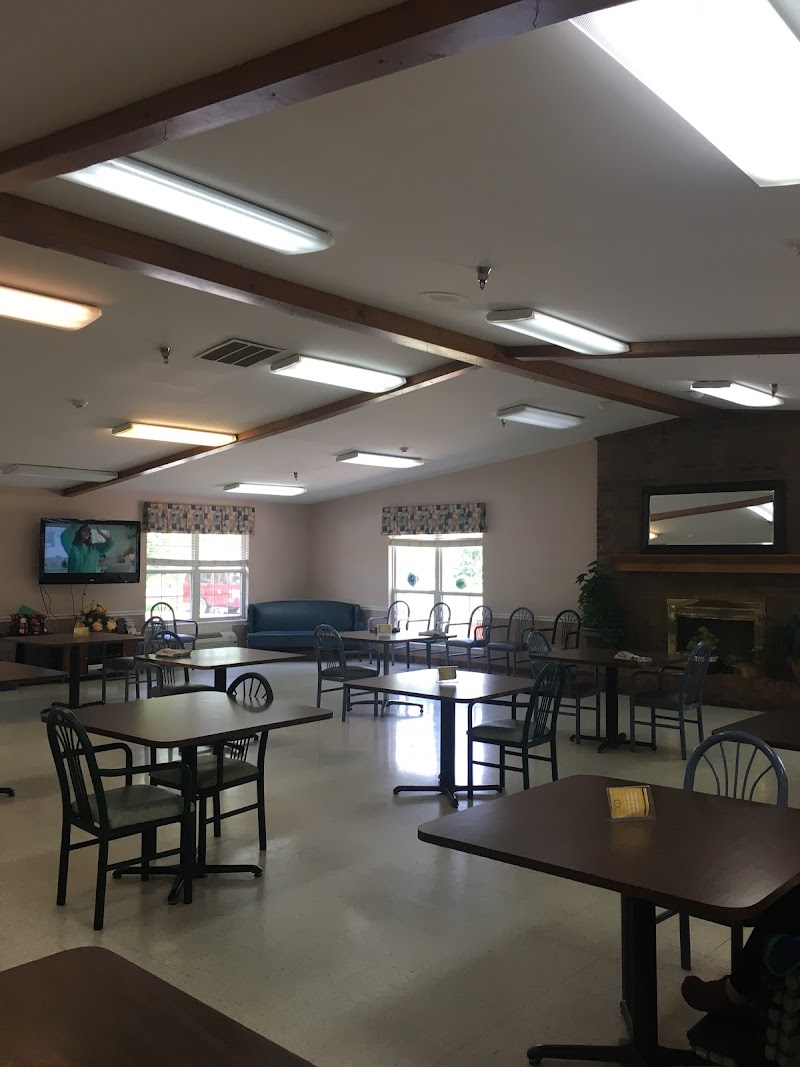
CMS rates Country View Nursing's staffing level at 2 out of 5 stars, which is below average compared to other nursing homes. Staff turnover is 81%, which is 35 percentage points above the Missouri average of 46%. High turnover can affect care consistency as new staff learn residents' individual needs.

What Have Inspectors Found at Country View Nursing?

State health inspectors documented 65 deficiencies at Country View Nursing during 2020 to 2025. These included: 4 Immediate Jeopardy (the most serious level, indicating potential for serious harm or death), 5 that caused actual resident harm, 50 with potential for harm, and 6 minor or isolated issues. Immediate Jeopardy findings are rare and represent the most serious regulatory concerns. They require immediate corrective action.

Who Owns and Operates Country View Nursing?

Country View Nursing is owned by a for-profit company. For-profit facilities operate as businesses with obligations to shareholders or private owners. The facility is operated by COMMUNITY CARE CENTERS, a chain that manages multiple nursing homes. With 60 certified beds and approximately 41 residents (about 68% occupancy), it is a smaller facility located in BOWLING GREEN, Missouri.

How Does Country View Nursing Compare to Other Missouri Nursing Homes?

Compared to the 100 nursing homes in Missouri, Country View Nursing's overall rating (1 stars) is below the state average of 2.5, staff turnover (81%) is significantly higher than the state average of 46%, and health inspection rating (1 stars) is much below the national benchmark.

What Should Families Ask When Visiting Country View Nursing?

Based on this facility's data, families visiting should ask: "What changes have been made since the serious inspection findings, and how are you preventing similar issues?" "What safeguards and monitoring systems are in place to protect residents from abuse or neglect?" "How do you ensure continuity of care given staff turnover, and what is your staff retention strategy?" "Can you walk me through typical staffing levels on day, evening, and night shifts?" These questions are particularly relevant given the facility's Immediate Jeopardy citations, the substantiated abuse finding on record, the facility's high staff turnover rate, and the below-average staffing rating.

Is Country View Nursing Safe?

Based on CMS inspection data, Country View Nursing has documented safety concerns. The facility has 1 substantiated abuse finding (meaning confirmed case of resident harm by staff or other residents). Inspectors have issued 4 Immediate Jeopardy citations (the most serious violation level indicating risk of serious injury or death). The facility has a 1-star overall rating and ranks #100 of 100 nursing homes in Missouri. Families considering this facility should ask detailed questions about what corrective actions have been taken since these incidents.

Do Nurses at Country View Nursing Stick Around?

Staff turnover at Country View Nursing is high. At 81%, the facility is 35 percentage points above the Missouri average of 46%. High turnover means new staff may not know residents' individual needs, medications, or preferences. It can also be disorienting for residents, especially those with dementia who rely on familiar faces. Families should ask: What is causing the turnover? What retention programs are in place? How do you ensure care continuity during staff transitions?

Was Country View Nursing Ever Fined?

Country View Nursing has been fined $190,621 across 3 penalty actions. This is 5.4x the Missouri average of $34,985. Fines at this level are uncommon and typically indicate a pattern of serious deficiencies, repeated violations, or failure to correct problems promptly. CMS reserves penalties of this magnitude for facilities that pose significant, documented risk to resident health or safety. Families should request specific documentation of what issues led to these fines and what systemic changes have been implemented.

Is Country View Nursing on Any Federal Watch List?

Country View Nursing is not on any federal watch list. The most significant is the Special Focus Facility (SFF) program, which identifies the bottom 1% of nursing homes nationally based on persistent, serious quality problems. Not being on this list means the facility has avoided the pattern of deficiencies that triggers enhanced federal oversight. This is a positive indicator, though families should still review the facility's inspection history directly.