Brookfield Health Care Center

215 EAST PRATT, BROOKFIELD, MO 64628 (660) 675-0600
For profit - Limited Liability company 60 Beds RELIANT CARE MANAGEMENT Data: November 2025
Trust Grade
43/100
#233 of 479 in MO
Last Inspection: October 2023

Over 2 years since last inspection. Current conditions may differ from available data.

Overview

Brookfield Health Care Center has a Trust Grade of D, indicating below-average performance with some concerns about care quality. They rank #233 out of 479 facilities in Missouri, placing them in the top half, and #1 out of 2 in Linn County, meaning they are the best option locally. While the facility is improving, having reduced issues from 9 in 2023 to 5 in 2025, staffing remains a significant weakness with a low rating of 1 star out of 5 and a concerning lack of consistent Registered Nurse (RN) coverage. Specific incidents include failing to provide RN coverage for eight consecutive hours daily and not having a full-time Director of Nursing for a month, which could impact resident safety. Despite these weaknesses, the staffing turnover rate is impressively low at 0%, and the RN coverage is better than 89% of facilities in Missouri, which suggests that when staff are present, they are likely experienced and familiar with residents’ needs.

Trust Score
D
43/100
In Missouri
#233/479
Top 48%
Safety Record
Moderate
Needs review
Inspections
Getting Better
9 → 5 violations
Staff Stability
○ Average
Turnover data not reported for this facility.
Penalties
○ Average
$6,351 in fines. Higher than 57% of Missouri facilities. Some compliance issues.
Skilled Nurses
✓ Good
Each resident gets 44 minutes of Registered Nurse (RN) attention daily — more than average for Missouri. RNs are trained to catch health problems early.
Violations
⚠ Watch
26 deficiencies on record. Higher than average. Multiple issues found across inspections.
★★☆☆☆
2.0
Overall Rating
★☆☆☆☆
1.0
Staff Levels
★★☆☆☆
2.0
Care Quality
★★★☆☆
3.0
Inspection Score
Stable
2023: 9 issues
2025: 5 issues

The Good

  • Full Sprinkler Coverage · Fire safety systems throughout facility
  • No fines on record

Facility shows strength in fire safety.

The Bad

2-Star Overall Rating

Near Missouri average (2.5)

Below average - review inspection findings carefully

Federal Fines: $6,351

Below median ($33,413)

Minor penalties assessed

Chain: RELIANT CARE MANAGEMENT

Part of a multi-facility chain

Ask about local staffing decisions and management

The Ugly 26 deficiencies on record

1 actual harm
Sept 2025 2 deficiencies 1 Harm
SERIOUS (G) 📢 Someone Reported This

A family member, employee, or ombudsman was alarmed enough to file a formal complaint

Actual Harm - a resident was hurt due to facility failures

Accident Prevention (Tag F0689)

A resident was harmed · This affected 1 resident

Deficiency Text Not Available

Read full inspector narrative →
Deficiency Text Not Available
CONCERN (D) 📢 Someone Reported This

A family member, employee, or ombudsman was alarmed enough to file a formal complaint

Potential for Harm - no one hurt, but risky conditions existed

Infection Control (Tag F0880)

Could have caused harm · This affected 1 resident

Deficiency Text Not Available

Read full inspector narrative →
Deficiency Text Not Available
Jun 2025 2 deficiencies
CONCERN (E) 📢 Someone Reported This

A family member, employee, or ombudsman was alarmed enough to file a formal complaint

Potential for Harm - no one hurt, but risky conditions existed

Deficiency F0725 (Tag F0725)

Could have caused harm · This affected multiple residents

**NOTE- TERMS IN BRACKETS HAVE BEEN EDITED TO PROTECT CONFIDENTIALITY** Based on observation, interview, and record review, the facility failed to provide sufficient staffing to ensure one dependent r...

Read full inspector narrative →
**NOTE- TERMS IN BRACKETS HAVE BEEN EDITED TO PROTECT CONFIDENTIALITY** Based on observation, interview, and record review, the facility failed to provide sufficient staffing to ensure one dependent resident (Resident #24) was able to smoke outside, ensure residents received restorative services or to ensure call lights were answered timely to accommodate resident needs for five residents (Resident #5, #13, #16, #22, and #24) in a review of 16 sampled residents. The facility census was 25. Review of the facility's policy, Call Lights Accessibility and Timely Response, revised 04/30/24, showed all staff members who see or hear an activated call light are responsible for responding. If the staff member cannot provide what the resident desired, the appropriate personnel should be notified. During an interview on 06/12/25 at 7:30 P.M., the Assistant Director of Nursing (ADON) said the facility had no restorative program at this time. 1. Review of the undated Facility Assessment showed the following: -Average daily census is 23; -Disease/Conditions and physical/cognitive disabilities for which the facility provides care for include neurological systems, including hemiparesis (muscle weakness on one side of the body), hemiplegia (partial paralysis on one side of the body), paraplegia (paralysis that affects all or part of the trunk, legs, and pelvic organs), quadriplegia (paralysis that affects the ability to move the uppers and lower body), cardiovascular accident/stroke (a medical condition where blood flow to the brain is interrupted that can include sudden numbness or weakness and difficulty walking), neuropathy (weakness, numbness, and pain from nerve damage, usually in the hands and feet) and muscle weakness; -The facility assessment will be used to inform staffing decisions to ensure that there are a sufficient number of staff with the appropriate competencies and skill sets necessary to care for its residents' needs as identified through resident assessments and plans of care; -Resident acuity affecting nursing aides: assistance provided with dressing - 14, assistance provided with bathing - 23, assistance provided with transfers - 19, assistance provided with eating - one, assistance provided with toileting - 13, assistance provided with mobility - 16, assistance provided with splints/braces - one and assistance provided with behavioral symptoms - three; -Facility resources (staffing): One Director of Nursing (DON), one Assistant Director of Nursing (ADON), four Licensed Practical Nurses (LPN), six Registered Nurses (RN), four medication aides or technicians, 12 Certified Nursing Assistants (CNA), zero Restorative Nursing Assistant, one infection preventionist and one regional minimum data set (MDS) nurse; -Overall staffing needs: Nurse Aides (CNAs, NAs, medication technicians) - three; -Staffing needs as per resident unit: CNAs - three; -Staffing needs as per shift (adjust as needed) Days: CNAs - three; -Specialized rehabilitation services - zero rehabilitation techs; -Staffing was based on acuity. 2. Review of the facility's Report of Nursing Staff Directly Responsible for Resident Care, dated 05/09/25 through 06/08/25, showed the following dates with two CNA's scheduled on the day shift when the facility assessment identified three CNA's were needed for the shift: -05/16/25; -05/18/25; -05/19/25; -05/26/25; -05/29/25; -05/31/25; -06/02/25; -06/04/25; -06/05/25; -06/06/25; -06/07/25; -06/08/25. 3. Review of the resident council meeting minutes showed the following: -On 04/02/25, residents said call lights were not working and the residents wanted the call lights answered timely; the staff responsible were the Maintenance Supervisor and the Director of Nursing; -On 05/08/25, residents wanted call lights answered timely and the staff responsible was the Assistant Director of Nursing (ADON); -On 06/04/25, residents wanted call lights answered timely and the staff responsible were the ADON and the Administrator. 4. Review of Resident #5's face sheet showed his/her diagnoses included chronic osteomyelitis (a long-term bone infection and chronic pain syndrome (persistent pain that last weeks to years). Review of the resident's care plan, revised on 05/02/25, showed the following: -Acute pain/chronic pain; -Administer pain medications per order. Review of the resident's quarterly minimum data set (MDS), a federally mandated assessment instrument completed by facility staff, dated 05/20/25, showed the following: -Cognitively intact; -Scheduled pain medication and as needed pain medication given. Review of the resident's call light logs, dated 06/06/25 through 06/09/25, showed the following: -On 06/06/25 at 12:27 A.M., the call light went unanswered for 20 minutes; -On 06/06/25 at 2:15 A.M., the call light went unanswered for 19 minutes; -On 06/06/25 at 4:06 P.M., the call light went unanswered for 19 minutes; -On 06/06/25 at 5:23 P.M., the call light went unanswered for 42 minutes. Review of the resident's June 2025 medication administration record (MAR) showed an as needed oxycodone hydrochloride (a narcotic pain medication) 10 milligrams (mg) administered on 06/06/25 at 5:57 P.M. Review of the resident's call light logs, dated 06/06/25 through 06/09/25, showed the following: -On 06/07/25 at 5:51 P.M., the call light went unanswered for 21 minutes; -On 06/07/25 at 7:09 P.M., the call light went unanswered for 19 minutes; -On 06/08/25 at 3:41 P.M., the call light went unanswered for 27 minutes. Review of the resident's June 2025 MAR showed an as needed oxycodone hydrochloride 10 mg administered on 06/08/25 at 4:55 P.M. Review of the resident's call light logs, dated 06/06/25 through 06/09/25, showed on 06/09/25, at 11:05 A.M., the call light went unanswered for 19 minutes. During an interview on 06/09/25 at 2:38 P.M., the resident said sometimes it took almost 40 minutes for staff to answer the call light. When he/she turned on the call light it was usually to request a pain pill. Review of the resident's call light log for 06/09/25 showed at 8:58 P.M., the call light went unanswered for 26 minutes. During an interview on 06/10/25 at 6:41 A.M., the resident said he/she had the call light on for about 30 minutes yesterday evening (6/9/25) before staff responded so he/she could get a pain pill. 5. Review of Resident #13's Care Plan, dated 02/05/25, showed the following: -Diagnoses include quadriplegia (paralysis of all extremities), contractures (condition of shortening and hardening of muscles, tendons, or other tissue, often leading to deformity and rigidity of joints), neuropathy (weakness, numbness and pain from nerve damage, usually in the hands and feet) and chronic pain related to trauma; -Impaired physical mobility; -Resident will be free of complications of immobility; -Assist resident in performing movements / tasks; -Evaluate skin for areas of blanching or redness; -Observe ROM in all joints; -Passive ROM shiftly; -Dependent on staff for all ADL's; -Resident eats in his/her room, and is fed by staff; -Resident is an aspiration risk. Review of the resident's annual MDS, dated [DATE], showed the following: -Cognitively intact; -Limited ROM all extremities; -Dependent on staff for all activities of daily living (ADL'S); -PRN (as needed) pain medications, no non-med interventions for pain; -Takes opioid (pain relieving medication) daily; -No therapy, no range of motion or other ADL's provided by restorative nursing. Review of the resident's call light log, dated 06/06/25 through 06/09/25, showed the following: -On 06/06/25 at 3:15 A.M., the call light went unanswered for 37 minutes; -On 06/06/25 at 10:32 P.M., the call light went unanswered for 28 minutes; -On 06/07/25 at 9:56 A.M., the call light went unanswered for 37 minutes. During an interview on 06/11/25 at 4:15 P.M., the resident said the following: -Sometimes he/she had problems with staff answering call lights timely; -He/She has had to wait an hour for staff when he/she had pain and discomfort; -When he/she lays on any type of wrinkle it burned and having to wait for a long time was miserable; -Waiting an hour have your call light answered made him/her feel staff did not care about him/her; -There was not enough staff to do ROM with him/her; -The aides will assist him/her to stretch when he/she asks, but it was not the same as a good ROM program where he/she would receive active ROM to all joints for several repetitions; -He/She felt guilty asking the aides with a full assignment to do more than a few stretches because it took time and they were very busy; -Since his/her contractures have gotten worse, he/she has knots in his/her muscles and it was miserable; his/her muscles will get so tight he/she could feel pulsations in the muscle. 6. Review of Resident #22's care plan, last updated 02/04/25, showed the following: -Chronic pain, polymyalgia rheumatica (PMR)( is a condition causing pain and stiffness, primarily in the shoulders, neck, and hips), tremors, and frequent falls; -Resident has impaired visual function; -Resident uses oxygen; -Trouble swallowing; -Eight falls in the last year (not all in the facility); -Ensure the resident's call light is in reach at all times, ensure prompt response to all request for assistance; -Chronic pain administer medications as ordered; -Resident requires limited physical assistance from staff for: dressing and walking in his/her room; -Resident requires extensive physical assistance from staff for: toilet use, transfers, and personal hygiene. Review of the resident's significant change MDS, dated [DATE], showed the following: -Cognition moderately impaired; -Requires supervision/touching assistance from staff members for eating, upper body dressing, to walk 10 feet, and wheel 50 feet with two turns; -Requires partial/moderate assistance from staff for oral hygiene, personal hygiene, and walk 50 feet with two turns; -Requires substantial/maximal assistance from staff for lower body dressing, putting on/taking off footwear, roll left and right, sit to lying, lying to sitting on side of bed, sit to stand, chair/bed-to-chair transfer, toilet transfer, tub/shower transfer, walk 150 feet, and wheel 150 feet; -Dependent on staff for toileting hygiene and to shower/bathe. Review of the resident's call light log, dated 06/06/25 through 06/09/25, showed the following: -On 06/06/25 at 7:39 A.M., the call light went unanswered for 18 minutes; -On 06/06/25 at 11:33 A.M., the call light went unanswered for 18 minutes; -On 06/06/25 at 6:00 P.M., the call light went unanswered for 26 minutes; -On 06/06/25 at 9:37 P.M., the call light went unanswered for 17 minutes; -On 06/07/25 at 4:36 A.M., the call light went unanswered for 27 minutes; -On 06/07/25 at 10:08 A.M., the call light went unanswered for 29 minutes; -On 06/07/25 at 6:15 P.M., the call light went unanswered for 42 minutes; -On 06/07/25 at 7:43 P.M., the call light went unanswered for 19 minutes; -On 06/08/25 at 5:41 A.M., the call light went unanswered for 56 minutes; -On 06/08/25 at 10:44 A.M., the call light went unanswered for 17 minutes; -On 06/08/25 at 3:51 P.M., the call light went unanswered for 31 minutes; -On 06/09/25 at 1:14 A.M., the call light went unanswered for 28 minutes; -On 06/09/25 at 2:46 A.M., the call light went unanswered for 18 minutes; -On 06/09/25 at 6:37 A.M., the call light went unanswered for 24 minutes; -On 06/09/25 at 7:36 P.M., the call light went unanswered for 52 minutes; -On 06/09/25 at 11:16 P.M., the call light went unanswered for 41 minutes. During an interview on 06/11/25 at 12:36 P.M., the resident said sometimes he/she has to wait a long time to get his/her call light answered. The resident's spouse (present at time of interview) said the resident has to wait a long time to get his/her call light answered at meal times and shift change. The resident and his/her spouse said they do not feel like the facility has enough staff during busy times like meals and shift changes to answer call lights. 7. Review of Resident #24's face sheet showed the following: -He/She was his/her own person; -Diagnoses of pulmonary fibrosis (chronic lung disease) and acute respiratory failure with hypoxia (absence of enough oxygen in the tissue to sustain bodily functions). Review of the resident's smoking and safety assessment, dated 04/08/25, showed the following: -The resident uses tobacco products; -The resident follows the facility's policy on location and time of smoking; -The resident was able to demonstrate safe smoking techniques without the help of staff. Review of the resident's care plan, revised 04/10/25, showed the following: -He/She used tobacco; -The resident requires supervision while smoking. Review of the resident's significant change Minimum Data Set (MDS), a federally mandated assessment tool completed by facility staff, dated 05/12/25, showed the following: -Cognitively intact; -Dependent for chair and bed-to-chair transfers. Review of the resident's call light log, dated 06/06/25 through 06/08/25, showed the following: -On 06/06/25 at 10:41 A.M., the call light went unanswered for 22 minutes; -On 06/06/25 at 5:44 P.M., the call light went unanswered for 24 minutes; -On 06/06/25 at 9:37 P.M., the call light went unanswered for 19 minutes; -On 06/07/25 at 12:58 P.M., the call light went unanswered for 28 minutes; -On 06/08/25 at 7:34 A.M. the call light went unanswered for 37 minutes. Review of the resident's progress notes, dated 6/8/25 at 8:54 A.M., showed the resident was upset and crying due to not being able to go out to smoke. Staff educated the resident there were only two aides and one nurse working, and they were all busy assisting with breakfast, so there was nobody available to get the resident up with the mechanical lift and take him/her outside to smoke. The resident was still upset at 9:00 A.M. Review of the resident's call light log, dated 06/09/25 at 10:30 A.M., showed the call light went unanswered for 21 minutes. During an interview on 06/09/25 at 3:05 P.M., the resident said the following: -He/She was a smoker; -He/She required a mechanical lift and two staff to get out of bed; -When he/she went out to smoke, a staff member had to stay with her; -Call light response time varied, there were many occasions he/she had to wait 30 to 45 minutes; -Call light response time was slower on the day shift than during the evening or night shifts. Observation on 06/10/25 at 7:49 A.M. showed the following: -Resident shouting from room stating why am I being ignored; -Certified Medication Technician (CMT) N entered the room and asked the resident what was wrong; -The resident said he/she was supposed to go out for the 7:00 A.M. smoke break, but was still waiting 45 minutes later; -CMT N exited the room and walked down the hall looking for other staff; -At 7:53 A.M. the Assistant Director of Nursing (ADON) and Social Services Director (SSD) entered the resident's room and the ADON said staff would not be able to take him/her out right now due to the time; -The resident yelled he/she was tired of always missing smoke breaks because of staff. During an interview on 6/12/25 at 3:02 P.M. the SSD said the following: -The resident had been educated on the facilities smoking schedule and to utilize his/her call light prior to the scheduled time if he/she wanted to go out to smoke; -The resident had been educated that if his/her light was not answered in 15 minutes, then staff were busy providing cares, which the resident had also been educated as taking priority over smoke breaks; -The resident was educated that he/she was not being denied going to smoke, but would have to wait for cares that were higher priority; -The 7:00 A.M. smoke time was the hardest to accommodate as staff are busy getting other residents up to breakfast and feeding and monitoring them. 8. Review of Resident #16's face sheet showed his/her diagnoses include lumbar region radiculopathy (pinching of the nerves at the root which can cause pain or weakness). Review of the resident's care plan, revised on 05/16/25, showed the following: -The resident has current functional performance; -Needs limited assistance of one person for bed mobility and dressing; -Needs extensive assistance of one person with personal hygiene and toilet use; -Anticipate the resident's needs for pain relief and respond immediately to any complaints of pain. Review of the resident's quarterly MDS, dated [DATE], showed the following: -Cognitively intact; -Partial/moderate assistance from staff for oral hygiene, upper body dressing and personal hygiene; -Substantial/maximum assistance from staff for bathing, roll left and right, sit to lying, lying to sitting on the side of the bed, sit to stand transfer, chair/bed-to-chair transfer, toilet transfer and tub/shower transfers; -Dependent on staff for toileting hygiene, lower body dressing and putting on/taking off footwear; -Frequently incontinent of bowel and bladder. Review of the resident's call light logs, dated 06/06/25 through 06/09/25, showed the following: -On 06/06/25 at 1:14 A.M., the call light went unanswered for 18 minutes; -On 06/07/25 at 10:06 A.M., the call light went unanswered for 27 minutes; -On 06/08/25 at 5:30 A.M., the call light went unanswered for 20 minutes; -On 06/08/25 at 9:27 P.M., the call light went unanswered for 20 minutes; -On 06/09/25 at 5:25 A.M., the call light went unanswered for 41 minutes. 9. During an interview on 06/11/25 at 4:45 P.M., CNA M said the following: -The resident has contractures, especially in his/her right arm; -The facility did not have a restorative aide or anyone designated to do a full ROM program; -IT was difficult to answer call lights at meal times and shift change times; -The facility did not have enough staff to stay with the residents eating in their room who were aspiration risk, assist in the dining room and answer lights. It was not possible to be in two places at once. During an interview on 06/12/25 at 1:03 P.M., CNA D said the following: -It was difficult to answer call lights with only two CNA's on the floor; -When there are only two CNA's on the floor, it was hard to take the residents to smoke and answer the call lights timely; -Call lights should be answered within five minutes if there was no an emergency. During an interview on 06/12/25 at 1:09 P.M., CNA E said call lights should be answered within five minutes. During an interview on 06/12/25 at 1:16 P.M., CNA F said call lights should be answered in less than five minutes. During an interview on 06/11/25 at 10:05 A.M., and 06/12/25 at 7:21 P.M., Registered Nurse (RN) C said the following: -They did not know how to run the call light report so no one was monitoring the call light report; -Days and evening shift could be tricky on answering call lights during mealtimes and staff breaks; -Sometimes smoke breaks were late because there was no staff to take the resident out at the assigned time due to mealtimes and less staff on evening shift; -Call lights should ideally be answered within 5 minutes. During an interview on 06/12/25 at 7:30 P.M., the Assistant Director of Nurses (ADON) said the following: -A resident should be allowed to go out to smoke during assigned times regardless of the staffing situation; -Call lights should be answered as quickly as possible with 15 minutes pushing the limit and no more than 20 minutes; -The restorative program has been hard to implement due to staffing issues with no DON in the building to oversee the restorative program. During an interview on 06/12/25 at 7:30 P.M., the Director of Nurses (DON) said the following: -Call lights should be answered as quickly as possible, ideally within 5 minutes with 15 minutes pushing the limit; -If a resident needed to go to smoke break and the assigned staff was busy, she would expect other staff be utilized to complete the smoke break. During an interview on 06/12/25 at 7:55 P.M., the administrator said the following: -Call lights should be answered in a timely manner; -Resident smoke breaks should occur as scheduled; if the assigned staff cannot complete the smoking task, other staff should be utilized; -He had not had a DON until 06/09/25, so had not been able to effectively look at all the processes to see if additional staffing was needed; -He did not know if the facility needed higher number of staff during meal times and shift changes or reorganization to make sufficient use of staff. MO254369
CONCERN (F) 📢 Someone Reported This

A family member, employee, or ombudsman was alarmed enough to file a formal complaint

Potential for Harm - no one hurt, but risky conditions existed

Deficiency F0727 (Tag F0727)

Could have caused harm · This affected most or all residents

Based on interview and record review, the facility failed to provided a Registered Nurse (RN) eight consecutive hours a day, seven days a week. Additionally the facility failed to have a full time Dir...

Read full inspector narrative →
Based on interview and record review, the facility failed to provided a Registered Nurse (RN) eight consecutive hours a day, seven days a week. Additionally the facility failed to have a full time Director of Nursing (DON) from 05/10/25 through 06/09/25. The facility census was 25. Review of the facility's policy, Sufficient Staff Policy, revised 05/18/24, showed the following: -It is the policy of this facility to provide sufficient staff with appropriate competencies and skill sets to assure resident safety and attain or maintain the highest practicable physical, mental and psychosocial well-being of each resident; -Except when waived, the facility must use the services of an RN for at least eight consecutive hours a day, seven days a week; -The DON may serve as a charge nurse only when the facility has an average daily occupancy of 60 or fewer residents. Review of the undated Facility Assessment showed the following: -The facility had a DON; -Staffing patterns: RN eight hours per resident day; -Overall staffing needs: RN's to provide direct care one total needed, RN's available to provide direct care (includes DON and RN's with administrative duties) two total needed. 1. Review of the RN individual employee timecards from 05/05/25 through 06/09/25 showed the following: -On 05/05/25 there were no hours of RN coverage in 24 hours reviewed; -On 05/06/25 there were 5.75 hours of RN coverage in 24 hours reviewed; -On 05/09/25 there were 5.5 hours of RN coverage in 24 hours reviewed; -On 05/12/25 there were 5.5 hours of RN coverage in 24 hours reviewed; -On 05/16/25 there were no hours of RN coverage in 24 hours reviewed; -On 05/19/25 there were 5.25 hours of RN coverage in 24 hours reviewed; -On 05/23/25 there were 7.5 hours of RN coverage in 24 hours reviewed; -On 05/27/25 there were 5.75 hours of RN coverage in 24 hours reviewed; -On 05/28/25 there were 6 hours of RN coverage in 24 hours reviewed; -On 05/30/25 there were 4 hours of RN coverage in 24 hours reviewed; -On 06/01/25 there were no hours of RN coverage in 24 hours reviewed; -On 06/02/25 there were 5/75 hours of RN coverage in 24 hours reviewed. During an interview on 06/12/25 at 7:21 P.M., RN C said the following: -There had been multiple days the facility did not have an RN for eight hours of the day; -When he/she worked, he/she had been serving as the RN in the building; -He/She did not always work eight hours when serving as the RN in the building; -There had been multiple days since he/she stepped down as the DON that the building had been without a full-time DON; -The facility had been without a full-time DON for almost a month. During an interview on 06/09/25 at 9:45 A.M. and 06/12/25 at 7:30 P.M., the Assistant Director of Nursing (ADON) said the following: -The facility did not have a full-time DON at this time; -The facility was without a DON from the period of 05/10/25 through 06/09/25; -During that time, the corporate DON was in the facility some, but not full-time, and not for the entire time the facility was without a DON; -There should be an RN in the building eight hours each day; -There should be a full-time DON. During an interview on 06/12/25 at 7:50 P.M., the administrator said the following: -He was aware of the requirement for an RN in the building eight hours of every day; -Recently the facility had not had an RN in the building eight hours of every day; -There should be a full-time DON in the facility. MO254153 MO254369
Mar 2025 1 deficiency
CONCERN (F) 📢 Someone Reported This

A family member, employee, or ombudsman was alarmed enough to file a formal complaint

Potential for Harm - no one hurt, but risky conditions existed

Deficiency F0836 (Tag F0836)

Could have caused harm · This affected most or all residents

**NOTE- TERMS IN BRACKETS HAVE BEEN EDITED TO PROTECT CONFIDENTIALITY** Based on observation and interview, the facility failed to comply with state laws and designate a person as an administrator who...

Read full inspector narrative →
**NOTE- TERMS IN BRACKETS HAVE BEEN EDITED TO PROTECT CONFIDENTIALITY** Based on observation and interview, the facility failed to comply with state laws and designate a person as an administrator who was employed in the facility and served in that capacity on a full-time basis. This had the potential to affect all facility residents. The facility census was 30. 1. Observation on [DATE] at 9:00 A.M., outside the office labeled Administrator, showed the following: -The Assistant Administrator occupied the Administrator's office; -A State of Missouri Licensed Nursing Home Administrator License was displayed with the Administrator's name (the name on the license was not the assistant administrator's name, who was acting as the administrator); -The license was issued on [DATE] and expired on [DATE]. During an interview on [DATE] at 9:15 A.M. the Maintenance Director said the following: -The Assistant Administrator was an administrator in training; -The Administrator was not in the building very often; -The Administrator had been in the building two to three times since the beginning of February for a couple of hours each time. During an interview on [DATE] at 9:25 A.M. Resident #1 said the Assistant Administrator was the acting administrator and he/she did not know who the Administrator was. During an interview on [DATE] at 9:34 A.M. Certified Nursing Assistant (CNA) A said the following: -The Assistant Administrator was the acting administrator; -The facility Administrator was the Assistant Administrator's boss; -The Administrator came to the facility about once a month for monthly meetings and did rounds in the facility with the Assistant Administrator. During an interview on [DATE] at 9:36 A.M. Certified Med Tech (CMT) B said the following: -The Assistant Administrator was the acting administrator; -The actual Administrator was a corporate/regional staff that the Assistant Administrator answered to; -He/She was not sure how often the Administrator was at the facility. During an interview on [DATE] at 9:44 A.M. Resident #3 said he/she thought the Assistant Administrator was the acting administrator. During an interview on [DATE] at 9:50 A.M. Housekeeping Staff C said the following: -The acting administrator was the Assistant Administrator; -The Administrator was the person over the Assistant Administrator; -The Administrator was only in the facility once a week, every other week. During an interview on [DATE] at 9:53 A.M. Licensed Practical Nurse (LPN)/Charge Nurse D said the following: -The acting administrator was the Assistant Administrator; -The Administrator came in for an in-service when the facility owners changed and hadn't been in the facility since then as far as he/she was aware; -If something had to be ordered and he/she couldn't do it online, LPN D told the Minimum Data Set (MDS) Coordinator. The MDS Coordinator would notify the Assistant Administrator and the Assistant Administrator would have to call the Administrator to let her know. During an interview on [DATE] at 10:01 A.M. the Social Service Designee (SSD) said the following: -If the SSD needed anything he/she went to the Assistant Administrator; -The Administrator was in the building last week one day; -The Administrator was in the facility weekly but usually for half a day. During an interview on [DATE] at 8:52 A.M. the Assistant Administrator said the following: -She was at the facility daily and the Administrator was at the facility two to three times a week; -Her duties included payroll, accounts payable, attend morning staff meetings and also attending Quality Assurance and Performance Improvement meetings; -When the Administrator was in town, she also went to a sister facility to help that administrator. During an interview on [DATE] at 10:42 A.M. the Chief Operating Officer (COO) said the following: -He was not sure how often the Administrator was in the facility, maybe two, three or four days a week. He would have to ask the Administrator; -He expected an administrator to support the facility's community on a full time basis, 40 hours a week; -He expected the administrator of the facility to have knowledge of the facility and to make sound decisions. During an interview on [DATE] at 11:31 A.M. the Administrator said the following: -She tried to be at the facility two to three days a week; -Staff had access to her 24 hours a day, seven days a week, by telephone; -Last week she was only at the facility one day because she had duties as the Regional Director of Operations at other facilities; -She could not be at the facility full-time because as the Regional Director of Operations, she had to travel to other facilities. MO248794
Oct 2023 9 deficiencies
CONCERN (D)

Potential for Harm - no one hurt, but risky conditions existed

Resident Rights (Tag F0550)

Could have caused harm · This affected 1 resident

**NOTE- TERMS IN BRACKETS HAVE BEEN EDITED TO PROTECT CONFIDENTIALITY** Based on observation, interview and record review, the facility failed to provide care in a manner that enhanced resident dignit...

Read full inspector narrative →
**NOTE- TERMS IN BRACKETS HAVE BEEN EDITED TO PROTECT CONFIDENTIALITY** Based on observation, interview and record review, the facility failed to provide care in a manner that enhanced resident dignity and ensured full recognition of individuality when facility staff failed to provide personal care or pain medication when requested for two residents (Resident #20 and #28), in a review of 13 sampled residents. The facility census was 31. Review of the undated facility policy, Quality of Life-Dignity, showed the following: -Each resident shall be cared for in a manner that promotes and enhances quality of life, dignity, respect and individuality; -Residents shall be treated with dignity and respect at all times; -Treated with dignity means the resident will be assisted in maintaining and enhancing his or her self-esteem and self-worth; -Staff shall speak respectfully to residents at all times. 1. Review of Resident #20's face sheet showed the following: -He/She was admitted to the facility on [DATE]; -He/She was his/her own person. Review of the resident's facility medical diagnosis sheet showed diagnoses that included quadriplegia (paralysis of all four limbs), chronic pain and contracture of the right wrist. Review of the resident's quarterly Minimum Data Set (MDS), a federally mandated assessment instrument, completed by facility staff, dated 08/30/23, showed the following: -Cognitively intact; -Required extensive assistance of two or more staff for bed mobility and dressing; -Required total dependence of two or more staff for transfers and toileting; -Required extensive assistance of one staff for personal hygiene; -Was impaired in both the upper and lower extremities on both sides. Review of the resident's care plan, dated 01/14/23, showed the following: -The resident is dependent in all of his/her activities of daily living (ADL's); -The resident will be clean, dry, free of odor and well-groomed while having his/her dignity maintained through the next review; -The resident is dependent with toileting and hygiene; -No interventions listed specific to hygiene addressed in the care plan. During an interview on 10/3/23 at 1:45 P.M., the resident said the following: -Staff often tell him/her that they do not have time to do his/her personal care when he/she asks; -This usually occurs on the night shift, in the early morning hours; -Staff will tell the resident they will come back to do it, but then they never return; -Staff have told the resident he/she should ask to have his/her personal care done earlier in the shift because when he/she waits until the later hours, other residents need care then too; -This makes him/her feel awful; -He/She has told the assistant director of nurses (ADON) about this before, but nothing ever gets done. During an interview on 10/3/23 at 9:36 P.M., Certified Nurse Assistant (CNA) K said the following: -Both the day and night shift nurses are responsible for oral care and hygiene assistance if needed by a resident; -If the CNA's are busy doing bed checks, he/she has sometimes told residents that he/she would have to come back to help with oral care or hygiene when asked; -Resident #20 takes a long time to take care of, it's not so simple just to brush his/her teeth or do his/her personal care; -It can take up to 45 minutes to do the resident's personal care; -The resident will often wait until around 5:00 A.M. and then want his/her care done, and that's when the staff are beginning to help get other residents changed or up; -He/She has asked the resident to do his/her care around 3:00 A.M. instead so it could get done; -He/She talked to the ADON about this before and was told that it was okay to tell the resident staff would have to come back to do his/her care. During an interview on 10/04/23 at 1:25 P.M., the director of nurses (DON), said the following: -The resident usually wants his/her care personal care at varying hours of the night; -She would expect staff to ask the resident at the beginning of the shift what time the resident would like his/her personal care done, so staff could plan accordingly and stick to that; -These interventions should be care planned for the resident. 2. Review of Resident #28's face sheet showed the following: -The resident was admitted to the facility on [DATE]; -The resident was his/her own person. Review of the resident's facility medical diagnoses sheet showed diagnoses that included cerebral vascular accident (CVA, a stroke), fracture of fifth and sixth cervical vertebra (neck fracture), and quadriplegia. Review of the resident's admission (re-entry) MDS, dated [DATE], showed the following: -Cognitively intact; -He/She was independent and did not require staff assistance for bed mobility, transfers, toileting and personal hygiene; -He/She required limited assistance by one person for dressing; -He/She had impairment of the upper and lower extremity on one side; -He/She used a walker and wheelchair; -He/She had recent surgery involving the spinal cord or major spinal nerves; -He/She had pain frequently; -His/Her pain made it hard to sleep at night; -He/She received an opioid for seven days prior to the last assessment. Review of the resident's August 2023 clinical physician orders sheet showed the following: -08/01/23: oxycodone hydrochloride (HCL, a narcotic pain medication) 10 milligrams (mg), give one tablet by mouth every four hours as needed for pain; -08/02/23: tramadol (a narcotic pain medication) 50 mg, one tablet by mouth every eight hours for pain. Review of the resident's care plan, dated 08/24/23, showed the following: -At risk for pain related to spinal/cervical fractures; -The resident will be free from discomfort or adverse side effects from pain medications through the next review period; -Administer analgesic medications as ordered by physician, notify physician of any uncontrolled pain. During an interview on 10/02/23 at 11:20 A.M., the resident said the following: -There was one nurse that always makes him/her wait for his/her pain medications and he/she was not sure why; -The resident asked for a pain pill one night recently but Licensed Practical Nurse (LPN) N said the resident would have to wait because he/she was answering call lights; -The resident felt out of control and upset when LPN N made him wait for his/her medications. During an interview on 10/03/23 at 6:10 A.M., LPN N said the following: -The resident really gets upset if he/she doesn't get his/her way with some things; -The resident came to get a pain pill around 2:30 A.M. last week; -He/She was the only one on night shift that could give pain medications; -He/She had just started his/her supper break and told the resident he/she would have to wait until he/she was finished eating because he/she had already clocked out; -He/She told the resident that he/she was entitled to a break too; -The resident left the breakroom mad; -He/She gave the resident his/her pain medication about 20 minutes later. During an interview on 10/03/23 at 6:50 A.M., CNA K said the following: -He/She was in the breakroom when LPN N told the resident he/she would have to wait for a pain pill because LPN N was on supper break and had clocked out; -CNA K knew the resident was mad when he/she left the breakroom; -LPN N has never denied pain medications to the resident but has taken his/her time when getting them to the resident when the resident asked for them. During an interview on 10/03/23 at 7:55 A.M., the resident said the following: -He/She requested an oxycodone pain pill from the charge nurse around midnight or so last week; -The charge nurse was in the breakroom and told the resident that he/she would have to wait for a pain pill because the nurse was on a supper break; -During the night shift, only the charge nurse can give pain pills; -His/Her pain level was around a level of five or so; -His/Her pain is usually in his/her neck and low back; -The resident felt angry and upset because the med room was close by; -The resident returned to his/her room; -LPN N came in about 30-35 minutes later and gave him/her the pain pill; -LPN N has made him/her wait for pain medications in the past; -The resident has not told the director of nurses (DON) about LPN N not getting his/her pain medications because he/she figured it would just make things worse. During an interview on 10/04/23 at 1:25 P.M., the DON said the following: -She is aware the resident and LPN N don't see eye to eye; -Another staff member told her that LPN N did not give the resident his/her pain medication one night because LPN N was on his/her supper break; -Her expectation would be that staff would stop a work break and give a pain pill to a resident when requested.
CONCERN (D)

Potential for Harm - no one hurt, but risky conditions existed

Deficiency F0604 (Tag F0604)

Could have caused harm · This affected 1 resident

Based on observation, interview, and record review, the facility failed to accurately assess the use of a lap buddy (a positioning device when the patient is unable to maintain upright position in the...

Read full inspector narrative →
Based on observation, interview, and record review, the facility failed to accurately assess the use of a lap buddy (a positioning device when the patient is unable to maintain upright position in the chair and is used to provide trunk and upper arm/body support for wheelchair mobility or self-feeding), as a restraint for one resident (Residents #12), in a review of 13 sampled residents, who was unable to easily and intentionally remove the lap buddy. The facility also failed to identify a medical symptom that supported the use of the restraint, and failed to develop a care plan for the lap buddy with interventions to minimize or eliminate the medical symptom and identify and address any underlying problems causing the medical symptom. The facility census was 31. Review of the facility's undated policy, Use of Restraints, showed the following: -Restraints shall only be used to treat the resident's medical symptoms(s) and never for discipline or staff convenience, or for the prevention of falls; -When the use of restraints is indicated, the least restrictive alternative will be used for the least amount of time necessary, and the ongoing re-evaluation for the need for restraints will be documented; -Physical Restraints are defined as any manual method or physical or mechanical device, material or equipment attached or adjacent to the resident's body that the individual cannot remove easily, which restricts freedom of movement or restricts normal access to one's body; -The definition of a restraint is based on the functional status of the resident and not the device. If the resident cannot remove a device in the same manner in which the staff applied it given that the resident's physical condition (i.e, side rails are put back down, rather than climbed over), and this restricts his/her typical ability to change position or place, that device is considered a restraint; -Examples of devices that are/may be considered physical restraints include leg restraints, arm restraints, hand mitts, soft ties or vest, wheelchair safety bars, geri-chairs, and lap cushions and trays that the resident cannot remove; -Practices that inappropriately utilize equipment to prevent resident mobility are considered restraints and are not permitted, including placing a resident in a chair that prevents the resident from rising; -Restraints may only be used if/when the resident has a specific medical symptom that cannot be addressed by another less restrictive intervention AND a restraint is required to: a. Treat the medical symptom; b. Protect the resident's safety; and c. Help the resident attain the highest level of his/her physical or psychological well-being; -Prior to placing a resident in restraints, there shall be a pre-restraining assessment and review to determine the need for restraints. The assessment shall be used to determine possible underlying causes of the problematic medical symptom and to determine if there is less restrictive interventions (programs, devices, referrals, etc.) that may improve the symptoms; -Restraints shall only be used upon the written order of a physician and after obtaining consent from the resident and/or representative. The order shall include the following: a. The specific reason for the restraint (as it relates to the resident's medical symptom); b. How the restraint will be used to benefit the resident's medical symptom; and c. The type of restraint, and period of time for the use of the restraint; -Orders for restraints will not be enforced for longer than 12 hours, unless the resident's condition requires continued treatment; -Reorders are issued only after a review of the resident's condition by his/her physician; -Residents and/or surrogate/sponsor shall be informed about the potential risks and benefits of all options under consideration, including the use of restraints, not using restraints, and the alternatives to restraint use; -Restrained individuals shall be reviewed regularly (at least quarterly) to determine whether they are candidates for restraint reduction, less restrictive methods of restraints, or total restraint elimination; -Care plans for residents in restraints will reflect interventions that address not only the immediate medical symptom(s), but the underlying problems that may be causing the symptom(s); -Care plans shall also include the measures taken to systematically reduce or eliminate the need for restraint use; -Documentation regarding the use of restraints shall include: a. Full documentation of the episode leading to the use of the physical restraint. This includes not only the resident symptoms but also the conditions, circumstances, and environment associated with the episode; b. A description of the resident's medical symptoms (i.e., an indication or a characteristic of a physical or psychological condition) that warranted the use of restraints; c. How the restraint use benefits the resident by addressing the medical symptom; d. The type of physical restraint used; e. The length of effectiveness of the restraint time; and f. Observation, range of motion and repositioning flow sheets. 1. Review of Resident #12's Physician Order Sheet (POS), dated December 2022, showed an order for use of a lap buddy while up in wheelchair. (The physician's order did not include the specific reason for the restraint, as it related to the resident's medical symptom, how the restraint was used to benefit the resident's medical symptom, or the period of time for the use of the restraint as directed in the facility's policy.) Review of the resident's medical record showed no documentation staff completed a pre-restraining assessment (in accordance with policy), prior to using the lap buddy to determine possible underlying causes of the problematic medical symptom and to determine if there were less restrictive interventions that might improve the symptoms. Review of the resident's nurses' note, dated 12/1/22, showed staff spoke with the resident's family member related to the lap buddy and his/her request to use it for positioning the resident and continuing in the current wheelchair. The resident's family member was in agreement. (Review of the resident's medical record showed no documentation the facility informed the resident's family member about the potential risks and benefits of all options under consideration, including the use of restraints, not using restraints, or alternatives to restraint use as directed in the facility's policy.) Review of the resident's nurses notes dated 3/20/23, showed the resident was in his/her room with his/her family member. The resident started sliding from his/her wheelchair. The resident's family member assisted/lowered him/her to the cushion on the floor. No injury noted. Review of the resident's physician progress note, dated 9/5/23, showed the resident was usually non-verbal. He/She sat in his/her geri-chair with a lap pad to keep him/her from falling out. (Review showed no additional documentation regarding the lap buddy in the physician's progress note.) Review of the resident's quarterly Minimum Data Set (MDS), a federally mandated assessment instrument required to be completed by facility staff, dated 9/15/23, showed the following: -Severely impaired cognition; -Required total assistance from two staff for transfers; -Required extensive assistance from one staff for locomotion on and off the unit; -Used a wheelchair for a mobility device; -Had not fallen in the last two to six months prior to admission/entry or reentry; -Had a restraint: Chair prevented rising. Review of the resident's POS, dated October 2023, showed the following: -Diagnoses included ataxia (lack of coordination), muscle weakness, dementia and Alzheimer's disease; -No physician's order for a lap buddy. Review of the resident's care plan, last reviewed 10/2/23, showed the following: -The resident was at risk for falls. He/She unable to walk and needed assistance with transfers; -The resident slid down in his/her wheelchair and ended up on the floor,ensure he/she has proper positioning in his/her wheelchair (dated 3/20/23); -The resident needed staff to come to his/her room and check on him/her frequently as he/she may try to get up from his/her chair without staff assistance and he/she did not like to use his/her call light for help. Make sure the resident has his/her personal belongings and call light within reach at all times. Remind the resident often to use his/her call light if he/she should need anything. -Therapy screens as needed. (The facility failed to address the lap buddy as a restraint in the care plan and failed to develop a care plan for the lap buddy with interventions to minimize or eliminate the medical symptom and identify and address any underlying problems causing the medical symptom.) Review of the resident's medical record showed no evidence therapy staff screened the resident for the use of the lap buddy. Observations of the resident on 10/2/23 showed the following: -At 11:38 A.M., the resident sat in his/her wheelchair in the dining room with a lap buddy positioned in front of the resident and wrapped snug around the arms of the resident's wheelchair; -At 12:18 P.M., the resident sat in his/her wheelchair in the dining room at the table with a lap buddy positioned in front of the resident on the resident's wheelchair. Staff sat next to the resident and assisted the resident with his/her lunch meal. Observations on 10/3/23 showed the following: -At 5:54 A.M., the resident sat in his/her wheelchair in his/her room with the lap buddy in place in front of the resident; -At 6:05 A.M., staff wheeled the resident to the dining room in his/her wheelchair with the lap buddy in place. Staff positioned the resident in front of the television; -At 6:27 A.M., the resident sat in his/her wheelchair in front of the television in the dining room with the lap buddy in place; -At 6:45 A.M., the resident sat in his/her wheelchair in front of the television in the dining room with the lap buddy in place; -At 8:30 A.M., the resident sat at the table in the dining room in his/her wheelchair with the lap buddy in place. The resident's eyes were closed; -At 9:00 A.M., the resident sat in his/her wheelchair at the dining room table for breakfast with the lap buddy in place. Staff sat next to the resident and assisted the resident with his/her meal; -At 10:26 A.M., the resident sat in his/her wheelchair in the dining room at the table with the lap buddy in place; -At 11:16 A.M., the resident sat in his/her wheelchair by the nursing office with the lap buddy in place; -At 11:32 A.M., the resident sat in his/her wheelchair by the nursing office with the lap buddy in place; -At 12:01 P.M., the resident sat in his/her wheelchair in the dining room at the table with the lap buddy in place. The resident had his/her head down with his/her forehead resting in the palm of his/her hand; -At 12:29 P.M., Certified Nurse Assistant (CNA) G assisted the resident with his/her lunch meal. The resident sat in his/her wheelchair at the dining room table with the lap buddy in place; -At 12:45 P.M., the resident sat in his/her wheelchair in the dining room at the table with the lap buddy in place; -At 1:15 P.M., CNA G and CNA L removed the resident's lap buddy and transferred the resident to his/her bed. During interview on 10/3/23 at 1:15 P.M., CNA L said the resident had the lap buddy because the resident liked to slide down in his/her wheelchair. The resident had the lap buddy on all the time and could not take it off intentionally. Observation on 10/4/23 at 8:12 A.M., showed the resident sat in his/her wheelchair in the dining room at the table with the lap buddy in place. Staff were in the dining room. During interview on 10/4/23 at 8:24 A.M., Licensed Practical Nurse (LPN) F said he/she did not know much about the resident's lap buddy. The resident slid out of his/her wheelchair, and the resident's family member wanted the lap buddy. Observation on 10/4/23 at 8:28 A.M., showed the resident sat in his/her wheelchair in the dining room at the table with the lap buddy in place. Staff sat next to the resident and assisted the resident with breakfast. During interview on 10/4/23 at 8:45 A.M. and 10/17/23 at 11:20 A.M., Rehab Aide/Certified Medication Technician (CMT) I said the resident started pushing himself/herself up out of the wheelchair so the resident's family member brought in the lap buddy for the resident to use (unsure date). The resident can undo the Velcro straps keeping the lap buddy in place as he/she has seen the resident do this. The resident cannot release the lap buddy on command but he/she can undo it when he/she wants to. The resident has not been evaluated to see if the lap buddy was appropriate. Since the change in therapy companies (in December 2022), there had been no new evaluations of the lap buddy to see if it was appropriate. The lap buddy stays on when the resident is in his/her wheelchair. Staff do not remove the lap buddy periodically throughout the day or during meals. He/She was not aware the lap buddy needed to be assessed, needed to have orders for the lap buddy or that the lap buddy needed to be care planned. During interview on 10/4/23 at 10:00 A.M., the Director of Nurses (DON) said the resident's lap buddy had been in place since she started in January 2023. The resident's family member had requested the lap buddy for positioning. The previous therapy company had evaluated the resident for the lap buddy, but the facility changed therapy companies on 12/1/22 and they were unable to find the evaluation. The resident can remove the lap buddy as she has seen the resident do this before. There should be an order if a resident has a lap buddy. The facility changed electronic medical record (EMR) systems on 12/1/22 and the order for the lap buddy didn't get moved to the current EMR system. Staff should remove the lap buddy and reposition the resident every two hours and should remove the lap buddy at meal times depending on how the resident is sitting that day. The lap buddy should be included on the care plan. If the resident is not able to undo the Velcro on the lap buddy himself/herself, then it would be considered a restraint. The resident should be evaluated quarterly or with a change in his/her condition for the appropriateness of the lap buddy. Observation on 10/4/23 at 10:17 A.M., the Assistant Director of Nurses (ADON) asked the resident to undo his/her lap buddy. The resident had a blank stare on his/her face and did not offer to undo the Velcro strap to remove the lap buddy. During interview on 10/4/23 at 11:13 A.M., CNA M said staff only remove the lap buddy when they transfer the resident to bed. During interview on 10/4/23 at 1:15 P.M., CNA G said the resident likes to slide down in his/her wheelchair so he/she has a lap buddy. Staff remove the lap buddy when the resident goes back to bed. He/She had not noticed the resident trying to take the lap buddy off. He/She only removes the lap buddy when the resident goes to bed. During interview on 10/13/23 at 3:47 P.M., the DON said she would have expected the new therapy staff to have evaluated the lap buddy as a restraint. She would have expected staff to have notified therapy that the resident used a lap buddy so they could evaluate. Licensed nursing staff would be responsible to complete quarterly assessment for the lap buddy. Staff would know if the resident could undo the lap buddy by asking the resident to demonstrate taking it off.
CONCERN (D)

Potential for Harm - no one hurt, but risky conditions existed

Deficiency F0637 (Tag F0637)

Could have caused harm · This affected 1 resident

Based on observation, interview and record review, the facility failed to complete a significant change status assessment (SCSA) Minimum Data Set (MDS), a federally mandated assessment, required to be...

Read full inspector narrative →
Based on observation, interview and record review, the facility failed to complete a significant change status assessment (SCSA) Minimum Data Set (MDS), a federally mandated assessment, required to be completed by facility staff, for two residents (Resident #5 and #15), in a review of 13 sampled residents. This assessment should have been completed within 14 days after the facility determined, or should have determined, there had been a significant change (major decline or improvement in the resident's status) in the resident's physical or mental condition which had an impact on more than one area of the resident's health status and required disciplinary review and/or revision of the care plan. The facility census was 31. Review of the Long Term Care Facility RAI User's Manual, version 3.0 showed the following: -A significant change is any decline or improvement in a resident's status that: 1) Will not normally resolve itself without intervention by staff or by implementing standard disease-related clinical interventions, is not self-limiting; 2) Impacts more than one area of the resident's health status; 3) Requires interdisciplinary review and/or revision the care plan. -A SCSA was appropriate if there was a consistent pattern of changes, with either two or more areas of decline, or two or more areas of improvement. This may include two changes with a particular domain (e.g., two areas of activities of daily living (ADL) decline or improvement); -A SCSA is required to be performed when a terminally ill resident enrolls in a hospice program or changes hospice providers and remains a resident at the nursing home. The ARD (assessment reference date) must be within 14 days from the effective date of the hospice election; -A SCSA must be performed regardless of whether an assessment was recently conducted on the resident; -A SCSA is required to be performed when a resident is receiving hospice services and then decides to discontinue those services. The ARD must be within 14 days from one of the following: 1) The effective date of the hospice election revocation; 2) The expiration date of the certification of terminal illness; 3) The date of the physician's medical director's order stating the resident is no longer terminally ill. 1. Review of Resident #15's admission Minimum Data Set (MDS), a federally mandated assessment instrument completed by facility staff, dated 7/31/23, showed the following: -The resident had severe cognitive impairment; -He/She required extensive assistance from one staff member for bed mobility, transfers, dressing, toilet use, personal hygiene, and bathing; -He/She required extensive assistance from two staff members for ambulation; -He/She required limited assistance from one staff member for locomotion; -He/She had walker and wheelchair for assistive device; -He/She had an indwelling urinary catheter; -No antidepressants or antianxiety medications were adminstered: -No wander/elopement alarm. Review of the resident's skilled evaluation, dated 8/5/23 at 1:44 P.M., showed the following: -The resident experienced a new unwanted behavior of wandering; -He/She ambulated without assistive device and entered another resident's room. Review of the resident's skilled evaluation, dated 8/7/23 at 12:44 A.M., showed the following: -The resident left the building; -He/She was oriented to self, could get lost, and had an unsteady gait; -He/She attempted to go out the front door; -He/She set off the outgoing door alarm by the therapy department. Review of the resident's care plan, last updated on 8/8/23, showed the following: -The resident needed moderate assistance from one to two staff members to transfer, and needed limited assistance from one staff member for mobility; -He/She had a wanderguard (a device worn to alert others when an individual approaches an exit door equipped with an alarm) due to elopement risk; -He/She had an indwelling catheter due to acute kidney failure and wounds; -Peri care done every shift and PRN (as needed). Review of the resident's skilled evaluation, dated 8/11/23 at 2:04 A.M., showed the following: -The resident utilized a wander elopement alarm; -He/She was able to self-position. Review of the resident's health status note, dated 8/14/23 at 5:44 P.M., showed staff noted the resident walked without a walker and reminded the resident to use a walker when walking. Review of the resident's health status note, dated 8/21/23 at 3:51 P.M., showed the resident had signs and symptoms of anxiety/restlessness and exit seeking, so the staff sent a medication review and requested an order for anxiety medication from the primary care provider. Review of the resident's health status note, dated 8/22/23 at 9:02 A.M., showed the primary care provider ordered Zoloft (antidepressant) 50 mg daily and buspirone (anxiolytic, sedative and hypnotic) 5 mg twice a day. Review of the resident's health status note, dated 8/23/23 at 5:45 P.M., showed staff frequently reminded the resident to use a walker. Review of the resident's order note, dated 9/5/23 at 10:34 A.M., showed the following: -The resident had continued to show signs and symptoms of anxiety and restlessness; -He/She went into different rooms and asked to use the restroom multiple times within short amounts of time; -The primary care provider ordered hydroxyzine (antihistamine, anxiolytic, sedative and hypnotic) 25 mg, give one tablet by mouth every eight hours as needed for anxiety. Review of the resident's order note, dated 9/5/23 at 5:22 P.M., showed the primary care physician gave a verbal order to discontinue the indwelling urinary catheter. Review of the resident's health status note, dated 9/8/23 at 9:23 A.M., showed the following: -The resident paced the floor and said he/she needed to urinate; -The staff directed the resident to the restroom, but the resident immediately went back down the hall with the same complaint; -The nurse administered hydroxyzine several hours earlier, but the resident did not have any relief. Review of the resident's health status note, dated 9/8/23 at 12:11 P.M., showed the primary care provider ordered Xanax (benzodiazepine) 0.25 mg every eight hours as needed for agitation. Review of the resident's health status note, dated 9/10/23 at 2:00 P.M., showed the following: -The resident said he/she needed to urinate; -He/She voided in his/her room restroom; -He/She said that thing was talking to me and it told the resident that he/she was done, then the resident pointed at the paper towel dispenser. Review of the resident's incident note, dated 9/20/23 at 4:30 P.M., showed the following: -Staff notified the primary care physician about the resident pacing hallways and attempts to elope three times during the day; -The nurse administered PRN Xanax twice and PRN hydroxyzine without effectiveness. Review of the resident's monthly summary, dated 9/21/23 at 1:13 P.M., showed the following: -The resident often wandered the halls; -He/She walked independently; -He/She was continent of bowel and bladder with urgency; -He/She wore incontinence briefs and used a wanderguard; Review of the resident's physician orders, dated October 2023, showed the following: -Zoloft (antidepressant) 50 mg, give one tablet in the morning for anxiety (started 8/23/23); -Buspirone (anxiolytic, sedative and hypnotic), give one tablet two times a day for anxiety (started 8/22/23); -Check wanderguard placement every morning and at bedtime (started 8/8/23); -Seroquel (antipsychotic) 25 mg, give one tablet two times a day for anxiety (started on 9/21/23); -Hydroxyzine (antihistamine, anxiolytic, sedative and hypnotic) HCL 25 mg, give one tablet every eight hours as needed for anxiety (started on 9/6/23); -Xanax (benzodiazepine) 0.25 mg, give one tablet every eight hours as needed for agitation (started 9/8/23). Observation of the resident on 10/2/23 at 12:25 P.M., showed the following: -The resident sat at dining room table for lunch; -He/She had a wanderguard on his/her left wrist; -He/She stood up from the dining room chair without assistance. A staff member reminded the resident of his/her room number and gave directions. The resident walked down the hallway to his/her room without assistance or staff supervision. Observation on 10/3/23 at 6:20 A.M., showed the following: -The resident stood at the doorway to his/her room dressed in a long sleeved shirt and pants; -He/She told the certified nurse assistant (CNA) he/she already used the bathroom; -The CNA pointed to the direction of the dining room and said breakfast would be ready soon and the resident could have a cup of coffee. During an interview on 10/3/23 at 7:15 A.M., Certified Medication Technician (CMT) E said the resident performed activities of daily living (ADL) without assistance, however, staff supervised the resident to ensure he/she did the ADLs correctly. During an interview on 10/3/23 at 7:20 A.M., Licensed Practical Nurse (LPN) F said the following: -The resident became lost at times and could not find the restroom or his/her room; -The staff gave the resident instructions on where his/her room was located or led the resident to his/her desired location; -The resident was incontinent at times because the resident could not find the restroom. During an interview on 10/3/23 at 8:10 A.M., CNA G said the following: -The resident completed ADLs, but staff supervised the resident to make sure the ADLs were completed and/or done correctly; -The staff checked the resident daily to ensure he/she changed clothes daily, otherwise he/she wore the same clothes for days at a time; -The staff monitored the resident for behaviors of him/her needing the restroom, because the resident did not know where the restroom was located and/or the resident was incontinent and needed to find his/her room to clean up and find new clothes. Observation of the resident on 10/3/23 at 11:10 A.M., showed the following: -LPN F told the resident to lay on his/her abdomen so LPN F could change the dressing on the resident's coccyx (tailbone); -The resident laid down in the bed and rolled over on his/her abdomen without assistance. Review of the resident's medical record showed no significant change in status assessment completed after the following: -The resident improved from extensive assistance with bed mobility, transfers, locomotion and ambulation to independent; -He/She improved from extensive assistance with dressing, toilet use, and personal hygiene to limited assistance; -He/She improved from requiring a walker or wheelchair to ambulating without an assistive device; -He/She no longer had an indwelling urinary catheter; -He/She experienced behavior changes requiring an antidepressant and antianxiety medication along with a wander/elopement alarm. 2. Review of Resident #5's quarterly MDS, completed 7/19/23, showed no hospice care provided while a resident in the facility. Review of the resident's nurses' notes, dated 8/7/23 at 11:39 A.M., showed the resident was admitted to hospice care this day. Review of the resident's Physician Order Sheet (POS), dated August 2023, showed admit to hospice care. Review of the resident's care plan, dated last reviewed on 9/29/23, showed the resident had elected hospice services. All cares will be given for comfort via palliative care/hospice. Review of the resident's record showed no significant change in status assessment completed after the resident was admitted to hospice care on 8/7/23. 3. During an interview on 10/4/23 at 3:25 P.M., the Assistant Director of Nurses/MDS and Care Plan Coordinator said the following: -She completed a significant change MDS when a resident started to decline, sometimes combine the significant change MDS with another MDS; -If she had a question a significant change occurred, then she called the company's MDS specialist for direction since the MDS coordinator job was new to her; -She interviewed the resident, if intervewable, dietary, nursing, and whoever was also involved; -She reviewed the 24-hour report in the electronic medical record system every weekday for changes; -A significant change MDS should be completed when a resident was admitted to hospice or hospice benefit was elected; -A significant change MDS for resident improvements were usually combined with the quarterly evaluations. During an interview on 10/4/23 at 3:50 P.M., the Director of Nurses said the following: -A significant change MDS should be completed as soon as changes were made; -A significant change MDS should be completed when a resident started on hospice services.
CONCERN (D)

Potential for Harm - no one hurt, but risky conditions existed

PASARR Coordination (Tag F0644)

Could have caused harm · This affected 1 resident

**NOTE- TERMS IN BRACKETS HAVE BEEN EDITED TO PROTECT CONFIDENTIALITY** Based on interview and record review, the facility failed to have documentation of a Level I (level of care) PASARR (Pre-admissi...

Read full inspector narrative →
**NOTE- TERMS IN BRACKETS HAVE BEEN EDITED TO PROTECT CONFIDENTIALITY** Based on interview and record review, the facility failed to have documentation of a Level I (level of care) PASARR (Pre-admission Screening and Resident Review), and then failed to file for a Level II PASARR (an in-depth assessment of the resident's mental health and intellectual needs) when conditions/diagnoses changed or were added for one resident (Resident #4) in a review of 13 sampled residents. The facility census was 31. Record review of the Missouri Department of Health and Senior Services (DHSS) guide titled, PASARR Desk Reference, dated 3/3/08, showed: -The PASARR is a federally mandated screening process for any person for whom placement in a Medicaid Title (XIX) certified bed is being sought. This is a Level I screening (completion of the DA124C form). -A Level II assessment is completed on those persons identified at Level I who are known or suspected to have a serious mental illness (such as schizophrenia, dementia, major depression, etc., mental retardation (MR) or related MR condition to determine the need for specialized service (completion of the DA124A/B form). The facility responsible for completing the DA124A/B and/or DA124C forms is also responsible for submitting completed form(s) to DHSS, Division of Regulation and Licensure, Section for Long Term Care Regulation, Central Office Medical Review Unit (COMRU); -PASARR screening is required to assure appropriate placement of persons known or suspected of having a mental impairment; -To assure that the individual needs of mentally impaired persons can be and are being met in the appropriate placement environment; -To be compliant with the Omnibus Budget Reconciliation Act (OBRA)/PASARR federal requirements, see 42 CFR 483.Subpart C; and -To assure Title XIX funds are expended appropriately and in accordance with Legislative intent. Review of the facility policy PASARRs background and purpose, undated showed: -The purpose of the PASARR is to ensure that individuals being considered for admission to a Medicaid certified nursing facility (NF) are evaluated for evidence of possible PASARR conditions, i.e., serious mental illness (SMI), intellectual disability (ID), developmental disability (DD), or a related condition. PASARR grants special protections to individuals with (SMI), ID/DD or related condition (RC) to ensure they receive services in the most integrated setting. PASARR ensures that individuals being admitted to, or residing in a nursing facility (NF), receive services or supports that address their PASARR condition, including services linked to that condition, i.e., specialized services; -The PASARR process consists of a Level I Screening, a Level II Evaluation (depending on the outcome of the Level I screening) and a determination. A determination is defined as a decision made by the mental illness (MI) or ID state authority, delivered by a provider, that include placement and treatment recommendations that are most appropriate for an individual. 1. Review of Resident #4's medical record on 10/2/23 showed an admission date of 10/26/07 and no documentation of a level I PASARR. Review of the resident's quarterly Minimum Data Set (MDS), a federally mandated assessment instrument, completed by facility staff, dated 10/19/22, showed diagnoses included depression and anxiety. Review of the resident's quarterly MDS, dated [DATE], showed a new diagnosis of psychotic disorder. Review of the resident's medical record showed no documentation of a level II PASARR after the new diagnosis. Review of the resident's care plan, dated 1/13/23, showed the following: -Allow to express feelings and speak with a counselor if need; -Facility to provide additional recreational tools inside their room or inside facility if able; -Psychotropic medications for anxiety, depression and behaviors; -I can be verbally abusive and refuse cares; -I will not harm myself or others due to my behaviors; -Anticipate my care needs prior to me becoming overly stressed; -Ensure psychological needs are met (food, water, pain management, toileting, comfortable temperature; -Reduce noise and stimulation around me; -Report any changes in my behavioral status to my physician; -Provide a non-confrontational environment for care, do not rush and allow time to make decisions; -Evaluate for recent medication changes; -Educate me and my representative on the causal factors of my behavior and the planned interventions. Review of the resident's MDS, dated [DATE], showed the following: -Diagnoses included dementia (a group of thinking and social symptoms that interferes with daily functioning), anxiety (feelings of worry, nervousness or unease), depression (persistent feeling of sadness and loss of interest), psychotic disorder (disconnection from reality) and delusional disorder (unshakable belief in something that is untrue); -Verbal behavior one to three days of the 14 day look back period; -Rejection of care one to three days of the 14 day look back period; -Received anti-psychotics, anti-anxiety, anti-depressants and opioids seven of the last seven days. Review of the resident's level I PASARR (obtained after admission and after the state agency inquired about the document), dated and signed by the physician on 10/3/23, showed the following: -Psychiatric diagnoses: delusional disorder (main symptom is delusions, an unshakeable belief in something that's untrue) and anxiety disorder (a group of symptoms, such as stress, feeling sad or hopeless, and physical symptoms that can occur after you go through a stressful life event, reaction to the event, reaction to the event stronger than expected for the type of event which occurred); -Symptoms to support diagnosis: delusional; -Individual has area of impairment due to serious mental illness (concentration/persistence/ and pace: The individual has serious difficulty in sustaining focused attention for a long enough period to permit the completion of tasks commonly found in work settings or in work-like structured activities occurring in school or home settings, difficulties in concentration, inability to complete simple tasks within an established time period, makes frequent errors or requires assistance in the completion of these tasks; -Applicant is not currently a danger to self and others; -Reason for submitting application: replacement form; -Behavioral symptoms: hallucinations (perception of something not present)/delusional, abnormal thought process, aggressive (physical and verbal) behaviors, controlled with medications; -Unstable mental condition monitored by a physician or licensed mental health professional at least monthly or behavior symptoms are currently exhibited or psychiatric conditions are recently exhibited; -Impaired short term memory; -Level of supervision: two hour checks; -Not able to make a path to safety; -Hearing impaired. During an interview on 10/4/23 at 10:40 A.M., the Social Service Director said the following: -He/She was responsible for the PASARRs; -He/She had scanned the PASARRs they had available or that were in Point Click Care (PCC) (the facility's current electronic medical record program); -A level I should be completed before admission; -There should be documentation of the PASARR in the resident's medical record; -There was no PASARR in the resident's current medical record; -He/She could not retrieve a PASARR from Cerner (the facility's previous electronic medical record program); -He/She had reapplied for the resident's PASARR.
CONCERN (D)

Potential for Harm - no one hurt, but risky conditions existed

Deficiency F0658 (Tag F0658)

Could have caused harm · This affected 1 resident

Based on observation, interview, and record review, the facility failed to follow physician orders for one resident (Resident #3), who had an order for a decreased dose of medication, out of 13 sample...

Read full inspector narrative →
Based on observation, interview, and record review, the facility failed to follow physician orders for one resident (Resident #3), who had an order for a decreased dose of medication, out of 13 sampled residents. Staff failed to follow policy to ensure the pharmacy label on the medication matched the physician's order resulting in staff administering the wrong dose of the medication. The facility census was 31. Review of the facility's undated policy, Administrating Medications, showed the individual administering the medication checks the label three times to verify the right resident, right medication, right dosage, right time and right method (route) of administration before giving the medication. Review of the facility undated policy for pharmacy notification, showed the following: -The facility notifies the pharmacy for any new orders for medications or treatments ordered by the physician; -The charge nurse was responsible to fax and/or call the pharmacy with the new orders. 1. Review of Resident #3's quarterly Minimum Data Set (MDS), a federally mandated assessment instrument completed by facility staff, dated 7/8/23, showed the following: -The resident was cognitively intact; -Diagnoses included anxiety disorder (involves persistent and excessive worry that interferes with daily activities), depression, and bipolar disease (brain disorder that causes changes in a person's mood, energy, and ability to function); -He/She received an antianxiety and antidepressant seven days out of the seven days of the assessment. Review of the resident's care plan, updated 7/8/23, showed the following: -The resident had depression and took an antidepressant; -Administer the medication as directed. Review of the resident's nurse note, dated 9/28/23 at 3:48 P.M., showed Licensed Practical Nurse (LPN F) documented the primary care provider ordered citalopram (an antidepressant medication) reduction from 20 mg to 10 mg daily. Review of the resident's physician orders, dated October 2023, showed citalopram 20 mg, give 0.5 tablet (half a tablet) daily (started on 9/29/23). Review of the resident's electronic medication administration record (MAR), dated October 2023, showed staff administered citalopram 20 mg, 0.5 tablet one time a day on 10/1/23, 10/2/23, and 10/3/23. Observation on 10/3/23 at 6:50 A.M., showed the following: -Certified Medication Technician (CMT) E checked the label on the citalopram bubble pack card with the order on the electronic MAR; -The label on the citalopram bubble pack card showed citalopram 20 mg, give one tablet by mouth daily; -CMT E removed the citalopram (whole tablet) from the bubble pack card and placed it into a medication cup; -CMT E administered the medication to the resident. Review of the resident's electronic MAR, dated October 2023, showed staff administered citalopram 20 mg, 0.5 tablet one time a day on 10/3/23. (Observation showed staff administered 20 mg on 10/3/23, not 10 mg as ordered.) During an interview on 10/3/23 at 10:05 A.M., CMT E said the following: -The citalopram bubble pack card label said citalopram 20 mg one tablet by mouth and the electronic medication administration record also showed citalopram 20 mg, so he/she administered the citalopram 20 mg to the resident on 10/1/23 and 10/3/23; -He/She looked at the administration record and said he/she did not see the half tablet when preparing the medication. During an interview on 10/3/23 at 11:20 A.M., Licensed Practical Nurse (LPN) F said the following: -The physician gave new orders either verbal or written; -The nurse entered the new order into the electronic medical record; -LPN F did not know how the pharmacy was notified of new medication orders. -He/She communicated new orders or changes in orders to the CMT. During an interview on 10/3/23 at 11:45 A.M., the Assistant Director of Nursing (ADON) said the nurse was to call or fax the pharmacy with new medication orders or changes in orders from the physician. During a telephone interview on 10/3/23 at 12:10 P.M., the pharmacist said the following: -The pharmacy did not have a record of a decrease in dose order for the resident's citalopram; -The pharmacy had an order for citalopram 20 mg, give one tablet by mouth daily. During an interview on 10/4/23 at 9:30 A.M. and 3:50 P.M., the Director of Nurses said the following: -The nurse did not communicate with the CMT on the resident's citalopram dose change, so the CMT did not know to mark the card until the correct dose arrived from pharmacy; -Neither the nurse or CMT notified the pharmacy of the citalopram dose change. -The CMT or charge nurse were to call the pharmacy with new orders; -The charge nurse was to communicate the dosage change with the CMT, so the medication card could be removed from the medication cart or a warning added to the label stating the dose change; -The charge nurse or CMT were expected to check if the pharmacy delivered the corrected bubble pack card or changed the label on the bubble pack to match the physician's order.
CONCERN (D)

Potential for Harm - no one hurt, but risky conditions existed

Incontinence Care (Tag F0690)

Could have caused harm · This affected 1 resident

**NOTE- TERMS IN BRACKETS HAVE BEEN EDITED TO PROTECT CONFIDENTIALITY** Based on observation, interview, and record review, the facility failed to provide appropriate treatment and services consistent...

Read full inspector narrative →
**NOTE- TERMS IN BRACKETS HAVE BEEN EDITED TO PROTECT CONFIDENTIALITY** Based on observation, interview, and record review, the facility failed to provide appropriate treatment and services consistent with acceptable standards of practice to prevent urinary tract infections (UTIs) for two residents (Residents #5 and #82), who had a urinary catheter (a sterile tube inserted into the bladder to drain urine), in a review of 13 sampled residents. The facility reported three residents with a urinary catheter. The facility census was 31. Review of the facility's undated and untitled policy showed the following: -It is the policy of the facility to provide pericare to all residents who are unable to provide for themselves; -Peri-care with a catheter: Wash the catheter tubing from the opening of the urethra outward 4 inches or farther if needed. Do not pull on the catheter; -Peri-care with a suprapubic catheter (a sterile tube inserted through the abdominal wall into the bladder to drain urine): wipe around the suprapubic insertion site with wet wipe. Discard wipe and use a new wipe to wash the catheter tubing from the insertion site outward four inches or father if needed. 1. Review of Resident #5's quarterly Minimum Data Set (MDS), a federally mandated assessment instrument completed by facility staff, dated 7/19/23, showed the following: -Severely impaired cognition; -Required extensive assistance of two staff for bed mobility, transfers and toileting; -Required extensive assistance of one staff for hygiene; -Had an indwelling urinary catheter. Review of the resident's Physician Order Sheet (POS), dated September 2023, showed the following: -An order dated 9/26/23 for Cipro (an antibiotic) 500 milligrams (mg) twice daily for seven days for infection related to retention of urine; -Change suprapubic catheter and drainage bag monthly and as needed for occlusion or leakage. Review of the resident's care plan, last reviewed 9/29/23, showed the following: -The resident has a suprapubic catheter due to obstructive uropathy (a disorder of the urinary tract that occurs due to obstructed urinary flow) and placed him/her at risk for UTIs; -Staff to perform proper catheter hygiene care as ordered; -The catheter needs to be maintained for proper drainage, and the bag kept off the floor. Observation on 10/2/23 at 1:04 P.M., showed the resident sat in his/her geri-chair (a padded, moveable reclining chair) in the dining room. The resident's catheter tubing touched the floor. Observation on 10/2/23 at 1:45 P.M., showed the following: -The resident sat on a Hoyer lift (mechanical lift) sling in his/her geri-chair; -Certified Nurse Assistant (CNA) H and Certified Medication Technician (CMT/CNA) I hooked the Hoyer sling to the Hoyer lift; -CNA H picked up the resident's catheter bag and hooked the bag on the lower loop of the Hoyer sling, above the level of the resident's bladder; -Urine in the catheter tubing flowed back toward the resident; -CNA H and CMT/CNA I transferred the resident to his/her bed. The catheter bag remained above the level of the resident's bladder during the transfer. Observations on 10/3/23 at 6:08 A.M. and 6:45 A.M., showed the resident lay in his/her low bed. The catheter dignity bag, which contained the resident's urinary catheter drainage bag, touched the floor. Observation on 10/3/23 at 7:45 A.M., showed the following: -The resident lay in bed; -CNA G entered the resident's room, picked up the resident's catheter tubing, drained the urine into the catheter bag, and lay the catheter bag (covered by a dignity bag) on the floor; -CNA G picked up catheter bag (above the level of the bladder), weaved it through the resident's pant leg and hooked the bag on the bed frame; -CNA G and CMT/CNA I transferred the resident with a gait belt to his/her geri-chair and hooked the catheter bag on the side of the geri-chair. -Staff did not provide catheter care for the resident. Observations on 10/3/23 showed the following: -At 10:26 A.M., 11:16 A.M., 11:32 A.M. and 12:01 A.M., the resident sat in his/her geri-chair in the dining room. The catheter dignity bag (which contained the resident's urinary catheter drainage bag) was hooked on the side of the geri-chair and touched the floor; -At 12:29 P.M., the resident sat in his/her geri-chair in the dining room. CNA L assisted the resident to eat his/her lunch. The catheter collection bag covered with a dignity bag touched the floor; -At 12:45 P.M., the resident sat in his/her geri-chair in the dining room. The resident's catheter bag touched the floor; -At 12:49 P.M., Licensed Practical Nurse (LPN) F wheeled from the dining room to the resident's room. The catheter dignity bag (which contained the resident's urinary catheter drainage bag) drug along the floor. Observation on 10/3/23 at 2:00 P.M., showed the following: -The resident sat on a Hoyer lift sling in his/her geri-chair in his/her room; -CNA H hooked the Hoyer sling to the Hoyer lift, and hooked the resident's urinary catheter drainage bag on the lower loop of the sling above the level of the bladder; -CNA G and CNA H transferred the resident to his/her bed with the Hoyer lift; -CNA H hooked the urinary catheter drainage bag on the side of the resident's bed; -CNA G removed the resident's incontinence brief, provided peri-care to the resident's front genitalia and groin area, and cleaned across the resident's lower abdomen; -CNA G did not clean the suprapubic stoma (suprapubic catheter insertion site) or the urinary catheter tubing. Observation on 10/3/23 at 3:33 P.M., showed the resident lay on his/her back in a low bed. The catheter dignity bag (which contained the resident's urinary catheter drainage bag) touched the floor. Observation on 10/4/23 at 8:12 A.M., showed the resident sat in his/her geri-chair in the dining room. The resident's urinary catheter bag (in a dignity bag) hung on the side of his/her geri-chair. The catheter dignity bag touched the floor. During interview on 10/4/23 at 11:57 A.M., CNA H said the urinary catheter bag should be on the lowest hook of the Hoyer lift or hooked on staff's pant pocket during a transfer. Staff should keep the catheter bag below the level of the resident's bladder. If a resident is in a low bed, staff should keep the bed just high enough to keep the catheter bag and dignity bag off the floor. Staff should cleanse the resident's frontal genitalia, down the catheter tubing away from the insertion site, and should clean around the insertion site if it is a suprapubic catheter. During interview on 10/4/23 at 1:15 P.M., CNA G said staff should clean the resident's front genitalia and 6 inches down the catheter tubing. The nurse was responsible for cleaning around the suprapubic catheter site. Staff should keep the urinary catheter bag below the resident's bladder and the urinary catheter bag, dignity bag or catheter tubing should not touch the floor. Staff should not hook the urinary catheter bag on their pant leg (during a transfer). If a resident is in a low bed, the urinary catheter bag should be placed in a wash basin. 2. Review of Resident #82's urinalysis, dated 9/24/23, showed the following: -Appearance: slightly cloudy (normal is clear); -Blood: large amount (normal is none); -pH: 8.5 (normal is 4.9-9.1); -Protein: 100 mg/deciliter (mg/dL) (normal is none); -White Blood Cells (WBCs): greater than 50/high power field (hpf) (normal is two to five or less); -Red Blood Cells (RBCs): 5-10/hpf (normal is four or less); -Bacteria: one + (normal is none); -Handwritten order on the bottom of the urinalysis showed Bactrim DS (an antibiotic) one tablet two times a day for seven days. Review of the resident's POS, dated September 2023, showed the following: -16 French indwelling catheter; -Diagnosis of UTI and sepsis (infection in the bloodstream); -Bactrim DS one tablet by mouth twice daily for seven days. Review of the resident's admission MDS, dated [DATE], showed the following: -Severely impaired cognition; -Required extensive assistance of two staff for bed mobility, hygiene and toileting; -Had an indwelling catheter; -Received an antibiotic four of the last seven days; -Diagnoses included benign prostatic hypertrophy (BPH) (enlarged prostate) and UTI in the last 30 days. Review of the resident's care plan, last revised 9/29/23, showed the following: -The resident has an indwelling urinary catheter due to BPH; -Peri-care done every shift and as needed; -Ensure urinary catheter bag cover is used for dignity and placement is positioned below the bladder. Ensure the bag isn't touching the floor from the bed frame or wheelchair placement. Observation on 10/2/23 at 1:27 P.M., showed the following: -The resident sat on a Hoyer lift sling in his/her geri-chair; -CNA M hooked the resident's Hoyer sling to the Hoyer lift; -CNA M unhooked the resident's urinary catheter bag (in the catheter dignity bag) from the side of the resident's geri-chair and hooked the bag on his/her pant leg pocket; -The urinary catheter tubing contained urine; -CMT/CNA J raised the resident from the chair with the Hoyer lift and transferred the resident to his/her bed; -CNA M unhooked the urinary catheter bag from his/her pant leg pocket and hooked the bag to the bed frame; -CMT/CNA J loosened the resident's incontinence brief. The resident was incontinent and soiled with feces; -CMT/CNA J cleaned the resident's buttocks and part of the resident's front genitalia at the catheter insertion site; -CMT/CNA J and CNA M removed the soiled incontinence brief and placed a clean incontinence brief on the resident; -CMT/CNA J did not clean the resident's groin, all of the front genitalia, or the catheter tubing. During interview on 10/4/23 at 11:13 A.M., CNA M said the following: -Staff should hook the urinary catheter bag on the loop of the Hoyer sling during a Hoyer lift transfer; -He/She could not recall what he/she was taught regarding where to place a urinary catheter bag during transfers; -It was not okay to hang the urinary catheter bag from his/her pant leg due to being unsanitary; -The urinary catheter bag should not be above the level of the resident's bladder due to backflow of urine; -CNAs were responsible for providing catheter care and were to perform catheter care every time peri-care was completed; -When a resident was in bed, the urinary catheter bag should hang on the bed frame and the urinary catheter bag or dignity bag should not touch the floor. During interview on 10/4/23 at 12:30 P.M., CMT/CNA J said staff should clean all the front genitalia, the urinary catheter tubing, buttocks and rectal area when providing peri-care. The urinary catheter bag and tubing should not touch the floor and the bag should be kept below the bladder. Observation on 10/2/23 at 3:15 P.M. showed the resident in a low bed. His/Her catheter bag (in a dignity bag) was hooked on the bed frame and touched the floor. Observation on 10/3/23 showed the following: -At 6:08 A.M., 6:45 A.M., 7:40 A.M., and 8:18 A.M., the resident lay in a low bed. The catheter dignity bag, which contained the resident's urinary catheter drainage bag, was hooked to the bed frame and touched the floor; -At 9:00 A.M., staff administered morning medications to the resident while he/she lay in bed. The catheter dignity bag, which contained the resident's urinary catheter drainage bag, was hooked to the bed frame and touched the floor; -At 10:26 A.M. and 11:26 A.M., the resident lay in a low bed. The catheter dignity bag, which contained the resident's urinary catheter drainage bag, was hooked to the bed frame and touched the floor. 3. During interview on 10/4/23 at 1:51 P.M., the Director of Nurses (DON) said the following: -Staff should cleanse all soiled areas when providing peri-care for a resident with a catheter, including the catheter insertion site and the catheter tubing; -If the resident has a suprapubic catheter, CNAs can clean around the insertion site; -It is appropriate for staff to lay the resident's catheter bag in the resident's lap, hook the bag on the lower loop of the Hoyer sling or hook the catheter bag on their pant leg pocket during a Hoyer transfer; -Staff should keep the catheter bag below the level of the resident's bladder and it should be kept off the floor; -If a resident is in a low bed, staff should place the catheter bag in a wash basin or keep the bed high enough to keep the bag off the floor.
CONCERN (E)

Potential for Harm - no one hurt, but risky conditions existed

Deficiency F0657 (Tag F0657)

Could have caused harm · This affected multiple residents

**NOTE- TERMS IN BRACKETS HAVE BEEN EDITED TO PROTECT CONFIDENTIALITY** Review of the facility policy, Care Plans, Comprehensive Person-Centered, dated December 2016, showed the following: -A compreh...

Read full inspector narrative →
**NOTE- TERMS IN BRACKETS HAVE BEEN EDITED TO PROTECT CONFIDENTIALITY** Review of the facility policy, Care Plans, Comprehensive Person-Centered, dated December 2016, showed the following: -A comprehensive, person-centered care plan that includes measurable objectives and timetables to meet the resident's physical, psychosocial and functional needs is developed and implemented for each resident; -Assessments of residents are ongoing and care plans are revised as information about the residents and the residents' conditions change; -The Interdisciplinary Team must review and update the care plan: a. When there has been a significant change in the resident's condition; b. When the desired outcome is not met; c. When the resident has been readmitted to the facility from a hospital stay; and d. At least quarterly, in conjunction with the required quarterly Minimum Data Set (MDS), a federally mandated assessment completed by facility staff. 1. Review of Resident #15's admission Minimum Data Set (MDS), a federally mandated assessment instrument completed by facility staff, dated 7/31/23, showed the following: -The resident had severe cognitive impairment; -He/She required extensive assistance from one staff member for bed mobility, transfers, dressing, toilet use, personal hygiene, and bathing; -He/She required extensive assistance from two staff members for ambulation; -He/She required limited assistance from one staff member for locomotion; -He/She had walker and wheelchair for assistive device; -He/She had an indwelling urinary catheter. Review of the resident's care plan, last updated on 8/8/23, showed the following: -The resident needed moderate assistance from one to two staff members to transfer, and needed limited assistance from one staff member for mobility; -He/She had an indwelling catheter due to acute kidney failure and wounds; -He/She wandered around the facility and at times became confused and tried to go out the wrong door; -The staff redirected the resident as necessary; -The resident had cognitive loss; -The staff provided cues and redirected as needed; -The staff ensured the resident's psychosocial needs were met, such as toileting; -The staff oriented the resident to his/her room. Review of the resident's skilled evaluation, dated 8/11/23 at 2:04 A.M., showed the resident was able to self-position. Review of the resident's health status note, dated 8/21/23 at 3:51 P.M., showed the resident had signs and symptoms of anxiety/restlessness and exit seeking, so the staff sent a medication review and requested an order for anxiety medication from the primary care provider. Review of the resident's health status note, dated 8/22/23 at 9:02 A.M., showed the primary care provider ordered Zoloft (an antidepressant medication) 50 mg daily and buspirone (an anxiety medication) 5 mg twice a day. Review of the resident's order note, dated 9/5/23 at 10:34 A.M., showed the following: -The resident had continued to show signs and symptoms of anxiety and restlessness; -He/She went into different rooms and asked to use the restroom multiple times within short amounts of time; -The primary care provider ordered hydroxyzine (an antihistamine that is also used to treat anxiety) 25 mg give one tablet by mouth every eight hours as needed for anxiety. Review of the resident's order note, dated 9/5/23 at 5:22 P.M., showed the primary care physician gave a verbal order to discontinue the indwelling urinary catheter. Review of the resident's health status note, dated 9/8/23 at 9:23 A.M., showed the following: -The resident paced the floor and said he/she needed to urinate; -The staff directed the resident to the restroom, but the resident immediately went back down the hall with the same complaint; -The nurse administered hydroxyzine several hours earlier but the resident did not have any relief. Review of the resident's health status note, dated 9/8/23 at 12:11 P.M., showed the primary care provider ordered Xanax (an antianxiety medication) 0.25 mg every eight hours as needed for agitation. Review of the resident's incident note, dated 9/20/23 at 4:30 P.M., showed the following: -The staff notified the primary care physician about the resident paced hallways and attempted elopement three times during day; -The nurse administered PRN (as needed) Xanax twice and PRN hydroxyzine without effectiveness. Review of the resident's monthly summary, dated 9/21/23 at 1:13 P.M., showed the following: -The resident often wandered the halls; -He/She walked independently; -He/She was continent of bowel and bladder with urgency. Review of the resident's physician orders, dated October 2023, showed the following: -Zoloft 50 mg give one tablet in the morning for anxiety (started 8/23/23); -Buspirone give one tablet two times a day for anxiety (started 8/22/23); -Seroquel (an antipsychotic medication) 25 mg, give one tablet two times a day for anxiety (started on 9/21/23); -Hydroxyzine HCL 25 mg give one tablet every eight hours as needed for anxiety (started on 9/6/23); -Xanax 0.25 mg, give one tablet every eight hours as needed for agitation (started 9/8/23). Observation on 10/2/23 at 12:25 P.M., showed the following: -The resident sat at dining room table for lunch; -He/She stood up from the dining room chair without assistance. A staff member reminded the resident of his/her room number and gave directions, and the resident walked down the hallway to his/her room without assistance or staff supervision. Observation on 10/3/23 at 6:20 A.M., showed the following: -The resident stood at the doorway to his/her room dressed in a long sleeved shirt and pants; -He/She told the certified nurse assistant (CNA) he/she already used the restroom; -The CNA pointed to the direction of the dining room and said breakfast would be ready soon and the resident could have a cup of coffee. During an interview on 10/3/23 at 7:15 A.M., Certified Medication Technician (CMT) E said the resident performed activities of daily living (ADL) without assistance, however, staff supervised the resident to ensure he/she did the ADLs correctly. During an interview on 10/3/23 at 7:20 A.M., Licensed Practical Nurse (LPN) F said the following: -The resident became lost at times and could not find the restroom or his/her room; -The staff gave the resident instructions on where his/her room was located or led the resident to where he/she was looking; -The resident was incontinent at times because the resident could not find the restroom. During an interview on 10/3/23 at 8:10 A.M., CNA G said the following: -The resident completed ADLs, but staff supervised the resident to make sure the ADLs were completed and/or done correctly; -The staff checked the resident daily to ensure he/she changed clothes daily, otherwise he/she will wear the same clothes for days at a time; -The staff monitored the resident for behaviors of him/her looking for the restroom, because the resident did not know where the restroom was located and/or the resident was incontinent and needed to find his/her room to clean up and find new clothes. Observation on 10/3/23 at 11:10 A.M., showed the following: -LPN F told the resident to lay on his/her abdomen so LPN F could change the resident's dressing on his/her coccyx (tailbone); -The resident laid down in the bed and rolled over on his/her abdomen without assistance. Review of the resident's current care plan showed no evidence staff updated the care plan to include the following: -The staff did not update the care plan to show the resident was independent with transfers, bed mobility, and mobility; -To show the indwelling catheter was discontinued; -To show the resident experienced anxiety resulting in new orders for antidepressant, antianxiety, or antipsychotics nor include monitoring for these specific medications; To show the resident experienced confusion causing him/her to forget where the resident's room and/or restroom was located, which occasionally caused the resident to be incontinent; -The staff did not update the care plan to show the resident's need for staff to encourage and ensure the resident changed his/her clothes daily. 2. Review of Resident #28's face sheet showed the following: -The resident was admitted to the facility on [DATE]; -The resident was his/her own responsible party. Review of the resident's medical diagnoses sheet, dated 04/10/23, showed the resident's diagnoses included cerebral vascular accident (CVA, a stroke), fracture of fifth and sixth cervical vertebra (neck fracture), and quadriplegia (paralysis below the neck that affects all of a person's limbs). Review of the resident's Smoking-Safety Screen, dated 04/10/23, showed the resident: -The resident was safe to smoke without supervision; -The resident could light his/her own cigarette; -The resident did not require adaptive equipment to smoke; -The resident smoked morning, afternoon and evening. (The assessment did not indicate where the resident's cigarettes and/or lighter were to be kept.) Review of the resident's admission (re-entry) MDS, dated [DATE], showed the following: -Cognitively intact; -He/She was independent and did not require staff assistance for bed mobility, transfers, toileting and personal hygiene; -He/She required limited assistance from one staff for dressing; -He/She had impairment in range of motion in the upper and lower extremity on one side; -He/She used a walker and wheelchair; -He/She was a smoker; -He/She had a fall in the two to six month period prior to admission; -He/She had recent surgery involving the spinal cord or major spinal nerves. Review of the resident's care plan, dated 08/24/23, showed the following: -The resident required extensive assistance with bed mobility, transfers, toileting and personal hygiene; -The resident had a nicotine habituation without any desire to quit at this time; -All nicotine products, including lighters or matches, must remain at the nurses' station or designated location. Any nicotine items purchased outside the facility, or given to take on an outing, must be given back upon returning. Staff or a family representative during a family visit will hand out all nicotine products. Review of the resident's clinical physician orders sheet for October 2023 showed the resident may leave the facility with or without being accompanied (original order dated 5/19/23). During an interview on 10/02/23 at 11:20 A.M., the resident said the following: -He/She was his/her own person; -He/She was independent with bed mobility, transfers, toileting and personal hygiene; -He/She used an electric wheelchair and left the facility any time he/she wanted; -He/She was a smoker and kept his/her own lighter and cigarettes; -He/She went outside to the courtyard whenever he/she wanted, to smoke or to just sit outside; -He/She often slept in his/her wheelchair in the courtyard at night; -Sometimes the night shift staff will come out to smoke and check on him/her; -He/She used his/her phone to call the facility or he/she would go inside if he/she needed something. Observation on 10/02/23 at 11:20 A.M., showed the resident was dressed, sitting up in his/her electric wheelchair and moved through the facility to the outdoor courtyard area where he/she pulled a lighter and cigarettes from his/her pocket and began to smoke. Observation on 10/02/23 at 12:00 P.M. showed the resident moved his/her electric wheelchair into the spa bathroom to toilet without staff assistance. During an interview on 10/03/23 at 6:10 A.M., LPN N said the following: -The resident stayed outside in the courtyard most of the night, all night; -The resident came inside and let staff know when/if he/she needed something; -The resident was an independent smoker and kept his/her own lighter and cigarettes; -The resident comes and goes in the facility as he/she wants. If he/she leaves the facility, he/she will sign out at the nurses' station. Observation on 10/04/23 at 11:00 A.M. showed the resident dressed and in his/her electric wheelchair. The resident signed himself/herself out of the facility and traveled up the street. During an interview on 10/04/23 at 1:25 P.M., the director of nurses (DON) said the following: -The resident is an independent smoker and keeps his/her lighter and cigarettes with him/her; -Staff instructed the resident not to share his/her cigarettes and lighter with other residents; -The resident comes and goes as he/she wants; he/she is his/her own person; -She was aware the resident went out to the courtyard at night because the resident says he/she can't sleep; -The night shift staff should check on the resident every hour or two hours when he/she is outside or in his/her room; -She expected the resident's care plan to be updated regarding the resident's smoking status and independence in the facility. Review of the resident's current care plan showed no documentation to address the resident's independence in activities of daily living, coming and going from the facility, current smoking habits or his/her desire to be out in the courtyard at night during usual sleeping hours. 3. Review of Resident #3's quarterly MDS, dated [DATE], showed the following: -The resident was cognitively intact; -He/She was independent with locomotion via wheelchair; -He/She used tobacco. Review of the resident's smoking-safety screen, dated 1/31/23 at 10:39 A.M., showed the following: -The resident smoked five to ten cigarettes per day; -He/She could light his/her own cigarette; -He/She did not need adaptive equipment when smoking; -The facility did not store the resident's lighter or cigarettes; -He/She was safe to smoke without supervision. Observation on 10/2/23 at 10:15 A.M., showed the resident lay in bed with cigarette pack and lighter on the bedside table. Observation on 10/3/23 at 5:55 A.M., showed the resident propelled down the hallway in his/her wheelchair with a cigarette pack and lighter in his/her shirt pocket. During an interview on 10/3/23 at 7:40 A.M., the resident said the following: -The resident lived in the facility since 2007; -The facility allowed him/her to keep his/her cigarettes and lighter; -He/She went outside to smoke without staff assistance; -The facility allowed him/her to smoke whenever he/she wanted, within reason. Observation on 10/3/23 at 9:10 A.M., showed the resident went outside via wheelchair without supervision or assistance from the staff to the designated smoking area. Review of the resident's care plan did not identify the resident was a smoker and did not include a care plan to address the resident's smoking. 4. Review of Resident #23's monthly summary, dated 8/2/23 at 4:41 P.M., showed the following: -The resident self-propelled in wheelchair; -The staff gave the resident frequent safety reminders regarding self-transfers; -He/She had frequent falls. Review of the resident's quarterly MDS, dated [DATE], showed the following: -The resident had moderately impaired cognition; -He/She experienced inattention and disorganized thinking; -He/She fell twice without injuries since previous quarterly assessment. Review of the resident's care plan, updated on 9/1/23, showed the following: -The resident required assistance from one staff for transfers; -He/She used antianxiety medication related to anxiety and mood disorder with the intervention to monitor the resident for safety due to the medication increased risk of falls; -He/She used psychotropic medications with the intervention to monitor and report as needed any adverse reactions including frequent falls; -The care plan did not include interventions to reduce risk of falls/injury related to falls. Observation on 10/3/23 at 8:10 A.M., showed the following: -The resident lay in bed; the bed was low to the floor; -The bed had bolsters to both sides of the head and foot of the bed with an open section in the middle for the resident to sit up on the side of the bed. During an interview on 10/3/23 at 7:15 A.M., Certified Medication Technician (CMT) E said the following: -The elevated sides on the head and foot of the bed were supposed to warn the resident how close he/she was to the edge of the bed to prevent the resident from falling out of bed; -The bed was put in a low position so if the resident fell out of bed, it would be a shorter distance and hopefully decrease injuries. During an interview on 10/3/23 at 8:10 A.M., CNA G said the following: -The resident had a special mattress to prevent him/her from rolling out of bed; -The resident's bed was supposed to be in a low position because of falls. Review of the resident's care plan showed no documentation to show the resident had a low bed or bolsters on his/her mattress to prevent falls. 5. During an interview on 10/4/23 at 3:25 P.M., the Assistant Director of Nurses (ADON)/MDS Coordinator said the following: -She included medication administration records, treatment administration records, activities of daily living and areas that trigger on a resident's MDS on the care plan; -She did not complete any care plans on smoking; -Smoking should be included on a care plan; -She obtained the information to update care plans in the nursing office by reviewing a resident's file that had orders in them, like therapy orders and the nurses told her when there was a change in the resident. Based on observation, interview, and record review, the facility failed to develop a plan of care consistent with resident's specific conditions, needs, and risks to provide effective person-centered care for three residents (Residents #15, #23 and #28), in a review of 13 sampled residents, and one additional resident (Resident #3). The facility census was 31.
CONCERN (E)

Potential for Harm - no one hurt, but risky conditions existed

ADL Care (Tag F0677)

Could have caused harm · This affected multiple residents

**NOTE- TERMS IN BRACKETS HAVE BEEN EDITED TO PROTECT CONFIDENTIALITY** Based on observation, interview, and record review, the facility failed to ensure staff provided grooming and hygiene needs for ...

Read full inspector narrative →
**NOTE- TERMS IN BRACKETS HAVE BEEN EDITED TO PROTECT CONFIDENTIALITY** Based on observation, interview, and record review, the facility failed to ensure staff provided grooming and hygiene needs for three residents (Residents #5, #6, and #12) and one additional resident (Resident #82), who were unable to perform their own activities of daily living (ADLs), in a review of 13 sampled residents. The facility census was 31. Review of the facility policy, Mouth Care - AM (morning), PM (afternoon/evening) and PRN (as needed), dated October 2010, showed the following: -The purpose of this procedure is to keep the resident's lips and oral tissues moist, to clean and freshen the resident's mouth, and to prevent infections of the mouth; -Review the resident's care plan to assess for any special needs of the resident. Review of the facility undated policy, Shaving the Resident, showed the following: -The purpose of this procedure is to promote cleanliness and to provide skin care; -Review the resident's care plan to assess for any special needs of the resident; (The facility policy did not direct staff when to provide shaving of the resident.) 1. Review of Resident #5's quarterly Minimum Data Set (MDS), a federally mandated assessment instrument completed by facility staff, dated 7/19/23, showed the following: -Severely impaired cognition; -Required extensive assistance from one staff for hygiene; -Did not reject care. Review of the resident's care plan, last reviewed 9/29/23, showed the following: -The resident needed assistance with his/her activities of daily living (ADLs); -The resident required extensive assistance from staff for grooming/hygiene; -The resident would like his/her dignity, hygiene and appearance maintained and be free of any odor. (The care plan did not identify how often staff were to provide oral care or shaving.) Observations on 10/2/23 showed at 11:38 A.M. and 1:04 P.M., showed the resident sat in his/her geri-chair in the dining room. The resident had facial hair, approximately ¼ inch long. Observations on 10/3/23 at 7:45 A.M., showed the resident lay in bed. Certified Nurse Assistant (CNA) G and Certified Medication Technician (CMT)/CNA I provided peri-care for the resident, transferred the resident to his/her geri-chair, and transported the resident to the dining room. Staff did not provide oral care for the resident. The resident continued to have facial hair, approximately 1/4 inch long. Observations on 10/3/23 showed the following: -At 8:30 A.M., the resident sat in his/her geri-chair in the dining room. The resident's eyes were closed and his/her mouth was slightly open. The resident's teeth were covered with food debris. The resident had ¼ inch facial hair; -At 9:00 A.M., staff assisted the resident to eat his/her breakfast meal; -At 10:26 A.M. and 11:32 A.M., the resident sat in his/her geri-chair in the common area. The resident's eyes were closed and his/her mouth was slightly open. The resident's teeth were covered with food debris and his/her face had ¼ inch facial hair; -At 12:01 P.M., the resident sat in his/her geri-chair in the dining room for lunch. His/Her teeth were covered in food debris and he/she had ¼ inch facial hair; -At 12:49 P.M., Licensed Practical Nurse (LPN) F transported the resident to his/her room and commented, It doesn't look like he/she got shaved or oral care or anything today;; -At 3:33 P.M., the resident lay in his/her bed. The resident's teeth were covered in food debris and he/she continued to have ¼ inch facial hair. Observation on 10/4/23 at 8:12 A.M., showed the resident sat in his/her geri-chair in the dining room. The resident's eyes were closed and his/her mouth was slightly open. The resident's teeth were covered with food debris and his/her face had ¼ inch facial hair. During interview on 10/4/23 at 11:57 A.M., CNA G (also a shower aide), said staff should brush the resident's teeth in the morning when getting the resident up for the day. Staff shave the residents on shower days and as needed. Hospice usually shaved the resident when they visited. 2. Review of Resident #82's admission MDS, dated [DATE], showed the following: -Severely impaired cognition; -Required extensive assistance from two staff for hygiene; -Did not reject care. Review of the resident's care plan, last revised 9/29/23, showed the following: -The resident needed assistance with ADLs; -The resident required limited assistance from one staff for grooming/hygiene; (The care plan did not direct staff when to shave the resident or his/her preferences for shaving.) Observations on 10/2/23 showed the following: -At 11:38 A.M. and 1:04 P.M., the resident sat in his/her geri-chair in the dining room. The resident had facial hair, approximately 1/4 inch long; -At 3:15 P.M., the resident lay in bed. The resident had facial hair, approximately ¼ inch long. Observations on 10/3/23 showed the following: -At 6:08 A.M., the resident lay in bed with his/her eyes closed. The resident had ¼ inch facial hair; -At 9:00 A.M., staff administered the resident's morning medication. The resident had ¼ inch facial hair; -At 10:26 A.M., the resident lay in bed and facial hair remained; -At 12:14 P.M., LPN F changed the dressing on the resident's left hip, he/she did not shave the resident; -At 3:33 P.M., the resident sat in his/her geri-chair by the nursing office with LPN F. The resident's facial hair remained. Observation on 10/4/23 at 8:05 A.M., showed the resident lay in his/her bed. The resident had not been shaved and had ¼ inch facial hair. During interview on 10/4/23 at 11:57 A.M., CNA G (also a shower aide), said residents are shaved on shower days and as needed. The resident was not normally resistive to shaving. Hospice usually shaved the resident when they visited. 3. Review of Resident #12's care plan, last revised on 2/26/23, showed the following: -The resident needed assistance with all ADLs due to dementia and Alzheimer's disease; -The resident needed extensive assistance from two staff for transfers; -The resident needed extensive assistance with toileting; -The resident was incontinent of urine and bowels; -Staff were to check and change the resident upon getting him/her up in the morning, before and after meals, at bedtime and nightly on rounds. Ensure to do incontinent care after any incontinence episodes. Review of the resident's quarterly MDS, dated [DATE], showed the following: -Severely impaired cognition; -Required total assistance from two staff for transfers; -Required total assistance from one staff for hygiene; -Always incontinent of bowel and bladder; -Received hospice services. Observation on 10/3/23 showed the following: -At 5:54 A.M., the resident sat in his/her high-back wheelchair in his/her room; -At 6:05 A.M., staff transported the resident to the dining room in his/her wheelchair; -At 6:27 A.M., the resident sat in his/her wheelchair in the dining room; -At 8:30 A.M., the resident sat in his/her wheelchair in the dining room; -At 9:00 A.M., staff assisted the resident to eat breakfast; -At 10:26 A.M., the resident sat in his/her wheelchair in the dining room; -At 11:16 A.M., the resident sat in his/her wheelchair in the dining room; -At 11:32 A.M., the resident sat in his/her wheelchair in the dining room; -At 12:01 P.M., the resident sat in his/her wheelchair in the dining room; -At 12:29 P.M., staff assisted the resident to eat his/her lunch meal; -At 12:45 P.M., the resident sat in his/her wheelchair in the dining room; -At 1:15 P.M., CNA G and CNA L transferred the resident to his/her bed; -CNA G and CNA L provided peri-care to the resident. The resident was incontinent of urine, and had red creases on his/her skin from the incontinence brief; -The incontinence brief was wet with urine. During interview on 10/3/23 at 1:15 P.M., CNA L said he/she had not checked the resident for incontinence since he/she came on shift this morning. He/She assists residents in getting up in the morning and then helps with showers. During interview on 10/4/23 at 11:13 A.M., CNA M said the resident was not able to tell staff when he/she needed to use the bathroom. Usually staff provided incontinence care to residents after breakfast and lunch. 4. Review of Resident #6's care plan, dated 8/30/23, showed the following: -Need for extensive assistance with ADLs; -Will remain clean, dry and free of odor through the review date; -At risk for pressure related to impaired mobility and incontinence; -The resident will have intact skin, free of redness, blisters and discoloration; -Follow facility policies/protocols for the prevention/treatment of skin breakdown. Review of the resident's quarterly MDS, dated [DATE], showed the following: -Supervision or touch assist with bed mobility; -Always incontinent of bladder and bowel; -Dependent for toilet hygiene. Observation on 10/3/23 at 6:27 A.M., showed the following: -CNA O entered the room to check the resident for incontinence; -The resident lay in bed and wore a urine soiled brief; -CNA O cleaned the front groin areas and only a partial area of the resident's genitalia with perineal wipes; -He/She cleaned the resident's buttocks and applied a clean brief; -He/She did not perform complete perineal care. During an interview on 10/18/23 at 6:50 A.M., CNA O said front and back perineal care should be completed on the incontinent resident, ensuring all areas of the genitalia are cleansed. During interview on 10/4/23 at 1:51 P.M., the Director of Nurses (DON) said CNAs are responsible for oral care and this should be completed in the morning and at bedtime. If the resident bites down on the toothbrush then staff should use toothettes for mouth care. Shaving is completed upon request or on shower days. If staff see a resident who needs shaved outside of the shower day, then that staff should shave the resident. Staff should check and change residents every two hours. Staff should perform complete perineal care on incontinent residents ensuring all contaminated areas are cleaned and dried.
CONCERN (F)

Potential for Harm - no one hurt, but risky conditions existed

Food Safety (Tag F0812)

Could have caused harm · This affected most or all residents

Based on observation, interview, and record review, the facility failed to store, prepare, and serve food in accordance with professional standards for food service safety. Staff failed to properly th...

Read full inspector narrative →
Based on observation, interview, and record review, the facility failed to store, prepare, and serve food in accordance with professional standards for food service safety. Staff failed to properly thaw potentially hazardous foods in order to prevent cross-contamination by not storing raw meat separately from fully cooked food items. Staff failed to store and handle food products to maintain quality and keep them free from potential contaminants by not properly sealing opened food items and not discarding dropped food items. Staff failed to ensure hygienic practices when preparing food for residents by not employing proper hand hygiene or thermometer probe sanitizing. Staff failed to ensure the kitchen ice machine's drain contained a sufficient air gap to prevent potential backflow into the machine. Staff also failed to ensure glass light bulbs were properly shielded in the food preparation area. The facility census was 31. Review of the facility policy, Food Storage (Dry, Refrigerated, and Frozen), dated 2016, showed the following: -Food shall be stored using appropriate methods to ensure the highest level of food safety; -Store raw animal foods such as eggs, meat, poultry, and fish separately from cooked and ready-to-eat food; -If they cannot be stored separately, place raw meat, poultry and fish items on shelves beneath cooked and ready-to-eat items; -Raw animal foods such as eggs, meat, poultry and fish should be stored in drip proof containers; -Wrap food properly; -Never leave any food item uncovered. Review of the facility policy, Proper Hand Washing and Glove Use, dated 2016, showed the following: -All employees will use proper hand washing procedures and glove usage in accordance with State and Federal Sanitation guidelines; -All employees will wash hands upon entering the kitchen from any other location, after all breaks, and between all tasks; -Hand washing should occur at a minimum of every hour; -Employees will wash hands before and after handling foods; -Hands are washed before donning gloves and after removing gloves; -Gloves are changed any time hand washing would be required, this includes when leaving the kitchen for a break or to go to another location in the building; after handling potentially hazardous raw food; or if the gloves become contaminated by touching the face, hair, uniform, or other non-food contact surface, such as door handles and equipment; -Staff should be reminded that gloves become contaminated just as hands do, and should be changed often. When in doubt, remove gloves and wash hands again; -When gloves must be changed, they are removed, hand washing procedure is followed, and a new pair of gloves is applied. Gloves are never placed on dirty hands; the procedure is always wash, glove, remove, rewash, and re-glove. The facility did not have a policy regarding maintaining ice machine drain air gaps. 1. Observation on 10/03/23 at 7:37 A.M., of the walk-in cooler, showed the following: -A shallow metal tray, with approximately 0.25 inches of clear liquid, sat on a shelf; -The tray held an approximate 8-inch by 4-inch package of raw ground meat and a zipper-top bag of an approximate 6-inch by 4-inch piece of fully-cooked ham; -The packages of raw meat and fully-cooked ham sat approximately three inches away from each other on the tray; -The package containing the raw meat was semi-firm to the touch and red liquid was observed moving inside the package; -A cardboard box, which contained a new package of fully-cooked ham, had a drip of clear, moist liquid on the top corner of the box and sat on the shelf directly below the tray of raw meat and fully-cooked ham. During an interview on 10/03/23 at 2:02 P.M., [NAME] C said raw meat should not be thawed in the same pan or on shelves located above fully-cooked or ready-to-eat food items. During an interview on 10/03/23 at 2:18 P.M., the Dietary Supervisor said raw meat should not be thawed in the same pan or above fully-cooked food items. 2. Continuous observation on 10/03/23 from 7:55 A.M. to 8:45 A.M., in the kitchen during the breakfast meal service, showed the following: -Cook C used his/her gloved hands to obtain two eggs from the refrigerator and crack the eggs onto the griddle; -He/She removed his/her gloves, did not wash his/her hands, and put on new gloves; -He/She used his/her gloved hands to open a jar of peanut butter, obtain a scoop from a drawer, and used the scoop to put peanut butter into a single-serve container that he/she placed onto a resident's meal tray; -He/She obtained clean meal trays and plates and put them on the preparation counter; -He/She picked up a plate, used a spatula and tongs to place cooked eggs and bacon onto the plate, and put the plate on a tray; -Without changing his/her gloves or washing his/her hands, he/she obtained two pieces of toast from the toaster (directly touching the toast with his/her gloved hands), used a knife to butter and cut the toast, placed the buttered toast on a resident's plate, and placed a plate cover over the plate; -Using his/her same gloved hands, he/she placed residents' meal tickets and cards onto meal trays, placed bread into the toaster (directly touching the bread with his/her gloved hand), put oil on the griddle, used a ladle to pour liquid eggs onto the griddle, used tongs to put bacon on a plate, obtained resident trays and plates, used a spatula to put eggs on a plate, and obtained additional meal cards from the meal card holder; -Using his/her same gloved hands, he/she buttered and cut pieces of toast (directly touching the toast with his/her gloved hands), and put them on a resident's plate, poured cereal into a bowl and covered it with foil, ladled eggs onto the griddle, buttered and cut additional pieces of toast (directly touching the toast with his/her gloved hands), opened a box of pancake mix, obtained a pan and measuring cup, poured milk from a jug into the measuring cup, and measured and mixed milk and pancake mix into the pan to form pancake batter; -He/She then obtained an egg from the refrigerator, cracked the egg into the pancake batter, removed his/her gloves, did not wash his/her hands, and put on new gloves; -With his/her gloved hands, he/she obtained a rubber spatula from a drawer, mixed the pancake batter, put oil and the batter onto the griddle, and placed pieces of bread into the toaster (directly touching the toast with his/her gloved hands); -He/She obtained three meal trays and placed residents' meal tickets and cards onto the trays; -He/She placed bacon, eggs, and pancakes onto residents' plates; poured syrup into single-serve containers; he/she then placed wrapped silverware onto trays; -He/She used a probe-style thermometer to check the temperature of sausage located in a pan on the griddle; -After checking the temperature, and then laid the thermometer on the preparation counter near the toaster. He/She did not clean or sanitize the thermometer probe; -He/She used the unclean/unsanitized thermometer, located on the preparation counter near the toaster, to take the temperature of eggs that were cooking on the griddle, with a resulting temperature of 150 degrees F; -He/She did not clean or sanitize the thermometer probe. He/She continued to let the eggs cook on the griddle, and he/she took another temperature reading (170 degrees F) of the eggs using the uncleaned/unsanitized thermometer; -He/She did not clean or sanitize the thermometer probe and laid it on the preparation counter by the toaster; -He/She washed his/her hands and changed his/her gloves, then dropped the lid to a jug of milk onto the floor, used his/her gloved hands to pick up the lid and place it on the nearby cart of dirty dishes; -Without changing his/her gloves, he/she obtained one egg from the refrigerator and cracked it into a batch of pancake batter he/she was making; -He/She changed his/her gloves and did not wash his/her hands; -With his/her gloved hands, he/she obtained a spatula from a drawer and placed two pieces of bread in the toaster (directly touching the bread with his/her gloved hands); -He/She washed his/her hands and put on gloves; -He/She used his/her gloved hands to grab the refrigerator door handle and open the refrigerator, open a container of cheese, obtain a slice of cheese (using his/her gloved hands to touch both sides of the cheese slice), and carry it to the griddle where he/she placed the cheese slice on a resident's sandwich; -He/She obtained two eggs from the refrigerator and cracked the eggs into pancake batter he/she was mixing; -Without changing his/her gloves, he/she used a spatula to mix the batter and grabbed the handle of a jug of milk, located on the preparation counter and actively being used by other staff to pour resident beverages, to pour milk into the batter; -He/She used a thermometer, located on the preparation counter near the toaster, to check the temperature of sausage located on the griddle; -He/She did not clean or sanitize the thermometer probe before or after checking the temperature of the sausage. Observation on 10/03/23 at 11:45 A.M., in the kitchen, showed the following: -Two trays of cookies cooled on the preparation counter; -Using his/her bare hands, [NAME] B sorted resident meal cards and tickets into piles on the preparation counter; -Without washing his/her hands, he/she carried a stack of clean plates from the nearby dining room serving area and placed the plates on the preparation counter; -He/She grabbed the refrigerator door handle to open the refrigerator, obtained a container of whipped cream, and placed the container of whipped cream on the preparation counter; -Without washing his/her hands, he/she obtained a scoop from a drawer and put gloves on his/her hands; -Using his/her gloved hands, he/she picked up cookies from the trays, scooped whipped cream onto the cookies, and pressed them together to make Whoopie Pie cookies for the lunch meal; -He/She placed individual Whoopie Pie cookies onto the clean plates he/she obtained earlier. Observation on 10/03/23 from 12:11 P.M. to 12:48 P.M., in the kitchen and nearby dining room serving area during the lunch meal service, showed the following: -Cook C used a probe-style thermometer to take a temperature of buttered bread, located in a pan in the kitchen; -He/She did not clean or sanitize the thermometer probe before or after taking the temperature of the buttered bread; -He/She carried the thermometer to the serving area on a clipboard that had a paper temperature log clipped to it on which he/she recorded temperature values of food items; -He/She used the thermometer to take temperatures of food items, including turkey, mashed potatoes, gravy, and broccoli, located on the steam table; -He/She wiped the thermometer probe with a dry paper towel in between food items and returned the thermometer to the clipboard and then placed it on a wooden shelf located under the paper towel dispenser; -He/She did not sanitize the thermometer probe before or after taking temperatures of the food items. During an interview on 10/03/23 at 2:02 P.M., [NAME] C said the following: -Staff should wash their hands anytime they enter the kitchen, before and after they take breaks or go to the bathroom, when moving from a dirty to a clean job, or when they may cross-contaminate food items such as by handling eggs; -Changing gloves was not a substitute for handwashing; -When taking temperatures of food items, he/she should have used alcohol wipes to clean and sanitize the thermometer probe and place the cleaned/sanitized probe on a clean barrier such as a clean paper towel. During an interview on 10/03/23 at 2:18 P.M., the Dietary Supervisor said the following: -Staff should wash their hands when they first come into the kitchen, anytime they switch between tasks or feel the need to wash their hands, or if they perform dirty tasks such as picking up dropped items from the floor or touching meal cards or tickets; -Changing gloves did not substitute the need for handwashing; -Staff should clean and sanitize the thermometer probe when taking temperatures of food items. 3. Observation on 10/03/23 at 9:39 A.M., of the ice machine located in the dishwashing room of the kitchen, showed the following: -A 1-inch PVC drain pipe exited the rear of the ice machine and connected to a 90 degree PVC elbow; -The 90 degree elbow portion of the pipe rested on the edge of a 4-inch flanged drain pipe and extended approximately 0.5 inches below the flood rim level of the 4-inch flanged drain pipe and did not contain a sufficient air gap to prevent the potential backflow of water into the ice machine. During interviews on 10/03/23 at 7:20 A.M. and 2:18 P.M., the Dietary Supervisor said the following: -He/She was unaware the ice machine drain did not contain an adequate air gap; -He/She expected the ice machine drain to contain an adequate air gap and would discuss the issue with the maintenance supervisor. During an interview on 10/03/23 at 3:34 P.M., the Administrator said the ice machine drain should contain a sufficient air gap to prevent backflow of water into the machine. 4. Observation on 10/03/23 at 7:35 A.M., of the facility's walk-in freezer, showed the following: -The box flaps on a 10-pound box of beef patties were open and the interior plastic package surrounding the beef patties was not sealed; -The box flaps on a 15-pound box of beef cubed patties were open and the interior plastic package surrounding the patties was not sealed; -The box flaps on a 20-pound box of California blend vegetables was loosely closed and the interior plastic package was not sealed. During an interview on 10/03/23 at 2:02 P.M., [NAME] C said staff should seal packages that are open, including the inner bag of food items. During an interview on 10/03/23 at 2:18 P.M., the Dietary Supervisor said staff should seal opened food items to prevent contaminants or unpleasant odors from contaminating the items. 5. Observation on 10/03/23 at 12:15 P.M., in the dining room serving area during the lunch meal service, showed the following: -Laundry/Feeding Assistant D carried residents' plates of food from the serving area, located above the steam table, to the dining room; -While obtaining two plates that each contained an unwrapped cookie, one cookie slid from one of the plates directly onto the surface of, and made contact with, the counter top of the serving area located above the steam table; -He/She used the two plates to slide the cookie back onto the plate and took both plates of cookies to serve to residents in the dining room. During an interview on 10/03/23 at 2:02 P.M., [NAME] C said Staff should discard any food items that drop on the counter and obtain new food items to serve to residents. During an interview on 10/03/23 at 2:18 P.M., the Dietary Supervisor said staff should discard dropped food items and not serve them to residents. 6. Observations on 10/03/23, at the kitchen food preparation counter, showed four glass fluorescent bulbs located in an uncovered ceiling light fixture located directly over the food preparation counter where staff prepared and plated food items on the resident's plates during meal service. During interviews on 10/03/23 at 2:18 P.M. and 3:34 P.M., the Dietary Supervisor and the Administrator said the following: -Glass light bulbs should be properly shielded in the kitchen; -The cover for the light fixture, located above the kitchen food preparation area, broke the prior week when staff were cleaning it and maintenance staff was aware of the issue. During an interview on 10/03/23 at 4:08 P.M., the Administrator said she expected foods to be stored, prepared, and served under sanitary conditions.
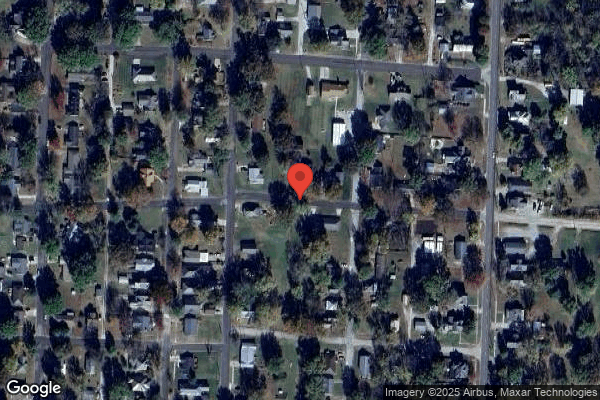
Jan 2020 5 deficiencies
CONCERN (D)

Potential for Harm - no one hurt, but risky conditions existed

Deficiency F0658 (Tag F0658)

Could have caused harm · This affected 1 resident

**NOTE- TERMS IN BRACKETS HAVE BEEN EDITED TO PROTECT CONFIDENTIALITY** Based on observation, interview, and record review, the facility failed to provide a safe and effective form of medication contr...

Read full inspector narrative →
**NOTE- TERMS IN BRACKETS HAVE BEEN EDITED TO PROTECT CONFIDENTIALITY** Based on observation, interview, and record review, the facility failed to provide a safe and effective form of medication control for one resident (Resident #14), in a review of 17 sampled residents, and for one additional resident (Resident #100). Staff did not administer medications as ordered, did not compare pharmacy label with physician orders during medication preparation and administration, and did not observe a resident swallow his/her medication. The facility census was 41. Review of the facility's policy, Policy for Medication Administration and Maintenance, dated December 2018, showed the following: -No medication or treatment shall be given without an order from a person lawfully authorized to prescribe such and the order shall be followed; -No medications will be left unattended or unobserved by certified medication technician (CMT) or nurse administering to residents. Review of the Certified Medication Technician (CMT) student manual, dated April 2008, Lesson plan 13, Unit IV preparation and administration showed the following: -Review and verify medication administration records (MAR) with physician orders; -Check the MAR and remove that container of medication from the bin. Verify medication strength, dose and labeled direction on the MAR against the label on the card or bottle; -Check the MAR with the label again; -Check the label against the MAR a third time; -Document the medication on the MAR. Prepare only one resident's medication at a time; -Remain with the resident until medication is swallowed. 1. Review of Resident #14's July 2019 Physician Order Sheets (POS) showed the following: -Diagnoses included bipolar disorder (mental illness), depression, anxiety disorder and chronic pain; -Percocet (schedule II narcotic controlled substance for pain) 5-325 milligrams (mg), one tablet every six hours. Review of the resident's progress note, dated 7/10/19, showed a pharmacy request from insurance for a dose reduction on the resident's Percocet. Review of the resident's July 2019 Physician Order Sheets (POS) showed the order for Percocet 5-325 mg, one tablet every six hours was discontinued 7/11/19. Review of the resident's progress note, dated 7/11/19, showed Registered Nurse (RN) C obtained a verbal telephone order from the resident's physician for Percocet 5-325 mg every eight hours. Review of an electronically signed prescription by the resident's physician, dated 7/11/19, showed orders for Percocet 5-325 mg, one tablet every eight hours as needed (PRN) for pain. Review of a copy of the pharmacy label, dated 7/15/19, showed the pharmacy dispensed Percocet 5-325 mg to the facility for the resident with instructions to administer one tablet every eight hours PRN. Review of the resident's July 2019 Medication Administration Record (MAR) showed the following: -Percocet 5-325 mg every eight hours, scheduled for 6:00 A.M., 2:00 P.M. and 10:00 P.M.; -Staff administered the medication as scheduled on the MAR (not as ordered on the signed prescription) for the month of July 2019. Review of the resident's August 2019 POS showed an order for Percocet 5-325 mg every eight hours, scheduled for 6:00 A.M., 2:00 P.M. and 10:00 P.M. Review of an electronically signed prescription by the resident's physician, dated 8/07/19, showed orders for Percocet 5-325 mg, one tablet every eight hours PRN for pain. Review of a copy of the pharmacy label, dated 8/09/19, showed the pharmacy dispensed Percocet 5-325 mg to the facility for the resident with instructions to administer one tablet every eight hours PRN. Review of a physician progress note, dated 8/14/19, showed the following: -Routine nursing home visit; -Tolerating the reduction in pain medications; -Current orders included Percocet 5-325 mg every eight hours PRN for pain. Review of an electronically signed prescription by the resident's physician, dated 8/14/19, showed orders for Percocet 5-325 mg, one tablet every eight hours PRN for pain. Review of the resident's August 2019 MAR showed: -Percocet 5-325 mg every eight hours, scheduled for 6:00 A.M., 2:00 P.M. and 10:00 P.M.; -Staff administered the medication as scheduled on the MAR (not as ordered) for the month of August 2019. Review of the resident's September 2019 POS showed an order for Percocet 5-325 mg every eight hours, scheduled for 6:00 A.M., 2:00 P.M. and 10:00 P.M. Review of a copy of the pharmacy label, dated 9/03/19, showed the pharmacy dispensed Percocet 5-325 mg to the facility for the resident with instructions to administer one tablet every eight hours PRN. During interview on 2/11/20 at 9:00 A.M., the pharmacist said the 8/14/19 electronically signed script was used to fill the resident's 09/03/19 Percocet cards that were sent to the pharmacy. Review of the resident's September 2019 MAR showed the following: -Percocet 5-325 mg every eight hours, scheduled for 6:00 A.M., 2:00 P.M. and 10:00 P.M.; -Staff administered the medication as scheduled on the MAR (not as ordered) for the month of September 2019. Review of the resident's October 2019 POS showed an order for Percocet 5-325 mg every eight hours, scheduled for 6:00 A.M., 2:00 P.M. and 10:00 P.M. Review of an electronically signed prescription by the resident's physician, dated 10/09/19, showed orders for Percocet 5-325 mg, two tablets every six hours PRN for pain (dose and instructions different than POS and MAR). Review of the resident's October 2019 MAR showed the following: -Percocet 5-325 mg every eight hours, scheduled for 6:00 A.M., 2:00 P.M. and 10:00 P.M.; -Staff administered the medication as scheduled on the MAR (not as ordered) for the month of October 2019. Review of the resident's November 2019 POS showed an order for Percocet 5-325 mg every eight hours, scheduled for 6:00 A.M., 2:00 P.M. and 10:00 P.M. Review of a copy of the pharmacy label, dated 11/11/19, showed the pharmacy dispensed Percocet 5-325 mg to the facility for the resident with instructions to administer two tablets every six hours PRN (dose and instructions different than POS and MAR). Review of an electronically signed prescription by the resident's physician, dated 11/13/19, showed orders for Percocet 5-325 mg, two tablets every six hours PRN for pain. Review of the resident's November 2019 MAR showed the following: -Percocet 5-325 mg every eight hours, scheduled for 6:00 A.M., 2:00 P.M. and 10:00 P.M.; -Staff administered the medication as scheduled on the MAR (not as ordered) for the month of November 2019. Review of the resident's December 2019 POS showed an order for Percocet 5-325 mg every eight hours, scheduled for 6:00 A.M., 2:00 P.M. and 10:00 P.M. Review of the resident's care plan regarding pain, last reviewed on 12/5/19, showed the following: -He/She had history of back pain since a fall but was on routine medication; -The resident also had a history of pain in his/her feet and legs related to frostbite from many years ago; -Medications were effective in managing pain. Review of a copy of the pharmacy label, dated 12/14/19, showed the pharmacy dispensed Percocet 5-325 mg to the facility for the resident with instructions to administer two tablets every six hours PRN (dose and instructions different than POS and MAR). Review of the resident's December 2019 MAR showed the following: -Percocet 5-325 mg every eight hours, scheduled for 6:00 A.M., 2:00 P.M. and 10:00 P.M.; -Staff administered the medication as scheduled on the MAR (not as ordered) for the month of December 2019. Review of the resident's January 2020 POS showed Percocet 5-325 mg every eight hours, scheduled for 6:00 A.M., 2:00 P.M. and 10:00 P.M. Review of an electronically signed prescription by the resident's physician, dated 01/20/20, showed orders for Percocet 5-325 mg, one tablet every eight hours PRN for pain. Review of the resident's January 2020 MAR showed the following: -Percocet 5-325 mg every eight hours, scheduled for 6:00 A.M., 2:00 P.M. and 10:00 P.M.; -Staff administered the medication as scheduled on the MAR (not as ordered) for the month of January 2020. Review of the pharmacy label on the resident's Percocet medication card in the locked cabinet of the medication room showed: -Dispense date of 1/20/20; -Instructions were to administer one tablet every eight hours PRN. Observation on 1/29/20 at 5:40 A.M. showed the following: -From the locked cabinet in the medication room, Licensed Practical Nurse (LPN) A removed one tablet of Percocet 5-325 mg from the pharmacy bubble pack medication card labeled for the resident; -LPN A took the medication cup, medication cart and computer down the hallway, just outside the resident's room; -LPN A opened the computer and pulled the resident's MAR up on the computer. LPN A did not compare the medication label with the MAR or POS; -LPN A entered the resident's room, handed the resident the cup of medication and returned to the hallway where the medication cart was located. LPN A did not offer the resident something to drink with his/her medications; -With his/her back to the resident, LPN A documented he/she prepared and administered the resident the Percocet medication. LPN A did not stay with the resident to verify consumption of the narcotic medication. During interview on 1/29/20 at 5:50 A.M., LPN A said the following: -The resident had always received his/her Percocet scheduled every eight hours; -The resident did not have an order for Percocet PRN; -He/She had not noticed the pharmacy label read to administer the Percocet PRN and not scheduled. He/She did not know why the pharmacy label read that way. He/She was not told if there was an order change; -The resident was his/her own person and usually got up out of bed to get his/her own drink to swallow his/her medication; -He/She trusted the resident and knew he/she would swallow the medication. He/She usually did not stay with him/her to ensure he/she took the medication. During interview on 01/30/20 at 8:15 A.M., the Director of Nursing (DON) said the following: -When preparing and administering medications, staff should compare the pharmacy label with the physician orders and the medication administration record; -If the pharmacy label does not match, staff should find out why. 2. Review of the facility roster showed Resident #100 was admitted to the facility on [DATE]. Review of the resident's January 2020 POS showed the following: -Diagnoses included chronic obstructive pulmonary disease (lung disorder); -DuoNeb (lung medication) 3 milliliters (ml) every six hours. Review of the resident's January 2020 MAR showed the following: -On 1/29/20 at 5:34 P.M., Registered Nurse C administered DuoNeb 3 ml; -On 1/29/20 at 8:48 P.M., LPN A administered DuoNeb 3 ml. (three hours between doses). Review of the resident's progress note, dated 1/30/20 at 12:38 A.M., showed LPN A documented the following: -The resident requested a DuoNeb treatment, stating he/she takes the treatments at 6:00 A.M., 12:00 P.M., 6:00 P.M. and 12:00 midnight; -He/She administered a treatment at that time and changed the administration times (on the MAR); -No documentation the resident's physician was notified of the change. Review of the resident's MAR for 1/30/20 showed no documentation staff administered the resident's DuoNeb treatment at 12:30 A.M. as indicated in the progress note. During an interview on 1/29/20 at 6:10 A.M., LPN A said the following: -He/She administered the resident his/her 9:00 P.M. (original scheduled time for administration of DuoNeb) scheduled breathing medication at 8:48 P.M. He/She did not realize the previous nurse had administered the resident a dose at 5:34 P.M. There would not have been six hours between administration times (5:34 P.M. and 8:48 P.M.); -The resident was a new admission. Around midnight, the resident made LPN A aware he/she wanted the administration times of his/her breathing medication to be 6:00 A.M., 12:00 P.M., 6:00 P.M. and 12:00 midnight; -To get the resident on the correct administration times, he/she administered the resident a treatment at 12:30 A.M. but did not document it on the MAR. He/She documented administration of the DuoNeb in the progress notes. There would not have been six hours between administration times (8:48 P.M. and 12:30 A.M.); -He/She did not call the physician to ask if he/she could administer the breathing treatment at 12:30 A.M. -He/She then changed the times of administration of the DuoNeb on the MAR from 3:00 A.M., 6:00 A.M., 3:00 P.M. and 9:00 P.M. to 6:00 A.M., 12:00 P.M., 6:00 P.M., and 12:00 midnight. During interview on 01/30/20 at 8:25 A.M., the DON said the following: -She expected medication administration times to match physician orders; -She was unsure how the initial administration times for the resident's breathing medication had been entered; -Administration times of 3:00 A.M., 6:00 A.M., 3:00 P.M. and 9:00 P.M. were not spaced every six hours apart; -Administration of medications were to be no more than an hour before or an hour after a scheduled administration time; -5:34 P.M. would not have been an appropriate administration time for the 3:00 P.M. dose, as it was not one hour before or one hour after; -She would expect staff to ask or notify the resident's physician before administering the breathing medication sooner than the ordered every six hours.
CONCERN (D)

Potential for Harm - no one hurt, but risky conditions existed

Infection Control (Tag F0880)

Could have caused harm · This affected 1 resident

Based on observation, interview, and record review, the facility failed to follow infection control practices while performing blood glucose monitoring (Accucheck) for two residents (Residents #24 and...

Read full inspector narrative →
Based on observation, interview, and record review, the facility failed to follow infection control practices while performing blood glucose monitoring (Accucheck) for two residents (Residents #24 and #91), in a review of 17 sampled residents. The facility census was 41. Review of the facility's policy, Infection Control Competency Validation - Finger stick/Blood Glucose Monitoring, dated November 2017, showed the following: -Wash hands. Put on gloves; -Clean and disinfect meter by wiping with PDI Sani-Cloth germicidal wipes. Let meter air dry thoroughly before testing; -Remove one test strip from vial and insert in meter; -Lay meter and supplies on clean field (ex. paper towel) at resident's bedside; -Select fingertip. Clean area with an alcohol wipe. Let area dry; -Lance fingertip. Touch edge of sample tip to blood drop and allow blood to be drawn into strip; -After the test is finished, the blood glucose result is displayed; -Discard the lancet in sharps container and test strip in biohazard bag; -Remove gloves. Wash hands or sanitize; -Put on clean gloves to clean/disinfect meter; -Remove gloves and wash hands. Review of Infection Control Guidelines for Long Term Care Facilities emphasis on Body Substance Precautions dated July 1999 showed the following: -Handwashing remains the single most effective means of preventing disease transmission. Wash hands often and well; -Wash hands whenever they are soiled with body substances, before performing invasive procedures and when each resident's care is completed. 1. Observation on 01/29/20 at 7:35 A.M. and 7:42 A.M. showed the following: -Licensed Practical Nurse (LPN) B gathered supplies to perform Resident #91's Accucheck and placed them on a paper towel barrier; -LPN B donned gloves, cleaned the resident's finger with an alcohol pad, stuck the resident's finger with the lancet (finger stick device), obtained a blood droplet from the resident's finger and applied the blood droplet on the test strip in the glucometer for testing; -LPN B wiped the resident's finger with a cotton ball to get his/her finger to stop bleeding; -LPN B placed the blood filled strip and cotton ball on the paper towel barrier. He/She did not remove his/her gloves; -With contaminated gloves, LPN B touched the resident's Humalog insulin vial and prepared and administered the resident's scheduled dose of insulin; -LPN B removed and disposed of his/her gloves, then gathered the used supplies, including the blood filled test strip, and used cotton ball with his/her bare hands and discarded them; -LPN B sanitized his/her hands (did not wash his/her hands with soap and water after touching the blood filled test strip and cotton ball) and re-gloved; -LPN B did not sanitize the glucometer; -LPN B gathered more supplies and placed them on the same paper towel barrier; -LPN B cleaned Resident #24's finger with an alcohol pad, stuck the resident's finger with the lancet, obtained a blood droplet from the resident's finger and applied the blood droplet on the test strip in the same glucometer he/she used for Resident #91; -LPN B wiped Resident #24's finger with a cotton ball to get his/her finger to stop bleeding; -LPN B placed the blood filled strip and cotton ball on the paper towel barrier; He/She did not remove his/her gloves; -With contaminated gloves, LPN B touched the facility computer keyboard and mouse to document the resident's blood sugar reading. During interview on 1/29/20 at 8:00 A.M., LPN B said the following: -He/She is supposed to clean the glucometer after each resident use; he/she must have forgotten to clean the meter between residents; -He/She should change gloves between residents and when soiled; -He/She usually washed his/her hands after every third resident, otherwise, he/she sanitized his/her hands between residents; -He/She was not aware he/she needed to wash his/her hands with soap and water after the use of gloves when they come into contact with blood/bodily fluids; -He/She knew he/she should not have touched the computer with contaminated gloves, he/she just forgot to remove them. During interviews on 01/30/20 at 8:05 A.M., the Director of Nursing (DON) said the following: -She expected staff to clean the glucometer between resident use per facility policy; -Staff should change their gloves when they are contaminated.
CONCERN (E)

Potential for Harm - no one hurt, but risky conditions existed

Deficiency F0804 (Tag F0804)

Could have caused harm · This affected multiple residents

Based on observation, interview, and record review, the facility failed to prepare food by methods that conserved nutritive value and flavor, and failed to serve food at a safe and appetizing temperat...

Read full inspector narrative →
Based on observation, interview, and record review, the facility failed to prepare food by methods that conserved nutritive value and flavor, and failed to serve food at a safe and appetizing temperature. The facility census was 41. Review of the facility's policy Food Temperatures, dated 01/16/08, showed correct serving temperatures for meats and vegetables/starches was 160 degrees Fahrenheit or greater. Review of the facility policy Nutrition Policies, dated 9/9/97, showed food is prepared to conserve nutritive value, flavor and appearance. 1. Review of the menu for the noon meal on 01/28/20 showed staff was to serve pork loin, sweet potatoes, and broccoli to residents on a pureed diet. (The facility identified four residents were to receive a pureed diet.) Review of the recipe for pureed pork loin showed to use chicken or beef base if the product needs thinning. Gradually add an appropriate amount of liquid (NOT WATER) to achieve a smooth, pudding or soft mashed potato consistency. Review of the recipe for pureed sweet potatoes showed to use (hot milk) if the product needs thinning. Gradually add an appropriate amount of liquid (NOT WATER) to achieve a smooth, pudding or soft mashed potato consistency. Review of the recipe for pureed broccoli showed to use margarine if the product needs thinning. Gradually add an appropriate amount of liquid (NOT WATER) to achieve a smooth, pudding or soft mashed potato consistency. Observation on 01/28/20 at 11:10 A.M. showed [NAME] E prepared pureed sweet potatoes and thinned them with water. Observation on 01/28/20 at 11:17 A.M., showed [NAME] E prepared pureed broccoli and thinned it with water. Observation on 01/28/20 at 12:35 P.M. showed [NAME] E prepared pureed pork and thinned it with water. During an interview on 01/28/20 at 1:01 P.M., [NAME] E said he/she normally thinned the sweet potatoes and broccoli with water. He/She did not know he/she was not following the recipe. During an interview on 01/28/20 at 1:09 P.M., the dietary manager said she expected staff to follow recipes. During interview on 01/28/20 at 3:06 P.M., the administrator said she expected staff to follow recipes. 2. Observation on 01/28/20 at 12:46 P.M., showed staff passed the last tray and the test tray was received. The temperature of the pureed sweet potatoes was 100 degrees Fahrenheit, regular broccoli was 110 degrees Fahrenheit, and the regular pork loin was 109 degrees Fahrenheit. These foods were cool to taste. During interview on 01/28/20 at 1:01 P.M., [NAME] E said he/she usually took the temperatures of the food before serving. He/She forgot to take the temperatures at lunch. He/She said the serving temperatures should be between 145 and 165 degrees Fahrenheit. During interview on 1/28/20 at 1:09 P.M., the dietary manager said she expected the food temperatures to meet or be above 120 degrees Fahrenheit. She expected staff to check the food temperatures before serving the meal. During interview on 1/28/20 at 3:06 P.M., the administrator said she expected food serving temperatures to meet regulation temperature of 120 degrees Fahrenheit.
CONCERN (F)

Potential for Harm - no one hurt, but risky conditions existed

Menu Adequacy (Tag F0803)

Could have caused harm · This affected most or all residents

Based on observation, interview, and record review, the facility failed to prepare and serve bread and butter for any resident as directed in the approved menu. The facility census was 41. Review of ...

Read full inspector narrative →
Based on observation, interview, and record review, the facility failed to prepare and serve bread and butter for any resident as directed in the approved menu. The facility census was 41. Review of the facility's undated policy on menus showed the menus are planned according to the basic four food groups and meet the standard requirements for nursing homes. Review of the menu for the noon meal on 01/28/20 showed staff was to serve crusted pork loin, roasted sweet potatoes, spinach bake, and bread and butter. All diets were to receive bread and butter. Observations on 01/28/20 between 12:03 P.M. and 12:46 P.M. showed staff served meal trays to all the residents. Staff did not serve bread and butter to any resident. During an interview on 01/28/20 at 1:01 P.M., [NAME] E said staff forgot the bread and butter. During an interview on 01/28/20 at 1:09 P.M., the dietary manager said she expected staff to serve bread and butter when it is on the menu. She expected staff to follow the menu and recipes. During interview on 01/28/20 at 3:06 P.M., the administrator said she expected staff to follow the menu and recipes.
CONCERN (F)

Potential for Harm - no one hurt, but risky conditions existed

Food Safety (Tag F0812)

Could have caused harm · This affected most or all residents

Based on observation and interview, the facility failed to ensure the ovens and range hood baffles were free of buildup and debris. The facility census was 41. Observation on 1/28/20 at 9:24 A.M. show...

Read full inspector narrative →
Based on observation and interview, the facility failed to ensure the ovens and range hood baffles were free of buildup and debris. The facility census was 41. Observation on 1/28/20 at 9:24 A.M. showed the following: -The bottom in each of the two ovens was heavily soiled with a buildup of debris; -The baffle filters within the range hood had a heavy buildup of grease and debris. Review of the facility cleaning schedule (no date) showed oven #1 (oven #2 was not on the cleaning schedule) and the range hood filters were to be cleaned on week 1 and week 3. There was no documentation these areas had been cleaned. During interview on 1/28/20 at 3:02 P.M., the dietary manager said she was not aware there was a buildup of debris in the ovens, and was not aware there was a buildup of grease and debris on the range hood baffles. She was not sure who was responsible for cleaning the range hood baffles. During interview on 1/28/20 at 3:06 P.M., the administrator said she expected the ovens and the range hood baffle filters to be clean and free of debris build-up.
Jan 2019 7 deficiencies
CONCERN (D)

Potential for Harm - no one hurt, but risky conditions existed

Report Alleged Abuse (Tag F0609)

Could have caused harm · This affected 1 resident

**NOTE- TERMS IN BRACKETS HAVE BEEN EDITED TO PROTECT CONFIDENTIALITY** Based on interview and record review, the facility failed to to report an allegation of resident to resident abuse within two ho...

Read full inspector narrative →
**NOTE- TERMS IN BRACKETS HAVE BEEN EDITED TO PROTECT CONFIDENTIALITY** Based on interview and record review, the facility failed to to report an allegation of resident to resident abuse within two hours of the reported allegation to the state survey agency when one additional resident (Resident #21) purposefully ran over one resident's (Resident #31)'s feet with his/her wheelchair, cussed and threatened the resident and failed to report an allegation of sexual abuse involving one resident (Resident #44) . The facility census was 43. 1. Review of the facility's Abuse and Neglect Policy, dated January 2017, showed the following: -PROCEDURES FOR RESPONDING TO ALLEGED/POSSIBLE ABUSE; NEGLECT, EXPLOITATION OR MISTREATMENT OF RESIDENTS 0R MISAPPROPRIATION OF RESIDENTS' PROPERTY; -PURPOSE: To ensure that the corporation and its facilities complies with federal and state law concerning allegations of mistreatment, abuse, neglect or exploitation of residents or misappropriation of their property, with respect to reporting and investigating such allegations, protecting the resident during the investigation, and taking any necessary corrective action; -DEFINITIONS: -Abuse includes: Actions that demean or humiliate a resident, are disrespectful, or are dehumanizing; -Physical abuse: including (but not limited to) hitting, slapping, pinching and kicking; -Examples of verbal abuse include (but are not limited to) threats of harm and saying things to frighten a resident, such as telling a resident he/she will never be able to see his/her family again; -Verbal or nonverbal conduct that causes or has the potential to cause a resident to experience fear, shame, agitation or degradation; -Sexual abuse, including (but not limited to) sexual harassment, sexual coercion, or sexual assault; -Federal interpretations require that Medicare/Medicaid-certified facilities ensure that all alleged violations involving abuse, neglect exploitation or mistreatment. including injuries of unknown source and misappropriating of resident property are reported immediately, but not later than 2 hours after the allegation is made, if the events that cause the allegation involve abuse or results in serious bodily injury, or not later than 24 hours if the events that cause the allegation do not involve abuse and do not result in serious bodily injury, to the administrator of the facility and to other officials (including to the State Survey Agency and adult protective services where state law provides for jurisdiction in long term care facilities) in accordance with State Law through established procedures; -Because we have such a short time frame for reporting, any employee MUST immediately to their Administrator or Administrator's Designee if the employee becomes aware of: (1) An allegation from anyone of abuse or neglect of a resident; or (2) Suspicion or knowledge of situations that may involve a resident's mistreatment, neglect, abuse, including injuries of unknown source or misappropriations of resident's property; -Employees should not assume that other employees who become aware of reportable situations will make required reports. Each employee is responsible individually for making a report to the Administrator or Administrators Designee; -If the Administrator is not available, then such incidents should be reported immediately to the supervisor in charge who will contact the Administrator or Director of Nursing immediately. The employee may also contact the Department of Health and Senior Services Hotline at [PHONE NUMBER] if he or she would prefer; -Procedure for Reporting Allegations of Abuse and Neglect: 1. Any individuals suspecting, observing, or becoming aware of allegations of incidents of mistreatment, abuse, neglect, exploitation or misappropriation of resident property shall immediately report to the Administrator, charge nurse, Director of Nursing, or any member of the Administration. If the Administrator is not available, the supervisor in charge shall take the report and the Administrator shall be notified immediately of any allegation of mistreatment, abuse or neglect or misappropriation of resident property. The Administrator shall be responsible for immediately reporting within in 2 hours after the allegation is made, if the events that cause the allegation involve abuse or result in serious bodily injury or not later than 24 hours if the events that cause the allegation do not involve abuse and do not result in serious bodily injury, a report to be made to the Missouri Department of Health and Senior Services of allegations of mistreatment, exploitation, abuse or neglect or misappropriation of resident property. Because federal interpretations require immediate reporting of such allegations, the report may need to be made before an investigation is completed. If that is the case, the person making the report should explain that they are reporting an allegation and the facility's investigation is ongoing; -Where there is a reasonable suspicion that a crime has been committed against a resident, the Administrator will also promptly notify appropriate law enforcement officials; -If the Administrator or Administrator's Designee is in doubt as to whether a report to the Department of Health and Senior Services is necessary, s/he may consult with corporate office, which may seek advice from legal counsel. The Department of Health and Senior Services Regional Office may also be consulted concerning the appropriateness of a report to the Department of Health and Senior Services Hotline. Corporate office must immediately be notified of all reports of alleged sexual abuse, suspected physical abuse, exploitation, verbal abuse and misappropriation of resident property upon the administrator becoming aware of such a report. See list of Type A incidents for further guidance. 2. Review of Resident #44's quarterly Minimum Data Set (MDS), a federally mandated assessment instrument completed by facility staff, dated 6/6/18 showed the following: -Moderately impaired cognition; -No behaviors; -Diagnoses of dementia and depression. Review of the resident's nurses notes dated 6/14/18 showed Registered nurse (RN) A documented the resident reported things regarding rape, conspiracy theories, banking secrets and various random statements to the physical therapy department. During interview on 1/24/19 at 1:26 P.M. RN A said the following: -A staff member from physical therapy reported to him/her the resident was confused and said he/she was raped but also talked about a conspiracy; -He/she could not remember who reported the allegation to him/her; -He/she did not follow up with the resident about the allegation and did not assess the resident after the allegation was reported to him/her because he/she thought the resident was just confused and maybe had a urinary tract infection (UTI); -He/she did not report the resident's allegation of rape to the Director of Nursing (DON) or administrator; -In hind sight he/she should have reported the allegation and followed up with the resident; -Rape is an allegation of sexual abuse. 3. Review of Resident #21's quarterly Minimum Data Set (MDS), a federally mandated assessment instrument completed by facility staff, dated 8/15/18 showed the following: -Cognitively intact; -No behaviors; -Independent with locomotion. 4. Review of Resident #31's quarterly MDS dated [DATE] showed the following: -Severe cognitive impairment; -No behaviors; -Required extensive assistance of two staff for transfers; -Required extensive assistance of one staff for locomotion; -Inattention present, fluctuates; -Disorganized thinking present, fluctuates; -Wandering occurred 1-3 days of the last seven days; -Diagnosis of dementia. Review of a concerns form filled out by facility staff dated 9/27/18 showed the following: -Around 8:00 P.M. on 9/27/18 Resident #21 purposely ran over the resident's (Resident #31's) feet; -Resident #21 said to Resident #31, How do you like it asshole?; -Certified Medication Technician (CMT) told Resident #21 that was enough and left the resident and went to his/her medication cart; -Three to five minutes later Certified Nurse Aide (CNA) H saw and heard Resident #21 go up to Resident #31 and say Do you want to fight? I'll knock your head off; -CNA H told Resident #21 that was enough and wheeled Resident #31 away from Resident #21. During an interview on 1/29/19 at 3:00 P.M., Certified Medication Technician (CMT) H said the following: -Resident #21 ran over Resident #31's feet on purpose and hit Resident #31 with a open hand on the back of the resident's head on 9/27/18 in the evening; -He/she separated the residents, filled out a concern sheet, turned it into the administrator's office, and told his/her charge nurse; -Resident #21 had a history of verbally being mean to Resident #31, hitting the resident with his/her wheel chair and hitting the resident with his/her hand; -Staff were told in report to just keep an eye on Resident #31 when Resident #21 was propelling his/herself around in the facility; -He/she did not know if a resident hitting or running over another resident intentionally to cause harm was considered abuse; -He/she didn't know if he/she should call the state agency or not. During an interview on 1/24/19 at 2:30 P.M. Registered nurse (RN) D said the following: -Resident #21 was known to bump into, run over and hit Resident #31; -Resident #31 was cognitively impaired and Resident #21 didn't like him/her for some reason; -In October 2018 Resident #21 hit Resident #31 on the head with a open hand; -He/she separated the residents; -Resident #31 had no apparent injury; -He/she reported the incident to the DON; -He/she didn't think a resident hitting another resident was abuse. During an interview on 1/24/19 at 2:35 P.M. RN A said the following: -Resident #21 intentionally ran over Resident #31's feet September 27, 2018; -Resident #31 didn't appear to have any injury, but injuries don't always show up to the eye and the resident has severe cognitive impairment and unable to say if his/her feet hurt or not; -The physician ordered the x-ray to rule out fracture; -The resident did not have an fracture; -He/she did not report the incident to the state agency and did not know if resident to resident altercations were abuse or not; -He/she did report the incident to the previous administrator; -He/she directed staff to keep the resident's away from each other; -He/she did not document the incident in the resident's nurses notes; -He/she just gave report to the next shift. During an interview on 1/28/19 at 11:27 A.M. the director of nurses (DON) said the following: -Staff reported Resident #21 intentionally ran over Resident #31's feet; -She did not investigate the incident or report the incident to the state agency; -She was not aware Resident #21 hit Resident #31 on the head previously; -She instructed staff to redirect Resident #21 if he/she gets around Resident #31 and not to leave the residents alone together; -She was a mandated reporter but she normally let the administrator call all allegations of abuse and neglect to the state agency because that is what the previous administrator preferred; -She only reported resident to resident altercations/one resident hitting another resident to the state agency if the resident sustained an injury; -Rape was an allegation of sexual abuse; -Staff had not reported any allegation of abuse to her; -She expected staff to investigate and report an allegation of rape even if the resident was non interviewable and confused; -She expected staff to report all allegations to her and the administrator immediately. During an interview on 1/24/19 at 4:36 P.M. the administrator said the following: -Rape was a allegation of abuse; -She would expect staff to report an allegation of rape immediately to him/her; -She was not the administrator on 6/2018; -Staff had not reported any allegations of abuse to her since she started the position in December 2018; -All allegations of abuse should be investigated and should be reported to the the state agency immediately; -She would expect staff to report a resident to resident altercation to him/her immediately.
CONCERN (D)

Potential for Harm - no one hurt, but risky conditions existed

Deficiency F0658 (Tag F0658)

Could have caused harm · This affected 1 resident

Based on observation, interview and record review, the facility failed to follow physician's orders for one additional resident (Resident #43). The physician ordered a urinalysis (a diagnostic lab pro...

Read full inspector narrative →
Based on observation, interview and record review, the facility failed to follow physician's orders for one additional resident (Resident #43). The physician ordered a urinalysis (a diagnostic lab procedure used to determine urinary changes and infection) on 11/27/18 and facility staff did not obtain the urinalysis until 12/3/18. The facility census was 43. 1. Review of the facility policy for Following Physician's Orders, undated, showed the purpose was to ensure that all physician's orders will be followed and that no medication or treatment shall be given without an order from a person lawfully authorized to prescribe such and the order shall be followed. Review of the facility Physician Services policy, Med-Pass, Inc. revised April 2013, showed the following: -Policy Statement - The medical care of each resident is under the supervision of a licensed physician; -The resident's attending physician participates in the resident's assessment and care planning, monitoring changes in resident's medical status, providing consultation or treatment when called by the facility, and overseeing a relevant plan of care for the resident; -The attending physician will determine the relevance of any recommended interventions from any discipline. The physician is not obligated to accept these recommendations if he or she has clinically valid reasons for not doing so. 2. Review of Resident #43's significant change Minimum Data Set (MDS), a federally mandated assessment instrument completed by facility staff, dated 10/3/18 showed the following: -Short and long term memory problems; -Frequently incontinent of urine; -Diagnosis of dementia. Review of the resident's care plan last revised 1/20/19 showed the following: -I have had incontinence of bowel and bladder; -I have had incontinence related to urinary tract infections which is caused from the way I wipe myself. Review of the resident's progress notes dated 11/27/18 at 7:35 P.M. showed the following: -Call placed to physician; -Informed him/her that resident has been having dark colored urine with foul smell and thick discharge; -New orders received to obtained urinalysis with culture and sensitivity in A.M. Review of the physician's rounds report dated 11/28/18 showed urinalysis-pending ordered 11/27/18. Review of the resident's progress notes dated 11/27/18 through 12/2/18 showed no documentation of attempts to obtain the urinalysis. Review of the resident's progress notes dated 12/3/18 at 5:22 A.M. showed urinalysis obtained will send to lab this A.M. Review of the resident's urinalysis dated 12/3/18 showed the following: -Clarity: turbid (normal clear); -pH: 8.0 (high) (normal 5.0-7.5); -Protein: 100 (high) (normal 0-20); -Nitrite (evidence of bacteria in the urine) : positive (normal negative); -Leukocyte esterase (suggests white blood cells in the urine): small (normal negative); -White blood cell (may indicate that there is inflammation in the urinary tract or kidneys): 5-15 (normal 0-4); -Bacteria: rare (normal none); -Urine culture to follow. Review of the resident's progress notes dated 12/4/18 at 10:38 A.M. showed the following: -Physician returned fax; -Starting Omnicef (antibiotic) twice daily for urinary tract infection. Review of the resident's urine culture received 12/6/18 showed the following: -10,000-50,000 cfu/ml Escherichia coli (type of bacteria commonly found in the gastrointestinal (GI) tract); -Continue Omnicef 300 mg twice daily as ordered. During interview on 1/28/19 at 11:25 A.M. the Director of Nursing (DON) said the following: -She would expect staff to follow physician's orders; -She would expect staff to follow protocol and policy; -Labs are only drawn at the facility on Mondays, Wednesdays and Thursdays; -She would expect staff to get the labs within two days of the order; -If the resident was having symptoms she would expect staff to get a stat order from the physician and obtain the lab the same day.
CONCERN (D)

Potential for Harm - no one hurt, but risky conditions existed

Deficiency F0744 (Tag F0744)

Could have caused harm · This affected 1 resident

**NOTE- TERMS IN BRACKETS HAVE BEEN EDITED TO PROTECT CONFIDENTIALITY** Based on observation, interview and record review the facility failed to provide appropriate treatment and services to attain or...

Read full inspector narrative →
**NOTE- TERMS IN BRACKETS HAVE BEEN EDITED TO PROTECT CONFIDENTIALITY** Based on observation, interview and record review the facility failed to provide appropriate treatment and services to attain or maintain the highest practicable physical, mental and psychosocial well-being for one resident (Resident #34) in a review of 12 sampled residents. The facility census was 43. 1. During an interview on 1/28/19 at 11:27 A.M. the Director of Nursing (DON) said the facility did not have a policy for dementia care. 2. Review of Resident #34's quarterly Minimum Data Set (MDS) dated [DATE] showed the following: -Severely impaired cognition; -Inattention present, fluctuates; -Disorganized thinking present, fluctuates; -No behaviors; -Independent for eating, requires staff assist for set up help only; -Diagnoses of Alzheimer's disease and dementia. Review of the resident's care plan last revised 1/10/19 showed the following: -Like a lot of people living with dementia, it doesn't help to give me a lot, sometimes any, choices; -I understand you are trying to respect my resident's rights, but people living with dementia will often say I don't know or No when asked a question; -You have to approach me with suggestions, otherwise choices will cause my confusion to get worse, and sometimes it can aggravate me; -I was a very social person and I like dogs; -I was very active in sports and still love to do activities that involve more physical participation; -I like to bowl. I enjoy cooking and going to those activities; -Please invite me to those activities; -I do like group activities and I like to try to take over and explain how to do it; -I usually eat my meals in the dining room but occasionally will eat in my room; -I help myself to snacks in the dining room, observe me as I will try to put snacks back in there after eating out of the bag. 2. Review of Resident #42's quarterly MDS dated [DATE] showed the following: -Severe cognitive impairment; -No behaviors; -Limited assist of one with eating; -Diagnoses of dementia and diabetes. Observation on 1/22/19 at 12:10 P.M. in the dining room showed the following: -Resident #42 sat in his/her wheelchair at a table with his/her lunch in front of him/her; -Resident #34 sat to the left of the resident at the table. Resident #34 did not have his/her lunch tray; -Resident #34 uncovered Resident #42's cake, picked the cake up with his/her hands and ate Resident #42's cake; -Resident #42 then ate the crumbs and the icing that remained on the plate; -Resident #34 then picked up a single serve tub of butter, tore off the top of the tub and ate the butter directly out of the tub; -The Certified Dietary Manager (CDM) walked by, told Resident #34 don't do that and took the butter tub away. During interview on 1/24/19 at 1:48 P.M. the CDM said the following: -Resident #34 takes other residents' food. It happens even when the resident has his/her own food; -The resident has a habit of reaching; -He has not seen any other residents get upset with Resident #34; -He observed Resident #34 eating butter directly out of the tub; -He has been back at the facility for two months and has not had any dementia training. 3. Review of Resident #12's quarterly MDS dated [DATE] showed the following: -Cognitively intact; -No behaviors; -Independent with eating. Observation on 1/23/19 at 12:10 P.M. in the dining room showed the following: -Resident #12 sat in a wheelchair at the dining room table with his/her lunch in front of him/her; -Resident #34 sat in a chair at the dining room table to the right of Resident #12; -Resident #34 reached over to Resident #12's plate with his/her left hand, trying to remove Resident #12's fish sandwich from his/her plate; -Resident #12 reached his/her right hand and arm out to prevent Resident #34 from taking the sandwich; -Resident #12 told Resident #34 to stop and then looked at nearby staff and asked that they move Resident #34, saying he/she kept getting into his/her food; -Staff brought Resident #34 his/her lunch tray and explained what items were his/hers and to leave Resident #12's food alone. During an interview on 1/23/19 at 1:00 P.M. Resident #12 said the following: -Resident #34 takes other residents' food off of their plates all of the time; -He/she does not like it when Resident #34 does this to him/her; -He/she smacks Resident #34's hand away when he/she tries to take his/her food; -When Resident #34 does this to him/her or anyone else he/she sees, he/she yells until staff does something about it because staff does not always see it. Observation on 1/23/19 at 1:15 P.M. in the dining room showed the following: -Resident #34 sat at the dining room table; -Various staff members walked in and out of the dining room assisting other residents; -Resident #34 reached across the table and stuck his/her fingers down in another resident's pea salad; -Resident #34 reached across the table a second time, stuck his/her fingers down into the other resident's pea salad and drug the bowl of pea salad across the table to him/her; -Resident #34 reached across the table and stuck his/her fingers down in the other resident's pink colored drink; -Certified Nurse Aide (CNA) staff told Resident #34, That's not yours. Are you hungry? Resident #34 shook his/her head no and the staff member left the table. Observation on 1/23/19 at 2:20 P.M. in the dining room showed the following: -Multiple residents and several staff members played Bingo; -Resident #34 sat in a recliner in the sitting area across from the nurses' station; -Resident #34 was awake and passed a plastic cup back and forth between his/her hands. Observation on 1/24/19 at 11:45 A.M. in the dining room showed the following: -The activity director led group exercise with seven residents participating; -A partial wall separated the dining room and the sitting area; -Resident #34 sat in a chair in the sitting area; -Resident #34 stared at the wall. -Resident #34 did not attend group exercise. Observation on 1/24/19 at 12:10 P.M. showed the following: -Resident #34 sat in a chair in the sitting area; -He/she held an open powdered creamer packet in his/her right hand and his/her left hand held loose powdered creamer; -The resident dipped his/her fingers into the powdered creamer and ate it; -Therapy staff member K walked by the resident and took the creamer packet from the resident. During interview on 1/24/19 at 2:03 P.M. Therapy staff member K said the following : -Today Resident #34 had a powdered creamer packet in his/her hand and said it tasted good; -Resident #34 has to be redirected frequently. During interview on 1/24/19 at 10:29 A.M. CNA E said; -Resident #34 gets into other residents' food and things; -Resident #34 gets visibly upset at times when being redirected and makes a fist; -Resident #34 takes food from other residents; -Staff are told to let the resident eat the other residents' food and get the other residents a new tray and food. During interview on 1/24/19 at 1:40 P.M. CNA J said the following: -He/she was not sure about Resident #34's care plan and the resident's dementia but he/she could look it up; -Resident #34 doesn't recall much; -Resident #34 gets very aggressive and combative at times so staff back off and make sure the resident is safe; -He/she has worked at the facility for one year and he/she has attended one training on dementia; -Resident #34 likes to grab other residents' food; -Resident #34 is not allowed to have metal knives. The resident likes to steal; -Resident #34 is very upsetting to Resident #12. Resident #34 keeps trying to take away Resident #12's food; -He/she does not know which activities Resident #34 enjoys; -Resident #34 has attempted to play Bingo and he/she does participate in exercise. Observation on 1/24/19 at 2:53 P.M. in the dining room showed seven residents and two staff members participated in a [NAME] throwing activity. Resident #34 was not one of the seven residents in attendance. During interview on 1/24/19 at 2:00 P.M. Registered Nurse (RN) D said the following: -Resident #34 is confused; -Resident #34 takes food from other residents at times; -Staff replace the other residents' food and offer Resident #34 more food. During interview on 1/24/19 at 5:30 P.M. the activity director said the following: -Resident #34 comes to some activities. He/she doesn't always participate but will sit in on activities; -Resident #34 refuses to come to some activities; -If the group is playing cards Resident #34 will keep his/her cards. Resident #34 likes to keep his/her stuff; -In the dining room sometimes Resident #34 with take others food. If staff intervene the resident will get defensive; -Two residents (Resident #12 and Resident #24) are bothered when the resident tries to take their food. During interview on 1/28/19 at 11:27 A.M. the DON said the following: -She is aware Resident #34 takes other residents' food. No one has reported other residents being upset; -She tells staff to redirect Resident #34 and get the resident that Resident #34 took food from a new tray; -She would expect staff to redirect Resident #34 and offer substantial food such as a sandwich if Resident #34 takes other residents' food, sticks his/her hands in other residents' food or is noted to be eating items such as powdered coffee creamer or butter directly out of the tub; -She would expect staff to document behaviors, implement additional interventions for residents with dementia and report to her and the charge nurse; -She expects the care plan to direct the care of the resident.
CONCERN (E)

Potential for Harm - no one hurt, but risky conditions existed

Medication Errors (Tag F0758)

Could have caused harm · This affected multiple residents

**NOTE- TERMS IN BRACKETS HAVE BEEN EDITED TO PROTECT CONFIDENTIALITY** Based on interview and record review, the facility failed to maintain a system to monitor residents who used psychopharmacologic...

Read full inspector narrative →
**NOTE- TERMS IN BRACKETS HAVE BEEN EDITED TO PROTECT CONFIDENTIALITY** Based on interview and record review, the facility failed to maintain a system to monitor residents who used psychopharmacological medications to ensure attempts were made for gradual dose reductions (GDR) in an effort to reduce or discontinue these medications for one additional resident (Resident #33) and failed to ensure one additional resident (Resident #14) and one closed record (Resident #45) orders for as needed (PRN) psychotropic medications were limited to 14 days as required except if an attending or prescribing physician believed that it was appropriate the PRN order be extended beyond 14 days, then the physician should document their rationale in the resident's medical record and indicate the duration for the PRN order. The facility census was 43. 1. Review of the facility Drug Regimen Review Policy, dated October 2017, showed the following: - It is the policy of the corporation and its facilities that each resident shall have a drug regimen review completed monthly by a licensed pharmacist. The intent of the Drug regimen review policy is to; -Help promote or maintain the resident's highest practicable mental, physical, and psychosocial well-being, as identified by the resident and/or representative in collaboration with the attending physician and facility staff; -Monitor that resident only receives those medications, in doses and for the duration clinically indicated to treat the resident's assessed condition; -Monitor for the use of non-pharmacological interventions are being considered and used when indicated, instead of, or in addition to, medication; -Clinically significant adverse consequences are minimized; and; -The potential contribution of the medication regimen to an unanticipated decline or newly emerging or worsening symptom is recognized and evaluated, and the regimen is modified when appropriate; - To assist in our goal of promoting positive outcomes and minimizing adverse consequences associated with medication, we comply with a drug regimen by a consulting pharmacist to review of all residents medications and chart to assist the facility in preventing, identifying, reporting and resolving medication related problems, medication errors and other irregularities; -Procedure for Drug Regimen Review: -Review of the resident's medication as well as review of the residents chart; -Review of psychotropic drugs: These drugs include but are not limited to the following categories; -Anti-Psychotic, Anti-Depressant, Anti-Anxiety, Hypnotic; -As part of the review, the consulting pharmacist shall assist the facility in identifying unnecessary drugs; -Unnecessary drugs is any drug when used: in excessive dose (including duplicate drug therapy), for excessive duration, without adequate monitoring, without adequate indication for its use, in the presence of adverse consequences which indicate the dose should be reduced or discontinued, any combination of the reasons stated above; -Any irregularities must be reported to the physician, the facilities medical director, and director of nursing (DON); -Reports must be acted on in the following ways: Attending physician must document in the resident's medical record that the identified irregularity has been reviewed and what, if any, action has been taken to address it; If no change in the medication, the attending physician should document his or her rationale in the medical record. 2. Review of the facility Policy for the Use of Psychotropic Drugs reviewed January 2017 showed the following: 1. Residents who have not used psychotropic drugs are not given these drugs unless the medication is necessary to treat a specific condition as diagnosed and documented in the clinical record; 2. Residents who use psychotropic drugs receive GDRs and behavioral interventions, unless clinically contraindicated, in an effort to discontinue these drugs; 3. GDRs shall be documented in the resident's clinical record or attending physician justification why they are clinically contraindicated shall be recorded in the clinical record. This shall be reviewed at least yearly with the resident, interdisciplinary team and attending physician; 4. Residents do not receive psychotropic drugs pursuant to a PRN order unless that medication is necessary to treat a diagnosed specific condition that is documented in the clinical record: a) PRN orders for psychotropic drugs are limited to 14 days; b) If the attending physician or prescribing practitioner believes that the PRN order for the psychotropic drug should extend beyond the 14 days, he or she should document their rationale in the resident's medical record and indicate the duration for the PRN order; -PRN orders for anti-psychotic drugs are limited to 14 days and cannot be renewed unless the attending physician or prescribing practitioner evaluates the resident for the appropriateness of the medication. This evaluation shall be documented in the clinical record. 3. Review of Resident #45' baseline care plan dated 9/6/18 showed the following: -High risk medication risk associated with one or more medications; -Describe medication: insulin, antipsychotic, hypnotic, and cholesterol lowering medications. Review of the resident's physician's orders dated 9/6/18 showed an order for alprazolam (anti-anxiety medication) 0.5 milligrams (mg) by mouth every eight hours PRN anxiety- open-ended, with no limitation on number of days ordered. Review of the resident's admission Minimum Data Set (MDS), a federally mandated assessment instrument completed by facility staff, dated 9/12/18 showed the following: -admitted to the facility 9/6/18; -Cognitively intact; -No behaviors; -Diagnosis of multiple sclerosis (a chronic, typically progressive disease involving damage to the sheaths of nerve cells in the brain and spinal cord, whose symptoms may include numbness, impairment of speech and of muscular coordination, blurred vision, and severe fatigue); -Received antianxiety medication one out of the last seven days. Review of the resident's Medication Administration Record (MAR) dated September 2018 showed the resident received PRN alprazolam on 9/8/18, 9/20/18, 9/24/18 and 9/30/18. Review of the resident's MAR dated October 2018 showed the resident received PRN alprazolam on 10/15/18, 10/18/18, 10/19/18, 10/23/18, 10/24/18, 10/25/18, 10/26/18, 10/27/18, 10/28/18 and 10/29/18. Review of the resident's MAR dated November 2018 showed the resident received PRN alprazolam on 11/1/18, 11/4/18, 11/8/18, 11/11/18, 11/12/18, 11/13/18, 11/14/18, 11/15/18, 11/16/18, 11/18/18, 11/19/18, 11/22/18, 11/26/18, 11/27/18, 11/29/18 and 11/30/18. Review of the resident's MAR dated December 2018 showed the resident received PRN alprazolam on 12/1/18, 12/2/18, 12/4/18, 12/5/18, 12/7/18, 12/8/18, 12/9/18, 12/12/18, 12/13/18, 12/14/18, 12/15/18, 12/17/18, 12/18/18, 12/19/18, 12/21/18, 12/22/18, 12/23/18 and 12/24/18. Review of the resident's care plan last revised 12/21/18 showed the following: -I have not had any mood or behavioral symptoms since I have been at the facility; -I have an order for an as needed anxiety medication because I used to take one at home for this; -I also take a couple of other psychotropic medications because they help with some of the symptoms and issues I have related to my multiple sclerosis. Review of the resident's MAR dated January 2019 showed the resident received PRN alprazolam on 1/1/19, 1/3/19, 1/4/19, 1/6/19, 1/7/19, 1/8/19 and 1/9/19. Review of the resident's medical record showed no documentation from the consulting pharmacist regarding the PRN use of alprazolam. 4. Review of Resident #14's admission MDS dated [DATE] showed the following: -admitted to the facility on [DATE]; -Cognitively intact; -Rejection of care one to three days in the last seven days; -Diagnoses of depression and arthritis. Review of the resident's September 2018 physician order sheets (POS) showed an order for Klonopin (narcotic controlled substance for panic disorder and anxiety), dated 09/10/18, 0.25 mg as needed twice daily- open-ended, with no limitation on number of days ordered. Review of the resident's September 2018 medication administration record (MAR) showed the resident did not receive PRN Klonopin. Review of the resident's October 2018 POS showed an order for Klonopin 0.25 mg as needed twice daily. Review of the resident's October 2018 MAR showed the resident did not receive PRN Klonopin. Review of the resident's November 2018 POS showed an order for Klonopin 0.25 mg as needed twice daily. Review of the resident's November 2018 MAR showed the resident did not receive PRN Klonopin. Review of the resident's December 2018 POS showed an order for Klonopin 0.25 mg as needed twice daily. Review of the resident's December 2018 MAR showed staff administered Klonopin on the following dates: -12/20/18 at 5:51 P.M.; -12/25/18 at 4:16 P.M. Review of the resident's January 2019 POS showed an order change for the resident's Klonopin, dated 01/11/19, to 0.25 mg daily as needed. Review of the resident's January 2019 MAR showed the resident did not receive PRN Klonopin. Review of the resident's medical record showed no documentation of a Psychotropic Medication Review. Review of the resident's medical record showed no documentation from the consulting pharmacist consultant regarding the PRN use of Klonopin. During an interview on 01/24/19 at 3:30 P.M. Registered Nurse (RN) A said the following: -She did not know where the resident's Psychotropic Medication Review was; -She did not know if the consulting pharmacist had reviewed the resident's Klonopin use; -The resident's Klonopin order was changed on 01/11/19 after the Nurse Practitioner had reviewed the resident's medications and saw staff had not administered the medication but two times. 5. Review of Resident #33's physician's orders showed the following: -Ativan (anti-anxiety medication) 0.5 mg by mouth twice daily-start date 11/3/16; -Zoloft (anti-depressant medication) 100 mg by mouth daily-start date 11/3/16; -Risperdal (anti-psychotic medication) 0.5 mg by mouth daily-start date 11/3/16. Review of the resident's quarterly MDS dated [DATE] showed the following: -Cognitively intact; -Rejection of care one to three days in the last seven days; -Diagnoses of dementia, anxiety and depression; -Received antipsychotic medication seven of the last seven days; -Received antianxiety medication seven of the last seven days; -Received antidepressant medication seven of the last seven days; -Antipsychotics were received on a routine basis only; -A GDR has been attempted; -Date of last attempted GDR-10/30/17; -A GDR has been documented by the physician as clinically contraindicated; -Date physician documented GDR as clinically contraindicated-11/8/17. Review of the resident's Psychotropic Medication Review dated 10/30/18 showed the following: Psychotropic medication 1: -Name: Ativan; -Dose: 0.5 mg; -Administration frequency: twice daily; -Last GDR date: 4/30/18; -GDR due: yes; -Review recommendations: reduce dose, discontinue medication; -Next review due: other: 180 days; -Review complete: yes; Psychotropic medication 2: -Name: Risperdal; -Dose: 0.5 mg; -Administration frequency: daily at bedtime; -Last GDR date: 4/30/18; -GDR due: yes; -Review recommendations: reduce dose, discontinue medication; -Next review due: other: 180 days; -Review complete: yes; Psychotropic medication 3: -Name: Zoloft; -Dose: 100 mg; -Administration frequency: daily; -Last GDR date: 4/30/18; -GDR due: yes; -Review recommendations: reduce dose, discontinue medication; -Next review due: other: 180 days; -Review complete: no, sign form and forward to provider for review; Handwritten at the bottom of the form: -Ativan 0.5 mg by mouth twice daily-marked continue as ordered; No documentation by the physician of a clinical rationale why an attempted dose reduction would be likely to impair the resident's function or increase distressed behavior; -Risperdal 0.5 mg by mouth at bedtime-marked continue as ordered; No documentation by the physician of a clinical rationale why an attempted dose reduction would be likely to impair the resident's function or increase distressed behavior; -Zoloft 100 mg by mouth daily-marked continue as ordered; No documentation by the physician of a clinical rationale why an attempted dose reduction would be likely to impair the resident's function or increase distressed behavior; -Signed by the physician. During interview on 1/28/19 at 11:25 A.M. the Director of Nursing (DON) said the following: -She just learned residents are not to have PRN psychotropic medications for more than 14 days. She was not aware of this regulation; -She just learned if PRN psychotropic medication orders are to be extended past 14 days there should be an evaluation by the physician in order to continue the medication past the 14 days; -The facility faxes the pharmacist's commendations for GDR requests to the physician and she expects the recommendations to be signed in the chart within 14 days; -She is aware of the timelines for GDR requests; -A rationale is required from the physician if he/she declines the GDR; -She would expect GDR requests to be sent in accordance with CMS guidelines; -She would expect the physician to give a rationale if he/she disagrees with the recommendation for dose reduction. During interview on 2/6/19 at 3:40 P.M. the administrator said the following: -She was not familiar with Centers for Medicare and Medicaid (CMS) guidelines regarding psychotropic medications; -The DON was in charge of monitoring GDR requests.
CONCERN (E)

Potential for Harm - no one hurt, but risky conditions existed

Deficiency F0760 (Tag F0760)

Could have caused harm · This affected multiple residents

**NOTE- TERMS IN BRACKETS HAVE BEEN EDITED TO PROTECT CONFIDENTIALITY** Based on observation, interview and record review, facility staff failed to ensure two additional residents (Resident #19 & Resi...

Read full inspector narrative →
**NOTE- TERMS IN BRACKETS HAVE BEEN EDITED TO PROTECT CONFIDENTIALITY** Based on observation, interview and record review, facility staff failed to ensure two additional residents (Resident #19 & Resident #14) were free from significant medication errors. Staff administered eye drops that had the potential to cause side effects in the resident's right and left eye, when the medication was only ordered for the resident's right eye and failed to dispose of Resident #14's insulin per the manufacturer's recommendations and staff administered the expired insulin for six days. Resident #14 had a diagnosis of diabetes that required the use of insulin to treat. The facility census was 43. 1. Review of the facility Policy for Medication Administration and Maintenance updated 4/2017 showed the following: 8. All medication errors and adverse reactions shall be reported immediately to the nurse supervisor and the resident's physician and if there was a dispensing error, to the issuing pharmacist. 2. Review of the undated facility Procedure for Eye Drops/Ointment Administration showed the following: Policy: Eye drops and eye ointments will be administered according to physician orders and/or recommendations. 3. Review of www.drugs.com showed the following: -Prednisolone ten percent suspension: WARNINGS FOR TOPICAL OPHTHALMIC USE ONLY. Prolonged use of corticosteroids may result in glaucoma (a condition of increased pressure within the eyeball, causing gradual loss of sight) with damage to the optic nerve, defects in visual acuity and fields of vision, and in posterior subcapsular cataract formation (starts as a small, opaque area that usually forms near the back of the lens, right in the path of light). Prolonged use may also suppress the host immune response and thus increase the hazard of secondary ocular infections. Various ocular diseases and long-term use of topical corticosteroids have been known to cause corneal and scleral thinning. Use of topical corticosteroids in the presence of thin corneal or scleral tissue may lead to perforation . Acute purulent infections (typically presents with burning, irritation, tearing and, usually, a mucopurulent or purulent discharge. Patients with this condition often report that their eyelids are matted together on awakening) of the eye may be masked or activity enhanced by the presence of corticosteroid medication. If this product is used for 10 days or longer, intraocular pressure should be routinely monitored even though it may be difficult in children and uncooperative patients. Steroids should be used with caution in the presence of glaucoma. Intraocular pressure (the fluid pressure inside the eye) should be checked frequently. Use of ocular steroids may prolong the course and may exacerbate the severity of many viral infections of the eye (including herpes simplex); -Brimonidine ophthalmic (Brimonidine ophthalmic (for the eyes) is used to reduce pressure inside the eyes in people with open-angle glaucoma or ocular hypertension). Commonly reported side effects of brimonidine ophthalmic include: blurred vision, burning sensation of eyes, drowsiness, eye pruritus (itching) , follicular conjunctivitis (slightly elevated whitish lesions), headache, local ocular hypersensitivity reaction (localized allergic condition), ocular hyperemia (or redness alone in clinical terms, is only a sign of a problem, and may be associated with a broad group of ocular diseases or, possibly, be part of a response to allergic inflammation or irritation), stinging of eyes, foreign body sensation, and xerostomia (dry mouth resulting from reduced or absent saliva flow). 4. Review of Resident #19's significant change Minimum Data Set (MDS), a federally mandated assessment instrument completed by facility staff dated [DATE] showed the following: -Cognitively intact; -Made self understood and understood others; -Moderately impaired vision; -Wore corrective lenses; -Diagnoses included high blood pressure, depression, and dementia. Review of the resident's [DATE] physician's orders showed the following: -Prednisolone ophthalmic solution one drop in right twice a day, diagnosis glaucoma first dose [DATE]; -Brimonidine ophthalmic solution one drop in right eye twice a day, diagnosis glaucoma first dose [DATE]. Observation on [DATE] at 7:16 A.M. showed the following: -Certified medication technician (CMT) I removed eye drops out of the medication cart and entered the resident's room; -CMT I administered one drop of prednisolone opthalmic suspension eye drop and brimonidine 15% into the resident's left and right eye; -The resident's right eye was painful and reddened. During interview on [DATE] at 7:45 A.M. CMT I said the following: -He/she thought all the resident's eye drops went into both eyes; -The instructions on the eye drop bottles and the physician orders in the Medication Administration Record (MAR) showed he/she should have only administered the prednisolone and brimonidine in the resident's right eye; -She has never given the eye drops in just the resident's right eye, she had always given all the drops in both eyes; -She missed the physician's orders and it was medication error; -She did not know what the eye drop medications were for and what the side effects were. 5. Record review of Resident #14's face sheet showed the following: -admission of [DATE]; -Diagnoses included diabetes. Record review of the resident's [DATE] physician order sheet (POS) showed the following: -Humalog insulin (a fast acting medication used to treat diabetes), inject 10 units (u) daily at 8:00 A.M.; -Discard the remainder of this medication 28 days after first use. Record review of the resident's [DATE] medication administration record (MAR) showed staff documented administering the resident 10 u of the Humalog insulin on the following days: -[DATE] (the day the insulin should have been discarded) at 8:47 A.M.; -[DATE] (one day after the insulin expired) at 8:00 A.M.; -[DATE] (two days after the insulin expired) at 7:50 A.M.; -[DATE] (three days after the insulin expired) at 7:42 A.M.; -[DATE] (four days after the insulin expired) at 7:00 A.M.; -[DATE] (five days after the insulin expired) at 8:00 A.M. Observation of the morning medication pass on [DATE] at 7:42 A.M. showed the following: -Licensed Practical Nurse (LPN) C gathered the resident's Humalog insulin from an insulin storage box on the medication cart; -A green circle sticker on the bottom of the insulin vial showed the vial was opened [DATE] and expired [DATE]; -LPN C gloved, prepared and administered the resident the scheduled 10u dose from the insulin vial (the insulin had expired six days prior). 5. Record review of the manufacturer's recommendation for Humalog insulin suggested after opening a vial of Humalog insulin, throw away an opened vial after 28 days of use, even if there was insulin left in the pen. 6. Review of the Level I Medication Aide Insulin Administration Student Manual, dated 2001, Lesson plan 2 Outline VII important points to remember, letter B check medicine card and carefully compare the label on the insulin bottle with the card. Lesson Plan 3, steps of procedure #2 Assemble equipment, #3 check insulin bottle for expiration date and against medicine card (discard expired insulin). During interview on [DATE] at 9:08 A.M., LPN C said the following: -He/she was aware the resident's insulin was expired. Night shift had made him/her aware; -He/she administered the insulin anyway because there was no other supply available; The resident's insulin had not been re-ordered from the pharmacy. 7. During an interview on [DATE] at 11:25 A.M. the Director of Nursing (DON) said she expects staff not administer expired insulin opened after 28 days and expected staff to follow physician orders. During interview on [DATE] at 5:08 P.M. the resident's physician said he/she would expect staff to discard insulin at the manufacturer's suggested date and staff should not administer insulin after that date.
CONCERN (E)

Potential for Harm - no one hurt, but risky conditions existed

Infection Control (Tag F0880)

Could have caused harm · This affected multiple residents

Based on observation, interview, and record review, facility staff failed to follow acceptable infection control practices and prevent cross-contamination during the provision of cares. Staff failed t...

Read full inspector narrative →
Based on observation, interview, and record review, facility staff failed to follow acceptable infection control practices and prevent cross-contamination during the provision of cares. Staff failed to wash hands and change gloves when indicated by professional standards of practice during personal care for one resident (Resident #35) in a review of 12 sampled residents and facility staff failed to ensure infection control measures were appropriately followed when staff failed to properly sanitize the glucometer (a device used to evaluate blood glucose levels) in between use and after becoming soiled for four additional residents (Resident #4, Resident #9, Resident #14, and Resident #39). The facility census was 43. 1. Review of the facility Hand Hygiene Policy and Procedure updated January 2017 showed the following: Purpose: Effective hand hygiene reduces the incidence of healthcare-associated infections; A.Indications for handwashing: 1. When hands are visibly dirty or contaminated with proteinaceous material or are visibly soiled with blood or other body fluids, wash hands with either a non-antimicrobial soap and water or an antimicrobial soap and water; 3. Handwashing may also be used for routinely decontaminating hands in the following clinical situations: -Before having direct contact with patients; -After contact with body fluids or excretions, mucous membranes, non-intact skin, and wound dressings, even if hands are not visibly soiled; -When moving from a contaminated body side to a clean body site during patient care; -After removing gloves; B. Indications for hand rubbing: If hands are not visibly soiled, an alcohol based hand rub may be used for routinely decontaminating hands in the following clinical situations: -Before having direct contact with patients; -After contact with body fluids or excretions, mucous membranes, non-intact skin, and wound dressings, only if hands are not visibly soiled; -When moving from a contaminated body side to a clean body site during patient care; -After removing gloves; Gloves and Hand Hygiene: -Gloves reduce hand contamination by 70-80%, prevent cross-contamination and protect patients and health care personnel from infection. However, the use of gloves does not eliminate the need for hand hygiene; 1. Wear gloves when contact with blood or other potentially infectious materials (other body fluids, secretions and excretions), mucous membranes, non-intact skin and contaminated items will or could occur; 3. Remove gloves promptly after use, before touching non-contaminated items and environmental surfaces, and before caring for another patients; 4. Decontaminate hands after removing gloves. 2. Review of the facility blood glucose machine cleaning policy, undated, showed the following: -Policy: proper cleaning of the blood glucose machine will be done in order to prevent the spread of infection/disease; -Procedure: prior to and after using the blood glucose machine, it will be wiped down with a low lint cloth pre-moistened with 1:10 bleach solution. 3. Review of the undated Assure Prism Multi Blood Glucose Monitoring System instruction booklet showed the following: --The meter should be cleaned and disinfected after use on each patient; -The blood glucose monitoring system may only be used for testing multiple patients when standard precautions and the manufacturer's disinfection procedures are followed; -Two disposable wipes will be needed for each cleaning and disinfecting procedure; one wipe for cleaning and a second wipe for disinfecting; -To clean the meter, apply gloves and wipe the entire surface of the meter three times horizontally and three times vertically using one towelette to clean blood and other body fluids; -Dispose of the used towelette in a trash bin; -To disinfect the meter, use a new towelette and wipe the entire surface of the meter three times horizontally and three times vertically using the new towelette to remove blood-borne pathogens; -Dispose of the used towelette in a trash bin; -After disinfection, the user's gloves should be removed to be thrown away and hands washed before proceeding to the next patient. 4. Review of Resident #35's quarterly Minimum Data Set (MDS), a federally mandated assessment instrument completed by facility staff, dated 12/19/18 showed the following: -Severely cognitively impaired; -Extensive assist of two for toilet use; -Extensive assist of one staff for personal hygiene; -Frequently incontinent of urine; -Always incontinent of feces. Review of the resident's care plan dated 12/31/18 showed the following: -Required staff assistance with all activities of daily living (ADLs); -Incontinent of bowel and bladder; -Provide pericare after each incontinent episode; -Toilet every two hours; -He/she wears disposable briefs. Observation on 1/24/19 at 10:29 A.M. in the resident's room showed the following: -Certified Nurse Assistant (CNA) E and CNA F donned gloves; -CNA F pulled the resident's pants down. A strong smell of urine was present; -CNA E removed the resident's urine saturated brief and provided front perineal care; -CNA F turned the resident on his/her left side; -The resident was incontinent of feces; -CNA E cleaned the resident's rectum and buttocks; -With soiled gloves CNA E opened the lid of the barrier cream and applied barrier cream to the resident's rectum and buttocks. During interview on 1/24/19 at 2:23 P.M., CNA E said the following: -He/she normally changed gloves after cares and if they became visibly soiled; -He/she normally washed his/her hands prior to cares, with change of gloves, and prior to exiting a resident's room; -He/she should have changed his/her gloves after providing perineal care and prior to putting barrier cream on the resident. 5. Record review of Resident #14's face sheet showed the following: -admission date of 07/24/18; -Diagnoses included diabetes. Review of the resident's January 2019 physician order sheets (POS) showed an order for Accu checks (a finger stick procedure where a droplet of blood is obtained to test for the amount of sugar in the blood) twice daily. Observation of the morning medication pass on 01/23/19 at 7:31 AM showed the following: -Licensed practical Nurse (LPN) C gathered the facility Accu check meter and supplies and entered the resident's room; -LPN C performed the resident's Accu check and did not clean the meter after use. 6. Record review of Resident #4's face sheet showed the following: -admission date of 11/07/16; -Diagnoses included diabetes. Review of the resident's January 2019 POS showed an order for Accu checks twice daily. Observation of the morning medication pass on 01/23/19 at 7:37 AM showed the following: -LPN C gathered the same Accucheck meter, which had not been cleaned after use on Resident #14, and entered the resident's room; -LPN C performed the resident's Accu check and did not clean the meter after use. 7. Record review of Resident #9's face sheet showed the following: -admission date of 12/15/15; -Diagnoses included diabetes. Review of the resident's January 2019 POS showed an order for Accu checks twice daily. Observation of the morning medication pass on 01/23/19 at 7:47 AM showed the following: -LPN C gathered the same Accucheck meter, which had not been cleaned after use on Resident #14 and and #4, and entered the resident's room; -LPN C performed the resident's Accu check and did not clean the meter after use. 8. Record review of Resident #39's face sheet showed the following: -admission date of 1/1/19; -Diagnoses included diabetes. Review of the resident's January 2019 POS showed an order for Accu checks four times daily. Observation of the morning medication pass on 1/23/19 at 7:51 A.M. showed the following: -LPN C gathered the same Accucheck meter which had not been cleaned after use on multiple residents and entered the resident's room; -LPN C performed the resident's Accu check and used one Sani-wipe to clean the facility meter. During an interview on 01/23/19 at 9:27 A.M., LPN C said he/she cleans the meter with a Sani-wipe at the beginning of his/her pass and at the end. He/she does not clean the meter in between resident use. During interview on 1/28/19 at 11:25 A.M. the director of nursing (DON) said the following: -He/she expected staff to wash hands prior to care, after providing care, with change of gloves and anytime they become soiled; -He/she expected staff to follow policy; -He/she expected staff to clean the glucometer prior to use, after it was used, or anytime it became soiled with Sani wipes.
MINOR (B)

Minor Issue - procedural, no safety impact

Deficiency F0661 (Tag F0661)

Minor procedural issue · This affected multiple residents

**NOTE- TERMS IN BRACKETS HAVE BEEN EDITED TO PROTECT CONFIDENTIALITY** Based on interview and record review, the facility failed to complete a comprehensive discharge summary and recapitulation of st...

Read full inspector narrative →
**NOTE- TERMS IN BRACKETS HAVE BEEN EDITED TO PROTECT CONFIDENTIALITY** Based on interview and record review, the facility failed to complete a comprehensive discharge summary and recapitulation of stay for one resident (Resident #46) in a review of three closed records. The facility census was 43. 1. Review of the facility Discharge Planning policy dated September 2017 showed the following: 10. Discharge summary will include but is not limited to the following: a. Recapitulation of the resident's stay including, but not limited to diagnosis, course of illness/treatment or therapy, pertinent lab, radiology and consultation results; b. Final summary of the resident's status at discharge. This summary will be available for release to authorized individuals and agencies with the consent of the resident or the resident's legal representative. The following items are required to be in the final summary of the resident's status: -Identification and demographic information; -Customary routine; -Cognitive patterns: -Communication; -Vision; -Mood and behavior patterns; -Psychosocial well-being; -Physical functioning and structural problems; -Continence; -Disease diagnoses and health condition; -Dental and nutritional status; -Skin condition; -Activity pursuit; -Medications; -Special treatments and procedures; -Discharge planning (most recent discharge care plan); -Documentation of summary information regarding the additional assessment performed on the care areas triggered by the completion of the MDS; -Documentation of participation in assessment; c. Reconciliation of all pre-discharge medications with the resident's post-discharge medications (both prescribed and over the counter); e. If the resident is being discharged to a non-institutional setting the discharge summary will be provided, with resident consent to the resident's community based physician/practitioners. 2. Review of Resident #46's medical record showed the following: -admitted to the facility on [DATE]; -Hospice services; -Diagnosis of pancreatic cancer. Review of the resident's progress notes dated 10/29/18 at 5:27 P.M. showed discharged to home in good condition with family member at this time. Review of the resident's Discharge Instructions dated 10/29/18 showed the following: -Diet: blank; -Diagnosis at discharge: blank; -Treatment/therapies (oxygen/wound care, equipment, etc.): blank; -Summary of stay at facility: blank. During interview on 1/28/19 at 11:25 A.M. the Director of Nursing (DON) said the following: -The charge nurse is responsible for completing discharge summaries; -Staff had not been completing discharge summaries/recapitulation of stays and had just been doing a nurses note.
Understanding Severity Codes (click to expand)
Life-Threatening (Immediate Jeopardy)
J - Isolated K - Pattern L - Widespread
Actual Harm
G - Isolated H - Pattern I - Widespread
Potential for Harm
D - Isolated E - Pattern F - Widespread
No Harm (Minor)
A - Isolated B - Pattern C - Widespread

Questions to Ask on Your Visit

  • "Can I speak with families of current residents?"
  • "What's your RN coverage like on weekends and overnight?"

Our Honest Assessment

Strengths
  • • Licensed and certified facility. Meets minimum state requirements.
Concerns
  • • 26 deficiencies on record, including 1 serious (caused harm) violation. Ask about corrective actions taken.
  • • Grade D (43/100). Below average facility with significant concerns.
Bottom line: Trust Score of 43/100 indicates significant concerns. Thoroughly evaluate alternatives.

About This Facility

What is Brookfield Health Care Center's CMS Rating?

CMS assigns Brookfield Health Care Center an overall rating of 2 out of 5 stars, which is considered below average nationally. Within Missouri, this rating places the facility higher than 0% of the state's 100 nursing homes. A rating at this level reflects concerns identified through health inspections, staffing assessments, or quality measures that families should carefully consider.

How is Brookfield Health Care Center Staffed?

CMS rates Brookfield Health Care Center's staffing level at 1 out of 5 stars, which is much below average compared to other nursing homes.

What Have Inspectors Found at Brookfield Health Care Center?

State health inspectors documented 26 deficiencies at Brookfield Health Care Center during 2019 to 2025. These included: 1 that caused actual resident harm, 24 with potential for harm, and 1 minor or isolated issues. Deficiencies causing actual harm indicate documented cases where residents experienced negative health consequences.

Who Owns and Operates Brookfield Health Care Center?

Brookfield Health Care Center is owned by a for-profit company. For-profit facilities operate as businesses with obligations to shareholders or private owners. The facility is operated by RELIANT CARE MANAGEMENT, a chain that manages multiple nursing homes. With 60 certified beds and approximately 24 residents (about 40% occupancy), it is a smaller facility located in BROOKFIELD, Missouri.

How Does Brookfield Health Care Center Compare to Other Missouri Nursing Homes?

Compared to the 100 nursing homes in Missouri, Brookfield Health Care Center's overall rating (2 stars) is below the state average of 2.5 and health inspection rating (3 stars) is at the national benchmark.

What Should Families Ask When Visiting Brookfield Health Care Center?

Based on this facility's data, families visiting should ask: "Can you walk me through typical staffing levels on day, evening, and night shifts?" "Can I visit during a mealtime to observe dining assistance and food quality?" "How do you handle medical emergencies, and what is your hospital transfer rate?" "Can I speak with family members of current residents about their experience?" These questions are particularly relevant given the below-average staffing rating.

Is Brookfield Health Care Center Safe?

Based on CMS inspection data, Brookfield Health Care Center has a clean safety record: no substantiated abuse findings (meaning no confirmed cases of resident harm), no Immediate Jeopardy citations (the most serious violation level indicating risk of serious injury or death), and is not on the Special Focus Facility watch list (a federal program monitoring the lowest-performing 1% of nursing homes). The facility has a 2-star overall rating and ranks #100 of 100 nursing homes in Missouri. While no facility is perfect, families should still ask about staff-to-resident ratios and recent inspection results during their visit.

Do Nurses at Brookfield Health Care Center Stick Around?

Brookfield Health Care Center has not reported staff turnover data to CMS. Staff turnover matters because consistent caregivers learn residents' individual needs, medications, and preferences. When staff frequently change, this institutional knowledge is lost. Families should ask the facility directly about their staff retention rates and average employee tenure.

Was Brookfield Health Care Center Ever Fined?

Brookfield Health Care Center has been fined $6,351 across 1 penalty action. This is below the Missouri average of $33,142. While any fine indicates a compliance issue, fines under $50,000 are relatively common and typically reflect isolated problems that were subsequently corrected. Families should ask what specific issues led to these fines and confirm they've been resolved.

Is Brookfield Health Care Center on Any Federal Watch List?

Brookfield Health Care Center is not on any federal watch list. The most significant is the Special Focus Facility (SFF) program, which identifies the bottom 1% of nursing homes nationally based on persistent, serious quality problems. Not being on this list means the facility has avoided the pattern of deficiencies that triggers enhanced federal oversight. This is a positive indicator, though families should still review the facility's inspection history directly.