CAMERON NURSING CENTER

801 EUCLID, CAMERON, MO 64429 (816) 632-7254
For profit - Corporation 120 Beds EL DORADO NURSING AND REHABILITATION Data: November 2025
Trust Grade
50/100
#234 of 479 in MO
Last Inspection: March 2025

Within standard 12-15 month inspection cycle. Federal law requires annual inspections.

Overview

Cameron Nursing Center has a Trust Grade of C, indicating it is average compared to other facilities, neither standing out as a top choice nor being a poor option. It ranks #234 out of 479 in Missouri, placing it in the top half of the state, and #2 out of 4 in Clinton County, meaning only one local facility is rated higher. However, the center is experiencing a worsening trend, with issues increasing from 12 in 2024 to 19 in 2025. Staffing is a relative strength with a turnover rate of 33%, much lower than the state average, although the overall staffing rating is only 2 out of 5 stars. Notably, the center has had no fines, which is a positive sign. However, recent inspections revealed significant concerns, such as the Dietary Manager not having the required competencies and staff failing to maintain proper food safety practices, including inadequate handwashing and unsanitary kitchen conditions. These issues could potentially affect the health and safety of residents. Overall, while the center has some strengths, such as low turnover and no fines, the increasing health and safety concerns make it essential for families to weigh these factors carefully when considering care options.

Trust Score
C
50/100
In Missouri
#234/479
Top 48%
Safety Record
Low Risk
No red flags
Inspections
Getting Worse
12 → 19 violations
Staff Stability
○ Average
33% turnover. Near Missouri's 48% average. Typical for the industry.
Penalties
✓ Good
No fines on record. Clean compliance history, better than most Missouri facilities.
Skilled Nurses
⚠ Watch
Each resident gets only 17 minutes of Registered Nurse (RN) attention daily — below average for Missouri. Fewer RN minutes means fewer trained eyes watching for problems.
Violations
⚠ Watch
49 deficiencies on record. Higher than average. Multiple issues found across inspections.
★★☆☆☆
2.0
Overall Rating
★★☆☆☆
2.0
Staff Levels
★★★☆☆
3.0
Care Quality
★★☆☆☆
2.0
Inspection Score
Stable
2024: 12 issues
2025: 19 issues

The Good

  • Full Sprinkler Coverage · Fire safety systems throughout facility
  • No fines on record
  • Staff turnover below average (33%)

    15 points below Missouri average of 48%

Facility shows strength in fire safety.

The Bad

2-Star Overall Rating

Near Missouri average (2.5)

Below average - review inspection findings carefully

Staff Turnover: 33%

13pts below Missouri avg (46%)

Typical for the industry

Chain: EL DORADO NURSING AND REHABILITATIO

Part of a multi-facility chain

Ask about local staffing decisions and management

The Ugly 49 deficiencies on record

Mar 2025 19 deficiencies
CONCERN (D)

Potential for Harm - no one hurt, but risky conditions existed

Incontinence Care (Tag F0690)

Could have caused harm · This affected 1 resident

**NOTE- TERMS IN BRACKETS HAVE BEEN EDITED TO PROTECT CONFIDENTIALITY** Based on observation, interviews, and record review the facility failed to ensure staff provided appropriate treatment and servi...

Read full inspector narrative →
**NOTE- TERMS IN BRACKETS HAVE BEEN EDITED TO PROTECT CONFIDENTIALITY** Based on observation, interviews, and record review the facility failed to ensure staff provided appropriate treatment and services to prevent urinary tract infections and to restore continence to the extent possible when the facility staff failed to ensure proper catheter care of one of the 17 sampled residents (Resident #29). The facility census was 67. Review of the facility's Catheter - Care of Policy, dated 06/22, showed: - A resident, with or without a catheter, receives the appropriate care and services to prevent infections to the extent possible. - Collection bags should always be kept below the level of the bladder, including during transport, avoiding contact with the floor. - Take care to ensure the collection bag does not touch the floor at any time. 1. Review of Resident #29's most current MDS dated [DATE] showed: - Cognition not intact - Resident has indwelling urinary catheter - Requires staff assistance of 1-2 for all ADLS (acitivites of daily living) - Diagnoses: Alzheimer's disease, diabetes mellitus, high blood pressure, and urinary tract infection. Review of Resident #29's care plan dated 01/10/25 showed no plan regarding a catheter or direction for staff regarding catheter care. Review of the residents current physician order summary report dated 03/19/25 showed: - Catheter Output. Monitor for changes and/or signs and symptoms of infection such as (decreased output, dark urine, foul odor, red tinged, lower abdominal discomfort/swelling) every 8 hours for Cath Maintenance - Foley catheter care every shift and as needed every shift for cath maintenance. Observation on 03/18/25 at 1:54 P.M., showed CNA B entered Resident #29's room to perform catheter care. The catheter bag fell onto the floor while the aide emptied 400cc dark yellow urine from catheter into graduate. The bag was left on the floor while the aide emptied the graduate and washed his/her hands. The aide then locked brakes on wheelchair, applied gait belt, and attempted to get resident up and into bed and his/her foot touched the bag on floor. The resident was transferred back into his/her chair. CNA B left the room and got CNA F to assist him/her with care for the reisdent. While performing cares, CNA B wiped the inside of the reisdent's thigh and groin area and with same wipe, wiped the residents genitals and down the catheter tube. Observation on 03/18/25 at 3:04 P.M., showed CNA H entered Resident #29's room to get the resident up from the bed. CNA H slid the residents pants down over the catheter, unaware it was there, and had to remove the residents pants to run bag through residents pant leg. The catheter bag laid on floor as aide attempted to get resident up from bed. CNA A had to come in to help with cares. CNA A noticed the catheter bag on ground, picked it up and placed on his/her scrub pocket. Observation on 03/19/25 at 2:00 P.M., showed the resident in his/her wheelchair by the nurses station with very dark yellow urine in his/her catheter. Observation on 03/20/25 at 8:01 A.M., showed the resident being pushed up to dining room table with catheter bag dragging on floor under wheelchair. The resident was tugging at catheter tube coming out of his/her left pant leg. Observation on 03/20/25 at 8:49 A.M., showed CNA F pushing the resident back from dining room with the catheter bag dragging on floor under the wheelchair with what appears to be blood tinged urine and sediment in tubing. Observation on 03/20/25 at 2:00 P.M., showed the resident propelling his/her wheelchair in the hallway. The residents catheter bag dragging on floor and sediment in tubing. During an interview on 03/18/25 at 2:24 P.M., CNA B said: - Catheter care is provided every shift and as often as needed. - He/she wipes from the insertion of the catheter out to the end and cleans all folds. - If aides notice something wrong, like sediment or discoloration, they are to notify the nurse. During an interview on 03/20/25 at 9:03 A.M., LPN A said: - He/she would expect aides to report decreased urine flow, discharge, or sediment in catheter bags or tubing and to provide proper peri care - He/she would expect aides to keep catheter bag in a dignity bag and off the ground always - The aides usually use their pocket on their scrub pants to hold a catheter bag when providing cares. - He/she expects catheter care to be provided every two hours with peri care. During an interview on 03/20/25 at 4:25 P.M., Director of Nursing said: - Residents with a catheters should have a care plan. - He/she expects staff to keep catheter bags off the ground and from coming into contact with their feet. - He/she expects staff to report sediment or discoloration to the nurse.
CONCERN (D)

Potential for Harm - no one hurt, but risky conditions existed

Deficiency F0692 (Tag F0692)

Could have caused harm · This affected 1 resident

Based on observation, interview, and record review the facility failed to recognize, evaluate, and address the hydration needs need of one and failed to offered sufficient fluid intake to maintain pro...

Read full inspector narrative →
Based on observation, interview, and record review the facility failed to recognize, evaluate, and address the hydration needs need of one and failed to offered sufficient fluid intake to maintain proper hydration and health for one of the 17 sampled residents (Resident #29). The facility census was 67. Review of the facility's Nutrition/Hydration Management policy dated 06/20 showed: -The purpose is to ensure that each resident maintains acceptable parameters of nutritional/hydration status such as body weight and protein levels, unless the resident's clinical condition demonstrates this is not possible based on the resident's comprehensive assessment. - A comprehensive care plan is developed by the interdisciplinary care team that addresses nutrition/hydration and an individualized nutrition/hydration management program based on individualized assessed need. 1. Review of Resident #29's most current (MDS) Minimum Data Set, a federally mandated assessment completed by facility staff, dated 01/10/25 showed: Resident has an activities of daily living (ADL) self-care performance deficit related to Alzheimer's disease and requires partial/moderate assistance with personal hygiene and substantial/maximal assistance with shower and bath. -Assist of 1-2 with all ADLS. -Resident has an indwelling urinary catheter. -Diagnoses of: Alzheimer's, Diabetes, High Blood Pressure, and UTI (urinary tract infection). Review of most current care plan, dated 01/10/25 showed no information about resident having a catheter and no care information for someone having a catheter. Had a history of UTI (Urinary tract infection) and fluids should be encouraged. Review of nursing progress notes for March 2025., showed the resident has a catheter and had recently completed antibiotics after testing positive for UTI. Output was documented on treatment administration record. No intake was noted. Observation on 03/18/25 at 1:54 P.M., showed CNA B empty 400cc dark yellow urine from catheter bag while performing catheter care. After providing the care asked resident if they needed anything else. Resident replied a glass of water would be nice but the aide did not seem to hear, exited room, and did not return with water. Observation on 03/18/25 at 2:24 P.M., showed CNA B, after interview outside resident room regarding fluids, not offer fluids to resident. Observation on 03/18/25 at 3:04 P.M., showed CNA H and CNA A get resident up from bed and change bedding. No one offered resident a drink until being told resident had mentioned being thirsty. Resident then wheeled into hallway by nurses station where they sat at least an hour with no fluids nearby nor any offered. Observation on 03/19/25 at 10:30 A.M., showed resident sitting in wheelchair by nurses station with a bedside table behind and to the right that doesn't seem to be noticed and no one has attempted to cue resident to drink. Observation on 03/19/25 at 1:30 P.M., showed resident wandering, in wheelchair, in hallway, eventually parking near nurses station with no fluids nearby and no one offering fluids. Observation on 03/19/25 at 2:00 P.M., showed resident has been sitting in wheelchair between halls with very dark urine in catheter tubing and no fluids offered. Finally pushed by an aide to nurses station, parked and left there with no fluids near or offered. Observation on 03/20/25 at 8:49 A.M., showed CNA F pushed resident back from breakfast, catheter bag dragging on floor and what appears to be blood and sediment in tubing. No fluids near or offered. During an interview on 03/18/25 at 8:27 A.M., spouse of the resident said: - He/she visits often and does not see staff offering or encouraging the reisdent to drink fluids. - He/she does not feel like the resident receives enough fluids and at his/her last visit the reisdent had blood in his/her catheter. - He/she had never observed the resident drink anything outside of the dining room. During an interview on 03/18/25 at 2:24 P.M., CNA B said: - Staff offer fluids at the start of shift then per request. - He/She does try to offer residents a drink when I he/she sets the cup down. During an interview on 03/20/25 at 10:08 A.M., LPN A said fluids should be offered every time staff go by the resident or by their room or at least every two hours. During an interview on 03/20/25 at 4:25 P.M., Director of Nursing said: - Staff should offer fluids to residents any time they are in the room. - The resident should have cold or room temperature water available.
CONCERN (D)

Potential for Harm - no one hurt, but risky conditions existed

Deficiency F0761 (Tag F0761)

Could have caused harm · This affected 1 resident

**NOTE- TERMS IN BRACKETS HAVE BEEN EDITED TO PROTECT CONFIDENTIALITY** Based on observation, interview and record review, the facility failed to store medications in a locked storage area to ensure m...

Read full inspector narrative →
**NOTE- TERMS IN BRACKETS HAVE BEEN EDITED TO PROTECT CONFIDENTIALITY** Based on observation, interview and record review, the facility failed to store medications in a locked storage area to ensure medications were inaccessible to unauthorized staff and residents when medications were left at bedside for one resident (Resident #48) and when the medication cart was left unlocked and unattended. The facility census was 67. Review of facility policy, revised 8/2020, showed: -Medications and biologicals are stored safely, securely, and properly, following manufacturer's recommendations or those of the supplier. The medication supply is accessible only to licensed nursing personnel, pharmacy personnel, or staff members lawfully authorized to administer medications. -Only licensed nurses, pharmacy personnel, and those lawfully authorized to administer medications (such as medication aides) are permitted to access medications. Medication rooms, carts, and medication supplies are locked when they are not attended by persons with authorized access. 1. Observation on 3/17/25 at 9:26 A.M. showed an unattended and unlocked medication cart was parked outside room [ROOM NUMBER]. The key was left hanging in the medication cart. Observation on 3/19/25 at 7:02 A.M. showed a medication cart was unattended and unlocked sitting outside of room [ROOM NUMBER]. At 7:05 A.M., Certified Medication Technician (CMT) A was observed exiting room [ROOM NUMBER] and returned to medication cart. During an interview on 3/20/25 at 5:24 A.M., CMT A said: -When he/she left his/her medication cart he/she should always lock the cart and lock his/her computer screen; -He/She left medication cart attended on 3/19/25. During an interview on 3/20/25 at 8:50 A.M., the Director of Nursing (DON) said he/she expected medication carts to be locked when they were not attended by staff. During an interview on 3/20/25 at 4:05 P.M., Administrator said he/she expected medication carts to be locked when unattended. 2. Review of Resident 48's Quarterly Minimum Data Set (MDS), a federally mandated assessment tool completed by facility staff, dated 1/13/25, showed: -Cognition moderately impaired; -He/She had no impairment to upper and lower extremity range of motion; -He/She was dependent on a walker; -He/She had clear speech; -He/She made self-understood and usually understands some or part of conversation with others; -Diagnoses included diabetes ,muscle weakness, difficulty in walking, unsteadiness on feet, weakness. Review of care plan, dated 1/20/25, showed: -He/She had impaired cognitive function/dementia; -Administer medications as ordered. Monitor/document for side effects and effectiveness; -Discuss concerns about confusion, disease process, nursing home placement with resident, family, caregivers; -Keep the resident's routine consistent and try to provide consistent care givers as much as possible in order to decrease confusion; -Monitor/document/report PRN any changes in cognitive function; -Review medications and record possible causes of cognitive deficit: new medications or dosage increases; anticholinergics, opioids, benzodiazepines, recent discontinuation, omission or decrease in dose of benzodiazepines, drug interactions, errors or adverse drug reactions, drug toxicity -Resident understands consistent, simple, directive sentence. Review of physician's orders, dated 3/20/25, showed: -Started 8/8/24, Metformin HCL 1000mg tablet, give 1 tablet by mouth two times a day for Type 2 diabetes mellitus. Review of Medication Administration Record, dated March 2025, showed: -On dates 3/1/25-3/5/25, Metformin was administered at 0800; -On dates 3/6/25-3/20/25, Metformin was administered at 0700; -On dates 3/1/25-3/19/25, Metformin was administered at 1730. Observation on 3/17/25 at 11:31 A.M. showed resident was laying in his/her bed with family member present. Resident had a white round pill in a medicine cup on his/her bedside table. Resident was prompted to get up by his/her family member and resident indicated his/her stomach hurt and he/she did not feel good. Observation on 3/20/25 at 6:58 A.M. showed CMT C administering medications to Resident #48. Review of resident's medication bubble packs and medication bottles showed that resident received a white round pill, metformin 400mg, from a pill bottle that matched the pill that was found on resident's bedside table on 3/17/25. During an interview on 3/18/25 at 4:18 P.M., CMT B said: -There was nobody that self-administered their own medications on the 300 hall of the facility; -Leaving medicine in a pill cup at resident's bedside was not an allowed practice in facility; -He/She had not seen pills left on bedside tables in resident rooms; -Medications should never be left on bedside table residents; -Medications left at bedside would be considered a medication error because he/she would not know when and if that medication had been taken and would not be able to accurately advise of the time that medication taken if he/she did not observe the medication taken by the resident; -If he/she did not see the medication taken he/she could not assure the seven routes of medication administration were followed; -He/She would not allow medications to be left at bedside cause he could not assure the routes of medication passes -There were residents whom were confused that walked up and down halls of facility and who what was to prevent a confused resident from going into another residents room and taking that medication that could result in severe reactions or death of that resident; During an interview on 3/20/25 at 5:24 A.M., CMT A said: -Medications could not be left at bedside of residents; -There were no residents in the facility that self-administered their own medications. During an interview on 3/20/25 at 5:35 A.M., Licensed Practical Nurse (LPN) B said: -There was no residents on 300 hall who could have medications left at their bedside; -He/She had no residents that self-administered medications. During an interview on 3/20/25 at 8:50 A.M., the DON said: -He/She had a few residents in the facility that were allowed to have cough drops at bedside; -Medications should not be left at bedside in a pill cup unless they had physician's orders to self-administer medications; -Resident #48 should not have medications left on his/her bedside table. During an interview on 3/20/25 at 4:05 P.M., Administrator said he/she expected medications to be left at bedside only if a resident had a physician order to self-administer medications.
CONCERN (D)

Potential for Harm - no one hurt, but risky conditions existed

Deficiency F0805 (Tag F0805)

Could have caused harm · This affected 1 resident

Based on observation, interview, and record review the facility failed to prepare food in a form designed to meet individual needs when one resident was served food not consistent with their dietary o...

Read full inspector narrative →
Based on observation, interview, and record review the facility failed to prepare food in a form designed to meet individual needs when one resident was served food not consistent with their dietary orders (Resident #37). This affected one of seventeen sampled residents. The facility census was 67. Review of facility policy, Nutrition/Hydration Management, revised 6/2020, showed: -To ensure each resident maintains acceptable parameters of nutritional status, such as body weight and protein levels, unless the resident's clinical condition demonstrations that this is not possible based on the residents comprehensive assessment. To ensure that a resident receives a therapeutic diet when there is a nutritional problem; -Diet orders including texture and consistency specifics. Review of facility policy, therapeutic diets, revised 1/1/25, showed: -Therapeutic diets are diets that deviate from regular diet and require a physician's order. Per the physician's order, therapeutic diets are planned, prepared, and served in consultation with the registered Dietician. The attending physician may delegate to a registered or licensed dietician the task of prescribing a resident's diet, including a therapeutic diet. -Nursing staff is responsible for communicating the physician's order for a therapeutic diet to the dietary department in writing. -Therapeutic diet will be reflected on residents tray card. -Dietary manager and registered dietician will observe meal preparation and serving to ensure that: -Each food item, served separated in the regular diet, is pureed and served separately for a pureed diet per the menu spreadsheet and puree recipes. -Food portions served are equal to the written portion sizes. -The dietary manager will periodically review the residents' tray card and the physician's dietary orders to ensure that the information is consistent. 1. Review of Resident #37's annual minimum data set (MDS), a federally mandated assessment tool completed by facility staff, dated 1/26/25, showed: -Cognition intact; -He/She had clear speech; -He/She made self-understood and usually understands or comprehends most conversation; -He/She had mechanically altered diet, therapeutic diet, and parenteral/IV feeding while a resident; -Diagnoses included: diabetes (too much sugar in the blood), stroke and dysphagia (difficulty swallowing foods or liquids arising from the throat or esophagus). Review of care plan, revised 1/13/25, showed: -He/She was able to eat independently after his/her tray was set-up; -He/She had a diet order for dysphagia mechanical soft diet; -His/Her diet is dysphagia mechanical soft with chopped meats and thin liquids; -Determine food preferences and provide within dietary limitations. Review of physician's orders, dated 3/18/25, showed: -Start date 1/10/25, showed regular diet, dysphagia mechanical soft with chopped meat texture, thin consistency During an interview on 3/17/25 at 11:52 A.M., Resident said: -He/She was on small portions and his/her meat was to be chopped but apparently only when staff chose to do it; -Sometimes staff would grind his/her food and other times he/she would receive regular food; -Today his/her sausage came cut up in bite size pieces; -Facility staff did not follow his/her diet orders; -He/She wished kitchen would get his/her diet orders right because some staff served it plain, some served his/her food cut up, and it really just depended on who was working and would take the time to prepare it properly; -Some staff stuck his/her food in the grinder and would serve it to him/her like ground beef; -At times staff put all his/her cheese, two different pieces of meat, and mayonaise and ground it all together to look like he/she had already eaten it once already when it was served. Review of progress notes, dated 1/2/25-3/18/25, showed: -On 1/2/25, Resident complained of feeling like there was food stuck in his/her throat when he/she tried to swallow. Nurse attempted to give resident a drink of water and he/she vomited quickly afterwards. Resident wanted to go to hospital for an evaluation and nurse contacted resident's family member who was in agreement and resident was transported to hospital; -On 1/3/25, Resident was readmitted to facility with diagnosis of food bolus obstruction of intestine. Resident indicated his/her throat was sore after hospital shoved stuff down it. Resident had new diet order received for soft food only consistency of mashed potatoes. Resident to have follow up esophagogastroduodenoscopy (EGD) (an upper endoscopy used to diagnose a range of conditions affecting the upper gastrointestinal tract) in 4-6 weeks. Observation on 3/18/25 at 8:56 A.M. showed resident received eggs cut up and runny, a half size sausage patty that was served as a whole piece of meat and was not chopped was seen on resident's plate. Observation on 3/18/25 at 11:06 A.M. in the kitchen of dietary meal tickets showed resident's diet was Regular, texture - dysphagia mechanical soft, diet other: chopped meat, liquid thick, disliked: sausage Observation on 3/18/25 at 12:58 A.M. of resident's lunch tray showed that resident's chicken was cut into bite sized pieces and was not chopped. During an interview on 3/18/25 at 1:06 P.M. resident said he/she did not like food ground as he/she could not eat it. He/She had visual impairments and could not see to cut his/her own food so he/she relied on staff to cut up his/her food for her. Observation on 3/20/25 at 9:12 A.M. showed resident was served his/her breakfast tray. The tray included a sausage patty that was cut into 1/2 inch pieces. Review of dietary ticket showed resident disliked sausage and diet was mechanical soft with chopped meat. Review of speech language pathologist therapy (SLP) progress notes, dated 2/17/25-3/10/25, showed: -Current on 3/10/25, patient and speech language pathologist (SLP) deemed mechanical soft with chopped meat appropriate at this time with modifications to allow for safer by mouth intake. Review of SLP re-certification, progress report, and updated therapy plan, dated 2/17/25-3/16/25, showed: -Current 2/17/25, patient continues on dysphagia mechanical soft with chopped meats, which allows very little chopped meats, mostly grinding meats, which is restrictive. -Previous 23/5, chopped meat only tolerated when taking small bites, moistened at slow rate, with increased time between swallows. Review of SLP evaluation and plan of treatment, dated 1/20/25-2/16/25, showed: -Plan of treatment: treatment of swallowing dysfunction and/or oral function for feeding; -Reason for referral: The resident referred to speech therapy for swallow analysis to determine safest least restrictive diet consistency, post obtestinal and esophageal obstructions with bolus removal and esophagogastroduodenoscopy (EGD). Recent diet downgraded to mechanical soft with chopped meat. -Recommendations showed: A minced and moist diet is recommended for patient to swallow solids safely, mechanical soft or ground texture solids were recommended. Review of SLP therapy progress notes, dated 1/20/25-2/3/25, showed: -Resident on regular diet prior to episode that hospitalized him/her; -Baseline on 1/20/25, now on dysphagia mechanical soft with chopped meat; -Current on 2/3/25, chopped meat only tolerated when taking small bites, moistened at a slow rate, with increased time between swallows. During an interview on 3/18/25 at 11:35 A.M., Nurse Practitioner A said: -He/She expected diet orders to be followed of his/her residents; -He/She would expect ground meat to be served as per diet order; -He/She would not expect resident to be served a regular sausage patty if his/her diet order was for ground meats; -He/She referred to speech language patholgist and dietician to make the resident's diet orders; During an interview on 3/19/25 at 12:48 P.M., SLP said: -Facility just started utilizing a complicated new diet order system on January 10, 2025; -With new diet order system facility no longer served just mechanical, pure, and soft diets and there was now multiple different levels of diet orders that could be implemented for residents; -He/She started working as facility SLP on January 20, 2025 after new diet orders were started; -He/She had not completed any training with dietary staff in facility; -He/She had found that diet orders were not being served consistent or correct when chopped foods were not always chopped and sometimes the meats were ground to the wrong consistency; -He/She used facility diet communication form in electronic medical record that form was not always up to date with all the different diets so he/she had to write in chopped meats on form; -He/She had good communication with dietary manager; -He/She expected Resident #37's food to be chopped up; -Resident #37's should not have been served a whole sausage patty. During an interview on 3/19/25 at 2:23 P.M., Dietary Manager said: -He/She had not had specific training on special diets; -Cook A had been trained by corporate cooks on diets who were no longer working with company; -He/She could not remember who trained him 17 years ago when he started working at facility. During an interview on 3/19/25 at 2:47 P.M., [NAME] A said: -He/She received training from corporate cook on special diets approximately a year ago on pureeing food and adding thickener to it; -He/She would mostly add broth to special diets or if gravy came with food would use gravy to puree special diets; -He/She did not normally follow the dietary recipe book when preparing meals; During an interview on 3/20/25 at 9:58 A.M., Registered Dietician said: -He/She expected staff to be trained on preparing special diets including chopped meats; -He/She expected residents who had diet orders for chopped meat to be served meat that was almost ground and not to be served a whole sausage patty; -He/She expected staff to follow dietary orders. During an interview on 3/20/25 at 4:05 P.M., Director of Nursing (DON) said: -He/She expected therapeutic diet orders to be followed; -He/She expected resident with a physician ordered diet for chopped meats to be served their meals as chopped meat; -He/She was aware that Resident #37 liked his/her meat cut up into pieces but he/she should not have not been served a full sausage patty; -Resident #37's physician's ordered diet should have been followed. During an interview on 3/20/25 at 4:05 P.M., Administrator said he/she expected therapeutic diet orders to be followed.
CONCERN (E)

Potential for Harm - no one hurt, but risky conditions existed

Deficiency F0565 (Tag F0565)

Could have caused harm · This affected multiple residents

Based on interviews and record review, the facility failed to consider the views of resident council and act promptly upon grievances and recommendations made by the group when the facility failed to ...

Read full inspector narrative →
Based on interviews and record review, the facility failed to consider the views of resident council and act promptly upon grievances and recommendations made by the group when the facility failed to demonstrate their response to the council on follow up actions. This affected all the residents serving on the resident counsel and potentially other residents of the facility. The facility census was 67. Review of facility policy, Nursing Home Resident Rights, undated, showed residents can organize and participate in resident and family groups; Review of Resident Council Reports, showed: - 3/13/25 Issues brought up included bed sheets not being changed during shower days, staff not passing medications, and no fruit. There was no response from the facility to the resident council on past issues or grievances; - 3/6/25 Issues brought up included call lights not being answered quickly, food complaints, and wash clothes and hand towels not available. There was no response from the facility to the resident council on past issues or grievances; - 2/19/25 Issues brought up included vending machines prices too high, changing bandages during meal time, food suggestions, and a request for an internal survey of food likes by residents. There was no response from the facility to the resident council on past issues or grievances; - 2/13/25 Issues brought up included medications sitting on the bedside table, not picking up trash, coffee wanted early in the morning, no fresh fruit, and not knocking on door prior to entering resident's room. There was no response from the facility to the resident council on past issues or grievances; - 2/7/25 Issues brought up included night shift is noisy, food complaints and no fresh fruit. There was no response from the facility to the resident council on past issues or grievances; - 1/28/25 Issues brought up included improper transfers, roommate issues, more psychiatry services offered, running out of briefs, staff rudeness, and food temperatures. There was no response from the facility to the resident council on past issues or grievances; 1. During a group interview of the resident council on 3/19/25 at 9:57 A.M.: - Seven of seven residents said they were not presented with answers to the resident council issues and grievances from previous meetings and this creates distrust between the council and the facility staff and it's frustrating since they feel they are not being listened to or taken seriously; - One resident said that the Social Services person is in charge of grievances, but does not get back to the council to report on the results; During an interview on 3/19/25 at 1:10 P.M., Activities Director said: -The resident council does not get a copy of the minutes of each meeting that is held. -She or another staff member will take the notes and create the minutes of the meeting and turn it over to Social Services for action. -She does not know why they don't get a copy or how the process works on resolving the residents reported issues and concerns; During an interview on 3/19/25 at 1:40 P.M., Social Services Director said: - She did not know that the residents could have a copy of the minutes of each meeting; - All grievances or complaints that come from the resident council are identified to an individual resident and responses are given directly to that resident and no reports are made to the council on resolution or outcomes; During an interview on 3/20/25 at 4:00 P.M., Administrator said the resident council should be provided with resolutions or updated regarding the issues brought up by the council, in previous meetings.
CONCERN (E)

Potential for Harm - no one hurt, but risky conditions existed

Deficiency F0572 (Tag F0572)

Could have caused harm · This affected multiple residents

Based on observation, record review and interview, the facility failed to ensure they informed residents of their rights periodically during the residents' stay both orally and in writing. This affect...

Read full inspector narrative →
Based on observation, record review and interview, the facility failed to ensure they informed residents of their rights periodically during the residents' stay both orally and in writing. This affected all residents at the facility. The facility census is 67. Review of facility Nursing Home Resident's Rights policy, undated, showed: - The law requires nursing homes to promote and protect the rights of each resident; - All residents have the right to be fully informed of the facility rules, regulations,and provided a written copy of the resident's rights; - The policy did not specifically indicate when these rights should be communicated with the residents. During a group interview on 3/19/25 at 9:57 A.M. seven of seven residents said: - They had not received education about their resident rights within the last year; - They were unable to identify their resident rights or know if they were being honored by the facility due to lack of education on the subject; Review of the previous resident council meeting minutes showed: - 3/13/25, no documentation that resident rights were reviewed; - 3/6/25, no documentation that resident rights were reviewed; - 2/19/25, no documentation that resident rights were reviewed; - 2/13/25, no documentation that resident rights were reviewed; - 2/7/25, no documentation that resident rights were reviewed; - 1/28/25, no documentation that resident rights were reviewed; During an interview on 3/19/25 at 1:10 P.M., the Activity Director said: -She facilitated resident council meetings; -She had not gone over resident rights during resident council meetings; During an interview on 3/19/25 at 1:40 P.M., the Social Services Director said the last time she remembered training for resident rights at the facility was about 13 months ago. During an interview on 3/20/25 at 4:00 P.M., the Administrator said residents should receive training on resident rights at least quarterly.
CONCERN (E)

Potential for Harm - no one hurt, but risky conditions existed

Deficiency F0574 (Tag F0574)

Could have caused harm · This affected multiple residents

Based on observation and interview, the facility failed to protect the resident's rights when the facility did not provide training to the resident's regarding the State Long Term Care Ombudsman progr...

Read full inspector narrative →
Based on observation and interview, the facility failed to protect the resident's rights when the facility did not provide training to the resident's regarding the State Long Term Care Ombudsman program or how to file a complaint with the State Survey Agency. This had the potential to affect the rights of all residents. The facility census was 67. Review of facility policy, Nursing Home Residents' Rights, undated, showed the resident has the right to be fully informed of contact information for the long-term care ombudsman program and the state survey agency; During a group interview on 3/19/25 at 9:57 A.M. the residents said: - Seven out of seven residents had not received training on the Ombudsman program or on how to contact the state to file a grievance; - Six of seven residents did not know what the Ombudsman position was or what their function entailed; - Five of seven residents could not identify where the Ombudsman poster was posted in the facility; - Seven of seven residents did not know how to file a complaint with the State of Missouri; During an interview on 3/19/25 at 1:40 P.M., Social Services Director said the last time she remembered training for the Ombudsman program or on contacting the State Agency to file a grievance was about 13 months ago; During an interview on 3/20/25 at 4:00 P.M., Administrator said: - No training is provided regarding the Ombudsman program because the Ombudsman comes into the facility monthly and talks to the residents. - There is a sign posted up front on how to contact the state agency to file a complaint and there is no training done on this topic.
CONCERN (E)

Potential for Harm - no one hurt, but risky conditions existed

Safe Environment (Tag F0584)

Could have caused harm · This affected multiple residents

**NOTE- TERMS IN BRACKETS HAVE BEEN EDITED TO PROTECT CONFIDENTIALITY** 5. Review of Resident #10's Quarterly Minimum Data Set (MDS), a federally mandated assessment tool completed by facility staff, ...

Read full inspector narrative →
**NOTE- TERMS IN BRACKETS HAVE BEEN EDITED TO PROTECT CONFIDENTIALITY** 5. Review of Resident #10's Quarterly Minimum Data Set (MDS), a federally mandated assessment tool completed by facility staff, dated 2/18/25, showed: -Cognition severely impaired; -He/She had clear speech -He/She made self-understood and usually understood others; -He/She had no impairment to range of motion in upper and lower extremities; -He/She was dependent on a wheelchair; -He/She was dependent on staff for oral care, toileting, bathing, dressing, personal hygiene, and all mobility; -He/She required substantial/maximal assistance with eating; -Diagnoses included: stroke, depression, psychotic disorder, repeated falls, Review of care plan, revised 2/11/25, showed: -He/She had an activities of daily living self-care performance deficit due to dementia, impaired mobility, and history of frequently refusing a shower saying she had one already when she had not yet been showered; -He/She was dependent on assist of two staff with bed mobility; -He/She was dependent assistance of one staff for personal hygiene; -He/She was dependent with wheelchair for mobility; -He/She was incontinent of bowel and needed assistance with peri care when incontinence occurs. Observation on 3/18/25 at 1:15 P.M. showed resident was transferred by staff from his/her bed to his/her reclining wheelchair chair. A gel seat cushion was observed in residents chair with brown stains and feces on it. Staff placed resident in his/her mechanical sling directly on gel cushion with feces. Observation on 3/20/25 at 6:32 A.M. showed residents reclining chair was sitting outside resident's room in hallway with his/her gel seat cushion laying in seat of chair with brown discoloration and feces. 6. Review of Resident #24's Quarterly MDS, dated [DATE], showed: -Cognition moderately impaired; -He/She required partial to moderate assistance with toileting hygiene and bathing; -He/She was not on a urinary toileting program; -He/She was occasionally incontinent; -Diagnoses included: unsteadiness on feet, muscle wasting or atrophy, muscle weakness, Observation on 3/17/25 at 10:38 A.M. showed the resident's room flooring was sticky and feet stuck to the floor as attempted to walk across resident's side of the room. Observation on 3/19/25 at 11:56 A.M. showed the floor was sticky on resident's side of the bed and walking caused shoes to stick to the floor. During an interview on 3/18/25 at 8:55 A.M., Housekeeper A said: -Resident could not hold his/her bladder and was incontinent three to four times a day, urinating all over the floor; -Housekeeping staff go into resident's room three to four times a day to mop the floor due to resident's incontinence; -Resident's urine makes the floor sticky. 7. Review of Resident #27's Quarterly Minimum Data Set (MDS), a federally mandated assessment tool completed by facility staff, dated 1/8/25, showed: -He/She had clear speech; -Cognition moderately impaired; -Hearing minimally difficult; -He/She had clear speech; -Diagnoses included: Parkinson's disease , depression, difficulty in walking, unsteadiness on feet, weakness. Revise of care plan, revised 1/15/25, showed: -He/She was independent with bed mobility; -He/She had depression with major depressive disorder; During an interview on 3/17/25 at 11:12 A.M., Resident said: -Staff pass water at night when he/she was trying to sleep and it was loud; -Staff would talk really loud in the hallway at night when he/she was trying to sleep. Observation on 3/20/25 at 5:09 A.M., showed staff could be heard talking from conference room in room [ROOM NUMBER] and staff were down the hallway at nurses station across from rooms [ROOM NUMBERS]. Observation on 3/20/25 at 5:11 A.M., showed staff members yelling and then Licensed Practical Nurse (LPN) A was heard singing a repetitive song of 'I don't care what you want' and then a repetitive song of 'gobbly [NAME], gobbly goo, gobbly' from room [ROOM NUMBER] from down the hall across from room [ROOM NUMBER] and 409. Observation on 3/20/25 at 5:15 A.M., showed LPN A was seated at nurses station singing. During an interview on 3/20/25 at 5:16 A.M., LPN A said: -He/She was jamming out; -He/She had always been a signer but only when nobody was listening; -He/She hoped he/she was singing on key if they had been heard. 8. Review of Resident #31's admission MDS, dated [DATE], showed: -Cognition intact; -He/She had clear speech; -He/She usually made self-understood others and had clear comprehension of others; -He/She had no impairment in upper or lower extremity range of motion; -He/She was dependent on walker and wheelchair; -He/She required supervision or touching assistance for mobility, toileting, bathing, lower body dressing; -He/She was independent with personal hygiene, and eating; -Diagnosis included diabetes, hyperlipidemia, seizure disorder, malnutrition, gastroenteritis During an interview on 3/17/25 at 2:09 P.M., Resident said: -Staff fill up his/her ice pitcher with ice and water between 2-3 A.M. when he/she was trying to sleep -He/She did not understand why staff refilled water pitchers at that hour; -Staff pushed open his/her door and wake him/her up during the night; -He/She thinks the staff could do this earlier in the evening or later in the morning to not disturb his/her sleep. Observation on 3/20/25 at 5:46 A.M. showed trash and soiled linen carts were wheeled down 300 hallway and were making loud noise as they were rolled through halls. Observation on 3/17/25 at 11:01 A.M. showed room [ROOM NUMBER] has crack in ceiling where paint is peeling away from surface of ceiling. During an interview on 3/20/25 at 4:05 P.M., Director of Nursing (DON) said: -He/She expected residents to be offered a quiet sleeping environment during the overnight hours; -He/She did not expect night shift to be singing and yelling down the halls during their shift while residents were sleeping. During an interview on 3/20/25 at 4:05 P.M., Administrator said: -He/She expected residents to be provided with a quiet sleeping environment; -He/She expected staff to not be singing and yelling during their shift causing residents to be awakened. Based on observations, interviews and record review, the facility failed to maintain a clean, comfortable, and homelike environment when the facility failed to maintain quiet noise levels during the night shift that affected five resident (Residents #27, #31, #43, #45, #58), failed to limit the use of the overhead paging system, which affected (Resident #43), failed to provide a room free of obstacles and homelike (Resident #5), and failed to maintain cleaning standards for showers and rooms (Residents #10, #24). This affected eight of 17 residents sampled. The facility census was 67. A policy for providing a homelike environment, housekeeping and maintenance of the facility was requested and not provided for review. Record review of resident council meeting notes showed: - 3/13/25 Dirty bed sheets not being changed on shower days; - 3/6/25 Dirty bed sheets not being changed on shower days; - 2/13/25 Staff being noisy during night shift, trash not being picked up; - 2/7/25 Staff being noisy during night shift; 1. Review of Resident #5's Annual Minimum Data Set (MDS), a federally mandated assessment instrument completed by facility staff, dated 2/21/25, showed: - Cognitive skills intact; - Dependent on staff for toileting hygiene, showering, lower body dressing and chair/bed to chair transfers; - Uses a wheelchair for mobility; - Diagnoses included hypertension (high blood pressure), paraplegia (partial or complete paralysis of lower half of body), GERD (Gastroesophageal reflux disease, stomach disorder), diabetes (chronic insufficiency of insulin production), and hyperlipidemia (high cholesterol); During an observation of resident's room on 3/17/25 at 3:50 P.M., showed: - Floor sticky when walking on it. The door to the resident's room when opened hits the edge of Resident #5's bed. Resident #5 observed lying in bed on a low air loss mattress Staff was observed entering the room and hitting the edge of the bed with the door,due to the proximity of the bed to the door, and also walked into an electrical air pressure monitoring device for the mattress, causing it to dangle off the footboard of the bed. The staff member did not reattach the device to the footboard but instead left it hanging sideways with only one hanger attached and did not address the issue of the bed being hit by the door. During an interview on 3/17/25 at 3:52 P.M., resident said: - Due to his/her lack of mobility and amputated right leg the resident's bed will move a bit when staff reposition him/her while in the bed; - The door is constantly hitting the edge of the bed and it's quite annoying and wakes him/her up at night when staff comes in to check on him/her when he/she is sleeping. During an interview on 3/20/25 at 11:48 A.M., Resident #5's family member said: - The resident's room is too small for them to have their own TV with the way it is arranged and with the large bed installed. -The resident suffers because they don't have a clear view to the window, because the privacy curtain blocks the view. 2. Review of Resident #58's Annual MDS, dated [DATE], showed: - Cognitive skills intact; - Diagnoses included heart failure (heart cannot pump enough blood to meet the body's needs), renal insufficiency (kidney impairment), diabetes (chronic insufficiency of insulin production), and hyperlipidemia (high cholesterol); During an interview on 3/18/25 at 3:03 P.M.,the resident said the call light system at the nurses' station is very close to his/her room and every time a call light goes on it makes noise and will continue to make noise until the light is answered. The noise is loud enough for him/her to hear and it is very frustrating and annoying especially at night when he/she is trying to sleep. He/she has brought up the issue as a concern at resident council but nothing has been done about it; 3. Review of Resident #45's Significant Change MDS, dated [DATE], showed: - The resident has severe cognitive impairment; - Diagnoses included anemia (low level of red blood cells), hypertension (high blood pressure), hip fracture, Alzheimer's disease (progressive brain disorder), and Parkinson's disease (progressive neurological disorder); During an interview on 3/19/25 at 4:18 P.M., resident said he/she doesn't like loud noises at night and staff are loud at night when he/she is trying to sleep. He/she said the noise level is very annoying because it makes it hard for him/her to sleep. 4. Review of Resident #43's Quarterly MDS, dated [DATE], showed: - Cognitive skills intact; - Diagnoses included hypertension (high blood pressure), obstructive uropathy (urine flow is blocked in the urinary tract), diabetes (chronic insufficiency of insulin production), and depression; During an interview on 3/20/25 at 9:14 A.M., the resident said: - The overhead speaker is too loud and is very annoying because he/she has to stop talking each time it goes off and the other person can't hear what he/she is saying. At yesterday's resident council meeting, it was very frustrating because the overhead speaker went off at least 5 or 6 times over a 90 minute period. Last night the staff were singing during the night shift and it was bothersome and made it difficult for him/her to sleep. This noise level is loud quite often in the evenings during sleeping hours; During an observation on 3/17/25 at 10:40 A.M., showed room [ROOM NUMBER] refrigerator had food stains inside and on top of unit; During an observation on 3/18/25 at 11:11 A.M., showed room [ROOM NUMBER] had trash (paper and debris) on the ground not cleaned up; During an observation on 3/18/25 at 11:12 A.M., showed room [ROOM NUMBER] refrigerator remained unchanged, dirty with food stains inside and on top of refrigerator. During a continuous observation on 3/18/25 at 3:00 P.M. showed the overhead announcing system going off about 1 time every 15 minutes over a span of 90 minutes which was loud enough to stop all conversations going on in the Activities room. The announcements would notify staff members they had a phone call or requesting that a certain staff member report to a location within the facility; During an observation on 3/19/25 at 10:10 A.M. showed the North side nurses' station was asked how to contact the maintenance department so an interview could be conducted. The staff member at the desk did not pick up the phone next to them to call down to the maintenance office but instead paged two different maintenance staff members over the facility loudspeaker to come to the nurses' station immediately; During an interview on 3/19/25 at 10:15 A.M., the Maintenance Director said anyone of the staff can move a bed if it's in the way of the door. If staff need help they can contact Social Services and/or Maintenance department and it will be a joint effort to determine how to re-arrange the room best for the resident. During an observation on 3/19/25 at 2:15 P.M., of the North Shower Room showed: - Black debris on the floor in the shower and under the chair in the showering area; - Dirty wash clothes hanging from the handrails in the shower; - Overflowing trash can with half eaten pizza on a paper plate; - Toilet with dried feces inside the bowl; - Open chemical bottle of cleaning solution on the floor under the sink next to bagged up trash; - Therapeutic tub filled with coat hangers and PPE boxes; During an interview on 3/19/25 at 2:20 P.M., CNA E said: - The black chunks in the North shower room floor are most likely feces from a resident and the shower aide performing the shower should have cleaned it up after the resident was done with their shower. The overflowing trash can with half eaten pizza and bagged trash should have been cleaned up as well by the shower aide and staff are not allowed to eat in the shower room; - Housekeeping is responsible for cleaning the toilets and does the showers once daily; Record review of the housekeeping schedule showed the North shower room is deep cleaned by housekeeping once a week on Saturdays; During an interview on 3/20/25 at 4:00 P.M., Administrator and Director of Nursing (DON) said: - If an entrance door to a resident room is hitting a corner of the bed the room should be re-arranged and the issue brought up to the nursing staff then to housekeeping and maintenance departments; - Would expect that the overhead speaker in the facility should be used as infrequently as possible; - Staff should utilize the phone first to reach other staff members rather than going to the overhead intercom system first; - Resident refrigerators should be cleaned by housekeeping and it's done on a schedule; - Expectations are that showers are cleaned and sanitized between residents and it is expected that the shower aide would do this function; - Pizza should not be discarded in the shower room trash and the trash should not be overflowing.
CONCERN (E)

Potential for Harm - no one hurt, but risky conditions existed

Comprehensive Care Plan (Tag F0656)

Could have caused harm · This affected multiple residents

**NOTE- TERMS IN BRACKETS HAVE BEEN EDITED TO PROTECT CONFIDENTIALITY** Based on observation, interview and record review the facility failed to develop and implement a comprehensive resident-centered...

Read full inspector narrative →
**NOTE- TERMS IN BRACKETS HAVE BEEN EDITED TO PROTECT CONFIDENTIALITY** Based on observation, interview and record review the facility failed to develop and implement a comprehensive resident-centered care plan that met the needs of five residents (Resident #29, #36, #65, #62, and Resident #60). The care plans failed to identify changes in the resident's condition and did not address it in the plan of care for the staff interventions for side rails on Resident #60, did not address Infection prevention and enhanced barrier precautions for Residents #36, #62, and #65, and additionally did not address a resident's indwelling urinary catheter for one resident (Resident #29) This affected five of the 17 sampled residents. The facility census was 67. Review of the facility's Care Planning Policy, revised 6/2020., showed: - The purpose of a care plan is to develop a comprehensive patient centered care plan based on the individual needs of the resident. - In the event of changes in the resident needs or goals, these changes will be updated in the resident's plan of care. - Each care plan will help to ensure the resident attains or maintains their highest practicable physical, mental and psychosocial well being. - The Interdisciplinary team (IDT) will address changes to the care plan as dictated by changes in the resident's condition, and care. 1. Review of Resident #36's Quarterly MDS (Minimum Data Set) A federally mandated assessment, completed by facility staff, dated 1/9/25., showed: - Cognition severely impaired; - Diagnoses of: Wound Infection, yeast Infection, and stroke with right side paralysis; - Max assist of two for all activities of daily living (ADLS). Review of the resident's care plan, dated 2/28/25., showed: - No care planning regarding wound infection. - No care planning regarding yeast infection, or areas of concern. - Care plan states the resident has Covid 19 when the resident does not have an active Covid -19 illness. 2. Review of Resident #62's Quarterly MDS, completed on 3/5/25., showed: - Cognition was not intact. - No infections in the last 30 days. - Diagnoses included: Stroke, and Dementia - Assist of one for all ADLS. Review of the resident's care plan, last updated 6/2024, showed: - No care plan regarding a recent UTI (urinary tract infection) 3-9-25 - No care plan regarding a diagnoses of Shingles start date of 3-14-25 or the treatment interventions for staff. - No care plan regarding the resident having a rash. 3-14-25 3. Review of Resident #65's Significant Change MDS, dated [DATE]., showed: - Cognition not intact. - Dependent on staff for all ADLS. - Diagnoses: Pneumonia, and a Urinary Tract Infection (UTI) in the last 30 days Review of the resident's care plan, dated 2/2025., showed: - No care plan to address the resident's indwelling urinary catheter since start of catheter on 2/4/24. - Care plan states the resident is incontinent of urine, wears an incontinent brief and has re-occuring UTI. - Care plan does not address isolation precautions for the resident with an UTI and an indwelling urinary catheter. During an interview on 3-19-25 at 12:22 P.M., the MDS Coordinator said: - Wound infections, and any infections should be care planned. - Resident's with indwelling urinary catheters should be care planned. - The current needs or concerns regarding the resident should be care planned. - She completes the initial comprehensive care plans, but updates and changes are completed by the Director of Nursing (DON) or Assistant Director of Nursing (ADON) or Social Work for psychosocial needs. During an interview on 3/20/24 at 4:20 P.M., The Director of Nursing said: - Resident care plans should be updated to reflect the current needs of the residents - Resident's with urinary catheters should be care planned. - Resident's with infections should be care planned. - Resident's with shingles or rashes should be care planned. 4. Review of Resident #60's Quarterly Minimum Data Set (MDS), a federally mandated assessment tool completed by facility staff, dated 2/27/25, showed: -Cognition moderately impaired; -He/She had clear speech; -He/She made self-understood and had clear comprehension of others; -He/She had no impairment to range of motion in upper or lower extremities; -He/She did not use bed rail; -Diagnoses included: memory deficit follow stroke, stroke (a medical emergency when blood flow to the brain is interrupted), lack of coordination, difficulty in walking, and legal blindness. Review of care plan, revised 3/10/25, showed: -Bed mobility was independent with turning and repositioning in bed; -He/She should have supervision or touching assistance for transfers. He/She required reminders to wait for assistance. -His/Her bed should be in low position with fall beds in place when he/she was in bed; -U-shaped cane rails were not care planned. Review of physician's orders, dated 3/18/25, showed and order with a start date of 1/23/25, left mobility bar to head of bed to allow resident to assist with bed mobility and transfers. Observation on 3/17/25 at 10:32 A.M. showed that resident had a u-shaped cane rail on the left side of his/her bed. Review of safety device evaluation, dated 1/22/25, showed: -He/She requested mobility bar for his/her bed; -He/She intended to use bar to improve turning from side to side, moving up and down in bed, holding self to one side, pulling self from laying to sitting position, improving balance during transfer, supporting self during transfer, exiting, entering, and transferring into bed more safely. Review of safety device consent, dated 1/22/25, showed: -He/She had mobility bar on left side of bed; -He/She consented to mobility bar on 1/22/25. During an interview on 3/20/25 at 8:39 A.M., MDS Coordinator said: -He/She was responsible for ensuring care plans were updated on all residents; -He/She expected residents with side rails to have the side rails included in their care planned; During an interview on 3/20/25 at 10:21 A.M., Certified Nurse Aide (CNA) E said: -Resident did her own thing with sitting up using the side rail; -He/She would hang on to the side rail as he/she walked beside the bed or would get in and out of bed. During an interview on 3/20/25 at 1:35 P.M., CNA D said the resident used side rails when he/she got changed, got his/herself in and out of their bed, and used side rails walking beside his/her bed. During an interview on 3/20/25 at 1:54 P.M., CNA B said the resident used his/her side rails for transfers and rolling. During an interview on 3/20/25 at 4:05 P.M., Director of Nursing (DON) said he/she expected side rails to be included in care plans. During an interview on 3/20/25 at 4:05 P.M., Administrator said he/she expected side rails to be included in care plans.
CONCERN (E)

Potential for Harm - no one hurt, but risky conditions existed

Deficiency F0657 (Tag F0657)

Could have caused harm · This affected multiple residents

**NOTE- TERMS IN BRACKETS HAVE BEEN EDITED TO PROTECT CONFIDENTIALITY** Based on record review and interview the facility failed to ensure the timeliness of each resident's person-centered, comprehens...

Read full inspector narrative →
**NOTE- TERMS IN BRACKETS HAVE BEEN EDITED TO PROTECT CONFIDENTIALITY** Based on record review and interview the facility failed to ensure the timeliness of each resident's person-centered, comprehensive care plan, and to ensure that the comprehensive care plan is reviewed and revised by an interdisciplinary team composed of individuals who have knowledge of the resident and his/her needs, and that each resident and resident representative, if applicable, is involved in developing the care plan and making decisions about his or her care. This affected four residents (Resident #40, #65, #38, & #47) out of the 17 sampled residents. The facility census was 67. Review of the facility's Care Planning Policy, revised 6/2020., showed: - The purpose of a care plan is to develop a comprehensive patient centered care plan based on the individual needs of the resident. - In the event of changes in the resident needs or goals, these changes will be updated in the resident's plan of care. - Each care plan will help to ensure the resident attains or maintains their highest practicable physical, mental and psychosocial well being. - The Interdisciplinary team (IDT) will address changes to the care plan as dictated by changes in the resident's condition, and care. - Resident's and family should be invited and allowed to be part of the resident's care plan. 1. Review of Resident #65's Significant Change MDS, dated [DATE]., showed: - Cognition not intact. - Dependent on staff for all ADL'S. - Diagnoses: Pneumonia, and a Urinary Tract Infection (UTI) in the last 30 days. Review of the resident's care plan, dated 2/2025., showed: - No care plan to address the resident's indwelling urinary catheter since start of catheter on 2/4/24. - No care plan to address the resident's pneumonia or risk factors for pneumonia. - Care plan states the resident is incontinent of urine, and wears an incontinent brief and has re-occuring UTI. - Care plan does not address isolation precautions for the resident with an UTI and an indwelling urinary catheter. - Care plan states the resident is being treated for Covid. Resident did not have COVID in March of 2025. 2. Review of Resident #40's Quarterly MDS, dated [DATE], showed: - Resident cognitive skills intact; - Substantial assistance from staff for toileting hygiene and bathing; - Dependent on staff for lower body dressing and footwear; - Partial assistance from staff for personal hygiene; - Diagnosis: hypertension (high blood pressure), neurogenic bladder (loss of bladder control); diabetes (chronic disease when body can't produce insulin), stroke, hemiplegia (weakness on one side of the body), asthma (chronic lung disease); Review of the resident's care plan conference, dated 12/5/24, showed: - Resident was notified of the care plan conference but did not attend; - Resident representative did not attend and there was no reason entered; During an interview on 3/17/25 at 11:01 A.M., resident said he/she did not remember ever being invited to a care plan meeting or participating in a meeting with staff to discuss his/her care plan; During an interview on 3/18/25 at 4:07 P.M., resident family member said: - He/she is the responsible party that is contacted for all issues related to the resident; - He/she has not been invited to attent a care plan meeting regarding the resident; 3. Review of Resident #38's Quarterly MDS, dated [DATE], showed: - Resident has moderate cognitive impairment; - Resident is independent for all activities for daily living (ADL's) and requires supervision for bathing; - Diagnosis: debility (physical weakness), heart failure, asthma, and respiratory failure (insufficient oxygen); Review of the resident's care plan conferences showed: - 9/9/24 resident declined to attend care plan meeting and that the family was notified of the care plan meeting and did not attend; - 12/12/24 resident declined to attend care plan meeting and resident representative was notified and choose not to attend; During an interview on 3/18/25 at 9:05 A.M., resident said he/she does not remember ever being invited to a care plan meeting or attending one in the past; During an interview on 3/18/25 at 4:07 P.M., resident family member said: - He/she is the responsible party for the reisdent and should be contacted for all issues related to the resident; - The last time he/she was contacted to attend a care plan meeting was the summer of 2024; 4. Review of Resident #47's Quarterly MDS, dated [DATE], showed: - Resident has severe cognitive impairment; - Resident requires staff supervision for oral hygiene, lower body dressing, and personal hygiene; - Resident requires moderate staff assistance for bathing and donning footwear; - Diagnosis: Non-traumatic brain dysfunction (brain damage), hypertension, and dementia (decline in cognitive abilities); Review of resident's care plan, revised 11/4/24, showed the resident wishes to stay at the facility long term and staff should discuss with resident and/or family guardian any concerns that they might have regarding long-term placement; During an interview on 3/20/25 at 11:30 A.M. resident said: - He/she has never been invited to a care plan meeting and he/she does not want to live in the facility long term. He/she does not know his/her discharge plan or how he/she can leave the facility, but his/her ultimate goal is to live on his/her own; - The resident never told staff that he/she wanted to live in the facility long term; During an interview on 3/19/25 at 10:25 A.M., Care Plan Coordinator said: - Residents and/or guardians are invited to care plan meetings and they try to hold them on Thursdays and they can be conducted via phone if the family member cannot make it into the facility; - Care plan meetings are held Quarterly or sooner if required due to a change in condition of the resident; During an interview on 3/19/25 at 11:20 A.M., Social Services Director said the facility invites the family members and residents to care plan meetings if they would like to attend; During an interview on 3-19-25 at 12:22 P.M., the MDS Coordinator said: - Wound infections, and any infections should be care planned. - Resident's with indwelling urinary catheters should be care planned. - The current needs or concerns regarding the resident should be care planned. - She completes the initial comprehensive care plans, but updates and changes are completed by the Director of Nursing (DON) or Assistant Director of Nursing (ADON) or Social Work for psychosocial needs. During an interview on 3/20/24 at 4:00 P.M., The Director of Nursing said: - Resident care plans should be updated to reflect the current needs of the residents - Resident's with urinary catheters should be care planned. - Resident's with infections should be care planned. - Resident's with shingles or rashes should be care planned. During an interview on 3/20/24 at 4:00 P.M., the Administrator said residents and/or family members/guardians should be included in care plan meetings.
CONCERN (E)

Potential for Harm - no one hurt, but risky conditions existed

Deficiency F0658 (Tag F0658)

Could have caused harm · This affected multiple residents

**NOTE- TERMS IN BRACKETS HAVE BEEN EDITED TO PROTECT CONFIDENTIALITY** Based on observation, interview and record review the facility failed to ensure the licensed staff maintained professional stand...

Read full inspector narrative →
**NOTE- TERMS IN BRACKETS HAVE BEEN EDITED TO PROTECT CONFIDENTIALITY** Based on observation, interview and record review the facility failed to ensure the licensed staff maintained professional standards of quality in care and services according to accepted standards of clinical practice, when licensed staff did not follow through on known infections in the building by ensuring resident's with infections or those who were at risk for infections were identified, isolated appropriately and with proper posted signage outside the room. As well as ensuring that personal protective equipment was accessible and provided for staff to carry out care for the residents in the correct manor according to the infection. Additionally, this failure did not ensure ancillary staff or visitors who entered the resident's rooms were aware of the need for transmission based precautions. The facility additionally failed to offer and document yearly immunizations for four residents (Residents #9, #11, #41, #46). This had the potential to affect all residents in the building. The facility census was 67. Review of the facility's Infection prevention and control policy, undated., showed: - The infection preventionist coordinates the development and monitoring of the facility established infection control policies and procedures. - Reports information related to infection control to the administrator and the infection control committee. - Provides infection control related information to the nursing staff and physicians. - Consults on infection risks, and and prevention control strategies. - Provides education and training to staff regarding infection prevention and isolation. - Ensures infection surveillance and monitoring of infection control practices are in place. - Ensures access to isolation supplies, gowns, gloves, masks, etc, supplies are on hand and accessible for handling infectious wastes, blood, and body fluids. - Maintain on premises current CDC (Center for Disease Control), OSHA (Occupational Safety Heath Administration), and federal and state regulations guidelines and recommendations relative to infection control issues in healthcare facilities. - To ensure residents that require transmission based precautions are used when care for resident's with communicable diseases or transmittable infections, such as Varicella (Shingles), wound infections, infection related diarrhea-C-Diff (Clostridium-Difficile), Multi drug resistant organisms (MDRO) for Urinary Tract Infections (UTI). - To ensure residents who have MDRO, Indwelling devices such as urinary catheters, feeding tubes, vascular catheters-such as dialysis catheters, wounds, and unhealed pressure ulcers -should be placed on enhanced barrier precautions. - Ensure that the facility provides and maintains an effective disease prevention program by offering and administering preventative vaccines, such as Pneumococcal Vaccine, Influenza, and Covid-19 Vaccines. 1. Review of Resident #36's Quarterly MDS (Minimum Data Set) A federally mandated assessment, completed by facility staff, dated 1/9/25., showed: - Cognition severely impaired; - Diagnoses of: Wound Infection, yeast Infection, and stroke with right side paralysis; - Max assist of two for all activities of daily living (ADLS). Observation on 3/17/25 at 1:00P.M. showed the resident' was not on Enhanced Precautions for active infection and no PPE (personal protective equipment) available for staff outside the room. There was no isolation alert sign posted outside or inside the room. Observation on 3/19/25 at 2:00P.M. showed a green sign posted to the outside of the door that read-Stop, Please See The Nurse Before Entering. No type of isolation was posted. PPE holder on the door were empty. Observation on 3/20/25 at 9:35 A.M., showed an isolation sign posted on the resident's door that read Enhanced Barrier Precautions. Review of the resident's care plan, dated 2/28/25., showed: - No care planning regarding wound infection. - No care planning regarding yeast infection, or areas of yeast concern. Review of resident's nursing progress notes for the month of February 2025 showed: - Resident was positive for wound infection and had an active yeast infection, both receiving treatments by licensed staff. 2. Review of Resident #62's Quarterly MDS, completed on 3/5/25., showed: - Cognition was not intact. - No infections in the last 30 days. - Diagnoses included: Stroke, and Dementia - Assist of one for all ADL'S. Observation on 3/17/23 at 11:30 A.M. showed the resident lying in bed, without a room mate. Observation on 3/17/25 at 1:05P.M. showed the resident' was not on any transmission based isolation precautions for active infection and no PPE available for staff outside the room. There was no isolation alert sign posted outside or inside the room. Observation on 3/19/25 at 2:00P.M. showed a green sign posted to the outside of the door that read-Stop, Please See The Nurse Before Entering. No type of isolation was posted. PPE holder on the door were empty Review of the resident's care plan, last updated 6/2024, showed: - No care plan regarding a recent UTI (urinary tract infection) 3-9-25 - No care plan regarding a diagnoses of Shingles start date of 3-14-25 or the treatment interventions for staff. - No care plan regarding the resident having a rash. 3-14-25 Review of resident's nursing progress notes for the month of February 2025 showed: - The resident was currently receiving oral and topical medications for a diagnosis of Shingles. ( Herpes-Zoster. A contagious viral rash that requires specific isolation precautions to prevent the spread to others) 3. Review of Resident #65's Significant Change MDS, dated [DATE]., showed: - Cognition not intact. - Dependent on staff for all ADL'S. - Dependent of staff for tube feedings through a gastric feeding tube (a tube that is inserted through the abdominal wall into the stomach for nutrition). - Diagnoses: Pneumonia, and a Urinary Tract Infection (UTI) in the last 30 days. Observation on 3/17/25 at 1:15P.M. showed the resident was not on any transmission based isolation precautions for active infection and no PPE available for staff outside the room. There was no isolation alert sign posted outside or inside the room. Observation on 3/18/25 at 3:20 P.M showed the resident's tube feeding tubing and water bag tubing had not been changed out in the last 24 hours. Observation on 3/19/25 at 2:00P.M. showed a green sign posted to the outside of the door that read-Stop, Please See The Nurse Before Entering. No type of isolation was posted. PPE holder on the door were empty Observation on 3/20/25 at 9:35 A.M., showed an isolation sign posted on the resident's door that read Enhanced Barrier Precautions. Review of the resident's care plan, dated 2/2025., showed: - No care plan to address the resident's indwelling urinary catheter since start of catheter on 2/4/24. - Care plan states the resident is incontinent of urine, wears an incontinent brief and has re-occuring UTI. - Care plan does not address isolation precautions for the resident with an UTI and an indwelling urinary catheter. - The care plan states the resident as infection of the bowels- C-Diff. Review of resident's nursing progress notes for the month of February 2025 showed the resident had an active bowel infection and was being treated for C-Diff as well as a UTI. 4. Review of Resident #56's admission MDS, dated [DATE]., showed: - Cognition not intact; - Diagnoses included: Kidney failure, Insulin dependent diabetic, and Hemodialysis (HD) recipient (The removal and cleaning of the blood, when the kidneys can no longer clean and filer the blood). Observation on 3/17/25 at 1:20 P.M., showed the resident was not on Enhanced Barrier Precautions, and no PPE available for staff outside the room. There was no isolation alert sign posted outside or inside the room. Observation on 3/20/24 at 12:20 P.M., showed the resident was not on Enhanced Barrier Precautions and no PPE. Review of the resident's care plan, dated 2/11/25., showed: - The resident had an (AV-Fistula) Arterial Venous Fistula implant ( An implant that provides direct access between an artery and a vein creating a larger, stronger blood vessel) for vascular access for HD access. - HD appointments scheduled as M,W,F chair time. Review of resident's nursing progress notes for the month of February 2025 showed the resident had an AV-Fistual and was being monitored every shift for changes. 5.Review of Resident #11's Quarterly Minimum Data Set (MDS), a federally mandated assessment tool completed by facility staff, dated 01/23/25, showed: -Cognition moderately impaired; -He/She had clear speech with usually clear comprehension -He/She made self-understood and usually understood others; -He/She was dependent on a wheelchair but able to navigate chair herself; -He/She was mostly independent regarding oral care, toileting, bathing, dressing, personal hygiene, and mobility; -He/She required minimal assistance with eating -BIMS (Brief Interview of mental status) of 9 meaning moderate impairment. Review of Resident #11's Face Sheet showed: -Diagnoses included: Multiple Sclerosis (MS), a chronic, autoimmune disease that affects the centran nervous system (CNS), including the brain and spinal cord -A seizure disorder -Irregular heart rate called supraventricular tachycardia (SVT) -Hypertension or high blood pressure. Review of Resident #11's CarePlan dated 1/30/2025 showed no information regarding vaccinations or immunizations. Review of the Facility's Immunization record and Administration records on 03/19/25 10:00 A.M. for Resident #11 showed the last administered influenza vaccination was given on 10/18/23. No refusal was obtained and no administration for the influenza vaccination was given during the year of 2024. 6.Review of Resident #41's Quarterly Minimum Data Set (MDS), a federally mandated assessment tool completed by facility staff, dated 01/09/2025, showed: -Clear and normal conversation -Clear speech -BIMS of 14 meaning no impairment -No behaviors exhibited -Used wheelchair for mobility -Mostly Independent with ADLS, needing assistance with transfers and showers -Minimal assistance with meals Review of Resident #41's Face Sheet showed: -Anemia, when your blood produces a lower than normal amount of health red blood cells. -Orthostatic Hypotension, a condition where blood pressure drops significantly upon standing up from a sitting or lying position. -Renal Insufficiency, this occurs when the kidneys do not function properly. -Diabetes Mellitus, a chronic condition that affects how the body uses glucose (sugar) for energy. -Anxiety, a common mental health condition characterized by excessive worry, fear, and nervousness. -BiPolar disorder, a chronic mental health condition characterized by extreme shifts in mood, energy, and behavior. Review of Resident #41's CarePlan showed no information regarding vaccinations or immunizations. Review of the Facility's Immunization record and Administration records on 03/19/25 at 09:34 A.M. for Resident #41 showed the last administered influenza vaccination was given on 10/16/2023. No refusal was obtained and no administration for the influenza vaccination was given during the year of 2024 or 2025. 7. Review of Resident #46's Quarterly Minimum Data Set (MDS), a federally mandated assessment tool completed by facility staff, dated 01/17/2025, showed: -Minimal difficulty with hearing -Speech clear and comprehended communications -No Behaviors exhibited -Used a walker -Required set up for meals -Required supervision with oral hygiene -Required partial assistance with bathing -Participates in goal setting -BIMS of 7 meaning severe impairment Review of Resident #46's Face Sheet showed: -Non Traumatic brain dysfunction meaning abnormal brain functionality not due to trauma or injury -Hypertension, or high blood pressure -Dementia, or loss of memory, language, problem solving and other thinking abilities that are severe enough to interfere with daily life Review of Resident #46's Care Plan showed no information regarding vaccinations or immunizations. Review of the Facility's Immunization record and Administration records on 03/19/25 at 10:30 A.M. for Resident #46 showed the last administered influenza vaccination was given on 10/18/2023. No refusal was obtained and no administration for the influenza vaccination was given during the year of 2024 or 2025. 8. Review of Resident #9s Discharge Minimum Data Set (MDS), a federally mandated assessment tool completed by facility staff, dated 03/05/25, showed: -BIMS 15, no impairment -No behaviors exhibited -Influenza vaccine received on 11/04/2024 Review of Resident #9's Face Sheet showed he/she was admitted on [DATE]. Review of Resident #9's CarePlan showed no information regarding vaccinations or immunizations. Review of the Facility's Immunization record and Administration records on 03/19/25 at 10:45 A.M. for Resident #9 showed the resident was ineligible due to the influenza vaccine already was administered in the fall of 2019 so it was not due. No refusal was obtained and vaccination was not documented in the eMAR as administered during the years of 2020, 2021, 2022, 2023, and 2024. During an interview on 3/18/25 at 10 :05 A.M the Infection Prevention Nurse said: -She was in charge of Infection Control and wound care for the building. -She was unable to provide the information regarding which resident's should be on isolation and what type. -She was not aware that there was no signage posted on the residents doors for those who should be on isolation. -She was not aware that resident's who had C-Diff, and Shingles were not on Transmission Based Precautions. -She was not aware of Enhanced Barrier Precautions or which resident's in the building met criteria for that Isolation type. -She was not aware that there was no PPE posted outside of or behind the doors of the rooms that should be on isolation. -They didn't have the correct signage to post outside of the resident's doors. -They had recently had Covid-19 in the building and were now short on PPE supplies. -She was aware of one resident had Shingles because she alerted two pregnant staff members in the building to not go in that resident's room. During an interview on 3/19/25 at 1:20 P.M the FNP (Family Nurse Practitioner) said: - He expected residents with transmissible infections to be placed on the correct isolation measures, with appropriate signage and PPE. - He ordered medication for Shingles and included the diagnoses of Shingles in the order, but now believes it was just a rash. -Residents should be offered immunizations yearly. During an interview on 3/20/25 at 4:15 P.M. the Director of Nursing said: - Residents with known transmissible infections should be placed on the appropriate types of isolation measures. - Resident with C-Diff should be on transmission based isolation precautions. - Residents with wounds, indwelling catheters, implanted devices should be on enhanced barrier precautions. - Residents with Shingles should be placed on transmission based isolation precautions. - PPE should be readily available to all staff providing care to residents. - Isolation signage should be posted so all staff and visitors know what type of PPE or precautions should be followed. - Every resident should be offered yearly immunizations for pneumonia, flu, and Covid-19.
CONCERN (E)

Potential for Harm - no one hurt, but risky conditions existed

Deficiency F0700 (Tag F0700)

Could have caused harm · This affected multiple residents

**NOTE- TERMS IN BRACKETS HAVE BEEN EDITED TO PROTECT CONFIDENTIALITY** Based on observation, record review, and interviews, the facility failed to ensure the correct installation, use, and maintenanc...

Read full inspector narrative →
**NOTE- TERMS IN BRACKETS HAVE BEEN EDITED TO PROTECT CONFIDENTIALITY** Based on observation, record review, and interviews, the facility failed to ensure the correct installation, use, and maintenance of bed rails included assessing residents for risk of entrapment from bed rails prior to installation, ensure the bed's dimensions were appropriate for the resident's size and weight, and follow the manufacturers' recommendations and specifications for installing and maintaining bed rails. The facility also failed to include an evaluation of attempted alternatives prior to the installation or use of a bed rail on resident beds. This included three of 17 residents sampled (Resident #2, #27, and #60). The facility census was 67. Facility did not provide a policy on bed rails or entrapment. 1. Review of Resident #2's Quarterly minimum data set (MDS), a federally mandated assessment tool completed by facility staff, dated 1/24/25, showed: -Cognition intact; -He/She had clear speech, was able to make self-understood and clearly comprehend others; -He/She had no impairment to range of motion on upper or lower extremities; -He/She was dependent on a wheelchair; -He/She required substantial or maximal assistance with upper body dressing; -He/She was dependent for lower body dressing, sit to lying transfers, chair to bed transfers, and tub transfers; -He/She did not use bed rail. -He/She required partial to moderate assistance rolling left and right; -Diagnoses included: diabetes, fracture, lack of coordination, dementia history of falling. Review of care plan, revised 3/11/22, showed: -He/She requested bilateral enabling devices to assist with turning, repositioning and bed mobility; -He/She would continue to utilize bilateral enabling device as indicated for bed mobility assistance over the next assessment period; -He/She would demonstrate ability to use safely use enabling devices for positioning, transfer, and bed mobility -Bilateral enabling devices consents signed and in resident's chart prior to placement of enabling devices. Consent to be renewed yearly; -Educate resident on risk and benefit of enabler device use; -Evaluation for use of enabling devices will be completed prior to placement of enabling devices and will be reviewed quarterly; -Physician order for bilateral enabling device use. Review of physician's orders, dated 3/18/25, showed an order dated 2/23/22 for bilateral positioning u-rails to the bed to assist the resident with bed mobility and transfers. Observation on 3/17/25 at 10:40 A.M. showed u-shaped cane rail on right side of residents bed. During an interview on 3/17/25 at 10:47 A.M., Resident said: -He/She fell last December and he/she had not done well since that time; -Staff had to get him/her up and down in a mechanical lift; -Side rails help him/her turn and reposition in his/her bed; -Prior to fall he/she had been able to get up and walk and go to bathroom independently. Review of safety device evaluation, dated 1/22/25, showed: -Resident requested device, mobility bar for bed; -Device would improve residents quality of life by turning side to side, moving up and down in bed, holding self to one side, pulling self from laying to sitting position, the device would not impede residents ability to independently perform activities of daily living (ADLS); -Ambulation status was non-ambulatory/wheelchair mobile with assist, non weight bearing, sitting balance: slides down, ADL's - requires total assist of one; -Physical limitations included a history of falls, vision status, adequate with glasses, orientation: Forgetful/short attention span, comprehension: follows directions, behaviors: no fears or anxieties expressed, medication therapy: currently taking antidepressants; -Risk and precautions: Resident, alternatives discussed with resident, -Safety device consent form signed: yes Review of electronic medical record showed: -Safety Device Evaluations were completed quarterly: -6/12/24, Score 5.0; -3/12/24, score 3.0 -2/3/24, score 3.0 -11/3/23, score 8.0 -8/2/23, score 11.0 -5/1/23, score 2.0 Review of safety device consent, dated 3/12/24, showed: -Consent was check marked yes, I do consent to safety device; -No signature found on document. During an interview on 3/20/25 at 10:21 A.M., Certified Nurse Aide (CNA) E said: -Resident was able to use side rails to roll themselves side to side; -He/She used to hold onto side rails during transfers, but resident was no longer ambulatory and now relied on mechanical lift. During an interview on 3/20/25 at 1:35 P.M., CNA D said: -The resident used side rails to help roll and pull self up in bed; -The resident is now a mechanical lift and no longer uses them to get in and out of bed. During an interview on 3/20/25 at 1:54 P.M., CNA B said: -The resident used side rails for rolling back and forth and pulling self up in bed; -The reisdent used side rails in the past to transfer self but the reisdent no longer was able to stand and no longer used the rails. 2. Review of Resident #27's Quarterly MDS, dated [DATE], showed: -He/She had clear speech; -Cognition moderately impaired; -He/She had no impairment to range of motion on upper or lower extremities; -He/She was dependent on walker or wheelchair for mobility; -He/She was independent with upper and lower body dressing, toileting, personal hygiene, and was independent with most mobility; -He/She did not use bed rail; -Diagnoses included: Parkinson's disease, aphasia (difficulty with talking), seizure disorder, depression, lack of coordination, difficulty in walking, unsteadiness on feet, weakness. Review of the residents care plan, revised 5/1/23, showed: -He/She required bilateral enabling devices to assist with turning, repositioning and bed mobility; -He/She would be educated on risk and benefit of enabler device use. -He/She would have evaluation completed prior to placement and quarterly of enabling devices; -Physician order obtained for enabler device use. Review of physician's orders, dated 3/19/25 showed: -Ordered 5/1/23, Bilateral mobility bars at head of bed to allow resident independence with bed mobility and assist with transfers. Also chooses to have left side of her bed against the wall. Observation on 3/17/25 at 11:15 A.M. showed resident had right two u-shaped cane rails on both sides of the bed. During an interview on 3/17/25 at 11:15 A.M., resident said he/she used the right side rail only to get up and position out of his/her bed. Review of safety device evaluation, dated 1/23/25, showed: -Device requested by resident and his/her responsible party; -Would improve resident's quality of life by aiding in turning side to side, moving up and down in bed, holding self to one side, pulling self from laying to sitting position, improving balance during transfer, supporting self during transfer, and entering, exiting, and transferring from bed more safely; -He/She ambulated with assist of one staff; -He/She was full weight bearing; -Education of risk and precautions were discussed with resident and responsible parties; -Safety device consent form was checked that it had been signed. Review of electronic medical record, dated 3/18/25, showed no safety device consent found or signature located. During an interview on 3/20/25 at 10:21 A.M., CNA E said the resident used his/her side rails for getting in and out of bed during transfers. During an interview on 3/20/25 at 1:35 P.M., CNA D said: -The resident used side rails to gets his/herself in and of bed; -The side rails were also used with his/her transfers. During an interview on 3/20/25 at 1:54 P.M., CNA B said: -The side rails helped the reisdent with mobility; -The reisdent used side rails for transfers. 3. Review of Resident #60's Quarterly MDS, dated [DATE], showed: -Cognition moderately impaired; -He/She had clear speech; -He/She made self-understood and had clear comprehension of others; -He/She had no impairment to range of motion in upper or lower extremities; -He/She did not use bed rail; -Diagnoses included: memory deficit follow stroke, stroke (a medical emergency when blood flow to the brain is interrupted), lack of coordination, difficulty in walking, and legal blindness. Review of care plan, revised 3/10/25, showed: -The resident was independent with turning and repositioning in bed; -The resident should have supervision or touching assistance for transfers. - The resident required reminders to wait for assistance. -The residents bed should be in low position with fall beds in place when he/she was in bed; -U-shaped cane rails were not care planned. Review of physician's orders, dated 3/18/25, showed an order with a start date of 1/23/25, for a left mobility bar to head of bed to allow resident to assist with bed mobility and transfers. Observation on 3/17/25 at 10:32 A.M. showed that resident had a u-shaped cane rail on the left side of his/her bed. Review of safety device evaluation, dated 1/22/25, showed: -He/She requested mobility bar for his/her bed; -He/She intended to use bar to improve turning from side to side, moving up and down in bed, holding self to one side, pulling self from laying to sitting position, improving balance during transfer, supporting self during transfer, exiting, entering, and transferring into bed more safely; -He/She ambulated with assist of one; -He/She was full weight bearing; -He/She had history of falls; -He/She was legally blind; -Education of risk and benefits were discussed with resident and resident representative. Review of safety device consent, dated 1/22/25, showed: -He/She had mobility bar on left side of bed; -He/She consented to mobility bar on 1/22/25; -His/Her responsible party consented on 1/22/25 at 2:08 P.M. via verbal phone consent. -No signed consent form found in electronic medical record for resident. During an interview on 3/20/25 at 10:21 A.M., CNA E said: -The resident did her own thing with sitting up using the side rail; -The reisdent would hold on to the side rail as he/she walked beside the bed or would get in and out of bed. During an interview on 3/20/25 at 1:35 P.M., CNA D said the resident used side rails when he/she got changed, got his/herself in and out of their bed, and used side rails walking beside his/her bed. During an interview on 3/20/25 at 1:54 P.M., CNA B said the resident used his/her side rails for transfers and rolling. During an interview on 3/20/25 at 5:43 A.M., Licensed Practical Nurse (LPN) B said: -He/She notified staff that resident wanted side rails put on; -He/She believed therapy assessed residents for the side rails to be placed; -Maintenance installed the side rails on the beds. During an interview on 3/20/25 at 8:20 A.M., Maintenance Director said: -Facility did not offer bed rails, they only offered assist rails; -He/She installed assist rails only after the Director of Nursing (DON) had completed his/her assessments and told him/her they could install the assist rails on resident's bed; -He/She did not have documentation when he/she installed side rails on resident beds; -He/She checked the facility maintenance tracking system log and did not keep installation requests or completions in this log; -He/She measured all four sides of the mattress including the head, foot, and between the rails; -He/She did not keep documentation of those measurements; -The DON kept all assist rail measurements and assessments documentation; -He/She completed measurements of assist rails when the assist rails were first installed; -He/She did not do regular measurements on assist rails of entrapment zones. During an interview on 3/20/25 at 8:50 A.M. DON said: -He/She completed assessments for side rails; -He/She obtained consent for side rails; -Residents would verbally ask him/her for side rails; -No staff were allowed to authorize side rails to be put on bed besides him/her; -He/She did not do measurements for areas or zones of entrapment; -He/She obtained verbal consent if resident could not sign for themselves; -He/She found that a lot of times resident's family requested the side rails; During an interview on 3/20/25 at 4:05 P.M., DON said he/she expected measurements to be taken to ensure there was no risk of entrapment when side rails were installed on beds. During an interview on 3/20/25 at 4:05 P.M., Administrator said he/she expected entrapment measurements to be taken on beds with side rails.
CONCERN (E)

Potential for Harm - no one hurt, but risky conditions existed

Deficiency F0804 (Tag F0804)

Could have caused harm · This affected multiple residents

**NOTE- TERMS IN BRACKETS HAVE BEEN EDITED TO PROTECT CONFIDENTIALITY** Based on observation and interviews, the facility failed to ensure staff served food to the residents that was palatable, attrac...

Read full inspector narrative →
**NOTE- TERMS IN BRACKETS HAVE BEEN EDITED TO PROTECT CONFIDENTIALITY** Based on observation and interviews, the facility failed to ensure staff served food to the residents that was palatable, attractive, and served at a safe and appetizing temperature to the residents when hot food was not served at an appetizing temperature to four of seventeen sampled residents (Resident #27, #32, #37, and #69). The facility failed to prepare dietary menus according to their recipes by not using recipe ingredients resulting in bland and tasteless food and the facility failed to serve dessert at appropriate holding temperature. The facility census was 67. Review of facility policy, food temperatures, revised 1/1/25, showed: -Foods prepared and served in the facility will be served at proper temperatures to ensure food safety. -At starting of meal services Hot Foods should be above 135 degrees Fahrenheit (F) and cold foods should be served below 41 degrees F; -Acceptable serving temperatures: -Cereal, gravy 135 degrees; -Meat, entrees, greater than 135 degrees; -Pureed foods, greater than 135 degrees; -Vegetables, Greater than 135 degrees -Hazardous salads, dessert, less than 41 degrees; -Pastries, cakes, less than 60 degrees; -Eggs, greater than 135 degrees; -If temperatures did not meet the required serving temperatures listed above, reheat the product or chill the product to the proper temperature. 1. Review of Resident #27's Quarterly Minimum Data Set, (MDS,a federally mandated assessment the facility staff complete), dated 1/8/25, showed: -He/She had clear speech; -Cognition moderately impaired; -He/She required set up or clean up assistance with eating; -He/She usually made self-understood and usually understood others; -Diagnoses included: Parkinson's disease without dyskinesia; aphasia, seizure disorder, depression, lack of coordination, dysphagia, abnormal posture, and weakness. Review of care plan, revised 2/12/24, showed he/she was independent with eating once meal was set up for him/her. During an interview on 3/17/25 at 11:14 A.M. Resident said sometimes his/her food was cold in the morning. During an interview on 3/18/25 at 8:53 A.M. Resident said his/her breakfast was cold that morning when it was served to his/her room. 2. Review of Resident #32's Quarterly MDS, dated [DATE], showed: -Cognition intact; -He/She made self-understood and had clear comprehension of others; -He/She required set up or clean up assistance with eating; -Diagnoses included diabetes (too much sugar in the blood) and malnutrition (condition that occurs when person did not receive enough nutrients or energy to meet their body's needs); Review of care plan, revised 10/5/24, showed he/she was independent with eating and preferred to eat in his/her room. During an interview on 3/17/25 at 11:37 A.M, Resident said: -Food was not seasoned; -He/She would get served chili with no chili seasoning in the chili; During an interview on 3/18/25 at 8:56 A.M., Resident said: -Facility meatloaf was tasteless; -He/She had not had meatloaf that did not have any seasoning added to it. 3. Review of Resident #37's annual minimum data set (MDS), a federally mandated assessment tool completed by facility staff, dated 1/26/25, showed: -Cognition intact; -He/She had clear speech; -He/She made self-understood and usually understands or comprehends most conversation; -He/She had mechanically altered diet, therapeutic diet, and parenteral/IV feeding while a resident; -His/her average fluid intake per day by IV or tube feeding was 501 cc/day -Diagnoses included: diabetes, stroke, type 2 diabetes mellitus without complications, and dysphagia. Review of care plan, revised 1/13/25, showed he/she was able to eat independently after his/her tray was set-up. During an interview on 3/18/25 at 8:56 A.M., Resident said: -His/Her juice was warmer than his/her eggs; -Food was cold when it was served to his/her room. 4. Review of Resident #69's admission MDS, dated [DATE], showed: -Cognition moderately impaired; -He/She made self-understood and had clear comprehension of others; -He/She required supervision or touching assistance with eating; -Diagnoses included malnutrition, chronic pain, oropharyngeal dysphagia (difficulty swallowing due to problems in the stage where food and liquids are moved from mouth to the upper esophagus). Review of care plan, revised 3/8/25, showed he/she required supervision assistance to eat with participation of one person. During an interview on 3/17/25 at 9:30 A.M., Resident said: -Food is cold when it gets to him/her; -He/She ate his/her meals served in their room. During an interview on 3/17/25 at 3:58 P.M., Resident's Representative said food is typically gel when it gets to his/her room. 5. Review of facility policy, menus, revised 1/1/25, showed: -Dietary manager will collaborate with the registered dietician to develop menus in advance. -Food served should adhere to written menu. Review of facility recipes: -Meatloaf with ketchup glaze showed: -16 and 1/4 pounds (lbs.) ground beef; -16 and 1/4 Eggs; -4 minced yellow onions; -1 quart and 1 tablespoon (Tbsp) plain bread crumbs; -1 lb and 8 ounces (oz) tomato paste; -1 cup and 1 teaspoon (tsp) Worcestershire sauce; -1 cup and 1 teaspoon minced garlic; -1/2 cup Italian seasoning; -1 Tbsp 1 tsp iodized salt; -1 Tbsp black ground pepper, -3 cups and 1 Tbsp Ketchup -Oven temperature 350 degrees - In mixer bowl, combine ground beef, egg, onion, bread crumbs, tomato paste, Worcestershire sauce, garlic, Italian seasoning, salt, and pepper; mix on low speed 2-3 minutes just until blended. Do not over mix. - Spray steam table pans with nonstick cooking spray. Place meat mixture into steam table pan and shape into equal loaves. - Bake 30 minutes; remove pans from oven. - Spread ketchup evenly on top of each meatloaf. Return to oven and bake 30-35 minutes or until desired internal temperature is reached. Final cooking temperature 155 degrees F or above for 17 seconds. Maintain holding 135 or above. - Allow meatloaf to rest 10 minutes, tented with foil, before slicing. Serve 3 oz slice per portion. -Creamy custard pie: -10 inch graham cracker pie crust; -1 quart liquid eggs; -1 lb., 8 oz sugar; -tsp salt -1 gallon milk; -2 Tbsp vanilla; -2 tsp. -Preheat oven to 350. - Place graham cracker crusts on sheet pans. - Beat eggs with sugar, salt, and vanilla until well combined and smooth. - Scald milk; cool slightly; - Add scalded milk to egg mixture slowly while whisking constantly to avoid scrambling eggs. - Pour mixture into pie shells. Approximate 3 cups per pie. - Sprinkle nutmeg evenly over tops of pies. - Bake 30 minutes or until a knife inserted halfway between the edge of pan and the center of the pie comes out clean and desired internal temperature is reached. Let cool. Cut each pie into 8 slices. Maintain holding 41 degrees F or below. During a continuous observation of kitchen preparation on 3/19/25 from 7:33 A.M.-12:20 P.M. showed: -7:33 A.M., Dietary manager said that he/she did meatloaf a little different because he/she did not use breadcrumbs but substituted oatmeal instead and did not use tomato paste due to facility having residents that could not tolerate tomato. It took him/her three hours to prepare meatloaf so they started preparing the meal early. -7:33 A M., [NAME] A started meatloaf preparation by placing 2-8lb rolls of ground beef in large metal container, then he/she cracked eggs into container, minced onions were observed already cut up an in measuring cup and were added to ground beef container; -Cook A indicated he/she had cut up 2 onions; -7:39 A.M. [NAME] A added quick oats to measuring cup and added to pan, and 1/2 cup of salt free seasoning added to pan; -7:41 A.M. [NAME] A began mixing meat loaf ingredients with gloved hands; -7:44 A.M., [NAME] A told dietary manager that he/she would need to take over the meatloaf preparation while he/she had to leave serve breakfast; -7:53 A.M., Dietary Manager observed placing meatloaf into two pans; -7:56 A.M., Dietary Manager placed meatloaf in oven; -7:57 A.M. Dietary manager said the first hour and thirty minutes the meatloaf went into the conventional oven; -7:58 A.M. Timer set on oven for thirty minutes; -Observation showed that recipe was not followed when no minced garlic, Italian seasoning, Worcestershire sauce, or tomato paste was added according to dietician menu recipe. -8:16 A.M., showed preparation tables behind stove had pie crusts on baking sheets covered with parchment papers; -8:32 A.M., [NAME] A returned to kitchen with food carts from dining room and placed breakfast containers onto steam table. [NAME] A then began serving up hall trays; -8:48 A.M., North hall tray left kitchen; -8:52 A.M., Food was not temperature checked since it had returned to kitchen and placed on steam table for room tray service; -9:00 A.M., Test tray left kitchen on 500 hall cart; -9:08 A.M. Test tray received and tested with Director of Nursing (DON) and Dietary Manager present: -Eggs were temperature checked at 112.4 degrees F, and were not at safe serving temperature; -biscuits and gravy temperature checked 116.6 degrees F, were not at safe serving temperature; -Sausage patty temperature checked 108 degrees F, were not at safe serving temperature; -Oatmeal temperature checked 138.5 degrees F; -9:31 A.M., Timer went off on oven, [NAME] A removed meatloaf from oven, meatloaf observed pink in color; -9:33 A.M., [NAME] A placed meatloaf from conventional oven to convection oven; -10:36 A.M. [NAME] A removed meatloaf out of convection oven and advised Dietary Manager meatloaf was not done and wanted to know what temperature he/she wanted convection oven at; -10:38 A.M. [NAME] A placed meatloaf back in oven; -10:42 A.M. Dietary manager told [NAME] B that he/she needed to take care of filling and whipped cream for the pies; -10:49 A.M. [NAME] A removed meatloaf from oven, removed foil, temperature checked first pan of meatloaf at 140.1 and still rising as cook A removed thermometer from pan and pan 2 was 160.6 degrees. [NAME] A stated he/she planned to add glaze and place back in oven. Review of recipe showed final cooking temperature was 155 or above for 17 seconds, meatloaf not temperature checked for 17 seconds; -11:07 A.M. [NAME] B obtains bowl from fridge of a white pie filling substance and started to fill pie crusts using a scoop; -11:18 A.M., [NAME] A temperature checked meat loaf, pan one tested 171 degrees F and pan two 169.2 degrees (2 hours and 22 minutes after initially placed in oven), meatloaf placed back in oven; -11:19 A.M., [NAME] B added cook whip to top of white pie filling mixture that was in each pie pan; -11:27 A.M., [NAME] A asking Dietary Manager how to apportion 3 oz of meatloaf per recipe as he/she did not know how to accurately proportion the meal per menu. Dietary Manager advised [NAME] to cut the meatloaf as he/she normally did as they could not measure proper portions due to not having a scale; -11:48 A.M., Meatloaf removed from oven and temperature checked at 189.9 degrees F. -11:53 A.M. Observation of pies showed pie filling was spreading off of crust, and whipped cream was running off top of pie crust; -12:00 P.M. [NAME] A said Dietary Manager pre-made the pie mixture that morning and he/she did not know if he/she followed a recipe; -12:14 P.M. [NAME] B pushes hot box out of kitchen to begin lunch service in dining room; -12:16 P.M. [NAME] B observed temperature checking food on steam table and custard pie; -12:26 P.M. First lunch tray served in dining room; -12:53 P.M. Test tray showed custard pie was above appropriate serving temperature at 66.7 degrees, the recipe indicated maintain holding at 41 degrees or below. Meatloaf taste tested was bland with little flavor and meat was dry. Custard pie was observed to be runny and not formed on the plate. During an interview on 3/19/25 at 2:23 P.M., Dietary Manager said: -He/She expected food to be temperature checked every meal and every food item as items are pulled from oven or stove and when it went on steam table; -He/She was aware of food temperatures being an issue especially with residents who received room trays and resided on far end of building; -Residents on 400 hall had especially had an issue with food temperatures; -After breakfast was served in main dining room it was returned to kitchen and placed back on steam table, food was not temperature checked again once it was back in kitchen and on steam table before serving room trays. -He/She sends a special food cart for resident #32 and #36 due to frequent complaints and makes their breakfast fresh; -Resident #69 complained about food being cold so we added his/her tray to same serving cart with Resident #32 and Resident #36; -He/She expected food to be served at a palatable temperature. During an interview on 3/19/25 at 2:47 P.M., [NAME] A said: -He/She temperature checked food when cooking and in dining room; -He/She did not temperature check food when it came back to kitchen before serving room trays at breakfast; -He/She was confused when making the meat loaf because he/she did not know how to measure out the ounces for the serving sizes as he/she normally just chopped up and had never weighed food before serving it; -He/She was aware of complaints about the taste of food regarding food tasting bland; -He/She was still working on seasoning; -He/She ordered new seasoning and just ordered salt-free seasoning; -He/She normally did not measure out ingredients or look at dietician recipe book; During an interview on 3/20/25 at 9:58 A.M., Registered Dietician said: -He/She expected food temperatures to be tested after the cooking process, before serving, and in the middle of meal service depending on how long the meal service takes; -He/She expected a test tray to be completed at end of meals to ensure appropriate temperatures of meal service; -He/She expected food to be served at appropriate temperatures and be palatable; -He/She expected staff to follow dietary recipes as were written. During an interview on 3/20/25 at 4:05 P.M., Administrator said: -He/She expected food to be served at a safe and appetizing serving temperature; -He/She expected dietary menu recipes to be followed.
CONCERN (E)

Potential for Harm - no one hurt, but risky conditions existed

Deficiency F0813 (Tag F0813)

Could have caused harm · This affected multiple residents

**NOTE- TERMS IN BRACKETS HAVE BEEN EDITED TO PROTECT CONFIDENTIALITY** Based on observation, interview, and record review the facility failed to ensure foods that were stored in resident personal ref...

Read full inspector narrative →
**NOTE- TERMS IN BRACKETS HAVE BEEN EDITED TO PROTECT CONFIDENTIALITY** Based on observation, interview, and record review the facility failed to ensure foods that were stored in resident personal refrigerators and freezers were monitored for safe and appropriate temperatures and discard potential spoiled contents to prevent the potential for food-borne illness. The facility census was 67. Facility did not provide a policy on food storage or resident room refrigerators. Review of facility policy, Food Brought in by Visitors, revised 2/2021, showed: -Food may be brought to a resident by the family members, the resident's responsible party, or friends if the food is compatible with the attending physician's diet order; -Perishable food requiring refrigeration will be discarded after two hours at bedside, and if refrigerated it will then be labeled, dated, and discarded after 48 hours. Review of facility policy, food temperatures, revised 1/1/2025, showed: -Foods prepared and served in the facility will be served at proper temperatures to ensure food safety; -Cold foods should be served below 41 degrees Fahrenheit (F). 1. Review of Resident #37's annual minimum data set (MDS), a federally mandated assessment tool completed by facility staff, dated 1/26/25, showed: -Cognition intact; -He/She had clear speech; -He/She made self-understood and usually understands or comprehends most conversation; -He/She required set up or clean up assistance with eating; -Diagnoses included: diabetes, dysphagia, reduced mobility, unsteadiness on feet, and dementia. Observation on 3/20/25 at 8:15 A.M. of Refrigerator/freezer unit in resident's room showed a log labeled November with only three dates entered with temperature readings. The log showed 11/6 was 10 degrees, 13th was 48 degrees, 14th 48 degrees, 15th 50 degrees. Observation of the thermometer in refrigerator read 44 degrees. No thermometer was located in the freezer of the unit. During an interview on 3/20/25 at 8:15 A.M., Resident said: -Staff do not check the temperature on the refrigerator; -He/She defrosted the refrigerator. 2. Review of Resident #32's Quarterly MDS, dated [DATE], showed: -Cognition intact; -He/She made self-understood and had clear comprehension of others; -He/She required set up or clean up assistance with eating; -Diagnoses included diabetes and malnutrition (condition that occurs when person did not receive enough nutrients or energy to meet their body's needs). Observation on 3/20/25 at 8:15 A.M. of mini refrigerator located on resident's bathroom sink vanity showed no thermometer in the unit. No temperature log found on unit. During an interview on 3/20/25 at 8:15 A.M. resident said: -He/She cleaned out his/her old food from refrigerator; -He/She kept salsa in the refrigerator for his/her eggs at breakfast. 3. Review of Resident #17's Quarterly MDS, dated [DATE], showed: -Cognition intact; -He/She had clear speech; -He/She made self-understood and had clear comprehension of others; -Diagnoses included: diabetes (too much sugar in the blood), repeated falls, need for assistance with personal care, weakness Observation on 3/20/25 at 8:25 A.M. showed resident had a temperature log hanging on outsize of refrigerator / freezer combination unit dated November. The log was filled out on nine dates including 11/6 -24 degrees, 11/8 - 22 degrees, 11/9 -22 degrees, 11/12 -20 degrees, 11/13 -18 degrees, 11/20 -20 degrees, 11/22 -20 degrees, and 11/29 -22 degrees. No thermometer found inside freezer portion of unit. Freezer showed it was covered in ice and ice was hanging outside and covering the inside top portion of refrigerator. During an interview on 3/20/25 at 8:25 A.M., Resident said staff did not check the refrigerator temperature. 4. Review of Resident #27's Quarterly MDS, dated [DATE], showed: -He/She had clear speech; -Cognition moderately impaired; -He/She had clear speech; -He/She usually made self-understood and usually understood others; -He/She required set up or clean up assistance with eating; -Diagnoses included: Parkinson's disease without dyskinesia; aphasia, seizure disorder, depression, lack of coordination, dysphagia, abnormal posture, difficulty in walking, unsteadiness on feet, weakness. Observation on 3/20/25 at 8:25 A.M. of refrigerator unit on his/her side of room showed there was a temperature log on outside of refrigerator labeled November. Temperature readings were documented on log on 11/6 at 40 degrees, 11/8 at 32 degrees, 11/11 at 35 degrees, 11/12 at 35 degrees, 13th at 40 degrees, 20th at 35 degrees, 22nd at 32 degrees, 29th at 38 degrees. The freezer of the unit was observed to be covered in ice with a very small open area to store food. The freezer had no thermometer in the unit. During an interview on 3/20/25 at 8:25 A.M., Resident said staff did not check temperatures on his/her refrigerator. 5. During an interview on 3/20/25 at 5:35 A.M., Licensed Practical Nurse (LPN) B said he/she did not know who was responsible for checking room refrigerator temperatures. During an interview on 3/20/25 at 10:34 A.M., Housekeeper C said aides were responsible for checking room refrigerator temperatures. During an interview on 3/20/25 at 1:35 P.M., Certified Nurse Aide (CNA) D said evening shift medication technicians were responsible for logging food temperatures on resident personal refrigerators in their rooms. During an interview on 3/20/25 at 1:54 P M. CNA B said resident's personal refrigerators were temperature checked by housekeeping. During an interview on 3/20/25 at 2:04 P.M., Dietary Manager said housekeeping was responsible for checking resident's personal room refrigerator temperatures. During an interview on 3/20/25 at 2:29 P.M., Director of Nursing (DON) said he/she thought day shift CNA's were responsible for temperature checking resident personal room refrigerators. During an interview on 3/20/25 at 4:05 P.M., Director of Nursing (DON) said he/she expected personal room refrigerators to be checked daily to ensure safe temperatures of resident foods. During an interview on 3/20/25 at 4:05 P.M., Administrator said: -He/She expected personal room refrigerators to be checked daily to ensure safe temperatures of resident foods; -He/She expected thermometers to be located in personal room refrigerators and freezers. -Housekeeping was responsible for checking temperatures in resident room refrigerators and also removing expired foods; -Personal room refrigerator temperatures were to be documented on forms located on the outside of refrigerators.
CONCERN (E)

Potential for Harm - no one hurt, but risky conditions existed

Infection Control (Tag F0880)

Could have caused harm · This affected multiple residents

**NOTE- TERMS IN BRACKETS HAVE BEEN EDITED TO PROTECT CONFIDENTIALITY** 2. Review of Resident #36's Quarterly MDS (Minimum Data Set) A federally mandated assessment, completed by facility staff, dated...

Read full inspector narrative →
**NOTE- TERMS IN BRACKETS HAVE BEEN EDITED TO PROTECT CONFIDENTIALITY** 2. Review of Resident #36's Quarterly MDS (Minimum Data Set) A federally mandated assessment, completed by facility staff, dated 1/9/25., showed: - Cognition severely impaired; - Diagnoses of: Wound Infection, yeast Infection, and stroke with right side paralysis; - Max assist of two for all activities of daily living (ADLS). Observation on 3/17/25 at 1:00P.M. showed the resident' was not on Enhanced Precautions for active infection and no PPE (personal protective equipment) available for staff outside the room. There was no isolation alert sign posted outside or inside the room. Observation on 3/19/25 at 2:00P.M. showed a green sign posted to the outside of the door that read-Stop, Please See The Nurse Before Entering. No type of isolation was posted. PPE holder on the door were empty. Observation on 3/20/25 at 9:35 A.M., showed an isolation sign posted on the resident's door that read Enhanced Barrier Precautions. Review of the resident's care plan, dated 2/28/25., showed: - No care planning regarding wound infection. - No care planning regarding yeast infection, or areas of yeast concern. Review of the nursing progress notes for the month of February 2025 showed the resident was positive for wound infection and had an active yeast infection, both receiving treatments by licensed staff. 3. Review of Resident #62's Quarterly MDS, completed on 3/5/25., showed: - Cognition was not intact. - No infections in the last 30 days. - Diagnoses included: Stroke, and Dementia - Assist of one for all ADL'S. Observation on 3/17/23 at 11:30 A.M. showed the resident lying in bed, without a room mate. Observation on 3/17/25 at 1:05P.M. showed the resident' was not on any transmission based isolation precautions for active infection and no PPE available for staff outside the room. There was no isolation alert sign posted outside or inside the room. Observation on 3/19/25 at 2:00P.M. showed a green sign posted to the outside of the door that read-Stop, Please See The Nurse Before Entering. No type of isolation was posted. PPE holder on the door were empty Review of the resident's care plan, last updated 6/2024, showed: - No care plan regarding a recent UTI (urinary tract infection) 3-9-25 - No care plan regarding a diagnoses of Shingles start date of 3-14-25 or the treatment interventions for staff. - No care plan regarding the resident having a rash. 3-14-25 Review of resident's nursing progress notes for the month of February 2025 showed the resident was currently receiving oral and topical medications for a diagnosis of Shingles. ( Herpes-Zoster. A contagious viral rash that requires specific isolation precautions to prevent the spread to others) 4. Review of Resident #65's Significant Change MDS, dated [DATE]., showed: - Cognition not intact. - Dependent on staff for all ADL'S. - Dependent of staff for tube feedings through a gastric feeding tube (a tube that is inserted through the abdominal wall into the stomach for nutrition). - Diagnoses: Pneumonia, and a Urinary Tract Infection (UTI) in the last 30 days. Observation on 3/17/25 at 1:15P.M. showed the resident was not on any transmission based isolation precautions for active infection and no PPE available for staff outside the room. There was no isolation alert sign posted outside or inside the room. Observation on 3/18/25 at 3:20 P.M showed the resident's tube feeding tubing and water bag tubing had not been changed out in the last 24 hours. Observation on 3/19/25 at 2:00P.M. showed a green sign posted to the outside of the door that read-Stop, Please See The Nurse Before Entering. No type of isolation was posted. PPE holder on the door were empty Observation on 3/20/25 at 9:35 A.M., showed an isolation sign posted on the resident's door that read Enhanced Barrier Precautions. Review of the resident's care plan, dated 2/2025., showed: - No care plan to address the resident's indwelling urinary catheter since start of catheter on 2/4/24. - Care plan states the resident is incontinent of urine, wears an incontinent brief and has re-occuring UTI. - Care plan does not address isolation precautions for the resident with an UTI and an indwelling urinary catheter. - The care plan states the resident as infection of the bowels- C-Diff. Review of resident's nursing progress notes for the month of February 2025 showed the resident had an active bowel infection and was being treated for C-Diff as well as a UTI. 5. Review of Resident #56's admission MDS, dated [DATE]., showed: - Cognition not intact; - Diagnoses included: Kidney failure, Insulin dependent diabetic, and Hemodialysis (HD) recipient (The removal and cleaning of the blood, when the kidneys can no longer clean and filer the blood). Observation on 3/17/25 at 1:20 P.M., showed the resident was not on Enhanced Barrier Precautions, and no PPE available for staff outside the room. There was no isolation alert sign posted outside or inside the room. Observation on 3/20/24 at 12:20 P.M., showed the resident was not on Enhanced Barrier Precautions and no PPE. Review of the resident's care plan, dated 2/11/25., showed: - The resident had an (AV-Fistula) Arterial Venous Fistula implant ( An implant that provides direct access between an artery and a vein creating a larger, stronger blood vessel) for vascular access for HD access. - HD appointments scheduled as M,W,F chair time. Review of resident's nursing progress notes for the month of February 2025 showed the resident had an AV-Fistual and was being monitored every shift for changes. During an interview on 3/18/25 at 10 :05 A.M the Infection Prevention Nurse said: -She was in charge of Infection Control and wound care for the building. -She was unable to provide the information regarding which resident's should be on isolation and what type. -She was not aware that there was no signage posted on the residents doors for those who should be on isolation. -She was not aware that resident's who had C-Diff, and Shingles were not on Transmission Based Precautions. -She was not aware of Enhanced Barrier Precautions or which resident's in the building met criteria for that Isolation type. -She was not aware that there was no PPE posted outside of or behind the doors of the rooms that should be on isolation. -They didn't have the correct signage to post outside of the resident's doors. -They had recently had Covid-19 in the building and were now short on PPE supplies. -She was aware of one resident had Shingles because she alerted two pregnant staff members in the building to not go in that resident's room. During an interview on 3/18/25 at 2:10 P.M. PT-Aide A., said: -Residents who should be on isolation, should have a sign telling staff know what type of isolation is needed and what type of PPE should be used. -He/She was not aware of which residents on the hall should be on isolation. During an interview on 3/19/25 at 8:30 A.M., LPC C said: - Resident's with infections like C-Diff should have isolation signs on the doors. - Was not sure if resident's with catheters or implanted devices should be on any type of isolation. - He/She was going to go look for isolation signs. - He/She was not aware of any resident with shingles in the building.Based on observation, interview and record review the facility failed to ensure infection prevention measures were followed when the facility failed to properly dispose of contaminated personal protective equipment (PPE) for one resident (#52), failed to perform handwashing when serving multiple residents, failed to place four residents on enhanced barrier precautions (Residents #36, #56, #62, and #65), and failed to ensure housekeeping staff were properly trained in disinfection practices for infectious diseases. This affected 5 out of 12 sampled residents, The facility census was 27. Review of the facility's Infection prevention and control policy, undated., showed: - The infection preventionist coordinates the development and monitoring of the facility established infection control policies and procedures. - Reports information related to infection control to the administrator and the infection control committee. - Provides infection control related information to the nursing staff and physicians. - Consults on infection risks, and and prevention control strategies. - Provides education and training to staff regarding infection prevention and isolation. - Ensures infection surveillance and monitoring of infection control practices are in place. - Ensures access to isolation supplies, gowns, gloves, masks, etc, supplies are on hand and accessible for handling infectious wastes, blood, and body fluids. - Maintain on premises current CDC (Center for Disease Control), OSHA (Occupational Safety Heath Administration), and federal and state regulations guidelines and recommendations relative to infection control issues in healthcare facilities. - To ensure residents that require transmission based precautions are used when care for resident's with communicable diseases or transmittable infections, such as Varicella (Shingles), wound infections, infection related diarrhea-C-Diff (Clostridium-Difficile), Multi drug resistant organisms (MDRO) for Urinary Tract Infections (UTI). - To ensure residents who have MDRO, Indwelling devices such as urinary catheters, feeding tubes, vascular catheters-such as dialysis catheters, wounds, and unhealed pressure ulcers -should be placed on enhanced barrier precautions. - Ensure that the facility provides and maintains an effective disease prevention program by offering and administering preventative vaccines, such asPneumococcal Vaccine, Influenza, and Covid-19 Vaccines. 1.Review of Resident #52's Quarterly Minimum Data Set (MDS), a federally mandated assessment instrument completed by facility staff, dated, 1/10/25, showed: - Resident decision making cognitively intact; - Resident has an indwelling catheter; - Diagnosis: anemia (low level of red blood cells), hypertension (high blood pressure), neurogenic bladder (loss of bladder of control). During an observation on 3/17/25 at 8:30 A.M., showed Resident #52 has a catheter and his/her room is under Enhanced Barrier Protection (EBP) precautions which require gloves and a gown by staff when providing cares to the resident. During an observation on 3/19/25 at 8:40 A.M., showed CMT D entered resident #52's room in required Personal Protective Equipment (PPE) per EBP requirements. After providing cares staff member left the room without any PPE donned. A check of the resident's room showed the PPE discarded in an unmarked and unsealed plastic garbage bag in the trash can in the resident's bathroom which is shared by the resident's roommate. During an interview on 3/19/25 at 8:49 A.M., Resident #52 said that CMT D came into his/her room that morning and was wearing gloves and a gown while providing cares to the resident. He/she said that staff members don't normally wear a gown when entering his/her room. During an observation on 3/18/25 at 8:56 A.M., showed a staff member passing out trays on the 500 hall did not wash his/her hands between serving resident rooms. The staff member left a residents room, touched the outside of the door and grabbed the next tray and served the next resident room. During an observation on 3/19/25 at 8:17 A.M., showed the Activities Director pushed a coffee cart and stopped at a resident's room to prepare a beverage and serve the resident. Next the staff member went to two other resident rooms and served them as well inside of their rooms without washing hands between service; During an observation on 3/19/25 at 8:45 A.M., showed foot therapy staff donned PPE prior to entering an EBP room and provided cares. Upon entering staff member brought out the PPE in a plastic bag which was not sealed and had material protruding from the top of the bag. The staff member placed the bag on the cart they were using for cares and went to the next room to perform cares without properly sealing the trash bag with contaminated PPE.6. During an interview on 03/18/25 at 9:00 A.M., Housekeeper B said: - He/she didn't know how to clean c-diff infected surfaces any differently than regular surfaces - He/she uses citric acid on rags for most cleaning. - When asked about a feces covered toilet observed yesterday,he/she stated housekeeping use the same liquid and towel combination and further stated they use that for all the cleaning and wiping down. During an interview on 03/18/25 at 9:31 A.M., Housekeeper A said: - He/she has not dealt with c-diff and doesn't believe they do anything different with cleaning for it. - If there is a large mess of stool or vomit on the ground, the CNA's clean it up then housekeeping comes in to sanitize and if on the floor we have mop stuff and other areas we wipe with the rag and liquid cleaner in the bucket. During an interview on 03/18/25 at 11:01 A.M., Floor Technician said: - He/she uses the GreenEx neutral all purpose cleaner for most cleaning - He/she had no idea what to do differently if dealing with c-diff or isolation room. During an interview on 03/20/25 at 9:30 A.M., LPN A said: - Nursing staff go over cleaning practices with housekeeping regarding infections and how to clean, but housekeeping boss isn't here now so there isn't consistency with how areas are cleaned. - Nursing let housekeeping know what needs wiped with bleach. During an interview on 03/18/25 at 10:14 A.M., Housekeeping Supervisor said: - He/she has been temporarily filling in for housekeeping and laundry since November. - The staff had one on one training and periodic training over cleaners and conditions. - The staff also had one on one with the lead housekeeper. - The main cleaner in Gen X (GreenEx) citric acid cleaner that they started using during covid. - We are not short handed on housekeepers with three full time and a floor tech. - Housekeeper A was pulled from floors due to them not being done well enough and placed in housekeeping. During an interview on 3/19/25 at 1:20 P.M the FNP (Family Nurse Practitioner) said: - He expected residents with transmissible infections to be placed on the correct isolation measures, with appropriate signage and PPE. - He ordered medication for Shingles and included the diagnoses of Shingles in the order, but now believes it was just a rash. During an interview on 3/20/25 at 4:15 P.M. the Director of Nursing said: - Residents with known transmissible infections should be placed on the appropriate types of isolation measures. - Resident with C-Diff should be on transmission based isolation precautions. - Residents with wounds, indwelling catheters, implanted devices should be on enhanced barrier precautions. - Residents with Shingles should be placed on transmission based isolation precautions. - PPE should be readily available to all staff providing care to residents. - Isolation signage should be posted so all staff and visitors know what type of PPE or precautions should be followed. - Housekeeping should know how to clean isolation rooms and what PPE. - Staff should done gown and gloves and hand wash prior to providing resident cares in a EBP room. - Staff should not discard PPE worn in an EPB room in trash bags that are not closed and sealed; - Staff should knock before entering rooms and sanitize hands before passing beverages; - PPE should not be stored on carts in unsealed trash bags that are going room to room.
CONCERN (E)

Potential for Harm - no one hurt, but risky conditions existed

Deficiency F0883 (Tag F0883)

Could have caused harm · This affected multiple residents

**NOTE- TERMS IN BRACKETS HAVE BEEN EDITED TO PROTECT CONFIDENTIALITY** Based on interview and record review, the facility failed to obtain signed immunization refusals, or administer the influenza va...

Read full inspector narrative →
**NOTE- TERMS IN BRACKETS HAVE BEEN EDITED TO PROTECT CONFIDENTIALITY** Based on interview and record review, the facility failed to obtain signed immunization refusals, or administer the influenza vaccine to four residents (Resident's #41, #46, #11 & #9). This affected four of the 17 sampled Residents. The facility census was 67. Review of the facility's Infection prevention and control policy, undated., showed: - The infection preventionist coordinates the development and monitoring of the facility established infection control policies and procedures. - Reports information related to infection control to the administrator and the infection control committee. - Provides infection control related information to the nursing staff and physicians. - Consults on infection risks, and and prevention control strategies. - Provides education and training to staff regarding infection prevention and isolation. - Ensures infection surveillance and monitoring of infection control practices are in place. - Ensures access to isolation supplies, gowns, gloves, masks, etc, supplies are on hand and accessible for handling infectious wastes, blood, and body fluids. - Maintain on premises current CDC (Center for Disease Control), OSHA (Occupational Safety Heath Administration), and federal and state regulations guidelines and recommendations relative to infection control issues in healthcare facilities. - Ensure that the facility provides and maintains an effective disease prevention program by offering and administering preventative vaccines, such asPneumococcal Vaccine, Influenza, and Covid-19 Vaccines.Please place the facility's information here regarding immunizations/vaccinations here. Review of Resident #11's Quarterly Minimum Data Set (MDS), a federally mandated assessment tool completed by facility staff, dated 01/23/25, showed: -Cognition moderately impaired; -He/She had clear speech with usually clear comprehension -He/She made self-understood and usually understood others; -He/She was dependent on a wheelchair but able to navigate chair herself; -He/She was mostly independent regarding oral care, toileting, bathing, dressing, personal hygiene, and mobility; -He/She required minimal assistance with eating -BIMS (Brief Interview of mental status) of 9 meaning moderate impairment. Review of Resident #11's Face Sheet showed: -Diagnoses included: Multiple Sclerosis (MS), a chronic, autoimmune disease that affects the centran nervous system (CNS), including the brain and spinal cord -A seizure disorder -Irregular heart rate called supraventricular tachycardia (SVT) -Hypertension or high blood pressure. Review of Resident #11's CarePlan dated 1/30/2025 showed no information regarding vaccinations or immunizations. Review of the Facility's Immunization record and Administration records on 03/19/25 10:00 A.M. for Resident #11 showed the last administered influenza vaccination was given on 10/18/23. No refusal was obtained and no administration for the influenza vaccination was given during the year of 2024. Review of Resident #41's Quarterly Minimum Data Set (MDS), a federally mandated assessment tool completed by facility staff, dated 01/09/2025, showed: -Clear and normal conversation -Clear speech -BIMS of 14 meaning no impairment -No behaviors exhibited -Used wheelchair for mobility -Mostly Independent with ADLS, needing assistance with transfers and showers -Minimal assistance with meals Review of Resident #41's Face Sheet showed: -Anemia, when your blood produces a lower than normal amount of health red blood cells. -Orthostatic Hypotension, a condition where blood pressure drops significantly upon standing up from a sitting or lying position. -Renal Insufficiency, this occurs when the kidneys do not function properly. -Diabetes Mellitus, a chronic condition that affects how the body uses glucose (sugar) for energy. -Anxiety, a common mental health condition characterized by excessive worry, fear, and nervousness. -BiPolar disorder, a chronic mental health condition characterized by extreme shifts in mood, energy, and behavior. Review of Resident #41's CarePlan showed no information regarding vaccinations or immunizations. Review of the Facility's Immunization record and Administration records on 03/19/25 at 09:34 A.M. for Resident #41 showed the last administered influenza vaccination was given on 10/16/2023. No refusal was obtained and no administration for the influenza vaccination was given during the year of 2024 or 2025. Review of Resident #46's Quarterly Minimum Data Set (MDS), a federally mandated assessment tool completed by facility staff, dated 01/17/2025, showed: -Minimal difficulty with hearing -Speech clear and comprehended communications -No Behaviors exhibited -Used a walker -Required set up for meals -Required supervision with oral hygiene -Required partial assistance with bathing -Participates in goal setting -BIMS of 7 meaning severe impairment Review of Resident #46's Face Sheet showed: -Non Traumatic brain dysfunction meaning abnormal brain functionality not due to trauma or injury -Hypertension, or high blood pressure -Dementia, or loss of memory, language, problem solving and other thinking abilities that are severe enough to interfere with daily life. Review of Resident #46's CarePlan showed no information regarding vaccinations or immunizations. Review of the Facility's Immunization record and Administration records on 03/19/25 at 10:30 A.M. for Resident #46 showed the last administered influenza vaccination was given on 10/18/2023. No refusal was obtained and no administration for the influenza vaccination was given during the year of 2024 or 2025. Review of Resident #9s Discharge Minimum Data Set (MDS), a federally mandated assessment tool completed by facility staff, dated 03/05/25, showed: -BIMS 15, no impairment -No behaviors exhibited -Influenza vaccine received on 11/04/2024 Review of Resident #9's Face Sheet showed the reisdent was admitted on [DATE]. Review of Resident #9's CarePlan showed no information regarding vaccinations or immunizations. Review of the Facility's Immunization record and Administration records on 03/19/25 at 10:45 A.M. for Resident #9 showed the resident was ineligible due to the influenza vaccine already was administered in the fall of 2019 so it was not due. No refusal was obtained and vaccination was not documented in the eMAR as administered during the years of 2020, 2021, 2022, 2023, and 2024. During an Interview with infection control nurse on 03/19/2025 at 11:00 A.M., reports online of influenza and Prevnar and covid vaccination records were reviewed. Did not administer or provide refusal documents to residents #41, #46, #11 & #9. During the exit interview with the DON and Administrator, they concurred that yearly vaccinations should be offered and then an order obtained before administering. If the resident refuses, a document is signed by resident refusing the vaccinations.
CONCERN (E)

Potential for Harm - no one hurt, but risky conditions existed

Deficiency F0887 (Tag F0887)

Could have caused harm · This affected multiple residents

**NOTE- TERMS IN BRACKETS HAVE BEEN EDITED TO PROTECT CONFIDENTIALITY** Based on observation, interview and record review, the facility failed to obtain signed refusals, or administer the Covid vaccin...

Read full inspector narrative →
**NOTE- TERMS IN BRACKETS HAVE BEEN EDITED TO PROTECT CONFIDENTIALITY** Based on observation, interview and record review, the facility failed to obtain signed refusals, or administer the Covid vaccine to four residents (Resident's #9, #11, #41, and & #46). This affected four of the 17 sampled Residents. The facility census was 67. Review of the facility's Infection prevention and control policy, undated., showed: - The infection preventionist coordinates the development and monitoring of the facility established infection control policies and procedures. - Reports information related to infection control to the administrator and the infection control committee. - Provides infection control related information to the nursing staff and physicians. - Consults on infection risks, and and prevention control strategies. - Provides education and training to staff regarding infection prevention and isolation. - Ensures infection surveillance and monitoring of infection control practices are in place. - Ensures access to isolation supplies, gowns, gloves, masks, etc, supplies are on hand and accessible for handling infectious wastes, blood, and body fluids. - Maintain on premises current CDC (Center for Disease Control), OSHA (Occupational Safety Heath Administration), and federal and state regulations guidelines and recommendations relative to infection control issues in healthcare facilities. - Ensure that the facility provides and maintains an effective disease prevention program by offering and administering preventative vaccines, such as Pneumococcal Vaccine, Influenza, and Covid-19 Vaccines. Please place the facility's information here regarding immunizations/vaccinations here. 1. Review of Resident #9s Discharge Minimum Data Set (MDS), a federally mandated assessment tool completed by facility staff, dated 03/05/25, showed: -BIMS (Brief Interview of mental status) of 15, meaning no impairment -No behaviors exhibited. Review of Resident #9's undated Care Plan showed no information regarding vaccinations or immunizations. Review of the Facility's Immunization record and Administration records on 03/19/25 at 10:25 A.M. for Resident #9., showed; the covid vaccination was never documented as given. No refusal was obtained and no administration for the covid vaccination was signed or documented on immunization record. Review of Resident #11's Quarterly MDS, dated [DATE], showed: -Cognition moderately impaired; -He/She had clear speech with usually clear comprehension -He/She made self-understood and usually understood others; -He/She was dependent on a wheelchair but able to navigate chair herself; -He/She was mostly independent regarding oral care, toileting, bathing, dressing, personal hygiene, and mobility; -He/She required minimal assistance with eating -BIMS of 9 (Brief Interview of mental status) of 9 meaning moderate impairment. Review of Resident #11's Face Sheet showed: -Diagnoses included: Multiple Sclerosis (MS), a chronic, autoimmune disease that affects the central nervous system (CNS), including the brain and spinal cord -A seizure disorder -Irregular heart rate called supraventricular tachycardia (SVT) -Hypertension or high blood pressure. Review of Resident CarePlan dated 1/30/2025 showed no information regarding vaccinations or immunizations. Review of the Facility's Immunization record and Administration records on 03/19/25 at 10:30 A.M. for Resident #11 showed; the last administered covid vaccination was given on 05/20/2022. No refusal was obtained and no administration for the covid vaccination was signed or documented during the year of 2023 or 2024. Review of Resident #41's Quarterly MDS, dated [DATE], showed: -Clear and normal conversation -Clear speech -BIMS of 14 -No behaviors exhibited -Used wheelchair for mobility -Mostly Independent with ADLS, needing assistance with transfers and showers -Minimal assistance with meals Review of Resident #41's Face Sheet showed: -Renal Insufficiency, this occurs when the kidneys do not function properly. -Diabetes Mellitus, a chronic condition that affects how the body uses glucose (sugar) for energy. Review of Resident #41's Care Plan showed no information regarding vaccinations or immunizations. Review of the Facility's Immunization record and Administration records on 03/19/25 at 10:45 A.M. for Resident #41 showed; the last administered covid vaccination was given on 10/30//2021. No refusal was obtained and no administration for the covid vaccination was signed or documented during the years of 2022, 2023 or 2024. Review of Resident #46's Quarterly MDS, dated [DATE], showed: -Minimal difficulty with hearing -Speech clear and comprehended communications -No Behaviors exhibited -Used a walker -Required set up for meals -Required supervision with oral hygiene -Required partial assistance with bathing -Participates in goal setting -BIMS of 7 meaning severe impairment Review of Resident #46's Face Sheet showed: -Non-Traumatic brain dysfunction meaning abnormal brain functionality not due to trauma or injury -Hypertension, or high blood pressure -Dementia, or loss of memory, language, problem solving and other thinking abilities that are severe enough to interfere with daily life Review of Resident #46's Care Plan showed no information regarding vaccinations or immunizations Review of the Facility's Immunization record and Administration records on 03/19/25 at 10:55 A.M. for Resident #46 showed; the last administered covid vaccination was not documented. No refusal was obtained and no administration for the covid vaccination was signed or documented during the years of 2022, 2023 or 2024. During an Interview with infection control nurse on 03/19/2025 at 11:00 A.M., said online of immunization records were reviewed and said that covid vaccinations were not started for 2024-2025 yet. During the exit interview on 3/20/25 at 4:15 P.M. the DON and Administrator said, yearly vaccinations should be offered and then an order obtained before administering. If they refuse, a document is signed by resident refusing the vaccinations.
CONCERN (F)

Potential for Harm - no one hurt, but risky conditions existed

Deficiency F0801 (Tag F0801)

Could have caused harm · This affected most or all residents

Based on observation, interview, and record review, the facility failed to ensure the Dietary Manager (DM) had the appropriate competencies and skills sets to carry out the functions of the food and n...

Read full inspector narrative →
Based on observation, interview, and record review, the facility failed to ensure the Dietary Manager (DM) had the appropriate competencies and skills sets to carry out the functions of the food and nutritional services. The facility census was 67. Review of the facility job description titled, Dietary Supervisor/Manager, revised December 2023, showed: -Responsible for supervising functions and personnel within the dietary department. Safely and efficiently provides nutritionally appropriate food to residents for the purpose of maintaining, and enhancing their overall health. Ensures the provision of quality food service and nutrition care in accordance with Federal, State, and Local regulations; -Upon admission and periodically thereafter, visits residents regarding menus, food service, food preferences, and dining information; -Ensures physician's orders are followed; -Performs quality audits of meals and tray lines to ensure attractive, palatable foods are served at correct temperatures; -Directs the ordering, delivery, storage, including labeling, and appropriate utilization of food supplies; -Maintains standards for food preparation and quality of food services; -Carries out responsibility for ordering, delivery, storage, including labeling, and appropriate utilization of food supplies; -Ensures meals are timely and accurate according to physician orders and resident food preferences; -Tests food to determine if it properly cooked, palatable, and at correct temperatures to meet resident needs; -Dietary services must be provided to residents according to their individual needs as determined by assessments and care plans; -Qualifications: -High school diploma; -Trained as a Certified Dietary Manager, Certified Food Protection Professional, or a Dietetic Technician; -Certification in food safety as required by state regulation; -Food service supervisory experience required; at least two years' experience in long term care preferred; -Follows food safety and sanitation guidelines per company policy and procedure and state and federal codes and regulations; -Performs regular audits of dietary services to ensure safe food handling; -Develops and ensures adherence to cleaning schedules and other tools needed to maintain sanitation and cleanliness of kitchen and other areas where food is stored and served. Facility provided, Dietary Supervisor's date of hire in his/her current position as 4/16/24. During an interview on 3/17/25 at 9:30 A.M., Dietary Manager said: -He/She had been acting dietary manager since last May; -He/She had not had a lot of training; -He/She did not have dietary management certification; -A lot of his/her training had been just figuring things out; During a follow up interview on 3/19/25 at 2:23 P.M., Dietary Manager said: -He/She had no dietary management or food supervisor certification; -He/She obtained serve safe certification on 8/7/19; -He/She had no training on creating therapeutic diets; -He/She struggled with budgeting food and supplies in kitchen; -He/She was still learning where he/she could order supplies and replace broken items and utensils; -He/She gets to end of month and had to try and stay under budget and did not order ground beef so had to switch his/her menu items; -He/She had issues with items needed for dietary menus being on hand or arriving on the truck deliveries. During an interview on 3/20/25 at 9:58 A.M., Registered Dietician said: -He/She expected the dietary manager to be certified, completed food service management education, or had experience in position of food service director. During an interview on 3/20/25 at 4:05 P.M., Administrator said: -He/She expected the facility dietary manager to have had education in food service management, had two years of experience in position as director of food service, or had completed a food safety management course.
CONCERN (F)

Potential for Harm - no one hurt, but risky conditions existed

Food Safety (Tag F0812)

Could have caused harm · This affected most or all residents

Based on observation, record review, and interview the facility failed to prepare and serve food in accordance with professional standards for food service safety when staff did not practice sanitary ...

Read full inspector narrative →
Based on observation, record review, and interview the facility failed to prepare and serve food in accordance with professional standards for food service safety when staff did not practice sanitary hand washing skills, used hand sanitizer during meal preparation failed to wear proper hair coverings, did not dispose of expire food waste, did not label and date all foods, did not test dishwasher for proper sanitation before running dishes, properly sanitize all food preparation surfaces in the kitchen, and failed to maintain a clean and sanitary kitchen. The facility census was 67. 1. The Facility did not provide a policy on dietary handwashing, gloving, or sanitizer use. Review of facility policy, Safe Minimum Internal Temperature chart, undated, showed: -Safe steps in food handling, cooking, and storage are essential in preventing foodborne illness. You can't see, smell or taste harmful bacterial that may cause illness. In every step of food preparation, follow the four guidelines to keep food safe: -Clean - wash hands and surfaces often. Review of facility policy, hand hygiene, revised 6/2020, showed: -Facility staff must perform hand hygiene procedures in the following circumstances including but not limited too -After using bathroom -When soiled with visible dirt or debris -Before and after food preparation -Upon starting of the shift -After removing personal protective equipment. -Hand hygiene is always the final step after removing and disposing of personal protection equipment; -Use of gloves did not replace hand hygiene procedures; -Washing hands: Vigorously lather hands with soap and rub them together, creating friction to all surfaces, for at least twenty seconds under a moderate stream of running water, at a comfortable temperature. Rinse hands thoroughly under running water. Hold hands lower than wrists. Do not touch fingertips to inside of sink. Dry hands thoroughly with paper towels and then turn off faucets with a clean, dry paper towel. Discard towels into trash. During a continuous observation on 3/18/25 from 10:00 A.M.-11:10 A.M. showed: -10:12 A.M., Dietary manager entered kitchen, did not wash his/her hands and entered office; -10:14 A.M., Dietary Aide A entered kitchen, did not wash his/her hands; -10:17 A.M., Dietary Aide B loading dishwasher. He/She dipped his/her hands in red sanitizer bucket before removing clean trays from low-temp dishwasher. He/She did not wash his/her hands; -10:18 A.M., [NAME] A removed his/her gloves, did not wash his/her hands. Grabbed clean utensils off dishwasher and put them away; -10:20 A.M., Dietary Aide B used Comet to spray down 3-tiered cart, and then used a wash cloth from silverware tray that was sitting in liquid substance. He/She did not wash hands and stuck his/her fingers in red sanitizer bucket before removing clean trays from low-temp dishwasher; -10:23 A.M., Dietary Aide B loaded more dirty dishes into low temperature dishwasher. He/She then dipped his/her hands in sanitizer bucket before pulling clean dishes out of low temperature dishwasher; -10:25 A.M., Dietary Aide B wrote label for food item. Then removed dirty pitchers from dirty cart and placed in low-temperature dishwasher. He/She moved clean trays down line without washing his/her hands. Items were removed from dishwasher without washing his/her hands; -10:35 A.M., Dietary Aide B spraying three-tiered cart with Comet 3-30 bleach cleaner, obtained a wash cloth from the sanitizer bucket and used the wash cloth to wipe off the bottom shelf of cart, middle shelf, and followed by top shelf of cart. He/She did not wash hands and then proceeded to pull dishes out of clean side of dishwasher; -10:39 A.M. Dietary Aide A has not washed hands since entered kitchen at 10:14 A.M. -10:40 A.M. Dietary Aide A washed his/her hands for less than five seconds; -10:41 A.M. [NAME] A washed his/her hands, turned faucet off with bare hands, then dried his/her hands with paper towel; -10:43 A.M. Dietary Aide A placing silverware in paper sleeves; -10:46 A.M. [NAME] A applied gloves and temperature checked chicken nuggets. He/She then began preparing mechanical chicken strips by adding to robot coupe.; -10:53 A.M. [NAME] A added more chicken strips to robot coupe, hits pulsator, and said he/she was making the puree. Observed adding chicken broth. He/She then used hand sanitizer from cart, applied gloves, stirred, and added in more chicken broth to robot coupe. He/She then emptied pureed food into containers and placed in oven; -11:00 A.M. [NAME] A observed washing hands, turned faucet off with clean bare hands, and dried hands with paper towel. He/She then applied gloves, grabbed an alcohol wipe and cleaned thermometer; -11:01 A.M. [NAME] A removed gloves, used hand sanitizer, and applied new gloves. During a continuous observation on 3/19/25 from 7:33 A.M.-12:20 P.M. in the kitchen, showed: -7:35 A.M., [NAME] A applied gloves, cut open 2 8lb rolls of ground beef, placed in container, threw away trash, washed his/her hands and applied gloves. He/She then touched eggs, cracked into meatloaf, removed gloves, did not wash his/her hands, and applied new gloves. He/She then placed eggs in trash, pushed trash down and washed his/her hands. [NAME] A observed turning faucets off with his/her bare hands he/she had just washed and dried his/her hands with paper towel; -7:45 A.M., Dietary Manager washed his/her hands and applied gloves; -7:48 A.M. Dietary Manager removed gloves, washed his/her hands, gloves were applied, and he/she placed meatloaf into casserole pans to be cooked; -7:50 A.M. Dietary Manager said he/she wondered where cook A placed his/her hand sanitizer as there was a bottle of hand sanitizer up on shelf. He/She must have taken hand sanitizer with him/her. Dietary Manager then applied hand sanitizer and gloves; -7:53 A.M. Dietary Manager completed putting meatloaf in pan, removed his/her gloves, and went to wash his/her hands; -7:54 A.M., [NAME] A entered kitchen did not wash his/her hands, grabbed a serving spoon and exited the kitchen; -8:15 A.M., Dietary Manager observed sweeping floor. He/She then used healthcare wipes to wipe off surface of food preparation table behind stove. He/She did not wash his/her hands following sweeping to wiping down kitchen food preparation surface; -8:18 A.M. Dietary Manager loaded dirty dishes into low-temperature dishwasher, then used hand sanitizer at door on therapy side of kitchen that was mounted to wall. Dietary Manager then pulled clean dishes of the clean side of dishwasher; -8:19 A.M., Dietary Aide B entered kitchen, did not wash his/her hands and began applying gloves; -8:32 A.M., [NAME] A returned to kitchen, did not wash his/her hands and began adding items from food cart back to steam table; -8:36 A.M., [NAME] A washed his/her hands; -8:39 A.M., Dietary Aide B observed adding drinks to room tray carts and covering drinks with foil; -8:44 A.M., Dietary Aide B observed wearing same gloves applied at 8:19 A.M., threw trash away, gloves were removed and new gloves were applied. Discarded gloves were laid on stainless steel drink preparation table; -8:45 A.M., Dietary Manager cracked eggs into pan on stove where he/she was cooking turkey sausage and eggs. He/She then entered walk in cooler to obtain additional egg, and goes and uses hand sanitizer from wall; -8:47 A.M. Dietary Manager goes back into walk in cooler to get another egg, and cracks another egg into pan on stove. He/She did not wash hands; -8:48 A.M. Dietary Aide B exited kitchen with resident room breakfast trays; -8:49 A.M. Dietary Aide B re-entered kitchen and did not wash his/her hands. He/She continued with drink preparation wearing black gloves; -9:24 A.M. [NAME] A prepped red sanitizer bucket and took it over to dishwashing area; -9:31 A.M. [NAME] A wiping down steam table with washcloth; -9:32 A.M. [NAME] A observed washing his/her hands and turned faucet off with his/her bare hands; -9:33 A.M. [NAME] A removed meatloaf from oven, applied gloves, removed aluminum and plastic from top of meatloaf; -9:53 A.M. Dietary Manager entered kitchen, set items on counter, did not wash his/her hands; -9:59 A.M. Dietary Manager entered kitchen, did not wash his/her hands and entered cooler; -10:04 A.M. [NAME] A washed his/her hands and turned faucet off with his/her bare hands; -10:04 A.M. Dietary Aide B returned to kitchen did not wash his/her hands. Seen scratching his/her forehead and then added sweetener to a drink; -10:08 A.M. Dietary Aide C washed his/her hands, turned faucet off with his/her bare hands; -10:12 A.M. Dietary Aide C washed his/her hands, turned faucet of with his/her bare hands; -10:19 A.M. Dietary Manager entered kitchen, obtained coffee in a cup, did not wash his/her hands, exits kitchen with coffee in hand; -10:26 A.M. Dietary Aide B dipped his/her hands in red sanitizer bucket before pulling clean dishes off of dishwasher; -10:36 A.M. [NAME] A pulled meatloaf out of oven; -10:38 A.M. [NAME] A used hand sanitizer that was in his/her pocket; -10:41 A.M. [NAME] B entered kitchen, washed his/her hands, then turned water faucet handles off with bare hands; -10:44 A.M. [NAME] A washed his/her hands and turned faucet handles off with his/her bare hands; -10:56 A.M. [NAME] A washed his/her hands, faucet handle turned off with his/her bare hands; -10:57 A M. [NAME] B washed his/her hands, faucet handle turned off with his/her bare hands; -11:02 A.M. [NAME] A empties drain catch from three compartment sink, then removes gloves, and uses hand sanitizer from his/her pocket to sanitize his/her hands; -11:10 A.M. Dietary Aide C washed his/her hands and turned faucet handle off with his/her bare hands; -11:30 A.M. [NAME] A preparing creamed peas in robot coupe for puree diets; -11:32 A.M. [NAME] A placed robot coupe container in sink, removed gloves, used hand sanitizer, and applied new gloves. During an interview on 3/19/25 at 2:08 P.M., Dietary Aide B said: -He/She should wash his/her hands any time he/she changed gloves; -He/She did not wash his/her hands before pulling clean dishes off dishwasher; -He/She dipped his/her hands in red sanitizer buckets before pulling clean dishes out of dishwasher; -He/She had one day of training as facility dishwasher; -He/She had been working in kitchen for four years; -He/She did not really use hand sanitizer in kitchen. During an interview on 3/19/25 at 2:23 P.M., Dietary Manager said: -He/She expected hand washing or glove changing to occur every single time staff transitioned from a different job or left a task; -He/She expected staff to turn water on, wet hands, soap their hands, scrub up to six inches up arm, wash and rinse hands for thirty seconds, take a paper towel to wipe down their hands, and use a paper towel to turn off faucet hands; -It was not sanitary to turn faucet handles off with bare hands; -He/She expected staff to wash their hands upon entry into the kitchen; -He/She expected staff to keep glove use the same as washing hands with changing occurring after every new job, staff should wash their hands, dry them, and put on new gloves; -He/She indicated hand sanitizer could be used up to three times in between handwashing; -He/She only had one hand sanitizer station all the way over by double doors and sometimes it was easier to wash hands than to run over to the hand sanitizer station; -He/She felt it was appropriate for dishwasher to sanitize his/her hands in sanitizer solution prior to removing clean dishes from dishwasher; -He/She had corporate staff train staff they could use sanitizer bucket to sanitize their hands; -He/She did not test sanitation buckets for proper sanitation levels; -He/She chooses to use the hand sanitizer station when he/she sanitizes in between hand washing over the sanitizer bucket solution. During an interview on 3/19/25 at 2:47 P.M., [NAME] A said: -He/She was supposed to wash his/her hands between every task change, whenever he/she changed gloves; -He/She was told he/she could use hand sanitizer between hand washing; -It was not sanitary to turn off faucet handles with his/her bare hands; -He/She did use his/her bare hands to turn faucet handle off a few times that day. During an interview on 3/19/25 at 3:05 P.M., Dietary Aide C said: -Hands should be washed when he/she first entered kitchen, anytime he/she entered the kitchen, when he/she moved to different project, handled food carts; -He/She sometimes forgot to use paper towel to turn faucet handles off after washing his/her hands; -He/She should use paper towel to turn off faucet handles; -He/She should change his/her gloves regularly; -He/She did not always wash his/her hands when he/she swapped out gloves; -He/She did not use hand sanitizer in the kitchen. During an interview on 3/20/25 at 9:14 A.M, Dietary Aide A said: -He/She should wash hands when he/she entered kitchen, between tasks, prior to putting on gloves; -It was not sanitary to turn faucet handle off with bare hands; -He/She should turn off faucet handles with a paper towel; -He/She was not supposed to use hand sanitizer when working with food. During an interview on 3/20/25 at 9:58 A.M., Registered Dietician said: -He/She expected hand washing to be completed before shift, if staff take a break, anytime they leave the kitchen and come back into the kitchen to do work, every time they change tasks; -He/She expected staff to wash their hands if they were wearing gloves and took their gloves off, -He/She also expected staff to wash their hands anytime they touched their face, body, person, or cell phones; -He/She expected staff to use a paper towel to shut off faucet handles when washing their hands and it was not sanitary to use bare hands to shut off faucet handles; -He/She expected glove use to mirror handwashing, if staff left serving station they should apply new gloves before coming back to task; -He/She expected staff to wash their hands between going from dirty and clean side of dishwasher; -It was not appropriate for staff to stick their hands in sanitizer solution to sanitize their hands before pulling clean dishes off dishwasher. During an interview on 3/20/25 at 4:05 P.M., Administrator said: -He/She expected dietary staff to wash their hands; -He/She expected dietary staff to use a paper towel to turn off faucet handles and not use their bare hands during hand washing; -He/She expected that hand sanitizer not be used during food preparation; -He/She expected staff washing dishes to wash hands prior to removing clean dishes from dishwasher. 2. Review of facility policy, nutrition services personnel guidelines, revised 1/1/25, showed: -Hair must be fully covered with a hairnet or hair bonnet always within the department. Hairnet must be worn regardless of the amount of hair. -Facial hair is to be groomed, and mustache and beards are to be covered with hair restraint. -Only nutrition services department employees are allowed in the kitchen or food and supply storage areas. Other facility employees are not permitted in the department unless requested by the Dietary Manager. Observation on 3/17/25 at 9:37 A.M. showed Dietary Manager's beard cover was not covering all facial hair. [NAME] cover was resting below chin with Dietary Manager's goatee hanging out. Observation on 3/18/25 at 10:13 A.M. showed Maintenance Staff entered kitchen not wearing beard cover. He/She walked by stove to look at fire suppression system. Meal preparation was in process. Observation on 3/18/25 at 10:43 A.M. showed Dietary Manager came out of his/her office into kitchen and did not have beard cover covering facial hair. [NAME] cover was resting below his/her chin. Observation on 3/19/25 at 7:52 A.M. showed Admissions Coordinator exited dietary office into kitchen not wearing any hairnet. He/She walked directly through kitchen. Observation on 3/19/25 at 8:03 A.M. showed Director of Nursing (DON) entered kitchen, did not have hair net on, and walked through the kitchen to return a tray to dietary manager who was over at dishwasher. Observation on 3/19/25 at 8:29 A.M. showed Dietary Aide B had front part of hair hanging down in face. His/Her hairnet was not covering his/her hair. Dietary Aide was prepping drinks for breakfast hall trays. Observation on 3/19/25 at 9:32 A.M. showed CMT A entered kitchen to obtain coffee. He/She did not have hairnet on. During an interview on 3/19/25 at 2:08 P.M., Dietary Aide B said: -Hairnet must be worn at entry of kitchen; -Hairnet should cover all of his/her hair. During an interview on 3/19/25 at 2:23 P.M., Dietary Manager said: -He/She expected hairnets for everybody in kitchen; -When staff were going out in kitchen and working they had to have beard guard covering facial hair; -The beard guards should cover all the facial hair and not resting under chin; -He/She expected that staff's hair not be hanging out of hair nets. During an interview on 3/19/25 at 2:47 P.M., [NAME] A said: -Hairnets should be applied before entering the kitchen; -Beard coverings were kept in the office so it was not possible to apply beard coverings prior to entering the kitchen; -Beard coverings and hair nets should cover all hair. During an interview on 3/19/25 at 3:05 P.M., Dietary Aide C said: -Hairnets should be worn anytime he/she came into kitchen and be applied before he/she entered the kitchen; -Hairnets were located right outside kitchen door so staff could grab them before entering. During an interview on 3/20/25 at 9:14 A.M, Dietary Aide A said: -Hairnets should be applied before entering kitchen; -Hair should not be hanging out of hairnet. During an interview on 3/20/25 at 9:58 A.M., Registered Dietician said: -He/She expected hairnets and beard coverings to be worn at all times while in the kitchen and should be applied prior to entering the kitchen; -Hairnets and beard coverings should cover all hair and facial hair; -It was not appropriate for beard coverings to be resting below staffs chin. During an interview on 3/20/25 at 4:05 P.M., Administrator said: -He/She expected all hair to be covered for staff entering the kitchen; -It was not appropriate for beard covers to be resting below the chin with facial hair uncovered. 3. Facility did not provide a policy on labeling, dating, and disposal of expired food waste. Observation on 3/17/25 at 9:37 A.M. showed: -Opened and undated 18 ounce (oz) cinnamon, top of container had writing that was illegible; -Opened and outdated 12 oz poultry season, dated 10/26/23; -Opened and outdated 14 oz cumin, dated 10/20/23; -Opened and outdated 11 oz oregano, dated 12/13/23; -Opened and outdated 5.5 dill weed, dated 5/17/23; -Opened and outdated ground basil, dated 1/15/23. Observation on 3/17/25 at 10:09 A.M. of refrigerator in main kitchen showed: -Opened and undated gallon of 2% milk; -Opened and undated 7lb 8oz chocolate syrup; -Sliced tomatoes in container, dated 3/11/25; -Sliced lunch meat in container, unnamed, dated 3/9/25; -Cooked chicken noodle soup dated 3/8/25; -Pieces of ham in container, dated 3/12/25; -Opened and undated 48 oz lemon juice; -Opened and undated 8.5 lb. mild salsa. Observation on 3/19/25 at 8:10 A.M. of refrigerator in main kitchen showed: -Potato soup in container, dated 3/15/25; -Browning shredded lettuce, dated 3/14/25; -Piece of ham in container, dated 3/12/25; -Chocolate pudding in container, dated 3/12/25; -Cooked chicken noodle soup dated 3/8/25; -Opened and undated jar of picante sauce. During an interview on 3/19/25 at 2:08 P.M., Dietary Aide B said: -Items should be dated and labeled when opened; -When boxes arrive they should be opened and dated with opened date; -He/She dated and labeled anything stored in refrigerator. During an interview on 3/19/25 at 2:23 P.M., Dietary Manager said: -He/She expected dating and labeling to occur on any item that went into a container or was opened; -He/She expected the label to include the date it was opened and date it is to be thrown out; -He/She referred to signage on refrigerator on how long food items were good for; -He/She expected staff to throw out leftovers right away unless staff thought they could use them right away; -Spices could be kept for 1 year after opening. During an interview on 3/19/25 at 2:47 P.M., [NAME] A said: -He/She did not know how long spices could be maintained before needing to be thrown away; -Food that was prepared could be kept for three days; -He/She referred to the list on the refrigerator on how long other items could be kept and maintained; -Whatever cook got around to doing it was responsible for throwing out leftover food; -Dietary Manager would throw out leftovers when it got bad enough. During an interview on 3/19/25 at 3:05 P.M., Dietary Aide C said: -He/She should put a label on items write after he/she puts something in container or opens it; -All opened items should have a date on them; -Leftovers could be kept for three days; -Condiments and dressings could be kept longer than three days. During an interview on 3/20/25 at 9:14 A.M, Dietary Aide A said: -He/She should date and label items if he/she opens up item and places it in a container; -Most food is thrown away after three days; -He/She kept vegetables and pureed food; -They discussed labeling and dating food at last in-service; -All staff were responsible for throwing out leftovers. During an interview on 3/20/25 at 9:58 A.M., Registered Dietician said: -He/She expected foods to be dated and labeled; -He/She expected leftovers to be removed after three days; -Spices could be maintained for 1 year after date of opening. During an interview on 3/20/25 at 4:05 P.M., Administrator said: -He/She expected spices to be disposed of after one year from opening date; -He/She expected foods to be dated and labeled; -He/She expected leftovers to be disposed of within three days. 4. Facility did not provide a policy or manual on the low-temperature dishwasher sanitation use. Observation on 3/17/25 at 9:38 A.M. showed -Dishwashing machine racks were stored directly on floor; -Top of machine was covered in residue; -Cook A loaded dishwasher and started a load. During an interview on 3/17/25 at 9:38 A.M. [NAME] A said he/she did not know how to test the dishwasher. During an interview on 3/17/25 at 9:41 A.M. Dietary Manager said: -He/She did not know how to run a test strip on the low-temperature dishwasher to ensure it was running properly; -He/She could tell if dishwasher was running properly just by listening to the sound it made; -Staff were supposed to run a test strip every day but not at any certain time of day; -He/She had never been show how to properly test the dishwasher; -A lot of his/her training had been to just figure things out as he/she went; -He/She just had chemical guy out and he/she found that the dishwasher was running too much sanitizer and he/she turned the sanitizer down; Observation of low temperature dish machine log, dated March 2025, showed: -No entries were recorded on log for: -Breakfast: 3/6, 3/8, 3/9, and 3/13; -Lunch: 3/1, 3/2, 3/3, 3/4, 3/5,3/6, 3/7, 3/10, 3/11, 3/12, 3/13, 3/14, 3/15, and 3/16; -Dinner: 3/1, 3/2, 3/4, 3/10, 3/15, and 3/16. Observation of Dietary Manager running low temperature dishwasher on 3/17/25 at 9:45 A.M., showed: -Dietary Manager obtained hydrion test strips to test the low temperature dishwasher, compared strip to device showing it was at 150. Observation on 3/17/25 at 10:16 A.M. showed: -Dietary Aide B ran a test cycle of low temperature dishwasher with machine running at 124 degrees; -Dietary Aide B used different test strips than Dietary Manager had used at 9:45 A.M. observation; -Dietary Aide B stuck chlorine test strips; -He/She recorded the temperature and strip reading on the low temperature dish machine log During an interview on 3/17/25 at 10:16 A.M., Dietary Aide B said: -He/She had not tested the dishwasher machine yet today; -He/She had used the dishwasher off and on all morning to wash dishes; -He/She had worked in kitchen for four years. 5. Facility did not provide a policy on sanitizer use or cleaning of food preparation surfaces in kitchen. Observation on 3/18/25 at 10:16 A.M. showed Dietary Aide B prepared a red sanitizer bucket. Dietary Aide B stuck a hydrion strip (used in dietary sanitation by reacting with specific sanitizers and changing color, which is then compared to a color chart to determine the sanitizer solution's concentration) into the water. The hydrion test strip showed blue/green and compared to the chart on the strips container read the sanitation levels was 500 parts per million (PPM). During an interview on 3/18/25 at 10:16 A.M., Dietary Aide B said: -He/She did not normally test the sanitizer solution for proper sanitation; -He/She did not know why the buckets were not tested; -He/She did not know why the test strip was darker than normal. Observation on 3/18/25 at 10:22 P.M. showed Dietary Aide B using a bottle of comet 3-30 with bleach to spray down a three-tiered food cart. He/She then dipped a wash cloth in solution in the silverware container and wiped down the carts. Washcloth was then placed in red sanitizer bucket. Dietary Aide B then dipped hands in red sanitizer bucket, and pulled clean dishes off the dishwasher and placed trays upside down on three tiered cart that was still observed to be wet. Review of directions for use, comet 3-30 with bleach, showed: -Shake well; -Spray 4-6 inches from the surface; -Let stand for 30 seconds or longer; -Wipe and rinse thoroughly with water. Review of safety data sheet, comet cleaner with bleach 3-30, revised 5/14/18, showed: -Restrictions on use: Do not mix with other cleaning products or chemicals as irritating fumes may be formed; -Wash hands thoroughly after handling. Observation on 3/19/25 at 8:00 A.M. in the kitchen showed the dietary manager wiped down kitchen preparation surface where meatloaf had just been prepared with a wash cloth from the green bucket. During an interview on 3/19/25 at 8:01 A.M. Dietary Manager said he/she generally tried to use the sanitizer wipes on the surface after he/she washed them down with detergent. Review of healthcare disinfecting wipes label showed: -Directions for use: Rinse food contact surfaces with clean, potable water after applying. Do not use to disinfect dishes, glassware, or utensils; -To clean, Deodorize or Disinfect: Remove pre-saturated wipe. Apply pre-saturated wipe to desired non-porous surface to e disinfected and must be wiped until visibly wet and remain visibly wet for the duration of contact time. A 2 minute contact time is required to kill the bacteria and viruses on the label. A 5 minute contact time is required to kill Serratia marcescens, Norwalk virus, feline calicivirus, and norovirus. For Sars-COV-s, treated surfaces must remain visibly wet for 1 minute; -To Clean: If surfaces are visibly dirty, clean first with another cloth before disinfecting. Discard used cloth in trash; -Precautionary statements: Hazards to humans and domestic animals. Causes moderate eye irritation. Avoid contact with skin, eyes or clothing. Wash thoroughly with soap and water after handling and before eating, drinking, chewing gum, using tobacco or using the toilet. Remove and wash contaminated clothing before use. Observation on 3/19/25 at 8:17 A.M. showed Dietary manager swept floor, did not wash his/her hands, then used healthcare wipes to wipe off surfaces to wipe off stainless steel food preparation table surface where meatloaf had been prepared. He/She then went and loaded dishes into dishwasher, used hand sanitizer at doorway, and pulled clean dishes off clean side of dishwasher. During an interview on 3/19/25 at 8:22 A.M., Dietary Manager said: -He/She delimed the dishwasher once a week; -The dishwasher was responsible for de-liming the dishwasher. Observation on 3/19/25 at 8:23 A.M. showed the low-temperature dishwasher had not been tested for the day. Observation on 3/19/25 at 9:24 A.M. showed [NAME] A added sanitizer to red bucket. He/She did not test sanitizer and placed bucket in dishwashing area. [NAME] A then seen wiping down steam table with a washcloth. Washcloth was then left out on steam table. Observation on 3/19/25 at 9:42 A.M. showed washcloth used to wipe steam table by [NAME] A remained laying on steam table. Observation on 3/19/25 at 10:20 A.M. showed Dietary Aide B filled out low temperature dishwasher log. Several loads of dishes had already been ran at time of testing. Observation on 3/19/25 at 10:45 A.M. showed [NAME] A used green detergent bucket to wipe off stainless steel food preparation surface where ingredients had been mixed for creamed peas. Surface was not wiped with sanitizer following detergent use. During an interview on 3/19/25 at 2:08 P.M., Dietary Aide B said: -He/She liked to use bleach cleaner to wipe down surfaces in kitchen; -He/She used the sanitizer solution to wash his/her hands before getting clean dishes off dishwasher; -He/She did not use sanitizer solution for anything else; -He/She did not use the healthcare wipes in kitchen; -He/She preferred to use the bleach spray to clean items. During an interview on 3/19/25 at 2:23 P.M., Dietary Manager said: -He/She did not test sanitizer solution buckets or log testing anywhere; -Sanitizer solutions were supposed to be changed every 2 hours; -The morning cook or Dietary Manager was responsible for changing sanitizer solution. During an interview on 3/19/25 at 2:47 P.M., [NAME] A said: -He/She used the green detergent buckets with the soap and then used the red sanitizer buckets; -He/She did not use spray chemicals; -He/She did use the healthcare disinfecting wipes; -He/She did not know if there was a surface time for the wipes proper use as he/she had not read the label; -The healthcare wipes in the kitchen were food safe wipes; -Dietary Manager indicated to him/her that they had not seen the wipes until corporate was in the building and ordered them; -He/She did not know who was responsible for de-liming the dishwasher; -Facility sometimes ran out of dishwashing chemicals; -Dishes were still ran through dishwasher even when we did not have chemicals for the machine. During an interview on 3/19/25 at 3:05 P.M., Dietary Aide C said: -He/She did not always have healthcare wipes; -He/She would use sanitizer solution buckets and a clean washcloth to wipe stuff down; -He/She preferred to use bleach wipes because they would get rid of Kool-Aid stains; -He/She did not usually use red sanitizer solution buckets in the dining room but instead would add sanitizer solution to the silverware buckets; -He/She placed a washcloth and sanitizer solution in the fourth compartment of the silverware holder and would use that to wipe things down in dining room. During an interview on 3/20/25 at 9:14 A.M, Dietary Aide A said: -He/She used sanitizer solution and a clean washcloth to wipe down food preparation surfaces in kitchen; -Sanitizer solution was tested every two hours; -He/She believed the dietary manager tested the sanitizer solution; -He/She washed dishes; -He/She tested the dishwasher by turning power button on and water was running through clean; -He/She would run a load through the dish washer by itself without anything in it; -He/She uses a test strip and look at thermometer and log the temperature on clipboard which had a log for the dishwasher testing on it; -He/She did not know who delimed dishwasher but thought all staff were responsible for it; -He/She used the healthcare wipes on stainless steel and
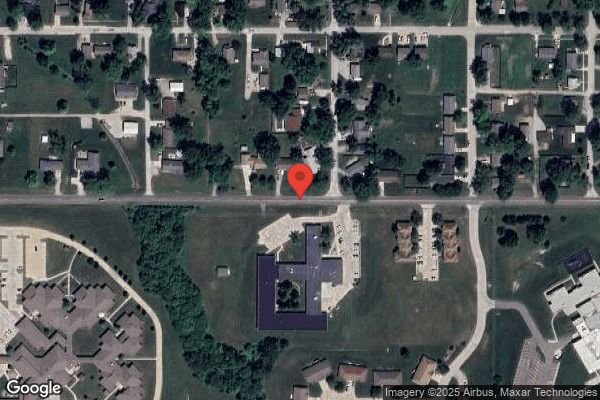
Mar 2024 12 deficiencies
CONCERN (D)

Potential for Harm - no one hurt, but risky conditions existed

Drug Regimen Review (Tag F0756)

Could have caused harm · This affected 1 resident

Based on interview and record review, the facility failed to monitor the monthly Medication Regimen Review (MRR) reports for August and November of 2023, completed by the pharmacist, to ensure they re...

Read full inspector narrative →
Based on interview and record review, the facility failed to monitor the monthly Medication Regimen Review (MRR) reports for August and November of 2023, completed by the pharmacist, to ensure they reported irregularities to the attending physician, and failed to address these recommendations with the resident's physician until January of 2024. This affected one of 16 sampled residents, (Resident #24). The facility census was 64. The facility did not provide a policy for Medication Regimen Reviews. 1. Review of Resident #24's pharmacist's medication regimen review, dated August 2023, showed: - The resident received Omperazole 40 mg. twice daily since 5/23; - On 8/25/23 the physician noted and agreed to reduce the Omeprazole to every day. The order was not dated or noted by staff. Review of the pharmacist's medication regimen review, dated November 2023, showed: - On 11/14/23 the resident received Duloxetine 90 mg. since 5/23. The resident received Loxapine 10 mg. three times daily 5/23. The pharmacist recommended a gradual dose reduction; - On 1/29/24, the physician signed it and wanted to continue the current dose of Duloxetine and Loxapine. The staff noted it on 1/30/24. Review of the resident's quarterly Minimum Data Set (MDS), a federally mandated assessment instrument completed by facility staff, dated 2/2/24, showed: - Cognitive skills moderately impaired; - Substantial to maximal assist with toilet use, showers, dressing, personal hygiene and transfers; - Diagnoses included high blood pressure, anxiety, depression, bipolar (a disorder associated with episodes of mood swings ranging from depressive lows to manic highs); - Had antipsychotic medications, diuretics, opiods, and antidepressants; - A gradual dose reduction was not documented as contraindicated. Review of the resident's physician order sheet (POS) dated March, 2024 showed: - Start date: 1/5/24: Omperazole 40 milligrams (mgs.) oral capsule delayed release, one time daily for gastroesophageal reflux disease (GERD, medication to neutralize acid in the stomach or limit its production); - Start date: 9/28/23: Loxapine 10 mg. one capsule three times a day for psychosis ( a severe mental condition in which thought and emotions are so affected that contact is lost with external reality); - Start date: 9/28/23: Duloxetine capsule delayed release particles 30 mg., one capsule at bedtime for depression. Take with 60 mg. capsule to equal 90 mg.; - Start date: 11/25/23: Duloxatine capsule delayed release particles 60 mg., give one capsule by mouth one time a day for depression. During an interview on 3/1/24 at 7:10 P.M., the Director of Nursing (DON) said: - The Pharmacist does the reviews and gives them to the facility and they forward them to the physicians as soon as they get the recommendations; - The recommendations should be addressed by the physician within a week; - If the physician does not address them, then they should notify their medical director.
CONCERN (E)

Potential for Harm - no one hurt, but risky conditions existed

Safe Environment (Tag F0584)

Could have caused harm · This affected multiple residents

**NOTE- TERMS IN BRACKETS HAVE BEEN EDITED TO PROTECT CONFIDENTIALITY** Based on observation, and interview , the facility failed to maintain a clean, safe, homelike enviornment when they failed to ke...

Read full inspector narrative →
**NOTE- TERMS IN BRACKETS HAVE BEEN EDITED TO PROTECT CONFIDENTIALITY** Based on observation, and interview , the facility failed to maintain a clean, safe, homelike enviornment when they failed to keep the floors, doors and handrails clean and in good repair. The facility census was 64. The facility did not provide a policy on cleaning and/or general maintanence. Observations on 2/29/24 begining at 12:05 P.M. showed: -The 100 hall had : -loose hand rails by room [ROOM NUMBER] and room [ROOM NUMBER] ; -baseboards had dark crusty debris at floor edges; -white, crusty salt like stains under the registers at the dining room entrance; -dust, crumbs and debris at the corners behind the fire doors; - cracked and dented green floor tile at dining room entrance; -a piece of missing baseboard at the dining room entrance; -heat registers in hallway had broken vents, peeling paint, and chipped and peeling caulk; -hallway walls have scrapes, gouges and nail holes throughout. -baseball sized hole in bathroom door of room [ROOM NUMBER]. - The 200 hall had: -loose hand rail by room [ROOM NUMBER] -mailbox at the Social Service office had a thick coat of dust. -baseboards with thick, dark, crusty debris at floor edge. -The 400 hall had: -dust, food debris, and thick crusted black debris at edge of baseboard at the nurse's station area. -broken end cap with rough edge on hand rail by the Director of Nursing office. During an interview on 2/29/24 at 12:14 P.M. Housekeeping Aide A said: -He/She does the floors, blinds, windowsills, sinks, and room cleaning daily. The windows are done seasonally outside and inside weekly. Floors, toilets and sinks are cleand daily. The buffer is used in the hall ways. -He/sShe is not sure if there is a deep clean schedule for baseboards or hallway fixtures. During an interview on 3/01/24 at 2:49 P.M. the Housekeeping Supervisor said: -One staff person is responsible for cleaning the floors. Once the floors are clean he/she does the edges of baseboards. There is not a list of things that have to be cleaned daily. There is no deep cleaning schedule. During an interview on 3/01/24 at 7:38 P.M. the Administrator said: -Housekeeping is responsible for cleaning the building except for the kitchen. -The floor technician is responsible for the floors, and should clean the baseboards. -She expects the baseboards to be cleaned at least monthly and as needed. -Hand rails are checked weekly and maintanence repairs or replaces as needed.
CONCERN (E)

Potential for Harm - no one hurt, but risky conditions existed

Transfer Notice (Tag F0623)

Could have caused harm · This affected multiple residents

**NOTE- TERMS IN BRACKETS HAVE BEEN EDITED TO PROTECT CONFIDENTIALITY** 3. Review of Resident #36's medical record, dated 7/6/23, showed: - At 11:10 P.M., staff note the resident had an unwitnessed fa...

Read full inspector narrative →
**NOTE- TERMS IN BRACKETS HAVE BEEN EDITED TO PROTECT CONFIDENTIALITY** 3. Review of Resident #36's medical record, dated 7/6/23, showed: - At 11:10 P.M., staff note the resident had an unwitnessed fall; - The physician was notified with orders to send the resident to the hospital; - At 11:23 P.M., the resident was transferred to the hospital via ambulance; - The medical record did not have a copy of any discharge letter that would have been issued to the resident. Review of the resident's care plan dated, 11/2/23, showed: -The resident has an Activities of Daily Living (ADLs) self-care performance deficit related to mobility; -The resident has congestive heart failure; -The resident has impaired cognitive function; -The resident has functional bowel and bladder incontinence. Review of Resident #36's significant MDS, dated [DATE]., showed: - Severe cognitive impairment; - Delusions (false beliefs or judgments about external reality); - Upper and lower extremity impairment on both sides; - Frequently incontinent of bowel and bladder; - Diagnoses included heart failure, high blood pressure and anxiety. During an interview on 2/29/24 at 11:01 A.M., Registered Nurse (RN) A said: - When they send a resident to the hospital, they send the resident's face sheet, bed hold policy, medication list and the resident's orders; - He/she was not aware of a transfer form which contained why the resident was being transferred in a language and manner they understood, addresses, electronic mail (e-mail), appeal rights or information about residents with a mental disorders. During an interview on 03/01/24, at 01:38 P.M., Licensed Practical Nurse (LPN) A said: - When they send a resident to the hospital, they send the resident's face sheet, bed hold policy, medication list, code status and the resident's medication list; - He/she was not aware of a transfer form which contained why the resident was being transferred in a language and manner they understood, addresses, e-mail, appeal rights or information about residents with a mental disorders. During an interview on 3/1/24 at 7:10 P.M., the Director of Nursing (DON) said: - When a resident is transferred to the hospital, the staff send the interact form which is on the computer, medication list, code status and why they are going to the hospital; - Social Services sends a monthly report to the Ombudsman; - The Regional Nurse and the DON were not aware the form had to have additional information. Based on interviews and record reviews, the facility failed to ensure staff provided a written notice of transfer or discharge to residents or their responsible parties and the reasons for the transfer, unwitting and in a language they understood. The notice should include the effective date of discharge or transfer; the location to which the resident is transferred or discharged ; a statement of the resident's appeal rights, including the name, address (mailing and electronic mail), telephone number of the entity which receives requests and information on how to obtain the appeal form and assistance in completing and submitting it; the name, address (mailing and electronic) and telephone number of the Office of the State Long-Term Care Ombudsman; and for resident's with a mental disorder or related disabilities, the mailing, electronic mail (e-mail) address and telephone number of the agency for protection and advocacy for individuals with mental disorders established under the Protection and Advocacy for Mentally Ill Individuals Act. This affected three of 16 sampled residents, (Resident #13, #36 and #53). The facility census was 64. Review of the facility's policy for transfer and discharge, revised 6/2020, showed, in part: - The purpose is to ensure that residents are transferred and discharged from the facility in compliance with state and federal laws and to provide complete, safe, and appropriate discharge planning and necessary information to the continuing care provider; - The facility may transfer or discharge a resident for the following reasons: the transfer or discharge is necessary for the resident's welfare and the resident's needs cannot be met in the facility; - Prior to transfer/discharge, Social Services staff or designee will provide the resident or responsible party with reasonable notice that the resident is going to be transferred or discharged ; - The facility may use Notice of Transfer/Discharge or another comparable form to provide the resident of his/her personal representative with advance notice of the transfer or discharge. The notice will include the following information: the reason the resident is being transferred/discharged ; the effective date of the transfer/discharge; the name, complete address and telephone number to which the resident is being transferred; a statement that the resident has the right to appeal the action to the state, contact information for the state entity which receives appeal hearing requests, and information for how to request an appeal; the name, address, and telephone number of the State Long Term Care Ombudsman; for residents with intellectual or developmental disabilities, the mailing address and telephone number of the agency responsible for the protection and advocacy of developmentally disabled individuals; and for residents with a mental disorder, the mailing address and telephone number of the agency responsible for the protection and advocacy for individuals with mental disorders; - The facility will also send a copy of the Notice of Transfer/Discharge to the State Long Term Care Ombudsman for facility initiated discharges. 1. Review of Resident #13's medical record, dated 12/21/23, showed: - At 5:47 A.M., staff noted the resident was violently shaking to his/her upper and lower extremities. The resident stated he/she could not get warm. The physician was notified with orders to send the resident to the hospital. The resident's responsible party was notified; - At 6:09 A.M., the resident was transferred to the hospital via ambulance; - The medical record did not have a copy of any discharge letter that would have been issued to the resident. Review of the resident's quarterly Minimum Data Set (MDS) a federally mandated assessment instrument completed by facility staff, dated 1/3/24 showed: - Cognitive skills intact; - Upper and lower extremities impaired on both sides; - Dependent on the assistance of staff for transfers; - Diagnoses included depression, pneumonia (a severe inflammation of the lungs in which the alveoli (tiny sacs) are filled with fluid), peripheral vascular disease (PVD, a circulatory condition in which narrowed blood vessels reduce blood flow to the limbs) and below the knee amputation. 2. Review of Resident #53's quarterly MDS, dated [DATE] showed: - Cognitive skills intact; - Upper extremity impaired on one side; - No impairment to the lower extremities; - Independent with toilet use and transfers; - Diagnoses included PVD, right below the knee amputation, respiratory failure (a condition in which your lungs have a hard time loading our blood with oxygen or removing carbon dioxide), congestive heart failure (CHF, accumulation of fluid in the lungs and other areas of the body), hemiparesis (weakness or the inability to move on one side of the body), and hemiplegia (paralysis that affects one side of the body). Review of the resident's medical records, dated 1/21/24 showed: - At 10:30 A.M., the resident put on his/her call light and complained of shortness of air. The resident was grunting with respiratory effort and oxygen was applied. The physician was contacted and gave orders to send the resident to the emergency room for evaluation and treatment; - The medical record did not have a copy of any discharge letter that would have been issued to the resident.
CONCERN (E)

Potential for Harm - no one hurt, but risky conditions existed

ADL Care (Tag F0677)

Could have caused harm · This affected multiple residents

**NOTE- TERMS IN BRACKETS HAVE BEEN EDITED TO PROTECT CONFIDENTIALITY** Based on observation, interviews and record review, the facility failed to ensure residents who were unable to carry out their o...

Read full inspector narrative →
**NOTE- TERMS IN BRACKETS HAVE BEEN EDITED TO PROTECT CONFIDENTIALITY** Based on observation, interviews and record review, the facility failed to ensure residents who were unable to carry out their own activities of daily living (ADLs) received the necessary services/cares to maintain good personal hygiene for four residents (Resident #14, #42, #13 and #54 ) out of 16 sampled residents. Residents dependent upon staff for assistance, did not receive repositioning, timely incontinent care or showers. The facility census was 64. The facility did not provide an Activities of Daily Living policy. Review of the facility provided Resident Rights Policy dated 8/2020 showed in part: -The resident has the right to a dignified existence. -The facility must care for each resident in a manner that promotes maintenance or enhancement of his/her quality of life. 1. Review of Resident #14's Quarterly Minimum Data Set (MDS: a federally mandated assessment tool completed by facilty staff) dated 11/27/23 showed: - A Brief Interview of Mental Status (BIMS) of 9, indicated severe cognitive defecits. -He/She was dependent on staff for completing ADLs -He/She was always incontinent of bowel and frequently incontinent of urine. -He/She had a history of pressure ulcers (injuries to the skin and the tissue below the skin that are due to pressure on the skin for a long time, and can start in a few hours) -Diagnoses of abnormal posture, need for assistance with personal care, contracture(shortening and hardening of muscles, tendons, or other tissue, often leading to deformity and rigidity of joints.), pain in the joints, Cognitive Communication Defecit (difficulty in thinking and use of language), Cerebral Palsy (a group of disorders that affect a person's ability to move and maintain balance and posture) and intllectual disabilities (problems with general mental abilities that affect functioning). Review of Resident #14's Comprehensive Care Plan updated 11/2/23 showed: -He/She had an ADL self care performance defecit. -He/She is dependent on 2 staff for toilet use and transfers. -Assist him/her to reposition approximately every 2 hours. -Keep his/her skin clean and dry. -He/She uses disposible briefs, change him/her per schedule and as needed. Continuous observation begining on 2/27/24 at 10:32 A.M. showed: -The resident was sitting up in his/her broda chair (a large reclining wheeled chair) in his/her room, with the television on until 11:37 A.M. -At 11:37 A.M. the resident was taken to the dining room and placed at the table. -At 12:24 P.M. the resident was given his/her meal tray and staff sat to assist him/her to eat. -At 1:02 P.M. the resident remained in dining room, he/she was not assisted to change position, get freshened up or to the toilet. 2. Review of Resident #42's Quarterly MDS dated [DATE] showed: -BIMS of 1, indicated severe cognitive defecit; -Maximum assistance and dependent on staff for completion of ADLs; -Always incontient of bladder and frequently incontinent of bowel; -Stage III Pressure Ulcers ( wounds that have burrowed past the skin's second layer and reached the fat layers beneath, with a high incidence of infection) -Diagnoses of Alzheimers Dementia (a condition of the brain that effects memory, thinking and functioning), Dementia ( impaired ability to remember, think, or make decisions that interferes with doing everyday activities), need for assistance with personal care, repeated falls, weakness, abnormal gait (walking) and mobility (movement) Review of the Resident's Comprehensive Care Plan dated 10/10/23 showed: -He/She had a self care performance defecit. -He/she needed maximum assistance for toilet use and personal hygiene; -If he/she refuses/resists ADLs, reassure him/her and return 5-10 minutes later. -Anticipate and meet the resident's needs. -He/She had pressure ulcers and the potential for additional pressure ulcers. -Keep his/her skin clean and dry; -Turn and reposition frequently and as needed -Clean him/her with every incontinent episode. Continuous observation begining on 2/28/24 at 9:39 A.M. showed: -He/She was in his/her room, sitting up in the Broda chair, family at bedside assisting him/her to eat breakfast. He/she had several days growth of beard on his/her face, his/her fingernails were dirty with dark debris underneath. -At 10:30 A.M. his/her family left. He/she remained sitting up in his/her chair in his/her room. -At 11:45 A.M. Certified Nurse Aide (CNA) E assisted the resident to the dining room. He/she was not assisted to freshen up, wash his/her hands, use the toilet or reposition. -At 12:17 P.M. the resident was served his/her noon meal. -At 1:06 P.M. the resident remained in the dining room.He/she was not assisted to or offered to freshen up, wash his/her hands, use the toilet or reposition. 3. Review of Resident #13's care plan, revised 11/2/23 showed; - The resident had an activity of daily living (ADL) self- care performance deficit activity intolerance, right below the knee amputation, impaired balance, obesity and chronic pain; - The resident required substantial/maximal assist of one staff for toilet use; - The resident required the assistance of two staff with a mechanical lift for transfers. Review of the resident's Quarterly MDS, dated [DATE] showed: - Cognitive skills intact; - Upper and lower extremities impaired on both sides; - Substantial assistance with toilet use; - Dependent on the assistance of staff for transfers; - Diagnoses included depression, pneumonia (a severe inflammation of the lungs in which the alveoli (tiny sacs) are filled with fluid), peripheral vascular disease (PVD, a circulatory condition in which narrowed blood vessels reduce blood flow to the limbs) and a below the knee amputation. Observation on 2/28/24 at 3:06 P.M., showed: - CNA B and CNA D used the mechanical lift and transferred the resident from his/her electrical wheelchair to the bed and placed him/her on the bedpan (device used as a receptacle for the urine and/or feces of person who is confined to the bed or unable to use a toilet); - CNA D removed the bedpan after the resident had urinated in it; - CNA D used a different wipe with each swipe and cleaned one side of the buttocks but did not clean the other side of the buttocks; - CNA B and CNA D turned the resident onto his/her back; - CNA D did not separate and clean all the front skin folds; - CNA B and CNA D placed a clean incontinent brief on the resident. During an interview on 3/1/24 at 1:41 P.M., CNA B said: - When providing peri care, if there was fecal material, would clean the buttocks first then clean the front skin folds; - Should have separated and cleaned all the skin folds. During an interview on 3/1/24 at 2:58 P.M., CNA D said: - Should have made sure to separate and clean all the skin folds where the urine had touched. During an interview on 3/1/24 at 5:44 P.M., Registered Nurse (RN) A said: - Staff should separate and clean all areas of the skin where urine had touched. During an interview on 3/1/24 at 7:10 P.M., the DON said: - She would expect the staff to clean all areas of the skin where urine had touched. 4. Review of Resident #54's care plan, revised on 8/22/23 showed; - The resident had an ADL self-performance deficit related to left above the knee amputation; - The resident required assistance of one staff one to two times a week for showers. Review of the resident's quarterly MDS, dated [DATE] showed: - Cognitive skills intact; - No impairment to the upper and lower extremities; - Independent with toilet use and transfers; - Partial/moderate assistance with showers; - Diagnoses included left above the knee amputation, chronic obstructive pulmonary disease (COPD, obstruction of air flow that interferes with normal breathing), high blood pressure and diabetes mellitus. Review of the resident's shower sheets for January, 2024 showed: - 1/2/24- the resident had a shower; - 1/5/24- the resident had a shower; - 1/16/24- the resident had a shower; - 1/24/24- the resident had a shower; - 1/26/24- the resident refuse the shower. Review of the resident's shower sheets for February, 2024 showed: - 2/2/24- the resident had a shower; - 2/6/24- the resident had a shower; - 2/9/24- the resident had a shower; - 2/13/24- the resident had a shower; - 2/16/24- the resident refused the shower due to not feeling well; - 2/27/24- the resident had a shower. During an interview on 2/27/24 at 11:19 A.M., the resident said; - He/she had gone 1.5 weeks without a shower. - It was usually when the shower aide was pulled to work the floor; - He/she would like to have a shower at least twice weekly; - They only do showers during the days, not on evenings; - It made him/her feel like he/she stunk and he/she did not like it. During an interview on 2/29/24 at 11:01 A.M., RN A said: - The facility had a dedicated shower aide on the North and South halls who worked Monday through Friday; - He/she only did day showers, not evenings; - If the shower aide called in and a resident wanted a shower, the staff would give it. During an interview on 3/1/24 at 2:00 P.M., CNA C said: - He/she was the dedicated shower aide for the South hall; - He/she had only been in the position for about two to three months; - He/she would get pulled to work the floor about once every other week; - He/she had not heard of any residents complaining about not getting their showers; - Showers are only done on the day shift, not on the evening shift or on the weekends; - If a resident refused a shower, he/she would have the resident sign the shower sheet, and the nurse would talk to the resident; - Would try to make the shower up the next day. During an interview on 3/1/24 at 7:10 P.M., the DON said, showers are to be provided one to two times a week, by the care plan or the resident's choice.
CONCERN (E)

Potential for Harm - no one hurt, but risky conditions existed

Deficiency F0679 (Tag F0679)

Could have caused harm · This affected multiple residents

**NOTE- TERMS IN BRACKETS HAVE BEEN EDITED TO PROTECT CONFIDENTIALITY** Based on observation, interview, and record review the facility failed to provide meaningful activities to meet the needs for tw...

Read full inspector narrative →
**NOTE- TERMS IN BRACKETS HAVE BEEN EDITED TO PROTECT CONFIDENTIALITY** Based on observation, interview, and record review the facility failed to provide meaningful activities to meet the needs for two of 16 sampled residents (Resident #14, and #42). The facility census was 64 Review of the facility provided policy, Activities Program, dated 2/2020 showed in part: -Encourage residents tto participate in activities to make life more meangful, to stimulate and support physical and mental capabilities to the fullest extent and to enable to resident to maintain the hightest attainable social, physical and emotional functioning. -The facility provides an activity program designed to meet the needs, interests and preferences of residents. -A variety of activities should be offered -Activities are developed for individual, small group and large group participation. 1. Review of Resident #14's Activity assessment dated [DATE]., showed -The resident enjoyed television, bingo and word search games. -He/she also enjoyed exercise and sports, cultural events and news and food activities. Review of the resident's 8/21/23 Activity Assessment showed: -He/she enjoyed stuffed animals and ice cream; -Keeping up with the news was important; -Going outside was important; -The resident was cooperative, cheerful and willing to try; -He/she was interested in activities. Review of the resident's Annual Minimum Data Set (MDS: A federally mandated assessment tool completed by facilty staff) dated 8/18/23., showed: -It was somewhat important for him/her to have newspapers, books, and magazines -It was very important for him/her to participate in his/her favorite activity. - Review of the resident's Quarterly MDS dated [DATE]., showed: - A Brief Interview of Mental Status (BIMS) of 9, indicated severe cognitive defecits. -He/She was dependent on staff for completing ADLs. -Diagnoses of abnormal posture, need for assistance with personal care, contracture(shortening and hardening of muscles, tendons, or other tissue, often leading to deformity and rigidity of joints.), pain in the joints, Cognitive Communication Defecit (difficulty in thinking and use of language), Cerebral Palsy (a group of disorders that affect a person's ability to move and maintain balance and posture) and intellectual disabilities (problems with general mental abilities that affect functioning). Review of the resident's Comprehensive Care Plan dated 11/23/23 showed: -It was importatnt to him/her to have an opportunity to engag in activites that were important to him/her. -Invite him/her to all activities. -He/She enjoyed food activities, special events, word search books and watching television. -He/She needed help to and from activities. -He/She may require assitance with the activity. Review of the weekly one to one (1:1- one staff to one resident privately) Activity Schedule for January and February showed 1:1 activites were not offered to Resident #14. Observation on 2/27/24 at 10:32 A.M. showed the resident was sitting at a table in his/her room , a word search book on page one and the television tuned to a cartoon show of signing and dancing characters. Observations on 2/28/24 at 9:13 A.M. showed the resident was sitting at a table in his/her room , the same word search book on page one and the television tuned to the same cartoon show of signing and dancing characters. During an interview on 2/28/24 at 9:13 A.M. the resident said -That show was all there was to watch. -He/she liked a game show. Observation on 2/28/24 at 3:17 P.M. showed the resident was sitting at a table in his/her room , the same word search book on page one and the television tuned to the same cartoon show of signing and dancing characters: Observation and interview on 2/29/24 at 9:20 A.M. showed the resident was sitting at a table in his/her room , the same word search book on page one and the television tuned to the same cartoon show of signing and dancing characters. When he/she was asked if he/she liked the show he/she said: he/she liked game shows. He/she liked the cartoon, but not all the time. He/she did not want to watch the cartoon and requested it be changed. 2. Review of Resident #42's Quarterly MDS dated [DATE] showed: -BIMS of 1, indicated severe cognitive defecit; -Maximum assistance to dependent on staff for completion of ADLs; -Diagnoses of Alzheimers Dementia (a condition of the brain that effects memory, thinking and functioning), Dementia ( impaired ability to remember, think, or make decisions that interferes with doing everyday activities), need for assistance with personal care, repeated falls, weakness, abnormal gait (walking) and mobility (movement) Review of the residents Annual MDS dated [DATE] showed -It was very important to keep up with current news and participate in favorite activities. Review of the Resident's Comprehensive Care Plan updated 10/10/23 showed: -He/She has little to no activity involvement related to his/her wishes not to participate. -He/She enjoyed reading the daily chronicle, visiting with spouse, getting snacks and sitting at the nurses station to visit with people who walk by. -He/She recieved 1:1 activities on Monday, Wednesday and Friday. Review of the resident's one to one activity schedule for February showed: -2/2/24 visited with the resident -2/5/24 he/she was sleeping -2/7/24 visited with the resident and painted -2/12/24 he/she painted -2/14/24 he/she was sleeping -2/16/24 not applicable (NA) -2/19/24 no documentation -2/21/24 he/she was being changed -2/23/24 talked with him/her in the hall Continuous observation begining on 2/28/24 at 9:39 A.M. showed: -He/She was in his/her room, sitting up in the Broda chair, family at bedside assisting him/her to eat breakfast. -At 10:30 A.M. his/her family left. He/she remained sitting up in his/her chair in his/her room. No music, TV or staff entered the room and visited with the resident. He/she mumbled to him/herself. -At 11:45 A.M. Certified Nurse Aide (CNA) E assisted the resident to the dining room. He/she was sat at the table he/she closed his eyes and slept until 12:17 P.M. -At 12:17 P.M. the resident was served his/her noon meal. During an interview on 2/29/24 at 9:51 AM The Activity Director (AD) said : -He/she took the AD position a month ago. -He/she is not certified. -He/she was trained for a few days by the previous AD. -He/she has not been enrolled in a certification class. -The aides turn the TV on in the morning when Resident #14 gets up. -Resident #14 had turned on his/her call light in the past to have the TV changed. -Resident #14 was not physically able to use the TV remote. -Resident #42 has 1:1 visits, as that is what the resident prefers. -He/She documents 1:1 visits on a log. During an interviw on 2/29/24 at 12:26 P.M. The Admissions Coordinator said: -He/she was the AD until he/she moved to Admissons -He/She started in September. -He/she was not a certified AD. -He/she trained the current AD . -He/she had no training at this facility for AD. -He/She had prevously worked as an Activity Assistant (AA)in another facility. -He/She started at the facility as the AA, the AD walked out and he/she was promoted.
CONCERN (E)

Potential for Harm - no one hurt, but risky conditions existed

Incontinence Care (Tag F0690)

Could have caused harm · This affected multiple residents

**NOTE- TERMS IN BRACKETS HAVE BEEN EDITED TO PROTECT CONFIDENTIALITY** Based on observation, interview and record review, the facility failed to ensure staff maintained proper positioning of the tubi...

Read full inspector narrative →
**NOTE- TERMS IN BRACKETS HAVE BEEN EDITED TO PROTECT CONFIDENTIALITY** Based on observation, interview and record review, the facility failed to ensure staff maintained proper positioning of the tubing and reservoir bag, for one resident (Resident #22) with an indwelling urinary catheter (a tube placed into the bladder to drain urine by gravity) and recent history of a urinary tract infection; and additionally failed to follow infection control practices when providing care of the catheter for two residents (Resident #22 and Resident #4) of the 16 sampled residents. The facility census was 64. Review of the facility provided policy Catheter- Care of, dated 6/2020 showed in part: -Purpose: to prevent catheter associated urinary tract infections. -Cleanse the skin folds, wiping front to back and cleanse the outside of the catheter wiping away from the opening of the body. -Position the catheter, drainage system and bag utilizing gravity to facilitate drainage. -Collection bags should always be kept below the level of the bladder, including during transport. Review of the facility provided policy Perineal Care, dated 6/2020 showed in part: -Separate skin folds, wash with soapy washcloth/cleansing wipe, using a clean washcloth/cleansing wipe for each stroke. 1.Review of Resident #22's Quarterly Minimum Data Set (MDS: a federally mandated assessment tool completed by facility staff) dated 2/6/24., showed: -Brief Interview of Mental Status (BIMS) of 15, indicated no cognitive loss. -Dependent on staff for toileting, bathing, dressing and personal hygiene. -Use of an indwelling urinary catheter, -He/she was always incontinent of bowel -Diagnoses of : Heart failure (the heart is unable to pump enough blood throughout the body), Diabetes (a group of diseases that cause the body to use sugar ineffectively), Obstructive Uropathy (a disorder of the urinary tract that blocks the normal flow of urine from the body), Morbid Obesity (weight of 80-100 pounds over a person's ideal body weight), Review of the resident's Comprehensive Care Plan dated 10/6/2023 showed: -No care plan for the use of an indwelling catheter. During an observation on 2/29/24 at 4:05 P.M. Certified Nurse Aides (CNA) A and F, and Licensed Practical Nurses (LPN) B and C placed the resident into a mechanical lift sling from his/her chair. LPN C controlled the movement of the lift, LPN B was at the bedside, CNA A was behind the resident chair and CNA F was at the resident side. CNA F had a grey washbasin that contained the resident's urinary catheter bag in his/her hand. The tubing of the catheter came from the resident into the drainage bag, draining dark red, thick urine. CNA F reached to adjust the lift sling, and lifted the basin with the drainage bag, to approximately the level of the resident's belly button, above the level of the resident's bladder. The tubing showed dark red urine drained back toward resident. LPN C instructed CNA F to lower the basin and drainage bag below the level of the bladder. CNA F said he/she had made a mistake, and the bag should always be lower than the resident's bladder. The resident was placed into bed and found to have been incontinent of bowel. LPN C and CNA A left the resident's room. LPN A and CNA F gathered supplies for incontinent care. LPN A cleansed skin folds front to back. He/she and CNA F turned the resident to his/her right side. CNA F lifted the drainage bag over the resident, moving it from the right side of the bed to the left side of the bed, and handed it to LPN B. The dark yellow/red urine in the catheter tubing drained back toward the resident. LPN B lowered the catheter bag and anchored the bag to the left side of the bed, below the resident.Incontinet care was completed and the resident was positioned to her back by LPN B and CNA F, with the catheter anchored to the left side of the bed, below the resident . Catheter care was not performed. During an interview on 2/29/24 at 4:45 P.M. CNA F said: -He/she made a mistake lifting the catheter bag above the level of the bladder. -The bag should always be below the bladder so urine does not go back into the resident. -Catheter care is done with each incontinent episode. -He/she does not know why catheter care was not done. During an interview on 2/29/24 at 4:49 P.M. LPN B said -Catheter care should be done as needed. -He/She wiped the catheter tubing when he/she wiped the resident's inner skin folds. -The catheter drainage bag should always be below the bladder to prevent urine from draining backwards. 2. Review of Resident #4's care plan, revised 8/22/23 showed: - The resident had an activities of daily living (ADL) self-care performance deficit related to paraplegia (paralysis characterized by motor or sensory loss in the lower limbs and trunk); - The resident is not toileted; - The resident had a supra pubic catheter ( a catheter which enters the bladder through the lower abdomen) and a colostomy (a surgical operation in which a piece of the colon is diverted to an artificial opening in the abdominal wall so as to bypass a damaged part of the colon); - Cleanse catheter with soap and water, rinse, pat dry every shift and as needed if soiling occurs. Review of the resident's quarterly MDS, dated [DATE] showed: - Cognitive skills moderately impaired; - Lower extremities impaired on both sides; - Dependent on the assistance of staff with toilet use and transfers; - Had a catheter; - Had a colostomy; - Diagnoses included paraplegia (paralysis characterized by motor or sensory loss in the lower limbs and trunk), depression, neurogenic bladder (a dysfunction that results from interference with the normal nerve pathways associated with urination), peripheral vascular disease (PVD, a circulatory condition in which narrowed blood vessels reduce blood flow to the limbs) and coronary artery disease (CAD, damage or disease in the heart's major blood vessels). Observation on 2/28/24 at 11:27 A.M., showed: - LPN A washed hands and applied gloves; - He/she used multiple wipes and wiped around the insertion site with dried blood noted and used the same area of the wipes to clean different areas of the skin and folded the wipe to clean around the catheter tubing. During an interview on 3/6/24 at 1:40 P.M., LPN A said: - He/she should not have used the same area of the wipe to clean different areas of the skin; - Should not fold the wipe during catheter or peri care. During an interview on 3/1/24 at 7:10 P.M., the DON said: - Should not use the same area of the wipe to clean different areas of the skin; - Should not fold the wipe; - Staff should anchor the tubing and wipe down with one wipe; - Staff should provide catheter care with every incontinent stool.
CONCERN (E)

Potential for Harm - no one hurt, but risky conditions existed

Unnecessary Medications (Tag F0759)

Could have caused harm · This affected multiple residents

Based on observation, interview and record review, the facility failed to ensure staff administered medications with an error rate of less than five percent (5%). Staff made five errors out of 25 oppo...

Read full inspector narrative →
Based on observation, interview and record review, the facility failed to ensure staff administered medications with an error rate of less than five percent (5%). Staff made five errors out of 25 opportunities for error, which resulted in an error rate of 20%. This affected four of 16 sampled residents, (Resident #28, #34, #62, and #116). The facility census was 64. Review of the facility's undated policy for medication administration, showed, in part: - The purpose is to provide practice standards for safe administration of medications for residents in the facility; - The licensed nurse must know the following information about any medication they are administering: the drug's name (generic and trade); the drug's route of administration; the drug's action; the drug's indication for use and desired outcome; The drug's usual dosage; the drug's side effects and adverse effects; and any precautions and special considerations. Review of the facility's policy for blood glucose monitoring, revised 6/20, showed, in part: - The purpose is to monitor blood glucose concentrations as ordered by the attending physician; - Clean the site with the alcohol pad and allow the alcohol to dry completely. Review of the website, https://drugs.com for Humalog (fast acting) insulin showed: - Take insulin within 15 minutes before the meal or right after a meal; - Onset is 10- 20 minutes after injection; peak is 40-50 minutes after injection; and the duration is 3 - 5 hours after injection. 1. Review of Resident #116's POS, dated February, 2024 showed: - Start date: 2/23/24 - check blood sugar before meals and at bedtime for diabetes mellitus; - Start date: 2/27/24 - Humalog (fast acting) insulin five units with meals for diabetes mellitus. Review of the resident's MAR, dated February, 2024 showed: - Check blood sugar before meals and at bedtime for diabetes mellitus; - Humalog insulin five units with meals for diabetes mellitus. Observation on 2/28/24 at 11:39 A.M., showed: - Licensed Practical Nurse (LPN) A cleaned the resident's finger tip with an alcohol wipe, did not let the finger tip air dry and obtained the resident's blood sugar which was 176; - At 11:41 A.M., LPN A administered five units of Humalog insulin to the resident; - At 12:39 P.M., staff served the resident his/her meal and the resident started eating. 2. Review of the website, https://novologpro.com showed: - Eat a meal within five to ten minutes after using Novolog, a fast-acting insulin, to avoid low blood sugar. Review of the website, https://www.drugs.com for Novolog insulin showed: - The onset is 15 minutes after injection, the peak is about one hour and the duration is two to four hours. 3. Review of Resident #28's POS, dated February, 2024 showed: - Start date: 12/15/23 - check blood sugars before meals and at bedtime using freestyle libre (continuously measures the blood sugar levels) for diabetes mellitus. Notify the physician if blood sugar is less than 60 or greater than 400; - Start date: 12/18/23 - Novolog 15 units in the afternoon for diabetes mellitus. The facility did not provide a complete copy of the resident's MAR. Observation on 2/28/24 at 11:47 A.M., showed: - LPN A used the resident's freestyle libre and obtained the resident's blood sugar and showed it was 226; - The Novolog flexpen only had 11 units in it; - At 11:50 A.M., LPN A administered the 11 units to the resident and informed the resident he/she would get another insulin pen for the rest of the dose; - At 11:52 A.M., LPN A informed the resident he/she was unable to removed the insulin pen from the cubex ( machine used to dispense medications); - At 12:16 P.M., the staff served the resident his lunch and the resident started eating; - At 12:23 P.M., LPN A informed the resident, he/she had the rest of the resident's insulin but the resident was still eating and said he/she would wait until the next dose. During an interview on 3/6/24 at 1:40 P.M., LPN A said: - He/she did not know what the onset, peak or duration of Novolog or Humalog insulin; - Residents should eat within 15 minutes of fast acting insulin; - He/she should have let the finger tip dry before obtaining the blood sugar. During an interview on 3/1/24 at 7:10 P.M., the Director of Nursing (DON) said: - Staff should allow the finger tip to air dry or dry it with a cotton ball; - The onset of Novolog and Humalog insulin is 15 minutes and the peak is two hours; - Residents should have their meal within 10 - 15 minutes or offered a snack; - The resident should get a full dose of insulin. 4. Review of the manufacturer's guidelines for Flonase nasal spray (used to treat allergies) revised, March 2016, showed, in part: - Shake well before use; - Blow your nose to clear your nostrils; - Close one nostril. Tilt your head forward slightly and keeping the bottle upright, carefully insert the nasal applicator into the other nostril; - Start to breath in through your nose and while breathing in, press firmly and quickly down once on the applicator to release the spray; - Repeat in the other nostril. 5. Review of Resident #62's POS, dated February, 2024 showed: - Start date: 1/13/24 - Fluticasone Propionate Suspension 50 micrograms (mcg.) one spray in each nostril in the morning for nasal congestion. Review of the resident's MAR, dated February, 2024 showed: - Fluticasone Proplonate Suspension 50 micrograms (mcg.) one spray in each nostril in the morning for nasal congestion. Observation and interview on 2/29/24 at 7:27 A.M., showed: - Certified Medication Technician (CMT) A gave the resident the bottle of Flonase and did not give any instructions to the resident; - The resident did not blow his/her nose, did not shake the bottle, did not close one side of his/her nostril and gave him/herself two sprays in the right nostril. He/she did not close the other side of his/her nostril and gave him/herself one spray in the left nostril; - The resident said he/she did not think any came out the first time which is why he/she gave two sprays in the right nostril. 6. Review of the website, mayoclinic.org for Flonase inhaler showed: - Hold the inhaler upright and open the green cap all the way until it clicks. Do not open the green cap until you are ready to take a dose of the medicine; - To inhale this medicine, breathe out fully, trying to get as much air out of the lungs as possible. Put the mouthpiece fully into your mouth and close your lips around it. Do not block the mouthpiece with your teeth or tongue. Do not block the vent above the mouthpiece with your lips or fingers; - Breathe in through your mouth quickly and deeply as you can until you have taken a full deep breath. Hold your breath for about ten seconds; - Rinse your mouth with water after use and do not swallow the water. 7. Review of Resident #34's POS, dated February 2024, showed: - Start date: Advair diskus inhalation (Fluticasone -Salmeterol) 250-50 mcg. Inhale one puff every morning and at bedtime for chronic obstructive pulmonary disease (COPD, obstruction of air flow that interferes with normal breathing). Rinse mouth with water after use and spit out. Review of the resident's MAR, dated February 2024, showed: - Advair diskus inhalation (Fluticasone -Salmeterol) 250-50 mcg. Inhale one puff every morning and at bedtime for COPD. Rinse mouth with water after use and spit out. Observation on 2/29/24 at 7:41 A.M., showed: - CMT A instructed the resident to inhale deeply; - The resident inhaled deeply, then took the water and drank it and did not spit it out; - CMT A did not instruct the resident to rinse and spit the water out. During an interview on 3/1/24 at 7:10 P.M., the DON said: - The staff should follow the manufacturer's guidelines; - Staff should give instructions on how to use the Flonase nasal spray and inhaler to ensure it is done correctly.
CONCERN (E)

Potential for Harm - no one hurt, but risky conditions existed

Deficiency F0761 (Tag F0761)

Could have caused harm · This affected multiple residents

Based on observation, interview, and record review the facility's licensed staff failed to ensure medications were monitored and stored in a safe and effective manner. Licensed staff failed to remove ...

Read full inspector narrative →
Based on observation, interview, and record review the facility's licensed staff failed to ensure medications were monitored and stored in a safe and effective manner. Licensed staff failed to remove and properly discard discontinued medication from two of two sampled medication rooms. The facility census was 64. Review of the facility provided policy Medication Destruction for non-controlled Medications dated 9/2018 showed in part: -Discontinued medications and medications left in the facility after a resident's discharge that do not qualify for return to the pharmacy for credit are destroyed. -Medication destruction occurs only in the presence of at least two licensed healthcare professionals or according to regulation and applicable law. 1. Observation and interview on 3/01/24 at 10:37 A.M. of the north medication storage room showed: - 3 grey wash basins, each approximately 13 inches (in.) by 10 in. x 4 in. full of 79 total bubble packaged (a package consisting of a clear plastic overlay affixed to a cardboard backing for protecting and displaying a product) medications, 3 bottles of medication and 1 bottle of powdered mediction, to either be destroyed or sent back to the pharmacy and contained: -Resident #166 was discharged on 1/29/24 and had 59 tablets or Tizanidine (a medication that relieves spasms, cramping, and tightness of the muscles) and 21 tablets of buspirone (a medication used to treat anxiety). -Resident #167 dicharged to the hospital on 2/4/24, and had 25 capsules of gabapentin (a medication used to treat seizure activity) and 30 tablets of Tizanidine, that should have been destroyed or returned. -Resident #57 had 105 capsules of gabapentin, and 51 tablets of quetiapine (a medication used to treat major depression), that should have been destroyed or returned. -Resident #30 had 51 capsules of Xanaflex (a medication that relieves spasms, cramping, and tightness of the muscles) that should have been destroyed or returned. -Certified Medication Technician (CMT) B said: the assistant Director of Nursing destroys medications within 30 days of discharge. The evening shift CMT take's care of the return medciations when he/she has time. 2. Observation and interview on 3/1/24 at 8:14 A.M., of the South Medication Room, showed: - A clear plastic tote (approximately 12' x 6 ' x 12') filled with overflowing medications that either needed to be destroyed or sent back to the pharmacy and contained the following medications: - Resident #47 had 24 capsules of Gabapentin 100 mg. and was discharged to the hospital on 2/18/24; - Resident #32 had 37 capsules of Gabapentin 300 mg; - There were 38 bubble packs which should have either been sent back to the facility or destroyed; - Resident #62 was discharged on 2/28/24 and had 15 bubble packs and 30 unopened packages of Cholestyramine oral suspension powder (used to lower high cholesterol levels in the blood); - An opened bottle of Milk of Magnesia (used for constipation); - An opened bottle of Vitamin D 10 micrograms (mcg.) (used for supplement); - An opened bottle of Chlorhexidone gluconate (used for oral rinse); - An opened bottle of atropine sulfate 1% eye drops (used to dilate the pupil); - One glucagon emergency kit used to treat residents with low blood sugar; - Resident #16 had two opened bottles of Haldol (used to decrease agitation), one with 35 milliliters (mls.) and one with 10 mls. - A gray pan with Resident #28's medications brought in from home, which included an unopened bottle of Gabapentin 300 mg., 270 capsules; an opened bottle of unknown amount of Gabapentin; nine unopened packages of Novolog (fast acting) insulin with five insulin pens in each package; one unopened glargine (Lantus ) insulin pen; one unopened package of Victoza insulin pen; - Registered Nurse (RN) A said there were no narcotics in the tote. The narcotics are destroyed immediately which would be any medications that had to be in a locked drawer. The Director of Nursing (DON) and Certified Medication Technicians (CMTs) could bag up any of the medications that needed to be sent back to the pharmacy. Either two nurses or the DON and another nurse can destroy the medications. There was not a set schedule when the medications were supposed to be destroyed or sent back to the pharmacy. He/she did not think Gabepentin (used to control epilepsy or nerve pain) should be destroyed immediately since it was not a narcotic; During an interview on 3/1/24 at 7:10 P.M., the Director of Nursing (DON) said: - She was not aware that Gabapentin had the potential to be diverted; - The Assistant Director of Nursing (ADON) tried to destroy the medications at least weekly and try to return the medications to the pharmacy so the facility could get credit for them.
CONCERN (E)

Potential for Harm - no one hurt, but risky conditions existed

Deficiency F0804 (Tag F0804)

Could have caused harm · This affected multiple residents

**NOTE- TERMS IN BRACKETS HAVE BEEN EDITED TO PROTECT CONFIDENTIALITY** Based on observations, interviews and record review, the facility failed to assure that staff served food to the residents that ...

Read full inspector narrative →
**NOTE- TERMS IN BRACKETS HAVE BEEN EDITED TO PROTECT CONFIDENTIALITY** Based on observations, interviews and record review, the facility failed to assure that staff served food to the residents that was palatable, attractive, and served at a safe and acceptable temperature. This affected four sampled residents (Resident #18, #30, #50, and #57). The facility census was 64. Review of the facility's Food Temperatures policy, revised, December 2020, showed: -Foods prepared and served at the facility will be served at the proper temperatures to ensure food safety; -Acceptable serving temperatures: o Casseroles - greater than 135 degrees Fahrenheit; o Meat - greater than 135 degrees Fahrenheit; o Potatoes - greater than 135 degrees Fahrenheit; o Pureed foods - greater than 135 degrees Fahrenheit; o Milk - less than 41 degrees Fahrenheit; -Heat plates that hot foods will be served on to maintain temperature. Review of resident council minutes showed: -10/6/23 resident complaint of no biscuits and gravy for breakfast; -11/2/23 resident complaints of cold food; -11/2/23 resident complaint of bugs in the oatmeal served at breakfast. Review of the facility grievance forms showed: -9/27/23 complaint of cold food on 500 hall; -10/27/22 complaint of cold food; -11/9/23 complaint food tastes horrible; -1/5/24 complaint the coffee is cold and the hard boiled eggs are over cooked; -1/26/24 complaint the food is burnt. 1. Review of the resident #18's Quarterly Minimum Data Set (MDS, a federally mandated assessment completed by the facility staff), dated 2/15/24, showed: -Independent with Activities of Daily Living (ADL's); -Moderate cognitive impairment; -Occasionally incontinent of bladder; -Diagnoses included: high blood pressure, diabetes mellitus (a disease of inadequate control of blood sugar levels), and atrial fibrillation (an irregular heart rhythm). Review of Resident #18's care plan dated 8/1/23, showed: -Limited physical mobility due to weakness in bilateral ankles; -Independent with eating; -The resident has a potential nutritional problem; -The resident will be served diet as ordered. During an interview of 2/28/24 at 3:18 P.M., the resident said: -The food is always cold and and tastes bad; -He/she filled out grievances and told the administrator about dietary concerns. 2.Review of the resident #30's Annual MDS, dated [DATE], showed: -No cognitive impairment; -Extremities impaired on one side of upper extremities; -Occasionally incontinent of bladder; -Frequently incontinent of bowel; -At risk for malnutrition; -Diagnoses included anemia, heart failure and high blood pressure. Review of Resident #30's care plan dated 8/1/23, showed: -The resident has an ADL self care performance deficit; -Extremities impaired on one side; -The resident will be served diet as ordered During an interview of 2/28/24 at 3:45 P.M., the resident said: -The food is is cold and has no flavor; -He/she filled out a grievance form and told the administrator but nothing changes. 3. Review of Resident #57's admission MDS, dated [DATE], showed: - Severe cognitive impairment; - Upper and lower extremity impairment on one side; - Maximal assist with ADL's; - The resident has a catheter; - At risk for malnutrition; - Difficulty swallowing; - Mechanically altered diet; - Diagnoses included dementia, high blood pressure, end stage kidney disease. Review of the resident's care plan, dated 2/9/24, showed: -The resident has an ADL self care performance deficit; -The resident eats a pureed diet; -The resident has a nutritional problem; -The resident will be served diet as ordered. 4. Observation on 2/28/24 at 12:35 P.M., showed: -The resident was served his pureed meal; -The resident did not eat his/her pureed meal; -The resident told Certified Nurses Aide (CNA) B he/she was done eating and wanted to go back to his/her room. During an interview on 2/28/24 at 12:44 P.M., CNA B said: -Sometimes the resident has a good appetite and sometimes he/she does not. Observation of the kitchen on 02/29/24 11:45 A.M., showed: -The cooked lunch meal was put into metal pans and covered with foil; -The pans of food were placed on two rolling carts; -The DM and and Dietary Aide A rolled the two carts from the kitchen down 100 hall to the dining room; -The pans of cooked food were place on the steam table; -The DM removed the foil from the metal pans on the steam table and placed the proper scoops in the foods; -The food on the steam table remained uncover until lunch service was completed; -No kitchen staff checked the temperatures of the food after it was placed on the steam table or any time during lunch service. Observation of lunch meal test tray on 2/29/24, at 12:25 P.M., showed: -The green bean casserole was 118 degrees Fahrenheit; -The pureed turkey was 116 degrees Fahrenheit; -The pureed green bean casserole was 117 Fahrenheit; -The pureed sweet potatoes was 114 degrees Fahrenheit; -The milk was 51 degrees Fahrenheit. During an interview on 2/29/24 at 3:17 P.M., [NAME] A said: -The temperature of hot food at the time of service should be above 135 degrees Fahrenheit; -Cold foods should be below 41 degrees Fahrenheit at the time of service. During an interview on 2/29/24 at 1:30 P.M., the Dietary Manager (DM) said: -The temperature of hot food at the time of service should be above 135 degrees Fahrenheit; -Cold foods should be below 41 degrees Fahrenheit at the time of service. During an interview on 03/01/24, at 10:03 A.M., the Registered Dietitian (RD) said: -The last time he/she was at the facilty was a year ago; -He/she is a RD and the owner of the company that the facility uses to staff the dietary department; -There is another RD that comes to the facilty but he/she could not be here this week; -He/she said he/she observed meal service at lunch yesterday and he/she did not see anything wrong with the meal service at lunch yesterday; -He/she expects hot food to be 120 degrees Fahrenheit at the time of service and cold foods to be 41 degrees at the time of service; -He/she expects the dietary staff to ensure the food is palatable and served at a safe temperature. During an interview on 3/1/24 at 7:38 P.M., the Administrator said: -He/she expects hot foods to be served hot and cold foods to be served cold.
CONCERN (E)

Potential for Harm - no one hurt, but risky conditions existed

Deficiency F0806 (Tag F0806)

Could have caused harm · This affected multiple residents

**NOTE- TERMS IN BRACKETS HAVE BEEN EDITED TO PROTECT CONFIDENTIALITY** Based on observation, interview, and record review, the facility failed to ensure residents are allowed to make meal choices whe...

Read full inspector narrative →
**NOTE- TERMS IN BRACKETS HAVE BEEN EDITED TO PROTECT CONFIDENTIALITY** Based on observation, interview, and record review, the facility failed to ensure residents are allowed to make meal choices when facility staff failed to provide three sampled residents (Residents #18, #30, and #53) with alternate food choices or allow choices of menu items. Facility census was 64. The facility did not provide the requested policy on resident choices. Review of the facility provided Resident Rights Policy dated 8/2020 showed in part: -The resident has the right to a dignified existence. -The facility must care for each resident in a manner that promotes maintenance or enhancement of his/her quality of life. 1. Review of Resident #18's care plan dated 8/1/23, showed: -Limited physical mobility due to weakness in bilateral ankles; -Independent with eating; -The resident has a potential nutritional problem; -The resident will be served diet as ordered. Review of the resident's quarterly Minimum Data Set (MDS, A federally mandated assessment completed by the facility staff.), dated 2/15/24, showed: -Independent with Activities of Daily Living (ADL's); -Moderate cognitive impairment; -Occasionally incontinent of bladder; -Diagnoses included high blood pressure, diabetes mellitus (a disease of inadequate control of blood sugar levels), and atrial fibrillation (an irregular heart rhythm). During an interview of 2/28/24 at 3:18 P.M., the resident said: -He/she does not get what he/she orders for meals; -The facility tells him/her they are out of what he/she wants; -He/she filled out grievances and told the administrator but nothing changes. 2. Review of Resident #30's care plan dated 8/1/23, showed: -The resident has an ADL self care performance deficit; -Extremities impaired on one side; -The resident will be served diet as ordered. Review of the resident's annual MDS, dated [DATE], showed: -No cognitive impairment; -Extremities impaired on one side of upper extremities; -Occasionally incontinent of bladder; -Frequently incontinent of bowel; -At risk for malnutrition; -Diagnoses included anemia, heart failure and high blood pressure. During an interview of 2/28/24 at 3:45 P.M., the resident said: -He/she does not get what he/she orders for meals; -The staff takes the his/her order but he/she is served something else; -When he/she asks for what he/she ordered the kitchen told the resident they are out of what he/she ordered; -He/she has told the administrator. 3 . Review of Resident #53's care plan, revised 10/4/23 showed: - The resident had a nutritional problem or potential nutritional problem; - The resident ate in his/her room; - Provide and serve diet as ordered; - The resident had food allergies to tomatoes and blueberries; - The resident was on a regular diet with thin liquids. Review of the resident's quarterly Minimum Data Set (MDS), a federally mandated assessment instrument completed by facility staff dated 12/19/23 showed: - Cognitive skills intact; - Required set up and clean up with eating; - Independent with oral hygiene, toilet use, dressing, personal hygiene and transfers; - Diagnoses included peripheral vascular disease (PVD, a circulatory condition in which narrowed blood vessels reduce blood flow to the limbs) , right below the knee amputation, respiratory failure (a condition in which your lungs have a hard time loading our blood with oxygen or removing carbon dioxide), congestive heart failure (CHF, accumulation of fluid in the lungs and other areas of the body), hemiparesis (weakness or the inability to move on one side of the body), and hemiplegia (paralysis that affects one side of the body). During an interview on 2/27/24 at 10:55 A.M., the resident said: - The food was terrible; - The staff do not serve him any food that would help to lower his/her sodium; - When he/she asked for raw vegetables, the dietary staff inform the resident they cannot serve any due to the budget; - He/she would like to have turkey bacon or turkey sausage but the dietary staff informed him they cannot serve it because it is not in the budget. During an interview on 2/29/24 at 1:30 P.M., the Dietary Manager (DM) said: -The dietary staff takes all resident orders for all meals; -If the resident does not get what they ordered another meal option of same nutritinal value is offered; -He/she orders food for the menus and has enough to prepare the meals; -He/she was not aware of the the residents not getting what they ordered; -He/she was not aware Resident #53 wanted turkey bacon or turkey sausage; -Resident choices should be honored. During an interview on 03/01/24, at 10:03 A.M., the Registered Dietitian (RD) said: -The dietary staff takes all resident orders for all meals; -If the resident does not get what they ordered another meal option of same nutritional value is offered; -He/she was not aware Resident #18 and #30 were not getting what they ordered; -He/she was not aware Resident #53 wanted turkey bacon or turkey sausage; -Efforts are made to accommodate resident preferences if possible. During an interview on 3/1/24 at 7:10 P.M., the Director of Nursing (DON) said: - The budget is six dollars per PPD; - Was not aware the resident wanted turkey bacon or turkey sausage.
CONCERN (E)

Potential for Harm - no one hurt, but risky conditions existed

Infection Control (Tag F0880)

Could have caused harm · This affected multiple residents

5. Review of the employee records on 2/28/24 at 2:30 P.M., showed: -Out of the five randomly selected employees who were hired since the last annual survey; four employees did not complete the 2-step ...

Read full inspector narrative →
5. Review of the employee records on 2/28/24 at 2:30 P.M., showed: -Out of the five randomly selected employees who were hired since the last annual survey; four employees did not complete the 2-step TB skin tests upon hiring as a new employee. -Employee#1 record showed no TB skin tests were completed. -Employee #2 had one TB skin test that was read past the 72 hour mark, and no second TB skin test was completed. -Employee #3 record showed no TB skin tests were completed. -Employee #4 record showed no TB skin tests were completed. During an interview on 2/28/24 at 3:00 P.M., the front office manager said: - All new employees are to have a 2-step TB skin test when they are hired, unless they recently had one and can show us, then it it just the one TB skin test. - Any nurse here can give the TB skin test, and any nurse can read the TB skin test result. - She was not sure why these four employee's TB skin tests where missing from the TB test documentation book. During an interview on 2/28/24 at 4:11 P.M., the Director of Nursing said: - All new hired employees are to have a two-step TB skin test completed. - The first TB skin test is done on date of hire and is to be read in 48-72 hours, if it isn't than it is repeated and counted as the first TB test. - The second TB skin test is done 14 days after the initial TB skin test. - Any licensed nurse can give the TB skin test and read the TB skin test. - It is the the responsibility of the infection preventionist to ensure these are completed and on time. - She was not aware that some had been missed, but thought it could be possible. Based on observation and interview the facility staff failed to maintain an effective infection control program when dietary staff did not wash their hands before applying clean gloves while preparing food in the kitchen and when staff failed to wash hands before applying clean gloves while preparing resident drinks in the dining room. Also, facility failed to annually review and implement a water management procedure to reduce the risk of bacterial growth and reduce the spread of Legionella (a bacteria that causes Legionnaires' disease, a serious type of pneumonia). This had the potential to affect all the resident in the building. Lastly, the facility failed to ensure that newly hired employees in the last year received a two-step Tuberculin Skin Test (TB), this affected five of the six sampled employees. The facility census was 64. Review of the facility's hand hygiene policy revised, June 2020, showed: -Staff will wash hands with soap and water before and after food preparation; -Staff will change gloves between tasks. The facility did not provide the requested policy regarding Infection Prevention, Control regarding water management/prevention of legionella. Review of the facility's undated Tuberculosis (TB) transmission risk policy, showed: The goal is to try to prevent nosocomial transmission of TB, and for the facility to adheres to a Tuberculosis Infection Control Program by doing the following: - The Facility's Tuberculosis Infection Control Program includes the early identification, isolation, and transfer of persons with active tuberculosis. The program includes the following components: - Assignment of responsibility for the oversight of Tuberculosis Infection Control Program to the Infection Control Committee; Infection Preventionist [insert name of staff member] is designated to oversee Tuberculosis Infection Control Program. - Screening and surveillance of residents and employees for latent tuberculosis infection (LTBI) and active TB as appropriate for the current TB risk level. 1. Observation on 02/29/24 at 10:28 A.M., showed: -Cook A took a box of frozen beef patties out of the freezer; -He/she put on gloves and using gloved hands placed nine beef patties on a baking sheet then he/she opened the oven door with gloved hands and put the baking sheet containing the beef patties in the oven and set the timer; -He/she closed top of the cardboard box containing the remaining frozen beef , and took the box to the freezer; -He/she opened the door of the freezer with gloved hands and placed the box in the shelf of the freezer; -He/she took off his/her gloves and placed four pieces of foil on the prep table and set a loaf of bread on the prep table. He/she applied gloves and placed six slices of bread on the foil; -He/she did not wash his/her hands before applying new gloves. 2. Observation on 02/29/24 at 12:28 P.M., showed: - Dietary Aide A entered the dining room with a black cart containing empty glasses; - He/she put gloves on and poured milk into the glasses on the cart; - He/she did not wash his/her hands before applying clean gloves; - He/she picked up a piece of parchment paper off the floor with gloved hands; -He/she removed his/her gloves and threw them in a cabinet under the sink; -He/she applied new gloves and poured a glass of milk and set it on Resident #36's tray; -He/she removed his/her gloves and opened the refrigerator door and took a salad out of the refrigerator and set in on the counter by the refrigerator; -He/she removed the salad from the counter and placed it on Resident #55's tray; -He/she applied new gloves and poured milk into glasses on the cart; -He/she did not wash his/her hands before he/she applied new gloves; 3. Observation on 02/29/24 at 12:42 P.M., showed: -Cook A with gloved hands serving food at the steam table in the dining room; -He/she touched the handle of the cart with the condiments on it with his/her gloved hands and then grabbed a plastic divided plate with and set it on the steam table and then used the scoop to place pureed turkey on to Resident #57's plate; -He/she did not wash his/her hands and apply new gloves after touching the handle of the cart containing the condiments. During an interview on 02/29/24 at 1: 52 P.M., [NAME] A said: -If a dirty surface is touched with a gloved hands the gloves should be removed, hands should be washed, and clean gloves applied before touching food; -He/she should wash hands before applying new gloves; -He/she should wash hands and apply gloves when changing tasks or when gloves are dirty. During an interview of 02/29/24 at 12:28 P.M., Dietary Aide A said: -He/she applied new gloves after picking up the parchment paper off the floor put forgot to wash his/her hands before putting on new gloves;. -He/she should wash hands before applying new gloves; -He/she should wash hands and apply gloves when changing tasks or when gloves are dirty. During an interview of 02/29/24 at 01:04 P.M., the Dietary Manager (DM) said: -He/she would expect staff to wash their hands before applying gloves; -He/she would expect staff to change gloves between tasks; -He/she would expect staff to change gloves if their gloves have been soiled or touched an unclean surface. During an interview on 03/01/24 10:03 A.M., the Registered Dietitian (RD) said: -He/she expects staff to wash their hands before applying gloves; -He/she expects staff to remove gloves that have come in contact with contaminated surfaces, then wash their hands and put on clean gloves before touching food or clean surfaces; -He/she expects staff to change gloves between tasks. During an interview on 03/01/24, at 4:18 P.M., the Administrator said: -Dietary staff should wash their hands before applying new gloves; -Dietary staff should change gloves between tasks; -If gloves become soiled they should be removed and new ones applied. 4. Review of the facility's Risk Management Plan for Legionella Control dated 1/1/24 showed: -No specific measures to address Legionella; -The were no records of any control measures to be followed; -There was no documentation to show the facilty had been monitoring for Legionella. During an interview on 03/01/24, at 04:39 P.M. the administrator said; -The maintenance director does the testing for the management of Legionella Control; -The maintence director went home sick today; -He/she said he/she did not know where he kept any of his monitoring checks for Legionella controls. During an interview on 03/01/24, at 07:38 P.M. the Regional Nurse said that the facility should have access to the Legionella testing and control information at all times.
CONCERN (F)

Potential for Harm - no one hurt, but risky conditions existed

Food Safety (Tag F0812)

Could have caused harm · This affected most or all residents

Based on observation, interviews, and record review, the facility failed to ensure staff stored food in a sanitary manner and failed to maintain the kitchen in a sanitary manner. This had the potentia...

Read full inspector narrative →
Based on observation, interviews, and record review, the facility failed to ensure staff stored food in a sanitary manner and failed to maintain the kitchen in a sanitary manner. This had the potential to affect all residents residing in the facility. The facility census was 64. Review of the facility's policy Cleaning of the Kitchen revised, December 2020, showed: The dietary staff will maintain a sanitary environment in the nutrition services department. The facility did not provide the requested policies for maintence and repair of the dining room and kitchen, cleaning of vents in the kitchen and dining room and dating and storage of food and storing dishes in the kitchen. 1. Observation of the kitchen on 02/27/24, at 10:02 A.M., showed: -Two vents covered with dirt and debris; -The wall by the electrical box with missing paint; -20 plates and 10 cups stored face up on the top shelf storage; -The top of the toaster covered in food debris; -Metal containers of utensils setting under the prep table with no lids with debris in the bottom of the containers. 2. Observation of the dining room on 02/27/24, at 10:49 A.M., showed: -The piano is covered in dust; -The dresser setting by the windows is covered in dust; -The pedestals of dining room tables covered in dust and debris; -Vents in the dining covered with dirt and debris; -Blinds hanging on the windows in the dining room caked with dust and broken; -The floors in the ding room were missing tiles and dirty; -The glass of the steam table covered in a greasy film; -The side of the steam table covered with food debris and drip stains; -The knobs on the steam table covered with food debris; -Dirt and debris under the steam table; -The wheels of the steam table covered in dirt and debris; -Dirt and debris on the white prep board on the steam table; -Dirt and debris on the floor under the sanitizer dispenser; -The trash can covered with food and debris and over flowing; -The plate warmer will food debris and drip marks running down the side; -Cups and plates stored face up on a plastic storage rack behind the steam table that was covered with dust, and food debris and missing the top rack; -The inside of the refrigerator behind the steam table area was dirty and had an large ice pack used by the therapy department stored in the freezer; -Refrigerator behind the steam table area contained an open bottle of salad dressing with an expiration date of 3/14/22, an uncovered cup of pink liquid with no date and a container of mayonnaise with an expiration date of 7/3/23; -The counter tops of the sink area behind the steam table were worn and uncleanable; -The counter and sink are coming away from the wall and dirty and covered in dirt and debris; -The cabinets under the sink had holes in the wood and were dirty and uncleanable; -The floor in the corner between the ice machine and the sink was covered in dust and had a blue plastic container laying on it; -The phone on the wall by the ice machine is covered in grease and food debris; 3. Observation of lunch service in the dining room on 2/29/24 at 12:18 P.M., showed: -The kitchen staff serving the lunch meal; -Cook A removed a divided plate from the plastic rack behind the stream table; -The dived plate was not stored facing up and the plastic rack was covered in food and debris; -The DM and [NAME] A place the lunch meal on the plate and the food was served to Resident #57; -Dietary Aide A removed some glasses of milk from the refrigerator behind the steam table and the inside of the refrigerator was dirty with food debris and dryed liquid in the bottom and contained expired food; -Dietary Aide B set four empty glasses on the counter top that was worn and uncleanable and served them to residents in the dining room. During an interview on 02/29/24 at 12:58 Dietary Aide A said: -Dietary is responsible for the cleaning of the kitchen; -Dietary is responsible for the cleaning of the refrigerator and sink behind the steam table in the ding room; -Dietary uses the refrigerator to put drinks in for meals and uses the sink and counter behind the steam table; -The refrigerator should be clean and there should be no expired food in it. During an interview on 02/29/24 at 1:07 P.M., Dietary Aide B said; -He/she uses the sink and counter behind the steam table at meals; -Drinks are put in the refrigerator and food and drinks are set on the counter behind the serving area; -Dietary is responsible for the cleaning of the refrigerator and sink behind the steam table in the ding room; -Dietary uses the refrigerator to put drinks in for meals and uses the sink and counter behind the steam table; -The refrigerator should be clean and there should be no expired food in it. During an interview on 02/29/24 at 2:19 P.M., the Dietary Manager (DM) said: -The floors, walls and ceilings of kitchen and dining room should be clean and in good repair; -Dishes should be stored in a manner that prevents contamination; -The kitchen staff is responsible for cleaning the kitchen and the dining room; -The maintence department is in charge of cleaning the vents in the kitchen; -The maintence department is in charge of repairs and maintence of the kitchen and the dining room; -The kitchen staff is responsible for cleaning the refrigerator, storage rack, sink and the steam table in the ding room; -Housekeeping is in charge of cleaning the trash can, taking the trash out of the dining room and cleaning the phone in the dining room; -He/she has told the maintence director about the vents and the repairs that need made in the kitchen; -He/she did not know the last time the vents were cleaned. During an interview on 03/01/24 at 09:44 A.M., the Maintence Director said: - Housekeeping is responsible for cleaning the vents in the kitchen and the dining room; -He/she is responsible for maintenance and repair of the ceilings, walls, counters and base boards in the kitchen and dining room; -He/she is informed of repairs that need to be made by word of mouth or by notes left in the maintence clip board up front; -The staff use the clip board up front to write maintence requests and repairs on; -He/she said he/she checks the clip board daily; -He/she was not aware that any repairs were needed to the wall in the kitchen; -He/she said the vents and ceiling in the kitchen and dining room should be clean and in good repair. During an interview on 03/01/24 at 10:44 A.M., the Housekeepping Director said: -Maintence is responsible for clearing the vents in the kitchen and dining room; -Dietary is responsible for cleaning the dining room tables, table pedestals and chairs -Dietary is responsible for clearing the trash can and taking the trash out of the dining room; -House keeping is responsible for cleaning the phone in the dining room. During an interview on 03/01/24, at 10:03 A.M., the Registered Dietitian (RD) said: -The last time he/she was at the facilty was a year ago; -He/she is a RD and the owner of the company that the facility uses to staff the dietary department; -There is another RD that comes to the facilty but he/she could not be here this week; -He/she said he/she observed meal service at lunch yesterday and he/she did not see anything wrong with the meal service at lunch yesterday; -He/she expects the kitchen and dining room to be clean and sanitary; -He/she expects the kitchen and dining room to be in good repair; -He/she expects the kitchen staff to be responsible for this; -Expired food should be thrown out immediately; -He/she expects the kitchen staff to check the refrigerator for expired food and if found discard immediately; -The kitchen staff should be responsible for doing this; -The vents in the kitchen and dining room should be free of dirt and debris; - Dishes should be stored to prevent contamination; -He/she expects counter tops and sink to be clean and in good repair. During an interview on 3/1/24 at 7:38 P.M., the Administrator said: He/she expects the kitchen and dining room to be clean and sanitary; -He/she expects the kitchen and dining room to be in good repair; -Expired food should be thrown out immediately; -The vents in the kitchen and dining room should be free of dirt and debris; - Dishes should be stored to prevent contamination; -He/she expects counter tops and sink to be clean and in good repair.
Oct 2023 1 deficiency
CONCERN (E) 📢 Someone Reported This

A family member, employee, or ombudsman was alarmed enough to file a formal complaint

Potential for Harm - no one hurt, but risky conditions existed

Free from Abuse/Neglect (Tag F0600)

Could have caused harm · This affected multiple residents

**NOTE- TERMS IN BRACKETS HAVE BEEN EDITED TO PROTECT CONFIDENTIALITY** Based on observation, interview and record review, the facility failed to ensure one resident (Resident #1) of seven sampled res...

Read full inspector narrative →
**NOTE- TERMS IN BRACKETS HAVE BEEN EDITED TO PROTECT CONFIDENTIALITY** Based on observation, interview and record review, the facility failed to ensure one resident (Resident #1) of seven sampled residents remained free of mental abuse when staff used racial stereotypes multiple times, taunting the resident. The facility census was 60. Review of the facility policy Abuse Prevention and Prohibition Program dated 8/2020 showed in part: -Each resident has the right to be free from mistreatment, neglect, abuse, involuntary seclusion, and misappropriation of property. -Staff must not allow anyone to engage in verbal, mental, sexual, or physical abuse, neglect, mistreatment or misappropriation. -The facility is committed to protecting residents from abuse by anyone including staff. Review of the facility policy Resident Rights policy dated 8/2020 showed in part: -All residents have the right to a dignified existence. The facility must treat each resident with respect and dignity and care for each resident in a manner and in an environment, that promotes maintenance or enhancement of his or her quality of life, recognizing each persons individuality. -The facility will ensure that the resident can exercise his or her rights without discrimination. Review of the facility provided Employee Handbook dated 11/2020 showed in part: -This company is committed to providing an environment free of unlawful discrimination or harassment based on sex, race, color, religion, age, etc. -We have an obligation to respect the rights of our residents. We will do everything we can to guarantee the fundamental rights and individual sense of dignity to which every human being is entitled. Review of the facility provided In-Service Sign in Sheet for Abuse, Elopement and Resident Rights dated 8/10/23 showed Certified Nurse Aide A was in attendance. Review of Certified Nurse Aide (CNA) A employee folder showed a hire date of 1/31/22 with education on Abuse and Neglect being completed. Termination request submitted by the Administrator for a termination date of 10/9/23 due to racial comments to a resident, violation of policy and unsatisfactory performance. 1. Review of Resident #1 Quarterly Minimum Data Set (MDS: a federally mandated assessment tool completed by facility staff) dated 6/27/23 showed: -Brief Interview of Mental Status (BIMS) of 15, indicated no cognitive deficit. -No behaviors. -Extensive assistance of staff for bed mobility, transfers, locomotion and toilet use. -Limited assistance of staff for dressing and personal hygiene. -Occasional incontinence of bladder. -Diagnoses of heart failure, Hypertension, Cerebral Infarction with left side affect (stroke causing left side weakness and inability to move the left side), Diabetes Mellitus (a disease that effects the way the body uses glucose, i.e. sugar) right side below the knee amputation, and morbid obesity. Review of the resident's comprehensive Care Plan dated 4/20/23 showed: -Resident #1 had prior trauma related to witnessing and being a victim of violence. He/She uses psychological services as needed. -He/She has a mood problem and thoughts of being better off dead. Administer medication as ordered and allow time to express his/her feelings as needed. During an interview on 10/11/23 at 10:19 A.M. Resident #1 said on 9/28/23 around 4:00 P.M. he/she asked Certified Nurse Aide (CNA) A for ice. CNA A responded to him/her that he/she could not have ice because it was a white thing. Resident #1 said he/she ignored the comment. That was not the first time CNA A had made that comment to Resident #1 about race. As the resident was going out to smoke, CNA A had a white pillow case over his/her head and said he/she had found the resident's people. The resident said he/she did not complain previously because CNA A works with his/her significant other and if CNA A leaves so will the significant other. The resident likes CNA A's significant other and does not want to lose him/her. The resident said he/she reported the incident to the charge nurse a while later because CNA A kept saying it's a white thing to him/her after the original incident. Resident #1 said he/she is Aborigine Indian not African American. When the resident told CNA A that information, CNA A laughed at him/her. Resident #1 said no one should have to live like this, it isn't right. He/She felt uneasy, out of place and isolated. CNA A also played a podcast that had racial jokes, while out with the residents smoking. Resident #1 said he/she moved away from the group, so he/she could not hear it and this made him/her feel isolated by him/herself. 2. Review of Resident #3 Quarterly MDS dated [DATE] showed: -BIMS of 15. -No behaviors. -Limited assistance of staff for transfers and toilet use. -Supervision of staff with dressing and locomotion. -Diagnoses of Diabetes, hypertension and left side above the knee amputation. During an interview on 10/11/23 at 12:00 P.M. Resident #3 said during smoke break on 9/28/23 CNA A played a podcast on his/her phone that contained racial jokes. Resident #1 had to move away from the group and sit alone so he/she would not hear it. CNA A also put a white pillow case over his/her head and said to Resident #1 that he/she had found his/her people. He/She heard Resident #1 ask for things like ice and CNA A said he/she would not get if for Resident #1 because it's a white thing, then laughed. The 9/28/23 event was not the first time CNA A has made racial comments. Resident #3 did not report it because CNA A works with his/her significant other and if CNA A leaves so will the significant other. The resident likes the significant other and does not want to lose him/her. During an interview on 10/11/23 at 2:30 P.M. the Director of Nursing said he/she had no previous complaints about CNA A. He/she was notified by the Charge Nurse of the reported incident on 10/2/23. That type of behavior from staff is unacceptable. During an interview on 10/11/23 at 2:37 P.M. the Administrator said she had no previous complaints about CNA A. She was notified on 10/2/23 about the incident on 9/28/23. During her investigation Resident A said he/she was not upset and it did not bother him/her. Education was started with all staff about abuse. She will talk with residents about reporting incidents. That type of behavior from staff is unacceptable and will not be tolerated. During an interview on 10/12/23 at 5:39 P.M. CNA A said he/she did place a pillowcase on his/her head while he/she was pretending to work while visually impaired. He/She folded the pillowcase up on his/her head like a ball cap. He/She did have the pillowcase on when he/she saw Resident #1 going out to smoke. He/She did not say any racial comments to Reisdent #1. He/She did play a comedian podcast while outside on smoke break. The podcast did not have any racial comments. He/She has had education on abuse. MO 225282
Feb 2023 1 deficiency
CONCERN (E) 📢 Someone Reported This

A family member, employee, or ombudsman was alarmed enough to file a formal complaint

Potential for Harm - no one hurt, but risky conditions existed

ADL Care (Tag F0677)

Could have caused harm · This affected multiple residents

**NOTE- TERMS IN BRACKETS HAVE BEEN EDITED TO PROTECT CONFIDENTIALITY** Based on observation, interview, and record review, the facility failed to ensure residents received the necessary services to m...

Read full inspector narrative →
**NOTE- TERMS IN BRACKETS HAVE BEEN EDITED TO PROTECT CONFIDENTIALITY** Based on observation, interview, and record review, the facility failed to ensure residents received the necessary services to maintain good grooming and personal hygiene when showers were not provided and did not let residents choose shower preferences which affected seven residents (Residents #1, #2, #3, #4, #5, #6, and #7). The facility census was 67. Review of the facility's undated policy, Showering a Resident, showed: -Residents are offered a shower at a minimum of once weekly and given per resident request; -Assist the resident into the shower and assist to bathe as needed; -Update the resident's Care Plan as needed. 1. Review of Resident #1's quarterly Minimum Data Set (MDS, a federally mandated assessment completed by facility staff), dated 1/3/23, showed: -Brief Interview for Mental Status (BIMS) score of 15, cognitively intact; -Resident is totally dependent with bathing; -Diagnoses include need for assistance with personal care, pain in left shoulder, difficulty in walking, and abnormalities of gait and mobility. Review of the resident's care plan, dated 10/4/22, showed he/she required one to two person assistance with showering twice weekly. During an interview on 2/21/23 at 11:10 A.M., the resident said: -He/she went a week without a shower; -He/she would like a shower twice a week; -Tuesday and Thursdays are his/her bath days. Review of the electronic medical record (EMR) showed he/she received only two showers in the last thirty days on 1/26/23 and 2/14/23. 2. Review of Resident #2's quarterly MDS, dated [DATE], showed: -BIMS score of 13, cognitively intact; -Resident was totally dependent with bathing; -Diagnoses include reduced mobility dependence on wheelchair, pain, stiffness of joint, and difficulty in walking. Review of the resident's care plan, dated 12/29/22, showed: -He/she required extensive to dependent assistance by staff with bathing/showering; -No shower frequency preferences. During an interview on 2/21/23 at 11:10 A.M., the resident said: -The shower aide had been off work; -His/her bath days are Tuesdays and Thursdays; -He/she wanted a shower twice a week; -He/she received only one shower last week and the prior week. Review of the EMR showed he/she received only four showers in last thirty days on 1/26/23, 1/30/23, 2/2/23, and 2/14/23. 3. Review of Resident #3's quarterly MDS, dated [DATE], showed: -BIMS of 15, cognitively intact; -He/she required physical help in part of bathing activity; -Diagnoses include stroke, muscle weakness, need for assistance with personal care, lack of coordination, and abnormalities of gait and mobility. Review of the resident's care plan, dated 1/31/23, showed: -He/she required extensive assistance by one to two staff with showering one to two times weekly and as necessary. -He/she frequently only allows one shower a week. During an interview on 2/21/23 at 11:38 A.M., the resident said: -He/she has went a couple weeks without a shower; -He/she did not get showers when the shower aide did not work; -The facility did not have back up shower aides; -Missed showers are offered the next day but not completed; Staff do not have time; run out of time; -He/she wanted a shower three times a week. Review of the EMR showed he/she received only two showers in the last two weeks, on 2/6/23, and 2/15/23. No shower refusals were documented. 4. Review of Resident #4's annual MDS, dated [DATE], showed: -BIMS score of 13, cognitively intact; -Bathing required physical help limited to transfer only; -Diagnoses included difficulty in walking, unsteadiness on feet, muscle wasting, need for assistance with personal care, and weakness. Review of the resident's care plan, dated 1/12/23, showed he/she should receive weekly showers twice a week or as resident wishes. During an observation and attempted interview on 2/21/23 at 11:17 A.M., showed: -He/she did not acknowledge the surveyor; -He/she was unshaven with ¾ inch of hair growth on face and neck; Review of the EMR showed he/she received only two showers in the last thirty days, on 2/16/23 and 2/20/23. No shower refusals were documented. 5. Review of Resident #5's annual MDS, dated [DATE], showed: -BIMS score of 15, cognitively intact; -Bathing required physical help limited to transfer only; -Diagnoses included Parkinson's disease (progressive disorder that affects the nervous system and parts of body controlled by nerves), unsteadiness on feet, difficulty in walking, need for assistance with personal care, and weakness. Review of the resident's care plan, dated 12/13/22, showed: -No shower frequency preferences; -He/she required assistance by one staff with bathing/showering. During an interview on 2/21/23 at 11:46 A.M., the resident said: -He/she is showered once a week; -He/she preferred showers twice a week; -His/her shower days are on Tuesdays and Fridays or Saturdays. Review of the EMR showed he/she received only two showers in last thirty days, on 2/1/23 and 2/16/23. There were no documented refusals. 6. Review of Resident #6's quarterly MDS, dated [DATE], showed: -BIMS of 15, cognitively intact; -Bathing required physical help limited to transfer only; -Diagnoses included weakness, abnormalities of gait and mobility, need for assistance with personal care, and pain in shoulders. Review of the resident's care plan, dated 2/2/23, showed: -He/she required showering twice weekly and as necessary. -He/she sometimes refused showers. -It did not show his/her preference for female staff when bathing. During an interview on 2/21/23 at 11:50 A.M., the resident said: -He/she wanted at least two showers a week; -He/she had to wait until facility had enough staff working to get a female staff member to assist with his/her shower; -He/she did not want male staff bathing him/her and preferred female staff only. Review of the EMR showed he/she received five showers in the last thirty days, on 1/30/23, 2/1/23, 2/5/23, 2/18/23, and 2/21/23. There were no shower refusals documented. During an interview on 2/21/23 at 2:17 P.M., the Shower Aide said: -Resident #6 will sometimes refuse showers as he/she preferred female staff. 7. Review of Resident #7's quarterly MDS, dated [DATE], showed: -BIMS score of 12, mildly impaired; -Bathing activity did not occur; -Diagnoses included stage 4 pressure ulcer (full thickness tissue loss with exposed bone, tendon, or muscle. Slough or eschar may be present on some parts of the wound bed. Often includes undermining and tunneling), stage 3 pressure ulcer (full thickness tissue loss. Subcutaneous fat may be visible but bone, tendon or muscle is not exposed. Slough may be present but does not obscure the depth of tissue loss. May include undermining and tunneling), amputation of left leg above knee, and muscle weakness. Review of the resident's care plan, dated 2023, showed: -Provide a sponge bath when a full bath or shower cannot be tolerated. -Bathing/shower should occur twice weekly and as necessary. During an observation on 2/21/23 at 11:30 A.M., showed: -He/she was asleep in bed; -His/her hair was disheveled. Review of the EMR showed he/she received two showers in the last thirty days, on 2/1/23 and 2/16/23, and a partial shower on 1/23/23. No refusals were documented. During an interview on 2/21/23 at 12:20 P.M., Licensed Practical Nurse (LPN) A said and the shower list showed: -There are two male shower aides; -The shower aide on South hall was off work today; Certified Nurse Aide B (CNA) was doing showers on south hall today; -Showers are documented in the electronic medical record; -Resident's who prefer a female shower aide are showered during the evening shift. These residents are listed at the nurses station. -Resident #6 was listed for showers on Wednesday and Fridays; During an interview on 2/21/23 at 12:52 P.M., the Shower Aide said: -He/she worked Monday through Friday; -Showers were documented in the EMR; -The floor aide was pulled if needed to complete assigned showers; -Residents should receive showers twice weekly; -He/she knew resident preferences from working with them this last year; -He/she normally worked on the north end of building; -Refusals were documented in the EMR.; During an interview on 2/21/23 at 12:56 P.M., Social Services said: -He/she had no complaints/grievances on showers; -He/she kept a log of all grievances received; -The activities director managed resident council meetings, he/she was not aware of any shower concerns brought up during recent resident council meetings; -Shower preferences were documented in care plans. During an interview on 2/21/23 at 1:03 P.M., the MDS Coordinator said: -Shower preferences should be care planned; -Resident shower preferences were discussed during the admission process; -Complaints and grievances were discussed at department head morning meetings; there were no complaints regarding missed showers; -Showers should be offered two times a week; During an interview on 2/21/23 at 2:18 P.M., Certified Nurse Aide (CNA) A said: -Showers were documented in the EMR. -The south hall bath aide was off work today; -Residents should receive showers twice weekly; During an interview on 2/21/23 at 2:20 P.M., LPN B said: -Shower refusals were documented in the EMR; -Nurses should offer showers to residents that refuse; -All residents should receive showers twice a week, one resident received showers three times a week; -He/she was aware showers have been missed; -The shower aide missed several days of work; -Missed showers should be attempted the next day but there was not enough time to make up all showers. During an interview on 2/21/23 at 2:38 P.M., the Regional Nurse Consultant said: -The facility policy stated residents received showers once a week; -Residents can have showers as frequently as desired pending staff availability to meet the need; -Refusals should be documented in the EMR; -Resident shower preferences should be care planned; -He/she expected floor CNA's to complete showers if the designated shower aide was off work; -He/she was not aware of showers being missed. During an interview on 2/21/23 at 2:50 P.M., the Administrator said: -Showers should occur once weekly; -The facility offered showers twice weekly; some residents received showers more frequently; -He/she was not aware of showers being missed; -He/she was not aware of any resident complaints on showers. During an interview on 2/22/23 at 1:37 P.M., the Director of Nursing said: -He/she was not aware of any complaints regarding showers. -He/she was not aware of showers being missed; -He/she expected showers to be given at least twice a week and as preferred. -He/she expected staff to document shower refusals in the EMR. MO213949
Jan 2022 16 deficiencies
CONCERN (D)

Potential for Harm - no one hurt, but risky conditions existed

Accident Prevention (Tag F0689)

Could have caused harm · This affected 1 resident

**NOTE- TERMS IN BRACKETS HAVE BEEN EDITED TO PROTECT CONFIDENTIALITY** 1. Review of Resident #51's admission Minimum Data Set (MDS), a federally mandated assessment instrument completed by facility s...

Read full inspector narrative →
**NOTE- TERMS IN BRACKETS HAVE BEEN EDITED TO PROTECT CONFIDENTIALITY** 1. Review of Resident #51's admission Minimum Data Set (MDS), a federally mandated assessment instrument completed by facility staff, dated 11/2/21 shows: - admission to the facility on [DATE] - Brief Interview for Mental Status (BIMS) score of 12, indicating minimal cognitive deficit. - Diagnoses include: heart failure, anxiety, and respiratory failure. - He/she requires assistance of two staff members to transfer, get dressed, toilet use and personal hygiene. - He/she has had no falls. Review of the undated Activities of Daily Living (AD)L) care plan showed: - The resident requires extensive assistance with bathing. - The resident requires assistance with dressing, turning, and repositioning. Review of the undated limited mobility care plan shows: - The resident has limited physical mobility related to weakness. - The resident will remain free of fall related injury. - The resident requires extensive assistance by staff to walk. Review of the undated fall care plan shows: - The resident fell on [DATE] and application of non-skid sock and appropriate shoes worn during transfer are the interventions. - Fall on 12/17/21 with no new interventions developed on the care plan. - The staff are to ensure that the resident's call light is within reach at all times - The bed is to be in low position when the resident is in it. Review of the resident's Physician Order Sheet (POS) dated 1/22 shows: - 1/2/22 Admit to hospice services. - 1/19/22 Lorazepam Concentrate 2 milligrams (mg)/milliliter (ml), give one ml under the tongue every one hour as needed for anxiety, restlessness, and shortness of air. - 1-14-22 Oxycodone concentrate 10mg/0.5ml, give 0.5 ml by mouth every three hours as needed for pain and/or shortness of breath. (A highly addictive medication used to treat pain and shortness of breath). Review of the fall assessments dated 11/9/21 shows: - He/she does not report pain. - There is no change in physicians orders and no change in his/her mental status. - 12/9/21 He/she had impaired vision and wears glasses. - The resident is incontinent of bowel and bladder. - The resident ambulates without any device. Observation and interview on 1/18/22 at 8:45 A.M. shows: - The resident sitting on the side of the bed and was swaying back and forth in the bed. - Certified Nurse Aide (CNA) D assisted the resident to lie down. - CNA D said that the resident fell a couple of weeks ago and hit the back of his/her head and has been agitated for the past week. During an observation on 1/19/22 at 7:45 A.M. showed: - The resident was sitting on the side of the bed with his/her legs touching the floor. - CNA B was attempting to get the resident to lie back in bed. - The resident was yelling water, water , and CNA B gave the resident a drink of water. - CNA B helped the resident to lie back in bed and placed a blanket over the resident. - The resident sat up in bed with his/her feet over the side of the bed touching the floor. - CNA B left the room with the resident sitting in this position. - While the resident sat on the side of the bed, he/she bent at the waist and rested his/her chin on his/her knees. - CNA B reentered the room at 8:00 A.M. and pushed the fall mat under the bed and assisted the resident into a lying position in bed. - CNA B exited the room and did not place the fall mat next to the bed. - The resident sat up again, kicking his/her right foot off the side of the bed and turned self around to sit on the side of the bed in the same position he/she was before. - He/she laid back with his/her left shoulder and head resting at the foot of the bed and his/her feet touching the floor. - At 8:29 A.M. the resident remained seated on the side of his/her bed with eyes closed. Review of the medical record includes: Nurses' Note dated 1/19/22 9:48 A.M. showed Registered Nurse (RN) B documented: - The resident had a witnessed fall from the bed; the resident slid from the bed to the fall mat on the floor. - He/she had an abrasion to spine. - The resident's daughter, physician, and hospice were notified. The facility staff did not document the second fall the morning of 1/19/22. During an interview on 1/20/22 at 5:19 A.M. RN B said: - He/she I witnessed the resident slide from the side of his/her bed to the floor mat in a sitting position. - He/she I called the resident's family and he/she said they he/she wanted the resident to be made comfortable. During an observation on 1/19/22 at 10:49 A.M. shows: - The resident was lying on the floor on his/her fall mat with his/her head resting in the MDS coordinators hand that was resting on the floor. - His/her head was bleeding and there was is a pool of blood on the floor close to the resident's head approximately the size of a grapefruit. - He/she had a cut on the right temple. - Licensed Practical Nurse (LPN) B entered the room and placed steri-strips, (small sticky strips used to tape the edges of cuts together). The resident had a purple bruise on his/her right cheek bone. - The MDS coordinator said the resident's head was resting on the floor upon his/her arrival. - LPN B and the MDS coordinator stood the resident up and placed him/her back in bed. - LPN B completed a neurological assessment, (an assessment that medical professionals do when a resident has hit their head). - The administrator entered the resident's room and said a staff member was supposed to be sitting with the resident because he/she has been so restless. During an observation and interview on 1/19/22 at 12:36 P.M. LPN B: - Attempted to perform a neurological assessment on the resident. - The resident was asleep and did not follow directions. - The resident said Yes when asked if he/she was in pain. LPN B gave the resident pain medication. - LPN B said he/she had not been doing a neurological assessment on the resident, because the resident does not respond or follow directions. He/she could not squeeze his/her hands. - The resident's pupils have been equal in size and reactive to light. During an observation on 1/19/22 at 1:48 P.M. shows: - The resident is in bed with eyes closed. During an interview on 1/19/22 at 4:00 P.M. with the hospice director, he/she said: - He/she expected the facility staff to maintain communication and carry out the plan of care to keep the resident comfortable. - In the case of an emergency, it is his/her expectation that the resident could seek care at the hospital for further care if that is what the resident and/or family wanted. - The facility staff do not have to wait for approval from hospice to send the resident to the hospital for further treatment. During an interview with the resident's primary care provider (PCP) on 1/20/22 at 3:39 P.M. he/she said: - He/she would expect neurological assessments to be started and continued if the resident had an unwitnessed fall, or if the resident had an obvious head injury regardless if the resident is a hospice patient. During an interview on 1/26/22 at 4:09 P.M. the Administrator said: - He/she expected the nurses to check the resident for injuries if there was a fall. - He/she expected the nurses to perform neurological assessments when there was an unwitnessed fall and/or if there was a suspected head injury. - He/she expected the staff to treat residents that are receiving hospice services the same as those residents who are not on hospice. 2. Review of Resident #46's quarterly MDS dated [DATE] shows: - admission to the facility on 6/16/13. - BIMS score of 13, indicating a moderate cognitive deficit. - Diagnoses include: Alzheimer's disease, (a progressive disease that affects the brain and can cause confusion and memory loss). - He/she requires assistance of one staff member to transfer, get dressed, and toilet use. - He/she is non-ambulatory and requires a wheel chair for locomotion. Review of the undated ADL care plan shows: - He/she requires extensive assistance of one staff to toilet, transfer, and provide personal hygiene. - He/she requires limited assistance of one staff to transfer resident form point A to point B. During an observation and interview on 1/19/22 at 12:44 P.M. showed: - CNA F entered the resident's room to assist the resident to the toilet. - CNA F helped the resident sit on the side of the bed by pulling and tugging on the resident's shoulders to sit the resident up on the side of the bed. - He/she did not put a gait belt (a belt placed around the resident's waist to assist in transfers), on the resident. - He/she grabbed the resident under the left arm and lifted the resident to a standing position from the bed, pivoted the resident from the bed to the wheel chair. - The resident said Oohh the entire transfer. - He/she took the resident to the toilet and the resident grabbed the grab bar in the bathroom to pull himself/herself to a standing position. - The resident transferred himself/herself from the wheelchair to the toilet. - CNA F stood behind the resident's wheel chair during the transfer and did not put a gait belt on the resident. - Once the resident finished with the toilet, CNA F grasped the resident's right elbow and hand and assisted the resident to a standing position and turned the resident from the toilet to his/her wheel chair. - CNA F did not put a gait belt on the resident. - CNA F said he/she did not know how to transfer the resident. - He/she should have used a gait belt and should not have lifted the resident by grabbing under the resident's arms. During an interview on 1/26/22 at 4:09 P.M. the Administrator said: - He/she expected the staff to use a gait belt, when the resident is transferred. - Staff should never grab under the resident under the arm to transfer the resident. Based on observation, interview, and record review, the facility failed to ensure the safety of one of 17 sampled residents, (Resident #51), by ensuring the resident was free from falls and the facility staff did not do consistent neurological assessments. Facility staff also failed to transfer one additional resident, (Resident #46), in a safe manner. The facility census was 67. Review of the facility fall policy dated 1/20/22 showed: - When a resident falls, the facility will assess the resident. - Complete a post fall assessment and incident report. - Notify the physician and family of the fall. - Update the care plan. Review of the head injury policy dated 11/1/21 showed: - The assessment of the resident with a suspected head injury includes: vital signs, neurological assessment, assessment of the head, ears, eyes, and face, and pain. - Compete a neurological assessment as indicated. - Continue monitoring for 72 hours following the incident. Review of the gait belt policy dated 11/1/21 shows: - Employees will receive education on gait belt use. - Failure to use the gait belt properly may result in termination
CONCERN (D)

Potential for Harm - no one hurt, but risky conditions existed

Deficiency F0888 (Tag F0888)

Could have caused harm · This affected 1 resident

Based on observation, interview and record review, the facility failed to fully develop and implement their staff vaccination policy for COVID-19 when the policy did not include specific additional me...

Read full inspector narrative →
Based on observation, interview and record review, the facility failed to fully develop and implement their staff vaccination policy for COVID-19 when the policy did not include specific additional measures unvaccinated staff would adhere to in order to mitigate the transmission and spread of COVID 19 and failed to implement a process for tracking and documenting the COVID-19 vaccination status for all staff. Facility census was 70. Review of facility policy; Employee COVID-19 Vaccinations, dated 3/14/22 showed in part: -The facility will ensure that all eligible employees are fully vaccinated against COVID 19 unless religious or medical exemptions are granted per Centers for Medicare and Medicaid Services (CMS) guided time frames. -Proof of vaccination status may include -CDC COVID-19 vaccination card (or legible photo of the card) -Documentation of vaccination from a healthcare provider or electronic health record or -State immunization information system record. -The facility will implement additional precautions to mitigate the transmission and spread of COVID-19 for all staff who are not fully vaccinated. Specify the precautions to be taken. -The facility will establish contingency plans in the event that staff have indicated that they will not get vaccinated and do not qualify for an exemption or staff who are not fully vaccinated due to an exemption or temporary delay in vaccination. Specify the plan. -The facility will track and securely document the vaccination status of each staff member, current and new employees to include: specify how information will be tracked, obtained and documented. The facility policy does not specify: -Specific measures to mitigate the transmission and spread of COVID 19 for not fully vaccinated staff. -Specific measures to track and document the vaccination status of each staff member. Review of the COVID-19 Employee Vaccination list document, provided by facility staff on 3/22/22, showed the names on the document did not match the staff roster provided by the facility. -Two facility direct hire staff were not listed on the facility provided vaccination matrix and the facility could not prove vaccination or exempted status for: -Certified Nurse Aide (CNA) B -CNA C -Eight names noted on the facility provided vaccination matrix were not listed on the facility provided direct hire or contracted staff list: -Certified Occupation Therapy Assistant (COTA) A, B and C -Physical Therapist A -Speech Language Pathologist -CNA G -Director of Rehabilitation -Physical Therapy Assistant A -Two facility staff members on the facility provided vaccination matrix had multiple vaccination statuses marked. -Certified Medication Technician A -CNA D -Two contracted vendors did not provide an approved exemption and provided an attestation only. -Hospice Vendor A and B Review of the facility's COVID-19 staff vaccination documentation showed, the facility had 73 employees. Documentation showed 97.3% of employees were fully vaccinated, had a pending or approved exemption, or had a CDC recognized temporary delay for vaccination. Review of the facility's COVID-19 documentation showed no positive resident cases in previous 4 weeks. During an interview on 3/23/22 at 3:08 P.M. Licensed Practical Nurse A said: -Any unvaccinated staff are to wear N-95 masks at all times in the facility. -Any unvaccinated staff test two times weekly. During an interview on 3/23/22 at 3:15 P.M. CNA E said: -He/she has an exemption on file. -He/she tests every time he/she is in the building as he/she is not a full time employee. -He/she continues to social distance as much as possible, covers cough, washes hands and wears an N-95 mask when in the building. During an interview on 3/23/22 at 4:35 P.M. HR Director said: -Copies of vaccination cards are obtained when new staff start, or exemption paperwork is given. -Copy of vaccination card goes into the binder and one to Administrator to put into the grid sheet. During an interview on 3/23/22 at 4:51 P.M. the Director of Nursing said: -Hospice notifies him/her when new staff will be in the facility. -New staff bring vaccination cards, or exemption/attestation paperwork the first day on site for copies. During an interview on 3/23/22 at 5:12 P.M. the Administrator said: -He/she is responsible for updating the COVID vaccination matrix. -HR obtains copies of new staff vaccination cards and gives a copy to him/her to add to the matrix. -NHSN data is updated weekly. -Matrix is updated as much as possible. -The vaccination policy is from Corporate.
CONCERN (E)

Potential for Harm - no one hurt, but risky conditions existed

Resident Rights (Tag F0550)

Could have caused harm · This affected multiple residents

**NOTE- TERMS IN BRACKETS HAVE BEEN EDITED TO PROTECT CONFIDENTIALITY** 2. Review of Resident # 38 quarterly MDS dated [DATE] showed: - Admit to the facility on 8/19/21. - Diagnoses include: heart fai...

Read full inspector narrative →
**NOTE- TERMS IN BRACKETS HAVE BEEN EDITED TO PROTECT CONFIDENTIALITY** 2. Review of Resident # 38 quarterly MDS dated [DATE] showed: - Admit to the facility on 8/19/21. - Diagnoses include: heart failure (a condition in which the heart doesn't function properly) and chronic obstructive pulmonary disease (COPD) a chronic condition in which the lungs do not function properly. - Brief interview for mental status (BIMS) score of 15, indicating no cognitive deficit. - The resident requires stand by assistance to transfer, dress, toilet use and to provide personal hygiene. Review of the undated activities of daily living ADL care plan showed: - Resident needs stand by assistance form the staff to toilet, get dressed, and bathe. During an observation and interview on 1/18/22 at 1:05 P.M. the Housekeeping Supervisor: - The resident approached the Housekeeping Supervisor in the hallway reporting his/her toilet is filthy and asked for it to be cleaned. - The resident raised her voice and the Housekeeping Supervisor's voice became louder. - He/she collected a wet rag from the housekeeping cart and quickly walked to the resident's room. - As he/she arrived at the resident's door, he/she raised his/her hand towards the resident with the palm pointed towards the resident and said in a loud voice I don't want to hear it. - The resident was 10 feet from the staff member. - He/she said that the resident came out moaning and groaning about the toilet being dirty and when I went to go clean it as I got to her door I went like this, motion of raising her hand in the air, to make her be quiet. - He/she said that this was an appropriate response, verbally and the hand gesture, to the situation. During an observation and interview on 1/18/22 at 1:23 P.M. the resident said: - The resident's eyes are red and he/she is sniffling. - It makes me feel belittled, unimportant, not listened to. - What the housekeeping supervisor did to me in the hall way was totally inappropriate. - When he/she raised his/her hand to me it made me feel like he/she wanted me to shut up. - If he/she wanted to yell at me then he/she should have brought me to my room and not in the hallway. During and interview on 1/18/22 at 4:47 P.M. the Administrator said: - He/she expects all resident to be treated with respect and dignity by all staff at all times. - I don't want anyone to treat any of our residents like that. 3. Review of Resident #51 admission MDS dated [DATE] showed: - admission to the facility on [DATE] - BIMS score of 12, indicating minimal cognitive deficit. - Diagnoses include: heart failure, anxiety, and respiratory failure. - He/she requires assistance of two staff member's to transfer, get dressed, toilet use and personal hygiene. Review of the undated ADL care plan showed: - The resident requires extensive assistance with bathing. - The resident requires assistance with dressing, turning, and repositioning. During and observation on 1/17/22 showed: - At 11:52 A.M. Certified Nurse Assistant (CNA) A takes the room mate out of the room, leaving this resident sitting on the side of the bed with the door open and privacy curtain is not drawn. - His/her gown is resting at his her waist exposing his/her shoulders and breasts. - At 12:32 P.M. Nurse Assistant (NA) A enter's the resident's room and does not knock on the door. - NA A sits the resident on the side of the bed, he/she remains in a hospital gown and NA A does not fix the gown. - At 12:40 P.M. CNA A enters the room and helps NA A lay the resident down in bed. During an observation on 1/19/22 at 8:29 A.M. showed: - The resident is sitting up on the side of his/her bed in a hospital gown that is pulled above his/her waist, exposing the resident's brief that can be seen from the hallway. - The door is open and privacy curtain is not pulled. During an interview on 1/26/22 at 4:09 P.M. the Administrator said: - He/she expects the staff to knock on the resident's door prior to entry. Based on interviews, observation and record review, the facility failed to maintain resident dignity when the facility staff did not knock on resident doors prior to entry affecting one resident (Resident # 51), facility staff was rude to a resident affecting one resident (Resident # 38), and facility staff failed to keep one resident's body covered to maintain dignity (Resident #168) of 17 sampled resident's. The facility census was 67. Review of the resident dignity policy dated 12/1/21 showed: - All staff members are involved in providing care to residents and are to maintain resident dignity and respect resident rights. - Staff are to respond to requests in a timely manner. - Staff are to speak to resident's respectfully. - Staff are to respect the resident's living space and personal possessions. - Staff are to groom and dress resident's according to the resident's preference. Review of the undated resident rights policy showed: - The resident has the right to be treated with respect, dignity, and to live in a comfortable living environment. 1. Review of Resident #168's admission Minimum Data Set (MDS), a federally mandated assessment instrument completed by staff, dated 1/19/2022, showed: -adequate hearing, speech, and vision -BIMS of 2, indicating the resident is not cognitively intact. -The resident displays verbal and physical behaviors daily -Requires extensive assistance with activities of daily living, including eating -Diagnoses of Chronic Obstructive Pulmonary Disease (COPD, refers to a group of diseases that cause airflow blockage and breathing-related problems. It includes emphysema and chronic bronchitis), cellulitis (a common bacterial skin infection that causes redness, swelling, and pain in the infected area of the skin), diabetes mellitus type II (an impairment in the way the body regulates and uses sugar (glucose) as a fuel), cerebrovascular disease (a group of conditions that affect blood flow and the blood vessels in the brain), dementia, major depressive disorder (a mood disorder that causes a persistent feeling of sadness and loss of interest), restlessness and agitation. -No swallowing or dental issues were noted Observation of Resident #168 on 1/18/22 at 10:25 A.M. showed: -The resident was laying in bed, the door to the room was open, and visible from the hall. The resident's call light was on. The resident was laying in bed, wearing a white T-shirt and brief, the resident was uncovered. The brief had come undone and was partially opened exposing the residents perineal area. A Social Services person was observed going into the room. He/she turn off the call light and said hello to the resident and left the room with out assisting resident to cover up for the resident's dignity. Observation of Resident #168 on 1/27/22 at 10:00 A.M. showed: -The resident was laying in bed, the door to the room open. The resident was visible from the hall. The resident was laying with his/her upper body on the bed and his/her lower body on the fall mat. He/she was not wearing pants and the brief had come undone, partially exposing the resident. Licensed Practical Nurse (LPN) C was observed in the hall outside the resident's room, at the medication cart, within line of sight of the resident's room. During an interview on 1/27/22 at 10:05 A.M., LPN C said: -He/she was aware that the resident was exposed, but was passing medication and was unable to assist the resident; -He/she for a staff member to assist the resident; -After he/she completed passing the medications to the residents on the hall, he/she and another staff member assisted the resident; -If he/she were to see a resident in a situation compromising his/her dignity, he/she would call for a certified nursing assistant to assist the resident.
CONCERN (E)

Potential for Harm - no one hurt, but risky conditions existed

Deficiency F0554 (Tag F0554)

Could have caused harm · This affected multiple residents

**NOTE- TERMS IN BRACKETS HAVE BEEN EDITED TO PROTECT CONFIDENTIALITY** Based on observation, interview, and record review, the facility failed to ensure Resident #7 was able to safely self-administer...

Read full inspector narrative →
**NOTE- TERMS IN BRACKETS HAVE BEEN EDITED TO PROTECT CONFIDENTIALITY** Based on observation, interview, and record review, the facility failed to ensure Resident #7 was able to safely self-administer medications when 4 pills were left in a medication cup on the resident's bedside table. The facility also failed to ensure Resident #13 was able to safely self-administer medications when 12 pills were left in a medication cup on the resident's bedside table, and Resident #36 was able to safely self-administer medications when 11 pills were left in a medication cup on the bedside table, all unattended by licensed staff. This affected three of 17 sampled residents. The facility census was 67. Review of the medication administration policy dated 12/1/21 showed: - Medications are to be administered by licensed staff as ordered by the physician. - Observe the resident consuming the medications. Review of the resident self-administration of medication policy dated 12/1/21 showed: - When determining if the resident is appropriate to self-administer medications, the interdisciplinary team (IDT) is to consider if the medication is appropriate for self administration, if the resident is able to swallow without difficulty, and the resident's ability to follow instructions. - The results of the IDT self-administration assessment will be recorded on the medication self-administration assessment form and placed in the resident's medical record. 1. Review of Resident #7's quarterly Minimum Data Set, (MDS, a federally mandated assessment that is completed by the facility staff) dated 10/12/21 showed: - The resident was admitted to the facility on [DATE]. - Brief interview for mental status (BIMS) score of 14, indicating minimal cognitive deficit. - Diagnoses include: disorder of the thyroid, end-stage renal disease ( the kidneys do not function properly), chronic obstructive pulmonary disease, (a disease of the lungs making it difficult to breathe), and dysphagia, (difficulty swallowing). - The resident requires the assistance of one staff to transfer, get dressed, bathe, and for toilet use. Review of the undated activities of daily living (ADL)s care plan showed: - The resident requires one staff to help shower, get dressed, toilet, and transfer. Review of the undated cognitive function care plan shows: - The facility staff are to administer medications as ordered. - Ask yes/no questions in order to determine the resident's needs. Review of the resident medical record shows the following: - The physicians's order sheet (POS) dated 1/22 did not have an order allowing the resident to self-administer medications. - The facility did not complete a self-administration assessment. Observations and interview showed: - On 1/17/22 at 11:35 A.M. a medicine cup was sitting on the resident's bedside table with four large oval pills inside. - On 1/20/22 at 8:23 A.M. a medicine cup was sitting on the resident's bedside table with 4 large oval white tablets and one round salmon colored pill. - The resident said that he/she was supposed to take them with his/her breakfast. The medication technician leaves the pills in his/her room for him/her to take. 2. Review of Resident #13's admission MDS dated [DATE] shows: - The resident was admitted to the facility on [DATE]. - BIMS score of 15, indicating no cognitive impairment. - Diagnoses include: heart disease, diabetes mellitus type two, ( a disease in which the body does not process blood sugar properly), and memory deficit. - The resident requires the help of one staff to get dressed, and personal hygiene. Review of the undated memory care plan shows: - Monitor and document resident's communication skills. - Encourage the resident to talk about feelings and deficits. Review of the undated impaired visual function care plan shows: - Tell the resident where things are placed. - Keep the placement of objects consistent. Review of the resident's medical record shows: - The POS dated 1/22 does not have an order that the resident can self-administer medications. - The facility staff have not documented a medication self-administration assessment. During an observation and interview on 1/20/22 at 08:59 A.M. showed: - A medicine cup with two oblong white tablets, three round tan pills, two red gel caps, 1/2 white tablet, one yellow round tab, one dark brown round pill, and two small oval white tabs. - He/she said the medication technician does not watch him/her take his/her my medications. - The medication technician's often leave his/her pills in his/her room. - The resident said he/she sometimes he/she forget to take his/her medication's, and his/her roommate reminds him/her to take them. During an interview on 1/20/22 at 9:06 A.M. Certified Medication Technician (CMT) A said: - He/she was not supposed to leave medicines in the residents' room. - He/she was supposed to watch the resident take the medications. 3. Review of Resident #36's quarterly MDS dated [DATE] shows: - admission to the facility on 8/30/21. - BIMS score of 15, indicating no cognitive deficit. - Diagnoses include: Traumatic spinal cord dysfunction, (trauma causing damage to the spinal cord), paraplegia, (resident is unable to move lower extremities), and coronary artery disease, (a disease that affects the arteries). - Requires assistance of two staff to turn in bed, get dressed, and provide personal hygiene. - Requires two staff and a mechanical lift to transfer from the bed to the wheel chair. - Resident is incontinent of bowel and is dependent on a urinary catheter. Review of the undated ADL care plan shows: - The resident requires help by staff to get dressed and turn in bed. - Encourage the resident to participate as much as possible with his/her care. Review of the medical records shows: - No order on the POS dated 1/22 to self-administer medications. - The facility staff have not documented a medication self- administration assessment. During an observation and interview on 1/17/22 at 11:22 A.M. showed: - A medicine cup of pills, one blue and white capsule, one pink tablet, one salmon tablet, 4 white tablets, one yellow tablet, one white oval tablet, one small red gel cap, and one small white capsule, sitting on the bedside table. - The resident said the staff left the medicine cup on his/her bedside table. During an interview on 1/26/22 at 4:09 P.M. the Administrator said: - The staff are not supposed to leave medications in the resident's rooms. - The CMT or nurse are supposed to watch the resident's take their medications before leaving the room.
CONCERN (E)

Potential for Harm - no one hurt, but risky conditions existed

Notification of Changes (Tag F0580)

Could have caused harm · This affected multiple residents

**NOTE- TERMS IN BRACKETS HAVE BEEN EDITED TO PROTECT CONFIDENTIALITY** 4. Review of Resident #60 admission MDS dated [DATE] showed: -admission to the facility on [DATE]. - Brief interview for mental ...

Read full inspector narrative →
**NOTE- TERMS IN BRACKETS HAVE BEEN EDITED TO PROTECT CONFIDENTIALITY** 4. Review of Resident #60 admission MDS dated [DATE] showed: -admission to the facility on [DATE]. - Brief interview for mental status (BIMS) score of 15, indicating no cognitive deficit. - Diagnoses include: renal insufficiency, (kidneys do not function properly), atrial fibrillation, (an irregular and often fast heart rate that can cause poor blood flow), and weakness. - He/she requires assistance of two staff with transfer, getting dressed, toilet use, and personal hygiene. - No shortness of breath. Review of the undated care plan shows: - Activities: He/she prefers to watch television, visiting, and plying with his/her German Shepard. - Code Status: He/she wishes to be a full code if his/her hear stops beating - Short-term rehabilitation: He/she will return to the home setting when he/she is at optimal functional ability. The facility did not document any further care plans. Review of the Physicians Order Sheet (POS) dated 1/22 shows: - 12/15/21 Ipratropium- Albuterol Solution 0.5-2.5 (3) milligrams (mg) per 3 milliliter (ml) (a combination medication that helps open the airways in the lungs), give 1 vial per inhalation, per nebulizer by mouth every 4 hours as needed for shortness of breath. - 12/15/21 Ventolin Aerosol Solution (a medication that helps open the airways of the lungs), 108 (90 base) MCG/inhalation, take 2 puffs by mouth every 4 hours as needed for shortness of breath. During an interview on 1/14/22 at 4:30 P.M. the family member A said: - On 12/30/21 the resident started complaining that his/her feet were swelling. - On 12/31/21 the resident's legs got a little bigger and he/she reported it to the nurse, but he/she did not do anything about it. - On 1/1/22 the resident's legs were a little bigger, I reported it to the nurse and was told to prop up his/her legs. - On 1/3/22 the resident developed a cough, His/her legs were twice the size they usually are. The slipper sock barely reached his/her heel and the right leg was red, splotchy, with streaks and warm to the touch. - The evening of 1/3/22 was when the resident went to the hospital. Review of the resident's medical record included the following: - Licensed Practical Nurse (LPN) A documented on 1/3/22 at 3:47 A.M. that the resident is having difficulty breathing. - The resident has wheezing that can be heard without a stethoscope an blood oxygenation is 86% on room air, indicating he/she was not breathing enough oxygen. - He/she administered an as needed inhaler, and put oxygen on the resident using a nasal cannula that is delivering oxygen to the resident through a tube at three liters. - The resident's blood oxygenation increased to 90% once the oxygen was placed on the resident. - The resident is still having wheezing that can be heard without a stethoscope. - He/she administered an as need Albuterol (medication used when there is wheezing) breathing treatment and raised the resident's head of bed. - LPN A did not document notifying the physician or family of the resident's change in condition. - LPN A did not document contacting the physician to obtain an order for oxygen for the resident. - Registered nurse (RN) A documented on 1/3/22 at 6:17 P.M. that the resident has tight, pitting (makes an indentation when pressed), and edema (swelling), to both ankles and the right lower extremity (leg). - The resident has increased wheezing and coughing. - The resident's daughter is at bedside and want's the resident sent to the emergency room. Review of the hospital records A dated 1/3/22 showed: - The resident was found to have femoral deep vein thrombosis (DVT) in both legs, (blood clots in both legs), and blood clots in both lungs. - The resident had a hospital stay that lasted four days. During an interview on 1/7/22 at 4:04 P.M. RN A said: - He/she was the nurse on duty for day shift on 1/3/22. - The night shift nurse reported that he/she had started breathing treatment during the night and the resident had swelling in his/her ankles that was painful when touched. - He/she instructed the resident to keep his/her legs elevated. - He/she did not call the physician until the order was obtained to send the resident to the emergency department for an evaluation. During an interview on 1/14/22 at 9:20 A.M. LPN A said: - He/she did not call the resident's physician or family to notify of the change in condition. - He/she passed it on in report so that the day shift nurse could call the physician and family. - I did not obtain an order to apply oxygen on the resident, and I should have. During an interview on 1/20/22 at 3:39 P.M. the primary care physician (PCP) said: - He/she expects the facility staff to notify him/her of changes in the resident's condition. During an interview on 1/26/22 at 4:09 P.M. the administrator said: - He/she would expect the physician to be notified with a change in condition. MO195432 Based on observation, interview, and record review the facility failed to notify the physician of changes in resident's condition when the facility failed to notify the physician of significant weight loss in Resident #5, Resident #53, Resident #61, and the facility failed to notify the physician when Resident #60 legs began to swell and the resident experienced difficulty breathing out of 17 sampled residents Resident #60 was hospitalized and found to have blood clots in his/her legs. The facility census was 67. Review of weight monitoring policy dated 12/1/21 shows: - Significant weight changes may indicate a nutritional problem. - A comprehensive nutritional assessment will be completed upon admission to identify residents at risk for unplanned weight fluctuations. - Weight monitoring will be performed upon admission and weekly for four weeks and residents that have weight loss are to be weighed weekly. - The physician is to be notified of a significant weight change. Review of the notification of changes policy dated 11/1/21 shows: - The facility staff are to notify the physician if there is a significant change in condition. - The physician is to be notified of life-threatening conditions or clinical complications, and when new orders are required for the treatment of the resident. 1. Review of Resident #5's Quarterly Minimum Data Set (MDS) a federally mandated assessment instrument completed by staff, dated 1/14/2022, showed: -adequate hearing, vision, and speech; -5 on Brief Interview of Mental Status (BIMS, a structured evaluation aimed at evaluating aspects of cognition in elderly patients), indicating severely impaired cognition. -No behaviors noted; -extensive assistance with Activities of Daily Living, independent with eating; -Uses a wheelchair and is able to propel self; -Frequently incontinent of bladder, always incontinent of bowel; -Diagnoses of fracture of left femur, dysphagia (difficulty swallowing), Chronic obstructive pulmonary disease (COPD, is a chronic inflammatory lung disease that causes obstructed airflow from the lungs), chronic respiratory failure, Parkinson's Disease (A disorder of the central nervous system that affects movement, often including tremors), major depressive disorder (A mental health disorder characterized by persistently depressed mood or loss of interest in activities, causing significant impairment in daily life) anxiety disorder, weakness, falls. -No indicated issues swallowing, weight of 131 pounds, no weight loss noted; -No dental issues indicated. A review of the resident's weights are as follows: -10/13/21 144.4 pounds -10/19/21 129.6 pounds -10/23/21 139.6 pounds -10/26/21 139.2 pounds -11/2/21 134.8 pounds -11/9/21 138.4 pounds -11/17/21 136.4 pounds -1/5/22 131 pounds The resident lost 13.4 pounds from 10/13/21 to 1/5/22, a 9.28% weight loss in 3 months. A review of the resident's care plan dated 10/11/21 showed: -Monitor/record/report to physician as need for signs/symptoms of malnutrition: emaciation (the state of being abnormally thin or weak) muscle wasting, significant weight loss: 3 pounds in 1 week, greater than 5% in 1 month, greater than 7.5% in 3 months or greater than 10% in 6 months. Registered dietician to evaluate and make diet recommendations as needed. Review of the resident's physician orders, dated January 2022 showed: -Regular diet with thin liquids A review of the resident's progress notes, October 2021 through January 2022, showed no progress note notifying the physician or registered dietician of the resident's weight loss. 2. Review of Resident #53's weights are as follows: -11/11/21 245 pounds; -No December weights documented -1/18/22 229.8 pounds; -This shows a 15.2 pound weight loss, 6.2% in 2 months. Review of the resident's comprehensive MDS dated [DATE], showed: -adequate hearing, speech and vision; -15 on BIMS, indicating intact cognition; -No behaviors noted; -Limited to total assistance with Activities of Daily Living, independent with eating; -uses a walker and wheelchair; -Diagnoses of congestive heart failure, respiratory failure, COPD, chronic kidney disease, major depressive disorder (A mental health disorder characterized by persistently depressed mood or loss of interest in activities, causing significant impairment in daily life) generalized anxiety disorder, weakness, Bipolar Disorder (A disorder associated with episodes of mood swings ranging from depressive lows to manic high) .alcohol dependence; -No swallowing issues noted, no weight loss noted, weight of 230 pounds; -No dental issues noted. Review of the resident's physician orders, dated January 2022, showed: -Regular Diet, thin liquids Review of the resident's care plan, dated 11/12/21, showed: -The resident is at the facility for short term rehabilitation; -There is no care plan addressing the resident's weight loss. Review of the resident's progress notes November 2021 through January 2022 showed no progress note notifying the physician or registered dietician of the resident's weight loss. 3. Review of Resident #61's admission MDS, dated [DATE], showed: -Moderate difficulty hearing, adequate speech and vision; -BIMS of 9, indicating the resident is moderately cognitively intact. -No behaviors noted' -Requires extensive assistance with all Activities of Daily, independent with eating' -Uses a walker and wheelchair' -Diagnoses of cerebral infarction, pneumonia, myasthenia gravis (A weakness and rapid fatigue of muscles under voluntary control) dysphagia, weakness -No noted swallowing difficulties, weight of 207 pounds, no weight loss note; -No dental issues noted; Review of the resident's physician orders dated January 2022 showed: -Regular diet, thin liquids A review of the resident's weights are as follows: -11/22/21 207.4 with wheelchair, wheelchair noted to be 53.6 pounds. The resident's weight was 153.8; -12/27/21 140.4 sitting. During an interview on 1/20/22 at 1:45 P.M., Certified Nurse Aide (CNA) D, said: -He/she is responsible for weighing the residents; -He/she was not here when this resident was admitted , and the resident must have been weighed first in his wheelchair and the next month, out of the wheelchair. -CNA D weighed Resident #61 again on 1/20/22. The weights are as follows: -204.0 pounds in the wheelchair. The wheelchair weighs 63.6 pounds. The resident's weight on this date was 140.4. The resident lost 13.4 pounds in 2 months, resulting in an 8.71% weight loss in 2 months. A review of the resident's progress notes November 2021 through January 2022 showed no progress note notifying the physician or registered dietician of the resident's weight loss.
CONCERN (E)

Potential for Harm - no one hurt, but risky conditions existed

Comprehensive Care Plan (Tag F0656)

Could have caused harm · This affected multiple residents

**NOTE- TERMS IN BRACKETS HAVE BEEN EDITED TO PROTECT CONFIDENTIALITY** Based on observation, interview, and record review, the facility failed to update patient-centered care plans when one two resi...

Read full inspector narrative →
**NOTE- TERMS IN BRACKETS HAVE BEEN EDITED TO PROTECT CONFIDENTIALITY** Based on observation, interview, and record review, the facility failed to update patient-centered care plans when one two resident's had a significant weight loss not updated on the care plan, (Resident #53 and Resident #61), two resident's do not have bed rails care planned, (Resident #36 and Resident #51), and one resident does not have dialysis care planned, (Resident #62). This affected six of the 17 sampled resident's. The facility census was 67. Review of the baseline care plan policy dated 12/1/21 shows: - Will be developed within 48 hours of a resident's admission. - Will include physician orders, dietary orders, therapy and social services. - The baseline care plan is to include special needs such as dialysis. - A written summary of the baseline care plan shall be provided to the resident and or the resident representative and written in a language that the resident and or representative can understand. The facility did not provide a care plan policy. Review of the weight monitoring policy dated 12/1/21 shows: - Information gathered from the nutritional assessment are used to develop an individualized care plan to address the resident's specific dietary needs. - The care plan should be updated as needed when the resident's condition changes. - The resident and or the representative will be involved in the development of the care plan to ensure that the care plan is individualized and meets the goals of the resident. Review of the side rail policy dated 12/1/21 shows: - The use of side rails will be placed in the resident's care plan. 1. A review of Resident #53's admission Minimum Data Set (MDS), a federally mandated assessment instrument completed by staff dated 1/31/22, showed: -adequate hearing, speech and vision -15 on BIMS, indicating intact cognition -No behaviors noted -Limited to total assistance with Activities of Daily Living, independent with eating -uses a walker and wheelchair -Diagnoses of congestive heart failure, respiratory failure, COPD, chronic kidney disease, major depressive disorder, generalized anxiety disorder, weakness, Bipolar Disorder, alcohol dependence -No swallowing issues noted, no weight loss noted, weight of 230 pounds -No dental issues noted A review of the resident's weights are as follows: -11/11/21 245 pounds -1/18/22 229.8 pounds -This shows a 15.2 pound weight loss, 6.2% in 2 months. A review of the resident's care plan, dated 11/12/21, showed: -The resident is at the facility for short term rehabilitation -There is no care plan addressing the resident's weight loss During an interview on 1/20/22 at 12:57 P.M., the resident said: -He/she doesn't have much of an appetite. -He/she does not have a plan or desire to lose weight 2. A review of Resident #61's admission MDS, dated [DATE], showed: -Moderate difficulty hearing, adequate speech and vision -BIMS of 9, indicating the resident is moderately cognitively intact. -No behaviors noted -Requires extensive assistance with all Activities of Daily, independent with eating -Uses a walker and wheelchair -Diagnoses of cerebral infarction, pneumonia, myasthema gravis, dysphagia, weakness -No noted swallowing difficulties, weight of 207 pounds, no weight loss note -No dental issues noted A review of the resident's weights are as follows: -11/22/21 207.4 with wheelchair, wheelchair noted to be 53.6 pounds. The resident's weight was 153.8 -12/27/21 140.4 sitting A review of the resident's care planned, dated 11/30/2021, showed: -The resident is at the facility for short term rehabilitation -There is no care plan addressing the resident's weight loss 3. Review of Resident #36 quarterly MDS dated [DATE] shows: - admission to the facility on 8/30/21. - BIMS score of 15, indicating no cognitive deficit. - Diagnoses include: Traumatic spinal cord dysfunction, (trauma causing damage to the spinal cord), paraplegia, (resident is unable to move lower extremities), and coronary artery disease, (a disease that affects the arteries). - Requires assistance of two staff to turn in bed, get dressed, and provide personal hygiene. - Requires two staff and a mechanical lift to transfer from the bed to the wheel chair. - Resident is incontinent of bowel and is dependent on a urinary catheter. During an observation on 1/17/22 at 11:22 A.M. Shows: - Resident has U-rails, (a small side rail installed on each side of the bed that is in a U shape), installed on both sides of his/her bed. Review of the residents care plans showed no care plan for the use of the side rails 4. Review of Resident #51 admission MDS dated [DATE] shows: - admission to the facility on [DATE] - BIMS score of 12, indicating minimal cognitive deficit. - Diagnoses include: heart failure, anxiety, and respiratory failure. - He/she requires assistance of two staff members to transfer, get dressed, toilet use and personal hygiene. During an observation on 1/18/22 at 7:47 A.M. shows: - The resident sitting up on side of the bed with head resting on the halo rail. During an observation on 1/19/22 at 8:29 A.M. shows: - The resident sitting on the side of his/her bed with eyes closed, sitting up on the side of the bed with his/her head leaning against the halo rail. Review of the resident's care plans showed no care plan for the use of the halo rail. 5. Review of Resident #62 admission MDS dated [DATE] shows: - admission to the facility on 1/7/22. - BIMs score of 15, indicating no cognitive impairment. - Diagnoses include: chronic kidney disease, diabetes mellitus, (a disease in which the body doesn't process blood sugar properly), and heart failure. - He/she requires the assistance one staff to transfer, get dressed, toilet use, and to provide personal hygiene. Review of the resident's care plans showed no care plan for dialysis. During an interview on 1/25/22 at 10:24 A.M. Social Service Director (SSD)said: - He/she updates and develops the social service piece of the care plan. - The nurses update and develop the nursing pieces of the residents care plan. - He/she send a letter to the resident families and a copy of the same letter to the resident's, inviting them to care plan meetings. - If there is a change in the meeting, it is usually the family making the change and he/she notifies the resident of the care plan meeting change. During an interview on 1/26/22 at 4:09 P.M. the Administrator said: - He/she expects weight fluctuations, U-rail and halo rail usage, and dialysis to be care planned for the resident. - He/she expects the care plans to be updated as needed.
CONCERN (E)

Potential for Harm - no one hurt, but risky conditions existed

Deficiency F0658 (Tag F0658)

Could have caused harm · This affected multiple residents

**NOTE- TERMS IN BRACKETS HAVE BEEN EDITED TO PROTECT CONFIDENTIALITY** Review of the American Thyroid Association website showed: - The absorption of levothyroxine in the gut is decreased when takin...

Read full inspector narrative →
**NOTE- TERMS IN BRACKETS HAVE BEEN EDITED TO PROTECT CONFIDENTIALITY** Review of the American Thyroid Association website showed: - The absorption of levothyroxine in the gut is decreased when taking the hormone at the same time as calcium, iron and some foods and other drugs. - Because of this, patients are usually instructed to take levothyroxine on an empty stomach 30-60 minutes before food intake to avoid erratic absorption of the hormone. Review of Drugs.com website shows: - Most foods are considered fine to eat for breakfast as long as they are eaten 30 to 60 minutes after taking levothyroxine. - Levothyroxine should be taken once a day on an empty stomach in the morning. 3. Review of Resident #10's quarterly MDS, dated [DATE], showed: - The resident was admitted to the facility on [DATE]. - Diagnoses include: hypothyroidism (a condition in which the thyroid does not function properly), dementia (a chronic brain disease that causes memory loss, personality changes, and impaired reasoning), stroke, and hypertension (high blood pressure). - BIMS score of seven, indicating a moderate cognitive deficit. - Dependent on one staff to stand, transfer, get dressed, and to use the toilet. Review of the undated hypothyroidism care plan showed: - The resident has hypothyroidism. - Give thyroid replacement therapy as ordered. Review of the Thyroid Stimulation Hormone (TSH) laboratory results dated [DATE] shows: - TSH result of 4.53 with a reference range of 0.35 to 3.74, indicating low thyroid function. Review of the physicians' order sheet (POS), dated January 2022, shows: - Order date 11/9/22: Levothyroxine 150 micrograms (mcg) per tablet, give one tablet by mouth one time daily for thyroid. Review of the medication administration record (MAR), dated January 2022, showed: - Staff did not document they administered the resident's levothyroxine on 1/8/22, 1/16/22, 1/21/22, and 1/23/22. Observation and interview on 1/19/22 at 9:03 A.M. showed: - The MAR was lit up red under the resident's name and his/her list of medications; - Certified Medication Technician (CMT) A said that is an indicator that the medication is being administered late. He/she was supposed to have help with the morning medication pass, but that staff member did not report to work. These medications should have been given to the resident before breakfast but he/she is late passing them. - CMT A arrived at the resident's room, he/she then retrieved levothyroxine 150 mcg from the bubble pack. The resident had already eaten 50% of his/her breakfast. - CMT A administered the levothyroxine to the resident late. - The medication is scheduled to be given 6:00 A.M. - CMT A said that the medication pass include's one hour before and after the medication due time to give the medication. During an interview on 1/26/22 at 4:09 P.M. the administrator said: - Levothyroxine should be given before breakfast is consumed. - He/she expects the CMT to follow the facility policy when administering medications in a timely manner. - The CMTs have one hour prior to the due time and one hour after the due time to administer the medications. 4. Review of Resident #46's quarterly MDS dated [DATE] shows: - admission to the facility on 6/16/13. - BIMS score of 13, indicating a moderate cognitive deficit. - Diagnoses include: Alzheimer's disease, (a progressive disease that affects the brain and can cause confusion and memory loss), diabetes mellitus, (a disease that causes the body to not process blood sugar properly), and hypertension, (high blood pressure). - He/she requires assistance of one staff member to complete ADL's. Review of the undated ADL care plan shows: - He/she requires extensive assistance of one staff to toilet, transfer, and provide personal hygiene. Review of the undated bladder care plan shows: - He/she is incontinent of bladder with occasional dribbling of urine. - Use of disposable briefs, staff are to change the brief as needed. - Encourage fluids during the day. Review of the Physician Order Sheet's (POS) dated 1/22 shows: - 1/7/22 Obtain Urinalysis (UA, a laboratory test of the urine to check for an infection), with culture and sensitivity (C and S) if indicated, the portion of the UA that tells what bacteria is growing and possible antibiotics that the bacteria responds to. - 10/13/21 acetaminophen tablet 325 mg by mouth every 4 hours as needed for pain or fever, not to exceed 3 grams of acetaminophen in all sources in 24 hours. (a mild analgesic that treats pain and fever). Review of the medical record includes the following: - Registered Nurse (RN) B documented on 1/7/22 at 2:58 A.M. that he/she administered Acetaminophen Tablet 325 mg by mouth to the resident due to reports of lower back pain. - The facility staff did not document contacting the resident's physician or obtaining an order for a UA with C and S. - The facility staff did not document obtaining the UA with C and S. During an interview on 1/26/22 at 3:50 P.M. Medical Records said: - He/she was not able to find the resident's UA with C and S results from earlier this month. - He/she called the laboratory and they said they never received a urine specimen. - Staff obtained a urine sample this morning and sent it out. During an interview on 1/26/22 at 3:55 P.M. Licensed Practical Nurse (LPN) B said: - The resident's order to obtain a UA with C and S was missed from 1/7/22; - He/she did not know how it was missed. - Staff got the specimen this morning and sent it to the laboratory for processing. - Staff usually pass on in report with any new orders and then place the new orders on the clipboard within the system to alert staff when there is an order outstanding. During an interview on 1/26/22 at 4:09 P.M. the Administrator said: - She expected the nurses to obtain UA with C and S samples when they are ordered. Based on observation, interview, and record review the facility staff failed to provide services that meet professional standards when two residents, (Resident #61 and Resident # 168), had a physician's order for the placement of fall mats on the floor, and the facility staff failed to place the fall mats on the floor, and one resident, (Resident #46) had a physician's order to obtain a urine specimen to check for an infection on 1/7/22 and the facility staff did not obtain the urine specimen until 1/27/22, and one additional resident (Resident #10), that did not receive his/her levothyroxine medication as ordered out of 17 sampled residents. The facility census was 67. Review of the physician's orders policy dated 12/1/21 shows: - The nurse is to note the physicians order, and transcribe the order to the medication administration record or treatment administration record. Review of the medication administration policy, dated 12/1/21, showed: - Wash hands prior to administration of medications. - Remove the medication from the packaging, taking care to not touch the medication with the bare hand. - Observe the resident's consumption of the medications. - Wash hands using the facility protocol. Review of the medication error policy, dated 12/1/21, showed: - Medications are to be administered according to physicians' orders, per manufacturer specifications, and in accordance with accepted standards. - Levothyroxine (a medication used to treat thyroid disorders), is an example of a medication that is required to be given on an empty stomach. 1. A review of Resident #168's admission Minimum Data Set (MDS), a federally mandated assessment completed by facility staff, dated 1/19/2022, showed: -Adequate hearing, vision and speech -Score of two on the Brief Interview for Mental Status (BIMS, a structured evaluation aimed at evaluating aspects of cognition in elderly patients), indicating severely impaired cognition. -Physical and verbal behaviors noted on a daily basis -Extensive assistance with Activities of Daily Living (ADL's) -Wheelchair for ambulation, propels self -Diagnoses of Chronic Obstructive Pulmonary Disease (COPD, refers to a group of diseases that cause airflow blockage and breathing-related problems. It includes emphysema and chronic bronchitis), cellulitus (a common bacterial skin infection that causes redness, swelling, and pain in the infected area of the skin), diabetes mellitus type II (an impairment in the way the body regulates and uses sugar (glucose), cerebrovascular disease (a group of conditions that affect blood flow and the blood vessels in the brain), dementia, major depressive disorder (a mood disorder that causes a persistent feeling of sadness and loss of interest), restlessness and agitation. -The resident has a history of falling prior to admission, including a fall resulting in a fracture. The resident has also had falls since admission to the facility. Review of the resident's care plan, dated 1/14/22 showed the resident did not have a care for falls. Review of the resident's physicians orders, dated January 2022, showed: -An order for fall mats by bedside as the resident is a fall risk. Observation of resident on 1/18/2022 at 10:25 A.M. showed: -Resident lying in bed, no floor mat on the floor next to bed. There were no floor mats observed in the room for staff use. Observation of the resident on 1/24/2022 at 2:20 P.M. showed: -Resident lying in bed, no floor mat on floor next to bed. There were no floor mats observed in the room for staff use. During an interview on 1/27/2022 at 10:08 AM, LPN D said: -He/she finds out if a resident is a fall risk by reading the care plan or is notified by therapy. -There is no available list that contains residents who are a fall risk and the interventions needed -Resident #168 has fall mats 2. A review of Resident #61's admission MDS, dated [DATE], showed: -BIMS of 9, indicating the resident is moderately cognitively intact. -Requires extensive assistance with all ADL'S, independent with eating -Uses a walker and wheelchair -Diagnoses of cerebral infarction, (disrupted blood flow to the brain, which deprives the brain of oxygen) , pneumonia, myasthema gravis (a chronic autoimmune disorder in which antibodies destroy the communication between nerves and muscle, resulting in weakness of the skeletal muscles) weakness -The resident has a history of falls prior to admission. The resident has had falls after admission, resulting in injury. A review of the resident's care plan, dated 11/30/21, showed the resident has had actual falls at the facility. The care plan included an approach that the resident requires fall mats at bedside when in bed. Review of the resident's physicians orders, dated January 2022, showed: -An order for fall mats by bedside as the resident is a fall risk. Observation of resident on 1/18/2022 at 10:43 AM showed: -Resident lying in bed, no floor mats on floor by bed. There were no floor mats observed in the room for staff use. Observation of resident on 1/24/2022 at 2:20 PM, showed: -Resident lying in bed, no floor mats on the floor by bed. There were no floor mats observed in the room for staff use. During an interview on 1/27/2022 at 10:05 AM, Certified Nursing Assistant (CNA) G said: -Knows a resident is a fall risk and interventions by reading care plan. Does not read care plan daily. -Finds out about new interventions during report. -There are no residents on this hall (400s) with fall mats.
CONCERN (E)

Potential for Harm - no one hurt, but risky conditions existed

ADL Care (Tag F0677)

Could have caused harm · This affected multiple residents

**NOTE- TERMS IN BRACKETS HAVE BEEN EDITED TO PROTECT CONFIDENTIALITY** 6. Review of Resident # 38 quarterly MDS dated [DATE] showed: - Admit to the facility on 8/19/21. - Diagnoses include: heart fai...

Read full inspector narrative →
**NOTE- TERMS IN BRACKETS HAVE BEEN EDITED TO PROTECT CONFIDENTIALITY** 6. Review of Resident # 38 quarterly MDS dated [DATE] showed: - Admit to the facility on 8/19/21. - Diagnoses include: heart failure (a condition in which the heart doesn't function properly) and chronic obstructive pulmonary disease (COPD) a chronic condition in which the lungs do not function properly. - Brief interview for mental status (BIMS) score of 15, indicating no cognitive deficit. - The resident requires stand by assistance to transfer, dress, toilet use, and to provide personal hygiene. Review of the undated activities of daily living (ADL) care plan showed: - Resident needs stand by assistance form the staff to toilet, get dressed, and bathe. - The resident is able to complete showers with assistance from staff. - Check nail length; trim and clean the resident's nails on bath day and as needed. During an interview on 1/4/22 at 5:18 P.M. the resident said: - He/she haven't had a shower for four weeks. - There is not enough staff to make sure that our showers are getting done. - He/she had to pay the beautician so that I could get his/her hair washed. - He/she is supposed to have two showers per week. - He/she has told management about this, but they say there isn't anything they can do about it. - When he/she goes without a shower, it makes him/her feel depressed, agitated, angry and unclean. During an interview on 1/17/22 at 2:21 P.M. the resident said: - He/she went over four weeks without a shower and finally got a shower last Wednesday. -He/she wants to have a shower two to three times per week. - When he/she does not get a shower, it makes him/her feel dirty. His/her skin gets very dry and his/her scalp gets dirty and oily. It makes him/her feel gross. 7. Review of Resident #44 quarterly MDS dated [DATE] shows: - admission to the facility on 6/1/21. - BIMS score of 13, indicating mild cognitive deficit. - Diagnoses include: Heart failure, (the heart does not function properly), diabetes mellitus, (a condition in which the body does not process blood sugar correctly), and hypertension, (high blood pressure). - The resident requires extensive assistance of one staff to transfer, get dressed, locomotion of the wheelchair/, and to toilet. Review of the undated ADL care plan shows: - The resident requires staff assistance to show twice per week and as needed. - The resident requires assistance by staff to get dressed. - The resident requires assistance for personal hygiene and oral care. Review of the undated skin assessment shows: - Avoid scratching and keep hands and body parts from excessive moisture. - Weekly skin assessment done by a licensed nurse. Review of the Physician Order Sheet (POS) dated 1/22 shows: - 1/18/22 Nystatin Powder Apply to Folds topically one time a day for a rash. Clean the affected area with soap and water, pay dry, and apply powder to the folds and then apply a clean pillow case to folds daily, (a medication that is used for the treatment of a yeast infection). During an interview on 1/4/22 at 5:32 P.M. the resident said: - He/she went three weeks without a shower until he/she had one last Wednesday (12/29/21). - His/her shower days are Tuesday and Fridays. - He/she has a rash in his/her abdominal folds and under his/her right breast that is getting worse because he/she is not able to get a shower; - It makes him/her feel terrible when he/she does not get a shower many weeks. During an interview on 1/26/22 at 4:09 P.M. the Administrator said: - Showers should be done per the resident preference. - The staff are supposed to follow the shower schedule. - Resident's should not go 28 to 30 days without a shower. - The showers are done by shower aides, it's not always the same person. - Most showers are done during day shift and after lunch because the mornings are so busy. 8. Review of Resident #36 quarterly MDS dated [DATE] shows: - admission to the facility on 8/30/21. - BIMS score of 15, indicating no cognitive deficit. - Diagnoses include: Traumatic spinal cord dysfunction, (trauma causing damage to the spinal cord), paraplegia, (resident is unable to move lower extremities), and coronary artery disease, (a disease that affects the arteries). - Requires assistance of two staff to turn in bed, get dressed, and provide personal hygiene. - Requires two staff and a mechanical lift to transfer from the bed to the wheel chair. - Resident is incontinent of bowel and is dependent on a urinary catheter. Review of the undated ADL care plan shows: - The resident requires help by staff to get dressed and turn in bed. - Encourage the resident to participate as much as possible with his/her care. - He/she requires the assistance of the staff to turn and reposition while in bed. Review of the undated wound care plan shows: - Turn him/her frequently while in bed. To be off of his/her hips and at 30 degrees while in bed. Review of the Physician Order Sheet dated 1/22 shows: - 9/1/21: Low air loss mattress (an air mattress that fluctuates pressure to prevent skin breakdown), nurse to check inflation every shift. - 10/13/21: Turn frequently while in bed. Do not prop up more than 30 degrees. Pillow-brace (a pillow device that aides in turning), in place 30 degrees off of hips when in bed. During observations on 1/24/22 shows: - 8:16 A.M. He/she is in bed, barely on his/her side, with head leaning against the rail. - 9:04 A.M. The resident remains in the same position. - 10:12 A.M. The resident remains in the same position. The resident said that the staff have not been in his/her room to turn him/her today. - 10:41 A.M. The resident remains in the same position. - 11:25 A.M. The resident remains in the same position. - 12:01 P.M. The resident remains in the same position. During an interview on 1/26/22 at 11:10 A.M. CNA B said: - We are supposed to turn residents who are unable to turn themselves every two hours. During an interview on 1/26/22 at 4:09 P.M. the Administrator said: - She expect the staff to turn and reposition resident's that are unable to reposition themselves at least every two hours and more often if needed. -She expects the staff to provide residents their showers as they request; -She expects the staff to clean and trim the resident's fingernails. MO195834 MO195677 MO195451 5. A review of Resident #61's admission MDS, dated [DATE], showed: -Moderate difficulty hearing, adequate speech and vision -BIMS of 9, indicating the resident is moderately cognitively intact. -No behaviors noted -Requires extensive assistance with all Activities of Daily, independent with eating -Uses a walker and wheelchair -Diagnoses of cerebral infarction, pneumonia, myasthema gravis, dysphagia, weakness -No noted swallowing difficulties, weight of 207 pounds, no weight loss note -No dental issues noted Review of the resident's care plan, dated 11/30/21, showed: -ADL deficit. The resident requires extensive assistance from 1 to 2 staff members for all Activities of Daily Living, including dressing, bathing, personal hygiene, toileting, and transferring. Observation of resident on 1/18/22 at 10:48 A.M., showed: -The Resident sat in a wheelchair in his/her room -His/her Fingernails were long with dark matter underneath the nails -the Resident's hair is in disarray and appears greasy. Based on observation, interview and record review, the facility failed to provide standard and specific care planned Activities of Daily Living (ADLs), including showers/bathing, nail care, hair care, turning/repositioning; including the standard of care to turn/reposition and provide incontinent care every 2 hours for residents who are incontinent of urine/bowel, for eight of 17 sampled residents (Resident #24, #26, #19, #23, #61, #36, #38, and #44), that were unable to perform their own activities of daily living. The facility census was 67. Review of the shower policy dated 11/30/21 shows: - Residents will be provided showers as often as the resident requests and per the facility schedule protocols. - Partial baths may be given between regular shower schedules. - The certified nurse assistant (CNA) will assess the skin during the shower and notify the nurse of any skin changes. Review of the resident dignity policy dated 12/1/21 shows: - Respond to requests for assistance in a timely manner. - Groom and dress residents according to the resident's preference. 1. Review of Resident #24 Quarterly Minimum Data Set (MDS: a federally mandated assessment tool) dated 11/18/21 showed: -Brief Interview of Mental Status of 00. (indicates severe cognitive impairment) -Altered level of consciousness -Total staff dependence for ADLs -Diagnosis of Obstructive Hydrocephalus (the flow of spinal fluid is blocked in one or more areas), unspecified intercranial injury (unknown injury to the brain) with loss of consciousness, metabolic encephalopathy (chemical imbalance in the brain caused by injury), Diabetes Mellitus (a condition that effects how your body turns food and glucose into energy), Dysphagia (difficulty or inability to swallow normally), Gastrostomy Tube (tube inserted through the abdomen to provide nutrition and hydration). Review of Resident #24 Care Plan dated 6/2/21 showed : -ADL self-care performance deficit: - dependent for all needs related to cognitive impairment, physical needs, incontinence, impaired balance, and feeding tube. -He/she is totally dependent on 1-2 staff for repositioning and turning in bed. -He/she is totally dependent on staff for personal hygiene and oral care. -He/she requires Mechanical Lift (total lift) with 2 staff assistance for transfers. -Frequent Urinary Tract Infections -check at least every 2 hours for incontinence. -wash, rinse and dry soiled areas. -The Resident has pressure injuries -He/she needs assistance to turn/reposition at least every 2 hours, more often as needed or requested During an interview on 1/19/22 at 09:02 A.M. the resident's Durable Power of Attorney said: -Resident #24 is in bed all the time. -Staff do not the get resident up. -He/she has requested resident to be out of bed more. Observation on 1/19/22 at 11:09 A.M. showed: - The Resident laid in bed on his/her back, turned slightly toward left side with a pillow behind his/her back. The Head of bed (HOB) elevated at approximately 45 degree angle. (partially reclined) Observation on 1/9/22 at 12:39 P.M. showed: -Resident in bed on his/her back, turned slightly toward left side with pillow behind back. Head of bed elevated at approximately 40 degree angle. Certified Nurse Aide (CNA) C brought in the meal tray, -CNA C did not adjust resident in the bed; -The Bed remained at approximately 45 degree angle. -CNA C did not sit the resident up at 90 degree angle for meal consumption. -CNA C assisted resident with oral intake of the noon meal. -Resident noted to be coughing multiple times. CNA asked resident if he/she was ok. The Resident didn't respond. -CNA C wiped the residents face with a dry cloth, then covered the meal try and left the room. - The Resident's HOB remains at approximately 45 degree angle. Observation on 1/9/22 at 1:07 P.M. showed: -The Resident laid in the bed on his/her back, turned slightly toward left side with pillow behind back. Head of bed (HOB) elevated at approximately 45 degree angle. Observation on 1/19/22 at 01:26 P.M. showed; - Resident remains in bed on his/her back, turned slightly toward left side with pillow behind back. Head of bed (HOB) elevated at approximately 45 degree angle. During an interview on 01/19/22 at 1:23 P.M. CNA C said: - He/she asks the charge nurse what cares the residents require and gets directions from him/her about any restrictions, and the care needed' -He/she does not believe he/she has access to the care plan. -Turning and repositioning is up to Resident #24 because he/she's very vocal and will let you know by yelling out. -Incontinent care is done at least every 2 hours or after meals. -He/she has not had time to provide incontinent care as she and another CNA have 2 halls they are providing care for. 2. Review of Resident #26's Care Plan dated 11/18/19 showed: -ADL self-care performance deficit -Resident needs assistance of staff with personal hygiene -Check nail length and trim and clean on bath days and as necessary -Resident requires extensive assistance of staff for bathing/showering. -Potential for impaired skin integrity. -Keep fingernails short -Keep body parts from excessive moisture Review of the comprehensive MDS dated [DATE] showed: -BIMS of 13 (which indicates very little cognitive impairment) -Extensive assistance of 1 staff member for ADLs. -Diagnosis of Need for assistance with personal care, Diabetes Mellitus, Hemiplegia with hemiparesis (the inability to move and feel on one side of the body. Usually caused by a stroke or brain injury) , difficulty in walking, stiffness of joints, Myocardial Infarction (heart attack where blood flow to a part of the heart is restricted. ) and Heart failure (the inability of the heart to pump blood throughout the body) Review of facility bath schedule showed: -Resident #26 is scheduled on Monday and Thursday for baths/showers. No bath sheets were available/provided by the facility. Observation on 1/18/22 at 3:05 P.M. showed: -His/her hair is long, greasy and disheveled. -His/her finger nails are excessively long and thick with some brown debris at cuticle edge and under nails. - Resident crying and said staff don't cut his/her nails. Observation on 1/19/22 at 3:13 P.M. showed: -He/she is in bed in night dress. -His/her hair remains greasy and disheveled, nails remain excessively long, Observation on 1/20/22 at 10:10 A.M. showed : - Resident in bed in a night dress. -His/her hair is greasy and disheveled. -His/her nails are excessively long with dark debris at cuticles and under nails. Some nails are jagged and broken. -His/her bed linens are wrinkled with food debris in bed. During interview on 01/26/22 at 12:17 P.M. Nurse Aide (NA) A said: -The Resident is checked for incontinence when getting him/her ready for lunch. -Resident is not checked prior to lunch. -Residents are to be checked at least every 2 hours. -He/she is unsure when Resident #26 bath days are. 3. Review of Resident #19 Quarterly MDS dated [DATE] showed: -BIMS of 15 (indicates no cognitive impairment) -Limited assistance of 1 staff with personal hygiene -Extensive assistance with transfers -Physical help in bathing -Diagnosis include: Morbid obesity, Muscle wasting, Reduced mobility, Peripheral vascular disease (a progressive circulatory disease that effects the blood vessels outside the heart) Review of Resident's Care Plan shows: -ADL self care performance deficit due to right below knee amputation, impaired balance and chronic pain. -Requires extensive 1 assist with shower/bath. -Requires mechanical lift with 2 staff assistance for transfers. During an interview on 1/18/22 at 10:55 A.M. the resident said: -He/she has gone 29 days without a shower, he/she received a shower then went another 10 days without a shower. -His/her shower days are Monday, Wednesday and Friday -He/she has sores on his/her abdomen from not getting washed. Observation on on 1/18/22 at 10:55 A.M. showed: -Resident hair is greasy and disheveled During an interview on 01/24/22 at 10:21 A.M. the Resident said: -He/she has sores on his/her abdomen because of not receiving a shower -He/she maybe gets a shower weekly in the last 2 weeks. Observation on 01/24/22 at 10:21 A.M. showed: -Resident hair is greasy and disheveled. -Resident lifted abdominal fold to reveal red, raw skin across abdomen, 4. Review of Resident #23's Care Plan dated 11/3/2020 showed: -ADL self care deficit -Resident requires extensive assistance with bathing. -Totally dependent on staff for turning and repositioning -Totally dependent on staff for personal hygiene. -Totally dependent on staff for toilet use. -Requires mechanical lift and 2 staff for transfer Review of the comprehensive MDS dated [DATE] showed: -Brief Interview of Mental Status (BIMS) of 14. Indicates no cognitive impairment. --Diagnosis include: Transverse Myelitis (inflammation of the spinal cord that causes pain,, abnormal sensation and weakness), Morbid obesity, Reduced mobility, and Need for assistance with personal cares. -Extensive assistance for ADLs -Total dependence for bathing During an interview on 1/18/22 at 11:19 A.M. the resident said: -He/she is not getting baths. - He/she doesn't get up in the wheelchair because once up there isn't enough help to assist him/her back to bed causing him/her to stay up too long and cause pain. Observation on 1/18/22 at 11:19 A.M. showed: -The Resident's hair is disheveled. -Fingernails are chipped with chipped polish.
CONCERN (E)

Potential for Harm - no one hurt, but risky conditions existed

Deficiency F0679 (Tag F0679)

Could have caused harm · This affected multiple residents

**NOTE- TERMS IN BRACKETS HAVE BEEN EDITED TO PROTECT CONFIDENTIALITY** 7. Review of resident #7's quarterly MDS dated [DATE] shows: - admission to the facility on [DATE]. - Diagnoses include: end-sta...

Read full inspector narrative →
**NOTE- TERMS IN BRACKETS HAVE BEEN EDITED TO PROTECT CONFIDENTIALITY** 7. Review of resident #7's quarterly MDS dated [DATE] shows: - admission to the facility on [DATE]. - Diagnoses include: end-stage renal disease, (disease of the kidneys making them not function properly), and chronic obstructive pulmonary disease, (a disease of the lungs making it difficult to breath). - BIMS score of 14, indicating a minimal cognitive deficit. - The resident is independent to provide his/her own ADL's. Review of the undated activity care plan shows: - The resident enjoys getting his/her nails done, watching television, word searches, and going outside to smoke. - He/she is to receive a monthly newsletter. - Staff are to visit with the resident at scheduled smoke times. Review of the activities assessment dated [DATE] shows: - He/she enjoys parties and social events, television, and music. - The preferred activity setting is in a small group and in the morning During an interview on 1/17/22 at 3:44 P.M. the resident said: - They do not have any activities he/she liked to do. - He/she liked to listen to music, but he/she was not usually at the facility when they have a music program. 8. Review of Resident #13's admission MDS dated [DATE] shows: - The resident was admitted to the facility on [DATE]. - BIMS score of 15, indicating no cognitive impairment. - Diagnoses include: heart disease, and memory deficit. - The resident requires the help of one staff to get dressed, and personal hygiene. - It is very important to the resident to keep up on the news, and have books, newspapers, and magazines available to him/her. Review of the undated memory care plan shows: - Monitor and document resident's communication skills. - Encourage the resident to talk about feelings and deficits. Review of the undated impaired visual function care plan shows: - Tell the resident where things are placed. - Keep the placement of objects consistent. Review of the undated activity care plan shows: - Ensure that the activities that the resident attends are compatible with his/her physical and mental abilities. - Provide large print books. - Invite the resident to activities. - Notify the resident of changes in the activity schedule. During an interview on 1/18/22 at 12:15 P.M. the resident said: - The facility does not have many activities. - The staff do not invite him/her to activities and do not tell him/her when an activity has changed. 9. Review of Resident #38's quarterly MDS dated [DATE] showed: - Admit to the facility on 8/19/21. - Diagnoses include: heart failure and chronic obstructive pulmonary disease (COPD) a chronic condition in which the lungs do not function properly. - Brief interview for mental status (BIMS) score of 15, indicating no cognitive deficit. - The resident requires stand by assistance to transfer, dress, toilet use and to provide personal hygiene. Review of the undated activities of daily living ADL care plan showed: - Resident needs stand by assistance from the staff to toilet, get dressed, and bathe. Review of the undated activity care plan shows: - Invite the resident to scheduled activities. - The resident's preferred activities are crafting, watching television, and exercise. During an interview on 1/17/22 at 3:20 P.M. the resident said: - He/she would like to relocate to another facility because he/she was not happy here. - There were no activities scheduled that he/she liked and there was nothing to do. - There are crafts a couple of times per month, but that only lasts an hour. - The facility staff do not provide word puzzles or coloring pages for the residents to do in their rooms. - Residents never get to go shopping for themselves. - The only time he/she left the facility was for a doctors appointment. - He/she would like to be able to do his/her own shopping sometimes. 10. Review of Resident #44's quarterly MDS dated [DATE] shows: - admission to the facility on 6/1/21. - BIMS score of 13, indicating mild cognitive deficit. - Diagnoses include: Heart failure- The resident requires extensive assistance of one staff to transfer, get dressed, locomotion of the w/c, and to toilet. Review of the undated activity care plan shows: - The resident's preferred activities are sewing, arts, crafts, coloring, and watching television. - Invite the resident to activities. During an interview on 1/20/22 at 6:03 A.M. the resident said: - The activities they offer do not interest him/her. - There are not many activities offered. - They do not tell him/her when an activity has changed During an interview on 1/24/22 at 9:30 A.M. the Activities Director said: - He/she had an assistant until a few months ago when the census decreased below 72 residents. - He/she was told that the census would have to be at or above 72 consistently before a helper could be hired. - If he/she had an assistant, he/she would be able to offer more activities. - He/she gets pulled from activities often to provide transportation to residents that have appointments. - He/she makes a newsletter at the beginning of the month and sends it to the families and gives the residents a copy. - He/she goes room to room to tell residents if there is an activity change. - He/she offers nail care and listening to music as a one on one activity. Some residents prefer conversation. - He/she also offers coloring pages and word puzzles as an activity. The residents have to ask for them. - Most of the resident do not like group activities. - Meals on Wheels is done every Monday morning. He/she picks up meals at the local hospital in the company van and deliver the meals to residents in the area. - Meals on Wheels is not an activity for the resident's. He/she puts it on the activity calendar so that the resident's know what he/she was doing that morning. - The only thing that has been discussed in resident council was in the January meeting that the residents would like to have coffee and conversation. - He/she did not offer to take residents shopping because the facility van can only hold one wheelchair and one passenger besides the driver. He/she was afraid to take some residents because then they would all want to go out shopping. - He/she took lists of what the residents wanted and did their shopping every Tuesday. During an interview on 1/26/22 at 4:09 P.M. the Administrator said: - The activities should meet the needs of the residents. - The activity director schedules activities for two times per day. - Meals on Wheels should not be posted on the resident calendar as an activity because the resident are not involved in Meals on Wheels. - The Activity Director develops the resident's activity care plans. - He/she expected the Activity Director to follow the residents' care plans. 4. Review of Resident #5's quarterly MDS, dated [DATE], showed: - Adequate hearing, vision, and speech - BIMS score of five indicating severely impaired cognition. - Extensive assistance with Activities of Daily Living, independent with eating - Uses a wheelchair and is able to propel self -Diagnoses of fracture of left femur, Parkinson's Disease, major depressive disorder, anxiety disorder, weakness, falls. - Resident liked to read, listen to music, news, and religious services. Review of the resident's care plan, dated 1/9/2022, showed: -Resident has little to no activity involvement as the resident wishes not to participate During an interview on 1/18/2022 at 10:55 A.M., the resident said: -He/she is unaware of what activities are offered at the facility. -He/she would like to attend, depending on what activity was going on. -No one comes to his/her room to talk about activities. 5. Review of Resident #53's admission MDS dated [DATE] showed: - Score of 15 on BIMS, indicating intact cognition - Limited to total assistance with Activities of Daily Living, independent with eating - Uses a walker and wheelchair - Diagnoses of major depressive disorder, generalized anxiety disorder, weakness, Bipolar Disorder (a mental disorder that causes unusual shifts in mood, energy, activity levels, concentration, and the ability to carry out day-to-day tasks) - Resident liked keeping up with the news, watching television, and music Review of the resident's care plan, dated 12/7/2021, showed: -Resident has little to no activity involvement as the resident wishes not to participate During an interview on 1/18/2022 at 10:22 A.M., the resident said: - He/she is aware of activities that are offered at the facility. However, he/she prefers to do activities alone in the room. - No one from activities has come to speak with the resident about bringing activities to the room or offer one on one activities. - He/she would enjoy having activities brought to the room, as he/she gets bored watching TV. 6. Review of Resident #169's admission MDS, dated [DATE], showed: - Score of 15 on the BIMS, indicating the resident is cognitively intact, - Limited assistance with activities of daily living -Diagnoses of metabolic encephalopathy (Metabolic encephalopathy is a problem in the brain. It is caused by a chemical imbalance in the blood. The imbalance is caused by an illness or organs that are not working as well as they should.), weakness, major depressive disorder (a mood disorder that causes a persistent feeling of sadness and loss of interest), narcolepsy (a chronic sleep disorder characterized by overwhelming daytime drowsiness and sudden attacks of sleep.), suicidal ideation, white matter disease (the wearing away of tissue in the largest and deepest part of the brain). - Resident liked reading, music, animals, being outdoors, and religious services Review of the resident's baseline care plan, dated 1/6/2022, showed: -Resident has little to no activity involvement as the resident wishes not to participate During an interview on 1/19/2022 at 8:35 A.M., the resident said: -He/she is not aware of any activities that are offered or when at the facility -He/she only finds out about activities after his/her spouse asks about the activity after it has occurred -He/she would like to attend activities like getting nails done and current events, if he/she were informed of them. Based on observation, interview, and record review, the facility failed to provide an ongoing program of activities designed to meet the resident's interests for ten of 19 sampled residents (Resident #23, #24, #26, #5, #53, #169, #7, #13, #38 and #44) . The facility census was 67. 1. Review of Resident #23 Minimum Data Set (MDS: a federally mandated assessment completed by facility staff) dated 12/1/21 showed: -Brief Interview of Mental Status (BIMS) of 14. Indicates no cognitive impairment. -Activity preferences that are very important to him/her include: -listening to music -newspapers, books to read -to go outside and get fresh air -participate in favorite activities. -Activity preferences that are somewhat important to him/her include: -participating in activities with groups of people. -Diagnosis include: Transverse Myelitis (inflammation of the spinal cord that causes pain,, abnormal sensation and weakness), Morbid obesity, Reduced mobility, and Need for assistance with personal cares. Review of the resident's care plan dated 11/5/2020 showed: -Resident would benefit from opportunities to make decisions/choices related for self directed involvement in meaningful activities. -Invite resident to all activities -Self Care performance deficit -Resident requires mechanical lift with assistance of two staff for transfers. Review of the January Activity Calendar showed: -Music activity on the 6th, 13th, 20th and 27th. During an interview on 01/19/22 at 8:36 A.M. Resident #23 said: - He/she cannot attend activities because there was not enough help to get him/her up and put back to bed. - He/she uses the tablet and telephone a lot. - He/she visits with spouse. - He/she loves music and would enjoy going to music events. During an interview on 01/26/21 at 3:04 P.M. the resident said: - He/she has not been invited to the music activities. 2. Review of Resident #24's quarterly MDS dated [DATE] showed: -BIMS of 00. (indicates severe cognitive impairment) -Altered level of consciousness -Total staff dependence for ADLs -Diagnosis of Obstructive Hydrocephalus (the flow of spinal fluid is blocked in one or more areas), unspecified intracranial injury (unknown injury to the brain) with loss of consciousness, metabolic encepholopathy (chemical imbalance in the brain caused by injury), -Activity preference that is very important to resident include: -going outside -listening to music -doing favorite activities -Activity preference that is somewhat important to resident include: -participate in religious activities -have books, magazines and newspapers to read -doing things with groups of people Review of Resident #24's care plan dated 6/2/21 showed : -ADL self-care performance deficit: - dependent for all needs r/t cognitive impairment, physical needs, incontinence -Resident is dependent on staff for meeting emotional, and social needs -Provide the resident with individual activities as desired. The resident likes, TV, country music and being read to. -The resident needs assistance to activity functions. -Preferred activities include coloring, playing on his/her phone, watching television and being outside. During an interview on 01/19/22 at 8:59 A.M. Resident #24 Power of Attorney said: -Resident is not taken to any activities. -Staff do nothing with resident except turn the TV on and leave him/her in the room. Observations on 1/17/22, 1/18/22, 1/19/22, 1/20/22, 1/24/22, 1/25/22 and 1/26/22 showed: -Resident in bed with TV on. 3. Review of Resident #26's annual MDS dated [DATE] showed: -BIMS of 13 (which indicates very little cognitive impairment) -Extensive assistance of 1 staff member for ADLs. -Diagnosis of Need for assistance with personal care, Hemiplegia with hemiparesis (the inability to move and feel on one side of the body. Usually caused by a stroke or brain injury) , difficulty in walking, stiffness of joints, -Activity Preferences that are very important to resident include: -keeping up with the news -doing activities of choice -Activity preference that are somewhat important to resident include: -having newspapers, books and magazines to read. Review of the resident's care plan dated 11/20/19 shows: -Resident would benefit from opportunities to make decisions/choices related for self directed involvement in activities. -Assistance is needed for transporting to and from activities. -Invite resident to all activities -Resident enjoys watching TV, eating chocolate truffles, visiting with roommate, and 1:1 activities. -Resident needs reminded of daily activities. During an interview on 01/18/22 at 3:00 P.M. the resident said: -He/she is not asked to attend activities. -.Activities are offered in the afternoon only. -No one reads or visits with him/her except family. -He/she would enjoy being read to, listening to music or visiting. Observations on 1/17/22, 1/18/22, 1/19/22, 1/20/22, 1/24/22, 1/25/22 and 1/26/22 showed: -Resident in bed , no TV on, no music playing, roommate sleeping.
CONCERN (E)

Potential for Harm - no one hurt, but risky conditions existed

Deficiency F0692 (Tag F0692)

Could have caused harm · This affected multiple residents

**NOTE- TERMS IN BRACKETS HAVE BEEN EDITED TO PROTECT CONFIDENTIALITY** Based on observation, interview and record review, the facility failed to ensure that three sampled residents (Resident #5, #53,...

Read full inspector narrative →
**NOTE- TERMS IN BRACKETS HAVE BEEN EDITED TO PROTECT CONFIDENTIALITY** Based on observation, interview and record review, the facility failed to ensure that three sampled residents (Resident #5, #53, and #61) maintained acceptable parameters of nutritional status and failed to implement interventions after the residents experienced a significant weight loss. The facility census was 67. Review of the facility's Weight Monitoring Policy, dated 12/1/2021, showed: -A weight monitoring schedule will be developed upon admission for all residents. -Newly admitted residents-monitor weight weekly for 4 weeks -Residents with weight loss-monitor weekly weight -Weight Analysis: The newly recorded resident weight should be compared to the previous recorded weight. A significant change in weight is defined as: -5% change in weight in 1 month (30 days) -7.5% change in weight in 3 months (90 days) -10% change in weight in 6 months (120 days). -Interventions will be identified, implemented, monitored and modified, as appropriate, consistent with the resident's assessed needs, choices, preferences, goals, and current professional standards to maintain acceptable parameters of nutritional status. 1. Review of Resident #5's Quarterly MDS, dated [DATE], showed: -adequate hearing, vision, and speech; -5 on Brief Interview of Mental Status (BIMS, a structured evaluation aimed at evaluating aspects of cognition in elderly patients), indicating severely impaired cognition. -No behaviors noted; -extensive assistance with Activities of Daily Living, independent with eating; -Uses a wheelchair and is able to propel self; -Frequently incontinent of bladder, always incontinent of bowel; -Diagnoses of fracture of left femur, dysphagia (difficulty swallowing), Chronic obstructive pulmonary disease (COPD, is a chronic inflammatory lung disease that causes obstructed airflow from the lungs), chronic respiratory failure, Parkinson's Disease (A disorder of the central nervous system that affects movement, often including tremors), major depressive disorder (A mental health disorder characterized by persistently depressed mood or loss of interest in activities, causing significant impairment in daily life) anxiety disorder, weakness, falls. -No indicated issues swallowing, weight of 131 pounds, no weight loss noted; -No dental issues indicated. A review of the resident's weights are as follows: -10/13/21 144.4 pounds -10/19/21 129.6 pounds -10/23/21 139.6 pounds -10/26/21 139.2 pounds -11/2/21 134.8 pounds -11/9/21 138.4 pounds -11/17/21 136.4 pounds - no weights for December was documented; -1/5/22 131 pounds The resident lost 13.4 pounds from 10/13/21 to 1/5/22, a 9.28% weight loss in 3 months. A review of the resident's care plan dated 10/11/21 showed: -Monitor/record/report to physician as need for signs/symptoms of malnutrition: emaciation (the state of being abnormally thin or weak) muscle wasting, significant weight loss: 3 pounds in 1 week, greater than 5% in 1 month, greater than 7.5% in 3 months or greater than 10% in 6 months. Registered dietician to evaluate and make diet recommendations as needed. Review of the medical record for February 2022 showed an order for a Regular diet with thin liquids. A review of the resident's progress notes, October 2021 through January 2022, showed no progress note notifying the physician or registered dietician of the resident's weight loss. The facility was unable to provide any nutritional assessments for this resident. During an interview on 1/20/22 on 12:51 P.M., the resident stated: -He/she does not have much of an appetite; -He/she does not have a desire for weight loss. Observation of the resident on 1/20/22 at 12:40 P.M. showed: -The resident eating alone in his/her room, no staff present. The lunch meal is on the over bed table. He/she has eaten approximately 25% of the meal, but has finished the drinks. The resident said I'm not hungry. Review of the medical record showed no documentation for the resident's intake. Observation of the resident on 1/25/22 at 12:50 P.M. showed: -The resident eating alone in his/her room, no staff present. -The lunch meal was on the over bed table. It appeared approximately 50% of the meal had been eaten. The drinks had been consumed. The resident said he/she was full. 2. Review of the resident #53's weights are as follows: -11/11/21 245 pounds; - no December weights were documented; -1/18/22 229.8 pounds; -This shows a 15.2 pound weight loss, 6.2% in 2 months. Review of the comprehensive MDS dated [DATE], showed: -adequate hearing, speech and vision; -15 on BIMS, indicating intact cognition; -No behaviors noted; -Limited to total assistance with Activities of Daily Living, independent with eating; -uses a walker and wheelchair; -Diagnoses of congestive heart failure, respiratory failure, COPD, chronic kidney disease, major depressive disorder (A mental health disorder characterized by persistently depressed mood or loss of interest in activities, causing significant impairment in daily life) generalized anxiety disorder, weakness, Bipolar Disorder (A disorder associated with episodes of mood swings ranging from depressive lows to manic high) .alcohol dependence; -No swallowing issues noted, no weight loss noted, weight of 230 pounds; -No dental issues noted. Review of the medical record dated February 2022 showed an order for a Regular Diet, thin liquids. Review of the resident's care plan, dated 11/12/21, showed: -The resident is at the facility for short term rehabilitation; -There is no care plan addressing the resident's weight loss. Review of the resident's progress notes November 2021 through January 2022 showed no progress note notifying the physician or registered dietician of the resident's weight loss. Observation of resident on 1/20/22 at 12:57 P.M. showed the resident eating alone in his/her room, no staff were present. The lunch meal was on the over bed table by the resident's recliner. Approximately 50% of the meal had been eaten. Review of the medical record showed no documentation of the resident's meal intakes. During an interview on 1/20/22 at 12:57 P.M., the resident said: -He/she doesn't have much of an appetite. -He/she does not have a plan or desire to lose weight. Review of the medical record from November 2021 through February 2022 showed no nutritional assessments. 3. Review of Resident #61's admission MDS, dated [DATE], showed: -Moderate difficulty hearing, adequate speech and vision; -BIMS of 9, indicating the resident is moderately cognitively intact. -No behaviors noted' -Requires extensive assistance with all Activities of Daily, independent with eating' -Uses a walker and wheelchair' -Diagnoses of cerebral infarction, pneumonia, myasthenia gravis (A weakness and rapid fatigue of muscles under voluntary control) dysphagia, weakness -No noted swallowing difficulties, weight of 207 pounds, no weight loss note; -No dental issues noted; Review of the medical record for February 2022 showed an order for a Regular diet, thin liquids. A review of the resident's weights are as follows: -11/22/21 207.4 with wheelchair, wheelchair noted to be 53.6 pounds. The resident's weight was 153.8; -12/27/21 140.4 sitting. During an interview on 1/20/22 at 1:45 P.M., Certified Nurse Aide (CNA) D, said: -He/she is responsible for weighing the residents; -He/she was not here when this resident was admitted , and the resident must have been weighed first in his wheelchair and the next month, out of the wheelchair. -CNA D weighed Resident #61 again on 1/20/22. The weights are as follows: -204.0 pounds in the wheelchair. The wheelchair weighs 63.6 pounds. The resident's weight on this date was 140.4. The resident had a weight loss of 13.4 pounds in 2 months, resulting in an 8.71% weight loss in 2 months. Observation on 1/24/22 at 12:40 P.M. showed: -The resident was sitting at a table in the main dining room with other assisted diners. Staff were sitting with the resident, cueing him/her, offering encouragement. The resident was feeding him/herself bites of the noon meal. During an interview on 1/25/22 at 10:10 A.M., the resident said: -He/she likes the food at the facility; -He/she had no plan to lose weight. During an interview on 1/26/22 at 2:40 P.M., the Dietary Manager said: -He/she is informed of residents with weight loss during the Risk Meeting on Thursdays. This meeting includes all department heads and the physician. -When he/she is informed of a resident with weight loss, he/she makes a referral to the registered dietician, notifies the charge nurse and discusses the resident during the Risk Meeting. -He/she reviews resident weights weekly. -Dietary staff are informed of residents requiring assistance with meals by the meal slip of each resident. This also includes any adaptive equipment. -When a resident may need some interventions to help prevent weight loss, he/she speaks with therapy, the registered dietician and nursing. -There has been a lot of turn over with the registered dietician. -He/she was not aware there were residents with weight loss -He/she does not make recommendations, just the registered dietician; -The resident's had not been discussed in the weekly Risk Management meetings for weight loss. During an interview on 1/26/22 at 4:05 P.M., the Registered Dietician said: -He/she works off site and has never been in the facility; -He/she has off site access to the electronic medical records program and reviews resident weights weekly, usually on Mondays. -If there is a more immediate concern, the dietary manager will contact him/her by phone or email. -He/she could miss a change in weight if that resident's weight was entered after she reviews the weights on Mondays. -He/she has not been notified of any residents experiencing weight loss in the facility. -He/she would expect that if the facility identifies a weight loss before he/she sees it, they should notify him/her. During an interview on 1/26/22 at 4:25 .PM., the Administrator said: -She was unaware that there were residents with weight loss in the facility -She expects staff to review resident weights regularly and notify the registered dietician, nursing and the physician of the weight loss, to determine appropriate interventions.
CONCERN (E)

Potential for Harm - no one hurt, but risky conditions existed

Respiratory Care (Tag F0695)

Could have caused harm · This affected multiple residents

**NOTE- TERMS IN BRACKETS HAVE BEEN EDITED TO PROTECT CONFIDENTIALITY** 3. Review of Resident #7's quarterly MDS, dated [DATE], showed: - admission to the facility on [DATE]; - Diagnoses include: end-...

Read full inspector narrative →
**NOTE- TERMS IN BRACKETS HAVE BEEN EDITED TO PROTECT CONFIDENTIALITY** 3. Review of Resident #7's quarterly MDS, dated [DATE], showed: - admission to the facility on [DATE]; - Diagnoses include: end-stage renal disease (disease of the kidneys making them not function properly), diabetes mellitus (a disease making the body not process blood sugar properly), and chronic obstructive pulmonary disease (a disease of the lungs making it difficult to breath); - BIMS score of 14, indicating a minimal cognitive deficit; - The resident is independent to provide his/her own ADLs. Review of the undated respiratory care plan showed: - The resident has difficulty breathing with chronic obstructive pulmonary disease (COPD, a disease of the lungs that makes it difficult to breathe); - Give the resident medications and inhalers as the physician has ordered them. Review of the POS dated January 2022, showed: - Order date 9/20/21 Change the nebulizer tubing weekly, place the tubing in a plastic bag with the date and resident's name. - Order date 9/20/21 Change oxygen tubing, humidifier bottle, and plastic holding bag weekly. - Order date 9/14/21 Administer oxygen at 3 liters per nasal cannula (tubing that delivers oxygen from the machine to the resident that rests in the nasal passages) to maintain oxygen saturation (the amount of oxygen in the blood stream) as needed for shortness of breath. - Order date 11/16/21 Budesonide suspension (a medication used to treat COPD) 0.5 milligrams (mg)/2 milliltier (ml), inhale per nebulizer treatment by mouth every 12 hours and rinse mouth after the medication; - Order date 9/14/21 Ipratropium- Albuterol solution (a medication used to treat shortness of air) 0.5-2.5 mg/3 ml, inhale one vial by nebulizer by mouth every 6 hours. Observation on 1/24/22 at 10:16 A.M. showed: - The nebulizer mask lay on the flat surface of the bedside table with the mouthpiece directly contacting the wooden top. 4. Review of Resident #38's quarterly MDS, dated [DATE], showed: - admitted to the facility on [DATE]; - Diagnoses include: heart failure (a condition in which the heart doesn't function properly) and COPD; - BIMS score of 15, indicating no cognitive deficit; - The resident required stand by assistance to transfer, dress, toilet use and to provide personal hygiene. Review of the undated respiratory care plan showed: - Monitor the resident for difficulty in breathing. - Give oxygen per nasal cannula at 3 liters. Review of the POS dated January 2022, shows: - Order date 9/20/21 Change nebulizer tubing weekly and place the tubing in a plasic bag with the date and resident name; - Order date 9/20/21 Change oxygen tubing, humidifier bottle, and plastic holding bag weekly, clean the oxygen concentrator filter; - Order date 11/11/21 Budesonide-formoterol fumarate aerosol (an inhaled medication delivered by an inhaler to treat COPD) 160-4.5 micrograms (mcg)/ actuation (act), administer one puff by mouth two times daily, rinse mouth after use, - Order date 11/11/21 Ipratropium- Albuterol solution 0.5-2.5 mg/3 ml, inhale one vial per nebulizer every four hours as needed to treat shortness of breath, rinse mouth after use. Observation on 1/24/22, at 9:18 A.M., showed: - Staff had not dated or labeled with the resident's name the oxygen nasal cannula. - The nebulizer mask sat on the nebulizer machine with the mouthpiece upright and not covered. 5. Review of Resident #51's admission MDS, dated [DATE], showed: - admission to the facility on [DATE]; - BIMS score of 12, indicating minimal cognitive deficit; - Diagnoses include: heart failure, anxiety, and respiratory failure; - He/she required assistance of two staff members to transfer, get dressed, toilet use and personal hygiene. Review of the undated ADL care plan showed: - The resident required extensive assistance with bathing; - The resident required assistance with dressing, turning, and repositioning. Review of the undated respiratory care plan shows: - The resident has difficulty breathing. - Monitor for signs and symptoms of respiratory distress. - Administer oxygen per nasal cannula at 3 liters to keep the resident oxygen saturation at 88% and above. Review of the POS, dated January 2022, showed: - Order date 11/12/21 Change and date the oxygen tubing and nebulizer tubing weekly and place in bag with initials and clean the oxygen concentrator filter. - Order date 11/10/21 Administer oxygen at 3 liters per nasal cannula. Observation on 1/17/22 at 11:48 A.M. showed: - The resident had oxygen tubing on his/her nasal passages; - Staff had not dated the oxygen tubing. 6. During an interview on 1/26/22 at 4:09 P.M., the Administrator said: - She expected staff to change the oxygen tubing and nebulizer tubing weekly, date, and to keep masks covered when not in use. Based on observation, interview, and record review the facility failed to provide respiratory care, consistent with professional standards of practice for four of 17 residents (Resident #5, #38, #51, and #53) when staff did not date oxygen tubing, failed to cover the tubing when not in use and staff failed to cover nebulizer (a machine that delivers medication into the body by being inhaled as a vapor) tubing when not in use for two sampled residents (Residents #7 and #38). The facility census was 67. Review of the oxygen administration policy, dated 12/1/21, showed: - Change the oxygen tubing weekly and as needed if it becomes contaminated or soiled. - Change humidifier bottle and nebulizer tubing every 72 hours and as needed if they become contaminated. - Keep oxygen tubing and nebulizer tubing covered in a plastic bag when not in use. 1. Review of Resident #5's quarterly MDS, dated [DATE], showed: - Adequate hearing, vision, and speech; - Brief Interview of Mental Status (BIMS, a structured evaluation aimed at evaluating aspects of cognition in elderly patients) score of five, indicating severely impaired cognition. - No behaviors noted; - Extensive assistance with activities of daily living (ADL), independent with eating; - Uses a wheelchair and is able to propel self; - Frequently incontinent of bladder, always incontinent of bowel; - Diagnoses of fracture of left femur, dysphagia (difficulty swallowing), chronic obstructive pulmonary disease (COPD, is a chronic inflammatory lung disease that causes obstructed airflow from the lungs), chronic respiratory failure, Parkinson's disease, major depressive disorder, anxiety disorder, weakness, falls. Review of the resident's care plan, dated 11/5/21, showed: - At risk of complications related to COPD, respiratory failure with hypoxia (a condition in which the body or a region of the body is deprived of adequate oxygen supply at the tissue level.) - Resident uses humidified oxygen with distilled water; - Fill humidifier bottle daily; - Change bottle out weekly and as needed. Observation on 1/18/22 at 12:58 P.M. showed: - The resident has an oxygen concentrator with tubing and humidifier bottle; - Staff did not date the tubing or humidifier bottle. 2. Review of Resident #53's admission MDS dated [DATE] showed: - Adequate hearing, speech and vision; - BIMS score of 15, indicating intact cognition; - No behaviors noted; - Limited to total assistance with ADL, independent with eating; - Uses a walker and wheelchair; - Diagnoses of congestive heart failure, respiratory failure, COPD, chronic kidney disease, major depressive disorder, generalized anxiety disorder, weakness, Bipolar Disorder, alcohol dependence. Review of the resident's care plan, dated 1/4/22, showed: - The resident has oxygen therapy. - Oxygen settings: O2 via nasal prongs. Titrate to maintain oxygen saturation level at 88% or greater. Monitor for signs/symptoms of hypoxia. Observation on 1/18/22 at 10:30 A.M., showed: - The resident has an oxygen concentrator in his/her room with tubing and humidifier bottle on the concentrator. - Staff did not date the humidifier bottle - Staff last dated the tubing on 12/26.
CONCERN (E)

Potential for Harm - no one hurt, but risky conditions existed

Deficiency F0700 (Tag F0700)

Could have caused harm · This affected multiple residents

**NOTE- TERMS IN BRACKETS HAVE BEEN EDITED TO PROTECT CONFIDENTIALITY** Based on observation, interviews, and record review the facility failed to ensure the safety of resident's that use U-rails, (ra...

Read full inspector narrative →
**NOTE- TERMS IN BRACKETS HAVE BEEN EDITED TO PROTECT CONFIDENTIALITY** Based on observation, interviews, and record review the facility failed to ensure the safety of resident's that use U-rails, (rails installed at the head of the bed on both side of the bed that is in the shape of an upside-down U) and halo rails, (rails that are installed at the head of the bed on both sides of the bed that are in a circular shape with a stem that extends to the bed frame), (Resident #36 and Resident #51), when the facility staff failed to do an entrapment assessment when the rails were initiated and periodically, failed to obtain informed consent from the resident and/or the responsible party before the installation of U-rails and halo rails, and failed to obtain a physician's order for the use of the rails. This affected two of 17 sampled residents. The facility census was 67. Review of the side rail policy dated 12/1/21 shows: - Side rail is defined as a rail that is installed on the side of the bed and may be also called a safety rail, grab bars, and assist bars. - The use of side rails will be placed in the resident's care plan. - Assess the resident for risk of entrapment. - The staff is to obtain informed consent from the resident and or the responsible party before the rails are installed. - Obtain a physician's order for the rails. 1. Review of Resident #36 quarterly MDS dated [DATE] shows: - admission to the facility on 8/30/21. - BIMS score of 15, indicating no cognitive deficit. - Diagnoses include: Traumatic spinal cord dysfunction, (trauma causing damage to the spinal cord), paraplegia, (resident is unable to move lower extremities), and coronary artery disease, (a disease that affects the arteries). - Requires assistance of two staff to turn in bed, get dressed, and provide personal hygiene. - Requires two staff and a mechanical lift to transfer from the bed to the wheel chair. - Resident is incontinent of bowel and is dependent on a urinary catheter (a tube that extends from the bladder through the abdomen into a bag that drains urine). Review of the undated Activity of Daily Living (ADL) care plan shows: - The resident requires help by staff to get dressed and turn in bed. - Encourage the resident to participate as much as possible with his/her care. During an observation on 1/17/22 at 11:22 A.M. Shows: - Resident has U-rails, (a small side rail installed on each side of the bed that is in a U shape), installed on both sides of his/her bed. - Resident is lying on a low air loss mattress, (an air mattress that fluctuates air flow to decrease pressure), there is a two inch gap between each side of the mattress and each U-rail. During an observation on 1/20/22 at 8:29 A.M. shows: - The resident is in bed with eyes closed and turned a bit to the right with his/her head resting against the U-rail and arm dangling off the side of the bed. During an observation on 1/24/22 at 8:16 A.M. shows: - The resident is in bed, lying on his/her right side with head leaning against the U-rail. Review of the medical record includes the following: - The facility staff have not documented a side rail care plan. - The facility staff have not documented a physician's order for the use of U-rails. - The facility staff have not documented an entrapments assessment. - The facility staff have not documented obtaining informed consent form the resident and/or the responsible party prior to the installation of the side rails. 2. Review of Resident #51 admission MDS dated [DATE] shows: - admission to the facility on [DATE] - BIMS score of 12, indicating minimal cognitive deficit. - Diagnoses include: heart failure, anxiety, and respiratory failure. - He/she requires assistance of two staff members to transfer, dressing, toilet use and personal hygiene. Review of the undated ADL care plan showed: - The resident requires extensive assistance with bathing. - The resident requires assistance with dressing, turning, and repositioning. During an observation on 1/17/22 at 2:35 P.M. shows: - Halo rails (small bed rails that are installed on each side of the bed that are round on a long stem) are installed on each side of the resident's bed. - The resident siting on side of the be with his/her legs dangling over the side of the bed and positioned under the halo rail with his/her head resting on the halo rail. Review of the medical record includes the following: - The facility staff did not care plan the use of halo rails, - The facility staff did not document an entrapment assessment. - The facility staff did not document obtaining informed consent form the resident and/or the responsible party prior to the use of the halo rails. - The facility staff did not obtain an order from the physician for the use of the halo rails. During an observation on 1/18/22 at 7:47 A.M. shows: - The resident sitting up on side of the bed with head resting on the halo rail. During an observation on 1/19/22 at 8:29 A.M. shows: - The resident sitting on the side of his/her bed with eyes closed, sitting up on the side of the bed with his/her head leaning against the halo rail. During an interview on 1/26/22 at 4:09 P.M. the administrator said: - He/she expects the facility staff to follow the facilities policy regarding entrapment assessments. - Entrapment assessment are done by the maintenance staff. - Rails should have an order and should be care planned.
CONCERN (E)

Potential for Harm - no one hurt, but risky conditions existed

Deficiency F0725 (Tag F0725)

Could have caused harm · This affected multiple residents

**NOTE- TERMS IN BRACKETS HAVE BEEN EDITED TO PROTECT CONFIDENTIALITY** Based on observations, interviews and record review, the facility failed to provide sufficient nursing staff to provide showers,...

Read full inspector narrative →
**NOTE- TERMS IN BRACKETS HAVE BEEN EDITED TO PROTECT CONFIDENTIALITY** Based on observations, interviews and record review, the facility failed to provide sufficient nursing staff to provide showers, grooming, repositioning and to answer call lights in a timely manner for six of 17 sampled residents (Resident #19, #23, #24, #26, #38, #44). The facility census was 67. Review of the facility policy for Call Lights: Accessibility and Timely Response updated 12/1/21 showed in part: -All staff members who see or hear an activated call light are responsible for responding. -Process for responding: -If assistance is needed with a procedure,summon help by using the call light. Stay with the resident until help arrives. Review of the facility policy Turning and Repositioning date revised 12/1/21 showed in part: -All residents at risk of, or with existing pressure injuries, will be turned and repositioned, unless it is contraindicated. -The frequency of turning and positioning will be documented in the resident's care plan. -Use the appropriate number of staff to perform the task safely. -To minimize friction and sheet use lift sheets or lift equipment to avoid pulling or dragging. Review of the facility policy Perineal Care updated 12/1/2 showed in part: -It is the practice of this facility to provide perineal care to all incontinent residents during the bath and as needed to promote cleanliness and comfort. Review of the shower policy dated 11/30/21 showed: - Residents will be provided showers as often as the resident requests and per the facility schedule protocols. - Partial baths may be given between regular shower schedules. - The certified nurse assistant (CNA) will assess the skin during the shower and notify the nurse of any skin changes. Review of the resident dignity policy dated 12/1/21 showed: - Respond to requests for assistance in a timely manner. - Groom and dress residents according to the resident's preference. 1. Review of Resident #24 Quarterly Minimum Data Set (MDS: a federally mandated assessment tool completed by staff) dated 11/18/21 showed: -Brief Interview of Mental Status of 00. (indicates severe cognitive impairment) -Altered level of consciousness -Total staff dependence for ADLs -Diagnosis of Obstructive Hydrocephalus (the flow of spinal fluid is blocked in one or more areas), unspecified intercranial injury (unknown injury to the brain) with loss of consciousness, metabolic encephalopathy (chemical imbalance in the brain caused by injury), Diabetes Mellitus (a condition that effects how your body turns food and glucose into energy), Dysphagia (difficulty or inability to swallow normally), Gastrostomy Tube (tube inserted through the abdomen to provide nutrition and hydration) Review of Resident #24 Care Plan dated 6/2/21 showed : -ADL self-care performance deficit: - dependent for all needs related to / cognitive impairment, physical needs, incontinence, impaired balance, and feeding tube. -He/she is totally dependent on 1-2 staff for repositioning and turning in bed. -He/she is totally dependent on staff for personal hygiene and oral care. -He/she requires Mechanical Lift (total lift) with 2 staff assistance for transfers. -Frequent Urinary Tract Infections -check at least every 2 hours for incontinence. -wash, rinse and dry soiled areas. -The Resident has pressure injuries -He/she needs assistance to turn/reposition at least every 2 hours, more often as needed or requested During an interview on 1/19/22 at 9:02 A.M. the resident's Durable Power of Attorney said: -The Resident is in bed all the time. -Staff does not get resident up. -He/she has requested resident be up more. Observation on 1/19/22 at 11:09 A.M. showed: -The Resident laid in the bed on his/her back, turned slightly toward left side with pillow behind back. The Head of bed (HOB) elevated at approximately 45 degree angle. (partially reclined). Observation on 1/9/22 at 12:39 P.M. showed: -The Resident in bed on his/her back, turned slightly toward left side with pillow behind back. Head of bed elevated at approximately 40 degree angle. Certified Nurse Aide (CNA) C brought in a meal tray, -CNA C did not adjust resident in the bed; -The bed remained at approximately a 45 degree angle. -CNA C did not sit resident up at 90 degree angle for meal consumption. -CNA C assisted resident with oral intake of noon meal. -The Resident noted to be coughing multiple times. CNA asked resident if he/she was ok. The Resident did not respond. -CNA C wiped residents face with dry cloth, covered meal try and left room. - Resident's HOB remains at approximately 45 degree angle. Observation on 1/9/22 at 1:07 P.M. showed: -The Resident remained in the bed on his/her back, turned slightly toward left side with pillow behind back. The Head of bed (HOB) elevated at approximately 45 degree angle. Observation on 1/19/22 at 1:26 P.M. showed: - The Resident remained in the bed on his/her back, turned slightly toward left side with pillow behind back. Head of bed (HOB) elevated at approximately 45 degree angle. During an interview on 1/19/22 at 1:23 P.M. CNA C said: - He/she asks the charge nurse what to do with residents and gets directions from him/her about any restrictions, and care needed; -He/she does not believe he/she has access to the care plan. -Turning and repositioning is up to the resident because he/she's very vocal and will let you know by yelling out. -Incontinent care is done at least every 2 hours or after meals. -He/she has not had time to provide incontinent care as she and another CNA have 2 halls they are providing care for. 2. Review of Resident #26 Annual MDS dated [DATE] showed: -BIMS of 13 (which indicates very little cognitive impairment) -Extensive assistance of 1 staff member for ADLs. -Diagnoses of Need for assistance with personal care, Diabetes Mellitus, Hemiplegia with hemiparesis (the inability to move and feel on one side of the body. Usually caused by a stroke or brain injury) , difficulty in walking, stiffness of joints, Myocardial Infarction (heart attack where blood flow to a part of the heart is restricted. ) and Heart failure (the inability of the heart to pump blood throughout the body) Review of the Resident's Care Plan showed: -ADL self-care performance deficit -Resident needs assistance of staff with personal hygiene -Check nail length and trim and clean on bath days and as necessary -Resident requires extensive assistance of staff for bathing/showering. -Potential for impaired skin integrity. -Keep fingernails short -Keep body parts from excessive moisture. Review of facility bath schedule showed: -Resident #26 is scheduled on Monday and Thursday for baths/showers. No bath sheets were available/provided by the facility. Continuous observation on 1/18/22 starting at 1:13 P.M. showed; -The Resident tells Certified Nurse Aide (CNA) E that he/she is soiled and needs assistance. -CNA E sets meal tray down and tells resident he/she will have to wait until there is more help. -The Resident laid in the bed on his/her right side, covered with sheet only and small amount of brown colored soiling noted on exposed incontinent padding on the bed. -At 2:54 P.M. no staff have entered room. -At 3:15 PM no staff have entered room to assist resident. -His/her hair is long, greasy and disheveled. -His/her finger nails are excessively long and thick with some brown debris at cuticle edge and under nails. -The Resident cried and said staff do not cut his/her nails -At 3:46 P.M. no staff have entered room to assist. -At 4:28 PM no staff have assisted resident. Remains in same position with same soiling. Observation on 1/19/22 at 3:13 P.M. showed: -He/she is in the bed in night dress. -His/her hair remains greasy and disheveled, nails remain excessively long, Observation on 1/20/22 at 10:10 A.M. showed : -The Resident laid in the bed in a night dress. -His/her hair is greasy and disheveled. -His/her nails are excessively long with dark debris at cuticles and under nails. Some nails are jagged and broken. -His/her bed linens are wrinkled with food debris in bed. During interview on 1/18/21 at 4:28 P.M. CNA E said -Residents who are incontinent should be checked and changed every 2 hours or as needed. -He/she didn't have help to change the resident when he/she asked to be changed. -He/she was aware that resident was soiled. -The other CNA was busy too. There isn't enough help. During interview on 1/26/22 at 12:17 P.M. Nurse Aide (NA) A said: -The Resident is checked for incontinence when getting him/her ready for lunch. -The Resident is not checked for incontinence prior to lunch. -The Residents are to be checked at least every 2 hours. -He/she is unsure when the Resident's bath days are. 3. Review of Resident #19 Quarterly MDS dated [DATE] showed: -BIMS of 15 (indicates no cognitive impairment) -Limited assistance of 1 staff with personal hygiene -Extensive assistance with transfers -Physical help in bathing -Diagnosis include: Morbid obesity, Muscle wasting, Reduced mobility, Peripheral vascular disease (a progressive circulatory disease that effects the blood vessels outside the heart) Review of the Resident's Care Plan dated 5/2/17 shows: -ADL self care performance deficit due to right below knee amputation, impaired balance and chronic pain. -Requires extensive 1 assist with shower/bath. -Requires mechanical lift with 2 staff assistance for transfers. During an interview on 1/18/22 at 10:55 A.M. the resident said: -He/she has gone 29 days without a shower, he/she will receive a shower then will go another 10 days without a shower. -His/her shower days are Monday, Wednesday and Friday -He/she has sores on his/her abdomen from not getting washed. Observation on on 1/18/22 at 10:55 A.M. showed: -Resident hair is greasy and disheveled During an interview on 1/24/22 at 10:21 A.M. the Resident said: -He/she is broke out in sores because of not receiving a shower; -He/she maybe got one shower a week in the last 2 weeks. Observation on 1/24/22 at 10:21 A.M. showed: -The resident's hair is greasy and disheveled. -He/she lifted his/her abdominal fold to reveal red, raw skin across abdomen, 4. Review of Resident #23's Care Plan dated 11/3/2020 showed: -ADL self care deficit -Resident requires extensive assistance with bathing. -Totally dependent on staff for turning and repositioning -Totally dependent on staff for personal hygiene. -Totally dependent on staff for toilet use. -Requires mechanical lift and 2 staff for transfer Review of the comprehensive MDS dated [DATE] showed: -Brief Interview of Mental Status (BIMS) of 14. Indicates no cognitive impairment. -Diagnosis include: Transverse Myelitis (inflammation of the spinal cord that causes pain,, abnormal sensation and weakness), Morbid obesity, Reduced mobility, and Need for assistance with personal cares. -Extensive assistance for ADLs -Total dependence for bathing During an interview on 1/18/22 at 11:19 A.M. resident said: -He/she is not getting baths. -He/she turned his/her call light on at 4 A.M. today and no one answered until after 4:45 A.M - He/she was on the bedpan for over 45 minutes - He/she called a family member to have someone come help him/her because the call light was not answered. -He/she knows the times because he/she looks at the time on the clock when he/she calls for assistance. - He/she doesn't get up in the wheelchair because he/she is up in the chair, there is not enough help to assist him/her back to bed causing him/her to stay up too long and causes him/her pain. Observation on 1/18/22 at 11:19 A.M. showed: -Resident in bed. -Resident hair is disheveled. -Fingernails are chipped with chipped polish. 5. Review of Resident # 38 quarterly MDS dated [DATE] showed: - admitted to the facility on [DATE]. - Diagnoses include: heart failure (a condition in which the heart doesn't function properly) and chronic obstructive pulmonary disease (COPD) a chronic condition in which the lungs do not function properly. - Brief interview for mental status (BIMS) score of 15, indicating no cognitive deficit. - The resident requires stand by assistance to transfer, dress, toilet use, and to provide personal hygiene. Review of the undated activities of daily living (ADL) care plan showed: - Resident needs stand by assistance form the staff to toilet, get dressed, and bathe. - The resident is able to complete showers with assistance from staff. - Check nail length; trim and clean the resident's nails on bath day and as needed. During an interview on 1/4/22 at 5:18 P.M. the resident said: - He/she has not had a shower for four weeks. - There are not enough staff to make sure that our showers are getting done. - He/she had to pay the beautician so that he/she could get my hair washed. - He/she is suppose to have two showers per week. - He/she has told management about not getting his/her showers per his/her preferences, but they say there is not anything they can do about it. - When he/she goes without a shower, it makes him/her feel depressed, agitated, angry and unclean. During an interview on 1/17/22 at 2:21 P.M. the resident said: -He/she went over four weeks without a shower and finally got a shower last Wednesday. -He/she wants to have a shower two to three times per week. - When he/she does not get a shower, it makes him/her feel dirty. His/her skin gets very dry and my scalp gets dirty and oily. It makes him/her feel gross. 6. Review of Resident #44 quarterly MDS dated [DATE] shows: - admission to the facility on 6/1/21. - BIMS score of 13, indicating mild cognitive deficit. - Diagnoses include: Heart failure, (the heart does not function properly), diabetes mellitus, (a condition in which the body does not process blood sugar correctly), and hypertension, (high blood pressure). - The resident requires extensive assistance of one staff to transfer, get dressed, locomotion of the wheelchair, and to toilet. Review of the undated ADL care plan shows: - The resident requires staff assistance to shower twice per week and as needed. - The resident requires assistance by staff to get dressed. - The resident requires assistance for personal hygiene and oral care. Review of the undated skin assessment shows: - Avoid scratching and keep hands and body parts from excessive moisture. - Weekly skin assessment done by a licensed nurse. Review of the Physician Order Sheet (POS) dated 1/22 shows: - 1/18/22 Nystatin Powder (a medication that is used for the treatment of a yeast infection). Apply to abdominal folds topically one time a day for a rash. Clean the affected area with soap and water, pay dry, and apply powder to the folds and then apply a clean pillow case to folds daily, During an interview on 1/4/22 at 5:32 P.M. the resident said: - he/she went three weeks without a shower until he/she had one last Wednesday (12/29/21). -His/her shower days are Tuesday and Fridays. -He/she has a rash in his/her abdominal folds and under his/her right breast that is getting worse because he/she am not able to get a shower like he/she is supposed to. - It makes me feel terrible when I do not get a shower for so many weeks. During an interview on 1/26/22 at 4:09 P.M. the Administrator said: - Showers should be done per the resident preference. - The staff are supposed to follow the shower schedule. - Resident's should not go 28 to 30 days without a shower. - The showers are done by shower aides, it's not always the same person. - Most showers are done during day shift and after lunch because the mornings are so busy. -Staffing numbers should meet the regulation and resident needs. -The facility is struggling for staff. -He/she is aware that not everything is getting done due to low staffing numbers. -The facility completes an orientation for new hire that is on the computer. -NAs work side by side with a certified or licensed staff member to learn to provide care. -Agency staff complete an orientation module for their company, then get report from the Charge Nurse the first day in the facility. -Agency staff do not work side by side with another staff member for orientation. -The previous Registered Nurse/ Interim Director of Nursing completed competency training with all CNAs. -Competency training is completed yearly and as needed. -He/she is unable to find the paperwork to prove NA A's orientation process. -He/she is unsure why other staff are missing those pieces as well. MO195834 MO195677 MO195451
CONCERN (E)

Potential for Harm - no one hurt, but risky conditions existed

Deficiency F0727 (Tag F0727)

Could have caused harm · This affected multiple residents

Based on interview and record review, the facility failed to provide a Registered Nurse (RN) for eight consecutive hours per day seven days a week. The facility maintained a census of greater than 60 ...

Read full inspector narrative →
Based on interview and record review, the facility failed to provide a Registered Nurse (RN) for eight consecutive hours per day seven days a week. The facility maintained a census of greater than 60 residents. The census was 67. Review of facility policy Nursing Services and Sufficient Staff, dated 12/1/21, showed in part: -It is the policy of this facility to provide sufficient staff with appropriate competencies and skill sets to assure resident safety and attain or maintain the highest practicable physical, mental, and psychosocial well-being of each resident. The facility's census, acuity and diagnosis of the resident population will be considered on the facility assessment. -The facility will supply services by sufficient numbers on a 24 hour basis to provide nursing care for all residents in accordance with resident care plans. -Except when waived the facility must use the services of a Registered Nurse for at least 8 consecutive hours a day, 7 days a week. Review of facility staffing sheets for October, November and December 2021 and time punches for all RNs showed: -No RN coverage for November 23, 2021. -No RN coverage for December 10, 15 and 16, 2021. Review of Employee List as of 1/20/22 showed: -Total RN's employed by the facility is 5. -One RN is the Minimum Data Set Coordinator; date of hire 1/17/22; -One RN works the midnight shift, another RN works every other weekend only and two RN's work only as needed. During an interview on 1/26/22 at 4:06 P.M. the Administrator said: -Staffing numbers need to meet the regulations. -The facility is struggling for staff. -There should be a RN at least 8 hours a day, every day. -Currently there are 2 RN's employed full time. -The Nursing Scheduler completes the schedules and ensures that staffing is adequate. -Night nurse posts daily staffing. The Assistant Director Of Nursing (ADN) then follows up to ensure it's posted. -Currently there is no ADN. The last ADN retired in December 2021. -There was no RN MDS Coordinator from November 2021 until 1/17/22.
CONCERN (E)

Potential for Harm - no one hurt, but risky conditions existed

Food Safety (Tag F0812)

Could have caused harm · This affected multiple residents

**NOTE- TERMS IN BRACKETS HAVE BEEN EDITED TO PROTECT CONFIDENTIALITY** Based on observation, interview and record review, the facility failed to ensure dietary staff maintained clean and sanitary con...

Read full inspector narrative →
**NOTE- TERMS IN BRACKETS HAVE BEEN EDITED TO PROTECT CONFIDENTIALITY** Based on observation, interview and record review, the facility failed to ensure dietary staff maintained clean and sanitary conditions when staff failed to store and dispose of food in a safe and sanitary manner and failed to maintain the scoops for ice machine in a sanitary manner. This had the potential to affect all residents of the facility. The facility census was 67. Review of the facility's Food Safety Requirements Policy, dated 12/1/21, showed: - Food will be stored, prepared and served in accordance with professional standards for food service safety. - Food safety practices shall be followed throughout the facility's entire food handling process. *Storage of food in a manner that helps prevent deterioration or contamination of the food, including growth of microorganisms; *Preparation of food, including thawing, cooking, holding, and reheating; *Equipment used in the handling of food, including dishes, utensils, mixers, grinders and other equipment that comes in contact with food; - Facility staff shall inspect all food, food products and beverages for safe transport and quality upon delivery/receipt, and ensure timely and proper storage; *Dry food storage: keep foods beverages in a clean, dry area off the floor and clear of ceiling sprinklers, sewer/waste disposal pipes, and vents. *Refrigerated storage: foods that require refrigeration shall be refrigerated immediately upon receipt or placed in freezer. *Practices to maintain safe refrigerated storage include: Labeling, dating, and monitoring refrigerated food, including, but not limited to leftovers, so it is used by its used-by date, or frozen/discarded. 1. Observation of the kitchen on 1/17/22 starting at 11:06 A.M. showed in dry storage: - Several plastic forks on the floor; - Open package of coffee machine packets, not dated; - The furnace in dry storage room was dirty with dust and debris. Observation of the kitchen on 1/17/22 starting at 11:06 A.M. showed in the three door refrigerator: - One opened staff drink, Body [NAME] Tropical Chaos - One open 46 ounce (oz) carton tomato juice, manufacturer expiration date 11/22/21, date written on carton 12/20; staff did not indicate the year opened; - One open Ready Care thickened water, Lemon flavor, 46 oz, dated 1/11; staff did not indicate the year opened; - One open 46 oz thickened Ready Care Cranberry drink, dated 1/11; staff did not indicate the year opened; - One open 46 oz Thick and Easy thickened apple juice, dated 1/13; staff did not indicate the year opened; - One open 46 oz Thick and Easy thickened orange juice, no date; - One squeeze bottle of ranch dressing dated 1/1/21; - One squeeze bottle of bar-b-que sauce, dated 12/29; staff did not indicate the year opened; - Open container of jelly, dated 12/24; staff did not indicate the year opened; - Open bag of shredded cheddar cheese, dated 1/8; staff did not indicate the year opened; - Open gallon of ranch dressing dated 11/29; staff did not indicate the year opened; - Open gallon of light mayonnaise, dated 12/23; staff did not indicate the year opened; - Open container of mustard dated 10/31; staff did not indicate the year opened; - Open gallon of bar-b-que sauce, no date; - Open container of apple sauce, dated 1/12; staff did not indicate the year opened. Observation of the kitchen on 1/17/22 starting at 11:06 A.M. showed in the walk in refrigerator: -Five individual containers of relish, no date; - One ham, opened, wrapped in plastic, no date; - Open container of hot dogs, no date; - Several slices of uncooked bacon, wrapped in paper, no date. Observation of the kitchen on 1/17/22 starting at 11:06 A.M. showed in the freezer a bag of frozen waffles, opened, no date. During an interview on 1/17/22 at 11:45 A.M., Dietary Aide A said: - Staff should label food when they put it in the refrigerator or freezer, or it is opened in dry storage. - Food can be kept for seven days after opening; - All staff are responsible for monitoring, no one is specifically assigned. During an interview on 1/17/22 at 11:50 A.M., [NAME] A said: - Food can be kept in the refrigerator or freezer for five or seven days; - All staff are responsible for monitoring for outdate or undated food. Observation on 1/20/22 at 10:40 A.M. of the kitchen showed a sign posted on the three door fridge, which read: - All items placed in here are Labeled and Dated; - If something is prepared here or left over, it must have a use by date. The use by date is seven days. Count the day you put it in as day one. - All containers such as juices, milk, cottage cheese, etc. must have a opened date along with the use by date. - Milk, cottage cheese, juice are good for seven days once opened unless printed expiration date is before that. - Sour cream is good for two weeks once opened; - Mayo, mustard, and other condiments: 30 days after opening; - Health shakes have a 14 day shelf life once thawed. - Frozen bread, buns have a seven day shelf life once thawed. 2. Observation on 1/20/22 at 12:47 P.M. of the ice scoop holder in the main dining room, showed the bottom of the scoop holder appeared dirty with brown matter. The middle third of the bottom of the scoop holder had patches of brown matter. The tip of the scoop was touching the brown matter. Observation on 1/26/22 at 3:00 P.M., of the ice scoop holder in small dining room showed the bottom of the scoop holder appeared dirty with brown matter. The middle third of the bottom of the scoop holder had patches of brown matter. The tip of the scoop was touching the brown matter. 3. During an interview on 1/26/22 at 2:40 P.M., the Dietary Manager said: - Items can be kept in the refrigerator for three or seven days, it keeps changing. She has been told both time periods in the past. - All items should be labeled, first in first out. - The date on the item is the date the item was opened; - All staff are responsible for monitoring the dry storage, refrigerators and freezer for outdated or undated food. During an interview on 1/26/22 at 4:05 P.M., the Registered Dietician said: - She has never been in the facility and is unaware of the facility policy regarding food storage. - She expects staff to label all opened/left over food with the date it was opened. - Leftovers should be disposed of after three days. - Prepared food opened at the facility should be disposed of after seven days.
CONCERN (E)

Potential for Harm - no one hurt, but risky conditions existed

Infection Control (Tag F0880)

Could have caused harm · This affected multiple residents

**NOTE- TERMS IN BRACKETS HAVE BEEN EDITED TO PROTECT CONFIDENTIALITY** 3. Review of Resident #46 quarterly MDS, dated [DATE], showed: - BIMS score of 13. - He/she required assistance of one staff mem...

Read full inspector narrative →
**NOTE- TERMS IN BRACKETS HAVE BEEN EDITED TO PROTECT CONFIDENTIALITY** 3. Review of Resident #46 quarterly MDS, dated [DATE], showed: - BIMS score of 13. - He/she required assistance of one staff member to complete ADL's. Review of the undated ADL care plan showed: - He/she required extensive assistance of one staff to toilet, transfer, and provide personal hygiene. During an observation and interview on 1/19/22 at 12:44 P.M., showed: -CNA F entered in the room and did not perform hand hygiene. - He/she assisted the resident to the toilet, assisted the resident to pull his/her pants down. - He/she did not perform hand hygiene and then touched the resident's roommate and assisted him/her to turn while in the bed. - He/she did not perform hand hygiene, applied gloves and pulled several clean wipes from the package and returned to the bathroom. - Still wearing the same gloves CNA F wiped the resident's bottom front to back. - Without changing gloves or washing hands, CNA F assisted the resident back to bed without offering to wash the resident's hands. - CNA F removed his/her gloves, but did not wash his/her hands and exited the resident's room. - CNA F said: He/she should have used one wipe per swipe when performing perineal care. - He/she should have changed his/her gloves and done hand hygiene between touching the residents. During an interview on 1/26/22 at 4:09 P.M. the administrator said: - He/she expected the facility staff to follow the perineal care policy in order to prevent infection. 4. Review of Resident #51 admission MDS, dated [DATE], showed: - BIMS score of 12, indicating minimal cognitive deficit. - He/she required assistance of two staff members to transfer, get dressed, toilet use and personal hygiene. Review of the undated ADL care plan showed: - The resident required extensive assistance with bathing. - The resident required assistance with dressing, turning, and repositioning. During an observation on 1/17/22 at 12:32 P.M., showed: - NA A and CNA A entered the resident's room and did not wash hands or apply ABHR. - NA A sat the resident on the side of the bed. - NA A applied gloves and helped the resident's roommate pull up his/her pants after the resident had toileted. - NA A retrieved a clean wipe from the package and wiped the resident's face without changing his/her gloves. - He/she picked up the resident's water pitcher, touched the straw with his/her gloved hand, and gave the resident a drink. - CNA A and NA A both take their gloves off and exited the room without washing their hands or applying ABHR. During an interview on 1/26/22 at 4:09 P.M. the Administrator said: - He/she expected staff to wash their hands and change gloves when perineal care is performed and when visibly soiled. - He/she did not want staff to touch residents or give residents drinks with dirty gloves. 5. Review of the facility's medication administration policy, dated 12/1/21, showed: - Wash hands prior to administration of medications. - Remove the medication form the packaging, taking care to not touch the medication with the bare hand. - Observe the resident's consumption of the medications. - Wash hands using the facility protocol. During an observation on 1/19/22 at 8:34 A.M. Certified Medication Technician (CMT) A showed: - CMT A removed the stock bottle used for multiple residents of Senna tablets from the top drawer of the medication cart without performing hand hygiene. - He/she poured two tablets of Senna from the bottle into the lid and spilled some of the tablets onto the top of the keyboard on top of the medication cart. - His/her fingers brushed the top of the medication cart. - He/she did not perform hand hygiene and touched one of the tablets, holding it inside the lid. - CMT A poured the loose tablet that was in the medication bottle cap, into the cup of medications that he/she prepared for the resident. - He/she then placed the remaining tablet into the multi-dose bottle and replaced the lid. - CMT A placed the bottle back in the top drawer of the medication cart. - CMT A did not perform hand hygiene or have gloves on for the entire procedure. - CMT A continued to prepare the next resident's medications and did not perform hand hygiene. During an interview on 1/26/22 at 4:09 P.M., the administrator said: - The CMT should not touch the Senna tablet and then place the tablet back in the multi dose bottle. Based on observation, interview, and record review the facility failed to maintain proper infection control protocol when the facility staff failed to perform hand washing when providing resident care for one of 17 sampled resident's, (Resident #51), and one additional resident, (Resident #46); failed to provide perineal care using infection control standards for one resident (Resident #26) ; and failing to follow standards of practice during medication administration when a facility staff member touched a pill with an ungloved hand and placed the pill back in the multi-dose bottle, that affected one additional resident, (Resident #17). The facility census was 67. 1. Review of the facility's hand hygiene policy, dated 11/1/21, showed: - All staff will perform proper hand hygiene to prevent the spread of infection to other resident's. - Hand hygiene is defined as cleaning the hands with soap and water or the use of alcohol-based hand rub (ABHR). - Staff are to use soap and water when: Their hands are visibly soiled. - Staff are to use ABHR to clean their hands when: Between resident contacts, before preparing or handling medications, before performing resident cares, after handling items that could have been contaminated with body fluids, and when in doubt. Review of the facility's perineal care policy, dated 11/1/21, showed: - Perform hand hygiene and put on gloves. - Cleanse perineal area from with one swipe front to back using a new wipe with each swipe. - After the perineal care is done, remove gloves and perform hand hygiene. Review of the facility's infection prevention and control program, dated 12/1/21, showed: - All staff members are to follow all policies and procedures related to infection control. - Hand hygiene are to be performed per the facility's hand hygiene procedures. - All staff shall receive training regarding the infection control and prevention program. 2. Review of Resident #26's Care Plan dated 11/18/19 showed: -ADL self-care performance deficit; -Resident needs assistance of staff with personal hygiene. Review of the resident Annual Minimum Data Set (MDS), a federally mandated assessment tool, dated 11/22/21 showed: -BIMS of 13 (which indicates very little cognitive impairment); -Extensive assistance of one staff member for Activities of Daily Living (ADLs). Observation and interview on 01/26/22 at 12:17 P.M., showed: -Nurse Aide (NA) A entered resident's room, applied gloves, did not wash hands or use Alcohol Based Hand Rub (ABHR). -NA A removed adult brief from resident and noted resident had large bowel movement. -NA A wiped resident with corner of brief then rolled brief under resident. -Wearing the same gloves, NA A opened the resident's dresser and closet drawers, removed a wash cloth from a stack in the cabinet, removed a clean brief from a drawer, turned the sink faucet on, wet wash cloths with water then returned to resident's side. -NA A used wash cloths to wipe the resident's buttocks back to front, folded the cloth over, wiped the resident's buttocks back to front with the soiled cloth, then laid the soiled cloths on the bed. -NA A's gloves were soiled with bowel. -NA A removed the bed sheet on one side of the bed, laid the soiled wash cloths on the bare mattress, adjusted his/her mask over his/her mouth and nose with soiled gloves, then assisted the resident to turn to the other side. -NA A used the soiled cloths from the mattress and wiped the resident from buttocks forward to the perineal area, then applied a new clean brief. -NA A applied new brief with the same gloves. -NA A then placed brief into trash bag, removed gloves, and placed them into the trash, tied the trash bag and left the resident's room. -NA A did not perform hand washing or apply ABHR. -NA A disposed of materials in the soiled utility then used ABHR to cleanse hands. -NA A said: handwashing or hand hygiene should be completed before and after incontinent care only.
Understanding Severity Codes (click to expand)
Life-Threatening (Immediate Jeopardy)
J - Isolated K - Pattern L - Widespread
Actual Harm
G - Isolated H - Pattern I - Widespread
Potential for Harm
D - Isolated E - Pattern F - Widespread
No Harm (Minor)
A - Isolated B - Pattern C - Widespread

Questions to Ask on Your Visit

  • "Can I speak with families of current residents?"
  • "What's your RN coverage like on weekends and overnight?"

Our Honest Assessment

Strengths
  • • No major safety red flags. No abuse findings, life-threatening violations, or SFF status.
  • • No fines on record. Clean compliance history, better than most Missouri facilities.
  • • 33% turnover. Below Missouri's 48% average. Good staff retention means consistent care.
Concerns
  • • 49 deficiencies on record. Higher than average. Multiple issues found across inspections.
  • • Grade C (50/100). Below average facility with significant concerns.
Bottom line: Mixed indicators with Trust Score of 50/100. Visit in person and ask pointed questions.

About This Facility

What is Cameron Nursing Center's CMS Rating?

CMS assigns CAMERON NURSING CENTER an overall rating of 2 out of 5 stars, which is considered below average nationally. Within Missouri, this rating places the facility higher than 0% of the state's 100 nursing homes. A rating at this level reflects concerns identified through health inspections, staffing assessments, or quality measures that families should carefully consider.

How is Cameron Nursing Center Staffed?

CMS rates CAMERON NURSING CENTER's staffing level at 2 out of 5 stars, which is below average compared to other nursing homes. Staff turnover is 33%, compared to the Missouri average of 46%. This relatively stable workforce can support continuity of care.

What Have Inspectors Found at Cameron Nursing Center?

State health inspectors documented 49 deficiencies at CAMERON NURSING CENTER during 2022 to 2025. These included: 49 with potential for harm.

Who Owns and Operates Cameron Nursing Center?

CAMERON NURSING CENTER is owned by a for-profit company. For-profit facilities operate as businesses with obligations to shareholders or private owners. The facility is operated by EL DORADO NURSING AND REHABILITATION, a chain that manages multiple nursing homes. With 120 certified beds and approximately 68 residents (about 57% occupancy), it is a mid-sized facility located in CAMERON, Missouri.

How Does Cameron Nursing Center Compare to Other Missouri Nursing Homes?

Compared to the 100 nursing homes in Missouri, CAMERON NURSING CENTER's overall rating (2 stars) is below the state average of 2.5, staff turnover (33%) is significantly lower than the state average of 46%, and health inspection rating (2 stars) is below the national benchmark.

What Should Families Ask When Visiting Cameron Nursing Center?

Based on this facility's data, families visiting should ask: "Can you walk me through typical staffing levels on day, evening, and night shifts?" "Can I visit during a mealtime to observe dining assistance and food quality?" "How do you handle medical emergencies, and what is your hospital transfer rate?" "Can I speak with family members of current residents about their experience?" These questions are particularly relevant given the below-average staffing rating.

Is Cameron Nursing Center Safe?

Based on CMS inspection data, CAMERON NURSING CENTER has a clean safety record: no substantiated abuse findings (meaning no confirmed cases of resident harm), no Immediate Jeopardy citations (the most serious violation level indicating risk of serious injury or death), and is not on the Special Focus Facility watch list (a federal program monitoring the lowest-performing 1% of nursing homes). The facility has a 2-star overall rating and ranks #100 of 100 nursing homes in Missouri. While no facility is perfect, families should still ask about staff-to-resident ratios and recent inspection results during their visit.

Do Nurses at Cameron Nursing Center Stick Around?

CAMERON NURSING CENTER has a staff turnover rate of 33%, which is about average for Missouri nursing homes (state average: 46%). Moderate turnover is common in nursing homes, but families should still ask about staff tenure and how the facility maintains care continuity when employees leave.

Was Cameron Nursing Center Ever Fined?

CAMERON NURSING CENTER has no federal fines on record. CMS issues fines when nursing homes fail to meet care standards or don't correct problems found during inspections. The absence of fines suggests the facility has either maintained compliance or corrected any issues before penalties were assessed. This is a positive indicator, though families should still review recent inspection reports for the full picture.

Is Cameron Nursing Center on Any Federal Watch List?

CAMERON NURSING CENTER is not on any federal watch list. The most significant is the Special Focus Facility (SFF) program, which identifies the bottom 1% of nursing homes nationally based on persistent, serious quality problems. Not being on this list means the facility has avoided the pattern of deficiencies that triggers enhanced federal oversight. This is a positive indicator, though families should still review the facility's inspection history directly.