ST LUKES NURSING AND REHABILITATION
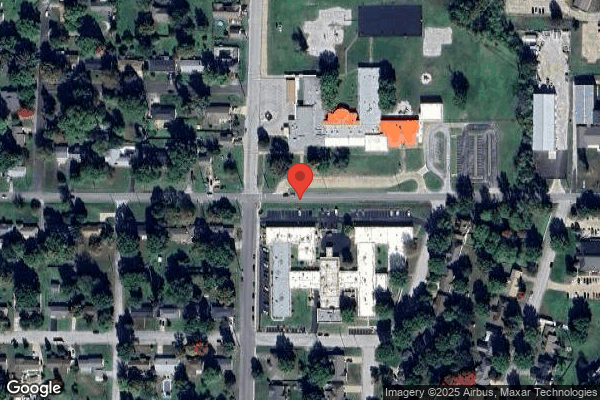
1220 EAST FAIRVIEW, CARTHAGE, MO 64836 (417) 358-9084
Non profit - Corporation 95 Beds Independent Data: November 2025
Trust Grade
73/100
#120 of 479 in MO
Last Inspection: May 2025

Inspected within the last 6 months. Data reflects current conditions.

Overview

St. Luke's Nursing and Rehabilitation in Carthage, Missouri, has received a Trust Grade of B, indicating it is a good choice compared to other facilities. It ranks #120 out of 479 in Missouri, placing it in the top half of state facilities, and #3 out of 7 in county rankings, meaning only two local options are better. The facility is on an improving trend, as it reduced its number of issues from 8 in 2023 to 6 in 2025. Staffing is a strength, with a 4 out of 5-star rating and a turnover rate of 35%, which is significantly lower than the Missouri average of 57%. However, there are concerns, including recent findings where meals were served at the wrong temperatures, potentially impacting food safety, and issues with timely mail delivery, as residents only received mail on weekdays.

Trust Score
B
73/100
In Missouri
#120/479
Top 25%
Safety Record
Low Risk
No red flags
Inspections
Getting Better
8 → 6 violations
Staff Stability
○ Average
35% turnover. Near Missouri's 48% average. Typical for the industry.
Penalties
○ Average
$17,053 in fines. Higher than 60% of Missouri facilities. Some compliance issues.
Skilled Nurses
⚠ Watch
Each resident gets only 28 minutes of Registered Nurse (RN) attention daily — below average for Missouri. Fewer RN minutes means fewer trained eyes watching for problems.
Violations
⚠ Watch
19 deficiencies on record. Higher than average. Multiple issues found across inspections.
★★★★☆
4.0
Overall Rating
★★★★☆
4.0
Staff Levels
★★☆☆☆
2.0
Care Quality
★★★★☆
4.0
Inspection Score
Stable
2023: 8 issues
2025: 6 issues

The Good

  • 4-Star Staffing Rating · Above-average nurse staffing levels
  • Full Sprinkler Coverage · Fire safety systems throughout facility
  • No fines on record
  • Staff turnover below average (35%)

    13 points below Missouri average of 48%

Facility shows strength in staffing levels, fire safety.

The Bad

Staff Turnover: 35%

11pts below Missouri avg (46%)

Typical for the industry

Federal Fines: $17,053

Below median ($33,413)

Minor penalties assessed

The Ugly 19 deficiencies on record

May 2025 6 deficiencies
CONCERN (D)

Potential for Harm - no one hurt, but risky conditions existed

Report Alleged Abuse (Tag F0609)

Could have caused harm · This affected 1 resident

**NOTE- TERMS IN BRACKETS HAVE BEEN EDITED TO PROTECT CONFIDENTIALITY** Based on interview and record review, the facility failed to ensure all allegations of possible abuse were reported to the state...

Read full inspector narrative →
**NOTE- TERMS IN BRACKETS HAVE BEEN EDITED TO PROTECT CONFIDENTIALITY** Based on interview and record review, the facility failed to ensure all allegations of possible abuse were reported to the state licensing agency (Department of Health and Senior Services - DHSS) when staff failed to report a resident to resident allegation of physical abuse between two residents (Resident #26 and #32). The facility had a census of 64. Review of the facility's policy titled Abuse, Neglect, Misappropriation, and Injury of Unknown Origin Policy, dated June 2023, showed the following: -Facility policy is to prohibit all forms of abuse, neglect, and exploitation of any resident; -Any suspicion or allegation of abuse, neglect, or misappropriation of patient property or funds will be reported immediately and investigated thoroughly; -Staff will notify the Administrator and/or Director of Nursing (DON) immediately, within 15 minutes of the alleged incident; -If the nature of the incident is unclear or is suspicious of abuse, neglect, misappropriation, or injury of unknown origin, DHSS will be notified within two hours of the alleged incident; -Family and physician will be notified within two hours. 1. Review of Resident #26's face sheet (a document that gives a resident's information at a quick glance) showed the following information: -admission date of 03/04/25; -Diagnoses included Alzheimer's disease (progressive disease that destroys memory and other important mental functions). Review of the resident's admission Minimum Data Set (MDS - a federally mandated assessment instrument completed by facility staff), dated 03/11/25, showed the resident was cognitively intact. Review of the resident's progress note dated 04/22/25, at 6:27 P.M. showed the resident came out of his/her room and reported Resident #32 was in his/her room going through the closet. Resident #26 reported that he/she tried to redirect resident out of the room and was hit in the left shoulder by Resident #32. Staff immediately intervened and redirected Resident #32 out of the room. Resident #26 reported no pain or discomfort and had no visible injuries. Staff notified family, on call nurse, and physician. (Staff did not document notification of DHSS.) 2. Review of Resident #32's face sheet showed the following: -admission date of 03/29/25; -Diagnoses included dementia (a progressive decline in mental ability affecting daily life and impacting memory, thinking, language, and behavior), depression, hallucinations, psychotic and mood disturbance (condition where a person loses touch with reality, characterized by delusions and hallucinations, and has significant and persistent shifts in mood), and anxiety disorder. Review of the resident's admission MDS, dated [DATE], showed the resident had severe cognitive impairment. Review of the resident's progress note dated 04/22/25, at 6:19 P.M., showed resident was found in Resident # 26's room rummaging through the closet. Resident # 26 tried to redirect Resident # 32 from his/her belongings in the closet and Resident #32 became agitated and hit him/her in the left shoulder. No injuries or report of pain from Resident # 26. Resident # 32 was promptly redirected from room without signs of agitation or combativeness. Resident # 32 was placed on one-to-one supervision. Staff notified the family, on call nurse, and physician. (Staff did not document notification of the DHSS.) 3. Review of DHSS records showed the facility did not report the abuse allegation DHSS. 4. During an interview on 05/09/25, at 11:20 A.M., Licensed Practical Nurse (LPN) B said the following: -He/she was on duty at the time of the incident. Resident # 26 reported Resident # 32 hit him/her in his/her room. Resident # 26 had changed the report multiple times from being hit, to then being pushed, to no contact with Resident # 32. The incident was unwitnessed; -The residents were separated immediately following the incident and assessed for injuries and no injuries noted on either resident after assessment; -He/she notified the residents' families, the physician, on call supervisor, and the Administrator; -Abuse should be reported to upper management immediately and to the state within two hours; -Resident to resident contact is abuse and should be reported to the state. During an interview on 05/08/25, at 3:20 P.M., LPN A said any abuse should be reported as soon as possible to the Director of Nursing (DON) and Administrator and within two hours to the state. A resident to resident altercation should be reported to the state and investigated. During an interview on 05/09/25, at 10:30 A.M., Certified Nurse Aide (CNA) E said he/she would report abuse to the nurse immediately. The state should be notified within two hours of any abuse reports. During an interview on 05/09/25, at 12:20 P.M., LPN C said he/she would separate the residents involved in an altercation and notify the DON immediately. The state should be notified within two hours of any abuse. During an interview on 05/09/25, at 12:31 P.M., CNA D said he/she would report to the charge nurse as soon as possible any allegations of abuse. The state should be notified of abuse within two hours. During an interview on 05/09/25, at 9:10 A.M., the DON said an investigation was conducted due to the resident-to-resident altercation between Residents # 26 and #32. The state was not notified when this incident occurred. During an interview on 05/09/25, at 1:47 P.M., the Administrator said the following: -The interaction between Resident # 32 and # 26 was more of a light gesture with no agitation involved; -Resident to resident reporting regulation is willful intent; -He/she did not see any willful intent in the resident-to-resident incident; -Abuse and possible allegations should be investigated and reported; -He/she did not report the incident, but did investigate; -Allegations of abuse should be reported to state within two hours.
CONCERN (D)

Potential for Harm - no one hurt, but risky conditions existed

Accident Prevention (Tag F0689)

Could have caused harm · This affected 1 resident

Based on observation, record review, and interview the facility failed to provide an environment free from accident hazards when staff failed to use a gait belt (a safety device used to provide suppor...

Read full inspector narrative →
Based on observation, record review, and interview the facility failed to provide an environment free from accident hazards when staff failed to use a gait belt (a safety device used to provide support when transferring a person from one position to another) when transferring and assisting one resident (Resident #40), with a history of falls, to toilet. The facility census was 64. The Administrator was notified on the morning of 11/15/24 of the Past Non-Compliance which occurred on 11/15/24. Staff completed an investigation into the cause of the fall and complete counseling with the involved staff member on 11/18/24. Inservices with all nursing staff were also conducted on 11/18/24. The noncompliance was corrected on 12/17/24. Review of the facility's policy titled Incidents and Accident, dated 03/06/07, showed the following: -Purpose was to prevent falls and to provide the resident with a sense of security; -Equipment and supplies necessary when assisting residents to the bathroom included a gait belt; -Assist the resident to a standing position, move slowly, and allow the resident time to maintain his/her balance. Apply the gait belt securely at the resident's waist level; -Walk on the resident's weak side and provide support as needed. Walk next to the resident holding onto the gait belt with one hand and the residents arm with the other, -Assist the resident to the bathroom ; -Assist the resident as necessary in positioning his/her clothes (unbuttoning or unzipping trousers); -Assist the resident to sit down on the commode and instruct the resident to use the safety bars as necessary. 1. Review of Resident #40's face sheet (a one-page summary of important information about a resident) showed the following: -admission date of 04/23/23; -Diagnoses included pain, osteoarthritis (a type of arthritis caused by inflammation, breakdown, and eventual loss of cartilage in the joints), pain in right knee, artificial hip joint, artificial knee, and repeated falls. Review of the resident's quarterly Minimum Data Set (MDS - a federally mandated assessment instrument completed by facility staff), dated 08/21/24, showed the following: -No impairment on cognitive skills; -Required moderate to extensive assistance of staff for bed mobility, transfers, toileting, and bathing; -Only able to stabilize with staff assistance when moving on and off toilet and transferring from bed to chair or wheelchair; -Used a manual wheelchair for mobility. Review of the resident's Care Plan, dated 08/21/23, showed the following: -The resident was a high risk for falls; -The resident required substantial/maximal assist of one staff for toileting. Review of the resident's progress notes showed the following: -In an incident note, dated 11/15/25, staff noted Certified Nurse Aide (CNA) M was assisting resident in the bathroom. The resident was standing with CNA M and his/her legs buckled. As the resident was falling, CNA M assisted the resident and held his/her head and shoulder area to prevent him/her from hitting his/her head. When the resident fell his/her right knee and leg twisted and bent backwards. Staff assisted the resident up using a lift and assisted to bed. Resident complained of bad pain to right knee and lower back pain. Staff notified the physician and received order to send resident to the emergency room for an evaluation. Staff notified the family by phone. -On 11/15/24, at 10:50 A.M., staff noted the resident's family was at bedside and the ambulance arrived to the facility and transported resident to the hospital. -On 11/20/24, at 3:34 P.M., staff noted the resident readmitted to the facility from the hospital via facility transport van. Staff assisted resident from wheelchair to bed with two staff. Resident non-weight bearing to right leg at this time and incision noted to right upper leg, open to air. Resident was alert, oriented, incision noted to right upper leg, open to air. Review of the facility's in-service, dated 11/18/24, showed the following: -Gait belts were to be used with all transfers, excluding Hoyer lifts (mechanical lift for non-weight bearing residents) and sit to stand transfers (mechanical lift); -Gait belts decrease injuries in both residents and staff. Review of the facility's Performance Correction Notice, dated 11/18/24, for CNA M showed CNA M transferred a resident without a gait belt. During an interview on 05/06/25, at 11:45 A.M., the resident and family said the resident fell in November 2024. The staff did not use a gait belt and resident fell and his/her broke femur (thigh bone). During an interview on 05/09/25, at 10:15 A.M., the resident said the following -CNA M was trying to pull his/her pants down and the resident felt like he/she was going to fall and the resident told CNA M and the CNA continued pulling at his/her pants; -CNA M did not use a gait belt with assisting in this transfer; -His/her right leg went behind the resident and was wedged in between the toilet and wall. During an interview on 05/09/25, at 2:27 P.M., CNA M said the following: -The resident was alert and oriented and a high risk for falls; -The resident had fallen and wanted staff to assist with transfers especially during toileting for safety and security; -The resident's knees were not very sturdy and would give out on the resident; -On 11/15/24, the resident used his/her walker to ambulate to the bathroom and CNA M was with the resident to assist him/her; -While in the bathroom and CNA M was attempting to pull the residents pants down and the pants were very snug; -The resident was in front of the toilet kind of sideways getting ready to sit down; -When CNA M was pulling at the resident's pants to get them down the resident said to the CNA he/she was going down going to fall and the resident went down; -CNA M said he/she caught the resident and kept the resident from hitting head; -The resident left leg buckled and the right knee/leg went backwards and twisted behind the resident; -CNA M said he/she did not use a gait belt during this transfer; -CNA M said he/she knows he/she was supposed to use a gait belt for any transfer except when using lifts. During an interview on 05/09/25, at 1:52 P.M., CNA L said when staff help with transfers staff always use a gait belt. During an interview on 05/09/25, at 9:27 A.M., Licensed Practical Nurse (LPN) K said the following; -The resident was alert and oriented and was minimal assist and used a walker to ambulate. He/she was high risk for falls; -After a few falls the resident asked the staff to assist him/her with help onto and off of the toilet; -When aides take any resident to the bathroom they should always use a gait belt unless they are using a lift; -In November when this resident fell she did not think CNA M used a gait belt and she would have documented in the notes if the aide used a gait belt; -The resident said his/her knees buckled and CNA M held her shoulders and head to keep the resident from hitting his/her head. During an interview on 05/09/25, at 12:15 P.M., the Director of Rehabilitation (DOR) said the following: -The resident was alert and oriented and a high fall risk; -The resident used a walker for mobilizing; -Therapy recommended the staff assist the resident and be standby with using the toilet and/or when the resident goes from a bed to chair or from standing to sitting; -Standby assist required staff to use a gait belt for transfers; -On 11/15/25, the resident fell in the bathroom and fractured his/her femur. During an interview on 05/09/25, at 1:08 P.M., the Medical Director said the following; -The resident had been a high risk for falls for a long time. -Prior to the fall in November 2024, the resident used a walker to ambulate. -If therapy recommends a gait belt to be used with all transfers, then that should happen. During an interview on 05/09/25, at 3:55 P.M., the Administrator and the DON said the following: -The resident was alert and oriented; -The resident was a one staff assist with a gait belt for walking, transfers and toileting; -The Administrator said to her understanding CNA M was pulling pants down and the resident said his/her knee buckled and he/she fell into a odd position wedged in between the wall and the toilet; -The staff did not use a gait belt during the transfer. Staff should have been using the gait belt; -CNA M was trying to pull the resident's pants down when the residents knee buckled and the resident fell; -A gait belt should be used with transfers and CNA M should have used a gait belt when assisting the resident with toileting.
CONCERN (E)

Potential for Harm - no one hurt, but risky conditions existed

Deficiency F0576 (Tag F0576)

Could have caused harm · This affected multiple residents

Based on interview and record review, the facility failed ensure each resident's right to receive mail correspondence timely was honored when staff failed to provide mail delivered on Saturdays to res...

Read full inspector narrative →
Based on interview and record review, the facility failed ensure each resident's right to receive mail correspondence timely was honored when staff failed to provide mail delivered on Saturdays to residents timely. The facility census was 64. Review of the facility did not provide a policy addressing delivery of mail to residents on the weekend. 1. During the resident council meeting on 05/06/25, at 2:00 P.M., the residents in attendance said mail was only delivered to residents Monday through Friday and was not delivered to the residents on the weekends. The residents said they would like to receive any mail that comes in on Saturdays if possible. The residents said mail was only delivered on Saturdays if the Activity Director was working as the weekend department head. No other staff deliver mail to residents on Saturdays. During an interview on 05/08/25, at 11:30 A.M., Activity Assistant I said he/she works days Monday through Thursday. He/she does not pass the mail to the residents. The Activity Director passes mail during the week. During an interview on 05/08/25, at 11:40 A.M., the Activity Assistant J said he/she works days Monday through Friday work week. He/she did not pass mail. During an interview on 05/08/25, at 11:50 A.M., the Activity Director said the following: -She worked days Monday through Friday and did not work; -She passed the mail Monday through Friday and the mail that comes on Saturday is passed by the Activity Director on Monday mornings' -No staff are responsible to pass mail that arrives on Saturdays. During an interview on 05/09/25, at 3:55 P.M., the Administrator said the mail should be delivered everyday to include Saturday and she believed the mail not delivered was just an oversight. The Activity Director was responsible for the mail being delivered to all residents.
CONCERN (E)

Potential for Harm - no one hurt, but risky conditions existed

Deficiency F0679 (Tag F0679)

Could have caused harm · This affected multiple residents

Based on observation, interview, and record review, the facility failed to provide an ongoing program of activities designed to meet all residents' interests when staff failed to ensure an variety of ...

Read full inspector narrative →
Based on observation, interview, and record review, the facility failed to provide an ongoing program of activities designed to meet all residents' interests when staff failed to ensure an variety of activities were provided by facility staff on the weekends. A sample of 19 residents and the group interview of seven residents were selected in a facility with a census of 64. Review of the facility's current policy related to activities showed it did not address activities provided by staff for the residents on the weekend. 1. During the group interview on 05/06/25, starting at 2:07 P.M., residents said the following: -The only activity during weekends was bingo on Saturdays; -This activity was run by another resident (Resident #7) in the facility; -The Activity Director and activity assistants do not work weekends; -Resident #7 said if he/she overslept or was sick then there was no Bingo or activity for that Saturday; -The residents said the only thing going on Sundays was church; -The residents said they get bored on weekends and would like more scheduled activities for Saturdays and Sundays. Review of the facility's April 2025 and May 2025 Activity Calendar for May 2025 showed the following: -Monday through Friday there were two to three activities scheduled on the calendar; -On Saturdays, Bingo with Resident #7 was scheduled; -On Sundays, the majority activities scheduled on the calendar were church. During an interview on 05/07/25, at 9:34 A.M., Resident #2 and Resident #5 said the facility has Bingo on weekends when resident Resident #7 can do bingo; -There are no staff at the facility on weekends to do any activities for residents and it gets very boring; -There are no other activities on the weekends besides church. During an interview on 05/08/25, at 11:30 A.M., Activity Assistant I said the following: -He/she worked days Monday through Thursday; -He/she also takes residents to doctor appointments; -Occasionally he/she will come in on the weekend. During an interview on 05/08/25, at 11:40 A.M., Activity Assistant J said the following: -He/she worked during the week, Monday through Friday work week; -He/she did not work weekends. During an interview on 05/08/25, at 11:50 A.M., the Activity Director (AD) said the following: -He/she worked days Monday through Friday; -She made the activity calendars for the attached assist living facility, the skilled facility, and the special care unit; -Activity staff provide Monday through Friday; -She did not work weekends; -She leaves an activity cart in the main lobby area with painting supplies, rock painting, adult coloring sheets, cards, and puzzles; -A resident helps with Bingo on Saturdays. If the resident cannot do the Bingo, then a family will do Bingo; -There are no other scheduled activity on Saturdays except for Bingo; -There are no scheduled activity on Sundays except for Church; -She was not aware that residents were getting bored and would like activities on the weekends; -No staff were responsible for activities on weekends. During an interview on 05/09/25, at 3:55 P.M., the Administrator said the following: -Activities should be offered on Saturdays and Sundays; -There should be something else besides church on Sundays; -The activities should be provided by staff and volunteers and be on the activity calendar; -Staff should be responsible for activities provided for the residents and residents can assist.
CONCERN (F)

Potential for Harm - no one hurt, but risky conditions existed

Deficiency F0804 (Tag F0804)

Could have caused harm · This affected most or all residents

Based on observation, interview, and record review, facility staff failed to ensure meals were served at a palatable temperature when staff failed to verify temperature of food to ensure proper holdin...

Read full inspector narrative →
Based on observation, interview, and record review, facility staff failed to ensure meals were served at a palatable temperature when staff failed to verify temperature of food to ensure proper holding temperature prior to starting meal service resulting in cold food not held at 41 degrees Fahrenheit (F) or lower. The facility had a census of 64. Review of the United States Department of Agriculture (USDA) website, food safety basics section titled, Danger Zone (40 degrees F to 140 degrees F), revised 06/28/17, showed the following information: -Cold food is to be kept at 40 degrees Fahrenheit or lower and placed in containers on ice; -Bacteria grows most rapidly in temperature ranges between 40 degrees F and 140 degrees F. Review of a facility policy titled Food Handling, dated 01/20/15, showed the following information: -Hot food is to be held at a minimum of 135 degrees F or higher; -Cold food is to be held at a minimum of 41 degrees F or lower; -Dietary staff were responsible for maintaining food temperature and documenting on temperature logs. 1. Review of the facility menu, for 05/06/25 lunch, showed the following to be served: -Bacon Ranch Pasta Salad; -Marinated Vegetable Salad; -Breadstick; -Lemon cheesecake bar. Review of the facility's recipe book showed the bacon ranch pasta salad and marinated vegetable salad were to be maintained at 41 degrees F or lower. Review of facility's Weekly Food Temperature Logs showed the following: -Lunch meal service had temperature categories for entree, mechanical soft, gravys, vegetables, starches, dessert, puree dessert, puree vegetables, puree meat, and milk; -All temperature categories for the lunch meal service on 05/06/25 were blank. Observations on 05/06/25, starting at 11:11 A.M., of the lunch meal service showed the following: -Multiple residents were observed seated in the dining room with plates served consisting of the main menu items of bacon ranch pasta salad, marinated vegetable salad, breadstick, and a lemon cheesecake bar; -Cook G was standing at the serving station preparing plates; -At 11:15 A.M., [NAME] G obtained food temperatures with a food thermometer of the bacon ranch pasta salad and marinated vegetable salad per surveyor request; -The temperature of the bacon ranch pasta salad was 67 degrees F; -The temperature of the marinated vegetable salad was 65 degrees F. During an interview on 05/06/25, at 11:28 A.M., [NAME] G said he/she did not verify food temperatures for the lunch meal service prior to starting serve-out. Meal temperatures should be verified prior to starting serve-out. Cold foods should be 40 degrees F or lower. If a cold food temperature is higher than 40 degrees F it should be placed in smaller containers and moved to the freezer to cool to an appropriate temperature prior to serving. The cook is responsible for verifying food temperatures prior to starting serve-out. During an interview on 05/06/25, at 11:38 A.M., [NAME] H said foods should have a final temperature check before start of serve-out to ensure they are at the appropriate serving temperature. Cold foods have to be at 40 degrees F or lower. If cold food is above 40 degrees F it is to go back in the freezer until it is at an appropriate temperature. Serve-out should not be completed until temperatures are verified. The cook is responsible for verifying temperatures. During an interview on 05/06/25, at 11:42 A.M., the Dietary Manager said a final temperature check should be completed prior to starting serve-out. Cold foods should be 41 degrees F or lower. If the temperature is above 41 degrees F staff are to take immediate action by placing the cold food items in the fridge or freezer until at the proper temperature. The cooks are responsible for ensuring food is at the appropriate serving temperature. During an interview on 05/09/25, at 9:22 A.M., the Registered Dietician said food should have temperature verified prior to starting serve-out to ensure food is at the proper serving temperature. Cold foods should be held at 41 degrees F or lower. If a temperature is above 41 degrees F for cold food staff should pull the food from the serving area immediately and utilize an ice bath or place in the freezer until under 41 degrees. During an interview on 05/09/25, 3:28 PM., the Administrator said cold foods should be held at 40 to 41 degrees F. Food holding temperatures should be verified prior to starting serve-out. She, the Dietary Manager, and dietary staff were responsible for ensuring appropriate holding temperatures.
CONCERN (F)

Potential for Harm - no one hurt, but risky conditions existed

Deficiency F0868 (Tag F0868)

Could have caused harm · This affected most or all residents

Based on record review and interviews the facility failed to maintain quarterly Quality Assessment Committee (QAA) meetings with the required members when the Medical Director did not attend the QAA m...

Read full inspector narrative →
Based on record review and interviews the facility failed to maintain quarterly Quality Assessment Committee (QAA) meetings with the required members when the Medical Director did not attend the QAA meetings. The facility census was 64. Review of the facility's Quality Assurance Committee policy, dated 06/11/07, showed the following: -Purpose to set forth guidelines for the formation and maintenance of a Quality Assurance Committee. -The Quality Assurance Committee will audit criteria in each department that are set by the committee which review work processes and procedures. These audits will be performed monthly by the department head; -The Quality Assurance Committee shall consist of the following membership: the administrator, the director of nursing (DON), the social service director (SSD), the activities director (AD), the dietary supervisor (DS), the laundry/housekeeping supervisor (LKS), the maintenance supervisor (MS) and the medical director (MD); -The Quality Assurance Committee will meet routinely the second Tuesday of each month; -This meeting is attended by all committee members excluding the MD; -The quarterly quality assurance meeting will be routinely held the last Tuesday in January, April, July and October; -This meeting will review all quality assurance for each department for the past quarter and the MD will attend this meeting of the committee. 1. Review of the facility's Quality Assurance Committee Participants Minutes Log showed the following QAA meetings held in 2024 and 2025; -On 04/30/24, the Administrator, MDS Coordinator, Assistant Director of Nursing (ADON), AD, SSD and [NAME] Specialist attended the QAA meeting; -On 08/05/24, the Administrator, DON, Certified Dietary Manger (CDM), MS, and ADON attended the QAA meeting; -On 09/24/24, the Administrator, DON, MDS Coordinator, SSD, MS, and ADON attended the QAA meeting; -On 10/22/24, the Administrator, DON, DON for the attached Assisted Living Facility (ALF), SSD, CDM, MS, and ADON attended the QAA meeting. -On 11/26/24. the Administrator, the DON, the ALF DON, MDS Assistant, MDS Coordinator, SSD, and CDM attended the QAA meeting; -On 01/21/25, the DON, ALF DON, SSD, CDM, MDS Coordinator, MS, and the ADON attended the QAA meeting; -On 02/25/25, the Administrator, DON, ALF DON, ADON, SSD, CDM, a licensed practical nurse (LPN), and a registered nurse (RN) attended the QAA meeting; -On 03/25/25, the Administrator, DON, ALF DON, ADON, a LPN, the SSD, and the MDS Coordinator attended the QAA meeting; -On 04/24/25, the Administrator, a LPN, MS, CDM, MDS Coordinator, a RN, and ADON attended the QAA meeting. (Staff did not document attendance of the MD to the QAA meetings in person or virtually.) During an interview on 05/05/25, at 10:22 A.M., the administrator said the following: -The QAA Committee meets monthly; -The QAA members consist of the Administrator, DON, ADON, and all department heads; -The MD did not attend the QAA meetings in person; -The MD gets all the minutes. During an interview on 05/09/25, at 8:22 A.M., the Administrator said the facility has the QAA meetings monthly. The Administrator and all department heads attend. The MD did not attend any of the meetings physically. She sent the MD emails with the minutes and he signed any new policies. During an interview on 05/09/25, at 1:05 P.M., the MD said he did not attend QAA meetings. The Administrator sends him an email about the minutes.
Jul 2023 8 deficiencies
CONCERN (D)

Potential for Harm - no one hurt, but risky conditions existed

Transfer Notice (Tag F0623)

Could have caused harm · This affected 1 resident

Based on interview and record review, the facility failed to give written transfer notice to the resident and/or resident's representative for two residents (Residents #45 and #69) who were transferre...

Read full inspector narrative →
Based on interview and record review, the facility failed to give written transfer notice to the resident and/or resident's representative for two residents (Residents #45 and #69) who were transferred out to the hospital. A sample of two residents were reviewed in a facility with a census of 74. Review of a facility policy entitled Notice of Hospital Transfer/Room Hold Policy, dated 04/08/19, showed when staff send a resident to the hospital, the discharging nurse will give the resident a copy of the Notice of Hospital Transfer and Bed Hold Authorization which should contain/involve the following: -The resident's name is to be written on the first line; -The current room rates are to be entered on the appropriate lines; -The reason for transfer is to be written on the lines at the bottom of the form in language the resident can understand; -Two copies are to be made of the form. One is to be placed in the resident's chart under the miscellaneous tab, and the other is to be placed in the Director of Nursing (DON) bin at the nurses' station; -The original is to be sent to the hospital with the resident; -A copy will be faxed by the Director of Nursing (DON) or nurse manager to the Ombudsman's office and a copy will be mailed to the resident's responsible party/representative; -The copy faxed to the Ombudsman's office will be maintained along with the fax verification sheet in the Ombudsman's notebook in the Nursing Office; -A call will be made to the resident's responsible party/representative within 24 hours of the discharge to the hospital by the charge nurse on weekends and by Transitional Care or Nursing Management during the week (discharges Sunday through Thursday) to inform them of the room hold policy and rates; Review of a facility document entitled Notice of Hospital Transfer and Bed Hold Authorization, undated, showed the following: -Staff should fill in the resident's name, transfer information to include location/hospital name, date, and reason for transfer. 1. Review of Resident #45's face sheet (gives basic profile information) showed an admission date of 03/08/23. Review of the resident's nurses' progress notes showed the following entries: -On 07/10/23, at 2:28 A.M., staff documented around 2:00 A.M. the nurse was notified of the resident vomiting. Upon assessment, noted coffee ground emesis in resident's bedside trash can. Resident had hyperactive bowel sounds along with distended abdomen. Staff called 911 and sent resident out to hospital for further evaluation. Emergency Medical Techs arrived at 2:26 A.M. Staff sent resident with proper paperwork and notified all responsible parties; -On 07/10/23, at 2:34 A.M., staff attempted to call/notify POA (power of attorney) of residents' condition and hospital transfer. Staff left voicemail to return call to facility. Review of the resident's medical record showed staff did not have documentation of written notice of transfer or discharge sent with the resident or to the resident's representative at discharge. During an interview on 07/14/23, at 3:14 P.M., the resident said he/she didn't think he/she had signed anything regarding the transfer to the hospital. During an interview on 07/14/23, at 11:14 A.M., the Assistant Director of Nursing (ADON) said he/she couldn't locate a written transfer notice agreement for the resident. 2. Review of Resident #69's face showed an admission date of 06/07/23. Review of the resident's nurses' progress notes showed the following information: -On 07/10/23, at 4:57 P.M., staff documented at approximately 4:30 P.M., a certified nurse assistant (CNA) reported that the resident had bowel movement coming out of the foley catheter (a flexible tube inserted through a narrow opening into a body cavity, particularly the bladder, for removing fluid), urethra (the duct by which urine is conveyed out of the body from the bladder) area. Staff notified the wound nurse and the DON, called the physician, and received an order to send to hospital for evaluation and treatment. Staff obtained vital signs and called EMS (emergency medical services) called to send resident to the emergency room (ER). Staff noted family aware; -On 07/10/23, at 5:28 P.M., EMS arrived and resident was transported out of facility. Staff gave report to hospital ER nurse. Review of the resident's medical record showed staff did not have documentation of written notice of transfer or discharge given to the resident or the resident's representative at discharge. During an interview on 07/14/23, at 11:14 A.M., the ADON said he/she couldn't locate a written transfer notice/bed hold agreement for the resident. 3. During an interview on 07/14/23, at 4:19 P.M., Licensed Practical Nurse (LPN) B said when they decide a resident needs to be sent out to the hospital, the nurse calls the physician for orders. The nurse sends nurse notes, a discharge summary, an ambulance transfer sheet, the resident's face sheet, current orders, and current pertinent lab results with the resident. The nurse calls report to the hospital. LPN B had not seen a Bed Hold/Written Transfer Notice at this facility. The nurse writes the transfer information on the resident's Report Sheet (separate page per resident) to notify staff working the next shifts. During an interview on 07/14/23, at 4:24 P.M., Registered Nurse (RN) C said the nurse calls the physician to report a change in condition and obtains an order to send the resident to the hospital. The nurse calls EMS for transport and sends with the resident/EMS copies of the resident's face sheet, medication list, and any other pertinent information. The nurse then calls report to the hospital. The nurse should have the resident sign a Bed Hold sheet if they are able, and put a copy in the chart. RN C did not think anyone mailed or gave a copy to the Responsible Party, but the nurse should call the family to notify them of the transfer. During an interview on 07/14/23, at 4:50 P.M., with the Administrator, the DON, the ADON, and the Admissions Nurse, the Administrator said if the responsible party is not present at the time, the nurse should call them for authorization to transfer/hold bed. The charge nurse should issue a Written Transfer Notice/Bed Hold to the resident, if possible. If the Responsible Party cannot be reached by phone, they should mail the notice to them.
CONCERN (D)

Potential for Harm - no one hurt, but risky conditions existed

Deficiency F0625 (Tag F0625)

Could have caused harm · This affected 1 resident

Based on interview and record review, the facility failed to ensure all residents or responsible parties received a written notice of the bed-hold policy upon transfer, when staff failed to provide tw...

Read full inspector narrative →
Based on interview and record review, the facility failed to ensure all residents or responsible parties received a written notice of the bed-hold policy upon transfer, when staff failed to provide two residents (Residents #45 and #69) of two sampled residents written notices of the facility's bed-hold policy when transferred to the hospital. The facility census was 74. Review of a facility policy entitled Notice of Hospital Transfer/Room Hold Policy, dated 04/08/19, showed the following: -All residents/responsible parties/representatives will be made aware of the facility room hold policy at the time of admission; -When a resident is sent to the hospital, the discharging nurse will give the resident a copy of the Notice of Hospital Transfer and Bed Hold Authorization that will include the resident's name is to be written on the first line and current room rates; -A call will be made to the resident's responsible party/representative within 24 hours of the discharge to the hospital by the charge nurse on weekends and by Transitional Care or Nursing Management during the week (discharges Sunday through Thursday) to inform them of the room hold policy and rates; -It is the responsibility of the resident or resident's representative to notify the facility business office within 72 hours of Resident's admission to the hospital if the room is to be held. All charges will be retroactive to the date of discharge to the hospital. 1. Review of Resident #45's face sheet (gives basic profile information) showed an admission date of 03/08/23. Review of the resident's nurses' progress notes showed the following entries: -On 07/10/23, at 2:28 A.M., staff documented around 2:00 A.M., the nurse was notified of the resident vomiting. Upon assessment, noted coffee ground emesis in resident's bedside trash can. Resident had hyperactive bowel sounds along with distended abdomen. Staff called 911 and sent resident out to hospital for further evaluation. Emergency Medical Technicians arrived at 2:26 A.M. Staff sent resident with proper paperwork and notified all responsible parties; -On 07/10/23, at 2:34 A.M., staff attempted to call/notify POA (Power of Attorney) of residents' condition and hospital transfer. Staff left voicemail to return call to facility. Review of the resident's medical record showed staff did not have documentation of a copy of the bed-hold policy provided to the resident or resident's representative at discharge. During an interview on 07/14/23, at 3:14 P.M., the resident said he/she didn't think he/she had signed anything regarding a bed-hold form. During an interview on 07/14/23, at 11:14 A.M., the Assistant Director of Nursing (ADON) said he/she couldn't locate a bed hold agreement for the resident. 2. Review of Resident #69's face showed an admission date of 06/07/23. Review of the resident's nurses' progress notes showed the following information: -On 07/10/23, at 4:57 P.M., staff documented at approximately 4:30 P.M., a certified nurse assistant (CNA) reported that the resident had bowel movement coming out of the foley catheter (tubing inserted into the bladder to allow drainage to outside of the body. Staff notified the wound nurse and the Director of Nursing (DON) and called the physician. Staff received order to send to hospital for evaluation and treatment. Staff obtained vital signs and called emergency medical services (EMS) called to take resident to the emergency room (ER). Staff noted family was aware; -On 07/10/23, at 5:28 P.M., EMS arrived and resident was transported out of facility. Staff gave report to hospital ER nurse. Review of the resident's medical record showed staff did not have documentation of a copy of the bed-hold policy provided to the resident or resident's representative at discharge. During an interview on 07/14/23, at 11:14 A.M., the ADON said he/she couldn't locate a bed hold agreement for the resident. 3. During an interview on 07/14/23, at 4:19 P.M., Licensed Practical Nurse (LPN) B said when they decide a resident needs to be sent out to the hospital, the nurse calls the physician for orders. The nurse sends nurse notes, a discharge summary, an ambulance transfer sheet, the resident's face sheet, current orders, and current pertinent lab results with the resident. The nurse calls report to the hospital. LPN B had not seen a Bed Hold/Written Transfer Notice at this facility. During an interview on 07/14/23, at 4:24 P.M., Registered Nurse (RN) C said the nurse calls the physician to report a change in condition and obtains an order to send the resident to the hospital. The nurse calls EMS for transport and sends with the resident/EMS copies of the resident's face sheet, medication list, and any other pertinent information. The nurse then calls report to the hospital. The nurse should have the resident sign a Bed Hold sheet if they are able, and put a copy in the chart. RN C did not think anyone mailed or gave a copy to the Responsible Party, but the nurse should call the family to notify them of the transfer. During an interview with the Administrator, the DON, the ADON, and the Admissions Nurse on 07/14/23, at 4:50 P.M., the Administrator said if the responsible party is not present at the time, the nurse should call them for authorization to transfer/hold bed. The charge nurse should issue a Written Transfer Notice/Bed Hold to the resident, if possible. If the responsible party cannot be reached by phone, they should mail the notice to them.
CONCERN (D)

Potential for Harm - no one hurt, but risky conditions existed

Assessment Accuracy (Tag F0641)

Could have caused harm · This affected 1 resident

Based on record review and interview, the facility failed to ensure Minimum Data Sets (MDS - a federally mandated comprehensive assessment instrument completed by facility staff) were accurate when st...

Read full inspector narrative →
Based on record review and interview, the facility failed to ensure Minimum Data Sets (MDS - a federally mandated comprehensive assessment instrument completed by facility staff) were accurate when staff failed to address one resident's (Resident #11) dialysis on the resident's MDS. The facility census was 74. Review of the facility policy titled MDS (Minimum Data Set - a federally mandated comprehensive assessment completed by facility), dated 4/9/19, showed the following information: -The purpose is to ensure MDSs are completed on all current residents in the proper time-frame and to develop a plan of care that reflects the resident's choices and goals for the care; -The MDS Coordinator will interview the charge nurses and family, the resident and/or the resident's representative will together develop a comprehensive person-centered care plan for each resident which will describe the services that re to be furnished to attain or maintain the resident's highest possible physical, mental and psychosocial well-being while allowing the resident to drive their care on a daily basis; -MDS assessments are initiated and completed as per state and federal guidelines; -The assessment is opened on the computer on Monday of the week of Assessment Reference Date falls in, so that each department can completed their section of the assessment. 1. Review of the Resident #11's face sheet showed the following information: -admission date of 04/30/23; -Diagnoses included end-stage renal disease (when kidneys reach an advanced state of loss of function and can last several months or years). During an observation on 07/13/23, at 11:55 A.M., just before lunch, the resident was seen returning from dialysis. Review of the resident's physician order sheet (POS), current as of 07/16/23, showed dialysis every day shift on Monday, Wednesday, and Friday. Review of the resident's care plan, last updated 05/08/23, showed the following: -The resident needs dialysis (SPECIFY type hemo/peritoneal) related to renal failure; -The resident will have immediate intervention should any signs or symptoms of complications from dialysis occur through the review date; -The resident will have no s/sx of complications from dialysis through the review date. During an interview on 07/13/23, at 12:12 P.M., the Assistant Director of Nursing said the following: -After looking, he/she could not find anything in the MDS regarding dialysis; -He/she is unsure why it is not checked to show the resident receives dialysis; -He/she said the resident receives dialysis three days a week. During an interview on 07/13/23, at 12:25 P.M., the Director of Nursing said the information about dialysis should have been entered by now, as it has been over 60 days. During an interview on 07/14/23, at 1:20 P.M., the MDS Coordinator said the following: -He/she will look at diagnoses and medications to make sure they match all orders and then will also look at assessments that have been done; -An outside service, such as dialysis, should be recorded in MDS; -He/she was told by the DON that the dialysis had not been entered. During an interview on 07/14/23, at 5:00 P.M., the Administrator said the facility had already identified this concern.
CONCERN (D)

Potential for Harm - no one hurt, but risky conditions existed

Unnecessary Medications (Tag F0759)

Could have caused harm · This affected 1 resident

Based on observation, record review, and interview, the facility failed to ensure a medication error rate of less than 5%, when staff made two errors out of 25 opportunities resulting in an 8% error r...

Read full inspector narrative →
Based on observation, record review, and interview, the facility failed to ensure a medication error rate of less than 5%, when staff made two errors out of 25 opportunities resulting in an 8% error rate. Staff failed to follow a medication order and manufacturer guidelines to not crush a medication for one resident (Resident # 37), failed to prime an insulin pen and failed to ensure receipt of a meal or snack within 30 minutes of insulin administration for one resident (Resident #16). The facility had a census of 74. Review of the facility provided policy, Medication Pass, dated 04/10/19, showed the following: -All medications are to be passed within one hour before and one hour after the medication is due; -The five rights are to be observed during medication pass: right resident, right medication, right time, right dose, and right route; -All long acting or time release medications are not to be crushed. If a resident is unable to take a medication whole, notify the charge nurse so that he/she may notify the physician; -Check the medication label against the Medication Administration Record (MAR) as medications are dispensed 1. Review of the Myrbetriq (medication to treat overactive bladder) manufacturer's insert, dated April 2021, showed the following: -Take Myrbetriq tablets exactly as the doctor orders; -Swallow the tablet whole with water; -Do not chew, divide, or crush. Review of Resident #37's face sheet showed the following: -admission date of 03/18/21; -Diagnoses included overactive bladder (causes a frequent and sudden urge to urinate that may be difficult to control). Review of the resident's Physician Order Sheet (POS), active as of 07/14/23, showed the following: -An order, dated 12/24/22, Myrbetriq Tablet Extended Release 24 hour, 25 milligram (mg), give one tablet by mouth one time a day for overactive bladder, do not crush. Observation of medication administration on 07/13/23, at 9:24 A.M., showed Certified Medication Tech (CMT) D complete the following: -CMT D entered the resident room and took the resident's blood pressure and pulse; -He/she left the room and prepared the medications for the resident; -CMT D reviewed the MAR and prepared four medications, including Myrbetriq 25 mg; -The CMT put the medications into a bag and crushed the medications; -The CMT put the crushed medications into a medication cup and added pudding with a spoon; -The CMT mixed the pudding and medications; -The CMT entered the resident's room and provided the cup with crushed medications to the resident; -The resident took all the pudding and medications by spoon and followed with drink of water; -The CMT left the room and charted the medications provided. During an interview on 07/14/23, at 1:10 P.M., CMT D said the resident was able to take pills whole, but he/she prefers to take pills crushed if there are more than 1 to 2 pills at a time. If the order says not to crush pills, then it should be taken whole or contact doctor for an alternative. He/she said staff should follow doctor orders. He/she looked at the order and noted the order to not crush, was unsure why he/she crushed the medication. During an interview on 07/14/23, at 3:10 P.M., with LPN C and the Assistant Director of Nursing (ADON), LPN C said staff should follow the physician orders for medications including instructions to not crush medications. The ADON said staff should follow physician orders regarding how to administer pills. During an interview on 07/14/23, at 5:06 P.M., with the Administrator, Director of Nursing (DON), and ADON, the DON said staff should not crush medications that specifically state on the orders do not crush. Crushing the medication would affect the absorbency. 2. Review of facility provided policy, Insulin Pen Administration, dated 02/25/19, showed the following: -Insulin pens and cartridges within are for single resident use and must never be used for more than one resident; -Administer insulin as ordered by physician; -The insulin pen is to be primed prior to each use to prevent the collection of air in the insulin reservoir and to prime the needle with the insulin before the dose is administered. Review of the Humalog insulin (fast-acting insulin used to control high blood sugar) manufacturer's insert, dated November 2019, showed the following: -Humalog is a man-made fast-acting insulin to control high blood sugar; -Administer the dose of Humalog within fifteen minutes before a meal or immediately after a meal by injection into the subcutaneous tissue (layer of tissue that lies under the skin); -Prime before each injection; -Priming means removing air from the needle and cartridge that may collect during normal use and ensures the pen is working correctly; -If you do not prime before each injection, you may get too much or too little insulin; -Turn the dose selector to select 2 units; -Hold the insulin pen with the needle pointing up. Tap the cartridge gently to collect air bubbles at the top; -Keep the needle pointing upwards, press the dose know in until it stops and 0 is seen in the dose window -Hold the dose knob in and count to 5 slowly; -If you do not see insulin, repeat priming, no more than 4 times; -Turn the dose knob to select the number of units needed to inject. The dose indicator should line up with the dose. Review of Resident #16's face sheet showed the following: -admission date of 10/17/22; -Diagnoses included type 2 diabetes mellitus (chronic condition that affects the way the body processes blood sugar (glucose)) with diabetic neuropathy (type of nerve damage that can occur with diabetes). Review of the resident's Physician Order Sheets (POS), current as of 07/14/23, showed the following: -An order, dated 05/14/23, for Humalog Pen Subcutaneous Solution Pen-Injector 100 unit/milliliter (ml). Inject per sliding scale: -If blood sugar level is 0 milligrams(mg)/deciliter (dl) to 149 mg/dl, administer no insulin; -If blood sugar level is 150 mg/dl to 199 mg/dl, administer 4 units of insulin; -If blood sugar level is 200 mg/dl to 249 mg/dl, administer 6 units of insulin; -If blood sugar level is 250 mg/dl to 299 mg/dl, administer 8 units of insulin; -If blood sugar level is 300 mg/dl to 349 mg/dl, administer 10 units of insulin; -If blood sugar level is 350 mg/dl to 399 mg/dl, administer 12 units of insulin; -An order, dated 05/14/23, for Humalog Pen Subcutaneous Solution Pen-Inject 100 unit/ml, administer 10 units with sliding scale before meals. Observation of medication administration on 07/13/23, at 11:00 A.M., showed CMT E completed the following: -CMT E entered the resident's room and obtained the blood glucose reading; -The CMT left the room and completed hand hygiene; -The resident's blood glucose was 250 mg/dl; -The CMT put on gloves, obtained lispro insulin pen, pen needle, and alcohol wipes from the cart and entered the resident's room; -He/she pulled the cap off the pen and turned the insulin dose knob to 18 units; -He/she did not prime the pen; -The CMT wiped the resident's abdomen with an alcohol wipe, inserted the needle and administered the dose; -The resident had a cup of water on the bedside table. Observation and interview on 07/13/23 showed the following: -At 11:45 A.M., the resident was seated in his/her recliner and had not had any meal or snack provided. There was only a cup of water on the bedside table. The resident said he/she usually gets the meal tray at 12:30 P.M. to 1:00 P.M. The resident denied any symptoms of low blood sugar since receiving the insulin; -At 12:15 P.M., the resident had no lunch tray or food in the room, only a cup of water on bedside tray; -At 12:30 P.M., resident provided with lunch tray to room. During an interview on 07/14/23, at 1:30 P.M., CMT E said physician orders should be followed for medications. When the insulin time comes up on the resident's medication record it can be administered. Insulin pens should be primed with every use. He/she did not know if there was a limitation of time before meals. He/she said after looking it up it should be given 30 minutes before meals. During an interview on 07/14/23, at 1:10 P.M., CMT D said insulin should be administered 30 minutes before meals, and it should not be given 1 hour 30 minutes before meals unless the resident is their own person and makes that request. During an interview on 07/14/23, at 3:00 P.M., Registered Nurse B said staff should be sure that residents have food or are about to get their food before administering insulin. The resident should not have insulin administered 1 ½ hours before food or snack. To prepare the insulin the staff should prime the pen with 2 units every time, then turn dial to ordered dose. During an interview on 07/14/23, at 3:10 P.M., with LPN C and the ADON, LPN C said that staff should check the insulin dose order and prepare the needed supplies after completing a blood glucose reading. Staff should put on the insulin needle, then turn the dose to the ordered amount. He/she would ensure the resident had food available soon and sometimes may get an order to give insulin after ensuring the resident had food. Insulin should not be given 1 ½ hours before meals without providing a snack. He/she was not aware of need to prime the insulin pen. The ADON said said that insulin pens should be primed with each use by turning the dial to 2 units and dispensing to trash can, this ensure accurate dosing and that there is no air in the needle. During an interview on 07/14/23, at 5:06 P.M., with the Administrator, DON, and ADON, the DON said staff should determine the dose of insulin and prepare the insulin pen by priming the pen with 2 units before each use. This ensures there are no air bubbles in the needle or administered dose. Staff should provide insulin within 30 minutes of food, if it will be longer the resident should have a snack. The resident's blood glucose could drop too low if not provided with food. The resident should not be provided insulin 1 ½ hours before any type of food.
CONCERN (D)

Potential for Harm - no one hurt, but risky conditions existed

Deficiency F0760 (Tag F0760)

Could have caused harm · This affected 1 resident

Based on observation, record review, and interview, the facility failed to ensure residents were free of significant medication errors when staff failed to prime insulin pens for one resident (Residen...

Read full inspector narrative →
Based on observation, record review, and interview, the facility failed to ensure residents were free of significant medication errors when staff failed to prime insulin pens for one resident (Resident #16) when administering insulin. The facility census was 74. Review of the facility provided policy, Medication Pass,dated 04/10/19, showed the following: -All medications are to be passed within one hour before and one hour after the medication is due; -The five (5) rights are to be observed during medication pass: right resident, right medication, right time, right dose, and right route. Review of facility provided policy, Insulin Pen Administration, dated 02/25/19, showed the following: -Administer insulin as ordered by physician; -The insulin pen is to be primed prior to each use to prevent the collection of air in the insulin reservoir and to prime the needle with the insulin before the dose is administered. Review of the Humalog (insulin lispro injection - fast-acting insulin used to control high blood sugar) manufacturer's insert, dated November 2019, showed the following: -Humalog is a man-made fast-acting insulin to control high blood sugar; -Administer the dose of Humalog within fifteen minutes before a meal or immediately after a meal by injection into the subcutaneous tissue (layer of tissue that lies under the skin); -Prime before each injection; -Priming means removing air from the needle and cartridge that may collect during normal use and ensures the pen is working correctly; -If you do not prime before each injection, you may get too much or too little insulin; -Turn the dose selector to select 2 units; -Hold the insulin pen with the needle pointing up. Tap the cartridge gently to collect air bubbles at the top; -Keep the needle pointing upwards, press the dose know in until it stops and 0 is seen in the dose window -Hold the dose knob in and count to 5 slowly; -If you do not see insulin, repeat priming, no more than 4 times; -Turn the dose knob to select the number of units needed to inject. The dose indicator should line up with the dose. 1. Review of Resident #16's face sheet showed the following: -admission date of 10/17/22; -Diagnoses included type 2 diabetes mellitus (chronic condition that affects the way the body processes blood sugar (glucose)) with diabetic neuropathy (type of nerve damage that can occur with diabetes). Review of the resident's Physician Order Sheets (POS), current as of 07/14/23, showed the following: -An order, dated 05/14/23, for Humalog Pen Subcutaneous Solution Pen-Injector 100 unit/milliliter (ml). Inject per sliding scale: -If blood sugar level is 0 milligrams(mg)/deciliter (dl) to 149 mg/dl, administer no insulin; -If blood sugar level is 150 mg/dl to 199 mg/dl, administer 4 units of insulin; -If blood sugar level is 200 mg/dl to 249 mg/dl, administer 6 units of insulin; -If blood sugar level is 250 mg/dl to 299 mg/dl, administer 8 units of insulin; -If blood sugar level is 300 mg/dl to 349 mg/dl, administer 10 units of insulin; -If blood sugar level is 350 mg/dl to 399 mg/dl, administer 12 units of insulin; -An order, dated 05/14/23, for Humalog Pen Subcutaneous Solution Pen-Inject 100 unit/ml, administer 10 units with sliding scale before meals. Observation of medication administration by Certified Medication Tech (CMT) E , on 07/13/23, at 11:00 A.M., showed the following: -CMT E entered the resident's room and obtained the blood glucose reading; -The resident's blood glucose was 250 mg/dl; -The CMT put on gloves, obtained lispro insulin pen, pen needle, and alcohol wipes from the cart and entered the resident's room; -He/she pulled the cap off the pen and turned the insulin dose knob to 18 units; -He/she did not prime the pen; -The CMT wiped the resident's abdomen with an alcohol wipe, inserted the needle and administered the dose. During an interview on 07/14/23, at 1:30 P.M., CMT E said insulin pens should be primed with every use. During an interview on 07/14/23, at 3:00 P.M., Registered Nurse B said to prepare the insulin the staff should prime the pen with two units every time, then turn dial to ordered dose. During an interview on 07/14/23, at 3:10 P.M., with Licensed Practical Nurse (LPN) C and the Assistant Director of Nursing (DON), LPN C said staff should check the insulin dose order and prepare the needed supplies after completing a blood glucose reading. Staff should put on the insulin needle, then turn the dose to the ordered amount. He/she was not aware of need to prime the insulin pen. The ADON said insulin pens should be primed with each use by turning the dial to 2 units and dispensing to trash can, this ensures accurate dosing and that there is no air in the needle. During an interview on 07/14/23, at 5:06 P.M., with the Administrator, Director of Nursing (DON), and ADON, the DON said staff should determine the dose of insulin due and prepare the insulin pen by priming the pen with 2 units before each use. This ensures there are no air bubbles in the needle or administered dose.
CONCERN (D)

Potential for Harm - no one hurt, but risky conditions existed

Deficiency F0909 (Tag F0909)

Could have caused harm · This affected 1 resident

Based on observation, interview, and record review, the facility failed to complete a bed rail safety check to include measurements of the bed frame and bed rails for risk of entrapment for two reside...

Read full inspector narrative →
Based on observation, interview, and record review, the facility failed to complete a bed rail safety check to include measurements of the bed frame and bed rails for risk of entrapment for two residents (Residents #41 and #46) from a sample of two residents. The facility census was 74. Review of the facility provided policy, Side Rails and Entrapment Prevention, dated 02/06/20, showed the following information: -Purpose to provide resident with a safe and comfortable bed/sleeping environment through accurate ongoing assessment and a program that aids in preventing entrapment issues with side rails; -Every resident deserves a safe and comfortable bed and sleeping environment; -All beds and mattresses in the facility will be numbered with a number on the back of the headboard and the bottom of the mattress; -Maintenance will maintain a log of the mattress number associated with each bed number; -All beds in the facility will be checked monthly for safety related to all bolts intact, electrical cords without damage, and bed functions as intended as part of a preventative maintenance program; -All bed and mattresses will be measured for entrapment hazard, initially, annually, with any mattress change, and immediately with any entrapment/near entrapment episode; -Measurements will be obtained with the bed flat and with the bed articulated with the head raised; -Measurements will comply with the Food and Drug Administration recommendations. All seven identified zone will be measured; -Beds provided by outside contractors, such as hospice or families, will have all zones measured; -The National Safety Technologies Bed System Measurement Device Test Results Worksheet will be utilized for documentation of measurements taken; -All records in relation to Bed System Measurement will be maintained by the Maintenance Department. 1. Review of Resident #41's face sheet (a brief information sheet about the resident), showed the following: -admission date of 02/21/23; -Diagnoses included chronic congestive heart failure (CHF - long-term condition that happens when the heart cannot pump blood well enough to give the body a normal supply), severe obesity (complex chronic condition in which a person has a body mass index of 40 or higher), anxiety disorder, insomnia (inability to sleep), and chronic peripheral venous insufficiency (condition in which the veins have problems sending blood from the legs back to the heart). Review of the resident's Physician's Order Sheet (POS), active as of 07/14/23, showed an order, dated 02/21/23, for may have positioning bars for bed mobility as indicated. Review of the resident's electronic medication record (EMR) showed a side rail education consent signed by the resident on 02/21/23. Observation on 07/11/23, at 3:14 P.M., showed the resident rested in bed with eyes closed with bilateral half size side rails in the upright position. During interview and observation on 07/13/23, at 12:55 P.M., the resident rested in bed and said that he/she used the side rails to assist the staff with repositioning. Review of the resident's medical record showed staff did not document bed rail safety check to include measurements of the bed frame and bed rails for risk of entrapment 2. Review of Resident #46's face sheet showed the following: -admission date of 06/03/21; -Diagnoses included multiple sclerosis (disease causing nerve damage which disrupts communication between the brain and the body), radiculopathy (pain caused by nerve damage) of the sacral area (the area at the bottom of the spine and lies between the fifth segment of the lumbar spine (L5) and the coccyx (tailbone)), depression, muscle wasting, and anxiety disorder. Review of the resident's electronic medication record (EMR) showed a side rail education consent signed by the resident on 06/03/21. Review of the resident's current POS showed an order, dated 07/12/22, to discontinue side rails, but may use positioning bar for repositioning and mobility. Review of the resident's care plan, dated 02/07/23, showed the resident could utilize a positioning bar on his/her bed to help aid in turning and repositioning. Observation on 07/14/23, at 4:10 P.M. showed the resident rested in bed. U-shaped grab bars were positioned in the upright position on both sides of the bed. The resident said he/she liked to have the grab bars to help him/herself with positioning. When the resident grabbed the left side bar to demonstrate, the bar was very loose. The resident commented on how loose it was. Review of the resident's medical record showed staff did not document bed rail safety check to include measurements of the bed frame and bed rails for risk of entrapment 3. During an interview on 07/14/23, at 3:00 P.M., Registered Nurse (RN) B said the maintenance staff install position bars when staff notify them and depending on the company, such as hospice, the rails are already assembled on the bed when it is delivered. He/she was not aware of any resident with side rails. During an interview on 07/14/23, at 3:30 P.M., the Administrator said they do not have side rails in the facility, they only have some positioning bars. She said staff complete assessments and consent forms on admission. The facility does not have any measurements because they do not have side rails. She was unaware that Resident #41 had side rails. There were no measurements done on the bed or side rails. She said that no staff was responsible for checking safety or measuring side rails or positioning bars.
CONCERN (E)

Potential for Harm - no one hurt, but risky conditions existed

Deficiency F0678 (Tag F0678)

Could have caused harm · This affected multiple residents

**NOTE- TERMS IN BRACKETS HAVE BEEN EDITED TO PROTECT CONFIDENTIALITY** Based on observation, record review, and interview, the facility failed to ensure a resident's choice of code status (if the res...

Read full inspector narrative →
**NOTE- TERMS IN BRACKETS HAVE BEEN EDITED TO PROTECT CONFIDENTIALITY** Based on observation, record review, and interview, the facility failed to ensure a resident's choice of code status (if the resident wished to receive assistance if his/her heart stopped beating or he/she stopped breathing) was easily accessible to staff in the event of an emergency and failed to ensure the status matched throughout the medical record for three residents (Residents #23, #12 and #125), out of seven sampled residents. The facility census was 74. Review showed the facility did not provide a written policy regarding the documentation of residents' preferred code status. 1. Review of Resident #23's face sheet (gives basic profile information) showed the following information: -admission date of [DATE]; -Diagnoses included multiple sclerosis (a potentially disabling disease of the brain and spinal cord (central nervous system)), major depressive disorder, mood disorder due to known physiological condition with depressive features, and pain. Review of the resident's face sheet showed the resident was full code (wished to receive cardiopulmonary resuscitation (CPR) - a lifesaving technique that's useful in many emergencies in which someone's breathing or heartbeat has stopped) Review of the resident's physician's order, active as of [DATE], showed no orders regarding the resident's code status. Review of the resident's care plan, last reviewed on [DATE], showed staff did not care plan the resident's code status. 2. Review of Resident #12's face sheet showed the following: -admission date of [DATE]; -Diagnosis included high blood pressure, viral hepatitis, diabetes mellitus, hyperlipidemia (high amount of fats in the blood), dementia, anxiety, depression, and chronic obstructive pulmonary disease (COPD - breathing disorder). Review of the resident's face sheet showed no code status indicated. Review of the resident's record showed an Outside the Hospital Do-Not-Resuscitate Order, signed by the resident on [DATE], located in the front of the resident's paper medical record. Review of the resident's current Physician's Orders showed an order, dated [DATE], for DNR (Do Not Resuscitate - do not provide CPR). Review of the resident's care plan, dated [DATE], showed the resident wished to be full code status. Review of the resident's progress notes dated [DATE], at 9:48 A.M., showed staff documented a care plan meeting held with the resident and interdisciplinary team. Staff documented the resident continued to voice he/she preferred to full code status. 3. Review of Resident #125's face sheet showed the following information: -admission date of [DATE]; -Diagnoses included atrial fibrillation (irregular heart rhythm), congestive heart failure (CHF - chronic condition in which the heart does not pump blood as well as it should), high blood pressure, diabetes mellitus, arthritis, and COPD. Review of the resident's face sheet showed no indication of code status. Review of the resident's physician's orders, current as of [DATE], showed no order regarding code status. Review of the resident's care plan, last reviewed [DATE], showed staff did not care plan the resident's code status. 4. During an interview on [DATE], at 2:20 P.M., Certified Medication Technician (CMT) D said staff could find a resident's Code Status on the eMAR (electronic medication administration record), or they could check the face sheet in the front of the hard chart. During an interview on [DATE], at 8:35 A.M., Registered Nurse (RN) B said resident's code status can be located in the paper medical record There would be a purple sheet that indicated the resident is a DNR code status. The information is also located on the face sheet of the Electronic Medical Record (EMR). He/she said that when you work at the facility long enough, you become aware of each resident's needs. During an interview on [DATE], at 2:30 P.M., RN C said he/she would first check a resident's code status on the EMR face sheet. If the resident has chosen a code status of DNR, there will be a signed purple card in the front of the hard chart. If no code status is found, staff will start CPR immediately. During an interview on [DATE], at 5:06 P.M., with the Administrator, the Director of Nursing (DON), and the Assistant Director of Nursing (ADON), the DON said that when a resident is initially admitted , the admission nurse should ask the resident for their code status preference and enter the information into the EMR. Residents who sign a DNR form will be considered to be full code until the doctor signs the DNR form and residents are informed of this at the time of admission. A physician order is entered, and a purple DNR sheet is placed at the front of the paper chart, for DNR. Resident code status should be consistent throughout the chart, including documentation on the care plan.
CONCERN (E)

Potential for Harm - no one hurt, but risky conditions existed

Infection Control (Tag F0880)

Could have caused harm · This affected multiple residents

**NOTE- TERMS IN BRACKETS HAVE BEEN EDITED TO PROTECT CONFIDENTIALITY** Based on observation, interview, and record review, the facility failed to use appropriate infection control procedures to preve...

Read full inspector narrative →
**NOTE- TERMS IN BRACKETS HAVE BEEN EDITED TO PROTECT CONFIDENTIALITY** Based on observation, interview, and record review, the facility failed to use appropriate infection control procedures to prevent the spread of bacteria or other infectious carrying contaminants, when staff failed to complete appropriate hand hygiene during wound care for three residents (Resident #41, #22, and #17) and during incontinent care for one resident (Resident #35). The facility census was 74. Review of the facility provided policy, Hand Hygiene, dated 11/02/19, showed the following: -Alcohol based hand sanitizers are the most effective products for reducing the number of germs on the hands of healthcare providers and are the preferred method of cleaning your hands in most clinical settings; -The use of gloves does not replace hand hygiene; -Staff should perform hand hygiene with alcohol based hand sanitizer during routine care, immediately before touching a resident, before performing an aseptic task, before moving from work on a soiled body site to a clean body site on the same resident, after touching a resident or the resident's immediate environment, after contact with blood, body fluids or contaminated surfaces, and immediately after glove removal; -Staff should perform hand hygiene with soap and water when hands are visibly soiled, after caring for person with known or suspected infectious diarrhea, and after known or suspected exposure to spores. Review of the facility provided policy, Perineal Care, dated 04/10/19, showed the following: -Wash your hands before and after the procedure; -Gloves should be worn during perineal care; -Change gloves when going from dirty to clean are. May double or triple glove; -Keep soiled linen from touching your clothing; -Wash pubic area, including abdominal folds; -Wash the area first wiping downward from front to back; -Continue to wash the perineum moving outward to and including thighs, alternating from side to side, and using downward strokes. Use a clean section of wash cloth for each downward stroke; -Remove gloves, wash hands and re-glove; -Gently dry perineum in the same direction; -Assist the resident to turn to side; -Use soap and wash cloth or clean disposable wipe; -Wash the rectal area thoroughly; -Rinse thoroughly if using soap; -Remove gloves and wash hands, and re-glove;' -Dry area thoroughly; -Apply barrier cream if applicable; -Apply clean brief; -Remove disposable gloves; -Check the bed to be sure the linen is clean, dry, and free of wrinkles; -Reposition the resident to comfortable position with the bed in the lowest horizontal position; -Clean equipment and return to proper place; -Wash hands. 1. Review of Resident #41's face sheet (a brief information sheet about the resident) showed the following: -admission date of 02/21/23; -Diagnoses included congestive heart failure (CHF - chronic condition in which the heart doesn't pump blood as well as it should), paroxysmal atrial fibrillation (irregular and often very rapid heart rhythm (arrhythmia) that can lead to blood clots in the heart), chronic peripheral venous insufficiency (chronic progressive circulation disorder if the blood veins), and irritant contact dermatitis (non-allergic skin reaction that damages the skin's outer protective layer) due to friction or contact with body fluids. Review of the resident's quarterly Minimum Data Set (MDS - a federally mandated comprehensive assessment instrument completed by facility staff), dated 05/23/23, showed the following: -Resident required extensive assistance of two staff for bed mobility, transfers, dressing, toilet use, and personal hygiene; -Resident at risk for developing pressure ulcers; -Resident had an open lesion other than ulcer, rash, or cut, and moisture associated skin damage. Review of the resident's care plan, last updated 05/28/23, showed the following: -Resident was at risk for skin breakdown; -Staff should help resident turn and reposition frequently; -Staff should use hibicleans (an antiseptic skin cleanser, kills germs, including bacteria, fungus, and some viruses, that typically cause infections through skin contact) on the resident's body during shower twice weekly to reduce abscesses or boils. Review of the resident's physician orders, active as of 07/14/23, showed the following: -An order dated 07/03/23, to cleanse the wound on the center of back with wound cleanser; pat dry; apply fibracol (soft, absorbent, and conformable wound dressing, composed of 90% collagen and 10% calcium alginate) to wound bed and cover with silicone dressing (dressing coated with soft silicone as an adhesive or a wound contact layer) on day shift every three days. During observation on 07/13/23, at 9:00 A.M., showed the following: -Certified Nurse Assistant (CNA) K entered the resident's room and applied gloves without completing hand hygiene; -The CNA assisted the resident to roll to his/her left side; -Licensed Practical Nurse (LPN) A entered the resident's room and placed wound care supplies on the resident's bedside; -The LPN went to the sink and washed his/her hands and applied gloves; -The LPN removed the dressing from the resident's back and sprayed with wound cleanser, then patted the area with gauze; -The LPN removed his/her gloves, and without completing hand hygiene, applied new gloves; -He/she then placed the fibracol to the wound, applied a border dressing; -He/she removed his/her gloves and left the room with the wound cleanser bottle; -The LPN left the room and used hand sanitizer at the door. 2. Review of Resident #22's faces sheet showed the following: -admission date of 06/05/23; -Diagnoses included surgical aftercare following surgery on the digestive system, colostomy status (surgical operation in which a piece of the colon is diverted to an artificial opening in the abdominal wall so as to bypass a damaged part of the colon). Review of the resident's significant change in condition MDS, dated [DATE], showed the following: -Resident required supervision, oversight, encouragement, for bed mobility, transfer, walk in room, dressing, eating, toilet use, personal hygiene; -Resident had surgical wounds. Review of the resident's care plan, last updated on 07/11/23, showed the following: -Resident was a risk for skin breakdown; -The resident had a colostomy, staff should check its integrity daily and report changes to the physician; -Staff should keep an ABD (abdominal pad, an extra thick dressing designed to care for moderate to heavily draining wounds) pad on the perineal surgical site for comfort. Review of the resident's physician orders, active as of 07/14/23, showed the following: -An order dated 07/04/23, for abdominal incisions to be kept open to air. No ointments or topical medications to be applied to incisions; -An order, dated 07/04/23, for JP drain (Jackson Pratt drain that is commonly used as a post-operative drain to collect bodily fluids from surgical sites) to be stripped daily and output recorded daily; -An order, dated 07/04/23, to keep perineal wound covered with gauze two times a day; -An order, dated 07/13/23, to place clean dressing on JP site two times daily, every morning and at bedtime, and as needed. Observation on 07/13/23, at 9:10 A.M., showed the following: -LPN A entered the resident's room with wound care supplies; -The LPN placed wound care supplies on the resident's bedside table; -The LPN applied gloves without completing hand hygiene; -The LPN removed the dressing on the right lower abdomen; -The area had two staples and pencil size round hole with yellowish drainage; -The LPN sprayed the area with wound cleanser and used gauze to clean area; -He/she then applied clean ABD pad and tape without changing gloves or completing hand hygiene; -The LPN had the resident roll onto his/her right side to expose the back side; -With the same gloved hands, the LPN removed a dressing from the resident's buttock area and sprayed the surgical wound with wound cleanser; -The LPN removed his/her gloves and applies new gloves without completing hand hygiene; -He/she applied a new ABD and tape to the surgical wound on the buttocks; -The LPN removed his/her gloves and washed his/her hands at sink and left the room. 3. Review of Resident #17's face sheet, showed the following: -admission date of 06/09/16; -Diagnoses included dementia (condition characterized by progressive or persistent loss of intellectual functioning, especially with impairment of memory and abstract thinking, and often with personality change), type 2 diabetes mellitus (condition that happens because of a problem in the way the body regulates and uses sugar as a fuel), and irritant contact dermatitis due to friction or contact with body fluids. Review of the resident's quarterly MDS, dated [DATE], showed the following: -Resident required limited assistance of one to two staff for bed mobility, dressing, toilet use, personal hygiene; -Resident required extensive assistance of two staff for transfers; -Resident at risk for developing pressure ulcers; -Resident had diabetic foot ulcers. Review of the resident's physician orders, active as of 07/14/23, showed the following: -An order, dated 06/15/23, for left second toe, cleanse with wound cleanser. Apply collagen and dry dressing daily, every day shift, for wound healing; -An order, dated 07/30/22, to monitor wounds for signs and symptoms of infection. Notify the physician of signs or symptoms of infection. Every day and night shift for wounds. Observation on 07/13/23, at 10:55 A.M., showed the following: -LPN A entered the resident's room with wound care supplies and placed the wound care supplies, including dressing package, tape, and shared wound cleanser bottle, on the resident's bed; -He/she applied gloves without completing hand hygiene; -The resident was seated in his/her wheelchair, with his/her legs resting on the bed; -The LPN removed the resident's sock. There was no dressing on the resident's toe as he/she had just had a shower; -The LPN sprayed wound cleanser on the resident's left 2nd toe and pushed on the wound on the top of the second toe with his/her fingers to express fluid. He/she then cleaned the area with gauze; -The LPN removed his/her gloves and put them on the resident's bed side table. He/she applied new gloves without completing hand hygiene; -The LPN then applied the collagen dressing to open area on the second toe and wrapped with gauze wrap and taped in place; -He/she removed his/her gloves and left the room; -The LPN put the shared wound cleanser into the cart; -He/she then used hand sanitizer on hands. During an interview on 07/14/23, at 2:35 P.M., LPN A said that when he/she was preparing for wound care, he/she put a lot of gloves in his/her pockets and prepared the wound care supplies. When he/she went into the resident room, he/she would put the wound care items on the bandage paper as a clean barrier and put them on the bedside table or dresser. He/she would then go to the bathroom and wash hands at the sink, put on gloves and complete all cleaning of wound. He/she would then remove gloves and use hand sanitizer to clean hands, then put on new gloves and complete wound care. He/she said when exiting the room he/she wound use the hand sanitizer and rub the wound cleanser bottle before putting it in the cart. 4. Review of Resident #35's face sheet showed the following: -admission date of 06/02/23; -Diagnoses included dementia, Alzheimer's disease, psychotic disorder with delusions, type II diabetes, and benign prostatic hyperplasia (BPH - enlarged prostate). Review of the resident's care plan, last updated 07/04/23, showed the following: -The resident has an ADL (activities of daily living) self-care performance deficit related to dementia and limited range of motion. Assist with ADLs and provide sponge bath when a full bath or shower cannot be tolerate. The resident is totally dependent on staff to provide a bath/shower twice weekly and as necessary. The resident is totally dependent on one staff for personal hygiene; -The resident has bladder incontinence related to dementia and impaired mobility. The resident uses disposable briefs. Staff to change frequently and as needed. Check every two hours for incontinence and wash, rinse and dry perineum (area between the anus and genitals). Observation on 07/13/23, at 11:46 A.M. showed CNA N and CNA O applied gloves and used a mechanical lift (Hoyer) to transfer the resident from the wheelchair to the bed. CNA O removed the resident's protective boots and socks and lowered his/her pants. Both CNAs removed the resident's pants and unfastened the brief. CNA O used pre-moistened wipes to clean the perineal area. The CNAs turned the resident onto his/her right side and tucked the soiled brief under the resident's right side. CNA O used wipes to clean feces from the resident's coccyx (tailbone) and buttocks, then turned the resident to his/her left side. CNA N tucked in the right side of the soiled brief and used wipes to further clean the resident's coccyx, buttocks, and perineal area. The CNA rolled the soiled brief to the middle, removed it from under the resident and placed it in a trash bag. The CNAs both removed their gloves, but did not perform hand hygiene before applying new gloves. The CNAs placed the Hoyer sling under the resident, transferred him/her to the wheelchair, and covered him/her with a shower sheet. 5. During an interview on 07/14/23, at 3:09 P.M., CNA L said staff should wash their hands on entering a resident's room, apply gloves, perform the care, and wash their hands before leaving the room. During an interview on 07/14/23, at 3:10 P.M., LPN C said when in doubt, wash hands. He/she said staff should put on gloves, take off old dressing, clean the wound, remove their gloves, use hand sanitizer, put on new gloves and complete wound care. The staff should use hand sanitizer or wash hands after wound care. During an interview on 07/14/23, at 8:35 A.M., Registered Nurse B said that staff should complete hand hygiene before entering any resident's room and should complete again when exiting a resident room. Staff should complete hand hygiene when taking off gloves and before putting on new gloves. During an interview on 07/14/23, at 5:06 P.M., with the Administrator, Director of Nursing (DON), and the Assistant Director of Nursing (ADON), the DON said staff should complete hand hygiene before walking into the room, before putting on gloves, and before and after resident cares. Hand hygiene should be completed if gloves get dirty during cares, by removing gloves and using hand sanitizer before applying new gloves to continue cares. Staff should clean their hands when exiting the room. The staff should also complete hand hygiene before and after completing wound care. Hand sanitizer should be used between glove changes.
Feb 2020 5 deficiencies
CONCERN (D)

Potential for Harm - no one hurt, but risky conditions existed

Deficiency F0697 (Tag F0697)

Could have caused harm · This affected 1 resident

**NOTE- TERMS IN BRACKETS HAVE BEEN EDITED TO PROTECT CONFIDENTIALITY** Based on observation, interview, and record review, the facility failed to provide treatment/services in a timely manner to one ...

Read full inspector narrative →
**NOTE- TERMS IN BRACKETS HAVE BEEN EDITED TO PROTECT CONFIDENTIALITY** Based on observation, interview, and record review, the facility failed to provide treatment/services in a timely manner to one resident (Resident #18) experiencing unrelieved pain. A sample of 19 residents was selected for review in a facility with a census of 69. Record review of the facility policy titled, Pain Management, dated 3/11/13, showed the following: -Purpose to provide guidelines for assessment of residents in relation to pain and assure the residents have pain medication ordered; -Residents unable to verbalize pain will be assessed using the pain assessment in advanced dementia (PAINAD) scale (a five item observation tool with total scores ranging from 0 to 10 based on a scale, 0 = no pain, 10 = severe pain); -Occasional labored breathing, short periods of hyperventilation = 1 point; -Noisy labored breathing, long periods of hyperventilation = 2 points; -Occasional moan or groan, low level speech with a negative or disapproving quality = 1 point -Repeated troubling calling out, loud moaning or groaning, crying = 2 points; -Sad, frightened, frown = 1 point; -Facial grimacing = 2 points; -Tense, distressed pacing, fidgeting = 1 point; -Rigid, fists clenched, knees pulled up, pulling or pushing away, striking out = 2 points; -Distracted or reassured by voice or touch = 1 point; -Unable to console, distract or reassure = 2 points. Record review of the facility's policy titled, Change in Resident's Condition or Status, dated 1/27/12, showed the following: -The charge nurse will notify the resident's attending physician when there is a change in the resident's physical, mental, or psychosocial status; when there is a need to alter the resident's treatment significantly; or when the nurse deems it necessary or appropriate in the best interest of the resident; -For emergent situations, physicians are to be contacted by fax with an immediate follow up phone call; -After office hours, physicians are to be contacted by cell phone number at the nurse's station, or paging of the physician. If no response within 30 minutes, call the hospital and have the physician paged again. If still no response from the physician, call the resident's responsible party to make them aware of the change and see if they want the resident sent to the emergency room. 1. Record review of Resident #18's quarterly Minimum Data Set (MDS - a federally mandated assessment form completed by facility staff), dated 8/21/19, showed the following: -admitted to the facility on [DATE]; -Severe cognitive impairment; -Required limited assistance of one staff with transfers; -Required extensive assistance of one staff with personal hygiene and dressing; -Total dependence on one staff for toileting; -Current pressure ulcer; -Functional limitation in range of motion to bilateral upper and lower extremities; -Used wheelchair for mobility; -Diagnoses of dementia, chronic obstructive pulmonary disease (COPD - refers to chronic bronchitis and emphysema, a pair of two commonly co-existing diseases of the lungs in which the airways become narrowed. This leads to a limitation of the flow of air to and from the lungs causing shortness of breath), history of left femur (thigh) fracture, and rheumatoid arthritis (RA - an autoimmune disorder that occurs when the immune system mistakenly attacks the body's own tissues); -On scheduled and as needed pain medication; -Frequently experienced moderate pain. Record review of the resident's October 2019 physician order sheets showed the following orders: -An order, dated 1/31/29, for Tramadol (a narcotic pain medication) 50 milligrams (mg), one tablet by mouth every 8 hours as needed for pain; -An order, dated 8/14/19, for Tramadol 50 mg, one tablet by mouth two times per day for pain; -An order, dated 1/9/19, for Tylenol (a pain medication) extra strength 500 mg, two tablets by mouth three times per day for pain or elevated temperature; -An order, dated 1/9/19, for Tylenol 325 mg, two tablets by mouth every four hours as needed for pain and increased temperature; -An order, dated 1/9/19, for Xeljanz (a medication used to treat RA) 5 mg tablet, one tablet by mouth two times per day for rheumatoid arthritis; -An order, dated 8/19/19, for Zanaflex (a muscle relaxant) 2 mg, one capsule by mouth at bedtime for muscle spasms. Record review of the resident's medication administration record, dated 10/13/19, showed the following: -At 5:15 P.M., staff administered Tylenol 325 mg, two tablets for a pain level of 4. Staff documented pain medication ineffective; -At 6:19 P.M., staff administered Tramadol 50 mg, one tablet for a pain level of 8. Staff documented pain medication effective. Record review of the resident's medication administration note dated 10/13/19, at 6:19 P.M., showed the following: -A nurse documented the resident's Tylenol as ineffective; -Resident's follow-up pain scale of 6; -The nurse administered Tramadol 50 mg one tablet due to the resident being in pain. Record review of the resident's medication administration record and administration note, dated 10/14/19, showed the following: -Resident hollering out in pain, Ouch; -At 3:44 A.M., staff administered Tramadol 50 mg one tablet for a pain level of 7. Staff documented pain medication effective. Record review of the resident's fax form, dated 10/14/19, showed the following communication between the facility nurse and the resident's physician: -At 10:35 A.M., the nurse sent a fax to the physician stating the resident has shown signs and symptoms of extreme pain related to arthritis and wounds to feet. The resident has orders for Tramadol 50 mg and Tylenol 325 two tablets by mouth. May the resident have something stronger, because these pain medications have not been helping. Record review of the resident's medication administration record, dated 10/14/19, showed the following: -At 1:32 P.M., staff administered Tramadol 50 mg, one tablet for a pain level of 10. Staff documented pain medication effectiveness as unknown; -Staff did not document any further pain medication administration on 10/14/19. Record review of the resident's fax form, dated 10/14/19, showed the following communication between the facility nurse and the resident's physician: -At 1:39 P.M., the physician responded to the fax request sent at 10:35 A.M., with an order for Celebrex (a non-steroid anti-inflammatory medication used to treat inflammation and pain) 100 mg, one tablet by mouth twice daily; -This physician response came approximately three hours after the nurse faxed the physician about the resident's extreme pain, during which time the nurse did not document any further attempts to contact the physician. Record review of the resident's nurse note dated 10/14/19, at 2:11 P.M., showed the following: -Resident has shown signs and symptoms of extreme pain through out the shift; -Resident grimaces, he/she is verbal about pain, and the resident's legs draw up, when he/she moans; -Tramadol given for pain, but does not seem to help and continues to show signs of pain; -Physician notified of the resident's change of condition and requested something stronger for pain; -Physician gave an order for Celebrex 100 milligrams one tablet by mouth twice per day. Record review of the resident's medication administration record for October 2019 showed the following: -An order for Celebrex capsule 100 mg, one capsule two times a day for arthritic pain; -Staff did not document any administration of the Celebrex on 10/14/19. Record review of the resident's fax form, dated 10/14/19, showed the following communication between the facility nurse and the resident's physician: -At 4:25 P.M., a nurse sent a fax to the physician stating the resident continues to decline rather rapidly the past several hours, continues to express extreme pain even with pain medications; -Resident's vital signs showed an elevated temperature of 99.8 degrees Fahrenheit (F), an elevated pulse of 132 beats per minute; -Resident has wounds on his/her right ankle and left heel which are being treated by the wound nurse; -At this time, the resident screams when any attempt is made to examine or treat wounds; -Concerned the resident could be septic since the resident's temperature continues to rise; -Nurse asked for a physician's order to send the resident to the emergency room for evaluation and treatment; -At 5:14 P.M., the physician responded, OK. Record review of the resident's care plan, revised on 11/21/19, showed: -Resident has rheumatoid arthritis and sometimes hurts and resident has sores on his/her feet; -Resident has pain due to RA and is on routine pain medication, staff to check on resident frequently to see if resident is hurting and let the nurse know, so the resident can have medication for the pain. Observation on 2/4/20, at 11:00 A.M., showed the resident sitting in a wheelchair in his/her room while a nurse performed dressing changes to the resident's lower legs and feet wounds. The resident showed no obvious signs of pain and tolerated the dressing changes well. During an interview on 2/11/20, at 9:29 A.M., the Director of Nursing (DON) said the following: -If a resident had a change in condition or unrelieved pain, the nurse should call the physician, but the physician insists on faxes, rather than phone calls; -The nurse sends a fax and waits for the physician's response to the fax; -In this situation, since the resident was experiencing intractable pain, the DON said she might call the resident's family and bypass the physician; -The DON said no resident should have to hurt; -Frequently the physician's do not review faxes until the end of the work day; -The DON said she did not think staff administered the newly ordered Celebrex to the resident, because the facility did not have any Celebrex in the emergency medication kit; -The DON said the nurse should have called the resident's physician back and asked for a pain medication currently available in the emergency kit. During an interview on 2/11/20, at 10:41 A.M., Licensed Practical Nurse (LPN) E said the following: -The resident showed increased pain for approximately three consecutive days prior to going to the hospital on [DATE]; -The resident had a change in condition because he/she was wincing, grimacing, and crying out without any movement, which was new for the resident; -Normally, the resident only showed signs and symptoms of pain when moved or repositioned; -If a resident does not have adequate pain medication to control his/her pain, then the nurse should call or fax the physician; -If the physician orders a medication the facility does not have in the emergency stock, the nurse can contact the pharmacy and they will deliver the medication to the facility within 2 to 4 hours. During an interview on 2/11/20, at 2:06 P.M., the administrator said the following: -If a resident is in pain and the ordered pain medication is not available in the emergency kit, the nurse should call the physician back and get an order for a different pain medication, or call the pharmacy and have the medication sent over to the facility.
CONCERN (D)

Potential for Harm - no one hurt, but risky conditions existed

Deficiency F0700 (Tag F0700)

Could have caused harm · This affected 1 resident

**NOTE- TERMS IN BRACKETS HAVE BEEN EDITED TO PROTECT CONFIDENTIALITY** Based on observation, interview, and record review, the facility failed to document identification and use of possible alternati...

Read full inspector narrative →
**NOTE- TERMS IN BRACKETS HAVE BEEN EDITED TO PROTECT CONFIDENTIALITY** Based on observation, interview, and record review, the facility failed to document identification and use of possible alternatives prior to use of side rails and failed to complete side rail assessments to ensure the side rails are appropriate for use for two residents (Resident #49 and Resident #55). The facility failed to identify, develop, and implement interventions for the use of side rails for one resident (Resident #55). A sample of 19 residents was selected for review in a facility with a census of 69. Record review of the facility's policy, titled, Side rails/Bed rails and Entrapment Prevention, dated 10/31/17, showed the following information: -Purpose to provide residents with a safe and comfortable sleeping/bed environment through accurate ongoing assessment and a program that aids in preventing entrapment issues with the side rails; -The resident's right to participate in care planning and make choices will be balanced with the facility's responsibility to provide care based on an individual assessment of the resident, professional standards of care and any applicable laws/regulations; -The decision to use or discontinue bed rails will be made by the interdisciplinary team with input from the resident and/or representative; -Determination that side rail use is indicated through assessment or resident choice will be address on the resident's care plan; -All residents will have a side rail assessment completed by the admitting nurse at the time of admission which will include: medical diagnosis conditions, symptoms, behavioral symptoms, previous sleep habits, previous bed environment, existence of delirium, cognition, bed mobility, fall risk; -The resident will reassessed quarterly related to side rail use by the Minimum Date Set (MDS - a federally mandated assessment tool completed by facility staff)/Care Plan Coordinator; -A resident is assessed to be at low risk for injury with side rails when: resident transfers safety to and from bed to wheelchair without assist, resident ambulates without assist to and from the toilet without falling, resident has not fallen, or is unlikely to fall, out of bed: and resident notifies staff appropriately using the call system (consider using a bed for this resident without side rails); -A resident is assessed to be unsafe in bed or at high risk for injury with side rails when: resident has inability to transfer safely to and from bed to wheelchair, resident has inability to ambulate to and from toilet without falling, resident has previous entrapment or near-entrapment episode, resident has history of bed-related serious injury, resident has episode/likelihood of episode of falling out of bed, resident is unable to use call light or is inconsistent in use of call light (consider placing resident in adjustable height bed that goes very low to floor for sleeping and raised for transfers and activities of daily living (ADLS). Use high-impact mat next to the bed. Record review of the facility's policy, titled MDS and Care Plans, dated 4/9/19, showed the following: -The person centered care-focuses on the resident as the locus of control and supports the resident in making their own choices and having control over their daily lives; -All aspects of care will be addressed while staff may be referred to the clinical record for specific instructions; -All care plan problems and interventions will be evaluated and updated every 90 days unless otherwise stated in the care plan. 1. Record review of Resident #49's face sheet (admission data) showed the following: -admitted to the facility on [DATE]; -Diagnoses included dementia without behavioral disturbance, unspecified convulsions, and hypertension (high blood pressure). Record review of the resident's quarterly fall risk assessment, dated 12/31/19, showed the following: -The resident is disoriented daily; -Emotional status - agitated; -Safety awareness - occasionally needs reminders of safety; -Resident uses side rails for positioning or support. Record review of the resident's fall interventions assessment, dated 12/31/19, showed the following: -The resident requires frequent monitoring; -This resident has asked to have side rails engaged while in bed; -Side rails are indicated for this resident as an enabler to promote independence or assist with care. Record review of the resident's annual MDS, dated [DATE], showed the following information: -Cognitive skills severely impaired; -Limited assistance for bed mobility; -Extensive assistance for transfer. Record review of the resident's care plan, revised on 1/2/20, showed the following: -The resident prefers to have side rails in place to help him/her move in bed; -Staff are to encourage and assist the resident to reposition often at least every two hours; -The resident requires assistance to transfer. The resident forgets and will try to transfer self mostly trying to get back in to the bed. The resident has fallen. Observation on 2/4/20, at 12:35 P.M., showed the resident in bed with both side rails up. Observations on 2/10/20, at 1:59 P.M., showed the resident in bed with both side rails up. Record review of the resident's current medical record showed staff did not document identification and use of possible alternatives prior to use of side rails, or ongoing assessments to ensure the side rails were appropriate for use. During an interview on 2/10/20, at 12:40 P.M., Certified Nurse Aide (CNA) A said the resident has to be reminded to ask for help before getting out of bed. The resident uses his/her side rails for repositioning. 2. Record review of Resident #55's face sheet showed the following: -admitted to the facility on [DATE]; -Diagnoses included epilepsy (seizure disorder), dementia, mood disorder, and anxiety disorder. Record review of the resident's initial care plan, dated 1/4/20, showed staff did not identify, develop, or implement interventions for the side rails on both sides of the resident's bed. Record review of the resident's fall interventions assessment, dated 1/4/20 showed the following: -The resident requires frequent monitoring: -The resident is a fall risk and wanders in his/her wheelchair; -The resident has asked to have side rails engaged while in bed; -The side rails are indicated for this resident as an enabler to promote independence or assistance with care. Record review of the resident's fall risk assessment, dated 1/5/20, showed the following: -Resident is disoriented daily; -The resident exhibits unsafe ambulation or transfer skills; -The resident has had previous falls within the last six months; -Side rails section not marked; -Care plan intervention - moderate fall risk, the resident needs a safe environment with (specify: even floors free from spills and/or clutter, the bed in low position at night, side rails as ordered). Record review of the resident's medical chart did not show an assessment of the side rails. Record review of the resident's care plan, dated 1/30/20, showed the following: -The resident has not walked in a long time. The resident needs help to get up. The resident forgets and tries to get up on own. (Staff did not identify, develop, or implement interventions for the side rails on both sides of the resident's bed). Record review of the resident's progress note dated 1/31/20, at 2:29 A.M., showed a nurse documented the resident sat on the side of the bed with his/her legs between the bed and rail which caused raw areas on both legs. Staff cleaned the area with soap and water. Staff notified the physician. Staff placed a pillow between the bed and rail. Record review of the resident's medical chart did not show a reassessment of the side rail. Record review showed staff did not update the resident's care plan regarding the incident with the side rails. Observation on 2/4/20, at 10:26 A.M., showed the resident in bed. Observations showed half side rails located in the middle of the bed in the up position. Protectors on each of the resident's leg from his/her knee down to his/her ankle. Observation on 2/07/20, at 9:23 A.M., showed the resident in bed with both side rails up. Record review of the resident's current medical record showed staff did not document identification and use of possible alternatives prior to use of side rails and ongoing assessments to ensure the side rails are appropriate for use. During an interview on 2/10/20, at 12:40 P.M., CNA A said the resident used the side rails to lift self up and reposition in bed with some assistance. The resident will try to get up out of bed on his/her own and will try to get up out of bed with the side rails up. During an interview on 2/10/20, at 12:45 P.M., Registered Nurse (RN) B said the resident is confused and will transfer himself/herself. During an interview on 2/11/20, at 1:14 P.M., the Director of Nursing (DON) said staff should have reevaluated the resident for the use of side rails after his/her leg was found in between the bed and rail. 3. During an interview on 2/7/20, at 9:26 A.M., CNA C said the following: -Staff assess the resident for side rails for need and upon request; -Maintenance staff place the side rails on the bed. 4. During an interview on 2/7/20, at 9:41 A.M., Licensed Practical Nurse (LPN) D said the following: -Residents use side rails to turn over or pull self up; -The DON completes the paperwork for the use of side rails; -Maintenance puts the side rails on the bed. 5. During interviews on 2/7/20, at 12:36 P.M., and 2/11/20, at 8:55 A.M., and 1:14 P.M. the DON said the following: -Side rails are not on a resident's bed unless the resident requests them; -Maintenance staff place the side rails on the bed; -Staff assess the resident upon admission per the fall risk assessment and reevaluate quarterly with the MDS assessment; -Staff are not assessing the risk of the side rail usage on residents. 6. During interviews on 2/11/20, at 8:55 A.M. and 11:38 A.M., the DON said the following: -Care plans are updated with all MDS assessments; -Staff should include side rails on the care plans; -Staff should have reevaluated the side rail for the resident after his/her leg was in between the bed and rail. 7. During an interview on 2/11/20, at 10:58 A.M. the social service director said the following: -The care plan team has a weekly list of residents due for annual or change in condition care plans that are due; -Care plans are updated with staff, family and residents involved; -Staff can write updates on the care plan and then staff enter it into the computer. 8. During an interview on 2/11/20, at 2:04 P.M., the administrator said staff should assess the resident's bed rails if an enabler or a restraint. The care plan should have side rails on it.
CONCERN (D)

Potential for Harm - no one hurt, but risky conditions existed

Deficiency F0742 (Tag F0742)

Could have caused harm · This affected 1 resident

**NOTE- TERMS IN BRACKETS HAVE BEEN EDITED TO PROTECT CONFIDENTIALITY** Based on interview, and record review, the facility failed to notify the physician and administrative staff and immediately inte...

Read full inspector narrative →
**NOTE- TERMS IN BRACKETS HAVE BEEN EDITED TO PROTECT CONFIDENTIALITY** Based on interview, and record review, the facility failed to notify the physician and administrative staff and immediately intervene when one resident (Resident # 120) made a statement to nursing staff regarding feelings of being suicidal. This practice affected one resident out of a sample of 19. The facility census was 69. 1. Record review of Resident 120's face sheet showed the following information: -Original admission date on 9/16/19 and readmission from the hospital on [DATE]; -Diagnoses which included unspecified dementia with behavioral disturbance, disorientation, and other recurrent depressive disorders. Record review of the resident's physician progress note of the hospital summary, dated 12/12/19, showed the physician documented the resident suffers from a diagnosis of major neurocognitive disorder, possible Alzheimer's type, with behavioral disturbance with medical issues which will grow worse if the resident does not choose to adhere to the treatment program. Given the resident's diagnosis there is increased risk of harm to self or others, especially if the resident does not follow the treatment plan. But, at this time, the imminent risk is low, given the resident's denial of suicidal or homicidal ideation. Record review of the resident's care plan, revised on 12/24/19, showed the following information: -The resident has diagnosis of dementia; -The resident has stated he/she wants to die; -When the resident states he/she wants to die, staff should spend time with him/her and encourage to verbalize what is bothering him/her. Record review of the resident's quarterly Minimum Data Set (MDS - a federally mandated comprehensive resident assessment instrument completed by facility staff), dated 12/25/19, showed the following information: -Severe impairment cognitive skills; -No mood indicators marked; -Wandering marked one to three days. Record review of the resident's progress note dated 1/4/20, at 11:23 A.M., showed Registered Nurse (RN) B documented the following: -The resident has been upset the last 30 minutes. The resident went from door to door and set the alarms off; -The resident has been tearful and stated he/she wants to leave this place and live with his/her spouse; -The resident stated if he/she could not live with his/her spouse that he/she would commit suicide and cut my throat; -RN B asked the resident if he/she would like to call his/her spouse; -The resident talked to his/her spouse on the phone. Record review of the resident's progress note dated 1/6/20, at 5:22 P.M., showed a nurse documented the following: -The resident attempted to go out the front door after breakfast. The resident set off the alarm; -The resident yelled he/she is over 21 and can do what he/she wanted. The resident started to threaten to kill himself/herself; -The resident asked the nurse if he/she heard what he/she said. The resident asked the nurse if he/she was listening to the resident. Record review of the resident's progress note dated 1/22/20, at 11:07 A.M., showed RN B documented the following: -The resident has been visibly upset this morning and stated I'm dead or I might as well just kill myself; -Staff called the resident's spouse. The resident cried the entire conversation telling his/her spouse to pick him/her up and they should be living together; -The spouse informed RN B he/she is unable to take the resident out anymore due to it is difficult to get the resident back inside the facility. The spouse said he/she would come to the facility later to visit with the resident; -On 1/22/20, at 9:48 A.M., a CNA documented the resident has cried hysterically wanting to go home and charged the back door. The resident yelled he/she wanted to go home with his/her spouse to live with. The resident was discharged to hospital on 1/23/20, at 11:42 A.M., due to a resident-to-resident altercation. During interviews on 2/10/20, at 12:08 P.M. and 2:04 P.M., RN B said the following: -The resident made comments almost daily to family of wanting to kill himself/herself. The family said this was normal for the resident when he/she was upset; -The resident did not state a plan; -RN B said he/she faxed the physician about his/her depressive statements; -The resident was put on Zoloft; -The resident made comments of killing self probably once or twice per week when he/she got really upset; -The resident was upset about not living with his/her spouse; -Staff would talk and listen to the resident and let him/her vent; -Staff offered to lay the resident back down in the morning and take a nap; -RN B sent a fax to the physician about the resident's comment of wanting to kill self; -RN B is unsure if social services was aware of the comments; -Staff should have updated the resident's care plan with the comments. During an interview on 2/10/20, at 1:35 P.M., the Social Services Director (SSD) said the following: -She was unaware of the resident's comments of wanting to kill self; -There was one point that the resident wanted to die and staff sent the resident for a psychological evaluation; -She was not aware of the 1/22/20 progress note and she would want to be informed of the resident's comments; -She would first interview the resident to see if the resident had a plan; -She would have the resident's spouse take her to the hospital for an evaluation; -Staff should put the comments of wanting to kill self on the care plan and added interventions; -She was not aware of the progress note on 1/6/20 regarding the resident threatening to kill himself/herself; -She would have provided 1:1 with the resident; -She would have assessed the resident and asked why the resident stated the comments to staff, assess the resident if in pain or if mad at their family. During an interview on 2/10/20, at 2:00 P.M., CNA A said the following: -The resident said he/she wanted staff to just kill her; -CNA A said one time the resident said he/she wanted to slit his/her throat; -CNA A reported the comment to the charge nurse; -RN B calmed the resident down and allowed the resident to call his/her spouse; -Staff would take the resident on a walk to calm him/her down; -CNA A said he/she thought staff talked to social services about it, faxed the physician, and tried to get the resident on an anti depressant. During an interview on 2/10/20, at 3:07 P.M., the Director of Nursing (DON) said the following: -Staff should report when a resident states comments such as commit suicide, hurt or kill self; -Social services should go down and talk to the resident about if and if the resident has a plan; -Staff should place the resident on 15-minute suicide checks; -Staff should send the resident out for a psychological evaluation; -Staff should update the care plan; -She was unaware of the comments the resident said about 'commit suicide' or 'kill self'.
CONCERN (E)

Potential for Harm - no one hurt, but risky conditions existed

Abuse Prevention Policies (Tag F0607)

Could have caused harm · This affected multiple residents

**NOTE- TERMS IN BRACKETS HAVE BEEN EDITED TO PROTECT CONFIDENTIALITY** Based on interview and record review, the facility failed to complete a Family Care Safety Registry (FSCR - a state registry tha...

Read full inspector narrative →
**NOTE- TERMS IN BRACKETS HAVE BEEN EDITED TO PROTECT CONFIDENTIALITY** Based on interview and record review, the facility failed to complete a Family Care Safety Registry (FSCR - a state registry that provides mutliple checks on staff including a Crimianl Background Check) or a Criminal Background Check (CBC) prior to hire to ensure one staff (Licensed Practical Nurse (LPN) F), of six sampled staff members, did not have a disqualifying criminal background that would prevent the staff member from working in a certified long-term care facility per the facility's policy. The facility census was 69. Record review of the facility's policy and procedure, titled, Policy: Criminal Background Checks, dates 6/11/07 and revised 12/17/19, showed the following information: -Purpose toassure that all employees are appropriate for working with the elderly populations and staff and to aid in providing a safe environment for the elderly residents and facility staff; -All applicants for employment will complete a consent for a criminal background check to be done at the time they complete the application for employment; -Human Resources will complete a criminal background check, check the Employee Disqualification List, complete an Office of Inspector General (OIG), check, and check for appropriate licensing/certification. 1. Record review Licensed Practical Nurse (LPN) F's personnel records showed the following information: -Hire date of 6/5/19; -Facility staff did not complete a CBC or receive a FSCR letter prior or upon hire. During an interview on 2/11/20, at 1:37 P.M., Human Resource staff said that a CBC or FCSR was not completed on LPN F. The information was under the [NAME] name at the time of hire. During an interview on 2/11/20, at 2:01 P.M., the Director of Nursing (DON), said the following: -The process starts with filling out an application and then it goes to the front office; -They check the nursing license, CBC, and FCSR; -He/she did not know where the letter for LPN F went.
CONCERN (E)

Potential for Harm - no one hurt, but risky conditions existed

Deficiency F0923 (Tag F0923)

Could have caused harm · This affected multiple residents

**NOTE- TERMS IN BRACKETS HAVE BEEN EDITED TO PROTECT CONFIDENTIALITY** Based on observation and interview, the facility failed to maintain the residents' bathroom exhaust ventilation systems in prope...

Read full inspector narrative →
**NOTE- TERMS IN BRACKETS HAVE BEEN EDITED TO PROTECT CONFIDENTIALITY** Based on observation and interview, the facility failed to maintain the residents' bathroom exhaust ventilation systems in proper working condition when eight residents' bathrooms did not have functioning exhaust vents. The facility had census was 69. 1. Observation on 2/07/2020, beginning at 8:30 A.M., showed the exhaust ventilation system in the following resident rooms did not have function correctly when tested: -room [ROOM NUMBER]; -room [ROOM NUMBER]; -room [ROOM NUMBER]; -room [ROOM NUMBER]; -room [ROOM NUMBER]; -room [ROOM NUMBER]; -room [ROOM NUMBER]; -room [ROOM NUMBER]. During an interview on 2/07/2020, at approximately 1:00 P.M., the Maintenance Supervisor (MS) said he did not know the residents' bathroom exhaust systems did not work
Understanding Severity Codes (click to expand)
Life-Threatening (Immediate Jeopardy)
J - Isolated K - Pattern L - Widespread
Actual Harm
G - Isolated H - Pattern I - Widespread
Potential for Harm
D - Isolated E - Pattern F - Widespread
No Harm (Minor)
A - Isolated B - Pattern C - Widespread

Questions to Ask on Your Visit

  • "Can I speak with families of current residents?"
  • "What's your RN coverage like on weekends and overnight?"

Our Honest Assessment

Strengths
  • • No major safety red flags. No abuse findings, life-threatening violations, or SFF status.
  • • 35% turnover. Below Missouri's 48% average. Good staff retention means consistent care.
Concerns
  • • 19 deficiencies on record. Higher than average. Multiple issues found across inspections.
  • • $17,053 in fines. Above average for Missouri. Some compliance problems on record.
Bottom line: Mixed indicators with Trust Score of 73/100. Visit in person and ask pointed questions.

About This Facility

What is St Lukes Nursing And Rehabilitation's CMS Rating?

CMS assigns ST LUKES NURSING AND REHABILITATION an overall rating of 4 out of 5 stars, which is considered above average nationally. Within Missouri, this rating places the facility higher than 99% of the state's 100 nursing homes. This rating reflects solid performance across the metrics CMS uses to evaluate nursing home quality.

How is St Lukes Nursing And Rehabilitation Staffed?

CMS rates ST LUKES NURSING AND REHABILITATION's staffing level at 4 out of 5 stars, which is above average compared to other nursing homes. Staff turnover is 35%, compared to the Missouri average of 46%. This relatively stable workforce can support continuity of care.

What Have Inspectors Found at St Lukes Nursing And Rehabilitation?

State health inspectors documented 19 deficiencies at ST LUKES NURSING AND REHABILITATION during 2020 to 2025. These included: 19 with potential for harm.

Who Owns and Operates St Lukes Nursing And Rehabilitation?

ST LUKES NURSING AND REHABILITATION is owned by a non-profit organization. Non-profit facilities reinvest revenue into operations rather than distributing to shareholders. The facility operates independently rather than as part of a larger chain. With 95 certified beds and approximately 70 residents (about 74% occupancy), it is a smaller facility located in CARTHAGE, Missouri.

How Does St Lukes Nursing And Rehabilitation Compare to Other Missouri Nursing Homes?

Compared to the 100 nursing homes in Missouri, ST LUKES NURSING AND REHABILITATION's overall rating (4 stars) is above the state average of 2.5, staff turnover (35%) is significantly lower than the state average of 46%, and health inspection rating (4 stars) is above the national benchmark.

What Should Families Ask When Visiting St Lukes Nursing And Rehabilitation?

Based on this facility's data, families visiting should ask: "Can I visit during a mealtime to observe dining assistance and food quality?" "How do you handle medical emergencies, and what is your hospital transfer rate?" "Can I speak with family members of current residents about their experience?"

Is St Lukes Nursing And Rehabilitation Safe?

Based on CMS inspection data, ST LUKES NURSING AND REHABILITATION has a clean safety record: no substantiated abuse findings (meaning no confirmed cases of resident harm), no Immediate Jeopardy citations (the most serious violation level indicating risk of serious injury or death), and is not on the Special Focus Facility watch list (a federal program monitoring the lowest-performing 1% of nursing homes). The facility has a 4-star overall rating and ranks #1 of 100 nursing homes in Missouri. While no facility is perfect, families should still ask about staff-to-resident ratios and recent inspection results during their visit.

Do Nurses at St Lukes Nursing And Rehabilitation Stick Around?

ST LUKES NURSING AND REHABILITATION has a staff turnover rate of 35%, which is about average for Missouri nursing homes (state average: 46%). Moderate turnover is common in nursing homes, but families should still ask about staff tenure and how the facility maintains care continuity when employees leave.

Was St Lukes Nursing And Rehabilitation Ever Fined?

ST LUKES NURSING AND REHABILITATION has been fined $17,053 across 1 penalty action. This is below the Missouri average of $33,249. While any fine indicates a compliance issue, fines under $50,000 are relatively common and typically reflect isolated problems that were subsequently corrected. Families should ask what specific issues led to these fines and confirm they've been resolved.

Is St Lukes Nursing And Rehabilitation on Any Federal Watch List?

ST LUKES NURSING AND REHABILITATION is not on any federal watch list. The most significant is the Special Focus Facility (SFF) program, which identifies the bottom 1% of nursing homes nationally based on persistent, serious quality problems. Not being on this list means the facility has avoided the pattern of deficiencies that triggers enhanced federal oversight. This is a positive indicator, though families should still review the facility's inspection history directly.