GRAND RIVER HEALTH CARE
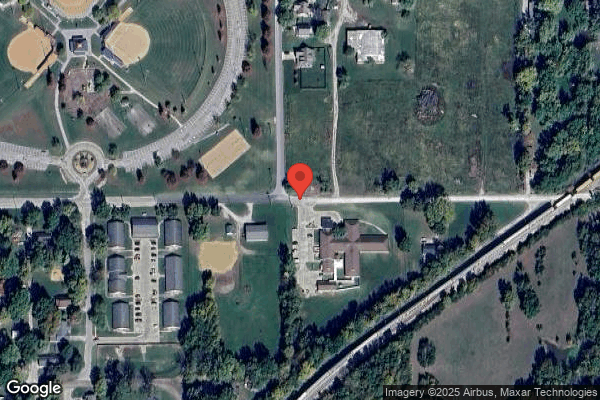

118 TRENTON ROAD, CHILLICOTHE, MO 64601 (660) 646-0353
For profit - Corporation 60 Beds JAMES & JUDY LINCOLN Data: November 2025
Trust Grade
0/100
#391 of 479 in MO
Last Inspection: February 2025

Within standard 12-15 month inspection cycle. Federal law requires annual inspections.

Overview

Grand River Health Care in Chillicothe, Missouri has received a Trust Grade of F, indicating significant concerns about the quality of care provided. Ranking #391 out of 479 facilities in Missouri places it in the bottom half, and #3 out of 4 in Livingston County means only one other local option is worse. The facility is worsening, with reported issues increasing from 5 in 2024 to 18 in 2025. While staffing has a good rating of 4 out of 5 stars, the turnover rate is concerning at 76%, which is higher than the state average, suggesting instability. The facility has also incurred fines of $26,611, which is higher than 78% of Missouri facilities, indicating potential compliance issues. Specific incidents reported include a staff member holding a resident's arms down and using abusive language, as well as another instance where a staff member forcibly made a resident hit themselves. These serious findings highlight a troubling lack of safety and respect for residents. However, it is worth noting that the facility has excellent RN coverage, surpassing 99% of Missouri facilities, which can help catch issues that other staff might miss.

Trust Score
F
0/100
In Missouri
#391/479
Bottom 19%
Safety Record
High Risk
Review needed
Inspections
Getting Worse
5 → 18 violations
Staff Stability
⚠ Watch
76% turnover. Very high, 28 points above average. Constant new faces learning your loved one's needs.
Penalties
✓ Good
$26,611 in fines. Lower than most Missouri facilities. Relatively clean record.
Skilled Nurses
✓ Good
Each resident gets 65 minutes of Registered Nurse (RN) attention daily — more than 97% of Missouri nursing homes. RNs are the most trained staff who catch health problems before they become serious.
Violations
⚠ Watch
57 deficiencies on record. Higher than average. Multiple issues found across inspections.
★☆☆☆☆
1.0
Overall Rating
★★★★☆
4.0
Staff Levels
★★★★☆
4.0
Care Quality
★☆☆☆☆
1.0
Inspection Score
Stable
2024: 5 issues
2025: 18 issues

The Good

  • 4-Star Staffing Rating · Above-average nurse staffing levels
  • 4-Star Quality Measures · Strong clinical quality outcomes
  • Full Sprinkler Coverage · Fire safety systems throughout facility
  • No fines on record

Facility shows strength in staffing levels, quality measures, fire safety.

The Bad

1-Star Overall Rating

Below Missouri average (2.5)

Significant quality concerns identified by CMS

Staff Turnover: 76%

30pts above Missouri avg (46%)

Frequent staff changes - ask about care continuity

Federal Fines: $26,611

Below median ($33,413)

Moderate penalties - review what triggered them

Chain: JAMES & JUDY LINCOLN

Part of a multi-facility chain

Ask about local staffing decisions and management

Staff turnover is very high (76%)

28 points above Missouri average of 48%

The Ugly 57 deficiencies on record

3 actual harm
Mar 2025 3 deficiencies 1 Harm
SERIOUS (G) 📢 Someone Reported This

A family member, employee, or ombudsman was alarmed enough to file a formal complaint

Actual Harm - a resident was hurt due to facility failures

Free from Abuse/Neglect (Tag F0600)

A resident was harmed · This affected 1 resident

**NOTE- TERMS IN BRACKETS HAVE BEEN EDITED TO PROTECT CONFIDENTIALITY** Based on record review and interview, the facility failed to keep one resident (Resident #2) free from verbal and physical abuse...

Read full inspector narrative →
**NOTE- TERMS IN BRACKETS HAVE BEEN EDITED TO PROTECT CONFIDENTIALITY** Based on record review and interview, the facility failed to keep one resident (Resident #2) free from verbal and physical abuse when Nurse Aide (NA) A held resident's arms down and cussed at resident (Resident #2) and when Licensed Practical Nurse (LPN) A yelled at resident (Resident #2) and forced the resident to wear a bi-pap mask (A device that forces oxygenated air through mask that is suctioned against a person's face to provide respiratory support) against the resident's will . The facility census was 26. Review of facility policy, dated 11/2017, showed: -It is the policy of the facility that at each resident will be free from abuse. Abuse can include verbal, mental, sexual, or physical abuse, misappropriation of resident property, and exploitation, corporal punishment, or involuntary seclusion. The resident will be free from physical and chemical restraints imposed for purposes of discipline or convenience and that are not required to treat the resident's medical symptoms. The resident will be protected from abuse, neglect, and harm while they are residing at the facility. -All employees who have been alleged to commit abuse will be suspended immediately pending investigation. -If allegation is substantiated there is a potential that the employee will be terminated, added to the Employee Disqualification List and not allowed to work in a nursing home, disciplined by their licensing agency, and charged with a crime. 1. Review of Resident #2's Significant change Minimum Data Set (MDS), a federally mandated assessment tool completed by facility staff, dated [DATE], showed: -The resident was now on hospice care. Review of Resident #2's Quarterly MDS, dated [DATE], showed: -Cognition intact; -He/She had clear speech; -He/She was able to make self-understood and usually understood others; -He/She was dependent on a wheelchair; -He/She had impairment to both sides of his/her lower extremities range of motion; -He/She required set up or clean up assistance with eating and oral care; -Health conditions included shortness of breath, trouble breathing when exertion, sitting at rest, and lying flat; -He/She received oxygen therapy; -He/She did not use any restraints; -Diagnoses included:, Heart failure, hypertension (high blood pressure), schizophrenia (mental health condition that affects a person's thoughts, feelings, and behaviors), asthma (a respiratory condition marked by spasms in the bronchi of the lungs, causing difficulty in breathing), shortness of breath. Review of care plan, revised [DATE], showed: -He/She had an order for a Bi-level Positive Airway Pressure (Bi-Pap). The higher pressure helped with inhaling, while the lower pressure level helped with exhaling) during naps and at bedtime. He/She was on continuous oxygen. -Resident had been non-compliant with Bi-pap order; -Staff would assist resident with putting on his/her Bi-Pat every evening at bed time and encourage him/her to leave it on during the night; staff would check every one to two hours to make sure Bi-pap was on and working correctly; -Staff will remind and encourage resident to leave his/her oxygen on as ordered. Resident had been non-compliant at times and needs lot of reminding of orders; -Chronic non-compliance will be reported to ordering providers; -Oxygen saturations will be checked by nursing shiftily and documented on the Treatment Administration Records; -He/She would have advanced directives honored. He/She is a Do Not Resuscitate (DNR) as of [DATE]. He/She was placed on hospice on [DATE]. Review of physician's orders showed: -Order started [DATE], Bi-Pap: to wear at bedtime and naps. Settings: 12/6, 35%, rate 12; -Order started [DATE], Check oxygen saturations as needed and notify physician if lower than 90%; -Order started [DATE], oxygen therapy: 1-2 liters each nostril nasal cannula as need to keep oxygen saturation levels above 92%. Special instructions: As needed (PRN); -Order started [DATE], Continue home oxygen as directed and use Bi-Pap as directed. Special instructions: Continue home oxygen use as directed and use Bi-pap as directed; -Order started [DATE], code status DNR. Review of progress notes, dated [DATE]-[DATE], showed: -On [DATE] at 6:34 A.M., LPN A wrote oxygen saturations were checked every 30-45 minutes and were 90-95%, at 3:00 A.M. resident saturations were at 75%. Resident's Bi-Pap was placed on and oxygen went up to 84% saturation. Breathing treatment was given. Resident kept saying he/she wanted to go to the hospital. Residents saturations dropped to 38-50%. Resident became combative and not leaving Bi-pap on. Family Nurse Practitioner was contacted at 4:30 A.M. and new order was obtained to transfer to emergency room. At 5:35 A.M. ambulance was notified and EMS left with resident. Guardian notified by phone, fax sent to family nurse practitioner to notify of resident's transfer. -On [DATE] at 10:23 A.M., Registered Nurse (RN) A wrote call received from emergency room and transfer of resident was pending as soon as hospital bed was located for him/her; -On [DATE] at 4:50 P.M., RN A wrote resident was sent to hospital in Kansas City. Resident's guardian and family were made aware; -On [DATE], Facility received an email from resident's guardian regarding assessing resident for palliative care or hospice when discharged back to facility; -On [DATE] at 11:50 A.M., RN A wrote that resident was discharged from hospital; -On [DATE] at 2:55 P.M., RN A received report from RN at Kansas City hospital that resident had been hospitalized for acute chronic respiratory failure with hypoxia and hypercapnia. Resident continued to be noncompliant with bi-pap but did wear bi-pap 3.5 to 4 hours the previous night. -On [DATE] at 7:32 P.M., RN A wrote that the resident returned to facility. Review of facility investigation, dated [DATE] at 3:30 P.M., showed: -Notification: Facility was notified by Resident #2's guardian on [DATE] at 3:30 P.M. that Resident #2 told his/her family member that LPN A was condescending and told Resident #2 he/she would die if he/she was noncompliant with care and told NA B to hold Resident #2 down. -Witness Interview showed: -NA B informed facility that NA was frustrated at resident for not wearing his/her mask through the night, called Resident #2 stupid and to keep his/her fucking mask on and punched a pillow. NA B said LPN A was yelling and arguing with Resident #2 over compliance with mask and held Resident #2's right hand down to put his/her mask on face; -Interviews with alleged perpetrators showed: -LPN A said Resident #2 was having extremely low oxygen saturations, being combative, and noncompliant. NA A did have a heated episode according to coworker NA A and he/she removed him from the room but did not hear it and told NA A not to talk to residents rudely. Resident #2's oxygen was extremely alarmingly low and he/she called emergency medical services. He/She tried to get Resident #2's oxygen saturations up and Resident #2 was being combative, not in his/her right state of mind, so he/she did hold Resident #2's hand down just to get his/her mask repositioned. Resident #2 was not hurt at all and was not restrained. -NA A said: Resident #2's oxygen was low like down in the 30's. It was very emotional and intense. He/She got upset Resident #2 would not keep his/her mask on so he/she admitted that he/she called Resident #2 stupid and to keep his/her fucking mask on. He/She regretted it and realized it was wrong. The charge nurse, LPN A talked me through it and told me my behavior was unacceptable. Resident #2 was combative and ripped his/her mask off. LPN A was trying to talk us through it. He/She held down Resident #2's hands so the nurse, LPN A, could put Resident #2's mask on. It was a life or death situation and very intense. -Conclusion: Allegation was verified by eyewitness statement, confirming abuse and neglect by both perpetrators. NA A verbal abuse and LPN B physical abuse from using restraint. -Corrective Action: Facility immediately suspended perpetrators and following investigation terminated both LPN A and NA A. Psychosocial visits to victim upon return. Education to facility staff on abuse and neglect, restraints, and reporting abuse and neglect. -Facility interviewed five residents with BIMS over 12, all residents said they had no issues or bad experiences with either perpetrator. All denied abuse or neglect by a staff member. -Review of facility investigation, dated showed: -Twenty-three residents were interviewed regarding if they had experienced abuse or neglect from staff member, if they had been held down, constrained, or restricted by staff, and if there was anything they wanted to report or were too shy to report. -Statements were obtained from NA B on [DATE]; -Interview was conducted with Resident #2 on [DATE]; -Facility reported LPN A to professional Missouri licensing board; -Facility reported NA B to CNA Registry. Review of resident's medical chart, dated [DATE], showed Do Not resuscitate orders were signed by Resident #2's guardian on [DATE] and were also signed by two physicians. During an interview on [DATE] at 9:28 A.M., Resident #2 said: -He/She had staff at facility mistreat him/her when Licensed Practical Nurse (LPN) A, Nurse Aide (NA) A, and NA B came into his/her room and said they were going to give him/her a treatment; -LPN A came into his/her room and wanted to do a respiratory treatment; -He/She told LPN A that he/she would rather not do the respiratory treatment; -LPN A said he/she needed to do the treatment and started to get abrupt with him/her; -LPN A again said you need to do this treatment and started yelling and screaming at him/her that he/she would die over and over; -He/She said to LPN A that maybe LPN A could come back but LPN A proceeded with his/her respiratory treatment; -LPN A had the NA B hold me back and he/she pushed me down by the shoulders; -NA B continued to force me down; -It made him/her feel bad and upset; -He/She was not sure if it was NA A or NA B who held him/her down but it was a male staff who held his/her hands down; -He/She thinks LPN A cussed at him/her; -He/She had not seen LPN A back working at facility since that day; During an interview on [DATE] at 11:43 A.M., NA A said: -Situation with Resident #2 was stressful due to Resident #2 refusing to wear his/her bi-pay and his/her oxygen dropped to 35 and kept going down; -He/She held resident's arms down; -He/She said keep your fucking mask on and called the him/her stupid; -Resident #2 was swinging his/her arms; -NA B was holding resident's mask on his/her face per direction he/she received from LPN A; -Resident #2 did have his/her bi-pap on prior to that but when he/she took off his/her bi-pap his/her oxygen saturations kept dropping; -He/She was the only staff member that held Resident #2 down; -He/She received abuse and neglect training in monthly meaning; -Administration talked about restraints and how staff were not allowed to secure someone to wheelchair and we were supposed to allow residents to still be able to move; -He/She felt he/she had a good rapport with Resident #2; -He/She had not received any training on doing holds or restraints on residents. -There were other times he/she had held residents as he/she did not have option to leave residents soaked in their urine; -Residents could get very combative. During an interview on [DATE] at 11:56 A.M., NA B said: -Resident #2 was supposed to wear his/her bi-pap machine at night; -Resident #2's oxygen saturations went from 90's, to 50's, to the 40's; -LPN A held Resident #2's hand down and said you got to keep that thing on; -LPN A and NA A yelled at Resident #2; -NA A was on Resident #2's right side, and he/she was on Resident's left side; -NA A said 'Hey stupid, you need to put your fucking mask back on' and then punched the pillow beside resident #2's head; -Resident #2 said he/she was scared; -Resident #2's eyes got wide and resident said did he/she really just do that? He hit my pillow! and resident looked terrified; -Resident #2 wanted the ambulance; -LPN A said Resident #2 was not getting ambulance that Resident #2 had us; -It was normal for Resident #2 to take of his/her bi-pap machine; -He/She had to loosen up the bi-pap for him/her -The bi-pap did look tight around resident #2's head and ears; -LPN A told Resident #2 'you are going to keep that thing on, I don't care'; -LPN A held Resident #2's hand down; -When LPN A would leave room Resident #2 would put his/her bi-pap mask back on his/her face; -NA A came back into room to do Resident #2's vitals and Resident #2 did not like the idea of NA A being back in his/her room; -Resident #2 said he/she was going to tell and it was not right what LPN A was doing; -Facility talked about abuse and neglect all the time; -He/She was trained that he/she was not supposed to restrain anybody; -If resident was soiled, he/she would let them know they needed changed; -He/She knew some residents did not believe they were wet; -He/She spoke to Administrator and DON about what he/she observed; -He/She was aware that LPN A had been fired; During an interview on [DATE] at 1:46 P.M., LPN A said: -He/She was in and out of Resident #2's room on [DATE]; -Resident #2 would not leave his/her bi-pap on; -He/She notified the nurse practitioner who gave him/her an order to send resident out if resident's saturations got down to 75; -He/She got residents oxygen saturations back up to the 80's; -He/She ripped off bi-pap and his/her oxygen saturations got down to 38; -Resident #2 was combative; -He/She did take Resident #2's hand and held it and said to Resident #2 he/she needed to keep his/her bi-pap on; -He/She could not get saturations higher so he/she called 911; -He/She did not hold Resident #2 down; -He/She took Resident #2's hand because he/she was fighting; -When he/she held Resident #2's hand she pulled on his/her wrist lightly; -He/She laid Resident #2's wrist down and left the room; -He/She told staff to keep Resident #2's mask on; -He/She called 911 because resident would have died due to not getting oxygen saturations up higher; -At the beginning, Resident #2 did ask him/her to call 911, but he/she said she would call the doctor; -He/She called the nurse practitioner when resident's saturations were in the 70's and 80's; -He/She did not scream or yell at Resident #2; -He/She was told by NA B regarding NA A getting angry and saying to Resident #2 to keep that fucking bi-pap on; -He/She did talk to NA A and gave him a warning and he/she said he/she was sorry;; -It was normal for Resident #2 to not want to keep his/her bi-pap on; -It was routine for them to check resident #2 oxygen saturations throughout the night; -There was times resident's oxygen nasal cannulas kept his/her saturations up; -He/She would sometimes have staff lay resident down, reposition him/her, and pull him/her up in bed; -The protocols that were in place when resident not wanting to keep his/her bi-pap on were just to check residents saturations and if they got to low to call the nurse practitioner; -Resident #2 was a DNR; -It would have been Resident #2's right to have his/her bi-pap off; -He/She tried to encourage Resident #2 to have his/her bi-pap on because he/she did not Resident #2 to die; -Facility protocol was that no restraints were to be used on residents; During an interview on [DATE] at 2:22 P.M., RN A said: -Resident #2 was very non-compliant with wearing his/her bi-pap; -Agency nurses had issues with Resident #2 being non-complaint with wearing his/her bi-pap; -Facility protocol for resident #2 at night was to watch his/her oxygen saturations; -He/She was aware that LPN A had gotten an order to send Resident #2 out but nurse practitioner had said to try and not send Resident #2 out; -He/She would try to allow residents who were agitated or frustrated to calm down and or get a staff member that they liked to talk to them to support them in calming down; -All staff had been educated that they could not hold down a resident or force a resident; -He/She had not seen residents forced or provided unwanted cares; -LPN A called him/her when he/she was suspended; -LPN A indicated that it was out of desperation that he/she was trying to get Resident #2's oxygen saturations up; During an interview on [DATE] at 3:05 P.M., Business Office Manager (BOM) said: -He/She observed LPN A call residents name if he/she was referring to them but not directly to residents face; -Behaviors in facility were often instigated by staffs approach with resident. During an interview on [DATE] at 4:26 P.M., Director of Nursing (DON) said: -Resident #2's guardian notified facility with concerns when Resident #2 had told his/her family member that the LPN A was making him/her put his/her bi-pap on and tried to get the one of the nurse aides to hold him/her down and make Resident #2 wear the bi-pap; -Resident #2 said that LPN A kept screaming that he/she was going to die; -Resident #2's oxygen saturations were down to 30's so it was an intense situation; -LPN A had said during the facility interview that LPN A wasn't intending to hold Resident #2 down to harm him/her but was just trying to get his/her oxygen saturations up; -Resident #2 was a DNR at that time; -NA A said during facility interview that he/she did tell Resident #2 to put his/her mask on but said he/she did not hit the pillow; -LPN A had said he/she was not in the room when NA A cussed and hit pillow but as soon as NA B reported it to LPN A; -LPN A had talked to NA A and NA had said he/she was just worked about resident #2's safety; -LPN A said NA B did not hold Resident #2 down; -He/She expected residents to be free from physical and verbal abuse; -It was never okay for residents to be held down to provide cares; -Resident did have a right to refuse cares. During an interview on [DATE] at 4:48 P.M., Administrator said: -LPN A resigned prior to facility planned termination of his/her employment; -LPN A said during facility interview that he/she used a loud voice with resident #2; -LPN A did admit to holding hand of Resident #2 in an attempt to prevent Resident #2 from hitting NA A and pull off his/her mask; -NA A admitted to holding Resident #2 down, cussing, yelling, and using bad language indicating he/she was in a heated situation; -Facility did interview Resident #2, Resident #2's mother; -Resident #2 said he/she did not like the feeling of being restrained in any way; -He/She expected residents to be free from all abuse; -Abuse and neglect had been an issue since he/she started in his/her position in facility; -He/She implemented monthly education with employees; -He/She implemented doing pop in interviews (unannounced visits to the facility) with residents and had changed descriptions he/she used in those interviews to be more comprehensive for residents in facility such as asking residents if they had ever been held down by staff or ignored instead of asking if they had ever been abuse. MO251220.
CONCERN (D) 📢 Someone Reported This

A family member, employee, or ombudsman was alarmed enough to file a formal complaint

Potential for Harm - no one hurt, but risky conditions existed

Deficiency F0602 (Tag F0602)

Could have caused harm · This affected 1 resident

**NOTE- TERMS IN BRACKETS HAVE BEEN EDITED TO PROTECT CONFIDENTIALITY** Based on observation, interviews, and record reviews, the facility failed to assure one resident (Resident #1) was free from mis...

Read full inspector narrative →
**NOTE- TERMS IN BRACKETS HAVE BEEN EDITED TO PROTECT CONFIDENTIALITY** Based on observation, interviews, and record reviews, the facility failed to assure one resident (Resident #1) was free from misappropriation of his/her property when the resident's narcotic medications were found missing from the facility. The facility census was 26. Review of facility's abuse policy, dated 11/2017, showed: -It is the policy of the facility that at each resident will be free from abuse. Abuse can include misappropriation of resident property -All employees who have been alleged to commit abuse will be suspended immediately pending investigation. -If allegation is substantiated there is a potential that the employee will be terminated, added to the Employee Disqualification List and not allowed to work in a nursing home, disciplined by their licensing agency, and charged with a crime. Review of facility policy, Scheduled II-V Medications, undated, showed: -Schedule II-V medications may be kept in medication cart lock box, refrigerator, boxes, or double lock box maintained in medication room. -Scheduled medications will have disposition records that are in a binder on medication cart or area instructed by Director of Nursing (DON). -Scheduled medications that are as needed (PRN) must be kept in medication cart locked box. -Additional cards may be kept in the medication room locked box or in the medication locked box in nurse medication cart. Dispositions records will be kept with the schedule II medication disposition records. -When a Schedule II, III, IV, V car is emptied, the CMT will place the card with the disposition record in the designated area for the DON or licensed designee to collect. -When new or refill schedule II, III, IV, or V cards arrive from the pharmacy, the disposition record is filled out, the card is counted and placed in the locked box in the medication cart. -All schedule II, III, IV, and V medications must be counted (comparing number of pills to disposition record) at every change of shift by two CMT, or one CMT and one licensed nursing staff. Both personnel must sign verification of correct count for Schedule II, III, IV, and V. -If at any time the count is incorrect, CMT must notify licensed nursing staff, who will call DON or designee for instruction. -All scheduled II medications will be administered by the nurse or authorized CMT. Review of facility policy, destruction of medications, undated, showed: -Two licensed nurses or one licensed nurse and facility pharmacist will destroy all medications, except controlled substances which will require DON supervision. -Documentation of medication destruction will include: -date; -Name of medication; -RX number; -amount of medication to be destroyed; -method of destruction; -signature of nurses and/or pharmacist; -Scheduled II-IV medication will be destroyed as stated above with the following exceptions: -the controlled medication count sheet will include the following information: -signature of nurses and/or pharmacist destroying the medication -amount destroyed -date destroyed -The following method of destroying medications will be utilized: -Medications to be destroyed including pills, capsules, liquids, creams, etc will be placed in a sealable container such as a plastic bag. -An unpalatable substance such as kitty litter or used coffee grounds will be added to the plastic bag of medications. -Before sealing plastic bag approximately one cup of fluid (i.e. water, liquid detergent, etc ) will be added to the plastic bag of medications. -The plastic bag will then be sealed and placed in the trash. 1. Review of Resident #1's Quarterly minimum data set (MDS), a federally mandated assessment tool completed by facility staff, dated [DATE], showed: -Cognition severely impaired; -He/She had limited range of motion to both lower extremities; -He/She was dependent on a wheelchair; -He/She required partial to moderate assistance with toileting, upper body dressing, rolling left and right, sit to stand transfers, and toilet transfers; -He/She required substantial to maximal assistance for chair to bed transfers, lying to sitting transfers, and bathing; -He/She was on scheduled pain medication regimen; -He/She was taking an opioid; -Diagnoses included: vascular dementia (cognitive decline caused by damage to the blood vessels in the brain), major depressive disorder (persistently depressed mood), pain, and anxiety. Review of Medication Administration log, dated [DATE]-[DATE], showed: -Document header, Nurses MAR flow sheet, showed: As needed pain medication. -Order date [DATE], Hydro/Apap tablet; 7.5/325; amount to administer: 1 tablet; oral three times a day, every 4 hours as needed for pain, for pain unspecified not to exceed 3 GM Apap/24 hours. -On [DATE], Resident received medication at 8:00 A.M., 12:00 P.M., and 8:00 P.M.; -On [DATE], Resident received medication at 8:00 A.M., 12:00 P.M., and 8:00 P.M.; -On [DATE], Resident received medication at 8:00 A.M., 12:00 P.M., and 8:00 P.M.; -On [DATE], Resident received medication at 8:00 A.M., and 12:00 P.M. -Document header, Medications Flow sheet, showed: Routinely scheduled medication. -Order started [DATE], hydrocodone-acetaminophen - Schedule II tablet; 7.5-325mg;, amount to administer: 1 tab TID PO; oral TID, pain in left hip; -On [DATE], Resident received medication between 8:00 A.M.-10:00 A.M., 11:00 A.M.-2:00 P.M., and 3:00-6:00 P.M.; -CMT A signed he/she administered medication all three administration times; -On [DATE], Resident received medication between 8:00 A.M.-10:00 A.M., 11:00 A.M.-2:00 P.M., and 3:00-6:00 P.M.; -CMT A signed he/she administered medication between 11:00 A.M.-2:00 P.M.; -On [DATE], Resident received medication between 8:00 A.M.-10:00 A.M., 11:00 A.M.-2:00 P.M., and 3:00-6:00 P.M.; -CMT A signed he/she administered medication between 8:00 A.M.-10:00 A.M. and 11:00 A.M.-2:00 P.M.; -On [DATE], Resident received medication between 8:00 A.M.-10:00 A.M., 11:00 A.M.-2:00 P.M., and 3:00-6:00 P.M.; -CMT A signed he/she administered medication at all three administration times. Review of care plan, revised [DATE], showed the resident had constant chronic back pain. Physician's orders, dated [DATE], showed the order started [DATE], Hydrocodone-acetaminophen -schedule II tablet; 7.5-325mg, 1 tab three times a day by mouth. Observation of medication room on [DATE] at 2:58 P.M., showed: -There were two bubble packs for resident #1 of hydrocodone-acetaminophen 7.5-325mg in medication cart, 1 card had 20 remaining, the other card had 60 count. -Controlled drug count sheet matched the number of pills found in medication cart; -Controlled drug box inside the medication cart was not locked. Review of pharmacy facility delivery receipts, [DATE]-[DATE], showed: -On [DATE], 60 quantity, hydrocodone-acetaminophen 7.5-325 mg tablets, were delivered to the facility; -On [DATE], 60 quantity, hydrocodone-acetaminophen 7.5-325 mg tablets, were delivered to the facility; -On [DATE], 60 quantity, hydrocodone-acetaminophen 7.5-325 mg tablets, were delivered to the facility. 2. Review of facility investigation, dated [DATE], showed: -Facility became aware of incident on [DATE] at 3:00 P.M.; -RN A reported that on [DATE] she returned to work from having two days off and noted a missing pack of Resident #1's hydrocodone-acetaminophen as he/she had previously had two bubble packs of the hydrocodone-acetaminophen when he/she had worked on [DATE]. He/She had inquired with CMT A what had happened to them and CMT A reported that DON and Administrator had destroyed medications due to state survey agency being in building and facility having too many controlled drugs and an inhaler. RN A shrugged off the information but later heard a conflicting story on [DATE] when CMT A had said that he/she had destroyed the controlled drugs so he/she reported information to facility administration. DON and Administrator informed RN A that they had not destroyed any medications. -Steps taken included: -Suspended CMT A; -Obtained written statements; -Searched for medication destruction and controlled medication sheet for Resident #1 but were unable to locate either documentation; -Notified pharmacy -Educated all nurses on narcotics; -Review of written statements showed: -On [DATE], Administrator wrote: On [DATE], RN A reported an incident to him/her, DON, and Quality Assurance Nurse regarding a missing narcotic medication (Hydrocodone-Acetaminophen) for Resident #1. RN A had questioned CMT about the missing medication to which CMT said Administrator and DON were cleaning out the med room since state was in building trying to destroy all expired or non-labeled medications, they must have gotten rid of it. The DON and he/she clarified that this statement was false and that neither of us had cleaned out the medication room. RN A expressed concerns that CMT A might be involved with theft, citing his/her strong desire to pass narcotics at the start of his/her shift, although RN A did not have sufficient evidence to formally accuse CMT A of stealing. As a result of incident, CMT A will be terminated from his/her role as CMT, but will be allowed to maintain his/her position as a CNA without medication administration privileges. -On [DATE], RN A wrote: On Friday February 28, 2025 while getting a narcotic out I noted that resident #1 only had one full card of hydrocodone-acetaminophen and one partial card. When he/she had worked on Tuesday, February 25 there was one partial card and two full 60 count cards of hydrocodone-acetaminophen. CMT A said that Administrator and DON had been in the medication room going through the medication cart and cleaning and that they had taken a card of hydrocodone-acetaminophen because facility had too much and it looked back with state agency in the facility. He/She inquired with CMT A what Administrator and DON did with the card and CMT A said he/she did not know. The sign out sheet for the hydrocodone-acetaminophen was also missing from the narcotic count book. He/She intended to speak with the DON about the medication, but was not able to until [DATE]. He/She did know for a fact that there were two sixty count cards of hydrocodone-acetaminophen in the medication cart because hospice nurse A and him/her had counted the controlled medications for hospice patients on [DATE] and he/she had discussed the controlled drug count for Resident #1 yesterday on [DATE]. Hospice nurse showed me his/her computer that showed the partial count plus 120 more. -On [DATE], Business Office Manager (BOM) wrote: CMT had told him/her he/she had taken a controlled drug home when he/she went to pick CMT A up for work. He/She said he/she had told RN A that he/she had taken it home and he/she would bring the medication back in the morning. CMT A said he/she had left medication on the dryer. BOM offered for CMT A to go back and pick up the medication and CMT A said no that RN A would not say anything or write him/her up for it; -On [DATE], CMT A wrote: On February 25, 2025 state notified him/her that he/she had an abundance of extra medications on his/her medication cart. He/She put extra eye drops, nasal sprays, inhalers on the counter to be destroyed. RN A asked him/her about medications being destroyed and he/she said that we had a lot from his/her cart. The only narcotics he/she seen to be destroyed was morphine and RN A was doing correctly so with another nurse. He/She did not normally pop out the narcotics but he/she did get into their cart. He/She accident took home another resident's bromoimide drops. He/She did say that RN A probably wouldn't write him/her up for it. -Undated, DON wrote, CMT A came to him/her and Administrator and informed them that state made him/her and RN A destroy several medications which included an inhaler, morphine, and a medication that belonged to Resident #1 but he/she could not remember the name of the medication. He/She spoke to RN A on [DATE] and informed hi/her that it was weird that CMT A told RN A that DON and Administrator had gotten rid of a card of hydrocodone-acetaminophen for Resident #1. He/She took RN A to administrator and Corporate Quality Assurance nurse to repeat what he/she had said. With guidance from Corporate Quality Assurance nurse, CMT would no longer do medications in facility, a soft file had been started, nurses were in-service and medication sheet is unavailable as he/she, RN A looked for the controlled drug sheet and medication and were unable to locate either items. -On [DATE], Hospice Nurse A wrote: He/She served as hospice case manager for Resident #1 and had conversation with RN A. RN A had asked him/her if he/she had destroyed any of Resident #1's medications. He/She responded no. RN A stated he/she did not feel Resident #1's controlled drug count was correct. RN A stated that CMT A had told RN A that he/she, DON, and a state agency representative was in medication room discussing Resident #1's medications and that had stated Resident #1 had too many hydrocodone-acetaminophen and that Resident #1 did not need that many. I told RN A that conversation never took place and that he/she had not destroyed any of Resident #1's medications. According to his/her charting of Resident #1's medications he/she had 135 tabs of hydrocodone-acetaminophen 7.5/325 on [DATE] and 55 tablets of hydrocodone-acetaminophen 7.5/325 mg on [DATE]. -Corrective Actions showed: -CMT A suspended -Pharmacy and Hospice were notified and medications were replaced; -CMT A would no longer be allowed to work as CMT, only as a CNA; -Only licensed nurses were allowed to pass controlled drugs; -Licensed nurses must count controlled drugs between shifts. Neither nurse shall leave facility if there was miscount, missing narcotics, or undocumented destruction until the DON was informed and approved. -Controlled drug destruction required direct approval from the DON. -Plan of oversight included: Education to nurses regarding corrective action; -DON to audit narcotics weekly for any unreported missing narcotics; -Systemic changes included: Change in facility policy that revoked CMT privileges to pass controlled medications. -Conclusion of investigation showed: Inconclusive. Facility could not confirm or disprove due to lack of sufficient evidence. No direct observation of CMT stealing narcotics as charge nurse did not witness theft and BOM did not observe the narcotics in CMT's possession. It was verified that controlled drug was missing from Resident #1's supply. It remained inconclusive whether it was misplaced, destroyed, discarded, or stolen. -Inservice was completed on [DATE] with three facility nurses regarding passing of controlled medications; During an interview on [DATE] at 1:46 P.M., Licensed Practical Nurse (LPN) A said: -Two nurses counted narcotics together; -If a medication was discontinued the facility had a jug of drug buster and two nurses fill out a form and both nurses have to sign, destroy, and put it in the drug buster stuff; -He/She knew Resident #1's narcotic medication count was off; -He/She was informed that there had been two cards but they were just using the one card; -One of the nurses reported to him/her that one of the cards was missing; -Evidently someone took the whole controlled dug page out of the controlled medication book and everything; -RN A or RN B had to be the nurse that told him/her that Resident #1's medication card was missing; -He/She worked night shift from 6:00 P.M.-6:30 A.M.; -He/She had never had any issues with missing medication bubble packs; -CMT A had access to the narcotics; -This was a new policy that they allowed CMT's access to narcotics when they hired CMT A; -CMT was allowed to go into both medication carts; -The nurses cart had the narcotics in it; -Resident #1 received Hydrocodone-Acetaminophen scheduled for his/her pain; -CMT A was always asking charge nurse if he/she could give Resident #1 and Resident #4 pain medication; -Resident #4 was on same medication as Resident #1; -Resident #4 was on morphine which we had not been giving to him/her because the hydrocodone-acetaminophen seemed to hold his/her pain; -There was time he/she had to give Resident #4 the morphine and it was always when CMT A had passed his/her hydrocodone-acetaminophen; -There was one time Resident #1 was crying he/she had so much pain. During an interview on [DATE] at 2:22 P.M., Registered Nurse (RN) A: -He/She normally counted narcotics of hospice residents when the hospice nurse was in the building; -He/She had counted narcotics with the hospice nurse on [DATE]; -On 2/25 he/she counted two bubble packs of 60 count pills of hydrocodone-apap for Resident #1; -The hospice nurse had logged his/her counts with me on his/her computer; -When he/she returned to work on 2/28 Resident #1 only had one bubble pack of 60 plus a partial card of hydrocodone-apap; -He/She asked CMT A what had happened to Resident #1's bubble pack of hydrocodone; -CMT A said that the Administrator and DON had been in the medication room going through stuff and took the extra card of hydrocodone-acetaminophen for Resident #1 out because it had looked bad having that much hydrocodone-acetaminophen on hand for one resident; -From that point on he/she never got an opportunity to tell the DON about it until he/she remembered on [DATE]; -DON immediately took him/her to Administrators office and he/she relayed the information she had with the Administrator, Corporate Nurse, and the DON; -DON reported to him/her that CMT A had reported that he/she and CMT A had wasted Resident #1's drugs; -There had been no reason to waste Resident #1's medications; -We were unable to locate Resident #1's hydrocodone-acetaminophen controlled drug count sheet the missing bubble pack; -Facility had a box that the completed controlled drug count sheets went into when they had been completed, the box was checked and the missing narcotic sheet was not located; -CMT A did pass controlled drugs for the nurses; -The controlled drugs were maintained in the nurses medication cart; -The nurse would have to unlock the cart for CMT A; -When CMT A needed a controlled drug for a resident he/she would ask for it; -He/She would pop the medication for CMT A and give it to him/her to administer; -He/She learned that he/she should not have been popping the medication for CMT A and he/she should have popped his/her own medications for residents; -The controlled drug counts were completed with the oncoming nurse; -He/She did not know if CMT A had completed the controlled drug counts with staff; -The controlled drugs were always maintained in the nurses cart; -CMT A was the only CMT the facility had employed; -He/She had notified interim DON his/her concerns with CMT A having access to the nurses cart and a long write up was received back from the facility corporate nurse notifying us that CMT A could pass narcotics; -He/She had identified concerns regarding CMT A with controlled drug passes but did not have any solid proof because the residents in the facility had a routine with their medications; -In the mornings, CMT A would always want Resident #1 and Resident #4's controlled medications of Hydrocodone-Acetaminophen; -One day CMT A asked him/her for Resident #1 and Resident #4's medications at breakfast. The aids then had came to me and said Resident #4's was in a lot of pain; -He/She felt this was unusual as Resident #4's pain was usually managed by his/her hydrocodone/acetaminophen; -When He/She went into Resident #4's room to assess Resident #4', he/she found that Resident #4 was crying; -He/She had to administer Resident #4's morphine for the pain; -He/She had charted that he/she had administered the morphine to Resident #4's for break through pain rated 10 out of 10 on the pain scale; -Sometimes he/she had to crush Resident #4's medication in pudding because Resident #4 could not take his/her medication in a whole pill form; -Another instance, a day aide came up and asked if he/she could give Resident #3's his/her medications because they were getting ready to change him/her and the day aide thought it would help him/her. CMT A already had Resident #3's medication cup ready in medication cart, but when he/she looked in his/her medication cup Resident #3's did not have his/her Ativan in the cup and there was no Ativan in the medication cart. CMT A had popped pills in advance and had them already in a pill cup in the medication cart; -Resident #1 is fairly agreeable resident but at times he/she would become hateful on days CMT A passed Resident #1's medications. He/She had wondered if Resident #1 had been experiencing pain; -CMT A was in medication room helping straighten Medication Administration Records (MARS) during this past month and the MDS Coordinator was working to pass medications that evening; -CMT A was not in facility working to pass medications that shift but he/she asked him/her three times if he/she wanted him/her to go and pass Resident #4's pain medication. On the third time of CMT A asking about Resident #4's pain medication, he/she went to ask and assess Resident #4's pain. Resident #4 said he/she was fine and was not having any pain. CMT A became upset with me. During an interview on [DATE] at 3:05 P.M., Business Office Manager (BOM) said: -He/She transported CMT A to and from work; -He/She dropped CMT A off from work on [DATE] and he/she had a back pack he/she carried with him/her; -He/She picked up CMT A on morning of [DATE] and when he/she backed out of CMT A's driveway, CMT A said he/she had forgotten medication. He/She asked CMT A if he/she needed to go back into get the medication and CMT A said no it was just a pill in a cup; -He/She observed CMT A open his/her backpack and pulled medicine out of his/her bag. Inside his/her bag he/she had long oval pills that were loosely laying in his/her bag; -He/She had also observed some pill bottles and CMT A did indicate he/she took Xanax and Tramadol; -The next day CMT A did bring a pill in a white paper cup up to the Business Office Manager's office and said resident no longer took the medication; -CMT A did not mention any eye drops to him/her, he/she was not aware of any eye drops; -He/She had observed concerns regarding CMT A's behavior at work; -He/She had observed CMT standing at medication cart acting loopy and dozing off and did not appear functional; -He/She had residents ask him/her what was wrong with CMT A and why CMT A would fall asleep or was falling over while trying to write; -He/She reported his/her concerns to the Director of Nursing (DON) and encouraged DON to send CMT A home from work; -DON did not send CMT A home from work; -CMT A would yell at residents; -CMT A would drop medications on the floor and pre-set his/her medications; -CMT A would set up medications for LPN A because LPN A could not see; -CMT A would put medications in baggies or cups; -LPN A would have to use a magnifying glass or flashlight to be able to see; -LPN A used to stay in facility because he/she had quit driving cause he/she could not see; During an interview on [DATE] at 3:39 P.M., Certified Medication Technician (CMT) A said: -RN A asked him/her why there were multiple items in the medication box that were missing; -He/She told RN A that he/she did not touch anything; -He/She told RN A that he/she had extra inhalers, eye drops in his/her medication cart and he/she had put them on the counter to be destroyed; -The medications he/she put on the counter were not narcotics; -We had multiple doses of medications on the medication cart; -He/She did not know what medications RN A was concerned about; -He/She had passed medications to all residents in facility; -He/She had passed narcotic medications to residents that were on his/her hall; -He/She knew residents ( Resident #3) received Ativan, Resident #4 received hydrocodone-acetaminophen at breakfast and lunch, and Resident #1 received narcotic at 8, noon and 8 P.M.; -He/She sometimes completed narcotic counts with the nurse; -He/She never had an issue with narcotic count being wrong; -He/She never passed the liquid narcotics, only the pill narcotics; -He/She was not allowed to destroy medications; -He/She had put meds in the destroy box and wrote on a piece of paper to destroy; -Due to narcotics being in the nurses cart he/she would sometimes have the nurse pop the narcotic and he/she would administer the medication; -He/She would sometimes get into the nurses medication cart to pass medications if the nurse was running late; -If he/she was getting into the nurses medication cart then it was to do count because he/she touched the medications; -He/She would set up medications for the night nurse, LPN A; -LPN A had a hard time reading and he/she felt it was safer for the resident cause he/she could not see; -He/She would leave medications for nurse to destroy cause legally he/she could not destroy them; -He/She accidentally took home medications; -He/She took home eye drops, it was bromide eye drops; -He/She had placed the eye drops in his/her pocket by accident while he/she had administered them to resident; -He/She had never taken pills home; -He/She did not know where the allegation that he/she took medications from facility came from; -The facility suspended him/her and he/she had not worked since the suspension During an interview on [DATE] at 4:26 P.M., DON said: -CMT A mentioned to him/her that when the state survey team had been in the building they had said there had been too many narcotics on hand and too many being used at one time; -He/She passed the information on to Administrator and Corporate Nurse; -RN A came up to him/her and said CMT A had told her something that had been really odd to him/her that Administrator and myself had taken Resident #1's hydrocodone-acetaminophen and put them up until after state survey team left the building; -He/She made RN A go into Administrator's office and repeat information he/she had shared with the Administrator and Corporate Nurse; -When he/she questioned CMT A, CMT A said he/she had never said that; -BOM reported that CMT A had said he/she had taken medication while he/she had transported CMT A to work which was also reported to Administrator; -Administrator and myself started an investigation; -CMT A was suspended; -State agency was notified of investigation; -They had interviewed all individuals who had access to medications at time the medications went missing including day shift nurses, CMT A, BOM, and the hospice nurse; -CMT A had access to the controlled medications and did pass controlled medications; -He/She did not have any concerns regarding CMT A passing medications; -He/She had not had any concerns reported to him/her regarding CMT's behavior other than some would say he/she was tired; -He/She had never been able to catch her tired or extra sleepy; -No staff had reported to him/her that residents had more pain when CMT A would pass medications; -He/She expected that staff would pass pills immediately and pre-setting medications was unacceptable; -He/She was aware that staff had been pre-setting medications prior to his/her start date with facility and that it had been addressed through a facility in-service; -He/She was aware that CMT A stayed late to assist LPN A with passing medications; -It was difficult for LPN A to see little words on the MARs; -Resident #1's controlled medication count sheet was lost and unable to be located for the missing bubble pack of hydrocodone; -He/She expected residents to be free from misappropriation of their property; -The facility replaced Resident #1's missing medications with the pharmacy. During an interview on [DATE] at 4:48 P.M., the Administrator said: -CMT A went through a period of working an excessive amount of hours of the facility; -CMT A had been sent home two times for being drowsy; -CMT A did not show signs of being intoxicated; -BOM had reported that CMT A had been drowsy when the BOM had been working the floor with CMT A toward the end of January; -He/She had not received any concerns from residents regarding CMT A's behavior; -He/She expected residents to be free from misappropriation of their personal property; -Facility implemented interventions of suspending CMT A, implemented policy that only nurses are allowed to pass controlled drugs, a strict counting policy is in place and nurses may not leave their shift until the controlled drug count is accurate or DON has approved staff to leave, and destruction of medications only was to occur with oversight of DON or under his/her instruction. MO251028
CONCERN (D) 📢 Someone Reported This

A family member, employee, or ombudsman was alarmed enough to file a formal complaint

Potential for Harm - no one hurt, but risky conditions existed

Report Alleged Abuse (Tag F0609)

Could have caused harm · This affected 1 resident

Based on interview and record review, the facility failed to report to the state survey agency and law enforcement, misappropriation of resident property (missing narcotics), when the facility became ...

Read full inspector narrative →
Based on interview and record review, the facility failed to report to the state survey agency and law enforcement, misappropriation of resident property (missing narcotics), when the facility became aware on 3/11/25 that one resident (Resident #1) had one bubble pack card of a narcotic medication, hydrocodone-acetaminophen 7.5-325mg (a controlled drug used to relieve severe pain) missing. The facility census was 26. Review of facility abuse and neglect policy, dated 11/2017, showed: -The facility will ensure that any reasonable suspicion of crimes committed against a resident of the facility will be reported to the appropriate Law Enforcement Agency as established by section 6703(b)(3) of the Patient Protection and Affordable Care Act of 2010. When there is reasonable suspicion that a crime had occurred, then in addition to reporting the allegation of abuse to the state survey agency, the incident must be reported to the local law enforcement. -All reports of suspected crime must be reported immediately reported to local law enforcement to be investigated. The facility will fully cooperate with local law enforcement. 1. Review of Resident #1's Quarterly minimum data set (MDS), a federally mandated assessment tool completed by facility staff, dated 3/14/25, showed: -Cognition severely impaired; -He/She had limited range of motion to both lower extremities; -He/She was dependent on a wheelchair; -He/She required partial to moderate assistance with toileting, upper body dressing, rolling left and right, sit to stand transfers, and toilet transfers; -He/She required substantial to maximal assistance for chair to bed transfers, lying to sitting transfers, and bathing; -He/She was on scheduled pain medication regimen; -He/She was taking an opioid; -Diagnoses included: vascular dementia (cognitive decline caused by damage to the blood vessels in the brain), major depressive disorder (persistently depressed mood), pain, and anxiety. Review of care plan, revised 3/7/25, showed the resident had constant chronic back pain. Review of facility investigation, dated 3/11/25, showed: -Facility became aware of one bubble pack of 30 missing narcotics for resident #1 when Registered Nurse (RN) A reported on 3/11/25 that when she returned to work on 2/28/25 there was one package of narcotics that were missing from when he/she had previously worked on 2/25/25. RN A reported that Certified Medication Technician (CMT) A said to him/her that with state in building for survey the Director of Nursing (DON) and Administrator destroyed medications because they had too much narcotics. RN A reported he/she shrugged off the comment until 3/11/25 when he/she heard a conflicting story that CMT A had reported that he/she had destroyed the narcotics. DON and Administrator reported to RN A that they had not destroyed any medications. -Facility steps in their investigation included notifying the state survey agency, gathering statements, suspending alleged perpetrator, informing pharmacy and paying for replacement medications, and education to their nurses; -Law enforcement was not contacted. Physician's orders, dated 3/25/25, showed the order started 1/20/25, Hydrocodone-acetaminophen -schedule II tablet; 7.5-325mg, 1 tab three times a day by mouth. During an interview on 3/25/25 at 1:15 P.M., Administrator said: -He/She did not contact law enforcement regarding the missing medications; -He/She felt like the narcotics had been missing for too long when it had been reported to him/her. During an interview on 3/25/25 at 4:26 P.M., Director of Nursing (DON) said: -He/She did not know if Administrator had contacted law enforcement regarding missing narcotics; -Administrator was the facility investigator. During an interview on 3/25/25 at 4:48 P.M., Administrator said: -The resident's missing narcotics should have been reported to local law enforcement. -He/She expected resident's to be free from misappropriation of their personal property. MO251028
Feb 2025 15 deficiencies
CONCERN (D) 📢 Someone Reported This

A family member, employee, or ombudsman was alarmed enough to file a formal complaint

Potential for Harm - no one hurt, but risky conditions existed

Free from Abuse/Neglect (Tag F0600)

Could have caused harm · This affected 1 resident

**NOTE- TERMS IN BRACKETS HAVE BEEN EDITED TO PROTECT CONFIDENTIALITY** Based on interview and record review, the facility failed to protect the resident's right to be free from abuse when Resident #1...

Read full inspector narrative →
**NOTE- TERMS IN BRACKETS HAVE BEEN EDITED TO PROTECT CONFIDENTIALITY** Based on interview and record review, the facility failed to protect the resident's right to be free from abuse when Resident #12 threatened harm to Resident #9. The facility census was 27. Review of the facility's undated Abuse Prohibition Protocol Policy, showed: - It is the policy of this facility that each resident will be free from Abuse. Abuse can include verbal, mental, sexual, or physical abuse, misappropriation of resident property and exploitation, corporal punishment or involuntary seclusion - Additionally, residents will be protected from abuse, neglect and harm while they are residing at the facility; - No abuse or harm of any type will be tolerated, and residents and staff will be monitored for protection; - The objective of the abuse policy is to comply with the seven step approach to abuse and neglect detection and prevention. The abuse policy will be reviewed on an annual basis or more frequently and will be integrated into the facility Quality Assurance and performance Improvement (QAPI) program; - Overview of the seven components: reporting and response; screening; training; prevention; identification; investigation; and protection. 1. Review of Resident #12's Quarterly Minimum Data Set (MDS), a federally mandated assessment instrument completed by facility staff, dated 2/8/25., showed: - 12/9/16 - admission date; - Cognitive skills moderately impaired; - Rejected cares daily; - Wandering occurred daily; - Independent with transfers, dressing, personal hygiene and toilet use; - Diagnoses included schizophrenia ( a serious mental illness that affects how a person thinks, feels, and behaves) and psychotic disorder ( a mental illness that causes a person to lose touch with reality). Review of the resident's care plan, revised 2/10/25 showed: - The resident had delusions (something that is believed to be true or real but that is actually false or unreal) related to schizophrenia. Do not confront, argue against, or deny resident's thoughts. Maintain a calm environment and approach to the resident. Refocus resident when he/she changes the subject in middle of conversation. Reinforce and focus on reality. Use clear, concise terms. Set limits and expectations for resident's behavior; - 2/26/25 - The resident has verbal behavioral symptoms directed toward others (threatening others, screaming at others and cursing at others). Administer medications and monitor and record effectiveness. Report adverse side effects. Report to provider if resident tries to cheek his/her medications. Allow distance in seating other residents around resident. Assess whether the behavior endangers resident or others. Intervene as necessary. Avoid over-stimulation (noise, crowding, other physically aggressive residents). Avoid power struggles with resident. Convey an attitude of acceptance towards the resident. Divert resident's behavior by removing him form other residents and providing 1:1 counsel. If resident has delusions/hallucinations, do not try to reason with or confront resident. Offer reassurance. Ignore resident's verbal abuse. Maintain a calm, slow, understandable and environment approach to the resident. Provide 1:1 session with resident, and one monitoring if he/she is being threatening to other residents , or verbally abusive. Proved consistency in approaching the resident: set boundaries for personal space, do not allow him/her to talk to a single staff member behind a closed door. Proved private, comfortable environment for care. Refocus conversation when resident becomes verbally abuse. Set expectations and limits for resident. When resident becomes verbally abusive, move to a quiet, calm environment. Review of the nursing progress notes, showed: - 2/25/25 at 5:15 P.M. - Behavior: This nurse with State surveyor in hall checking blood sugars and insulin, Resident #9 stopped to talk. Resident #9 reported being in the dining room and turned the television on. Resident #12 went and turned the television off. Resident #9 turned the television back on and Resident #12 told Resident #9 the next time he/she catches Resident alone, he/she is going to hurt Resident #9; - 2/25/25 at 9:34 P.M. - Resident had a 1:1 ordered, confirmed night shift 1:1 with staff member and with charge nurse (CN) checking in hourly. Resident refused to get on ambulance at 6:15 P.M. as Emergency Medical Services (EMS) was called to transport for immediate medication evaluation due to a report from another resident that Resident #12 threatened to hurt him/her and flipped him/her off. Police were called but informed Administrator that they did not have authority to detain Resident #12 at this point due to no crime being committed. Police recommended calling guardian and getting a court order. Guardian was called. Guardian said they were not sure what to do and that the Police should have detained Resident #12 for his/her comments, or or made to got to a psych inpatient. Administrator informed the Guardian the staff could not force Resident #12 to go. The Guardian will work on a court order in the morning. Resident #12 pointed a butter knife in the Administrator's direction and said, This is threatening. I would have used this if I threatened anyone. I am not threatening you right now either, just showing you an example. Resident #12 is certain that a particular resident told on him/her which is a completely different resident. Resident #12 said all he/she said to the him/her was that He/she needs help, and he/she isn't a doctor. Resident #12 then stated to the business office manager (BOM) that he/she will threaten him/her, and he/she will deserve what is coming for him/her. This was gathered in a statement. Resident #12 then walked back to his/her room with the BOM (who was Resident #12's current 1:1) and Certified Medication Technician (CMT) stated Resident #12 stated he/she wanted to kill him/herself and take down the entire joint with him/her too. When the Administrator asked him/her about both statements, he/she denied saying anything and that he/she did not have a plan to hurt him/herself. - Administrator called Police again to update them on Resident #12's comments and actions. The Sergeant said Resident #12 still was not committing a crime even though the Administrator stressed her worry that Resident #12 needs psych evaluation and that there is a resident who is scared of Resident #12. Administrator placed Resident #12 1:1 overnight to ensure safety of other residents. The Police said to call them if Resident #12 advanced to the victim's room or becomes combative. Review of the facility's initial reporting form, dated 2/25/25 showed: - Resident #9 went to the Administrator, Director of Nursing (DON) and BOM at 5:30 P.M., and said he/she was afraid because Resident #12 threatened him/her for turning on the television in the dining room. He/she said Resident #12 turned the television off and he/she turned it back on and Resident #12 turned it off again and said, Do that again, I am going to hurt you, flipped him/her off and said, up yours. Resident #9 is scared of Resident #12 because he/she is mean. Resident #9 said it happened earlier today and he/she did not tell anyone because he/she did not want to tattle on Resident #12 and he/she was threatened often at his/her last facility. Review of the fax sent from the Public Administrator's (PA) office, dated 2/26/25 at 4:50 P.M. showed the PA office filed a petition with the court to have Resident #12 transported by the Sheriff's department to a psych hospital. 2. Review of Resident #9's medical records showed an admission date of 2/3/25. Review of the resident's admission MDS, dated [DATE], showed: - Cognitive skills intact; - Independent with dressing, toilet use and transfers; - Diagnoses included high blood pressure, depression, schizophrenia and chronic obstructive pulmonary disease (COPD, obstruction of air flow that interferes with normal breathing). Review of the resident's care plan, revised 2/20/25 showed; - The resident has a diagnosis of paranoid schizophrenia. Staff will allow the resident to vent any concerns regarding his/her diagnoses and reassure him/her that he/she is in a safe environment; - The resident has exhibited change in usual behavior as evidenced by anxiety at times (increased restlessness, fidgety, lack of initiative/involvement. Evaluate whether the behavior is attributed to organic causes or other risk factors. Review of the resident's progress notes, recorded as a late entry on 8/26/25 at 8:57 A.M., showed: - The resident went to the Administrator's office with the DON, and BOM. He/she said he/she was sorry to bother them but that Resident #12 had threatened him/her. Resident #9 had turned the television on in the dining room, and Resident #12 turned it off and told him/her, Do that again and I will hurt you.Resident #12 them flipped Resident #9 off and said, up yours while walking away from him/her. Resident #9 said Resident #12 is very mean person and made him/her feel very scared. Resident #9 said it happened earlier in the day and he/she did not tell anyone because he/she did not want to tattle. The Administrator reassured the resident that it is not tattling and wanted the resident to feel at home. - At 10:00 P.M., the Administrator spoke with Resident #9 in his/her room and asked him/her how he/she was feeling. Resident #9 said,Better now, Resident #12 scared him/her. The resident was reassured a staff member was watching #12 and he/she was safe. During an interview on 3/6/25 at 1:48 P.M., Registered Nurse (RN) A said: - Resident #12 was currently out of the facility; - He/she makes a lot of hateful comments to other residents but did not do it in front of the staff; - Some of the residents are afraid of him/her. During an interview on 3/6/25 at 2:00 P.M., the Administrator said: - The facility obtained the court order to send Resident #12 to a psych hospital; - Since he/she has been there, they have refused all of his/her medications; - The hospital is wanting to send him/her back but they have not done anything with him/her, he/she is the same as when they were transferred out; - The facility had sent out referrals to try and find different placement for him/her, but have not heard anything back yet. MO250171
CONCERN (D)

Potential for Harm - no one hurt, but risky conditions existed

Quality of Care (Tag F0684)

Could have caused harm · This affected 1 resident

Based on interview and record review, the facility failed to provide the necessary care and services to attain or maintain the highest practicable physical, mental, or psychosocial well-being for one ...

Read full inspector narrative →
Based on interview and record review, the facility failed to provide the necessary care and services to attain or maintain the highest practicable physical, mental, or psychosocial well-being for one of 12 sampled residents (Resident #8) when staff failed to notify the physician of a resident's change of condition in a timely manner. The facility census was 27. A policy regarding physician notification was requested but not provided. 1. Review of Resident #8's Quarterly Minimum Data Set (MDS), a federally mandated assessment tool completed by facility staff, dated 1/8/25, showed: -Severe cognitive impairment; -Dependent on a wheelchair for mobility; -Diagnoses included: Diabetes, high blood pressure, dementia, anxiety, and depression. Review of nursing progress notes, dated 2/20/25-2/24/25, showed: -No documentation regarding the resident's upper respiratory condition; -No documentation regarding contacting the resident's physician or guardian of changes. Observation on 2/24/25 at 2:24 P.M. showed: -The resident sitting in the common area with other residents by the TV; -The resident said he/she had a cold for a couple of weeks; -The resident's eyes were draining yellowish discharge and crusted; - Fluid was dripping out of nose and he/she was coughing. Observation on 2/25/25 at 2:57 P.M. showed: -The resident was sitting in the common area with other residents by the TV; -The resident's voice was hoarse, eyes crusted with discharge, and coughing. During an interview on 2/25/25 at 2:05 P.M., RN A said: -The resident had symptoms including a cough and eye drainage over the weekend; -The resident's doctor should have already been contacted. During an interview on 2/26/25 at 11:16 A.M., the BOM (business office manager) said: -A flu test was done on the resident today; -The resident would be eating meals in their room until the flu is ruled out; -Staff should have already tested the resident. During an interview on 2/26/25 at 3:10 P.M., CMT A said: -The resident started having upper respiratory symptoms last week; -The resident's eyes were draining, and had a cough; -He/She reported resident's symptoms to the charge nurse and asked for a flu swab to be done on Friday. -Facility staff tried to keep the resident in his/her room, away from other residents, while symptomatic; -Facility staff tried to encourage the resident to rest but he/she preferred to be on the couch in the common area or in dining room; -Without a physician's order, the staff could not isolate the reisdent. During an interview on 2/27/25 at 9:35 A.M., the Guardian said: -He/She expects the facility would provide notification of a resident's change in condition; -He/She could not confirm if the facility notified the guardian of the resident's change in condition; -He/She considered the upper respiratory issue a minor concern. During an interview on 2/27/25 at 4:15 P.M., the DON said: -The physician should be contacted when the resident's symptoms appear; -Symptoms, duration, and physician's guidance should be documented; -Resident's guardian should be contacted when there are new orders or if the resident has symptoms.
CONCERN (E) 📢 Someone Reported This

A family member, employee, or ombudsman was alarmed enough to file a formal complaint

Potential for Harm - no one hurt, but risky conditions existed

Resident Rights (Tag F0550)

Could have caused harm · This affected multiple residents

**NOTE- TERMS IN BRACKETS HAVE BEEN EDITED TO PROTECT CONFIDENTIALITY** 2. Review of Resident #15's Quarterly MDS, dated [DATE], showed: - Cognitive skills moderately impaired; - Independent with eati...

Read full inspector narrative →
**NOTE- TERMS IN BRACKETS HAVE BEEN EDITED TO PROTECT CONFIDENTIALITY** 2. Review of Resident #15's Quarterly MDS, dated [DATE], showed: - Cognitive skills moderately impaired; - Independent with eating and transfers; - Diagnoses included: Diabetes mellitus, depression, high blood pressure, schizophrenia ( a serious mental illness that affects how a person thinks, feels, and behaves) and chronic obstructive pulmonary disease (COPD, obstruction of air flow that interferes with normal breathing). Review of the resident's POS, dated 1/25/25 - 2/25/25, showed: - Start date: 3/5/24 - Check and record blood sugar daily; - Start date: 7/22/24 - Humulin R (short acting) insulin per sliding scale. The order did not indicate how often it was to be administered; - Start date: 6/19/24 - Trelegy Ellipta 100-62.5 - 5-25 micrograms (mcg.), inhale one puff daily and rinse mouth after use for COPD. Review of the resident's Nurse medication administration record (MAR) dated February 2025, showed: - Check and record blood sugar daily; - Trelegy Ellipta 100-62.5 - 5-25 mcg., inhale one puff daily and rinse mouth after use for COPD. Observation in the day room, on 2/25/25 at 4:58 P.M., showed; - The resident sat in a chair in the day room with five other residents present; - At 5:00 P.M., Registered Nurse (RN) A obtained the resident's blood sugar while he/she sat in the day room; - At 5:03 P.M., the resident pulled up his/her shirt and exposed his/her abdomen and RN A administered the insulin in the resident's abdomen. Observation in the day room on, 2/26/25 at 6:48 A.M., showed: - The resident sat in the day room at the table with other residents in the day room; - CMT A gave the resident his/her Trelegy Ellipta inhaler and instructed the resident to blow out, place the inhaler in his/her mouth and inhale; - CMT A had the resident rinse his/her mouth with water afterwards and spit into a cup. During an interview on 2/26/25 at 11:17 A.M., CMT A said staff should not administer inhalers in the day room and should do it in the resident's room. 3. Review of Resident #22's Quarterly MDS, dated [DATE] showed: - Cognitive skills intact; - Independent with eating dressing, personal hygiene and transfers; - Diagnoses included psychotic disorder ( a mental illness that causes a person to lose touch with reality), COPD and diabetes mellitus. Review of the resident's POS, dated 1/25/25 - 2/25/25 showed an order dated 8/27/23 for Novolog (fast acting) Flexpen insulin per sliding scale three times a day for diabetes mellitus. Review of the Nurse MAR, dated February 2025. showed the Novolog insulin per sliding scale was not addressed on the MAR. Observation in the day room, on 2/25/25 at 5:06 P.M., showed; - The resident sat at the table in the day room; - At 5:11 P.M., RN A obtained the resident's blood sugar; - At 5:12 P.M., the resident pulled up his shirt and exposed his/her abdomen and RN A administered the insulin in the resident's abdomen. During a interview on 3/6/25 at 1:48 P.M., RN A said nursing staff should not obtain blood sugars, administer insulin or inhalers in the day room, it should be administered in private area. During an interview on 2/27/25 at 4:15 P.M., the DON said; - Staff should not obtain blood sugars, or administer insulin and inhalers in the day room; - It should be done privately. Based on observations, interviews, and record review the facility failed to ensure staff cared for residents in a dignified and professional manner when they ignored a resident's request for medical help and were seen vaping (inhaling aerosol vapor containing tobacco, through a battery operated device) while in the resident's room (Resident #11), provided care for two residents (Resident #15, #22) in a public common area in view of others, served room meal trays to residents on Styrofoam and with plastic utensils for meals and additionally failed to serve all residents who sat at the same dining room table before serving other tables. This affected five of the 12 sampled residents. The facility census was 27. The facility did not provide a residents rights policy. Review of the facility's undated Professionalism policy showed: - Staff are to respect resident requests, if concerned about a request ask the charge nurse first; - Do not tell residents what to do, if staff have suggestions, inform the charge nurse; - Treat residents how you would want to be treated; Review of the facility's Resident Smoking policy, undated, showed smoking restrictions shall be strictly enforced in all nonsmoking areas; 1. Review of Resident #11's Quarterly Minimum Data Set (MDS), a federally mandated assessment instrument completed by facility staff, dated 10/2/24, showed: - Severely impaired cognitive skills; - Total assist for all Activities of Daily Living; Mobility, Transfers and Hygiene - Diagnosis: Anemia, hypertension (high blood pressure), diabetes (chronic disease when body can't produce insulin), seizure disorder, schizophrenia (mental disorder with a disruption in thought processes), PTSD (mental health condition from witnessing a traumatic event); Review of the facility's self report complaint, dated 1/24/25 showed: - the resident filed a grievance regarding staff rudeness and vaping in the resident's room; Review of facility's investigation report, dated, 1/29/25, showed: - The resident has a Brief Interview for Mental Status (BIMS) score of 12 which indicates a moderate cognitive impairment; - The resident was mentally distraught and had triggers that caused him/her to get upset fast; - The resident said in his/her statement that NA (C) made me cry, gave me a dirty look, and was vaping in his/her room; - NA (C) said in his/her statement that the resident requested that he/she look at his/her urine and staff member refused and then redirected resident back to their bed. NA (C) then went back to the nurse's station and asked LPN (A) if they needed to look at the urine and they were told no; - NA (C) was suspended and written up for unprofessional behavior and vaping in the building; During a phone interview on 2/25/25 at 1:50 P.M., NA (C) said: - He/she answered resident's call light and helped them to the bathroom. Resident asked them to look at the urine but he/she refused and told the resident to flush the toilet and then had to re-direct resident out of the hall and to their bed since it was late at night; - The next day NA (C) was informed by MDS/CP Coordinator that resident was on a new medication that causes them to pace and that's why the resident was wandering to the hallway; - NA (C) admitted that they had their vaping pen in their hand at the time of cares in the resident's room; During an interview on 2/26/25 at 8:30 A.M., the Resident said: - NA(C) was rude and in his /her opinion, yelled at him/her and that NA C was also vaping in the room; - He/she felt hurt that NA (C) would be mean towards him/her and didn't like the staff member vaping in the his/her room; During an interview on 2/26/25 at 9:00 A.M., The Administrator said: - NA (C) was suspended due to vaping in the building and in the resident's room and additionally for unprofessional behavior; - NA (C) can sometimes be gruff with his/her tone; - She provided face to face training with all CNAs and in-service training on 1/30/25 for professional standards; - NA (C) should have spoken to the charge nurse about looking at the urine and attempt to alleviate the resident's anxiousness about the urine color. 4. Review of Resident #9's admission MDS assessment, dated 2/16/25, showed: -Resident is cognitively intact; -Independent with walking and eating; -Requires set up and clean up assistance with meals; -Diagnoses included: Depression, lung disease and, high blood pressure. Review of Resident #2's Quarterly MDS, dated [DATE], showed: -Resident is cognitively intact; -Requires walker or wheelchair; -Independent with eating and wheeling; -Diagnoses included: heart disease, kidney disease, diabetes, dementia, anxiety, and depression. Observation on 2/24/25 at 11:37 A.M., showed Residents meal trays were passed to several tables before serving all residents at the same table. During resident council meeting on 2/25/25 at 9:15 A.M., Resident #9 said: -Residents should be treated equally; -He/She did not understand why they were usually served last; -The food was cold when they were served last. During the resident council meeting on 2/25/25 at 9:15 A.M., Resident #2 said: -Residents sit in the same places in the dining room for every meal; -Residents at the same table were not served at the same time; -Diabetic residents were served first because they receive their insulin shots. During an interview on 2/26/25 at 3:06 P.M., RN B said Residents sitting at the same table should not be served their meal at the same time because the diabetic residents needed to be served first and the diabetic residents don't sit together at the same table. During an interview on 2/27/25 at 4:15 P.M., the DON said Residents that sit at the same table should be served meals at the same time. 5. Observation on 2/26/25 at 11:26 A.M. showed staff served residents lunch on Styrofoam (disposable) plates with plastic utensils. During an interview on 2/26/25 11:26 A.M., [NAME] A said Styrofoam plates and cups and plastic utensils are used for the residents that eat in their room because the dishes and silverware do not get returned to the kitchen. During an interview on 2/26/25 at 3:53 P.M., Dietary Aid A said: -Residents should be served on regular dishware and utensils rather than disposable plates and plastic utensils; -Residents have thrown dishes away in the past; -It is faster and easier to use disposable plates and plastic utensils. During an interview on 2/27/25 at 10:14 A.M., the Dietician said staff should serve residents meals on regular dishware instead of disposable plates. During on interview on 2/27/25 at 4:15 P.M., the Administrator said the resident meals should be served on regular dinnerware, rather than disposable plates. MO00248511
CONCERN (E)

Potential for Harm - no one hurt, but risky conditions existed

Deficiency F0558 (Tag F0558)

Could have caused harm · This affected multiple residents

Based on observation and interview, the facility staff failed to ensure they provided a reasonable accommodation of needs when they made residents, some with potential gait instabilities, from enterin...

Read full inspector narrative →
Based on observation and interview, the facility staff failed to ensure they provided a reasonable accommodation of needs when they made residents, some with potential gait instabilities, from entering a dark restroom connected to their room and having to cross the whole restroom to flip the light switch to get the light to illuminate. This affected 11 of 30 rooms. The faciltiy census was 27. 1. Observation on 2/5/25 stating at 2:36 P.M., showed the the restrooms between rooms 201/203, 202/204, 205/207, 206/208, 209, and 210/212 had a shared restroom. Both sides had a light switch. The light switch was located just inside the restroom on the interior wall on both sides. To get to the other light switch the resident would need to pass by the sink, toilet, and get to the other wall with the light switch. If the light was on, both light switches could turn off the light, but if the light were off, only one switch could turn on the light. If the light switch on the side of the resident did not turn on the light, they would need to traverse through the restroom to get to the other side to turn on the light. During an interview on 2/5/25 at 2:36 P.M., Resident #480 said the only one light switch would turn on the light. At night one would need to pass to the other side of the restroom to turn on the light. He/she wished they would fix it. During an interview on 2/25/25 at 2:30 P.M., the Maintenance Supervisor said the lights had been wired that only one light switch would turn on the light in the shared restrooms on the 200 hall. He was not sure why they were wired that way.
CONCERN (E)

Potential for Harm - no one hurt, but risky conditions existed

Deficiency F0561 (Tag F0561)

Could have caused harm · This affected multiple residents

**NOTE- TERMS IN BRACKETS HAVE BEEN EDITED TO PROTECT CONFIDENTIALITY** Based on observation, interview, and record review, the facility failed to promote an environment respectful of the rights of ea...

Read full inspector narrative →
**NOTE- TERMS IN BRACKETS HAVE BEEN EDITED TO PROTECT CONFIDENTIALITY** Based on observation, interview, and record review, the facility failed to promote an environment respectful of the rights of each resident to make choices about significant aspects of their lives when staff did not respond to shower preferences for two of the 12 sampled residents, (Resident #2 and Resident #3) and when staff failed to assist Resident #3 to shave per his/her preference. The facility census was 27. The facility did not provide a policy regarding showers or shaving. 1. Review of Resident #3's Annual Minimum Data Set (MDS), a federally mandated assessment instrument completed by facility staff, dated 12/20/24 showed: - Cognitive skills intact; - Independent with showers, dressing, personal hygiene and transfers; - Always continent of bowel and bladder; - Diagnoses included anxiety and schizophrenia ( a serious mental illness that affects how a person thinks, feels, and behaves). Review of the resident's care plan, revised 1/28/25 showed: - The resident preferred to take showers at night. He/she did not want other residents interrupting him/her; - The staff would ensure the resident had privacy and would not be disturbed during showers and self care. Observation and interview on 2/24/25 showed: - The resident said he/she was normally clean shaven; - It bothered him/her to have long facial hairs on his/her face and it made him/her feel unkempt. During an interview on 2/26/25 at 11:43 A.M., Certified Medication Technician (CMT) A said: - The resident is very specific about who he/she allows to shave him/her; - CMT A has never seen the resident clean shaven, but normally the beard is clean, short and tidy. During an interview on 2/27/25, at 4:15 P.M., the Director of Nursing (DON) and the Administrator said: - The DON said the aides will ask the residents if they want to be shaved; - The Administrator said the shift aides are primarily responsible to ask residents and they are to shave residents if the residents ask. Some residents are particular with which staff member they will let shave them. 2. Review of Resident #2's Quarterly MDS, dated [DATE], showed: -Resident is cognitively intact; -Requires walker or wheelchair; -Requires supervision or touching assistance for showers; -Diagnoses included: heart disease, kidney disease, diabetes, dementia, anxiety, and depression During an interview on 2/24/25 at 10:30 A.M., Resident #2 said: -When the shower room is too cold, he/she can't shower because it is painful; -He/She hasn't showered in over a week and had been trying to get a shower today; -He/She smells and doesn't want to see other people because he/she stinks; -It is humiliating to not have a shower; -He/She did not eat in the dining room on 2/24/25 because it would gross people out. During an interview on 2/25/25 at 4:47 P.M., Resident #2 said he/she did not get his/her requested shower today. During an interview on 2/26/25 at 3:10 P.M., CMT A said residents should be able to receive a shower any day they want. During an interview on 2/27/25 at 4:15 P.M., the DON said residents should be able to receive a shower whenever they want, even daily.
CONCERN (E)

Potential for Harm - no one hurt, but risky conditions existed

Deficiency F0567 (Tag F0567)

Could have caused harm · This affected multiple residents

**NOTE- TERMS IN BRACKETS HAVE BEEN EDITED TO PROTECT CONFIDENTIALITY** Based on interview and record review the facility staff failed to ensure residents (Resident #1, #4, #6, #15) had timely access ...

Read full inspector narrative →
**NOTE- TERMS IN BRACKETS HAVE BEEN EDITED TO PROTECT CONFIDENTIALITY** Based on interview and record review the facility staff failed to ensure residents (Resident #1, #4, #6, #15) had timely access to their personal funds on the weekend. This affected four of the 12 sampled residents. The facility census was 27. Review of facility policy Guidelines for Maintaining the Resident Trust Fund Account, revised, 8/20/19, showed: - The resident and/or legal representative, upon request will have reasonable access to the resident's personal funds during normal business office hours; - If funds are requested for weekend use, funds should be requested during normal business hours on Friday or if outside normal business/banking hours, facility staff may contact a member of facility management for access; 1. Review of Resident #1's Quarterly Minimum Data Set (MDS, a federally mandated assessment completed by the facility staff), dated 12/2/24, showed: - Cognition Intact-(understands and makes all needs known) - Diagnosis: hypertension (high blood pressure), diabetes (chronic disease when body can't produce insulin), Parkinson's disease (progressive neurological disorder; . During an interview on 2/24/25 at 10:13 A.M., the resident said the facility holds money for him/her but he/she is unable to get money on Saturdays. He/she has to request money during the week or he/she can't get it on the weekends; 2. Review of Resident #4's Quarterly MDS, dated [DATE], showed diagnoses of hypertension (high blood pressure), anxiety disorder, schizophrenia (chronic mental illness that disrupts thought processes); During an interview on 2/24/25 at 1:37 P.M., resident said he/she can not get money on the weekends; 3. Review of Resident #6's Quarterly MDS, dated [DATE], showed: - Cognition Intact; - Diagnosis: hypertension (high blood pressure), hyperlipidemia (high cholesterol), dementia (decline in cognitive abilities), anxiety disorder, depression, schizophrenia (chronic mental illness that disrupts thought processes); During an interview on 2/24/25 at 2:10 P.M, resident said he/she gets frustrated sometimes that he/she can's get his/her personal funds on Saturdays; 4. Review of Resident #15's Quarterly MDS, dated [DATE], showed: - Cognition Intact: - Diagnosis: hypertension (high blood pressure), diabetes (chronic disease when body can't produce insulin), depression, schizophrenia (chronic mental illness that disrupts thought processes); During an interview on 1:21 P.M., resident said he/she cannot get money on the weekends but he/she would like to have access to his/her money on the weekends so he/she does not have to worry about forgetting about it during the week; During a group interview on 2/25/25 at 9:15 A.M., with nine residents, five of the nine residents said they cannot access their money on the weekends and they have to request it during the week if they want their funds; During an interview on 2/25/25 at 2:04 P.M., The BOM (Business office Manager) said: - The petty cash is kept in a safe in a closet and she and the Administrator are the only ones who have access to the safe; - Residents cannot get funds on the weekends because there is no one available at the facility to access the funds, residents need to request funds Monday through Friday; During an interview on 2/27/25 at 4:15 P.M., The Administrator said staff ask the residents on Fridays if they need funds for the weekend but residents should be able to get their money on weekends.
CONCERN (E)

Potential for Harm - no one hurt, but risky conditions existed

Safe Environment (Tag F0584)

Could have caused harm · This affected multiple residents

**NOTE- TERMS IN BRACKETS HAVE BEEN EDITED TO PROTECT CONFIDENTIALITY** Based on observation and interview, the facility failed to maintain a clean, comfortable, and homelike environment when the faci...

Read full inspector narrative →
**NOTE- TERMS IN BRACKETS HAVE BEEN EDITED TO PROTECT CONFIDENTIALITY** Based on observation and interview, the facility failed to maintain a clean, comfortable, and homelike environment when the facility failed to maintain comfortable temperatures in the shower room, fill, sand, and paint drywall patches, maintain facility furniture in good repair, ensure all call lights were functional, flooring was clean and in good repair and replace wallpaper as needed. This affected all residents in the facility. The facility census was 27. A policy regarding Maintenance and Upkeep of Facility was requested but provided. Review of the Maintenance Work Log at the nurses' station showed: - A binder containing repair requests entered in by staff for the maintenance department to complete; - Entry: room [ROOM NUMBER] hole in wall needs filled, marked down as fixed; - Entry: Shower room drain won't go down (not fixed) 2/18/25; Observation on 2/24/25 showed: - 10:17 AM room [ROOM NUMBER] misaligned coat cabinet near door misaligned will not shut properly, door needs repainting in several places front and back. Call light string in bathroom is cut and only two inches long and unreachable from the floor. Large gouging behind chair on wall; - 10:42 A.M. room [ROOM NUMBER] has peeling paint on back of door; - 10:56 AM room [ROOM NUMBER] floors are very sticky, paint coming off the walls, drawers are misaligned (one drawer opens two drawers due to alignment), floor laminate coming up at entrance to room; Observation on 2/25/25 showed: - 8:55 A.M. room [ROOM NUMBER] bathroom door has wood peeling off toward the bottom and paint is chipped; - 11:02 A.M. Residents eating meals on Styrofoam containers and cups; Observation on 2/26/25 showed: - 8:08 A.M. room [ROOM NUMBER] wallpaper coming apart from wall, surface damage to front and back of door; - room [ROOM NUMBER] Bathroom door has damage needs painting, cabinet laminate is coming off of wood in several locations on dresser drawer; - room [ROOM NUMBER] paint coming off of walls severely in several areas; - 100 Hallway, outside room [ROOM NUMBER] wall has missing paint; - room [ROOM NUMBER] has large missing paint spots, broken laminate at corner entrance of door, wall molding at bottom of wall near back of room and on side of room is coming away from wall; - room [ROOM NUMBER] light cord string broken off for wall light, about six inches in length; - room [ROOM NUMBER] no call light string attached to call light in bathroom; - room [ROOM NUMBER] large patch needs painting on back wall near left side of heater; - 200 Hallway missing chunk of paint out of wall; - Liquid stains on wall outside room [ROOM NUMBER]; - room [ROOM NUMBER] rust stains on tiles along entire back wall floor; - room [ROOM NUMBER] bathroom door missing paint; - TV lounge at nurses' station corner wall entering lounge has damage to wall, missing some plaster and paint, has plastic coming off at the base of wall; - room [ROOM NUMBER] broken wooden board in front of sink basin; - 9:05 A.M. chairs next to salon door have peeling and cracked vinyl seats; - 2:41 P.M. chair outside shower room has vinyl cracking with multiple cracks; - 5:55 P.M. ceiling vent near thermostat coated with dust; During an observation on 2/26/25 at 7:30 A.M. of the shower room showed the room temperature measured at 68 degrees Fahrenheit (taken with infrared thermometer). During an observation on 2/27/25 at 8:49 A.M. the shower room showed the room temperature measured at 65.7 degrees Fahrenheit (taken with infrared thermometer). During an interview on 2/25/25 at 9:15 A.M., members of the resident council said: - One resident said the shower is dirty; - Five of five residents said the shower room is too cold. When the local area got to be zero degrees outside the shower room was unbearable; - Two of five residents said the cold shower room makes their arthritis hurt - Four of five residents said they have missed showers due to the cold temperatures; - During an interview on 2/26/25 at 9:00 A.M., HSK (A) said housekeeping deep cleans every day which includes washing the walls if there are stains, removing black marks on doors and cleaning windows; During an interview on 2/26/25 at 10:45 A.M., Maintenance Supervisor said: - He is trying to catch up on all the work required at the facility, currently working on room [ROOM NUMBER], patched a hole in the room, next step is to get painted and there are a couple of spot on the ceiling that need work; - Not sure if anyone in the facility inspects the rooms, he just repairs them whenever someone tells him there's a requirement; - Has a book at the nurses station which staff can enter in work requests; - There is a small heater in the shower room that can be turned on for 15 minutes at a time when it is operated manually inside the shower; During an interview on 2/26/25 at 11:52 A.M., CMT (A) said: - He/she is only aware of one resident who has turned down showers due to it being too cold in the shower room during the recent cold spell in the area. - Interventions are to make sure the heater in the room was turned on prior to a resident taking a shower first thing in the morning. The heater will stay on for 15 minutes and then has to be re-energized again by staff. No temperatures are taken before residents take a shower and he/she does not know of any required temperatures for the showers; During an interview on 2/27/25 at 4:15 P.M., Administrator said: - The temperature should be no less than 68 degrees (F) in the shower room; - Vinyl on chairs should not be torn or cracked; - Floors in resident rooms should not have large rust stains or be coming up from the base; - Laminate should not be coming off of furniture; - All furniture drawers should operate properly; - Walls and doors should be painted after sustaining damage over time.
CONCERN (E)

Potential for Harm - no one hurt, but risky conditions existed

Deficiency F0657 (Tag F0657)

Could have caused harm · This affected multiple residents

**NOTE- TERMS IN BRACKETS HAVE BEEN EDITED TO PROTECT CONFIDENTIALITY** 2. Review of Resident #26's Physician Order Sheet (POS) dated, 1/25/25 - 2/25/25 showed: - Start date: 2/16/25 - Bactrim DS 800-...

Read full inspector narrative →
**NOTE- TERMS IN BRACKETS HAVE BEEN EDITED TO PROTECT CONFIDENTIALITY** 2. Review of Resident #26's Physician Order Sheet (POS) dated, 1/25/25 - 2/25/25 showed: - Start date: 2/16/25 - Bactrim DS 800-160 milligrams (mgs.) daily on Mondays, Wednesdays, and Fridays for systemic involvement of connective tissue (a term for a group of autoimmune diseases that cause inflammation of connective tissues throughout the body); - Start date: 2/11/25 - Code status: full code. Review of the resident's electronic chart showed: - admission date: 2/11/25; - The baseline care plan did not address the resident's code status. Review of the resident's admission MDS, dated [DATE], showed: - Short term and long term memory problems; - Required set up and clean up for eating, oral care and personal hygiene; - Diagnoses included high blood pressure, anxiety and diabetes mellitus. Review of the resident's care plan, revised 2/25/25, showed the plan did not address the use of antibiotics. During an interview on 2/25/25 at 3:08 P.M., the MDS/Care Plan Coordinator said: - The baseline care plans are completed by the charge nurse (CN) and within 14 days, he/she tried to have an actual care plan completed; - He/she reviewed the baseline care plan and it did not indicate what the resident's code status should be; - He/she would expect the code status to be on the baseline care plan so everyone would know the resident's code status; - If a resident was on an antibiotic prophylactically (to prevent disease or infection, or to guard against), then it should be care planned. During an interview on 2/27/25 at 4:15 P.M., the DON said the baseline care plan should address the resident's code status and if a resident was taking an antibiotic prophylactically, then it should be care planned. During a telephone interview on 3/6/25 at 1:48 P.M., Registered Nurse (RN) A said he/she would expect to see a resident's code status and use of antibiotics on the care plan. Based on observation, interview and record review, the facility failed to ensure staff developed and updated a care plan consistent with resident's specific conditions and needs which affected two of the 12 sampled residents, (Resident #11, #26). The facility census was 27. A policy regarding care plans was requested but not provided. 1. Review of Resident #11's Quarterly Minimum Data Set (MDS), a federally mandated assessment instrument completed by facility staff, dated 10/2/24, showed: - Cognition severely impaired; - Total assist of all Activities of Daily Living; Mobility, Transfers and Hygiene - Diagnosis: Anemia, hypertension (high blood pressure), diabetes, seizure disorder, schizophrenia (mental disorder with a disruption in thought processes), Post Traumatic Stress Disorder (PTSD) (mental health condition from witnessing a traumatic event); Review of the resident's care plan revised, 2/12/2025, showed: - Resident diagnosed with PTSD. - No identified triggers are listed and no interventions for staff to avoid or address when behaviors occur; Review of Behavioral Triggers document, undated, shows: - A behavioral trigger is any stimulus, situation, or action that prompts or initiates a specific behavior, often leading to an emotional response; - Resident #11 lists police, trains, rope, suicide, and loud noises as triggers; Observation on 2/25/25 in the dining room showed: - 6:00 P.M. Resident is eating in the dining room near the side wall; - 6:05 P.M. Paramedics enter from the other side of the dining room and start talking with the Administrator. Resident stopped eating and immediately went to the ground and started screaming when he/she saw the paramedics enter the room; - Nursing staff and the Administrator try to calm resident and do a health assessment on him/her; - 6:06 P.M. Paramedics leave the dining room and resident is still shaking and upset on the ground; - 6:23 P.M. Four police officers arrive at the facility and are speaking to the Administrator. The resident is now calmed down and still sitting in the dining room eating; - 6:27 P.M. Resident got visibly upset when a police officer entered the dining room and he/she screams Oh my god! That's right. My mom got raped with a knife. Resident is screaming and staff run over to him/her to calm them and then walked resident out of the dining room; -6:30 P.M. The facility did not remove the resident from the area were police and EMS were present, causing the resident to show extreme verbal behaviors. During an interview on 2/26/25 at 8:35 A.M., Resident #11 said: - He/she was very upset last night. The people in uniforms really upset him/her and he/she didn't know what to do; - Loud noises also make him/her upset though they realize that the noise may not be that loud to others but it is to them; During an interview on 2/26/25 at 2:35 P.M., RN (B) said: - No one at the facility has a diagnosis of PTSD; - If someone did have PTSD their triggers would be listed in the 802 Matrix (a list of serious conditions and controlled medications identified for each resident); - Could not recall having any specific training for PTSD; During an interview on 2/26/25 at 3:05 P.M., MDS-Care Plan Coordinator said: - PTSD should be documented in the resident's care plan along with identified triggers; - Interviews with the resident and the guardian are conducted to identify triggers for each resident and this occurs within the first two weeks of admission to the facility and is an ongoing process; - Resident #11 does not meet the definition of PTSD according to their psychological provider; - Resident #11 will normally be cooperative when police are present and immediately calm down if upset; During an interview on 2/27/25 at 4:00 P.M., the Administrator said PTSD and the resident's known triggers should be documented in the care plan for each resident;
CONCERN (E)

Potential for Harm - no one hurt, but risky conditions existed

Deficiency F0658 (Tag F0658)

Could have caused harm · This affected multiple residents

**NOTE- TERMS IN BRACKETS HAVE BEEN EDITED TO PROTECT CONFIDENTIALITY** Based on observation, interview, and record review, the facility failed to ensure staff provided services that met professional ...

Read full inspector narrative →
**NOTE- TERMS IN BRACKETS HAVE BEEN EDITED TO PROTECT CONFIDENTIALITY** Based on observation, interview, and record review, the facility failed to ensure staff provided services that met professional standards of quality of care when staff failed to have medications available for two of the 12 sampled residents, (Resident #6, #15) and failed to clarify a sliding scale insulin order for Resident #15. The facility census was 27. The facility did not provide a policy for ordering medications. 1. Review of Resident #15's Quarterly Minimum Data Set (MDS), a federally mandated assessment instrument completed by facility staff, dated 12/15/24, showed: - Cognitive skills moderately impaired; - Independent with eating and transfers; - Diagnoses included diabetes mellitus, depression, high blood pressure, Schizophrenia ( a serious mental illness that affects how a person thinks, feels, and behaves) and Chronic Obstructive Pulmonary Disease (COPD, obstruction of air flow that interferes with normal breathing). Review of the resident's Physician Order Sheet (POS) dated 1/25/25 - 2/25/25 showed: - Start date: 3/1/24 - Myrbetriq tablet, extended release, 25 milligram (mg.) daily for overactive bladder; - Start date: 10/19/24 - Jardiance tablet 25 mg., one tab daily for Schizophrenia; - Start date: 7/22/24 - Humulin R regular (short acting) insulin per sliding scale. Does not indicate how often it is to be administered. Review of the resident's Medication Administration Record (MAR), dated February 2025, showed: - Jardiance tablet 25 mg., one tab daily for Schizophrenia. On 2/26/25 Certified Medication Technician (CMT) A initialed in the box and circled it; - Myrbetriq tablet, extended release, 25 mg. daily for overactive bladder. On 2/26/25 CMT A initialed in the box and circled it; - On the Nurse's medication notes, CMT A documented the resident was out of the Jardiance and the Myrbetriq and the Charge Nurse (CN) was notified; - Humulin R regular insulin per sliding scale. Does not indicate how often it is to be administered. 2. Review of Resident #6's Quarterly MDS, dated [DATE] showed: - Cognitive skills intact; - Independent with eating and transfers; - Diagnoses included Congestive Heart Failure (CHF, an accumulation of fluid in the lungs and other areas of the body), dementia (inability to think), anxiety, depression, bipolar (a mental illness that involves extreme mood swings, or shifts in energy, thinking and behavior) and Schizophrenia. Review of the resident's POS, dated 1/26/25 - 2/26/25, showed: - Start date: 11/10/22 - Eliquis 5 mg. twice daily for atrial fibrillation ( A-fib, a condition where the upper chambers of the heart (atria) beat irregularly and rapidly). Review of the resident's MAR, dated February, 2025 showed: - Eliquis 5 mg. twice daily for atrial fibrillation (A-fib.); - On 2/26/25 CMT A initialed in the box and circled it; - On the Nurse's medication notes, CMT A documented the resident was out of the Eliquis and the CN was notified. During an interview on 2/26/25 at 11:17 A.M., CMT A said: - The residents should have their medications available but the local pharmacy only fills certain medications, like Jardiance, Myrbetriq and Eliquis (blood thinner), for 14 days; - The facility is in the process of switching pharmacies; - On the MAR if he/she initialed the box and circled it, either the resident had refused the medication or it was not available. Staff should fill out an entry on the back of the MAR to indicate why the medication was not administered. During a telephone interview on 3/6/25 at 1:48 P.M., Registered Nurse (RN) A said the order for the sliding scale insulin should indicate how often it was to be administered. During an interview on 2/27/25 at 4:15 P.M., the Director of Nursing (DON) and the Administrator said: - The DON was just made aware that the pharmacy only filled Eliquis, Myrbetriq and Jardiance for 14 days and the residents have been running out of them; - The Administrator said they are going to be switching pharmacies; - The DON said there should be an order to indicate how often sliding scale insulin should be administered.
CONCERN (E)

Potential for Harm - no one hurt, but risky conditions existed

Deficiency F0692 (Tag F0692)

Could have caused harm · This affected multiple residents

**NOTE- TERMS IN BRACKETS HAVE BEEN EDITED TO PROTECT CONFIDENTIALITY** Based on observation, interview, and record review, the facility failed to ensure the residents had fresh water at bedside that ...

Read full inspector narrative →
**NOTE- TERMS IN BRACKETS HAVE BEEN EDITED TO PROTECT CONFIDENTIALITY** Based on observation, interview, and record review, the facility failed to ensure the residents had fresh water at bedside that was easily accessible to the residents. This affected three of the 12 sampled residents, (Resident #15, #22 and #26). The facility census was 27. Review of the facility's undated policy titled, Hydration, showed staff were directed to do the following: - Each resident is supplied with sufficient fluid intake to maintain proper hydration; - Fresh water is distributed each shift, pitchers and glasses are within reach of the resident and residents who are unable to pour and drink independently will be given assistance by the staff. 1. Review of Resident #15's care plan, revised 11/30/24 showed; - The resident had a diagnosis of constipation; - Will follow diet as ordered by the primary care physician; - Will maintain adequate hydration daily. Review of the resident's Quarterly Minimum Data Set (MDS), a federally mandated assessment instrument completed by facility staff, dated 12/15/24, showed: - Cognitive skills moderately impaired; - Independent with eating and transfers; - Diagnoses included diabetes mellitus, depression, high blood pressure, schizophrenia ( a serious mental illness that affects how a person thinks, feels, and behaves) and chronic obstructive pulmonary disease (COPD, obstruction of air flow that interferes with normal breathing). Review of the resident's Physician Order Sheet (POS), dated 1/25/25 - 2/25/25 showed no diet order. Observation and interview with the resident on 2/24/25 at 1:28 P.M., showed; - The resident's water pitcher was almost empty and did not have any ice in it; - The staff do not always pass fresh ice water to him/her; - He/she feels like the staff forget about him/her; - He/she would like to have fresh ice water. 2. Review of Resident #22's Quarterly MDS, dated [DATE], showed: - Cognitive skills intact; - Independent with eating dressing, personal hygiene and transfers; - Diagnoses included psychotic disorder ( a mental illness that causes a person to lose touch with reality), COPD and diabetes mellitus. Review of the resident's POS, dated 1/25/25 - 2/25/25, showed an order dated 11/22/24 to start Level 7 diet (easy to chew diet that consists of soft and tender foods), reduced concentrated sweets. Review of the resident's care plan, revised 1/28/25, showed; - The resident was on a therapeutic diet related to diabetes mellitus; - The resident had difficulty chewing some foods and needed a mechanical soft diet. Observation and resident interview on 2/24/25 at 1:39 P.M., showed; - The resident's water pitcher was half full and did not have any ice in it; - The staff bring a clean cup with ice in it around 3:30 A.M., but by the time he/she woke up, it was melted; - If he/she wanted fresh ice water, then he/she would have to get up and get him/herself; - It would be nice if the staff would pass fresh ice water each shift. 3. Review of Resident #26's admission MDS, dated [DATE], showed: - Short term and long term memory problems; - Lower extremity impaired on one side; - Required supervision or touch assistance with transfers; - Required set up and clean up for eating, oral care and personal hygiene; - Diagnoses included high blood pressure, anxiety and diabetes mellitus. Review of the resident's care plan, revised 2/24/25, showed the resident was on a low sodium, low cholesterol, low fat diet. Review of the resident's POS dated 1/25/25 - 2/25/25, showed an order with a start date of 2/20/25 for a low fat, low cholesterol, low sodium, diet. Observation and interview on 2/24/25 at 10:12 A.M., showed: - The resident's was almost empty and did not have any ice in it; - The resident said the staff do not always pass fresh ice water and he/she would like to have it each shift. During an interview on 2/26/25 at 11:17 A.M., Certified Medication Technician (CMT) A said: - The night shift passes fresh ice water; - He/she was not for sure when the day shift passed fresh ice water. During an interview on 2/26/25 at 10:27 A.M., Registered Nurse (RN) B said: - The day shift did not actually pass fresh ice water; - If a resident asked for fresh ice water, the staff would get it for them. During an interview on 2/27/25 at 8:54 A.M., Nurse Aide (NA) B said the staff were supposed to pass fresh ice water every shift. During an interview on 2/27/25 at 4:15 P.M., the Director of Nursing (DON) said the staff should pass fresh ice water on each shift. During an interview on 3/6/25 at 1:48 P.M., RN A said: - The day shift do not pass fresh ice water often enough; - The night shift passes fresh ice water, but it's hit or miss on the day shift; - He/she thought it was supposed to be passed three times a day; - They have several residents who will ask for fresh ice water during the day.
CONCERN (E)

Potential for Harm - no one hurt, but risky conditions existed

Respiratory Care (Tag F0695)

Could have caused harm · This affected multiple residents

**NOTE- TERMS IN BRACKETS HAVE BEEN EDITED TO PROTECT CONFIDENTIALITY** 2. Review of Resident #22's Quarterly MDS, dated [DATE], showed: - Cognitive skills intact; - Independent with eating dressing,...

Read full inspector narrative →
**NOTE- TERMS IN BRACKETS HAVE BEEN EDITED TO PROTECT CONFIDENTIALITY** 2. Review of Resident #22's Quarterly MDS, dated [DATE], showed: - Cognitive skills intact; - Independent with eating dressing, personal hygiene and transfers; - Diagnoses included psychotic disorder ( a mental illness that causes a person to lose touch with reality), chronic obstructive pulmonary disease (COPD, obstruction of air flow that interferes with normal breathing), and diabetes mellitus. Review of the resident's POS, dated 1/25/25 - 2/25/25, showed; - Start date: 9/27/23 - O2 at 2L/NC (Liters per Nasal Cannula) with ambulation, none required at rest for acute respiratory failure with hypoxia (lack of oxygen to the tissues); - Start date: 8/13/23 - Ipratropium-albuterol solution for nebulization 0.5 mg. -3 mg./3 ml four times a day for shortness of air. Review of the resident's care plan, revised 1/28/25, showed: - The resident had a diagnosis of COPD and required oxygen during the day; - Had nebulizer treatments as ordered. Review of the resident's MAR, dated February, 2025, showed: - O2 at 2L/NC with ambulation, none required at rest for acute respiratory failure with hypoxia; - Ipratropium-albuterol solution for nebulization 0.5 mg. -3 mg./3 ml four times a day for shortness of air. Observation and interview on 2/24/25 at 10:30 A.M., showed: - The resident said he/she used his/her oxygen frequently; - The resident's oxygen tubing was lying on the floor and was dated 2/13/25; - The front of the O2 concentrator had dried white debris spilled down the front; - The nebulizer machine was sat directly on the floor; - The nebulizer tubing was not dated; - The humidified water bottle was almost empty and was not dated. Observation on 2/27/25 at 8:34 A.M., showed; - The O2 concentrator had dried white debris spilled down the front of it; - The nebulizer machine remained directly on the floor and the tubing was not dated; - The oxygen tubing was dated but the bag it was lying directly on the floor. During an interview on 2/26/25 at 11:17 A.M., Certified Medication Technician (CMT) A said: - The oxygen tubing should not be on the floor, it should be in a bag and dated; - The oxygen tubing is supposed to be changed out on Wednesdays on the night shift; - There should be distilled water in humidified water bottle; - The oxygen concentrators should be clean; - The nebulizer machine should not be on the floor and the tubing should be dated and in a bag. Based on observation, interview and record review, the facility failed to ensure staff provided proper respiratory care when staff failed to date weekly oxygen tubing, allowed oxygen tubing to lay on the floor (Resident #17, #22, #79, #129), and additionally failed to refill humidifiers daily with distilled water (Resident #17, #22) resulting in possible exposure to bacteria and discomfort during oxygen usage. This affected four of 12 sampled residents. The facility census was 27. Review of the facility's Cleaning (Sanitizing) Guidelines - Oxygen Equipment policy, undated, showed; - Humidifiers - standards include changing humidified water, rinsing the humidifier and replacing humidifier water; - Humidifiers are to be dated, initialed, and replaced every seven days; - Tubing, masks, and cannulas used with oxygen therapy should be replaced monthly and marked with date and initials; - All concentrator outside surfaces are to be cleaned weekly by nursing personnel, and marked with date and initials; - Humidifiers must be emptied and refilled every 24 hours with distilled water; 1. Review of Resident #129's Face Sheet, undated, showed: - Diagnoses: fracture right hip joint, GERD (acid reflux), ventricular arrhythmia (abnormal heart rhythm), neck fracture of right femur (leg); Review of resident's care plan, dated 2/14/2025, showed no entry for oxygen care; Review of resident's physician orders, dated 2/24/25, showed no orders for oxygen; Review of resident progress note dated 2/24/25 at 12:00 P.M., showed: - Staff called to resident's room because resident complained that he/she couldn't breathe. SPO2 (oxygen saturation, percentage of oxygen in the blood) was 82% on 3 liters per minute. Resident was in obvious respiratory distress with respirations of 28. - Call placed to provider who gave order to send resident to ER for evaluation and treatment. 911 called; Observation of the resident's room on 2/24/25 at 10:56 A.M. showed several coils of oxygen tubing hooked up to the oxygen humidifier lying on the ground with no date of when last changed taped to the tubing; 3. Review of Resident #17's Quarterly MDS, dated [DATE], showed: -Cognitive skills intact; -Diagnoses include: heart failure, and high blood pressure. Review of Resident's physician's orders showed: -Start date 1/31/25 - Ipratropium-albuterol solution for nebulization 0.5 mg. -3 mg./3 ml every six hours, as needed, for acute congestive heart failure; -Start date 2/17/25 - O2 therapy: 1-2L each nostril NC, as needed, to keep oxygen levels above 92%. Observation of the resident's room on 2/24/25 at 1:15 P.M. showed: -Undated oxygen tubing on the floor; -Humidifier bottle had 1/4 inch of water; -Resident was short of breath. 4. Review of Resident #79's Quarterly MDS, dated [DATE] showed: -Moderately impaired cognition; -Active diagnoses include: diabetes, and manic depression. Observation of the resident's room on 2/24/25 at 2:36 P.M. showed: -Nebulizer tubing was was undated; -Undated oxygen tubing was on the floor. During an interview on 2/27/25 at 8:54 A.M., Nurse Aide (NA) B said: - The oxygen and nebulizer tubing should not be on the floor. It should be dated and in a bag; - The oxygen and nebulizer tubing should be changed out on Wednesdays on the night shift; - The nebulizer machine should not be on the floor; The oxygen concentrator should be clean; - There should be water in the humidified water bottle; - He/she thought the nurses were supposed to check it. During an interview on 2/27/25 at 4:15 P.M., the Director of Nursing (DON) said: - The oxygen concentrators should be clean; - There should be water in the humidified water bottle; - The nebulizer machine should not be on the floor and the tubing should be dated; - The oxygen tubing should not be on the floor and it should be dated. During a telephone interview on 3/6/25 at 1:48 P.M., RN A said: - The oxygen and nebulizer tubing should be dated and should not be on the floor; - The tubing should be changed weekly on Wednesdays on the night shift; - The humidified water bottle should have water in it; - The nebulizer machine should not be on the floor.
CONCERN (E)

Potential for Harm - no one hurt, but risky conditions existed

Unnecessary Medications (Tag F0759)

Could have caused harm · This affected multiple residents

Based on observation, interview, and record review, the facility failed to ensure staff administered medications with a medication error rate of less than 5%. Facility staff made five medication error...

Read full inspector narrative →
Based on observation, interview, and record review, the facility failed to ensure staff administered medications with a medication error rate of less than 5%. Facility staff made five medication errors out of 26 opportunities for error which resulted in a medication error rate of 19.23%, which affected four of the 12 sampled residents, ( Resident #2, #22, #15 and #9). The facility census was 27. Review of the facility's undated policy titled, Medication, Administration Guidelines, showed staff were directed to do the following: - It is the purpose of this facility that residents receive their medications on a timely basis and in accordance with established policies; - Drug administration shall be defined as an act in which an authorized person, in accordance with all laws and regulations governing such acts, gives a single dose of a prescribed drug or biological to a resident; - The complete act of administration entails removing an individual dose from a previously dispensed, properly labeled container (including a unit dose container), verifying it with the physician's orders, giving the individual dose to the proper resident, and promptly recording the information. Review of the facility's undated policy titled, Instillation of eye medication, showed staff were directed to do the following: - Tilt resident's head backward, draw down lower lid. Have resident look up; - To prevent dropper tip from touching eye or lids, nurse should support hand on resident's forehead or bridge of nose; - Introduce drop on center of lower lid; - Instruct resident to close eye; - Gently press tissue against the inner corner of the eye close to the nose for one minute. 1. Review of Resident #2's Physician Order sheet (POS) dated 1/25/25 - 2/25/25., showed: - Start date:1/22/25 - Cyclosporine 0.05% one drop in both eyes twice daily for dry eyes. Review of the resident's medication administration record (MAR), dated February, 2025, showed to apply Cyclosporine 0.05%, one drop in both eyes twice daily for dry eyes. Observation on 2/25/25 at 9:36 A.M., showed: - Certified Medication Technician (CMT) A instilled two drops in the left eye and applied lacrimal pressure for six seconds; - CMT A instilled one drop in the right eye and applied lacrimal pressure for five seconds. 2. Review of Resident #9's POS, dated 1/26/25 - 2/26/25 showed: - Start date: 2/24/25 - Brimonidine 0.2% eye drops, one drop in both eyes twice daily for blindness in both eyes. Review of the resident's MAR (Medication Administration Record), dated February, 2025 showed: - Brimonidine 0.2% eye drops, one drop in both eyes twice daily for blindness in both eyes. Observation on 2/26/25 at 6:54 A.M., showed: - CMT A instilled one drop in the resident's right eye and CMT A applied lacrimal pressure for 19 seconds; - CMT A instilled one drop in the resident's left eye and CMT A applied lacrimal pressure for 20 seconds. During an interview on 2/26/25 at 11:17 A.M., CMT A said: - If the physician's order said for one drop, then he/she should have administered one drop; - He/she thought lacrimal pressure should be applied for 30 seconds up to one minute. During an interview on 2/27/25 at 4:15 P.M., the Director of Nursing (DON) said: - Staff should apply lacrimal pressure for one minute; - Staff should only administer one drop if that's what the physician ordered. 3. The facility did not provide a policy for how soon a resident should have a meal after receiving Novolog (fast-acting) insulin. Review of the website, https://novologpro.com for Novolog insulin showed: -Eat a meal within five to tem minutes after using Novolog, a fast-acting insulin, to avoid low blood sugar. Review of Resident #22's POS, dated 1/25/25 - 2/25/25, showed: - Start date: 8/27/23 - Novolog Flexpen insulin per sliding scale three times a day for diabetes mellitus; - For blood sugar of 163, give four units of Novolog insulin (150-199- give four units). Review of the resident's MAR, dated February 2025, showed: - It did not have Novolog insulin on the MAR. Observation on 2/25/25 at 5:11 P.M., showed: - Registered Nurse (RN) A obtained the resident's blood sugar, which was 163; - At 5:12 P.M., RN A administered four units of insulin; - At 5:42 P.M., the resident sat in the dining room and received his/her dinner and started eating. During an interview on 3/6/25 at 1:48 P.M., RN A said residents should have a meal within 15 minutes of receiving a fast-acting insulin. 4. Review of the resident's Medication Administration Record (MAR), dated February 2025, showed: - Jardiance tablet 25 mg., one tab daily for Schizophrenia. On 2/26/25 Certified Medication Technician (CMT) A initialed in the box and circled it; - Myrbetriq tablet, extended release, 25 mg. daily for overactive bladder. On 2/26/25 CMT A initialed in the box and circled it; - On the Nurse's medication notes, CMT A documented the resident was out of the Jardiance and the Myrbetriq and the Charge Nurse (CN) was notified. During an interview on 2/26/25 at 11:17 A.M., CMT A said: - The residents should have their medications available but the local pharmacy only fills certain medications, like Jardiance, Myrbetriq and Eliquis (blood thinner), for 14 days; - The facility is in the process of switching pharmacies; - On the MAR if he/she initialed the box and circled it, either the resident had refused the medication or it was not available. Staff should fill out an entry on the back of the MAR to indicate why the medication was not administered. During an interview on 2/27/25 at 4:15 P.M., the Director of Nursing (DON) and the Administrator said: - The DON was just made aware that the pharmacy only filled Eliquis, Myrbetriq and Jardiance for 14 days and the residents have been running out of them; - The Administrator said they are going to be switching pharmacies.
CONCERN (E)

Potential for Harm - no one hurt, but risky conditions existed

Deficiency F0761 (Tag F0761)

Could have caused harm · This affected multiple residents

Based on observation, interview, and record review, the facility failed to discard expired medications, and biologicals stored within the medication room and the medication cart, failed to date an ope...

Read full inspector narrative →
Based on observation, interview, and record review, the facility failed to discard expired medications, and biologicals stored within the medication room and the medication cart, failed to date an opened vial of Influenza vaccine, and failed to ensure resident's cigarettes and personal money was not stored in the medication cart. This had the potential to affect all residents within the facility. The facility census was 27. Review of the facility's undated policy titled, Medication Administration Guidelines, showed: - It is the purpose of this facility that residents receive their medications on a timely basis and in accordance with established policies; - Drug administration shall be defined as an act in which an authorized person, in accordance with all laws and regulations governing such acts, gives a single dose of a prescribed drug or biological to a resident; - The complete act of administration entails removing an individual dose from a previously dispensed, properly labeled container, verifying it with the physician's orders. giving the individual dose to the proper resident, and promptly recording the information; - The same person preparing the doses for administration must administer the medications; - Medications may not be prepared in advance and must be administered within one hour of preparation. Review of the facility's undated policy titled, Labeling Drugs and Medications, showed: - All drugs and biologicals must be properly labeled and legible at all times; - Medications in containers having no labels must be destroyed in accordance with the facility procedures governing the destruction of medications. 1. Observation and interview on 2/25/25 at 8:20 A.M., of the medication room showed: - Two opened 10 milliliters (ml.) bottles of Sterile Water, expired 12/1/24; - Two unopened 10 ml. bottles of Sterile Water, expired 12/1/24; - Resident #10 had an opened bottle of Lorazepam (used to treat anxiety) and did not have a date when it was opened; - Resident #22 had a Symbicort inhaler (used to treat chronic obstructive pulmonary disease, (COPD), an obstruction of air flow that interferes with normal breathing), dated 9/25/23; - A can of house stock burn relief, expired 3/6/24; - A medication cup with five ml. of powder in it, and did not have a date or labeled; - A packaged of tactical electrolyte drink mix, expired 12/24; - An opened vial of tuberculin (TB) purified protein derivative (Mantoux), dated 12/10/25. The label on the box said to discard 30 days after opening; - Registered Nurse (RN) A said everything should be dated when opened; - An opened vial of Influenza vaccine, did not have a date when it was opened; - Inside the medication refrigerator there was a yellow and brown dried substance inside the door. The freezer had an excess of ice; - An opened chocolate health shake in the medication refrigerator did not have an expiration date on it. RN A said there had been a recall on it and it should not be in the medication refrigerator; - Resident #79 had an opened bottle of Constulose (used for constipation), expired 2/1/25; - An unopened house stock bottle of Aspirin (used to treat mild pain), expired 8/24; - A Suprep bowel prep kit, expired 5/31/21; - A black box with a pair of hearing aides in them. RN A said he/she was not for sure they belonged to. 2. Observation and interview on 2/25/25 at 9:10 A.M., of the Nurse's medication cart showed: - In the locked box, Resident #8 had an envelope in a zip lock bag and it had $1.01 in it. A piece of paper said there should be $1.42; - A loose dime in the top drawer of the medication cart; - Two paper medication cups stacked on each other had Resident #21's name on the bottom cup and it had 0.72 in it; - Resident #10 had an open envelope and unknown staff wrote $20.00 to order from a local fast food restaurant, the list is inside the envelope of what the resident wants, on the outside of the envelope. There was only 0.11 in the envelope. RN A said the list is long gone; - Resident #11 had an open envelope and the note inside was dated 9/20/24 at 6:00 P.M., used $4.50, remained $11.50. The envelope contained $11.50; - Resident #5 had an open envelope and had $10.00 in it; - Resident #79 had an opened bottle of Morphine Sulfate, (MS, used to treat moderate to severe pain), and did not have a date when it was opened; - In the locked drawer of the medication cart, there was a plastic cup with 1 ml. of clear liquid in the dropper, and a syringe with a little less than 1 ml. of pink liquid in it. A yellow sticky note said, 2/23/25, RN A, just in case you're going to need this. Resident #79 - 1 ml. of Ativan, 1 ml. of MS. It was signed by RN B. That should not have been left in the cart, it should have been destroyed; - There were four different zip lock bags with cigarettes in them and no names on the bags. There was loose tobacco in the drawer of the medication cart. During an interview on 2/25/25 at 9:31 A.M., RN A said: - The expired medications should not be used, they should be destroyed; - Vials should be dated when opened; - Ativan and MS should be dated when opened. Everything should be dated when opened; - Should not have health shakes in the medication refrigerator; - There should not be any money or cigarettes in the medication cart; - The hearing aide should have a resident's name on them; - He/she thought the pharmacy consultant checked the medication room and cart for expired medications; - The nurses try to check for expired medications; - He/she was not for sure who was responsible to clean and defrost the medication refrigerator and freezer. During an interview on 2/26/25 at 6:47 A.M., RN B said he/she should not have left the eye dropper and the syringe with medication in the plastic cup. It should have been discarded. During an interview on 2/27/25 at 4:15 P.M., the Director of Nursing said: - There should not be any expired medication in the medication room or the medication cart, they should be destroyed; - All medications should be dated when opened; - Staff should not have left a syringe and an eye dropper with medication in them, it should have been destroyed; - There should not be any food in the medication refrigerator; - Staff should not store residents' money or cigarettes in the medication cart; - She will start checking the medication room and medication carts monthly for expired medications; - She will be responsible to clean the medication refrigerator and defrost the freezer; - Residents hearing aides should not be left in the medication room.
CONCERN (E)

Potential for Harm - no one hurt, but risky conditions existed

Infection Control (Tag F0880)

Could have caused harm · This affected multiple residents

**NOTE- TERMS IN BRACKETS HAVE BEEN EDITED TO PROTECT CONFIDENTIALITY** 3. Review of Resident #79's Quarterly MDS,(Minimum Data Set), a mandatory assessment completed by facility staff, dated 12/13/24...

Read full inspector narrative →
**NOTE- TERMS IN BRACKETS HAVE BEEN EDITED TO PROTECT CONFIDENTIALITY** 3. Review of Resident #79's Quarterly MDS,(Minimum Data Set), a mandatory assessment completed by facility staff, dated 12/13/24, showed: - Cognitive skills severely impaired; - Lower extremities impaired on both sides; - Required partial to moderate assistance with oral care, personal hygiene and transfers; - Required substantial to maximum assistance with toilet use; - Frequently incontinent of urine; - Occasionally incontinent of bowel; - Diagnoses included psychotic disorder ( a mental illness that causes a person to lose touch with reality), diabetes mellitus and schizophrenia ( a serious mental illness that affects how a person thinks, feels, and behaves). Review of the resident's care plan, revised 1/28/25 showed; - The resident was frequently incontinent of urine. One to two staff assistance with toileting every two hours during waking hours; checked and changed by staff every two hours during the night; - The resident was at risk for pressure ulcers (an area of localized damage to skin and underlying tissue caused by pressure, shear, friction and/or a combination of these), related to limited mobility and need for assistance with transfer and activities of daily living (ADLs); - The resident has a documented wound on the buttock region and was referred to wound care consultants and treatment order received; - The care plan did not address the use of EBP. Review of the resident's Physician Order Sheet (POS), dated 1/26/25 - 2/26/25, showed: - Start of order date: 2/4/25: Apply collagen powder (a supplement that provides the body with collagen, a protein that plays a vital role in various bodily functions), mixed with any barrier cream (used to protect and moisturize the skin) directly to buttocks wound daily and as needed, do not apply a dressing. Review of the resident's Medication Administration Record (MAR), dated February, 2025, directed staff to mix collagen powder with any barrier cream and apply to affected area daily and as needed. Do not apply a dressing. Observation on 2/25/25 at 3:45 P.M., showed: - An isolation medical supply cart beside the resident's door; - Nurse Aide (NA) A and Certified Medication Technician (CMT) A used the mechanical lift and transferred the resident from the Broda chair (reclining geri chair) to the bed and provided incontinent care; - Registered Nurse (RN) A entered the room and provided wound care to the resident's inner gluteal (buttocks) cleft; - NA A, CMT A and RN A used gloves but did not follow the EBP guidelines. During an interview on 2/26/25 at 11;17 A.M., CMT A said since the resident had a wound, he/she should have used the EBP during the peri care and assisting with the wound care. During a telephone interview on 3/6/24 at 1:48 P.M., RN A said he/she should have used EBP during the wound treatment. During an interview on 2/27/25 at 4:15 P.M., the DON said staff should have used EBP during the incontinent care and during the wound treatment. 2. Observation on 2/25/25 at 8:47 A.M., showed Housekeeper (HSK) A cleaned room [ROOM NUMBER] with gloves on while using disinfectant cloth/towel on high contact surfaces and used a mop to clean the floors. HSK then went to room [ROOM NUMBER] with the same gloves on and started to clean that room without changing gloves or performing hand washing; Observation on 2/25/25 at 9:01 A.M., showed the Maintenance Supervisor came from another room and entered room [ROOM NUMBER] to perform work without washing hands. Observation on 2/26/25 7:36 A.M., showed CNA A passing room trays to resident rooms without washing hands between each rooms. CNA A returned from a resident's room after delivering the meal tray and picked up the next food container and drinks and delivered them to a different room without washing hands; During an interview on 2/26/25 at 9:15 A.M, CMT A said Hygiene precautions for Enhanced Barrier Protection (EBP) are to wash hands, apply gloves and then gown prior to entering a resident room. Before leaving room take gown and gloves off and put in biohazard container and then wash hands, then exit room. During cares in the room if your hands get soiled remove the gloves, wash your hands and put on a new pair of gloves; During an interview on 2/26/25 at 10:29 A.M., HSK B said: - He/she has been here for eight months and in the kitchen before moving to housekeeping; - The routine for going into rooms is to put gloves on first, check the trash, grab cleaner, spray around the room and put on a new pair of gloves if they get soiled. He/she doesn't use hand sanitizer each time he/she changes gloves because it dries out their hands; - Training has consisted of one on ones with the Supervisor initially but no follow-on training. There is no scheduled training but when there are issues to address training occurs; Based on observation, interview, and record review the facility failed to ensure the required two step tuberculosis (TB, a communicable disease that affects the lungs characterized by fever, cough, and difficulty in breathing) screening test was administered upon hire for seven random sampled, newly hired employees, and failed to use proper handwashing in between tasks, and failed to use enhanced barrier precautions during wound care for resident #79, which affected one of twelve sampled residents. The facility census was 27. Review of the facility's undated Tuberculosis (TB) Control policy showed: -Initial examination: Provide a tuberculin skin test to all employees during pre-employment procedures. -If the initial skin-test result is 0-9mm, a second test should be given at least one week and no more than three weeks after the first test. Review of the facility's policy titled, Enhanced Barrier Precautions to Infection Guidance, showed: - To prevent broader transmission of multidrug-resistance organisms (MDRO) and to help protect residents with chronic wounds and indwelling devices; - Enhanced Barrier Precautions (EBP) should be implemented for the period of their stay or until wounds have resolved or indwelling medical devices have been removed; - Who requires EBP: residents with a wound, regardless of their MDRO status; - When to use EBP: Use EBP when providing high - contact resident care activities such as those listed below: transferring residents from one position to another; providing hygiene; changing briefs or assisting with toileting; performing wound care; - Conduct proper hand hygiene before starting care; gloved and donning and doffing of gown are required when conducting high-contact resident care activities that are listed above. Gloves and gown should be removed and discarded after each resident care encounter. Attempt to arrange cares to be grouped together to assist in reducing consumption of supplies where practical; - Residents that are placed on EBP should have personal protective equipment (PPE, equipment worn to minimize exposure to hazards that cause serious workplace injuries and illnesses), in close proximity outside the door and a trash can in resident's room for disposal prior to leaving the room; - Multi-resident medical equipment must be sanitized between resident uses. 1. Observation on 2/27/25 of newly hired employees records., showed: -The facility did not maintain records for new employee TB tests: -Housekeeping Aid B, hire date 6/13/24- TB skin test process was not completed; -CNA B, hire date 7/17/23-TB skin test process was not completed; -Activities Director B, hire date 11/16/23-TB skin test process was not completed; -Maintenance B, hire date 1/8/24 -TB skin test process was not completed; -Transportation Aid A, hire date 9/24/24 -TB skin test process was not completed; -Laundry Aid A, hire date 1/18/25 -TB skin test process was not completed; -LPN B, hire date 2/25/25 -TB skin test process was not completed; During an interview on 2/27/25 at 1:56 P.M., the BOM (Business Office Manager) said the facility policy is to test new employees for TB with a two-step process; During an interview on 2/27/25 at 4:15 P.M., the DON (director of nursing) said TB two-step testing for pre-employment screening should be performed and recorded for prospective employees. During an interview on 2/27/25 at 4:15 P.M., the Administrator said TB two-step testing for pre-employment screening should be performed and recorded for prospective employees.
CONCERN (F) 📢 Someone Reported This

A family member, employee, or ombudsman was alarmed enough to file a formal complaint

Potential for Harm - no one hurt, but risky conditions existed

Food Safety (Tag F0812)

Could have caused harm · This affected most or all residents

Based on observation, interview, and record review, the facility failed to prepare and serve food in accordance with professional standards for food service safety when staff failed to keep a record o...

Read full inspector narrative →
Based on observation, interview, and record review, the facility failed to prepare and serve food in accordance with professional standards for food service safety when staff failed to keep a record of the dishwasher chemical tests, label and date all foods, dispose of expired foods, properly store glasses and cups, failed to ensure kitchen was clean and in good repair, and failed to ensure walk-in cooler was in good repair. The facility census was 27. A policy regarding dietary services and food storage was requested but not provided. 1. Continuous observation of the kitchen on 2/24/25 beginning at 9:44 A.M. showed: - Expired 8 oz. Always Save baking cocoa best by date was 6/19/22; - Expired10 lb. Clabber Girl baking powder best by date was 9/2021; -No open date labeled on 1 gallon Kikkoman soy sauce; -.49 oz. Supreme Tradition parsley flakes with no open or best by date; -11 lb. Gold Medal chocolate fudge icing with no open date; -Three boxes of Hyvee 5.85 oz. chocolate pudding with best by date of 7/10/24 and no received date; -Three boxes of Hyvee 5.85 oz. chocolate pudding with best by date of 10/17/24 and no received date; -Two unbranded, opened packages of tortilla chips with no open date; -No open date on a bag of tater tots in the walk-in freezer; -No received date on a bag of fried rice in the walk-in freezer; -No open date on a bag of frozen corn in the walk-in freezer. Observation on 2/25/25 at 9:06 A.M. showed: -Expired 18 oz. Sysco Imperial paprika open date was 11/12/19 with no best by date; -Expired Sysco Imperial 18 oz. light chili powder open date was 4/26/22 with a best by date of 2/11/23; - 14 oz. Sysco Imperial ground cumin best by date was 2/7/24 with no open date. During an interview on 2/26/25 at 3:53 P.M., Dietary Aid A said: -Opened food should be labeled with date opened; -Seasonings should not be discarded until they are gone. During an interview on 2/27/25 at 8:32 A.M., the Dietary Manager said opened food packages should be labeled with the date opened. During an interview on 2/27/25 at 10:14 A.M., the Dietician said: -He/She expects opened food to be labeled with the date opened; -He/She expects all food items to be dated with a received date; -If a product is unopened, the item should be discarded a year past the best-by date. During an interview on 2/27/25 at 4:15 P.M., the Administrator said: -He/She expects food items to be labeled with opened date; -He/She expects food items to be discarded after best by date. 2. Observation on 2/25/25 at 9:06 A.M. showed cups stored upright and uncovered on beverage cart. Observation on 2/26/25 at 8:17 A.M. showed: -Coffee mugs were stored upright and uncovered on a tray in front of the microwave; -Cups on beverage cart under cooler were stored upright and uncovered. During an interview on 2/26/25 at 3:53 P.M., Dietary Aid A said cups and glasses should be stored face down. During an interview on 2/27/25 at 8:32 A.M., the Dietary Manager said cups and glasses should be stored face down. During an interview on 2/27/25 at 10:14 A.M., the Dietician said he/she expects cups and glasses to be stored inverted. During an interview on 2/27/25 at 4:15 P.M., the Administrator said he/she expects glasses and cups to be stored in a downward facing position. 3. Review of the Waste Disposal policy, dated 5/15, showed trash cans should be covered when not in use. Observation on 2/25/25 at 9:06 A.M. showed garbage can next to dishwasher was not covered while not in use. During an interview on 2/26/25 at 3:53 P.M., Dietary Aid A said the garbage can should be covered when not in use. During an interview on 2/27/25 at 8:32 A.M., the Dietary Manager said garbage cans should have a lid on them when not in use. During an interview on 2/27/25 at 10:14 A.M., the Dietician said garbage can should have a lid on it when not in use. During an interview on 2/27/25 at 4:15 P.M., the Administrator said he/she expects the kitchen garbage to be covered when not in use. 4. Review of the Dish Machine Temperature policy, dated 5/15, showed: -Chemically sanitized machines should be checked daily with a test strip; -Logs are to be kept on file for three months. Observation on 2/24/25 at 9:44 A.M. showed no dishwasher chemical test log. During an interview on 2/26/25 at 3:53 P.M., Dietary Aid A said there should be a log for the dishwasher chemical tests. During an interview on 2/27/25 at 8:32 A.M., the Dietary Manager said there should be a log for the dishwasher chemical tests. During an interview on 2/27/25 at 10:14 A.M., the Dietician said he/she expects there to be a log for the dishwasher chemical tests. During an interview on 2/27/25 at 4:15 P.M., the Administrator said he/she expects there be a log for the dishwasher chemical tests. 5. A policy regarding kitchen cleaning and maintenance was requested but not provided. Observation on 2/25/25 at 9:06 A.M. showed: -Vent outside of kitchen office was caked with dust; -Dirty floor with white stains on the floor under the three-bay sink; -Dirty and dusty floor under the dishwasher station. Continuous observation on 2/26/25 starting at 8:17 A.M. showed: -Wall next to the three-bay sink had been spackled but not painted; -Paint on the ceiling next to a vent was peeling in a 3x5 inch area; -Floor next to the ice machine has white stains, brown buildup, crumbs and debris on the floor. -Dark brown spatter on the ceiling in front of the ice machine near sprinkler; -Dirty and dusty ceiling around vent outside the pantry door; -Dirty and dusty vent next to sprinkler outside the kitchen office door. During an interview on 2/26/25 at 3:53 P.M., Dietary Aid A said: -Floors around equipment should be clean and free of debris; -Kitchen ceiling and vents should be clean and free of dust. During an interview on 2/27/25 at 8:32 A.M., the Dietary Manager said: -Floors around equipment should be clean and free of debris. -Kitchen ceiling should be clean, and vents should be clean and free of dust. During an interview on 2/27/25 at 10:14 A.M., the Dietician said: -Floors around equipment should be clean and free of debris; -He/She expects kitchen ceiling and vents be clean and free of dust. During an interview on 2/27/25 at 4:15 P.M., the Administrator said: -He/She expects the floors around kitchen equipment to be clean and free of debris. -He/She expects the kitchen ceiling and vents to be clean and free of dust. 6. A policy regarding maintenance of walk-in coolers was requested but not provided. Continuous observation on 2/26/25 starting at 8:17 A.M. showed: -Water was dripping from walk-in cooler ceiling; -The walk-in cooler floor was wet with a wet towel inside the doorway on the floor. During an interview on 2/26/25 at 3:53 P.M., Dietary Aid A said: -The walk-in cooler floor should not be wet and have a wet towel on the floor; -The ceiling of the walk-in cooler is leaking. During an interview on 2/27/25 at 8:32 A.M., the Dietary Manager said the walk-in cooler floor should not be wet and should not have a wet towel on the floor. During an interview on 2/27/25 at 10:14 A.M., the Dietician said the walk-in refrigerator floor should not be wet and should not have a wet towel on the floor. During an interview on 2/27/25 at 4:15 P.M., the Administrator said the walk-in refrigerator floor should not be wet and have a wet towel on the floor.
Dec 2024 1 deficiency 1 Harm
SERIOUS (G) 📢 Someone Reported This

A family member, employee, or ombudsman was alarmed enough to file a formal complaint

Actual Harm - a resident was hurt due to facility failures

Free from Abuse/Neglect (Tag F0600)

A resident was harmed · This affected 1 resident

Based on interview and record review, the facility failed to ensure one resident, (Resident #1) was free from verbal and physical abuse when Certified Nursing Assistant (CNA) A grabbed the resident's ...

Read full inspector narrative →
Based on interview and record review, the facility failed to ensure one resident, (Resident #1) was free from verbal and physical abuse when Certified Nursing Assistant (CNA) A grabbed the resident's arm, jerking him/her back into the wheelchair, while yelling and cursing at the resident. The facility census was 27. Review of the facility's Abuse Prohibition policy, dated November 2017, showed: -It is the policy of this facility that each resident will be free from Abuse. Abuse can include verbal, mental, sexual, or physical abuse, misappropriation of resident property and exploitation, corporal punishment, or involuntary seclusion. Additionally, residents will be protected from abuse, neglect, and harm while they are residing at the facility. No abuse or harm of any type will be tolerated, and residents and staff will be monitored for protection. The facility will strive to educate staff and other applicable individuals in techniques to protect all parties; -Any owner, licensee, administrator, licensed nurse, employee or volunteer of a nursing home shall not physically, mentally, or emotionally abuse, mistreat or neglect a resident. Review of Resident #1's quarterly Minimum Data Set (MDS, a federally mandated assessment completed by staff), dated 11/12/24 showed: -He/She has the diagnoses of mood disorder due to known physiological condition (a mental health condition characterized by persistent and pervasive change in a person's emotional state), violent behaviors, depression (a mental health disorder characterized by persistently depressed mood or loss of interest in activities, causing significant impairment in daily life), Parkinsonism (a disorder of the central nervous system that affects movement, often including tremors), Diabetes Mellitus type 2 (a long-term condition in which the body has trouble controlling blood sugar and using it for energy), heart failure, generalized anxiety disorder (a mental health disorder characterized by severe, ongoing anxiety that interferes with daily activities); - The resident has minimal difficulty hearing, unclear speech, usually makes self understood and usually understands others; -He/She refused to participate in a Brief Interview for Mental Status (BIMS, a structured evaluation aimed at evaluating aspects of cognition in elderly patients). He/She does have short and long term memory problems; -He/She displays verbal behaviors, physical behaviors, and rejection of care almost daily; -He/She requires moderate to substantial assistance with Activities of Daily Living (ADL's), including dressing, bathing, toileting and personal hygiene. Review of the Resident's comprehensive care plan, dated 11/12/24, showed the following interventions: -He/She has impaired decision making due to cognitive loss; -He/She has difficulty making self understood due to impaired cognition and unclear speech. Staff are to approach him/her calmly and allow him/her time to speak. Observe the resident for signs of distress, including guarding, restlessness and increased breathing; -He/She prefers low-noise environments and solitary activities. Maintain a calm, slow approach with the resident. -He/She has socially inappropriate/disruptive behavioral symptoms as evidenced by fluctuations in mood, and non-compliance with taking medications. Allow resident to have control over situations, if possible. Avoid over-stimulation. Assess if the resident' behavior is dangerous to self, other residents and/or staff. Review of the resident's progress note, dated 12/8/24 at 11:40 A.M., said: -Staff heard the resident yelling from his/her room. Nurses Aide (NA) A went into the room to see why the resident was yelling. The resident was observed on the fall mat and had been incontinent of urine. The resident was yelling and combative with staff as they assisted him/her up from the floor. The resident agreed to allow NA A to assist him/her to the restroom. While in the restroom, the resident became angry and combative, as the resident thought the NA was going to close the restroom door. The resident began to yell that he/she wanted out of the restroom. The NA got out of the resident's way and the resident began making his/her way to the nurses' station. Once at the nurses' station, the resident tried to go behind the desk, saying he/she wanted to use the phone. Staff advised the resident that he/she could use the phone in the resident phone room. The resident stated the phone in the phone room did not work and he/she wanted to use the one at the nurses' station. Staff attempted to pull the resident's wheelchair back from the nurses' station. At this time, two laundry staff members, Laundry Aide A and Laundry Aide B, heard commotion by the nurses station. The resident was having behaviors, yelling, and trying to strike staff. Laundry Aide A said that CNA A, grabbed the resident's arm and said You're not going to fucking hit me! and pulled him/her around. CNA A was kicking at the resident's wheelchair. Activity Director was called and he/she came to the nurses' station, took the resident to a quiet area, and asked him/her what happened. He/She said the aides were hurting him/her by not letting him/her use the phone and one, CNA A, pinched his/her arm and kicked him/her. The Activity Director noticed a red mark on the resident's inner elbow. The Administrator was called and spoke to resident and Activity Director about the incident. During an interview on 12/16/24 at 12:23 P.M., Resident #1 said: -He/She had fallen on the mat next to the bed and yelled for staff to come help him/her. NA A and CNA A came into the room and helped him/her back up into the wheelchair. NA A then assisted him/her to the restroom. NA A went to leave the restroom and the resident became upset because he/she thought NA A was going to close the restroom door. He/She left the restroom and went down to the nurses's station to use the phone to call his/her sister. CNA A and NA A followed him/her to the nurses' station and told him/her to use the phone in the resident phone room. That phone does not work and he/she wanted to use the phone at the nurses' station. CNA A began yelling and cursing at the resident. The resident became upset at CNA A for yelling at him/her and attempted to hit CNA A. CNA A grabbed the resident by the right arm and jerked him/her around in the wheelchair while cursing at him/her. CNA A was also kicking at the wheelchair, trying to get the resident to back up from the nurses' station. The resident felt scared when CNA A grabbed his/her arm, jerked him/her around and cursed at him/her. During an interview on 12/16/24 at 1:10 P.M., Laundry Aide A said: -He/She heard yelling at the nurses station and Laundry Aides A and B went to the desk to see what was going on. Resident #1 was trying to get behind the desk. He/She was yelling that he/she wanted to use the phone. CNA A and NA A were attempting to keep the resident from going behind the desk. The resident was swinging his/her arm at CNA A. CNA A was yelling and cursing at the resident and kicking at his/her wheelchair, trying to get the resident to back up. CNA A then grabbed the resident by the right arm and jerked him/her back in the wheelchair. The Activity Director came to the desk at this time, took the resident to the front of the building to calm down and calm the Administrator. During an interview on 12/16/24 at 1:15 P.M., the Activity Director said: -Laundry Aides A and B witnessed CNA A yelling at Resident #1, grab his/her right arm and jerk him/her back in the wheelchair. The Laundry Aides called the Activity Director on his/her cell phone and told him/her to come to the nurses desk. The Activity Director heard yelling as he/she came down the hall towards the nurses desk. When he/she got to the desk, he/she witnessed the resident yelling at CNA A and NA A. The Activity Director accompanied the resident to the front of the building to calm down and to call the Administrator. The Activity Director noted a red mark to the inside of the resident's right arm. The Administrator told the Activity Director to instruct CNA A to leave the facility and the Administrator was on the way to the facility. The Activity Director told CNA A to leave the facility. CNA A became upset, began yelling at the Activity Director and refusing to leave. The Activity Director informed CNA A he/she would have to call law enforcement if he/she did not leave the facility. At this time, CNA A left. During an interview on 12/16/24 at 2:00 P.M., the Administrator said: -It is his/her expectation that staff treat residents with respect. -Residents have the right to be free from abuse. -It is his/her expectation that the staff should have allowed the resident to use the phone at the nurses desk and notify the charge nurse that the resident was agitated. MO246288
Dec 2024 2 deficiencies 1 Harm
SERIOUS (G) 📢 Someone Reported This

A family member, employee, or ombudsman was alarmed enough to file a formal complaint

Actual Harm - a resident was hurt due to facility failures

Free from Abuse/Neglect (Tag F0600)

A resident was harmed · This affected 1 resident

Based on interview and record review, the facility failed to ensure one resident (Resident #1) was free from abuse when a staff member forcibly used the resident's own hand to hit himself/herself in t...

Read full inspector narrative →
Based on interview and record review, the facility failed to ensure one resident (Resident #1) was free from abuse when a staff member forcibly used the resident's own hand to hit himself/herself in the face multiple times. This affected one of four sampled residents (Resident #1). The facility census was 28. Review of the facility provided, Abuse Prohibition Policy dated March 2012 showed: -It is the purpose of this facility to prohibit mistreatment, neglect abuse of resident and misappropriation of resident property. -Abuse is defined as the willful infliction of injury,unreasonable confinement, intimidation or punishment with resulting physical harm, pain or mental anguish. -All employees of this facility are mandated reporters. -All allegations of abuse, neglect,exploitation, mistreatment, injuries of unknown sources, will be reported immediately. Review of the resident's Quarterly Minimum Data Set (MDS a federally mandated assessment tool completed by facility staff) dated 11/12/24 showed: -Brief Interview of Mental Status (BIMS) of 99, indicated the resident had severe cognitive deficits; -Understands others and able to make self understood. -Physical behaviors such as hitting, kicking, spitting or scratching, occurred 4-6 days of the 7 day assessment period; -Verbal behaviors such as screaming, yelling or cursing,occurred daily of the 7 day assessment period; -Rejection of cares such as refusal of medications, bathing, assistance to toilet, occurred 4-6 days of the 7 day assessment period; -Need for moderate assistance from staff for Activities of Daily Living (ADL's: activities done in a day to care for oneself such as bathing, using the toilet, transfers and mobility); -Limited mobility of both upper and lower limbs; -Diagnoses of: Mood Disorder (a mental disorder that causes a person to feel sad, empty, anxious and cranky.) Violent behavior (any action that threatens or harms others, or destroys property) Generalized Anxiety (constant worry that is uncontrollable) Parkinson's Disease (a chronic brain disorder that causes movement problems, and can also affect mental health, sleep, and pain) and pain. Review of the resident's care plan dated 8/12/24 showed: -The resident had socially inappropriate and disruptive behaviors: allow the resident to have control over situations if possible; convey an attitude of acceptance toward the resident; maintain a calm, slow, understandable approach to the resident; -The resident has impaired decision making ability due to dementia: calm the resident if signs of distress develop; respect the resident's rights to make decisions. Review of the facility investigation dated 11/27/24 at 1:00 P.M. showed: -On 11/25/24 in the afternoon the resident locked himself/herself in the activity room; -Housekeeping Aide A tried tied to remove the resident from the room when the resident began hitting/kicking/yelling; -Housekeeping Aide A walked away and got assistance from the Director of Nursing (DON); -The resident continued to yell/hit/kick; -The DON grabbed the resident's arm and would not let go; -The resident hit the DON; -The DON then grabbed the resident's arm and began hitting the resident in the face with the resident's own hand, and was yelling in the resident's face; -Evaluation of the resident showed he/she did not feel safe around the alleged perpetrator (AP); -Notification was made to the physician and the guardian. Review of the Resident's progress notes showed: November 25, 2024 at 2:00 P.M. -The resident locked himself/herself in the activity room; -Activity staff unlocked the door and the resident began screaming, kicking and hitting; -The DON intervened and the resident continued to kick, hit and scream; -The Social Service Director (SSD) de-escalated the situation and the resident was taken to his/her room; November 27,2024 at 2:00 P.M. -A complete skin assessment was completed; -The resident had no bruises or abrasions to the right side of his/her face; -The physician and guardian were notified; -At 3:56 P.M. law enforcement was notified. During an interview and observation on 12/5/24 at 1:32 P.M. Resident #1 said: -The DON was mad and yelling in his/her face; -The DON hurt his/her right cheek, when he/she used his/her hand to smack his/her own face; -The resident demonstrated his/her hand smacking his/her right cheek, with an open palm; -He/She was not scared now and felt safe since the DON was gone; -He/She was afraid of the DON. During an interview on 12/5/24 at 2:07 P.M. Housekeeping Aide A said: -He/She was cleaning and attempted to open the Activity Room door but something was blocking it; -He/She went through the connecting room and found Resident #1 was backed up against the door in his/her wheelchair; -Resident #1 was yelling, kicking and hitting at the DON who was standing in front of the resident; -The DON grabbed Resident #1's right arm and said to stop. The resident pulled his/her arm away from the DON and hit the DON in the face, knocking off the DON's glasses and scratching his/her face; -The DON grabbed the resident's arm again and began using the resident's hand to smack the resident on the right side of his/her own face; -He/She left the room and got the SSD to come help, leaving the resident in the room alone with the DON; -The SSD got the resident to calm down and they all left the activity room; -He/She reported the incident the next to day to his/her supervisor. During an interview on 12/5/24 at 2:27 P.M. the SSD said: -He/She heard yelling, so he/she went to investigate; -He/She tried to get into the Activity Room and the door was blocked; -He/She entered through the connecting door and saw Resident #1 sitting in his/her wheelchair, yelling at the DON, and the DON was yelling at the resident; -He/She told the DON to stop; -He/She bent down to the resident's level and explained to the resident to focus on him/her; -He/She got the resident to stop yelling and then removed him/her from the Activity Room to the SSD office. During an interview on 12/5/24 at 2:50 P.M. the Administrator said: -The Housekeeping Aide had come to her office on November 27th to discuss something and while there reported the incident with Resident #1 and the DON; -He/She educated the staff immediately on what Abuse and Neglect was and to report immediately; -Once he/she found out about the incident an investigation was started, the DON was placed on leave and 1:1 education was initiated; -When he/she interviewed Resident #1 they said they were afraid of the DON and that the DON hit them in the face. MO245813 MO245823
CONCERN (D) 📢 Someone Reported This

A family member, employee, or ombudsman was alarmed enough to file a formal complaint

Potential for Harm - no one hurt, but risky conditions existed

Report Alleged Abuse (Tag F0609)

Could have caused harm · This affected 1 resident

Based on interview and record review, the facility failed to ensure an alleged violation of potential physical abuse was reported immediately, but not later than two hours after the allegation was mad...

Read full inspector narrative →
Based on interview and record review, the facility failed to ensure an alleged violation of potential physical abuse was reported immediately, but not later than two hours after the allegation was made, to officials in accordance with State law, including the Survey Agency for one sampled resident (Resident #1) out of four sampled residents. The facility census was 28 residents. Review of the facility provided, Abuse Prohibition Policy dated March 2012 showed: -It is the purpose of this facility to prohibit mistreatment, neglect abuse of resident and misappropriation of resident property; -All employees of this facility are mandated reporters; -All allegations of abuse, neglect,exploitation, mistreatment, injuries of unknown sources, will be reported immediately. Review of the resident's Quarterly Minimum Data Set (MDS a federally mandated assessment tool completed by facility staff) dated 11/12/24 showed: -Brief Interview of Mental Status (BIMS) of 99, indicated the resident had severe cognitive deficits; -Understands others and able to make self understood; -Physical behaviors such as hitting, kicking, spitting or scratching, occurred 4-6 days of the 7 day assessment period. -Verbal behaviors such as screaming, yelling or cursing,occurred daily of the 7 day assessment period; -Rejection of cares such as refusal of medications, bathing, assistance to toilet, occurred 4-6 days of the 7 day assessment period; -Need for moderate assistance from staff for Activities of Daily Living (ADL's: activities done in a day to care for oneself such as bathing, using the toilet, transfers and mobility); -Limited mobility of both upper and lower limbs; -Diagnoses of: Mood Disorder (a mental disorder that causes a person to feel sad, empty, anxious and cranky.) Violent behavior (any action that threatens or harms others, or destroys property) Generalized Anxiety (constant worry that is uncontrollable) Parkinson's Disease (a chronic brain disorder that causes movement problems, and can also affect mental health, sleep, and pain) and pain. Review of the resident's care plan dated 8/12/24 showed: -The resident had socially inappropriate and disruptive behaviors: allow the resident to have control over situations if possible; convey an attitude of acceptance toward the resident; maintain a calm, slow, understandable approach to the resident; -The resident has impaired decision making ability due to dementia: calm the resident if signs of distress develop; respect the resident's rights to make decisions. Review of the facility investigation dated 11/27/24 at 1:00 P.M. showed: -On 11/25/24 in the afternoon the resident locked himself/herself in the activity room; -Housekeeping Aide A tried tied to remove the resident from the room when he/she began hitting/kicking/yelling; -Housekeeping Aide A walked away and got assistance from the Director of Nursing (DON); -The resident continued to yell/hit/kick; -The DON grabbed the resident's arm and would not let go; -The resident hit the DON; -The DON then grabbed the resident's arm and began hitting the resident in the face with the resident's own hand, and was yelling in the resident's face; -Evaluation of the resident showed he/she did not feel safe around the alleged perpetrator; -Notification was made to the physician and the guardian. During an interview on 12/5/24 at 2:07 P.M. Housekeeping Aide A said: -He/She reported the incident to his/her supervisor on 11/26/24; -He/She did not report to his/her supervisor immediately as the supervisor was not in the building at the time of the incident; -He/She did not know what to do during the incident as he/she was in shock; -He/She had seen the DON be rude and yelling in other resident's faces before; -He/She did not report previous events because it was the DON and the DON could fire him/her; -He/She reported to the Administrator a couple of days after the incident, he/she is not sure what day exactly; -He/She had been told by previous administration to report concerns to his/her direct supervisor first. During an interview on 12/5/24 at 2:19 P.M. the Housekeeping Supervisor said: -Housekeeping Aide A reported the incident to him/her a few days after the incident; -He/She was not sure what day the Aide told him/her about the incident; -He/She told the Aide to report any concerns immediately to the Administrator; -He/She did not report to the Administrator themselves. During an interview on 12/5/24 at 2:27 P.M. the Social Services Director (SSD) said: -He/She reported the incident to the Administrator two days later on 11/27/24; -The Administrator was not in the facility the day the incident occurred and the next day. During an interview on 12/5/24 at 2:50 P.M. the Administrator said: -The Housekeeping Aide came to her office on November 27th to discuss something and while there reported the incident that had occurred between Resident #1 and the DON; -He/She educated the staff immediately on identifying abuse and neglect and to report abuse and neglect immediately; -Once he/she found out about the incident an investigation was started, the DON was placed on leave and 1:1 education was initiated; -The incident should have been reported to her immediately and a report made to the state survey agency. MO245813 MO245823
Sept 2024 2 deficiencies
CONCERN (D) 📢 Someone Reported This

A family member, employee, or ombudsman was alarmed enough to file a formal complaint

Potential for Harm - no one hurt, but risky conditions existed

Deficiency F0604 (Tag F0604)

Could have caused harm · This affected 1 resident

Based on interview and record review the facility failed to ensure one resident (Resident #1), of three sampled residents, was free from the use of physical restraint when staff members used their bod...

Read full inspector narrative →
Based on interview and record review the facility failed to ensure one resident (Resident #1), of three sampled residents, was free from the use of physical restraint when staff members used their bodies to wrap their arms around the resident to entrap the resident's arms down to his/her side, not allowing movement from the resident, while the nurse administered an intramuscular (IM) injection to the resident for aggressive behaviors towards staff. The facility census was 29. Review of the facility policy Behavioral Interventions Catastrophic Reactions (an overreaction or inappropriate behavior associated with a resident who has dementia (a progressive condition that causes a decline in thinking, remembering, and reasoning, that interferes with daily life,)) from the Special Care Unit Manual, Section 6, dated April 2006 showed staff should do the following: -Allow a resident who is experiencing a catastrophic reaction to move freely, except when acting violently to another person. Don't restrain a resident. -Do not restrain the resident or use physical force. Review of the facility provided policy Injection (Intramuscular) dated March 2015 directed staff to place the resident in a safe and comfortable position compatible with the resident's physical condition. Review of the facility provided policy Restraints, Physical, dated March 2015 showed: -Physical restraints are defined as any manual method, or physical or mechanical device, material or equipment attached or adjacent to the resident's body that the individual cannot remove easily, which restricts freedom of movement or normal access to one's body. -Assess the resident's need for restraint use. -Obtain a physician's order for restraint. -Use other nursing measures, diversion programs, activity programs and supervision to control behavior whenever possible. -Restraints shall only be used upon the written order of a physician and after informing the resident and/or the legal representative. Review of Resident #1's Quarterly Minimum Data Set (MDS: a facility assessment completed by facility staff) dated 6/26/24 showed: -Brief Interview of Mental Status (BIMS) of 13 indicated minimal cognitive loss -Supervision of staff with Activities of Daily Living (ADLs: tasks completed in a day to care for oneself) -Verbal behaviors directed at others (such as yelling out and cursing)one to three days of a week -Daily wandering (aimless movement throughout an area) -Diagnoses of: Bipolar Disorder (a mental illness that causes extreme shifts in mood, energy, and activity levels), history of falling, unsteadiness on feet, need for assistance with personal care, conversion disorder (a condition in which a person experiences physical and sensory problems, such as paralysis, numbness, blindness, deafness or seizures, with no underlying medical condition), psychosis (a set of symptoms that cause a person to lose touch with reality and have difficulty distinguishing what is real and what is not), major depressive disorder (a serious mental disorder that can affect how someone feels, thinks, and acts; characterized by a depressed mood and loss of interest in activities), Pseudobulbar affect (disorder that causes uncontrollable episodes of laughing or crying that are inappropriate for the situation), anxiety (feelings of fear, dread or uneasiness),and dementia (memory loss that effects your ability to care for yourself). Review of the resident's comprehensive care plan dated 6/4/24 showed: -He/She had confusion, paranoia (an irrational fear or distrust of others, often believing that they are being harmed or deceived) and forgetfulness. -Demonstrate that the resident is accepted. -Encourage daily activities that increase self-esteem. -Encourage participation in diversional activities. -Explain all treatments and procedures before beginning or carrying through for the resident. -Staff were to allow ample time to express emotions. -Staff were to offer reassurance to the resident during times of increased emotions. Review of the resident's progress notes showed: -On 8/20/24 at approximately 7:00 P.M. the resident was in the living room area; being loud and disruptive to other residents. The resident was asked by staff, several times to lower his/her voice so as not to disturb other residents. The resident continued to yell profanities at staff passing by. The resident went to his/her room and slammed the door. The resident slept for a few hours, got up, and was slamming his/her door and yelling. Staff went to the resident's room, told him/her to lower their voice, and the resident returned to bed. -At approximately 4:30 A.M. The resident's call light was on. The resident was found sitting upright on the floor, with the call light in his/her hand. The resident said he/she needed assistance up and needed to use the bathroom. His/her walker was upright, sitting behind the resident. This nurse asked two aides to assist the resident up and onto the bed. The resident denied pain and again said he/she needed to go to the bathroom. During a physical assessment the resident yelled out he/she needed to go to the bathroom and staff were not letting him/her. The nurse asked the resident to lower his/her voice and staff would assist him/her. The walker was placed in front of the resident; he/she began shuffling to the bathroom yelling he/she could walk alone. The resident flung his/her walker aside and continued to walk. The nurse asked the resident to lower his/her voice and reminded the resident he/she needed to use the walker. The resident yelled he/she wanted to go the bathroom and staff would not allow it. Staff placed the walker in front of the resident, and the nurse asked the resident to slow down for safety. The resident flung his/her walker at staff, sat down on the bed, and yelled he/she wanted his/her clothes, didn't want to be there, wanted to go to the hospital, and wanted to call his/her sibling. The resident then called staff a profanity. The nurse asked the resident to lower his/her voice and told him/her to stop cursing. The resident said he/she would hit staff with his/her walker. The nurse told the resident his/her screaming may disturb other residents and violence towards staff or other residents would not be tolerated. The resident flung his/her hands up and said everyone hates him/her, and he/she wanted to go to the living room. The resident was handed clothing and told to get dressed. The resident then slapped the aide in the arm. The resident was told that slapping staff was inappropriate. The resident denied hitting the staff and said staff hated him/her. The resident got dressed and continued to yell while in his/her room. He/she walked to the living room and continued to yell out at staff. The nurse asked the resident to return to his/her room, until he/she was calm, and cursing at staff was inappropriate. The resident said he/she didn't curse at staff. The resident went to his/her room, screamed out, cried, and slammed the door shut. At approximately 5:15 A.M. the nurse called the psychiatric Nurse Practitioner and discussed the resident's behaviors. Orders were received for Depakote 500 milligrams (mg) twice a day and Haldol solution (a medication used to manage the symptoms of schizophrenia, including hallucinations and delusions) 5 mg intramuscular (IM given into the muscle) one time for behaviors. The resident went to the nurse's desk and asked staff if he/she got more medication. The staff told the resident of the Nurse Practitioner's orders. The resident walked rapidly to his/her room and slammed the door while screaming. Registered Nurse A, Certified Nurse Aide A and B went to the resident's room. The resident was screaming and crying, saying he/she didn't do anything. Staff reminded the resident of his/her behaviors and told him/her of the NP orders. The resident began swatting at staff and screaming. Staff assisted the resident to a sitting position on the bed. The resident was screaming and slapping at staff. One aide hugged the resident, while the other aide held his/her hands. The IM injection was given in the left deltoid (common shoulder muscle). The staff released the hug and hand hold. As the RN was exited the room, the resident slapped CNA B in the face. During an interview on 9/10/24 at 11:12 A.M the resident said: -He/she did not mean to yell. -No staff were mean to him/her. -He/she is not scared. -He/she likes hugs but not tight ones. -He/she does not like to go to his/her room. During an interview on 9/10/24 at 3:59 P.M the Medical Director said: -He would not expect a resident to be held tightly to give an injection. -It is a form of restraint to hold a resident down or against their will. -He would not approve for a resident's arms to be held down to give an injection. During an interview on 9/10/24 at 3:53 P.M. the Psychiatric Nurse Practitioner said: -She does not give orders for medications to be given no matter what. -If an injectable medication is ordered it would be a dire need for the resident. -Treatment for resident #1 is difficult as the resident had learning disability. -Resident #1 behaviors are not always a side effect of his/her psychosis, but a true behavior disorder. During an interview on 9/10/24 at 4:09 P.M. CNA B said: -On 8/20/24 about 5:15 A.M. the Charge Nurse asked him/her and CNA A to assist with an injection for Resident #1. -He/she and CNA A sat on each side of Resident #1, and sandwiched the resident between them. -Resident #1's arms were placed down to his/her sides. -He/she hugged the resident so the resident could not hit or push the needle away and to hold his/her arms down. -He/she does not remember if the charge nurse told him/her to hold the resident's arms down. -He/she thought CNA A had his/her arms around the resident also. During an interview on 9/10/24 at 4:32 P.M. RN A said: -On 8/20/24 Resident #1 was smacking at staff, smacking staff arms, and screaming in the hallway. -Resident #1 did not make any attempts to hit other residents. -He/she notified the Psychiatric Nurse Practitioner for orders. -If he/she does not pay attention to Resident #1 his/her behaviors will escalate. -To administer the injection, one CNA gave the resident a tight hug and the other CNA held the resident's hands, so the resident could not mover or slap at staff. He/she is unsure which CNA hugged the resident and which CNA held the resident's hands. -He/she has not had any training on restraints, behavior modification, or de-escalation. During an interview on 9/10/24 at 4:47 P.M. the Administrator said: -During education over this event staff were told residents cannot be held down to administer medications. -Resident #1 is easily redirectable. -Staff have been told previously to call the Director of Nursing if a resident is having uncontrolled behaviors. -Staff have not had formal training on de-escalation. MO240852
CONCERN (D) 📢 Someone Reported This

A family member, employee, or ombudsman was alarmed enough to file a formal complaint

Potential for Harm - no one hurt, but risky conditions existed

Deficiency F0740 (Tag F0740)

Could have caused harm · This affected 1 resident

Based on observation, interview, and record review, the facility failed to provide adequate behavioral health interventions for one resident (Residents #1 ) who exhibited behaviors that escalated to a...

Read full inspector narrative →
Based on observation, interview, and record review, the facility failed to provide adequate behavioral health interventions for one resident (Residents #1 ) who exhibited behaviors that escalated to a catastrophic reaction, culminating in the use of an antipsychotic (previously known as major tranquilizers: are a class of medication primarily used to manage psychosis: a mental disorder characterized by a disconnection from reality.)medication injection. The facility census was 29. Review of the facility provided policy Behavioral Interventions, dated April 2006 showed: -Catastrophic reaction is the over reactive or inappropriate behavior associated with the resident. This behavior occurs when the resident misunderstands or cannot cope with a distressing physical or environmental situation. A catastrophic reaction can occur when a resident becomes overwhelmed. -Angry and agitated behaviors are part of a brain syndrome and are not deliberate -Do not overwhelm a resident. Usually a calm, private and reassuring show of support will help manage a difficult situation. -Always try to speak in positive terms, rephrasing negative terms such as don't and no into neutral statements. -Food and activities are excellent distraction techniques; use music, massage and quiet readings -Rule out physical problems (i.e. pain, fever, so on) -Anger and fear should be acknowledged, these represent a loss of control -Never remind a resident of an outburst -Gentle and supportive approach is more successful than a command or an attempt to perform reality orientation -Behavior charting must include:behavior on anxiety exhibited, what possibly caused the incident, non-drug interventions used to reduce anxiety and outcome. -No psychoactive drug will be initiated without first being approved by the Behavior Management Committee. -Alternative interventions must be implemented and recorded prior to the use of an as needed medication. Review of the facility provided Behavior Management Program, dated April 2006 showed: -Each resident will have an individualized plan of care, incorporating both proactive and reactive approaches. Review of Resident #1's Quarterly Minimum Data Set (MDS: a facility assessment completed by facility staff) dated 6/26/24 showed: -Brief Interview of Mental Status (BIMS) of 13 indicated minimal cognitive loss -Supervision of staff with Activities of Daily Living (ADLs: tasks completed in a day to care for oneself) -Verbal behaviors directed at others (such as yelling out and cursing)one to three days of a week -Daily wandering (aimless movement throughout an area) -Diagnoses of: Bipolar Disorder (a mental illness that causes extreme shifts in mood, energy, and activity levels), history of falling, unsteadiness on feet, need for assistance with personal care, conversion disorder (a condition in which a person experiences physical and sensory problems, such as paralysis, numbness, blindness, deafness or seizures, with no underlying medical condition), psychosis (a set of symptoms that cause a person to lose touch with reality and have difficulty distinguishing what is real and what is not), major depressive disorder (a serious mental disorder that can affect how someone feels, thinks, and acts; characterized by a depressed mood and loss of interest in activities), Pseudobulbar affect (disorder that causes uncontrollable episodes of laughing or crying that are inappropriate for the situation), anxiety (feelings of fear, dread or uneasiness),and dementia (memory loss that effects your ability to care for yourself). Review of the resident's comprehensive care plan dated 6/4/24 showed: -He/She had confusion, paranoia (an irrational fear or distrust of others, often believing that they are being harmed or deceived) and forgetfulness. -Demonstrate that the resident is accepted. -Encourage daily activities that increase self esteem. -Encourage participation in diversional activities. -Explain all treatments and procedures before beginning or carrying through for the resident. -Staff were to allow ample time to express emotions. -Staff were to offer reassurance to the resident during times of increased emotions. Review of the resident's progress notes showed: -On 8/20/24 at approximately 7:00 P.M. the resident was in the living room area; being loud and disruptive to other residents. The resident was asked by staff, several times to lower his/her voice so as not to disturb other residents. The resident continued to yell profanities at staff passing by. The resident went to his/her room and slammed the door. The resident slept for a few hours, got up, and was slamming his/her door and yelling. Staff went to the resident's room, told him/her to lower their voice, and the resident returned to bed. -At approximately 4:30 A.M. The resident's call light was on. The resident was found sitting upright on the floor, with the call light in his/her hand. The resident said he/she needed assistance up and needed to use the bathroom. His/her walker was upright, sitting behind the resident. This nurse asked two aides to assist the resident up and onto the bed. The resident denied pain and again said he/she needed to go to the bathroom. During a physical assessment the resident yelled out he/she needed to go to the bathroom and staff were not letting him/her. The nurse asked the resident to lower his/her voice and staff would assist him/her. The walker was placed in front of the resident; he/she began shuffling to the bathroom yelling he/she could walk alone. The resident flung his/her walker aside and continued to walk. The nurse asked the resident to lower his/her voice, and reminded the resident he/she needed to use the walker. The resident yelled he/she wanted to go the bathroom and staff would not allow it. Staff placed the walker in front of the resident, and the nurse asked the resident to slow down for safety. The resident flung his/her walker at staff, sat down on the bed, and yelled he/she wanted his/her clothes, didn't want to be there, wanted to go to the hospital, and wanted to call his/her sibling. The resident then called staff a profanity. The nurse asked the resident to lower his/her voice and told him/her to stop cursing. The resident said he/she would hit staff with his/her walker. The nurse told the resident his/her screaming may disturb other residents and violence towards staff or other residents would not be tolerated. The resident flung his/her hands up and said everyone hates him/her, and he/she wanted to go to the living room. The resident was handed clothing, and told to get dressed. The resident then slapped the aide in the arm. The resident was told that slapping staff was inappropriate. The resident denied hitting the staff and said staff hated him/her. The resident got dressed and continued to yell while in his/her room. He/she walked to the living room and continued to yell out at staff. The nurse asked the resident to return to his/her room, until he/she was calm, and cursing at staff was inappropriate. The resident said he/she didn't curse at staff. The resident went to his/her room, screamed out, cried, and slammed the door shut. At approximately 5:15 A.M. the nurse called the psychiatric Nurse Practitioner and discussed the resident's behaviors. Orders were received for Depakote 500 milligrams (mg) twice a day and Haldol solution (a medication used to manage the symptoms of schizophrenia, including hallucinations and delusions) 5 mg intramuscularly (IM given into the muscle) one time for behaviors. The resident went to the nurse's desk and asked staff if he/she got more medication. The staff told the resident of the Nurse Practitioner's orders. The resident walked rapidly to his/her room and slammed the door while screaming. Registered Nurse A, Certified Nurse Aide A and B went to the resident's room. The resident was screaming and crying, saying he/she didn't do anything. Staff reminded the resident of his/her behaviors and told him/her of the NP orders . The resident began swatting at staff and screaming. Staff assisted the resident to a sitting position on the bed. The resident was screaming and slapping at staff. One aide hugged the resident, while the other aide held his/her hands. The IM injection was given in the left deltoid (common shoulder muscle). The staff released the hug and hand hold. As the RN was exited the room, the resident slapped CNA B in the face. Review of the facility initiated investigation dated 8/22/24 showed all staff were educated on resident rights, resident behaviors, and approach of residents on 8/22/24. During an interview on 9/10/24 at 11:12 A.M the resident said: -He/she did not mean to yell. -No staff were mean to him/her. -He/she is not scared. -He/she likes hugs but not tight ones. -He/she does not like to go to his/her room. During an interview on 9/10/24 at 2:32 P.M. Certified Nurse Aide (CNA) C said: -He/She was working on 8/20/24 -He/she had some training for outburst behaviors, no other training. -When behaviors occur he/she would try to calm the resident, talk to the resident, or give them time to calm down. -When talking or giving the resident time is not effective he/she would get the Charge Nurse or Director of Nursing (DON). -Resident #1 may lash out when upset, hitting or saying things that are not true. -When resident #1 lashed out or hit, staff had to give her time alone. During an interview on 9/10/24 at 4:09 P.M. CNA B said: -He/She had no training from the facility for behaviors and what to do. -He/She worked in other facilities before and had some training there. -He/She would do what the Charge Nurse asked him/her to do when a resident was having behaviors. During an interview on 9/10/24 at 4:32 P.M. Registered Nurse (RN) A said: -He/She tried to take Resident #1 to his/her room and explain to him/her not to have behaviors -Staff put their finger to their lips to tell the resident to be quiet when he/she was yelling out. -He/She has had no training on restraints or behavior modification. During an interview on 9/11/24 at 11:00 A.M. the Administrator said: -Staff have not had formal education about behavior modification. -Staff are advised, when a resident had uncontrollable behavior, to call the DON. MO240852
Apr 2023 14 deficiencies
CONCERN (D)

Potential for Harm - no one hurt, but risky conditions existed

Deficiency F0578 (Tag F0578)

Could have caused harm · This affected 1 resident

Based on record review and interviews, the facility failed to assure they followed their policy when they failed to document the residents' choice of code status in such a way to be readily accessible...

Read full inspector narrative →
Based on record review and interviews, the facility failed to assure they followed their policy when they failed to document the residents' choice of code status in such a way to be readily accessible to staff in the event of an emergency. This affected one sampled resident (Residents #178). The facility census was 26. Review of the undated Advance Directive Policy showed: -Upon admission of a resident to the facility, the social services designee will provide written information to the resident concerning his/her right to make decisions concerning medical care, including the right to accept or refuse medical or surgical treatment, and the right to formulate an advance directive. -Upon admission of a resident, the social services designee will inquire of the resident; and/or his/her family members, about the existence of any written advance directives. -Information about whether or not the resident has executed an advance directive shall be displayed prominently in the medical record under the advance directive tab. -Staff will be in-serviced annually to ensure that they remain informed about the residents' rights to formulate advance directives and facility policy governing such rights. -Inquiries concerning advance directives should be referred to the social services designee 1. Review of Resident #178's record showed his/her date of admission to the facility was 3/3/23. A Minimum Data Set (MDS), a federally mandated assessment instrument completed by facility staff) was not completed due to recent admission. Review of Resident #178's Facesheet showed: -No code status on the form. Review of Resident #178's Care Plan dated 4/19/23 showed: -No Advance Directive care plan in place. Review of Physician's Orders showed: -No order for full code status. During an interview on 4/19/23 at 2:31 P.M. Certified Nurse Aide (CNA) B said to log into the computer program and it showed the code status at top of the screen. During an interview on 4/19/23 at 2:41 P.M. Registered Nurse (RN) A said the code status stickers were on the spines of the paper charts. The green paper in the chart was for the code status. The first page in the computer system showed the code status. The green sticker on the resident's door showed they are a full code and the red sticker means DNR (Do Not Resuscitate). The Charge Nurse (CN) does not add the code status, but it could be the business manager that adds the code status in the computer. He/she was not sure if there had to be a physician's order in place for a full code status. Observation on 4/19/23 at 2:49 P.M. showed the spine of Resident #178's paper chart did not have a green sticker on it. If he/she was full code it should have a green sticker on it. There were no physician's orders in the paper chart for full code status. Observation on 4/20/23 at 3:25 P.M. showed the green sticker was still not on the spine of the hard chart. During an interview on 4/19/23 at 2:59 P.M. the Director of Nursing (DON) said the code status is on the Facesheet in the computer in the top left corner by the resident's name. Whoever admitted the resident like the CN, DON, Administrator puts the code status in the computer as they are all trained to put them in. Physician's orders are needed and in place for a full code status. The Business Office Manager (BOM) can also add the status in. During an interview on 4/20/23 at 9:43 A.M. the BOM said in the left corner of the face sheet should show the resident's code status. He/she can add in the code status. If the code status was missed being put into the computer, the same listed people above can add it in. There was no need for a physician's order for a full code status. During an interview on 4/20/23 at 3:07 P.M. the Administrator said the code status shows up at the top of the face sheet. The MDS/Admin, CN, SS, and possibly the DON can put the status in. A physician's order was not needed to put a full code status in place. The same people listed above can add the status in if it was missing.
CONCERN (D)

Potential for Harm - no one hurt, but risky conditions existed

Transfer Notice (Tag F0623)

Could have caused harm · This affected 1 resident

**NOTE- TERMS IN BRACKETS HAVE BEEN EDITED TO PROTECT CONFIDENTIALITY** Based on interview and record review, the facility failed to ensure staff provided a written notice of transfer or discharge to ...

Read full inspector narrative →
**NOTE- TERMS IN BRACKETS HAVE BEEN EDITED TO PROTECT CONFIDENTIALITY** Based on interview and record review, the facility failed to ensure staff provided a written notice of transfer or discharge to residents or their responsible parties and the reasons for the transfer, in writing and in a language they understood. The notice should include the effective date of discharge or transfer; the location to which the resident is transferred or discharged ; a statement of the resident's appeal rights, including the name, address (mailing and electronic mail), telephone number of the entity which receives requests and information on how to obtain the appeal form and assistance in completing and submitting it; the name, address (mailing and electronic mail) and telephone number of the Office of the State Long-Term Care Ombudsman; and for residents with a mental disorder or related disabilities, the mailing, electronic mail (email) address and telephone number of the agency for protection and advocacy for individuals with mental disorders established under the Protection and Advocacy for Mentally III Individuals Act. This affected two of 12 sampled residents, ( Resident #4 and #21). Review of the facility's undated policy for discharge/transfer of resident showed, in part: - The purpose is to provide a safe departure from the facility and to provide sufficient information for aftercare of the resident; - Explain discharge guidelines and reason to resident and give copy of Transfer and Discharge Notice as required. Include resident representative; - Explain transfer and reason to the resident and/or representative and give copy of signed transfer or discharge notice to the resident and/or representative or person responsible for care; - Complete transfer form, copy any portion of he medical record necessary for care of resident; - Send original of transfer form and portions of medical record that was copied with the resident; - Notify Business Office/Administration of discharge; - Notify Dietary Department of discharge. Review of the facility's skilled nursing facility (SNF)/nursing facility (NF) to hospital transfer form showed: - It contained the resident's name and diagnosis for admission, key clinical information, code status, allergies, usual functional status before the acute change in condition, personal belongings sent with resident, where the resident was being sent to, resident representative information, who to call at the facility to get questions answered and who the primary care physician was at the facility. 1. Review of Resident #4's quarterly Minimum Data Set (MDS), a federally mandated assessment instrument completed by facility staff, dated 2/4/23 showed: - Cognitive skills for daily decision making moderately impaired; - Required extensive assistance of two staff for bed mobility, transfers and toilet use; - Lower extremity impaired on both sides; - Always incontinent of bowel and bladder; - Diagnoses included congestive heart failure (CHF, accumulation of fluid in the lungs and other areas of the body), depression, psychotic disorder ( severe mental disorders that cause abnormal thinking and perceptions). and schizophrenia (a mental disorder characterized by disruptions in thought processes, perceptions, emotional responsiveness, and social interactions). Review of the resident's progress notes, dated 1/22/23 at 3:25 P.M., showed: - The resident was having labored respirations and his/her oxygen saturation (amount of oxygen in the blood) was low; - The Nurse Practitioner (NP) was notified and orders received to transfer the resident to the emergency room; - The resident's medical record did not show a letter of reason for the transfer/discharge to the hospital or sent to the responsible party. Review of the resident's progress notes, date 2/9/23 at 1:30 A.M., showed: - The resident's oxygen saturation was low; - The NP was notified with orders received to transfer the resident to the hospital; - The resident's medical record did not show a letter of reason for the transfer/discharge to the hospital or sent to the responsible party. Review of the resident's progress notes, dated 4/15/23 at 4:10 A.M., showed: - The resident's oxygen saturation was low; - Staff was unable to reach the physician but called the Director of Nursing (DON) who said to send the resident to the emergency room; - The resident's medical record did not show a letter of reason for the transfer/discharge to the hospital or sent to the responsible party. 2. Review of Resident #21's quarterly MDS, dated [DATE] showed: - Cognitive skills intact; - Required extensive assistance of two staff for bed mobility and dressing; - Dependent on the assistance of two staff for transfers and toilet use; - Lower extremity impaired on both sides; - Always incontinent of bowel and bladder; - Diagnoses included CHF, chronic obstructive pulmonary disease, (COPD, obstruction of air flow that interferes with normal breathing) and schizophrenia. Review of the resident's progress notes, dated 1/5/23 at 10:30 A.M., showed: - The resident had a lump on his/her left arm which was reddened and warm to the touch; - The NP gave orders to send the resident to the emergency room for evaluation and treatment; - The resident's medical record did not show a letter of reason for the transfer/discharge to the hospital or sent to the responsible party. During an interview on 4/20/23 at 3:08 P.M., Registered Nurse (RN) A said; - When they send a resident out to the emergency room they have a transfer packet they fill out and send with the resident; - The transfer form had the resident's information, vital signs, guardian, current condition, why they were being sent out, the date of transfer, and immunizations with dates, and the bed hold policy; - They also send the resident's face sheet, physician order sheet (POS) and insurance information. During an interview on 4/21/23 at 8:37 A.M., RN B said: - When he/she sends a resident out to the emergency room, he/she filled out the two page transfer form, sent the resident's face sheet, POS, and medication administration record (MAR); - If the resident was admitted , he/she would fax the bed hold policy to the guardian. During an interview on 4/21/23 at 11:08 A.M., RN C said: - If he/she sent a resident to the emergency room, he/she filled out the transfer packet, sent the medication administration record (MAR), face sheet, vital signs, insurance cards, the resident's code status and the bed hold policy. During an interview on 4/21/23 at 12:13 P.M., the Administrator said: - The staff should send a copy of the resident's face sheet, POS, transfer sheet with their name, date of birth , diagnosis, reason for the transfer; - She was not aware of the additional criteria that needed to be added to the transfer form, the addresses , emails and telephone numbers for the Appeals Unit and the Ombudsman's Office). During an interview on 4/21/23 at 12:46 P.M., the DON said: - She was not aware of the added criteria to the transfer form; - She sent the transfer packet, MAR, face sheet, insurance cards and the resident's code status.
CONCERN (D)

Potential for Harm - no one hurt, but risky conditions existed

Accident Prevention (Tag F0689)

Could have caused harm · This affected 1 resident

Based on observations, interviews and record review, the facility failed to ensure staff used proper techniques to reduce the possibility of accidents and injuries when transferring one of 12 sampled ...

Read full inspector narrative →
Based on observations, interviews and record review, the facility failed to ensure staff used proper techniques to reduce the possibility of accidents and injuries when transferring one of 12 sampled residents, (Resident #4) during the use of a gait belt (a safety device and mobility aid used to provide assistance during transfers, ambulation or repositioning) transfer and when staff failed to report, document and investigate when staff lowered Resident #4 to the floor. The facility census was 26. Review of the facility's undated gait belt policy, showed, in part: - The purpose is to provide better control and balance while assisting residents with ambulation and transfer; - Apply belt to resident's waist, tighten to fit snugly with the buckle at the side; - Face the resident; - Bend your knees and place your hands around the gait belt on each side of the resident's waist; - Bring resident to a standing position while straightening your knees. 1. Review of Resident #4's quarterly Minimum Data Set (MDS), a federally mandated assessment instrument completed by facility staff, dated 2/4/23 showed: - Cognitive skills for daily decision making, moderately impaired; - Required extensive assistance of two staff for bed mobility, transfers and toilet use; - Lower extremity impaired on both sides; - Always incontinent of bowel and bladder; - Diagnoses included congestive heart failure (CHF, accumulation of fluid in the lungs and other areas of the body), depression, psychotic disorder ( severe mental disorders that cause abnormal thinking and perceptions), and schizophrenia (a mental disorder characterized by disruptions in thought processes, perceptions, emotional responsiveness, and social interactions). Review of the resident's care plan, revised 3/1/23 showed: - The resident was a high risk for falls related to use of psychoactive drugs (a drug or other substance that affects how the brain works and causes changes in mood, awareness, thoughts, feelings, or behavior); - Keep the bed in the lowest position; - Offer non-skid socks; - Encourage the resident to keep the room free of clutter; - The care plan did not address how much assistance the resident required for transfers or what assistive device should be used. Observation on 4/20/23 at 10:11 A.M., showed: - Nurse Aide (NA) A and Certified Nurse Aide (CNA) A grabbed the resident's arms and pulled him/her to a sitting position on the side of the bed; - NA A placed the gait belt around the resident's waist; - CNA A and NA A placed their arm under the resident's armpit and grabbed the back of the gait belt with their other hand and transferred the resident from the bed into his/her wheelchair; - After the resident was toileted, CNA A placed the resident's wheelchair by the side of the bed and locked the brakes; - NA A placed his/her arm under the resident's armpit with one hand and grabbed the back of the gait belt with the other hand and stood the resident up and transferred the resident to the side of the bed; - The resident sat down and NA A removed the gait belt and assisted the resident to lay down. During an interview on 4/20/23 at 2:04 P.M., NA A said: - He/she placed his/her arm under the resident's armpit and grabbed the back of the gait belt with the other hand; - The staff have had in-services on gait belts but he/she did not remember when. During an interview on 4/20/23 at 2:07 P.M., CNA A said: - He/she placed his/her arm under the resident's armpit and grabbed the back of the gait belt with the other hand; - He/she had in-services on gait belt transfers but thought it was a long time ago. During an interview on 4/21/23 at 12:46 P.M., the Director of Nursing (DON) said: - The staff should tell the resident what they were doing, then place the gait belt around the resident's abdomen and make it tight enough to get fingers up under the belt; - Staff should place one hand on the front of the gait belt and their other hand on the back of the gait belt to transfer the resident. 2. Review of the facility's fall investigation report, dated June 2, 2006 showed, in part: - Staff should document the resident's name, date and time of the fall and any injuries. Staff should check the location of the incident, risk factors that may have led to the fall, type of medications, any patterns with the fall, and assistive devices used with ambulation. Staff should check the nursing measures currently used to prevent falls and the plan of interventions to prevent falls in the future; - Staff should follow up seven days after completion of form and make any changes or additions if necessary. During an interview on 4/28/23 T 10:22 A.M., Resident # 4 said: - About a month ago CNA A put his/her arms around the resident and tried to transfer the resident from the bed to the wheelchair and dropped the resident onto the floor; - CNA A said he/she just lowered him/her to the floor but the resident said he/she was dropped; - The resident said his/her lower back has been hurting since then and the facility did not have any x-rays taken; - CNA A is pregnant and did not use the gait belt on the resident; - The DON told the resident he/she was lowered to the floor by the CNA, not dropped and the DON would not listen to the resident's side of the story; - The resident went and talked to the Administrator about it and she talked to CNA A and now the staff use a gait belt when they transfer her. During an interview on 4/20/23 at 8:02 A.M., CNA A said: - Sometimes he/she will put a gait belt around the resident when he/she transfers him/her but sometimes he/she will just put his/her arms around the resident, like a bear hug and just lift the resident; - About a month or so ago, he/she had to lower the resident to the floor when he/she bear hugged him/her and lost his/her grip and had to lower the resident to the floor; - He/she reported it to the Charge Nurse (CN) but did not have to fill out any paperwork; - The CN assessed the resident for any injuries and took his/her vital signs; - The resident complained about his/her back hurting after being lowered to the floor. The resident did not hit his/her back on anything and the resident complained about low back pain before the fall; - He/she should have used a gait belt to transfer the resident but felt like it was easier to just bear hug the resident and transfer him/her; - The resident did not have any behaviors that he/she was aware of. During an interview on 4/20/23 at 11:32 A.M., the DON said: - if a resident is lowered to the floor, it is not considered a fall, it would be considered an incident; - The surveyor requested a copy of the resident's incident but the DON was unable to locate it. Review of the resident's medical records showed no documentation of the resident being lowered to the floor or notification to the physician or the guardian. During an interview on 4/21/23 at 9:51 A.M., Registered Nurse (RN) A said; - If he/she remembered correctly, it was about a month ago on the weekend when CNA A was transferring the resident without a gait belt, lost his/her grip on the resident and had to lower the resident to the floor; - He/she did an assessment on the resident and no injury was noted. The resident has always complained of back pain before he/she was lowered to the floor; - He/she should have documented in the resident's progress notes but they are so busy, he/she may have missed getting it documented; - He/she did not think it would have been considered a fall; - He/she should have notified the resident's guardian but if they were not calling it a fall, maybe not, but he/she thought since the resident was lowered to the floor, the guardian and the physician should have been notified; - He/she did not think they have specifically said anything about the falls during the in-services. If he/she was working during the in-service, he/she would not know what was discussed; - He/she said the process for a resident's fall included assessing for injuries, obtaining vital signs, if it was unwitnessed, would also start neuro checks (a series of questions and tests to check brain, spinal cord and nerve function) for three to four days. They would not have to do neuro checks if the resident did not hit their head. He/she would enter the information in the computer under events. He/she would notify the physician and the guardian. The DON wanted to be notified but he/she hit the floor running and only stopped long enough to eat lunch, so he/she may not have notified the DON when the resident was lowered to the floor. During an interview on 4/21/23 at 12:46 P.M., the DON said: - She has always been told that if a resident was lowered to the floor and it was witnessed, it was not a fall; - She still should have been notified of it as well as the Administrator, the physician and guardian; - It's considered an event and should be documented in the progress notes and fill out an event report; - A staff member should not ever bear hug a resident and try to transfer them by themselves; - It should have been documented and she should have been notified.
CONCERN (D)

Potential for Harm - no one hurt, but risky conditions existed

Tube Feeding (Tag F0693)

Could have caused harm · This affected 1 resident

Based on observation, record review and interview, the facility failed to assess placement of a gastrostomy tube (g-tube (a tube placed into a patient's stomach through the abdominal wall as a means o...

Read full inspector narrative →
Based on observation, record review and interview, the facility failed to assess placement of a gastrostomy tube (g-tube (a tube placed into a patient's stomach through the abdominal wall as a means of feeding them when they are unable to eat) using the current standard of practice, failed to follow proper infection control practices when staff did not change out their gloves after coming in contact with dirty surfaces and failed to ensure correct procedures were followed when medications were administered through the g-tube. This affected one resident (Resident #6) out of 12 sampled residents. The facility census was 26. Review of the facility's undated Standard and Transmission Based Precautions policy showed standard precautions will be used in the care of all residents regardless of their diagnosis, or suspected confirmed infection status. Standard precautions presume all blood, body fluids, secretions, and excretions, non-intact skin and mucous membranes may contain transmissible infectious agents. Staff will be trained in various aspects of standard precautions to ensure appropriate decision-making in various clinical situations. Standard precautions include the following practices: - Hand hygiene refers to handwashing with soap or using alcohol based hand rubs (gels, foams, rinses) that do not require access to water. - Wear gloves when you anticipate direct contact with blood, body fluids, mucous membranes, non-intact skin, and other potentially infected material and when handling or touching resident-care equipment that is potentially contaminated with blood, body fluids or infectious organisms. - Change gloves as necessary, during the care of a resident to prevent cross-contamination from one body site to another (when moving from a dirty site to a clean one). - Remove gloves promptly after use, before touching non-contaminated items and environmental surfaces, and before going to another resident and wash hands immediately to avoid transfer of microorganisms to other residents or environments. - Resident care equipment: Ensure reusable equipment is not used for the care of another resident until it has been appropriately cleaned and reprocessed. Review of the facility's undated Handwashing policy showed its purpose is to reduce transmission of organisms from resident to resident, nursing staff to resident and resident to nursing staff. Review of the facility's undated Administration of Medications by Naso-Gastric or Gastrostomy Tube policy showed the procedure is to: - Check tube for placement; - Check for residual and return to stomach if greater than 100ml of residual. Notify physician before administering medication. If less than 100 ml of residual, return to stomach and flush with amount of water ordered; - Give medication only by gravity, never force with a plunger. 1. Review of Resident #6's quarterly Minimum Data Set, (MDS, a federally mandated assessment instrument completed by staff), dated 12/1/22 showed: - Severely cognitively impaired; - Total dependence upon staff for transfer, dressing, eating, toileting, personal hygiene and bathing; - Always incontinent of bowel and bladder; - Diagnosis of viral hepatitis (an infection that causes liver inflammation and damage), seizures and traumatic brain injury (results from a violent blow or jolt to the head or body); - Nutritional approach via enteral feeding tube. Review of resident's physician order sheet (POS), dated 4/1/23 through 4/30/23 showed: - Diet: Nothing by mouth (NPO) tube feeding rate 55cc/hr for 20 hours off at 10 A.M. and on at 1400; - Check tube placement and residual every shift; - Medications are to be given individually and mixed with 10-15 ml of water every shift. Observation on 4/20/23 at 9:52 A.M., showed Registered Nurse (RN) A did the following during medication administration: - He/she did not check for placement of the enteral feeding tube; - He/she did not check for residual; - He/she did not disinfect the resident's enteral peg tube after resident was covered up with his/her blankets; - His/her gloved right hand touched the resident's bedding which was draped over the bed rail; - He/she with the same gloved hand, began administering medications into the resident's enteral feed, squeezing on the enteral peg port for medication to go down; - He/she reached in his/her left pocket with his/her left gloved hand, pulled out a set of keys and handed to Housekeeper A, then used the same left gloved hand and began administering medications again to the resident through his/her enteral feeding port without changing gloves, washing or sanitizing hands; - He/she used a syringe plunger on more than one occasion to push the medication into the enteral peg port as opposed to gravity. During an interview on 04/21/23 at 8:50 A.M., RN B said: - He/she should wash hands before and after administering medications to residents. - He/she should wash hands or sanitize between residents when administering medications. - He/she should not reach in a pocket with a gloved hand to retrieve something. If this occurs, gloves should be changed. - Peg tube should be cleaned before and after each medication pass. - Placement should be checked before administering medications. During an interview on 4/21/23 at 10:03 A.M. RN A said: - Hands should be washed or sanitized after touching any dirty surface. - Gloves should have been changed after reaching in his/her pocket and grabbing the keys to hand Housekeeper A. He/she realized what he/she had done but had already did it and it was too late. - He/she has had in-services for handwashing and infection control in 2023 but could not recall what month. - Improper handwashing could lead to infection to the resident, spread of COVID, and spread of illness/infection throughout the facility. - Before administering medications they should check for placement and residual before putting anything in resident's enteral peg tube. He/she did not. During an interview on 4/21/23 at 12:13 P.M., the Administrator said: - Staff should wash or sanitize their hands before providing care on a resident and between residents when administering medication. - Staff should not use a gloved hands to reach in their pockets. During an interview on 4/21/23 at 12:46 P.M., the Director of Nursing (DON) said: - During medication administration, staff should use hand sanitizer before they start popping medications. They can use hand sanitizer five times, then they will need to wash their hands. - Staff should not reach in their pocket with a gloved hand, and if they do, they should remove the glove, wash their hand and apply a new glove. They should not use the same gloved hand to administer peg meds. - If staff touches a dirty surface, they should wash their hands. - Staff should check placement of resident's peg tube before administering medications or flushing - Staff should clean peg tube port every time before they use it. - Staff should check for residual before administering medications or hooking the feeding tube back up
CONCERN (E)

Potential for Harm - no one hurt, but risky conditions existed

Resident Rights (Tag F0550)

Could have caused harm · This affected multiple residents

**NOTE- TERMS IN BRACKETS HAVE BEEN EDITED TO PROTECT CONFIDENTIALITY** Based on observation, interview, and record review, the facility failed to treat three of 13 sampled residents (Resident #4, #15...

Read full inspector narrative →
**NOTE- TERMS IN BRACKETS HAVE BEEN EDITED TO PROTECT CONFIDENTIALITY** Based on observation, interview, and record review, the facility failed to treat three of 13 sampled residents (Resident #4, #15 and #21) with dignity and respect when staff did not knock on the resident's door, wait for resident's response before entering, and announcing themselves. The facility census was 26. Review of the undated Resident Rights Policy showed Social Service Department will review Resident Right and Health Care Directives on admission with all residents and annually thereafter, both orally and in writing in a language the resident understands of his rights and rules/regulations including grooming, resident conduct, and responsibilities during facility stay. All residents will be informed of resident rights, regardless of physical, emotional or mental impairment. The rights included treating residents with privacy and respect. 1. Review of Resident #21's quarterly MDS, dated [DATE] showed; - Cognitive skills intact; - Required extensive assistance of two staff for bed mobility and dressing; - Dependent on the assistance of two staff for transfers and toilet use; - Lower extremities impaired on both sides; - Always incontinent of bowel and bladder; - Diagnoses included congestive heart failure (CHF, accumulation of fluid in the lungs and other areas of the body), depression, chronic obstructive pulmonary disease (COPD, obstruction of air flow that interferes with normal breathing) and schizophrenia (a mental disorder characterized by disruptions in thought processes, perceptions, emotional responsiveness, and social interactions). Observation and interview on 4/18/23 at 9:48 A.M., showed: - The resident's door was closed and the surveyor was interviewing the resident; - Nurse Aide (NA) A did not knock on the door or announce him/herself, and opened the door to get the resident fresh ice water then left the room and shut the door; - An unknown staff member did not knock on the door or announce him/herself and just opened the door and said they were going to play match game at 10:00 A.M.; - The resident said he/she did not like it when staff did not knock on the door and announce themselves, he/she would prefer the staff knock on the door and announce themselves before just barging in. Observation on 4/20/23 at 9:16 A.M., showed: - The resident's door was open and he/she had the call light on; - NA A entered the resident's room without knocking or announcing him/herself to see what the resident wanted; - At 9:18 A.M., the resident's door remained open and NA A walked right in with a cup of fresh ice water and did not knock on the door or announce him/herself. During an interview on 4/20/23 at 9:26 A.M., NA A said: - Before entering a resident's room, he/she should knock on the door and announce themselves before entering. 2. Review of Resident #15's quarterly MDS, dated [DATE] showed: - Cognitive skills moderately impaired; - Required extensive assistance of two staff for bed mobility; - Dependent on the assistance of two staff for transfers and toilet use; - Lower extremities impaired on both sides; - Always incontinent of bowel and bladder; - Diagnoses included dementia (inability to think), anxiety, depression and psychotic disorder ( severe mental disorders that cause abnormal thinking and perceptions). During an interview on 4/18/23 at 1:51 P.M., the resident said: - The staff usually enter his/her room without knocking and announcing themselves first; - He/she would like for them to knock before they enter his/her room. 3. Review of Resident #4's quarterly MDS, dated [DATE] showed: - Cognitive skills moderately impaired; - Required extensive assistance of two staff for bed mobility, transfers and toilet use; - Lower extremities impaired on both sides; - Always incontinent of bowel and bladder; - Diagnoses included CHF, depression, psychotic disorder and schizophrenia. Observation and interview on 4/18/23 showed: - The resident's door was shut and the surveyor was interviewing the resident; - An unknown staff person did not knock on the door or announce themselves, started to open the door, heard the conversation and shut the door; - The resident said he/she would prefer if the staff would knock on his/her door and announce themselves before entering his/her room. It made the resident feel like the staff did not respect him/her. 4. During a group interview on 4/19/23 at 9:59 A.M., seven out of 11 residents who attended the group said they would prefer if the staff knocked on their door and announced themselves before they entered. It made them feel like the staff did not care. During an interview on 4/21/23 at 12:13 P.M., the Administrator said; - Before the staff entered a resident's room, they should knock on the door, open the door slowly and announce themselves and make sure it was alright to enter. During an interview on 4/21/23 at 12:46 P.M., the Director of Nursing (DON) said: - Staff should knock on the door, announce themselves and get permission to enter. Staff should never just walk into a resident's room.
CONCERN (E)

Potential for Harm - no one hurt, but risky conditions existed

Deficiency F0576 (Tag F0576)

Could have caused harm · This affected multiple residents

**NOTE- TERMS IN BRACKETS HAVE BEEN EDITED TO PROTECT CONFIDENTIALITY** Based on interview and record review, the facility failed to deliver Saturday mail to three of (Resident #21, #3, and #1) 16 sam...

Read full inspector narrative →
**NOTE- TERMS IN BRACKETS HAVE BEEN EDITED TO PROTECT CONFIDENTIALITY** Based on interview and record review, the facility failed to deliver Saturday mail to three of (Resident #21, #3, and #1) 16 sampled residents. The facility census was 26. Review of the undated Resident Rights Policy showed: -Social Service Department will review Resident Right and Health Care Directives on admission with all residents annually thereafter, both orally and in writing in a language the resident understands of his rights and rules/regulations including grooming, resident conduct, and responsibilities during facility stay. All residents will be informed of resident rights, regardless of physical, emotional or mental impairment. RIGHTS: -Resident [NAME] of Rights -Renew annually Resident Rights -To be fully informed -Participate in their own care -Communicate freely 1. Review of Resident #21's quarterly Minimum Data Set (MDS), a federally mandated assessment instrument completed by facility staff, dated 1/27/23, showed: -Brief Interview for Mental Status (BIMS) (is a mandatory tool used to screen and identify the cognitive condition of residents upon admission into a long term care facility) score of 15 out of 15 meaning the resident is cognitively intact; -Active diagnoses of: Depression (is a common and serious medical illness that negatively affects how you feel, the way you think and how you act.) and Schizophrenia (a chronic brain disorder in which the symptoms can include delusions, hallucinations, disorganized speech, trouble with thinking and lack of motivation.) During an interview on 4/21/23 at 9:13 A.M. Resident #21 said he/she would like to receive any and all mail on Saturday when it came in for the weekend and not have to wait until Monday to get it. 2. Review of Resident #3's annual MDS dated [DATE], showed: - BIMS score of 13 out of 15, meaning he/she is cognitively intact; -Active diagnoses of: Dementia, Anxiety, Depression, and Schizophrenia. During an interview on 4/21/23 at 9:18 A.M. Resident #3 said he/she would like to receive a card or letter on Saturday when mail comes in, but normally it gets passed out on Monday. He/she said, If it was to come in on Saturday, then I want my mail on Saturday; not later. 3. Review of Resident #1's quarterly MDS dated [DATE], showed: -BIMS score of 14 out of 15, meaning he/she is cognitively intact; -Active diagnoses of: Parkinson's Disease (a brain disorder that causes unintended or uncontrollable movements, such as shaking, stiffness, and difficulty with balance and coordination), Anxiety, Depression, Psychotic Disorder (severe mental disorders that cause abnormal thinking and perceptions), and Schizophrenia. During an interview on 4/21/23 at 9:52 A.M. Resident #1 said if the mail came on Saturday he/she would expect it to be given out on Saturday and not wait until Monday to get it. He/she would be mad if he/she had a birthday card in the offices on Saturday and was not given it until Monday. During an interview on 4/19/23 at 4:03 P.M. the Director of Nursing (DON) said mail gets delivered here on Saturday, but it was not delivered to the residents. The mail does not get opened by the staff. The Charge Nurse (CN) gets the mail and he/she has a key to the Business Office Manager's (BOM) office and he/she puts it in there. He/she does not trust the staff. During an interview on 4/21/23 at 9:51 A.M. Registered Nurse (RN) A said the mail does come in on the weekends he/she works. He/she will occasionally physically get the mail and sift through it, but he/she does not pass it because he/she does not have the time. He/she puts it in the office until Monday. He/she might give a catalog or newspaper to a resident, but not very often. During an interview on 4/21/23 at 12:13 P.M. the brought it in, but he/she thought they probably brought it in and left it in the office. The facility does not have a policy for mail to be passed out on the weekends.
CONCERN (E)

Potential for Harm - no one hurt, but risky conditions existed

ADL Care (Tag F0677)

Could have caused harm · This affected multiple residents

**NOTE- TERMS IN BRACKETS HAVE BEEN EDITED TO PROTECT CONFIDENTIALITY** Based on observations, interviews and record review, the facility failed to ensure dependent residents who were unable to carry ...

Read full inspector narrative →
**NOTE- TERMS IN BRACKETS HAVE BEEN EDITED TO PROTECT CONFIDENTIALITY** Based on observations, interviews and record review, the facility failed to ensure dependent residents who were unable to carry out their own activities of daily living (ADLs) received the necessary services to maintain good personal hygiene when staff did not provide complete perineal care, which affected three of 12 sampled residents, (Resident #4, #6 and #21). The facility census was 26. Review of the facility's undated policy for perineal care, showed, in part: - The purpose is to clean the perineum and to prevent infection and odor; - Assist the resident to lay on their side and flex their knees; - Use one gloved hand to stabilize and separate the perineal folds, with the other hand, wash from front to back; - Rinse and pat dry; - Use a new wash cloth and wash around the anus. 1. Review of Resident #4's quarterly Minimum Data Set (MDS), a federally mandated assessment completed by facility staff, dated 2/4/23 showed: - Cognitive skills for daily decision making, moderately impaired; - Required extensive assistance of two staff for bed mobility, transfers and toilet use; - Required extensive assistance of one staff for dressing and personal hygiene; - Lower extremity impaired on both sides; - Always incontinent of bowel and bladder; - Diagnoses included congestive heart failure (CHF, accumulation of fluid in the lungs and other areas of the body), inflammatory bowel disease, schizophrenia (a mental disorder characterized by disruptions in thought processes, perceptions, emotional responsiveness, and social interactions), and psychotic disorder ( severe mental disorders that cause abnormal thinking and perceptions). Review of the resident's care plan, revised 3/1/23 showed: - The resident had an alteration in patterns of urinary elimination, particularly at night; - Check frequently at night for incontinence. Wash, rinse, and dry soiled areas; - Change clothing/bedding as needed after incontinent episodes. If dry, encourage to use restroom. Observation on 4/20/23 at 10:11 A.M., showed: - Certified Nurse Aide (CNA) A and Nurse Aide (NA) A assisted the resident into the bathroom; - The resident grabbed the grab bar and stood up and NA A pulled the resident's dry incontinent brief down and the resident sat down on the toilet; - NA A wiped from front to back twice and used a different wipe each time; - He/she did not separate and cleanse all the perineal folds. 2. Review of the Resident #6's quarterly MDS, dated [DATE] showed: - Short term and long term memory problems; - Dependent on the assistance of two staff for bed mobility, transfers, and dressing; - Dependent on the assistance of one staff for toilet use; - Upper and lower extremity impaired on both sides; - Always incontinent of bowel and bladder; - Diagnoses included traumatic brain injury (a form of acquired brain injury, occurs when a sudden trauma causes damage to the brain) and seizure disorder. Review of the resident's care plan, revised 4/19/23 showed; - The resident is at risk for skin breakdown due to bowel and bladder incontinence and mobility; - Assist resident with peri care as needed; - Keep skin clean and dry, wash with soap, rinse and dry; - The resident is incontinent of bowel and bladder; - Provide incontinence care after every incontinent episode. Observation and interview on 4/20/23 at 10:41 A.M., showed: - Unknown staff wrote on the resident's incontinent brief checked at 5:15 A.M.; - NA A said they normally date the briefs at each shift change; - NA A used one wipe and wiped back and forth across the pubic area then down the groin; - NA A used a new wipe and wiped down the other side of the groin; - NA A and CNA A turned the resident on his/her side; - NA A sprayed peri spray on the resident's buttocks and used a new wipe and wiped both sides of the buttocks; - NA A used a new wipe and wiped from front to back then removed the wet incontinent brief; - CNA A and NA A placed a clean incontinent brief on the resident; - NA A did not separate and cleanse all the perineal folds. 3. Review of Resident #21's quarterly MDS, dated [DATE] showed: - Cognitive skills intact; - Required extensive assistance of two staff for bed mobility; - Dependent on the assistance of two staff for transfers and toilet use; - Lower extremity impaired on both sides; - Always incontinent of bowel and bladder; - Diagnoses included CHF and schizophrenia. Review of the resident's care plan, revised 4/14/23 showed: - The resident is at risk for pressure ulcer due to moisture; - Check incontinence pads frequently (every two or three hours) and change as needed for the next 90 days. Observation and interview on 4/20/23 at 2:11 P.M., showed: - CNA A and NA A unfastened the incontinent brief and turned the resident on his/her side; - NA A said the resident was changed when they got him/her up around 6:40 A.M.; - NA A removed the saturated brief; - NA A wiped from front to back; - NA A used a new wipe and wiped up one side of the buttocks, used a new wipe and wiped up the other side of the buttocks then used a new wipe and wiped from front to back; - NA A wiped down one side of the groin, used a new wipe and wiped down the other side of the groin. Used a new wipe and wiped back and forth across the pubic area, used a new wipe and wiped down the middle, wiped down each side of the inner thigh with a new wipe each time; - NA A did not separate and cleanse all the perineal folds. During an interview on 4/20/23 at 2:04 P.M., NA A said: - He/she should not have used the same area of the wipe to clean different areas of the skin; - He/she should have separated and cleaned all the perineal folds where urine had touched. During an interview on 4/20/23 at 2:07 P.M., CNA A said: - He/she should not use the same area of the wipe to clean different areas of the skin. Should use a different wipe with each swipe; - Should separate and clean all areas of the skin where urine has touched. During an interview on 4/21/23 at 12:46 P.M., the Director of Nursing (DON) said: - Staff should not use the same area of the wipe to clean different areas of the skin. It should be one swipe, one wipe; - Staff should separate and clean all areas of the skin folds where urine has touched.
CONCERN (E)

Potential for Harm - no one hurt, but risky conditions existed

Drug Regimen Review (Tag F0756)

Could have caused harm · This affected multiple residents

**NOTE- TERMS IN BRACKETS HAVE BEEN EDITED TO PROTECT CONFIDENTIALITY** Based on interviews and record review, the facility failed to provide documentation of the pharmacist's recommendations for two ...

Read full inspector narrative →
**NOTE- TERMS IN BRACKETS HAVE BEEN EDITED TO PROTECT CONFIDENTIALITY** Based on interviews and record review, the facility failed to provide documentation of the pharmacist's recommendations for two of 12 sampled residents, (Resident # 4 and #13). The facility census was 26. The facility did not provide a policy for consultant pharmacy services and/or gradual dose reductions. 1. Review of Resident #4's quarterly Minimum Data Set (MDS), a federally mandated assessment instrument completed by facility staff, dated 2/4/23 showed: - Cognitive skills for daily decision making, moderately impaired; - Required extensive assistance of two staff for bed mobility, transfers and toilet use; - Lower extremity impaired on both sides; - Always incontinent of bowel and bladder; - Diagnoses included congestive heart failure (CHF, accumulation of fluid in the lungs and other areas of the body), depression, psychotic disorder ( severe mental disorders that cause abnormal thinking and perceptions). and schizophrenia (a mental disorder characterized by disruptions in thought processes, perceptions, emotional responsiveness, and social interactions). Review of the resident's physician order sheet (POS) dated April, 2023 showed: - Start date: 11/29/22- benztopine 0.5 milligrams (mg.) one daily for schizophrenia; - Start date: 11/29/22-duloxetine delayed release capsule, 30 mg. daily for depression; - Start date: 2/21/23-quetiapine 300 mg. two tablets at bedtime for schizophrenia; - Start date: 11/29/22-clonazepam 0.5 mg. three times a day for anxiety. 2. Review of Resident #13's quarterly MDS, dated [DATE] showed: - Cognitive skills intact; - Independent with supervision for bed mobility and transfers; - Independent with toilet use; - Lower extremity impaired on one side; - Occasionally incontinent of urine; - Always continent of bowel; - Diagnoses included dementia (inability to think), depression and diabetes mellitus. Review of the resident's POS dated, dated April 2023, showed: - Start date: 4/16/22-citalopram 40 mg. daily for depression; - Start date: 4/16/22-donepezil 10 mg. at bedtime for dementia; - Start date: 4/16/22-risperidone 0.5 mg. twice daily for delusional disorders; - Start date: 1/17/23-wellbutrin sustained release, 150 mg. twice daily for depression. During an interview on 4/20/23 the Director of Nursing (DON) said: - She has been in the current position for about the last six months; - She is unable to find the pharmacy recommendations for January, February or March; - The pharmacist emails her the recommendation, she copies them then they send them to the physician on Monday and they pick them up on Friday. When she gets them back she gives them to the Charge Nurse (CN) who is supposed to follow up on what the physician agreed to.
CONCERN (E)

Potential for Harm - no one hurt, but risky conditions existed

Unnecessary Medications (Tag F0759)

Could have caused harm · This affected multiple residents

Based on observation, interview and record review, the facility failed to ensure staff administered medications with a medication error rate of less than 5%. Facility staff made five medication errors...

Read full inspector narrative →
Based on observation, interview and record review, the facility failed to ensure staff administered medications with a medication error rate of less than 5%. Facility staff made five medication errors out of 25 opportunities for error, resulting in a medication error rate of 20%. This affected four residents sampled for medication administration (Residents #2, #24, #14, and #1). The facility census was 26. Review of the Cyclosprine eye drops manufacturer's guidelines, dated November 2022 showed: - How to use: Tilt your head back, look upward, and pull down the lower eyelid to make a pouch. Hold the dropper directly over your eye and place one drop into the pouch. Look downward, gently close your eyes, and place one finger at the corner of your eye (near the nose). Apply gentle pressure for 1 to 2 minutes before opening your eyes. This will prevent the medication from draining out. Try not to blink or rub your eye. If directed to use this medication in both eyes, repeat these steps for your other eye. Review of facility's undated Installation of Eye Medication Policy showed: - It's purpose is to introduce medication into the eye for treatment - Tilt resident's head backward, draw down lower lid. Have resident look up. - Instruct resident to close eye. Gently press tissue against lacrimal duct (press the tear duct for one minute after eye drop administration or by gentle eye closing for approximately three minutes after administration. Review of the facility's undated subcutaneous injection policy showed: - Medications that are injected slowly will absorb more effectively and cause less discomfort. - Expel air from syringe - Inject medication slowly and remove needle quickly. Review of the Novolog FlexPen manufacture's instructions dated 1/2019, showed: - Before each injection small amounts of air may collect in the cartridge during normal use. To avoid injecting air and to ensure proper dosing: turn the dose selector to select 2 units; hold the Novolog FlexPen with the needle pointing up. Tap the cartridge gently with your finger a few times to make any air bubbles collect at the top of the cartridge. Keep the needle pointing upwards and press the push button all the way in until the dose selector returns to 0. A drop of insulin should appear at the needle tip. If not, change the needle and repeat the procedure no more than six times. - Insert the needle into the skin; inject the dose by pressing the push button all the way in until the 0 lines up with the pointer; keep the needle in the skin for at least 6 seconds and keep the push button pressed all the way in until the needle is pulled out from the skin. This will make sure the full does has been given. Review of the facility's undated physician orders policy showed: - Current list of orders must be maintained in the clinical record of each resident to avoid confusion and errors. - Orders must be maintained and written in chronological order - Physician orders must be reviewed and renewed. - Medication orders: specify the type, route, dosage, frequency and strength of medication ordered. Review of the facility's undated Medication Administration policy showed: - It's purpose: Residents receive their medications on a timely basis and in accordance with established policies. The complete act of administration entails removing an individual dose from a previously dispensed, properly labeled container, verifying it with the physicians orders, giving the individual dose to the proper resident and promptly recording the information. - The person administering the drugs must chart medications immediately following the administration. The date, time administered, dosage, etc. must be entered into the medical record and signed by the person entering the data. - If there is doubt concerning the administering of medications, the physician's order must be verified before the medication is administered. 1. Review of Resident #2's physician order sheet (POS), dated 4/1/23 through 4/30/23, showed: - Start date: 5/13/16 - Cyclosprine (used to treat dry eyes) drops; 0.05%, give one drop into both eyes two times a day. - Start date: 1/16/23 - D-mannose powder (used to treat urinary tract infections (UTI); 350mg, give one capsule two times a day. Review of resident's Medication Administration Record (MAR) dated 4/1/23 through 4/30/23 showed: - Cyclosprine drops; 0.05%, give one drop into both eyes two times a day. - D-mannose powder; 350mg, give one capsule two times a day. During an interview at 8:10 A.M., Registered Nurse (RN) A said they had ran out of the resident's D-mannose powder and would be getting some more in tomorrow. Observation on 4/20/23 at 8:20 A.M., showed: - RN A instilled two drops in both, the left and right eye; - He/she did not apply lacrimal pressure to either eye; - He/she did not instruct the resident to close his/her eyes; - The resident immediately wiped his/her eyes after the drops were instilled into both eyes. During an interview on 04/21/23 at 10:03 A.M., RN A said: - If a resident runs out of medications, notify pharmacy, sometimes DON or Administrator if having difficulties getting medication. If a resident runs out of medications, someone forgot to pull a sticker to order medication. - If a resident misses their medication, the physician should be notified. - If missed medication, they circle and initial. Some staff write out missed or out. - If nothing wrote in, it could have been missed by staff or may have not have signed because they were in a hurry. - If not documented, it could lead to confusion as to whether or not resident actually received medication. During an interview on 4/21/23 at 12:13 P.M., the Administrator said: - If a resident runs out of medications, the charge nurse should contact the pharmacy, or the Director of Nursing (DON) or Administrator can. They called the pharmacy this week on having one medication late and the pharmacy came out a day early. 2. Review of Resident #24's POS, dated 4/1/23 through 4/30/23 showed: - Start date: 4/8/22 - Novolog Flexpen (used to treat diabetes) U-100 Insulin (Insulin aspart u-100) insulin pen; 100 unit/mL (3mL); amount: per sliding scale three times a day Review of resident's MAR dated 4/1/23 through 4/30/23 showed Novolog Flexpen U-100 Insulin (Insulin aspart u-100) insulin pen; 100 unit/mL (3mL); amount: per sliding scale three times a day. Observation on 4/20/23 at 11:00 A.M. showed: - RN A did not prime the insulin pen; - He/she obtained the resident's blood sugar which showed 203; - He/she administered four units of insulin; - He/she immediately pulled out the insulin pen. 3. Review of Resident #14's POS, dated 4/1/23 through 4/30/23 showed: - Start date: 6/1/22 - Novolog Flexpen U-100 Insulin (Insulin aspart u-100) insulin pen; 100 unit/mL; amount: per sliding scale four times a day. Review of resident's MAR dated 4/1/23 through 4/30/23 showed Novolog Flexpen U-100 Insulin (Insulin aspart u-100) insulin pen; 100 unit/mL; amount: per sliding scale four times a day. Observation on 4/20/23 at 11:10 A.M. showed: - RN A did not prime the insulin pen; - He/she obtained the resident's blood sugar which showed 254; - He/she administered ten units of insulin; - He/she immediately pulled out the insulin pen. 4. Review of Resident #1's physician orders, dated 4/1/23 through 4/30/23 showed: - Start date: 1/5/23 - Novolog Flexpen U-100 Insulin (Insulin aspart u-100) insulin pen; 100 unit/mL (3mL); amount: per sliding scale four times a day. - Sliding scale for blood sugars between 251 - 300, give 8 units. Review of resident's MAR dated 4/1/23 through 4/30/23 showed: - Novolog Flexpen U-100 Insulin (Insulin aspart u-100) insulin pen; 100 unit/mL; amount: per sliding scale four times a day. - Sliding scale for blood sugars between 251 - 300, give 8 units. Observation on 4/20/23 at 11:18 A.M. showed: - RN A did not prime the insulin pen; - He/she obtained the resident's blood sugar which showed 272; - He/she administered 18 units of insulin; - He/she immediately pulled out the insulin pen. Observation and interview on 4/20/23 at 4:00 P.M., with RN A showed: - He/she said Resident #1 automatically gets 10 units plus whatever the sliding scale states, depending on what his/her blood sugar levels are. - He/she was unable to locate the physician order in Matrix and did not believe the order got put into the online medical record system. - He/she said there was probably an older MAR that states he/she is to get the additional 10 units of insulin. - The resident's blood sugar results or units given had not been documented on the MAR at this time. - When doing vitals and blood sugars, he/she writes the information on a vital sign sheet for each of the residents and puts it into their chart when he/she gets time too. - He/she located an order in the resident's hard chart: dated 6/2/22 - inject 10 units subcutaneously before meals three times daily. This continued through December 2022, where it increased to administering four times daily on 1/5/23. - He/she then located in the resident's hard chart a physician order on 1/5/23 for Novolog injection FlexPen to inject 10 units subcutaneously before meals four times daily, up from three times daily. - He/she should have clarified the order with the physician since the order was not in Matrix or on the resident's MAR. - Review of the resident's April MAR, shows the order was not transcribed. - He/she could not say for certain the other shifts were administering the 10 additional units as it was not documented on the MAR. - He/she believes they are supposed to prime the pen before administering the insulin by putting the tip on the pen, going up to 2 units and depressing it. - He/she did not do it because he/she is not in the habit of doing it. - He/she believed they are supposed to hold the pen in the skin for 10 seconds to keep the injection site from bleeding and did not do it because he/she was in a hurry. - He/she reviewed the POS and MAR for Resident #2 and stated he/she read it wrong and thought it was supposed to be two drops in each eye instead of one drop. - He/she could not not remember if he/she was supposed to apply lacrimal pressure. Observation during medication pass on 4/20/23 at 11:25 A.M. showed RN A did the following: - He/she did not prime the insulin pen; - He/she checked the resident's blood sugar which showed 272; - He/she used the Novolog insulin pen with the pharmacy label for the resident and administered 18 units of insulin; - After injecting the insulin into the resident's stomach, RN A immediately withdrew the insulin pen from the resident's skin. Observation and interview on 4/20/23 at 4:00 P.M., with RN A showed: - He/she said resident #1 automatically gets 10 units plus whatever the sliding scale states depending on what his/her blood sugar levels are. - He/she was unable to locate the physician order in Matrix and did not believe the order got transcribed into the online medical record system. - He/she said there was probably an old MAR showing he/she is to get the additional 10 units of insulin. - When doing vitals and blood sugars, he/she writes the information on a vital sign sheet for each of the residents and puts it into their chart when he/she gets time too. - He/she located an order in the resident's hard chart: dated 6/2/22 to inject 10 units subcutaneously before meals three times daily. This continued through December 2022, where it increased to administering four times daily on 1/5/23. - He/she then located in the resident's hard chart a physician order on 1/5/23 for Novolog injection FlexPen to inject 10 units subcutaneously before meals four times daily, up from three times daily. - He/she should have clarified the order with the physician since the order was not in Matrix or on the resident's MAR. - Review of the resident's April MAR, shows the order was not transcribed. - He/she could not say for certain the other shifts were administering the 10 additional units as it is not documented on the MAR. - He/she believes they are supposed to prime the pen before administering the insulin by putting the tip on the pen, going up to two units and depressing it until it reaches zero. - He/she did not do it because he/she is not in the habit of doing it. - He/she believed they are supposed to hold the pen in for 10 seconds to keep the injection site from bleeding and did not do it because he/she was in a hurry. During an interview on 4/21/23 at 8:50 A.M., RN B said: - Prior to administering insulin with novolog pen, they should prime the pen for two units to ensure there is no air, then administer what the resident's sliding scale calls for. - Resident #2 has a sliding scale they go by and then he/she also gets an extra 10 units per POS. - Resident's should never run out of medication. They have a medication card and before it gets to the blue line, they fax a request to pharmacy when they are down to about 8 pills. If it's a narcotic or psychiatric medication, they will call pharmacy as it can take a little longer since the physician has to write new order. - If a resident misses their medications, they will circle that date/time on the MAR and write their initials in. - When administering insulin, he/she holds the insulin pen in for a couple minutes before pulling it out of the resident's skin. During an interview on 4/21/23 at 12:46 P.M., the Director of Nursing said: - Staff should attach the needle, waste 2 units, dial to the correct dose and administer. Staff should leave it in the skin for at least 3 minutes so they know the insulin got in. - Staff should document the medication's administered on the MAR after they have been administered to the resident; they document it after the entire medication pass is completed for that time frame; if a medication is missed, the staff should circle it and make a note on the back of the MAR; there should not be a blank area on the MAR. If the spot was blank it has the potential to be an error because the next staff member might think that it wasn't given. - Staff should follow physician orders. If an error occurs, staff should notify the DON, physician and administrator. He/she should be notified and was not notified this week. - A resident should never run out of medication. If they do, the charge nurse should notify the DON, Administrator and pharmacy. - He/she should be notified about any medications a resident is out of and he/she was not notified this week. - Staff should follow the physician orders. If an error occurs, they should notify the DON, physician and Administrator. He/she should be notified and he/she was not notified this week. - Staff should document the medication admininistration after they have administered it to the resident. They document it after the entire medication pass is completed for that time frame. - If a medicaiton is missed, the staff should circle it and make a note on the back of the MAR. There should not be a blank area on the MAR. - If the spot was blank it has the potential to be an error bc the next staff member might think that it wasn't given.
CONCERN (E)

Potential for Harm - no one hurt, but risky conditions existed

Deficiency F0760 (Tag F0760)

Could have caused harm · This affected multiple residents

Based on observation, interviews and record review, the facility staff failed to prevent a significant medication error, when staff did not follow standards of practice when staff failed to prime the ...

Read full inspector narrative →
Based on observation, interviews and record review, the facility staff failed to prevent a significant medication error, when staff did not follow standards of practice when staff failed to prime the insulin pens with two units prior to administration and failed to allow the insulin pen to remain in the injection site for at least 6 seconds for three of 12 sampled residents, (Resident #1, #14 and #24) and failed to transcribe a physician order into the resident's electronic chart and into the Medication Administration Record (a record used to document medications given to a resident (MAR), failed to document doses of insulin were given and failed to follow a physician's order as directed for one of 12 sampled residents (Resident #1). The facility census was 26. Review of the facility's undated subcutaneous injection policy showed: - Medications that are injected slowly will absorb more effectively and cause less discomfort. - Expel air from syringe - Inject medication slowly and remove needle quickly. Review of the manufactures instructions for Novolog FlexPen showed: - Before each injection small amounts of air may collect in the cartridge during normal use. To avoid injecting air and to ensure proper dosing: turn the dose selector to select 2 units; hold the Novolog FlexPen with the needle pointing up. Tap the cartridge gently with your finger a few times to make any air bubbles collect at the top of the cartridge. Keep the needle pointing upwards and press the push button all the way in until the dose selector returns to 0. A drop of insulin should appear at the needle tip. If not, change the needle and repeat the procedure no more than six times. - Insert the needle into the skin; inject the dose by pressing the push button all the way in until the 0 lines up with the pointer; keep the needle in the skin for at least 6 seconds and keep the push button pressed all the way in until the needle is pulled out from the skin. This will make sure the full does has been given. 1. Review of resident #24's physician orders (POS), dated 4/1/23 through 4/30/23 showed a diagnosis of type two diabetes and hyperlipidemia (abnormally high levels of fats in the blood) with the following medication order: - Novolog Flexpen (a rapid-acting insulin analog available in a disposable insulin pen with a push-button extension) U-100 Insulin (Insulin aspart u-100) insulin pen; 100 unit/mL (3mL); amount: per sliding scale - If blood sugar is 181 to 240, give 4 units subcutaneous; three times a day before meals; 11:00 A.M. to 2:00 P.M. Observation on 4/20/23 at 11:00 A.M. showed Registered Nurse (RN) A did the following: - He/she did not prime the insulin pen; - He/she checked the resident's blood sugar which showed 203; - He/she used the Novolog insulin pen with the pharmacy label for the resident and administered 4 units of insulin; - After injecting the insulin into the resident's stomach, RN A immediately withdrew the insulin pen from the resident's skin. 2. Review of resident #14's POS, dated 4/1/23 through 4/30/23 showed a diagnosis of type two diabetes with the following medication order: - Novolog Flexpen U-100 Insulin (Insulin aspart u-100) insulin pen; 100 unit/mL; amt: per sliding scale; - If blood sugar is 221 to 260, give 10 units subcutaneous; four times a day; 11:00 A.M. to 2:00 P.M. Observation on 4/20/23 at 11:10 A.M. showed RN A did the following: - He/she did not prime the insulin pen; - He/she checked the resident's blood sugar which showed 254; - He/she used the Novolog insulin pen with the pharmacy label for the resident and administered 10 units of insulin; - After injecting the insulin into the resident's stomach, RN A immediately withdrew the insulin pen from the resident's skin. 3. Review of resident #1's quarterly Minimum Data Set (MDS), a federally mandated assessment instrument, completed by staff, dated 3/3/23 showed: - Cognitively intact; - No behaviors; - Limited assistance with dressing, toilet use and supervision with hygiene; - Diagnosis of type one diabetes. Review of resident's POS, dated 4/1/23 through 4/30/23: - Novolog Flexpen U-100 Insulin (Insulin aspart u-100) insulin pen; 100 unit/mL (3mL); amt: per sliding scale; - If blood sugar is 251 to 300, give 8 units. - Check and record blood sugar before meals and at bedtime, notify PCP if less than 60 or greater than 400 four times daily; 6:00 A.M. - 10:00 A.M., 11:00 A.M. - 2:00 P.M., 3:00 P.M. - 6:00 P.M., 7:00 P.M. to 10:00 P.M. - Lantus Solostar U-100 Insulin Pen; 100 unit/mL (3 mL) amount: 38 units at bedtime. Observation during medication pass on 4/20/23 at 11:25 A.M. showed RN A did the following: - He/she did not prime the insulin pen; - He/she checked the resident's blood sugar which showed 272; - He/she used the Novolog insulin pen with the pharmacy label for the resident and administered 18 units of insulin; - After injecting the insulin into the resident's stomach, RN A immediately withdrew the insulin pen from the resident's skin. Observation and interview on 4/20/23 at 4:00 P.M., with RN A showed: - He/she said resident #1 automatically gets 10 units plus whatever the sliding scale states depending on what his/her blood sugar levels are. - He/she was unable to locate the physician order in Matrix and did not believe the order got transcribed into the online medical record system. - He/she said there was probably an old MAR showing he/she is to get the additional 10 units of insulin. - When doing vitals and blood sugars, he/she writes the information on a vital sign sheet for each of the residents and puts it into their chart when he/she gets time too. - He/she located an order in the resident's hard chart: dated 6/2/22 to inject 10 units subcutaneously before meals three times daily. This continued through December 2022, where it increased to administering four times daily on 1/5/23. - He/she then located in the resident's hard chart a physician order on 1/5/23 for Novolog injection FlexPen to inject 10 units subcutaneously before meals four times daily, up from three times daily. - He/she should have clarified the order with the physician since the order was not in Matrix or on the resident's MAR. - Review of the resident's April MAR, shows the order was not transcribed. - He/she could not say for certain the other shifts were administering the 10 additional units as it is not documented on the MAR. - He/she believes they are supposed to prime the pen before administering the insulin by putting the tip on the pen, going up to two units and depressing it until it reaches zero. - He/she did not do it because he/she is not in the habit of doing it. - He/she believed they are supposed to hold the pen in for 10 seconds to keep the injection site from bleeding and did not do it because he/she was in a hurry. Review of the resident's January 2023 MAR showed: - Check and record blood sugar before meals and at bedtime. Notify provider if less than 60 or greater than 400. - 1/18: No documentation for 8:00 P.M. - 1/26: No documentaton for 5:00 P.M. - Novolog Injection FlexPen U-100 Insulin amount to administer per sliding scale; subcutaneous three times daily. - Changed to four times daily on 1/5/23 Review of the resident's February 2023 MAR showed: - Check and record blood sugar before meals and at bed time; notify primary care physician if less than 60 or greater than 400 four times a day. - 2/9: No documentation for 3:00 P.M. to 6:00 P.M., - 2/16: No documentation for 7:00 P.M. to 10:00 P.M., - 2/23: No documentation for 11:00 A.M. to 2:00 P.M., - 2/26: No documentation for 3:00 P.M. to 6:00 P.M., - 2/28: No documentation for 7:00 P.M. to 10:00 P.M. - Blood sugar levels 11:00 A.M. to 2:00 P.M. on 2/27 - 435 and 2/28 -422; 7:00 P.M. to 10:00 P.M. on 2/4 - 412, 2/8 - 409, 2/10 - 400. - Novolog Flexpen U-100 Insulin amount to administer per sliding scale; subcutaneous four times a day, start date 1/5/23: - No documentation on 2/23 for 11:00 A.M. to 2:00 P.M. - Novolog Injection Flexpen inject 10 units subcutaneously before meals three times daily: - Order not transcribed into MAR as ordered for four times daily. - No documentation on 2/3, 2/4, 2/5, 2/6, 2/14 at 11:00 A.M. and 5:00 P.M., 2/17, 2/18, 2/19, 2/22 at 11:00 A.M. and 5:00 P.M., 2/23, 2/27 and 2/28 for 11:00 A.M. and 5:00 P.M. - No documented entries for fourth time. Review of the resident's March 2023 MAR showed: - Check and record blood sugar before meals and at bedtime, notify PCP if less than 60 or greater than 400. - Novolog Flexpen U-100 Insulin amount to administer per sliding scale; subcutaneous four times a day, start date 1/5/23: - No documentation of units on 3/29 for 3:00 P.M. to 6:00 P.M. - Novolog Injection Flexpen inject 10 units subcutaneously before meals three times daily. - Order not transcribed into MAR as ordered for four times daily. - No documentation for 7:00 A.M. for 3/11, 3/17, 3/18, 3/19, 3/22, 3/23, 3/27,3/28 and 3/31 - No documentation for 11:00 A.M. for 3/3, 3/4, 3/5, 3/8, 3/9, 3/13, 3/14, 3/17, 3/18, 3/19, 3/22, 3/23, 3/27, 3/28, 3/31 - No documentation for 5:00 P.M. for 3/8, 3/9, 3/10, 3/13, 3/14, 3/17, 3/18, 3/19, 3/22, 3/23, 3/27, 3/28, 3/31 - No documentation for fourth time for 3/6 through 3/31. Review of the resident's April 2023 MAR showed: - Check and record blood sugar before meals and at bedtime, notify PCP if less than 60 or greater than 400. - No documentaiton on - Novolog Injection Flexpen U-100 Insulin, amount to administer per sliding scale; subcutaneous four times a day, start date 1/5/23. - No documentation for 3:00 P.M. to 6:00 P.M. for site/units and on 4/19. - No documentation for 11:00 A.M. to 2:00 P.M. on 4/20. - Order for additional 10 units not transcribed on MAR as ordered. - No documentation to show additional 10 units given from April 1 through April 20. Review of the resident's progress notes from 1/3/23 through 4/12/23 showed: - 1/5/23: Resident random blood sugar at 2000H was 462 mg/dl. No accompanying signs and symptoms noted. Gave prescribed does of Lantus at HS. Repeat blood sugar after an hour - 463 mg/dl. Called physician's and advised of resident's random blood sugar. Advised resident on prednisone and glipizide. New order received to increase Novolog sliding scale to four times daily. - 3/31/23: Informed Family Nurse Practioner of most recent blood sugar results (5 day period) for resident and faxed current medication regimen requesting for an advice or if there are any changes needed on resident's blood sugar management. Observation and interview on 4/21/23 at 8:50 A.M., RN B showed: - Prior to administering insulin with the Novolog pen, staff should prime the pen for 2 units to ensure there is no air and then administer what the resident's sliding scale calls for. - The insulin pen should be into the skin after administering for a couple minutes before pulling it out. - Resident #1 has a sliding scale they go by and then he/she also gets an extra 10 units per physician order. - He/she was unable to locate the physician order in the resident's online medical chart. - He/she then located the physician order dated 1/5/23 in the resident's hard chart. - He/she then located the MAR which showed the order written in: Novolog Inj. FlexPen, inject 10 units subcutaneously before meals TID for diabetes with times of 7:00 A.M., 11:30 A.M. and 5:00 P.M. - He/she said this should say four times instead of three times and there should be another time wrote in. - If a resident misses a medication, they circle and write their initial in on that date and time. During an interview on 4/21/23 at 10:03 A.M., RN A said: - If resident misses medication, the physician should be notified. He/she would not think of it and probably should but honestly, I hit the day running until the end of my shift. - If missed medication, they circle and initial. Some write out missed/out. - If nothing wrote in, it could have been missed by staff or may have not have signed because they were in a hurry. - If not documented, it could lead to confusion as to whether or not resident actually received medication. During an interview on 4/21/23 at 12:46 P.M., the Director of Nursing said: - Staff should attach the needle, waste two units, dial to the correct dose and administer. Should leave it in the skin for at least three minutes so you know the insulin got in. - Staff should document the medication's administered on the MAR after they have been administered to the resident; they document it after the entire medication pass is completed for that time frame; if a medication is missed, the staff should circle it and make a note on the back of the MAR; there should not be a blank area on the MAR. If the spot was blank it has the potential to be an error because the next staff member might think that it wasn't given. - Staff should follow physician orders. If an error occurs, staff should notify the DON, physician and administrator. He/she should be notified and was not notified this week.
CONCERN (E)

Potential for Harm - no one hurt, but risky conditions existed

Deficiency F0761 (Tag F0761)

Could have caused harm · This affected multiple residents

Based on observation, record review and interview, the facility failed to ensure medication was not left at a residents bedside which affected one of 12 sampled residents (Resident #17), failed log te...

Read full inspector narrative →
Based on observation, record review and interview, the facility failed to ensure medication was not left at a residents bedside which affected one of 12 sampled residents (Resident #17), failed log temperatures on the medication storage room refrigerator and prevent ice buildup, failed to refrain from using the medication storage refrigerator to store staff drinks, failed to destroy medication for a resident who had expired and failed to ensure both staff signed the narcotic count book at shift change. The facility census was 26. Review of the facility's undated Medications, Self-Administration, Self-Storage, Leave at Bedside policy showed: - The resident has a right to self-administer medication unless the interdisciplinary team has determined that this practice is unsafe for an individual resident. - If a resident expresses a desire to self-administer medication, the interdisciplinary team must assess the resident's cognitive, physical and visual ability to carry out this responsibility. The mental status and any psychiatric diagnosis must be taken into account. - For self-administration of prescription medications kept at bedside: - A resident will be assessed as outlined above; - A physician's order (POS) will be obtained for each medication to be kept at the bedside. - The resident care plan will instruct staff where medication is to be stored and who will document administration of medication. - Type II medications, both over the counter (OTC) and prescription, must be properly labeled and stored in a locked area. If the resident does not provide a locked box, the facility must provide a locked area for the medication. Review of the facility's undated Medication Administration Guidelines policy showed self-administration of drugs is permitted with the written order of the attending physician. Review of facility's Medication Administration policy, dated 2/7/13 showed: - Its purpose is for medications to be given to benefit a resident's health as ordered by a physician. - Guidelines: Remain in the room while the resident takes medication. Review of the facility's undated Storage of Medication policy showed: - All medications for residents must be stored at or near the nurses station in a locked cabinet, a locked medicine room, or one or more locked mobile medication carts; - All mobile medication carts must be under visual control of the staff at all times when not stored safety and securely. Carts must be either in a locked room or otherwise made immobile; - Drugs must be stored at appropriate temperature levels. Drugs required to be stored in a refrigerator must be stored between 36 and 46 degrees Fahrenheit; - The key to the medicine cabinet, medicine room, and/or mobile medication cart is the responsibility of the person authorized to handle and administer medications; - Medications must be stored in the container in which they were received; - No discontinued, outdated, or deteriorated drugs or biologicals may be retained for use. All such drugs must be returned to the issuing pharmacy or destroyed in accordance with established guidelines. Review of resident #17's physician orders (POS) dated 4/1/23 through 4/30/23 showed a diagnosis of essential hypertension (high blood pressure) with the following medication order: - Carvedilol tablet; 12.5mg; 1 tablet by mouth (PO), twice daily (BID); - No orders for self-administration or to leave medication at bedside. Observation and interview on 4/18/23 at 9:31 A.M., showed: - A clear medication cup sitting on top of the resident's bed side table next to him/her with a pill in it. - He/she said the pill is Carvedilol and is for his/her blood pressure. - He/she had not taken it yet this morning. - He/she self-administered the medication without facility staff present. Observation of the medication storage room and interview of RN A, on 4/20/23 at 10:30 A.M., showed: - Temperatures on the refrigerator door show no entries for March 17, 18 and 19 and April 1, 2, 4, 5, 10, 14, 15 and 16; - He/she said temperatures may have not been logged because it may have been a newer staff member who did not know; - Buildup of ice in the freezer area about two inches thick; - A bottle of watermelon strawberry Gatorade fit and Blue Ice Hydro Energy water inside the fridge with no label on bottles. - He/she was not sure if the drinks were resident's or staffs but were more likely a staff members. - He/she said staff drinks should not be in the medication storage refrigerator. - Unopened box of Risperdol Consta 50mg labeled for resident #27, found on the bottom shelf in the refrigerator; - He/she believed the medication should have been thrown out as he/she believed the resident had since expired; - Narcotics count book showed one signature from the morning and no signature in the second area. - They count narcotic medications at shift change and both nurses are to sign off that the narcotic count is accurate on each shift. - If the count is not accurate, he/she notifies the Director of Nursing (DON). - She had not signed her name yet because she hits the ground running at the start of her shift. Review of facility's discharged resident's showed resident #27 expired on 11/28/22. During observation on 4/20/23, RN A did the following: - At 11:08 A.M., he/she left the keys to the medication cart/room on top of the medication cart that was sitting in the hallway between the dining room and beauty shop while he/she walked away to go to a resident's room to administer medication. - At 11:15 P.M., he/she returned to the beauty shop and continued to leave the keys on the medication cart. - At 11:18 A.M., he/she obtained medication out of the medication cart in the beauty shop, exited the beauty shop, walked by the medication cart and left the keys on top of the cart again. At this time, two residents were observed walking out of the dining area and down the hallway by the medication cart. During an interview on 4/20/23 at 4:00 P.M, RN A said: - When giving medication to a resident in their room, those that can take their own medication, she will give it to them and watch them take their medication; - Resident's should not have medication in their room; - Sometimes there may be occasions where medication is found if it was dropped and staff did not locate it. - Resident #27's medication should have been destroyed. He/she knew the medication was in the refrigerator at one time and knew he/she should have taken care of it but did not. During an interview on 4/21/23 at 8:50 A.M., RN B said: - When administering medication in a resident's room, he/she will observe them take their medication to ensure they take them. - If a medication is dropped, he/she will mark one as dropped and get a different pill. - A resident should never have medication in their room. During an interview on 4/21/23 at 12:13 P.M., the Administrator said: - The keys to the medication cart and/or storage room should not be given to housekeeping and housekeeping should not be in the medication room unmonitored. - Staff should not store their drinks in the medication storage room refrigerator. - Medications are destroyed monthly. - If a resident expired in November, their medications should not be in the medication room. - At shift change, both charge nurses should sign the narcotic book that it is in compliance together. - The charge nurse or Director of Nursing (DON) check the medication room for expired medications monthly. - Staff should not use wound cleanser that is expired. During an interview on 4/21/23 at 12:46 P.M., the DON said: - Resident's should not have medications in their room, especially medication for blood pressure unless there is a physician order. - Staff should stay in resident's room until the resident swallows their medication. - If staff dropped a pill, they should get a different one and look for the pill that was dropped. - He/she, the charge nurse and administrator have keys to the medication room and medication cart. Staff who are not nurses should not have access to the medication cart or medication room. - The keys should not be left on top of the medication cart in the hallway. The charge nurse should keep the keys in her pocket at all times. - Staff should not have drinks in the medication room refrigerator. They have a break room they can eat and drink in. - The charge nurse checks the medication room and carts monthly on the 15th and checks the emergency safe monthly on the 15th. - If a resident expired back in November, they should not have had medications left in the medication room as it should have been destroyed. - During shift change, the oncoming nurse does the narcotic count and the off going nurse does the book. Both nurses should sign the book at this time and should not wait until later in the day to sign off on it. - Staff should not use expired wound cleanser. They should not use expired anything.
CONCERN (E)

Potential for Harm - no one hurt, but risky conditions existed

Infection Control (Tag F0880)

Could have caused harm · This affected multiple residents

**NOTE- TERMS IN BRACKETS HAVE BEEN EDITED TO PROTECT CONFIDENTIALITY** Based on observation, record review and interview, the facility failed to follow proper infection control practices during medic...

Read full inspector narrative →
**NOTE- TERMS IN BRACKETS HAVE BEEN EDITED TO PROTECT CONFIDENTIALITY** Based on observation, record review and interview, the facility failed to follow proper infection control practices during medication pass when staff did not wash or sanitize their hands between residents which affected one of 12 sampled residents (Resident #2), change out their gloves after coming in contact with dirty surfaces which affected one resident(Resident #6), did not sanitize the port of the feeding tube for one resident (Resident #6), and did not place supplies on a clean surface, which affected four resident (Resident #1, #2, #14 and #24) and when staff threw wound supplies directly on the floor which affected one sampled resident (Resident #21). The facility census was 26. Review of the facility's undated Standard and Transmission Based Precautions policy showed standard precautions will be used in the care of all residents regardless of their diagnosis, or suspected confirmed infection status. Standard precautions presume all blood, body fluids, secretions, and excretions, non-intact skin and mucous membranes may contain transmissible infectious agents. Staff will be trained in various aspects of standard precautions to ensure appropriate decision-making in various clinical situations. Standard precautions include the following practices: - Hand hygiene refers to handwashing with soap or using alcohol based hand rubs (gels, foams, rinses) that do not require access to water. - Wear gloves when you anticipate direct contact with blood, body fluids, mucous membranes, non-intact skin, and other potentially infected material and when handling or touching resident-care equipment that is potentially contaminated with blood, body fluids or infectious organisms. - Change gloves as necessary, during the care of a resident to prevent cross-contamination from one body site to another (when moving from a dirty site to a clean one). - Remove gloves promptly after use, before touching non-contaminated items and environmental surfaces, and before going to another resident and wash hands immediately to avoid transfer of microorganisms to other residents or environments. - Resident care equipment: Ensure reusable equipment is not used for the care of another resident until it has been appropriately cleaned and reprocessed. The facility did not provide a policy for disposal of trash during wound care. Review of the facility's undated Handwashing policy showed its purpose is to reduce transmission of organisms from resident to resident, nursing staff to resident and resident to nursing staff. Review of the facility's Medication Administration policy, dated 2/7/13 showed its purpose is for medications to be given to benefit a resident's health as ordered by a physician. Guidelines include: - Wash hands. - Clean reusable items. Review of the manufacturer's guidelines for Micro Kill+ Medline disinfectant wipes showed: - This product may be used to pre-clean or decontaminate critical or semi-critical medical devices prior to sterilization or high level disinfection. - Disinfection: Thoroughly wet pre-cleaned, hard, non-porous surface with a wipe, keep wet for 2 minutes (5 minutes if fungus is suspected), and allow to air dry. Use as many wipes as needed for the treated surface to remain wet for the entire contact time. - For use as a general disinfect wipe on surfaces such as equipment and carts. 1. Review of resident #9's annual Minimum Data Set (MDS), a federally mandated assessment instrument completed by staff, dated 3/25/23 showed: - Brief Interview for Mental Status (a tool used to identify a resident's cognitive function change (BIMS) - 6; - Diagnosis of hypertension (high blood pressure), diabetes, Parkinson's Disease, psychotic disorder, Schizophrenia and chronic obstructive pulmonary disease (COPD); - Extensive assistance of two staff for bed mobility, transfers, dressing and personal hygiene; limited assistance of one staff for eating and total dependence of two staff for toilet use and bathing. Observation on 4/20/23 at 7:45 A.M. showed Registered Nurse (RN) A administered medications, in the hallway outside the dining room from the medication cart and had already placed two pills in the medicine cup for resident #9. Review of the resident's Medical Administration Record (MAR) showed: - Benztropine Mes 2 mg Tab 1 tab by mouth (PO) every day, Loratadine 10mg tab - Take 1 tab PO every day, Metoprolol Succ ER 50mg Tab Take 1 PO every day, Olanzapine 20 mg Tab PO every day, Gabapentin 300 mg capsule 1 PO two times daily (BID), Metaformin HCL 1,000 mg tablet 1 tablet PO BID with meals, Oxcarbazepine Tab 600 mg 1 tab PO BID daily, Topiramate 25 mg tablet 1 tab PO BID daily, Valproic Acid Oral Solution USP 250 mg/5ml Take 20 ml PO in the morning. Observation on 4/20/23 showed Registered Nurse (RN) A did the following: - Without sanatizing/washing his/her hands, placed medication and pudding in a cup and then took the cup to the resident into the dining area. - He/she used the resident's silverware to administer medications to Resident #9. - Picked up the resident's drink cup and handed it to the resident two different times to help assist the resident with swallowing his/her medication. - After administering medication to Resident #9, he/she did not wash his/her hands or use hand sanitizer prior to administering medications to Resident #2. 2. Review of resident #6's quarterly (MDS), completed by staff, dated 12/1/22 showed: - Cognitively severely impaired; - Total dependence upon staff for transfer, dressing, eating, toileting, personal hygiene and bathing; - Always incontinent of bowel and bladder; - Diagnosis of viral hepatitis (an infection that causes liver inflammation and damage), seizures and traumatic brain injury (results from a violent blow or jolt to the head or body); - Nutritional approach via enteral feeding tube (medical device used to provide nutrition to people who cannot obtain nutrition by mouth, are unable to swallow safely, or need nutritional supplementation). Observation on 4/20/23 at 9:52 A.M., showed Registered Nurse (RN) A did the following: - Did not disinfect the resident's enteral feeding tube prior to administering medications after resident was covered up with his/her blankets; - His/her gloved right hand touched the resident's bedding which was draped over the bed rail; - He/she with the same gloved hand, began administering medications into the resident's enteral feed, squeezing on the port for medication to go down; - He/she reached in his/her left pocket with his/her left gloved hand, pulled out a set of keys and handed to housekeeper A, then used the same left gloved hand and began administering medications again to the resident through his/her enteral feed port without changing gloves, washing or sanitizing hands. 3. Review of resident #24's physician orders (POS), dated 4/1/23 through 4/30/23 showed a diagnosis of type two diabetes and hyperlipidemia (abnormally high levels of fats in the blood)with the following medication order: - Novolog Flexpen (a rapid-acting insulin analog available in a disposable insulin pen with a push-button extension) U-100 Insulin (Insulin aspart u-100) insulin pen; 100 unit/mL (3mL); amount: per sliding scale - If blood sugar is 181 to 240, give 4 units subcutaneous; three times a day before meals; 11:00 A.M. to 2:00 P.M. Observation on 4/20/23 at 11:00 A.M. showed RN A did the following: - When administering insulin while in the beauty shop, he/she placed the glucometer (device that measures and displays the amount of sugar (glucose) in your blood). and Novolog pen on the beauty salon chair without a clean barrier. - After checking resident's blood sugar and administering insulin, he/she used a Medline Micro Kill disinfectant wipe and wiped off the glucometer for 30 seconds and then sat the glucometer on top of another disinfectant wipe on the medication cart to let air dry. - He/she did not discard disinfectant wipe off of medication cart. - He/she did not wrap a disinfectant wipe around the glucometer to allow it to sit per manufacturer's recommendations. - He/she used a different glucometer for the next resident. 4. Review of resident #14's POS, dated 4/1/23 through 4/30/23 showed a diagnosis of type two diabetes with the following medication order: - Novolog Flexpen U-100 Insulin (Insulin aspart u-100) insulin pen; 100 unit/mL; amt: per sliding scale; - If blood sugar is 221 to 260, give 10 units subcutaneous; four times a day; 11:00 A.M. to 2:00 P.M. Observation on 4/20/23 at 11:10 A.M. showed Registered Nurse (RN) A did the following: - After checking resident's blood sugar and administering insulin, he/she used a Medline Micro Kill disinfectant wipe and wiped off the glucometer for 30 seconds and then sat the glucometer on top of the same disinfectant wipe he/she used for resident #24 to let air dry. - He/she did not wrap a disinfectant wipe around the monitor to allow it to sit per manufacturer's recommendations. - He/she used a different glucometer for the next resident. 5. Review of Resident #2's quarterly MDS dated [DATE] showed: - Cognitive skills intact; - Independent with set up for bed mobility and personal hygiene; - Independent with transfers dressing and toilet use; - Always continent of bowel and bladder; - Diagnoses included congestive heart failure, (CHF, an accumulation of fluid in the lungs and other areas of the body), dementia ( inability to think), bipolar disorder (episodes of mood swings ranging from depressive lows to manic highs), schizophrenia (a disorder that affects a person's ability to htink, feel, and behave clearly). Review of the resident's POS, dated 4/1/23 through 4/30/23 showed a diagnosis of type two diabetes with foot ulcer with the following medication order: - Novolog Flexpen U-100 Insulin (Insulin aspart u-100) insulin pen; 100 unit/mL (3mL); amt: per sliding scale; subcutaneous before meals and at bedtime four times a day; 11:30 A.M. Observation on 4/20/23 at 11:18 A.M. showed Registered Nurse (RN) A did the following: - Placed the glucometer and Novolog pen on the resident's light blue satin comforter on resident's bed. - After checking resident's blood sugar, he/she used a Medline Micro Kill disinfectant wipe and wiped off the glucometer for 30 seconds and then sat the glucometer on top of the same disinfectant wipe he/she used for resident #24 and #2 to let air dry. - He/she did not wrap a disinfectant wipe around the monitor to allow it to sit per manufacturer's recommendations. - He/she used a different glucometer for the next resident. 6. Review of resident #1's POS, dated 4/1/23 through 4/30/23 showed a diagnosis of type one diabetes with foot ulcer with the following medication order: - Novolog Flexpen U-100 Insulin (Insulin aspart u-100) insulin pen; 100 unit/mL (3mL); amt: per sliding scale; - If blood sugar is 251 to 300, give 8 units. Observation on 4/20/23 at 11:25 A.M. showed Registered Nurse (RN) A did the following: - Placed the glucometer and Novolog Flexpen on residents incontinence pad sitting in a blue reclining chair without a clean barrier. During an interview on 4/20/23 at 11:30 A.M., RN A said: - He/she wipes off one glucometer and allows too dry while using the other. - He should have probably left the disinfectant wipe wrapped around glucometer for 2 minutes. During an interview on 4/21/23 at 8:50 A.M., RN B said: - He/she should wash hands before and after administering medications to residents. - He/she should wash hands or sanitize between residents when administering medications. - He/she should not reach in a pocket with a gloved hand to retrieve something. If this occurs, gloves should be changed. - Peg tube should be cleaned before and after each medication pass. - He/she will wipe glucose monitor down with disinfectant wipe first and allow to air dry for a couple minutes. - Glucose monitor and insulin pen/needle should be placed on a clean surface. It should never be put on a resident's incontinence pad in their chair. During an interview on 4/21/23 at 10:03 A.M. RN A said: - He/she should have sanitized between each resident when administering medications. - He/she should have washed hands or sanitized when touching any dirty surface. - He/she should have changed gloves after reaching in his/her pocket and grabbing the keys to hand housekeeper A. He/she realized what he/she had done but had already did it and it was too late. - He/she has had in-services for handwashing and infection control in 2023 but could not recall what month. - He/she should put glucose monitor and insulin pen on a clean surface or barrier. He/she should not have put them on the beauty salon chair, resident's bedding or resident's incontinence pad in the resident's chair. - Improper handwashing could lead to infection to the resident, spread of COVID, and spread of illness/infection throughout the facility. 8. Review of Resident #21 ' s quarterly MDS, dated [DATE] showed: - Cognitive skills intact; - Required extensive assistance of two staff for bed mobility; - Dependent on the assistance of two staff for transfers and toilet use; - Lower extremities impaired on both sides; - Diagnoses included schizophrenia (a mental disorder characterized by disruptions in thought processes, perceptions, emotional responsiveness, and social interactions) and depression. Review of the resident ' s care plan, revised 3/14/23 showed: - The resident was at risk for pressure ulcers due to inactivity and chairfast; - Teach/remind resident to do frequent small shifts of body weight for the next 90 days; - The care plan did not address the resident ' s current wound on his/her right heel or the use of the wound vac ( a negative pressure wound therapy technique using a suction pump, tubing and a dressing to remove excess exudate (fluid that leaks out of blood vessels into nearby tissues) and promote healing in acute or chronic wounds). Review of the resident ' s POS, dated April, 2023 showed: - Start date: 2/22/23- Apply wound vac to resident ' s right heel, set for 125 mostly constant pressure. Change wound vac and drape twice per week, applying collagen powder (a supplement intended to help boost collagen levels and promote healing), to wound bed. Special instructions: dress foot with cast padding and abdominal pad to offload heel, secure dressing with an ACE wrap (an elastic stretchable bandage used to create localized pressure), once a day on Tuesday and Friday. Observation and interview on 4/20/23 at 2:22 P.M., showed: - Registered Nurse (RN) A removed the resident ' s ace wrap, Kerlix dressing (woven gauze that quickly [NAME] away moisture and provides absorbency), removed the black foam from the wound and the old wound vac tubing and threw all of it directly on the floor. He/she threw any supplies and packages used to redress the wound directly on the floor. - RN A said he/she should probably not throw all the trash directly on the floor. He/she should have placed it in a trash bag. He/she said they were taught in nursing school to just throw the trash on the floor and pick it up later. During an interview on 4/21/23 at 12:46 P.M., the DON said: - Staff should not throw wound supplies directly on the floor. During an interview on 4/21/23 at 12:13 P.M., the Administrator said: - Staff should wash or sanitize their hands before providing care on a resident and between residents when administering medication. - Staff should not use a gloved hands to reach in their pockets. During an interview on 4/21/23 at 12:46 P.M., the Director of Nursing (DON) said: - During medication administration, staff should use hand sanitizer before they start popping medications. They can use hand sanitizer five times, then they will need to wash their hands. - Staff should not reach in their pocket with a gloved hand, and if they do, they should remove the glove, wash their hand and apply a new glove. They should not use the same gloved hand to administer peg meds. - If staff touches a dirty surface, they should wash their hands. - Staff should clean peg tube port every time before they use it. - During the administration of insulin, staff should not lay the glucometer or insulin pen on any surface unless it is a clean surface. - Micro Kill disinfectant wipes are to be used to clean the glucometer. They are to let it set for 5 minutes before it is used. - Staff should use different wipes for each time they use the glucometer. - They should wipe the glucometer off, then let air dry for 5 minutes.
CONCERN (E)

Potential for Harm - no one hurt, but risky conditions existed

Antibiotic Stewardship (Tag F0881)

Could have caused harm · This affected multiple residents

**NOTE- TERMS IN BRACKETS HAVE BEEN EDITED TO PROTECT CONFIDENTIALITY** Based on observation, interview and record review the facility failed to implement, follow and monitor an antibiotic stewardship...

Read full inspector narrative →
**NOTE- TERMS IN BRACKETS HAVE BEEN EDITED TO PROTECT CONFIDENTIALITY** Based on observation, interview and record review the facility failed to implement, follow and monitor an antibiotic stewardship program when staff did not monitor infections and antibiotics on a monthly control log, trend the infections and assess to determine if the correct antibiotic was used for the correct length of time for two of 12 sampled residents (#1 and #11). The facility census was 26. Review of the facilities undated Antibiotic Stewardship Program policy showed: -Facility is implementing an antibiotic stewardship program that will help prevent unnecessary use of antibiotics. -The Adverse reaction of using unnecessary antibiotics can result in adverse drug reactions or interactions, the development of Clostridium difficile infections the emergence of multi-drug resistant organisms, antibiotic failure, increased mortality and greatly increased costs. -This program includes tool, policies, and procedures to guide nursing home staff toward more responsible and effective use of antibiotics. - The Goal of the facility will be to monitor infections and antibiotic usage, by listing the infections and antibiotics on a monthly infection control log trending the infections and if the correct antibiotic was used for the correct length of time. - The purpose is to reduce unnecessary prescribing and lead to fewer antibiotic failures and/or adverse events. - This will improve outcomes for our residents and the nursing home as a whole. Review of the infections and antibiotic usage monthly infection control log dated May 2022 showed the last entry was in May 2022. No monthly entries or documentation for June - December 2022 or January to present date. 1. Review of Resident #11's quarterly Minimum Data Set (MDS), a federally mandated assessment instrument completed by facility staff, dated 1/28/23 showed: -The resident's cognitive skills are intact; -He/She is dependent on the assistance of one staff for transfer, mobility with walker, toilet use, dressing and personal hygiene; -He/She has diagnoses of anxiety disorder and depression. Review of resident's progress notes dated August 2022 showed: - 08/18/2022 2:00 A.M. Resident on Antibiotic (ABT) for Urinary Tract Infection (UTI). - 08/30/2022 9:08 P.M. Resident remains on ABT for UTI. Review of the facilities infections and antibiotics usage monthly infection control log dated August, 2022 showed no entries monitoring infections and antibiotic usage. Review of resident's progress notes dated September, 2022 showed: -09/10/2022 01:05 P.M. Urinalysis (UA) results received with large amount bacteria present, no pending culture and sensitivity (C&S), (a test to determine type of bacteria and what medications treat most effectively). Texted results to Nurse Practitioner (NP) at this time. Resident remains confused and wandering aimlessly in the hallways. Fluids encouraged while awaiting further orders from provider; -09/10/2022 05:49 P.M. Order received for Cefdinir 300mg by mouth (PO) two times a day (bid) for 7 days for UTI. ABT started tonight; -09/19/2022 02:43 A.M. Resident received last dose of ABT at bedtime without adverse reactions. Review of the facilities infections and antibiotic usage monthly infection control log dated September, 2022 showed no entries monitoring infections and antibiotics usage. Review of resident's progress notes dated October 2022 showed: -10/14/2022 01:20 P.M. NEW ORDERS: . New orders given for Macrobid, (an antibiotic used to treat infections) 100mg PO BID x 7 days. Consult Urologist, (a specialist in disorders of urinary system) and infectious disease. -10/16/2022 03:01 A.M. Noted resident with significant weight loss over past few months. Resident has had chronic UTI with many antibiotics tried and is currently receiving Macrobid at this time. Review of the facilities infections and antibiotic usage monthly infection control log dated October, 2022 showed no entries monitoring infections and antibiotics usage. Review of resident's progress notes dated November 2022 showed: -11/2/2022 at 8:00 A.M. Resident's guardian requested that he/she be taken to the hospital, he/she was admitted to this facility, diagnosis mental status change and UTI. -11/10/2022 at 3:03 P.M. NEW ORDERS: Received from the hospital included Amoxicillin/Clavulnate Potassium 500mg-125 mg PO tab BID x 3 tablets to complete antibiotic started in the hospital on [DATE]. Review of the facilities infections and antibiotic usage monthly infection control log dated November, 2022 showed no entries monitoring infections and antibiotic usage. 2. Review of Resident #11's quarterly MDS dated [DATE] showed: - The resident's cognitive skills are intact; - He/She has diagnosis of Type 1 diabetes mellitus with foot ulcer, Salmonella infection, unspecified, cancer of upper-outer quadrant of right breast. Review of the resident's care plan dated 2/9/23 did not include antibiotic use. Review of the physician order summary dated April 1-April 30, 2022 showed the physician wrote an order to begin February 24, 2023 with no specified end date (open ended) for antibiotic Augmentin, one tablet two times a day for the diagnosis of cancer. Review of the facilities infections and antibiotic usage monthly infection control log dated February, March and April, 2023 showed no entries monitoring infections and antibiotic usage. During an interview on 4/20/23 at 10:29 A.M. the administrator/MDS coordinator said keeping log would probably be part of the Director of Nursing's (DON's) responsibilities. During an interview on 4/20/23 at 4:10 P.M. the DON said he/she did not know that recording infections and antibiotics use was a task for him/her to complete.
CONCERN (F)

Potential for Harm - no one hurt, but risky conditions existed

Food Safety (Tag F0812)

Could have caused harm · This affected most or all residents

Based on observation, interview, and record review; the facility failed to ensure one dietary employee washed his/her hands after touching the lid to the trash can several times. This practice potenti...

Read full inspector narrative →
Based on observation, interview, and record review; the facility failed to ensure one dietary employee washed his/her hands after touching the lid to the trash can several times. This practice potentially affected the 26 residents who ate food from the kitchen. The facility census was 26 residents. Review of the Handwashing Policy dated May 2015, showed: -If using gloves, remove gloves; -Roll down paper towels (some facilities may have self-dispensing paper towels); -Turn on water and run until warm; -Wet hands and forearms with warm water; -Lather hands with antiseptic soap; -Wash hands, giving particular attention to the areas between fingers, around cuticles, and under fingernails; -Wash forearms as well; -Rinse thoroughly with warm water, beginning at the top of the forearm; -Wipe hands dry with clean paper towel; -Turn off water with paper towel and dispose of paper towel; -Trash cans should either have a foot controlled flip top lid or no lid to prevent re-contamination of the hands. Observation on 4/20/23 at 9:00 A.M. showed: -Cook A hand shredded carrots for the pork fried rice. He/she took the cutting board and grater to the pot sink. He/she washed his/her hands, turned around, and dried his/her hands. With his/her left hand he/she grabbed the trash can lid, opened it, and threw away paper towel with right hand. He/she went to the stove and stirred the rice with his/her right hand while his/her left hand rested on the edge of the stove. He/she went to the pot sink and rinsed off the cutting board. He/she washed his/her hands, turned around, and dried his/her hands. With his/her left hand he/she grabbed the trash can lid, opened it, and threw away paper towel with right hand. Observation on 4/20/23 at 9:09 A.M. showed [NAME] A went to the cooler and grabbed the tray of broccoli. He/she placed the tray on the preparation table, took off the plastic wrap, and wadded it up with both hands. He/she turned towards the trash can with the plastic wrap in his/her right hand while he/she opened the trash can lid with the right hand. His/her right hand opened and allowed the plastic wrap to fall into the trash can. He/she washed his/her hands and dried them. With his/her right hand he/she grabbed the trash can lid, opened it, and threw away paper towel with his/her left hand. Observation on 4/20/23 at 9:15 A.M. showed [NAME] A grab a plastic spoon with his/her right hand and tasted the rice. After tasting the rice, he/she grabbed the trash can lid with his/her left hand and threw the spoon away with his/her right hand. He/she then washed and dried his/her hands. He/she grabbed the trash can lid with his/her right hand and threw away the paper towels with his/her left hand. Observation on 4/20/23 at 9:17 A.M. [NAME] A took the temperature of the rice. He/she sanitized the thermometer and threw away the sanitize wipe wrapper. He/she washed and dried his/her hands. He/she grabbed the trash can lid with his/her right hand, opened it, and threw away the paper towels with his/her left hand. During an interview on 4/20/23 at 11:43 A.M. [NAME] A said he/she did not realize that he/she touched the trash can lid as he/she always does it. During an interview on 4/20/23 at 11:45 A.M. Dietary Manager (DM) said, I expect handwashing to be better even after continuously touching the trash can. The trash can has a foot pedal and I expect it to be used instead of their hands. During an interview on 4/21/23 at 12:15 P.M. the Administrator said staff are to wash hands before touching food and serving. If a foot pedal is on the trash can, staff are to use the foot pedal instead of grabbing the lid with their hands.
Feb 2021 20 deficiencies
CONCERN (D)

Potential for Harm - no one hurt, but risky conditions existed

Notification of Changes (Tag F0580)

Could have caused harm · This affected 1 resident

Based on record review and interview, the facility failed to notify a resident's physician and guardian immediately when the resident (Resident #36) had a significant change in condition. The resident...

Read full inspector narrative →
Based on record review and interview, the facility failed to notify a resident's physician and guardian immediately when the resident (Resident #36) had a significant change in condition. The resident had a history of being hospitalized while living at the facility. The facility census was 37. Review of the facility policy titled Condition Change, Resident (Observing, Recording and Reporting; includes Fall or Injury), dated March 2015 included the following: - Purpose: To observe, record, and report any condition change to the attending physician so that proper treatment can be implemented; - After all resident falls, injuries or changes in physical or mental function, monitor for the following (included): o Observe personality changes; o Observe for alterations in consciousness; o Observe for incontinence; o Observe for generalized weakness; o Observe for speech disorder, o Observe for gait, posture or balance disorder, take vital signs and include temperature; - Have someone stay with the resident while the nurse is calling the attending physician, if necessary. If you are unable to reach the attending physician or the physician on call, call the facility medical director for emergency situation; - Complete an incident, accident or risk management report per facility guidelines - Notify resident's responsible party; - Monitor resident's condition frequently until stable; - Notify physician of condition change, need for treatment orders and/or medication order changes. 1. Review of Resident #36's quarterly Minimum Data Set (MDS), a federally mandated assessment tool completed by facility staff, dated 9/30/20 showed the following: - Moderate cognitive impairment; - Required limited assistance, one and two-person physical assistance with Activities of Daily Living (ADLs) to include: bed mobility, transfers, mobility, toileting, and bathing. Review of the resident's medical record showed the resident was hospitalized on the following dates: - 4/13/20 for Urinary Tract Infection (UTI), extended-spectrum b-lactamase (ESBL)-producing Escherichia coli (ecoli) grows from the urine culture - 5/22/20- acute respiratory failure with hypoxia (when the body or area of the body is deprived of oxygen); - 9/20/20- Pneumonia - 11/1/20- UTI, ESBL - 12/14/20- UTI - 1/23/21- for UTI with sepsis Review of the resident's December 2020 nurses' notes included the following: - 12/12/20 4:58 P.M.- Change in condition, resident not feeling well. Weaker than usual and did not want to get out of bed this day. Blood pressure- 139/82, Pulse 106, Oxygen saturation 92 percent (%) room air (RA), 19 respirations. Will continue to monitor; - 12/14/20 3:19 A.M.- Change in condition, resident is weaker and unable to swallow at this time. Oral care given. Moans with care being given. Peri care given. Had large watery stool. Noted open area on coccyx area and treatment done. Turned and repositioned. Accucheck (blood sugar) 101, Vitals: temperature 98.2 degrees Fahrenheit, pulse 85, respirations 16, blood pressure 140/69, oxygen saturation 92%; - 12/14/20 2:35 P.M.- General: resident observed to be nonresponsive in room. Vital signs as follows: Temperature 100.6 degrees Fahrenheit, oxygen saturation 89% to 91% at RA, respirations 18, pulse 75, blood pressure 106/60. Call placed to nurse practitioner who advised to send resident to emergency room for evaluation and treatment. Resident's guardian notified. During an interview on 2/3/21 at 8:40 A.M. Registered Nurse (RN) B said: - If a resident showed a change in condition, staff monitor; - Resident #36 was a strange case, one day he/she looks like he/she is at death's door, then then the next day he/she will be fully dressed, alert, maybe yelling at staff; - One day the resident may look bad but his/her vitals are normal; - Thinks the resident's day started out good on 12/14/20 but thought it was housekeeping that alerted him/her of the resident's condition; - Staff would contact physician with regards to Resident #36 pretty much when he/she was nonresponsive or when vital signs are bad. The guardian would be notified under the same conditions.; - There's been many times the resident looked bad but then came out of it on his/her own. During an interview on 2/3/21 at 10:28 A.M. the Director of Nursing (DON) said: - Staff should contact the physician if the resident's condition was worsening. Staff would monitor the resident to see if his/her condition was progressing. If the resident's condition was getting worse throughout the day, staff would notify the physician and responsible party then; - Resident #36 would be fine and then would develop a cough and decline, the facility would send to hospital and who would not find anything. - Staff should have contacted the physician if the resident was unable to swallow. During a telephone interview on 2/11/21 at 12:32 P.M. the resident's guardian said he/she expected the facility to notify him/her and the resident's physician on 12/12/20 when the resident showed a change in condition due to his/her history. There was only one way to get the resident back to base line and that was with an intravenous (IV) antibiotic. The facility never did notify him/her when they sent the resident to the hospital. The hospital contacted him/her for consent to treat the resident. During a telephone interview on 2/18/21 at 3:42 P.M. the resident's Primary Care Physician (PCP) said: - He/she just took over care for the resident and most others at the facility in October. He/she was not sure who the facility was supposed to call during after hours, he/she was only available during normal business hours. The facility had a Medical Director so that was who he/she thought the facility staff should call. During a telephone interview on 2/18/21 at 4:00 P.M. the Nurse Practitioner at the Medical Director's office said that facility should contact the resident's PCP after hours, if they cannot get in touch with the PCP then the Medical Director should be called. During a telephone interview on 2/18/21 at 4:10 P.M. the Medical Director said if weakness is abnormal for the resident then the PCP should be contacted but the term weakness was vague. If the resident is having trouble swallowing, then the physician should be notified. MO179373
CONCERN (D)

Potential for Harm - no one hurt, but risky conditions existed

Transfer Notice (Tag F0623)

Could have caused harm · This affected 1 resident

**NOTE- TERMS IN BRACKETS HAVE BEEN EDITED TO PROTECT CONFIDENTIALITY** 2. Review of Resident #23's quarterly Minimum Data Set (MDS), a federally mandated assessment took completed by facility staff, ...

Read full inspector narrative →
**NOTE- TERMS IN BRACKETS HAVE BEEN EDITED TO PROTECT CONFIDENTIALITY** 2. Review of Resident #23's quarterly Minimum Data Set (MDS), a federally mandated assessment took completed by facility staff, dated 11/28/20 showed: - admission date 3/17/16; - Moderate cognitive impairment; - Diagnoses included Diabetes, Parkinson's disease, Anxiety Disorder and Schizophrenia. During an interview on 2/1/21 at 4:21 P.M. the resident said he/she was sent to the hospital two to three months ago when he/she ran a fever. Review of the resident's medical record showed the following: - The resident was sent to the hospital on [DATE] and came back to the facility on [DATE]; - There was no documentation in the medical record to show staff gave a discharge notice to the resident or his/her representative. 3. Review of Resident #36's quarterly MDS, dated [DATE] showed the following: - admission date 6/7/16; - Moderate cognitive impairment; - Diagnoses included Diabetes, Parkinson's Disease, Psychotic Disorder, Schizophrenia, and Chronic Obstructive Pulmonary Disease (COPD, a group of lung disease that block airflow and make it difficult to breathe). Review of the resident's medical records showed the following: - The resident's most recent hospitalization was on 1/23/21; - There was no documentation in the medical record to show staff gave the resident or his/her representative a discharge notice. 4. During an interview on 2/3/21 at 3:19 P.M. the Social Services Director (SSD) said she did not complete the discharge notifications when a resident is sent to the hospital. The charge nurses would give those discharge notices. They should have a folder at the nurse's station of documents that should be sent with a resident. During an interview on 2/3/21 at 3:44 P.M. Registered Nurse (RN) B said: - Charge nurses complete a hospital transfer form and the resident's face sheet and a medication list was sent with the resident; - He/she did not give the resident a discharge notice when a resident was sent to the hospital. During an interview on 2/3/21 at 4:23 P.M. the Administrator said: - The charge nurse should give the resident/representative a discharge notice and bed hold policy; - The transfer form was not the discharge notice. Based on interview and record review, the facility failed to ensure staff provided transfer or discharge notification to residents and their responsible party and the reasons for the transfer/discharge in writing in a language they understood. This affected three of 18 sampled residents (Residents #1, #23 and #36). The facility census was 37. Review of the facility policy for Discharge/Transfer of Resident dated 3/15 showed: -Discharge means to leave the facility without plans or intention to return (i.e., discharge to go home, a lower level of care or another long-term care facility).; -Transfer means to leave the facility with plans or intention to return (i.e., transfer to an acute care facility for appropriate care); -Purpose: to provide safe departure from the facility and to provide sufficient information for the aftercare of the resident: -Needed are: the resident medical record, discharge or transfer order; discharge against medical advice form if necessary, transfer for, discharge summary and post discharge plan of care forms, inventory list, notice of transfer or discharge and bed hold forms; -Guidelines: discharge: explain discharge guidelines and reason to the resident and give a copy of the transfer and discharge notice as required. Include the resident representative. Transfer: obtain a physician's order for transfer; explain the transfer and the reason to the resident and/or representative and give a copy of the signed transfer or discharge notice to the resident and/or representative or person responsible for care. NOTE: if emergency transfer, the transfer or discharge notice form may be completed later, but as soon as possible. Explain and give a copy of the bed hold form to the resident and/or representative. 1. Review of Resident #1's face sheet showed the resident was admitted to the facility on [DATE] with the diagnoses of Schizoaffective disorder (mental health disorder that is marked by a combination of schizophrenia symptoms, such as hallucinations or delusions, and mood disorder symptoms, such as depression or mania), Schizophrenia (a serious mental illness that affects how a person thinks, feels, and behaves), diabetes, and hypertension (HTN). Review of the nurses' notes signed by Licensed Practical Nurse (LPN) B showed: -01/4/21 at 9:30 A.M. Resident has consistently refused his/her medications. Self isolates. Asks for staff to let him/her die. Guardian states that the lawyers have reached out to physicians regarding ECT treatments (a procedure, done under general anesthesia, in which small electric currents are passed through the brain, intentionally triggering a brief seizure. ECT seems to cause changes in brain chemistry that can quickly reverse symptoms of certain mental health conditions) and have not heard back from them. Resident continues to decline. Due to residents current mental state, this nurse will speak with social services about getting resident sent for a medication evaluation while waiting for the doctors to respond. -1/4/21 at 2:07 P.M. the resident left the facility with a staff member in the facility van to go to the emergency room for labs; -1/4/21 at 4:30 P.M. the resident still at the hospital. Pending the lab results the resident will be transferred from the local hospital to another hospital for medication evaluation and treatment; -1/6/21 11:46 A.M. - spoke with the resident at the hospital about treatments while at the hospital; -1/12/21 Spoke with staff member at hospital. He/she stated that resident has been moved to the medical floor as of last evening. The resident is on 15 liters of oxygen, and is in A-fib (Atrial fibrillation (also called AFib or AF, a quivering or irregular heartbeat (arrhythmia) that can lead to blood clots, stroke, heart failure and other heart-related complications.). Prior to last night, resident was on one on one care due to wanting to self harm. The resident had been hitting his/her head on things and was physically aggressive with their staff. He/she was punching and kicking staff when they would attempt to provide cares or administer medication. Review of the medical record showed no documentation of the resident and/or the resident's representative receiving a discharge notice. During an interview on 2/4/21 at 2:00 P.M. LPN B said the resident was discharged to the hospital due to an increase in behaviors and has passed away at the hospital; -He/she did not give the resident or the resident's representative a discharge notice; -He/she was unaware that he/she had to give residents discharge notices when they went to the hospital. During an interview on 2/4/21 at 3:00 P.M. the Social Services Director (SSD) said: -He/she issues the discharge notices; -He/she is unaware that a discharge notice had to be issued when a resident went to the hospital; -He/she has not been issuing discharge notices when residents go to the hospital.
CONCERN (D)

Potential for Harm - no one hurt, but risky conditions existed

Deficiency F0625 (Tag F0625)

Could have caused harm · This affected 1 resident

**NOTE- TERMS IN BRACKETS HAVE BEEN EDITED TO PROTECT CONFIDENTIALITY** Based on interview and record review, the facility failed to inform the resident and the resident's family/legal representative ...

Read full inspector narrative →
**NOTE- TERMS IN BRACKETS HAVE BEEN EDITED TO PROTECT CONFIDENTIALITY** Based on interview and record review, the facility failed to inform the resident and the resident's family/legal representative of the facility's bed-hold policy at the time of transfer/discharge to the hospital for one of 21 sampled residents (Residents #1). The facility census was 37. 1. Review of the undated facility policy for Bed Hold showed: -The facility will notify all residents, and/or their representative of the bed hold guidelines. This notification shall be given: 1. Upon admission to the facility, 2. At the time of transfer to the hospital or leave, and 3. At the time of non-covered therapeutic leave. Review of Resident #1's face sheet showed the resident was admitted to the facility on [DATE] with the diagnoses of Schizoaffective disorder (mental health disorder that is marked by a combination of schizophrenia symptoms, such as hallucinations or delusions, and mood disorder symptoms, such as depression or mania), Schizophrenia (a serious mental illness that affects how a person thinks, feels, and behaves), diabetes, and hypertension (HTN). Review of the nurses' notes signed by Licensed Practical Nurse (LPN) B showed: -01/4/21 at 9:30 A.M. Resident has consistently refused his/her medications. Self isolates. Asks for staff to let him/her die. Guardian states that the lawyers have reached out to physicians regarding ECT treatments (a procedure, done under general anesthesia, in which small electric currents are passed through the brain, intentionally triggering a brief seizure. ECT seems to cause changes in brain chemistry that can quickly reverse symptoms of certain mental health conditions) and have not heard back from them. Resident continues to decline. Due to residents current mental state, this nurse will speak with social services about getting resident sent for a medication evaluation while waiting for the doctors to respond. -1/4/21 at 2:07 P.M. the resident left the facility with a staff member in the facility van to go to the emergency room for labs; -1/4/21 at 4:30 P.M. the resident still at the hospital. Pending the lab results, the resident will be transferred from the local hospital to another hospital for medication evaluation and treatment; -1/6/21 11:46 A.M. - spoke with the resident at the hospital about treatments while at the hospital; - 1/12/21 Spoke with staff member at hospital. He/she stated that resident has been moved to the medical floor as of last evening. The resident is on 15 liters of oxygen, and is in A-fib (Atrial fibrillation, also called AFib or AF, is a quivering or irregular heartbeat, arrhythmia that can lead to blood clots, stroke, heart failure and other heart-related complications.). Prior to last night resident was on one on one care due to wanting to self harm. The resident had been hitting his/her head on things and was physically aggressive with their staff. He/she was punching and kicking staff when they would attempt to provide cares or administer medication. Review of the medical record showed no documentation to show the resident and/or their representative received bed hold letter or guidelines. During an interview on 2/4/21 at 2:00 P.M. LPN B said the resident was discharged to the hospital due to an increase in behaviors and has passed away at the hospital; -He/she did not give the resident or the resident's representative a bedhold letter or inform them of the bedhold policy; -He/she was unaware that he/she had to give residents bedhold letters when they went to the hospital. During an interview on 2/3/21 at 4:23 P.M. the Administrator said: - The charge nurse should give the resident/representative a discharge notice and bed hold policy; - The Transfer form was not the discharge notice.
CONCERN (D)

Potential for Harm - no one hurt, but risky conditions existed

Deficiency F0658 (Tag F0658)

Could have caused harm · This affected 1 resident

Based on record review and interview, the facility failed to ensure one resident (Resident #36), who had a history of multiple re-hospitalizations, kept a follow up appointment according to discharge ...

Read full inspector narrative →
Based on record review and interview, the facility failed to ensure one resident (Resident #36), who had a history of multiple re-hospitalizations, kept a follow up appointment according to discharge orders from his/her most recent hospitalization. The facility census was 37. 1. Review of Resident #36's quarterly Minimum Data Set (MDS), a federally mandated assessment tool completed by facility staff, dated 9/30/20 showed the following: - admission date 6/7/16; - Moderate cognitive impairment. Review of the resident's medical record showed the resident was hospitalized on the following dates: - 4/13/20 for Urinary Tract Infection (UTI), extended-spectrum b-lactamase (ESBL)-producing Escherichia coli (ecoli) grows from the urine culture - 5/22/20- acute respiratory failure with hypoxia; - 9/20/20- Pneumonia - 11/1/20- UTI, ESBL - 12/14/20- for a Urinary Tract Infection - 1/23/21- for UTI with sepsis Review of the discharge summary from the hospital on 1/23/21 showed the resident had an appointment set up for 2/3/21 at 9:30 A.M. with a gastroenterologist (physicians who are trained to diagnose and treat problems in the gastrointestinal (GI) tract). During an interview on 2/3/21 at 3:00 P.M. the Social Services Director (SSD) said: -The resident had an appointment today but it had to be rescheduled because the nurse who worked when the resident came back from the hospital did not inform her of the appointment; -The nurse who is on duty when a resident returns from the hospital should slide the discharge forms under her door; -She did not receive the discharge notes for Resident #36; -She found the discharge notes after the surveyor asked if there was an appointment; During an interview on 2/3/21 at 4:45 P.M. the Director of Nursing (DON) said: - The resident missed the scheduled appointment and she was not sure what happened; - The Social Services Director scheduled the appointments. The SSD should get a copy of any orders with a need for an appointment. The resident should not have missed the appointment.
CONCERN (D)

Potential for Harm - no one hurt, but risky conditions existed

Accident Prevention (Tag F0689)

Could have caused harm · This affected 1 resident

Based on observation, interview, and record review, the facility failed to assure staff identified the cause of an injury and put measures in place for one resident (Resident #27), when the resident d...

Read full inspector narrative →
Based on observation, interview, and record review, the facility failed to assure staff identified the cause of an injury and put measures in place for one resident (Resident #27), when the resident developed dark, bruised appearing areas to both outer ankles. The facility census was 37. 1. Review of Resident #27's quarterly Minimum Data Set (MDS), a federally mandated assessment instrument completed by staff, dated 12/2/20 showed: -Alert and oriented and able to make decisions and answer questions appropriately; -Extensive assistance of two staff members with Activities of Daily Living (ADL's) ; -Independent with locomotion in a wheelchair; -Incontinent of bowel and bladder; -No falls or skin impairment; -Diagnoses of hypertension (HTN), diabetes, anxiety, schizophrenia (a long-term mental disorder of a type involving a breakdown in the relation between thought, emotion, and behavior, leading to faulty perception, inappropriate actions and feelings, withdrawal from reality and personal relationships into fantasy and delusion, and a sense of mental fragmentation.) Observation on 2/1/21 at 4:58 P.M. and on 2/3/21 showed a nickel size area, dark in color on right and left outer ankles. The resident stated areas did not hurt. During an interview on 2/1/21 at 5:00 P.M. Licensed Practical Nurse (LPN) A said the areas to the ankles were from where he/she hit his/her ankles on the wheelchair. Review of the resident's medical record showed no documentation for the injury to the ankles, no care plan for skin issues, or any care plan for the injury to the ankles or any interventions to prevent further injury to the ankles. During an interview on 2/3/21 at 5:14 P.M. the LPN B said: -She is also the MDS coordinator and is responsible for the care plans; -The areas on his/her ankles were treated by the contracted wound care provider sometime last year; -The areas are due to hitting his/her ankles on the wheelchair. The facility got him/her a new wheelchair, but resident continued to hit his/her ankles on the wheelchair. During an interview on 2/3/21 at 5:14 P.M. the Social Services Director (SSD) said: -The resident continues to hit his/her ankles on the inside of the wheelchair. During an interview on 2/3/21 at 5:14 P.M. the resident said; -He/she hit his/her ankles on the bolts on the inside of the wheels on his wheelchair and it hurt and will open causing a sore on his/her ankles. Observation on 2/3/21 at 5:14 P.M. showed a large bolt protruding on the inside of the wheelchair at the height of the resident's ankles. During an interview on 2/3/21 at 5:20 P.M. the Director of Nursing said: -The cause of the injury to the resident's ankles should have been investigated and the wheelchair needs to be adjusted to prevent the residents ankles from rubbing on the bolt.
CONCERN (D)

Potential for Harm - no one hurt, but risky conditions existed

Respiratory Care (Tag F0695)

Could have caused harm · This affected 1 resident

**NOTE- TERMS IN BRACKETS HAVE BEEN EDITED TO PROTECT CONFIDENTIALITY** 2. Review of Resident #10's quarterly MDS, dated [DATE], showed: -Not on oxygen therapy -Brief Interview Mental Status (BIMS) sc...

Read full inspector narrative →
**NOTE- TERMS IN BRACKETS HAVE BEEN EDITED TO PROTECT CONFIDENTIALITY** 2. Review of Resident #10's quarterly MDS, dated [DATE], showed: -Not on oxygen therapy -Brief Interview Mental Status (BIMS) score 4. This indicates severe cognitive impairment. Review of Resident #10's physician order sheet, dated February 2021, showed: -Change oxygen tubing weekly on Wednesdays; order date 02/02/21. -No order for oxygen administration. Review of Resident #10's care plan, revised 02/01/21, showed: -No documentation of oxygen therapy. Observation and interview of Resident #10 on 02/01/21 at 12:30 P.M., showed resident: -Oxygen tubing dated 01/17/21. -Resident stated staff change the tubing monthly. Observation of the dining room on 02/01/21 at 1:00 P.M. showed the designated portable oxygen machine with tubing dated 01/07/21. During an interview on 02/01/21 at 3:45 P.M., Registered Nurse (RN) A said: -Oxygen tubing is changed weekly on Sunday night. -He/she has worked on Sunday nights before and knows this is protocol. -He/she did not think there was necessarily a physician's order for this to be done. During an interview on 02/02/21 at 3:42 P.M., the Director of Nursing (DON) said: -Oxygen tubing is changed every other day. -Oxygen tubing should be dated when changed. 2. Review of Resident #27's care plan for psychosocial well-being dated 10/29/20 showed: -The resident has impaired gas exchanged relate to altered oxygen supply due to chronic obstructive pulmonary disease (COPD a chronic inflammatory lung disease that causes obstructed airflow from the lungs); -Goal: the resident will have no signs or symptoms of respiratory distress; -Approaches: Oxygen per Bipap ( bilevel positive airway pressure. It is commonly known as BiPap or BPap. It is a type of ventilator-a device that helps with breathing) per physician's orders. Review of the resident's quarterly MDS dated [DATE] showed: -BIMS of 12, able to make decisions and answer questions appropriately; -No oxygen therapy. Review of the POS for February 2021 showed no order for the bipap or oxygen therapy. Observation on 2/1/21 at 4:00 P.M. showed; -The resident laid in bed with a bipap machine, an oxygen concentrator beside the bed. A head strap with the bipap face piece and hose connected to the bipap machine on the residents head. -The head strap, the tubing that connected the bipap to the oxygen concentrator did not have a date or initial on the tubing to indicate when the tubing was put in place. The bipap or the concentrator did not have a date or initials to indicate when either machine had been cleaned. During an interview on 2/1/21 at 4:30 P.M. LPN A said: -Oxygen tubing should be changed weekly and dated and initials. -Residents who have oxygen should have orders for the oxygen. Based on observation, interview, and record review, the facility failed to change oxygen tubing weekly. This affected three residents (Residents #10, #27, #18) and had the potential to affect all residents who require oxygen while in the dining room. The facility also failed to obtain physician orders for oxygen therapy for two residents (Resident #10 and #27). Facility census was 37. Review of facility policy, Cleaning Guidelines - Oxygen Equipment, dated March 2015, showed: -All oxygen equipment are changed every seven days when heated humidification is used, and monthly when unheated humidification is used. -All concentrator outside surfaces are to be cleaned weekly by nursing personnel, and marked with date an initials; -Tubing, masks, and cannula's used with oxygen therapy should be replaced monthly and as needed (PRN), and marked with date and initials. Review of facility policy, Physician Orders, dated March 2015, showed: -Oxygen orders: specify the rate of flow, route, and rationale. 1. Review of Resident #18's quarterly Minimum Data Set (MDS), a federally mandated assessment tool completed by facility staff, dated 11/17/20 included the following: - Moderate cognitive impairment; - Received oxygen therapy. Review of the resident's care plan dated 5/27/20 showed the resident had impaired gas exchange related to altered oxygen supply due to Chronic Obstructive Pulmonary Disease (COPD), an inflammatory lung disease that causes obstructed airflow from the lungs. Review of the resident's February 2021 Physician Orders Sheet included the following order: - Oxygen per nasal cannula as needed (PRN) titrate to keep saturation greater than 90 percent (%), do not exceed four liters per minute, use with activity, dated 11/10/20. Observation on 2/01/21 at 3:51 P.M. showed an oxygen concentrator in the resident's room with no date on oxygen tubing. During an interview on 2/02/21 at 4:32 P.M. Licensed Practical Nurse (LPN) A said: - Oxygen tubing was changed weekly and was signed in the book; - Tubing should be dated and initialed, and the bag for the tubing bag should have date as well. Review of the book LPN A said had the documentation of the tubing changes did not show any documentation of oxygen tubing changes for the resident.
CONCERN (D)

Potential for Harm - no one hurt, but risky conditions existed

Medication Errors (Tag F0758)

Could have caused harm · This affected 1 resident

**NOTE- TERMS IN BRACKETS HAVE BEEN EDITED TO PROTECT CONFIDENTIALITY** Based on record review and interview, the facility failed to assure two of 21 sampled residents (Resident #15 and #18), who used...

Read full inspector narrative →
**NOTE- TERMS IN BRACKETS HAVE BEEN EDITED TO PROTECT CONFIDENTIALITY** Based on record review and interview, the facility failed to assure two of 21 sampled residents (Resident #15 and #18), who used psychotropic drugs received gradual dose reductions (GDRs) in an effort to discontinue these drugs. The facility also failed to assure as needed (PRN) orders for psychotropic drugs were limited to 14 days. The facility's census was 37. Review of the facility policy for Drug Review dated 3/15 showed: -All medications given to reach resident will be reviewed on a monthly basis in order to; review drug interactions, insure adherence to stop orders, insure accuracy in administration and evaluate medications appropriate to diagnosis; -The pharmacist reviews all federal indicators, and a monthly report is filled out to show any problem areas. The report lists any problems noted, the date and signature of the reporter; -Medications should not show unnecessary or excessive use and should have a diagnosis to support them; -Problems identified shall be addressed according to need in consultation with the physician; -Reviewing antipsychotic drugs: antipsychotic drugs should only be given when necessary to treat a specific conation: -Review all charts receiving antipsychotic drugs; -Develop an interdisciplinary care plan to evaluate behavior pattern in relationship to current medication administration; -Determine the most acceptable time frame to attempt reduction of drug dosage from behavior evaluation; -Notify the physician of findings and recommendation. Obtain an order for attempts at reduction. 1. Review of Resident #15's quarterly Minimum Data Set (MDS), a federally mandated assessment instrument completed by staff dated 1/29/21 showed: -Alert with difficulty making decisions; -Uses antipsychotic medication, antianxiety medication and antidepressant medication; -Diagnoses of hypertension (HTN), anxiety, psychotic disorder (severe mental disorders that cause abnormal thinking and perceptions), schizophrenia (a long-term mental disorder of a type involving a breakdown in the relation between thought, emotion, and behavior, leading to faulty perception, inappropriate actions and feelings, withdrawal from reality and personal relationships into fantasy and delusion, and a sense of mental fragmentation). Review of the residents medical record showed the following: -5/7/20 at 8:19 P.M. Medication Regimen Review completed with limited information due to COVID (COVID-19, an infectious disease caused by severe acute respiratory syndrome Coronavirus 2 (SARS-CoV-2) precautions: See note regarding psychotropic GDR. Signed by the Pharmacy Consultant; -6/03/20 at 6:33 P.M. - Medication Regimen Review completed with limited information due to COVID precautions: See note regarding meloxicam. Signed by the Pharmacy Consultant -10/2/20 at 11:35 A.M. - Medication Regimen Review completed with limited information due to COVID precautions: See note regarding PRN clonazepam, and memantine signed by the Pharmacy Consultant; -12/02/20 at 10:53 A.M. - Medication Regimen Review completed with limited information due to COVID precautions: See note regarding donepezil. Signed by the Pharmacy Consultant. Review of the physician orders (POS) dated February 2021 showed: -Clozapine 100 mg (milligrams) by mouth (PO) twice a day (BID) (Clozapine is a medication that works in the brain to treat schizophrenia); -Clozapine 50 mg BID; -Clonazepam (is used to prevent and control seizures. This medication is known as an anticonvulsant or antiepileptic drug. It is also used to treat panic attacks) 1 mg three times a day (TID) PRN for anxiety with a start date of 11/16/20; -Mematine HCL (used to treat the symptoms of Alzheimer's disease) 5 mg at bedtime (HS); -Donepezil (used to treat confusion (dementia) related to Alzheimer's disease) 5 mg daily (OD). During an interview on 2/4/21 at 10 A.M. the Director of Nursing (DON)said: -She has only been this position for 3 weeks. The consultant pharmacist is reviewing the residents medication regime remotely during COVID. The consultant pharmacist will send emails with their recommendations. The emails will only go back to September 2020, and she does not have any further pharmacy recommendations for the resident. The last pharmacy recommendation on the medical record is from 4/24/20 - to discontinue folate (is one of the B-vitamins and is needed to make red and white blood cells in the bone marrow). - Once the pharmacy consultant recommendations are received from the pharmacist, the recommendations are sent to the physician, once the physician signs the recommendation, then nursing staff will follow through with the recommendations. 2. Review of Resident #18's quarterly MDS dated [DATE] included the following: - Moderate cognitive impairment; - Diagnoses included anxiety disorder, psychotic disorder, and Schizophrenia; - Medications included antipsychotic, antianxiety, antidepressant. Review of the resident's care plan dated 12/2/20 showed the resident received psychotropic medication. Review of the residents February 2020 Physician Orders Sheet included the following order: - Hydroxyzine Pamoate 50 milligrams (MG) (medication used to treat itching caused by allergies and also used to treat agitation, anxiety, and aggression), take one capsule by mouth every eight hours as needed, dated 11/20/20; - The POS did not give a reason or the diagnosis the medication was being used used to treat. Review of the pharmacist recommendations, dated 12/2/20 showed the following: - Resident is currently receiving the following PRN psychotropic medication: hydroxyzine. - Per regulatory guidelines, the duration of treatment with such medications on a PRN basis should be limited to 14 days, however, after the initial 14-day order, a new order may be written to extend the duration beyond 14 days if the prescriber documents ongoing need for PRN psychotropic; - The note showed two options for the physician, discontinue as medication, or extend the order for 180 days and re-evaluate; - There was no documented response from the resident's physician. During an interview on 2/4/21 at 10:35 A.M. the DON said: - When the pharmacy completes a Medication Regimen Review the pharmacy emails the recommendations to the facility. - She then reviews the recommendations and sends them to the residents' physicians for a response. - She was not the DON at the time of the recommendation. - When she looked at the email with the recommendation, it did not look like it had even been open by the previous DON. After speaking the the surveyor, she contacted the psychiatrist and verified he had not received the recommendation.
CONCERN (D)

Potential for Harm - no one hurt, but risky conditions existed

Unnecessary Medications (Tag F0759)

Could have caused harm · This affected 1 resident

**NOTE- TERMS IN BRACKETS HAVE BEEN EDITED TO PROTECT CONFIDENTIALITY** Based on observation, interview and record review, the facility failed to administer medications with a less than 5% medications...

Read full inspector narrative →
**NOTE- TERMS IN BRACKETS HAVE BEEN EDITED TO PROTECT CONFIDENTIALITY** Based on observation, interview and record review, the facility failed to administer medications with a less than 5% medications error rate. Facility staff made three medication errors out of 25 opportunities for error resulting in a 12.0% medication error rate. This affected two of 21 sampled residents (Residents #6 and #18 ). The facility census was 37. Review of the facility policy for Medication Administration dated 3/15 showed: -Medications are given to benefit a resident's health as ordered by the physician. 1. Review of Resident #6's quarterly Minimum Date Set (MDS), a federally mandated assessment instrument completed by staff, dated 10/20/20 showed; -Alert and oriented and able to make decisions; -Independent with Activities of Daily Living (ADL's); -Diagnoses of heart failure, hypertension and diabetes. Review of the physician orders (POS) for February 2021 showed: -Flonase (is used to relieve symptoms of rhinitis such as sneezing and a runny, stuffy, or itchy nose and itchy, watery eyes caused by hay fever or other allergies) one spray in each nostril twice a day (BID) -Calcitonin nasal spray (used to treat bone loss) one spray in one nostril daily (OD), alternate nostrils; -Restatis EMU (used to treat a type of Chronic Dry Eye with decreased tear production due to inflammation) install one drop into both eyes BID. Review of the website drugs.com for the application of Restasis eye drops showed: -Turn the bottle upside down a few times to gently mix the medicine. Restasis eye drops should appear white in color. -Tilt your head back slightly and pull down your lower eyelid to create a small pocket. Hold the dropper above the eye with the tip down. Look up and away from the dropper and squeeze out a drop. -Close your eyes for 2 or 3 minutes with your head tipped down, without blinking or squinting. Gently press your finger to the inside corner of the eye for about one minute, to keep the liquid from draining into your tear duct. -Wait at least 15 minutes before using artificial tears, or any other eye drops your doctor has prescribed. Review of the patient instructions for the use of Calcitonin nasal spray showed: To use the nose spray: Before using the spray, blow your nose gently to clear the nostrils. Keeping your head in an upright position, carefully place the nozzle into one nostril. Press the pump toward the bottle one time. Do not inhale while spraying. Observation on 2/03/21 at 8:51 A.M. showed Certified Medication Technician (CMT) B entered the shower room to administer Resident #6's medications. CMT B handed the resident Flonase nasal spray. The resident administered the medication him/herself. The resident held the nasal spray up to each nostril and squeezed the container, administering two doses of the medication in each nostril; -CMT B then handed the resident Calcitonin nasal spray and instructed the resident to use the left nostril. The resident placed the nasal spray and administered one spray in the left nostril; -CMT B handed the resident Restatis eye drops. The resident administered one drop in each eye and handed the container back to CMT B. CMT B handed a tissue to the resident and the resident wiped each eye. 2. Review of Resident #18's quarterly MDS dated [DATE] showed: -Alert and oriented with some difficulty making decisions; -Supervision with ADL's; -Diagnoses of coronary artery disease (CAD, is the narrowing or blockage of the coronary arteries), heart failure, asthma and respiratory failure. Review of the POS for February 2021 showed: -Incruse ELPT inhaler ( used to treat airflow obstruction in patients with chronic obstructive pulmonary disease (COPD) inhale one puff by mouth daily. Review of the package insert for the use of Incruse showed: -While holding the inhaler away from your mouth, breathe out (exhale) fully. Do not breathe out into the mouthpiece. Inhale your medicine. Put the mouthpiece between your lips, and close your lips firmly around it. Your lips should fit over the curved shape of the mouthpiece. Take 1 long, steady, deep breath in through your mouth. Do not breathe in through your nose. Do not block the air vent with your fingers. Remove the inhaler from your mouth and hold your breath for about 3 to 4 seconds (or as long as comfortable for you). Observation on 2/3/21 at 8:53 A.M. CMT B handed the resident the Incruse inhaler. The resident held the inhaler up to his/her mouth and administered one puff. The resident handed CMT B the inhaler. CMT B handed the resident a cup of water and instructed the resident to swish the water in his/her mouth and spit out the water. The resident put the water in his/her mouth, swished the water and spit the water in the cup. During an interview on 2/3/21 at 9:27 A.M. CMT B said: -He/she was not aware that Resident #6 had to blow his/her nose before administering the Flonase. He/she was not aware that the resident administered two doses of the Flonase. He/she was not aware that pressure had to be applied to the lacrimal (inner portion of the eye lid area) area of the eye after the administration of the Restasis; -He/she was not aware that Resident #18 was not supposed to rinse his/her mouth after the administration of the Incruse, he/she thought after the administration of all inhalers the residents were suppose to rinse their mouth. He/she was not aware that the resident was suppose to hold their breath after the administration of the inhaler. During an interview on 2/4/21 at 10:00 A.M. the Director of Nursing said: -Staff should administer medication per the instructions of the medication.
CONCERN (D)

Potential for Harm - no one hurt, but risky conditions existed

Deficiency F0761 (Tag F0761)

Could have caused harm · This affected 1 resident

Based on observation, interview and record review, the facility failed to ensure staff dated insulins when opened for resident use, failed to discard loose pills, and failed to remove expired medicati...

Read full inspector narrative →
Based on observation, interview and record review, the facility failed to ensure staff dated insulins when opened for resident use, failed to discard loose pills, and failed to remove expired medications from the medication cart and the medication storage room. The facility census was 37. Review of facility policy, Storage of Medications, dated March 2015, showed: -No discontinued, outdated, or deteriorated drugs or biologicals may be retained for use. All such drugs must be returned to the issuing pharmacy or destroyed in accordance with established guidelines. Review of Resident #22's physician orders, dated February 2021, showed: -Pazeo drops 0.7% (antihistamine, treats itching and redness in eyes due to allergies); instill one drop in both eyes daily as needed for allergies; order date 01/22/19. Review of Resident #14's physician orders, dated February 2021, showed: -Novolog (a fast-acting insulin to lower blood sugar levels) 10 units subcutaneous (under the skin) three times daily; order date 06/20/20. Review of Resident #14's medication administration review, dated January 8th 2021 through February 1st 2021, showed: -Novolog consistently administered three times every day. During observation and interview of the medication cart, on 02/01/21 at 3:30 P.M., showed and Registered Nurse (RN) A said: -Eight loose pills found in the bottom left drawer. One pill was yellow, one pill was blue, one pill was a greenish-blue color, and multiple pills were white. -One loose white pill and two white capsules found in the bottom of cart, when the bottom drawer was pulled out. -One loose white pill found in the third down left drawer. -Two loose white pills found in the second down left drawer. -A bottle of Fiber Caps Fiber Laxative 625 milligrams (mg) expired 10/2020. -A bottle of Cetirizine Hydrochloride (HCL) (antihistamine, treats allergy symptoms and hives) 10 mg expired 08/2020. -Resident #22's bottle of Pazeo Drops 0.7% to both eyes daily as needed, expired 08/2020. -RN A said loose pills should be destroyed. -RN A said medication carts are checked daily for expirations During observation and interview of the medication room, on 02/01/21 at 3:50 P.M., showed and Registered Nurse (RN) A said: -A bottle of calcium 600 + D expired 11/2020 -A bottle of Loratadine (antihistamine, treats allergy symptoms and hives) 10 mg expired 08/2020 -A bottle of vitamin d3 1000 units expired 08/2020 -A bottle of vitamin d3 1000 units expired 04/2020 -A bottle of niacin (used to treat deficiency, high cholesterol levels and triglycerides) 250 mg expired 08/2020 -A bottle of gas bean simethicone (used to relive painful symptoms of too much gas in the stomach and intestines) 80 mg expired 09/2020 -A bottle of gas bean simethicone 80 mg expired 03/2020 -A bottle of diocto liquid docusate sodium (laxative/stool softener) 50mg/5 ml expired 08/2020 -A bottle of milk of magnesia (laxative and antacid) expired 1/2020 -Three bottles of milk of magnesia expired 06/2020 -A bottle of milk of magnesia expired 11/2020, -Three bottles of milk of magnesia expired 12/2020 -RN A said he/she was unsure when medications are checked for expiration. He/she believes it is done when new orders arrive. -A sign posted in the medication room reminded nursing staff to check for expiration dates before administering. During observation and interview of the nurse treatment medication cart, on 02/01/21 at 4:15 P.M., showed and Licensed Practical Nurse (LPN) A said: -Resident #14's novolog insulin pen not dated when opened. -LPN A said Resident #14 pens' insulin supply appeared half used. -LPN A said insulin pens should be dated when opened. -LPN A said he/she should have noticed the date was missing today before administering ordered insulin doses. -LPN A said insulin pens are good for 28 days. During an interview on 02/02/2021 at 3:42 P.M., the Director of Nursing said: -Loose pills in the medication cart should be destroyed. -Nurses should check for expiration dates prior to administration. -Insulin pens should be dated when opened. -Did not know how often medication carts and medication room are checked for expired medications. During an interview on 02/03/21 at 11:15 A.M., the Corporate Nurse said: -Nurses should check for expired medications every two weeks.
CONCERN (D)

Potential for Harm - no one hurt, but risky conditions existed

Deficiency F0800 (Tag F0800)

Could have caused harm · This affected 1 resident

Based on observation, record review and interview, the facility failed to prepare and provide each resident with a nourishing, palatable, well-balanced diet that meets the resident nutritional and spe...

Read full inspector narrative →
Based on observation, record review and interview, the facility failed to prepare and provide each resident with a nourishing, palatable, well-balanced diet that meets the resident nutritional and special dietary needs. This affected two sampled residents Residents #4 and #15. The facility census was 37. 1. Review of the facility policy titled Food Preparation and Distribution, dated May 2015, included the following: - The Dining Services Department will prepare foods by methods that are safe and sanitary while conserving nutritive value as well as enhancing flavor; - Foods are prepared by methods that conserve nutritive value, flavor, and appearance Review of Resident #4's quarterly Minimum Data Set (MDS), a federally mandated assessment tool completed by facility staff, dated 1/7/21 showed: - Moderate cognitive impairment. During an interview on 2/1/21 the resident said the food was not very good, period. It was too tough, bland and just plain did not taste right. Review of the Lunch menu for 2/2/21 showed smothered Steak with onions, mashed potatoes, green peas, dinner roll, margarine, and frosted angel food cake. During an interview on 2/2/21 at 12:00 P.M. the Dietary Manager said the alternate meal was scalloped potatoes and ham, broccoli, and hot roll. Observation on 2/2/20 at 11:06 A.M. showed: - The broccoli was put on the steam table, it was brownish green with blackened areas on it; - The broccoli was sent out on at least two plates during the observation. Observation of the test plate on 2/2/20 at 11:50 A.M. showed the broccoli was mushy, tasted burnt. The broccoli was easily mashed with a fork. During an interview at 2/2/20 at 11:50 the Dietary Manager said the broccoli looked mushy. During an interview on 2/02/21 at 12:01 P.M. Dietary Staff Member B said the broccoli looked like hell and he/she should not have served it. It was a left over item. When he/she tasted the broccoli and was asked what it tasted like, he/she told the surveyor, they did not want to know what he/she thought it tasted like. 2. Review of he facility policy titled Guidelines for Puree Bread, dated May 2015 included the following: Bread Pureed with Meat: - Put three ounces meat (or as specified on menu for regular entrée) times the number of pureed diets in food processor, blend until smooth, adding enough appropriate liquid (broth, milk, tomato sauce, etc.) for mashed potato consistency. Add one slice bread per number of puree diets and blend until smooth. Review of the facility's list of residents on modified food diets showed one resident, Resident #15, was on a pureed diet. Observation on 2/2/21 at 11:50 A.M. showed the resident's plate was prepared with smothered steak, mashed potatoes and green peas. The steak appeared to have small chunks in it. Observation and interview on 2/2//21 at 11:50 A.M. showed: -the test tray of pureed steak had small chunks in it. The dietary manager said she could feel the chunks in the pureed steak and pureed food should be pudding like consistency. During an interview on 2/2/21 at 12:05 P.M. Dietary Staff Member B said he/she did not put bread in the puree food because he/she did not think he/she was allowed to.
CONCERN (D)

Potential for Harm - no one hurt, but risky conditions existed

Food Safety (Tag F0812)

Could have caused harm · This affected 1 resident

Based on observation, record review and interview, the facility failed to prepare and serve food in accordance with professional standards for food service safety when staff did not keep a clean kitch...

Read full inspector narrative →
Based on observation, record review and interview, the facility failed to prepare and serve food in accordance with professional standards for food service safety when staff did not keep a clean kitchen. The facility census was 37. 1. Review of the undated facility policy titled Holed and Expiration Policy on Condiments, Dry Spices, etc. included the following: - Spices lose their potency of flavor over time due to dry and excessive holding, causing a quality issue. They are tossed a year after their delivery date, which is standard for spices. Spices never truly expire, but may become outdated and eventually low-quality. Spices are kept in sealed containers and stored in a clean and dry environment; - Leftovers need to be labeled and dated with current date and their expiration date. When putting leftovers in containers, they cannot be left out for no more than two hours at room temperature. By that point bacteria may grow which ma cause foodborne illness. Leftover become outdated and spoiled in three days, which is our holding period. Observation on 2/01/21 beginning at 10:18 AM showed the following food items were open and were not labeled with a date: - 28 ounce (oz) lemon and pepper seasoning salt; - 1.3 oz freeze dried chives; - 16 oz garlic powder; - 18 oz ground cumin; - 20 oz onion power; - In the refrigerator there was a large container of green beans; - 18 oz light chili powder dated 11/12/19, expired 11/12/20 ; - 14 oz ground cumin written expired 10/8/19; - [NAME] Leaves expired 10/1/19. During an interview on 2/1/21 at 10:30 A.M. the Dietary Manager (DM) said: - to date seasoning and throw it away after a month, same with dressings; - Staff were supposed to date food the day of opening ort being cooked and date it expires. 2. Review of the facility policy titled Cleaning Schedules, dated May 2015 included the following: - It is the responsibility of the Dining Services Manager to enforce the cleaning schedules and to monitor the completion of assigned cleaning tasks; - Daily, weekly, and monthly cleaning schedules prepared by the Dining Services Manager with all cleaning tasks listed will be posed in the Dietary Department: o Specify the day(s) the cleaning schedule will be done; o Specify who is responsible to do the cleaning by shift and position; o Post the schedule prior to the beginning of each week; o The employee will initial in the column under the ay the task is completed Review of the monthly cleaning schedule included the ice machine Review of the weekly cleaning schedule included the following: - Mixer- heavy cleaning; - Refrigerator; - Freezer; - Vent hood screens; - Kitchen vents; - Ice machine; - Dish storage units. Review of the daily cleaning schedule included the following: - Mixer- if used; - Refrigerator. Observation on 2/1/21 beginning at 10:18 A.M. showed the following: - An area approximately six inches by 30 inches of plaster pealing above the dish washer and was hanging down from the ceiling; - An area approximately two inches by 12 inches on the above the drying rack plaster was pealing and hanging down from the ceiling; - The drying racks for dishes had grease dried and was sticky to the touch; - In the refrigerator there was a brown sticky substance in the corner on floor. Observation on 2/02/21 at 9:29 A.M. showed the following in the kitchen area: - When the inner lid of the ice machine was wipes with a paper towel there was an orange slime with couple pieces of hair on it and the filter area was caked with dust and grime; - Four exhaust duct vents in kitchen and dishwasher area contained dust and had a black substance on them, two intake vents were caked with dust and grime; - Two tiles around drain in the dishwashing area lose, under the floor mat, the floor tiles shifted when stepped on; - The drain line to the three compartment leaked and dripped in to a plastic tub under the sink; - Plastic tub in drying rack that contained plastic lids contained multiple food particles at the bottom of the container; - The hood vent above the range was had gray paint peeling and chipping; - The mixer had grease and dust caked on body of it; - The hood vent filter was caked with dust and grime; - Plastic tub under the food preparation table that held plastic lids contained multiple food particles in it. During an interview on 2/1/21 at 10:30 A.M. the DM said: - The kitchen was deep cleaned once a week on Fridays. - Both the refrigerator and freezer leaks which is what the brown substance is on the floor, it had been like that for years. During an interview on 2/02/21 at 10:18 A.M. the DM said: - An outside company came to clean the ice machine but was not sure how often; - She was not sure who cleaned the vents; - The last dietary manager told previous maintenance staff about the loose tiles around drain but is was not fixed. Maintenance staff quit two to three weeks ago and the facility did not currently have one; - The drying racks were wiped down with hot water every couple months, but she did not have anything to clean off the grease; - Maintenance fixed the three compartment drain once but it started leaking again. Maintenance was supposed to fix it but never did; - Dietary staff had daily cleaning checklists; - Containers holding items were probably washed once per month. MO171382
CONCERN (D)

Potential for Harm - no one hurt, but risky conditions existed

Deficiency F0813 (Tag F0813)

Could have caused harm · This affected 1 resident

Based on record review and interview, the facility failed to develop a policy regarding use and storage of foods brought to residents by family and other visitors to ensure safe and sanitary storage, ...

Read full inspector narrative →
Based on record review and interview, the facility failed to develop a policy regarding use and storage of foods brought to residents by family and other visitors to ensure safe and sanitary storage, handling, and consumption. The facility census was 37. 1. Review of the facility's policies did not addressed foods being brought in to residents by family and other visitors. During an interview on 2/2/21 at 2:34 P.M. the Administrator and Director of Operations said: - The facility did not have an actual policy to address food being brought to residents by family and other visitors. The facility had not been allowing any food to be brought in from family or other visitors due to COVID-19 (a contagious respiratory disease thought to spread mainly from person to person through respiratory droplets produced when an infected person coughs, sneezes, or talks).
CONCERN (D)

Potential for Harm - no one hurt, but risky conditions existed

Deficiency F0825 (Tag F0825)

Could have caused harm · This affected 1 resident

2. Review of Resident #4's quarterly Minimum Data Set (MDS), a federally mandated assessment tool completed by facility staff, dated 1/7/21 showed: - Moderate cognitive impairment; - Was independent i...

Read full inspector narrative →
2. Review of Resident #4's quarterly Minimum Data Set (MDS), a federally mandated assessment tool completed by facility staff, dated 1/7/21 showed: - Moderate cognitive impairment; - Was independent in performing activities of daily living (ADLs) such as transfers, walking, and dressing. Required physical assistance with bathing; - Used a walker and a wheel chair. Review of the resident's care plan dated 5/6/20 showed the resident required assistance with ADLs at times. During an interview on 02/01/21 at 1:10 P.M. the resident said: - He/she had left knee pain, a knee brace and was receiving physical therapy couple months ago. -He/she was no longer receiving physician therapy because of COVID-19. - He/she is no longer able to use his/her walker and uses a wheelchair. Review of the resident's medical records showed the following: - The resident was discharged from physical therapy on 9/18/20 due to progress ceasing; - The resident was discharged from occupational therapy on 9/15/20; - Payor source verification for Rehabilitation Services form requesting physical therapy and occupational therapy, dated 11/10/20. During an interview on 2/03/21 at 12:13 P.M. Physical Therapy Assistant/Program Manager said: - The last time therapy was in the building before 2/2/21 was around Thanksgiving; - The facility was not allowing therapy staff in the facility because they also worked in another facilities that had COVID-19 outbreaks but their outbreak ended around Christmas; - She thought the facility said they could come back 1/1/21, but was then told the facility was not ready. - The facility wanted to wait to get the second round of the COVID-19 vaccine; - The Administrator said no one really needed therapy around January 18th. - She talked to her boss and her boss was trying to get them to let them come back in; - Resident #4 received physical therapy 7/24/20 Thru 9/21/20 and 7/29/20 thru 9/15/20 for occupational therapy; - The resident requested to be picked back up right before the facility kicked out therapy. She gave the Business Office Manager the insurance forms to begin the process but therapy was kicked out before therapy started; - The resident usually will get on therapy awhile then discharge then want to get back on; - The resident has always had issues with her/her knee, got her a brace. Sometimes the resident will let her put it on and wear it, and sometimes he/she will not; - The resident did not receive restorative therapy because he/she refused to participate in it. During an interview on 2/3/21 at 4:00 P.M. the Administrator said: -The facility shared therapist with a sister facility, this facility had COVID and was not allowing the therapist to come into the facility; -The facility did not have any other therapist available to come into the facility; -He was not aware of any residents who needed therapy. Based on observation, interview and record review, the facility failed to assess and provide therapy services for two residents (Residents #15, #4) when the facility placed the resident on a pureed diet due to choking and did not obtain an evaluation from a speech therapist and did not provide physical therapy after Resident #4 requested it. The facility census was 37. The facility did not provide a policy regarding therapy services. 1. Review of Resident #15 quarterly Minimum Data Set (MDS), a federally mandated assessment instrument complete by staff, dated 1/29/21 showed: -Alert and oriented with difficulty making decisions; -Limited assistance of one staff member for Activities of Daily Living (ADL's) and supervision of one staff member for eating; -Has swallowing difficulties with coughing or choking during meals during meals or when swallowing medications; -Received no speech therapy. Review of the residents Physician Orders (POS) for February 2021 showed an order for pureed diet. Review of the medical record showed the resident was receiving speech therapy services in July 2019 due to being at risk for aspiration pneumonia. The reason for referral was due to recent significant episodes of choking due to the residents anxiety and eating at a very rapid rate in order to leave the dining room as quickly as possible. At this time, the speech therapist recommended the resident receive a regular diet with meat in a cup. Speech therapy was discontinued in July 2019 due to the resident being admitted to the hospital. Review of the medical record showed no further speech therapy evaluations or therapy. During an observation and interview on 2/1/21 at 12:37 P.M. showed the resident received a pureed chicken with two glasses of thin liquids. The resident said that he/she choked on a muffin and was put on a pureed diet. He/she has not received any speech therapy. During an interview on 2/3/21 at 3:16 P.M. the Physical Therapy Assistant/Program Manager said: -The facility does not have a contracted speech therapist. A speech therapist is available if needed. -The facility has not requested a speech therapist see the resident. -The facility was not allowing therapist to enter the facility due to COVID (COVID-19, an infectious disease caused by severe acute respiratory syndrome Coronavirus 2 (SARS-CoV-2). During an interview on 2/3/21 at 4:29 P.M. the Director of Nursing (DON) said: -The resident is on pureed diet for a while. She does not know who ordered the pureed diet. -The resident could benefit from having an evaluation by the speech therapist.
CONCERN (D)

Potential for Harm - no one hurt, but risky conditions existed

Room Equipment (Tag F0908)

Could have caused harm · This affected 1 resident

Based on observation and interview, the facility failed to maintain the dishwasher in the kitchen in safe operating condition. The facility census was 37. 1. Observation on 2/2/21 at 9:29 A.M. showed ...

Read full inspector narrative →
Based on observation and interview, the facility failed to maintain the dishwasher in the kitchen in safe operating condition. The facility census was 37. 1. Observation on 2/2/21 at 9:29 A.M. showed the dishwasher in the kitchen was not in working condition. During an interview on 2/2/21 at 10:15 A.M. the Dietary Manager said: - The dishwasher broke on the morning of 1/ 30/21. She heard clanking and the spring that helps the door open broke and the hose was not dispensing sanitizer; - The dishwasher repair man was supposed to come on 2/3/21; - The dishwasher broke down about every four months, the facility needed a new one; - All the residents were being served on disposable dishware because of the broken dishwasher, everything else was being washed in the three compartment sink. Observation on 2/3/21 at 2:43 P.M. showed the dishwasher was still not in operating condition. During an interview on 2/3/21 at 2:43 P.M. the Dietary Manager said the repair man came and would be back on 2/12/21 with the parts needed for the repair. During an interview on 2/3/21 at 2:46 P.M. the Administrator said: - He was told on 1/31/21 that the dishwasher was acting up; - The repair man had made two requests to cooperate for a new dishwasher in the past and said he/she could keep repairing it but the facility was spending more than what the dishwasher was worth; - The dishwasher had around 425,000 hours on it; - He believed corporate just agreed to replace the dishwasher.
CONCERN (D)

Potential for Harm - no one hurt, but risky conditions existed

Safe Environment (Tag F0921)

Could have caused harm · This affected 1 resident

Based on observation and interview, the facility failed to provide a safe, functional, sanitary, and comfortable environment for residents, staff and the public when they failed to ensure a shower dra...

Read full inspector narrative →
Based on observation and interview, the facility failed to provide a safe, functional, sanitary, and comfortable environment for residents, staff and the public when they failed to ensure a shower drain was fastened in the shower and ensure the parking lot was free of large pot holes, potentially causing a tripping hazard. The facility census was 37. The facility did not provide a policy regarding maintenance of the facility. 1. Observation of the shower off of the 300 hall showed a drain cover in the shower was not fastened to the drain line enabling the cover to be moved from the drain line uncovering approximately a two-inch hole. 2. Observation on 2/1/21 at 10:00 A.M. throughout the survey showed seven potholes in the parking lot of various sizes. The sizes ranged from a grapefruit to beach ball size that were approximately three inches deep. 3. During an interview on 2/3/21 at 2:46 P.M. the Administrator said: - The facility did not currently have maintenance staff and had not had one since January 2021, a corporate maintenance staff was coming to the facility to complete maintenance tasks; - There was a maintenance book kept at the nurse station for maintenance requests and maintenance staff was supposed to check it daily but he had issues with the previous maintenance staff completing the tasks - The parking lot had been brought up in the past but it got too late in the year to repair it. He thought there was a bid on repairing the pot holes but it had been so long that they would probably have to start the process over. 4. During an interview on 2/3/21 at 3:00 P.M. Director of Operations said: - She had noticed the pot holes and they had gotten worse than the last time she was at the facility; - The maintenance staff made repairs in the part but it now looked like it was beyond those kinds of repairs. The facility will have to get bids. MO171382
CONCERN (E)

Potential for Harm - no one hurt, but risky conditions existed

Deficiency F0565 (Tag F0565)

Could have caused harm · This affected multiple residents

Based on observation, interview and record review, the facility failed to act promptly upon the grievances of the resident council members concerning issues of resident care and life in the facility a...

Read full inspector narrative →
Based on observation, interview and record review, the facility failed to act promptly upon the grievances of the resident council members concerning issues of resident care and life in the facility and failed to communicate back with the resident council regarding their concerns as reported by 15 of 15 residents, who participated in a group interview. The facility census was 37. Review of the facility policy for Residents Rights dated 4/06 showed: -It is the purpose of this facility to meet the Federal and State Mandate in respects to resident rights. The resident has a right to a dignified existence, self-determination, and communication with and access to persons and services inside and outside of the facility. A facility must protect and promote the rights of each resident. 1. Review of the Resident Council Minutes dated 12/1/20 showed the residents at the meeting stated that the attitudes of the nursing staff is poor, nursing will not talk to them. No change in the concern. Review of the Resident Council Minutes dated 1/5/21, two residents stated that when staff answered their call lights, the staff are yelling at them. One resident stated that when he/she had to be transferred, the staff yelled at him/her and told him/her that he/she is on their light all the time and he/she would have to wait for help. During a resident meeting on 2/3/21 at 10:00 A.M. with 15 residents in attendance the residents said: -They feel that the staff humiliate them and treat them like children. Staff will yell at the residents and threaten to send them someplace bad. The residents stated that they have reported this to the Social Services Director and the Administrator and nothing has changed; During an interview on 2/2/21 at 2:00 P.M. the Activity Director (AD) said: -She attends the resident council meeting with the residents approval. - he takes the minutes of the resident council; -She has reported the concerns voiced by the residents of the staff treatment to the Director of Nursing and the Administrator; -The residents' concerns have not been documented on a log or form, their concerns are given to each department verbally. Each department should investigate the resident's concern, then report back to her with their resolution to the concern. -Sometimes the residents will tell her the names of the employees that have yelled, screamed at them and refused to give them care. During an interview on 2/4/21 at 9:00 A.M. the Social Services Director said: -She is not aware of any resident concerns regarding staff not treating residents with dignity and respect. During an interview on 2/4/21 at 3:00 P.M. the Administrator said: -He is not aware of any resident that had been humiliated; -The AD will verbally tell each department manager the concerns voiced by the resident council, each department manager should inform the AD of the resolution to the resident's concern. -There is no formal procedure for the concerns voiced by the resident council. MO174257
CONCERN (E)

Potential for Harm - no one hurt, but risky conditions existed

Grievances (Tag F0585)

Could have caused harm · This affected multiple residents

**NOTE- TERMS IN BRACKETS HAVE BEEN EDITED TO PROTECT CONFIDENTIALITY** Based on interview and record review, the facility failed to ensure residents' grievances were fully addressed and failed to mai...

Read full inspector narrative →
**NOTE- TERMS IN BRACKETS HAVE BEEN EDITED TO PROTECT CONFIDENTIALITY** Based on interview and record review, the facility failed to ensure residents' grievances were fully addressed and failed to maintain complete documentation of grievances received, steps taken to resolve the grievance, notification of the residents of the results of the grievance and follow up with the residents to ensure the problem/concern was resolved for two sampled residents (Resident #6 and #32). The facility census was 37. Review of the facility policy for Grievance Protocol dated 4/06 showed: -The purpose of the Grievance/Complaint Report and Grievance Log is to provide a written record of each resident and family concern and to insure proper follow-up through the appropriate discipline. -The Social Service Director (SSD) is responsible for the program, although the Administrator is ultimately responsible for the proper implementation of the program.; -The SSD informs the Administrator of each incident; -Guidelines: any member of the Social Services staff can complete the Grievance Complaint Report. The appropriate situations for use of the Grievance Complaint Report are: resident articles that are lost or cannot be located; continued concern of lost resident items; resident care or personal hygiene issues that cannot be immediately resolved; resident or family concerns with dietary issues, diet or temperature of the meals; any resident or family concern with a staff member; any resident or family issue that would require a resolution; -The SSD will: obtain the original Grievance Complaint Report; record the grievance on the monthly grievance log; inform the Administrator of the grievance; forward a copy of the grievance to the appropriate discipline; -The Administrator and SSD evaluate the monthly grievance log for trends or patterns and devise and Action Plan to correct the issues; -A new Grievance Log should be completed each month. It should be presented to the QAA (Quality Assurance program) meeting quarterly. 1. Review of Resident #32's quarterly Minimum Data Set (MDS), a federally mandated assessment instrument completed by staff, dated 12/5/20 showed: -Alert and oriented and able to make decisions; -Requires extensive assistance of two staff members for Activities of Daily Living (ADL's); -Diagnoses of hypertension (HTN), history of falls, anxiety, bipolar ( Bipolar disorder, formerly called manic depression, is a mental health condition that causes extreme mood swings that include emotional highs (mania or hypomania) and lows (depression) and schizophrenia ( a serious mental disorder in which people interpret reality abnormally. ) During an interview on 2/2/21 at 10:00 A.M. the resident said: -There are several staff members who do not treat him/her kindly. They will yell at him/her when he/she asks for help to transfer in and out of the wheelchair or bed. The staff will tell him/her to soil him/herself then refuse to give him/her care. Staff will humiliate him/her in front of other residents; -He/she has had several falls. Staff will yell at him/her and tell him/her that he/she fell on purpose and will not get him/her up off the floor for a period of time. He/she had laid on the floor. During an interview on 2/2/21 at 2:00 P.M. the Activity Director said: - Residents tell her about staff yelling and screaming to them; -She has reported the concerns voiced by the residents of the staff treatment to the Director of Nursing and the Administrator; -Sometimes the residents will tell her the names of the employees that have yelled, screamed at them and refused to give them care. She has reported one staff members name to the Administrator, but to her knowledge nothing was done. The residents have continued to say that this employee will yell at them and refuse to give them care. During an interview on 2/4/21 at 9:00 A.M. the Social Services Director said: -She is not aware of any resident concerns regarding staff treatment; -She does not keep a log of each resident's concern/grievance; -She documents the concern/grievance on a form; -The last grievance filed by a resident was in August of 2020; -She has not received any other grievances. During an interview on 2/4/21 at 3:00 P.M. the Administrator said: -He is not aware of any resident that had been humiliated; -The SSD has a form to document resident grievances on, he has not seen any resident grievances regarding staff mistreatment. 2. The facility did not provide a policy on missing items. Review of Resident #6's quarterly MDS dated [DATE] showed: - Cognitively intact. During an interview on 2/01/21 at 3:56 P.M. the resident said laundry lost a black slip about a year ago. Review of the September resident council notes showed the resident reported a black slip was missing. Review of the resident's electronic and hard copy charts did not show any documentation regarding the resident's missing slip and if the resident had any personal property inventory list. During an interview on 2/03/21 at 9:16 A.M., Housekeeping Supervisor said: - She was responsible for laundry services; - Resident #6 has mentioned missing a slip awhile ago; - When a resident reports missing clothing, she will ask the other two laundry aides, and make a note in the laundry room to keep an eye out for it; - She might help the resident go through their closet; - All resident clothing are washed together, they have an iron on labeling system but they were not working very well because the labels kept coming off; - They also take black permanent marker and write their names on the tag. During an interview on 2/03/21 at 1:59 P.M. the Social Services Director (SSD) said: - When a resident reported missing clothes, she will try to check the resident's room, and report to the guardian, and look in laundry; - She did not have a document used for missing items, it was just communicated verbally; - Resident #6 has never mentioned a missing slip; - Laundry staff will usually mark clothing, if family bring clothing in then SSD will label it as well; - Usually if a resident is missing something, they will come tell her about it; - An inventory list is kept in the resident's hard chart. Items would be added to the list if they know about it. The inventory list should not be moved from the chart; - She was unable to find the resident's inventory list in the resident's chart. MO174257
CONCERN (E)

Potential for Harm - no one hurt, but risky conditions existed

Quality of Care (Tag F0684)

Could have caused harm · This affected multiple residents

**NOTE- TERMS IN BRACKETS HAVE BEEN EDITED TO PROTECT CONFIDENTIALITY** Based on observation, interview, and record review, the facility failed to assure staff provided necessary care and services in ...

Read full inspector narrative →
**NOTE- TERMS IN BRACKETS HAVE BEEN EDITED TO PROTECT CONFIDENTIALITY** Based on observation, interview, and record review, the facility failed to assure staff provided necessary care and services in accordance with professional standards of practice, the comprehensive person-centered care plan and the residents' choices for one of 21 sampled residents Resident #25. Staff also failed to respond timely when one resident, Resident #36 had a change in condition. The facility census was 37. 1. Review of the facility policy titled Condition Change, Resident (Observing, Recording and Reporting) dated March 2015 included the following: - Purpose: To observe, record, and report any condition change to the attending physician so that proper treatment can be implemented; - After changes in physical or mental function, monitor for the following (included): o Observe personality changes; o Observe for alterations in consciousness; o Observe for incontinence; o Observe for generalized weakness; o Observe for speech disorder; o Observe for gait, posture or balance disorder, take vital signs and include temperature; - Have someone stay with the resident while the nurse is calling the attending physician, if necessary. If you are unable to reach the attending physician or the physician on call, call the facility medical director for emergency situation; - Complete an incident, accident or risk management report per facility guidelines; - Notify resident's responsible party; - Monitor resident's condition frequently until stable; - Notify physician of condition change, need for treatment orders and/or medication order changes. Review of Resident #36's quarterly MDS dated [DATE] showed the following: - Moderate cognitive impairment; - Required limited assistance, one and two-person physical assistance with Activities of Daily Living (ADLs) to include: bed mobility, transfers, mobility, toileting, and bathing. Review of the resident's medical record showed the resident was hospitalized on the following dates: - 4/13/20 UTI, ESBL (8 days) - 5/22/20- acute respiratory failure with hypoxia (then the body or area of the body is deprived of oxygen) (7 days); - 9/20/20- Pneumonia (2 days); - 11/1/20- UTI, ESBL (8 days) - 12/14/20- UTI, presumed ESBL (7 days) - 1/23/21- UTI, ESBL with sepsis (7 days) Review of the resident's December 2020 nurses' notes included the following: - 12/12/20 4:58 P.M.- Change in condition, resident not feeling well. Weaker than usual and did not want to get out of bed this day. Blood pressure- 139/82, Pulse 106, Oxygen saturation 92 percent (%) room air (RA), 19 respirations. Will continue to monitor; - 12/14/20 3:19 A.M.- Change in condition, resident is weaker and unable to swallow at this time. Oral care given. Moans with care being given. Peri care given. Had large watery stool. Noted open area on coccyx area and treatment done. Turned and repositioned. Accucheck (blood sugar) 101, Vitals: temperature 98.2 degrees Fahrenheit, pulse 85, respirations 16, blood pressure 140/69, oxygen saturation 92%; - 12/14/20 2:35 P.M.- General: resident observed to be nonresponsive in room. Vital signs as follows: Temperature 100.6 degrees Fahrenheit, oxygen saturation 89% to 91% at RA, respirations 18, pulse 75, blood pressure 106/60. Call placed to nurse practitioner who advised to send resident to emergency room for evaluation and treatment. Resident's guardian notified. During an interview on 2/3/21 at 8:40 A.M. Registered Nurse (RN) B said: - If a resident showed a change in condition, staff monitor; - Resident #36 was a strange case, one day he/she looked like he/she was at death's door, then the next day he/she would be fully dressed, alert, maybe yelling at staff; - One day the resident may look bad but his/her vitals were normal; - Thinks the resident's day started out good on 12/14/20 but thought it was housekeeping that alerted him/her of the resident's condition; - Staff would contact physician with regards to Resident #36 pretty much when he/she was nonresponsive or when vital signs were bad. - There's been many times the resident looked bad but then came out of it on his/her own. During an interview on 2/3/21 at 10:28 A.M. the Director of Nursing (DON) said: - Staff should contact the physician if the resident's condition was worsening. Staff would monitor the resident to see if his/her condition was progressing. - Resident #36 would be fine and then would develop a cough and decline, the facility would send to hospital and they would not find anything; - Staff should have contacted the physician when the resident was unable to swallow. During an interview on 2/18/21 at 3:42 P.M. the resident's Primary Care Physician (PCP) said: - He/she just took over care for the resident and most others at the facility in October. He/she was not sure who the facility was supposed to call during after hours, he/she was only available during normal business hours. The facility had a Medical Director so that who he/she thought the facility staff should call. ( During an interview on 2/18/21 at 4:00 P.M. the Nurse Practitioner at the Medical Director's office said that facility would contact the resident's PCP after hours, if they cannot get in touch of the PCP then the Medical Director would be called. During an interview on 2/18/21 at 4:10 P.M. the Medical Director said if weakness is abnormal for the resident then the PCP should be contacted but the term weakness was vague. If the resident is having trouble swallowing, then the physician should have be notified. 2. Review of Resident #25's quarterly Minimum Data Set (MDS), a federally mandated assessment completed by facility staff dated 11/30/20 showed: -Unable to answer questions; -Required extensive assistance of two staff members for Acuities of Daily Living (ADL's); -Incontinent of bowel and bladder; -No therapy; -Diagnoses of: hypertension (HTN), viral hepatitis (an infection that causes liver inflammation and damage), seizure disorder and traumatic brain injury (TBI, a disruption in the normal function of the brain that can be caused by a bump, blow, or jolt to the head, or penetrating head injury). Observation on 2/1/21 at 10:53 A.M. showed: -Certified Nurse Aide (CNA) B and Nurse Assistant (NA) A provided the resident with care and transferred the resident into a wheelchair. The resident had a wash cloth rolled up in both hands. There were no braces or devices to either legs or feet. Both feet had foot drop (a muscular weakness or paralysis that makes it difficult to lift the front part of your foot and toes). Review of the physician orders (POS) dated January 2021 showed an order for bilateral foot/ankle splints while up in the wheelchair dated 11/26/18. Review of the care plan for ADL Function/Rehabilitation potential dated 12/4/20 showed: -No intervention for the bilateral foot/ankle splints. Review of the care plan for dependent on staff for ADL's related to diagnosis of TBI dated 12/4/20 showed no intervention for the bilateral foot/ankle splints During an interview on 2/1/20 at 11:00 A.M. CNA B and CNA C said: -The resident does not have bilateral splints to the foot or the ankle. During an interview on 2/4/20 at 9:00 A.M. Licensed Practical Nurse (LPN) A said: -The resident had a sore on the ankle and the splints were not being put on, they were waiting on therapy to evaluation, therapy has not been here since October 2020. During an interview on 2/2/21 at 3:00 P.M. the Restorative Aide/Activity Director said: -She does the Restorative program and is the Activity Director; -The resident had bilateral splints for the foot/ankle, but the splints did not really fit well. She has not seen the splints in some time. During an interview on 2/03/21 at 8:37 AM the Director of Nursing (DON) said; -If the resident has an order for splints and the splints should have be applied by staff.
CONCERN (E)

Potential for Harm - no one hurt, but risky conditions existed

Deficiency F0692 (Tag F0692)

Could have caused harm · This affected multiple residents

Based on observation, interview, and record review, facility staff failed to monitor weights, notify the physician of the Registered Dietician's (RD) recommendations and of weight loss for one residen...

Read full inspector narrative →
Based on observation, interview, and record review, facility staff failed to monitor weights, notify the physician of the Registered Dietician's (RD) recommendations and of weight loss for one resident (Resident #16) of 21 sampled residents. The facility census was 37. Review of the facility policy for Dietitian Consultant Reports dated 5/15 showed: -The Dietitian will complete a consultation report prior to completing an exit interview with the Administrator and Dining Services Manager or will fax or email the completed report the next working day; -The consultant report must reflect what was accomplished in the visit which may include, but is not limited to: assessment and monitoring of nutritional needs of the resident; -Recommendations should be completed within five working days of the monthly visit; -A response to the consultant recommendations is to be completed by the dining services manager(DM), in conjunction with the Director of Nursing (DON) 1. Review of Resident #16's comprehensive Minimum Data Set (MDS), a federally mandated assessment instrument completed by staff, dated 11/11/20 showed: -Unable to make decisions; -Independent with Activities of Daily Living (ADL's); -Diagnoses of hypertension, heart failure, hyponatremia (low sodium levels), thyroid disorder, osteoporosis, dementia, seizure disorder, depression, bipolar ( formerly called manic depression, is a mental health condition that causes extreme mood swings that include emotional highs (mania or hypomania) and lows (depression), psychotic disorder (severe mental disorders that cause abnormal thinking and perceptions), and schizophrenia (is a serious mental disorder in which people interpret reality abnormally. Schizophrenia may result in some combination of hallucinations, delusions, and extremely disordered thinking and behavior that impairs daily functioning, and can be disabling); -Weight loss of 5% in three months, weight of 156 pounds (lb). Review of the care plan for nutritional status dated 12/7/20 showed: -The resident experienced a weight loss related to cognitive decline. Current body weight is 145.6 lbs; -Goal: The resident will maintain current body weight of 159 lbs over the next 90 days: -Approaches: Regular diet, monitor and record weight weekly. Notify the physician and family of significant weight change; provide supplements of choice; provide supplements, Boost at each meal. Review of the resident's weights documented in the medical record showed: -9/20 weight of 155.2 lbs; 10/20 weight of 149.8 lbs; 11/20 weight of 156.4 lbs, 12/20 weight of 145.6 lbs; 1/21 weight of 146.4 lbs and 1/21 weight of 150.2 lbs. Review of the progress notes on 12/30/20 at 8:10 P.M., signed by the Registered Dietician showed: -Resident is at 145.6# with weight loss over five months from 152.6#. Residents weight range is 104-126#. No skin breakdown noted. Diet order remains appropriate. Will support estimated needs. Would recommend to add ice cream to lunch to increase calories and monitor for stable weight. Review of the medical record from 12/30/20 to 02/01/21 showed no orders for supplements or ice cream per RD recommendations. Review of the physician orders dated 2/21 showed a regular diet. There was no order for Boost supplement or ice cream. Observation on 2/1/21 at 12:48 P.M. showed the resident was served a meal of cheesy goulash, salad, and garlic bread. There was no salad dressing on the salad. A staff member sat at the table with the resident. The resident was looking at the food but not picking up a utensil to eat or making an attempt to eat the food. The staff member did not encourage the resident to eat. At 1:01 PM the resident left the dining room without eating any food. The resident was not served any ice cream. During an interview on 2/1/21 at 2:41 P.M. Licensed Practical Nurse (LPN) A said: -The RD makes recommendations for the residents who have had a weight loss. It could take up to 30 days for recommendations to be followed up on. -The Resident can be combative and at times he/she is very nice. The resident usually eats breakfast and lunch. Staff needed to let him/her know that it was time to eat; -The resident had a recent weight loss, The resident walks a lot, -The resident used to have Boost as a supplement, but that was discontinued due to swelling in the resident's legs; -He/she does not take any supplements. -The RD has not been in the facility recently due to COVID-19; -The RD recommendations are received via email to the DON, then the DON will give recommendations to the nurses, the nurses get physician orders for the RD recommendations. During an interview on 2/1/21 at 4:01 P.M. LPN B said: -The facility staff had on 12/4/20 care plan meeting, concerned regarding weight loss, which had been ongoing, it was discussed that the resident had more weight loss prior to meeting. The resident would loose track of why he/she is in the dining room, once staff should encourage him/her started to eat, then he/she would begin to will eat. He/she does not believe that the resident is taking any supplements. The RD use to email the Director of Nursing (DON) any recommendations and the DON would contact the physician. New DON has been in the position January 11, 2021. During an interview on 2/1/21 at 4:08 P.M., the DM said: -She has been the dietary manager about four months. -She has contact with RD via phone,. The facility has changed RD's a couple of weeks ago; -The RD would make recommendations then fax the recommendations to the facility. She would then give the recommendations to the DON. -The RD made a recommendation in December for ice cream at lunch due to 20 lb weight loss. The recommendation was not followed through, she does not know why the recommendation was not followed. During an interview on 2/3/21 at 8:49 AM 02/03/21 8:49 A.M. the DON said: -She started as the DON in January 2021, she was not here at the time the RD made the recommendation for ice cream. There has been a lack of communication between departments -She is receiving the RD recommendations via email. The RD does not come into the facility, but will review the residents medical record and make recommendations. -She would expect nursing and dietary to communicate the recommendations made by the RD to the physician, obtain physician's orders for the supplement and then provide the supplement to the resident. Nursing staff should monitor and report any dietary needs or changes regarding the resident to the charge nurse, the DM and herself.
CONCERN (E)

Potential for Harm - no one hurt, but risky conditions existed

Infection Control (Tag F0880)

Could have caused harm · This affected multiple residents

**NOTE- TERMS IN BRACKETS HAVE BEEN EDITED TO PROTECT CONFIDENTIALITY** 5. Observation on 2/2/21 at 4:26 P.M., showed: - CNA D went into the Observation Unit and was wearing a surgical mask and was n...

Read full inspector narrative →
**NOTE- TERMS IN BRACKETS HAVE BEEN EDITED TO PROTECT CONFIDENTIALITY** 5. Observation on 2/2/21 at 4:26 P.M., showed: - CNA D went into the Observation Unit and was wearing a surgical mask and was not wearing a face shield or a gown; - Resident #36 was in the hallway next to the barrier. CNA D gave the resident a drink. During an interview on 2/2/21 at 5:07 P.M., CNA D said: - Staff should wear an N95 respirator and face shield when they go on the Observation Unit; - He/she was not wearing an N95 or face shield when he/she went on the unit, his/her PPE bag that contained his/her N95 and face shield was at the other end of the observation hall. 6. Observation on 2/2/21 at 9:29 A.M., showed the following: - Dietary Staff Member B wore a facemask in the kitchen area; - At 11:27 A.M., he/she prepared eight plates of food for residents while he/she was not wearing a facemask. The plates were then served to residents; - At 11:55 A.M., Dietary Staff Member B was wearing a surgical mask. During an interview on 2/2/21 at 12:05 P.M., Dietary Staff Member B said he/she should have been wearing a mask. He/she was not sure why he/she took it off, but just noticed it was off and put it back on. During an interview on 2/2/21 at 2:34 P.M., the Administrator said he expected dietary staff to wear a facemask under the same protocol as everyone else in the facility. He would expect dietary staff to wear a facemask when preparing plates. Based on observation, interview, and record review, the facility failed to provide care in a manner to prevent infection or the possibility of infection when they did not change gloves and wash their hands between dirty and clean tasks which affected two of 21 sampled residents (Resident #25 and #27) and failed to follow the facility policy for Coronavirus Disease 2019 (COVID-19, an infectious disease caused by severe acute respiratory syndrome Coronavirus 2 (SARS-CoV-2) when staff failed to wear the appropriate personal protective equipment (PPE) when caring for a resident (Resident #36) in the Observation Unit for COVID-19 and failed to wear a facemask while preparing food in the dietary department. The facility census was 37. Review of the facility policy for Gloves, dated 3/15 showed: -Wear gloves when it can be reasonably anticipated that hands will be in contact with mucous membranes, non-intact skin, any moist body substance (blood, urine, feces, wound drainage, oral secretions, sputum, vomitus or items/surfaces soiled with these substances) and/or persons with a rash. Gloves must be changed between residents and between contacts with different body sites of the same resident ; -Gloves reduce the likelihood of contaminating the hands. Dirty gloves are worse than dirty hands because microorganisms adhere to the surface of a glove easier than to the skin on your hands. Review of the facility policy for Hand washing, dated 3/15 showed: -To reduce the transmission of organisms from resident to resident, nursing staff to resident and resident to nursing staff; -Guidelines: turn on water and adjust temperature, soap hands well, rub hands briskly, paying special attention to areas between the fingers, rinse hands lowered to allow soiled water to drain directly into the sink, use disposable hand towel to turn off the faucet and dry hands well. Review of the facility policy for COVID-19 Outbreak Management, dated 1/21 showed: -The strategies the Centers for Disease Control (CDC) to prevent the spread of COVID-19 in long term care communities are the same strategies used every day to detect and prevent the spread of other respiratory viruses like influenza; -Observation Unit: ensure the facility has a designated observation unit to accommodate new admissions or readmission. Employees working in the observation unit should wear an N95 (a particulate-filtering facepiece respirator that meets the U.S. National Institute for Occupational Safety and Health (NIOSH) N95 classification of air filtration, meaning that it filters at least 95% of airborne particles.), and eye protection (i.e. goggles or a disposal face shield that covers the front and side of the face) at all times when on the unit; -Prevention: refer to the CDC guidelines for prevention. Review of the CDC's Preparing for COVID-19 in Nursing Homes, updated 11/20 showed: -Implement Source Control Measures - Healthcare Professionals (HCP) should wear a facemask at all times while they are in the facility. -Create a Plan for Managing New Admissions and Readmissions Whose COVID-19 Status is Unknown - Depending on the prevalence of COVID-19 in the community, this might include placing the resident in a single-person room or in a separate observation area so the resident can be monitored for evidence of COVID-19. HCP should wear an N95 or higher-level respirator (or facemask if a respirator is not available), eye protection (i.e., goggles or a face shield that covers the front and sides of the face), gloves, and gown when caring for these residents. 1. Review of Resident #25's quarterly Minimum Data Set (MDS), a federally mandated assessment instrument completed by staff, dated 11/30/20 showed: -Unable to make decisions; -Required extensive assistance of two staff members for Activities of Daily Living (ADLs); -Incontinent of bowel and bladder; -Diagnoses of hypertension (HTN), viral hepatitis (an infection that causes liver inflammation and damage), seizure disorder and traumatic brain injury (TBI- a disruption in the normal function of the brain that can be caused by a bump, blow, or jolt to the head, or penetrating head injury). Observation on 2/1/21 at 10:53 A.M., showed: -Certified Nurse Aide (CNA) B and Nurse Aide (NA) A entered the resident's room to provide incontinence care. CNA B and NA washed their hands and applied gloves. CNA B removed the resident's brief that was saturated with urine, removed his/her gloves and without washing his/her hands or using alcohol based hand rub (ABHR) put on a clean pair of gloves and cleansed the resident's perineal area. NA A took the urine soaked brief and put in a trash bag and without changing his/her gloves or washing his/her hands held the resident's buttocks while CNA B provided perineal care. Once the resident had been cleaned and a new brief placed on the resident, both CNA B and NA A removed their soiled gloves. Without washing their hands or using ABHR, washed the resident's face with a wet wash cloth and combed the resident's hair. During an interview on 2/1/21 at 10:20 A.M., CNA B and NA A said: -Hands are washed and gloves are applied when you enter the resident's room and again after care is given. 2. Review of Resident #27's quarterly MDS, dated [DATE] showed: -Alert and oriented and able to answer questions; -Requires extensive assistance of two staff members for ADLs; -Incontinent of bowel and bladder; -Diagnoses of HTN, diabetes, anxiety, schizophrenia (a long-term mental disorder of a type involving a breakdown in the relation between thought, emotion, and behavior, leading to faulty perception, inappropriate actions and feelings, withdrawal from reality and personal relationships into fantasy and delusion, and a sense of mental fragmentation) and asthma. Observation on 2/1/21 at 5:00 P.M., showed; -NA B and NA C entered the resident's room, washed their hands and applied gloves; -NA C rolled the resident onto his/her back and NA B removed the resident's urine soaked brief. NA C cleansed the resident's perineum while NA B handed NA C wet wipes. NA B then assisted NA C with cleansing the front of the resident's perineum. Without removing gloves and cleansing hands, NA B handed NA C clean wipes for NA C to finish cleaning the resident's perineum.; -With soiled gloves, NA B and NA C obtained a clean brief and put the brief on the resident, put clean pants on the resident, then transferred the resident into the wheelchair. With soiled gloves on NA B got a wet wash cloth and cleaned the resident's face and combed his/her hair. After care was given, both NAs removed their gloves, but did not wash their hands and exited the room. During an interview on 2/1/21 at 5:00 P.M., NA B and NA C said: - Hands should be washed before and after giving care. 3. Review of Resident #36's quarterly MDS, dated [DATE], showed: -Unable to make decisions; -Extensive assistance of two staff members for ADLs -Incontinent of bowel and bladder; -Diagnoses of diabetes and Parkinson's disease (a progressive nervous system disorder that affects movement). Observation on 2/3/21 at 6:08 P.M., of the facility's Observation Unit showed a plastic barrier hanging from the ceiling tiles separating a section of hall from the main area of the central nurses station. A sign was posted instructing staff to wear an N95 and a face shield when working in the Observation Unit. Observation on 2/3/21 at 6:08 P.M., showed: -CNA C and NA D in the resident's room with a surgical mask on. The resident sat in the wheelchair eating supper with no mask on. During an interview on 2/3/21 at 6:08 P.M., CNA C said: -The resident had recently returned from the hospital. The resident does not have COVID, so staff only have to wear a surgical mask. 4. During an interview on 2/4/21 at 10:00 A.M., the Director of Nursing said: -Staff should wash their hands between doing clean and dirty tasks; -Staff should wear an N95 and a face shield when they are on the Observation Unit.
Understanding Severity Codes (click to expand)
Life-Threatening (Immediate Jeopardy)
J - Isolated K - Pattern L - Widespread
Actual Harm
G - Isolated H - Pattern I - Widespread
Potential for Harm
D - Isolated E - Pattern F - Widespread
No Harm (Minor)
A - Isolated B - Pattern C - Widespread

Questions to Ask on Your Visit

  • "What safeguards are in place to prevent abuse and neglect?"
  • "Why is there high staff turnover? How do you retain staff?"
  • "Can I speak with families of current residents?"
  • "What's your RN coverage like on weekends and overnight?"

Our Honest Assessment

Strengths
  • • Licensed and certified facility. Meets minimum state requirements.
Concerns
  • • Multiple safety concerns identified: Federal abuse finding, 3 harm violation(s), $26,611 in fines, Payment denial on record. Review inspection reports carefully.
  • • 57 deficiencies on record, including 3 serious (caused harm) violations. Ask about corrective actions taken.
  • • $26,611 in fines. Higher than 94% of Missouri facilities, suggesting repeated compliance issues.
  • • Grade F (0/100). Below average facility with significant concerns.
Bottom line: This facility has a substantiated abuse finding. Extreme caution advised. Explore alternatives.

About This Facility

What is Grand River Health Care's CMS Rating?

CMS assigns GRAND RIVER HEALTH CARE an overall rating of 1 out of 5 stars, which is considered much below average nationally. Within Missouri, this rating places the facility higher than 0% of the state's 100 nursing homes. A rating at this level reflects concerns identified through health inspections, staffing assessments, or quality measures that families should carefully consider.

How is Grand River Health Care Staffed?

CMS rates GRAND RIVER HEALTH CARE's staffing level at 4 out of 5 stars, which is above average compared to other nursing homes. Staff turnover is 76%, which is 30 percentage points above the Missouri average of 46%. High turnover can affect care consistency as new staff learn residents' individual needs. RN turnover specifically is 57%, which is notably high. RNs provide skilled clinical oversight, so turnover in this role can affect medical care quality.

What Have Inspectors Found at Grand River Health Care?

State health inspectors documented 57 deficiencies at GRAND RIVER HEALTH CARE during 2021 to 2025. These included: 3 that caused actual resident harm and 54 with potential for harm. Deficiencies causing actual harm indicate documented cases where residents experienced negative health consequences.

Who Owns and Operates Grand River Health Care?

GRAND RIVER HEALTH CARE is owned by a for-profit company. For-profit facilities operate as businesses with obligations to shareholders or private owners. The facility is operated by JAMES & JUDY LINCOLN, a chain that manages multiple nursing homes. With 60 certified beds and approximately 25 residents (about 42% occupancy), it is a smaller facility located in CHILLICOTHE, Missouri.

How Does Grand River Health Care Compare to Other Missouri Nursing Homes?

Compared to the 100 nursing homes in Missouri, GRAND RIVER HEALTH CARE's overall rating (1 stars) is below the state average of 2.5, staff turnover (76%) is significantly higher than the state average of 46%, and health inspection rating (1 stars) is much below the national benchmark.

What Should Families Ask When Visiting Grand River Health Care?

Based on this facility's data, families visiting should ask: "What safeguards and monitoring systems are in place to protect residents from abuse or neglect?" "How do you ensure continuity of care given staff turnover, and what is your staff retention strategy?" "Can I visit during a mealtime to observe dining assistance and food quality?" "How do you handle medical emergencies, and what is your hospital transfer rate?" These questions are particularly relevant given the substantiated abuse finding on record and the facility's high staff turnover rate.

Is Grand River Health Care Safe?

Based on CMS inspection data, GRAND RIVER HEALTH CARE has documented safety concerns. The facility has 1 substantiated abuse finding (meaning confirmed case of resident harm by staff or other residents). The facility has a 1-star overall rating and ranks #100 of 100 nursing homes in Missouri. Families considering this facility should ask detailed questions about what corrective actions have been taken since these incidents.

Do Nurses at Grand River Health Care Stick Around?

Staff turnover at GRAND RIVER HEALTH CARE is high. At 76%, the facility is 30 percentage points above the Missouri average of 46%. Registered Nurse turnover is particularly concerning at 57%. RNs handle complex medical decisions and coordinate care — frequent RN changes can directly impact care quality. High turnover means new staff may not know residents' individual needs, medications, or preferences. It can also be disorienting for residents, especially those with dementia who rely on familiar faces. Families should ask: What is causing the turnover? What retention programs are in place? How do you ensure care continuity during staff transitions?

Was Grand River Health Care Ever Fined?

GRAND RIVER HEALTH CARE has been fined $26,611 across 1 penalty action. This is below the Missouri average of $33,345. While any fine indicates a compliance issue, fines under $50,000 are relatively common and typically reflect isolated problems that were subsequently corrected. Families should ask what specific issues led to these fines and confirm they've been resolved.

Is Grand River Health Care on Any Federal Watch List?

GRAND RIVER HEALTH CARE is not on any federal watch list. The most significant is the Special Focus Facility (SFF) program, which identifies the bottom 1% of nursing homes nationally based on persistent, serious quality problems. Not being on this list means the facility has avoided the pattern of deficiencies that triggers enhanced federal oversight. This is a positive indicator, though families should still review the facility's inspection history directly.