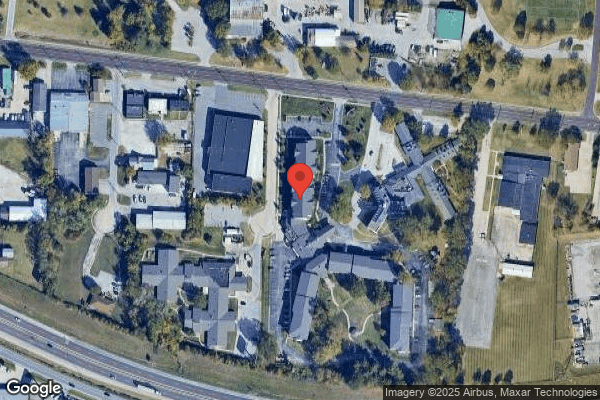
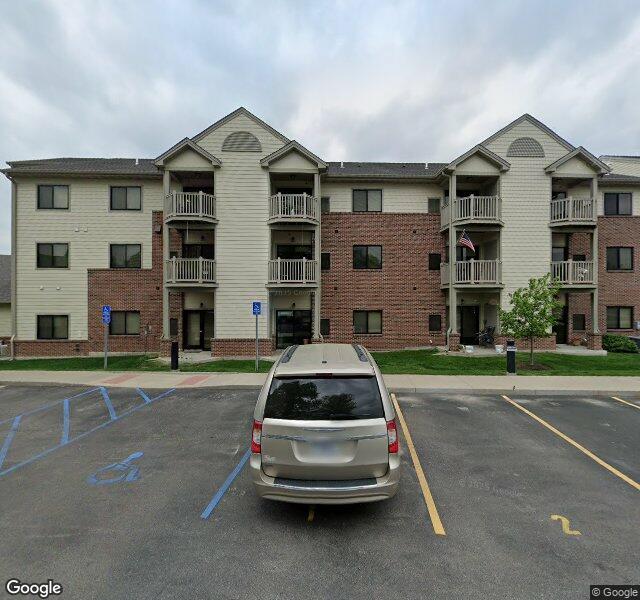
PARKSIDE MANOR

1201 HUNT AVENUE, COLUMBIA, MO 65202 (573) 449-1448
For profit - Limited Liability company 120 Beds JAMES & JUDY LINCOLN Data: November 2025
Trust Grade
40/100
#281 of 479 in MO
Last Inspection: December 2024

Within standard 12-15 month inspection cycle. Federal law requires annual inspections.

Overview

Parkside Manor in Columbia, Missouri, has received a Trust Grade of D, indicating it is below average and has some concerns. It ranks #281 out of 479 nursing homes in Missouri, placing it in the bottom half of facilities statewide, and #6 out of 9 in Boone County, meaning only three local options are better. The facility is showing improvement, with issues dropping from 13 in 2024 to 5 in 2025. Staffing is rated at 2 out of 5 stars, with a 62% turnover rate, which is average, and there is concerningly less RN coverage than 79% of Missouri facilities, meaning residents may not receive the level of care needed. While Parkside Manor has no fines, which is a positive aspect, recent inspections revealed serious issues, such as a resident being injured during a mechanical lift transfer due to improper assistance and failure to properly sanitize equipment, raising potential risks for residents.

Trust Score
D
40/100
In Missouri
#281/479
Bottom 42%
Safety Record
Moderate
Needs review
Inspections
Getting Better
13 → 5 violations
Staff Stability
⚠ Watch
62% turnover. Above average. Higher turnover means staff may not know residents' routines.
Penalties
✓ Good
No fines on record. Clean compliance history, better than most Missouri facilities.
Skilled Nurses
⚠ Watch
Each resident gets only 15 minutes of Registered Nurse (RN) attention daily — below average for Missouri. Fewer RN minutes means fewer trained eyes watching for problems.
Violations
⚠ Watch
48 deficiencies on record. Higher than average. Multiple issues found across inspections.
★★☆☆☆
2.0
Overall Rating
★★☆☆☆
2.0
Staff Levels
★★★☆☆
3.0
Care Quality
★★☆☆☆
2.0
Inspection Score
Stable
2024: 13 issues
2025: 5 issues

The Good

  • Full Sprinkler Coverage · Fire safety systems throughout facility
  • No fines on record

Facility shows strength in fire safety.

The Bad

2-Star Overall Rating

Near Missouri average (2.5)

Below average - review inspection findings carefully

Staff Turnover: 62%

16pts above Missouri avg (46%)

Frequent staff changes - ask about care continuity

Chain: JAMES & JUDY LINCOLN

Part of a multi-facility chain

Ask about local staffing decisions and management

Staff turnover is elevated (62%)

14 points above Missouri average of 48%

The Ugly 48 deficiencies on record

1 actual harm
Aug 2025 1 deficiency
CONCERN (E) 📢 Someone Reported This

A family member, employee, or ombudsman was alarmed enough to file a formal complaint

Potential for Harm - no one hurt, but risky conditions existed

Safe Environment (Tag F0584)

Could have caused harm · This affected multiple residents

**NOTE- TERMS IN BRACKETS HAVE BEEN EDITED TO PROTECT CONFIDENTIALITY** Based on observation, interview and record review, facility staff failed to provide a clean, comfortable and homelike environmen...

Read full inspector narrative →
**NOTE- TERMS IN BRACKETS HAVE BEEN EDITED TO PROTECT CONFIDENTIALITY** Based on observation, interview and record review, facility staff failed to provide a clean, comfortable and homelike environment for residents, staff, and visitors. Staff failed to ensure carpet in shared hallways maintained a pleasant odor, and air vents remained free from excessive build-up of a black unknown substance. The facility's census was 71.1. Review of the facility's Housekeeping Department-Seven Step Cleaning Procedure policy, undated, showed the resident room cleaning procedure should be used for all resident rooms to maintain cleanliness and to promote infection control. Staff are directed as follows:-High dust surfaces above shoulder height;-Wipe down all surfaces, lower ledges and pipes of the sink;-Wipe the tub and shower with approved disinfectant cleaner ready-to-use solution with a clean cloth;-Note any maintenance work that needs to be done, notify your supervisor of any maintenance work.2. Observation on 08/07/25 at 9:50 A.M., showed Resident #1's bathroom door with gouges and a hole to the lower left corner, the air vent contained a build-up of a dark grey substance, the faucet contained a build-up of debris, and the toilet tank lid on the floor in the corner under the sink.During an interview on 08/07/25 at 11:54 A.M., the resident said staff have been taking him/her to use the bathroom in the residents' shower room. During an interview on 08/07/25 at 2:04 P.M., the Maintenance Director said he/she was not aware of the hole in the resident's bathroom door, but he/she turned the water supply off to the resident's toilet to prevent a leak at the base of the toilet, and had a new toilet ordered to replace it. He/She said he/she notified staff to assist the resident to use the bathroom in the spa room until he/she installs the new toilet. He/She said housekeeping is responsible to clean the faucets daily, and if they notice any build-up areas, they should report to him/her to address. 3. Observation on 08/07/25 at 10:00 A.M., showed Resident #3's room ceiling with areas of missing paint. Observation showed the bathroom shower stall with clothing, suitcase, a walking cane, plastic storage containers, and the toilet's arm rest with cracks and sharp edges.During an interview on 08/07/2025 at 2:18 P.M., the Director of Nursing (DON) said the residents who reside inside the room do not normally use the bathroom inside the room. He/She said he/she was not aware of the items stored inside the residents' shower stall and would expect staff to place the items on a raised surface for cleanliness if the shower stall was being used as storage.4. Observation on 08/07/25 at 11:28 A.M., showed Resident #2's ceiling missing paint, the air vent contained pieces of white debris under the window air conditioning unit, the bathroom air vent with build-up of a dark grey substance, and areas of patched/unpainted drywall next to the toilet paper holder.During an interview on 08/07/25 at 11:30 A.M., Resident #2 said housekeeping staff does not always sweep or vacuum the carpet in his/her room, and the debris under the window unit has been there for at least two days. The resident said he/she was recently moved to his/her current room due to concerns of a toilet overflow from the adjacent room, and potential mold on the carpet inside his/her old room. 5. Observation on 08/07/25 at 11:41 A.M., showed occupied resident room [ROOM NUMBER] Resident #5's room carpet with dark stains and multiple areas of missing/unpainted ceiling texture.6. During an interview on 08/07/2025 at 11:35 A.M., Housekeeper C said maintenance staff are responsible to clean the air vents, and housekeeping staff is responsible to clean the resident rooms, bathrooms, blinds, and to sweep and vacuum the floors daily.During an interview on 08/07/2025 at 1:15 P.M., Certified Medical Technician (CMT) A said a couple residents expressed their concerns to staff of potential mold inside their rooms and were moved to different rooms. He/she said staff are expected to document maintenance issues in the maintenance book at the nurses' station or tell the maintenance director/administrator. The CMT said he/she did not recall the exact residents. During an interview on 08/07/2025 at 1:28 P.M., CMT B said staff are expected to document concerns with broken stuff and room maintenance issues in the maintenance logbook kept at each nurses' station.During an interview on 08/07/2025 at 1:40 P.M., the Housekeeping Supervisor said housekeeping staff are responsible to clean the resident rooms daily and maintenance is responsible to clean the air vents.During an interview on 08/07/2025 at 2:04 P.M., the Maintenance Director said he/she was responsible to maintain the building with drywall repairs, painting, etc. He/She said staff are expected to use the maintenance book on each hall to report any broken items or maintenance concerns for him/her to address.During an interview on 08/07/2025 at 2:18 P.M., the DON said staff are expected to report any maintenance issues by documenting in the maintenance logbook at the nurses' stations. During an interview on 08/07/2025 at 2:30 P.M., the administrator said he/she expects staff to document maintenance issues/concerns in the maintenance logbook at the nurses' stations rather than verbally telling the maintenance director, the maintenance director to check the books daily, and sign/acknowledge each concern once they have been addressed.7. Review of the facility's policies showed staff did not provide a policy regarding the maintenance of hallway carpets and building air vents.Review of the administrator's electronic communication with the Corporate Maintenance staff, dated 08/07/25, showed an email with subject line Carpet odor and possible mold. The Corporate Maintenance staff documented the Maintenance Supervisor contacted him/her a week prior to discuss carpet concerns, and he/she ordered and shipped a chemical carpet cleaner to the facility to be used, and if the Maintenance Supervisor had any issues or questions to contact him/her to come up with another solution. 8. Observation on 08/07/25 at 9:15 A.M., showed the hallway carpet on the [NAME] Hall with scattered dark-colored stains marks, a musty smell, and an unpleasant pungent odor.Observation on 08/07/25 at 1:48 P.M., showed the hallway carpet on the [NAME] Hall with scattered dark-colored stains marks, a musty smell, and an unpleasant pungent odor.During an interview on 08/07/2025 at 1:40 P.M., the Housekeeping Supervisor said the floor technicians are responsible to clean the floors and carpets in the hallways daily, and he/she oversees that it gets done. 9. Observation on 08/07/25 at 10:04 A.M., showed four square ceiling air vents surrounding the nurses' station on the [NAME] Hall with a scattered build-up of a black unknown substance.During an interview on 08/07/2025 at 2:04 P.M., the Maintenance Director said he/she had not had the chance to clean the vents by the [NAME] Hall nurses' station.10. Observation on 08/07/2025 at 10:46 A.M., showed two large square air vents on the wall in the dining room with an accumulation of a dark grey substance and dirt.11. Observation on 08/07/2025 at 10:48 A.M., showed the air vents in the kitchen and the dietary managers office contained build-up of a black unknown substance:12. Observation on 08/07/2025 at 10:55 A.M., showed two large vents in the facility kitchen above the two-sink compartment with an accumulation of a dark grey substance and dirt.13. Observation on 08/07/2025 at 11:01 A.M., showed two ceiling air vents surrounding the nurse's station on the Colonial Hall with a scattered build-up of a black unknown substance.During an interview on 08/07/2025 at 11:35 A.M., Housekeeper C said maintenance staff are responsible to clean the air vents. Housekeeper C said he/she reported to maintenance about a week prior that the air vents near the nurses' station were covered with a black substance. He/She said maintenance did clean some of the air vents, but the black substance is still there.During an interview on 08/07/2025 at 1:15 P.M., CMT A said he/she noticed black stuff inside the vents by the nurses' stations about a week and had verbally reported it to maintenance. During an interview on 08/07/2025 at 1:28 P.M., CMT B said a little over a week ago he/she reported to the housekeeping supervisor, maintenance, and the Administrator that there was a black substance on the air vents surrounding the Colonial Hall nurses' station and inside the clean utility room. He/She said they did clean some of the vents, but you can see it building back up inside the vents by the nurses' station. The CMT said he/she is not sure if anyone has a schedule to clean the air vents. 14. During an interview on 08/07/2025 at 1:40 P.M., the Housekeeping Supervisor said the floor techs are responsible to clean the floors and carpets in the hallways, and maintenance is responsible to clean the air vents. The Housekeeping Supervisor said he/she has seen what looks like mold on carpets in some of the empty rooms and he/she sprayed the areas earlier in the morning with a chemical that usually works well. He/She said the floor techs are expected to clean the floors and carpets in the hallways daily, and he/she oversees that it gets done. During an interview on 08/07/2025 at 2:04 P.M., the Maintenance Director said he/she is responsible for cleaning the air vents. The Maintenance Director said he/she recently cleaned the air vents on the Colonial Hall, but still needs to clean the other air vents. The Maintenance Director said he/she does not have a routine schedule to clean the air vents, but he/she will clean them as needed. He/She said they have had issues with condensation on the air vents which has been making them dirty and has talked with the facility's corporate maintenance staff about getting rid of extra condensation because it could lead to mold. The Maintenance Director said he/she does not currently have concerns of mold being on the vents but understands the air vents are dirty and has had staff members report that the air vents are dirty. The Maintenance Director said he/she received a chemical to use to clean the carpets in the rooms that smell like mildew, and the chemical will kill the mold if there is mold.During an interview on 08/07/2025 at 2:18 P.M., the DON said about a week prior, one staff member reported there was a black substance on the air vents by the Colonial Hall nurses' station. The DON said he/she reported it to maintenance and the Administrator. The DON said room [ROOM NUMBER] and room [ROOM NUMBER] were two rooms that residents were moved out of because of concerns with suspected mold.During an interview on 08/07/2025 at 2:30 P.M., the Administrator said the DON sent him/her a picture of the air vents on the Colonial Hall that showed the air vents covered in a black substance, he/she reported it to maintenance who went and cleaned the air vents. The Administrator said the facility does not currently have a set schedule to clean the air vents, but he/she would expect maintenance to clean the vents every two weeks and as needed. He/She said that about a week prior, two residents noticed signs of a wet dark sport on the carpet in their rooms, and had a musty smell, and both residents have been removed from those rooms and moved into different rooms. The Administrator said he/she and maintenance have started to clean the carpets with a chemical.Complaint # 2575243, 2574982, 2576588, 2578982
Apr 2025 4 deficiencies
CONCERN (D) 📢 Someone Reported This

A family member, employee, or ombudsman was alarmed enough to file a formal complaint

Potential for Harm - no one hurt, but risky conditions existed

Notification of Changes (Tag F0580)

Could have caused harm · This affected 1 resident

**NOTE- TERMS IN BRACKETS HAVE BEEN EDITED TO PROTECT CONFIDENTIALITY** Based on observation, interview, and record review, facility staff failed to notify one resident's (Resident #1) physician when ...

Read full inspector narrative →
**NOTE- TERMS IN BRACKETS HAVE BEEN EDITED TO PROTECT CONFIDENTIALITY** Based on observation, interview, and record review, facility staff failed to notify one resident's (Resident #1) physician when the resident said he/she did not want to live anymore. The facility census was 77. 1. Review of the facility's Suicide Threats policy, undated, showed: -Resident suicide threats shall be taken seriously and addressed appropriately; -Staff shall report any resident threats immediately to the charge nurse; -The charge nurse shall immediately assess the situation and shall notify the director of nursing of such threats; -After assessing the resident in more detail, the charge nurse shall notify the resident's attending physician and responsible party, and shall seek further direction from the physician; -Staff shall document details of the situation objectively in the resident's medical record. 2. Review of Resident #1's face sheet showed the resident admitted to the facility on [DATE] with diagnoses of generalized anxiety disorder and suicidal ideations. Review of the resident's Electronic Health Record (EHR) showed the health record did not contain a care plan. Review of the resident's nurse's note, dated 04/05/2025 at 6:45 P.M., showed staff documented resident frequently cries. Review showed staff documented they overheard the resident on the phone a few weeks ago, say he/she did not know if he/she wanted to live anymore. Staff member reported this to this nurse, this nurse went and spoke to resident about what was overheard, told him/her if he/she was having these feelings, it would be a good idea to go to the hospital where they would be able to help him/her better with his/her emotional state. Review of the resident's EHR showed the record did not contain documentation staff notified the residents physician of the resident saying he/she did not know if he/she wanted to live anymore. During an interview on 04/05/25 at 6:20 P.M., Licensed Practical Nurse (LPN) said the resident cries all the time. The LPN said a staff member overheard the resident telling someone on the phone he/she did not want to live. The charge nurse said he/she thought the incident was a couple of weeks ago and he/she did not remember which staff member overheard the resident. The LPN said he/she spoke with the resident. LPN A said he/she did not notify the DON or resident's doctor because he/she thought the resident was okay after he/she spoke with the resident. The LPN said he/she did not document the incident at the time because he/she thought the resident was okay. The LPN said he/she was not aware of the resident talking about suicide today. During an interview on 04/07/25 at 10:20 A.M., the DON said he/she would expect to be notified if a resident said they did not want to live anymore. The DON said he/she would expect the resident's doctor to be notified. The DON said the nurse should document the resident's emotional distress and any actions taken to reduce the distress. The DON said he/she was aware the resident had a psychiatric history but was not aware of the resident's diagnosis of suicidal ideations. During an interview on 04/07/25 at 11:52 A.M., the administrator said he/she would expect the charge nurse to notify the residents doctor if a resident talked about suicide. The administrator said the charge nurse is responsible for ensuring the resident is closely monitored and all actions are documented and shared with other staff caring for the resident. MO00252319
CONCERN (D) 📢 Someone Reported This

A family member, employee, or ombudsman was alarmed enough to file a formal complaint

Potential for Harm - no one hurt, but risky conditions existed

Comprehensive Assessments (Tag F0636)

Could have caused harm · This affected 1 resident

**NOTE- TERMS IN BRACKETS HAVE BEEN EDITED TO PROTECT CONFIDENTIALITY** Based on interview and record review, facility staff failed to complete the required Minimum Data Set (MDS), a federally mandate...

Read full inspector narrative →
**NOTE- TERMS IN BRACKETS HAVE BEEN EDITED TO PROTECT CONFIDENTIALITY** Based on interview and record review, facility staff failed to complete the required Minimum Data Set (MDS), a federally mandated resident assessment, within the required time frame for one (Resident #1) of one sampled resident. The facility's census was 77. 1. Review of the RAI manual version 3.0 RAI Omnibus Budget Reconciliation Act (OBRA)-required Assessment Summary showed an admission (Comprehensive) MDS completion date no later than 14th calendar day of the resident's admission. 2. Review of Resident #1's Entry Tracking Record MDS, showed the resident admitted to the facility on [DATE]. Review of the resident's electronic health record did not contain a completed MDS or submitted admission assessment within the required time frame. Review showed the admission assessment included a due date of 04/02/25. During an interview on 04/07/25 at 10:20 A.M., the Director of Nursing (DON) said the MDS coordiantor was responsible for ensuring the admission assessment was completed within 14 days of admission. During an interview on 04/07/25 at 10:45 A.M., the MDS Coordinator said he/she had 14 days to complete the admission assessment. The MDS coordinator said the corporate registered nurse (RN) then had three days to sign the completed MDS. The MDS coordinator said the MDS assessment was not complete until an RN signed it. During an interview on 04/07/25 at 9:18 A.M., the administrator said the MDS Coordinator is responsible to complete the residents' MDS within the required time frames. He/She said the residents' admission MDS should be completed within 14 days after admission. The administrator said he/she was not aware of an additional three day period for an RN to sign the MDS assessment. The administrator said he/she was not aware the resident's MDS assessment was not completed. MO00252319
CONCERN (D) 📢 Someone Reported This

A family member, employee, or ombudsman was alarmed enough to file a formal complaint

Potential for Harm - no one hurt, but risky conditions existed

Deficiency F0655 (Tag F0655)

Could have caused harm · This affected 1 resident

**NOTE- TERMS IN BRACKETS HAVE BEEN EDITED TO PROTECT CONFIDENTIALITY** Based on observation, interview and record review, facility staff failed to develop a comprehensive person-centered baseline car...

Read full inspector narrative →
**NOTE- TERMS IN BRACKETS HAVE BEEN EDITED TO PROTECT CONFIDENTIALITY** Based on observation, interview and record review, facility staff failed to develop a comprehensive person-centered baseline care plan to meet the resident's medical, nursing, mental and psychosocial needs for one resident (Resident #1). The facility's census was 77. 1. Review a baseline care plan showed staff are directed to complete the baseline care plan within 48 hours of admission. After completion, print and file following community protocols 2. Review of Resident #1's medical record showed staff documented the resident was admitted to the facility on [DATE]. Review showed the record did not contain a baseline care plan. During an interview on 04/05/25 at 7:42 P.M., the Assistant Director of Nursing (ADON) said he/she loaded the baseline care plan template into the Electronic Health Record when the resident was admitted . The ADON said the admitting nurse was responsible for completing the baseline care plan upon admission. The ADON said the DON was responsible for ensuring the baseline care plan was completed as required. During an interview on 04/07/25 at 10:20A.M., the DON said the admitting nurse was responsible for completing a comprehensive assessment, which served as the baseline care plan, by the end of the shift on the day of admission. The DON said he/she or the ADON were responsible for ensuring baseline care plans were completed. The DON said he/she was on vacation the week the resident was admitted and the baseline care plan was missed. The DON said he/she was aware the resident had a psychiatric history but was not aware of a recent diagnosis of suicidal ideations. During an interview on 04/07/25 at 11:52 A.M., the administrator said baseline care plans are to be completed upon admission by the admitting nurse. The administrator said he/she would expect the ADON or DON to follow up on missing care plans. MO00252319
CONCERN (D) 📢 Someone Reported This

A family member, employee, or ombudsman was alarmed enough to file a formal complaint

Potential for Harm - no one hurt, but risky conditions existed

Deficiency F0658 (Tag F0658)

Could have caused harm · This affected 1 resident

**NOTE- TERMS IN BRACKETS HAVE BEEN EDITED TO PROTECT CONFIDENTIALITY** Based on observation, interview, and record review, facility staff failed to take appropriate action when one resident (Resident...

Read full inspector narrative →
**NOTE- TERMS IN BRACKETS HAVE BEEN EDITED TO PROTECT CONFIDENTIALITY** Based on observation, interview, and record review, facility staff failed to take appropriate action when one resident (Resident #1) threatened suicide. The facility census was 77. 1. Review of the facility's Suicide Threats policy, undated, showed: -Resident suicide threats shall be taken seriously and addressed appropriately; -Staff shall report any resident threats immediately to the charge nurse; -The charge nurse shall immediately assess the situation and shall notify the director of nursing of such threats; -A staff member shall remain with the resident until the charge nurse arrives to evaluate the resident; -After assessing the resident in more detail, the charge nurse shall notify the resident's attending physician and responsible party, and shall seek further direction from the physician; -All nursing personnel and other staff involved in caring for the resident shall be informed of the suicide threat and instructed to report changes in the resident's behavior immediately; -As indicated, a psychiatric consultation or transfer for emergency psychiatric evaluation may be initiated; -If the resident remains in the facility, staff will monitor the resident's mood and behavior and update care plans accordingly, until a physician has determined that a risk of suicide does not appear to be present; -Staff shall document details of the situation objectively in the resident's medical record. 2. Review of the resident's face sheet showed Resident #1 was admitted to the facility on [DATE]. Review showed admitting diagnoses included generalized anxiety disorder and suicidal ideations. Review of the resident's electronic health record showed it did not contain a care plan. Review of the resident's nurse's note, dated 04/05/2025 at 6:45 P.M., showed Licensed Practical Nurse (LPN) A documented resident frequently cries, was overheard one time from a staff member in the hall, she was in her room on the phone, saying something in regard to, he/she did not know if he/she wanted to live anymore. Staff member reported this to this nurse, this nurse went and spoke to resident about what was overheard, told him/her that if he/she was having these feelings, it would be a good idea to go to the hospital where they would be able to help him/her better with his/her emotional state. The nurse documented he/she asked the resident if he/she had a plan to hurt him/herself, resident denied he/she had any kind of plan, and he/she had made an appointment with his/her usual doctor over video conference and would be okay to wait until this date. This nurse checked on resident at least every 15 minutes, sometimes more frequently to see how he/she was feeling. After speaking with him/her several times, resident was quite pleasant and said he/she felt a lot better and thanked me for listening. Will continue to monitor resident closely for emotional status and behavior. Review showed the documentation did not contain the date and time of the incident. Review of the resident's Electronic Health Record (EHR) showed the record did not contain: -The date the resident stated he/she did not want to live anymore; -Documentation of Director of Nursing (DON) notification; -Documentation of physician notification. During an interview on 04/05/25 at 6:20 P.M., the LPN A overheard the resident telling someone on the phone he/she did not want to live. The LPN said he/she thought the incident was a couple of weeks ago and he/she did not remember which staff member overheard the resident. LPN A said he/she spoke with the resident. The LPN said he/she did not notify the DON or resident's doctor because he/she thought the resident was okay after he/she spoke with the resident. The LPN said he/she did not document the incident at the time because he/she thought the resident was okay. During an interview on 04/05/25 at 8:00 P.M., the DON said he/she was never notified of any issues with the resident. During an interview on 04/07/25 at 10:20 A.M., the DON said he/she would expect to be notified if a resident said they did not want to live anymore. The DON said he/she would expect the resident's doctor to be notified. The DON said the nurse should document the resident's emotional distress and any actions taken to reduce the distress. The DON said he/she was aware the resident had a psychiatric history but was not aware of the resident's diagnosis of suicidal ideations. During an interview on 04/07/25 at 11:52 A.M., the administrator said he/she would expect the charge nurse to notify the DON and doctor if a resident talked about suicide. The administrator said the charge nurse is responsible for ensuring the resident is closely monitored and all actions are documented and shared with other staff caring for the resident. The administrator said nursing staff should develop a written plan to address any resident's emotional distress. The administrator said he/she was unaware of any issues with the resident. The administrator said he/she was not aware of the resident's diagnosis of suicidal ideations. During an interview on 04/14/25 at 1:05 P.M., the physicians nurse said there was no record of the facility contacting the physician's office between 03/26/25 and 04/04/25 related to suicidal comments or emotional distress. MO00252319
Dec 2024 10 deficiencies
CONCERN (D)

Potential for Harm - no one hurt, but risky conditions existed

Notification of Changes (Tag F0580)

Could have caused harm · This affected 1 resident

**NOTE- TERMS IN BRACKETS HAVE BEEN EDITED TO PROTECT CONFIDENTIALITY** Based on observation, interview, and record review, facility staff failed to notify one resident's (Resident #24) representative...

Read full inspector narrative →
**NOTE- TERMS IN BRACKETS HAVE BEEN EDITED TO PROTECT CONFIDENTIALITY** Based on observation, interview, and record review, facility staff failed to notify one resident's (Resident #24) representative and physician as per policy when the resident's toilet came unsecured from the floor and tipped and required a room change. Facility staff failed to notify one resident's (Resident #32) physician in a timely manner when the resident had a skin injury. The facility census was 73. 1. Review of the facility's Event Investigation policy, undated, showed: -The purpose was to investigate the cause of all marks, discolorations, skin breaks and injuries which have not been witnessed and to identify any injuries after a resident sustains an event. -Staff were instructed to complete an event form as soon as possible whenever there is an unusual, unexpected and/or unintended event that is not consistent with the routine operation of the facility, the routine care of the resident and/or adversely effects or has the potential to adversely affect a resident or visitor. Examples of when a form should be completed include: -Equipment malfunction; -Fall or person found on the floor; -Bruise/skin tear of unknown origin. -Any staff member who discovers, witnesses or is involved in an event should immediately report the event to the nurse in charge. The charge nurse is responsible for completion of the Report of Event form and forwarding to the Director of Nursing (DON) as soon as possible. -Responsible party - who and how related, date and time of notification must be documented in the medical record; -Investigation guidelines directed staff to: -Examine the entire skin surface; -Identify all skin discolorations, redness, swelling, edema, tenderness, breaks, or changes in temperature; -Notify the resident's attending physician of a change of condition or of any concerns that have been identified. Review of the facility's Room Changes policy, dated April 2006, showed staff were directed to: -Inform the resident, his/her legal representative, and/or family members immediately if room or roommate changes are indicated; -Seek approval from resident, legal representative and/or family members when room or roommate change is being considered; -Document room or roommate move in medical record, identifying resident's or family member's approval. Review of the facility's Condition Change, Resident policy, dated March 2012, showed the purpose of the policy was to observe, record and report any change to the attending physician so that proper treatment can be implemented. Review showed documentation pertaining to accidents or incidents involving residents should include: -Circumstances surrounding the accident or incident; -Time the physician was notified as well as the time the physician responded; -The date and time the family was notified and by whom; -All pertinent observations. 2. Review of Resident 24's Annual Minimum Data Set (MDS), a federally mandated assessment tool, dated 12/20/24, showed staff assessed the resident as: -Cognitively intact; -Diagnoses of diabetes, unspecified swelling, and unspecified pain; -Used a walker; -Toilet transfer independent. Observation on 02/13/25 at 10:45 A.M., showed a sign on the resident's door Under Renovation. Review of the resident's late entry nursing note, dated 02/13/2025 at 11:09 AM, showed staff documented the resident in room screaming help. Resident on the toilet and it became displaced. Resident was not on the floor. Resident stated he/she was okay. Staff offered to change rooms and he/she refused. During an interview on 02/13/25 at 11:27 A.M., the administrator said the resident was moved to another room earlier in the day on 02/13/25. The administrator said the resident's toilet broke yesterday evening, but the resident did not want to change rooms at the time. Review of the resident's electronic medical record did not contain documentation staff notified the resident's representative of room change due to the equipment malfunction and did not contain documentation staff notified the resident's physician. During an interview on 02/13/25 at 11:35 A.M., the resident said when he/she leaned over to wipe, the toilet came loose from the floor and he/she was trapped against the wall. The resident said he/she was moved to a new room this morning. During an interview on 02/13/25 at 12:15 P.M., Licensed Practical Nurse (LPN) A said the medication technician told him/her the toilet tipped over while the resident was on it. LPN A said he/she didn't think the event was a fall since the resident did not hit the floor. LPN A said he/she did not notify the family or doctor because there was no fall or injury noted at the time. During an interview on 02/13/25 at 2:30 P.M., the Director of Nursing (DON) said he/she would expect the nurse to notify the resident's representative of a room change and document it. During an interview on 02/13/25 at 3:45 P.M., the Administrator said the resident representative should be informed of room changes. During an interview on 12/14/25 at 12:18 P.M., the resident's representative said facility staff did not notify him/her of the the resident's room change. During an interview on 02/20/25 at 9:05 A.M., the physician said he/she heard about the event with the resident as he/she was leaving the facility last week. The physician said he/she spoke with the resident briefly and told the resident the nurse would assess him/her. The physician said there was a staff member present, but he/she could not recall which staff member. The physician said he/she expected a call after the resident was assessed but did not receive a call. During an interview on 02/20/25 at 11:25 A.M., the nurse supervisor said if a resident was not their own responsible party facility staff would notify the resident representative. The nurse supervisor said he/she thought the resident was his/her own responsible party, but he/she had not looked at the resident's face sheet so he/she did not know for sure. During an interview on 02/20/25 at 11:40 A.M., the DON said if a resident is not responsible for himself/herself the listing Power of Attorney should be notified of any incidents or room changes. The DON said the resident medical record did not contain documentation of representative notification of a room change. The DON said family were aware of the resident's room change, but he/she did not know how they were made aware. The DON said resident representatives and physicians should be made of aware of any issues with residents to include room changes. 3. Review of Resident #32's Quarterly MDS, dated [DATE], showed staff assessed the resident as: -Cognitively intact; -Diagnoses of stroke, hemiplegia (weakness or paralysis) and hemiparesis (weakness on one side of the body) following stroke affecting left non-dominant side; -Functional Limitation in Range of Motion-Upper and Lower impairment on one side; -Used wheelchair; -Required partial to moderate assist with chair/bed to chair transfer. Review of the resident's care plan, last reviewed/revised 12/06/2024, showed staff documented to notify physician of signs/symptoms of bleeding or increased bruising as listed above. Observation on 02/13/25 at 11:00 A.M., showed the resident top of left hand with areas bruised and scabs. Review of the resident's nurse progress notes, dated 02/08/25 through 02/11/25, showed it did not contain documentation staff notified the physician of the resident's skin issues. During an interview on 02/13/25 at 10:55 A.M., the resident said he/she had a fall three or four days ago. The resident said he/she fell when trying to transfer from the bed to a wheelchair. During an interview on 02/13/25 at 12:50 P.M., LPN A said on 02/09/2025, he/she was able to reach the resident about halfway through the transfer so the resident didn't fall. LPN A said he/she helped the resident to the wheelchair. LPN A said shortly after the transfer to the wheelchair, the resident came to the nurses station and informed him/her of an injury to his/her left hand. The LPN said he/she did not complete any additional skin assessment and did not know if he/she documented the incident or the treatment. LPN A said he/she did not notify the physician of the resident's skin injury. During an interview on 02/13/25 at 2:30 P.M., the DON said if a resident had a skin injury the nurse would be expected to notify the physician. During an interview on 02/19/25 at 3:20 P.M., the physician's triage nurse said the physician's office did not have a record of calls from the facility related to the resident's hand injury. The nurse said any time a resident had a noticeable bruise, abrasion or obvious injury the physician should be notified. During an interview on 02/20/25 at 9:05 A.M., the physician said he/she was not aware of any incidents or skin issues with the resident. The physician said he/she would expect to be notified if a resident had a fall or an injury. The physician said he/she saw the resident yesterday, but did not look at the resident's hand because he/she was not aware of any issues. During an interview on 02/20/25 at 11:25 A.M., the nurse supervisor said he/she was not aware of any issues with the resident. The nurse supervisor said he/she spoke with LPN A about the incident with the resident but did not know if LPN A treated the resident's hand or notified the physician. During an interview on 02/20/25 at 11:40 A.M., the DON said resident representatives and physicians should be made of aware of any issues with residents to include changes in skin condition. The DON said Resident #32's medical record did not contain documentation staff notified the physician. MO00249457
CONCERN (D)

Potential for Harm - no one hurt, but risky conditions existed

Deficiency F0679 (Tag F0679)

Could have caused harm · This affected 1 resident

**NOTE- TERMS IN BRACKETS HAVE BEEN EDITED TO PROTECT CONFIDENTIALITY** Based on observation, interview, and record review, facility staff failed to provide an ongoing program of daily activities desi...

Read full inspector narrative →
**NOTE- TERMS IN BRACKETS HAVE BEEN EDITED TO PROTECT CONFIDENTIALITY** Based on observation, interview, and record review, facility staff failed to provide an ongoing program of daily activities designed to meet the resident's interests for four residents (Residents #1, #55, #67 and #270) out of five sampled residents who reside on the Memory Care Unit (MCU). The facility's census was 66. 1. Review of the facility's policies, showed the facility did not provide a policy for activities. 2. Review of the facility's activity calendar in MCU, dated November 2024, showed: -Saturday, 11/02/24: Did not contain documentation of an activity; -Sunday, 11/03/24: Activity cart available; -Saturday, 11/09/24: Activity cart available; -Sunday, 11/10/24: Activity cart available; -Saturday, 11/16/24: Activity cart available; -Sunday, 11/17/24: Activity cart available; -Saturday, 11/23/24: Activity cart available; -Sunday, 11/24/24: Activity cart available; -Saturday, 11/30/24: Activity cart available. Observation on 12/16/24 at 11:00 A.M., 12/17/24 at 11:16 A.M. and 1:40 P.M., 12/18/24 at 10:32 A.M., and 12/19/24 at 10:23 A.M., showed the MCU did not contain a December 2024 activity calendar. 3. Review of Resident #1's Annual Minimum Data Set (MDS), a federally mandated assessment tool, dated 08/16/24, showed staff assessed the resident as severe cognitive impairment, and prefers: -Reading books, newspapers, or magazines, listening to music; -Doing things with groups of people, participate in favorite activities, spending time outdoors; -Participating in religious activities or practices. Review of the resident's care plan, dated 12/16/24, showed staff documented the resident: -Needs encouragement, guidance, and assistance for socialization; -Will participate in group activities and enjoys going outdoor with staff; -Enjoys one on one activities with staff; -Enjoys ball toss with staff and/or other residents multiple times a week for balance and socialization; -The plan did not contain direction for religious preference, activities, or practices. Observation on 12/17/24 at 11:16 A.M. and 1:40 P.M., showed the resident asleep in his/her bed. Observation showed an activity calendar on the wall, dated November 2024. Observation on 12/18/24 at 10:05 A.M., showed the resident awake in his/her wheelchair alone at the dining room table. Observation showed staff did not provide an activity. 4. Review of Resident #55's admission MDS, dated [DATE], showed staff assessed the resident as follows: -Moderate cognitive impairment; -Very important to listen to music, be around animals such as pets, and to do his/her favorite activities; -Somewhat important to have books, newspapers, and magazines to read, do things with groups of people, go outside to get fresh air when the weather is good, and participate in religious services or practices. Review of the resident's quarterly MDS, dated [DATE], showed staff assessed the resident as moderate cognitive impairment, supervision with transfers, and independent with walking at least 50 feet. Review of the resident's care plan, dated 11/07/24, showed staff were directed: -Provide an activities calendar and remind him/her of upcoming activities; -Provide in-room activities/reading material if he/she chooses to have them; -Discuss the activities offered while visiting with him/her; -Offer one-on-one visits for sensory stimulation, socialization, and emotional support; -The plan did not contain direction for religious preference, activities, or practices. Observation on 12/17/24 at 10:00 A.M. through 10:35 A.M., showed residents listened to Carolers in the facility's main dining room. Observation on 12/17/24 at 11:23 A.M., showed the resident in his/her room awake in the recliner. Observation showed an activity calendar on the wall, dated November 2024. Observation on 12/18/24 at 10:59 A.M., showed the resident awake in the recliner in his/her room. Observation showed staff did not provide an activity. During an interview on 12/17/24 at 11:25 A.M., the resident said staff does not do any activities with him/her inside the room, and he/she did not know if there was an activity going on for the day. The resident said he/she would have enjoyed listening to the carolers singing but he/she did not know the carolers were there earlier. During an interview on 12/19/24 at 11:59 A.M., the AD said the resident would have loved to hear the Carolers, because he/she enjoyed it the last time the carolers were at the facility about a week prior. The AD said he/she did not bring the carolers to the MCU and did not bring any of the residents from the MCU to the main area to participate in any activities this week, as he/she was just busy. The AD said he/she did not think any other staff offered to bring any of the resident's out to the main area for any activities either. 5. Review of Resident #67's admission MDS, dated [DATE], showed staff assessed the resident as follows: -Severe cognitive impairment; -Very important to do his/her favorite activities and go outside to get fresh air when the weather is good; -Somewhat important to have books, newspapers, and magazines to read, listen to music, and keep up with the news. Review of the resident's care plan, dated 11/21/24, showed staff were directed: -Provide an activities calendar and remind him/her of upcoming activities; -Offer one-on-one visits for sensory stimulation, socialization, and emotional support; -Discuss the activities offered while visiting with him/her; -If he/she is wandering, try offering pleasant diversions, structured activities, food, conversation, television (TV) or reading materials. Observation on 12/16/24 at 2:30 P.M., showed residents played bingo in the facility's main dining room. Observation on 12/16/24 at 2:34 P.M., showed the resident in the hallway across from the TV alone and the TV off. Observation on 12/17/24 at 11:48 A.M., showed staff did not post an activity calendar in the resident's room. Observation showed there was not an activity calendar for December 2024 and staff did not provide an activity. Observation on 12/17/24 at 1:59 P.M., showed the resident wandered back and forth in the hallway. Observation showed there was not an activity calendar for December 2024 and staff did not provide an activity. Observation on 12/18/24 at 10:32 A.M., showed the resident wandered back and forth in the hallway. Observation showed there was not an activity calendar for December 2024 and staff did not provide an activity. During an interview on 12/19/24 at 12:02 P.M., the AD said he/she has not personally assessed the residents' specific interests, but has interacted with the resident, and was familiar with the directions for activities in the resident's care plan. He/She said he/she was not involved in the resident's activity preferences on the MDS. 6. Review of Resident #270's admission MDS, dated [DATE], showed staff assessed the resident as follows: -Severe cognitive impairment; -Supervision with transfers and walking at least 150 feet; -Very important to do his/her favorite activities; -Somewhat important to have books, newspapers, and magazines to read, listen to music, do things with groups of people, and participate in religious services or practices. Review of the resident's care plan, dated 12/11/24, showed staff were directed: -Provide an activities calendar and remind him/her of upcoming activities; -Offer one-on-one visits for sensory stimulation, socialization, and emotional support; -Discuss the activities offered while visiting with him/her; -Provide in-room activities/reading material if he/she chooses to have them. Observation on 12/17/24 at 2:53 P.M., showed the resident pacing back and forth in hallway. Observation showed there was not an activity calendar for December 2024 and staff did not provide an activity on the MCU. Observation showed residents played bingo in the facility's main dining room. Observation on 12/18/24 at 10:47 A.M., showed the resident pacing back and forth in hallway asking what do I do now? Observation showed there was not an activity calendar for December 2024 and staff did not provide an activity on the MCU. During an interview on 12/19/24 at 12:02 P.M., the AD said he/she has not personally assessed the residents' specific interests, but has interacted with the resident, and was familiar with the directions for activities in the resident's care plan. 7. Observation on 12/17/24 at 1:51 P.M., showed Certified Nursing Assistant (CNA) J, and four residents sat on chairs in the hallway on the MCU, a Western Movie displayed on the TV. Observation on 12/17/24 from 2:03 P.M. through 2:07 P.M., showed CNA J sat on a chair in the hallway with his/her eyes closed, one resident sat next to him/her on each side, while three other residents wandered in the hallway. Observation showed staff did not engage in any one-on-one activity, in-room activity, or group activity with the residents. During an interview on 12/17/24 at 2:26 P.M., CNA J said there is usually one CNA scheduled to work on the MCU on the day shift. He/She said the CNA does random activities such as coloring, puzzles, a board with different locks to open and close, and movies, but sometimes the residents will just get up and leave. The CNA said the AD sometimes does one-on-one activities with the residents. 8. Observation on 12/18/24 from 9:55 A.M. through 11:06 A.M., showed four residents sat on chairs in the hallway on the MCU, the TV in the hallway was turned off. Observation showed staff did not engage in any one-on-one activity, in-room activity, or group activity with the residents. During an interview on 12/18/24 at 10:51 A.M., CNA H said he/she did not know the routine for the residents on the MCU, and realizes the residents are ambulatory and active/busy. The CNA said there is a cabinet in the dining area that he/she thinks has stuff for activities, but the cabinet is locked, and the staff member who knows the code for the lock did not give him/her the code. The CNA said if there were two staff working on the MCU, one could be doing some activities with the residents, while the other staff helps to monitor the residents who wander the hallways or doesn't wish to participate in the activity. 9. During an iterview on 12/18/24 at 11:11 A.M., Certified Medication Technician (CMT) L said there is no scheduled activity on the MCU like there is on the other halls, and it seems to be a spur of the moment when the AD does something for the residents on the unit. The CMT said the CNA assigned to the MCU may play music on the TV in the hallway, play cards, or color with some of the residents, but only when they have time to do it, since there is usually just one person assigned to the MCU, and there is no activities staff at the facility on the weekends. During an interview on 12/19/24 at 11:59 A.M., the AD said he/she is the only activities staff at the facility and was working on a structure with reasonable times to conduct activities for the residents on the MCU, and tries to do one-on-one activities when he/she has time. The AD said the manager on duty (MOD) for the weekends does Bingo on Sundays for the other residents, but he/she does not offer any activities to the residents on the MCU on the weekends. The AD said he/she is expected to place a current activity calendar in residents' rooms monthly, but he/she had not had the chance to remove the November calendars and replace with the ones for December. The AD said an outdated calendar could confuse a resident with impaired cognition regarding timeframes and important events. The AD said he/she did not bring the Carolers to the MCU and did not bring any of the residents from the MCU to the main area to participate in any activities this week, as he/she was just busy. The AD said he/she did not think any other staff offered to bring any of the resident's out to the main area for any activities either. He/She said he/she became the AD at the end of August. The AD said he/she did not participate in the MDS process for activities. During an interview on 12/19/24 at 3:12 P.M., the Director of Nursing (DON) said the activity calendar posted in the residents' rooms should be current, and there is a white board on the wall in the dining room with listed activities daily, but he/she understands staff could do more. The DON said the staff assigned to the MCU for each shift should have access to the locked cabinet to retrieve items to conduct activities. The DON said the AD does one-on-one activities with the residents on the MCU, the Social Services Director goes back and helps the CNAs, and the CNA can call the ADON for assistance with activities as well. He/She said he/she was not sure why staff did not offer to bring any of the residents from the MCU to any of the activities, to include listening to the Carolers in the main area this week. The DON said the AD should be involved in assessing each resident's activity preference on the MDS, and thought the AD was already doing the assessments. During an interview on 12/19/24 at 3:50 P.M., the administrator said he/she expects the activity calendar posted in the residents' rooms to be current, and there should be at least two activities scheduled daily for the residents on the MCU like there is for the other residents in the facility, and the activities should be tailored to meet the needs and interests of the residents on the MCU. The administrator said the MOD plays Bingo on Sundays with the other residents, and some residents watch church services, but there is nothing scheduled for the residents on the MCU on weekends.
CONCERN (D)

Potential for Harm - no one hurt, but risky conditions existed

Deficiency F0698 (Tag F0698)

Could have caused harm · This affected 1 resident

Based on observation, interview and record review, facility staff failed to have a system in place for ongoing communication with the dialysis clinic for one resident (Resident #20) of one resident wh...

Read full inspector narrative →
Based on observation, interview and record review, facility staff failed to have a system in place for ongoing communication with the dialysis clinic for one resident (Resident #20) of one resident who received dialysis. The facility census was 66. 1. Review of the facility's Dialysis, Care of a Resident Receiving policy, undated, showed communication between the facility and Dialysis Unit as follows: -The Dialysis Communication Record will be sent with the resident on each dialysis visit; -All care concerns in the last 24 hours will be addressed, including last medications given and facility contact person; -The dialysis unit will complete the lower portion of the report to include weight prior to and after, any dialysis, any labs completed, medication given, follow up information and any new physician orders; -The lower portion will be signed by the dialysis nurse and returned to the facility; -The records will be maintained in the medical record. 2. Review of Resident #20's Quarterly Minimum Data Set (MDS), a federally mandated assessment tool, dated 11/11/24, showed facility staff assessed the resident as: -Cognitively intact; -Diagnoses of End Stage Renal Disease; -Received dialysis. Review of the resident's care plan, dated 12/16/24, showed the care plan did not reflect the resident received dialysis. Review of the Physician's Order Sheet (POS), dated 05/26/24, showed an order for Dialysis three times per week with a local dialysis clinic. Review of the resident's medical record did not contain dialysis communication records. During an interview on 12/18/24 at 5:00 A.M., the resident said he/she goes to dialysis on Mondays, Wednesdays, and Fridays. During an interview on 12/19/24 at 11:22 A.M., Licensed Practical Nurse (LPN) N said there use to be a communication form used by the facility and diaylsis clinic but, I have not seen one in a while, so I don't think we do it. During an interview on 12/19/24 at 12:46 P.M., LPN G said the facility only has one resident on dialysis. He/She said the night shift nurse is responsible for doing vital signs and weights before he/she leaves for dialysis. He/She said they do not have a formal dialysis communication form and usually write the vital signs and weights on an index card and send it with the resident. He/She said when the resident returns, the day shift nurse weighs him/her. He/She said he/she does not keep the index card or document the vital signs or weights in the resident's chart. He/She said staff should be documenting all vital signs and weights to track and ensure the resident is maintaining his/her normal. During an interview on 12/19/24 at 3:10 P.M., the Director of Nursing (DON) said there is a form to use for communication between the facility and the dialysis clinic, he/she was unaware staff weren't using it. The DON said the expectation is to have the form for the resident to take with them to dialysis and bring it back. It is the nurse's responsibility to make sure this is done. The DON said the risk of not following this process, is staff not knowing the effects dialysis had on the resident. The DON said the responsibility ultimately is his/hers to make sure it is done but he/she has not been checking on it. During an interview on 12/19/24 at 4:00 P.M., the administrator said there is a form the facility uses that is sent with the resident to dialysis and he/she brings it back to the facility when they return. She said she does not know what happens to that form after it returns. The nurse is responsible for the form, but does not know why it is not in the residents chart.
CONCERN (D)

Potential for Harm - no one hurt, but risky conditions existed

Deficiency F0849 (Tag F0849)

Could have caused harm · This affected 1 resident

**NOTE- TERMS IN BRACKETS HAVE BEEN EDITED TO PROTECT CONFIDENTIALITY** Based on interview and record review, facility staff failed to document collaboration of care with hospice providers for develop...

Read full inspector narrative →
**NOTE- TERMS IN BRACKETS HAVE BEEN EDITED TO PROTECT CONFIDENTIALITY** Based on interview and record review, facility staff failed to document collaboration of care with hospice providers for development and implementation of a coordinated plan of care and communication between the facility and local hospice provider for two residents (Resident #2 and #44) out of three sampled residents who received hospice services. The facility census was 66. 1. Review of the Facility's Nursing Facility Hospice Services Agreement, dated 1/2016, showed: -The Hospice and Facility representatives shall document and keep written records for all such communications and shall document that the services provided by the parties hereunder have been furnished in accordance with the terms of this agreement; -The medical records shall consist of at least progress notes and clinical notes describing all inpatient services and events. Review of the Facility's Patient Hospice Chart Guide, undated, showed: -Names and contact information for personnel responsible for professional management or delivery of hospice services for the patient, and instructions on how to access 24 hour on call system; -Hospice Election forms; -Advance Directive; -Updated Plan of care report with medication list included; -Current hospice and facility coordinated plan of care; -Current physician orders and medication orders; -Hospice visit notes; -Emergency preparedness planning worksheet (in back pocket). 2. Review of Resident #2's Quarterly Minimum Data Set (MDS), a federally mandated assessment tool, dated 09/01/24, showed staff assessed the resident as follows: -Received hospice services; -The resident has a condition or disease may result in a life expectancy of less than six months. Review of the facility matrix list, dated 12/2024, showed staff identified the resident received hospice services. Review of the facility's hospice binder showed the binder did not contain a plan of care, or communication documentation for the resident between the facility and the hospice provider. Review of the resident's medical record showed the record did not contain a plan of care, or communication documentation for the resident between the facility and the hospice provider. 3. Review of Resident 44's Quarterly MDS, dated [DATE], showed staff assessed the resident as follows: -Received hospice services; -The resident has a condition or disease may result in a life expectancy of less than six months. Review of the facility matrix list, dated 12/2024, showed staff identified the resident received hospice services. Review of the facility's hospice binder showed the binder did not contain a plan of care, or communication documentation for the resident between the facility and the hospice provider. Review of the resident's medical record, showed the record did not contain a plan of care, or communication documentation for the resident between the facility and the hospice provider. 4. During an interview on 12/19/24 at 12:46 P.M., Licensed Practical Nurse (LPN) G said there are binders at the nurse's station which contain hospice communication and all the important documentation for each hospice agency's resident. He/She said each binder should contain communication and not certian why the binder did not have the communication. He/She said he/she would have to call the hospice agency if he/she had any questions about the residents care, and he/she would have to document in the residents electronic chart if the hospice agency had any important information for him/her. During an interview on 12/19/24 at 2:40 P.M., the Director of Nursing (DON) said each resident on hospice has a hospice communication book at the nurse's station. He/She said he/she expects the books to contain care plans, physician order sheets, and communication. He/She said he/she is not sure why the hospice books are not updated, he/she was not aware there wasn't communication in the books. He/She said he/she would expect hospice to at least have documentation of their visits. He/She said it is ultimately his/her responsibility to make sure it is done, and they have just been at the facility for a short time and did not know it wasn't done. During an interview on 12/19/24 at 3:50 A.M., the administrator said the hospice binder should contain care plans, physician order sheets and enough communication that any hospice aide or nurse can come in and get a run down on the resident. He/She would expect the hospice binder to be up to date and contain communication. He/She was not aware the communication book did not contain updated information.
CONCERN (E)

Potential for Harm - no one hurt, but risky conditions existed

Deficiency F0658 (Tag F0658)

Could have caused harm · This affected multiple residents

**NOTE- TERMS IN BRACKETS HAVE BEEN EDITED TO PROTECT CONFIDENTIALITY** Based on observation, interview, and record review, facility staff failed to maintain professional standards of care, when staff...

Read full inspector narrative →
**NOTE- TERMS IN BRACKETS HAVE BEEN EDITED TO PROTECT CONFIDENTIALITY** Based on observation, interview, and record review, facility staff failed to maintain professional standards of care, when staff failed to follow physician's orders regarding water flushes during medication administration for one resident (Resident #12) with a Percutaneous endoscopic gastrostomy (PEG) tube and one resident (Resident #38) with a Gastrostomy Tube (G-Tube), (tube inserted through the stomach used for administration of food, fluids, and medications). The facility census was 66. 1. Review of the facility's policy for Medication, Administration by Naso-Gastric or Gastrostomy Tube, undated, showed staff are directed as follows: -Wash hands; -Verify the recipient with physician orders and medication administration record; -Check residual, if less then 100 milliliters (ml) return to stomach and flush with amount of water as ordered; -Give medication only by gravity; -At completion of medication administration, flush tube with water as ordered. 2. Review of the facility's policy on Physician Orders, undated, showed staff are directed as follows regarding Tube Feeding: -Specify the type of feeding, amount, frequency of feeding, frequency for tube change, and rationale if as needed; -Should always be followed by water. 3. Review of Resident #38's Annual Minimum Data Set (MDS), a federally mandated assessment tool, dated 12/04/24, showed staff assessed the resident with a feeding tube. Review of the resident's plan of care, last updated 09/13/24, showed staff assessed the resident as a nutritional risk, and risk of alteration in fluids related to feeding tube. Review of the resident's Physician's Order Sheet (POS), dated December 2024, directed staff to flush G-tube with 30 milliliters (ml) of water before and after meds. Observation on 12/18/24 at 7:00 A.M., showed LPN G entered the resident's room with prepared medications, in total 4 medication cups. The LPN filled a graduated container with 500 ml of tap water. Observation showed LPN G attached a syringe to the resident's G-tube, and flushed with the 60 ml of water, LPN G administered each medication and flushed 30ml of water after each medication. He/She then flushed the remaining 320 ml of water and closed the tube. Staff did not flush the G-tube as ordered by the physician when they gave to much water during the mediction administration. 4. Review of Resident #12's Quarterly MDS, dated [DATE], showed staff assessed the resident with a feeding tube Review of the resident's plan of care, last updated 12/16/24, showed staff assessed the residents nutritional status as a Percutaneous Endoscopic Gastrostomy (PEG) tube with continuous feedings at night. Review of the resident's Physician's Order Sheet (POS), dated December 2024, directed staff to flush tube with 60 ml of water before and after meds. Observation on 12/18/24 at 7:20 A.M., showed LPN G entered the resident's room with prepared medications in four medication cups. The LPN filled a graduated container with 500 ml of tap water. Observation showed LPN G attached a syringe to the resident's PEG tube, and flushed with the 60 ml of water, LPN G administered each medication and flushed 30ml of water after each medication. He/She flushed 150 ml of water, leaving 200ml in the container and closed the tube. Staff did not flush the Peg tube as ordered by the physician when they gave to much water during the mediction administration. 5. During an interview on 12/19/24 at 2:35 P.M., LPN G said he/she was not sure on the amount of water for the flush for the resident with a G-Tube or Peg tube, Just went of the top of my head but said he/she should have looked at the order and followed it. During an interview on 12/19/24 at 3:10 P.M., the Director of Nursing (DON) said before the nurse gives the medications a flush is done, then another flush after all medications is given. The DON said he/she would expect the nurse to follow the physician's orders for the administration of medication, and if they are not sure then check the order. During an interview on 12/19/24 at 4:05 P.M., the administrator said she would expect the nurse to always follow the physician's orders when they administrator medication.
CONCERN (E)

Potential for Harm - no one hurt, but risky conditions existed

Deficiency F0725 (Tag F0725)

Could have caused harm · This affected multiple residents

**NOTE- TERMS IN BRACKETS HAVE BEEN EDITED TO PROTECT CONFIDENTIALITY** Based on interview and record review, facility staff failed to provide adequate nursing staff on night shift, in accordance with...

Read full inspector narrative →
**NOTE- TERMS IN BRACKETS HAVE BEEN EDITED TO PROTECT CONFIDENTIALITY** Based on interview and record review, facility staff failed to provide adequate nursing staff on night shift, in accordance with their Facility Assessment based on the care needs of the residents. The facility's census was 66. 1. Review of the facility's Facility Assessment, dated 07/02/24, showed facility staff documented for an average daily census of 65-70 residents, the staffing requirements needed on the night shift to meet the care needs of their residents are as follows: -Two Licensed Nurses (one on each nurses' station); -Five to eight Certified Nursing Assistants (CNAs). 2. Review of the facility's Nursing Staff schedule, dated 12/12/24 through 12/17/24 showed: -12/12/24: One-Licensed Nurse and Four-CNAs scheduled to work the shift; -12/13/24: One-Licensed Nurse and Four-CNAs scheduled to work the shift; -12/14/24: One-Licensed Nurse and Three-Nursing Assistants (NAs) scheduled to work the shift; -12/15/24: One-Licensed Nurse and Three-NAs scheduled to work the shift; -12/16/24: One-Licensed Nurse and Four-CNAs scheduled to work the shift; -12/17/24: One-Licensed Nurse and Four-CNAs scheduled to work the shift; Review showed facility staff did not schedule at least two licensed nurses and five CNAs to work each night shift as directed by their facility assessment. 3. Review of the facility's daily Nurse Staff posting, dated 12/12/24 through 12/17/24, showed staff documented a daily census of 66 residents, and one licensed nurse and four CNAs worked each night shift. 4. Review of the facility's time-keeping records for the nursing staff showed: -12/12/24: One-Licensed Nurse, Two-CNAs, and One-NA worked the shift; -12/13/24: One-Licensed Nurse, One-CNA, and Two-NAs worked the shift; -12/14/24: One-Licensed Nurse, and Three-NAs worked the shift; -12/15/24: One-Licensed Nurse, and Three-NAs worked the shift; -12/16/24: One-Licensed Nurse, Two-CNAs, and One-NA worked the shift; -12/17/24: One-Licensed Nurse, Two-CNAs, One-NA worked the full shift, One-CNA at 4:14 A.M. During an interview on 12/18/24 at 6:52 A.M., the administrator said the Assistant Director of Nursing (ADON) was responsible for scheduling the nursing staff. He/She said for a daily census of 66 residents, he/she expects the ADON to schedule at least four CNAs and one licensed nurse to work the night shift to ensure the residents' safety and their care needs are being met. The administrator said he/she was not aware there were less than four CNAs working the night shift because the facility has a system in place to ensure the minimum nurse staff requirements are being met. During an interview on 12/18/24 at 7:22 A.M., the administrator said he/she was not aware the ADON had only scheduled three NAs to work the night shift on 12/14/24 and 12/15/24, which was unacceptable since the NAs are not certified, and staff should have scheduled at least one CNA to work with the NAs. During an interview on 12/18/24 at 7:36 A.M., the ADON said he/she was responsible to schedule sufficient nursing staff for each shift, and for a census of 66 residents, he/she is expected to schedule at least four CNAs and one licensed nurse to work each night shift. The ADON said it was unacceptable to only have NAs work the shift as they lacked full competency to meet the residents' care needs. During an interview on 12/18/24 at 4:44 A.M., CNA K said he/she was the only staff assigned to the side of the building with Colonial Hall and the secured Memory Care Unit (MCU) for 12/17/24 night shift, and he/she was only responsible for the residents on the MCU. During an interview on 12/18/24 at 5:16 A.M., CNA K said there is not always a CNA assigned to work on Colonial Hall on the night shift. The CNA said he/she had been at work since beginning of shift on 12/17/24 at 6:00 P.M., and there was not a CNA assigned to Colonial Hall for the shift. During an interview on 12/18/24 at 6:52 A.M., the administrator said when there is only one licensed nurse working the night shift, he/she works from the [NAME] nurses' station located on the opposite side of the building from Colonial Hall, and if a CNA/NA was not assigned to Colonial Hall and a resident on Colonial Hall pushed his/her call light, the staff on [NAME] would not receive the call light notification unless someone physically walked over to Colonial Hall to check. He/She said it was unacceptable to not have any staff assigned to the Colonial Hall on night shift to ensure the residents' safety and their care needs are being met. During an interview on 12/19/24 at 1:12 P.M., the ADON said he/she is expected to schedule nursing staff based on the current facility assessment and for a census of 66 residents, he/she thought a minimum of one licensed nurse and four CNAs met the staffing requirement for the night shift. He/She said one CNA is assigned to the MCU each night and if four CNAs are scheduled, one is assigned to Colonial Hall, and two to [NAME] Hall. He/She said if three CNAs are scheduled, two are assigned to [NAME] due to the care needs of the residents, and likely no one assigned on Colonial. During an interview on 12/19/24 at 3:50 P.M., the administrator said the nursing staff requirements documented in the current facility assessment is accurate based on the census of 66 residents, but the facility is just not able to consistently provide two licensed nurses and five to eight CNAs to work the night shift due to a current staffing challenge.
CONCERN (E)

Potential for Harm - no one hurt, but risky conditions existed

Deficiency F0727 (Tag F0727)

Could have caused harm · This affected multiple residents

Based on interview and record review, facility staff failed to provide the services of a Registered Nurse (RN), for at least eight consecutive hours per day, seven days a week. The facility census was...

Read full inspector narrative →
Based on interview and record review, facility staff failed to provide the services of a Registered Nurse (RN), for at least eight consecutive hours per day, seven days a week. The facility census was 66. 1. Review of the facility's policies showed the facility did not provide a policy for RN coverage. 2. Review of the facility's RN staff schedule, dated October 2024, showed the facility did not have an RN, eight consecutive hours a day, in the building for the dates of: -Tuesday 10/01/24; -Saturday 10/05/24; -Sunday 10/06/24; -Thursday 10/10/24; -Friday 10/11/24; -Saturday 10/12/24; -Sunday 10/13/24; -Monday 10/14/24; -Tuesday 10/15/24; -Friday 10/18/24; -Saturday 10/19/24; -Sunday 10/20/24; -Tuesday 10/22/24; -Thursday 10/24/24; -Friday 10/25/24; -Saturday 10/26/24; -Sunday 10/27/24; -Tuesday 10/29/24; -Wednesday 10/30/24. 3. Review of the facility's RN staff schedule, dated November 2024, showed the facility did not have an RN, eight consecutive hours a day, in the building for the dates on: -Friday 11/01/24; -Saturday 11/02/24; -Sunday 11/03/24; -Monday 11/04/24; -Tuesday 11/05/24; -Wednesday 11/06/24; -Friday 11/08/24; -Saturday 11/09/24; -Sunday 11/10/24; -Tuesday 11/12/24; -Friday 11/15/24; -Saturday 11/16/24; -Sunday 11/17/24; -Monday 11/18/24; -Tuesday 11/19/24; -Friday 11/22/24; -Saturday 11/23/24; -Sunday 11/24/24; -Monday 11/25/24; -Tuesday 11/26/24; -Thursday 11/28/24; -Friday 11/29/24; -Saturday 11/30/24. 4. Review of the facility's RN staff schedule, dated December 2024, showed the facility did not have an RN, eight consecutive hours a day, in the building for the dates of: -Sunday 12/01/24; -Saturday 12/07/24; -Monday 12/09/24; -Tuesday 12/10/24; -Friday 12/13/24; -Saturday 12/14/24; -Sunday 12/15/24. During an interview on 12/17/24 at 2:00 P.M., the Director of Nursing (DON) said he/she is currently the only RN on the schedule. He/She said its his/her expectation an RN needs to be in the facility eight consecutive hours daily. The DON said he/she was aware there was not an RN for several days because if he/she was not there, then there was no other RN to be in facility. He/She said the reason there were days that weren't full eight hours was because he/she is salaried and he/she was only in the building to take care of the facility needs and not really the RN coverage hours. He/She said the risk of not having an RN in the building eight consecutive hours daily is not having the RN knowledge in case something was to happen. During an interview on 12/17/24 at 2:10 P.M., the administrator said it is expected to have an RN on schedule eight consecutive hours daily. He/She said he/she was aware there hasn't been an RN eight consecutive hours daily because they currently only have one RN on schedule. He/She said the risk of not having an RN daily is not having the RN experience and knowledge in case something is needed.
CONCERN (E)

Potential for Harm - no one hurt, but risky conditions existed

Deficiency F0728 (Tag F0728)

Could have caused harm · This affected multiple residents

Based on interview and record review, facility staff failed to ensure three Nurse Aide's ((NA) NA A, NA C, and NA E) of five sampled staff completed the nurse aide training program within four months ...

Read full inspector narrative →
Based on interview and record review, facility staff failed to ensure three Nurse Aide's ((NA) NA A, NA C, and NA E) of five sampled staff completed the nurse aide training program within four months of his/her employment in the facility. The census was 66. 1. Review of the facility's policies showed the facility did not provide a policy for NA qualifications. 2. Review of the facility's employee file, undated, showed NA A's hire date as 12/07/23. Review showed the NA's file did not contain documentation the NA completed a nurse aide training program. 3. Review of the facility's employee file, undated, showed NA C's hire date as 07/25/23. Review showed the NA's file did not contain documentation the NA completed a nurse aide training program. During an interview on 12/18/24 at 4:45 A.M., NA C said he/she was told he/she needed to be certified within 90 days of hire. He/She said he/she has not taken any classes. He/She said they used to be able to take classes at another facility, but they are not able to take classes there anymore. He/She said the facility staff has not reached out to him/her about taking classes to become certified. NA C said he/she had not left his/her employment with the facility since January 2024. NA C said he/she had been employed as an NA in 2023 but then was rehired in January 2024. 4. Review of the facility's employee file, undated, showed NA E's hire date as 08/08/23. Review showed the NA's file did not contain documentation the NA completed a nurse aide training program. 5. During an interview on 12/19/24 at 10:35 A.M., the Assistant Director of Nursing (ADON) said NA's need to be certified within 120 days from hire. He/She said he/she is aware they have NA's outside of 120 days. He/She said staff are outside the 120 days because they did not have a place for them to take the classes. He/She said staff were able to take classes at another facility previously and they are no longer able to take classes there. He/She said he/she has been looking for another place for the NA's to take classes. The ADON said he/she could not provide documentation to show attempts had been made to take classes elsewhere. During an interview on 12/19/24 at 10:38 A.M., the administrator said they do not offer NA classes at their facility. He/She said he/she knows the regulation says NA's should be certified 120 days from date of hire. He/She said he/she is aware they have three NA's outside of the 120 days. He/She said they were using another facility to take the classes, but they are no longer able to use that facility. He/She said his/her ADON is working on finding a facility that they can get their NA's into. The administrator said he/she did not have any documentation to show the NA's had been in any CNA training classes at other facilities. During an interview on 12/19/24 at 2:40 P.M., the Director of Nursing (DON) said NA's should be certified within 120 days of hire. He/She said they do not currently have any of their NA's taking classes. He/She said finding a place for the NA classes has been a struggle because the other facility used was bought out three weeks ago. He/She said the ADON has been responsible for looking for an alternative location for classes.
CONCERN (E)

Potential for Harm - no one hurt, but risky conditions existed

Infection Control (Tag F0880)

Could have caused harm · This affected multiple residents

**NOTE- TERMS IN BRACKETS HAVE BEEN EDITED TO PROTECT CONFIDENTIALITY** Based on observation, interview, and record review, facility staff failed to implement the Enhanced Barrier Precautions (EBP) po...

Read full inspector narrative →
**NOTE- TERMS IN BRACKETS HAVE BEEN EDITED TO PROTECT CONFIDENTIALITY** Based on observation, interview, and record review, facility staff failed to implement the Enhanced Barrier Precautions (EBP) policy when they did not alert staff and visitors of one resident (Resident #8) out of four sampled residents who required EBP, when staff failed to place an EBP sign by the resident's room. Facility staff failed to place appropriate personal protective equipment (PPE) in close proximity for three (Resident #8, #12, and #38) of four sampled residents. Facility staff failed to use appropriate PPE for four (Resident #8, #12, #18, and #38) of four sampled residents who required EBP. The facility's census was 66. 1. Review of the Facility's Enhanced Barrier Precautions to Infection Control Guidance, dated 3/2024, showed: -Who required EBP; -Residents known to be infected or colonized with multidrug resistant organism (MDRO); -Residents with indwelling medical device including the following: central venous catheter, urinary catheter, Percutaneous endoscopic gastrostomy ((PEG) tube inserted through the stomach used for administration of food, fluids, and medications) or gastric tube ((G-tube) is a flexible tube that's inserted into the stomach to provide nutrition, hydration, or medication), tracheostomy/ventilator regardless of their MDRO status; -Residents with a wound, regardless of their MDRO status; -When to use EBP; -Caring for or using an indwelling medical device; -Performing wound care; -Conduct proper hand hygiene before starting care; -Gloves and donning and doffing of gown are required when conducting high-contact resident care activities; -Residents that are placed on EBP should have PPE in close proximity outside the door. 2. Review of Resident #8's Quarterly Minimum Data Set (MDS), a federally mandated assessment tool, dated 10/17/24, showed staff assessed the resident as follows: -Cognitively intact; -Required moderate assistance from staff with toileting, bathing, and lower and upper body dressing; -At risk for developing a pressure ulcer. Review of the resident's care plan, dated 11/07/24, showed staff assessed the resident at risk for alterations in skin integrity. Observation on 12/16/24 at 10:41 A.M., showed the resident's room did not contain a sign to alert staff on the use of EBP, or PPE in close proximity. Observation on 12/17/24 at 2:00 P.M., showed the resident's room did not contain a sign to alert staff on the use of EBP, or PPE in close proximity. Observation on 12/18/24 at 7:25 A.M., showed the resident's room did not contain a sign to alert staff on the use of EBP, or PPE in close proximity. Observation on 12/19/24 at 11:13 A.M., showed the resident's room did not contain a sign to alert staff on the use of EBP, or PPE in close proximity. Observation on 12/18/24 at 7:18 A.M., showed licensed practical nurse (LPN) F did not wear a gown when he/she provided wound care on the resident's left lower leg. During an interview on 12/18/24 at 7:25 A.M., LPN F said he/she was not sure why the resident's door did not have an EBP sign. He/She said the resident should have a EBP sign because he/she has a wound. He/She said he/she should have worn a gown and gloves while performing wound care because the resident is on EBP and was unsure why he/she didn't. He/She said it is in their policy to wear a gown and gloves when performing wound care. During an interview on 12/19/24 at 2:28 P.M., the infection preventionist (IP) said the resident is on EBP. He/She said the resident should have a sign on his/her door and the proper PPE in the resident's room. He/She was not aware the resident did not have the sign on his/her door. He/She said he/she would still expect staff to know to use the proper PPE since the resident has a wound. During an interview on 12/19/24 at 3:50 P.M., the administrator said the resident has a wound and should have a sign on his/her door alerting staff to use PPE. He/She said it is his/her expectation staff use PPE when providing care for this resident. He/She said it is the responsibility of the IP and/or DON to place the EBP signs and PPE. 3. Review of Resident #12's Quarterly MDS, dated [DATE], showed staff assessed the resident as follows: -Moderate cognitive impairment; -Nutritional Approaches-Feeding tube. Observation on 12/16/24 at 10:30 A.M., showed the resident's room door contained an EBP sign, but did not have PPE in proximity of the resident's room to use for EBP for the resident with a PEG tube. Observation on 12/17/24 at 1:30 P.M., showed the resident's room door contained an EBP sign, but did not have PPE in proximity of the resident's room to use for EBP for the resident with a PEG tube. Observation on 12/18/24 at 4:45 A.M., showed the resident's room door contained an EBP sign, but did not have PPE in proximity of the resident's room to use for EBP for the resident with a PEG tube. Observation on 12/19/24 at 9:00 A.M., showed the resident's room door contained an EBP sign, but did not have PPE in proximity of the resident's room to use for EBP for the resident with a PEG tube. Observation on 12/18/24 at 7:20 A.M., showed LPN G admisitered the resident medication bu PEG Tube and did not wear PPE. During an interview on 12/18/24 at 7:40 A.M., LPN G said he/she wasn't sure why the EBP sign was on the resident's door, but typically it means there is some kind of infection. The LPN said he/she was not educated about EBP and the usage of PPE related in regards to this resident. During an interview on 12/19/24 at 2:28 P.M., the infection preventionist (IP) said the resident is on EBP and it is his/her expectation staff use PPE when providing care and administering medications through the feeding tube. During an interview on 12/19/24 at 3:50 P.M., the administrator said the resident has a PEG tube and should have a sign on his/her door alerting staff to use PPE. He/She said it is his/her expectation that nursing staff use PPE when providing care for the PEG tube and/or administering medications. 4. Review of Resident #18's Annual MDS, dated [DATE], showed staff assessed the resident as follows: -Severe cognitive impairement; -Required substantial/maximum assist from staff with personal hygiene; -Supervision with upper and lower body dressing. -Did not address tracheostomy care. Review of the resident's care plan, dated 12/16/24, showed the resident is at risk for developing a MDRO and to take extra precautions when providing high contact resident care activities including dressing, bathing, transferring, hygiene, changing linen/briefs, and assisting with catheters, by utilizing a disposable gown and gloves. Observation on 12/18/24 at 6:00 A.M., showed a sign on the resident's door to alert staff on the use of EBP. Observation showed the resident had an open trach without a cannula. Certified Nursing Assistant (CNA) K entered the resident's room and did not wear a gown when he/she performed facial hygiene, changed the resident's brief, and clothing. During an interview on 12/18/24 at 6:01 A.M., CNA K said the sign on the door indicated how to keep the resident safe. The CNA said staff can wear a gown with cares, but he/she did not need to since the resident did not have a catheter. During an interview on 12/19/24 at 2:56 P.M., the Director of Nursing (DON) said he/she was not sure if the resident should still be on EBP since his/her tracheostomy site is old, but since the EBP signs are still posted on his/her room door, he/she expects staff to follow the precautions and wear at least gown and gloves with cares. 5. Review of Resident #38's Quarterly MDS, dated [DATE], showed staff assessed the resident as follows: -Cognitively intact; -Nutritional Approaches-Feeding tube. Observation on 12/16/24 at 10:30 A.M., showed the resident's room door contained an EBP sign, but did not have PPE in proximity of the resident's room . Observation on 12/17/24 at 11:38 A.M., showed LPN G flushed the residents PEG tube with water and did not wear PPE. Observation on 12/17/24 at 1:30 P.M., showed the resident's room door contained an EBP sign, but did not have PPE in proximity of the resident's room. Observation on 12/18/24 at 7:00 A.M., showed LPN G administred the resident medication by PEG tube and did not wear PPE. During an interview on 12/18/24 at 7:40 A.M., LPN G said he/she wasn't sure why the EBP sign was on the Resident #38's door, but typically it means there is some kind of infection. Observation on 12/18/24 at 4:45 A.M., showed the resident's room door contained an EBP sign, but did not have PPE in proximity of the resident's room. Observation from 12/19/24 at 9:00 A.M., showed the resident's room door contained an EBP sign, but did not have PPE in proximity of the resident's room. During an interview on 12/19/24 at 2:28 P.M., the IP said the resident is on EBP and it is his/her expectation staff use PPE when providing care and administering medications through the feeding tube. During an interview on 12/19/24 at 3:50 P.M., the administrator said the the resident has a G-tube and should have a sign on his/her door alerting staff to use PPE. He/She said it is his/her expectation that nursing staff use PPE when providing care for the G-tube and/or administering medications. 6. During an interview on 12/19/24 at 2:28 P.M., the IP said he/she is responsible for ensuring everyone is educated on infection control policies. He/She said he/she is responsible for ensuring the signs are placed on the residents door. He/She said staff were educated on EBP. He/She said residents with wounds, tube feedings, indwelling devices, trachs or MDRO's should be on EBP. He/She said anyone on EBP should have red bags in their room for trash, drawers with gloves and gowns, and a sign on their door alerting staff. During an interview on 12/19/24 at 2:40 P.M., the DON said residents who have wounds, catheters, feeding tubes, or MDRO's, should be on EBP. He/She said he/she expects those residents to have a sign on their door to alert staff they are on EBP, they should have a red box in their room for trash, and he/she expects them to have the proper PPE in available in their room. He/She said staff have been educated on EBP and he/she expects staff to use the proper PPE when needed. He/She said staff should use, gowns, gloves, and masks when caring for EBP residents. During an interview on 12/19/24 at 3:50 P.M., the administrator said anyone with a wound, catheter, trach, infectious illness, or indwelling device, like feeding tubes, should be on EBP. He/She said residents who are on EBP should have a sign on their door alerting staff to use PPE, they should have a table with available PPE, and they should have containers with red bags to dispose of PPE. He/She said staff were educated on EBP and it is his/her expectation that staff use PPE when providing care on those residents.
CONCERN (E)

Potential for Harm - no one hurt, but risky conditions existed

Antibiotic Stewardship (Tag F0881)

Could have caused harm · This affected multiple residents

Based on interview and record review, facility staff failed to implement an Antibiotic Stewardship Program with antibiotic use protocols and a system to monitor and track antibiotic use within the fac...

Read full inspector narrative →
Based on interview and record review, facility staff failed to implement an Antibiotic Stewardship Program with antibiotic use protocols and a system to monitor and track antibiotic use within the facility. The facility census was 66. 1. Review of the facility's policies showed the facility did not provide a policy for Antibiotic Stewardship. 2. Review of the facility's antibiotic stewardship program showed facility staff did not track antibiotic trends. During an interview on 12/19/24 at 2:34 P.M., Infection Preventionist said he/she is responsible for the antibiotic stewardship program within the facility. He/She said he/she documents antibiotic usage for each resident in the facilities electronic medical record, but does not have a system in place currently to trend and monitor the usage. The Infection Preventionist said he/she knows it is an expectation of the program but has not implemented it yet. He/She said they are also the Minimum Data Set coordinator and care plan coordinator, but trys to devote as much time as they can to the Infection Preventionist position. During an interview on 12/19/24 at 3:10 P.M., the Director of Nursing (DON) said she does not know why the antibiotic stewardship program was not completed. The Infection Preventionist is responsible for the program. The DON said he/she just came to the facility in August and didn't know much about the Antibiotic Stewardship Program. During an interview on 12/19/24 at 4:00 P.M., the administrator said the Infection Preventionist is responsible for the antibiotic stewardship program, ultimately she would be responsible for over site that its being done. However, she was unaware it was not completed.
Sept 2024 1 deficiency
CONCERN (F) 📢 Someone Reported This

A family member, employee, or ombudsman was alarmed enough to file a formal complaint

Potential for Harm - no one hurt, but risky conditions existed

Infection Control (Tag F0880)

Could have caused harm · This affected most or all residents

**NOTE- TERMS IN BRACKETS HAVE BEEN EDITED TO PROTECT CONFIDENTIALITY** Class II Based on observation, interview, and record review, facility staff failed to provide a barrier for the glucometer (a de...

Read full inspector narrative →
**NOTE- TERMS IN BRACKETS HAVE BEEN EDITED TO PROTECT CONFIDENTIALITY** Class II Based on observation, interview, and record review, facility staff failed to provide a barrier for the glucometer (a device for monitoring blood sugars) supplies and failed to appropriately sanitize a multiple use glucometer between use for four residents (Resident #1, #2, #3, and #4) out of four sampled residents. The facility census was 67. 1. Review of the facility's policy titled, Blood Glucometer Disinfecting, dated 03/2015, showed the purpose is to prevent the spread of infection. Staff direction to: -Approved wipes with ten percent bleach or comparable product; -Provide a clean field in which to place the glucose meter (a paper towel works well for this); -Clean the blood glucose meter prior to using with approved wipes with ten percent bleach or comparable product, place on clean field and let air dry according to manufacturer's directions. Review of the Cleaning and Disinfecting Procedures for the Glucometer, undated, showed the device should be cleaned and disinfected between each patient. Review showed the following products have been approved for cleaning and disinfecting the device: -Dispatch Hospital Cleaner Disinfectant Towels with Bleach; -Medline Micro-Kill+ Disinfecting, Deodorizing, Cleaning Wipes with Alcohol; -Clorox Healthcare Bleach Germicidal and Disinfectant Wipes; -Medline Micro-Kill Bleach Germicidal Bleach Wipes; -To disinfect your meter, clean the meter surface with one of the approved disinfecting cleaners. Allow the surface of the meter to remain wet at room temperature for the contact time on the wipes' directions for use. Wipe all the external areas of the meter including both front and back surfaces until visibly wet. 2. Review of Resident #1's medical showed the resident admitted to the facility on [DATE] with a diagnosis of diabetes. Observation on 09/16/24 at 11:18 A.M., showed Certified Medication Technician (CMT) A gathered the glucometer and placed it on the cart without a barrier. Observation showed CMT A obtained a blood sample and placed the glucometer directly on the medication cart. The CMT used an alcohol prep pad and partially cleaned the glucometer before he/she placed it on the cart without a barrier. 3. Review of Resident #2's medical showed the resident admitted to the facility on [DATE] with a diagnosis of diabetes. Observation on 09/16/24 at 11:21 A.M., showed CMT A used an unsanitized glucometer to obtain a blood sample and placed the glucometer directly on the medication cart. The CMT A did not properly sanitize the glucometer before or after use. 4. Review of Resident #3's medical showed the resident admitted to the facility on [DATE] with a diagnosis of diabetes. Observation on 09/16/24 at 11:24 A.M., showed CMT A used an unsanitized glucometer to obtain a blood sample and placed the glucometer directly on the medication cart. The CMT A did not sanitize the glucometer before or after use. 5. Review of Resident #4's medical showed the resident admitted to the facility on [DATE] with a diagnosis of diabetes. Observation on 09/16/24 at 11:30 A.M., showed CMT A used an unsanitized glucometer to obtain a blood sample and placed the glucometer directly on the medication cart. The CMT A did not sanitize the glucometer before or after use. 6. During an interview on 09/16/24 at 12:58 P.M., CMT A said staff are directed to clean the glucometer before and after use. CMT A said he/she was educated to use alcohol wipes before and after use, since it is used for multiple residents. He/She said he/she did miss an opportunity to sanitize before and after use on Resident's #2, #3 and #4 because he/she was talking. He/She said if staff did not sanitize the glucometer after use on a resident, there was a potential to spread disease or germs. CMT A said he/she was not trained to use a protective barrier under the glucometer. He/She said by not using a barrier, there was a potential to spread blood onto the cart. During an interview on 09/16/24 at 1:00 P.M., Licensed Practical Nurse (LPN) B said the glucometer is used on multiple residents. He/She said staff are directed to use an alcohol pad to sanitize the glucometer between use on residents. LPN B said he/she did not know the manufacturers instructions to properly sanitize the glucometer. He/She said if staff did not sanitize the glucometer between use, there was the potential to spread cross-contamination. He/She said the glucometer should be placed on a protective barrier to prevent cross-contamination. During an interview on 09/16/24 at 1:35 P.M., the Assistant Director of Nursing (ADON) said staff are directed to use sani-wipes to sanitize the glucometer between use on residents. He/She said if staff did not sanitize the glucometer between use, there was the potential to spread cross-contamination. He/She said the glucometer should be placed on a protective barrier to prevent cross-contamination. During an interview on 09/16/24 at 1:35 P.M., the administrator said staff are directed to use sani-wipes to sanitize the glucometer between use on residents. He/She said if staff did not sanitize the glucometer between use, there was the potential to spread cross-contamination. He/She said the glucometer should be placed on a protective barrier to prevent cross-contamination. MO00241827
Apr 2024 1 deficiency
CONCERN (D) 📢 Someone Reported This

A family member, employee, or ombudsman was alarmed enough to file a formal complaint

Potential for Harm - no one hurt, but risky conditions existed

Deficiency F0658 (Tag F0658)

Could have caused harm · This affected 1 resident

**NOTE- TERMS IN BRACKETS HAVE BEEN EDITED TO PROTECT CONFIDENTIALITY** Based on interview and record review, facility staff failed to meet professional standards when staff failed to document they ad...

Read full inspector narrative →
**NOTE- TERMS IN BRACKETS HAVE BEEN EDITED TO PROTECT CONFIDENTIALITY** Based on interview and record review, facility staff failed to meet professional standards when staff failed to document they administered medication and failed to document the reason the medication not administered for two residents (Resident #1 and #2) out of three sampled residents. The facility census was 68. 1. Review of the facility's medication administration guidelines, dated 03/2015, showed it is the purpose of the facility residents receive their medications on a timely basis and in accordance with established policies. Review showed the person administering the medication must chart medications immediately following the administration. The date, time administered, dosage, etc. must be entered in the medical record and signed by the person entering the data. 2. Review of Resident #1's Quarterly Minimum Data Set (MDS), dated [DATE], a federally mandated assessment tool, showed staff assessed the resident as: -Cognitively intact; -Has a feeding tube; -Active Diagnoses: Cancer (disease in which abnormal cells divide uncontrollably and destroy body tissue), Diabetes Mellitus (diseases that result in too much sugar in the blood), Anxiety (feeling of fear, dread, and uneasiness), Depression (medical illness that negatively affects how you feel, the way you think and how you act), Hyperlipidemia (elevated level of lipids - like cholesterol and triglycerides - in your blood). Review of the resident's Physician Order Sheet (POS), dated 4/1/24 to 5/1/24, showed a physician order for: -Alprazolam (treatment of anxiety and panic disorders) 0.5 milligrams (mg) three times a day; -Famotidine (treat ulcers, gastroesophageal reflux disease (GERD), and conditions that cause excess stomach acid) 20 mg twice a day; -Gabapentin (anticonvulsant and nerve pain treatment) 400 mg twice a day; -Pravastatin (treats high cholesterol and triglyceride levels) 40 mg at bedtime; -Trazadone (treats depression) 50 mg at bedtime. Review of the resident's Medication Administration Record (MAR), dated 4/7/23, showed staff did not document they administered the Alprazolam 0.6 mg between 8:00 and 10 P.M., Famotidine 20mg between 7:00 and 10:00 P.M., Gabapentin 400 mg between 6:00 and 10:00 P.M., Pravastatin 40mg between 8:00 and 10:00 P.M., and Trazadone 50mg between 8:00 and 10:00 P.M. Review showed staff did not document a reason for the doses not administered. 3. Review of Resident #2's MDS dated [DATE], showed staff assessed the resident as: -Cognitively intact; -Has a feeding tube; -Active Diagnoses: Epilepsy (disorder in which nerve cell activity in the brain is disturbed, causing seizures), anxiety and depression. Review of the resident's Physician Order Sheet (POS), dated 4/1/24 to 5/1/24, showed a physician order for: -Phenobarbital (treat epilepsy) 32.6 mg at bedtime; -Levetiracetam (treats seizures and epilepsy) 100 mg/ml twice a day; -Esomeprazole Magnesium (treat to much acid in the stomach) 20mg twice a day; -Vimpat (treats seizures) 10mg/mL twice a day; -Tramadol (pain relief) 50 mg three times daily. Review of the resident's Medication Administration Record (MAR), dated 4/7/23, showed staff did not document they administered Phenobarbital 32.4 mg between 7:00 and 10 P.M., Levetiracetam 100mg/mL between 7:00 and 10:00 P.M., Esomeprazole Magnesium 20mg between 8:00 and 10:00 P.M, Vimpat 10 mg/mL between 7:00 and 10:00 P.M, and Tramadol 50mg between 6:00 and 10:00 P.M. Review showed staff did not document a reason for the doeses not administered. Review of the resident's Medication Administration Record (MAR), dated 4/12/23, showed staff did not document they administered Phenobarbital 32.4 mg between 7:00 and 10 P.M., Levetiracetam 100mg/mL between 7:00 and 10:00 P.M., Esomeprazole Magnesium 20mg between 8:00 and 10:00 P.M, Vimpat 10 mg/mL between 7:00 and 10:00 P.M, and Tramadol 50mg between 6:00 and 10:00 P.M. Review showed staff did not document a reason for the doses not administered. 4. During an interview on 4/15/24 at 2:06 P.M., the Director of Nursing (DON) said he/she expects staff to document all medications given on the MAR, if a medication is missed staff need to document why and if the physician was contacted and what he/she instructed staff to do. He/She said he/she is not sure why staff would not give a medication or document the reason for it being missed, he/she thought this was getting done. During an interview on 4/15/24 at 2:13 P.M., the Assistant Director of Nursing (ADON) said he/she expects all medications are ordered to be documented when given or if not given, to have a documented reason why. He/he said He/She does not know why this is not getting done. During an interview on 4/15/24 at 2:17 P.M., Licensed Practical Nurse (LPN) A said it depends what order is missed on how he/she handles documentation on the MAR. He/She said for example if it is a flush he/she would go ahead and flush the tube late, if the medication administration is late she would give the dose and documented it in the chart so the next shift can stay on track, if the dose is completely missed he/she would document why and contact the physician. He/She said everything should be documented correctly in the MAR so the resident is safe and all staff are aware of what is going on. He/She said he/she does not know why this would not be getting done properly. MO00234156
Jan 2024 1 deficiency 1 Harm
SERIOUS (G) 📢 Someone Reported This

A family member, employee, or ombudsman was alarmed enough to file a formal complaint

Actual Harm - a resident was hurt due to facility failures

Accident Prevention (Tag F0689)

A resident was harmed · This affected 1 resident

Based on interview and record review, facility staff failed to provide a proper mechanical lift transfer for one resident (Resident #1) in a manner to prevent accidents when staff failed to remove his...

Read full inspector narrative →
Based on interview and record review, facility staff failed to provide a proper mechanical lift transfer for one resident (Resident #1) in a manner to prevent accidents when staff failed to remove his/her arm from under him/her and the resident sustained an injury to his/her arm. The facility census was 72. 1. Review of the Electric Portable Patient Lift owner's operator and maintenance manual, undated, showed the guide recommends operators of the mechanical lift use two staff to perform the transfer. The use of one assistant is based on the evaluation of the health of the resident by the health care professional for each individual case. Review of the facility's Hydraulic Lift policy, undated, showed the policy is to enable one individual to lift and move a resident safely. The use of one assistant is based on the evaluation of the health of the resident by the health care professional for each individual case. 2. Review of Resident #1's Annual minimum data set (MDS), a federally mandated assessment tool, dated 12/13/223, showed staff assessed the resident as follows: -Moderate cognitive impairment; -Totally dependent for transfers with two plus staff to assist; -Hemiplegia (muscle weakness or paralysis on one side of the body); -Utilized wheelchair for mobility. Review of the residents plan of care, dated 6/22/23, showed staff assessed the resident required the use of the mechanical lift for all transfers with two person assistance. Review of the resident's nurse notes, dated 1/20/24 at 9:00 A,M,. showed staff documented the resident's left arm/bicep had a bruise and inflammation from his/her arm stuck underneath him/her while being transferred. Review of the resident's nurse notes, dated 1/20/24 at 5:02 P.M., showed staff documented the resident's arm swollen and he/she was unable to move it. Physician orders were given for X-ray to humerus on left side. Reviewed showed staff documented the facility's portable X-ray performed and it appears broken. Reviewed showed staff called 911 and resident sent to hospital. Review of the resident's X-ray report, dated 1/20/24, showed an acute left proximal humeral fracture (a fracture that is broken up near the shoulder joint). During an interview on 1/21/24 at 2:42 P.M., Certified Nursing Assistant (CNA) A said he/she does not know if the resident's arm was behind him/her in the sling when he/she lifted the resident into the bed but noticed it behind him/her when he/she was readjusting the resident. He/She said he/she reached over the resident in bed, grabbed the resident's wrist and above his/her elbow and pulled the residents arm out from underneath him/her. He/She denied the resident was in any pain. During an interview on 1/21/24 at 3:23 P.M., CNA B said facility staff are directed to always have two staff with a hoyer lift to make sure it is safe and it reassures the resident. During an interview on 1/21/24 at 3:33 P.M., Licensed Practical Nurse (LPN) C said it is not standard for staff at the facility to perform a hoyer lift with one person. He/She said CNA A has been with the facility a long time and probably always does hoyers often by himself/herself. He/She said hoyers need two staff for safety. During an interview on 1/21/24 at 4:17 P.M., the Director of Nursing (DON) said staff are trained to use two people assist on hoyer lift and he/she personally knows it should always be two, regardless of policy. He/She said the residents care plan is assessed for a two person assist with hoyers. During an interview on 1/21/24 at 4:18 P.M., the Assistant Director of Nursing (ADON) said he/she does not know why CNA A performed a hoyer lift by himself/herself because staff are instructed to utilize two assist. During an interview on 1/23/24 at 12:14 P.M., the administrator said staff are expected to utilize two staff members when a mechanical lift is performed. He/She said staff know this and a lift should not have been completed with only one staff member because it is not safe. MO000230591
Aug 2023 18 deficiencies
CONCERN (D)

Potential for Harm - no one hurt, but risky conditions existed

Safe Environment (Tag F0584)

Could have caused harm · This affected 1 resident

**NOTE- TERMS IN BRACKETS HAVE BEEN EDITED TO PROTECT CONFIDENTIALITY** Based on observation and interview, facility staff failed to maintain a clean, comfortable and homelike environment by failing t...

Read full inspector narrative →
**NOTE- TERMS IN BRACKETS HAVE BEEN EDITED TO PROTECT CONFIDENTIALITY** Based on observation and interview, facility staff failed to maintain a clean, comfortable and homelike environment by failing to ensure resident areas were maintained and free of odors. In addition, residents were served meals with Styrofoam and plastic dinnerware. The facility census was 74. 1. Review of the facility's policies showed the facility did not provide a Housekeeping Policy, a Homelike Environment Policy, or a Facility Maintenance Policy. 2. Observation on 08/20/23 at 11:00 A.M., showed the building had an odor of urine. Observation on 08/21/23 at 8:00 A.M., showed the building had an odor of urine. Observation on 06/22/23 at 8:00 A.M., showed the building had an odor of urine. Observation on 08/23/23 at 7:30 A.M., showed the building had an odor of urine. 3. Observation on 08/20/23 at 11:49 A.M., showed room [ROOM NUMBER] with the protective kick plate peeling from the entrance door. 4. Observation on 08/20/23 at 12:55 P.M., showed the unoccupied spa room on the secure unit with visible fecal material on the elevated toilet seat. 5. Observation on 08/20/23 at 2:51 P.M., showed room [ROOM NUMBER] had a strong urine odor. Further observation showed a rust discoloration on the floor around the base of the toilet and uncovered toilet bolts. Observation on 08/21/23 at 1:51 P.M., showed room [ROOM NUMBER] had a strong urine odor. Further observation showed a rust discoloration on the floor around the base of the toilet and uncovered toilet bolts. Observation on 08/22/23 at 10:51 A.M., showed room [ROOM NUMBER] had a strong urine odor. Further observation showed a rust discoloration on the floor around the base of the toilet and uncovered toilet bolts. 6. Observation on 08/20/23 at 3:00 P.M., showed room [ROOM NUMBER] had a large gouge on the bathroom door. The floor contained a rust discoloration around the base of the toilet and uncovered toilet bolts. Observation on 08/21/23 at 1:55 P.M., showed room [ROOM NUMBER] had a large gouge on the bathroom door. The floor contained a rust discoloration around the base of the toilet and uncovered toilet bolts. Observation on 08/23/23 at 10:09 A.M., showed room [ROOM NUMBER] had a large gouge on the bathroom door. The floor contained a rust discoloration on the floor around the base of the toilet and uncovered toilet bolts. 7. Observation on 08/20/23 at 3:11 P.M., showed room [ROOM NUMBER] had a rust discoloration on the floor around the base of the toilet and uncovered toilet bolts. Caulk was missing at the base of the toilet and shower. Observation on 08/21/23 at 2:01 P.M., showed room [ROOM NUMBER] had a rust discoloration on the floor around the base of the toilet and uncovered toilet bolts. Caulk was missing at the base of the toilet and shower. Observation on 08/22/23 at 11:05 A.M., showed room [ROOM NUMBER] had a rust discoloration on the floor around the base of the toilet and uncovered toilet bolts. Caulk was missing at the base of the toilet and shower. 8. Observation on 08/20/23 at 3:15 P.M., showed room [ROOM NUMBER] had uncovered toilet bolts. Observation on 08/21/23 at 9:16 A.M., showed room [ROOM NUMBER] had uncovered toilet bolts. Observation on 08/22/23 at 10:59 A.M., showed room [ROOM NUMBER] had uncovered toilet bolts. 9. Observation on 08/20/23 at 3:31 P.M., showed room [ROOM NUMBER] had uncovered toilet bolts and incomplete caulk around the base of the toilet. Observation on 08/21/23 at 11:20 A.M., showed room [ROOM NUMBER] had uncovered toilet bolts and incomplete caulk around the base of the toilet. Observation on 08/22/23 at 11:05 A.M., showed room [ROOM NUMBER] had uncovered toilet bolts and incomplete caulk around the base at of the toilet. 10. Observation on 08/20/23 at 3:37 P.M., showed room [ROOM NUMBER] had a gouged bathroom floor as well as rust colored stains and a white residue. The shower floor had residue and dirt on the floor. Observation on 08/21/23 at 2:05 P.M., showed room [ROOM NUMBER] had a gouged damaged bathroom floor as well as rust colored stains and a white residue. The shower floor had residue and dirt on the floor. Observation on 08/23/23 at 10:24 A.M., showed room [ROOM NUMBER] had a gouged bathroom floor as well as rust colored stains and a white residue. The shower floor had residue and dirt on the floor. 11. Observation on 08/23/23 at 12:50 P.M., showed a chipped piece of corner trim near the nurse station on 100 hall. 12. During an interview on 08/23/23 at 3:14 P.M., the administrator said staff should report any building issues such as walls, floors and toilets to the maintenance staff. During an interview on 08/28/23 at 10:54 A.M., the Maintenance Director said the maintenance staff is in charge of wall damage, painting, and floors. The staff inform him/her of any issues or repairs needed either verbally or by written notice. He/She said the repairs are usually made within a day or two unless some other more urgent repair needs to be prioritized. During an interview on 08/28/23 at 11:00 A.M., the Assistant Director of Nursing (ADON) said staff are to notify maintenance of any upkeep or repairs needed in the facility. During an interview on 08/28/23 at 11:02 A.M., Certified Nurse Assistant (CNA) I said building issues should be reported to the charge nurse or maintenance department. During an interview on 08/28/23 at 11:04 A.M., the Housekeeping Supervisor said when staff notices damages, they should write the issue on a list and inform the Maintenance Department. 13. Observation on 08/20/23 at 12:37 P.M., showed CNA T placed a lunch tray that contained Styrofoam cups of liquids and plastic silverware to all the residents that resided on the secured unit. The CNA did not remove the plate of food, Styrofoam cups or utensils from the delivery tray. Observation on 08/22/23 at 8:13 A.M., showed some residents in the main dining room were served in Styrofoam cups and bowls. Observation on 08/22/23 at 12:07 P.M., showed all residents on the secured unit were served Styrofoam cups and plastic silverware during the lunch meal. During an interview on 08/22/23 at 10:56 A.M., CNA V said sometimes the kitchen gives the residents on the secured unit regular utensils and regular cups. He/She did not know why they are delivered that way. During an interview on 8/23/23 at 12:50 P.M., the Dietary manager said a while back, the staff on the dementia unit returned the silverware in a bag and requested plastic ware instead. He/She said this happened a few days in a row, so the meal service started sending down plasticware automatically. The dietary manager did not know why the plasticware was requested or if silverware should be used again. During an interview on 8/23/23 at 3:14 P.M., the administrator and the ADON said residents should not be served meals on Styrofoam or with plastic utensils, unless there was a problem such as the dishwasher was not working. They recalled one resident had been aggressive using utensils as a weapon, however this problem should have been resolved. They said plastic utensils should not be used routinely.
CONCERN (E)

Potential for Harm - no one hurt, but risky conditions existed

Resident Rights (Tag F0550)

Could have caused harm · This affected multiple residents

**NOTE- TERMS IN BRACKETS HAVE BEEN EDITED TO PROTECT CONFIDENTIALITY** Based on observation, interview, and record review, facility staff failed to maintain resident dignity, when staff failed to sit...

Read full inspector narrative →
**NOTE- TERMS IN BRACKETS HAVE BEEN EDITED TO PROTECT CONFIDENTIALITY** Based on observation, interview, and record review, facility staff failed to maintain resident dignity, when staff failed to sit down while feeding two residents (Resident #16, and #39), and when staff failed to close the door when providing care to one resident (Resident #59). The facility census was 74. 1. Review of the facility's policy titled, Patient [NAME] of Rights as provided by the Long Term Care (LTC) Ombudsman Program, not dated, showed that residents have the right to be treated with consideration, respect and full recognition of their dignity and individuality, including privacy in treatment and care of personal needs. 2. Review of Resident #16's Quarterly Minimum Data Set (MDS), a federally mandated assessment tool, dated 05/11/23, showed staff assessed the resident as follows: -Severe cognitive impairment; -Required extensive assistance from one staff member for eating. Observation on 08/21/23 at 08:31 A.M., showed Certified Nurse Aide (CNA) G stood next to the resident while he/she fed him/her. Observation on 08/22/23 at 08:32 A.M., showed CNA L stood next to the resident while he/she fed him/her. Observation on 08/22/23 at 12:19 P.M., showed the Administrator stood next to the resident while he/she fed him/her. Further observation at 12:25 P.M., showed the Administrator walked away from the resident before the resident had finished eating. Observation on 08/22/23 at 12:25 P.M., showed the Director of Nursing (DON) stood next to the resident while he/she fed him/her. 3. Review of Resident #39's Quarterly MDS, dated [DATE], showed staff assessed the resident as follows: -Severe cognitive impairment; -Required extensive assistance from one staff member for eating. Observation on 08/21/23 at 08:04 A.M., showed CNA G stood next to the resident while he/she fed him/her. Observation on 08/23/23 at 07:25 A.M., showed Certified Medication Technician (CMT) M stood next to the resident while he/she fed him/her. 4. During an interview on 08/23/23 at 09:31 A.M., CNA N said staff should sit with the residents when assisting them with meals to maintain the residents' dignity. During an interview on 08/23/23 at 09:54 A.M., Licensed Practical Nurse (LPN) A said that he/she expects staff to sit next to the resident while assisting them to eat. During an interview on 08/23/23 at 10:15 A.M., the DON said that he/she expects staff to have the resident in an upright position and for staff to sit next to the resident while they assist the resident to eat. The DON said that this promotes dignity for the resident. 5. Review of Resident #59's Significant Change MDS, dated [DATE], showed staff assessed the resident as follows: -Severe cognitive impairment; -Required extensive assistance from one staff member for transfers; -Required extensive assistance from one staff member for dressing; -Required extensive assistance from one staff member for personal hygiene. Observation on 08/20/23 at 2:46 P.M., showed CNA G transferred the resident to his/her bed and checked to see if the resident had been incontinent with the door open. During an interview on 08/23/23 at 09:54 A.M., Licensed Practical Nurse (LPN) A said that he/she expect staff to provide privacy and close doors when providing care to residents. During an interview on 08/23/23 at 10:15 A.M., the DON said that he/she expects staff to close doors, pull privacy curtains, and provide privacy when giving residents care.
CONCERN (E)

Potential for Harm - no one hurt, but risky conditions existed

Deficiency F0583 (Tag F0583)

Could have caused harm · This affected multiple residents

Based on observation and interview, facility staff failed to ensure resident's personal information was protected when they left the Medication Administration Records (MARs) open and unattended in pub...

Read full inspector narrative →
Based on observation and interview, facility staff failed to ensure resident's personal information was protected when they left the Medication Administration Records (MARs) open and unattended in public hallways and dining areas. The facility census was 74. 1. Review of the facility's Resident Rights Policy, undated, showed each resident will be treated with consideration, respect a full recognition of his/her dignity and individuality, including privacy in treatment and care of his/her personal needs. Observation on 8/21/23 at 7:45 A.M., showed a medication cart unattended with a resident's information displayed on a computer screen in the dining room. Several residents sat in the dining room. Staff arrived with other residents and passed by the cart with the information displayed. Observation on 8/22/23 at 7:26 A.M. showed a medication cart unattended with resident information displayed on a computer screen in front of a resident room. A resident and two staff passed by the cart with the information displayed. Observation on 8/22/23 at 7:54 A.M., showed Certified Medication Technician (CMT) B left the medication cart unattended with a resident's information displayed on a computer screen in the hallway. Observation on 8/22/23 at 8:02 A.M., showed CMT B left the medication cart unattended with a resident's information displayed on a computer screen in the hallway. Observation on 08/22/23 at 05:34 P.M., showed CMT E left the medication unattended with a resident's information displayed on a computer screen at the nurse's station. During an interview on 8/23/23 at 10:08 A.M., Registered Nurse (RN) C said staff are instructed to minimize the computer screen so resident information is not displayed when stepping away from the medication carts to protect resident privacy. During an interview on 8/23/23 at 11:22 A.M., CMT D said staff should not leave the computer screens open with resident information on it to ensure the information is kept private. During an interview on 8/23/23 at 12:41 P.M., CMT B said he/she was instructed to close the laptop computer screen when stepping away from the cart to keep resident information private, but he/she wasn't paying attention like he/she should and left it open a couple of times. During an interview on 8/23/23 at 3:28 P.M., the Director of Nursing (DON) said staff are expected to close the screen before leaving a treatment or medication cart unattended so resident information is not exposed.
CONCERN (E)

Potential for Harm - no one hurt, but risky conditions existed

Deficiency F0645 (Tag F0645)

Could have caused harm · This affected multiple residents

**NOTE- TERMS IN BRACKETS HAVE BEEN EDITED TO PROTECT CONFIDENTIALITY** Based on interview and record review, facility staff failed to ensure three residents (Resident #23, #24 and #43) were appropria...

Read full inspector narrative →
**NOTE- TERMS IN BRACKETS HAVE BEEN EDITED TO PROTECT CONFIDENTIALITY** Based on interview and record review, facility staff failed to ensure three residents (Resident #23, #24 and #43) were appropriately screened for a mental disorder (MD) or intellectual disability (ID) after admission, when they failed to complete or obtain a Pre-admission Screening and Resident Review (PASRR). The facility census was 74. Level I PASRR is an initial screening completed prior to admission to the nursing facility. The purpose of the Level I pre-admission screening is to identity individuals who have or may have MD/ID or a related condition, who would then require a PASRR Level II evaluation and determination prior to admission to the facility. Level II PASRR is a comprehensive evaluation conducted by the appropriate state-designated authority that determines whether an individual has MD, ID or a related condition as defined above, determines the appropriate setting for the individual, and recommends what, if any, specialized services and/or rehabilitative services the individual needs. The Level II PASRR cannot be conducted by the nursing facility. 1. Review of the facility's policy titled, Steps for Completing the PASRR/Level One/Level of Care (LOC) Application (DA-124) Process Successfully, undated, showed staff were directed as follows: -Check with the Social Service Designee (SSD) to see what the admission date is the for the resident to ensure the Level One/LOC is started in a timely manner; -Check the diagnosis to see if a Level II is needed or to be started at the hospital or before the new admit arrives at the front door; -If you are unsure if a diagnosis might trigger a Level II check the binder/manual from Central Office Medical Review Unit (COMRU) that shows mental illness and intellectual disabilities. Review of the policy showed no direction for completion if a resident is transferred from another skilled facility. 2. Review of Resident #23's Significant Change in Status (SCSA) Minimum Data Set (MDS), a federally mandated assessment tool, dated 04/12/22, showed staff assessed the resident as: -Cognitively intact; -Active diagnoses of Down syndrome and Major depressive disorder; -admitted to the facility on [DATE]. Review of the resident's Level one screening, dated 09/8/2020, showed a Level II triggered for completion. Further review of the medical record showed it did not contain a Level II PASRR evaluation for the resident. 3. Review of Resident #24's admission MDS, dated [DATE], showed staff assessed the resident as: -Moderate cognitive impairment; -Active diagnoses of Dementia, Parkinson's disease, depression, Bipolar disease, a psychotic disorder other than Schizophrenia, and Schizophrenia. -admitted to the facility on [DATE]. Review of the resident's medical record showed no PASRR Level I screening. 4. Review of Resident #43's Quarterly MDS, dated [DATE] showed staff assessed the resident as: -Moderate cognitive impairment; -Active diagnoses of a psychotic disorder other than Schizophrenia, depression, and anxiety. -Verbal behaviors directed towards others (e.g threatening others, screaming at others, cursing at others); -Difficulty focusing attention, disorganized thinking, and altered levels of consciousness; -admitted to the facility on [DATE]. Review of the resident's Level I screening, dated 05/15/20, showed the form as incomplete. During an interview on 08/23/23 at 3:07 P.M., the SSD said it is his/her responsibility to ensure the residents have a completed Level one screening prior to admission. The SSD said if a Level II is indicated, either one will be completed prior to entry or he/she will request for it to be completed. He/She said Resident #23's Level II was completed by the referring facility, and he/she has requested a copy of it. During an interview on 8/23/23 at 3:28 P.M., the Administrator said PASRRs should be completed before residents are admitted to the facility. He/she said it was the Social Services department's responsibility to ensure it is done. Additionally, the administrator said he/she has requested Resident #23's Level II from the prior facility multiple times.
CONCERN (E)

Potential for Harm - no one hurt, but risky conditions existed

Comprehensive Care Plan (Tag F0656)

Could have caused harm · This affected multiple residents

**NOTE- TERMS IN BRACKETS HAVE BEEN EDITED TO PROTECT CONFIDENTIALITY** Based on observation, interview and record review, facility staff failed to develop a comprehensive person-centered care plan f...

Read full inspector narrative →
**NOTE- TERMS IN BRACKETS HAVE BEEN EDITED TO PROTECT CONFIDENTIALITY** Based on observation, interview and record review, facility staff failed to develop a comprehensive person-centered care plan for each resident to meet the resident's medical and nursing needs when staff failed to include in the plans cognitive state for one resident (Resident #11), code state for two residents (Resident #16 and #59), falls for one resident (Resident #55), pain for one resident (Resident #43), and Activities of Daily (ADL) for one resident (Resident #59). The facility census was 74. 1. Review of the facility's policy titled, Care Plan Comprehensive, dated March 2015, showed the staff were directed to do the following: -A comprehensive care plan will be based on a thorough assessment that includes, but is not limited to, the Minimum Data Set (MDS); -Assessment of each resident is an ongoing process and the care plan will be revised as changes occur in the resident's condition; -A well-developed care plan will be oriented to assessing and planning for care to meet the resident's medical, nursing, mental, and psychosocial needs. 2. Review of Resident #11's Significant Change Minimum Data Set (MDS), a federally mandated assessment tool, dated 01/18/23, showed staff assessed the resident as follows: -Moderate cognitive impairment; -Care Area Assessment (CAA) for cognitive triggered. Review of the resident's care plan, revised 08/03/23, showed the care plan did not contain direction on the resident's cognitive status. 3. Review of Resident #16's Physician's Orders Sheet (POS), showed the resident had an order for Full Code. Review of the resident's care plan, revised 05/23/23, showed the care plan did not contain direction on the resident's code status. 4. Review of Resident #43's Quarterly MDS, dated [DATE], showed staff assessed the resident as required a pain medication regimen. Review of the resident's POS showed the resident had orders for three medications; acetaminophen and tramadol on a schedule and morphine as needed. Review of the resident's nurse progress notes showed the resident complained of pain. Review of the resident's Care Plan, dated 5/30/23, showed the care plan did not contain direction on the resident's pain. Observation on 8/23/23 at 9:29 A.M., showed the resident moaned and called for help and stated he/she was in pain. 5. Review of Resident #55's Quarterly MDS, dated [DATE], showed the staff assessed the resident as follows: -Moderate cognitive impairment; -Not steady with walking or turning; -Used a wheelchair for mobility; -Had two or more falls with injury since admission. Review of the resident's care plan, revised on 07/23/23, showed the care plan did not contain direction on falls. Further review showed there were no interventions in place for the multiple falls the resident had since admission. Review of the resident's medical record showed the resident had falls on the following dates: -06/03/23; -06/30/23; -07/22/23; -07/25/23; -08/05/23; -08/17/23. 6. Review of Resident #59's Significant Change MDS, dated [DATE], showed staff assessed the resident as follows: -Severe cognitive impairment; -Required extensive assistance of one staff for bed mobility; -Required extensive assistance of one staff for transfers; -Required extensive assistance of one staff for dressing; -Required extensive assistance of one staff for hygiene and bathing; -Hospice care. Review of the resident's care plan, revised 07/27/23, showed the care plan did not contain direction on Activities of Daily Living (ADL) care. During an interview on 8/23/23 at 10:08 A.M., the MDS Coordinator said care plans were reviewed quarterly, annually and with any significant change of condition such as going on hospice or fall. He/She said if a resident does fall, a temporary fall care plan is created and saved into the electronic charting system then added to the comprehensive care plan. He/She said on admission a baseline care plan is created within 48 hours with a comprehensive care plan completed by day 21 post admission. The MDS coordinator said anything that describes the care needed and preferred for a resident should be included in the care plans. He/She said it is her responsibility to update the care plans but only works part time. During an interview on 08/23/23 at 10:15 A.M., the Director of Nursing (DON) said that the care plan should be individualized for each resident. During an interview on 08/23/23 at 3:32 P.M., the DON said that care plans should be updated with changes. He/She said, for example, if a resident falls the care plan should be updated with a new fall intervention.
CONCERN (E)

Potential for Harm - no one hurt, but risky conditions existed

Deficiency F0657 (Tag F0657)

Could have caused harm · This affected multiple residents

**NOTE- TERMS IN BRACKETS HAVE BEEN EDITED TO PROTECT CONFIDENTIALITY** Based on observation, interview, and record review, facility staff failed to review and revise the plan of care for one residen...

Read full inspector narrative →
**NOTE- TERMS IN BRACKETS HAVE BEEN EDITED TO PROTECT CONFIDENTIALITY** Based on observation, interview, and record review, facility staff failed to review and revise the plan of care for one resident (Resident #11) for nutrition, one resident (Resident #16) with risk for pressure ulcers, three residents (Resident #11, #59 and #64) who fell, and two residents (Resident #11 and #16) who had Activity of Daily Living (ADL) needs. The facility census was 74. 1. Review of the facility's policy titled, Care Plan Comprehensive, dated March 2015, showed the staff were directed to do the following: -A comprehensive care plan will be based on a thorough assessment that includes, but is not limited to, the Minimum Date Set (MDS); -Assessment of each resident is an ongoing process and the care plan will be revised as changes occur in the resident's condition; -A well-developed care plan will be oriented to assessing and planning for care to meet the resident's medical, nursing, mental, and psychosocial needs. Review of the facility's Fall Prevention Program dated June 2006, showed it contained a/an: -Fall analysis log; -Fall prevention care plan; -Fall risk assessment; -Fall investigation report. -Further review showed it did not contain direction on when to complete the care plan or investigation report. 2. Review of Resident #11's Significant Change Minimum Data Set (MDS), a federally mandated assessment tool, dated 01/18/23, showed staff assessed the resident as follows: -Moderate cognitive impairment; -Required extensive assistance of one staff for bed mobility; -Required extensive assistance of one staff for transfers; -Required extensive assistance of one staff for dressing; -Required extensive assistance of one staff for hygiene and bathing; -Care Area Assessment (CAA) for falls triggered. Review of the resident's medical record showed the resident had a fall on 07/14/23. Review of the resident's Physician's Orders Sheet (POS), dated August 2023, showed the resident had orders for the following: -Diet easy to chew with ground meat; -Very High Calorie (VHC) 120 milliliters (ml) three times a day (TID) with medication pass; -Therapy to order splint for right distal forearm and right wrist. Review of the resident's care plan, revised 08/03/23, showed the following: -The care plan did not contain updated interventions for the resident's fall; -The care plan did not contain updated nutrition interventions; -The care plan did not contain updated splint interventions. 3. Review of Resident #16's Quarterly MDS, dated [DATE], showed staff assessed the resident as follows: -Severe cognitive impairment; -Required total assistance of two staff for bed mobility; -Required total assistance of two staff for transfers; -Required total assistance of one staff for locomotion; -Required extensive assistance of two staff for dressing; -Required extensive assistance of one staff for eating; -Required total assistance of two staff for toileting; -Required total assistance of two staff for hygiene; -At risk for pressure ulcers. Review of the resident's POS, dated August 2023, showed the resident had orders for the following: -Feeding assist with meals three times a day; -Heel protectors on at all times, float heels when possible. Review of the resident's care plan, revised 05/23/23, showed the following: -The resident was weight bearing with the assist of two staff for transfers; -The resident required mechanical lift transfers; -The resident was able to feed him/herself; -The care plan did not contain updated pressure ulcer interventions. 4. Review of Resident #59's Significant Change MDS, dated [DATE], showed staff assessed the resident as follows: -Required extensive assistance of one staff for transfers; -Care Area Assessment (CAA) triggered for falls. Review of the resident's record showed he/she had falls on 07/18/23 and 07/29/23. Review of the resident's care plan, revised 07/27/23, showed the record did not contain new interventions for the resident's falls on 07/18/23 and 07/29/23. 5. Review of #64's Quarterly MDS dated [DATE], showed staff assessed the resident as: -Inattentive and disorganized behaviors that fluctuates; -Hallucinates and had delusions; -Wandered daily; -Steady gait at all times; -Had no limitations in range of motion; -No falls since prior assessment. Review of the resident's nurse notes dated 05/25/23 through 08/22/23 showed the resident had a fall on 07/27/23 and 08/01/23. Review of the resident's care plan dated 06/25/23 showed it did not contain new interventions for the fall on 07/27/23 or 08/01/23. 6. During an interview on 08/23/23 at 10:08 A.M., the MDS Coordinator said care plans are reviewed quarterly, annually and with any significant change of condition such as going on hospice or fall. He/She said if a resident does fall, a temporary fall care plan is created and saved into the electronic charting system then added to the comprehensive care plan. He/She said on admission a baseline care plan is created within 48 hours with a comprehensive care plan completed by day 21 post admission. The MDS coordinator said anything that describes the care needed and preferred for a resident should be included in the care plans. He/She said it is her responsibility to update the care plans but only works part time. During an interview on 08/23/23 at 10:15 A.M., the Director of Nursing (DON) said that the care plan should be individualized for each resident. During an interview on 08/23/23 at 3:32 P.M., the DON said that care plans should be updated with changes. He/She said, for example, if a resident falls the care plan should be updated with a new fall intervention.
CONCERN (E)

Potential for Harm - no one hurt, but risky conditions existed

Deficiency F0658 (Tag F0658)

Could have caused harm · This affected multiple residents

**NOTE- TERMS IN BRACKETS HAVE BEEN EDITED TO PROTECT CONFIDENTIALITY** Based on interview and record review the facility staff failed to meet professional standards of practice when facility staff fa...

Read full inspector narrative →
**NOTE- TERMS IN BRACKETS HAVE BEEN EDITED TO PROTECT CONFIDENTIALITY** Based on interview and record review the facility staff failed to meet professional standards of practice when facility staff failed to complete post-dialysis assessments on one resident (Resident #24), failed to clarify a lorazepam (anti anxiety medication) order for one resident (Resident #64), failed to apply ace wraps as ordered for one resident (Resident #34), failed to complete weekly skin assessments, monthly weights, complete blood work and apply a sling as ordered for one resident (Resident #16), failed to obtain monthly weights as ordered and follow dietary orders for one resident (Resident #39), failed to obtain monthly weights for one resident (Resident #46), failed to complete blood work as ordered and complete neurological assessments for one resident (Resident #55), failed to complete neurological assessments after a fall for two residents (Resident #11 and #59), and failed to complete narcotic counts between shift change on multiple days. The facility census was 74. 1. Review of the facility's Care of a Resident Receiving Dialysis, dated March 2015, showed: Care of the AV shunt/fistula/graft (a connection that's made between an artery and a vein for dialysis access. A surgical procedure, done in the operating room, is required to stitch together two vessels to create an AV fistula.): -Avoid excessive pressure on the puncture site after dialysis; -Watch for bleeding after dialysis; -Monitor for signs of infection. Review of Resident #24's Physician Order Sheet (POS), dated August 2023, showed the resident had an order for dialysis. Review of the resident's medical record showed it did not contain documentation for evaluation for bleeding or infection after dialysis. During an interview on 8/23/23 at 12:26 P.M., Licensed Practical Nurse (LPN) A said residents are not assessed in the facility after dialysis. During an interview on 8/23/23 at 3:07 P.M., the Director of Nursing (DON) said residents should be assessed after returning from dialysis. 2. Review of the facility's Medication Administration Guidelines dated March 2015, showed if there is a doubt concerning the administration of medications, the physician order must be verified before the medication is administered. Review of Resident #64's POS, dated August 2023, showed an order dated 8/10/12, for Lorazepam 0.5 milligram (mg) by mouth three times a day (TID), give every twelve hours. Review of the resident's Medication Administration Record (MAR) showed an order for Lorazepam 0.5 mg by mouth TID, give every twelve hours. The time of administration was 6:00 A.M., and 6:00 P.M. During an interview 8/23/23 at 11:22 A.M., Certified Medication Technician (CMT) R said he/she informed the charge nurse when the resident returned from the hospital of the discrepancy but it has not been updated yet. He/She said CMTs cannot obtain orders from the physician. During an interview on 8/23/23 at 3:07 P.M., the DON said he/she was not aware of the order confusion for Resident #64 until today and it has been corrected. He/She would expect nurses to follow up on orders that needed clarified. 3. Review of the facility's polices showed the facility did not provide a policy for ace wraps. Review of the facility's Wound Care and Treatment policy, undated, showed there must be a specific order for the treatment. Review of the Resident #34's POS, dated August 2023, showed an order to apply ace wraps in the morning and off at HS (bedtime). Observation on 08/20/23 at 3:11 P.M., showed the resident in his/her wheelchair. The resident did not have ace wraps on as ordered. Observation on 8/21/23 at 2:01 P.M., showed the resident in his/her wheelchair. The resident did not have ace wraps on as ordered. Observation on 8/22/23 at 11:25 A.M., showed the resident in his/her wheelchair. The resident did not have ace wraps on as ordered. Observation on 8/23/23 at 10:09 A.M., showed the resident in his/her wheelchair. The resident did not have ace wraps on as ordered. During an interview on 8/23/23 at 12:26 P.M., LPN A said ace wraps should be applied as ordered, but on days the resident is scheduled for a shower, nursing waits until after the shower. During an interview on 08/23/23 at 3:32 P.M., the Administrator and the DON said physician orders should be followed as ordered. 4. Review of the facility policy titled Laboratory, Radiology, and other Diagnostic Services, dated December 2016, showed staff were directed to do the following: -The resident's physician may order the laboratory, radiology, or other diagnostic procedures according to the needs of the resident; -The results of the test will be processed, according to the physician orders, and completed according to each diagnostic services procedure; -The results will be processed to the facility within 24 hours, and/or acceptable for the type of procedure; -The results will be placed in the resident's electronic file and/or medical record by hard copy. Review of the facility policy titled Neurological Assessment for Head Injury, undated, showed staff were directed to do the following: -Neurological assessment is to be completed when there is a known head injury for 72 hours or an unwitnessed fall with no apparent head injury, until stable; -Neurological assessment (commonly referred to as neuro-checks) will be completed using a neurological assessment form; -Neuro-checks will be done every 15 minutes for the first hour, or until stable, for any fall that is unwitnessed where a head injury is not suspected. Note the resident should continue to be assessed beyond the first hour if he/she has an abnormal neurological assessment, decreased cognition or if ordered by the physician; -If the resident is to remain in the facility, the neurological checks for head injury will be completed every 15 minutes for the first hour, then every 4 hours for 24 hours, and shiftly thereafter, until 72 hours post fall; -Neuro-checks are to include vital signs, pupil checks using a light, level of consciousness, headache, vomiting, and decrease motor response (hand grips); -Notify physician if signs/symptoms if increased intracranial pressure. 5. Review of Resident #16's Physician's Order Sheet (POS) showed that the resident had the following orders: -Weight monthly; -Right upper arm sling may be worn during the light hours then removed at night; -Weekly skin assessment, perform assessment and chart; -Lipid Profile in May and November. Review of the resident's medical record showed the following: -Did not contain weights for July 2023 or August 2023; -The last weekly skin assessment was on 07/29/23; -Did not contain a Lipid Profile for May 2023; Observation on 08/21/23 at 8:24 A.M., showed the resident did not have the sling on his/her right upper arm. Observation on 08/21/23 at 2:36 P.M., showed the resident did not have the sling on his/her right upper arm. Observation on 08/22/23 at 7:25 A.M., showed the resident did not have the sling on his/her right upper arm. Observation on 08/23/23 at 11:10 A.M., showed the resident did not have the sling on his/her right upper arm. During an interview on 08/23/23 at 9:31 A.M., Certified Nurse Assistant (CNA) N said that he/she has never see the resident wear a sling on his/her right arm since he/she has worked here. During an interview on 08/23/23 at 9:54 A.M., LPN A said as far as he/she knows the resident has not worn a sling on his/her right upper arm. He/She said the staff is not putting a sling on the resident. He/She said the resident has not had a sling since he/she has worked here. During an interview on 08/23/23 at 10:15 A.M., the DON said the resident has not worn a sling on her right upper arm in a long time and that order should have been discontinued. 6. Review of Resident #39's POS, showed the following orders: -Weight monthly, unless otherwise indicated; -Diet: pureed, honey thickened liquids, double meat and eggs. Review of the resident's medical record showed the record did not contain weights for July 2023 or August 2023. Observation on 08/22/23 at 8:32 A.M., showed the resident was served a regular consistency glass of chocolate milk. CMT M assisted the resident to drink the regular liquids. Observation on 08/22/23 at 11:57 A.M., showed CNA N served the resident a regular consistency glass of lemonade. CNA N assisted the resident to drink the regular liquids. 7. Review of Resident #46's POS, showed an order for monthly weights. Review of the resident's medical record showed the record did not contain weights for July 2023 or August 2023. 8. Review of Resident #55's POS, showed an order on 08/20/23 for a stool sample to check for Clostridium difficile ((C-diff) bacteria in the colon). Review of the resident's medical record showed the following: -The record did not contain documentation the stool was sent to the lab; -The record did not contain a physician order to discontinue the order. Review of the resident's fall documentation showed the resident had falls documented on the following dates: -06/03/23, was a witnessed fall and the resident hit his/her head -06/30/23, was an unwitnessed fall; -07/22/23, was a witnessed fall and the resident hit his/her head. -07/25/23. Review of the resident's fall follow up and 72 hour neurological assessments showed the following: -Did not contain a completed assessment after the initial one for the fall on 06/03/23; -Did not contain a completed assessment on 06/30/23 at 6:45 A.M. and 8:45 A.M.; -Did not contain a completed assessment on 07/27/23 for day shift; -Did not contain a completed assessment on 07/27/23 for night shift. During an interview on 08/23/23 at 9:54 A.M., LPN A said the stool sample was not collected as the resident only had one episode of diarrhea. He/she said that the physician was notified but he/she may have forgotten to document it and discontinue the order. He/She said that staff are expected to follow the physician's order sheet. During an interview on 08/23/23 at 10:15 A.M., the DON said that he/she expects the charge nurse to follow the physician's orders and if the order is discontinued then he/she expects the charge nurse to discontinue the order on the POS. He/She said that he/she expects the charge nurse to keep a resident's chart accurate and up to date with their current orders. He/she said that he/she expects the charge nurse to document if orders are not followed and to contact the physician to let them know as well. 9. Review of Resident #11's medical record showed the following: -The resident had a unwitnessed fall on 07/14/23; - Pain to left shoulder and right hip; -The record did not contain a completed neurological assessment. 10. Review of Resident #59's medical record showed the resident had an unwitnessed fall on 07/29/23 with a laceration to his/her head. Review of the resident's fall follow up and 72 hour neurological assessments showed the record did not contain completed assessments on the following: -07/29/23 at 06:00 P.M.; -07/29/23 at 06:30 P.M.; -07/29/23 at 07:00 P.M.; -07/29/23 at 07:30 P.M.; -07/29/23 at 08:00 P.M.; -07/29/23 at 09:00 P.M.; -07/29/23 at 10:00 P.M.; -07/29/23 at 11:00 P.M.; -07/30/23 at 00:00 A.M.; -07/30/23 hour of sleep; -07/31/23 hour of sleep; -08/02/23 hour of sleep. 10. Review of the facility's policy titled Medications, Storage of dated March 2015, showed the policy did not contain direction on narcotic medication counts. Review of the [NAME] hall narcotic count record showed the record did not contain staff signatures on the following shifts: -08/04/23 6a-2p; -08/10/23 6a-2p; -08/12/23 10p-6a; -08/17/23 10p-6a; -08/18/23 10p-6a; -08/19/23 10p-6a; 08/21/23 6a-2p. Review of the Colonial Hall narcotic count record showed the record did not contain staff signatures on the following shifts: -08/04/23 6p-6a; -08/08/23 9p-6a; -08/21/23 6p-6a. During an interview on 08/22/23 at 3:04 P.M., CMT P said that the CMTs work eight hour shifts at this facility. He/She said they are expected to do a narcotic count each shift with the off-going CMT. During an interview on 08/23/23 at 10:15 A.M., the DON said he/she said that regarding falls he/she expects staff to follow policy and do neuro-checks on unwitnessed falls or those who hit their heads. He/She said neuro-checks include vital signs, hand grips, and checking pupil size. He/She said the neuro-checks should be documented in fall event, progress note, and finish on the paper form.
CONCERN (E)

Potential for Harm - no one hurt, but risky conditions existed

ADL Care (Tag F0677)

Could have caused harm · This affected multiple residents

**NOTE- TERMS IN BRACKETS HAVE BEEN EDITED TO PROTECT CONFIDENTIALITY** Based on observation, interview, and record review, facility staff failed to provide appropriate care and services to assist six...

Read full inspector narrative →
**NOTE- TERMS IN BRACKETS HAVE BEEN EDITED TO PROTECT CONFIDENTIALITY** Based on observation, interview, and record review, facility staff failed to provide appropriate care and services to assist six dependent residents (Resident #11, #16, #34, #39, #43, and #61) with Activities of Daily Living (ADLs) (everyday tasks such as personal hygiene, eating and dressing with clean clothes). The facility census was 74. 1. Review of the facility's Daily Care Needs policy, dated March 2015, showed: -Before beginning care, check the bathing schedule and resident's care plan. Make note of special problems or special care needed by each resident. Resident care plans are individualized and give specific instructions on care; -Offer assistance or assist resident in brushing teeth; -After meals wash hands and face of residents and remove any food particles from residents' clothing; -Before the shift ends, check all residents to be sure they are clean, dry and comfortable. Review of the facility's Care of Finger and Toenail Policy, date March, 2015 showed the purpose of nail care is to promote cleanliness, comfort, and spread of infection. 2. Review of Resident #11's Quarterly Minimum Data Set (MDS), a federally mandated assessment tool, dated 07/21/23, showed staff assessed the resident as follows: -Moderate cognitive impairment; -Required extensive assistance of one staff for dressing; -Required extensive assistance of one staff for hygiene and bathing. Review of the resident's care plan, revised 08/03/23, showed the resident required assistance of one staff for bathing, eating at times, and personal hygiene. Observation on 08/20/23 at 1:02 P.M., showed the resident was brought to the dining room wearing a striped shirt and gray pants. Observation on 08/21/23 at 9:39 A.M., showed the resident sat up in his/her wheelchair in his/her room with the same striped shirt and gray pants. His/Her breakfast tray was sat on his/her bedside table sideways, not placed in front of him/her properly, silverware was not unwrapped, his/her oatmeal was not uncovered, and his/her main plate still had the cover on it and none of the food had been eaten. Observation on 08/22/23 at 7:43 A.M., showed CNA N brought the resident to the dining room wearing the same striped shirt as the previous two days and peach pants. Observation on 08/22/23 at 8:30 A.M., showed staff served the resident his/her breakfast and did not assist the resident with his/her silverware or oatmeal. Further observation showed the resident sat at the table for 10 minutes without assistance and did not eat any of his/her breakfast. Observation on 08/23/23 at 11:30 A.M., showed the resident sat in the dining room and continued to wear the same striped shirt. 3. Review of Resident #16's Quarterly MDS, dated [DATE], showed staff assessed the resident as follows: -Severe cognitive impairment; -Required total assistance of two staff for bed mobility; -Required total assistance of two staff for transfers; -Required total assistance of one staff for locomotion; -Required extensive assistance of two staff for dressing; -Required extensive assistance of one staff for eating; -Required total assistance of two staff for toileting; -Required total assistance of two staff for hygiene; -At risk for pressure ulcers. Review of the resident's care plan, revised 05/23/23, showed the following: -Required assistance of two staff for bed mobility, transfers, and toileting; -Required a mechanical lift for transfers. Observation on 08/20/23 at 11:52 A.M., showed the resident sat in the dining room in a Geri-chair wearing a pink t-shirt. Further observation showed hair that was unkempt. Observation on 08/21/21 at 8:04 A.M., showed the resident sat in the dining room in a Geri-chair reclined with a red shirt and blanket over him/her. Further observation showed the resident's hair was messy and unkempt. Staff did not offer to put butter or syrup on the pancake after they cut them up. Further observation showed staff walked away and the resident did not eat. Observation on 08/21/23 at 8:31 A.M., showed CNA G put butter and syrup on the resident's pancakes, then stood over the resident and fed him/her. Further observation showed the resident was not wearing a right upper arm sling as ordered. Observation on 08/21/23 showed the resident sat in his/her Geri-chair at 8:04 A.M., 8:24 A.M., 8:40 A.M., 9:42 A.M., 10:38 A.M., 11:17 A.M., 11:45 A.M., 1:32 P.M., 2:36 P.M., 2:55 P.M., 3:44 P.M., and 4:00 P.M. Observation on 08/22/23 at 7:25 A.M., showed the resident sat up in his/her Geri-chair in his/her room with messy and unkempt hair. Further observation showed the resident did not have his/her sling on the right upper arm as ordered. Observation on 08/22/23 showed the resident sat in his/her Geri-chair at 7:25 A.M., 8:04 A.M., 8:32 A.M., 8:43 A.M., 9:40 A.M., 10:18 A.M., 10:52 A.M., 11:51 A.M., 12:25 P.M., 2:33 P.M., and 4:15 P.M. 4. Review of Resident #34's Quarterly MDS, dated [DATE] showed staff assessed the resident as: -Severely cognitively impaired; -Required extensive assist of one staff for dressing and personal hygiene; -Did not reject care. Observation on 8/20/23 at 2:50 P.M., showed the resident had long fingernails with bits and streaks of red nail polish. Observation on 8/21/23 at 10:59 A.M., showed the resident had long fingernails with bits and streaks of red nail polish. Observation on 8/22/23 at 11:25 A.M., showed the resident had long fingernails with bits and streaks of red nail polish. Observation on 8/23/23 at 10:09 A.M., showed the resident had long fingernails with bits and streaks of red nail polish. 5. Review of Resident #39's Quarterly MDS, dated [DATE], showed staff assessed the resident as follows: -Severe cognitive impairment; -Required extensive assistance of one staff for bed mobility; -Required extensive assistance of one staff for transfers; -Required extensive assistance of one staff for dressing; -Required extensive assistance of one staff for eating; -Required total assistance of one staff for toileting; -Required extensive assistance of one staff for hygiene and bathing. Review of the resident's care plan, revised 07/23/23, showed the following: -Required staff to assist with ADLs; -Required total assistance for bed mobility, transfers, toileting, peri-care, personal hygiene, eating and bathing. Observation on 08/21/23 showed the resident sat in his/her Broda-chair at 8:04 A.M., 8:31 A.M., 9:37 A.M., 10:35 A.M., 10:55 A.M., 11:16 A.M., 11:46 A.M., 1:29 P.M., 2:34 P.M., 2:55 P.M., 3:44 P.M., and 4:00 P.M. Observation on 08/22/23 at 9:39 A.M., showed the resident sat in his/her Broda-chair in his/her room. The call light was in the recliner behind him/her not in reach. Observation on 08/22/23 at 10:18 A.M., showed the resident continued to sit in his/her room with the call light in the recliner behind him/her not in reach. Observation on 08/22/23 at 4:16 P.M., showed the resident sat in his/her Broda-chair with his/her blanket on the floor. Further observation showed the call light on the recliner not within reach. Observation on 08/22/23 showed this resident sat in his/her Broda-chair at 7:25 A.M., 8:51 A.M., 8:40 A.M., 9:39 A.M., 10:18 A.M., 10:53 A.M., 11:57 A.M., 2:33 P.M., and 4:16 P.M. Observation on 08/23/23 showed this resident sat in his/her Broda-chair at 7:25 A.M., 8:46 A.M., 9:08 A.M., and 10:06 A.M. 6. Review of Resident #43's MDS, dated [DATE], showed staff assessed the resident as: -Moderately cognitively impaired; -Required extensive assistance of two staff for dressing and personal hygiene; -Rejected care 1-3 days. Review of the resident's care plan, revised 02/10/22, showed the resident required extensive assistance of one staff with transfers and personal cares, and assistance of two staff when the resident is resistive. Observation on 08/20/23 at 3:30 P.M., showed the resident had facial hair on his/her upper lip and chin, and dark debris under his/her long fingernails. Observation on 08/21/23 8:47 A.M., showed the resident had facial hair on his/her upper lip and chin, and dark debris under his/her long fingernails. Observation on 08/22/23 at 11:01 A.M., showed the resident had dark debris under his/her long fingernails. Observation on 08/23/23 at 9:18 A.M., showed the resident dark debris under his/her long fingernails. During an interview on 8/23/23 at 9:16 A.M., the resident said he/she does not like anything on his/her face including whiskers. The resident said he/she likes his/her face to be smooth and clean. He/She likes to have pretty nails, they don't look very good and now the resident said he/she kept his/her fingernails under a blanket because they are dirty. 7. Review of Resident #61's Quarterly MDS, dated [DATE] showed staff assessed the resident as: -Severely cognitively impaired; -Rejected care 1-3 days in the look-back period; -Required assistance of one staff for personal hygiene; -Diagnosis of dementia. Review of the care plan dated 8/13/23 showed: -Diagnosis of very low level of personal hygiene; -Staff to anticipate needs, cue and assist with personal hygiene. Observation on 8/20/23 at 12:09 P.M., showed the resident in his/her room with long fingernails with dark debris under them. Observation on 8/21/23 at 1:56 P.M., showed the resident in his/her room with long fingernails with dark debris under them. Observation on 8/23/23 at 8:55 A.M., showed the resident in his/her room with long fingernails with dark debris under them. 8. During an interview on 8/23/23 at 8:57 A.M., Certified Nurse Assistant (CNA) V said staff should clip and clean fingernails twice a week during showers if the resident will let you. Resident clothing needs to be changed daily. Resident #61 will often refuse care but does not know when he/she let staff clip his/her nails. During an interview on 08/23/23 at 9:54 A.M., Licensed Practical Nurse (LPN) A said he/she expected all residents to have their clothes changed at least daily, then also as needed if the resident's clothing was wet or dirty. He/She said they have to consider the availability of staff as sometimes they are short staffed. During an interview on 8/23/23 at 10:08 A.M., Registered Nurse (RN) C said nail care should be completed with showers which are twice a week and nails should be cleansed when dirty. He/She said residents should be assisted to change clothing every day. During an interview on 08/23/23 at 10:15 A.M., the Director of Nursing (DON) said residents should not be left in the same clothes for several days and he/she expects staff to change them daily and as needed for soiling. During an interview on 8/23/23 at 12:26 P.M., LPN A said sometimes showers and nail care get behind. Showers should be given one to two times a week and nail care should be done as needed. During an interview on 8/23/23 at 3:28 P.M., the Director of Nursing (DON) said nail care should be completed with showers twice a week unless dirty then should be cleaned at that time. He/She feels showers and nail care is being done unless the resident refused. The DON said clothing should be changed daily but evening shift does the laundry and the resident may have access to the same clothing the next day and reapply them During an interview on 08/23/23 at 3:32 P.M., the Administrator said that he/she would not expect to see a resident wearing the same clothes more than one day. He/she said he/she expects resident's clothes to be changed daily, especially dependent care residents. He/She said he/she expects residents to get showers twice a week and that nail care should be done on shower days, and as needed. He/She said that if a resident refuses it should be documented. He/She said that activities staff also completed nail care as an activity.
CONCERN (E)

Potential for Harm - no one hurt, but risky conditions existed

Deficiency F0679 (Tag F0679)

Could have caused harm · This affected multiple residents

**NOTE- TERMS IN BRACKETS HAVE BEEN EDITED TO PROTECT CONFIDENTIALITY** Based on observation, interview, and record review, facility staff failed to provide an ongoing program of activities designed t...

Read full inspector narrative →
**NOTE- TERMS IN BRACKETS HAVE BEEN EDITED TO PROTECT CONFIDENTIALITY** Based on observation, interview, and record review, facility staff failed to provide an ongoing program of activities designed to meet the residents' interests for six residents (Resident #11, #16, #25, #39, #43 and Resident #58) and thirteen of thirteen residents who reside on the secured unit. The facility census was 74. 1. Review of the facility policy titled Resident Activities, dated March 2012, showed staff were directed to do the following: -Activities service will plan, organize, and carry out a program of activities to meet individual resident needs; -A calendar of events will be posted on the activity bulletin board to inform residents, visitors, and staff of scheduled activities; -An activity program is planned for each resident as a part of their total resident care by the Activity Director (AD); -Resident's must be encouraged but not forced to participate in their activities of choice; -An individualized program will be implemented for residents unable to participate or attend activities; -Activity Director will develop a monthly calendar based on the resident's needs and interest; -The calendar should include a wide variety of activities to meet all aspects of daily living. Review of the activity calendar showed the week included the following activities: -08/20/23 Church services via television; -08/21/23 10 am Morning stretch; 2 PM Movie and popcorn; -08/22/23 10 am Board games; 2 PM Bingo (cigarette run); -08/23/23 10 am Courtyard activities; 2 PM Jewelry making; -08/24/23 10 am Walmart run ([NAME]); 2 PM Bingo; -08/25/23 10 am Nail care; 2 PM Birthday social. 2. Observation on 08/21/23 showed the following: -At 10:16 A.M., Morning stretch took place in the main dining room with five residents in attendance; -At 2:00 P.M., no activities took place. Observation on 08/22/23 showed the following: -At 10:18 A.M., the Activity Director (AD) walked in to the dining room with a cart and two games on top of it. He/She then went down the hall and saw residents in bed. He/She did not offer those residents to play the games scheduled, nor did he/she ask any other residents in that hallway on his/her way back to the dining room; -At 10:40 A.M., the AD was in the activities room at his/her desk and no activities took place; -At 10:51 A.M., the AD sat in the dining room and played Connect 4 with one resident; -At 2:28 P.M., Bingo took place in the dining room with a total of nine residents present. 3. Review of Resident #11's care plan, revised 08/03/23, showed the resident enjoyed the following: -Bingo; -Being social with peers; -Games with family; -Live performances; -Bible study; -1:1s as needed. Observation on 08/21/23 at 10:36 A.M., showed the resident was asleep in his/her bed. Observation on 08/21/21 at 2:35 P.M., showed the resident was asleep in his/her bed. Observation on 08/22/23 at 9:40 A.M., showed the resident was asleep in his/her bed. 4. Review of Resident #16's care plan, revised 05/23/23, showed the resident enjoyed the following: -Family visits; -Adapt to his/he current abilities; -Encourage resident to be involved; -Refreshments; -Monthly birthday parties; -Reminiscences groups. Observation on 08/20/23 at 2:48 P.M., showed the resident in bed. Observation on 08/21/23 at 9:42 A.M., showed the resident sat in a Geri-chair in his/her room. Observation on 08/21/23 at 10:38 A.M., showed the resident sat in a Geri-chair in his/her room. Observation on 08/21/23 at 1:32 P.M., showed the resident sat in a Geri-chair in his/her room. Observation on 08/21/23 at 2:36 P.M., showed the resident sat in a Geri-chair in his/her room. Observation on 08/21/23 at 2:55 P.M., showed the resident sat in a Geri-chair in his/her room. Observation on 08/22/23 at 9:40 A.M., showed the resident sat in a Geri-chair in his/her room watching television. Observation on 08/22/23 at 10:18 A.M., showed the resident sat in a Geri-chair in his/her room watching television. Observation on 08/22/23 at 10:52 A.M., showed the resident sat in a Geri-chair in his/her room watching television. Observation on 08/22/23 at 2:33 P.M., showed the resident sat in a Geri-chair in his/her room watching television. Observation on 08/23/23 at 10:05 A.M., showed the resident in his/her bed. 5. Review of Resident #25's care plan, revised 08/03/23, showed the following: -Resident would like to be invited/reminded to participate in activities. Observation on 8/20/23 at 3:33 P.M., showed the resident propelled his/her wheelchair into his/her room. Observation on 8/21/23 at 2:09 P.M., showed the resident in bed. Observation on 8/22/23 at 2:32 P.M., showed the resident sat in the hallway. Observation on 8/23/23 at 10:37 A.M., showed the resident sat in his/her room. During an interview on 8/23/23 at 1:57 P.M., the resident said the only activities he/she knows of is smoking. 6. Review of Resident #39's care plan, revised 08/03/23, showed the resident enjoyed the following: -Will attend activities with encouragement; -Preferred to watch television in his/her room; -Enjoyed 1:1s in his/her room; -Enjoyed watching staff and others at the nurse's station; -Resident needed 1:1 visits for sensory stimulation, socialization, and emotional support. Observation on 08/20/23 at 2:58 P.M., showed the resident sitting in his/her room in a Broda chair alone. Observation on 08/21/23 at 9:37 A.M., showed the resident sat in his/her room alone in his/her Broda chair with no television or radio on. Observation on 08/21/23 at 10:35 A.M., showed the resident sat in his/her room alone in his/her Broda chair with no television or radio on. Observation on 08/21/23 at 11:16 A.M., showed the resident sat in his/her room alone in his/her Broda chair with no television or radio on. Observation on 08/21/23 at 1:29 P.M., showed the resident sat in his/her room alone in his/her Broda chair. Observation on 08/21/23 at 2:24 P.M., showed the resident sat in his/her room alone in his/her Broda chair. Observation on 08/22/23 at 9:39 A.M., showed the resident sat in his/her room alone in his/her Broda chair. Observation on 08/22/23 at 10:18 A.M., showed the resident sat in his/her room alone in his/her Broda chair. Observation on 08/22/23 at 10:53 A.M., showed the resident sat in his/her room alone in his/her Broda chair with his/her door shut. Observation on 08/22/23 at 2:33 P.M., showed the resident sat in his/her room alone in his/her Broda chair. Observation on 08/22/23 at 4:16 P.M., showed the resident sat in his/her room alone in his/her Broda chair. Observation on 08/23/23 at 9:08 A.M., showed the resident sat in his/her room alone in his/her Broda chair. Observation on 08/23/23 at 10:06 A.M., showed the resident sat in his/her room alone in his/her Broda chair. 7. Review of Resident #43's care plan, revised 05/30/23, showed the resident enjoyed the following: -Identify with his/her prior life style; -1:1 Visits -Watching movies with popcorn; -Socializing with others at meals. Observation on 08/20/23 at 3:30 P.M., showed the resident sat at the nurses' station leaning to the right side with his/her eyes closed. Observation on 08/21/23 at 8:58 A.M., showed the resident sat in his/her room, leaning to the left, with his/her eyes closed. Observation on 08/21/23 at 11:14 A.M., showed the resident sat in his/her room, leaning to the left, chin at the chest, with his/her eyes closed. Observation on 08/21/23 at 2:02 P.M., showed the resident sat in his/her room, leaning to the left, chin at the chest, with his/her eyes closed. Observation on 08/22/23 at 11:01 A.M., showed the resident sat in his/her room, leaning to the left, chin at the chest, with his/her eyes closed. Observation on 08/23/23 at 9:18 A.M., showed the resident in bed awake. During an interview on 08/21/23 at 8:50 A.M., the resident said he/she goes to some activities, and sometimes ladies from the kitchen visit. During an interview on 08/23/23 at 9:10 A.M., the resident said previously he/she liked the to study the arts, liked to do meditation exercises, and liked to talk with others. He/She did not like Bingo and there was nothing beside Bingo to do at the facility. 8. Review of Resident #58's care plan, revised 08/10/23, showed the resident has a cognitive loss and required cues and assist to activities that he/she enjoyed. Observation on 08/20/23 at 3:43 P.M., showed the resident sat at his/her doorway. Observation on 08/21/23 at 9:22 A.M., showed the resident sat at the nurses' station. Observation on 08/21/23 at 10:44 A.M., showed the resident sat at the nurses' station. Observation on 08/21/23 at 2:07 P.M., showed the resident in bed awake. Observation on 08/22/23 at 10:59 A.M., showed the resident sat in the hallway. Observation on 08/22/23 at 11:24 A.M., showed the resident sat at an empty dining room table. Observation on 08/23/23 at 10:02 A.M., showed the resident sat at the nurses' station. 9. Observation on 08/20/23 from 11:43 A.M., through 1:00 P.M., showed residents sat at the dining room tables and wandered the hallways on the secured unit. Staff did not provide an activity. Observation on 08/21/23 from 8:43 A.M., through 10:19 A.M., showed residents sat at the dining room tables and wandered the hallways on the secured unit. Staff did not provide an activity. Observation on 08/21/23 at 1:55 P.M., through 3:26 P.M., showed residents sat at the dining room tables and wandered the halls on the secured unit. Staff did not provide an activity. Observations from 08/20/23 at 11:43 A.M., through 08/23/23 at 10:06 A.M., showed the memory care unit did not contain an activity calendar. 10. During an interview on 08/23/23 at 8:57 A.M., Certified Nurse Assistant (CNA) V said activity staff come down but they don't do anything except the smoke breaks. He/She said the residents are not taken off the secured unit for activities and most of the residents just go to bed. During an interview on 08/23/23 at 10:08 A.M., Registered Nurse (RN) C staff provide basic activities on the secured unit and use consistent staff that were aware of the resident's likes and dislikes on the secured unit. Depending on the behavior of the resident, they may or may not attend larger groups off the secured unit. During an interview on 08/23/23 at 3:07 P.M., the Director of Nursing (DON) said activities staff completed one on one visits on the secured unit and would attend group activities off the hall if their demeanor was good. He/She felt like there was not a good variety of activities in the facility. He/She said not all the residents were invited to join the activities. He/She also said that not all the activities were geared to all the residents, and he/she felt the memory care and total care residents needed more activities. The DON said that he/she does not see 1:1s getting done often. During an interview on 08/23/23 at 3:08 P.M., the Social Service Director (SSD) said that he/she addresses activities in resident council. He/She said that the younger residents get sick of Bingo. He/She said that he/she has tried to get new ideas from the residents of activities they would like to do. During an interview on 08/23/23 at 3:32 P.M., the Administrator said they have tried for three months to get an outside church group to come to the facility to provide church services but have not been able to get any to do this. He/She said he/she expected dependent residents to receive 1:1s. He/she said that participation was by choice, but he/she expected the AD or staff to invite the residents to join activities.
CONCERN (E)

Potential for Harm - no one hurt, but risky conditions existed

Accident Prevention (Tag F0689)

Could have caused harm · This affected multiple residents

**NOTE- TERMS IN BRACKETS HAVE BEEN EDITED TO PROTECT CONFIDENTIALITY** Based on observation, interview, and record review, facility staff failed to ensure three residents they assessed as unsafe whil...

Read full inspector narrative →
**NOTE- TERMS IN BRACKETS HAVE BEEN EDITED TO PROTECT CONFIDENTIALITY** Based on observation, interview, and record review, facility staff failed to ensure three residents they assessed as unsafe while smoking (Resident #21, #25, and #55 ) were supervised while they smoked, failed to properly store razors and hazardous chemicals, failed to maintain medication safety when staff left medication carts unlocked and unattended, left medication in resident rooms, and left medication on top of the medication carts, failed to properly propel three residents (Resident #46, #55 and #59) in wheelchairs and failed to properly perform mechanical lifts for two residents (Resident #6 and #21). The facility census was 74. 1. Review of the facility's Smoking-Resident Policy, dated [DATE], showed: -Any smoking-related privileges, restrictions, and concerns (example, need for close monitoring) shall be noted on the care plan and all personnel caring for the resident shall be alerted to these issues; -The facility may impose smoking restrictions on residents at any time, if it is determined that the resident cannot smoke safely; -A fire blanket or fire apron (protective cover to prevent butts and ashes from landing on the resident) is required for residents that smoke, but are determined to be unsafe; -Residents with smoking privileges that require monitoring shall have the direct supervision of a staff member at all times while smoking according to the facility smoking schedule; -Monitored residents may not have or keep smoking materials in room, lighter fluids, including butane gas, or any other form of gas or fluids at any time. This includes cigarettes, pipes, electronic or e-cigarettes, chewing tobacco cigars, matches and etc, except when they are under direct supervision; -Anyone who provides smoking supervision to residents shall be advised of any restrictions/concerns and the plan of care related to smoking. 2. Review of Resident #21's Quarterly Minimum Data Set (MDS), a federally mandated assessment, dated [DATE], showed staff assessed the resident as: -Moderately cognitively impaired; -Required total assistance of two staff for transfers; -Required extensive assistance of two staff for dressing; -Required set up assistance for eating. Review of the resident's Care Plan, revised [DATE], showed: -The resident was assessed as a potentially unsafe smoker, and required staff supervision when smoking. -Staff should assist the resident with lighting and extinguishing his/her cigarette during scheduled smoke breaks. Observation on [DATE] at 11:14 A.M., showed the resident outside smoking without a smoking apron as directed in their policy. 3. Review of Resident #25's Quarterly MDS, dated [DATE] showed staff assessed the resident as: -Moderately cognitively impaired; -Required extensive assistance of two staff for transfers; -Required extensive assistance of one staff for dressing; -Required supervision for eating. Review of the resident's Care Plan, revised [DATE], showed: -They assessed the resident as a potentially unsafe smoker, and required staff supervision when smoking. -Staff should assist the resident with lighting and extinguishing his/her cigarette during scheduled smoke breaks. Observation on [DATE] at 11:14 A.M., showed the resident outside smoking without a smoking apron as directed in their policy. Observation on [DATE] at 1:54 P.M., showed the resident outside smoking without a smoking apron. 4. Review of Resident #55's Quarterly MDS, dated [DATE], showed staff assessed the resident with moderate cognitive impairment. Review of the resident's Smoking Risk assessment, dated [DATE], showed staff assessed the resident as an unsafe smoker. Review of the resident's care plan, revised [DATE], showed staff were directed to do the following: -Staff will assist the resident with lighting and extinguishing his/her cigarettes safely during scheduled smoke breaks; -The resident was not allowed to have a cigarette lighter on his/her person or in his/her room; -The resident's cigarettes will be kept in the smoking cart or nurse's station. Observation on [DATE] at 11:43 A.M., showed the resident sat in the hallway holding a cigarette in each hand. Certified Nurse Assistant (CNA) H assisted the resident to the dining room while the resident held the cigarettes in each hand and placed him/her at the dining room table. Observation on [DATE] at 12:10 P.M. showed the resident stood from his/her wheelchair at the dining room table and walked outside to the smoking area alone. Observation on [DATE] at 12:14 P.M. showed the Assistant Director of Nursing (ADON) and Director of Nursing (DON) went outside and brought the resident back inside to the dining room table with the cigarettes still in his/her hands. Observation on [DATE] at 12:36 P.M. the resident walked back out to the smoking area alone with the cigarettes in his/her hand. The resident walked over to another resident in the courtyard who lit his/her cigarette for him/her, then the resident walked to the chair, sat and smoked the cigarettes unattended. Observation on [DATE] at 12:46 P.M. the resident threw his/her cigarette butt in the grass and walked back inside to the dining room where he/she was served lunch at 12:59 P.M. 5. During an interview on [DATE] at 09:31 A.M., Certified Nurse Assistant (CNA) N said that residents are allowed to have their own cigarettes unless they are unsafe. He/She said the unsafe smokers have to keep their cigarettes at the desk in a box and must be supervised by staff to smoke. He/She said there is a list of unsafe smokers at the desk and that they are to wear a smoke apron as well when they smoke. He/She said they have set smoke times that staff take them out to smoke. During an interview on [DATE] at 09:54 A.M., Licensed Practical Nurse (LPN) A said that staff do a smoking assessment on admission. He/She said that if the resident is a safe smoker they are allowed to have their cigarettes. He/She said if the resident is an unsafe smoker they have to keep their cigarettes locked up at the nurse's station and can only have them when staff give them to them. He/She said that the unsafe smokers have to be supervised while smoking. He/She said that unsafe smokers should never have their cigarettes unless staff give them to them and are watching them smoke. He/She said that he/she expects it to be on the care plan if the resident is an unsafe smoker needing supervision. During an interview on [DATE] at 10:15 A.M., the DON said that a smoking assessment is to be done upon admission and quarterly. He/She said there is a list of unsafe smokers at the nurse's station and that he/she expects the unsafe smokers to be care planned. The DON said that an unsafe smoker should never have their cigarettes alone, and must be supervised while smoking at all times. He/She said that he/she would expect the unsafe smokers to wear a smoking apron as well. During an interview on [DATE] at 12:39 P.M., the DON said aprons should be worn by unsafe smokers to prevent burning the resident or the residents' clothing. During an interview on [DATE] at 3:32 P.M., the ADON said the residents who are assessed as unsafe smokers should never have their cigarettes or lighters alone. He/She said that the unsafe smoker should wear a smoking apron to smoke. During an interview on [DATE] at 3:32 P.M., the Administrator said that he/she expects staff to remove cigarettes and lighters from unsafe smokers. He/She also said that he/she expects unsafe smokers to be supervised while smoking at all times. 6. Review of facility's policies showed the facility did not provide a hazardous materials storage policy. 7. Observation on [DATE] at 11:54 A.M., showed the Colonial hall shower room to be unlocked and unattended. The shower room contained an unlocked storage cabinet shaving razors within reach of residents. Observation on [DATE] at 09:49 A.M., showed housekeeper S walked away from his/her cart and left chemicals on top. Observation on [DATE] at 10:06 A.M., showed housekeeper Y parked his/her cleaning cart in the hallway on the secured unit. On top of the cart contained one unlabeled bottle of green fluid and one bottle labeled TNT enzyme odor eliminator. The bottle labeled TNT showed keep out of reach of children. Housekeeper Y left the cart unattended while cleaning the secured unit dining area. Two residents and one other staff member was in the hallway at this time. Observation on [DATE] at 3:45 P.M., showed the Colonial hall shower room unlocked with a unlocked cabinet inside that contained shaving razors within reach of residents. Observation on [DATE] at 8:58 A.M., showed housekeeper S walked away from his/her cart and left it unlocked with chemicals inside it. 8. During an interview on [DATE] at 10:27 A.M., housekeeper Y said chemicals should be locked up in the cart when the cart is out of sight but didn't do it because the cleaner was easier to get to on the top of the cart. He/She said he/she should not have kept the chemicals on top of the cart because a resident could get it and drink it. During an interview on [DATE] at 3:28 P.M., the Administrator said chemicals should be secured at all times or residents could get them and get burned or drink them. In addition, razors should be kept in a locked cabinet in the shower room. During an interview on [DATE] at 11:00 A.M., the ADON said chemicals should be kept behind locked doors, and razors should be locked in a cabinet. During an interview on [DATE] at 11:02 A.M., CNA I said chemicals should be stored in a locked area, and razors should be stored in a locked closet of cabinet. After razors are used, they should be thrown away in the hazards box. 9. Review of the facility's policy titled Medications, Storage of, dated [DATE], showed staff are directed to do the following: -All medications for residents must be stored at or near the nurse's station in a locked cabinet, a locked medication room, or one or more locked mobile medication carts; -All mobile medications carts must be under visual control of the staff at all times when not stored safely and securely; -An unattended medication cart must remain locked at all times. 10. Observation on [DATE] at 11:11 A.M., showed a medication cart sat unlocked and unattended at the [NAME] nurse station with resident's present in the area. Observation on [DATE] at 2:53 P.M., showed a bottle of Nystatin powder (used to treat fungal infection) in Resident #45's room on the nightstand by the bed labeled with Resident #23's name. Observation on [DATE] at 7:45 A.M., showed a medication cart unlocked and unattended in the dining room. Further observation showed staff propelled residents to the dining room in wheelchairs and other residents sat waiting for breakfast. Observation on [DATE] at 7:50 A. M., showed a medication cart unlocked and unattended in the dining room. Observation on [DATE] at 7:53 A.M., showed a treatment cart unlocked, unattended and with the keys in the lock in the dining room. Observation on [DATE] at 8:15 A.M., showed a bottle of Nystatin powder in Resident #45's room on the nightstand by the bed labeled with Resident #23's name. Observation on [DATE] at 8:54 A.M., showed a bottle of Ketoconazole medication shampoo sat on top of the 100 hall cart. Observation on [DATE] at 9:04 A.M., showed LPN A walked away from the treatment cart and left it unlocked. Observation on [DATE] at 9:31 A.M., LPN A prepare six medications for Resident #45 on a medication cart at the nurse station in individual cups. He/She took two of the medications from the top of the cart, entered the clean utility, added water to the cups, leaving the other medications unattended by the nurse station, returned and took one medication cup to the clean utility, added water to the cup and left the other medications unattended on the cart by the nurse station. He/She returned to the cart, left the cart to get a water flush bottle and left the medications on the cart unattended. LPN A then pushed the cart to outside the resident room, took the cups that contained medication into the resident's room two at a time until all were in the room. Observation on [DATE] at 3:46 P.M., showed LPN A left his/her cart unlocked and unattended in the hallway when he/she was in a resident's room. Observation on [DATE] at 3:50 P.M., showed Certified Medication Tech (CMT) P walked away from his/her medication cart and left it unlocked and unattended. Observation on [DATE] at 4:02 P.M., showed CMT R walked away from his/her medication cart and left it unlocked and unattended. Observation on [DATE] at 5:33 P.M., showed CMT E left his/her cart unlocked and unattended with 15 medication cups of medication on top of the cart in the [NAME] Hall. 11. During an interview on [DATE] at 5:41 P.M., LPN A said medications should be stored in the cart for safety and never left unattended. He/She said the carts should be locked when stepping away from them or confused residents could get hurt. He/She said for Resident #45, he/she kept the medications on the cart because it's a challenge to get everything done due to demands of the phones, residents and staff needs. He/She said when working with medications, staff should not have distractions or accidents could happen. During an interview on [DATE] at 09:49 A.M., CMT Q said that medications carts should be locked at all times if licensed staff are not getting medications out of them. During an interview on [DATE] at 09:54 A.M., LPN A said that he/she expects medication carts and medication rooms to be locked. During an interview on [DATE] at 10:08 A.M., Registered Nurse (RN) C said medications should be stored in locked areas when not in sight and storage of medications should not be a resident room or on top of carts for safety of other residents. During an interview on [DATE] at 10:15 A.M., the DON said he/she expects for the medication cart and medication rooms to be kept locked when not in use. During an interview on [DATE] at 11:22 A.M., CMT R said medications should not be kept on top of the carts and the carts should be locked when staff need to step away from them. He/She said medications are only stored in a resident room if they have an order allowing it. He/she said sometimes if there is something urgent or get interrupted, he/she might leave the cart unlocked or unattended. During an interview on [DATE] at 12:41 A.M., CMT Q said staff should lock carts when the need to step away to keep people out of the cart. He/She said medications should not be kept on top of the cart or in resident rooms because if someone else gets it, they could take it and get hurt. He/she said sometimes he/she goes too fast and don't pay attention like he/she should and leaves the cart unlocked. During an interview on [DATE] at 3:32 P.M., the Administrator said that he/she expects medication carts to be kept locked. 12. Review of the facility's Use of Wheelchair Policy, dated [DATE], showed: -Assist resident into wheelchair, using proper transfer techniques. -Lower footrests and place resident's feet on footrests if used. Position feet and legs in good body alignment. Elevate leg(s) as ordered. 13. Observation on [DATE] at 12:21 P.M., showed the ADON propelled Resident #55 in his/her wheelchair without foot pedals and his/her feet slid on the floor. Observation on [DATE] at 8:41 A.M., showed CNA L propelled Resident #59 in his/her wheelchair without foot pedals and his/her feet slid on the floor. Observation on [DATE] at 8:46 A.M., showed CNA H propelled Resident #46 in his/her wheelchair without foot pedals and his/her feet slid on the floor. Observation on [DATE] at 8:02 A.M., showed LPN A propelled Resident #46 in his/her wheelchair without foot pedals and his/her feet slid on the floor. Observation on [DATE] at 12:13 P.M., showed CNA O propelled Resident #55 in his/her wheelchair without foot pedals and his/her feet slid on the floor. Observation on [DATE] at 12:23 P.M., showed LPN A propelled Resident #46 in his/her wheelchair with only one foot pedal on his/her wheelchair and his/her foot slid on the floor. 14. During an interview on [DATE] at 8:30 A.M., LPN A said that he/she propelled the resident without his/her foot pedals on his/her wheelchair because he/she did not know where they were at the time. He/she said that he/she knows he/she should not propel a resident without foot pedals on his/her wheelchair. 15. Review of facility policies showed the facility did not provide a mechanical lift policy. Review of the mechanical lift manufacturer's instructions, © 2018 Invacare Corporation, showed WARNING: When using an adjustable base lift, the legs MUST be in the maximum Opened/Locked position before lifting the patient. 16. Review of Resident #6's quarterly MDS, dated [DATE], showed staff assessed the resident as: -Severe cognitive impairment; -Required total assistance from two plus person for transfers; -Required total assistance from one person for dressing; -Required extensive assistance from one person for eating. Observation on [DATE] at 3:45 P.M., showed CNA I and CNA L transferred Resident #6 from a bed to a wheelchair. CNA I operated the mechanical lift while CNA L steadied the resident during transfer. When CNA I moved the resident away from the bed and turned the lift toward the wheelchair he/she did not spread the mechanical lift legs to the widest position. 17. Review of Resident #21's MDS, dated [DATE], showed staff assessed the resident as: -Moderately cognitively impaired; -Required total assistance of two staff for transfers; -Required extensive assistance of two staff for dressing; Observation on [DATE] at 9:11 A.M., showed CNA I and CNA O transferred the resident using a mechanical lift. CNA O did not spread the lift legs to the widest position when he/she moved the resident away from the bed, and turned the lift toward the wheelchair. During an interview on [DATE] at 9:20 A.M., CNA O said the mechanical lift legs should be closed when the lift was moving the resident. During an interview on [DATE] at 11:00 A.M., the ADON said the mechanical lift legs should be shut together for safety when moving a resident in the mechanical lift. During an interview on [DATE] at 11:02, CNA I said the mechanical lift legs should be closed when used with a resident.
CONCERN (E)

Potential for Harm - no one hurt, but risky conditions existed

Unnecessary Medications (Tag F0759)

Could have caused harm · This affected multiple residents

Based on observation, interview and record review, facility staff failed to ensure a medication error rate of less than 5%. Out of 43 opportunities observed, six errors occurred, resulting in a 13.95%...

Read full inspector narrative →
Based on observation, interview and record review, facility staff failed to ensure a medication error rate of less than 5%. Out of 43 opportunities observed, six errors occurred, resulting in a 13.95% error rate, which affected four residents (Resident #18, #31, #45, and #326) of seven sampled residents. The facility census was 74. 1. Review of the facility's Medication Errors and Drug Reactions policy, dated March 2015 showed staff are directed to report all medication errors immediately to the attending physician, Director of Nursing (DON) and Administrator. Further review of the policy showed it did not indicate the definition of a medication error. 2. Review of Resident #18's physician order sheet (POS), showed an order, dated 9/30/22, to administer Levothyroxine (a thyroid hormone) 25 microgram (mcg) between 6:00 A.M. and 7:00 A.M. Observation on 8/22/23 at 8:02 A.M., showed Certified Medication Technician (CMT) B administered 25 mcg of Levothyroxine to the resident. 3. Review of Resident #31's POS, showed an order, dated 9/10/22, to administer Simethicone (a gas relief tablet) 80 milligram (mg) tablet 30 minutes before breakfast at 7:15 A.M. Observation on 8/22/23 at 8:19 A.M., showed CMT D administered 80 mg of Simethicone to the resident. Further observation showed the resident was eating breakfast. 4. Review of Resident #45's POS, showed the following: -An order, dated 5/11/22, to administer Valproic Acid (a seizure medication) 250mg/5 milliliters (mL) solution in a dose of 500 mg/10 mL between 7:00 A.M. and 9:00 A.M. by gastrostomy tube (a tube that goes directly to the stomach); -An order, dated 7/10/20, to administer Phenobarbital (a seizure medication) 64.8 mg between 7:00 A.M. and 10:00 A.M., by mouth; -An order, dated 1/9/21, to administer Prozac (an antidepressant medication) 20 mg between 7:00 A.M. and 10:00 A.M. by mouth; -An order, dated 8/20/23, to administer Esmoprazole magnesium (a acid reducing medication for the stomach) 20 mg granule packet between 8:00 A.M. and 10:00 A.M. by mouth. Observation on 8/22/23 at 10:13 A.M., showed Licensed Practical Nurse (LPN) F administered 10 mL of Valproic Acid, 64.8 mg of Phenobarbital, 20 mg of Prozac and 20 mg of Esmoprazole magnesium to the resident by gastrostomy tube. 5. Review of Resident #326's POS, showed an order dated 8/15/23, to administer Carvedilol (a blood pressure medication) 6.25 mg, two tablets between 6:00 A.M. and 10:00 A.M. Observation on 8/22/23 at 7:54 A.M., showed CMT B administered one 6.25 mg Carvedilol tablet to the resident. 6. During an interview on 8/22/23 at 5:21 P.M., LPN F said medication is considered late if its outside the ordered time-frame. He/She said there are many distractions that occur that take him/her from the medication administration. He/She said errors are supposed to be reported to the Director of Nursing (DON) and Physician. During an interview on 8/23/23 at 10:08 A.M., Registered Nurse (RN) C said medication errors consist of the six rights of medication that include right resident, right dose, right time, right route, right form, right time. He/She said if staff make an error regarding any of the six rights, the physician and DON should be informed. During an interview on 8/23/23 at 11:22 A.M., CMT D said a medication error is when staff give the wrong dose or don't give the medication at all. He/She is not sure if late medications are considered a medication error or not. If staff make a medication error, the staff are instructed to take a full set of vital signs and report to the charge nurse and DON. During an interview on 8/23/23 at 12:41 P.M., CMT B said medication errors are if staff give the wrong medication and giving the medication late. He/She said if he/she makes a medication error, he/she would tell the charge nurse and DON but didn't think about it because was trying to go too fast to get the medication administered. During an interview on 8/23/23 at 3:28 P.M., the DON said medication errors include the wrong dose, time, and route. He/She said when an error is made, the charge nurse, physician and DON are to be notified. The DON said late medications occur due to staff charting after the medication pass is completed.
CONCERN (E)

Potential for Harm - no one hurt, but risky conditions existed

Deficiency F0761 (Tag F0761)

Could have caused harm · This affected multiple residents

**NOTE- TERMS IN BRACKETS HAVE BEEN EDITED TO PROTECT CONFIDENTIALITY** Based on observation, interview, and record review facility staff failed to store and label medications in safe and effective m...

Read full inspector narrative →
**NOTE- TERMS IN BRACKETS HAVE BEEN EDITED TO PROTECT CONFIDENTIALITY** Based on observation, interview, and record review facility staff failed to store and label medications in safe and effective manner in one of the two medication storage rooms, and four of the seven medication storage carts. The facility census was 74. 1. Review of the facility's policy titled Medications, Storage of, dated March 2015, showed staff are directed to do the following: -All medications for residents must be stored at or near the nurse's station in a locked cabinet, a locked medication room, or one or more locked mobile medication carts; -All mobile medications carts must be under visual control of the staff at all times when not stored safely and securely; -Biologicals or medications requiring refrigeration must be kept in a separate, securely fasted refrigerator, at or near the nurse's station with in a locked medication room (Note: when drugs are stored in the same refrigerator as foods, the drugs must be kept in a closed container clearing labeled DRUGS); -Medications must be stored in the container in which they were received; -No discontinued, outdated, or deteriorated drugs or biologicals may be retained for use. All such drugs must be returned to the issuing pharmacy or destroyed in accordance with established guidelines; -Each resident must have a space assigned to them that prevents the possibility of a drug for one resident being administered to another; -An unattended medication cart must remain locked at all times. 2. Observation on 08/22/23 at 10:04 A.M., showed the medication room on [NAME] hallway contained the following: -Had a sticky substance on the floor; -A coffee pot on the counter; -A white Awala water bottle on the counter; -A grey mug of liquid that had a white substance floating on top of the liquid; -An open jar of peanut butter not dated in the cabinet; -An open bottle of Peach Schnapps liquor not dated in the cabinet; -An open bottle of American Honey liquor not dated in the cabinet. Observation on 08/22/23 at 10:04 A.M., showed the refrigerator in the [NAME] medication room contained the following: -An open jar of strawberry jelly undated; -An open container of yogurt undated; -An open water bottle undated and open juice drink undated; -An opened bottle of colored liquid undated; -An open jar of grape jelly undated; -A can of unopened soda; -A container of half-eaten food undated; -A sandwich shop bag of food undated; -A plastic sack of food not dated; -The top shelf had a sticky purple substance on it; -The freezer contained ice build-up, and the freezer door was not able to close properly. Observation on 08/22/23 at 10:20 A.M., showed the medication cart on [NAME] back-right hall contained the following: -Two white pills in a medication cup in the top drawer of the cart; -Three loose pills in the top drawer of the cart; -Trash in the top drawer of the cart; -Two loose pills in the second drawer of the cart; -Trash in the second drawer of the cart; -Four unopened colored liquid bottles in the bottom drawer; -One Flovent (to treat asthma) inhaler that was opened and undated. Observation on 08/22/23 at 10:31 A.M., showed the medication cart on [NAME] front-left hall contained the following: -Two colored liquid bottles in the third drawer; -Two Breo Ellipta (to treat asthma) inhalers opened and undated; -One Spiriva (to treat asthma) inhaler opened and undated; -One bottle of Atropine (nervous system blocker) that was opened and undated. Observation on 08/22/23 at 3:46 P.M., showed the [NAME] nurse medication cart contained the following: -One Levemir insulin (to treat diabetes) pen without a lid, opened and undated. -One Novolog insulin (to treat diabetes) pen opened and undated; -One Victoza (to treat diabetes) that was opened, and dated 07/18/23. Observation on 08/22/23 at 4:02 P.M., showed the Colonial professional medication cart contained the following: -Trash in the top drawer of the cart; -Inzo antifungal cream opened, undated, and had an expiration date of 08/23; -Five bottles of Nystatin powder (treat fungal infections) all opened and undated; -Multiple treatment creams in a plastic graduated container for different residents that were not separated. 3. During an interview on 08/22/23 at 10:20 A.M., Certified Medication Tech (CMT) P said that when a medication is discontinued or found loose in the cart it should be destroyed immediately. During an interview on 08/23/23 at 09:40 A.M., CMT Q said that any loose pills should be destroyed with two licensed staff members. He/she said medications should be dated when they are opened, and that they should be destroyed when they are expired. He/She said that medications and food items should be kept in separate refrigerators, that the refrigerators should be kept clean, and temperatures checked and recorded daily. During an interview on 08/23/23 at 09:54 A.M., Licensed Practical Nurse (LPN) A said that insulins should be dated when they are opened, and that they should be destroyed after 28 days as they are expired if not used within that time frame. During an interview on 08/23/23 at 10:15 A.M., the Director of Nursing (DON) said insulins, eye drops, and inhalers should all be dated when they are opened. He/She said that he/she expects that food and medications to be kept in separate refrigerators, and that those refrigerators be kept clean. He/She said that the treatment creams should be kept separated for each resident.
CONCERN (E)

Potential for Harm - no one hurt, but risky conditions existed

Infection Control (Tag F0880)

Could have caused harm · This affected multiple residents

**NOTE- TERMS IN BRACKETS HAVE BEEN EDITED TO PROTECT CONFIDENTIALITY** Based on observation, interview, and record review, facility staff failed to maintain an infection prevention and control progra...

Read full inspector narrative →
**NOTE- TERMS IN BRACKETS HAVE BEEN EDITED TO PROTECT CONFIDENTIALITY** Based on observation, interview, and record review, facility staff failed to maintain an infection prevention and control program designed to provide a safe, sanitary and comfortable environment when staff failed to use hand hygiene during catheter care (a tube that enters the bladder) for one resident (Resident #66), during wound care for one resident (Resident #25), and during medication administration for one resident (Resident #45) with a gastrostomy tube (a tube that enters the stomach). Additionally, facility staff failed to clean and store a Continuous Positive Airway Pressure (CPAP-non-invasive ventilation machine) nasal pillow in a manner to prevent the spread of infection, failed to ensure a two-step Mantoux test (a skin test used to screen individuals for active tuberculosis (TB)) was completed and documented in accordance with their policy, and failed to perform an annual TB screening in accordance with physician orders for nine sampled residents (Resident #11, #21, #24, #25, #34, #43, #55, #59 and #68). The facility census was 74. 1. Review of the facility's policy titled, Handwashing, dated March 2015, showed the policy did not contain direction for when to perform hand hygiene. Review of the facility's policy titled, Hand Cleanser (antiseptic), dated March 2015 showed the policy did not contain direction for when to perform hand hygiene. Review of the facility's policy titled, Perineal Care, dated March 2015 showed staff were directed to the following: -Apply gloves; -Perform perineal care; -Remove gloves and wash hands; -Position the resident. Review of the facility's policy titled, Catheter care policy, dated March 2015 showed staff were directed to do the following: -Wash hands and apply gloves; -Provide catheter care; -Remove gloves and wash hands; -Position the resident; -Wash and dry hands. 2. Review of Resident #66's Quarterly Minimum Data Set (MDS), a federally mandated assessment tool, dated 08/10/23, showed staff assessed the resident as: -Cognitively impaired; -Occasionally incontinent of urine; -Diagnosis of Obstructive uropathy (obstructed urinary flow), stroke and Dementia. Observation on 08/23/23 at 1:07 P.M., showed Certified Nurse Aide (CNA) W entered the resident's room to perform catheter care. The CNA did not wash hands, applied gloves, performed catheter care, removed his/her gloves, applied clean gloves, and dressed the resident, without performing hand hygiene between glove changes. Nurse Aide (NA) X entered the room, did not wash hands. CNA W and NA X positioned the resident in bed and removed gloves. NA X left the room, without performing hand hygiene. CNA W gathered soiled linens, removed his/her gloves and left the room without performing hand hygiene. During an interview on 08/23/23 at 1:07 P.M., CNA W said hands should be washed between glove changes, and when entering and leaving a room. The CNA said he/she should have washed his/her hands, but he/she didn't. He/she said he/she didn't know why he/she did not. The CNA said he/she typically has hand sanitizer in his/her pockets, but not today. During an interview on 08/22/23 at 10:08 A.M., the Director of Nursing (DON)/Infection Preventionist (IP) said staff should know proper handwashing and perineal care technique with the regular in-services that have been offered. The DON/IP said staff have undergone audits to check their skills. 4. Review of the facility's policy titled, Wound Care and Treatment, undated, showed staff were directed to do the following: -Set up the supplies on a CLEAN surface at the bedside. Cover the surface with a clean, impervious barrier before putting supplies down; -Handwashing must be done as outlined in the guidelines; -Cut the tape with clean scissors; -Put gloves on; -Removed the soiled dressing and place in a trash bag. Place the soiled scissors on one corner of the setup barrier, not touching any other supplies; -Remove the gloves and discard in the bag; -Clean scissors with 60 seconds of contact with alcohol and place on a clean corner of the setup; -Wash hands and put on gloves; -Clean the wound according to the order; -Remove gloves, place in trash bag, and put on clean pair of gloves; -Apply clean dressing as ordered. 5. Review of Resident #25's Quarterly MDS, dated [DATE], showed staff assessed the resident as follows: -Required extensive assistance from one staff member for dressing; -Required pressure ulcer care; -Had application of dressings to feet; -Had a Stage III pressure injury (full thickness skin loss, adipose tissue (fat tissue) visible with granulation tissue). Observation on 08/23/23 at 12:38 P.M., showed Licensed Practical Nurse (LPN) A touched a trash can liner with bare hands, placed the liner in the resident's trash can, and placed bandages on top of the treatment cart next to the wound care supplies, without a barrier. The LPN did not wash hands, applied gloves, removed the resident's heel protector, touched the leg rest of the wheelchair, used scissors to cut the residents bandage off, threw the bandage away, cleaned the resident's wound, cut a new bandage and adhesive with the same soiled scissors, and applied the clean bandage to the resident's wound, with the same soiled gloves on. During an interview on 08/22/23 at 5:41 P.M., LPN A said hands should be washed when entering a room, before leaving a room, and from dirty to clean tasks. During an interview on 8/23/23 at 10:08 A.M., Registered Nurse (RN) C said staff should wash or sanitize their hands before leaving a room, and between glove changes to decrease the spread of infections. 6. Review of the facility's policy titled, Enteral Nutritional Therapy, dated March 2015, showed the policy did not contain direction for hand hygiene. Review of the facility's policy titled, Medication Administration, dated March 2015, showed the policy did not contain direction for medication administration via gastrostomy tube. 7. Observation on 08/22/23 at 9:31 A.M., showed LPN A entered Resident #45's room to administer gastrostomy tube medications. The LPN did not wash hands, applied gloves, flushed the resident's gastrostomy tube, left the room with the same gloves on, entered the medication room to assist another staff member, and returned to the resident's room. With the same gloves on the LPN administered the gastrostomy tube medications, covered and positioned the resident, moved the overbed table, handed the resident his/her phone, gathered the trash, took the trash to the soiled workroom, returned to the resident's room, and emptied the resident's catheter bag with the same gloves on. During an interview on 08/22/23 at 5:41 P.M., LPN A said he/she should have washed his/her hands before entering and leaving the resident's room and from dirty to clean tasks. Additionally, he/she said staff should never wear gloves in the hallway. He/She said it is hard trying to keep up with all the demands of the facility sometimes without a bit of help, but that is no excuse. LPN A said not performing hand hygiene spreads germs. During an interview on 08/23/23 at 10:08 A.M., RN C said staff should wash or sanitize hands when entering a room, before leaving a room and between glove changes to decrease the spread of infections. During an interview on 08/23/23 at 3:07 P.M., the DON/IP said staff should perform hand hygiene before entering and leaving a residents room and between gloves changes. Staff should never wear gloves in the hallway to prevent spread of infections. 8. Review of the facility's policy titled, CPAP administration, undated showed staff were directed to do the following: -Assist as needed with applying and adjusting the CPAP mask and headstrap; -CPAP tubing should be cleaned weekly; -The nasal pillows connection can be wiped daily with a damp cloth and mild soap; rinse and allow to air dry; Further review showed no direction in regard to nasal pillow storage between uses. 9. Review of Resident #23's Annual MDS, dated [DATE], showed staff assessed the resident used Bi-level positive airway pressure (BiPAP)/CPAP. Review of the resident's Quarterly MDS, dated [DATE], showed staff assessed the resident as: -Cognitively intact; -Did not reject care; -Diagnoses of sleep apnea, asthma and Down syndrome. Review of the resident's Physician Order Sheet (POS), dated 07/22/23 through 08/22/23, showed an order dated 12/29/22 for CPAP machine at night while in bed resting. The order had no direction for cleaning or storage. Observation on 08/20/23 at 2:50 P.M., showed a CPAP nasal pillow sat uncovered on the nightstand in the resident's room. Observation on 08/21/23 at 8:10 A.M., showed a CPAP nasal pillow and tubing sat uncovered in a partially open drawer of the resident's night stand. During an interview on 08/20/23 at 2:46 P.M., the resident said he/she uses the CPAP sometimes, but not always. He/She did not know if staff ever cleaned it. During an interview on 08/22/23 at 5:41 P.M., LPN A said oxygen masks and CPAP masks/nasal pillows should be stored in something when not in use to keep bacteria off of them. The LPN did not know the resident's nasal pillow was not covered. During an interview on 08/23/23 at 3:07 P.M., the DON said staff should clean oxygen and CPAP tubing weekly and it should be stored in bag or covered when not in use. 10. Review of the facility's policy titled, Guidelines for Screening for Tuberculosis in Long Term Care Facilities, undated, showed staff are directed to do the following: -This (tuberculosis control program) must include documentation of the tuberculosis status of each resident. This can best be accomplished by screening residents on admission: All residents new to long-term care who do not have documentation of a previous skin test reaction >10 mm or a history of adequate treatment of tuberculosis or disease, shall have the initial test of a Mantoux PPD two-step skin test to rule out tuberculosis within one month prior to or one week after admission as required by Department of Health rule 19 CSR 20-20.100; -If the initial result is 0-9 millimeters (mm), the second test, which can be given after admission should be given at least one week and no more than three weeks after the first test; -Once tuberculosis disease is ruled out, it is important to record the results of the skin test in millimeters (mm), in a prominent place on the resident's medical record. 11. Review of Resident #11's POS, dated August 2023, showed the resident had an order for and annual TB screen. Review of Resident #11's medical record showed staff did not document they administered a 2nd step TB skin test. 12. Review of Resident #21's POS, dated August 2023 showed the resident had an order for an annual TB screen. Review of the resident's medical record showed the record did contain a documented TB screening since 03/03/21. 13. Review of Resident #24's POS, dated August 2023 showed the resident had an order for an annual TB screen. Review of the resident's Preventive Health Care Record showed staff did not read and document the results of the second step TB test. 14. Review of Resident #25's POS, dated August 2023, showed the resident had an order for an annual TB screen. Review of the resident's medical record showed the record did not contain a documented TB screening after 03/03/21. 15. Review of Resident #34's POS showed the resident had an order for an annual TB screen. Review of the resident's Preventive Health Care Record showed the record did not contain a documented TB screen after 06/13/20. 16. Review of Resident #43's POS showed the resident had an order for an annual TB screen. Review of the resident's Preventive Health Care Record showed the record did not contain a documented TB screening after 04/28/22. 17. Review of Resident #55's POS, dated August 2023, showed the resident had an order for and annual TB screen. Review of the resident's medical record showed staff did not read and document the results of the 2nd step TB skin test. 18. Review of Resident #59's POS, dated August 2023, showed the resident had an order for and annual TB screen. Review of the resident's medical record showed staff failed to read and document the results of the 2nd step TB skin test. 19. Review of Resident #68's POS showed the resident had an order for an annual TB screen. Review of the resident's Preventive Health Care Record showed staff did not read and document the results of the first step TB skin test. During an interview on 08/22/23 at 10:08 A.M., the DON / Infection Preventionist said he/she had begun audits of residents' charts for TB testing. He/She said only a few at a time were being completed, and many needed updates.
CONCERN (E)

Potential for Harm - no one hurt, but risky conditions existed

Deficiency F0883 (Tag F0883)

Could have caused harm · This affected multiple residents

**NOTE- TERMS IN BRACKETS HAVE BEEN EDITED TO PROTECT CONFIDENTIALITY** Based on interview and record review, facility staff failed to maintain and follow policies and procedures for resident immuniza...

Read full inspector narrative →
**NOTE- TERMS IN BRACKETS HAVE BEEN EDITED TO PROTECT CONFIDENTIALITY** Based on interview and record review, facility staff failed to maintain and follow policies and procedures for resident immunizations against pneumococcal disease (an infection caused by the bacteria called Streptococcus pneumoniae, or pneumococcus) in accordance with national standards of practice and failed to assess and vaccinate eight sampled residents (Resident #11, #16, #21, #24, #25, #34, #43, and #55). The facility census was 74. 1. Review of the facility's Immunization policy, undated, showed: Pneumococcal Vaccination in Persons age [AGE] and older years, unless contraindicated will be administered according to the following guidelines when determining vaccination status: A. Adults 19 through [AGE] years old with certain medial conditions or other risk factors (Medical Conditions or Risk Factors) who have NOT already received a pneumococcal conjugate vaccine should receive either: -A single dose of 15-valent pneumococcal conjugate vaccine (PCV15) followed by a dose of pneumococcal polysaccharide vaccine (PPSV23), or -A single dose of 20-valent pneumococcal conjugate vaccine (PCV20). If PCV20 is administered, a dose of PPSV23 is NOT indicated. B. Adults 65 or older who have NOT already received a pneumococcal conjugate vaccine should receive either: -A single dose of PCV15 followed by a PPSV23 one year later or; -A single dose pf PCV20. If PCV20 is administered, a dose of PPSV23 is NOT indicated. C. Adults 65 years or older who have only received PPSV23 should receive: -A single dose pf PCV15 or PCV20. The PCV15 or PCV20 should be administered at least one year after the most recent PPPSV23 vaccination; -Regardless of whether PCV15 or PCV20 is given, an additional dose of PPSCV23 is not recommended since they already received it. 2. Review of Resident #11's medical record showed the record contained a signed consent form to receive the pneumonia vaccine. Further review showed staff failed to document they administered the pneumonia vaccine. 3. Review of Resident #16's medical record showed the record contained a signed consent form to receive the pneumonia vaccine. Further review showed staff failed to document they administered the pneumonia vaccine. 4. Review of the Resident #21's Quarterly Minimum Data Set (MDS), a federal mandated assessment, dated 06/04/23, showed: -The resident's date of birth was 06/06/53 and age [AGE]; -The resident was last admitted on [DATE]; -The information for pneumococcal vaccination was left blank. Review of the resident's medical record, showed staff did not document the resident received, refused, or was offered the pneumococcal vaccine. 5. Review of the Resident #24's admission MDS, dated [DATE], showed: -The resident's date of birth was 11/23/45 and age [AGE]; -The resident was last admitted on [DATE]; -The information for pneumococcal vaccination was left blank. Review of the resident's medical record, showed staff documented an unspecified pneumococcal vaccination on 12/20/18 and staff did not document if the resident received, refused, or was offered the recommended pneumococcal vaccine. 6. Review of Resident #25's Quarterly MDS, dated [DATE], showed: -The resident's date of birth was 01/22/62 and age [AGE]; -Had diagnoses of diabetes and pulmonary disease; -The resident was last admitted on [DATE]; -The information for pneumococcal vaccination was left blank. Review of the resident's medical record, showed staff did not document the resident received, refused, or was offered the pneumococcal vaccine. 7. Review of Resident #34's Quarterly MDS, dated [DATE], showed: -The resident's date of birth was 03/19/62 and age [AGE]; -The resident was last admitted on [DATE]; -The information for pneumococcal vaccination was left blank. Review of the resident's medical record, showed staff did not document the resident received, refused, or was offered the pneumococcal vaccine. 8. Review of Resident #43's Quarterly MDS, dated [DATE], showed: -The resident's date of birth was 04/11/53 and age [AGE]; -The resident was last admitted on [DATE]; -The information for pneumococcal vaccination was left blank. Review of the resident's medical record, showed staff did not document the resident received, refused, or was offered the pneumococcal vaccine. 9. Review of Resident #55's medical record showed the record contained a signed consent form to receive the pneumonia vaccine. Further review showed staff failed to document they administered the resident his/her pneumonia vaccine. 10. During an interview on 08/22/23 at 10:08 A.M., the Director of Nursing / Infection Preventionist said the residents' pneumonia vaccinations were not up to date. The staff is auditing charts and offering the appropriate pneumonia vaccine to about five to six residents at a time, because the pneumonia vaccine is very expensive. During an interview on 08/23/23 at 3:15 P.M., the administrator said he/she did not realize there was a significant backlog of the pneumonia vaccinations offered by the facility.
CONCERN (F)

Potential for Harm - no one hurt, but risky conditions existed

Food Safety (Tag F0812)

Could have caused harm · This affected most or all residents

Based on observation, interview, and record review Facility staff failed to maintain the pantry ceiling by not keeping the attic access and vent closed which has the potential to allow dirt and debris...

Read full inspector narrative →
Based on observation, interview, and record review Facility staff failed to maintain the pantry ceiling by not keeping the attic access and vent closed which has the potential to allow dirt and debris to come into contact with food items. Facility staff failed to provide a thermometer in the refrigerator on the secured unit to ensure temperatures did not enter the danger zone, failed to protect, label, and date stored food to prevent cross contamination and outdated use. Staff failed to maintain refrigerators and freezers in a clean sanitary manner to prevent the potential for cross-contamination. These failures had the potential to affect all residents. The facility census was 74. 1. The facility did not provide a policy for cleaning refrigerators and freezers, pantry wall and ceiling upkeep, or thermometers in cooling units. 2. Observation on 8/20/22 at 11:40 A.M., showed the pantry ceiling with a gap between the vent and the ceiling. Further observation showed the attic access had stripping loose on one side, and the attic door contained a triangular shaped gap into the attic. 3. Observation on 8/20/22 at 12:01 P.M., showed the walk in refrigerator and walk in freezer did not have thermometers. Observation showed the freezer door contained duct tape on the hinge side of door. 4. Observation on 8/20/23 at 12:22 P.M., the secured unit unlocked refrigerator freezer contained: -Two Styrofoam gas station cups, undated and unlabeled; -One unlabeled, undated microwavable cheeseburger; -Visible brown debris on the base of the freezer; -Did not contain a thermometer; -One undated, unlabeled single serve applesauce; -One undated, unlabeled open bottle of ketchup and one bottle of hot sauce; -One 1/4 full gallon of orange juice undated and unlabeled; -One 1/4 full gallon of milk undated and unlabeled; -One black container with a white lid with unknown contents unlabeled and undated; -One single serve grape juice container unlabeled and undated; -One metal cup full of a red jelled substance; -Visible yellow liquid spilled in the left hand crisper; -Did not contain a thermometer. During an interview on 8/22/23 at 2:27 P.M., the dietary manager said there were no thermometers in any of the refrigerators or freezers. He/She said he/she did not realize separate thermometers were necessary. The dietary manager said he/she assumed that cleaning of refrigerator-freezer on the resident floors and medication rooms was the responsibility of nursing staff. During an interview on 8/23/23 at 8:57 A.M., Certified Nurse Aide (CNA) V said nursing does not clean the refrigerators or freezers on the secured unit and did not monitor the temperatures. During an interview on 8/23/23 at 2:35 P.M., the maintenance supervisor said he/she was trying to take care of the attic access but it was not completed. He/She did not know the vent in the ceiling was loose. The maintenance supervisor was not aware duct tape was being used on the freezer door.
MINOR (C)

Minor Issue - procedural, no safety impact

Deficiency F0565 (Tag F0565)

Minor procedural issue · This affected most or all residents

Based on observation, interview, and record review, facility staff failed to provide the resident council with written actions, responses and rationales to their concerns. The facility census was 74. ...

Read full inspector narrative →
Based on observation, interview, and record review, facility staff failed to provide the resident council with written actions, responses and rationales to their concerns. The facility census was 74. 1. Review of the facility's protocol titled, Grievance Protocol, undated, showed no direction for staff in regard providing a written response to the resident councils concerns. During an interview on 08/21/23 at 2:16 P.M., the members of the resident council said facility staff do not provide a written response to grievances. Further the council members said they rarely hear any response to concerns they share. During an interview on 08/23/23 at 2:16 P.M., the resident council president said he/she knows how to file a grievance. The Activity Director (AD) records notes at every monthly meeting and then the council talks about the improvements at the next meeting. A written response to the concerns is not given. During an interview on 08/23/23 at 2:22 P.M., Resident #19 said staff writes down their concerns, and talks about the response to the concerns in the next meeting. A written response is not given. During an interview on 08/23/23 at 2:23 P.M., Resident #10 said staff writes down their concerns during the monthly resident council meeting, but there is very little response to their concerns. A written response is not given. He/She said the staff has never told him/her how to file a grievance, but he/she could probably figure it out. During an interview on 08/23/23 at 3:07 P.M., the Social Service Director (SSD) said he/she goes to the resident council meetings if he/she is invited. They go through each department concerns, and if it can't be fixed immediately a grievance is written. If a grievance is written up, it goes to the department head to fix. Once the concern is fixed the residents are verbally told about it, a letter is not given.
MINOR (C)

Minor Issue - procedural, no safety impact

Deficiency F0575 (Tag F0575)

Minor procedural issue · This affected most or all residents

Based on observation, interview and record review, facility staff failed to post Resident Rights in an area accessible to all residents and visitors. The facility census was 74. 1. Review of the facil...

Read full inspector narrative →
Based on observation, interview and record review, facility staff failed to post Resident Rights in an area accessible to all residents and visitors. The facility census was 74. 1. Review of the facility's policies showed the facility did not provide a policy for the required postings. Observations from 8/20/23 at 11:00 A.M. through 8/23/23 at 10:00 A.M., showed the facility did not post resident rights in a form and manner accessible to all residents and visitors including on the secured unit. During an interview on 8/23/23 at 8:53 A.M., Certified Nurse Aide (CNA) said he/she did not know where the resident rights were posted but thinks they should be. During an interview on 8/23/23 at 10:08 A.M., Registered Nurse (RN) said the resident rights are posted by the double doors near the service entrance and front doors. He/She was not aware the resident rights were not posted. During an interview on 8/23/23 at 3:28 A.M., the Administrator said the resident rights poster had fallen down and was in the maintenance office. He/She said the resident rights have been posted by the hotline and ombudsman information.
MINOR (C)

Minor Issue - procedural, no safety impact

Deficiency F0625 (Tag F0625)

Minor procedural issue · This affected most or all residents

**NOTE- TERMS IN BRACKETS HAVE BEEN EDITED TO PROTECT CONFIDENTIALITY** Based on interview and record review, facility staff failed to provide written information to the resident and/or resident's rep...

Read full inspector narrative →
**NOTE- TERMS IN BRACKETS HAVE BEEN EDITED TO PROTECT CONFIDENTIALITY** Based on interview and record review, facility staff failed to provide written information to the resident and/or resident's representative of the facility's bed hold policy at the time of transfer to the hospital for four residents (Residents #21, #24, #50, and #64) out of five sampled residents. The facility census was 74. 1. Review of the facility's policy titled, Bed Hold, undated, showed staff are directed to provide a copy of the policy at the time of transfer to the hospital or leave. Review of the facility's admission Packet showed the facility will notify all residents, and/or their representative of the bed hold policy guidelines. This notification shall be given upon admission to the facility, at the time of transfer to the hospital or leave and at the time of non-covered therapeutic leave. 2. Review of Resident #21's medical record showed the following: -Transferred to the hospital on [DATE] and returned on 05/19/23; -Did not contain documentation staff notified the resident or the resident's representative of the facility's bed hold policy at time of discharge. 3. Review of Resident #24's medical record showed the following: -Transferred to the hospital on [DATE] and returned on 07/17/23; -Did not contain documentation staff notified the resident or the resident's representative of the facility's bed hold policy at time of discharge. 4. Review of Resident #50's medical record showed the following: -Transferred to the hospital on [DATE] and returned on 07/7/23; -Did not contain documentation staff notified the resident or the resident's representative of the facility's bed hold policy at time of discharge. 5. Review of Resident #64's medical record showed the following: -Transferred to the hospital on [DATE] and returned on 08/9/23; -Did not contain documentation staff notified the resident or the resident's representative of the facility's bed hold policy at time of discharge. During an interview on 08/23/23 at 11:35 A.M., the Social Service Designee (SSD) said bed holds are discussed during admission to the facility and upon discharge to the hospital. He/She was not aware the form he/she was using did not include the bed hold policy information. During an interview on 8/23/23 at 3:28 A.M., the Administrator said bed holds are completed during the admission process and when a resident is transferred to the hospital. He/She was not aware the form staff used did not contain the bed hold information.
Jul 2022 12 deficiencies
CONCERN (D)

Potential for Harm - no one hurt, but risky conditions existed

Deficiency F0658 (Tag F0658)

Could have caused harm · This affected 1 resident

**NOTE- TERMS IN BRACKETS HAVE BEEN EDITED TO PROTECT CONFIDENTIALITY** Based on interview and record review, facility staff failed to meet professional standards of quality when staff failed to provi...

Read full inspector narrative →
**NOTE- TERMS IN BRACKETS HAVE BEEN EDITED TO PROTECT CONFIDENTIALITY** Based on interview and record review, facility staff failed to meet professional standards of quality when staff failed to provide consistent documentation in regard to residents' Physician Orders for Life-Sustaining Treatment (designed to improve patient care by creating a medical order form that records residents' treatment wishes so staff know what treatments the resident wants in the event of a medical emergency) for three residents (Resident #12, #25, and #57). The facility census was 64. 1. Review of the facility's Advance Directive Policy, dated March, 2015, showed the staff are directed to: -Upon admission, the social services designee (SSD) will inquire of the resident, and/or his/her family members, about the existence of any written advance directives.; -Information about whether or not the resident has executed an advance directive shall be displayed prominently in the medical record under the advance directive tab. 2. Review of Resident #12's Quarterly Minimum Data Set (MDS), a federally mandated assessment tool, dated [DATE], showed staff assessed the resident as cognitively intact. Review of the resident's face sheet showed staff documented the resident's code status (order for life sustaining treatment) as a full code. Review of the Physician Order Summary (POS), undated, showed it did not contain an order for his/her code status. During an interview on [DATE] at 10:46 A.M., the resident said he/she is a full code and is supposed to receive Cardiopulmonary Resuscitation (CPR), emergency procedure consisting of chest compressions often combined with artificial ventilation if needed. 3. Review of Resident #25's Quarterly MDS, dated [DATE], showed staff assessed the resident as Mildly Cognitively Impaired. Review of the resident's Face sheet, undated, showed staff documented a Do Not Resuscitate (DNR), a medical order indicating a person should not receive CPR, code status. Review of the resident's POS, dated [DATE], showed an order for a full code status. 4. Review of Resident #57's face sheet, undated, showed staff documented the resident had a DNR code status. Review of the resident's POS, dated [DATE], showed an order for a Full Code status. During an interview on [DATE] at 3:05 P.M., Certified Medication Technician (CMT) H said a physician's order is required for code status. He/She said the care plan and face sheet should match the orders. He/She said he/she does not know who is responsible for making sure all documentation matches. During an interview on [DATE] at 3:47 P.M., Registered Nurse (RN) G said a physician's order is required for code status. He/She said he/she would expect the physician's orders to match the face sheet and care plan. He/She said nursing staff are responsible to ensure the order matches the face sheet and care plan. During an interview on [DATE] at 3:50 P.M., the Director of Nursing (DON) and Administrator said the SSD is responsible for ensuring advanced directives have a physician's order and match the facesheet and care plan.
CONCERN (E)

Potential for Harm - no one hurt, but risky conditions existed

Safe Environment (Tag F0584)

Could have caused harm · This affected multiple residents

**NOTE- TERMS IN BRACKETS HAVE BEEN EDITED TO PROTECT CONFIDENTIALITY** Based on observation, interview and record review, facility staff failed to maintain a clean, comfortable and homelike environme...

Read full inspector narrative →
**NOTE- TERMS IN BRACKETS HAVE BEEN EDITED TO PROTECT CONFIDENTIALITY** Based on observation, interview and record review, facility staff failed to maintain a clean, comfortable and homelike environment by failing to ensure resident areas were maintained, free of odor and pests, and resident linens were clean. Additionally, staff failed to allow residents to use their personal belongings as decorations in their rooms. The facility census was 64. 1. The facility did not provide a Housekeeping Policy, Pest Control Policy, or Facility Maintenance Policy. 2. Review of Resident #1's Significant Change Minimum Data set (MDS), a federally mandated assessment tool, dated 4/27/22, showed staff assessed the resident as Cognitively intact. Observation on 7/25/22 at 10:41 A.M., showed the resident's room had an area of chipped paint on the bathroom door. Observation on 7/26/22 at 2:43 P.M., showed the resident's room had an area of chipped paint on the bathroom door. Observation on 7/27/22 at 8:45 A.M., showed the resident's room had chipped paint on the bathroom door. 3. Review of Resident #2's Quarterly MDS, dated [DATE], showed staff assessed the resident as Cognitively intact. Observation on 7/25/22 at 11:10 A.M., showed resident propelled himself/herself toward the dining room. Flies flew around the resident in the hallway. 4. Review of Resident #4's Annual MDS, dated [DATE], showed staff assessed the resident as Cognitively Impaired. Observation on 7/25/22 at 11:10 A.M., showed the resident's bathroom had a bedpan and emesis basin on the floor behind the toilet. Observation on 7/26/22 at 2:47 P.M., showed the resident's bathroom had a bedpan and emesis basin on the floor behind the toilet. Observation on 7/27/22 at 8:48 P.M., showed the resident's bathroom had a bedpan and emesis basin on the floor behind the toilet. 5. During an interview on 7/26/22 at 9:29 A.M., Resident #5 said the flies have been bad because it's been hot. He/She said staff have given residents fly swatters to try and kill flies. 6. Review of Resident #6's admission MDS, dated [DATE], showed staff assessed the resident as Severely Cognitively Impaired. Observation on 7/25/22 at 12:18 P.M., showed the resident's room had multiple areas of drywall pushed in, and holes in the walls. Further observation showed the resident had no personal or decorative items displayed. Observation on 7/26/22 at 3:06 P.M., showed the resident's room had multiple areas of drywall pushed in, and holes in the walls. Further observation showed the resident had no personal or decorative items displayed. Observation on 7/27/22 at 3:38 P.M., showed the resident's room had multiple areas of drywall pushed in, and holes in the walls. Further observation showed the resident had no personal or decorative items displayed. Observation on 7/28/22 at 3:38 P.M., showed the resident's room had multiple areas of drywall pushed in, and holes in the walls. Further observation showed the resident had no personal or decorative items displayed. During a phone interview on 7/28/22 at 9:46 A.M., the resident's family said they were not told the resident could have personal items or wall hangings at the facility. 7. Review of Resident #11's Quarterly MDS, dated [DATE], showed staff assessed the resident as Cognitively Impaired. Observation on 7/25/22 at 10:33 A.M., showed the resident's room had a musty odor. Observation on 7/26/22 at 2:42 P.M., showed the resident's room had a musty odor. Observation on 7/27/22 at 8:53 A.M., showed the resident's room had a musty odor. 8. Review of Resident #12's Quarterly MDS, dated [DATE], showed the staff assessed the resident as Cognitively intact. Observation on 7/25/22 at 10:30 A.M., showed the resident in bed. Flies flew around him/her and crawled on his/her face. During an interview on 7/25/22 at 10:30 A.M., the resident said flies have been bad in the facility the past couple of months. He/She said the flies bother him/her when he/she is in bed and he/she has limited mobility on his/her left side, which makes it hard to shoo them away. He/She said the flies are bad in the dining room, too. 9. Review of Resident #14's Quarterly MDS, dated [DATE], showed staff assessed the resident as Cognitively Intact. Observation on 7/25/22 at 10:58 A.M., showed the door to the resident's room had a corner that had started to peel away from the door. Observation on 7/26/22 at 2:17 P.M., showed the door to the resident's room had a corner that had started to peel away from the door. Observation on 7/27/22 at 8:44 A.M., showed the the door to the resident's room had a corner that had started to peel away from the door. 10. Review of Resident #17's Quarterly MDS, dated [DATE], showed staff assessed the resident as Cognitively Intact. Observation on 7/25/22 at 10:52 A.M., showed the resident's room had a moderately sized area of drywall pushed into the wall next to the residents bed. Observation on 7/26/22 at 2:44 P.M., showed the resident's room had a moderately sized area of drywall pushed into the wall next to the residents bed. Observation on 7/26/22 at 8:45 A.M., showed the resident's room had a moderately sized area of drywall pushed into the wall next to the residents bed. During an interview on 7/25/22 at 10:52 A.M., the resident said he/she hadn't noticed the drywall pushed in, but he/she would expect staff to take care of it. He/She said he/she does not think it's his/her responsibility to report it to staff. 11. Review of Resident #19's Quarterly MDS, dated [DATE], showed staff assessed the resident had diagnoses of non-traumatic brain dysfunction, and dementia. Observation on 7/25/22 at 10:51 A.M., showed the resident's room had no personal or decorative items displayed. Observation on 7/26/22 at 3:06 P.M., showed the resident's room had no personal or decorative items displayed. Observation on 7/27/22 at 2:37 P.M., showed the resident's room had no personal or decorative items displayed. Observation on 7/28/22 at 3:38 P.M., showed the resident's room had no personal or decorative items displayed. 12. Review of Resident #25's Quarterly MDS, dated [DATE], showed staff assessed the resident as Mildly Cognitively Impaired. Observation on 7/25/22 at 10:55 A.M., showed flies in the resident's room, as well as debris on the mattress. The room had a urine like odor that lingered. Observation on 7/27/22 at 2:28 P.M., showed flies in the resident's room, as well as debris on the mattress. The room had a urine like odor that lingered. Observation on 7/28/22 at 10:02 A.M., showed flies in the resident's room, as well as debris on the mattress. The room had a urine like odor that lingered. During an interview on 7/25/22 at 11:08 A.M., the resident said the flies are an issue and they bother him/her. During an interview on 7/28/22 at 10:02 A.M., the resident said his/her mattress had not been cleaned in a few days, but normally it is cleaned daily. 13. Review of Resident #30's Quarterly MDS, dated [DATE], showed the staff assessed the resident as Cognitively Intact. Observation on 7/25/22 at 2:56 P.M., showed flies in the resident's room and on the bed. Further observation, showed a half dollar size red/brown area on the pillow case. Observation on 7/26/22 at 8:49 A.M., showed flies in the resident's room and on the bed. Further observation, showed a half dollar size red/brown area on the pillow case Observation on 7/27/22 at 9:49 A.M., showed flies in the resident's room and on the bed. Further observation, showed a half dollar size red/brown area on the pillow case During an interview on 7/28/22 at 12:55 P.M., the resident said his/her bed sheets are supposed to be changed on shower days, but they are not. He/She could not remember how long it had been since his/her bed sheets were changed. He/She said he/she did not know what was on his/her pillowcase, but it had been there for a while. 14. Review of Resident #31's Significant Change MDS, dated [DATE], showed staff assessed the resident as Severely Cognitively Impaired. Observation on 7/25/22 at 11:22 A.M., showed the resident's pillow did not have a pillow case, and was covered in stains. The room had a urine like odor that lingered. Observation on 7/26/22 at 12:05 P.M., showed the resident's pillow did not have a pillow case, and was covered in stains. The room had a urine like odor that lingered. Observation on 7/27/22 at 9:22 A.M., showed the resident's pillow did not have a pillow case, and was covered in stains. The room had a urine like odor that lingered. Observation on 7/27/22 at 2:39 P.M., showed the resident's sheet and incontinence pad were covered in yellow and brown spots, the pillow had red, brown and black spots, and there were flies on the bed. The room had a urine like odor that lingered. Observation on 7/28/22 at 8:08 A.M., showed the residents bed had flies, a stained pillow with no pillow case, and a sheet with several stains on it. The room had a urine like odor that lingered. 15. During an interview on 7/26/22 01:39 P.M., resident #33 said he/she noticed a fly problem in the dining room. He/She said he/she has to keep his/her room door shut to keep the flies out. 16. Review of Resident #43's Quarterly MDS, dated [DATE], showed staff assessed the resident as Moderate Cognitive Impairment. Observation on 7/25/22 at 10:51 A.M., showed the resident's room had no personal or decorative items displayed. Further observation showed the resident's toilet had rusty and uncapped bolts which held the toilet to the floor. Observation on 7/26/22 at 3:06 P.M., showed the resident's room had no personal or decorative items displayed. Further observation showed the resident's toilet had rusty and uncapped bolts which held the toilet to the floor. Observation on 7/27/22 at 2:37 P.M., showed the resident's room had no personal or decorative items displayed. Further observation showed the resident's toilet had rusty and uncapped bolts which held the toilet to the floor. Observation on 7/28/22 at 3:38 P.M., showed the resident's room had no personal or decorative items displayed. Further observation showed the resident's toilet had rusty and uncapped bolts which held the toilet to the floor. During a phone interview on 7/28/22 at 9:58 A.M., the resident's family said they sent the resident framed pictures, but did not know if the pictures were displayed. They said staff at the facility did not encourage them to provide personal items for the resident's room. 17. Review of Resident #44's Quarterly MDS, dated [DATE], showed the staff assessed the resident as Cognitively Intact. Observation on 7/25/22 at 10:48 A.M., showed the resident sat by the nurse's station as flies flew around him/her. He/She swatted at flies. 18. Review of Resident #46's Quarterly MDS, dated [DATE], showed staff assessed the resident as severely cognitively impaired, and required total dependence on one staff member for toileting. Observation on 7/25/22 at 10:37 A.M., showed the resident's room had scraped paint along the wall, a light burnt out of above the bathroom mirror, an unused brief which sat between the wall and the faucet, and smears of a brown substance on the sink. Further observation, showed no personal or decorative items were displayed. Observation on 7/26/22 at 3:06 P.M., showed the resident's room had scraped paint along the wall, a light burnt out of above the bathroom mirror, an unused brief which sat between the wall and the faucet, and smears of a brown substance on the sink. Further observation, showed no personal or decorative items were displayed. Observation on 7/27/22 at 2:37 P.M., showed the resident's room had scraped paint along the wall, a light burnt out of above the bathroom mirror, an unused brief which sat between the wall and the faucet, and smears of a brown substance on the sink. Further observation, showed no personal or decorative items were displayed. Observation on 7/28/22 at 3:38 P.M., showed the resident's room had scraped paint along the wall, a light burnt out of above the bathroom mirror, an unused brief which sat between the wall and the faucet, and smears of a brown substance on the sink. Further observation, showed no personal or decorative items were displayed. During a phone interview on 7/28/22 at 9:55 A.M., the resident's family said their father/mother had personal items, but the appeal had gone away as the resident's vision had declined. He/She said staff had not provided guidance on personal items a blind resident might enjoy. 19. Review of Resident #48's Quarterly MDS, dated [DATE], showed the staff assessed the resident as Cognitively Intact. Observation on 7/25/22 at 2:24 P.M., showed the resident in bed. Flies flew around the resident's room, and were on his/her legs and bed. 20. Review of Resident #54's Significant Change MDS, dated [DATE], showed staff assessed the resident Cognitively Impaired. Observation on 7/25/22 at 10:20 A.M., showed the resident's room had an area of chipped paint by the doorway. Observation on 7/26/22 at 2:40 P.M., showed the resident's room had an area of chipped paint by the doorway. Observation on 7/27/22 at 8:37 A.M., showed the resident's room had an area of chipped paint by the doorway. 21. Review of Resident #56's Quarterly MDS, dated [DATE], showed staff assessed the resident as Moderately Cognitively Impaired. Observation on 7/25/22 at 10:37 A.M., showed the resident's bathroom had a rust colored residue and peeled cracked caulk around the base of the toilet. Further observation, showed no personal or decorative items were displayed in the resident's room. Observation on 7/26/22 at 3:06 P.M., showed the resident's bathroom had a rust colored residue and peeled cracked caulk around the base of the toilet. Further observation, showed no personal or decorative items were displayed in the resident's room. Observation 7/27/22 at 2:37 P.M., showed the resident's bathroom had a rust colored residue and peeled cracked caulk around the base of the toilet. Further observation, showed no personal or decorative items were displayed in the resident's room. Observation on 7/28/22 at 3:38 P.M., showed the resident's bathroom had a rust colored residue and peeled cracked caulk around the base of the toilet. Further observation, showed no personal or decorative items were displayed in the resident's room. 22. Review of Resident #57's Quarterly MDS, dated [DATE], showed staff assessed the resident as Moderately Cognitively Impaired. Observation on 7/25/22 at 10:37 A.M., showed the resident's room had burnt out lights above sink, and rough uneven hand rails in the bathroom. Observation on 7/26/22 at 3:06 P.M., showed the resident's room had burnt out lights above sink, and rough uneven hand rails in the bathroom. Observation on 7/27/22 at 2:37 P.M., showed the resident's room had burnt out lights above sink, and rough uneven hand rails in the bathroom. Observations on 7/28/22 at 3:38 P.M., showed the resident's room had burnt out lights above sink, and rough uneven hand rails in the bathroom. 23. Observation on 7/26/22 at 12:04 P.M. showed multiple flies in the dining room as lunch was served to residents. During an interview on 7/28/22 at 3:03 P.M., Certified Nurse Aide (CNA) L said he/she would report to upper management if there was a pest problem. He/She said he/she had seen a pest control company in facility, but he/she was not sure when. He/She said the facility has an issue with flies, and it has been going on for about year. He/She said upper management is aware of the fly issue. He/She said resident #31 urinates on the floor in his/her room and the room smells of urine. He/She said he/she did not know the last time the room was clean. He/She said housekeeping is responsible for cleaning resident rooms. He/She said he/she did not think the main area of the building had been cleaned in months. He/She said he/she had not seen it cleaned until this surveyor arrived. He/She said the resident rooms are supposed to be vacuumed daily. He/She said if he/she noticed a room or equipment in need of repair or dirty, he/she would report it to a nurse. He/She said maintenance staff is responsible for repairs. During an interview on 7/28/22 at 3:05 P.M. Certified Medication Technician (CMT)) H said there has been in an increase in flies in the facility. He/She said staff have been directed to notify the maintenance director and have been given fly swatters. He/She said he/she was told the pest control company could not spray in the resident rooms. He/She said the maintenance director has put up fly strips, but he/she has not seen a pest control company in the building. He/She said he/she has heard residents complain about the flies for the past couple of weeks. He/She said staff are to notify housekeeping if there's an odor or mess in the residents rooms. He/she said floors are cleaned at least once daily. He/She said if staff notice something needs repaired they are to log it in the maintenance binder at the nurse's station. He/She said the maintenance director is responsible for making repairs. During an interview on 7/28/22 at 3:47 P.M. Registered Nurse (RN) G said there is a fly issue, and administration is aware. He/She said he/she did not know what was being done about the problem. He/She said he/she had heard resident complain about the fly's. He/She said staff are to fill out a repair sheet for the maintenance director, and include the resident room, and problem. He/She said staff should notify the housekeeper if they notice an odor, or a room needs to be cleaned. During an interview on 7/28/22 at 3:41 P.M., the Maintenance Director said the facility has a contract with a pest control company. He/She said the company comes to the facility monthly, and as needed. He/she said he/she was aware there was a fly issue and he/she had been working with the company to resolve it by ordering fly repellent lights for different areas of the building. He/she said if there are maintenance issues such as chipped paint, holes in the wall, and other areas that need repair, he/she will address them as she/he finds them. He/she said staff do not always tell him/her when there are holes in the wall or chipped paint. He/she said the facility is actively working to paint all walls and fix doors. During an interview on 7/28/22 at 3:50 P.M., the Director of Nursing (DON) and Administrator said resident mattresses should be cleaned on bath days and when visibly soiled. The DON said some residents refuse care, including linen changes. The administrator said the facility has a contract with a pest control company who comes to the facility monthly and as needed. He/she said he/she is aware the facility has a fly problem and has ordered fly repellent lights, and put fly traps throughout the facility. The DON said he/she given fly swatters to some residents, but he/she knows some residents lack the ability to shoo away the pests. The DON said he/she expects staff to not put urinals and bedpans on the floor, and if they do, they must be cleaned before they are used. The Administrator and DON said if the staff notice an odor, they should find the source, and eliminate it if possible. They said staff are directed to use an odor neutralizer as needed. They said housekeepers are expected to clean the floors, bathrooms, and take out trash daily. The Administrator said there is also a deep clean schedule that housekeeping are supposed to follow. The DON and Administrator said staff are expected to report building issues such as chipped paint, holes in the walls, and equipment in disrepair to the maintenance director. The administrator said they are working on painting the facility and competing repairs as they find them. During an interview on 7/28/22 at 3:58 P.M., RN A said he/she would report any pest problems to maintenance. He/She said he/she is not sure how often the pest control company comes to the facility. He/She said he/she has noticed the fly issue and has reported the problem to maintenance numerous times. He/She said he/she has found flies on Resident #27, who is not able to get the flies off of himself/herself. He/She said he/she is concerned the flies will enter the resident's tracheotomy (surgical incision made into the trachea for airflow) site. He/She said he/she is not sure if anything is being done about the fly infestation, which has been an issue for a couple of months. He/She said he/she has received complaints from residents. He/She said he/she reports urine smells to housekeeping. He/She said resident rooms should be cleaned and shampooed weekly, unless it should be done more often. He/She said he/she reports equipment disrepair and environmental issues to maintenance. During an interview on 7/28/22 at 4:43 P.M. the housekeeping supervisor said mattresses should be cleaned during room changes and if a resident has an accident. He/she said it is the the nurses' responsibility to clean the mattresses between. He/She said he/she would tell the maintenance director if he/she saw pests. He/She said the maintenance director will spray for pests or call pest control. He/She said he/she did not know for sure which pest company the facility used. He/She said flies have been an issue for the past couple of months since it has been so warm. He/She said staff lets housekeeping know when an area needs to be cleaned and the residents' rooms are cleaned daily. He/She said the housekeeping staff look for needed repairs when they clean, and they should report them to the maintenance director. The maintenance director has a log at the nurses' station for staff to write down needed repairs or requests.
CONCERN (E)

Potential for Harm - no one hurt, but risky conditions existed

Abuse Prevention Policies (Tag F0607)

Could have caused harm · This affected multiple residents

Based on record review and interview, facility staff failed to complete required Nurse Aide (NA) Registry (a list of individuals with a previous incident involving abuse, neglect, or misappropriation ...

Read full inspector narrative →
Based on record review and interview, facility staff failed to complete required Nurse Aide (NA) Registry (a list of individuals with a previous incident involving abuse, neglect, or misappropriation of property) checks on for five out of ten sampled employees, prior to their starte date. The facility census was 64. 1. Review of the facility's New Hire Paperwork Checklist, undated, showed during pre-orientation, Certification/License Registry Check (Certified Nurse Aide (CNA), Nurse Verification, and other certifications if applicable, are checked. Review of the facility's Abuse Policy, undated, showed: -It is the policy of this facility to screen employees and volunteers prior to working with residents; -The facility will not hire an employee or engage an individual who was found guilty of abuse, neglect, exploitation, or mistreatment or misappropriation of property by a court of law; or whom has a finding in the State Nurse Aid Registry concerning abuse, neglect, exploitation, mistreatment of residents or misappropriation of resident property, or has had disciplinary action; -CNA registry - all applicants must be checked before hire. Medicare and Medicaid certified long term Care facilities are prohibited from employing individuals who have been found guilty of abuse, neglect, exploitation, or mistreatment or misappropriation of property by a court of law; or whom has a finding in the State Nurse Aid Registry. Facilities are required to check the registry before hiring any individual. -A criminal background check (CBC) will be conducted on all prospective employees as provided by the facility's policy, see CBC Policy. Review of the facility's CBC Policy, updated 8/2017, showed: -The Family Care Safety Registry (FCSR) (A registry that helps to protect children, seniors, and people with disabilities by providing background information), or the CBC and EDL must be checked before the applicant/employee has any contact with residents. Review of Registered Nurse (RN) A's personnel record showed: -Hire date of 7/28/21; -The file did not contain documentation staff completed the NA Registry check. Review of Licensed Practical Nurse (LPN) C's personnel record showed: -Hire date of 9/28/21; -The file did not contain documentation staff completed the NA Registry check. Review of Nurse Aide (NA) B's personnel record showed: -Hire date of 6/9/22; -The file did not contain documentation staff completed the NA Registry check. Review of CNA D's personnel record showed: -Hire date of 12/4/21; -An NA Registry check dated 12/20/21; 16 days after the CNA's start date. Review of the Receptionist's personnel file showed: -Hire date of 10/25/22; -The file did not contain documentation staff completed and/or received the receptionist's FCSR results prior to the date of hire; -The file did not contain a Criminal Background check (CBC) prior to the date of hire. During an interview on 7/26/22 at 2:45 P.M., the receptionist said it was his/her responsibility to complete the NA Registry check on new hires. He/she said he/she was not aware NA Registry checks had to be completed on all staff. He/She said he/she thought only nursing staff had to be checked. During an interview on 7/26/22 at 3:43 P.M., the Administrator said the receptionist is responsible for NA Registry checks on all staff. He/She said the current receptionist did not know he/she had to complete the checks.
CONCERN (E)

Potential for Harm - no one hurt, but risky conditions existed

Assessment Accuracy (Tag F0641)

Could have caused harm · This affected multiple residents

**NOTE- TERMS IN BRACKETS HAVE BEEN EDITED TO PROTECT CONFIDENTIALITY** Based on observation, interview, and record review, facility staff failed to complete a Significant Change of Status Assessment ...

Read full inspector narrative →
**NOTE- TERMS IN BRACKETS HAVE BEEN EDITED TO PROTECT CONFIDENTIALITY** Based on observation, interview, and record review, facility staff failed to complete a Significant Change of Status Assessment (SCSA) Minimum Data Set (MDS), a federally mandated assessment tool, for two residents (Resident #4 and Resident #60), and failed to accurately code one resident's (Resident #34's) MDS in regard to tracheotomy (a surgically created hole in the windpipe that provides an alternative airway for breathing) use while at the facility. Additionally, staff failed to accurately code the use of anticoagulants for one resident (Resident #48). The facility census was 64. 1. Review of the Centers for Medicare and Medicaid Services (CMS)'s Resident Assessment Instrument (RAI) manual, dated [DATE], shows: -Staff should record the number of days an anticoagulant medication was received by the resident at any time during the seven day look-back period (or since admission/entry or reentry if less than seven days). Do not code antiplatelet medications such as aspirin/extended release, dipyridamole, or clopidogrel here; -Staff must complete a SCSA when the Interdisciplinary team (IDT) determined a resident meets the significant change guidelines for either major improvement or decline; -A significant change as a major decline or improvement in a resident's status that: will not normally resolve itself without intervention by staff or implementing standard disease-related clinical interventions, the decline is not considered self-limiting, impacts more than one area of the resident's health status, and requires IDT review and/or revision of the care plan; -When a resident's status changes and it is not clear whether the resident meets the SCSA guidelines, the nursing home may take up to 14 days to determine whether the criteria are met; -An SCSA is appropriate when: a terminally ill resident enrolls in a hospice program or changes hospice providers and remains a resident at the nursing home and/or a resident has any decline in an ADL physical functioning area where a resident is newly coded as extensive assistance since last assessment and does not reflect normal fluctuations in that individual's functioning; -Cleaning of the tracheotomy and/or cannula should be coded. 2. Review of Resident #4's Quarterly MDS, dated [DATE], showed staff assessed the resident as: -Independent with bed mobility and transfers; -Required limited assistance from one staff member for dressing and toileting. Review of the resident's Annual MDS, dated [DATE], showed staff assessed the resident as: -Required extensive assistance from one staff member for bed mobility and transfers; -Required extensive assistance from two staff members for dressing and toileting; -Had a weight gain of five percent or more without a prescribed weight gain regimen. Review of the resident's medical record showed staff did not perform a SCSA when the resident had a decline in two or more ADLs. 3. Review of Resident #60's Face Sheet, dated [DATE], showed staff documented: -admitted to facility [DATE]; -Enrolled in hospice services on [DATE]; -Expired on [DATE]. Review of the resident's medical record showed an incomplete SCSA MDS, dated [DATE]. During an interview on [DATE] at 3:05 P.M. Certified Medication Technician (CMT) H said the resident received hospice services. During an interview on [DATE] at 3:50 P.M., the Director of Nursing (DON) said hospice enrollment is considered a change in status. He/She said the facility did not have a full-time MDS Coordinator, and if they did, they would have been informed of the change and an assessment would have been completed. He/she said the MDS Coordinator is part-time and they are trying to replace them. 4. Review of Resident #34's admission MDS, dated [DATE], showed staff assessed the resident as: -Moderate cognitive impairment; -Received tracheotomy care while a resident. Review of the resident's Physician Order Summary (POS), undated, showed it did not contain orders for tracheotomy use. Review of progress notes, dated [DATE], showed staff documented the resident was readmitted from the hospital with tracheotomy stoma (surgical incision left behind after removal of tracheotomy) on his/her neck. During an interview on [DATE] at 3:05 P.M., CMT H said the DON updates the MDSs and he/she did not know how often they were updated. He/She said he/she knew the resident did not have a tracheotomy. During an interview on [DATE] at 3:47 P.M., Registered Nurse (RN) G said the MDS coordinator is responsible for MDS accuracy. He/She said he/she does not know how often the MDSs are updated or if there is a process in place to check for accuracy. He/She said the resident does not have a tracheotomy. During an interview on [DATE] at 3:50 P.M., the DON said the resident had a tracheotomy when he/she was at the hospital. He/she said the resident did not have a tracheotomy when he/she returned to facility, and he/she would not expect it on his/her MDS assessment. 5. Review of Resident #48's Quarterly MDS, dated [DATE], showed staff assessed the resident as: -Cognitively intact; -Received an anticoagulant seven out of seven days in the look-back period. Review of the resident's POS, undated, showed it did not contain an active or discontinued order for an anticoagulant. During an interview on [DATE] at 3:05 P.M. CMT H said the DON updates the MDSs. He/She said he/she did not know how often they were updated. He/She said the resident doesn't receive an anticoagulant. During an interview on [DATE] at 3:50 P.M., the DON said he/she tried to help the MDS Coordinator as much as he/she can. He/she said it is the MDS Coordinator's responsibility to ensure the MDS assessments are completed accurately. During an interview on [DATE] at 3:58 P.M., RN A said the MDS Coordinator is responsible for updating the MDSs. He/She said the MDSs should be updated quarterly, yearly, when a resident is discharged or admitted , and when there is a change in resident condition. He/She said Resident #34 did not have a tracheotomy when he/she returned from the hospital, but did have an open area, which staff provided care for. He/She said the MDS should have been updated to remove the tracheotomy. He/She said he/she did not know if Resident #48 received an anticoagulant. He/She said he/she knew Resident #60 received hospice care, but he/she didn't know it was not coded on the MDS. He/She said there was no MDS Coordinator at the time of the resident's passing, so it may have been overlooked.
CONCERN (E)

Potential for Harm - no one hurt, but risky conditions existed

Comprehensive Care Plan (Tag F0656)

Could have caused harm · This affected multiple residents

**NOTE- TERMS IN BRACKETS HAVE BEEN EDITED TO PROTECT CONFIDENTIALITY** Based on observation, interview and record review, facility staff failed to develop a comprehensive person-centered care plan fo...

Read full inspector narrative →
**NOTE- TERMS IN BRACKETS HAVE BEEN EDITED TO PROTECT CONFIDENTIALITY** Based on observation, interview and record review, facility staff failed to develop a comprehensive person-centered care plan for each resident to meet the residents' medical and nursing needs for three residents (Resident #33, #48, and #57) and failed to update care plans for two residents (Resident #31 and #52) who required supervision while smoking. The facility census was 64. 1. Review of the facility's care plan policy, dated March 2015, showed the following: - The interdisciplinary care plan team with input from the resident, family, and/or legal representative will develop and maintain a comprehensive care plan for each resident that identifies the highest level of functioning the resident may be expected to attain; - The comprehensive care plan will be based on a thorough assessment that includes, but is not limited to, the Minimum Data Set; - Assessment of each resident is ongoing process and the care plan will be revised as changes occur in the resident's condition; - The resident's comprehensive care plan is developed within seven days of the completion of the resident's comprehensive assessment (MDS and Care Area Assessment (CAAs)); - The interdisciplinary care plan team is responsible for the periodic review and updating of care plans when a significant change in the resident's condition has occurred, at least quarterly, and when changes occur that impact the resident's care (i.e. change in diet, discontinuation of therapy, changes in care areas that do not require a significant change assessment). 2. Review of Resident #33's Quarterly Minimum Data Set (MDS), a federally mandated assessment tool, dated 6/15/22, showed staff assessed the resident as: - Cognitively intact; - Extensive one staff assistance for bed mobility, transfers, and dressing; - Extensive two staff assistance for toileting; - Diagnoses of Multiple Sclerosis (a disease in which the immune system eats away at the protective covering of nerves), Dysuria (painful urination), Urinary Tract Infection (UTI), Major depressive disorder, and muscle spasms; - Limited Range of Motion (ROM) with impairment to both lower extremities; - Frequently incontinent of bladder; - Always incontinent of bowel; - admitted [DATE]. Review of the resident's medical record showed the record did not contain a comprehensive person-centered care plan to instruct staff how to care for the resident. During an interview on 7/26/22 at 1:08 P.M., the resident said he/she does not have a care plan, does not know what the staff have as his/her goals, and staff had not discussed this with him/her. 3. Review of Resident #48's Quarterly MDS, dated [DATE], showed the staff assessed he resident as: - Cognitively intact; - Diagnoses of Alzheimer's disease (progressive mental deterioration due to generalized degeneration of the brain) with late onset, psychosis (a severe mental disorder in which thought and emotions are so impaired that contact is lost with external reality) - Independent without help or oversight from staff for bed mobility, transfers, dressing, and toileting; - Independent with set up only for hygiene; - Occasionally incontinent of bladder and bowel; - admitted [DATE]. Review of the resident's medical record showed the record did not contain a comprehensive person-centered care plan to instruct staff how to care for the resident. 4. Review of Resident #57's quarterly MDS, dated [DATE], showed staff assessed the resident as follows: -Moderate cognitive impairment; -Independent with bed mobility, transfers, dressing and toileting; -Diagnoses of anemia, hypertension (high blood pressure), ulcerative colitis, Crohn's disease or inflammatory bowel disease (problems with the bowel); obstructive uropathy (a condition where the flow of urine is blocked), Alzheimer's disease, dementia, malnutrition, anxiety, and depression; -No impairment with range of motion; -Always continent of bladder and bowel; -admitted [DATE]. Review of the resident's medical record showed the record did not contain a comprehensive person-centered are plan to instruct staff how to care for the resident. During an interview on 7/28/22 at 3:05 P.M., Certified Medication Technician (CMT) H said he/she was unaware the residents did not have a care plans and staff know how to care for the residents by the information passed during shift change. He/She does not know how the residents care was determined. During an interview on 7/28/22 at 3:47 P.M., Registered Nurse (RN) G said he/she did not know the residents did not have a care plans, the staff know how to care for the residents because it is passed during report. He/She does not know how the resident's care was determined and said most care is universal. 5. Review of Resident #31's Significant Change MDS, dated [DATE], showed staff assessed the resident as severely cognitively impaired. Review of the resident's care plan, dated 12/21/21, showed the resident is an independent smoker. Review of the resident's progress note dated 7/19/2022, showed the resident is to be a supervised smoker, since he/she cannot hold a cigarette for more than 30 seconds at a time. He/She will drop the cigarette on his/her lap, or ground, and is very unstable. Observations on 7/26/22 at 12:05 P.M., showed a plastic bag, which contained a cigarette, attached to his/her walker. Observations on 7/26/22 at 1:10 P.M., showed the resident smoking outside without staff supervision. Observation on 7/28/22 at 1:23 P.M., showed the resident smoking outside without staff supervision. 6. Review of Resident #52's Quarterly MDS, dated [DATE], showed staff assessed the resident as cognitively intact. Review of the resident's progress notes, showed: -On 5/9/22 the resident is to be a supervised smoker; -On 7/21/22 the resident is to be supervised while smoking and he/she was found sleeping outside with a lit cigarette and almost burned himself. Review of the resident's care plan, revised 7/12/22, showed the staff is directed to monitor smoking materials and assist with supervision as needed when delusional behaviors noted. He/She is able to take an independent smoke break. Observations on 7/27/22 at 2:32 P.M., showed the resident smoking outside without staff supervision. Observations on 7/27/22 at 3:10 P.M., showed the resident smoking outside without staff supervision. Observations on 7/28/22 at 9:59 A.M., showed the resident smoking outside without staff supervision. Observations on 7/28/22 at 11:21 A.M., showed the resident smoking outside without staff supervision. 7. During an interview on 7/28/22 at 09:02 A.M., Certified Nurse Assistant (CNA) K said care plans were available at the nurses' desk. He/She said care plans should be updated for things like falls or smoking, but he/she did not know who was responsible for care plans or updates to care plans. He/She was not aware some residents did not have care plans. He/She thought everyone knew how to take care of the individual residents, and if staff did not know how to assist a resident, staff would talk to the resident to find out how staff should assist them. During an interview on 7/28/22 at 3:05 P.M., CMT H said nurses are responsible for updating care plans, does not know how often care plans are updated, or who is responsible for making sure they are up to date. He/She said all nursing staff have access to care plans. During an interview on 7/28/22 at 3:47 P.M., RN G said the MDS or Director of Nursing (DON) is responsible for updating care plans. He/She does not know how often they are reviewed or updated. He/She said direct care staff have access to the care plans. During an interview on 7/28/22 at 3:50 P.M., the DON and Administrator said the MDS Coordinator left full time employment in December and has been helping out a couple days a week and the DON has been working on them as able during the week. They are aware the care plans are not up to date and have hired someone but they do not start right away. The DON and Administrator expects care plans to be updated on admission, quarterly and annually along with any changes such as falls, weight loss, smoking, resistance to care, hospice and any other significant changes. All staff have access to the care plans.
CONCERN (E)

Potential for Harm - no one hurt, but risky conditions existed

ADL Care (Tag F0677)

Could have caused harm · This affected multiple residents

**NOTE- TERMS IN BRACKETS HAVE BEEN EDITED TO PROTECT CONFIDENTIALITY** Based on observation, interview, and record review, facility staff failed to provide appropriate care and services to assist res...

Read full inspector narrative →
**NOTE- TERMS IN BRACKETS HAVE BEEN EDITED TO PROTECT CONFIDENTIALITY** Based on observation, interview, and record review, facility staff failed to provide appropriate care and services to assist residents with Activities of Daily Living (ADLs) (everyday tasks), for six residents (Resident #3, #24, #31, #34, #42 and #52). The facility census was 64. 1. Review of the facility's Daily Care Needs policy, dated March 2015, showed: -Before beginning care, check the bathing schedule and resident's care plan. Make note of special problems or special care needed by each resident. Resident care plans are individualized and give specific instructions on care; -Offer assistance or assist resident in brushing teeth; -After meals wash hands and face of residents and remove any food particles from residents' clothing; -Before the shift ends, check all residents to be sure they are clean, dry and comfortable. 2. Review of Resident #3's Quarterly Minimum Data Set (MDS), a federally mandated assessment tool, dated 5/1/22, showed staff assessed the resident as: -Cognitively intact; -Required limited assistance from one staff member with dressing; -Required extensive assistance from one staff member for toileting and personal hygiene; -Did not reject care. Review of the resident's care plan, revised 2/10/22, showed: -Required assistance with transfers, personal hygiene, bathing, grooming, and toileting; -Has become more dependent on staff with ADLs and wants to stay clean and well-dressed. Observation on 7/25/22 at 12:44 P.M., showed the resident had a large dark circular ring on his/her pants, long finger nails, and drool dripped from his/her mouth. Observation on 7/27/22 at 9:38 A.M., showed the resident had dark debris under his/her long fingernails. Observation on 7/28/22 at 10:07 A.M., showed the resident had dark debris under his/her long fingernails. 3. Review of Resident #24's Quarterly MDS, dated [DATE], showed staff assessed the resident as: -Cognitively intact; -Required total assistance from one staff member with personal hygiene; -Rejection of care occurred one to three days out of seven. Review of the resident's care plan, revised 12/3/22, did not contain direction for staff in regard to ADL care for the resident. Observation on 7/25/22 at 2:11 P.M., showed the resident had brown teeth. Observation on 7/27/22 at 9:24 A.M., showed the resident had brown teeth. Observation on 7/28/22 at 10:07 A.M., showed the resident had brown teeth. During an interview on 7/25/22 at 2:11 P.M., the resident said he/she does not recall the last time staff assisted him/her with brushing his/her teeth. He/She said he/she is concerned if staff brush his/her teeth at this point, it would be painful. 4. Review of Resident #31's Significant Change MDS, dated [DATE], showed staff assessed the resident as: -Severe cognitive impairment; -Independent with ADLs. Review of the care plan, revised 12/21/21, showed: -Resident requires cues and assistance with ADL skills due to cognitive deficit, and generalized weakness; -Staff to anticipate needs, and cue, and assist with ADL skills as needed. Review of the progress notes, dated 7/12/22, showed staff documented the resident is a pleasure to have around. Further review showed it did not contain documentation resident had received care. Observation on 7/26/22 at 1:10 P.M., showed the resident had disheveled hair with white flakes. Observation on 7/28/22 at 8:47 A.M., showed the resident had disheveled hair with white flakes. 5. Review of Resident #34's admission MDS, dated [DATE], showed staff assessed the resident as: -Moderately cognitively impaired; -Required extensive assistance from two staff members with personal hygiene; -Rejection of care occurred one to three days out of seven. Review of the resident's care plan, revised 6/13/22, showed: -Residents ability to perform ADL's, transfers, mobilize, toilet, maintain personal hygiene, etc. has deteriorated related to loss of one leg, dyspnea, need for hoyer and wheelchair for transfers and mobility; -Provide assistance with ADLs, transfers and mobility. Observation on 7/25/22 at 11:08 A.M., showed the resident had dark debris under his/her long finger nails. Observation on 7/26/22 at 8:53 A.M., showed the resident had dark debris under his/her long finger nails. Observation on 7/27/22 at 9:18 A.M., showed the resident had debris under his/her long finger nails. During an interview on 7/26/22 at 8:53 A.M., the resident said it bothers him/her to have long nails because he/she scratches himself/herself when he/she sleeps. During an interview on 7/27/22 at 9:18 A.M., the resident said it had been a couple of days since he/she had a shower and staff had not offered to cut his/her nails. 6. Review of Resident # 42's Quarterly MDS, dated [DATE], showed the staff assessed the resident as: -Cognitively intact; -Diagnoses of schizophrenia (a disorder that affects a person's ability to think, feel, and behave correctly), and cardiomyopathy (hereditary disease of the heart muscle); -Independent with dressing; -Requires limited assistance from one staff member for personal hygiene; -Rejected care one to three days out of seven days. Review of the resident's care plan, revised 7/5/22, showed staff are directed to: -Assist the resident with ADL tasks he/she is unable to complete; -Resident wants to stay clean and well-dressed while here, staff to provide clean clothing daily and as needed. Review of the nurse's notes showed they did not contain documentation resident refused to have his/her clothes changed. Observation on 7/25/22 at 1:43 P.M. showed the resident sat in the lobby. The resident wore red shorts, black shoes, a green and blue plaid shirt, a dark gray hoodie, and a red back pack. Further observation showed the resident had unkempt hair. Observation on 7/26/22 at 11:00 A.M. showed the resident propelled himself/herself in a wheelchair. The resident wore red shorts, black shoes, a green and blue plaid shirt, a dark gray hoodie, and a red back pack. Further observation showed the resident had unkempt hair. Observation on 7/27/22 at 9:42 A.M. showed the resident wore red shorts, black shoes, a green and blue plaid shirt, a dark gray hoodie, and a red back pack. Further observation showed the resident had unkempt hair. Observation on 7/28/22 at 7:32 A.M. showed the resident wore red shorts, black shoes, a green and blue plaid shirt, a dark gray hoodie, and a red back pack. Further observation showed the resident had unkempt hair. During an interview on 7/28/22 at 3:05 P.M. Certified Medication Technician (CMT) H said he/she hadn't noticed the resident wore the same clothes for four days. During an interview on 7/28/22 at 3:47 P.M. Registered Nurse (RN) G said he/she hadn't noticed the resident wore the same clothes for four days. 7. Review of Resident #52's Quarterly MDS, dated [DATE], showed staff assessed the resident as: -Cognitively intact; -Required limited assistance from one staff member for dressing; -Required extensive assistance from one staff member with personal hygiene; -Rejection of care occurred one to three days out of seven. Review of the care plan, revised 7/12/22, showed: -Resident needs staff assistance with ADLs and cuing due to cognitive loss, physical decline, and weakness; -Resident required assistance for transferring, toileting, dressing, hygiene, and bathing. Observation on 7/25/22 at 12:31 P.M., showed the resident had debris under his/her long finger nails. Observations on 7/26/22 at 10:09 A.M., showed the resident had debris under his/her long finger nails, unkempt hair, and hair in his/her ears, Observations on 7/27/22 at 10:51 A.M., showed the resident had debris under his/her long finger nails. Observations on 7/28/22 at 10:24 A.M., showed the resident had debris under his/her long finger nails. During an interview on 7/27/22 at 10:51 A.M., the resident said staff told him/her they did not have time to give him/her a shower on 7/26/22 and he/she is still wearing the same clothes. He/She said the staff did not offer to change his/her clothes today. 8. During an interview on 7/28/22 at 3:05 P.M. CMT H said Certified Nurse Aides (CNAs) are responsible for trimming and checking resident nails. He/She said nail care should be performed on shower days, and hair should be brushed daily. He/She said he/she noticed residents with debris under their nails, and staff should soak their nails and clean them. He/She said if a resident refuses care it should be documented and the charge nurse should be notified. He/She said residents should have their teeth brushed daily. He/She said resident clothing should be changed daily. During an interview on 07/28/22 at 3:38 P.M., CNA K said CNA's are responsible for trimming resident nails. He/She said the nails should be trimmed whenever it is needed, and they should brush the residents' hair at least once a day. He/She said the residents' clothes should be changed daily and as needed. He/She said residents' teeth are to be brushed at least once or twice a day. During an interview on 7/28/22 at 3:03 P.M., CNA L said the aides are to brush the residents' teeth daily. He/She said he/she does not know why the residents are not getting their teeth brushed. He/She said he/she doesn't know the last time Resident #24's teeth were brushed. He/She said the aides are responsible for trimming nails and brushing the residents' hair. He/She said nails are trimmed once a week, or as needed. He/She said he/she noticed residents with long dirty nails. He/She said there is not enough staff to provide nail care in a timely manner, but he/she does it when possible. During an interview on 7/28/22 at 3:47 P.M., RN G said all staff should monitor resident nails and provide care when needed. He/She said he/she had not noticed any residents with long or dirty nails and would trim and clean them if he/she had. He/She said the residents' hair and teeth should be brushed every day. He/She said he/she has not noticed any residents with broken, missing, or dirty teeth. He/She said the residents' clothing should be changed daily, and as needed. He/She said all direct care staff are responsible for this. He/She said if a resident refused care it should be documented and reported to the charge nurse. He/She said he/she has not noticed residents in the same clothing for multiple days. During an interview on 7/28/22 at 3:50 P.M., the Director of Nursing (DON) and Administrator said charge nurses are responsible for making sure CNAs brush the residents' hair daily, clean/clip residents' nails during bathing and if needed, and to change the residents' clothes daily. The DON said some residents refuse care. He/She said if they do refuse care, it should be documented in the care plan. During an interview on 7/28/22 at 3:58 P.M., RN A said residents teeth are to be brushed daily. He/She said aides provide nail care on shower days and brush the residents' hair daily. He/She said he/she has noticed residents with long nails, but some residents refuse care. He/She said he/she believes the facility is understaffed, which is why some resident needs are going unmet. He/She said clothing should be changed daily, or as needed, by all staff. He/She said he/she has seen residents wearing the same clothing for multiple days. He/She said Resident #31 dresses himself/herself and staff should encourage him/her to change his/her clothing. He/She said Resident #52's clothing is changed daily. He/She said the resident's clothing is sometimes not changed due to lack of staffing, resident refusal, and not enough clothes for the resident.
CONCERN (E)

Potential for Harm - no one hurt, but risky conditions existed

Deficiency F0679 (Tag F0679)

Could have caused harm · This affected multiple residents

**NOTE- TERMS IN BRACKETS HAVE BEEN EDITED TO PROTECT CONFIDENTIALITY** Based on observation, interview, and record review, facility staff failed to provide an ongoing program of activities designed t...

Read full inspector narrative →
**NOTE- TERMS IN BRACKETS HAVE BEEN EDITED TO PROTECT CONFIDENTIALITY** Based on observation, interview, and record review, facility staff failed to provide an ongoing program of activities designed to meet the residents' interests for seven residents (Resident #6, #19, #43, #46, #56, #57, and #59) in the Aspen Unit, a locked dementia hall. The facility census was 64. 1. Review of the facility's Activity Calendar, dated July 2022 showed: -July 4, 10 A.M. Aspen Activity: -July 6, 10 A.M. Aspen Activity; -July 11, 10 A.M. Aspen Activity -July 18, 10 A.M. Aspen Activity; -July 20, 10 A.M. Aspen Activity; -July 21, 10 A.M. Aspen Activity; -July 25, 10 A.M. Aspen Activity; -July 27, 10 A.M. Aspen Activity; -July 28, 10 A.M. Aspen Activity. Further review of the Activity Calendar showed staff did not document a planned Aspen Activity for July 1, 2, 3, 5, 7, 8, 9, 10, 12, 13, 14, 15, 16, 17, 19, 22, 23, 24, 26, 29, 30 or 31. Observation on 7/25/22 from 10:30 A.M., to 12:15 P.M., showed all residents were present on Aspen Unit. Staff did not conduct an activity. Observation on 7/27/22 from 10:00 A.M., to 11:30 A.M., showed all residents were present on Aspen Unit. Staff did not conduct an activity. Observation on 7/27/22 from 10:00 A.M., to 11:30 A.M., showed all residents were present on Aspen Unit. Staff did not conduct an activity. Observations from 7/25/22 at 9:30 A.M., to 7/28/22 at 5:30 P.M., showed residents from Aspen Unit did not participate in the general facility activities outside the unit. 2. Review of Resident #6's admission Minimum Data Set (MDS), a federally mandated assessment tool, dated 4/8/22, showed staff assessed the resident as: -Severe cognitive impairment; -Somewhat important to do his/her favorite activities; -Somewhat important to listen to music he/she likes; -Somewhat important to go outside; -Important to participate in religious services; -Locomotion off the unit did not occur. Review of the resident's care plan, dated 4/4/22, showed the resident attended activities he/she enjoyed with encouragement of staff, and staff were directed to: -Discuss activities offered while visiting with the resident; -Encourage resident to socialize during group activities; -Give resident an activities calendar and remind him/her of upcoming activities; -Provide one on one visits for sensory stimulation, socialization, and emotional support; -Provide in room activities/reading material if the resident chooses; -Schedule activities to allow for limited activity due to his/her decline in condition; -Provide reassurance and feelings of inclusion due to a history of abandonment or isolation. Observations from 7/25/22 at 9:30 A.M., to 7/28/22 at 5:30 P.M., showed no Activity Calendar posted on the Aspen Unit or in the resident's room. Observations on 7/25/22 showed: -At 10:37 A.M., resident sat in the dining room, and stared ahead; -At 11:30 A.M., resident sat in the dining room, and stared ahead; -At 1:07 P.M., resident sat in the dining room, and stared ahead; -At 1:21 P.M., resident sat in the dining room, and stared ahead; -At 1:29 P.M., resident stood at the locked exit doors; -At 1:34 P.M., resident walked around the hall; -At 3:11 P.M., resident sat in the hallway, and stared ahead. Observations on 7/26/22 showed: -At 11:33 A.M., resident lay in his/her bed. -At 3:06 P.M., resident lay in his/her bed. Observations on 7/27/22 showed: -At 10:09 A.M., resident walked out of his/her bedroom. -At 2:37 P.M., resident walked around the hall. Observations on 7/28/22 showed: -At 8:59 A.M., resident lay in his/her bed. -At 3:38 P.M., resident lay in his/her bed. During a phone interview on 7/28/22 at 9:46 A.M., the resident's family said the resident enjoyed working on small engines such as lawn [NAME] and car engines, gardening, and being outside in general. Review of the resident's medical record showed staff documented resident participated in one activity in June, and one activity in July. 3. Review of Resident #19's Quarterly MDS, dated [DATE], showed staff assessed the resident as: -Moderate cognitive impairment; -Activity preferences were not scored; -Locomotion off the unit did not occur. Review of the resident's care plan, revised 2/23/22, showed the resident needed encouragement, guidance and assistance for socialization, and staff were directed to: -Ball toss with the resident multiple times a week for balance and socialization; -Encourage active or passive participation in activities, depending on capabilities; -Praise involvement; -Provide settings in which activities are preferred, such as small groups. Observations during the survey from 7/25/22 at 9:30 A.M., to 7/28/22 at 5:30 P.M., showed no Activity Calendar posted on the Aspen Unit or in resident's room. Observations on 7/25/22 showed: -At 10:51 A.M., resident sat in the dining room, holding a baseball cap. -At 11:30 A.M., resident sat in the dining room, and stared ahead. -At 1:07 P.M., resident sat in the dining room, and stared ahead. -At 1:38 P.M., resident walked around in the dining room. -At 3:16 P.M., resident walked around in his/her room. Observations on 7/26/22 showed: -At 8:33 A.M., resident sat in the dining room, holding a baseball cap. -At 11:31 A.M., resident on his/her bed in a darkened room. -At 3:06 P.M., resident walked around in the dining room. Observations on 7/27/22 showed: -At 7:39 A.M., resident lay in his/her bed with his/her eyes open. -At 10:03 A.M., resident opened drawers in his/her room. -At 2:37 P.M., resident lay in his/her bed. Observations on 7/28/22 showed: -At 8:40 A.M., resident sat in the dining room, and stared ahead. -At 3.38 P.M., resident lay in his/her bed. Review of the resident's medical record showed staff documented resident participated in one activity in June, and one activity in July. 4. Review of Resident #43's quarterly MDS, dated [DATE], showed staff assessed the resident as: -Moderate cognitive impairment; -Very important to do his/her favorite activities; -Very important to have books, newspapers, and magazines to read; -Very important to listen to music he/she likes; -Very important to be around animals such as pets; -Very important to keep up with the news; -Very important to do things with groups of people; -Very important to go outside; -Somewhat important to attend religious services or practices. Review of the resident's care plan, revised 7/5/22, showed the resident enjoyed attending activities he/she enjoyed with encouragement of staff and staff were directed to: -Encourage resident to attend small group activities and assist to and from as indicated; -Provide one on visits for sensory stimulation, socialization, and emotional support; -Encourage resident to socialize during group activities; -Give resident an activities calendar and remind him/her of upcoming activities; and -Provide in-room activities/reading material if the resident so chooses to have them. Observations from 7/25/22 at 9:30 A.M., to 7/28/22 at 5:30 P.M., showed no Activity Calendar posted on the Aspen Unit or in resident's room. During an interview on 07/27/22 at 10:27 A.M., the resident said he/she played the guitar well and would like to play in the facility. He/She said he/she would like to draw things like planes, tractors, trucks, and construction vehicles but did not have access to supplies, such as paper and writing utensils. During a phone interview on 7/28/22 at 9:58 A.M., the resident's family said the resident enjoys talking to others, plays a mean guitar, and enjoys sketching. He/She said the resident also enjoys reading magazines and books, and watching movies. Observations on 7/25/22 showed: -At 10:37 A.M., resident lay in his/her bed; -At 11:30 A.M., resident sat at the dining room, and stared ahead; -At 1:21 P.M., resident lay in his/her bed, and watched television; -At 3:11 P.M., the resident lay in his/her bed. Observations on 7/26/22 showed: -At 8:45 A.M., the resident lay in his/her bed; -At 11:31 A.M., the resident on his/her bed in a darkened room; -At 3:06 P.M., the resident lay in his/her bed. Observations on 7/27/22 showed: -At 10:03 A.M., resident lay in his/her bed. -At 2:37 P.M., resident lay in his/her bed. Observations on 7/28/22 showed: -At 8:55 A.M., resident lay in his/her bed and watched the television. -At 3.38 P.M., resident lay in his/her bed. Review of the resident's medical record showed staff documented the resident participated in two activities in June, and two activities in July. 5. Review of Resident #46's quarterly MDS, dated [DATE], showed staff assessed the resident as: -Severe cognitive impairment; -Activity preferences were not scored. Review of the resident's care plan, updated 7/7/22, showed the resident would like to be invited to participate in activities and staff were directed to: -Involve resident with those who have shared interests; -Encourage resident to become involved with activities he/she enjoys; -Inform resident of upcoming activities by an activities calendar and verbal reminders; -Offer resident opportunities to get to know others through activities such as shared dining, afternoon, refreshments, monthly birthday parties, reminiscence groups, etc. Observations during the survey from 7/25/22 at 9:30 A.M., to 7/28/22 at 5:30 P.M., showed no Activity Calendar posted on the Aspen Unit or in resident's room. Observations on 7/25/22 showed: -At 10:37 A.M., resident lay in his/her bed; -At 12:37 A.M., resident crawled on the floor in his/her room; -At 12:48 P.M., Certified Nurse Aide (CNA) N took the resident to the dining room and the resident sat in a chair; -At 1:29 P.M., resident stood at the locked exit doors; -At 1:34 P.M., resident walked around the hall; -At 3:11 P.M., resident lay in his/her bed. Observations on 7/26/22 showed: -At 8:31 A.M., the resident walked around the hall; -At 8:33 A.M., CNA K directed the resident to a chair in the hall and the resident sat in the chair; -At 3:06 P.M., the resident lay in his/her bed. Observations on 7/27/22 showed: -At 7:39 A.M., resident lay in his/her bed; -At 10:05 A.M., resident lay in his/her bed; -At 2:37 P.M., the resident lay in his/her bed. Observations on 7/28/22 showed: -At 8:40 A.M., the resident sat in the dining room, and stared ahead; -At 8:50 A.M., CNA K led the resident into his/her room; -At 9:00 A.M., the resident lay in his/her bed; -At 3.38 P.M., the resident lay in his/her bed. During a phone interview on 7/28/22 at 9:55 A.M., the resident's family said resident enjoyed singing, piano, and going to church. He/She said music was very important to resident and resident would become calm listening to familiar music. Review of the resident's medical record showed staff documented the resident participated in one activity in June, and no activities in July. 6. Review of Resident #56's quarterly MDS, dated [DATE], showed staff assessed the resident as: -Moderate cognitive impairment; -Very important to do his/her favorite activities; -Very important to have books, newspapers, and magazines to read; -Very important to listen to music he/she likes; -Very important to be around animals such as pets; -Very important to keep up with the news; -Very important to do things with groups of people; -Very important to go outside; -Somewhat important to attend religious services or practices. Review of the resident's care plan, revised 7/18/22, showed resident would like to go on small groups and converse with other residents, like to participate in activities he/she found appealing, liked to do different things that involve interacting with others, and to listen to music. Staff were directed to: -Encourage and inform resident of different activities; -Assist resident to activities of choice as needed; -Show resident where the Activity Calendar is posted and remind him/her of activities he/she may enjoy; -Provide one on one activities as needed; -Monitor and document resident's preferences and participation in activities. Observation during the survey from 7/25/22 at 9:30 A.M., to 7/28/22 at 5:30 P.M., showed no Activity Calendar posted on the Aspen Unit or in resident's room. Observations on 7/25/22 showed: -At 10:37 A.M., resident lay in his/her bed; -At 11:30 A.M., resident lay in his/her bed; -At 12:37 P.M., resident lay in his/her bed; -At 1:14 P.M., resident lay in his/her bed; -At 3:11 P.M., resident lay in his/her bed. Observations on 7/26/22 showed: -At 8:46 A.M., resident lay in his/her bed; -At 11:30 A.M., resident lay in his/her bed; -At 3:06 P.M., resident lay in his/her bed. Observations on 7/27/22 showed: -At 7:39 A.M., resident lay in his/her bed; -At 10:09 A.M., resident stood at his/her doorway; -At 10:18 A.M., resident lay in his/her bed; -At 2:37 P.M., resident lay in his/her bed. Observations on 7/28/22 showed: -At 8:59 A.M., resident lay in his/her bed; -At 3.38 P.M., resident lay in his/her bed. Review of the resident's medical record showed staff documented the resident participated in one activity in June and one activity in July. 7. Review of Resident #57's Quarterly MD'S, dated 7/7/22, showed staff assessed the resident as: -Moderate cognitive impairment; -Very important to do his/her favorite activities; -Somewhat important to have books, newspapers and magazines to read; -Somewhat important to listen to music he/she likes; -Somewhat important to keep up with the news; -Somewhat important to do things with groups of people; -Somewhat important to go outside. Review of facility records showed the resident did not have a care plan to address the resident's activity preferences and needs. Observations during the survey from 7/25/22 at 9:30 A.M., to 7/28/22 at 5:30 P.M., showed no activity calendar posted on the Aspen Unit or in resident's room. Observations on 7/25/22 showed: -At 10:37 A.M., resident lay in his/her bed; -At 11:30 A.M., resident lay in his/her bed; -At 1:14 P.M., resident lay in his/her bed; -At 3:11 P.M., resident lay in his/her bed. Observations on 7/26/22 showed: -At 8:46 A.M., resident lay in his/her bed; -At 11:45 A.M., resident lay in his/her bed; -At 3:06 P.M., resident lay in his/her bed. Observations on 7/27/22 showed: -At 7:39 A.M., resident lay in his/her bed with his/her eyes open; -At 10:09 A.M., resident stood at his/her doorway; -At 10:15 A.M., resident approached another resident and spoke. Resident then returned to his/her bed and lay down at 10:18 A.M.; -At 2:37 P.M., resident lay in his/her bed. Observations on 7/28/22 showed: -At 8:54 A.M., resident stood in hallway, CNA K told the resident he/she could lay down if he/she wanted to. CNA K took the resident's hand and led him/her to his/her bed; -At 8:59 A.M., resident lay in his/her bed; -At 3.38 P.M., resident lay in his/her bed. During an interview on 7/28/22 at 9:46 A.M., a friend designated as the resident's responsible party and emergency contact said the resident enjoyed fishing, one on one interactions, and being outside. Review of the resident's medical record showed staff documented the resident participated in one activity in July. 8. Review of Resident #59's Quarterly MDS, dated [DATE] showed staff assessed the resident as: -Severe cognitive impairment; -Somewhat important to do his/her favorite activities; -Somewhat important to listen to music he/she likes; -Somewhat important to keep up with the news; -Somewhat important to go outside. Review of the resident's care plan, revised 1/14/22, showed resident would like to be invited to participate in activities, and staff were directed to: -Involve resident with those who have shared interests; -Encourage resident to become involved with activities he/she enjoys; -Inform resident of upcoming activities by an activities calendar and verbal reminders; -Offer resident opportunities to get to know others through activities such as shared dining, afternoon, refreshments, monthly birthday parties, reminiscence groups, etc. Observations during the survey from 7/25/22 at 9:00 A.M., to 7/28/22 P.M., showed no activity calendar posted on the Aspen Unit or in resident's room. Observations on 7/25/22 showed: -At 8:46 A.M., resident lay in his/her bed; -At 10:51 A.M., resident sat in the dining room and watched television; -At 11:14 A.M., resident sat in the dining room and picked at his/her slacks; -At 11:18 A.M., resident sat in the hallway and watched television; -At 1:14 P.M., resident lay in his/her bed; -At 3:11 P.M., resident lay in his/her bed. Observations on 7/26/22 showed: -At 11:26 A.M., resident sat in the dining room and watched television; -At 3:06 P.M., resident lay in his/her bed awake and touched the curtain. Observations on 7/27/22 showed: -At 10:28 A.M., resident sat in the dining room and watched television; -At 2:37 P.M., resident lay in his/her bed. Observations on 7/28/22 showed: -At 8:40 A.M., the resident sat in the dining room and watched television. Review of the resident's medical record showed staff documented the resident participated in three in activities in July. During an interview on 7/28/22 at 3:03 P.M., CNA L said activities provided to residents one to two times a day. He/She said aides provide the activities on the unit and there is no Activity Director (AD) on the memory care unit. He/She said staff use the care plan to determine activity preferences. He/She said he/she did not believe the residents were taken outside for activity. He/She said there are books, puzzles and magazines in the main area, located on the shelf under the television. He/She said staff try and tailor the activities to the residents. He/She said staff provide activities like bingo, board games, and catch with a small ball. During an interview on 7/28/22 at 3:05 P.M. Certified Medication Technician (CMT) H said the AD is responsible for activities. He/She said activities are provided to residents on the unit three to four times a week on average. He/She said residents like balloon toss, snack time, movies, and outside time. He/She said the AD is responsible for keeping track of the activities and which residents participate. He/She said he/she has not noticed puzzles, art, or magazines on the unit. During an interview on 8/28/22 at 3:12 P.M., the AD said he/she was responsible for activities on the Aspen Unit. He/She said he/she goes to the unit three times a week and completes one-on-one time with the residents. He/She said he/she sees two residents every other day, and the rest of the residents at least once a week for thirty minutes. He/She said there are items on the unit for CNAs to conduct activities with. He/She said she/she has had no training as an AD. During an interview on 7/28/22 at 3:38 P.M., CNA K said the AD comes to the Aspen Unit once a week and spends time with the residents. He/She said there are supplies available to use for activities with residents. During an interview on 7/28/22 at 3:47 P.M. Registered Nurse (RN) G said the residents who reside on Aspen Unit should have activities daily. He/She said the AD or the CNA on the unit are responsible for conducting activities. He/She said he/she knows movies are a common activity, but did not know what other activities were offered. He/She said the AD monitors the resident's participation, but he/she does not know how activity preference is determined. He/She said he/she does not know who can go outside and if the residents back there have any free choice activities. During an interview on 7/28/22 at 3:50 P.M., the Director of Nursing (DON) and Administrator said the Activity Aide (AA) provides one-to-one activities daily for the residents on the Aspen Unit. They said the same two CNAs work the unit and are expected to provide activities between periods of care. The DON said there is no documentation of what activities the residents participate in. He/She said he/she would expect the initial MDS, including section F (activities section), to show what the resident prefers to do. The Administrator said the activity staff try to take residents outdoors as much as possible, but have been unable to lately, due to extreme heat. During an interview on 7/28/22 at 3:58 P.M., RN A said he/she has seen activities in the memory care unit, but had no other details. During an interview on 7/28/22 at 4:44 P.M., the Administrator said the AD is responsible for providing meaningful activities to all residents.
CONCERN (E)

Potential for Harm - no one hurt, but risky conditions existed

Accident Prevention (Tag F0689)

Could have caused harm · This affected multiple residents

**NOTE- TERMS IN BRACKETS HAVE BEEN EDITED TO PROTECT CONFIDENTIALITY** Based on observation, interview, and record review, facility staff failed to ensure three residents (Resident #22, #31 & #52) w...

Read full inspector narrative →
**NOTE- TERMS IN BRACKETS HAVE BEEN EDITED TO PROTECT CONFIDENTIALITY** Based on observation, interview, and record review, facility staff failed to ensure three residents (Resident #22, #31 & #52) were supervised while they smoked, after the residents had been determined to be unsafe while smoking. Additionally, staff failed to propel one resident (Resident #52) in manner to prevent accidents, and failed to implement an intervention after one resident (Resident #46) became entrapped between his/her bed and wall. The facility census was 64. 1. Review of the facility's Smoking Policy, undated, showed: -Any smoking-related privileges, restrictions, and concerns (example, need for close monitoring) shall be noted on the care plan and all personnel caring for the resident shall be alerted to these issues; -The facility may impose smoking restrictions on residents at any time, if it is determined that the resident cannot smoke safely; -Residents with smoking privileges that require monitoring shall have the direct supervision of a staff member at all times while smoking according to the facility smoking schedule; -Monitored residents may not have or keep smoking materials in room. Lighter fluids, including butane gas, or any other form of gas or fluids at any time. This includes cigarettes, pipes, electronic or e-cigarettes, chewing tobacco cigars, matches and etc; -Anyone who provides smoking supervision to residents shall be advised of any restrictions/concerns and the plan of care related to smoking. 2. Review of Resident #22's Quarterly MDS, a federally mandated assessment tool, dated 5/19/22 showed staff assessed the resident as: -Cognitively intact; -Had diagnosis of unspecified intellectual disabilities (individuals over five years old where the degree of severity cannot be established). Review of the resident's care plan, dated 7/12/22, showed: -Resident's Durable Power of Attorney (DPOA) (person in charge of decision in regard to the resident's care when they are no longer able to make decisions for themselves) is aware the resident chooses to smoke, at risk of injury or fire and prefers resident to be supervised; -Staff are to keep the resident's cigarettes and lighter at the nurse's station; -Resident is to smoke in a designated smoking area, at designated times, and with staff assigned to assist residents that smoke. Observation on 7/26/22 at 11:34 A.M., showed resident awake and outside. Further observation, showed the resident smoked a cigarette without a staff member present. Observation on 7/27/22 at 11:11 A.M., showed resident awake and outside. Further observation, showed the resident smoked a cigarette without a staff member present. Observation on 7/27/22 at 12:56 P.M., showed resident awake and outside. Further observation, showed the resident smoked a cigarette without a staff member present. Observation on 7/28/22 at 7:39 A.M., showed resident awake and outside. Further observation, showed the resident smoked a cigarette without a staff member present. During an interview on 7/26/22 at 8:59 A.M., the resident said he/she smokes, and he/she goes out to smoke when he/she wants to. He/she said staff are supposed to supervise me when I smoke, but they don't. He/She said he/she has to ask staff for his/her cigarettes because staff says he/she has fallen asleep while he/she smoked. He/She said he/she has never burned himself/herself. During an interview on 7/28/22 at 3:05 P.M., Certified Medication Technician (CMT) H said the resident is supposed to be supervised when he/she smokes. He/She said he/she did not know the resident was smoking unsupervised. He/She said he/she did not know who was supposed to supervise the residents when they smoked. During an interview on 7/28/22 at 3:47 P.M., Registered Nurse (RN) G said he/she did not know the resident was supposed to be supervised when he/she smoked. He/She said he/she did not know who was supposed to supervise the residents when they smoked. 3. Review of Resident #31's Significant Change MDS, dated [DATE], showed staff assessed the resident as Severely Cognitively Impaired. Review of the resident's progress notes, dated 7/19/2022, showed staff documented the resident is to be a supervised smoker, since he/she cannot hold a cigarette for more than 30 seconds at a time. He/She will drop the cigarette on his/her lap, or ground, and is very unstable. Review of the care plan, dated 12/21/21, showed the resident is an independent smoker. Observation on 7/26/22 at 12:05 P.M., showed a plastic bag, that held a cigarette, was tied to the resident's walker. Observations on 7/26/22 at 1:10 P.M., showed the resident smoked outside, without a staff member present. Further observation, showed the resident held the cigarette while he/she smoked. Observation on 7/28/22 at 1:23 P.M., showed the resident smoked outside, without a staff member present. Further observation, showed the resident held the cigarette while he/she smoked. 4. Review of the facility's Wheelchair, Use of policy, dated March 2015, showed staff are directed to: -Do not remove footrests unless resident uses feet on floor to enable mobility; -Lower foot rests and place resident's feet on footrests if used; -Encourage and instruct resident in proper guidelines for safely propelling the wheelchair. 5. Review of Resident #52's Quarterly Minimum Data Set (MDS), dated [DATE], showed staff assessed the resident as: -Cognitively intact; -Uses a wheelchair and walker for mobility. Review of the resident's progress notes, showed staff documented: -5/9/22: Resident is to be supervised when he/she smokes; -7/21/22: Resident is to be supervised when he/she smokes, because he/she was found sleeping outside with a lit cigarette, and almost burned himself/herself. Review of the care plan, dated 7/12/22, showed staff were directed to: -Monitor smoking materials; -Assist with supervision as needed when delusional behaviors are noted; -He/She is able to take an independent smoke break. Observation on 7/25/22 at 12:31 P.M., showed staff member Nurse Aide (NA) B propelled resident to the dining room, without foot pedals. Observation on 7/27/22 at 10:18 A.M. NA B propelled resident down the hall, in to the dining room, and to the back door, without foot pedals. Observation on 7/27/22 at 2:32 P.M., showed the resident awake and outside. Further observation, showed the resident smoked a cigarette without a staff member present. Observations on 7/27/22 at 3:10 P.M., showed the resident awake and outside. Further observation, showed the resident smoked a cigarette without a staff member present. Observations on 7/28/22 at 9:59 A.M., showed the resident awake and outside. Further observation, showed the resident smoked a cigarette without a staff member present. Observations on 7/28/22 at 11:21 A.M., showed the resident awake and outside. Further observation, showed the resident smoked a cigarette without a staff member present. During an interview on 7/28/22 at 3:38 P.M., Certified Nurse Aide (CNA) K said when pushing residents in a wheelchair, the resident should have their feet on wheelchair foot pedals. 6. During an interview on 7/28/22 at 3:03 P.M., CNA L said he/she was aware resident's #52, #31 and #22 should be supervised by a staff member, when they smoked. He/She said they have to be supervised because they were falling asleep with lit cigarettes, and burning holes in their clothes. He/She said he/she knows the residents are not supervised, even though they are supposed to be. He/She said the resident's could hurt themselves if they aren't supervised. He/She said all three residents are listed on the supervised smoking list. He/She said they aren't being supervised because there is not enough staff to do it. He/She also said, staff are directed to use foot pedals when they propel residents in a wheelchair. During an interview on 7/28/22 at 3:05 P.M., CMT H said residents are not supposed to be propelled in their wheelchair without foot pedals. During an interview on 7/28/22 at 3:47 P.M. RN G said staff should not propel a resident in a wheelchair if they do not have foot pedals. During an interview on 7/28/22 at 3:58 P.M., RN A said the proper way to propel a resident in their wheelchair is with foot pedals. During an interview on 7/28/22 at 3:38 P.M., CNA K said when staff propel residents in a wheelchair, the resident should have their feet on foot pedals. During an interview on 7/28/22 at 3:50 P.M., the Director of Nursing (DON) said staff are directed to propel residents with their feet elevated on foot pedals. He/she said staff complete a smoking assessment on residents who smoke. He/She said he/she is aware some residents should be supervised while smoking based on their assessment, but the residents don't always wait for staff. He/She said it is hard to keep the residents from getting their cigarettes and/or lighters from other residents when when they go outside. During an interview on 7/28/22 at 3:50 P.M., the Administrator said the facility is going to put measures in place, such as a tackle box kept at the nurse's station to hold lighters, but he/she feels family members will bring more in and give them directly to the residents. He/she said they have to do something to fix the smoking issue. 7. Review of Resident #46's Quarterly MDS, dated [DATE], showed staff assessed the resident as: -Severe Cognitive Impairment; -Had diagnoses of dementia, anxiety, depression, and a psychotic disorder; -Required limited assistance from one staff member for bed mobility; -Required extensive assistance from one staff member for transfers. Review of the resident's nurses' notes, dated 6/26/22, showed staff documented the resident had lodged himself/herself between the wall and bed and could not get out. Further review, showed the Director of Nursing (DON) documented the resident had bruising to his/her right forearm and he/she instructed Certified Nurse Aide (CNA) to move the bed eight inches away from the wall to prevent entrapment. Review of the care plan showed it did not contain direction for staff in regard to the resident's bed and it's proximity to the wall. Observations on 7/25/22 showed: -At 10:37 A.M., resident lay in the middle of the bed on his/her side with side of bed against the wall; -At 3:11 P.M., resident lay in the middle of the bed on his/her side with side of bed against the wall. Observation on 7/26/22 showed: -At 3:06 P.M., resident lay in the middle of the bed on his/her side with side of bed against the wall. Observations on 7/27/22 showed: -At 7:39 A.M., resident lay in the middle of the bed on his/her side with side of bed against the wall; -At 10:05 A.M., resident lay in the middle of the bed on his/her side with side of bed against the wall; -At 2:37 P.M., resident lay in the middle of the bed on his/her side with side of bed against the wall. Observations on 7/28/22 showed: -At 9:00 A.M., resident lay in the middle of the bed on his/her side with side of bed against the wall; -At 3.38 P.M., resident lay in the middle of the bed on his/her side with side of bed against the wall. During an interview on 7/28/22 at 3:38 P.M., CNA K said after resident had been trapped between the bed and wall, he/she pushed the bed up next to the wall. He/She said he/she did not know if other interventions were put in place to prevent the resident from becoming trapped again. During an interview on 7/28/22 at 3:50 P.M., the DON said after the incident, staff looked at the room and determined they could not move the bed because resident would hit his/her dresser if he/she attempted to stand up by himself/herself. He/She said they did not want to add bolsters to the mattress because the resident could potentially climb over them, and they didn't want to use floor mats because they would be a trip hazard. He/She said it's hard to come up with new interventions, but they attempt to put new interventions in place.
CONCERN (E)

Potential for Harm - no one hurt, but risky conditions existed

Menu Adequacy (Tag F0803)

Could have caused harm · This affected multiple residents

Based on observation, interview and record review, the facility staff failed to serve food in accordance with the nutritionally calculated recipes and menus to residents who received Level 5 Minced an...

Read full inspector narrative →
Based on observation, interview and record review, the facility staff failed to serve food in accordance with the nutritionally calculated recipes and menus to residents who received Level 5 Minced and Moist (MM5) and pureed diets. The facility census was 64. 1. Review of the facility's Menus policy, undated, showed: -Menus are planned for a five week cycle twice yearly; -The original set of menus should be kept in the Dietary Service Manager's office with copies made for the staff to use; -Standardized recipes are available in the dietary department for the foods on the menu. 2. Review of the facility menus, dated 07/25/22 (Week 1, Day 2), showed the menus directed staff to provide the residents on MM5 diets with a #16 (two ounce) scoop of pureed bread and a #8 (four ounce) scoop of pureed frosted chocolate cake. Observation on 07/25/22 during the lunch meal service which began at 12:15 P.M., showed dietary staff served the residents on MM5 diets a regular piece of chocolate cake and a dinner roll instead of the pureed items directed by the menus. During an interview on 07/25/22 at 12:59 P.M., [NAME] O said meals should be served in accordance with the menus, but he/she did not look at the menus for special diets and did not know the residents on MM5 diets were supposed to get pureed bread and cake. During an interview on 07/25/22 at 1:24 P.M., the Dietary Manager (DM) said he/she did not know the menus directed staff to provide the residents on MM5 diets with pureed bread and pureed cake instead of the dinner roll and regular cake. 3. Review of the facility menus, dated 07/25/22 (Week 1, Day 2), showed the menus directed staff to provide the residents on pureed diets with: -a #8 scoop of pureed baked chicken; -a #16 scoop of pureed seasoned carrots -a #16 scoop of pureed bread; -a #8 scoop of pureed frosted chocolate cake. Review of the recipe for pureed baked chicken for Week 1, Day 2, showed the recipe directed staff to serve the pureed chicken with a #8 scoop. Review of the recipe for pureed seasoned carrots for Week 1, Day 2, showed the recipe directed staff to serve the pureed carrots with a #16 scoop. Review of the recipe for pureed frosted chocolate cake for Week 1, Day 2, showed the recipe directed staff to create a slurry (a thickened liquid mixture) from milk and food thickener and then add the slurry to prepared frosted chocolate cake, process until smooth, and serve with a #8 scoop. Observation on 07/25/22 during the lunch meal service which began at 12:15 P.M., showed dietary staff served the residents on pureed diets with a #6 (5.3 ounce) scoop of pureed chicken (1.3 ounces more than directed by the menus) and a #10 (3.2 ounce) scoop of pureed seasoned carrots (1.2 ounces more than directed by the menus). Observation showed staff did not serve the residents the pureed bread as directed by the menus. Observation also showed Dietary Aide (DA) Q placed prepared pieces of frosted chocolate cake into bowls, poured unmeasured amounts of milk over the pieces of cake and then served the bowls to the residents on pureed diets. During an interview on 07/25/22 at 12:59 P.M., [NAME] O said meals should be served in accordance with the menus, but he/she looks at the recipes, and not the menus, for the portion sizes to be served. The cook said they do not always have the scoop sizes called for by the recipes so he/she does what he/she can. The cook said he/she did not know what the number on the scoops meant or what size each scoop was supposed to be. During an interview on 07/25/22 at 1:06 P.M., DA Q said that is how he/she usually prepares cake for service to residents on pureed diet. The DA said he/she did not know that the menu and recipes said to puree the cake until smooth and not to soak it. During an interview on 07/25/22 at 1:23 P.M., [NAME] O said he/she knew the menu called for pureed bread for the residents on pureed diets, but he/she did not make it because there are only three slots in the divided plates they use to serve the pureed food and he/she did not know where he/she would put the pureed bread. The cook said he/she could not use another dish because they did not have enough dishes and he/she was just doing the best he/she could. During an interview on 07/25/22 at 1:24 P.M. , the DM said most of the residents do not like the pureed bread, but staff still should have made and and served pureed bread to the residents unless they said they did not want it. The DM said the cake should have been pureed instead of soaked. 4. During an interview on 07/25/22 at 1:00 P.M., the Dietary Manager (DM) said staff are directed to prepare and serve foods in accordance with the menus. The DM said they do not always have the scoop sizes they need and they have tried to order them, but are not allowed to because of the budget. The DM said he/she did not know what the numbers on the scoops meant or what size each scoop was supposed to be to find other ways to serve the correct portions. 5. During an interview on 07/25/22 at 3:25 P.M., the administrator said staff are expected to prepare and serve foods in accordance with the planned menus and recipes for all diet types, which includes the portion sizes listed. The administrator said if a specific size of serving utensil is not available, he/she would expect staff to find other means to ensure the correct portion size is served. The administrator said staff are able to order scoops and serving utensils as needed and they had not been denied the ability to purchase needed items.
CONCERN (E)

Potential for Harm - no one hurt, but risky conditions existed

Infection Control (Tag F0880)

Could have caused harm · This affected multiple residents

Based on observation, interview, and record review, facility staff failed to wear facemasks appropriately throughout the facility to prevent the spread of Coronavirus Disease 2019 (COVID-19). Addition...

Read full inspector narrative →
Based on observation, interview, and record review, facility staff failed to wear facemasks appropriately throughout the facility to prevent the spread of Coronavirus Disease 2019 (COVID-19). Additionally, staff failed to provide perineal care in a manner to prevent infection for one resident (Resident #34). The facility census was 64. 1. Review of the Centers for Disease Control (CDC)'s Interim Infection Prevention and Control Recommendations for Healthcare Personnel During the Coronavirus Disease 2019 (COVID-19) Pandemic, Updated 2/2/22 showed: -Source control and physical distancing (when physical distancing is feasible and will not interfere with provision of care) are recommended for everyone in a healthcare setting; -Source control refers to use of respirators or well-fitting facemasks or cloth masks to cover a person's mouth and nose to prevent spread of respiratory secretions when they are breathing, talking, sneezing, or coughing; -Health Care Professionals (HCPs) who are up to date with all recommended COVID-19 vaccine doses should wear source control when they are in areas of the healthcare facility where they could encounter patients (e.g., hospital cafeteria, common halls/corridors). The facility did not provide a policy in regard to facemask use for staff. Observation on 7/25/22 at 11:39 A.M., showed Registered Nurse (RN) A checked resident #40's blood glucose and administered insulin with his/her facemask pulled under his/her chin. Observation on 7/25/22 at 1:34 P.M., showed Certified Medication Technician (CMT) F pulled his/her mask under his/her chin to talk to a surveyor. Observation on 7/26/22 8:50 A.M., showed Licensed Practical Nurse (LPN) I with a resident at the nurses station with his/her mask pulled under his/her chin. LPN I was within six feet of the resident. Observation on 7/28/22 at 10:17 A.M. showed Restorative Aide (RA) J sat at the nurses station without a mask on. RA J spoke with other staff and surveyor, without a mask on. Observation on 7/27/22 at 7:33 A.M., showed CMT F pulled his/her mask down under his/her chin, spoke to the surveyor, and then pulled his/her mask back over his/her mouth and nose. Observation on 7/25/22 at 2:12 P.M., showed Certified Nurses Aide (CNA) L had his/her mask pulled down below his/her nose. He/She entered the resident's room, and assisted the resident with care. Observation on 7/28/22 at 8:30 A.M., showed CNA D wore his/her mask below his/her nose in the dining area with residents present. Observation on 7/27/22 at 9:37 A.M., showed RN A assisted a resident with his/her foot pedals. RN A's mask was below the nose. During an interview on 7/28/22 at 3:03 P.M., CNA L said facemasks should always be worn in the facility. He/She said they should cover the nose and mouth. During an interview on 7/28/22 at 3:05 P.M., CMT H said facemasks should be worn at all times inside the facility. He/She said the only time staff should remove their mask is if they are on break. He/She said staff should not wear their mask below their nose or mouth. During an interview on 7/28/22 at 3:47 P.M., RN G said staff should wear their facemask the entire time they are in the facility. He/She said facemasks should be worn over your nose and mouth. During an interview on 7/28/22 at 3:38 P.M., CNA K said facemasks should be worn at all times, and cover the nose and mouth. During an interview on 7/28/22 at 3:58 P.M., RN A said facemasks should be worn above the nose and below the mouth. He/She said masks are to be worn at all times in the facility. During an interview on 7/28/22 at 3:50 P.M., the Director of Nursing (DON) said staff are expected to wear their masks at all times while in the facility, and the mask should cover the nose and mouth. 2. Review of the Facility's Perineal Care Policy, dated March 2015, showed staff are directed: -Put on disposable gloves. -Wet washcloth and make a mitt with it. Apply soap lightly. -Turn resident away from you. Use a new washcloth and wash around the bottom . Rinse and dry. -Help resident reposition to his/her back. -Remove gloves and wash hands. Observation on 7/28/22 at 9:02 A.M., showed CNA M applied gloves, without first using hand hygiene, and removed the resident's soiled brief. CNA M used the same wipe to wipe the resident multiple times, without using a different portion of the wipe. CNA M then touched the resident, fastened the clean brief, folded the resident's clothing, and touched the blanket and the bed remote, with the same gloves on. Additional observation, showed CNA M removed his/her gloves, picked up the trash bag, and left the room without using hand hygiene. During an interview on 7/28/22 at 9:16 A.M., CNA M said staff are directed to use hand hygiene before and after providing care, and when going from a dirty to clean area. Staff should use a wipe only one time per swipe in a downward motion. He/She should have used hand hygiene and switched gloves after touching the brief and he/she realized he/she missed an opportunity. He/She also missed a hand hygiene opportunity when he/she did not use hand hygiene when entering the room. He/She realized he/she didn't use hand hygiene after providing care and moving on to other task, such as touching the remote, the resident's pillow and other tasks. He/She realized he/she should not have used the same area of the wipe more than once and he/she wiped the resident three times with the same wipe. During an interview on 7/28/22 at 3:47 P.M., RN G said he/she didn't know what the policy said, but would expect staff to use a new wipe every time they wipe the resident. During an interview on 7/28/22 at 3:58 P.M., RN L said staff are directed to use hand hygiene when they enter room, come in contact with bodily fluids and/or dirty area, after care and before moving on to another task, and when exiting a resident room. Staff are to use one wipe per swipe of an area.
CONCERN (F)

Potential for Harm - no one hurt, but risky conditions existed

Food Safety (Tag F0812)

Could have caused harm · This affected most or all residents

**NOTE- TERMS IN BRACKETS HAVE BEEN EDITED TO PROTECT CONFIDENTIALITY** Based on observation, interview and record review, the facility staff failed to store food in a manner to protect from potential...

Read full inspector narrative →
**NOTE- TERMS IN BRACKETS HAVE BEEN EDITED TO PROTECT CONFIDENTIALITY** Based on observation, interview and record review, the facility staff failed to store food in a manner to protect from potential contamination and out-dated use. Facility staff failed to appropriately sanitize mechanically washed dishes to prevent cross-contamination. Facility staff also failed to allow dishes to air dry prior to stacking in storage. The facility census was 64. 1. Review of the facility's Receiving and Storage of Food policy, dated April 2006, showed: -The dietary manager is responsible for receiving and storing food and nonfood items; -All perishable items are stored in either refrigerators or freezers; -Keep all foods in clean, undamaged wrappers or packages; -Reseal open boxes effectively. Review showed the policy did not contain instruction to staff related to the labeling and dating of opened food items. Review of the facility's Food Safety Requirements for Food Brought In From Non-Approved Vendor Sources, undated, showed: -Food items not fully consumed, or food items intended for later resident consumption, shall be stored in an appropriate container, with adequate label and date, and stored in designated refrigerator as determined by the facility, or in the resident's personal refrigerator; -All refrigerator units, as owned by the facility, will be monitored by the designated employee per regulation; -All foods will be considered as leftovers unless in the original container with an expiration date. Leftovers will be discarded after the third day of storage; -All food will be stored in appropriate containers. Observation on 07/25/22 at 10:05 A.M., showed the dry goods pantry contained: -an opened and undated large bag of tortilla chips; -an opened and undated small bag of vanilla wafers; -an opened and undated package of chocolate cake mix stored in an undated two gallon size plastic resealable bag; -an undated and unlabeled one gallon size plastic resealable bag of an unidentifiable white powdered substance; -an opened and undated 24 ounce (oz.) box of quick grits stored in an undated one gallon size plastic resealable bag; -an opened and undated one gallon bottle of vinegar; -an opened and undated two pound and three oz. bag of crisp rice cereal stored in an undated two gallon size plastic resealable bag; -two opened and undated 32 oz. packages of powdered sugar; -an opened and undated 32 oz. jar of grape jelly. Further observation showed the jar label directed staff to refrigerator the jelly after opening; -two opened and undated five pound containers of peanut butter; -an undated and unlabeled two gallon size plastic resealable bag of an unidentifiable grain like substance; -an undated one gallon size plastic resealable bag of chocolate chips; -an opened and undated 24 oz. bottle of caramel syrup; -an opened and undated five pound bottle of honey. Further observation showed the honey crystallized in the bottle; -an opened and undated 24 oz. container of yellow cornmeal; -an opened and undated eight oz. container of baking cocoa; -an opened and undated five pound container of chicken soup base; -an opened and undated 10 oz. bottle of hot sauce; -an opened and undated 15 oz. bottle of soy sauce; -an opened and undated four oz. container of dehydrated cilantro; -an opened and undated 5.2 oz. package of stuffing seasoning; -an opened and undated nine oz. package of taco seasoning; -an opened and undated 15 oz. bottle of steak sauce. Further observation showed the bottle labeled directed staff to refrigerate the steak sauce after opening; -an undated 16 oz. box of baking soda opened to the air; -an opened and undated 35 oz. bag of fruit whirls cereal stored in an undated two gallon size plastic resealable bag; -an opened and undated 35 oz. bag of frosted cornflake cereal in an undated two gallon plastic resealable bag; -a 16 oz. box of cornstarch, dated 6/15, opened to the air -an unlabeled one gallon size plastic resealable bag of an unidentifiable course grain like substance dated 03/22/21. Observation on 07/25/22 at 11:18 A.M., showed the reach-in freezer contained: -an undated bag of chicken strips opened to the air; -an undated bag of french fries opened to the air; -an undated one gallon size plastic resealable bag of breaded popcorn shrimp; -one gallon size plastic resealable bag which contained 2 burritos with bag opened to the air and undated; -an opened and undated bag of hashbrown triangles; -an undated two gallon size plastic resealable bag which contained french fries and an opened and undated bag of chicken strips; -opened and undated bags of battered onion rings stored in an undated two gallon size plastic resealable bag. Observation on 07/25/22 at 11:26 A.M., showed the walk-in refrigerator contained: -an undated and unlabeled one gallon size plastic resealable bag of an unidentified ground meat; -a large opened and undated bag of shredded cheddar cheese stored in an undated two gallon size plastic resealable bag; -an undated and unlabeled one gallon plastic resealable bag which contained two unidentifiable small loaf shaped breaded food product; -an opened and undated one gallon jar of pickles; -an opened and undated one gallon bottle of barbeque sauce; -an undated one gallon size plastic resealable bag of white cheese slices opened to the air; -an opened undated package of sliced ham stored in an undated one gallon size plastic resealable bag; -an opened and undated bag of ham slices stored in an undated one gallon size plastic resealable bag opened to the air. Further observation also showed chucks of yellow cheese melted on the ham slices in the bag; -an opened and undated package of sliced luncheon meat wrapped in undated plastic cling film; -an undated and unlabeled one gallon size plastic resealable bag of an unidentifiable grain-like breading mixture; -three large undated square plastic containers of prepared lemonade, tea and orange juice; -an opened and undated bag of shredded mozzarella stored in an undated one gallon size plastic resealable bag. Observation on 07/25/22 at 11:47 A.M., showed the walk-in freezer contained: -an undated case of breaded Alaskan [NAME] fish fillets opened to the air; -an undated one gallon size plastic resealable bag of previously prepared bratwurst; -an opened and undated bag of diced chicken stored in an undated two gallon size plastic resealable bag; -two opened and undated packages of premade pancakes stored in an undated one gallon size plastic resealable bag. During an interview on 07/25/22 11:51 A.M., when asked to identify the unidentifiable and unlabeled food products, the Dietary Manager (DM) said they were trash. The DM said all staff are responsible for checking the food storage and no one person is assigned to check the storage on a routine basis. The DM said staff should reseal, date and label opened food items before they are put away and all staff have been trained on this requirement. Observation on 07/25/22 at 12:53 P.M., showed opened and undated bags of potato chips and cheese puffs stored on the shelf below the cook's food preparation table. Further observation showed staff served the potato chips and cheese puffs to residents at the lunch meal. During an interview on 07/25/22 at 3:22 P.M., the administrator said all opened food items should be covered and dated. The administrator said staff should also label things that are not easily identifiable refrigerate food items that say they need refrigerated. Observation on 07/26/22 at 10:45 A.M., showed the unlocked refrigerator in the memory care unit contained: -an undated can of Spam opened to the air; -an undated plate of partially eaten pie opened to the air; -a sandwich partially wrapped in aluminum foil undated; -an undated styrofoam bowl of prepared bratwurst opened to the air; -an opened and undated container of chicken salad with a use by date of 02/27 -a pitcher of orange juice undated. During an interview on 07/27/22 at 9:38 A.M., the administrator said nursing staff should check the unit refrigerators daily and notify housekeeping to clean and needed. The administrator said he/she had not looked at the refrigerator on the memory care unit in a while. 2. Review of the facility's Dishwashing policy, dated April 2006, showed the policy directed staff to: -fill dish machine with water and turn on heaters according to manufacturer instructions; -check chemical dispensers for proper operation and adequate supply of chemical; -record temperature of wash and rinse cycle three times daily on heat sanitized machines and one time daily on chemical sanitized machines. Observation on 07/25/22 at 10:26 A.M., showed Dietary Aide (DA) P washed dishes in the mechanical dishwasher. Observation showed a sodium hydrochloride (chlorine) sanitizer used in dishwasher to sanitize the dishes. Further observation showed the parts per million (ppm) concentration of the sanitizer did not register when tested with a chlorine test kit after each of two full cycles of the dishwasher. Observation showed the DA continued to wash dishes in the mechanical dishwasher after he/she observed the sanitizer did not register upon use of the test kit. Review of product labeling for the chlorine sanitizer showed direction to use a solution that contained a concentration of 100 ppm active chlorine to sanitize food contact surfaces and to test the product periodically to ensure the concentration does not drop below 50 ppm. Review of the facility's Dish Machine log, dated July 2022, showed the log directed the staff directly involved in the dishwashing process to log the dish machine's wash and rinse temperatures before washing dishes after each meal. Review showed the log also directed staff to record the sanitizer concentration for low temperature dish machines. Review showed staff last documented the concentration of the sanitizer at lunch time on 07/20/22 (five days prior). During an interview on 07/25/22 at 10:26 A.M., the DA said staff are to supposed to check and write-down the concentration of the sanitizer in the dishwasher prior to use, but he/she had not tested it yet that day. During an interview on 07/25/22 at 10:33 A.M., the DM said staff should check the sanitizer in the mechanical dishwasher every two hours and document the results. The DM said the chlorine based sanitizer should measure 100 to 200 ppm when tested and if the concentration of the sanitizer does not register when test, then staff should not continue to use the dishwasher and notify him/her for direction. The DM said the DA had not notified him/her that the sanitizer did not register when tested. The DM said he/she should review the log to make sure staff are documenting the concentration of the sanitizer, but he/she had not reviewed it that day. The DM said he/she did not know staff had not documented that they checked the concentration of the sanitizer since lunch time on 07/20/22. During an interview on 07/25/22 at 3:15 P.M., the administrator said staff should check the concentration of the sanitizer in the dishwasher at least daily,document the results and the DM should review the documentation at least daily. The administrator said if staff check the concentration of the sanitizer and it does not register, staff should not use the dishwasher and call the repair company immediately. 3. Review of the facility's Dishwashing policy, dated April 2006, showed the policy directed staff to allow washed items to thoroughly dry before unloading the racks or storing the items. Observation on 07/25/22 at 10:43 A.M., showed DA P removed metal food preparation and service pans from the clean side of the station while wet and stacked the pans together on the shelf below the cook's food preparation station. Observation on 07/25/22 at 10:46 A.M., showed multiple small plastic dessert bowls stacked together wet on the dish storage rack in the mechanical dishwashing station. Observation on 07/25/22 at 10:56 A.M., showed DA P removed the food processor and serving utensils from the sanitizer in three compartment sink and immediately put them away while wet. During an interview on 07/25/22 at 10:57 A.M., the DA said after dishes are washed, he/she just shakes the excess water off and puts them away. The DA said no one had told him/her that dishes needed to be dry before they are put away. During an interview on 07/25/22 at 10:59 A.M., the DM said staff should allow dishes to air dry before they are put away and staff are trained on this requirement, but the DA was a new hire. Observation on 07/25/22 at 11:12 A.M., showed 10 insulated plastic plate holders stacked together while wet and stored in the upright position on the service cart by the steamtable. Observation also showed three insulated plastic plate covers stacked together wet on the cart in the upside down position. Observation on 07/25/22 during the lunch meal service which began at 12:15 P.M., showed staff used the wet stacked insulated plastic plate holders and covers to hold plates of prepared foods served to the residents. During an interview on 07/25/22 at 3:15 P.M., the administrator said staff should allow washed dishes to air dry before they are put away. The administrator said if staff find dishes stacked together wet they should rewash them and not use them for food service.
MINOR (C)

Minor Issue - procedural, no safety impact

Deficiency F0680 (Tag F0680)

Minor procedural issue · This affected most or all residents

Based on interview and record review, facility staff failed to ensure the activities program was directed by a qualified professional. This had the potential to affect all facility residents. The faci...

Read full inspector narrative →
Based on interview and record review, facility staff failed to ensure the activities program was directed by a qualified professional. This had the potential to affect all facility residents. The facility census was 64. 1. Review of facility records showed they did not have a policy in regard to qualifications for the Activity Director (AD) position. During an interview on 7/28/22 at 3:12 P.M., the AD said a Corporate nurse asked him/her if he/she would be interested in the AD position in September of 2021, and he/she started as the AD that month. He/She said he/she held the position in the past, under a different administrator at the facility, but he/she had never been offered a class or formal training regarding activities. He/She said he/she had no idea a class or certification was required. During an interview on 7/28/22 at 4:44 P.M., the Administrator said the AD was not certified. He/She said the AD is not enrolled in classes for the activity director certification.
Understanding Severity Codes (click to expand)
Life-Threatening (Immediate Jeopardy)
J - Isolated K - Pattern L - Widespread
Actual Harm
G - Isolated H - Pattern I - Widespread
Potential for Harm
D - Isolated E - Pattern F - Widespread
No Harm (Minor)
A - Isolated B - Pattern C - Widespread

Questions to Ask on Your Visit

  • "Why is there high staff turnover? How do you retain staff?"
  • "Can I speak with families of current residents?"
  • "What's your RN coverage like on weekends and overnight?"

Our Honest Assessment

Strengths
  • • No fines on record. Clean compliance history, better than most Missouri facilities.
Concerns
  • • 48 deficiencies on record, including 1 serious (caused harm) violation. Ask about corrective actions taken.
  • • Grade D (40/100). Below average facility with significant concerns.
  • • 62% turnover. Above average. Higher turnover means staff may not know residents' routines.
Bottom line: Trust Score of 40/100 indicates significant concerns. Thoroughly evaluate alternatives.

About This Facility

What is Parkside Manor's CMS Rating?

CMS assigns PARKSIDE MANOR an overall rating of 2 out of 5 stars, which is considered below average nationally. Within Missouri, this rating places the facility higher than 0% of the state's 100 nursing homes. A rating at this level reflects concerns identified through health inspections, staffing assessments, or quality measures that families should carefully consider.

How is Parkside Manor Staffed?

CMS rates PARKSIDE MANOR's staffing level at 2 out of 5 stars, which is below average compared to other nursing homes. Staff turnover is 62%, which is 16 percentage points above the Missouri average of 46%. High turnover can affect care consistency as new staff learn residents' individual needs.

What Have Inspectors Found at Parkside Manor?

State health inspectors documented 48 deficiencies at PARKSIDE MANOR during 2022 to 2025. These included: 1 that caused actual resident harm, 43 with potential for harm, and 4 minor or isolated issues. Deficiencies causing actual harm indicate documented cases where residents experienced negative health consequences.

Who Owns and Operates Parkside Manor?

PARKSIDE MANOR is owned by a for-profit company. For-profit facilities operate as businesses with obligations to shareholders or private owners. The facility is operated by JAMES & JUDY LINCOLN, a chain that manages multiple nursing homes. With 120 certified beds and approximately 74 residents (about 62% occupancy), it is a mid-sized facility located in COLUMBIA, Missouri.

How Does Parkside Manor Compare to Other Missouri Nursing Homes?

Compared to the 100 nursing homes in Missouri, PARKSIDE MANOR's overall rating (2 stars) is below the state average of 2.5, staff turnover (62%) is significantly higher than the state average of 46%, and health inspection rating (2 stars) is below the national benchmark.

What Should Families Ask When Visiting Parkside Manor?

Based on this facility's data, families visiting should ask: "How do you ensure continuity of care given staff turnover, and what is your staff retention strategy?" "Can you walk me through typical staffing levels on day, evening, and night shifts?" "Can I visit during a mealtime to observe dining assistance and food quality?" "How do you handle medical emergencies, and what is your hospital transfer rate?" These questions are particularly relevant given the facility's high staff turnover rate and the below-average staffing rating.

Is Parkside Manor Safe?

Based on CMS inspection data, PARKSIDE MANOR has a clean safety record: no substantiated abuse findings (meaning no confirmed cases of resident harm), no Immediate Jeopardy citations (the most serious violation level indicating risk of serious injury or death), and is not on the Special Focus Facility watch list (a federal program monitoring the lowest-performing 1% of nursing homes). The facility has a 2-star overall rating and ranks #100 of 100 nursing homes in Missouri. While no facility is perfect, families should still ask about staff-to-resident ratios and recent inspection results during their visit.

Do Nurses at Parkside Manor Stick Around?

Staff turnover at PARKSIDE MANOR is high. At 62%, the facility is 16 percentage points above the Missouri average of 46%. High turnover means new staff may not know residents' individual needs, medications, or preferences. It can also be disorienting for residents, especially those with dementia who rely on familiar faces. Families should ask: What is causing the turnover? What retention programs are in place? How do you ensure care continuity during staff transitions?

Was Parkside Manor Ever Fined?

PARKSIDE MANOR has no federal fines on record. CMS issues fines when nursing homes fail to meet care standards or don't correct problems found during inspections. The absence of fines suggests the facility has either maintained compliance or corrected any issues before penalties were assessed. This is a positive indicator, though families should still review recent inspection reports for the full picture.

Is Parkside Manor on Any Federal Watch List?

PARKSIDE MANOR is not on any federal watch list. The most significant is the Special Focus Facility (SFF) program, which identifies the bottom 1% of nursing homes nationally based on persistent, serious quality problems. Not being on this list means the facility has avoided the pattern of deficiencies that triggers enhanced federal oversight. This is a positive indicator, though families should still review the facility's inspection history directly.