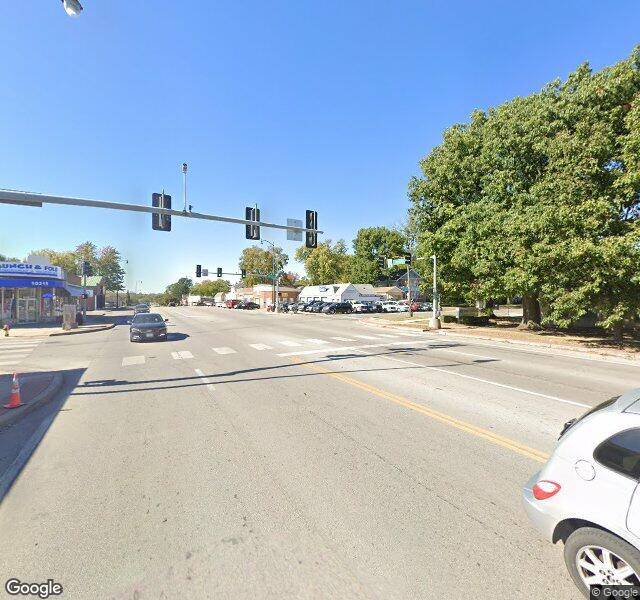
MAYWOOD TERRACE LIVING CENTER

10300 EAST TRUMAN RD, INDEPENDENCE, MO 64052 (816) 836-1250
For profit - Limited Liability company 89 Beds CIRCLE B ENTERPRISES Data: November 2025
Trust Grade
23/100
#421 of 479 in MO
Last Inspection: July 2024

Within standard 12-15 month inspection cycle. Federal law requires annual inspections.

Overview

Maywood Terrace Living Center has received a Trust Grade of F, indicating significant concerns and a poor reputation in the industry. It ranks #421 out of 479 nursing homes in Missouri, placing it in the bottom half, and #34 out of 38 in Jackson County, meaning there are very few local options that are worse. The facility is showing signs of improvement, reducing issues from 22 in 2024 to just 1 in 2025, but it still has a long way to go. Staffing is a notable weakness, with a poor rating of 1 out of 5 and a high turnover rate of 88%, much higher than the state average of 57%. There are some strengths, such as having more RN coverage than 84% of Missouri facilities, which can help catch problems that CNAs might miss. However, there are concerning specific incidents, including failing to properly assess a resident's skin condition upon admission, neglecting to notify the physician about a serious skin issue, and maintaining unsanitary food preparation conditions that could affect residents' health. Overall, while there are some improvements and strengths, the facility still faces significant challenges that families should consider carefully.

Trust Score
F
23/100
In Missouri
#421/479
Bottom 13%
Safety Record
Moderate
Needs review
Inspections
Getting Better
22 → 1 violations
Staff Stability
⚠ Watch
88% turnover. Very high, 40 points above average. Constant new faces learning your loved one's needs.
Penalties
✓ Good
$9,750 in fines. Lower than most Missouri facilities. Relatively clean record.
Skilled Nurses
⚠ Watch
Each resident gets only 29 minutes of Registered Nurse (RN) attention daily — below average for Missouri. Fewer RN minutes means fewer trained eyes watching for problems.
Violations
⚠ Watch
55 deficiencies on record. Higher than average. Multiple issues found across inspections.
★☆☆☆☆
1.0
Overall Rating
★☆☆☆☆
1.0
Staff Levels
★★☆☆☆
2.0
Care Quality
★★☆☆☆
2.0
Inspection Score
Stable
2024: 22 issues
2025: 1 issues

The Good

  • Full Sprinkler Coverage · Fire safety systems throughout facility
  • No fines on record

Facility shows strength in fire safety.

The Bad

1-Star Overall Rating

Below Missouri average (2.5)

Significant quality concerns identified by CMS

Staff Turnover: 88%

42pts above Missouri avg (46%)

Frequent staff changes - ask about care continuity

Federal Fines: $9,750

Below median ($33,413)

Minor penalties assessed

Chain: CIRCLE B ENTERPRISES

Part of a multi-facility chain

Ask about local staffing decisions and management

Staff turnover is very high (88%)

40 points above Missouri average of 48%

The Ugly 55 deficiencies on record

1 actual harm
Mar 2025 1 deficiency
CONCERN (D) 📢 Someone Reported This

A family member, employee, or ombudsman was alarmed enough to file a formal complaint

Potential for Harm - no one hurt, but risky conditions existed

Deficiency F0761 (Tag F0761)

Could have caused harm · This affected 1 resident

**NOTE- TERMS IN BRACKETS HAVE BEEN EDITED TO PROTECT CONFIDENTIALITY** Based on interview and record review, the facility failed to properly account for the delivery of 120 tablets of Oxycodone (a na...

Read full inspector narrative →
**NOTE- TERMS IN BRACKETS HAVE BEEN EDITED TO PROTECT CONFIDENTIALITY** Based on interview and record review, the facility failed to properly account for the delivery of 120 tablets of Oxycodone (a narcotic controlled substance for pain) 20 milligram (mg) from the pharmacy for one sampled resident (Resident #1) out of three sampled residents. The facility census was 41 residents. A Policy and Procedure was requested for Controlled Substances and was not received prior to exit on 3/19/25. 1. Review of Resident #1's Face Sheet showed that he/she was admitted to the facility on [DATE] with a diagnosis of chronic pain syndrome and spinal stenosis (narrowing of the spinal canal that caused pressure on the spinal cord). Review of the resident's electronic Physician Orders dated 2/2025 showed he/she had order for Oxycodone 20 mg, one tablet four times a day for pain. Review of the resident's care plan, revised 3/4/25 showed: -He/She was receiving pain medication for chronic pain. -The staff would administer his/her pain medication as ordered by the physician. -The staff would re-order pain medication before it ran of supply. Review of the resident's Quarterly Minimum Data Set (MDS- a federally mandated assessment instrument completed by the facility staff for care planning) dated 12/23/24 showed: -He/She was cognitively intact. -He/She was receiving scheduled pain medication daily. Review of the pharmacy receipt dated 2/8/25 not timed showed Registered Nurse (RN) A, had received and signed for the resident's Oxycodone 20 mg 120 tablet count medication card. Review of the facility investigation dated 2/23/25 showed: -The Director of Nursing (DON) arrived the facility on 2/23/25 at 7:30 A.M. -The DON was notified by RN A that the resident only had one tablet left of his/her scheduled Oxycodone 20 mg and was not sure if the pharmacy was able to deliver any more. -DON was notified on 2/8/25 at 2:30 P.M., by RN A that he/she had re-ordered the Oxycodone 20 mg tablets from the pharmacy. -The DON attempted to re-order the resident's Oxycodone 20 mg on 2/23/25 from the pharmacy. Pharmacy informed him/her it was to early for refills and that 120 tablets had been delivered on 2/8/25. -The DON reviewed the pharmacy receipt that showed RN A had signed the receipt for the resident's Oxycodone 20 mg 120 count medication card. -The DON reviewed the resident controlled substance receipt/record/disposition form and it showed RN A documented he/she received 60 tablet quantity of Oxycodone 20 mg tablets on 2/8/25 at 3:00 P.M. for the resident. -On 2/8/25 the DON interviewed RN A and he/she had stated that he/she had not counted with the delivery driver and had signed the delivery slip without confirming the correct medication and count was received. -The DON interviewed Licensed Practical Nurse (LPN) A on 2/23/25. He/She had been the on-coming nurse 2/23/25 at 7:00 P.M. and stated RN A had not done a full narcotic count with him/her and had stated he/she was leaving and if anything was off he/she would correct it in the morning when he/she returned for next shift. Review of the facility On-Coming and Off-Going Shift Controlled Drug Count Reconciliation 3/7/25 through 3/18/25 showed there had not been two licensed staff signatures on: -3/10/25 3:00 P.M. - 7:00 P.M. -3/11/25 7:00 P.M. - 7:00 A.M. -3/14/25 7:00 A.M. - 7:00 P.M. -3/14/25 7:00 P.M. - 7:00 A.M. -3/15/25 7:00 A.M. - 7:00 P.M. - 3/15/25 7:00 P.M. - 7:00 A.M. -3/16/25 7:00 A.M. - 7:00 P.M. -3/16/25 7:00 P.M. - 7:00 A.M. -3/17/25 7:00 A.M. - 7:00 P.M. -3/18/25 7:00 A.M. - 7:00 P.M. During an interview on 3/18/25 at 10:30 A.M., the resident said he/she had not missed getting any pain medications and if he/she does the staff provide an alternative pain medication until scheduled pain medication arrives from the pharmacy. During an interview on 3/18/25 at 11:35 A.M., LPN B said: -When he/she received medications from the pharmacy the medications would be counted and verified with the delivery person and both sign the ticket of receipt. -He/She would be responsible for adding to the locked box immediately and filling out a narcotic count sheet. -Off going and on coming nurses should count narcotics and verify with two signatures that the count is correct. During an interview on 3/19/25 at 1:00 P.M., the DON said: -If would be expected that narcotic counts be done each shift and signed by two staff. -He/She was unaware that this had not been done and would expect staff to come back after leaving their shift to correct it. -He/She would expect medications that are received from the pharmacy be counted and verified by the charge nurse and stored properly upon receipt of controlled medications. -There had been no education since this incident on controlled substance storage with all staff. Note: *RN A was called twice and messages were left for him/her to contact the office on 3/20/25. RN A has not returned the call. RN A was mailed a certified letter for contact on 4/1/25. MO 00250223
Jul 2024 18 deficiencies
CONCERN (D)

Potential for Harm - no one hurt, but risky conditions existed

Deficiency F0582 (Tag F0582)

Could have caused harm · This affected 1 resident

Based on interview and record review, the facility failed to provide a Skilled Nursing Facility Advanced Beneficiary Notice (SNF ABN) (form CMS-10055) for two sampled residents (Resident #8 and #31) o...

Read full inspector narrative →
Based on interview and record review, the facility failed to provide a Skilled Nursing Facility Advanced Beneficiary Notice (SNF ABN) (form CMS-10055) for two sampled residents (Resident #8 and #31) out of three sampled residents who were discharged from Medicare part A services. The facility census was 44 residents. Review of the Centers for Medicare and Medicaid Services Survey and Certification memo (S&C-09-20), dated 1/9/09, showed the following: -If the skilled nursing facility (SNF) believes on admission or during a resident's stay that Medicare will not pay for skilled nursing or specialized rehabilitative services and the provider believes that an otherwise covered item or service may be denied as not reasonable or necessary, the facility must inform the resident or his/her legal representative in writing why these specific services may not be covered and the beneficiary's potential liability for payment for the non-covered services. The SNF's responsibility to provide notice to the resident can be fulfilled by the use of either the SNF ABN (form CMS-10055) or one of the five uniform denial letters. -The SNF ABN provides an estimated cost of items or services in case the beneficiary has to pay for them him/herself or through other insurance they may have. -If the SNF provides the beneficiary with either the SNF ABN or a denial letter at the initiation, reduction, or termination of Medicare Part A benefits, the provider has met is obligation to inform the beneficiary of his/her potential liability for payment and related standard claim appeal rights. Issuing the NOMNC to a beneficiary only conveys notice to the beneficiary of his/her right to an expedited review of a service termination. Review of the facility's Medicare Advance Beneficiary and Medicare Non-Coverage Notices policy, revised 9/2022 showed: -If the Director of Admissions or Benefits Coordinator believes upon admission or during the resident's stay that Medicare Part A will not pay for an otherwise covered skilled service the resident or representative is notified in writing why the service may not be covered and of the resident's potential liability for payment of the non-covered service. -The resident or representative is informed they may choose to continue receiving skilled services that may not be paid for by Medicare and assume the financial responsibility. -If the facility expects Medicare will not continue to pay for items or services a physician has ordered, and the beneficiary would like to continue receiving the care, the SNF ABN is issued before such extended items or services are terminated. 1. Review of Resident #8's SNF Beneficiary Protection Notification Review showed: -A Notice of Medicare Provider Non-Coverage (NOMNC) (CMS 10123) form was provided to the resident showing skilled services would end on 5/8/24. The resident signed the form on 5/6/24. -The resident was not provided a SNF ABN/CMS-10055. 2. Review of Resident #31's SNF Beneficiary Protection Notification Review showed: -A NOMNC (CMS 10123) form was provided to the resident showing skilled services would end on 5/8/24. The resident signed the form on 5/6/24. -The resident was not provided a SNF ABN/CMS-10055. 3. During an interview on 7/16/24 at 11:30 A.M. the Social Services Director (SSD) said: -Since he/she had been at the facility, which was just over a month, the Bookkeeper had been issuing the residents' NOMNC and ABN forms, with the exception he/she had recently been asked to issue the forms for one resident. -He/She didn't know if the previous SSD or the Bookkeeper had issued Residents' #8 and #31's notices, but he/she was told he/she would be responsible for issuing the NOMNC and ABN forms to residents or their representatives in the near future. -It was his/her understanding the beneficiary forms were required. During an interview on 7/16/24 at 12:05 P.M. with the Regional Nurse and the Director of Nursing (DON), the Regional Nurse said: -The Bookkeeper had been responsible for making sure residents who remained in the facility received the SNF ABN when therapy services were expected to end and Medicare probably would no longer pay. -The SSD and Bookkeeper were both made aware three days before therapy services were expected to end so there was no reason why the residents shouldn't be given the SNF ABN forms as required.
CONCERN (D)

Potential for Harm - no one hurt, but risky conditions existed

Deficiency F0638 (Tag F0638)

Could have caused harm · This affected 1 resident

**NOTE- TERMS IN BRACKETS HAVE BEEN EDITED TO PROTECT CONFIDENTIALITY** 2. Review of Resident #7's MDS submissions showed: - A Quarterly assessment dated [DATE]. -There was no MDS submitted between 3...

Read full inspector narrative →
**NOTE- TERMS IN BRACKETS HAVE BEEN EDITED TO PROTECT CONFIDENTIALITY** 2. Review of Resident #7's MDS submissions showed: - A Quarterly assessment dated [DATE]. -There was no MDS submitted between 3/23-9/23. -A Quarterly assessment dated [DATE]. Review of the resident's hospice (end of life care) admission sheet in his/her hospice communication book showed he/she was admitted to hospice services on 6/21/23. Review of the resident's quarterly MDS dated [DATE] showed the resident was not on hospice services. -NOTE: No documentation of a quarterly or significant change MDS was completed between March and September 2023. No documentation a significant change MDS was completed after the resident entered hospice services on 6/21/23. Review of the resident's Visit Note by the physician dated 2/01/24 showed the resident was on hospice. Review of the resident's Care Plan dated 3/11/24 showed the resident was on hospice for end stage stroke. Review of the resident's Physician's Order Sheet (POS) dated 3/2024 showed the following physician's orders to admit to hospice for end stage stroke. Review of the resident's Visit Note by the physician dated 4/03/24 showed the resident was on hospice. Review of the resident's Nurses Note dated 4/25/24 showed the resident was admitted to hospice services per physician order. Review of the resident's Visit Note by the Nurse Practitioner dated 5/01/24 showed the resident was on hospice. Review of the resident's Visit Note by the nurse practitioner dated 6/05/24 showed the resident was on hospice. Review of the resident's Nurses Note dated 6/28/24 showed the resident continued hospice services. During an interview on 7/16/24 at 8:42 A.M. the Assistant Director of Nursing (ADON) said: -He/She was working as a charge nurse on the floor. -He/She did not know how often the MDS's were updated. -He/She did not know who was responsible for updating the MDS's. During an interview on 7/16/24 at 12:04 P.M. the DON and the Regional Nurse said: -He/She did not have a MDS coordinator. -He/She had a candidate in mind for the MDS coordinator position and were planning to fill the position as soon as possible. -He/She was unaware of any MDS assessments not completed and submitted on time. -He/She was aware that when a resident is admitted to hospice or has a change in condition, the MDS would need to be updated. Based on interview and record review, the facility failed to complete a quarterly assessment for two sampled residents (Resident #5 and #7) and to complete a significant change Minimum Data Set (MDS-a federally mandated assessment completed by facility staff) for one resident (Resident #7) out of 12 sampled residents. The facility census was 44 residents. Review of facility policy entitled Resident Assessment revised October 2023 showed: -A comprehensive assessment of each resident was completed at intervals designated by the Omnibus Budget Reconciliation Act (OBRA) regulations and Prospective Payment System (PPS) requirements. -Data from the Minimum Data Set (MDS) was submitted to the Internet Quality Improvement Evaluation System (iQIES). -OBRA-Required Assessments were federally mandated, and therefore, must be performed for all residents of Medicare and/or Medicaid certified nursing homes. -OBRA assessments included: --admission Assessment; --Quarterly Assessment; --Annual Assessment; --Significant Change in Status Assessment (SCSA); --Significant Correction to Prior Comprehensive Assessment (SCPA); --Significant Correction to Prior Quarterly Assessment (SCQA); --Discharge Assessment (return anticipated and return not anticipated). -Comprehensive MDS assessments included both the completion of the MDS as completion of the Care Area Assessment (CAA) process and care planning and included Admission, Annual, SCSA, and SCQA assessments. -Non-Comprehensive MDS assessments included a select number of item from the MDS used to track a resident's status between comprehensive assessments and ensured monitoring of critical indicators of the gradual onset of significant changes in resident status. -The resident assessment coordinator was responsible for ensuring that the interdisciplinary team conducted timely and appropriate assessments. 1. Review of Resident #5's Care plan dated 11/16/23 showed: -The resident was dependent on staff with mobility and needed assistance with staff with his/her wheelchair. -The resident wore glasses. -The resident had displayed attention seeking behavior by yelling out inappropriate comments while at the dining room table. Review of the resident's MDS assessments and tracking forms showed: -The resident had a quarterly MDS completed on 1/9/24. -There were no additional MDS's completed. During an interview on 7/15/24 11:15 A.M., the Administrator said: -The MDS Coordinators (MDS) left the position on 7/7/24. -He/She was currently trying to hire a person for the position. -He/She was having the corporate MDS person complete their MDS needs at that time. -No one was monitoring to ensure the MDS's were being completed for the residents. During an interview on 7/16/24 at 12:04 P.M., the Director of Nursing (DON) said: -The MDS Coordinators left the facility two weeks ago. -He/she was unaware of any MDS assessments not completed and submitted on time. -He/She had only been in the position for a week. -The MDS's should have been done as required and submitted on the correct timelines. -Usually the MDS Coordinator was responsible for the MDS. -The MDS should be completed upon admission, every 90 days there after, and when a significant change in the residents condition occurred.
CONCERN (D)

Potential for Harm - no one hurt, but risky conditions existed

Assessment Accuracy (Tag F0641)

Could have caused harm · This affected 1 resident

**NOTE- TERMS IN BRACKETS HAVE BEEN EDITED TO PROTECT CONFIDENTIALITY** Based on interview and record review, the facility failed to ensure resident falls were accurately reflected on their Minimum Da...

Read full inspector narrative →
**NOTE- TERMS IN BRACKETS HAVE BEEN EDITED TO PROTECT CONFIDENTIALITY** Based on interview and record review, the facility failed to ensure resident falls were accurately reflected on their Minimum Data Set (MDS - a federally mandated assessment instrument completed by facility staff for care planning) for one sampled resident (Resident #4) out of 12 sampled residents. The facility census was 44 residents. Review of the facility's Resident Assessments policy, revised October, 2023 showed: -Federally mandated and required assessments must be performed for all residents of Medicare and Medicaid certified homes. -The resident assessment coordinator is responsible for ensuring the interdisciplinary team conducts timely and appropriate resident assessments. -Any persons who have completed any portion of the MDS resident assessment form must sign the document attesting to the accuracy of such information. -Information in the MDS will consistently reflect information in the progress notes, plans of care and resident observations and interviews. 1. Review of resident #4's Face Sheet showed he/she was admitted to the facility on [DATE] with the following diagnoses: -Muscle wasting and atrophy. -Vascular dementia (brain damage caused by a stroke or lack of blood flow to the brain) with agitation and behavioral disturbance. Review of the resident's Nurse's note dated 4/10/24 showed: -At 5:15 P.M. the Nurse Assistant (NA) went in the resident's room to get him/her for supper. -The resident was sitting on floor in his/her bathroom. Noted his/her walker was by his/her bed and he/she had shoes on the wrong feet. -After neuro checks (neurological checkpoints to monitor level of consciousness, ability to move extremities, eye responses and change in pupils and vital signs) and checking for injuries they assisted the resident off floor. The resident unable to ambulate at all. -The resident denied pain. Pupils equal and reactive to light. Hand grips strong. The resident following commands. Alert and oriented to self, location, and situation which is normal baseline. -Noted a large hematoma (a collection of blood that forms outside a blood vessel) to left side of his/her forehead. -Notified Nurse Practitioner (NP) and family of fall and hematoma. -Resident taken to hospital by private vehicle. Hospital notified. NP notified family was taking resident to hospital. Review of the resident's Hospital Discharge summary, dated [DATE] showed: -The resident presented to emergency room (ER) after ground-level fall. -Computerized Tomography (CT) scan of head and cervical spine. CT scan did not show any traumatic injuries with exception of forehead hematoma. Review of the resident's Nurse's note, dated 5/11/24 showed: -At approximately 5:20 P.M. the resident was observed sitting on the floor near the end of the bed. -Unwitnessed fall. -Family member and on-call Physician aware. -No new orders. -Neuro checks and vital signs started. -Using wheelchair for mobility due to resident's unsteadiness. -Report to Night shift nurse and instructed Certified Nurse Assistant (CNA) to keep close eye on resident due to poor safety awareness. -No redness, bruising or injury noted. Will continue to monitor. Review of the resident's Nurse's note, dated 5/25/24 showed: -At approximately 11:10 A.M. the resident was observed sitting next to his/her bed. -The resident stated he/she sat down. -No redness, bruising or injury noted. -Family member, on-call physician, and hospice notified. -Neuro checks and vital signs being done. -The resident stable and able to move all extremities well. Denies pain. -The resident assisted to wheelchair and brought to dining room for increased observation. Review of the resident's Significant Change MDS, dated [DATE] showed the resident: -Was severely cognitively impaired with continuous disorganized thinking. -Had only one fall since the prior assessment (quarterly assessment completed on 3/17/24). -Had zero non-injury falls. -Had zero non-major injury falls. During an interview on 7/16/24 at 12:05 P.M. the Director of Nursing (DON) and Regional Nurse Manager, the Regional Nurse Manager said: -The MDS Coordinator position has been empty for a couple of weeks and the facility was looking to fill it. -Information related to falls, was discussed daily in clinical meetings. -The MDS information should be accurate at the time it is submitted. -He/She expected the MDS guidelines to be followed. -If the guidelines showed a hematoma was a non-major injury and a subdural hematoma as a major injury then the MDS should show the resident's injury.
CONCERN (D)

Potential for Harm - no one hurt, but risky conditions existed

Quality of Care (Tag F0684)

Could have caused harm · This affected 1 resident

Based on observation, interview, and record review, the facility failed to follow physician's orders for wound care on a surgical wound for one sampled resident (Resident #7) out of 12 sampled residen...

Read full inspector narrative →
Based on observation, interview, and record review, the facility failed to follow physician's orders for wound care on a surgical wound for one sampled resident (Resident #7) out of 12 sampled residents. The facility census was 44 residents. A policy for following physicians orders was requested and not received from the facility. 1. Review of Resident #7's annual Minimum Data Set (MDS-A federally mandated assessment tool required to be completed by facility staff for care planning) dated 12/14/23 showed the resident: -Was severely cognitively impaired. -Had a surgical wound. Review of the resident's Care Plan dated 3/11/24 showed: -The resident had a healing surgical wound. -The wound was related to a right above the knee amputation. Review of the resident's Physician's Order Sheet (POS) dated 6/2024 showed the following physician's order to treat the right distal stump (surgical removal site of an above knee amputation) with wound cleanser or normal saline, apply skin prep (topical barrier between skin and air) daily and leave open to air. Review of the resident's Treatment Administration Record (TAR) dated 6/2024 showed: -Right distal stump: Clean with wound cleanser or normal saline, apply skin prep daily and leave open to air. -No documentation the treatment was completed by facility staff 12 out of 30 opportunities. Review of the resident's (TAR) dated 7/2024 showed: -Right distal stump: Clean with wound cleanser or normal saline, apply skin prep daily and leave open to air. -No documentation the treatment was completed by facility staff 15 out of 15 opportunities. Observation on 7/15/24 at 11:01 A.M. showed the resident had no open areas of skin on the his/her right above the knee amputation stump. During an interview on 7/16/24 at 8:42 A.M. the Assistant Director of Nursing (ADON) said: -He/She was working as a charge nurse on the floor. -When wound care was completed the charge nurse was responsible for documenting this on the resident's TAR. -If the wound care was not documented as completed on the TAR, he/she would assume that the wound care was not completed. During an interview on 7/16/24 at 12:04 P.M. the Director of Nursing (DON) said: -When wound care was completed the charge nurse was responsible for documenting this on the resident's TAR. -If the wound care was refused by the resident, the charge nurse was responsible for documenting refusal on the resident's TAR. -If the wound care was not documented as completed on the TAR, he/she would assume that the wound care was not completed. -The charge nurse should be auditing to ensure the treatments are being documented on the TAR.
CONCERN (D) 📢 Someone Reported This

A family member, employee, or ombudsman was alarmed enough to file a formal complaint

Potential for Harm - no one hurt, but risky conditions existed

Accident Prevention (Tag F0689)

Could have caused harm · This affected 1 resident

**NOTE- TERMS IN BRACKETS HAVE BEEN EDITED TO PROTECT CONFIDENTIALITY** Based on interview and record review, the facility failed to complete a thorough investigation to determine the root cause of a ...

Read full inspector narrative →
**NOTE- TERMS IN BRACKETS HAVE BEEN EDITED TO PROTECT CONFIDENTIALITY** Based on interview and record review, the facility failed to complete a thorough investigation to determine the root cause of a resident's fall, to document monitoring and neurological assessments after a resident reported an unwitnessed fall, and to update the resident's care plan with appropriate interventions and monitor the effectiveness of interventions to prevent additional falls for one sampled resident (Resident #29) out of 12 sampled residents. The facility census was 44 residents. Review of facility policy entitled Accidents and Incidents-Investigating and Reporting revised July 2017 showed: -All accidents or incidents that involved residents that occurred on our premises would be investigated and reported to the administrator. -The nurse supervisor/charge nurse and/or the department director or supervisor would have promptly initiated and documented investigation of the accident or incident. -The following data, as applicable would have been included on the Report of Incident/Accident form: --The date and time the accident or incident took place. --The nature of the injury/illness (e.g. bruise, fall, nausea, etc. --The circumstances surrounding the accident or incident. --Where the accident or incident took place. --The name(s) of witnesses and their accounts of the accident or incident. --The time the injured person's attending physician was notified, as well as the time the physician responded and his or her instructions. --The date/time the injured person's family was notified and by whom. --The condition of the person, including his/her vital signs. --The disposition of the injured person. --Any corrective action that was taken. --Follow-up information. --Other pertinent data as necessary or required. --The signature and title of the person that completed the report. -The nurse supervisor/charge nurse and/or the department-director or supervisor shall complete a Report of Incident/Accident form for each occurrence. -The director of nursing services shall ensure that the administrator received a copy of the Report of Incident/Accident form for each occurrence. 1. Review of Resident #29's Face Sheet showed he/she was admitted to the facility on [DATE] with the following diagnoses: -Legal Blindness. -Complete traumatic amputation (the action of surgically cutting off a limb) at level between knee and ankle, right lower leg. Review of the resident's quarterly Minimum Data Set (MDS - a federally mandated assessment tool required to be completed by facility staff for care planning) dated 5/18/24 showed the resident: -Was cognitively intact; -Required set-up staff assistance for bed mobility, transfers, locomotion, dressing, personal hygiene, eating, and toileting; -Had no falls since admission up to the time of the assessment. Review of the resident's Fall Care Plan dated 5/19/24 showed: -The resident was at risk for falls due to right above the knee amputation, non-ambulatory, poor vision, unsteady balance, and history of prior falls. -Refer the resident for physical therapy. -Monitor for changes in condition that might have warranted increased supervision/assistance and to have notified the physician. -Wheelchair was the residents primary form of locomotion. Review of Therapy Services Referral/Screening dated 6/17/24 showed the resident stated that he/she had fallen out of bed when he/she was sitting on the edge of the bed and reached for his/her meal tray. Saff were educated on placing food tray on bedside closer to the resident. Review of the resident's Nurse's Notes dated 6/27/24 at 2:45 showed: -Resident reported complaining of a headache. -The resident said he/she hit his/her head on the floor when he/she fell about a week ago. -Resident requested to go to the hospital and was sent. -Doctor and responsible party was notified. Review of Therapy Services Referral/Screening dated 7/1/24 showed the resident reported that he/she had falls in the past but had not reported the falls to any staff. The resident was educated on reporting any fall he/she had to staff immediately. A fall investigation was not provided by the facility upon request for any fall the resident had. During an interview on 7/9/24 at 11:57 A.M. the resident said he/she had fallen a couple of weeks ago, but he/she was ok. -He/She did not tell staff because he/she was ok, but he/she did tell staff about a week later of the fall. He/She was just sent to the hospital because he/she was complaining of a headache. The facility did not do anything else as far as he/she knew. During an interview on 7/16/24 at 9:48 A.M., Certified Nurses Aide (CNA) B said: -Anytime a resident was found on the floor or a resident told him/her of a fall the charge nurse was notified immediately. -Usually when a resident told him/her of a fall that had happened it was treated as an unwitnessed fall. -With an unwitnessed fall there would be a sheet were he/she would document vital signs taken at prescribed intervals like every 15 minutes, then every half hour and so on. -The nurse on duty would also be assessing the resident. During an interview on 7/16/24 at 9:51 A.M., the Assistant Director of Nursing (ADON) said: -He/She just started as ADON last week. -He/She was the charge nurse that day for the hall. -When any resident reported that he/she had a fall it should be investigated as a fall and the following should have been done: --Doctor and responsible party should have been notified. --Investigation should have been started. --Since the fall being reported was unwitnessed, then the unwitnessed falls protocol should have been done to include neurological checks. --The resident should have been assessed for an injury and assessment should have been documented. --Interviews conducted to see if any staff or resident knew of the fall. --Root cause analysis completed for the reported fall. --Care plan would have been updated with the findings from the investigation. During an interview on 7/16/24 at 12:04 P.M., Director of Nursing (DON) said: -He/She just started at the facility last week. -It was his/her expectation that when a resident fell or reported a fall that a complete investigation would have been performed. -The investigation would have a included: --Assessment of the resident for injuries. --Statements from witnesses. --Root cause analysis of fall. --Other assessments depending on what is needed such as neurological checks for an unwitnessed fall. --Updated care plan on the findings of the investigation. --Documentation on the investigation. -It was his/her expectation that when a resident reported a fall that the staff would treat the fall as an unwitnessed fall. -It was his expectation that when a resident reported to staff that a fall occurred week ago then a fall investigation would have been started. MO00238230
CONCERN (D)

Potential for Harm - no one hurt, but risky conditions existed

Incontinence Care (Tag F0690)

Could have caused harm · This affected 1 resident

Based on observation, interview and record review, the facility failed to ensure sanitizing of the indwelling catheter (tubing inserted in the bladder to drain urine) drainage port and hand hygiene du...

Read full inspector narrative →
Based on observation, interview and record review, the facility failed to ensure sanitizing of the indwelling catheter (tubing inserted in the bladder to drain urine) drainage port and hand hygiene during catheter tubing and drainage bag change and failed to have complete physician's orders for the size of the catheter for one sampled resident (Resident #21) out of 12 sampled residents. The facility census was 44 residents. Review of the facility's Catheter Care, Urinary Care policy, revised 8/2022 showed: -The policy goal was to prevent urinary-associated complications including Urinary tract infections. -Use aseptic technique when handling or manipulating the drainage system. -Keep catheter tubing and drainage bags off the floor. -Empty collection bag every eight hours using a separate clean collection container for each resident. Avoid splashing and prevent contact of drainage spigot with nonsterile container. Review of the facility Handwashing/Hand Hygiene policy revised October 2023 showed: -Hand hygiene is indicated immediately before touching a resident, before moving from a soiled site and immediately after glove removal. -Use an alcohol-based hand rub for most clinical situations. 1. Review of the Resident #21's Face Sheet, dated 1/3/24 showed the resident had a diagnosis upon admission that included urinary tract infection (UTI). Review of the resident's Indwelling Catheter Care Plan, initiated 1/3/24 showed: -The resident had an indwelling catheter (a tube passed through the urethra into the bladder to drain urine) due to urine retention. -The goal was for the resident to be free of infection related to catheter use. -Staff to complete catheter care each shift. Review of the the resident's quarterly Minimum Data Sheet (MDS - a federally mandated assessment instrument completed by facility staff for care planning), dated 4/7/24 showed the resident: -Was severely cognitively impaired. -Had a catheter. Review of the resident's Physician Orders Sheet (POS) dated 06/2024 showed: -Foley (a type of indwelling catheter) catheter care every shift start date 2/27/24. -Replace foley catheter monthly on the 15th starting 3/13/24. -Irrigate foley catheter with 30 milliliter (ml) sterile water as needed for blockage start date 2/27/24. -Ciprofloxacin 500 milligrams (mg) twice daily for five days starting on 5/28/24 for UTI. Note: There was no order showing the size of the catheter. Observation on 7/10/24 at 12:08 P.M. showed: -The resident was lying in his/her bed. -His/her catheter tubing (the clear tubing that drains urine from the catheter to the urine collection bag) had sediment and a pink/reddish discoloration. -Certified Nursing Assistant (CNA) A changed the resident's catheter tubing and urine collection bag. -CNA A removed the tubing from the resident's catheter, did not cleanse the end of the catheter with an alcohol pad, removed his/her gloves, did not sanitize his/her hands before putting on clean gloves and attached the new catheter tubing to the resident's catheter. -Upon connection of the new catheter tubing, clear yellow urine flowed into the catheter tubing. During an interview on 7/20/24 at 12:12 P.M. CNA A said: -After removing the resident's existing catheter tubing, he/she removed his/her gloves and did not sanitize or wash his/her hands before putting on clean gloves. -He/she should have sanitized or washed his/her hands before putting on clean gloves and attaching the resident's new catheter tubing. -He/she usually did wash or sanitize his/her hands each time he removed his/her gloves before putting on clean gloves. -He/she did not cleanse the resident's catheter drainage port before attaching the new catheter tubing; he/she should have wiped the resident's catheter drainage port with an alcohol wipe before connecting the new tubing; alcohol wipes were kept locked up; he /she could have gotten an alcohol wipe from the charge nurse before changing the resident's catheter tubing. -After changing the resident's catheter tubing, the urine in his/her catheter tubing was a little cloudy, yellow and had no red or orange color. During an interview on 7/16/24 at 12:05 P.M. the Director of Nursing (DON) said: -All residents with indwelling catheters should have a physician order indicating the size of the resident's catheter. -Staff should cleanse the catheter port with an alcohol wipe before attaching new catheter tubing. -Hand hygiene was to be completed before starting resident care, with all glove changes and after finishing resident care. -When changing catheter tubing, gloves were to be removed, hand hygiene performed, and clean gloves put on before attaching new catheter tubing to catheters.
CONCERN (D)

Potential for Harm - no one hurt, but risky conditions existed

Deficiency F0699 (Tag F0699)

Could have caused harm · This affected 1 resident

Based on interview and record review, the facility failed to identify, assess and provide supportive interventions for one sampled resident (Resident #35), with a diagnosis of Post-Traumatic Stress Di...

Read full inspector narrative →
Based on interview and record review, the facility failed to identify, assess and provide supportive interventions for one sampled resident (Resident #35), with a diagnosis of Post-Traumatic Stress Disorder (PTSD - a mental health condition triggered by a terrifying event - either experiencing it or witnessing it; symptoms may include flashbacks, nightmares and severe anxiety, as well as uncontrollable thoughts about the event), out of 12 sampled residents. The facility census was 44 residents. Review of Trauma-Informed Care Implementation Center (https://www.traumainformedcare.chcs.org/what-is-trauma-informed-care/) copyright 2021 showed: -Trauma-informed care shifts the focus from What's wrong with you? to What happened to you? -A trauma-informed approach to care acknowledges that health care organizations and care teams need to have a complete picture of a patient's life situation - past and present - in order to provide effective health care services with a healing orientation. -Adopting trauma-informed practices can potentially improve patient engagement, treatment adherence, and health outcomes, as well as provider and staff wellness. It can also help reduce avoidable care and excess costs for both the health care and social service sectors. -Trauma-informed care seeks to: --Realize the widespread impact of trauma and understand paths for recovery. --Recognize the signs and symptoms of trauma in patients, families, and staff. --Integrate knowledge about trauma into policies, procedures, and practices. --Actively avoid re-traumatization. Review of facility policy entitled Trauma-Informed and Culturally Competent Care' revised August 2022 showed: -To address the needs of trauma survivors by minimizing triggers and/or re-traumatization. -Trauma resulted from an event, series of events, or set of circumstances that was experienced by an individual as physically or emotionally harmful or life threatening, and that has lasting adverse effects on the individuals functioning and mental, physical, social, emotional, or spiritual well-being. -Trauma-informed care was an approach to delivering care that involved understanding, recognizing, and responding to the effects of trauma. -A trauma-informed approach to care delivery recognized the widespread impact and signs and symptoms of trauma in residents, and incorporated knowledge about trauma into care plans, policies, procedures, and practices to avoid re-traumatization. -Trigger was a psychological stimulus that prompted recall of a previous traumatic event, even if the stimulus itself was not traumatic or frightening. -Developed individualized care plans that addressed past trauma in collaboration with the resident and family, as appropriate. -Identified and decreased exposure to triggers that might re-traumatize the resident. -Recognized the relationship between past trauma and current health concerns. 1. Review of Resident #35's Level One Pre-Admissions Screening and Resident Review (PASRR) (federally mandated screening process for individuals with serious mental illness and/or intellectual disability/developmental disability related diagnosis who apply or reside in Medicaid Certified beds in a nursing facility regardless of the source of payment) dated 11/9/23 showed: -The resident had a diagnosis of PTSD. -The resident had a car accident in 2022 that caused trauma and the PTSD diagnosis with chronic symptoms. -The residents needs could be provided by the nursing facility and required: --Behavioral support plan. --Structured environment. --Personal support network. --Medication therapy. --Activities of Daily Living (ADL activities of daily living is a term used in healthcare to refer to an individual's daily self-care activities) program. Review of the resident's Quarterly Minimum Data Set (MDS-a federally mandated assessment instrument completed by facility staff for care planning) dated 1/9/24 showed: -The resident was cognitively intact. -Had PTSD. Review of the Physician Orders dated 6/5/24 showed the following physician's orders showed: -No diagnosis of PTSD. -Divalproex Sodium (calms overstimulated nerves and soothes and calms the brain, and has been successful in treating patients suffering from panic) take 250 milligrams (mg) take by mouth twice a day for anxiety and/or depression. -Klonipin (produces a calming effect on the brain and nerves, which helps to reduce anxiety, prevent seizures, and promote relaxation) give 0.25 mg three times a day for depression. -Sertraline (a type of antidepressant drug used to relieve depression) medication give 25 mg by mouth at daily for Depression (is a common and serious mental disorder that negatively affects how you feel, think, act, and perceive the world). Review of the resident's care plan revised 6/17/24 showed: -PTSD was not addressed in the care plan. -The resident's triggers were not addressed. -The resident's interventions were not addressed. -The resident was on an antidepressant medication for PTSD. During an interview on 7/12/24 at 8:12 A.M. the resident said: -He/she was unsure if he/she had a diagnosis of PTSD. -He/She was anxious around loud sounds and large crowds. -He/She stayed at the same table with the same people at meals, and mostly in his/her room due to this. During an interview on 7/16/24 9:48 A.M., Certified Nurses Aide (CNA) B said: -He/She was unsure if the resident had PTSD. -He/She was unsure what his/her triggers are, or his/her inventions were. -The resident did not have any behaviors. -He/She would look on the care plan for the triggers and interventions. During an interview on 7/16/24 9:51 A.M., Assistant Director Of Nursing (ADON) said: -He/She just started as ADON last week. -He/She was the charge nurse that day for the hall. -The MDS Coordinator was responsible for care plan development. -He/She did not know if the resident had a diagnosis of PTSD. -He/She did not know the resident's triggers or interventions. -The information of the resident's triggers and interventions should have been in the care plan. -It was his/her experience that the nurse that did the admission assessment and the MDS Coordinator would have assessed the resident for PTSD. During an interview on 7/15/24 11:15 A.M., the Administrator said: -He/She had only been at the facility about a month. -The MDS Coordinator left the position on 7/7/24. -He/She was currently trying to hire a person for the position. -The MDS Coordinator was responsible for care plan development. -The care plan should accurately reflect the resident's condition at the time it was developed along with diagnosis. -The care plan should have the triggers and the interventions for PTSD. -The staff should have been made aware of the resident's triggers and interventions. During an interview on 7/16/24 at 12:40 P.M., Director of Nursing (DON) said: -He/She had just started at the facility the past week. -It was his/her expectation that the MDS Coordinator would be responsible for the care plans. -It was his/her expectation that if the resident had a diagnosis of PTSD, it would be addressed in the care plan to include triggers and interventions. -The MDS Coordinator would be responsible for the information for the PTSD care plan. -The care plan would have addressed the triggers and the interventions. -It was his/her expectation that the nurses and CNAs would know a resident's triggers and interventions. -The Inter-disciplinary Care Team (IDT) audited the care plans. -He/She was ultimately responsible to ensure the care plan were correct for the residents.
CONCERN (D)

Potential for Harm - no one hurt, but risky conditions existed

Drug Regimen Review (Tag F0756)

Could have caused harm · This affected 1 resident

**NOTE- TERMS IN BRACKETS HAVE BEEN EDITED TO PROTECT CONFIDENTIALITY** Based on interview and record review, the facility failed to follow through on the pharmacy consultant identified irregularities...

Read full inspector narrative →
**NOTE- TERMS IN BRACKETS HAVE BEEN EDITED TO PROTECT CONFIDENTIALITY** Based on interview and record review, the facility failed to follow through on the pharmacy consultant identified irregularities in the resident's medication orders without an appropriate diagnosis or indication for use during the pharmacists monthly Drug Regimen Review (DRR) for one sampled resident (Residents #29) out of 12 sampled residents. The facility census was 44 residents. Review of facility policy entitled Medication Regimen Reviews (MRR) revised May 2010 showed: -The consultant pharmacist reviewed the medication regimen of each resident at least monthly. -The consultant pharmacist performed a MRR for every resident in the facility that received medications. -The MRR involved a thorough review of the resident's medical record to prevent, identify, report, and resolve medication related problems, medication errors, and other irregularities. -Within 24 hours of the MRR, the consultant pharmacist provided a written report to the attending physicians for each resident identified as having a non-life threatening medication irregularity. The report contained: --The resident's name. --The name of the medication. --The identified irregularity. --The pharmacist's recommendations. -If the physician did not provide a timely or adequate response, or the consultant pharmacist identified that no action had been taken, he/she contacted the medical director or (if the medical director was the physician of record) the administrator. -The attending physician documented in the medical record that the irregularity had been reviewed and what (if any) action was taken. -The consultant pharmacist provided the director of nursing services and medical director with a written, and signed and dated copy of medication regimen reports. -Copies the medication review reports, including physician responses, were maintained as part of the permanent record. 1. Review of Resident #29's Face Sheet showed he/she was admitted to the facility on [DATE]. Review of the resident's Monthly Medication Record Review (MRR) dated 4/29/24 showed the pharmacy consultant identified medication orders without a diagnosis or indication for use. Review of the resident's quarterly Minimum Data Set (MDS - a federally mandated assessment tool required to be completed by facility staff for care planning) dated 5/18/24 showed the resident: -Was cognitively intact; -The resident used the following medications: --Anticoagulants (an anticoagulant, commonly known as a blood thinner, is a chemical substance that prevents or reduces the coagulation of blood, prolonging the clotting time). --Diuretics (A diuretic is any substance that promotes diuresis, the increased production of urine). --Antiplatelets (An antiplatelet drug, also known as a platelet agglutination inhibitor or platelet aggregation inhibitor, is a member of a class of pharmaceuticals that decrease platelet aggregation and inhibit thrombus (clot) formation). --Hypoglycemic's (Drugs used in diabetes treat diabetes mellitus by decreasing glucose levels in the blood). Review of the resident's care plan dated 5/19/24 showed the resident had Type II Diabetes Mellitus (DM-the pancreas doesn't make enough insulin. Insulin is a hormone that lets sugar into cells to fuel muscles and other tissues. With this disease, cells also respond poorly to insulin and take in less sugar). Review of the resident's July 2024 Physician's Order Sheet (POS) showed: -Lantus (a medication used for DM) 20 units at bedtime. The order did not include a diagnosis or indication for use. -Amlodipine (used to treat high blood pressure and chest pain) 10 milligram (mg) 1 tablet daily. The order did not include a diagnosis or indication for use. -Aspirin (a synthetic compound used medicinally to relieve mild or chronic pain and to reduce fever and inflammation) 81 mg take daily, and the order did not include a diagnosis or indication for use. -Plavix (used to prevent stroke, heart attack, and other heart problems) 75 mg daily. The order did not include a diagnosis or indication for use. -Vitamin B12 (is a water-soluble vitamin involved in metabolism) 500 mg daily. The order did not include a diagnosis or indication for use. -Polyethylene Glycol (used to promote bowel movements) 1 packet mixed with water daily. The order did not include a diagnosis or indication for use. -Vesicare (used to treat symptoms of an overactive bladder) 10 mg daily. The order did not include a diagnosis or indication for use. -Flomax (used to treat an enlarged prostate (benign prostatic hyperplasia)) 0.4 mg daily. The order did not include a diagnosis or indication for use. -Torsemide (diuretic (causing increased passing of urine)medication used to treat fluid overload due to heart failure, kidney disease, and liver disease) 20 mg daily. The order did not include a diagnosis or indication for use. - Myrbetriq (used to treat overactive bladder) 25 mg daily. The order did not include a diagnosis or indication for use. -Protonix (used to treat heartburn) 40 mg twice a day. The order did not include a diagnosis or indication for use. -Lyrica (used to treat nerve pain) 150 mg daily. The order did not include a diagnosis or indication for use. 3. During an interview on 7/16/24 at 9:37 A.M., Certified Medication Technician (CMT) A said: -All medication orders should have a diagnosis or indication for use. -A pharmacy consultant comes to the the facility every month. He/She thought the pharmacy consultant checked for diagnosis on the POS. -If a medication does not include a diagnosis or indication for use, he/she would clarify the order with the charge nurse. During an interview on 7/16/24 9:51 A.M., Assistant Director Of Nursing (ADON) said: -He/She just started as ADON last week. -He/She was the charge nurse that day for the hall. -All medications should have a diagnosis or indication for use. -If a medication does not have a diagnosis or indication for use, the order should be clarified with the resident's physician. -The nurse checking the POS during monthly change-over should have noticed the medications did not have a diagnosis or indication for use. -He/She thought when the pharmacy consultant checked the residents' charts each month, medication diagnosis was one of the components being checked. During an interview on 7/16/24 at 12:40 P.M., Director of Nursing (DON) said: -He/She had just started at the facility the past week. -He/She expected staff to clarify medication orders that did not include a diagnosis or indication for use. -He/She would have expected either the facility nurse completing the change-over chart checks or the facility pharmacy consultant to identify and clarify medication orders without a diagnosis or indication for use. -All medication should have included a diagnosis or indication for use.
CONCERN (D)

Potential for Harm - no one hurt, but risky conditions existed

Medication Errors (Tag F0758)

Could have caused harm · This affected 1 resident

**NOTE- TERMS IN BRACKETS HAVE BEEN EDITED TO PROTECT CONFIDENTIALITY** Based on interview and record review, the facility failed to ensure the resident's physician reviewed the pharmacist's recommend...

Read full inspector narrative →
**NOTE- TERMS IN BRACKETS HAVE BEEN EDITED TO PROTECT CONFIDENTIALITY** Based on interview and record review, the facility failed to ensure the resident's physician reviewed the pharmacist's recommendations for a Gradual Dose Reduction (GDR) of the resident's psychotropic medications (drugs which affect psychic function, behavior, or experience) on the Drug Regimen Review (DRR) for one sampled resident (Resident #7) and failed to failed to follow through on the pharmacy consultant identified irregularities in the resident'psychotropic medication orders without an appropriate diagnosis or indication for use during the pharmacists monthly DRR for one sampled resident (Resident #26) out of 12 sampled residents. The facility census was 44 residents. Review of the facility's Medication Regimen Review (MRR) policy dated 5/2019 showed: -The attending physician would document in the medical record that the irregularity (the use of medication that is inconsistent with accepted pharmaceutical services standards of practice) had been reviewed and what (if any) action was taken to address it. 1. Review of Resident #7's annual Minimum Data Set (MDS-A federally mandated assessment tool required to be completed by facility staff for care planning) dated 12/14/23 showed the resident: -Was severely cognitively impaired. -Was taking an antipsychotic medication (a group of psychoactive drugs (pertaining to a drug or other agent that affects such normal mental functioning as mood, behavior, or thinking processes) commonly but not exclusively used to treat psychosis) -Was taking an antianxiety medication. -Was taking an antidepressant medication. -GDR has not been attempted. Review of the resident's Physician's Order Sheet (POS) dated 3/24 showed the following physician's orders: -Seroquel (antipsychotic) 150 milligrams (mg) 1 tablet by mouth daily for psychosis (a mental state involving loss of contact with reality and causing deterioration of normal social functioning)/bipolar (A disorder associated with episodes of mood swings ranging from depressive lows to manic highs) ordered 3/30/23. -Seroquel 50 mg 1 tablet by mouth daily for psychosis/bipolar ordered 3/30/23. -Lorazepam (antianxiety) Intensol 2mg/milliliters (ml) 0.5 ml sublingual twice a day for anxiety ordered 9/12/23. -Depakote (anti-convulsant and mood stabilizer) 125 mg 2 tablets by mouth three times a day for bipolar/mood ordered 3/11/23. -Seroquel 300 mg 2 tablets by mouth at bedtime for psychosis/bipolar ordered 3/30/23. -Remeron (antidepressant) 45 mg 1 tablet by mouth at bedtime for appetite ordered on 9/13/23. Review of the resident's Care Plan dated 3/11/24 showed: -The resident was at high risk for side effects from psychotropic medications. - A GDR as indicated. Review of the resident's Consulting Services from Pharmacist dated 3/19/24 showed a GDR for Mirtazapine. Review of the resident's Visit Note by the physician dated 4/03/24 showed: -Medications reviewed and continued. -No documentation the pharmacy recommendation was reviewed and/or addressed. Review of the resident's Consulting Services from Pharmacist dated 4/29/24 showed a GDR due written for above recommendation 3/19/24. Review of the resident's Visit Note by the Nurse Practitioner dated 5/01/24 showed: -Medications reviewed and continued. -No documentation the pharmacy recommendations were reviewed and/or addressed. Review of the resident's Consulting Services from Pharmacist dated 5/27/24 showed a GDR for Seroquel, Ativan, and DVPK (Depakote). Review of the resident's Visit Note by the Nurse Practitioner dated 6/05/24 showed no documentation the pharmacy recommendations were reviewed and/or addressed. Review of the resident's Consulting Services from Pharmacist dated 6/19/24 showed: -Written for above recommendation dated 5/27/24. Please add what the pharmacist was requesting and why? Needs more record review. Was this signed by the physician or anything documented by the physician on the form? Review of the resident's POS dated 7/24 showed the following physician's orders: -Seroquel 150 mg 1 tablet by mouth daily for psychosis/bipolar ordered 3/30/23. -Seroquel 50 mg 1 tablet by mouth daily for psychosis/bipolar ordered 3/30/23. -Lorazepam Intensol 2mg/ml 0.5 ml sublingual twice a day for anxiety ordered 9/12/23. -Depakote 125 mg 2 tablets by mouth three times a day for bipolar/mood ordered 3/11/23. -Seroquel 300 mg 2 tablets by mouth at bedtime for psychosis/bipolar ordered 3/30/23. -Remeron 45 mg 1 tablet by mouth at bedtime for appetite ordered on 9/13/23. During an interview on 7/16/24 at 8:42 A.M. the Assistant Director of Nursing (ADON) said: -He/She was working as a charge nurse on the floor. -He/She did not know who was responsible for taking care of pharmacy recommendations and/or reviews. During an interview on 7/16/24 at 12:04 P.M. the Director of Nursing (DON) and the Regional Nurse said: -He/She would expect that a pharmacy recommendation would be taken care of within two weeks. -MRR's come to facility electronically to Director of Nursing (DON) and administrator. -This is a separate sheet from the Consulting Services from Pharmacist document that is in the resident's paper medical record. -MRR's sent to physician to review and sign. -The facility could not locate any physician responses to the pharmacy recommendations for Resident #7.2. Review of Resident #26's Face Sheet showed he/she was admitted to the facility on [DATE] with a diagnosis of major depressive disorder (a mental disorder characterized by a persistently depressed mood and long-term loss of pleasure or interest in life, often with other symptoms such as disturbed sleep, feelings of guilt or inadequacy, and suicidal thoughts). Review of the resident's MRR dated 4/29/24 showed the pharmacy consultant identified medication orders without a diagnosis or indication for use. Review of the resident's quarterly MDS dated [DATE] showed the resident: -Was cognitively intact; -The resident took: -- Antidepressants (Antidepressants are a class of medications used to treat major depressive disorder, anxiety (anticipation of impending danger and dread accompanied by restlessness, tension, fast heart rate, and breathing difficulty not associated with an apparent stimulus) disorders, and addiction). Review of the resident's care plan dated 5/19/24 showed the resident was at risk for side effects from antidepressant medication use for depression. Review of the resident's July 2024 POS and showed a physican order for Zoloft (a medication used to treat depression) 50 milligrams (mg) take at bedtime. The order did not include a diagnosis or indication for use. During an interview on 7/16/24 at 9:37 A.M., Certified Medication Technician (CMT) A said: -All medication orders should have a diagnosis or indication for use. -A pharmacy consultant comes to the the facility every month. He/She thought the pharmacy consultant checked for diagnosis on the POS. -If a medication does not include a diagnosis or indication for use, he/she would clarify the order with the charge nurse. During an interview on 7/16/24 9:51 A.M., ADON said: -He/She just started as ADON last week. -He/She was the charge nurse that day for the hall. -All medications should have a diagnosis or indication for use. -If a medication does not have a diagnosis or indication for use, the order should be clarified with the resident's physician. -The nurse checking the POS during monthly change-over should have noticed the medications did not have a diagnosis or indication for use. -He/She thought when the pharmacy consultant checked the residents' charts each month, medication diagnosis was one of the components being checked. During an interview on 7/16/24 at 12:40 P.M., DON said: -He/She had just started at the facility the past week. -He/She expected staff to clarify medication orders that did not include a diagnosis or indication for use. -He/She would have expected either the facility nurse completing the change-over chart checks or the facility pharmacy consultant to identify and clarify medication orders without a diagnosis or indication for use. -All medication should have included a diagnosis or indication for use.
CONCERN (E)

Potential for Harm - no one hurt, but risky conditions existed

Deficiency F0725 (Tag F0725)

Could have caused harm · This affected multiple residents

**NOTE- TERMS IN BRACKETS HAVE BEEN EDITED TO PROTECT CONFIDENTIALITY** Based on observation, interview, and record review, the facility failed to ensure nursing staff were available at all times for ...

Read full inspector narrative →
**NOTE- TERMS IN BRACKETS HAVE BEEN EDITED TO PROTECT CONFIDENTIALITY** Based on observation, interview, and record review, the facility failed to ensure nursing staff were available at all times for two sampled residents (Resident #4 and #21) who reside on the dementia (a slowly progressive disease of the brain characterized by impairment of memory and reasoning) Special Care Unit (SCU). The facility census was 44 residents. 1. Review of the facility census for 7/2/24 showed sixteen residents lived on the SCU. Review of the facility's staffing sheets for 7/9/24 showed a Licensed Practical Nurse (LPN) and two Certified Nurse Assistants (CNAs) were scheduled to be on the SCU from 7:00 A.M. to 7:00 P.M. Observation on 7/9/24 at 11:55 A.M. showed: -Several residents from the SCU were in the main common area at tables listening to music with multiple staff with them. -At 12:00 P.M. it was noted Residents #21 and #4 were both in their respective beds on the SCU and the other SCU residents were off the unit. -No nursing staff was on the unit. -A staff person with linens said he/she worked in the laundry department and hadn't seen any nursing staff. -At 12:18 P.M. the laundry staff left the unit. -At 12:31 P.M. a housekeeper with housekeeping supplies came onto the unit. -At 12:33 P.M. Certified Medication Technician (CMT) B came onto the unit. Note: Residents were left without nursing staff for 33 minutes from 12:00 P.M. to 12:33 P.M. 2. Review of Resident #4's Face Sheet showed he/she was admitted to the facility on [DATE] with diagnoses that included: -Muscle wasting and atrophy. -Vascular dementia (brain damage caused by a stroke or lack of blood flow to the brain) with agitation and behavioral disturbance). Review of the resident's Significant Change Minimum Data Set (MDS-xxx dated 5/30/24 showed the resident: -Was severely cognitively impaired with continuous disorganized thinking. -Required supervision for transfers. -Had fallen, including a fall with injury, since the previous MDS. -Received hospice care (end of life care). -Required maximal assistance to propel his/her wheelchair. The resident's care plan, updated 5/30/24 showed: -The resident was at risk for falls related to psychotropic medications, unsteady gait and balance, shuffling feet, placing shoes on the wrong feet, having shoes untied, poor safety awareness related to dementia, and resistance to others keeping his/her room tidy. -Interventions included: --Stand by assist of one staff while ambulating. --Assist with footwear to ensure shoes are on the right feet and tied. -The resident required assistance to safely complete Activities of Daily Living (ADLs-bathing, dressing, walking). Review of the resident's Fall Risk Evaluation dated 6/27/24 showed: -The resident was at high risk for falls due to unsteady gait, shuffling feet, and cognitive impairment. -His/Her fall risk score was 22. Residents with a fall risk score of 10 or more required a fall risk care plan. During an interview on 7/16/24 at 9:46 A.M. Hospitality Aide (HA) A said: -The resident had fallen multiple times since 4/2024. -The resident tried to get out of bed on his/her own when staff weren't around and required one-person assistance every time he/she gets up and for assistance in the bathroom. -The resident wouldn't be safe if left alone on the unit because of his/her risk for falls and has other safety needs related to dementia. -The resident was severely cognitively impaired. -The resident should never be left without staff. During an interview on 7/16/24 at 10:23 A.M. Certified Nurse Aide (CNA) A said: -The resident would try to get out of bed on his/her own when staff are busy elsewhere. -The resident was on a one-person transfer status due to weakness in his/her legs. -It wouldn't be OK to leave the resident by himself/herself on the unit because of his/her risk for falls as well as his/her poor safety awareness in general. -The resident had dementia and didn't know his/her physical limitations. 3. Review of Resident #21's Face Sheet showed he/she was admitted to the facility on [DATE] with diagnoses that included dementia with behavioral disturbance. Review of the resident's comprehensive care plan, dated 1/3/24, showed the resident: -Was at risk for falls. -Had safety awareness problems. -Was dependent upon staff for ADLs. -Was unable to walk. Review of the resident's quarterly MDS, dated [DATE] showed the resident: -Was severely cognitively impaired. -Had upper extremity impairments on one side and lower extremity impairments on both sides. -Was dependent upon staff for ADLs. During an interview on 7/2/24 at 11:55 A.M. RN A said the resident required staff assistance for all ADLs. During an interview on 7/16/24 at 9:27 A.M. Hospitality Aide A said the resident shouldn't be left alone on the unit because he/she needed total care from staff. During an interview on 7/16/24 at 10:11 A.M. CNA A said: -It would never be OK to leave the resident without staff on the unit because he/she received total care for feeding and to make sure beverages were within reach. -The resident had to be checked on often and can become emotional. It would make the resident feel anxious if he/she was left alone on the unit. 4. During an interview on 7/16/24 at 12:05 P.M. with the Director of Nursing (DON) and Corporate Nurse Manager, the DON said: -He/She would expect nursing staff to always be on the memory care unit and available if any residents were on the unit. It would not be safe for staff not to be available. -It was not safe for Resident #4 with his/her recent fall history or for either resident with their care needs to be left without nursing staff. -It was not enough to just have housekeeping or laundry staff on the unit. -If there were two nursing staff on the unit and one left for a break the other nursing staff was expected to stay on the unit and to know to do so.
CONCERN (E)

Potential for Harm - no one hurt, but risky conditions existed

Staffing Information (Tag F0732)

Could have caused harm · This affected multiple residents

Based on observation, interview and record review, the facility failed to post staffing information in a location that was easily accessible to residents on the Long Term Care (LTC) and Rehabilitation...

Read full inspector narrative →
Based on observation, interview and record review, the facility failed to post staffing information in a location that was easily accessible to residents on the Long Term Care (LTC) and Rehabilitation units of the facility and to ensure staffing data was posted for visitors including the facility name, daily census, and the actual hours worked per shift for each of the three categories of nursing employees: Registered Nurses (RNs), Licensed Practical Nurses (LPNs), and Certified Nursing Assistants (CNAs)/Certified Medication Technicians (CMTs) directly responsible for resident care. The facility census was 44 residents. Review of the facility's Nurse Staffing Posting Information, revised August 2022 showed: -The facility would have posted on a daily basis for each shift nurse staffing data, including the number of nursing personnel responsible that provided direct care to residents. -Within two hour of the beginning of each shift, the number of licensed nurses RNs, LPNs, and CNAs directly responsible for resident care was posted in a prominent location (accessible to residents and visitors) and in a clear and readable format. -The information recorded on the form would include the following: --The name of the facility name. --The current date. --The resident census at the beginning of the shift for which the information was posted. --Twenty-four-hour shift schedule operated by the facility. -Type (RN, LPN, or CNA) and category of nursing staff that worked during that shift who were paid by the facility (including contract staff). -The actual time worked during that shift for each category and type of nursing staff. -Total number of licensed and non-licensed nursing staff working for the posted shift. 1. Observation on 7/9/24 at 3:09 P.M. showed the daily staffing with required information including staff titles and total hours worked was not posted in the facility where it was easily observable to all residents and visitors. Observation on 7/10/24 at 9:46 A.M. showed the daily staffing with required information including staff titles and total hours worked was not posted in the facility where it was easily observable to all residents and visitors. Observation on 7/12/24 at 9:46 A.M. showed the daily staffing with required information including staff titles and total hours worked was not posted in the facility where it was easily observable to all residents and visitors. During an interview on 7/16/24 at 11:05 A.M., the Administrator said: -He/She was currently responsible for posting staffing. -He/She did not currently have a staffing coordinator. -He/She was trying to hire a staffing coordinator. -He/She was in charge of making up the schedule and had it posted by the time clock. -The document should contain the facility name, number or residents, number of hours worked for each RN, LPN, and CNA. -It should have been posted where all residents could see it. During an interview on 7/16/24 at 12:04 P.M., the (Director of Nursing) DON said: -He/she did not do the daily staffing. -He/she did not verify this was completed daily. -It was his/her expectation the staffing would be posted daily with the required information. -It was his/her expectation the daily staffing with the required information would be accessible to all residents and visitors. -He/She had just started at the facility and was unsure who was posting the staffing.
CONCERN (E)

Potential for Harm - no one hurt, but risky conditions existed

Deficiency F0761 (Tag F0761)

Could have caused harm · This affected multiple residents

Based on observation, interview and record review, the facility failed to ensure medication were stored, labeled and dated correctly in medication room and two sampled medication carts out of three me...

Read full inspector narrative →
Based on observation, interview and record review, the facility failed to ensure medication were stored, labeled and dated correctly in medication room and two sampled medication carts out of three medication carts. The facility census was 44 residents. Review of the facility Medication and Storage Policy revised 2/2023 showed: -The facility stores all medications and biologicals in locked compartments under proper temperature, humidity and light controls. Only authorized personnel have access to keys. -The nursing staff is responsible for maintaining medication storage and preparation areas in clean, safe, and sanitary method. -Compartments (including but not limited to, drawers, cabinets, rooms, refrigerators, carts, boxes) containing medications and biologicals are locked when not in use, and trays or carts used to transport such items are not left unattended if open or otherwise potentially available to others. -Controlled substances (listed as Schedule II-V of the Comprehensive Drug Abuse Prevention and Control Act of 1976) and other drugs subject to abuse are separately locked in permanently affixed compartments. 1. Observation on 7/10/24 at 9:30 A.M., showed: -North medication cart was unlocked and unattended. -Three staff members walked by the cart. Observation on 7/12/24 at 7:15 A.M. thru 7:45 A.M., showed: -North treatment cart had been left unlocked and unattended. -Three undated cups of unknown medication had been left unattended in the top drawer of the cart. -Seven staff members had walked by the cart without locking. Observation on 7/12/24 at 12.13 P.M., of the North Medication Room showed: -The refrigerator controlled substances (Scheduled II-V) lock box was unlocked. -One opened vial of tuberculin PPD (an injection test to check if the person has tuberculosis) with no open date on the vial. -Six bottles of over the counter calcium tablets expired 6/2024. During an interview 7/16/24 at 9:06 A.M., Certified Nursing Assistant (CNA) A said the Medication carts should always be locked. During an interview on 7/16/24 at 9:16 A.M., the Assistant Director of Nursing (ADON) said: -Medication carts should be locked when unattended. -The refrigerator lock box should be locked. -There should be no expired medication in the medication room. -There should be no cups of unmarked medication in the treatment cart. -It would be the nursing staff who was responsible to make sure carts art locked. -Medication rooms should be audited weekly for expired medications. During an interview on 7/16/24 at 9:51 A.M., Licensed Practical Nurse (LPN) B said: -Medication carts and refrigerator lock boxes should be locked at all times when not attended. -Nursing staff was responsible to make sure medication was not expired in medication rooms and carts. -The Director of Nursing (DON) and ADON was responsible for auditing medication carts and medication rooms. During an interview on 7/16/24 at 12:02 P.M., the Director of Nursing (DON) said: -He/She was responsible to make sure medication rooms and medication carts are audited monthly. -He/She would expect medication carts are locked when unattended. -He/She would expect controlled substances are double locked when unattended. -He/She would not expect medication cups with unmarked medications be left in the treatment cart unlocked.
CONCERN (E)

Potential for Harm - no one hurt, but risky conditions existed

Deficiency F0883 (Tag F0883)

Could have caused harm · This affected multiple residents

**NOTE- TERMS IN BRACKETS HAVE BEEN EDITED TO PROTECT CONFIDENTIALITY** Based on interview and record review, the facility failed to ensure residents influenza (a contagious respiratory illness caused...

Read full inspector narrative →
**NOTE- TERMS IN BRACKETS HAVE BEEN EDITED TO PROTECT CONFIDENTIALITY** Based on interview and record review, the facility failed to ensure residents influenza (a contagious respiratory illness caused by influenza viruses that infect the nose, throat, and sometimes the lungs and can cause mild to severe illness) and/or pneumococcal (a serious wide ranging bacterial infection that can cause severe illness) vaccination status was verified as having been administered or refused and that risks and benefits of vaccination were presented residents or their representatives for four sampled residents (Resident #22, #25, #40, #42) out of 12 sampled residents. The facility census was 44 residents. Review of the facility Influenza Vaccine policy, revised March 2023 showed: -All residents who have no medical contraindications to the vaccine will be offered the influenza vaccine annually to encourage and promote the benefits associated with vaccinations against influenza: -The facility shall provide pertinent information about the significant risks and benefits of vaccines to residents (or residents' legal representatives). -Between October 1st and March 31 each year, the influenza vaccine shall be offered to residents, unless the vaccine is medically contraindicated. -Prior to the vaccination, the resident (or the resident's legal representative) will be provided information and education regarding the benefit and potential side effects of the influenza vaccine; provision of such education shall be documented in the resident's medical record. -A resident's refusal of the vaccine shall be documented on the informed consent for influenza vaccine and placed in the resident's medical record. Review of the facility Pneumococcal Vaccine policy, revised October 2023 showed: -Residents are assessed for eligibility to receive pneumococcal vaccine and when indicated, are offered the vaccine within thirty days of admission to the facility unless medically contraindicated or the resident has completed vaccination. -Assessment of pneumococcal vaccination status is conducted within five working days of the resident's admission. -Before receiving a pneumococcal vaccine, the resident or legal representative receives information and education regarding the benefits and potential side effects of the pneumococcal vaccine; provision of such education is documented in the resident's medical record. -Pneumococcal vaccines are administered to residents (unless contraindicated, already given or refused). -Resident's/representatives have the right to refuse vaccination; if refused appropriate information is documented in the resident's medical record indicating the date of the refusal. -For each resident who receives the vaccine, the date of vaccination, lot number, expiration date, person administering, and the site of vaccination are documented in the resident's medical record. 1. Review of Resident #22's Quarterly Minimum Data Set (MDS - a federally mandated assessment tool required to be completed by facility staff for care planning), dated 5/10/24 showed: -He/she was admitted to the facility on [DATE]. -He/she was severely cognitively impaired. -He/she had not received the influenza vaccine during this year's influenza season. -He/she had not been offered the influenza vaccine. Review of the resident's medical record on 7/16/24 showed no record of the resident being offered or having received the influenza vaccine during the 2023-2024 influenza season. 2. Review of Resident #25's Quarterly MDS dated [DATE] showed: -He/she was admitted to the facility on [DATE]. -He/she was severely cognitively impaired. -His/her pneumococcal vaccination was not up to date. -He/she had not been offered the pneumococcal vaccine. Review of the resident's medical record on 7/16/24 showed no record of the resident being offered or having received pneumococcal vaccine. 3. Review of Resident #40's Quarterly MDS, dated [DATE] showed: -He/she was admitted to the facility on [DATE]. -He/she was severely cognitively impaired. -He/she had not received the influenza vaccine for the current year's influenza season. -He/she had not been offered the influenza vaccine. -His/her pneumococcal vaccine was not up to date. -He/she had not been offered the pneumococcal vaccine. Review of the resident's medical record on 7/16/24 showed no record of the resident being offered or having received pneumococcal vaccine. 4. Review of Resident #42's Quarterly MDS, dated [DATE] showed: -He/she was admitted to the facility on [DATE]. -He/she was moderately cognitively impaired. -His/her pneumococcal vaccine was not up to date. -He/she had not been offered the pneumococcal vaccine. Review of the resident's medical record on 7/16/24 showed no record of the resident being offered or having received pneumococcal vaccine. 5. During an interview on 7/16/24 at 10:40 A.M. Licensed Practical Nurse (LPN) B said: -Each resident should have information showing when they had their influenza and pneumococcal vaccines or information the vaccines were refused. -The information for each resident's vaccination information should be in their medical record under the vaccine tab. During an interview on 7/16/24 the Director of Nursing (DON) said: -Each resident should be offered influenza and pneumococcal vaccines. -The resident or their decision maker should be given information regarding the benefits and risks of the vaccines and be given an opportunity to consent or refuse the vaccines. -The information about when the vaccines were administered or refused should be in the resident's medical record.
CONCERN (E)

Potential for Harm - no one hurt, but risky conditions existed

Deficiency F0887 (Tag F0887)

Could have caused harm · This affected multiple residents

**NOTE- TERMS IN BRACKETS HAVE BEEN EDITED TO PROTECT CONFIDENTIALITY** Based on interview and record review, the facility failed to ensure four residents (Residents #25, #35, #40, and #42) were offer...

Read full inspector narrative →
**NOTE- TERMS IN BRACKETS HAVE BEEN EDITED TO PROTECT CONFIDENTIALITY** Based on interview and record review, the facility failed to ensure four residents (Residents #25, #35, #40, and #42) were offered COVID-19 (an infectious disease caused by the SARS-CoV 2 virus) vaccination, that education was provided regarding the benefits and risks of the COVID-19 vaccine and signed consent, or refusal obtained from the resident or the resident's representative, for four out of 12 sampled residents. The facility census was 44 residents. Review of the facility Coronavirus Disease (COVID-19) Vaccination of Residents policy, revised May 2023 showed: -Each resident is offered the COVID-19 vaccination unless the immunization is medically contraindicated, or the resident is fully vaccinated. -The resident (or resident representative) has the opportunity to accept or refuse a COVID-19 vaccine, and to change his/her decision. -Before the COVID-19 vaccine is offered, the resident is provided with education regarding the benefits, risks, and potential side effects associated with the vaccine. -Residents must sign a consent to vaccinate form prior to receiving the vaccine. 1. Review of Resident #25's Quarterly Minimum Data Set (MDS - a federally mandated assessment tool required to be completed by facility staff for care planning), dated 5/12/24 showed: -He/she was admitted to the facility on [DATE]. -He/she was severely cognitively impaired. Review of the resident's medical record on 7/16/24 showed: -No record of the resident being offered or having received the COVID-19 vaccine or having declined the vaccine and that the resident was educated regarding the risks and benefits of COVID-19 vaccination. 2. Review of Resident #35's Quarterly MDS, dated [DATE] showed: -He/she was admitted to the facility on [DATE]. -He/she was cognitively intact. Review of the resident's medical record on 7/16/24 showed: -No record of the resident being offered or having received the COVID-19 vaccine or having declined the vaccine and that the resident was educated regarding the risks and benefits of COVID-19 vaccination. 3. Review of Resident #40's Quarterly MDS, dated [DATE] showed: -He/she was admitted to the facility on [DATE]. -He/she was severely cognitively impaired. Review of the resident's medical record on 7/16/24 showed: -No record of the resident being offered or having received the COVID-19 vaccine or having declined the vaccine and that the resident was educated regarding the risks and benefits of COVID-19 vaccination. 4. Review of Resident #42's Quarterly MDS, dated [DATE] showed: -He/she was admitted to the facility on [DATE]. -He/she was moderately cognitively impaired. Review of the resident's medical record on 7/16/24 showed: -No record of the resident being offered or having received the COVID-19 vaccine or having declined the vaccine and that the resident was educated regarding the risks and benefits of COVID-19 vaccination. 5. During an interview on 7/16/24 at 10:40 A.M. Licensed Practical Nurse (LPN) B said: -Each resident should have information showing when they had their COVID-19 vaccines or information the vaccines were refused. -The information for each resident's COVID-19 vaccination should be in their medical record under the vaccine tab. During an interview on 7/16/24 at 12:02 P.M. the Director of Nursing (DON) said: -Each resident should be offered COVID-19 vaccines. -The resident or their decision maker should be given information regarding the benefits and risks of the vaccines and be given an opportunity to consent or refuse the vaccines. -The information about when the vaccines were administered or refused should be in the resident's medical record.
CONCERN (F)

Potential for Harm - no one hurt, but risky conditions existed

Food Safety (Tag F0812)

Could have caused harm · This affected most or all residents

**NOTE- TERMS IN BRACKETS HAVE BEEN EDITED TO PROTECT CONFIDENTIALITY** Based on observation, interview, and record review, the facility failed to keep the Dry Storage (DS) room clean; failed to ensur...

Read full inspector narrative →
**NOTE- TERMS IN BRACKETS HAVE BEEN EDITED TO PROTECT CONFIDENTIALITY** Based on observation, interview, and record review, the facility failed to keep the Dry Storage (DS) room clean; failed to ensure food preparation items/equipment were kept in a sanitary condition; failed to keep trash dumpsters lidded; and failed to maintain plastic cutting boards in good order to avoid food safety hazards (cross-contamination), in accordance with State of Missouri rules and regulations, established national guidelines, and professional standards for food service safety. These deficient practices had the potential to affect all residents, visitors, volunteers, and staff who ate food from the kitchen. The facility's census was 44 residents with a licensed capacity for 86 residents at the time of the survey. 1. During an interview on 7/9/24 at 9:33 A.M. the Administrator said the facility did not currently have a Dietary Manager (DM). Observation on 7/9/24 between 10:06 A.M. and 10:48 A.M. during the initial kitchen inspection with the facility's Dietician present showed the following: -The reach-in refrigerator at east end of the kitchen had half of the right door's gasket dislodged and hanging off. -There were various food splatters on the 6-burner stove and adjacent flat-top grill. -A meat [NAME] in a wall-mounted knife box next to the pegboard over a food preparation table was heavily streaked with residue on one side. -There was a scoop sitting inside on the bottom of a sugar bin. -Large and small ladles hanging on a pegboard hook had food residue in their bowls. -The green cutting board was excessively scored to the point of plastic bits flaking off. -On a large can dispensing rack in the DS room was a 6 pound (lb.) 10 ounce (oz.) can of creamed corn deeply dented on one side towards its bottom. Observation on 7/9/24 between 11:33 A.M. and 12:14 P.M. during the initial facility Life Safety Code (LSC) outer perimeter inspection with the Director of Maintenance (DOM) showed the westernmost dumpster of two had its west lid pushed in down past the sides of the waste container. Observation on 7/9/24 at 3:21 P.M. during a follow-up kitchen inspection showed a four-slice toaster had its left crumb tray full and the right one missing. Review of the local health department's Food Inspection Report, dated 7/9/24 and provided by the Administrator, showed under Non-Critical Items, it read Clean items found stored in soiled containers. Observation 7/10/24 between 9:10 A.M. and 9:27 A.M. during a follow-up kitchen inspection showed: -There were various food splatters on the 6-burner stove and adjacent flat-top grill. -A meat [NAME] in a wall-mounted knife box next to the pegboard over a food preparation table was heavily streaked with residue on one side. -There was a scoop sitting inside on the bottom of a sugar bin. -Large and small ladles hanging on a pegboard hook had food residue in their bowls. -The green cutting board was excessively scored to the point of plastic bits flaking off. -On a large can dispensing rack in the DS room was a 6 pound (lb.) 10 ounce (oz.) can of creamed corn deeply dented on one side towards its bottom and there was litter, trash, plastic utensils, and Styrofoam cups on the floor. -The west dumpster had its west lid pushed down below the dumpster 's sides. During an interview on 7/10/24 at 9:14 A.M. the DOM said: -All the employees in the kitchen were new. -The previous dietary staff quit about a week ago. Observation on 7/12/24 at 11:03 A.M. during a follow-up outer perimeter inspection showed the west lid of the west dumpster was pushed down past the sides of the container itself. During an interview on 7/15/24 at 10:27 A.M. the new DM said: -They were hired on 7/12/24. -The day-cook and the dishwasher would be responsible for cleaning the kitchen and DS floors. -Damaged food items would be sent back to the food vendor for a refund. -Damaged food preparation items should be reported and replaced as soon as they were found. -Dumpster lids should close tightly to reduce the presence of pests. -He/She would expect food to be free of foreign substances. -Food preparation items should be cleaned daily. Observation on 7/16/24 at 11:29 A.M. during a follow-up outer perimeter inspection showed the west lid of the west dumpster was pushed down past the sides of the container itself, completely flat against the back of the inside.
CONCERN (F)

Potential for Harm - no one hurt, but risky conditions existed

Deficiency F0838 (Tag F0838)

Could have caused harm · This affected most or all residents

**NOTE- TERMS IN BRACKETS HAVE BEEN EDITED TO PROTECT CONFIDENTIALITY** Based on observation, interview and record review, the facility failed to complete a Facility Assessment timely to determine res...

Read full inspector narrative →
**NOTE- TERMS IN BRACKETS HAVE BEEN EDITED TO PROTECT CONFIDENTIALITY** Based on observation, interview and record review, the facility failed to complete a Facility Assessment timely to determine resources necessary to meet the needs of the residents, such as assessments of the resident population, staff competencies needed to provide resident care, physical plant requirements, services needed, technology resources and facility and community based risk assessment. A total of 12 residents were sampled. The facility census was 44 residents. Review of the facility policy titled Facility Assessment Tool, dated 8/8/17 showed: -Nursing facilities will conduct, document, and annually review a facility-wide assessment, which includes both their resident population and resources the facility needs to care for their residents. 1. Review of the Facility assessment dated [DATE] revised 10/26/22 showed: -Two residents on dialysis (a procedure that removes waste and excess fluid from the blood when kidneys are not working properly). -Four residents physically restrained (the use of manual hold to restrict freedom of movement of all or part of a person's body, or restrict normal access to the person's body). Review of the facility's Resident Census and Condition dated 7/9/24 showed the following resident demographics in the building: -Four resident's with indwelling catheters (a tube with a retaining balloon passed through the urethra into the bladder to drain urine). -Two resident's nutrition from a tube feeding (a medical device used to provide nutrition to patients who cannot obtain nutrition by swallowing). -Six resident's with pressure ulcers (localized injury to the skin and/or underlying tissue over a boney prominence, as a result of pressure, or pressure in combination with shear and/or friction). -34 resident's diagnosed with dementia (a progressive organic mental disorder characterized by chronic personality disintegration, confusion, disorientation, stupor, deterioration of intellectual capacity and function, and impairment of control of memory, judgement and impulses) -Ten resident's with infections. -Four resident's with significant weight loss. -35 resident's with falls. During observation and record review on 7/9/24 thru 7/16/24 the facility showed: -Having a specialized memory care unit (a type of long-term care geared toward those living with Alzheimer's Disease or another form of progressive-degenerative dementia). -Resident's with wounds. -Resident's with falls. -Resident's with enteral feedings (a medical device used to provide nutrition to patients who cannot obtain nutrition by swallowing). -Resident's with behaviors. -Residents receiving hospice care (a special kind of care that focuses on quality of life for people who are experiencing an advanced, life limiting illness). -Resident's receiving oxygen. During an Interview 7/16/24 at 9:00 A.M., the Administrator said: -The Facility Assessment should be completed annually and with any changes in facility status. -He/She has not had a chance to update the facility assessment since starting approximately three months ago. -He/She was responsible to ensure The Facility Assessment was up to date and completed.
CONCERN (F)

Potential for Harm - no one hurt, but risky conditions existed

Deficiency F0882 (Tag F0882)

Could have caused harm · This affected most or all residents

Based on interview and record review, the facility failed to employ an Infection Preventionist (IP) on at least a part-time basis. The facility census was 44 residents. Review of the facility Infectio...

Read full inspector narrative →
Based on interview and record review, the facility failed to employ an Infection Preventionist (IP) on at least a part-time basis. The facility census was 44 residents. Review of the facility Infection Preventionist policy, revised September 2022 showed: -The infection preventionist was employed on site and at least part time. -The infection preventionist was scheduled with enough time to properly assess, develop, implement, monitor and manage the Infection Prevention and Control Program (IPCP). 1. During an interview on 7/16/24 at 10:50 A.M. the Administrator said: -He/she had worked at the facility for one month. -He/she was the IP. -He/she had worked on IP activities about three and one half hours per week. -Prior to him/her working at the facility, the previous Administrator was the IP. During an interview on 07/16/24 12:05 PM facility Corporate Nurse said: -The previous Administrator had been at the facility for about one year and may have been the IP during that time. -Given the requirement that the IP work at least part time on infection control and antibiotic stewardship activities, it was not practicable for the Administrator to be the facility IP. -Going forward the facility would assign IP duties to the Assistant Director of Nursing (ADON).
CONCERN (F)

Potential for Harm - no one hurt, but risky conditions existed

Deficiency F0919 (Tag F0919)

Could have caused harm · This affected most or all residents

**NOTE- TERMS IN BRACKETS HAVE BEEN EDITED TO PROTECT CONFIDENTIALITY** Based on observation, interview, and record review, the facility failed to be adequately equipped with a complete, functioning c...

Read full inspector narrative →
**NOTE- TERMS IN BRACKETS HAVE BEEN EDITED TO PROTECT CONFIDENTIALITY** Based on observation, interview, and record review, the facility failed to be adequately equipped with a complete, functioning call light system throughout the facility, specifically with audible notification, to ensure the ability to meet the residents' needs in a timely manner. This deficient practice had the potential to affect all residents who resided in the facility. The facility census was 44 residents with a licensed capacity for 86 residents at the time of the survey. 1. Observation on 7/9/24 at 9:58 A.M. during the facility resident room inspections showed resident room [ROOM NUMBER] had its hallway ceiling call light lit along with the corresponding call light board at the nursing station, with no audible notification heard there or at the room. Observation on 7/9/24 at 1:55 P.M. in resident room [ROOM NUMBER] at bed A, showed the call light button was not within reach for the resident while lying in a horizontal position. Observation on 7/10/24 at 9:32 A.M. during a follow-up resident room inspection showed resident rooms #16 and 24 had their hallway ceiling call lights lit for at least five minutes, with no visual notification on the call light board at the nursing station or audible notification heard. Review on 7/15/24 of the facility's undated Emergency Preparedness plan in a binder obtained from the Administrator and currently being updated, at Section J with the heading Emergency Power Supply/Water Main Break and Utility Outages and Locations, showed there was no policy or procedural plan for an alternate method (for example, bells, whistles, or flashlights) for residents to contact staff to have their needs met in the event of a power outage to the building. Observation on 7/16/24 at 1:03 P.M. during a follow-up resident room inspection showed a resident in room [ROOM NUMBER] had their hallway ceiling call light lit along with the call light board at the nursing station, with no audible notification heard. During an interview on 7/16/24 at 12:08 P.M. the Director of Maintenance (DOM) said that he/she was not aware the call light systems' audible notification was having trouble and they would look into it. During an interview on 7/16/24 at 12:44 P.M. the Administrator said that he/she did not know the call light system's audible function was inoperable and they thought they had heard it at times.
Apr 2024 4 deficiencies 1 Harm
SERIOUS (G) 📢 Someone Reported This

A family member, employee, or ombudsman was alarmed enough to file a formal complaint

Actual Harm - a resident was hurt due to facility failures

Quality of Care (Tag F0684)

A resident was harmed · This affected 1 resident

**NOTE- TERMS IN BRACKETS HAVE BEEN EDITED TO PROTECT CONFIDENTIALITY** Based on observation, interview and record review, the facility failed to completely assess and document one resident's (Residen...

Read full inspector narrative →
**NOTE- TERMS IN BRACKETS HAVE BEEN EDITED TO PROTECT CONFIDENTIALITY** Based on observation, interview and record review, the facility failed to completely assess and document one resident's (Resident #1) skin upon admission to the facility and notify the resident's physician of a scab (crust that forms over a sore or wound) on the resident's left heel at the time of the resident's facility admission, failed to ensure treatments were completed for the resident's left heel and edema (swelling) in the resident's legs, failed to ensure weekly licensed nurse skin assessments and completion of and licensed nurse review of Certified Nurse (CNA) shower sheets, failed to notify the resident's physician of the resident's left heel skin breakdown to his/her legs, and failed to ensure the resident's emergency room physician's instruction for the resident's anticoagulant medication to be held for two doses and then resumed was reviewed by a licensed nurse and written on the resident's Physician's Orders Sheet (POS) and Medication Administration Record (MAR) resulting in the resident receiving one dose of his/her anticoagulant medication during the time it was to be held, out of four sampled residents. The facility census was 49 residents. Review of the facility Bath, Shower/Tub policy revised February 2018 showed: -Document: --The date and time the shower/tub bath was perform the name and title of the individual(s) who assisted the resident with the shower/tub bath; --If the resident refused the shower/tub bath, the reason(s) why and the interventions taken; --The signature and title of the person recording the data. -Notify the physician of any skin areas that may need to be treated. Review of the facility Change in a Resident's Condition or Status policy revised February 2021 showed: -The facility promptly notifies the resident's physician of changes in the resident's medical/mental condition and/or status. -Except in medical emergencies, notifications will be made within twenty-four (24) hours of a change occurring in the resident's medical/mental condition or status. -The nurse would record in the resident's medical record information relative to changes in the resident's medical/mental condition or status. Review of the facility admission Notes policy revised September 2021 showed: -When a resident was admitted to the facility, the admitting nurse must document information as may apply in the nurse's notes, admission form, or other appropriate place, as designated by facility protocol including the general condition of the resident upon admission. -A statement indicating that the nursing history and preliminary assessment was completed or had been started. -No specific instruction to assess and document the resident's skin. Review of the undated facility Weekly Skin Integrity Review form showed: -Areas to indicate skin was intact, bruises, rash, blisters, redness, skin tear and instruction to see reverse side for comments and open area new or old with instruction to proceed to Wound Documentation form. -A body map (a chart showing the front and back of the body upon which to mark locations of skin abnormalities). -Areas for Assessment of Skin Concerns/Measurements/Description for a four-week time frame. Review of the facility Adverse Consequences and Medication Errors policy revised February 2023 showed: -A medication error was defined as the preparation or administration of drugs which is not in accordance with physician's orders, manufacturer specifications, or accepted professional standards and principles of the professional(s) providing services. 1. Review of Resident #1's Face Sheet showed: -He/she was admitted to the facility on [DATE]. -He/she had diagnoses hemiplegia (severe or complete loss of strength leading to paralysis on one side of the body). Review of the resident's admission Nursing Evaluation dated 1/5/24 showed: -He/she had two scabs on his/her right foot, a scab on his/her lower legs and weeping edema of his/her left lower leg. -There was a notation to see the nurse's note. Review of the resident's Nurse's Progress Notes dated 1/5/24 showed no mention of his/her skin. Review of the resident's Daily Skilled Nurse's Note dated 1/5/24 showed no assessment of his/her skin. Review of the resident's Daily Skilled Nurse's Note dated 1/6/24 through 1/31/24 showed no mention of/assessment of his/her heels/toes. Review of the resident's admission Minimum Data Set (MDS - a federally mandated assessment tool required to be completed by facility staff for care planning) dated 1/12/24 showed: -He/she had mild cognitive impairment. -He/she had no skin sores. Review of the resident's Physician's Orders Sheet (POS) for January 2024 showed: -Diagnoses of chronic kidney disease, stage 3 and partial paralysis on his/her left side. -No physician's order for treatment of his/her including scabbed areas and weeping edema in his/her legs or skin tears. Review of the resident's January 2024 Treatment Administration Record (TAR) showed: -Weekly skin assessment by wound nurse (dated 1/5/24) with no notes regarding any wounds. -Weekly skin assessment signed off as completed on 1/12/24 with no notes regarding any wounds. -An undated notion on the back of the TAR dated of an existing area on his/her left lower leg, skin tear, and treatment in place. Note: there was no physician's order on his/her January POS to treat a skin tear on his/her left leg and no treatment for a skin tear documented on his/her January 2024 TAR. -Weekly skin assessment signed off as completed on 1/19/24 without notation on the back of the TAR regarding findings of the skin assessment. -Weekly skin assessment signed as completed on 1/26/24 with notation on the back of the TAR dated 1/26/24 of an open area and bruise on his/her left knee. Review of the resident's February 2024 POS showed the following orders dated 2/5/24: -Lasix (medication that treats swelling) 20 milligrams (mg) and potassium 10 milliequivalents (mEq - the unit of measure used for minerals in the blood) daily. -Cleanse his/her left leg open area with normal saline (cleansing solution), Xeroform (non-stick dressing that maintains a moist environment to promote wound healing); cover with bordered gauze (a protective dressing); there was no frequency for the order. Review of the resident's February 2024 POS showed the following physician's orders dated 2/10/24: -Discontinue previous left leg wound treatment. -Cleanse his/her left leg with wound cleanser (WC - a gentle cleanser for wounds at all stages of the healing process) or normal saline (NS - a cleanser that helps remove dirt and debris from wounds and promotes healing), wrap leg with Kerlix (rolled woven gauze) then wrap with ace bandage (elastic compression wrap bandage) daily for weeping edema and as needed for soilage. Review of the resident's Skin Monitoring Comprehensive Certified Nursing Assistant (CNA) Shower Review (CNA Shower Sheet) dated 2/12/24 showed: -The resident had edema in his/her left leg. -The charge nurse signature and date were blank. Review of the resident's February 2024 TAR showed: -Weekly skin assessment signed off as completed on 2/17/24 and a notation on the back of the TAR dated 2/17/24 of multiple open areas on his/her lower left leg from weeping edema. -Left lower extremity cleanse with WC/NS, Xeroform (fine mesh gauze) to wound beds, cover with ABD (gauze pad dressing) and wrap with Kerlix (rolled woven gauze dressing), then wrap with elastic wrap on Monday, Wednesday and Friday for weeping edema dated 2/19/24. Review of the resident's February 2024 POS showed the following physician's orders dated 2/19/24 showed: -Cleanse lower left leg with WC or NS (WC/NS). -Xeroform to wound beds, cover with ABD, wrap with Kerlix, then wrap with elastic wrap - Monday, Wednesday and Friday and as needed for soiling. Review of the resident's February 2024 POS showed the following physician's order dated 2/21/24 showed: -Contracted wound care consultant company to follow up to his/her left lower leg ulcer. -Note: There was no documentation that showed this consult was completed. Review of the resident's February 2024 POS showed the following physician's orders dated 2/21/24 showed: -Get venous doppler (a diagnostic test used to check blood circulation in the large veins in the legs/arms) regarding his/her left lower leg edema. --Note: There was no documentation that showed the venous doppler was completed. -Lasix 20 mg by mouth daily for 14 days. - Potassium chloride. Review of the resident's Nurse's Progress Notes dated 2/25/24 showed: -His/her heel (no identification of which heel, no measurements or further description) was now dark in color. -Will get resident set up to be followed by wound company. Review of the resident's Nurse's Progress Notes dated 2/27/24 showed: -Upon assessment the resident's left heel, toes to affected area were purple in color. -There was a small amount of drainage (no description of color/odor of the drainage). -His/her left purple heel had an open area (there was no measurement or further description of the open area). -His/her physician was notified of the status of his/her left leg and ordered the resident be sent to emergency room for further evaluation. Review of the resident's Nurse's Progress Notes dated 2/27/24 at 1:15 PM. showed: -Dressing removed from residents left lower leg due to residents two middle toes being discolored. -Upon further removal of dressing his/her heel was observed splitting at the upper back area. -The licensed nurse notified the Director of Nursing (DON) and the Corporate Nurse. -Resident sent to hospital non-emergent (a medical condition requiring treatment within 2-24 hours). Review of the residents February 2024 POS showed the following order dated 2/27/24 to send resident to hospital stat (immediately) for further evaluation. Review of the resident's hospital records for his/her 2/27/24 admission showed his/her primary diagnosis was cellulitis (a deep infection of the skin caused by bacteria that usually affects the arms and legs; normal skin can be affected, but it usually happens after some type of injury causes an opening in the skin) with gangrene (death of body tissue due to a lack of blood flow or a serious bacterial infection). Review of the resident's Nurse's Progress Notes dated 3/1/24 showed: -He/she had vascular surgery amputating two toes. -Additional surgery being discussed at hospital. Review of the resident's hospital Operative Report dated 3/6/24 showed: -His/her preoperative and postoperative diagnoses were critical limb ischemia (a severe blockage in the arteries of the lower legs which markedly reduces blood-flow) with nonhealing open sores of both lower legs and nonrevascularizable arterial perfusion (blockage of and inability to restore normal oxygenated blood flow) of both feet. -Procedure was above the knee amputation (surgical removal) of both legs. Review of the resident's hospital Discharge summary dated [DATE] showed: -He/she was admitted on [DATE] with admitting diagnoses of severe sepsis (a life-threatening condition that arises when the body's response to infection causes injury to its own tissues and organs), group A strep bacteremia, necrotizing fasciitis (an aggressive skin and soft tissue infection that causes death of the muscle and tissues under the skin), and treatment of above the knee amputation of both legs. -Atherosclerotic Peripheral Vascular Disease (ASVD -disease or disorder of the circulatory system outside of the brain and heart), non-healing wounds of both lower legs. -He/she would be discharged to the long-term care facility with ongoing intravenous (access into a large vein for administration of fluid or medication) antibiotics. Review of the resident's Nurse's Progress Notes dated 3/10/24 showed: -He/she was readmitted to the facility and arrived at or about 5:00 P.M. -Refer to admission Skin Assessment. -Note: Review of the resident's medical record showed no admission Skin Assessment for 3/10/24. Record review of the resident's care plan dated 3/10/24 showed: -He/she needed assistance with his/her activities of daily living (ADL - dressing, grooming, bathing, eating, and toileting). -He/she had surgical incisions from amputations of both his/her legs above the knees secondary to nonhealing ulcerations, poor circulation, atherosclerosis (hardening of arteries) and poor revascularization. -He/she needed incision care (monitoring for infection and daily cleansing), pain medication, and assistance with positioning. Review of the resident's March 2024 POS showed the following orders dated 3/10/24: -May readmit resident to skilled services. -Place midline (also called a midline catheter is a long, thin, flexible tube that is inserted into a large vein in the upper arm. It is used to safely administer medication into the bloodstream) for IV (intravenous) antibiotic. -Ampicillin/sulbactam (antibiotic medications) 95 milligrams (mg) IV every eight hours for severe sepsis dated 3/10/24 -Micafungin (antifungal medication) 50 IV daily every eight hours for severe sepsis. -Cleanse incisions (surgical cuts) with WC, pat dry, apply 4 inch by 4 inch (4X4) gauze, Kerlix and elastic wrap, daily. Review of the resident's Nurse's Progress Notes dated 3/17/24 showed the resident's Durable power of Attorney (DPOA- person previously named to make decisions for an individual in the event of inability to make wishes known) was contacted and gave verbal permission for resident to be seen by the consultant wound company. Observation on 4/5/24 at 9:58 A.M. showed the resident: -Was alert and lying in bed with a low air loss mattress (LAL - a mattress that provides airflow to help keep skin dry as well as to relieve pressure with alternating air cells that expand and contract to shift pressure). -He/she had bilateral above the knee amputations. -He/she said that he/she had previously had strokes that resulted in limitations in moving his/her arms. -Now with not having his/her legs it was more difficult for him/her to move in bed; also, he/she needed the head of his/her bed up to help him breathe and without his/her lower legs, he/she kept sliding down in his/her bed. During an interview on 4/5/24 at 10:07 A.M. Licensed Practical Nurse (LPN) A said: -He/she had not been the charge nurse on the resident's hall until after April 1, 2024. -He/she had passed medications on the resident's hall prior to April 1, 2024, but had not had other duties on the resident's hall. -He/she only given the resident his/her medications and had not done weekly licensed nurse skin assessments and had not seen or assessed the resident's skin prior to the week of April 1, 2024. During an interview on 4/8/24 at 2:45 P.M. the Director of Nursing (DON) and Assistant Director of Nursing (ADON) said: -The DON and ADON were not employed at the facility prior to the resident's bilateral above the knee amputations. -In January 2024 the previous DON had instructed licensed nursing staff to discontinue highlighting weekly skin assessments on residents' TARs. -This resulted in charge nurses no longer completing weekly skin assessments. -The DON started his/her employment at the facility in late February 2024; in late March 2024, he/she discovered that the wound nurse had not been doing his/her job, including that he/she had not been completing weekly licensed nurse skin assessments and had not been assessing and documenting on resident wounds week; shortly thereafter the wound nurse's employment was terminated, and the ADON left his/her position. -Weekly licensed nurse skin assessments had not been completed for the resident or for any of the other residents at the facility since February 1, 2024. -As of April 2024, the new ADON was now ensuring weekly skin assessments were completed for all residents and that weekly wound documentation was completed on all resident wounds. During an interview on 4/11/24 at 10:58 A.M. the ADON said the facility located only one shower sheet dated 2/12/24 for the resident prior to 2/27/24. 2. Review of the resident's April 2024 POS showed: A diagnosis of atrial fibrillation (AFib - an irregular and often very rapid heart rhythm that can lead to blood clots in the heart). -Eliquis (Apixaban - blood thinner for use in patients with AFib to reduce the risk of blood clots and stroke) five milligrams (mg) dated 1/5/24. Review of the resident's hospital emergency room record dated 4/4/14 showed: -He/she was seen for hematuria (blood in his/her urine). -Hold the next two doses of Eliquis, may resume Eliquis in the evening on April 5, 2024. Review of the resident's April 2024 POS on 4/5/24 showed: -A diagnosis of atrial fibrillation (AFib - an irregular and often very rapid heart rhythm that can lead to blood clots in the heart). stroke). -No physician's order to hold two doses of his/her Eliquis and resume his/her Eliquis in the evening on April 5, 2024. Review of the resident's MAR on 4/5/24 showed: -No instructions dated 4/4/24 to hold two doses of his/her Eliquis and to resume his/her Eliquis in the evening on April 5, 2024. -No documentation the resident's Eliquis had been given on his/her 4/4/24 evening dose or on his/her 4/5/24 morning dose. -No documentation that any of the resident's morning medications had been given on 4/5/24. Review of the resident's hospital record dated 4/4/24 showed: -Hold the next two doses of Eliquis. -May resume Eliquis tomorrow evening, 4/5/24. Review of the resident's April 2024 POS and MAR on 4/5/24 showed: -No physician's order or instruction to hold his/her Eliquis for two doses. -No physician's instruction to resume his/her Eliquis tomorrow evening, 4/5/24. During an interview with on 4/5/24 at 3:28 P.M. Certified Medication Technician (CMT) A CMT A said: -He/she gave the resident all of his/her morning medications, including his/her Eliquis. -He/she usually signed medications as given on the MARs immediately after giving medications to each resident but had not done so that morning with this resident; he/she had been distracted from his/her normal routine. -He/she did look at the resident's MAR as he/she was preparing his/her medications and did not see any instruction to hold the resident's Eliquis. -He/she also had not been told the resident's Eliquis was to be held for two dosed and then resumed on the evening on 4/5/24. During an interview on 4/5/24 at 3:38 P.M., LPN A said: -The resident went to the emergency room on 4/4/24 and returned in the evening on 4/4/24. -He/she was not told in report any information that the resident's Eliquis was to be held. -The night licensed nurse should have reviewed the paperwork from the hospital emergency room, called the resident's physician and gotten an order to hold the resident's Eliquis for two doses and resume the resident's Eliquis on the evening of 4/5/24 and should have relayed that information to the day licensed nurse in change of shift report. -Normally the licensed nurse on duty at the time a resident returns from hospital was responsible for reviewing all paperwork from the hospital, then notifying the resident's physician, obtaining any needed orders and writing those orders on the MAR, then writing that information on the 24-hour report that is used to report pertinent information to the oncoming licensed nurse at shift change. -He/she received no information regarding the resident's Eliquis in shift report and he/she also had not had any time to review the resident's 4/4/24 emergency room information. -He/she had now read the resident's 4/4/24 emergency room record and saw that his/her Eliquis was to have been held for two doses and then resumed for the evening on 4/5/24. -He/she also spoke with CMT A who had told her he/she had given the resident his/her 4/5/24 morning dose of Eliquis but had not signed that his/her medications had been given. -He/she would be contacting the resident's physician's Nurse Practitioner (Registered nurses with advanced education and training and are licensed, and independent health care clinicians who diagnose and treat illnesses) regarding the resident's Eliquis. During an interview on 4/5/24 at 3:56 P.M., LPN A said: -He/she had contacted the resident's NP and had reported the resident's Eliquis administration for his/her morning dose on 4/5/24 as well as the instructions from the ER on [DATE] regarding his/her Eliquis as medication error. -The NP gave orders for the resident's Eliquis to be held for the evening dose on 4/5/24 and resume his/her Eliquis for his/her morning dose on 4/6/24. -He/she had also reported the situation with the resident's Eliquis to the DON. During an interview on 4/5/24 at 4:05 P.M. the DON said: -He/she had been made aware of the medication error regarding the resident's Eliquis. -The NP had been contacted and had given orders regarding the resident's Eliquis. 3. During an interview on 1/9/24 at 12:13 P.M. the resident's physician said: -He/she had not been notified of the resident having scabs on his/her left heel or th edema in his/her left leg; he/she should have been notified of this on 2/5/24 so that he/she could give treatment orders. -He/she had not been notified of changes in the condition of the resident's left leg when at the facility on 2/27/24. He/she saw that there was a dressing on the resident's left leg and the resident had two necrotic toes on his/her left leg; at that time he/she did not suspect an infection but did believe there were circulation problems and first ordered a doppler study and then ordered the resident be sent to emergency room. -Given the resident's poor circulation in his/her lower legs, he/she did not think the outcome for the resident would of changed. -He/she expected the licensed nurses to completely assess residents' skin on admission and weekly, and complete weekly wound assessments for any existing wounds, document what they see, notify him/her of findings including scabs, discoloration, open areas, edema or any other any abnormal findings and notify him/her of any changes or concerns so that treatments could be started or changed when needed. -The NP had been called regarding the medication error with the resident's Eliquis, had given orders and had informed him/her of the medication error. -He/she expected that when a resident was admitted , readmitted or returns from an emergency room a facility licensed nurse reviews all medications/treatments the resident was to receive and contact him/her for orders for all intended medications/treatments the resident was to receive. During an interview on 4/11/24 at 10:58 A.M. the ADON said there should have been weekly licensed nurse skin assessments and weekly licensed nurse wound documentation for the resident fully documenting the measurements description of all wound and skin conditions. During an interview on 4/11/24 at 12:45 P.M. the DON said: -He/she was not employed at the facility prior to the resident's bilateral above the knee amputations. -The DON started his/her employment at the facility in late February 2024; in late March 2024, he/she discovered that the wound nurse had not been doing his/her job, including that he/she had not been completing weekly licensed nurse skin assessments and had not been assessing and documenting on resident wounds week; shortly thereafter the wound nurse's employment was terminated, and the Assistant Director of Nursing (ADON) left his/her position. -Weekly licensed nurse skin assessments had not been completed for the resident or for any of the other residents at the facility since February 1, 2024. -As of April 2024, the new ADON was now ensuring weekly skin assessments were completed for all residents and that weekly wound documentation was completed on all resident wounds. -At the time the resident was admitted to the facility on [DATE], his/her skin assessment should have included a complete description and measurements of scabs on his/her left heel, and any other scabs or alterations in his/her skin on any part of his body, including both of his/her legs and feet; the edema in his/her left leg should have been described accurately. -On 1/5/24 the resident's physician should have been notified of the resident's scabs on his/her left heel and edema in his/her left leg; treatments should have been put in place; the resident's skin and wounds should have been assessed and documented weekly with notification to the resident's physician of any changes in the resident's skin/edema. -The previous shower aide also was no longer employed at the facility and there was a new shower aide as of April 1, 2024. -Shower aides were to fill out a shower sheets following each shower and were to mark briefly identify any abnormal skin issue skin areas, whether new or not. -If there was a new open area or increased drainage or other concern, the shower aide was to take the shower sheet to the charge nurse right then and say what he/she saw; the charge nurse was to then go and assess the resident, document what he/she saw, including measurements and full description and then call the physician for orders. -The shower aide was to give all shower sheets to the charge nurse during the shift and the charge nurse was to review and sign the sheets prior to end of his/her shift and forward the shower sheet to the DON for the DON's review; the DON/ADON then was to ensure physician's had been notified and treatments were in place for residents' skin conditions. MO00234138
CONCERN (D) 📢 Someone Reported This

A family member, employee, or ombudsman was alarmed enough to file a formal complaint

Potential for Harm - no one hurt, but risky conditions existed

Pressure Ulcer Prevention (Tag F0686)

Could have caused harm · This affected 1 resident

**NOTE- TERMS IN BRACKETS HAVE BEEN EDITED TO PROTECT CONFIDENTIALITY** Based on observation, interview and record review, the facility failed to ensure weekly pressure ulcer (localized damage to the ...

Read full inspector narrative →
**NOTE- TERMS IN BRACKETS HAVE BEEN EDITED TO PROTECT CONFIDENTIALITY** Based on observation, interview and record review, the facility failed to ensure weekly pressure ulcer (localized damage to the skin and/or underlying soft tissue usually over a bony prominence or related to a medical or other device) assessments were completed, ensure hand hygiene (washing/sanitizing hands) during wound treatment and correct application of a wound product for one sampled resident (Resident #1), out of four sampled residents. The facility census was 49 residents. Review of the facility Prevention of Pressure Injuries policy revised April 2020 showed: -Assess the resident on admission (within eight hours) for existing pressure injury risk factors. -Repeat the risk assessment weekly and upon any changes in condition. -Use standardized pressure injury screening tool to determine and document risk factors. -Supplement the use of a risk assessment tool with assessment of additional risk factors. -Conduct a comprehensive skin assessment upon or soon after admission, with each risk assessment, as indicated according to the resident's risk factors. Review of the facility Handwashing/hand Hygiene policy revised October 2023 showed: -Hand hygiene is indicated: --immediately before touching a resident. --before performing an aseptic (practices and procedures that helps protect residents from germs) tasks. --after contact with blood, body fluids, or contaminated surfaces. --after touching a resident. --after touching the resident's environment. --before moving from work on a soiled body site to a clean body site on the same resident; and --immediately after glove removal. -Use an alcohol-based hand rub containing at least 60% alcohol for most clinical situations. -Wash hands with soap and water: --when hands are visibly soiled. -The use of gloves does not replace hand washing/hygiene. 1. Review of Resident #1's Face Sheet showed: -He/she was admitted to the facility on [DATE]. -He/she had diagnoses of partial paralysis on his/her left side. Review of the Resident's admission Nursing Evaluation dated 1/5/24 showed he/she had no skin breakdown on his/her buttocks, or hips. Review of the resident's Nurse's Progress Notes dated 1/5/24 showed no mention of his/her skin. Review of the resident's Daily Skilled Nurse's Note dated 1/5/24 showed no assessment of his/her skin. Review of the resident's admission Minimum Data Set (MDS-a federally mandated assessment tool required to be completed by facility staff for care planning) dated 1/12/24 showed: -He/she had mild cognitive impairment. -He/she had no pressure ulcers. Review of the resident's Nursing Progress Note dated 2/27/24 showed the resident was sent to hospital for evaluation. Review of the resident's Nursing Progress Note dated 3/10/24 showed: -He/she arrived back at the facility on or around 5:00 P.M. -Wounds on coccyx (tailbone area) noted. -In addition, see admission Skin Assessment in chart. Review of the resident's care plan dated 3/10/24 showed he/she was at high risk for pressure ulcers related to limited mobility, incontinence, poor circulation, history of stroke with left sided weakness and peripheral vascular disease (PVD - inadequate flow of blood to the legs and arms). Review of the resident's undated admission Nursing Evaluation showed he/she had an area marked on his/her skin map on on his/her sacral (area above the tailbone) with a line drawn to an illegible written word. Record review of the resident's medical record showed no further licensed nurse assessment of the resident's sacral wound. Review of the resident's physician's progress note dated 4/3/24 showed his/her coccyx wound was improving and had 100% slough (dead tissue, usually cream or yellow that occurs in full thickness skin loss). Review of the resident's Nursing Progress Note dated 4/5/24 showed: -Wound care consultant was at facility, resident assessed. -New orders received. Observation and interview on 4/5/24 at 11:10 A.M. showed: -The resident was alert, laying on his/her LAL (LAL-a mattress that provides airflow to help keep skin dry as well as to relieve pressure with alternating air cells that expand and contract to shift pressure mattress. -Licensed Practical Nurse (LPN A) said the resident recently returned from the hospital with open areas. -The resident had new orders for his/her wound care from the consulting wound company that he/she had not yet put in the resident's chart. Observation on 4/5/24 at 11:55 A.M. showed: -With gloved hand LPN A removed a dressing from the resident's coccyx and cleansed a slough covered full thickness pressure ulcer. -Then without first washing removing his/her gloves and washing/sanitizing his/her hands, he/she applied Santyl to the resident's inner dressing with his/her gloved hand, placed the inner dressing on the resident's wound bed and then applied an outer dressing. During an interview on 4/11/24 at 10:26 A.M. regarding the resident's treatment on 4/5/24, LPN A said: -He/she may not have washed/sanitized his/her hands each time it was indicated but he/she did not specifically remember if that happened. -It was his/her normal practice to wash his/her hands before treatments, after cleansing a wound, after applying a treatment, between wounds and when finished with treatments. -He/she normally did apply Santyl to the wound bed with an applicator but had not done so during the resident's treatment on 4/5/24. During an interview on 4/11/24 at 10:58 A.M. the ADON/Wound Nurse said: -Santyl should be applied nickel thick to the wound bed with an applicator. -Hand hygiene should be done before treatments, after removing dressings, after cleansing wounds, after and between treatments. During an interview on 4/11/24 at 2:45 P.M. the Director of Nursing (DON) said: -The DON started his/her employment at the facility in late February 2024; in late March 2024, he/she discovered that the wound nurse had not been doing his/her job, including that he/she had not been documenting resident wounds weekly; shortly thereafter the wound nurse's employment was terminated, and the Assistant Director of Nursing (ADON) left his/her position. -As of April 2024, the new ADON was ensuring that weekly wound documentation was completed on all resident wounds. -He/she expected licensed nurses to maintain hand hygiene at all times, including during treatments. MO00234138
CONCERN (D) 📢 Someone Reported This

A family member, employee, or ombudsman was alarmed enough to file a formal complaint

Potential for Harm - no one hurt, but risky conditions existed

Incontinence Care (Tag F0690)

Could have caused harm · This affected 1 resident

Based on observation, interview and record review, the facility failed to ensure correct catheter (a hollow, partially flexible tube inserted into the bladder to drain urine) care for one sampled resi...

Read full inspector narrative →
Based on observation, interview and record review, the facility failed to ensure correct catheter (a hollow, partially flexible tube inserted into the bladder to drain urine) care for one sampled resident (Resident #1) out of four sampled residents. The facility census was 49 residents. Review of the facility Catheter Care, Urinary revised August 2022 showed: -Wash and dry hands thoroughly. -Put on gloves. -With non-dominant hand separate the labia (the folds of skin around the vaginal opening) of the female resident or retract the foreskin (skin that covers the head of the penis) of the uncircumcised (having intact foreskin) male resident; maintain the position of this hand throughout the procedure. -For a male resident: --Use a washcloth with warm water and soap (or clean bathing wipe) to cleanse around the meatus (the opening where urine leaves the body). --Cleanse the body of the glans (the head/tip of the penis) using circular strokes from the meatus outward. --Change the position of the washcloth (or bathing wipe) with each cleansing stroke. --With a clean washcloth (or wipe), rinse using the above technique. --Return the foreskin to its normal position. -Use a clean washcloth with warm water and soap (or bathing wipe) to cleanse and rinse the catheter from insertion site to approximately four inches outward (away from the body). 1. Review of the Resident #1's admission Minimum Data Set (MDS-a federally mandated assessment tool required to be completed by facility staff for care planning) dated 1/12/24 showed: -He/she had mild cognitive impairment. -He/she had occasional urinary and bowel incontinence. -He/she had no pressure ulcers and did not have a urinary catheter. Review of the resident's Nursing Progress Note dated 3/10/24 showed: -He/she arrived back at the facility on or around 5:00 P.M. -Wounds on coccyx (tailbone area) noted. Review of the resident's care plan dated 3/11/24 showed: -He/she needed assistance to complete activities of daily living (ADL - dressing, grooming, bathing, eating, and toileting). -He/she was at high risk for pressure ulcers and his/her risk factors included his/her incontinence. Record review of the resident's March 2024 Physician's Orders Sheet (POS) showed to place a urinary catheter for wound healing, dated 3/22/24. Observation on 4/5/24 at 11:10 A.M. showed: -Without first washing/sanitizing his/her hands, Certified Nursing Assistant (CNA) A applied barrier cream to the resident's abdominal folds, inner thighs and then without first removing his/her gloves and washing/sanitizing his/her hands, he/she cleansed the shaft of the resident's penis with a cleansing wipe. -Without retracting the resident's foreskin, he/she cleansed the head of the resident's penis with a cleansing wipe. -He/she then wiped the resident's catheter outward about two inches. During an interview on 4/5/24 at 3:20 P.M. CNA A said: -He/she usually did a better with washing his/her hands, he/she was thinking about the next resident he/she was going to provide care. -He/she should have washed or sanitized his/her hands more. -He/she should have pulled back the resident's skin before he/she cleansed around the opening where the catheter came out and he/she should have wiped the catheter down at least four inches. During an interview on 4/11/24 at 10:26 A.M. Licensed Practical Nurse (LPN A) said: -He/she was in the resident's room with CNA A when the resident's catheter care was completed on 4/5/24 and noticed some things. - CNA A needed to have washed/sanitized his/her hands and change his/her gloves more. -CNA A should have pulled back the resident's foreskin and should have wiped further down the resident's catheter. -He/she did talk to CNA A the afternoon of 4/5/24 regarding how to complete catheter care. During an interview on 4/11/24 at 2:45 P.M. the Director of Nursing (DON) said: -He/she expected the CNAs to practice good hand hygiene during catheter care. -He/she expected the CNAs to retract the foreskin before cleansing a male's penis. -He/she expected the CNAs to cleanse catheters four inches away from the resident's body. MO00234138
CONCERN (D) 📢 Someone Reported This

A family member, employee, or ombudsman was alarmed enough to file a formal complaint

Potential for Harm - no one hurt, but risky conditions existed

Deficiency F0700 (Tag F0700)

Could have caused harm · This affected 1 resident

**NOTE- TERMS IN BRACKETS HAVE BEEN EDITED TO PROTECT CONFIDENTIALITY** Based on observation, interview and record review, the facility failed to ensure side rails (also known as bed rails - devices, ...

Read full inspector narrative →
**NOTE- TERMS IN BRACKETS HAVE BEEN EDITED TO PROTECT CONFIDENTIALITY** Based on observation, interview and record review, the facility failed to ensure side rails (also known as bed rails - devices, usually metal attached to the bed frame and extending along the side of the mattress and extend upward above the level of the mattress) were not used unless the resident's assessment indicated side rails were safe for the resident, out of four sampled residents. The facility census was 49 residents. A side rail policy was requested and not received. Review of U.S. Food and Drug Administration Safety Concerns About Adult Portable Bed Rails dated 2/27/23 showed: -Deaths and serious injuries can happen when using bed. -Even when adult portable bed rails are properly designed to reduce the risk of entrapment or falls, are compatible with the bed and mattress, and are used appropriately, they can present a hazard to certain individuals, particularly to people with physical limitations or altered mental status, such as dementia (a progressive organic mental disorder characterized by chronic personality disintegration, confusion, disorientation, stupor, deterioration of intellectual capacity and function, and impairment of control of memory, judgment, and impulses) or delirium (altered state of consciousness, consisting of confusion, distractibility, disorientation, and disordered thinking). 1. Review of Resident #2's annual Minimum Data Set (MDS - a federally mandated assessment tool required to be completed by facility staff for care planning) dated 1/6/23 showed: -He/she was admitted to the facility on [DATE]. -He/she received hospice (specialized services provided by an contracted company that focuses on relieving symptoms for terminally ill residents). -He/she had no bed rails. Review of the resident's care plan dated 4/3/24 showed: -He/she had limited mobility and needed staff to reposition him/her. -He/she needed assistance to complete activities of daily living (ADL - dressing, grooming, bathing, eating, and toileting). Record review of the resident's April 2024 Physician's Orders Sheet (POS) showed no order for side rails on his/her bed. Observation on 4/5/24 at 12:24 P.M. showed the resident: -Was sleeping in his/her bed on a low air loss mattress (LAL - a mattress that provides airflow to help keep skin dry as well as to relieve pressure with alternating air cells that expand and contract to shift pressure) with side rails on both sides of his/her bed that extended from the head of his/her bed to halfway to the foot of his/her bed. -Certified Nurses Assistant (CNA) A fully positioned the resident during his/her personal care, including turning him/her from side to side. -The resident opened his/her eyes briefly but did not attempt to turn or position himself/herself and did not reach out for the side rails. During an interview on 4/5/24 at 3:20 P.M. CNA A said: -He/she had been off work and returned today and saw that the resident now had side rails. -The resident was not able to position himself/herself in bed and could not use side rails for positioning and had not been able to do so for a long time. During an interview on 4/5/24 at 3:40 P.M. Licensed Practical Nurse (LPN) A said: -He/she was surprised to see the resident had side rails because he/she did not have side rails a week or two ago. -The resident would not be able to use side rails for positioning/turning himself/herself in bed. During an interview on 4/5/24 at 3:50 P.M., the Administrator said: -The resident had not had side rails on his/her bed until a few days prior when Hospice switched out his/her bed. -The resident would not be able to use side rails for positioning/turning himself/herself in bed. -The facility normally did not have any side rails on resident beds and would not put side rails on a resident's bed without the licensed nurses or MDS/Care Plan Coordinator first assessing the resident and determining the side rails would assist a resident with independent or assisted movement in bed, reviewing the risks/benefits with the resident or the resident's representative and getting signed consent for side rails. -He/she planned to have the resident's side rails removed that afternoon. During an interview on 4/11/24 at 12:45 P.M. the Director of Nursing (DON) said: -The side rails had been placed on the resident's bed by the Hospice company. -The licensed nurses are in each resident's room daily and should have told his/her or the facility Administrator that there were side rails on the resident's bed and the side rails would then have been removed immediately. MO00234138
Feb 2023 3 deficiencies
CONCERN (D) 📢 Someone Reported This

A family member, employee, or ombudsman was alarmed enough to file a formal complaint

Potential for Harm - no one hurt, but risky conditions existed

Deficiency F0567 (Tag F0567)

Could have caused harm · This affected 1 resident

**NOTE- TERMS IN BRACKETS HAVE BEEN EDITED TO PROTECT CONFIDENTIALITY** Based on interview and record review, the facility failed to obtain written authorization from the Power of Attorney (POA- essen...

Read full inspector narrative →
**NOTE- TERMS IN BRACKETS HAVE BEEN EDITED TO PROTECT CONFIDENTIALITY** Based on interview and record review, the facility failed to obtain written authorization from the Power of Attorney (POA- essentially, an agent which has the same authority as the person they represent, to make decisions, handle that person's financial affairs and manage that person's assets) for the use of resident funds for one sampled resident (Resident #2001) out of five sampled residents. The facility census was 46 residents. 1. Record review of the General Durable Power of Attorney signed by resident #2001's relative on 4/27/21 showed: - The resident signed the document which appointed Relative A as an agent, or attorney in fact, to act in the resident's name, place and stead, in any way which the resident himself/herself could do, if the resident were personally present. - This instrument is to be construed and interpreted as a general durable POA, effective only upon my disability, incompetency or incapacity. - The grant of powers authorized Relative A to have management powers, banking powers, business interests, and make investments. Record review of an untitled document dated 5/13/21, showed: - The resident was diagnosed with major neurocognitive disorder (decreased mental function and loss of ability to do daily tasks, also called dementia (a serious loss of cognitive ability in a previously unimpaired person, beyond what might be expected from normal aging)). - Due to cognitive impairment the resident was incapable of making appropriate healthcare decisions. - At that point, it was in their clinical opinion that the resident needed their Healthcare POA activated. - The signature of two physicians from Medical Center A. Record review of the resident's facility face sheet showed: - The resident was admitted on [DATE]. - The resident had diagnoses which included unspecified cerebrovascular disease (a term for conditions that affect blood flow to your brain), muscle weakness, muscle wasting, unspecified depression, difficulty in walking, unspecified dementia with behavioral disturbances. Record review of the resident's Trust Fund Transaction List date 9/2022 through 2/2023 showed: - There was a withdrawal of $10.00 from the resident's trust fund on 9/21/22. - There was a withdrawal of $300.76 from the resident's trust fund on 10/10/22. - There was a withdrawal of $20.00 from the resident's trust fund on 10/12/22. - There was a withdrawal of $496.83 from the resident's trust fund on 1/30/23. Record review of the Activity Progress Notes dated 10/20/22 showed the Activity Director went and got the resident some needed clothes. During an interview on 2/21/23 at 9:51 A.M., the Business Office Manager (BOM) said: - The facility became Representative Payee (a person or an organization appointed by the Social Security Administration (SSA) to receive the Social Security or SSI benefits for anyone who can't manage or direct the management of his or her benefits) in February 2022. - The Resident's POA signed a document to authorized facility to handle funds for the resident on 9/10/21. - On 9/21/22, $10.00 was withdrawn from resident's account for vending machine items. That transaction was not authorized by the resident's POA. - On 10/10/22, $300.76 was withdrawn from resident's account to purchase clothing because resident only had two sets of clothes. - That transaction was not authorized by the resident's POA. - On 10/12/22, $20.00 was taken out for hairstyling. - On 1/30/23, $496.83 was withdrawn for a purchase of clothing. - He/she had an incorrect phone number for the Resident's POA, until two weeks ago. - A total of $882.83 was spent from the resident's account, without authorization. During a phone interview on 2/21/23 at 11:55 A.M., the Resident's POA said: - He/she changed his/her phone number in September 2022. - The facility had his/her new phone number. - He/she did not remember whom he/she contacted about letting the facility know he/she had a new phone number. - The facility had called him/her since September 2022 because the facility called him/her when the resident went to the hospital and called him/her about the resident's quarterly care plan meetings. - The facility never called him/her about receiving authorization to spend money from the Resident's trust fund account, even when they withdrew money form the resident's account on 1/26/23. During an interview on 2/21/23 at 2:08 P.M., The Activities' Director said: - He/she did not call the Resident's POA before going shopping for the resident in October 2022 or January 2023. - Back then the POA was not involved as much. - He/she knew the resident needed clothes. - The facility was the resident's representative payee. During a phone interview on 2/21/23 at 3:41 P.M., the Corporate Director of Operations said if the facility was the representative payee and the facility did not have to notify resident's representative on how the facility spends the resident's money. During a phone interview on 2/22/23 at 3:29 P.M., Resident's POA said: - The resident's POA was activated back in May 2021 because the resident was mentally declining and had psychosis. - He/she was told that when he/she became POA that he/she had the say so on everything. - This was his/her first time as a POA. During a phone interview on 2/24/23 at 8:14 A.M., the BOM said: - It was his/her understanding is that the representative payee had authority over all the money for the resident. - He/she was not aware of the need to request authorization from the resident's POA. - The SSA sends a form to the facility that he/she has to fill out every year. -The facility is the representative payee for 11 residents and those residents sign off for transactions for themselves. During a phone interview on 2/24/23 at 10:48 A.M., the SSA Representative Payee coordinator said: - The representative payee has all authority to spend only the funds supplied by the SSA. - The SSA does not acknowledge the Centers for Medicaid and Medicare Services (CMS) or the state regulations. - They (the Facility) would need to follow any other regulations that are required by other entities. Complaint MO 00214015
CONCERN (D) 📢 Someone Reported This

A family member, employee, or ombudsman was alarmed enough to file a formal complaint

Potential for Harm - no one hurt, but risky conditions existed

Free from Abuse/Neglect (Tag F0600)

Could have caused harm · This affected 1 resident

**NOTE- TERMS IN BRACKETS HAVE BEEN EDITED TO PROTECT CONFIDENTIALITY** Based on interview and record review, the facility failed to ensure one sampled resident (Resident #43) out of six sampled resid...

Read full inspector narrative →
**NOTE- TERMS IN BRACKETS HAVE BEEN EDITED TO PROTECT CONFIDENTIALITY** Based on interview and record review, the facility failed to ensure one sampled resident (Resident #43) out of six sampled residents, was free from abuse when Resident #39 hit Resident #43 on the left side of his/her face with a closed fist. The facility census was 46 residents. Record review of the facility's Abuse Neglect policy and procedure dated September 2021, showed: -The facility defined abuse as the willful infliction of injury, confinement, intimidation or punishment with resulting physical harm, pain or mental anguish. -Instances of abuse of all residents irrespective of any physical or mental condition that can cause physical harm, pain or mental anguish. -Willful means the individual must have acted deliberately, not that the individual intended to inflict injury or harm. -Physical abuse includes but is not limited to hitting, slapping, pinching and kicking. -The facility will have a system in place to prevent abuse. -Mistreatment of residents may occur from other residents, family, visitors and other outside vendors. -Both intentional and unintentional acts of harm can be considered abuse. -Some residents, like those who are confused, anxious or fearful can be resistant to caregivers and strike out. -Employees will be taught how to manage these type residents. -Some situations increase the risk for an abusive situation to occur. -Employees must be on alert to prevent situations that could lead to abuse and know how to redirect residents away from abusive situations. 1. Record review of Resident #39's Face Sheet showed he/she was admitted to the facility on [DATE], with diagnoses that include dementia (a condition characterized by progressive or persistent loss of intellectual functioning, especially with impairment of memory and abstract thinking, and often with personality change, resulting from organic disease of the brain) without behavior, mood or psychological disturbance. Record review of Resident #39's mood and behavior section of the admission evaluation dated 7/24/20, showed: -The resident was pleasant and tearful. -The resident did not have any verbally or physically aggressive behaviors. Record review of Resident #39's annual Minimum Data Set (MDS-a federally mandated assessment tool to be completed by facility staff for care planning) dated 7/14/22, showed the resident: -Had a Brief Interview for Mental Status (BIMS) score of 7, indicating severe cognitive decline. -Had no behaviors related to disorganized thought, inattention, altered level of consciousness, symptoms of delusions, hallucinations, verbal or physical aggression, or rejection of care. -Did exhibit wandering within the lookback period. Record review of Resident #43's Face Sheet showed he/she was admitted to the facility on [DATE], with diagnoses that include dementia without behavior, mood or psychological disturbance. Record review of Resident #43's quarterly MDS dated [DATE], showed the resident: -Had a BIMS of 4, indicating the resident had severe cognitive impairment. -Had no delusions, hallucinations, depressive mood, signs or symptoms of physical or verbal aggression and did not have any resistance to cares. -Received anti-anxiety medication during the look back period. Record review of Resident #39's Nursing Note showed: -On 2/4/23 at around 11:45 A.M., staff observed the resident hit Resident #43 on the left side of his/her face. Staff stopped the resident and took him/her to his/her room. -The resident said he/she did not know why he/she hit Resident #43. -Nursing staff notified the Director of Nursing (DON), Administrator and Nurse Practitioner and received orders to send Resident #39 to the hospital for evaluation and treatment. -At 12:35 P.M. the resident was sent for a psychiatric evaluation and treatment. -At 4:00 P.M., the resident returned to the facility with physician's orders for Ativan (used to treat anxiety (a feeling of worry, nervousness, or unease, typically about an imminent event or something with an uncertain outcome) 0.25 milligrams (mg) every 6 hours as needed for increased anxiety. -At 4:30 P.M., the nurse administered Ativan to the resident. The psychiatric consult recommendation showed the facility should access psychiatric services for the resident and to return to the hospital if he/she had additional aggressive behaviors. -The resident continued to rest in his/her bed, placed on 15 minute checks. -The resident said he/she knew he/she hit Resident #43, but was just annoyed. -He/she said he/she knew he/she should not hit people. -The nursing staff continued to monitor the resident's behavior after the incident occurred with no further aggressive behaviors noted. Record review of Resident #39's Investigation/Incident Report showed: -On 2/4/23 at 11:45 A.M. nursing staff witnessed Resident #39 hit another resident with a closed fist on the left side of his/her face in the day room. -Immediate action taken was the resident was removed from the day room and the nurse completed an assessment of the resident. -The resident had no injuries, pain and his/her vital signs (blood pressure, temperature, respirations and pulse) were within normal limits. -The resident's responsible party, DON, Administrator and Nurse Practitioner were notified of the incident. -The resident was sent to the hospital on 2/4/23 at 12:35 P.M. Record review of Resident #43's Nursing Note dated 2/4/23 showed: -At 11:45 A.M., the resident was sitting in the day area when Resident #39 walked into the day room, up to the resident and hit him/her on the left side of his/her face. -Staff removed Resident #39 from the day area and staff applied ice to Resident #43's face. -Neurological checks (pulse, blood pressure, respirations, temperature and level of consciousness, ability to move extremities, eye responses and change in pupils) were started and the resident was stable, denying any nausea or dizziness. -Nursing staff notified Hospice (end of life) who came to the facility to evaluate the resident. -The resident was started on 15 minute checks for monitoring. -Nursing Notes on 2/5/23 and 2/6/23 showed the resident had redness to his/her left cheek and forehead that did not develop any bruising. Neurological checks were within normal limits, the resident denied pain to the area. Resident was unable to state anything about the incident. Record review of Resident #43's Investigation/Incident Report dated 2/4/23 showed: -On 2/4/23 at 11:45 A.M., Resident #43 was in the day room watching television when nursing staff witnessed Resident #39 hit Resident #43 on the left side of his/her face with a closed fist. -Resident #43 sustained redness to the left side of his/her face above his/her eyebrow. His/Her pain was rated at 5 (on a 0 to 10 scale, 0 is no pain). -Nursing staff completed an assessment and first aid (ice pack) was applied to Resident #43's face. No additional injuries were documented. -Staff notified the resident's Nurse Practitioner, responsible party and Hospice and there were no orders to transport the resident to the hospital. -The resident's condition at the time of the incident showed the resident was confused/disoriented and anxious. -24 hour follow up showed the resident was in his/her wheelchair oriented with confusion. The resident's vital signs were within normal range and there were no new physician's orders. -Additional follow up showed the resident continued on 15 minute checks and there was no further injury, redness, swelling, bruising or discoloration to the site. -The report did not show the resident had any behaviors that precluded the incident. -The report did not show the facility determined probable cause for why the incident occurred or any interventions to try to safeguard the resident from further aggression. Record review of the facility incident report summary dated 2/6/23, showed: -The Administrator was notified that nursing staff witnessed Resident #39 walk into the day room (activity room) and hit Resident #43 with a closed hand. -Staff immediately separated the residents and started them on 15 minute checks. -Staff notified the Nurse Practitioner on call and the responsible parties for both residents. -Resident #39 was sent to the hospital for evaluation and treatment. -Resident #39 returned from the hospital at 4:00 P.M., and continued on 15 minute checks with no further signs of aggression or agitation. -Resident #39 was to follow up with the facility Nurse Practitioner and mental health services. -The Administrator reported the incident to state office. -NOTE: The report summary did not show that the facility assessed probable/possible causes for why the incident occurred or preventive measures for recurrence that they put in place for Resident #39, now that he/she has had a physical aggression toward a peer. During an interview on 2/21/22 at 10:01 A.M., Licensed Practical Nurse (LPN) B said: -Resident #39 had never had any aggressive behaviors prior to this incident and neither had Resident #43. -Resident #39 usually wandered around the dementia unit and did not bother anyone and was very cordial to other peers and staff. -He/she was surprised to hear that Resident #39 had hit Resident #43. During an interview on 2/21/23 at 2:05 P.M. the DON said: -On the day of the incident, nursing staff notified him/her that while Resident #43 was sitting in the day room, Resident #39 walked into the day room and hit Resident #43 in the face. -Resident #39 was wandering on the unit and Resident #43 was sitting in the day room watching television. -The incident was witnessed by nursing staff, who separated the resident's immediately and took Resident #39 to his/her room. -Resident #39 was sent out to the hospital for evaluation and treatment and upon returning, they scheduled an appointment with telehealth mental health services that occurred last week. -After the incident, they did not provide any re-education or in-service to staff regarding abuse, resident to resident abuse regarding this incident. During an interview on 2/21/23 at 3:10 P.M., the Administrator said: -Nursing staff called to inform him/her that Resident #43 was sitting in the day room watching television and nursing staff saw Resident #39 walk into the day room and, unprovoked, hit Resident #43 in the face by his/her forehead. -Staff immediately separated the residents and completed assessments on both, made notifications to the Nurse Practitioner and responsible parties. -The Nurse Practitioner gave an order to send Resident #39 to the hospital for evaluation and treatment. -During their investigation of the incident, they were not able to determine a reason why Resident #39 was aggressive toward Resident #43 because he/she had no history of aggression prior to this incident and there were no triggers to the resident's behavior. -He/she has most recently had an inservice with staff where he/she reminded staff (at all in-services) about recognizing and reporting abuse. -He/she did not conduct any staff education or in-service on abuse, resident to resident altercations regarding this incident after the incident occurred. Complaint MO 00213567.
CONCERN (D) 📢 Someone Reported This

A family member, employee, or ombudsman was alarmed enough to file a formal complaint

Potential for Harm - no one hurt, but risky conditions existed

Deficiency F0744 (Tag F0744)

Could have caused harm · This affected 1 resident

**NOTE- TERMS IN BRACKETS HAVE BEEN EDITED TO PROTECT CONFIDENTIALITY** Based on observation, interview and record review, the facility failed to identify the root cause for why one sampled resident (...

Read full inspector narrative →
**NOTE- TERMS IN BRACKETS HAVE BEEN EDITED TO PROTECT CONFIDENTIALITY** Based on observation, interview and record review, the facility failed to identify the root cause for why one sampled resident (Resident #39) became physically aggressive toward another sampled resident (Resident #43); to thoroughly document any possible psychosocial, mental or medically related factors that may have contributed to the resident's behavior; to document implemented ongoing behavior monitoring interventions for prevention of further aggression for one sampled resident (Resident #39), and to in-service staff on behavioral management after a resident to resident incident occurred out of six sampled residents. The facility was 46 residents. 1. Record review of Resident #39's annual Minimum Data Set (MDS-a federally mandated assessment tool to be completed by facility staff for care planning) dated 7/14/22, showed the resident: -Had a Brief Interview for Mental Status (BIMS) score of 7, indicating severe cognitive decline. -Had no behaviors related to disorganized thought, inattention, altered level of consciousness, symptoms of delusions, hallucinations, verbal or physical aggression, or rejection of care. -Did exhibit wandering within the lookback period. Record review of the resident's quarterly MDS dated [DATE] showed no changes in the resident's cognitive status, mood or behavioral symptoms from the resident's annual MDS. Record review of the resident's Physician Note dated 12/7/22, showed: -The physician completed a physical examination of the resident and reviewed the resident's medications, lab results and medical record. -The physician documented the resident was confused and unable to make decisions, had no behaviors and had no additional health concerns. Record review of the resident's Nursing Notes dated 7/24/22 to 2/3/23 showed: -There was no documentation showing the resident had any behaviors of verbal or physical aggression toward staff or other residents. -There was no documentation showing the resident had resisted cares, had any changes in his/her baseline behaviors, had any changes socially that would impact his/her behavior or had any health concerns or changes that would impact his/her behavior (no changes in overall condition). Record review of the resident's Care Pan updated 1/5/23, showed: -The resident had no behaviors of verbal or physical aggression, resistance of cares, delusions, hallucinations, depression or anxiety symptoms. -The resident was not able to participate in his/her daily routine and needed assistance from staff Record review of the resident's Physician's Order Sheet (POS) dated February 2023, showed: -The resident did not have any physician's orders for and did not receive any medication for dementia (a condition characterized by progressive or persistent loss of intellectual functioning, especially with impairment of memory and abstract thinking, and often with personality change, resulting from organic disease of the brain), behavioral symptoms, or psychotropic medications (any drug that affects behavior, mood, thoughts, or perception). Record review of the resident's 15 minute check sheet document showed: -The resident was started on 15 minute checks from 2/4/23 at 11:45 A.M. to 12:35 P.M. when the resident was sent to the hospital. -15 minute checks resumed on 2/4/23 at 4:00 P.M., to 2/6/23 at 10:45 P.M. -The documentation showed the location of the resident every 15 minutes and none of the documentation showed the resident had any further physical or verbal aggression. Record review of the resident's Physician's Telephone Order dated 2/4/23 showed a physician's order for Ativan (medication used to treat anxiety (a feeling of worry, nervousness, or unease, typically about an imminent event or something with an uncertain outcome) 0.25 milligrams (mg) every six hours, as needed for increased anxiety. Record review of the resident's Care Plan updated on 2/4/23, showed: -The resident struck another resident and was placed on 15 minute checks before and after his/her return from a psychiatric evaluation. -The resident was also prescribed Ativan for increased anxiety and showed interventions for monitoring the resident for side effects from taking anti-anxiety medication. -There were no behavioral, non-pharmacological interventions for staff to initiate if the resident were to have increased anxiety or if he/she was to show signs of aggression. -There were no ongoing behavior monitoring interventions in the care plan that showed how the facility would identify and manage aggressive behaviors going forward. Record review of the resident's Social Service Note dated 2/21/23 (late entry) showed: -On 2/15/23, Resident #39 was seen via video by telehealth care (psychological service provider), due to the incident that occurred on (2/4/23), where he/she struck another resident without provocation. -It was unknown what triggered the resident's behavior. -The resident was drowsy during the visit and the nurse assisted with the interview and said the resident had no further aggression since the incident occurred. -The consultant recommended continued monitoring of the resident's behaviors and follow up with any continued concerns. Record review of the resident's Hospital Summary dated 2/4/23, showed: -The resident was seen at the hospital for a psychiatric examination and medical screening. -The resident did not have a medical condition that warranted further treatment. -No recommendations for any further mental health treatment or follow up. Record review of the resident's Investigation/Incident Report showed on 2/4/23 at 11:45 A.M.: -The resident's condition at the time of the incident showed the resident was confused/disoriented, unable to understand directions and was incontinent. The resident had received medication (for blood pressure and pain) within 8 hours prior to the incident. -The 24 hour follow up showed the resident was ambulatory, alert with confusion, had no injuries, appeared calm with no further aggression and vital signs within normal limits. -Additional information showed the resident was placed on observational checks before and after returning from the hospital and received a new order for Ativan 0.25 mg every 6 hours as needed for increased anxiety. -There was no documentation of the root cause for the resident's behavior and no interventions for preventing further aggression if it was to occur again. Observation on 2/21/23 showed the resident was in his/her room laying on his/her bed with his/her eyes closed, resting comfortably. Observation and interview on 2/21/23 at 12:02 P.M., showed the resident was in his/her room dressed for the weather and alert but confused. The resident said: -He/she remembered hitting Resident #43 on the face (and demonstrated where he/she hit the resident). -They were at work in the cafeteria and they were laughing and hugging each other, then, Resident #43 swung his/her hand at him/her, so he/she hit Resident #43 on the face. -He/she told his/her supervisor and was told they could not do that (hit) at the job. -He/she went to the hospital and they checked on him/her and told him/her that he/she could not hit anyone. -He/she was back at the facility and has not felt like hitting anyone. -He/she did not normally hit anyone and he/she did not remember why he/she hit Resident #43. 2. Record review of Resident #43's quarterly MDS dated [DATE], showed the resident: -Had a BIMS of 4, indicating the resident had severe cognitive impairment. -Had no delusions, hallucinations, depressive mood, signs or symptoms of physical or verbal aggression and did not have any resistance to cares. -Received anti-anxiety medication during the look back period. Record review of the resident's Nursing Notes dated 10/14/22 to 2/3/23, showed no documentation that the resident had any aggressive behaviors or resistance to care. Record Review of the resident's Care Plan updated 1/13/23 showed: -The resident was unable to participate in his/her usual daily routine and needed assistance in activities of daily living (incontinence care, bathing, dressing, grooming). -Used a wheelchair for mobility. -Had anxiety at times and received anti-anxiety medication at times. -The resident's mood was happy, smiling and liked to be in the television room watching television. -There was no documentation showing the resident was verbally or physically aggressive or resistive to care. -No documentation that he/she had any negative behaviors. Record review of the resident's POS dated February 2023, showed a physician's orders for Lorazepam (Ativan used to treat anxiety) 0.5 mg every 8 hours as needed for anxiety. Record review of the resident's Medication Administration Record (MAR) dated February 2023, showed: -Orders for Lorazepam 0.5 mg every 8 hours as needed for anxiety. -Documentation showed the resident did not receive any Lorazepam from 2/1/23 to 2/16/23. Record review of the resident's 15 minute check sheet document showed: -The resident was started on 15 minute checks from 2/4/23 at 11:45 A.M. to 2/5/23 at 12:00 A.M. -Documentation showed the location of the resident every 15 minutes. -Documentation did not show the resident had any change in condition, aggression or anxiety during this period of time. Record review of the resident's Care Plan updated on 2/4/23, showed: -The resident had an incident where he/she was hit on the left side of his/her cheek by another resident. -The resident was assessed and ice was applied to his/her face and Hospice (end of life care) was notified. -The resident was placed on 15 minute checks (for continued monitoring). Observation on 2/21/23 at 9:53 A.M., showed: -The resident was sitting in his/her wheelchair in the day room watching television with other residents. -There was staff in the room in a small group nail painting activity. -The resident was alert with significant confusion, was very pleasant, smiling, laughing and waving at peers and staff. -He/she was unable to state anything about the incident due to confusion. 3. During an interview on 2/21/22 at 10:01 A.M., Licensed Practical Nurse (LPN) B said: -After the incident, they had been instructed to monitor both residents behavior, but he/she did not receive an in-service after the incident regarding resident to resident abuse or any behavior monitoring interventions for Resident #39. -There had been no further incidents between Resident #39 and Resident #43. -Resident #39 had not been aggressive toward anyone on the unit. During an interview on 2/21/23 at 10:07 A.M., Certified Medication Technician (CMT) A said: -He/she was familiar with both residents. -Resident #39's baseline behaviors were very quiet and usually was wandering around the unit, not bothering anyone. -Resident #39 was not physically or verbally aggressive and to his/her knowledge, did not resist any cares or have any aggressive tendencies toward staff. -Resident #43 was usually very quiet, pleasant and friendly and had never had any history of aggression toward anyone. -They had to assist Resident #43 to the day room for activities and he/she usually stayed there until they moved him/her as he/she was wheelchair bound). -After the incident, nursing staff told him/her that they were supposed to monitor Resident #39 for any aggressive or agitated behaviors and to keep Resident #39 and Resident #43 apart. -He/she monitored Resident #39's location when he/she was up wandering but he/she had not had any further aggressive behaviors. During an interview on 2/21/23, Certified Nursing Assistant (CNA) B said: -He/she was not on the unit at the time of the incident but was informed that Resident #39 walked into the day room, walked up to Resident #43 and hit him/her without provocation. -He/she was surprised to hear this because Resident #39 had lived in the facility for about three years and did not have a history of aggression or aggressive verbal or physical behaviors towards residents or staff and they would not have anticipated that type of behavior from the resident. -They were not able to determine why Resident #39 hit Resident #43 or what could have provoked him/her to become physically aggressive. -Resident #43 was always very sweet and had a very pleasant personality, always smiling and waving at everyone. -Resident #43 was usually quiet, did not have any aggressive or provoking behaviors (yelling out, repetitive behaviors). -He/she was unaware of Resident #39 having any recent medication changes or change in condition that would have affected the resident's behavior. During an interview on 2/21/23 at 1:44 P.M., the Social Service Director said: -He/she was not in the facility at the time of the incident but was informed that Resident #39 hit Resident #43 without provocation. -Resident #39 had been sent to the hospital for an evaluation and treatment and was returned to the facility. -He/she was not very familiar with Resident #39, but staff said the resident was quiet and did not have a history of physical aggression or agitation and this incident was the first time he/she had ever behaved that way. -He/she was informed to place Resident #39 on the list to be evaluated by the mental health vendor and he/she scheduled a telehealth appointment with the vendor that occurred last week. -He/she participated in the video consultation with the resident and nurse but the resident really did not participate. The mental health representative spoke with the nurse about the resident's behavior and was informed that the resident had no prior history of aggression and had not had any aggression since the incident occurred. -Resident #43 did not have any aggressive behaviors and they had not been able to identify any triggers for Resident #39's physical aggression and it seemed to be a one-time incident. During an interview on 2/21/23 at 2:05 P.M. the Director of Nursing (DON) said: -Resident #39 did not have a history of physical or verbal aggression, resistance to care or agitation prior to the incident. -Prior to the incident, the residents were not in the same room and had not had any interactions with each other. -They had not received the report from the mental health vendor yet. -The Nurse Practitioner ordered Ativan 0.25 mg as needed for the resident for anxiety after the incident. -Resident #39 had not had any further aggression or agitation, but he/she has received Ativan for increased anxiety within the last week. -After the incident, they did not provide any re-education or in-service to staff regarding behavior management regarding this incident. During an interview on 2/21/23 at 3:10 P.M., the Administrator said: -After Resident #39 returned to the facility from the hospital (on 2/4/23), the Nurse Practitioner ordered Ativan as needed for increased anxiety and the hospital recommended follow up with mental health services. -They scheduled an appointment with the mental health vendor and the resident had a telehealth video visit last week. -He/she spoke with the mental health representative who recommended they start the resident on Depakote (used to treat certain psychiatric conditions) for aggression. -He/she notified the Nurse Practitioner who disagreed with the recommendation since the resident did not have a history of aggression and had not had any further aggressive behaviors since the incident and wanted to continue to monitor the resident for behaviors. -The hospital report did not show Resident #39 had any medical concerns that could have predisposed his/her aggressive behavior. -Both residents had no behavior concerns on the day of the incident or leading up to it. -He/she did not conduct any staff education or in-service on behavior management/aggressive behaviors regarding this incident after the incident occurred. During a phone interview on 2/22/23 at 3:35 P.M., CNA A said: -He/she was on rounds on 2/4/23 around 11:45 A.M. and Resident #39 was wandering in the hallway, as he/she normally did, and Resident #43 was sitting in the day room watching television with other residents. -Neither resident had any prior negative interactions during the shift and neither seemed to be in a bad mood prior to the incident. -While he/she was completing rounds, he/she saw Resident #39 walk into the day room and hit Resident #43 on the left side of his/her face while stating, if you hit me I'll hit you twice as hard. -He/she immediately went over to Resident #39 and moved him/her away from Resident #43 and took him/her to his/her room and told the charge nurse what he/she witnessed. -He/she took the resident's vital signs and the Charge Nurse completed assessments on both residents and made the notifications. -Resident #39 was sent out to the hospital for evaluation and treatment and when he/she arrived back at the facility the same day, he/she was instructed to continue 15 minute checks on both residents and document the location of both residents. -He/she did not know why Resident #39 just walked into the day room and hit Resident #43 because he/she had not been provoked and showed no signs that he/she was agitated or angry. -Resident #39 on occasion could be resistive to care but he/she had not had any aggressive behaviors toward other residents. He/She said they had not given Resident #39 care prior to this incident. -Resident #43 is usually always very pleasant and never has any aggressive behaviors. -He/she thought Resident #39's behavior was spontaneous and unprovoked. -He/she did not receive an in-service on resident to resident abuse after this incident occurred and did not receive any ongoing interventions, beside 15 minute checks, for managing Resident #39's behaviors should he/she become aggressive again. Complaint MO 00213567.
Dec 2022 19 deficiencies
CONCERN (D)

Potential for Harm - no one hurt, but risky conditions existed

Deficiency F0569 (Tag F0569)

Could have caused harm · This affected 1 resident

Based on interview and record review, the facility failed to submit a Third Party Liability (TPL) form to the Missouri (MO) HealthNet within 30 days of the death of two sampled residents (Residents #9...

Read full inspector narrative →
Based on interview and record review, the facility failed to submit a Third Party Liability (TPL) form to the Missouri (MO) HealthNet within 30 days of the death of two sampled residents (Residents #97 and #98) out of six sampled residents for resident funds review. The facility census was 44 residents. 1. Record review of the Open Balance Report, printed on 12/20/22, showed Resident #97 passed away on 7/26/22 and Resident #98 passed away on 10/7/22. During an interview on 12/20/22 at 12:50 P.M., the Business Office Manager (BOM) said: - Resident #97 had $2,744.27 in his/her account on the day he/she passed away. - A check was made out for the resident's cremation on 7/27/22 for the amount of $1,209.00 - After that payment for the cremation $1,515.47 was the balance. - On 8/3/22 the Social Security Administration (SSA) recouped $751.00 - He/she waited on Resident #97's relative to bring in a receipt for a part of his/her funeral expenses, but that relative never brought the receipt in. - Because the resident's relative was not timely in bringing in the receipt for a potential reimbursement, he/she was delayed in sending in the TPL form within 30 days of the resident's death. -Resident #98 passed away on 10/7/22 and had $1,326.17 in his/her account, the day he/she passed. - A $900 deposit came in from the SSA after the resident passed away. - He/she sent a check to the funeral home for $1,326.17. - He/she did not send in the TPL, because $1,052.00 was deposited by SSA on 11/3/22 and he/she waited for SSA to recoup its money, since the resident was no longer there and SSA deposited the money even though he/she notified the SSA.
CONCERN (D)

Potential for Harm - no one hurt, but risky conditions existed

Deficiency F0582 (Tag F0582)

Could have caused harm · This affected 1 resident

**NOTE- TERMS IN BRACKETS HAVE BEEN EDITED TO PROTECT CONFIDENTIALITY** Based on interview and record review, the facility failed to serve a Notice of Medicare Non-Coverage (NOMNC-form CMS 10123) to o...

Read full inspector narrative →
**NOTE- TERMS IN BRACKETS HAVE BEEN EDITED TO PROTECT CONFIDENTIALITY** Based on interview and record review, the facility failed to serve a Notice of Medicare Non-Coverage (NOMNC-form CMS 10123) to one supplemental resident (Resident #28) out of 14 sampled residents and four supplemental residents. The facility census was 44 residents. Record review of the facility's policy titled Medicare Advanced Beneficiary Notice, dated April 2021, showed staff were required to issue the NOMNC form to a resident at least two calendar days before his/her Medicare covered services ended. Record review of CMS.gov undated article titled Form Instructions for the NOMNC showed: -The NOMNC was to be delivered at least two calendar days before Medicare coverage ended or the second to last day of service if care was not provided daily. -The beneficiary or the representative was required to fill in the date that he/she signed the document. 1. Record review of Resident #28's Physical Therapy Discharge summary, dated [DATE], showed the resident was discharged from physical therapy due to achieving highest practical level. Record review of the resident's Occupational Therapy Discharge summary, dated [DATE], showed the resident was discharged from occupational therapy due to achieving highest practical level. Record review of the resident's NOMNC showed: -The resident's skilled stay services were to end August 30, 2022. -The resident signed the document August 30, 2022. -NOTE: The NOMNC was not signed two calendar days before end of coverage. During an interview on 12/21/22 at 11:05 A.M., the Administrator said: -He/she filled out the NOMNC. -The resident's therapy services ended on 8/30/22. -He/she was unsure why the NOMNC was not given two days in advance. During an interview on 12/21/22 at 11:19 A.M., the Regional Accountant said: -The resident had not run out of Medicare eligible therapy days. -The resident's therapy had not ended due to him/her exhausting his/her Medicare coverage. During an interview on 12/21/22 at 11:22 A.M., the Social Services Director said he/she did not know any reason why the resident would not have received the notice prior to the end of services as according to the regulation.
CONCERN (D)

Potential for Harm - no one hurt, but risky conditions existed

Deficiency F0604 (Tag F0604)

Could have caused harm · This affected 1 resident

Based on observation, interview, and record review, the facility failed to obtain physician orders for the use of a wheelchair seatbelt (are designed to maintain the pelvis in as neutral alignment as ...

Read full inspector narrative →
Based on observation, interview, and record review, the facility failed to obtain physician orders for the use of a wheelchair seatbelt (are designed to maintain the pelvis in as neutral alignment as possible, to provide stability and to prevent the client from slipping), gait belt (a belt, usually made of heavy canvas with a sturdy buckle, used to help residents move). for positron of feet while in wheelchair and a half bedrail (metal rail that normally hangs on the side of the patient's bed. They are used in nursing facilities for a variety of reasons including fall preventative and positioning the resident); and to assess and document ongoing evaluation and care plan for the use bed side rails and wheelchair seat belt at least quarterly for one sampled resident (Resident #23) out of 14 sampled residents. The facility census of 44 residents. Record review of the facility's Use of Restraints Policy, revised on April 2017, showed: -Physical restraints are defined as any manual method or physical or mechanical devises, materials or equipment attached or adjacent to the resident's body that the individual cannot remove easily, that can restrict freedom of movement or access to one's body. -When the use of a restraint was indicated, for the treatment of the resident's medical symptoms, an ongoing evaluation for the need of the restraints will be documented. -Prior to use, the facility shall complete a pre-restraint assessment and review to determine the need for restraints. -The resident should have physician ordered and obtain a consent from the resident or family member. -The physician order should include the specific reason for the restraint use, how the restraint will be used to benefit the resident medical symptoms and the type of restrains and the period of time for the use of the restraint. -Should review the assessment of the use of a restraint at least quarterly to determine whether they are candidates for restraint reduction, of less restrictive methods, or total elimination of use. -The resident care plan should reflect the intervention that addresses not only the immediate medical symptoms, but underlying problems that may causing the symptoms. 1. Record review of Resident #23's admission face sheet showed the resident had diagnoses of: -Gravis Disease (is a rare long-term condition that causes muscle weakness). -T1 spinal fracture with Tetraplegia (is a cervical level injuries cause paralysis or weakness in both arms and legs). Record review of the resident's Physical Restraint Consent, dated 4/23/18, showed: -The resident was educated on the risk of restraints. -Did not indicate the type of physical restraints that were used. -Had no evaluation for the use of wheelchair seatbelt. -The second page had the type of restraint used was side rails and documented medical symptom was for positioning himself/herself in bed. Record review of the resident's evaluation for the use of side rails, completed on 9/20/20, showed: -The resident remained the same for continue use of side rails for positioning and to provide the resident a sense of security. -The resident use of half side rails were recommended for use for positioning and to provide the resident a sense of security. Record review of the resident's Quarterly Minimum Data Set (MDS - a federally mandated assessment instrument completed by facility staff for care planning), dated 9/23/22, showed the resident: -Was cognitively intact and able to make his/her needs known. -Had required the use of wheelchair. -Required total assistant of two staff members during bed mobility (moving to and from a lying position, turning from side-to-side and positioning the body while in bed) and transfers. -Had no documentation related to the use of physical restraints used related to wheelchair seatbelt or to the use of siderails. Record review of the resident's Care Plan, reviewed on 9/28/22, showed: -The resident was a quadriplegia (paralysis of all four extremities and usually the trunk) required assistance to complete daily activities of care safely. -The resident required the use of an electric wheelchair that he/she could maneuver himself/herself. -Did not have a safety care plan for the use of half side rails in bed, the use of a wheelchair seatbelt, or the use of gait belt for positioning feet while in wheelchair. Record review of the resident's medical record showed the resident did not have a current evaluation for the use of wheelchair seat belt and for the use of half side rail documented. Record review of the resident's Physician Order Sheet, dated November 2022, showed the resident did not have physician orders for the use of wheelchair seatbelt or for the use a half side rails for positioning while in bed. Record review of the resident's Physician Order Sheet, dated December 2022, showed the resident did not have physician orders for the use of wheelchair seatbelt or for the use a half side rails for positioning while in bed. Observation of the resident on 12/19/22 at 9:15 A.M., showed: -The resident was in bed with a half side rail on right side of the bed. -The resident was able to make his/her needs know, but required total assistance from facility staff for all cares. Observation and interview on 12/19/22 at 11:51 A.M., of the resident transfer showed: -The resident required total assistance from facility staff to transfer from wheelchair to bed. -Certified Nursing Assistant (CNA) E had removed the resident's wheelchair seat belt prior to transfer of the resident with a mechanical lift. -The resident said he/she had difficulty in removing the wheelchair safety belt without the assistance of facility care staff due to his/her fingers and hands weakness. Observation of the resident and interview on 12/19/22 at 2:46 P.M., showed: -He/she had safety seat belt on while in the wheelchair. -The resident said the wheelchair seat belt was for positioning. -He/she had requested facility staff to unhook the seatbelt before transfer with mechanical lift. During an interview on 12/23/22 at 10:05 A.M., CNA F said: -He/she would assist the resident in adjusting or repositioning at the request of the resident. -The resident was paralyzed from the neck down. -The resident was able to use the bed half side rail to hold himself/herself in position during cares. During an interview on 12/23/22 at 10:40 A.M., the resident said: -He/she had a wheelchair seat belt; -The resident said he/she was able to release wheelchair seat belt, but it takes a few minutes to release the belt. Observation on 12/23/22 at 11:37 A.M., of the resident showed: -The resident was able to release the wheelchair seat belt with a use of a pen that was attached to his/her hand. -The resident had an electric wheelchair and he/she was able to control with hands. During an interview on 12/20/22 at 3:15 P.M., Nursing Assistant (NA) A said: -The resident required total assistance from facility staff. -He/she was informed on how to care for each resident during orientation. -The facility had a resident care book at the nursing station that includes the type of care the resident needs or any assistive devices. During an interview on 12/23/22 at 11:40 P.M., Licensed Practical Nurse (LPN) B said: -He/she would expect nursing staff to have completed a safety evaluation for the resident's use of side rails and seatbelt. -That assessment would had been part of the resident's physical restraints evaluation. -The facility nursing staff should had obtained a physician's order for use of side rails and wheelchair seatbelt. -The seatbelt and side rail were for protection/positioning per resident request. During an interview on 12/23/22 at 11:57 A.M., the DON and Administrator said: -Nursing staff would be responsible for the assessment of the side rails. -The resident was able to make his/her needs known. -The resident was admitted with a wheelchair seat belt and had requested to continue to use to help support his/her upper body/trunk. -The facility had determined the resident seatbelt and side rails were not a physical restraint and was to be used for the resident's positioning. -The resident was not able to remove the wheelchair seatbelt without assistance from facility staff. -The resident seatbelt assessment would have been completed by therapy as part of his/her use of a motorized wheelchair. -The therapy evaluation and recommendation should have been documented in the resident's therapy notes. -He/she would have expected to have a physician's order for the use of side rails and for the use of wheelchair seatbelt. -He/she would expect a safety assessment be completed upon admission and then at least quarterly. -He/she would expect the use of a side rail and seat belt to be part of the resident's care plan. -He/she would expect the facility to have documentation of the monitoring of the resident wheelchair seatbelt while in use.
CONCERN (D)

Potential for Harm - no one hurt, but risky conditions existed

Deficiency F0657 (Tag F0657)

Could have caused harm · This affected 1 resident

**NOTE- TERMS IN BRACKETS HAVE BEEN EDITED TO PROTECT CONFIDENTIALITY** Based on observation, interview, and record review, the facility, failed to update the care plans to accurately reflect the resi...

Read full inspector narrative →
**NOTE- TERMS IN BRACKETS HAVE BEEN EDITED TO PROTECT CONFIDENTIALITY** Based on observation, interview, and record review, the facility, failed to update the care plans to accurately reflect the resident's current positioning needs for one sampled resident (Resident #16) out of 14 sampled residents. The facility census was 44 residents. 1. Record review of Resident #16's face sheet showed he/she was admitted [DATE] with the following diagnoses: -Alzheimer's Disease (progressive disease involving parts of the brain that controls thought, memory, and language). -Cardiomyopathy (chronic disease of the heart muscle). -Essential hypertension (high blood pressure). -Spinal Stenosis (narrowing of the spinal canal). -Diabetes (high blood sugar). -Dementia with behavioral disturbances. -Hospice (end of life care). -Senile degeneration of brain (mental deterioration, loss of intellectual ability). Record review of the resident's most recent Braden Scale Score (assessment used to predict pressure ulcers (localized injury to the skin and/or underlying tissue usually over a bony prominence, as a result of pressure, or pressure in combination with shear and/or friction)), dated 6/18/21, showed he/she was a mild risk, scoring a 17 out of 18. Record review of the resident's Hospice/Long Term Care Coordinated Care Plan, dated 9/28/22, showed he/she used a low air loss mattress (mattress that provides airflow to help keep skin dry and relieve pressure). Record review of the resident's most recent weight, dated 10/5/22, showed he/she weighed 147 pounds. Record review of the resident's Quarterly Minimum Data Set (MDS-a federally mandated assessment required to be completed by the facility for care planning), dated 10/10/22, showed: -Alzheimer's Disease (disorder marked by memory disorders, personality changes, and impaired reasoning). -Anxiety. -Depression. -Moderately impaired cognitive functioning. -Short term and long term memory loss. -Physical behavioral symptoms directed towards others daily during the look back period. -Extensive to total staff assistance needed for all Activities of Daily Living. Record review of the resident's physician progress notes, dated 11/2/22, showed: -Limited range of motion and muscle strength. -Pressure sore to right heel closed. Record review of the resident's treatment record, dated December 2022, showed his/her right heel pressure ulcer healed 10/14/22. Record review of resident's physician orders, dated December 2022, showed no order for low air loss mattress or recommended settings for the low air loss mattress and no orders for the use of a broda chair. Observations of the resident on 12/19/22 showed: -At 9:42 A.M., he/she was up in the dining room in a broda chair. -At 11:02 P.M., he/she was sitting up in a broda chair in the dining room. -At 12:04 P.M., he/she was sitting up in a broda chair. -At 2:55 P.M., he/she was in bed with the low air loss mattress setting on 175 pounds. Observation of resident on 12/20/22 showed: -At 8:27 A.M., he/she was sitting in the dining room in a broda chair. -At 11:17 P.M., he/she was sitting in the dining room in a broda chair -At 1:26 P.M., he/she was sitting up in the dining room in a broda chair. -At 1:45 P.M., he/she was sitting up in the dining room in a broda chair. Observation of resident on 12/21/22 at 9:10 A.M., showed he/she was up in the dining room in a broda chair. Record review of the resident's revised care plan, dated 10/24/22, showed: -Potential for skin injury. -No interventions added related to use of low air loss mattress and broda chair (chair that has the ability to tilt and recline). During an interview on 12/21/22 at 1:48 P.M., Certified Nurse Assistant (CNA) A said: -The hospice nurse verbally talks to staff on what the low air loss mattress should settings should be for residents. -He/she is not involved in residents care plan meetings. -He/she did not know where resident care plans were located. During an interview on 12/23/22 at 9:47 A.M., CNA B said: -He/she did not have access to care plans. -The resident's needs are on forms on the back of resident's doors and that was how to know what equipment residents need. -Therapy will let staff know if resident needs a broda chair. Observation on 12/23/22 at 9:50 A.M. showed no forms on the back of the resident's door to show what equipment to use for the resident. During an interview on 12/23/22 at 10:02 A.M., Licensed Practical Nurse (LPN) A said: -The MDS nurse updates the care plan when there are changes. -A broda chair and low air loss mattress should be in the resident's care plans. During an interview on 12/23/22 at 9:30 A.M., MDS nurse said: -He/she would expect an individualized comprehensive care plan on all residents to include current positioning interventions. -He/she was responsible for developing care plans. -All staff can update the care plans. -He/she was made aware of changes in the residents' needs/cares in morning meetings. During an interview on 12/23/22 at 11:57 A.M., the Director of Nursing (DON) said: -He/she expected resident care plans to be individualized to current care needs. -He/she would expect positioning interventions to be in the resident care plan. -Any updates that are needed to resident care plan are communicated in morning meeting which the MDS nurse attends. -All staff are informed of resident changes on 24 hour report. -Low air loss mattress settings should have transcribed onto the resident care plan.
CONCERN (D)

Potential for Harm - no one hurt, but risky conditions existed

Deficiency F0658 (Tag F0658)

Could have caused harm · This affected 1 resident

Based on observation, interview, and record review, the facility failed to follow physician's orders and manufacturer's instructions for insulin administration timing for one supplemental resident (Re...

Read full inspector narrative →
Based on observation, interview, and record review, the facility failed to follow physician's orders and manufacturer's instructions for insulin administration timing for one supplemental resident (Resident #27) out of 14 sampled residents and 4 supplemental residents. The facility census was 44 residents. Record review of the facility's policy titled Insulin Administration, dated September 2014, showed rapid-acting insulin had an onset of ten to fifteen minutes. Record review of Prescriber's Digital Reference's undated article Insulin Aspart rDNA origin-Drug Summary showed: -Novolog was a rapid-acting insulin. -For the treatment of adults with Type II Diabetes Mellitus, when given subcutaneously (beneath the skin), rapid-acting insulin was to be given five to ten minutes before a meal. 1. Record review of Resident #27's face sheet showed he/she was admitted with Type II Diabetes Mellitus. Record review of the resident's quarterly Minimum Data Set (MDS - a federally mandated assessment instrument completed by facility staff for care planning), dated 11/2/22, showed: -The resident was cognitively intact with a Brief Interview for Mental Status (BIMS) of 15 out of 15. -The resident had a diagnosis of diabetes. Record review of the resident's care plan, dated 11/16/22, showed the facility did not address the resident's Type II Diabetes Mellitus. Record review of the resident's Physician Order Sheet, dated December 2022, showed an order for Novolog, six units to be given subcutaneously, three times a day, with meals. Observation on 12/19/22 at 11:51 A.M., showed Licensed Practical Nurse (LPN) A administered 6 units of subcutaneous Novolog to the resident in his/her room. During an interview on 12/19/22 at 11:51 A.M., LPN A said he/she did not know when the resident's food would arrive. Continuous observation on 12/19/22 from 11:51 A.M. to 12:39 P.M. showed the resident was not offered any food or drink. Observation on 12/19/22 at 12:40 P.M. showed staff served the resident lunch and the resident began eating. During an interview on 12/20/22 at 1:45 P.M., LPN A said: -He/she expected residents to eat within fifteen minutes of receiving insulin. -He/she was forced to start giving insulin early due to the number of residents requiring insulin. -A resident who was given insulin and had not received his/her meal within fifteen minutes should have been offered juice or a snack. -A resident who received insulin and had not received their meal within fifteen minutes should have had their blood sugar rechecked to ensure he/she had not become hypoglycemic (low blood glucose levels). During an interview on 12/21/22 at 1:50 P.M., the Director of Nursing (DON) said: -Novolog was to be given fifteen to thirty minutes before a meal. -When staff gave insulin, the resident was to have juice or a snack present. -Nurses were responsible for ensuring residents ate within thirty minutes of being given Novolog. -A physician's order stating give with meals meant staff could administer the medication ten minutes prior to the arrival of food, as long as the staff member knew a meal was arriving soon.
CONCERN (D)

Potential for Harm - no one hurt, but risky conditions existed

Quality of Care (Tag F0684)

Could have caused harm · This affected 1 resident

Based on observation, interview, and record review, the facility failed to accurately track and document wounds, failed to document weekly detailed comprehensive skin assessments, and failed to obtain...

Read full inspector narrative →
Based on observation, interview, and record review, the facility failed to accurately track and document wounds, failed to document weekly detailed comprehensive skin assessments, and failed to obtain outside wound clinic notes that provided the monitoring of a new skin issue for one sampled resident (Resident# 23), out of 14 sampled residents. The facility resident census of 44 residents. Record review of the facility's Wound Care Policy, revised on October 2010, showed: -Verify physician orders for the resident wound care. -The following information should be recorded in the resident's medical record. --Any changes in the resident wound and how the resident tolerated the wound care. --Document all wound assessment obtained when inspecting the resident's wound to include but not limited to, wound bed color, size of the wound (measurement) and any drainage, or changes to the wound, etc. --How the resident tolerated the wound care and any refusal of treatment and the reason why. --Signature and title of the person documented the wound care. --Notify the supervisor if the resident refuses the wound care. --Report other information in accordance with facility policy and professional standards of practice. Requested the facility skin assessment policy and did not receive at time of exit. 1. Record review of Resident #23's admission face sheet showed he/she had diagnoses of: -Gravis Disease (is a rare long-term condition that causes muscle weakness). -T1 spinal fracture with Tetraplegia (is a cervical level injuries cause paralysis or weakness in both arms and legs). Record review of the resident's Quarterly Minimum Data Set (MDS-a federally mandated assessment instrument completed by facility staff for care planning), dated 9/23/22, showed: -He/she was cognitively intact and had no memory problems. -He/she was able to understand others and make his/her needs known. -He/she had treatment ordered for a non-pressure skin issue, other than feet. Record review of the resident's Treatment Administration Record (TAR) and Weekly Summary located on back of the TAR for October 2022 showed: -Weekly summary note, dated 10/22/22, had documented the resident had a left wrist blister and treatment was in place. The wound area was covered. --Bottom appeared to be healing. --Did not have documentation to indicate detail location of the bottom wound and had no descriptive assessment of the wound. -Weekly summary note, dated 10/29/22, had documented the resident had treatment in place (no detail of type of treatment) for his/her left wrist and the area was covered. No documentation related to the resident's bottom identified on the 10/22/22 note. -Did not have detailed documentation of a comprehensive wound assessment to include description of the wounds and measurements. Record review of the resident's Skin Care Plan showed no updates in October 2022. Record review of the resident's nursing notes, dated October 2022, showed the resident did not have detailed documentation of a facility comprehensive wound assessment to include type of wounds, and detailed description of the wounds, or any measurements of the wounds. Record review of the resident's Skin Care Plan, dated 11/7/22, showed: -The resident had a burn to his/her right side of his/her abdomen. -Treatment included an order for a specialized drinking cup. -The resident lays his/her sippy cup in his/her lap. -He/she had refused to use a wheelchair cup holder. Record review of the resident's nursing notes for November 2022 showed: -The resident did not have detailed documentation of a comprehensive wound assessment to include type of wounds and detailed description of the wounds, or any measurements of the wounds. Record review of the facility's Weekly Wound Report, dated 11/10/22, showed: -The resident was listed on the wound report. -He/she had no detailed description of the wounds or measurements documented on the weekly wound report. -The resident's had a burn on his/her left wrist and right upper abdomen wound from a burn. --This was a facility acquired injury wound. --The facility had no documentation of when the incident had happened. --Wound measurement was documented as his/her left wrist burn was the size of a nickel and the abdomen was the size of the palm of his/her hand. --Treatment was Silvadene (a topical, antibacterial cream) and gauze pad. -The resident had no ongoing detailed comprehensive assessment documentation for his/her wounds by facility nursing staff. Record review of the facility Weekly Wound Report, dated 11/23/22, showed: -The resident was listed on the wound report. -He/she had no detailed description of the wounds or measurement documented on the weekly wound report. -The resident had a burn on his/her left wrist and right upper abdomen. --This was a facility acquired wound. --The facility had no documentation of when the incident had happened. --Wound measurement was documented as his/her left wrist burn was the size of a nickel and the abdomen was the size of the palm of his/her hand. --Treatment was Silvadene and gauze pad. -The resident had no ongoing detailed comprehensive assessment documentation for his/her wounds by facility nursing staff. Record review of the resident's TAR Weekly Summary, dated 11/26/22, showed: -He/she had a burn on the right side of his/her abdomen. --The resident had a skin tear on both the right and left side of his/her abdominal folds. --He/she had a burn on his/her left hand (healing scabbing over). --Had reddened bottom area. --The wound treatment continued. --The resident had no other concerns noted at that time. -On 11/27/22 when assisting the resident, noted a small burn on his/her outer right thigh and small skin tear to his/her left gluteal fold. Record review of the resident's Physician Order Sheet (POS), dated 11/1/22 to 11/29/22, showed the resident did not have a physician order for outside wound clinic evaluation and treatment. Record review of the resident's Skin Care Plan, updated on 11/29/22, showed: -The resident was referred to an outside wound clinic for evaluation and treatment. -Had no documentation of the location of the resident's wounds. Record review of the resident's medical record under Wound Consultant section, dated 11/29/22, showed: -The resident had no documentation from the outside wound clinic with descriptive detail of each of the resident wounds, to include wound measurement. -He/she had an outside wound clinic active order profile with instructions on care for the wounds. -Wound #7 was listed as located on his/her right abdomen, lateral (side). The documentation did not include a description of the wound, the type of wound, when the wound first appeared, or measurements of the wound. -Wound #8 and #9 was listed as located on the resident's left and right groin area. The documentation did not include a description of the wound, the type of wound, when the wound first appeared, or measurements of the wound. Record review of the facility Weekly Wound Report, dated 12/1/22, showed: -The resident was listed on the wound report. -He/she had no detailed description of the wounds or measurements documented on the weekly wound report. -The resident also had a left wrist and right upper abdomen wound from a burn. --This was a facility acquired injury and wound. --The facility had no documentation of when the wound or incident had happened. --For wound measurements, staff documented see wound clinic notes for the resident's abdomen wound and left wrist was healing. --Treatment was to apply Silvadene cream and cover with a gauze pad. -No documentation of the resident's left groin and right groin areas identified by the outside wound clinic on 11/29/22. -The resident had no ongoing detailed comprehensive assessment documentation for his/her wounds by facility nursing staff. Record review of the resident's TAR Weekly Summary, dated 12/3/22, showed: -Week one: the resident's right abdomen wound had treatment in progress. --Right arm wound had treatment in progress. -The documentation did not include a description of the wound, the type of wound, when the wound first appeared, or measurements of the wound. -No documentation of the resident's left groin and right groin areas identified by the outside wound clinic on 11/29/22. Record review of the resident's medical record under wound consultant, dated 12/7/22, showed: -The resident had no comprehensive assessment obtained from the wound clinic with a detail of each of the resident's wounds, to include wound measurement, type, and description. -He/she had an outside wound clinic active order profile with instruction on how to care for the wounds. -The resident's outside wound clinic recommendation included the resident would be up for meals only. --Wound #7 was located on his/her right abdomen, lateral. -Wound #8 and #9 were located on his/her left and right groin area. -Wound #10 and #11 were located on his/her right buttocks and right posterior upper thigh. Record review of the facility Weekly Wound Report, dated 12/8/22, showed: -The resident was listed on the wound report. -He/she had no detailed description of the wounds or measurements documented on the weekly wound report. -The resident had a left wrist and right upper abdomen wound from a burn. --This was a facility acquired injury and wound. --The facility had no documentation of when the wound or incident had happened. --For wound measurement, staff documented see wound clinic notes. --Treatment was apply Silvadene cream and gauze pad. -The resident had no ongoing detailed comprehensive assessment documentation for his/her wounds by facility nursing staff. -No documentation of the resident's left groin and right groin areas identified by the outside wound clinic on 11/29/22. -No documentation of the resident's right buttocks and right posterior upper thigh wounds identified by the outside wound clinic on 12/7/22. Record review of the resident's TAR Weekly Summary, dated 12/10/22, showed: -Week two: the resident's wound on his/her right arm and right side of abdomen had treatments in progress. --Wound on his/her left abdomen was being treated by the wound clinic team. --No detailed assessment to include measurements of the wounds were documented. -No documentation of the resident's left groin and right groin areas identified by the outside wound clinic on 11/29/22. -No documentation of the resident's right buttocks and right posterior upper thigh wounds identified by the outside wound clinic on 12/7/22. Record review of the resident's TAR Weekly Summary, dated 12/10/22, showed: -Week three had documented same as above (reference to week one and week two). --The resident's wound on his/her left abdomen was scabbed over. --Had no documentation of a detailed comprehensive wound assessment of all of the resident's wounds to include each wound measurement. -No documentation of the resident's left groin and right groin areas identified by the outside wound clinic on 11/29/22. -No documentation of the resident's right buttocks and right posterior upper thigh wounds identified by the outside wound clinic on 12/7/22. Record review of the resident's medical record for wound consultant orders, dated 12/13/22, showed: -The resident had no documentation from the outside wound clinic with descriptive detail of each of the resident wounds, to include wound measurement. -He/she had a wound clinic active order profile with instruction on care for the wounds. -Wound #14 located in his/her anal area had a new treatment order to change dressing two times a week or as needed if soiled. Record review of the facility weekly wound report, dated 12/15/22, showed: -The resident was listed on the wound report. -He/she had no detailed description of his/her wounds or measurements documented on the weekly wound report. -The resident had a wound from a burn on his/her right upper abdomen. --This was a facility acquired injury wound. --The facility had no descriptive documentation of the wound or when the incident had happen. -No documentation of the resident's left groin and right groin areas identified by the outside wound clinic on 11/29/22. -No documentation of the resident's right buttocks and right posterior upper thigh wounds identified by the outside wound clinic on 12/7/22. -No documentation of the resident's anal wound identified by the outside wound clinic on 12/13/22. During and interview and observation on 12/19/22 at 11:51 A.M., of the resident during personal care showed: -Certified Nursing Assistant (CNA) D and CNA E provided incontinence care for the resident. -The resident had an open red area on his/her left side of stomach area, which was the size of a quarter to half dollar. -The resident said that his/her sippy cup coffee lid had come off and the hot liquids spilled over his/her left side which cause the injury wound. -He/she was unsure when the burn happened and thought it may have happened a month ago. -The CNAs provided personal care for the resident. -CNAs applied barrier cream to dime size open area on perineal (groin) area. -CNA E said the facility nurses were aware of new area. -The resident said after having loose stools for several days, it caused skin irritation and for the skin to break down. Record review of the resident's medical record on 12/19/22 at 1:29 P.M., showed: -The resident had no detailed comprehensive weekly wound assessment documented by facility nursing staff for December 2022. -He/she had no documentation of ongoing monitoring and documentation of the resident's wounds to include measurement December 2022. -Did not have the resident wound clinic notes with the detailed comprehensive assessment for each of the resident's wounds, to include the onset of the wound, measurement of each wound, and detailed description of each wound December 2022. During interview on 12/21/22 at 9:26 A.M., Licensed Practical Nurse (LPN) A said: -The resident had been to an outside wound care clinic for treatment on 12/20/22. -Nursing would document wound care and findings on the resident's TAR. -He/she would complete a weekly skin assessment on the back of the TAR. -The nurse had a copy of the wound clinic orders, but it did not include a detailed comprehensive assessment of each of the resident's wounds to include measurements and changes to the wound from the wound clinic. -He/she would expect the wound clinic summary notes to be placed in the resident's medical record under the wound section. -At that time the facility did not have a nursing staff member assigned to monitoring and track resident wounds. During an interview and request for wound documentation on 12/21/22 at 10:21 A.M., the Administrator said: -He/she would have to call the resident's outside wound clinic to get the copies of the resident's wound care documentation for the past wound care. -They have not been getting detailed wound reports upon the return of the resident. During an interview on 12/23/22 at 10:05 A.M., CNA F said: -The resident was paralyzed and required assistance from facility staff for all care and repositioning in bed. -During personal cares and showers, the CNA's would document on the bath sheet any wounds or skin changes and then report to the charge nurse. -The resident was alert and oriented and could make his/her needs known related to position of the resident. -He/she had escorted the resident to outside wound clinic visit. -The resident would get a copy of the wound clinic orders and the resident would keep a copy and give a copy to facility nursing staff. -The resident's Weekly Skin Assessment are completed by licensed nursing staff. During an interview on 12/23/22 at 10:40 A.M., the resident said: -He/she had kept a copy of his/her wound clinic visit notes and would give a copy to the facility nursing staff. -The wound clinic report does have some wound information. -The skin irritation around his/her peri-area was caused by the use of antibiotics which resulted in loose stools and increased moisture to that area. -The facility nursing staff were to apply barrier cream to that area with each personal care. -Wound measurements and assessments were done by the outside wound clinic. During an interview on 12/23/22 at 10:51 A.M., the Director of Nursing (DON) said: -The resident had been referred to the wound clinic and started on 11/29/22. -He/she had been only receiving the physician's orders with current treatment recommendation for the resident wounds. -The summary order report did not include a detailed comprehensive assessment of the resident's wounds, to include measurements and progress in healing. -The resident goes to an outside wound clinic at least two times a week for wound dressing changes. -The resident saw the wound physician either weekly or every other week. -The facility has to call the clinic to get a detail summary of the resident visit. -Until 12/21/22 the facility had not obtained copies of the resident's wound clinic detail summary report. During an interview on 12/23/22 at 11:57 A.M., the DON and Administrator said: -CNA's would document on the resident's bath sheet any changes to the resident's skin and they would expect the CNA's to report issues to the charge nurse. -They would expect the charge nurse to document in the resident's nursing notes details of the new skin issue to include location, detailed comprehensive assessment of the wound, and to include size of the wound. -He/she would expect nursing staff to complete the resident's Weekly Skin Assessment and document detailed findings in the resident's nurse's notes and in the resident's TAR weekly summary. -The resident had a history of non-compliance with some wound care treatment. -The resident would receive a copy of his/her wound clinic orders. He/she would keep a copy and give a copy to the facility nursing staff. -The wound clinic order reports did not have detailed assessment of the resident's wounds. -He/she would expect facility nursing staff to obtain a copy of the resident's outside wound clinic visit comprehensive summary reports and for them to place the visit summary in the resident's medical record. -He/she was responsible for the follow-up and review of those reports. -In the past, the Assistant Director of Nursing was responsible to ensure the facility had ongoing monitoring and tracking of residents' wounds documented. -The DON was currently responsible for the facility wound monitoring of all wounds and completing facility weekly wound reports. -The resident had not started with the outside wound clinic until 11/29/22. -The resident had refused the facility's in-house wound clinic providers. -He/she would expect nursing staff to monitor and document comprehensive details of the resident's wounds in the resident's nursing notes or TAR weekly summary. -He/she would expect the facility weekly wound report to be detailed and include the progress of the wounds measurement or see wound report, date of onset any interventions recommended. -The facility also documents wounds on the facility monthly quality assurance reports. -The facility administration team meet during morning meetings and would discuss any new or changes in resident's wounds and treatment progress. On 12/28/22 at 2:03 P.M. the surveyor attempted to contact the resident's physician and left a voice message. There has been no response.
CONCERN (D)

Potential for Harm - no one hurt, but risky conditions existed

Pressure Ulcer Prevention (Tag F0686)

Could have caused harm · This affected 1 resident

**NOTE- TERMS IN BRACKETS HAVE BEEN EDITED TO PROTECT CONFIDENTIALITY** Based on observation, interview, and record review, the facility failed to ensure wound clinic notes that provided the monitorin...

Read full inspector narrative →
**NOTE- TERMS IN BRACKETS HAVE BEEN EDITED TO PROTECT CONFIDENTIALITY** Based on observation, interview, and record review, the facility failed to ensure wound clinic notes that provided the monitoring of a Stage IV (Full thickness tissue loss with exposed bone, tendon or muscle. Slough or eschar (a dry scab) may be present on some parts of the wound bed. Often includes undermining and tunneling) pressure ulcer (PU - is a localized injury to the skin and/or underlying tissue usually over a bony prominence, as a result of pressure, or pressure in combination with shear and/or friction) wounds were obtained from the outside wound care provider, failed to accurately track and document pressure ulcers, and failed to document weekly detailed comprehensive wound assessments for one sampled resident (Resident # 23) who required a Wound Vacuum Assisted Closure (Wound VAC, is a negative pressure wound therapy, a type of therapy to help wound healing by decreasing air pressure around the wound with a vacuum pump which pulls fluid and infection from a wound) for worsening PU, out of 14 sampled residents. The facility resident census of 44 residents. Record review of the facility's Wound Care Policy revised on 10/2010 showed: -Verify physician orders for the resident wound care. -The following information should be recorded in the resident's medical record. --Any changes in the resident wound and how the resident tolerated the wound care. --Document all wound assessment obtained when inspecting the resident's wound to include but not limited to, wound bed color, size of the wound (measurement) and any drainage, or changes to the wound, etc. --How the resident tolerated the wound care and any refusal of treatment and the reason why. --Signature and title of the person documented the wound care. --Notify the supervisor if the resident refuses the wound care. --Report other information in accordance with facility policy and professional standards of practice. 1. Record review of Resident #23's admission face sheet showed the resident had diagnoses of: -admitted [DATE]. -[NAME] Disease (is a rare long-term condition that causes muscle weakness). -T1 spinal fracture with Tetraplegia (is a cervical level injuries cause paralysis or weakness in both arms and legs). -Pressure Ulcer of sacral region (large, triangular bone at the base of the spine and at the upper and back part of the pelvic cavity) Stage IV and had a Stage IV pressure ulcer his/her left heel. Record review of the resident's Quarterly Minimum Data Set (MDS-a federally mandated assessment instrument completed by facility staff for care planning), dated 9/23/22, showed: -Was cognitively intact and had no memory problems. -He/she was able to understand others and make his/her needs known. -The resident had no current pressure ulcer indicated. Record review of the resident's nursing note, dated 11/3/22 at 7:00 P.M. to 2:00 A.M., showed: -The resident received new physician order to clean peri-wound (skin area around wound) with wound cleanser and then apply collagen powder (Formulated with collagen to help control the buildup of bacteria, reducing occurrences of wound infection by layering a barrier between wounds and surrounding skin) Allevyn dressing (a wound healing product that provides a moist wound environment) to the wound every other day and change if soiled or as needed. The order did not specify where the wound was located. -Apply Betadine Antiseptic Paint (contains povidone iodine which kills a wide range of germs) to the resident's left heel every day. -Did not have detailed documentation of a comprehensive wound assessment to include the location of the wound, type of wounds (pressure or non-pressure wounds and stage of the wounds), location of the wound, detail description of the wounds and any measurements of the wounds. Record review of the resident's telephone order, dated 11/3/22, showed the resident received new physician order: -The facility nursing staff to clean peri-wound with wound cleanser and then apply collagen powder and Allevyn dressing (a wound healing product that provides a moist wound environment) to the wound every other day and change if soiled or as needed for wound on left buttock. -Apply Betadine Antiseptic Paint (contains povidone iodine which kills a wide range of germs) to the resident's left heel every day. -Did not have documentation of type/location of wounds. Record review of the facility's Weekly Wound Report, dated 11/3/22, showed: -The resident was listed on the wound report. -He/she had no detail description of his/her wounds documented. -The resident had Stage III (a full thickness tissue loss. Subcutaneous fat may be visible but bone, tendon or muscle is not exposed. Slough may be present, but does not obscure the depth of tissue loss. May include undermining or tunneling) pressure ulcer located on his/her left buttocks. --The resident's pressure ulcer was a facility acquired (while in the care of facility staff) pressure ulcer. --Did not have a date documented for the onset (date of when was first found) of the resident's pressure ulcer. --Staff documented the pressure ulcer measured 1 centimeter (cm) in length by 0.5 cm in width by 1 cm in depth. --The treatment was collagen powder with Allevyn dressing to be changed three times a day. -The resident left heel and mid foot was a stage III was facility acquired wound. --Staff documented the pressure ulcer measured 1 cm in length by 1.0 cm in width by 1 cm in depth. --Treatment was Apply Betadine Antiseptic Paint to the resident's left heel every day. Record review of the resident's Weekly Summary on the back of the Treatment Administration Record (TAR), dated November 2022, showed: -Week one, dated 11/5/22, the resident had no new wounds noted and had no detailed comprehensive assessment to include measurement for his/her wounds. -Under Week one, on page three of three was undated documentation of a measurement of the resident's wound on his/her left buttocks which included the drawing of a circle with a smaller inner circle. --The facility nurse had drawn a line to the inner circle area and wrote deep with measurements of 5 cm to 5.5 cm and then drew an arrow to the large circle and wrote 10 cm to 8.5 cm. --NOTE: The Weekly Wound Report, dated 11/3/22, showed the resident's left buttocks Stage III pressure ulcer measured 1 cm in length by 0.5 cm in width by 1 cm in depth. --Had no other detail comprehensive assessment was documented on that summary page. --The diagram of body had a circle on the left thigh and buttocks area. Record review of the facility's Weekly Wound Report, dated 11/10/22, showed: -The resident was listed on the wound report. -He/she had no detail description of the wounds. -The resident had Stage III pressure ulcer located on his/her left buttocks. --The resident's pressure ulcer was a facility acquired pressure ulcer. --Did not have a date of onset of when the pressure ulcer was acquired. --The pressure ulcer measured 1 cm in length by 0.5 cm in width by 1 cm in depth. --The treatment was collagen powder and Allevyn dressing to be changed three times a day. -The resident left heel and mid foot was a stage III was facility acquired wound. --Staff documented the pressure ulcer measured 1 cm in length by 1.0 cm in width by 1 cm in depth. --Treatment was ordered on 11/3/22 to apply Betadine Antiseptic Paint to the resident's left heel every day. Record review of the resident's TAR Weekly Summary, dated 11/12/22, showed: -Under Week two. --He/she had no detailed comprehensive assessment documented for the resident pressure ulcer to include measurement or description of the wound. Record review of the facility's Weekly Wound Report, dated 11/17/22, showed: -The resident was listed on the wound report. -He/she had no detailed description of the pressure ulcer. -The resident had Stage III pressure ulcer located on left buttocks. --The resident pressure ulcer was a facility acquired pressure ulcer. --Did not have a date of onset of when the pressure ulcer was acquired. --The pressure ulcer measured 1 cm in length by 0.5 cm in width by 1 cm in depth. --The treatment was collagen powder Allevyn dressing to be changed three times a day. -Had the same documentation for the last three weeks. Record review of the resident's TAR Weekly Summary, dated 11/19/22, showed: -Week three documentation that the resident had no new skin issues. -He/she had wound treatment in place for prior skin issue. -He/she had no detail description of the wounds or measurement documented on the weekly summary. Record review of the facility Weekly Wound Report, dated 11/23/22, showed: -The resident was listed on the wound report. -There was no detailed description of the wounds or measurement documented on the weekly wound report. -The resident had Stage III pressure ulcer located on his/her left buttocks. --The resident's pressure ulcer was facility acquired. --Did not have a date of onset of when the pressure ulcer was acquired. --For wound measurements staff had documented increasing. --The wound treatment was documented as the same treatment. -The resident had a Stage III pressure ulcer located on his/her left heel and mid-foot area. --This was a facility acquired pressure ulcer. --Did not have a date of onset of when the pressure ulcer was acquired. --Under measurement staff had documented as healing. --The treatment was to use Betadine. -The resident had no ongoing detailed comprehensive assessment documentation for the resident's pressure ulcers by facility nursing staff. Record review of the resident's TAR Weekly Summary, dated 11/26/22, showed: -Had wound on left side of buttocks being treatment daily by nursing staff and being seen by wound care clinic. --The wound treatment continue. --The resident had no other concerns noted at that time. -NOTE: There was no documentation related to the stage III pressure ulcer on the resident's left heel and mid-foot area. Record review of the resident nursing notes for November 2022 showed the resident did not have detailed documentation of a comprehensive wound assessment to include type of wounds (pressure or non-pressure wounds and stage of the wounds), detailed description of the wounds, and any measurements of the wounds. Record review of the resident's Physician Order Sheet, dated November 2022, showed the resident did not have a physician's order for an outside wound clinic evaluation and treatment. Record review of the resident's Skin Care Plan, updated on 11/29/22, showed: -The resident was referred to an outside wound clinic for evaluation and treatment. -Had no documentation for the location of the resident's wounds, which was referred for evaluation and treatment. Record review of the resident's medical record under Wound Consultant section, dated 11/29/22, showed: -The resident had no documentation from the outside wound clinic with descriptive detail of each of the resident wounds, to include wound measurement and type of wound (pressure or non-pressure). -He/she had a wound clinic active order profile with instructions on care for the wounds. -Wound #6 (numbering system used identification of each wound by the wound clinic) was located on left ischium (is the lower, back part of the hip bone), had a treatment of negative pressure wound therapy (Wound VAC) on continuous suction set at 150 mmHg, use black foam and change wound VAC dressing three times a week. Record review of the facility Weekly Wound Report, dated 12/1/22, showed: -The resident was listed on the wound report. -There was no detailed description of the wounds or measurements documented on the weekly wound report. -The resident had Stage IV pressure ulcer located on his/her left buttocks. --The resident's pressure ulcer was facility acquired. --Did not have a date of onset of when the pressure ulcer was acquired. --For wound measurements staff had documented to see wound clinic notes. --The treatment was gauze and thick wound dressing (ABD) for three weeks until able to start Wound VAC treatments. -The resident had a Stage III pressure ulcer on his/her left heel. --This was a facility acquired pressure ulcer. --Did not have a date of onset of when the pressure ulcer was acquired. --Under measurement, staff had documented healing. -The resident had no ongoing detailed comprehensive assessment documentation for his/her pressure ulcers by facility nursing staff. Record review of the resident's TAR Weekly Summary, dated 12/3/22, showed: -Week one dated 12/3/22, the wound clinic had evaluated the resident's left buttocks pressure ulcer and prescribed a Wound VAC to be in place. --The resident had a red area on left heel with scab and had treatment in place. Record review of the resident's medical record under Wound Consultant, dated 12/7/22, showed; -The resident had no comprehensive assessment obtained from the outside wound clinic with a detail of each of the resident's wounds, to include wound measurement and type of wound. -He/she had a wound clinic active order profile with instructions on how to care for the wounds. -The resident's wound clinic recommendation or physician orders included the resident would be up for meals only. -Wound #6 was located on left ischium and had a treatment of Wound VAC set on continuous suction at 150 millimeters of mercury (mmHg - a pressure setting), to use black foam and change Wound VAC dressing three times a week. Record review of the facility Weekly Wound Report, dated 12/8/22, showed: -The resident was listed on the wound report. -There was no detailed description of the wounds or measurement documented on the weekly wound report. -The resident had Stage IV pressure ulcer located on his/her left buttocks. --The resident's pressure ulcer was facility acquired. --Did not have a date of onset of when the pressure ulcer was acquired. --For wound measurements staff had documented to see wound clinic notes --The treatment was a Wound VAC. -The resident had a Stage III pressure ulcer on his/her left heel. --This was a facility acquired pressure ulcer. --Did not have a date of onset of when the pressure ulcer was acquired. --Under measurement, staff had documented healing. -The resident had no ongoing detailed comprehensive assessment documentation for his/her pressure ulcers by facility nursing staff. Record review of the resident's TAR Weekly Summary, dated 12/10/22, showed: -Week two, the resident had a wound on his/her buttocks wound and the wound VAC was in place. --Wound on coccyx had treatment in progress. --Left heel wound had treatment in progress. --No detailed assessment to include measurement, type of wound, and/or stage of the wounds were documented. Record review of the resident's TAR Weekly Summary, dated 12/10/22, showed: -Week three had documented same as above (reference to week one, week two). -Wound on left heel was scabbed over. -The outside wound clinic are monitoring the resident wounds. --Had no documentation of a detailed comprehensive wound assessment of all of the resident wounds to include each wound measurement, type of wound, and stage of the pressure ulcers. Record review of the resident's medical record for wound consultant orders, dated 12/13/22, showed; -The resident had no documentation from the outside wound clinic with descriptive detail of each of the resident wounds, to include wound measurement and type of wound. -He/she had a wound clinic active order profile with instructions on care for the wounds. Record review of the resident's Physician Order Sheet (POS), dated 12/13/22, showed a new physician order for the resident wound on his/her anal/buttocks (coccyx area) to cleanse with soap and water, then apply hydrofiber alginate hydrocolloid dressings (a sterile wound dressing designed for use on light to moderately exudating wounds) was to be change two times a day and as needed. Record review of the facility weekly wound report, dated 12/15/22, showed: -The resident was listed on the wound report. -He/she had no detailed description of the wounds or measurement documented on the weekly wound report. -The resident had Stage IV pressure ulcer located on his/her left buttocks. --The resident's pressure ulcer was facility acquired. --Did not have a date of onset of when the pressure ulcer was acquired. --For wound measure staff documented to see resident's wound clinic notes. --Did not have a detailed comprehensive wound assessment documented by facility nursing staff. --The treatment ordered was a Wound VAC. Observation on 12/19/22 at 9:15 A.M., the resident showed: -He/she had a Wound VAC at bedside. -He/she had a dark reddish brown substance in the tubing. Observation of the resident on 12/19/22 at 11:43 A.M., showed: -He/she was up in his/her electric wheelchair. -The wheelchair was tilted back with feet elevated. -The resident's wound VAC was attached to the back of the resident's wheelchair. -The resident's wound VAC, tubing had a reddish brown drainage noted. Observation on 12/19/22 at 11:51 A.M., of the resident during personal care showed: -Certified Nursing Assistant (CNA) D and CNA E provided the resident care. -The resident had an undated wound dressing located on his/her upper coccyx (tail bone) area and he/she had a wound VAC in place located on the left side of his/her bottom. -CNA's provided personal care for the resident. -CNA's applied barrier cream to dime size red open area on perineal (groin) area. -CNA E said the facility nurses were aware of new area. -The resident said the open area was from after having loose stool for several day which cause skin irritation and for the skin to break down. -The resident said he/she goes to the outside wound clinic for wound care two times a week and nursing staff change on the other wounds when not at the clinic. The resident's wound vac was only changed by the outside wound clinic and if it came off then facility have two nurses that can change the wound vac. Record review of the resident's medical record on 12/19/22 at 1:29 P.M., showed: -The resident had no detailed comprehensive weekly wound assessment documented by facility nursing staff. -He/she had no documentation of ongoing monitoring and documentation of the resident's pressure ulcers to include measurement and stage of the left buttocks wound, left heel wound, and coccyx wound. -Did not have the resident's outside wound clinic notes with the detailed comprehensive assessment of each of the resident's wounds, to include the onset of the wound, measurement of each wound and detail description of each wound, including stages of the pressure ulcers. During interview 12/21/22 at 9:26 A.M., Licensed Practical Nurse (LPN) A said: -The resident had been at wound care clinic for treatment on 12/20/22. -Nursing would document wound care and findings on the resident's TAR. -He/she would complete a weekly skin assessment on the back of the TAR. -The nurse had copies of the outside wound clinic orders, but they did not include a detailed comprehensive assessment of each of the resident's wounds to include measurements, stages, and changes to the wound from the wound clinic. -He/she would expect the outside wound clinic summary notes to be placed in the resident's medical record chart under the wound section. -At that time, the facility did not have a nursing staff member assigned to monitoring and tracking residents' wounds. During an interview and request for wound documentation on 12/21/22 at 10:21 A.M., the facility Administrator said: -He/she would have to call the resident's outside wound clinic to get the copies of the resident's wound care documentation. -They have not been getting detailed reports upon the return of the resident to the facility. During an interview on 12/23/22 at 10:05 A.M., CNA F said: -The resident was paralyzed and required assistance from facility staff for all cares and repositioning in bed. -During personal cares and showers the CNA's would document on the bath sheet if the resident had any wounds or skin changes and then report to the charge nurse. -He/she had escorted the resident to his/her outside wound clinic visit. -The resident would get a copy of the outside wound clinic orders and the resident would keep a copy and give a copy to facility nursing staff. -The resident's weekly skin assessments are completed by licensed nursing staff. During an interview on 12/23/22 at 10:40 A.M., the resident said: -He/she had kept a copy of his/her outside wound clinic visit notes and gives a copy to the facility nursing staff. -The wound clinic report does have some wound information. -He/she had a Stage IV wound for about one month, but it was the same area of were the wound had healed and then reopened. During an interview on 12/23/22 at 10:51 A.M., the Director of Nursing (DON) said: -The resident had been referred to the outside wound clinic and started on 11/29/22. -He/she had been only receiving the physician's orders reports with current treatment recommendation for the resident wounds. -The summary order report did not include a detailed comprehensive assessment of the resident wounds, to include measurements and progress in healing. -The resident goes to the outside wound clinic at least two times a week for wound dressing changes. -The resident only sees the wound physician either weekly or every other week. -The facility would have to call the outside wound clinic to get a detail summary of the resident visit. Staff were not calling to get the detail reports on a regular basis. During an interview on 12/23/22 at 11:57 A.M., the DON and Administrator said: -CNA's would document on the resident's bath sheet any changes to the resident's skin and they would expect the CNA's to report changes to the charge nurse. -They would expect the charge nurse to document in the resident's nursing notes a detailed description of the new skin issue to include location, detailed comprehensive assessment of the wound and to include size of the wound. -The facility nursing and nursing administration staff would rely on the wound clinic for all detailed descriptions and staging of the wounds. -He/she would expect nursing staff to complete the resident's weekly skin assessment and document detailed findings in the resident's nurse's notes and on the resident's TAR weekly summary. -The resident would receive a copy of his/her outside wound clinic orders. He/she would keep a copy and give a copy to the facility nursing staff. -The wound clinic order reports did not have detailed assessment of the resident's wounds. -He/she would expect the facility nursing staff to ensure to obtain the resident's outside wound clinic visit comprehensive summary reports and place the visit summary in the resident's medical record. -He/she would be responsible on the follow-up and review of those reports. -In the past, the Assistant Director of Nursing was responsible for ensuring the residents had ongoing monitoring and tracking of wounds documented. -The DON was currently responsible for the facility wound monitoring of all wounds and completing facility weekly wound reports. -The resident had not started with the outside wound clinic until 11/29/22. -The resident had refused the facility's in-house wound clinic providers. -He/she would expect nursing staff were monitoring and should have been documenting comprehensive detail of the resident's wounds in the resident's nursing notes or TAR weekly summary. -He/she would expect the facility weekly wound report should have been detailed and include the progress of the wounds measurement or documentaion from the resident's outside wound clinic report which should have had detailed information of the resident's wounds, including staging and measurements and the date of onset of the wound, and any intervention recommended. -The facility also documents wounds on the facility monthly quality assurance reports. -The facility administration team meet during morning meetings and would discuss any new or changes in resident's wounds and treatment progress. An interview was attempted with the resident's physician, a voice message was left on 12/28/22 at 2:38 P.M. with no return call.
CONCERN (D)

Potential for Harm - no one hurt, but risky conditions existed

Accident Prevention (Tag F0689)

Could have caused harm · This affected 1 resident

**NOTE- TERMS IN BRACKETS HAVE BEEN EDITED TO PROTECT CONFIDENTIALITY** Based on observation, interview, and record review, the facility failed to ensure the overlay bolster on a low air loss mattress...

Read full inspector narrative →
**NOTE- TERMS IN BRACKETS HAVE BEEN EDITED TO PROTECT CONFIDENTIALITY** Based on observation, interview, and record review, the facility failed to ensure the overlay bolster on a low air loss mattress was monitored and fall prevention measures were in place to prevent injuries for one sampled resident (Resident #24), who was a risk for falls; failed to accurately complete and update a Safe Smoking Evaluation Assessment for two sampled residents (Resident #1 and #18); and failed to ensure resident smoking materials were stored safely for one sampled resident (Resident #18) out of 14 sampled residents. The facility census was 44 residents. Record review of the facility Fall Risk Evaluation Assessment Policy, revised 3/18, showed facility staff will seek to identify and document resident risk factors for falls and establish a resident-centered falls prevention plan based on relevant assessment information. A fall investigation policy was requested and was not received at the time of exit. 1. Record review of Resident #24's admission Face sheet showed he/she had the following diagnoses: -Cerebrovascular Accident (CVA, stroke a blockage in the one or more of the arteries supplying blood to the brain). -Muscle weakness. -Osteoporosis (decrease in bone mass and density and enlargement of bone spaces producing fragility). -Thrombocytopenia (a condition in which you have a low blood platelet count. Platelets (thrombocytes) are colorless blood cells that help blood clot. Platelets stop bleeding by clumping and forming plugs in blood vessel injuries). Record review of the resident's fall risk assessment, dated 4/22/21, showed: -He/she was at risk for falls. --There were no fall interventions documented on the risk assessment. Record review of the resident physician order sheet (POS) and Treatment Administration record, dated November 2022, showed the resident did not have documentation related to the monitoring and function of the resident overlay bolster on his/her bed. Record review of the resident's Quarterly Minimum Data Set (MDS-a federally mandated assessment tool completed by facility staff for care planning), dated 11/14/22, showed he/she: -Was severely cognitively impaired and had short term and long term memory problems; -He/she was able to understand others and make his/her needs known; -Required total assistant for staff for all cares and transfer. -No documentation related recent falls. Record review of the resident's fall care plan, revised on 9/1/22, showed: -The resident had a potential for falls -Nursing staff were to take the resident vital signs as needed. -Refer the resident for pharmacy consult as needed. -Remind the resident to keep my area free of clutter, include the resident pathway to the bathroom assist the resident as needed. -Involve the resident in actives -Assist the resident with toileting and mobility -The resident required a hoyer lift for all transfer with assist of two staff members. Record review the resident's Treatment Administration Record (TAR) dated November 2022 showed the resident did not have documentation of the monitoring of the resident overlay bolster on his/her bed. Record review of the resident's nursing note, dated 11/23/22 at 7:15 A.M., showed; -On 11/23/22 at 6:45 A.M., the resident was heard yelling. -He/she was found lying on the floor (face down). -He/she had hit his/her head on the floor. -He/she was screaming in pain. -He/she had a gash /9 cut) above his/her right eye. -His/her right eye was discolored (black and blue). -He/she was barely able to open his/her right eye due to the swelling. -His/her right arm was contracted severely from the previous stroke and had some redness noted. -Vital signs were completed and a pressure bandage was applied to the gash above his/her right eye. -He/she had severe swelling to the right ear. -The resident was sent to the hospital for evaluation and treatment. Record review of the resident's fall investigation, dated 11/23/22 at 6:45 A.M. showed the resident: -Had a un-witnessed fall with injury in his/her bedroom. -Bed was in the lowest position to ground. -Nursing staff provided immediate first aide by applying a pressure bandage due to active bleeding above his/her right eye. -Vital signs were monitored. --Heart rate was 135 beats per minute was high (normal pulse rate for adults is between 60 and 100 beats per minute). --Blood pressure (B/P) was 98/33 which was low (normal average for older adults for a systolic pressure below 120 with a diastolic pressure below 80). -Had a laceration (a wound that is produced by the tearing of soft body tissue. This type of wound is often irregular and jagged) above his/her right eye that measured 1.25 centimeter (cm) to about 0.75 cm above right eye. -Right ear was swollen and bruised. -Nursing staff heard the resident screaming help. -Was found face down on the floor. -Nursing staff turned the resident over to find a pool of bright red blood on the floor. -Had care provided by CNA 30 minutes prior to the resident fall. -Bed had a bolster (overlay foam wedges that were attached to a sheet that was designed to establish bed perimeters without the use of bed side rails) overlay that was flattened out, but the resident's low air loss mattress was still working. -Slid out of his/her bed and hit his/her head on side of the table. -Emergency Medical Services (EMS) arrived at the facility and around 8:05 A.M. the resident was escorted out of the facility by EMS. Record review of the resident's facility non-witness statement, dated 11/23/22 at 6:45 A.M.,. by CNA K showed: -He/she heard nursing staff screaming, help stat. -He/she went to the resident's room and found the resident on the floor face down. -The staff rolled the resident over and found he/she had active bleeding from a head injury over the right eye. -The resident's right ear had severe bruising and swelling. -He/she had made rounds at 5:50 A.M. and the resident was in bed. Record review of the resident's facility non-witness statement, dated 11/23/22, by RN A showed: -The resident had an un-witnessed fall in his/her bedroom. -The resident was found face down on the floor on top of his/her blankets. -The administrator and DON were notified. -CNA K had checked on the resident during rounds about 6:00 A.M. -The resident was sent to the hospital after the facility nurse called the resident's physician. Record review of the resident's medial record showed the resident did not have an updated fall risk assessment completed after his/her fall on 11/23/22. Record review of the resident's post skin tear assessment, dated 11/23/22, showed: -Documentation referring to nurse's note was attached. -The resident was sent to hospital due to active bleeding and laceration to his/her right eye, the resident had required stitches to the area above the right eye. -Was completed by facility RN. Record review of the resident's facility's Fall/Incident Root Cause Analysis, dated 11/23/22, showed: -Documentation to see nursing note was attached. -The resident had an ongoing illness, was very ill, and had been placed on hospice services prior to fall. -The overall cause of fall was documented as unknown. -Recommended intervention was to replace the perimeter overlay bolster. Record review of the resident's post fall assessment investigation, dated 11/23/22 at 6:45 A.M., showed: -It was completed by the DON. -The staff were to make sure the resident had a safety plan in place. -The resident did not have a fall mat on the floor at the time of the fall. -The resident's bolster overlay was not in best of shape and the resident had a low air loss mattress. -The resident appeared to have slid/rolled out of his/her bed and hit his/her head. -Staff requested a new bolster overlay from hospice after the resident fall. -Staff were educated to ensure the resident was placed in the center of his/her bed to help prevent rolling out of bed. Record review of the resident's medical record showed he/she was readmitted to the facility on [DATE] with a diagnosis of acute left subdural hematoma (a localized blood filled swelling between the layers of the covering of the brain) due to a fall. Record review of the resident's fall care plan, reviewed on 11/28/22, showed: -The resident did not have interventions that included the use of a fall mat or for the use of bolster overlay prior to fall on 11/23/22. -The resident had a hand written intervention updated on 11/23/22, that the facility staff were to ensure the resident was placed in the center of his/her bed to keep him/her from rolling out of bed. -The resident had a hand written update on 11/25/22, the facility had obtained a new perimeter overlay bolster. Observation on 12/20/22 at 3:10 P.M., of the resident showed: -He/she was in his/her bed with his/her eyes closed. -The bed was in the lowest position to the ground and had a fall mat on the floor beside his/her bed. -He/she had an old yellowish discoloration of the skin around his/her eyes and nose. -He/she was unable to say how he/she had fallen. During an interview on 12/27/22 at 10:15 A.M., RN A said: -The resident had an un-witnessed fall in his/her bedroom. -He/she heard the resident yelling out for help. -The resident was found face down on the floor on top of his/her blankets. -RN A called out for assistance with the resident from CNA K. -The resident bed was in the lowest position and he/she did not a fall mat beside bed. -The resident had right arm contracture and RN A did not know how the resident could have rolled out of bed. -The resident had fall prevention measures in place prior to fall that included a bolster overlay and fall mat. -The monitoring of the resident's low air loss mattress and bolster overlay was provided by hospice and the facility nursing staff should document monitoring of the resident overlay bolster on the resident's TAR. -He/she would observe the resident's bolster overlay if was up in position. He/she did not touch it to see inflated or not. -The administrator and DON were notified. -CNA K had checked on the resident during rounds about 6:00 A.M. and the RN had during medication administration. When he/she visually looked at the bolsters he/she thought was no issue with the bolster. -The resident was sent to the hospital after the facility nurse had called the resident's physician. During an interview on 12/23/22 at 10:28 A.M. the Administrator said: -CNA K was no longer was employed at the facility. During an interview on 12/20/22 at 3:15 P.M., Nursing Assistant (NA) A said: -The resident required a fall mat and his/her bed to be in the lowest position while in bed. -During orientation, he/she was informed how to care for each resident and there was a book at the nurse's station that had the type of assistance each resident needed. During an interview on 12/23/22 at 11:55 A.M. LPN B said: -The resident was found on the floor by night shift nursing. -The resident should have a fall mat beside his/her bed and a bolster overlay that was provided by hospice. -The facility nursing staff were to document the monitoring of the bolster overlay every shift on the TAR. -If there were any issues with the bolster or mattress, he/she would call the resident's hospice nurse. During an interview on 12/23/22 at 11:57 A.M., the DON and Administrator said: -He/she would expect nursing staff and CNAs to ensure the safety of the residents. -The resident had fall interventions prior to his/her fall which included a fall mat, bed in the lowest position and a bolster overlay that hospice had provided. -The resident did not have a fall mat on the floor on 11/23/22. -He/she would expect fall interventions that were in place prior to the resident's fall to be in the resident's care plan. -He/she would expect nursing staff to be monitoring the resident's overlay bolster at least every shift to ensure it was inflated properly. -He/she would expect nursing staff to document monitoring of bolster on the resident TAR. -The resident's bolster had deflated which could have been the root cause for rolling out of bed. -Hospice was notified and replaced the bolster. -The staff were baffled on how the resident could had rolled out of bed. -The resident's right arm was contracted and unable to move. -The resident required total assistance from facility staff with bed mobility. 2. Record review of the facility Resident Smoking policy agreement, reviewed on July 2017, showed: -The resident will be evaluated on admission to determine if he/she was a smoker on non-smoker. -Safe Smoking Evaluation will be completed to assess the resident ability to smoke safely with or without supervision. To include the method of tobacco consumption (such as traditional cigarettes, electronic cigarettes, etc.) -The resident's ability to smoke safely will be re-evaluated quarterly, upon significant changes and as determined by the facility staff. -Residents who have independent smoking privileges are permitted to keep smoking materials in their room. Only disposable lighter are permitted. Record review of the facility Resident Smoking policy agreement, reviewed on 1/1/20, showed: -All smoking materials were to be kept in the social services office. -No resident will be allowed to keep lighters or cigarettes in their possessions or rooms. -All residents were required to wear a smoking apron at all times while smoking. -All residents will be given a smoking assessment by nursing upon admission and as needed to determine if the resident were safe to smoke. -No resident will be allowed outside the building unsupervised for smoking. Record review of the facility Safe Smoking Evaluation form showed: -For residents that wish to smoke, perform evaluation upon admission, quarterly, annually or if there has been an incident of unsafe smoking observed or reported. -Evaluate the resident status and potential risk factor and check yes or no under appropriate evaluation date. On side two complete the Summary of evaluation. -Side two includes to check mark if the resident able to smoke supervised or unsupervised or may not smoke; if the resident requires a smoking apron, special tools or staff to hold the cigarette; if the resident may keep smoking materials; if facility had notified the resident or guardian of smoking evaluation results; informed of facility smoking policy and the residents plan of care updated. --Had section for comments. --Had place for evaluator to sign and date when completed. 3. Record review of Resident #1 admission Face sheet showed he/she had the following diagnoses: -Chronic Obstructive Pulmonary Disease (COPD - a disease process that decreases the ability of the lungs to perform ventilation.) -Schizophrenia (a chronic mental illness that interferes with a person's ability to think clearly, to distinguish reality from fantasy, to manage emotions, make decisions, and relate to others). Record review of the resident's medical record showed the last smoking assessment documented was completed on 12/29/21. -He/she did not have a current smoking safety assessment completed. -Side two had no documentation completed to indicate the resident was safe to smoke. Record review of the resident's care plan, last updated on 9/14/22, showed: -The resident required supervised smoking. -He/she was to wear a smoking apron while smoking. Observation on 12/19/22 at 11:07 A.M., showed the resident had two holes in the collar of his/her shirt. The holes looked like burn holes. Observation on 12/19/22 1:40 P.M., showed the resident: -Required staff to light the cigarette. -Did not have a smoking apron on. 4. Record review of Resident #18's admission Face sheet showed the resident had the following diagnoses: -COPD. -Schizophrenia. Record review of the resident Safe Smoking Evaluation form, dated 11/3/22 ,showed: -Side two of the smoking evaluation was not completed. -NOTE: Side two included answers to the question of the resident being safe to smoke independently and being able to safely keep smoking material in his/her room. Record review of the resident physician's visit note, dated 11/16/22, showed: -The resident continued to smoke with no desire to quit. -The resident had a history of smoking. -The resident was educated about the risk of smoking. Observation on 12/19/22 at 1:40 P.M., showed the resident: -Was outside in the assigned smoking area and was supervised by facility staff. -Was able to hold his/her cigarette. -Did not have a smoking apron on. Observation on 12/21/22 at 1:40 P.M., of the resident's room showed: -He/she had a cigarette lighter in a cup on his/her bedside table. -Had a [NAME] Device (a vaporizer, Vape, also known as an electronic cigarette or e-cigarette, that has nicotine-containing e-liquid formulation) and a cup full of refills. During an interview on 12/21/22 at 1:50 P.M., the resident said: -He/she did vape (used electronic cigarette). -He/she did not vape in his/her bedroom. -He/she did not have any smoking materials in his/her bedroom. -He/she was not aware of nursing staff completing a smoking safety assessment. -He/she did use a smoking apron most of the time when outside smoking. During an interview on 12/23/22 at 10:05 A.M., CNA F said: -Resident #18 does use e-cigarettes and was supposed to smoke outside only. -Those residents who were alert and oriented could keep smoking materials in their room. 5. During an interview on 12/23/22 at 10:05 A.M., CNA F said: -Resident #18 and other residents with e-cigarettes were supposed to smoke outside only. -Some of the residents including Resident #18, who were alert and oriented could keep smoking materials in their room. -He/she was unsure who completed the resident smoking assessments. -The nurse's would notify CNA's of any changes in resident care plans. During an interview on 12/23/22 at 11:33 A.M., the Social Services Designee (SSD) said: -The resident smoking safety assessment were completed by nursing. -Residents with E-cigarettes would have the resident smoking safety assessment completed. -All resident smoking materials were to be keep in the front office area. -He/she not aware of any residents who were allowed to keep smoking material in their room. -The facility had reminded the residents family members that the residents were not allowed to keep smoking items in their room. All smoking items should be turned into staff for safe storage of smoking materials. During an interview on 12/23/22 at 11:55 A.M., LPN B said: -All smoking material were to be kept in the office. -He/she had seen Resident #18 with E-cigarette items in his/her room. He/She did not do anything with the smoking materials. -All residents were to be supervised when outside smoking. -The resident smoking safety evaluation were completed upon admission and as needed. -The resident's smoking evaluation should be placed in the residents medical record. During an interview on 12/23/22 at 11:57 A.M., the DON and Administrator said: -He/she would expect the resident smoking safety assessment to be completed upon admission and then at least quarterly by nursing staff. -E-cigarette usage should be part of the facility smoking assessment. -The residents should not keep any smoking material or lighters in their bedrooms. -All residents that smoke were required to be supervised while outside smoking. -The Assistant Director of nursing (ADON) would responsibility for chart audits and the facility did not have ADON at this time.
CONCERN (D)

Potential for Harm - no one hurt, but risky conditions existed

Deficiency F0692 (Tag F0692)

Could have caused harm · This affected 1 resident

**NOTE- TERMS IN BRACKETS HAVE BEEN EDITED TO PROTECT CONFIDENTIALITY** Based on observation, interview, and record review, the facility failed to ensure food consumption was monitored and documented ...

Read full inspector narrative →
**NOTE- TERMS IN BRACKETS HAVE BEEN EDITED TO PROTECT CONFIDENTIALITY** Based on observation, interview, and record review, the facility failed to ensure food consumption was monitored and documented for one sampled resident who was at risk for weight loss and had continued weight loss that was not significant; to provide set up assistance and encouragement to eat and drink physician ordered supplements during meals, to document the resident's meal preferences to show food items the resident would be more likely to eat as weight loss interventions; for one sampled resident (Resident #25) out of 14 sampled residents. The facility census was 44 residents. Record review of the facility's Weight Loss policy and procedure, dated March 2022, showed: -Unless notified of significant weight change, the Registered Dietician will review weight units monthly to follow individual weight trends over time. -If weight change is desired, this will be documented. -Undesirable weight change is evaluated by the treatment team, whether or not criteria for significant weight loss has been met. -The physician and multidisciplinary team will identify medical conditions, medications that may be causing weight loss or risk for weight loss. -Care plans should be individualized and shall address identified causes of weight loss, goals and benchmarks for improvement, and timeframes and parameters for measurement and assessment. -Interventions for undesirable weight loss are based on careful consideration of resident choice and preference, hydration and nutrition status, functional factors that may inhibit eating, environmental factors that may inhibit appetite and participation in meals, chewing and swallowing abnormalities, medications that may interfere with appetite, chewing, swallowing, digestion, the use of supplementation, feeding tubes or end of life care. 1. Record review of Resident #25's Face Sheet showed he/she was admitted on [DATE], with diagnoses including seizures, dementia without behavioral disturbance, history of fracture and osteoporosis (a bone disease causing loss of bone density and increased risk of fractures), and high blood pressure. Record review of the resident's Nursing Notes, from 2/22/22 until 8/10/22, showed from there were no nursing notes that referenced the resident's weights, weight loss, nutritional status, nutritional interventions food preferences or notification/discussion with the resident's responsible party or dietician regarding the resident's weight loss management. Record review of the resident's Dietary History and Annual Screening, dated 5/31/22 (the most recent screening), showed: -The resident's weight was below the desired weight range (his/her weight range was 176 to 216 pounds). -The resident had a diagnosis of moderate malnutrition and dementia. -The resident needed assistance with set up during dining. -The resident received a regular diet and 2 cal supplement 120 milliliters (ml) twice daily. -The resident's dining/food preferences were not documented. Record review of the resident's Dietary Notes, dated 5/31/22, showed the resident's annual assessment was completed. There were no recommendations for nutritional interventions noted. Record review of the resident's Care Plan, dated 6/6/22, showed the resident had the potential for weight loss. Interventions showed staff would: -Notify the physician if the resident had a significant weight loss. -Observe the resident for changes in appetite, -Weigh the resident per schedule and as needed. -Provide the resident's diet as ordered. -Allow the resident enough time to eat and provide snacks and/or supplements. -Ensure the resident was properly dressed, toileted, and positioned for meals. -Evaluate the resident's eating area and encourage the resident to socialize with peers during meal times. -Keep the resident's responsible party informed. -Refer the resident to the Registered Dietician to evaluate his/her nutritional status as needed. -Involve the resident in food related activities as tolerated. -Encourage the resident to eat in the dining room. Record review of the resident's Weight Record showed on 7/5/22 he/she weighed 130 pounds. Record review of the resident's Care Plan showed an update on 7/5/22 that the resident had weight loss. The intervention showed staff was to add an extra dessert at meals. Review of the resident's medical record for July 2022, showed the facility did not document meal intake percentages. Record review of the resident's Dietary Notes, dated 7/22/22, the Registered Dietician (RD) documented the resident's current weight was 130 pounds, His/her documentation showed the resident was receiving 2 cal supplement 120 ml twice daily. Record review of the resident's Weight Record showed on 8/5/22 he/she weighed 126 pounds (weight loss was not significant within one month). Record review of the resident's Care Plan showed an update on 8/5/22, that the staff would provide fortified foods to the resident. There was no documentation showing how fortified foods were implemented or that they were implemented at every meal. Record review of the resident's Nursing Notes, dated 8/10/22, showed there was a new physician's order per dietary consultant recommendation to increase the resident's 2 cal supplement to 120 ml three times daily for weight loss. The resident's responsible party was notified and was in agreement with the order. There were no further nursing notes showing how the nursing staff were monitoring the resident's nutritional intake or nutritional interventions and the effectiveness of current interventions. There was no documentation of any follow up regarding the resident's nutritional or weight status. Record review of the resident's Care Plan showed an update on 8/10/22, that the staff would provide house supplements three times daily. Record review of the resident's quarterly Minimum Data Set (MDS-a federally mandated assessment tool to be completed by facility staff for care planning, dated 8/22/22, showed the resident: -Was alert with significant confusion. He/She had a BIMS (Brief Interview for Mental Status-a screen used to assist with identifying a resident's current cognition and to help determine if any interventions need to occur. A score of 0-7 indicated severe cognitive impairment) score of score of 6. -Was independent with ambulation, had no range of motion incapacities. -Had no swallowing problems and needed set up assistance to eat. -Had significant weight loss (a 5 percent weight loss in 30 days or 10 percent weight loss in 180 days is defined as significant) and was not on a physician prescribed weight loss program. Record review of the resident's Dietary Notes, dated 8/31/22, showed the RD documented the resident's current weight was 126 pounds and his/her weights were trending down over the past 6 months. The resident's dietary supplement was recently increased to 120 ml three times daily. Recommendation was to continue the supplement and monitor the resident's monthly weight and food intake. The notes did not show the resident had a significant weight loss. Record review of the resident's Medication Administration Record dated 8/2022, showed there was no documentation showing the resident's meal intake was being documented at any meal, daily. There was no documentation showing the resident was to receive or received fortified foods at every meal, daily. Record review of the resident's Weight Record showed on 9/12/22 he/she weighed 123 pounds. (weight loss was not significant within 3 months). Record review of the resident's Dietary Notes showed: -9/18/22 the Dietary Manager documented the resident received a regular diet and was able to feed himself/herself. The resident does not really eat, but picks at his/her food. The resident's weight varies. -9/30/22 the RD documented the resident's current weight was 125 pounds and his/her weights were still trending down and the resident had a significant weight loss over the past 6 months of 10 percent. The resident still received the 2 cal supplement, 120 ml with meals. The resident's appetite was poor. Recommendation showed to continue the supplement. -There were no further RD notes or Dietary Manager Notes in the resident's medical record to show they were still monitoring the resident's nutritional status and weight loss, or that they were determining additional nutritional interventions to try to increase or maintain the resident's weight and nutritional status. There was no documentation showing how the RD was monitoring the resident's meal consumption or supplement consumption. Record review of the resident's Physician's Order Sheet (POS), dated 9/2022 showed physician's orders for: -Regular diet. -2 cal supplement 120 ml three times daily with meals (ordered 8/10/22). Record review of the resident's Medication Administration Record (MAR), dated 9/2022, showed a physician's order for 2 cal supplement 120 ml three times daily with meals. Nursing initials documented three times daily that the resident was provided the supplement. There was no documentation showing the resident's meal intake percentage or amount was recorded at any meals. Record review of the resident's Care Plan showed an update on 9/19/22, showed the resident was to receive a supplement with lunch and dinner. The intervention did not show the amount the resident was to receive at each meal. Record review of the resident's Weight Record showed on 10/5/22 he/she weighed 123 pounds. Record review of the resident's Physician's Note, dated 10/5/22, showed the Physician completed a physical exam of the resident and reviewed his/her medications and medical record. The physician documented the resident was alert with confusion but was able to make his/her needs known. He/She documented the resident had weight loss and received supplements, but his/her weight continued to trend down. The physician documented no possible reasons or medical contributing factors for the resident's continued weight loss. He/she did not document additional plan to try to address the resident's continued weight loss or re-evaluate the resident to determine any further interventions to try to maintain the resident's weight. Record review of the resident's MAR, dated October 2022, showed physician's orders for 2 cal supplement 120 ml three times daily with meals. Documentation on the MAR showed: -Nursing initials documented three times daily that the resident was provided the supplement, however from 10/1/22 to 10/12/22 the nursing staff documented the resident consumed zero amount of the supplement at each meal. From 10/13/22 to 10/27/22 the resident consumed between zero and 100 percent at each meal, and from 10/28/22 to 10 31/22 the nursing staff did not document resident consumption. -There was no documentation showing why the resident had not consumed any of the supplement from 10/1/22 to 10/12/22 or if it was refused. -There was no documentation showing meal intake percentages or amount was recorded at every meal, daily. Record review of the resident's Weight Record showed on 11/5/22 he/she weighed 121 pounds. Record review of the resident's MAR, dated November 2022, showed physician's orders for 2 cal supplement 120 ml three times daily with meals. Documentation on the MAR showed: -Nursing initials documented three times daily that the resident was provided the supplement and consumption was between 50 and 100 percent at each meal, except on 11/15, 11/16, 11/17, 11/29, and 11/30 when the resident consumed zero percent at one or more meals. There were meals where consumption was not documented on these dates. -There was no documentation showing meal intake percentage or amount was recorded at every meal, daily. -There was no documentation showing why the resident did not consume any of the supplement on the dates identified. Record review of the resident's Physician's Note, dated 11/16/22, showed the Nurse Practitioner completed a physical exam of the resident and reviewed his/her medications and medical record. The physician documented the resident's current health symptoms, one which was weight loss. The Nurse Practitioner documented the resident was receiving supplements and his/her weight continued to trend down. There was no plan for continuing to address the resident's weight loss or add additional interventions to try to manage it. There was no documentation showing the resident's weight loss was planned. Record review of the resident's Weight Record showed on 12/5/22 he/she weighed 119 pounds. (weight loss was not significant over 6 months, but the resident's weight continued to decline) Record review of the resident's Care plan updated on 12/5/22 showed a new interventions to offer extra juice at meals. Record review of the resident's POS, dated 12/2022, showed physician's orders for a regular diet and a house supplement 120 ml three times daily for weight concerns (order dated 12/7/22). Record review of the resident's MAR, dated December 2022, showed physician's orders for 2 cal supplement 120 ml three times daily with meals. Documentation on the MAR showed: -Nursing staff documented the resident consumed between zero and 100 percent of the supplement. -There was no documentation showing why the resident did not consume any of the supplement on the dates identified as zero consumption. Record review of the resident's Medical Record showed there was no documentation showing the resident's weight loss was planned. There was no documentation showing the facility was documenting or monitoring the residents meal consumption percentage at each meal in order to identify how much the resident was/was not eating and whether more assistance was needed at meals. There was no documentation showing the facility assessed or determined if the resident developed any issues with chewing/swallowing, that may have an impact on his eating. There was no documentation of the resident's food preferences, or foods that the resident would be more likely to eat to improve his/her nutritional status. There was no documentation showing the facility tried to meet with the resident's responsible party/family or physician regarding the resident's weigh loss/nutritional status to determine any additional nutritional options/weight gain interventions or other options for managing the resident's continued weight loss. Observation on 12/20/22 at 12:56 P.M., showed the resident was in his/her room laying on his/her bed. The resident's meal tray was beside him/her on the tray table. The resident received a regular diet of ground beef with gravy, green beans, a dinner roll, stewed tomatoes, and pudding. He/she was also served a cup of coffee and a liquid dietary supplement (unopened), that was laying on the side on the tray. The resident was resting with his/her eyes closed. The staff was still serving meal trays in the hallway. There was no one to wake or encourage the resident. Observation on 12/20/22 at 1:32 P.M., showed the resident's door was closed. He/she was laying in his/her bed with his/her eyes closed. There was no evidence showing any of the food on the resident's meal container had been disturbed since it was placed on his/her meal tray. The nutritional supplement was still laying on its side and it had not been opened. There was no staff assisting the resident. Observation and interview on 12/21/22 at 9:16 A.M., showed the resident was in his/her room laying in his/her bed watching television. The resident's breakfast tray was sitting beside him/her on his/her tray table. The resident received scrambled eggs, hot cereal, a muffin, and coffee, which the resident drank. He/She had not eaten any of his/her breakfast. There was a liquid nutritional supplement upright sitting in a chair within his/her reach. The resident had drank about 75 percent of the supplement. The resident said: -He/she was not hungry and did not eat any of his/her breakfast this morning. -He/she drank most of his/her supplement and he/she normally will drink his/her supplement at meals. -He/she was glad to be losing some weight that's good and he/she did not mind being thinner. -He/she preferred to eat in his/her room and did not want to eat with everyone in the dining room. -He/she was fine and no one should be concerned about him/her losing weight. -He/She did not need assistance to eat/drink and could do it himself/herself. -There was no staff around to provide any assistance to the resident. Observation on 12/21/22 at 1:44 P.M., showed the resident was laying in his/her bed watching television. His/Her tray table was beside his/her bed within reach, and his/her lunch was sitting on top of it with coffee and a container of health shake that was unopened, laying on its side on the tray. The resident had not attempted to touch his/her meal or beverages. The resident said he/she was not hungry. The resident requested assistance to open his/her supplement and said he/she would drink it. The resident said the nursing staff brought his/her meal tray but no one had assisted him/her. There was no staff around to provide any assistance to the resident. During an interview on 12/20/22 at 11:34 A.M., Certified Nursing Assistant (CNA) E said: -The resident does not like to come out of his/her room for meals so they provide him/her with room trays. -The resident has had weight loss and they provide him/her with health shakes three times daily with every meal. -He/she did not think the resident was on a weight loss regimen. -The resident will drink the health shakes sometimes. -He/she will mix the health shake supplement in with the resident's coffee because he/she will drink the coffee so this way they can ensure he/she drinks the shake. -The resident has not been eating well for a while now and he/she does feed himself/herself. -He/she received a regular diet. -They used to document the amount of food the resident consumed, but they no longer document it and he/she did not know why they stopped. -The resident does not consume much at any meal which is why they give him health shakes. -The resident was not on hospice or palliative care. -They weighed the resident monthly. During an interview on 12/21/22 at 1:15 P.M., the Assistant Dietary Manager said: -They serve fortified foods at every meal for the resident. -At breakfast, the oatmeal is fortified, they put butter on all of the vegetables and they also added butter and brown sugar to the carrots at lunch today. -The dietary staff provide the supplements to the residents. For residents who have supplements, it is on their diet card and they put the supplement on the resident's meal tray. -The nursing staff were supposed to provide the tray with the supplement to the resident and provide assistance as needed to the resident to drink it. During a telephone interview on 12/21/22 at 1:59 P.M., the resident's Responsible Party said: -He/she had been informed of the resident's weight loss and he/she had been having conversations with the facility staff, to include the Director of Nursing, Administrator and Dietary Manager, during the year about his/her eating and interventions to try to encourage eating. -The resident was not on a weight loss program and he/she has been concerned about the resident's weight loss for some time. -The resident had a death in their family, an adult child, in August and the resident had not recovered from that since then. -He/she had discussed with the dietary and nursing staff the resident's food preferences and what he/she would more likely eat such as hamburgers, plain with only ketchup or mayonnaise, sweet potatoes, biscuits and jelly with sausage. -Other family has visited the resident and informed him/her that the resident was eating whenever they brought the resident food. -He/she was under the impression that the nursing staff was encouraging the resident to eat, providing the resident with food items that aligned with his/her preferences and to at least encourage the resident to drink the health supplement at every meal when he/she was not eating. During an interview on 12/23/22 at 9:45 A.M., Licensed Practical Nurse (LPN) B said: -The CNAs usually document meal consumption of the resident in order to determine what the resident is eating and how much. -When the resident first comes to the facility, as part of the initial assessment, the nurse will ask for the resident's preferences and document it on the resident's dietary assessment and they should also be documented on the resident's diet card. -They should try to provide the resident with his/her preferences as much as possible if it will improve his/her intake. -If the resident is independent with eating but had weight loss, the nursing staff should provide his/her meal, but they should be checking in on the resident frequently to see if the resident was eating and encourage them to eat or attempt to assist with feeding them if needed. -If the resident has a health shake supplement, the dietary staff provide the supplement with meals and then the CNA staff serve it to the resident with the resident's meal tray. -Nursing staff should open the resident's health shake and provide it to the resident. They should check to see if the resident is drinking it and encourage the resident to drink it if they are not eating. -The nutritional interventions and meal preferences should be included on the resident's care plan and updated as the resident's needs/interventions change. During an interview on 12/23/22 at 11:57 A.M., with the Director of Nursing (DON) and Administrator showed: -Administrator said they review residents who are at risk for weight loss and who have had weight loss weekly. -The Administrator and DON said they do monitor meal consumption the nurse will document if the resident ate or if he/she did not eat much in a progress note or on the 24 hour report, but they don't document percentages the resident consumed at each meal. -They should monitor so that they know what/how much the resident is eating. -They do re-evaluate the resident's nutritional interventions to see if they are working or to initiate new interventions if needed. -The RD also comes in monthly and reviews resident nutritional status. -The Administrator said they expect the RD to look at all residents with weight loss each time they come to the facility and they expect the RD to document on those resident's when they come in. -The DON and Administrator said they expect nursing staff to set up the resident's meal, to include opening his/her dietary supplement and, if needed, assist the resident to eat or encourage him/her to eat. -Regarding this resident, the Administrator said he/she prefers to eat in his/her room and refuses to go to the dining room to eat. -The DON said he/she expects staff to check on the resident every 15 minutes to see if the resident is eating and encourage/assist him/her as needed. -The DON said if he/she is not eating, the nursing staff should offer him/her something else to eat and they should be trying to encourage him/her to drink his/her health shake. -The DON and Administrator said they should have the resident's food preferences documented on his/her dietary assessment and in the care plan. -The Administrator said they are doing weekly weights on the resident and he/she has gained a little this week.
CONCERN (D)

Potential for Harm - no one hurt, but risky conditions existed

Respiratory Care (Tag F0695)

Could have caused harm · This affected 1 resident

**NOTE- TERMS IN BRACKETS HAVE BEEN EDITED TO PROTECT CONFIDENTIALITY** Based on observation, interview, and record review, the facility failed to ensure physician's orders for oxygen were transcribed...

Read full inspector narrative →
**NOTE- TERMS IN BRACKETS HAVE BEEN EDITED TO PROTECT CONFIDENTIALITY** Based on observation, interview, and record review, the facility failed to ensure physician's orders for oxygen were transcribed onto the resident's physician's order sheet to include the amount and frequency of oxygen that should be provided, and to ensure the oxygen nasal cannula (a device used to deliver supplemental oxygen through a plastic tube into the nose) and tubing were kept covered when not in use for one sampled resident (Resident #20) out of 14 sampled residents. The facility census was 44 residents. Record review of the facility's Oxygen policy and procedure, dated October 2010, showed: -Verify that there is a physician's order for this procedure. Review the physician's orders or protocol for oxygen administration. -Review the resident's care plan to assess for any special needs of the resident. -After oxygen set up, the following should be documented in the resident's medical record: . the rate of oxygen flow route and rationale, the frequency and duration of the treatment, the reason for as needed administration . -Administration section showed: after oxygen administration, discard used supplies in designated containers. -The policy and procedure did not show how oxygen supplies should be stored when not in use. 1. Record review of Resident #20's Face Sheet showed he/she was admitted to the facility on [DATE], with diagnoses including diabetes, malnutrition, brain bleed, dementia, high blood pressure, hearing loss and difficulty swallowing. There was no diagnosis of respiratory conditions. Record review of the resident's facility transfer Physician's Order Sheet (POS), dated 10/10/22, showed a physician's order for oxygen via nasal cannula at 2 liters, may titrate to keep oxygen saturation above 93 percent. Record review of the resident's admission Minimum Data Set (MDS-a federally mandated assessment tool to be completed by facility staff for care planning), dated 10/20/22, showed the resident: -Was alert and oriented without cognitive impairment. -Needed extensive to total assistance from staff for bathing, dressing, mobility, eating and toileting. -Received oxygen therapy. Record review of the resident's POS, dated 10/13/22 to 10/31/22, showed the physician's orders did not show any orders for oxygen (orders were not transferred from the transfer orders to the current physician's order sheet). Record review of the resident's Nursing Notes showed: -10/17/22 showed the resident was wearing oxygen at 2 liters per nasal cannula with oxygen saturation at 93 percent (%)(normal range is between 90-100%). -10/21/22 showed the resident continued to wear oxygen per nasal cannula. His/her oxygen saturation level were not documented. -10/28/22 showed the resident's oxygen saturation was at 91 percent and the resident was not currently on oxygen, but had oxygen as needed. Record review of the resident's POS, dated 11/1/22 to 11/30/22, showed no physician's orders for oxygen, oxygen monitoring, or care for the oxygen supplies. Record review of the resident's Nursing Notes, dated 10/13/22 to 12/27/22, showed the nursing staff did not document any notes regarding the resident's respiratory status or any respiratory concerns. There were no notes regarding any physician's orders to discontinue oxygen. Record review of the resident's POS, dated 12/1/22 to 12/31/22, showed no physician's orders for oxygen, oxygen monitoring, or care for the oxygen supplies. Record review of the resident's Nursing Notes, dated 12/17/22, showed the resident was having trouble breathing and coughing up green phlegm (a type of mucus in the chest). The Nurse Practitioner on call was notified and orders were given for breathing treatment. It showed the treatment was provided and was effective. It showed the resident's oxygen saturation was at 94 percent and had oxygen at 2 liters per minute. Record review of the resident's Medication Administration Record (MAR) and Treatment Administration Record (TAR), dated October 2022, November 2022, and December 2022, showed there was no documentation of the resident's oxygen saturation levels, no orders for oxygen, or for monitoring and changing the tubing and nasal cannula. Observation on 12/19/22 at 8:40 A.M., showed the resident was laying in his/her bed resting. He/She was not wearing oxygen. There was an oxygen concentrator next to his/her bed and the nasal cannula and oxygen tubing were attached, but were uncovered. There was no bag available to store the oxygen tubing and nasal cannula in. Observation on 12/19/22 at 12:41 P.M., showed the resident was in his/her room in bed talking on the telephone. The oxygen concentrator was beside her bed with the nasal cannula and tubing inside of a plastic bag that was hanging on the concentrator. He/She did not seem to be having difficulty breathing. Observation on 12/20/22 at 11:20 A.M., showed the resident was laying in his/her bed. He/She was not wearing oxygen and the oxygen concentrator was not on. The oxygen concentrator was next to the resident's bed with a plastic bag attached to the concentrator, but the oxygen tubing and nasal cannula were on the floor beside the resident's bed. During an interview on 12/20/22 at 11:31 A.M., Certified Nursing Assistant (CNA) E said: -The resident wears oxygen, but only as needed. Observation on 12/20/22 at 1:29 P.M., showed the resident was sitting up in bed. He/She was not wearing oxygen. His/her concentrator was not on. The nasal cannula and tubing were on the floor beside the concentrator. There was a plastic bag on the concentrator that was empty. Observation and interview on 12/21/22 at 9:30 A.M., showed the resident was in his/her bed. He/she was wearing his/her nasal cannula, and his/her oxygen was on at 2 liters per minute. The oxygen tubing looked new. The resident said: -Nursing staff told him/her that he/she was to wear the oxygen, because his/her oxygen saturation levels had dropped. -He/she did not think he/she was supposed to wear oxygen continuously, but he/she should wear it if his/her oxygen was not at the right level according to what the nurse said. -He/she was not having a hard time breathing. -When he/she wore his/her oxygen, he/she only removed it when he/she went to go to meals or activities. During an interview on 12/21/22 at 9:38 A.M., CNA E said: -Central Supply staff was supposed to provide the oxygen supplies for the residents, to include tubing, face masks and cannulas. -Central supply also provides the bags to place the oxygen supplies in when not in use. -All of the nursing staff were supposed to check to ensure the supplies were in the bags when not in use, for each resident using oxygen. -They did not complete rounds, but anytime they went into the resident's room, they should look to see if the resident's oxygen supplies were covered or in a plastic bag when not in use. During an interview on 12/23/22 9:45 A.M., Licensed Practical Nurse (LPN) said: - If the resident has oxygen, they are supposed to follow the oxygen orders. -The physician's orders should be on the POS. -They have a standing physician's order that states if the resident's oxygen saturation level is less than 90 percent, they will use oxygen at 2 liters per minute until the resident's oxygen saturation raised to 95 percent. -The physician's orders should also include the maintenance schedule for the oxygen supplies. -The oxygen order should be on the resident's MAR as well as documentation of the resident's oxygen saturation levels. -He/she thought Resident #20 only used oxygen as needed. -All oxygen supplies (nasal cannulas, face masks and oxygen tubing) should be in a plastic bag when not in use. -All of the nursing staff should check as they round or assist the residents, to ensure the oxygen supplies were stored properly when not in use. During an interview on 12/23/22 at 11:57 A.M., with the Administrator and Director of Nursing (DON), the DON said: - Resident oxygen orders should show the oxygen amount, frequency, duration, how they should titrate or maintain oxygen saturation levels. -The schedule to clean/change the oxygen tubing and supplies is usually weekly, but is not usually documented on the TAR. -The nasal cannula and face mask should be stored in a bag when not in use and should not be on the floor.
CONCERN (D)

Potential for Harm - no one hurt, but risky conditions existed

Deficiency F0761 (Tag F0761)

Could have caused harm · This affected 1 resident

Based on observation, interview, and record review, the facility failed to ensure medication carts and treatment carts were kept locked to prevent tampering, theft, and to ensure resident safety. This...

Read full inspector narrative →
Based on observation, interview, and record review, the facility failed to ensure medication carts and treatment carts were kept locked to prevent tampering, theft, and to ensure resident safety. This potentially affected 19 residents residing on the west unit. The facility census was 44 residents. Record review of the facility's Medication Administration policy, dated April 2019, showed: -During medication administration the medication cart is kept closed and locked when out of sight of the medication nurse or aide. -The (medication) cart must be clearly visible to the personnel administering medications, and all outward sides must be inaccessible to residents or others passing by. 1. Observation on 12/20/22 at 8:21 A.M., showed Licensed Practical Nurse (LPN) B was on the dementia unit, at the medication cart, preparing medications for a resident. He/she left the cart to give the medication. The medication cart was in the dining room facing the hallway, unlocked and unattended from 8:21 A.M. to 8:30 A.M. (9 minutes) when LPN B returned to the cart. Residents were in the dining room during the time of the observation. During an interview on 12/20/22 at 8:31 A.M., LPN B said he/she should have locked the medication cart before he/she walked away. 2. Observation on 12/19/22 from 1:48 P.M. to 2:26 P.M., showed the west unit: -The treatment cart was located across from the nursing station in nook area. -There were no licensed nursing staff in the area during that time. -The treatment cart was left unlocked and all cart drawers were able to be opened. -The cart contained wound care dressing supplies, medication for wound treatments and ointments. -At 1:56 P.M. the Charge Nurse came to the nursing station, but he/she did not lock the cart. -Two residents in wheelchairs propelled them self down the hall and was sitting by the nursing station, across from the treatment cart. -At 2:26 P.M. the treatment cart remained unlocked. Observation on 12/20/22 at 3:07 P.M., showed the west unit treatment cart was by the nursing station and was unlocked. Observation on 12/21/22 at 8:46 A.M., showed on the west unit the treatment cart was sitting across from the nursing station, unlocked. Was able to open the treatment cart drawers and observe suture scissors (use to remove stitches) and vials of sterile water inside. Observation on 12/21/22 at 12:37 P.M., showed on the west unit the treatment cart was sitting across from the nursing station in the same location, unlocked. 3. During an interview on 12/21/22 at 12:37 P.M., LPN A said: -Medication carts should be locked all the times when staff aren't with it, if their back is turned from it, and any time that staff aren't working in it. -Treatment carts should be locked when not in use or unattended. -The lock on the west hall treatment cart is currently broken. It has over the counter creams and sterile supplies in it, so it should have been locked or moved to a locked area. During an interview on 12/21/22 at 1:50 P.M., with the Administrator and Director of Nursing (DON), the DON said: -Medication carts should be locked any time the person passing medications is away from the cart and any time their attention is not on it. -It would not be acceptable for someone to leave the cart unlocked on the dementia unit and assist a resident in their room. -The treatment cart should be locked the same as a medication cart. -He/She was not aware the lock on the treatment cart was broken. -If the lock is broken, he/she would expect the cart to be behind a locked door so no one had access that wasn't supposed to.
CONCERN (D)

Potential for Harm - no one hurt, but risky conditions existed

Deficiency F0804 (Tag F0804)

Could have caused harm · This affected 1 resident

Based on observation, interview, and record review, the facility failed to ensure pureed food was prepared to conserve the nutritional value of the pureed chicken and rice by adding water to thin the ...

Read full inspector narrative →
Based on observation, interview, and record review, the facility failed to ensure pureed food was prepared to conserve the nutritional value of the pureed chicken and rice by adding water to thin the puree rather than broth and to ensure the thickening agent was used according to the instructions to thicken pureed chicken. The facility census was 44 residents . 1. Record review of Instant Thickener product showed instructions for thickening showed to add 1 1/2 tablespoons and stir for 10 to 20 seconds (at a time) until thickened to the desired consistency. Observation on 12/19/22 at 11:11 A.M., showed [NAME] A preparing the lunch meal. The lunch meal was chicken teriyaki, rice, and steamed vegetables. There was pre-cooked chicken (chopped), rice, and steamed vegetables on the stove continuing to cook. At 11:25 A.M., the following occurred: -Cook A put orzo in a pot of boiling water and began to cook it. He/she then put three cups of steamed vegetables in the food processor to start to puree. He/She began to add water to the food processor to thin the pureed vegetables. [NAME] A continued to add water to the puree then asked the Assistant Dietary Manager if the puree was at the right consistency. He/She then removed the purred vegetables from the food processing container and transferred it to a container and placed it in the oven. -Cook A washed the food processing container, washed his/her hands and put on gloves before adding six 4 ounce servings of cooked orzo into the food processing container. He/she added an unmeasured amount of dried chicken broth to the orzo at the direction of the Assistant Dietary Manager, then began to puree the orzo. He/She added water to the puree in small amounts until the pureed orzo was in a pudding like consistency. He/She then removed the pureed orzo and placed it into a container, covered it and placed it in the oven. He/she washed the food processing container. -Cook A sanitized his/her hands, brought the food processing container back to the food processing machine and put six 3 ounce servings of chopped chicken chunks into the food processor. [NAME] A began to process the chicken and added water to the pureed meat. He/She continued to add water and then asked the former Dietary Manager if the consistency was too thin. The former Dietary Manager told [NAME] A the puree was too thin and he/she needed to add thickener to the puree to get it to the correct consistency. [NAME] A, without looking at the instructions for adding thickener or measuring any amount of thickener, added an unmeasured amount of thickener to the puree and began to process it. After processing the puree to mashed potato consistency, [NAME] A turned off the food processor and transferred the pureed chicken to a container, covered it and placed it into the oven. During an interview on 12/21/22 at 1:15 P.M., the Assistant Dietary Manager said: -The cook was supposed to use either broth, gravy, or milk to thin the pureed food items in order to maintain the nutritional value and taste of the food. -The cook should have used the chicken broth to thin the chicken puree and vegetables. -The cook should have mixed the dried chicken broth with water, then added it to the puree instead of adding dried broth to the puree. -They added the thickening powder per the instructions on the container. -Cook A should have measured the amount of thickener according to the instructions and then added it to the pureed chicken.
CONCERN (D)

Potential for Harm - no one hurt, but risky conditions existed

Deficiency F0849 (Tag F0849)

Could have caused harm · This affected 1 resident

**NOTE- TERMS IN BRACKETS HAVE BEEN EDITED TO PROTECT CONFIDENTIALITY** 3. Record review of Resident #24's admission face sheet showed he/she was readmitted to the facility with a diagnosis of acute L...

Read full inspector narrative →
**NOTE- TERMS IN BRACKETS HAVE BEEN EDITED TO PROTECT CONFIDENTIALITY** 3. Record review of Resident #24's admission face sheet showed he/she was readmitted to the facility with a diagnosis of acute Left subdural hematoma (a localized blood filled swelling between the layers of the covering of the brain). Record review of the resident's Significant Change MDS, dated [DATE], showed the resident: -Was alert with significant cognitive impairment due to stroke. -Received hospice care services. Record review of the resident's Quarterly MDS, dated [DATE], showed the resident received hospice care services. Record review of the resident's Physician's Telephone Orders, dated 11/25/22, showed physician's orders to have hospice evaluate and admit the resident to hospice care services. Record review of the resident's POS, dated 11/25/22, showed the resident did not have a physician's orders transcribed to his/her POS for hospice care services. Record review of the resident's POS, dated December 2022, showed the resident did not have a physician's orders for hospice services. Record review of the resident's hospice visit notes, dated 12/8/22, showed: -The resident had been readmitted to hospice care on 11/25/22, with orders for comfort measure only no hospital visit. -The resident had a decline in health and his/her life expectancy was at six months or less. -The resident was appropriate for hospice services. Observation on 12/20/22 at 3:10 P.M., of the resident showed: -He/she was in his/her bed with his/her eyes closed. -The bed was in lowest position to ground and had a fall mat on the floor beside his/her bed. -The resident was unable to be interviewed. 4. Record review of Resident #1 admission Face sheet showed he/she was readmitted to the facility with diagnosis of: -Chronic Obstructive Pulmonary Disease (COPD - a disease process that decreases the ability of the lungs to perform ventilation). -Schizophrenia (a chronic mental illness that interferes with a person's ability to think clearly, to distinguish reality from fantasy, to manage emotions, make decisions, and relate to others). Record review of the resident's physician telephone order, dated 8/23/22, showed the resident was admitted to hospice services for senile degeneration of the brain (caused by abnormal brain changes to include cognitive decline, particularly memory loss). Record review of the resident's Significant Change MDS, dated [DATE], showed the resident: -Was alert with significant cognitive impairment. -Had a diagnosis of Cardiograms Condition (a range of conditions that affect the heart and lungs, including COPD). -Received hospice care services. Record review of the resident's Care Plan, dated 9/14/22, showed the resident: -Had been admitted to hospice services. -Did not have an admitting hospice diagnosis documented. -Had interventions for the facility to coordination the resident care and services with hospice staff related to end of life care. Record review of the resident's POS, dated October 2022, showed the resident had no physician order for hospice services transcribed to his/her POS. Record review of the resident's POS, dated November 2022, showed the resident had no physician order for hospice services transcribed to his/her POS. Record review of the resident's hospice notes, dated 11/8/22, showed the resident was readmitted to hospice services on 8/23/22 with a diagnosis of COPD. Notes also showed the services hospice was providing to the resident such as bath aide, nursing, chaplain, and physician services in coordination for end of life care management. The hospice care plan showed the services they would provide to the resident for end of life care. Record review of the resident's POS, dated December 2022, showed there were no physician's orders for hospice services transcribed. Observation on 12/20/22 at 3:17 P.M., of the resident in bed with eyes closed, fall mat on the floor, no signs of discomfort or pain noted. During an interview on 12/19/22 at 1:05 P.M., RN C said: -The resident had an order for hospice services, but he/she did not know if the order was transcribed to the current POS. 5. During an interview on 12/23/22 at 9:45 A.M., Licensed Practical Nurse (LPN) B said: -The MDS Coordinator was responsible for changing the physician's order sheets from month to month. -The nurses were supposed to check the physician's orders to ensure the orders are carried over to the next month's POS accurately and all of the orders were current on the current POS/Medication Administration Record (MAR) and Treatment Administration Record (TAR). -Usually the night shift checked to ensure the orders were correct and were on the current POS/MAR/TAR, but it was everyone's responsibility to make sure the orders were carried over onto the resident's POS, TAR and MAR. -Care plans should be documented to show the resident received hospice services and they should correspond to the hospice care plan for services. During an interview on 12/23/22 at 11:57 A.M., the Administrator and Director of Nursing (DON) said: -The DON said he/she would expect to see physician's orders for residents on hospice on the resident's current POS. -The Administrator said the Medical Records staff was responsible for completing the changeover from month to month and then the nurses were responsible for following up to ensure the orders are complete and correct on the resident's current POS. -The Administrator said ultimately it was the nurse's responsibility to ensure the orders for Hospice were on the resident's POS. -Both said there should be a facility care plan for hospice. -The Administrator said they communicated with the hospice staff and they documented any and all changes regarding resident's care and new equipment, on the 24 hour report. -Nursing staff should communicate any changes regarding hospice to the nursing aides daily. Based on observation, interview, and record review, the facility failed to ensure coordination of care with hospice (end of life care) services by failing to ensure the hospice orders were transcribed to the physician's order sheet (POS) for four sampled residents (Resident #34, #38, #24, and #1) and to ensure hospice care plans were included on the resident's comprehensive care plans for two sampled residents (Resident #34 and #38) out of 14 sampled residents. The facility census was 44 residents. The facility did not provide a Hospice policy. 1. Record review of Resident #34's Face Sheet showed he/she was admitted on [DATE], with diagnoses including malnutrition (lack of proper nutrition, caused by not having enough to eat, not eating enough of the right things, or being unable to use the food that one does eat), failure to thrive (syndrome of weight loss, decreased appetite and poor nutrition, and inactivity, often accompanied by dehydration, depressive symptoms, impaired immune function, and low cholesterol), high blood pressure, anemia (low iron), Alzheimer's Disease (a progressive brain disorder that causes a gradual and irreversible decline in memory, language skills, perception of time and space), and vitamin B12 deficiency. Record review of the resident's Significant change Minimum Data Set (MDS-a federally mandated assessment tool to be completed by facility staff for care planning), dated 11/24/22, showed the resident: -Was alert with significant cognitive impairment. -Needed extensive to total assistance with bathing, dressing, toileting, transfers, and set up assistance to eat. -Received hospice services. Record review of the resident's Physician's Telephone Orders, dated 11/11/22, showed a physician's orders to have hospice evaluate and admit the resident to hospice due to end stage dementia, wounds and abnormal weight loss. Record Review of the resident's POS, dated November 2022, showed a physician's order dated 11/11/22 to refer the resident to hospice for evaluation and admit due to end stage dementia with wound and abnormal weight loss. Record review of the resident's Nursing Notes, dated 11/11/22, showed the resident's physician visited the resident and wrote new orders to refer the resident to hospice for evaluation and admit due to end stage dementia with wound and abnormal weight loss. Record review of the resident's hospice Communication Book showed hospice evaluated the resident on 11/12/22 and started hospice services on 11/16/22 for terminal illness. Notes showed the hospice service schedule of the bath aide, bath schedule, wound care schedule, (and noted the resident received treatments from the wound team) the items they provided for the resident (low air loss perimeter mattress, fall mat, wheelchair cushion). The hospice care plan was included in the documentation identifying the services they were providing to the resident for end of life care. Record review of the resident's Care Plan, updated 11/7/22, showed there was no update to show the resident was admitted to hospice services on 11/11/22 and there were no interventions to show the coordination of care between the facility and hospice services to provide end of life care to the resident. Record review of the resident's POS, dated December 2022, showed there were no physician's orders for hospice transcribed. Observation on 12/19/22 at 12:57 P.M., showed the resident was in the dining room eating lunch. He/she was dressed for the weather and was clean and groomed. The resident was eating a regular diet without any assistance or assistive device. He/she did not show any signs/symptoms of pain or discomfort. 2. Record review of Resident #38's Face Sheet showed he/she was admitted to the facility on [DATE] with diagnoses including dementia and high blood pressure. Record review of the resident's Significant Change MDS, dated [DATE], showed the resident: -Was alert with significant cognitive impairment. -Needed supervision only with ambulation, transfers, eating, limited assist with hygiene, and needed extensive assistance with bathing, dressing, and toileting. -Received hospice care services Record review of the resident's Physician's Telephone Order, dated 11/28/22, showed physician's orders for hospice to evaluate and admit the resident to hospice services per family request due to end stage dementia, atypical lesion, and protein calorie malnutrition/weight loss. Record review of the resident's POS, dated November 2022, showed a physician's order to evaluate and admit to hospice per the family request for end stage dementia, atypical lesion and protein calorie malnutrition/weight loss. There was a note showing the order was faxed to the hospice provider. Record review of the resident's Nursing Notes, dated 11/28/22, showed the nurse practitioner visited and wrote a new order for hospice to evaluate and admit the resident for services at the family's request. Record review of the resident's hospice Communication Book showed the resident was admitted to hospice services on 11/30/22 for abnormal weight loss and end stage dementia. Notes also showed the services hospice was providing to the resident such as bath aide, nursing, chaplain, and physician services in coordination for end of life care management. The hospice care plan showed the services they would provide to the resident for end of life care. Record review of the resident's Care Plan, updated 11/30/22, showed an update on 11/28/22 that the resident was admitted to hospice for abnormal weight loss, but there were no interventions showing coordination of care and services with Hospice for end of life care. Record review of the resident's POS, dated December 2022, showed there were no physician's orders for hospice transcribed. There was a note dated 12/7/22 showing, add hospice order to POS. Observation on 12/19/22 at 1:05 P.M., showed the resident was sitting in his/her bed wearing pajamas. He/she was eating a regular diet independently without any assistance or devices. He/she was groomed and seemed to be comfortable with no signs/symptoms of pain. During an interview on 12/19/22 at 1:05 P.M., Registered Nurse (RN) C said: -The resident's family did not want any treatments or interventions for a growth/lesion the resident had and they have been providing treatment for his/her wound, but the resident also had abnormal weight loss so the resident's family decided they wanted to start the resident on hospice. -The resident had an order for hospice services, but he/she did not know if the order was transcribed to the current POS. -There should be a care plan for hospice services. -They kept a hospice care book that the hospice employees documented in when they come to visit.
CONCERN (D)

Potential for Harm - no one hurt, but risky conditions existed

Infection Control (Tag F0880)

Could have caused harm · This affected 1 resident

Based on observation, interview, and record review, the facility failed to maintain proper hand hygiene during wound care for one sampled resident (Resident #7), failed to maintain proper hand hygiene...

Read full inspector narrative →
Based on observation, interview, and record review, the facility failed to maintain proper hand hygiene during wound care for one sampled resident (Resident #7), failed to maintain proper hand hygiene during personal care and failed to ensure proper catheter drainage bag (is a flexible tube used to empty the bladder and connect to drainage bag to collect urine) placement (below the bladder) during care for one sampled resident (Resident #23), who was at risk for infection out of 14 sampled residents. The facility census was 44 residents out of 14 sampled residents. The facility census was 44 residents. Record review of the facility's policy titled Handwashing/Hand Hygiene, dated August 2019, showed: -All personnel shall follow the handwashing/hand hygiene procedures to help prevent the spread of infections to other personnel, residents, and visitors. -Use an alcohol based hand rub containing at least 62% alcohol; or, alternatively, soap (antimicrobial or non-antimicrobial) and water for the following situations --Before handling clean or soiled dressings. --After handling used dressings. --After contact with the resident's intact skin. Record Review of the facility's policy titled Wound Care, dated October 2010, showed: -Certain steps in the procedure that must be followed including: --Put on exam glove. Loosen tape and remove dressing. --Next, pull glove over dressing and discard into appropriate receptacle. Wash and dry hands thoroughly. --Put on gloves. Dress wound. Wash and dry hands thoroughly. 1. Record review of Resident #7's Minimum Data Set (MDS- a federally mandated assessment instrument completed by facility staff for care planning), dated 9/27/22, showed: -The resident was alert and oriented to self at the time of the assessment with a Brief Interview for Mental Status (BIMS) score of nine out of 15. -The resident did not have a pressure injury at the time of the assessment. -The resident was fully dependent on staff to meet his/her care needs. Record review of the resident's care plan, dated 9/28/22, showed: -The resident was at risk for skin injury. -The resident developed a pressure injury on 10/27/22 and the care plan was updated on 11/10/22. Observation on 12/20/22 at 11:47 A.M., of Licensed Practical Nurse (LPN) B performing wound care showed: -He/she washed his/her hands, put on clean gloves, removed the dressing from the resident's right heel, then removed his/her gloves. -Without washing or sanitizing his/her hands, he/she put on clean gloves, cleansed the resident's right heel wound, then removed his/her gloves. -Without washing or sanitizing his/her hands, he/she put on clean gloves and applied a clean dressing to the resident's right heel wound, then removed his/her gloves. -Without washing or sanitizing his/her hands, he/she put on clean gloves, removed the dressing from the resident's left lower leg, then removed his/her gloves. -Without washing or sanitizing his/her hands, he/she put on clean gloves, cleansed the resident's left lower leg wound, then removed his/her gloves. -Without washing or sanitizing his/her hands, he/she put on clean gloves and applied a clean dressing to the resident's left lower leg wound, then removed his/her gloves. -Without washing or sanitizing his/her hands, he/she put on clean gloves, removed the dressing from the resident's right lower leg, then removed his/her gloves. -Without washing or sanitizing his/her hands, he/she put on clean gloves, cleansed the resident's right lower leg wound, then removed his/her gloves. -Without washing or sanitizing his/her hands, he/she put on clean gloves and applied a clean dressing to the resident's right lower leg wound, then removed his/her gloves, washed his/her hands and exited the resident's room. During an interview on 12/20/22 at 11:59 A.M., LPN B said: -He/she would not have done anything different during the wound care. -He/she would not sanitize his/her hands in between each glove change and when moving to different wounds, because all that needed to be done was change gloves between wounds. During an interview on 12/21/22 at 2:34 P.M., LPN A said he/she would wash his/her hands during wound care when: -After removing gloves and placing new gloves on. -After removing a soiled dressing. -After placing a new dressing on the resident. -After completing the treatment and moving to the next wound. -Going from wound to wound if a resident has multiple wounds. During an interview on 12/23/22 at 11:57 A.M., the Director of Nursing (DON) said he/she would expect the nursing staff to perform hand hygiene during wound care: -After removing the soiled dressing. -When going from wound to wound. -Anytime the nurse is going from a dirty to a clean task. -Anytime the nurse has to change gloves. 2. A catheter care policy was requested and not provided by the facility at the time of exit. Record review of the Center of Disease Control and Prevention (CDC) Guideline for Prevention of Catheter-Associated Urinary Tract Infections, revised 2017, showed: -Maintain unobstructed urine flow. -Keep the catheter and collecting tube free from kinking. -Keep the collecting bag below the level of the bladder at all times. -Do not rest the bag on the floor. -Gravity is important for drainage and prevention of urine backflow. Record review of Resident #23 admission face sheet showed the resident had diagnosis of: -Neurogenic bladder (a disorder of urinary bladder control due to damage to the spinal cord or to the nerves supplying the bladder). -Supra pubic (S/P) catheter (a urinary bladder catheter inserted through the skin about one inch above the symphysis pubis) Record review of the resident physician order sheet for December 2022 showed: -The resident had a physician order for nursing staff to clean his/her Supra pubic catheter site with wound cleanser and then apply split sponge dressing, to be change every day. Observation on 12/19/22 at 11:51 A.M., of the resident transfer and peri care showed: -Certified Nursing Assistant (CNA) D and CNA E with gloved hands attached the resident's catheter drainage bag to the mechanical lift and when he/she lowered the resident into bed, the catheter bag fell onto the floor. -CNA E then placed the resident catheter drainage bag on top of his/her bed at the level of his/her bladder, located by the resident's feet. -With the same gloves on hands, the CNAs repositioned the resident in bed and provided frontal peri care for the resident. -With the same gloves on hands, the CNAs turned the resident to the right and continued care of the resident's bottom area. -CNA E applied barrier cream to open area on the resident's bottom area with the same gloved hands. -CNA E removed gloves from hands and washed hands with soap and water. -A new brief was placed under the resident by CNA D who completed cares. -CNA D removed gloves and sanitized his/her hands prior to leaving the resident room. During an interview on 12/20/22 at 11:31 A.M., CNA E said: -He/she should have washed his/her hands or sanitized his/her hands when going from a dirty to clean process and between glove changes. -The resident's catheter drainage bag should not be laid on the resident's bed during care and should have been kept below the resident's bladder and should not touch the floor. During an interview on 12/21/22 at 10:05 A.M., CNA D said: -The resident's catheter bag should be placed below the resident's bladder and not touch the ground. -Staff should wash or sanitize their hands when going from a from a dirty to clean process and between glove changes. During an interview on 12/20/22 at 3:15 P.M., Nursing Assistant (NA) A said: -The catheter bags are checked at least every two hours and are monitored for placement at that time. -The catheter bags should be keep below the bladder and not laid on the bed during cares. During an interview on 12/21/22 at 2:34 P.M., Licensed Practical Nurse (LPN) A said: -He/she would wash his/her hands prior to care. -He/she would wash his/her hands when changing gloves from a clean to dirty process. -The resident's catheter bag should be kept below the bladder during care. During an interview on 12/23/22 10:05 A.M., CNA F said: -He/she would wash his/her hands when going from a dirty to clean process and between glove changes. -The resident's catheter bag should not be laying on the bed during care and should be kept below the resident's bladder. -The resident catheter bag should be stored in privacy bag and should not touch the ground. During an interview on 12/23/22 at 11:57 A.M., the DON and Administrator said: -Would expect staff to wash their hands or to use hand sanitizer between each glove change. -To wash their hands upon entering the resident's room and before exiting the resident's room. -Should wash their hands from a dirty process to a clean process. -Would expect the resident's catheter bag to be place in privacy bag and kept below the resident's bladder. -The resident catheter bag should not be laid on the bed during care. -Would expect the catheter bag be hooked to the side of the bed rail below the resident bladder.
CONCERN (E)

Potential for Harm - no one hurt, but risky conditions existed

Safe Environment (Tag F0584)

Could have caused harm · This affected multiple residents

**NOTE- TERMS IN BRACKETS HAVE BEEN EDITED TO PROTECT CONFIDENTIALITY** Based on observation, interview, and record review, the facility failed to ensure temperatures on the North Unit were maintained...

Read full inspector narrative →
**NOTE- TERMS IN BRACKETS HAVE BEEN EDITED TO PROTECT CONFIDENTIALITY** Based on observation, interview, and record review, the facility failed to ensure temperatures on the North Unit were maintained between 71 degrees Fahrenheit (ºF) and 81 ºF when the outside temperatures on 12/21/22 through 12/23/22, fell to -6 ºF; and to follow its policy which pertained to the monitoring of temperatures on the unit affecting 20 residents residing on the unit. The facility census was 44 residents. Record review of the facility's undated policy entitled Internal Climate Change showed: -Purpose: To ensure residents and staff are kept as comfortable as possible during in the event there is loss of power to the facility and/or the air conditioner/heater is not functioning, causing the temperature in the facility to remain above 81 ºF or below 71 ºF. (The) state must be notified if (the) power failure is longer than 2 hours or if the A/C or Heating Unit is going to be down for more than 2 hours. -Staff were advised to: --Assess the situation to determine the cause of outage. --Inform the administrator and/or the Maintenance Director of the situation. --If it was determined to be a power outage, contact the utility company to determine how quickly the services will be restored. --Place thermometers in central area of building to monitor building temperatures, designate an employee to check and record temperatures every 30 minutes. --Ensure residents are properly hydrated, if event affects the water supply, initiate the water outage procedure. --If an area is unaffected relocate the residents to the unaffected area of the building. --Evacuation maybe necessary if it is a prolonged event. -In the section titled Extreme Cold if temperatures fall below 70 ºF, staff were to: --Call 911 and inform them of the situation going on, also notify the Administrator of the event. --The Administrator would notify the Department of Health and Senior Services of the Situation. --Provide additional clothing and blankets to the residents comfort. --Move residents to a central location out of halls or areas where drafts may occur. --Observe residents for any signs or symptoms of cold related distress such as shaking, confusion, blush tinge of skin, send resident to the hospital as indicated. Record review of the facility's Undated policy entitled Emergency Procedure-Utility Outage showed: -Ensure back-up systems (emergency generators, emergency lighting, additional blankets, flashlights, emergency water, emergency food supply, etc.) are available and operating as designated in accordance with requirements. -Monitor residents to ensure they are safe and check resident-used medical equipment. -See attached Severe Cold and Hot Weather Procedures to prevent hypothermia during loss of heating functions and procedures to prevent hypothermia during loss of cooling functions. -Continuously monitor equipment that may be adversely impacted due to the failure itself (electrical grounding, failure of other systems. Etc.) as well as negative circumstances that may occur upon sudden resumption of utility (over-pressurization, power surge, etc.). -Initiate proactive and preventative measures to safeguard and isolate resources to help preserve said resources (keep doors to refrigerators and freezers closed; keep outside doors closed to maintain air conditioning etc.). -If the outage is long term and threatens resident safety and welfare, contact Emergency Management Office and State Licensing and Certification Agency. -Establish and maintain contact with local emergency responders to advise them of the situation and keep them informed of potential needs as the situation worsens. -Deem the situation under control only after the outage has been restored and the Incident Commander declares the situation safe. At that point announce All Clear or Re-Entry if evacuation had occurred. -Account for staff members and residents. Record review of the Undated Severe Cold Weather Procedures section of the Emergency Procedure-Utility Outage showed: -Utilize the following procedures if there is a loss of heating function and/or temperatures reach danger levels (the facility temperature reaches below 71 ºF and remains after a second temperature check to prevent hypothermia: --Ensure residents are dressed warmly and have enough blankets/coverings. --Cover the heads of the residents and protect other extremities. --Encourage the residents to drink fluids. --Monitor residents for signs of hypothermia. --Monitor environmental thermometers and obtain air monitoring of temperatures and/or probe temperatures to ensure temperatures do not exceed or fall below required ranges. --Evacuate residents if temperatures remain low and resident's safety and welfare are jeopardized. --Notify the medical director. --Within 2 hours, notify Department of Health and Senior Services (DHSS), Operations Consultant, Administrator and Regional Nurse. 1. Record review of timeanddate.com (online resource for past recorded temperatures) the recorded high and low temperatures for the area showed: -On 12/21/22 the recorded high for the day was 34 ºF, the recorded low was 21 ºF. -On 12/22/22 the recorded high for the day was 32 ºF, the recorded low was -6 ºF. -On 12/23/22 the recorded high for the day was 9 ºF, the recorded low was -6 ºF. Record review of the North Unit Maintenance Log with Certified Nurse's Assistant (CNA) G showed: -On 12/21/22 he/she documented the heater was not working in resident room [ROOM NUMBER]. -On 12/23/22 Registered Nurse (RN) B noted that heaters were not working in multiple rooms. Observation on 12/23/22 at 9:36 A.M., showed the North Unit nurse's station air temperatures were taken with the State Surveyor's thermometer by standing in each area for approximately two minutes allowing the thermometer to get an accurate reading of the room area temperature, which showed: -At 9:47 A.M., the North Hall Corridor was 67.5 ºF. -At 9:50 A.M., room [ROOM NUMBER] was 63.1 ºF. -At 9:53 A.M., room [ROOM NUMBER] was 60.3 ºF. -At 9:56 A.M., room [ROOM NUMBER] was 63.1 ºF. -At 9:59 A.M., room [ROOM NUMBER] (the recreation room) was 65.8 ºF. -At 10:00 A.M., room [ROOM NUMBER] was 61.3 ºF. -At 10:02 A.M., room [ROOM NUMBER] was 64.9 ºF. -At 10:04 A.M., room [ROOM NUMBER] was 66.9 ºF. -At 10:05 A.M., room [ROOM NUMBER] was 67.6 ºF. -At 10:08 A.M., room [ROOM NUMBER] was 66.1 ºF. -At 10:12 A.M., room [ROOM NUMBER] was 66.7 ºF. *Note: All resident rooms listed above were occupied. During an interview on 12/23/22 at 11:19 A.M., Maintenance Person B said: -He/she heard that the North Unit was cold on 12/22/22. -He/she replaced a motor for the heating unit on resident room [ROOM NUMBER] on 12/22/22. -In resident rooms #7, #8, and #9, the thermostats were turned to the lower temperatures, which hampered the heating units from turning on regularly. -He/she did not take temperatures in the rooms on the morning of 12/23/22. -He/she did not take temperatures in the rooms on 12/22/22. -It was hard to get the building back up to the proper temperature. A second observation with Maintenance Person B of the resident rooms temperatures on the North Unit on 12/23/22 with the surveyor's thermometer, showed: -At 11:38 A.M. room [ROOM NUMBER] was 69.0 ºF. -At 11:40 A.M., room [ROOM NUMBER] was 70.5 ºF. -At 11:42 A.M., room [ROOM NUMBER] was 68.6 ºF. -At 11:43 A.M., room [ROOM NUMBER] was 63.7 ºF. -At 11:48 A.M., room [ROOM NUMBER] was 66.7 ºF. -At 11:50 A.M., room [ROOM NUMBER] was 70.3 ºF. -At 11:58 A.M., room [ROOM NUMBER] was 70.7 ºF. -At 12:00 P.M., room [ROOM NUMBER] was 68.5 ºF. -At 12:03 P.M., room [ROOM NUMBER] was 64.8 ºF. -At 12:05 P.M., room [ROOM NUMBER] was 70.3 ºF. Observation on 12/23/22 at 11:45 A.M., showed CNA A wore a coat while he/she worked on the North Unit. During an interview on 12/23/22 at 11:46 A.M., CNA A said he/she heard about cold temperatures earlier that day and the day before and he/she did not see anyone monitor temperatures on the North Unit. Observation on 12/23/22 at 11:47 A.M., showed CNA C wore a Jacket, while he/he worked on the North Unit. During an interview on 12/23/22 at 11:47 A.M., CNA C said he/she felt cold earlier that day and he/she did not see anyone monitor temperatures. During an interview on 12/23/22 at 11:50 A.M., Maintenance Person B said earlier that day, the thermostat was turned to a cooler setting in resident room [ROOM NUMBER]. During an interview on 12/23/22 at 2:38 P.M., Maintenance Person B said: -He/she needed to change the motor to the heating unit in resident room [ROOM NUMBER] because although it worked, it was noisy. -The heat in resident rooms #6, #7, and #8, was turned off overnight because the thermostat was turned to the cooler setting. -The heating unit in resident room [ROOM NUMBER] had a small malfunction due to a wiring problem, but he/she repaired that on 12/22/22 as well. During an interview on 12/23/22 at 3:49 P.M., the Administrator said: -He/she heard about one resident room (resident room [ROOM NUMBER]) where the heating unit was not working from the Director of Nursing (DON) on 12/22/22. -There were no other probe thermometers in the facility to be used to monitor temperatures. During an interview on 12/23/22 at 3:53 P.M., the DON said: -He/she heard about resident room [ROOM NUMBER] being cold on 12/22/22, from a staff member. -He/she did not designate an employee to monitor temperatures on the North Unit. -He/she did not hear about any other concerns regarding temperatures until the morning of 12/23/22. During an interview on 12/23/22 at 3:57 P.M., Maintenance Person B said he/she found out about resident room [ROOM NUMBER] on 12/22/22 and he/she did not check the other rooms on the North Unit. During an interview on 12/23/22 at 6:45 P.M., CNA G said: -He/she worked on the unit on 12/21/22 (6:00 P.M. to 7:15 A.M. on 12/22/22). -Resident room [ROOM NUMBER] was very cold that day. -He/she documented it in the maintenance log. -He/she pulled the log to show the State Surveyor, and noted that a repair wasn't signed off as being completed. -He/she was unsure if the heater had been fixed or not yet. During an interview on 12/26/22 from 7:19 P.M. through 7:32 P.M., CNA A said: -He/she felt the North Unit was cold on the morning of 12/21/22. -On 12/21/22, at the time they went to get residents up for breakfast which was between 7:00 A.M. and 7:30 A.M., resident rooms #8, #9, #10, and #1 were cold. -He/she told the Certified Medication Technician (CMT) B on 12/21/22, that certain rooms were cold. -He/she told the DON that it (the North Unit) was cold. -The DON agreed that the North Unit was cold. -He/she did not did not see anyone come to the North Unit to take temperatures. -The DON said to give residents extra blankets and bundle up the residents with appropriate clothing. -On 12/22/22, the North Unit was still cold. -No one monitored temperatures on Thursday 12/22/22. -The Maintenance Person did not check temperatures on 12/22/22. -Resident #13 shivered on 12/22/22 when he/she assisted that resident in getting up. -On 12/21/22 and 12/22/22 he/she wore a pullover while he/she worked, because it was cold on those days, but he/she normally did not wear a pullover while at work. During an interview on 12/26/22 from 7:34 P.M. through 7:46 P.M., CNA C said: -On the morning of 12/21/22 he/she recognized that temperatures on the North Unit were cold. -He/she reported the condition of the North Unit being cold to the DON. -The DON said to place warm layers on the residents. -He/she wore his/her outside winter coat, with a jacket underneath it, on 12/21/22, while he/she was at work. -He/she did not see anyone monitor temperatures on the North Unit. -He/she told Licensed Practical Nurse (LPN) B about the North Unit being cold on 12/21/22. -Resident rooms #1, #3 #7 #8, and #10 felt cold on 12/21/22. -Resident #29 asked for a jacket on 12/21/22. -On Thursday 12/22/22 Resident #13 shivered, when they (CNA C and CNA A) got him/her up in the morning of 12/22/22. -He/she left the blanket on the top part of his/her body while they changed the clothing on his/her lower part, then switched the blanket to the resident's lower body part of her body while they changed the clothing on the top part in an attempt to help keep the resident warm. -The North Unit was cold on 12/22/22. -He/she reported to CMT B. -While at work on 12/22/22, he/she wore a winter coat with a Jacket underneath as well on 12/22/22. -He/she did not see anyone monitor temperatures on 12/22/22. During an interview on 12/27/22 at 9:34 A.M., CMT B said: -He/she first heard of cold temperatures on 12/22/22 or 12/23/22. -He/she heard about cold temperatures from one of the CNAs. -He/she reported it to Registered Nurse (RN) C at that time. -He/she nor anyone else, started checking the temperatures on the North Unit with a thermometer. During an interview on 12/27/22 at 9:47 A.M., RN A said: -He/she worked as a night shift (11:00 P.M. - 7:00 A.M.) nurse on 12/21/22 and 12/22/22. -He/she did not hear of any cold temperature on the night of 12/21/22, when he/she she reported for his/her shift. -If a resident says they are cold he/she could get extra blankets for that resident or if a resident kicked their blankets off, he/she would place the blankets back on them. -He/she first heard of cold temperatures on Friday night 12/23/22 during his/her 11:00 P.M. - 7:00 P.M. shift. During an interview on 12/27/22 at 10:11 A.M., Nurse's Aide (NA) B said: -He/she did not hear of any reports of cold air temperatures on 12/21/22 or 12/22/22. -He/she recognized that the North Unit was cold on the evening of 12/22/22. -He/she reported this to RN B who was the charge nurse for both [NAME] and North unit on evening of 12/22/22. During an interview on 12/27/22 at 10:22 A.M. RN B said: -He/she noticed a little chill on the North Unit on the night of 12/22/22. -NA B who worked on the North Unit reported colder temperatures to him/her. -He/she did not hear any complaints of the North Unit being cold, from any residents. -He/she reported this to the charge nurse that was coming in on 12/23/22 -The maintenance person was informed that the heaters were not working properly. -He/she did not monitor temperatures and he/she did not see anyone else monitor temperatures on the night of 12/22/22 or the morning of 12/23/22. During an interview on 12/27/22 at 10:58 A.M., the DON said: -He/she heard about cold temperatures on 12/21/22. -CNA A said resident room [ROOM NUMBER] was cold. -On 12/22/22 at 12:30 P.M., he/she sent a text to the Administrator about resident room [ROOM NUMBER] -He/she did not report anything about any other rooms on the North Unit. -On 12/21/22 and 12/22/22, no one monitored temperatures. -There was not a thermometer in the North Unit for staff to monitor, if the Maintenance Person was not in the facility. -RN B informed the DON at the changeover between night shift and day shift on 12/23/22 that the rooms on the North Unit were cold. -They also informed the Maintenance person when he/she came in on 12/23/22. During an interview on 12/27/22 at 12:01 P.M., Maintenance Person B said: -No one reported to him/her about cold temperatures on the North Unit on 12/21/22. -On 12/22/22, they told him/her the heater in resident room [ROOM NUMBER] was not working and he/she repaired the heating unit in resident room [ROOM NUMBER] that day. -On 12/22/22, he/she made sure every unit was running, but did not record temperatures on 12/22/22. -He/she did not know at that time that he/she should have recorded temperatures. -In resident rooms #10, #9, #7, and #6, the thermostat was turned to the cool side on the morning of 12/23/22. -It (turning the thermostats to the cooler setting) could be something done on purpose, but he/she was not sure. During an interview on 12/27/22 at 12:21 P.M., the Administrator said: -He/she first heard of cold temperatures on 12/22/22 pertaining to resident room [ROOM NUMBER]. -Maintenance Person B changed the motor in the heating unit in resident room [ROOM NUMBER] on 12/22/22. -There was one thermometer that would have been used for monitoring temperatures. -He/she did not have anyone record temperatures on 12/22/22. -He/she would have expected facility staff to monitor temperatures on the North Unit according to the policy on 12/22/22 and 12/23/22. -On 12/22/22, from 12:00 P.M. through 12:30 P.M., a CNA reported the heating unit in resident room [ROOM NUMBER] was not working to the DON, then the DON notified the Administrator, then the Administrator told Maintenance Person B. During an interview on 12/28/22 at 2:12 P.M., CNA G said: -He/she worked on the North Unit on the night shift of 12/21/22. -There was an issue with resident room [ROOM NUMBER] because the heat was not working at all. During a phone interview on 12/29/22 at 8:43 A.M., the Medical Director said: -The Administrator called and mentioned that one of the rooms was cold. -He/she did not remember the date of the call from the Administrator. -The Administrator said the problem had been addressed. -He/she said the Administrator said the problem had been taken care of immediately. -He/she did not have the other details of what occurred. -In the presence of cold temperatures, he/she expected the facility staff to find the issue and address the issue as soon as possible, and protect the residents as best they can. During an interview on 12/28/22 at 9:46 AM the Activities Assistant said: -He/she was on the North Unit on 12/22/22 and it was cold on the unit. -He/she and the nursing staff were cold and some of the residents said they were cold. -He/she informed the charge nurse that it was cold on the unit and the charge nurse told him/her there was nothing he/she could do. -The charge nurse said all the residents had been given extra blankets and the nurse told them to ensure all of the residents had socks on. -They made sure the residents had extra blankets and socks on and they took the residents into the dining area where it was warmer. -He/she did not see anyone checking the temperatures on 12/22/22. -He/she was told to report cold temperatures, if he/she noticed cold temperatures. During an interview on 12/28/22 at 10:25 A.M., the Hospice (end of life) RN said: -He/she had seven residents on the North Unit that he/she visited and provided care to. -He/she visited his/her residents on the North Unit daily. -When he/she was at the facility on 12/22/22, it was noticeably colder than normal. -He/she did not see anyone checking temperatures on the unit, though the staff said it was cold. -He/she did not notice the temperatures were cold on 12/21/22, while he/she visited. During a phone interview on 1/4/23 at 3:04 P.M., CNA C said: -All residents were in the same rooms that they were in from the day before both on mornings of 12/21/22 and 12/22/22, when he/she reported to his/her shift. -No resident's were moved to warmer rooms. During a phone interview on 1/4/23 at 3:28 P.M., RN A said he/she did not move any residents and she did not order any one to move the residents during the night shift from 12/21/22 through the morning of 12/22/22.
CONCERN (E)

Potential for Harm - no one hurt, but risky conditions existed

Comprehensive Care Plan (Tag F0656)

Could have caused harm · This affected multiple residents

**NOTE- TERMS IN BRACKETS HAVE BEEN EDITED TO PROTECT CONFIDENTIALITY** Based on observation, interview, and record review, the facility failed to develop a comprehensive care plan for behavioral moni...

Read full inspector narrative →
**NOTE- TERMS IN BRACKETS HAVE BEEN EDITED TO PROTECT CONFIDENTIALITY** Based on observation, interview, and record review, the facility failed to develop a comprehensive care plan for behavioral monitoring including target behaviors for two sampled residents (Resident's #16 and #45) and meaningful activities that address resident routines, interests, preferences and choices for five sampled residents (Resident's #16, #33, #34, #38, and #45); and to develop a comprehensive person-centered care plan that met three sampled resident's (Resident's #7, #16, and #45) medical, nursing, mental, and psychological needs out of 14 sampled residents. The facility census was 44 residents. Record review of facility Activity Program Policy, dated 6/2018, showed activities offered are based on the comprehensive resident-centered assessment and the preferences of each resident. Record review of facility behavioral assessment, intervention and monitoring policy, dated 3/2019, shows: -Behavioral symptoms will be identified using facility-approved behavioral screening tools and the comprehensive assessment. -The care plan will incorporate findings from the comprehensive assessment and be consistent with current standards of practice. -Interventions will be individualized and part of an overall care environment that supports physical, functional and psychosocial needs. -Targeted individualized interventions for the behavioral and/or psychosocial symptoms; the rationale for the interventions and approaches; specific and measurable goals for targeted behavior; and how the staff will monitor for effectiveness of the intervention. -Non-pharmacological approaches will be utilized to the extent as possible to avoid or reduce the use of antipsychotic medications to manage behavioral symptoms. -Will monitor for side effects and complications related to psychoactive medications; for example, lethargy, abnormal involuntary movements, anorexia, or recurrent falling. Record review of facility Wandering and Elopement policy, dated 3/2019, showed: -The facility will identify residents who are at risk for unsafe wandering and strive to prevent harm while maintaining the least restrictive environment for residents. -If resident identified as at risk for wandering, elopement, or other safety issues, the resident's care plan will include strategies and intervention to maintain the resident's safety. 1. Record review of Resident #16's Significant Change in Condition Minimum Data Set (MDS-a federally mandated assessment required to be completed by the facility for care planning), dated 4/21/22 showed his/her preferred activities: -Snacks. -Religious services. -Pets. -Music. Record review of the resident's Quarterly MDS, dated [DATE] showed: -Alzheimer's Disease (a slowly progressive disease of the brain that is characterized by impairment of memory and eventually by disturbances in reasoning, planning, language, and perception). -Anxiety. -Depression. -Moderately impaired cognitive functioning. -Short term and long term memory loss. -Physical behavioral symptoms directed towards others daily during the look back period. -Extensive to total staff assistance needed for all Activities of Daily Living. -Received antipsychotic, antidepressant, and antianxiety medication daily during the look back period. Record review of the resident's Activity Progress Note, dated 10/20/22, showed the resident enjoyed: -Laughing. -Puppy time. -Hand massage. -Music time. -Watching television. -Will become upset easily at times and pinch and hit. Record review of the resident's care plan, revised 10/24/22, showed: -No individualized care plans developed or implemented to identify, document, and communicate specific targeted behaviors as well as desired outcomes. -No comprehensive individualized care plans for the use of high risk medications used; antipsychotic, antidepressant, and antianxiety. -No comprehensive individualized care plan for activities. Record review of the resident's physician progress notes, dated 11/2/22, showed the resident: -Judgement and insight impaired. -Speech; nonverbal or nonsensical (having no meaning; making no sense). -Confused, unable to make decisions yells out, hits and spits at times. -Dementia with behavioral disturbances. -Resides on dementia unit. Record review of resident's physician orders, dated 12/2022, showed: -Quetiapine (medication which affects psychic function, behavior, or experience) 100 milligram (mg) one tab by mouth twice daily for dementia with behaviors; started 3/31/21. -Quetiapine 25 mg three tablets with 100 mg tablet to equal dose of 175 mg by mouth twice daily for dementia with behaviors; started 3/31/21. -Depakote sprinkles (medication used for seizure disorder and mood) 125 mg two capsules (250mg) by mouth three times daily for mood disorder; no date when started. -Ativan (medication used for anxiety) 0.25 mg one tab by mouth twice a day for high anxiety; started 9/7/22 -Lexapro (medication used for depression) 10 mg one tab by mouth every day for depression; started 12/27/22. Observations of the resident on the dementia unit showed: -On 12/19/2022 at 12:23 P.M. the resident was sitting in the dining room at a table with nothing in front of him/her. No music, snack, or employee interaction was provided. -On 12/19/2022 at 2:52 P.M. the resident was lying in bed. No activities, including the activity of movie time per the activity calendar were observed on unit. -On 12/20/22 at 9:56 A.M., the resident was sitting in the dining room at a table with nothing in front of him/her. He/she was staring off with no employee interaction. -On 12/20/22 at 11:10 A.M. the resident was sitting in the dining room at a table asleep. Live Christmas music was going on outside of locked dementia unit. The resident was not offered or assisted to the activity and did not attend. -On 12/20/22 at 1:37 P.M., the resident was sitting in the dining room. He/She was dozing in and out of sleep with nothing in front of him/her and no employee interaction. 2. Record review of Resident #45's admission MDS, dated [DATE], showed his/her wandering significantly intruded on the privacy of activities of others during the look back period. Record review of the resident's activity progress note, dated 4/27/22, showed he/she needs redirected from taking stuff from peoples plates or things. Record review of the resident's activity progress note, dated 7/21/22, showed he/she liked to touch things and walk around. Record review of the resident's quarterly MDS, dated [DATE], showed: -He/she was severely cognitively impaired with a BIMS (brief interview for mental status) of 3 out of 15. -Alzheimer's Disease. -Depression. -Anxiety. -Wandering behavior that occurred daily during look back period. -Limited to extensive assistance with Activities of daily Living. Record review of the resident's activity progress note, dated 9/22/22, showed he/she was a walker and liked to watch television, nails, hand massage. Record review of the resident's care plan, revised 9/23/22, showed: -No comprehensive individualized activity care plan. -No comprehensive individualized cognitive/dementia care plan. -No comprehensive individualized behavior/wandering care plan. -No comprehensive individualized communication care plan. Record review of the resident's physician progress note, dated 11/2/22, showed: -Resides in a dementia unit. -Judgement and insight impaired. -Speech nonsensical (having no meaning, making no sense). Record review of activity progress note, dated 12/20/22, showed he/she loves to touch everything. He/she will listen to music, nails, television and puppy time and loves to snack. Record review of resident physician orders, dated 12/2022, showed Lexapro (medication used for depression) 10 mg one tablet at bedtime for mood stabilizer/depression/anxiety started 3/14/22. Observations of the resident showed: -On 12/19/22 at 11:42 A.M., he/she was in the dining room listening to Christmas music, sitting at a table facing and staring at a wall with no staff interaction. -On 12/19/22 at 2:44 P.M., he/she was wandering about the dining room with no activities going on. -On 12/20/22 at 11:14 A.M., he/she was wandering in the unit and resident rooms with no employee redirection. Live Christmas music activity was going on outside of the dementia unit. The resident did not attend nor was he/she assisted by staff to attend. No current activities were on the dementia unit. 2. Record review of Resident #33's face sheet shows diagnoses of: -Generalized anxiety disorder. -Unspecified dementia with behavioral disturbances. -Other specified depressive episodes. Record review of the resident's activity evaluation, dated 6/9/19, showed his/her activity preferences were pets, crafts, bingo, community outings, computer, cultural events, current events, dominos, exercise, family and friend visits, gardening, group discussion, movies, music, radio, reading, religious services, shopping, sing-alongs, social parties, television, walking, and sitting outside. Record review of the resident's activity progress notes, dated 8/11/22, showed he/she loves music and nails. He/she loves snacks will watch television. Record review of the resident's care plan, revised 9/5/22, showed no individualized comprehensive activity care plan implemented. Record review of the resident's activity progress note, dated 10/20/22, showed: -He/she was very sweet, but seems to be having a harder time. -He/She (enjoyed) snacks, nails, hand massages, family calls. He/she loved church and puppy time. Record review of the resident's significant change of status MDS, dated [DATE], showed: -Cognitive impairment with a BIMS of 5 out of 15. -Inattention behavior continuously present, does not fluctuate. Observations of the resident showed: -On 12/19/22 at 11:07 A.M. the resident was sitting in the dining room at a table in a wheelchair staring at the wall. There was nothing on table in front of him/her. No music, snack, or employee interaction was provided. -On 12/19/22 at 12:08 P.M. the resident was sitting in the dining room at a table in a wheelchair staring at the wall. There was nothing on table in front of him/her. No music, snack, or employee interaction was provided. -On 12/19/22 at 2:49 P.M., the resident was sitting in front of the nursing desk in a wheelchair. No activities, including the activity of movie time per the activity calendar were observed on unit. -On 12/20/22 at 8:25 A.M., the resident was sitting at a dining room table waiting on breakfast, staring at a wall. There was nothing on table in front of him/her. No music, drinks, snack, or employee interaction was provided. -On 12/20/22 at 9:55 A.M., the resident was sitting at a dining room table in a wheelchair staring at the wall. There was nothing on table in front of him/her. No music, snack, or employee interaction was provided. -On 12/20/22 at 1:46 P.M., the resident was sitting at a dining room table in a wheelchair staring at the wall. There was nothing on table in front of him/her. No music, snack, or employee interaction was provided. During interview on 12/21/22 at 1:52 PM Certified Nursing Aide (CNA) A indicated that he/she did not know where resident care plans are located. He/she said he/she asks residents what they want to do for an activity and rarely see's activities being done on the dementia unit. 6. Record review of Resident #7's undated face sheet showed the resident admitted to the facility with the diagnosis of Bipolar Disorder (a mental health condition with alternating periods of elation and depression). Record review of the resident's quarterly MDS, dated [DATE], showed the resident had the following diagnoses: -Anxiety Disorder (a psychiatric disorder causing feelings of persistent anxiety). -Dementia (a progressive organic mental disorder characterized by chronic personality disintegration, confusion, disorientation, stupor, deterioration of intellectual capacity and function, and impairment of control of memory, judgment, and impulses). Record review of the resident's care plan, dated 9/28/22, showed: -The resident did not have a focus or interventions in place for the diagnosis of Anxiety. -The resident did not have a focus or interventions in place for the diagnosis of Bipolar Disorder. -The resident had focuses for acute confusion and chronic confusion, but not for dementia. 7. During an interview on 12/21/22 at 12:39 P.M., Licensed Practical Nurse (LPN) B said: -He/she did not update care plans. -He/she received them upon completion and would get notified of any changes that were made. -He/she was unsure of who was responsible of who did care plans. During an interview on 12/21/22 at 1:17 P.M., CNA C said he/she did not know where to find care plans. During an interview on 12/21/22 at 1:40 P.M., CNA B said: -He/she would look at care pans if the resident was unknown to him/her. -He/she would suggest any updates or interventions to the care plan if needed to the MDS Coordinator. During an interview on 12/21/22 at 1:47 P.M., the Social Services Director (SSD) said: -The facility was making it his/her responsibility to get care plan meetings done, but getting the care plans completed and updated was the responsibility of the MDS Coordinator. -Care plans should include focuses and interventions for the diagnoses of Bipolar Disorder, Anxiety Disorder, and Dementia. During an interview on 12/21/22 at 2:31 P.M., LPN A said: -Nurses are not usually involved in care planning. -The MDS Coordinator and SSD are responsible for care plans. -He/she would communicate any updates or suggestions. -Care plans should reflect the resident's current condition. -Care plans should include focuses and interventions for Anxiety, Bipolar Disorder, and dementia. During an interview on 12/23/22 at 9:30 A.M., the MDS Coordinator said: -He/she was responsible to make sure care plans are in place for activities and behaviors with individualized goals and interventions. -The residents should have had care plans in place that were specific for each of their diagnoses and behaviors. During an interview on 12/23/22 at 9:45 A.M., LPN B said: -There should be an activity plan in the residents care plan to show what activities the resident likes, what he/she will participate in and how staff should facilitate that for residents with dementia. During an interview on 12/23/22 at 10:02 A.M., LPN A said: -He/she was aware of what activities resident's like by observation and history from working with them. -He/she will also look in individual charts and care plans. -The MDS nurse was responsible for care plans. -Resident behaviors are in treatment book and forms in chart. -He/she didn't know if behaviors should be in the care plans. During an interview on 12/23/22 at 10:49 A.M., with the Administrator and Director of Nursing (DON), and the Administrator said: -He/she did not know why they did not have activity care plans for some of the residents. -They completed activity care plans and updated them quarterly for all residents, but they were unable to find them and did not know why they were not in the resident's medical record. During an interview on 12/23/22 at 11:36 A.M., the Activity Director said: -He/she develops the activity care plans. -He/she does an activity assessment and asks what resident likes and interviews families if the resident is not able to answer questions. -He/she is responsible for revising care plans. -He/she expects an activity care plan on all residents. During an interview on 12/23/22 at 11:57 A.M., the DON and Administrator said: -Care plans should reflect the resident's current condition. -Care plans should include focuses and interventions for diagnoses of Anxiety, Bipolar Disorder, and Dementia. -It is expected that all residents have an activity care plan. -It is his/her expectation that care plans are developed for any resident behaviors. -Resident care plans are updated in morning meeting and communicated to staff on 24 hour report. 4. Record review of Resident #34's Face Sheet showed he/she was admitted on [DATE], with diagnoses including malnutrition, failure to thrive, high blood pressure, anemia (low iron) and Alzheimer's Disease. Record review of the resident's quarterly Activity Notes from November 2022, showed the resident liked to wheel around in his/her wheelchair and to participate in music activities. Record review of the resident's Care Plan, updated 11/7/22, showed there was no activity care plan or interventions that identified what activities the resident liked, participated in or the frequency that the resident participated in activities. There were no measurable activity goals documented. Record review of the resident's significant change MDS, dated [DATE], showed the resident: -Was alert with significant cognitive impairment. -Needed extensive to total assistance with bathing, dressing, toileting, transfers and set up assistance to eat. -Choices, family visits, music and animals were activities that were somewhat important to the resident. Observation on 12/20/22 at 11:13 A.M., showed a Christmas musical activity was occurring on the main unit. Nursing brought the resident onto the unit to participate. Observation on 12/21/22 at 9:40 A.M., showed the resident was in the dining room in a balloon toss group activity. 5. Record review of Resident #38's Face Sheet showed the resident was admitted to the facility on [DATE] with diagnoses including dementia and high blood pressure. Record review of the resident's Activity Assessment, dated 5/20/20, showed the resident liked animals, bingo, playing cards, watching educational programs, gardening, family visits, movies, music, reading, religious/church activities, shopping, sports and watching television. It noted the resident was hard of hearing. There were no updates to the activity assessment. Record review of the resident's Activity Notes showed: -4/27/22 showed the resident will watch television, walk around to look at things, and will listen to music. -7/7/22 There was no documentation showing the activity staff requested assistance from nursing staff to provide activities to the resident (or the type of activities provided). Record review of the resident's Significant Change MDS, dated [DATE], showed the resident: -Was alert with significant cognitive impairment. -Needed supervision only with ambulation, transfers, eating, limited assist with hygiene, and needed extensive assistance with bathing, dressing and toileting. -Choices, snacks, family visits, music and animals were activities that were somewhat important to the resident. Record review of the resident's Care Plan, dated 8/30/22, showed there was no activity care plan with interventions that showed the resident's activity preferences, activity participation or measurable activity goals. Record review of the resident's Activity Notes, dated 10/20/22, showed staff documented they try to do one to one activities, but the resident tells him/her to leave. Record review of the resident's Activity Participation Record for October 2022, November 2022 and December 2022 showed activities the resident participated in included one on one visits (primarily), balloon toss, movie time, television, nails and music. Record review of the resident's Care Plan showed there was no activity care plan. The resident's care plan did not reflect that the resident was rejecting activities, preferred one to one activities or not, or that his/her preferences had changed. There was no documentation showing any activity goals for the resident or interventions that were individualized and better suited for the resident at this time. Observation on 12/20/22 at 11:11 A.M., showed the resident was in bed with his/her eyes closed resting comfortably. There was a Christmas musical activity occurring on the main unit. Observation on 12/21/22 at 10:00 A.M., showed the resident was in bed with his/her eyes closed. There was a group activity, balloon toss, occurring in the dining area. During an interview on 12/20/22 at 11:15 A.M., Certified Nursing Assistant (CNA) C said: -Resident #38 does not want anyone to bother him/her and most recently, the resident has been wanting to remain in bed most of the time. -They did not try to bother Resident #38 if he/she did not want to get up because he/she could be combative. -He/She did not know if they provided one to one visits to Resident #38, but he/she thought they did sometimes. -They have two activity staff that come onto the dementia unit to provide activities to the residents. -They provided group activities when they came to the unit primarily.
CONCERN (E)

Potential for Harm - no one hurt, but risky conditions existed

Deficiency F0679 (Tag F0679)

Could have caused harm · This affected multiple residents

**NOTE- TERMS IN BRACKETS HAVE BEEN EDITED TO PROTECT CONFIDENTIALITY** Based on observation, interview, and record review, the facility failed to provide meaningful activities for the residents on th...

Read full inspector narrative →
**NOTE- TERMS IN BRACKETS HAVE BEEN EDITED TO PROTECT CONFIDENTIALITY** Based on observation, interview, and record review, the facility failed to provide meaningful activities for the residents on the locked dementia unit for three sampled residents (Resident #16, #45, and #33) out of 14 sampled residents. The facility census was 44 residents. Record review of facility Activity Program Policy, dated June 2018, showed activities offered are based on the comprehensive resident-centered assessment and the preferences of each resident. 1. Record review of activity calendar on the dementia unit designated unit for residents who have Alzheimer's (disorder marked by memory disorders, personality changes, and impaired reasoning) and other types of dementia and need special care) showed: -12/19/22 at 10:30 A.M. the activity was fancy nails. -12/19/22 at 2:30 P.M. the activity was movie time. -12/20/22 at 10:30 A.M. the activity was bingo. Observations of activities on the dementia unit showed: -On 12/19/22 at 10:45 A.M. showed no nail care activity was provided. -On 12/19/2022 at 2:38 P.M. showed no movie time activity was provided. -On 12/20/22 at 10:36 A.M. showed no bingo activity was provided. 2. Record review of Resident #16's Significant Change in Condition Minimum Data Set (MDS-a federally mandated assessment required to be completed by the facility for care planning), dated 4/21/22, showed his/her preferred activities: -Snacks. -Religious services. -Pets. -Music. Record review of the resident's Quarterly MDS, dated [DATE] showed: -Alzheimer's Disease. -Anxiety. -Depression. -Moderately impaired cognitive functioning. -Short term and long term memory loss. -Extensive to total staff assistance needed for all Activities of Daily Living. Record review of the resident's Activity Progress Note, dated 10/20/22, showed the resident enjoyed: -Laughing. -Puppy time. -Hand massage. -Music time. -Watching television. -Will become upset easily at times and pinch and hit. Record review of the resident's care plan, revised 10/24/22, showed he/she enjoys spending time outside, loves to around animals, activities that involve music, enjoys seeing young children, needs assistance to activities. Record review of the resident's physician progress notes, dated 11/2/22, showed the resident: -Judgement and insight impaired. -Speech; nonverbal or nonsensical (having no meaning; making no sense). -Confused, unable to make decisions yells out, hits and spits at times. -Dementia with behavioral disturbances. -Resides on dementia unit. Record review of the resident's October, November, and December 2022 activity participation showed: -He/she attended at least two activities a week. Observations of the resident on the dementia unit showed: -On 12/19/2022 at 12:23 P.M. the resident was sitting in the dining room at a table with nothing in front of him/her. No music, snack, or employee interaction was provided. -On 12/19/2022 at 2:52 P.M. the resident was lying in bed. No activities, including the activity of movie time per the activity calendar were observed on unit. -On 12/20/22 at 9:56 A.M., the resident was sitting in the dining room at a table with nothing in front of him/her. He/she was staring off with no employee interaction. -On 12/20/22 at 11:10 A.M. the resident was sitting in the dining room at a table asleep. Live Christmas music was going on outside of locked dementia unit. The resident was not offered or assisted to the activity and did not attend. -On 12/20/22 at 1:37 P.M., the resident was sitting in the dining room. He/She was dozing in and out of sleep with nothing in front of him/her and no employee interaction. 3. Record review of Resident #45's admission MDS, dated [DATE], showed his/her wandering significantly intruded on the privacy of activities of others during the look back period. Record review of the resident's activity progress note, dated 7/21/22, showed he/she likes to touch things and walk around. Record review of resident's quarterly MDS, dated [DATE], showed: -He/she was severely cognitively impaired with a BIMS (brief interview for mental status) of 3 out of 15. -Alzheimer's Disease. -Depression. -Anxiety. -Wandering behavior that occurred daily during look back period. Record review of the resident's activity progress note, dated 9/22/22, showed he/she is a walker. He/she likes to watch television, nails, hand massage. Record review of the resident's care plan, revised 9/23/22, showed no comprehensive individualized activity care plan. Record review of the resident's physician progress note, dated 11/2/22, showed: -Resides in a dementia unit. -Judgement and insight impaired. -Speech nonsensical (having no meaning, making no sense). Record review of activity progress note, dated 12/20/22, showed he/she loves to touch everything. He/she will listen to music, nails, television and puppy time and loves to snack. Observations of the resident showed: -On 12/19/22 at 11:42 A.M., he/she was in the dining room listening to Christmas music, sitting at a table facing and staring at a wall with no staff interaction. -On 12/19/22 at 2:44 P.M., he/she was wandering about the dining room with no activities going on. -On 12/20/22 at 11:14 A.M., he/she was wandering in the unit and resident rooms with no employee redirection. Live Christmas music activity was going on outside of the dementia unit. He/she was not asked to attend. No current activities were happening on the dementia unit. Record review of resident's October, November and December 2022 activity participation showed: -He/she attended at least two activities a week. 3. Record review of Resident #33's face sheet shows diagnoses of: -Generalized anxiety disorder. -Unspecified dementia with behavioral disturbances. -Other specified depressive episodes. Record review of the resident's activity evaluation, dated 6/9/19, showed activity preferences: -Pets, crafts, bingo, community outings, computer, cultural events, current events, dominos, exercise, family and friend visits, gardening, group discussion, movies, music, radio, reading, religious services, shopping, sing-alongs, social parties, television, walking, and sitting outside. Record review of the resident's activity progress note, dated 8/11/22, showed he/she loved music and nails. He/she loved snacks and would watch television. Record review of the resident's care plan, revised 9/5/22, showed no individualized comprehensive activity care plan implemented. Record review of the resident's activity progress note, dated 10/20/22, showed: -Activities include snacks, nails, hand massages, family calls. He/she loved church and puppy time. Record review of the resident's physician progress note, dated 11/2/22, showed: -Confused, unable to make decisions. -Secured dementia unit (designated unit for residents that have Alzheimer's and other types of dementia and need special care). -Judgment and insight impaired. -Speech clear, word salad (disorganized speech), nonsensical (having no meaning, making no sense). Record review of the resident's significant change of status MDS, dated [DATE], showed: -It is very important to the resident to have books, magazines and newspapers to read, listen to music, get fresh air and participate in religious services. -Cognitive impairment with a BIMS of 5 out of 15. -Inattention behavior continuously present, does not fluctuate. Observations of the resident showed: -On 12/19/22 at 11:07 A.M. the resident was sitting in the dining room at a table in a wheelchair staring at the wall. There was nothing on table in front of him/her. No music, snack, or employee interaction was provided. -On 12/19/22 at 12:08 P.M. the resident was sitting in the dining room at a table in a wheelchair staring at the wall. There was nothing on table in front of him/her. No music, snack, or employee interaction was provided. -On 12/19/22 at 2:49 P.M., the resident was sitting in front of the nursing desk in a wheelchair. No activities, including the activity of movie time per the activity calendar were observed on unit. -On 12/20/22 at 8:25 A.M., the resident was sitting at a dining room table waiting on breakfast, staring at a wall. There was nothing on table in front of him/her. No music, drinks, snack, or employee interaction was provided. -On 12/20/22 at 9:55 A.M., the resident was sitting at a dining room table in a wheelchair staring at the wall. There was nothing on table in front of him/her. No music, snack, or employee interaction was provided. -On 12/20/22 at 1:46 P.M., the resident was sitting at a dining room table in a wheelchair staring at the wall. There was nothing on table in front of him/her. No music, snack, or employee interaction was provided. Record review of Resident's October, November, and December 2022 activity participation showed: -He/she participated in at least 2 activities a week. 4. During an interview on 12/21/22 at 1:52 P.M., Certified Nursing Assistant (CNA) A said: -He/she asks residents what they want to do for an activity and rarely sees activities being done on the dementia unit. -He/she has spoken to the Director of Nursing (DON) and Administrator about no activities being done on the dementia unit. During an interview on 12/23/22 at 10:02 A.M., Licensed Practical Nurse (LPN) A said: -He/she is aware of what activities the residents like by observation and history from working with them. -He/she will also look in individual charts and care plans for what activities resident enjoys. -He/she said the activities director is responsible for doing the resident daily activities. During an interview on 12/23/22 at 11:36 A.M., the Activity Director said: -He/she does an activity assessment and asks what resident likes and/or interviews the residents' families if the resident is not able to answer questions. -He/she was responsible for making the activity schedule and to ensure it is followed. During an interview on 12/23/22 at 11:57 A.M., the Director of Nursing (DON) said: -He/she expected all residents have an activity care plan and be assisted to activities.
CONCERN (E)

Potential for Harm - no one hurt, but risky conditions existed

Safe Environment (Tag F0921)

Could have caused harm · This affected multiple residents

**NOTE- TERMS IN BRACKETS HAVE BEEN EDITED TO PROTECT CONFIDENTIALITY** Based on observation and interview, the facility failed to maintain the area of the toilet tank (the upper portion of the toilet...

Read full inspector narrative →
**NOTE- TERMS IN BRACKETS HAVE BEEN EDITED TO PROTECT CONFIDENTIALITY** Based on observation and interview, the facility failed to maintain the area of the toilet tank (the upper portion of the toilet that holds water that flushes the toilet) where the tank lever (the handle used to flush the toilet) was located, free from a sharp edge caused by a broken area around the tank lever. The facility also failed to ensure there was a handle on the cold side of the faucet in resident room [ROOM NUMBER]. This practice potentially affected three residents who resided in those rooms. The facility census was 44 residents. 1. Observations on 12/19/22 at 9:14 A.M., and 12/21/22 at 9:59 A.M., of the toilet tank in resident room [ROOM NUMBER] showed a 2.5 inch (in.) missing area around the tank lever, which created a sharp edge. During an interview on 12/23/22 at 3:57 P.M., Maintenance Person B said the tank in resident room [ROOM NUMBER] should have been written in the maintenance log at the nurse's stations, but was not. During an interview on 12/23/22 at 3:58 P.M., the Administrator said that facility staff was aware of the Maintenance logs which are located at both nurse's stations. 2. Observations on 12/21/22 at 12:15 P.M., showed the absence of a handle from the cold side of the faucet in the restroom of resident room [ROOM NUMBER]. Record review of the North Unit Maintenance Log showed no documentation of the broken handle from the cold side of the faucet in resident room [ROOM NUMBER]. During an interview on 12/21/22 at 12:17 P.M., Maintenance Person A said he/she was unaware of the missing handle from the cold water side of the faucet and something like that should have been documented in the Maintenance Log which was at the North Unit nurse's station.
CONCERN (F)

Potential for Harm - no one hurt, but risky conditions existed

Food Safety (Tag F0812)

Could have caused harm · This affected most or all residents

Based on observation and interview, the facility failed to ensure food products were sealed, labeled, and dated to prevent contamination, failed to ensure spills in the refrigerator were cleaned up, a...

Read full inspector narrative →
Based on observation and interview, the facility failed to ensure food products were sealed, labeled, and dated to prevent contamination, failed to ensure spills in the refrigerator were cleaned up, and failed to ensure spoiled food was discarded. This deficient practice potentially affected all residents who ate meals from the kitchen. The facility census was 44 residents. Observation and interview on 12/19/22 at 8:59 A.M., showed the following: -The kitchen had been cleaned and there was no one actively working in the kitchen or cooking. -On the countertop by the sink there were two packages labeled tea that were sealed, but there was a dried brown, liquid substance on the top and sides of the packages. -The backsplash of the stove had debris running down the backsplash. -The tabletop can opener tip was dirty with dried on food debris. -Refrigerator #1 showed a plastic bag containing cheese that was unlabeled and undated, a plastic wrapping containing shredded cheese that was unsealed, unlabeled and undated, a plastic bag containing five green bell peppers that had black fuzzy spots all over them. -Refrigerator #2, across from the preparation table and sink showed a stack of lunch meat that was wrapped in cellophane that was unsealed, unlabeled, and undated. -Refrigerator #3, next to Refrigerator #2, showed individualized containers of juice were in boxes or plastic containers in the bottom shelf of the refrigerator. There was one plastic container on the floor of the refrigerator with dried, sticky, spilled red substance that had leaked inside the container. There were 10 clear pitchers of beverages that were not labeled/dated, and two blue pitchers that were also unlabeled and undated. There were gallon plastic containers of milk that showed orange spills down the front and side of three of the containers, and there was orange and white dried debris on the floor of the refrigerator. -Refrigerator #5, across from Refrigerator #4, showed 32 packages of tortillas that were sealed, but were unlabeled and undated, a plastic bag that was sealed with cookie dough inside that was not labeled or dated. During an interview on 12/19/22 at 9:20 P.M., the former Dietary Manager said he/she was assisting in the kitchen while the Dietary Manager was gone. He/She also said: -The pitchers of beverages were probably all filled yesterday for the lunch meal today, but they should have been labeled. -They should have cleaned up the spills inside of the refrigerator #3, and the dietary staff should be checking to ensure all spills are cleaned up. -Any opened packages should be sealed, labeled, and dated. He said all of the dietary staff should know that when they take packages out of boxes they should also label and date them if there is no label and date on the packages once they are removed from the box. During an interview on 12/19/22 at 9:29 A.M., the Assistant Dietary Manager said: -He/She had been off for the past three days, and things (such as labeling/dating foods that were opened) were not done, but it should have been done. -The peppers should have been discarded, because they were spoiled. -The shredded cheese was opened on Friday, but it was supposed to be sealed, labeled and dated once dietary staff opened it. -All spills should be cleaned up and should not be left to dry. -All dietary staff were supposed to ensure that they sealed, labeled, and dated any food item that is opened and placed back in the refrigerator, but there is a designated dietary staff that was supposed to check the refrigerators daily to ensure all food items were labeled and dated and he/she did not do it. -He/She used to complete a final check to ensure everything was labeled and dated and the kitchen was cleaned, as did the Dietary Manager but apparently they need to re-implement this process.
Oct 2020 10 deficiencies
CONCERN (D)

Potential for Harm - no one hurt, but risky conditions existed

Safe Environment (Tag F0584)

Could have caused harm · This affected 1 resident

Based on observation and interview, the facility failed to ensure the ceiling fans in the dining room were maintained free of a heavy dust buildup. The facility also failed to maintain the ceiling ven...

Read full inspector narrative →
Based on observation and interview, the facility failed to ensure the ceiling fans in the dining room were maintained free of a heavy dust buildup. The facility also failed to maintain the ceiling vent in the North side Central Bath free of a heavy buildup of dust. This practice potentially affected at least eight residents who ate in the dining room during the breakfast and lunch meals and 17 residents who resided on the North Unit. The facility census was 40 residents. 1. Observations on 10/5/20 at 12:23 P.M, showed eight residents in the Main Dining Room (MDR) with a dust buildup on the fan blades at the east section of the dining room, the fans were on and operating. Observations with the Maintenance Director on 10/6/20 at 1:04 P.M, showed a buildup of dust on the fan blades located at the east section of the MDR. 2. Observation with the Maintenance Director on 10/6/20 at 1:53 P.M., showed a heavy buildup of dust in the ceiling vent in the North Central Bath. During an interview on 10/6/20 at 1:05 P.M., the Maintenance Director said that the housekeeping department is supposed to clean the MDR ceiling fans. During an interview on 10/6/20 at 1:47 P.M., the Facility Account Manager said: -The last time the fans were cleaned was about a month ago. -It is within housekeeping's duties to check the fans in the dining room. -He/she did not know who checked them between the last cleaning and today. During an interview on 10/6/20 at 1:48 P.M., the District Manager said that sometimes the housekeeping employees do not clean the fans because they are prohibited from climbing on ladders. During a follow up interview on 10/6/20 at 1:53 P.M., the Maintenance Director said he/she noticed the buildup and had not cleaned that ceiling vent in a while.
CONCERN (D)

Potential for Harm - no one hurt, but risky conditions existed

Accident Prevention (Tag F0689)

Could have caused harm · This affected 1 resident

**NOTE- TERMS IN BRACKETS HAVE BEEN EDITED TO PROTECT CONFIDENTIALITY** Based on observation, interview, and record review, the facility failed to reduce the risk of an accident by not correctly using...

Read full inspector narrative →
**NOTE- TERMS IN BRACKETS HAVE BEEN EDITED TO PROTECT CONFIDENTIALITY** Based on observation, interview, and record review, the facility failed to reduce the risk of an accident by not correctly using a Hoyer lift (a mechanical device used to move residents) to transfer one supplemental resident (Resident #8) out of 12 sampled residents and three supplemental residents. The facility census was 40 residents. Record review of the manufacturer's undated user's manual, Invacare, showed: -Engage the rear wheel locks of a wheelchair to prevent movement of the chair. -Warning: Do not place the patient in the wheelchair if the locks are not engaged. -The wheelchair wheel locks must be in a locked position before lowering the patient into the wheelchair for transport. -Otherwise injury may result. 1. Record review of Resident #8's Face sheet showed he/she was admitted to the facility on [DATE] with the following diagnoses: -Alzheimer's Disease (a progressive disease that destroys memory and other important mental functions). -Dementia (a group of thinking and social symptoms that interferes with daily functioning). Record review of the Resident's significant change Minimum Data Set (MDS-a federally assessment tool completed by the facility for care planning) dated 7/6/20 showed he/she needed extensive assistance to transfer. Observation on 10/6/20 at 08:00 A. M. on the locked unit with Certified Nursing Assistant (CNA) A and CNA B showed: -CNA A and CNA B transferred the resident from the bed into a broda chair (a wheelchair that tilts) with a Hoyer lift. -CNA A and CNA B did not lock the brakes on the broda chair before moving the resident into it. -The broda chair moved back and forth 4 inches during the transfer. During an interview on 10/6/20 at 8:05 A.M. with CNA A said: -He/she has used the Hoyer lift every day he/she worked. -He/she was shown how to use the Hoyer lift during orientation. -He/she should have put the brakes on the broda chair before they moved the resident. During an interview on 10/6/20 at 8:10 A.M. with CNA B said: -He/she was shown how to use the Hoyer lift during orientation. -He/she used it on four different residents in the locked unit every day. -He/she should have used the brake on the broda chair before they moved the resident. During an interview on 10/9/20 at 10:50 A.M. with Northside Coordinator/Licensed Practical Nurse (LPN) said: -There were four residents in the locked unit who currently needed to use the Hoyer lift. -Staff were taught how to use a Hoyer lift during orientation. -Staff should have used the brakes on the broda or wheelchair when they transfer a resident. During an interview on 10/9/20 at 1:00 P.M. with the Administrator and the Director of Nursing (DON) said: -Currently there were four residents that used the Hoyer lift on in the locked unit. -There were seven residents on the other unit that needed a Hoyer lift to get out of bed. -The wheels on the wheelchair should be locked before transferring a resident with a Hoyer lift.
CONCERN (D)

Potential for Harm - no one hurt, but risky conditions existed

Medication Errors (Tag F0758)

Could have caused harm · This affected 1 resident

**NOTE- TERMS IN BRACKETS HAVE BEEN EDITED TO PROTECT CONFIDENTIALITY** Based on interview and record review, the facility failed to ensure a resident receiving psychotropic medications (drugs which a...

Read full inspector narrative →
**NOTE- TERMS IN BRACKETS HAVE BEEN EDITED TO PROTECT CONFIDENTIALITY** Based on interview and record review, the facility failed to ensure a resident receiving psychotropic medications (drugs which affect psychic function, behavior, or experience) with recommendations from the pharmacist were addressed and followed-up on by the resident's physician for one supplemental resident (Resident #6) out of 12 sampled residents and three supplemental residents. The facility census was 40 residents. Record review of the facility's undated Residents Drug Regimen Review policy showed: -The pharmacist shall review the drug regimen on each resident at least monthly and report irregularities in writing. -The resident's physician must document that the irregularity was reviewed and what, if any, action was taken to address it. -If there was no change in the medication, the resident's physician should document his/her rationale in the resident's medical record. -The pharmacist would sign and dated the monthly drug regimen review. -It was the facility's responsibility to ensue the physician returned the monthly drug regimen review recommendations in a timely manner. 1. Record review of Resident #6's Face Sheet showed he/she was admitted to the facility 4/23/18 and readmitted on [DATE]. Record review of the resident's quarterly Minimum Data Set (MDS - a federally mandated assessment instrument completed by facility staff for care planning) dated 7/22/19 showed he/she: -Was cognitively intact with a Brief Interview for Mental Status (BIMS) of 15 out of 15. -Had no documented behaviors. -Had no documented mood disturbance. -Received the following medications seven out of seven days during the look-back period: --Antipsychotics (a group of psychoactive drugs (pertaining to a drug or other agent that affects such normal mental functioning as mood, behavior, or thinking processes) commonly but not exclusively used to treat psychosis). --Antidepressants (a medication used to treat depression symptoms). --Antianxiety (a medication used to treat anxiety (anticipation of impending danger and dread accompanied by restlessness, tension, fast heart rate, and breathing difficulty not associated with an apparent stimulus) symptoms. -Had not had a Gradual Dose Reduction attempted. Record review of the resident's pharmacy Consulting Services sheet showed: -On 5/9/19 the pharmacist made a recommendation related to the resident's Haldol (long acting antipsychotic). -On 6/20/19 the pharmacist noted no response to his/her 5/19 recommendations. -On 7/25/19 the pharmacist noted he/she had a recommendation related to the resident's Haldol. -On 8/27/19 the pharmacist noted no response to his/her Haldol recommendation and the recommendation had already been sent twice before. -On 12/19/19 the pharmacist noted the resident's Haldol had an order to taper (gradual decrease) then discontinue. Record review of the resident's medical record between 5/9/19 - 12/31/19 showed: -No documentation the resident's physician was notified or addressed the pharmacist recommendations related to the resident's Haldol on 5/9/19, 6/20/19, 7/25/19, and 8/27/19. -No documentation of his/her pharmacy consultant report for the drug regimen review recommendations dated 5/9/19, 6/20/19, 7/25/19, and 8/27/19. Record review of the resident's Physician's Order Sheet (POS) dated December 2019 showed: -Haldol 2.5 milligrams (mg) by mouth daily for psychosis dated 11/7/18. -A handwritten entry discontinue Haldol 2.5 mg by mouth daily dated 12/4/19. -Haldol 2.5 mg by mouth every other day for 14 days, then discontinue dated 12/4/19. Record review of the resident's pharmacy Consulting Services sheet showed: -On 4/23/20 the pharmacist made a recommendation related to the resident's Zoloft (an antidepressant), Seroquel (an antipsychotic), and Clonazepam (an antianxiety). -On 5/21/20 the pharmacist noted he/she was waiting for a response for the recommendation related to Zoloft, Seroquel, Clonazepam from 4/23/20. -On 6/29/20 the pharmacist noted he/she was resending the recommendation for Zoloft, Seroquel, and Clonazepam from 4/23/20. Record review of the resident's medical record between 4/23/20 - 7/15/20 showed: -No documentation the resident's physician was notified or addressed the pharmacist recommendations related to the resident's Zoloft, Seroquel, and Clonazepam on 4/23/20 and 5/21/20. -The Consultant Pharmacist Report dated 6/29/20 related to the resident's Zoloft, Seroquel, and Clonazepam was declined by the resident's physician with a rationale dated 7/15/20. Record review of the resident's care plan dated 12/27/19 and updated on 7/2/20 showed: -Had a care plan for antipsychotic medication and directed staff to watch for side effects, monitor the resident's behavior, and to watch for the pharmacy consult monthly. -Had a care plan for antianxiety medication and directed staff to watch for side effects, monitor the resident's behavior, and to watch for the pharmacy consult monthly. -Had a care plan for antidepressant medication and directed staff to administer medications as ordered by the resident's physician, watch for side effects, monitor the resident's behavior, and to watch for the pharmacy consult monthly. Record review of the resident's quarterly MDS dated [DATE] showed he/she: -Was cognitively intact with a BIMS of 15 out of 15. -Had no documented behaviors. -Had no documented mood disturbance. -Received the following medications seven out of seven days during the look-back period: --Antipsychotics. --Antidepressants. --Antianxiety. -Had a Gradual Dose Reduction attempted on 12/4/2019. During an interview on 10/07/20 at 9:32 A.M. , the Director of Nursing (DON) said the resident's Drug Regimen Review Sheet and Pharmacist Consultant Report should be in the resident's medical record. During an interview on 10/9/20 at 10:12 A.M., the Administrator said: -He/She could not find any recommendations in the resident's medical records. -He/She could only find two recommendations and they were followed up on. During an interview on 10/9/19 at 11:09 A.M., the Assistant Director of Nursing (ADON) said: -He/She would put any pharmacy recommendations in the physician's box. -The charge nurse was responsible to ensure recommendations were addressed. -Pharmacist recommendations should be addressed in a couple of days. -The physician's call the facility at least weekly. -The pharmacist recommendation for Haldol on 5/9/19, 6/20/19, 7/25/19, and 8/27/19 should have had a Consultant Pharmacist Sheet. -The pharmacist recommendation for Zoloft, Seroquel, and Clonazepam on 4/23/20 and 5/21/20 should have had a Consultant Pharmacist Sheet. -The resident's Consultant Pharmacist Sheet dated 6/29/20 was addressed and signed by the resident's physician on 7/15/20. During an interview on 10/9/20 at 11:15 A.M., Licensed Practical Nurse (LPN) B said he/she did not deal with the drug regimen review and did not know who was responsible to ensure any recommendations by the pharmacist were addressed. During an interview on 10/09/20 at 12:42 P.M., the DON said: -The Consultant Pharmacist Sheet would come to his/her email after the pharmacist made a recommendation. -He/She would have the resident's physician address the recommendations within 10 days of receiving the recommendation. -He/She could not find Consultant Pharmacist Sheets for June, July, or August 2019. -He/She could not find Consultant Pharmacist Sheets for April or May 2020. -He/She thought the sheets may have gone to the previous DON and could possibly have not been addressed. -He/She did not know if any of the facility staff audited to ensure the pharmacist consultant recommendations were addressed.
CONCERN (D)

Potential for Harm - no one hurt, but risky conditions existed

Deficiency F0800 (Tag F0800)

Could have caused harm · This affected 1 resident

Based on observation, interview and record review, the facility failed to maintain the pureed (cooked food that has been ground, pressed, blended or sieved to the consistency of a creamy paste or liqu...

Read full inspector narrative →
Based on observation, interview and record review, the facility failed to maintain the pureed (cooked food that has been ground, pressed, blended or sieved to the consistency of a creamy paste or liquid) meatballs at or above 135 degrees Fahrenheit (ºF ) on the steam table. This practice potentially affected one resident who had physician's orders for pureed diets. The facility census was 40 residents. 1. Observation on 10/5/20 at 12:27 P.M., showed the temperature of the pureed meatballs was 116 ºF with one more person with a pureed diet, left to serve. Observation on 10/5/20 at 12:39 P.M., showed the Dietary [NAME] (DC) prepared a plate of food including the pureed meatball to be served to Resident #4. Further observation showed the DC did not check the temperature of the pureed meatballs before placing the pureed meatballs on the plate. During an interview on 10/5/20 at 1:15P.M., the DC said he/she turned off the steamtable under the pureed foods prior to serving Resident #4. Record review of the following chapter 2017 Food and Drug Administration (FDA) Food Code showed: Chapter 3-501.16 Time/Temperature Control for Safety Food, Hot and Cold Holding. (A) Except during preparation, cooking, or cooling, or when time is used as the public health control as specified under 3-501.19, and except as specified under paragraphs B and C of this section, TIME/TEMPERATURE CONTROL FOR SAFETY FOOD shall be maintained: (1) At 135 ºF or above, except that roasts cooked to a temperature and for a time specified in paragraph 3-401.11(B) or reheated as specified in paragraph 3-403.11(E) may be held at a temperature of 130 ºF) or above.
CONCERN (D)

Potential for Harm - no one hurt, but risky conditions existed

Infection Control (Tag F0880)

Could have caused harm · This affected 1 resident

**NOTE- TERMS IN BRACKETS HAVE BEEN EDITED TO PROTECT CONFIDENTIALITY** Based on observation, interview, and record review, the facility failed to provide infection control by not washing or sanitizin...

Read full inspector narrative →
**NOTE- TERMS IN BRACKETS HAVE BEEN EDITED TO PROTECT CONFIDENTIALITY** Based on observation, interview, and record review, the facility failed to provide infection control by not washing or sanitizing hands between glove changes, touching facial covering and/or face shield and touching the resident with contaminated gloves, and failed to ensure a staff members identification badge did not drag across the resident's genital area during incontinence care, for one sampled resident (Resident #23) out of 12 sampled residents. The facility census was 40 residents. Record review of the facility's August 2019 Handwashing/Hand Hygiene policy showed: -All staff should follow the handwashing/hand hygiene procedures to help prevent the spread of infections to other personnel, residents, and visitors. -Staff should sanitize their hands with an alcohol-based rub or wash their hands with soap and water for the following situations: --Before and after direct contact with residents. --Before moving from a contaminated body site to a clean body site during resident care. --After contact with a resident's intact skin. --After contact with blood or body fluids. --After handling used dressings, or contaminated equipment. --After contact with objects in the immediate vicinity of the resident. --After removing gloves. 1. Record review of Resident #23's Face Sheet showed he/she was admitted to the facility on [DATE] and readmitted on [DATE] with the following diagnoses: -Gastrostomy (surgical creation of a permanent opening into the stomach through the skin for the introduction of nourishment and fluids through a tube). -Altered mental status. -Speech and language deficits following stroke. -Contracture left hand. Record review of the resident's annual Minimum Data Set (MDS - a federally mandated assessment instrument completed by facility staff for care planning), dated 8/8/20, showed he/she: -Was severely cognitively impaired with a BIMS (brief interview for mental status) of 4 out of 15. -Required total staff assistance with bed mobility, transfers, dressing, eating, toileting, personal hygiene, and bathing. -Received 51 percent (%) or more of his/her nutrition through a percutaneous endoscopic gastrostomy tube (PEG tube - a tube that is placed into a patient's stomach as a means of feeding them when they are unable to eat). -Had no pressure ulcers (localized injury to the skin and/or underlying tissue usually over a bony prominence, as a result of pressure, or pressure in combination with shear and/or friction) or other skin issues. -Received an antibiotic three out of seven days during the look-back period. Observation of the resident on 10/7/20 at 7:45 A.M., showed: -Licensed Practical Nurse (LPN) A entered the resident's room, put a towel barrier on the resident's bedside table, then donned (applied) gloves without washing or sanitizing his/her hands. -He/She dissolved the resident's medications in individual medication cups, removed his/her gloves, and donned clean gloves without sanitizing or washing his/her hands. -He/She aspirated (withdraw) gastric contents from the resident's PEG tube. -He/She removed his/her gloves and washed his/her hands, then donned clean gloves. -He/She touched the resident's door knob with his/her gloved hands and exited the resident's room wearing contaminated gloves, then opened the door to the medication room with his/her contaminated gloved hands. Observation of the resident on 10/07/20 9:50 A.M., showed: -The Assistant Director of Nursing (ADON) and Certified Nursing Assistant (CNA) C entered the resident's room, washed their hands and donned clean gloves. -The ADON and CNA C opened the resident's brief, then CNA C removed his/her gloves and opened the resident's door to exit his/her room without washing or sanitizing his/her hands. -CNA C re-entered the resident's room with incontinent care supplies and placed them on a barrier. -The ADON removed his/her gloves and exited the resident's room without washing or sanitizing his/her hands. -CNA C washed his/her hands, then with ungloved hands, adjusted his/her facial covering under his/her face shield, then donned gloves. -The ADON washed his/her hands and gloved. -With contaminated gloved hands, CNA C picked up the resident's bed controller and adjusted the resident's bed, removed pillows from behind the resident's back and between his/her legs, then removed the top of the resident's brief. -CNA C then cleansed the resident's front genital area. His/her identification badge dragged across the resident's soiled skin and genital area. He/She then removed his/her gloves, and with contaminated ungloved hands, adjusted his/her facial covering under his/her face shield, then sanitized his/her hands and donned clean gloves. -CNA C and the ADON assisted the resident in turning in bed, then CNA C cleansed stool from the resident's buttocks. -CNA C, with contaminated gloved hands, adjusted his/her facial covering and face shield, then removed his/her gloves and sanitized his/her hands and donned clean gloves. -The ADON removed a dressing from the resident's buttocks area, removed his/her gloves, sanitized his/her hands and donned clean gloves. -The ADON completed the resident's wound care treatment, removed his/her gloves, sanitized his/her hands, removed a marker from his/her pocket, then donned gloves without sanitizing his/her hands. -The ADON and CNA C assisted the resident to turn to his/her back while in bed. CNA C's identification badge dragged across the resident's open clean brief and skin in his/her genital region. -The ADON dated the resident's dressing, then picked up the resident's bed remote and adjusted the resident's bed. -CNA C placed a clean brief on the resident, then with the same contaminated gloved hands, adjusted the resident's pillows, gown, and blankets. During an interview on 10/7/20 at 10:10 A.M., CNA C said he/she should have changed his/her gloves before removing the resident's brief and before touching the resident's clean brief. During an interview on 10/8/20 at 8:00 A.M., CNA C said: -He/She should have washed or sanitized his/her hands when entering the resident's room and when donning clean gloves. -He/She should have removed his/her gloves after doing incontinent care and sanitized his/her hands before touching the resident, the resident's door knob, anything in the resident's environment, or his/her facial covering and face shield. -He/She should not have touched his/her facial covering and/or face shield without washing or sanitizing his/her hands and should have changed his/her gloves after touching his/her facial covering and/or face shield. -His/Her identification badge should not have touched the resident's skin or dragged across the resident's genital area during cares. During an interview on 10/09/20 at 11:05 A.M., the ADON said: -Staff should not touch a resident or the resident's environment after removing a resident's soiled brief without removing his/her gloves, washing or sanitizing his/her hands and donning clean gloves. -Staff should not touch his/her facial covering and/or facemask then touch the resident or the resident's environment without removing his/her gloves, washing or sanitizing his/her hands, and donning clean gloves. -Staff should not allow their identification badge and lanyard to drag across the resident's bare skin during cares or repositioning. -Staff should wash or sanitize his/her hands each time he/she removes his/her gloves and before donning clean gloves. Observation of the resident on 10/08/20 at 11:27 A.M., showed: -LPN B entered the resident's room, washed his/her hands, and with ungloved hands, moved the resident's wheelchair, then moved the uncovered graduate on the resident's bedside table. -He/She donned clean gloves without sanitizing or washing his/her hands. -He/She aspirated gastric contents from the resident's PEG tube with contaminated gloved hands. -He/She administered the resident's medications through his/her PEG tube with contaminated gloved hands. -He/She removed his/her gloves and washed his/her hands. During an interview on 10/8/20 at 11:47 A.M., LPN B said staff should wash their hands before donning gloves and after removing gloves. During an interview on 10/09/20 at 12:22 P.M., the DON and the Administrator said: -He/She expected staff to wash their hands after entering a resident's room before donning clean gloves. -He/She expected staff to remove their gloves and either wash or sanitize their hands before donning clean gloves after completing wound care, incontinent care, and/or PEG tube medication administration and/or care. -It was not appropriate for staff to touch the resident or the resident's environment with contaminated gloves or without washing or sanitizing their hands after removing their gloves. -It was not appropriate for staff to touch or adjust their facial covering or face shield with contaminated gloved hands. -It was not appropriate for staff to touch his/her facial covering or face shield then touch the resident or the resident's environment. -He/She expected staff to remove their gloves and sanitize their hands before leaving a resident's room. -Staff should not allow their identification badge and lanyard to drag across a resident's bare skin or brief during cares or repositioning.
CONCERN (E)

Potential for Harm - no one hurt, but risky conditions existed

Deficiency F0570 (Tag F0570)

Could have caused harm · This affected multiple residents

Based on record review and interview, the facility failed to maintain a surety bond (a promise to be liable for the debt, default, or failure of another; It is a three-party contract by which one part...

Read full inspector narrative →
Based on record review and interview, the facility failed to maintain a surety bond (a promise to be liable for the debt, default, or failure of another; It is a three-party contract by which one party (the surety or bond company) guarantees the performance or obligations of a second party (the principal (the nursing home) to a third party (the oblige-- the residents who are a part of the resident trust)) that was one and one half times the average of the monthly balance of the reconciled bank statements for the resident trust. This practice potentially affected 32 residents who allowed the facility to manage their resident funds. The facility census was 40 residents. 1. Record review of the instructions for determining what a surety bond amount should be, showed: - The monthly reconciled bank statements and the monthly ending petty cash (the amount of cash that the facility keeps to be accessible to the residents) are added together for each of the previous (usually 9-12) months since the last survey; - The total amount of those totals are added together for a grand total; - That grand total is divide the number of active months for a monthly average; - That monthly average is rounded up or down to the nearest thousand; and - That new figure is multiplied by 1.5 for the required bond amount. Record review of the average balance of the resident trust showed a balance of $14,977.87 which was rounded up to $15,000.00. $15,000.00 was multiplied by 1.5 to get a figure of $22,000.00. Record review of the facility surety bond rider showed the bond limit was reduced from $50,000 to $15,000, on 12/15/19. During an interview on10/8/20 at 9:41 A.M., the Administrator said the following: - Some residents got stimulus checks. - The facility tried to spend down money, but it was difficult to do spend downs. -The facility person who usually went shopping did not go shopping during the times of Covid-19 (an infectious disease caused by a newly discovered coronavirus, most people infected with the COVID-19 virus will experience mild to moderate respiratory illness and recover without requiring special treatment). - He/she was told by the corporate office that here was going to be an exception due to Covid-19. During a phone interview on 10/14/20 at 1:07 P.M., the Regional Financial Director said: - The decision was made to change the amount of the bond was made from corporate office and he/she (the Regional Financial Director) had nothing to do with that decison. - The facility usually carried an average of $8900 and the corporate office multiplied that monthly average by 1.5 and decided to go with $15,000 as the amount of the surety bond. - It was a combination of stimulus checks and inability to spend down which caused the monthly averages to increase in 2020.
CONCERN (E)

Potential for Harm - no one hurt, but risky conditions existed

Deficiency F0761 (Tag F0761)

Could have caused harm · This affected multiple residents

Based on observation, interview, and record review, the facility failed to ensure the resident's medications were stored in a clean and sanitary condition by not keeping the medication carts clean and...

Read full inspector narrative →
Based on observation, interview, and record review, the facility failed to ensure the resident's medications were stored in a clean and sanitary condition by not keeping the medication carts clean and failed to ensure expired medications were removed from the medication delivery system for two out of four sampled medication carts. The facility census was 40 residents. Record review of the facility's 2/2017 policy Medication Storage and Labeling showed: -Medications in medication carts would be maintained within a clean condition. -Medications in medication carts would be maintained within a sanitary condition. 1. Observation on 10/7/20 at 8:25 A.M. of Nurses' medication cart with The Northside Coordinator/LPN (Licensed Practical Nurse) on the locked unit showed: -There were brown stains in four of the drawers. -There were broken pieces of a yellow pill bottle. -There was a used perfume bottle in the drawer. Observation on 10/07/20 at 8:35 A.M. of Certified Medication Technician (CMT)'s Cart with CMT A on the locked unit showed: -There was one loose yellow pill was in the bottom of a drawer. -The top drawer had a sticky yellow substance on the sides of the drawer. -Two drawers had rust in the corners. During an interview on 10/07/20 at 9:00 A.M. The Northside Coordinator/LPN said whoever had the cart should have keep it clean. Observation on 10/08/20 at 11:00 A.M. of Nurses' medication cart with The Northside Coordinator/LPN on the locked unit showed: -There were brown stains in four of the drawers. -There were broken pieces of yellow pill bottle. -There was someone's used perfume bottle in the drawer. Observation on 10/08/20 11:35 A.M. of the CMT's medication cart on the locked unit showed: -One loose yellow pill was in the bottom of a drawer. -The top drawer had a sticky yellow substance on the sides of the drawer. -Two drawers had rust in the corners. During an interview on 10/09/20 at 11:56 A.M. with The Northside Coordinator/LPN on the Locked unit said: -The carts should have been kept clean. -They had no schedule for who was to clean it. -They had no schedule of when it should have been cleaned. -They should make a schedule for keeping the carts clean. During an interview on 10/09/20 at 12:10 P.M. CMT A said whoever had the cart should be responsible for cleaning it. 2. Observation on 10/7/20 at 6:30 A.M. of the CMT medication cart on the west side hall showed: -An unopened bag of crackers. -A bottle of Benadryl with an expiration date of 8/20. 3. During an interview on 10/7/20 at 6:35 A.M., CMT A said: -Staff should check the medication cart weekly for expired medications. -He/She must have missed the expired Benadryl bottle. -Staff should not have food items in the medication cart. During an interview on 10/9/20 at 12:50 P.M., the Director of Nursing (DON) and the Administrator said: -The person in charge of the medication cart was responsible to ensure the cart was clean and to check for expired medications. -He/She expected medication carts to be thoroughly cleaned at least weekly. -It was not appropriate for food items to be stored in the medication cart. -There should not have been perfume in the medication cart.
CONCERN (E)

Potential for Harm - no one hurt, but risky conditions existed

Deficiency F0804 (Tag F0804)

Could have caused harm · This affected multiple residents

Based on observation, interview and record review, the facility failed to ensure recipes for pureed (cooked food that has been ground, pressed, blended or sieved to the consistency of a creamy paste o...

Read full inspector narrative →
Based on observation, interview and record review, the facility failed to ensure recipes for pureed (cooked food that has been ground, pressed, blended or sieved to the consistency of a creamy paste or liquid) orzo pasta and bread were followed for flavor. This practice potentially affected four residents who had orders for pureed diets. The facility census was 40 residents. 1. Observations of the lunch meal preparation on 10/5/20, showed: - At 11:21 A.M., the Dietary [NAME] (DC) was pureeing the orzo pasta and added water to the food processor. - At 11:23 A.M. during a taste test, the pureed orzo tasted bland when compared to the regular orzo pasta. Record review of the recipe for puree buttered rice dated 2020, which was the closest to the orzo pasta, showed for four servings the following should be added: - 2 cups rice, - 1 Tablespoon (Tbsp.) + 2 teaspoons (tsp) margarine, - 1 cup + 3 Tbsp. water, and - 3/4 tsp. chicken base. 2. Observation of the lunch meal preparation on 10/5/20, showed: - At 11:45 A.M., the DC added water to the food processor to puree the rolls. - At 11:47 A.M., the pureed rolls tasted bland. Record review of the recipe dated 2020 for pureed bread, showed for four servings of bread, the following should be added: - 4 slices of toast, - 3/4 cup milk, and - 1 Tbsp + 2 tsp margarine. During an interview on 10/5/20 at 1:38 P.M., the DC said the dietary department ran out of chicken base and milk, so that is why he/she was not able to add those ingredients to puree the orzo pasta and the rolls respectively.
CONCERN (E)

Potential for Harm - no one hurt, but risky conditions existed

Food Safety (Tag F0812)

Could have caused harm · This affected multiple residents

Based on observation, interview and record review, the facility failed to do or maintain the following: keep the standup fans free of a dust buildup on the blades; the light fixtures above the food pr...

Read full inspector narrative →
Based on observation, interview and record review, the facility failed to do or maintain the following: keep the standup fans free of a dust buildup on the blades; the light fixtures above the food preparation free of a dust buildup; the upper nozzles of the dishwasher free of food debris inside the nozzles; to ensure facility staff washed hands between handling soiled dishes and clean dishes; and to label the sugar container with sugar. The facility also failed to clean the stainless steel table outside the serving area, to be free of food stains. This practice affected all residents who received food prepared from the kitchen. The facility census was 40 residents. 1. Observation of the lunch meal preparation on 10/5/20 from 9:52 A.M. through 1:31 P.M., showed the following: - A buildup of dust on light fixtures above prep table. - At 10:38 A.M., Dietary Aide (DA) A getting soiled dishes set up on green tray then handled clean plate covers from a gray tray. - At 10:41 A.M., DA A used blue gloves on his/her hands to rinse soil dishes, while he/she used one hand not gloved plus the gloved hand in handling trays. - At 10:44 A.M., DA A handled a stack of soiled plates then unpacked a tray of plate covers. - At 11:12 A.M., there was a heavy buildup of dust on the blades of the stand-up fan next to freezer #1. - At 11:13 A.M., there was a heavy buildup of dust on the blades of the stand-up fan next to fridge #2. - At 11:13 A.M., there was a heavy buildup of dust on the blades of the fan, next to Fridge #2 with a buildup of dust. - At 11:29 A.M., debris was present inside of 3 nozzles of the upper spray wand 2 of the dishwasher. - At 11:35 A.M. there was the absence of a label from a container with a white powdery substance in it. - At 11:40 A.M., DA A used a scoop to obtain the white powdery substance from the container without a label on it. - At 11:59 A.M., the Dietary [NAME] (DC) threw two empty pear cans in trash then proceeded to handle the tray with dished up pears to place in cart to take upstairs. - At 12:01 P.M., the DM acknowledged the sugar container had a label, then one of the dietary employees may have washed the cover and did not replace the label after the washing. During an interview on 10/5/20 at 10:02 A.M., the Dietary Manager (DM) said the cleaning of the light fixtures was within the duties of maintenance department. During an interview on 10/5/20 at 11:13 A.M., the DM said the dietary staff attempted to clean the fans at least once per month. During an interview on 10/5/20 at 11:41A.M., DA A said he/she noticed that the container with a white powdery substance in it was not labeled. During an interview on 10/7/20 at 11:56 A.M., DA A said he/she did not have portable hand sanitizer available for him/her to dip his/her hands into. During an interview on 10/5/20 at 1:32 P.M., the DM said he/she noticed the debris in the nozzles of the upper spray wand of dishwasher and he/she needed to get sanitizer for the dishwasher to sanitize his/her hands in or sanitize gloves before going from soiled dishes to clean dishes. During an interview on 10/5/20 at 1:36 P.M., the Maintenance Director said he/she had not been asked to clean the light fixtures before that day on 10/5/20. 2. Observation on 10/6/20 at 1:03 P.M., showed several food stains on the stainless steel table outside of the serving area. During an interview on 10/6/20 at 1:03 P.M., the Facility Account Manager said that table should be cleaned by the dietary department. Record review of the 1999 and 2009 Food and Drug Administration (FDA) Food Code and Missouri Food Codes, showed: - In Chapter 3-305.14, During preparation, unPACKAGED FOOD shall be protected from environmental sources of contamination, -In Chapter 3-602.11 Food Labels. (A) FOOD PACKAGED in a FOOD ESTABLISHMENT, shall be labeled as specified in LAW, including 21 CFR 101 -Food labeling, and 9 CFR 317 Labeling, marking devices, and containers. (B) Label information shall include: (1) The common name of the FOOD, or absent a common name, an adequately descriptive identity statement; -In Chapter 3-307.11 Miscellaneous Sources of Contamination. FOOD shall be protected from contamination that may result from a factor or source not specified under Subparts 3-301 -3-306. - In Chapter 4-601.11, EQUIPMENT FOOD-CONTACT SURFACES and UTENSILS shall be clean to sight and touch. - In Chapter 4-602.13, nonFOOD-CONTACT SURFACES of EQUIPMENT shall be cleaned at a frequency necessary to preclude accumulation of soil residues; - In Chapter 6-501.12, paragraph A, The physical facilities shall be cleaned as often as necessary to keep them clean.
CONCERN (F)

Potential for Harm - no one hurt, but risky conditions existed

Deficiency F0801 (Tag F0801)

Could have caused harm · This affected most or all residents

Based on interview and record review, the facility failed to ensure that the current Dietary Manager (DM) was certified as a Certified Dietary Manager (CDM) within a year of being hired as a DM and fa...

Read full inspector narrative →
Based on interview and record review, the facility failed to ensure that the current Dietary Manager (DM) was certified as a Certified Dietary Manager (CDM) within a year of being hired as a DM and failed to request a waiver from the Centers for Medicare and Medicaid Services (CMS) to allow for more time beyond a year of the DM being hired as a DM for that person to get his/her certification. This practice potentially affected all residents. The facility census was 40 residents. 1. During an interview on 10/5/20 at 1:39 P.M., the DM said he/she had not gotten his/her certification to be a Certified Dietary Manager (CDM) yet and he/she started as a DM in August of 2019. Record review of the DM's file showed the following: - The DM was switched from a Certified Medication Technician (CMT-an employee who administers medications to residents) to a DM in August 2019, - The DM had not achieved any of the following requirements (A through D) within a year of being hired, since he/she was hired as a DM: A) A certified dietary manager; or B) A certified food service manager; or C) Has similar national certification for food service management and safety from a national certifying body; or D) An associate's or higher degree in food service management or in hospitality, if the course study includes food service or restaurant management, from an accredited institution of higher learning; and - There was not a record of which online classes the DM was enrolled in. During an interview on 10/6/20 at 2:08 P.M., the Administrator said: - The DM started classes towards the being a CDM, - He/she (the Administrator) had not requested a waiver (a request for an excuse to not fulfill a regulatory or law requirement) from the Centers for Medicare and Medicaid Services (CMS) to give the DM more time to obtain his/her Certification, and - The DM had not finished all his/her classes yet and the Administrator was not sure how many more classes he/she (the DM) had to go to be completed. Complaint MO00172466.
Understanding Severity Codes (click to expand)
Life-Threatening (Immediate Jeopardy)
J - Isolated K - Pattern L - Widespread
Actual Harm
G - Isolated H - Pattern I - Widespread
Potential for Harm
D - Isolated E - Pattern F - Widespread
No Harm (Minor)
A - Isolated B - Pattern C - Widespread

Questions to Ask on Your Visit

  • "Why is there high staff turnover? How do you retain staff?"
  • "Can I speak with families of current residents?"
  • "What's your RN coverage like on weekends and overnight?"

Our Honest Assessment

Strengths
  • • Licensed and certified facility. Meets minimum state requirements.
Concerns
  • • 55 deficiencies on record, including 1 serious (caused harm) violation. Ask about corrective actions taken.
  • • Grade F (23/100). Below average facility with significant concerns.
  • • 88% turnover. Very high, 40 points above average. Constant new faces learning your loved one's needs.
Bottom line: Trust Score of 23/100 indicates significant concerns. Thoroughly evaluate alternatives.

About This Facility

What is Maywood Terrace Living Center's CMS Rating?

CMS assigns MAYWOOD TERRACE LIVING CENTER an overall rating of 1 out of 5 stars, which is considered much below average nationally. Within Missouri, this rating places the facility higher than 0% of the state's 100 nursing homes. A rating at this level reflects concerns identified through health inspections, staffing assessments, or quality measures that families should carefully consider.

How is Maywood Terrace Living Center Staffed?

CMS rates MAYWOOD TERRACE LIVING CENTER's staffing level at 1 out of 5 stars, which is much below average compared to other nursing homes. Staff turnover is 88%, which is 42 percentage points above the Missouri average of 46%. High turnover can affect care consistency as new staff learn residents' individual needs. RN turnover specifically is 78%, which is notably high. RNs provide skilled clinical oversight, so turnover in this role can affect medical care quality.

What Have Inspectors Found at Maywood Terrace Living Center?

State health inspectors documented 55 deficiencies at MAYWOOD TERRACE LIVING CENTER during 2020 to 2025. These included: 1 that caused actual resident harm and 54 with potential for harm. Deficiencies causing actual harm indicate documented cases where residents experienced negative health consequences.

Who Owns and Operates Maywood Terrace Living Center?

MAYWOOD TERRACE LIVING CENTER is owned by a for-profit company. For-profit facilities operate as businesses with obligations to shareholders or private owners. The facility is operated by CIRCLE B ENTERPRISES, a chain that manages multiple nursing homes. With 89 certified beds and approximately 42 residents (about 47% occupancy), it is a smaller facility located in INDEPENDENCE, Missouri.

How Does Maywood Terrace Living Center Compare to Other Missouri Nursing Homes?

Compared to the 100 nursing homes in Missouri, MAYWOOD TERRACE LIVING CENTER's overall rating (1 stars) is below the state average of 2.5, staff turnover (88%) is significantly higher than the state average of 46%, and health inspection rating (2 stars) is below the national benchmark.

What Should Families Ask When Visiting Maywood Terrace Living Center?

Based on this facility's data, families visiting should ask: "How do you ensure continuity of care given staff turnover, and what is your staff retention strategy?" "Can you walk me through typical staffing levels on day, evening, and night shifts?" "Can I visit during a mealtime to observe dining assistance and food quality?" "How do you handle medical emergencies, and what is your hospital transfer rate?" These questions are particularly relevant given the facility's high staff turnover rate and the below-average staffing rating.

Is Maywood Terrace Living Center Safe?

Based on CMS inspection data, MAYWOOD TERRACE LIVING CENTER has a clean safety record: no substantiated abuse findings (meaning no confirmed cases of resident harm), no Immediate Jeopardy citations (the most serious violation level indicating risk of serious injury or death), and is not on the Special Focus Facility watch list (a federal program monitoring the lowest-performing 1% of nursing homes). The facility has a 1-star overall rating and ranks #100 of 100 nursing homes in Missouri. While no facility is perfect, families should still ask about staff-to-resident ratios and recent inspection results during their visit.

Do Nurses at Maywood Terrace Living Center Stick Around?

Staff turnover at MAYWOOD TERRACE LIVING CENTER is high. At 88%, the facility is 42 percentage points above the Missouri average of 46%. Registered Nurse turnover is particularly concerning at 78%. RNs handle complex medical decisions and coordinate care — frequent RN changes can directly impact care quality. High turnover means new staff may not know residents' individual needs, medications, or preferences. It can also be disorienting for residents, especially those with dementia who rely on familiar faces. Families should ask: What is causing the turnover? What retention programs are in place? How do you ensure care continuity during staff transitions?

Was Maywood Terrace Living Center Ever Fined?

MAYWOOD TERRACE LIVING CENTER has been fined $9,750 across 1 penalty action. This is below the Missouri average of $33,176. While any fine indicates a compliance issue, fines under $50,000 are relatively common and typically reflect isolated problems that were subsequently corrected. Families should ask what specific issues led to these fines and confirm they've been resolved.

Is Maywood Terrace Living Center on Any Federal Watch List?

MAYWOOD TERRACE LIVING CENTER is not on any federal watch list. The most significant is the Special Focus Facility (SFF) program, which identifies the bottom 1% of nursing homes nationally based on persistent, serious quality problems. Not being on this list means the facility has avoided the pattern of deficiencies that triggers enhanced federal oversight. This is a positive indicator, though families should still review the facility's inspection history directly.