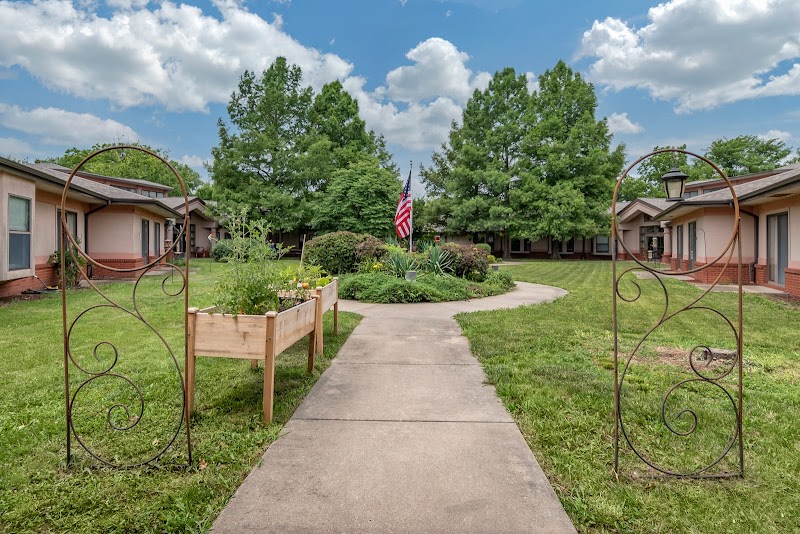
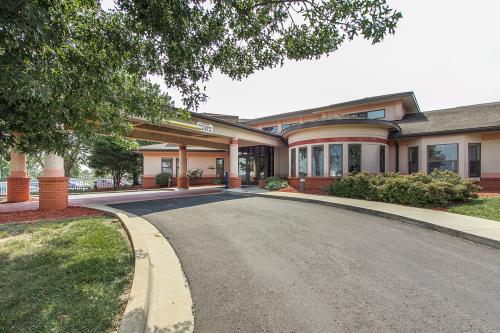
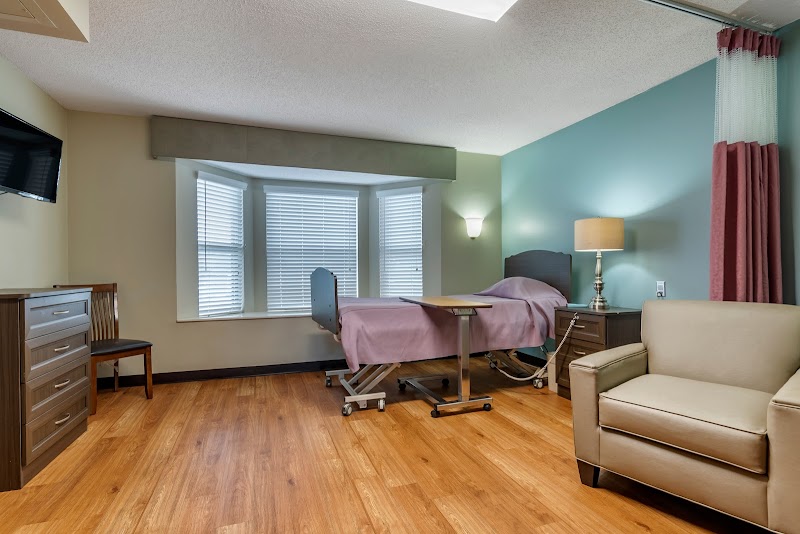
MONTEREY PARK REHABILITATION & HEALTH CARE CENTER

4600 LITTLE BLUE PARKWAY, INDEPENDENCE, MO 64057 (816) 795-7888
For profit - Individual 122 Beds TUTERA SENIOR LIVING & HEALTH CARE Data: November 2025
Trust Grade
60/100
#174 of 479 in MO
Last Inspection: January 2024

Within standard 12-15 month inspection cycle. Federal law requires annual inspections.

Overview

Monterey Park Rehabilitation & Health Care Center has received a Trust Grade of C+, indicating it is slightly above average in quality, but not exceptional. It ranks #174 out of 479 facilities in Missouri, placing it in the top half, and #10 out of 38 in Jackson County, meaning there are only nine better options nearby. The facility is improving, having reduced its issues from 10 in 2024 to just 2 in 2025, which is a positive sign for families considering care. However, staffing is a concern, with a poor 1/5 star rating and less RN coverage than 81% of Missouri facilities, suggesting potential challenges in resident care. Notably, past inspections revealed issues such as inadequate cleanliness in the kitchen, which raises food safety concerns, and a lack of a proper infection control program, both of which could affect residents' health. While there are some strengths, such as zero fines and a strong quality measures rating, families should weigh the facility's weaknesses carefully.

Trust Score
C+
60/100
In Missouri
#174/479
Top 36%
Safety Record
Low Risk
No red flags
Inspections
Getting Better
10 → 2 violations
Staff Stability
○ Average
Turnover data not reported for this facility.
Penalties
✓ Good
No fines on record. Clean compliance history, better than most Missouri facilities.
Skilled Nurses
⚠ Watch
Each resident gets only 17 minutes of Registered Nurse (RN) attention daily — below average for Missouri. Fewer RN minutes means fewer trained eyes watching for problems.
Violations
⚠ Watch
26 deficiencies on record. Higher than average. Multiple issues found across inspections.
★★★☆☆
3.0
Overall Rating
★☆☆☆☆
1.0
Staff Levels
★★★★★
5.0
Care Quality
★★★☆☆
3.0
Inspection Score
Stable
2024: 10 issues
2025: 2 issues

The Good

  • 5-Star Quality Measures · Strong clinical quality outcomes
  • Full Sprinkler Coverage · Fire safety systems throughout facility
  • No fines on record

Facility shows strength in quality measures, fire safety.

The Bad

3-Star Overall Rating

Above Missouri average (2.5)

Meets federal standards, typical of most facilities

Chain: TUTERA SENIOR LIVING & HEALTH CARE

Part of a multi-facility chain

Ask about local staffing decisions and management

The Ugly 26 deficiencies on record

Jul 2025 1 deficiency
CONCERN (D) 📢 Someone Reported This

A family member, employee, or ombudsman was alarmed enough to file a formal complaint

Potential for Harm - no one hurt, but risky conditions existed

Deficiency F0760 (Tag F0760)

Could have caused harm · This affected 1 resident

**NOTE- TERMS IN BRACKETS HAVE BEEN EDITED TO PROTECT CONFIDENTIALITY** Based on interview and record review, the facility failed to ensure that one sampled resident (Resident #1) out of four sampled ...

Read full inspector narrative →
**NOTE- TERMS IN BRACKETS HAVE BEEN EDITED TO PROTECT CONFIDENTIALITY** Based on interview and record review, the facility failed to ensure that one sampled resident (Resident #1) out of four sampled residents received medications as prescribed by the physician. On 7/9/25 Certified Medication Technician (CMT) A failed to verify the identity of the residents prior to administering medication and failed to update the resident's bed location in the electronic medication administration (eMAR) system, resulting in Resident #1 receiving Resident #2's medications. The facility census was 95 residents.On 7/21/25 the facility Administration was notified of the past noncompliance which occurred on 7/9/25. Facility staff had subsequently been educated on all facility medication administration policies. All resident bed assignments were audited. The deficiency was corrected on 7/10/25. Review of the facility's Medication Pass Tips policy dated 5/19 showed:-The five rights: right drug; right time; right resident; right dose; right route.-Prior to preparing medication, verify the resident's identity. A photo is available on the electronic medication administration record (eMAR). Another staff member who was familiar with the resident could be consulted to verify identity. Also, the resident should be called by name.-Each drug should be verified against the eMAtR. Ensure the label matched the eMAR exactly. If the resident required the medication be crushed, could this drug be crushed?-The dose in each blister should be verified against the eMAR.-The route should be verified against the eMAR. Was it via mouth, rectum, eyes, ears, nose, topical, intramuscular (IM), subcutaneously (SQ), per gastric tube (a tub inserted in the stomach to deliver nutrition), etc.?-Each medication should be administered as instructed on the eMAR and within the time-frame established by the facility. Timing was important for many medications. Directions like before, after or with meals should be noted. Review of the facility's Medical Errors and Adverse Events policy dated 12/24 showed:-When medical errors or adverse resident events were identified, the facility would:-The cause should be analyzed.-Corrective actions should be implemented to prevent future events.-Monitoring should be conducted to ensure desired outcomes were achieved and sustained. 1. Review of Resident #1's admission Record Face Sheet showed he/she was admitted to the facility on [DATE] with the following diagnoses:-Hyperlipidemia, (abnormally high levels of fats in the blood).-Peripheral vascular disease, (narrowed blood vessels reduce blood flow to the limbs).-Essential hypertension, (persistent high blood pressure).-Low back pain-Depression, (persistent feelings of sadness, loss of interest and changes in sleep).-Muscle weakness. Review of the Resident's Order Summary Report dated 7/10/25 showed: -An order for Atorvastatin Calcium Oral Tablet 20 milligrams (mg) give on tablet by mouth at bedtime for cholesterol (fats in the blood) dated 7/7/25.-An order for Coreg Oral Tablet 12.5 mg give one tablet by mouth two times a day for coronary artery disease, (disease or damage in the heart's major blood vessels), ordered 7/7/25.-Gabapentin Capsule 300 mg, 1 capsule by mouth three times a day for neuropathy, (damage or disease affecting the nerves outside the brain and spinal cord), ordered 7/7/25.-None of the other medications the resident received were ordered for this resident. Review of the Medication Error Incident Report dated 7/9/25 at 7:25 P.M. showed:-Licensed Practical Nurse (LPN) B was notified by CMT B that Resident #1 had been administered the medications for Resident #2.-Medications administered to Resident #1 that were not ordered were as followed: Sulcrafate oral suspension 20 ml, (a medication that protects the lining of the stomach); Doxycycline 100 mg, (an medication used to treat infection); Famitodine 20 mg, (a medication used to reduce the production of stomach acid; Atorvastatin 40 mg (20 mg ordered) (a medication used to reduce fats I the blood); Coreg 12.5 mg, (a medication used to treat heart conditions and high blood pressure); Baclofen 10 mg, (a medication used to treat muscle spasms); Metformin 500 mg, (a medication used to help control blood sugar); Gabapentin 600 mg (300 mg ordered); Trazodone 150 mg, (an antidepressant); and Ascorbic Acid 500 mg, (Vitamin C).-It was explained to the resident what medications he/she took that were not ordered for him/her.-Resident #1 said he/she would have to be more careful about accepting medications in the future in order to ensure he/she was not given the wrong medications. He/she stated he/she needed to know more about each medication he/she took in order to catch a mistake like this.-Resident #1's vital signs were taken and the Assistant Director of Nursing, (ADON) and Director of Nursing (DON) were notified.-The physician was notified, and orders were received to hold his/her atorvastatin, gabapentin and omeprazole and that the resident's blood pressure was to be monitored every two hours for the next twelve hours.-CMT A was new to the facility and did not use the five rights to identify the resident but went by which bed he/she was in, which was wrong in the computer.-Immediate reeducation of the five rights on passing medications was given to the CMT A. Review of Resident #1's admission Record Face Sheet showed he/she was admitted to the facility on [DATE]. Review of the Resident's Order Summary Report dated 7/10/25 showed:-An order for Atorvastatin Calcium Oral Tablet 40 mg, give on tablet by mouth at bedtime for cholesterol, dated 6/13/25.-An order for Ascorbic Acid (Vitamin-C) 500 mg, give one tablet by mouth two times a day for wound healing, dated 7/3/25.-An order for Baclofen 10 mg, give one tablet by mouth at bedtime for spasms, ordered 6/13/25.-An order for Coreg Oral Tablet 12.5 mg give one tablet by mouth two times a day for high blood pressure, ordered 6/13/25.-An order for Doxycycline Hyclate Oral Tablet 100 mg, give one tablet by mouth two times a day for wound infection until 8/8/25, ordered 6/13/25.-An order for Famotidine Oral Tablet 20 mg, give one tablet by mouth at bedtime for acid reflux, ordered 6/13/25.-An order for Gabapentin Capsule 300 mg, one capsule by mouth three times a day for neuropathy, ordered 6/13/25.-An order for Metformin HCL Oral Tablet 500 mg, give one tablet by mouth two times a day related to diabetes mellitus, ordered 6/13/25.-An order for Sucralfate Suspension 1gm/10 ml, give one gram by mouth before meals and at bedtime for gastric protection, ordered 6/17/25.-An order for Trazodone HCL Oral Tablet, give 0.5 tablet by mouth at bedtime for depression, ordered 6/13/25. Review of the Medication Error Incident Report dated 7/10/25 showed:-Resident #1 continued to have double vision and lethargy after the medication error. He/she reported double vision and feeling excessively tired.-The physician was notified of the continuation of symptoms and requested the resident be sent to the hospital if double vision persisted.-The resident was sent out to the hospital.-The resident returned to the facility at approximately 8:00 P.M. There were no new orders or negative outcomes. Review of Resident #1's hospital Patient Information Form dated 7/10/25 showed:-He/She presented to the hospital for increased lethargy.-He/She was reportedly mistakenly given his/her roommate's medications the previous night.-Those medications were Doxycycline 100 mg, Famitodine 20 mg, Atorvastatin 40 mg (20 mg ordered), Carvedilol (Coreg) 12.5 mg, Baclofen 10 mg, Metformin 500 mg, Gabapentin 600 mg (300 mg ordered), Trazodone 150 mg and Vitamin-C (Ascorbic Acid)500 mg.-He/She still received his/her night and morning medications.-Emergency Medical System (EMS) was called the previous night, who assessed the resident and noted him/her to have normal vital signs.-He/She did not want to go to the emergency department (ED) at the time, so it was written off as a refusal.-He/She reported increased fatigue so EMS was again called and resident was transported to the ED.-He/She denied any chest pain, shortness of breath, vomiting or diarrhea. During an interview on 7/21/25 at 11:00 A.M., CMT B said:-He/She was training an orientee (CMT A).-They were doing the evening medication pass.-He/She was preparing the medications and giving them to CMT A and telling him/her who to give them to.-He/She handed the medications for Resident #1 to CMT A and he/she gave them to the wrong resident.-Resident #2 was in Bed B, but the computer said Bed A.-He/She gave CMT A Resident #2's medications to give, and he/she gave them to Resident #1.-He/She did not know why the computer was not updated.-Resident #2's previous roommate had gone to another facility, so he/she moved to Bed B. He/she told someone he/she was going to move.-Then Resident #1 was put in Bed A.-Resident #1 did not know he/she was getting the wrong medications.-It was an honest mistake.-He/She did not go in the residents' room with CMT A.-He/She felt the computer should have been updated. During an interview on 7/21/25 at 12:00 P.M., Resident #1 said:-The incident with the medications happened in the evening.-A staff person (CMT A) came into the room who seemed to be in a big hurry.-CMT A gave him/her a medicine cup.-He/She looked at the cup and said, This is different.-CMT A assured him/her it was his/hers, and also gave him/her a cup with a pink liquid in it.-He/She asked what it was and CMT A said it was his/hers.-Several minutes later, CMT A came in and brought his/her roommate medications.-His/her roommate said it didn't look like his/her medicine cup and asked where the pink liquid was.-That is when he/she realized the medications had been mixed up, so he/she said something.-He/She told CMT B he/she thought the medications were mixed up.-CMT B became flustered and said he/she would be right back and left the room and did not come back right away.-After a while, he/she took a nap and later someone woke him/her up. He/she could not remember what happened.-The nurse took his/her vital signs, admitted to him/her what had happened and that they were going to send him/her to the hospital to do some testing.-The people at the ED did not see anything out of the ordinary so he/she was sent back to the facility.-Then he/she started seeing double so he/she was sent back to the ED, where it was decided he/she would stay for observation.-He/She took a long nap.-He/She was asked if he/she was still seeing double and he/she said no, that it had improved.-He/She was sent back to the facility and he/she was no longer seeing double.-He/She had never had that happen before.-He/She slept a lot after that; very deep sleep.-He/She did not think the CMT who gave him/her his medications was properly trained. During an interview on 7/21/25 at 12:40 P.M., LPN A said:-If a resident moved from one bed to another, they are admissions, discharges and transfers (ADT) in the computer and moved from whatever bed they were into whatever bed they went to.-Medications for that resident were moved from whatever drawer they were into the correct new drawer.-The CMT could move the medications.-The nurse was responsible for the ADT portion.-You would go back to the five rights.-He/She would look at the resident's picture and that they would answer to the correct name.-If he/she could not tell for sure, he/she might ask the resident some other identifying question or get some other staff who knew the resident. During an interview on 7/21/25 at 1:15 P.M., CMT A said:-He/She was shadowing CMT B for orientation.-Since it was his/her first day, he/she was following CMT B.-CMT B put the medications in the medication cups, gave them to him/her and said to give to the resident in Bed A.-After he/she gave that resident his/her medications, CMT B handed him/her the medications for Resident #2.-When he/she gave them to that resident, he/she asked where his/her pink stuff was.-He/She realized he/she had given a pink medication to Resident #1.-CMT B asked who he/she gave the medication to, he/she told him/her and they looked at the computer and realized the residents were switched around.-CMT B reported the incident to the charge nurse, checked Resident #1's vital signs and checked his/her allergies.-All of Resident #1's vital signs were normal.-Resident #1 was sent out to the hospital for observation; he/she came back the next day.-He/She did not know who did updates in the computer.-He/She was sad that the situation happened because it had never happened to him/her before. During in interview on 7/21/25 at 2:17 P.M., Physician A said:-He/She was aware that Resident #1 was given the wrong medications.-The resident did not have any long term effects from the medications.-There would not be a whole lot of side effects from just one dose of these medications.-He/She would expect that staff would check to make sure the residents were given the right dose of the right medications. During an interview on 7/21/25 at 2:20 P.M., LPN B said:-He/She was the charge nurse that day.-CMT B was passing medications and training CMT A.-The CMTs came to him/her and notified him/her that Resident #1 got Resident #2's medications due to the bed mix-up.-He/She told them they should have made sure the right medications were given to the right resident.-He/She assessed Resident #1 right away and notified the ADON, DON and the physician.-He/She followed the protocol for medication errors. -Resident #2's roommate had discharged , so he/she was switched to bed B, but the change was not made in the computer.-Admissions staff, the charge nurse or the ADON could have made the change in the computer.-He/She would have made the change, but he/she was not made aware of it.-The change should have been passed on in shift report.-After the resident was assessed and everyone appropriate notified, he/she kept monitoring Resident #1, whose vital signs remained normal the whole time.-When Resident #1 developed double vision, he/she notified the physician again who decided to send him/her to the ED.-When the paramedics came, they did an electrocardiogram (EKG) (a test which records the electrical activity of the heart), which was normal.-The EMTs kept reiterating that the hospital would just monitor the resident.-The resident initially refused to go to the hospital; the doctor was aware.-The resident did not have any vomiting, only fatigue and double vision. During an interview on 7/21/25 at 3:00 P.M., the DON said:-This incident happened on CMT A's first day working on the floor.-CMT B had trained other CMTs before.-The problem happened because the bed change was not done in the computer.-They had a quick turnover of residents in that room that day, and he/she believed that was why it didn't get done.-The charge nurse, the ADON, the DON and admissions staff could have done the bed change.-His/Her expectation was that the staff follow the five rights when giving medications and not go back room numbers.-The photo identification of a resident was also the first thing that came up on the computer screen, along with medication allergies. During an interview on 7/21/25 at 3:15 P.M., the Administrator said:-His/Her expectation is that the residents should have gotten the right medications.-Resident #1 and Resident #2 were not in the right beds.-The bed change was not done in the computer.-The admissions person was the gatekeeper of the bed and room assignments.-The ADON would have been responsible or involved for making the bed changes.-Staff should be checking and double checking the residents when giving medications. During an interview on 7/21/25 at 4:15 P.M., the ADON said:-The expectation was that the staff will know the five rights; that was step one.-Any CMT or nurse should know this, and it should be practiced with every resident and every medication.-That was the standard that should be followed.-Everyone was responsible for setting these CMTs up for success.-It was important that the person in each bed matches who the computer said was in that bed; they kind of dropped the ball on that.-The charge nurse, the ADON, the DON and the admissions staff could have made the room changes in the computer.-Resident #2 was in the first bed and moved over to the other bed.-CMTs were not always aware of bed changes.-CMT B knew the residents and not going with CMT A into the room could have contributed to the error.
Feb 2025 1 deficiency
CONCERN (D) 📢 Someone Reported This

A family member, employee, or ombudsman was alarmed enough to file a formal complaint

Potential for Harm - no one hurt, but risky conditions existed

Deficiency F0760 (Tag F0760)

Could have caused harm · This affected 1 resident

Based on interview and record review, the facility failed to ensure residents were free from significant medication errors when staff administered the wrong medications to one sampled resident (Reside...

Read full inspector narrative →
Based on interview and record review, the facility failed to ensure residents were free from significant medication errors when staff administered the wrong medications to one sampled resident (Resident #1) out of six sampled residents. The facility census was 95 residents. On 2/4/25 the Administrator and acting Director of Nursing (DON) were notified of past non-compliance which occurred on 1/31/25. On 1/31/25 the facility Administrator was notified of the incident and the investigation was started. Certified Medication Technician (CMT) A notified Licensed Practical Nurse (LPN) A of an medication error he/she had made. CMT A and all nursing staff were educated on medication administration on 1/31/25. The deficiency was corrected on 1/31/25. Review of the facility Medication Pass Tips dated 5/2019 showed: -The following is a compilation of points to keep in mind during medication pass. -Prior to preparing medications, verify the resident's identity. -A photo is available on the electronic Medication Administration Record (eMAR). -Another staff member who is familiar with the resident may be consulted to verify identity. -Also, call the resident by name. -Verify each drug against the eMAR. -Ensure the label matches the eMAR exactly. -Verify the dose in each blister against the eMAR. -Verify the route against the eMAR. -Administer each medication as instructed on the eMAR and within the timeframe established by the facility. Review of the facility's Medical Errors & Adverse Events Policy dated 12/2024, showed: -When medical errors or adverse resident events are identified, the facility will: --Analyze the cause. --Implement corrective actions to prevent future events. --Conduct monitoring to ensure desired outcomes and achieved and sustained. 1. Review of Resident #1's admission Record showed he/she was admitted to the facility with the following diagnoses: -Chronic Systolic (Congestive) Heart Failure (the heart is unable to pump blood effectively, leading to a buildup of fluid in the body). -High Blood Pressure. -Dementia (the loss of cognitive functioning- thinking, remembering, and reasoning to such an extent that it interferes with a person's daily life and activities). -Ulcerative Colitis (a type of inflammatory bowel disease that causes inflammation and sores, called ulcers that can bleed). Review of the resident's Quarterly Minimum Data Set (MDS-a federally mandated assessment tool completed by facility staff for care planning) dated 1/16/25 showed the resident was severely cognitively impaired. Review of the resident's Physician's Order Sheet (POS) dated 2/1/25, showed the resident did not have orders for the following medications: -Atorvastatin (blocks enzyme that is needed by the body to make cholesterol and reduces the amount of cholesterol in the blood) 80 milligram (mg) tablet. -Baclofen (muscle relaxer) 10 mg tablet. -Apiraban (Eliquis an oral anticoagulant to prevent and treat blood clots) 5 mg tablet. -Mirtazapine (Remeron - antidepressant) 15 mg tablet. Review of the resident's Care Plan dated 3/27/24, showed: -He/She had impaired cognitive function/dementia or impaired thought process. -Administer medications as ordered. -Monitor/document/report to physician any changes in cognitive function, specifically changes in decision making ability, memory, recall and general awareness, difficulty expressing self, difficulty understanding others, level of consciousness, and mental status. Review of the resident's Incident Report dated 1/31/25 at 6:15 P.M., showed: -LPN A was notified by CMT A that Resident #1 receiving the wrong medications. -Upon assessment LPN A noted the resident received Atorvastatin 80 mg, Baclofen 10 mg, Apiraban 5 mg, and Mirtazapine (Remeron) 15 mg. -Vitals signs were taken and the Nurse Practitioner (NP), Assistant Director of Nursing (ADON), family, and Hospice (end of life care) were notified of the medication error. -New order to monitor for any signs or symptoms of bleeding. -Resident was not able to state what happened. During an interview on 2/4/25 at 2:14 P.M., CMT A said: -He/She was passing medications and had just given medications to Resident #1's roommate and left the room. -He/She then started getting the medications ready for Resident #6 in the next room when he/she remembered he/she did not give Resident #1 his/her medications. -He/She set the cup of medications for Resident #6 on the medication cart and got Resident #1's medications ready and set them on the medication cart also. -He/She grabbed a cup of medications and gave them to Resident #1. -When he/she went to give Resident #6 his/her medications that is when he/she noticed that he/she had given Resident #1 Resident #6's medications. -He/She went and notified LPN A about giving Resident #1 the wrong medications. -He/She had been educated on proper medication administration on 1/31/25. During an interview on 2/5/25 at 3:58 P.M., LPN A said: -He/She was notified by CMT A that he/she had given Resident #1 Resident#6's medications. -He/She went over the medications that were given to Resident #1. -He/She assessed Resident #1 and took his/her vitals and notified the NP, ADON, and family of the medication error. -The NP gave an order to monitor the resident for any change in condition or bleeding. -Resident #1 did not have any adverse reactions to the medications he/she was given in error. During an interview on 2/6/25 at 10:55 A.M., the physician said: -Facility staff should notify the physician of the medications given in error. -The resident would be monitored for any adverse reactions. -If any reactions, he/she should be notified of the reactions and from there see if the resident would need to be sent out to the hospital. -With the resident just receiving one dose of these medications they should not cause any harm to the resident. -Staff should make sure they are giving the right medications to the right residents through the five rights as soon as getting the medications ready. -He/She was notified of the medication error on 1/31/25. MO00248924
May 2024 1 deficiency
CONCERN (D) 📢 Someone Reported This

A family member, employee, or ombudsman was alarmed enough to file a formal complaint

Potential for Harm - no one hurt, but risky conditions existed

Quality of Care (Tag F0684)

Could have caused harm · This affected 1 resident

**NOTE- TERMS IN BRACKETS HAVE BEEN EDITED TO PROTECT CONFIDENTIALITY** Based on observation, interview, and record review, the facility failed to ensure appropriate transfer techniques were utilized ...

Read full inspector narrative →
**NOTE- TERMS IN BRACKETS HAVE BEEN EDITED TO PROTECT CONFIDENTIALITY** Based on observation, interview, and record review, the facility failed to ensure appropriate transfer techniques were utilized for two sampled residents (Resident #1 and #3) out of four sampled resident. The facility census was 94 residents. Review of the facility's Transfer-One Person Skills Checklist: -Check [NAME] for appropriate transfer technique. -Position chair, wheelchair, commode to resident's strong side. -Assist resident to sitting position with feet firmly on the floor. -Apply gait belt. -Have resident place their hands on you shoulders. -If transferring from chair, wheelchair, commode, have resident place hands on arm rests and push up while you pull resident up to a standing position. -Brace knees against resident's knees, or your knees on the outside of the resident's knees to block feet from sliding. -Ask resident to lean forward, count to three and ask resident to push up with legs while you pull resident to a standing position. 1. Review of Resident #1's admission Record showed the resident was admitted on [DATE], readmitted on [DATE] with diagnoses including muscle weakness, pain in right knee, pain in left knee, and pain in left thigh. Review of the resident's Quarterly Minimum Data Set (MDS- a federally mandated assessment instrument completed by facility staff for care planning) dated 4/4/24 showed the resident: -Was cognitively intact. -Used a wheelchair for mobility. -Required partial, moderate assistance for transfers. Review of the Resident's Functional Abilities and Goals assessment dated [DATE] showed he/she required partial, moderate assistance for mobility, including transfers. Review of the Resident's undated Care Plan showed: --Resident is at risk for falls, 6/28/23. --Resident wishes to wear his/her gait belt at all times and refuses to take it off, 5/1/24. --Resident required (x one) staff participation with transfers with the use of a gait belt. --Resident had limited physical mobility. --Resident required (x one) staff participation for mobility. --Resident required staff assistance with mobility. During an interview on 5/9/24 at 12:02 P.M. the resident said: -He/She was concerned about the gait belt not being used during transfers. -He/She was keeping his/her gait belt with him/her at all times to make sure staff was using it during transfers. -He/she had to constantly tell staff to use the gait belt for transfers or they would not use the gait belt with them. -He/She is fearful of falling during transfers. -When staff did not use the gait belt during transfers, the staff grab onto his/her skin and it hurt, or they grab his/her clothing causing rips and they don't replace the clothing. -Certified Nursing Assistant (CNA) A specifically did not use a gait belt for transfers, actually most of the staff did not use a gait belt for transfers. -His/Her concern about staff not using a gait belt was discussed during his/her last care plan meeting. 2. Review of Resident #3's admission Record showed the resident was admitted on [DATE] with diagnoses including muscle weakness and lack of coordination. Review of the resident's Functional Abilities and Goals dated 12/6/17 showed the resident required supervision or touching assistance with transfers. Review of the Resident's MDS dated [DATE] showed the resident: -Was cognitively intact. -Used a wheelchair for mobility. -Required supervision, touching and steadying for transfers. Review of the Resident's undated Care Plan showed: --Resident is at risk for falls related to impaired mobility and history of falls. --Resident required (x one) staff participation with bathing, bed mobility, dressing, eating , personal hygiene and toileting. --Required (x one) assist for transfer. --Resident had limited physical mobility. --Requires assistance x one as desired/as tolerated. During an observation on 5/9/24 at 12:17 P.M. showed: -CNA A pushing the resident into his/her room. -Upon entering the room, CNA A said he/she was going to use a gait belt since other people were in the room and reached for the gait belt hanging next to the bathroom door. -As CNA A attempted to place gait belt on the resident, the resident stated he/she did not want the gait belt on because he/she cannot breathe with it on. -CNA A tossed gait belt to the foot of the bed and instructed the resident he/she would help the resident to bed. -CNA A grabbed the resident's sweat pants and bottom of the resident's sweat shirt. -The resident grabbed onto CNA A as CNA A pulled the resident from a sitting to standing position by the clothing. -CNA A pivoted the resident to the bed and lowered the resident onto the bed by the resident's clothing. -The resident laid on the bed, covered him/herself, and closed his/her eyes. 3. During an interview on 5/9/24 at 12:20 P.M. CNA A said: -He/She never uses a gait belt on Resident #3. -He/she will yell out saying he/she cannot breathe with the gait belt on. -He/She sometimes uses a gait belt with Resident #1. -The rest of the residents can stand on their own and do not need a gait belt. -Information on the transfer needs of residents can be found in therapy, unless it is in the chart. -He/She does not look in the chart, only uses the chart to document eating and bowel movements. During an interview on 5/9/24 at 12:22 P.M. the Assistant Director of Nursing (ADON) said: -CNA's are expected to look in [NAME] for transfer information for all residents. -Any resident that is not using a mechanical lift should have a gait belt used when being assisted with transfers. -He/she expected CNA A to use a gait belt with the transfer. During an interview on 5/9/24 at 12:38 P.M. the Doctorate to Physical Therapy said: -He/She expects gait belts to be used during all transfers, walking, and any activity that challenges balance. -Using the wrong transfer technique can pose potential safety concerns for falls, increased pain for the resident and staff, as well as multiple other risks. -Therapy instructs staff with each new resident and their transfer needs. During an interview on 5/9/24 at 1:04 P.M. the Director of Nursing (DON) said: -Resident #3 transfers with one assist. -He/she expected staff to use a gait belt during transfers with Resident #3. -He/She was not aware of any resident refusing to use the gait belt. -It would have been nice for staff to inform him/her of the resident refusing the gait belt so it could be care planned and the resident could be switched to a lift. -Resident #1 transferred with one assist and a gait belt. -He/she was not aware Resident #1 complained of CNA A not using a gait belt for transfers. -He/she expected staff to use a gait belt when transferring Resident #1, or any resident transfers that do not require a mechanical lift. -Last in-service on gait belts was in February 2024. During an interview on 5/14/24 at 9:50 A.M. CNA A said: -He/She has completed the skills checklist. -The staff have been educated on transfers and gait belt use monthly. -He/she helped Resident #1 to the bathroom without a gait belt until about a month and a half or two months ago when the resident started wearing his/her gait belt all of the time. -He/She was not using a gait belt for transfers prior to the resident wearing his/her gait belt. MO00235286
Jan 2024 9 deficiencies
CONCERN (D)

Potential for Harm - no one hurt, but risky conditions existed

Deficiency F0554 (Tag F0554)

Could have caused harm · This affected 1 resident

**NOTE- TERMS IN BRACKETS HAVE BEEN EDITED TO PROTECT CONFIDENTIALITY** 2. Review of Resident #21's Face Sheet showed the resident was admitted to the facility with the following diagnoses: -Acute on ...

Read full inspector narrative →
**NOTE- TERMS IN BRACKETS HAVE BEEN EDITED TO PROTECT CONFIDENTIALITY** 2. Review of Resident #21's Face Sheet showed the resident was admitted to the facility with the following diagnoses: -Acute on Chronic Congestive Heart Failure (CHF- a weakness of the heart that leads to the build-up of fluid in the lungs and surrounding tissue). -Chronic Kidney Disease (CKD- a long standing kidney disease based on kidney damage or decreased kidney function for three or more months). -Diabetes Mellitus (DM II- a complex disorder of carbohydrate, fat, and protein metabolism that is primarily a result of a deficiency or complete lack of insulin secretion in the pancreas or resistance to insulin). Review of the resident's Quarterly MDS dated [DATE] showed he/she was cognitively intact. Review of the resident's POS dated January 2024 showed: -No order for Robitussin (Dextromethorphan- a medicine used to treat a cough) Cough Syrup. -No order for self-administration for Robitussin. Note: A complete review of all the resident's past orders was done and no order for Robitussin was found. Observation on 1/2/24 at 11:38 A.M. showed the resident had two bottles of Robitussin Cough Syrup sitting on his/her nightstand. Review of the resident's Electronic Medical Record (EMR) on 1/4/24 showed no assessment for self-administration of the Robitussin cough syrup. Observation on 1/4/24 at 10:25 A.M. showed the resident still had the Robitussin Cough Syrup sitting in the same exact location as the previous observation. During an interview on 1/4/24 at 10:27 A.M. the resident said: -He/she had not used the cough syrup in a while. -He/she had a sinus infection about a month prior and was using the cough syrup then. -The facility knew he/she had the medication at his/her bedside and stated that it was okay for him/her to have it. -The facility had not watched him/her take the cough syrup in the past and was unsure if a self-administration assessment had been completed. During an interview on 10/4/24 at 12:25 P.M. Registered Nurse (RN) A said: -He/she could not find an order for Robitussin Cough Syrup in the resident's POS. -He/she thought the cough syrup should have been removed from the resident's room because there was no order for the medication, or someone should have obtained an order for the medication. -He/she did not provide care for the resident, so he/she was unsure if the resident would be able to self-administer the cough syrup. During an interview on 1/8/24 at 9:16 A.M. CMT A said medications should never be left at bedside and he/she would always wait at the door to ensure all residents took their medication. During an interview on 1/8/24 at 10:56 P.M. RN B said: -Medication should never be left at the bedside unattended. -The resident should have had an order for the medication. -The resident should have had a self-administration assessment completed to ensure the resident would be able to keep the cough syrup at the bedside. -Once the assessment was completed then an order should have been put in place for the resident to have the medication at bedside. -He/she thought that cough syrup was not allowed to be kept at residents' bedsides in general. During an interview on 1/8/24 at 12:34 P.M. Assistant Director of Nursing (ADON) A said: -The cough syrup should not have been left at the resident's bedside. -The resident should have had an order for the medication itself. -Residents need to have an assessment completed to ensure self-administration is appropriate and there should also be an order in place. -The facility does not let residents keep cough syrup at their bedside. -The cough syrup should have been taken away from the resident's bedside before now. -The resident's family had supplied the cough syrup to the resident. -The resident did not tell the facility that he/she had the cough syrup. -The resident had been educated on medication storage and the cough syrup was taken away from the resident. During an interview on 1/8/24 at 1:00 P.M. the DON said: -Medications should never be left at bedside without an order. -The resident should have had an order for the cough syrup. -The resident should have had an assessment for self-administration completed and an order in place for the cough syrup to be at bedside. -The resident's family had brought the medication to the resident. Based on observation, interview, and record review, the facility failed to ensure medicine kept in a resident room was properly stored; to ensure there was a physician's order for self-administration of medication, and to ensure the resident was assessed to be able to self-administer medications for one sampled resident (Resident #21) and one supplemental resident (Resident #27) out of 21 sampled residents and 4 supplemental sampled residents. The facility census was 92 residents. Review of the Facility's policy titled Storage and Expiration Dating of Medications, Biologicals dated 8/7/23 showed: -Facility should not administer/provide bedside medications or biologicals without a Physician/Prescriber order and approval by the Interdisciplinary Care Team and Facility administration. -Facility should store bedside medications or biologicals in a locked compartment within the resident's room. 1. Review of Resident #27's Quarterly Minimum Data Set (MDS-a federally mandated assessment tool required to be completed by facility staff for care planning) dated 12/23/23 showed he/she: -Was cognitively intact. -Had moisture-associated skin damage (MASD, is the general term for inflammation or skin erosion caused by prolonged exposure to a source of moisture). Review of the resident's Treatment Administration Record (TAR) dated 1/1/24 to 1/31/24 showed: -Physician order for Nystatin powder (for treatment of yeast infections) to apply under resident's right breast topically every shift for yeast infection (a common fungal infection caused by a yeast called Candida), order dated 9/28/23. -Treatment were documented as given on 1/1/24, 1/2/24,1/3/24 for the morning and night shift by nursing initials. -No documentation of a physician order or nursing assessment that the resident could self-administer medication or treatments. Observation on 1/2/24 at 8:56 A.M., of the resident room showed he/she had a prescription bottle with a medicine cup over the cap. The bottle was Nystatin powder. Observation and interview on 1/4/24 at 11:15 A.M., of the resident showed: -He/she had a prescription bottle of Nystatin left on his/her nightstand. -The resident said he/she does apply the Nystatin powder as needed. -He/she had complaint of soreness under his/her right breast. - His/her right breast showed a slight odor, reddened shiny area under his/her breast. There was a dried/moist white substance under his/her breast. -He/she said the facility nursing staff were assessing his/her skin and have apply Nystatin powder as needed. Review of the resident's Physician Order Sheet (POS) with wound nurse on 1/4/24 at 11:18 A.M., showed: -A physician order dated 9/28/23, for Nystatin powder to apply to under the resident's right breast topically every shift for a yeast infection. -The resident did not have physician order for self-administration and did not have a self-medication assessment completed or ordered. During an interview on 1/4/24 at 11:19 A.M., Wound Nurse said: -The resident did not have a physician order to self-administered medication or treatments. -He/she would expect the resident to have a physician order to keep the medication at bedside. -He/she would expect the Certified Medication Technician (CMT) or nursing staff to ensure the removal of the Nystatin powder after treatment. During an interview on 1/4/24 at 11:20 A.M., Licensed Practical Nurse (LPN) B said: -He/she had assessed the resident skin in past and was aware of the prescription treatment. -He/she would have expected nursing staff apply the powder as needed. -Nystatin powder should not be left at resident's bedside without a physician order for self -administration. -The resident did not have physician order for self-administer medication or treatments. During an interview on 1/8/24 at 12:55 P.M., Director of Nursing (DON) said: -He/she would expect resident's medication not to be left at bedside. -He/she would expect a physician order and self administration assessment be completed before a resident allowed to keep medication or treatment at bedside. -The facility administration run a new physician orders report monthly and check for accurate orders and documentation. -Nursing staff and CMT should be monitoring for medication left at bedside. -The resident's Self- Administration assessment should be completed by nursing staff and reassessed quarterly for the resident ability to perform prescribed treatment and ability for self-administration of medication.
CONCERN (D)

Potential for Harm - no one hurt, but risky conditions existed

Accident Prevention (Tag F0689)

Could have caused harm · This affected 1 resident

**NOTE- TERMS IN BRACKETS HAVE BEEN EDITED TO PROTECT CONFIDENTIALITY** Based on observation, interview and record review, the facility failed to perform a safe transfer for one sampled resident (Resi...

Read full inspector narrative →
**NOTE- TERMS IN BRACKETS HAVE BEEN EDITED TO PROTECT CONFIDENTIALITY** Based on observation, interview and record review, the facility failed to perform a safe transfer for one sampled resident (Resident #80) who needed assistance with transfers and was unable to bear weight, and to ensure the resident was not left sitting up in his/her wheelchair unattended in his/her room to prevent falls out of 21 sampled residents. The facility census was 92 sampled residents. Review of the facility Fall Management policy and procedure revised 9/17/19, showed the purpose of the fall management program was to develop, implement, monitor and evaluate an interdisciplinary team fall prevention approach and manage strategies and interventions that foster resident independence and quality of life. The fall management program promotes safety, prevention and education of both staff and residents. -The fall policy did not include documentation showing how residents should be transferred using a gait belt or with one or two person assistance. -The fall policy did not show documentation regarding how fall interventions should be followed to prevent further falls. 1. Review of Resident #80's Face sheet showed the resident was admitted on [DATE] and readmitted on [DATE], with diagnoses including dementia, cognitive communication deficit, depression, Parkinson's disease (a progressive disease of the nervous system marked by tremor, muscular rigidity, and slow, imprecise movement), muscle weakness and pain. Review of the resident's quarterly Minimum Data Set (MDS-a federally mandated assessment tool to be completed by facility staff for care planning) dated 10/12/23, showed the resident: -Was alert with severe cognitive incapacity. -Had functional limitations in range of motion (ROM - the range on which a joint can move) of the resident's lower extremities. -Was dependent on staff for all transfers, toileting, bathing, was incontinent and needed substantial assistance with dressing and supervision with hygiene and eating. -Used a wheelchair for mobility. -Had a history of falls and had falls within the look behind assessment period. Review of the resident's undated Care Plan showed the resident had a self-care performance deficit and was at risk for falls. Interventions showed: The resident required one to two persons for turning and bed mobility, dressing, toileting, transferring, and required one person assistance for eating and hygiene. -The resident was receiving restorative services for active and passive range of motion for his/her upper and lower extremities, to include transfer training for stand and pivot transfers with one to two persons assisting. During an observation and interview on 1/03/24 at 1:16 P.M., showed the resident was sitting in his/her recliner, reclined with glasses on and was dressed for the weather with socks on. The resident had some contracture (a fixed tightening of muscle, tendons, ligaments, or skin. It prevents normal movement of the associated body part) to his/her feet and toes (lack of flexibility in the resident's ankles). Certified Nursing Assistant (CNA) B entered the resident's room, and asked if the resident if he/she was ready to lay down and the resident said he/she was. CNA B did the following: -He/she put on gloves, positioned the resident's wheelchair in front of the recliner and locked the wheels. -Without using a gait belt, CNA B placed his/her hands on each side of the waistband of the resident's pants, he/she lifted the resident while the resident held onto to the CNA and transferred the resident into his/her wheelchair. The resident was not bearing his/her own weight. -CNA B then unlocked the resident's wheelchair and moved the resident to the side of his/her bed. -While the resident held onto CNA B's waist, CNA B again lifted the resident by the waist band of the resident's pants and transferred the resident to his/her bedside. The resident laid down on his/her bed and CNA B lowered the resident's bed to the ground. During an interview on 1/03/24 at 1:21 P.M., CNA B said: -They usually use a gait belt with the resident when completing a one-person transfer. -He/she knew he/she was supposed to use a gait belt, but he/she did not have one available at the time. -The resident really did not bear any weight, but they usually did not transfer him/her with more than one person because the resident was so small and light weight. -They did not have a physician's order to use a mechanical lift (devices used to assist with transfers and movement of individuals who require support for mobility beyond the manual support provided by caregivers alone ) to transfer the resident and the rehabilitation staff had never trained them to use a mechanical lift with the resident. During an interview on 1/08/24 at 9:40 A.M., Licensed Practical Nurse (LPN) C said: -The resident has to be transferred with one to two persons with a gait belt because he/she cannot transfer himself/herself. -The resident was not transferred with a mechanical lift. -The nursing staff should always use a gait belt when transferring the resident and should not use the resident's pants to lift him/her. During an interview on 1/08/24 at 10:16 A.M., the Director of Rehabilitation said: -The Physical Therapist evaluated the resident for ambulation, strengthening and transfers due to falls on 11/14/23. -Currently the resident receives one to two person assistance with a gait belt for all transfers. -The resident is currently on a restorative program for range of motion for mobility, muscle extensibility and transfer training for all surfaces. -The rehabilitation staff have trained the nursing staff on using a gait belt to transfer the resident with either one or two persons. -Nursing staff should always use a gait belt when transferring the resident with one or two persons. During an interview on 1/08/24 at 1:00 P.M., the Director of Nursing (DON) said: -Nursing staff should use a gait belt when transferring any resident who was not transferred with a mechanical lift. -He/she was aware that the resident was transferred without a gait belt and that should not have happened. Review of the resident's Fall Investigation Report dated 9/6/23, showed: -The nursing staff notified the writer that the resident was sitting on the floor. The nurse observed the resident sitting on the floor at 3:05 P.M., next to his/her bed and wheelchair. The resident was trying to transfer himself/herself into his/her bed and said he/she slid out of his/her wheelchair. The resident was alert and denied pain. The resident's skin was intact and there were no new injuries or bruising noted at this time. Nursing staff assisted with transferring the resident into his/her bed. He/She did not use his/her call light to call staff for assistance with transferring. Nursing staff initiated neurological checks (evaluation of the nervous system which includes level of consciousness, ability to move extremities, eye responses and change in pupils) that were within normal limits and his/her vital signs (temperature (t), pulse (p), respirations (r), blood pressure (bp) and oxygen (o) level)ere within normal limits. Nursing staff notified the resident's physician and supervisor. -Nursing notes showed post fall follow up documentation for 72 hours after the resident's fall did not show any changes in the resident's condition. Review of the resident's Fall Risk assessment dated [DATE], showed a score of 30 (a score above 10 represented high risk for falls). Review of the resident's undated Care Plan showed the resident had a self-care performance deficit and was at risk for falls. Interventions showed: -Staff was to ensure the resident's call light was within reach and encourage the resident to use it for assistance as needed. -Staff was to educate the resident/family/caregivers about calling for assistance prior to cares and what to do if a fall occurs. -Staff was to ensure that the resident was wearing appropriate footwear when ambulating or mobilizing in his/her wheelchair. -The resident was to be placed on a low bed (when in bed). -Staff was to bring the resident to the nurses' station or common area when the resident was restless to have closer monitoring. -Staff was to encourage the resident to remain in the common area to watch television or activity until bedtime. -Staff was to offer to lay the resident down in the evening. -An undated post fall intervention showed staff took the resident to the nurses' station for close monitoring. It showed staff would follow up with laboratory work due to the resident's increased confusion. -An undated post fall follow up showed the resident's Melatonin (medication for sleep) was discontinued and Nursing staff was to ensure the resident wore non-skid socks. -Staff was educated to check in on the resident during meals. -Staff was educated to ensure rounds were being completed timely with resident being checked and offered toileting. Review of the resident's Physician's Telephone Order dated 11/14/23, showed a physician's order for a physical therapy evaluation after a recent fall. Skilled physical therapy services is not required. Recommendation is for one to two person assistance for transfers and close supervision when out of bed to reduce self-transfers. Review of the resident's Fall Risk assessment dated [DATE], showed a score of 32 (high risk of falls). Review of the resident's Fall Investigation dated 12/11/23, showed: -On 12/11/23 the nursing staff notified the nurse at 6:09 P.M., that the resident was on the floor. Upon entering the resident's room, the resident was lying flat on his/her back with his/her legs straight out on the floor at his/her bedside. The resident was dressed in a shirt and brief and his/her shirt and linen was wet from juice served with dinner. The resident was last seen in his/her wheelchair eating dinner prior to the fall. The resident was unable to indicate what happened. Nursing staff assessed the resident for injury with none noted, his/her skin was intact. The resident was alert and oriented to person only. The resident's neurological checks, vital signs and range of motion was within normal limits. Nursing staff assisted the resident to a standing position with two staff assistance and then placed into his/her bed. The nursing staff notified the resident's responsible party, physician and Assistant Director of Nursing (ADON). -The fall summary did not show the interventions that were in place for the resident at the time of his/her fall (the intervention that nursing staff checked on the resident during his/her meal and the time the staff last saw the resident prior to his/her fall or whether the resident was restless). -Nursing Notes showed post fall follow up documentation for 72 hours showed the resident had no change in condition. Review of the resident's Care Plan showed no additional fall interventions were documented. During an observation and interview on 1/03/24 at 1:16 P.M., showed the resident was sitting in his/her recliner with glasses on and was dressed for the weather with socks on. The resident had some contracture to his/her feet and toes (lack of flexibility in the resident's ankles). CNA B said: -The resident, due to having several falls, was on a low bed, but he/she continued to climb out of his/her bed and onto the floor. -They have to show each time he/she climbs out of bed onto the floor as a fall, but it was a behavior. -The resident was confused and does not remember that he/she cannot walk. -The resident does not remember to use a call light so they have to check on the resident frequently if he/she is up. -They (nursing staff) place the resident in his/her recliner in the reclined position when he/she is in his/her room and he/she will stay in the recliner and not try to get out. -The resident was placed in his/her recliner for meals. -He/she was unaware of the resident falling out of his/her recliner. -Nursing staff was not supposed to leave the resident up in his/her wheelchair, because he/she will slide out of the wheelchair. -The resident was left up in his/her wheelchair and slid out of it when the resident fell on [DATE]. During an observation on 1/05/24 at 10:35 A.M., showed the resident was sitting up in his/her wheelchair in the small dining/community area with peers watching television. Nursing staff was sitting in the community area with the resident, supervising. During an interview on 1/08/24 at 9:40 A.M., LPN C said: -The resident has Parkinson's disease and will sometimes also become agitated and move around a lot while up in his/her wheelchair. -When they see the resident moving around a lot, they will put him/her either in his/her recliner or in bed if he/she is in his/her room. -The resident has had several falls, most have been from his/her bed which is why it is in the lowest position because he/she will put himself/herself onto the floor. -He/she was aware that the resident had fallen from his/her wheelchair in December 2023. -They were allowed to keep the resident up in his/her wheelchair during meals when he/she ate in his/her room and this fall was at that time. -They tried to check on the resident frequently when he/she was up in his/her room due to his/her fall risk. -They have allowed the resident to sit in his/her recliner to eat and the resident is usually okay and has not had any falls from his/her recliner. During an interview on 1/08/24 at 10:16 A.M., the Director of Rehabilitation said: -The Physical Therapist evaluated the resident on 11/14/23, for ambulation, strengthening and transfers due to the resident falls before and up to 11/14/23. -When the resident is sitting up he/she tends to move around and eventually will slide down out of his/her wheelchair due to his/her Parkinson's diagnosis. -Physical Therapy staff recommended that when the resident was up in his/her room, he/she should be placed in his/her recliner in a reclined position with the foot/leg rests up to help block the resident from sliding. -It was not recommended that the resident be left up in his/her wheelchair without supervision. During an interview on 1/8/24 at 1:00 P.M., the (Director of Nursing) DON said: -The resident has had several falls from his/her bed and wheelchair and they have implemented several interventions to try to prevent the resident from falling. -They had the rehabilitation department evaluate the resident and look at his/her positioning. -The resident could be in his/her wheelchair and he/she was appropriate to sit in his/her wheelchair for meals. -If nursing staff put the resident in his/her wheelchair, staff was to take the resident to the common area or nursing station so the resident can be supervised/observed. -If the resident is restless while up in his/her wheelchair, the nursing staff should bring the resident to the nursing station so the nurse can observe him/her. -Nursing staff should not leave the resident up in his/her wheelchair in his/her room without monitoring him/her.
CONCERN (D)

Potential for Harm - no one hurt, but risky conditions existed

Respiratory Care (Tag F0695)

Could have caused harm · This affected 1 resident

**NOTE- TERMS IN BRACKETS HAVE BEEN EDITED TO PROTECT CONFIDENTIALITY** Based on observation, interview and record review, the facility failed to ensure residents with oxygen had physician's orders do...

Read full inspector narrative →
**NOTE- TERMS IN BRACKETS HAVE BEEN EDITED TO PROTECT CONFIDENTIALITY** Based on observation, interview and record review, the facility failed to ensure residents with oxygen had physician's orders documented for two sampled residents (Resident #70 and # 83); to ensure oxygen nasal cannulas (a thin flexible tube that gives you additional oxygen through your nose), face masks and tubing was kept covered when not in use for one sampled resident (Resident #83) and ensured free standing oxygen containers were secured in an oxygen stands for two sampled residents (Resident #70 and #83) out of 21 sampled residents. The facility census was 92 residents. Review of the facility's Oxygen Administration policy and procedure dated 1/2027, showed: -Verify that there is a physician's order for this procedure of oxygen administration. -After completing the oxygen set up or adjustment the following should be documented in the resident's medical record: the rate of oxygen flow rate, frequency and duration of treatment, and the reason for as needed administration. -There was no documentation that showed how nasal cannulas, tubing, face masks and other oxygen equipment should be stored when not in use. -There was no documentation showing how oxygen tanks should be stored. 1. Review of Resident #70's Face Sheet showed the resident was admitted to the facility on [DATE] with diagnoses including respiratory failure, muscle weakness, abnormal mobility, anemia (low iron), morbid obesity, high blood pressure, heart failure and chronic obstructive pulmonary disease (COPD-a group of lung diseases that block airflow and make it difficult to breathe). Review of the resident's Care Plan dated 11/30/23 showed the resident had altered respiratory status and difficulty breathing related to respiratory failure and COPD. Interventions showed the nursing staff was to: -Administer medication as ordered and monitor the effectiveness. -Elevate the resident's head of bed to alleviate shortness of air when lying flat. -Monitor and document changes in orientation, restlessness, anxiety and air hunger. -Monitor for signs and symptoms of respiratory distress. -Monitor for abnormal breathing patterns and report to the physician. -Position the resident with proper body alignment for optimal breathing. -Provide oxygen as needed. -The care plan did not show the resident was on continuous oxygen and did not show the amount of oxygen needed. Review of the resident's admission Minimum Data Set (MDS-a federally mandated assessment tool to be completed by facility staff for care planning) dated 12/3/23, showed the resident: -Was alert and oriented with no cognitive impairment. -The resident was dependent on staff for transfers, bathing, toileting, dressing, mobility, but could perform some hygiene tasks. -Used a walker and wheelchair for mobilizing. -Received oxygen therapy. Review of the resident's Physician's Order Sheet (POS) dated 1/2024, showed physician's orders for: -Ipratropium-Albuterol Solution 0.5-2.5 milligrams (mg)/milliliters (ml), inhale 3 ml orally every 4 hours as needed for shortness of breath or wheezing via nebulizer (a device for producing a fine spray of liquid, used for inhaling a medication) (ordered 11/29/23). -Change nebulizer and nebulizer tubing weekly every night shift on Sunday (ordered 11/29/23). -There were no physician's orders for oxygen to include the frequency or amount of oxygen the resident was to use. Observation on 1/02/24 at 9:37 A.M., showed the resident was not in his/her room, but there was an oxygen concentrator (a medical device that separates nitrogen from the air around you so you can breathe up to 95% pure oxygen) sitting beside the resident's bed without any tubing connected. There was also a oxygen tank that was standing across from the resident's bed against the wall what was not in an oxygen stand. Observation and interview on 1/02/24 at 1:23 P.M., showed the resident was sitting in his/her room in his/her wheelchair with his/her oxygen on at 2.5 liters per minute. There was a portable oxygen tank across from the resident standing freely by the wall and was not in an oxygen stand. The resident said: -He/She came to the facility from the hospital after being unresponsive at home and was here for rehabilitation. -He/She wore oxygen continuously. Observation on 1/03/24 at 10:22 A.M., showed the resident was in his/her bed with oxygen on at 2.5 liters. The oxygen tank was no longer free standing across from the resident's bed. It was in a sleeve on the back of the resident's wheelchair. Observation and interview on 1/04/24 at 7:46 A.M., showed the resident was sitting up in his/her bed wearing his/her oxygen at 2.5 liters while finishing his/her breakfast. The resident said: He/She wore his/her oxygen continuously and only sometimes removed it. -His/Her oxygen was supposed to be on 3 liters per minute and he/she started wearing oxygen continuously when he/she came into the facility. -He/She was wearing oxygen while he/she was in the hospital also. -He/She wore portable oxygen when he/she was out of his/her room and the portable oxygen tank was usually on the back of his/her wheelchair. 2. Review of Resident #83's Face Sheet showed the resident was admitted to the facility on [DATE], with diagnoses including muscle weakness, abnormal mobility, low iron, fall history, and unsteadiness on his/her feet. Review of the resident's admission MDS dated [DATE], showed the resident: -Was alert and oriented with few cognitive incapacities. -Needed substantial assistance with bathing, dressing, toileting, mobility and used a wheelchair for mobility. -It did not show the resident received any oxygen therapy during the lookback period nor did it show the resident received any type of respiratory care and treatment. Review of the resident's Care Plan dated 12/7/23, showed the resident had a self-care deficiency and needed assistance with transfers, bathing, dressing, toileting and mobility, but there was no documentation showing the resident had any respiratory difficulties, diagnoses or used oxygen for any condition. Review of the resident's POS dated 1/2024, showed physician's orders to: -Obtain oxygen saturation and report to the physician if saturation levels are below 90 (ordered 12/21/23). - Ipratropium-Albuterol Solution 0.5-2.5 mg/ml, inhale 3 ml every 4 hours as needed for shortness of breath or wheezing via nebulizer (ordered 12/28/23). -There were no physician's orders for oxygen use. Observation on 1/02/24 at 2:23 P.M., showed the resident was sitting up in his/her recliner. There was an oxygen tank standing by the resident's closet that was not in an oxygen stand and there was a oxygen cord and nasal cannula coiled around the cannister that was uncovered. The resident was not wearing oxygen. Observation on 1/03/24 at 9:10 A.M., showed the resident was in the bathroom receiving assistance with toileting and grooming. The resident's oxygen tank was standing beside the resident's closet with the nasal cannula and oxygen tubing coiled around it, uncovered. The oxygen tank was not in an oxygen stand. It was not in use at this time. Observation on 1/03/24 at 1:10 P.M., showed the resident was sitting in his/her wheelchair in his/her room eating lunch. He/She was not wearing oxygen. The oxygen tank was standing next to the resident's closet without being in a oxygen stand and the nasal cannula and tubing was still coiled around the top of the oxygen tank. Observation and interview on 1/08/24 at 9:19 A.M., showed the resident was sitting in his/her recliner receiving a breathing treatment. The oxygen cylinder was sitting in front of his/her closet and was in an oxygen stand. The nasal cannula and tubing was coiled around the top of the oxygen tank, uncovered. The resident said: -He/She did not use oxygen and did not know why the oxygen cylinder was in his/her room, but it had been in there for a long time. -He/She asked nursing staff to remove the oxygen tank from his/her room, but they will not. During an interview on 1/08/24 at 9:36 A.M., Certified Nursing Assistant (CNA) B said: -He/She had not seen the resident use oxygen and did not know why the oxygen tank was in the resident's room. -The resident has breathing treatments for shortness of breath, but not oxygen. -All oxygen nasal cannulas, tubing, face masks and breathing treatment mouth pieces should be kept in a bag and covered when not in use. -The oxygen tubing on the oxygen tank should have been covered (placed in a bag) and the oxygen tank should always be in an oxygen stand. -Usually the resident should have an order for oxygen if they are to receive oxygen. 3.During an interview on 1/08/24 at 9:40 A.M., Licensed Practical Nurse (LPN) C said: -The resident has the oxygen tank in his/her room because when they take his/her oxygen level, if it is below 90 they are to administer oxygen to the resident at 2 liters per minute. -The physician's order for 2 liters per minute was a standard order since the resident only used oxygen as needed. -There should be a physician's order for oxygen for the resident. -(After looking at the resident's physician's orders) he/she saw the order for taking the resident's oxygen saturation level and to notify the physician if the resident's saturation was below 90, but he/she did not see a physician's order to administer oxygen at 2 liters as needed to the resident. -The nurse who received the order for oxygen was responsible for ensuring the order was on the resident's POS. -All residents who have oxygen continuously or as needed should have a physician's order stating this and how much oxygen the resident should receive. -Nursing staff was to change the oxygen tubing and oxygen supplies out weekly. -All oxygen tubing, nasal cannulas and face masks should be kept covered in a bag when not in use. -Any portable oxygen tanks should be stored in an oxygen stand if not on the back of the resident's wheelchair. During an interview on 1/08/24 at 1:00 P.M., the Director of Nursing (DON) said: -Oxygen nasal cannulas, facemasks and mouthpieces should be stored in a plastic bag and dated when they are not in use. -All oxygen supplies were usually changed weekly on the night shift. -Nursing staff should be checking when entering the resident's room to ensure all nasal cannulas, tubing facemasks and mouth pieces were in a bag when not in use. -There should be no free-standing oxygen tanks in the resident's room. The oxygen tanks should either be in the storage containers or in the oxygen storage room. -All residents with oxygen should have a physician's order that should show the frequency and amount of oxygen. -The nursing management staff have clinical meetings where they look at the physician's orders at least monthly to ensure the orders are on the resident's POS and are correct and current. -He/She was not aware that the physician's orders for oxygen had not been transcribed to the resident's POS.
CONCERN (E)

Potential for Harm - no one hurt, but risky conditions existed

Safe Environment (Tag F0584)

Could have caused harm · This affected multiple residents

**NOTE- TERMS IN BRACKETS HAVE BEEN EDITED TO PROTECT CONFIDENTIALITY** Based on observation and interview, the facility failed to maintain the ceiling fans in the South nurses' station sitting area, ...

Read full inspector narrative →
**NOTE- TERMS IN BRACKETS HAVE BEEN EDITED TO PROTECT CONFIDENTIALITY** Based on observation and interview, the facility failed to maintain the ceiling fans in the South nurses' station sitting area, free of a buildup of dust and failed to maintain the tube feeding poles in resident rooms [ROOM NUMBERS] free of debris on those poles. This practice potentially affected at least 10 residents who used the sitting area and two other residents who received tube feedings. The facility census was 92 residents. Observation on 1/5/23 at 9:45 A.M. with the Maintenance Director showed a buildup of dust on the ceiling fans over the South Nurses' station sitting area. During an interview on 1/5/23 at 9:47 A.M. the Maintenance Director said the housekeepers have extendable cleaners they can use to clean the fans. During a phone interview on 1/9/23 at 2:12 P.M., the Housekeeping Area Account Manager said he/she expected the Maintenance Personnel to clean the fans due to the height of the fans. 2. Observations on 1/2/24 at 9:46 A.M. and at 1:12 P.M., on 1/3/24 at 10:32 and A.M., and on 1/8/24 at 12:20 P.M., showed the presence of a yellow-brown substance on the base of the tube feeding pole in resident room [ROOM NUMBER]. During an interview on 1/8/24 at 12:21 P.M., Licensed Practical Nurse (LPN) B said he/she changed the resident's tube feeding bag earlier that day (1/8/24), but did not notice the debris on the tube feeding pole and the resident's tube feeding bag gets changed twice within a 24 hr. period. 3. Observations on 1/5/24 at 11:26 A.M., and on 1/8/24 at 12:09 P.M., showed the presence of a yellow-brown substance at the base of the tube feeding pole in resident room [ROOM NUMBER]. During an interview on 1/8/24 at 12:12 P.M., Assistant Director of Nursing (ADON) B said he/she expected facility staff to look at the tube feeding poles when they change the tube feeding bag and they should clean the tube feeding pole when it was soiled. During an interview on 1/8/24 at 1:33 P.M., the Director of Nursing (DON) said: - The facility staff should be looking at the poles daily to see that there was no buildup of tube feeding debris on those poles. - Any facility staff could clean the tube feeding poles. - The tube feeding poles can be cleaned at night.
CONCERN (E)

Potential for Harm - no one hurt, but risky conditions existed

Deficiency F0692 (Tag F0692)

Could have caused harm · This affected multiple residents

**NOTE- TERMS IN BRACKETS HAVE BEEN EDITED TO PROTECT CONFIDENTIALITY** Based on observation, interview, and record review, the facility failed to maintain acceptable parameters of nutritional status ...

Read full inspector narrative →
**NOTE- TERMS IN BRACKETS HAVE BEEN EDITED TO PROTECT CONFIDENTIALITY** Based on observation, interview, and record review, the facility failed to maintain acceptable parameters of nutritional status for two sampled residents (Resident #31 and #80) who had a weight loss of over 10% in the last six months; to ensure monitoring of weight loss interventions was completed to try to prevent continued weight loss for one sampled resident (Resident #80); to ensure health shake supplements were documented to show the amount consumed for three sampled residents (Resident #80, #53 and #81) and to ensure dietary orders were transcribed accurately to dietary meal tickets for two sampled residents (Resident #53 and Resident #81) out of 21 sampled residents. The facility census was 92 residents. Review of the Facility's policy titled Nutrition (impaired)/Unplanned Weight Loss- Clinical Protocol dated January 2017 showed: -The nursing staff were responsible for the monitoring and documenting of weights. -The threshold for significant unplanned weight loss was: --One month: 5% loss was significant, greater than 5% was severe. --Three months: 7.5% loss was significant, greater than 7.5% was severe. --Six months: 10% weight loss was significant, greater than 10% was severe. -The staff and physician would identify pertinent interventions based on identified causes and overall resident condition, prognosis, and treatment wishes. -The Physician will authorize, and the staff will implement appropriate general or cause-specific interventions, as indicated, with the careful consideration of the following: --Resident Choice. --Nutritional Needs. --Supplementation. --Feeding tubes. 1. Review of Resident #31's Face Sheet showed he/she admitted to the facility with the following diagnoses: -Malignant Neoplasm of Prostate (prostate cancer). -Unspecified protein-calories malnutrition. -Cognitive Communication Deficit. -Contracture (a condition of shortening and hardening of muscles, tendons, or other tissue, often leading to deformity and rigidity in the joints) of Left Hand. -Major Depressive Disorder (MDD- a mental health disorder characterized by persistently depressed mood or loss of interest in activities, causing significant impairment in daily life. Review of the resident's weight summary on 6/4/23 showed the resident weighed 152.4 pounds (lbs.). Review of the resident's Weight Progress Note dated 8/14/23 completed by the Facility's Registered Dietician (RD) showed: -The resident's weight was down 9.2% in the last 90 days. -The resident's weight was down 11.7% in the last 180 days. -The resident was on a mechanical soft diet (any foods that can be blended, mashed, pureed, or chopped using a kitchen tool such as a knife, a grinder, a blender, or a food processor) with nectar thick liquids (easily pourable and are comparable to heavy syrup found in canned fruit). -The resident was on Remeron (Mirtazapine- used to treat depression but can also be used as an appetite stimulant) which can help with appetite. -He/she had spoken with the resident and the resident stated that he/she did not have much of an appetite. -The resident liked sweets and usually ate more around breakfast time. -The resident had Ensure (supplement) in his/her fridge. -He/she recommended Supercereal (a highly fortified porridge made of blended corn, soybean, dried skim milk and sweetener) at breakfast and Magic Cup (like ice cream when frozen but is a pudding after thawing used for adding calories and protein for those experiencing weight loss). NOTE: This was the last time the RD saw the resident. Review of a Weight Warning Note dated 10/6/23 completed by the Director of Nursing (DON) showed: -The Weight Warning showed the resident had lost more than 10% of his/her weight. -The DON wrote that the resident's weight had been stable. -The Physician and Family were aware of the resident's weight loss. -The facility would continue to monitor the weight loss. Review of the resident's Interdisciplinary Care Plan Conference Notes dated 11/7/23 showed the resident's weight and vital signs had been reviewed with no issues. Review of the resident's quarterly Minimum Data Set (MDS- a federally mandated assessment instrument completed by facility staff for care planning) dated 11/12/23 showed: -The resident was cognitively intact. -The resident needed set-up or clean-up assistance (helper sets up or cleans up; Resident completes activity) only when eating. -The resident had a weight loss of 5% or more in the last month or loss of 10% or more in the last six months and was not on a physician-prescribed weight-loss program. -The resident had a mechanically altered diet. Review of the resident's Treatment Administration Record (TAR) dated December 2023 showed: -The resident was receiving a Glucose Control Supplement daily but did not indicate the amount the resident consumed. -The resident was receiving a Magic Cup with lunch daily but did not indicate the amount the resident consumed. -The resident was receiving the Supercereal with breakfast but did not indicate the amount the resident consumed. Review of the resident's Interdisciplinary Care Plan Conference Notes dated 12/9/23 showed the resident's weight and vital signs had been reviewed with no issues. Review of the resident's weight summary on 12/13/23 showed: -The resident weighed 133.6 lbs. on 12/13/23 which indicated a weight loss of 12.34% in six months. -The resident was last weighed on 12/13/23. -The resident's Ideal Body Weight (IBW) was between 167.0 lbs.-202.0 lbs. Review of the resident's Physician Order Sheet (POS) dated January 2024 showed: -The resident was on a regular diet with mechanical soft texture with regular liquid consistency. -An order for Glucose Control Supplement, give one time a day for weight management, give one carton. -An order for magic cup one time a day for weight management to be given at lunch. -An order for Supercereal one time a day for weight management to be given with breakfast. -An order for double portions at breakfast. -An order for Mirtazapine Oral Tablet 7.5 milligrams (mg), give 7.5 mg by mouth at bedtime for depressive disorder. During an interview on 1/3/24 at 9:36 P.M. the resident said he/she was losing weight but was unsure of what the facility was doing to prevent his/her weight loss. Observation of lunch on 1/3/24 at 12:29 P.M. showed: -The facility had started to pass the trays to the residents who stayed in their room for lunch. -The resident received his/her meal at 12:37 P.M. -The resident started eating his/her meal at 12:42 P.M. -The resident had finished his/her lunch at 1:05 P.M. -The resident had eaten 25% of the meal. -The resident had ice cream with his/her meal, but the Magic Cup was not served. -The resident was served a Boost drink and had consumed 25% of it at that point in time. -The resident had an additional Boost drink at his/her bedside and stated he/she had received it with breakfast that morning. -The resident had not been encouraged to eat throughout the meal. Review of the resident's TAR dated January 2024 showed: -The resident was receiving a Glucose Control Supplement daily but did not indicate the amount the resident consumed. -The resident was receiving a Magic Cup with lunch daily but did not indicate the amount the resident consumed. -The resident was receiving the Supercereal with breakfast but did not indicate the amount the resident consumed. Review of the resident's Nutrition-Amount Eaten documentation dated 1/8/24 showed the resident ate 51%-75% of most meals. Review of the resident's Nutrition-Snack documentation dated 1/8/24 showed the resident declined snacks about 45% of the time within the last month when a snack was offered. During an interview on 1/8/24 at 10:15 A.M. Certified Nursing Assistant (CNA) A said: -CNAs were responsible for getting residents weights every Tuesday if the resident was on weekly weights. -The nurses were the ones who monitored weight loss. -He/she was unsure of when the RD would normally come to the facility but thought he/she saw them often. -Any weight concerns that he/she may have for a resident were to be passed on to the nurse. -He/she was unsure of who was specifically responsible for getting supplements to the residents but knew it was on the TAR. -If a resident had weight loss, then the facility would put the resident on daily weights, get the physician involved, and follow whatever was ordered by the physician. -If a resident needed to be weighed more than monthly, then there would need to be an order. -All residents with weight loss should be encouraged to eat at every meal. During an interview on 1/8/24 at 10:42 A.M. CNA B said: -The resident had lost weight. -He/she was unsure of the amount of weight that the resident had lost. -He/she was unsure of what interventions were in place to prevent further weight loss for the resident. -He/she had needed to help the resident occasionally with eating. -The resident usually ate most of his/her food. -He/she was unsure of when the RD last saw the resident. -He/she thought the resident should be getting weighed two times a week. During an interview on 1/8/24 at 10:49 A.M. Registered Nurse (RN) B said: -CNAs were responsible for getting all residents weighed. -Nurses could also get a resident's weight. -He/she thought the Assistant Directors of Nursing (ADON) were responsible for monitoring resident weights. -Residents were usually weighed on Tuesdays. -He/she was unsure of when the RD usually came to the facility but had a number for the RD if a resident needed to be seen. -If he/she were to notice a resident losing weight then he/she would call the doctor, inform the ADON, see if a new dietary preference assessment needed to be completed by the kitchen manager, and follow any orders received from the doctor. -Residents who have weight loss were not required to go to the dining room for meals. -If a resident with weight loss preferred to stay in his/her room for meals, then he/she would try to sit with the resident to encourage them to eat. During an interview on 1/8/24 at 12:07 P.M. the resident said: -He/she did not always get a Magic Cup served with his/her lunch. -He/she was unsure of when he/she started getting the Boost during mealtimes. During an interview on 1/8/24 at 12:13 P.M. Licensed Practical Nurse (LPN) C said: -The resident was not on a weight watch. -Residents were usually weighed once a month but could be weighed once a week if needed. -If the resident was losing weight, then he/she would need to be put on weekly weights. During an interview on 1/8/24 at 12:19 P.M. ADON A said: -CNAs were responsible for getting the residents weighed. -He/she and the DON were responsible for monitoring resident weights. -He/she was unsure of when the resident last saw the RD. -The RD came to the facility on Mondays. -If a resident has weight loss it would be discussed in the Risk Management meeting. -The resident should be on weekly weights. -He/she was unsure if the resident had an order for weekly weights, but there would need to be one for the CNAs to get the weights. -It seemed like the resident could not stop losing weight. -He/she was aware that the resident was losing weight but was unsure of why the system had not flagged him/her. -The resident was receiving supplements and there should be a record of the amount eaten or drank in the resident's TAR. -He/she was unsure of why the documentation for the amount eaten or drank of the supplements was not showing up on the TAR. -He/she had not realized the RD had not seen the resident since August. -He/she had not realized the resident had lost over 10% of his/her weight in the last six months. -The resident had been on weekly weights previously but was unsure of why the Resident would have been taken off weekly weights. Observation on 1/8/24 at 12:42 P.M. showed the resident had received a vanilla supplement shake with lunch. During an interview on 1/8/24 at 1:00 P.M. the DON said: -He/she was unsure if the resident had been losing weight and would need to look at the resident's notes and assessments. -If the resident was losing weight, then there should have been an order for weekly weights. -He/she would not consider the resident's weight stable. -He/she was unsure why the resident had been taken off weekly weights. -He/she was unsure of what supplements the resident was on. -He/she would have expected an order to be in place for any additional supplements or replacements that the resident was receiving. -He/she was responsible for the weight management program and the ADONs were responsible for ensuring residents' weights were completed. 2. Review of Resident #53 admission Face Sheet showed he/she had diagnoses of stroke right side, dementia and dysphagia (difficulty swallowing), Hospice Care (end of life care) started on 6/9/23 due to a stroke. Review of the resident's Annual Nutrition Review, dietary note dated 5/22/23 at 6:22 P.M. showed: -The resident continues regular diet and textures, thin liquids. He/she were to utilizes a divided plate at mealtimes. -Meal intakes show 50-100% over the last month. -Current weight of 170.8 pounds. -Monitored on weekly weights. -Weights were stable for one month, and a 4.4% decrease in weight in three months and 6.25% decrease in six months. -These weight changes were not significant. -The resident's weight history reviewed, the resident appears to have had an increase and now weights were gradually trending back down. -New order for ice cream with lunch and dinner per Electronic Medical Record (EMR). -The resident's estimated needs for calories of 1613 with 78 grams of protein and 1950 milliliters of fluids. -Continue to monitor the resident's weekly weights. -Continue to encourage resident at mealtimes and provide necessary assistance. Review of the resident's Nutrition Care plan updated on 8/30/23 showed: The resident had a nutritional problem or potential nutritional problem related to stroke with dysphagia. -He/she had physician order to provide supplements drink as ordered. -Provided and serve diet as ordered. -Care staff were to provide setup assistance for meal trays with each meal. Inform the resident of what he/she was eating and where the located on his/her plate or tray. -The care plan did not show the resident had weight loss. Review of the resident's EMR showed: -On 10/3/23, his/her weight was 150.6 pounds. -On 11/7/23, his/her weight was 147 pounds. -On 12/5/23, his/her weight was 144.4 pounds. Review of the resident's Quarterly MDS dated [DATE] showed the resident: -Was moderately cognitive impairment. -Was able to make his/her needs known. -Weight was 144 pounds. -Was not on a physician ordered weight loss regimen. -The resident was placed on Hospice care while at the facility. Review of the resident's POS dated 1/2024 showed the resident had the following physician's order: -A regular diet, regular texture, regular liquid consistency, order dated of 8/16/19. -The resident used a divided plate at all meals ordered on 2/22/23. -For ice cream at lunch and dinner two times a day for weight management ordered on 3/8/23. -For Boost Plus supplement two times a day for weight management, ordered on 10/10/23. Review of the resident's MAR dated 1/2024 showed: -For 1/1/24-1/8/24: --Physician order for Boost plus two times a day for supplement for weight management. --Documented supplement as given with (Certified Medication Technician) CMT initial and check mark, given 15 out 15 opportunities. --The resident's MAR did not have place to document the total percentage of intake of supplement drank by the resident. Review of the resident TAR dated 1/2024 showed: -For 1/1/24 to 1/8/24: --Ice cream at lunch and dinner two times a day for weight management ordered on 3/8/23. --Documented with nursing initial as given on 15 out 15 opportunities. --The resident's TAR did not have place to document the total percentage of intake of for ice cream eaten by the resident. --Note: Observation of lunch meals on 1/3/24, 1/4/24 and 1/5/24 did not have ice cream on lunch meal tray. Review of the resident's EMR showed: -On 1/2/24, his/her weight was 135.8 pounds. -The resident had 10.36 % weight loss in three months. Observation on 1/3/24 at 12:31 P.M., of the resident meal in room showed: -He/she had a divided plate with peas, potatoes and meat. -The resident was able to feed himself/herself after setup. -He/she ate around 45% of meal. -CMT B had encourage resident to eat more and he/she refused. -He/she did not have ice cream on meal tray as ordered. -There was no physician order transcribed onto the meal ticket for ice cream at lunch and dinner for weight management. Observation on 1/4/24 of the resident showed: -he/she was in his/her room. -He/she had eaten 3/4 of slice of pizza. -Supplemental drink at bedside remain full. Observation on 1/5/24 at 8:51 A.M. of the resident in room showed: -The resident was in bed. -He/she had full supplement drink at bedside. Review of the resident's lunch meal ticket dated 1/5/24 showed: -Regular diet requires a room tray. -Soup in mug for lunch and dinner. -Required a divided plate. -There was no physician order transcribed onto the meal ticket for ice cream at lunch and dinner for weight management. Observation on 1/5/24 at 12:31 P.M. of the resident showed: -He/she was up in his/her chair for the meal. -He/she had fish, broccoli, peas, roll, soup in a cup, and pineapple on a divided plate. -His/her morning supplemental drink was the on bedside table. -The resident meal tray was removed at 12:53 P.M. -He/she did not drink the shake and only took bites of fish and roll. -He/she had finished his/her cup of soup. -He/she did not have ice cream on lunch meal tray. During an interview on 1/8/24 at 10:33 A.M., Dietary Aid (DA) A said: -The resident were getting soup in a mug at lunch and dinner instead of ice cream. Review of the meal ticket sheet with DA A showed the resident did not have the prescribed physician's diet orders transcribed to meal ticket for ice cream during lunch and dinner meals. -The Dietary Manager said he/she would be responsible for review the resident's diet orders from the EMR reports to ensure they have the most current physician diet orders placed on the meal tickets. 3. Review of Resident #81's admission Face sheet showed his/her diagnosis of Dementia (is a general term for loss of memory and other mental abilities severe enough to interfere with daily life) and Hospice Care. Review of the resident weight change note (late entry) dated 8/8/23 at 1:52 P.M. showed: -The resident's weight was taken on 8/7/23 at 2:41 P.M.: The resident had a weight warning and his/her weight was 113.6 pounds. -This was a 3.0% change from the resident's last weight and a 3.% change over 30 days. -The resident was a new admit to the facility in July 2023. -His/her hospital weight before admission was 121 pounds. -He/she was on a regular mechanical soft diet and received Boost Plus (a supplement nutritional drink) given three times a day. -A RD would review the resident's weight. -His/her physician was aware of the weight change. Review of the resident's Dietary note dated 8/14/23 at 6:31 P.M. showed: -Reviewed for resident weight loss. -His/her weight 113.6 pounds, was down 7.4 pounds or 6% loss since admission. -The resident had physician order for mechanical soft diet, fortified foods and Boost Plus three times a day. -He/she had observed the resident at lunch that day and he/she had eaten 25% meal with supervision and minimal assistance. -The resident had advanced dementia and cannot clearly communicate his/her needs or food preferences. -Weight loss may be related to advance dementia. -The resident had physician order for multivitamin and minerals. -No further recommendations. Review of the resident's Dietary Note dated 9/18/23 at 12:54 P.M. showed: -Review completed due to resident's skin breakdown risk. -The resident weighed of 123.4 pounds was stable since admission. -The resident received a mechanical soft diet. -He/she had observed resident at lunch that day. Family member was feeding the resident. -The resident's family member said the resident prefers a regular diet, but he/she cannot eat hard foods. -Recommend: adding fortified foods, no raw vegetables, multivitamin and minerals and Boost Breeze supplement three times a day with meals. Review of the resident's weight on 10/4/23 showed the resident weighed 118 pounds. Review of the resident's Dietary Note dated 10/10/23 at 11:40 A.M. showed: -The resident received a mechanical soft diet with Boost Breeze (nutritional Drink provides fruit flavored, clear liquid nutrition with 9 grams high-quality protein, 19 vitamins & minerals and 250 calories) three times a day. -He/she required assistance with feeding and consumes 51-75% of most meals. -His/her weight was 118 pounds and was down 5.4 pounds at a 4.4% loss in 30 days. -Recommend: consider changing Boost Breeze to Boost Very High Calorie nutritional drink (VHC, 8 fluid ounce (oz) serving of supplemental nutritional drink), three time a day with meals. -Boost VHC has twice as many calories and more protein compared to Boost Breeze. -Will continue to monitor the resident's weights. Review of the resident's physicians order dated 10/10/23 showed he/she had a new physician order for Boost VHC, three times a day for a supplemental drink with meals. Review of the resident's Quarterly MDS dated [DATE] showed he/she: -Was severely cognitively impaired. -Weighed 118 pounds and did not have weight loss. -Had a mechanically altered diet. Review of the resident's undated Care Plan showed there was no care plan for weight loss. Review of the resident's weights on 11/9/23 showed the resident weighed 102.4 pounds, which was a weight loss of 15.6 pounds in one month. Review of the resident's new physician order dated 11/15/23 showed he/she had physician order for a regular diet, pureed texture, regular liquid consistency and fortified foods. Review of the resident's Hospice Skilled Nursing assessment dated [DATE] showed: -The ADON had reported the resident had weight loss of 20 pounds in last 6 months. -The resident required total assist with meals. -The resident had a diet order of pureed diet and had difficulty swallowing. -The resident does not eat or drink much, only bites and sips. -The resident's weight was 102.4 pounds. Review of the resident's weight on 12/13/23 showed: -The resident was 91.7 pounds for a total weight loss for last three months of 26.3 pounds. -The resident's total percentage of weight loss of 22.29% in three months. Review of the resident's Physician Note dated 12/14/23 showed: -The resident's weight of 91.7 pounds. -A warnings noted: minus (-) 3.0% weight change from last weight. -There were no recommendations related to the weight loss from the physician. Review of the resident's MAR dated 12/1/23 to 12/31/23 showed: -A physician's order for Boost VHC three times a day for supplement with meals. -Documented with CMT initial and check mark as given and number one if refused. -The resident had refused the supplemental drink 7 out 93 opportunities. -The resident's MAR did not have place to documentation total percentage or amount consumed by the resident. Review of the resident's Certified Nursing Assistance (CNA) task showed the resident percentage of meal eaten on: -Had no documentation for 1/1/24, 1/2/24 of meals percentage eaten. -1/3/24 at 11:15 A.M. and 12:46 P.M. had 0-25% of meal. No evening meal documented. -Noted the resident had refused meal, only eaten 0-25% and no more than 50% of meals documented during look back period. Review of the resident's MAR dated 1/1/24 to 1/4/24 showed: -A physician order for Boost VHC three times a day for supplement with meals. -Documented with CMT initial and check mark as given 11 out 11 opportunities. -The resident's MAR did not have place to documentation total percentage or amount of supplement drank by the resident. Observation on 1/3/24 at 12:39 P.M., of the resident showed: -He/she was being assisted with his/her meal in his/her room by CNA G. -CNA G said the resident required to be fed for all meal. -The resident does not eat much at one a time. Observation and interview on 1/4/24 at 12:57 P.M. the resident and family member showed: -The resident was sitting in his/her Broda chair (specialized wheelchair) in room. -The resident's meal ticket sheet showed he/she had received a mechanical soft diet, include fortified mash potatoes, ravioli, green beans and a roll. -The resident's meal tray had ravioli, whole green beans, roll and a cup of fortified mashed potatoes. -He/she was being assisted with his/her meal by a family member. -The resident was feed the fortified mashed potatoes. -The resident did not have a pureed meal as physician ordered. -The family member said he/she were aware of the resident's weight loss. --He/she had been notified by facility staff of the resident's weight loss. --The resident does not eat much of meals, only a few bites at times. During an interview on 1/4/24 at 12:59 P.M., CNA G said: -The resident required feeding assistance from facility staff. -He/she would documented under task the amount the resident had eaten after each meal. -He/she would encouraged the resident to eat the meal and he/she would notify nursing staff if the resident had a decrease in meal intake or refused to eat. -The resident usually only ate small amounts of food. Observation on 1/5/24 at 12:31 P.M., of the resident showed: -The resident was sitting in his/her Broda chair in his/her room. -The CNAs had left the meal tray on his/her bedside table. He/she also had the morning health shake ¾ full on the bedside table. -The resident lunch meal was of pureed food to include fish, peas, fortified mashed potatoes and fruit that day. -Review of the resident's meal ticket sheet dated 1/5/24 for Friday lunch showed the resident's diet orders were changed to a pureed meal. -At 12:34 P.M., CNA G entered the resident room to assist the resident with his/her meal. 4. During an interview on 1/5/24 at 12:35 P.M., CNA G said: -When he/she had assisted the resident with meal other day, he/she had noticed the resident had a mechanical soft diet. -He/she was aware the resident not able to eat the other food on meal tray, so he/she assisted feeding the resident the fortified potatoes. During an interview on 1/5/24 12:40 P.M., CMT said: -He/she provided the supplemental drinks to the resident. -He/she would offer drinks of supplement drink and then leave the rest of the supplemental drink for the resident to finish. -He/she would return check to see how much the resident drank and to ensure offer drinks of the supplement throughout the shift. -He/she would document the supplement drink intake amount in the resident's MAR. During an interview on 1/8/24 at 9:47 A.M., CNA C said: -The resident's supplemental drinks he/she provided the supplement and gives sip to the resident. -If the resident was not drinking the supplement drink, then he/she would leave the drink and come back try again. -CMTs were to document on the resident's MAR any nutritional supplement drinks were given and amount drank, if the MAR had place to document percentages of intake. During an interview on 1/8/24 at 10:27 A.M., CMT B said: -CNAs and CMTs should document the resident's meal intake after each meal in under task. -Facility staff should check each resident's meal ticket make sure received the right diet. -CMTs would administer the resident's prescribed supplemental drinks and document the percentage drank on the resident's MAR. During an interview on 1/8/24 at 10:40 A.M., LPN B said: -The CNA's and CMT would report all the weights to LPN's. -If they notice a pattern of weight loss or gain, he/she would notify the ADON, the resident's physician and the DON of any changes in the resident's weight. -Any changes in the resident diet order would be communicated to the kitchen staff. -The resident was on Hospice services who were aware of the resident's weight changes. -He/she should have been given pureed diet per the physician's orders. 5. During an interview on 1/8/24 at 12:55 P.M., DON said: -Resident #81 and Resident #53 were on Hospice care. -He/she would expect Hospice nursing to be monitoring the residents weights and intake. -The resident required assistance with meals. -He/she would expect CMTs to document the resident Boost supplement drinks when given and amount consumed on the resident MAR. -Not all of the resident's MARs had place to document the amount consumed. -The Dietary Manager would print out weekly diets and compare this to the physician diet orders report. -He/she would expect resident with weight loss be placed on weekly weights and monitor meal and supplement drink intakes. 6. Review of Resident #80's Face sheet showed the resident was admitted on [DATE] and readmitted on [DATE] with diagnoses including dementia, cognitive communication deficit, depression, Parkinson's disease (a progressive disease of the nervous system marked by tremor, muscular rigidity, and slow, imprecise movement), muscle weakness and pain. Review of the resident's Weight Record on 7/7/23 showed the resident weighed 111 pounds. Review of the resident's Nutritional assessment dated [DATE], showed the resident: -Was alert with confusion, and his/her current weight was 111 pounds. His/her goal weight was 115 pounds. -Received a regular diet and ate 51-75 percent at meals, and was able to feed himself/herself. -Also received a health shake supplement, one per day. -Was at risk for weight loss due to varied meal intake and dementia. -Recommendations included liberalizing the resident's diet to regular, add fortified foods and add a multivitamin with minerals daily. Review of the resident's Weight Record on 8/7/23 showed the resident weighed 101.2 pounds. Review of the resident's Physician's Telephone Order 9/11/23 showed monthly weights for weight loss. Review of the resident's Weight Record on 9/5/23 showed the resident weighed 100.4 pounds. Record review of the resident's Weight Loss Record dated 10/5/23, showed the resident weighed 101.2 pounds (a gain of 1.2 pounds in 30 days). Review of the resident's Weight Change Note dated 10/6/23, showed: -Weight warning: resident's current weight was 101.2 pounds on 10/5/23. -This showed a 7.5% weight loss. (within a month). -Notes showed the resident's weight has been stable. He/she is on a regular diet and received a weight supplement. Will continue to monitor. Physician and family were notified. Review of the resident's Physician's Telephone Order dated 10/11/23, showed a diet order for health shake supplement one carton once daily for supplement. Review of the resident's quarterly MDS dated [DATE], showed the resident: -Was alert with severe cognitive incapacity. -Had functional limitations in range of motion of the resident's lower extremities. -Was dependent on staff for all transfers, toileting, bathing, was incontinent and needed substanti
CONCERN (E) 📢 Someone Reported This

A family member, employee, or ombudsman was alarmed enough to file a formal complaint

Potential for Harm - no one hurt, but risky conditions existed

Unnecessary Medications (Tag F0759)

Could have caused harm · This affected multiple residents

**NOTE- TERMS IN BRACKETS HAVE BEEN EDITED TO PROTECT CONFIDENTIALITY** 2. Review of Resident #48's Face Sheet showed he/she admitted to the facility with a diagnosis of Diabetes Mellitus (DM II-- a c...

Read full inspector narrative →
**NOTE- TERMS IN BRACKETS HAVE BEEN EDITED TO PROTECT CONFIDENTIALITY** 2. Review of Resident #48's Face Sheet showed he/she admitted to the facility with a diagnosis of Diabetes Mellitus (DM II-- a complex disorder of carbohydrate, fat, and protein metabolism that is primarily a result of a deficiency or complete lack of insulin secretion in the pancreas or resistance to insulin). Review of the resident's Significant Change Minimum Data Set (MDS- a federally mandated assessment instrument completed by facility staff for care planning) dated 12/19/23 showed: -The resident was cognitively intact. -The resident received insulin. Review of the resident's POS dated January 2024 showed an order for Humalog (insulin lispro- a short acting insulin) Injection Solution 100 units (u)/milliliters (ml), inject six units subcutaneously with meals for DM II. Observation on 1/4/24 at 12:02 P.M. of the resident's insulin administration completed by RN A showed: -He/she placed the needle on to the insulin pen and dialed the pen to six units without priming the pen. -He/she then went into the resident's room and administered the insulin. 3. Review of Resident #24's Face Sheet showed he/she admitted to the facility on [DATE] with a diagnosis of DM II. Review of the resident's admission MDS dated [DATE] showed: -The resident was cognitively intact. -The resident received insulin. An order for Humalog Injection Solution 100 u/ml, inject 10 units subcutaneously with meals for DMII. Observation on 1/4/24 at 12:06 P.M. of the resident's insulin administration completed by RN A showed: -He/she placed the needle on to the insulin pen and dialed the pen to five units without priming the pen. -He/she then went into the resident's room and administered the insulin. NOTE: RN A had previously asked the resident what dose of medication he/she wanted before lunch, and the resident answered five units. During an interview on 1/4/24 at 12:20 P.M. RN A said: -He/she was unsure of how the insulin administration went. -He/she would not have changed anything. -He/she never primed insulin pens before insulin administration. During an interview on 1/8/24 at 10:55 A.M. RN B said: -Insulin pens should always be primed before insulin administration. -The reason why an insulin pen needed to be primed was to ensure the resident received the full dose of insulin. -The insulin pen needed to be primed with two units of insulin. -He/she was educated upon hire about insulin pen administration. -The facility typically only used insulin pens for insulin administration. During an interview on 1/8/24 at 12:33 P.M. Assistant Director of Nursing (ADON) A said: -All insulin pens needed to be primed before insulin administration. -Priming an insulin pen ensured the resident received the full dose of insulin. -The insulin pen needed to be primed with two units of insulin. -If the nurse did not prime the insulin pen before administration, then he/she would not be certain that the resident received the full dose. During an interview on 1/8/24 at 1:00 P.M. the DON said: -Insulin pens should always be primed. -The insulin pens needed to be primed with two units of insulin before administration. -Priming an insulin pen ensured the resident received the full dose of insulin. -He/she would have expected the nurse to have primed the insulin pen. -There would be no reason for not priming an insulin pen before insulin administration. MO00229726 Based on observation, interview and record review, the facility failed to ensure a medication error rate of less than 5% with a medication error rate of 26.92% when Licensed Practical Nurse (LPN) B did not ensure all crushed medication substances in medicine cups were dissolved and given via percutaneous endoscopic gastrostomy (PEG - a tube is a procedure to place a feeding tube) for one sampled resident (Resident #76) and when Registered Nurse (RN) A did not ensure that insulin pens were primed before insulin administration for one sampled resident (Resident #24) and one supplemental resident (Resident #48) out of 21 sampled residents and four supplemental residents. The facility census was 92 residents. Review of the facility Enteral feeding Policy dated 1/22 showed: -Flush tubing with with at least 30 ml (milliners) of water or prescribed amounts before and after feedings. -No instruction for administration of medication via feeding tube. Review of the facility policy general dose preparation and medication administration 1/22 showed: -The facility staff should crush oral medication only in accordance with pharmacy guidelines or facility policy. -No instruction on providing medication via PEG-tube. Review of the facility's undated Skills Checklist titled Flex Pen Insulin Administration Skills Check showed: -Once the staff person wiped the bevel of the insulin with an alcohol pad, he/she was to then remove the seal of the needle and twist onto the insulin pen. -After the needle is in place the staff person was to prime the needle with two units of insulin, then dial the insulin to the appropriate amount of insulin. 1. Review of Resident #76's admission Face Sheet showed the following diagnoses: -Gastrostomy status (a surgical opening into the stomach. A gastrostomy may be used for feeding, usually via a feeding tube called a gastrostomy tube). -Viral Hepatitis (is an inflammation of the liver often caused by a virus). Review of the resident's Care Plan dated 3/24/23 showed: -He/she had no intervention related to medication via peg tube. -PEG-tube flushes and hydration per physician orders. -Administer medication as ordered. Review of the resident's Physician Order Sheet (POS) dated 1/2024 showed he/she: -Had a physician order to flush feeding tube with at least 30 ml of water before and after medication administration and feeding; And to flush the feeding tube with 5 ml of water between each medication, was order dated 9/10/23. -Entecavir (is used to treat liver infection caused by hepatitis B virus) 0.5 milligrams (mg) tablet, to give 1 tablet via PEG tube daily for antiviral. Nursing staff were to wear gloves when handling or crushing medication. -Atorvastatin Calcium (to lower cholesterol level in body) Oral Tablet 10 mg, to give one tablet via PEG-Tube one time a day for high cholesterol, was ordered on 7/8/23. -Aspirin Tablet Chewable 81 mg, give one tablet via PEG-tube one time a day for preventative treatment Heart Health, was ordered on 12/21/2023. -Colace Oral Capsule 100 MG (Docusate Sodium, stool softener), give one tablet via PEG-Tube one time a day for constipation, was ordered on 7/8/23. - Keppra oral solution give 2.5 ml via PEG-Tube every morning, used for managing seizures. Review of the resident's Treatment Administration Record (TAR) dated 1/1/24 to 1/31/24 showed physician's orders to flush feeding tube with at least 30 milliliters (ml) of water before and after medication administration and feeding and to flush the feeding tube with 5 ml of water between each medication, dated 9/10/23. Observation on 1/4/24 at 6:55 A.M., of the resident's PEG-tube medication pass showed: -LPN B had sanitized his/her hands prior to starting to prep medication. -He/she had already crushed the resident's antiviral medication and had placed in medicine cup (is a clear plastic medicine cup/container which hold oral medication or used measure one fluid ounce or 30 ml of liquids). -He/she prepped the other medication and placed each crushed medication in separate medicine cup for the follow medication: --Entecavir 0.5 mg one time a day. --Atorvastatin 10 mg one time a day. --Aspirin 81 mg one time a day. --Colace (stool softer) 100 mg one time a day. - Vitamin C 500 mg one time a day. -He/she had poured liquid Keppra 2.5 ml in a medicine cup. -He/she entered the resident room, washed hand with soap and water water and applied gloves to hands. -He/she added 30 ml of water into five of the medicine cup of crushed medication. -He/she did not stir to mix the crush medication, to ensure medication were dissolved prior to administering via PEG tube. -Five of medicine cups had chunks/particles of the crushed medication left in the cups. -No additional water were added to cups to obtain the not dissolved medication left in the cups. -He/she completed medication pass with water flush of the tube. -He/she threw away the five used medicine cups that had not dissolved medication left in it. During an interview on 1/4/24 at 8:29 A.M., LPN B said: -He/she should had worn gloves when handling antiviral medication. -The resident's crushed medication should had been mix to ensure all dissolved prior to administration. -When part of the crushed medication were left in medicine cup, he/she should had added a little more water and mix with spoon to ensure all medication dissolved and then given via PEG-tube. During an interview on 1/8/24 at 10:40 A.M., LPN B said he/she were not aware of any potential side effect for the resident, from not getting all his/her crushed medication including his/her antiviral medication. During an interview on 1/8/24 at 12:55 P.M., Director of Nursing (DON) said: -He/she would expect licensed nursing staff to ensure all crushed medication were dissolved prior to administration and would expect nursing staff to add additional water to any crushed medication left in a medicine cup, to ensure all medication were dissolved and given as physician ordered. -He/she would expect nursing staff to notify the physician of resident's medication were not fully given as physician ordered.
CONCERN (E)

Potential for Harm - no one hurt, but risky conditions existed

Deficiency F0761 (Tag F0761)

Could have caused harm · This affected multiple residents

Based on observation, interview, and record review, the facility failed to ensure the refrigerator temperature was maintained at the appropriate temperature in the North Hall medication room which had...

Read full inspector narrative →
Based on observation, interview, and record review, the facility failed to ensure the refrigerator temperature was maintained at the appropriate temperature in the North Hall medication room which had the potential to affect all residents in the North Hall. The Facility census was 92 Rresidents. Review of the Facility's policy titled Storage and Expiration Dating of Medications, Biologicals dated 8/7/23 showed: -Facility should ensure that medications and biologicals are stored at their appropriate temperatures according to the United States Pharmacopeia guidelines for temperature ranges including: --Refrigeration: 36 degrees to 46 degrees Fahrenheit (F). -Facility should monitor cold storage containing vaccines two times a day per Centers for Disease Control (CDC) guidelines. 1. Review of the North Hall's Refrigerator Temperature Log dated January 2024 showed: -The temperature on 1/1/24 was 38 degrees F. -The temperature on 1/2/24 was 38 degrees F. -The temperature on 1/3/24 was 39 degrees F. -The temperature on 1/4/24 was not legible. Observation on 1/5/24 at 12:40 P.M. of the North Hall's medication refrigerator showed the refrigerator temperature was 31 degrees F. During an interview on 1/5/24 at 12:41 P.M. Assistant Director of Nursing (ADON) B said: -The refrigerator temperatures are checked once a day during the night shift. -He/she thought the refrigerator temperature that was written on the log for 1/4/24 was 35 degrees but would double check with the nurse, Licensed Practical Nurse (LPN) A from that shift. -He/she was unsure of what temperature the refrigerator needed to be maintained at to provide appropriate medication storage. Observation on 1/5/24 at 1:02 P.M. of the North Hall's medication refrigerator showed the following medications: -Four insulin pens. -Four Intravenous (IV) antibiotics. -One solution for Tuberculosis (TB) testing. -One omeprazole and sodium bicarbonate oral solution. -One Humira pen. -One box of epinepherine injections. During an interview on 1/5/24 at 1:37 P.M. ADON B said: -He/she had double checked with the nurse who had checked the temperature on 1/4/24 and that LPN A wrote 35 degrees. -He/she assumed that the temperature had been taken before midnight indicating the temperature had been taken the previous night shift. Observation on 1/5/24 at 2:46 P.M. of the North Hall's medication refrigerator showed the refrigerator temperature was at 30 degrees F. During an interview and observation on 1/5/24 at 2:47 P.M. ADON B said: -The refrigerator temperature looked like it was between 30-32 degrees F. -He/she turned the dial in the refrigerator from medium refrigeration to minimal refrigeration. -He/she was unsure why the refrigerator temperature was low. During an interview on 1/8/24 at 1:00 P.M. the Director of Nursing (DON) said: -It was night shift's responsibility to check the refrigerator temperatures within the facility. -The nurses were responsible for checking the temperatures once during the shift. -He/he was unsure of what the refrigerator temperature needed to be maintained at for proper medication storage. -After knowing the refrigerator temperature needed to be maintained at 36 degrees F and above, he/she would have expected staff to have done extra monitoring of the refrigerator temperature to ensure the medications were being stored appropriately. -Whenever the staff needed to get a medication out of a medication refrigerator, he/she expected the staff to look at the temperature in the refrigerator to ensure that it was being maintained at the appropriate temperature. During a telephone interview on 1/8/24 at 8:03 P.M. Licensed Practical Nurse (LPN) A said: -He/she was unsure of what the temperature of the North Hall medication refrigerator had been and would need to double check what he/she wrote. -He/she had looked at the temperature log and thought he/she had written a temperature of 30 degrees F. -The refrigerator temperature varied and was usually between 30 degrees and 40 degrees F. -He/she was unsure of what the refrigerator temperature was supposed to be at for the medications that were in the refrigerator. -He/she had never been educated on what the refrigerator temperatures needed to be maintained at. -If he/she had known what the temperature of the medication refrigerator needed to be at, he/she would have adjusted the refrigerator temperature and monitored the temperature throughout his/her shift. -It was night shift staff's responsibility to check he refrigerator temperatures within the facility. -He/she normally checked the refrigerator temperatures around midnight during his/her shifts.
CONCERN (E)

Potential for Harm - no one hurt, but risky conditions existed

Food Safety (Tag F0812)

Could have caused harm · This affected multiple residents

Based on observation and interview, the facility failed to ensure the door to the dessert fridge closed properly; to ensure the baffle (movable metal partitions used to create slotted openings along t...

Read full inspector narrative →
Based on observation and interview, the facility failed to ensure the door to the dessert fridge closed properly; to ensure the baffle (movable metal partitions used to create slotted openings along the back of the hood used to direct the air that is being exhausted out of the hood) were installed in the range hood (an open metal enclosure over cooking surfaces through which air is drawn in from the surrounding spaces to exhaust heat and grease, and to control the flow of rising hot air into the range hood and filter grease), vents did not have a heavy buildup of dust; and to ensure the upper water nozzles of the dishwasher were maintained free from debris inside those nozzles. This practice potentially affected 90 residents who received food from the kitchen. The facility census was 92 residents. 1. Observation during the initial kitchen observations on 1/02/24 from 9:03 A.M. through 9:20 A.M., showed: - The door to the dessert fridge did not close properly without closing it extra hard with the body. - A buildup of dust on the range hood baffle vents while there was food cooking under the range hood. - The presence of debris inside three upper nozzles in the automated dishwasher. 2. Observation on 1/5/24 from 6:48 A.M. through 7:58 A.M. during the breakfast meal preparation showed: - The presence of debris in the upper nozzles of the automated dishwasher. - The door to the dessert fridge did not easily close, because when it was closed it would slowly reopen on its own. During an interview on 1/5/24 at 7:51 A.M., the Dietary Account Manager said they take out the lower parts of the dishwasher water nozzles but they did not take out the upper components to remove the debris. During an interview on 1/5/24 at 7:56 A.M., the Dietary Account Manager said the door for the dessert refrigerator has not been closing well for a year. During a phone interview on 1/10/24 at 11:31 A.M., the Dietary Account Manager said: -He/she discussed with the Maintenance Department that the dietary staff would wash the baffle vents every 3-4 weeks. - A few weeks ago, one of the cooks asked the Maintenance Department to pull down the baffle vents to wash them but all of the baffle vents may not have been washed.
CONCERN (E)

Potential for Harm - no one hurt, but risky conditions existed

Infection Control (Tag F0880)

Could have caused harm · This affected multiple residents

**NOTE- TERMS IN BRACKETS HAVE BEEN EDITED TO PROTECT CONFIDENTIALITY** Based on observation, interview, and record review, the facility failed to ensure proper hand hygiene during medication pass whe...

Read full inspector narrative →
**NOTE- TERMS IN BRACKETS HAVE BEEN EDITED TO PROTECT CONFIDENTIALITY** Based on observation, interview, and record review, the facility failed to ensure proper hand hygiene during medication pass when passing oral medications and connecting/disconnecting an intravenous (IV) antibiotic to two sampled resident's (Resident #24 and #40) central venous catheter (CVC- a catheter placed in a large vein usually in the chest, neck, or groin to give medications, fluids, nutrition, or blood); during insulin administration for one sampled resident (Resident #24) and one supplemental resident (Resident #48); and to follow appropriate infection control practices to properly change gloves and wash or sanitize their hands during incontinence care for two sampled residents (Resident #59 and #70) out of 21 sampled residents and four supplemental residents. The facility census was 92 residents. Review of the facility's policy titled Standard Precautions-Hand Hygiene dated from 2019 showed: -Appropriate hand hygiene is essential in preventing transmission of infectious agents. -Hand hygiene continues to be the primary means of preventing transmission of infection -Gloves or the use of baby wipes are not a substitute for hand hygiene. Review of the facility undated Skills checklist sheet showed: -When providing incontinent care (peri care) wash hands and put on gloves prior to beginning care. -Remove gloves and wash hands after care. -Did not indicate to remove gloves and wash hands from a dirty to clean process. Review of the Center of Disease Control and Preventions for Hand Hygiene for Health Care Workers reviewed 1/2020 showed. -The Core Infection Prevention and Control Practices for Safe Care Delivery in All Healthcare Settings recommendations of the Healthcare Infection Control Practices Advisory Committee (HICPAC) include the following strong recommendations for hand hygiene in healthcare settings. Healthcare personnel should use an alcohol-based hand rub or wash with soap and water for the following clinical indications: --Immediately before touching a patient. --Before performing an aseptic task (e.g., placing an indwelling device) or handling invasive medical devices. --Before moving from work on a soiled body site to a clean body site on the same patient. --After touching a patient or the patient's immediate environment. --After contact with blood, body fluids, or contaminated surfaces. --Immediately after glove removal. Review of the facility's undated Skills Checklist titled Flex Pen Insulin Administration Skills Check showed: -After explaining the procedure to the resident hand hygiene should be performed. -Once hand hygiene was performed the staff person needed to put on gloves. -After the needle is removed from the pen the staff person needed to remove his/her gloves. -Once the gloves were removed the staff person needed to wash his/her hands. 1. Review of Resident #24's Face Sheet showed he/she admitted to the facility on [DATE] with the following diagnoses: -Other acute Osteomyelitis (an infection of the bone), right ankle and foot. -Diabetes Mellitus (DM II- a complex disorder of carbohydrate, fat, and protein metabolism that is primarily a result of a deficiency or complete lack of insulin secretion in the pancreas or resistance to insulin) with foot ulcer. -Coronary Artery Disease (CAD- plaque build-up in the wall of the arteries that supply blood to the heart) without Angina Pectoris (chest pain). Review of the resident's admission Minimum Data Set (MDS- a federally mandated assessment instrument completed by facility staff for care planning) dated 12/13/23 showed: -The resident was cognitively intact. -The resident received insulin. -The resident had an IV access site. -The resident received IV medication. Review of the resident's Physician Order Sheet (POS) dated January 2024 showed: -An order for Cefazolin (Ancef- an antibiotic) Sodium IV solution reconstituted two grams (gm) to be given once daily. -An order for Humalog (insulin lispro- a short-acting insulin) Injection Solution 100 units (u)/milliliters (ml), inject 10 units subcutaneously with meals for DMII. NOTE: There was no order indicating the resident had a CVC line site or an order for saline flushes (the method of clearing IV or CVC line of any medicine or other perishable liquids to keep the lines and entry area clean and sterile) to be given before and after IV medication administration. Observation on 1/3/24 at 8:43 A.M. of the resident's morning medication pass completed by Registered Nurse (RN) A: -Prepared the oral medication without sanitizing his/her hands. -He/she walked into the resident's room and placed the pill container on the resident's bedside table without washing/sanitizing his/her hands when entering the room. -He/she then unpackaged the IV tubing, connected the tubing to the IV bag, and began to prime (getting the tubing completely full of fluid before connecting the tubing to the resident) without washing/sanitizing his/her hands or putting on gloves. -He/she then swabbed the resident's hub (the end of the CVC that connects to the bloodlines) with an alcohol pad without washing/sanitizing his/her hands and putting on gloves. -He/she then flushed the resident's CVC site with 10 ml of a normal saline (a mixture of sodium chloride and water used for a variety of reasons) flush. -He/she then connected the IV tubing to the CVC site and started to run the infusion pump. -He/she ensured the resident had taken his/her oral medication and left the resident's room without sanitizing/washing his/her hands. During an interview on 1/3/24 at 9:03 A.M. RN A said: -He/she thought the procedure went fine. -He/she would not have done anything differently. -He/she had then realized that he/she had not washed/sanitized or worn gloves during the procedure and stated that he/she should have done that. -He/she would have washed/sanitized his/her hands before entering the resident's room. -He/she should have washed his/her hands and put on gloves before giving the resident his/her IV medication. -He/she should have sanitized/washed his/her hands when exiting the resident's room. -He/she was notorious for forgetting to perform hand hygiene during resident care. 2. Review of Resident #48's Face Sheet showed he/she admitted to the facility with the following diagnoses: -DM II. -Cerebral Ischemia (a common mechanism of acute brain injury that results from impaired blood flow to the brain). Review of the resident's Significant Change MDS dated [DATE] showed: -The resident was cognitively intact. -The resident received insulin. Review of the resident's POS dated January 2024 showed an order for Humalog Injection Solution 100 u/ml, inject six units subcutaneously with meals for DM II. Observation on 1/4/24 at 12:02 P.M. of the resident's insulin administration completed by RN A showed: -He/she did not wash or sanitize his/her hands when prepping the insulin. -He/she then entered the resident's room put on gloves. -He/she then gave the resident his/her insulin and exited the room. -He/she then returned to the medication cart, removed his/her gloves, discarded the needle, but did not wash/sanitize his/her hands before moving on to his/her next task. 3. Observation on 1/4/24 at 12:06 P.M. of Resident #24's insulin administration completed by RN A showed: -He/she had sanitized his/her hands and went to ask the resident how much insulin he/she wanted and had touched the resident's door and door handle. -He/she then went back to the medication cart and did not sanitize/wash his/her hands when prepping the insulin. -He/she entered the resident's room without washing/sanitizing his/her hands and put on gloves. -He/she gave the resident his/her insulin. -He/she then removed his/her gloves and exited the resident's room. -He/she then discarded the needle and washed his/her hands. During an interview on 1/4/24 at 12:20 P.M. RN A said: -He/she was unsure of how the procedure went. -He/she would not have done anything differently. -He/she should have performed hand hygiene before prepping the insulin pens. -He/she should have performed hand hygiene before giving the residents' their insulin. 4. During an interview on 1/8/24 at 11:00 A.M. RN B said: -Hand hygiene should be performed before and after each medication pass. -The nurse did not perform hand hygiene correctly during the IV medication administration. -He/she should have sanitized his/her hands before entering the room, given Resident #24's his/her oral medication, sanitized his/her hands before getting the IV tubing ready, washed his/her hands and put on gloves before touching the central line, given the IV medication, removed his/her gloves and washed his/her hands before exiting the Resident #24's room. -The nurse should have performed hand hygiene before prepping the insulin pens. During an interview on 1/8/24 at 12:36 P.M. Assistant Director of Nursing (ADON) A said: -Hand hygiene should be performed in between each resident and when going in and out of rooms during medication pass. -The nurse did not perform the correct hand hygiene and gloving practices when administering the IV medication. -He/she would have expected the nurse to sanitize his/her hands when prepping the medication outside of the Resident #24's room, to have sanitized his/her hands upon entry into Resident #24's room and given Resident #24 his/her oral medication, then to have sanitized his/her hands and put on gloves when handling the IV tubing, then he/she should have taken off the gloves, washed his/her hands and put on new gloves to give the IV medication, then take off his/her gloves and sanitize his/her hands when back at the medication cart. -He/she would have expected the nurse to perform hand hygiene before prepping the insulin pens. During an interview on 1/8/24 at 1:00 P.M. the Director of Nursing (DON) said: -Hand hygiene should be done before entering and exiting each resident room. -Anytime gloves are removed hand hygiene should be performed. -Hand hygiene should be performed between each resident during medication pass. -The nurse did not perform hand hygiene or gloving practices when administering the IV medication. -He/she would have expected the nurse: --To perform hand hygiene before getting the medications ready. --To have washed his/her hands after prepping the IV medication and put on gloves. before touching the central line and administering the IV medication. --To have washed his/her hands prior to exiting the resident room. -There would be no reason for the nurse to have not put on gloves when handling the CVC. -He/she would have expected the nurse to perform hand hygiene before prepping the insulin pens. 5. Review of Resident #59 admission Face Sheet showed, he/she had the following diagnoses: -Bilateral nephrostomy tubes (is a thin plastic tube that is passed from the back, through the skin and then through the kidney). -Cancer of the bone. -History of wound infections and skin infections. Review of the resident's Quarterly Minimum Data Set (MDS-a federally mandated assessment tool completed by facility staff for care planning), dated 12/13/23 showed he/she: -Had a Brief Interview for Mental Status (BIMS) score of 13 out 15 and in range for cognitively intact (range 13 to 15) and he/she able to make his/her needs known. -Had history of wound infections. Observation on 1/3/24 at 1:31 P.M., of the resident's incontinence care showed: -Certified Nursing Assistant (CNA) E, CNA F and Certified Medication Technician (CMT) B had entered the resident's room and did not sanitize or wash their hands prior to resident care. -CNA E, CNA F and CMT B obtain clean gloves placed on their hands before starting cares. -CNA D had enter the resident room to assist the other CNAs with resident care. He/she preformed hand hygiene upon enter of the resident room and donned clean gloves on hands. He/she assisted in holding the resident to his/her side during care. -CNA E performed resident frontal peri area care. -With gloved hands CNA D and CNA F assisted in rolling the resident onto his/her left side and supported the resident's body during care. -CNA E continued with incontinent care for which the resident had large amount stool. -CMT B assisted holding the resident on his/her side. -CNA E completed care on had removed his/her contaminated gloves and he/she did not wash or sanitize his/her hands prior to donning new clean gloves (had stool on gloves). -CNA E continue resident's incontinent care. The resident had soiled himself/herself causing the bed sheet to be soiled. CNA E had rolled the soiled sheet so placed underneath side of the resident. -CNA E removed soiled gloves, without sanitize hands place new gloves on hands. He/she obtained clean linens for the resident and then rolled the clean bed sheet and pads underneath the rolled soiled bed sheet to be able change when CNAs turn the resident to his/her right side. -The CNAs then turned the resident to right side and CNA D completed resident care. CNA D removed his/her contaminated gloves and did not sanitizing or wash his/her hands, prior to donning clean gloves. -CNA D removed soiled bed sheets and then pulled clean sheet from underneath resident and placed clean brief under the resident. -The CNAs rolled the resident to left side then to back to finish dressing the resident. -CNA D removed contaminated gloves and washed his/her hands after care. -The CNAs assisted in making the resident comfortable, apply top sheet. -CNA E, CNA F and CMT B removed contaminated gloves and washed hands with soap and water prior to leaving the resident room. During an interview on 1/8/24 at 10:27 A.M., CMT B said: -He/she would expect care staff to wash hand before and after care, dirty to clean process and sanitize their hands between each gloves change. -He/she and the other CNAs had not sanitized or washed hand between gloves changes. During an interview on 1/8/24 at 11:42 A.M., CNA D said: -He/she should change gloves and sanitize hands when going from a dirty to clean process. -He/she should sanitize or wash his/her hands upon enter and exit residents room and sanitize hands between each glove change. During an interview on 1/8/24 at 12:06 P.M., Infection Control Preventionist (IPC) said: -He/she would expect hand hygiene should be performed before and after resident care, upon entering and exiting the resident room and from a dirty to a clean process. -He/she would expect facility care staff to wash or sanitize their hands between each glove change. -The facility had been tracking and trending the recent increased number of UTI. During an interview on 1/8/24 at 1:00 P.M. the DON said: -Hand hygiene should be done before entering and exiting each resident room. -Anytime gloves are removed hand hygiene should be performed. 6. Review of Resident #40's Face Sheet showed the resident was admitted to the facility on [DATE] with diagnoses including diabetes, high blood pressure, muscle weakness, osteomyelitis (infection in the bone) of the right ankle and foot, and sepsis (chemicals released in the bloodstream to fight an infection trigger inflammation throughout the body which can cause life threatening organ dysfunction). Review of the resident's admission MDS dated [DATE], showed the resident: -Was alert and oriented without any cognitive impairment. -Needed assistance with toileting, hygiene, bathing and dressing, -Had lower extremity impairment on one side of his/her body. -Used IV medications. Review of the resident's Care Plan dated 12/6/23 showed the resident had an IV access. Nursing staff interventions showed they were to check the site daily and monitor for any signs/symptoms of infection and report this to the physician. They were also to check the site for any signs of clogging or infiltration at the site and notify the physician. Review of the resident's Physician's Order Sheet dated 1/2024 showed physician's orders for: -Piperacillin Sod-Tazobactam So Intravenous Solution Reconstituted 3.375 (3-0.375) grams (gm) three times a day for osteomyelitis (ordered 12/7/23 until 1/9/24). -Daptomycin-Sodium Chloride Intravenous Solution 1000-0.9 mg/100 milliliters (ml) one time a day for osteomyelitis (ordered 12/7/23 until 1/9/24). Observation and interview on 01/04/24 at 8:00 A.M., showed the resident was in his/her bed awake and watching television. The IV was connected to the machine but it was not on. RN B entered the resident's room, looked at the resident's IV machine as he/she asked the resident if the antibiotic was completed and whether the nurse had come in to disconnect it. The resident said the antibiotic was completed but the nurse had not come in to disconnect his/her IV. RN B then did the following: -Without washing or sanitizing his/her hands, he/she put a glove on his/her left hand and then disconnected the IV from the machine. -RN B opened an alcohol wipe and cleaned the IV opening. -He/she then removed the cap from two syringes and inserting them into the IV, he/she flushed the IV line. -RN B then opened another alcohol wipe and wiped the opening of the IV line. -He/she left the resident's room and came back with a red cap to place on the end of the IV then removed his/her gloves and washed his/her hands turning off the water with the paper towel before leaving the resident's room. During an interview on 1/8/24 at 11:35 A.M., RN B said: -Upon entering the resident's room he/she first looked at the resident's IV to see if the antibiotic was completed, then he/she should wash his/her hands and glove. -After gloving he/she should disconnect the IV, then flush the resident's IV line. -Then he/she should cleanse the IV with an alcohol wipe, place the cap back on the IV, remove and discard his/her gloves and wash his/her hands. 7. Review of Resident #70's Face Sheet showed the resident was admitted to the facility on [DATE] with diagnoses including respiratory failure, muscle weakness, abnormal mobility, anemia (low iron), morbid obesity, high blood pressure, heart failure and chronic obstructive pulmonary disease (COPD-a group of lung diseases that block airflow and make it difficult to breathe). Review of the resident's admission MDS dated [DATE], showed the resident: -Was alert and oriented with no cognitive impairment. -The resident was dependent on staff for transfers, bathing, toileting, dressing, mobility, but could perform some hygiene tasks. -Used a walker and wheelchair for mobilizing. -Received oxygen therapy. Review of the resident's Care Plan dated 11/30/23, showed the resident had a self care performance deficit and required the assistance of one to two staff for transfers, mobility, personal hygiene, bathing, toileting and transferring (transfers required two person assistance). Observation on 1/02/24 at 1:29 P.M., showed the resident was sitting in his/her wheelchair watching television with oxygen on at 2.5 liters. CNA A and CNA B came into the resident's room and asked if the resident was ready to lay down. The resident said he/she was. The following occurred: -Without washing or sanitizing their hands, CNA J and CNA H put on gloves and began attaching the resident's sling to the full body mechanical lift (an assistive device that allows patients to be transferred between a bed and a chair or other similar resting places, by the use of electrical or hydraulic power). -CNA J and CNA H locked the resident's wheelchair. CNA J lifted the resident in the mechanical lift while CNA B assisted with moving and positioning the resident to his/her bed. -They disconnected the sling from the lift, then CNA J raised the resident's bed and with the assistance of CNA H, they removed the sling from under the resident. -CNA J then removed the resident's soiled brief while CNA H moved the mechanical lift away from the bed and getting the resident's clean brief. -CNA J then began cleaning the resident and CNA H assisted with turning the resident so CNA J could clean the resident's bottom. -Without degloving, washing/sanitizing their hands and re-gloving, CNA J and CNA H, using the same soiled gloves, put a clean brief on the resident. -CNA H then discarded the resident's soiled brief, took a paper towel and cleaned the seat of the resident's wheelchair and discarded the paper towel. He/She then gathered the resident's trash and put another lining in the trash can. CNA B did not remove his/her gloves or wash or sanitize his/her hands before leaving the resident's room. -CNA J using the same soiled gloves, gave the resident his/her oxygen tubing and removed the mechanical lift from the resident's room without discarding his/her gloves washing or sanitizing his/her hands. During an interview on 01/05/24 at 10:17 A.M., CNA H said: -He/she was a new employee since Oct. 2023. -When they enter the resident's room, they were supposed to turn on the water and wash their hands for 20 seconds then with the water still running, dry his/her hands and turn off the water with a paper towel, then glove and start care. -Once they clean the resident (when they are providing incontinence care) he/she would discard the gloves and then put on a new pair of gloves before moving to another body part. -After he/she is done with providing care, he/she would discard his/her gloves then wash or sanitize his/her hands before leaving the resident's room. -They have access to hand sanitizer that is available on the halls and they carry portable sanitizer. During an interview on 1/08/24 at 10:32 A.M., Licensed Practical Nurse (LPN) C said: -Nursing staff should wash their hands upon entering the resident's room then put on gloves and begin cares. -Nursing staff should remove their gloves and either wash or sanitize their hands whenever completing a soiled to clean task, whenever they touch anything soiled or if their gloves are soiled, and upon completing cares prior to exiting the resident's room. -Nursing staff should not enter the resident's room, put on gloves and complete cares without ever discarding and washing or sanitizing their hands and then leave the resident's room wearing the same gloves. During an interview on 1/08/24 at 1:00 P.M., the DON said: -He/she expected all nursing staff to wash or sanitize their hands immediately when they walk into residents room. -Nursing staff should wash or sanitize their hands when they go from dirty to clean tasks and again before they exit. -When disconnecting a resident's IV line, the nurse should wash his/her hands prior to the procedure then glove their hands, unhook the IV and then flush the IV line. -The nurse should cap the IV then after the procedure, the nurse should remove his/her gloves and wash his/her hands.
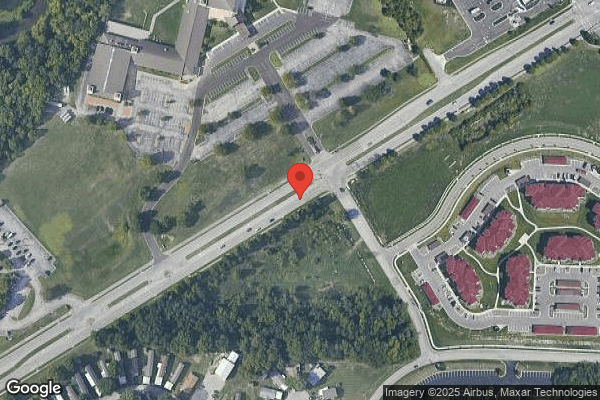
Feb 2023 1 deficiency
CONCERN (D) 📢 Someone Reported This

A family member, employee, or ombudsman was alarmed enough to file a formal complaint

Potential for Harm - no one hurt, but risky conditions existed

Free from Abuse/Neglect (Tag F0600)

Could have caused harm · This affected 1 resident

**NOTE- TERMS IN BRACKETS HAVE BEEN EDITED TO PROTECT CONFIDENTIALITY** Based on interview and record review, the facility failed to ensure one sampled resident (Resident #3) out of four sampled resid...

Read full inspector narrative →
**NOTE- TERMS IN BRACKETS HAVE BEEN EDITED TO PROTECT CONFIDENTIALITY** Based on interview and record review, the facility failed to ensure one sampled resident (Resident #3) out of four sampled residents was free from abuse when Resident #4 slapped Resident #3 in the head. The facility census was 89 residents. Record review of the facility's abuse policy dated as revised October 2022 showed: -Each resident had the right to be free from abuse. -The facility prohibited abuse of residents. -Resident behaviors would be monitored and strategies implemented to prevent occurrences of abuse. -Resident to resident abuse included willful actions when the individual's actions were deliberate and not accidental. The Administrator was notified on 2/2/23 of Past Non-Compliance which occurred on 1/24/23. On 1/24/23, facility administration was notified of Resident #4 slapping Resident #3, began the facility investigation and began facility staff in-services on abuse. The facility was completed with obtaining statements, in-services and the investigation on 1/26/23. 1. Record review of Resident #4's significant change Minimum Data Set (MDS-a federally mandated assessment tool completed by facility staff for care planning dated 12/4/22 showed the following staff assessment of the resident: -Had severely impaired cognition. -Had no behaviors. -Used a wheelchair. -Was totally dependent upon staff for locomotion on the unit. -Had a diagnosis of anxiety disorder (psychiatric disorders that involve extreme fear, worry and nervousness). Record review of Resident #4's care plan updated 12/16/22 showed: -The resident had impaired cognitive function. -The resident had a mood problem related to anxiety. -An update on 1/24/23 that the resident had a behavior problem which included having an altercation with another resident. -Interventions for behaviors included redirection, anticipating and meeting needs and having a private room. Record review of Resident #3's care plan revised on 9/19/21 showed the resident had impaired cognitive function. Record review of Resident #3's quarterly MDS dated [DATE] showed the following staff assessment of the resident: -Was moderately cognitively impaired. -Was independent with walking. -Had a diagnosis of dementia (a progressive mental disorder characterized by memory problems, impaired reasoning and personality changes). Record review of Resident #4's notes dated 1/24/23 at 1:15 A.M. showed: -Resident #4 was agitated, was yelling at staff, wouldn't allow anyone to help him/her, had his/her bag packed and was asking for his/her spouse to come and get him/her and was seeing spiders. -Staff were unable to redirect Resident #4. -Resident #4 was given Hydroxyzine (an antihistamine used for the treatment of itchiness, anxiety and tension) 25 milligram (mg) intramuscularly (IM-an injection given into a muscle). Record review of Resident #4's notes dated 1/24/23 at 1:35 A.M. showed a Certified Nursing Assistant (CNA) reported to the nurse that Resident #4 slapped Resident #3. Record review of Resident #4's discharge MDS dated [DATE] showed the resident was discharged with return anticipated to an acute hospital. During an interview on 2/1/23 at 9:30 A.M. Resident #3 said: -He/she did not remember being hit. -He/she had no injuries. -He/she did not know who Resident #4 was. -He/she was not afraid of any residents. During an interview on 2/1/23 at 10:55 A.M., CNA D said: -Resident #4 was already agitated when he/she arrived at 10:00 P.M. on 1/24/23. -Resident #4 received a shot for his/her agitation that night. -He/she was walking with Resident #4 and brought Resident #4 to the sitting area. -Resident #4 was behind Resident #3. -He/she was with Resident #4 and Resident #4 just slapped Resident #3 on the back of his/her head with the palm of his/her hand for no apparent reason. During an interview on 2/2/23 at 11:35 A.M., the Administrator with the Assistant Director of Nursing (ADON) present (the Director of Nursing was not at the facility that day) acknowledged Resident #4 hitting Resident #3 was considered abuse. During an phone interview on 2/9/23 at 8:08 A.M., the resident's primary care physician said: -The resident came to the facility from the hospital on hospice (end of life care). -They weaned the resident off some of his/her medications and over time he/she got better and discharged off of hospice. -Then the resident began to have symptoms of dementia such as agitation and paranoia. -The resident's behaviors would go away and then come back again. -The resident typically did better when he/she was out around people. -The facility did not have a locked memory care unit, which is what the resident needed so the was discharged to another facility that had a memory care unit. MO00213033
Jun 2022 7 deficiencies
CONCERN (D)

Potential for Harm - no one hurt, but risky conditions existed

Notification of Changes (Tag F0580)

Could have caused harm · This affected 1 resident

**NOTE- TERMS IN BRACKETS HAVE BEEN EDITED TO PROTECT CONFIDENTIALITY** Based on observation, interview and record review, the facility failed to notify the resident's physician when medications were ...

Read full inspector narrative →
**NOTE- TERMS IN BRACKETS HAVE BEEN EDITED TO PROTECT CONFIDENTIALITY** Based on observation, interview and record review, the facility failed to notify the resident's physician when medications were not administered as ordered for one sampled resident (Resident #283) out of 18 sampled residents. The facility census was 86 residents. Record review of facility policy titled Significant Condition Change and Notification dated May 2019 showed: -To ensure that the residents family and/or representative and medical practitioner were notified of a residents change such as medication error. -The licensed nurse would contact the medical practitioner about the medication error. -Prior to medical practitioner being called the nurse will have completed the Situation-Background-Assessment-Recommendation (SBAR) assessment. -Each attempted call will be documented as to the time called, who was spoken to, and what information was given to the medical practitioner. In a non-emergency situation, the primary medical practitioner will be called unless he/she has left an alternate name to be called. If after two attempts, there was no response to calls, the medical director will be contacted. -All significant changes will be recorded on the Communication Board in the Electronic Health Record (EHR) and in the residents' record. -Charting would include an assessment of the resident's current status as it related to the change in condition. -Change of Condition was reviewed be the Director of Nursing (DON) or designee for the continued need for additional documentation. -When in doubt of as to the arrival time of your order, a phone call will be placed to the pharmacy and ask if the delivery time for the next order has been missed. -If not available in the convenience or emergency box and the medication must be administered before the next delivery a STAT request should be faxed to the pharmacy. 1. Record review of Resident #283's Face Sheet showed he/she was admitted to the facility on [DATE] with the following diagnoses: -Acute respiratory failure. -Anemia (a decrease in hemoglobin in the blood to levels below the normal range). -Diabetes Mellitus (diabetes - a complex disorder of carbohydrate, fat, and protein metabolism that is primarily a result of a deficiency or complete lack of insulin secretion in the pancreas or resistance to insulin). -Essential (Primary) Hypertension (high blood pressure). -Congestive Heart Failure (CHF - disorder that impairs the ability of the heart to fill with or pump a sufficient amount of blood throughout the body). -Chronic Obstructive Pulmonary Disease (COPD - a disease process that decreases the ability of the lungs to perform ventilation). -Acute Kidney Failure (inability of the kidneys to excrete wastes, concentrate urine, and conserve electrolytes). Record review of the resident's May 2022 Physician's Order Sheet (POS) showed the following medications were ordered: -Montelukast Sodium Tablet 10 milligram (mg) give 1 tablet by mouth one time a day for Asthma. -Albuterol Sulfate Nebulization Solution (2.5 mg/3 milliliter (ml)) 0.083% 1 vial inhalation orally via nebulizer four times a day for bronchospasm. -Carvedilol Tablet 6.25 mg give 2 tablets by mouth two times a day for Hypertension (HTN -high blood pressure). -Symbicort Aerosol 160-4.5 micrograms (mcg)/ACT (Budesonide-Formoterol Fumarate) 2 puffs inhaled orally two times a day for Asthma. -Polyethylene Glycol Powder (Polyethylene Glycol 1450) Give 17 grams by mouth two times a day for constipation. -Amlodipine Besylate Tablet 10 mg give 1 tablet by mouth one time a day for HTN. -Cholecalciferol Tablet 1000 units give 2 tablets by mouth one time a day for Osteoporosis take with meals. -Aspirin Capsule 81 mg give 1 tablet by mouth one time a day for myocardial re-infarction prevention (heart attack). -Patiromer Sorbitex Calcium Packet 16.8 gram give 1 packet by mouth one time a day for Hyperkalemia. Record review of the resident's May 2022 Medication Administration Record (MAR) showed: -Amlodipine (given for high blood pressure) 10 mg was not given on 5/21/22. -Aspirin Capsule (given for blood clot prevention) 81 mg was not given on 5/21/22. -Montelukast Sodium Tablet given for Asthma (a respiratory disorder characterized by recurring episodes of shortness of breath, wheezing on expiration and/or inspiration caused by constriction of the bronchi, coughing, and thick secretions)) 10 mg was not given on 5/21/22. -Albuterol Sulfate Nebulization Solution (2.5 mg/3 ml 0.083% (given for Bronchospasms (happen when the muscles that line your bronchi (airways in your lungs) tighten)) was not given on 5/21/22 at 8:00 A.M., 12:00 P.M., and 6:00 P.M. -Carvedilol Tablet 6.25 mg (given for high blood pressure) was not given on 5/21/22 at 8:00 A.M. and 8:00 P.M. -Symbicort Aerosol 160-4.5 microgram (mcg)/ACT (Budesonide-Formoterol Fumarate) (given for Asthma) was not given on 5/21/22. -Polyethylene Glycol Powder (Polyethylene Glycol 1450) (given for constipation) was not given on 5/21/22 at 8:00 A.M. -Cholecalciferol Tablet 1000 units (given for Osteoporosis (a medical condition in which the bones become brittle and fragile from loss of tissue, typically as a result of hormonal changes, or deficiency of calcium or vitamin D) was not given on 5/21/22. -Patiromer Sorbitex Calcium Packet 16.8 grams (given for a potassium level in your blood that's higher than normal) was not given on 5/21/22. Record review of the resident's Progress Notes dated May 2022 showed: -The resident was admitted to the facility on [DATE] at 8:45 P. M. -No progress notes that informed the doctor that medications were not available or not given on 5/21/22. Record review of a list of medications stored in the Cubex (automated medication dispensing system supports decentralized medication management) showed the following medications were available: -Albuterol Sulfate Nebulization Solution (2.5 mg/3 ml) 0.083%. -Carvedilol Tablet 6.25 mg tablets. -Amlodipine Besylate 10 mg tablet. Observation on 6/8/22 at 7:03 A.M. showed house stock medications (commonly used over-the-counter medications) that were available: -Polyethylene Glycol Powder (Polyethylene Glycol 1450). -Cholecalciferol Tablet 1000 units. -Aspirin Capsule 81 mg. During an interview on 6/8/22 at 7:03 A. M. Licensed Practical Nurse (LPN) A said: -Medications not received from the pharmacy should be pulled from the Cubex and given, and house stock medications should be given at the times ordered. -The doctor needed to be notified if the medications were not given or were unavailable. -Medications not given needed a progress note that stated why it was not given, whom was notified, and any orders the doctor gave. During an interview on 6/9/22 at 10:05 A.M. LPN B said: -Pharmacy might have brought medications for residents that were admitted late in the evening on the nightly medication delivery. -Medication not delivered from the pharmacy should be used from the Cubex. -Any medications that are not available from Cubex then the nurse should call the pharmacy. -The nurse should have notified the doctor if medications were not available and would receive further orders. -House stock medications were kept on the medication carts and should have been given. -Medications given should be charted in the MAR. -When medications were not given a progress note should be created that explained why it was not given, whom was notified, and any new orders received. During an interview on 6/9/22 at 10:10 A.M. LPN C said: -Medications that were not on the medication cart should have been pulled from the Cubex and given at the time ordered. -Any house stock medications should have been given. -For medications not stocked in the Cubex and not house stock the doctor should be called for orders. -Medications that were missing, not stocked in the Cubex, or house stock should have a progress note charted that explained the steps taken, when the doctor was notified and any new orders that were received. During an interview on 6/10/22 at 11:09 A. M. the DON said: -The nurse should have informed the doctor of any medication that could not be given, why the medication could not be given, and received new orders related to the missed medication. -The nurse was to make a progress note that documented the doctor was notified and new orders received. MO00201559
CONCERN (D)

Potential for Harm - no one hurt, but risky conditions existed

Deficiency F0582 (Tag F0582)

Could have caused harm · This affected 1 resident

Based on interview and record review, the facility failed to provide the Skilled Nursing Facility Advanced Beneficiary Notice (SNFABN) (form CMS-10055) for two sampled residents (Resident's #9 and #41...

Read full inspector narrative →
Based on interview and record review, the facility failed to provide the Skilled Nursing Facility Advanced Beneficiary Notice (SNFABN) (form CMS-10055) for two sampled residents (Resident's #9 and #41) who were discharged from Medicare Part A services and remained in the facility out of three sampled residents. The facility census was 86 residents. Record review of the Centers for Medicare and Medicaid Services (CMS) Survey and Certification memo (S&C-09-20) dated 1/9/09 showed: -The Notice of Medicare Provider Non-Coverage (NOMNC, form CMS-10123) is issued when all covered Medicare services end for coverage reasons. -If the skilled nursing facility (SNF) believes on admission or during a resident's stay that Medicare will not pay for skilled nursing or specialized rehabilitative services and the provider believes that an otherwise covered item or service may be denied as not reasonable or necessary, the facility must inform the resident or his/her legal representative in writing why these specific services may not be covered and the beneficiary's potential liability for payment for the non-covered services. The SNF's responsibility to provide notice to the resident can be fulfilled by the use of either the SNFABN (form CMS-10055) or one of the five uniform denial letters. -The SNFABN provides an estimated cost of items or services in case the beneficiary had to pay for them him/herself or through other insurance they may have. -If the SNF provides the beneficiary with either the SNFABN or a denial letter at the initiation, reduction, or termination of Medicare Part A benefits, the provider has met is obligation to inform the beneficiary of his/her potential liability for payment and related standard claim appeal rights. Issuing the NOMNC to a beneficiary only conveys notice to the beneficiary of his/her right to an expedited review of a service termination. 1. Record review of Resident #9's SNF Beneficiary Protection Notice Review showed: -The resident was discharged from Medicare Part A service and remained in the facility on 4/19/22. -A SNFABN was marked not provided to the resident. -There was no documented explanation from staff showing why the SNFABN was not provided to the resident. 2. Record review of Resident #41's SNF Beneficiary Protection Notice Review showed: -The resident was discharged from Medicare Part A service and remained in the facility on 3/9/22. -A SNFABN was marked not provided to the resident. -There was no documented explanation from staff showing why the SNFABN was not provided to the resident. 3. During an interview on 6/9/22 at 2:57 P.M. the Business Office Manager (BOM) said: -The Social Workers (SW) gives him/her the Notices of Medicare Non-Coverage (NOMNC) indicating when skilled care will end and the ABNs to scan into the residents' electronic record (e-record). -He/she had not been given the ABNs to scan into the system for Residents #9 and #41. Everything the two residents had been given was uploaded in their e-records. During an interview on 6/10/22 at 11:09 A.M. the Director of Nursing (DON) and Assistant Director of Nursing (ADON) said: -The SWs were responsible for providing the ABNs to residents who remain in the facility following Medicare part A services to give them a choice about staying in therapy services and to inform them of how much that will cost. -Residents should be given the ABNs at the same time they are given the NOMNCs, 48 to 72 hours prior to the last day of Medicare part A services.
CONCERN (D)

Potential for Harm - no one hurt, but risky conditions existed

Accident Prevention (Tag F0689)

Could have caused harm · This affected 1 resident

**NOTE- TERMS IN BRACKETS HAVE BEEN EDITED TO PROTECT CONFIDENTIALITY** Based on observation, interview and record review, the facility failed to ensure medications were observed taken prior to the nu...

Read full inspector narrative →
**NOTE- TERMS IN BRACKETS HAVE BEEN EDITED TO PROTECT CONFIDENTIALITY** Based on observation, interview and record review, the facility failed to ensure medications were observed taken prior to the nurse leaving the room and not left at bedside for two sampled residents (Resident's #20 and #21) who had not been assessed by the Interdisciplinary Team (IDT - attending physician, Registered Nurse (RN) with responsibility for the resident, and other staff deemed appropriate, and the resident and/or resident representative) for their cognitive and physical abilities to safely self-administer medication and for whom there was no care plan showing either resident had the ability to fully or partially self-administer medications out of 18 sampled residents. The facility census was 86 residents. Record review of the facility's Medication Administration policy, dated May, 2019 showed: -Staff were to administer medications safely and appropriately. --Give the resident the medication. --Remain with the resident to ensure the medication is swallowed. --Return medication to the cart and document administration with initials in the appropriate spaces on the Medication Administration Record (MAR). --Circle initials on the MAR if medication was not administered as ordered and record the reason in the pro re nata (PRN - as needed)/Omission Medication section of the MAR. 1. Record review of Resident #21's admission Record showed he/she was admitted to the facility on [DATE] with diagnoses that included: -Heart block (primary diagnosis). -Post COVID-19 condition (a wide range of health problems such as fatigue, heart problems, difficulty breathing, and difficulty focusing which can last weeks, months or years following a diagnosis of COVID-19 infection), unspecified. -Cognitive communication deficit (difficulty thinking and using language). -Hypertension (high blood pressure). Record review of the resident's admission Minimum Data Set (MDS - a federally mandated assessment instrument completed by facility staff for care planning), dated 3/29/22 showed the resident: -Was severely cognitively impaired. -Had fluctuating disorganized thinking. -Required one to two person limited to extensive physical assistance for Activities of Daily Living (ADL - dressing, grooming, bathing, eating, and toileting). -Was diagnosed with debility related to cardiorespiratory conditions. Record review of the resident's comprehensive Care Plans, revised 4/1/22 showed: -The resident had impaired cognition requiring consistency and simple, direct communication. -The resident required staff participation with most ADLs. -The resident had no care plan showing he/she could totally or partially medicate himself/herself. Record review of the resident's MAR, dated June 2022 showed documentation that the following medications were administered: -Ferrous Sulfate tablet 325 (65 Fe) milligrams (mg). Give one tablet by mouth one time a day every other day starting 5/27/22. Documentation showed the medication was administered on 6/6/22 at 7:00 A.M. -Aspirin Enteric Coated (EC) tablet Delayed Release 81 mg. Give one tablet by mouth one time a day for Deep Vein Thrombosis (DVT - blood clot) prophylaxis (prevention) one time a day starting 5/27/22. Documentation showed the medication was administered on 6/6/22 and 6/7/22 at 7:00 A.M. -Calcium Citrate tablet. Give 400 mg by mouth one time a day for supplement starting 5/27/22. Documentation showed the medication was administered on 6/6/22 and 6/7/22 at 7:00 A.M. -Cholecalciferol tablet. Give 50 mg by mouth one time a day for supplementation starting 5/27/22. Documentation showed the medication was administered on 6/6/22 and 6/7/22 at 7:00 A.M. -Multiple Vitamin-Minerals tablet. Give one tablet by mouth one time a day for supplement starting 5/27/22. Documentation showed the tablet was administered on 6/6/22 and 6/7/22 at 7:00 A.M. -Lisinopril tablet 10 mg. Give 10 mg by mouth one time a day for hypertension starting 3/24/22. Documentation showed the medication was administered on 6/6/22 and 6/7/22 at 8:00 A.M. Observation on 6/6/22 at 8:56 A.M. showed: -Six pills were in an open medication cup on the resident's bedside table. -No nurse or Certified Medication Technician (CMT) was in the resident's room. During an interview on 6/6/22 at 9:00 A.M. the resident said: -He/she didn't like it when the nurse leaves his/her pills. -He/she didn't know why the nurse couldn't just stay while he/she took the medications. Observation on 6/6/22 at 10:04 A.M. showed: -The medication cup with the six pills was no longer on the resident's bedside table. -A small pink pill which looked like one of the pills which had been in the medication cup was lying by the side of the resident's breakfast plate. -The resident said he/she hadn't noticed the pill was on the tray and thought he/she had taken all of the pills. Observation on 6/7/22 at 8:18 A.M. showed: -Five pills were in a medication cup on the resident's bedside table. -There was no nurse or CMT in the resident's room. -The resident said the nurse just left the pills and he/she didn't like for them to leave them to take on his/her own. 2. Record review of Resident #20's admission Record showed he/she was admitted to the facility on [DATE] and had another person as his/her responsible party. Diagnoses included: -Lymphedema (swelling in an arm or leg caused by a lymphatic system blockage). -Atrial fibrillation (abnormal heart rhythm). -Venous insufficiency, peripheral (improper functioning of the vein valves in the legs, causing swelling and skin changes. -Hypothyroidism (below normal function of the thyroid gland which regulated metabolism). -Cellulitis (an infection of deep skin tissue) of right and left lower limbs. -Hypertension. Record review of the resident's admission MDS, dated [DATE] showed the resident: -Was cognitively intact. -Required one to two person limited to extensive physical assistance for most ADLs. -Had diagnoses that included medically complex conditions. -Was on anticoagulant (medications that help prevent blood clots) and diuretic (any drug that elevates the rate of urination) medications. Record review of the resident's comprehensive Care Plans, updated 4/1/22 showed: -The resident was on anticoagulant therapy, requiring monitoring for signs and symptoms of bleeding (e.g.: bruising, blood in urine or stools, lethargy, sudden changes in mental status). -The resident was on diuretic therapy which could have adverse side effects (e.g.: dehydration, dizziness, muscle cramps). -The resident had no care plan showing he/she could totally or partially medicate himself/herself. Record review of the resident's MAR, dated June 2022 showed documentation that the following medications were administered: -Levothyroxine Sodium Tablet 75 micrograms (mcg). Give one tablet by mouth for hypothyroidism starting 3/24/22. Documentation showed the medication was administered on 6/6/22, 6/7/22, and 6/8/22 at 6:00 A.M. -Acetaminophen tablet. Give 500 mg by mouth two times a day for pain starting 5/12/22. Documentation showed the medication was administered on 6/6/22, 6/7/22, and 6/8/22 at 7:00 A.M. -Ascorbic acid tablet 500 mg. Give one tablet by mouth one time daily for wound healing starting 3/25/22. Documentation showed the medication was administered on 6/6/22, 6/7/22, and 6/8/22 at 8:00 A.M. -Lasix tablet 20 mg. Give one tablet by mouth for Lymphedema starting 3/24/22. Documentation showed the medication was administered on 6/6/22, 6/7/22, and 6/8/22 at 8:00 A.M. -Potassium Chloride Extended Release (ER) tablet 10 milliequivalent (mEq). Give one tablet by mouth one time a day for supplement while on Lasix starting 3/26/22. Documentation showed the medication was administered on 6/6/22, 6/7/22, and 6/8/22 at 8:00 A.M. -Zinc 220 mg capsule. Give 200 mg by mouth one time a day for wound healing starting 3/25/22. Documentation showed the medication was administered on 6/6/22, 6/7/22, and 6/8/22 at 8:00 A.M. -Metaprolol Tartrate tablet 25 mg. Give one tablet two times a day for AFib starting 4/15/22. Documentation showed the medication was administered on 6/6/22, 6/7/22, and 6/8/22 at 8:00 A.M. -Gabapentin capsule. Give 200 mg by mouth three times a day for pain starting 5/11/22. Documentation showed the medication was administered on 6/6/22, 6/7/22, and 6/8/22 at 8:00 A.M. -Apixaban Tablet 5 mg. Give one tablet by mouth two times a day for AFib. Stating 3/23/22. Documentation showed the medication was administered on 6/6/22, 6/7/22, and 6/8/22 on the day shift. -There was no documentation that pro re nata (PRN) tablets had been given to the resident on 6/6/22, 6/7/22, or 6/8/22. Observation on 6/6/22 at 9:13 A.M. showed: -Ten pills were in a medication cup on the resident's bedside table. -There was no nurse or CMT in the resident's room. During an interview on 6/6/22 at 9:15 A.M. the resident said: -The nurse left the medication because he/she can't take the medications on an empty stomach. -The nurses leave his/her pills so he/she can take them once his/her breakfast tray arrives. Observation on 6/6/22 at 9:34 A.M. showed the resident had his/her breakfast tray and was eating. The medication cup with 10 pills was still on his/her bedside table. Observation on 6/7/22 at 8:26 A.M. showed the resident had seven pills in a medication cup on his/her bedside table. During an interview on 6/7/22 at 8:30 A.M. the resident said: -He/she had not yet taken any pills that morning. -He/she won't take any of the pills without eating his/her breakfast. Observation on 6/7/22 at 11:17 A.M. showed there were no pills on the resident's bedside table. Observation on 6/8/22 at 7:01 A.M showed: -Agency Licensed Practical Nurse (LPN) D knocked on the resident's door and enter his/her room. -Agency LPN D said here is your morning medications while holding a medication cup of pills and a cup of water. -Agency LPN D set the medication cup of pills on the resident's bedside table and then picks it up and handed it to the resident. -The resident told Agency LPN D he/she would wait for his/her breakfast to take the medications. -Agency LPN D left the resident's room without the resident having taken the medications. -A few minutes later without re-entering the resident's room Agency LPN D closed the resident's door to the hallway. Observation in the resident's room on 6/8/22 at 7:58 A.M. showed: -There were eight pills in a medication cup on the resident's bedside table. -The resident said he/she was waiting for his/her breakfast before taking the pills. Observation on 6/8/22 at 8:55 A.M. showed: -The resident's breakfast tray was on his/her bedside table and the resident said he/she had finished his/her food. -There were no pills on the resident's bedside table. 3. During an interview on 6/9/22 at 8:28 A.M., Certified Nursing Assistant (CNA) C said: -None of the resident's on the hall partially or fully self-administered medications. -The nurses always gave medications to the residents. -If a resident was sleeping a nurse might leave the medications on the resident's bedside table. He/She had seen them do that. -CNAs were supposed to report to nurses if they see medications on the bedside table. During an interview on 6/9/22 at 8:31 A.M. CNA D said: -There were no residents on the hall that partially or fully self-medicated. -If medications are found on the resident's bedside table CNAs are to report that to the nurse. During an interview on 6/9/22 at 9:55 A.M. LPN B said: -None of the residents on the hall self-administered their mediations. -Nurses and CMTs can't leave medications on the resident's tray or bedside table in their rooms. -Nurses must observe the resident take their medications before marking on the MAR that the residents took them. During an interview on 6/9/22 at 11:43 A.M., LPN E said: -Nobody on the hall had an order or had been assessed for self-administration of medications. -There should never be pills left on the bedside table for the residents to take later on their own. -The nurse should stay in the room and make sure the resident takes the pills. -If the resident doesn't take the medications the MAR should be marked as refused. -If a CNA notices a resident has medications in their room they should tell the nurse or bring the medications to the nurse and let the nurse know. During an interview on 6/10/22 at 11:09 A.M. the Director of Nursing (DON) and Assistant Director of Nursing (ADON) said: -Medications can't be left at a resident's bedside unless an assessment has been completed and a decision has been made that the resident can safely self-administer the medications. The care plan would show the resident's ability in self-administering medications. -None of the residents at the facility had been assessed or care planned for their ability to self-administer medications. -If the MAR shows the resident has taken their medications the nurse or CMT should have observed that the resident took it. -The nurse and CMT should stay with the resident during the medication administration to make sure the medications are not dropped or spilled and to make sure oral medications are swallowed. -There could be a risk to residents if another resident wandered into the room and dropped or took medications.
CONCERN (D)

Potential for Harm - no one hurt, but risky conditions existed

Pharmacy Services (Tag F0755)

Could have caused harm · This affected 1 resident

**NOTE- TERMS IN BRACKETS HAVE BEEN EDITED TO PROTECT CONFIDENTIALITY** Based on interview and record review, the facility failed to obtain and administer a resident's ordered medication for one sampl...

Read full inspector narrative →
**NOTE- TERMS IN BRACKETS HAVE BEEN EDITED TO PROTECT CONFIDENTIALITY** Based on interview and record review, the facility failed to obtain and administer a resident's ordered medication for one sampled resident (Resident #283) out of 18 sampled residents. The facility census was 86 residents. Record review of facility policy entitled Medication Administration dated May 2019 showed: -Circle initials on Medication Administration Record (MAR) if medication was not administered as ordered and record a reason in the PRN/Omission section of the MAR. -If medication was ordered but not present, call the pharmacy or the supervisor to obtain the medication. 1. Record review of Resident #283's Face Sheet showed he/she was admitted to the facility on [DATE] with the following diagnoses: -Acute respiratory failure. -Essential (Primary) Hypertension (high blood pressure). -Congestive Heart Failure (CHF - disorder that impairs the ability of the heart to fill with or pump a sufficient amount of blood throughout the body). -Chronic Obstructive Pulmonary Disease (COPD - a disease process that decreases the ability of the lungs to perform ventilation). -Acute Kidney Failure (inability of the kidneys to excrete wastes, concentrate urine, and conserve electrolytes). Record review of the resident's May 2022 Physician's Order Sheet (POS) showed the following medications were ordered: -Amlodipine Besylate Tablet 10 milligrams (mg) give 1 tablet by mouth one time a day for hypertension (HTN - high blood pressure). -Aspirin Capsule 81mg give 1 tablet by mouth one time a day for myocardial re-infarction prevention (heart attack). -Montelukast Sodium Tablet 10 mg give 1 tablet by mouth one time a day for Asthma (a respiratory disorder characterized by recurring episodes of shortness of breath, wheezing on expiration and/or inspiration caused by constriction of the bronchi, coughing, and thick secretions). -Albuterol Sulfate Nebulization Solution 2.5 mg/3 milliliter (ml) 0.083%, one vial inhalation orally via nebulizer four times a day for Bronchospasm (happen when the muscles that line your bronchi (airways in your lungs) tighten). -Carvedilol Tablet 6.25 mg give 2 tablets by mouth two times a day for HTN. -Symbicort Aerosol 160-4.5 micrograms (mcg)/ACT, two puffs inhaled orally two times a day for Asthma. -Polyethylene Glycol Powder give 17 grams by mouth two times a day for constipation. -Cholecalciferol Tablet 1000 Units give 2 tablet by mouth one time a day for Osteoporosis (a medical condition in which the bones become brittle and fragile from loss of tissue, typically as a result of hormonal changes, or deficiency of calcium or vitamin D) take with meals. -Patiromer Sorbitex Calcium Packet 16.8 gram give one packet by mouth one time a day for Hyperkalemia (given for a potassium level in your blood that's higher than normal). Record review of the resident's May 2022 Medication Administration Record (MAR) showed: -Amlodipine 10 mg - no dose was given on 5/21/22. -Aspirin Capsule 81 mg - no dose was given on 5/21/22. -Montelukast Sodium Tablet 10 mg - no dose was given on 5/21/22. -Albuterol Sulfate Nebulization Solution (2.5 mg/3 ml) 0.083% - no doses were given on 5/21/22 at 8:00 A.M., 12:00 P.M., and 6:00 P.M. -Carvedilol Tablet 6.25 mg no doses were given on 5/21/22 at 8:00 A.M. and 8:00 P.M. -Symbicort Aerosol 160-4.5 mcg/ACT - no dose was given on 5/21/22. -Polyethylene Glycol Powder - no dose was given on 5/21/22 at 8:00 A.M. -Cholecalciferol Tablet 1000 units - no dose given at on 5/21/22. -Patiromer Sorbitex Calcium Packet 16.8 grams - no dose was given on 5/21/22. Record review of Progress Notes dated May 2022 showed: -The resident was admitted to the facility on [DATE] at 8:45 P.M. -No documentation by facility staff why the resident's medications were not obtained and/or administered on 5/21/22. -No documentation by facility staff the resident's pharmacy and/or physician were notified that medications were not available or not given on 5/21/22. Record review of medications list stored in the Cubex (automated medication dispensing system supports decentralized medication management) showed the medication were in the machine: -Albuterol Sulfate Nebulization Solution (2.5 mg/3 ml) 0.083%. -Carvedilol Tablet 6.25 mg tablets. -Amlodipine Besylate 10 mg tablet. Observation on 6/8/22 at 7:03 A.M. showed the house stock medication (commonly used over-the-counter medications) that are kept by the facility were not given: -Polyethylene Glycol Powder. -Cholecalciferol Tablet 1000 units. -Aspirin Capsule 81 mg. During an interview on 6/8/22 at 7:03 A.M., Licensed Practical Nurse (LPN) A said: -When medications were not delivered the nurse should call the pharmacy and determined when the medication would be delivered. -New admissions orders needed to be processed and sent to pharmacy by 5:00 P.M. to be delivered that night. -If it was not then delivered then, it would be delivered either the next afternoon or that night. -If a medication was to be given and not in the medication cart, the pharmacy needed to be called, and the medication removed from Cubex if available. -Medications that were considered house stock should have been given. -When medications were given it needed to be charted in the MAR. -Medications not given needed a progress note that stated why it was not given, whom was notified, and any orders the doctor gave. During an interview on 6/9/22 at 10:05 A.M., LPN B said: -For medications not delivered the nurse should call the pharmacy and find out why the medication were not delivered. -Pharmacy might have brought medications for resident that was admitted late in the evening on the nightly medication delivery. -Medication not delivered should be removed from the Cubex. -If a medication was unable to be removed from Cubex, the nurse should call the pharmacy. -House stock medications were kept on the medication carts and should have been given. -Medications given should be charted in the MAR. -When medications were not given a progress note should be created that explained why it was not given, whom was notified, and any new orders received. During an interview on 6/9/22 at 10:10 A M. LPN C said: -When a resident was admitted late the ordered medication would not be on the nightly delivery. -Medications that were not delivered, the Certified Medication Technician (CMT) should notify the nurse of missing medications. -The nurse would then go to the Cubex to get the missing medication, and call the pharmacy to find out when the medication would be delivered. -House stock medications should be given. -Medications administered should be charted in the MAR. -Medications that were missing, not stocked in the Cubex, or house stock should have a progress note charted that explained the steps taken, when the doctor was notified and any new orders that were received. During an interview on 6/10/22 at 11:09 A.M. Director of Nursing (DON) said his/her expectations were: -The nurse would have called the pharmacy to find out when the medication would be delivered, and why it was delayed. -The nurse/Certified Medication Technician (CMT) would get any mediation missing that were due from the Cubex. -The nurse/CMT would have given any house stock mediations that were due. -The nurse/CMT to have charted any medication given on the MAR. MO00201559
CONCERN (E)

Potential for Harm - no one hurt, but risky conditions existed

Abuse Prevention Policies (Tag F0607)

Could have caused harm · This affected multiple residents

Based on interview and record review, the facility failed to ensure the Employee Disqualification List (EDL), Criminal Background Checks (CBCs), and/or the Nurse Aide (NA) Registry were completed and ...

Read full inspector narrative →
Based on interview and record review, the facility failed to ensure the Employee Disqualification List (EDL), Criminal Background Checks (CBCs), and/or the Nurse Aide (NA) Registry were completed and to ensure potential employees did not have a Federal Indicator (FI - a marker given to a potential employee who has committed abuse, neglect, or misappropriation of property against residents) prior to hire for nine out of nine sampled employees. The facility census was 86 residents. Record review of the facility's Abuse, Prevention and Prohibition policy last reviewed 2021 showed: -The facility would not knowingly employee individuals who have been found guilty of abusing, neglecting or mistreating residents or misappropriating their properties. -All employees would have CBCs, State and Federal required background checks. 1. Record review of Employee A's employee file showed: -The employee was hired on 5/23/22 as a Certified Nursing Assistant (CNA). -The EDL check was completed on 6/3/22. -The CBC was completed on 6/3/22. -The FI check was not dated when completed. Record review of Employee B's employee file showed: -The employee was hired on 5/23/22 as a CNA. -The EDL check was completed on 6/3/22. -The CBC was not completed. -The FI check was not dated when completed. Record review of Employee C's employee file showed: -The employee was hired on 3/14/22 as a CNA. -The EDL check was completed on 4/3/22. -The CBC was completed on 4/5/22. -The FI check was not dated when completed. Record review of Employee D's employee file showed: -The employee was hired on 2/14/22 as a Licensed Practical Nurse (LPN). -The EDL check was completed on 4/3/22. -The FI check was not completed. Record review of Employee E's employee file showed: -The employee was hired on 1/30/22 as a Receptionist. -The EDL check was completed on 4/3/22. -The CBC was completed on 1/31/22. -The FI check was not dated when completed. Record review of Employee F's employee file showed: -The employee was hired on 3/7/22 as a Maintenance Assistant. -The EDL check was completed on 4/3/22. -The CBC was completed on 3/7/22. -The FI check was not completed. Record review of Employee G's employee file showed: -The employee was hired on 4/18/22 as a CNA. -The CBC was not completed. -The FI check was not dated when completed. Record review of Employee H's employee file showed: -The employee was hired on 9/7/21 as a Registered Nurse (RN). -The EDL check was completed on 4/3/22. -The FI check was not completed. Record review of Employee J's employee file showed: -The employee was hired on 2/28/22 as an Activity Assistant. -The EDL check was completed on 4/3/22. -The CBC was completed on 3/7/22. -The FI check was not dated when completed. During an interview on 6/10/22 at 10:11 A.M. the Payroll Representative said: -He/she was responsible for doing the background screenings for all employees. -He/she did not document the date he/she did the FI checks. -He/she did not always do background screenings prior to hiring employees. -When he/she is on vacation or not at the facility none of the other employees does the background screenings. He/she will do the screenings whenever he/she gets back from being off of work. During an interview on 6/10/22 at 11:09 A.M. the Director of Nursing (DON) and Assistant Director of Nursing (ADON) said: -Background screenings were completed by their Payroll Representative. -Nursing staff train in another building and do not have resident contact for a certain number of days following their hire. Certified Nurse Aides (CNAs) train for two days, Certified Medication Technicians (CMTs) train for three days and nurses train for four days prior to working in the facility. -All staff should have FI checks before working at the facility, not just the nurse aides. -Employment should only be offered pending the criminal and other background screening results.
CONCERN (E)

Potential for Harm - no one hurt, but risky conditions existed

Respiratory Care (Tag F0695)

Could have caused harm · This affected multiple residents

**NOTE- TERMS IN BRACKETS HAVE BEEN EDITED TO PROTECT CONFIDENTIALITY** Based on observation, interview, and record review, the facility failed to ensure oxygen, nebulizer (a device used to administer...

Read full inspector narrative →
**NOTE- TERMS IN BRACKETS HAVE BEEN EDITED TO PROTECT CONFIDENTIALITY** Based on observation, interview, and record review, the facility failed to ensure oxygen, nebulizer (a device used to administer medication in the form of a mist inhaled into the lungs) and/or Continuous Positive Airway Pressure (CPAP-a device that delivers continuous pressurized air through tubing into a mask that you wear while you sleep) equipment was stored using proper infection control practices when not in use for three sampled residents (Resident's #56, #72, and #22) out of 18 sampled residents. The facility census was 86 residents. A policy was requested and the facility did not have a policy on respiratory equipment storage. 1. Record review of Resident #56's admission Record showed he/she was admitted to the facility on [DATE] with the following diagnoses: -Acute respiratory failure (occurs when fluid builds up in the air sacs in your lungs). -Congestive Heart Failure (CHF-disorder that impairs the ability of the heart to fill with or pump a sufficient amount of blood throughout the body). Record review of the resident's Order Summary Report dated 5/9/22 showed the resident had physician's orders for oxygen therapy and a CPAP. Record review of the resident's baseline care plan dated 5/12/22 showed the resident used oxygen therapy and a CPAP related to respiratory failure. Record review of the resident's admission Minimum Data Set (MDS-a federally mandated assessment tool required to be completed by facility staff for care planning) dated 5/14/22 showed the resident: -Was cognitively intact. -Used oxygen therapy and a CPAP. Observation of the resident's room on 6/6/22 at 9:54 A.M. showed: -The resident's CPAP mask was laying on the bedside table. -The oxygen tubing and nasal cannula (the oxygen delivery tube with two small prongs that fit in the nostrils) from the oxygen tank on the resident's wheelchair was laying on the back of the wheelchair. -The nebulizer tubing and mouthpiece were laying on the table. -None of the items were store in a plastic bag. During an interview on 6/6/22 at 9:55 A.M. the resident said: -He/she wished the masks, mouthpiece and tubing were in a bag. -He/she felt this was unclean. -The items had not been stored in a sanitary manner since she was admitted . Observation of the resident's room on 6/6/22 at 12:23 P.M. showed: -The resident's CPAP mask was laying on the bedside table. -The oxygen tubing and nasal cannula from the oxygen tank on the resident's wheelchair was laying on the back of the wheelchair. -The nebulizer tubing and mouthpiece were laying on the bedside table. -None of the items were store in a plastic bag. Observation of the resident's room on 6/7/22 at 8:40 A.M. showed: -The resident's CPAP mask was laying on the bedside table. -The oxygen tubing and nasal cannula from the oxygen tank on the resident's wheelchair was laying on the back of the wheelchair. -The nebulizer tubing and mouthpiece were laying on the bedside table. -None of the items were store in a plastic bag. Observation of the resident's room on 6/8/22 at 5:49 A.M. and 8:50 A.M. showed: -The resident's CPAP mask was laying on the bedside table. -The oxygen tubing and nasal cannula from the oxygen tank on the resident's wheelchair was wrapped around the oxygen tank. -The nebulizer tubing and mouthpiece were laying on the bedside table. -None of the items were store in a plastic bag. 2. Record review of Resident #72's admission Record showed he/she was admitted to the facility on [DATE] with the following diagnoses: -Acute and chronic respiratory failure. -Chronic Obstructive Pulmonary Disease (COPD - a disease process that decreases the ability of the lungs to perform). Record review of the resident's Order Summary Report dated 5/19/22 showed the resident had physician's orders for oxygen therapy and a CPAP. Record review of the resident's baseline care plan dated 5/19/22 showed the resident used oxygen therapy and a CPAP related to respiratory failure and COPD. Record review of the resident's admission MDS dated [DATE] showed the resident: -Was cognitively intact. -Used oxygen therapy and a CPAP. Observation of the resident's room on 6/6/22 at 9:23 A.M. showed: -The nebulizer mouthpiece was on the table. -The oxygen tubing and nasal cannula were hanging on the back of the wheelchair. -The CPAP mask was on the bedside table. -None of the items were store in a plastic bag. During an interview on 6/6/22 at 9:25 A.M. the resident said the nasal cannula, masks and mouthpieces were not being placed in plastic bags when not in use. Observation of the resident's room on 6/6/22 at 11:41 A.M. showed: -The nebulizer mouthpiece was on the table. -The oxygen tubing and nasal cannula were hanging on the back of the wheelchair. -The CPAP mask was on the bedside table. -None of the items were store in a plastic bag. Observation of the resident's room on 6/7/22 at 8:15 A.M. and 10:31 A.M. showed: -The nebulizer mouthpiece was on the table. -The oxygen tubing and nasal cannula were hanging on the back of the wheelchair. -The CPAP mask was on the bedside table. -None of the items were store in a plastic bag. Observation of the resident's room on 6/8/22 at 8:01 A.M. showed: -The nebulizer mouthpiece was on the table. -The oxygen tubing and nasal cannula were laying on the wheelchair seat. -The CPAP mask was on the bedside table. -None of the items were store in a plastic bag. 3. Record review of Resident #22's admission Record showed he/she was readmitted to the facility on [DATE] with diagnoses that included COPD. Record review of the resident's Oxygen Therapy care plan dated 8/27/21 showed the resident used oxygen therapy pro re nata (PRN - as needed) related to COPD. Record review of the resident's Significant Change MDS, dated [DATE] showed the resident: -Was severely cognitively impaired. -Used oxygen therapy. Record review of the resident's Treatment Administration Record (TAR), dated June, 2022 showed oxygen tubing was changed out on 6/1/22 and 6/8/22. Record review of the resident's Order Summary Report dated 6/10/22 showed the resident had physician's orders for oxygen therapy. Observation in the resident's room on 6/6/22 at 11:04 A.M. showed: -The resident's oxygen concentrator tubing, including the nasal cannula, was lying on the floor. -A plastic bag was attached to the oxygen concentrator and dated 6/1/22. -The tubing was not stored in the plastic bag. Observation in the resident's room on 6/7/22 at 8:12 A.M. and at 12:21 P.M. showed: -The resident's oxygen concentrator tubing, including the nasal cannula was lying on the floor. -A plastic bag was attached to the oxygen concentrator and dated 6/1/22. -The tubing was not stored in the plastic bag. Observation in the resident's room on 6/8/22 at 8:34 A.M. showed: -The resident's oxygen concentrator tubing, including the nasal cannula, was lying on the floor. -A plastic bag was attached to the oxygen concentrator and dated 6/1/22. -The tubing was not stored in the plastic bag. 4. During an interview on 6/9/22 at 8:34 A.M. Certified Nursing Assistant (CNA) D said oxygen tubing should not touch the floor or other surfaces and should be kept in the designated bag for storage. During an interview on 6/9/22 at 9:28 A.M. CNA B said: -All oxygen tubing and nasal cannulas, masks and mouthpieces should be stored in plastic bags which are attached to equipment. -If tubing is on the floor or lying somewhere outside the designated storage bag it should be considered contaminated and CNAs should let the nurse know so he/she can change out the tubing. -Nurses are supposed to date the bag every time the tubing is changed out. During an interview on 6/9/22 at 9:46 A.M. Registered Nurse (RN) B said: -All staff should ensure nasal cannulas, masks, tubing, and mouthpieces were stored in plastic bags when not in use. -If tubing is lying on the floor or other surfaces staff need to throw it away and get new tubing. The bag should be dated to show when the tubing was last changed out. -CNAs should notify the nurses when they see contaminated tubing and nasal cannulas so the nurse can change out the contaminated items. During an interview on 6/9/22 at 10:21 A.M., CNA A said: -If a resident used oxygen by concentrator or oxygen tank, when not in use the tubing and nasal cannula should be in a plastic bag. -He/she would get the plastic bag when needed. -The mouthpieces/masks for the CPAP machines and nebulizer should be stored in plastic bags when not in use. -CNAs were responsible for ensuring all tubing, nasal cannulas and mouthpieces were bagged up when not in use. -Any tubing or mouthpieces should not be lying on the table, bedside table, or wrapped around the wheelchair. -He/she would date the bag when needed and add the residents' name. During an interview on 6/9/22 at 10:38 A.M. CNA B said: -He/she was unsure who would be responsible for obtaining storage bag for oxygen tubing and mouthpieces. -All oxygen tubing, nasal cannulas, masks and mouthpieces should be stored in plastic bags which were attached to the equipment. -CNAs should place all oxygen tubing, cannulas, masks and mouthpieces in the plastic bags when not in use. -All oxygen tubing, cannulas and mouthpieces should not be hanging on wheelchairs, on tables or night stands. During an interview on 6/9/22 at 11:48 A.M. Licensed Practical Nurse (LPN) E said: -All tubing, nasal cannulas, masks and mouthpieces should be stored in a plastic bag when not in use. Bags should be marked to show the last date the tubing and nasal cannula are changed out -The night shift changed the plastic bags out when the tubing was changed per physician's orders, which was usually weekly. -All staff were responsible for ensuring proper storage and should throw away contaminated tubing. During an interview on 6/9/22 at 12:20 P.M. RN A said: -All staff should ensure nasal cannulas, masks, tubing, and mouthpieces were stored in plastic bags when not in use. -Any respiratory tubing, mouthpieces or masks should not be hanging on the wheelchairs or on the tables. During an interview on 6/9/22 at 2:00 P.M. LPN A said: -All tubing, nasal cannulas, masks and mouthpieces should be stored in a plastic bag when not in use. -The night shift changed the plastic bags out when the tubing was changed per the physician's orders. -All staff were responsible for ensuring proper storage. -The mouthpieces and nasal cannulas should not be placed on tables or hanging on wheelchairs uncovered. During an interview on 6/10/22 at 11:09 A.M. the Director of Nursing (DON) and Assistant Director of Nursing (ADON) said: -On Wednesdays, the night shift was responsible for changing the storage bags out and all tubing required to be changed. -All storage bags should be dated. -This included oxygen tubing, nasal cannulas, masks and mouthpieces. -All nursing staff were responsible for ensuring the oxygen tubing, nasal cannulas, masks and mouthpieces were placed in the storage bags when not in use. -Oxygen tubing, nasal cannulas, masks and mouthpieces should not be lying on the tables, bedside tables or wheelchairs uncovered. -Storage bags should be dated to reflect when they were last changed out.
CONCERN (E)

Potential for Harm - no one hurt, but risky conditions existed

Food Safety (Tag F0812)

Could have caused harm · This affected multiple residents

Based on observation, interview and record review, the facility failed to meet sanitary conditions and practice sanitary procedures for food and non-food contact surface areas before, during and after...

Read full inspector narrative →
Based on observation, interview and record review, the facility failed to meet sanitary conditions and practice sanitary procedures for food and non-food contact surface areas before, during and after food preparation tasks. This deficient practice of not keeping food and non-food contact surfaces sanitary could, potentially, promote microorganisms and bacterial growth which could adversely affect the health and well-being of the residents and staff who partake of the meals prepared by the dietary staff. The facility census was 86 residents at the time of the survey. 1. Observations on 6/6/22 at 8:25 A.M. during an initial brief tour of the kitchen and on 6/8/22 between 5:17 A.M. and 12:10 P.M. in the kitchen during the facility's kitchen inspection, showed the following: -On 6/6/22 and on 6/8/22, the juice dispensing equipment consisting of one hand-held gun with one nozzle connected to three different beverage tubes. -All of the beverage tubes were dispensed through the one dispensing gun's nozzle. -The flavors of beverages dispensed through the tubing were an orange blend, an apple blend and cranberry juice. -These nozzles were sticky with multi-colored debris on the inside and outside of the gun and nozzle. -The extended kitchen had its countertop stained with red food debris, similar to red sauce of ketchup or tomato sauce. -Also in the extended kitchen was its trash can with the top and sides having dried liquid colored, similar to coffee, and food debris. -The extended kitchen had a cupboard door unsecured from the its hinge and the doors were sticky and greasy. -In the extended kitchen, the wall directly above and behind the trash can was stained with a dark liquid stain. -In the kitchen there were scoops, similar to the ice scoop, located in the bulk sugar and flour bin/containers. -The kitchen doors leading to and from the dining room were stained with red sauce and were sticky/greasy. -On 6/6/22 and on 6/8/22 during the times indicated, showed kitchen staff pushing on the kitchen doors to and from the kitchen to the dining room to serve resident meals. During an interview on 6/8/22 at 12:28 P.M., the Dietary Supervisor said: -He/she did not understand why the sugar and flour scoops were stored in the containers instead of next to them. -He/she was unaware that the kitchen doors to and from the kitchen were sticky and greasy. -He/she thought that the beverage gun and nozzle was on the cleaning schedule along with the kitchen countertops, but surprised when they were not. -He/she acknowledged that the nozzles of the juice and beverage dispensing equipment were not listed on any cleaning schedules, but would be placed on one. -The extended kitchen would be placed on the daily and weekly cleaning schedule. Review of the Dietary's daily and weekly cleaning schedule (undated) showed the extended kitchen which contained everything of all the food and non-food contact areas were not listed on the schedules. Review of the 2013 edition of the U.S. Department of Health and Human Services, Food and Drug Administration (FDA) Food Code, Chapter 4-701.10, showed, EQUIPMENT FOOD-CONTACT SURFACES and UTENSILS shall be SANITIZED. Review of the 2013 edition of the U.S. Department of Health and Human Services, Food and Drug Administration (FDA) Food Code, Chapter 4-702.11, showed, UTENSILS and FOOD-CONTACT SURFACES of EQUIPMENT shall be before use after cleaning. Review of the 2013 edition of the U.S. Department of Health and Human Services, Food and Drug Administration (FDA) Food Code, Chapter 6-601.11, showed, (A) EQUIPMENT FOOD-CONTACT SURFACES and UTENSILS shall be clean to sight and touch. (B) The FOOD-CONTACT SURFACES of cooking EQUIPMENT and pans shall be kept free of encrusted grease deposits and other soil accumulations. (C) Non FOOD-CONTACT SURFACES of EQUIPMENT shall be kept free of an accumulation of dust, dirt, FOOD residue, and other debris.
Nov 2019 6 deficiencies
CONCERN (D)

Potential for Harm - no one hurt, but risky conditions existed

Comprehensive Assessments (Tag F0636)

Could have caused harm · This affected 1 resident

**NOTE- TERMS IN BRACKETS HAVE BEEN EDITED TO PROTECT CONFIDENTIALITY** Based on interview and record review, the facility failed to complete and submit a Minimum Data Set (MDS-a federally mandated as...

Read full inspector narrative →
**NOTE- TERMS IN BRACKETS HAVE BEEN EDITED TO PROTECT CONFIDENTIALITY** Based on interview and record review, the facility failed to complete and submit a Minimum Data Set (MDS-a federally mandated assessment tool completed by facility staff for care planning) discharge assessment for one supplemental resident (Resident #2) out of 22 supplemental residents and 18 sampled residents. The facility census was 90 residents. 1. Record review of Resident #2's assessments and tracking forms on 11/19/19 at 8:30A.M., showed: -An entry MDS was completed on 6/4/19. -An admission/medicare-5 day MDS was completed on 6/11/19. -A medicare-14 day/change of therapy MDS was completed on 6/18/19 and -A discharge assessment MDS was due on 6/24/19 and was 134 days overdue. Record review of the resident's health status note dated 6/4/19 at 4:59 P.M. showed he/she admitted to the facility on [DATE] around 4:45 P.M. Record review of the resident's Discharge summary dated [DATE] at 1:29P.M., showed he/she discharged to home with home health services. During an interview on 11/19/19 at 9:12 A.M., the MDS Coordinator A said: -There were two MDS Coordinators in the facility. -The discharge MDS submission was not sent when it should have been. -He/she just submitted the discharge MDS. During an interview on 11/19/19 at 3:01 P.M., the Director of Nursing (DON) said: -He/she was not familiar with the MDS manual and the time frames for submitting MDS assessments and -He/she would expect it to be submitted in a timely manner and not over a 120 days past due.
CONCERN (D)

Potential for Harm - no one hurt, but risky conditions existed

Deficiency F0658 (Tag F0658)

Could have caused harm · This affected 1 resident

**NOTE- TERMS IN BRACKETS HAVE BEEN EDITED TO PROTECT CONFIDENTIALITY** Based on interview and record review, the facility failed to obtain an order to release the body of a deceased resident; to comp...

Read full inspector narrative →
**NOTE- TERMS IN BRACKETS HAVE BEEN EDITED TO PROTECT CONFIDENTIALITY** Based on interview and record review, the facility failed to obtain an order to release the body of a deceased resident; to complete the form of notification of a resident's death and send the form to the county coroner office; and to document the disposition of resident's belongings after a resident had passed away for one sampled closed record resident (Resident #97) out of 18 sampled residents. The facility census was 90 residents. Record review of the facility's policy, titled Discharging a resident to the Mortuary, dated 1/2017 showed: -The resident must be declared legally dead in accordance with state law. -All information pertaining to the death must be recorded in the clinical record. -The name of the funeral home and the name of the person removing the body must be entered in the resident's chart. -The person picking up the body will sign the release for the body. -The release will be placed in the resident's chart and -The staff would be responsible for preparing the resident's personal belongings for the family to pick up. 1. Record review of Resident #97's Face Sheet showed he/she was admitted to the facility on [DATE] with the following diagnoses: -Stage III Kidney disease (the kidneys are not working as well as they should). -Cardiomyopathy (a disease of the heart muscle that makes it harder to pump blood to the rest of your body). -Chronic Obstructive Pulmonary disease (COPD a group of lung diseases that block airflow and make it difficult to breathe) and -Atrial Fibrillation (A Fib an irregular often rapid heart rate that commonly causes poor blood flow). Record review of the resident's assessments and tracking forms showed he/she: -admitted to the facility on [DATE] and -Expired in the facility on [DATE]. Record review of the resident's nurse's progress notes showed he/she passed away on [DATE]. Record review the resident's medical records showed: -There was no Physician's order to release the body and -There was no documentation showing the disposition of the resident's belongings. During an interview on [DATE] at 11:10 A.M. the Assistant Director of Nursing (ADON) said: -There should have been a physician's order to the release the body. -There should have been a disposition of the resident's belongings. -These should have been charted and -The charge nurse was responsible for obtaining orders and charting. During an interview on [DATE] at 12:23 P.M. Licensed Practical Nurse (LPN) D said: -The charge nurse was responsible for getting a physician's order to release the body. -The charge nurse was responsible for charting the disposition of the resident's belongings. -There were two forms that were filled out when a resident passed away. -The funeral home signs one form before they take the body. -A form should be sent to the county coroner and --He/she was not able to locate the form that was sent to the county coroner. During an interview on [DATE] at 3:00 P.M. the Director of Nursing (DON) said: -The nurse was responsible for signing the body out when a resident passes away. -The nurse was responsible for obtaining a physician's order to release a body to the mortuary and -The nurse was responsible for documenting on the resident's inventory sheet where the resident's belongings went to.
CONCERN (D)

Potential for Harm - no one hurt, but risky conditions existed

Deficiency F0698 (Tag F0698)

Could have caused harm · This affected 1 resident

**NOTE- TERMS IN BRACKETS HAVE BEEN EDITED TO PROTECT CONFIDENTIALITY** out of 18 sampled residents. The facility census was 90 residents. Record review of the facility's policy, Hemodialysis Access C...

Read full inspector narrative →
**NOTE- TERMS IN BRACKETS HAVE BEEN EDITED TO PROTECT CONFIDENTIALITY** out of 18 sampled residents. The facility census was 90 residents. Record review of the facility's policy, Hemodialysis Access Care, dated 1/2017 showed: -Care involves the primary goal of preventing infection. -Care involves the primary goal of maintaining patency of the catheter. -The staff would check for signs of infection at the access site when performing routine care. -The staff would check for signs of infection at the access site when palpating for thrill and listening for the bruit. -The nurse would palpate the site to feet the thrill. -The nurse would use a stethoscope to hear the whoosh or bruit of the blood flow through the access every shift and -The nurse would document in the resident's medical record the presence of the thrill and bruit. 1. Record review of Resident #65's face sheet showed he/she admitted to the facility on [DATE] with the following diagnoses: -Sepsis (a life threatening complication of an infection). -Diabetes (a group of diseases that result in too much sugar in the blood). -End stage renal disease (when dialysis or a kidney transplant were required to stay alive). -Dependence on renal dialysis and -The resident was able to make his/her own decisions. Record review of the resident's admission Minimum Data Set (MDS-a federally mandated assessment tool used by the facility for care planning) dated 10/16/19 showed: -The resident had medically complex conditions and -The resident had End Stage Renal Disease (ESRD kidneys are only functioning at 10 to 15 percent of their normal capacity and the person requires a transplant or dialysis to stay alive). Record review of the resident's Care Plan dated 10/16/19 showed: -The resident was to have dialysis three times a week. -The nurse was to assess the fistula. -The nurse was to follow through with the Physician's orders and -The nurse was to notify the Physician of any abnormalities with the fistula site. Record review of the resident's Physician Order Sheets (POS) dated October and November 2019 showed: -There was no Physician's order to check the thrill of the dialysis fistula and -There was no Physician's order to check the bruit of the dialysis fistula. Record review of the resident's Treatment Administration Record (TAR) dated October and November 2019 showed: -No documentation that the thrill was checked and -No documentation that the bruit was checked. During an interview on 11/15/19 at 11:40 A.M. Licensed Practical Nurse (LPN) C said: -The nurse should check the thrill every shift. -The nurse should check the bruit every shift. -The nurse should chart the assessment. -There was no documentation showing it was done and -The order was not transferred over from the order sheet. During an interview on 11/15/19 at 11:45 A.M. Registered Nurse (RN) B said: -When a resident comes back from dialysis the dialysis site needed to be checked for bleeding. -The resident should have vital signs done. -The resident should have their weight done. -The communication form should come back with the resident. -The thrill and bruit should be checked. -The nurse should have charted all of these assessments and -If there was no order to check the resident's thrill and bruit, the physician should have been called to obtain that order. During an interview on 11/18/19 at 11:20 A.M. the Assistant Director of Nursing (ADON) said: -He/she could not find any documentation of the fistula being checked before 11/15/19. -The nurse should have documented the resident's thrill and bruit on the TAR. -There was no physician's order to check the resident's thrill and bruit and -It was missed some how. During an interview on 11/18/19 at 1:07 P.M. the resident's Physician said: -The nurse should have checked the thrill and bruit every shift and -There should be an order to check the thrill and bruit every shift. During an interview on 11/18/19 at 3:00 P.M. the Director of Nursing (DON) said: -The nurses were responsible for checking the thrill and bruit. -The nurses should have charted it on the TAR and -There should have been an Physician's order to check the thrill and bruit.
CONCERN (D)

Potential for Harm - no one hurt, but risky conditions existed

Deficiency F0813 (Tag F0813)

Could have caused harm · This affected 1 resident

Based on observation, interview, and record review, the facility failed to educate all staff as to the existence, readily accessible whereabouts, and complete procedural contents of a written, on-site...

Read full inspector narrative →
Based on observation, interview, and record review, the facility failed to educate all staff as to the existence, readily accessible whereabouts, and complete procedural contents of a written, on-site policy regarding the acceptance, usage, and storage of foods brought into the facility for residents by family and other visitors, to ensure the food's safe and sanitary handling and consumption. This deficient practice had the potential to affect all residents who ate food brought in by visitors. The facility census was 90 residents with a licensed capacity of 122 residents. Record review on 11/13/19 at 10:57 A.M. of the outside food policy entitled Foods Brought by Family/Visitors, provided by the Administrator, showed a six point document that included: -The Dietician or a Nurse Supervisor should assure that the food is not in conflict with the resident's prescribed diet plan. -The facility will educate about requests that conflict with dietary restrictions and document in the clinical record, and -Staff must discard any foods prepared for a resident that show obvious signs of potential foodborne danger. 1. During an interview on 11/12/19 at 8:36 A.M., Dietary Manager A said the following: -He/she had worked at this facility for about a year. -He/she was unaware of any written outside food policy, and -All he/she knew was that outside food was not allowed in the kitchen. Observation on 11/12/19 between 11:57 A.M. and 2:11 P.M. showed a refrigerator designated for residents' food in each of the south and north nurse station Ice Machine Closets. During an interview at the south nurse station on 11/13/19 at 11:57 A.M., the Staffing Coordinator said if food was brought in for a particular resident by family or visitors: -It would be given to dietary if it needed to be a different texture, and -It would then be stored in the kitchen. During an interview at the south nurse station on 11/13/19 at 12:11 P.M., the Director of Nursing (DON) said if food was brought in for a particular resident by family or visitors: -Staff would label it with the resident's name and the date. -It would be put in the refrigerator in the south ice closet, and -He/she believed a policy for outside food brought in was on their computer. During an interview at the north nurse station on 11/13/19 at 2:15 P.M., Registered Nurse (RN) A said that if food was brought in for a particular resident by family or visitors: -They would label it with date. -They would check the resident's diet. -It would be put in the refrigerator in the north ice closet. -He/She was not sure if the facility had a policy on how long it would be kept, and -The procedure was just common sense. During an interview at the north nurse station on 11/15/19 at 10:55 A.M., Licensed Practical Nurse (LPN) A said if food was brought in for a particular resident by family or visitors: -Staff would label it with the resident's name, the date, and their room number. -It would be put in the refrigerator in the north ice closet, and -He/she thought they heard it at an in-service one time. During an interview at the south nurse station on 11/15/19 at 11:07 A.M., LPN B said if food was brought in for a particular resident by family or visitors: -Staff would label it with the resident's name, the date, and the time. -It would be put in the refrigerator in the south ice closet. -If not eaten in 24 hours it was discarded. -That was just normal procedure, and -It may be written down in the policy manual. During an interview on 11/18/19 at 9:17 A.M., Dietary Manager B said the following: -The dietary staff were contracted through an outside company. -It was their policy not to allow outside food to be stored in the kitchen, and -He/She did not know if there was a written policy for the facility.
CONCERN (F)

Potential for Harm - no one hurt, but risky conditions existed

Food Safety (Tag F0812)

Could have caused harm · This affected most or all residents

Based on observation and interview, the facility failed to keep the walk-in freezer and refrigerator floors clean to avoid foodborne illness; to separate dented cans of foodstuffs; maintain safe, sani...

Read full inspector narrative →
Based on observation and interview, the facility failed to keep the walk-in freezer and refrigerator floors clean to avoid foodborne illness; to separate dented cans of foodstuffs; maintain safe, sanitary, and easily cleanable food preparation equipment and serving utensils; and to ensure cutting boards and an ice machine lid were in good condition to avoid food safety hazards. These deficient practices potentially affected all residents who ate food from the kitchen. The skilled nursing facility census was 90 residents with a licensed capacity for 122 residents. 1. Observation during the initial kitchen inspection on 11/12/19 between 8:36 A.M. and 9:33 A.M. showed the following: -The walk-in freezer had trash debris, an ice cream cup, and food bits under the racks. -The walk-in fridge had trash and broken porcelain under the racks. -On a can dispenser rack in the Dry Storage Room there was a 6 pound 12 ounce can of cut sweet potatoes dented on the bottom and 2 sides. -There was a pair of tongs by the hanging ladles that had crusty food residue on it. -The manual can opener had paper debris on the blade. -One spatula in a utensil drawer had chipped edges. -One white handled knife in a wall rack had food residue on it and another white handled knife had a broken tip. -One green cutting board was heavily scored with plastic bits hanging off it and a white cutting board had food debris present. -The ice machine by the door to the dining room had a lid with broken lower corners and -There was a rack outside of the Dry Storage Room that had various sized dented cans on it. During an interview on 11/12/19 at 11:15 A.M., Dietary Manager A said the rack outside dry storage was for dented cans. 2. Observation during the lunch meal preparation on 11/12/19 at 11:20 A.M. showed the following: -The walk-in freezer had trash debris, an ice cream cup, and food bits under the racks. -On a can dispenser rack in the Dry Storage Room there was a 6 pound 12 ounce can of cut sweet potatoes dented on the bottom and 2 sides. -There was a pair of tongs by the hanging ladles that had crusty food residue on it. -The manual can opener had paper debris on the blade. -One white handled knife in a wall rack had food residue on it and another white handled knife had a broken tip. -One green cutting board was heavily scored with plastic bits hanging off it and a white cutting board had food debris present and -The ice machine by the door to the dining room had a lid with broken lower corners. Observation during the follow-up kitchen inspection on 11/13/19 at 8:47 A.M. showed the following: -There was a pair of tongs by the hanging ladles that had crusty food residue on it. -The manual can opener had paper debris on the blade. -One white handled knife in a wall rack had food residue on it and another white handled knife had a broken tip, and -One green cutting board was heavily scored with plastic bits hanging off it and a white cutting board had food debris present. 3. During an interview on 11/12/19 at 11:15 A.M., Dietary Manager B said the following: -Dietary staff should clean the walk-in freezer and refrigerator floors daily. -Dietary staff should be checking food preparation equipment and utensils every day, and -The Dietary Manager on-site should be checking the cutting boards every week.
CONCERN (F)

Potential for Harm - no one hurt, but risky conditions existed

Infection Control (Tag F0880)

Could have caused harm · This affected most or all residents

Based on interview and record review, the facility failed to establish and maintain a comprehensive, facility-specific infection prevention and control program designed to help prevent the development...

Read full inspector narrative →
Based on interview and record review, the facility failed to establish and maintain a comprehensive, facility-specific infection prevention and control program designed to help prevent the development and transmission of waterborne pathogens (a bacterium, virus, or other microorganism that can cause disease), and to provide documented assessments for such an outbreak, in accordance with Centers for Medicare and Medicaid Services (CMS) guidelines. This deficient practice had the potential to affect all residents, visitors, and staff who reside in, visit, use, or work in the facility. The facility census was 90 residents with a licensed capacity for 122 residents. Record review on 11/18/19 at 3:47 P.M. of the facility's Water Management Program obtained from the Administrator, showed an absence of the following: -A facility-specific infection prevention program or plan to deal with outbreaks of Legionella and/or other water borne pathogens; -Facility specific interventions or action plans for when control limits are not met. During an interview on 11/15/19 at 2:47 P.M., the Administrator said that the current program came from corporate and was then filled out for this facility.
Understanding Severity Codes (click to expand)
Life-Threatening (Immediate Jeopardy)
J - Isolated K - Pattern L - Widespread
Actual Harm
G - Isolated H - Pattern I - Widespread
Potential for Harm
D - Isolated E - Pattern F - Widespread
No Harm (Minor)
A - Isolated B - Pattern C - Widespread

Questions to Ask on Your Visit

  • "Can I speak with families of current residents?"
  • "What's your RN coverage like on weekends and overnight?"

Our Honest Assessment

Strengths
  • • No major safety red flags. No abuse findings, life-threatening violations, or SFF status.
  • • No fines on record. Clean compliance history, better than most Missouri facilities.
Concerns
  • • 26 deficiencies on record. Higher than average. Multiple issues found across inspections.
Bottom line: Mixed indicators with Trust Score of 60/100. Visit in person and ask pointed questions.

About This Facility

What is Monterey Park Rehabilitation & Health's CMS Rating?

CMS assigns MONTEREY PARK REHABILITATION & HEALTH CARE CENTER an overall rating of 3 out of 5 stars, which is considered average nationally. Within Missouri, this rating places the facility higher than 99% of the state's 100 nursing homes. This mid-range rating indicates the facility meets federal standards but may have areas for improvement.

How is Monterey Park Rehabilitation & Health Staffed?

CMS rates MONTEREY PARK REHABILITATION & HEALTH CARE CENTER's staffing level at 1 out of 5 stars, which is much below average compared to other nursing homes.

What Have Inspectors Found at Monterey Park Rehabilitation & Health?

State health inspectors documented 26 deficiencies at MONTEREY PARK REHABILITATION & HEALTH CARE CENTER during 2019 to 2025. These included: 26 with potential for harm.

Who Owns and Operates Monterey Park Rehabilitation & Health?

MONTEREY PARK REHABILITATION & HEALTH CARE CENTER is owned by a for-profit company. For-profit facilities operate as businesses with obligations to shareholders or private owners. The facility is operated by TUTERA SENIOR LIVING & HEALTH CARE, a chain that manages multiple nursing homes. With 122 certified beds and approximately 96 residents (about 79% occupancy), it is a mid-sized facility located in INDEPENDENCE, Missouri.

How Does Monterey Park Rehabilitation & Health Compare to Other Missouri Nursing Homes?

Compared to the 100 nursing homes in Missouri, MONTEREY PARK REHABILITATION & HEALTH CARE CENTER's overall rating (3 stars) is above the state average of 2.5 and health inspection rating (3 stars) is at the national benchmark.

What Should Families Ask When Visiting Monterey Park Rehabilitation & Health?

Based on this facility's data, families visiting should ask: "Can you walk me through typical staffing levels on day, evening, and night shifts?" "Can I visit during a mealtime to observe dining assistance and food quality?" "How do you handle medical emergencies, and what is your hospital transfer rate?" "Can I speak with family members of current residents about their experience?" These questions are particularly relevant given the below-average staffing rating.

Is Monterey Park Rehabilitation & Health Safe?

Based on CMS inspection data, MONTEREY PARK REHABILITATION & HEALTH CARE CENTER has a clean safety record: no substantiated abuse findings (meaning no confirmed cases of resident harm), no Immediate Jeopardy citations (the most serious violation level indicating risk of serious injury or death), and is not on the Special Focus Facility watch list (a federal program monitoring the lowest-performing 1% of nursing homes). The facility has a 3-star overall rating and ranks #1 of 100 nursing homes in Missouri. While no facility is perfect, families should still ask about staff-to-resident ratios and recent inspection results during their visit.

Do Nurses at Monterey Park Rehabilitation & Health Stick Around?

MONTEREY PARK REHABILITATION & HEALTH CARE CENTER has not reported staff turnover data to CMS. Staff turnover matters because consistent caregivers learn residents' individual needs, medications, and preferences. When staff frequently change, this institutional knowledge is lost. Families should ask the facility directly about their staff retention rates and average employee tenure.

Was Monterey Park Rehabilitation & Health Ever Fined?

MONTEREY PARK REHABILITATION & HEALTH CARE CENTER has no federal fines on record. CMS issues fines when nursing homes fail to meet care standards or don't correct problems found during inspections. The absence of fines suggests the facility has either maintained compliance or corrected any issues before penalties were assessed. This is a positive indicator, though families should still review recent inspection reports for the full picture.

Is Monterey Park Rehabilitation & Health on Any Federal Watch List?

MONTEREY PARK REHABILITATION & HEALTH CARE CENTER is not on any federal watch list. The most significant is the Special Focus Facility (SFF) program, which identifies the bottom 1% of nursing homes nationally based on persistent, serious quality problems. Not being on this list means the facility has avoided the pattern of deficiencies that triggers enhanced federal oversight. This is a positive indicator, though families should still review the facility's inspection history directly.