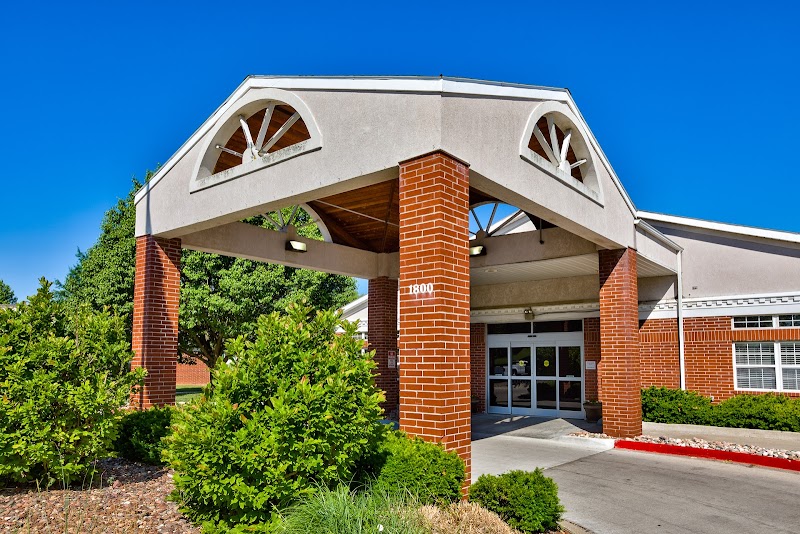
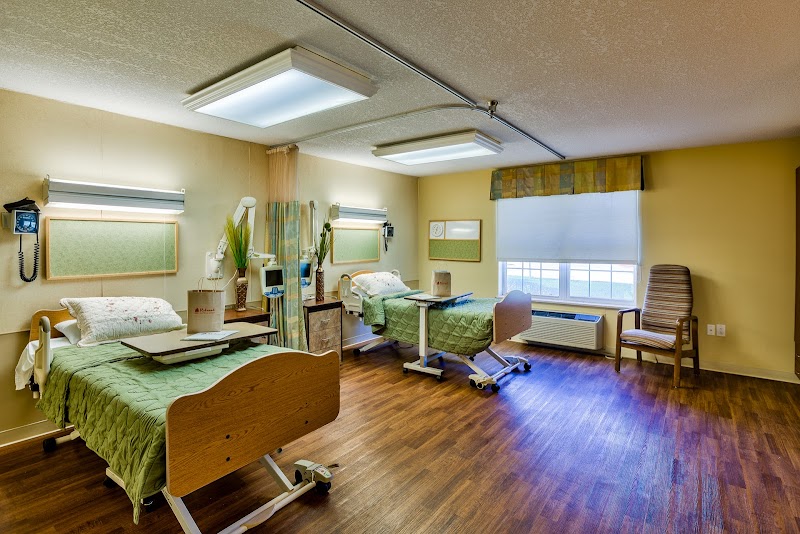
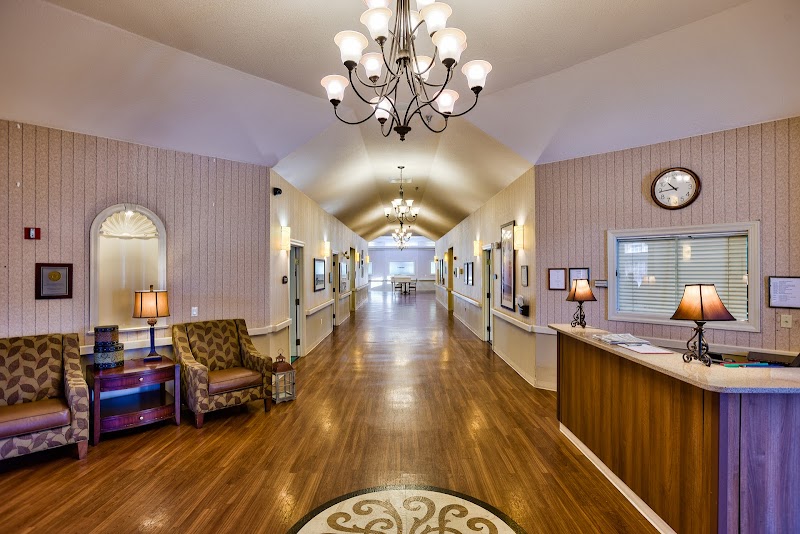
REHABILITATION CENTER OF INDEPENDENCE, THE

1800 S SWOPE DRIVE, INDEPENDENCE, MO 64057 (816) 257-2566
For profit - Corporation 130 Beds EL DORADO NURSING AND REHABILITATION Data: November 2025 3 Immediate Jeopardy citations
Trust Grade
0/100
#292 of 479 in MO
Last Inspection: January 2025

Within standard 12-15 month inspection cycle. Federal law requires annual inspections.

Overview

The Rehabilitation Center of Independence has received a Trust Grade of F, indicating significant concerns and a poor overall quality of care. Ranking #292 out of 479 facilities in Missouri places this nursing home in the bottom half of the state, and #21 out of 38 in Jackson County suggests only a few local options are better. The facility's performance is worsening, with the number of reported issues increasing over time. Staffing is a major concern, reflected in their low rating of 1 out of 5 stars, a high turnover rate of 69%, and less RN coverage than 96% of Missouri facilities, which can impact resident care. In terms of specific incidents, there were critical failures to investigate injuries and to implement preventative measures for vulnerable residents, raising serious safety concerns. Overall, while the nursing home has some strengths in quality measures, the weaknesses in trust grade, staffing, and incident management are significant issues for families to consider.

Trust Score
F
0/100
In Missouri
#292/479
Bottom 40%
Safety Record
High Risk
Review needed
Inspections
Getting Worse
21 → 22 violations
Staff Stability
⚠ Watch
69% turnover. Above average. Higher turnover means staff may not know residents' routines.
Penalties
○ Average
$135,669 in fines. Higher than 64% of Missouri facilities. Some compliance issues.
Skilled Nurses
⚠ Watch
Each resident gets only 9 minutes of Registered Nurse (RN) attention daily — below average for Missouri. Fewer RN minutes means fewer trained eyes watching for problems.
Violations
⚠ Watch
57 deficiencies on record. Higher than average. Multiple issues found across inspections.
★★☆☆☆
2.0
Overall Rating
★☆☆☆☆
1.0
Staff Levels
★★★★★
5.0
Care Quality
★★☆☆☆
2.0
Inspection Score
Stable
2023: 21 issues
2025: 22 issues

The Good

  • 5-Star Quality Measures · Strong clinical quality outcomes
  • Full Sprinkler Coverage · Fire safety systems throughout facility
  • No fines on record

Facility shows strength in quality measures, fire safety.

The Bad

2-Star Overall Rating

Near Missouri average (2.5)

Below average - review inspection findings carefully

Staff Turnover: 69%

23pts above Missouri avg (46%)

Frequent staff changes - ask about care continuity

Federal Fines: $135,669

Well above median ($33,413)

Significant penalties indicating serious issues

Chain: EL DORADO NURSING AND REHABILITATIO

Part of a multi-facility chain

Ask about local staffing decisions and management

Staff turnover is elevated (69%)

21 points above Missouri average of 48%

The Ugly 57 deficiencies on record

3 life-threatening 2 actual harm
Mar 2025 1 deficiency
CONCERN (D) 📢 Someone Reported This

A family member, employee, or ombudsman was alarmed enough to file a formal complaint

Potential for Harm - no one hurt, but risky conditions existed

Notification of Changes (Tag F0580)

Could have caused harm · This affected 1 resident

**NOTE- TERMS IN BRACKETS HAVE BEEN EDITED TO PROTECT CONFIDENTIALITY** Based on observation, interview, and record review, the facility failed to ensure the resident's physician was notified of all i...

Read full inspector narrative →
**NOTE- TERMS IN BRACKETS HAVE BEEN EDITED TO PROTECT CONFIDENTIALITY** Based on observation, interview, and record review, the facility failed to ensure the resident's physician was notified of all injuries sustained after a fall for one sampled resident (Resident #1) out of eight sampled residents. The facility census was 118 residents. Review of the facility Fall Evaluation and Prevention Policy dated 8/2020 showed: -Following a fall, the following steps should be undertaken: --Evaluate the resident promptly in order to identify and treat injuries. --Monitor closely for indications of pain or discomfort in any areas, reddened or discolored areas or other signs of injury. Review of the facility Change of Condition Notification Policy dated 6/2020 showed: -To ensure residents, family, legal representatives, and physicians are informed of changes in the residents condition in a timely manner. -Acute change of condition (ACOC) is a sudden, clinically important deviation from a patient's baseline in physical, cognitive, behavioral, or functional domains. -Clinically important means a deviation that, without intervention, may result in complications or death. -Members if the Interdisciplinary Team (IDT) are expected to report and document signs and symptoms that might represent ACOC. -The facility will promptly inform the resident, consult with the resident's attending physician, and notify the resident's legal representative when the resident endures a significant change in their condition caused by, but not limited to an injury or accident. -The licensed nurse will notify the resident's attending physician when there is an: --Incident/accident involving the resident. --An accident involving the resident which results injury and has the potential for requiring physician intervention. --A decision to transfer or discharge the resident from the facility. -The attending physician will be notified timely with a resident's change in condition. -Notification to the attending physician will include a summary of the condition change and an assessment of the resident's vital signs and system review focusing on the condition and/or sign and symptoms for which the notification is required. -Emergency situations such as intense pain and unexpected bleeding, the nurse will immediately call the attending physician. -The licensed nurse will document the following: --Date, time, and pertinent details of the incident and the subsequent assessment in the nursing notes. --The time the attending physician was contacted, the method by which he/she was contacted, the response time, and whether or not orders were received. --The time the family/responsible party was contacted. --The incident and brief details in the 24-hour report. -Documentation pertaining to a change in the resident's condition will be maintained in the resident's medical record and on the 24-hour report. 1. Review of Resident #1's admission Record showed the resident was admitted on [DATE] with diagnoses including muscle weakness, repeated falls and traumatic subdural hemorrhage with loss of consciousness (most dangerous type of head injury, a collection of blood within the skull pressing on the brain, is potentially life-threatening, usually requires immediate treatment, might include surgery to remove the blood). Review of the resident's Quarterly Minimum Data Set (MDS- a federally mandated assessment instrument completed by facility staff for care planning) dated 1/25/25 showed the resident was cognitively intact. Review of the resident's Fall Investigation dated 3/6/25 showed: -Certified Nursing Assistant (CNA) A reported to Licensed Practical Nurse (LPN) A the resident had fallen. -LPN A assisted the resident off the floor and back to the resident's room. -Injuries documented was a bruise to his/her right front knee and unable to determine injury to face. -Family, Director of Nursing (DON) and physician notified. --The investigation did not include the resident had a history of falls, any past interventions that should have been in place at the time of this fall, and did not include documentation related to the resident's broken teeth as a result of the fall. Review of the resident's Progress Note dated 3/6/25 at 8:27 P.M. showed: -CNA A reported resident had fallen. -Assessed the resident for injuries, broken teeth from an implanted partial was found on the floor and he/she has a bruise to his/her right knee. -Physician called and notified. -Order received for x-ray of his/her right knee. Review of the resident's Order Summary report showed: -X-ray of right knee two views, 3/6/25. -Hydrocodone-Acetaminophen (a narcotic pain medication) 5/325 milligram (mg), given one tablet by mouth every six hours as needed for pain, 8/15/24. Review of the resident's Medication Administration Record (MAR) dated 3/1/25 through 3/31/25 showed one dose of Hydrocodone-Acetaminophen given on 3/5/25 at 5:00 A.M. No documentation of the location of the resident's pain. Review of the residents Controlled Drug Administration Record dated 3/3/25 through 3/12/25 showed: -Hydrocodone-Acetaminophen 5-325 mg, one tablet orally every six hours as needed for pain. -3/2/25 at 11:30 P.M. -3/3/25 at 6:00 P.M. -3/4/25 at 12:00 A.M., 8:00 A.M., and 5:00 P.M. -3/5/25 at 12:00 A.M., 9:00 A.M., and 12:00 P.M. -3/6/25 at 8:00 A.M., and 5:00 P.M. -3/7/25 at 8:00 A.M., 12:00 P.M., and 5:00 P.M. -3/8/25 at 8:00 A.M., 12:00 P.M., 5:00 P.M. and 11:00 P.M. -3/9/25 at 8:00 A.M., 12:00 P.M., 4:00 P.M., 8:00 P.M. -3/10/25 at 8:00 A.M., 12:00 P.M., and 5:00 P.M. -3/11/25 at 8:00 A.M., 12:00 P.M., and 5:00 P.M. -3/12/25 at 8:00 A.M. --No documentation of the location of the resident's pain. Review of the resident's Progress Note dated 3/7/25 at 4:47 P.M. showed: -He/she denied pain or discomfort at that time. -X-ray was completed on that shift, waiting results. -Pain management with PRN hydrocodone. -Nurse to continue to monitor. -Resident laying in bed. --No documentation related to the resident's broken implanted teeth. Review of the resident's Progress Note dated 3/8/25 at 1:06 P.M. showed: -Denied pain or discomfort at that time. -No findings on x-ray results. -Pain management with PRN hydrocodone. -Nurse to continue to monitor. -Resident laying in bed. --No documentation related to the resident's broken implanted teeth. During an observation and interview on 3/9/25 at 9:25 A.M., the resident said: -He/She was in the room next door when he/she fell. -His/Her right knee was hurting although the x-ray did not show a break. -His/Her front bottom teeth fell out from the fall and needs to be taken care of. -His/Her right hand was sore and complained of pain to his/her chin and where his/her teeth broke in his/her mouth. -Resident's knees were bruised. -Noted bruising to the resident's face under both eyes, both sides of nose extending to top lip, from the left corner of mouth extending downward and under the chin. -There was swelling from between the eyebrows and across the bridge of the nose. -He/She was retrieving his/her cup from the other resident's room at the time of the fall. -He/She was laying in a pool of blood and knew it was bad at that time. -He/She screamed and yelled for help. -He/She has not seen a doctor. -He/She did not go to the Emergency Room. -He/She was not asked if he/she wanted to go to the Emergency Room. -His/Her bottom teeth have not been addressed. -He/She does not know if his/her nose is broken, but it was painful and swollen. During an interview on 3/9/25 at 12:47 P.M. the Director of Nursing (DON) said: -He/She was aware of the resident falling with bruising to his/her right knee and a little bruising to his/her face. -He/She was not aware of any other injuries. -He/She felt the broken partial implanted teeth was reported to the doctor who did not want anything done except neurological checks. -He/She felt the resident's medical needs were met. -According to the nurses the resident had no complaints of pain. -He/She was unaware of the complaints of pain by the resident about his/her right knee, right hand, nose, and mouth. During an interview on 3/10/25 at 7:26 P.M. LPN A said: -CNA A came to get him/her because the resident had fallen. -He/She applied pressure to the laceration on the resident's top lip and got an order to x-ray the right knee. -The right knee was bruised with an abrasion and the resident was complaining of pain. -The resident had blood in his/her mouth and there were teeth on the floor. -He/She did not recall informing the provider of the laceration and broken teeth, his/her primary concern was the resident's knee due to the complaint of pain. -He/She did not administer any pain medication as he/she did not have keys to the cart containing the resident's PRN medication. During an interview on 3/10/25 at 7:44 P.M. the Physician said: -He/She was in the facility on 3/10/25 and did not see the resident. -He/She was not aware of the resident's fall or other injuries. -He/She was concerned if the resident had been sent to the emergency room or not on the day of the fall. -He/She expects the nurses to call and report all injuries when a resident falls. -He/She was not the provider on call at the time of the resident's fall. During an interview on 3/10/25 at 8:00 P.M. LPN B said: -He/She was informed the resident had a fall when he/she arrived on 3/7/25. -He/She was told there was an x-ray for the resident's knee pain. -Although the resident complained about his/her knee the x-ray was okay. -He/She noticed the resident's face was bruised up, but the resident did not complain of pain. -The resident told him/her they lost a couple of teeth on the bottom when he/she fell. -He/She asked the resident about pain frequently. -He/She offered PRN hydrocodone and administered in the morning and in the afternoon. -He/She did not contact the physician or Nurse Practitioner about the resident's facial injuries or increased use of PRN hydrocodone since the fall. -The resident continued to have bruising and swelling to his/her face. -The resident did not complain of knee pain, only a sore face and wanted to rest. -He/She did not notice any injuries in the mouth but did notice broken teeth. -He/she was aware of the laceration to the top lip just under the right nare. -There was a steri-strip to the laceration, although he/she did not recall when it was removed. -If he/she was to find a resident that had fallen, he/she would assess the resident, do neuros and vitals, contact the physician and management. -When notifying the physician, be sure to inform of the fall as well as any and all injuries. -Just looking at the resident he/she could tell the resident was sore from the injuries. -He/She felt social services would contact dental for the resident. During an interview on 3/10/25 at 8:37 P.M. LPN C said: -He/She was not in the building at the time the resident fell. -When he/she came in for his/her shift, LPN A advised of the resident's fall. -He/She assumed all contacts had been made, therefore he/she did not feel he/she needed to contact the physician. -He/She documented on the Neurological Assessment Flow Sheet the injuries he/she observed, but not in the progress or nursing notes. -He/She applied steri-strips to the laceration to the resident's top lip. -The resident kept wiping the steri-strip off and had another nurse help with application to ensure the wound edges were approximated and the bleeding stopped. -The resident's nose was swollen from the face plant (falling face first to the ground). -He/She put ice on the resident's nose every 20 minutes and reduced the swelling, but did not document in the progress or nursing notes and did not notify the physician. -He/She was aware the resident's front teeth were cemented in prior to the fall, but did not assess the oral cavity. -He/She was not aware of any orders for the resident's facial injuries. -He/She would not have done anything different than what was already done before he/she arrived. During an interview on 3/10/25 at 8:50 P.M. CNA A said: -He/She heard the resident yelling out. -He/She turned on the light and observed the resident was bleeding from his/her nose and mouth. -The resident told him/her the resident's teeth were missing. -He/She found the resident's teeth on the floor and placed them in a cup. -He/She went to get LPN A to assess the resident and gave LPN A the resident's teeth. -He/She could not see any injuries in the resident's mouth. -The resident complained about the bridge of his/her nose being painful from the impact of the fall. -He/She applied pressure and ice pack to the resident's face and put the head of the bed up. -The resident's nose was pretty swollen, but felt the ice did help with the swelling. During an interview on 3/11/25 at 7:24 A.M. LPN A said: -The resident was in the room next door when he/she fell. -He/She assisted the resident off the floor and to his/her room. -The resident complained of pain to the right knee when it was touched. -The provider he/she spoke with was the Nurse Practitioner. During an interview on 3/12/25 at 1:58 P.M. the Administrator said: -He/She was aware the resident had fallen and sustained injuries. -When a resident has a fall he/she expects the resident to not be moved until assessed by a nurse. -He/She prefers neuros be done on all residents with a fall. -He/She expects the physician and responsible parties to be notified. -When contacting the physician, he/she expects the physician to be informed of all relevant facts, if the resident hit their head, and any other relevant information specific to the resident. -Nurses are to follow orders if any are given. -Documentation should be done in the risk management and some in the progress notes. -He/She expects all nurses to follow facility policy on charting. -The resident should have been charted on every shift for the first 72 hours in the progress or nursing notes. -Administration of PRN narcotics should be documented on the resident's MAR. -All first aid administered to the resident, including the steri-strips and ice packs should have been documented in the progress or nursing notes. -He/She expects the physician or Nurse Practitioner to see a resident after a fall within a week or sooner if needed. During an interview on 3/12/25 at 2:32 P.M. the DON said: -When a resident has a fall he/she expects the nurses to assess the resident, obtain vital signs, start neuro checks, check the resident's baseline, and if there are injuries significant enough to send the resident to the Emergency Room. -He/She expects the physician and the family to be notified of the resident's fall and if they were sent to the hospital. -He/She expects the physician to be told how the resident fell, if they hit their head, any suspected injuries, range of motion and complaints of pain. -The on call provider should have been informed of the resident's partial facial injuries. -He/She expects the physician or Nurse Practitioner to see the resident within 3 to 4 days after a fall. -Due to the resident's history of falls and subdural hematoma, he/she should have had facial injuries checked sooner than 5 days after his/her fall. -There should have been more documentation related to the resident's fall and follow up including treatments, interventions and wound measurements. -He/She did not feel there was a negative impact on the resident due to his/her missing teeth and social services was setting up a dental appointment. -PRN narcotics should be documented in the resident's MAR as it triggers for follow up in the electronic system. -There should have been follow up and possible interventions for the resident's wounds to his/her nose and chin as well as other injuries. During an interview on 3/12/25 at 3:31 P.M. the Nurse Practitioner said: -He/She was the provider on call when the resident fell. -He/She did not recall being informed of the resident having any injuries to his/her face or broken teeth. -He/She recalled being informed the resident was having knee pain after the fall and ordering an x-ray to the right knee. -He/She expected to get accurate information and be informed of all injuries post fall. MO00250752
Jan 2025 21 deficiencies 1 Harm
SERIOUS (G)

Actual Harm - a resident was hurt due to facility failures

Quality of Care (Tag F0684)

A resident was harmed · This affected 1 resident

**NOTE- TERMS IN BRACKETS HAVE BEEN EDITED TO PROTECT CONFIDENTIALITY** Based on interviews and a review of medical records, the facility failed to identify and implement the necessary care and servic...

Read full inspector narrative →
**NOTE- TERMS IN BRACKETS HAVE BEEN EDITED TO PROTECT CONFIDENTIALITY** Based on interviews and a review of medical records, the facility failed to identify and implement the necessary care and services to address the needs of diabetic residents. Specifically, facility staff failed to: 1. Recognize and appropriately respond to signs and symptoms of hyperglycemia, such as changes in mental status, feelings of anger, excessive hunger, excessive thirst, and frequent urination. 2. Implement blood glucose monitoring as ordered by the medical provider. Failed to transcribe and/or verify insulin orders and blood glucose monitoring with the physician upon admission. 3. Administer insulin as ordered by the medical provider resulting in the resident becoming physically and verbally combative, excessively hungry, resulting in hypoglycemia and a blood sugar of 541. This deficient practice contributed to the subsequent hospitalization of one (1) of two (2) residents reviewed for hospitalization from a total of 36 residents sampled (Resident #101). The findings include: According to Mayo Clinic (accessed 1/9/25 https://www.mayoclinic.org/diseases-conditions/hyperglycemia/symptoms-causes/syc-20373631), High blood sugar, also called hyperglycemia, affects people who have diabetes. Several factors can play a role in hyperglycemia in people with diabetes. They include food and physical activity, illness, and medications not related to diabetes. Skipping doses or not taking enough insulin or other medication to lower blood sugar also can lead to hyperglycemia. It's important to treat hyperglycemia. If it's not treated, hyperglycemia can become severe and cause serious health problems that require emergency care, including a diabetic coma. Hyperglycemia that lasts, even if it's not severe, can lead to health problems that affect the eyes, kidneys, nerves and heart.' Hyperglycemia usually doesn't cause symptoms until blood sugar (glucose) levels are high - above 180 to 200 milligrams per deciliter (mg/dL), or 10 to 11.1 millimoles per liter (mmol/L). 1. A comprehensive review of Resident #101's medical record revealed an initial admission date of 10/28/24. The resident's medical history included metabolic encephalopathy and diabetes. A comprehensive minimum data set (MDS) was not completed, as Resident #101 was admitted on [DATE], and discharged to acute care on 10/29/24. Resident #101's discharge medication list from the hospital dated 10/28/24, was reviewed. The medication list contained a note indicating Resident #101 as having a recurrent trend of low Accu-Checks [blood sugars]. A review of the discharge medications revealed an order for insulin lispro 1-6 units to be injected subcutaneously four (4) times daily with meals and nightly. A second order was noted for insulin aspart sliding scale 0-14 units to be injected subcutaneously three times daily before meals. A third order was noted for insulin glargine 10 units to be injected subcutaneously nightly. Additional instructions on the medication list directed nursing staff to monitor Resident #101's blood glucose every two (2) hours for two (2) episodes and then every four (4) hours for two (2) episodes. A review of the medications transcribed to Resident #101's medical record revealed that as of 1/10/25,-date fixed neither the order for insulin lispro nor the order for insulin aspart were transcribed. An order was noted for insulin glargine 10 units to be injected subcutaneously at bedtime. A review of Resident #101's administration record for October 2024 revealed the insulin glargine injection was not administered the night Resident #101 was admitted to the facility. An indication on the administration record directed the reader to refer to progress notes. A subsequent review of the nursing progress notes revealed no documentation that indicated why the insulin glargine was not administered. Continued review of Resident #101's medical record revealed one (1) blood sugar assessment dated [DATE] at 5:42 p.m. The result was 290 milligrams per deciliter (mg/dL). There was no evidence that additional blood sugar monitoring was conducted at two (2) and four (4) hour intervals as directed by the hospital discharge instructions. A nursing progress note dated 10/28/24 at 5:30 p.m. indicated Resident #101 arrived at the facility in a wheelchair. The note described Resident #101 as being nonverbal at the time of admission but responded to yes or no questions appropriately. Additionally, the note identified Resident #101 as being a diabetic. A narrative in the progress note read, Doctor will look at insulin orders tomorrow when come as the orders from the Hospital are not clear. BS [blood sugar] 290 . The note did not indicate how facility staff planned to monitor and treat Resident #101's abnormal blood sugars until the insulin orders were reviewed by the medical provider. A nursing progress note dated 10/29/24, at 10:02 a.m. noted that at 8:30 a.m., Resident #101 was observed lying on the floor adjacent to their bed. The resident was assisted with dressing and then transferred to their wheelchair, being subsequently taken to the dining room. The progress note did not specify whether Resident #101's blood sugar levels were assessed or whether Resident #101 was evaluated for signs or symptoms of hypoglycemia or hyperglycemia. A progress note dated 10/29/24, at 10:09 a.m. documented Resident #101's disruptive behaviors in the dining room. Resident #101 engaged in combative actions, threw a bowl of oatmeal onto the table, and knocked orange juice out of the Certified Nurse Aide (CNA)'s hand when the CNA offered it to Resident #101. The note further described Resident #101's behavior as sitting near the nurse's station, where he/she began hollering and sliding out of the wheelchair. Resident #101 was subsequently provided with a peanut butter sandwich and orange juice, which appeared to have a calming effect on the resident temporarily. The progress note did not indicate whether Resident #101's blood sugar levels were assessed or whether Resident #101 exhibited any signs or symptoms of hypoglycemia or hyperglycemia at that time. A progress note dated 10/29/24 at 1:09 p.m. indicated that the nurse practitioner was in the building and ordered depakote sprinkles 125 milligrams (mg) to be given by mouth every 12 hours for restlessness and agitation. The progress note failed to indicate whether Resident #101's insulin orders were reviewed by the nurse practitioner at the time of their visit. A progress note dated 10/29/24 at 3:58 p.m. by Licensed Practical Nurse LPN FF documented that the resident ate a total of two peanut butter and jelly sandwiches and a meat sandwich. Afterward, the resident was assisted to his/her room where the resident became combative. The note further described the resident's persistent hunger. The note indicated the resident's blood sugar at 12:00 p.m. was 389. The resident was assisted to the dining room where he/she ate a full meal and still wanted more. Resident #101 became upset when he/she was taken out of the dining room and started sliding himself/herself out of the wheelchair. The resident calmed down when given a piece of bread but continued to get upset after eating. The resident was then allowed to sit on the floor. Additional behaviors were described as kicking and hitting. The Administrator responded to the room and directed staff to send the resident to a psychiatric hospital. The note indicated the resident's blood sugar was 541 at 2:55 p.m. The NP was informed and an order was given for 20 units of insulin. However, the medical record did not contain evidence that the 20 units of insulin were administered. A Recapitulation of Stay Resident Discharge Summary dated 10/30/24 at 4:13 p.m. was reviewed. The summary was signed by the Director of Nursing and indicated Resident #101 was transferred to the hospital on [DATE] at 4:00 p.m. due to noncompliance with care along with verbal and physical aggression toward staff. The summary did not contain vital signs (to include blood glucose). On 1/10/25 at 5:01 p.m. an interview was conducted with the Administrator and the Director of Nursing (DON). Both the Administrator and DON recalled Resident #101 and the circumstances of his/her transfer to the hospital. The Administrator explained that the resident became verbally and physically aggressive with staff due to psych issues and thus was transferred to the hospital for that reason. When asked about whether facility staff were aware that the resident's blood glucose levels had gone unmonitored since shortly after admission, the DON stated, No, we sent [him/her] to the hospital for the behaviors. The DON explained he/she was not aware that Resident #101 was admitted to the facility with insulin and blood glucose monitoring orders that had not been carried out as ordered and subsequently discharged from the facility with a blood glucose level of 541 at last check. The DON acknowledged that the resident's symptoms of anger, excessive hunger, excessive thirst, and frequent urination were indicative of uncontrolled hyperglycemia but that this was not recognized or considered at the time of his/her hospital transfer. When asked how facility staff ensured physician's orders were accurately transcribed from the hospital discharge reconciliation, the DON explained that a checklist had been developed to facilitate the review of new admissions. However, when asked to produce the checklist for Resident #101's admission, the DON was unable to provide it. When asked what the expectation of a nurse would be in the event that a resident's blood glucose was continuously trending upward with orders for insulin, the DON stated the nurse would be expected to notify the medical provider immediately and acknowledged the notification had not occurred for Resident #101.
CONCERN (D)

Potential for Harm - no one hurt, but risky conditions existed

Deficiency F0559 (Tag F0559)

Could have caused harm · This affected 1 resident

Based on interviews and facility policy, the facility staff failed to protect the rights of a resident whose room was changed without notice prior to the change for one (1) of one (1) resident reviewe...

Read full inspector narrative →
Based on interviews and facility policy, the facility staff failed to protect the rights of a resident whose room was changed without notice prior to the change for one (1) of one (1) resident reviewed for room changes. Resident #65 left the facility for an appointment and returned to learn his/her belongings had been moved to another room. The findings include: Review of facility policy titled Room or Roommate Change Version 1.0, Revised 8/2020 revealed the policy's Purpose -To ensure that a resident is able to exercise their right to change rooms or roommates .Procedure -III. Prior to changing a room assignment, the resident, the resident's representative (if available), the resident's new roommate, will be given timely advance notice of such change according to state and federal regulations. A. When the resident is being moved at the request of the Facility, the notice of a change in room assignment will be in writing and will include the reason(s) for the change. B. Social Services Staff will assist in orienting the resident to his or her new room and/or roommate. 1. Resident #65 was admitted to the facility 10/2/24 with diagnoses including diabetes, kidney failure, repeated falls, hypokalemia, hypomagnesemia, hypertensive heart without heart failure, hyperlipidemia, atrial fibrillation, anxiety disorder, muscle weakness and arthritis. In an interview on 1/7/25 at 12:15 p.m., Resident #65 stated that the facility moved his belongings to a new room when he/she was out for an appointment without notifying the resident before the move. Resident #65 stated that it caused a misunderstanding between him/her and his/her former roommate as each thought the other had asked for the move. In an interview on 1/10/25 at 7:50 a.m., the Social Worker (SW) reported that it was a clinical decision to move Resident #65. SW also acknowledged that Resident #65 had only left the building for an appointment. SW also confirmed that the move was not discussed with the resident. In an interview on 1/10/25 at 5:00 p.m., the Administrator stated that staff were expected to implement policy correctly.
CONCERN (D)

Potential for Harm - no one hurt, but risky conditions existed

Notification of Changes (Tag F0580)

Could have caused harm · This affected 1 resident

**NOTE- TERMS IN BRACKETS HAVE BEEN EDITED TO PROTECT CONFIDENTIALITY** Based on observation, interviews and record review, the facility failed to ensure appropriate notification following a fall duri...

Read full inspector narrative →
**NOTE- TERMS IN BRACKETS HAVE BEEN EDITED TO PROTECT CONFIDENTIALITY** Based on observation, interviews and record review, the facility failed to ensure appropriate notification following a fall during a transfer for one (1) of 36 residents sampled (Resident #39). Resident # 39 reported falling while being transferred from a wheelchair to the bed by Restorative Nursing Aide (RNA) AA and Maintenance Supervisor. The staff involved did not notify the nurse or physician of the incident, as required. This deficient practice compromised the resident's right to prompt assessment and care and potentially placed the resident at risk for unrecognized or untreated injuries. The findings included: 1. Record review of Resident #39's admission Minimum Data Set (MDS) dated [DATE], revealed an admission date of 12/24/24, and a Brief Interview for Mental Status (BIMS) summary score of 13 which indicated the resident was cognitively intact. Resident #39 was coded as dependent for a chair/bed to chair transfer. Continued review revealed diagnoses which included Diffuse Traumatic Brain Injury with Loss of Consciousness, Cerebral Infarction due to Occlusion of Stenosis of Small Artery, Morbid Obesity, Muscle Weakness and Repeated Falls. Record review of an undated Visual Bedside [NAME] Report revealed that Resident #39 required the mechanical aid of a Hoyer lift with two (2) staff members assisting for transfers. Review of Resident's #39's Care Plan revealed there was an intervention with an initiated date of 12/26/24 that the resident required mechanical aid Hoyer lift with two (2) staff assisting for transfers. There was no evidence in the Progress Notes that a fall with Resident #39 had been reported. In an observation on 1/9/25 at 1:00 p.m. of a skin assessment on Resident # 39 with Licensed Vocational Nurse Treatment Nurse (LVN) DD revealed that Resident # 39 had two (2) closed abrasions, that were red and scabbed over below the resident's left knee. LVN DD cleaned the abrasions and applied skin prep, without a written order for the treatment. In an interview with Resident # 39 on 1/8/25 at 1:29 p.m., the resident reported that on the date of admission [DATE], he/she fell during a staff assisted transfer from the wheelchair to the bed. Resident # 39 was only able to recall one of the staff members who assisted during the transfer. The resident stated that had he/she sustained an injury to his/her left leg. The first day here, they dropped me trying to transfer. A couple guys dropped me when my legs gave out. Took a gash out of my left leg. [sic] In an interview on 1/9/25 at 11:00 a.m. with LVN DD, he/she stated that no staff member notified her of the two (2) red scabbed over abrasions to the resident's left leg, and was not aware that a fall had occurred with the resident In an interview on 1/9/25 at 5:00 p.m. with the Maintenance Supervisor, revealed that he/she and the RNA AA were the staff members who assisted the resident with the transfer. The Maintenance Supervisor stated that the resident's admission paperwork did not list that the resident was to be transferred via a mechanical Hoyer lift. The Maintenance Supervisor reported that Resident # 39 during transfer started to slip out of their wheelchair but did not fall. RNA AA was unavailable to be interviewed due to being recently suspended earlier in the day.
CONCERN (D)

Potential for Harm - no one hurt, but risky conditions existed

Deficiency F0582 (Tag F0582)

Could have caused harm · This affected 1 resident

Based on interview and record review, the facility failed to provide documentation of appropriate notification of pending benefit changes to Medicare services for one (1) of three (3) residents sample...

Read full inspector narrative →
Based on interview and record review, the facility failed to provide documentation of appropriate notification of pending benefit changes to Medicare services for one (1) of three (3) residents sampled for beneficiary notices (Resident #90). The findings include: 1. The 1/10/25 review of the notices given to three (3) residents selected from the form entitled Beneficiary Notice - Residents discharged Within the Last Six Months (provided to the facility during the Entrance Conference) revealed none was available for 1 of 3 sampled residents, Resident #90. In an interview, the Social Worker (SW) on 1/10/25 at 2:28 p.m. reported not being in the position until August 2024 and the SW was unable to provide proof of notification letters sent to Resident #90.
CONCERN (D)

Potential for Harm - no one hurt, but risky conditions existed

Transfer Notice (Tag F0623)

Could have caused harm · This affected 1 resident

**NOTE- TERMS IN BRACKETS HAVE BEEN EDITED TO PROTECT CONFIDENTIALITY** Based on interviews and record review, the facility failed to notify the resident and the resident's representative of a facilit...

Read full inspector narrative →
**NOTE- TERMS IN BRACKETS HAVE BEEN EDITED TO PROTECT CONFIDENTIALITY** Based on interviews and record review, the facility failed to notify the resident and the resident's representative of a facility-initiated emergency transfer to an acute care hospital. This deficient practice affected one (1) of two (2) residents reviewed for hospitalizations from a total of 36 residents sampled (Resident #101). The findings include: The facility's policy governing resident transfer and discharge processes was reviewed. The policy, titled Transfer and Discharge was dated 10/24/22. The policy directed staff from Social Services (or a designee) to prepare a written transfer notice to send with the resident in the event of an emergency transfer. 1. A review of Resident #101's medical record revealed an admission date of 10/28/24. His/her medical history included metabolic encephalopathy, hemiparesis affecting his/her left side, and history of CVA. A comprehensive minimum data set (MDS) was not completed as the resident was admitted on [DATE] and discharged on 10/29/24. Resident #101 did not return to the facility after hospitalization. A Recapitulation of Stay Resident Discharge Summary dated 10/30/24 revealed that Resident #101 was transferred to the hospital on [DATE] at 4:00 p.m. due to a change in medical condition. The electronic form was signed by the Director of Nursing (DON). Continued review of Resident #101's medical record revealed no evidence of a written notice of transfer having been sent to the resident or the resident's representative. On 1/9/25 at 12:10 p.m., an interview was conducted with Licensed Practical Nurse (LPN) FF regarding the facility's practices for transferring residents to acute care settings. According to LPN FF, the nurse that transferred the resident to the hospital would be expected to complete the notice of transfer and send it with the resident at the time of transfer, as part of the transfer paperwork. LPN FF added that a copy of the notice should be kept in the resident's medical record. On 1/10/25 at 5:01 p.m., an interview was conducted with the facility's Administrator and the DON. During the interview, the DON confirmed that a written notice of transfer was not sent with Resident #101 at the time of his/her transfer nor was it sent to the resident's representative. The DON added that the nurse transferring the resident to the hospital should have completed the notice of transfer. When reminded that he/she signed Resident #101's discharge summary, the DON stated he/she was unable to recall whether a notice of transfer was sent.
CONCERN (D)

Potential for Harm - no one hurt, but risky conditions existed

Deficiency F0625 (Tag F0625)

Could have caused harm · This affected 1 resident

**NOTE- TERMS IN BRACKETS HAVE BEEN EDITED TO PROTECT CONFIDENTIALITY** Based on interviews and record review, the facility failed to provide the resident and the resident's representative with a writ...

Read full inspector narrative →
**NOTE- TERMS IN BRACKETS HAVE BEEN EDITED TO PROTECT CONFIDENTIALITY** Based on interviews and record review, the facility failed to provide the resident and the resident's representative with a written notice of the facility's bed-hold policy upon transferring a resident to an acute care hospital. This deficient practice affected one (1) of two (2) residents reviewed for hospitalizations from a total of 36 residents sampled (Resident #101). The findings included: The facility's policy governing resident transfer and discharge processes was reviewed. The policy, titled Transfer and Discharge was dated 10/24/22. The policy directed staff to provide a resident and a resident representative with a written notice which specified the duration of the resident's bed-hold at the time of transfer. 1. A review of Resident #101's medical record revealed an admission date of 10/28/24. His/her medical history included metabolic encephalopathy, hemiparesis affecting his/her left side, and history of CVA. A comprehensive minimum data set (MDS) was not completed as the resident was admitted on [DATE] and discharged on 10/29/24. Resident #101 did not return to the facility after hospitalization. A Recapitulation of Stay Resident Discharge Summary dated 10/30/24 revealed that Resident #101 was transferred to the hospital on [DATE] at 4:00 p.m. due to a change in medical condition. The electronic form was signed by the Director of Nursing (DON). Continued review of Resident #101's medical record revealed no evidence of a written notice of the facility's bed-hold policy having been sent to the resident or the resident's representative. On 1/9/25 at 12:10 p.m an interview was conducted with Licensed Practical Nurse (LPN) FF regarding the facility's practices for transferring residents to acute care. According to LPN FF, the nurse that transferred the resident to the hospital was expected to complete the notice of bed-hold and send it with the resident at the time of transfer as part of the transfer paperwork. LPN FF added that a copy of the notice should be kept in the resident's medical record. On 1/10/25 at 5:01 p.m. an interview was conducted with the Administrator and the DON. During the interview, the DON confirmed that a written notice of bed-hold policy was not sent with Resident #101 at the time of his/her transfer nor was it sent to the resident's representative. The DON added that the nurse transferring the resident to the hospital should have completed the notice of bed-hold.
CONCERN (D)

Potential for Harm - no one hurt, but risky conditions existed

Assessment Accuracy (Tag F0641)

Could have caused harm · This affected 1 resident

**NOTE- TERMS IN BRACKETS HAVE BEEN EDITED TO PROTECT CONFIDENTIALITY** Based on observation, interviews and record review, the facility failed to ensure the accuracy of a skin assessment when the cor...

Read full inspector narrative →
**NOTE- TERMS IN BRACKETS HAVE BEEN EDITED TO PROTECT CONFIDENTIALITY** Based on observation, interviews and record review, the facility failed to ensure the accuracy of a skin assessment when the corresponding assessment did not reflect the actual condition of the skin for one (1) of 36 residents sampled (Resident #39). Inaccurate documentation compromised the facility's ability to provide appropriate and timely care, potentially putting the resident at risk for further complications. The findings included: 1. A review of Resident #39's electronic health record revealed an admission date of 12/24/24, with diagnoses that included Diffuse Traumatic Brain Injury with Loss of Consciousness, Cerebral Infarction due to Occlusion of Stenosis of Small Artery, Morbid Obesity, Muscle Weakness and Repeated Falls. A further review of Resident #39's admission Minimum Data Set (MDS) dated [DATE], noted a Brief Interview for Mental Status (BIMS) summary score of 13, which indicated the resident's cognition was intact. Section M of the MDS noted Moisture Associated Skin Damage (MASD), and no other skin problems were present. A review of a Skin/Wound note dated 12/25/24 at 9:25 p.m. created by Licensed Vocational Nurse Treatment Nurse (LVN) DD, documented that LVN DD assessed Resident #39, and the resident had no skin issues noted. There was no evidence of any other documentation that noted Resident #39's skin issues. In an observation on 1/9/25 at 11:00 a.m. of a skin check/assessment on Resident # 39 conducted by LVN DD revealed that Resident # 39 had two (2) closed abrasions that were red and scabbed over located below the resident's left knee. LVN DD cleaned the abrasions and applied skin prep. In an interview with Resident #39 on 1/8/25 at 1:29 p.m. the resident reported that on his/her date of admission [DATE], Resident #39 fell during a transfer from the wheelchair to the bed and sustained an injury to his left leg. Resident #39 said, The first day here, they dropped me trying to transfer. A couple guys dropped me when my legs gave out. Took a gash out of my left leg. [sic] In an interview on 1/9/25 at 11:00 a.m. with LVN DD, the nurse stated that no staff member notified him/her of the two (2) red scabbed over abrasions to the residents left leg of Resident #39, he/she was not aware of an injury or a fall and had not documented them. In an interview on 1/9/25 at 5:00 p.m. with MS, revealed that he/she and the RNA AA were the staff members who assisted the resident with the transfer. MS stated that the resident's admission paperwork did not list that the resident was to be transferred via a mechanical Hoyer lift. MS reported that Resident # 39 during transfer started to slip out of their wheelchair but did not fall. RNA AA was unavailable to be interviewed due to being recently suspended earlier in the day.
CONCERN (D)

Potential for Harm - no one hurt, but risky conditions existed

Deficiency F0658 (Tag F0658)

Could have caused harm · This affected 1 resident

**NOTE- TERMS IN BRACKETS HAVE BEEN EDITED TO PROTECT CONFIDENTIALITY** Based on interviews and record review, the facility failed to obtain a physician ordered urinalysis (UA) sample in a timely mann...

Read full inspector narrative →
**NOTE- TERMS IN BRACKETS HAVE BEEN EDITED TO PROTECT CONFIDENTIALITY** Based on interviews and record review, the facility failed to obtain a physician ordered urinalysis (UA) sample in a timely manner for Resident #5, one (1) of one (1) resident reviewed for laboratory results from a total of 36 residents sampled. The findings include: 1. Resident #5 was admitted to the facility on [DATE] with diagnoses including but not limited to cellulitis, heart disease, anemia, morbid obesity, infection of unspecified joint, pain and diabetes with diabetic neuropathy. Review of the clinical health record for Resident #5 revealed a physician's order dated 1/3/24 for a UA. On 1/9/25 the laboratory results were requested from the Director of Nursing Services (DON) with reminders provided as other requests were completed. In an interview on 1/10/25 at 5:10 p.m., the DON reported that the 1/3/25 physician's order was executed on 1/10/25 and the sample was earlier that day. There was no reason provided for the delay in obtaining the sample.
CONCERN (D)

Potential for Harm - no one hurt, but risky conditions existed

Deficiency F0679 (Tag F0679)

Could have caused harm · This affected 1 resident

**NOTE- TERMS IN BRACKETS HAVE BEEN EDITED TO PROTECT CONFIDENTIALITY** Based on observation, interview and policy review, the facility did not provide meaningful activities on the weekends for two (2...

Read full inspector narrative →
**NOTE- TERMS IN BRACKETS HAVE BEEN EDITED TO PROTECT CONFIDENTIALITY** Based on observation, interview and policy review, the facility did not provide meaningful activities on the weekends for two (2) residents (Resident #58 and Resident #78), and did not get one (1) resident out of bed for activities that they wanted to attend (Resident #39) out of 36 residents sampled. The findings include: The facility's policy Activities Program, revised 6/2020, documented under Purpose: To encourage residents to participate in activities to make life more meaningful, to stimulate and support physical and mental capabilities to the fullest extent, and to enable the resident to maintain the highest attainable social, physical and emotional functioning. Listed under Policy: The facility provides an Activity Program designed to meet the needs, interests, and preferences of residents. The activities are varied and work to address the needs and interests identified through the assessment process. The Activity Program may address areas including but not limited: A. Social Activities: B. Indoor ad Outdoor activities: C. Activities away from the facility: D. Religious programs: E. Opportunity for resident involvement for planning activities: F. Creative activities: G. Educational activities: and H. Exercise activities. II. A Variety of activities should be offered on a daily basis, which includes weekends and evenings. 1. Resident #39 was admitted to the facility on [DATE], with diagnoses including diffuse traumatic brain injury with loss of consciousness, status unknown other cerebral infarction, due to occlusion or stenosis of small artery, muscle weakness, mild cognitive impairment of uncertain or unknown etiology other idiopathic peripheral, autonomic neuropathy, chronic obstructive pulmonary disease, chronic kidney disease, and Bipolar 1. The most recent Minimum Date Set (MDS) dated [DATE], revealed a Brief Interview for Mental Status (BIMS) and the resident was coded as 15, which indicated the resident's cognition was intact. The MDS also documented under section F (Preferences for Customary Routine and activities) the resident preferred group activities, animals (pet therapy) and doing their favorite activities was very important to them. Further review of Resident #39's medical record revealed a Care Plan, dated 12/24/24, documented under activities as a Focus area that the resident was dependent on staff for cognitive stimulation and social interaction. The goal was for the resident to participate/attend activities of choice two (2) to three (3) times per week by next review. The interventions listed were for the resident to be invited to activities, groups, music groups, and special events. Also, the facility was to provide a program that was of interest and empowered the resident by encouraging /allowing choice, self-expression, and responsibility. On 1/8 /25 at 1:29 p.m., Resident #39 stated that since he/she couldn't get out of bed by himself, that staff were not getting him up for activities. I would like to go to bingo, but nobody comes to get me. I'm a smoker, but they say because I can't function, they don't take me. 2. Resident #58 was admitted to the facility on [DATE] with the following diagnoses: seizure, atrial fibrillation and chronic obstructive pulmonary disease. The most recent MDS dated [DATE], revealed a BIMS was completed and coded the resident as a 15, indicating intact cognitive status. The F section of the MDS (Preferences for customary routine and activities) documented music, books, news, outside activities, and religious activities were very important to him. Further review of the medical record revealed a Care Plan, updated on 10/30/24, documented under activities that the resident didn't care for group activities due to physical mobility/limitation issues and listed under Goals: the resident would express satisfaction with the type of activities and level of activity involvement through the next review date. The interventions were to invite the residents to activities, thank the residents for attendance at bingo, music, and social events. The resident liked to socialize with peers and watching programs on T.V. In an interview with Resident #58 on 1/7/25 at 3:45 p.m., the resident complained of having no activities to participate in for the weekends. He /she stated he was here for two years, and they have never had activities on the weekends. He /she stated they liked Bingo, but it was rarely offered on weekends, and he /she gets bored. Reviews of the activity attendance records for the months of October 2024 through December 2024 revealed Resident #58 attended two bingo activities on Saturday in the past three months. 3. Resident #78 was admitted to the facility on [DATE] with diagnoses including bipolar disorder, obesity, and cerebral infarction. The most recent MDS dated [DATE] revealed a BIMS was conducted, and the resident was coded as 13, indicating intact cognitive status. The most recent annual MDS dated [DATE] documented under section F (Preferences for customary routine and activities) that it was very important for him to participate with groups of people, religious activities, listen to music, and participate in his favorite activities. Review of the Care Plan, updated on 12/9/24, documented as a concern that Resident #78 had little or no activity involvement due to eating in the dining room. Resident #78 preferred to eat in his /her room/bed especially in the morning. Listed under goals was that resident would express satisfaction with type of activities and level of activity involvement when asked through the next review date. Interventions included that the resident enjoyed playing Bingo, Farkle, and attending special events in the lobby. On 1/9/25 at 9:40 a.m, in an interview with Resident #78, the resident stated the facility really didn't have weekend activities. The resident stated that he/she got bored on the weekends. He stated he /she liked Bingo but it was not always offered on the weekends. He /she stated they would also like their church to come to the facility on Sundays. Review of the activity attendance records for the months of October 2024 through December 2024, revealed that Resident #78 attended two (2) activities on the weekend within the three months: Farkle and Wellness Walk was attended on 10/5/24. On 1/10/22 at 10:02 a.m., in an interview with the Activity Director (AD), she stated that the residents would start card games with other residents on the weekend; however, the [activity] staff weren't there to observe what was done on the weekends, except for Bingo. When questioned about the church services, the AD stated they weren't aware of the churches not coming. However, they weren't in the facility to observe. On 1/10/25 at 10:02 a.m., in a follow-up interview with the AD with the Assistant AD present, they explained that they don't staff the Sunday weekend activities. The AD said that they leave out materials, such as board games and cards, so the residents can do things independently. On Saturdays they come in and staff Bingo, but that's the only weekend activity that was staffed by the Activity department. Bingo for the past three months had been done every other Saturday, due to the holidays and having other activities going on. However, the only available activities listed on Saturdays and Sundays were coloring sheets, card games, table games, Fellowship church, chat with coffee, and South Christian Church. They only supervise the activities during the week. The Activity Director stated that starting in the month of January 2025 they will be offering Bingo every Saturday. On 1/10/25 at 5:00 p.m. in an interview with the facility's Administrator, he /she acknowledged that the activities were a concern, and stated he /she knew how to correct the situation.
CONCERN (D)

Potential for Harm - no one hurt, but risky conditions existed

Accident Prevention (Tag F0689)

Could have caused harm · This affected 1 resident

Based on observations, interviews, and record review, the facility failed to ensure the environment was as free from accident hazards by failing to 1) Ensure residents smoked only in the areas designa...

Read full inspector narrative →
Based on observations, interviews, and record review, the facility failed to ensure the environment was as free from accident hazards by failing to 1) Ensure residents smoked only in the areas designated by the facility's safety committee in accordance with the facility's policy; and 2) Supervise residents while they smoked in accordance with the facility's policy. This deficient practice affected two (2) of four (4) residents reviewed for accident hazards related to smoking from a total of 36 residents sampled (Resident #13 and Resident #20). The findings include: The facility's policy governing practices for residents who smoke was reviewed. The policy, titled Smoking by Residents contained a revision date of November 2023. The policy's purpose read, To respect resident choice to smoke and to maintain a safe healthy environment for both smokers and non-smokers. Section II of the policy read, The facility permits smoking only in the area(s) designated by the Facility's Safety Committee. Line X of the procedure read, All smoking sessions will be supervised by Facility Staff members. 1. A review of Resident #13's medical record revealed an initial admission date of 2/23/21. The resident's medical history included chronic obstructive pulmonary disease and hemiparesis affecting the resident's left side. A quarterly minimum data set (MDS) assessment with an assessment reference date (ARD) of 11/20/24 revealed a brief interview for mental status (BIMS) score of 14 out of 15 possible points indicating the resident's cognition was not impaired. Resident #13 required supervision or touching assistance to walk distances greater than ten (10) feet. On 1/7/25 at 10:00 a.m., Resident #13 was observed smoking near the facility's front door. There were no staff supervising Resident #13 as he/she was smoking. Signs were observed on the columns of the facility's front awning which directed staff to smoke only in designated areas. On 1/7/25 at 3:25 p.m., Resident #13 was observed smoking immediately to the right of the facility's front door. There were no staff supervising Resident #13 as he/she smoked. On 1/8/25 at 1:30 p.m., Resident #13 was observed smoking near the facility's front door. There were no staff supervising Resident #13 as he/she smoked. On 1/8/25 at 1:50 p.m., an interview was conducted with Resident #13. When asked whether he/she had received directions about the facility's smoking procedures, Resident #13 explained that he/she had but that they don't ever take us on time, so I just go myself. Resident #13 went on to explain that, at some point in the past, he/she voiced concerns about facility staff not adhering to the established smoking times and that he/she was told just sign out and go out to the street. 2. A review of Resident #20's medical record revealed an initial admission date of 2/8/22. Resident #20's medical history included hemiparesis affecting the left side and tobacco use. An annual MDS assessment with an ARD of 10/16/24 revealed a BIMS score of 15 out of 15 possible points indicating the resident's cognition was not impaired. The assessment identified Resident #20 as currently using tobacco. On 1/7/25 at 9:55 a.m., Resident #20 was observed attempting to exit the facility through the front door. The receptionist stated, [Resident #20], you have to sign out before you go out there to smoke. Resident #20 proceeded to sign out using a binder that was in the facility's lobby before exiting onto the front walkway near the facility's entrance. At 10:00 a.m., Resident #20 was observed lighting and smoking a cigarette with Resident #13. There were no staff supervising Resident #13 or Resident #20 as they smoked. On 1/7/25 at 1:33 p.m., an interview was conducted with Resident #20 regarding the facility's practices for smoking. Resident #20 explained that facility staff were always late assisting residents to the designated smoking area. Resident #20 went on to explain that facility maintenance staff had not cleared the designated smoking area from a recent snowstorm and that residents were not able to use that area. On 1/7/25 at 1:45 p.m., an observation of the designated smoking area confirmed the patio area was covered with snow. A letter signed by the Administrator, dated 10/24/24, was posted near the patio door. The letter indicated that the only designated smoking area for residents was the rear outside patio. The letter added that no other area on this property may be used for resident smoking. In addition, resident smoking may only occur in this designated area under staff supervision. On 1/7/24 at 2:55 p.m., an interview was conducted with Licensed Practical Nurse (LPN) FF regarding the facility's practices for monitoring residents who smoked. LPN FF confirmed he/she was familiar with the care needs of both Resident #13 and Resident #20. LPN FF added that Resident #20 had some functional range of motion limitations in his/her upper extremities and would likely have difficulty extinguishing a cigarette if it fell into his/her lap. LPN FF also confirmed that both Resident #13 and Resident #20 should have staff supervision when smoking and that the designated smoking area was the facility's rear patio. When asked how he/she monitored residents' whereabouts to ensure smoking safety, LPN FF stated, You know, we try hard but there's only so many of us. On 1/10/25 at 5:01 p.m., an interview was conducted with the Administrator and the Director of Nursing (DON). During the interview, the Administrator and the DON were asked about the facility's practices for monitoring residents who smoked. The Administrator confirmed that the only designated smoking area was the facility's rear patio. Additionally, the Administrator confirmed that all residents required staff supervision while smoking. When asked how facility leadership ensured residents smoked only in the designated smoking areas, and received supervision in accordance with the facility's established policy, the Administrator shook his/her head No and did not elaborate.
CONCERN (D)

Potential for Harm - no one hurt, but risky conditions existed

Incontinence Care (Tag F0690)

Could have caused harm · This affected 1 resident

**NOTE- TERMS IN BRACKETS HAVE BEEN EDITED TO PROTECT CONFIDENTIALITY** Based on observation, interview, record review, and review of the facility policy, the facility failed to ensure that perineal c...

Read full inspector narrative →
**NOTE- TERMS IN BRACKETS HAVE BEEN EDITED TO PROTECT CONFIDENTIALITY** Based on observation, interview, record review, and review of the facility policy, the facility failed to ensure that perineal care was provided in a manner to prevent urinary tract infection for one (1) of 36 residents sampled (Resident #82). The finding included: Review of the facility policy titled, Perineal Care revised 6/2020 revealed the procedures for performing Perineal care, as follows: .A. For female residents: i. Separate the labia. Wash with soapy washcloth/cleansing wipe, moving from front to back, on each side of the labia and in the center over the urethra and vaginal opening, using a clean washcloth/cleansing wipe for each stroke. ii. Rinse area, moving from front to back, using clean washcloth/cleansing wipe for each stroke. iii. Dry area moving from front to back, using a blotting motion with towel. 1. Resident #82 was admitted to the facility on [DATE] with diagnoses that included Ventricular Tachycardia, Overactive Bladder, Major Depressive Disorder and Chronic Pain Syndrome. Review of Resident #82's admission Minimum Data Set (MDS) dated [DATE] revealed the resident had a Brief Interview for Mental Status (BIMS) summary score of 14, which indicated the resident was cognitively intact. The MDS further revealed Resident #82's functional abilities were coded as the resident being dependent on staff for toileting hygiene and the resident was frequently incontinent for bladder and always incontinent for bowel. Review of Resident #82's Care Plan with a revision dated 1/3/25, documented that the resident had a behavior problem related to incontinence care and/or brief changes. Resident #82's Care Plan stated, .claims staff are not performing peri care correctly d/t [due to] her wanting to be wiped a specific way/direction/speed/order. In an observation on 1/9/25 at 3:33 p.m. of Resident #82's perineal care revealed Restorative Nursing Aide (RNA) AA, did not spread Resident #82's knees apart in a manner that allowed the resident to be cleaned properly. During an interview at this time, RNA AA stated that because the resident was contracted, she could not open the resident's legs. Certified Nurse Aide (CNA) BB was present during the resident's perineal care, and verbalized disagreeing with RNA AA. CNA BB stated that the RNA AA did not clean the resident properly and could have done better. In an interview with Resident #82 on 1/10/25 at 3:07 p.m., when asked about the perineal care that was provided to him/her by the RNA AA on 1/9/25, he/she stated that .He didn't change me right, and he didn't wipe me very good. He put the brief on me wrong. [sic]
CONCERN (D)

Potential for Harm - no one hurt, but risky conditions existed

Tube Feeding (Tag F0693)

Could have caused harm · This affected 1 resident

Based on observations, interviews, and record review, facility staff failed to ensure residents fed by enteral means receive the appropriate treatment and services to maintain the resident's nutrition...

Read full inspector narrative →
Based on observations, interviews, and record review, facility staff failed to ensure residents fed by enteral means receive the appropriate treatment and services to maintain the resident's nutritional status by failing to monitor the resident's intake and administer supplemental tube feedings for meal intakes less than 50%. This deficient practice affected one (1) of two (2) residents reviewed for tube feeding from a total of 36 residents sampled. (Resident #73) The findings included: 1. A review of Resident #73's medical record revealed an initial admission date of 11/18/24. His/her medical history included dementia and presence of a gastrostomy tube. An admission Minimum Data Set (MDS) with an Assessment Reference Date (ARD) of 12/30/24 revealed a Brief Interview for Mental Status (BIMS) score of 02 from a total of 15 possible points indicating the resident's cognition was severely impaired. The assessment identified the presence of a feeding tube. On 1/8/25 at 1:44 p.m. Resident #73 was observed during the lunch meal sitting in his/her wheelchair at a table in the memory care dining room. Resident #73 was able to feed him/herself and ate approximately 25% of his/her lunch meal before facility staff took the meal tray for return to the kitchen. A preliminary review of Resident #73's physician's orders revealed an order dated 12/30/24 for Glucerna 1.5 240 milliliters (ml) per hour (hr) via feeding tube over a two hour period with 100 ml water flush before and after administration if he/she resident eats less than 50% of meals. Continued observation of Resident #73 through 1/8/25 3:00 p.m. revealed facility staff did not administer Glucerna 1.5 to Resident #73 in accordance with his/her physician's orders. A review of Resident #73's progress notes revealed a nutrition note dated 1/8/25 at 10:47 a.m. and authored by the Dietitian revealed recommendations to continue the PRN enteral feeding order. A review of the resident's administration records for January 2025 revealed no documented administration of PRN (as needed) Glucerna 1.5 on 1/8/25 in accordance with the Resident #73's physician orders. A review of the resident's care flow records for January 2025 revealed that the resident ate 0-25% of his/her lunch on 1/1/25 and 0-25% of his/her breakfast on 1/3/25. Additionally, Resident #73 ate 25-50% of his/her dinner on 1/2/25 and 25 to 50% of his/her lunch on 1/3/25. A review of the resident's administration records for January 2025 revealed no documented administration of PRN Glucerna on 1/2/25 or 1/3/25 in accordance with the Resident #73's physician's orders. On 1/10/25 at 4:57 p.m. an interview was conducted with the Director of Nursing (DON) regarding the facility's processes for monitoring Resident #73's meal intakes and administering PRN enteral feedings to supplement his/her nutritional needs. The DON explained that the assigned nursing staff were expected to make sure they check and see how much [he/she] eats and should be administering the Glucerna when it needs to be given.
CONCERN (D)

Potential for Harm - no one hurt, but risky conditions existed

Menu Adequacy (Tag F0803)

Could have caused harm · This affected 1 resident

Based on observation and interview, it was determined the facility failed to ensure the pureed diets were followed according to the menu. This failed practice affected two (2) residents with pureed di...

Read full inspector narrative →
Based on observation and interview, it was determined the facility failed to ensure the pureed diets were followed according to the menu. This failed practice affected two (2) residents with pureed diets out of 93 residents who received meals from the kitchen. The findings include: Review of the facility policy, Therapeutic Diets, with a revision date of 12/2020, documented under Purpose,- To ensure that the Facility provides therapeutic diets to residents that meet nutritional guidelines and physicians' orders. The policy listed under Procedure, - IV. The Nutrition Services Manager and Dietitian will observe meal preparation and serving to ensure that: A. Each food item, served separately in the regular diet, is pureed and served separately for a pureed diet per the menu spreadsheet and pureed diets. 1. Review of the noon menu, dated 1/9/25, revealed residents with pureed diets were supposed to receive pureed BBQ meatballs, mashed potato and gravy, pureed buttered peas, pureed brownie, and pureed buttered white bread with a beverage. Observation of the preparation of the noon meal at 12:00 p.m., on 1/9/2025 revealed the following: The [NAME] prepared the meat in the robocoupe, sanitized the robocoupe, then pureed the peas. The mashed potatoes were already prepared. The [NAME] was not observed to puree bread. During the tray line meal service, Which started at approximately 12:30 p.m., it was observed that the two pureed trays received pureed meat, peas and mashed potatoes. The pureed trays also had pureed dessert. Puree bread was not served to them. On 1/9/25 at 1:45 p.m., in an interview with the Food Services Manager, she acknowledged that the two residents who received pureed diets were to include the bread and that the menu was not followed.
CONCERN (E)

Potential for Harm - no one hurt, but risky conditions existed

Resident Rights (Tag F0550)

Could have caused harm · This affected multiple residents

**NOTE- TERMS IN BRACKETS HAVE BEEN EDITED TO PROTECT CONFIDENTIALITY** Based on observations, interviews, and record review, the facility failed to ensure a resident's right to a dignified existence,...

Read full inspector narrative →
**NOTE- TERMS IN BRACKETS HAVE BEEN EDITED TO PROTECT CONFIDENTIALITY** Based on observations, interviews, and record review, the facility failed to ensure a resident's right to a dignified existence, including being treated with respect during all care interactions for three (3) of three (3) residents observed for dignity (Resident #66, Resident #82 and Resident #39). The findings included: Review of the facility's policy titled Adaptive Equipment-Feeding Devices with a revision date of 12/2020 noted: Adaptive feeding equipment is used by residents who need to improve their ability to feed themselves and in order to enable residents with physically disabling conditions to improve their eating functions. 1. Resident #39 was admitted to the facility on [DATE] with diagnoses which included Diffuse Traumatic Brain Injury with Loss of Consciousness, Cerebral Infarction due to Occlusion of Stenosis of Small Artery, Morbid Obesity, Muscle Weakness and Repeated Falls. Record review of Resident #39's admission Minimum Data Set (MDS) dated [DATE], revealed a Brief Interview for Mental Status (BIMS) summary score of 13 which indicated the resident's cognition was intact. Resident #39 was coded as requiring setup or clean-up assistance for eating. Record review of Resident #39's Physician's Orders with no initiation date and a revision date for 12/30/24, revealed an Occupational Therapy order: Pt to trial built-up utensil daily for meals as he tolerates. [sic] In an observation on 1/8/25 at 12:43 p.m. Resident #39 was seated at a table in the large dining room, with three (3) other residents. Resident #39 requested assistance with his/her meal and staff moved the resident to the area for residents who required assistance with meals. An unknown staff member sat down with the resident and provided aid. In an observation on 1/9/25 at 1:30 p.m. Resident #39, was in bed with his/her meal tray and not eating. In an interview on 1/9/25 at 1:30 p.m. with Resident #39, the resident reported being frustrated that staff were not available to assist him with his meals. Resident #39 stated he could not grasp the utensils to eat his meal independently. Resident #39 reported he/she did not like the way staff treated him/her when it came to providing assistance with eating his/her meal. In an interview on 1/9/25 at 1:33 p.m. Restorative Nursing Aide (RNA) AA, stated that Resident #39, .for the most part he feeds himself. [sic] 2. Resident #66 was admitted to the facility on [DATE] with diagnoses which included Chronic Obstructive Pulmonary Disease, Other Fracture of T11-T12 Vertebra, Chronic Systolic (Congestive) Heart Failure, Thoracic Aortic Aneurysm without Rupture, Obstructive Sleep Apnea, Non-Pressure Chronic Ulcer of Unspecified Part of Right Lower Leg with unspecified severity and Acquired Absence of Left Leg Below Knee. Record review of Resident #66's Annual MDS dated [DATE], revealed a BIMS summary score of 15 which indicated the resident's cognition was intact. Resident #66 was coded as having occasional incontinence of bladder and frequent incontinence of bowel. Record review of Resident #66's Care Plan with an initiation date of 1/21/24 and a revision date of 1/2/25 revealed interventions that documented the resident preferred to sleep in a recliner and, . typically independent with toileting but at times may require additional assistance. Monitor for increased need . Resident #66's Care Plan did not address whether the resident needed assistance with transferring from the rocking recliner. An observation on 1/9/25 at 11:22 a.m. of Resident #66's room, revealed the resident did not have a bed in his/her room, and other than the manual wheelchair the resident was sitting in, the resident only had a rocking recliner. An interview on 1/9/25 at 11:22 a.m. with Resident #66, revealed that Resident #66 was sleeping in his/her manual wheelchair. The resident reported that he/she had difficulty getting in and out of bed in his/her current room, due to the side that the bed controls were located. The resident stated that the facility suggested the recliner. Resident #66 also reported that due to the fact that the recliner was also a rocking chair, he/she was unable to get up from the chair without assistance. The resident said he/she felt that it was easier for him/her to sleep in the manual wheelchair. Resident #66 further reported that he/she could only sleep for two (2) hours at a time in the wheelchair, and that he/she did not like the rocking recliner and wanted a bed to sleep in. Resident #66 said when he/she told the facility about his/her issue with the rocking recliner that it was suggested to have his/her family member purchase a different recliner. In an interview on 1/9/25 at 11:50 a.m. with Certified Medication Aide (CMA) CC reported that the resident had been without a bed, .a week or two (2). In an interview on 1/9/25 at 11:55 a.m. with Licensed Vocational Nurse (LVN) Treatment Nurse DD confirmed that the resident was sleeping in the manual wheelchair, that the resident reported difficulty with the rocking recliner, and it was suggested to the resident to have a family member purchase a different recliner for the resident. 3. Resident # 82 was admitted to the facility on [DATE] with diagnoses which included Ventricular Tachycardia, Overactive Bladder, Major Depressive Disorder and Chronic Pain Syndrome. Review of Resident #82's admission MDS dated [DATE] revealed the resident had a BIMS summary score of 14 which indicated the resident was cognitively intact. The MDS further revealed Resident #82's functional abilities were coded as dependent on staff for toileting hygiene; and coded the resident as frequently incontinent of bladder and always incontinent of bowel. An observation on 1/9/25 at 3:33 p.m. of Resident #82's perineal care revealed RNA AA, engaged in inappropriate behavior by using profane language directed at Certified Nursing Aide (CNA) BB in the presence of Resident # 82. This behavior occurred at the bedside while performing intimate perineal care, compromising the resident's right to a dignified and respectful environment. In an interview on 1/9/25 at 4:12 p.m. with the Administrator, Director of Nursing, Regional Director and Regional Nurse it was reported that RNA AA would be suspended pending an investigation and a safe survey with trauma assessments would be provided for Resident #82. In an interview on 1/10/25 at 3:07 p.m. with Resident #82, when asked about the incident with RNA AA, he stated .I don't like it at all. That was rude and disrespectful.
CONCERN (E)

Potential for Harm - no one hurt, but risky conditions existed

Deficiency F0565 (Tag F0565)

Could have caused harm · This affected multiple residents

Based on observation, interviews and record review, the facility failed to appropriately address and resolve grievances raised during previous resident council meetings. Residents voiced specific conc...

Read full inspector narrative →
Based on observation, interviews and record review, the facility failed to appropriately address and resolve grievances raised during previous resident council meetings. Residents voiced specific concerns regarding food, missing laundry items, and not receiving showers over numerous monthly meetings. This deficient practice had the potential to affect all residents who resided in the facility. The census on the first day of survey entrance was 96 residents. The findings included: 1. Record review of Resident Council Meeting Minutes dated 7/3/24, revealed that residents reported they were not receiving showers. Record review of Resident Council Meeting Minutes dated 9/4/24, revealed that residents reported they were not receiving showers and reported that the Dietary department ran out of milk and yogurt. Record review of Resident Council Meeting Minutes dated 10/2/24, revealed that residents reported that they were not getting their clothes back from the laundry department in a timely fashion and residents were running out of clothing. Record review of Resident Council Meeting Minutes dated 11/6/24, revealed that residents reported that not all resident rooms were cleaned daily, and residents were not getting their clothes back from the laundry department. Record review of Resident Council Meeting Minutes dated 12/4/24 revealed that residents reported that resident rooms were not being cleaned daily, residents were not getting their clothing back from the laundry department, and the Dietary department was running out of condiments. There was no evidence in the meeting minutes that the residents' reported concerns had been addressed by facility leadership. An observation during the Resident Council meeting on 1/10/25 at 2:00 p.m., revealed residents reported having lost and/or damaged laundry; the facility ran out of paper towels and hand soap; resident rooms were not being cleaned daily; and meal trays were not matching the dining tickets due to the dietary department running out of food items. An interview with the Administrator and the Director of Nursing (DON) on 1/10/25 at 5:30 p.m., revealed that facility leadership met with the Activity Director who conveyed the residents' concerns in a leadership meeting. The Administrator also mentioned that Resident Council meetings were discussed in Interdisciplinary Team meetings. Per the DON, each department gave a response to the issues brought up in resident council. Neither the Administrator nor the DON provided a response as to why the concerns had not been addressed by the facility.
CONCERN (E)

Potential for Harm - no one hurt, but risky conditions existed

ADL Care (Tag F0677)

Could have caused harm · This affected multiple residents

**NOTE- TERMS IN BRACKETS HAVE BEEN EDITED TO PROTECT CONFIDENTIALITY** Based on observations, interviews and record review, the facility failed to ensure residents received the necessary nursing car...

Read full inspector narrative →
**NOTE- TERMS IN BRACKETS HAVE BEEN EDITED TO PROTECT CONFIDENTIALITY** Based on observations, interviews and record review, the facility failed to ensure residents received the necessary nursing care and services for activities of daily living by failing to 1) Provide residents with showers in accordance with bathing schedules for two residents (Resident #2 and Resident #58) and 2) Provide residents requiring assistance with toileting the necessary care and services to transfer on and off the toilet for one (1) of six (6) residents reviewed (Resident #70), and 3) Ensure that two (2) of 36 residents sampled (Resident #39 and Resident #82) were provided with personal hygiene care and/or adaptive eating equipment in accordance with their preference and Care Plans. The findings included: Cross-Reference to F725 Sufficient Nursing Staff Review of the facility policy, Showering a Resident, undated, documented Purpose: A shower bath is given to the residents to provide cleanliness, comfort and to prevent body odors. Policy: Residents are offered a shower at a minimum of once weekly and given per resident request. 1. Resident #2 was admitted to the facility on [DATE] with diagnoses including cerebral palsy, depression, anxiety, non-weight bearing, spastic diplegic, and obesity. The most recent Minimum Data Set (MDS) dated [DATE], revealed a Brief Interview for Mental Status (BIMS) was conducted and the resident was coded as 15 indicating the resident had intact cognition. The MDS also coded the resident as having upper and lower impairment in range of motion and coded the resident as being dependent on staff for showers, transfers, and hygiene. The resident 's care plan, initiated 7/5/17, documented under Focus that the resident required assistance with activities of daily living (ADL) due to weakness and cerebral palsy. The goal listed the resident was to maintain their current level of functioning through the next review date. The intervention was for the resident to receive substantial/maximal assistance by staff for showering, bed mobility and transfers. The care plan documented the resident was to receive a shower two (2) times weekly and as needed. An intervention was a Hoyer lift for transfers with the assistance of two staff. On 1/7/25 at approximately 11:00 a.m., in an interview with Resident #2, she /he stated that the staff was short, and they (the staff) asked them to stay in bed and take a shower another day. She/he said that when they were short staffed, they often asked her/him to do that. She /he didn ' t know what happened, but the facility seemed to be short staffed a lot recently. Resident #2 said they used to get showers two times per week but now they was lucky if she /he got a shower one (1) time per week. She /he stated they thought some of the staff were scared to move her/him due to being a two-person assist. On 1/10/25 at 10:30 a.m., in an interview with CNA EE, she/he stated that when they were short staffed, they (the staff) asked Resident #2 to change their shower day and sometimes asked the resident to stay in bed. CNA EE stated that Resident #2 had a diagnosis of obesity along with cerebral palsy and this made her difficult to transfer. Review of the Skin Monitoring: Comprehensive CNA shower Review sheets from October 2024 through December 2024 revealed the following: October - the resident received 5 showers, November - the resident received 4 showers, December - the resident received 5 showers. On 1/10/25 at approximately 2:30 p.m., in an interview with the LVN DD, who monitored the skin on bath days, she/he stated that if the residents refused a shower, they were supposed to sign the form. She /he also stated that she/he wasn ' t familiar with Resident #2 refusing showers recently. There was no record of Resident #2 refusing showers. 2. Resident #58 was admitted to the facility on [DATE] with the following diagnoses: seizure, atrial fibrillation and chronic obstructive pulmonary disease. The most recent MDS, dated [DATE], revealed a BIMS was completed and coded the resident as a 15, indicating intact cognitive status. The MDS also coded the resident as needing partial assistance with bathing. The resident ' s care plan, updated 10/24, documented under Focus that the resident had a Activity of Daily Care deficit due to generalized muscle weakness, heart failure, alcohol dependence, lymphedema, muscle wasting and atrophy. The resident had a need for assistance with personal care. The interventions listed included: The resident required supervision/ set up assistance with bathing/showering two (2) times weekly and as needed or desired and that the resident was dependent on staff for personal hygiene and oral care. On 1/8/25 at approximately 10:00 a.m., Resident #58 complained about not getting showers two (2) times weekly like he used to. He stated the facility was usually understaffed and often times the staff would ask him to take a shower on a different day because of this. Resident #58 stated they needed more help, especially on the weekends. He /she stated he usually got a shower one (1) time per week. He /she stated he usually asked staff when he could take a shower. He /she stated he tried to get on the [showering] list. Review of the Skin Monitoring: Comprehensive CNA Shower Review sheets from October 2024 through December 2024 revealed the following: October - the resident received four showers, November - the resident received four showers. December - the resident received five showers. On 1/10/25 at approximately 2:30 p.m., in an interview with the LVN DD, who monitored the skin on bath days, he/she stated that if residents refused a shower, they were supposed to sign a form. She/he also stated that she wasn ' t familiar with Resident #58 refusing showers lately. There was no record of Resident #58 refusing showers. On 1/10/25 at approximately 5:15 p.m., in an interview with the Director of Nursing, she /he acknowledged that the residents should have at least two (2) showers per week. The facility's policy governing call light responses was reviewed. The policy was titled Answering the Call Light, and had a revision date of March 2021. The policy's purpose was to ensure timely responses to residents' requests and needs. Step 2 of the procedure instructed staff to identify themselves and politely respond to the resident by name. Subsection B of Step 2 required staff to notify another staff member if the resident's request necessitated assistance. Subsection C instructed staff to complete the task within five minutes if possible. 3. A review of Resident #70's medical record revealed an initial admission date of 8/25/21. The resident's medical history included hemiparesis affecting the right dominant side, morbid obesity, chronic obstructive pulmonary disease, and fatigue. A quarterly minimum data set (MDS) assessment conducted on 11/12/24, indicated a Brief Interview for Mental Status (BIMS) score of 15 out of 15 possible points. This suggested that the resident's cognition was not impaired. The assessment also noted that Resident #70 used a wheelchair for mobility and was completely dependent on staff for toileting assistance. A review of Resident #70's plan of care revealed a focus area for ADL self-care performance deficit. An intervention dated 10/7/24, directed staff to provide Resident #70 with substantial/maximal assistance with toileting. On 1/9/25 at 11:05 a.m., the flashing call light in room [ROOM NUMBER]-B indicated a call for assistance from the restroom. An audible alert from the nurse's station was heard. From 11:05 a.m. to 11:18 a.m., the call light continued to flash, and the beep from the call light panel at the nurse's station persisted. During this time, Licensed Practical Nurse (LPN) GG was observed at the nurse's station, using a computer to document in the electronic medical record system. Continued observation on 1/9/25 revealed: At 11:18 a.m., Resident #70 was seen sitting on the toilet in their restroom with the door open. When asked if they needed assistance transferring back to their wheelchair, the resident responded, Yes, please! I've been sitting here forever! At 11:20 a.m., two maintenance employees passed by Resident #70's room but failed to acknowledge the call light or respond to the call for assistance. At 11:22 a.m., a Certified Occupational Therapy Assistant (COTA) approached the door of room [ROOM NUMBER], looked up at the flashing call light, turned around, and walked back down the hallway. The COTA did not return to assist Resident #70. At 11:23 a.m., the Administrator walked past the 300 hallway, glanced down the hallway, and proceeded to the Director of Nursing's office. At 11:24 a.m., a maintenance employee entered the room across from 303. The employee did not acknowledge the call light or respond to Resident #70's call for assistance. At 11:26 a.m., a surveyor informed Certified Medication Technician (CMT) HH that Resident #70 needed assistance. CMT HH responded to Resident #70's room and helped him/her back to their wheelchair. On 1/9/25 at 12:42 p.m., an interview was conducted with Resident #70. Resident #70 confirmed that they required physical assistance from staff for transfers to and from the toilet due to weakness in both lower extremities. Resident #70 mentioned that Restorative Nursing Assistant (RNA) AA had assisted them to the toilet around 11:00 a.m. and instructed them to pull the cord when you're done. However, Resident #70 expressed frustration that RNA AA had not responded to the call request. Resident #70 stated that this was typical of most of the people that work here. When asked if they had brought this concern to facility leadership, Resident #70 responded, What's the use? On 1/9/25 at 1:13 p.m., an interview was conducted with CMT HH to discuss Resident #70's care requirements. CMT HH confirmed that Resident #70 needed physical assistance for transfers to and from the toilet. CMT HH also mentioned that while assisting Resident #70 off the toilet at 11:26 a.m., Resident #70 had expressed concern about the time it took to receive toileting assistance. An interview with RNA AA was not possible because they were suspended from employment by facility leadership on 1/9/25 at approximately 4:00 p.m., for an unrelated allegation. On 1/9/24 at 5:01 p.m., an interview was conducted with the Administrator and the Director of Nursing (DON). During the interview, the Administrator and DON were asked about their expectations regarding the facility staff's response to call lights. The DON clarified that every employee should respond to a call light or a resident's request for assistance. If an employee was unable to provide the necessary assistance, they were expected to report the resident's request to an appropriate staff member and follow up to ensure proper care was provided. The Administrator also emphasized the importance of a reasonable response time to call lights, stating that waiting over 20 minutes for assistance with transferring off the toilet was excessive. Review of the facility's policy titled, Showering a Resident, undated, revealed that residents should be offered a minimum of one (1) shower per week and given if requested by the resident. A shower schedule was reviewed and based on the resident's room number he/she is provided a shower on both Mondays and Thursdays or Tuesdays and Fridays. Review of the facility's policy titled, Adaptive Equipment-Feeding Devices, revised 12/2020, revealed, Adaptive feeding equipment is used by residents who need to improve their ability to feed themselves and in order to enable residents with physically disabling conditions to improve their eating functions. 4. A review of Resident #39's electronic health record revealed an admission date of 12/24/24, with diagnoses that included Diffuse Traumatic Brain Injury with Loss of Consciousness, Cerebral Infarction due to Occlusion of Stenosis of Small Artery, Morbid Obesity, Muscle Weakness and Repeated Falls. Review of Resident #39's admission Minimum Data Set (MDS) dated [DATE], noted a Brief Interview for Mental Status (BIMS) summary score of 13, indicating the resident was cognitively intact. According to the assessment, the resident was dependent on staff for assistance with shower/bathe self. Resident #39 was coded as requiring setup or clean-up assistance for eating. Review of Resident #39's Care Plan with an intervention initiation date of 12/26/24 documented that the resident was dependent on staff for bathing and personal hygiene care. Record review of Resident #39's Physician's Orders with no initiation date and a revision date for 12/30/24, revealed an Occupational Therapy order: Pt to trial built-up utensil daily for meals as he tolerates. [sic] Review of Shower documentation revealed Resident #39 was documented to have received a shower on 12/29/24, 12/31/24 and on 1/10/25. In an observation on 1/8/25 at 12:43 p.m. Resident #39 was seated at a table in the large dining room, with three (3) other residents. Resident #39 requested assistance with his/her meal and staff moved the resident to the area for residents who required assistance with meals. An unknown staff member sat down with the resident and provided aid. In an observation on 1/9/25 at 1:30 p.m. Resident #39, was in bed with his/her meal tray and not eating. In an interview with Resident #39 on 1/8/25 at 1:29 p.m., the resident reported that he had received one (1) bed bath and no showers since being admitted on [DATE]. He stated that staff would keep him clean by changing his bedding and clothes. In an interview on 1/9/25 at 1:30 p.m. with Resident #39, the resident reported being frustrated that staff were not available to assist him with his meals. Resident #39 stated he could not grasp the utensils to eat his meal independently. Resident #39 reported he/she did not like the way staff treated him/her when it came to providing assistance with eating his/her meal. In an interview on 1/9/25 at 1:33 p.m. Restorative Nursing Aide (RNA) AA, stated that Resident #39, .for the most part he feeds himself. [sic] 5. Resident # 82 was admitted to the facility on [DATE] with diagnoses that included Ventricular Tachycardia, Overactive Bladder, Major Depressive Disorder and Chronic Pain Syndrome. Review of Resident #82's admission MDS dated [DATE] revealed the resident had a BIMS summary score of 14, indicating intact cognition. The MDS further revealed Resident #82's functional abilities indicated the resident was dependent on staff for assistance with toileting hygiene and shower/bathe self. Review of Shower documentation for Resident #82 revealed, was the resident was documented to have received a shower 12/26/24, 1/2/25, and 1/9/25. In an interview with Resident #82 on 1/8/25 at 1:09 p.m., Resident #82 reported that he was not receiving showers. Resident #82 stated, .it's embarrassing, because I smell bad. In an interview with the Administrator and the Director of Nursing (DON) on 1/10/25 at 5:30 p.m., DON stated that residents were supposed to get two (2) showers a week. The DON also said, . staff, or bath aides, or anyone can give a bath. Some prefer the bath aides. [sic]
CONCERN (E)

Potential for Harm - no one hurt, but risky conditions existed

Social Worker (Tag F0850)

Could have caused harm · This affected multiple residents

Based on interviews, credential review and review of facility policy, the facility failed to employ a qualified social worker as mandated for facilities with greater than 120 beds. This failure affect...

Read full inspector narrative →
Based on interviews, credential review and review of facility policy, the facility failed to employ a qualified social worker as mandated for facilities with greater than 120 beds. This failure affected 96 of 96 residents at the facility. The findings include: 1. Review of the provided Job Description for position 7001 Social Worker, Revised December 2023, revealed License Qualification: LSW, LCSW or LMSW [Licensed Social Worker, Licensed Clinical Social Worker or Licensed Master of Social Work]: Qualifications * Certified, licensed, or registered in the state of practice, required. * Bachelor's Degree in Social Work or a bachelor's degree in Human Services field including but not limited to Sociology, Special Education, Rehabilitation Counseling and Psychology from an accredited school of social work, required. * One year of supervised social work experience in a healthcare setting working directly with geriatric individuals. Review of credentials for the Social Worker (SW) revealed that he/she held a Bachelor of Arts in Human Services. The SW was not a licensed by state as required in the Qualifications listed on the job description provided by the facility. In an interview on 1/10/25 at 7:50 a.m. the SW confirmed they did not have a license and also confirmed not having the required year of supervision.
CONCERN (E)

Potential for Harm - no one hurt, but risky conditions existed

Infection Control (Tag F0880)

Could have caused harm · This affected multiple residents

**NOTE- TERMS IN BRACKETS HAVE BEEN EDITED TO PROTECT CONFIDENTIALITY** Based on observation, interview, record review and review of the facility policy, the facility failed to ensure that residents r...

Read full inspector narrative →
**NOTE- TERMS IN BRACKETS HAVE BEEN EDITED TO PROTECT CONFIDENTIALITY** Based on observation, interview, record review and review of the facility policy, the facility failed to ensure that residents received wound care in a manner to prevent infections for two (2) of two (2) residents observed for wound care (Resident #26 and Resident #82), and 2) Failed to implement Enhanced Barrier Precautions as indicated by the resident's plan of care for one (1) of three (3) residents reviewed from a total of 36 residents sampled. The findings included: 1. Review of the facility's policy titled, Hand Hygiene revised 6/2020, revealed the purpose of the policy was to ensure that all individuals used the appropriate hand hygiene while in the facility. The hand hygiene policy did not address when to wash hands or don gloves prior to providing care. Review of the facility's policy titled, Dressing-Application and Technique revised 6/2020, revealed, .C. Wash hands before and after each procedure, and put on gloves. Resident # 82 was admitted to the facility on [DATE] with diagnoses that included Ventricular Tachycardia, Overactive Bladder, Major Depressive Disorder and Chronic Pain Syndrome. Review of Resident #82's admission MDS dated [DATE] revealed the resident had a BIMS summary score of 14, indicating intact cognition. The MDS further revealed Resident #82's was coded for having a stage three (3) pressure injury. During the observation on 1/9/25 at 11:09 a.m. the Licensed Vocational Nurse Treatment Nurse (LVN) AA did not perform hand hygiene before donning gloves and subsequently touched the curtain and Resident #82's bedside table prior to starting the wound care for the resident. 2. Resident #26 was admitted to the facility on [DATE] with diagnoses that included Acute Transverse Myelitis in Demyelinating Disease of Central Nervous System, Complete Traumatic Amputation at level between left hip and knee, Paraplegia. Review of Resident #26's Significant Change Minimum Data Set (MDS) dated [DATE] revealed the resident had a Brief Interview for Mental Status (BIMS) summary score of 10, indicating the resident was moderately cognitively impaired. The MDS further revealed Resident #26's was coded to have a stage four (4) pressure injury. During the observation on 1/9/25 at 12:06 p.m., the Licensed Vocational Nurse Treatment Nurse (LVN) AA did not perform hand hygiene before donning gloves and subsequently touched the curtain and Resident #26's bedside table prior to starting the wound care for the resident. 3. Review of the facility policy, Standard and Enhanced Precautions, implemented 4/1/24, documented under Purpose: To ensure the use of appropriate personal protective equipment to improve infection control as required in the care of residents . V. Enhanced Barrier Precautions [EBP] - A. EBP should be used for any residents who meet the above criteria, wherever they reside in the facility. B. For residents of whom EBP are indicated, EBP should be used when performing the following high-contact resident care activities: 1. Dressing; 2. Bathing/showering; 3. Transferring; 4. Providing hygiene; 5. Changing linens; 6. Changing briefs or assisting with toileting; 7. Device care or use: central line, urinary catheter, feeding tube, tracheostomy/ventilator; [and] 8. Wound care: any skin opening requiring a dressing. C. EBP are intended to be in place for the duration of a residents stay in the facility or until resolution of the wound or discontinuation of the indwelling medical device that placed them at high risk. Resident #37 was admitted to the facility on [DATE] with diagnoses that included multiple sclerosis and chronic kidney disease. The resident had a pressure injury on their sacral area and had a suprapubic catheter in place. The most recent Minimum Data Set (MDS) assessment dated [DATE] revealed that there was a Brief Interview for Mental Status (BIMS) which coded the resident as a 14, indicating the resident ' s cognition was intact. Review of the Care Plan, initiated 11/7/24, documented as a focus area that the resident was on Enhanced Barrier Precautions due to wounds and catheter care. The goal listed was to reduce the transmission of pathogens. The intervention listed was for staff members to wear a clean gown and gloves while performing high contact resident care activities to include Dressing, Bathing/Showering, transferring, providing hygiene, changing linens, changing briefs or toileting assistance, and/or caring for indwelling medical devices like central lines, catheters, feeding tubes, tracheostomy/ventilator. Observations of Resident #37 revealed the following: 1/7/25 at 11:30 a.m. - Observed resident in room: there was no signage outside the door that indicated precautions were in place and there was no PPE [personal protection equipment] inside or outside the room. There was a hazardous waste container inside the room. 1/8/25 at 10:15 a.m. - Observed resident inside their room, no signage posted for enhanced barrier precautions. PPE was not available. 1/9/25 at 9:30 a.m. - no signage posted outside or inside the room for enhanced barrier precautions. Observations on 1/8/25 at 10:15 a.m. of Resident #37 ' s room revealed that there was no signage outside the resident ' s room indicating the resident was on enhance barrier precautions. There was no PPE outside or inside the resident ' s room for staff to use. There was a box in the room marked hazardous waste, but no PPE could be found. This was observed on all days of the survey. On 1/10 /25 at approximately 5:15 p.m., in an interview with the Director of Nursing (DON), she /he acknowledged that the resident should be on enhanced barrier precautions, and acknowledged a sign should have been posted to let the staff know. The DON stated they would service the staff on the correct precautions for Resident #37.
CONCERN (F)

Potential for Harm - no one hurt, but risky conditions existed

Deficiency F0725 (Tag F0725)

Could have caused harm · This affected most or all residents

Based on interviews, and record review, facility leadership failed to maintain adequate nursing staffing, as established by the facility's leadership, to provide appropriate nursing care and services ...

Read full inspector narrative →
Based on interviews, and record review, facility leadership failed to maintain adequate nursing staffing, as established by the facility's leadership, to provide appropriate nursing care and services to meet the needs of residents. This deficient practice had the potential to affect all residents living in the facility. The findings included: 1. Due to the scope and severity deficient practice found during the survey, facility leadership was asked to produce daily staffing hours for the month of December 2024. A review of the facility's daily staffing hours revealed: - On 12/8/24, the facility's census was 95. Actual nursing staff hours worked was 2.68 PPD. - On 12/9/24, the facility's census was 95. Actual nursing staff hours worked was 2.57 PPD. - On 12/10/24, the facility's census was 95. Actual nursing staff hours worked was 2.54 PPD. - On 12/11/24, the facility's census was 96. Actual nursing staff hours worked was 2.72 PPD. - On 12/12/24, the facility's census was 96. Actual nursing staff hours worked was 2.70 PPD. - On 12/13/24, the facility's census was 92. Actual nursing staff hours worked was 2.56 PPD. - On 12/14/24, the facility's census was 95. Actual nursing staff hours worked was 2.42 PPD. - On 12/15/24, the facility's census was 95. Actual nursing staff hours worked was 2.30 PPD. - On 12/16/24, the facility's census was 95. Actual nursing staff hours worked was 2.59 PPD. - On 12/17/24, the facility's census was 96. Actual nursing staff hours worked was 2.48 PPD. - On 12/18/24, the facility's census was 95. Actual nursing staff hours worked was 2.61 PPD. - On 12/19/24, the facility's census was 97. Actual nursing staff hours worked was 2.34 PPD. - On 12/21/24, the facility's census was 99. Actual nursing staff hours worked was 2.03 PPD. - On 12/22/24, the facility's census was 99. Actual nursing staff hours worked was 2.23 PPD. - On 12/23/24, the facility's census was 99. Actual nursing staff hours worked was 2.22 PPD. - On 12/24/24, the facility's census was 97. Actual nursing staff hours worked was 2.25 PPD. - On 12/25/24, the facility's census was 98. Actual nursing staff hours worked was 2.34 PPD. - On 12/26/24, the facility's census was 100. Actual nursing staff hours worked was 2.19 PPD. - On 12/27/24, the facility's census was 101. Actual nursing staff hours worked was 2.40 PPD. - On 12/28/24, the facility's census was 101. Actual nursing staff hours worked was 2.23 PPD. - On 12/29/24, the facility's census was 101. Actual nursing staff hours worked was 2.24 PPD. - On 12/30/24, the facility's census was 101. Actual nursing staff hours worked was 2.13 PPD. - On 12/31/24, the facility's census was 99. Actual nursing staff hours worked was 2.38 PPD. During an interview with the Administrator and Director of Nursing (DON) on 1/10/25 at 5:10 p.m. the Administrator was asked whether the facility had established a minimum nursing staffing level to ensure residents received necessary care and services. The Administrator explained that the minimum nurse staffing expectation to meet the needs of residents was 2.8 nursing staff hours per patient per day (PPD) and acknowledged that the facility was routinely failing to meet that established benchmark.
CONCERN (F)

Potential for Harm - no one hurt, but risky conditions existed

Deficiency F0804 (Tag F0804)

Could have caused harm · This affected most or all residents

**NOTE- TERMS IN BRACKETS HAVE BEEN EDITED TO PROTECT CONFIDENTIALITY** Based on resident interviews, a resident council meeting, observations, and an observation of a test tray meal evaluation, the f...

Read full inspector narrative →
**NOTE- TERMS IN BRACKETS HAVE BEEN EDITED TO PROTECT CONFIDENTIALITY** Based on resident interviews, a resident council meeting, observations, and an observation of a test tray meal evaluation, the facility failed to provide palatable foods per resident preferences for taste and temperature as evidenced by improper temperatures. This deficient practice had the potential to affect residents residing on four (4) out of five (5) units eating meals from the kitchen. The findings include: 1. During the initial tour of the facility on 1/7/25 at approximately 10:00 a.m., through 1:00 p.m., the following residents verbalized a concern with the quality of the food and food temperatures: Resident #12 was admitted to the facility on [DATE] with diagnoses including anemia, hemiplegia and heart failure. The most recent Minimum Data Set (MDS), dated [DATE], Revealed a Brief Interview for Mental Status (BIMS) score of 14, indicating intact cognition. Resident #12 stated at 10:30 a.m., that the food was usually cold. She /he didn't think it was dietary's fault. The resident said that the trays sat in the hallway for too long due to the facility being short staffed. Resident #58 was admitted to the facility on [DATE] with a diagnosis that included diabetes. The most recent MDS, dated [DATE] coded the resident as having a BIMS score of 15, indicating the resident's cognition was intact. 2. Resident #58 stated at 10:50 a.m., that the food was usually cold to lukewarm, and the meals came out later than the posted times. The resident usually skipped breakfast and ate lunch and dinner in the dining room. Often times, he /she stated they ordered out due to not liking the food. 3. Resident #78 was admitted to the facility on [DATE] with diagnoses that included bipolar disorder, hypertension, and hyperlipidemia. The most recent MDS, dated [DATE], coded the resident as having a BIMS score of 15, indicating intact cognition. Resident #78 stated at 11:10 a.m., that oftentimes the food was cold, and the trays were late. The resident said that any day of the week the dinner was served at 7:00 p.m. He/she stated that sometimes when the kitchen was short staffed, they used plastic, and the food was usually cold. 4. Resident #82 was admitted to the facility on [DATE] with diagnoses including ventricular tachycardia, unspecified severe protein calorie malnutrition, major depressive disorder, recurrent, chronic pain syndrome, hypotension, and gastro esophageal reflux. The most recent MDS, dated [DATE], coded the resident as having a BIMS score of 14, indicating intact cognition. On 1/7/25 at 12:49 pm, Resident #82 stated. Food is horrible, it is nasty, served cold. They don't know how to cook here. 5. Residents made the following comments regarding the food on 1/8/25: Resident #37 was admitted to the facility on [DATE] with a diagnosis of multiple sclerosis. The most recent MDS, dated [DATE], coded the resident as having a BIMS score of 14, indicating the resident's cognition was intact. Resident #37 stated at 1:15 p.m., that he didn't care for the food. It's often late and cold. 6. A review of Resident #63's medical record revealed an initial admission date of 7/21/21. Resident #63's medical history included chronic obstructive pulmonary disease and chronic kidney disease. A quarterly MDS assessment with an assessment reference date (ARD) of 10/10/24 revealed a BIMS score of 14 out of 15 possible points, which indicated that Resident #63's cognition was not impaired. On 1/8/25 at 11:33 a.m. an initial interview was conducted with Resident #63 regarding the care and services he received in the facility. When asked about nutrition and food, Resident #63 described most meals as just not good. When asked to expand on his food concerns, Resident #63 explained that food temperatures were always cold and that the food tastes like slop. When asked whether he voiced his food concerns to facility staff, Resident #63 stated, I think we all have. It don't get any better. 7. Resident #88 was admitted to the facility on [DATE] with diagnoses including renal failure, diabetes, and hypertension. The most recent MDS, dated [DATE], coded the resident as having a BIMS score of 14, indicating intact cognition. Resident #88 stated at 10:00 a.m. that the food was always late and cold. The resident said that facility staff want the residents to go to the dining room for breakfast at 7:00 a.m., and they don't serve the food until 8:30 a.m. Resident #88 stated at 12:49 p.m., Food is usually late and cold. Residents made the following comments regarding the food on 1/9/25: Resident #58 stated at 11:00 a.m., that the coffee was cold again, but the breakfast was better than normal. On 1/10/25, Resident #88 was observed in the dining room at 8:00 a.m., he /she stated the posted time for breakfast was 7:30 a.m. and that the trays had not come out yet. 8. Review of the Resident Council Meeting Minutes revealed the following: 8/8/24- Dietary: Hamburgers were very dry being cooked for too long. Ran out of milk several times this month. Staff served tacos without salsa, no sour cream. Staff served brown gravy with biscuits and the gravy was horrible. Resident would like dietary to order chicken noodle soup. Residents would like to have salt and pepper shakers at the table. 9/4/24- New Business- CNAs are not asking the residents what they want to eat, the CNA's are just filling out the meal tickets. Dietary: Still running out of milk and yogurt. Still no sour cream. Still no salt and pepper. Dietary Response: Yogurt is going by fast because everyone eats it and nursing comes and asks for it for meds. Can only order so much due to budget. Salt and pepper shakers waiting for them to get added to my order guide. 10/2/2024- New Business: Meals are late daily. 11/6/2024-New Business- Meals are late daily. 12/4/2024- New Business: Lunch and dinner are still always late. Dietary: Too much fruit cocktail, meals always late. Dietary keeps running out of sugar, ketchup, cream, sweetener. French fries always cold. Resident do not like the turkey bacon. Residents' plates come and have no silverware. Dietary Response: Explained a few condiments weren't ordered due to the budget, explained that fries are difficult to keep hot once they leave the kitchen but will try harder. Ordered regular and turkey bacon, when we run out of regular bacon, we utilize turkey bacon. On 1/10/2025 at 2:00 p.m., during a Resident Council meeting, the residents stated they were still getting late meals, and the dietary department was still running out of condiments. The always available menu that included daily substitutes, wasn't always available. They don't always get silverware with their meals. They stated that they don't always get juice with their breakfast, and their food preferences don't always get honored. They used to get chocolate milk all the time and now they don't. The food temperatures were still a concern for them. There were five months of food complaints in the Resident Council Meeting Minutes and the residents were still complaining about the food on 1/10/25. 9. An observation of the breakfast meal dining service occurred on 1/10/25 at 7:00 a.m. A test tray was requested to be sent out on the last food cart for the 500 hall. The test tray left the kitchen at approximately 9:28 a.m. The food trays were served on open carts with plastic covering. The test tray temperatures were as follows: Eggs - 93 degrees (°) Fahrenheit (F); meat - 93 ° F; hot cereal 129 ° F; and milk - 44.7 ° F. The Food Service Supervisor was present, and she stated the food was too cold and that it sat in the hallway for too long. On 1/10/25 at 6:00 p.m., in an interview with the Administrator, he /she acknowledged that the food complaints were a concern.
CONCERN (F)

Potential for Harm - no one hurt, but risky conditions existed

Deficiency F0868 (Tag F0868)

Could have caused harm · This affected most or all residents

Based on interviews and record review, the facility was unable to provide documentation of regular Quality Assurance Performance Improvement Plan (QAPI) meetings and evidence of participation by the r...

Read full inspector narrative →
Based on interviews and record review, the facility was unable to provide documentation of regular Quality Assurance Performance Improvement Plan (QAPI) meetings and evidence of participation by the required parties. This affected all facility residents. The findings include: During an interview on 1/10/25 at 12:20 p.m., the Administrator reported the committee's plan was to meet monthly, but he/she could not locate all the verification of attendance for the QAPI meetings held since the last survey in June of 2023. The Administrator provided QAPI verification of attendance records, and a documentation review was completed for meetings held June 2024, August 2024, September 2024, and October 2024. There was no additional evidence of required meetings, and no additional documentation regarding those in attendance at the required meetings.
Jun 2023 20 deficiencies 1 Harm
SERIOUS (G) 📢 Someone Reported This

A family member, employee, or ombudsman was alarmed enough to file a formal complaint

Actual Harm - a resident was hurt due to facility failures

Free from Abuse/Neglect (Tag F0600)

A resident was harmed · This affected 1 resident

**NOTE- TERMS IN BRACKETS HAVE BEEN EDITED TO PROTECT CONFIDENTIALITY** Based on observation, interview, and record review, the facility failed to ensure one sampled resident (Resident #18) was free f...

Read full inspector narrative →
**NOTE- TERMS IN BRACKETS HAVE BEEN EDITED TO PROTECT CONFIDENTIALITY** Based on observation, interview, and record review, the facility failed to ensure one sampled resident (Resident #18) was free from resident to resident abuse. On 5/31/23 around 2:00 A.M., Resident #78 struck Resident #18 with a wooden back scratcher resulting in multiple bruises to his/her face, arms, legs, and lower rib cage; a broken left pinky finger; and laceration to his/her head that required 5 staples. The facility census was 91 residents. Review of the undated Facility Abuse and Prohibition Program policy showed: -The purpose of the policy included ensuring a standardized methodology for the prevention of abuse. -Each resident had the right to be free from abuse. -The facility was committed to protecting the residents from abuse by anyone. 1. Review of Resident #78's Level One Nursing Facility Pre-admission Screening for Mental Illness/Mental Retardation or Related Condition, dated 8/13/21, showed the resident did not show any signs or symptoms of mental illness. Review of Resident #78's face sheet showed he/she was admitted to the facility on [DATE] with the following diagnoses: -Hemiplegia (paralysis or weakness on one side of the body), and hemiparesis, (weakness or partial paralysis) following cerebral infarction (occurs as a result of disrupted blood flow to the brain due to problems with the blood vessels that supply it) affecting the right, dominant side. -Aphasia (a communication disorder that affects the ability to understand and express language). -Alcohol abuse. -Cocaine abuse. -Major depressive disorder, single episode. Review of Resident #78's Care Plan, dated 2/24/23, showed: -The problem identified: --He/she resided in the memory care unit for his/her safety. --He/she had a behavior issue of taking and using other residents' belongings and being verbally abusive. -Undated interventions included: --Reporting agitation to the charge nurse. --Report to social services. --If agitated and unable to settle down, provide a safe space for him/her to pace off some energy. --Attempt to understand the cause for agitation. --Anticipate and meet the resident's needs, use calm voice. Review of Resident #78's admission Minimum Data Set (MDS a federally mandated assessment tool completed by facility staff for care planning), dated 2/27/23, showed: -The resident did not exhibit behaviors or wandering. -He/she had a Brief Interview for Mental Status (BIMS) score of 99 indicating he/she was not able to answer the questions and was cognitively impaired. -No behaviors were indicated. Record review of Resident #78's Progress Notes, dated 5/31/23 at 1:55 A.M., showed: -He/she was discovered in his/her room sitting in a wheelchair with a backscratcher in his/her hand hitting another resident, while the other resident was sitting on the floor. -The residents were immediately separated and assessed. -911 was called. Record review of Resident #78's Investigation, dated 5/31/23, showed:. -At approximately 2:00 A.M. CNA A heard a noise coming from another room. -He/she alerted the nurse and they responded immediately. -Upon entering the room they observed Resident #78 sitting in his/her wheelchair with a back scratcher in his/her hand, hitting Resident #18, who had wandered into his/her room. -Resident #18 was sitting on the floor. -The staff immediately separated both residents. -The charge nurse assessed both residents for injury and administered first-aid as necessary. -An investigation was initiated immediately. -Both residents were placed on 1:1 observation. -Upon completion of the investigation, the facility substantiated that the altercation did occur, however it did not substantiate abuse, as prior to, during and post occurrence, Resident #78's severe cognitive deficits restricted his/her ability to willfully or deliberately cause pain, mental anguish or injury to Resident #18. -Based on findings from the investigation and observation, Resident #78 was startled in a dark room and reacted to being startled and scared, not to willfully or deliberately cause pain, mental anguish or injury to another resident. -Resident #78 had no known history of physical aggression toward other residents. 2. Review of Resident #18's Level One Pre-admission Screening for Mental Illness, Intellectual Disability or Related Condition, dated 12/29/22, showed: -He/she was able to transfer from bed to walking with minimal help and walk to the dining room with no assistance. -He/she was able to roll over in bed and get up by his/herself. -He/she did not exhibit behaviors. Review of Resident #18's face sheet showed he/she was admitted to the facility on [DATE] with the following diagnoses: -Repeated falls. -Cognitive communication deficit. -Personal history of Transient Ischemic Attack (TIA a temporary interruption of blood flow to the brain) and cerebral infarction, (a blockage of blood flow to the brain leading to cellular damage or death). -Age related osteoporosis, (decreased bone density and increased bone fragility). -Hemiplegia following cerebral infarction affecting the right, non-dominant side. -Unspecified mood disorder. Review of Resident #18's Care Plan, dated 4/24/23, showed: -He/she resided in the memory care unit due to his/her responsible party's request. --Interventions included monitoring the resident per protocol to ensure safety. -He/she had impaired cognitive function/dementia or impaired thought processes. --Interventions included cueing, reorienting and supervision as needed, monitoring and reporting any changes in cognitive function and keeping his/her routine and caregivers as consistent as possible. -He/she was at risk for falls and had a fall with injury prior to admission while at a prior facility. --Interventions included ensuring the resident's call light was in reach and the resident was encouraged to use it; the resident was to be encouraged to participate in activities that promoted physical exercise and activity for strengthening and improved mobility. -He/she had a mood problem. --Interventions included: administration of medications as ordered and monitoring for side effects. Review of Resident #18's quarterly MDS dated [DATE] showed: -He/she had a BIMS score of 0 indicating he/she was cognitively impaired. -He/she did not exhibit wandering or other behaviors. Review of Resident #18's Progress Notes, dated 5/31/23 at 1:33 A.M., showed: -Certified Nursing Assistant (CNA) A responded to a noise coming from a resident's room. -Upon entering the room, he/she observed Resident #18 sitting on the floor in Resident #78's room. Resident #78 was hitting him/her with a wooden back scratcher. -The residents were immediately separated and assessed. -Received order to transport Resident #18 to the hospital. -Resident #18 was noted to have approximately 3 hematomas to right side of his/her skull and a laceration (a tear or cut in the skin or soft tissue) was noted on his/her skull. -The origin of the laceration was not able to be located due to bloody drainage. -Abrasions noted to both lower extremities, redness noted to the right knee. -A skin tear was noted to the left head. -Bruising noted on face from the eyebrow to the nose. -The abuse coordinator and hospice were notified. Review of Resident #18's hospital Emergency Department Provider Report, dated 6/1/23 at 8:30 A.M., showed the resident had the following injuries after an assault: -Multiple old bruises to the right side of his/her the face. -Hematoma (localized collection of blood outside the vessels) and lacerations to multiple areas of his/her scalp. -There were three lacerations in total: two 2 centimeter (cm) lacerations and one 1 cm laceration. -Bruising over extremities on both sides. -Cuts to his/her right and left fingers. -Bruising on his/her left fifth finger. -No head or neck injuries. -Fracture of his/her fifth finger with soft tissue swelling. -Staples were used to close the lacerations. -He/she also had a urinary tract infection. Review of Resident #18's re-admission Evaluation skin assessment, dated 6/1/23, showed: -He/she had a laceration to the top of the scalp measuring 1.9 cm with 5 staples in place. There was redness to the surrounding tissue, with a moderate amount of swelling. -His/her right hand had purple/red bruising. -His/her left hand had purple/red bruising. -There was a 1 cm laceration and bruising on the left shin, bruising on the left ankle, and redness and bruising on the right ankle and shin. -There was redness to the left side area, under the ribs. -There was scattered bruising to both arms. -The left fifth finger was in a splint and wrapped with a bandage due to a fracture. Record review of Resident #78's Incident Report, dated 5/31/23 at 1:10 A.M., showed: -CNA A was in another room giving care to a resident when he/she heard a noise coming from another room. -He/she alerted the charge nurse and they responded immediately to where the noise was coming from. -Upon entering the room, they observed Resident #78 sitting in his/her wheelchair with a back scratcher in his/her hand and he/she was hitting Resident #18 who had wandered in his/her room. -Resident #18 was sitting on the floor. -The two residents were immediately separated. -Resident #78 was taken to another area of the unit with a staff member while assessment of Resident #18 was conducted. -Staff members were assigned to stay with each resident. -Assessments of both residents were conducted. -Resident #78 had no noted injuries. -Resident #18 noted some bleeding, several abrasions, small laceration to the scalp, redness to the knee and shin. -Resident #18 was alert and able to respond to stimuli. -First aid was provided. -The abuse coordinator was contacted and informed of the incident, the doctor was contacted and an order was obtained to send both residents out for evaluation. -911 was called and the ambulance arrived with the police. -Durable Power of Attorneys (DPOA a legal document that gives one person (such as a relative, lawyer, or friend) the authority to make legal, medical, or financial decisions for another person ) and family members were contacted. -There were no witnesses. During an interview on 6/1/23 at 8:30 P.M., Licensed Practical Nurse (LPN) A said: -Resident #18 could not initially walk and used a wheelchair. -He/she had been able to walk for about a month. -Resident #18's family said he/she was a little impulsive. -Resident #18 was easy to redirect and never gave staff any problems. -He/she was not aware that Resident #78 had a back scratcher. -He/she was not surprised that Resident #78 did this becuase resident #78 would become irritable if someone walked close to him/her and wanted to be by himself/herself most of the time. -Resident #78's niece told him/her the resident had a history of verbal aggression and had made threats of physical agression before he/she came to the facility. -Resident #78 had an attitude and could convey what was on his/her mind. -He/she was surprised Resident #18 was in Resident #78's room. -If a staff person were back there alone, he/she could open the double door and shout for help or page overhead. -LPN B was actually assigned to that hallway, but he/she was closer, so he/she responded to the call for help. -When he/she came in to Resident #78's room, Resident #78 was in his/her wheelchair and Resident #18 was sitting on the floor. -Resident #78 was kicking his/her left foot out towards Resident #18, but was not making contact. -Resident #18 and was complaining that Resident #18 was in his/her room. -Resident #18 did not say anything and was not able to answer questions. -The police came to the facility, but did not do anything. During an interview on 6/2/23 at 10:30 A.M., the Assistant Director of Nursing (ADON) said: -There were 14 residents in the memory care unit. -CNA A was the only staff member on the unit at the time of the incident. -LPN B was the nurse for that hall. -CNA A found the residents and called LPN A because he/she was the closest. -There was always at least one staff person back there. -LPN B called the police. -He/she didn't think the two residents had previously interacted, at least in a negative manner. -Resident #78 was a little territorial, but not aggressively territorial. He/she preferred to stay in his/her room and have his/her things when he/she wanted them. -He/she did not think this incident was predictable on a dementia unit. During an interview on 6/2/23 at 11:40 A.M., LPN B said: -He/she was assigned to the dementia unit on the night of the incident. -He/she was getting a medication for another resident at the time. -CNA A alerted them that there was an altercation. He/she had been previously assisting another resident. -He/she started the paperwork since LPN A responded to the incident. -LPN A did the assessments of the residents, so when he/she saw Resident #18, he/she was already on the stretcher. -He/she did rounding every two hours to look in on the residents. -This was the first time something like this had happened since he/she worked at the facility. -Resident #18 usually slept through the night, and as far as he/she knew, Resident #18 did not wander around at night. -If Resident #18 did walk around, it was up and down the hallways, not in other residents' rooms. -He/she had not interacted with Resident #78 very much. -The resident had always been pleasant to him/her. -He/she did not think this could have been prevented, but the main thing was that everyone was kept safe. -He/she did not know where Resident #78 got the back scratcher. During an interview on 6/2/23 at 1:10 P.M., CNA A said: -He/she found the two residents. -When he/she heard the commotion, he/she was assisting another resident. -He/she heard a resident calling for help and when he/she got to the room, Resident #78 was over Resident #18 with a back scratcher. -He/she did not see Resident #78 actually hit Resident #18 with the back scratcher. -Resident #78 was shouting, Get out! Get out! -He/she just saw the blood all over Resident #18 and told Resident #78 to back off. -He/she took the blood covered back scratchier away from Resident #78 and put it on the bed. -He/she left the room and called the nurse and the nurse told him/her to take Resident #78 out of the room and stay with him/her, so he/she took the resident to the dining room. During an interview on 6/5/23 at 1:45 P.M., CNA A said: -The last time he/she saw Resident #78, he/she was asleep. All of the residents were asleep. -He/she checked the residents every 1-2 hours. -He/she didn't remember what time she saw the residents before that. -He/she was assisting a resident in another room when he/she heard a cry for help, and went out in the hallway to locate where it came from. -The light was off when he/she went in Resident #78's room, but he/she could see in the room because of the light from the hallway. -He/she turned the light on and saw Resident #18 sitting on the floor, screaming for help. -Resident #78 was in his/her wheelchair, leaning over Resident #18 with a back scratcher in his/her hand and was yelling get out. -Resident #78's hand was raised, but he/she did not see the resident strike out with it. -He/she was the only staff person on the dementia unit. -He/she had to leave the room to call the nurse. -When he/she opened the double door, he/she could see the nurse. -He/she was only gone possibly 5-10 seconds, maybe less. -The two residents were separated, but both remained in the same room. -He/she was not able to see the residents the whole time he/she was out of the room. -The only other alternative he/she had for calling for help would have been to run to the dining room to call an overhead page for help. -It would have taken longer than the 5-10 seconds he/she was out of the room to run to the dining room to call for help. -He/she did what he/she was supposed to do, which was call for help. -Maybe it would have helped to have another staff person on the unit. During an interview on 6/5/23 at 2:00 P.M., LPN A said: -When he/she walked in the room, the light was on and Resident #18 was sitting on the floor to the left of the doorway. -He/she did not know what the residents were doing prior to that. -The last time he/she saw Resident #18, was around 11:00 P.M. when his/her call light was going off. -Resident #78 had his/her door closed. He/she usually kept it closed. -Resident #18 was usually in bed all night. -He/she had never really seen Resident #18 get up and walk around at night. -Resident #18 was capable of opening a room door. -He/she had no real reason to go back there at that time. -The staff did face checks every 1-2 hours. -Resident #78 could have been sleeping and Resident #18 surprised him/her. -Resident #78 would not have reacted well to this. -He/she was the closest nurse to the unit. -CNA A physically came out to get help -The two residents were left alone together during that time. -5-10 seconds was about right, the double door did not even have time to close before he/she got to Resident #78's room. -When he/she entered the room, Resident #78 was hitting Resident #18. -Residents were supposed to be immediately separated in a situation like this. -He/she had been told the overhead pager was not working, so CNA A had no alternative but to come and get him/her. -It would have been better if CNA A had placed Resident #78 in the hallway before getting help. -Resident #78 could move pretty fast in his/her wheelchair. -Prior to this, neither of the residents were showing any unusual behavior patterns. 3. During an interview on 6/1/23 at 10:20 A.M., Resident #18's family member A said: -He/she was the resident's DPOA. -Resident #78 hit Resident #18 with a back scratcher. -Resident #78 was seated in his/her wheelchair and possibly knocked Resident #18 down. -He/she had been told Resident #78 was very territorial. -Resident #18 wandered into Resident #78's room. Observation of Resident #18 on 6/1/23 at 10:40 A.M., showed: -The forehead open gash was still freshly bleeding and blood was streaming down the resident's face. -He/she had reddish-purple areas all over the back of his/her head that appeared fresh. -His/her hair was full of blood. -He/she had a laceration in his/her scalp closed with five staples. -The resident had what appeared to be a bruise partially visible under a heart monitor patch that was approximately 3 cm. -He/she also had some small purple areas below his/her shoulder blade and on his/her back. -There was a darkened purple area on his/her right cheek. -There were large yellow-green areas on both sides of his/her face. -His/her left small finger was splinted and wrapped with a bandage. -He/she had several small superficial reddened areas on his/her arms and legs. -The gash on the forehead was closed with ten sutures. During an interview on 6/1/23 at 11:05 A.M., Resident #18 said: -He/she felt pretty good. -He/she did not remember what happened to him/her the day before or how he/she got hurt. During an interview on 6/1/23 at 2:00 P.M., Resident #78 said: -He/she did not remember hitting anyone. -He/she did not remember why he/she was angry. -He/she knew Resident #18, but did not remember fighting with him/her. 4. During an interview on 6/1/23 at 3:25 P.M., Psychiatric Nurse Practitioner A said: -He/she had not met either resident yet. -Dementia residents are highly unpredictable and it was hard to know what their triggers were. -Not remembering an event was pretty typical of a person with dementia. -The facility could call day and night when there were resident behaviors. -He/she did not feel the facility could have predicted this incident. During an interview on 6/2/23 at 10:00 A.M., Resident #78's family member said: -The resident came to stay with him/her for a while after he/she was at his/her previous facility. -The resident had a history of drinking and living on the streets for years. He/she was homeless for several years. -He/she knew his/her family member had assaulted a resident at a previous facility. -He/she was getting overwhelmed with caring for the resident. -The resident threatened to hit him/her, but never actually did it. -He/she did not know where the resident got the back scratcher. None of the family purchased it for him/her. -The resident was getting kicked out of places due to his/her behaviors. He/she was verbally aggressive. -The resident was only able to use one hand and did not have control of the other side of his/her body. -He/she had not talked with the administrator about the resident's past behavior when he/she was admitted to the facility. During an interview on 6/2/23 at 10:15 A.M., Physician B said: -He/she knew both residents. -Nobody was aware that Resident #78 could be aggressive. -The facility had a history of taking complex residents. -Resident #18 came to the facility and was in a wheelchair with a fractured wrist. He/she had a history of severe falls. -Resident #18 came to the facility for therapy. -Being on aspirin would have contributed to Resident #18 bleeding from his/her injuries. -If they knew a resident was aggressive, they would do labs to rule out issues, and keep him/her on 1:1 observation until another solution could be determined. -This sort of incident was tough to predict, and could not always be avoided in a memory care unit. No one had an answer to predicting behaviors with dementia residents. -The staff handled the situation appropriately. -They should try to keep potentially aggressive residents apart. -Residents should not be hitting other residents. -Abuse was never acceptable. During an interview on 6/5/23 at 11:05 A.M., the Resident #18's family member said: -The facility tried to call him her on 5/31/23 at 2:05 A.M. to notify about the incident between the two residents, but his/her phone was off and he/she did not receive it. -He/she called the facility back on 5/31/23 at 5:16 A.M. and spoke to the DON, who said the resident had been involved in an altercation with another resident had had been sent out to the hospital. -He/she saw the resident at the hospital. -The hospital had a report that the resident was attacked by another resident with a back scratcher. -The family was notified by the facility there was going to be a meeting with the Administrator and staff regarding the incident, and they and the hospice nurse were welcome to come. -He/she was told CNA A was assisting another resident when Resident #18 called for help. -The DON told him/her the facility had a moral and legal responsibility to make sure that residents were safe and they did not do that for Resident #18. -Since Resident #18 came home, he/she had an emotional response when the home health nurse held a thermometer up, Resident #18 would put his/her hands up in a defensive posture and duck his/her head, even though he/she had no memory of the incident at the facility. MO00219209 MO00219246
CONCERN (D) 📢 Someone Reported This

A family member, employee, or ombudsman was alarmed enough to file a formal complaint

Potential for Harm - no one hurt, but risky conditions existed

Notification of Changes (Tag F0580)

Could have caused harm · This affected 1 resident

**NOTE- TERMS IN BRACKETS HAVE BEEN EDITED TO PROTECT CONFIDENTIALITY** Based on interview and record review, the facility failed to notify one sampled resident's (Resident #25) responsible party when...

Read full inspector narrative →
**NOTE- TERMS IN BRACKETS HAVE BEEN EDITED TO PROTECT CONFIDENTIALITY** Based on interview and record review, the facility failed to notify one sampled resident's (Resident #25) responsible party when the physician made medication changes, ordered tests, and when the resident had a change in condition out of 19 sampled residents. The facility census was 91 residents. Review of the facility's Change of Condition Notification policy dated 6/2020 showed: -Residents, family, legal representatives, and physicians are informed of changes in the resident's condition in a timely manner. -The facility will promptly inform the resident, consult with the resident's Attending physician, and notify the resident's legal representative when the resident endures a significant change in their condition caused by, but not limited to: --A significant change in the resident's physical, cognitive, behavioral or functional status. --A significant change in treatment. -The licensed nurse will notify the resident, the resident's responsible party, or the family/surrogate decision-makers of any changes in the resident's condition as soon as possible. 1. Review of Resident #25's admission record showed he/she was admitted on [DATE] with the following diagnoses: -Pneumonia [inflammation of one or both lungs with consolidation (lungs filled with liquid instead of air)] due to Methicillin Resistant staphylococcus Aureus -Acute (sudden onset) respiratory failure (results from inadequate gas exchange by the respiratory system) with hypoxia (low oxygen levels in the body tissues). -Chronic Obstructive Pulmonary Disease (COPD - a disease process that decreases the ability of the lungs to perform ventilation). -Type 2 diabetes Mellitus [DM II-condition that affects the way the body processes blood sugar (glucose)] with Diabetic polyneuropathy (affects multiple peripheral sensory and motor nerves that ranch out from the spinal cord into the arms, hands, legs and feet). -Dysphagia (inability or difficulty swallowing) oropharyngeal phase (difficulty initiating a swallow and may be accompanied by regurgitation or aspiration). -Acute bronchitis (inflammation of the lining of bronchial tubes which carry air to and from the lungs). -Heart failure (a chronic condition in which the heart doesn't pump blood as well as it should). -Dementia (a general term for a decline in mental ability resulting in memory loss, and other mental abilities severe enough to interfere with daily functioning). Review of the resident's medical record showed the resident had a family member who was the resident's assigned responsible party, emergency contact, and guardian. Review of the resident's Nurses Notes dated as Late Entry 4/3/23 at 4:51 P.M., showed: -The Nurse Practioner (NP) was in building. -New order for weekly fasting blood sugar checks. -No documentation of the resident's responsible party being notified of the order change. -No documentation of why the order was changed. Review of the resident's Nurses Notes dated 4/4/23 at 5:08 P.M., showed: -NP in facility. -Patient assessed. -Order for 2-view chest x-ray due to cough and congestion. -No documentation of the resident's responsible party being notified of the order for an x-ray. Review of the resident's Skin/Wound Note dated 5/31/23 at 12:30 P.M., showed: -Resident noted with rash to his/her right hip, buttocks and right lower back during skin assessment. -Area remains red and hot to touch. -Resident denies pain with rash/reddened area. -Resident's Primary Care Physician (PCP) updated. -New order for Doxycycline (antibiotic used to treat infections by preventing the growth and spread of bacteria) 100 milligram (mg) two times a day (BID) times 10 days for probable cellulitis (a common and potentially serious bacterial skin infection). -No documentation of the resident's responsible party being notified of the change in condition of the resident or of the new medication order. Review of the resident's Physician's Order Summary (POS) dated June '23 showed: -Accu Checks before meals and at bedtime for DMII start: 3/3/2023 8:00 A.M. -Discontinued: 4/3/2023. -Accu Check Weekly Fasting one time a day every Tuesday for DMII start 4/4/2023 8:00 A.M. Review of the resident's Infection note dated 6/1/23 at 9:39 A.M., showed: -Resident started on antibiotic this A.M., for cellulitis (infection of the skin) -Resident afebrile (without fever) with no apparent signs or symptoms of adverse reaction post first dose. -Staff to continue to monitor. -No documentation of the resident's responsible party being notified of the resident being started on a new medication. During an interview on 6/8/23 at 12:16 P.M., Licensed Practical Nurse (LPN) C said: -A resident's family member/responsible party should be notified when the resident had a change in his/her condition. -A resident's family member/responsible party should be notified when the resident had an order for a change in a treatment, a new treatment or a new medication, -The nurse who was caring for the resident at the time of the change of condition, the new treatment, or medication should be the one to notify the family member/responsible party. During an interview on 6/8/23 at 12:30 P.M., LPN F said: -The nurse taking care of a resident was the one to notify the resident's family member/responsible party of any changes in the resident's condition, new orders for treatments or medications. During an interview on 6/13/23 at 2:04 P.M., the Director of Nursing (DON) and the Regional Nurse consultant (RNC) said: -The resident's family member or resident's representative should be notified when there is a change in the resident's condition. -When there is change in his/her medication. -When there is a change to a treatment or a new treatment. MO00218555
CONCERN (D)

Potential for Harm - no one hurt, but risky conditions existed

Deficiency F0638 (Tag F0638)

Could have caused harm · This affected 1 resident

**NOTE- TERMS IN BRACKETS HAVE BEEN EDITED TO PROTECT CONFIDENTIALITY** Based on observation, interview and record review, the facility failed to complete a quarterly review assessment for one sampled...

Read full inspector narrative →
**NOTE- TERMS IN BRACKETS HAVE BEEN EDITED TO PROTECT CONFIDENTIALITY** Based on observation, interview and record review, the facility failed to complete a quarterly review assessment for one sampled resident (Resident #40) out of 19 sampled residents. The facility census was 91 residents. 1. Review on 6/9/23 of Resident #40's most recent Minimum Data Set (MDS-a federally mandated assessment tool completed by facility staff for care planning) showed it was a quarterly MDS dated [DATE]. Review during the survey conducted 6/1/23-6/13/23 of the Centers for Medicare & Medicaid Services (CMS) System showed that an MDS had not been transmitted for the resident for over 120 days. Observation on 6/5/23 at 1:46 P.M. showed: -The resident self-propelling himself/herself out of his/her room in a wheelchair. -The resident asking how to get out said he/she wondered if he/she could go out the window. -The resident went back into his/her room, went to his/her window and tried pulling it up but could not move it. Observation on 6/6/23 showed: -At 10:18 A.M., the resident was lying in bed. -At 10:42 A.M., the resident was sitting in the dining room in his/her wheelchair when staff offered the resident a magazine and some water and the resident responded that he/she was not interested. -At 10:43 A.M., the resident was offered several other magazines, he/she said no and raised his/her voice and said I'm leaving. I'm going to my room. The resident self-propelled himself/herself in his/her wheelchair out of the dining room. -At 10:45 A.M., another resident was by the resident's door. The resident raised his/her voice and said Don't go in there, that's my room. During an interview on 6/12/23 at 9:42 A.M., MDS Coordinators A and B said: -The resident had a quarterly MDS dated [DATE] that was still in progress and had not been submitted. -Corporate staff was responsible for transmitting MDS's for them. -They don't have access to transmits. -Corporate was having a transmitting issue because they could only transmit one MDS at a time. -The transmitting issue caused them to get behind on transmissions. -They were behind on completing MDS because they were making up for all the MDS that could not be submitted timely by corporate. During an interview on 6/13/23 at 2:04 P.M., the Director of Nursing (DON) said he/she would expect the MDS to be completed timely (quarterly) according to the Resident Assessment Instrument (RAI) manual (The Long-Term Care Facility Resident Assessment Instrument User's Manual designed with the goal of facilitating accurate and effective resident assessment practices in long-term care facilities).
CONCERN (D)

Potential for Harm - no one hurt, but risky conditions existed

Assessment Accuracy (Tag F0641)

Could have caused harm · This affected 1 resident

**NOTE- TERMS IN BRACKETS HAVE BEEN EDITED TO PROTECT CONFIDENTIALITY** Based on observation, interview and record review, the facility failed to accurately reflect wandering on the Minimum Data Set (...

Read full inspector narrative →
**NOTE- TERMS IN BRACKETS HAVE BEEN EDITED TO PROTECT CONFIDENTIALITY** Based on observation, interview and record review, the facility failed to accurately reflect wandering on the Minimum Data Set (MDS-a federally mandated assessment tool completed by facility staff for care planning) for one sampled resident (Resident #43) out of 19 sampled residents. The facility census was 91 residents. 1. Review of Resident #43's annual MDS dated [DATE] showed the following staff assessment of the resident: -The resident did not wander (the act of moving from place to place with or without a specified course or known direction and it may or may not be aimless). -An occupation was not listed for the resident. Review of the resident's quarterly MDS dated [DATE] showed the following staff assessment of the resident: -The resident did not wander. -An occupation was not listed for the resident. Review of the resident's care plan dated 4/5/23 showed: -The resident was an elopement risk and wandered related to dementia (a progressive mental disorder characterized by memory problems, impaired reasoning and personality changes). -The resident resided on the memory care unit for his/her safety. Review of the resident's quarterly MDS dated [DATE] which was still in progress showed the resident did not wander. Observation on 6/6/23 showed: -At 10:18 A.M.: --The resident wandered up and down the only hall on the unit. --The resident walked by and said he/she wanted the state surveyor out (the state surveyor was standing at resident's doorway). --The resident walked by again and said to the state surveyor, I have love for you. --The resident walked by again and said to the state surveyor I have for you to go. -At 10:46 A.M., the resident continued to wander up and down the hall. -At 11:29 A.M., the resident wandered up and down the hall. -At 12:52 P.M., the resident wandered up and down the hall carrying around a styrofoam food container and was eating a riblet sandwich. Observation on 6/7/23 at 2:26 P.M., showed the resident wandered up and down the hall carrying a doll. Observation on 6/8/23 from 9:51 A.M. to 10:57 A.M., showed the resident wandered up and down the hall on the unit. Observation on 6/9/23 at 7:04 A.M. showed the resident wandered the hall on the unit, went into another resident's room and staff re-directed him/her out of the other resident's room. During an interview on 6/12/23 at 1:12 P.M., MDS Coordinators A and B said: -Social Services was responsible for the section of the MDS that included wandering. -The Social Services Director who completed the MDS in January was no longer there. -A new Social Services Director started in April 2023. -They were aware the resident wandered the hall. Observation on 6/13/23 10:15 A.M. showed the resident wandered up and down the hall. During an interview on 6/13/23 at 10:17 A.M., Certified Medication Technician A said: -He/she started working at the facility two years ago. -The resident wandered the hall daily at least since he/she started working there. During an interview on 6/13/23 at 10:26 A.M., Licensed Practical Nurse G said the resident wandered all the time every day. During an interview on 6/13/23 at 2:04 P.M., the Director of Nursing (DON) said: -The MDS should have reflected the resident wandered as long as the wandering was not purposeful such as someone who worked as a security guard who walked around for the job.
CONCERN (D)

Potential for Harm - no one hurt, but risky conditions existed

Deficiency F0658 (Tag F0658)

Could have caused harm · This affected 1 resident

**NOTE- TERMS IN BRACKETS HAVE BEEN EDITED TO PROTECT CONFIDENTIALITY** Based on interview and record review, the facility failed to complete laboratory (lab) services as ordered for two sampled resid...

Read full inspector narrative →
**NOTE- TERMS IN BRACKETS HAVE BEEN EDITED TO PROTECT CONFIDENTIALITY** Based on interview and record review, the facility failed to complete laboratory (lab) services as ordered for two sampled residents (Residents #40 and #61) out of 19 sampled residents. The facility census was 91 residents. Review of the facility's undated policy titled Laboratory, Diagnostic and Radiology Services showed: -Lab services would be coordinated pursuant to an order by a physician. -The facility was responsible for the quality and timeliness of services provided by the lab. -Lab results would be maintained as part of the resident's medical record. 1. Review of Resident #40's current orders showed a physician's order dated 4/11/22 for the following labs every three months: -Complete Blood Count (CBC-a test that gives information about blood cells) with differential (CBC with differential-measures the amount of each type of white blood cell in the body which are part of the immune system that helps prevent infections). -Comprehensive Metabolic Panel (CMP-a panel of labs that give information regarding the functioning of one's kidney, liver, electrolytes, acid/base balance and blood sugar and blood protein levels). -Lipid panel (blood test that measures the amount of cholesterol and other fats in one's blood). -Thyroid-Stimulating Hormone (TSH-a blood test used to detect problems affecting the thyroid gland). -A1C (blood test that measures the average blood sugar levels over the past few months). -Vitamin D level (contributes to healthy bones, has a role in nerves, muscles, immune system and mental health). Review of the resident's physician's progress note date 3/28/23 showed: -The physician noted new orders CBC with differential, CMP, Lipid, TSH, A1C and D level every three months. -The physician noted that he/she reviewed the resident's previous labs from 2/8/22. Review of the resident's quarterly Minimum Data Set (MDS-a federally mandated assessment tool completed by facility staff for care planning) dated 5/12/23 showed the following staff assessment of the resident: -Severely cognitively impaired. -Some of his/her diagnoses include anxiety (a feeling of worry, nervousness, or unease, typically about an imminent event or something with an uncertain outcome), depression (a common and serious medical illness that negatively affects how you feel, the way you think and how you act), high blood pressure, high cholesterol and a history of a stroke. -Received a diuretic (a medication used to treat heart-related conditions by helping the body get rid of unneeded water and salt through increased urination which helps lower blood pressure and helps make it easier for the heart to pump). Review of the resident's care plan dated 5/15/23 showed the resident received medications for high blood pressure, hypothyroidism (below normal function of the thyroid gland which regulates metabolism), depression and acid reflux. Review of the resident's June 2023 Physician's Order Sheet (POS) showed physician's orders for: -Labs ordered 4/11/22 for a CBC with differential, CMP, Lipid, TSH, A1C and D level every three months. -Medications for depression (a mood disorder that consists of intense sadness and a loss of interest or loss of pleasure in activities and/or life), anxiety (psychiatric disorder that involves extreme fear, worry and nervousness), hypothyroidism (below normal function of the thyroid gland which regulates metabolism), high blood pressure, high cholesterol and blood thinners (for stroke prevention and heart health). Review of the resident's medical records showed no lab results after 2/8/22. 2. Review of the Resident #61's current orders showed a physician's order dated 8/4/22 the following labs every three months: CBC with differential, CMP, TSH, T4, Lipid, HgbA1c (same as A1c) every three months. Review of the resident's quarterly MDS dated [DATE] showed the following staff assessment of the resident: -Severely cognitively impaired. -Some of his/her diagnoses included high blood pressure, high cholesterol, dementia (a progressive mental disorder characterized by memory problems, impaired reasoning and personality changes), seizure disorder (a medical condition that is characterized by episodes of abnormal surges of electrical activity in one's brain leading to a sudden, violent involuntary series of contractions of muscles), malnutrition (lack of proper nutrition due to not eating enough, not eating enough of the right things, or not being unable to use the food eaten) or at risk for malnutrition, anxiety and depression. Review of the resident's June 2023 POS showed physician's orders for: -Depakote (an anticonvulsant medication generally used to prevent seizures or as a mood stabilizer) 250 milligrams three times a day for seizures/mood stabilization dated 4/13/21. -Lipid Panel, CMP, TSH, HgbA1C, CBC with differential, Vitamin D level, Depakote level (used to monitor for a therapeutic level of Depakote concentration), every three months, please obtain 2/19/22. -Labs ordered dated 8/4/22 for a CBC with differential, CMP, Lipid, TSH, HgbA1C and D level every three months. -Medications for anxiety, depression, insomnia, high cholesterol and high blood pressure. -Supplements for malnutrition risk. Review of the resident's lab results showed: -Results dated 8/24/2022 for Lipid panel, CMP, TSH, HgbA1C, CBC with differential, Vitamin D level and Valproic Acid (Depakote). -Results dated 1/10/2023 for CBC with Differential, Lipid Panel, Valproic Acid (Depakote), CMP, TSH, T4 (thyroxine - used to evaluate thyroid function). -Some labs were out of normal range were included in the CBC and the lipid panel. Review of the resident's medical records showed no lab results after 1/10/23. Review of the resident's care plan dated 4/7/23 showed the resident used medications for depression, high blood pressure, anxiety. 3. During an interview on 6/8/23 at 3:00 P.M., the Director of Nursing (DON) said: -He/she found some labs and was looking for any others. -There were three different lab companies to look through for lab results due to change in ownership. During an interview on 6/13/23 at 10:24 A.M., Licensed Practical Nurse (LPN) A said the nurses have a lab book and anytime a lab was ordered, a request was filled out and the lab conducted the ordered tests. During an interview on 6/13/23 at 2:04 P.M., the DON said: -The nurses were expected to put the order in, enter it into the lab portal with the frequency at which it would be repeated. -There was a certain thing that had to be clicked if repetitions of the same labs were ordered.
CONCERN (D)

Potential for Harm - no one hurt, but risky conditions existed

Menu Adequacy (Tag F0803)

Could have caused harm · This affected 1 resident

**NOTE- TERMS IN BRACKETS HAVE BEEN EDITED TO PROTECT CONFIDENTIALITY** Based on observation, interview and record review, the facility failed to complete a dietary preferences/screen/assessment for o...

Read full inspector narrative →
**NOTE- TERMS IN BRACKETS HAVE BEEN EDITED TO PROTECT CONFIDENTIALITY** Based on observation, interview and record review, the facility failed to complete a dietary preferences/screen/assessment for one sampled resident (Resident #2) who had ethnic preferences for food out of 19 sampled residents. The facility census was 91 residents. Review of the facility's undated policy titled Resident Preference Interview showed: -The Nutrition Services Manager or designee would meet with the resident within 72 hours of admission or readmission to review the resident's diet, the types of food served at each meal and review the weekly menu and the locations where it was posted. -A Nutrition Screen would be completed upon admission, readmission and no less than annually to capture the resident's preferences. -Resident preferences would be reflected on the tray card and updated in a timely manner. -The Nutrition Services Manager or designee would review the Nutrition Screen with the resident quarterly or more often if requested by the resident to determine if the information is still accurate. Review of the facility's undated policy titled Nutritional Assessment showed: -The Registered Dietitian (RD) would complete a nutritional assessment initiated by the Nutrition Services Manager upon admission for residents. -The RD would complete the Nutritional Assessment within 14 days of admission. 1. Review of Resident #2's quarterly Minimum Data Set (MDS-a federally mandated assessment tool completed by facility staff for care planning) dated 4/19/23 showed the following staff assessment of the resident: -Was admitted to the facility on [DATE]. -Was cognitively intact. -Was Hispanic or Latino. -Had clear speech. -Was able to understand others and others were able to understand him/her. -Was four feet and ten inches. -Weighed 160 pounds. -Had not lost or gained weight. -Had no behaviors or refusals of care. -Some of his/her diagnoses include Alzheimer's Disease (a progressive loss of brain cells that leads to memory loss and the decline of other thinking skills), Parkinson's Disease (a chronic nervous disease characterized by a fine slowly spreading tremor, muscle weakness, muscle stiffness and a peculiar gait), Anxiety Disorder (psychiatric disorders that involve extreme fear, worry and nervousness) and Depression (a mood disorder that consists of intense sadness and a loss of interest or loss of pleasure in activities and/or life). Review of the resident's weight tab showed he/she weighed 158.0 pounds on 5/25/23. Review of the facility's diet roster dated 6/5/23 showed: -The resident's diet was a regular diet, regular texture and thin liquids. -The resident had an allergy to lactose and had a dislike of milk. During an interview and review of the resident's tray card on 6/5/23 at 1:20 P.M., the resident said: -He/she doesn't like the meals, They are horrible. -He/she was Mexican-American. -The facility did not have any Mexican food like tamales or enchiladas, which were his/her favorites. -Breakfast was always plain scrambled eggs. -He/she would like fried eggs sometimes. -He/she put in a complaint in the complaint box with his/her name on it but no one ever talked to him/her about his/her food preferences. -The resident's tray card did not include any food preferences. Review of the facility's undated four week menu rotation showed: -Beef taco bake on Wednesday for lunch and beef tacos for dinner on Saturday during week one. -There were no other Mexican meals during week two or three. -Beef tacos on Sunday for supper during week four. Observation and interview on 6/6/23 at 10:10 A.M. showed: -The resident was in the hallway and said he/she was hungry. -The resident said he/she had money and wanted to go to the vending machine and get a danish and maybe some chocolate. -The resident scrunched up his/her face (as in an expression of distaste) when asked if he/she ate breakfast. Observation on 6/6/23 at 12:38 P.M. showed: -Staff served the resident a riblet sandwich, baked beans and a couple of tablespoons of pudding. -The resident ate his/her lunch independently. During an interview on 6/7/23 at 2:38 P.M. the resident said he/she loved the lunch he/she had earlier in the day (it was a beef taco bake) and wished he/she could have had seconds. Review of the resident's care plan dated 6/8/23 showed: -The resident had a self-care performance deficit related to his/her diagnoses of Alzheimer's disease and Parkinson's disease. -The resident was independent with set up of staff to eat. -The resident had a nutritional problem or potential nutritional problem related to failure to thrive (when an elderly person experiences a decreased appetite, poor nutrition, and a decline in physical inactivity), Alzheimer's disease and Parkinson's disease. -The nutritional goal was that the resident would maintain his/her weight within plus or minus five pounds of current weight. -Instructions to provide and serve his/her diet as ordered. -Instructions for the RD to evaluate and make diet change recommendations as needed. Review of the resident's electronic health record (EHR) showed no dietary screens, dietary assessments, dietary preferences or dietary notes. During an interview on 6/9/23 at 10:14 A.M., the Nutrition Services Manager said: -He/she believed the RD (who was out of town) did the assessments on the residents' food preferences. -There was a section on their diet cards for likes/dislikes. -He/she was unaware of the resident's preference for Mexican food. -They usually had taco shells, tortillas, sour cream and salsa on hand so they should be able to make most breakfasts into a Mexican style and possibly some lunches and dinners too for the resident. During an interview on 6/13/23 at 10:17 A.M., Certified Medication Technician (CMT) A said the resident always complained about the food. During an interview and record review on 6/13/23 at 1:38 P.M., the Director of Nursing (DON) looked in the resident's EHR and said he/she could not find a dietary assessments in the EHR for the resident. During an interview on 6/13/23 at 2:04 P.M., the DON said: -There should have been a dietary assessment done as well as a determination of preferences. -If Mexican food was the resident's preference, they should see what they could do to accommodate his/her preference. -He/she was not sure how often Mexican food was offered. -They could have a care plan meeting and talk to the resident's family and see if they could bring the resident some Mexican food. During a phone interview on 6/14/23 at 8:06 A.M. the RD said: -He/she does the RD assessments only, not resident food preferences. -The Dietary Manager should do the dietary preferences assessment. -He/she did not recall the resident specifically and would have to look at the documentation on the resident. -If the resident wanted more Mexican food, he/she would speak to dietary department and let them know. -The dietary department was limited to following the facility menus they receive from the menu company. -He/she would encourage the Dietary Manager to speak to the resident about what his/her preferences were and try to work something out. -He/she would look at the resident's information when he/she returned to the office. During a phone interview on 6/20/23 at 2:34 P.M., the RD said: -He/she received a quarterly calendar from the facility that identified residents that needed reviewed. -He/she did not recall the resident being on the last two quarterly lists, which was how long he/she had been working there. -The resident did not have any type of dietary assessment since his/her admission to the facility.
CONCERN (E)

Potential for Harm - no one hurt, but risky conditions existed

Deficiency F0582 (Tag F0582)

Could have caused harm · This affected multiple residents

**NOTE- TERMS IN BRACKETS HAVE BEEN EDITED TO PROTECT CONFIDENTIALITY** Based on interview and record review, the facility failed to ensure a Notice of Medicare Provider Non-Coverage (NOMNC) ((Centers...

Read full inspector narrative →
**NOTE- TERMS IN BRACKETS HAVE BEEN EDITED TO PROTECT CONFIDENTIALITY** Based on interview and record review, the facility failed to ensure a Notice of Medicare Provider Non-Coverage (NOMNC) ((Centers for Medicare and Medicaid Services (CMS) form CMS-10123) was provided to the resident or their representative for one sampled resident (Resident #355) and to ensure a Skilled Nursing Facility Advanced Beneficiary Notice (SNF ABN) (form (CMS)-10055) was provided to the resident or their representative for three sampled residents (Resident #355, #74 and #20) out of three sampled residents who were discharged from Medicare part A (insurance that covers inpatient hospital care, skilled nursing facility, lab tests, surgery, home health care for individuals who are [AGE] years of age and above or disabled). The facility census was 91 residents. Review of the undated Form Instructions for the NOMNC CMS-10123 form showed the NOMNC must be delivered at least two calendar days before Medicare coverage services end. Review of the CMS memo (S&C-09-20), dated 1/9/09, showed: -The NOMNC, form CMS-10123 is issued when all covered Medicare services end for coverage reasons. -If the SNF believes on admission or during a resident's stay that Medicare will not pay for skilled nursing or specialized rehabilitative services and the provider believes that an otherwise covered item or service may be denied as not reasonable or necessary, the facility must inform the resident or his/her legal representative in writing why these specific services may not be covered and the beneficiary's potential liability for payment for the non-covered services. The SNF's responsibility to provide notice to the resident can be fulfilled by the use of the SNF ABN (form CMS-10055). -The SNF ABN provides an estimated cost of items or services in case the beneficiary had to pay for them him/herself or through other insurance they may have. -If the SNF provides the beneficiary with either the SNF ABN or a denial letter at the initiation, reduction, or termination of Medicare Part A benefits, the provider has met its obligation to inform the beneficiary of his/her potential liability for payment and related standard claim appeal rights. Issuing the NOMNC to a beneficiary only conveys notice to the beneficiary of his/her right to an expedited review of a service termination. Review of the facility's Beneficiary Notice Policy, dated 4/20/23, showed: -SNF's were required to provide a NOMNC to beneficiaries when their Medicare covered services were ending. -The ABN was evidence of beneficiary/resident knowledge about the likelihood of a Medicare denial for the purpose of determining financial liability for expenses incurred for extended care items or services furnished to the resident for which Medicare did not pay. -ABN/NOMNC was to be provided 48 hours prior to services expiring. -The Social Services department was responsible for completing and issuing the forms to the resident and/or family to be signed. -The Minimal Data Set (MDS) coordinator was responsible should the Social Services department be unavailable. -The Business Office Manager (BOM) was responsible should both Social Services and MDS be absent. 1a. Review of Resident #355's SNF Beneficiary Protection Notification Review form completed by the facility during the survey showed: -The resident's last covered day for Medicare Part A services was 5/11/23. -The facility initiated the discharge from Medicare Part A services when benefit days were not exhausted. -A NOMNC was not provided to the resident or representative and it was unknown why the facility did not provide it to the resident. 1b. Review of Resident #355's SNF ABN form completed by the facility during the survey showed a SNF ABN was not provided to the resident or representative and it was unknown why the facility did not provide it to the resident. 2. Review of Resident #74's SNF Beneficiary Protection Notification Review form completed by the facility during the survey showed: -The resident's last covered day for Medicare Part A services was 5/19/23. -The facility initiated the discharge from Medicare Part A services when benefit days were not exhausted. -A SNF ABN was not provided to the resident or representative and it was unknown why the facility did not provide it to the resident. 3. Review of Resident #20's SNF Beneficiary Protection Notification Review form completed by the facility during the survey showed: -The resident's last covered day for Medicare Part A services was 5/19/23. -The facility initiated the discharge from Medicare Part A services when benefit days were not exhausted. -A SNF ABN was not provided to the resident or representative and it was unknown why the facility did not provide it to the resident. During an interview on 6/9/23 at 10:01 A.M., the Social Services Director (SSD) said: -He/she started in the SSD position on 5/16/23. -None of the SNF ABN forms were done prior to him/her being hired for the SSD position. -The previous SSD was not completing the forms. -The facility only had managed care discharge since he/she had been in the position. -There had been no Medicare A discharges, the residents all had exhausted their days. During an interview on 6/13/23 at 2:07 PM, the Director of Nursing (DON) said: -The SSD was responsible for providing NOMNC and SNF ABN's to residents or their representatives. -The Inter Disciplinary Team (IDT) assisted with the determination of stopping services. -If therapy decided it was no longer needed, if the resident met their goals, or if the resident was being cut by insurance then the team met and decided if the NOMNC and SNF ABN were necessary to send. -Letters were mailed to resident representatives. -If the resident was their own person letters were hand delivered in person to the resident. -The SSD was responsible for mailing letters if a resident had a representative. -He/she was aware that the previous SSD was not fulfilling this aspect of the position.
CONCERN (E)

Potential for Harm - no one hurt, but risky conditions existed

Transfer Notice (Tag F0623)

Could have caused harm · This affected multiple residents

**NOTE- TERMS IN BRACKETS HAVE BEEN EDITED TO PROTECT CONFIDENTIALITY** Based on interview, and record review, the facility failed to notify in writing the reason for a transfer for three sampled resi...

Read full inspector narrative →
**NOTE- TERMS IN BRACKETS HAVE BEEN EDITED TO PROTECT CONFIDENTIALITY** Based on interview, and record review, the facility failed to notify in writing the reason for a transfer for three sampled residents, (Resident #42, #71, and #87) who were sent to the hospital out of 19 sampled residents. The facility census was 91 residents. Review of the facility's policy, Transfer and Discharge dated October 24, 2022 showed the facility may transfer a resident for the following reason: -The transfer was necessary for the resident's welfare. -The resident's needs could not be met in the facility. -Documentation relating to the resident's transfer would be maintained in the resident's medical record. -Prior to transfer the Social Services Staff or designee would have provided the resident or responsible party with reasonable notice that the resident was going to be transferred. -The Notice of Transfer would include the following information: -The reason the resident was transferred. -The effective date of the transfer. -The name, complete address and telephone number to which the resident was being transferred to. -Should it become necessary to make an emergency transfer to a hospital the facility would: -Prepare a transfer form to send with the resident. 1. Review of Resident #42's face sheet showed he/she was admitted on [DATE] and readmitted on [DATE] with the following diagnosis of Cellulitis (a potentially serious skin infection). Review of the resident's Discharge Minimum Data Set (MDS - a federally mandated assessment tool completed by the facility for care planning) dated 5/4/23 showed the resident was discharged to a hospital with return anticipated. Review of the resident's Nurses' Notes dated 5/4/23 showed: -The resident was sent to a local hospital. -The Director of Nursing (DON), Nurse Practitioner (NP), and emergency contact were notified of the transfer. -There was no documentation the transfer form was sent with the resident to the hospital. -There was no documentation the transfer form was sent to his/her emergency contact. Review of the resident's Entry MDS tracking form dated 5/8/23 showed the resident was readmitted from an acute care hospital. Review of the resident's Quarterly MDS dated [DATE] showed the resident had a Brief Interview for Mental Status (BIMS) score of 15 out of 15 indicating he/she was cognitively intact. During an interview on 6/5/23 at 1:45 P.M. the resident said: -He/she went to the hospital on 5/4/23. -His/her family was notified of the transfer by telephone. -He/she did not remember taking any paperwork with him/her when he/she went to the hospital. 2. Review of Resident #71's face sheet showed he/she was admitted to the facility on [DATE] and readmitted on [DATE] with the following diagnoses: -Asthma (a condition in which a person's airway becomes inflamed, narrow and swelled, producing extra mucus making it difficult to breathe) -Nontraumatic ischemic infarction of muscle, left lower leg (an area of tissue death in the arm or leg). -Cirrhosis of the liver (Chronic liver damage that leads to scarring and liver failure. Hepatitis and alcohol abuse are frequent causes that can't be undone, but further damage could be limited). -Peripheral Vascular disease (a circulatory condition in which narrowed blood vessels reduce blood flow to the limbs). -Viral Hepatitis C (an infection that attacks the liver and leads to inflammation). -Chronic kidney disease stage 3 (Moderate damage to your kidneys, less able to filter waste and fluid out of your body). -Peripheral Vascular Angioplasty with implants and grafts (surgical treatment in an attempt to hold open an artery so that blood can flow through the blocked or clogged artery). -Thrombocytopenia (a condition in which you have a low blood platelet count). -Malignant neoplasm of liver (Cancer that begins in the cells of the liver). Review of the resident's Discharge MDS dated [DATE] showed the resident was discharged to a hospital with return anticipated. Review of the resident's Entry MDS tracking record dated 1/16/23 showed the resident was readmitted from an acute care hospital. Review of the resident's Annual MDS dated [DATE] showed: -The resident had a BIMS score of 15 out of 15 indicating he/she was cognitively intact. Review of the resident's Physician's Notes dated 1/27/23 showed: -The resident went to the hospital on 1/7/23. -The resident had procedures done to his/her leg on 1/12/23. Review of the resident's medical record showed: -No documentation when the resident returned to the facility. -No documentation the transfer form was sent to the resident while in the hospital. Review of the resident's hospital discharge sheet dated 1/16/23 showed: -The resident was admitted to the hospital on [DATE] for lack of blood supply to the leg. -The resident was transferred back to the facility on 1/16/23. Review of the resident's Nurses' Notes showed no documentation of a transfer form having been sent with the resident when he/she went to the hospital. During an interview on 6/12/23 at 10:00 A.M. the resident said: -He/she had been to the hospital a couple of times this year. -He/she did not remember any paperwork being sent with him/her. During an interview on 6/12/23 at 10:30 A.M. the DON said: -The resident went out to a vascular appointment. -He/she was sent to the hospital from the Physician's appointment. -The transfer letter was not done. 3. Review of Resident #87's face sheet showed he/she was admitted to the facility on [DATE] and readmitted on [DATE] with the following diagnoses acute respiratory failure (Impaired gas exchange between the lungs and blood stream). Review of the resident's Nurses' Notes dated 3/21/23 at 11:45 P.M. showed the resident was sent to a local hospital for possible Urinary Tract Infection (UTI a bladder infection which causes pain). Review of the resident's discharge MDS dated [DATE] showed: -The resident was discharged from the facility with return anticipated. -The resident went to an acute hospital. Review of the resident's entry MDS tracking form dated 4/5/23 showed the resident returned from the hospital on 4/5/23. Review of the resident's Quarterly MDS dated [DATE] showed the resident's BIMS score was 15 out of 15 indicating he/she was cognitively intact. During an interview on 6/12/23 at 11:50 A.M. the resident said: -He/she had been to the hospital a couple of times this year. -He/she did not remember the Nurse sending any paperwork with him/her. Review of the resident's medical record showed no documentation a transfer form was given to the resident. 4. During an interview on 6/12/23 at 12:10 P.M. Charge Nurse/ Licensed Practical Nurse (LPN) A said: -When a resident went to the hospital a transfer form should have been filled out. -A copy of the form should go with the resident or sent to the representative. -A copy should have been in the resident's medical record. -The nurse on the unit should have filled it out and ensured it went to the hospital with the resident. -There should have been documentation in the Nurses' Notes the transfer form had been sent with the resident. During an interview on 6/12/23 at 12:15 P.M. LPN E/Wound Care Nurse said: -The nurse who sent the resident to the hospital was responsible for ensuring the transfer paper was filled out. -The nurse should also document in the resident's chart it was sent with the resident. During an interview on 6/8/23 at 10:58 A.M . the DON said the residents did not have a transfer sheet in his/her medical record. During an interview on 6/8/23 at 2:19 P.M. the DON said the hospital transfers were not done.
CONCERN (E)

Potential for Harm - no one hurt, but risky conditions existed

Deficiency F0625 (Tag F0625)

Could have caused harm · This affected multiple residents

**NOTE- TERMS IN BRACKETS HAVE BEEN EDITED TO PROTECT CONFIDENTIALITY** Based on interview, and record review, the facility failed to ensure residents who were sent to the hospital received a written ...

Read full inspector narrative →
**NOTE- TERMS IN BRACKETS HAVE BEEN EDITED TO PROTECT CONFIDENTIALITY** Based on interview, and record review, the facility failed to ensure residents who were sent to the hospital received a written bedhold policy for three sampled residents, (Resident #42, #71, and #87) out of 19 sampled residents. The facility census was 91 residents. Record review of the facility's policy Transfer and discharge date d October 24, 2022 showed: -Before the Facility transfers a resident to a hospital the Facility would provide written information to the resident or his/her personal representative which specifies: -The duration of the bed-hold during which the resident was permitted to return and resume residence in the nursing facility. -The Facilities policies regarding bed-hold periods permitting a resident to return. -At the time of transfer, the Facility would provide to the resident and a family member or personal representative written notice which specifies the duration of the bed-hold policy, and would inform the resident of his/her right to exercise a bed hold provision. 1. Review of Resident #42's face sheet showed he/she was admitted [DATE] and readmitted on [DATE] with the following diagnosis Cellulitis (a potentially serious skin infection). Review of the resident's Discharge Minimum Data Set (MDS - a federally mandated assessment tool completed by the facility for care planning) dated 5/4/23 showed the resident was discharged to a hospital with return anticipated. Review of the resident's Nurses' Notes dated 5/4/23 showed: -The resident was sent to a local hospital. -The Director of Nursing (DON), Nurse Practitioner (NP), and emergency contact was notified of the transfer. -There was no documentation the bedhold form was sent with the resident to the hospital. -There was no documentation the bedhold form was sent to his/her emergency contact. Review of the resident's Entry MDS tracking form dated 5/8/23 showed the resident was readmitted from an acute care hospital. Review of the resident's Quarterly MDS dated [DATE] showed the resident's Brief Interview for Mental Status (BIMS) score was 15 out of 15 indicating he/she was cognitively intact. During an interview on 6/5/23 at 1:45 P.M. the resident said: -He/she went to the hospital on 5/4/23. -He/she did not remember taking any paperwork with him/her when he/she went to the hospital. 2. Review of Resident #71's face sheet showed he/she was admitted to the facility on [DATE] and readmitted on [DATE] with the following diagnoses: -Asthma (a condition in which a person's airway becomes inflamed, narrow and swelled, producing extra mucus making it difficult to breathe) -Nontraumatic ischemic infarction of muscle, left lower leg (an area of tissue death in the arm or leg). -Cirrhosis of the liver (Chronic liver damage that leads to scarring and liver failure. Hepatitis and alcohol abuse are frequent causes that can't be undone, but further damage could be limited). -Peripheral Vascular disease (a circulatory condition in which narrowed blood vessels reduce blood flow to the limbs). -Viral Hepatitis C (an infection that attacks the liver and leads to inflammation). -Chronic kidney disease stage 3 (Moderate damage to your kidneys, less able to filter waste and fluid out of your body). -Peripheral Vascular Angioplasty with implants and grafts (surgical treatment in an attempt to hold open an artery so that blood can flow through the blocked or clogged artery). -Thrombocytopenia (a condition in which you have a low blood platelet count). -Malignant neoplasm of liver (Cancer that begins in the cells of the liver). Review of the resident's Discharge MDS dated [DATE] showed the resident was discharged to a hospital with return anticipated. Review of the resident's Entry MDS tracking form dated 1/16/23 showed the resident was readmitted from an acute care hospital. Review of the resident's Annual MDS dated [DATE] showed the resident's BIMS score was 15 out of 15 indicating he/she was cognitively intact. Review of the resident's Physician's Notes dated 1/27/23 showed: -The resident went to the hospital on 1/7/23. -The resident had procedures done to his/her leg on 1/12/23. Review of the resident's medical record showed: -No documentation when the resident returned to the facility. -No documentation the bedhold form was sent to the resident while in the hospital. Review of the resident's hospital discharge sheet dated 1/16/23 showed: -The resident was admitted to the hospital on [DATE] for lack of blood supply to the leg. -The resident was transferred back to the facility on 1/16/23. Review of the resident's Nurses' Notes showed no documentation of a bedhold form having been sent with the resident when he/she went to the hospital. During an interview on 6/12/23 at 10:00 A.M. the resident said: -He/she had been to the hospital a couple of times this year. -He/she did not remember any paperwork being sent with him/her. During an interview on 6/12/23 at 10:30 A.M. the DON said: -The resident went out to vascular appointment. -He/she was sent to the hospital from the Physician's appointment. -The bedhold letter was not done. 3. Review of Resident #87's face sheet showed he/she was admitted to the facility on [DATE] and readmitted on [DATE] with the following diagnoses acute respiratory failure (Impaired gas exchange between the lungs and blood stream). Review of the resident's Nurses' Notes dated 3/21/23 at 11:45 P.M. showed the resident was sent to local hospital for possible Urinary Tract Infection (UTI a bladder infection which causes pain). Review of the resident's discharge MDS dated [DATE] showed: -The resident was discharged from the facility with return anticipated. -The resident went to an acute hospital. Review of the resident's entry MDS tracking form dated 4/5/23 showed the resident returned from the hospital on 4/5/23. Review of the resident's Quarterly MDS dated [DATE] showed the resident's BIMS score was 15 out of 15 indicating he/she was cognitively intact. During an interview on 6/12/23 at 11:50 A.M. the resident said: -He/she had been to the hospital a couple of times this year. -He/she did not remember the nurse sending any paperwork with him/her. Review of the resident's medical record showed no documentation a bedhold form was given to the resident. 4. During an interview on 6/12/23 at 12:10 P.M. Charge Nurse/ Licensed Practical Nurse (LPN) A said: -When a resident went to the hospital a bedhold notice should have been filled out. -A copy of the bedhold notice should go with the resident or sent to the representative. -A copy should have been in the resident's medical record. -The nurse on the unit should have filled it out and ensured it went to the hospital with the resident. -There should have been documentation in the Nurses' Notes the bedhold notice had been sent with the resident. During an interview on 6/12/23 at 12:15 P.M. LPN E/Wound Care Nurse said: -The nurse who sent the resident to the hospital was responsible for ensuring the bedhold notice was filled out. -The nurse should also document in the chart it was sent with the resident. During an interview on 6/8/23 at 10:58 A.M . the DON said the residents did not have a bed hold in his/her medical record. During an interview on 6/8/23 at 2:19 P.M. the DON said: -The bedhold forms were not done as they should have been. -The bedhold policy was not given to the residents or their representative.
CONCERN (E)

Potential for Harm - no one hurt, but risky conditions existed

MDS Data Transmission (Tag F0640)

Could have caused harm · This affected multiple residents

**NOTE- TERMS IN BRACKETS HAVE BEEN EDITED TO PROTECT CONFIDENTIALITY** Based on interview and record review, the facility failed to transmit Minimum Data Sets (MDS-a federally mandated assessment too...

Read full inspector narrative →
**NOTE- TERMS IN BRACKETS HAVE BEEN EDITED TO PROTECT CONFIDENTIALITY** Based on interview and record review, the facility failed to transmit Minimum Data Sets (MDS-a federally mandated assessment tool completed by facility staff for care planning) to the Centers for Medicare & Medicaid Services (CMS) system for three sampled residents (Resident #31, #86 and #43) out of 19 sampled residents. The facility census was 91 residents. 1. Review of the CMS System showed that an MDS had not been transmitted for Resident #31 for over 120 days. Review of the CMS System showed no entry tracking form for 6/6/19 for Resident #31. During an interview on 6/12/23 at 11:31 A.M., MDS Coordinator B said: -Resident #31's assessment was completed on 5/9/23 also due on 5/9/23. -It was transmitted on 6/5/23 by the corporate office staff. -Corporate staff were responsible for submission and transmitting. 2. Review of the CMS System showed that an MDS had not been transmitted for Resident #86 for over 120 days. Review of the CMS System showed no entry tracking form for 6/6/19 for Resident #86. During an interview on 6/12/23 at 11:31 A.M., MDS Coordinator A said Resident #86's MDS was waiting to be submitted and is late, was due on 6/7/23. 3. Review of Resident #43's MDS's showed the most recent MDS completed on the resident was a quarterly MDS on 1/6/23. Review of the CMS System showed that an MDS had not been transmitted for the resident for over 120 days during the survey conducted 6/1/23-6/13/23. During an interview on 6/12/23 at 9:42 A.M., MDS Coordinators A and B said: -The resident had a quarterly MDS dated [DATE] that was completed but not transmitted. -Corporate staff transmitted MDS's for them. -They don't have access to transmit. -Corporate was having a transmitting issue because they could only transmit one MDS at a time. -The transmitting issue caused them to get behind on transmissions. 4. During an interview on 6/12/23 11:21 AM , the Director of Clinical Reimbursement said they were switching from an old system to the new Internet Quality Improvement and Evaluation System (iQIES-an internet-based system that includes survey and certification functions) and during that time the Electronic Health Record (EHR) system auto-submission of MDS's was not available so he/she had to manually submit MDS's during that time. During an interview on 6/12/23 at 11:46 A.M., the Director of Clinical Reimbursement said: -The dates when he/she could not submit batches of MDS and could only send one MDS at a time was 4/14/23-4/16/23. -He/She did manual transmissions on 4/17/23. During an interview on 6/12/23 at 11:50 A.M., the Regional MDS analyzer said the lock button was missed on some of the MDS's so they didn't get transmitted during that time frame. During an interview on 6/13/23 at 2:04 P.M., the DON said: -Normally the MDS Coordinators would be responsible for MDS transmitting. -Corporate support for their company was in charge of the MDS transmission process. -The responsibility was going to be turned over back to the MDS Coordinators for the building in one week. -He/she expected the MDS to be completed and submitted timely according to the Resident Assessment Instrument (RAI) manual (The Long-Term Care Facility Resident Assessment Instrument User's Manual designed with the goal of facilitating accurate and effective resident assessment practices in long-term care facilities).
CONCERN (E)

Potential for Harm - no one hurt, but risky conditions existed

Respiratory Care (Tag F0695)

Could have caused harm · This affected multiple residents

**NOTE- TERMS IN BRACKETS HAVE BEEN EDITED TO PROTECT CONFIDENTIALITY** Based on observation, interview, and record review, the facility failed to ensure oxygen tubing and equipment was stored in a sa...

Read full inspector narrative →
**NOTE- TERMS IN BRACKETS HAVE BEEN EDITED TO PROTECT CONFIDENTIALITY** Based on observation, interview, and record review, the facility failed to ensure oxygen tubing and equipment was stored in a sanitary means, kept clean, and changed out per physician's order for three sampled residents, (Resident #7, #62, and #87) out of 19 sampled residents. The facility census was 91 residents. Review of the facility's policy titled Oxygen Administration, dated 6/20 showed: -All oxygen tubing, humidifiers masks, and cannulas used to deliver oxygen: -Would be changed out weekly and when visibly soiled, or as indicated by state regulation. -Oxygen items would be stored in a plastic bag at the resident's bedside to protect the equipment from dust and dirt when not in use. 1. Review of Resident #7's face sheet showed he/she was admitted to the facility on [DATE] with the following diagnoses: -Chronic Obstructive Pulmonary Disease (COPD- a group of lung diseases that block airflow and make it difficult to breathe). -Sleep apnea (a potentially serious sleep disorder in which breathing repeatedly stops and starts. Review of the resident's Physician's Order Sheet (POS) dated June 2023 showed: -Staff was to remove BIPAP (a machine that blows air through a tube that provides two pressure levels during the respiratory cycle: a higher level during inspiration and a lower level during expiration) in the A.M. and rinse the mask in the morning, dated 5/29/23. -BIPAP 12/6 every bedtime for sleep apnea, dated 6/28/21. -Staff was to clean his/her BIPAP mask with soap and water and pat dry every Sunday on the night shift, dated 7/4/21. Review of the resident's quarterly Minimum Data Set (MDS - a federally mandated assessment tool completed by the facility for care planning) dated 5/12/23 showed: -His/Her Brief Interview for Mental Status (BIMS) score was 15 out of 15 indicating he/she was cognitively intact. -He/she had a medically complex condition. -He/she had COPD. -He/she was on oxygen therapy. Review of the resident's undated care plan showed: -The Resident used a BIPAP related to sleep apnea. -Clean and maintain BIPAP and equipment as recommended by Respiratory Therapy. -Replace worn mask and humidifier chamber as manufacture recommended. -Replace oxygen bleed in tubing per facility protocol. -Change BIPAP/CPAP tubing and clean mask with soap and water every Wednesday on the night shift. Observation on 6/6/23 at 1:00 P.M. showed: -The resident's BIPAP mask was a yellowish color, not clear. -The resident's mask was not in a bag. -The distilled water to go into the oxygen concentrator was in a jug sitting on the floor under the resident's sink. -The distilled water jug had been opened. During an interview on 6/6/23 at 1:05 P.M. the resident said: -He/She did not think the staff had ever cleaned the BIPAP mask. -He/She did not think the staff had changed out the oxygen tubing attached to it. -The distilled water jug usually sat on the floor. Observation on 6/12/23 at 10:00 A.M. showed: -The BIPAP mask was not in a bag. -The BIPAP mask was a yellow color, not clear. Observation on 6/13/23 10:02 A.M. showed; -The BIPAP mask was not in a bag. -The BIPAP mask was a yellow color, not clear. Record review of the resident's Treatment Administration Record (TAR) dated June 2023 showed: -Staff had documented the BIPAP mask had been cleaned with soap and water on 6/4/23. -Staff had documented the BIPAP mask had been cleaned with soap and water on 6/11/23. -Staff had documented the BIPAP mask was removed and rinsed every morning in June. 2. Review of Resident #62's face sheet showed he/she was admitted to the facility on [DATE] with the following diagnoses: -COPD. -Sleep apnea. Review of the resident's quarterly MDS, dated [DATE] showed: -His/Her BIMS score was 15 out of 15 indicating he/she was cognitively intact. -He/She had COPD. -He/She had respiratory failure (a serious condition in which it is difficult to breathe on your own). -He/She used a BIPAP for sleep apnea. -The MDS was not marked for oxygen use. Review of the resident's undated Care Plan showed: -The resident was on oxygen therapy related to COPD and respiratory failure. -Staff was to clean and maintain the BIPAP and equipment as recommended by the Respiratory Therapy. -Staff was to replace worn mask and humidifier chamber as manufacture recommended. -Staff was to replace oxygen tubing per facility protocol. Review of the resident's TAR dated June 2023 showed: -Staff had documented the BIPAP mask had been rinsed and dried every morning. -Staff had documented the oxygen tubing was changed weekly and had labeled each component with the date and initials every Wednesday night shift. -Staff had documented they had changed and initialed the tubing was changed on 6/7/23. Review of the resident's POS dated June 2023 showed the following orders: -Oxygen tubing was to be changed weekly, label each component with the date and initials every Wednesday night shift, dated 3/22/22. -Rinse and dry the BIPAP mask in A.M., dated 3/22/22. -BIPAP tubing was to be changed weekly on Wednesday night shift, dated 4/21/23. Observation on 6/5/23 at 10:30 A.M. showed: -His/Her BIPAP mask was discolored a yellowish color. -The bag for the oxygen tubing was dated 5/11/23. -An opened jug of distilled water used to humidify the oxygen was was sitting on the floor. Observation on 6/6/23 1:00 P.M. showed: -His/Her BIPAP mask was discolored a yellowish color. -The bag for the oxygen tubing was dated 5/11/23. -An opened jug of distilled water used to humidify the oxygen was sitting on the floor. Observation on 6/12/23 at 10:00 A.M. showed: -His/Her BIPAP mask was discolored a yellowish color. -The bag for the oxygen tubing was dated 5/11/23. -An opened jug of distilled water used to humidify the oxygen was sitting on the floor. During an interview on 6/12/23 at 10:05 A.M. the resident said: -He/She did not know when the BIPAP mask had been cleaned or changed out. -The bag that the oxygen tubing was stored in would have the most recent date that it had been changed. -The tubing for the oxygen tubing should have been changed weekly. -He/She thought it had been a couple of weeks since the oxygen tubing had been changed. 3. Review of Resident #87's face sheet showed he/she was admitted to the facility on [DATE] with the following diagnoses: -Respiratory failure -COPD. Review of the resident's Quarterly MDS dated [DATE] showed: -His/Her BIMS score was 15 out of 15 indicating that he/she was cognitively intact. -He/She had COPD. -He/She had Respiratory failure. -He/She was on oxygen therapy. Review of the resident 's undated Care Plan showed: -He/She was on oxygen therapy. -He/She used BIPAP for sleep apnea. -Staff was to clean and maintain BIPAP and equipment as recommended by Respiratory Therapy. -Staff was to replace worn mask as manufacture recommended. -Replace oxygen tubing per facility protocol. -Change oxygen tubing weekly. Review of the resident's POS dated June 2023 showed the following orders: -Label each component with date and initials every night shift on Wednesday, every Thursday for maintenance/infection control, dated 5/26/23. -BIPAP setting 13/8, dated 4/21/23. -Formoterol Fumarate (a long-acting bronchodilator used as a long-term (maintenance) treatment to prevent or decrease wheezing and trouble breathing caused by asthma or ongoing lung disease) Nebulization Solution 20 micrograms (mcg)/2 milliliter (ml) inhale orally via nebulizer two times a day for COPD, dated 7/19/22. Observation on 6/5/23 at 8:30 A.M. showed: -The resident's oxygen tubing was not in a bag, was not dated, and was laying on his/her bed. -The resident's nebulizer mask was laying on his/her night stand. -The mask was not in a bag, not dated, and was discolored a yellow color. -The resident was not in the room. Observation on 6/9/23 at 1:00 P.M. showed: -The resident's nebulizer mask was yellow colored not clear and not dated. -BIPAP and tubing were not dated. Observation on 6/12/23 at 12:00 P.M. showed: -The resident was wearing the oxygen tubing. -There was no date on the tubing. -The resident's nebulizer mask was laying on the night stand, not dated. -The nebulizer mask was yellow colored not clear. During an interview on 6/12/23 at 1:09 P.M. the resident said: -He/she could not remember when they changed out the oxygen tubing. -Staff was to change out the oxygen tubing every week. -He/she said staff had never changed out the nebulizer mask or tubing. Review of the resident's TAR dated June 2023 showed: -The oxygen tubing was changed weekly, label each component with date and initials every night shift every Wednesday every night shift every Thursday for maintenance/infection control, dated 6/1/23. -Staff had initialed it was done on 6/1/23 and 6/8/23. 4. During an interview on 6/12/23 at 12:10 P.M. Licensed Practical Nurse (LPN) A said: -The nurses were to change out the oxygen tubing on Tuesday. -The nurses were to document changing out the oxygen tubing on the TAR. -The oxygen tubing should have a date written on it when it was changed. -If not in use the oxygen tubing should have been in a bag. -When the nebulizer mask or BIPAP mask and tubing were not in use it should be in a bag with the date written on it when it was changed. During an interview on 6/12/23 at 12:15 P.M. LPN E said: -The nurses were to change out the oxygen tubing on Tuesday. -The nurses were to document changing out the oxygen tubing on the TAR. -The oxygen tubing should have a date written on it when it was changed. -If not in use the oxygen tubing should have been in a bag. -When the nebulizer mask and tubing were not in use it should be in a bag with the date written on it when it was changed. -The distilled water should not have been on the floor. During an interview on 6/13/23 at 2:04 P.M. the Director of Nursing said: -Distilled water should not have been stored on the floor. -Oxygen tubing should have been stored in a bag, with the date it was changed written on it. -When not in use CPAP/BIPAP or Nebulizer mask should be stored in a bag with the date it was changed written on it. -Staff should change out the tubing on Sunday nights. -Staff should document on the TAR when the tubing was changed out. -CPAP/BIPAP should have been cleaned with running water. -Nebulizers should have been rinsed out after each use and it should have been documented on the TAR.
CONCERN (E)

Potential for Harm - no one hurt, but risky conditions existed

Staffing Information (Tag F0732)

Could have caused harm · This affected multiple residents

Based on observation, interview and record review, the facility failed to ensure staffing information was posted daily in a prominent place, readily accessible to residents and visitors of the daily r...

Read full inspector narrative →
Based on observation, interview and record review, the facility failed to ensure staffing information was posted daily in a prominent place, readily accessible to residents and visitors of the daily resident census, or the number of nursing staff for each shift. This practice had the potential to affect all residents and visitors who were inquiring about the facility staffing hours. The facility census was 91 residents. Review of the facility's Nursing Department-Staffing, Scheduling & Postings policy dated October 24, 2022 showed: -To ensure an adequate number of nursing personnel are available to meet resident needs. -The facility will post the following information on a daily basis: --Facility name. --The current date. --The total number and actual hours worked by the following categories of licensed and unlicensed nursing staff directly responsible for resident care per shift. --Registered Nurses (RN). --Licensed Practical Nurses (LPN) or Licensed Vocational Nurses (LVN) (as defined under state law). --Certified Nurse Aides (CNA). -Posting requirements: --The Facility will post the nurse staffing data specified above, on a daily basis at the beginning of each shift. --Data must be posted in a clear and readable format and in a prominent place readily accessible to residents and visitors. -Pubic access to posted nurse staffing data: --The Facility will, upon oral or written request, make nurse staffing data available to the public for review at a cost not to exceed the community standard. -Facility data retention requirements: -The facility will maintain the posted daily nurse staffing data for a minimum of 18 months, or as required by state law. 1. Observations of the posted staffing sheet showed: -At the front reception desk the Monday 6/5/23 staffing sheet was still posted on: --Tuesday 6/6/23. --Wednesday 6/7/23. --Thursday 6/8/23. -The Rehabilitation Unit did not post staffing sheets in plain sight for residents and visitors to see. -The Secured Care Unit did not post staffing sheets in plain sight for residents and visitors to see. -The Skilled Nursing Unit did not post staffing sheets in plain sight for residents and visitors to see. -There was a staffing schedule book at each of the above area nursing stations that showed: --What staff were working for each shift each day. --Did not show the title of the nurse working. --Did not show the number of hours work per staff position. --The book was not readily available to residents or visitors. During an interview on 6/8/23 at 9:38 A.M., the front desk day Receptionist said: -The Staffing Sheet was posted daily at the front desk hanging on the wall near the monthly activity calendar and the meal times posted sheet. -It was supposed to be changed each day. -The nurse who did the staffing or the DON would change it. -It was usually changed by this time each day. -It showed the facility census and showed the nursing staff per position and hours per shift. -The staffing posted for today was from Monday 6/5/23. During an interview on 6/8/23 at 9:46 A.M., LPN G said: -Staffing was not posted on the 300-500 halls (Skilled Nursing Unit) where it could be seen by residents or visitors. -It was kept in a note book at the nurse's station. -The staffing sheet on the unit only showed what staff were working each shift for the day. During an interview on 6/8/23 at 9:55 A.M., LPN F said: -There was not a posted staffing sheet on the Rehabilitation unit. -The staffing sheet was kept up front at the reception desk for residents and visitors to see. During an interview on 6/13/23 at 2:04 P.M., the Director of Nursing (DON) said: -The daily posted nursing staff hour's sheet was posted up front at the receptionist desk. -The sheet should be changed out daily. -It should be posted at the nurse's stations where residents and visitors could see it.
CONCERN (E)

Potential for Harm - no one hurt, but risky conditions existed

Pharmacy Services (Tag F0755)

Could have caused harm · This affected multiple residents

4. Observation of narcotic count on the 500 hall on 6/9/23 at 7:05 A.M. with LPN B showed he/she had presigned the narcotic count sheet before counting with the on coming day nurse. 5. Observation and...

Read full inspector narrative →
4. Observation of narcotic count on the 500 hall on 6/9/23 at 7:05 A.M. with LPN B showed he/she had presigned the narcotic count sheet before counting with the on coming day nurse. 5. Observation and review of Resident #77's Controlled Medication Utilization Record compared to the pills on the resident's medication card on 6/9/23 7:08 A.M. showed: -The resident had an physician's order for Oxycodone (narcotic pain medication) tablet 10 mg, one tablet every eight hours as needed, dated 5/31/23. -LPN B had counted 23 pills on the card. -The resident's Oxycodone 10 mg tablet pill card had 24 pills on it. -LPN B then recounted the pills on the card and verified there were 24 pills on it. -The Controlled Medication Utilization Record sheet showed the resident had 23 pills. -The count had been incorrect on 6/8/23 during the P.M. count. -The Assistant Director of Nursing (ADON) was notified of the incorrect count. -The ADON counted the pills on the pill card, verified there was 24 not 23 pills on the card. -The ADON circled the corrected number on the pill card and co signed it with the nurse. 6. Review of the signature page for the 500 hall narcotic count sheet dated May 8, 2023 to June 9, 2023 showed: -The count sheet was to be filled out by nursing staff. -The columns included on the narcotic count sheet signature page were date, shift, off going nurse, oncoming nurse, staff count, additions, subtractions, and end count. -There were two shifts per day resulting in two entries per day. -On May 8th staff count 21, end count 21. --There was only one entry on this day. -On May 9th A.M. shift staff count 21 subtracted one, end count 20. -On May 9th P.M. shift staff count 20, end count 20. -On May 10th A.M. shift staff count 20, end count 20. -On May 10th P.M. shift staff count 20 added three, end count 23. -On May 11th A.M. shift staff count 23, end count 23. -On May 11th P.M. shift staff count 23, added one, end count 24. -On May 12th A.M. shift staff count 24, subtracted one, end count 23. -On May 12th P.M. shift staff count 23, end count 23. -On May 13th A.M. shift staff count 23, added 11, end count 34. -On May 13th P.M. shift staff count 34, subtracted one, end count 33. -On May 14th A.M. shift staff count 33, added one, end count 34. -On May 14th P.M. shift staff count blank, end count blank. -On May 15th A.M. shift staff count 34, subtracted two, end count 32. -On May 15th P.M. shift staff count 32, end count 32. -On May 16th A.M. shift staff count 32, subtracted three, end count 29. -On May 16th P.M. shift staff count 29, end count 29. -On May 17th A.M. shift staff count 29, added four, subtracted one, end count 32. -On May 17th P.M. shift staff count 32, end count 32. -On May 18th A.M. shift staff count 32, subtracted five, end count blank. -On May 18th P.M. shift staff count blank, end count blank. -On May 19th A.M. shift staff count 26, end count blank. -On May 19th P.M. shift staff count 25, end count blank. -On May 20th A.M. shift staff count 25, subtracted two, end count 23. -On May 20th P.M. shift staff count 23, end count 23. -On May 21st A.M. shift staff count 23, added two, end count blank. -On May 21st P.M. shift no documentation of staff count or end count. -On May 22nd A.M. shift staff count 24, added two, subtracted two, end count 24. -On May 23rd A.M. shift staff count 24, subtracted one, end count 23. -On May 23rd P.M. shift staff count 24 subtracted one, end count 22. -On May 24th A.M. shift staff count 23, end count blank. -On May 24th P.M. shift staff count 22, subtracted one, end count 21. -On May 25th A.M. shift staff count 21, added eight, end count 29. -On May 25th P.M. shift staff count 28 end count blank. -On May 26th A.M. shift staff count 27 subtracted two, end count 25. -On May 26th P.M. shift staff count blank, subtracted one, end count 24. -On May 27th A.M. shift staff count 24, added one, end count 25. -On May 27th P.M. shift staff count 25, subtracted one, end count 24. -On May 28th A.M. shift staff count 24, added six, subtracted one, end count 29. -On May 28th P.M. shift staff count 29, end count blank. -On May 29th A.M. shift staff count 29, subtracted two, end count 27. -On May 29th P.M. shift staff count 27, end count 27. -On May 30th A.M. shift staff count 27, end count 27. -On May 30th P.M. shift staff count 27, end count 27. -On May 31st A.M. shift staff count 27, added three, end count 30. -On May 31st P.M. shift staff count 30, end count 30. -On June 1st A.M. shift staff count 30, subtracted four, end count 26. -On June 1st P.M. shift staff count 26, added four, end count 30. -On June 2nd A.M. shift staff count 30, end count blank. -On June 2nd P.M. shift staff count blank, end count 31. -On June 3rd A.M. shift staff count 31added one, subtracted two, end count blank. -On June 3rd P.M. shift there was no documentation. -On June 4th A.M. shift staff count 30, subtracted one, end count 29. -On June 4th P.M. shift staff count 29, end count blank. -On June 5th A.M. shift staff count 26, end count 26. -On June 5th P.M. shift staff count 26, subtracted two, end count 24. -On June 6th A.M. shift staff count 24, subtracted one, end count 23. -On June 6th P.M. shift staff count 23, added two, end count 25. -On June 7th A.M. shift staff count 25, end count 25. -On June 7th P.M. shift staff count 25, subtracted one, end count 24. -On June 8th A.M. shift staff count 24, added one, subtracted one, end count 24. -On June 8th P.M. shift staff count 22, subtracted two, end count 22. -On June 9th A.M. shift staff count 22, end count blank. --NOTE: There were multiple discrepancies in the count on the narcotic sheet that were not addressed with documentation on the narcotic count sheet. 7. Review of the nurses' signature sheet for 500 hall dated May 14, 2023 to June 9, 2023 showed the following number of missing signatures out of the required four signatures a day -On May 14th P.M. shift there were three missing signatures. -On May 15th A.M. shift there were three missing signatures. -On May 18th P.M. shift there were four missing signatures. -On May 20th A.M. shift there were three missing signatures. -On May 20th P.M. shift there were three missing signatures. -On May 21st A.M. shift there were three missing signatures. -On May 22nd A.M. shift there were three missing signatures. -On May 24th P.M. shift there were three missing signatures. -On May 25th A.M. shift there were three missing signatures. -On May 25th P.M. shift there were three missing signatures. -On May 26th A.M. shift there were three missing signatures. -On May 26th P.M. shift there were four missing signatures. -On May 27th A.M. shift there were three missing signatures. -On May 27th P.M. shift there were three missing signatures. -On May 28th A.M. shift there were three missing signatures. -On May 29th A.M. shift there were three missing signatures. -On June 2nd P.M. shift there were three missing signatures. -On June 5th A.M. shift there were three missing signatures. -On June 7th P.M. shift there were three missing signatures. -On June 8th A.M. shift there were three missing signatures. 8. During an interview on 6/9/23 at 7:20 A.M. LPN B said: -There was a two step process to counting the narcotics. -Two nurses counted the number of pill cards or bottles of liquid medication. -The two nurses together counted the number of pills on the pill cards or measured the amount of liquid in the bottles. -He/she should not have signed the narcotic count sheet before it was counted with the on-coming nurse. -The off going nurse was to count with the on coming nurse. -They were both supposed to sign the Narcotic count sheet signifying the count was correct. -He/she verified there were several blank spaces on the narcotic count sheet where both nurses had not signed. -He/she did not know why there were blank spaces. -The ADON was responsible for checking the narcotic count sheet was done correctly. -The Controlled Medication Utilization Record verifies how many of each narcotic should be on the pill card. -When a pill was administered it should be signed out by the nurse who gave the medication and subtracted from the total amount. -The resident's Oxycodone record showed he/she should have had 23 pills on the card. -The actual count was 24 pills on the card. -The record was not correct and two shifts of nurses who should have counted to verify the amount of pills on the card was the same as the amount on the record. During an interview on 6/12/23 at 8:30 A.M. the DON said: -Staff must not have been counting the narcotics as they should have been. -He/she would be providing education to them. During an interview on 6/12/23 at 11:50 A.M. LPN A said: -There should be two nurses who count the narcotics. -They both should sign at the time they count. -If there was a discrepancy the manager should have been notified. -No one would go home until it was figured out. -If the nurse who was counting with him/her did not sign the narcotic count sheet he/she would not give up his/her keys (to the medication cart) until they did sign. Based on observation, interview, and record review, the facility failed to sign out a narcotic medication before administering it to one sampled resident (Resident #100), to have two signatures for each shift, resulting in four signatures each day, when counting narcotic medications at the beginning and end of each shift; to ensure the narcotic count sheet was not presigned by one nurse prior to counting narcotic medications; to ensure the narcotic count was accurate and to report a discrepancy of a narcotic count for one sampled resident (Resident #77) out of 19 sampled residents; and to ensure the signature page for the narcotic count sheet had the accurate number of narcotic medication cards for the 500 hall medication cart. The facility census was 91 residents. Review of the facility's policy Storage of Controlled Substances, dated 8/2020 showed: -Medications classified as controlled substances (also known as a narcotic medication- a drug or other substance that is tightly controlled by the government because it may be abused or cause an addiction) are subject to special handling, storage, disposal, and record keeping in the facility in accordance with federal, state, and other applicable laws and regulations. -The Director of Nursing (DON), in collaboration with the consultant pharmacist, maintains the facility's compliance with federal and state laws and regulations in the handling of controlled substances. -Medications subject to abuse or diversion are stored in either a permanently affixed, double locked compartment separate from all other medications or in accordance with state regulations. -A controlled substance accountability record is prepared by the pharmacy/facility for all controlled substances medications. -At each change of shift, or when keys are transferred, a physical inventory of all controlled substances, including refrigerated items, is conducted by two licensed personnel and is documented. -Any discrepancy in controlled substance counts is reported to the DON immediately in accordance with facility policy. -The DON or designee investigates and makes every reasonable effort to reconcile all reported discrepancies. -Controlled substance inventory is regularly reconciled to the Medication Administration Record (MAR) and documented on a Control Count Sheet. 1. Review of Resident #100's narcotic count sheet dated 5/15/23 to 6/8/23 for Morphine Sulfate (MS) 100 milligram (mg)/5 milliliter (ml) give 0.25ml every 2 hours as needed (PRN) for pain showed: -On 5/26/23 at 10:00 A.M., no nurse signature for giving the amount of medication. -On 5/26/23 at 2:00 P.M., no nurse signature for giving the amount of the medication. -On 5/26/23 at 4:00 P.M., no nurse signature for giving the amount of the medication. 2. Review of the Rehabilitation Unit's nurse's cart narcotic count sheet dated 5/26/23 P.M., to 6/9/23 A.M., showed the following number of missing signatures out of the required four signatures a day: -On 5/26/23 there was one signature missing. -On 5/27/23 there were two signatures missing. -On 5/28/23 there were three signatures missing. -On 5/29/23 there were three signatures missing. -On 5/30/23 there were three signatures missing. -On 5/31/23 there were three signatures missing. -On 6/1/23 there were three signatures missing. -On 6/2/23 there were four signatures missing. -On 6/3/23 there were four signatures missing. -On 6/4/23 there were four signatures missing. -On 6/5/23 there were two signatures missing. -On 6/6/23 there were three signatures missing. -On 6/7/23 there were three signatures missing. -On 6/8/23 there were three signatures missing. -On 6/9/23 there was one signature missing. 3. During an interview on 6/9/23 at 9:28 A.M., Licensed Practical Nurse (LPN) C said: -Nurses were supposed to sign in and sign out at the beginning and end of each shift. -The nurse giving a narcotic medication should sign their name in the space provided for the nurse's signature on the narcotic count sheet. During an interview on 6/13/23 at 2:04 P.M., the DON said: -The on-coming and the off going nurses sign the narcotic count sheets after they count for each shift. -Two nurses should do the counting of narcotic drugs each shift change or when the narcotic keys are transferred to another nurse. -The nurse giving a narcotic medication signs in the space provided on the narcotic count sheet that he/she gave the medication. -If the narcotic count is not correct he/she should be notified immediately. -Neither nurse counting should leave the facility if there was a discrepancy until it was reconciled. -Narcotic medications should be double locked either in the medication cart or the medication room.
CONCERN (E)

Potential for Harm - no one hurt, but risky conditions existed

Drug Regimen Review (Tag F0756)

Could have caused harm · This affected multiple residents

**NOTE- TERMS IN BRACKETS HAVE BEEN EDITED TO PROTECT CONFIDENTIALITY** Based on interview and record review, the facility failed to ensure the Medication Regimen Review (MRR)s were reviewed monthly b...

Read full inspector narrative →
**NOTE- TERMS IN BRACKETS HAVE BEEN EDITED TO PROTECT CONFIDENTIALITY** Based on interview and record review, the facility failed to ensure the Medication Regimen Review (MRR)s were reviewed monthly by a pharmacist, were included in the medical charts, were acted upon and maintained the physician's response to the MRRs for four sampled residents (Residents #47, #40, #28 and #47) out of five residents sampled for unnecessary medications. This practice had the potential to effect each resident's physical and mental well-being. The facility census was 91 residents. Review of the facility's Medication Regimen Review policy, dated August 2020, showed: -The consultant pharmacist was responsible for performing a comprehensive review of each resident's medication regimen and clinical record at least monthly. -The MRR included evaluating the resident's response to medication therapy to determine that the resident maintained the highest practicable level of functioning and preventing or minimizing adverse consequences related to medication therapy. -The MRR also involved a thorough review of the resident records and may include collaboration of other members of the interdisciplinary team, collaboration with the resident, family members or other resident representatives. -The consultant pharmacist also provided recommendations that might improve the resident's medication regimen. -All findings and recommendations were reported to the Director of Nursing (DON), the attending physician, the medical director and the administrator or in accordance with facility policy. 1. Review of Resident #47's annual Minimum Data Set (MDS- a federally mandated assessment instrument completed by facility staff for care planning) dated 2/22/23, showed: -The resident scored a 15 on the Brief Interview for Mental Status (BIMS indicating the resident was cognitively intact. -The resident was diagnosed with atrial fibrillation (an irregular and often very rapid heart rhythm), diabetes mellitus (a disease in which the body's ability to produce or respond to the hormone insulin is impaired, resulting in abnormal metabolism of carbohydrates) and depression (an illness characterized by persistent sadness and a loss of interest in activities that you normally enjoy). Review of the resident's Electronic Health Record (EHR), undated, showed: -The Consultant Pharmacist MRR's were completed for April 2023 and May 2023. -No other pharmacist reviews were available to view. During an interview on 6/8/23 at 12:19 P.M., the Director of Nursing (DON) said: -The facility changed pharmacy companies two months ago due to the previous company was not communicating with the facility. -He/She was going to look for the last two months of MRR's for Resident #47. 4. Review of Resident #28's admission Record showed he/she was admitted on [DATE] and readmitted on [DATE] with the following diagnoses: -Sepsis (a bacterial infection in the blood) unspecified organism 6/3/23. -Above the knee amputation of left leg 6/3/23. -Acute transverse myelitis (a neurological disorder caused by inflammation of the spinal cord) in demyelinating disease (condition that causes damage to the protective covering that surrounds nerve fibers in brain, the nerves leading to the eyes and spinal cord) of central nervous system (CNS- made up of the brain and spinal cord) 6/3/23. -Paraplegia (loss of movement of both legs and generally the lower trunk) 2/10/23. -Schizophrenia (a chronic mental illness that interferes with a person's ability to think clearly, to distinguish reality from fantasy, to manage emotions, make decisions, and relate to others) 2/10/23. -Anxiety Disorder (anticipation of impending danger and dread accompanied by restlessness, tension, fast heart rate, and breathing difficulty not associated with an apparent stimulus) 2/10/23. Major Depressive Disorder (mental health disorder characterized by persistently depressed mood or loss of interest in activities, causing significant impairment in daily life) 6/3/23. Bipolar Disorder (a form of mental illness associated with episodes of mood swings ranging from depressive lows to manic highs) 2/10/23. Review of the resident's medical records showed no MRRs for March 2023. Review of the resident's POS dated June 2023 showed he/she was on medications for anxiety, depression, Schizophrenia, insomnia, blood thinners, antibiotics and pain medications. 5. During an interview on 6/13/23 at 2:07 P.M., the DON said: -The Pharmacy consultant was responsible for the whole MMR process. -Once completed it was emailed to the Administrator, Assistant DON, DON and the MDS Coordinators. -One of them would follow through with recommendations. -The DON received recommendations and gave them to the facility physician. -Each physician reviewed recommendations and either agreed or disagreed with the recommendation. -That was then forwarded to the staff person who gave it to the physician. -That staff person would follow up by putting it in each resident's chart. -The DON was responsible for putting the orders in and documenting a note regarding the changes. -The DON gave notes to the Inter Disciplinary Team (IDT) who then followed up on completion of the process. -A new pharmacy company took over in April 2023. -Services were established but it took time to get the consultant assigned. -It was a different company prior to April 2023. -He/She couldn't find most MRRs prior to March 2023. -MRR's may have gotten done and may be in a file somewhere. 2. Review of Resident #40's medical records showed no MRRs June 2022 through October 2022, December 2022, and February 2023 through May 2023. Review of the resident's care plan dated 5/15/23 showed the resident received: -Medications for high blood pressure, hypothyroidism (below normal function of the thyroid gland which regulates metabolism), depression (a mood disorder that consists of intense sadness and a loss of interest or loss of pleasure in activities and/or life) and acid reflux. -Multiple medications with a black box warning (a warning intended to bring the consumer's attention to the major risks of the medication because they are the highest safety-related warning that medications can have assigned by the Food and Drug Administration). Review of the resident's quarterly MDS dated [DATE] showed the following staff assessment of the resident: -Severely cognitively impaired. -Had no mood disturbance indicators. -Had no behaviors. -Some of his/her diagnoses included high blood pressure, high cholesterol, stroke, dementia (a progressive mental disorder characterized by memory problems, impaired reasoning and personality changes), anxiety (psychiatric disorder that involve extreme fear, worry and nervousness), depression and a history of a stroke. -Received a diuretic (a medication used to treat heart-related conditions by helping the body get rid of unneeded water and salt through increased urination which helps lower blood pressure and helps make it easier for the heart to pump). Review of the resident's Physician's Order Sheet (POS) dated June 2023 showed physician's orders for: -Medications for depression, anxiety, hypothyroidism, high blood pressure, high cholesterol, acid reflux and blood thinners (for stroke prevention and heart health). -Multiple medications with a black box warning. 3. Review of Resident #61's medical records showed no MRRs for February 2023 or March 2023. Review of the resident's care plan dated 4/7/23 showed the resident used medications for depression, schizophrenia (a mental condition that causes loss of contact with reality and mood problems), anxiety, high blood pressure and used medications with black box warnings. Review of the resident's quarterly MDS dated [DATE] showed the following staff assessment of the resident: -Severely cognitively impaired. -Some of his/her diagnoses included high blood pressure, high cholesterol, dementia, seizure disorder (a medical condition that is characterized by episodes of abnormal surges of electrical activity in one's brain leading to a sudden, violent involuntary series of contractions of muscles), malnutrition (lack of proper nutrition due to not eating enough, not eating enough of the right things, or not being unable to use the food eaten) or at risk for malnutrition, anxiety, depression, insomnia (inability to fall and/or stay asleep) and schizophrenia. Review of the resident's POS dated June 2023 showed physician's orders for: -Seizures and/or as a mood stabilizer, anxiety, depression, insomnia, high cholesterol, acid reflux and high blood pressure and schizophrenia. -Multiple medications with a black box warning.
CONCERN (E)

Potential for Harm - no one hurt, but risky conditions existed

Deficiency F0761 (Tag F0761)

Could have caused harm · This affected multiple residents

Based on observation, interview, and record review, the facility failed to ensure the medication refrigerator was checked daily to ensure the temperature was within range. The facility census was 91 r...

Read full inspector narrative →
Based on observation, interview, and record review, the facility failed to ensure the medication refrigerator was checked daily to ensure the temperature was within range. The facility census was 91 residents. Review of the facility's policy, Refrigerator/Freezer Temperature Records dated 12/20 showed: -A daily temperature record was to have been kept for the refrigerated and frozen storage areas. -The services manager or designee was to have recorded daily all refrigerator temperatures on the Refrigerator Temperature Log during A.M. and P.M. shifts. -The refrigerator temperature must be 41 degree Fahrenheit (F) or below. -Temperatures above this should be reported to the service manager. -Corrective action should have been taken to correct the temperature, or the items should have been moved to another storage area to maintain acceptable temperature. 1. Observation on 6/9/23 at 7:47 A.M. of the 500 hall medication refrigerator with Licensed Practical Nurse (LPN) B showed: -The temperature inside the medication refrigerator was 50 degrees F. -The temperature was verified by LPN B to have been 50 degrees F. -The refrigerator temperature log was in a clear packet attached to the front of the refrigerator. -There were only four out of 30 temperatures taken in the month of April 2023. -There was no temperature log for May 2023. -There was no temperature log for June 2023. -The freezer compartment was full of ice and frozen shut. 2. Observation of the medications in the medication refrigerator on 500 Hall showed: -One box of Trulicity (a weekly medication used to treat high blood sugars) pens containing four pens, not opened. -Two boxes of Trulicty pens containing one pen each. --Directions on the box showed to store the medication between 36 degrees F and 46 degrees F. -One box of Humira (medication used to treat arthritis - disorders that affect the joints) pens containing two pens. --Directions on the box showed to store the medication at 36 degrees F to 46 degrees F. -One vial of Tuberculin (used in a test for infection with or immunity to tuberculosis - a sterile culture of tubercle bacillus). -One bag of Formoterol Fumarate Inhalation (medication used for breathing treatments) solution two milliliter (ml) vial, containing 16 packages. -One box of Formoterol Fumarate Inhalation solution two ml vial, containing 24 packages. -One box of Formoterol Fumarate Inhalation solution two ml vial, containing 56 packages. --Directions on the box showed to store the medication between 36 degrees F and 46 degrees F. -Two Novolog (medication used to treat Diabetes) pens. -Five Humulog (medication used to treat Diabetes) pens. -One Solizua (Long acting Insulin used to treat Diabetes) pen. -Three Admelog (a fast acting insulin) pens. -Two vials of Novolog. -Two vials of Humulog. -Three vials of Lantus (a long acting Insulin used to treat Diabetes). -Three vials of Lispro (Insulin used to treat Diabetes). -Two vials of Levemir (Insulin used to treat Diabetes). -Three vials of Influenza vaccine five ml (a vaccine known as flu shots used as protections against infection caused by the influenza viruses). --The package containing the Influenza vaccine showed to store the vaccines between 36 degrees F and 46 degrees F. 3. Observation on 6/9/23 at 9:02 A.M., of the Rehabilitation Unit Medication refrigerator with LPN C showed: -The refrigerator temperature log sheet was in a clear packet attached to the front of the refrigerator. -There were only four out of 30 temperatures taken in the month of April 2023. -There was no temperature log for May, 2023. -There was no temperature log for June 2023. 4. During an interview on 6/9/23 at 8:00 A.M. LPN B said: -He/she did not know who should be checking the refrigerator temperatures. -He/she did not know what the temperature of the refrigerator should have been. -It maybe should have been above 36 degrees F but 50 degrees F was too warm. -The freezer should have been defrosted, it should not have been frozen shut. -He/she did not know who was responsible for defrosting the freezer. -He/she did not know who was responsible for ensuring the temperatures were checked daily. -He/she would turn the temperature control down. -He/she would recheck the temperature every hour until it was within range. During an interview on 6/9/23 at 8:30 A.M. LPN H said: -He/she did not know who was responsible to check the temperatures in the medication refrigerators. -He/she did not know what the temperature in the medication refrigerator should have been, maybe 35 degrees F to 40 degrees F. -If it was not within the range he/she would notify the Charge Nurse. During an interview on 6/13/23 at 2:04 P.M. the Director of Nursing (DON) said: -The night nurse was responsible for ensuring the medication refrigerator temperature was within range. -If the temperature was out of range staff should have notified him/her and the Maintenance Department. -The Maintenance Department would evaluate the equipment to see if it needed replaced. -The medications needed to be stored at the temperature the manufacturer required. -50 degrees F was too high.
CONCERN (E)

Potential for Harm - no one hurt, but risky conditions existed

Deficiency F0883 (Tag F0883)

Could have caused harm · This affected multiple residents

**NOTE- TERMS IN BRACKETS HAVE BEEN EDITED TO PROTECT CONFIDENTIALITY** Based on interview and record review, the facility failed to provide Pneumococcal (lung inflammation caused by bacterial or vira...

Read full inspector narrative →
**NOTE- TERMS IN BRACKETS HAVE BEEN EDITED TO PROTECT CONFIDENTIALITY** Based on interview and record review, the facility failed to provide Pneumococcal (lung inflammation caused by bacterial or viral infection) vaccines, assessments and education for three sampled residents (Resident #355, #28 and #71) out of five residents sampled for immunizations. This practice had the potential to effect all residents. The census was 91 residents. Review of the facility's Pneumococcal Disease Prevention policy, dated 12/1/2017, showed: -The purpose of the policy was to ensure the facility prevented and controlled the spread of pneumococcal disease in the facility. -The facility offered training to facility staff upon hire and inform residents on precautions and best practices to prevent and control the pneumococcal disease in the facility. -The pneumococcal vaccine was recommended for: --All adults [AGE] years of age or older. --Anyone through [AGE] years of age who had long-term health problems such as heart disease, lung disease, and diabetes. -Before offering the pneumococcal vaccine each resident or resident's representative received education regarding the benefits and potential side effects of the immunization. -The resident's medical record included documentation indicating: --The resident or resident representative were provided education. --Informed consent/Refusal. --The resident either received the pneumococcal vaccine or did not receive the vaccination due to medical contraindications or refused. 1. Review of resident #355's face sheet, undated, showed the resident's diagnoses included Diabetes Mellitus (a complex disorder of carbohydrate, fat, and protein metabolism that is primarily a result of a deficiency or complete lack of insulin secretion in the pancreas or resistance to insulin), heart disease, and Chronic Obstructive Pulmonary Disease (COPD a disease process that decreases the ability of the lungs to perform ventilation); and viral Hepatitis C (a form of a viral infected blood, causing chronic liver disease). Review of the resident's Immunization Record, dated 2021, showed there was no entry showing the resident received a pneumococcal assessment or education regarding the pneumococcal vaccine. Review of the resident's Immunization Report, dated 6/12/23, showed: -There was no entry showing he/she received a pneumococcal assessment or education regarding the pneumococcal vaccine. -There was no entry indicating the resident received the pneumococcal vaccine. 2. Review of Resident #28's admission Minimum Data Set (MDS- a federally mandated assessment instrument completed by facility staff for care planning) dated 9/16/22, showed: -The resident scored an 8 on the Brief Interview for Mental Status (BIMS). --This showed that the resident had moderate cognitive impairment. -The resident was diagnosed with Paraplegia (loss of movement of both legs and generally the lower trunk), Anxiety Disorder (anticipation of impending danger and dread accompanied by restlessness, tension, fast heart rate, and breathing difficulty not associated with an apparent stimulus) and Depression (a state of intense sadness or despair that has advanced to the point of being disruptive to an individual's social functioning and/or activities of daily living). Review of the resident's Immunization Report, dated 6/12/23, showed: -There was no entry showing he/she received a pneumococcal assessment or education regarding the pneumococcal vaccine. -There was no entry indicating the resident received the pneumococcal vaccine. Review of ShowMeVax (an internet based portal that provides an official immunization record for any program that requires proof of vaccination history), undated, showed the resident had no record of any immunizations including the pneumococcal vaccine. 3. Review of Resident #71's annual MDS, dated [DATE], showed: -The resident scored a 15 on the BIMS. --This showed that the resident was cognitively intact. Review of the resident's face sheet, undated, showed the resident was diagnosed with Type 2 Diabetes (a condition that happens because of a problem in the way the body regulates and uses sugar as a fuel), heart disease and Stroke. Review of the resident's physician orders, dated 3/23/23, showed the resident may receive the pneumococcal vaccine obtain consent, administer and document in the residents medical record. Review of the resident's Immunization Report, dated 6/12/23 showed: -There was no entry showing the resident received a pneumococcal assessment or education regarding the pneumococcal vaccine. -The resident received a pneumococcal vaccine on 4/19/2016. 4. During an interview on 6/12/23 at 11:50 A.M., Licensed Practical Nurse (LPN) C said: -Residents should receive necessary immunizations upon admission. -Physician orders were obtained prior to giving vaccine. During an interview on 6/12/23 at 11:59 A.M., LPN E said: -Resident's immunizations were reviewed upon admission and they were offered vaccines with education if they didn't have them. -Had to have physician orders before administering vaccines. During an interview on 6/13/23 at 10:30 A.M., the Infection Preventionist said: -Pneumonia vaccines required a physician order. -Resident's co-morbidities were reviewed prior to offering vaccine. -Pneumonia vaccines should be completed with newly admitted residents within the first couple of days of admission. -The Director of Nursing (DON) kept a spreadsheet as the computer system was unable to track vaccines for some reason. During an interview on 6/13/23 at 2:17 P.M., the DON said: -Resident #28 was on hospice a few months ago and refused all immunizations. -Resident #28 was no longer on hospice and had a change of thought and opted to get his/her immunizations. -Resident #28 would be started on immunizations immediately. -Residents received the pneumonia vaccine upon entry. -Admitting nurse talked to residents and provided the vaccine. -The physician ordered vaccines. -He/she expected resident's to be offered and educated on the pneumococcal vaccine and administered if there was consent. -Depending on age and co-morbidities the pneumococcal vaccine should be given every five years.
CONCERN (F)

Potential for Harm - no one hurt, but risky conditions existed

Deficiency F0727 (Tag F0727)

Could have caused harm · This affected most or all residents

Based on interview and record review, the facility failed to provide a Registered Nurse (RN) for eight consecutive hours per day seven days a week in the first quarter of the fiscal year for October 2...

Read full inspector narrative →
Based on interview and record review, the facility failed to provide a Registered Nurse (RN) for eight consecutive hours per day seven days a week in the first quarter of the fiscal year for October 2022 and November 2022. The facility maintained a census of greater than 60 residents and this deficiency had the potential to affect all residents. The census was 91 residents. Review of the facility's Nursing Department - Staffing, Scheduling & Postings dated 12/2020 showed: -The facility must use the services of a RN for at least eight consecutive hours a day, seven days per week, unless a waiver applies. -The facility will designate a RN to serve as the Director of Nursing (DON) on a full-time basis. -The facility will submit to the Center for Medicare & Medicaid Services (CMS) complete and accurate direct care staffing information, including information for agency and contract staff, based on payroll and other verifiable and auditabel data in a uniform format according to specifications established by CMS. 1. Review of the Center for Medicare & Medicaid Services (CMS) Payroll Based Journal (PBJ) staffing data Report from the Community Assessment for Public Health Emergency Response (CASPER) REPORT 1705D for the fiscal year quarter 1, 2023 (October, 2022 to December 31, 2022) showed: -Triggered four or more days within the quarter with no RN hours for the following dates: --Six days in October 2022: ---10/9/22- Sunday. ---10/15/22- Saturday. ---10/22/22- Saturday. ---10/23/22- Sunday. ---10/29/22- Saturday. ---10/30/22- Sunday. --Seven days in November 2022: ---11/6/22- Sunday. ---11/12/22- Saturday. ---11/13/22- Sunday. ---11/19/22- Saturday. ---11/20/22- Sunday. ---11/26/22- Saturday. ---11/27/22-Sunday. --Seven days in December 2022 ---12/17/22 Saturday. ---12/18/22 Sunday. ---12/24/22 Saturday. ---12/25/22 Sunday. ---12/29/22 Thursday. ---12/30/22 Friday. ---12/31/22 Saturday. Review of the facility staffing for December 2022 showed there was RN coverage for the missing seven days on the PBJ report as follows: -12/17/22 Saturday Regional Nurse Consultant (RNC) A worked 12 hours. -12/18/22 Sunday Minimum Data Set (MDS - a federally mandated assessment tool completed by the facility staff for care planning) Coordinator A worked 12 hours. -12/24/22 Saturday RNC A worked 12 hours. -12/25/22 Sunday the DON at the time worked 12 hours. -12/29/22 Thursday RNC A worked 12 hours. -12/30/22 Friday MDS A worked 12 hours. -12/31/22 Saturday RNC A worked 12 hours. Review of the facility staffing from 5/21/23 through 6/13/23 shows there is sufficient staffing with an RN scheduled for eight hours each day. During an interview on 6/13/23 at 8:38 A.M., the Administrator said: -The facility switched ownership on 12/12/2022. -The facility was unable to obtain from the previous corporation staffing records for October and November 2022. -The old corporation did not provide the staffing records when they were asked for. -The Administrator was able to get from their staffing records the RN's who worked in Dec. '22. During an interview on 6/13/23 at 2:04 P.M., the DON and RNC B said the facility contacted the previous corporation, and went through different channels to obtain the October and November 2022 staffing and were unable to obtain it.
CONCERN (F)

Potential for Harm - no one hurt, but risky conditions existed

Food Safety (Tag F0812)

Could have caused harm · This affected most or all residents

Based on observation, interview, and record review, the facility failed to keep the walk-in refrigerator and walk-in freezer floors clean; to maintain sanitary utensils and food preparation equipment;...

Read full inspector narrative →
Based on observation, interview, and record review, the facility failed to keep the walk-in refrigerator and walk-in freezer floors clean; to maintain sanitary utensils and food preparation equipment; to properly document hot food temperatures to ensure they were suitably cooked to lessen the chance of bacterial contamination; to maintain plastic cutting boards and utensils in good condition to avoid food safety hazards (cross-contamination); and to separate damaged foodstuffs, in accordance with professional standards for food service safety. These deficient practices had the potential to affect all residents, visitors, volunteers, and staff who ate food from the kitchen. The facility's census was 91 residents with a licensed capacity for 130 residents at the time of the survey. 1. Observations during the initial kitchen inspection on 6/5/23 between 9:04 A.M. and 11:53 A.M. showed the following: -On a can dispenser rack in the Dry Storage room there was a 6 pound (lb.) 8 ounce (oz.) can of irregular sliced peaches that was dented on the top rim. -Numerous maroon and gray plastic plate warmer covers on a roller rack were chipped around their edges with bits flaking off. -The blue, green, brown, and red plastic cutting boards were excessively scored. -There was a tomato and bits of plastic under the racks in the walk-in refrigerator. -There was paper, bits of food, and a magic marker under the racks in the walk-in freezer. -There was a gummy residue on the manual can opener blade. -The plastic black handle of a scoop in the drawer of the double-sink food preparation table was overly chipped. Review on 6/5/23 at 11:30 A.M., of the kitchen's red binder of hot food temperature log sheets showed none were recorded for dinner on Fridays or Saturdays on 5/12-13/23, 5/26-27/23, 6/2-3/23, or lunch on this day when hot foods were already put in pans on the steam table and meal pass was beginning. During an interview on 6/5/23 at 11:31 A.M. the Dietary Manager (DM) said the cooks were supposed to log the hot food temperatures at each meal. Review of the kitchen's red binder of hot food temperature log sheets on 6/7/23 at 12:19 P.M. showed there were none recorded for dinner on Monday or Tuesday, 6/5-6/23, and for 6/6/23 the lunch temperatures were incomplete. During an interview on 6/8/23 at 9:21 A.M. the DM said the following: -The responsibility for cleaning the walk-in's floors was kind of up in the air, but it was usually a dietary aide or food preparation person at least once a week. -When reported to him/her damaged food preparation items are thrown away and the regional dietary person notified they need replaced. -If while being delivered, the driver is notified about damaged food stuffs, otherwise they are just thrown out. -The dishwasher person pulls the food preparation and serving items after the meal pass, washes them, and then puts them away. -He/she assumed the cooks already knew about recording hot food temperatures when he/she started about six months ago. -Hot food temperatures should be taken at the stove or oven before they are placed on the steam table. -He/she was working on getting plate warmers to keep served foods hotter.
CONCERN (F)

Potential for Harm - no one hurt, but risky conditions existed

Infection Control (Tag F0880)

Could have caused harm · This affected most or all residents

**NOTE- TERMS IN BRACKETS HAVE BEEN EDITED TO PROTECT CONFIDENTIALITY** Based on observation, interview, and record review, the facility failed to establish and maintain a comprehensive, facility-spec...

Read full inspector narrative →
**NOTE- TERMS IN BRACKETS HAVE BEEN EDITED TO PROTECT CONFIDENTIALITY** Based on observation, interview, and record review, the facility failed to establish and maintain a comprehensive, facility-specific infection prevention and control program designed to help prevent the development and transmission of water-borne pathogens (a bacterium, virus, or other microorganism that can cause disease), and failed to provide documented assessments for such an outbreak with accepted response protocols, in accordance with Centers for Medicare and Medicaid Services (CMS) guidelines. This deficient practice had the potential to affect all residents, visitors, volunteers, and staff who reside, visit, use, or work in the facility; and failed to follow acceptable infection control practices to prevent the spread of infection by not putting proper infection control measures for staff and visitors in place for three days for one sampled resident (Resident #28) who returned from the hospital with an infection, out of 19 sampled residents. This had the potential of affecting all residents in the facility. The facility census was 91 residents with a licensed capacity for 130 residents at the time of the survey. 1. Observations during the Life Safety Code (LSC) kitchen inspection on 6/5/23 at 9:08 A.M. showed a three-sink area with a chemical dish-washing machine under construction for repairs, a two-sink food preparation table, a handwashing sink, and an ice machine. Observations during the facility LSC room-by-room inspections with the Director of Maintenance (DOM) on 6/6/23 between 9:29 A.M. and 2:33 P.M. showed the following: -There was a facility-wide fire sprinkler system. -There were at least 70 resident rooms with sinks and bathrooms, two bath houses, a beauty shop with a sink, two out-of-order public restrooms, a Laundry area with commercial grade clothes washers, and numerous water heaters and holding tanks throughout the facility. -In the 900 Hall Soiled Utility room the floor mounted mop hopper sink and the wall mounted sink had standing water in them that was murky to the point that the bottoms could not be seen. During an interview on 6/7/23 at 9:57 A.M. the Maintenance Assistant (MA) said there were at least 12 water heaters and holding tanks in the building. Review of the facility's water-borne pathogen prevention program binder entitled F880 - DPOC (Dedicated Plan of Correction), last reviewed and updated on 5/27/21 and provided by the DOM, showed the following: -The last Quality Assessment and Assurance Committee meeting was dated 5/27/21 and included nine members, most of whom no longer worked at the facility. -There was a 1-page Risk Management Plan for Legionella Control with a Water Safety Management Assessment & Plan dated 5/10/21 with a list of five members of the program team, all of whom no longer worked at the facility. -There were 16 pages of guidelines and examples for the creation of a water-borne pathogen prevention program, but there was no actual facility-specific program, and at least six of the pages stated in the footer they were for a sister facility. -There was a diagram of the building's water flow that did not match the subsequent written description. -On page 16 at point 4 it stated that a full review of the plan would be conducted on an annual basis. -There was a Water Checks form that was completely blank. -The last In-Service Sign-In Sheet was dated 5/18/21. -There was no facility-specific risk assessment that considered the American Society of Heating, Refrigerating, and Air Conditioning Engineers (ASHRAE) industry standard #188. -There was no completed Centers for Disease Control (CDC) toolkit including control measures such as physical controls, temperature management, disinfectant level control, visual inspections, and environmental testing for pathogens. -There was no facility-specific infection prevention program or plan to deal with outbreaks of Legionella (A [NAME] of pathogenic Gram-negative bacteria that includes the species L. pneumophila, causing legionellosis (all illnesses caused by Legionella) including a pneumonia-type illness called Legionnaires' disease and a mild flu-like illness called Pontiac fever.) and/or other waterborne pathogens. -There was no program and flowchart that identified and indicated specific potential risk areas of growth within the building, and assessments of each area's individual potential risk level. -There were no facility-specific testing protocols and acceptable ranges for control measures with a method of monitoring them at this facility, with interventions or action plans for when control limits were not met. -There was no documentation of any site log book being maintained with any cleanings, sanitizings, descalings, and inspections mentioned. Review of the facility's water-borne pathogen prevention policy entitled Legionella Water Management Program, provided by the Administrator and last revised in July 2017, showed an educational, 2-page document by the online company from where it was downloaded, that outlined how to implement such a prevention program and mentioned some of the CMS requirements listed above, but contained no completed facility-specific documentation on those requirements. During an interview on 6/8/23 at 2:28 P.M., the DOM said the following: -A previous Director of Nursing (DON) who was there only a short time had mentioned something about a Legionella program. -Other than that, he/she had not been instructed to do anything for it. -They did periodically take internal water temperatures. During an interview on 6/9/23 at 11:05 A.M. the Administrator said they had been reviewing the Legionella paperwork that they previously provided and the water-borne pathogen prevention program binder from maintenance, but to answer any specific questions about it they would have to look at them again. 2. Review of the facility's Infection Prevention and control Program dated 6/2020 showed: -Ensures the facility establishes and maintains an infection control program designed to: -- provide a safe, sanitary and comfortable environment. --Help prevent the development and transmission of disease and infection. -The infection control committee (ICC) provides oversight function including: --Develop isolation precaution protocols when control of an infectious or communicable disease or disease risk is required including: ---The type and duration of the isolation depending on the infectious agent or organism involved. -Identify situations that may result in the employee's exposure to blood, body fluids, or other potentially infectious materials: --Evaluates the facility's procedures to determine the risk of exposure potential to blood, body fluids, or other potentially infectious materials. --Reviews isolation precaution techniques and procedures and helps insure that facility staff, residents, and visitors follow established procedures/precautions. --Surveillance of the workplace to ensure that required work practices are observed and that protective clothing and equipment (i.e., gowns, gloves, masks, etc.) are provided and properly used when performing tasks that may involve exposure to blood/body fluids. -The Infection Preventionist (IP) oversees the day-to-day functions of the infection control program. -The Administrator and Director of Nursing (DON) are responsible for oversight of the infection control program. Review of Resident #28's admission Record showed he/she was admitted on [DATE] and readmitted on [DATE] with the following diagnoses: -Sepsis (a bacterial infection in the blood) unspecified organism 6/3/23. -Above the knee amputation of left leg 6/3/23. -Paraplegia (loss of movement of both legs and generally the lower trunk) 2/10/23. -Acute transverse myelitis (a neurological disorder caused by inflammation of the spinal cord) in demyelinating disease (condition that causes damage to the protective covering that surrounds nerve fibers in brain, the nerves leading to the eyes and spinal cord) of central nervous system (CNS- made up of the brain and spinal cord) 6/3/23. During the entrance conference interview on 6/5/23 at 9:02 A.M., the Administrator said: -The resident returned from the hospital on 6/3/23. - he resident had diagnoses of sepsis, wounds, and was on contact isolation. -The resident had been in the hospital for a month. Observations on 6/5/23 from 9:30 A.M., to 3:00 P.M., and on 6/6/23 from 9:00 A.M., to 11:23 A.M., showed there was: -No signage on the resident's room door to check with the nurse before entering the room. -No isolation cart containing Personal Protective Equipment (PPE- gloves, gowns, mask and face shields) available outside the resident's room. -No isolation containers inside the resident's room for soiled linen or trash. -Staff entering and exiting the resident's room without PPE on. -The resident's door was open. Observation and interview on 6/6/23 at 11:23 A.M., showed: -The Minimum Data Set (MDS - a federally mandated assessment tool completed by the facility staff for care planning) Coordinator A put a red sign on the resident's door for contact isolation showing check with the nurse before entering room, and an isolation cart outside of the resident's room. During an interview on 6/6/23 at 11:23 A.M. the MDS Coordinator said: -They had to wait for confirmation from the hospital to be sure of a drug resistant bacteria in the resident's wound. -Staff doing cares should use gown, gloves, and mask when in the resident's room. -The resident's door should be kept closed. During an interview on 6/13/23 9:26 A.M., the IP said: -All employees should use Universal precautions (standard set of guidelines to prevent the transmission of blood borne pathogens from exposure to blood and other potentially infectious materials. Includes good hand hygiene, wearing gloves, etc.,) when doing any resident cares. -Full PPE should be worn for contact isolation, including gown, gloves, and face mask or shield. -The facility had one resident on contact isolation on the rehabilitation unit. -The resident was in a private room. -The resident had a Multi Drug Resistant Organism infection (MDRO) in his/her right buttock wound. -The resident came back from the hospital with the infection. -The isolation precautions were set up the following morning after the resident returned to the facility. -The hospital paperwork showed the resident had been on two antibiotics and at some time during the hospital stay had been on contact isolation. -The hospital discharge papers did not indicate the resident should be on isolation precautions. -He/she called the hospital on Saturday 6/3/23, the day the resident returned to the facility. -He/she called the Nurse Practitioner (NP) the next day, Sunday 6/4/23. -The next day Monday 6/5/23 he/she had orders for the resident to be on contact isolation. -The resident would remain on isolation precautions until the infection was resolved or the doctor took him/her off isolation precautions. -He/she had in-services for staff on infection control subjects as the need occurred. During an interview on 6/13/23 at 10:08 A.M., the Central Supply (CS) person said: -Nursing should know when a resident comes back from the hospital if they need to be on isolation. -Isolation should be set up within the hour, at the resident's room, of a resident's admission. -There should be an isolation cart outside the resident's door. -There should be a sign on the door to See Nurse before entering. -There should also be a sign showing what PPE should be worn in the room, and how to DON (put on) or DOF (take off) the PPE. -There should be an isolation trash (red bag) container in the room. -There should be an isolation laundry (yellow bag) container in the room. During an interview on 6/13/23 at 2:04 P.M., The DON and Regional Nurse Consultant B said: -Residents who enter the facility with any type of infections should be immediately placed on isolation precautions. -There should be a sign on the door showing See nurse before entering, -A sign showing airborne or contact isolation and what type of PPE should also be on the door. -An isolation cart should be outside the door. -The room door should be kept closed. -Nursing staff should not wait for a doctor's order or verification from a hospital of the infection to start isolation precautions. -Staff should be practicing basic standards of precaution, which includes good hand hygiene and wearing gloves for all resident cares. -If isolation precautions are set up immediately then all staff passing the area would know the resident was on isolation and what type it was. -For contact isolation, staff entering the room should be wearing gloves, gown and if there was a chance of any body fluid splashing, a face shield or goggles.
CONCERN (F)

Potential for Harm - no one hurt, but risky conditions existed

Deficiency F0947 (Tag F0947)

Could have caused harm · This affected most or all residents

Based on interview and record review, the facility failed to provide 12 hours of training/in-services in the last 12 months, from June 2022 to May 2023, to include abuse/neglect prevention, behaviors,...

Read full inspector narrative →
Based on interview and record review, the facility failed to provide 12 hours of training/in-services in the last 12 months, from June 2022 to May 2023, to include abuse/neglect prevention, behaviors, resident rights, and training areas of weakness as determined in the nurse assistants performance reviews for three out of three sampled Certified Nursing Assistants (CNA) and abuse/neglect prevention, behaviors, resident rights for two out of two sampled Licensed Practical Nurses (LPN). This had the potential to affect all residents. The facility census was 91 residents. Review of the facility's Care Standards policy dated 6/2020 showed: -Ensure all residents receive necessary care and services that are evidence-based and in accordance with accepted professional clinical standards of practice. -The Administrator or designee maintains copies of current license and/or certification documentation for staff providing direct care to residents. -The Director of Nursing (DON) or designee evaluates staff competency in skills and techniques necessary to care for residents assessed needs. -The DON will ensure that permanent and non-permanent caregivers meet competency, knowledge, and skill requirements to the same extent as permanent personnel. Review of the facility's Infection Prevention and control Program policy dated 6/2020 showed: -Training records, indicating the dates of training sessions, the content of those training sessions along with the names of persons conducting the training and names of facility staff receiving training should be documented. 1. Review of the Facility Assessment completed on 5/29/23 and reviewed with Quality Assurance and Performance Improvement (QAPI aimed at improving the quality of care provided in long term care [LTC] facilities) committee date 6/1/23 showed: -Education/In-service courses were based on the facility assessment according to the care required by the resident population. -Staff competencies are necessary to provide the level and types of care needed for the resident population. -The facility must develop, implement, and maintain an effective training program for all new and existing staff. -Courses are set up on a quarterly plan for a 12 month schedule. -Courses can be assigned on an as needed basis also. -Courses include but not limited to: --Infection control. --Dementia (a general term for a decline in mental ability resulting in memory loss, and other mental abilities severe enough to interfere with daily functioning), Alzheimer's (a progressive disease that destroys memory and other important mental functions) and cognitive impairments (involving conscious intellectual activity). --Mental and psychosocial disorders. --Non-pharmacological management of responsive behaviors. -All staff receive training/in-services when hired. -Annual education and competencies are held on required topics to ensure staff are adequately trained to meet resident needs. -Required in-service training for nurse aides must address areas of weakness as determined in nurse aides' performance reviews and facility assessment. 2. Review of staff education from June 2022 to May 2023 for CNA C showed the following: -6/4/22 Age person centered care and cultural diversity. -9/6/22 Hand hygiene, Isolation, Skills Fair, transfers, peri care (Perineal- care to the area between the anus and the exterior genitalia), and Foley care (refers to Foley [a name brand] Catheter drains urine from the bladder). -10/12/22 Dementia Care and workplace violence. -12/17/22 Clinical competence validation recognizing death. -No record of education for January 2023 through May 2023. During an interview on 6/9/23 at 11:31 A.M., CNA C said: -He/she had worked at the facility a long time. -Received in-services and training's when hired. -Had Abuse/Neglect, Dementia inservices towards the beginning of 2022. -Had skills assessments for resident cares around the end of last year 2022. -Didn't recall having any in-services this year in 2023 3. Review of staff education from June 2022 to May 2023 for CNA G showed the following: -6/4/22 Age person centered care and cultural diversity. -9/6/22 Hand hygiene, Isolation, Skills Fair, transfers, peri care, Foley care. -10/12/22 Dementia Care and workplace violence. -12/17/22 Clinical competence validation recognizing death. -No record of education for January 2023 through May 2023. During an interview on 6/9/23 at 12:30 P.M., CNA G said: -He/she had worked at the facility a long time. -Received in-services and training's when hired. -Had Abuse/Neglect, Dementia, and how to deal with resident behaviors towards the beginning of 2022. -Hasn't had any in-services this year 2023. 4. Review of staff education from June 2022 to May 2023 for LPN G showed the following: --6/29/22 Isolation-Personal Protective Equipment (PPE s specialized clothing or equipment worn by an employee for protection against infectious materials), Coronavirus disease (COVID-19 an infectious disease caused by the SARS-CoV-2 virus) basics. --7/5/22 Clinical competence validation wound management: Penrose drain (a soft, flexible rubber tube used as a surgical drain, to prevent the buildup of fluid in a surgical site), Hemovac (a type of drain that is put into a wound during surgery to help remove blood and fluid), Jackson Pratt/bulb drains (a closed suction device, meaning that the fluids are collected within a closed system, without the need for an outside suction machine), & t-tubes (a narrow flexible tube in the form of a T that is used for drainage especially of the common bile duct (A tube that carries bile from the liver and gallbladder, through the pancreas, and into the small intestine). -8/12/22 Clinical competence validation catheter: Indwelling Urinary- insertion of. -9/6/22 Hand hygiene, Isolation, Skills Fair, transfers, peri care, Foley care -9/17/22 Dementia training. -10/7/22 Clinical competence validation Peripheral venous access dressing change (a long, thin tube that goes into your body through a vein in your upper arm. The end of this catheter goes into a large vein near your heart). -11/22/22 Clinical competence validation Peripherally inserted central catheter (PICC a thin, flexible tube that is inserted into a vein in the upper arm and guided (threaded) into a large vein above the right side of the heart)/Midline venous access flush (an 8 - 12 cm catheter inserted in the upper arm with the tip located just below the armpit). -12/17/22 Clinical competence validation Respiratory assessment & recognizing death. -No record of education for January 2023 through May 2023. During an interview on 6/7/23 at 10:00 A.M., LPN G said: -He/she had worked at the facility a long time. -Received in-services and training's when hired. -Had Dementia training last year along with several Clinical competencies on nursing skills throughout last year. -Has not had any in-services this year. 5. Review of staff education from June 2022 to May 2023 for CNA D showed the following: -9/17/22 Dementia training. -10/12/22 Dementia Care and workplace violence. -12/17/22 Clinical competence validation recognizing death. -12/25/22 Emergency preparedness, codes, safety hazards. -No record of education for January 2023 through May 2023. 6. Review of staff education from June 2022 to May 2023 for LPN A showed the following: -6/29/22 Isolation-PPE, COVID basics. -7/5/22 Clinical competence validation wound management: Penrose,Hemovac, JP/bulb drains, & t-tubes. -8/12/22 Clinical competence validation catheter: Indwelling Urinary- insertion of. -10/7/22 Clinical competence validation Peripheral venous access dressing change. -11/22/22 Clinical competence validation PICC/Midline venous access flush. -12/17/22 Clinical competence validation Respiratory assessment & recognizing death. -No record of education for January 2023 through May 2023 7. During an interview on 6/5/23 at 11:01 A.M., CNA E said: -He/she had worked at the facility since December 2022, mainly on the Rehabilitation Unit. -Received in-services and training's when hired. -Hasn't had any in-services for several months. 8. During an interview on 6/13/23 at 2:04 P.M., the DON said: -He/she started at this facility on 5/22/23. -He/she is working on a plan to get in-service education going again. -All nursing staff including CNA's should receive at least 12 hours of in-service during the year. -The policy doesn't dictate 12 hours. -The Facility Assessment includes what is required and covers certain topics each month for each quarter. -CNA performances are reviewed quarterly and as needed if there are any issues.
Feb 2023 1 deficiency
CONCERN (D) 📢 Someone Reported This

A family member, employee, or ombudsman was alarmed enough to file a formal complaint

Potential for Harm - no one hurt, but risky conditions existed

Free from Abuse/Neglect (Tag F0600)

Could have caused harm · This affected 1 resident

**NOTE- TERMS IN BRACKETS HAVE BEEN EDITED TO PROTECT CONFIDENTIALITY** Based on interview, and record review, the facility failed to protect one sampled resident (Resident #2) from physical abuse whe...

Read full inspector narrative →
**NOTE- TERMS IN BRACKETS HAVE BEEN EDITED TO PROTECT CONFIDENTIALITY** Based on interview, and record review, the facility failed to protect one sampled resident (Resident #2) from physical abuse when Resident #1 inappropriately touched Resident #2's genitalia out of 11 sampled residents. The facility census was 98 residents. On 2/22/23 the Director of Nursing (DON) was notified of the past noncompliance which occurred on 2/15/23. On 2/15/23 the facility administration was notified of the incident and the investigation was started. Staff had been educated on the resident behaviors, interventions were in place at the time of the resident to resident incident. The facility staff immediately separated Resident #1 and Resident #2. Resident #1 was supervised but staff until he/she transferred to a same sex unit on 2/17/23. The deficiency was corrected on 2/15/23. Record review of the facility's policy, Abuse Prevention and Prohibition Program, dated 8/2020 showed: -Each resident has the right to be free from mistreatment, neglect, abuse, involuntary seclusion and misappropriation of property. -The facility has zero-tolerance for abuse, neglect, mistreatment, and or misappropriation of resident property. -The Administrator was responsible for coordinating and implementing,the facility's abuse prevention policies, procedures, training programs, and systems. -The facility screens for potentially abusive residents during the pre-admission process. -All employees, contractors and volunteers would be trained through orientation and on-going training sessions, no less than annually. -The facility promptly and thoroughly investigates report of resident abuse. -If the allegation is regarding a resident - resident altercation, the resident would be separated immediately, pending the investigation. -The facility would report known or suspected instances of physical abuse to the proper authorities as required by the state and federal regulation. -If the reportable event does not result in serious bodily injury, the Administrator or his/her designee, would make a telephone report to the local law enforcement agency within 24 hours of the observation, knowledge, or suspicion of the physical abuse. 1. Record review of Resident #1's face sheet showed he/she was admitted on [DATE] with the following diagnoses: -Depression. -Dementia with behavioral disturbance (agitation including verbal and physical aggression, wandering, and hoarding). -Traumatic brain injury (Brain dysfunction caused by an outside force usually a violent blow to the head). -The resident had a Court appointed guardian. Record review of Resident #1's Pre-admission Screening and Resident Review (PASRR a federally mandated program that requires all states to prescreen all people, regardless of payer source or age, seeking admission to a Medicaid-certified nursing facility) showed: -He/she had a legal guardian. -He/she did not show any signs or symptoms of a major mental illness. -Within the last two years the resident had one psychiatric treatment episode that was more intensive than routine follow up care. -He/she did not have a substance related disorder. -He/she had a Major Neurocognitive Disorder (MNCD) such as dementia. -The Physician had documented MNCD as the primary diagnosis. -Standardized Mental Status Exam was completed 12/23/22. -He/she had a suspected diagnosis or history of an Intellectual Disability related condition; Traumatic Brain Injury. -Condition was likely to continue indefinitely. -He/she had no functional limitations. -He/she had an unstable mental condition monitored by a physician or licensed mental health professional at least monthly and behavior symptoms were currently exhibited or psychiatric conditions were currently exhibited. -He/she was oriented to self only. -He/she had impaired short term memory. -He/she needed 15 minutes check level of supervision. -He/she rarely or never had the capability to make decisions or displayed consistent unsafe/poor decision making or required total supervision requiring reminders, cues, or supervision at all times to plan, organize, and conduct daily routines and rarely or never understood or was able to understand others. -He/she needed moderate assistance with eating, toileting, and bathing. -He/she did not have any recent falls. Record review of Resident #1's care plan dated 2/1/23 showed: -The problem identified: -He/she had an impaired cognitive function, dementia, or impaired thought processes. -He/she used psychotropic (medications that affect a persons mental state) medication. -The desired outcome: -He/she would remain free of behavioral impairment. -Interventions included: -He/she resided on the memory care unit. -Staff were to monitor him/her per protocol to ensure safety. -Staff were to cue, reorient, and supervise as needed. -Staff were to monitor and record occurrence of target behavior symptoms such as disrobing, inappropriate response to verbal communication and violence or aggression towards staff or other residents. Record review of Resident #1's Physician's Progress Note dated 2/7/23 showed: -He/she had no known past medical history except for severe decline in cognition. -He/she was brought to the facility by Emergency Medical Services (EMS) after being released from jail for unsafe discharge. -He/she was initially sentenced and jailed for assaulting his/her spouse, and had been having chronic cognitive decline for years. Record review of Resident #1's Quarterly Minimum Data Set (MDS-a federally mandated assessment tool completed by the facility staff for care planning) dated 2/13/23 showed: -Brief Interview for Mental Status (BIMS) score was 99 (unable to complete). -He/she had not exhibited any behaviors. Record review of Resident #2's face sheet showed he/she was admitted to the facility with the following diagnoses: -Communication deficit. -Dementia without behaviors. -Hearing loss. -He/she had a guardian. Record review of Resident #2's PASRR dated 7/23/21 showed: -He/she did not have any signs or symptoms of a major mental disorder. -He/she did not qualify for a level II screening. -He/she was oriented to person only. -He/she was confused. -He/she needed to be moderately supervised for safety. Record review of Resident #2's quarterly MDS dated [DATE] showed: -He/she had a BIMS score of 99 (unable to assess). -He/she had a memory problem. -He/she rarely or never made decisions. -He/she did not exhibit any behaviors. Record review of Resident #2's undated care plan showed: -The problem identified: -He/she was dependent on staff for meeting emotional, intellectual, physical, and social needs related to cognitive deficits, immobility, and physical limitations. -The desired outcome: -He/she would maintain involvement in cognitive stimulation, social activities as desired through review date. -Interventions: -He/she may need activities which do not involve overly demanding cognitive tasks. Record review of Resident #2's Nurses' Note dated 2/15/23 showed: -While in the dining room at 2:40 P.M. Resident #1 walked by and touched Resident #2 inappropriately. -Resident #1 and Resident #2 were separated immediately. -The Nurse Practitioner was in the facility and assessed Resident #2. -Resident #2 could not remember the incident after five minutes. -Resident #2's family member was notified of the incident. -The Administrator was notified of the incident. Record review of Resident #1's Nurses' Notes dated 2/15/23 at 4:01 P.M. showed: -Resident #1 was walking in the dining room when he/she touched Resident #2. -Resident #1 and Resident #2 were separated immediately. -The Nurse Practitioner (NP) was at the facility and assessed both residents. -New orders received for Resident #1. -Guardian notified for Resident #1. -Administrator notified of the altercation. Record review of Resident #1's 15 minute check sheet showed he/she was on 15 minute checks continuously from 2/15/23 at 2:45 P.M. until 2/17/23 at 12:00 P.M. when he/she was discharged . Record review of the facility's investigation dated 2/15/23 showed: -Resident #1 was in the dining room and walked by Resident #2 and touched his/her genitalia twice. -Staff intervened immediately. -Resident #1 said yes he/she had touched Resident #2 but did not know why he/she did it. -Resident #1 and Resident #2 were immediately separated. -The Nurse Practitioner assessed both residents. -Neither resident was sent to the hospital. -There were no injuries to Resident #2. -Resident #1 was forgetful, oriented to person, and had a lack of safety awareness. -Resident #1 had an impaired memory. -The Administrator was notified on 2/15/23 at 3:47 P.M. -The Nurse Practitioner was notified on 2/15/23 at 3:58 P.M. -Resident #1's Public Administrator guardian was notified on 2/15/23 at 4:01 P.M. -State was notified on 2/15/23 at 4:52 P.M. -On 2/15/23 at approximately 4:00 P.M. Resident #1 touched Resident #2 on the outside of his/her clothing on his/her genitalia. -Both residents were immediately separated. -Resident #1 was placed on 1 to 1. -Neither resident was able to give an accurate account of the events that had occurred. -Resident #1 appeared agitated. -The Nurse Practitioner assessed Resident #2 immediately. -Resident #1 received a new order for Risperidone 0.5 milligrams (mg) orally three times a day for psychosis. -Guardians for both residents were notified. -Consent was given to send referral packet for Resident #1. --Referral packet for Resident #1 was sent on 2/16/23. -Resident #1 was accepted by and transferred to a different facility on 2/17/23. -Resident #1 was on a 1 to 1 until transferred out to a different facility. Record review of the abuse policy education showed all staff were educated on 2/15/23. Unable to interview Resident #1 as he/she had been moved to a different facility. During an interview on 2/21/23 at 4:30 P.M. Resident #2 could not remember the incident and declined to talk further. During an interview on 2/21/23 at 4:45 P.M. the Director of Nursing (DON) said: -There were usually 10 to 15 residents on the Memory Care Unit. -Both Resident #1 and Resident #2 reside on the Memory Care Unit. -There were two to three staff members on that unit. -The staff had been trained on what to do if there was any abuse. -The staff were to separate the residents, and ensure they were safe. -Nursing was to assess the residents. -The Administrator was to be notified. -He/she was to be notified. -The resident's families or guardians were to be notified. -The State was to be notified. -Local Law Enforcement if needed were to been notified. -The staff did what they were supposed to do in this incident. -The Administrator or him/herself should have started and completed an incident investigation which they did. -The Nurse Practitioner was in the facility and was notified of the incident. -A medication was added for Resident #1. -The Nurse Practitioner assessed both residents with no injuries found. -Neither resident was sent to the hospital. -Resident #1 was on a 1 to 1 until he/she was transferred to a facility. -They were not aware Resident #1 had any previous behaviors. -This was abuse as Resident #1 inappropriately touched Resident #2's genitalia area. -Resident #1's guardian agreed to seek a transfer to a different facility. -The Social Worker made a referral to a different facility. -Resident #1 was transferred to a different facility on 2/17/23. -All staff was inserviced on abuse on 2/15/23. During an interview on 2/21/23 at 5:00 P.M. Licensed Practical Nurse (LPN) A said: -He/she was on the Memory Care unit and witnessed what happened when Resident #1 touched Resident #2's genitalia area. -Resident #1 and Resident #2 were immediately separated. -Resident #1 was put on 1 to 1 until he/she was transferred to a different facility. -Resident #1 was his/her usual self before the incident. -He/she was not aware of any behaviors from Resident #1 before this. -Resident #1 had only been at the facility a few weeks when the incident happened. -The Nurse Practitioner was already in the facility and was informed of the incident. -The Nurse Practitioner assessed both residents with no injuries found. -The Nurse Practitioner added Risperdal for Resident #1. -Family and guardians of both Resident #1 and Resident #2 were notified of the incident. -Resident #1's guardian was ok with moving him/her to a different facility. -The DON was notified immediately. -Resident #1 was upset after the incident but did not know what he/she had done wrong. -Resident #2 had yelled at Resident #1 but a few minutes later could not remember what had happened. -He/she had abuse training during orientation and also since the incident. MO00214111
Nov 2022 1 deficiency
CONCERN (F) 📢 Someone Reported This

A family member, employee, or ombudsman was alarmed enough to file a formal complaint

Potential for Harm - no one hurt, but risky conditions existed

Administration (Tag F0835)

Could have caused harm · This affected most or all residents

Based on interview and record review, the facility management company failed to ensure payments were issued or issued in a timely manner, to the facility's electric, gas, and water companies who provi...

Read full inspector narrative →
Based on interview and record review, the facility management company failed to ensure payments were issued or issued in a timely manner, to the facility's electric, gas, and water companies who provide services for the needs of residents. The facility census was 113 residents. Record review of an email from City Worker A to the corporate business office dated 11/10/22 showed: -Payment in the amount of $66,080.62 needed to be made by Friday November 18, 2022 to avoid disconnection. -Attached to the body of the email was a line item payment arrangement showing a minimum of $33,216.03 was demanded in order to avoid shutoff of the services. During an interview on 11/10/22 at 3:15 P.M., City Worker A said: -If the facility management company did not pay the balance owed by November 21, 2022, all city utilities including electricity, sewer, and water would be shut off. -The city would be providing the facility with a disconnect notice on Monday, November 14, 2022. -The facility management company had received shut off notices every month since July, 2022. During an interview on 11/15/22 at 10:15 A.M., the facility Administrator said: -He/she had been out of the office on 11/14/22, so was not aware of a shut off notice provided on 11/14/22. -He/she would check into the situation and contact the facility management company who paid all of the facility's bills. -In the past, once he/she was made aware that the facility was delinquent in their payments, as soon as he/she contacted the facility management company representative responsible for paying the bills, the bill got paid. -He/she would go and notify the third party company and ensure the bill got paid in full immediately. Record review of a copy of the check which had been cut which paid the utility bill in full and included a running balance of what was owed by the facility to the city, provided on 11/15/22 at 11:45 A.M., showed: -On 7/18/22 the facility owed $17,728.95 for the billing cycle of 6/8/22-7/7/22. -On 8/5/22 the facility owed an additional $17,116.45 for the billing cycle of 7/7/22-8/5/22. -On 8/5/22 the facility owed an additional $885.37 for the billing cycle of 7/7/22-8/5/22. -On 9/6/22 the facility owed an additional $16,385.00 for the billing cycle of 8/5/22-9/6/22. -On 10/5/22 the facility owed an additional $13,984.20 for the billing cycle of 9/6/22-10/6/22. -The total amount owed by the facility for City Utilities of electricity, sewer and water was $66,080.62. During an interview on 11/15/22 at 2:00 P.M., the Administrator said: -He/she never got the bills at the facility. -The facility management company contracted with a third party company to pay the bills. -The bills went directly to the third party company and bypassed him/her completely. -The only way that he/she knew the facility was delinquent in paying the bills was when the City Utility Company representatives called him/her directly to tell him/her that they were delinquent and could have their services shut off. During an interview on 11/15/22 at 2:25 P.M., City Worker A said: -The last time the facility was current on their utility bills was on 7/5/22 when they owed $500.00 and some change. -The shut off notices were sent to the facility address every month. -Someone from the City Utility's Company also called and spoke with the facility Administrator about the past due amounts. -The facility Administrator had just not been successful in getting the bills paid and the amounts continued to grow from month to month. -The City Utility Company had not yet gotten the payment in full from the facility. During an interview on 11/15/22 at 3:05 P.M., the facility Administrator said: -The City Utility Company did usually call if the bills were delinquent. -If he/she was not in the facility, the front desk took messages and he/she would call them back as soon as he/she returned to the facility. -If the Business Office Manager (BOM) got the shut off notice, he/she notified the facility Administrator who then called and spoke with the third party payment company to pay the bill. -If he/she had issues in getting the third party company to pay the bill, he/she would have notified someone in the facility management company's quality assurance department. During an interview on 11/15/22 at 3:25 P.M., the BOM said: -He/she had the third party company cut the check to pay the utility bill in full. -The third party company was overnighting the check so the City Utility Company should get the check in their office on 11/16/22. MO00209901
Apr 2021 13 deficiencies 3 IJ
CRITICAL (J)

Immediate Jeopardy (IJ) - the most serious Medicare violation

Quality of Care (Tag F0684)

Someone could have died · This affected 1 resident

**NOTE- TERMS IN BRACKETS HAVE BEEN EDITED TO PROTECT CONFIDENTIALITY** 3. Record review of Resident #84's admission Record showed he/she admitted to the facility on [DATE] with the following diagnose...

Read full inspector narrative →
**NOTE- TERMS IN BRACKETS HAVE BEEN EDITED TO PROTECT CONFIDENTIALITY** 3. Record review of Resident #84's admission Record showed he/she admitted to the facility on [DATE] with the following diagnoses: -Essential primary hypertension (high blood pressure). -Acute kidney failure, unspecified. -Cardiac arrhythmia (irregular or abnormal heart beat) unspecified. -Rheumatic multiple valve disease (a condition in which there is permanent damage to heart valves), unspecified. -Unspecified hypothyroidism (abnormally low activity of the thyroid, a gland that regulates growth and development). -Morbid obesity (extreme amount of excess body weight), due to excess calories. -Acute and chronic respiratory failure (a condition in which the blood doesn't have enough oxygen or has too much carbon dioxide), with hypoxia, (absence of enough oxygen to sustain bodily functions). Record review of the resident's Care Plan completed 5/15/20 and reviewed 3/22/21 showed: -He/she had high blood pressure and received medications to treat high blood pressure. -He/she had a goal to remain free of complications related to high blood pressure. -He/she was to be monitored for edema, which was to be documented. The physician was to be notified of any edema. -He/she had a potential for fluid deficit due to taking diuretic medication. -He/she was to be weighed and weight recorded as ordered. -The physician was to be notified of weight loss greater than five pounds. -He/she was to be monitored for weight loss due to hyperthyroidism due to medication. -He/she was on Furosemide related to edema and would exhibit fluctuations in weight. -He/she had a potential nutrition problem related to obesity. -He/she had a goal to maintain weight within five pounds of current weight. -He/she had unplanned/unexpected weight gain related to hypertension and edema. -He/she was to be weighed at the same time of day, in the morning, on the south side scale. -Reasons for weight gain or significant weight changes were to be monitored, recorded and reported to the physician. Record review of the resident's current Physician's Order Summary Report dated 4/6/21 showed he/she had the following orders: -Daily weight, if weight gain of greater than two pounds in 24 hours or greater than five pounds in one week, call doctor. Every day shift for CHF. -Furosemide, tablet 80 mg by mouth, two times a day for fluid retention. -Diltiazem HCL (a medication used to treat high blood pressure), ER Capsule Extended Release 24 hour, 120 mg, one capsule by mouth, one time a day for hypertension. -Levothyroxine Sodium, (a medication that treats underactive thyroid function), tablet 150 micrograms (mcg), one tablet by mouth, one time a day for hypothyroidism. Record review of the resident's Weights and Vitals Summary dated 4/14/21 showed: -From 8/1/20 to 8/31/20, his/her weights were not documented 7 times. -Documented weights from 8/30/20 to 8/31/20, showed he/she had a weight loss of 29.2 pounds. -From 9/1/20 to 9/30/20, his/her weight were not documented 22 times. -From 10/1/20 to 10/31/20, his/her weights were not documented 28 times. -From 11/1/20 to 11/30/20, his/her weights were not documented 18 times. -Documented weights from 11/18/20 to 11/25/20, showed he/she had a weight loss of 6.52 pounds. -From 12/1/20 to 12/31/20, his/her weights were not documented 27 times. -From 1/1/21 to 1/31/21, his/her weights were not documented 25 times. -From 2/1/21 to 2/28/21 his/her weights were not documented 20 times. -Documented weights from 2/20/21 to 2/22/21, showed he/she had a weight gain of 26.8 pounds. -From 3/1/21 to 3/31/21 his/her weights were not documented 17 times. -From 4/1/21 to 4/14/21 his/her weights were not documented 5 times. Record review of the resident's Physician Progress Notes dated 8/12/20 through 3/19/21 showed: -There was no documentation the physician was notified, as ordered, of weight changes of greater than two pounds in 24 hours or greater than five pounds in one week. -There were no changes made in ordered medications since 5/15/20. 4. During an interview on 4/13/21 at 9:55 A.M., LPN A said: -The charge nurse transcribes all orders for new admits and re-admits. -He/she put the orders into the computer. -ADON goes in and does order audit the next day after he/she puts the orders in the computer. -He/she does not know who audits the MARS and TARS. -He/she would notify the physician if a resident had too much weight gain, especially if they have a diagnosis of heart failure. During an interview on 4/8/21 at 12:11 P.M., the resident's Physician and Nurse Practitioner (NP) said: -He/she would expect the nursing staff to follow the physician's orders. -Nurses should be documenting and assessing the residents. During an interview on 4/13/21 at 9:40 A.M., the Assistant Director of Nursing (ADON) said: -Nurses were responsible to make sure orders were transcribed and entered into the computer. -The ADONs monitor the orders. -He/she and other staff review MAR and Treatments Administration Record (TAR) in morning meeting. -He/she notified the Director of Nursing (DON), physician and Nurse Practitioner. -He/she would notify the physician if a resident had a weight change of two pounds in one day, five pounds in five days if there was an order. -He/she would look at the resident's diagnosis and assess the resident. -Weight change of 3% in thirty days and 5% in 60 days. -For daily weights the residents weight was recorded on the TAR. -The nurse was to make sure the resident was weighed daily. -The TAR would flag the residents that needed daily weights. -When a resident was admitted , the nurse would familiarize himself/herself with the resident. -If a resident had a large weight gain, the resident should be reweighed and the physician should be contacted. -The physician should be notified if a resident had a weight change over 2 pounds in a day or over 5 pounds in a month. NOTE: At the time of the survey, the violation was determined to be at the immediate jeopardy level J. Based on observation, interview and record review completed during the onsite visit, it was determined the facility had implemented corrective action to remove the IJ violation at the time. A final revisit will be conducted to determine if the facility is in substantial compliance with participation requirements. At the time of exit, the severity of the deficiency was lowered to the D level. MO00183026 Based on interview and record review, the facility failed to monitor and assess for signs and symptoms of infection which lead to one resident (Resident #97) acquiring osteomyelitis and necrosis and eventually partial amputation of his/her finger; failed to follow discharge orders including daily weights, failed to follow subsequent physician's orders for weekly weights, failed to get clarification on conflicting orders for obtaining weights, and failed to notify the physician of excessive weight gain which resulted in one closed record sampled resident (Resident #501) who gained a total of 112.5 pounds (lbs.) from 1/7/21 to 2/1/21 and failed to follow physician orders including daily weights and notifying the physician of weight changes for one sampled resident (Resident #84) out of 22 sampled residents and 16 closed record sampled residents. The facility census was 95 residents. The Administrator was notified on 5/27/21 at 12:56 P.M. of an Immediate Jeopardy (IJ) which began on 4/5/21. The IJ was removed on 4/14/21 as confirmed by surveyor onsite verification. Record review of the facility Assessment and Management of Resident Weights policy revised June 2020 showed: -Staff were to ensure that each resident maintains acceptable parameters of weight and nutrition. -Weights were obtained upon admission and/or re-admission, then weekly for four weeks and monthly thereafter. -Additional weights may be obtained at the discretion of the licensed nurse or the interdisciplinary team (IDT). -A licensed nurse or designee will weigh residents. -If the weight is less than or greater than five lbs. from the previous weight, immediately re-weigh and have a licensed nurse verify the accuracy of the weight. -Weights will be entered into the clinical record on that shift. -Significant weight change management: --Will be reviewed by a licensed nurse. --Significant weight changes are less than or more than 5% in one month, 7.5% in three months or 10% in six months. -Report weight change in the medical record and on the 24-hour report. -Notify the physician and dietitian of significant weight changes and document notification in the nurse's notes. -Residents with significant weight changes will be weighed at least weekly and discussed at the Resident at Risk or other clinical meeting to determine possible causes of weight gain or loss including goals for care. -The care plan will be updated to reflect individualized goals and approaches for managing the weight change. Record review of the facility Physician Order Policy revised on June 2020 showed: -This will ensure that all physician orders are complete and accurate. -The Medical Records Department will verify that physician orders are complete, accurate and clarified as necessary. -A licensed nurse will transcribe orders with date, time and signature of the person receiving the order. -Licensed nurse receiving the order will be responsible for documenting and implementing the orders. -Documentation pertaining to physician orders will be maintained in the resident's medical record. 1. Record review of Resident #97's Face Sheet showed the resident was originally admitted to the facility on [DATE] and readmitted on [DATE] with diagnoses of: -Unspecified Dementia (a condition in which a person has an impaired ability to remember, think, or make decisions that is severe enough to interfere with everyday activities) without Behavioral Disturbance. -Fracture of Unspecified Phalanx (bone) of Left Index Finger, Subsequent Encounter with Routine Healing. -Cognitive Communication Deficit (difficulty communicating related to cognitive issues). -Partial Traumatic Metacarpophalangeal (joint closest to the hand rather than the nail) Amputation of Left Index Finger. -Cellulitis (a potentially serious bacterial skin infection which can spread rapidly) of Left Finger . -Unspecified Open Wound of Unspecified Finger with Damage to Nail. Record review of the resident's 3/8/21 Progress Notes showed at the start of the shift the off-going nurse found the resident had a wound to the index finger of his/her left hand. The wound was covered and a call was placed to the on-call Nurse Practitioner (NP) and the resident's family member. Orders were obtained to send the resident to the emergency room (ER) for evaluation and treatment. The resident returned with a fractured finger and orders for (ABT) for an open wound. The resident was to get Cephalexin (generic for Keflex, an antibiotic) 500 milligrams (mg) twice daily for 14 days. Record review of the resident's medical records for his/her ER visit on 3/7/21 showed: -The resident's hospital face sheet showed he/she was admitted for evaluation and treatment on 3/7/21. -The Patient Visit Information, dated 3/7/21 at 9:41 P.M. showed: --The resident was seen for a closed fracture of the tuft (small fragments chipped off the bone edge) of the distal (situated away from the center of the body) phalanx, avulsion (separation of part or all) of nail plate, and avulsion (wound with pulled off or torn away tissue) of soft tissue. --The resident was to take the prescribed antibiotic Cephalexin, 500 mg capsule orally twice daily for 14 days. Record review of the resident's Physician Order Sheet (POS), dated 3/2021 showed the following orders: -Cephalexin, 500 mg tablet two times daily for broken finger, left index finger starting 3/8/21. Record review of the resident's Treatment Administration Record (TAR) for March, 2021 showed orders for: -Cephalexin, 500 mg tablet two times daily for broken left index finger starting 3/8/21. Documentation for this medication showed: --On 3/8/21 for the 8:00 A.M. administration a 7 was indicated on the TAR. The chart key code showed code showed 7 meant the resident was sleeping. --Spaces for documenting the 3/10/21 morning and afternoon doses of Cephalexin and for documenting the morning dose of Cephalexin on 3/11/21 were left blank. --Documentation showed the resident received this medication five out of nine opportunities. --Staff documented they gave the 4:00 P.M. dose of Cephalexin on 3/13/21 even though a 6 was documented the morning of 3/13/21. The key code for 6 indicated the resident was in the hospital. ---NOTE: Further record review showed the resident was hospitalized on [DATE] and returned to the facility on 3/17/21. Record review of the resident's nursing notes for 3/8/21 through 3/12/21 showed: -No documentation by the facility staff why the resident's Cephalexin doses on 3/8/21, 3/10/21, and 3/11/21 were left blank. -No assessment of the resident's left index finger. Record review of the resident's hospital records, dated 3/12/21 through 3/17/21 showed: -The hospital admission History and Physical showed the resident presented to the ER because of a red inflamed left index finger with an avulsion of the left index nail plate and soft tissue avulsion of the pad of the finger. The pad of the finger was blackish brown, concerning of necrosis (dead tissue). The resident was discharged from another hospital on 3/7/21 with orders for Keflex, 500 mg twice daily, but the antibiotic was not given. The left second finger gradually became more erythematous (reddened), painful and swollen. The resident was sent to be seen by the hand surgeon. -The resident was given a diagnosis of cellulitis of the left second finger and received intravenous (administered through the veins) ABT. Magnetic Resonance Imaging (MRI - device that uses strong magnetic fields and radio waves to scan the body or body parts and produce images) was being considered to rule out osteomyelitis (a bacterial or fungal infection that requires antimicrobial (kills micro-organisms) treatment and often surgery). -The resident, who is severely demented, presented to the ER due to worsening finger infection after fracturing it in his/her wheelchair (WC) a few days ago. After the initial injury he/she presented to another hospital ER where he/she was diagnosed with a fracture and prescribed Keflex. Per report the nursing home did not receive this medication and was not giving the resident his/her antibiotic. A large portion of overlying skin around the nail bed was lifted and dangling. The pulp of the finger was hyper-pigmented and had an open wound surrounding the entire nail bed that had purulent (thick yellow, green or brown colored pus) and sanguineous (thin, pale red or pink) drainage. -An operative report, dated 3/14/21 showed: --The resident's injury involved a partial amputation of the tip of the finger. He/She subsequently had increasing redness and drainage from the finger. The patient (resident) presented with a significantly erythematous finger with quite a bit of swelling. He/She seeks revision of the amputation and drainage of any abscess. --The soft tissue of the second digit was amputated and a significant amount of purulence was noted, including the area of the bone. The tissues and bone were consistent with osteomyelitis. Cultures were obtained. Increasing amounts of purulence from the dorsal aspect (back portion) of the finger was noted. As much purulence (a milky or thick green, brown, yellow or white colored drainage with a distinct odor, indicative of infection) material was expressed as possible which extended to about the Proximal Interphalangeal (PIP - second joint from the nail) joint. The bone was quite nauseous. The wound was debrided (a procedure in which damaged tissue or foreign objects are removed from a wound) back to healthy-looking bone, taking the amputation site into the mid area of the middle phalanx. Then the wound was thoroughly irrigated (a process where a steady flow of solution is used across an open wound surface to hydrate and remove debris). The wound was sutured and dressed. -A Discharge summary, dated [DATE] showed: -The resident was admitted for inpatient service for management of finger cellulitis and osteomyelitis. -He/She was treated with intravenous antibiotic therapy and was ordered six more days of oral antibiotics and follow up with the physician in plastic surgery in two weeks. -Discharge orders included Cephalexin, 250 mg every eight hours for six days and Doxycycline Hyclate (an antibiotic used to treat bacterial infection), 100 mg, twice daily for six days. Record review of the resident's nurses' notes, dated 3/17/21 through 3/19/21 showed: -There was no nursing note on 3/17/21 showing the resident had returned to the facility on 3/17/21. -On 3/19/21 there was a late entry skin wound note showing the nurse had assessed the resident's left index finger and confirmed the resident had a partial amputation to the left index finger. The area had three stitches and had light serosanguineous drainage (clear, pale red or pink colored drainage). The area was closed and intact with no signs of infection such as odorous drainage, redness or swelling. During an interview on 4/7/21 at 12:01 P.M., the resident's legal representative said: -He/She was contacted by the facility a month ago and was told the resident's had an accident in which the resident's index finger had been torn. The accident also tore up the resident's index finger nail. -The resident went to the ER and was put on an antibiotic. -Approximately three to four days later he/she received a call from a doctor at the hospital who was following up on the injury. He/She was told there were problems with the resident's finger because the facility forgot to give the resident his/her antibiotic. -While at the facility the index finger became infected and was amputated three weeks ago. During a telephone interview on 4/8/21 at 12:11 P.M., the resident's physician and Nurse Practitioner (NP) said: -He/She expected the resident's antibiotic to be given as ordered. If medications were not given as ordered there was an increased risk of infection. -He/She expected the nurses to monitor for signs and symptoms of infection. -All staff should be following Centers for Medicare and Medicaid Services guidelines related to medication administration and monitoring wounds. --The hospitals had recommended ABT treatment. The resident had orders for ABT and the nurses were responsible for ensuring physician orders were followed. --They expected physician orders for antibiotics to be followed exactly as ordered to decrease risk of infection. If there were any problems related to the ABT medications, they expected nurses to notify them. During an interview on 4/8/21 at 10:34 A.M., Assistant Director of Nursing (ADON) B said: -The resident was on Keflex after returning from the ER following the injury to the second finger and was also on ABT after his/her finger amputation. -Nurses are expected to follow the physician orders as written and nurses are responsible for administering the antibiotic medications and documenting the administration on the MAR. During an interview on 4/13/21 at 1:01 P.M., Certified Medication Technician (CMT) A said: -The nurse was responsible for giving antibiotic medications and for ensuring the resident received it. -Antibiotics are kept on the nurses' medication cart. -If the nurse was too busy to give the antibiotic, he/she might ask the CMT to give it. -Antibiotic medication administration should be documented on the MAR like any other medication. -He/She didn't know if the resident missed any of his/her antibiotic medications. -The CMT is supposed to report to the nurse if a resident's medication had not been delivered to the facility, if his/her scheduled medication was missing, or if he/she refused the medication, -He/She didn't know who the nurse reported to regarding any missed antibiotics or other medications. During an interview on 4/14/21 at 12:37 P.M., LPN B said: -The charge nurse is responsible for ensuring the resident received their antibiotic medications. If the medication is not available from the pharmacy it should be taken out of the Emergency kit (E-kit - contains small quantities of medications which can be dispensed when pharmacy services are not available). -Most types of antibiotics were available in the E-kit, including Keflex. -If a resident refused his/her antibiotic the nurse should report it to the physician. During an interview on 4/14/21 at 1:35 P.M. the Director of Nursing (DON), Assistant Director of Nursing (ADON) B, and the Corporate Nurse Consultant were interviewed and said the following: -If there were holes in the MARs, the ADON should talk to the charge nurse to verify whether or not the resident received his/her medication. There should not be any blank spaces in the MAR. If the medication was refused the refusal can be documented on the MAR. The electronic dashboard should show which scheduled medications were not given and flag it. The charge nurse, ADON and DON could see that it is flagged and the ADON and DON were responsible for monitoring medication administration issues. -The charge nurse was responsible for ensuring antibiotic medications are given as ordered. The nurse should call the physician if an antibiotic was not available or was refused. If an antibiotic was only given half the time it was prescribed and the resident wasn't refusing the medication, it is considered a medication error. -The risk of not giving an antibiotic was that it could result in a potentially worsened infection. It would require the physician to be contacted. The charge nurse should follow up by notifying the physician at the time if a resident's ABT was not available at the facility or was refused. -The ADON and DON were responsible for auditing to ensure medications are administered as ordered. -The physician does rounds at the facility weekly and the Nurse Practitioner is at the facility at least two to three days per week. Physicians can be notified when there are concerns about the residents' medications by telephone or when the physician or Nurse Practitioner are at the facility. 2. Record review of Resident #501's New admission paperwork dated 12/24/20 showed: -Weight on 12/9/20 was 276 pounds (lbs.). -CHF: Lasix (diuretic - increase the amount of water and salt expelled from the body as urine) appears euvolemic (appears to have a normal circulatory or blood fluid volume within the body). Record review of the resident's Discharge Order Summary from the sister facility dated 12/24/20 showed weekly weight times 4 weeks, every day shift, every seven days for weight monitoring for four weeks, start on 12/11/20. Record review of the resident's Order Summary Report dated 12/24/20 showed: -Daily weights for three days every shift for three days' start 12/24/20 and end 12/27/20. -Weekly weight times four weeks, every day shift every seven days start on 12/25/20. Record review of the resident's Weight Monitoring dated 12/24/20 showed the resident weighed 276 lbs. Record review of the resident's Weight Monitoring dated 12/25/20 showed: -Weekly weight times four weeks, every day shift, every seven days start on 12/25/20 and end on 1/22/21. -The resident weighed 274 lbs. -The absence of any requested clarification related to the change in the order or an order to discontinue the previous order for daily weights for three days. Record review of the resident's Weight Monitoring dated 12/27/20 showed the resident weighed 276 lbs. Record review of the resident's admission Minimum Data Set (MDS, is a federally mandated assessment instrument to be completed by facility staff for care planning) dated 12/30/20 showed: -The resident was admitted on [DATE]. -Was cognitively intact, able to make his/her needs known and able to understand others. -CHF was not marked/noted as a diagnosis. Record review of the resident's Weight Monitoring dated 1/7/21 showed: -Weekly weight times four weeks, every day shift every seven days start on 12/25/20 and end on 1/22/21. -The resident weighted 273.6 lbs. Record review of the resident's Nutrition assessment dated [DATE] showed: -Resident's weight was 273.6 lbs., dated 1/7/21. -Resident's weight fluctuates some, suspected in part due to fluid shift. -Right arm was currently edematous (swelling with an excessive accumulation of fluid), monitoring. Record review of the resident's Weight Monitoring dated 1/21/21 showed: -Weekly weight times four weeks, every day shift, every seven days, start on 12/25/20 and end on 1/22/21. -The resident weighed 366.4 lbs. -The resident had a 92.8 lb. (25%) weight gain in 14 days. -Record review of the nurse's notes showed no documentation the nurses had assessed the resident for the rapid weight gain or notified the resident's physician. Record review of the resident's complete weight monitoring showed the absence of: -The daily weight to be completed on 12/26/20. -The first weekly weight to be completed on 1/3/21. -The daily weight that would have been due on 1/14/21. -The daily weight for 1/28/21. Record review of the resident's Nursing Note dated 2/1/21 showed: -The resident complained of chest pain and left arm pain, abdominal breathing, pulse was irregular, difficulty breathing with speaking. -Call placed to the physician, received new order to send the resident to the hospital. -Daughter was notified of the transfer. Record review of the resident's Hospital Discharge summary dated [DATE] showed: -admission Diagnosis: --Acute on chronic respiratory failure with hypoxia and hypercapnia (acute respiratory failure occurs when fluid builds up in the air sacs in your lungs. Chronic respiratory failure the airways that carry air to your lungs become narrow and damaged. Hypoxia is not enough oxygen in the blood. Hypercapnia is too much carbon dioxide in the blood). --Acute or chronic CHF. --Acute Kidney injury (the kidney suddenly cannot filter waste from the blood develops rapidly over a few hours or days, it can be fatal). --Anasarca (the whole body is swollen from head to their feet). -admission weight on 2/1/21 was 386.1 lbs. (a 112.5 lb., 29% weight gain in one month). -Discharge weight on 2/8/21 was 366.9 lbs. (a 19.2 lb, 5% weight loss while in the hospital for seven days). -Resident was discharged on Lasix ((Furosemide) a diuretic - increase the amount of water and salt expelled from the body as urine) 40 milligrams (mg) twice a day. Record review of the resident's Order Summary Report dated 2/8/21 showed Furosemide (Lasix) 80 mg, give one tablet twice a day for edema, start 2/8/21. Record review of the resident's Care Plan related to his/her CHF diagnosis put into place after the resident was readmitted on [DATE] showed: -Resident was on diuretic therapy (Lasix) related to edema. -Monitor and document intake and output as per facility policy. -Administer medication as ordered by the physician. -Encourage compliance with fluid restriction as ordered. -May require modification in order to achieve desired effects while minimizing adverse consequences. Record review of the resident's Nutrition assessment dated [DATE] showed: -Current weight was 370 lbs. (a 3.1 lbs., 1% weight gain in one day) -Weight continues to fluctuate significantly at times, suspect in part due to fluid shift with a history of CHF and edema. -Order for diuretic medication and weight monitoring. -Weight increase of 96.4 lbs., 26% in one month. Record review of the resident's Order Summary Report dated 2/10/21 showed: -Daily weights every day shift, start 2/10/21. -Daily weights for three days every day shift for three days, start 2/10/21. -Weekly weight for four weeks every day shift every seven days, start 2/11/21. Record review of the resident's Daily Weight Monitoring dated February 2021 showed: -The last time the resident was weighed was on 2/9/21 at 370 lbs. -The absence of a daily weight being completed on 2/11/21, 2/12/21, and 2/13/21. Record review of the resident's Nursing Note dated 2/14/21 showed: -Resident complained of difficulty breathing. -Repositioned and pulled up in bed to sit up better. -Resident took a nap for about an hour before calling 911 himself/herself. -Resident was transferred to the hospital, and did not return to the facility.
CRITICAL (J)

Immediate Jeopardy (IJ) - the most serious Medicare violation

Accident Prevention (Tag F0689)

Someone could have died · This affected 1 resident

**NOTE- TERMS IN BRACKETS HAVE BEEN EDITED TO PROTECT CONFIDENTIALITY** Based on observation, interview, and record review, the facility failed to ensure an unwitnessed injury, to the second finger of...

Read full inspector narrative →
**NOTE- TERMS IN BRACKETS HAVE BEEN EDITED TO PROTECT CONFIDENTIALITY** Based on observation, interview, and record review, the facility failed to ensure an unwitnessed injury, to the second finger of a resident who was severely cognitively impaired was thoroughly investigated and to immediately put interventions in place to prevent further injury. Within less than 30 days the resident sustained a similar injury to his/her third finger. The facility failed to thoroughly investigate the second injury and failed to immediately put interventions in place to prevent further injury. This affected one sampled resident (Resident #97) out of 22 sampled residents. The facility census was 95 residents. The Administrator was notified on 5/27/21 at 12:56 P.M. of an Immediate Jeopardy (IJ) which began on 4/5/21. The IJ was removed on 4/14/21 as confirmed by surveyor onsite verification. Record review of the facility's Care Planning policy, dated 6/2020 showed: -A comprehensive, person-centered Care Plan will be developed for each resident to meet the resident's needs. -Changes will be made to the plan on an ongoing basis for the duration of the resident's stay. Record review of the facility's Incident Investigation policy, dated 8/2020 showed: -The licensed nurse will fill out the Incident/Accident Report as soon as possible after an injury. -Interviews with staff members and other witnesses will be documented. Record review of the facility's Abuse Prevention and Prohibition Program, dated 8/2020 showed: -The facility will promptly and thoroughly investigate injuries of unknown origin. -The investigation might include some of the following: --Relevant documentation. --The resident's medical records. --Interviews with residents, the physician, facility staff, witnesses, and persons making the allegation. --Reviews of events leading up to the alleged incident. -The Administrator will provide written report of the investigation and retain documentation. -Unexplained injuries are promptly and thoroughly investigated by the Director of Nursing/or designee. -The charge nurse on duty will complete an Incident and Accident Report and record the information in the resident's medical record, including documentation of relevant risk factors that predisposes the resident to the incident or injury. The nurse will discuss the situation with the physician. 1. Record review of the Resident #97's quarterly Minimum Data Set (MDS - an assessment tool used for care planning), dated 2/4/21, showed the resident: -Was moderately cognitively impaired. -Required supervision for locomotion (oversight, encouragement and/or cueing). -Used a wheelchair (WC) for mobility. Record review of the resident's 3/8/21 Progress Notes showed: -A nursing note written at 12:12 A.M., showing at the start of the shift the off-going nurse found the resident had a wound to the index finger of his/her left hand. The wound was covered and a call was placed to the on-call Nurse Practitioner (NP) and the resident's family member. Orders were obtained to send the resident to the ER for evaluation and treatment. The resident returned with a fractured finger and orders for Antibiotic Therapy (ABT) for an open wound. -A nursing note written at 3:48 A.M., showed the resident was found after the evening meal on 3/7/21 in his/her room. The resident appeared to have gotten his/her finger caught in the wheelchair while propelling to his/her room after supper. The wheelchair was inspected with no findings of anything out of order. Record review of the resident's medical records for his/her emergency room (ER) visit on 3/7/21 showed: -The resident's hospital face sheet showed he/she was admitted for evaluation and treatment on 3/7/21. -The Patient Visit Information, dated 3/7/21 at 9:41 P.M. showed: --The resident was seen for a closed fracture of the tuft (small fragments chipped off the bone edge) of the distal (situated away from the center of the body) phalanx, avulsion (separation of part or all) of nail plate, and avulsion (wound with pulled off or torn away tissue) of soft tissue. Record review of the resident's Incident Investigation, dated 3/8/21 showed: -An injury incident report showing: --The resident was found on 3/8/21 (the hospital medical report showed the resident went to the ER on [DATE]) after the evening meal in his/her wheelchair in his/her room. The resident's left index finger had a skin tear to the tip and the nail was coming off. Blood was on his/her wheelchair around the wheel. The resident said he/she got caught. The resident appeared to have gotten his/her finger caught in the wheelchair while propelling himself/herself after the dinner meal. The wheelchair was inspected with no findings of anything out of order. --The resident was oriented to self and had impaired memory. There were no predisposing environmental or situational factors contributing to the incident. -The resident was described as follows: --Severely cognitively impaired with restlessness and agitation, cognitive communication deficit, dementia, and anxiety. --Had behaviors of clenching up and grabbing the wheels of his/her wheelchair tightly. --The resident was unable to be interviewed due to cognition related to dementia. -CNA B's interview showed on 3/8/21 after dinner he/she was getting ready to assist the resident into bed when CNA B noticed blood on the resident's bed rail, wheelchair wheel and on the resident's left hand. CNA B reported the resident propelled himself/herself the evening of 3/8/21. The resident had a behavior when other residents walk past the resident of clenching up in reaction and grabbing the wheels of his/her wheelchair tightly while propelling, causing the wheelchair to stop and jerk. -There were no interventions related to preventing further injury mentioned in the investigation. -The investigation did not indicate if the resident's environment had been assessed for other possible causes of the injury. Record review of the resident's Comprehensive Care Plan, dated 2/12/21 showed: -A Skin Integrity Impairment Care Plan, showed an intervention, dated 3/8/21, Maintenance was to inspect the wheelchair to ensure no repairs were needed. -There were no interventions added to the resident's Physical Therapy and Restorative Aide (Certified Nursing Assistants (CNAs) with specialized training to help residents maintain physical, mental, and emotional well-being) care plan, dated 3/8/21; his/her Activities of Daily Living (ADL - feeding, grooming, transfers) Care Plan, initiated 5/24/17; or on any of the resident's other care plans related to the resident's supervision needs while sitting in or propelling himself/herself in his/her wheelchair. Record review of the facility's incident investigation for the resident's second finger injury, undated, showed: -An incident note showing four points: --The resident was noted on 3/26/21 to have a laceration to the third digit of the left hand. --The root cause was the resident was seen by staff chewing on his/her finger. --There was no documentation on the incident note of who wrote the four points (such as a signature or typed name). -There was no documentation included in the incident investigation that the resident's environment was investigated for other possible causes of the injury or documentation of who witnessed the resident chewing on his/her finger and there were no witness statements. -There was no documentation of the situational details related to the injury such as where the resident was when the injury was found, who else was in the environment at the time, whether or not the finger chewing was a new behavior, and whether or not the environment had been checked for other possible causes of the injury. --The left third digit was initially assessed and described on 4/2/21 as follows: The wound location was the third finger, caused by trauma, and measured 3.2 centimeters (cm) in length by 1.6 cm in width by 0.1 cm in depth. -None of the resident's existing care plans had interventions for immediate measures to prevent further injury or indicated the resident's level of supervision needs while using his/her wheelchair. Record review of the resident's nursing notes, dated 3/26/21 through 4/8/21 showed: -There was no documentation of the third digit injury on 3/26/21. -A note written on 3/29/21 at 2:36 P.M., showed the resident's third digit looked much like the second prior to the amputation. The note did not indicate the circumstances in which they discovered the injury. Observation in the dining room on 4/5/21 at 11:03 A.M., showed: -The resident was sitting at the dining room table with the second and third digits of his/her left hand bandaged. The second digit was short as if amputated. Certified Medication Technician (CMT) A was nearby and said one finger was caught in the resident's wheelchair. -Observation showed the resident's wheels had many thin metal spokes. The spokes of the resident's WC were not covered. Record review of the resident's PT treatment encounter notes dated 4/6/21 and 4/8/21 showed: -The resident was given visual cues for correct hand placement to promote WC mobility with the resident unable to follow, requiring maximum assistance for WC mobility. Record review of the resident's OT note, dated 4/8/21 showed spoke guards were placed bilaterally (both sides) on the WC wheels due to previous incidents of catching left fingers in the WC spokes. Observation and interview in the resident's room on 4/8/21 at 9:55 A.M., showed: -The resident was sitting in his/her room in his/her wheelchair facing away from the bedroom door leaning over the front and right side of the WC with his/her right hand about two or three inches from the WC spokes. -A few minutes later CMT A pivoted the resident's WC to face the bedroom door while the resident was still leaning over the front and right side of his/her chair with his/her right hand, within two or three inches of the spokes. After pivoting the chair to face the door, CMT A lifted the resident's right arm away from the spokes and placed it to where the WC arm would provide support while rolling the resident out of the room. -The resident was placed at the dining room table and was observed to repeatedly place his/her right hand on the right side WC spokes and to also touch the right side of the WC with his/her right hand between the front wheel and the right WC brake handle. Observation on 4/12/21 at 1:19 P.M., showed the resident resting quietly in bed with his/her eyes closed. The wheels were covered with a round piece of clear plastic exposing approximately ½ to 3/4 inch of WC spokes near the wheel rim and approximately 1 ½ inches of the hub of the wheel spokes. The plastic was attached to the WC wheel spokes in three places on each side to the WC. During a telephone interview on 4/7/21 at 12:01 P.M., the resident's legal representative said: -He/She was contacted by the facility a month ago and was told the resident had an accident in which the resident's index finger had been torn. The accident also tore up the resident's index finger nail. -He/She received a second call that there was damage to another finger. -He/She was told the facility thought the resident got his/her hand stuck in his/her wheelchair both times. During an interview on 4/7/21 at 12:32 P.M., LPN D said: It was his/her understanding that Maintenance and Occupational Therapy inspected the resident's wheelchair after the injuries and therapy evaluated his/her ability to safely use the wheelchair. During an interview on 4/7/21 at 12:45 P.M., CMT C said the resident tended to put his/her hands into the WC spokes. When being pushed in the wheelchair, the resident would put his/her hands down towards the wheels. From what was reported to him/her, nobody witnessed the injuries. During an interview on 4/7/21 at 2:15 P.M., CNA B said: -He/She discovered the resident's left index finger the day it was injured. -He/She had seen other residents push the resident in his/her WC. Staff would tell the resident to stop when they saw a resident push another resident's wheelchair. -He/She had not noticed anything sharp or hazardous in the resident's room. -The resident's chair was custom made and had thin metal spokes. Most of the residents' wheelchairs have thicker and fewer plastic spokes. During an interview on 4/7/21 at 2:18 P.M., CMT A said: -Someone in therapy brought the resident's third finger injury to his/her attention. -He/She had never noticed anything sharp or hazardous in the resident's room. -He/She had seen other residents push the resident while he/she was in his/her wheelchair. When that happened, the resident might have had his/her hands down around the spokes or would hold onto the spokes of his/her wheelchair. -Staff were to redirect the residents if they catch a resident pushing someone. During an interview on 4/8/21 at 10:20 A.M., the Maintenance Assistant said: -The wheelchair was examined to make sure there were no sharp areas and it functioned properly and safety after the second finger injury. During a telephone interview on 4/8/21 at 12:11 P.M., the resident's physician said: -Management should document and investigate the accident leading to the injury of the resident's finger. -The investigation of injuries of unknown origin should be thorough so that a cause of the accident could be determined and measures could be put in place to prevent further injury. -Management should follow all Centers for Medicare and Medicaid Services guidelines for investigating injuries. During an interview on 4/12/21 at 2:15 P.M., CMT A said: -The charge nurse asked him/her what happened to the resident's third finger. He/She was not asked to write a statement. -Staff were not told what they should do to prevent another injury. -He/She was not aware of any measures immediately put into place to prevent future injuries following either of the two accidents. The facility staff did recently put plastic disks over the resident's WC spokes. During an interview on 4/13/21 at 1:36 P.M., the Therapy Director said: -Staff talked about the index finger injury in the morning meeting on 3/8/21 and discussed it in the Risk meeting on 3/11/21. The therapy department staff were told by the nursing staff they thought the resident's finger got caught in the WC. -Therapy communicated with a wheelchair company to get the resident new wheels because staff didn't know if the resident was injured on the spokes of the wheels. The plastic spoke cover was installed on 4/8/21. He/She communicated back and forth with the wheelchair company and ordered the new wheels over the phone. -He/She learned about the injury to the resident's third finger in the first morning meeting following the accident. Communication with the wheelchair company occurred before the injury to the resident's second finger. Therapy checked out the resident's WC for safety after the injury to the second finger. It was discussed in the morning meetings that Maintenance would also check out the resident's WC after the pointer finger injury. -There had been no adjustments or additions to the resident's wheelchair prior to the arm rest bolster being added and the wheelchair spoke covers being installed on 4/8/21. The only adaptation to resident's wheelchair had been the bolster and spoke covers. -On 4/9/21 the resident's status changed to hospice services (care given at the end of life). The resident had been on Skilled services when the WC wheels were ordered. Medicaid would not cover the new wheels because the resident was now receiving hospice services and Medicaid services ended on 4/8/21. He/She needed to talk with hospice to see if they would pay for the new wheels or if they could provide other options. -The resident had a custom fit chair. During an interview on 4/14/21 at 11:05 A.M., MDS Coordinator B said: -When there were injuries, the charge nurse was responsible for putting in an immediate intervention. -The injury would be discussed in clinical Interdisciplinary (IDT) meetings for a more permanent intervention. -The IDT Meetings included the Administrator, the Director of Nursing (DON), both ADONs, both MDS Coordinators, Social Services, and the Therapy Director or designee. During an interview on 4/14/21 at 12:37 P.M., LPN B said: -He/She was the resident's nurse both times his/her finger was injured. -The CNA reported the index finger injury. It appeared the resident could have gotten his/her index finger caught in his/her wheelchair. The resident kept putting his/her hand near the spokes before the accident to the index finger. -He/She was not aware of any interventions put in place to prevent further injury. -There were no interventions put in place immediately following the third digit injury to prevent future injury. During an interview on 4/14/21 at 1:35 P.M., the DON, ADON B, and the Corporate Nurse Consultant were interviewed and said the following: -If there was a significant injury such as one resulting in a broken bone, the injury should be charted by the charge nurse electronically under Risk Management. -The charge nurse or ADON should put an intervention in place immediately. The injury should be discussed in the next morning meeting to ensure a more permanent intervention was put in place. Management would review and discuss the injury in their weekly Clients at Risk (CAR) clinical meeting. -An investigation should be started after an unwitnessed injury and used to develop interventions. During an interview on 4/29/21 at 7:16 P.M., the Medical Director said: -He/She would have expected staff to thoroughly investigate any injury, especially one that required a hospital visit. -He/She would have expected the facility to interview staff and identify any possible witnesses to the injury. -He/She would have expected the facility staff to develop and put into place appropriate interventions to prevent additional injuries immediately. NOTE: At the time of the survey, the violation was determined to be at the immediate jeopardy level J. Based on observation, interview and record review completed during the onsite visit, it was determined the facility had implemented corrective action to remove the IJ violation at the time. A final revisit will be conducted to determine if the facility is in substantial compliance with participation requirements. At the time of exit, the severity of the deficiency was lowered to the D level.
CRITICAL (J)

Immediate Jeopardy (IJ) - the most serious Medicare violation

Deficiency F0760 (Tag F0760)

Someone could have died · This affected 1 resident

**NOTE- TERMS IN BRACKETS HAVE BEEN EDITED TO PROTECT CONFIDENTIALITY** 2. Record review of Resident #502's admission Record dated 4/7/21 showed the resident was admitted to the facility on [DATE] and...

Read full inspector narrative →
**NOTE- TERMS IN BRACKETS HAVE BEEN EDITED TO PROTECT CONFIDENTIALITY** 2. Record review of Resident #502's admission Record dated 4/7/21 showed the resident was admitted to the facility on [DATE] and re-admitted on [DATE] with diagnoses that included Atrial Fibrillation (A-fib the upper two chambers of the heart beat quickly and irregularly) and Hypertension (HTN High Blood Pressure). Record review of the resident's admission MDS, dated [DATE] showed: -The resident was admitted on [DATE]. -Had moderately impaired cognition. -Had a diagnosis of A-fib and HTN. Record review of the resident's Order Summary Report dated January 2021 showed: -Losartan Potassium Tablet 50 mg, give one tablet in the morning for HTN, start 12/1/20. --Parameters: Hold for Systolic Blood Pressure (SBP-measures the pressure in your arteries when the heart beats) less than 110, Diastolic Blood Pressure (DBP-measure the pressure in your arteries when your heart rests between beats) less than 60 (normal blood pressure is SBP 120 over DBP 80) or Pulse (heart rate (HR) heart beats per minute normal heart rate at rest is between 60-100) less than 60 start 12/1/20. -Metoprolol Tartrate Tablet 50 mg, give one tablet two times a day for HTN, start 12/1/20. --Parameters: Hold for SBP less than 110, DBP less than 60 or HR less than 60, start 12/1/20. Record review of the resident's MAR dated January 2021 showed: -Losartan Potassium Tablet 50 mg, give one tablet in the morning for HTN, start 12/1/20. --Parameters: Hold for SBP less than 110, DBP less than 60 or HR less than 60, start 12/1/20. ---The resident's Blood Pressure (BP) and HR were not documented and medication administered 18 out of 31 opportunities. ---The resident received the medication on 1/31/21 when his/her BP of 96/75 was outside of the parameters and the medication was administered one opportunity out of 31 opportunities. -Metoprolol Tartrate Tablet 50 mg, give one tablet two times a day for HTN, start 12/1/20. --Parameters: Hold for SBP less than 110, DBP less than 60 or HR less than 60, start 12/1/20. ---The resident's BP and HR were not documented and medication administered 17 out of 62 opportunities. ---The resident received medication when BP was outside of the parameters three out of 62 opportunities. Record review of the resident's Administration Note dated 1/14/2, showed the resident did not receive his/her 8:00 A.M. Metoprolol Tartrate Tablet 50 mg due to the medication was unavailable and was on order from the pharmacy. Record review of the resident's Quarterly MDS dated [DATE] showed he/she: -Was admitted on [DATE]. -Had moderately impaired cognition, sometimes understood others and made self-understood. -Had Debility Cardio-respiratory Conditions (involves multiple systems and disease). -Had HTN. Record review of the resident's Order Summary Report dated February 2021 showed: -Losartan Potassium Tablet 50 mg, give one tablet in the morning for HTN, start 12/1/20. --Parameters: Hold for SBP less than 110, DBP less than 60 or HR less than 60 start 12/1/20. -Metoprolol Tartrate Tablet 50 mg, give one tablet two times a day for HTN, start 12/1/20. --Parameters: Hold for SBP less than 110, DBP less than 60 or HR less than 60, start 12/1/20. Record review of the resident's MAR dated February 2021 showed: -Losartan Potassium Tablet 50 mg, give one tablet in the morning for HTN, start 12/1/20. --Parameters: Hold for SBP less than 110, DBP less than 60 or HR less than 60, start 12/1/20. ---The resident's BP and HR were not documented and medication administered 15 out of 28 opportunities. ---The resident received medication on 2/13/21 when BP of 97/58 was outside of the parameters one out of 28 opportunities. -Metoprolol Tartrate Tablet 50 mg, give one tablet two times a day for HTN, start 12/1/20. --Parameters: Hold for SBP less than 110, DBP less than 60 or HR less than 60, start 12/1/20. ---The resident's BP and HR were not documented and medication administered 21 out of 56 opportunities. ---The resident received medication when BP was outside of the parameters two out of 56 opportunities. Record review of the resident's Care Plan dated 2/8/21 showed: -Avoid taking the blood pressure reading after physical activity or emotional distress. -Give anti-hypertensive medications as ordered. -Monitor for side effects such as orthostatic hypotension (a systolic blood pressure decrease of at least 20 millimeters of Mercury (mm Hg) or a diastolic blood pressure decrease of at least 10 mm Hg within three minutes of standing) and increased heart rate and effectiveness. -Monitor for and document any edema (swelling), notify the physician. -Monitor/document/report as needed (PRN) any signs/symptoms of malignant hypertension (extremely high blood pressure that develops rapidly and causes some type of organ damage), headache, visual problems, confusion, disorientation, lethargy, nausea and vomiting, irritability, seizure activity, or difficulty breathing. Record review of the resident's Order Summary Report dated March 2021 showed: -Losartan Potassium Tablet 50 mg, give one tablet in the morning for HTN, start 12/1/20. --Parameters: Hold for SBP less than 110, DBP less than 60 or HR less than 60 start 12/1/20. -Metoprolol Tartrate Tablet 50 mg, give one tablet two times a day for HTN, start 12/1/20. --Parameters: Hold for SBP less than 110, DBP less than 60 or HR less than 60, start 12/1/20. Record review of the resident's MAR dated March 2021 showed: -Losartan Potassium Tablet 50 mg, give one tablet in the morning for HTN, start 12/1/20. --Parameters: Hold for SBP less than 110, DBP less than 60 or HR less than 60, start 12/1/20. ---The resident's BP and HR were not documented and medication administered 1 out of 1 opportunities. -Metoprolol Tartrate Tablet 50 mg, give one tablet two times a day for HTN, start 12/1/20. --Parameters: Hold for SBP less than 110, DBP less than 60 or HR less than 60, start 12/1/20. ---The resident's BP and HR were not documented and medication administered 1 out of 1 opportunities. During an interview on 4/7/21 at 12:13 P.M., the Nurse Practitioner said: -He/she expected the nurses and CMT to take the resident's blood pressure and pulse before giving the medications. -The nurse or CMT would not know it was safe to give the medication if he/she didn't take the resident's blood pressure and pulse. -Medication should be reordered when the resident had 10 pills left. -No resident should run out of any medication because they were not reordered in time. -He/she should be notified if a medication was not given/held. During an interview on 4/8/21 at 1:30 P.M., ADON B said: -The ADON and DON were responsible to audit to ensure medications were administered per physician orders. -The charge nurse would check the orders for parameters such as blood pressure and pulse, and would contact the physician to verily the parameters. -The charge nurse was responsible to ensure parameters were followed and the resident's physician was notified of any instance the parameters were outside of range. -He/she takes the blood pressure and pulse before administering the medication and documents the blood pressure and pulse on the MAR. -If the blood pressure or pulse was below the parameters, the CMT was to hold the medication and notify the charge nurse. -He/she would not give blood pressure medication if the blood pressure was out of parameters. -He/she was not aware of bad Internet connections on the locked unit. -If the CMT was not entering the blood pressure and pulse into the MAR, the CMT needed training. During an interview on 4/8/21 at 1:45 P.M., CMT A said: -He/she would check the blood pressure first then administer the medication. -He/she would check the MAR to see what the blood pressure parameters were. -He/she would let the nurse know if the blood pressure medication was held due to being out of parameters. -He/she would write the blood pressure down in a note book because the Internet sometimes did not work on the locked unit. -He/She would later enter the information into the resident's electronic medical record or have the nurse enter the information into the resident's electronic medical record. -He/She did not tell anyone of the problem with not being able to document blood pressures in the electronic medical records due to having Internet issues, because he/she thought the DON and administrator already knew about it. -He/She could not explain how he/she was able to document the resident's medication administration in the resident's electronic medical record, but not be able to document the resident's blood pressure in the resident's electronic medical record. -If medication was back ordered he/she would call the pharmacy to check and see where the medication was located and then let the charge nurse know. During an interview on 4/8/21 at 2:00 P.M., LPN C said: -He/she checked the resident's blood pressure and pulse and if out of range he/she would hold the blood pressure medication. -He/she documented on the MAR if the medication was held. -If a resident was low or ran out of a medication he/she would call the pharmacy to make sure they have the order to fill. -He/she would check the E-kit and pull the medication from the E-kit to administer. During an interview on 4/8/21 at 2:50 P.M., CMT B said: -He/she always took the resident's blood pressure and pulse before he/she administered blood pressure medications. -He/she would hold the medication if to low and chart why the medication was held in a progress note. -He/she would notify the charge nurse of the low blood pressure or pulse. -The blood pressure and pulse were documented on the MAR. -He/she looked in the medication cart and medication room to see if the resident's medication has been delivered from the pharmacy. -He/she re-ordered the medications when there was five to seven days left. 3. Record review of Resident #512's admission Record showed the resident was admitted to the facility on [DATE] and re-admitted on [DATE] with a diagnosis of Parkinson's Disease (is a progressive nervous system disorder that affects movement and causes tremors, stiffness or slowing of movement). Record review of the resident Order Summary Report dated November 2020 showed: -Sinement (Carbidopa-Levodopa) (a prescription medicine used to treat the symptoms of Parkinson's Disease ) tablet 25-100 mg, give one tablet three times a day for Parkinson's Disease, start 11/28/20. -Ropinirole HCl (a medication used to treat Parkinson's disease ) tablet 3 mg, give one tablet three times a day for Parkinson's Disease, start 11/28/20. Record review of the resident's Order Summary Report dated December 2020 showed: -Sinement (Carbidopa-Levodopa) tablet 25-100 mg, give one tablet three times a day for Parkinson's Disease, start 11/28/20. -Ropinirole HCl tablet 3 mg, give one tablet three times a day for Parkinson's Disease, start 11/28/20. -No new orders for Carbidopa-Levodopa Tablet 25-250 mg four times a day for 30 days per the resident's neurologist on 12/30/20. -No new order for Ropinirole HCl Tablet 3 mg four times a day per the resident's neurologist on 12/30/20. Record review of the resident's Neurology visit dated 12/30/20 showed: -Parkinson's disease still significantly under treated. -Stop Carbidopa-Levodopa tablet 25-100 mg three times a day (tripled since mid-December). -Start Carbidopa-Levodopa tablet 25-250 mg four times a day for 30 days. -A physicians order to increase Ropinirole HCl tablet 3 mg to four times a day. Record review of the resident's Medication Administration Record (MAR) dated December 2020 showed: -Carbidopa-Levodopa Tablet 25-100 mg, give one tablet three times a day for Parkinson's Disease, start 11/28/20, missed five doses out of 90 opportunities. --NOTE: the resident's neurologist increased the resident's Carbidopa-Levodopa to 25/250 mg four times daily on 12/30/20. No documentation the facility staff transcribed or administered the correct dose on 12/30/20 or 12/31/20. The resident did not get the correct dose eight out of eight opportunities. -Ropinirole HCl Tablet 3 mg, give one tablet three times a day for Parkinson's Disease, start 11/28/20, missed four doses out of 90 opportunities. --NOTE: The resident's neurologist increased the resident's Ropinirole to 3 mg four times daily on 12/30/20. No documentation the facility staff transcribed or administered the correct dose on 12/30/20 or 12/31/20. The resident did not get the correct dose two out of two opportunities. Record review of the resident's Care Plan last reviewed 12/15/20 showed: -Resident was re-admitted to the facility on [DATE]. -At risk for altered comfort related to Parkinson's Disease. -Administer medications as ordered. -Observe and report changes in usual routine, sleep patterns, decrease in functional abilities, decrease in range of motion, withdrawal or resistance to care. Record review of the resident's Neurology visit dated 1/25/21 showed: -Current Medications: --Carbidopa-Levodopa 25/250 mg four times a day. ---Note: Facility MAR reflected he/she was only getting Carbidopa-Levodopa 25-100 mg three times a day. --Ropinirole HCl Tablet 3 mg four times a day. ---Note: Facility MAR reflected he/she was only getting Ropinirole HCl Tablet 3 mg three times a day. -Assessment: --Titer (a way to measure the amount of medication in the bloodstream) for Carbidopa-Levodopa needed to get back to pre-op level before he/she can program Deep Brain Stimulator (a device implanted to stimulate targeted regions of the brain with electrical impulses generated by a neurostimulator) further; frustrating inability for facility to follow his/her orders. -Treatment: --A physician's order to increase Carbidopa-Levodopa Tablet 25-100 mg four times today (1/25/21), then increase to 1.5 pills four times a day starting on 1/28/21, then increase to 2 pills four times a day starting on 1/31/21, then increase to 2.5 pills four times a day starting on 2/4/21. Record review of the resident's Order Summary Report dated January 2021 showed: -Carbidopa-Levodopa Tablet 25-100 mg, give one tablet three times a day for Parkinson's Disease, start 11/28/20. --NOTE: The resident's neurologist increased the resident's Carbidopa-Levodopa to 25/250 mg four times daily on 12/30/20. -Ropinirole HCl Tablet 3 mg, give one tablet three times a day for Parkinson's Disease, start 11/28/20. --NOTE: The resident's neurologist increased the resident's Ropinirole to 3 mg four times daily on 12/30/20. -Carbidopa-Levodopa Tablet 25-100 mg, give one tablet four times a day for Parkinson's Disease, start 1/25/21 End 1/25/21. -Carbidopa-Levodopa Tablet 25-100 mg, give 1.5 tablet four times a day for Parkinson's Disease, start 1/26/21 End 1/28/21. -Carbidopa-Levodopa Tablet 25-100 mg, give two tablet four times a day for Parkinson's Disease, start 1/29/21 End 1/31/21. -Carbidopa-Levodopa Tablet 25-100 mg, give 2.5 tablet four times a day for Parkinson's Disease, start 2/1/21 End 2/4/21. Record review of the resident's MAR dated January 2020 showed: -Carbidopa-Levodopa Tablet 25-100 mg, give one tablet three times a day for Parkinson's Disease, start 11/28/20 discontinued 1/25/21. --NOTE: Carbidopa-Levodpa was increased to 25/250 mg four times daily by the resident's neurologist on 12/30/20. No documentation the facility staff transcribed or administered the correct dose 96 out of 96 opportunities. -Carbidopa-Levodopa Tablet 25-100 mg, give one tablet four times a day for Parkinson's Disease, start 1/25/21 End 1/25/21. -Carbidopa-Levodopa Tablet 25-100 mg, give 1.5 tablet four times a day for Parkinson's Disease, start 1/26/21 End 1/28/21, missed four doses out of nine opportunities. --Note: No progress note to say why the medication was missed. The resident was discharged from the facility on 1/27/21. -Ropinirole HCI Tablet 3 mg, give one tablet three times a day for Parkinson's Disease, start 11/28/20. --Note: Ropinirole HCl Tablet 3 mg was not increased to four times a day as ordered by Neurologist on 12/30/20. No documentaion the facility staff transcribed or administered the correct dose 27 out of 27 opportunities. During an interview on 4/8/21 at 1:30 P.M. with the DON and ADON B, ADON B said: -The ADON and DON were responsible to audit the residents' orders to ensure they were transcribed and administered accurately. -Whoever went with the resident to the appointment would give the paperwork to the charge nurse. -The charge nurse would take off the orders and transcribe the orders to the resident's electronic medical record. -The physician was notified of the orders and should have been documented by staff to the resident's progress notes. During an interview on 4/8/21 at 2:00 P.M., LPN C said: -If he/she took a resident to an appointment, he/she would give the paperwork to the charge nurse. -The charge nurse would take off the orders, document the orders in the resident's electronic medical record, then notify the resident's physician of the new orders. -Staff should document physician notification in the resident's progress notes. -The ADON and DON were responsible to audit to ensure all orders were transcribed and administered accurately. During an interview on 4/8/21 at 3:10 P.M., LPN A said: -When a resident returned from an appointment he/she would go through the paperwork. -He/she would take off any orders and put the order(s) into the computer system. -He/she would notify the physician to verify the orders. -The DON and ADON were responsible to audit to ensure all orders were transcribed and administered accurately. NOTE: At the time of the survey, the violation was determined to be at the immediate jeopardy level J. Based on observation, interview and record review completed during the onsite visit, it was determined the facility had implemented corrective action to remove the IJ violation at the time. A final revisit will be conducted to determine if the facility is in substantial compliance with participation requirements. At the time of exit, the severity of the deficiency was lowered to the D level. MO00181055 & MO00182466 Based on observation, interview, and record review, the facility failed to ensure a resident who was severely cognitively impaired received Antibiotic Therapy (ABT) as prescribed for an injury to his/her index (second) finger. The resident's index finger became infected with two infections resulting in the need to partially amputate the resident's index finger. Following the amputation, the resident was placed on two antibiotic medications and the facility failed to ensure the resident received the ABT as prescribed or to contact the physician when the resident refused the medication. This affected one resident (Resident #97) out of 22 sampled residents. In addition, the facility failed to ensure two sampled closed record residents (Resident #502 & Resident #512) out of 16 sampled closed record residents, were free from significant medication errors by failing to administer medications as prescribed by the residents' physician. The facility census was 95 residents. The Administrator was notified on 5/27/21 at 12:57 P.M. of an Immediate Jeopardy (IJ) which began on 4/5/21. The IJ was removed on 4/14/21 as confirmed by surveyor onsite verification. Record review of the facility's Administration Procedures for All Medications policy, undated, showed: -Administer medications in a safe and effective manner. -Prior to removing the medication package or container from the medication cart, check the Medication Administration Record (MAR) for the order. -Check the label against the order on the MAR. -If the resident refuses the medication, document the refusal on the MAR and research the reason for the refusal. -Notify the physician for persistent refusals. -Check for vital signs, other tests to be done during/prior to medication administration. -Obtain and record any vital signs or other monitoring parameters orders or deemed necessary prior to medication administration. -Notify the physician if medication was held for pulse, blood pressure, low or high blood sugar, or other abnormal test results, vital signs, resulting in medication being held. Record review of the facility Physician Orders Policy revised June 2020 showed: -This will ensure that all physician orders are complete and accurate. -The Medical Records Department will verify that physician orders are complete, accurate and clarified as necessary. -A licensed nurse will transcribe orders with date, time and signature of the person receiving the order. -Licensed nurse receiving the order will be responsible for documenting and implementing the orders. -Medication/treatment orders will be transcribed onto the appropriate resident administration record. -Orders pertaining to other health care disciplines will be transcribed onto the appropriate communication system for that discipline. -Documentation pertaining to physician orders will be maintained in the residents' medical record. -Current month's administration records will be maintained in the Medication Administration Record (MAR)/Treatment Administration Record (TAR). 1. Record review of Resident #97's Face Sheet showed the resident was originally admitted to the facility on [DATE] and readmitted on [DATE] with diagnoses of: -Unspecified Dementia (a condition in which a person has an impaired ability to remember, think, or make decisions that is severe enough to interfere with everyday activities) without Behavioral Disturbance. -Fracture of Unspecified Phalanx (bone) of Left Index Finger, Subsequent Encounter with Routine Healing. -Cognitive Communication Deficit (difficulty communicating related to cognitive issues). -Partial Traumatic Metacarpophalangeal (joint closest to the hand rather than the nail) Amputation of Left Index Finger. -Cellulitis (a potentially serious bacterial skin infection which can spread rapidly) of Left Finger . -Unspecified Open Wound of Unspecified Finger with Damage to Nail. Record review of the resident's 3/8/21 Progress Notes showed at the start of the shift the off-going nurse found the resident had a wound to the index finger of his/her left hand. The wound was covered and a call was placed to the on-call Nurse Practitioner (NP) and the resident's family member. Orders were obtained to send the resident to the emergency room (ER) for evaluation and treatment. The resident returned with a fractured finger and orders for (ABT) for an open wound. The resident was to get Cephalexin (generic for Keflex, an antibiotic) 500 milligrams (mg) twice daily for 14 days. Record review of the resident's medical records for his/her ER visit on 3/7/21 showed: -The resident's hospital face sheet showed he/she was admitted for evaluation and treatment on 3/7/21. -The Patient Visit Information, dated 3/7/21 at 9:41 P.M. showed: --The resident was seen for a closed fracture of the tuft (small fragments chipped off the bone edge) of the distal (situated away from the center of the body) phalanx, avulsion (separation of part or all) of nail plate, and avulsion (wound with pulled off or torn away tissue) of soft tissue. --The resident was to take the prescribed antibiotic Cephalexin, 500 mg capsule orally twice daily for 14 days. Record review of the resident's Physician Order Sheet (POS), dated 3/2021 showed the following orders: -Cephalexin, 500 mg tablet two times daily for broken finger, left index finger starting 3/8/21. Record review of the resident's Treatment Administration Record (TAR) for March, 2021 showed orders for: -Cephalexin, 500 mg tablet two times daily for broken left index finger starting 3/8/21. Documentation for this medication showed: --On 3/8/21 for the 8:00 A.M. administration a 7 was indicated on the TAR. The chart key code showed code showed 7 meant the resident was sleeping. --Spaces for documenting the 3/10/21 morning and afternoon doses of Cephalexin and for documenting the morning dose of Cephalexin on 3/11/21 were left blank. --Documentation showed the resident received this medication five out of nine opportunities. --Staff documented they gave the 4:00 P.M. dose of Cephalexin on 3/13/21 even though a 6 was documented the morning of 3/13/21. The key code for 6 indicated the resident was in the hospital. ---NOTE: Further record review showed the resident was hospitalized on [DATE] and returned to the facility on 3/17/21. Record review of the resident's nursing notes for 3/8/21 through 3/13/21 showed: -No documentation by the facility staff why the resident's Cephalexin doses on 3/8/21, 3/10/21, and 3/11/21 were left blank or why staff had indicated on the TAR the afternoon of 3/13/21 that the resident was administered Cephalexin when record review showed the resident was in the hospital. Record review of the resident's hospital records, dated 3/12/21 through 3/17/21 showed: -The hospital admission History and Physical showed the resident presented to the ER because of a red inflamed left index finger with an avulsion of the left index nail plate and soft tissue avulsion of the pad of the finger. The pad of the finger was blackish brown, concerning of necrosis (dead tissue). The resident was discharged from another hospital on 3/7/21 with orders for Keflex, 500 mg twice daily, but the antibiotic was not given. The left second finger gradually became more erythematous (reddened), painful and swollen. The resident was sent to be seen by the hand surgeon. -The resident was given a diagnosis of cellulitis of the left second finger and received intravenous (administered through the veins) ABT. Magnetic Resonance Imaging (MRI - device that uses strong magnetic fields and radio waves to scan the body or body parts and produce images) was being considered to rule out osteomyelitis (a bacterial or fungal infection that requires antimicrobial (kills micro-organisms) treatment and often surgery). -The resident, who is severely demented, presented to the ER due to worsening finger infection after fracturing it in his/her wheelchair (WC) a few days ago. After the initial injury he/she presented to another hospital ER where he/she was diagnosed with a fracture and prescribed Keflex. Per report the nursing home did not receive this medication and was not giving the resident his/her antibiotic. A large portion of overlying skin around the nail bed was lifted and dangling. The pulp of the finger was hyper-pigmented and had an open wound surrounding the entire nail bed that had purulent (thick yellow, green or brown colored pus) and sanguineous (thin, pale red or pink) drainage. -An operative report, dated 3/14/21 showed: --The resident's injury involved a partial amputation of the tip of the finger. He/She subsequently had increasing redness and drainage from the finger. The patient (resident) presented with a significantly erythematous finger with quite a bit of swelling. He/She seeks revision of the amputation and drainage of any abscess. --The soft tissue of the second digit was amputated and a significant amount of purulence was noted, including the area of the bone. The tissues and bone were consistent with osteomyelitis. Cultures were obtained. Increasing amounts of purulence from the dorsal aspect (back portion) of the finger was noted. As much purulence (a milky or thick green, brown, yellow or white colored drainage with a distinct odor, indicative of infection) material was expressed as possible which extended to about the Proximal Interphalangeal (PIP - second joint from the nail) joint. The bone was quite nauseous. The wound was debrided (a procedure in which damaged tissue or foreign objects are removed from a wound) back to healthy-looking bone, taking the amputation site into the mid area of the middle phalanx. Then the wound was thoroughly irrigated (a process where a steady flow of solution is used across an open wound surface to hydrate and remove debris). The wound was sutured and dressed. -A Discharge summary, dated [DATE] showed: -The resident was admitted for inpatient service for management of finger cellulitis and osteomyelitis. -He/She was treated with intravenous antibiotic therapy and was ordered six more days of oral antibiotics and follow up with the physician in plastic surgery in two weeks. -Discharge orders included Cephalexin, 250 mg every eight hours for six days and Doxycycline Hyclate (an antibiotic used to treat bacterial infection), 100 mg, twice daily for six days. Record review of the resident's nurses' notes, dated 3/17/21 through 3/19/21 showed: -There was no nursing note on 3/17/21 showing the resident had returned to the facility on 3/17/21. -On 3/19/21 there was a late entry skin wound note showing the nurse had assessed the resident's left index finger and confirmed the resident had a partial amputation to the left index finger. The area had three stitches and had light serosanguineous drainage (clear, pale red or pink colored drainage). The area was closed and intact with no signs of infection such as odorous drainage, redness or swelling. Record review of the resident's March, 2021 POS showed orders for: -Cephalexin tablet, 250 mg. Give one tablet by mouth four times a day for infection of left hand for six days starting 3/17/21. -Doxycycline Hyclate, 100 mg. Give one tablet by mouth two times a day for infection for six days starting 3/17/21. Record review of the resident's MAR for 3/2021 showed: -Orders for Cephalexin, 250 mg. Give one tablet by mouth four times a day for infection of left hand for six days starting 3/17/21. Documentation on the MAR showed: --Blank spaces on 3/17/21 for medication administration times at 4:00 P.M. and 10:00 P.M. --The resident refused the medication on 3/20/21 at 8:00 A.M. --The spaces to document medication administration were left blank on 3/20/21 at 10:00 P.M. and on 3/21/21 at 4:00 P.M. and 10:00 P.M. --On 3/22/21 MAR documentation showed the resident refused the medication at 4:00 P.M. and 10:00 P.M. --The MAR was left blank for the 3/23/21 12:00 P.M. medication administration. --The resident did not receive nine out of 24 opportunities for the ABT, Cephalexin 250 mg. -Orders for Doxycycline Hyclate, 100 mg. Give one tablet by mouth two times a day for infection for six days. Documentation on the MAR showed: --A blank space on 3/17/21 for the 5:00 P.M. medication administration time. --The resident refused the medication on 3/20/21 at 8:00 A.M. --The MAR space was left blank on 3/21/21 for the 5:00 P.M. administration time. --On 3/22/21 the resident refused the medication at the 5:00 P.M. medication time. --The resident received eight out of 12 doses of Doxycycline Hyclate 100 mg, and missed four out of 12 opportunities for the ABT. Record review of the resident's nursing notes for 3/17/21 through 3/23/21 showed there was no documentation explaining the MAR blanks for the two ABT medications or that the physician had been notified when the resident refused the medications. Observation of wound care in the resident's room on 4/7/21 at 12:32 P.M. showed: -The resident's bandage was off his/her second finger. The finger appeared to have been amputated between the distal (joint closest the nail) and proximal (joint closets the distal joint) joints of the left index finger. During an interview on 4/7/21 at 12:01 P.M., the resident's legal representative said: -He/She was contacted by the facility a month ago and was told the resident's had an accident in which the resident's index finger had been torn. The accident also tore up the resident's index finger [NAME][TRUNCATED
CONCERN (D)

Potential for Harm - no one hurt, but risky conditions existed

Resident Rights (Tag F0550)

Could have caused harm · This affected 1 resident

**NOTE- TERMS IN BRACKETS HAVE BEEN EDITED TO PROTECT CONFIDENTIALITY** Based on observation, interview, and record review, the facility failed to promote dignity when one cognitively impaired sampled...

Read full inspector narrative →
**NOTE- TERMS IN BRACKETS HAVE BEEN EDITED TO PROTECT CONFIDENTIALITY** Based on observation, interview, and record review, the facility failed to promote dignity when one cognitively impaired sampled resident (Resident #9) was exposed in an incontinence brief and hospital gown visible to the hallway and not dressed daily in appropriate clothing out of 22 sampled residents. The facility census was 95 residents. Record review of the facility's Privacy and Dignity policy revised 6/2020 showed: -The facility promoted resident care in a manner and an environment that maintained or enhanced dignity and respect, in full recognition of each residents' individuality. -The staff were to assist the resident in maintaining self-esteem and self-worth. -Residents were dressed appropriate to the time of day and season as well as individual preferences. 1. Record review of Resident #9's admission Record showed the resident was admitted on [DATE] and had the following diagnoses: -Femur fracture (broken thigh bone). -Need for assistance with personal care. -Attention and concentration deficits. -Cognitive communication deficits. Record review of the resident's Care Plan dated 12/29/20 showed the resident: -Required extensive assistance of staff for dressing. -Was frequently incontinent of bowel and bladder. Record review of the resident's admission Minimum Data Set (MDS-a federally mandated assessment tool required to be completed by facility staff for care planning) dated 1/4/21 showed the resident: -Was severely cognitively impaired. -Required extensive assistance of staff for dressing. -Thought it was very important to be dressed in clothing (per family member interview). -Was frequently incontinent of bowel and bladder. Observation on 4/5/21 at 12:15 P.M., showed the resident: -Was in his/her bed facing the hallway in a blue hospital gown and was not covered with his/her legs exposed. -The resident was visible from the hallway. Observation on 4/5/21 at 1:29 P.M., showed the resident: -Was lying in bed in a blue hospital gown. -Was not covered and was visible to the hallway. -Was mumbling sounds with no definitive speech. During an interview on 4/6/21 at 2:11 P.M., the resident's family member said: -He/she brought clothes for the resident to wear. -He/she brought some more clothing today for the resident. -He/she was independent and lived in an apartment, but unfortunately the apartment had been lost due to the health circumstances of the resident and all belongings were lost. -Before the resident fell and declined while living in the community, he/she was always dressed and had his/her hair done every week. -The resident would want to be dressed every day. -He/she felt this was a dignity issue to be in a hospital gown. Observation on 4/7/21 at 10:53 A.M., showed: -The resident was in bed dressed in a white flowered shirt. -The resident had an incontinence brief on with his/her legs uncovered. -The privacy curtain was slightly pulled in front of the door. -The resident was visible from the hallway. Observation on 4/7/21 at 12:11 P.M., showed: -The resident was in bed dressed in a white flowered shirt. -The resident had an incontinence brief on with his/her legs uncovered. -The privacy curtain was slightly pulled in front of the door. -The resident was visible from the hallway. During an interview on 4/13/21 at 8:51 A.M., Bath Aide (BA) A said: -He/she dressed the resident after a shower unless the resident wanted a hospital gown. -The resident should not be lying in bed with a hospital gown and incontinence brief visible to the hallway. -This was undignified. -All residents should be dressed in proper clothing. -The Certified Nurses Assistants (CNAs) should monitor to make sure residents were dressed properly and the nurse should be following up and monitoring for these dignity issues. Observation on 4/13/21 at 2:35 P.M., showed the resident: -Was in his/her bed facing the hallway in a blue hospital gown and was not covered with his/her bare legs exposed. -The resident was visible from the hallway. During an interview on 4/13/21 at 9:29 A.M., CNA A said: -He/she normally would get the resident dressed depending on how the resident was feeling. -He/she tried to encourage all residents to get up and get dressed. -Sometimes, the resident did not want to be covered. -He/she would provide a hospital gown if they did not want clothes on while in bed. -If exposed and has an incontinence brief on, the CNA's should notice this when going down the hallway. -This was a dignity issue. -The resident could uncover himself/herself. -CNAs were responsible for monitoring for dignity issues. -The CNAs should close the resident's privacy curtain if the resident was hot and uncovered. During an interview on 4/13/21 at 9:36 A.M. Assistant Director of Nursing (ADON) A (also acting as the charge nurse) said: -It was a team effort to ensure the resident did not have dignity issues with clothing or incontinence briefs. -If exposed, the staff should be monitoring to ensure the resident was in proper clothing and was not exposed lying in a brief. -It was a resident right to choose what to wear. -Some residents prefer to not put on clothes before getting up. -If a resident did not have clothing, the facility could provide extra clothing to use. -If the resident was cognitively impaired the staff should try to get them dressed for day. During an interview on 4/13/21 at 9:57 A.M., Licensed Practical Nurse (LPN) A said: -The CNAs should provide privacy and nurses should be aware also of dignity issues. -The resident should not be left in an incontinence brief and hospital gown, exposed to the hallway. During an interview on 4/13/21 at 10:28 A.M., the Social Services Director (SSD) said: -The residents should be dressed as they choose to be dressed. -All staff were responsible for ensuring a resident was dressed and was not exposed to the hallway lying in a hospital gown and an incontinence brief. -This was a dignity issue. -All staff were responsible for monitoring for dignity. During an interview on 4/14/21 at 1:34 P.M., the Director of Nursing (DON), ADON B, and Corporate Consultant A said: -The staff should all be monitoring for dignity related to being left in an incontinence brief and a hospital gown. -If a resident was cognitively impaired, getting dressed would be related to resident preference. -Cognitively impaired residents can signal to us if they were happy or unhappy at that moment. -The immediate staff should be checking for dignity related to being left in an incontinence brief and exposed to the hallway.
CONCERN (D)

Potential for Harm - no one hurt, but risky conditions existed

Deficiency F0679 (Tag F0679)

Could have caused harm · This affected 1 resident

**NOTE- TERMS IN BRACKETS HAVE BEEN EDITED TO PROTECT CONFIDENTIALITY** Based on observation, interview, and record review, the facility failed to develop an individualized plan and provide an activit...

Read full inspector narrative →
**NOTE- TERMS IN BRACKETS HAVE BEEN EDITED TO PROTECT CONFIDENTIALITY** Based on observation, interview, and record review, the facility failed to develop an individualized plan and provide an activity program based on the resident's comprehensive assessments and activity preferences to meet the resident's interests and needs for one cognitively impaired sampled resident (Resident #9) and one cognitively intact sampled resident (Resident #72) out 22 sampled residents. The facility census was 95 residents. Record review of the facility's Activities Program policy revised 6/20/20 showed: -The purpose was to encourage residents to participate in activities to make life more meaningful, to stimulate and support mental and physical capabilities to the fullest extent and to enable the resident to maintain the highest social, physical and emotional functioning. -The facility provided an activity program designed to meet the needs, interests, and preferences of the residents. -A variety of activities should be offered on a daily basis which included weekends and evenings. -Activities were developed for individual, small group and large group participation. Record review of the facility's activity calendar dated 1/2021 to 3/2021 showed the following activities: chaplain visits, daily room visits, music appreciation, in room puzzle activities, daily chronical paper (news events), bowling, corn hole, hall or lobby bingo, parties with snacks, games, live music, Friday at the movies, Saturday matinee movies, and holiday celebrations. 1. Record review of Resident #9's admission Record showed the resident was admitted on [DATE] and had the following diagnoses: -Femur fracture (broken thigh bone). -Need for assistance with personal care. -Attention and concentration deficits. -Cognitive communication deficits. Record review of the resident's Care Plan dated 12/29/20 showed the resident did not have an activity care plan. Record review of the resident's Activity Attendance record for 1/2021 showed the resident: -Was given daily chronicles (daily facts, quotes, famous birthdays downloadable from an activities website) on 1/12/21, 1/14/21 and 1/26/21. -Did not have any other documented activities for the month. Record review of the resident's admission Minimum Data Set (MDS-a federally mandated assessment tool required to be completed by facility staff for care planning) dated 1/4/21 showed the resident: -Was severely cognitively impaired. -Needed the extensive assistance of staff for mobility in a wheelchair. -Felt it was very important to keep up with the news, religious services, have magazines and books, keeping up with the news, be with groups of people, and to do his/her favorite activities. -Felt it was somewhat important to be around animals and pets. Record review of the resident's Activity assessment dated [DATE] showed: -The resident was fairly active in the past. -The resident enjoyed going to church, exercise classes, television mysteries, cooking, and his/her dog. -The resident identified himself/herself as one religious denomination. -The resident wanted to participate in activities at the facility including one on one activities. -Activities should be modified to accommodate cognitive deficits. -It was very important for the resident to have books, newspapers, and magazines to read, to be around animals/pets, to keep up with the news, to be around groups of people, to participate in religious services, and to do his/her favorite activities. -The information related to activities was obtained from his/her family member. Record review of the resident's Activity Attendance record for 2/2021 showed the resident: -Had a room visit 2/9/21, 2/10/21, 2/13/21, and 2/16/21 and the resident was only partially involved in the room visit. -Did not have any other documented activities for the month. Record review of the resident's Activity Attendance record for 3/2021 showed the resident: -Had a room visit on 3/6/21 and the resident was only partially involved in the visit. -Had a family visit on 3/31/21. -Did not have any other documented activities for the month. Observation on 4/5/21 at 12:15 P.M., showed: -The resident was in his/her bed awake, facing the hallway in a dark room. -There were no pictures or decorations on the wall, no television, and no radio in the room. Observation on 4/6/21 at 8:25 A.M.,. showed: -The resident was in his/her bed asleep, facing the hallway in a dark room. -There were no pictures or decorations on the wall, no television, and no radio in the room. Observation on 4/6/21 at 10:15 A.M. showed: -The resident was in his/her bed asleep, facing the hallway in a dark room. -There were no pictures or decorations on the wall, no television, and no radio in the room. During an interview on 4/6/21 at 2:11 P.M., the resident's family member said: -The resident had fallen and lived independently prior to this illness. -The resident was very social and always liked to talk with others. -The resident liked crafts, played pool, and was always helpful to others. Observation on 4/6/21 at 2:45 P.M., showed: -A bingo activity in the common area with twelve residents socially distanced at tables. -The resident was in his/her wheelchair being assisted by staff from the therapy room. -The staff member took the resident to his/her room walking right by the activity. Observation on 4/7/21 at 10:53 A.M., showed: -The resident was lying in bed, awake. -The room was dark. -There were no pictures or decorations on the wall, no television, and no radio in the room. Observation on 4/7/21 at 12:11 P.M., showed: -The resident was lying in bed, awake. -The room was dark. -There were no pictures or decorations on the wall, no television, and no radio in the room. Observation on 4/9/21 at 8:12 A.M., showed: -The resident was lying in bed, awake, in a dark room. -A seek and find puzzle was on the resident's bedside table. During an interview on 4/13/21 at 9:29 A.M., Certified Nurses Assistant (CNA) A said: -Activities staff would pass out puzzles and papers but the resident cannot cognitively do a puzzle. -He/she believed there was only one activity person. During an interview on 4/13/21 at 9:57 A.M., Licensed Practical Nurse (LPN) A said: -The Activity Director (AD) went around daily and passed out word puzzles. -The staff could sit the resident by the window to see outside. -All residents should be getting one on one activities if the resident could not go to the activities. -The AD should contact the family to obtain items like a radio or television for the residents if they did not have these items. -The AD was responsible for ensuring activities were completed with the residents. -He/she was unsure who monitored to ensure one on one activities were being completed for the residents. During an interview on 4/13/21 at 10:28 A.M., the Social Services Director (SSD) said: -The AD was responsible for handling all the activities for the residents. -He/she was unsure who monitored to ensure residents were participating in activities. -The staff could give donated items like televisions and radios to residents who do not have these items. -A cognitively impaired resident could use items like hand clappers to keep a beat (of music) and other items. -These items could enhance the resident's quality of life. -Room visits were done, but all staff should recognize the need for activities and identify a resident who had no stimulation in the room. -Residents should not be left in a dark room all day with no stimulation. -The resident cannot do word puzzles due to cognitive impairment. During an interview on 4/13/21 at 11:19 A.M., the AD said: -Residents tend to like seek and finds and daily chronicles which were reading materials. -Daily chronicles were downloaded from an activity website. -These items were given to residents daily, seven days a week. -He/she was a Chaplin also and tried to have a rapport with the residents. -He/she had been by himself/herself and had no other staff assistance for activities. -One on one activities were not done because he/she had no other help. -He/she lost his/her assistant during the pandemic. -The resident should have one-on-one activities at least two to three times per week. -The resident wanted the seek and find word puzzle when he/she delivered it to the residents room, but he/she was not sure if the resident could do the seek and find. -He/she had noticed his/her room was bare and the resident did not have a television, radio, and no items on the walls. -The resident could use some pictures on the wall. -He/she had not really thought about it, but should have thought about why the resident's room was bare. -Maybe the resident needed more family involvement. -He/she was responsible for auditing activities to ensure they were being completed and was aware the one-on-one activities were not being completed. -He/she could not do it all alone. -Other staff should help taking residents to activities when an activity was occurring. -The resident was cognitively impaired and would benefit from being brought to group activities for the social interaction and stimulation. Observation on 4/13/21 at 2:33 P.M., showed a bingo activity was being held in the common area. Observation on 4/13/21 at 2:35 P.M. showed: -The resident was lying in bed, awake, in a dark room. -There were no pictures or decorations on the wall, no television, and no radio in the room. 2. Record review of Resident #72's Face Sheet showed he/she: -Was originally admitted to the facility on [DATE]. -Was readmitted to the facility on [DATE]. -Had the following diagnoses: --Acute (sudden occurrence) and chronic (ongoing) respiratory failure (a serious condition that develops when the lungs can't get enough oxygen into the blood) with hypoxia (condition in which tissues of the body do not receive sufficient oxygen). --Chronic Obstructive Pulmonary Disease (COPD - a progressive condition that cause airflow blockage and breathing-related problems). --Schizophrenia (a serious mental disorder in which people interpret reality abnormally). Record review of the resident's Activity Attendance records for 3/2021 showed: -He/she was given Morning Chronicles on 3/6/21, 3/9/21, 3/11/21, 3/17/21, 3/18/21, 3/19/21, 3/25/21 and 3/27/21. -He/she had music/phone activity on 3/11/21, 3/17/21, and 3/25/21. -He/she had room visits on 3/2/21 and 3/9/21. -He/she had no other documented activities for 3/2021. Record review of the resident's admission MDS dated [DATE] showed: -He/she was cognitively intact. -It was somewhat important to the resident to do his/her favorite activities. -He/she was dependent on extensive two person staff assistance for bed mobility, transfer dependent on staff for transfer (movement between surfaces). -He/she was totally dependent on one staff person for locomotion (moving from one area to another area). -He/she had no functional limitations in range of motion. Record review of the resident's Activities Initial Review dated 3/15/21 showed: -He/she used to do ceramics as a hobby. -He/she liked cards, games, and conversation. -He/she wished to have 1:1 visits with staff. Record review of the resident's care plan dated 3/17/21 showed: -He/she was at risk for psychosocial well-being and had little or no activity involvement related to his/her immobility and physical limitations. -Activities staff was to provide in room activities of his/her choice. Record review of the resident's Activities Attendance records for 4/1/2021 through 4/12/21 showed: -He/she had Morning Chronicles on 4/5/21, 4/7/21, 4/8/21 4/10/21 and 4/12/21. -He/she had music/phone activity on 4/7/21. -He/she had no other documented activities for 4/2021. Observation of the resident on 4/7/21 at 12:02 P.M., showed: -The resident was lying in bed. -He/she was alert and watching TV. -He/she had no coloring books, colored pencils, or any other activity supplies in his/her room. During an interview on 4/7/21 at 12:42 P.M., Assistant Director of Nursing (ADON) B said he/she thought the resident got frustrated and bored in his/her room. Observation on 4/7/21 at 3:22 P.M., showed: -The resident was laying in his/her bed asleep. -He/she had no activity supplies in his/her room. Observation of the resident on 4/10/21 at 7:03 P.M. and 7:16 P.M., showed: -He/she was sleeping in his/her bed. -His/her TV was on. -There were no activity supplies in his/her room. Observation of the resident on 4/13/21 at 10:15 A.M., showed: -He/she was alert, lying in his/her bed with his/her TV on. -He/she had no coloring books, colored pencils, or any other activity supplies in his/her room. During an interview on 4/13/21 at 10:15 A.M., the resident said: -He/she liked to color with coloring books and colored pencils. -He/she liked to do ceramics. -He/she liked to watch TV. -No one brought him/her anything to do in his/her room. -He/she did not like to read. -He/she would like for someone to visit him/her in his/her room. -People just come in his/her room for a minute and then leave. -He/she would like for someone to come in and stay with him/her for a while. -Activities did not come to his/her room and visit him/her or bring him/her anything to do in his/her room. -No one brought him/her a coloring book, pencils, or anything else to do with his/her hands. During an interview on 4/13/21 at 11:19 A.M. the AD said: -He/she went to the resident's room everyday with the Daily Chronicles. -He/she had asked the resident if he/she wanted art supplies. -He/she needed to try art supplies with the resident again. -He/she had not been able to do 1:1 activities with residents because of the pandemic. -He/she lost his/her help (staff to assist with activities). -He/she had to be very cautious with social distancing. -For the past three months it had been worse regarding providing 1:1 activities for residents. -Two or three staff had been recently hired. Observation on 4/13/21 at 1:20 P.M., showed: -The resident was alone and seated partially upright in a chair in his/her room. -His/her room door was open and he/she was facing the hallway. -His/her TV was out of his/her view. -He/she had an anxious facial expression, called out with an anxious voice for help, and reached out to staff who were in the hall. -ADON A and ADON B entered the resident's room and staff entered his/her room and spoke with the resident in a reassuring manner. -There were no activity supplies in his/her room. 3. During an interview on 4/14/21 at 1:34 P.M., the Director of Nursing (DON), ADON B, and Corporate Consultant A said: -Nursing and activities were all part of interdisciplinary team. -Staff should assist with getting residents to activities. -The AD was responsible for providing activities. -The rest of the staff should be assisting. -If a resident was cognitively impaired and stayed in his/her room more, activities should be provided based on his/her needs for activities. -This should also be based off the activity assessment. -The AD was responsible for completing the activity assessments. -If the resident was social and religious, the resident should go to those activities if they would like to. -The family should be contacted by the interdisciplinary team and SSD to identify needs like a radio, television, and/or activities for the resident. -The amount of activities that were completed with the resident were based on their need for activities. -Activity monitoring was done by the AD. -If a resident was cognitively impaired and was given a seek and find word puzzle or something they cognitively could not do, the AD should sit with the resident and do the activity. -The resident should be given items he/she was capable of doing.
CONCERN (D)

Potential for Harm - no one hurt, but risky conditions existed

Respiratory Care (Tag F0695)

Could have caused harm · This affected 1 resident

**NOTE- TERMS IN BRACKETS HAVE BEEN EDITED TO PROTECT CONFIDENTIALITY** 2. Record review of Resident #501's Discharge Order Summary from the sister facility dated 12/24/20 showed: -BiPAP - with settin...

Read full inspector narrative →
**NOTE- TERMS IN BRACKETS HAVE BEEN EDITED TO PROTECT CONFIDENTIALITY** 2. Record review of Resident #501's Discharge Order Summary from the sister facility dated 12/24/20 showed: -BiPAP - with settings for inspiratory pressure, expiratory pressure, oxygen concentration percentage to keep oxygen saturation equal to or greater than 90%, check as needed (PRN) at bedtime dated 12/18/20. Record review of the resident's facility admission Record showed: -The resident was admitted from a sister facility with the following diagnoses on 12/24/20: --Hypertensive Heart disease with Heart Failure (high blood pressure it refers to a group of disorders that includes Congestive Heart Failure (CHF - the heart does not pump blood as well as it should). ---Chronic Obstructive Pulmonary Disease (COPD - a disease process that decreases the ability of the lungs to perform ventilation). ---Chronic Atrial fibrillation (A-fib abnormal heart rhythm). ---Asthma (a respiratory disorder characterized by recurring episodes of shortness of breath, wheezing on expiration and/or inspiration caused by constriction of the bronchi, coughing, and thick secretions). Record review of the resident's facility admission assessment admission data set dated [DATE] showed: -The resident was cognitively intact. -Was not marked as the resident using a BiPAP. Record review of the resident's admission MDS dated [DATE] showed: -The resident was admitted on [DATE]. -Was cognitively intact, able to make his/her needs known and able to understand others. -Used a BiPAP for respiratory treatment. -Primary medical condition was debilitating Cardio-respiratory (heart and lungs) conditions. -Heart/Circulation included A-fib and High Blood Pressure. -Pulmonary included Asthma and COPD. --Note: CHF was not marked as a diagnosis. Record review of the resident's Order Summary Report dated December 2020 showed the resident did not have an order to use his/her BiPAP and the resident did not have a physician's order to discontinue the use of the BiPAP upon admission to the facility. Record review of the resident's Physician and Nursing Progress Notes dated December 2020 showed: -There was no admission note in the progress notes for the resident. -No documentation the resident used a BiPAP, the BiPAP settings, or that the resident's BiPAP was discontinued upon admission to the facility. -No documentation the resident had a BiPAP in his/her personal belongings upon admission to he facility. Record review of the resident's Order Summary Report dated January 2021 showed the resident did not have an order to use his/her BiPAP and no documentation the resident's BiPAP was discontinued upon admission to the facility. Record review of the resident's Medication Administration Record (MAR) dated January 2021 showed: -The resident did not wear a BiPAP 31 opportunities out of 31 opportunities. -No order for the resident to wear a BiPAP at night. -No documentation the resident's BiPAP was discontinued upon admission to the facility. Record review of the resident's Care Plan last reviewed on 1/8/21 admission date of 2/8/21 showed: -Added 2/10/21, resident has altered respiratory status/difficulty breathing related to Obstructive Sleep Apnea (OSA - intermittent airflow blockage during sleep). -Administer medication/puffers as ordered. -Monitor for effectiveness and side effects. -BiPAP settings titrated (is to adjust the range) pressure as ordered via nose mask. -Elevate head of the bed to 30 degrees or per resident preference. -Encourage sustained deep breaths by using demonstration (emphasizing slow inhalation, holding end inspiration for a few seconds, and passive exhalation). -Using incentive spirometer (an instrument for measuring the air capacity of the lungs), place close for convenient resident use. -Asking resident to yawn. -Monitor/document changes in orientation, increased restlessness, anxiety and air hunger. -Monitor for signs and symptoms of respiratory distress and report to physician as needed (increased respirations, decreased pulse oximetry, increased heart rate, restlessness, headaches, lethargy, confusion, cough accessory muscle usage and skin color changes to blue/grey). -Oxygen setting via nasal prongs at 2-3 Liters (L) as needed as ordered. Record review of the resident's Hospital Discharge Notes dated 2/8/21 showed: -admission Diagnosis: --Acute on chronic respiratory failure with hypoxia and hypercapnia (acute respiratory failure occurs when fluid builds up in the air sacs in your lungs. Chronic respiratory failure the airways that carry air to your lungs become narrow and damaged. Hypoxia is not enough oxygen in the blood. Hypercapnia is too much carbon dioxide in the blood). --Acute on chronic CHF. --Obstructive Sleep Apnea treated with BiPAP. -Resident to continue use of BiPAP, this will be important for control of his/her CHF. Record review of the resident's Order Summary dated February 2021 showed: -New order for BiPAP at bed time, start 2/10/21. --NOTE: The BiPAP order did not include setting parameters. -Change tubing weekly on Wednesday every night shift every Wednesday, start 2/10/21. Record review of the resident's MAR dated February 2021 showed: -The resident wore the BiPAP three opportunities out of four opportunities. -Resident discharged from the facility on 2/14/21. During an interview on 4/8/21 at 2:00 P.M. LPN C said: -The admitting nurse would take off the orders and would set up any appointments. -The Charge Nurse or ADON was responsible to ensure all orders were transcribed accurately upon admission to the facility. During an interview on 4/13/21 at 9:40 A.M., ADON B said: -Nurses were responsible to make sure orders were transcribed and entered into the computer, including treatment orders and orders for respiratory equipment such as a BiPAP. -The Charge Nurse or the nurse who admitted the resident was responsible to ensure all orders were transcribed accurately upon admission to the facility. -He/She expected staff to notify the resident's physician if he/she noticed an order, such as the use of a BiPAP was not transcribed accurately to the resident's POS, MAR, and/or TAR. -ADONs monitored the orders to ensure they were transcribed accurately by comparing the current orders with discharge and/or admission orders. -He/she and other staff review MARS and TARS in morning meeting. -He/she would notify the DON, physician and Nurse Practitioner if there was a missing or incorrect order During an interview on 4/13/21 at 9:55 A.M., LPN A said: -The charge nurse transcribed all orders for new admits and re-admits. -He/she would put the orders into the computer. -ADON would go in and would do an order audit the next day after he/she put the orders in the computer. -He/she did not know who audited the MARS and TARS. MO00183026 Based on observation, interview, and record review, the facility failed to ensure tracheostomy care was performed in a manner to reduce the potential for complications for one sample resident (Resident #72), when staff failed to ensure appropriate supplies were available for tracheostomy care, and failed to follow physician's orders and administer oxygen via a tracheostomy shield. As a result, the resident was without his/her correct size inner cannula (the inner trach tube that acts as a liner that can be removed and replaced to prevent the build-up of mucus inside the trach tube) for 59 minutes. The facility also failed to transcribe physician's orders for one closed record sampled resident (Resident #501) for the use of a Bilevel Positive Airway Pressure (BiPAP - a non-invasive ventilation with two pressures settings, one for inhalation and one for exhalation, to assist with breathing) out of 22 sampled residents and 16 closed records. The facility census was 95 residents. Record review of the facility Tracheostomy Care policy, undated, showed: -The purpose of the policy was to ensure airway patency (condition of being open/unobstructed) by keeping the tube free from mucous build-up and to maintain mucous membrane (tissues that line the respiratory passages) and skin integrity. -Residents with a tracheostomy tube will have two emergency tracheostomy tubes at the bedside; one tracheostomy tube of the same size and one tracheostomy tube one size smaller than the current tracheostomy size. -Supplies will be verified at the resident's bedside prior to performing tracheostomy care and will be placed on the Treatment Administration Record (TAR). -The Director of Nursing (DON)/designee will be notified immediately of supplies needed by the licensed charge nurse. --The tracheostomy policy did not address having a supply of tracheostomy inner cannula's at the resident's bedside or care instruction in the event of accidental extubation. A policy for respiratory care and transcription was requested and not received at the time of exit. 1. Record review of Resident #72's Face Sheet showed he/she: -Was originally admitted to the facility on [DATE]. -Was readmitted to the facility on [DATE]. -Had the following diagnoses: --Acute and chronic respiratory failure (a serious condition that develops when the lungs can't get enough oxygen into the blood) with hypoxia (condition in which tissues of the body do not receive sufficient oxygen). --Chronic Obstructive Pulmonary Disease (COPD - a progressive condition that causes airflow blockage and breathing-related problems). --Dependence on supplemental oxygen. Record review of the residents Physician's Orders Sheet (POS) dated 3/1/21 showed the following orders: -Suction trach as needed. -Complete trach care every shift and as needed. -Trach size #5.0 Shiley (flexible trach tube). -Oxygen at five liters (L) per minute via trach shield continuously to maintain O2 saturation greater than 90% (the normal O2 saturation should be between 90 - 100%). -O2 sat/pulse every shift and as needed. Record review of the resident's admission Minimum Data Set (MDS-a federally mandated assessment instrument completed by facility staff for care planning) dated 3/7/21 showed: -He/she was cognitively intact. -He/she received tracheostomy care and oxygen therapy (delivery of supplemental oxygen as a part of managing illness). Record review of the resident's care plan dated 3/17/21 showed: -He/she had a tracheostomy. -He/she should be monitored for restlessness, agitation, confusion, increased heart rate and decreased heart rate. -Suction as necessary. -Tube out procedures: Keep extra trach tube and obturator (a device that fits inside and guides the trach tube when it is being inserted) at his/her bedside. Observation of the resident's trach care and interview with Licensed Practical Nurse (LPN) C, and Assistant Director of Nursing (ADON) B on 4/7/21 at 12:02 P.M. showed: -He/she was laying in his/her bed, was alert and had humidified oxygen via nasal cannula at 5L and humidified air via his/her tracheostomy shield. -ADON B said the resident's trach care was done each shift; the resident did well in clearing secretions and did not need to be suctioned a lot. -LPN C joined ADON B for the resident's trach care. -The resident had moist coughing. -ADON B suctioned thick secretions from the resident's tracheostomy, and cleansed around the resident's tracheostomy. -LPN C left the resident's room several times to get additional trach care supplies including additional sterile gloves and additional sterile water. -ADON B removed the resident's inner cannula, attempted to replace the resident's inner cannula which was too large to fit into the resident's trach tube and said the trach inner cannula was too large for the resident's trach; he/she would need to get the correct size inner cannula. -ADON B said he/she had not checked the size of the resident's inner cannula at his/her bedside prior to starting the resident's trach care; he/she had done the resident's trach care the previous day and the resident had an extra #5 size trach inner cannula; he/she thought the inner cannula at the resident's bedside was a #5; he/she had not looked at the inner cannula to verify the size was #5; the inner cannula at the resident's bedside that he/she opened was a #6 and was too large for the resident's #5 tracheostomy tube. -ADON B asked LPN C to get a #5 Shiley inner cannula from the facility central supply. -ADON B checked all the resident's trach supplies in the resident's room to ensure there was no #5 inner cannula in the resident's room. -ADON B said there was no other #5 inner trach cannula at the resident's bedside and that there was no extra tracheostomy tube at the resident's bedside. -ADON B monitored the resident with a pulse oximeter (pulse ox - a small electronic device that is placed on a finger and measures the oxygen saturation, also referred to as O2 sat) - The resident's oxygen saturation varied from 97% to 100%. -At 1:11 P.M. as LPN C had not returned to the resident's room, the surveyor went to the Administrator's office and said to the Administrator and the Director of Nursing (DON) that ADON B was in the resident's room doing trach care, had removed the resident's inner cannula, needed a #5 Shiley which LPN C had gone to look for, but had not returned to the resident's room; the DON then sent a text message to central supply staff regarding the resident needing a #5 Shiley. -The surveyor returned to the resident's room and ADON B said the resident's O2 sats had been in the 70's; the resident's O2 sat was at 85% at that time and the resident showed no signs of changes in his/her breathing pattern and no changes in his/her color, or alertness. -ADON B continued to monitor the resident, including continuous monitoring of his/her O2 sat, which varied from low 80's to 100% -During this time the resident had an anxious and frustrated expression for several brief periods; he/she asked that the air conditioner be turned off, then back on and asked for another blanket - two extra blankets were provided to the resident. -At 1:51 P.M. LPN C returned to the resident's room and said someone had gone to a sister facility to get a #5 Shiley. -At 1:52 P.M. ADON A came to the hallway in front of the resident's room and spoke briefly with ADON B and then left the area. -At 1:53 P.M. ADON B said he/she was going to central supply to see if staff missed something when trying to locate a #5 Shiley in central supply. -At 1:53 P.M. ADON B returned to the resident's room and said he/she had not found a #5 Shiley in central supply. -At 1:58 P.M. LPN C returned to the resident's room with a #5 Shiley. -ADON B then placed the #5 Shiley inner cannula in the resident's trach tube. -Very shortly after placement of the resident's inner cannula, he/she began having audible (able to be heard without listening with a stethoscope) wheezing (abnormal shrill whistle or coarse rattle that occurs when a person's airways are narrowed). -The resident was alert and ADON B listened to the resident's lung sounds with a stethoscope; he/she said the wheezing was coming from the resident's lungs and he/she would contact the resident's physician to get a breathing treatment (medication delivered in mist to open airways). -The resident's O2 sat was 81% and his/her eyes were closed; ADON B rubbed the resident's shoulder, told him/her to wake up; the resident opened his/her eyes and his/her oxygen sat varied from 82% to 87%. -At 2:18 P.M., ADON A had come to the resident's room; ADON A and ADON B started the resident's breathing treatment. -ADON A and ADON B said the resident gets 5L of humidified oxygen via nasal cannula and humidified air via trach shield. -At 2:26 P.M., the resident's breathing treatment was completed; ADON B listened to the resident's lung sounds with his/her stethoscope and said the resident no longer had wheezing. -The resident's O2 sat was 96% and he/she appeared to be sleeping. Record review of the resident's Physician Progress Note (noted late entry) dated 4/7/20 at 1: 51 P.M. completed by the Nurse Practitioner showed: -The resident was reported to have encountered a brief episode of decrease in O2 saturation during trach care, possibly due to sensor error from the pulse oximeter due to the resident's cold extremity. -The resident's outer cannula was present at that time, hence his/her airway was patent and protected to avoid decompensation. -The resident was reported to be alert and oriented with no signs or symptoms or loss of consciousness and distress at that time. -The nursing staff continued to recheck the resident's O2 sat and lung sounds with no evidence of adventitious sounds or decreased O2 saturation. -The resident has a chronic history of acute/chronic respiratory failure that necessitated tracheotomy. Record review of the resident's Nursing Progress Note dated 4/7/21 at 2:45 P.M., showed: -The resident was noted with wheezing in his/her right lung and decreased O2 sat during tracheostomy care. -His/her tracheostomy care was completed successfully, he/she was repositioned and administered a breathing treatment via his/her tracheostomy. -Assessment of his/her lungs during his/her breathing treatment showed improvement and following treatment they were noted clear. -He/she showed no signs of distress following treatment. -His/her O2 sat was noted at 93%. -His/her physician was aware and gave no new orders. During an interview on 4/7/21 at 3:32 P.M. with the Administrator and the Central Supply Staff, the Central Supply Staff said: -The inner cannulas for the resident were at the facility in central supply in boxes, but the boxes had not been opened prior to the resident's trach care on 4/7/21. -On 4/7/21, central supply staff opened the boxes that the resident's inner cannulas could be in and had not yet found the resident's #5 Shiley inner cannulas. -He/she would continue to unpack the boxes and find the resident's #5 Shiley inner cannulas. -He/she would provide the purchase order for the #5 Shiley inner cannulas that were ordered on 3/31/21 and which had been delivered to the facility on 4/1/21. Observation on 4/7/21 at 3:32 P.M. in central supply showed: -Open shipping boxes identified by central supply staff as boxes that #5 Shiley's would have been delivered in were opened and some of the supplies in the boxes had an arrangement that gave the appearance the contents of the boxes had been gone through. -Two unopened boxes of #6 Shiley tracheostomy inner cannulas. During an interview on 4/7/21 at 3:49 P.M., the DON said: -There had been a trach care training in August 2020. The DON did not work at the facility at this time and did not know exactly what was covered in the training. He/She thought the training was a part of a mock survey conducted at the time. -Licensed nurses should check supplies at the resident's bedside and ensure there is an inner cannula of the resident's correct size. -Trach care supplies were kept in central supply. -For a resident with a trach, there should be an extra trach tube, inner cannulas, and an AMBU bag at the resident's bedside. -An O2 sat below 90% could cause a resident anxiety. -For a low O2 sat, a licensed nurse could reposition the resident, have the resident cough and deep breathe, or give a breathing treatment. During an interview and record review on 4/7/21 at 4:07 P.M., the Administrator said: -The purchase order was for #5 Shiley inner cannulas. -The purchase order showed the facility had ordered #5 Shiley trach supplies on 3/31/21. During an interview on 4/7/21 at 4:21 P.M., MDS Coordinator A said: -MDS Coordinator B asked him/her to go to a sister facility to get a #5 Shiley inner trach cannula for the resident. -He/she went to the location of the sister facility and got a #5 Shiley inner trach cannula for the resident. -Upon his/her return to the main facility entrance he/she saw LPN C; he/she knew LPN C was working with ADON B and gave the #5 Shiley inner cannula to LPN C. -He/she did not know if there were #5 Shiley inner cannulas in the facility, he/she only knew he/she was asked to go to the sister facility to get the #5 Shiley. During an interview on 4/8/21 at 9:52 A.M., LPN C said: -He/she was assessing the resident while doing trach care for the resident on 4/7/21. -He/she wanted the surveyor to understand that he/she had noticed the resident's fingers were cold and the resident was gesturing with his/her hand on which the oximeter was being used. -Knowing that cold fingers could be from poor circulation and poor positioning of the oximeter on the resident's finger, he/she switched the oximeter to another of the resident's fingers after which the resident's O2 sats were immediately higher. -He/she did not believe the resident's O2 sat had really been in the in the 70's and as low as the reading of 67% he/she had observed on 4/7/21 during the resident's trach care, because the resident had no distress; his/her breathing pattern and color did not change and he/she stayed alert until later in the resident's care when he/she thought the resident got worn out from the duration of the trach care. -The resident's O2 sat did continue to vary in the low 80's (82%) to the high 90's% after he/she used another of the resident's fingers for the oximeter. At one point he/she rubbed the resident to wake him/her up. -The resident did perk up and he/she did think the resident's O2 sat of 88% that he/she then observed was an accurate reading. -With the resident's comorbidities (simultaneous presence of two or more diseases or medical conditions in a resident), his/her O2 sats could vary and could be lower based on his/her position and when asleep. -The resident was not in any danger during his/her tracheostomy care on 4/7/21. -The resident's O2 sats did vary and he/she thought the variance was associated with the position of the oximeter on the resident's finger and the fact that the resident did doze off at times because he/she tires easily. -He/she considered that an O2 sat of 90% needs to be addressed immediately. -This had not been a normal circumstance with the resident. During an interview on 4/8/21 at 12:11 P.M. the resident's physician said: -He/she expected facility licensed nurses to follow physician's orders to care for the resident. -When he/she prescribes something, he/she expected it to be done. Observation of the resident on 4/13/21 at 10:12 A.M. showed the resident was laying in his/her bed, was alert and had oxygen by nasal cannula at 5 L per minute. During an interview on 4/13/21 at 10:12 A.M., the resident said: -He/she did remember having his/her inner cannula out for a while the week prior. -He/she was not scared and was not frustrated when his/her inner cannula was out for a while and he/she was not cold. During an interview on 4/29/21 at 7:16 P.M., the Medical Director said: -He/She would have expected staff to ensure all supplies were at the bedside and available prior to starting trach care. -It was not appropriate for staff to start trach care, not have all the supplies available, then have to go to another facility to obtain the supplies needed for the trach care. -It was not appropriate to allow the resident to go for almost an hour between the start of trach care and the point in which staff had the missing supplies to complete the trach care. -It was not appropriate for staff to allow the resident's oxygen saturation levels to decompensate to the degree in which it was reported the resident's oxygen saturation levels were observed, especially not for almost an hour as it could negatively impact the resident's health.
CONCERN (D)

Potential for Harm - no one hurt, but risky conditions existed

Deficiency F0712 (Tag F0712)

Could have caused harm · This affected 1 resident

**NOTE- TERMS IN BRACKETS HAVE BEEN EDITED TO PROTECT CONFIDENTIALITY** Based on interview and record review, the facility failed to ensure residents received required physician's visits with an alter...

Read full inspector narrative →
**NOTE- TERMS IN BRACKETS HAVE BEEN EDITED TO PROTECT CONFIDENTIALITY** Based on interview and record review, the facility failed to ensure residents received required physician's visits with an alternating personal visit in a rotation of the resident's physician and nurse practitioner for one sampled resident (Resident #61) out of 22 sampled residents. The facility census was 95 residents. Record review of the facility's Physician Services and Visits policy revised 8/2020 showed: -The purpose was that the facility would provide residents with care under an attending physician. -The physician must evaluate the resident at least every 60 days unless there was an alternate schedule or state specific requirement. 1. Record review of Resident #61's admission Record showed the resident was admitted to the facility on [DATE] and had the following diagnoses: -Cerebrovascular Accident (CVA, stroke). -Hemiplegia/hemiparesis (paralysis/weakness affecting one side of the body) -Chronic Kidney Disease (CKD-moderate kidney damage). -Diabetes Mellitus (a complex disorder of carbohydrate, fat, and protein metabolism that is primarily a result of a deficiency or complete lack of insulin secretion in the pancreas or resistance to insulin) -Muscle wasting. -Cardiac arrhythmia (a group of conditions that cause the heart to beat irregular, too slowly, or too quickly). -Congestive Heart Failure (CHF-disorder that impairs the ability of the heart to fill with or pump a sufficient amount of blood throughout the body). Record review of the resident's Progress Note dated 8/25/20 showed the resident was seen and evaluated by the resident's nurse practitioner. Record review of the resident's Progress Note dated 10/21/20 showed the resident was seen and evaluated by the resident's nurse practitioner. Record review of the resident's quarterly Minimum Data Set (MDS-a federally mandated assessment tool required to be completed by facility staff for care planning) dated 12/2/20 showed: -The resident was cognitively intact. -Required the extensive assistance of staff for bed mobility and dressing. -Required the total assistance of staff for transfers. -Was incontinent of bowel and bladder. Record review of the resident's Progress Note dated 12/31/20 showed the resident was seen and evaluated by the resident's nurse practitioner. Record review of the resident's Progress Note dated 2/15/21 showed the resident was seen and evaluated by the resident's nurse practitioner. Record review of the resident's care plan dated 3/22/21 (re-admission date) showed the resident: -Was at risk of cardiovascular complications related to a diagnosis of CHF and cardiac arrhythmias. -Had Hypertension (HTN-high blood pressure) and received medications to treat the HTN. -Had diabetes and needed staff monitoring for complications. -Had hemiplegia and was at risk for falls. During an interview on 4/5/21 at 9:30 A.M., the resident said: -He/she had only been seen by the nurse practitioner. -He/she had not been seen by his/her physician in a long time. -He/she felt the physician should be seeing him/her also. During an interview on 4/13/21 at 9:36 A.M., Assistant Director of Nursing (ADON) A (also acting as the charge nurse) said: -The resident's physician and nurse practitioner were here often. -He/she was not sure how often a resident was required to be seen by the physician and nurse practitioner. -He/she was unsure who monitored to ensure the resident's physician and nurse practitioner were seeing the resident. During an interview on 4/13/21 at 9:57 A.M., Licensed Practical Nurse (LPN) A said: -The nurse practitioner and physician were here multiple times every week. -He/she was unsure how often the residents were seen by the physician and/or the nurse practitioner. -He/she was unsure who monitored to ensure physician visits and nurse practitioner visits were completed. During an interview on 4/14/21 at 1:34 P.M., the Director of Nursing (DON), the ADON and Corporate Consultant A said: -The residents were seen by the physician at the facility. -The physician rounded weekly and the nurse practitioner was here at least three days per week. -The physician completed a monthly progress note on the residents. -They thought the physician was seeing the residents since he was in the building weekly. -He/she was unsure of the physician visit regulation/requirements.
CONCERN (D)

Potential for Harm - no one hurt, but risky conditions existed

Medication Errors (Tag F0758)

Could have caused harm · This affected 1 resident

**NOTE- TERMS IN BRACKETS HAVE BEEN EDITED TO PROTECT CONFIDENTIALITY** 2. Record review of Resident #78's Face Sheet showed the resident was admitted to the facility on [DATE] and was diagnosed with:...

Read full inspector narrative →
**NOTE- TERMS IN BRACKETS HAVE BEEN EDITED TO PROTECT CONFIDENTIALITY** 2. Record review of Resident #78's Face Sheet showed the resident was admitted to the facility on [DATE] and was diagnosed with: -Dementia (a group of conditions characterized by impairment of at least two brain functions such as memory loss and judgment). -Altered mental status (general changes in the brain function such as confusion, memory loss, disorientation, disruption of perception and behavior). -Anxiety Disorder. Record review of the resident's POS, dated March 4, 2021 through April 8, 2021, showed: -Orders for Olanzapine 5 mg, twice daily starting 3/4/21 for mood stabilizer. -Orders for Olanzapine 2.5 mg, daily in the afternoon starting 3/4/21 for mood stabilizer. -Orders for Olanzapine 5 mg, two times daily starting 3/25/21 for schizoaffective disorder (a disorder with a combination of symptoms of schizophrenia (a long term disorder leading to faulty perception, false beliefs, and/or mental fragmentation), and mood disorder such as depression or bipolar disorder (a disorder associated with mood swings from depressive lows to manic highs). -Orders for Olanzapine 2.5 mg, once daily in the afternoon starting 3/25/21 for schizoaffective disorder. -Xanax 0.5 mg tablet. Give 1 mg every six hours as needed for anxiety starting 3/4/21. The Xanax order was not discontinued after the first 14 days and there was no stop date. -The POS did not specify behaviors to monitor related to mood or anxiety. Record review of the resident's March, 2021 MAR showed Xanax 0.5 mg tablet. Give 1 mg every six hours as needed for anxiety, starting 3/21/21. Documentation showed the resident was given Alprazolam, 1 mg PRN on 3/21/21 at 10:03 P.M. Record review of the resident's TAR, dated March, 2021 showed: -For the medication Olanzapine there was no specific behaviors identified related to the resident's mood disorder or schizoaffective disorder for behavioral monitoring purposes. -For the medication Xanax there were no target behaviors listed on the TAR related to the resident's anxiety in order to justify giving the antianxiety medication on a PRN basis. -On 3/21/21 there was no documentation of the resident's specific behaviors requiring antianxiety medication. Record review of the resident's Progress Notes, dated 3/4/21 through 3/31/21 showed: -On 3/10/21, the resident was found in another resident's room in the other resident's bed with his/her hand suspended in the air. Nursing staff directed the resident to his/her own room. The resident could be easily redirected when offered an open hand and asked to come with the person redirecting him/her. -On 3/11/21, a Physiatrist (Physical Medicine and Rehabilitation physicians who treat a variety of medical conditions affecting the brain, spinal cord, nerves, bones, muscles, joints, ligaments, and tendons) report showed the resident had progressively worsening agitation due to dementia. His/Her specific behaviors related to agitation were not explained. -On 3/21/21, the resident was given 1 mg of Xanax at 10:03 P.M. for anxiety. There was no documentation by the nurse showing what specific behaviors the resident was displaying or what non-pharmacological interventions were attempted. -A Pharmacy Progress Note dated 3/23/21 showed the resident's monthly Medication Record Review (MRR) showed: --Please ensure daily side effect/target behavior monitoring is in place in order to evaluate continued appropriateness of Olanzapine and Xanax. --The resident had an active order for PRN Xanax. If appropriate for the PRN order to be extended beyond 14 days, please ensure proper documentation exists in the resident's record and indicate the duration for the PRN order. Alternately, consider discontinuing the resident's PRN Xanax. -A Pharmacy Progress Note, dated 3/25/21 showed the Nurse Practitioner (NP) declined to change the Xanax order. There was no explanation given related to why the NP declined the change and no stop date was indicated. -A Physician Progress Note, dated 3/30/2, showed continue with current Xanax order. The note did not explain a rationale for continuing the medication or indicate a stop date. Record review of the resident's admission MDS dated [DATE] showed: -The resident was severely cognitively impaired. -The resident had no behaviors associated with inattention, disorganization (incoherence) or altered level of consciousness (lethargy or vigilance (easily startled). -The resident had none of the following behaviors: --Physical (e.g. hitting, pushing, grabbing) --Verbal (e.g. threatening others, screaming at others, cursing at others). --Other behaviors (e.g. hitting or scratching self, rummaging, making disruptive sounds). -The resident was diagnosed with Dementia and Anxiety. -The resident took an antipsychotic medication six out of seven days on a routine basis and had no antianxiety medications within the past seven days. Record review of the resident's Comprehensive Care Plan, dated 3/18/21 showed: -The resident's Wandering Care Plan showed the resident wandered into other resident rooms and got into other residents' beds with the intent of getting into his/her own bed related to his/her diagnosis of dementia. There was one intervention to redirect the resident to his/her own room. -The resident's Increased Agitation Care Plan showed the resident had episodes of outbursts when others speak loudly. Interventions were for staff to provide redirection and to address the resident calmly. The care plan did not indicate if this behavior was related to anxiety or psychosis or had another cause. -The resident's Antipsychotic Medication Care plan showed the resident should get medications as ordered and staff should monitor for side effects of the medication. The care plan did not show specific behaviors staff should monitor related to schizoaffective disorder. -The resident's Antianxiety Medication Care Plan showed the resident had an anxiety disorder. Staff were to administer antianxiety medications as ordered and monitor for side effects. There was no documentation in the Antianxiety Care Plan of the specific targe behaviors displayed when the resident was anxious. Record review of the resident's Behavioral Symptom monitoring check sheet for March, 2021 through 4/13/21 showed on 3/21/21 at 10:59 P.M.,the resident hit and/or kicked, pushed, grabbed, wandered, and used abusive language. Interventions to address behaviors were not identified. Record review of the resident's Pharmacy Note to the Physician/Prescriber, dated 3/23/21 showed: -The pharmacist note, dated 3/23/21 that the resident had an active order for Xanax. If appropriate for the order to be extended beyond 14 days, please ensure proper documentation exists in the resident's medical record and indicate the duration for the PRN order. Alternatively, consider discontinuing the resident's Xanax. -The physician responded by disagreeing, indicating the resident required intermittent anxiolytics (antipsychotic medication) and dated it 3/24/21. The physician did not indicate a stop date for the medication. Record review of the resident's MAR for 4/1/21 through 4/11/21 showed for the medication Olanzapine 2.5 mg, give one tablet by mouth in the afternoon starting 3/26/21. The space to document medication administration was left blank on 4/10/21. Documentation showed the resident received 10 out of 11 medication administration opportunities. Record review of the resident's TAR for April, 2021 showed no specific behaviors nurses were to monitor for related to the use of Olanzapine or Xanax. Record review of the resident's Progress Notes, dated 4/1/21 through 4/8/21 showed -A Physician Progress Note, dated 4/1/21 showed increased anxiety/anxiety disorder. Continue with the current Xanax order. No stop date was indicated -A Physician Progress Note, dated 4/8/21 showed staff reported the resident wandered frequently and would become confused, requiring frequent redirection. Continue with redirection as needed by staff. Xanax order at this time. Observations throughout the survey on 4/5/21 through 4/8/21 and 4/11/21 through 4/13/21 showed the resident wandered through the hallway and in and out of the television room. While in the dining room he/she would often stand over the trash can and touch the trash can. He/She was observed to go into another resident's room on 4/7/21 at 12:30 P.M. Staff asked the resident to exit the room and staff walked with the resident out of the room. The resident remained calm. During an interview on 4/5/21 at 10:16 A.M., Certified Medication Technician (CMT) A said the resident had behaviors of going into other resident rooms and messing with their trash cans. He/She also messed with the trash cans in the dining room. During an interview on 4/13/21 at 12:41 P.M., CMT A said: -When the resident first came to the facility, he/she was agitated and wandered in and out of other resident rooms. They recently put signs on the bedroom doors of other residents and put the resident's name and a sign on his/her bedroom door that says go which has helped the resident stay out of other residents' room. He/She had been redirected to his/her room on 4/13/21 and shown his/her name and the word go. -He/She thought the resident showed anxiety when his/her wandering increased. At those times the resident would pick up other residents' belongings, look in other residents' rooms, and hold onto other residents' belongings. Staff must ease the items away from the resident. -Staff could redirect the resident by keeping him/her more occupied. Activities the resident would engage in were an activity board, watching television for short periods of time, or engaging in activities the Activity Director would bring. -The nurse gave the PRN antianxiety medications and documented the resident's exact behaviors at the time he/she was agitated. -He/She wasn't told if the resident had behaviors related to schizoaffective disorders and hadn't been told how to address any of the resident's specific behaviors. During an interview on 4/13/21 at 2:31 P.M., ADON B said: -The resident was severely cognitively impaired and wandered in and out of other residents' rooms. The stop signs have helped the resident significantly if other residents keep their door closed. -If behaviors were not indicated on the TAR, the charge nurse should document them in the nurses' notes. The nurses did not use behavior monitoring sheets. -The nurse taking down the initial antianxiety medication order should make sure the order was written initially for 14 days and report to the ADON if the medication goes beyond 14 days. If the medication was continued, the charge nurse needed to ensure there was a stop date. During an interview on 4/14/21 at 12:07 P.M., Licensed Practical Nurse (LPN) B said: -Nurses were not monitoring specific resident behaviors on the TAR. There was no area to document behaviors on the TAR. Charge nurses document behaviors in the resident's nurses' notes. There were no behavior monitoring sheets. -The resident wandered related to dementia. -Nurses were not documenting specific behaviors related to the medication Olanzapine. -He/She was not sure of the resident's target behaviors related to anxiety. -Antianxiety medications should be initially limited to 14 days. He/She was never educated about that at the facility, but had been educated at another facility that psychotropic medications are initially limited to 14 days. The physician should evaluate the appropriateness of continuing the antianxiety medication beyond the 14 days. If the physician continues the antianxiety medication beyond the 14 days he/she needs to indicate a stop date. During an interview on 4/14/21 at 1:35 P.M., the ADON, DON, and Corporate Nurse Consultant said: -The CNAs did the Behavioral Symptoms checklist. -If the nurses were giving a PRN antianxiety medication they can either document the resident's behaviors in the nurses progress notes or document the behaviors on the TAR. -Nurses should document the behavior they were observing when giving a PRN antianxiety medication. -Antipsychotic medication should have target behaviors on the TAR. Licensed staff should document target behaviors on the TAR. -Specific signs and symptoms of anxiety were listed on the resident's TAR. Residents taking antianxiety medications should have target behaviors. When a nurse gave a PRN antianxiety medication, the non-pharmacological interventions should be documented in the progress notes. -If a behavior was not quantified, the physician would not know when to reduce a medication. If the resident had any behaviors, they should be documented in the progress notes. -Initial psychotropic medications should be written for 14 days. The physician should assess the resident's behavioral or psychosocial needs. If a PRN antianxiety medication was continued, the physician should indicate a stop date. -Charge nurses have been educated on the psychotropic medication policy. -There was nothing in their current electronic charting system that triggered when the 14 days was up. Nurses should monitor for that. Once the order was updated, the system discontinued the previous order. -If the pharmacist made recommendations to the physician, the ADON and DON would get copies. The ADON or DON would present the recommendations to the physician and he/she would respond. We (the DON and ADON) would give the signed orders to the charge nurses. -The Primary Care Physician was usually at the facility two to three times a week and should follow up with pharmacy recommendations within less than a week's time. -Target behaviors should be on the care plan for any resident taking psychotropic medications, including residents taking psychotropic medications for anxiety, mood disorders, and schizoaffective disorders. Based on observation, interview and record review, the facility failed to ensure medication regime was free of psychoactive medications without adequate indications, and to ensure behaviors were identified for each psychotropic (a drug that affects brain activities associated with mental processes and behavior) medication used to address the resident's psychosocial needs, for use for one sampled resident (Resident #68), failed to ensure a Pro Re Nata (PRN - as needed) antianxiety (a drug that is used to prevent and treat anxiety (an emotion characterized by feelings of tension and worry) medication was limited to a 14 day duration or to indicate a specific duration if the medication was extended beyond that time period, and to ensure nurses documented specific behaviors and non-pharmacological interventions used prior to using a PRN antianxiety medication for one sampled resident (Resident #78) out of 22 sampled residents. The facility census was 95 residents. Record review of the facility Psychotherapeutic Drug Management policy, undated showed: -The purpose of the policy was to: --Implement the most desirable and effective interventions to change, modify, decrease, or eliminate behaviors that are distressing to the resident, and/or eliminate behaviors that are distressing to the resident, and/or are decreasing or negatively impacting the resident's quality of life. --To promote or maintain the resident's highest practicable mental, physical, and psychosocial well-being, promote resident safety and security, and to enhance the resident's ability to interact positively with his/her environment. --To ensure the resident receives only those medications, in doses and for the duration clinically indicated to treat the resident's assessed condition(s). --To ensure non-pharmacological interventions are considered and used when indicated, instead of, or in addition to, medications. --To ensure clinically significant adverse-consequences are minimized. -The facility will make every effort to comply with State and Federal regulations related to the use of psychopharmacological (drugs that affect brain activities associated with mental processes and behavior) medications in the long-term care facility to include regular review for continued need, appropriate dosage, side effects, risks and/or benefits. -The medication order will include the indications and manifestations of the disorder treated i.e. auditory hallucinations, hitting others, refusing to eat, etc. -Licensed nurses will: --Monitor drug use daily for drug effects. --Monitor the presence of target behaviors on a daily basis charting by exception (i.e., charting only when the behaviors are present). --Will include in the weekly nursing summary an assessment of the psychotherapeutic drugs administered including: manifestations (symptoms), side effects and an assessment of the resident's progress with behaviors. -The consulting pharmacist will report any irregularities such as inadequate indications for use to the Facility's Medical Director, Director of Nursing (DON) and the Attending Physician. Record review of the facility's Psychotherapeutic Drug Management policy, dated 6/2020 showed: -Psychotropic medications are drugs that affect brain activities associated with mental processes and behavior. -Behavioral interventions are individualized. Non-pharmacological approaches should be directed toward understanding, preventing, relieving and/or accommodating a resident's distress or loss of abilities as well as maintaining or improving the resident's mental, physical, or psychosocial well-being. -The attending medical practitioner will write a progress note describing the behaviors and the reason for ordering the psychotherapeutic drug. -The attending physician will respond to any irregularities reported by the pharmacist by reviewing and documenting in the resident's medical record that the irregularity had been reviewed, and what action had been taken to address it. -Resident should not receive psychotropic drugs pursuant to a PRN order unless that medication is necessary to treat a diagnosed specific condition that is documented in the clinical record. -PRN orders for psychotropic drugs are limited to 14 days. If the attending physician or prescribing practitioner believes that it is appropriate for the PRN order to be extended beyond 14 days, he or she should document their rationale in the resident's medical record and indicate the duration of the PRN order. -Nursing will be responsible for monitoring the presence of target behaviors on a daily basis, charting by exception (charting only when behaviors are present). -The consulting Pharmacist will report any irregularities such as unnecessary drugs, including but not limited to excessive dosage, excessive duration, inadequate monitoring, inadequate indications for use or adverse consequences of use to the facility's Medical Director, DON, and Attending Physician within three business days of review. -The Interdisciplinary Team (IDT) will be responsible for the care plan, which will emphasize a person-centered approach and have interventions with measurable goals, timetables and specific interventions for the management of behavioral and psychological symptoms. -The resident's Care Plan will include the reasons for the drug and describe the behaviors the drug was prescribed to treat. The care plan will include the problem/symptoms the resident is experiencing, goals for the resident, a note describing the side effects of the drug, non-pharmacological interventions to help the resident cope with the problem such as a quiet environment, comfort items, and supportive visits by staff. Record review of the facility's Behavior Management policy, dated 6/2020 showed when a resident displays adverse behavioral problems (such as crying, hitting, yelling, biting), Licensed Nursing Staff will assess the behavioral symptoms to determine possible causal factors, contact the Attending Physician, and implement non-drug interventions to alleviate the behavioral symptoms before initiating any psychotherapeutic agents. 1. Record review of Resident #68's Face Sheet showed: -He/she was originally admitted to the facility on [DATE]. He/she was readmitted to the facility on [DATE]. -He/she had a diagnosis of schizophrenia (a chronic mental illness that interferes with a person's ability to think clearly, to distinguish reality from fantasy, to manage emotions, make decisions, and relate to others). Record review of the resident's admission Minimum Data Set (MDS-a federally mandated assessment tool required to be completed by facility staff for care planning) dated 3/5/21, showed he/she: -Was cognitively intact. -Had no hallucinations (an experience of seeing, hearing or smelling something that does not exist). -Had no delusions (fixed beliefs that are false). -Had physical behaviors directed at others. -Had verbal behaviors directed at others. -Had other behavioral symptoms directed at others. Record review of the resident's Pharmacy Progress Note dated 3/23/21 showed to ensure daily side effect/target behavior monitoring is in place in order to evaluate the continued appropriateness of Depakote and Remeron. Record review of the resident's Physician's Orders Sheet (POS) showed the following medication orders dated 4/9/21: -Remeron (antidepressant medication) 45 milligrams (mg) at bedtime for depression. -Zyprexa (Olanzapine- antipsychotic medication) 5 mg twice daily for schizophrenia. -Alprazolam (Xanax - antianxiety medication) 0.5 mg every six hours daily hold for sedation; the order did not include a diagnosis/indication for use. -Depakote (anticonvulsant medication that can be given to stabilize mood) 250 mg delayed release, three times daily for mood stabilizer. Record review of the resident's Treatment Administration Record (TAR), dated March, 2021 showed: -No behavior monitoring related to the resident's psychoactive medications of Depakote, Remeron, and Xanax. -For the medication Olanzapine there was no specific behaviors identified related to the resident's mood disorder or schizoaffective disorder for behavioral monitoring purposes. Record review of the resident's TAR for April, 2021 showed no behavioral monitoring related to his/her psychoactive medications. Observation and interview on 4/5/21 at 10:34 A.M., showed the resident: -Was lying on his/her bed in his/her room. -He/she was repeatedly calling out with a loud anxious tone for someone to come to his/her room. -Certified Nursing Assistant (CNA) C came from the nurse's station to the resident's room at the far end of the hall and said the resident was very anxious and wanted staff to stay with him/her all the time. -CNA C entered the resident's room, spoke with him/her briefly and then returned to the nurse's station. -A short time later the resident again began calling out with a loud anxious tone for someone to come to his/he room. During an interview on 4/14/21 at 12:27 P.M., Assistant Director of Nursing (ADON) A said: -He/She also worked as a charge nurse for the unit. -The facility did behavior monitoring regarding psychoactive medications. -He/she looked in the resident's electronic medical record (EMR) and said he/she did not see any behavioral monitoring regarding the resident. -He/She did not know why staff did not document behaviors for this resident. -Licensed nurses could have initiated behavior monitoring for the resident. -The resident had behaviors; he/she used his/her call light a lot and he/she was loud and anxious. -The CNAs mark boxes in the resident's EMR regarding the resident's behaviors. -There was nothing on the resident's Medication Administration Record (MAR) or TAR for licensed nurses to document the resident's behaviors related to his/her antipsychotic medications. During an interview on 4/14/21 at 3:03 P.M. with the DON, ADON B, and the corporate nurse, ADON B said: -He/she would expect behavior monitoring on resident's TARs for all psychoactive medications (any medication that affects the way a person thinks or feels). -Licensed nurse monitoring for psychoactive medications is documented on the TAR - all treatments and medications given by licensed nurses are documented on the TAR.
CONCERN (E)

Potential for Harm - no one hurt, but risky conditions existed

Deficiency F0658 (Tag F0658)

Could have caused harm · This affected multiple residents

**NOTE- TERMS IN BRACKETS HAVE BEEN EDITED TO PROTECT CONFIDENTIALITY** Based on observation, interview and record review, the facility failed to obtain physician's orders for an electronic cardiac de...

Read full inspector narrative →
**NOTE- TERMS IN BRACKETS HAVE BEEN EDITED TO PROTECT CONFIDENTIALITY** Based on observation, interview and record review, the facility failed to obtain physician's orders for an electronic cardiac device for two sampled residents (Resident #61 and #69), and failed to accurately and consistently document the resident's vital signs (temperature, pulse rate, respiration rate, and blood pressure), right and left lung sounds, and respiratory status (e.g. shortness of breath or even respirations) for the resident's COVID (a new disease caused by a novel (new) coronavirus) respiratory assessments and to consistently document symptoms of COVID on the resident's Treatment Administration Record (TAR). The facility also failed to document administration of medications on the Medication Administration Record (MAR) for one sampled resident (Resident #77), out of 22 sampled residents. The facility census was 95 residents. Record review of the Centers for Disease Control and Prevention (CDC) Interim Infection and Control Recommendations for Healthcare Personnel During the Coronavirus, 2019 Pandemic, dated 2/23/21 showed: -Re-evaluate admitted patients and residents for signs and symptoms of COVID. -Screening for fever and symptoms should be incorporated into daily assessments of all admitted patients/residents. The facility's Respiratory Assessment protocol was requested but was not provided. 1. Record review of Resident #61's admission Record showed the resident was admitted to the facility on [DATE] and had the following diagnoses: -Cardiac arrhythmia (a group of conditions that cause the heart to beat irregular, too slowly, or too quickly). -Congestive Heart Failure (CHF-disorder that impairs the ability of the heart to fill with or pump a sufficient amount of blood throughout the body). -Presence of a cardiac pacemaker (an electrical device, often implanted, that maintains a normal heart rhythm by stimulating the heart muscle). Record review of the resident's quarterly Minimum Data Set (MDS-a federally mandated assessment tool required to be completed by facility staff for care planning) dated 12/2/20 showed: -The resident was cognitively intact. -The resident had a diagnosis of CHF. Record review of the resident's hospital History and Physical dated 3/20/21 showed the resident had a pacemaker. Record review of the resident's care plan dated 3/22/21 (re-admission date) showed the resident: -Was at risk of cardiovascular complications related to a diagnosis of CHF and cardiac arrhythmias. -Had hypertension (HTN-high blood pressure) and received medications to treat the HTN. -Had a pacemaker. --The staff were to follow the physician's orders related to the pacemaker. --The staff were to document the pacemaker checks including heart rate, heart rhythm, and battery check in the resident's medical record. --The staff were to monitor vital signs as ordered by the physician and report to the physician any significant abnormalities. Record review of the resident's Order Summary Report print date 4/7/21 with current physician orders showed: -There were no physician's orders for a cardiac pacemaker. -The resident had a diagnosis of presence of cardiac pacemaker. 4. Record review of Resident #77's Face Sheet showed the resident was admitted to the facility on [DATE] with diagnoses of: -Cerebellar ataxia (inability to coordinate balance, gait and extremities due to disease or injury of the brain). -Schizoaffective Disorder, Bipolar Type (a disorder characterized by some symptoms of schizophrenia, such as having beliefs or perceptions that do not coincide with reality, and symptoms of bipolar, such as mood swings from manic highs to depressive lows). -Hypertension. Record review of the resident's respiratory assessment documentation for the months of December, 2020 through March, 2021 showed: -The resident had 11 out of 31 respiratory assessments in December 2020. -The resident had 13 out of 31 respiratory assessments in January, 2021. -The resident had eight out of 28 respiratory assessments in February, 2021. -The resident had 14 out of 31 respiratory assessments in March, 2021. -Respiratory assessments were completed on the evening/night shift between 7:41 P.M. to 5:52 A.M. -Forty-six out of a possible 121 daily respiratory assessments were completed and showed all 46 were identical. All showed the following: --Body temperature of 97.9 degrees Fahrenheit (F) (normal body temperature is 98.6 degrees F). --Pulse at 87 beats per minute (normal pulse is between 60 - 100 beats per minute) --Respirations at 18 per minute (normal respirations is between 16- 20 breaths per minute). --Blood pressure at 116/72 (normal blood pressure is between 100 -120/60 - 80). --Right and left lung sounds were clear. --The resident's respiratory status was even respirations. Record review of the resident's Physician order sheet, dated March, 2021 showed the resident was on the following medications: -Tamsulosin HCI 0.4 milligrams (mg) in the evening for urinary retention starting 9/25/21. -Divalproex Sodium Delayed Release (DR) 500 mg. Give two tablets two times daily for mood stabilizer starting 9/25/21. -Risperdal tablet 0.5 mg. Give one tablet two times daily related to Schizoaffective Disorder, Bipolar Type starting 10/6/21. -Metoprolol Succinate Extended Release (ER) 24 hour 50 mg one time daily for Hypertension. Parameters: Hold for systolic blood pressure (SBP - top number) less than 110 and diastolic blood pressure (DPB - bottom number) less than 60 (normal blood pressures are less than 120/80 millimeter of mercury (mm Hg) or the heart rate (HR) is less than 60 (normal heart rate is 60 to 100 beats per minute(BPM) starting 9/26/20. -Protonix Packet 40 mg. Give 40 mg by mouth one time daily for gastroesophageal reflux disease (GERD) starting 9/25/20. -Potassium Chloride ER 20 milliequivalent (MEQ). Give one tablet two times daily for supplement starting 9/25/21. -Sertraline HCI. Give 25 mg one time daily for depression starting 2/23/21. -Folic Acid 1 milligram (mg) one time daily for supplement staring 9/24/20. -Thiamine HCI 100 mg one time daily for supplement starting 9/24/20. -Antidepressants: Monitor for side effects every shift starting 9/25/20. -Mechanical lift every shift for transfer starting 1/15/21. -Monitor pain every shift for pain starting 9/24/20. -Offer hour of sleep (HS) snacks at bedtime. Document A=Accept and R=Refuse starting 9/24/20. Record review of the resident's Medication Administration Record (MAR), dated March, 2021 showed medication administration documentation spaces were blank for the following medications: -Tamsulosin HCI 0.4 milligrams (mg) in the evening for urinary retention starting 9/25/21 showed the medication was given at 5:30 P.M. Medication administration documentation spaces were left blank four out of 31 medication administration opportunities. -Divalproex Sodium Delayed Release (DR) 500 mg. Give two tablets two times daily equal to 1000 mg twice daily for mood stabilizer starting 9/25/21. Medication administration documentation spaces were left blank five out of 62 medication administration opportunities. -Risperdal tablet 0.5 mg. Give one tablet two times daily related to Schizoaffective Disorder, Bipolar Type starting 10/6/21. Documentation showed blank spaces five out of 62 medication administration opportunities. -Metoprolol Succinate Extended Release (ER) 24 hour 50 mg one time daily for Hypertension. Parameters: Hold for SBP less than 110, DBP less than 60 or HR less than 60. Start date of 9/26/20. The documentation space was left blank for one out of 31 medication administration opportunities on 3/18/21. There was no documentation on 3/18/21 of the resident's blood pressure or heart rate. -Protonix Packet 40 mg. Give 40 mg by mouth one time daily for GERD starting 9/25/20. A documentation space was left for one out of 31 medication administration opportunities. -Potassium Chloride ER 20 MEQ. Give one tablet two times daily for supplement starting 9/25/21. Documentation showed blank spaces for five out of 62 medication administration opportunities. -Sertraline HCI. Give 25 mg one time daily for depression starting 2/24/21. A documentation space was left blank for one out of 31 medication administration opportunities. -Folic Acid 1 milligram (mg) one time daily for supplement staring 9/25/20. A documentation space was left blank for one out of 31 medication administration opportunities. -Thiamine HCI 100 mg one time daily for supplement starting 9/25/20. A documentation space was left blank for one out of 31 documentation administration spaces. -Offer hour of sleep (HS) snacks at bedtime. Document A=Accept and R=Refuse starting 9/25/20. Documentation showed the resident received HS snacks 22 out of 31 opportunities. Documentation was missing for nine out of 31 opportunities for HS snacks. No key codes were used to explain why the resident had not received his/her evening snack. Record review of the resident's TAR, dated 3/2021 showed: -Every shift to monitor for symptoms associated with COVID, including cough, fever, headache, congestion, runny nose, muscle or body aches, nausea, vomiting, diarrhea, shortness of breath, difficulty breathing, sore throat, or loss of sense of taste or smell. If symptoms are present follow up in a progress note. If any symptoms are present check yes and document in the nurses' note. -Symptoms of COVID-19 monitoring was documented on the TAR 56 out of 93 opportunities. -Monitor pain every shift for pain starting 9/25/20. Documentation showed blank spaces for 36 out of 93 pain monitoring opportunities. Pain was monitored 57 out of 93 opportunity times. Record review of the resident's nurses' notes for the month of March, 2021 showed no documentation why MARs or TARs were left blank for any of the resident's medications, treatments and HS snack. There was no documentation showing whether or not the resident received his/her medications, treatments and HS snack at medication and treatment administrations times. During an interview on 4/6/21 at 11:01 A.M., the resident's family contact said: -The resident requested he/she be given copies of the resident's records. There were blanks on some of the resident's TARs and Medication Administration Records (MAR). -The resident's respiratory assessments were not consistently being done or done accurately as each one of them was identical. He/She knew someone in the medical field who told him/her they couldn't be right. During an interview on 4/14/21 at 12:07 P.M., Licensed Practical Nurse (LPN) B said: -The nurses were supposed to complete the respiratory assessment documentation for each resident every 12 hours and the COVID screenings were supposed to be done every eight hours on the TAR. -The respiratory assessments were not getting done. -Certified Nurse Assistants (CNAs) were supposed to get vital signs. Apparently nobody told the CNAs they were supposed to be doing them. The CNA was supposed to give the nurse the data. The nurse was responsible for ensuring CNAs knew their responsibilities and for putting the information on the respiratory assessment. -The CNAs were not getting the resident's vital sign information to the nurses for the respiratory assessments. It was the charge nurses responsibility to see that it was done. -He/She did not believe the resident's respiratory assessments were accurate because nobody's vital signs and blood pressure were exactly the same every day. -He/She did not know if anyone was auditing the respiratory assessments or COVID symptom documentation. During an interview on 4/14/21 at 1:35 P.M. the ADON, the DON, and the Corporate Nurse Consultant said: -Nurses were educated on doing respiratory assessments. The ADON and DON were responsible for making sure they were done. They couldn't say they had ever seen anyone with the exact same temperature or blood pressure throughout the day. If vital signs were the same each time on the respiratory assessment, the ADON should follow up on that. -When there were holes in the MARs or TARs the electronic charting system would get flagged. The charge nurse, ADON or DON could all see the blanks. If there were blanks, the ADON should follow up with the charge nurse. MO00181061 2. Record review of Resident #69's Face Sheet showed he/she: -Was originally admitted to the facility on [DATE] and readmitted to the facility on [DATE]. -Had the following diagnoses: --Presence of cardiac pacemaker. --Presence of automatic cardiac defibrillator (small electronic device that is surgically placed into the chest to monitor and correct serious and life-threatening abnormal heart rhythms by sending an electrical shock to the heart). Record review of the resident's admission MDS dated [DATE] showed he/she was cognitively intact. Observation of the resident with Assistant Director of Nursing (ADON) A on 4/14/21 at 11:25 A.M., showed the resident had an electronic cardiac device implanted in his/her upper left chest. During an interview on 4/14/21 at 11:40 A.M., ADON A said: -The resident said he/she had had a pacemaker check completed recently. -Pacemaker check orders are put on the resident's Treatment Administration Record (TAR). -The resident had no physician's order and no information on his/her POS or TAR regarding his/her pacemaker. -The resident had seen his/her cardiologist frequently; he/she had pacemaker checks outside the facility. -He/she should have had physician's orders for his/her pacemaker. -He/she would ask the resident's physician if he/she was going to give the facility an order for the resident's pacemaker. Record review of the resident's POS printed on 4/14/21, showed no physician's order for the resident's pacemaker and automatic implantable cardiac defibrillator. 3. During an interview on 4/13/21 at 9:36 A.M., ADON A (also acting as the charge nurse) said: -Nurses were responsible for ensuring the physician's orders for a residents' pacemaker were obtained upon admission. -The type of physician's orders depended on the type of pacemaker the resident had. -The ADONs were responsible for reviewing the physician's orders the next day after the admission. During an interview on 4/14/21 at 1:34 P.M., the Director of Nursing (DON), ADON B, and Corporate Consultant A said: -The facility did not have a policy on pacemakers. -The facility followed physician orders or manufacturers guidelines related to pacemakers. -He/she expected the resident to have a physician's order for the pacemaker. -He/she expected the physician's order to contain the cardiology group and how often pacemaker checks should be completed. -The nurses were responsible for obtaining physician's orders for the resident's pacemaker. -All new admissions were reviewed during stand up meetings by the ADON, DON, and Administrator.
CONCERN (E)

Potential for Harm - no one hurt, but risky conditions existed

Deficiency F0697 (Tag F0697)

Could have caused harm · This affected multiple residents

**NOTE- TERMS IN BRACKETS HAVE BEEN EDITED TO PROTECT CONFIDENTIALITY** 3. Record review of Resident #23's admission Record showed he/she admitted to the facility on [DATE] with the following diagnose...

Read full inspector narrative →
**NOTE- TERMS IN BRACKETS HAVE BEEN EDITED TO PROTECT CONFIDENTIALITY** 3. Record review of Resident #23's admission Record showed he/she admitted to the facility on [DATE] with the following diagnoses: -Personal history of traumatic brain injury (TBI a disruption in the normal function of the brain that can be caused by a bump, blow, or jolt to the head, or penetrating head injury) -Quadriplegia, unspecified. -Chronic pain syndrome (long-term pain which can include depression and anxiety which interfere with daily life). -Pain in unspecified joint. -Pain in left elbow. -Pain in right elbow. -Pain in right hip. -Pain in left shoulder. -Pain in unspecified joint. -Immobility syndrome (the result of lack of movement which can include stiff joints and chronic pain). -Contracture (tissue tightening or shortening, which can cause pain and loss of movement in a joint), of left elbow. -Contracture, left wrist. -Contracture, left hand. -Contracture of muscle, other site. Record review of the resident's Order Summary Report dated 4/6/21 showed he/she had the following orders for pain management: -Morphine Sulfate ER (a narcotic medication used to treat moderate to severe pain) Tablet Extended Release 15 mg, 1 tablet by mouth two times a day for chronic pain. -Norco Tablet 10-325 mg. Give 1 tablet by mouth three times a day for pain related to chronic pain syndrome. -Tylenol Tablet (Acetaminophen - an over-the-counter, non-narcotic pain medication used to treat mild to moderate pain) Give 650 mg by mouth every four hours as needed for mild pain/temperature greater than 100.0, not to exceed 3 gram (gm) acetaminophen within all medications/24 hours. -Gabapentin Capsule (a medication used to treat nerve pain) 300 mg, give 1 capsule by mouth three times a day related to chronic pain syndrome. -Baclofen Tablet (a medication that relaxes skeletal muscles) 10 mg, give 1 tablet by mouth three times a day for spasms. -Monitor pain level every shift, for monitoring level of comfort. If new or change in pain, complete pain evaluation. -There was no order to hold pain medication if resident is asleep. Record review of the resident's Care Plan, last reviewed on 1/22/21 showed: -He/she was at risk for pain related to history of traumatic brain injury, limited mobility, history of stroke, contractures and muscle spasms. -The goals were for adequate relief of pain or have the ability to cope with incompletely relieved pain. -Interventions include administering medications as ordered, evaluating the effectiveness of pain interventions, and anticipating the need for pain relief. Record review of the resident's MAR dated 2/1/21 through 2/28/21 showed: -Norco 10/325 mg was not documented as given two times. -Morphine Sulfate ER 15 mg was not documented as given one time. -Gabapentin Capsule 300 mg was not documented as given four times. -Baclofen Tablet 10 mg was not documented as given three times. -The pain assessment was not documented five times on the day shift and two times on the night shift. -No documentation of a reason why the medications were not given as ordered and why pain assessments were not completed. Record review of resident's MAR dated 3/1/21 through 3/31/21 showed: -Norco 10-325 mg was not documented as given two times. -Morphine Sulfate ER 15 mg was not documented as given four times. -Baclofen 10 mg was not documented as given one time. -Gabapentin 300 mg was not documented as given one time. -The pain assessment was not documented as being done two times on the day shift, four times on the evening shift, and four times on the night shift. -No documentation of a reason why the medications were not given as ordered and why pain assessments were not completed. Record review of Resident's MAR dated 4/1/21 through 4/11/21 showed: -Morphine Sulfate ER 15 mg was not documented as given three times. -Norco 10-325 mg was not documented as given one time. Baclofen 10 mg was not documented as given one time. -Gabapentin 300 mg was not documented as given one time. -The pain assessment was not documented as being done two times on the evening shift, and three times on the night shift. -No documentation of a reason why the medications were not given as ordered and why pain assessments were not completed. During an interview on 4/05/21 at 2:53 PM, the resident said the charge nurse told him/her his/her pain medicine had been discontinued. He/she was not able to identify the nurse. 4. During an interview on 4/13/21 at 2:27 P.M. Licensed Practical Nurse (LPN) A said: -If a resident had scheduled pain medication, the nurse was responsible for documenting the administration of the pain medication on the MAR and signing it off on the narcotic count sheet (Controlled Medication Utilization Record). -This was the same for any as needed pain medications. -The nurses were responsible for completing pain assessments on each resident on each shift using a 1-10 pain scale. -The Controlled Medication Utilization Record should match the residents' MAR. -If a pain medication was not documented on the residents' MAR as given, an alert would come up on the electronic medical record alerting the nurse. -The nurse was responsible for ensuring the documentation was completed. -He/she was unsure if the administration of medication was being monitored and who would be responsible for the monitoring. During an interview on 4/14/21 at 11:13 AM, the Assistant Director of Nursing (ADON) said: -Gaps on the MAR could mean the resident refused the medication or was asleep. -There should be documentation on the MAR if a resident refused a medication or was asleep and it was not given. -The resident had periodically refused the Norco. -In the past, residents have had an order to hold pain medications if the resident was asleep. During an interview on 4/14/21 at 1:34 P.M., the Director of Nursing (DON), the ADON, and the Corporate Consultant, said: -Nurses should be documenting on the MAR what medications were given, including pain medications. -Scheduled medications would turn red on the MAR if they were not given. -The nurses were responsible for monitoring the electronic medical record dashboard to ensure medications were given to the residents. -The dashboard would show which scheduled meds were not given. They (the DON and ADONs) would then check with the nurse. -If pain medicine was ineffective, the charge nurse should notify the resident's physician. -A physician would agree to holding a pain medication if a resident was asleep. -There was a box on the MAR to document that a resident refused the medication or was asleep and did not receive it. -If a physician agreed, each resident should have an order to hold a medication if they were asleep. -He/she would go over MARs and TARs in clinical meetings. -The resident's narcotic count sheets were not reviewed. -The DON, the ADON, and the corporate consultant said this process was started a week ago. -The DON, the ADON, and the corporate consultant said the nurses and residents had been interviewed to know that the medication made it to the destination. -The narcotic count sheets should match the residents' MARs. -The medication would turn red on the residents' electronic medical record if the medication was given out of parameters which alerted the nurse for scheduled medications on the MAR. -The DON, the ADON, and the corporate consultant said they would check with the nurse on why the medication was not documented as given when it showed up on his/her electronic medical record dashboard. MO00168012 Based on observation, interview, and record review, the facility failed to accurately document pain medication administration and reconciliation for controlled substances (drug or other substance that is tightly controlled by the government because it may be abused or cause addiction) for two sampled residents (Resident #27 and #7), and failed to document pain assessments and administer scheduled pain medications to one sample resident (Resident #23) out of 22 sampled residents. The facility census was 95 residents. Record review of the facility's Pain Management policy revised 6/2020 showed: -The purpose of the policy was to ensure accurate assessment and management of the resident's pain. -The licensed nurse would administer pain medication as ordered and document medication administered on the Medication Administration Record (MAR). -The licensed nurse would assess the resident for pain and document the results on each shift using the MAR using a 1-10 pain scale (1=low pain, 10=extreme pain). 1. Record review of Resident #27's admission Record showed the resident was admitted to the facility on [DATE] and had the following diagnoses: -Multiple Sclerosis (MS, a neurological disease that attacks the protective covering of the nerves, leading to impaired sensory and motor nerve function, and in most cases some degree of disability). -Muscle wasting. -Quadriplegia (paralysis caused by illness or injury that results in the partial or total loss of use of all four limbs and torso). -Chronic pain. Record review of the resident's Care Plan initiated 1/17/21, and ongoing, showed the resident: -Was at risk for alterations related to chronic pain. -Needed pain medications administered (as ordered by the physician). Record review of the resident's Order Summary Report dated 1/17/2021, showed a physician's order for Tramadol HCI (a controlled substance pain reliever) 50 milligrams (mg): administer one tablet two times per day for pain not to exceed 300 mg per day. Record review of the resident's admission Minimum Data Set (MDS-a federally mandated assessment tool required to be completed by facility staff for care planning) dated 1/23/21 showed the resident: -Was cognitively intact. -Did not have pain at the time of the assessment. -Received pain medication seven days per week. Record review of the resident's MAR dated 2/2021 and the Controlled Medication Utilization Record dated 2/2021 showed: -Tramadol HCI 50 mg: administer one tablet two times per day for pain not to exceed 300 mg per day. -The staff did not document the resident received the medication on the MAR on 2/12/21, 2/16/21, 2/17/21, and 2/27/21 on the evening shift. --The staff signed the medication out (as given to the resident) on the Controlled Medication Utilization Record on 2/12/21, 2/16/21, 2/17/21, and 2/27/21. Record review of the resident's MAR dated 3/2021 and the Controlled Medication Utilization Record dated 3/2021 showed: -Tramadol HCI 50 mg: administer one tablet two times per day for pain not to exceed 300 mg per day. -The staff did not document the resident received the medication on the MAR on 3/3/21 and 3/23/21 on the day shift. --The staff signed the medication out (as given to the resident) on the Controlled Medication Utilization Record on 3/3/21. -The staff did not document the resident received the medication on the MAR on 3/4/21, 3/8/21, 3/9/21, 3/14/21, 3/17/21, and 3/26/21 on the evening shift. --The staff signed the medication out (as given to the resident) on the Controlled Medication Utilization Record on 3/4/ 21, 3/8/21, 3/9/21, 3/14/21, and 3/17/21. Record review of the resident's MAR dated 4/1/21 to 4/12/21 and the Controlled Medication Utilization Record dated 4/2021 showed: -Tramadol HCI 50 mg: administer one tablet two times per day for pain not to exceed 300 mg per day. -The staff did not document the resident received the medication on the MAR on 4/10/21 and 4/12/21 on the day shift. --The staff signed the medication out (as given to the resident) on the Controlled Medication Utilization Record on 4/10/21. -The staff did not document the resident received the medication on the MAR on 4/2/21, 4/3/21, 4/4/21, and 4/9/21 on the evening shift. --The staff signed the medication out (as given to the resident) on the Controlled Medication Utilization Record on 4/2/21, 4/3/21, 4/4/21, and 4/9/21. During an interview on 4/5/21 at 1:59 P.M., the resident said: -He/she usually received his/her Tramadol medication, but a few times had not received it due to running out of the medication. -This would cause him/her pain when the medication was not given. -At the time of the interview, the resident was not exhibiting signs or symptoms of pain. 2. Record review of Resident #7's Face Sheet showed: -He/she was originally admitted to the facility on [DATE] and was readmitted to the facility on [DATE]. -He/she had the following diagnoses: --Polyneuropathy (a condition involving damage to multiple nerves throughout the body outside of the brain and spinal cord; symptoms can include temporary or permanent numbness, tingling, pricking or burning sensations, increased sensitivity to touch, and pain). --Spinal stenosis (narrowing in the spine which puts pressure on the nerves and spinal cord which can cause pain and numbness). Record review of the resident's quarterly MDS, dated [DATE] showed: -Was cognitively intact. -Received as needed pain medication. -Had occasional moderate pain. Record review of the resident's POS showed an order dated 2/2/21 for Norco tablet 5-325 (a prescription medication that combines hydrocodone 5 mg, an opioid pain reliever, with acetaminophen(Tylenol) 325 mg, which is given to relieve moderate to severe pain), one tablet every six hours as needed for pain. Record review of the resident's MAR dated 3/1/21 through 3/31/21 and the Controlled Medication Utilization Records dated 2/25/21 through 4/11/21 showed: -Norco Tablet 5-325 one tablet every six hours as needed for pain. -The Controlled Medication Utilization Record and MAR document were not in agreement as follows: --Licensed nurses signed the medication out (as given to the resident) the Controlled Medication Utilization Records on 3/1/21, 3/2/21, 3/3/21, 3/4/21, 3/6/21, 3/7/21, 3/9/21, 3/10/21, 3/11/21, 3/12/21, 3/13/21, 3/14/21, 3/16/21, 3/17/21, 3/18/21, 3/20/21, 3/21/21, two doses on 3/23/21, two doses on 3/24/21, 3/26/21, 3/27/21, 3/28/21, 3/29/21, 3/30/21, and 3/31/21. --Licensed nurses did not document the resident received the medication on the MAR on 3/1/21, 3/2/21, 3/3/21, 3/4/21, 3/6/21, 3/7/21, 3/9/21, 3/10/21, 3/11/21, 3/12/21, 3/13/21, 3/14/21, 3/16/21, 3/17/21, 3/18/21, 3/20/21, 3/21/21, two doses on 3/23/21, two doses on 3/24/21, 3/26/21, 3/27/21, 3/28/21, 3/29/21, 3/30/21, and 3/31/21. Record review of the resident's MAR dated 4/1/21 through 4/14/21 and the Controlled Medication Utilization Record dated 2/25/21 through 4/11/21 showed: -Norco Tablet 5-325 one tablet every six hours as needed for pain. -The Controlled Medication Utilization Record and MAR document were not in agreement as follows: --Licensed nurses signed the medication out (as given to the resident) the Controlled Medication Utilization Records on three doses on 4/2/21, 4/3/21, 4/4/21, two doses on 4/6/21, two doses on 4/8/21, 4/9/21, two doses on 4/10/21, and on 4/11/21. --Licensed nurses did not document the resident received the medication on the MAR on 4/2/21, 4/3/4/4/21, on 4/6/21, on 4/8/21, 4/9/21, 4/10/21, and on 4/11/21.
CONCERN (E)

Potential for Harm - no one hurt, but risky conditions existed

Garbage Disposal (Tag F0814)

Could have caused harm · This affected multiple residents

Based on observation, interview, and record review, the facility failed to properly contain waste in a garbage can in the kitchen, and in close-lidded dumpsters, to prevent the harboring and/or feedin...

Read full inspector narrative →
Based on observation, interview, and record review, the facility failed to properly contain waste in a garbage can in the kitchen, and in close-lidded dumpsters, to prevent the harboring and/or feeding of pests. This deficient practice potentially affected all residents who ate food from the kitchen. The facility census was 95 residents with a licensed capacity for 130 residents. 1. Observations during the kitchen inspection on 4/5/21 at 3:45 P.M. outside the Service Hall showed there were two dumpsters side-by-side, both facing northward, with the left lid of the east dumpster left completely open. 2. Observations during a follow-up kitchen inspection and the facility outer perimeter inspection on 4/6/21, showed the following: -At 8:18 A.M., both lids of the east dumpster were completely open. -At 8:40 A.M., a silver trash can with foot pedal next to a sink in the kitchen had its lid propped up approximately 9 inches by the trash piled too high inside. -At 9:43 A.M., the left lid of the east dumpster was completely open. -At 2:23 P.M., the left lid of the east dumpster was completely open. 3. Observations during the follow-up kitchen inspection on 4/7/21, showed the following: -At 12:03 P.M., the right lid of the east dumpster was completely open. -At 1:27 P.M., both lids of the east dumpster were propped open approximately 1 to 2 feet by the trash bags piled too high inside. During an interview on 4/8/21 at 1:25 P.M., the Dietary Manager said the following: -The dietary staff are frequently re-educated about keeping the dumpster lids closed. -The dietary staff do two trips to the dumpsters daily. -Of all the facility's departments, nursing uses the dumpsters the most. Record review of the 1999 and 2009 Food and Drug Administration (FDA) Food Code and Missouri Food Codes, showed: In Chapter 5-501.113 Covering Receptacles: Receptacles and waste handling units for refuse, recyclables, and returnables shall be kept covered: (A) Inside the food establishment if the receptacles and units: (1) Contain food residue and are not in continuous use; or (2) After they are filled; and (B) With tight-fitting lids or doors if kept outside the food establishment.
CONCERN (F)

Potential for Harm - no one hurt, but risky conditions existed

Food Safety (Tag F0812)

Could have caused harm · This affected most or all residents

Based on observation, interview, and record review, the facility failed to maintain sanitary food serving utensils and preparation equipment; failed to ensure plastic cutting boards were in good condi...

Read full inspector narrative →
Based on observation, interview, and record review, the facility failed to maintain sanitary food serving utensils and preparation equipment; failed to ensure plastic cutting boards were in good condition to avoid food safety hazards; failed to separate damaged food stuffs and keep others free from contamination; failed to refrigerate food stuffs when needed; and failed to keep all kitchen floor areas clean. These deficient practices potentially affected all residents who ate food from the kitchen. The skilled nursing facility census was 95 residents with a licensed capacity for 130 residents. 1. Observations during the kitchen inspection on 4/5/21 between 9:22 A.M. and 12:18 P.M., showed the following: -In the Dry Storage room the floor felt sticky when walked upon. -There was a 6 pound (lb.) 12 ounce (oz.) can of cut sweet potatoes heavily dented on one side and a 5 lb. 13 oz. dented can of spinach on a can dispensing rack. -There was a sign on the dispensing rack that read, Please Bring All Dented Cans to the Manager's Office. -On a top shelf there was a tub of bran flakes, a tub of frosted flakes, and a tub of crisped rice cereal, all undated. -On the same top shelf was an undated tub of Fruit Loops with a cracked lid that did not seal tightly. -On a lower shelf was a 1-gallon jug of soy sauce approximately 4/5 full that read Refrigerate After Opening for Quality on the label. -The walk-in freezer had three pieces of plastic and an ice cream cup under the racks. -One red, one blue, and one tan cutting board were all heavily scored to the point of plastic bits coming off. -The top and bottom drawers of a three-drawer utility cart of serving utensils had numerous crumbs and debris in them. -The manual can opener had paper debris on the blade. 2. Observations during the follow-up kitchen inspection on 4/6/21 at 8:18 A.M., showed the following: -In the Dry Storage room the floor felt sticky when walked upon. -There was a 6 lb. 12 oz. can of cut sweet potatoes heavily dented on one side and a 5 lb. 13 oz. dented can of spinach on a can dispensing rack. -On a top shelf there was a tub of bran flakes, a tub of frosted flakes, and a tub of crisped rice cereal, all undated. -On the same top shelf was an undated tub of Fruit Loops with a cracked lid that did not seal tightly. -On a lower shelf was a 1-gallon jug of soy sauce approximately 4/5 full that read Refrigerate After Opening for Quality on the label. -One red, one blue, and one tan cutting board were all heavily scored to the point of plastic bits coming off. -The top and bottom drawers of a three-drawer utility cart of serving utensils had numerous crumbs and debris in them. -The manual can opener had paper debris on the blade. During an interview on 4/8/21 at 1:25 P.M., the Dietary Manager (DM) said the following: -The dietary staff were all responsible for cleaning food preparation equipment and utensils on a daily or weekly basis, depending on the item. -The food preparation utensils should be stored sanitarily. -The dietary staff were all to identify any damaged delivered food stuffs and put them on a shelf in the Dietary Office for credit. -The Dietician checked items like cutting boards on their kitchen walk-throughs and decided when they needed replacing. -Food stuffs stored in containers should be dated by whomever put it in there. -He/She did daily walk-throughs and would tell the Dietary Aide what they wanted cleaned that day. Record review of the 1999 and 2009 Food and Drug Administration (FDA) Food Code and Missouri Food Codes, showed: -Chapter 4-101.11: Materials that are used in the construction of utensils and food-contact surfaces of equipment may not allow the migration of deleterious substances or impart colors, odors, or tastes to food and under normal use conditions shall be: (A) Safe; (B) Durable, corrosion-resistant, and nonabsorbent; (C) Sufficient in weight and thickness to withstand repeated wear washing; (D) Finished to have a smooth, easily cleanable surface; and (E) Resistant to pitting, chipping, crazing, scratching, scoring, distortion, and decomposition. -In Chapter 4-501.12, Surfaces such as cutting blocks and boards that are subject to scratching and scoring shall be resurfaced if they can no longer be effectively cleaned and sanitized, or discarded if they are not capable of being resurfaced. Surfaces such as cutting blocks and boards that are subject to scratching and scoring shall be resurfaced if they can no longer be effectively cleaned and sanitized, or discarded if they are not capable of being resurfaced.
CONCERN (F)

Potential for Harm - no one hurt, but risky conditions existed

Infection Control (Tag F0880)

Could have caused harm · This affected most or all residents

**NOTE- TERMS IN BRACKETS HAVE BEEN EDITED TO PROTECT CONFIDENTIALITY** Based on interview and record review, the facility failed to establish and maintain a comprehensive, facility-specific infection...

Read full inspector narrative →
**NOTE- TERMS IN BRACKETS HAVE BEEN EDITED TO PROTECT CONFIDENTIALITY** Based on interview and record review, the facility failed to establish and maintain a comprehensive, facility-specific infection prevention and control program designed to help prevent the development and transmission of waterborne pathogens (a bacterium, virus, or other microorganism that can cause disease), and failed to provide documented assessments for such an outbreak, in accordance with Centers for Medicare and Medicaid Services (CMS) guidelines. This deficient practice had the potential to affect all residents, visitors, and staff who reside in, visit, use, or work in the facility. The facility census was 95 with a licensed capacity for 130 residents. 1. Record review of the facility's disaster manual entitled Emergency Preparedness Plan, last reviewed and updated on 2/13/19 and obtained from the north nurse station, showed a 13-page document with the heading Legionella Management Policy that did not include the following requirements: -A facility-specific risk assessment that considers the American Society of Heating, Refrigerating, and Air Conditioning Engineers (ASHRAE) industry standard. -A completed Centers for Disease Control (CDC) toolkit including control measures such as physical controls, temperature management, disinfectant level control, visual inspections, and environmental testing for pathogens. -A schematic or diagram of the facility's water system. -A facility-specific infection prevention program or plan to deal with outbreaks of Legionella (a [NAME] of pathogenic Gram-negative bacteria that includes the species L. pneumophila, causing legionellosis (all illnesses caused by Legionella) including a pneumonia-type illness called Legionnaires' disease and a mild flu-like illness called Pontiac fever.) and/or other waterborne pathogens. -A program and flowchart that identifies and indicates specific potential risk areas of growth within the building. -Assessments of each individual potential risk level. -Testing protocols and acceptable ranges for control measures with a method of monitoring them specifically at this facility. -Facility-specific interventions or action plans for when control limits are not met. -Documentation of any site log book being maintained with any cleanings, sanitizings, descalings, and inspections mentioned. During an interview on 4/8/21 at 2:28 P.M., the Administrator said the following: -He/She knew that a water-borne pathogen program required completed assessments, diagrams, and a logbook of actions performed. -They would have to refer to their cheat sheet to see what else may need to be covered.
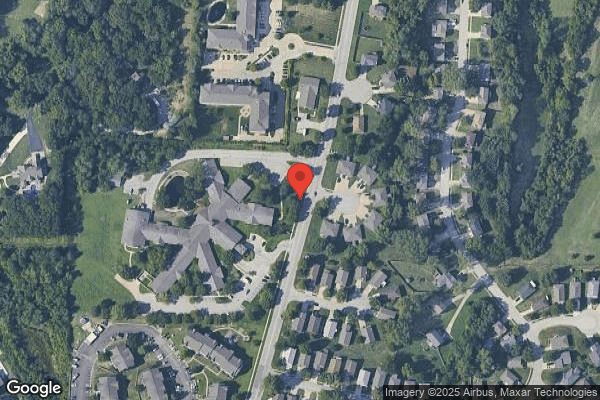
Understanding Severity Codes (click to expand)
Life-Threatening (Immediate Jeopardy)
J - Isolated K - Pattern L - Widespread
Actual Harm
G - Isolated H - Pattern I - Widespread
Potential for Harm
D - Isolated E - Pattern F - Widespread
No Harm (Minor)
A - Isolated B - Pattern C - Widespread

Questions to Ask on Your Visit

  • "What changes have you made since the serious inspection findings?"
  • "Why is there high staff turnover? How do you retain staff?"
  • "Can I speak with families of current residents?"
  • "What's your RN coverage like on weekends and overnight?"

Our Honest Assessment

Strengths
  • • Licensed and certified facility. Meets minimum state requirements.
Concerns
  • • Multiple safety concerns identified: 3 life-threatening violation(s), 2 harm violation(s), $135,669 in fines, Payment denial on record. Review inspection reports carefully.
  • • 57 deficiencies on record, including 3 critical (life-threatening) violations. These warrant careful review before choosing this facility.
  • • $135,669 in fines. Extremely high, among the most fined facilities in Missouri. Major compliance failures.
  • • Grade F (0/100). Below average facility with significant concerns.
Bottom line: This facility has 3 Immediate Jeopardy findings. Serious concerns require careful evaluation.

About This Facility

What is Rehabilitation Center Of Independence, The's CMS Rating?

CMS assigns REHABILITATION CENTER OF INDEPENDENCE, THE an overall rating of 2 out of 5 stars, which is considered below average nationally. Within Missouri, this rating places the facility higher than 0% of the state's 100 nursing homes. A rating at this level reflects concerns identified through health inspections, staffing assessments, or quality measures that families should carefully consider.

How is Rehabilitation Center Of Independence, The Staffed?

CMS rates REHABILITATION CENTER OF INDEPENDENCE, THE's staffing level at 1 out of 5 stars, which is much below average compared to other nursing homes. Staff turnover is 69%, which is 23 percentage points above the Missouri average of 46%. High turnover can affect care consistency as new staff learn residents' individual needs. RN turnover specifically is 60%, which is notably high. RNs provide skilled clinical oversight, so turnover in this role can affect medical care quality.

What Have Inspectors Found at Rehabilitation Center Of Independence, The?

State health inspectors documented 57 deficiencies at REHABILITATION CENTER OF INDEPENDENCE, THE during 2021 to 2025. These included: 3 Immediate Jeopardy (the most serious level, indicating potential for serious harm or death), 2 that caused actual resident harm, and 52 with potential for harm. Immediate Jeopardy findings are rare and represent the most serious regulatory concerns. They require immediate corrective action.

Who Owns and Operates Rehabilitation Center Of Independence, The?

REHABILITATION CENTER OF INDEPENDENCE, THE is owned by a for-profit company. For-profit facilities operate as businesses with obligations to shareholders or private owners. The facility is operated by EL DORADO NURSING AND REHABILITATION, a chain that manages multiple nursing homes. With 130 certified beds and approximately 116 residents (about 89% occupancy), it is a mid-sized facility located in INDEPENDENCE, Missouri.

How Does Rehabilitation Center Of Independence, The Compare to Other Missouri Nursing Homes?

Compared to the 100 nursing homes in Missouri, REHABILITATION CENTER OF INDEPENDENCE, THE's overall rating (2 stars) is below the state average of 2.5, staff turnover (69%) is significantly higher than the state average of 46%, and health inspection rating (2 stars) is below the national benchmark.

What Should Families Ask When Visiting Rehabilitation Center Of Independence, The?

Based on this facility's data, families visiting should ask: "What changes have been made since the serious inspection findings, and how are you preventing similar issues?" "How do you ensure continuity of care given staff turnover, and what is your staff retention strategy?" "Can you walk me through typical staffing levels on day, evening, and night shifts?" "Can I visit during a mealtime to observe dining assistance and food quality?" These questions are particularly relevant given the facility's Immediate Jeopardy citations, the facility's high staff turnover rate, and the below-average staffing rating.

Is Rehabilitation Center Of Independence, The Safe?

Based on CMS inspection data, REHABILITATION CENTER OF INDEPENDENCE, THE has documented safety concerns. Inspectors have issued 3 Immediate Jeopardy citations (the most serious violation level indicating risk of serious injury or death). The facility has a 2-star overall rating and ranks #100 of 100 nursing homes in Missouri. Families considering this facility should ask detailed questions about what corrective actions have been taken since these incidents.

Do Nurses at Rehabilitation Center Of Independence, The Stick Around?

Staff turnover at REHABILITATION CENTER OF INDEPENDENCE, THE is high. At 69%, the facility is 23 percentage points above the Missouri average of 46%. Registered Nurse turnover is particularly concerning at 60%. RNs handle complex medical decisions and coordinate care — frequent RN changes can directly impact care quality. High turnover means new staff may not know residents' individual needs, medications, or preferences. It can also be disorienting for residents, especially those with dementia who rely on familiar faces. Families should ask: What is causing the turnover? What retention programs are in place? How do you ensure care continuity during staff transitions?

Was Rehabilitation Center Of Independence, The Ever Fined?

REHABILITATION CENTER OF INDEPENDENCE, THE has been fined $135,669 across 2 penalty actions. This is 3.9x the Missouri average of $34,436. Fines at this level are uncommon and typically indicate a pattern of serious deficiencies, repeated violations, or failure to correct problems promptly. CMS reserves penalties of this magnitude for facilities that pose significant, documented risk to resident health or safety. Families should request specific documentation of what issues led to these fines and what systemic changes have been implemented.

Is Rehabilitation Center Of Independence, The on Any Federal Watch List?

REHABILITATION CENTER OF INDEPENDENCE, THE is not on any federal watch list. The most significant is the Special Focus Facility (SFF) program, which identifies the bottom 1% of nursing homes nationally based on persistent, serious quality problems. Not being on this list means the facility has avoided the pattern of deficiencies that triggers enhanced federal oversight. This is a positive indicator, though families should still review the facility's inspection history directly.