TIFFANY SPRINGS REHABILITATION & HEALTH CARE CENTE

9191 N AMBASSADOR DRIVE, KANSAS CITY, MO 64154 (816) 741-5570
For profit - Limited Liability company 120 Beds TUTERA SENIOR LIVING & HEALTH CARE Data: November 2025 2 Immediate Jeopardy citations
Trust Grade
6/100
#309 of 479 in MO
Last Inspection: October 2024

Within standard 12-15 month inspection cycle. Federal law requires annual inspections.

Overview

Tiffany Springs Rehabilitation & Health Care Center has received a Trust Grade of F, indicating significant concerns about its care quality. It ranks #309 out of 479 facilities in Missouri, placing it in the bottom half of the state, but it is #2 out of 3 in Platte County, meaning only one local option is rated higher. The facility is reportedly improving, with issues decreasing from 17 in 2024 to just 1 in 2025. However, staffing is a weakness, with a 65% turnover rate, which is average but still concerning as continuity of care may be affected. Additionally, the facility has incurred $47,807 in fines, which is higher than 77% of Missouri facilities, suggesting ongoing compliance problems. Specific incidents include a critical failure to perform CPR on a resident who was found unresponsive and a serious case of physical abuse by a staff member towards two residents. Furthermore, the facility failed to provide timely lab testing for residents, which resulted in serious health issues, including one resident going without necessary medication for 14 days. While there are some improvements and average RN coverage, the facility has significant weaknesses that families should consider when researching care options.

Trust Score
F
6/100
In Missouri
#309/479
Bottom 36%
Safety Record
High Risk
Review needed
Inspections
Getting Better
17 → 1 violations
Staff Stability
⚠ Watch
65% turnover. Above average. Higher turnover means staff may not know residents' routines.
Penalties
⚠ Watch
$47,807 in fines. Higher than 93% of Missouri facilities. Major compliance failures.
Skilled Nurses
⚠ Watch
Each resident gets only 25 minutes of Registered Nurse (RN) attention daily — below average for Missouri. Fewer RN minutes means fewer trained eyes watching for problems.
Violations
⚠ Watch
51 deficiencies on record. Higher than average. Multiple issues found across inspections.
★★☆☆☆
2.0
Overall Rating
★★☆☆☆
2.0
Staff Levels
★★★☆☆
3.0
Care Quality
★★☆☆☆
2.0
Inspection Score
Stable
2024: 17 issues
2025: 1 issues

The Good

  • Full Sprinkler Coverage · Fire safety systems throughout facility
  • No fines on record

Facility shows strength in fire safety.

The Bad

2-Star Overall Rating

Near Missouri average (2.5)

Below average - review inspection findings carefully

Staff Turnover: 65%

19pts above Missouri avg (46%)

Frequent staff changes - ask about care continuity

Federal Fines: $47,807

Above median ($33,413)

Moderate penalties - review what triggered them

Chain: TUTERA SENIOR LIVING & HEALTH CARE

Part of a multi-facility chain

Ask about local staffing decisions and management

Staff turnover is elevated (65%)

17 points above Missouri average of 48%

The Ugly 51 deficiencies on record

2 life-threatening 2 actual harm
Sept 2025 1 deficiency
CONCERN (D) 📢 Someone Reported This

A family member, employee, or ombudsman was alarmed enough to file a formal complaint

Potential for Harm - no one hurt, but risky conditions existed

Deficiency F0678 (Tag F0678)

Could have caused harm · This affected 1 resident

**NOTE- TERMS IN BRACKETS HAVE BEEN EDITED TO PROTECT CONFIDENTIALITY** Based on interviews and record review the facility failed to honor a resident's choice for a Do Not Resuscitate (DNR) advanced d...

Read full inspector narrative →
**NOTE- TERMS IN BRACKETS HAVE BEEN EDITED TO PROTECT CONFIDENTIALITY** Based on interviews and record review the facility failed to honor a resident's choice for a Do Not Resuscitate (DNR) advanced directive when the facility staff performed Cardiopulmonary Resuscitation (CPR), an emergency lifesaving procedure performed when the heart stops beating, and notified EMS (Emergency Medical Services) to complete all life saving measures because the facility failed to ensure the DNR had been entered into the resident's physician orders and medical record accurately. The facility census was 108.On [DATE], the Administrator was notified of the past noncompliance incident which occurred on [DATE]. On [DATE], facility administration was notified of the incident, an investigation immediately began, and corrective actions were implemented to include:- 100% audit all current residents for proper code status orders and advance directives;- All nursing staff educated on advance directive policy including: * All residents should have an advance directive order in place; * All residents advance directive status audited by social services weekly and sent to clinical leadership; * Night nurses will print code status order listing nightly and ensure all residents have code status, comparing to census and place on the emergency supply crash cart; *If a resident is found to not have a code status in place review miscellaneous under advance directive for Do Not Resuscitate (DNR- No life saving measures), review for completion, enter code status. Notify clinical supervisor;- Education will continue with all new licensed staff prior to working their next scheduled shift;- Director of Nursing (DON) or designee will review code status audit completed by social services weekly for eight weeks to ensure consistency;- DON or designee will audit emergency crash carts three times weekly for code status audit reports being ran nightly by nurses for eight weeks;- Administrator or designee will attend clinical rounds and ensure code status reports are being reviewed two times weekly for eight weeks;- Quality Assurance and Performance Improvement (QAPI) meeting was immediately held with the medical director on [DATE];- DON or designee will audit daily staffing assignments to review that one Basic Life Support (BLS) for healthcare providers Cardiopulmonary Resuscitation (CPR- All life saving measures) certified staff member was scheduled every shift. This will occur Monday through Friday for the next 60 days to ensure consistency;- DON or designee will audit all van transports to review that one BLS for healthcare providers CPR certified staff member was present during transports for full code residents. This will occur Monday through Friday for the next 60 days;- Any deficient practice will be corrected immediately. Patterns or trends will be reported to Quality Assurance (QA) Committee for further recommendations and follow up. The non-compliance was corrected at the time of the onsite visit on [DATE].Review of the facility's Advanced Directive Policy, dated [DATE], showed:- Prior to or upon admission of a resident, the Social Services Director (SSD) or designee will inquire of the resident, and/or his/her representative, about the existence of any written advance directives;- Information about whether or not the resident has executed an advance directive shall be placed in the medical record;- The plan of care for each resident will be consistent with his or her documented treatment preferences and/or advance directive;- Do Not Resuscitate indicates that, in case of respiratory or cardiac failure, the resident, legal guardian, health care proxy, or representative has directed that no CPR or other life-sustaining treatments or methods are to be used;- Staff will assist the resident or representative to make changes to advanced directives in accordance with state law. Changes and/or revocations will be added to the clinical record. The care plan will be updated to reflect the change.Review of the facility's Cardiopulmonary Resuscitation Policy, dated February 2025, showed:- If a resident is found unresponsive and not breathing normally, a clinical staff member will verify code status using the medical record;- If the resident is full code, per the medical record, a staff member that is certified in CPR will initiate CPR;- If the resident is DNR, per the medical record, notify the attending provider;- Discuss information on advance directives to each resident/representative upon admission and at least quarterly in care conference.1.Review of Resident #1's care plan, revised [DATE], showed:- [DATE] Code Status: DNR; - Ensure resident's wishes are honored in regard to any Advanced Care Directive;- Resident's wishes for end-of-life care will be honored; The resident was on hospice services;- The resident is dependent on staff for activities of daily living, cognitive stimulation, social interaction, and transfers. Review of the resident's Quarterly Minimum Data Set (MDS), a federally mandated assessment instrument completed by facility staff, dated [DATE], showed:- Cognitive skills intact;- Dependent on staff for all cares;- Diagnoses included: lung cancer and depression.Review of the resident's medical record on [DATE] showed:- On [DATE] a DNR was signed by resident and uploaded to miscellaneous section in record;- On [DATE] at 1:03 P.M. the Physician Order Sheet showed Full Code discontinued but the DNR order or notification of code status change was not entered;- On [DATE] at 4:39 A.M. - LPN B's progress note entered on 3:35 A.M. stated: Certified Nursing Assistants (CNA's) went into change the resident. They rolled resident to change them when the resident stopped breathing. LPN B ran to see if the resident was a full code. Resident was a full code so LPN B called 911, then began CPR on the resident. CNA A called the on-call supervisor to notify them of the situation. At 3:50 A.M. LPN B also notified hospice that the resident had stopped breathing. At 4:00 A.M. the ambulance team arrived and took over CPR/intubation on the resident. At 4:08 A.M. LPN B called the family member and notified them that the resident had stopped breathing and the ambulance was here providing CPR measures to the resident. At 4:35 A.M. the ambulance team announced the time of death. At 4:54 A.M. hospice arrived and updated the police; - On [DATE] at 5:02 A.M. the Assistant Director of Nursing (ADON) arrived at the facility around 4:30 A.M. EMS called the code at 4:35 A.M. The resident made presentable for family;- On [DATE] at 7:29 A.M. LPN B documented the resident's body was released to funeral home. Family present at the bedside;- admission record showed no advance directive listed;- The electronic medical record banner with the resident's information did not indicate the resident was a DNR.During an interview on [DATE] at 11:05 A.M., LPN A said:- Nursing staff should always check a resident's code status;- There should be an order in the resident's chart, it should be notated on the banner, and the nurse could also validate the code status in the miscellaneous section of a resident's medical record;- Clinical nursing staff review code status changes;- Social Services upload the code status changes then nursing changes the orders once uploaded into the chart;- The facility had updated the policy since the incident, to ensure night shift nurses check code statuses;- Social services does a weekly audit on code statuses, and nursing staff review in clinical meetings. During an interview on [DATE] at 11:48 A.M., FNP A (Family Nurse Practitioner) said:- She was upset the incident had occurred since resident had signed the DNR on the 26th, coded over the weekend, and that the information hadn't been updated for quick access by nursing;- She was disappointed for the resident and did not want them to go through that. It had taken a lot to get the resident to sign the DNR because of anxiety, but eventually came around and signed it. During an interview on [DATE] at 12:20 P.M., LPN B said:- To identify a resident as having a DNR code status, it would usually be on the computer and was not for this resident;- Nursing staff would also print a roster with code statuses and place in folder on crash cart located in the hallway, but it was not there;- The roster that was available didn't list the resident, so staff didn't know the resident's current code status;- He/She had called hospice to check the code status and was told the hospice didn't have a record of the resident having a DNR and he/she had to perform CPR;- He/She had called 911 and began CPR;- He/She was educated that he/she should have checked the miscellaneous section to see the uploaded DNR;- He/She had taken the paper on the crash cart and printed a new one that night and the resident wasn't listed as DNR;During an interview on [DATE] at 12:26 P.M CNA A said:- A resident's Code Status should be on the computer, in the heading or on the care plan;- If a resident stopped breathing he/she would get the charge nurse right away and the charge nurse would direct from there. During an interview on [DATE] at 12:32 P.M., CNA B said:- To check a resident for DNR status we would look on the computer under the resident's name;- If a resident's not breathing he/she would go get the nurse and they would handle it from there. During an interview on [DATE] at 1:00 P.M., the DON said:- Regarding the resident's DNR not being readily found, social services had gotten the DNR order and it was given to the nurse to change from full code to DNR. Full code was removed but the nurse said he/she got interrupted and didn't finish entering it;- The procedure for updating the code status involved an email to DON, Administrator, SSD, and ADON when code status changes;- A report sheet with code statuses is printed out and put on the crash cart and the nurses can also check the miscellaneous section in a resident's record for the DNR;- The facility had training the next day to address the incident and proper procedures with all the nurses;- The code status changes will be sent via emails from SSD to clinical staff, then once DNR is entered properly we email back to the chain to verify the change;- Night nurses print out the code status report then verify the number of residents versus the number of codes statuses we have;- The nursing staff are all aware now about this procedure as well as about checking in the miscellaneous section for the uploaded DNR. During an interview on [DATE] at 1:13 P.M., SSD said:- Regarding the incident, the social services assistant had sent an email out to nursing to change the code status after we had received the signed DNR from the resident and he/she was not sure what happened after that;- The change in code status updating had been put into place to ensure it doesn't happen again and she will check to make sure the code statuses are changed when asked and that day, before leaving she will audit to make sure it had been entered correctly.During an interview on [DATE] at 9:30 A.M., the Administrator said:- She had been first made aware of the incident on [DATE]. The on call nurse had called and told her a resident had coded, they performed CPR, and after checking the resident record had noted a valid DNR had been uploaded in the computer but had not been entered into the physician orders and the code status wasn't on the record banner;- She immediately performed an audit on every resident to ensure code status had been entered and was listed properly on the banner;- She then started education with the nurses to ensure they knew where to find the code status, including checking in the miscellaneous section for the uploaded documents;- Education given with night nurses to verify code status versus the number of residents to ensure all are accounted for properly;- The plan going forward included educating all the nurses, including any possible agency nurses, on making sure DNR orders entered, checked, and they know where to locate documentation;- She would also will be monitoring and sitting in on clinical meetings;- If there is a change in code status the SSD sends an email to everyone on the clinical team to ensure the change is entered and we talk about the changes in nursing clinical meetings;- SSD does a code audit every week to ensure code statuses are entered into the records properly;- These procedures are ongoing;- The medical director had been notified and was satisfied with all we had implemented.Intake #2604470
Dec 2024 2 deficiencies 1 Harm
SERIOUS (G) 📢 Someone Reported This

A family member, employee, or ombudsman was alarmed enough to file a formal complaint

Actual Harm - a resident was hurt due to facility failures

Quality of Care (Tag F0684)

A resident was harmed · This affected 1 resident

**NOTE- TERMS IN BRACKETS HAVE BEEN EDITED TO PROTECT CONFIDENTIALITY** Based on observation, interview and record review, the facility failed to ensure three residents (Resident #1, #2, and #5) recei...

Read full inspector narrative →
**NOTE- TERMS IN BRACKETS HAVE BEEN EDITED TO PROTECT CONFIDENTIALITY** Based on observation, interview and record review, the facility failed to ensure three residents (Resident #1, #2, and #5) received treatment and care in accordance with professional standards of practice when the facility failed to provide timely lab testing with results. Two residents (Resident #2 & #5) were admitted to the hospital with septic shock. The facility also failed to obtain lab testing for one resident (Resident #1) who was without his/her psychotropic medication for fourteen days when the pharmacy would not provide the medication without lab results. The facility also failed to follow physician's orders for the resident when they did not administer psychotropic medication. The sample size was six residents. The facility census was 111. A policy regarding professional standards of care was requested but not provided. Review of the laboratory services agreement, dated 8/1/24, showed: -Lab will travel to location to draw and/or collect patient specimens for duly ordered tests and will transport the specimens to one of the laboratories for testing. -Requisition procedures: -Online: all orders will be submitted via the online order porter for order entry and test results. -Written requisitions: Facility shall use laboratories pre-printed requisition form which must be properly completed by facility and delivered to the laboratory representative by hand at the time of specimen collection. -Reporting procedures: laboratory shall make test results available to facility via the online order portal. Review of facility policy, titled Test Results Notification, dated 12/2024, showed: -Results of laboratory, radiological, and diagnostic tests shall be reported to the facility. The medical practitioner shall be notified of the results. -The medical practitioner shall mark labs as reviewed in the electronic health record. -Director of Nursing or their designee will review results of laboratory, radiological, and diagnostic tests daily. -Any lab result not marked as reviewed by the medical practitioner will be called to the practitioner. Documentation of the notification will be done in the electronic health record. -All other radiological and diagnostic test results will be called to the practitioner. Documentation of the notification will be done in the electronic health record. 1. Review of Resident #2's Quarterly Minimum Data Set (MDS), a federally mandated assessment tool completed by facility staff, dated 12/13/24, showed: -He/She had severe cognitive impairment; -Total care of all activities of daily living; -Diagnoses included: Alzheimer's disease with late onset (a neurodegenerative disease that affected the brain and caused memory and language problems) dementia, anxiety disorder, depression, insomnia due to other mental disorder, and palliative care (a specialized approach to medical care that focuses on improving the quality of life for people with serious illness). Review of the resident's care plan, revised 12/9/24, showed: -He/She received end of life hospice services; -He/She was at risk for septicemia (a life threatening condition where bacteria or other microorganisms enter the bloodstream and spread throughout the body) and will be minimized and prevented via prompt recognition and treatment symptoms of urinary tract infection (UTI) through review date; -Monitor and document for signs and symptoms of UTI: pain, burning, blood tinged urine, cloudiness, no output, deepening of urine color, increased pulse, increased temperature, urinary frequency, foul smelling urine, fever, chills, altered mental status, change in behavior, change in eating patterns; -He/She was on antibiotic therapy, macrobid until 11/18/24 due to UTI; -Administer antibiotics as ordered; -He/She had communication problem due to hearing deficit and cognitive decline; -Monitor, document for physical or nonverbal indicators of discomfort or distress and follow up as needed. Review of the hospice physician's order showed: -11/12/24 at 2:01 P.M., patient showed signs of UTI - delirium, low grade fever, restless and stated he/she hurt and burns in his/her genital area, the physician ordered macrobid 100 mg twice daily for 5 days; -11/22/24 at 2:15 P.M., patient had persistent diarrhea, the physician ordered a TSH (thyroid-stimulating hormone) test (a test that measures thyroid-stimulating hormone in your blood) and C-diff (clostridioides difficile) (a test that measures a bacterium that can cause diarrhea, colitis, and other intestinal conditions). Review of the facility hospice book showed: -On 11/22/24, hand written note from nurse showed he/she provided facility new orders for C-diff and TSH; -On 11/26/24, hand written note from nurse showed he/she provided facility new order for KUB (kidney, ureter, and bladder (KUB) X-ray) to rule out obstruction; -On 12/3/24, note showed provided facility hand written orders on third party form. Review of lab requisition standing order log from 11/1/24-12/30/24, showed no orders on the requisition log for the resident. Review of the resident's progress notes, dated 12/1/24-12/30/24, showed: -On 12/3/24, Assistant Director of Nursing (ADON) wrote resident had been screaming since yesterday and yelling out and had been incontinent of urine several times; -On 12/18/24, Licensed Practical Nurse (LPN) A wrote he/she spoke to hospice nurse who stated she ordered labs to be completed in November and they were not carried out, so nurse entered lab as they had been ordered. -On 12/22/24, Certified Medication Technician (CMT) B heard resident yelling and found the resident on the floor wedged between the nightstand and side of his/her bed at 7:40 P.M.; -On 12/23/24, ADON wrote alerted of resident's swelling to face. He/She assessed resident and found resident to have significant swelling redness, warmth to right side of face and face was firm to touch. Resident was observed leaning forward in Broda chair moaning. Notified hospice and hospice nurse called charged nurse stating the facility could send the resident to hospital. Charge nurse notified him/her, and he/she contacted nurse practitioner (NP). NP ordered radiographic images (xrays) and to start resident on doxycycline (antibiotic used for bacterial infections) 100 mg twice daily for seven days. Xray orders were entered and physician rounded on resident during the xrays. -On 12/23/24, Physician wrote saw resident after being requested by nursing due to resident having a fall overnight. Facility staff think resident landed on their face first and possibly more on right side. Patient observed bent forward in Broda chair all night. Hospice was notified and instructed facility to place resident in common area. On call was notified and instructed to be sent to hospital. Resident observed yelling help repeatedly. Resident was difficult to reposition in reclining position for full physical, but face had extensive edema and right eye edematous and shut. Nurse indicated they had given resident morphine twice during morning. The xray tech came to evaluate and it took three people to hold resident in reclined position in order to obtain plain films of face. He/She reviewed three views of x-ray at patient's side, but was difficult to study due to movement. He/She saw a possible nasal bone fracture which could have contributed to resident's facial swelling. Discussed giving ativan and morphine together at resident's next dose and reposition. He/She attempted to contact hospice nurse to discuss, but could not get through so evaluated resident independently. -On 12/23/24, ADON wrote resident sent to hospital per hospice; -On 12/23/24, ADON wrote resident had UTI and the hospital was going to start resident on a round (treatment of) of IV antibiotics. He/She spoke to resident's representative and representative shared his/her concern with the amount of UTIs resident had since last hospitalization in September. He/She expressed concern that antibiotic was not doing anything for resident's UTI. -On 12/26/24, Director of Nursing (DON) wrote resident continued hospitalization, receiving IV antibiotics for UTI. Review of hospital medical record, dated 12/27/24, showed: -Resident was admitted to hospital on 12/23 with altered mental status, found to be septic (blood infection), pneumonia, MSSA bacteremia (methicillin-susceptible staphylococcus aureus) (a type of bacteria that is sensitive to antibiotic methicillin), and a UTI; -Hospital labs showed on 12/23/24 at 12:36 P.M. that his/her white blood count (WBC) was 37.21 (above a normal white blood count range is 4.5-11.0 in adults); -He/She was treated with IV antibiotics, ancef (cefazolin) (an antibiotic used to treat bacterial infections); -Anticipated discharge from the hospital was 12/31/24. During an interview on 12/29/24 at 9:16 A.M., the resident's representative said: -He/She told facility and hospice three weeks ago the resident probably had a UTI due to his/her change in mental status of being more foggy; -Hospice staff reported they ordered a test for a urinalysis (UA) three weeks before the facility put lab orders in; -The hospice case worker reported to the resident's representative the hospice orders had not been carried out by the facility. -Now Resident #2 was hospitalized with an infection in his/her blood, UTI, and pneumonia; -The hospital had to place the resident on an antibiotic and stated it was going to take three to six weeks to treat the infection in his/her blood; -The hospital stated they may have to put a PICC line (a long, flexible tube that is inserted into a vein in the arm or neck and threaded into a large vein above the heart) in Resident #2. During an interview on 12/30/24 at 3:54 A.M., Certified Nurse Aide (CNA) A said: -He/She reported to the nurse a change in condition with the resident when his/her speech became unclear and he/she had a different look in the face; -He/She usually had clear speech; -He/She noticed a change in condition on Saturday 12/21/24, the same day resident fell out of his/her bed; -He/She was now in the hospital with a UTI. During an interview on 12/29/24 at 4:01 A.M., Licensed Practical Nurse (LPN) A said: -He/She contacted the hospice nurse one day about the resident; -During a call with the hospice nurse, he/she wanted to know the results of the resident's labs; -He/She could not locate the lab orders or that the labs were ever entered into the electronic medical system; -He/She found orders written in the hospice book; -During the last two weeks the resident's yelling and restlessness had increased significantly; -The resident's family member said when the resident got like this, it was because they usually had a UTI; -A UA was completed a month ago, but they had still not received the results from the lab; -The resident was hospitalized for a UTI and was septic. During an interview on 12/31/24 at 12:36 P.M., the ADON said: -Hospice had collected the resident's urine around 12/23/24; -The UA was ordered 12/23/24 at the same time the KUB was ordered for the resident; -The requested lab was completed before the resident went to the hospital; -The results were never received for these labs; -Hospice staff did not have access to facility electronic medical records or the laboratory results. During an interview on 12/31/24 at 2:33 P.M., the Hospice Registered Nurse (RN) Case Manager, said: -There were several lab orders that he/she had written and provided to a facility nurse and wrote in the resident's hospice binder; -He/She would ask for results and the nurse on duty would not have access to the lab system to provide the results; -He/She requested the UA on 11/12/24 and started empirically (by means of observation) treating the resident due to a low grade fever and restlessness; -He/She placed a request for TSH and second request for C-diff on 11/22/24; He/She had ordered the same testing in October, but the labs had not been done; -He/She would write new orders down on the facility form that was titled facility's third party and that form was handed to the facility charge nurse with any new orders he/she provided the facility with; -He/She made C-Diff lab request on 11/22/24; -He/She ordered TSH and C-Diff on 11/26/24; -He/She never received the results for the TSH or the C-Diff; -He/She did not have access to the facility electronic medical record system or the lab system records. 2. Review of Resident #5's Discharge MDS, dated [DATE], showed: -discharged to short-term general hospital; -Return anticipated. Review of Resident #5's entry tracking record MDS, dated [DATE], showed he/she entered from short-term general hospital stay. Review of Resident #5's admission MDS, dated [DATE], showed: -He/She was cognitively intact; -He/She had clear speech, able to make self-understood and understand others; -He/She was dependent in a wheelchair; -He/She was depending for toileting hygiene; -Diagnosis included UTI, pneumonia (an infection of the lungs), paraplegia (condition resulting in loss of muscle function and sensation in the lower half of the body), sepsis (a life-threatening medical emergency that required immediate medical care), and bacteremia (bacteria in blood stream). Review of the resident's care plan, revised 12/24/24, showed: -Monitor and document for signs and symptoms of UTI: pain, burning, blood tinged urine, cloudiness, no output, deepening of urine color, increased pulse, increased temperature, urinary frequency, foul smelling urine, fever, chills, altered mental status, change in behavior, change in eating patterns; -He/She had hypothyroidism; -Obtain and monitor lab/diagnostic work as ordered. Report results to medical doctor and follow up as indicated; -He/She was on antibiotic therapy-sepsis until 1/29/24; -Administer medications as ordered. Review of lab requisition standing order log from 11/1/24-12/31/24, showed: -On 11/22/24, UA with urine culture was ordered, a note was made that it was not ready by the phlebotomist; -On 11/27/24, UA was picked up and signed for by phlebotomist; -On 12/4/24, UA with urine culture, signed by phlebotomist with note that it was not ready. Review of laboratory reports showed: -On 11/26/24, a UA was collected, it was reported 12/3/24 a problem with sample integrity; -On 12/5/24, a UA was collected and was reported on 12/9/24 report was 5 days after specimen collection. During an interview on 12/31/24 at 11:33 A.M., NP B said: -The resident and his/her spouse came to him/her two weeks before going to the hospital and indicated he/she had foul smelling urine; . -The resident requested a UA so they could ensure they did not have a bladder infection; -He/She developed a plan with facility staff in order to complete straight catheter specimen collection due to complexity of resident's paraplegia and their inability to retain urine during transfers via mechanical lift; -The specimen was collected and something happened with the lab where the specimen was not labeled correctly and the specimen was not processed; -A week and a half later he/she still did not have the lab results; -The resident was hospitalized [DATE]-[DATE] for UTI with sepsis. -Every time the resident had a UTI he/she would go septic and go to hospital; -He/She ended up becoming septic and was hospitalized again; -He/She was currently receiving intravenous line (IV) antibiotics in the hospital. During an interview on 12/31/24 at 12:36 P.M., the ADON said: -The resident could turn septic really quickly; -The resident was sent to hospital before his/her UA results were received; -It can almost be too late by the time the facility collects the UA specimen and results were received from the lab; -He/She was unaware of any delay in collection for this resident's UA samples. 3. Review of Resident #1's Quarterly MDS, dated [DATE], showed: -He/She was cognitively intact; -He/She had clear speech, was able to make self-understood and understand others; -Diagnoses included: Schizoaffective disorder (a mental health condition that combines symptoms of schizophrenia and a mood disorder), overactive bladder, need for assistance with personal care, personality disorder, anxiety disorder (a mental health condition characterized by excessive worry, fear, and nervousness that can interfere with daily life), depression, and bipolar disorder (a chronic mood disorder that causes intense shifts in mood, energy levels, and behavior). Review of the resident's care plan, revised 12/18/24, showed: -He/She had depression, anxiety, bipolar, and schizoaffective disorder; -Clozapine (a medication used to treat schizophrenia) treatment had caused severe neutropenia, defined as an absolute neutrophil count (ANC) (a blood test that measures the number of neutrophils in the blood) less than 500/mm3. Severe neutropenia can lead to serious infection and death. Prior to initiating treatment, a baseline ANC must be at least 1,500/mm3 for the general population and must be at least 1,000/mm3 for patients with documented benign ethnic neutropenia (BEN). During treatment, patients must have regular ANC monitoring. Advise patients to immediately report symptoms consistent with severe neutropenia or infection (fever, weakness, lethargy, sore throat). -Because of risk of severe neutropenia, clozapine is available only through restricted program under a risk evaluation mitigation strategy called Clozapine REMS program. -Administer medications as ordered. Monitor/document for side effects and effectiveness. -Monitor/document/report to NURSE/MD signs and symptoms of depression, including: hopelessness, anxiety, sadness, insomnia, anorexia, verbalizing, negative statements, repetitive anxious or health-related complaints, tearfulness. Review of physician's orders, dated 12/30/24, showed: -Ordered 10/11/23, clozapine oral tablet 50 mg tablet, give 1 tablet by mouth daily at bedtime; -Ordered 10/12/23, clozapine oral tablet 25 mg, give 1 tablet by mouth one time a day for schizoaffective disorder; -Ordered 12/17/24, weekly complete blood count with differential (CBCD) lab for clozapine. Review of the resident's electronic progress notes, dated 12/1/24-12/30/24, showed: -On 12/17/24, CMT B wrote, clozapine oral tablet 50 mg, give 1 tablet by mouth at bedtime for schizoaffective disorder, medication was not in stock. Pharmacy was waiting on labs. The ADON was aware; -On 12/17/24, CMT A wrote, clozapine oral tablet 25 mg, give 1 tablet by mouth one time a day for schizoaffective disorder, waiting on pharmacy to deliver medication, charge nurse and unit manager aware; -On 12/18/24, CMT A wrote, clozapine oral tablet 25 mg, give 1 tablet by mouth one time a day for schizoaffective disorder, waiting for lab to draw blood, then needed to fax pharmacy results. Charge nurse and unit manager notified; -On 12/18/24, CMT A wrote, clozapine oral tablet 25 mg, give 1 tablet by mouth one time a day for schizoaffective disorder, medication unavailable, waiting for lab results to send to pharmacy, charge nurse, unit manager, and medical doctor aware; -On 12/19/24, CMT B wrote, clozapine oral tablet 50 mg, give 1 tablet by mouth at bedtime for schizoaffective disorder, this medication was not in stock, pharmacy is waiting for labs. The ADON was made aware; -On 12/19/24, CMT A wrote, clozapine oral tablet 25 mg, give 1 tablet by mouth one time a day for schizoaffective disorder, still waiting for lab results to fax to pharmacy; -On 12/21/24, CMT B wrote clozapine oral tablet 25 mg, give 1 tablet by mouth one time a day for schizoaffective disorder. This medication was not available until the patients' labs were give to the pharmacy, the ADON was made aware; -On 12/22/24, CMT B wrote, clozapine oral tablet 25 mg, give 1 tablet by mouth one time a day for schizoaffective disorder, this medication was not available, labs were needed; -On 12/22/24, CMT B wrote, clozapine oral tablet 50 mg, give 1 tablet by mouth at bedtime for schizoaffective disorder, this medication was not available in stock, pharmacy needed a copy of the labs; -On 12/23/24, CMT A wrote, clozapine oral tablet 25 mg, give 1 tablet by mouth one time a day for schizoaffective disorder, still waiting on pharmacy to deliver, charge nurse, unit manager, and medical doctor aware; -On 12/24/24, CMT A wrote, clozapine oral tablet 25 mg, give 1 tablet by mouth one time a day for schizoaffective disorder, waiting on lab results to fax to pharmacy, charge nurse, unit manager, and medical doctor aware; -On 12/24/24, CMT B wrote, clozapine oral tablet 50 mg, give 1 tablet by mouth at bedtime for schizoaffective disorder. This medication was not available until labs were received, the ADON is aware of this; -On 12/25/24, CMT A wrote, clozapine oral tablet 25 mg, give 1 tablet by mouth one time a day for schizoaffective disorder, still waiting for delivery from pharmacy, charge nurse, unit manager, and medical doctor aware; -On 12/25/24, CMT B wrote, clozapine oral tablet 50 mg, give 1 tablet by mouth at bedtime for schizoaffective disorder, this medication was not available until pharmacy received labs; -On 12/26/24, CMT C wrote, clozapine oral tablet 25 mg, give 1 tablet by mouth one time a day for schizoaffective disorder not available; -On 12/26/24, CMT B wrote, clozapine oral tablet 50 mg, give 1 tablet by mouth for schizoaffective disorder, this medication is not available until labs have been received; -On 12/27/24, CMT A wrote, clozapine oral tablet 25 mg, give 1 tablet by mouth one time a day for schizoaffective disorder, still waiting on pharmacy to deliver, charge nurse, unit manager, and medical doctor aware; -On 12/27/24, CMT B wrote, clozapine oral tablet 50 mg, give 1 tablet my mouth at bedtime for schizoaffective disorder. This medication was not available, until pharmacy has new labs; -On 12/28/24, CMT A wrote, clozapine oral tablet 25 mg, give 1 tablet by mouth one time a day for schizoaffective disorder, waiting on lab results, charge nurse, unit manager, and medical doctor aware; -On 12/28/24, CMT B wrote, clozapine oral tablet 50 mg, give 1 tablet my mouth at bedtime for schizoaffective, this medication was not available at this time, new labs were needed; -On 12/29/24, CMT A wrote, clozapine oral tablet 25 mg, give 1 tablet by mouth one time a day for schizoaffective disorder, still waiting on lab, charge nurse, unit manager, and medical doctor aware; -On 12/29/24, CMT B wrote clozapine oral tablet 50 mg, give 1 tablet by mouth at bedtime for schizoaffective disorder, this medication was not available at that time, the pharmacy was needing updated labs; -On 12/30/24, CMT C wrote, clozapine oral tablet 25 mg, give 1 tablet by mouth one time a day for schizoaffective disorder, not available; -On 12/30/24, CMT B wrote, clozapine oral tablet 50 mg, give 1 tablet by mouth at bedtime for schizoaffective disorder, this medication was not available, new labs were needed. Review of the lab requisition standing order log, dated 12/1/24-12/30/24, showed: -On 12/9/24 a CBC with differential was ordered, there were no initials entered by phlebotomist that these labs were obtained; -On 12/16/24 a CBC with differential was ordered, there were no initials entered by phlebotomist that these labs were obtained; -On 12/28/24 a UA with urine culture was ordered, there were no initials entered by phlebotomist that this specimen was obtained; -On 12/30/24 a CBC with differential was entered and were initialed that had been completed by phlebotomist; Review of laboratory reports, 12/1/24-12/30/24, showed: -On 12/3/24 CMP was collected and CBC with differential, and reported to the facility nursing staff on 12/4/24; -No other lab reports were available for December. During an interview on 12/30/24 at 2:29 P.M., the resident said: -He/She was experiencing itching, burning and his/her urine looked like lemonade; -He/she and needed another lab to be done; -The nurse on duty working on Friday night (12/27) was going to take urine for his/her labs to be complete, but the facility did not have any urine specimen containers; -He/She was put on ciprofloxacin (an antibiotic used to treat infections) a month ago; -He/She did not know if the facility ever received his/her lab results; -He/She had been without his/her clonazepam for two weeks; -He/She saw his/her psychiatric doctor two weeks ago and he/she had been without the medication since then; -He/She had felt more stressed, had not been slept well, had cringed his/her teeth which made his/her jaw and forehead hurt since not having his/her psychotropic medication. During an interview on 12/30/24 at 4:01 A.M., LPN A said: -The resident was to have labs completed one time weekly for psychotropic medication clozapine; -The last lab for the resident was last completed on 12/4/24; -CMT A had reported this to him/her several times; -The lab had still not come out and drawn his/her labs; -The online laboratory system showed nothing in lab reports to be viewed or pulled up for the resident. During an interview on 12/30/24 at 2:47 P.M., the DON said: -The resident had not received his/her psychotropic medications due to the lab never made it on Friday and never collected labs on the resident; -The facility notified the lab regarding the failed pick up and the physician was made aware. During an interview on 12/31/24 at 11:02 A.M., CMT A said: -The resident had been without his/her clonazepam for approximately two weeks; -He/She notified all the nurses; -The pharmacy would only send five medications at a time; -The pharmacy wanted weekly lab draws in order for staff to provide medication; -The resident's last lab draw was on 12/3/24; -The resident had been restless during the night; -He/She had not observed any other behavior changes in the resident; -The psychiatrist was notified regarding the medication; -He/She had contacted the pharmacy every day regarding the medication; -The clonazepam was not available in the facility emergency medication storage system to provide to the resident. During an interview on 12/31/24 at 12:36 P.M., the ADON said: -The NP changed his/her laboratory orders to monthly in November; -He/She talked with the pharmacy and pharmacy said the way the medication was ordered it required weekly laboratory results; -The NP changed the lab orders to weekly; -The labs were on requisition for labs to be obtained on 12/9 and 12/16, but were not drawn by the phlebotomist and there was no reason from the lab on why the requisition was left blank; it was not done. During an interview on 12/31/24 at 1:19 P.M., the Psychiatrist office manager said: -The resident was last seen on 12/16/24 in the office; -The facility had not notified the physician about any issues with the resident being able to obtain his/her clonazepam; -That call was the first time their office was made area aware of any issues with the resident not receiving the clonazepam. During an interview on 1/2/25, the Psychiatrist said: -He/She changed the lab order to be completed monthly during the resident's last appointment; -He/She provided a printed lab order to the resident during his/her visit on 12/16/24; -Possible results of the resident not receiving his/her medication included mood changes, manic episodes, and a risk of psychosis. 4. During an interview on 12/30/24 at 4:01 A.M., LPN A said: -The facility had a new lab, they are supposed to pick up labs 2:00-3:00 A.M. on Mondays, Wednesday, and Friday; -If labs were ordered stat (immediately), the lab was [NAME] (late); -Each unit in the facility has a soiled utility room with a fridge and laboratory staff know to come check refrigerators if there are urine samples to be picked up. on 11/21/24 inquiring why he/she had so many UA orders at the same time. -He/She contacted the nurse practitioner about not having the lab results and if he/she should recollect the UAs; -The DON and ADON contacted him/her via text message on 11/21/24 after she put in new UA orders and wanted to know why all the orders had been entered for so many residents; -He/She notified DON/ADON that residents were still experiencing symptoms and no lab results were found. During an interview on 12/30/24 at 5:48 A.M., RN A said: -There was issues with stat lab orders as the lab did not respond as they should for stat labs. During an interview on 12/31/24 at 9:40 A.M., NP A said: -There had been a delay in treatment for residents in the facility due to issues with the laboratory company; -The delay in laboratory results had especially impacted residents with UTIs having delayed treatments, and even hospitalization. During an interview on 12/30/24 at 2:47 P.M., the DON said: -She was aware of the issues with laboratory services; -The laboratory did not always show up as scheduled; -At times the laboratory phlebotomist will show up and say they only had time to do lab draws on five residents and then leave; -The laboratory company had promised a lot of items they had not been able to commit to. -The corporate facility staff had talked to their management team multiple times; -She expected stat lab orders to take six hours or less; -There were times that stat lab orders will be made and the laboratory will say that they cannot be to the facility until Monday morning; -The facility had advised the laboratory they were willing to pay stat fees and the facility could not get the laboratory to come out even with fees; -NP A had questioned where lab results were located and would contact the laboratory and try to locate specimens; -She expected urine specimens to be picked up within 24 hours; -The facility had to start adding CBC on all UA orders or the laboratory would refuse to pick up the UA; -She did not know where some specimens were, if they had been picked up or if specimens had been thrown away; -The facility was giving the laboratory 48 hours before they would attempt to call and track down results; -There were multiple issues with locating and obtaining laboratory results; -The laboratory came to pick up this afternoon, on Mondays the laboratory was supposed to be arriving between 2-3 A.M.; -There are some dates nothing is ever picked up by the lab company. During an interview on 12/30/24 at 3:14 P.M., the Administrator said: -He/She was aware there was issues with the laboratory including issues with labs being drawn, labs being picked up, and stat labs sometimes taking longer to obtain results; -He/She expected the laboratory to take what specimens were in the refrigerators every time they were in the facility; -He/She believed the lab came to the building [NAME] days a week; -He/She was unsure on expectation of how long stat laboratories should take; -He/She was not aware of any outcomes to residents as a result of not having laboratories drawn or test results back in a timely manner. During an interview on 12/31/24 at 10:31 A.M., Laboratory Account Manager said: -The facility was to order lab work and put in the lab requisition book; -The laboratory technician would go to the facility, get the lab requisition book and then proceed to draw the patient's labs; -Stat labs are put in by the facility and the laboratory customer service was alerted and dispatch out the orders to a technician; -Stat lab orders are processed at a local hospital; -The stat lab results are faxed to the facility, but the system was not perfect and sometimes the lab had to call the hospital to get results because the hospital's patients came first over our stat labs; -UAs are put on lab requisition orders and laboratory technicians pick up the specimens; -The laboratory turn around time for results is same day or the next morning; -If the laborat
CONCERN (E) 📢 Someone Reported This

A family member, employee, or ombudsman was alarmed enough to file a formal complaint

Potential for Harm - no one hurt, but risky conditions existed

Laboratory Services (Tag F0770)

Could have caused harm · This affected multiple residents

**NOTE- TERMS IN BRACKETS HAVE BEEN EDITED TO PROTECT CONFIDENTIALITY** Based on observation, interview and record review, the facility failed to provide necessary laboratory services for residents wh...

Read full inspector narrative →
**NOTE- TERMS IN BRACKETS HAVE BEEN EDITED TO PROTECT CONFIDENTIALITY** Based on observation, interview and record review, the facility failed to provide necessary laboratory services for residents when they did not ensure residents needs were met with timely collection and reporting of laboratory results. This occurred when the facility failed to obtain lab testing for one resident (Resident #1) who was without his/her psychotropic medication for fourteen days when the pharmacy would not provide the medication without lab results. The facility also failed to ensure urine cultures for residents with potential urinary tract infections (UTI) were collected by the laboratory company, tested, and results received by the facility so the physician's could properly treat infections Residents #1, #2, #3, #4, #5, and #6 for signs and symptoms of UTI. The facility additionally failed to provide timely lab testing with results for two residents (Resident #2 & #5). The facility also failed to ensure sufficient laboratory testing supplies were available for staff, when the facility had no urine specimen containers in the building. The facility census was 111. Review of facility policy, Test Results, dated 12/2017, showed: -Results of laboratory, radiological, and diagnostic tests shall be reported to the facility. -The Medical practitioner shall be notified of the results. -The Director of Nursing Services, or nurse receiving the test results, shall be responsible for notifying the medical practitioner of such test results. Review of facility policy, Test Results Notification, dated 12/2024, showed: -Results of laboratory, radiological, and diagnostic tests shall be reported to the facility. The medical practitioner shall be notified of the results. -The medical practitioner shall mark labs as reviewed in the electronic health record. -Director of Nursing or their designee will review results of laboratory, radiological, and diagnostic tests daily -Any lab result not marked as reviewed by the medical practitioner will be called to the practitioner. Documentation of the notification will be done in the electronic health record. -All other radiological and diagnostic test results will be called to the practitioner. Documentation of the notification will be done in the electronic health record. Review of laboratory services agreement, dated 8/1/24, showed: -Lab will travel to location to draw and/or collect patient specimens for duly ordered tests and will transport the specimens to one of laboratories for testing. -Requisition procedures: -Online: all orders will be submitted via the online order porter for order entry and test results. -Written requisitions: Facility shall use laboratories pre-printed requisition form which must be properly completed by facility and delivered to the laboratory representative by hand at the time of specimen collection. -Reporting procedures: laboratory shall make test results available to facility via the online order portal. -The lab agreement did not mention responsibility of lab supplies. 1. Review of Resident #1's Quarterly Minimum Data Set (MDS), a federally mandated assessment tool completed by facility staff, dated 12/27/24, showed: -He/She was cognitively intact; -He/She had clear speech, was able to make self-understood and understand others; -Diagnoses included: Schizoaffective disorder (a mental health condition that combines symptoms of schizophrenia and a mood disorder), overactive bladder, need for assistance with personal care, personality disorder, anxiety disorder (a mental health condition characterized by excessive worry, fear, and nervousness that can interfere with daily life), depression, bipolar disorder (a chronic mood disorder that causes intense shifts in mood, energy levels, and behavior). Review of care plan, revised 12/18/24, showed: -He/She was on an antibiotic therapy for a UTI until 12/1/24; -He/She had depression, anxiety, bipolar, and schizoaffective disorder; -Clozapine (a medication used to treat schizophrenia) treatment had caused severe neutropenia, defined as an absolute neutrophil count (ANC) (a blood test that measures the number of neutrophils in the blood) less than 500/mm3. Severe neutropenia can lead to serious infection and death. Prior to initiating treatment, a baseline ANC must be at least 1,500/mm3 for the general population and must be at least 1,000/mm3 for patients with documented benign ethnic neutropenia (BEN). During treatment, patients must have regular ANC monitoring. Advise patients to immediately report symptoms consistent with severe neutropenia or infection (fever, weakness, lethargy, sore throat). -Because of risk of severe neutropenia, clozapine is available only through restricted program under a risk evaluation mitigation strategy called Clozapine REMS program. -Administer medications as ordered. Monitor/document for side effects and effectiveness. -Monitor/document/report to NURSE/MD signs and symptoms of depression, including: hopelessness, anxiety, sadness, insomnia, anorexia, verbalizing, negative statements, repetitive anxious or health-related complaints, tearfulness. Review of physician's orders, dated 12/30/24, showed: -Ordered 3/5/24, UA with complaints and symptoms of dysuria; -Ordered 3/8/24, UA with complaints and symptoms of cloudy urine or dysuria; -Ordered 5/28/24, Obtain UA with complaints and signs of burning, increase in urinary frequency; -Ordered 12/17/24, weekly complete blood count with differential (CBCD) lab for clozapine. An interview on 12/30/24 at 2:29 P.M., the Resident said: -He/She was experiencing itching, burning and needed another lab to be done; -The nurse working on Friday night was going to take urine for his/her labs to be completed but the facility did not have any urine specimen containers; -He/She was put on ciprofloxacin (an antibiotic used to treat infections) a month ago; -He/She did not know if facility ever received his/her lab results; -He/She had been without his/her clozapine for two weeks; -He/She had felt more stressed, had not been slept well, had cringed his/her teeth which made his/her jaw and forehead hurt since not having his/her psychotropic medication. Review of the resident's electronic progress notes, dated 12/1/24-12/30/24, showed: -On 12/17/24, Certified Medication Technician (CMT) B wrote, clozapine oral tablet 50 mg, give 1 tablet by mouth at bedtime for schizoaffective disorder, medication was not in stock. Pharmacy was waiting on labs. The assistant director of nursing (ADON) was aware; -On 12/17/24, CMT A wrote, clozapine oral tablet 25 mg, give 1 tablet by mouth one time a day for schizoaffective disorder, waiting on pharmacy to deliver medication, charge nurse and unit manager aware; -On 12/18/24, CMT A wrote, clozapine oral tablet 25 mg, give 1 tablet by mouth one time a day for schizoaffective disorder, waiting for lab to draw blood, then needed to fax pharmacy results. Charge nurse and unit manager notified; -On 12/18/24, CMT A wrote, clozapine oral tablet 25 mg, give 1 tablet by mouth one time a day for schizoaffective disorder, medication unavailable, waiting for lab results to send to pharmacy, charge nurse, unit manager, and medical doctor aware; -On 12/19/24, CMT B wrote, clozapine oral tablet 50 mg, give 1 tablet by mouth at bedtime for schizoaffective disorder, this medication was not in stock, pharmacy is waiting for labs. The ADON was made aware; -On 12/19/24, CMT A wrote, clozapine oral tablet 25 mg, give 1 tablet by mouth one time a day for schizoaffective disorder, still waiting for lab results to fax to pharmacy; -On 12/21/24, CMT B wrote clozapine oral tablet 25 mg, give 1 tablet by mouth one time a day for schizoaffective disorder. This medication was not available until the patients' labs were give to the pharmacy, the ADON was made aware; -On 12/22/24, CMT B wrote, clozapine oral tablet 25 mg, give 1 tablet by mouth one time a day for schizoaffective disorder, this medication was not available, labs were needed; -On 12/22/24, CMT B wrote, clozapine oral tablet 50 mg, give 1 tablet by mouth at bedtime for schizoaffective disorder, this medication was not available in stock, pharmacy needed a copy of the labs; -On 12/23/24, CMT A wrote, clozapine oral tablet 25 mg, give 1 tablet by mouth one time a day for schizoaffective disorder, still waiting on pharmacy to deliver, charge nurse, unit manager, and medical doctor aware; -On 12/24/24, CMT A wrote, clozapine oral tablet 25mg, give 1 tablet by mouth one time a day for schizoaffective disorder, waiting on lab results to fax to pharmacy .charge nurse, unit manager, and medical doctor aware; -On 12/24/24, CMT B wrote, clozapine oral tablet 50 mg, give 1 tablet by mouth at bedtime for schizoaffective disorder. This medication was not available until labs were received, the ADON is aware of this; -On 12/25/24, CMT A wrote, clozapine oral tablet 25mg, give 1 tablet by mouth one time a day for schizoaffective disorder, still waiting for delivery from pharmacy, charge nurse, unit manager, and medical doctor aware; -On 12/25/24, CMT B wrote, clozapine oral tablet 50 mg, give 1 tablet by mouth at bedtime for schizoaffective disorder, this medication was not available until pharmacy received labs; -On 12/26/24, CMT C wrote, clozapine oral tablet 25 mg, give 1 tablet by mouth one time a day for schizoaffective disorder not available; -On 12/26/24, CMT B wrote, clozapine oral tablet 50 mg, give 1 tablet by mouth for schizoaffective disorder, this medication is not available until labs have been received; -On 12/27/24, CMT A wrote, clozapine oral tablet 25 mg, give 1 tablet by mouth one time a day for schizoaffective disorder, still waiting on pharmacy to deliver, charge nurse, unit manager, and medical doctor aware; -On 12/27/24, CMT B wrote, clozapine oral tablet 50 mg, give 1 tablet my mouth at bedtime for schizoaffective disorder. This medication was not available, until pharmacy has new labs; -On 12/28/24, CMT A wrote, clozapine oral tablet 25 mg, give 1 tablet by mouth one time a day for schizoaffective disorder, waiting on lab results, charge nurse, unit manager, and medical doctor aware; -On 12/28/24, CMT B wrote, clozapine oral tablet 50 mg, give 1 tablet my mouth at bedtime for schizoaffective, this medication was not available at this time, new labs were needed; -On 12/29/24, CMT A wrote, clozapine oral tablet 25 mg, give 1 tablet by mouth one time a day for schizoaffective disorder, still waiting on lab, charge nurse, unit manager, and medical doctor aware; -On 12/29/24, CMT B wrote clozapine oral tablet 50 mg, give 1 tablet by mouth at bedtime for schizoaffective disorder, this medication was not available at that time, the pharmacy was needing updated labs; -On 12/30/24, CMT C wrote, clozapine oral tablet 25 mg, give 1 tablet by mouth one time a day for schizoaffective disorder, not available; -On 12/30/24, CMT B wrote, clozapine oral tablet 50 mg, give 1 tablet by mouth at bedtime for schizoaffective disorder, this medication was not available, new labs were needed. Review of the lab requisition standing order log, dated 12/1/24-12/30/24, showed: -On 12/3/24, Thyroid Stimulating Hormone- 3 Ultra (TSH 3-UL, a thyroid test), lipid profile with calculated (a blood test that measures the levels of various fats in the blood stream) low-density lipoprotein (LDL) (a type of cholesterol found in the blood), comprehensive metabolic panel (CMP, a routine blood test that measured 14 substances in the blood that provide information about a person's overall health), glycohemoglobin A1C (glyco-HGBA1C, a blood test that shows average blood sugar), and CBC with differential (a lab test that measures the number and types of various cells in the blood including red blood cells, white blood cells, and platelets) was ordered, the phlebotomist initialed as completed; -On 12/9/24 a CBC with differential was ordered, there were no initials entered by phlebotomist that these labs were obtained; -On 12/16/24 a CBC with differential was ordered, there were no initials entered by phlebotomist that these labs were obtained; -On 12/28/24 a UA with urine culture was ordered, there were no initials entered by phlebotomist that this specimen was obtained; -On 12/30/24 a CBC with differential was entered and were initialed that had been completed by phlebotomist. Review of laboratory reports, 12/1/24-12/30/24, showed: -On 12/3/24 CMP was collected, and reported to the facility nursing staff on 12/4/24; -No other lab reports were available for December. During an interview on 12/30/24 at 4:01 A.M., Licensed Practical Nurse (LPN) A said: -He/She collected a urinalysis for the resident on 11/21/24 because he/she was contacted by DON and unit manager on the same date inquiring why he/she had so many urinalysis orders for residents to put in system; -The Resident still had complaints today that he/she had burning pain when urinating; -The Resident told me he/she still needed a urinalysis; -The Resident was to have labs completed one time weekly for psychotropic medication clozapine; -The last lab for the Resident was last completed on 12/4/24; -CMT A had reported this to him/her several times; -The online laboratory system showed nothing in labs reports to be viewed for the resident; -LPN B reported he/she had tried to collect a urine specimen over the weekend on 12/27/24 but there were no urine specimen containers available. During an interview on 12/30/24 at 2:47 P.M., Director of Nursing (DON) said: -Resident had not received his/her psychotropic medications due to the lab never made it on Friday and never collected labs on resident; -The facility notified the lab regarding the failed pick up and the physician was made aware. During an interview on 12/31/24 at 11:02 A.M., CMT A said: -Resident had been without his/her clozapine for approximately two weeks; -He/She notified all the nurses; -The pharmacy would only send five medications at a time; -The pharmacy wanted weekly lab draws in order for staff to provide medication; -Resident's last lab draw was on 12/3/24; -Resident had been restless during the night. During an interview on 12/31/24 at 12:36 P.M., the Assistant Director of Nursing (ADON) said: -The nurse practitioner changed her laboratory orders to monthly in November; -He/She talked with the pharmacy and pharmacy said the way the medication was ordered it required a weekly laboratory results; -The nurse practitioner changed the lab orders to weekly; -The labs were to be obtained on 12/9 and 12/16 but were not drawn by the phlebotomist and there was no reason from lab on why it was not done. During an interview on 12/31/24 at 1:19 P.M., Psychiatrist office manager said: -He/She was last seen on 12/16/24 in the office; -This was the first time their office was made area aware of any issues with resident not receiving the clonazepam. During an interview on 1/2/25, the Psychiatrist said: -He/She did change the lab order to be completed monthly during resident's last appointment; -He/She provided a printed lab order to the resident during his/her visit on 12/16/24; -He/She expected mood changes, manic episodes, and a risk of psychosis if resident did not receive his/her clonazepam. 2. Review of Resident #2's Quarterly MDS, dated [DATE], showed: -He/She had severe cognitive impairment; -Total care of all activities of daily living; -Diagnoses included: Alzheimer's disease with late onset (a neurodegenerative disease that affected the brain and caused memory and language problems) dementia, anxiety disorder, depression, and palliative care (a specialized approach to medical care that focuses on improving the quality of life for people with serious illness) Review of care plan, revised 12/9/24, showed: -He/She received end of life hospice services; -He/She was at risk for septicemia (a life threatening condition where bacteria or other microorganisms enter the bloodstream and spread throughout the body) and will be minimized and prevented via prompt recognition and treatment symptoms of UTI through review date; -Monitor and document for signs and symptoms of UTI: pain, burning, blood tinged urine, cloudiness, no output, deepening of urine color, increased pulse, increased temperature, urinary frequency, foul smelling urine, fever, chills, altered mental status, change in behavior, change in eating patterns. Review of hospice physician's order showed: -11/12/24 at 2:01 P.M., resident was showing signs of UTI-delirium, low grade fever, restless and stated he/she hurt and burns in his/her genital area, physician ordered macrobid 100mg BID x 5 days. During an interview on 12/29/24 at 9:16 A.M., resident's representative said: -He/She told facility and hospice three weeks ago that resident probably had a urinary tract infection due to her change in her mental status of being more foggy; -It took three weeks to send the resident to the hospital; -Hospice staff reported that they ordered a test for a urinalysis; -Hospice told resident representative that the urinalysis was never completed when they followed up with the facility; -The hospital placed the resident on an antibiotic for three to six weeks to treat the infection in his/her blood; -The hospice case worker reported to the resident's representative that the hospice orders had not been carried out by the facility. Review of the resident's progress notes, dated 12/1/24-12/30/24, showed: -On 12/3/24, ADON wrote resident had been screaming since yesterday and yelling out and had been incontinent of urine several times; -On 12/18/24, LPN A wrote he/she spoke to hospice nurse who stated she ordered labs to be completed in November and they were not carried out, so nurse entered lab as they had been ordered; -On 12/23/24, ADON wrote resident sent to hospital per hospice; -On 12/23/24, ADON wrote resident had UTI and the hospital was going to start resident on IV antibiotics. -On 12/26/24, DON wrote resident continued hospitalization, receiving IV antibiotics for UTI. Review of lab requisition standing order log from 11/1/24-12/30/24, showed: -No orders on requisition log for resident. Review of hospital medical record, dated 12/27/24, showed: -Resident was admitted to hospital on 12/23 with altered mental status, sepsis (blood infection) with pneumonia, MSSA bacteremia (methicillin-susceptible staphylococcus aureus) (a type of bacteria that is sensitive to antibiotic methicillin); -Hospital labs showed on 12/23/24 at 12:36 P.M. that his/her white blood count (WBC) was 37.21 (above a normal white blood count range is 4.5-11.0 in adults); -He/She was treated with IV antibiotics, ancef (cefazolin) (an antibiotic used to treat bacterial infections). During an interview on 12/30/24 at 3:54 A.M., Certified Nurse Aide (CNA) A said: -He/She reported to nurse a change in condition with resident when his/her speech became unclear and had a different look in the face; -He/She noticed change in condition on Saturday, the same day resident fell out of his/her bed. During an interview on 12/29/24 at 4:01 A.M., LPN A said: -During a call with the hospice nurse he/she wanted to know the results of resident's labs; -He/She could not locate that lab orders were ever entered into electronic medical system; -He/She found orders written in the hospice book; -During last two weeks resident's yelling and restlessness had increased significant; -The resident's family member said when resident got like this it was usually a urinary tract infection; -A urinalysis was completed a month ago but still had not received the results from the lab; -Resident is hospitalized for a urinary tract infection and sepsis. During an interview on 12/31/24 at 12:36 P.M., the ADON said: -Hospice had collected residents urine around 12/23/24; -The urinalysis was ordered at same time the KUB (kidney, ureter, and bladder on 12/23/24) (a medical imaging test that used xrays to visualize organs in urinary system) was ordered for resident; -The requested lab was completed before the resident went to the hospital; -The results were never received for these labs; -Hospice staff does not have access to facility electronic medical records or the laboratory results. During an interview on 12/31/24 at 2:33 P.M., Hospice RN Case Manager, said: -There were several lab orders that he/she wrote and provided to facility nurse and wrote in the resident's hospice binder; -He/She would ask for results and the nurse on duty would not have access to the lab system; -He/She requested the UA on 11/12/24 and started empirically (by means of observation) treating resident due to low grade fever and restlessness; -He/She placed a request for TSH (a thyroid-stimulating hormone) (a blood test that can measures thyroid hormone levels) and second request for c.dff (clostridium difficile) (a test to detect the presence of C.diff bacteria and its toxins) on 11/22/24; -He/She had ordered the same testing in October but the labs had not been done; -He/She would write orders down on piece of paper and hand to the nurse via facility's third party form; -He/She made c.diff lab request on 11/22/24; -He/She ordered TSH and C.diff on 11/26/24; -He/She never obtained the results for the TSH or the C.diff; -He/She did not have access to the facility electronic medical record system or the lab system records. 3. Review of Resident #3's, Annual MDS, dated [DATE], showed: -He/She was cognitively intact; -He/She had clear speech, was able to make self-understood and understand others; -He/She required partial to moderate assistance with toileting; -Diagnoses included: Respiratory failure (a condition in which lungs were unable to effective exchange gases), and muscle weakness. Review of care plan, revised 12/16/24, showed: -He/She required a one person assist with personal hygiene; -Staff to monitor his/her lab work including potassium, sodium, blood urea nitrogen, and creatinine. During an interview on 12/30/24 at 2:32 P.M., the resident said: -He/She had a UTI and kept telling the aides and nurses about it; -It was upsetting that the nursing home staff did nothing about his/her concerns; -He/She had been experiencing cloudy urine; -Spoke with nurse practitioner who was unaware of her symptoms or concerns; -The nurse practitioner said would have staff obtain a UA; -He/She never received any test results from his/her provided specimens; -He/She received a shot of ceftriaxone for the infection. Review of electronic medical record's provider progress notes, dated 12/1/24-12/30/24, showed: -On 12/5/24, Nurse Practitioner (NP) A wrote, resident having urinary tract symptoms. A urinalysis was ordered on 12/5 for dysuria (discomfort with urination), results were pending; -On 12/11/24, NP A followed up at patient request due to on going urinary tract symptoms and strong foul urine smell. UA had been ordered 12/5, but no results were available. A UA was reordered. Started resident on AZO for symptoms and would follow up after UA and culture results. If symptoms were worse would consider empiric (treatment based on observations of symptoms) treatment but at time resident appeared stable; -On 12/27/24, NP A followed up on UTI including cloudy urine, bladder pressure, no burning. He/She would order Rocephin to empirically (by means of observation) as he/she had symptoms for prolonged period and still did not have urinalysis results. Will follow up on symptoms and UA results when they were available. Review of lab requisition standing order log, dated 12/1/24-12/30/24, showed: -On 12/5/24, basic metabolic panel including glomerular filtration rate (GFR), urinalysis (UA) (a laboratory test that examines a urine sample to detect various substances and conditions) with culture, was completed and signed by phlebotomist; -On 12/11/24, a UA with urine culture was ordered, there was no phlebotomist initials of completion; -On 12/28/24, a UA with urine culture was ordered, there was no phlebotomist initials of completion. Review of laboratory reports showed: -On 11/20/24, specimen was collected, it was reported on 12/10/24 as problem with sample integrity; -On 12/5/24, specimen was collected for Basic Metabolic panel including GFR (BMP), it was reported on 12/6/24. A urine specimen was not included in the results; -There was no laboratory reports found for the resident on 12/11/24 or 12/28/24. During an interview on 12/30/24 at 4:01 A.M., LPN A said: -Resident is having complaints of his/her urine burning pain; -He/She obtained UA on 11/21/24 for resident; -A UA on 12/10 was ordered but there were no results in lab system; -A stat UA was ordered on 12/14, but there were no lab results; -There was an order in the system to obtain a UA again on 12/27, but there were no specimen containers in facility to obtain orders; -Resident asked for another UA that morning on 12/30/24, because he/she was still experiencing burning while urinating; -He/She gave resident a medication shot, ceftriaxone also known as Rocephin (an antibiotic to treat infections), in his/her right hip on 12/27/24 for a UTI but there were still no UA results available from the laboratory; -The physician was treating resident without lab results for the UTI; -LPN B told LPN A on 12/29/24 that he/she could not do another UA on resident because the facility did not have urine specimen collection containers. During an interview on 12/31/24 at 9:40 A.M., NP A said: -He/She had ordered urinalysis on the resident three times and it had disappeared; -He/She had to empirically (by means of observation or experience) treat resident because he/she had been sick for a month and had to do something for resident. During an interview on 12/31/24 at 12:36 P.M., the ADON said: -There had been a delay in the collection of resident's UA due to collection error; Resident had accident thrown toilet paper in his/her collection hat; -He/She would not have expected it to take the facility three weeks to collect a urinalysis on the resident. 4. Review of Resident #4, Quarterly MDS, dated [DATE], showed: -He/She was cognitively intact; -He/She had clear speech, was able to make self-understood and understand others; -He/She required partial to moderate assistance with toileting hygiene; -Diagnoses included: Dementia (a condition causing cognitive impairment and difficulty with daily tasks), and diabetes (a condition resulting from too much sugar in the blood). Review of care plan, revised 8/5/24, showed: -Monitor for signs and symptoms of UTI: pain, burning, bladder infection, loss of bladder tone, deepening of urine color, increased pulse, temperature, and foul smelling urine; -Resident will maintain lab values within acceptable parameters per medical doctor through review date; -Obtain and monitor lab/diagnostic work as ordered. Report results to medical doctor and follow up as indicated; -He/She was currently on antibiotic therapy for UTI until 12/4/24; -He/She will be free from any discomfort or adverse side effects of antibiotic therapy through the review date; -Administer medications as ordered. Review of physician's orders, dated 12/30/24, showed: -Ordered 9/24/24, check UA with complaints and symptoms related to burning with urination; -Ordered 12/19/24, saccharomyces boulardii capsule 250mg, give 1 capsule by mouth twice a day probiotic chronic interstitial cystitis (also known as bladder pain syndrome) for 30 days; -Ordered 12/19/24, cranberry tablet 300mg, give 1 tablet by mouth twice a day for chronic infection for 30 days; -Ordered 12/22/24, schedule patient with urology for interstitial cystitis bladder pain. During an interview on 12/30/24 at 2:03 P.M., the Resident said: -He/She had pain from UTI; -He/She had several recent urine specimens collected; -He/She had chronic UTI's, -It currently burned and felt like hell before, during, and after urination; -He/She felt that at times nothing was being done to treat him/her; -He/She had not heard of any results regarding urinalysis. Review of electronic medical record's progress notes, dated 12/1/24-12/30/24, showed: -On 11/14/24, Physician's assistant wrote a UA had been done, and that resident reported always have a UTI and burning with urination. Recommended to check to see if resident had a UA and results and whether he/she had been placed on antibiotics; -On 12/6/24, LPN C wrote resident continued on antibiotics for urinary tract infection; -On 12/10/24, Physician's assistant wrote resident continued with burning with urination and still having urinary tract symptoms. UA is pending and waiting on results. Recommended adding AZO 2 tabs for urinary symptoms; -On 12/20/24, Nurse Practitioner A wrote resident had severe pain with urination. Had been on AZO recently, but reports little relief with that. Recommended a urology follow up. Previous labs in November showed he/she had a positive UA. Will send repeat blood work and UA prior to urology visit. Review of lab requisition standing order log, dated 11/1/24-12/30/24, showed: -On 11/11/24, a UA with culture if indicate, nurse collection, no initials that specimen was collected by lab. Review of laboratory reports showed: -On 11/21/24, a UA was collected, on 11/27/24 was reported that specimen was too old. During an interview on 12/30/24 at 4:01 A.M., LPN A said: -He/She collected urinalysis on 11/21/24 for resident and it was not reported until 11/25/24; -It took the lab several days to provide lab results on the urine specimen; -Resident complained regarding having burning pain when he/she urinated; -A UA was also obtained on 11/11/24, and was sent out on 11/11/24, but the order was put in on 11/8/24; -No report is available or found in the system for the UA specimen that was sent out on 11/11/24. During an interview on 12/31/24 at 12:36 P.M., ADON said: -There had been a delay in sample urinalysis collection for this resident due to collection of UA in a collection hat and not a specimen cup. 5. Review of Resident #5's admission MDS, dated [DATE], showed: -He/She was cognitively intact; -He/She had clear speech, able to make self-understood and understand others; -He/She was dependent in a wheelchair; -He/She was dependent for toileting hygiene; -Diagnosis included urinary tract infection (an infection in any part of the urinary system), pneumonia (an infection of the lungs), paraplegia (condition resulting in loss of muscle function and sensation in the lower half of the body), sepsis (a life-threatening medical emergency that required immediate medical care), bacteremia (bacteria in blood stream). Review of Resident #5's entry tracking record MDS, dated [DATE], showed: -He/She entered from short-term general hospital stay. Review of Resident #5' Discharge MDS, dated [DATE], showed: -discharged to short-term general hospital; -Return anticipated of resident. Review of care plan, revised 12/24/24, showed: -Monitor and document for signs and symptoms of UTI: pain, burning, blood tinged urine, cloudiness, no output, deepening of urine color, increased pulse, increased temperature, urinary frequency, foul smelling urine, fever, chills, altered mental status, change in behavior, change in eating patterns; -He/She had hypothyroidism; -Obtain and monitor lab/diagnostic work as ordered. Report results to medical doctor and follow up as indicated. -He/She was on antibiotic therapy-sepsis until 1/29/24; -Administer medications as ordered. Review of lab requisition standing order log from 11/1/24-12/31/24, showed: -On 11/22/24, UA with urine culture was ordered, a note was made that it was not ready by the phlebotomist; -On 12/4/24, UA with urine culture, signed by phlebotomist with not that i
Oct 2024 11 deficiencies
CONCERN (D)

Potential for Harm - no one hurt, but risky conditions existed

Notification of Changes (Tag F0580)

Could have caused harm · This affected 1 resident

**NOTE- TERMS IN BRACKETS HAVE BEEN EDITED TO PROTECT CONFIDENTIALITY** Based on record review and interviews, the facility failed to ensure the physician was notified when pain medications were unava...

Read full inspector narrative →
**NOTE- TERMS IN BRACKETS HAVE BEEN EDITED TO PROTECT CONFIDENTIALITY** Based on record review and interviews, the facility failed to ensure the physician was notified when pain medications were unavailable to be administered per physician's order for one of three residents (Resident (R) 4) reviewed for pain of 27 sample residents. This failure had the potential to contribute to uncontrolled pain and fall risk. The facility census was 116. Findings include: Review of R4's admission Record, located under the Profile tab of the electronic medical record (EMR), revealed she was admitted to the facility on [DATE] with diagnoses including: polymyalgia rheumatica (a chronic inflammatory disorder that causes pain and stiffness in the neck, shoulders, and hips); chronic pain syndrome; rheumatoid arthritis; dementia; depression, and anxiety. Review of R4's quarterly Minimum Data Set (MDS) with an Assessment Reference Date (ARD) of 08/15/24 and located in the MDS tab of the EMR, revealed a Brief Interview for Mental Status (BIMS) score of 10 out of 15 which indicated the resident was moderately cognitively impaired. R4 did not exhibit any mood or behavioral symptoms. R4 received scheduled pain medications but did not receive as-needed pain medication or non-pharmacological approaches for pain management. She had pain almost constantly which occasionally interfered with daily activities. R4 rated her pain at a two out of ten. Review of R4's August 2024 Medication Administration Record (MAR) revealed an order for Norco (an opioid pain medication comprised of hydrocodone/acetaminophen), 7.5/325 mg (milligrams) every four hours for chronic pain, which was discontinued on 08/09/24, and a new order for Norco 5/325 mg every four hours that originated on 08/09/24. The MAR and associated Orders-Administration Notes, located in the Progress Notes tab of the EMR, documented the Norco was not administered on: -08/08/24 at 8:00 AM for a reason of Other: No corresponding note was documented. -08/0/24 at 12:00 PM: Medication not available. Speaking with physician. -08/08/24 at 4:00 PM: Medication not available. Order to be changed. Review of R4's August 2024 MAR also included an order for a lidocaine (pain medicine) patch, 5%, to be applied at 8:00 AM and removed at 8:00 PM, which originated on 07/03/24. The MAR and associated Orders-Administration Notes, documented the lidocaine patch was not administered on: -08/15/24: Pt [patient] did not have any patches on today, she said she had the pain cream. -08/16/24: Patch not available (back oreder [sic]). -08/17/24: No patches (back order). -08/18/24: This medication is on back order. Review of R4's September 2024 MAR revealed the order for Norco 5/325 mg every four hours. The MAR and associated Orders-Administration Notes, documented the Norco was not administered on: -09/18/24, 12:00 PM: No reason code or corresponding note was documented. -09/18/24, 4:00 PM: for a reason of Other: No corresponding note was documented. -09/26/24, 8:00 PM: Waiting on pharmacy to deliver. -09/27/24, 12:00 AM: Waiting on pharmacy to deliver. -09/27/24, 4:00 AM: Waiting on pharmacy for delivery. -09/28/24, 12:00 AM: Not available needs script. -09/28/24, 4:00 AM: Not available. -09/28/24, 12:00 PM: Medication unavailable, pharmacy needs a new script. Provider/oncall [sic] notified. Review of R4's September 2024 MAR also included the order for a lidocaine patch, 5%, to be applied at 8:00 AM and removed at 8:00 PM, which originated on 07/03/24. The MAR and associated Orders-Administration Notes, documented the lidocaine patch was not administered on: -09/27/24: No patches. During an interview on 10/04/24 at 1:05 PM, R4's Physician stated she could not recall if she was notified of missed doses and pharmacy requests for Norco or lidocaine. The Physician stated the Nurse Practitioner (NP) may have more information. During an interview on 10/04/24 at 1:19 PM, the Director of Nursing (DON) stated the nursing staff were to notify the physician of any unavailable medication or missed doses, and the physician should send the prescription to the pharmacy and/or authorize use of the emergency supply. During an interview on 10/04/24 at 1:28 PM, the Infection Preventionist/Assistant Director of Nursing ADON (IP/ADON) 3 stated the MAR, and Orders-Administration Notes indicated the Norco and lidocaine patch were not administered as ordered. She stated the staff had not reported the unavailability of the medication to her and she was not aware of the resident's several missed doses of pain medication. The IP/ADON3 stated nurses were expected to notify the physician of any missed doses of medications and document the follow-up; however, there was insufficient documentation to determine if notifications were made in the above instances. During an interview on 10/04/24 at 1:56 PM, the NP stated the expectation was that staff would notify him of any missing medications so he could write a prescription for an emergency dose and communicate with the pharmacy. The NP stated he had not been notified of R4's continued missed doses of medications and stated he was unaware R4 went several days without receiving her scheduled Norco and stated, that is unacceptable. The NP stated he would have gone to any extent to get the pain medications R4 needed, up to sending her to the hospital for pain medication, but he was unaware of the situation. The NP stated he was not notified of missed lidocaine doses. The NP stated there should never be an instance where medication was not given, as it was available in the emergency kit and the process should be followed to ensure the emergency dose was given.
CONCERN (D)

Potential for Harm - no one hurt, but risky conditions existed

PASARR Coordination (Tag F0644)

Could have caused harm · This affected 1 resident

**NOTE- TERMS IN BRACKETS HAVE BEEN EDITED TO PROTECT CONFIDENTIALITY** Based on interview and record review, the facility failed to ensure a resident who had a negative Preadmission Screening and Res...

Read full inspector narrative →
**NOTE- TERMS IN BRACKETS HAVE BEEN EDITED TO PROTECT CONFIDENTIALITY** Based on interview and record review, the facility failed to ensure a resident who had a negative Preadmission Screening and Resident Review (PASARR) Level I and then later had a significant change in status with a new serious mental illness diagnosis was accurately and timely referred for a PASARR Level II for one of two residents (Resident (R) 29) reviewed for PASARRs out of 27 sample residents. This failure placed the residents at risk of qualifying for specialized services but not receiving the services due to the inaccuracy of the PASARR Level I. The facility census was 116. Findings include: During an interview on 10/03/24 at 2:00 PM, the Administrator revealed the facility had no policy on PASARR. Review of R29's admission Record, located in the resident's electronic medical record (EMR) under the Profile tab revealed the resident was admitted to the facility on [DATE] with diagnoses which included acute heart failure. On 07/12/21, the resident was placed on a psychiatric hold and sent to a psychiatric facility, returning on 07/29/21 with a diagnosis of major depressive disorder with severe psychotic symptoms. Review of R29's EMR under the Progress note tab revealed that R29 had been receiving psychiatric services since returning to the facility in August 2021. Review of R29's Preadmission Screening and Resident Review summary, provided by the facility, revealed on 04/01/21, the facility initiated a PASARR Level I. Following R29's return on 07/29/21, a new Level I Screen was not done. During an interview on 10/04/24 at 2:45 PM, the Social Services Designee (SSD) stated that R29 should have had a new Level I PASARR Screening and then Level II Screening initiated when she was readmitted to the facility on [DATE] and that she had initiated the process on 10/03/24 when they were made aware of the mistake. The SSD stated, I screen all residents that are admitted if the PASARR screening was not done in the hospital. She also stated, this should not have fallen through the cracks. During an interview on 10/04/24 at 3:15 PM, the Director of Nurses (DON) stated, After reviewing [R29's] records, she should have been treated as a new admission, when she returned to the facility following a psychiatric hospital stay. The DON also stated, We have initiated the process to screen [R29] yesterday 10/03/24, we are all new here and reviewing all charts and making corrections.
CONCERN (D)

Potential for Harm - no one hurt, but risky conditions existed

Deficiency F0657 (Tag F0657)

Could have caused harm · This affected 1 resident

**NOTE- TERMS IN BRACKETS HAVE BEEN EDITED TO PROTECT CONFIDENTIALITY** Based on interview and record review, the facility failed to develop a comprehensive patient centered care plan related to an Im...

Read full inspector narrative →
**NOTE- TERMS IN BRACKETS HAVE BEEN EDITED TO PROTECT CONFIDENTIALITY** Based on interview and record review, the facility failed to develop a comprehensive patient centered care plan related to an Implantable Cardioverter Defibrillator (ICD) device one of 27 sample residents (Resident (R) 82) reviewed for care plans. The failure to update care plans to reflect the residents' needs can result in potential harm. Findings include: Review of the undated John Hopkins Medicine, titled article Living with a ICD located at https://www.hopkinsmedicine.org/health/wellness-and-prevention/living-with-a-pacemaker-or-implantable-cardioverter-defibrillator-icd revealed that there are post implant precautions that a patient has too abide by usually for life. Those precautions may include setting off some alarms in close proximity, not having a certain type of magnetic scans done, not using heat therapy, staying away from high voltage machines, careful use of cell phones and other electronic devices, just to name a few. Review of R82's undated Face Sheet located under the Profile tab of the electronic medical record (EMR), revealed the resident was admitted to the facility on [DATE] with diagnoses which included chronic combined systolic (congestive) and diastolic (congestive) heart failure with a pacemaker and implantable cardioverter defibrillator (ICD, done 04/21), chronic obstructive pulmonary disease (COPD), chronic respiratory failure with hypercapnia, and Oxygen Dependent. The facility census was 116. Review of the quarterly Minimum Data Set (MDS) with an Assessment Reference Date (ARD) of 07/24/24 revealed a Brief Interview for Mental Status (BIMS) score of 15 out of 15 which indicated the resident was cognitively intact. Record review of R82's Care Plan tab of the EMR, revealed no focus area for ICD care interventions. The Implantable device was not on the care plan. Review of the Progress Notes tab of the EMR, revealed that the most recent cardiac visit was on 07/18/24 by the facility cardiac nurse practitioner. Additionally, the visit revealed that R82 was being seen for his cardiac follow-up and plans for R80 to have the ICD interrogation done at a cardiac center nearby. Concluding remarks on this visit revealed that the plan of care was discussed with the nursing staff. During an interview on 10/04/24 at 2:40 PM, the Medical Director and the Director of Nursing (DON) revealed that R82 was not care planned for an ICD and did not need to be care planned for an ICD because staff would know to just call 911 if anything happened.
CONCERN (D)

Potential for Harm - no one hurt, but risky conditions existed

Deficiency F0676 (Tag F0676)

Could have caused harm · This affected 1 resident

**NOTE- TERMS IN BRACKETS HAVE BEEN EDITED TO PROTECT CONFIDENTIALITY** Based on observations, interviews, and record reviews, the facility failed to maintain current abilities for one of one resident...

Read full inspector narrative →
**NOTE- TERMS IN BRACKETS HAVE BEEN EDITED TO PROTECT CONFIDENTIALITY** Based on observations, interviews, and record reviews, the facility failed to maintain current abilities for one of one resident (Resident (R) 80) reviewed for activities of daily living (ADL) of 27 sample residents. Failure of the facility to provide proper assistance for a resident that has ADL decline could result in psychological and physical harm. The facility census was 116. Findings include: Review of R80's undated Face Sheet located under the Profile tab of the electronic medical record (EMR) revealed the resident was admitted to the facility on [DATE] with diagnoses which included Parkinson's disease without dyskinesia, lymphedema, dementia moderate, with other behavioral disturbance, glaucoma, blindness, right eye, and major depressive disorder. Review of the quarterly Minimum Data Set (MDS) located under the MDS tab of the EMR, with an Assessment Reference Date (ARD) of [DATE] revealed a Brief Interview for Mental Status (BIMS) of nine out of 15 which indicated the resident was moderately cognitively impaired. The MDS revealed the resident's functional ability as ambulatory with a walker. The MDS coded the resident for toileting, showering, dressing, and personal hygiene as being Independent to set-up assistance. Review of R80's Care Plan, located under the Care Plan tab of the EMR, dated [DATE] with a revision date of [DATE], revealed Impaired visual function with intervention to monitor and report to the physician any change in the ability to perform activities of daily living (ADLs). Other care plan focus revealed that the resident refused to be shaved by staff and preferred to do it himself with an intervention for staff to offer to shave his face and encourage to assist. Additional care plan focus area for ADL self-care performance related to Parkinson's revealed intervention that resident could perform his personal hygiene care independently and may need set up assistance. Review of the Progress Notes tab of the EMR, by the physician on [DATE] for a service date of [DATE], revealed that R80's evaluation showed ADL dysfunction, neuromuscular deconditioning, and gait dysfunction. The recommendation was to continue with therapy. Observation and interview on [DATE] at 9:25 AM revealed R80 in room lying on his bed, dressed in clothing, hair appeared greasy, un-kept, face unshaved, eyebrows long, fingernails with brownish debris and very long. R80 was pleasant and denied having any concerns. During an observation on [DATE] at 11:16 AM, the resident was found in his bathroom alone with his walker in front of him and appeared to be finishing up from toileting. The resident took more than 30 minutes attempting to clean himself without assistance. The resident's nails remained very long with brownish debris beneath them. During an interview on [DATE] at 9:31 AM, Certified Nurse Assistant (CNA) 2 revealed that R80 stayed mostly in his room, and he did his own thing. CNA2 stated he usually needed help with pulling up his pants, and he did not come out much since his wife died. CNA2 admitted she did not notice a decline with ADLs for R80. During an interview on [DATE] at 9:32 AM, the Assistant Director of Nursing (ADON) 3 revealed that the resident was sometimes confused but could ambulate with a walker. ADON3 accompanied the surveyor to a resident's room where R80 was lying on his bed with a soiled looking brown jacket, pants, and his shoes on. The resident was asked about his nails being long and he said he could not recall the last time they were cut. The ADON3 confirmed that his nails were too long and dirty, needed cutting, and R80 could not cut his own nails. ADON3 confirmed that R80 needed grooming like shaving which he could not do on his own. Observation of the resident's feet after the ADON3 removed his socks revealed both feet with yellowish appearance skin to both feet, and long yellowish toenails. The ADON3 responded that He needs to see a Podiatrist. The ADON3 confirmed that although the resident may say he could do his own ADLs, he still needed additional assistance for those care needs and may be declining with self-care. She agreed that R80 needed to be re-assessed appropriately for his care needs. During an interview on [DATE] at 10:40 AM, CNA2 revealed that R80 did everything for himself, the nurse applied his lower extremity boots that were supposed to be used for edema. CNA2 stated if his nails needed cutting the nurses did that. She also revealed that he got his showers in the evenings and showed as having one last evening. She also revealed that they offered him help but he told them he could do it, but he obviously needed more help. During an interview on [DATE] at 11:43 AM, the Director of Nursing (DON) revealed the resident was just recently assessed by MDS nurses and scored a three for his physical assessment and agreed that his assessment should be re-done to reflect his true current abilities. During an interview on [DATE] at 11:47 AM, MDS Coordinators (MDSC), revealed that R80 was more independent in his previous assessments than what he appeared to be now and that he did require more assistance with ADL care needs.
CONCERN (D)

Potential for Harm - no one hurt, but risky conditions existed

Accident Prevention (Tag F0689)

Could have caused harm · This affected 1 resident

**NOTE- TERMS IN BRACKETS HAVE BEEN EDITED TO PROTECT CONFIDENTIALITY** Based on observation, interview, and record review, the facility failed to safely store an oxygen emergency tank (e-tank) for on...

Read full inspector narrative →
**NOTE- TERMS IN BRACKETS HAVE BEEN EDITED TO PROTECT CONFIDENTIALITY** Based on observation, interview, and record review, the facility failed to safely store an oxygen emergency tank (e-tank) for one of three (Residents (R) 272) reviewed for respiratory care of 27 sample residents. This failure placed the residents at risk of injury. The facility census was 116. Findings include: Review of the admission Record located in the Profile tab of the electronic medical record (EMR), revealed R272 was admitted to the facility on [DATE] with a diagnosis of emphysema (a lung condition that causes shortness of breath). Review of a Physician Order, dated 09/21/24 and located in the Orders tab of the EMR, revealed O2 [oxygen] at 2L [liters] as needed to keep oxygen saturation greater than 90%. During an observation on 10/02/24 at 2:59 PM, R272 was observed asleep in his wheelchair. He was connected to the oxygen concentrator via nasal cannula tubing. The e-tank was observed standing against the wall unsupported with the oxygen carrier nearby. During an interview on 10/02/24 at 3:01 PM, Minimum Data Set Coordinator (MDSC) who was walking by his room, was asked about the oxygen e-tank. The MDSC stated the e-tank should have been in the carrier and confirmed that it was unsupported. During an interview on 10/02/24 at 3:18 PM, the Director of Nursing (DON) stated, The e-tanks are to be secured.
CONCERN (D)

Potential for Harm - no one hurt, but risky conditions existed

Deficiency F0694 (Tag F0694)

Could have caused harm · This affected 1 resident

**NOTE- TERMS IN BRACKETS HAVE BEEN EDITED TO PROTECT CONFIDENTIALITY** Based on observation, interview, record review, and facility policy review, the facility failed to ensure an occlusive, peripher...

Read full inspector narrative →
**NOTE- TERMS IN BRACKETS HAVE BEEN EDITED TO PROTECT CONFIDENTIALITY** Based on observation, interview, record review, and facility policy review, the facility failed to ensure an occlusive, peripherally inserted central catheter (PICC) line was changed every seven days, as required for one of one resident (Resident (R) 108) reviewed for intravenous (IV) antibiotic use of 27 sample residents. This failure placed the residents at risk of increased infection and complications. The facility census was 116. Findings include: Review of the facility's policy titled, Central Vascular Access Device (CVAD) Dressing Change,: dated January 2004, revealed .The catheter insertion site is a potential entry site for bacteria that may cause a catheter-related infection .Perform sterile dressing changes .upon admission .If transparent dressing is dated, clean, dry, and intact, the admission dressing change may be omitted and scheduled for 7 days from the date on the dressing label . Review of the admission Record located in the Profile tab of the electronic medical record (EMR) revealed R108 was admitted to the facility on [DATE] with a diagnosis of arthritis due to bacteria in the right knee and right wrist. Review of a Physician Order, dated 09/11/24 and located under the Orders tab of the EMR, revealed Ceftriaxone (an antibiotic) 2 GM (grams) intravenously one time a day for septic arthritis right knee until 09/30/24. Review of the admission Minimum Data Set (MDS) located under the MDS tab of the EMR with an Assessment Reference Date (ARD) of 09/16/24 revealed R108 had a Brief Interview for Mental Status (BIMS) score of 10 out of 15 which indicated he was moderately impaired in cognition and was not administered an antibiotic during the seven-day observation period. Review of the Comprehensive Care Plan, dated 09/11/24 and located in the Care Plan tab of the EMR, revealed The resident has IV access PICC LINE which was revised on 09/16/24. Interventions included the following: Check dressing at site daily. Dated 09/11/24. Monitor/document/report to MD PRN (Medical Doctor as needed) s/sx (signs and symptoms) of infection at the site: Drainage, Inflammation, Swelling, Redness, Warmth. Dated 09/11/24. Review of the Care Plan located under the Care Plan tab of the EMR, revealed it did not contain an intervention to change the occlusive dressing every seven days, as required to decrease potential complications of infection. During an observation on 10/01/24 at 10:07 AM, R108's right PICC line dressing was coming off around half of the occlusive dressing and was not adhered to the skin. The date on the dressing was 9/16/24 (15 days). During an interview on 10/01/24 at 10:20 AM, the Assistant Director of Nursing (ADON) 1 for the 100-hall confirmed that the dressing on the PICC line was dated 09/16/24 and should have been changed every seven days. ADON1 further confirmed that the dressing was not occlusive, but did not know how long it had been that way.
CONCERN (D)

Potential for Harm - no one hurt, but risky conditions existed

Pharmacy Services (Tag F0755)

Could have caused harm · This affected 1 resident

**NOTE- TERMS IN BRACKETS HAVE BEEN EDITED TO PROTECT CONFIDENTIALITY** Based on interviews and record review, the facility failed to ensure one of 27 sample residents (Resident (R) 4) medications wer...

Read full inspector narrative →
**NOTE- TERMS IN BRACKETS HAVE BEEN EDITED TO PROTECT CONFIDENTIALITY** Based on interviews and record review, the facility failed to ensure one of 27 sample residents (Resident (R) 4) medications were ordered and received for timely administration. This put residents at risk of complications from not receiving their medications. The facility census was 116. Findings include: Review of R4's Census tab of the electronic medical record (EMR) revealed she was admitted to the facility on [DATE]. Review of R4's Medical Diagnosis tab of the EMR revealed she had diagnoses that included rheumatoid arthritis, chronic pain syndrome, and anxiety. Review of R4's quarterly Minimum Data Set (MDS) with an Assessment Reference Date (ARD) of 08/15/24 and located in the MDS tab of the EMR revealed a Brief Interview for Mental Status (BIMS) of 10 out of 15 which indicated the resident was moderately cognitively impaired. R4 received scheduled pain medication and had not received any as needed medication or non-pharmaceutical pain interventions. She had pain Almost Constantly, it rarely affected her sleep, occasionally affected her therapy activities and day-to-day activities. She had rated her pain as two out of ten on the pain assessment. Review of R4's August 2024 and September 2024 Medication Administration Records (MAR) located in the Orders tab of the EMR and her Progress Notes in the Progress Notes tab of the EMR revealed: 1. Hydrocodone/acetaminophen 7.5 milligram (mg)/325 milligram on 08/08/20 for 4:00 AM, 12:00 PM, and 8:00 PM doses. The medication was not available as the order had been changed. 2. Hydrocodone/acetaminophen 5 mg/325 mg was ordered by her physician on 08/09/24. She missed doses due to no prescription having been received by the pharmacy, on 09/26/24 for the 12:00 AM and 4:00 AM doses, and on 09/27/24 for the 12:00 AM and 4:00 AM doses. The nurses documented she had received the medication for the 8:00 AM, 12:00 PM, 4:00 PM, and 8:00 PM doses. On 09/28/24 she did not receive that medication for the 12:00 AM and 4:00 AM doses with the reason of Waiting for pharmacy to deliver. 3. She did not receive her Lidoderm Patch 5 percent (%) apply to bilateral shoulders topically in the morning for pain and removed per schedule on the following dates: 08/16/24, 08/17/24, and 08/18/24, the pharmacy did not send them as they are on back order. 4. She did not receive her Ativan 0.5 mg one-half tablet three times a day on 08/31/24 and 09/01/24 for two doses as medication was not available. On 08/31/24 the medication had not been available for all three doses, 12:00 AM, 8:00 AM, and 8:00 PM. On 09/01/24 the medication was not available for the 12:00 AM and 8:00 AM doses. The pharmacy was waiting for a prescription from the physician. The nurse had not notified the physician that the pharmacy needed a new prescription until 09/01/24 at 12:19 AM. During an interview on 10/04/24 at 1:05 PM, R4's Physician stated she could not recall if she was notified of missed doses and pharmacy requests for Norco, Ativan, or lidocaine. The Physician stated the Nurse Practitioner (NP) may have more information. During an interview on 10/04/24 at 1:19 PM, the Director of Nursing (DON) stated narcotic medications required a written prescription to be pulled from the Cubex (emergency medication kit). She stated the nursing staff were to notify the physician of any unavailable medication, and the physician should send the prescription to the pharmacy and/or authorize use of the Cubex. The DON stated R4's physician group was not as responsive to prescription requests and the facility was at the mercy of that group. During an interview on 10/04/24 at 1:28 PM, the Infection Preventionist/Assistant Director of Nursing ADON (IP/ADON) 3 stated the MAR, and Orders-Administration Notes indicated the Norco, Ativan, and lidocaine were not administered as ordered. She stated the staff had not reported the unavailability of the medication to her and she was not aware of the resident's missed doses of pain medication. The IP/ADON3 stated the nurses should have contacted the pharmacy to obtain the necessary medication or contact the physician to get a prescription to pull the medication from the Cubex (emergency medication kit). The IP/ADON3 stated nurses were expected to notify the physician of any missed doses of medications; however, there was insufficient documentation to determine if notifications were made in the above instances. During an interview on 10/04/24 at 1:56 PM, the NP stated the expectation was that staff notify him of any missing medications so he could write a prescription for a dose from the Cubex. The NP stated he had not been notified of R4's missed doses of pain medications. He stated he was unaware R4 went several days without receiving her scheduled Norco and stated, that is unacceptable. The NP stated he would have gone to any extent to get the pain medications R4 needed, up to sending her to the hospital for pain medication, but he was unaware of the situation. The NP stated he was not notified of missed Ativan or lidocaine doses. The NP stated there should never be an instance where medication was not given, as it was available in the Cubex, and the process should be followed to ensure the emergency dose is given. The NP stated pain management for R4 was a delicate balance and she typically wanted more than what she received. The NP stated missed doses of Ativan put her at risk for increased anxiety, thus increasing her fall risk.
CONCERN (D)

Potential for Harm - no one hurt, but risky conditions existed

Medical Records (Tag F0842)

Could have caused harm · This affected 1 resident

**NOTE- TERMS IN BRACKETS HAVE BEEN EDITED TO PROTECT CONFIDENTIALITY** Based on interview, record review, and review of facility policy, the facility failed to document the death of a resident and in...

Read full inspector narrative →
**NOTE- TERMS IN BRACKETS HAVE BEEN EDITED TO PROTECT CONFIDENTIALITY** Based on interview, record review, and review of facility policy, the facility failed to document the death of a resident and include a physician order to release the body for one of one resident (Resident (R) 115) reviewed for death of 27 sample residents. This failure had the potential for residents to have a medical record that did not reflect care provided by the facility. The facility census was 116. Findings include: Review of a facility's policy titled, Charting and Documentation, dated 01/17, revealed .Chart all pertinent changes in the resident's condition, reaction to treatments, medications, etc., as well as routine observations .Be concise, accurate, and complete and use objective terms. Document only the facts .Death of a Resident .Pertinent information before death. (i.e., symptoms, vital signs, treatment, etc.) .Date and time of death .Name of physician notified and when notified .Name of funeral home, time notified and by whom .When and to whom the resident is released .Disposition of medications and personal belongings .Time of Coroner Notification . Review of the admission Record located in the Profile tab of the EMR, revealed R115 was admitted to the facility on [DATE] and died on [DATE]. R115 was admitted with diagnoses that included a lumbar (lower end of the spine) fracture, congestive heart failure, and COVID-19 prior to his death. Review of a Nursing Progress Note, dated [DATE] at 5:42 AM and located under the Progress Notes tab of the EMR, revealed At 0400 (4:00 AM), while assessing the patient's vital signs due to respiratory distress and concerns for post COVID-19 complications, the patient's oxygen saturation was persistently below 90%, despite interventions. After increasing the oxygen flow to 4 liters via nasal cannula (NC), the patient's oxygen saturation stabilized at 90%. However, the patient exhibited audible gurgling sounds upon inspiration, indicative of fluid accumulation in the airways, and appeared visibly distressed with labored breathing. The patient's granddaughter (name withheld) was informed of the patient's condition and expressed the family's wishes to avoid hospitalization despite worsening respiratory status. The family has requested continued care in the current setting, considering hospice. There was no further documentation in the Nursing Progress Notes regarding what occurred after 4:00 AM with R115. During an interview on [DATE] at 12:56 PM, Assistant Director of Nursing (ADON) 1 stated, [R115] had COVID, fell multiple times, his body was started shutting down. He ended up going to a funeral home that was far away. ADON1 further stated, When the aide went into transfer him, his eyes rolled back in his head and the family was notified. ADON1 was asked why a Nursing Progress Note was not written regarding this change in condition. ADON1 stated, Absolutely a note should have been written, 100%. During an interview on [DATE] at 1:11 PM, the Medical Director stated, I remember him. He was declining fast; we needed a family meeting right away. I barely made it back to the facility. He was not with it enough to know if he wanted to be on hospice or not. The granddaughter was active in his care and wanted him to be comfortable. The Friday before, he did not want to go on dialysis and no aggressive measure. I wrote the comfort measures order that day. I was concerned that hospice was not going to make it before he passed. The nurse was unable to get the medication out of the emergency kit (e-kit) before he passed away. The Medical Director was asked about the lack of documentation regarding what occurred with R115 at the end of his life. The Medical Director stated, I agree that a note should have been written by nursing even though I was driving at the time he passed, I was notified. I should have put an order in to release the body to the funeral home.
CONCERN (E) 📢 Someone Reported This

A family member, employee, or ombudsman was alarmed enough to file a formal complaint

Potential for Harm - no one hurt, but risky conditions existed

Deficiency F0697 (Tag F0697)

Could have caused harm · This affected multiple residents

**NOTE- TERMS IN BRACKETS HAVE BEEN EDITED TO PROTECT CONFIDENTIALITY** Based on observation, interview, and record review, the facility failed to ensure pain medication and timely interventions were ...

Read full inspector narrative →
**NOTE- TERMS IN BRACKETS HAVE BEEN EDITED TO PROTECT CONFIDENTIALITY** Based on observation, interview, and record review, the facility failed to ensure pain medication and timely interventions were provided for three of three residents (Residents (R) 107, R82, and R4) reviewed for pain management of 27 sample residents. This failure placed residents at risk of harm when pain was not assessed, monitored, with timely interventions provided. The facility census was 116. Findings include: 1. Review of R107's admission Record located under the Profile tab of the electronic medical record (EMR) revealed R107 was admitted to the facility on [DATE] with diagnoses that included malignant neoplasm of the splenic flexure (the bend where the transverse colon and the descending colon meet in the upper left portion of the abdomen), liver cirrhosis, and deep vein thrombosis (DVT). Review of R107's admission Minimum Data Set (MDS) located under the MDS tab of the EMR revealed R107 had a Brief Interview for Mental Status (BIMS) score of 15 out of 15 which indicated she was cognitively intact and had frequent pain rated at a nine on a zero to 10 on the pain scale during the observation period. Review of the Pain Care Plan, dated [DATE] and located in the Care Plan tab of the EMR, revealed [R107] is at risk for pain d/t [due to] decline and acute embolism and Thrombosis (blood clots). Interventions included the following: Monitor/record/report to Nurse resident complaints of pain or requests for pain treatment. Dated [DATE]. Notify physician if interventions are unsuccessful or if current complaint is a significant change from residents past experience of pain. Dated [DATE]. Monitor/document for side effects of pain medication. Observe for constipation, new onset or increased agitation, restlessness, confusion, hallucinations, dysphoria, nausea, vomiting, dizziness, and falls. Report occurrences to the physician. Dated [DATE]. Observe and report changes in usual routine, sleep patterns, decrease in functional abilities, decrease ROM [range of motion], withdrawal, or resistance to care. Dated [DATE]. Review of the Treatment Administration Record (TAR), dated [DATE] and located under the Orders tab of the EMR, revealed the following Pain Scale record q [every] shift. 0-1: No pain; 2-3: Mild pain; 4-5: Moderate pain; 6-7: Severe pain; 8-9: Very severe pain; 10: Worst possible pain. Start date on the order was [DATE]. Review of the Physician Orders located under the Orders tab of the EMR, revealed Norco (an opioid pain medication) 5-325mg [milligram] Give 1 tablet by mouth every 4 hours as needed for pain x 14 days. Start Date: [DATE] and Discontinue Date: [DATE]. Review of a Nursing Progress Note, dated [DATE] and located under the Progress Notes tab of the EMR, revealed Patient reported to writer that she hasn't peed since yesterday. She reports lower abdominal pain that she rates 8/10 . Review of an SBAR [Situation, Background, Assessment, and Recommendation], dated [DATE] and located under the Assessments tab of the EMR, indicating that R107 had a change in condition which included abdominal pain, +3 pitting edema (swelling that causes an indentation when pressed that rebound in 60 seconds or less) and difficulty urinating. Review of the Physician Orders located under the Orders tab of the EMR, revealed on [DATE], the opioid pain medication was discontinued, and Tramadol (a non-opioid pain medication) 50 mgs [milligrams] Give 1 tablet every 6 hours as needed for pain. Review of the TAR pain scale, on [DATE] and under the Orders tab of the EMR, revealed R107 had a documented pain level of 10 on the day shift. There was no documentation that R107 had received Norco or Tramadol that day. Review of the Nursing Progress Note located under the Progress Notes tab of the EMR, revealed on [DATE], Resident reports no urine this day, c/o [complaint of] abdominal pain . Review of the TAR, dated [DATE] and located under the Orders tab of the EMR, revealed R107 had a pain level completed [DATE] with a level of nine out of 10 and was administered Tramadol. During an interview on [DATE] at 11:33 AM, R107 was awake, alert but was guarded. R107 was asked about her pain. She stated, It's all over, but mostly in my lower abdomen. She was asked if she could rate her pain level now. R107 stated, It's an 11 (on a 0-10 pain scale). R107 further stated that she wanted to go into hospice care as she was aware that her pain would be better managed. R107 was asked if she had spoken to the nurses regarding her pain. She stated, Oh, yes, I tell them all the time. R107 was asked if she had spoken to the provider regarding her pain. She stated, I believe I have but, I know that I have spoken to the nurses about it. During an interview on [DATE] at 1:17 PM, the Director of Nursing (DON) stated, If she was having that much pain, the pain medication should have been scheduled, we don't have to wait for her to ask for it. I agree that she has declined. During an interview on [DATE] at 9:23 AM, Nurse Practitioner (NP) 1 stated, [R107] has clear cognitive deficits even with the pain medication sometimes she would tell me she wasn't in pain. I had her on Norco first but with her liver issues, I switched her to Tramadol. NP1 was asked why he continued with as needed pain medication instead of scheduling it routinely. NP1 stated, I never questioned her ability to ask for pain medication, I only schedule it when the resident cannot ask for the medication. The staff did not tell me that she was having continued pain. During an interview on [DATE] at 12:45 PM, the Medical Director was asked if she was aware the facility did not have a policy and procedure for pain management. She stated, No, I was not aware. 2. Review of R82's undated Face Sheet located under the Profile tab of the EMR revealed the resident was admitted to the facility on [DATE] with diagnoses which included chronic combined systolic (congestive) and diastolic (congestive) heart failure with a pacemaker and implantable cardioverter defibrillator (ICD), and type two diabetes mellitus with autonomic neuropathy, Review of the quarterly MDS with an ARD of [DATE] and located under the MDS tab of the EMR, revealed a BIMS score of 15 out of 15 which indicated the resident was cognitively intact. Review of the Care Plan located under the Care Plan tab of the EMR, revealed a focus area for pain, initiated [DATE] with updates for [DATE]. Care plan interventions revealed that as needed analgesics (Norco) would be available, and that the resident would be assessed for the effectiveness for pain relief. The care plan further revealed that complaints of pain and request for pain meds would be reported to the nurse and interventions for pain relief would be implemented. On-going monitoring of these interventions each shift and as needed would be assessed for the effectiveness of pain relief. Review of the Orders tab of the EMR, revealed pain scale monitoring order every shift and at night with a date of [DATE] as an active order. It also revealed an order for Norco oral tablets with an active date of [DATE]. Review of the Medication Administration Record (MAR), [DATE] and located under the Orders tab of the EMR, revealed that the resident received one acetaminophen tablet on [DATE] with a pain level of four out of 10 on the pain scale. Review of the Progress Notes tab of the EMR, revealed a note entered on [DATE] at 13:09 PM (1:09 PM) that staff went in to do R82's weekly weight and R82 refused to do his weight check stating, No my feet are hurting, and I have been waiting for a pain pill since this morning. Reported to charge nurse, he has to have a new script. Additional progress notes revealed that on [DATE] at 7:04 PM, R82 had refused two meals. On [DATE] at 4:14 PM, R82 had finally received a Norco tablet for pain. Observation on [DATE] at 8:45 AM revealed R82 was in his room in bed, alert and oriented and cognitively intact. He reported that he had been in pain since [DATE] and the facility took five days to provide him with effective pain management relief. He said they had been making excuses that my pain pill medication had expired, and a new script was needed. He revealed a pain of 8/10 as his current pain level during this observation. During an interview on [DATE] at 9:04 AM, Assistant Director of Nursing (ADON) 3 revealed R82 told her about his pain on [DATE] after the resident had received a dose that day. She stated that the resident also told her that he had been asking for pain med since [DATE] with no follow up. ADON3 also confirmed that she did not find any follow up documented on R82's response to pain med given. During an interview on [DATE] at 9:16 AM, Licensed Practical Nurse (LPN) 3 revealed that R82 complained of pain yesterday with a pain scale of eight out of 10 and was given a dose of his hydrocodone. She stated she was not aware if his pain affected his abilities and stated he got out of bed when he wanted to. During an interview on [DATE] at 9:45 AM, R82 revealed and confirmed that his pain this morning was about a seven and that he did finally get two doses of pain med yesterday. He also revealed that no one had done any follow-up about his pain management. During an interview on [DATE] at 9:59 AM, the DON revealed that she did speak to the resident on Monday [DATE] about his pain and told him that his prescription for hydrocodone had expired and a hard copy was needed. She stated she was aware that the resident did get a dose on Tuesday and said he was ok with getting an as needed (PRN) Ibuprofen for pain until his pain medication came. The DON further revealed that the facility had no pain management policy or protocol, but the expectation was that when pain med was given, there should have been a follow-up documented about the resident's response to the pain med given. She also revealed that the pharmacy Cube-X system would not dispense a narcotic without a hard script and not sure why it took more than a day to get that done. She further revealed that the R82's regular physician was not the in-house physician, but the in-house physician could provide pain medication if the primary physician was not available. The DON stated there was no evidence was documented that the nursing staff attempted to contact the physician. During an interview on [DATE] at 10:44 AM, Restorative Aide (RA) 1 revealed that the resident did report to her that his legs were in pain and refused to have his weight done. RA1 also revealed that she reported this to the nurse and documented this in the progress notes. During an interview on [DATE] at 9:42 AM, Nurse Practitioner (NP) revealed that the facility should have contacted him for this resident's pain management and the resident should not have been left without effective pain medication for Norco. He stated the facility could have just called him. 3. Review of R4's Census tab of the EMR revealed she had been admitted to the facility on [DATE]. Review of R4's Medical Diagnosis tab of the EMR revealed her diagnoses included rheumatoid arthritis, chronic pain syndrome, and anxiety. Review of R4's quarterly MDS with an ARD of [DATE] and located under the MDS tab of the EMR revealed a BIMS score of 10 out of 15 which indicated the resident was moderately cognitively impaired. R4 did not exhibit any mood or behavioral symptoms. R4 received scheduled pain medications but did not receive as-needed pain medication or non-pharmacological approaches for pain management. She had pain almost constantly which occasionally interfered with daily activities. R4 rated her pain at a two out of ten. Review of R4's Care Plan dated [DATE], revised on [DATE] and located under the Care Plan tab of the EMR, revealed she had chronic pain syndrome with polymyalgia rheumatica (a chronic inflammatory disorder that causes pain and stiffness in the neck, shoulders, and hips). Interventions included: 1. Apply analgesics as ordered. Assess for effectiveness and for side effects of medications: Lidocaine patch to left and right shoulders topically daily--on in the AM [morning] and off at HS [bedtime] 2. Monitor/record/report to Nurse resident complaints of pain or requests for pain treatment. 3. Notify physician if interventions are unsuccessful or if current complaint is a significant change from residents past experience of pain. 4. Monitor/ record/ report to Nurse any s/sx [signs or symptoms] of non-verbal pain: Changes in breathing (noisy, deep/shallow, labored, fast/slow); Vocalizations (grunting, moans, yelling out, silence); Mood/behavior (changes, more irritable, restless, aggressive, squirmy, constant motion); Eyes (wide open/narrow slits/shut, glazed, tearing, no focus); Face (sad, crying, worried, scared, clenched teeth, grimacing) Body (tense, rigid, rocking, curled up, thrashing). 5. Administer appropriate pain medication as per orders. Give 1/2 hour before treatments or care. 6. Evaluate the effectiveness of pain interventions Q [every] shift. Review for compliance, alleviating symptoms, dosing schedules and resident satisfaction with results, impact on functional ability and impact on cognition. During an observation and interview on [DATE] at 3:31 PM, R4 was in her room and revealed she had pain on a daily basis, and it got worse when she did not get her pain medication. She stated she was supposed to get her pain medication every four hours but during the night, it was either late or she did not receive it all. She stated when she did not get her pain medication as scheduled, she did not want to do anything. Review of R4's Physician's Orders, located under the Orders tab of the EMR, revealed she had order for Norco (hydrocodone/acetaminophen (APAP) - an opioid pain medication) 7.5 milligrams (mg)/325 mg every four hours. This was changed on [DATE] to 5 milligrams (mg)/325 mg every four hours for pain. The schedule for her medication was 12:00 AM, 4:00 AM, 8:00 AM, 12:00 PM, 4:00 PM, and 8:00 PM. Review of R4's [DATE] and [DATE] MAR located under the Orders tab of the EMR and her Progress Notes in the Progress Notes tab of the EMR revealed: -On [DATE] at 5:19 AM, R4 did not receive her hydrocodone/APAP 7.5 mg/325 mg as the medication was not available. Order to be changed. -[DATE] at 10:11 PM, medication had not been given by the day nurse. -[DATE] at 12:18 PM Medication not available. Her hydrocodone/APAP order was changed on -[DATE]. -[DATE] at 9:36 PM, R4 did not receive her hydrocodone/APAP 5 mg/325 mg with no reason given, was not marked as not given. -[DATE] at 6:57 PM Too late, HS [hour of sleep] due shortly after. -[DATE] at 8:00 AM Speaking with physician. -[DATE] at 11:43 PM, [DATE] at 5:29 AM, [DATE] at 5:52 AM, 11:43 AM and at 12:36 AM Waiting on pharmacy to deliver. -[DATE] at 4:00 AM, dose marked as not given due to sleeping and no documentation the medication had been given on [DATE] for 12:00 PM dose. During an interview on [DATE] at 1:05 PM, R4's Physician stated she could not recall if she was notified of missed doses and pharmacy requests for Norco. The Physician stated the NP may have more information. During an interview on [DATE] at 1:19 PM, the DON stated narcotic medications required a written prescription to be pulled from Cubex. She stated the nursing staff were to notify the physician of any unavailable medication, and the physician should send the prescription to the pharmacy and/or authorize use of the Cubex. The DON stated R4's physician group was not as responsive to prescription requests and the facility was at the mercy of that group. During an interview on [DATE] at 1:28 PM, the Infection Preventionist/Assistant Director of Nursing ADON (IP/ADON) 3 stated the MAR, and Orders-Administration Notes indicated the Norco, Ativan, and lidocaine were not administered as ordered. She stated the staff had not reported the unavailability of the medication to her and she was not aware of the missed doses of pain medication. The IP/ADON3 stated the nurses should have contacted the pharmacy to obtain the necessary medication or contact the physician to get a prescription to pull the medication from the Cubex (emergency medication kit). The IP/ADON3 stated nurses were expected to notify the physician of any missed doses of medications; however, there was insufficient documentation to determine if notifications were made in the above instances. During an interview on [DATE] at 1:56 PM, the NP stated the expectation was that staff would notify him of any missing medications so he could write a prescription for a dose from Cubex. The NP stated he had not been notified of R4's missed doses of pain medications. He stated he was unaware R4 went several days without receiving her scheduled Norco and stated, that is unacceptable. The NP stated he would have gone to any extent to get the pain medications R4 needed, up to sending her to the hospital for pain medication, but he was unaware of the situation. The NP stated there should never be an instance where a medication was not given, as it was available in the Cubex, and the process should have been followed to ensure the emergency dose was given. The NP stated pain management for R4 was a delicate balance and she typically wanted more than what she received. MO242918
CONCERN (E)

Potential for Harm - no one hurt, but risky conditions existed

Deficiency F0805 (Tag F0805)

Could have caused harm · This affected multiple residents

Based on observations, record review, interviews, and policy review, the facility failed to ensure residents who received a pureed diet of 116 total residents were served foods prepared in a pureed fo...

Read full inspector narrative →
Based on observations, record review, interviews, and policy review, the facility failed to ensure residents who received a pureed diet of 116 total residents were served foods prepared in a pureed form to meet their needs. This failure had the potential to cause choking, aspiration [inhalation of food into the lungs], malnutrition, weight loss, or dissatisfaction with meals. The facility census was 116. Findings include: Review of the facility's policy titled, Therapeutic Diets, dated January 2017, revealed Mechanically altered diets, as well as diets modified for medical or nutritional needs, will be considered 'therapeutic' diets. Review of the facility's Order Listing Report, dated 10/04/24 and provided on paper, revealed five residents received a pureed diet. Review of the facility's Diet Extensions - Friday Week 4 menu, provided by the facility, revealed residents who received pureed foods were to receive pureed sausage links during breakfast on 10/04/24. During observation of the tray line in the kitchen on 10/04/24 beginning at 8:06 AM, revealed Cook1 served residents with a puree diet a scoop of pureed breakfast sausage. The sausage was dry and crumbly, appearing more of a ground texture, and did not hold its shape when scooped. Evaluation of a test tray in the 300 Hall with the Dietary Manager (DM) on 10/04/24 at 9:35 AM revealed the pureed sausage had a ground texture rather than a puree texture. It was dry, crumbly, and required chewing to be swallowed. The DM stated the pureed sausage looked more like ground or mechanical soft texture and needed to be smoother. The DM stated Cook1 made the pureed sausage, and it had not been prepared correctly; it should be more of a mashed potato consistency. During an interview on 10/04/24 at 9:45 AM, Cook1 stated he followed the recipe by blending the prepared breakfast sausage links and pork base. Cook1 stated he did not blend the sausage long enough to create the desired smooth texture. Review of the facility's recipe for P/PU4 [Pureed] Sausage Links, dated 10/01/24 and provided by the facility, revealed sausage links, pork base, and thickener were to be blended to puree. The instructions documented, Blend until a smooth mashed potato consistency is reached .mixture should be thick enough to hold its shape.
CONCERN (F)

Potential for Harm - no one hurt, but risky conditions existed

Food Safety (Tag F0812)

Could have caused harm · This affected most or all residents

**NOTE- TERMS IN BRACKETS HAVE BEEN EDITED TO PROTECT CONFIDENTIALITY** Based on observations, staff interviews, and record review, the facility failed to ensure safe food handling practices, food was...

Read full inspector narrative →
**NOTE- TERMS IN BRACKETS HAVE BEEN EDITED TO PROTECT CONFIDENTIALITY** Based on observations, staff interviews, and record review, the facility failed to ensure safe food handling practices, food was labeled, dated, and sealed in cold storage, and the kitchen was kept in a clean and sanitary manner. These failures had the potential to increase the prevalence and spread of foodborne illness and infection among all 116 facility residents. The facility census was 116. Findings include: Review of the facility's undated policy titled, Hand Washing & Glove Usage, revealed Employees would wash their hands before and after handling foods. Gloves were to be used whenever direct food contact was needed. Hands were to have been washed before putting them on and after removing gloves. Review of the facility's undated policy titled, Cleaning Schedule, revealed items to have been cleaned after each use included cutting boards, worktables, and counters; items to have been cleaned daily included stove top, grill, kitchen floors, microwave oven, steam table, food carts, and the exterior of large appliances; items to have been cleaned weekly included drawers, shelves, ovens, and cupboards; items to have been cleaned monthly included refrigerators, freezers, ingredient bins, food containers, and walls. Review of the facility's undated policy titled, Kitchen Sanitation, revealed the food service manager would monitor food safety and sanitation, develop a cleaning schedule for the department and was responsible for its completion, and provide written cleaning instructions for each area and piece of equipment. Observation on 10/01/24 at 9:12 AM revealed Cook1 was preparing breakfast plates. He was wearing gloves and had been handling utensils that other staff had touched. He also retrieved cartons of mixed eggs from the sandwich/salad refrigerator. He was wearing the same gloves and then retrieved six slices of bread from a bag on the counter by the toaster. He placed the bread in the toaster and when it was toasted, he took it out and placed it in a container on the steam table. He completed this task two times with the same pair of gloves during the observation. He had touched other surfaces that included the bag of bread, a knife from the counter to cut the bread in half, the handle of the warming oven, and a spatula that other staff had also touched. Continued observations on 10/01/24 between 9:20 AM and 10:00 AM of the kitchen revealed: -The two compartment vegetable prep sink had romaine lettuce in water on the left side of the sink and the right side of the sink had the parts of a dirty blender used to puree food. There was previously pureed food on those parts. -The standing mixer did not have a cover over it. Part of that cover was tucked under the mixer and the rest was hanging off the counter beside it. There was dried food on the splash guard. -The covers of the three bulk food tubs that contained flour, sugar, breadcrumbs had food debris on them and were greasy to the touch. The outside of those tubs was also greasy to touch and had black marks on the outside of them. -The walk-in refrigerator floor had food debris and pieces of cardboard from boxes. -There was a cardboard box on the bottom shelf that had two large cylindrical packages of hamburger. One of them had been opened and was loosely covered with plastic wrap. There was no date on the open hamburger large cylindrical package of when it had been opened. -Another cardboard box was open and had an open package of pre-cooked [NAME] Dean sausage crumbles. There was no date on the sausage as to when it had been opened. -The walk-in freezer had ice on the floor under the condenser. There was ice hanging from the compressor. The floor also had food debris and pieces of paper and cardboard on it. -The floor throughout the kitchen had a greasy film, the grout was stained black in some places, there was a combination of grease and food debris that had been pushed up against the baseboards behind all the appliances and stainless-steel shelving units. -The warming oven, oven/stove combination, and the two convection ovens had a large amount of burned and baked-on food inside and had a greasy film on the outside of them. -Stainless steel shelves under the griddle, steam table, baking station, by the two-compartment vegetable refrigerator had food debris and a greasy-dust film on them. -The sandwich/salad refrigerator doors had dried food particles and were greasy to the touch. Inside of refrigerator had a moderate amount of food debris on the bottom shelf. Observation of Cook1 on 10/01/24 at 12:30 PM revealed he plated food for the noon meal and used the same gloved hands (from handling the used fryer handles and spatula) to take a grilled cheese sandwich off the griddle with a spatula and holding the top of the sandwich, picked up a hamburger on a bun made by Cook2 and placed it on a plate with chicken nuggets and French fries. He then used his gloved hands to put the chicken nuggets and French fries on a different plate. Observation of Cook3 on 10/01/24 at 12:45 PM revealed she was preparing hamburger and other sandwiches on the cutting board area of the sandwich/salad table. With her gloved hands reached into the refrigerator underneath that table to retrieve raw hamburgers to put on the griddle, took chicken nuggets and French fries and put them in the fryer. Put together hamburgers with buns and condiments. She took a plastic container from the clean dish rack and put ground chicken in it. She then opened two packages of mayonnaise and added it to the ground chicken. She combined the chicken and mayonnaise and used the same gloved hands to mix it together. Observation and interview of Cook2 on 10/01/24 at 1:00 PM revealed with gloved hands she was labeling the individual containers on the sandwich/salad table, went to the dish rack, and retrieved a large metal mixing bowl, stopped back at the sandwich/salad table and took four hard boiled eggs out and went to the counter near the two-compartment vegetable sink. She took boiled macaroni from a different container and placed it in the mixing bowl, chopped the eggs, and added those to the bowl. She mixed those ingredients with her gloved hands. She stated she was not aware she should not have used her gloved hands to mix the macaroni salad ingredients together. She did not remember if she had received any food safety education. During an interview on 10/02/24 at 1:00 PM, Cook3 revealed it was a usual practice to use her gloved hands to handle food. She was not aware she should have used utensils or used new uncontaminated gloves before she touched each food. She could not remember if she had received any education on safe food handling practices when she had been hired. She knew she had not received any recently. During an interview on 10/02/24 at 1:30 PM the Dietary Manager (DM) revealed he was aware the kitchen was not kept in a sanitary manner. He stated he was aware the cooks' used gloves, but thought they used utensils and not their gloved hands to handle food. He stated he had just been hired as the DM in May 2024 and the kitchen looked better now than before. He stated he was in the process of making up new cleaning sheets. He stated the condenser for the walk-in freezer required maintenance to fix the leak, resulting in ice build-up.
Aug 2024 1 deficiency
CONCERN (D) 📢 Someone Reported This

A family member, employee, or ombudsman was alarmed enough to file a formal complaint

Potential for Harm - no one hurt, but risky conditions existed

Deficiency F0583 (Tag F0583)

Could have caused harm · This affected 1 resident

Based on interview and record review, the facility failed to ensure one staff maintained one sampled residents right to personal privacy for one resident (Resident #1) when Certified Nurse's Aide (CNA...

Read full inspector narrative →
Based on interview and record review, the facility failed to ensure one staff maintained one sampled residents right to personal privacy for one resident (Resident #1) when Certified Nurse's Aide (CNA) A used his/her personal cell phone to record a two separate videos without the residents consent. One video showed Resident #1 lying in bed and and second video showed the resident with his/her glasses on upside down on his her face. The facility census was 119. The facility did not provide the requested policy regarding Resident Rights. The facilty did not provide the requested policy in regards to video recording of residents. Review of the Missouri Resident [NAME] of Rights, provided through the state long term are ombudsman (a person who represents the interests of residents) program included Residents have the right to privacy, to be treated with consideration, respect, and dignity, recognizing each resident ' s individuality. Review of the facilty's undated employee hand book showed in part: -Employees should: o Follow the facility's policies and work rules; o The possession or use of cell phones and other portable communication devices is strictly prohibited while on duty except during schedule rest and meal periods; o To ensure the privacy of our residents the taking of photographs, or audio recordings on facilty property is strictly prohibited with the explicit permission of the administrator. 1. Review of Resident #1's admission agreement dated, 10/26/22, showed in part: -Consent to photographs; o The resident has the right to be informed and to refuse any individual request to be photographed or videotaped. Review of the resident's Significant Change Minimum Data Set (MDS, a federally mandated assessment instrument completed by staff), dated, 7/15/24, showed: -Severe cognitive impairment; -Daily preferences are very important to the resident; -Diagnoses included Alzheimer's Disease, diabetes mellitus (a disease of inadequate control of blood levels of glucose), and high blood pressure. Review of the resident's care plan dated, 7/23/24, showed: -Impaired cognitive function related to dementia; -Activities of Daily Living self care deficit related to dementia. -Staff will honor the resident's preferences. of daily living. Review of the resident's medical record did not show the the resident or his/her responsible party gave consent to be recorded by CNA A. Observation of an undated cell phone video, later confirmed by CNA A to be taken by CNA A showed: - The video was recorded in the resident's room; -The resident lying in bed with his/her eyes closed; - The video is zoomed in to show the residents face up close. - The resident has a bruise on his/her face. -The resident's hair was disheveled; -The resident's bare foot was out from under the blanket and hanging off the bed; Observation of CNA A's undated cell phone video taken in the dining room showed: -The resident setting at a table facing the camera; -The resident's glasses were upside down on his/her face; -CNA A called the resident by name and told the resident his/her glasses are on upside down; -The resident said, what; -CNA A told the resident again his/her glasses are on upside down; -The resident said, they are; -CNA A told the resident to turn them around; -The resident said would you do it please. Review of CNA A's employee file showed: -Date of hire 4/20/24; -Resident care and reporting handbook acknowledgement signed by CNA A on 4/29/29; -Employee corrective action form dated 8/14/24; -Termination by the facility on 8/24/24 for video taping a resident without the resident's consent. During an interview on 8/21/24 at 9:28 A.M., CNA A said: -He/she said the resident is confused; -He/she recorded a video on his/her cell phone of the resident laying in bed; -He/she recorded a video on his/her cell phone of the resident with his/her glasses on upside down; -He/she sent the video to his/her siblings to show them what he/she does at work; -He/she did not get consent from the resident, the resident's responsible party or the administrator to record videos of the resident; -He/she was not educated on video taping of residents by the facilty; -He/she was not educated on resident rights by the facilty; -He/she should not take pictures or videos of residents without consent. During an interview on 8/21/24 at 11:10 A.M., the Director of Nursing (DON) said: -He/she expects staff to keep their cell phones off and in their pockets when caring for residents; -He/she expects staff to know the what the resident's rights are; -He/was not sure if the facilty had policy resident rights; -Consent from the resident, the resident's responsible party or the administrator must be obtained before videos or photographs of residents are taken; -No permission was given to CNA A to video the resident; -The video taken of the resident was not dignified and did not protect the resident's right to privacy; -CNA A should not have taken the video of the resident: -The resident should have the right to personal privacy; -The video recordings of the resident without consent is a violation of the resident's right to privacy. During an interview on 8/21/24 at 11:25 A.M., the Administrator said: -He/she expects the staff to be trained on resident rights and on video taping the residents; -The employee hand book is all the facilty has related to using cell phone to video resident's with out consent; -There is no other policy that he/she knows regarding video taping of resident; -The facilty does not have a policy on resident rights; -He/she expects the staff to know what the resident's rights are; -He/she expects the staff to keep their cell phones put way when working and providing resident care; -Permission to video or photograph resident can only be given by signed consent from the resident, responsible party or the administrator; -He/she did not give CNA A permission to video the resident; -The video taken by CNA A did not portray the resident in a dignified manner and did not protect the resident's right to privacy; -The video recordings of the resident without consent is a violation of the resident's right to privacy. During an interview on 8/21/24 at 11:45 A.M., the Corporate Registered Nurse (RN) said: -The facility does not have a resident rights policy; -The resident's right to privacy should be honored. MO 240535
Jun 2024 1 deficiency 1 IJ
CRITICAL (J) 📢 Someone Reported This

A family member, employee, or ombudsman was alarmed enough to file a formal complaint

Immediate Jeopardy (IJ) - the most serious Medicare violation

Deficiency F0678 (Tag F0678)

Someone could have died · This affected 1 resident

**NOTE- TERMS IN BRACKETS HAVE BEEN EDITED TO PROTECT CONFIDENTIALITY** Based on interview and record review, the facility failed to perform life saving measures to include Cardio-pulmonary resuscitat...

Read full inspector narrative →
**NOTE- TERMS IN BRACKETS HAVE BEEN EDITED TO PROTECT CONFIDENTIALITY** Based on interview and record review, the facility failed to perform life saving measures to include Cardio-pulmonary resuscitation (CPR) for one sampled resident (Resident #1) when staff found the full code resident without a pulse or respirations. Additionally, the facility failed to ensure the staff knew safety protocols and emergency procedures when Licensed Practical Nurse (LPN) A did not know where to locate the crash cart (a cart that contains emergency equipment). The facility census was 117. The administrator was notified on [DATE] at 4:51 P.M. of an Immediate Jeopardy (IJ) which began on [DATE]. The IJ was removed on [DATE] as confirmed by surveyor on-site verification. Review of the facility's Emergency Procedures/Cardio-Pulmonary Resuscitation Policy, revised, February 2022, showed: -Any unnecessary interruptions in chest compressions decreases the effectiveness of CPR; -If a resident is found unresponsive and not breathing normally, a licensed staff member will verify the code status using the medical record and if the resident is a full code per the medical record a staff member that is certified in CPR will initiate CPR; -Begin CPR if the victim is unresponsive and not breathing normally without assessing the victim's pulse; -Start chest compressions rather than opening the airway and delivering rescue breaths. Review of the facility's undated, Duties of the Licensed Practical Nurse, showed: -The LPN is responsible for ensuring the delivery of efficient and effective nursing care and achieving positive clinical outcomes in accordance with accepted standards of practice; -The LPN is responsible for resident care and direction of nursing care during assigned shift including staff assignments, mentoring and educating nursing personnel; -The principal responsibilities of the LPN are to ensure the physician orders are followed as prescribed, evaluates the effectiveness of care interventions, identifies problems and develops alternative interventions. Review of the facility's undated orientation plan for agency staff showed: -Nurses will be orientated to safety protocols, emergency procedures; -Nurses will be orientated to identification of code status, advanced directives and code status competency. Review of LPN A's Personnel filed showed: -No record of orientation to safety protocols, emergency procedures; -No record of orientation to identification of code status, advanced directives and code status competency. 1. Review of the Resident #1's Significant Change Minimum Data Set (MDS, a federally mandated assessment completed by the facility staff), dated [DATE], showed: -Moderate cognitive impairment; -Dependent on staff for Activities of Daily Living (ADLs); -Occasionally incontinent; -Diagnosis included cancer, high blood pressure, and arthritis. Review of the resident's care plan, dated [DATE], showed: -The resident had an ADL self-care performance deficit; -The resident was dependent on one staff for ADLs; -The resident had an advanced care directive; -The resident was not at or approaching end of life at this time; -The resident was a full code status (a medical directive that indicates if a person's heart stops beating or they stop breathing, life saving measures will be provided); -The resident's wishes will be honored. Review of the resident's medical record showed: -admission date [DATE]; -Full Code (CPR should be started) start date, [DATE]. Review of the resident's progress note, dated [DATE], showed: -The Director of Nursing (DON) said LPN A called him/her at 7:54 P.M., and said the resident had passed unexpectedly. The DON asked LPN A if the resident was a full code. LPN A said he/she thought the resident was on Hospice so she/he was a DNR. The DON told LPN A he/she would be right there. When the DON arrived on the resident's hall, CNA A and CNA B, told the DON the resident was a full code and they needed to start CPR and compressions right away. The DON entered the resident's room to assess him/her. The resident had no response to verbal or tactile stimuli, no respirations, no movement or pulse. The resident had a large amount of vomit covering his/her left side. The DON looked at the resident's medical record and verified he/she was a full code status. The DON told LPN A, CNA A, and CNA B to start compressions and the DON grabbed the crash cart. CNA A and CNA B were doing chest compressions and the DON was preparing the suction machine on the crash cart. The DON gave two breaths with the Ambu Bag (bag valve mask used to provide oxygenation and ventilation to a resident who is not breathing) and started suctioning out the airway of the resident. One milliliter of dark brown liquid matter was suctioned out of the resident's airway. CNA A and CNA B continued compressions while the DON and LPN A used the Ambu bag until EMS arrived and took over. Review of the facility's investigation, dated [DATE], showed: -On [DATE] LPN A entered the resident's room with CNA B and found the resident unresponsive; -LPN A assessed for vitals, but they were absent; -LPN A called the DON and checked the code status at 7:54 P.M.; -LPN A reported the resident was a full code, but had already passed; -The DON was in the facility and immediately came to the resident's hall; -The DON checked the resident who was breathless and pulseless; -The DON checked the code status of the resident while calling the regional nurse; -The DON then called 911 and initiated CPR at 8:00 P.M.; -EMS arrived and took over CPR; -EMS called time of death at 8:30 P.M. During an interview on [DATE] at 11:10 A.M., CNA B said: -He/She works for an agency that contracts with the facility and has been working at the facility for seven months. -On [DATE] he/she was across the hall from the resident's room in the bathroom and he/she heard the resident yelling and he/she went to check on the resident. He/She told LPN A the resident was yelling and might be in pain; -Between 7:45 P.M. and 7:50 P.M. he/she was standing at the back the nurses station and LPN A came out of the resident's room and said, the resident was not looking very good. -He/She and LPN A entered the resident's room; -The resident was in bed and looked pale and did not respond to touch or verbal stimulation; -He/She touched the resident on his/her arm and shoulder and called his/her name and the resident did not answer; -LPN A put the pulse oximeter (small clip-like device use to check a person's oxygen and pulse) on the resident, but LPN A did not have a stethoscope (medical instrument used to check the action of the heart and/or breathing) or any other instruments to take vitals or assess the resident; -The pulse oximeter had numbers on it; -LPN A checked the pulses in both of the resident's wrists; -LPN A left the resident's room and called the DON and asked him/her what the resident's code status was; -LPN A left the resident's room and did not initiate CPR and did not instruct CNA B to start CPR; -CNA A came down the hall to the resident's room; -CNA A told CNA B the resident is a full code and CPR should be started immediately; -CNA B told LPN A while he/she was on the phone with the DON the resident is a full code and CPR should be started; -LPN A told CNA B there was no use to start CPR the resident was already gone; -The DON came down the hall approximately six or seven minutes later and talked to LPN A and LPN A told the DON the resident was a full code; -The DON obtained the crash cart and instructed CNA B and CNA A to start chest compressions; -The DON used the Ambu bag to give rescue breaths; -The DON had to instruct LPN A on how to use the Ambu bag while trying to suction the resident's airway; -EMS arrived and took over life saving measures; -He/She told LPN A the resident was a full code multiple times and CPR should be started now; -LPN A kept telling the him/her the resident was deceased and it would not do any good; -CPR should be started immediately on a resident who is a full code. During an interview on [DATE], at 11:44 A.M., CNA A said: -Around 7:30 P.M. on [DATE] he/she went into the resident's room because he/she was yelling; -The resident had spit up some dark fluid and he/she told LPN A; -Approximately 25 to 30 minutes later CNA B was upset and told him/her the resident had passed away and he/she told LPN A the resident was a full code and CPR needed to be started and LPN A said it would not do any good, the resident was gone; -He/She questioned LPN A about not doing CPR on a full code resident and LPN A said it would not do any good, the resident was gone; -He/She told LPN A again the resident was a full code and CPR needed to be started and continued until EMS arrives; -LPN A told CNA A the resident had already passed, so it would not do any good; -The DON arrived on the hall and told CNA B and CNA A to start CPR and the DON grabbed the crash cart; -LPN A was the charge nurse and he/she followed LPN A's direction; -CPR should be started immediately on a resident who is a full code. During an interview on [DATE], at 8:38 A.M., LPN A said: -He/She is an agency nurse; -He/She had been at this facility three times; -He/She is CPR certified; -He/She had received no orientation from the facility on CPR or code status; -He/she did not know where the crash cart was located in the facility; -The facility had a problem with how to determine what a resident's code status is; -He/She has had trouble in the past at this facility determining residents' code status. Sometimes the code status in the chart will be for the resident who was previously in that room and not for the current resident; -Around 7:50 P.M., on [DATE] he/she checked on the resident, came out and told CNA B the resident did not look good and he/she needed help to reposition the resident; -LPN A and CNA B entered the resident's room and found the resident with eyes open and fixed, mouth open, and no respirations; -He/She said he/she felt for radial (wrist) pulses and pedal pulses (pulses in the foot) bilaterally and they were absent; -The resident's body was luke warm; -He/She could not remember if he/she checked for an apical (heart) pulse or checked for a carotid (neck) pulse; -He/She could not remember if he/she had a stethoscope with him/her; -He/She said the resident showed no signs of life; -He/She did not start CPR at that time, because he/she did not know the code status of the resident: -He/She went to the nurses desk and looked at the resident's medical record and found the resident was a full code and he/she did not start CPR or instruct CNA A and CNA B to start CPR; -He/She said he/she did not start CPR on the resident immediately after finding no signs of life because he/she was not clear on the code status of the resident; -He/She called the DON and within 7 to 10 minutes the DON arrived on the hall and started CPR. During an interview on [DATE] at 10:32 A.M., the DON said: -He/She was at the facility on [DATE] in his/her office when LPN A called him/her and said there had been an unexpected death at the facility and the resident was deceased ; -He/She arrived on the 100 hall approximately 5 minutes after receiving LPN A's call; -LPN A told him/her the resident was on Hospice and was a DNR code status and then LPN A told him/her the resident was actually a full code; -He/She grabbed the crash cart and instructed CNA A and CNA B to start chest compressions on the resident; -He/She had to show LPN A how to use the Ambu bag during the code; -He/She expected LPN A to know how to use the Ambu bag and how to give life saving measures; -He/She expected LPN A to know how to determine the resident's code status without a delay in care; -CNA A and CNA B told him/her they were very upset because they told LPN A the resident was a full code and CPR needed to be started immediately and LPN A said repeatedly it won't do any good, the resident is already gone; -The code status is easily accessible in the resident's chart; -LPN A would have easy access to the code status easily at the computer at the nurses station that is next to the resident's room or on a lap top on the medication and treatment carts; -He/She expected LPN A to start CPR immediately or instruct CNA A and CNA B to start it; -He/She expected LPN A to know how to determine the resident's code status without delay in care and take control of the situation and instruct the CNA's to do chest compressions. -CPR should have been started immediately on the resident. Observation and interview on [DATE] at 10:32 A.M., showed: -LPN C said he/she worked for an agency and he/she picks up shifts on this hall; -LPN C said he/she was CPR certified; -LPN C said CPR should be started immediately on a resident who is a full code. During an interview on [DATE] at 10:44 A.M., LPN B said: -He/She is an employee of the facility; -He/She is CPR certified; -CPR should be started immediately a resident who is a full code. During an interview on [DATE] at 11:47 A.M., the Medical Director said: -He/She expects CPR to be started immediately on residents that are a full code; -He/She expects staff to know the code status of the residents; -He/She expects licensed staff to be orientated to safety protocols and emergency procedures of the facility; -He/She expected LPN A to perform CPR in the resident soon as the resident was found not breathing and no pulse. During an interview on [DATE] at 3:12 P.M. the Administrator said: -He/She expects all nursing staff to know where to find the code status of a resident; -He/She expects CPR to be performed immediately on residents who are a full code status when the resident is found with no signs of life; -He/She expects the nurses to know how to perform CPR and know how to direct staff in the event CPR is administered; -He/She expects licensed staff to be orientated to safety protocols and emergency procedures of the facility; -LPN A should have started CPR first before calling the DON; -He/She expected LPN A to initiate CPR immediately and direct CNA A and CNA B after the resident was found with no signs of life. NOTE: At the time of the survey, the violation was determined to be at the immediate and serious jeopardy level J. Based on observation, interview and record review completed during the onsite visit, it was determined the facility had implemented corrective action to address and lower the violation at the time. A final revisit will be conducted to determine if the facility is in substantial compliance with participation requirements. At the time of exit, the severity of the deficiency was lowered to the D level. This statement does not denote that the facility has complied with State law (Section 198.026.1 RSMo.) requiring that prompt remedial action be taken to address Class I violation(s). MO# 237591 MO# 237642
Feb 2024 2 deficiencies
CONCERN (E) 📢 Someone Reported This

A family member, employee, or ombudsman was alarmed enough to file a formal complaint

Potential for Harm - no one hurt, but risky conditions existed

Deficiency F0557 (Tag F0557)

Could have caused harm · This affected multiple residents

**NOTE- TERMS IN BRACKETS HAVE BEEN EDITED TO PROTECT CONFIDENTIALITY** Based on observations, interviews and record review, the facility failed to ensure staff provided care in a manner to preserve a...

Read full inspector narrative →
**NOTE- TERMS IN BRACKETS HAVE BEEN EDITED TO PROTECT CONFIDENTIALITY** Based on observations, interviews and record review, the facility failed to ensure staff provided care in a manner to preserve and enhance residents dignity when staff utilized cell phones while provided resident cares to two of eight residents (Resident #3 and #4 ), and when staff did not provide adequate supplies for residents incontinent care needs (residents #3 and #4). This affected four of eight sampled residents. The facility census was 117. Facility did not provide policy on call lights or dignity. Review of facility policy, use of cell phones and other portable communication devices, undated, showed: -The use of cellular phones, pagers, or other portable communication devices is strictly prohibited while on duty except during scheduled rest and meal periods. -Use of these devices will be restricted to the break room or outside of the community; -While on duty these devices will be stored in locker, purse/backpack, or vehicle; 1. Review of Resident #2's quarterly MDS, dated [DATE], showed: -BIMS of 14, showed he/she was cognitively intact; -He/She had clear speech; -He/She able to make self understood and understand others; -The resident was dependent on a wheelchair; -The resident was dependent for cares when toileting, bathing, lower body dressing, and applying footwear. -The resident required partial to moderate assistance with rolling left and right and going from sitting to lying; -The resident required substantial to maximal assistance when going from sitting to standing, chair to bed transfers, and going from lying to sitting positions; -Diagnoses included: paraplegia (a condition causing paralysis that affects all or part of the trunk, legs, and pelvic organs), spondylosis (condition causing age related wear and tear of the spinal disks), depression, and anxiety. During an interview on 2/13/24 at 3:45 P.M. said: -He/She felt forgotten and gets mad when staff do not respond to his/her needs for assistance; -He/She has staff that quit providing patient care at 12:00 P.M. even though shift is until 3:00 P.M.; -If he/she did not get incontinent care prior to 12:00 P.M., he/she then had to wait until after 3:00 P.M. for assistance. Review of facility grievance form, dated 1/18/24, showed: -Resident turned on call light at 4:00 P.M. and did not get answered untill put to bed until 8:45 P.M., almost six hours later; -Staff stopped several times and stated they would be right back to resident's room. 2. Review of Resident #3's annual MDS dated [DATE], showed: -BIMS of 15, indicating resident was cognitively intact; -He/She used clear speech and was able to make self understood and understand others; -He/She was dependent on a wheelchair; -He/She required set up or clean up assistance with personal hygiene, toileting, and moving from sitting to lying; -He/She required partial to moderate assistance with bathing, lower body dressing, and putting on footwear; -He/She required supervision or touching assistance with rolling left to right and going from lying to sitting positions; -Diagnoses included weakness, generalized muscle weakness, lymphedema (a condition which caused swelling due to lymphatic system blockage), and arthritis (condition causing swelling and tenderness in one or more joints). Review of care plan, dated 6/12/23, showed: -Resident had occasional incidents of incontinence. -Assist with toileting on a routine basis upon arising in the A.M., before and after meals and naps, at bed time, and as needed; -Keep urinal within reach -Check resident as required for incontinence. Wash, rinse, and dry perineum. Change clothing as needed after incontinence episodes; -Staff to honor preferences while caring for him/her; During an interview on 2/13/24 at 10:32 A.M. the resident said: -He/She often has to call front desk to get assistance; -He/She kept two urinals at bedside because he/she knows staff will not come back in timely manner to empty his/her urinal; -The facility had limited wipes so he/she bought his/her own wipes; -Staff come to him/her to borrow wipes; -Staff will be on their phone with ear buds in talking to someone or listening to music or screaming at me cause their earbuds are turned up while providing care. - He/She felt this was unprofessional and rude. 3. Review of Resident #4's quarterly MDS, dated [DATE], showed: -BIMS of 15, showing he/she was cognitively intact; -He/She had clear speech; -He/She was able to make self understood and understand others; -He/She was independent with toileting and personal hygiene; -Diagnoses included renal failure (a condition in which the kidneys lose the ability to remove waste and balance fluids), chronic pain, diabetes (a condition where too much sugar is in the blood), and difficulty in walking. During an interview on 2/13/24 at 10:12 A.M. the resident said: -Agency staff will be talking on their phone while supposed to be doing something for him/her; -When he/she asked for assistance staff just pause and do not get off their phones; -Facility limits him/her to 5 briefs per day and he/she can no longer get wet wipes from facility; -He/She did not always know when he/she was incontinent; -He/She got embarrased and felt like a little kid having to go ask staff for permission to have extra briefs after having incontinent episodes. 4. Review of Resident #5's MDS, dated [DATE], showed: -BIMS score of 15, showing he/she was cognitively intact; -He/She used clear speech; -He/She was able to make self understood and understand others; -He/She had impairment to one side of the upper extremities; -Dependent on walker or wheelchair; -He/She was dependent for toileting hygiene, lower body dressing, application of footwear; -He/She required substantial/maximal assistance for rolling left to right, lying to sitting on side of bed, sitting to standing, and chair to bed transfers; -Diagnoses included fracture of right humerus, urinary tract infection (an illness in the urinary tract), difficulty in walking, tendency to fall, low back pain, and diabetes (condition where too much sugar is in the blood). During an interview on 2/13/24 at 11:20 A.M., the resident said: -He/She had only three baths since arriving on January 5th; -He/She would like baths twice a week; -He/She felt awful when he/she did not get scheduled baths; -That morning he/she was so soaked that staff had to change all the bedding on the bed; -He/She laid from 9:00 A.M.-5:00 P.M. with no positioning changes or incontinent care; -He/She had spot on his/her bottom develop from not being changed; Review of bathing logs from 1/5/24 to 2/13/24, showed: -He/She received 3 baths out of 11 opportunities. 5. During an interview on 2/13/24 at 4:11 P.M., the Regional Nurse said: -Manager completed quality assurance rounds. During an interview on 2/13/24 at 4:30 P.M., the Administrator said: -He/She expected staff to not be on their phones while providing patient care.
CONCERN (E) 📢 Someone Reported This

A family member, employee, or ombudsman was alarmed enough to file a formal complaint

Potential for Harm - no one hurt, but risky conditions existed

Deficiency F0658 (Tag F0658)

Could have caused harm · This affected multiple residents

**NOTE- TERMS IN BRACKETS HAVE BEEN EDITED TO PROTECT CONFIDENTIALITY** Based on record review, the facility failed to provide care and treatment in accordance with professional standards of practice ...

Read full inspector narrative →
**NOTE- TERMS IN BRACKETS HAVE BEEN EDITED TO PROTECT CONFIDENTIALITY** Based on record review, the facility failed to provide care and treatment in accordance with professional standards of practice when oxygen tubing was not changed and dated according to physician's orders weekly (Residents #3, #5, and #7) and when daily weights were not taken on one resident (resident #5 ). This affected three of eight sampled residents. The facility census was 117. Review of oxygen administration policy, dated October 2010, showed: -Verify that there is a physician's order for the procedure of oxygen administration. -Check the tubing connected to the oxygen cylinder or concentratior to assure that it is free of kinks. -Replenish water in humidifying jar as needed; -After completing the oxygen setup or adjustment, the following information should be recorded in the resident's medical record: -The date and time that the procedure was performed. -Rate of oxygen flow, route. -The frequency and duration of the treatment. -Reason for PRN administration. -If resident refused the procedure, the reason(s) why and the intervention taken. -The signature and title of person recording the data. No policy provided on following physician's orders or medication and treatment administration records. 1. Review of Resident #3's annual Minimum Data Set (MDS, a federally mandated assessment tool completed by the facility staff), dated 2/8/24, showed: - Brief interview for mental status (BIMS) of 15, indicating resident was cognitively intact; -He/She used clear speech and was able to make self understood and understand others; -He/She was dependent on a wheelchair; -He/She required set up or clean up assistance with personal hygiene, toileting, and moving from sitting to lying; -He/She required partial to moderate assistance with bathing, lower body dressing, and putting on footwear; -He/She required supervision or touching assistance with rolling left to right and going from lying to sitting positions; -Diagnoses included weakness, generalized muscle weakness, lymphoedema (a condition which caused swelling due to lymphatic system blockage), and arthritis (condition causing swelling and tenderness in one or more joints). Review of care plan, dated 8/28/23, showed: -Resident has oxygen therapy due to congestive heart failure; -The resident had oxygen via nasal prongs at 3 liters continuously; -Resident had diagnosis of Continuous positive airway pressure (CPAP) usage; -Trilogy machine (a machine that helps the resident recieve more oxygen per breath and the capability to help the resident breath), clean mask, connections, and tubing with soap and water then rinse with 1 teaspoon (tsp) of baby shampoo and water and let air dry. In the afternoon, weekly on Wednesday at 3:00 P.M. Review of the Treament Adminstration Record (TAR), dated 2/1/24 to 2/13/24, showed: -Order started 3/27/22, Change oxygen tubing weekly every Sunday for clean filter and replace tubing and dated bag; - Initialed as completed 2/4/24 and 2/11/24; -Order started 5/5/23, Trilogy machine - clean mask, connections, and tubing with soap and water, then rinse with 1 tsp baby shampoo and water and let air dry. In the afternoon, weekly on Wednesday at 3 P.M. every 6 hrs for sleep apnea; -Initialed as completed on 2/1/24, 2/5/24, 2/9/24, and 2/13/24. Observation on 2/13/24 at 10:32 A.M. showed: -Oxygen sterile water dated 2/4/24; -No date on oxygen tubing; 3. Review of Resident #5's MDS, dated [DATE], showed: -BIMS score of 15, showing he/she was cognitively intact; -He/She used clear speech; -He/She was able to make self understood and understand others; -He/She had impairment to one side of the upper extremities; -Dependent on walker or wheelchair; -He/She was dependent for toileting hygiene, lower body dressing, application of footwear; -He/She required substantial/maximal assistance for rolling left to right, lying to sitting on side of bed, sitting to standing, and chair to bed transfers; -Diagnoses included fracture of right humerus, urinary tract infection (an illness in the urinary tract), difficulty in walking, tendency to fall, low back pain, and diabetes (condition where too much sugar is in the blood). Review of care plan, dated 1/8/24, showed: -He/She had oxygen therapy for chronic obstructive plumonary disease (COPD); -Resident has oxygen via nasal prongs at 2 liters continuously. Review of TAR, dated 1/1/24 to 1/31/24, showed: -Order started 1/7/24, oxygen tubing change weekly every night shift every Sunday: -Initialed as completed 1/21/24 and 2/28/24 -Order started 1/20/24, weight every day shift for congestive heart failure, call for weight gain greater than 2 lbs a day or 5lbs in a week for four weeks. -No entry 1/26/24 and 1/29/24; Review of TAR, dated 2/1/24 to 2/13/24 showed: -Order started 1/7/24, oxygen tubing change weekly every night shift on Sunday: -Initialted as completed on 2/11/24, 2/4/24 -Order started 1/20/24, weight every day shift for congestive heart failure, call for weight gain greater than 2 lbs a day or 5lbs in a week for four weeks. -No entry 2/1/24, 2/6/24, 2/7/24, 2/12/24; -An X was entered on 2/9, 2/10, and 2/11; During an interview on 2/13/24 at 11:20 A.M., resident said: -He/She was supposed to get weighed every day due to his/her congestive heart failure; -He/She had only been weighed 3-4 times since arriving to facility; Observation on 2/13/24 at 11:20 A.M. showed: -Oxygen concentrator was running in room and on resident; -Tape on the tubing hooked up to oxygen concentrator showed 1/22; -Dust was caked on the machine. 4. Review of Resident #7's quarterly review, dated 1/18/24, showed: -BIMS of 9, he/she is mildly cognitively impaired; -He/She was dependent for toileting, bathing, dressing, oral care, hygiene, and all mobility; -Diagnosis included heart failure (condition in which the heart doesn't pump blood as it should), renal failure (condition in which the kidneys lose the ability to remove waste and balance fluids), dementia (condition causing impairment of at least two brain functions such as memory or judgement), dyspnea (condition of difficult or labored breathing). Review of care plan, dated 7/7/23, showed: -He/She had oxygen therapy for congestive heart failure; -Oxygen settings: He/She has oxygen via nasal prongs at 2 liters as needed for shortness of air. Review of TAR dated, 2/1/24 -2/13/24, showed: -Order started 12/16/23, Oxygen tubing, change weekly every night shift every Sunday: -Signed completed on 2/4/24 and 2/11/24. Observation on 2/13/24 at 12:10 P.M. showed: -Oxygen concentrator running at 3 liters; -No dating on oxygen tubing. During an interview on 2/13/24 at 4:01 P.M., LPN A said: -Oxygen tubing is completed on night shift; -He/She thinks oxygen tubing should be completed more than once a week; -There should be no blanks in medication administration record or treatment administration record. During an interview on 2/13/24 at 4:11 P.M., the Regional Nurse said: -Oxygen tubing should be dated and bagged; -There should be no blanks left in the medication administration record or treatment administration record. During an interview on 2/13/24 at 4:30 P.M., the Administrator said: -He/She expected oxygen tubing to be dated and labeled; -He/She expected resident physician's orders to be followed. MO231104
Aug 2023 14 deficiencies
CONCERN (E)

Potential for Harm - no one hurt, but risky conditions existed

Resident Rights (Tag F0550)

Could have caused harm · This affected multiple residents

**NOTE- TERMS IN BRACKETS HAVE BEEN EDITED TO PROTECT CONFIDENTIALITY** Based on observation, interview, and record review, the facility failed to ensure they cared for residents in a dignified manner...

Read full inspector narrative →
**NOTE- TERMS IN BRACKETS HAVE BEEN EDITED TO PROTECT CONFIDENTIALITY** Based on observation, interview, and record review, the facility failed to ensure they cared for residents in a dignified manner when staff failed to respond to call lights in a timely manner for residents with incontinence for five of the 21 sampled residents (Residents #85, #306, #4, #37, #42). The facility also failed to ensure staff cared for residents in a dignified manner when staff left one resident (Resident # 85) sitting in a wheelchair in only a t-shirt and an incontinent brief with his/her genitalia exposed outside of the brief, in an open hallway in view of other people and failed to change one resident's (Resident #22) bed sheet that had two brown golf ball sized stains on it that were visible from the the hall. Additionally, the facility failed to put necessary precautions in place when one resident (Resident #99) wandered into another resident of the opposite sex room (Resident #67) while that resident was using the restroom. The facility census was 104. The facility did not provide any policies regarding resident dignity. Review of the facility's Elopement policy, revised 5/2023 showed: - It is the policy of this facility that all residents are afforded adequate supervision to provide the safest environment possible; - This is the responsibility of all staff; - Wandering is defined as aimless travel within the facility; - Residents who are at risk for elopement shall be provided at least one of the following safety precautions by the facility: staff supervision. 1. Review of Resident #85's quarterly Minimum Data Set (MDS), a federally mandated assessment instrument completed by facility staff, dated 8/9/23 showed: - Brief interview of mental status (BIMS) score of 15, which indicates intact cognition; - Resident has delusions; - Limited assistance with one person physical assist for bed mobility, transfer, locomotion on and off unit, dressing, and toilet use; - Independent with set up help only for eating and personal hygiene; - One person physical assist in part of bathing; - Diagnoses of , heart failure, renal failure (poor kidney function), diabetes, and depression. Review of Resident's #85's undated care plan showed: - Resident has impaired cognitive function with increased risk for accidents/injury related to poor safety awareness and for impaired ability to communicate his needs and wants; - Resident has an activities of daily living (ADL) self-care performance and mobility deficit related to exacerbation of chronic co-morbidities; - Resident requires extensive assistance of staff for dressing; - Resident has refused to get dressed; - Staff should intervene as necessary to protect rights and safety of others by taking resident to alternate locations as needed and providing privacy to the resident. Observation on 8/16/23 at 11:15 A.M. showed: - Resident # 85 siting in a wheelchair in hall way in front or resident door; - Resident was in incontinent adult briefs; - Resident's genitals were exposed; - CNA B walked by Resident #85 in the hallway and told the resident to adjust his/her brief because their genitals were exposed; - Resident adjusted his/her brief to cover their genitals; - CNA B continued walking and left resident sitting in adult brief in the hall; - CNA B returned at 11:23 and asked Resident 85 to put pants on; - Resident was then escorted back into his/her room. During an interview on 8/16/23 at 11:26 A.M., the Resident said: - Staff normally don't tell him/her to put pants on; - Staff only told him/her to put pants on because surveyors were in the building; - He/she has been all the way down the hall in just an adult brief and that staff did not care. 2. Review of Resident #306's admission MDS dated [DATE] showed: - Resident BIMS score of 15, cognitively intact; - No further sections or information in MDS completed. Review of Resident #306's care plan dated 8/13/23 showed: - Resident has an ADL self-care performance deficit; - No information on resident toilet use or incontinence care. Review of Resident #306's undated physician order sheet showed: - No information about resident's incontinence or incontinence care. During an interview of 8/17/23 at 10:36 A.M., the Resident said: - He/she has to use the call light commonly for help with toileting; - He/she is incontinent of bowel and bladder; - He/she has had accidents while waiting for response to his/her call light; - He/she has had wait times over 15 minutes during night time; - He/she Feels embarrassed after an accident. During an interview on 8/17/23 at 12:12 P.M., CNA A said: - He/she assists with residents who are incontinent; - He/she is notified of residents with incontinence issues when the resident arrives; - Incontinence concerns are documented in care plans and in an electronic charting program; - Call lights should be answered within five minutes; - Residents should not be left in soiled briefs. During an interview on 8/18/23 at 3:29 P.M., LPN A said: - Call lights should be answered within 5 minutes; - Residents should be fully clothed while in halls and shared areas of the facility; - If staff see a resident is exposed or in a brief, the staff should intervene and address it with the resident; - Call lights for residents with incontinence concerns should be answered as soon as possible. During an interview on 8/18/23 at 6:08 P.M., the Regional Nurse said: - Residents should be fully clothed while in hallways, and if the resident is confused they should be redirected by staff; - If a resident is in an adult brief in a public area, staff should redirect resident to their room; - Call lights should be answered as soon as a staff member can get to it, depending on the circumstances. Review of Resident #67's admission MDS, dated [DATE] showed: - Cognitively intact; - No behavior or rejection of care; - Extensive assistance with toileting; limited assistance with dressing; supervision with transfers and walking in his/her room and independent with bed mobility and hygiene; - Diagnosis include anemia, heart failure, hypertension, gastroesophageal reflux disease (digestive disease in which stomach acid or bile irritates the food pipe lining (GERD), renal failure (condition in which the kidneys lose the ability to remove waste and balance fluids), diabetes, anxiety, depression, Chronic obstructive pulmonary disease (is a chronic inflammatory lung disease that causes obstructed airflow from the lungs (COPD), respiratory failure (a condition where you don't have enough oxygen in the tissues in your body or when you have too much carbon dioxide in your blood. During an interview on 8/15/23 at 10:09 A.M., the resident said: - The resident in the room next door has entered his/her room a few times with one of those times being while he/she was using the bathroom; - The same resident has told him/her to get out of his/her own room. Review of resident's care plan, created by staff and revised on 8/15/23 showed: - Resident has a behavior problem. Resident is to be in a private room with a private bathroom. Review of Resident #99's admission MDS, dated [DATE] showed: - Cognitively slightly impaired; - No behaviors or rejection of care exhibited - Supervision with walking in the room and corridor, transfers, bed mobility, locomotion on the unit, dressing and personal hygiene; limited assist with toilet use and physical help in part of bathing; - Occasionally incontinent of the bladder; - Diagnosis include atrial fibrillation, hypertension and other fracture. During an interview on 8/16/23 at 8:58 A.M., the resident representative said: -After being admitted , the resident was not supposed to be up walking around however when he/she arrived to visit the resident, he/she was not in his/her room and was located in an unattended room watching television; - He/She was not aware his/her family member had entered the resident's room next door as the facility did not mention to him/her; - He/She stated the resident just received a diagnosis of dementia last week. Review of the resident's face sheet showed: - Resident has a diagnosis of cognitive communication deficit which was entered on 8/7/23; - It did not show a diagnosis of dementia or behaviors. Review of the resident's active POS as of 8/18/23, showed resident is receiving Donepezil Hydrochloride oral tablet 5 MG and to give 1 tablet by mouth at bedtime for dementia. This order is dated 8/12/23. Review of the resident's hospital discharge documents, dated 7/30/23 showed: - Per family, resident confusion/hallucinations/delusions have been increasing over the last several months; - Therapy note showed residents overall cognitive status as impaired with decreased recall of biographical information, recall of recent events, decreased short term memory, decreased awareness of need for assistance, safety and decreased awareness of deficits; - Resident continues to require monitoring of neurological status for signs of recovery and/or decline; - Speech fluent with some wandering, confused conversation with no focal neurological deficits. Review of the resident's care plan, created by staff on 8/2/23 showed: - The resident has impaired cognitive function or impaired thought processes. His/her goal is to be able to communicate basic needs on a daily basis, therefore identify yourself at each interaction; the resident understands, consistent, simple, directive sentences and provide the resident with necessary cues- stop and return if agitated; - The resident has a communication problem related too the ability to make needs known and understanding verbal content. He/she will be able to make basic needs known, therefore be conscious of resident position when in groups, activities, dining room and promote proper communication with others; - The resident has limited physical mobility. He/She is able to ambulate ten feet independently and uses a walker for ambulation. He/she requires supervision of staff for mobility. Review of resident's elopement assessment created by staff on 8/2/23 showed resident was not cognitively impaired and independently mobile. Review of the resident's progress note, dated 8/14/23 showed resident was very confused and agitated. Resident has been walking without walker and going into other residents room while they are on the toilet. This writer showed resident where his/her bathroom was. During an interview on 8/16/23 at 2:59 P.M., RN A said: - Resident #99 can be slightly confused but nothing major; - He/she sometimes has a little bit of forgetfulness; - He/she does need a little assistance but he/she does forget that he needs a little help from time to time; - He/she has one episode with wandering into a room that was occupied, maybe last week; - Nursing staff are supposed to be doing more frequent checks and keeping him/her occupied with activities; - The resident does not have a diagnosis of dementia or impaired cognition; - The only thing the hospital discharge records said was the resident had a cognitive communication deficit; - He/she was not sure who uploads the residents diagnosis into their medical records as it is uploaded before they are ever admitted into the facility; - He/she believed the provider would upload them; - If he/she is receiving medications for dementia, there should be a diagnosis; - Care plan could be for behaviors and not necessarily for a diagnosis. During an interview on 8/18/23 at 2:33 P.M., CNA E said: - He/she has not witnessed any residents going into other residents rooms as he/she has only been at the facility a few times; - Would try to redirect the resident if possible but do not want to make the resident upset; - It would not be okay if a resident of the opposite sex entered into the of another residents room while he/she was using the bathroom. During an interview on 8/18/23 at 3:15 P.M., LPN A said: - He/she has only worked with he resident once; - He/she is not aware if the resident has had any concerns for elopement and is not aware if he had wandered into another residents room; - No residents have complained to him/her about the resident wandering into their room; - He/she is not aware if the resident had a diagnosis of dementia or impaired cognition. If he/she did, it would be reflected in his/her medical diagnosis; - It would be up to the physician for the resident to have a diagnosis if it was care planned and the resident was receiving medication for dementia; - Whoever does admissions is responsible for transcribing orders into the residents record; - Resident's should not be wandering into other residents rooms. During an interview on 6/18/23 at 6:08 P.M., the Regional Nurse said the resident was looking for his/her room, it happens. When it does, we try to redirect them as soon as possible. 3. Review of Resident #4's quarterly MDS, dated [DATE], showed: -Resident has no cognitive impairment; -Resident has self-care deficits related to Chronic Obstructive Pulmonary Disease (COPD, a group of lung diseases that make it difficult to breath). -Resident is independent with ADL's; -Resident requires supervision for transfers; -The resident is on oxygen therapy; -Diagnoses included, kidney failure, diabetes mellitus (elevated blood glucose levels), anxiety disorder and COPD; A review of the resident's care plan, dated 4/10/23, showed: -Resident is at risk for falls related to gait balance deficits; -The resident had a fall; -Educate the resident to use the call light to ask for assistance with transfers at night. During an interview on 8/16/23, at 2:27 P.M. the resident said: -He/She had wet in his/her pants on several occasions while waiting for staff to answer the call light; -He/She needs help at night getting to the bathroom because he/she gets dizzy; -When he/she has an accident in his/her pants if feels humiliating; 4. Review of Resident #22's quarterly MDS, dated [DATE], showed: -Resident has moderate cognative impairment; -Resident is independent with ADL's; -Resident requires supervision for transfers; -Diagnoses included, kidney failure, diabetes mellitus and high blood pressure. A review of the resident's care plan, dated 5/25/23, showed: -Resident has an ADL self-care performance related to impaired balance; -Resident has limited physical mobility. Observation on 8/15/23, at 11:13 A.M., showed: -The resident's door was open and the resident's unmade bed could be seen from the hall; -The bottom sheet of the resident's bed had two brown stains the size of golf balls. Observation and interview on 8/15/23, at 12: 21 P.M., showed: -The door to the resident's room was open; -The resident was walking out of the bathroom; -The bottom sheet of the resident's bed had two brown stains the size of golf balls on it; -The brown stains on the resident's sheet could be seen from the hall; -The resident said he/she needs help to make his/her bed; -He/She likes to have clean sheets on his/her bed; -He/She feels embarrassed when there are brown stains on his/her sheets; -He/She would like staff to check with him/her to see if he/she needs help with washing his/her sheets. 5. Review of Resident #37's quarterly MDS, dated [DATE], showed: -Resident has moderate cognitive impairment; -Resident is independent with ADL's; -Resident requires supervision for transfers; -Diagnoses included, kidney failure, diabetes mellitus and high blood pressure. A review of the resident's care plan, dated 5/25/23, showed: -Resident has an ADL self-care performance related to impaired balance; -Resident has limited physical mobility. During an interview on 8/18/23, at 3:35 P.M., the resident said: -His/Her call light rang for 40 minutes today; -He/She needs help with getting from his/her recliner to his/her wheel chair; -He/She was waiting to go to the resident council meeting; -He/She has wet his/her pants because the staff did not answered his/her call light in time; -He/She feels embarrassed and disrespected when he/she has an accident in his/ her pants. 6. Review of Resident #42's quarterly MDS, dated [DATE], showed: -Resident has no cognitive impairment; -Resident requires assistance of two staff members for ADL's; -Resident is requires extensive assistance of two for transfers and bathing; -Resident uses a wheel chair for ambulation; -Diagnoses included, heart failure, diabetes mellitus and high blood pressure. A review of the resident's care plan, dated 5/25/23, showed: -Resident has an ADL self-care deficit related to limited physical mobility; -Staff will honor the resident's preference while caring for him/her; -The resident's dietary preference will be honored. During an interview on 8/17/23 at 2:17 P.M. the resident said: -He/She has waited over two hours on the evening shift to have his/her call light answered; -The call light wait is longer on the weekends; -He/She soiled his/her pants when the staff did not answered his/her call light in time; -He/She feels embarrassed when he/she soils his/her pants when the staff do not answer the call light in a timely manner. During an interview on 8/17/23 at 10:12 A.M. CNA N said: -Call lights should be answered as soon as possible; -Call lights should be answered between five and seven minutes; -Staff should change the resident's sheets if they become soiled. During an interview on 8/17/23 at 10:18 A.M. CNA O said: -Call lights should be answered as soon as possible; -Call light times should not be over 15 minutes; -The resident should have clean sheets on their bed. During an interview on 8/17/23 at 10:28 A.M. Registered Nurse (RN) A said call lights should be answered as soon as possible. During an interview on 8/17/23 at 4:18 P.M. the Director of Nursing (DON) said: -Call lights should be answered as soon as possible; -He/She expects staff to ensure resident's beds have clean linens on them; -He/She expects staff to change any soiled linens immediately.
CONCERN (E)

Potential for Harm - no one hurt, but risky conditions existed

Deficiency F0561 (Tag F0561)

Could have caused harm · This affected multiple residents

**NOTE- TERMS IN BRACKETS HAVE BEEN EDITED TO PROTECT CONFIDENTIALITY** 6. Review of Resident #67's admission Minimum Data Set (a federally mandated process for clinical assessment of all residents in...

Read full inspector narrative →
**NOTE- TERMS IN BRACKETS HAVE BEEN EDITED TO PROTECT CONFIDENTIALITY** 6. Review of Resident #67's admission Minimum Data Set (a federally mandated process for clinical assessment of all residents in nursing facilities), dated 8/14/23 showed: - Cognitively intact; - No behavior or rejection of care; - Supervision with transfer and independent with eating; - Diagnosis include anemia, heart failure, hypertension, gastroesophageal reflux disease (digestive disease in which stomach acid or bile irritates the food pipe lining (GERD), renal failure (condition in which the kidneys lose the ability to remove waste and balance fluids), diabetes, anxiety, depression, Chronic obstructive pulmonary disease (is a chronic inflammatory lung disease that causes obstructed airflow from the lungs (COPD), respiratory failure (a condition where you don't have enough oxygen in the tissues in your body or when you have too much carbon dioxide in your blood. Review of the residents active physician orders (POS) as of 8/18/23, showed he/she is on a consistent carbohydrate, no added salt diet with regular texture and regular liquid consistency. During an interview on 8/15/23 at 10:09 A.M., the resident said: - Sometimes staff tell him/her that the kitchen runs out of things, like ranch dressing; - Kitchen staff has told him/her they are only allowed one per person. During an interview on 8/17/23 at 9:00 A.M., the Dietary Manager said: - He/she orders food items twice a week on Monday's and Thursdays; - They try to prepare what is needed for meals three days in advance. During an interview on 8/17/23 at 12:30 P.M., Dietary Aide B said, if residents want additional condiments, they are supposed to write it on their meal tickets. During an interview on 8/17/23 at 1:45 P.M., CNA D said sometimes the residents will request for two things but they only get one. During an interview on 8/22/23 at 2:11 P.M., the Dietary Manager said: - He/she is responsible for ordering food items; - Dietary staff or the Chef can use purchasing card and can make orders through vendors if the kitchen runs out of things and he/she is not available; - If dietary staff run out of something, they would let him/her know by calling, email or texting him/her; - He/she would expect staff to reach out to him/her if they ran out of items; - Resident's should get what they order as long as it is available on the menu; - Resident's should have a choice regardless; - The residents do not have a limit on how many condiments they can have. There are extras on each hall and kitchen; - If something is needed and they did not ask for it on their meal tickets, it would fall on nursing to get it for the resident; - Residents should not be told they are only allowed to have one condiment per person; Based on observations, interviews and record review, the facility failed to promote an environment respectful of the rights of each resident to make choices about significant aspects of their lives when staff did not offer evening (HS) snacks to all residents. This affected six sampled residents, (Resident #4, #37, #42, #18, #43, and #67) and other residents who attended the resident group interview. The facility census was 104. 1.Review of Resident #4's follow up question and report for snacks at bedtime for June, 2023 , showed the resident did not get offered a snack at bedtime on the following dates: - 6/3/23; 6/5/23; 6/6/23; ; 6/9/23; 6/10/23; 6/11/23; 6/12/23; 6/13/23; 6/14/23; 6/17/23; 6/18/23; 6/23/23; and 6/28/23. Review of the resident's follow up question and report for snacks at bedtime for July, 2023 , showed the resident did not get offered a snack at bedtime on the following dates: 7/7/23; 7/8/23; 7/12/23; 7/13/23; 7/19/23; 7/21/23; 7/22/23; 7/23/23; and 7/25/23. Review of Resident #4's quarterly (MDS), a federally mandated assessment instrument completed by facility staff, dated 6/12/23, showed: -Resident has no cognitive impairment; -Resident has self-care deficits related to Chronic Obstructive Pulmonary Disease (COPD, a group of lung diseases that make it difficult to breath). -Resident is independent with ADL's; -Resident requires supervision for transfers; -The resident is on oxygen therapy; -Diagnoses included, kidney failure, diabetes mellitus (elevated blood glucose levels), anxiety disorder and COPD; A review of the resident's care plan, dated 4/10/23, showed: -Resident is a diabetic and is at risk for nutritional decline. During an interview on 8/16/23, at 2:27 P.M. the resident said: -The staff do not offer HS snacks; -He/she has to ask for a snack and the staff do not make it back with the snacks; -He/she would take an HS snack if it was offered. Observation on 8/16/23, at 7:37 P.M. showed no staff passing HS snacks. Observation and interview on 8/16/23, at 8:47 P.M. showed: -No staff passing snacks on the hall; -The resident said he/she had not received an HS snack; -He/she said he/she was going to bed. 2 .Review of Resident #18's follow up question and report for snacks at bedtime for June, 2023 , showed the resident did not get offered a snack at bedtime on the following dates: - 6/3/23; 6/5/23; 6/8/23; 6/9/23; 6/10/23; 6/13/23; 6/14/23; 6/16/23; 6/17/23; 6/18/23; and 6/20/23. Review of the resident's follow up question and report for snacks at bedtime for July, 2023 , showed the resident did not get offered a snack at bedtime on the following dates: - 7/1/23; 7/2/23; 7/4/23; 7/7/23; 7/8/23; 7/12/23; 7/22/23; 7/23/23; 7/25/23; 7/26/23; and 7/27/23. Review of Resident #37's quarterly MDS, dated [DATE], showed: -Resident has moderate cognitive impairment; -Resident is independent with ADL's; -Resident requires supervision for transfers; -Diagnoses included, kidney failure, diabetes mellitus and high blood pressure. A review of the resident's care plan, dated 5/25/23, showed: -Resident is a diabetic and at risk for nutritional concerns. During an interview on 8/16/23, at 3:55 P.M. the resident said: -The staff do not offer HS snacks; -He/she has to ask for a snack and the staff do not make it back with the snacks; -He/she would take an HS snack if it was offered. Observation on 8/16/23, at 8:45 P.M. showed no staff passing HS snacks. Observation and interview on 8/16/23, at 9:02 P.M. showed: -No staff passing snacks on the hall; -The resident said he/she had not received an HS snack; -He/she said they do not pass snacks in the evening; -He/she would take an HS snack if it was offered. 3. Review of Resident #18's follow up question and report for snacks at bedtime for June, 2023 , showed the resident did not get offered a snack at bedtime on the following dates: - 6/10/23; 6/11/23; 6/12/23; 6/13/23; 6/14/23; 6/16/23; 6/18/23; 6/20/23; 6/23/23; and 6/27/23. Review of the resident's follow up question and report for snacks at bedtime for July, 2023 , showed the resident did not get offered a snack at bedtime on the following dates: - 7/1/23; 7/2/23; 7/4/23; 7/7/23; 7/8/23; 7/12/23; 7/22/23; 7/23/23; 7/25/23; 7/26/23; and 7/22/23. Review of Resident #42's quarterly MDS, dated [DATE], showed: -Resident has no cognitive impairment; -Resident requires assistance of two staff members for ADL's; -Resident is requires extensive assistance of two for transfers and bathing; -Resident uses a wheel chair for ambulation; -Diagnoses included, heart failure, diabetes mellitus and high blood pressure. A review of the resident's care plan, dated 5/25/23, showed: -The resident is a diabetic and a risk for nutritional concerns; -Staff will honor the resident's preference while caring for him/her; -The resident's dietary preference will be honored. During an interview on 8/16/23, at 4:21 P.M. the resident said: -The staff do not offer HS snacks; -He/she has to ask the staff for a snack and the staff do not make it back with the snacks; -He/she would take an HS snack if it was offered. Observation on 8/16/23, at 8:59 P.M. showed no staff passing HS snacks. Observation and interview on 8/16/23, at 9:08 P.M. showed: -No staff passing snacks on the hall; -The resident said he/she had not received an HS snack; -He/she said they do not pass snacks in the evening; -He/she would take an HS snack if it was offered. During an interview on 8/16/23 at 9:10 P.M., Certified Nurse Aide (CNA ) M said: - The staff pass snacks when they have time; -The snacks are at the nurses station if the resident wants one; -The staff document if the resident wanted a snack on the resident's record. During an interview on 8/18/23 at 7:10 A.M., Certified Medication Technician (CMT) C said: - Dietary brings the snacks after supper and sets them at the nurses desk; - The staff will pass out the snacks in the evening.4. Review of Resident #18's follow up question and report for snacks at bedtime for June, 2023 , showed the resident did not get offered a snack at bedtime on the following dates: - 6/3/23; 6/5/23; 6/6/23; 6/7/23; 6/8/23; 6/9/23; 6/10/23; 6/11/23; 6/12/23; 6/13/23; 6/14/23; 6/16/23; 6/17/23; 6/18/23; 6/20/23; 6/23/23; and 6/28/23. Review of the resident's follow up question and report for snacks at bedtime for July, 2023 , showed the resident did not get offered a snack at bedtime on the following dates: - 7/1/23; 7/2/23; 7/4/23; 7/7/23; 7/8/23; 7/12/23; 7/13/23; 7/19/23; 7/21/23; 7/22/23; 7/23/23; 7/25/23; 7/26/23; and 7/27/23. Review of Resident #18's quarterly MDS, dated [DATE] showed: - Cognitive skills severely impaired; - Independent with set up only for bed mobility, transfers, and toilet use; - Independent with eating; - Lower extremity impaired on one side; - Diagnoses included diabetes mellitus, chronic obstructive pulmonary disease (COPD, obstruction of air flow that interferes with normal breathing), congestive heart failure (CHF, accumulation of fluid in the lungs and other areas of the body) and coronary artery disease (CAD, a narrowing or blockage of the coronary arteries, usually doe to plaque buildup). Review of the resident's follow up question and report for snacks at bedtime for August, 2023 , showed the resident did not get offered a snack at bedtime on the following dates: - The facility did not provide any documentation for August 1- 6, 2023 which showed the resident was offered a snack at bedtime; - 8/11/23; 8/14/23; 8/16/23. During an interview on 8/15/23 at 5:00 P.M., the resident said: - The staff do not offer him/her a snack every night at bedtime; - He/she would take it if it was offered. 5. Review of Resident #43's follow up question and report for snacks at bedtime for June, 2023 , showed the resident did not get offered a snack at bedtime on the following dates: - 6/3/23; 6/4/23; 6/6/23; 6/8/23; 6/9/23; 6/10/23; 6/11/23; 6/13/23; 6/16/23; 6/18/23; 6/19/23; 6/23/23; 6/24/23; 6/25/23; and 6/29/23. Review of Resident #43's follow up question and report for snacks at bedtime for July, 2023 , showed the resident did not get offered a snack at bedtime on the following dates: - 7/5/23; 7/8/23; 7/9/23; 7/10/23; 7/11/23; 7/13/23; 7/16/23; 7/18/23; 7/20/23; 7/26/23; and 7/28/23. Review of the resident's significant change in status MDS, dated [DATE] showed: - Cognitive skills intact; - Limited assistance of one staff for bed mobility; - Extensive assistance of two staff for transfers and toilet use; - Independent with set up for eating; - Upper and lower extremities impaired on one side; - Diagnoses included CHF, COPD, paraplegia (inability to voluntarily move the lower parts of the body), anxiety and depression. Review of Resident #43's follow up question and report for snacks at bedtime for August, 2023 , showed the resident did not get offered a snack at bedtime on the following dates: - 8/3/23; 8/6/23; 8/10/23; 8/12/23; 8/13/23; and 8/16/23. During an interview on 8/15/23 at 9:22 A.M., the resident said: - He/she never gets offered a snack at bedtime; - He/she would take it if it was offered; - The staff have not brought the resident a snack in the last seven months he/she has been a resident. During an interview on 8/16/23 at 8:24 P.M., Certified Nurse Aide (CNA ) K said: - Most of the residents go to the nurse's station and get a snack at bedtime if they want one; - The staff go to each room and offer a snack at bedtime. During an interview on 8/18/23 at 6:44 A.M., Registered Nurse (RN) B said: - Dietary brings out a variety of snacks at bedtime; - A lot of the residents go to the nurse's station and get a snack if they want one; - The staff will ask the other resident's if they want one; - He/she did not know if the staff documented if the resident accepted or refused the bedtime snacks. During an interview on 8/18/23 at 6:07 P.M., the Regional Nurse said: - All residents should be offered a snack at bedtime; - Staff should document it in point of care; - If the resident is asleep, the staff can document it in point of care.
CONCERN (E)

Potential for Harm - no one hurt, but risky conditions existed

Safe Environment (Tag F0584)

Could have caused harm · This affected multiple residents

**NOTE- TERMS IN BRACKETS HAVE BEEN EDITED TO PROTECT CONFIDENTIALITY** Based on observations and interviews, the facility failed to maintain a safe, clean and comfortable homelike environment. This a...

Read full inspector narrative →
**NOTE- TERMS IN BRACKETS HAVE BEEN EDITED TO PROTECT CONFIDENTIALITY** Based on observations and interviews, the facility failed to maintain a safe, clean and comfortable homelike environment. This affected four Residents (Residents #37, #42, #43 and #73). The facility census was 104. The facility did not provide the requested policy regarding the environment. 1. Review of Resident #37's quarterly MDS, (MDS) A federally mandated assessment instrument completed by facility staff, dated 8/15/23, showed: -Resident has moderate cognitive impairment; -Resident is independent with ADL's; (Activities of Daily Living) -Resident requires supervision for transfers; -Diagnoses included, kidney failure, diabetes mellitus and high blood pressure. A review of the resident's care plan, dated 5/25/23, showed: -Resident has an ADL self-care performance related to impaired balance; -Resident has limited physical mobility. Observation on 8/15/23, at 2:55 P.M., showed: -The resident's floor with dirt and debris; -The resident's floor had a sticky yellow substance on the floor by the bedside table. Observation and interview on 8/16/23, at 7:37 P.M., showed: -The resident's floor still had dirt and debris; -The resident's floor still had a sticky yellow substance on the floor by the bedside table. -The resident said they don't clean his/her room very often; -The resident said he/she would sweep and mop the room if he/she could - The resident's room has not been swept; - The resident said he/she left a gum wrapper just barely under the edge of the bed and said it has been there for well over a week; - The floors continue to have a lot of food debris, dust and dirt and dried liquid on the floor. 2. Review of Resident #42's quarterly MDS, dated [DATE], showed: -Resident has no cognitive impairment; -Resident requires assistance of two staff members for ADL's; -Resident is requires extensive assistance of two for transfers and bathing; -Resident uses a wheel chair for mobility; -Diagnoses included, heart failure, diabetes mellitus and high blood pressure. A review of the resident's care plan, dated 5/25/23, showed: -Resident has an ADL self-care deficit related to limited physical mobility; -Staff will honor the resident's preference while caring for him/her; Observation and interview on 8/15/23, at 2:55 P.M., showed: -The resident's floor with dirt and debris; -A ceramic tile laying on the floor in the doorway of the resident bathroom; -A ceramic tile missing off the the wall of the resident's bath room; -The bathroom floor with dirt and debris. Observation and interview on 8/16/23 at 11:13 A.M. showed: -The resident's floor with dirt and debris; -A ceramic tile laying on the floor in the doorway of the resident bathroom; -A ceramic tile missing off the the wall of the resident's bath room; -The bathroom floor with dirt and debris; -The resident said his/her room gets cleaned one time a week; -He/she would like his/her room to be cleaned more often. During an interview on 8/17/23 at 3:18 P.M., the housekeeping supervisor said resident rooms are cleaned twice a week and as needed. 3. Review of Resident #73's annual Minimum Data Set (MDS), a federally mandated assessment instrument completed by facility staff, dated 8/15/23 showed: - Cognitive skills for daily decision making moderately impaired; - Limited assistance of one staff for bed mobility, transfers and dressing; - Independent with set up only for eating, toilet use and personal hygiene; - Upper and lower extremity impaired on one side; - Diagnoses included stroke, anxiety, depression and hemiplegia (one sided muscle weakness). Observation on 8/15/23 at 9:58 A.M., of room [ROOM NUMBER] showed: - Behind the straight back chair, there's an area approximately six inches on the wall where the paint is missing and you can see the white sheet rock. Observation and interview on 8/15/23 at 11:34 A.M., showed: - The floors in the resident's room were dirty with debris and had dried liquid stains; - The resident said no one has cleaned his/her room in four days; - There were crushed pieces of cheerios and other debris and dust under the resident's sink; - The resident said they have been there for the last seven months. Observation on 8/15/23 at 11:40 A.M. showed: - One round circular stain, approximately one foot by one foot in size; - The stain was of unknown origin, light brown in color, and on carpet flooring; - The stain was located in plain view near the half way point of the 100 unit hall; - The stain was not removed over the duration of the survey. 4. Review of resident #43's significant change in status MDS, dated [DATE] showed: - Cognitive skills intact; - Limited assistance of one staff for bed mobility; - Required extensive assistance of two staff for transfers and toilet use; - Dependent on the assistance of one staff for dressing; - Upper and lower extremities impaired on one side; - Diagnoses included paraplegia, anxiety and depression. Observation and interview on 8/15/23 at 9:17 A.M., showed: - The resident's floor had a lot of debris, dust and dirt particles and did not look like the floor had been swept or mopped; - The resident said they don't usually sweep or mop under the bed. Observation and interview on 8/16/23 at 8:04 P.M., showed: - The resident's room still has not been swept; - The resident said he/she left a gum wrapper just barely under the edge of the bed and said it has been there for well over a week; - The floors continue to have a lot of food debris, dust and dirt and dried liquid on the floor. During an interview on 8/18/23 at 4:20 P.M., the maintenance supervisor said: - Damages should be fixed when maintenance observes the issues; - If the problem cannot be immediately fixed, it is noted in a maintenance log to be repaired at a later time; - All staff can put observed concerns into maintenance logs, which are located at all nurse stations; - Maintenance logs are checked daily for new problems.
CONCERN (E)

Potential for Harm - no one hurt, but risky conditions existed

Deficiency F0658 (Tag F0658)

Could have caused harm · This affected multiple residents

**NOTE- TERMS IN BRACKETS HAVE BEEN EDITED TO PROTECT CONFIDENTIALITY** Based on observations, interviews and record review, the facility failed to ensure staff failed to follow physician orders for t...

Read full inspector narrative →
**NOTE- TERMS IN BRACKETS HAVE BEEN EDITED TO PROTECT CONFIDENTIALITY** Based on observations, interviews and record review, the facility failed to ensure staff failed to follow physician orders for three out of 21 sampled residents when they failed to follow the physician's order for oxygen therapy for one resident (Resident #89) failed to transcribe a diagnosis of dementia for one resident (Resident #99) and failed to obtain an order to obtain Resident #9's blood glucose prior to obtaining the blood glucose. The facility census was 104. The facility did not provide a policy regarding following physicians orders. Review of the facility's Oxygen Administration policy, dated 1/2017 showed: - Verify there is a physician's order for this procedure for oxygen administration; - After completing the oxygen set up or adjustment, the following information should be recorded in the resident's medical record: - Date and time the procedure was performed; - Rate of oxygen flow; 1. Review of Resident #89's admission Minimum Data Set (MDS), a federally mandated assessment instrument completed by facility staff on 8/3/23 showed: - Cognitively impaired; - No behaviors or rejection of care; - Extensive assist with dressing, toilet use and bathing and limited assistance with transfers and personal hygiene; - Occasionally incontinent of the bladder and frequently incontinent of the bowels; - Diagnoses include anemia, atrial fibrillation (an irregular, often rapid heart rate that commonly causes poor blood flow), coronary artery disease (damage or disease in the heart's major blood vessels), and heart failure. - Receiving hospice services and oxygen therapy. Observation on 8/15/23 at 11:10 A.M., showed the residents oxygen machine level was set to deliver five liters of oxygen to the resident. Review of the residents active physician orders as of 8/18/23 showed: - 7/26/23 Oxygen (O2) at two liters (L) delivered by nasal cannula (NC) as needed for shortness of air (SOA). Review of the resident's care plan, created by staff on 7/26/23 showed: - He/She is on oxygen therapy related to his/her diagnosis. He/She has O2 via nasal prongs at two liters as needed (PRN) for SOA; - He/She has a terminal prognosis related to his/her diagnosis. O2 is supplied by the hospice provider. Review of the updated hospice/facility coordinated task plan of care dated 8/3/23 showed: - Skilled facility nursing to assess for effectiveness of O2 therapy; - Skilled facility nursing to assess for safe and appropriate usage of O2; - Skilled facility nursing is to obtain saturations (measurements given in a percent to show how much oxygen is in the blood stream) report finding less than 85% to the physician; Review of resident's O2 vitals from 8/10/23 through 8/15/23, showed no documentation. Review of the resident's progress notes showed: - 8/14/23 at 1:55 A.M.: He/She is experiencing the following breathing issues with shortness of breath while lying flat, on exertion, when sitting and at rest. Lungs clear. He/She had a cough which required the following respiratory support of O2 at two L per NC. - No other documentation regarding the adjustment of O2 to five L; - 8/15/23: No documentation related to resident being on five L of O2; - 8/16/2023 at 11:04 P.M.: He/She is experiencing the following breathing issues with shortness of breath while lying flat, on exertion, when sitting and at rest. Lungs clear. He/She had a cough which required the following respiratory support of O2 at two L per NC. During an interview on 8/18/23 at 2:33 P.M., Certified Nursing Aide (CNA) E said: - CNA's do not turn up a residents oxygen liters on the resident's oxygen concentrator; - If he/she noticed the liters were set higher than what they are supposed to be, he/she will tell a nurse. During an interview on 8/18/23 at 3:15 P.M., Licensed Practical Nurse (LPN) A and Registered Nurse (RN) A said: - Nurses are responsible for ensuring the residents liter levels are checked every shift; - CNA's make sure the residents have it on when they are in the residents room; - CNA's have access to [NAME] which shows the resident's level of care. They do not have access to the POS orders to show what liters the resident is on; - Nursing staff would check the residents O2 saturations and if low, they would call the doctor; - Would only adjust the liters if there was a physician's order to change it; - It would not be okay if a residents oxygen level is set at five liters and his/her physician order states two liters; - No other staff should titrate the resident's oxygen without nurses approval; 2. Review of Resident #99's admission MDS, dated [DATE] showed: - Cognitively slightly impaired; - Supervision with walking in the room and corridor, transfers, bed mobility, locomotion on the unit, dressing and personal hygiene; limited assist with toilet use and physical help in part of bathing; - Occasionally incontinent of the bladder; - Diagnoses included: Hypertension (high blood pressure) and a fracture. During an interview on 8/15/23 at 10:09 A.M., Resident #67 said: - The resident in the room next door has entered his/her room a few times with one of those times being while he/she was using the bathroom; - The same resident has told him/her to get out of his/her own room. During an interview on 8/16/23 at 8:58 A.M., the Resident #99's representative said: - After being admitted , the resident was not supposed to be up walking around however when he/she arrived to visit the resident, he/she was not in his/her room and was located in an unattended room watching television; - He/She was not aware his/her family member had entered the resident's room next door as the facility did not mention to him/her; - He/She stated the resident just received a diagnosis of dementia last week. Review of the resident's face sheet showed: - Resident has a diagnosis of cognitive communication deficit which was entered on 8/7/23; - It did not show a diagnosis of dementia or behaviors. Review of the resident's active POS as of 8/18/23, showed resident is receiving Donepezil Hydrochloride oral tablet 5 MG and to give 1 tablet by mouth at bedtime for dementia started on 8/12/23. Review of the resident's hospital discharge documents, dated 7/30/23 showed: - Per family, resident confusion/hallucinations/delusions have been increasing over the last several months; - Therapy note showed residents overall cognitive status as impaired with decreased recall of biographical information, recall of recent events, decreased short term memory, decreased awareness of need for assistance, safety and decreased awareness of deficits; - Resident continues to require monitoring of neurological status for signs of recovery and/or decline; - Speech fluent with some wandering, confused conversation with no focal neurological deficits. Review of the resident's care plan, created by staff on 8/2/23 showed: - The resident has impaired cognitive function or impaired thought processes. His/her goal is to be able to communicate basic needs on a daily basis, therefore identify yourself at each interaction; the resident understands, consistent, simple, directive sentences and provide the resident with necessary cues- stop and return if agitated; - The resident has a communication problem related too the ability to make needs known and understanding verbal content. He/She will be able to make basic needs known. - The resident has limited physical mobility. He/She is able to ambulate ten feet independently and uses a walker for ambulation. He/She requires supervision of staff for mobility. Review of the resident's progress note, dated 8/14/23 showed resident was very confused and agitated. Resident has been walking without his/her walker and going into other residents room while they are on the toilet. During an interview on 8/16/23 at 2:59 P.M., RN A said: - The resident is slightly confused but nothing major; - He/She sometimes has a little bit of forgetfulness; - He/She does need a little assistance but he/she does forget that he/she needs a little help from time to time; - He/She had one episode with wandering into a room that was occupied recently, - Nursing staff are supposed to be doing more frequent checks and keeping him/her occupied with activities; - The resident does not have a diagnosis of dementia or impaired cognition; - The hospital discharge records said the resident had a cognitive communication deficit; - He/She was not sure who uploads the residents diagnosis into their medical records as it is uploaded before they are ever admitted into the facility; - He/She believed the provider would upload them; - If he/she is receiving medications for dementia, there should be a diagnosis; During an interview on 8/18/23 at 2:33 P.M., CNA E said: - He/She has not witnessed any residents going into other residents rooms. - He/She would redirect the resident if possible without upsetting the resident. - It would not be okay if a resident of the opposite sex entered into the bathroom of another residents room while he/she was using the bathroom. During an interview on 8/18/23 at 3:15 P.M., LPN A said: - He/She has only worked with the resident once; - He/She is not aware if the resident had wandered into another residents room; - No residents have complained to him/her about the resident wandering into their room; - He/She is not aware if the resident had a diagnosis of dementia or impaired cognition. If he/she did, it would be reflected in his/her medical diagnosis; - It would be up to the physician for the resident to have a diagnosis to support the use of medication used to treat dementia - Whoever does admissions is responsible for transcribing orders into the residents record; - Resident's should not be wandering into other residents rooms. During an interview on 6/18/23 at 6:08 P.M., the Regional Nurse said the resident was looking for his/her room, it happens. When it does, the facility staff try to redirect them as soon as possible. 3. Review of Resident #9's quarterly MDS, dated [DATE] showed; - Cognitive skills intact; - Required extensive assistance of two staff for bed mobility; - Dependent on the assistance of two staff for transfers; - Lower extremities impaired on both sides; - Diagnoses included congestive heart failure (CHF, accumulation of fluid in the lungs and other areas of the body), renal insufficiency, (RI, poor function of the kidneys that may be due to a reduction in blood flow to the kidneys caused by renal artery disease) and traumatic brain injury (TBI, brain dysfunction caused by an outside force, usually a violent blow to the head). Observation and record review of the resident's medication pass on 8/17/23 at 11:57 A.M., showed: - Novolog (fast acting ) insulin flexpen 23 units with meals for diabetes mellitus; - At 12:00 P.M., LPN B obtained the resident's blood sugar, which was 329; - The resident did not have an order to check blood sugars; - LPN B said the resident did not have an order to check blood sugars, it was built into the insulin order. Review of the resident's POS, dated 8/18/23 showed: - Order date: 8/17/23 - Blood glucose monitoring before meals and at bedtime. During an interview on 8/18/23 at 6:07 P.M., the DON said: - If a resident had an order for insulin, there should be an order for staff to obtain the blood sugars; - Nursing should follow the physician orders for oxygen. If the order states the resident should be at two liters, their oxygen should not be set at five liters.
CONCERN (E)

Potential for Harm - no one hurt, but risky conditions existed

ADL Care (Tag F0677)

Could have caused harm · This affected multiple residents

**NOTE- TERMS IN BRACKETS HAVE BEEN EDITED TO PROTECT CONFIDENTIALITY** 8. Review of Resident #89's admission MDS, dated [DATE] showed: - Resident admitted on [DATE]; - Resident cognitively impaired...

Read full inspector narrative →
**NOTE- TERMS IN BRACKETS HAVE BEEN EDITED TO PROTECT CONFIDENTIALITY** 8. Review of Resident #89's admission MDS, dated [DATE] showed: - Resident admitted on [DATE]; - Resident cognitively impaired; - No behaviors or rejection of care; - Extensive assist with dressing, toilet use and bathing; limited assist with transfers and personal hygiene; - Occasionally incontinent of the bladder and frequently incontinent of the bowels; - Diagnosis include anemia, atrial fibrillation (an irregular, often rapid heart rate that commonly causes poor blood flow), coronary artery disease (damage or disease in the heart's major blood vessels), heart failure, renal failure (condition in which the kidneys lose the ability to remove waste and balance fluids), diabetes and dementia (a group of symptoms affecting memory, thinking and social abilities); - Receiving oxygen therapy and hospice services. During an observation on 8/15/23 at 11:10 A.M., the resident was observed with chin hairs that were approximately 1/4 inch long. During an observation on 8/17/23 at 2:44 P.M., the resident still observed with chin hairs. Review of residents shower sheet for the last 30 days showed: - No facility documentation of shower from 7/26 through 8/5; - Last shower received 8/16/23 with no documentation showing resident refused to be shaved. Review of residents active physician orders as of 8/18/23 showed resident admitted to hospice on 7/26/23. Review of resident's hospice care plan, dated 7/26/23 showed: - Bathing, oral and hair care to be completed by hospice two times a week and facility as needed. Review of residents care plan, created by staff on 7/27/23 showed: - He/she has terminal prognosis related to congestive heart failure: - Adjust provisions of ADL's to compensate for resident's changing abilities; - Bathing provided by hospice two time per week; - He/she has an ADL self care performance deficit: - He/she requires one to two staff participation with bathing; - He/she requires one staff participation with personal hygiene. Review of residents hospice communication log showed resident received shower by hospice staff on 8/11/23 with no documentation showing resident was offered to be shaved or that he/she refused to be shaven. 9. Review of Resident #254's admission MDS, dated [DATE] showed: - Resident admitted [DATE]; - Cognitively slightly impaired; - No behaviors or rejection of care; - Extensive assist with dressing and toilet use, supervision with personal hygiene and physical help in part of bathing; - Frequently incontinent of the bladder and occasionally incontinent of bowels; - Diagnosis include hypertension, diabetes, aphasia (a language disorder that affects a person's ability to communicate), dementia, traumatic brain injury (brain dysfunction caused by an outside force, usually a violent blow to the head), depression and psychotic disorder (a group of serious illnesses that affect the mind). Observation and interview with the resident on 8/16/23 at 8:36 A.M., showed: - He/she has been at the facility for two weeks now and has not had a shower recently; - He/she observed with chin hairs approximately 1/8 inch in length; - [NAME] hairs makes him/her feel gross as he/she is not a man. Observation and interview with the resident on 8/17/23 at 2:44 P.M., showed resident observed with chin hairs and he/she still had not had a shower. Review of the resident's care plan, created by staff on 8/8/23, showed: - The resident has an ADL performance deficit: - He/she requires one staff participation with bathing/showering twice weekly and as necessary; - He/she requires one staff participation with personal hygiene. - The resident has limited physical mobility: - He/she requires one staff assist for ambulation and mobility. Review of resident's shower sheet for showers for the last 14 days since being admitted , showed resident's last bath was 8/12/23. Review of progress notes did not show any documentation for bathing or shaving of resident. During an interview on 8/18/23 at 2:33 P.M., CNA E said: - CNA's are responsible for showers; - If a resident refuses, they are supposed to tell a nurse; - He/she was not sure and would have to find out if he/she was responsible for ensuring residents are shaved; - Showers are supposed to be offered twice weekly; - If female residents do not want facial hair, they should not have it; - He/she checked with nursing staff and said CNA's are responsible for ensuring residents are being shaved. During an interview on 8/18/23 at 3:15 P.M., LPN A said: - CNA's are responsible for showers; - When CNA's log into their plan of care, it tells them what residents are scheduled for showers; - They do not have shower aides; - CNA's are also responsible for daily care; - If a resident refuses a shower, CNA's are to notify nursing before charting the refusal; - Female residents should not have facial hair if they do not want it; - If a resident is on hospice, the facility is still responsible for ensuring showers are getting done. 4. Review of Resident #22's quarterly MDS, dated [DATE], showed: -Resident has moderate cognative impairment; -Resident is independent with ADLs; -Resident requires supervision for transfers; -Diagnoses included, kidney failure, diabetes mellitus and high blood pressure. A review of the resident's care plan, dated 5/25/23, showed: -Resident has an ADL self-care performance related to impaired balance; -Resident has limited physical mobility. Observation on 8/15/23, at 11:13 A.M., showed: -The resident was standing in his/her room: -There was dirt and debris on the resident's face; -There was dirt and debris under the resident's finger nails; -The resident's door was open and the resident's unmade bed could be seen from the hall; -The bottom sheet of the resident's bed had two brown stains the size of golf balls on it. Observation and interview on 8/15/23, at 12: 21 P.M., showed: -The resident was standing in his/her room: -There was dirt and debris on the resident's face; -There was dirt and debris under the resident's finger nails; -The resident's door was open and the resident's unmade bed could be seen from the hall; -The bottom sheet of the resident's bed had two brown stains the size of golf balls on it; -The resident said he/she likes two showers a week; -The staff say they will give him/her a shower in the evening and they never come back to do the shower then it is a few days before they come back to offer again; -The resident said he/she tries to wash off in the sink because he/she knows the staff are busy; -He/she said he/she would like his beard trimmed up once or twice a week but that gets done with the shower if the shower happens; -He/she said he can't see to do trim his beard anymore and needs the staff's help. Review of the resident's shower sheets dated May, 2023 showed; - 5/5/23- shower completed; - 5/12/23- shower completed; - 5/16/23- shower completed; - 5/30/23- shower completed; -No documentation that shaving had been completed was found. Review of the resident's shower sheets dated June, 2023 showed: - 6/2/23- shower completed; - 6/6/23- shower completed. - 6/16/23- shower completed; - 6/20/23- shower completed. - 6/30/23- shower completed; -No documentation that shaving had been completed was found. Review of the resident's shower sheets dated July, 2023 showed: - 7/4/23- shower completed; - 7/7/23- shower completed; - 7/14/23- shower completed; - 7/18/23- shower completed; - 7/21/23- shower completed; -No documentation that shaving had been completed was found. Review of the resident's shower sheets dated August, 2023, showed: - 8/15/23- shower completed; -No other documentation of showers was found; -No documentation that shaving had been completed was found. 5. Review of Resident #27's quarterly MDS, dated [DATE], showed: -Resident has severe cognative impairment; -Resident requires extensive assistance of one with ADLs; -Resident requires extensive assistance of two for transfers and bed mobility; -Resident is incontinent of bowel and bladder; -Diagnoses included, heart failure, high blood pressure, stroke and paraplegia. A review of the resident's care plan, dated 5/28/23, showed: -Resident has an ADL self-care deficit related to history of stroke; -Resident has incontinence with increased risk of skin break down; -The resident's dignity will maintained at it's highest level. Review of the resident's shower sheets dated May, 2023 showed; - 5/3/23- shower completed; - 5/6/23- shower completed; - 5/13/23- shower completed; - 5/32/23- shower completed; - 5/27/23- shower completed; -No documentation that shaving had been completed was found. Review of the resident's shower sheets dated June, 2023 showed: - 6/3/23- shower completed; - 6/7/23- shower completed. - 6/10/23- shower completed; - 6/15/23- shower completed. - 6/19/23- shower completed; - 6/26/23- shower completed; -No documentation that shaving had been completed was found. Review of the resident's shower sheets dated July, 2023 showed: - 7/10/23- shower completed; - 7/13/23- shower completed; - 7/20/23- shower completed; - 7/24/23- shower completed; -No documentation that shaving had been completed was found. Review of the resident's shower sheets dated August, 2023, showed: - 8/17/23- shower completed; - 8/10/23- shower completed; - 8/14/23- shower completed; -No documentation that shaving had been completed was found. Observation on 8/15/23, at 1:12 P.M., showed: -The resident setting in the dining room; -The resident's hair was disheveled; -The resident had long facial hair. Observation on 8/16/23, at 12: 21 P.M., showed: -The resident setting in the dining room; -The resident's hair was disheveled; -The resident had long facial hair. 6. Review of Resident #37's quarterly MDS, dated [DATE], showed: -Resident has moderate cognative impairment; -Resident is independent with ADLs; -Resident requires supervision for transfers; -Diagnoses included, kidney failure, diabetes mellitus and high blood pressure. A review of the resident's care plan, dated 5/25/23, showed: -Resident has an ADL self-care performance related to impaired balance; -Resident has limited physical mobility. Review of the resident's shower sheets dated May, 2023 showed; - 5/2/23- shower completed; - 5/5/23- shower completed; - 5/9/23- shower completed; - 5/12/23- shower completed; - 5/16/23- shower completed; - 5/23/23- shower completed; - 5/30/23- shower completed; -No documentation that shaving had been completed was found. Review of the resident's shower sheets dated June, 2023 showed: - 6/2/23- shower completed; - 6/6/23- shower completed. - 6/13/23- shower completed; - 6/16/23- shower completed. - 6/20/23- shower completed; - 6/27/23- shower completed; - 6/30/23- shower completed. -No documentation that shaving had been completed was found. Review of the resident's shower sheets dated July, 2023 showed: - 7/7/23- shower completed; - 7/18/23- shower completed; - 7/28/23- shower completed; -No documentation that shaving had been completed was found. Review of the resident's shower sheets dated August, 2023, showed: - 8/4/23- shower completed; - 8/8/23- shower completed; - 8/15/23- shower completed; -No documentation that shaving had been completed was found. During an observation on 8/15/23 at 10:48 A.M. showed: -The resident setting in the dining room doing an activities with other residents: -The resident's hair was greasy and uncombed; -The resident had long facial hair. During an observation on 8/15/23 at 12:16 P.M. showed: -The resident setting in the dining room; -The resident's hair was greasy and uncombed; -The resident had long facial hair. During an interview on 8/18/23, at 3:35 P.M., the resident said: -He/she likes to have at least two showers a week: -He/she would like to be shaved at least once a week; -It is embarrassed him/her to have facial hair; -He/she wants to look decent when he/she goes out in public. During an interview on 8/17/23 at 10:12 A.M. CNA N said: -Resident's should be shaved and showered when they choose; -The resident's hair should be combed and the resident should be dressed appropriately when going to the dining room; During an interview on 8/17/23 at 10:18 A.M. CNA O said: During an interview on 8/17/23 at 10:12 A.M. CNA N said: -Call lights should be answered as soon as possible; -Call lights should be answered between five and seven minutes; -Staff should change the resident's sheets if they become soiled. During an interview on 8/17/23 at 10:18 A.M. CNA O said: -Call lights should be answered as soon as possible; -Call light times should not be over 15 minutes; -The resident should have clean sheets on their bed. During an interview on 8/17/23 at 10:28 A.M. RN A said: -Shaving and showers should be done according what the resident wants; -Residents should be clean dry and well groomed. During an interview on 8/17/23 at 4:18 P.M. the DON said: -He/she expects staff to honor the resident's preference when it comes to shaving and showers; -He/she expect staff to shower the resident at least once week; -He/she expects the staff to ensure residents should are clean dry and well groomed before they leave their room. 7. Review of Resident #91's quarterly MDS, dated [DATE], showed: -Resident has severe cognative impairment; -Resident requires extensive assistance of two staff with bed mobility, transfers; -Resident is incontinent of bowel and bladder; -Resident is on hospice; -Diagnoses included, heart failure, dementia and high blood pressure. A review of the resident's undated care plan, dated showed: -Resident has an ADL self-care deficit related to a stroke; -Resident has incontinence with increased risk of skin break down; -The resident's dignity will maintained at it's highest level. During an observation on 08/17/23, at 9:34 A.M., showed: -CNA D and CNA P entered the resident's room; -CNA D and CNA P applied gloves; -CNA D and CNA P removed the resident's wet incontinent brief; -CNA D used a clean wipe and wiped down the right groin; -CNA D used a clean wipe and wiped down the left groin; -CNA D and CNA P positioned the resident on his/her back; -CNA B did not separate and clean all areas of the front skin folds where urine had touched; -CNA D and CNA P placed a clean incontinent brief on the resident. During an interview on 08/17/23 at 10:34 A.M., CNA D said he/she should have separated and cleaned all areas of the skin where urine had touched. During an interview on 8/17/23 at 10:28 A.M. RN A said staff should separate and clean all areas of skin that urine has touched. During an interview on 8/17/23 at 4:18 P.M., the DON said she expected the staff to separate and cleanse all the skin folds and clean where urine or feces had touched. Based on observations, interviews and record review, the facility failed to ensure dependent residents who were unable to carry out activities of daily living (ADLs) received the necessary services to maintain good personal hygiene when staff did not provide complete perineal care which affected three of 21 sampled residents, (Resident #43, #64, and #91), failed to ensure showers were completed for Resident #43, #59 #22 and #37 and failed to ensure shaving was completed for residents, (Resident #89 #254, #22. #37 and #27). The facility census was 104. The facility did not provide a policy for peri care and did not provide a policy for showers or shaving residents. 1. Review of Resident #43's significant change in status Minimum Data Set (MDS), a federally mandated assessment instrument completed by facility staff, dated 8/6/23 showed: - Cognitive skills intact; - Limited assistance of one staff for bed mobility; - Extensive assistance of two staff for transfers and toilet use; - Extensive assistance of one staff for bathing; - Upper and lower extremities impaired on one side; - Always incontinent of urine; - Frequently incontinent of bowel; - Diagnoses included congestive heart failure, (CHF, accumulation of fluid in the lungs and other areas of the body), chronic obstructive pulmonary disease (COPD, obstruction of air flow that interferes with normal breathing), paraplegia (inability to voluntarily move the lower parts of the body), anxiety and depression. Review of the resident's care plan, revised 4/6/23 showed; - There resident had an ADL self care performance deficit: - The resident required the assistance of two staff for bathing, transfers and toilet use; - The resident had bowel incontinence. Check the resident every two hours and assist with toileting as needed; - The resident had bladder incontinence. Check the resident every two hours and as required for incontinence. Review of the resident's shower sheets dated May, 2023 showed; - 5/3/23- shower completed; - 5/6/23- shower completed; - 5/7/23- shower completed; - 5/13/23- the resident refused; - 5/17/23- the resident refused; - 5/20/23- shower completed. Review of the resident's shower sheets dated June, 2023 showed: - 6/17/23- shower completed; - 6/21/23- shower completed. Review of the resident's shower sheets dated July, 2023 showed: - 7/1/23- shower completed; - 7/8/23- shower completed; - 7/12/23- shower completed; - 7/15/23- shower completed; - 7/22/23- the resident refused; - 7/28/23- shower completed; - 7/29/23- shower completed; - 7/30/23- shower completed. Review of the resident's shower sheets dated August, 2023, showed: - 8/2/23- shower completed; - 8/5/23- shower completed; - 8/9/23- shower completed; - 8/12/23- shower completed. During an interview on 8/15/23 at 9:30 A.M., the resident said: - He/she did not always get his/her showers and it made him/her feel dirty; - The showers were scheduled on Wednesday and Saturday night; - He/she had a shower last Wednesday but did not have one Saturday night; - He/she would refuse the shower if the staff came in at 9:30 P.M., or 10 P.M. to offer him/her a shower; - He/she would prefer to have his/her shower on the day shift but was told by staff there are already too many residents on the day shift. During an interview on 8/18/23 at 6:44 A.M., Registered Nurse (RN) B said: - The showers do not always get done on days so they flow over into the evening or night showers. During an interview on 8/18/23 at 4:57 P.M., Certified Nurse Aide (CNA) H said: - Sometimes when there's not enough staff, it makes it hard to answer call lights in a timely manner, it takes longer to get cares completed and to get the showers completed and sometimes the showers do not get completed. During an interview on 8/18/23 at 6:07 P.M., the Director of Nursing (DON) said: - The residents should have their showers according to their preference; - The clinical management monitored to ensure the showers were completed. Observation on 8/18/23 at 7:48 A.M., showed CNA B and CNA G provided incontinent care in the following manner: - CNA G did not separate and cleanse all of the front perineal folds; - CNA B and CNA G turned the resident on his/her side; - CNA G wiped down the inner and outer buttocks with a different wipe each time; - CNA G wiped front to back with fecal material on the wipe; - CNA G used a new wipe and wiped from the rectal area towards the front perineal folds; - CNA G used a new wipe and wiped from the front to back with fecal material on the wipe, folded the wipe and wiped the rectal area with a smear of fecal material; - CNA G wiped from back to front without any fecal material on the wipe; - CNA B and CNA G placed a clean incontinent brief on the resident. During an interview on 8/18/23 at 5:06 P.M., CNA G said: - He/she should have separated and cleaned all the perineal folds where urine or feces has touched; - He/she should not have folded the wipe; - Should have wiped up the buttocks towards the back, should not have wiped from back to front. 2. Review of Resident #64's care plan, 2/1523 showed; - The resident had an ADL self care performance deficit related to dementia ( the loss of cognitive functioning - thinking , remembering, and reasoning- to such an extent that it interferes with a person's daily life and activities), lacks safety awareness, unsteady gait and balance, requires staff assistance with ADLs; - Required assistance of one staff for transfers to the toilet and providing toileting hygiene; - The resident had frequent episodes of incontinence related to cognitive deficit with inability to communicate or recognize need for elimination; - The resident used disposable briefs; - Check the resident every two hours and as required for incontinence. Review of the resident's quarterly MDS, dated [DATE] showed: - Cognitive skills severely impaired; - Required extensive assistance of two staff for bed mobility; - Dependent on the assistance of two staff for transfers; - Extensive assistance of one staff for dressing; - Dependent on the assistance of one staff for toilet use; - Always incontinent of bowel and bladder; - Diagnoses included dementia, seizure disorder (a disorder in which nerve cell activity in the brain is disturbed causing seizures), anxiety and depression. Observation on 8/17/23 at 10:40 A.M., showed: - CNA I unfastened the resident's wet brief; - CNA H did not separate and cleanse all the skin folds; - CNA I and CNA H turned the resident on his/her side; - CNA H wiped down each side of the buttocks with a new wipe each time; - CNA H used a new wipe and wiped from the rectal area down towards the front skin folds; - CNA H and CNA I placed a clean incontinent brief on the resident. During an interview on 8/18/23 at 4:57 P.M., CNA H said: - He/she wiped from the rectal area down to the front skin folds; - He/she should separate and clean all areas of the skin where urine had touched. During an interview on 8/18/23 at 6:07 P.M., the DON said: - She expected the staff to separate and cleanse all the skin folds and clean where urine or feces had touched; - Staff should always wipe from front to back and not fold the wipes. 3. Review of Resident #59's care plan, revised 5/26/23 showed: - The resident preferred to have whirlpool bath, two times a week on Tuesday's and Friday's. Review of the resident's quarterly MDS dated [DATE] showed: - Cognitive skills severely impaired; - Dependent on the assistance of two staff for bed mobility, transfers and bathing; - Dependent on the assistance of one staff for dressing, toilet use and personal hygiene; - Always incontinent of bowel and bladder; - Diagnoses included Alzheimer's (a progressive disease that destroys memory and other important mental functions), stroke, dementia, seizure disorder, hemiplegia ( paralysis affecting one side of the body), psychotic disorder (affects brain functioning by altering thoughts, beliefs or perceptions). During an interview on 8/16/23 at 11:37 A.M., Family Member (FM) A said: - The resident has not been getting his/her showers; - He/she has noticed the resident has body odor and the resident would not like that at all. During an interview on 8/18/23 at 9:35 A.M., the Interim Administrator said: - They do not have any shower sheets for the resident and do not have any documentation to show the resident has been receiving his/her showers; - The resident had been on Hospice (end of life care) and they had been giving the resident showers but the resident was no longer on Hospice.
CONCERN (E)

Potential for Harm - no one hurt, but risky conditions existed

Accident Prevention (Tag F0689)

Could have caused harm · This affected multiple residents

**NOTE- TERMS IN BRACKETS HAVE BEEN EDITED TO PROTECT CONFIDENTIALITY** Based on observations, interviews, and record review, the facility failed to ensure staff used proper techniques to reduce the p...

Read full inspector narrative →
**NOTE- TERMS IN BRACKETS HAVE BEEN EDITED TO PROTECT CONFIDENTIALITY** Based on observations, interviews, and record review, the facility failed to ensure staff used proper techniques to reduce the possibility of accidents or injuries when transferring three sampled residents (Resident #33, #91 and Resident #43) during the use of a mechanical lift transfer. The facility census was 104. Review of the manufacture's instructions for the Medline mechanical lift, dated 2016, showed: -Open the legs of the lift when lifting the patient; -Close the legs of the lift before moving patient ; -Open the legs of the lift for stability before lowering the patient. -When raising and lowering the resident, apply the brakes in both rear casters. 1. Review of Resident #33's significant change MDS (a federally mandated assessment tool completed by facility staff), dated 7/6/23, showed: -Severe cognitive impairment; -Extensive assistance of two staff with bed mobility, transfers, toileting and personal hygiene; -Incontinent of bowel and bladder; -Diagnoses included, dementia, arthritis and anxiety. Review of the resident's care plan, revised, 1/25/23, showed: -ADL self care deficit related to dementia; -Limited physical mobility; -Incontinent of bowel and bladder; -Total dependence on staff with dressing, personal hygiene, and transfers. Observation on 8/16/23, at 7:35 P.M., showed: -Certified Nurses Aide (CNA) L and CNA M entered the resident's room with the Medline mechanical lift; -The resident was setting in a wheel chair at the foot of the bed; -The lift pad was already underneath the resident; -CNA L locked the brakes of the wheel chair; -CNA M spread the legs of the lift around the wheel chair; -CNA L and CNA M connected the lift pad to the lift; -CNA M did not lock the rear castors and lifted the resident out of the wheel chair; -CNA M moved the lift to the bed and lowered the resident to the bed; -CNA M did not open the legs of the lift for stability before lowering the patient to the bed. During an interview on 8/16/23 at 7:55 P.M., CNA M said: - The manufacturer's instructions for the lift should be followed; - He/she should have open the legs of the lift when he/she lowered the resident onto the bed. 2. Review of Resident #91's quarterly MDS, dated [DATE], showed: -Resident has severe cognative impairment; -Resident requires extensive assistance of two staff with bed mobility, transfers; -Resident is incontinent of bowel and bladder; -Resident is on hospice; -Diagnoses included, heart failure, dementia and high blood pressure. A review of the resident's undated care plan, dated showed: -Resident has an ADL self-care deficit related to a stroke; -Resident has incontinence with increased risk of skin break down; -The resident's dignity will maintained at it's highest level. Observation on 8/17/23, at 9:34 A.M., showed: -CNA D and CNA P entered the resident's room with the Medline mechanical lift; -The lift pad was underneath the resident; -CNA D and CNA P connected the lift pad to the lift; -CNA D lifted the resident off the bed; -CNA D did not lock the rear castors and the legs of the lift were not spread to the widest position while lifting the resident -CNA D moved the lift to the wheel chair and spread the legs of the lift around the wheel chair; -CNA P locked the wheels of the wheel chair and guided the resident into the wheel chair; -CNA D did not open the legs of the lift for stability before lifting the off the bed according to the mechanical lift manufacture's instructions. During an interview on 8/17/23 at 10:34 A.M., CNA D said: -He/she said the manufacturer's instructions should be followed; -He/she should open the legs of the lift when he/she raised the resident off the bed. During an interview on 8/17/23 at 10:48 A.M., Registered Nurse (RN) B, said manufacturer's instructions should be followed when using the mechanical lift. -During an interview on 8/17/23 at 4:18 P.M., the Director of Nursing (DON) said: -When staff raise or lower the resident, the legs of the lift should be open to stabilize the lift; -The staff should follow the manufacturer's instructions when operating the mechanical lift. 3. Review of the facility's guideline for the Medline battery operated sit to stand lift (a lift that allows residents who can bear weight to transfer from a sitting position to a standing position) revised 5/17/17 showed, in part: - When transferring the resident from the bed or the wheelchair, raising and lowering the resident, apply the brakes in both rear casters. Review of Resident #43's care plan, revised 4/26/23 showed: - The resident had an Activities of Daily Living (ADLs) self care performance deficit; - The resident required the assistance of two staff for transfers. Review of the resident's significant change in status MDS, dated [DATE], showed: - Cognitive skills intact; - Limited assistance of one staff for bed mobility; - Extensive assistance of two staff for transfers and toilet use; - Independent with set up for eating; - Upper and lower extremities impaired on one side; - Diagnoses included congestive heart failure (CHF, accumulation of fluid in the lungs and other areas of the body), chronic obstructive pulmonary disease (COPD, obstruction of air flow that interferes with normal breathing), paraplegia (inability to voluntarily move the lower parts of the body), anxiety and depression. Observation on 8/18/23 at 7:48 A.M., showed: - CNA G placed the sit to stand lift under the bed and did not lock the brakes; - CNA B and CNA G sat the resident on the side of the bed; - CNA B and CNA G placed the lift pad around the resident and fastened the pad and hooked the lift pad to the lift; - CNA B and CNA G placed the resident's feet on the platform; - CNA G locked one side of the brakes; - CNA B raised the resident up in the sit to stand lift; - CNA G unlocked the one brake and backed away from the bed with the legs of the sit to stand open and moved to the resident's electric wheelchair; - CNA G did not lock the brakes on the rear casters and lowered the resident into his/her electric wheelchair; - CNA B and CNA G unhooked the lift pad from the resident; - CNA B and CNA G each place their arm under the resident's armpits and grabbed the back of his/her pants with their other hand and moved the resident back in his/her electric wheelchair. During an interview on 8/18/23 at 1:42 P.M. the resident said: - The staff did place their arms under his/her armpits and grabbed the back of his/her pants; - He/she has asked them not to do it because it tears the back of his/her pants; - He/she has had throw at least three pairs of pants away because of it; - He/she did not like his/her pants torn and it was uncomfortable with their arms under his/her armpits. During an interview on 8/18/23 at 5:06 P.M., CNA G said: - The brakes on the sit to stand lift should be locked; - Should not grab the back of the resident's pants to reposition the resident. During an interview on 8/18/23 at 6:07 P.M., the DON said: - The brakes on the sit to stand lift should be locked when raising or lowering the resident.
CONCERN (E)

Potential for Harm - no one hurt, but risky conditions existed

Respiratory Care (Tag F0695)

Could have caused harm · This affected multiple residents

**NOTE- TERMS IN BRACKETS HAVE BEEN EDITED TO PROTECT CONFIDENTIALITY** 2. Review of Resident # 306's admission MDS, completed by facility staff dated 8/18/23 showed: - Brief interview of mental statu...

Read full inspector narrative →
**NOTE- TERMS IN BRACKETS HAVE BEEN EDITED TO PROTECT CONFIDENTIALITY** 2. Review of Resident # 306's admission MDS, completed by facility staff dated 8/18/23 showed: - Brief interview of mental status (BIMS) score of 15, which indicates no cognitive impairment; - No further sections or information in MDS completed. Review of Resident #306's undated care plan showed: - Resident has oxygen therapy related to chronic obstructive pulmonary disease (COPD which is a group of diseases that cause airflow blockage and breathing-related problems; - Medication should be given as ordered by physician; - Oxygen set at two liters via nasal cannula. Review of Resident #306's physician order sheet (POS), dated 8/13/23 showed: - Oxygen concentrator filter should be cleaned weekly on night shift every Sunday; - Oxygen set at two liters via nasal cannula; - Oxygen tubing should be changed weekly on night shift every Sunday. Observations on 8/15/23 at 11:13 A.M., showed: - Resident #306 using oxygen concentrator with nasal cannula on; - Oxygen set to two liters; - No filter installed on back side of concentrator. Observations on 8/17/23 at 11:40 A.M., showed: - Resident #306 using oxygen concentrator with nasal cannula on; - Oxygen set to two liters; - Continued lack of installed filter on the back side of the oxygen concentrator. During an interview on 8/17/23 at 12:12 P.M., CNA A said: - Oxygen tubing is to be dated and changed per physician orders; - Filters should be in place and cleaned per physician orders; - Oxygen flow should be set per physician orders. During an interview on 8/18/23 at 3:29 P.M., LPN A said: - Filters should be clean and in place on oxygen concentrators. During an interview on 8/18/23 at 6:08 P.M., the Regional Nurse said: - Filters should be in place on oxygen concentrators; - Nursing should follow the physician orders for oxygen. If the order states the resident should be at two liters, their oxygen should not be set at five liters. Based on observations, interviews and record review, the facility failed to ensure staff provided proper respiratory care when staff failed to follow physician orders for oxygen therapy for one resident (Resident #89) and failed to ensure oxygen concentrators had filters in them for one resident (Resident #306) out of 21 sampled residents. The facility census was 104. Review of the facility's Oxygen Administration policy, dated 1/2017 showed: - Verify there is a physician's order for this procedure for oxygen administration; - After completing the oxygen set up or adjustment, the following information should be recorded in the resident's medical record: - Date and time the procedure was performed; - Rate of oxygen flow; - The reason for PRN (as needed) administration. 1. Review of Resident #89's admission Minimum Data Set (MDS), a federally mandated assessment instrument completed by facility staff on 8/3/23 showed: - Cognitively impaired; - No behaviors or rejection of care; - Extensive assist with dressing, toilet use and bathing and limited assistance with transfers and personal hygiene; - Occasionally incontinent of the bladder and frequently incontinent of the bowels; - Diagnosis include anemia, atrial fibrillation (an irregular, often rapid heart rate that commonly causes poor blood flow), coronary artery disease (damage or disease in the heart's major blood vessels), heart failure, renal failure (condition in which the kidneys lose the ability to remove waste and balance fluids), diabetes and dementia (a group of symptoms affecting memory, thinking and social abilities); - Receiving hospice services and oxygen therapy. Observation on 8/15/23 at 11:10 A.M., showed the residents oxygen level was set at five liters. Review of the residents active physician orders as of 8/18/23 showed: - Oxygen (O2) at two liters (L) nasal cannula (NC) as needed for shortness of air (SOA) with order dated 7/26/23; Review of the resident's care plan, created by staff on 7/26/23 showed: - He/she is on oxygen therapy related to his/her diagnosis. He/she has O2 via nasal prongs at two liters as needed (PRN) for SOA; - He/she has a terminal prognosis related to his/her diagnosis. O2 is supplied by hospice. Review of the updated hospice/facility coordinated task plan of care dated 8/3/23 showed: - Skilled nursing to assess for effectiveness of O2 therapy; - Skilled nursing to assess for safe and appropriate usage of O2; - Skilled nursing is to obtain saturations O2% at each skilled nursing visit and report finding less than 85% to physician; Review of resident's O2 vitals from 8/10/23 through 8/15/23, showed no documentation. Review of the resident's hospice communication log to the facility, showed: - 8/13/23: Resident in chair and O2 on per NC at three L. He/she denied SOA; - 8/14/23: Resident does not have SOA and is still on 2.5 L of O2. Report given to nursing staff; - 8/16/23: Resident has wheeze to left lung with mild SOA. No signs or symptoms of distress. Sats at 100%. O2 brought down from five L to two L. Report provided to nursing staff; - 8/17/23: No SOA. Resident on 2.5 L of O2. Report provided to nursing staff. Review of the resident's progress notes showed: - 8/14/23 at 1:55 A.M.: He/she is experiencing the following breathing issues with shortness of breath while lying flat, on exertion, when sitting at rest. Lungs clear. He/she does have a cough which requires the following respiratory support of O2 at two L per NC. No other documentation regarding the adjustment of O2 to five L; - 8/15/23: No documentation related to resident being on five L of O2; - 8/16/2023 at 11:04 P.M.: He/she is experiencing the following breathing issues with shortness of breath while lying flat, on exertion, when sitting at rest. Lungs clear. He/she does have a cough which requires the following respiratory support of O2 at two L per NC. During an interview on 8/18/23 at 2:33 P.M., Certified Nursing Aide (CNA) E said: - CNA's do not turn up a residents oxygen levels on their oxygen concentrator; - If he/she noticed the liters were set higher than what they are supposed to be, he/she will tell a nurse. During an interview on 8/18/23 at 3:15 P.M., Licensed Practical Nurse (LPN) A and Registered Nurse (RN) A said: - Nurses are responsible for ensuring the residents liter levels are checked every shift; - CNA's make sure the residents have it on when they are in the residents room; - CNA's have access to [NAME] which shows the resident's level of care. They do not have access to the POS orders to show what liters the resident is on; - Nursing staff would check the residents O2 saturations and if low, they would call the doctor; - Would only adjust the liters if there was a physician's order to change it; - It would not be okay if a residents oxygen level is set at five liters and his/her physician order states two liters; - No other staff should titrate the resident's oxygen without nurses approval;
CONCERN (E)

Potential for Harm - no one hurt, but risky conditions existed

Unnecessary Medications (Tag F0759)

Could have caused harm · This affected multiple residents

Based on observation, interviews and record review, the facility failed to ensure staff administered medications with a medication error rate of less than 5%. Facility staff made six medication errors...

Read full inspector narrative →
Based on observation, interviews and record review, the facility failed to ensure staff administered medications with a medication error rate of less than 5%. Facility staff made six medication errors out of 25 opportunities for error which resulted in a medication error rate of 24%, which affected six out of 21 sampled residents, (Resident #5, #9, #18, #20, #37 and #88). The facility census was 104. The facility did not provide a policy for administration of medications, administration of eye drops or administration of insulin. Review of the website, www.webmd.com for administration of artificial tears showed: - Tilt the head back, look up and pull down the lower eyelid to make a pouch; - Place the dropper directly over the eye and squeeze out one or two drops as needed; - Look down and gently close your eye for one or two minutes; - Place one finger at the corner of the eye near the nose and apply gentle pressure. This will prevent the medication from draining away from the eye. 1. The facility did not provide Resident #5's physician order sheet (POS) for August 2023. Review of the resident's medication administration record, dated August 2023, showed: - Unable to read start date: Artificial tears 1%, instill one drop in both eyes twice daily for dry eyes. Observation on 8/17/23 at 10:21 A.M., showed: - Certified Medication Technician (CMT) A instilled one drop in the resident's right eye and the tip of the eye dropper touched the resident's eye lash and eye lid; - CMT A applied one drop in the resident's left eye and the tip of the eye dropper touched the resident's eye lash and eye lid; - CMT A did not apply lacrimal pressure to either eye. During an interview on 8/18/23 at 9:01 A.M., CMT A said: - The tip of the eye dropper should not touch the resident's eye lashes or eye lids; - He/she did not know what lacrimal pressure was or how to do it. During an interview on 8/18/23 at 6:07 P.M., the Director of Nursing (DON) said: - The tip of the eye dropper should not touch the resident's eye lashes or eye lids; - Applying lacrimal pressure would depend on the type of medication and the length of time for lacrimal pressure would depend on the type of medication. 2. Review of the manufacturer's guidelines for Novolog (fast acting) flexpen insulin, revised 8/22 showed, in part: - Should eat a meal within five to ten minutes after taking it; - Wipe the rubber end of the pen with an alcohol swab; - Remove the seal from the new pen needle and attach it to the end of the pen; - Turn the knob on the pen to a dose of two units; - Hold the pen with the needle straight up. Tap the side of the pen to get rid of any air bubbles; - Push the injection button until you see 0 in the dose window. You should see a drop or stream of liquid at the end of the needle. This means your pen is ready to use. Review of Resident #18's POS, dated August 2023 showed: - Start date: 8/15/23 - Novolog insulin 25 units before meals for diabetes mellitus. Review of the resident's MAR, dated August 2023 showed: - Novolog insulin 25 units before meals for diabetes mellitus. Observation on 8/17/23 at 11:33 A.M., showed: - Licensed Practical Nurse (LPN) B did not prime the Novolog insulin pen with two units, dialed the insulin pen to 25 units, did not clean the port of the pen, attached the needle and administered the insulin to the resident. 3. Review of Resident #20's POS, dated August 2023 showed: - Start date: 8/17/23 - Novolog insulin 50 units before meals for diabetes mellitus. Review of the resident's MAR, dated August 2023 showed: - Novolog insulin 46 units before meals for diabetes mellitus; - Novolog insulin 50 units before meals for diabetes mellitus. Observation on 8/17/23 at 11:41 A.M., showed: - LPN B dialed the Novolog insulin pen to 46 units and then said there was not enough in the insulin pen; - LPN B obtained a new Novolog insulin pen and dated and initialed it; - LPN did not prime the Novolog insulin pen, dialed the new Novolog insulin pen to 23 units then dialed the old Novolog insulin pen to 23 units, did not clean the port on either Novolog insulin pen, attached a new needle to each pen and administered the insulin to the resident. 4. Review of Resident #9's POS, dated August 2023 showed: - Start date: 2/22/23 - Novolog insulin 23 units with meals for diabetes mellitus. Review of the resident's MAR, dated August 2023 showed: - Novolog insulin 23 units with meals for diabetes mellitus. Observation on 8/17/23 at 11:57 A.M., showed: - LPN B did not prime the Novolog insulin pen, dialed the Novolog insulin pen to 23 units, did not clean the port and attached the needle and administered the insulin to the resident. LPN B was unavailable for an interview. During an interview on 8/18/23 at 6:07 P.M., the DON said: - Staff should follow the manufacturer's guidelines but believed the port should be cleaned with an alcohol wipe; - Staff should follow the manufacturer's guidelines for priming the insulin pen but believed the pens were primed with two units. 5. Review of the website, www.drugs.com for administering of Restasis eye drops showed: - Turn the bottle upside down a few times to gently mix the medicine; - Tilt your head back slightly and pull down your lower eyelid to create a small pocket; - Look up and away from the dropper and squeeze out a drop; - Close your eye for two or three minutes with your head tilted down, without blinking or squinting; - Gently press your finger to the inside corner of the eye for about one minute, to keep the liquid from draining into your tear duct; - Do not touch the tip of the eye dropper or place it directly on your eye. -Review of Resident #37's POS, dated August 2023 showed: - Start date: 4/24/23 - Restasis 0.05% eye emulsion, (used to treat dry eye) 0.05%, instill one drop in both eyes two times a day. Review of the resident's MAR, dated August 2023 showed: -Restasis 0.05% eye emulsion, 0.05%, instill one drop in both eyes two times a day. Observation on 8/18/23 at 9:12 A.M., showed: - CMT B instilled one drop in the resident's right eye and the tip of the eye dropper touched the resident's eye lash and eye lid; - CMT B applied one drop in the resident's left eye and the tip of the eye dropper touched the resident's eye lash and eye lid; - CMT B did not apply pressure to the inner corner of either eye. During an interview on 8/18/23 at 9:18 A.M., CMT B said: - The tip of the eye dropper should not touch the resident's eye lashes or eye lids; - He/she should have applied pressure to the inner corner of each eye for two minutes. 6. Review of the manufacturer's guidelines for Dorzolamide Solution, dated November 2022, showed, in part: -Do not touch the applicator tip to any part of the eye; -Keep the eye closed and apply pressure to the inner corner of the eye for 2 minutes. Review of Resident #88's POS, dated August 2023 showed: - Start date - 7/6/22: Dorzolamide Solution (used to treat Glaucoma - a group of eye conditions that can cause blindness) 2%, eye drop, give one drop in both eyes twice daily. Review of the resident's MAR, dated August 2023 showed: -Dorzolamide Solution 2%, eye drop, give one drop in both eyes twice daily. Observation on 8/18/23 at 9:50 A.M., showed: - CMT B instilled one drop in the resident's right eye; - CMT B instilled one drop in the resident's left eye - CMT B did not apply pressure to the inner corner of either eye. During an interview on 8/18/23 at 9:18 A.M., CMT B said: - He/she should have applied pressure to the inner corner of each eye for two minutes. During an interview on 8/17/23 at 10:28 A.M. RN A said: -Staff should follow the manufacturers instructions when giving eye drops; -No part of the eye should touch the tip of the drop; -Staff should apply inner pressure the inner corner of the eye based on the manufacturers instructions. During an interview on 8/17/23 at 4:18 P.M., the DON said she expects staff to following the manufactures instructions when giving any medication.
CONCERN (E)

Potential for Harm - no one hurt, but risky conditions existed

Deficiency F0760 (Tag F0760)

Could have caused harm · This affected multiple residents

**NOTE- TERMS IN BRACKETS HAVE BEEN EDITED TO PROTECT CONFIDENTIALITY** Based on observations, interviews, and record review, the facility failed to ensure staff provided a safe and effective medicati...

Read full inspector narrative →
**NOTE- TERMS IN BRACKETS HAVE BEEN EDITED TO PROTECT CONFIDENTIALITY** Based on observations, interviews, and record review, the facility failed to ensure staff provided a safe and effective medication administration system that was free of significant medication errors when staff failed to [NAME] insulin pens prior to administering insulin which affected three of 21 sampled residents, ( Resident #9, #18 and #20). The facility census was 104. The facility did not provide a policy for administration of insulin. Review of the manufacturer's guidelines for Novolog (fast acting) flexpen insulin, revised 8/22 showed, in part: - Should eat a meal within five to ten minutes after taking it; - Wipe the rubber end of the pen with an alcohol swab; - Remove the seal from the new pen needle and attach it to the end of the pen; - Turn the knob on the pen to a dose of two units; - Hold the pen with the needle straight up. Tap the side of the pen to get rid of any air bubbles; - Push the injection button until you see 0 in the dose window. You should see a drop or stream of liquid at the end of the needle. This means your pen is ready to use. 1. Review of Resident #18's physician order sheet (POS), dated August 2023 showed: - Start date: 8/15/23 - Novolog insulin 25 units before meals for diabetes mellitus. Review of the resident's medication administration record (MAR), dated August 2023 showed: - Novolog insulin 25 units before meals for diabetes mellitus. Observation on 8/17/23 at 11:33 A.M., showed: - Licensed Practical Nurse (LPN) B did not prime the Novolog insulin pen, dialed the insulin pen to 25 units, did not clean the port of the pen, attached the needle and administered the insulin to the resident. 2. Review of Resident #20's POS, dated August 2023 showed: - Start date: 8/17/23 - Novolog insulin 50 units before meals for diabetes mellitus. Review of the resident's MAR, dated August 2023 showed: - Novolog insulin 46 units before meals for diabetes mellitus; - Novolog insulin 50 units before meals for diabetes mellitus. Observation on 8/17/23 at 11:41 A.M., showed: - LPN B dialed the Novolog insulin pen to 46 units and then said there was not enough in the insulin pen; - LPN B obtained a new Novolog insulin pen and dated and initialed it; - LPN did not prime the Novolog insulin pen, dialed the new Novolog insulin pen to 23 units then dialed the old Novolog insulin pen to 23 units, did not clean the port on either Novolog insulin pen, attached a new needle to each pen and administered the insulin to the resident. 3. Review of Resident #9's POS, dated August 2023 showed: - Start date: 2/22/23 - Novolog insulin 23 units with meals for diabetes mellitus. Review of the resident's MAR, dated August 2023 showed: - Novolog insulin 23 units with meals for diabetes mellitus. Observation on 8/17/23 at 11:57 A.M., showed: - LPN B did not prime the Novolog insulin pen, dialed the Novolog insulin pen to 23 units, did not clean the port and attached the needle and administered the insulin to the resident. LPN B was unavailable for an interview. During an interview on 8/18/23 at 6:07 P.M., the DON said: - Staff should follow the manufacturer's guidelines but believed the port should be cleaned with an alcohol wipe; - Staff should follow the manufacturer's guidelines for priming the insulin pen but believed the pens were primed with two units.
CONCERN (E)

Potential for Harm - no one hurt, but risky conditions existed

Menu Adequacy (Tag F0803)

Could have caused harm · This affected multiple residents

**NOTE- TERMS IN BRACKETS HAVE BEEN EDITED TO PROTECT CONFIDENTIALITY** Based on observations, interviews, and record reviews the facility failed to meet the nutritional choices of two resident's and ...

Read full inspector narrative →
**NOTE- TERMS IN BRACKETS HAVE BEEN EDITED TO PROTECT CONFIDENTIALITY** Based on observations, interviews, and record reviews the facility failed to meet the nutritional choices of two resident's and failed to be prepared in advance to ensure there was enough food available for the designated menus and supplements. This effected two of 21 sampled residents (Resident #42 and #13). The facility census was 104. Review of the facility's undated policy on resident meal cards, showed: - Residents shall have a tray card on file indicating significant food preference, including any religious or cultural preferences, diet orders, food allergies, and any other nutritional needs. - Resident tray cards shall be utilized by dining services staff to identify and provide accurate meal service for the individual, while honoring their dining needs and preferences. 1. Review of Resident 13's significant change Minimum Data Set (MDS), a federally mandated assessment instrument completed by facility staff, dated 8/13/23 showed: - Brief interview of mental status (BIMS) score of 12, which indicates moderately impaired cognition; - Total dependence with two person physical assist for bed mobility, transfer, and bathing; - Total dependence with one person physical assist for locomotion on and off unit, dressing, and personal hygiene; - Limited assistance with one person physical assist for eating; - Diagnoses of deep venous thrombosis (blood clot), heart failure, kidney failure, wound infection, diabetes, and thyroid disorder. Review of Resident #13's undated care plan showed: - Staff will honor the resident's preferences while caring for him/her; - The resident is at nutrition risk related to immobility, history of pressure ulcers, obesity and diabetes; - The resident is on hospice care and at risk for weight loss and dehydration related to advanced illness; - An intervention to provide and serve diet as ordered. Review of breakfast menu on 8/16/23 showed: - Assorted juice, egg of choice, sausage gravy, biscuit, margarine, fruit, milk or beverage; - Hot or cold cereal. Observations and interview with Resident #13 and his/her representative on 8/16/23 at 9:28 A.M., showed: - Resident #13 had received a meal ticket to fill out in the evening of 8/15/23 for breakfast, lunch, and dinner on 8/16/23; - The meal ticket showed a breakfast choice of hot cereal (oatmeal) was written on the ticket. - Resident #13's representative advised the ticket was completed and never picked up by staff; - No breakfast had been delivered to Resident #13; - Resident #13's representative advised staff would soon be by to pick up breakfast trays, the tray that the resident had still not received. Observation on 8/16/23 at 9:35 A.M. showed: - CNA B entered Resident 13's room and asked to pick up breakfast tray; - CNA B asked if Resident 13 received breakfast and was advised that he/she had not; - CNA B picked up Resident 13's filled out menu ticket and left to get a breakfast tray. Observations on 8/16/23 at 9:39 A.M. showed: - CNA B returned with a breakfast tray of biscuits with gravy and eggs; - CNA B stated They ran out of oatmeal halfway through breakfast; - Resident #13 advised he/she did not want biscuits with gravy and eggs; - CNA B left with the breakfast tray; - Resident appeared visibly frustrated and furrowed his/her eyebrows, frowned, and audibly sighed. During an interview on 8/17/23 at 12:12 P.M., CNA A said: - Resident food orders are taken by daily meal tickets that are given to residents to fill out; - Once tickets are filled out, they are picked up in the evening by CNAs and delivered to the kitchen; - He/she has not ever seen any meal tickets be forgotten or left in resident rooms; - Residents should receive what they ordered; - Resident should not miss an ordered meal. 2. Review of Resident #42's quarterly MDS, dated [DATE], showed: -Resident has no cognitive impairment; -Resident requires assistance of two staff members for ADL's; -Resident is requires extensive assistance of two for transfers and bathing; -Resident uses a wheel chair for ambulation; -Diagnoses included, heart failure, diabetes mellitus and high blood pressure. A review of the resident's care plan, dated 5/25/23, showed: -Resident has an ADL self-care deficit related to limited physical mobility; -Staff will honor the resident's preference while caring for him/her; -The resident's dietary preference will be honored. Observation and interview on 8/16/23 at 11:13 A.M. showed: -The resident said he/she does not get what he/orders off the menu; -Observation of the resident's meal ticket showed he/she ordered, two eggs, biscuits and gravy, and oatmeal; -An observation of the residents plate setting on the bedside table showed no grave; -The resident said he/she used his/her oatmeal as gravy for the biscuits; -The forget to send stuff a lot of the time. Observation and interview on 8/17/23 at 9:02 A.M., showed: -The resident's meal tray on the bedside table with no meal ticket; -The resident said he filled out a ticket yesterday and gave it to one of the staff; -The resident said he/she did not get what he/ordered today; -The resident said he/she ordered hot tea and he/she got orange juice instead; -The resident said he/she ordered french toast and a boiled egg; -Observation of the residents plate showed two pieces of toast, two fried eggs and a glass of orange juice. During an interview on 8/17/23 at 9:18, A.M., CNA D said: -The resident's tray did not come with a meal ticket; -The trays are supposed to have a ticket with them; -He/she was not sure why the resident did not have a meal ticket. During observation and interview on 8/17/23 at 1:31 P.M., showed: -Dietary Aide A brought the resident his/her lunch tray; -No meal ticket was observed with the lunch tray that was served to the resident; -Dietary Aide A said the meals are supposed to come with a ticket and she was pulled from another hall to help on 200 hall; -Dietary Aide A did not know what the resident usually ate for lunch; -Observation of the residents lunch meal showed he/had seven layer salad and a glass of ice tea; -The resident said he ordered lettuce salad with ranch dressing and a glass of lemonade; -Dietary Aide A said he/she would go to the kitchen check on the resident's order; Observation and interview on 8/17/23 at 1:31 P.M. showed: -Dietary Aide A on another hall passing meal trays; -The resident still did not have what he/she ordered for lunch; -The resident said the staff leave and do not come back until after lunch and he/she still does not have what he/she ordered for the meal. During an interview on 8/17/23 at 2:17 P.M., Dietary Aide A said: -The nursing staff usually pass the meal trays; -Sometimes kitchen staff helps if the nursing staff are running behind; -The resident's should get what they ordered on their meal ticket; -The residnet should receive their meals on time. During an interview on 8/18/23 at 3:29 P.M., LPN A said: - Residents should receive each meal they ordered. During an interview on 8/18/23 at 6:07 P.M., the Regional Nurse said: - CNA's should check after meals have been delivered to make sure that every resident has received their meal. During an interview on 8/22/23 at 2:11 P.M., the Dietary Manager said: - Evening staff go to the residents to ask what they want and put the order on meal ticket; - Residents can order from the always available menu; - Meal tickets should be brought back by six to seven P.M.; - Some meal tickets have been lost; - Residents should get what they order, as long as it is available.
CONCERN (E)

Potential for Harm - no one hurt, but risky conditions existed

Deficiency F0804 (Tag F0804)

Could have caused harm · This affected multiple residents

**NOTE- TERMS IN BRACKETS HAVE BEEN EDITED TO PROTECT CONFIDENTIALITY** Based on observation, interview and record review, the facility failed to ensure residents received meals that were nutritive in...

Read full inspector narrative →
**NOTE- TERMS IN BRACKETS HAVE BEEN EDITED TO PROTECT CONFIDENTIALITY** Based on observation, interview and record review, the facility failed to ensure residents received meals that were nutritive in value and palatable when residents were served cold food which affected three residents (Resident #67, #43 and #59) out of 21 sampled residents. This also had the potential to affect all residents residing in the facility. The facility census was 104. Review of the facility's undated policy for Monitoring Food Temperatures for Meal Service, showed: - Food temperatures will be monitored to ensure foods are served at palatable temperatures. Review of the facility's undated dietary aide job description form showed: - Serve meals that are palatable and appetizing in appearance; - Assist with serving meals as necessary and on a timely basis; - Set up meal trays, food carts, dining room, etc. as instructed; - Deliver food carts, trays, etc. to designated areas. 1. Review of Resident #67's admission Minimum Data Set (a federally mandated process for clinical assessment of all residents in nursing facilities), dated 8/14/23 showed: - Cognitively intact; - No behavior or rejection of care; - Supervision with transfer and independent with eating; - Diagnosis include anemia, heart failure, hypertension, gastroesophageal reflux disease (digestive disease in which stomach acid or bile irritates the food pipe lining (GERD), renal failure (condition in which the kidneys lose the ability to remove waste and balance fluids), diabetes, anxiety, depression, Chronic obstructive pulmonary disease (is a chronic inflammatory lung disease that causes obstructed airflow from the lungs (COPD), respiratory failure (a condition where you don't have enough oxygen in the tissues in your body or when you have too much carbon dioxide in your blood. Review of the residents physician orders (POS) as of 8/18/23, showed he/she is on a consistent carbohydrate, no added salt diet with regular texture and regular liquid consistency. During an interview on 8/15/23 at 10:09 A.M., the resident said the soup is sometimes cold. Observation and interviews of dietary staff during lunch meal service on 8/17/23 at 9:00 A.M. showed: - Menu for lunch was BBQ Chicken, baked beans, 7 layer salad, cinnamon apples and a dinner roll; - Dietary manager states he/she orders food twice weekly on Monday's and Thursdays and they prep meals out typically three days in advance; - [NAME] B observed cooking hamburger on stove top and adding beans to hamburger to make baked beans while [NAME] A still working on breakfast trays; - Ten breakfast trays sitting under warming station with four of those trays not completely under warming station; - [NAME] B observed not measuring brown sugar for baked beans; - He/she stated he/she has been doing this a long time; - Peanut Butter pie observed already prepared; - Seven layer salad called for one quart of broccoli florets; - Observed four 32 ounce frozen bags of broccoli; - [NAME] B said this was the only broccoli they had and they usually use peas; - Dietary Manager sent [NAME] B to the store to get fresh broccoli instead of frozen for the seven layer salad; - [NAME] B returned with green onions, bell peppers and broccoli; - Chicken observed in oven at 350 degrees; - Residents who receive puree meals are receiving pureed beats instead of seven layer salad; - [NAME] A stated they are out of Buttermilk so he/she is using regular milk and using only half of what the recipe is calling for; - [NAME] A removed lower tray of chicken out of oven and said it was overcooked. He/she cooked it for 20 minutes; - Observed using overcooked chicken for puree and mechanical diet meals; - Dietary staff used hot plates for meals and they do have enough for all residents; - Food temperatures should be maintained at 135 degrees and food that is reheated should be at 165 degrees or higher; - Temperatures of food items while on steam table are: chicken at 184 degrees, baked beans at 150 degrees, puree baked beans 173 degrees and puree chicken 175 degrees; - They do not have a checks and balances system in place to ensure residents are getting a tray; - Dietary manager said nursing staff will come to the kitchen and let them know if a resident needs a tray; - Start of lunch trays being dished up at 12:15 P.M.; - Meal trays for 100 hall loaded into meal cart at 12:20 P.M.; - Dietary staff out of kitchen to deliver meal cart to hall at 12:28 P.M., - When dishing plates, [NAME] A said, dietary staff sorts the meal ticket by regular diet, mechanical diet and then puree. They do not sort them by room numbers; - Dietary staff state they drop the meal cart off on each unit and nursing staff passes out the trays to the residents. Dietary staff does not help with this; - Meal cart for 200 hall out at 12:40 P.M.; - Last four trays of 200 hall out at 12:41 P.M.; - Trays for 300 hall being loaded into meal cart at 12:43 P.M.; - Meal cart with surveyor test tray delivered to 300 hall at 12:51 P.M.; - Assistant Administrator, Activities, Payroll and nursing staff helping to pass out meal trays on the 300 hall; - The meal trays are random on the carts and staff passing trays are having to go back and forth around the halls to give resident their trays; - First meal tray removed from meal cart at 12:55 P.M. and door to meal cart left standing wide open during the passing of trays; - CNA F said the front office staff does not usually help nursing staff with passing of the meal trays; - Test tray handed to surveyor at approximately 1:18 P.M., - Temperatures for meal items were: puree chicken at 116.6 degrees,baked beans at 107.96 degrees, chicken leg at 109.04 degrees and pureed beets at 63.14 degrees. During an interview on 8/17/23 at 1:45 P.M., CNA D said some of the residents have complained their meals are cold. 2. Review of Resident #43's significant change in status MDS, dated [DATE] showed: Cognitive skills intact; - Limited assistance of one staff for bed mobility; - Extensive assistance of two staff for transfers and toilet use; - Independent with set up for eating; - Upper and lower extremities impaired on one side; - Diagnoses included congestive heart failure (CHF, accumulation of fluid in the lungs and other areas of the body) chronic obstructive pulmonary disease (COPD, obstruction of air flow that interferes with normal breathing), paraplegia (inability to voluntarily move the lower parts of the body), anxiety and depression. Review of the resident's POS, dated August 2023 showed: - Start date: 2/10/23 - no added salt diet, regular texture, regular liquid consistency. During an interview on 8/15/23 at 9:22 A.M., the resident said: - He/she ate in the dining room for lunch and ate the other two meals in his/her room; - The food is never hot, but sometimes it may be warm. 3. Review of Resident #59's quarterly MDS, dated [DATE] showed; - Cognitive skills severely impaired; - Dependent on the assistance of two staff for bed mobility, transfers and bathing; - Dependent on the assistance of one staff for dressing, toilet use and personal hygiene; - Always incontinent of bowel and bladder; - Diagnoses included Alzheimer's (a progressive disease that destroys memory and other important mental functions), stroke, dementia, seizure disorder, hemiplegia ( paralysis affecting one side of the body), psychotic disorder (affects brain functioning by altering thoughts, beliefs or perceptions). During an interview on 8/16/23 at 11:20 A.M., Family Member (FM) A said: - The staff pass the resident his/her meal tray then continue to pass the rest of the hall trays. By the time the staff return to assist the resident to eat, his/her food is cold; - The resident is on a puree diet and texture is not always right and it is very frustrating. 4. During an interview on 8/22/23 at 2:11 P.M., the Dietary Manager said: - Servers or the dishwasher push the meal carts out and deliver them to the halls; - Dietary staff then notifies nursing at the nursing station or if they pass them on the hall to let them know the meal cart has been delivered to the hall. They also have a group leadership group text with nursing staff and they will text and let them know as well; - Temperatures should be above 140 degrees but he/she would prefer it to be 155 degrees; - His/her expectation would be for the meal service to be on time and temperatures to be maintained for room trays and in the dining room; - All room trays are delivered first starting with 100 hall until they have delivered all the meal carts on each hall; - His/her expectations is for dietary staff to put the meal tickets together by diet: all regular, puree, etc.; - Meal service has never been on a numerical order when passing trays; - Meal trays are not put in the meal carts in numerical order.
CONCERN (E)

Potential for Harm - no one hurt, but risky conditions existed

Deficiency F0809 (Tag F0809)

Could have caused harm · This affected multiple residents

**NOTE- TERMS IN BRACKETS HAVE BEEN EDITED TO PROTECT CONFIDENTIALITY** Based on observation, record review and interviews, the facility failed to ensure they provided meals to residents at regular ti...

Read full inspector narrative →
**NOTE- TERMS IN BRACKETS HAVE BEEN EDITED TO PROTECT CONFIDENTIALITY** Based on observation, record review and interviews, the facility failed to ensure they provided meals to residents at regular times comparable to normal mealtimes and at the posted times which affected five of 21 sampled residents (Residents #154, #13, #75, #254, #89 ). The facility census was 104. Review of the facilities posted meal times showed: - Breakfast 8:00-9:30 A.M.; - Lunch 12:00-1:30 P.M.; - Dinner 5:00-6:30 P.M. Review of the facility's undated policy on meal time observation for food acceptance and food replacement showed: - Residents will be observed during meal times to monitor acceptance and intake of food and beverage items, and offered food replacements of similar nutritive value or other food selections the resident might enjoy; - The staff will ensure that residents consuming meals in locations outside of the dining room, such as day rooms, resident rooms or private dining rooms are monitored appropriately as needed. Review of the facility's undated meal ticket process, showed: - Tickets will be delivered to the units between 2:00 P.M. nd 3:00 P.M.; - Clinical staff will confirm every resident has a meal ticket, take the order and complete the ticket; - Tickets must be turned into the kitchen by 5:00 P.M.; - Dietary will then review the tickets and inform the Administrator/Unit Managers of who is missing a ticket; - Unit managers will need to address the issue if there are missing tickets. No policy or procedure was given that provides information when meal times should occur. 1. Review of Resident #154's admission Minimum Data Set (MDS), a federally mandated assessment instrument completed by facility staff, dated 8/21/23 showed: - Brief interview of mental status (BIMS) score of 10, which indicates moderately impaired cognition; - Extensive assistance with one person physical assist for bed mobility, toileting, and dressing; - Extensive assistance with two person physical assist for transfers; - Limited assistance with one person physical assist for walking in room; - Total dependence with one person physical assist for locomotion on and off unit; - Independent with no setup help for eating; - Supervision with one person physical assist for personal hygiene; - One person physical help for bathing; - Diagnoses of heart failure, renal failure (kidney's not functioning properly), and a hip fracture. Review of Resident #154's care plan dated 8/16/23 showed: - Staff should encourage adequate fluid intake and a healthy diet. Review of Resident #154's physician order sheet (POS) dated 8/16/23 showed; - A heart healthy diet of regular texture and regular consistency. 2. Review of Resident #75's admission MDS dated [DATE] showed: - Resident BIMS score of 9, indicating moderately impaired cognition; - Resident's ability to hear is highly impaired; - Total dependence with two person physical assist with bed mobility and transfer; - Limited assistance with one person physical assist with locomotion on unit; - Extensive assistance with one person physical assist with locomotion off unit and toilet use; - Total dependence with one person physical assist with dressing; - Independent with setup help only for eating; - Supervision with one person physical assist for personal hygiene; - One person physical assist and physical help for bathing; - Diagnoses of heart failure, stroke, dementia, and asthma, Review of Resident #75's undated care plan showed: - Staff should encourage adequate fluid intake and a healthy diet; - Resident is at potential nutrition / hydration risk; - Staff should provide and serve diet as ordered. Review of Resident #75's POS dated 8/16/23 showed; - Resident has a regular diet with mechanical soft texture. 3. Review of Resident 13's significant change MDS, dated [DATE] showed: - BIMS score of 12, which indicates moderately impaired cognition; - Total dependence with two person physical assist for bed mobility, transfer, and bathing; - Total dependence with one person physical assist for locomotion on and off unit, dressing, and personal hygiene; - Limited assistance with one person physical assist for eating; - Diagnoses of , blood clot, heart failure, renal failure, wound infection, diabetes, and thyroid disorder. Review of Resident #13's undated care plan showed: - Staff will honor the Resident's preferences while caring for him/her; - The resident is at nutrition risk related to paraplegia, history of pressure ulcers, obesity and diabetes; - The Resident is on hospice care and at risk for unavoidable weight loss and dehydration related to end stage disease; - An intervention to provide and serve diet as ordered. Review of breakfast menu on 8/16/23 showed: - Assorted juice, egg of choice, sausage gravy, biscuit, margarine, fruit, milk or beverage; - Hot or cold cereal. Observations and interview with Resident #13's and his/her representative on 8/16/23 at 9:28 A.M., showed: - Resident #13 had received a meal ticket to fill out in the evening of 8/15/23 for breakfast, lunch, and dinner on 8/16/23; - The meal ticket showed a breakfast choice of hot cereal (oatmeal) was written on the ticket. - Resident #13's representative advised the ticket was completed and never picked up by staff; - No breakfast had been delivered to Resident #13; Observation on 8/16/23 at 9:35 A.M. showed: - CNA B entered resident 13's room and asked to pick up breakfast tray; - CNA B asked if resident 13 received breakfast and resident said that he/she had not; - CNA B picked up resident 13's filled out menu ticket and left to get a breakfast tray. Observations on 8/16/23 at 9:39 A.M. showed: - CNA B returned with a breakfast tray of biscuits with gravy and eggs; - CNA B stated They ran out of oatmeal halfway through breakfast; - Resident #13 advised he/she did not want biscuits with gravy and eggs; - CNA B left with the breakfast tray; - Resident 13 appeared visibly frustrated and furrowed eyebrows, frowned, and audibly sighed. Observations on 8/17/23 starting at 12:30 P.M., showed: - The lunch time meal cart arrived to the area of the 100 hall; - Staff began delivering meal trays to residents in their rooms; - No residents on the 100 hall ate in the community dining area; - At 12:58 P.M. an unknown staff member walked by Resident #75's room and asked if he/she had received lunch yet; - The unknown staff member was advised that lunch had not yet been delivered to Resident #75; - Resident #75 advised she had filled out meal ticket for all listed menu items the evening prior; - Resident advised he/she wanted lunch and was hungry; - At 1:21 P.M. CNA C advised resident #75 the meal was not ready and was still being cooked; - At 1:39 P.M. CNA D delivered a meal tray to Resident #75; - Resident #75 advised he/she was angry that he/she had to wait so long for his/her meal; - At 2:23 P.M., when asked, CNA D said all residents should have received their meal trays at the time; - CNA D said it would not be acceptable for a resident to have to wait this long to get their lunch; - CNA D said he/she believed that Resident #154 had gotten lunch; - At 2:30 P.M. Resident #154 advised he/she had still not received a meal tray; - Resident #154 said he/she was frustrated and wanted to look for a new facility to stay at; - At 2:44 P.M., CNA D delivered a meal to Resident #154. During an interview on 8/17/23 at 12:12 P.M., CNA A said: - Resident food orders are taken by daily meal tickets that are given to residents to fill out; - Once tickets are filled, they are picked up in the evening by CNAs and delivered to the kitchen; - He/she has not ever seen any meal tickets be forgotten or left in a resident rooms; - Residents should receive what they ordered; - Residents should not miss an ordered meal. During an interview on 8/17/23 at 1:45 P.M., CNA D said: - Resident meals being missed is a normal occurrence with the kitchen; - CNA's are supposed to pass out the meal tickets and go over them with the residents; - The meal tickets do not always get turned in as they are at the nurses station and not provided to the kitchen; - Sometimes the kitchen misplaces or loses them; - Residents will ask for two things and only get one. During an interview on 8/18/23 at 2:00 P.M., LPN A said: - Kitchen staff are responsible for delivering meal tickets to halls between 2:00 P.M. and 4:00 P.M.; - The CNA's are responsible for going to the residents rooms to fill them out; - The CNA's are responsible for delivering the residents meal tickets to the kitchen. - If the kitchen does not get the resident's meal ticket, then it falls back on the CNA; - The kitchen is responsible for letting unit managers know residents are missing a meal; - He/she had not had any residents complain to him/her about missing meals but stated he/she was not working yesterday; - When residents have put their call light on about their trays he/she will tell the residents the trays have not been brought yet or they are running late; - He/she has also taken residents down to the kitchen to get a tray. During an interview on 8/18/23 at 2:33 P.M., CNA E said evening shift does meal tickets for the next day but he/she was not sure who was responsible for the tickets. During an interview on 8/18/23 at 3:29 P.M., LPN A said: - Residents should receive each meal they order. During an interview on 8/18/23 at 6:07 P.M., the Regional Nurse said: - CNA's should check after meals have been delivered to make sure that every resident has received their meal. During an interview on 8/22/23 at 2:11 P.M., the Dietary Manager said: - Evening staff go to the residents to ask what they want and put the order on meal ticket; - Residents can order from always available menu; - Meal tickets should be bring back by six to seven P.M.; - Some meal tickets have been lost; - Residents should get what they order, as long as it is available. - 100 hall should take about 15-20 minutes to deliver meals; - Residents should receive meals in a timely manner; - Residents should not have to wait past 2:30 P.M. to receive their meal. Review of Resident #89's admission MDS, dated [DATE] showed: - Resident admitted on [DATE]; - Resident cognitively impaired; - No behaviors or rejection of care; - Extensive assist with dressing, toilet use and bathing; limited assist with transfers and personal hygiene; independent with with eating but needs set up help only; - Occasionally incontinent of the bladder and frequently incontinent of the bowels; - Diagnosis include anemia, atrial fibrillation (an irregular, often rapid heart rate that commonly causes poor blood flow), coronary artery disease (damage or disease in the heart's major blood vessels), heart failure, renal failure (condition in which the kidneys lose the ability to remove waste and balance fluids), diabetes and dementia (a group of symptoms affecting memory, thinking and social abilities); - Receiving oxygen therapy and hospice services. Review of resident's care plan, created by staff on 7/27/23, showed: - Resident has an ADL self care performance deficit and requires one staff participation for set up to eat. Review of resident's active physician orders as of 8/18/23 showed he/she has a cardiac diet with regular texture and regular liquid consistency. 4. Review of Resident #254's admission MDS, dated [DATE] showed: - Resident admitted [DATE]; - Cognitively slightly impaired; - No behaviors or rejection of care; - Extensive assist with dressing and toilet use, supervision with personal hygiene and physical help in part of bathing and independent with eating; - Frequently incontinent of the bladder and occasionally incontinent of bowels; - Diagnosis include hypertension, diabetes, aphasia (a language disorder that affects a person's ability to communicate), dementia, traumatic brain injury (brain dysfunction caused by an outside force, usually a violent blow to the head), depression and psychotic disorder (a group of serious illnesses that affect the mind). Review of resident's active physician orders as of 8/18/23 showed he/she has a consistent carbohydrate, no added salt diet with regular texture and regular liquid consistency. Review of residents care plan, created by staff on 8/11/23 showed: - He/she is at potential nutrition risk related to his/her diagnosis and will maintain adequate nutritional status; - Provide and serve diet as ordered. Observation and interviews of dietary staff during lunch service on 8/17/23 at 9:00 A.M. showed: - Nursing staff at kitchen door advising dietary staff two residents did not get their breakfast meal; - They do not have a checks and balances system in place to ensure residents are getting a tray; - Dietary manager said nursing staff will come to the kitchen and let them know if a resident needs a tray; - When dishing plates, [NAME] A said, dietary staff sorts the meal ticket by regular diet, mechanical diet and then puree. They do not sort them by room numbers; - If residents want additional condiments or food, they have to write it on their meal tickets.
CONCERN (E)

Potential for Harm - no one hurt, but risky conditions existed

Food Safety (Tag F0812)

Could have caused harm · This affected multiple residents

**NOTE- TERMS IN BRACKETS HAVE BEEN EDITED TO PROTECT CONFIDENTIALITY** Based on observation, interview and record review, the facility failed to maintain the kitchen in a sanitary manner when staff f...

Read full inspector narrative →
**NOTE- TERMS IN BRACKETS HAVE BEEN EDITED TO PROTECT CONFIDENTIALITY** Based on observation, interview and record review, the facility failed to maintain the kitchen in a sanitary manner when staff failed to ensure the blinds were free from dust build up and the oven was free from food particles and debris. Additionally, the facility failed to ensure food items were properly dated, labeled and expired food items were discarded. These have the potential to affect all residents residing within the facility. The facility census was 104. Review of the facility's undated Labeling and Dating Foods policy showed: - All foods stored will be properly labeled according to the following guidelines. - Food items that are unopened will be dated with the date the case was received into the facility; - Once a case of food is opened, the individual food items from the case are dated with the date the item was received into the facility; - Expiration dates on commercially prepared, dry storage food items will be followed; - Once opened, all ready to eat, potentially hazardous food will be re-dated. Review of the facility's undated Food Storage policy for dry, refrigerated and frozen items showed: - Food shall be stored using appropriate methods to ensure the highest level of food safety; - All food items will be labeled. The label must include the name of the food and the date by which it should be consumed or discarded; - Discard food that has passed the expiration date; - Leftover contents of cans and prepared food will be stored in covered, labeled and dated containers in refrigerators and/or freezers. Review of the facility's Foods Brought by Family/Visitors policy, dated 1/2017 showed: - Perishable foods must be stored in re-sealable containers with tightly fitting lids in the refrigerator. Containers will be labeled with resident's name and dated; - The nursing and/or food service staff must discard any foods prepared for the resident that show obvious signs of potential forborne danger which may include mold growth and past due package expiration dates. Initial observation of the kitchen on 8/15/23 at 9:04 A.M., showed: - 2 Cereal bags opened, rolled closed and not dated; - [NAME] salt box opened and not dated; - 3 boxes of Quaker Quick Creamy Wheat enriched Farina boxes unopened, not dated with no best by date; - 7 boxes of Quaker Medium Barley unopened, not dated with no best by date; - 10 boxes of [NAME] red lentil penne unopened, not dated, with one box damaged and partially coming open; - 2 bottles of white vinegar opened and not dated; - 1 bottle Heinz red wine vinegar opened and not dated; - 1 bottle Heinz apple cider vinegar open and not dated; - 1 bottle of [NAME] soy sauce opened and not dated; - 1 bottle pail [NAME] white cooking wine opened and not dated; - 1 large container Cattlemen's BBQ sauce opened and not dated; - 1 bottle Kikkoman soy sauce opened and not dated; - 2 Sweet Harvest Honey opened, damaged and not dated; - 3 cans of Casa Solana diced green chille peppers unopened and not dated; - Sysco Imitation Vanilla flavor bottle opened and not dated; - 3 [NAME] Raspberry Vinaigrette unopened and not dated; - 4 Kens Creamy Caesar dressing unopened and not dated; - 1 tub Ken's Italian dressing unopened and not dated; - [NAME] corn starch box opened and not dated; - 6 jars French's Dijon mustard unopened and not dated; - 2 jars Sysco capers unopened and not dated; - 2 bags Ocean Spray Craisins dried cranberries with one opened and another unopened, neither dated; - Tubs of cereal under counter not dated; - Bottle of Cattleman's BBQ sauce in walk in refrigerator opened and not dated; - Box of Sunkist oranges in walk in refrigerator not dated; - Box of apples not dated. Observation of the unit 100 hall refrigerator on 8/16/23 at 10:50 A.M., showed: - Food items for residents not labeled or dated; - Cherry yogurt for a resident, expired on 7/13/23; - Peach yogurt expired on 7/9/23; - Blueberry yogurt expired 7/14/23; - [NAME] Almond milk has best if used by date of 7/12/23; - Chocolate milk for a resident, expired on 6/15/23; - Red grapes in container not labeled or dated; - Certified Nurses Aide (CNA) 20 once tumbler in refrigerator; - Creamer opened and not dated; - Strawberry swirl ice cream in plastic Tupperware container in freezer not labeled or dated with mold in it; - Little cup containers of syrup on dining room counter not labeled or dated. During an interview on 8/16/23 at 11:01 A.M., Housekeeping Supervisor said: - The kitchen is responsible for cleaning out the unit refrigerators; - Housekeeping does not do this. Observation of the unit 300 hall refrigerator on 8/16/23 at 11:15 A.M., showed: - Food wrap of some sort not labeled with name or dated; - Sparkling grape crush drink not labeled or dated; - Drink from Whataburger not dated or labeled; - Pineapple juice not labeled or dated; - Wendy's food bags not labeled or dated; - Bag of grapes not labeled or dated. Observation of the kitchen on 8/17/23 at 9:00 A.M., showed; - Doors to exit kitchen dirty with scuff marks; - Blinds behind juice dispenser dusty; - Inside of the Vulcan lower oven is dirty; - Cinnamon spice opened and not dated; - Ground cloves opened and not dated with good through date of 1/3/23; - Montreal chicken seasoning not dated; - Ground basil not dated; - Onion powder not dated. During an interview on 8/17/23, dietary aide A and dietary aide B said; - Dietary staff check every day on every shift for expired food in the unit refrigerators; - If food is not labeled or dated, they will toss it; - CNA's or families will put things in the refrigerators on the units for the residents. During an interview on 8/17/23 at 11:00 A.M., [NAME] A said: - Cooks are responsible for cleaning the ovens; - He/she was unsure how often and asked the dietary manager who stated once weekly; - Spices and seasonings are good for a year; - They should be dated every time they are opened. During an interview on 8/22/23 at 2:11 P.M., the Dietary Manager said: - Dietary and nursing staff are responsible for dating/labeling food items in the unit refrigerators; - These refrigerators are for residents and not for staff; - Dietary staff are responsible for cleaning the unit refrigerators out and this should be done every morning shift and they should be wiped down; - If dietary staff are cleaning them out daily, he/she would not expect to find any expired items; - Kitchen staff are responsible for cleaning the kitchen; - The kitchen should be cleaned daily; - The cooks are responsible for cleaning the stove and it should be cleaned once a week; - If something spills in the oven, the expectation is that it be cleaned out immediately; - His/her expectation is for kitchen to be cleaned. During an interview on 8/23/23 at 9:47 A.M., the Dietary Manager said: - All dietary staff put food items away when delivered and should be labeling and dating them; - When items are opened, they should be dated; - Spices are good for six months and when opened, they should be dated. During an interview on 8/23/23 at 10:04 A.M., the Administrator said: - His expectation is that the kitchen meets the level of sanitation level as required and it should be clean; - The refrigerators on and off the units should not have expired food in them; - Food items should be labeled and dated when they are delivered and when opened.
CONCERN (E)

Potential for Harm - no one hurt, but risky conditions existed

Deficiency F0925 (Tag F0925)

Could have caused harm · This affected multiple residents

**NOTE- TERMS IN BRACKETS HAVE BEEN EDITED TO PROTECT CONFIDENTIALITY** Based on observation, interview and record review the facility failed to maintain an effective pest control program to prevent g...

Read full inspector narrative →
**NOTE- TERMS IN BRACKETS HAVE BEEN EDITED TO PROTECT CONFIDENTIALITY** Based on observation, interview and record review the facility failed to maintain an effective pest control program to prevent gnats from swarming the residents and landing on them. This affected the comfort of four sampled residents (Resident #22, #37, #42 and #43). The facility census was 104. The facility did not provide the requested policy for pest control. 1. Review of Resident #22's quarterly (MDS), a federally mandated assessment instrument completed by facility staff, dated 8/15/23, showed: -Resident has moderate cognative impairment; -Resident is independent with ADLs; -Resident requires supervision for transfers; -Diagnoses included, kidney failure, diabetes mellitus and high blood pressure. A review of the resident's care plan, dated 5/25/23, showed: -Resident has an ADL self-care performance related to impaired balance; -Resident has limited physical mobility. Observation and interview on 8/15/23, at 12: 21 P.M., showed: -The resident said he/she had gnats in his/her room; -Multiple gnats were seen flying around the resident and landing on him/her; -Multiple gnats were crawling on the bed; -The resident said he/she has told the staff about the gnats. 2. Review of Resident #37's quarterly MDS, dated [DATE], showed: -Resident has moderate cognative impairment; -Resident is independent with ADLs; -Resident requires supervision for transfers; -Diagnoses included, kidney failure, diabetes mellitus and high blood pressure. A review of the resident's care plan, dated 5/25/23, showed: -Resident has an ADL self-care performance related to impaired balance; -Resident has limited physical mobility. Observation and interview on 8/18/23, at 3:35 P.M., showed: -Multiple gnats were flying around the resident and in the resident's room; -The resident said he/she has gnats in his/her room; -Multiple gnats were crawling on the bedside table; -Multiple gnats were crawling on the mirror; -The resident said he/she has told the staff about the gnats. 3. Review of Resident #42's quarterly MDS, dated [DATE], showed: -Resident has no cognitive impairment; -Resident requires assistance of two staff members for ADL's; -Resident is requires extensive assistance of two for transfers and bathing; -Resident uses a wheel chair for ambulation; -Diagnoses included, heart failure, diabetes mellitus and high blood pressure. A review of the resident's care plan, dated 5/25/23, showed: -Resident has an ADL self-care deficit related to limited physical mobility; -Staff will honor the resident's preference while caring for him/her; -The resident's dietary preference will be honored. Observation and interview on 8/17/23 at 2:17 P.M., showed: -Multiple gnats flying in the resident's room; -Multiple gnats crawling on the residents mattress and on the bedside table; -The resident said there has been a gnat problem since warm weather set in; -The resident said he/she has told the staff about the gnats. 4. Review of Resident #43's significant change in status MDS, dated [DATE] showed: Cognitive skills intact; - Limited assistance of one staff for bed mobility; - Extensive assistance of two staff for transfers and toilet use; - Independent with set up for eating; - Upper and lower extremities impaired on one side; - Diagnoses included congestive heart failure (CHF, accumulation of fluid in the lungs and other areas of the body) chronic obstructive pulmonary disease (COPD, obstruction of air flow that interferes with normal breathing), paraplegia (inability to voluntarily move the lower parts of the body), anxiety and depression. Observation and interview on 8/15/23 at 9:17 A.M., showed: - The resident said he/she had been having trouble with gnats in his/her bathroom; - Observation showed several gnats on the mirror and on the bathroom wall. During an interview on 8/18/23 at 6:30 P.M., the Interim Administrator said: - She has not witnessed any gnats. If there were gnats, she would call pest control, set traps and deep clean the resident's room.
Feb 2023 1 deficiency 1 IJ
CRITICAL (J) 📢 Someone Reported This

A family member, employee, or ombudsman was alarmed enough to file a formal complaint

Immediate Jeopardy (IJ) - the most serious Medicare violation

Free from Abuse/Neglect (Tag F0600)

Someone could have died · This affected 1 resident

**NOTE- TERMS IN BRACKETS HAVE BEEN EDITED TO PROTECT CONFIDENTIALITY** Based on observation, record review, and interview, the facility failed to keep two residents (Residents #1 and #2) free from ph...

Read full inspector narrative →
**NOTE- TERMS IN BRACKETS HAVE BEEN EDITED TO PROTECT CONFIDENTIALITY** Based on observation, record review, and interview, the facility failed to keep two residents (Residents #1 and #2) free from physical abuse. Certified Nurse Aide (CNA) A entered Resident #1's room and began yanking the resident's sweater off of him/her. CNA A grabbed the resident by the shoulders and forcefully threw him/her on the bed. The resident was crying out ouch, stop it, do not do that. CNA A forcefully removed the resident's pants as the resident was attempting to hold on to his/her pants. CNA A grabbed the resident's arm, wrist and hand and slapped the resident's arm. Resident #2 described CNA A and said he/she had been rough using the mechanical lift to put him/her in bed on several occasions and had roughly removed his/her incontinent brief. This affected two of seven sampled residents. The facility census was 111. The administrator was notified on 2/10/23 at 3:53 P.M., of an Immediate Jeopardy (IJ) which began on 2/9/23. The IJ was removed on 2/11/23 as confirmed by surveyor on-site. Review of the abuse and neglect policy, dated October 2022, showed: - Abuse was defined as: The willful infliction of injury resulting in physical harm and pain. - Physical abuse was defined as: Hitting and slapping a resident. - Each resident has the right to be free from abuse. - Residents must not be subjected to physical abuse by facility staff and staff from other agencies. Review of CNA A's time card showed he/she clocked in for duty on: - 2/9/23 at 3:00 P.M. and clocked out at 10:00 P.M. 1. Review of Resident #1's quarterly Minimum Data Set (MDS, a federally mandated assessment completed by facility staff), dated 2/10/23, showed: - He/she had a Brief Interview for Mental Status (BIMS) score of 0, indicating severe cognitive impairment. - Diagnoses included: Parkinson's disease (a disease of the nervous system that causes tremors, muscle stiffness and slow movements) and dementia with Lewy Bodies, (progressive brain disease that affects the memory, thinking, and reasoning that can cause mood disturbances). - He/she was dependent on one staff to transfer, get dressed, and use the toilet. - He/she was incontinent of bowel and bladder. - He/she had verbal and physical behaviors. Review of the resident's undated Dementia with Lewy Bodies Care plan showed: - Staff were to identify themselves and explain cares that were provided to the resident. - The staff were to stop cares when the resident was agitated and return to complete cares at a later time. Review of the resident's undated behavior care plan showed: - He/she kicked and hit staff when cares were provided. - The staff were to ensure the resident was safe, leave the resident when he/she was combative and return later to complete the resident's cares. Observation of video footage, dated 2/9/22 at 9:05 P.M., showed: - CNA A in the resident's room with the resident sitting in his/her wheelchair. CNA A did not close the door. - CNA A was standing to the side of the resident's wheelchair, the resident was leaning forward with his/her right elbow hanging off of the arm of the wheelchair almost touching the large wheel. - CNA A grabbed the resident's right elbow forcing him/her to sit up straight as CNA A yanked the resident's sweater off of his/her right arm. The resident held his/her arm stiffly. CNA A yanked the sweater from the resident's right arm and began unbuttoning his/her shirt. - CNA A could be heard saying to the resident he/she was a professional. The resident said Don't do it that way, it's not professional. - CNA A had a phone call on his/her personal cellular phone, and placed his/her phone on speaker phone. - CNA A pulled the resident's wheelchair to the right side of his/her bed, did not lock the wheels and the wheelchair rolled backwards with the resident in it. - CNA A used his/her left hand, placed it on the resident's upper back and pulled him/her to the side of the bed while the resident was in his/her wheelchair. CNA A was heard saying come on and the resident's name. - CNA A stood in front of the resident, placed his/her right hand under the resident's left armpit from the front of the resident's body and his/her left hand under the resident's right armpit from the back side of his/her body. CNA A lifted the resident by his/her shoulders, turned the resident and forcefully threw the resident on the bed. The resident's body bounced on the bed. The resident could be heard saying Ow during the transfer. - CNA A grabbed the resident's right shoulder and left knee and pushed the resident onto his/her side. The resident was heard saying Ow, ow again. - CNA A grabbed the resident's pants. The resident grabbed his/her pants waist band and said Don't do it, ow, ow, ow. CNA A continued to jerk on the resident's pants and picked the resident's hips off of the bed with his/her pants. - CNA A forced the resident to his/her back. The resident's head bounced on the pillow. CNA A forcefully pulled at the resident's pants so hard both of the resident's hips were picked up several inches off of the bed. The resident continued to hold on to his/her pants waist band with one hand. The resident said Ow again. CNA A continued to talk on the speaker phone and did not explain to the resident what he/she was doing. - CNA A pushed the resident's hands away from his/her pants and jerked them off of the resident. - CNA A was heard talking to someone on his/her speaker phone. - CNA A exited the resident's room leaving the resident uncovered in only a shirt and brief. - The resident curled into the fetal position on his/her right side and could be heard softly crying. The resident's fists were curled into tight fists. - CNA A returned to the resident's room a few seconds later with an incontinent brief. - CNA A was heard talking to someone on speaker phone. - CNA A opened the side of the resident's incontinent brief, the resident used his/her left hand to grab the incontinent brief, and CNA A moved the resident's hand from the brief shoving the resident's hand from his/her hip to his/her waist. - CNA A then forced the resident to his/her back, and opened the other side of the resident's incontinent brief. The resident grabbed the front of the incontinent brief and pulled it tight to his/her body, the resident was heard saying stop it and the resident was screaming. - CNA A pulled the resident's hand away from the incontinent brief and pulled the incontinent brief from between the resident's legs and rolled the resident to his/her side at the same time. The resident grabbed at CNA A's hand. CNA A slapped the resident's hand and jerked his/her arm. The resident screamed out and said Ow! and the resident rolled back to his/her back. - CNA A rolled the resident to his/her side and pushed half of the resident's face into a long pillow that was along the side of his/her bed. - CNA A jerked the soiled brief from under the resident and threw it on the floor. - CNA A shoved the clean incontinent brief under the resident while he/she was on his/her side. The resident's foot wiggled, then the video footage stopped. - CNA A continued to talk on the phone while he/she provided cares to the resident. During an interview and observation on 2/10/23 at 1:33 P.M., the resident's Family Member (FM) A said: - He/she witnessed CNA A on the video camera as he/she was providing cares to the resident. - He/she attempted to call the facility and no one answered the phone. - He/she sent the video to the regional nurse who was a recent Director of Nursing (DON) on 2/9/23 at 9:20 P.M. - The resident reported left arm pain and back pain, but was not able to describe his/her pain. Review of the resident's record showed the following: - 2/10/23: The resident complained of shoulder pain. - 2/10/23: Skin assessment showed no bruises or open areas. - 2/10/23: X-ray of the left shoulder report showed no evidence of a fracture or shoulder dislocation. During an interview on 2/10/23 at 10:23 A.M., the Administrator said: - The regional nurse forwarded a video FM A had recorded on 2/9/23 at 9:34 P.M. He called the facility at 9:40 P.M. and instructed the charge nurse to walk CNA A out of the facility due to an allegation of abuse. - He viewed the video and initiated an investigation. - He considered the allegation as abuse. During an interview on 2/15/23 at 10:12 A.M., CNA A said: - He/she had been rough when he/she changed Resident #1's incontinent brief. - The resident had fecal matter in his/her brief. He/She reached for the area of the brief that had fecal material on it with his/her hand. - He/she grabbed and yanked his/her hand away from the resident and the reaction was rough. - He/she did not slap the resident's hand or jerk the resident's arm. - He/she was unaware there was a video camera in the resident's room. - He/she was sent home at approximately 10:00 P.M. on 2/9/23. - He/she was told he/she was caught on camera being rough with a resident. - He/she was told he/she was not allowed to work at the facility anymore because he/she was rough with Resident #1. - He/she had received abuse and neglect training, but was unable to recall when. - He/she was not rough with any other residents. During an interview on 2/10/23 at 1:14 P.M., Certified Medication Technician (CMT) A said: - He/she heard the nurse tell CNA A at approximately 9:45 P.M. on 2/9/23 he/she had to leave the facility because of an allegation of roughness with Resident #1. - He/she heard CNA A say he/she was really rough with Resident #1 when he/she put the resident in bed because the resident was being difficult and he/she did not know the camera was in the room. During an interview on 2/15/23 at 12:04 P.M., the Administrator said: - He expected CNA A to provide cares to Resident #1 in a safe and respectful manner. - He/expected CNA A to ask for help from one of his/her peers when he/she became angry with Resident #1. 2. Review of Resident #2's quarterly MDS, dated [DATE], showed: - He/she had a BIMS score of 12, indicating minimal cognitive impairment. - Diagnoses included: Stroke and dementia. - He/she required the assistance of two staff and the mechanical lift to transfer. - He/she required the assistance of two staff to reposition while in bed and one staff to get dressed. - The resident was incontinent of bowel and bladder. Review of the resident's undated Activities of Daily Living (ADLs) showed: - The resident required two staff and the mechanical lift for transfers. - He/she was unable to move his/her left arm due to a stroke. - He/she required one to two staff for bed mobility. During an interview on 2/10/23 at 10:46 A.M., the resident said: - A staff member described as CNA A was rough when he/she used the mechanical lift to help him/her into bed. - The same staff member was rough when he/she changed the resident's soiled incontinence brief. - This incident happened during the evening the day prior. During an interview on 2/10/23 at 12:08 P.M., CNA B said: - He/she was in the resident's room at approximately 8:55 P.M. on 2/9/23 with CNA A and CNA C to assist the resident to bed with the mechanical lift. - The resident said he/she did not want CNA A in his/her room, but did not say why. - CNA A left the resident's room and did not say anything. - CNA B did not report this statement to the charge nurse. - He/she never saw CNA A be rough with the resident. 3. During an interview on 2/10/23 at 4:08 P.M., Licensed Practical Nurse (LPN) A said: - He/she was the Unit Manager for the hall Resident #1 lived on. - He/she viewed the video that showed CNA A abuse Resident #1. - He/she was sickened by the treatment CNA A gave to Resident #1. - He/she expected CNA A to treat the resident's with dignity and respect. -Was not aware of any complaints from Resident #2 regarding rough treatment by staff. During an interview on 2/15/23 at 11:30 A.M., the DON said: - She, the Unit Managers, and the Social Services Director interviewed each resident that was able to answer questions on 2/10/23. - She identified Resident #2 had reported that a CNA that fit the description of CNA A was rough with his/her cares during the evening shift recently. - Resident #2 did not have any bruises or abrasions. - She expected CNA A to provide cares to Resident's #1 and #2 with kindness and professionalism. - She expected CNA A to ensure the resident was safe and step away when Resident #1 was resistive to cares. - She expected CNA A to ask for help from one of his/her peers when Resident #1 was resistive to cares. During an interview on 2/15/23 at 4:44 P.M. the Primary Care Provider (PCP) said: - She expected all of the facility staff to always treat the resident's with dignity and respect. - She expected CNA A to treat his/her assigned residents with dignity and respect. At the time of the abbreviated survey, the violation was determined to be at the immediate and serious jeopardy level J. Based on observation, interview and record review completed during the onsite visits, it was determined the facility had implemented corrective action to remove the IJ violation at the time. A final revisit will be conducted to determine if the facility is in substantial compliance with participation requirements. At the time of exit, the severity of the deficiency was lowered to the D level. This statement does not denote that the facility has complied with State law (Section 198.026.1 RSMo.) requiring that prompt remedial action to be taken to address Class I violation. MO213839 MO213840
Dec 2022 1 deficiency
CONCERN (E) 📢 Someone Reported This

A family member, employee, or ombudsman was alarmed enough to file a formal complaint

Potential for Harm - no one hurt, but risky conditions existed

Deficiency F0557 (Tag F0557)

Could have caused harm · This affected multiple residents

**NOTE- TERMS IN BRACKETS HAVE BEEN EDITED TO PROTECT CONFIDENTIALITY** Based on observations, interviews, and record review, the facility staff failed to maintain three of four sampled residents (Res...

Read full inspector narrative →
**NOTE- TERMS IN BRACKETS HAVE BEEN EDITED TO PROTECT CONFIDENTIALITY** Based on observations, interviews, and record review, the facility staff failed to maintain three of four sampled residents (Resident #1, #2 and #3) dignity. Staff failed to check Resident #1 for incontinence. The resident was incontinent of urine that saturated his/her incontinence brief, incontinence chuck, bed sheet, half way up the resident's back, and the mattress had a puddle of urine on it. The facility failed to shave Resident #1's chin whiskers which were one inch long. The facility staff failed to provide incontinent care for Resident #2. His/her incontinence brief was saturated and expanded with yellow discoloration. The facility staff failed to maintain Resident #3's privacy and dignity when the Certified Nurse Aide (CNA), provided personal cares and did not close the blinds. It was dark outside and all of the room lights were turned on. Traffic was seen from the resident's room driving on the side street. The facility census was 109. The facility did not provide a dignity or resident rights policy. 1. Review of Resident #1's incontinence care plan dated 4/14/22 showed: - He/she was incontinent of bowel and bladder. - The facility staff were to change his/her incontinence brief when it was wet or soiled to protect his/her skin and dignity. Review of the Activities of Daily Living (ADL) care plan dated 4/14/22 showed: - He/she was dependent on one staff to assist him/her to the toilet and toileting hygiene. - He/she was dependent on one staff to provide assistance to bathe and with grooming. Review of the resident's quarterly Minimum Data Set, (MDS, a federally mandated assessment completed by the facility staff) dated 12/3/22 showed: - The resident's diagnoses included: dementia, (a condition of the brain that causes impaired memory, personality changes, and impaired reasoning), weakness, and a history of falls. - His/her Brief Interview for Mental Status (BIMS) score was 4, indicating severe cognitive impairment. - He/she required the assistance of one staff to reposition while in bed, transfer, get dressed, and use the toilet. - He/she was incontinent of bowel and bladder. Observation on 12/16/22 at 5:27 A.M. showed the following: - The resident was sitting on the side of the bed with Certified Nurse Aid (CNA) A's left hand placed on the resident's upper back. - The resident's t-shirt was saturated half-way up his/her back with urine. - The resident's draw sheet and fitted bottom sheet was saturated with urine. - The resident's draw sheet had a large brown ring that encompassed the area where the resident's bottom had been. - CNA A assisted the resident to his/her wheel chair and stood the resident up at the grab bar next to the toilet. - The resident stood up, CNA A released the side closures of the resident's incontinence brief and threw the incontinence brief in the trash. - The incontinence brief plopped into the trash bag with a splat. - The resident had a strong odor of urine and the resident's bottom was red in color. - The resident urinated while standing and again in the toilet. - CNA A removed the bed sheets from the resident's bed. - The mattress had three small puddles of urine encompassing a large area in the center of the mattress where the resident's bottom had been. - The mattress had a strong odor of urine. - The resident had several one inch long white whiskers on his/her chin. - CNA A removed the resident's T-shirt, however did not wash the urine from the resident's back before he/she put a sweatshirt on the resident. During an interview on 12/16/22 at 5:54 A.M. CNA A said: - He/she last checked and changed the resident's incontinence brief at 1:00 A.M. - He/she did not check or change the resident's incontinence brief during 3:00 A.M. rounds. - He/she was supposed to check and change the resident every two hours and more often when needed. 2. Review of Resident #2's ADL care plan dated 3/31/21 showed: - The resident was dependent on two staff to provide hygiene. Review of the resident's quarterly MDS dated [DATE] showed: - His/her diagnoses included: Dementia, muscle weakness, and paralysis of the left side of his/her body after a stroke. - BIMS score of three, indicating severe cognitive impairment. - He/she was dependent on two staff member to reposition while in bed, transfer with the mechanical lift, get dressed and use the toilet. - He/she was incontinent of bowel and bladder. Review of the resident's skin integrity care plan dated 9/29/22 showed: - He/she had a wound on his/her bottom. - The staff were supposed to keep him/her clean and dry and apply moisture barrier after each incontinent episode. Observation of the resident on 12/16/22 at 7:43 A.M. showed: - The resident was lying on his/her right side, CNA B and CNA C entered the resident's room and removed his/her blanket. - The resident was wearing a blue incontinence brief that was saturated with urine. - The incontinence brief appeared full and not able to hold more urine, a yellow color showed through the incontinence brief. - CNA C removed the incontinence brief and it made a plopped sound into the trash bag. - The resident's bottom was red in color and the resident had a superficial open area on his/her left buttock the size of a grape. - CNA C smeared barrier cream on the resident's bottom. During an interview on 12/16/22 at 7:43 A.M. CNA C said: - The resident was a 'heavy wetter' and he/she did not know when the resident was last changed. - He/she had been trained to check and change incontinent residents every two hours and more often if needed. 3. Review of Resident #3's quarterly MDS dated [DATE] showed: - His/her diagnoses included: Dementia and anxiety. - He/she had a BIMS score of three, indicating severe cognitive deficit. - He/she was dependent on two staff to reposition while in bed, transfer, and use the toilet. - He/she was incontinent of bowel and bladder. Observation of the resident on 12/16/22 at 6:00 A.M. showed: - The resident was in bed covered with a blanket. - The resident's window blind was open and traffic headlights were driving on the road outside of the window. - CNA A entered the resident's room, removed the resident's blanket and incontinence brief. - CNA A did not close the window blind, outside was dark and the room was fully lit. - CNA A rolled the resident to his/her side with his/her bare buttocks exposed toward the window with the open blind. - CNA A completed personal cares for the resident and did not close the window blind. During an interview on 12/16/22 at 6:10 A.M. CNA A said: - He/she should not have provided personal cares for the resident without closing the window blind. During an interview on 12/16/22 at 8:16 A.M. Licensed Practical Nurse (LPN) A said: - He/she expected CNA's A, B, and C to provide incontinent care to Resident's #1 and #2 every two hours and more often if needed. - He/she expected the CNA staff to shave Resident #1's chin whiskers during his/her shower. - He/she expected CNA A to close Resident #3's window blind before he/she provided personal cares to ensure privacy and dignity. During an interview on 12/16/22 at 9:54 A.M. the Director of Nursing (DON) said: - She expected CNA's A, B, and C to provide incontinent care to Resident's #1 and #2 every two hours and more often if needed. - She expected the CNA staff to shave Resident #1's chin whiskers during his/her shower. - It was not appropriate for Resident #3 to have chin hairs that were one inch long. - She expected CNA A to close Resident #3's window blind before he/she provided personal cares to ensure privacy and dignity. During an interview on 12/16/22 at 10:11 A.M. the Administrator said: - He expected CNA's A, B, and C to provide incontinent care to Resident's #1 and #2 every two hours and more often if needed. - He expected the CNA staff to shave Resident #1's chin whiskers during his/her shower. - It was not appropriate for Resident #1 to have chin hairs that were one inch long. - He expected CNA A to close Resident #3's window blind before he/she provided personal cares to ensure privacy and dignity. MO210971
Nov 2022 1 deficiency 1 Harm
SERIOUS (G) 📢 Someone Reported This

A family member, employee, or ombudsman was alarmed enough to file a formal complaint

Actual Harm - a resident was hurt due to facility failures

Accident Prevention (Tag F0689)

A resident was harmed · This affected 1 resident

Based on record review and interviews, the facility staff failed to maintain a safe environment for one resident (Resident #1) out of three sampled residents when Resident #1 was identified as a high ...

Read full inspector narrative →
Based on record review and interviews, the facility staff failed to maintain a safe environment for one resident (Resident #1) out of three sampled residents when Resident #1 was identified as a high fall risk and fell two times on 11/8/22 fracturing his/her right arm. The facility nurse found the resident on the floor, and told the Certified Nurse Aid (CNA) to pick the resident up from the floor. The nurse failed to assess the resident for injuries before and after the transfer from the floor to the bed. The resident had a second fall immediately after nurse left the resident's room. CNA B found the resident and picked him/her up before a nurse assessed the resident. CNA B failed to alert the nurse to that fall. On 11/14/22 the resident was in his/her room alone with the door closed. The resident fell to the floor, crawled on the floor and picked him/herself up off of the floor and pivoted into the bed. The facility census was 105. The facility did not provide a policy regarding fall prevention or a resident safety policy. 1. Review of Resident #1's quarterly Minimum Data Set (MDS, a federally mandated assessment that is completed by the facility staff) dated 10/21/22 showed: - The resident's diagnoses included: Parkinson 's disease, (a disease of the nervous system that often causes tremors, muscular stiffness, and slow unsteady body movements) and neuro cognitive disorder with Lewy Bodies, (changes in the brain that can affect thinking and movement). - The resident had a Brief Interview of Mental Status (BIMS) score of 2, indicating severe cognitive deficit. - He/she required standby assistance of staff to go to the toilet, transfer and walk. - He/she required the assistance on one staff to get dressed. - He/she had frequent falls. Review of the resident's record showed: - He/she had a fall risk assessment score of 35 on 11/8/22 and 11/14/22, indicating the resident was at high risk for falls. - His/her fall care plan dated 4/23/22 showed the resident was identified at risk for falls due to his/her diagnoses of Parkinson's disease, cognitive loss and incontinent episodes. Ensure the resident was wearing appropriate foot wear and call light was in reach. - 1 on 1 activities while he/she was in COVID isolation. - The staff were to provide hourly visual checks to assure the resident's safety and offer assistance. - 11/8/22 6:00 P.M. Licensed Practical Nurse (LPN) A documented on a nurses note, the resident's family called the facility and reported the resident had fallen twice. The family said that the falls were seen once they reviewed video footage. The falls were reported to happen between 4:50 P.M. and 6:00 P.M. LPN A found the resident lying in his/her bed and visibly crying. The resident reported pain and LPN A administered pain medication to the resident. LPN A assessed the resident was guarding his/her right arm and swelling, and obtained an order from the physician to order an X-ray. - X-ray results dated 11/8/22 showed the resident had a right lower arm fracture. Observation of the video surveillance dated 11/8/22 and 11/14/22 showed: - 11/8/22 4:36 P.M. The resident's door was closed. The resident was in his/her room standing next to his/her bed, bent at the waist and smoothing his/her blanket. The resident then fell to his/her right side, landed on the floor. The resident fall was heard, the resident was moaning. - 4:48 P.M. The resident was still lying on his/her right side on the floor. LPN B knocked on the resident's door, the resident verbalized come in. LPN B holding a medication cup entered the resident's room, saw the resident lying on the floor. CNA A was walking by the resident's door as he/she pushed another resident in his/her wheel chair. LPN B stopped CNA A and instructed him/her to pick the resident up off of the floor. CNA A stepped behind the resident and stood the resident to a half standing position and pivoted the resident from the floor to the end of the bed by placing the resident's legs over the foot of the bed. LPN B remained in the room with the resident, was heard asking the resident if he/she was ok had fallen and if he/she was ok. The resident answered by saying he/she was tired. LPN B administered the resident's medication to him/her and exited the resident's room at 4:51 P.M. leaving the resident's door open. The resident was still sitting with his/her legs over the foot of the bed and leaned forward. The resident stood just as LPN B was out of the view of the camera of the resident's door. The resident fell to the floor a second time and landed on his/her right side with his/her right arm under the resident's right hip and hand behind the resident. The resident's head hit so hard on the floor his/her head recoiled. - 5:10 P.M. The resident was still on the floor attempting to sit up, and leaned to the right side. The resident was sitting half upright with his/her head leaning against his/her television stand. - 5:18 P.M. CNA B entered the resident's room, closed the resident's door and stepped behind the resident. CNA B grasped the resident under his/her arms as he/she stood behind the resident and stood the resident to his/her feet. The resident was unable to straighten his/her legs. The resident was heard telling CNA B that he/she was not able to walk. CNA B scoots the resident to his/her bed and sat him/her with his/her legs hanging over the foot of the bed. - 11/14/22 4:04 P.M. The resident was standing in his/her room with the door closed. The resident had his/her hands on the arms of a straight- back chair and pushed it next to his/her bed. The resident was wearing a splint to his/her right hand and forearm. The resident took a step sideways, lost his/her balance and fell to the floor hitting his/her head on the nearby walker. The resident landed on his/her right side. - 4:05 P.M. The resident pushed him/herself up to his hands and knees and crawled on the floor to the side of his/her bed. - 4:07 P.M. He/she struggled to stand on his her feet, used the straight-back chair and the bed frame and pulled him/herself up, bent at the waist, pivoted his/her hips and sat on the side of the bed. During an interview on 11/16/22 at 11:28 A.M. LPN B said: - He/she passed medications during the evening portion of his/her shift on 11/8/22. - He/she found the resident lying on the floor and instructed CNA A to pick the resident up off of the floor. - He/she quickly looked the resident over, but did not perform a head to toe assessment. - He/she was aware that he/she should have performed a head to toe assessment before the resident was assisted from the floor. - He/she was unaware of the second fall the resident had. During an interview on 11/16/22 at 10:56 A.M. CNA B said: - He/she found the resident lying on the floor in front of his/her television stand. - He/she picked the resident up off of the floor and placed him/her on the end of the bed. - He/she thought the resident was in pain. - He/she told the nurse and a couple of CNA's the resident had fallen. - The resident had frequent falls and the CNA's often picked him/her up off of the floor. During an interview on 11/16/22 at 1:34 P.M. LPN A said: - He/she was the charge nurse for the resident on 11/8/22. - He/she was not notified that the resident had either fall until 6:00 P.M. when the family reported the falls to him/her. - He/she immediately assessed the resident for injuries and found the resident lying in his/her bed, crying. - The resident did not want to move his/her right arm and LPN A saw swelling to that extremity. - LPN A obtained an order to X-ray the resident's right arm. The X-ray showed the resident had a broken right arm. - LPN B did not tell him/her of the resident's first fall until the family reported the falls to LPN A. - He/she expected LPN B to report the fall to him/her s that that he/she could have assessed the resident sooner and addressed the resident's pain sooner. - He/she expected CNA B to report Resident #1's fall immediately to him/her. - CNA B should not have picked the resident off of the floor after he/she fell before the nurse assessed the resident. - He/she expected resident falls to be reported to the charge nurse immediately. During an interview on 11/16/22 at 12:18 P.M. the Director of Nursing (DON) said: - He/she expected LPN B to perform an head to toe assessment after he/she found the resident lying on the floor and before the resident was moved. - He/she expected CNA B to notify the charge nurse immediately when he/she found the resident on the floor and before the resident was moved. During an interview on 11/16/22 at 12:43 P.M. the Administrator said: - He expected LPN B to provide the proper assessment when he/she found the resident lying on the floor. - The resident should not have been moved before the assessments were completed. - He expected CNA B to notify the charge nurse immediately when he/she found the resident on the floor. - CNA B should not have moved the resident before the charge nurse assessed him/her. MO209947
Nov 2021 16 deficiencies
CONCERN (D)

Potential for Harm - no one hurt, but risky conditions existed

Deficiency F0568 (Tag F0568)

Could have caused harm · This affected 1 resident

Based on record review and interview, the facility failed to maintain a system to assure the resident trust fund account was reconciled monthly with the resident petty cash and the monthly bank statem...

Read full inspector narrative →
Based on record review and interview, the facility failed to maintain a system to assure the resident trust fund account was reconciled monthly with the resident petty cash and the monthly bank statements to ensure an accurate accounting of all monies held in the resident trust fund account. The facility census was 98. Review of the facility policy for Facility Resident Trust Fund dated 5/2012 showed: -It will be the policy of the management company that the Resident Trust Fund is a managed and accounted for in accordance with state and federal regulations. Each Facility should follow the State Guidelines of the payment programs using the greatest level of specificity if requirements vary in State and Federal programs; -The facility may maintain a minimum of cash on hand in a Resident Trust Petty cash box for resident's spending needs. This cash shall be maintained on the imprest petty cash system (An imprest system of petty cash means that the general ledger account Petty Cash will remain dormant at a constant amount. (Replenishment means getting the total of the currency and coins back to the imprest amount.) The petty cash custodian will cash the check and add the amount to the other cash.). Reimbursing the Resident Trust Petty cash box will be weekly or as deemed necessary. -Approved descriptions for deposits and withdrawals must be utilized. Money received shall be deposited into the bank and shall be recorded to reflect source, amount and date. -Withdrawal disbursements of cash or by check shall be recorded to reflect purpose, payee, amount, date and signature; -The facility shall maintain Resident Trust support documentation for deposits and disbursements to be attached to the Computer Resident Trust posting reports and maintained with the Accounts Receivable A/R closing each month. Observation on 11/18/21 at 2:00 P.M. showed: -A resident petty cash box with $100.00 and a receipt book in a locked safe at the receptionist desk in the front lobby; -A resident petty cash box with no monies and a receipt book locked in a locked box in the Business Office Manager's office. Review of the resident's trust fund account from 11/30/20 through 10/31/21 showed: -A record of deposits into the resident's trust fund account and withdraws for the resident petty cash box; -No record of which resident was using the petty cash funds. During an interview on 11/18/21 at 2:00 P.M. the Business Office Manager (BOM) said: -There are two petty cash boxes, one at the front lobby and one in the business office. -There is $100.00 in the front lobby petty cash box, which is in a locked safe with cash receipts for the money in the box; - The locked cash box in the BOM office does not have any petty cash, the cash was all distributed last week and not had time to refill box. -There should $300.00 in the BOM office is the resident trust fund money that is taken out the resident trust fund. -The $300.00 petty cash is funded by resident trust fund money (account) which is not reconciled. - The BOM will write a receipt out of a receipt book and does not keep the receipts separated for the cash box. During an interview on 11/18/21 at 2:30 P.M. the Administrator said: -He would expect some type of ledger to account for the funds in the petty cash.
CONCERN (D)

Potential for Harm - no one hurt, but risky conditions existed

Deficiency F0569 (Tag F0569)

Could have caused harm · This affected 1 resident

Based on interview and record review, the facility failed to provide personal funds and a final accounting within thirty days upon discharge. This affected two additional sampled residents (Resident #...

Read full inspector narrative →
Based on interview and record review, the facility failed to provide personal funds and a final accounting within thirty days upon discharge. This affected two additional sampled residents (Resident #97 and #98). Facility census was 98. Review of the facility policy for Resident Trust Fund Policy dated 5/2012 showed: -The facility shall refund the balance of the resident's personal funds when a resident is discharged . The amount shall be refunded by the end of the month following the month of discharge or by State/Federal specific guidelines if such policies are more stringent. 1. Review of Resident #97 closed record showed: -The resident was discharged on 6/21/21 with a balance of $268.00 on the facilities Account Receivable Aging report. During an interview on 11/16/21 at 2:00 P.M. the Business Office Manager (BOM) said: -The facility was waiting for the resident's insurance to pay which was posted in July 2021; -The facility is catching up on issuing refunds and the resident refund was asked to be issued on 11/16/21. 2. Review of Resident #98 closed record showed: -The resident was discharged on 8/17/21 with a balance of $283.00 on the facilities Account Receivable Aging report. During an interview on 11/16/21 at 2:00 P.M. the BOM said: -The resident's insurance paid their portion of the resident's bill at the end of August, -A request for refund was made on 11/16/21. -The corporation has been behind on issuing refunds. During an interview on 11/17/21 at 3:00 P.M. the Administrator said: -He would expect the corporation to follow guidelines for issuing resident refunds.
CONCERN (D)

Potential for Harm - no one hurt, but risky conditions existed

Deficiency F0582 (Tag F0582)

Could have caused harm · This affected 1 resident

Based on record review and interview, the facility failed to ensure they utilized the correct SNFABN form, a form that provides information to residents/beneficiaries so that they can decide if they w...

Read full inspector narrative →
Based on record review and interview, the facility failed to ensure they utilized the correct SNFABN form, a form that provides information to residents/beneficiaries so that they can decide if they wish to continue receiving the skilled services that may not be paid for by Medicare and assume financial responsibility, for two residents sampled for beneficiary notifications (Resident #20 and Resident #33). The facility census was 126. The facility did not provide a policy for Skilled Nursing Facility (SNF) Beneficiary Notice of Non-coverage (SNF ABN). 1. Review of Resident #30's medical record on 11/17/21 at 10:34 A.M. showed: -The resident was receiving Medicare services on 9/12/21 with the last covered day on 11/12/21: -The resident was discharged from from receiving Medicare services 11/13/21; -The facility issued the SNF ABN notice on 11/10/21, but used an outdated form. 2. Review of Resident #20's medical record on 11/17/21 at 10:35 A.M. showed -The resident was receiving Medicare services on 8/6/21 with the last covered day 8/26/21; -The resident was discharged from receiving Medicare 8/27/21; -The facility issued the SNF ABN notice on 8/23/21, but used an outdated form. During an interview on 11/17/21 at 11:00 a.m. the Business Office Manager (BOM) said: -She was notified by the Corporate Office recently changed of the change in the Notice of Non Coverage, effective date 10/14/21, the form CMS-R-131 (6/30/2023). -She did not receive instruction on the new form, just assumed this was the form to use when a resident no longer received Medicare part A services. -She was not aware that the CMS-R-131 was the incorrect form and she was not aware that the SNF ABN was an outdated form. During an interview on 11/17/21 at 2:00 P.M. the Administrator said: -The Corporate Office will update the form and when the notices change and what notices should be given when a resident stops receiving Medicare part A services; -He would expect the correct form to be used.
CONCERN (D)

Potential for Harm - no one hurt, but risky conditions existed

Investigate Abuse (Tag F0610)

Could have caused harm · This affected 1 resident

Based on interviews and record review, the facility failed to thoroughly investigate an abuse allegation for one resident (Resident #11) out of thirty-two sampled residents. Facility census was 98. R...

Read full inspector narrative →
Based on interviews and record review, the facility failed to thoroughly investigate an abuse allegation for one resident (Resident #11) out of thirty-two sampled residents. Facility census was 98. Review of facility policy, Abuse, Prevention, and Prohibition Policy, dated 11/2018, showed: -Each resident has the right to be free from abuse. Residents must not be subjected to abuse by anyone. -The facility's abuse prohibition program includes the following seven components: screening, training, prevention, identification, investigation, protection, and reporting/response. -Investigation: The administrator will ensure a thorough investigation of alleged violations of individual rights and document appropriate action. Complete a thorough investigation. Two management level staff will conduct interviews with witnesses or other staff, residents or visitors who could have knowledge of the allegation. 1. Review of Resident #11's quarterly minimum data set (MDS, a federally mandated assessment completed by facility staff), dated 11/18/21 showed: -BIMS (brief interview for mental status) score of 4 (this indicates severe cognitive impairment). -One person assist for activities of daily living (ADLs) -Diagnoses include: Coronary Artery Disease (CAD, buildup of plaque that causes coronary arteries to narrow, limiting blood flow to the heart), heart failure, Peripheral Vascular Disease (PVD, a circulatory condition in which narrowed blood vessels reduce blood flow to the limbs, it is a sign of fatty deposits and calcium building up in the walls of the arteries), diabetes, dementia, and anxiety. Review of resident's facesheet showed additional diagnosis of cerebral infarction (ischemic stroke, occurs as a result of disrupted blood flow to the brain due to problems with the blood vessels that supply it. A lack of adequate blood supply to brain cells deprives them of oxygen and vital nutrients which can cause parts of the brain to die off) and transient ischemic attack (TIA, mini stroke, a brief stroke-like attack that despite resolving within minutes to hours, still requires immediate medical attention to distinguish from an actual stroke and may be a warning sign of a future stroke) Review of the facility self-report intake information to the Department of Health and Senior Services showed: -Resident #11 made a claim that two African American aides tried to get his/her spouse to have intercourse with him/her. The resident stated no-one touched them. Residents' spouse is also a resident in the same semi-private room. The spouse is not interviewable and the resident has a BIMS score of 4. The resident told a family member who reported the incident to facility staff. The family member and a facility staff member, fluent in Spanish conducted the resident interview which did not reveal an accurate description of any aides working the unit. Review of the facility's investigation showed: -Two staff members were suspended but did not reveal the names of the staff suspended. -Five residents, residing on the same unit as Resident #11 were interviewed with no concerns found. -Investigation did not include resident interviews on the other two units. During an interview on 11/8/2021 at 09:52 A.M., Social Services said: -He/she was not familiar with the specifics of the investigation around the abuse allegation. -He/she interviewed other residents by Resident #11's room about concerns against staff and none were found. During an interview on 11/17/21 at 03:14 P.M., the Director of Nursing said: -Resident #11's family member was here and immediately reported the allegation to the evening supervisor. The evening supervisor immediately notified him/her and the Administrator was immediately notified. Resident #11 was interviewed with the assistance of Spanish-speaking staff and resident claimed a female staff member tried to have intercourse with him/her and then changed the story to they tried to get his/her spouse to have intercourse with him/her, then stated no one touched him/her or the spouse. Both residents were assessed for injuries and found none. -He/she sometimes is involved with interviewing residents, but Social Services conducted the interviews during this investigation. -The two staff suspended were: Certified Nurse Aide (CNA) C and CNA D. Both staff were cleared to return to work after the investigation concluded. During an interview on 11/17/21 at 03:43 P.M., the Administrator said: -At least five to ten residents are interviewed that were in the area of the allegation. -Normally residents from other areas are not interviewed. MO193104
CONCERN (D)

Potential for Harm - no one hurt, but risky conditions existed

Deficiency F0658 (Tag F0658)

Could have caused harm · This affected 1 resident

Based on observation, interview and record review, the facility failed to follow standards of practice by not following and/or obtaining a Physician's orders for one Resident (Resident #92) when Oxyge...

Read full inspector narrative →
Based on observation, interview and record review, the facility failed to follow standards of practice by not following and/or obtaining a Physician's orders for one Resident (Resident #92) when Oxygen (O2) was placed on the resident at 3.5 liters (L) without a Physician order. Facility census was 98. Review of the facility policy for Oxygen (O2) Administration dated 1/2017 showed in part: -Verify there is a physician's order for this procedure. -Observe the resident upon setup and periodically thereafter. Review of Resident #92 admission Minimum Data Set (MDS), a federally mandated assessment instrument completed by staff, dated 8/30/21 showed: -Brief Interview of Mental Status (BIMS The Brief Interview for Mental Status is a structured evaluation aimed at evaluating aspects of cognition in elderly patients.) of 11. (very mild cognitive impairment); -Diagnosis of Chronic Obstructive Pulmonary Disease (COPD, a disease causing constriction in the airway and difficulty breathing), Anxiety, and Coronary Artery Disease (CAD, A disease in which there is a narrowing or blockage of the coronary arteries); -Extensive Assistance with Activities of Daily Living (ADLs: brushing teeth, bathing, combing hair, personal hygiene, etc); -Receives Oxygen therapy; Review of Resident Care Plan dated 8/30/31 showed no use of oxygen. Review of Physician Order Sheet for November 2021 showed: -Oxygen therapy 2 liters of Oxygen via NC to keep O2 saturation above 90% (the percent of O2 saturation in the blood.) Observation on 11/15/21 at 2:53 P.M. showed: -He/she had Oxygen (O2) on at 3.5 liters(L) per nasal cannula (NC)(a tube that is placed into the nose and held in place with an elastic strap and delivers oxygen). Observation on 11/16/21 at 8:54 A.M. showed: -The resident had O2 on at at 3.5L per NC. Observation on 11/23/21 at 1:55 P.M. showed: -His/her O2 is on at 3.5 L per NC. During an interview and observation on 11/23/21 at 1:56 P.M. Licensed Practical Nurse (LPN) B said: -He/she is unsure why the resident is receiving O2 at 3.5L. -He/she was not notified of any changes for the resident's O2, or of any difficulty with shortness of breath or low O2 saturation. -He/she checked the physician's order, and the resident is to have O2 at 2L per NC, he/she turned the O2 to down 2L per NC. Review of hospice book on 11/23/21 at 2:00 P.M. showed no indication as to why O2 was increased to 3.5L. Review of the resident's medical record showed no progress notes indicating change in Oxygen status. During an interview on 11/23/21 at 3:10 P.M. DON said: -He/she expects staff to follow Physician orders for Oxygen administration. -He/she would expect staff to call the Physician for specific orders if the resident had a low oxygen saturation.
CONCERN (D)

Potential for Harm - no one hurt, but risky conditions existed

ADL Care (Tag F0677)

Could have caused harm · This affected 1 resident

Based on observation, record review and interviews, the facility failed to provide standard and specific care planned Activities of Daily Living (ADLs), including oral care (the practice of keeping th...

Read full inspector narrative →
Based on observation, record review and interviews, the facility failed to provide standard and specific care planned Activities of Daily Living (ADLs), including oral care (the practice of keeping the mouth clean), nail care, removal of facial hair and the placement of a hearing aide and glasses, for one Resident (Resident #76) out of 28 sampled residents. Facility census was 98. The facility did not provide a policy for oral care, nail care, shaving, hearing aides or glasses. Review of Resident #76's Significant Change Minimum Data Set (MDS: a federally mandated assessment tool) dated 10/26/21 showed: -Brief Interview of Mental Stats (BIMS The Brief Interview for Mental Status is a structured evaluation aimed at evaluating aspects of cognition in elderly patients.) of 3 (indicates severe cognitive impairment); -Diagnosis of Cerebral Vascular Accident (stroke: occurs when blood flow is impaired in the brain and causes death of brain cells); Left side hemiplegia (paralysis on left side of the body which causes inability to move limbs and impaired sensations); Cerebral Ischemia (a condition that occurs when there isn't enough blood flow and oxygenation of the brain causing death of brain tissue), Parkinson's Disease (a brain disorder that leads to shaking, stiffness, and difficulty with walking, balance, and coordination), Diabetes Mellitus (a disease that effects the way your body uses energy and sugar), and Malnutrition; -Total dependence for personal hygiene (including, by MDS definition, : combing hair, brushing teeth, shaving washing and drying face/hands) -Resident is totally nourished by feeding tube ( a tube placed into the stomach for nutrition). Review of Resident Physician Order Sheets (POS) for November 2021 showed: -Resident is nothing by mouth (NPO) status (unable to take nourishment via the mouth). Review of the resident's Care Plans dated 10/26/21 showed: -Ensure appropriate visual aids (glasses) are available to support the resident's participation in activities. -The resident requires the following visual aids: GLASSES. -The resident's glasses are clean and in good working condition -The resident has a communication problem. -Ensure the right hearing aid is cleaned and in while the resident is up for the day. -Also check to ensure batteries are working and that the hearing aids are cleaned. -Resident wears hearing aids. -Self Care Deficit; -Needs assistance with ADLs. Observations on 11/16/21 at 11:05 A.M. showed: -He/she had several days of beard growth on chin and cheeks. -His/her finger nails were jagged, broken with dark/dry debris underneath. Observations on 11/17/21 at 10:50 A.M. showed: - His/her glasses were not on. -His/her hearing aid was not in. -Hearing aid is laying on the bedside table. -His/her teeth have a white film that strings between lips when talking. -His/her eyes have yellow crusted matter on lashes and eye lids. -He/she had several days of beard growth on chin and cheeks. -His/her hair is disheveled. Observation/Interview on 11/17/21 at 2:50 P.M., showed: - The resident's family member was in the resident's room. - The Family member applied glasses and hearing aide for him/her. -The Family member said: he/she applies hearing aid and glasses every day when they arrive. Observation and interview with the Resident 11/18/21 at 8:31 A.M. showed: -His/her hearing aide is not in his/her ear. -The Hearing aide is laying on the bedside table. -His/her mouth has stringy white substance on the teeth, tongue and gums. -The Resident shakes his/her head no to question of oral care being performed. Observation on 11/18/21 at 9:13 A.M. showed: -Certified Nurse Aide (CNA) B and CNA F provided incontinent care. -CNA F washed resident's face with wet washcloth. -CNA F combed resident's hair. -CNA F and CNA B did not perform oral care. -CNA F applied hearing aid and glasses after instructed by Licensed Practical Nurse (LPN) B. During an interview on 11/18/21 at 9:41 A.M. CNA F said: -Oral care should be completed between meals and as needed. -CNA B should perform oral care when he/she returns to the room. Observation and interview on 11/18/21 at 9:42 A.M. showed: -CNA B returned to the Resident's room. -CNA B removed the soiled linen and left room. -CNA B said: Oral care is only done in the morning. He/she is unsure if the resident can do oral care him/herself. He/she didn't think about doing it for the Resident. -CNA B did not perform oral care for the resident. During an interview on 11/18/21 at 9:48 A.M. LPN B said: -The resident should have oral care every two hours unless it is otherwise indicated by a physician's order. -He/she is unaware of any reason oral care should not have been completed. Observation on 11/18/21 at 5:37 P.M. showed: -He/she fingernails with dark debris underneath. -His/her mouth is sticky with white matter. -His/her teeth are coated with a white slime-like substance. During an interview on 11/23/21 at 12:11 P.M. the Director of Nursing said: -Oral care is performed every shift if the Resident is not NPO. -He/she would expect NPO residents to have oral care more frequently than every shift. -He/she would expect nail care and shaving to be completed with each bath, or by Resident preference. MO192418
CONCERN (D)

Potential for Harm - no one hurt, but risky conditions existed

Deficiency F0727 (Tag F0727)

Could have caused harm · This affected 1 resident

Based on interview and record review, the facility failed to provide a Registered Nurse (RN) for eight consecutive hours per day seven days a week. The facility maintained a census of greater than 60 ...

Read full inspector narrative →
Based on interview and record review, the facility failed to provide a Registered Nurse (RN) for eight consecutive hours per day seven days a week. The facility maintained a census of greater than 60 residents and this deficiency had the potential to affect all residents. The census was 98. Review of the facilities daily staffing from August 21, 2021 through November 13, 2021 showed the following days of no RN for eight consecutive hours per day: -8/21/21 showed an RN scheduled at 6:30 P.M. to 7:00 A.M.; -8/22/21 showed an RN scheduled at 6:30 P.M. to 7:00 A.M.; -9/4/21 showed an RN scheduled for 4.75 hours from 2:50 P.M. to 7:30 P.M.; -11/13/21 showed an RN scheduled for 6:30 P.M. to 7:00 A.M. During an interview on 11/23/21 at 2:00 P.M. the Administrator said: -He was unaware that the RN had to be for eight consecutive hours in a day; -He would expect the facility to meet the regulation.
CONCERN (D)

Potential for Harm - no one hurt, but risky conditions existed

Unnecessary Medications (Tag F0759)

Could have caused harm · This affected 1 resident

Based on observation, interview and record review, the facility failed to ensure staff administered medications with a medication error rate of less than 5%. Facility staff made two medication errors ...

Read full inspector narrative →
Based on observation, interview and record review, the facility failed to ensure staff administered medications with a medication error rate of less than 5%. Facility staff made two medication errors out of 25 opportunities for error, resulting in a medication error rate of 8%. This affected one of 32 sampled residents (Resident #298). The facility census was 98. Review of the facility policy for Administration of Medications dated 4/21 showed: -The facility shall check the Physician's Order Sheet (POS) and Medication Administration Record (MAR) against the current physician's orders, to assure proper administration of medications to each resident. Review of Resident #298 POS showed: -Calcium-vitamin D tablet 600-200 milligrams (mg)-unit, give one tablet by mouth one time a day for supplement; -Glucusamine Tablet 750 mg, one tablet by mouth one time a day for supplement. Observation on 11/17/21 8:35 A.M. showed: - Licensed Practical Nurse (LPN) A open the medication cart drawer and take out a bottle of Calcium/Vitamin d 600/10mc (400mg) and place one tablet in a medicine cup. Then take a bottle of glucosamine 500/400 mg and place one tablet in the same medicine cup. LPN A then took the medication cup to Resident #298's room and handed the cup to the resident. The resident placed the two pills in his/her mouth and swallowed the tablets. During an interview on 11/17/21 at 8:40 A.M. LPN A said: -He/she did not look at the milligrams on the resident's POS, he/she took the containers out of the medication cart and gave the tablets to the resident. He/she was not aware that he/she gave the wrong milligrams to the resident; -He/she should have looked at the full order and administered the correct amount. During an interview on 11/17/21 4:38 P.M. the Director of Nursing said: -The nurses should verify the order with the medication that is given with the 5 rights of medication administration, the right patient, the right drug, the right dose, the right route, and the right time, This includes over the counter medication (OTC). - If the OTC is not the correct dosage, the nurses should hold medication, notify provider for a medication that is on formulary if available.
CONCERN (D)

Potential for Harm - no one hurt, but risky conditions existed

Deficiency F0886 (Tag F0886)

Could have caused harm · This affected 1 resident

**NOTE- TERMS IN BRACKETS HAVE BEEN EDITED TO PROTECT CONFIDENTIALITY** Based on interviews and record review, the facility failed to ensure unvaccinated staff were tested for COVID-19 (Coronavirus di...

Read full inspector narrative →
**NOTE- TERMS IN BRACKETS HAVE BEEN EDITED TO PROTECT CONFIDENTIALITY** Based on interviews and record review, the facility failed to ensure unvaccinated staff were tested for COVID-19 (Coronavirus disease, an infectious disease caused by the SARS-CoV-2 virus) in accordance with the level of community transmission for the recommended frequency per the Centers for Medicare and Medicaid Services (CMS) requirement. Facility census was 98. Review of facility policy, Testing Guidance, dated 11/11/21, showed: -Unvaccinated facility staff should be tested based on published level of community transmission. Review of the CMS guidance memo, QSO-20-38-NH, dated 09/10/21, showed: -Routine testing of unvaccinated staff should be based on the extent of the virus in the community. Facilities should use their community transmission level as the trigger for staff testing frequency. -Unvaccinated staff should be tested twice a week when in high (red) levels of COVID-19 community transmission. -Unvaccinated staff should be tested twice a week when in the substantial (orange) levels of COVID-19 community transmission. -Unvaccinated staff should be tested on ce a week when in the moderate (yellow) levels of COVID-19 community transmission. -The facility should test all unvaccinated staff at the frequency prescribed in the routine testing table based on the level of community transmission reported in the last week. Facilities should monitor their level of community transmission every other week and adjust the frequency of performing staff testing according to the table. If the level of community transmission increases to a higher level of activity, the facility should begin testing staff at the frequency shown in the table as soon as the criteria for the higher activity level are met. If the level of transmission decreases to a lower level of activity, the facility should continue testing staff at the higher frequency level until the level of community transmission has remained at the lower activity level for at least two weeks before reducing testing frequency. Review of the Center's for Disease Control (CDC)'s covid data tracking for community level of transmission showed: -[NAME] county was in the yellow on 10/27/21. -[NAME] county was in the orange on 10/28/21 through 11/3/21. -[NAME] county was in the yellow on 11/4/21 and 11/5/21. -[NAME] county was in the orange on 11/6/21 through 11/10/21. -[NAME] county was in the red on 11/12/21 through 11/24/21. Review of list of unvaccinated staff showed: -Certified Nurse Aide (CNA) A is not vaccinated against Covid. -Certified Nurse Aide B is not vaccinated against Covid. 1. Review of CNA A's covid testing from 10/ 27/21 to 11/ 23/21 showed: -Employee was tested on [DATE], 11/09/21, 11/16/21 . -Employee was not tested twice a week. Review of the Nursing Department Schedule for 11/14/21 to 11/20/21 showed: -CNA A was scheduled on 11/16/21, 11/18/21, 11/19/21, and 11/20/21. 2. Review of CNA B's covid testing from 10/ 27/21 to 11/ 23/21 showed: -Employee was tested on [DATE], 11/04/21, 11/09/21, 11/16/21, 11/23/21. -Employee was not tested twice a week. Review of CNA B's timeclock from 11/07/21 to 11/20/21 showed: -Employee worked on 11/09/21, 11/10/21, 11/12/21, 11/16/21, 11/17/21, 11/18/21, and 11/19/21. During an interview on 11/23/21 at 3:50 P.M. the Administrator said: -Corporate notifies them during a weekly call of what the transmission rate is. -Unvaccinated staff are tested twice a week. -The infection control nurse is responsible for staff covid testing. During an interview on 11/23/21 at 4:12 P.M. the Director of Nursing said: -The infection control nurse is responsible for staff covid testing. -Unvaccinated staff are tested twice a week. During an interview on 11/24/21 at 9:30 A.M. the Infection Control nurse said: -Unvaccinated staff were tested twice a week until the beginning of November. Then tested weekly. He/she was under the impression the rate had decreased and the county was in the yellow. -Corporate notifies them weekly during a call of the transmission rates.
CONCERN (D)

Potential for Harm - no one hurt, but risky conditions existed

Room Equipment (Tag F0908)

Could have caused harm · This affected 1 resident

Based on observation and interview, the facility failed to maintain their oven in the kitchen in a safe operating condition. The facility census was 98. 1. Observation on 11/18/21 beginning at 10:32 A...

Read full inspector narrative →
Based on observation and interview, the facility failed to maintain their oven in the kitchen in a safe operating condition. The facility census was 98. 1. Observation on 11/18/21 beginning at 10:32 A.M. showed dinner rolls were put in the facility's oven. When the rolls were pulled out, they were black in color and burnt. The kitchen staff had to serve slices of bread with the lunch rather than the dinner rolls that were on the menu to be served. During a phone interview on 11/22/21 at 2:40 P.M. [NAME] B said the dinner rolls burned because the oven ran 50 to 75 degrees higher than what it was set for. During an interview on 11/22/21 at 11:35 A.M. the Kitchen Manager said the top oven runs about 30 degrees higher than the setting but it was on and off as to whether it ran correctly or incorrectly. It had been an issue with the oven since he started working at the facility, about two years ago. There was also an issue with the bottom doors closing properly.
CONCERN (E)

Potential for Harm - no one hurt, but risky conditions existed

Deficiency F0570 (Tag F0570)

Could have caused harm · This affected multiple residents

Based on record review and interviews, the facility failed to purchase a surety bond in a sufficient amount to ensure the security of all residents' personal funds deposited with the facility. The fac...

Read full inspector narrative →
Based on record review and interviews, the facility failed to purchase a surety bond in a sufficient amount to ensure the security of all residents' personal funds deposited with the facility. The facility census was 98. -Review of the facility policy for Resident Trust Fund showed: -It will be the policy of the management company that the Resident Trust Fund is managed and accounted for in accordance with state and federal regulations. Each facility should follow the State Guidelines of the payment programs using the greatest level of specificity if requirements vary in State and Federal programs. -The facility shall purchase and maintain a surety bond that will protect resident personal funds against loss, theft, and insolvency. The surety bond must be greater than all resident funds managed by the facility and adheres to State and Federal guidelines. Review of facility's surety bond dated May 6, 2021 showed a bond amount of $30,000. Review of the Residents Funds Worksheet on 11/18/21, completed with the last twelve months of reconciled bank statements and petty cash amounts showed the required bond amount needed was $60,000.00. During an interview on 11/18/21 at 11:30 A.M. the Business Office Manager (BOM) said: -The bond was increased in May due to the residents stimulus money; -She is not aware that the bond had to be 1.5 times the amount of money in the account; -Central Office approves of all bonds. During an interview on 11/18/21 at 11:40 A.M. the Administrator said; -He was not aware that the bond had to be 1.5 times the amount of the money in the account; -Central Office approves all bonds; -He would expect the bond to be the approved amount to cover the resident trust fund.
CONCERN (E)

Potential for Harm - no one hurt, but risky conditions existed

Respiratory Care (Tag F0695)

Could have caused harm · This affected multiple residents

**NOTE- TERMS IN BRACKETS HAVE BEEN EDITED TO PROTECT CONFIDENTIALITY** Based on observations, interviews and record review, the facility failed to ensure staff provided proper respiratory care when s...

Read full inspector narrative →
**NOTE- TERMS IN BRACKETS HAVE BEEN EDITED TO PROTECT CONFIDENTIALITY** Based on observations, interviews and record review, the facility failed to ensure staff provided proper respiratory care when staff failed to date oxygen tubing, clean oxygen concentrator filters, document oxygen tubing changes, ensure bilevel positive airway pressure (BiPAP)masks were stored appropriately and provide humidifier bottles with oxygen administration, which affected 3 of 28 sampled residents (Residents #78, #1, #92). The facility census was 98. The facility did not provide a policy regarding the care/storage of CPAP/BiPAP masks. Review of facility policy Oxygen (O2) Administration dated 1/2017 showed in part: -Verify there is a physician's order for this procedure. -The following equipment and supplies will be necessary when performing this procedure: -humidifier bottle; -No smoking/Oxygen in use sign; -Steps in the Procedure: -Adjust the oxygen delivery device so that it is comfortable and the proper flow of oxygen is being administered. -Check the humidifying jar to be sure they are in good working order. Be sure there is water in the humidifying jar and that the water level is high enough that the water bubbles as oxygen flows through. -Observe the resident upon setup and periodically thereafter. 1. Review of Resident #78's comprehensive care plan did not indicate the resident was on oxygen therapy or (Continuous positive airway pressure therapy (CPAP)/ bilevel positive airway pressure (BiPAP). Review of the resident's comprehensive Minimum Data Set (MDS), a federally mandated assessment tool completed by facility staff, dated 11/18/21 included the following: - Date admitted [DATE]; - Cognitively intact; - Received oxygen therapy; - It did not indicate a CPAP or BiPap. Review of the resident's November 2021 Physician orders sheet (POS) included the following order: - Resident uses his/her home Trilogy (BIPAP) machine at night with 2.2 liters of oxygen bled in. Order date 11/15/21. Observation on 11/15/21 at 1:38 PM in the resident's room showed: -His/her BiPAP mask was on floor, under his/her bed. The tubing was also not dated, was plugged in to BiPAP mask. During an interview with the resident on 11/15/21 at 1:38 P.M. the resident said he/she wore the mask at night. Observation on 11/16/21 at 1:49 P.M. showed the BiPap mask was in a Ziploc bag on the side of a bedside table. The tubing was not dated. Observation on 11/18/21 at 8:52 A.M. showed the BiPap mask was on the table, not in a bag. The tubing was not dated. 2. Review of Resident #1's face sheet showed the resident was admitted to the facility on [DATE]. Observation on 11/15/21 at 2:56 P.M. showed an oxygen concentrator in use. The filter was dusty and the tubing was not dated. Review of the resident's November 2021 POS included the following order: - Oxygen- two liters via nasal cannula to help with end of life air hunger. Order date 11/17/21; - Clean oxygen concentrator filer weekly, every Sunday night shift. Order date 11/17/21. Review of the comprehensive care plan dated 11/17/21 showed the resident was on oxygen therapy. Review of the resident's significant change MDS dated [DATE] showed the following: - Date admitted [DATE]; - Severe cognitive impairment; - Received oxygen therapy; - Was on hospice services. Observation on 11/18/21 at 8:13 A.M. showed the oxygen concentrator in use, the filter was still dusty and the tubing was dated 11/16/21. During an interview on 11/18/21 at 8:03 A.M. Licensed Practical Nurse (LPN) A said: - The Assistant Director of Nursing (ADON) took care of the oxygen concentrators and tubing; - He/she was not sure how often it was changed or the filters were cleaned. 3. During an interview on 11/22/21 at 10:16 A.M. the ADON said: -Oxygen tubing was changed every Sunday night and the filters were also cleaned by the overnight nurses; - The oxygen tubing was supposed to be dated with a piece of tape on the tubing with the date it was changed; - CPAP/BiPAP masks were supposed to be stored in a bag with the room number on it, they were not supposed to be on the floor. During an interview on 11/23/21 at 3:10 P.M. the DON said: -CPAP/BiPap masks should be cleaned daily per preference or at least weekly. 4. Review of Resident #92 admission MDS dated [DATE] showed: -Brief Interview of Mental Status (BIMS The Brief Interview for Mental Status is a structured evaluation aimed at evaluating aspects of cognition in elderly patients.) of 11. (very mild cognitive impairment) -Diagnosis of Chronic Obstructive Pulmonary Disease (a disease causing constriction in the airway and difficulty breathing), Anxiety, and Coronary Artery Disease (CAD, A disease in which there is a narrowing or blockage of the coronary arteries); -Extensive Assistance with Activities of Daily Living (ADLs: brushing teeth, bathing, combing hair, personal hygiene, etc); -Oxygen therapy. Review of Resident Care Plan dated 8/30/31 showed no use of oxygen. Review of Physician Progress Notes dated 10/29/2021 at 11:41 A.M. showed: -The Resident's O2 saturation of 95%; -The Resident's O2 is at 2L. No other progress notes addressing O2 were noted. Review of POS for November 2021 showed: -Clean O2 concentrator filter weekly. -Oxygen therapy 2 liters of Oxygen via NC to keep O2 saturation above 90% (the percent of O2 saturation in the blood.) Review of November Medication Administration Record (MAR) showed: - Cleaning of O2 concentrator filter weekly completed on November 7, 14 and 21. Observation on 11/15/21 2:53 P.M. showed: -He/she had Oxygen (O2) on at 3.5 liters(L) per nasal cannula (NC)(a tube that is placed into the nose and held in place with an elastic strap and delivers oxygen) -His/her Oxygen tubing is not labeled. -No humidifier jar in place on the oxygen concentrator (a mechanical device that gives extra oxygen) . -No No Smoking/Oxygen in Use sign on his/her door. Observation on 11/16/21 at 8:54 A.M. showed: -The Resident has O2 on at at 3.5L per NC. -His/ her Oxygen tubing is not marked with date. -His/her concentrator has visible dirt and debris, and white crusty material on the top and sides. -His/her Oxygen filter has visible dirt and dust. Observation on 11/22/21 at 10:50 A.M. showed: - His/her concentrator continues to have white crusty debris and dust on it. -His/her Oxygen filter is covered in dust. -No humidifier jar is in place on the concentrator. Observation on 11/23/21 at 1:55 P.M. showed: -His/her O2 is on at 3.5 L per NC. -No humidifier jar is in place. -Resident's concentrator remains covered in dirt and dust. During an interview and observation on 11/23/21 at 1:56 P.M. LPN B said: -He/she is unsure why the Resident is receiving O2 at 3.5L. -He/she was not told of any changes for the Resident O2, any difficulty with shortness of breath or low O2 saturation. -He/she checked the physician's order and turned the Resident O2 to 2L per NC. Review of hospice book on 11/23/21 at 2:00 P.M. showed no indication as to why O2 was increased to 3.5L. During an interview on 11/23/21 at 3:10 P.M. DON said: -He/she expects staff to follow Physician orders for Oxygen administration. -He/she would expect staff to call the Physician for specific orders if the Resident had a low oxygen saturation. -He/she expects staff to clean filters, and concentrators per Physician orders. -He/she expects Oxygen tubing to be changed every Sunday night and as needed. -He/she expects Oxygen tubing to be placed in plastic bag and dated when changed. -He/she expects humidifiers to be on all Oxygen concentrators.
CONCERN (E)

Potential for Harm - no one hurt, but risky conditions existed

Deficiency F0800 (Tag F0800)

Could have caused harm · This affected multiple residents

**NOTE- TERMS IN BRACKETS HAVE BEEN EDITED TO PROTECT CONFIDENTIALITY** Based on observation and interviews, the facility failed to provide residents with nourishing, well-balanced diet, taking in to ...

Read full inspector narrative →
**NOTE- TERMS IN BRACKETS HAVE BEEN EDITED TO PROTECT CONFIDENTIALITY** Based on observation and interviews, the facility failed to provide residents with nourishing, well-balanced diet, taking in to consideration the preferences of each resident. The facility failed to follow the menu and failed to notify residents when substitutions were made. This affected 9 of 28 sampled residents (Residents #26, #35, #46, #50, #79, #297, #89, #36, #75, #90. The facility census was 98. The facility did not provide any policies regarding the following issues. 1. Review of Resident #35 ' s quarterly Minimum Data Set (MDS), a federally mandated assessment instrument completed by staff, dated 9/21/21 included the following: - Date admitted [DATE]; - Cognitively intact. During an interview on 11/16/21 at 10:24 A.M. the resident said: - Food is late by hours sometimes; - There was all around issues with the food with regard to temperature, taste, and consistency. 2. Review of Resident #50 ' s quarterly MDS dated [DATE] included the following: - Date admitted [DATE]; - Cognitively intact. During an interview on 11/16/21 at 1:54 P.M. the resident said the food was inedible. He/she spends money on take out food a lot of days instead of eating at the facility. During an interview on 11/22/21 at 10:44 A.M. the resident said he/she did not receive dinner the night before until 7:30 P.M. 3. Review of Resident #79 ' s quarterly MDS dated [DATE] included the following: - Date admitted [DATE]; - Cognitively intact. During an interview on 11/16/21 at 4:29 P.M. the resident said most of the time the food was bad. 4. Review of Resident #46 ' s comprehensive MDS dated [DATE], included the following: - Date admitted [DATE]; - Cognitively intact. During an interview on 11/17/21 at 10:10 A.M. the resident said: - The facility did not serve good food; - The food listed on the always available menu was not always available; - Food was cold when they were supposed to be hot. 5. Review of Resident #297 ' s comprehensive MDS dated [DATE] included the following: - Date admitted [DATE]; - Moderate cognitive impairment. During an interview on 11/16/21 at 9:05 A.M. the resident said he/she sometimes did not get what he/she ordered. For example this morning he/she ordered toast and fruit as part of his/her breakfast but did not receive them. 6. Review of Resident #89's annual MDS, dated [DATE], showed: -Brief Interview for Mental Status (BIMS) score of 15. This indicates no cognitive impairment. During an interview on 11/16/21 at 11:01 A.M. the resident said: -He/she does not get what was ordered at meal time. There are temperature concerns and flavor concerns with the food. 7. Review of Resident #36's quarterly MDS, dated [DATE], showed: -BIMS score of 15. During an interview on 11/15/21 at 03:40 P.M. the resident said: -The food is so gross, a dog wouldn't eat it. 8. Review of Resident #75's admission MDS, dated [DATE], showed: -BIMS score of 14. This indicates no cognitive impairment. During an interview on 11/16/21 at 10:22 A.M., the resident said: -The food is cold. 9. Review of Resident #90's quarterly MDS, dated [DATE], showed: -BIMS score of 15. During an interview on 11/15/21 at 03:41 P.M. the resident said: -The food is not good. -It is always cold. -The kitchen runs out of what is being served. -The portion sizes seem small. 10. Review of Resident #26's annual MDS, dated [DATE], showed: -BIMS score of 15. During an interview on 11/15/21 at 04:10 P.M. the resident said: -Meal times are late. -The appearance, taste, and temperature of the food is not good. -Meal choices are not honored and the kitchen runs out of items. -Portion sizes seem small. 11. Observation on 11/15/21 at various time and throughout the survey showed the following: - The 200 hall dining room had the following meal times posted: o Breakfast 8:00 A.M. to 9:30 A.M.; o Lunch 12:00 P.M. to 1:30 P.M.; o Dinner- 5:00 P.M. to 6:30 P.M - The 300 hall dining room did not show any meal times posted; - There was not a menu posted in any of the dining rooms. Review of the lunch menu for 11/18/21 included the following: - Broccoli cheese soup; - Smothered chicken; - Baked potatoes with sour cream; - Buttered carrots; - Pumpkin bar; - Dinner Roll/Margarine. The puree menu also included a puree dinner roll. Review of the Smothered Chicken recipe included the following: - Gravy mix- prepare according to package directions. Observation on 11/18/21 beginning at 12:15 P.M. showed the following: - [NAME] C made gravy from scratch, without referencing a recipe; - The dinner rolls burned so the dietary staff served one half a slice of bread, some resident received their bread toasted and others received it straight from the bag; - At 12:30 P.M. meals began being served to residents; - None of the puree meals were sent with puree dinner rolls. The facility had seven residents on a puree diet, meal tickets reflected that they should receive puree dinner roll; - At 1:59 P.M. the service halted because the kitchen was running low on the cooked chicken and had to prepare more; - At 1:00 P.M. [NAME] B said he/she did not know who they were serving because someone had written on the meal ticket 300 dining room but it was printed on the ticket 300 hall tray, he/she said it got confusing. A server then came from the serve side to the side where the plates were being prepared and took down all the meal tickets that were hanging to be served and said they were supposed to be serving the 300 dining room, not the hall trays; - The last resident was served at 2:56 P.M. 12. During an interview on 11/22/21 at 8:15 A.M. Certified Nurse Aide (CNA) E said: - CNA ' s use a tablet or phone to make meal orders; - CNA ' s go around to each resident and tell them what the special is. If the resident does want that then they go over the alternative menu; - When the order is submitted the ticket is printed out in the kitchen; - Sometimes there was a hard copy of the menu that was kept at the nurse station that has the breakfast and lunch and supper and the residents can grab them if they want them or if they request them they will give it to them. A hard copy menu was not at the nurse station at the time of the interview. 13. During an interview on 11/18/21 at 12:15 P.M. [NAME] C said he/she thought they had gravy packets but they did not so he/she had to make it from scratch. He/she made it on his own with flour, butter, and broth and you can also put other seasonings in it. 14. During an interview on 11/22/21 at 11:35 A.M. the Kitchen Manager said: - The food service was a contracted company at the facility; - New menus were given to each of the halls; - The CNA' s were supposed to show the residents the menu but he had noticed that a lot of times CNA ' s are just telling the residents what the special is and were not going over the always available menu. The facility had a slimmed down always available menu that changed a couple weeks ago and he did not think it had been fully relayed to the residents. He had been telling staff that if it is not in the tablet as an option to order then it was not going to be available. CNA ' s have been putting things in the order that the resident requests but they were not on the always available menu; - Menus were not posted, he did not know they needed to be posted; - When the sliced bread was substituted for the rolls due to being burnt, it should have been a full slice, not half; - Gravy packets should be available and recipes should be followed; - He had received a few complaints of the food taste, it was usually the same residents. He was doing the best he could with his resources and the resident ' s had valid concerns - An hour and a half meal service time was not feasible because he did not have the staff to meet that window; - Two hour serve time was acceptable for the amount of staff he had, anything over two hours was not acceptable; - The hour and a half window was determined when they had the staff to be able to meet that window; - He had received complaints about residents receiving their meals late. During an interview on 11/22/21 at 3:11 P.M. the Kitchen Manager said: - They had been having staffing issues and not meeting the 1.5 hour serve time window for the last five to six months. A full staff would include six to seven cooks and 10 to 11 servers but they currently only had four full time cooks, one part time cook and him and only two servers; - If it was on the menu, the residents should get what they order. During an interview on 11/18/21 at 4:18 P.M. the Administrator said dietary was an area of concern identified with grievances. The facility was switching to a different contracted company on December 31. MO192218
CONCERN (E)

Potential for Harm - no one hurt, but risky conditions existed

Deficiency F0802 (Tag F0802)

Could have caused harm · This affected multiple residents

**NOTE- TERMS IN BRACKETS HAVE BEEN EDITED TO PROTECT CONFIDENTIALITY** Based on observation, record review and interview, the facility failed to ensure staffing was sufficient to serve meals to resid...

Read full inspector narrative →
**NOTE- TERMS IN BRACKETS HAVE BEEN EDITED TO PROTECT CONFIDENTIALITY** Based on observation, record review and interview, the facility failed to ensure staffing was sufficient to serve meals to residents in a timely manner. This affected three of 28 sampled residents (Residents #26, #35, and #50) The facility census was 98. Review of the facility ' s meal times document that was posted in the 200 hall dining room showed the following: - Breakfast 8:00 A.M. to 9:30 A.M.; - Lunch 12:00 P.M. to 1:30 P.M.; - Dinner- 5:00 P.M. to 6:30 P.M 1. Review of Resident #26's Annual Minimum Data Set (MDS) a federally mandated assessment tool completed by facility staff, dated 9/13/21 showed: - Date admitted [DATE]; - Cognitively intact. During an interview on 11/15/21 at 4:10 P.M. the resident said meal times were late. 2. Review of Resident #35's quarterly MDS included the following: - Date admitted [DATE]; - Cognitively intact. During an interview on 11/16/21 at 10:24 A.M. the resident said food is late by hours sometimes. 3. Review of Resident #50's quarterly MDS dated [DATE] included the following: - Date admitted [DATE]; - Cognitively intact. During an interview on 11/22/21 at 10:44 A.M. the resident said he/she did not receive dinner the night before until 7:30 P.M. 4. Observation on 11/18/21 at 12:30 P.M. showed the following: - The first lunch meals began being served from the kitchen; - The last meal tray was served to a resident at 2:56 P.M. 5. During an interview on 11/22/21 at 11:35 A.M. the Kitchen Manager said: - The dietary services at the facility was a contracted service; - An hour and a half meal service time was not feasible because he did not have the staff to meet that window; - Two hour serve time was acceptable for the amount of staff he had, anything over two hours was not acceptable; - The hour and a half window was determined when they had the staff to be able to meet that window; - He had received complaints about residents receiving their meals late. During an interview on 11/22/21 at 3:11 P.M. the Kitchen Manager said they had been having staffing issues and not meeting the 1.5 hour serve time window for the last five to six months. A full staff would include six to seven cooks and 10 to 11 servers but they currently only had four full time cooks, one part time cook and him and only two servers. During an interview on 11/18/21 at 4:18 P.M. the Administrator said dietary was an area of concern identified with grievances. The facility was switching to a different contracted company on December 31.
CONCERN (E)

Potential for Harm - no one hurt, but risky conditions existed

Food Safety (Tag F0812)

Could have caused harm · This affected multiple residents

Based on observation, record review, and interview, the facility failed to prepare and serve food in accordance with professional standards for food service safety when staff did not keep a clean kitc...

Read full inspector narrative →
Based on observation, record review, and interview, the facility failed to prepare and serve food in accordance with professional standards for food service safety when staff did not keep a clean kitchen, store their food appropriately, did not wash their hands and put on clean gloves as needed, failed to ensure the sanitizer bucket contained an appropriate level of sanitizer and failed to monitor sanitizer levels in their three compartment sink and dishwasher, and failed to properly sanitize a food preparation table. The facility census was 98. The facility did not provide any policies regarding the following issues. 1. Observation on 11/15/21 at 10:49 A.M. in the kitchen during the brief initial kitchen tour showed the following: - The walk in freezer had over 40 cardboard boxes of food stacked on top of each other and sitting directly on the floor the included broccoli, buttermilk biscuits, sausage patties, peas and carrots; - In the walk in refrigerator there was a package of four cooked drumsticks that were not dated or labeled; - Large bowl of pineapple that was not dated; - Seven single serve cups of fruit cocktail that was uncovered and unlabeled in the standup refrigerator in front of the kitchen; - In the kitchen there were over 20 boxes of food stacked on top of each other sitting directly on the floor. The food included ketchup, cornbread, and stuffing mix; - Dust was caked on ice machine filter; - There was a spilled substance that had dried on the floor under the food rack in the back of the kitchen; - Three solid plastic tubs that were used to store cookware lids contained food particles in the bottom of them; - Several food particles were on the shelf under the food preparation table in the back of the kitchen that was used to store clean cooking pans; - There were two large white containers that was used to store clean soup bowls that were next to the stove. One container had waded up paper or tape on top of the bowls. There were also several bowls that contained dried food particles on them, in both containers, and food particles and debris was in the bottom of each container. Observation on 11/18/21 at 9:24 A.M. showed the following in the kitchen: - The wadded paper or tape was still in container with the clean bowls and the bowls had dried food particles on them. The bowls were not positioned inverted (upside-down) so several bowls had water sitting in the bottom of them; - There was a solid plastic tub on a rack in the back of the kitchen that had lids stored in them, the tub had several food particles in the bottom of them; - An apple was on the floor behind the tubs containing the bulk flour and sugar; - Boxes containing clam chowder, baked stuffed potatoes, cocktail juice, and broccoli and cheese were on the floor in the walk in refrigerator; - In the walk in freezer there were over 13 cardboard boxes of food was stacked directly on the floor that included spinach, and French fries and hash browns. 2. Observation on 11/15/21 beginning at 10:49 A.M. showed the dishwasher in the kitchen was a high temperature machine but it also had a sanitizer running to the machine. Review of the sanitizer bucket connected to the dishwasher showed the recommended level of sanitizer was 100 parts per million (PPM). Review of the facility document titled Temperature Record of High Temperature Sanitizing Dish Machine showed the following: - The form had a section to be filled out for breakfast, lunch and dinner and the temperatures being recorded included wash and rinse. The document did not include a sanitizer level section; - The last date any temperature was recorded was on 10/26/21; - There was not any form to show the sanitizer was being tested in the sanitizer buckets or the sanitizer portion of the three compartment sink. During an interview on 11/15/21 at 10:55 A.M. the Dishwasher said: - He/she typically tested the dishwasher when he/she was there but he/she did not work nights and did not work the day before. During an interview on 11/18/21 at 10:00 A.M. the Dishwasher said: -The dishwasher used a sanitizer in it but he/she did not test it. He/she just checked the temperature. He/she also did not test the three compartment sink sanitizer. 3. Review of the sanitizer container used in the three compartment sink and the sanitizer buckets showed the manufacturer recommended the sanitizer solution to be 200-400 ppm. Observation on 11/18/21 beginning at 9:24 A.M. showed the following: - The kitchen manager prepared several pieces of raw chicken that were sitting in a bag in the sink in the back of the kitchen. The kitchen manager took each piece of chicken out of the bag and placed in a large container containing a flour mix that sat on top of the food preparation table next to the sink. The Kitchen manager put the chicken on a cooking pan. Several cooking pans of chicken were prepared using this method during the observation and were placed on the food preparation table and then placed in the oven. Flour was observed landing on top of the food preparation table during the observation; - Once all of the pans of chicken were placed in the oven the Kitchen Manager left the kitchen and [NAME] B wiped part of the food preparation table down with a wash cloth that was wetted with water. The pan that contained the flour mix was at the end of the table, this area was not wiped at all. [NAME] B emptied the pan of flour mix in to the trash. Flour was still observed on the preparation table; - [NAME] B then got out a box of potatoes and put them on top of the preparation table. The potatoes were rinsed off and put on a pan and placed in the oven to cook; - [NAME] C also used the preparation table to put frozen dinner rolls on a pan, then in to the warmer then in to the oven. The rolls burned and were not served to any residents; - The chicken was taken out of then oven and the pan was placed back on the food preparation table and the chicken was moved in to a steam table container; - The food preparation table was never wiped down with a sanitizer cloth during this observation. Observation on 11/18/21 beginning at 11:15 A.M. showed [NAME] C: - Prepared pureed chicken then wiped down the puree machine with a rag from the sanitizer bucket; - Prepared mashed potatoes on the food preparation table where the puree machine was stored; -Wiped down the food preparation table, where the puree machine was stored, with a rag from the sanitizer bucket. Observation on 11/18/21 at 12:16 P.M. the Regional Human Resources Manager, who said he provided support in the kitchen also, showed the following: - Upon request he tested the sanitizer bucket that [NAME] C was observed using, the sanitizer level was 100 ppm. During an interview on 11/18/21 at 12:16 P.M. the Regional Human Resources Manager said he wanted the sanitizer level to be 300-400 ppm. 4. Observation on 11/18/21 at 10:30 A.M. showed two frozen packages of broccoli and cheese soup sat in a sink with water in the sink, no water was running over the packages. At 11:13 A.M. there was still one package sitting in the sink of water with no water running over the packages. 5. Observation on 11/18/21 at 12:43 P.M. showed [NAME] A did the following with gloved hands: - Grabbed cooked chicken and chopped it up with a knife and then placed on plate to serve to a resident, touched serving ticket, then put his/her hand on his/her hip touching his/her apron; - Grabbed plate, grabbed another piece of chicken and chopped it with a knife, put it on a plate and drizzled with gravy, grabbed baked potatoes put on the plate, scooped carrots and put on the line to serve to a resident; - Grabbed bread slices and put in toaster, wiped food particles off the food serve line shelf in to his/her hand and threw it away, grabbed the toast which had burnt in the toaster and threw it away, grabbed more sliced bread and put it in toaster, grabbed another piece of chicken and chopped in with a knife and put it on a plate, grabbed another baked potato and put on plate to be served to a resident; - Washed off a knife in the sink,, began slicing several pieces of bread in half; - Grabbed two slices of cheese and put on bread that was placed on the griddle; - Grabbed an ice scoop and got a scoop of ice from the ice machine and used it to clean off griddle; - Grabbed two more slices of bread and put on griddle, grabbed two slices of cheese and put them on the bread on the griddle; - Handled several tickets during the observation; - Got out a two cooked hamburger patties with tongs but used the other hand to catch the drippings, [NAME] A also grabbled one patty and them on the griddle; - Used a spatula to put grilled cheese sandwich on the serve line preparation table then used his/her hand to hold the sandwich to cut it; - [NAME] A did not change gloves or wash his/her hands during this observation. 6. Observation on 11/18/21 at 12:43 A.M. showed [NAME] B placed several of the meal tickets on top of the food on the plate before the plates were served to residents. 7. During an interview on 11/22/21 at 12:20 PM [NAME] A said: - Staff should wash their hands each time they take their gloves off, anytime touch meat, fruits or vegetables; - Staff should change gloves after done with one task, it depended on what staff were doing; - He/she should have changed gloves after chopping the chicken, after scooping food off the serve line, and before handling the cheese. He/she should not have wiped his/her apron. 8. During an interview on 11/18/21 at 10:17 A.M. [NAME] B said the kitchen was cleaned daily, they clean up after themselves. He/she had not ever seen any cleaning checklists. During a phone interview on 11/22/21 2:40 P.M. [NAME] B said: - The reason why he/she only wiped the food preparation table down with water instead of a sanitizer cloth was because when he/she first started, he/she never got trained on where the sanitizer buckets were other than the griddle.; - When asked how frozen foods were supposed to be thawed, [NAME] A said He/she did not do a lot of preparation work. He/he had rarely thawed any food; - Meal tickets were printed on left side of the serve line. A nurse would usually come and take the tickets, separate them by hall and dining room tickets and then bring them back. He/she understood where there could be concern about laying the meal ticket on top of the food. He/she usually put in between plate and hot plate. He/she had seen them put on the food, and under the plate but he/she had seen them drop on the floor when the servers grab the plate. 9. During an interview on 11/22/21 at 11:35 A.M. the Kitchen Manager said: - The kitchen was cleaned every night. There was a checklist printed daily but he has not been able to print them out lately; - The cleaning checklist was broken down by shift. Floors were swept/mopped nightly, deck mopped (scrubbed) weekly; - Maintenance does the ice machine; - The tubs containing clean cooking utensils and lids should be washed once a week. The tub that contained the clean bowls should be done two to three times per week but he has not been able to get anyone to do them. He has to take bowls to the dishwasher constantly, and was constantly telling staff to soak the bowls with food on it to get all the food off of it; - Food should not be stored on the floor; - Opened/repackaged food should be labeled with what it is, date it was packaged, initial who packaged it, and it will also be labeled with the day to be thrown out (3 days later) for in use items; - He was not sure if they were monitoring the dishwasher sanitizer level but he would expect them to; - Frozen food being thawed should be in cold water in a container with water running on it or setting it out on a sheet tray; - He would expect to use sanitizer water on the food preparation table or first wipe off then use sanitizer water on the preparation table; - Staff should wash hands every time they change their gloves. If staff were not wearing gloves then they should wash their hands every 30-40 minutes; - Staff should change gloves every time they get dirty, after touching meats, when going from meats to vegetables, vegetable to vegetable. - Sanitizer buckets should be changed every two hours. They do not keep logs and he did not think they test the sanitizer level in the bucket but staff should be testing the sanitizer level every time the buckets are refilled.
MINOR (B)

Minor Issue - procedural, no safety impact

Infection Control (Tag F0880)

Minor procedural issue · This affected multiple residents

Based on observation, interview, and record review, the facility failed to maintain an infection control program for COVID-19 (Coronavirus Disease 2019, SARS-CoV-2) when the facility staff failed to f...

Read full inspector narrative →
Based on observation, interview, and record review, the facility failed to maintain an infection control program for COVID-19 (Coronavirus Disease 2019, SARS-CoV-2) when the facility staff failed to follow their policy to notify the Department of Health and Senior Services (DHSS) of COVID positive cases of staff and residents. Facility census was 110. Review of facility policy, General Community Guidance When COVID-19 is Present and/or Newly Discovered, dated 2/1/22, showed: -Reporting of Staff and Resident COVID-19 Information: Follow state specific reporting guidelines for all levels of care. 1. Review of positive staff and resident COVID-19 cases, dated 1/1/22 to 2/9/22, provided by the facility showed the following tested positive for Covid-19: -On 1/2/22: One staff member. -On 1/3/22: One staff member. -On 1/5/22: One staff member. -On 1/6/22: One staff member. -On 1/7/22: One staff member. -On 1/8/22: One staff member. -On 1/10/22: Two staff members. -On 1/11/22: One staff member. -On 1/12/22: One staff member. -On 1/14/22: Two staff members. -On 1/17/22: One staff member. -On 1/18/22: Three staff members. -On 1/20/22: One staff member. -On 1/23/22: Two staff members. -On 1/24/22: One staff member and two residents. -On 1/25/22: One staff member and one resident. -On 1/26/22: One staff member. -On 1/27/22: One staff member. -On 1/28/22: One staff member and five residents. -On 1/31/22: One resident. -On 2/7/22: Two staff members and one resident. -On 2/8/22: One staff member and one resident who re-admitted from the hospital. Review of DHSS Office COVID Reports, received between 1/1/22 and 2/10/22, from the facility showed the facility reported the following: -Three staff COVID positive cases reported on 1/25/22. -One resident COVID positive case reported on 1/31/22. -One staff COVID positive case reported on 2/8/22. -No other case reports found. During an interview on 2/10/22 at 11:30 A.M., the Infection Control Nurse said the Administrator was responsible for reporting cases to DHSS. During an interview on 2/10/22 at 2:30 P.M., the Administrator said: -He/she was responsible for reporting COVID cases to DHSS. -He/she had been out ill and missed reporting to DHSS. -The reports confirmed by the surveyor's office were what he/she reported.
Understanding Severity Codes (click to expand)
Life-Threatening (Immediate Jeopardy)
J - Isolated K - Pattern L - Widespread
Actual Harm
G - Isolated H - Pattern I - Widespread
Potential for Harm
D - Isolated E - Pattern F - Widespread
No Harm (Minor)
A - Isolated B - Pattern C - Widespread

Questions to Ask on Your Visit

  • "What changes have you made since the serious inspection findings?"
  • "Why is there high staff turnover? How do you retain staff?"
  • "Can I speak with families of current residents?"
  • "What's your RN coverage like on weekends and overnight?"

Our Honest Assessment

Strengths
  • • Licensed and certified facility. Meets minimum state requirements.
Concerns
  • • Multiple safety concerns identified: 2 life-threatening violation(s), 2 harm violation(s), $47,807 in fines. Review inspection reports carefully.
  • • 51 deficiencies on record, including 2 critical (life-threatening) violations. These warrant careful review before choosing this facility.
  • • $47,807 in fines. Higher than 94% of Missouri facilities, suggesting repeated compliance issues.
  • • Grade F (6/100). Below average facility with significant concerns.
Bottom line: Trust Score of 6/100 indicates significant concerns. Thoroughly evaluate alternatives.

About This Facility

What is Tiffany Springs Rehabilitation & Health Care Cente's CMS Rating?

CMS assigns TIFFANY SPRINGS REHABILITATION & HEALTH CARE CENTE an overall rating of 2 out of 5 stars, which is considered below average nationally. Within Missouri, this rating places the facility higher than 0% of the state's 100 nursing homes. A rating at this level reflects concerns identified through health inspections, staffing assessments, or quality measures that families should carefully consider.
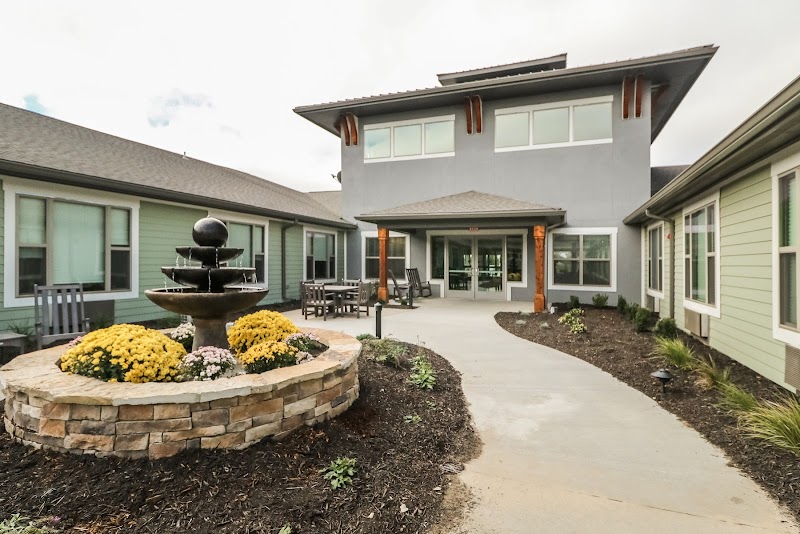
How is Tiffany Springs Rehabilitation & Health Care Cente Staffed?

CMS rates TIFFANY SPRINGS REHABILITATION & HEALTH CARE CENTE's staffing level at 2 out of 5 stars, which is below average compared to other nursing homes. Staff turnover is 65%, which is 19 percentage points above the Missouri average of 46%. High turnover can affect care consistency as new staff learn residents' individual needs. RN turnover specifically is 56%, which is notably high. RNs provide skilled clinical oversight, so turnover in this role can affect medical care quality.

What Have Inspectors Found at Tiffany Springs Rehabilitation & Health Care Cente?

State health inspectors documented 51 deficiencies at TIFFANY SPRINGS REHABILITATION & HEALTH CARE CENTE during 2021 to 2025. These included: 2 Immediate Jeopardy (the most serious level, indicating potential for serious harm or death), 2 that caused actual resident harm, 46 with potential for harm, and 1 minor or isolated issues. Immediate Jeopardy findings are rare and represent the most serious regulatory concerns. They require immediate corrective action.
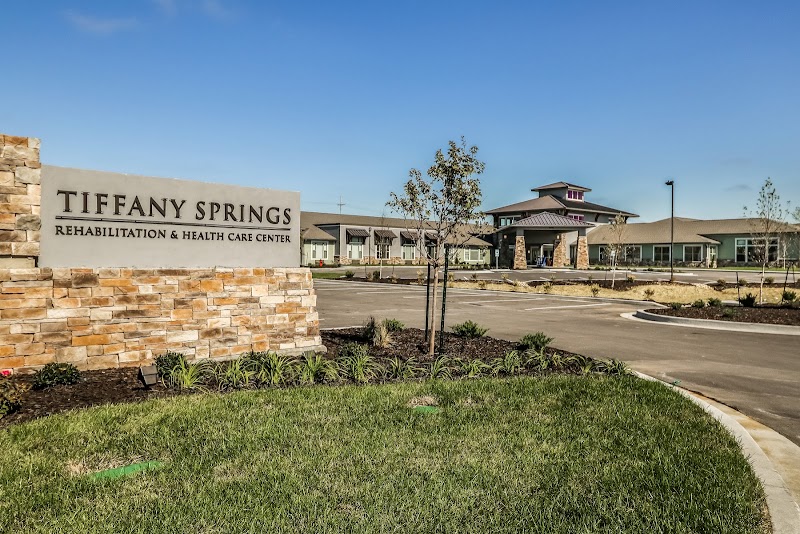
Who Owns and Operates Tiffany Springs Rehabilitation & Health Care Cente?

TIFFANY SPRINGS REHABILITATION & HEALTH CARE CENTE is owned by a for-profit company. For-profit facilities operate as businesses with obligations to shareholders or private owners. The facility is operated by TUTERA SENIOR LIVING & HEALTH CARE, a chain that manages multiple nursing homes. With 120 certified beds and approximately 111 residents (about 92% occupancy), it is a mid-sized facility located in KANSAS CITY, Missouri.

How Does Tiffany Springs Rehabilitation & Health Care Cente Compare to Other Missouri Nursing Homes?

Compared to the 100 nursing homes in Missouri, TIFFANY SPRINGS REHABILITATION & HEALTH CARE CENTE's overall rating (2 stars) is below the state average of 2.5, staff turnover (65%) is significantly higher than the state average of 46%, and health inspection rating (2 stars) is below the national benchmark.

What Should Families Ask When Visiting Tiffany Springs Rehabilitation & Health Care Cente?

Based on this facility's data, families visiting should ask: "What changes have been made since the serious inspection findings, and how are you preventing similar issues?" "How do you ensure continuity of care given staff turnover, and what is your staff retention strategy?" "Can you walk me through typical staffing levels on day, evening, and night shifts?" "Can I visit during a mealtime to observe dining assistance and food quality?" These questions are particularly relevant given the facility's Immediate Jeopardy citations, the facility's high staff turnover rate, and the below-average staffing rating.

Is Tiffany Springs Rehabilitation & Health Care Cente Safe?

Based on CMS inspection data, TIFFANY SPRINGS REHABILITATION & HEALTH CARE CENTE has documented safety concerns. Inspectors have issued 2 Immediate Jeopardy citations (the most serious violation level indicating risk of serious injury or death). The facility has a 2-star overall rating and ranks #100 of 100 nursing homes in Missouri. Families considering this facility should ask detailed questions about what corrective actions have been taken since these incidents.

Do Nurses at Tiffany Springs Rehabilitation & Health Care Cente Stick Around?

Staff turnover at TIFFANY SPRINGS REHABILITATION & HEALTH CARE CENTE is high. At 65%, the facility is 19 percentage points above the Missouri average of 46%. Registered Nurse turnover is particularly concerning at 56%. RNs handle complex medical decisions and coordinate care — frequent RN changes can directly impact care quality. High turnover means new staff may not know residents' individual needs, medications, or preferences. It can also be disorienting for residents, especially those with dementia who rely on familiar faces. Families should ask: What is causing the turnover? What retention programs are in place? How do you ensure care continuity during staff transitions?

Was Tiffany Springs Rehabilitation & Health Care Cente Ever Fined?

TIFFANY SPRINGS REHABILITATION & HEALTH CARE CENTE has been fined $47,807 across 2 penalty actions. The Missouri average is $33,557. While any fine indicates a compliance issue, fines under $50,000 are relatively common and typically reflect isolated problems that were subsequently corrected. Families should ask what specific issues led to these fines and confirm they've been resolved.

Is Tiffany Springs Rehabilitation & Health Care Cente on Any Federal Watch List?

TIFFANY SPRINGS REHABILITATION & HEALTH CARE CENTE is not on any federal watch list. The most significant is the Special Focus Facility (SFF) program, which identifies the bottom 1% of nursing homes nationally based on persistent, serious quality problems. Not being on this list means the facility has avoided the pattern of deficiencies that triggers enhanced federal oversight. This is a positive indicator, though families should still review the facility's inspection history directly.