LA PLATA NURSING HOME

100 OLD STAGECOACH ROAD, LA PLATA, MO 63549 (660) 332-4315
Government - County 52 Beds Independent Data: November 2025 1 Immediate Jeopardy citation
Trust Grade
23/100
#160 of 479 in MO
Last Inspection: November 2024

Within standard 12-15 month inspection cycle. Federal law requires annual inspections.

Overview

La Plata Nursing Home has a Trust Grade of F, indicating significant concerns about the facility's quality of care. It ranks #160 out of 479 nursing homes in Missouri, placing it in the top half of facilities in the state, and #2 out of 3 in Macon County, meaning only one local option is rated higher. While the facility is improving, as the number of issues decreased from 20 in 2023 to 7 in 2024, it still faces serious challenges, including $173,534 in fines, which is higher than 98% of Missouri facilities, suggesting ongoing compliance problems. Staffing is somewhat stable, with a turnover rate of 44%, which is better than the state average, and the facility has average RN coverage. However, there have been critical and serious incidents reported, such as a significant medication error that led to a resident requiring hospitalization, and failures in fall prevention that resulted in multiple falls and injuries for some residents. Families should weigh these strengths and weaknesses carefully when considering La Plata Nursing Home for their loved ones.

Trust Score
F
23/100
In Missouri
#160/479
Top 33%
Safety Record
High Risk
Review needed
Inspections
Getting Better
20 → 7 violations
Staff Stability
○ Average
44% turnover. Near Missouri's 48% average. Typical for the industry.
Penalties
⚠ Watch
$173,534 in fines. Higher than 80% of Missouri facilities, suggesting repeated compliance issues.
Skilled Nurses
⚠ Watch
Each resident gets only 19 minutes of Registered Nurse (RN) attention daily — below average for Missouri. Fewer RN minutes means fewer trained eyes watching for problems.
Violations
⚠ Watch
31 deficiencies on record. Higher than average. Multiple issues found across inspections.
★★★☆☆
3.0
Overall Rating
★★★☆☆
3.0
Staff Levels
★★★☆☆
3.0
Care Quality
★★★☆☆
3.0
Inspection Score
Stable
2023: 20 issues
2024: 7 issues

The Good

  • Full Sprinkler Coverage · Fire safety systems throughout facility
  • No fines on record
  • Staff turnover below average (44%)

    4 points below Missouri average of 48%

Facility shows strength in fire safety.

The Bad

3-Star Overall Rating

Above Missouri average (2.5)

Meets federal standards, typical of most facilities

Staff Turnover: 44%

Near Missouri avg (46%)

Typical for the industry

Federal Fines: $173,534

Well above median ($33,413)

Significant penalties indicating serious issues

The Ugly 31 deficiencies on record

1 life-threatening 2 actual harm
Nov 2024 4 deficiencies
CONCERN (D)

Potential for Harm - no one hurt, but risky conditions existed

Deficiency F0761 (Tag F0761)

Could have caused harm · This affected 1 resident

Based on observation, interview and record review, the facility failed to implement a system to ensure staff did not administer insulin (a hormone that helps regulate blood sugar levels by moving gluc...

Read full inspector narrative →
Based on observation, interview and record review, the facility failed to implement a system to ensure staff did not administer insulin (a hormone that helps regulate blood sugar levels by moving glucose from the bloodstream into cells throughout the body) or insulin-like products beyond the manufacturer's guidelines once opened for one resident (Resident #16) in a review of 15 sampled resident and one additional resident (Resident #5). The facility census was 42. Review of the manufacturer's guideline for use for Lantus insulin (long-acting insulin) showed it was good for 28 days after it was opened. Review of the manufacturer's guideline for use for Victoza (insulin-like medication) showed it was good for 30 days after it was opened. Review of the manufacturer's guideline for use for Toujeo insulin (long-acting insulin) showed it was good for 56 days after it was opened. Review of the manufacturer's guideline for use for Humulin R insulin (short-acting insulin) showed it was good for 31 days after it was opened. Review of the manufacturer's guideline for use for Aspart insulin (short-acting insulin) (also known as Novolog) showed it was good for 28 days after it was opened. Review of the manufacturer's guideline for use for Novolog Flex pen insulin (rapid-acting insulin) showed it was good for 28 days after it was opened. Review of the facility policy, Medication Labeling and Storage, dated February 2023, showed the following: -The nursing staff is responsible for maintaining medication storage and preparation areas in a clean, safe, and sanitary manner; -Multi-dose vials that have been opened or accessed (e.g. needle punctured) are dated and discarded within 28 days unless the manufacturer specifies a shorter or longer date for the open vial. 1. Review of Resident #5's November 2024 Physician Order Sheet (POS) showed the following: -Novolog FlexPen U-100 Insulin pen: 100 units/milliter (ml) per sliding scale (a specific amount to be given is determined after a blood glucose (amount of sugar in the blood) reading is obtained): If blood sugar is 150 to 200, give three units subcutaneously (SQ) (injected under the skin). If blood sugar is 201 to 250, give six units SQ. If blood sugar is 251 to 300, give nine units SQ. If blood sugar is 301 to 350, give 12 units SQ. If blood sugar is greater than 350, give 15 units SQ. Give sliding scale after meals if more than 50 percent (%) of meal was consumed; -Toujeo SoloStar U-300 Insulin pen: 300 units/ml. Give 28 units SQ daily at bedtime; -Diagnosis of diabetes. Review of the resident's November 2024 Medication Administration Record (MAR) showed the following: -On 11/01/24 at 12:00 P.M., staff administered six units Novolog SQ and at 6:00 P.M. staff administered nine units Novolog SQ; -On 11/01/24 at bedtime, staff administered 28 units Toujeo SQ; -On 11/02/24 at 12:00 P.M., staff administered three units Novolog SQ and at 6:00 P.M. staff administered three units Novolog SQ; -On 11/02/24 at bedtime, staff administered 28 units Toujeo SQ; -On 11/03/24 at 12:00 P.M., staff administered six units Novolog SQ and at 6:00 P.M. staff administered 15 units Novolog SQ; -On 11/03/24 at bedtime, staff administered 28 units Toujeo SQ; -On 11/04/24 at 6:00 P.M., staff administered three units Novolog SQ; -On 11/04/24 at bedtime staff administered 28 units Toujeo SQ; -On 11/05/24 at 12:00 P.M., staff administered nine units Novolog SQ and at 6:00 P.M. staff administered three units Novolog SQ; -On 11/05/24 at bedtime, staff administered 28 units Toujeo SQ; -On 11/06/24 at 12:00 P.M., staff administered 12 units Novolog SQ; -On 11/06/24 at bedtime, staff administered 28 units Toujeo SQ; -On 11/07/24 at 8:30 A.M., staff administered three units Novolog SQ, at 12:00 P.M. staff administered 12 units Novolog SQ and at 6:00 P.M. staff administered nine units Novolog SQ; -On 11/07/24 at bedtime, staff administered 28 units Toujeo SQ; -On 11/08/24 at 12:00 P.M., staff administered six units Novolog SQ. Observation of the unit's medication storage room on 11/07/24 at 6:30 A.M. showed the following: -An opened Aspart Insulin pen belonging to the resident; it was not labeled with the date it was opened and/or use by date; -An opened Toujeo insulin belonging to the resident; it was not labeled with the date it was opened and/or use by date. 2. Review of Resident #16's November 2024 POS showed the following: -Lantus U-100 give 80 units SQ twice daily; -Novolog Flexpen U-100 giver per sliding scale before meals. If blood sugar is 0 to 150 give four units SQ. If blood sugar is 151 to 200, give six units SQ. If blood sugar is 201 to 250, give 10 units SQ. If blood sugar is 250 to 300, give 16 units SQ. If blood sugar is 301 to 350, give 18 units SQ. If blood sugar is 351 to 400, give 20 units SQ. If blood sugar is greater than 400, give 22 units SQ; -Victoza 0.6 milligrams (mg)/0.1 ml give 1.8 mg SQ once daily; -Diagnosis of diabetes. Review of the resident's November 2024 MAR showed the following: -On 11/01/24 in the A.M., staff administered 1.8 mg Victoza SQ; -On 11/01/24 at 7:00 A.M., staff administered four units Novolog SQ, at 11:00 A.M. staff administered 10 units Novolog SQ and at 4:00 P.M. staff administered six units of Novolog SQ; -On 11/01/24, staff administered 80 units Lantus SQ in the A.M. and evening; -On 11/02/24 in the A.M., staff administered 1.8 mg Victoza SQ; -On 11/02/24 at 7:00 A.M., staff administered four units Novolog SQ, at 11:00 A.M. staff administered 6 units Novolog SQ and at 4:00 P.M. staff administered four units of Novolog SQ; -On 11/02/24, staff administered 80 units Lantus SQ in the A.M. and evening; -On 11/03/24 in the A.M., staff administered 1.8 mg Victoza SQ; -On 11/03/24 at 7:00 A.M., staff administered four units Novolog SQ, at 11:00 A.M. staff administered six units Novolog SQ and at 4:00 P.M. staff administered six units of Novolog SQ; -On 11/03/24, staff administered 80 units Lantus SQ in the A.M. and evening; -On 11/04/24 in the A.M., staff administered 1.8 mg Victoza SQ; -On 11/04/24, staff administered four units Novolog SQ, at 11:00 A.M. staff administered six units Novolog SQ and at 4:00 P.M. staff administered four units of Novolog SQ; -On 11/04/24, staff administered 80 units Lantus SQ in the A.M. and evening; -On 11/05/24 in the A.M., staff administered 1.8 mg Victoza SQ; -On 11/05/24 at 7:00 A.M., staff administered four units Novolog SQ, at 11:00 A.M. staff administered six units Novolog SQ and at 4:00 P.M. staff administered four units of Novolog SQ; -On 11/05/24, staff administered 80 units Lantus SQ in the A.M. and evening; -On 11/06/24 in the A.M., staff administered 1.8 mg Victoza SQ; -On 11/06/24 at 7:00 A.M., 11:00 A.M. and 4:00 P.M., staff administered Novolog four units SQ; -On 11/06/24, staff administered 80 units Lantus SQ in the A.M. and evening; -On 11/07/24, staff administered 80 units Lantus SQ in the A.M. and evening. Observation of the unit's medication storage room on 11/07/24 at 6:30 A.M. showed the following: -Three opened Aspart Insulin pens belonging to the resident; they were not labeled with the date they were opened and/or use by date; -Three opened Lantus Solostar Insulin pens belonging to the resident; they were not labeled with the date they were opened and/or use by date; -An opened Novolog Insulin pen belonging to the resident; it was not labeled with the date it opened and/or use by date. During an interview on 11/07/24 at 6:30 A.M., Certified Medication Technician (CMT) L said staff should label insulin with the date they opened the insulin and with the expiration date. He/She was unsure why the insulins were not labeled. During an interview on 11/07/24 at 6:30 A.M., CMT Q said staff should label insulin with the date opened and the expiration date. He/She did not know why the insulins were not labeled. The staff who opened the insulins were responsible for ensuring insulins were properly labeled. During an interview on 11/08/24 at 11:36 A.M., the Assistant Director of Nursing said the following: -All nurses and CMTs were responsible for ensuring insulins were labeled with an open date and use by date; -She was supposed to audit the insulins and check for dates, but she had been busy and had not had a chance to inspect the insulins to ensure they were properly dated. During an interview on 11/08/24 at 2:30 P.M., the Director of Nursing said the following: -She expected staff to label insulins when they opened the insulin for resident use; -If there was not a date on the insulin, staff should not administer the insulin because they would not know when it was opened and if it was within the time frame for that particular insulin; -Nursing staff were responsible for monitoring and ensuring insulins were labeled appropriately.
CONCERN (E)

Potential for Harm - no one hurt, but risky conditions existed

Medication Errors (Tag F0758)

Could have caused harm · This affected multiple residents

**NOTE- TERMS IN BRACKETS HAVE BEEN EDITED TO PROTECT CONFIDENTIALITY** Based on observation, interview, and record review, the facility failed to adequately document appropriate diagnoses of resident...

Read full inspector narrative →
**NOTE- TERMS IN BRACKETS HAVE BEEN EDITED TO PROTECT CONFIDENTIALITY** Based on observation, interview, and record review, the facility failed to adequately document appropriate diagnoses of residents or resident behaviors to justify the implementation or continued used of antipsychotic medications (a type of psychiatric medication used to treat certain types of mental health problems, such as schizophrenia (a disorder that affects a person's ability to think, feel, and behave clearly) and bipolar disorder (a disorder associated with episodes of mood swings ranging from depressive lows to manic highs), for three residents (Residents #16, #28, and #30) in a review of 15 sampled residents. The facility also failed to complete a 14-day review for the as needed (PRN) use of a benzodiazepine (a drug that produces sedation and hypnosis) for one resident (Residents #10). The facility census was 42. A review of the facility policy, Psychotropic Medication Use, dated July 2022, showed the following: -Policy Statement: Residents will not receive medications that are not clinically indicated to treat a specific condition; -Policy Interpretation and Implementation: -A psychotropic medication is any medication that affects brain activity associated with mental processes and behavior; -Drugs in the following categories are considered psychotropic medications and are subject to prescribing, monitoring, and review requirements specific to psychotropic medications: -Antipsychotics; -Antidepressants; -Antianxiety medications; -Hypnotics; -Consideration of the use of any psychotropic medication is based on comprehensive review of the resident. This includes evaluation of the resident's signs and symptoms in order to identify underlying causes; -Residents on psychotropic medications receive gradual dose reductions (coupled with non-pharmacological interventions), unless clinically contraindicated, in an effort to discontinue these medications; -Psychotropic medications are not prescribed or given on a PRN (as needed) basis unless that medication is necessary to treat a diagnosed specific condition that is documented in the clinical record; PRN (as needed) orders for psychotropic medications are limited to 14 days; -For psychotropic medications that are NOT antipsychotics: If the prescriber or attending physician believes it is appropriate to extend the PRN order beyond 14 days, he or she will document the rationale for extending the use and include the duration for the PRN order; -For psychotropic medications that ARE antipsychotics: PRN orders cannot be renewed unless the attending physician or prescriber evaluates the resident and documents the appropriateness of the medication. Review of www.drugs.com for Seroquel (generic name quetiapine, antipsychotic medication) showed the following: -Seroquel is used to treat schizophrenia and to treat episodes of mania (frenzied, abnormally excited, or irritated mood) or depression in patients with bipolar disorder (manic depressive disorder), a disease that causes episodes of depression, episodes of mania, and other abnormal moods); -Seroquel is used in combination with antidepressant medications to treat major depressive disorder in adults; -Seroquel may increase the risk of death in older adults with mental health problems related to dementia; -Potential adverse effects of Seroquel include somnolence (sleepiness), postural hypotension (a drop in the blood pressure when a person stands), motor, and sensory instability, which may lead to falls, and consequently, fractures (broken bones) or other injuries. 1. Review of Resident #28's face sheet showed the resident's diagnoses included the following: -Mild cognitive impairment of uncertain or unknown etiology; -Unspecified dementia, unspecified severity, with behavioral disturbance; -Dementia in other disease classified elsewhere, unspecified severity, with agitation; -Altered mental status, unspecified (history of). Review of the resident's care plan, dated 05/02/24, showed the following: -The resident needs assist of one staff for bathing, dressing, toileting, pericare, oral care, transfers, activities of daily living (ADL) and medication administration; -There was no direction to staff regarding use the of antipsychotic medication. Review of the resident's physician's orders, dated 08/09/24, showed an order for Seroquel 50 milligrams (mg) by mouth twice a day for dementia in other diseases classified elsewhere, unspecified severity, with agitation. Review of the resident's significant change Minimum Data Set (MDS), a federally mandated assessment instrument completed by facility staff, dated 08/12/24, showed the following: -Severe cognitive impairment; -No behaviors; -Substantial/maximal assistance required for toileting hygiene; -Frequently incontinent of urine and bowel; -Diagnosis of dementia; -Taking antipsychotic medication, indication noted; -Antipsychotics received on a routine basis. Review of the resident's August 2024 Medication Administration Record (MAR) showed the resident received Seroquel 50 mg by mouth twice daily from 08/09/24 - 08/31/24. Review of the resident's physician's orders, dated September 2024, showed an order for Seroquel 50 mg by mouth twice daily. Review of the resident's September 2024 MAR showed the resident received Seroquel 50 mg by mouth twice daily from 09/01/24 - 09/30/24. Review of the resident's physician's orders, dated October 2024, showed an order for Seroquel 50 mg by mouth twice daily. Review of the resident's October 2024 MAR showed the resident received Seroquel 50 mg by mouth twice daily from 10/01/24 - 10/31/24. Review of the resident's pharmacist Note to Attending Physician/Prescriber, dated 10/17/24, showed the following: -This is an elderly resident that has a diagnosis of dementia with behavior and has an order for an antipsychotic, Seroquel 50 mg twice daily; -This is a high-risk medication, used for an off-label indication; -Due to Black Box Warnings ((a serious safety warning that the Food and Drug Administration (FDA) issues for some medications)), Centers for Medicare and Medicaid Services (CMS) has indication that dementia residents should be re-evaluated for continued use of antipsychotics due to increased risk of stroke and mortality; -Please evaluated if this is still appropriate therapy and consider attempting a gradual dose reduction, or document clinical contraindications; -If therapy is to continue at the current dose, please provide rationale describing a dose reduction as clinically contraindicated; -If a change in drug therapy is contraindicated at this time please check the appropriate reason(s): -Marked other; -Include specific behaviors: no change; -Signed by the resident's physician on 10/24/24 with no recommendation. Review of the resident's physician's orders, dated November 2024, showed an order for Seroquel 50 mg by mouth twice daily. Review of the resident's November 2024 MAR showed the resident received Seroquel 50 mg by mouth twice daily from 11/01/24 - 11/07/24. 2. Review of Resident #30's face sheet, undated, showed the resident's medical diagnoses included cerebral vascular accident (CVA, a stroke), traumatic brain injury (TBI) (a brain injury caused by outside force), and depression. No documentation the resident had diagnoses of schizophrenia, bipolar disorder or major depressive disorder. Review of the document, Routine Assessment of Psychotropic Medications, dated 01/12/24, showed the following: -The consulting pharmacist documented the resident took Seroquel 12.5 mg by mouth daily at bedtime; -The resident had a diagnosis of depression; -The consulting pharmacist requested that the provider consider a dose reduction or discontinuance of the medication for the resident; -The resident's physician declined a dose reduction or discontinuance; -The resident's physician wrote: Continue meds, doing well on the document. Review of the resident's physician orders, dated July 01, 2024, showed an order for Seroquel 25 mg, give ½ tablet (12.5 mg) at bedtime daily, start date 07/20/23. Review of the document, Routine Assessment of Psychotropic Medications, dated 07/01/24, showed the following: -The consulting pharmacist documented the resident took Seroquel 12.5 mg by mouth daily at bedtime; -The resident had a diagnosis of depression; -The consulting pharmacist requested that the provider consider a dose reduction or discontinuance of the medication for the resident; -The resident's physician declined a dose reduction or discontinuance. Review of the resident's nursing progress notes, dated 07/09/24 at 08:47 A.M., showed staff documented the following: -Resident #30 was yelling at another resident and attempted to get out of his/her wheelchair; -The staff took Resident #30 to his/her room and away from the situation. Review of the resident's nursing progress notes, dated 07/12/24 at 10:44 P.M., showed staff documented the following: -Resident #30 had an angry outburst at supper and yelled very loudly at a certified nursing assistant (CNA), another resident, and Resident #30's family member; -Resident #30 was taken to another table to diffuse the situation. Review of the resident's MAR, dated July 01 through July 20, 2024, showed facility staff administered Seroquel 25 mg, ½ tab (12.5 mg) daily at bedtime for a diagnosis of depression. Review of the resident's physician orders, dated August 01, 2024, showed an order for Seroquel 25 mg, give ½ tablet (12.5 mg) at bedtime daily. Review of the resident's care plan, last reviewed on 08/15/24, showed no history of behaviors and did not address the use of antipsychotic medications. Review of the resident's quarterly Minimum Data Set (MDS), a federally mandated assessment instrument, completed by facility staff, dated 08/15/24, showed the following: -Cognitively intact; -No rejection of cares or documented behaviors; -Medications included antipsychotic medication. Review of the resident's nursing progress notes, dated 08/26/24 at 10:58 P.M., showed staff documented the following: -Resident #30 ran his/her wheelchair into another resident's wheelchair while the other resident was sitting at the nurses' station; -Resident #30 and this other resident had a history of arguing and fighting. Review of the resident's MAR, dated August 01 through August 31, 2024, showed facility staff administered Seroquel 25 mg, ½ tab (12.5 mg) daily at bedtime for a diagnosis of depression. Review of the resident's physician orders, dated September 01, 2024, showed an order for Seroquel 25 mg, give ½ tablet (12.5 mg) at bedtime daily. Review of the resident's MAR, dated September 01 through September 30, 2024, showed facility staff administered Seroquel 25 mg, ½ tab (12.5 mg) daily at bedtime for a diagnosis of depression. Review of the resident's physician orders, dated October 01, 2024, showed an order for Seroquel 25 mg, give ½ tablet (12.5 mg) at bedtime daily. Review of the document, Note to Attending Physician/Prescriber, dated 10/17/24, showed the following: -The consulting pharmacist documented the resident took Seroquel 12.5 mg at bedtime since 07/20/23 for depression; -The consulting pharmacist requested the provider to consider a gradual dose reduction (GDR), unless clinically contraindicated; -The resident's physician wrote: Not well controlled, exhibits behaviors/outbursts; -The resident's physician declined a dose reduction. Review of the resident's nursing progress notes, dated 10/28/24 at 06:01 A.M., showed staff documented the following: -Resident #30 and another resident got into an argument and Resident #30 threatened to hit the other resident; -Resident #30 threatened to hit a CNA who was providing care for him/her. Review of the resident's MAR, dated October 01 through October 31, 2024, showed facility staff administered Seroquel 25 mg, ½ tab (12.5 mg) daily at bedtime for a diagnosis of depression. Review of the resident's physician orders, dated November 01, 2024, showed an order for Seroquel 25 mg, give ½ tablet (12.5 mg) at bedtime daily. Review of the resident's nursing progress notes, dated 11/06/24 at 06:27 P.M., showed staff documented the following: -Resident #30 was watching television in the dining room when one of the presidential candidates that the resident did not like came on; -Resident #30 became angry and swung at another resident when the other resident said something positive about the presidential candidate; -Resident #30 then refused to eat. Review of the resident's MAR, dated November 01 through November 07, 2024, showed facility staff administered Seroquel 25 mg, ½ tab (12.5 mg) daily at bedtime for a diagnosis of depression. During an interview on 11/07/24 at 3:15 P.M., the resident's family member said the following: -There were times when the resident gets very upset, and staff would have to intervene; -He/She was not sure what would make the resident so upset, but the resident would swing at others without hitting them; -He/She was not aware the resident was on an antipsychotic medication. During an interview on 11/08/24 at 8:30 A.M., CNA H said the following: -The resident would get feisty at times and become agitated at other residents or staff; -He/She thought the resident just got over stimulated which made him/her act out; -He/She would try to take the resident to another area where it was quiet so that the resident could calm down; -If the resident had behaviors, he/she would report that to the charge nurse. During an interview on 11/08/24 at 8:40 A.M., Registered Nurse (RN) I said the following: -He/She was aware the resident had behaviors and he/she had completed behavior charting on the resident; -The resident seemed to have a low tolerance for other residents at times and would become agitated and sometimes swing at other residents; -He/She knew the resident was on an antipsychotic; -He/She knew the consulting pharmacist did periodically make recommendations to the resident's physician to decrease or stop an antipsychotic medication; -He/She was not sure if Seroquel was indicated for a diagnosis of depression; -Behaviors by a resident should be charted in the resident's electronic medical record (EMR) and the resident's physician should be made aware of behaviors when they occur; -A resident's care plan should be updated to include if a resident had behaviors or was taking an antipsychotic medication. 3. Review of Resident #16's physician orders, dated 08/27/24, showed an order for lorazepam (antianxiety medication), give 0.5 mg (1/2 tab equals 0.25 mg) three times a day as needed. Open ended order with no stop date. Diagnosis bipolar disorder. Review of the resident's MAR, dated August 2024, showed the following: -On 08/28/24 at 2:37 P.M. staff administered lorazepam 0.25 mg by mouth; -On 08/29/24 at 3:17 P.M. staff administered lorazepam 0.25 mg by mouth; -On 08/31/24 at 6:00 P.M. staff administered lorazepam 0.25 mg by mouth. Review of the resident's physician orders, dated September 2024, showed an order for lorazepam, give 0.5 mg (1/2 tab equals 0.25 mg) three times a day as needed. Open ended order with no stop date. Review of the resident's pharmacist Note to Attending Physician/Prescriber, dated 09/18/24, showed the following: -Resident has an order for lorazepam 0.25 mg by mouth three times a day as needed; -CMS regulations limit this medication to 14 days, unless there is a documented rationale to continue, along with an anticipated during of therapy; -(NOTE: This applies to all residents, including hospice); -If medication is necessary, please document risk versus benefit below (i.e. x 60 days stop date to manage anxiety symptoms during hospice and improve quality of life); -Marked continue by the resident's physician, must provide reason and duration of therapy; -Duration: life long; -Rationale: resident requires medication for mental health stability; -Signed by the resident's physician on 09/30/24. Review of the resident's quarterly MDS, dated [DATE], showed the following: -Cognitively intact; -Diagnoses of diabetes, anxiety and schizophrenia; -Taking antianxiety medication, indication noted. Review of the resident's MAR, dated September 2024, showed no documentation the resident received lorazepam 0.5 mg (1/2 tab = 0.25 mg) for the month of September. Review of the resident's physician orders, dated October 2024, showed an order for lorazepam, give 0.5 mg (1/2 tab equals 0.25 mg) three times a day as needed. Open ended order with no stop date. Review of the resident's progress notes, dated 10/02/24 at 1:24 P.M., showed the following: -Pharmacy noted to primary care provider (PCP) regarding lorazepam rationale to continue longer than 14 day limit; -PCP replied to continue lorazepam 0.25 mg by mouth three times daily as needed with a lifelong duration and rationale that resident requires medication for mental health stability. Review of the resident's MAR, dated October 2024, showed no documentation the resident received lorazepam 0.5 mg (1/2 tab = 0.25 mg) for the month of October. Review of the resident's physician orders, dated November 2024, showed an order for lorazepam, give 0.5 mg (1/2 tab equals 0.25 mg) three times a day as needed. Open ended order with no stop date. Review of the resident's MAR, dated 11/01/24 - 11/07/24, showed no documentation the resident received lorazepam 0.5 mg (1/2 tab = 0.25 mg) for any of these days in the month of November. Review of the resident's care plan, dated 11/07/24, showed the following: -The resident has socially inappropriate/disruptive behavioral symptoms as evidenced by: inappropriate sexual behaviors; -The resident is at risk for adverse consequences related to receiving antianxiety medication for treatment of his/her adjustment disorder with anxiety; -The resident is on an antianxiety medication, ensure it is the lowest appropriate dosage for me; -Monitor for drug use effectiveness and adverse consequences; -Pharmacy consultant reviews. 4. Review of Resident #10's quarterly MDS, dated [DATE], showed the following: -Severe cognitive impairment; -No behaviors; -Occasionally incontinent of urine and bowel; -Diagnoses of diabetes, stroke and dementia; -Functional limitation in range of motion of the upper extremity on one side; -Dependent on staff for toileting hygiene; -Taking antianxiety medication, indication noted. Review of the resident's physician orders, dated 10/10/24, showed an order for lorazepam, give 0.5 mg by mouth every two hours as needed. Open ended order with no stop date. Diagnosis anxiety disorder. Review of the resident's pharmacist Note to Attending Physician/Prescriber, dated 10/17/24, showed the following: -Resident has an order for lorazepam 0.5 mg by mouth every two hours as needed; -CMS regulations limit this medication to 14 days, unless there is a documented rationale to continue, along with an anticipated during of therapy; -(NOTE: This applies to all residents including hospice); -If medication is necessary, please document risk versus benefit below (i.e. x 60 days stop date to manage anxiety symptoms during hospice and improve quality of life); -Physician's rationale and response: left blank. Review of the resident's MAR, dated 10/10/24 - 10/31/24, showed no documentation the resident received lorazepam 0.5 mg for the month of October. Review of the resident's physician orders, dated November 2024, showed an order for lorazepam, give 0.5 mg by mouth every two hours as needed. Open ended order with no stop date. Diagnosis anxiety disorder. Review of the resident's MAR, dated 11/01/24 - 11/07/24, showed no documentation the resident received lorazepam 0.5 mg for any of these days in the month of November. Review of the resident's care plan, dated 11/07/24, showed the following: -The resident has anxiety; -The resident can be aggressive; -Report any behaviors to the charge nurse; -The resident is most anxious when he/she is unsure what is going on; -When the resident is anxious, he/she can yell and refuse to do anything; -To help the resident with his/her anxiety try leaving him/her alone for a few minutes and approaching him/her again; -There was no direction to staff regarding the use of antianxiety medication. During an interview on 11/8/24 at 12:54 P.M. the Infection Preventionist said Resident #10's physician had not yet seen the pharmacist recommendation dated 10/17/24. The resident's physician reviews recommendations in the facility, they were not sent to the physician. During an interview on 11/08/24 at 2:25 P.M., the Director of Nursing said she expected residents to have appropriate diagnoses for antipsychotic medication based on regulatory guidelines. She expected charge nurses to review the medication orders, acknowledge if the diagnosis is appropriate for the medication use, and contact the physician if needed to clarify diagnosis. Orders for PRN antipsychotic medications should have a 14 day stop date and then be re-evaluated for continued use, and/or have a specific stop date. PRN antipsychotic medications should not be written for lifetime. She expected charge nurses to clarify orders written without a stop date.
CONCERN (E)

Potential for Harm - no one hurt, but risky conditions existed

Infection Control (Tag F0880)

Could have caused harm · This affected multiple residents

**NOTE- TERMS IN BRACKETS HAVE BEEN EDITED TO PROTECT CONFIDENTIALITY** Based on observation, interview, and record review, the facility failed to follow professional standards of practice for infecti...

Read full inspector narrative →
**NOTE- TERMS IN BRACKETS HAVE BEEN EDITED TO PROTECT CONFIDENTIALITY** Based on observation, interview, and record review, the facility failed to follow professional standards of practice for infection control by failing to wash their hands or use hand sanitizer and properly use gloves when preparing and administering medications for one resident (Resident #17), and when providing personal care for three residents (Resident #10, #28 and #194), in a review of 15 sampled residents. The facility failed to place signage and follow indications for enhanced barrier precautions (EBP) (an infection control intervention that utilizes personal protective equipment (PPE) to reduce the spread of multidrug-resistant organisms (MDROs)) for one resident (Resident #194), who required enteral feedings (a tube inserted into the stomach to provide an alternate route for nutrition when a person cannot swallow), and failed to follow facility policy for Legionella Surveillance and Detection for one resident (Resident #9). The facility failed to develop a policy to address Legionella Control that included specific control parameters based on Center for Disease Control (CDC) and American Society of Heating, Refrigerating, and Air Conditioning Engineers (ASHRAE) standards, failed to clearly identify and develop a water management team, and failed to ensure proper monitoring of water temperatures to ensure minimal opportunity for growth. The facility failed to ensure Tuberculin Skin Tests (TST) were completed and documented in accordance with the requirements for TB testing for long-term care employees for eight employees in a review of nine employees. The facility census was 42. Review of the facility's Legionella Surveillance and Detection Policy, dated 06/13/24, showed the following: -The facility was committed to the prevention, detection, and control of water borne contaminants, including Legionella. -All pneumonia's that are diagnosed in residents greater than 48 hours after admission are investigated for possible LD; -Clinical staff are trained on the following signs and symptoms associated with pneumonia and Legionnaire's: Cough, shortness of breath, fever, muscle aces, headache, diarrhea, nausea, and confusion associated with Legionnaire's disease; -Risk factors for developing LD include: greater than [AGE] years of age, smoking, chronic lung disease, immune system disorders, systemic malignancy, and underlying illness such as diabetes, kidney failure or liver failure; -If pneumonia or Legionnaire's disease is suspected, the nurse will notify the physician; -Diagnosis of Legionnaire's disease is based on a culture of lower respiratory secretions and urinary antigen testing. (Review of the policy showed no documentation the facility had a Water Management Team, who the team included, and the responsibilities of the team. The policy did not include monitoring areas for growth of Legionella including monitoring water temperatures in the facility.) 1. Review of the Centers for Medicare and Medicaid Services (CMS) Survey and Certification (S&C) letter 17-30, dated 06/02/17 and revised on 06/09/17, showed the following: -CMS expects Medicare certified healthcare facilities to have water management policies and procedures to reduce the risk of growth and spread of Legionella and other opportunistic pathogens in building water systems. An industry standard calling for the development and implementation of water management programs in large or complex building water systems to reduce the risk of Legionellosis was published in 2015 by American Society of Heating, Refrigerating, and Air Conditioning Engineers (ASHRAE). In 2016, the CDC and its partners developed a toolkit to facilitate implementation of this ASHRAE Standard (https://www.cdc.gov/Legionella/maintenance/wmp-toolkit.html). Environmental, clinical, and epidemiological considerations for healthcare facilities are described in this toolkit; -Conduct a facility risk assessment to identify where Legionella and other opportunistic waterborne pathogens (e.g., Pseudomonas, Acinetobacter, Burkholderia, Stenotrophomonas, nontuberculous mycobacteria, and fungi) could grow and spread in the facility water system; -Implement a water management program that considers the ASHRAE industry standard and the CDC toolkit, and includes control measures such as physical controls, temperature management, disinfectant level control, visual inspections, and environmental testing for pathogens; -Specify testing protocols and acceptable ranges for control measures and document the results of testing and corrective actions taken when control limits are not maintained. Review of the Centers for Disease Control (CDC) and Prevention Legionella Environmental Assessment Form, undated, showed Legionella generally grow well between 77 degrees Fahrenheit (F) and 113 degrees F. The optimal growth range for Legionella is between 85 degrees F and 108 degrees F. Growth slows between 113 degrees F and 120 degrees F, and Legionella begin to die above 120 degrees F. Growth also slows between 68 degrees F and 77 degrees F, and Legionella become dormant below 68 degrees F. 2. Review of the facility's water management monitoring documentation, dated October 2024, showed the facility did not monitor or document the temperature of the cold water in the facility. During an interview on 11/7/24 at 3:10 P.M., the Infection Preventionist said the following: -He/She was not sure about Legionella and needed to get with the administrator to check the policy; -Not all residents diagnosed with pneumonia were checked for Legionnaire's disease; -He/She recently started the Legionella program because he/she was not originally aware of it when he/she took over as the Infection Preventionist; -She believed maintenance staff monitored the water temperatures; -The facility had a water management team. She was not sure who was on the team, but was aware she was on the team; -She was not aware of any water management meetings or issues related to surveillance in the facility. During an interview on 11/08/24 at 12:45 P.M., the Maintenance Director said the following: -He tested the hot water temperatures weekly; -He did not test cold water temperatures; -He was not aware of a water management team; -He did not attend any water management meetings; -He did not know much about Legionella other than monitoring the water temperatures. During an interview on 11/08/24 at 2:25 P.M., the Administrator said the following: -The water management team consisted of herself, the Maintenance Director, the Infection Control Preventionist, and the Medical Director; -The water management team met monthly during the Quality Assurance (QA) meeting; -She expected the nurses to contact the residents' physicians to obtain an order to test for Legionnaire's disease if a resident had a diagnosis of pneumonia; -There had only been one case of pneumonia (Resident #9) since the Legionella policy was written (06/13/24). 3. Review of Resident #9's undated face sheet showed the following: -The resident admitted to the facility on [DATE]; -Medical diagnoses included chronic obstructive pulmonary disease (COPD, a chronic lung disease that results in restricted airflow and breathing problems) and bacterial pneumonia (an inflammation in the lung and airway spaces resulting from various bacteria). Review of the resident's nursing progress notes showed staff documented the following: -On 10/30/24 at 10:00 A.M., the resident complained of coughing off and on during the night. The resident's lungs were clear but diminished. His/Her temperature was 98.4 degrees Fahrenheit (F) (the average normal body temperature is generally accepted as 98.6°F); -On 10/30/24 at 3:57 P.M., the resident was taken from his/her cardiologist's (heart specialist) office to the emergency room (ER) at the local hospital. Running tests for possible pneumonia; -On 10/30/24 at 8:03 P.M., note (received) from the resident's physician's office when the driver (transporter) returned: Send to ER, complained of not feeling well, chills, rales (small, clicking, bubbling, or rattling sounds in the lungs) (normal lung sounds are clear) bilaterally (both sides), heart regular (in rhythm) with extra beats. Resident remains in ER at this time; -On 10/30/24 at 8:42 P.M., hospital personnel called the facility to give report on this resident. The resident had mild bilateral lower lobe pneumonia. Received intravenous (IV, through the vein) antibiotics. The resident was discharged back to the facility. Review of the resident's ER discharge instructions, dated [DATE], showed the resident was diagnosis of pneumonia and was prescribed two antibiotic medications. Review of the resident's electronic medical record (EMR) showed no documentation laboratory (blood draw) or radiology (chest x-ray) testing was performed while the resident was in the ER or upon his/her return to the facility. (The facility did not follow their Legionella Surveillance and Detection policy when they did not investigate this resident's diagnoses of pneumonia for possible Legionnaire's disease.) During an interview on 11/08/24 at 2:25 P.M., the Director of Nursing (DON) and the Administrator said the following: -The resident had been in the facility for greater than 48 hours when he/she was sent to the local ER and was diagnosed with pneumonia; -The resident returned to the facility from the ER with a new order for two antibiotics for a diagnosis of pneumonia; -Neither the DON or the Administrator contacted the ER to see if the resident had been assessed for Legionnaire's while in the ER, but probably should have; -The facility did not request an order to test for Legionnaire's upon the resident's return to the facility, but probably should have. Review of the facility policy, Handwashing/Hand Hygiene, revised 07/18/24, showed the following: -All personnel shall follow the handwashing/hand hygiene procedures to help prevent the spread of infections to other personnel, residents, and visitors; -Use an alcohol-based hand rub containing at least 62% alcohol; or, alternatively, soap (antimicrobial or non-antimicrobial) and water for the following situations: -Before and after direct care contact with residents; -Before preparing or handling medications; -Before moving from a contaminated body site to a clean body site during resident care; -After contact with a resident's intact skin; -After removing gloves; -The use of gloves does not replace hand washing/hand hygiene. Integration of glove use along with routine hand hygiene is recognized as the best practice for preventing healthcare-associated infections. Review of the facility policy, Medication Administration, dated 08/16/24, showed staff were to follow established facility infection control procedures, (e.g., handwashing, antiseptic technique, gloves, isolation precautions, etc.) for the administration of medications, as applicable. (The policy did not specifically address how staff was to handle capsules if the capsules needed to be opened to prepare for administration.) 4. Review of Resident #17's undated face sheet showed he/she had a diagnosis of dysphagia (difficulty swallowing). Review of the resident's November 2024 Physician Orders showed crushable medications may be crushed, combined, and administered together (original order dated 03/21/24). Observation on 11/07/24 at 07:20 A.M. showed the following: -Certified Medication Technician (CMT) L stood at the medication cart and prepared the resident's morning medications; -CMT L did not wash his/her hands or use a hand sanitizer before preparing the resident's medications; -CMT L did not wear gloves; -CMT L used his/her bare hands and opened two separate medications in capsule form and poured the medication powder from the capsules into a medication cup; -CMT L added the medication powders to another medication cup of crushed medication for the resident, then added pudding to the medications; -CMT L took the medication cup to the resident and handed it to the resident and the resident swallowed the medications; -CMT L returned to the medication cart to document the medications given. During an interview on 11/07/24 at 1:20 P.M., CMT L said the following: -Staff should wash their hands or use a hand sanitizer before and after passing medications; -He/She did not think gloves were necessary when opening medication capsules since his/her hands did not touch the powdered medication inside. 5. Review of Resident #10's quarterly MDS, dated [DATE], showed the following: -Occasionally incontinent of bladder and bowel; -Dependent on staff for toileting hygiene. Review of the resident's care plan, dated 11/07/24, showed the following: -The resident had incontinent episodes; -The resident needed assistance of one staff for dressing, toileting, and pericare. Observation on 11/07/24 at 7:40 A.M., showed the following: -The resident lay awake in bed; -Certified Nurse Assistant (CNA) N and Nurse Assistant (NA) A entered the resident's room, washed their hands and applied gloves; -The resident was incontinent of urine and a small amount of soft feces; -CNA N and NA A rolled the resident to his/her right side; -NA A removed the resident's soiled incontinence brief and cleaned urine and feces from the resident's skin with disposable wipes; -Without removing his/her gloves, NA A picked up a clean incontinence brief and tucked it under the resident's hips, closed the package of disposable wipes, rubbed the resident's right arm with his/her gloved hands, held onto the resident's right hand, and fastened the clean incontinence brief on the resident; -NA A placed the trash in a bag, picked up the package of disposable wipes, put pants on the resident's legs, and touched the resident's right hand and gown; -CNA N rolled the resident side to side in bed; -Wearing the same soiled gloves, NA A tucked the cloth lift pad under the resident's hips and touched the resident's pants. During an interview on 11/14/24 at 4:35 P.M., NA A said he/she should wash his/her hands and change his/her gloves after performing pericare and when his/her gloves were soiled prior to touching clean items. 6. Review of Resident #28's care plan, dated 05/02/24, showed the following: -The resident needed assist of one staff for bathing, dressing, toileting, pericare, oral care, transfers, ADLs and medication administration; -The resident was incontinent of bowel and bladder at times. Review of the resident's significant change MDS, dated [DATE], showed the following: -Substantial/maximal assistance required for toileting hygiene; -Frequently incontinent of urine and bowel; -Diagnosis of dementia. Observation on 11/07/24 at 8:04 A.M., showed the following: -The DON and NA O entered the resident's room; -The resident lay awake in bed and was incontinent of bladder; -Without washing his/her hands, NA O put on gloves; -NA O unfastened the resident's incontinence brief and performed pericare; -NA O removed the urine soaked brief, and without removing his/her gloves, placed a clean incontinence brief under the resident's hips, fastened the clean incontinence brief, pulled up the resident's pants, and picked up the package of disposable wipes. During an interview on 11/08/24 at 8:10 A.M., NA O said he/she was to wash his/her hands prior to putting on gloves, and to remove gloves and wash his/her hands after providing pericare prior to touching clean items. Review of the undated facility policy, Enhanced Barrier Precautions (EBP), showed the following: -EBPs are utilized to prevent the spread of multi-drug resistant organisms (MDROs) to residents; -EBPs employ targeted gown and glove use during high contact resident care activities when contact precautions do not otherwise apply; -Gloves and gown are applied prior to performing the high contact resident care activity (as opposed to before entering the room); -Face protection may be used if there is also a risk of splash or spray; -Examples of high-contact resident care activities requiring the use of gown and gloves for EBPs include device care or use (central line, urinary catheter, feeding tube, tracheostomy/ventilator, etc.); -EBPs are indicated (when contact precautions do not otherwise apply) for residents with wounds and/or indwelling medical devices regardless of MDRO colonization; -EBPs remain in place for the duration of the resident's stay or until resolution of the wound or discontinuation of the indwelling medical device that places them at increased risk; -Staff are trained prior to caring for residents on EBPs; -Signs are posted on the door or wall outside the resident room indicating the type of precautions and PPE required; -PPE is available outside of the resident rooms. 7. Review of Resident #194's physician orders, dated 10/28/24, showed an order for Fibersource High Nutrition (HN) (a nutritionally complete tube feeding formula with fiber) 250 milliliters (ml) per feeding tube five times a day. Review of the resident's care plan, dated 10/30/24, showed the following: -The resident had a feeding tube (a flexible plastic tube placed in the stomach to help get nutrition into the body); -The resident needed assistance from one staff for dressing, toileting, pericare, and transfers; -The resident had incontinent episodes; -Tube feeding and flushes as ordered. Observation on 11/06/24 at 1:58 P.M., showed the following: -No signage on or around the resident's door/room indicating EBP was required; -No PPE was located at or near the entrance to the resident's room. Observation on 11/07/24 at 5:28 A.M. showed the following: -The resident lay in bed with his/her eyes closed; -There was no EBP signage on or around the resident's door/room indicating EBP was required; -There was no PPE located at or near the entrance to the resident's room. Observation on 11/07/24 at 6:08 A.M., showed the following: -The resident sat in his/her wheelchair in his/her bathroom; -CNA M was in the bathroom with the resident. CNA M wore gloves but did not wear a gown; -CNA M placed a gait belt (an assistive device which can be used to help safely transfer a person) around the resident's waist; -The resident's feeding tube hung over the resident's pants and between his/her legs; -CNA M assisted the resident to pivot from his/her wheelchair to the toilet; -The resident pulled down his/her pants and incontinence brief; -There was feces on the resident's incontinence brief; -CNA M removed the resident's pants and soiled incontinence brief and placed them in plastic bags; -Without changing his/her gloves, CNA M placed a clean incontinence brief on the resident, pulled up the resident's pants, and removed the resident's shirt; -The resident had a feeding tube in his/her left lower abdomen; -The resident stood up in front of the toilet; -CNA M held onto the gait belt and performed pericare; -The resident pulled up his/her own pants; -While wearing the same gloves he/she wore to provide pericare, CNA M held onto the gait belt, assisted the resident to pivot to his/her wheelchair, and removed the gait belt from around the resident. During an interview on 11/07/24 at 6:30 A.M., CNA M said the following: -No additional PPE was needed when providing care for the resident. Staff needed to wear gloves and wash their hands; -He/She did not know what EBP was; -He/She should have washed his/her hands and changed his/her gloves after providing pericare and touching soiled items. During an interview on 11/08/24 at 8:45 A.M., CNA N the following: -The resident needs hands on assist of one for most cares; -No special PPE was required when providing care for the resident because he/she had a feeding tube; -There are only gloves and no gowns in the resident's room; -He/She didn't know what EBP was. During an interview on 11/07/24 at 12:00 P.M. and 11/08/24 at 12:54 P.M the Infection Preventionist (IP) said the following: -The facility had not yet fully implemented EBP; -The Administrator gave her the CMS memo regarding EBP (dated 3/2024) not too long ago; -She was working on developing a facility policy regarding EBP; -Staff had not received education regarding EBP; -It was possible the resident should be on EBP; the resident had a feeding tube but nothing splashed out; -She expected staff to perform hand hygiene before and after wearing gloves; -She expected staff to change their gloves and wash their hands after their gloves become soiled or after performing pericare prior to touching clean items. During an interview on 11/08/24 at 2:25 P.M., the DON said the following: -She expected staff to sanitize their hands before and after glove use; -Staff could use hand sanitizer up to six times before washing their hands with soap and water, unless their hands were visibly soiled; -She expected staff to change their gloves when their gloves became soiled while performing peri care; -Staff should not touch clean items with contaminated gloves and/or hands; -The EBP had fallen through the cracks and not been done as required; -The IP was responsible for ensuring EBP was followed for those residents who required EBP, including residents with wounds, catheters, feeding tubes, etc.; -There should have been signage on the resident's door directing staff to use EBP when providing care for the resident. During an interview on 11/08/24 at 2:25 P.M., the Administrator said the following: -She expected staff to sanitize their hands before and after glove use; -She expected staff to change their gloves when their gloves became soiled while performing peri care; -Staff should not touch clean items with contaminated gloves and/or hands. Review of the facility policy, Employee Screening for TB, dated July 2010 showed the following: -All employees shall be screened for TB infection and disease, using a two-step TST or blood assay for Mycobacterium (bacteria that causes TB) tuberculosis (BAMT) and symptom screening prior to beginning employment; 1. The facility's Employee Health Coordinator will administer a TST to all newly hired employees except those who have documented positive TST or BAMT results, and those who provide documented verification of having had a negative TST or BAMT within the preceding 12 months; 2. The initial TB testing will be a two-step TST performed by injecting 0.1 milliliter (ml) (5 tuberculin units) of purified protein derivative (PPD) intradermally ((injection delivered into the dermis, or the skin layer underneath the epidermis (which is the upper skin layer)); a. If the reaction to the first skin test is negative, the facility will administer a second skin test 1 to 2 weeks after the first test. The employee may begin duty assignments after the first skin test (if negative) unless prohibited by state regulation; -The facility policy did not direct staff to read the TST in 48-72 hours or document results in mm of induration. 8. Review of the Department of Health and Senior Services Tuberculosis Screening for Long-Term Care Facility Employees Flowchart, updated 03/11/14, (based on the requirements identified in the state regulation for administering TB testing), showed the following: -Administer TST first step prior to employment. (Can coincide reading the results with the employee start date by administering TST two to three days prior to the employee start date); -Read results of first step TST within 48-72 hours of administration (results must be read and documented in millimeters (mm) induration prior to or on the employee start date); -If first TST is negative, administer second step within 1-3 weeks; -Read results within 48-72 hours of administration; -The employee cannot start work for compensation until the first step TST is administered and read. 9. Review of Licensed Practical Nurse (LPN) C's employee file showed the following: -He/She was hired on 11/16/23; -First-step TST was administered on 11/14/23; -There were no documentation to show staff read the results of the first-step TST administered on 11/14/23; -Second-step TST administered on 11/26/23; -Second-step TST was read on 11/28/23 with a documented result of negative. (The results were not documented in mm of induration.) During an interview on 11/07/24 at 12:00 P.M. and 11/08/24 at 12:54 P.M the Infection Preventionist (IP) said the Administrator thought LPN C was previously employed at another facility, so LPN C just needed a one step TST. (She was unable to provide record of LPN C's previous TST). 10. Review of NA A's employee file showed the following: -NA A was hired on 12/21/23; -First TST administered on 12/13/23; -First TST was read on 12/15/23 with a documented result of negative. (The results were not documented in mm of induration.); -Second TST administered on 01/12/24; -Second TST was read on 01/14/24 with a documented result of negative. (The results were not documented in mm of induration.) 11. Review of CNA B's employee file showed the following: -CNA B was hired on 12/28/23; -First TST administered on 12/26/23; -First TST was read on 12/28/23 with a documented result of negative. (The results were not documented in mm of induration.); -Second TST administered on 01/03/24; -Second TST was read on 01/05/24 with a documented result of negative. (The results were not documented in mm of induration.) 12. Review of the Maintenance Director's employee file showed the following: -The Maintenance Director was hired on 05/22/23; -First TST administered on 05/19/23; -First TST was read on 05/22/23 with a documented result of negative. (The results were not documented in mm of induration.); -Second TST administered 05/30/23; -Second TST was read on 06/01/23 with a documented result of negative and 0 mm. 13. Review of Laundry Staff D's employee file showed the following: -Laundry Staff D was hired on 09/28/23; -First TST administered on 09/26/23; -First TST was read 09/28/23 with a documented result of 0 mm; -Second TST administered on 10/16/23; -Second TST was read on 10/18/23 with a documented result of negative. (The results were not documented in mm of induration.) 14. Review of Dietary Aide E's employee file showed the following: -Dietary Aide E was hired on 06/27/23; -First TST administered on 06/20/23; -First TST was read on 06/22/23 with a documented result of negative. (The results were not documented in mm of induration.) -Second TST administered on 07/06/23; -Second TST was read on 07/08/23 with a documented result of negative and 0 mm. 15. Review of NA F's employee file showed the following: -NA F was hired on 07/11/24; -First TST administered on 07/02/24; -First TST was read on 07/04/24 with a documented result of negative. (The results were not documented in mm of induration.); -Second TST administered on 7/10/24; -Second TST was read on 7/12/24 with a documented result of negative. (The results were not documented in mm of induration.) 16. Review of LPN G's employee file showed the following: -LPN G was hired on 05/15/24; -First TST was administered on 05/14/24; -There were no documentation to show staff read the results of the first-step TST administered on 05/14/23; -Second TST administered on 05/20/24 (only six days after the first TST was administered); -Second TST was read on 05/22/24 with a documented result of negative. (The results were not documented in mm of induration.) During interview on 11/07/24 at 12:00 P.M. and 11/08/24 at 12:54 P.M., the Infection Preventionist (IP) said the following: -Any nurse could administer and read staff TB tests, but she and the Assistant Director of Nursing (ADON) were primarily responsible; -Staff should read the first TST 48-72 hours after it was administered; -Staff should document the results of the TST in millimeters or negative; she tried to document the results in both; -She did not know she had to document TST results in mm. During an interview on 11/08/24 at 2:25 P.M., the DON said the following: -The IP was responsible for completing and following up with employee TB testing; -Staff should read the results of the TB tests in millimeters (mm) if the test was negative. During an interview on 11/08/24 at 12:40 P.M. and 2:25 P.M., the Administrator said the following: -The IP was responsible for completing and following up with employee TB testing; -Staff should read the results of the TB tests in mm if the test was negative. -The TB flowsheet was part of the facility TB testing policy. She expected staff to follow the facility TB testing policy.
CONCERN (F)

Potential for Harm - no one hurt, but risky conditions existed

Food Safety (Tag F0812)

Could have caused harm · This affected most or all residents

Based on observation, interview, and record review , the facility failed to serve food under sanitary conditions in accordance with professional standards for food service safety, failed to follow pro...

Read full inspector narrative →
Based on observation, interview, and record review , the facility failed to serve food under sanitary conditions in accordance with professional standards for food service safety, failed to follow proper hygienic practices when preparing and serving food to residents, including using hand hygiene techniques, and failed to ensure food service equipment and surfaces were appropriately cleaned and ceilings above food preparation and serving areas were maintained. The facility census was 42. Review of the facility's policy, Food Preparation and Service General Guidelines, last revised November 2022, showed the following: -Cross contamination can occur when harmful substances, i.e., chemical, or disease-causing microorganisms are transferred to food by hands (including gloved hands), food contact surfaces, sponges, cloth towels, or utensils that are not adequately cleaned. Cross contamination can also occur when raw food touches or drips onto cooked or ready-to-eat foods; -Food preparation staff adhere to proper hygiene and sanitary practices to prevent the spread of foodborne illness. Review of the facility's policy, Preventing Foodborne Illness-Employee Hygiene and Sanitary Practices, last revised November 2022, showed the following: -Employees must wash their hands after handling soiled equipment or utensils; -Contact between food and bare (ungloved) hands is prohibited, gloves are considered single-use items and must be discarded after completing the task for which they are used between handling soiled and clean dishes; -The use of disposable gloves does not substitute for proper handwashing; -Food service employees are trained in the proper use of utensils such as tongs, gloves, deli paper and spatulas as tools to prevent foodborne illness. 1. Observation on 11/6/24 at 11:30 A.M., in the kitchen showed the following: -Dietary [NAME] J wore gloves as he/she served the lunch meal trays from the steam table; -Without changing gloves or washing hands, he/she went to the preparation table across from the steam table, reached into the lettuce container with his/her gloved hands, and obtained a hand full of lettuce; -He/She placed the lettuce in his/her hand into a bowl and placed the bowl on a resident's meal tray. Observation on 11/6/24 at 11:35 A.M., in the kitchen showed the following: -Dietary [NAME] J wore gloves as he/she served the lunch meal trays from the steam table; -Without changing gloves or washing hands, he/she went to the preparation table across from the steam table, reached into the lettuce container with his/her gloved hands, and obtained a hand full of lettuce; -He/She placed the lettuce in his/her hand into a bowl and placed the bowl on a resident's meal tray. Observation on 11/6/24 at 11:43 A.M., in the kitchen showed the following: -Dietary [NAME] J wore gloves as he/she served the lunch meal trays from the steam table; -Without changing gloves or washing hands, he/she went to the preparation table across from the steam table, reached into the lettuce container with his/her gloved hands, and obtained a hand full of lettuce; -He/She placed the lettuce in his/her hand into a bowl and placed the bowl on a resident's meal tray. During an interview on 11/6/24 at 12:35 P.M., Dietary [NAME] J said the following: -He/She did not realize he/she reached into the container of lettuce with the same gloved hands; -He/She should not have reached into the lettuce container with the same gloved hands he/she used to serve from the steam table; -He/She should have used serving tongs, or washed his/her hands and put on new gloves instead of using same gloved hands. During an interview on 11/6/24 at 12:45 P.M., the Dietary Manager said dietary staff should not reach into the lettuce container with the same gloved hands being used to serve from the steam table. She expected dietary staff to use serving utensils, or wash their hands and change gloves to serve lettuce to a resident's bowl. During an interview on 11/7/24 at 12:30 P.M., the Registered Dietician said she expected dietary staff to use serving utensils. Staff can also wash their hands and put on new gloves to serve lettuce to residents' meal trays. Review of the facility's policy, Sanitization-Policy Statement/Policy Interpretation and Implementation, last revised November 2022, showed the following: -The food service area is maintained in a clean and sanitary manner; -All kitchens, kitchen areas and dining areas are kept clean, free from garbage and debris, and protected from rodents and insects; -All utensils, counters, shelves and equipment are kept clean, maintained in good repair and are free from breaks, corrosions, open seams, cracks and chipped areas that may affect their use or proper cleaning. Seals, hinges and fasteners are kept in good repair; -All equipment, food contact surfaces and utensils are cleaned and sanitized using heat or chemical sanitizing solutions; -Food preparation equipment and utensils that are manually washed are allowed to air dry whenever practical; -When cleaning fixed equipment (e.g., mixers, slicers, and other equipment that cannot readily be immersed in water), the removable parts are washed and sanitized and non-removable parts cleaned with detergent and hot water, rinsed, air-dried, and sprayed with a sanitizing solution (at the effective concentration). Review of the facility's policy, Cleaning of Range Hood, dated 6/13/23, showed the following: -The range hood will be cleaned by a company of Administrator's choice every six months; -The Maintenance Supervisor or designee will clean the range hood in the kitchen on a monthly basis and as needed; -Hoods and filters will be cleaned regularly, at least once a month; -Remove screen filters from hood; -Soak each in warm, soapy water, scrub thoroughly and rinse; -If necessary, soak in a degreasing solution; -Allow screens to air dry; -Scrub the inside and outside of the hood with a brush, sponge, or cloth using detergent solution; -Rinse thoroughly and air dry; -If necessary, use a degreasing solution. 2. Observations on 11/6/24 between 8:55 A.M. and 3:30 P.M., in the kitchen showed the following: -The ceiling support beam between and above the stainless-steel preparation table and the middle refrigerator had 4-inch by 4-inch cracked area and a hole through the sheetrock; -An area of the ceiling approximately 6-feet long by 3-inches wide, located above the steam serving table had cracked, chipped, and flaking paint; -Six metal kitchen hood ceiling support chains were soiled with dust, debris and oily material; -Dust, debris, and oily material were on the exterior of the kitchen hood (top, sides, ends) and the fire suppression system piping to the control panel; -Dust, debris and an oily material were on the interior of the hood, fire suppression piping manifold, and four suppression nozzles (three above the stovetop/oven, one above the griddle); -Two of four range hood filters/baffles, located above the stovetop/oven, had a moderate buildup of yellow oily material; -The burners/burner grates on the six-burner stove top were covered with black carbon buildup, oily material and debris; -Oily black/brown material buildup on the metal back splash behind the stove top; During an interview on 11/6/24 at 12:45 P.M., the Dietary Manager said the following: -She had been the dietary manager approximately six weeks; -She had not noticed the identified areas in the ceiling. The maintenance department was responsible for making the ceiling repairs. She did not know if maintenance staff was aware of the areas. She expected the ceilings to be maintained; -Dietary staff do not clean the range hood or filters. The facility has an agreement with a kitchen hood cleaning company to clean the hood and filters every few months. The next cleaning was due in November 2024; -She expected the outside and inside surfaces of the range hood, the piping/nozzles, and filters/baffles to be clean, free of oil, dust and debris; -She was not sure when dietary staff last cleaned the stove top burners/burner grates and backsplash, or how often it was done; -She expected the stove top and backsplash to be clean and free of black carbon buildup, oily material, and debris. During an interview on 11/7/24 at 12:30 P.M., the Registered Dietician said the following: -She expected the kitchen ceiling to be maintained; -She expected all range hood surfaces and the suppression system and filters to be clean and free of oil, dust and debris; -She expected the stove top and backsplash to be clean and free of black carbon buildup, oily material/debris. During an interview on 11/7/24 at 2:00 P.M., the Administrator said she expected the ceilings in the kitchen to be clean and maintained, the kitchen hood surfaces to be free of grease/debris, and the stove top/oven and backsplash to be clean, and free of carbon buildup. During an interview on 11/14/24 at 8:30 A.M., the Maintenance Director said the following: -The maintenance department did not clean the range hood surfaces and fire suppression system piping; -A contracted cleaning company cleaned the range hood surfaces and fire suppression system piping every six months. The rangehood was last cleaned May 2024, and the next cleaning was due in November, 2024; -The maintenance department cleaned the range hood filters monthly. The hood was last cleaned at the end of October, 2024; -He was not aware the range hood filters had a buildup of yellow oily material; -He expected the range hood surfaces and filters to be clean and free of oil, dirt, and debris. -The maintenance department was responsible for maintaining the kitchen ceilings; -He was not aware of the two identified areas in the kitchen ceiling; -Dietary staff monitor the kitchen for issues. If an issue is identified, dietary staff fill out a work order and give it to him, or place it in the maintenance folder at the office (checks daily/weekly); -He expected the kitchen ceiling to be maintained and in good repair.
Aug 2024 3 deficiencies
CONCERN (D) 📢 Someone Reported This

A family member, employee, or ombudsman was alarmed enough to file a formal complaint

Potential for Harm - no one hurt, but risky conditions existed

Report Alleged Abuse (Tag F0609)

Could have caused harm · This affected 1 resident

Based on interview and record review, the facility failed to report an allegation of misappropriation of a resident's medications to the state survey agency, when the director of nurses (DON) received...

Read full inspector narrative →
Based on interview and record review, the facility failed to report an allegation of misappropriation of a resident's medications to the state survey agency, when the director of nurses (DON) received information an unnamed resident was hoarding his/her pain medications and giving them to a Certified Nursing Assistant (CNA) employed by the facility, who in turn was giving them to his/her spouse, also employed by the facility, in a review of four sampled residents. The facility census was 43. Review of the facility policy, Abuse Prevention Program, dated (revised) August 2006, showed the following: -The residents of the facility have the right to be free from abuse, exploitation or mistreatment, misappropriation of resident property, corporal punishment, and involuntary seclusion. Review of the facility policy, Reporting Abuse to Facility Management, dated (revised) April 2014, showed the following: -It is the responsibility of our employees, facility consultants, attending physicians, family members, visitors, etc., to immediately report any incident or suspected incident of neglect, resident abuse, including injuries of unknown source, mistreatment, exploitation, or misappropriation of resident property to facility management; -The facility prohibits resident abuse by anyone, including staff members, physicians, consultants, volunteers, staff of other agencies serving the resident, family members, legal guardians, sponsors, other residents, friends, or other individuals; -Misappropriation of resident property is defined as the deliberate misplacement, exploitation, or wrongful, temporary, or permanent use of a resident's belongings or money with the resident's consent; - All personnel, residents, family members, visitors, etc., are encouraged to report incidents of resident abuse or suspected incidents of abuse to the supervisor on duty, the DON, or the administrator; - When an incident of resident abuse is suspected or confirmed, the incident must be immediately reported to facility management regardless of the time lapse since the incident occurred. Reporting procedures should be followed as outlined in this policy. Review of the facility's policy showed it did not include the responsibility to report and investigate allegations or occurrences of abuse, neglect, or misappropriation to the state agency within required time frames for reporting. During an interview on 08/15/24 at 3:20 P.M., the Director of Nurses (DON) said the following: -A former employee reported he/she witnessed a resident tell Certified Nurse Aide (CNA) A that he/she had saved some pain pills for CNA A to give to his/her spouse, CNA B, on Monday, 08/12/24; -The former employee gave a description of the resident's room and hall location, but could not recall the resident's name; -The administrator was gone that day, and the DON was in charge of overseeing the facility; -The DON did not report the allegation of misappropriation of medications to the administrator until Tuesday, 08/13/24, when the administrator returned to the facility; -She had only been in the position as the DON for about 10 months and did not know that she should have notified the administrator and state agency of the allegation of misappropriation immediately; she did not realize this was a reportable incident. During an interview on 08/15/24 at 5:50 P.M., the administrator said the following: -She was first made aware of an allegation of a resident hoarding pain pills and giving them to an employee on Tuesday, August 13, 2024, when she returned to the facility; -The DON oversaw the facility in the administrator's absence; -She would have expected to be contacted immediately regarding an allegation of misappropriation of a resident's medication; -The allegation of misappropriation of a resident's medications should have been reported to the state agency within the appropriate time frame (two hours for abuse that has resulted in bodily injury and 24 hours for all other allegations). MO00240488
CONCERN (D) 📢 Someone Reported This

A family member, employee, or ombudsman was alarmed enough to file a formal complaint

Potential for Harm - no one hurt, but risky conditions existed

Investigate Abuse (Tag F0610)

Could have caused harm · This affected 1 resident

Based on interview and record review, the facility failed to investigate an allegation of misappropriation of a resident's medications, when the Director of Nurses (DON) received information that an u...

Read full inspector narrative →
Based on interview and record review, the facility failed to investigate an allegation of misappropriation of a resident's medications, when the Director of Nurses (DON) received information that an unnamed resident was hoarding his/her pain medications and giving them to a Certified Nursing Assistant (CNA) employed by the facility, who in turn was giving them to his/her spouse, also employed by the facility, in a review of four sampled residents. The facility census was 43. Review of the facility policy, Abuse Prevention Program, dated (revised) August 2006, showed residents of the facility have the right to be free from abuse, exploitation or mistreatment, misappropriation of resident property, corporal punishment, and involuntary seclusion. Review of the facility policy, Reporting Abuse to Facility Management, dated (revised) April 2014, showed the policy did did not include the responsibility to investigate allegations or occurrences of abuse, neglect, or misappropriation and to share the results of the investigation to the state agency. During an interview on 08/15/24 at 3:20 P.M., the Director of Nurses (DON) said the following: -A former employee told the DON that he/she witnessed a resident tell CNA A that he/she had saved some pain pills for CNA A to give to his/her spouse, CNA B, on Monday, 08/12/24; -The former employee gave a description of the resident's room and hall location but could not recall the resident's name; -The administrator was gone that day, and the DON was in charge of overseeing the facility; -The DON attempted to identify the unnamed resident but could not; -The DON spoke with the Assistant Director of Nurses (ADON) and one Licensed Practical Nurse (LPN) who had been primarily responsible for passing pain medications for two weeks prior to the incident, and both denied that medications were left with residents unattended; -The DON did not interview any other facility staff, including CNA A and CNA B, or residents regarding the reported incident; -The DON felt she had investigated the allegation to the best of her ability and said she had only been in the position as the DON for about 10 months and did not know that she should have started a thorough investigation of the allegation of misappropriation or that she should have reported it to the state agency. During an interview on 08/15/24 at 5:50 P.M., the administrator said the following: -She was first made aware of an unnamed resident hoarding pain pills and giving them to a former employee on Tuesday, August 13, 2024, by the DON; -The DON oversaw the facility in the administrator's absence; -The DON should have started an immediate, thorough investigation of the allegation of misappropriation of a resident's medication; -She did not perform an investigation of the incident upon her knowledge of the event. MO00240488
CONCERN (E) 📢 Someone Reported This

A family member, employee, or ombudsman was alarmed enough to file a formal complaint

Potential for Harm - no one hurt, but risky conditions existed

Deficiency F0658 (Tag F0658)

Could have caused harm · This affected multiple residents

**NOTE- TERMS IN BRACKETS HAVE BEEN EDITED TO PROTECT CONFIDENTIALITY** Based on interview and record review, the facility failed to ensure residents received care and services in accordance with prof...

Read full inspector narrative →
**NOTE- TERMS IN BRACKETS HAVE BEEN EDITED TO PROTECT CONFIDENTIALITY** Based on interview and record review, the facility failed to ensure residents received care and services in accordance with professional standards of practice for three residents, (Resident #2, #1 and #3), when staff failed to remain with the resident when staff administered medications, and failed to ensure staff did not leave medications in the resident's room for one resident (Resident #1), when the resident did not have an order to keep medications at bedside or to self-administer, in a sample of four residents. The facility census was 43. Review of the facility policy, Administering Oral Medications, dated (revised) October 2010, showed the following: -The purpose of this procedure is to provide guidelines for the safe administration of oral medications; -Remain with the resident until all medications have been taken. The facility did not provide a policy for medications left at the resident's bedside. 1. Review of Resident #2's quarterly Minimum Data Set (MDS), a federally mandated assessment instrument completed by facility staff, dated 05/30/24, showed the resident was cognitively intact. During an interview on 08/15/24 at 12:40 and at 06:20 P.M., the resident said the following: -The nursing staff did not stay with residents when medications are given, that was often an omission here; -Staff would leave the resident's medications in a medication cup with the resident's name on it and would walk away before he/she took the medication; -Two weeks ago, he/she was in the dining room and the nurse left a pill (calcium with Vitamin D) for him/her to take in a med cup with a name on it and then walked away; -The resident thought the medication cup had his/her name on it, but the first letter was hard to read; -The resident asked two other residents at his/her table what name they thought was on the medication cup and they could not read it either; -The resident asked staff to get the medication nurse so the resident could make sure the medication was for him/her; -The nurse went back to the table and told the resident that it was the resident's name, that the nurse had been writing so many names he/she just messed up on the first letter; -The resident did not go to the medication room to ask the medication nurse about the medication cup and pill, he/she remained in the dining room; -The medication nurse came back to the dining room quickly when the resident asked staff to get him/her; -The resident did not take the pill until after he/she talked with the medication nurse about why his/her name looked different on the medication cup. During an interview on 08/15/24 at 5:30 P.M., the Assistant Director of Nurses (ADON) said the following: -She recalled the incident that occurred to Resident #2 a couple of weeks ago; -The resident was in the dining room and she gave the resident a pill in a medication cup marked with the resident's name; -She stayed with the resident until she thought the resident had swallowed the pill and then she went back to the nurses' medication room; -The resident came to the nurses' medication room and had spit the pill back into the medication cup because the resident did not think it was his/her name on the medication cup; -She told the resident that she had written the name of the resident on the medication cup, but was in a hurry so the first letter was a little messed up; -She assured the resident it was his/her medication, and it was okay for the resident to take it; -She did not leave medications for residents to take without staying with them. 3. Review of Resident #1's Continuity of Care Document (CCD) undated, showed diagnoses of cataracts and chronic obstructive pulmonary disease (COPD, a chronic condition that results in the decreased flow of air into and out of the lungs). Review of the resident's Physician Order Sheet (POS), undated, showed an order for albuterol sulfate (a medication used to open the airways of the lungs), hydrofluoroalkane (HFA, a propellant that helps to move the medication into the lungs), aerosol inhaler, 90 micrograms (mcg) per actuation (per spray), two puffs of inhalation four times a day, ordered 09/28/21, no stop date. Review of the resident's POS did not include an order for the resident to have medications left at bedside. Review of the resident's quarterly MDS, dated [DATE], showed the resident was cognitively intact. During an interview on 08/15/24 at 10:20 A.M., the resident said the following: -The nursing staff brought his/her medications in a cup, left them on his/her bedside table, then left the room before the resident took them; -His/Her vision wasn't always good, but he/she thought he/she recognized most of the medications when he/she looked in the med cup; -Some of the med nurses left the resident's inhaler (albuterol sulfate inhaler) on the bedside table and he/she would use it when he/she needed it because it helped his/her breathing. 4. Review of Resident #3's CCD, undated, showed diagnoses of macular degeneration (an eye disease that can result in blurring and vision loss), and cataracts (clouding of the normally clear lens of the eye). Review of the resident's quarterly MDS, dated [DATE], completed by facility staff showed the following: -Cognitively intact; -Used corrective lenses for vision. During an interview on 08/15/24 at 12:40 P.M., the resident said the following: -Staff did not stay with him/her most of the time when they give him/her medications; -He/She could not see very well, so he/she would ask the staff what the medications were for before the staff left the room; -The resident would use his/her fingers to feel the medications because he/she thought he/she could tell what most of the medications were by feeling them. During an interview on 08/15/24 at 5:30 P.M., the Assistant Director of Nurses (ADON) said the following: -She knew that some of the staff had been leaving medications with residents and not watching them take their medications; -She recently reminded all the licensed staff and Certified Medication Technicians (CMT's) that they had to stay with a resident until all medications were taken. During an interview on 08/15/24 at 03:55 P.M., the Director of Nurses (DON) said the following: -It was not appropriate for staff to leave medications with a resident for a resident to take and not stay with them; -It was not appropriate for staff to leave a medication at bedside for a resident to take without a physician order to leave at bedside. During an interview on 08/15/24 at 05:50 P.M., the administrator said the following: -She would expect staff to remain with a resident until all medications were taken; -She would not expect staff to leave medications in a resident's room unless the resident had a physician order to do so; -She was not aware that the residents reported staff did not stay with them when staff administered medications; -She knew this had been an issue and she had provided monthly med tech meetings to discuss these issues; -She knew facility staff would leave the medication cart in the med room and take medications to each resident, instead of taking the cart down the hall to each resident's room, she thought this probably contributed to staff leaving medications unattended. #MO00240488
Nov 2023 1 deficiency
CONCERN (D) 📢 Someone Reported This

A family member, employee, or ombudsman was alarmed enough to file a formal complaint

Potential for Harm - no one hurt, but risky conditions existed

Pressure Ulcer Prevention (Tag F0686)

Could have caused harm · This affected 1 resident

**NOTE- TERMS IN BRACKETS HAVE BEEN EDITED TO PROTECT CONFIDENTIALITY** Based on observation, interview, and record review, the facility failed to ensure one resident (Resident #5), in a review of fiv...

Read full inspector narrative →
**NOTE- TERMS IN BRACKETS HAVE BEEN EDITED TO PROTECT CONFIDENTIALITY** Based on observation, interview, and record review, the facility failed to ensure one resident (Resident #5), in a review of five sampled residents, received the necessary care and treatment to prevent and/or heal pressure ulcers (an injury to skin and underlying tissue resulting from prolonged pressure on the skin, most often on bony areas of the body). Staff failed to ensure the resident, who had a pressure ulcer on his/her right buttock, had a dressing in place on the wound as ordered and a Roho cushion (pressure relieving cushion) in his/her wheelchair when he/she was up sitting in the wheelchair. The facility census was 42. Review of the facility's wound care policy, revised October 2010, showed the following: -The purpose of this procedure is to provide guidelines for the care of wounds to promote healing; -The following information should be recorded in the resident's medical record: -The type of wound care given; -The date and time the wound care was given; -The name and the title of the individual performing the wound care; -Any change in the resident's condition; -All assessment data (i.e., wound bed color, size, drainage, etc) obtained when inspecting the wound; -If the resident refused the treatment and the reason(s) why; -The signature and title of the person recording the data. Review of the National Pressure Injury Advisory Panel (NPIAP), prevention and treatment of pressure ulcers/injuries: quick reference guide 2019, showed the following: -Consider individuals with limited mobility, limited activity and a high potential for friction and shear to be at risk of pressure injuries; -Inspect the skin of individuals at risk of pressure injuries to identify presence of erythema (redness); -Ongoing assessment of the skin is necessary to detect early signs of pressure damage; -Promote seating out of bed in an appropriate chair or wheelchair for limited periods of time; -Assess the pressure injury initially and re-assess at least weekly to monitor progress toward healing. Review of the Long-Term Care Facility Resident Assessment Instrument (RAI) User's Manual, Chapter 3, Section M, defines the different stages of pressure ulcers (localized injury to the skin and/or underlying tissue usually over a bony prominence, as a result of pressure, or pressure in combination with shear and/or friction) as follows: -Stage I: an observable, pressure related alteration of intact skin, whose indicators as compared to an adjacent or opposite area on the body may include changes in skin temperature, tissue consistency, sensation, and/or a defined area of persistent redness; -Stage II: Partial thickness loss of dermis (the inner layer that makes up skin) presenting as a shallow open ulcer with a red-pink wound bed, without slough (non-viable yellow, tan, gray, green or brown tissue). May also present as an intact or open/ruptured blister. 1. Review of Resident #5's facility face sheet showed the resident had diagnoses that included dementia (a disease that affect memory, thinking, and the ability to perform daily activities), osteoarthritis (a degenerative joint disease, in which the tissues in the joint break down over time), need for assistance with personal care, muscle weakness, and reduced mobility. Review of the resident's care plan, located in the resident's electronic record, last revised 6/22/23, showed the following: -The resident was at risk for skin break down; -Avoid shearing the skin during positioning, transferring and turning; -Monitor skin during showers and personal care and notify the charge nurse of any red or open areas noted. Review of the resident's paper care plan, last revised 8/29/23, showed the following: -The paper care plan was located in a binder at the nurses station; -The date revised was hand written on the printed electronic record version of the care plan; -Two entries, dated 10/20/23, were hand written on page 5 of 18, under the category labeled pressure ulcer/injury; -The first hand written notation read, new order (N.O.) wound care dressing to buttock, if it falls off during personal care, alert the charge nurse; -The second hand written notation read, Roho cushion to recliner and wheelchair. Review of the resident's Braden skin risk assessment dated [DATE], showed the following: -Sensory Perception, 3, slightly limited - Responds to verbal commands but can't always communicate discomfort or need to be turned; -Moisture, 2, very moist, skin is often but not always moist, -Activity, 3, spends majority of each shift in bed or chair; -Mobility, 3, slightly limited, makes frequent, though slight, changes in body or extremity position independently; -Friction and Shear, 1, problem, requires moderate to maximum assist in moving, complete lifting without sliding against sheets is impossible, frequently slides down in bed or chair, requiring frequent repositioning with maximum assist; -Scored 15, considered at mild risk for pressure ulcer development. Record review of the resident's skin assessment form, dated 10/16/23, showed the following: -Location- right and left buttock; -Type - moisture associated skin damage (MASD, caused by prolonged exposure to various sources of moisture, including urine or stool, sweat, or wound drainage); -The wound size, undermining or tunneling, drainage, odor, wound bed description, as well as skin description surrounding the wound, Braden scale, treatment order and pressure ulcer prevention measures were left blank; -Week 1 measurement was blank -Week 2 measurement was blank: -Week 3 measurement was blank; -The Medline (wound care manufacturer) wound measurement guide (clear plastic, disposable measuring tool with a six inch (IN) ruler on left side of the guide and 15 centimeter (CM) ruler on the right side of the guide, with 10 circles radiating out from a bullseye, measuring in centimeters for the diameter) had no date written on the form; -Hand writing on the Medline form indicated midline in the middle of the guide, the left side of the guide was labeled left buttock and a circle measuring 2 cm by 2 cm and on the right side of the page was right buttock measuring 5 cm by 2 cm and one half (0.5 cm) depth. Review of the resident's Treatment Administration Record (TAR), dated 10/20/23 through 11/2/23, showed orders for the following: -Gently cleanse wound on buttock area daily with mild soap and water; apply thin layer of calmoseptine (a multipurpose moisture barrier that protects and helps heal skin irritations) two times (BID) daily until healed, order date 4/26/23 through 10/20/23; -Cleanse buttock wound with water and Hibiclens (antiseptic product that is used to clean the skin) BID and cover with mepilex (a soft foam dressing dressing; change dressing every three days and as needed (PRN) for soilage, order date of 10/12/23 through 10/26/23; -Cleanse buttock wound with water and Hibiclens BID and cover with mepilex dressing; change dressing when soiled PRN, order date of 10/26/23 through 10/30/23; -Cleanse buttock wound with water BID and cover with mepilex dressing; change dressing when soiled PRN, order date of 10/30/23 (current order). Review of the resident's October 2023 physician orders sheet (POS), showed the following: -Roho cushion to recliner and wheelchair (order date of 10/20/23); -Cleanse buttock wound with water BID and cover with mepilex dressing; change dressing when soiled PRN, until wound healed (order date of 10/30/23). Review of the resident's significant change Minimum Data Set (MDS), a federally mandated assessment instrument, completed by facility staff, dated 10/26/23, showed the following: -The resident had severe cognitive impairment; -Required partial/moderate assistance of one staff for bed mobility; -Required partial/moderate assistance of one staff for transfers; -Occasionally incontinent of bowel and bladder; -Not at risk for developing pressure ulcers; -No unhealed pressure ulcers; -No Moisture Associated Skin Damage (MASD); -Not on a turning and repositioning program; -Uses wheelchair and walker; -No pressure reducing device for chair; -Application of ointments/medications other than to feet. Observation on 11/2/23 at 11:20 A.M. showed the resident sat in his/her wheelchair in the dining room awaiting lunch. There was no cushion located in the resident's wheelchair and the resident sat directly on the wheelchair seat. Observation on 11/2/23 at 1:26 P.M., showed the following: -The resident sat in his/her wheelchair, very anxious and crying in the hallway saying he/she wet himself/herself (had been incontinent urine) and was wet to his/her waist; -Certified Nurse Aide (CNA) A, pushed the resident to his/her room in the wheelchair; -CNA A applied a gait belt around the resident's waist and assisted the resident stand to transfer from his/her wheelchair to a wheeled walker in his/her room; -There was no Roho cushion in the wheelchair when the resident stood up; -There was a Roho cushion in the resident's recliner in his/her room; -The resident used his/her wheeled walker to walk to the bathroom; -CNA A helped the resident pull down his/her wet pants and wet brief and the resident sat down on the toilet; -CNA A removed the soiled pants and brief and put a clean brief and clean pair of pants on the resident while he/she sat on the toilet; -CNA A helped the resident stand up from the toilet and used a wet wipe to cleanse his/her perineal area; -On the right, inside area of the resident's buttock, was an area of skin, approximately the size of a quarter, that was white in color with loose skin resembling a blister like area; -There was no dressing on the resident's buttock. During an interview on 11/2/23 at 1:35 P.M., CNA A said the following: -There should be a dressing on the resident's buttock wound; -If the dressing was not on the wound, it should be reported to the nurse so he/she can apply a new dressing; -Staff take the resident to the bathroom before and after lunch, but that day after lunch staff were busy with another resident and were delayed in getting Resident #5 to the bathroom. During an interview on 11/02/23 at 2:10 P.M., 3:30 P.M., and 5:08 P.M., Licensed Practical Nurse (LPN) B said the following: -There was a pressure reducing pillow in Resident #5's recliner and it should be placed in his/her wheelchair if he/she was sitting in the wheelchair; -The staff member should report to the nurse if there was no dressing on the resident's wound or if the dressing had become soiled so it could be changed; -There had been no report given to him/her (today) that Resident #5 needed to have a new dressing applied or had been found without a dressing to his/her buttocks wound; -The expectation was for the resident to have a dressing on his/her wound at all times; -LPN B said he/she had applied a dressing to the resident's buttocks wound that morning and would leave the PRN dressing change for the next, oncoming nurse to complete; -If the dressing was not applied on his/her shift, the next nurse would be responsible for completing the task and would need to apply a dressing to the resident's wound. Observation on 11/2/23 at 4:30 P.M. showed the resident sat in his/her wheelchair in the dining room awaiting dinner. There was no pressure relieving pad or cushion in the resident's wheelchair and the resident sat directly on the wheelchair seat. During an interview on 11/2/23 at 4:35 P.M., CNA C said the following: -He/She helped the resident transfer from his/her recliner to his/her wheelchair so he/she could go to the dining room for dinner; -He/She did not know the resident had a pressure relieving device or cushion for his/her wheelchair. During an interview on 11/2/23 at 4:40 P.M., Nurse Aide (NA) D said he/she received report that day and no one told him/her to put the Roho cushion that was on the resident's recliner into his/her wheelchair. During an interview on 11/8/23 at 2:41 P.M., the wound nurse said the following: -She usually completed wound assessments, including measurements, weekly on Fridays; -She had been using a paper system and keeping a wound binder. When the paperwork was filled out, it was scanned into the computer and kept in the resident's electronic documents; -She had not documented all the skin assessment data on the skin assessment form, dated 10/16/23, while inspecting the wound on that day. She had completed it on 11/6/23 when the administrator asked her to do so (21 days after the assessment); -The resident was supposed to have a dressing on his/her wound at all times. If the dressing came off or got soiled, staff should report to the nurse so another dressing can be applied to the resident's wound; -The resident was at risk for pressure ulcers. The resident's Braden score had changed and he/she was at moderate risk for developing a pressure ulcer; -The resident was not as mobile as he/she had been previously and had increased episodes of incontinence since the last Braden assessment was completed; -The staff should know if the resident had a Roho cushion to place it in his/her wheelchair because it was listed on his/her care plan. During an interview on 11/8/23 at 3:34 P.M., the Director of Nurses (DON), said the following: -Wound documentation should be completed when wound assessments were done; -Documenting wound assessments when the assessment was completed and information obtained allowed for the information to be available for other staff members if needed; -The wound nurse was responsible for the measuring and tracking of the wounds, but all nursing staff were responsible for following the physician orders and taking care of wounds; -If there was an order for a wound dressing, the resident should have a dressing in place at all times; -She would expect the CNA to report to the licensed nursing staff if there was a missing dressing or soiled dressing; -She would expect the licensed nursing staff to put a dressing on in a timely manner and not leave the task for another nurse to complete. During an interview on 11/02/23 at 4:50 P.M., the Administrator said the following: -She would expect staff to follow physician orders; -She would expect staff to place a pressure relieving device in a resident's wheelchair if ordered; -She would expect a CNA to report if a dressing was missing or soiled to nursing staff so they could apply a new dressing; -She would expect nursing staff to apply a wound dressing if it was missing or soiled; -She would expect staff to document wound assessments at the time the information was gathered. MO 226697 MO 225643
Apr 2023 19 deficiencies 1 IJ
CRITICAL (J)

Immediate Jeopardy (IJ) - the most serious Medicare violation

Deficiency F0760 (Tag F0760)

Someone could have died · This affected 1 resident

**NOTE- TERMS IN BRACKETS HAVE BEEN EDITED TO PROTECT CONFIDENTIALITY** Based on interview and record review, the facility failed to ensure one resident, (Resident #13) of 14 sampled residents, was fr...

Read full inspector narrative →
**NOTE- TERMS IN BRACKETS HAVE BEEN EDITED TO PROTECT CONFIDENTIALITY** Based on interview and record review, the facility failed to ensure one resident, (Resident #13) of 14 sampled residents, was free from a significant medication error. Staff failed to transcribe the resident's order for prednisone (steroid) correctly following his/her discharge from the hospital and return to the facility on 2/8/23. The facility administered 30 milligrams (mg) of prednisone daily for 46 days instead of the ordered three day tapered dose. As a result, the resident presented to the emergency room on 3/26/23 with diagnoses that included acute pulmonary edema (condition caused by excess fluid in the lungs), steroid induced hyperglycemia (excessive amount of sugar in the blood), tachycardia (heart rate that exceeds the normal resting rate; a rate over 100 beats per minute is considered tachycardic) dependent edema (excessive fluid build up), dyspnea (shortness of breath) and glucosuria (excretion of glucose in the urine). The resident required further inpatient treatment and was admitted to the hospital on [DATE] to resolve the side effects of the excessive dose of prednisone he/she received at the facility. The census was 44. The administrator was notified on 4/24/23 at 12:55 P.M. of an Immediate Jeopardy (IJ) which began on 2/8/23. The IJ was removed on 4/24/23 as confirmed by surveyor on-site verification. Review of the facility policy titled, Medication and Treatment Orders, revised July 2016, showed the following: -Policy Statement:Orders for medications and treatments will be consistent with principles of safe and effective order writing; -Policy Interpretation and Implementation: 1. Medications shall be administered only upon the written order of a person duly licensed and authorized to prescribe such medications in this state. Review of the facility policy titled, Adverse Consequences and Medication Errors, revised April 2014, showed the following: -The interdisciplinary team evaluates medication usage in order to prevent and detect adverse consequences and medication-related problems such as adverse drug reactions (ADRs) and side effects. Adverse consequences shall be reported to the attending physician and pharmacist and to federal agencies as appropriate; -An adverse consequence is defined as an unpleasant symptom or event that is due to or associated with a medication, such as an impairment or decline in an individual's mental or physical condition or functional or psychosocial status. An adverse consequence may include side effect; -The staff and practitioner shall strive to minimize adverse consequences by following relevant clinical guidelines and manufacturer's specifications for use, dose, administration, duration and monitoring of the medication; -A medication error is defined as the preparation or administration of drugs or biologicals which is not in accordance with physician's orders, manufacturer specifications or accepted professional standards and principles of the professional(s) providing services; -The interdisciplinary team reviews the resident's medication regimen for efficacy and actual or potential medication-related problems on an ongoing basis; -When a resident receives a new medication, the medication order is evaluated for the dose, the route of administration, duration and monitoring are in agreement with current clinical practice, clinical guidelines and/or manufacturer's specifications for use; -Facility staff monitor the resident for possible medication-related adverse consequences, including mental status and level of consciousness, when the following conditions occur: a) A clinically significant change in condition/status; (1) an unexpected decline in function or cognition; (2) a worsening of an existing problem or condition; (4) acute onset of signs or symptoms or worsening of a chronic problem or condition; -In the event of a significant medication-related error or adverse consequence, immediate action is taken, as necessary, to protect the resident's safety and welfare. Significant is defined as: a) requiring hospitalization, or extending a hospitalization; -The attending physician is notified promptly of any significant error or adverse consequence; -The following information is documented in an incident report and in the resident's clinical record: a) factual description of the error or adverse consequence; b) name of the physician and time notified. Review of the Mosby's, 34th edition, 2021 Nursing Drug Reference showed the following: -Side effects for prednisone (steroid) included tachycardia (a heart rate that exceeds the normal resting rate), fluid retention, and hyperglycemia (elevated blood sugar). Long term therapy can cause Cushingoid effects (moon face) and the physician would need to be notified of swelling. Review of drugs.com showed prednisone should be taken exactly as prescribed by the physician. Do not take this medicine in larger or smaller amounts or for longer than recommended. 1. Review of Resident #13's facility face sheet showed he/she had a diagnoses that included bacterial pneumonia (lung infection) and bradycardia (slow resting heart rate, usually under 60 beats per minute). No documentation the resident had diagnoses that included tachycardia, fluid retention, was a diabetic, had hyperglycemia or an autoimmune disorder (a disease in which the body's immune system attacks healthy cells). Review of the resident's care plan, last revised 11/28/22, showed no documentation the resident had edema or fluid retention or that the resident was diabetic or had hyperglycemia. Review of the resident's nurses notes, dated 02/01/23 at 5:30 P.M., showed staff documented the following: -This nurse assessed resident. Resident is lethargic. Shallow labored breathing. O2 (oxygen saturation) at 94% (100 % is normal) on 2 liters (L); - Resident has a cough, runny nose, wheezes, diminished (absent or decreased lung sounds). Family would like resident sent out to be evaluated and treated. Called on call (physician) who gave orders to send out to be evaluated and treated. Review of the resident's nurses notes, dated 2/08/23 at 1:45 P.M., showed staff documented the nurse from the hospital called to give report on the resident. Resident has been on intravenous (IV) antibiotics for pneumonia and was on oral prednisone. Review of the resident's hospital continuity of care document, showed the following: -Encounter dates from 2/1/23 to 2/8/23; -Diagnoses included acute respiratory failure with hypoxia (low oxygen saturation) and pneumonia; -Medications at time of discharge included prednisone 20 mg for one day (2/8/23), 10 mg for one day and 5 mg for one day. Review of the resident's medical record showed no admission checklist to show where two nurses verified the hospital discharge orders and transcribed them to the resident's record. Review of the resident's February 2023 Physician Order Sheet (POS) showed orders for the following: -Prednisone 20 mg, take one tablet daily, (30 mg total daily), order date of 2/8/23 and open ended (no stop date) for bacterial pneumonia; scheduled for 6:00 A.M. to 10:00 A.M.; staff transcribed this medication incorrectly and instead of a one time dose to be given on 2/8/23, staff entered it as a daily dose with no stop date; -Prednisone 10 mg, take one tablet daily, (30 mg total daily), order date of 2/8/23 and open ended (no stop date) for bacterial pneumonia; scheduled for 6:00 A.M. to 10:00 A.M.; staff transcribed this medication incorrectly and instead of a one time dose to be given on 2/9/23, staff entered as a daily dose with no stop date; -Staff did not transcribe the order for prednisone 5 mg, to be administered one time on 2/10/23. Review of the resident's February 2023 medication administration record (MAR) showed staff documented administering the following for 2/9/23 to 2/24/23 during the 6:00 A.M. to 10:00 A.M. medication pass: -Prednisone 10 mg, take one tablet daily, (30 mg total daily), order date of 2/9/23 and open ended (no stop date) for bacterial pneumonia; -Prednisone 20 mg, take one tablet daily, (30 mg total daily), order date of 2/9/23 and open ended (no stop date) for bacterial pneumonia. Review of the resident's progress notes showed staff documented on 2/24/23 at 4:02 P.M., no edema noted. Review of the resident's February 2023 MAR showed staff documented administering the following on 2/25/23 during the 6:00 A.M. to 10:00 A.M. medication pass: -Prednisone 10 mg, take one tablet daily, (30 mg total daily), order date of 2/9/23 and open ended (no stop date) for bacterial pneumonia; -Prednisone 20 mg, take one tablet daily, (30 mg total daily), order date of 2/9/23 and open ended (no stop date) for bacterial pneumonia. Review of the resident's progress notes showed staff documented on 2/25/23 at 11:33 P.M., no edema noted. Review of the resident's February 2023 MAR showed staff documented administering the following on 2/26/23 during the 6:00 A.M. to 10:00 A.M. medication pass: -Prednisone 10 mg, take one tablet daily, (30 mg total daily), order date of 2/9/23 and open ended (no stop date) for bacterial pneumonia; -Prednisone 20 mg, take one tablet daily, (30 mg total daily), order date of 2/9/23 and open ended (no stop date) for bacterial pneumonia. Review of the resident's progress notes showed staff documented on 2/26/23 at 7:35 P.M., lungs coarse (abnormal lung sounds indicating inflammation or fluid) throughout; has loose sounding cough; no edema noted. Review of the resident's February 2023 MAR showed staff documented administering the following on 2/27/23 during the 6:00 A.M. to 10:00 A.M. medication pass: -Prednisone 10 mg, take one tablet daily, (30 mg total daily), order date of 2/9/23 and open ended (no stop date) for bacterial pneumonia; -Prednisone 20 mg, take one tablet daily, (30 mg total daily), order date of 2/9/23 and open ended (no stop date) for bacterial pneumonia. Review of the resident's progress notes showed staff documented on 2/27/23 at 8:52 A.M., resident still has loose cough. Review of the resident's February 2023 MAR showed staff documented administering the following on 2/28/23 during the 6:00 A.M. to 10:00 A.M. medication pass: -Prednisone 10 mg, take one tablet daily, (30 mg total daily), order date of 2/9/23 and open ended (no stop date) for bacterial pneumonia; -Prednisone 20 mg, take one tablet daily, (30 mg total daily), order date of 2/9/23 and open ended (no stop date) for bacterial pneumonia. Review of the resident's progress notes showed staff documented on 2/28/23 at 1:19 P.M., resident has loose cough. Review of the resident's March 2023 POS showed orders for the following: -Prednisone 10 mg, take one tablet daily, (30 mg total daily), order date of 2/8/23 and open ended (no stop date) for bacterial pneumonia; scheduled for 6:00 A.M. to 10:00 A.M.; -Prednisone 20 mg, take one tablet daily, (30 mg total daily), order date of 2/8/23 and open ended (no stop date) for bacterial pneumonia; scheduled for 6:00 A.M. to 10:00 A.M. Review of the resident's March 2023 MAR showed staff documented administering the following for 3/1/23 to 3/3/23 during the 6:00 A.M. to 10:00 A.M. medication pass: -Prednisone 10 mg, take one tablet daily, (30 mg total daily), order date of 2/8/23 and open ended (no stop date) for bacterial pneumonia; -Prednisone 20 mg, take one tablet daily, (30 mg total daily), order date of 2/8/23 and open ended (no stop date) for bacterial pneumonia. Review of the resident's progress notes showed staff documented on 3/3/23 at 7:33 P.M., no edema noted. Review of the resident's March 2023 MAR showed staff documented administering the following on 3/4/23 during the 6:00 A.M. to 10:00 A.M. medication pass: -Prednisone 10 mg, take one tablet daily, (30 mg total daily), order date of 2/8/23 and open ended (no stop date) for bacterial pneumonia; -Prednisone 20 mg, take one tablet daily, (30 mg total daily), order date of 2/8/23 and open ended (no stop date) for bacterial pneumonia. Review of the resident's progress notes showed staff documented on 3/4/23 at 7:35 P.M., resident is able to propel self in wheelchair. Review of the resident's March 2023 MAR showed staff documented administering the following on 3/5/23 during the 6:00 A.M. to 10:00 A.M. medication pass: -Prednisone 10 mg, take one tablet daily, (30 mg total daily), order date of 2/8/23 and open ended (no stop date) for bacterial pneumonia; -Prednisone 20 mg, take one tablet daily, (30 mg total daily), order date of 2/8/23 and open ended (no stop date) for bacterial pneumonia. Review of the resident's progress notes showed staff documented on 3/5/23 at 3:53 P.M., resident is able to propel self in wheelchair. Review of the resident's March 2023 MAR showed staff documented administering the following on 3/6/23 during the 6:00 A.M. to 10:00 A.M. medication pass: -Prednisone 10 mg, take one tablet daily, (30 mg total daily), order date of 2/8/23 and open ended (no stop date) for bacterial pneumonia; -Prednisone 20 mg, take one tablet daily, (30 mg total daily), order date of 2/8/23 and open ended (no stop date) for bacterial pneumonia. Review of the resident's progress notes showed staff documented on 3/6/23 at 7:26 P.M., no edema noted. Review of the resident's March 2023 MAR showed staff documented administering the following on 3/7/23 and 3/8/23 during the 6:00 A.M. to 10:00 A.M. medication pass: -Prednisone 10 mg, take one tablet daily, (30 mg total daily), order date of 2/8/23 and open ended (no stop date) for bacterial pneumonia; -Prednisone 20 mg, take one tablet daily, (30 mg total daily), order date of 2/8/23 and open ended (no stop date) for bacterial pneumonia. Review of the resident's progress notes showed staff documented the following: -3/8/23 at 10:31 A.M., complained of weakness and being shaky; -3/8/23 at 12:33 P.M., lungs diminished (absent or decreased lung sounds that can mean air or fluid in or around the lungs). Review of the resident's March 2023 MAR showed staff documented administering the following on 3/9/23 and 3/10/23 during the 6:00 A.M. to 10:00 A.M. medication pass: -Prednisone 10 mg, take one tablet daily, (30 mg total daily), order date of 2/8/23 and open ended (no stop date) for bacterial pneumonia; -Prednisone 20 mg, take one tablet daily, (30 mg total daily), order date of 2/8/23 and open ended (no stop date) for bacterial pneumonia. Review of the resident's progress notes showed staff documented on 3/10/23 at 5:15 P.M., resident is able to propel self in wheelchair. Review of the resident's March 2023 MAR showed staff documented administering the following on 3/11/23 during the 6:00 A.M. to 10:00 A.M. medication pass: -Prednisone 10 mg, take one tablet daily, (30 mg total daily), order date of 2/8/23 and open ended (no stop date) for bacterial pneumonia; -Prednisone 20 mg, take one tablet daily, (30 mg total daily), order date of 2/8/23 and open ended (no stop date) for bacterial pneumonia. Review of the resident's progress notes showed staff documented on 3/11/23 at 10:36 P.M., expiratory (exhalation of air from the lungs) wheezing (abnormal lung sounds) noted; no edema noted. Review of the resident's March 2023 MAR showed staff documented administering the following on 3/12/23 during the 6:00 A.M. to 10:00 A.M. medication pass: -Prednisone 10 mg, take one tablet daily, (30 mg total daily), order date of 2/8/23 and open ended (no stop date) for bacterial pneumonia; -Prednisone 20 mg, take one tablet daily, (30 mg total daily), order date of 2/8/23 and open ended (no stop date) for bacterial pneumonia. Review of the resident's progress notes showed staff documented on 3/12/23 at 8:55 P.M., no edema noted. Review of the resident's March 2023 MAR showed staff documented administering the following on 3/13/23 and 3/14/23 during the 6:00 A.M. to 10:00 A.M. medication pass: -Prednisone 10 mg, take one tablet daily, (30 mg total daily), order date of 2/8/23 and open ended (no stop date) for bacterial pneumonia; -Prednisone 20 mg, take one tablet daily, (30 mg total daily), order date of 2/8/23 and open ended (no stop date) for bacterial pneumonia. Review of the resident's progress notes showed staff documented on 3/14/23 at 5:45 P.M., resident propels self in wheelchair. Review of the resident's March 2023 MAR showed staff documented administering the following on 3/15/23, 3/16/23 and 3/17/23 during the 6:00 A.M. to 10:00 A.M. medication pass: -Prednisone 10 mg, take one tablet daily, (30 mg total daily), order date of 2/8/23 and open ended (no stop date) for bacterial pneumonia; -Prednisone 20 mg, take one tablet daily, (30 mg total daily), order date of 2/8/23 and open ended (no stop date) for bacterial pneumonia. Review of the resident's progress notes showed staff documented on 3/17/24 at 12:24 P.M., no edema noted. Review of the resident's March 2023 MAR showed staff documented administering the following on 3/18/23 during the 6:00 A.M. to 10:00 A.M. medication pass: -Prednisone 10 mg, take one tablet daily, (30 mg total daily), order date of 2/8/23 and open ended (no stop date) for bacterial pneumonia; -Prednisone 20 mg, take one tablet daily, (30 mg total daily), order date of 2/8/23 and open ended (no stop date) for bacterial pneumonia. Review of the resident's progress notes showed staff documented on 3/18/23 at 4:26 P.M., one plus (+1) (a type of measurement to show the amount of pitting/indention) pitting edema to bilateral lower extremities (BLE); resident is unable to propel self in wheelchair. Review of the resident's March 2023 MAR showed staff documented administering the following on 3/19/23 and 3/20/23 during the 6:00 A.M. to 10:00 A.M. medication pass: -Prednisone 10 mg, take one tablet daily, (30 mg total daily), order date of 2/8/23 and open ended (no stop date) for bacterial pneumonia; -Prednisone 20 mg, take one tablet daily, (30 mg total daily), order date of 2/8/23 and open ended (no stop date) for bacterial pneumonia. Review of the resident's progress notes showed staff documented on 3/20/23 at 10:01 P.M., pedal edema (abnormal accumulation of fluid in the ankles, feet and lower legs causing swelling of the feet and ankles) noted. Review of the resident's March 2023 MAR showed staff documented administering the following on 3/21/23 during the 6:00 A.M. to 10:00 A.M. medication pass: -Prednisone 10 mg, take one tablet daily, (30 mg total daily), order date of 2/8/23 and open ended (no stop date) for bacterial pneumonia; -Prednisone 20 mg, take one tablet daily, (30 mg total daily), order date of 2/8/23 and open ended (no stop date) for bacterial pneumonia. Review of the resident's progress notes showed staff documented the following: -3/21/23 at 1:31 P.M., wheezes noted in both lungs, occasional cough; -3/21/23 at 8:16 P.M., noted left side of resident's face to be swollen. Review of the resident's March 2023 MAR showed staff documented administering the following on 3/22/23, 3/23/23 and 3/24/23 during the 6:00 A.M. to 10:00 A.M. medication pass: -Prednisone 10 mg, take one tablet daily, (30 mg total daily), order date of 2/8/23 and open ended (no stop date) for bacterial pneumonia; -Prednisone 20 mg, take one tablet daily, (30 mg total daily), order date of 2/8/23 and open ended (no stop date) for bacterial pneumonia. Review of the resident's progress notes showed staff documented on 3/25/23 at 5:50 A.M., audible (heard) loose congestion; also note face to be slightly puffy. Review of the resident's March 2023 MAR showed staff documented administering the following on 3/25/23 and 3/26/23 during the 6:00 A.M. to 10:00 A.M. medication pass: -Prednisone 10 mg, take one tablet daily, (30 mg total daily), order date of 2/8/23 and open ended (no stop date) for bacterial pneumonia; -Prednisone 20 mg, take one tablet daily, (30 mg total daily), order date of 2/8/23 and open ended (no stop date) for bacterial pneumonia. Review of the resident's progress notes showed staff documented the following: -3/26/23 at 5:27 P.M., cough noted, wheezes in both lungs; -3/26/23 at 6:10 P.M., resident noted to be using his/her accessory (abdominal) muscles to breathe. States breathing treatment didn't work. Has audible wheezing. Expiratory wheezing throughout. Daughter suggesting emergency room (ER); -3/26/23 at 6:19 P.M., order received to send resident to the ER for treatment and evaluation; -3/26/23 at 9:40 P.M., the hospital called. They are admitting the resident to get some fluid off of him/her. Review of the resident's hospital emergency room record showed the following: -Date of service 3/26/23; -Diagnoses included dyspnea and chronic obstructive pulmonary disease (COPD) (lung disorder); -This evening was short of breath with significant swelling to his/her lower extremities; -Recently was treated for pneumonia with prednisone when hospitalized [DATE]st through the 8th; -Emergency medical services (EMS) called to long term care facility (LTCF) for complaint of resident having difficulty breathing, expiratory wheezing (abnormal lung sound) and use of accessory (abdominal) muscles (define). Was given nebulizer treatment (inhaled lung medication) that did not relieve dyspnea; -Respiratory assessment included: initial respiratory rate of 30 - 40 minute (normal respiratory rate is 12 -16 breaths per minute) and Tachycardiac; -5-8 millimeters (mm) pitting edema (fluid retention) to both legs; -Blood test result showed glucose (the amount of sugar in the blood) elevation of 308 (65- 110 is normal); -Urine test resulted a glucose of 2+ (normal result is negative); -Progress note: breathing much better with diuresis (the pulling of fluids from the body); -Plan: close review of the nursing home MAR showed the resident has been on 30 mg of prednisone every day since 2/8/23 rather than a brief taper as shown on the discharge medication reconciliation from the hospital record (Feb. 1-8). This is consistent with his/her new hyperglycemia, glucosuria, peripheral edema (swelling caused by the retention of fluid in the legs, ankles, feet and even sometimes in the arms and hands) and pulmonary edema; -Resident to be hospitalized ; -Current problem: dependent edema, steroid-induced hyperglycemia, adverse effect of medication (prednisone), dyspnea, acute pulmonary edema and glucosuria. Review of the resident's hospital record for date of service 3/27/23, showed the following: -Resident present to emergency department on 3/26/23 with complaint of shortness of breath and edema; -Had been hospitalized about six weeks prior for treatment of pneumonia; -The resident was discharged on a prednisone taper but taper did not happen and the resident has been on 30 mg daily; -The resident has had gradually gained weight and lower extremity edema; -Family member has noticed more dyspnea and rattling when the resident breathed; -Review of symptoms: Respiratory: dyspnea/shortness of breath; Cardiovascular: edema; -Assessment and plan included diagnoses of congestive heart failure (CHF) (when the heart is unable to pump blood throughout the body efficiently) (symptoms include shortness of breath, fatigue, swollen legs and rapid heartbeat), required an IV dose of Lasix (diuretic medication to pull fluid from the body), change in diet from a regular diet to a 4 gram sodium diet (a diet that limits the amount of high sodium foods and table salt in the diet), will inquire why the resident has been on prednisone 30 mg since his/her last hospital admission; shortness of breath, acute pulmonary edema, glucosuria, dependent edema, steroid induced hyperglycemia and adverse effect of medication (prednisone). During an interview on 5/2/23 at 10:12 A.M., Certified Medication Technician (CMT) P said the following: -He/She had administered the resident his/her prednisone between 2/8/23 and 3/26/23; -He/She was somewhat familiar with prednisone; it was a steroid used for long and short term therapy; -The hall the resident resided on was not his/her usual hall to administer medications on; he/she was not that familiar with the resident; -He/She knew short term treatment was usually a taper dose; -He/She did not recognize the resident's 30 mg daily dose as being a dose that would have been concerning. During an interview on 5/2/23 at 10:22 A.M., CMT W said the following: -He/She was working the night the resident was sent to the emergency room on 3/26/23; -The resident was having labored breathing and had a swollen face; -He/She thought the charge nurse at the time was Licensed Practical Nurse (LPN) Y or LPN V; -One of them had received a call from the hospital and they were asking about the resident's prednisone medication; -He/She had reviewed the record and reported to the nurse the resident was on an open ended order of 30 mg of prednisone; -The charge nurse told him/her the hospital had reported the resident had been getting too much prednisone. During an interview on 5/2/23 at 10:46 A.M., LPN Y said the following: -He/She had received a phone call from the hospital emergency room (ER) nurse asking for clarification as to the resident's prednisone after he/she was sent to the hospital on 3/26/23; -He/She confirmed the record to show that the Minimum Data Set/Care plan coordinator had entered the order for prednisone 30 mg daily with no stop date; he/she (LPN Y) had not entered or verified the orders with the the MDS/Care plan coordinator ; -He/She was informed by the emergency room nurse the resident had been discharged on a prednisone taper on 2/8/23 and the order for 30 mg daily was not correct; -He/She passed this information on to the next nurse during shift to shift change report; -He/She did not complete a medication error report. During an interview on 5/2/23 at 2:30 P.M., LPN V said the following: -The morning of 3/27/23 he/she had gotten report from LPN Y who told him/her about the hospital calling and informing the facility about the resident's prednisone medication error; -He/She had reviewed the order and found the MDS/Care plan coordinator had entered the order, so he/she printed the report and took it to the MDS/Care plan coordinator to further look into the matter. During an interview on 5/2/23 at 11:00 A.M., the resident's pharmacist said the following: -The pharmacy had received a written fax order for the resident from the facility for prednisone 30 mg daily on 2/8/23; -The order was signed by the MDS/Care plan coordinator. During an interview on 4/24/23 at 3:45 P.M., the MDS/Care plan coordinator said the following: -She had received the resident's hospital discharge orders on 2/8/23 and entered the new orders; she did not realize she had entered the order incorrectly; -She had another nurse double check the orders; she thought the other nurse was LPN Y; -She was told LPN V received a call from the hospital to inquire about the prednisone medication and the discovered medication error; -The facility would not have caught the error had the hospital not called. During an interview on 3/28/23 at 3:46 P.M. and 4/24/23 at 2:17 P.M., the Director of Nurses said the following: -She expected staff to administer medications as ordered; -Two nurses should reconcile medications together upon admission; -Two nurses should compare facility orders to hospital orders to ensure accuracy; -The discrepancy, error in transcription, was found on the resident's prednisone by staff on 3/28/23; this is when she was first aware of it; she thought CMT W had discovered it but maybe it was LPN V; -She was not sure how the error occurred or it was missed; staff are to complete a medication error form when a medication error is made but she did not have one for this medication error; -The resident had been sent to the hospital emergency room on 3/26/23 because he/she had a build up of fluid. During an interview on 4/24/23 at 4:00 P.M., the administrator said the following: -She expected staff to transpose hospital discharge records correctly onto the resident facility POS; -She expected medications to be administered as ordered. During an interview on 4/24/23 at 9:54 A.M. the resident's physician said the following: -Upon readmission the facility fills out an order list from the hospital and sends it to him for approval, he does not know at this time if that was done; -Many times he does not get the hospital discharge record to compare the orders to, he does not know if that was the case in this event; -He expected the facility to have a double check system in place to catch transcription errors; -If there are questions about orders, or a new medication at a high dose the facility is expected to call and clarify the order before proceeding; -He agreed with the ER physician that giving prednisone 30 mg for an extended period of time can have significant side effects and most likely caused the resident's hyperglycemia and glucosuria, but does not know if it is the only factor contributing to pulmonary edema and peripheral edema; -He does not doubt that the resident had to receive insulin from the prolonged high dose of prednisone; -He would not have wanted Resident #13 to be on this high of a dose for this long amount of time. NOTE: At the time of the abbreviated survey, the violation was determined to be at the immediate jeopardy level J. Based on interview and record review completed during the onsite visit, it was determined the facility had implemented corrective action to remove the IJ violation at the time. A final revisit will be conducted to determine if the facility is in substantial compliance with participation requirements. At the time of exit, the severity of the deficiency was lowered to the G level. This statement does not denote that the facility has complied with State law (Section 198.026.1 RSMo.) requiring that prompt remedial action to be taken to address Class I violation(s).
CONCERN (D)

Potential for Harm - no one hurt, but risky conditions existed

Comprehensive Assessments (Tag F0636)

Could have caused harm · This affected 1 resident

**NOTE- TERMS IN BRACKETS HAVE BEEN EDITED TO PROTECT CONFIDENTIALITY** Based on record review and interview, the facility failed to complete an admission Minimum Data Set (MDS), (a federally mandated...

Read full inspector narrative →
**NOTE- TERMS IN BRACKETS HAVE BEEN EDITED TO PROTECT CONFIDENTIALITY** Based on record review and interview, the facility failed to complete an admission Minimum Data Set (MDS), (a federally mandated assessment instrument) in the time frame required by Centers for Medicare and Medicaid (CMS) for one newly admitted resident (Resident #145), in a sample of 14 residents. The facility census was 44. Review of the Resident Assessment Instrument (RAI) manual, revised October 2019, showed the following: -admission refers to the date a person enters the facility and is admitted as a resident. A day begins at 12:00 A.M. and ends at 11:59 P.M. regardless of whether admission occurs at 12:00 A.M. or 11:59 P.M., this date is considered the 1st day of admission; -Completion of an Omnibus Budget Reconciliation Act (OBRA) admission assessment must occur in any of the following admission situations: when the resident has never been admitted to this facility before; OR when the resident has been in this facility previously and was discharged return not anticipated; OR when the resident has been in this facility previously and was discharged return anticipated and did not return within 30 days of discharge; -admission (Comprehensive) MDS must be completed by the 14th calendar day of the resident's admission (admission date + 13 calendar days). 1. Review of Resident #145's face sheet showed the resident admitted to the facility on [DATE] at 4:00 P.M. Review of the resident's Electronic Medical Record showed the resident's admission MDS had not been completed as of 3/28/23, the 20th day since admission. During an interview on 4/4/23 at 11:03 A.M., the MDS Coordinator (MDSC) said the following: -She started as the MDSC right before survey and has not been fully trained; -She does not know when admission assessments are expected to be completed; she follows the calendar off the software; -She has been working the floor and doing MDS assessments when she can and that is why Resident #145's assessment was not completed by day 14. During an interview on 3/23/23 at 2:12 P.M., and on 3/28/23 at 3:46 P.M., the Director of Nursing (DON) said the following: -admission Assessments should be completed by day 14; -There was a change in the MDSC position; the facility has not been able to get the assessments done timely while the MDSC is being trained.
CONCERN (D)

Potential for Harm - no one hurt, but risky conditions existed

Deficiency F0655 (Tag F0655)

Could have caused harm · This affected 1 resident

**NOTE- TERMS IN BRACKETS HAVE BEEN EDITED TO PROTECT CONFIDENTIALITY** Based on interview and record review, the facility failed to complete a baseline care plan that accurately reflected the residen...

Read full inspector narrative →
**NOTE- TERMS IN BRACKETS HAVE BEEN EDITED TO PROTECT CONFIDENTIALITY** Based on interview and record review, the facility failed to complete a baseline care plan that accurately reflected the resident's needs to include instructions needed to provide effective and person-centered care within 48 hours of admission, and failed to give a written summary of the baseline care plan to the resident/resident representative for one newly admitted resident (Resident #145) in a review of 14 sampled residents. The facility census was 44. Review of the facility's policy Baseline Care Plan, revised December 2016, showed the following: -A baseline plan of care to meet the resident's immediate needs shall be developed for each resident within 48 hours of admission; -The interdisciplinary team or licensed nurse will review the healthcare practitioner's orders (e.g., dietary needs, medications, routine treatments, etc.) and implement a baseline care plan to meet the resident's immediate care needs including, but not limited to the following: a. Initial goals based on admission orders: b. Physician orders; c. Dietary orders; d. Therapy services; e. Social services; f. PASARR recommendation, if applicable. -The baseline care plan will be used until the staff can conduct the comprehensive assessment and develop an interdisciplinary, person-centered care plan; -The resident and their representative will be provided a summary of the baseline care plan that includes, but is not limited to the following: a. The initial goals of the resident; b. A summary of the resident's medications and dietary instructions; c. Any services and treatments to be administered by the facility and personnel acting on behalf of the facility; and d. Any updated information based on the details of the comprehensive care plan, as necessary. 1. Review of Resident #145's face sheet showed the resident was admitted to the facility on [DATE]. The resident was his/her own responsible party. Review of the resident's Nurses Notes, dated 3/9/23, showed the following: -The resident was admitted to the facility; -Full code status; -Regular diet; -Non-weight bearing, toe touch right lower extremity (RLE) and weight bearing as tolerated (WBAT) with boot; -Immobilizer on left lower extremity (LLE); -Hoyer lift (a type of mechanical lift) for transfers for four to six weeks; -Right hip superior incision measures 20 centimeters (cm) with 31 staples, middle incision measures 3 cm with eight staples, inferior incision measures 4 cm with nine staples, edges well approximated on all incisions and no signs or symptoms of infection, scant amount of drainage from the superior (above) incision, no odor noted; -Transferred from stretcher to bed with four staff assist with a slide board; -Multiple bruises in various stages of healing to bilateral (both) upper extremities and abdomen; -Redness noted under right breast and abdominal fold; -The resident is non-ambulatory at this time; -Oxygen at 4 liters (L) per nasal cannula (prongs that are inserted into the nares) continuous. Review of the resident's Physician's Orders Sheet, dated 3/9/23, showed the following: -Hoyer lift transfer; -Daily weights. Review of the resident's Initial Care Plan, dated 3/9/23, showed the following: -Cognitively intact; -One bed rail up; -Code status was blank; -Risk management section did not have any other areas complete; -Meals and fluid section was blank; -Therapies/locomotion/transfers section was blank; -Bladder section was blank; -Bowel section was blank; -Activities of daily living (ADL) section was blank; -There was no documentation to show the resident received a copy of the initial care plan. Review of the resident's Nurses Notes, dated 3/11/23, showed the resident was non-ambulatory and required assistance from three or more staff. Review of the resident's Nurses Notes, dated 3/12/23, showed the resident was in a bariatric bed with scale. Review of the resident's Nurses Notes, dated 3/14/23, showed the following: -The resident continued to get Enoxaparin (a blood thinner) injections post op (after operation); -The resident had bladder incontinence since his/her catheter was removed prior to arriving at the facility; -The resident was up with assistance from two staff and a hoyer lift and was working with physical therapy. Review of the resident's Nurses Notes, dated 3/16/23, showed the physician wrote new orders and the resident said he/she had a possible wound on his/her right back/buttock- please assess and provide documentation to provider. Review of the resident's care plan on 3/23/23, showed there had been no updates to the resident's plan of care since the initial plan of care, dated 3/9/23. During an interview on 3/23/23 at 2:30 P.M., the resident said he/she did not remember getting a copy of his/her care plan when he/she was admitted to the facility. During an interview on 3/23/23 at 1:45 P.M., Licensed Practical Nurse (LPN) K said the following: -Staff was to complete the initial care plan in the first 48 hours after admission; -Staff usually completed the initial care plan on the day of admission; -The charge nurse initiates the initial care plan, then it should be updated with changes until the comprehensive care plan is completed; -Staff is to give a copy of the initial care plan to the resident/resident representative; -He/She did not know the resident did not receive a copy of his/her initial care plan. During an interview on 3/28/23 at 3:46 P.M., the Director of Nursing said: -Staff was to complete the initial care plan for new admissions in the first 48 hours after admission; -The charge nurse initiated the care plan and the interdisciplinary team reviewed it for any other updates needed; -The resident/resident representative should receive a copy; -The initial care plan was the resident's care plan until the comprehensive care plan was completed by day 21 (following admission); -The MDS Coordinator was expected to ensure the initial care plan was completed. During an interview on 4/4/23 at 11:03 A.M., the MDS Coordinator said the following: -Staff were to completed the baseline care plans within 48 hours following admission; -The charge nurse was responsible to complete the initial, baseline care plan; -A written copy of the baseline care plan was given to the resident or resident representative; -She was the one to ensure the baseline care plan was completed.
CONCERN (D)

Potential for Harm - no one hurt, but risky conditions existed

Deficiency F0657 (Tag F0657)

Could have caused harm · This affected 1 resident

**NOTE- TERMS IN BRACKETS HAVE BEEN EDITED TO PROTECT CONFIDENTIALITY** Based on observation, interview and record review, the facility failed to revise care plans timely with changes in condition for...

Read full inspector narrative →
**NOTE- TERMS IN BRACKETS HAVE BEEN EDITED TO PROTECT CONFIDENTIALITY** Based on observation, interview and record review, the facility failed to revise care plans timely with changes in condition for two residents of 14 sampled residents (Residents #345 and #37). The facility census was 44. Review of the facility policy, titled Care Plans, Comprehensive Person-Centered, dated December 2016, showed the following: -Policy Statement: A comprehensive, person-centered care plan that includes measurable objectives and timetables to meet the resident's physical, psychosocial and functional needs is developed and implemented for each resident; -Policy Interpretation and Implementation: I. The interdisciplinary team (IDT), in conjunction with the resident and his/her family or legal representative, develops and implements a comprehensive, person-centered care plan for each resident; -13. Assessments of residents are on-going and care plans are revised as information about the residents and the residents' condition change; -14. The interdisciplinary team must review and update the care plan: a. when there has been a significant change in the resident's condition; b. when the desired outcome is not met; c. when the resident has been readmitted to the facility from a hospital stay; and d. at least quarterly, in conjunction with the required quarterly Minimum Data Set (MDS), a federally mandated assessment instrument, assessment. 1. Review of Resident #345's care plan, dated 10/26/21, showed the following: -The resident used a urinal; -The resident was at risk for skin breakdown; -The resident will remain free of skin breakdown through the next quarter (1/26/22); Review of the resident's quarterly MDS, dated [DATE], showed: -No urinary catheter; -Occasionally incontinent of bladder; -At risk for pressure ulcers; -No unhealed pressure ulcers. Review of the resident's Physician Order Sheet (POS), dated 3/2023, showed the following: -Diagnoses included benign prostatic hypertrophy (prostate gland enlargement) (BPH), lower urinary tract infection and bullous pemphigoid (rare skin condition causing large, fluid-filled blisters) and dermatitis (skin rash); -Urinary catheter (a tube placed in the bladder to drain urine), change monthly and as needed (order date of 3/9/23); -Xeroform dressing (used for low exudating wounds) to large open wounds, change as needed (PRN) every shift (order date of 2/26/23); -Air mattress; -Doxycycline hyclate (antibiotic) 100 milligrams (mg) by mouth for rash and nonspecific skin eruptions; -Cephalexin (antibiotic) 500 mg by mouth two times daily, -Mupirocin (antibiotic) 2%, apply to open areas; -Clobetarol (steroid) 0.05%, one application two times daily to affected areas from neck down. Observations of the resident on 3/21/2023 showed the following: -At 7:10 A.M., the resident lay in the bed with a urinary drainage bag inside a dignity bag; the bag sat on the fall mat on the right side of the bed. The tubing contained cloudy, amber urine; -At 11:43 A.M., the resident lay on his/her right side facing the door. His/Her urinary drainage bag and tubing remained in a dignity bag which was attached to the bed frame; -At 12:02 P.M., the resident had a dressing to the back of his/her right heel (the dressing was dated 3/14) and a Band-Aid to the 4th toe on his/her left foot. The resident had kerlex wrapped around his/her left hand. He/She had multiple blood tinged areas all over his/her body that had the appearance of opened blisters. Review of the resident's care plan showed it had not been updated since 10/26/21 and did not include the following: -The presence or care of a urinary catheter; -The presence of pressure ulcers, opened skin eruptions or treatment of such areas. 2. Review of Resident #37's care plan dated, 9/13/21, showed the following: -The resident used a wheelchair/walker for mobility with limited assist of one staff; -The resident was at risk for falls due to weakness and confusion; -The resident will remain free from injuries and from falls through the next quarter (long term goal dated 5/5/22). Review of the resident's progress notes, dated 12/16/22 at 10:30 P.M., showed staff documented: -Called to resident's room, found lying on his/her back on the floor, head facing the bathroom with a large amount of blood to the forehead and hands and to the left of the resident. Upon cleansing forehead, noted a 1.5 centimeter (cm) skin laceration above his/her left eye. After cleaning the area, the edges were approximated (brought together) and steri-strips (tape like strips) applied. Review of the resident's POS, dated 3/2023, showed diagnoses included dementia and history of falls. Review of the resident's care plan on 3/23/23 showed the care plan had not been updated to show the resident's fall with injury on 12/16/22. 3. During an interview on 3/28/23 at 3:46 P.M., the Director of Nursing (DON) said the following: -Comprehensive care plans should be updated quarterly, annually, with any significant changes, with transfer changes and anytime interventions change; -The Interdisciplinary team (charge nurse, MDS Coordinator (MDSC), Social Service Designee, DON or Dietary) are responsible for revising care plans as needed. During an interview on 4/4/23 at 11:03 A.M., the MDSC said the following: -She started in the MDS coordinator role right before survey and has not been fully trained; -She has not done care plans yet; she was in the process of learning them; -She was not sure where the last MDSC left off with updates; -Comprehensive care plans are expected to be completed within 48 hours; -She is expected to keep the comprehensive care plans current after falls, new care items, anything with a new order that affects the resident's care; -He/She, the DON, and the administrator (ADM) can update the care plans.
CONCERN (D)

Potential for Harm - no one hurt, but risky conditions existed

Incontinence Care (Tag F0690)

Could have caused harm · This affected 1 resident

Based on observation, interview and record review, the facility failed to provide appropriate treatment and services consistent with acceptable standards of practice to prevent a urinary tract infecti...

Read full inspector narrative →
Based on observation, interview and record review, the facility failed to provide appropriate treatment and services consistent with acceptable standards of practice to prevent a urinary tract infection (UTI) for one resident (Residents #345) with an indwelling urinary catheter (a tube inserted into the bladder to drain urine), and failed to include the presence/care of the urinary catheter in the care plan in a review of 14 sampled residents. The facility census was 44. The facility did not provide a policy for indwelling urinary catheters or prevention of urinary tract infections. 1. Review of Resident #345's care plan dated, 10/26/21, showed his/her diagnoses included history of urinary tract infections: -It did not include the presence of a urinary catheter; -It did not provide instruction on the care of a urinary catheter. Review of the resident's Physician Order Sheet (POS), dated March 2023, showed the following: -Diagnoses included benign prostatic hypertrophy(enlarged prostate gland) (BPH) and lower urinary tract infection; -Urinary catheter, change monthly and as needed (order date of 3/9/23). Review of the resident's progress notes, dated 3/18/23, showed staff documented the following: -At 1:48 A.M., call from physician at the hospital, reports resident has a UTI, antibiotics given; -At 10:50 A.M., new order cephalexin (antibiotic) 500 milligrams by mouth two times daily for five days. Observation on 3/21/23, showed the following: -At 7:10 A.M., the resident lay in the bed with a urinary drainage bag inside a dignity bag that sat on the fall mat on the right side of the bed. The tubing, that also sat on the fall mat, contained cloudy, amber urine; -At 11:43 A.M., the resident lay on his/her right side facing the door. His/Her urinary drainage bag and tubing remained in a dignity bag which sat on the fall mat/mattress. During an interview on 4/7/23 at 12:11P.M., LPN K said no part of a urinary drainage system should touch the floor, including the dignity bad in which it is contained. During an interview on 4/4/23 at 11:03 A.M., the MDS Coordinator (MDSC) said the following: -Comprehensive care plans are expected to be completed by 48 hours after admission; -Staff are expected to keep the care plan current with new care items; -She, the Director of Nursing (DON) and Administrator can update care plans; -She had not been fully trained on her job yet. During interview on 3/28/23 at 3:46 P.M. the Director of Nurses (DON) and administrator said no part of a urinary catheter system should touch the floor.
CONCERN (D)

Potential for Harm - no one hurt, but risky conditions existed

Deficiency F0692 (Tag F0692)

Could have caused harm · This affected 1 resident

**NOTE- TERMS IN BRACKETS HAVE BEEN EDITED TO PROTECT CONFIDENTIALITY** Based on observation, interview, and record review, the facility failed to ensure one resident (Resident #17), in a review of 14...

Read full inspector narrative →
**NOTE- TERMS IN BRACKETS HAVE BEEN EDITED TO PROTECT CONFIDENTIALITY** Based on observation, interview, and record review, the facility failed to ensure one resident (Resident #17), in a review of 14 sampled residents, received the necessary services and assistance to maintain his/her nutritional status and to prevent weight loss. The facility census was 44. Review of the facility's policy, revised October 2017, showed the following: -The nursing staff will monitor and document the weight and dietary intake of residents in a format which permits comparison over time; -The staff and physician will define the individual's current nutritional status (weight, food/fluid intake, and pertinent laboratory values) and identify individuals with anorexia, weight loss or gain, and significant risk for impaired nutrition; for example, high risk residents with acute symptoms such as vomiting, diarrhea, fever and infection, or those taking medications that may be causing weight gain or increasing the risk of anorexia or weight loss; -The staff and physician will identify pertinent interventions based on identified causes and overall resident condition, prognosis, and wishes; -The staff and physician will review and consider existing dietary restrictions and modified consistency diets; -The physician and staff will monitor nutritional status, an individual's response to interventions, and possible complications of such interventions (for example, additional weight gain or loss, nausea, or vomiting); -When medical conditions or medication-related adverse consequences are causing or contributing to altered nutritional status, the physician and staff will collaborate in adjusting interventions, taking into account the status of those causes and the resident/patient's responses, goals, wishes, prognosis, and complications. 1. Review of Resident #17's Care Plan, dated 6/13/22, showed the following: -The resident had a nutritional status that needed monitoring. He/She was at risk for dehydration and had recent weight loss; -Encourage the resident to eat in the dining room; -The resident usually fed himself/herself; -The resident has poor consumption; -Monitor the resident's weight every three days. Notify the director of nursing (DON) to notify the resident's physician of weight changes more than five percent in one month or ten percent in six months; -Current diet is no added salt, regular consistency; -Offer fluids frequently; -The resident's favorite fluids are coffee and juices; -Offer a substitute if the resident is not eating; -An update on 9/21/22, showed the resident may not see items very well, is having issues with his/her vision and needs to have one patch removed so he/she can eat independently; -An update on 9/27/22, showed the resident has had a weight loss, is to receive Plus2 (a nutritional supplement). Review of the resident's five-day Minimum Data Set (MDS), a federally mandated assessment instrument, dated 10/23/22, showed the following: -Adequate vision; -Cognition moderately impaired; -Independent with set-up help only with eating; -The resident was 64 inches tall and weighed 129 pounds (lbs). Review of the resident's weight record, dated 11/2/22, showed the resident weighed 127.2 lbs. Review of the resident's Registered Dietician's (RD) notes, dated 12/29/22, showed the following: -The resident's weight on 12/5/22 was 127.8 lbs; -The resident's weight range was 122 lbs to 128 lbs in the past two months; -Body mass index (BMI) 21.9, WNL (within normal limits); -Soft/No added salt (NAS) diet with 2Cal (nutritional supplement) 60 milliliters (ml) three times a day; -The resident feeds himself/herself, intake is fair; -Continue with NAS diet and supplement as tolerated; -Monitor weight changes and consult RD as needed; -Goal is for weight maintenance. Review of the resident's weight record, dated 1/4/23, showed the resident weighed 129.6 lbs. Review of the resident's RD notes, dated 1/26/23, showed the following: -The resident's diagnoses included chronic kidney disease, congestive heart failure, edema, and dementia; -The resident's weight on 1/25/23 was 130.6 lbs; -BMI 22.4, WNL; -Soft NAS diet ordered and 2Cal 60 ml three times a day; -Continue current diet and supplement as tolerated. Monitor weight changes and consult RD PRN; -Goal is for weight maintenance. Review of the resident's dietary notes, dated 2/7/23 showed the following: -The resident's weight on 2/6/23 was 122.8 lbs; -The resident is offered a soft NAS diet; -The resident is alert and eats some meals in the dining room; -The resident needs assistance at times with consumption; -The resident is to receive Plus2 60 ml three times a day; -Will continue to monitor. Review of the resident's readmission Nutrition Assessment, dated 2/22/23, completed by the RD, showed the following: -The resident was readmitted from hospitalization for urinary tract infection (UTI); -Current diet is NAS, mechanical soft texture. -The resident has an order for a supplement. Need to update the order to Ready Care House Supplement 120 cc three times a day. Will provide 600 cal/18 gm protein; -Weight stable for the last 30 and 90 days. -RD to follow as needed. Review of the resident's five-day MDS, dated [DATE], showed the following: -Adequate vision; -Cognition moderately impaired; -Independent with set-up help only with eating; -The resident was 64 inches tall and weighed 127 lbs; -The resident had a weight loss that was not prescribed by a physician. Review of the resident's weight record, dated 3/2/23, showed the resident weighed 124 lbs. Review of the resident's RD nutrition review, dated 3/16/23, showed the following: -The resident's current weight is 122 lbs, 124 lbs 30 days ago, and 127.8 lbs 90 days ago; -The resident's diagnoses included chronic kidney disease and edema. The resident received torsemide (diuretic) 20 mg daily; -Current diet is NAS, mechanical soft diet. Also receives 60 cc house shake three times a day. Recommend changing house shake orders to 120 ml twice a day; -Weight goal is 125 lbs plus/minus 2 to 3 lbs; -RD to follow as needed Observation on 3/20/23 showed the following: -At 11:46 A.M., the resident sat at a table at the far end of the dining room. The resident had not received his/her meal tray. The resident's tablemate had his/her meal and was eating. The resident repeatedly and loudly said, Do I get anything to eat? I'm hungry. Do I get to eat?; -At 11:58 A.M., staff served the resident his/her meal which consisted of ham and potatoes, green beans, cheesecake, water, a nutritional supplement, and coffee; -At 12:09 A.M., the resident consumed 25% of the ham and potatoes and 50% of his/her coffee. The resident did not consume any of the other items on his/her meal tray. The resident rolled his/her wheelchair back from the table, and staff assisted him/her to leave the dining room. Staff did not encourage or assist the resident to eat any other items or drink his/her nutritional supplement. Observation on 3/21/23 showed the following: -At 12:00 P.M., the resident sat at a table in the dining room with his/her meal, which consisted of Salisbury steak, cauliflower with cheese, baked potato, nutritional supplement, and coffee. The resident said, please help me. I need water.; -At 12:10 P.M., the resident continued to request water and saying, please help me.; -At 12:15 P.M., dietary staff brought the resident a glass of water; -At 12:25 P.M., the resident consumed less than 25% of his/her meal and consumed all of his/her water and 50% of his/her nutritional supplement. Staff did not assist or encourage the resident to eat his/her meal. Observation on 3/23/23 at 11:32 A.M. showed the resident sat in the dining room with his/her meal, which consisted of goulash, carrots, and dessert cobbler. The resident spilled his/her nutritional supplement on the table, and did not drink any of the supplement. Staff did not get the resident another supplement. The resident consumed 25% of his/her meal. Review of the resident's weight record, dated 3/23/23, showed the resident weighed 118.6 lbs. During an interview on 3/21/23 at 1:00 P.M., Certified Nurse Assistant (CNA) T said the resident cannot see the items on his/her plate or his/her drinks due to bad vision. The resident will holler out and usually dietary staff will assist him/her when they hear him/her. The resident's table is not right next to the kitchen, but dietary staff make rounds and can assist him/her. The aides will assist the resident if he/she is still in the dining room when they are done assisting other residents to eat. During an interview on 3/28/23 at 3:46 P.M., the Director of Nursing said the following: -The resident requires direct supervision of one staff in the dining room; -Staff assist the resident as needed by cueing the resident to eat or by feeding the resident if needed; -The medication nurse gives the house supplements to the residents. The medication nurse should come back to monitor the resident's consumption of the shakes; -The facility tried seating the resident at the assisted dining table, but the resident did not like it and was hollering a lot; -The resident's eyesight is a problem. Staff help the resident to identify where his/her food is located. The resident receives a supplement and may forget it is there.
CONCERN (E)

Potential for Harm - no one hurt, but risky conditions existed

Deficiency F0658 (Tag F0658)

Could have caused harm · This affected multiple residents

**NOTE- TERMS IN BRACKETS HAVE BEEN EDITED TO PROTECT CONFIDENTIALITY** Based on observation, interview, and record review, the facility failed to follow physician orders for one resident (Resident #...

Read full inspector narrative →
**NOTE- TERMS IN BRACKETS HAVE BEEN EDITED TO PROTECT CONFIDENTIALITY** Based on observation, interview, and record review, the facility failed to follow physician orders for one resident (Resident #36) of 14 sampled residents, when staff did not ensure ordered medications at hospital discharge were transposed correctly. The resident did not receive a treatment as ordered to disinfect his/her skin from a methicillin-resistant staphylococcus aureus (MRSA) infection (a contagious bacterial infection of the skin). The facility also failed to obtain physician orders for treatments before performing them and did not check or change applied dressings timely for one resident (Resident #345). The census was 44. Review of the facility policy titled, Medication and Treatment Orders, revised July 2016, showed the following: -Policy Statement: Orders for medications and treatments will be consistent with principles of safe and effective order writing; -Policy Interpretation and Implementation: 1. Medications shall be administered only upon the written order of a person duly licensed and authorized to prescribe such medications in this state. Review of the facility policy titled, Adverse Consequences and Medication Errors, revised April 2014, showed the following: -A medication error is defined as the preparation or administration of drugs or biological which is not in accordance with physician's orders, manufacturer specifications or accepted professional standards and principles of the professional(s) providing services; -Examples of medication errors include: a) omission - a drug is ordered but not administered; b) unauthorized drug - a drug is administered without a physician's order; -The interdisciplinary team reviews the resident's medication regimen for efficacy and actual or potential medication-related problems on an ongoing basis; -When a resident receives a new medication, the medication order is evaluated for the following: a) the dose, the route of administration, duration and monitoring are in agreement with current clinical practice, clinical guidelines and/or manufacturer's specifications for use. 1. Review of Resident #36's facility progress notes, showed on 4/17/23 at 3:18 P.M., the Minimum Data Set (MDS), a federally mandated assessment instrument/Care Plan Coordinator (MDSC) documented the resident arrived back to facility via facility transport- diagnosis is MRSA to nares (nose). Review of the resident's hospital discharge quick note, dated 4/17/23, showed the following: -MRSA nasal colonization; -Nasal swab positive; -Resident will require MRSA decolonization with chlorhexidine washes (a disinfectant and antiseptic solution used for skin disinfection) daily for at least five days per infectious control protocol. Review of the resident's admission checklist showed the following: -The form was dated 4/17/23; -Med reconciliation - must be signed by two nurses: the form was signed by the MDSC and Licensed Practical Nurse (LPN) X. Review of the resident's April 2023 Physician Order Sheets (POS) showed no documentation of the hospital discharge order for daily chlorhexidine washes for at least five days per infectious control protocol had been added to the physician orders. Review of the resident's April 2023 Medication Administration Record (MAR) showed no documentation staff had completed a daily chlorhexidine wash for the resident. During an interview on 5/1/23 at 1:18 P.M., the MDSC said he/she had started the resident's medication reconciliation when the resident returned from the hospital and had entered some of the medications. It was shift change and he/she gave the hospital discharge records and the checklist to LPN X to complete. During an interview on 5/1/23 at 2:27 P.M., LPN X said she did not recall seeing the chlorhexidine wash for the resident on the hospital discharge orders. During an interview on 3/28/23 at 3:46 P.M. and 4/25/23 at 1:50 P.M., the Director of Nurses (DON) said the following: -She expected staff to administer medications as ordered; -Two nurses should reconcile medications together upon admission; -Two nurses should compare facility orders to hospital orders to ensure accuracy; -Staff missed Resident #36's chlorhexidine washes. 2. Review of Resident #345's care plan, dated 10/26/21, showed the following: -At risk for skin breakdown; -It did not include the presence of pressure ulcers, opened skin eruptions or treatment of such areas. Review of the resident's quarterly MDS, dated [DATE], showed the following: -At risk for pressure; -No pressure ulcers, venous or arterial issues; -Applications of ointment/medication other than to feet. Review of the resident's POS, dated March 2023, showed the following: -Diagnoses include bullous pemphigoid (rare skin condition causing large, fluid-filled blisters) and dermatitis (skin rash); -Xeroform (used on low exudating wounds) dressing to large open wounds (backside)- change as needed (PRN) every shift (original order dated 2/26/23); -Air mattress; -Mupirocin (antibiotic) 2%, apply to open areas; -Clobetasol (steroid) 0.05%, one application two times daily to affected areas from neck down; -No treatment order for a dressing to the right heel; -No treatment order to the 4th toe on the left foot; -No treatment order to the left hand. Review of the resident's progress notes showed the following: -On 2/15/23 contact precautions, wounds open to air, unless drainage; -On 2/25/23 numerous open and scabbed areas to torso and extremities; -On 2/26/23 call to physician on call and order for Xeroform (used for low to non-exudating wounds) dressings to large open areas on left side; -On 3/1/23 many wounds covered with bordered gauze, foam and Xeroform dressings; -On 3/2/23 border gauze and Xeroform to open areas; -On 3/20/23 Xeroform to large red, opened areas. Observation of the resident on 03/20/23 at 12:02 P.M., showed the resident had an island (adhesive bordered, absorbent pad) dressing to his/her left hip/buttock area, an island dressing to the right heel (dated 3/14) and a Band-Aid to the 4th toe on the left foot. The resident had kerlex (gauze) wrapped around his/her left hand. The resident had multiple blood tinged, open areas all over his/her body. During interview on 3/28/23 at 3:46 P.M., the DON said the following: -There should be physician orders for wounds; -Dressings should be changed as ordered; -She would not expect to observe a dressing dated 3/14/23 still on the resident six days later on 3/20/23. 3. During an interview on 4/24/23 at 4:00 P.M., the administrator said the following: -She expected staff to transpose hospital discharge records correctly onto the resident facility POS; -She expected medications to be administered as ordered.
CONCERN (E)

Potential for Harm - no one hurt, but risky conditions existed

Deficiency F0678 (Tag F0678)

Could have caused harm · This affected multiple residents

**NOTE- TERMS IN BRACKETS HAVE BEEN EDITED TO PROTECT CONFIDENTIALITY** Based on observation, interview, and record review, the facility failed to implement their policy addressing cardiopulmonary res...

Read full inspector narrative →
**NOTE- TERMS IN BRACKETS HAVE BEEN EDITED TO PROTECT CONFIDENTIALITY** Based on observation, interview, and record review, the facility failed to implement their policy addressing cardiopulmonary resuscitation (CPR) requirements for staff. The facility failed to ensure there was an adequate number of staff present at all times who were properly trained and/or certified in CPR for Healthcare Providers to be able to provide CPR until emergency services arrived. The facility had no system to ensure staff were certified in CPR for Healthcare Providers to include a hands-on and in-person skills assessment. Facility staff identified 11 residents as being full code status. The facility also failed to ensure the code status for one resident (Resident #39) matched in all areas of the medical record and all areas which listed the resident's code status. The facility census was 44. Review of the facility policy Emergency Procedure - Cardiopulmonary Resuscitation, last revised February 2018, showed the following: Policy Statement: Personnel have completed training on the initiation of cardiopulmonary resuscitation (CPR) and basic life support (BLS), including defibrillation, for victims of sudden cardiac arrest; -General Guidelines: 1. Sudden cardiac arrest (SCA) is a loss of heart function due to abnormal heart rhythms (arrhythmias). Cardiac arrest occurs soon after symptoms appear. It is a leading cause of death among adults; 2. A heart attack refers to impaired blood flow to the heart which leads to damage of the heart muscle. A heart attack can cause sudden cardiac arrest. Typically heart attacks are less sudden than SCA; 3. Victims of cardiac arrest may initially have gasping respirations or may appear to be having a seizure; 4. The chances of surviving SCA may be increased if CPR is initiated immediately upon collapse; 5. Early delivery of a shock with a defibrillator plus CPR within 3-5 minutes of collapse can further increase chances of survival; 6. If an individual (resident, visitor, or staff member) is found unresponsive and not breathing normally, a staff member who is certified in CPR/BLS shall initiate CPR unless: a. it is known that a Do Not Resuscitate (DNR) order that specifically prohibits CPR and/or external defibrillation exists for that individual; or; b. there are obvious signs of irreversible death ( e.g., rigor mortis ); 7. If the resident's DNR status is unclear, CPR will be initiated until it is determined that there is a DNR or a physician's order not to administer CPR; 8. If the first responder is not CPR-certified, that person will call 911 and follow the 911 operator's instructions until a CPR-certified staff member arrives; -Preparation for Cardiopulmonary Resuscitation: 1. Obtain and/or maintain American Red Cross or American Heart Association certification in Basic Life Support (BLS)/Cardiopulmonary Resuscitation (CPR) for key clinical staff members who will direct resuscitative efforts, including non-licensed personnel; 2. The facility's procedure for administering CPR shall incorporate the steps covered in the 2010 American Heart Association Guidelines for Cardiopulmonary Resuscitation and Emergency Cardiovascular Care or facility BLS training material; 3. Maintain equipment and supplies necessary for CPR/BLS in the facility at all times; 4. Provide information on CPR/BLS policies and advance directives to each resident/representative upon admission; -Emergency Procedure - Cardiopulmonary Resuscitation 1. If an individual is found unresponsive, briefly assess for abnormal or absence of breathing. If sudden cardiac arrest is likely, begin CPR; a. Instruct a staff member to activate the emergency response system (code) and call 911; b. Instruct a staff member to retrieve the automatic external defibrillator; c. Verify or instruct a staff member to verify the DNR or code status of the individual; d. Initiate the basic life support (BLS) sequence of events; 2. The BLS sequence of events is referred to as C-A-B (chest compressions, airway, breathing); 3. Chest compressions: a. Following initial assessment, begin CPR with chest compressions; b. Push hard to a depth of at least 2 inches (5 cm) at a rate of at least 100 compressions per minute; c. Allow full chest recoil after each compression; and; d. Minimize interruptions in chest compressions; 4. Airway: Tilt head back and lift chin to clear airway; 5. Breathing: After 30 chest compressions provide 2 breaths via ambu bag or manually (with CPR shield); 6. All rescuers, trained or not, should provide chest compressions to victims of cardiac arrest. Trained rescuers should also provide ventilations with a compression-ventilation ratio of 30:2; 7. When the AED arrives, assess for need and follow AED protocol as indicated; 8. Continue with CPR/BLS until emergency medical personnel arrive. Review of www.nationalcprfoundation.com showed National CPR Foundation is an online certification provider for healthcare providers, workplace individuals and the community. (The online certification provides no hands on portion to this training). 1. Review of resident #39's care plan, dated [DATE], showed the resident was a full code. Observation of the resident's name plate outside of his/her room on [DATE] at 10:20 A.M. showed a green dot by his/her name, indicating the resident was full code status. Review of the resident's Electronic Medical Record (EMR) on [DATE] at 4:22 P.M. showed the following: -The dashboard (first screen seen upon choosing a resident) listed the resident as full code; -At the top of the Physician Order Sheet (POS), dated [DATE], the resident was listed as full code; -Contained within the list of orders on the same POS showed: Code Status: Do Not Resuscitate (DNR), [DATE]-Open Ended; -The face sheet showed the resident was a full code. Review of the Advanced Directive (AD) binder on [DATE] at 10:15 A.M. showed a form for the resident that read, I do not choose to formulate or issue any AD at this time. The form was dated [DATE]. During interview on [DATE] at 10:27 A.M., the Director of Nursing (DON) said the following: -The facility used the dot system (red dot for DNR and green dot for Full Code) which is located on the name plate outside resident rooms; -She would expect staff to look at the EMR for a resident's code status; -The code status is shown at the top of the resident's POS; -The resident was a DNR when he/she first arrived at the facility, but the resident improved and wanted to be a full code, so they changed the resident's status; -She believed the social services designee just did not put the new form in the AD binder; -She phoned the social services designee to bring an updated form back to the office, however, when social services designee arrived, he/she brought the same form from the binder which read, I do not choose to formulate or issue any AD at this time. The form was dated [DATE]. During an interview on [DATE] at 11:08 A.M., the Social Service Designee said the following: -They complete code status forms upon a resident's admission; -He/She was responsible for placing the status on the face sheet, door nameplate, Advanced Directive form and the purple copy of the code status form. They also keep a list in the facility transport van; -He/She did not change orders. The nurses must do that portion; -All areas where a code status is listed should match. 2. Review of the facility's staffing sheets, dated [DATE]-[DATE], showed the following shifts were covered by staff with the National CPR Foundation and not a proper, hands on-certification: -On [DATE], 2:00 P.M. to 10:00 P.M.; -On [DATE], 10:00 P.M. to 6:00 A.M.; -On [DATE], 10:00 P.M. to 6:00 A.M.; -On [DATE], 6:00 P.M. to 10:00 P.M.; -On [DATE], 9:00 P.M. to 6:00 A.M.; -On [DATE], 10:00 P.M. to 6:00 A.M.; -On [DATE], 10:00 P.M. to 6:00 A.M.; -On [DATE], 6:00 P.M. to 10:00 P.M. (The staffing sheets did not indicate which staff members were CPR certified.) During an interview on [DATE] at 4:39 P.M., the DON said the following: -She did not know who was CPR certified and who was not; several employees' CPR certifications recently expired; -CPR staff were not identified on the staffing sheets; -There was nothing in place for staff to know which staff were CPR certified at this time; -She did not know National CPR foundation certifications were an online only class with no hands on training; -The facility requires CPR training to have a hands on component and for the training to be for healthcare providers or BLS. During an interview on [DATE] at 4:50 P.M., the Administrator said: -Staff need to know who is CPR certified so they know who needs to respond in an emergency; -She did not realize the facility had shifts without proper CPR staff coverage ; -The facility did not have CPR certification cards for all of the agency staff who have worked at the facility; -She did not know the National CPR foundation certifications were online only; -The facility required staff CPR certification to include hands on portion and for health care providers.
CONCERN (E) 📢 Someone Reported This

A family member, employee, or ombudsman was alarmed enough to file a formal complaint

Potential for Harm - no one hurt, but risky conditions existed

Accident Prevention (Tag F0689)

Could have caused harm · This affected multiple residents

**NOTE- TERMS IN BRACKETS HAVE BEEN EDITED TO PROTECT CONFIDENTIALITY** Based on observation, interview, and record review, the facility failed to safely safely transport two (Residents #17 and #245) ...

Read full inspector narrative →
**NOTE- TERMS IN BRACKETS HAVE BEEN EDITED TO PROTECT CONFIDENTIALITY** Based on observation, interview, and record review, the facility failed to safely safely transport two (Residents #17 and #245) of 14 sampled residents and four additional residents (Resident #11, #21, #28, and #29) in wheelchairs by ensuring footrests were in place. Facility staff also failed to transfer Resident #11 appropriately with a gait belt. The facility census was 44. The facility did not have a policy that addressed how to safely transport a resident in a wheelchair. Review of the undated facility policy, taken from the Nurse Assistant in a Long-Term Care Facility, Restorative Nursing training, lesson plan four, unit VII, showed the following: -STEPS OF PROCEDURE FOR AMBULATING RESIDENT USING A GAIT BELT: Wash your hands. Identify and greet resident. Identify self. Explain what you are going to do. Lower bed to lowest level; assist resident to sit on edge of bed. Pause and allow resident to sit on edge of bed a few moments to regain balance. Assist resident in putting on nonskid shoes and socks. Put gait belt around resident's waist. Stand in position of good body mechanics. Assist the resident to a standing position. Assist resident to stand by straightening legs as you lift with gait belt as resident pushes down with hands on the mattress. Pause to allow resident to regain balance. Walk with the resident by placing one hand on gait belt in front of his/her waist and your other hand in back under the gait belt. Walk on the weaker side and encourage resident to hold handrail, if available, with strong arm. Walk in the same pattern as the resident (both step with left foot at the same time). Assist resident to step forward with strong foot first. Walk resident the distance instructed by charge nurse as indicated by care plan. 1. Review of Resident #11's Care Plan, updated 11/12/21, showed the resident needed assistance from two staff for transfers. Review of the resident's quarterly Minimum Data Set (MDS), a federally mandated assessment instrument, dated 1/24/23, showed the following: -Severe cognitive impairment; -Dependent on two or more staff for transfers. Observation on 3/21/23 at 7:26 A.M., showed Nurse Assistant (NA) H and Certified Nurse Assistant (CNA) G transferred the resident to the toilet with a gait belt. CNA G lifted up on the gait belt and under the resident's arms and raised the resident's arms into the air. The resident's toes barely touched the floor and the resident did not bear weight during the transfer. Staff assisted the resident to the toilet, and then transferred the resident back to the wheelchair. Nurse Aide (NA) H wheeled the resident from his/her room to the dining room. The resident's right foot was not on the wheelchair footrests and hung in between the footrest platforms. His/Her toes slid along the floor as NA H pushed him/her in the wheelchair down the hall to the dining room. Observation on 3/22/23 at 9:13 A.M., showed NA H and CNA G transferred the resident from his/her wheelchair to his/her bed. CNA G and NA H placed a gait belt around the resident and stood on either side of the resident. They lifted up under the resident's arms during the transfer and the gait belt slid up under the resident's arms. The resident's arms raised up into the air. The resident's toes slid across the floor and he/she did not bear weight during the transfer. The resident grimaced during the transfer. During an interview on 03/22/23 at 9:17 A.M., the resident said it hurt his/her arms when staff transferred him/her because he/she has terrible arthritis. During an interview on 3/23/23, CNA G said the following: -The resident used to transfer with the Hoyer lift (mechanical lift); -Therapy worked with the resident and he/she could bear weight; -The resident does not receive therapy now; -Currently the resident doesn't always bear weight; -Residents who do not bear weight should transfer with the hoyer lift; -Staff have been using a gait belt transfer with Resident #11. During an interview on 3/23/23 at 2:30 P.M., and 3/28/23 at 3:46 P.M., the Director of Nursing (DON) said the following: -When transporting a resident in a wheelchair, the resident should lift up their feet or staff should place footrests on the wheelchair; -If the resident's feet were dragging, then the resident should have footrests on the wheelchair; -For Resident #11, transfer instructions are expected to be specific in a resident's care plan; -Residents who cannot stand are expected to be transferred with a hoyer lift; -Residents must be able to bear weight to be transferred with a gait belt using a pivot transfer. 2. Review of Resident #245's quarterly MDS, dated [DATE], showed staff assessed the resident as: -Moderate cognitive impairment; -Independent for transfers and locomotion; -Used a walker for mobility. Review of the resident's care plan, updated 3/20/23, showed the following: -On palliative care; -Requires more assistance; -Uses a wheelchair for mobility and transfers with assistance from one staff; -Monitor for ambulation devices used properly. Observation on 3/20/23 at 11:31 A.M., showed CNA A propelled the resident in his/her wheelchair from the nurses station to the resident's table in the dining room. The resident did not have footrests on his/her wheelchair. The resident raised his/her feet off the floor during the transport in his/her wheelchair. Observation on 3/20/23 at 12:10 P.M., showed CNA A propelled the resident in his/her wheelchair from the resident's table out of the dining room to the nurses station. The resident did not have footrests on his/her wheelchair. The resident raised his/her feet off the floor during the transport. During an interview on 3/23/23 at 11:44 A.M., CNA A said staff should not push a resident in a wheelchair without footrests for the safety of the resident. 3. Review of Resident #21's care plan, dated 11/4/22, showed the following: -The resident was at risk for falls; -The resident used a wheelchair most of the time; -Staff were to instruct the resident on the use of the wheelchair, and teach the resident safety measures. Review of the resident's quarterly MDS, dated [DATE], showed the following: -Severely impaired cognition; -Independent or oversight only with set-up for locomotion on and off the unit; -Used a wheelchair. Observations on 03/20/23, showed the following: -At 11:29 A.M., CNA L pushed the resident in his/her wheelchair into the dining room without footrests on the wheelchair. The resident wore socks but did not wear shoes. His/Her feet slid on the floor intermittently; -At 2:35 P.M., Certified Medication Technician (CMT) P pushed the resident out of the dining room without footrests on the resident's wheelchair. The resident's feet slid on the floor on and off during the transport. During an interview on 3/23/23 at 1:10 P.M., CNA L said staff should not push residents in their wheelchairs without footrests as the resident's feet could get caught and the resident could flip out of the chair. 4. Review of Resident #17's quarterly MDS, dated [DATE], showed the following: -Moderately impaired cognition; -Required extensive assistance from one staff for transfers and walking; -Used a wheelchair and walker for mobility. Observation on 3/21/23 at 7:54 A.M., showed staff propelled the resident in his/her wheelchair out of the dining room. The resident did not have footrests on his/her wheelchair and his/her feet dragged on the floor. The resident intermittently raised his/her feet off the floor during the transport. Observation on 3/21/23 at 8:08 A.M., showed staff propelled the resident in his/her wheelchair into the dining room. The resident did not have footrests on his/her wheelchair and his/her feet dragged on the floor. The resident intermittently raised his/her feet off the floor during the transport. 5. Review of Resident #29's quarterly MDS, dated [DATE], showed the following: -Cognitively intact; -Independent with transfers, ambulation, and locomotion; -Did not use a walker or wheelchair. Observation on 03/20/23 at 11:16 A.M., showed CNA A propelled the resident in his/her wheelchair from a room at the end of the hall to the dining room. The resident did not have footrests on his/her wheelchair. The resident held his/her feet in the air during the transport. His/Her feet hit the floor twice and slid along the floor on the way to the dining room. 6. Review of Resident #28's care plan, last reviewed 11/28/22, showed the following: -The resident walks with a walker; -He/She used a wheelchair for long distances and to be independent in the facility. Review of the resident's annual MDS, dated [DATE], showed the following: -Moderately impaired cognition; -Independent with set up for locomotion on and off the unit; -Required extensive physical assistance of one staff member for transfers and walking in room; -Used a walker and a wheelchair. Observation on 03/21/23 at 7:20 A.M., showed NA H propelled the resident in his/her wheelchair from his/her room at the end of the hall to the dining room. The resident did not have footrests on his/her wheelchair. The resident held his/her feet in the air during the transport. 7. During an interview on 3/23/23 at 11:25 A.M., CNA G said staff should not push a resident in a wheelchair without footrests on the chair. The resident's feet could get caught under the wheelchair. During an interview on 3/23/23 at 12:54 P.M., Licensed Practical Nurse (LPN) K said the following: -Staff should not push a resident in a wheelchair without footrests; -The resident's feet might get caught underneath the wheelchair. During an interview on 3/23/23 at 2:30 P.M., and 3/28/23 at 3:46 P.M., the Director of Nursing (DON) said the following: -When transporting a resident in a wheelchair, the resident should lift up their feet or staff should place footrests on the wheelchair; -If the resident's feet were dragging, then the resident should have footrests on the wheelchair. During an interview on 3/28/23 at 3:46 P.M., the Administrator said the following: -When transporting a resident in a wheelchair, the resident should lift up their feet or staff should place footrests on the wheelchair; -If the resident's feet are dragging, then the resident should have footrests on the wheelchair. MO212450
CONCERN (E)

Potential for Harm - no one hurt, but risky conditions existed

Deficiency F0700 (Tag F0700)

Could have caused harm · This affected multiple residents

**NOTE- TERMS IN BRACKETS HAVE BEEN EDITED TO PROTECT CONFIDENTIALITY** Based on observation, interview, and record review, the facility failed to assess residents for the use of bed rails/assist bars...

Read full inspector narrative →
**NOTE- TERMS IN BRACKETS HAVE BEEN EDITED TO PROTECT CONFIDENTIALITY** Based on observation, interview, and record review, the facility failed to assess residents for the use of bed rails/assist bars prior to installation and quarterly thereafter; failed to document interventions attempted prior to the use of bed rails/assist bars; failed to complete a bed rail entrapment assessment; and failed to review the risks and benefits with the residents/resident representatives and obtain consent for the use of bed rails/assist bars prior to installation for one resident (Resident #20), in a review of 14 sampled residents, and for two additional residents (Residents #1 and #7). The facility census was 44. Review of the facility's Proper Use of Side Rails Policy, revised December 2016, showed the following: -The purposes of these guidelines are to ensure the safe use of side rails as resident mobility aids and to prohibit the use of side rails as restraints unless necessary to treat a resident's medical symptoms; -Side rails are only permissible if they are used to treat a resident's medical symptoms or to assist with mobility and transfer of residents; -An assessment will be made to determine the resident's symptoms, risk of entrapment and reason for using side rails. When used for mobility or transfer, an assessment will include a review of the resident's: (Bed mobility; ability to change positions, transfer to and from bed or chair, and to stand and toilet; risk of entrapment from the use of side rails; bed's dimensions are appropriate for the resident's size and weight); -The use of side rails as an assistive device will be addressed in the resident care plan; -Consent for using restrictive devices will be obtained from the resident or legal representative per facility protocol; -Less restrictive interventions that will be incorporated in care planning include providing restorative care to enhance abilities to stand safely and to walk; providing a trapeze to increase be mobility; placing the bed lower to the floor and surrounding the bed with a soft mat; equipping the resident with a device that monitors attempts to arise; providing staff monitoring at night with periodic assisted toileting for residents attempting to arise to use the bathroom; furnishing visual and verbal reminders to use the call bell for residents who can comprehend this information); -Documentation will indicate if less restrictive approaches are not successful, prior to considering the use of side rails; -The risks and benefits of side rails will be considered for each resident; -Consent for side rail use will be obtained from the resident or legal representative after presenting potential benefits and risks; -Manufacturer instructions for the operation of side rails will be adhered to; -The resident will be checked periodically for safety relative to side rail use; -When side rail usage is appropriate, the facility will assess the space between the mattress and side rails to reduce the risk for entrapment (the amount of safe space may vary, depending on the type of bed and mattress being used); -Facility staff, in conjunction with the attending physician, will assess and document the resident's risk for injury due to neurological disorders or other medical conditions. Review of the Food and Drug Administration's Guide of Bed Safety, Bed Rails in Hospitals, Nursing Homes and Home Health Care: The Facts, revised April 2010, showed the following: -Potential risks of bed rails may include strangling, suffocating, bodily injury or death when patients or part of their body are caught between rails or between the bed rails and mattress, more serious injuries from falls when patients climb over rails, skin bruising, cuts, and scrapes, feeling isolated or unnecessarily restricted, and preventing patients, who are able to get out of bed, from performing routine activities such as going to the bathroom or retrieving something from a closet; -When bed rails are used, perform an on-going assessment of the patient's physical and mental status and closely monitor high-risk patients; -Use a proper size mattress or mattress with raised foam edges to prevent patients from being trapped between the mattress and rail; -Reduce the gaps between the mattress and side rails; -A process that requires ongoing patient evaluation and monitoring will result in optimizing bed safety; -Reassess the need for using bed rails on a frequent, regular basis. 1. Review of Resident #1's Face Sheet showed he/she was responsible for himself/herself. Review of the resident's care plan, revised 5/25/22, showed the following: -Use of bed cane (assist rail/bed rail) to increase activities of daily living (ADL) performance on getting out of bed; -The device helped the resident sit himself/herself up to get out of bed; -Monitor the appropriateness of the assistive device; -Quarterly assessments. Review of the resident's quarterly Minimum Data Set (MDS), a federally mandated assessment instrument, dated 12/21/22, showed the following: -Cognitively intact; -Required assistance from two or more staff for bed mobility; -Required assistance from one staff to transfer; -Used a walker and wheelchair for mobility. Observation on 3/21/23 at 7:25 A.M., showed the following: -The resident's bed had assist rails on both sides of the bed; -Both assist rails were raised in the upright position. Review of the resident's medical record showed no documentation of the interventions attempted prior to installation of the bed rails, a bed rail entrapment assessment, informed consent for use of the bed rails or quarterly assessments for bed rail use. During an interview on 3/23/23 at 3:20 P.M., the resident said the following: -He/She slid onto the floor when transferring from bed to wheelchair; -He/She used the assist bar on the bed to help transfer from bed to wheelchair; -He/She did not sign any consent forms for the use of the assist bar. 2. Review of Resident #7's care plan, revised 10/5/22, showed the following: -One staff assist for transfers and ADLs; -Ambulate with a walker and use a wheelchair. -The resident's care plan did not address the use of a bed rail/assist bar. Review of the resident's MDS, dated [DATE], showed the following: -Cognitively intact; -Staff setup help only for bed mobility; -Independent with transfers; -Used a walker and wheelchair for mobility. Observation on 3/21/23 at 7:28 A.M., showed an assist rail was attached to the right side of the resident's bed. The assist rail was in the upright position. Review of the resident's medical record showed no documentation of interventions attempted prior to installation of the bed rail/assist rail, a bed rail entrapment assessment, informed consent for use of the bed rails, care plan interventions or quarterly assessments for bed rail use. During an interview on 3/21/23 at 12:20 P.M., the resident said the following: -He/She did not remember staff talking to him/her about the assist rail on his/her bed. It has been on the bed since he/she moved to the facility last summer; -He/She used the assist bar for repositioning when in bed. 3. Review Resident #20's care plan, dated 1/1/21, showed the following: -The resident needed an assistive device for increased mobility while getting out of bed; -The resident would be restraint free and use assistive devices that were appropriate for him/her through the next quarter; -The resident used a transport pole to increase his/her activities of daily living (ADL) performance; -Staff were to monitor the appropriateness of the assistive device and complete quarterly assessments. Review of the resident's significant change MDS, dated [DATE], showed the resident required extensive assistance from one staff for bed mobility. Observation on 3/20/23 at 10:30 A.M., showed the resident had one assist rail attached to his/her bed, which was in the upright position. Review of the resident's medical record showed no documentation of interventions attempted prior to installation of the bed rails, a bed rail entrapment assessment, informed consent for use of the bed rails or quarterly assessments for bed rail use. 4. During an interview on 3/28/23 at 3:46 P.M., the Director of Nursing (DON) said the following: -She expected staff to review the risks and benefits of bed rail/assist bars with the resident or responsible party; -She expected staff to obtain an informed consent prior to installation or use of bed rails/assist bars; -She expected there to be ongoing monitoring and supervision of bed rails/assist bars in use; -She expected bed rails/assist bars to be identified in the resident's care plan. During an interview on 3/28/23 at 3:46 P.M., the Administrator said the following: -The facility should obtain informed consent prior to installing bed rails; -Staff were expected to assess the residents for entrapment risk prior to installing the bed rails; -A system should be in place to monitor bed rails when in use, and the bed rails should be identified in the resident care plans.
CONCERN (E)

Potential for Harm - no one hurt, but risky conditions existed

Deficiency F0728 (Tag F0728)

Could have caused harm · This affected multiple residents

Based on interview and record review, the facility failed to ensure two nurse aides (NA H and NA B) completed a nurse aide training program within four months of their employment in the facility. The ...

Read full inspector narrative →
Based on interview and record review, the facility failed to ensure two nurse aides (NA H and NA B) completed a nurse aide training program within four months of their employment in the facility. The facility census was 44. Review of the facility policy titled, Nurse Aide Qualifications and Training Requirements, revised August 2022, showed the following: -Policy Statement: Nurse aides must undergo a state-approved training program; -Nurse Aide is any individual providing nursing or nursing-related services to residents in a facility. This term may also include an individual who provides these services through an agency or under a contract with the facility, but is not a licensed health professional, a registered dietitian, or someone who volunteers to provide such services without pay; -The facility will not employ any individual as a nurse aide for more than four months full-time, temporary, per diem, or otherwise, unless that individual is competent to provide designated nursing care and nursing related services; and -That individual has completed a training program and competency evaluation program, or a competency evaluation program approved by the state; or -That individual has been deemed competent as provided in §483. I 50(a) and (b) of the requirements of participation; -Nursing assistants failing to successfully complete the required training program within the first four months of their date of employment may be terminated from employment or may be reassigned to non-nursing related services. 1. Review of the facility Nurse Aide Training Log showed NA H's date of hire (for nursing) was 10/23/22. NA H enrolled in a nurse aide training program on 1/10/23. Review of NA H's employee file showed no documentation NA H completed a nurse aide training program within four months of his/her hire date. 2. Review of the facility Nurse Aide Training Log showed NA B's date of hire was 10/3/22. NA B enrolled in a nurse aide training program on 1/10/23. Review of NA B's employee file showed no documentation NA B completed a nurse aide training program within four months of his/her hire date. 3. During an interview on 3/30/23 at 10:30 A.M., the certified nurse assistant (CNA) instructor said there were CNA classes open for enrollment in October 2022 and November 2022. During an interview on 3/30/23 at 10:15 A.M., the Administrator said the following: -NA B was not certified yet. (NA B had not successfully completed the nurse aide training program); -NA H was not certified yet. (NA H had not successfully completed the nurse aide training program); -NA B and NA H were enrolled in the January 2023 CNA class; -CNA classes were available before January 2023 but she didn't want to send the NAs to an earlier class in case they quit employment at the facility.
CONCERN (E)

Potential for Harm - no one hurt, but risky conditions existed

Antibiotic Stewardship (Tag F0881)

Could have caused harm · This affected multiple residents

Based on interview and record review, the facility failed to develop and implement an antibiotic stewardship protocol/program and a system to monitor appropriate antibiotic use for residents. The faci...

Read full inspector narrative →
Based on interview and record review, the facility failed to develop and implement an antibiotic stewardship protocol/program and a system to monitor appropriate antibiotic use for residents. The facility census was 44. Review of the facility's Antibiotic Stewardship-Review and Surveillance of Antibiotic Use and Outcomes Policy, revised December of 2016, showed the following: -Antibiotic usage and outcome data will be collected and documented using a facility approved antibiotic surveillance tracking form; -The data will be used to guide decisions for improvement of individual resident antibiotic prescribing practices and facility wide antibiotic stewardship; -As part of the antibiotic stewardship program, all clinical infections treated with antibiotics will undergo review by the infection preventionist (IP) or designee; -The IP or designee will review antibiotic utilization as part of the antibiotic stewardship program and identify specific situations that are not consistent with the appropriate use of antibiotics; -Therapy may require further review and possible changes if the organism is not susceptible to the antibiotic chosen, the organism is susceptible to a narrower spectrum antibiotic, therapy was ordered for prolonged surgical prophylaxis, or the therapy was started awaiting culture, but the culture results and clinical findings do not indicate the continued need for antibiotics; -At the conclusion of the review, the provider will be notified of the review findings; -All resident antibiotic regimens will be documented on the facility approved antibiotic surveillance tracking from. The information will include: a. resident name and medical record number; b. unit and room number; c. date symptoms appeared; d. name of antibiotic; e. start date of antibiotic; f. pathogen identified; g. site of infection; h. date of culture; i. stop date; j. total days of therapy; k. outcome; l. adverse events. Review of the facility's Antibiotic Stewardship-Staff and Clinician Training and Roles Policy, revised December 2016, showed the following: -The facility will educate and train staff and practitioners about the facility antibiotic stewardship program, including appropriate prescribing, monitoring, and surveillance of antibiotic use and outcomes; -Director of Nursing (DON) and Infection Preventionist (IP): Administrative and management personnel with clinical oversight responsibilities will receive initial orientation and ongoing training on the facility's antibiotic stewardship program, how to use surveillance tools and monitor infection rates, antibiotic usage patterns and outcomes, how and when to gather data to present to the the infection prevention and control committee (IPCC) for scheduled meetings, and individual roles and responsibilities in maintaining antibiotic stewardship; -The DON will monitoring resident antibiotic regimens, including reviewing clinical documentation supporting antibiotic orders and compliance with start/stop dates and/or days of therapy; -The IP will audit and the DON will provide feedback to providers on antibiotic prescribing practices; -The IP will monitor over time and report to the IPCC; -The IP will obtain and the DON will provide to healthcare practitioners, educational resources and materials about antibiotic resistance and opportunities for improved antibiotic use; -The IP and DON will participate in IPCC meetings on a regular basis. 1. Review of the facility's Infection Control Log for 12/1/22 through 12/31/22, showed the following: -The facility identified ten infections and included the name of each resident, antibiotic ordered, and the start date; -The infection control log did not include the onset date of symptoms for four of the ten infections listed; -The infection control log did not include the stop dates of the antibiotics or the dates the infections were resolved for any of the ten infections listed. Review of the facility's Infection Control Log for 1/1/23 through 1/31/23, showed the following: -The facility identified eight infections and included the name of each resident, antibiotic ordered, and the start date; -The infection control log did not include the stop dates of the antibiotics or the dates the infections were resolved for any of the eight infections listed. Review of the list of antibiotics ordered for residents in the facility from 2/1/23 through 2/28/23, showed the following: -The list included 20 residents who had orders for antibiotic medication during the month of February; -The list did not include the onset date of symptoms; -The list did not include the source of the infection for five of the 20 residents on the list; -The list did not include the date the symptoms resolved for any of the 20 residents listed. Review of the infection control tracking documentation provided by the facility showed there was no infection control tracking completed for March 2023. During an interview on 3/22/23 at 4:17 P.M., the Director of Nurses (DON) said she was covering the antibiotic tracking since the IP left. The DON could not locate her IP certificate. For the last three months, she had pulled up the antibiotic reports, went through the urinary tract infections (UTIs), and made sure those infections met criteria for antibiotic use. She had not done any infection surveillance for March. She did not conduct real time monitoring but did a retrospective review. The charge nurses looked at the urinalysis culture and sensitivity results for appropriate antibiotic use but that was not documented.
CONCERN (E)

Potential for Harm - no one hurt, but risky conditions existed

Deficiency F0883 (Tag F0883)

Could have caused harm · This affected multiple residents

**NOTE- TERMS IN BRACKETS HAVE BEEN EDITED TO PROTECT CONFIDENTIALITY** Based on interview and record review, the facility failed to offer and vaccinate eligible residents with pneumococcal vaccines a...

Read full inspector narrative →
**NOTE- TERMS IN BRACKETS HAVE BEEN EDITED TO PROTECT CONFIDENTIALITY** Based on interview and record review, the facility failed to offer and vaccinate eligible residents with pneumococcal vaccines as indicated by the current Centers for Disease Control (CDC) guidelines, for four residents (Residents #5, #11, #17, #38), in a review of 14 sampled residents. The facility census was 44. Review of the facility policy titled Pneumococcal Vaccine, revised August 2016, showed the following: -Policy Statement: All residents will be offered pneumococcal vaccines to aid in preventing pneumonia/pneumococcal infections; -Policy Interpretation and Implementation 1. Prior to or upon admission, residents will be assessed for eligibility to receive the pneumococcal vaccine series and when indicated, will be offered the vaccine series within thirty (30) days of admission to facility unless medically contraindicated or the resident has already been vaccinated; 2. Assessments of pneumococcal vaccination status will be conducted within five (5) working days of the resident's admission if not conducted prior to admission; 3. Before receiving a pneumococcal vaccine the resident or legal representative shall receive information and education regarding the benefits and potential side effects of the pneumococcal vaccine. See current vaccine information statements at www.cdc.gov/vaccines/hep/vis/index.html for educational materials. Provision of such education shall be documented in the resident's medical record; 4. Pneumococcal vaccines will be administered to residents (unless medically contraindicated, already given or refused) per our facility's physician-approved pneumococcal vaccination protocol; 5. Residents/representatives have the right to refuse vaccination. If refused, appropriate entries will be documented in each resident's medical record indicating the date of the refusal of the pneumococcal vaccination; 6. For residents who receive the vaccines, the date of vaccination, lot number, expiration date, person administering and the site of vaccination will he documented in the resident's medical record; 7. Administration of the pneumococcal vaccines or revaccinations will be made in accordance with current CDC recommendations at the time of the vaccination. Review of the CDC website for Pneumococcal Vaccine timing, https://www.cdc.gov/vaccines/vpd/pneumo/downloads/pneumo-vaccine-timing.pdf, updated 4/1/22, showed the following: -CDC recommends pneumococcal vaccination for: a. Adults [AGE] years old and older; b. Adults 19 through [AGE] years old with certain underlying medical conditions or other risk factors: Alcoholism, cerebrospinal fluid leak, chronic heart/liver/lung disease, chronic renal failure, cigarette smoking, cochlear implant, congenital or acquired asplenia, congenital or acquired immunodeficiencies, diabetes, generalized malignancy, HIV infection, Hodgkin disease, latrogenic immunosuppression, leukemia, Lymphoma, multiple myeloma, nephrotic syndrome, sickle cell disease or other hemoglobinopathies, solid organ transplants. -Pneumococcal vaccines available: PCV13: 13-valent pneumococcal conjugate vaccine (Prevnar13®) PCV15: 15-valent pneumococcal conjugate vaccine (Vaxneuvance (Trademark) PCV20: 20-valent pneumococcal conjugate vaccine (Prevnar20®) PPSV23: 23-valent pneumococcal polysaccharide vaccine (Pneumovax®) -For those who have never received a pneumococcal vaccine or those with unknown vaccination history administer one dose of PCV15 or PCV20: a. If PCV20 is used, their pneumococcal vaccinations are complete; b. If PCV15 is used, follow with one dose of PPSV23. The recommended interval is at least 1 year. The minimum interval is 8 weeks and can be considered in adults with an immunocompromising condition, cochlear implant, or cerebrospinal fluid leak. Their pneumococcal vaccinations are complete; -For those who previously received PPSV23 but who have not received any pneumococcal conjugate vaccine (e.g., PCV13, PCV15, PCV20) You may administer one dose of PCV15 or PCV20. Regardless of which vaccine is used (PCV15 or PCV20), The minimum interval is at least 1 year. Their pneumococcal vaccinations are complete. 1. Review of Resident' #38's face sheet, showed the following: -He/She was admitted to the facility on [DATE]; -The resident was over age [AGE]. Review of the resident's quarterly Minimum Data Set (MDS), a federally mandated assessment instrument, completed by facility staff, dated 1/25/23, showed the following: -The resident's pneumococcal vaccination was not up to date; -A pneumococcal vaccination had not been offered. Review of the resident's immunization record showed staff did not document they administered or offered any pneumococcal vaccine to the resident. 2. Review of Resident' #5's annual MDS, dated [DATE], showed the following: -He/She was admitted to the facility on [DATE]; -The resident was over age [AGE]; -The resident's pneumococcal vaccination was up to date. Review of the resident's preventative health record showed the following: -PCV13 was administered in 2019; -No documentation staff administered a PCV20 vaccine; -No documentation staff administered a PPSV23 vaccine. Review of the resident's facility medical record showed staff did not document they administered or offered any pneumococcal vaccine to the resident. 3. Review of Resident' #11's quarterly MDS, dated [DATE], showed the following: -He/She was admitted to the facility on [DATE]; -The resident was over age [AGE]; -The resident's pneumococcal vaccination was not up to date; -A pneumococcal vaccination had not been offered. Review of the resident's immunization record showed staff did not document they administered or offered any pneumococcal vaccine to the resident. 4. Review of Resident' #17's quarterly MDS, dated [DATE], showed the following: -He/She was admitted to the facility on [DATE]; -The resident was over age [AGE]; -The resident's pneumococcal vaccination was not up to date; -A pneumococcal vaccination had not been offered. Review of the resident's immunization record showed staff did not document they administered or offered any pneumococcal vaccine to the resident. 5. During an interview on 3/28/23, the Director of Nursing (DON) said the following: -Residents over age [AGE] are expected to be offered the pneumococcal vaccination; -She expected Prevnar 13 to be offered if the resident had not had both pneumococcal vaccinations; -The facility does not have an infection preventionist that was tracking or offering the pneumococcal vaccination at this time.
CONCERN (E)

Potential for Harm - no one hurt, but risky conditions existed

Deficiency F0909 (Tag F0909)

Could have caused harm · This affected multiple residents

**NOTE- TERMS IN BRACKETS HAVE BEEN EDITED TO PROTECT CONFIDENTIALITY** Based on observation, interview, and record review, facility staff failed to provide documentation to show staff inspected bed f...

Read full inspector narrative →
**NOTE- TERMS IN BRACKETS HAVE BEEN EDITED TO PROTECT CONFIDENTIALITY** Based on observation, interview, and record review, facility staff failed to provide documentation to show staff inspected bed frames, mattresses, and bed rails as part of a regular maintenance program to identify areas of possible entrapment for one resident (Resident #20), in a review of 14 sampled residents, and for two additional residents (Residents #1 and #7). The facility census was 44. Review of the facility's Proper Use of Side Rails Policy, revised December 2016, showed the following: -An assessment will be made to determine the resident's symptoms, risk of entrapment and reason for using side rails. When used for mobility or transfer, an assessment will include a review of the risk of entrapment from the use of side rails and the bed's dimensions are appropriate for the resident's size and weight; -The resident will be checked periodically for safety relative to side rail use; -When side rail usage is appropriate, the facility will assess the space between the mattress and side rails to reduce the risk for entrapment (the amount of safe space may vary depending on the type of bed and mattress being used). 1. Review of Resident #1's quarterly Minimum Data Set (MDS), a federally mandated assessment instrument, dated 12/21/22, showed the following: -Cognitively intact; -Required two of more staff to assist with bed mobility. Review of the resident's care plan, revised 5/25/22, showed the following: -Use of bed cane (assist rail/bed rail) to increase activities of daily living (ADL) performance on getting out of bed; -The device helps the resident sit himself/herself up to get out of bed; -Monitor the appropriateness of the assistive device; -Quarterly assessments. Observation on 3/21/23 at 7:25 A.M., showed the following: -Assist rails on both sides of the resident's bed; -Both assist rails were raised in the upright position. During an interview on 3/23/23 at 3:20 P.M., the resident said the following: -He/She slid onto the floor when transferring from bed to wheelchair; -The maintenance department placed the assist bar on his/her bed. -He/She used the assist bar to help him/her transfer from bed to wheelchair. Review of the resident's medical record showed no documentation staff completed an inspection of the resident's bed frame, mattress, and assist rails to identify areas of possible entrapment. 2. Review of Resident #7's MDS, dated [DATE], showed the following: -Cognitively intact; -Required setup help only for bed mobility. Observation on 3/21/23 at 7:28 A.M., showed an assist rail attached to the right side of the resident's bed. The assist rail was in the upright position. During an interview on 3/21/23 at 12:20 P.M., the resident said the following: -The assist rails have been on his/her bed since he/she moved to the facility last summer; -He/She used the assist rail for repositioning when in bed. Review of the resident's medical record showed no documentation staff completed an inspection of the resident's bed frame, mattress, and assist rails to identify areas of possible entrapment. 3. Review Resident #20's care plan, dated 1/1/21, showed the following: -The resident needed an assistive device for increased mobility while getting out of bed; -The resident used a transport pole to increase his/her activities of daily living (ADL) performance; -Staff were to monitor the appropriateness of the assistive device, and complete quarterly assessments. Review of the resident's significant change MDS, dated [DATE], showed the resident required extensive assistance from one staff for bed mobility. Observation on 3/20/23 at 10:30 A.M., showed the resident had one assist rail attached to his/her bed which was in the upright position. Review of the resident's medical record showed no documentation staff completed an inspection of the resident's bed frame, mattress, and assist rails to identify areas of possible entrapment. 4. During an interview on 3/28/23 at 8:49 A.M., the Maintenance Director said the following: -The Director of Nursing (DON) and/or Administrator notify him when to place a device on a bed; -When he placed hand bars (assist rails) on a bed, he made sure the bed frame and mattress were compatible by looking at the fit of the mattress on the bed; -He checked at the head and foot boards and along the sides of the bed making sure the mattress fit tight, and also checked for any bed maintenance issues; -He checked beds on a random basis any time he was in a resident's room, and looked at the bed for any issues including hand bars (assist rails) if on the bed; -He has the bed entrapment tool for handrails in his office, but did not use it because he did not think the assist rails were bed rails, or were a potential entrapment risk; -He did not document when he routinely checked the beds. During an interview on 3/28/23 at 3:46 P.M., the DON said the following: -She expected staff to ensure correct use of an installed bed rail/assist bars; -She expected bed rails/assist bars to be checked regularly for any maintenance issues and for this to be documented; -She expected there to be ongoing monitoring and supervision of bed rails/assist bars in use; -Entrapment zone assessments should be documented; -Entrapment assessments were not done because the assist bars were not considered a bed rail. During an interview on 3/28/23 at 3:46 P.M., the Administrator said the following: -Staff were expected to assess the residents for entrapment risk prior to installing the bed rails; -She expected staff to ensure correct installation of a bed assist device; -Maintenance staff should inspect beds for proper installation and safety of the bed rail; -A system should be in place to monitor bed rails when in use.
CONCERN (F)

Potential for Harm - no one hurt, but risky conditions existed

Food Safety (Tag F0812)

Could have caused harm · This affected most or all residents

Based on observation, interview, and record review, the facility failed to ensure sanitary practices in the kitchen. The census was 44. 1. Review of the policy, Ice Machines Cleaning and Maintenance ...

Read full inspector narrative →
Based on observation, interview, and record review, the facility failed to ensure sanitary practices in the kitchen. The census was 44. 1. Review of the policy, Ice Machines Cleaning and Maintenance Procedure, dated 12/7/20, showed ice and ice-making machines may be contaminated through improper handling of ice by patients and/or staff, improper storage of ice, poor cleaning or maintenance of associated equipment and ice handling equipment/implements. Ice from contaminated ice machines may result in adverse events for patients. These include colonization of microorganisms, blood stream infections, gastrointestinal illness, surgical site and skin infections, and respiratory infections including Legionnaires' disease. Observation on 3/20/23 at 9:11 A.M., showed the ice machine in kitchen had white debris and white dried runs and deposits on the exterior. The interior of the ice machine had a buildup of white crusty debris and dark colored debris on the plastic above the accumulated ice. Observation on 3/20/23 at 10:30 A.M., showed the front of the ice machine had a gray plastic vent on the exterior with a buildup of fuzzy debris. During an interview on 3/21/23 at 11:02 A.M., the Maintenance Supervisor said there was no set cleaning schedule for the ice machine. The machine alerts staff if the machine needed sanitizing, and the vendor comes and professionally cleans it. Dietary staff are responsible for cleaning the exterior and the vent on the front as needed. During an interview on 3/21/23 at 12:32 P.M., the Dietary Supervisor said maintenance staff cleaned the inside of the ice machine, and she was not sure how often this was done. The outside vent had to be taken apart to be cleaned, so maintenance cleaned the vent as well. Dietary staff wiped down the outside of the ice machine. 2. Review of the facility policy, Refrigerators and Freezers, revised November 2022, showed all food is appropriately dated to ensure proper rotation by expiration dates. Use by dates are completed with expiration dates on all prepared food in refrigerators. Supervisors are responsible for ensuring food items in pantry, refrigerators and freezers are not past use by or expiration dates. Observation on 3/20/23 at 9:13 A.M., of the reach-in refrigerator, showed four individual cups of diced peaches covered with plastic wrap that were not dated. Observation on 3/20/23 at 10:04 A.M., inside the walk-in cooler, showed a metal pan of chocolate ice cream mix dated 3/10, and a large bucket of vanilla ice cream mix dated the 13th (with no month listed). Observation on 3/20/23 at 10:25 A.M., showed the lids on three spice containers (a container of onion powder, a container of seasoning salt and a container of garlic powder) were wide open. The containers were stored on a shelf and were not in use. During an interview on 3/21/23 at 12:32 P.M., the Dietary Supervisor said the ice cream mix was good for five days. The date marked on a food item was the date it went into the refrigerator. The item was then good for three to five days, depending on what it was. The lids on the spice containers should be closed. 3. Observation on 3/20/23 at 9:14 A.M., showed two metal ceiling vents above the three-compartment sink had a buildup of rust/debris on the exterior louvers. Clean dishes lay beside the sink and below the vents drying. During an interview on 3/21/23 at 11:02 A.M., the Maintenance Supervisor said maintenance staff were responsible for ensuring the ceiling vents were clean and free of debris. Staff checked the vents monthly. He was unsure when staff last cleaned the vents. During interview on 3/21/23 at 12:32 P.M., the Dietary Supervisor said maintenance staff cleaned the ceiling vents but was not sure how often this was done. 4. Review of the facility policy, Cleaning Instructions: Hoods and Filters, dated 2020, showed hoods and filters will be cleaned regularly, at least once a month. Observation on 3/20/23 at 9:18 A.M., showed the range hood protected the griddle, a six-burner stove and a convection oven. One side the range hood was equipped with four baffle filters. Theses filters had a buildup of yellow grease and dark colored fuzzy debris. Dark yellow drips and runs were visible on the fire suppression piping and nozzles. In addition, four baffle filters located on the back side of the hood, which protected the top and back side of the appliances, had a heavy buildup of dark yellow grease, thick black sludge and fuzzy debris. Observation on 3/20/23 at 10:03 A.M., showed the vendor professionally cleaned the range hood on 11/2022 and cleaning was due 5/2023. During an interview on 3/20/23 at 9:33 A.M., the Dietary Supervisor said maintenance staff were supposed to take the filters down and clean them weekly. During an interview on 3/21/23 at 8:55 A.M., the Maintenance Supervisor said staff cleaned the filters biweekly. He thought that the filters on the backside of the range hood were not being cleaned or removed regularly or that possibly these filters were not removed when they were professionally cleaned last time. 5. Observation on 3/20/23 at 10:04 A.M., in the general storage room that housed the walk-in cooler and walk-in freezer, showed fuzzy debris on the fan shrouds inside the walk-in cooler. During an interview on 3/21/23 at 11:02 A.M., the Maintenance Supervisor said the dietary staff were responsible for cleaning the fan shrouds in the walk-in cooler/freezer. He was unsure how often this was done. During an interview on 3/21/23 at 12:32 P.M., the Dietary Supervisor said maintenance staff were responsible for cleaning the walk-in cooler fan shrouds but was not sure how often this was done. 6. Observation on 3/20/23 at 10:17 A.M., showed a staff member's beverage cup with lid and straw sat on the food preparation counter. Observation on 3/20/23 at 10:31 A.M., showed white plastic beverage cups without lids or straws contained what appeared to be ice water and sat on the second shelf next to clean drinking glasses in the dish room. During an interview on 3/21/23 at 12:32 P.M., the Dietary Supervisor said staff beverages can be in the food preparation areas on the back side of the hood by the small coffeepot or in the Dietary Supervisor's office. Staff drinks should be covered with a lid. 7. Observation on 3/20/23 at 10:18 A.M., showed the dish room measured approximately 12 feet wide by 12 feet long. The paint was peeling off of the concrete floor. During an interview on 3/21/23 at 11:02 A.M., the Maintenance Supervisor said the dish room floor had been painted approximately four years ago. The floor got beat up by staff with carts going in and out. The floor probably needed to be re-painted. During an interview on 3/21/23 at 12:32 P.M., the Dietary Supervisor said staff mopped and swept the dish room floor every shift. The floor hadn't been painted in a while. 8. Observation on 3/20/23 at 10:26 A.M., showed a small skillet on the cooktop had a heavy buildup of black carbon on the inside of the skillet. A large cast iron skillet sat drying on the three-compartment sink area and had a heavy buildup of black carbon on the bottom of the pan. During an interview on 3/21/23 at 12:32 P.M., the Dietary Supervisor said she was unaware some skillets had a heavy buildup of black carbon on them. 9. Review of the facility policy, Food Preparation and Service, revised April 2019, showed food preparation staff adhere to proper hygiene and sanitary practices to prevent the spread of foodborne illness. Review of the facility policy, Preventing Foodborne Illness-Employee Hygiene and Sanitary Practices, revised November 2022, showed gloves are considered single-use items and must be discarded after completing the task for which they are used. Gloves are removed, hands are washed and gloves are replaced. The use of disposable gloves does not substitute for proper handwashing. Observation on 3/20/23 at 11:08 A.M., showed Dietary Staff M washed his/her hands and turned off the faucet with his/her clean hands, then grabbed paper towels to dry his/her hands. He/She then placed a plate of cheesecake on the hall tray cart and left the kitchen with the cart to deliver hall trays. Observation on 3/20/23 at 11:20 A.M., showed Dietary [NAME] O wore gloves and touched his/her face mask. He/She removed his/her gloves and put on a new pair of gloves. He/She did not wash his/her hands in between changing from dirty gloves to clean gloves. Dietary [NAME] O continued to prepare lunch trays. Observation on 3/20/23 at 11:25 A.M., showed Dietary Staff N washed his/her hands and then turned off the faucets with his/her clean hands. He/She then prepared a salad for a resident. During an interview on 3/21/23 at 12:32 P.M., the Dietary Supervisor said staff should wash their hands, then turn off the faucets with paper towels. Staff should not turn off the faucet with their clean hands. Staff should wash their hands in between changing dirty and clean gloves. She had some newer staff members that probably need to be re-educated on handwashing.
CONCERN (F)

Potential for Harm - no one hurt, but risky conditions existed

Infection Control (Tag F0880)

Could have caused harm · This affected most or all residents

**NOTE- TERMS IN BRACKETS HAVE BEEN EDITED TO PROTECT CONFIDENTIALITY** Based on observation, interview, and record review, the facility failed to develop and implement policies and procedures for the...

Read full inspector narrative →
**NOTE- TERMS IN BRACKETS HAVE BEEN EDITED TO PROTECT CONFIDENTIALITY** Based on observation, interview, and record review, the facility failed to develop and implement policies and procedures for the inspection, testing, and maintenance of the facility water systems to inhibit the growth of waterborne pathogens and reduce the risk of an outbreak of Legionnaire's Disease (LD), and failed to perform detection and surveillance of possible cases of LD. The facility failed to ensure staff washed their hands and changed soiled gloves after direct resident contact and when indicated by facility policy to prevent the spread of infection during personal care for one resident (Resident #38 ) and during medication administration for four residents (Residents #31, #38, #5, and #13), in a review of 14 sampled residents, and for two additional residents (Residents #32 and #26). The facility census was 44. Review of the Centers for Medicare and Medicaid Services (CMS) Survey and Certification (S&C) letter 17-30, dated 06/02/17 and revised on 06/09/17, showed the following: -The bacterium Legionella can cause a serious type of pneumonia called LD in persons at risk. Those at risk include persons who are at least [AGE] years old, smokers, or those with underlying medical conditions such as chronic lung disease or immunosuppression. Outbreaks have been linked to poorly maintained water systems in buildings with large or complex water systems including hospitals and long-term care facilities. Transmission can occur via aerosols from devices such as shower heads, cooking towers, hot tubs, and decorative fountains; -Facilities must develop and adhere to policies and procedures that inhibit microbial growth in building water systems that reduce the risk of growth and spread of Legionella and other opportunistic pathogens in water; -CMS expects Medicare certified healthcare facilities to have water management policies and procedures to reduce the risk of growth and spread of Legionella and other opportunistic pathogens in building water systems. An industry standard calling for the development and implementation of water management programs in large or complex building water systems to reduce the risk of legionellosis was published in 2015 by American Society of Heating, Refrigerating, and Air Conditioning Engineers (ASHRAE). In 2016, the CDC and its partners developed a toolkit to facilitate implementation of this ASHRAE Standard(https://www.cdc.gov/legionella/maintenance/wmp-toolkit.html). Environmental, clinical, and epidemiological considerations for healthcare facilities are described in this toolkit; -Surveyors will review policies, procedures, and reports documenting water management implementation results to verify that facilities: -Conduct a facility risk assessment to identify where Legionella and other opportunistic waterborne pathogens (e.g. Pseudomonas, Acinetobacter, Burkholderia, Stenotrophomonas, nontuberculous mycobacteria, and fungi) could grow and spread in the facility water system; -Implement a water management program that considers the ASHRAE industry standard and the CDC toolkit, and includes control measures such as physical controls, temperature management, disinfectant level control, visual inspections, and environmental testing for pathogens; -Specify testing protocols and acceptable ranges for control measures, and document the results of testing and corrective actions taken when control limits are not maintained. Review of the facility's policy Legionella Water Management Program, revised September 2022, showed the following: -Facility is committed to the prevention, detection and control of water-borne contaminants, including Legionella; -As part of the infection prevention and control program, our facility has a water management program which is overseen by the water management team; -Water management team consist of at least the following personnel: Infection Preventionist (IP), Administrator, Medical director, Director of Maintenance, and Director of Environmental services; -The purpose of the water management program are to identify areas in the water system where Legionella bacteria can grow and spread and to reduce the risk of Legionnaire's disease; -The water management program used by the facility is based on the Centers for Disease Control and Prevention and ASHRAE recommendations for developing a Legionella water management program; -The water management program includes the following elements: a. An interdisciplinary water management team; b. Detailed description and diagram of the water system in the facility including: Receiving, cold water distribution, heating, hot water distribution and waste; c. Identification of areas in the water system that could encourage the growth and spread of Legionella or other waterborne bacteria including: Storage tanks, water heaters, filters, aerators, showerheads and hoses, misters, atomizers, air washers, and humidifiers, hot tubs, fountains, and medical devises such as CPAP machines and hydrotherapy equipment, etc.; -If Legionella is detected in one or more residents, the IP will: a. Initiate active surveillance for Legionnaire's Diseases; b. Notify the water management team; c. Notify the local health department, and d. Notify the administrator and the director of nursing services. Review of the facility's Legionella Surveillance and Detection policy, revised September 2022, showed the following: -Facility is committed to the prevention, detection and control of water-borne contaminants, including Legionella. Legionnaire's disease is included as part of our infection surveillance activities; -Legionella can grown in parts of building water systems that are continually wet, and certain devices can spread contaminated water droplets via aerosolization; -Transmission from these water systems to humans occurs when the water is aerosolized; -As part of the infection prevention and control program, all cases of pneumonia that are diagnosed in residents greater than 48 hours after admission are investigated for possible Legionnaire's disease; -Clinical staff are trained on the following signs and symptoms associated with pneumonia and Legionnaire's: Cough, shortness of breath, fever, muscle aces, headache, diarrhea, nausea, and confusion associated with Legionnaire's disease; -Risk factors for developing Legionnaire's Disease include: greater than [AGE] years of age, smoking, chronic lung disease, immune system disorders, systemic malignancy, and underlying illness such as diabetes, kidney failure or liver failure; -If pneumonia or Legionnaire's disease is suspected, the nurse will notify the physician; -Residents who have signs and symptoms of pneumonia may be placed on transmission based precautions; -Diagnosis of Legionnaire's disease is based on a [NAME] of lower respiratory secretions and urinary antigen testing; -Depending on severity of illness a hospital transfer may be initiated. Review of the Centers for Disease Control and Prevention Legionella Environmental Assessment Form, undated, showed Legionella generally grow well between 77 degrees Fahrenheit (F) and 113 degrees F. The optimal growth range for Legionella is between 85 degrees F and 108 degrees F. Growth slows between 113 degrees F and 120 degrees F, and Legionella begin to die above 120 degrees F. Growth also slows between 68 degrees F and 77 degrees F, and Legionella become dormant below 68 degrees F. 1. Review of the facility's Infection Control Log, dated 12/1/22-12/31/22, showed Resident #36 developed pneumonia on 12/2/22. The infection control log and the resident's medical record did not contain any testing for Legionella. Review of the facility's Infection Control Log, dated 2/1/23-2/28/23, showed Resident #13 developed pneumonia on 2/8/23. The infection control log and the resident's medical record did not contain any testing for Legionella. The facility did not have an infection control log for March 2023 at this time. Observation on 3/23/23 at 12:02 P.M.-12:15 P.M., showed the following: -In occupied room [ROOM NUMBER], the temperature of the hot water was 110 degrees F -In occupied room [ROOM NUMBER], the temperature of the hot water was 108 degrees F -In occupied room [ROOM NUMBER], the temperature of the hot water was 106 degrees F. During an interview on 3/23/23 at 10:31 A.M., the Maintenance Supervisor said the following: -He checked the water temperature in every room once a month to ensure hot water temperatures were between 105 and 120 degrees F; -He has not reviewed the ASHRAE recommendations; -There was not a facility water management team; -The facility has not done a diagram of the water system (water map), or identified areas in the water system that encourage growth and spread of Legionella; -He only tested the temperatures of the hot water; he did not check cold water temperatures; -He did not check for biofilm, sediment or scaling other that outer faucets that needed cleaning; -He only knew to check the hot water temperature; parameters were between 105 and 120 degrees F, no other parameters had been set. During an interview on 3/23/23 at 11:43 A.M., the Director of Nursing/Infection Preventionist said the facility did not monitor for legionellosis in residents with pneumonia. She did not know if there was a facility water management team. During an interview on 3/23/23 at 4:05 P.M., the Administrator said the following: -The facility ensured hot water temperatures were between 105 degrees F-120 degrees F once a month, but did not check any other parts of the water system; -The facility had not reviewed ASHRAE guidelines. -There was no process in place to ensure there was no sediment or biofilm in the water system or appropriate chlorine levels, there was no water flow map, or a policy with corrective actions if there was an issue, other than to adjust the water heaters if hot water temperature was below 105 degrees F. Record review showed the facility did not follow their policies when they did not have a water flow map, did not have a water management committee or team to establish standards, was not aware of ASHRAE standards and did not test residents with pneumonia for Legionella. 2. Review of the facility policy, Handwashing/Hand Hygiene, last revised 8/2019, showed the following: -The facility considers hand hygiene the primary means to prevent the spread of infections; -All personnel shall be trained and regularly in-serviced on the importance of hand hygiene in preventing the transmission of healthcare-associated infections; -All personnel shall follow the handwashing/hand hygiene procedures to help prevent the spread of infections to other personnel, residents and visitors; -Hand hygiene products and supplies (sinks, soap, towels, alcohol-based hand rub, etc.) shall be readily accessible and convenient for staff use to encourage compliance with hand hygiene policies; -Wash hands with soap (antimicrobial or non-antimicrobial) and water for the following situations: -When hands are visibly soiled; -After contact with a resident with infectious diarrhea; -Use an alcohol-based hand rub containing at least 62% alcohol; or alternatively, soap and water for the following situations: -Before and after direct contact with residents; -Before preparing or handling medications; -Before performing any non-surgical invasive procedures; -Before moving from a contaminated body site to a clean body site during resident care; -After contact with a resident's intact skin; -After contact with blood or bodily fluids; -After removing gloves; -The use of gloves does not replace handwashing/hand hygiene. Integration of glove use along with routine hand hygiene is recognized as the best practice for preventing healthcare-associated infections. Review of the Infection Control Guidelines for Long Term Care Facilities (Section 3.0 Body Substance Precautions) showed dirty gloves are worse than dirty hands because micro-organisms adhere to the surface of a glove easier than to the skin of your hands. Hand washing remains the single most effective means of preventing disease transmission. Wash hands whenever they are soiled with body substance and when each resident's care is completed. 3. Review of Resident #38's care plan, dated 4/18/22, showed the following: -Required assistance with activities of daily living (ADLs); -The resident was incontinent. Provide pericare after each episode; -Required assist of one to two for pericare and transfers. Review of the resident's significant change Minimum Data Set (MDS), a federally mandated assessment instrument, completed by facility staff, dated 1/10/23, showed the following: -Totally dependent on two staff for transfers; -Required limited assistance from one staff for bed mobility; -Occasionally incontinent of bladder; -Totally dependent on one staff for personal hygiene. Observation on 3/21/23 at 6:25 A.M., showed the following: -The resident lay on his/her back in the bed; -Certified Nurse Aide (CNA) Q and Nurse Assistant (NA) D were in the room and wore gloves as they prepared to perform incontinence care for the resident; -CNA Q unfastened the resident's urine soiled incontinence brief and pulled it downward. He/She sprayed incontinent cleanser on wipes and cleansed the resident's frontal area; -NA B rolled the resident to his/her side; -With urine soiled gloves CNA Q pulled clean wipes from the package and cleansed the resident's backside; -CNA Q, without removing his/her gloves or washing his/her hands, applied silicone barrier cream to the resident's exposed buttocks with the same gloves. He/She removed his/her gloves, and without washing hands, placed a pillow under the resident's hip area. During interview on 4/6/23 at 3:53 P.M., CNA Q said the following: -He/She should wash his/her hands before, during, and after resident care; -He/She should change his/her gloves once they were contaminated and should remove his/her gloves after providing perineal care; -He/She should wash his/her hands after he/she removed his/her gloves; -He/She should not touch clean items with soiled hands/gloves. 4. Review of Resident #31's Physician Order Sheet (POS), dated March 2023, showed the resident was to receive the following medications between 6:00 A.M. and 10:00 A.M.: -Amlodapine Besylate (a medication to treat high blood pressure hypertension) 5 milligrams (mg); -Vitamin B-12 (supplement) 1000 micrograms (mcg); -Ferosul (supplement) 325 mg; -Hydrochlorathiazide (a medication to treat high blood pressure) 25 mg; -Losartin-Postassium (supplement) 50 mg; -Memantine HCL (a medication to treat Alzheimer's disease) 10 mg; -Metoprolol Succinate Exented Release (ER) (a medication to treat high blood pressure) 100 mg; -Vitamin D3 50 mcg (supplement); -Zinc Sulfate (supplement) 220 mg. Observations on 3/21/23 at 8:00 A.M., showed the following: -Certified Medication Technician (CMT) P stood in the medication room and without washing/sanitizing hands, touched the computer keyboard, opened the medication cart and pulled bubble packs for the resident from the cart and prepared the resident's medications which were due between 6:00 A.M. and 10:00 A.M., by popping the medications from the bubble pack into a medication cup; CMT P did not use an alcohol-based hand rub or wash hands with soap and water before preparing or handling medications as the facility policy instructed; -CMT P walked to the resident's room, handed the medication cup and a glass of water to the resident, observed the resident take the medications, took the medication cup and glass from the resident and threw them in the trash. CMT P exited the room. He/She did not wash or sanitize his/her hands. CMT P walked back to the medication room, used his/her keys to open the door and re-entered the medication room. 5. Review of Resident #38's POS, dated 3/2023, showed the resident was to receive the following medications between 6:00 A.M. and 10:00 A.M.: -Calcium (supplement) 600 mg plus D3, 20 mcg; -Divalproex sodium (anti-convulsant) Delayed Release (DR) 250 mg; -Megestrol acetate (appetite stimulant) 20 mg, two tabs; -Namzaric (a medication to treat Alzheimer's disease) 28-10 mg; -Potassium chloride (supplement) ER 10 milliequivilants (meq); -Seroquel fumar (an anti-psychotic medication) 25 mg, one half tab; -Zoloft HCL (antidepressant) 50 mg; -House shake (supplement) 120 cubic centimeters (cc) with meals. Observations on 3/21/23 at 8:13 A.M., showed after providing Resident #31 with his/her medications and without washing/sanitizing his/her hands, CMT P opened the medication cart, removed Resident #38's medication bubble packs from the cart, and closed the drawer. Without washing or sanitizing his/her hands, CMT P crushed and placed the resident's 6:00 A.M. to 10:00 A.M. medications in a palatable substance, poured the house supplement into a glass, scrolled the electronic medication administration record (e-mar), carried the medication cup and glass out of the medication room, closed the door behind him/her and walked to the resident who sat in his/her wheelchair near the nursing desk. CMT P administered the medication to the resident with a spoon. The resident took a small sip of shake. The CMT re-entered the medication room with the glass of supplement and sat it on the medication cart. CMT P retrieved a glass of water, carried it to the resident where the resident took a drink of water. The CMT returned to the medication room and threw the medication cup and water glass away. He/She did not wash/sanitize his/her hands. During interview on 3/23/23 at 1:15 P.M., CMT P said he/she should wash his/her hands before preparing resident's medications, when removing gloves and before and after spoon feeding a resident. 6. Review of Resident #32's POS, dated 3/2023, showed the resident's medications included Ativan (anti-anxiety medication) 0.5 mg, one half tab. Observation on 3/23/23 at 11:25 A.M. showed Licensed Practical Nurse (LPN) K, without washing/sanitizing hands, prepared the resident's medication, and carried the medication cup and glass of water to the resident who sat in the dining room. He/She gave the resident the medication and water cup to administer the medication, walked back to the medication room, opened the door and unlocked the medication cart. LPN K did not wash or sanitize his/her hands after providing the resident his/her medications. 7. Review of Resident #26's POS dated 3/2023 showed the resident's medications included Gabapentin (nerve pain) 300 mg. Observations on 3/23/23 at 11:29 A.M., after providing Resident #32 with his/her medications, LPN K did not wash or sanitize his/her hands and prepared Resident #26's medication in the medication room. He/She carried and administered the resident's medication to the resident in the dining room. He/She returned to the medication room, opened the door, unlocked the medication cart and did not wash/sanitize his/her hands. 8. Review of Resident #5's POS, dated 3/2023, showed the resident was to receive the following medications between 11:00 A.M. to 3:00 P.M.: -Gabapentin 300 mg; -Oxycodone-Aceteminophen (pain) 10-325 mg. Observations on 3/23/23 at 11:34 A.M., after providing Resident #26's his/her medications, LPN K did not wash or sanitize his/her hands, and prepared Resident #5's medications. LPN K carried the medication cup and glass of water to the resident who sat in the dining room. He/She administered the medications to the resident and returned to the medication room, opened the door, and unlocked the medication cart. LPN K did not wash/sanitize his/her hands. 9. Review of Resident #13's POS, dated 3/2023, showed the following: -Carbidopa-Levodopa (a medication to treat Parkinson's disease) 25-100 mg; -Phosphorus-Sodium-Potassium (supplement) 280-160-250 mg (two packets), dissolve in water. Observations on 3/23/23 at 11:39 A.M., showed after providing Resident #5 with his/her medications, LPN K did not wash or sanitize his/her hands, and prepared Resident #13's 11:00 A.M. to 3:00 P.M. medications. LPN K carried the medication cup and glass of water to the resident who sat in the dining room. He/She administered the medications to the resident, returned to the medication room, and opened the door. LPN K did not wash/sanitize his/her hands. During interview on 4/7/23 at 12:11 P.M., LPN K said the following: -When passing medications, staff would not need to sanitize or wash their hands unless the staff touched the resident or their medication; -It would not matter if staff touched doorknobs, keys or the medication cart drawer, as long as they did not touch the resident or the medication. During interview on 3/28/23 at 3:46 P.M., the DON said the following: -Staff should wash their hands upon entering a room, between cares, before touching clean items and when they remove their gloves; -Staff could also use hand sanitizer; -She did not expect staff to wash/sanitize hands when passing medications, entering in and out of resident rooms if they did not touch anything.
MINOR (B)

Minor Issue - procedural, no safety impact

Deficiency F0582 (Tag F0582)

Minor procedural issue · This affected multiple residents

**NOTE- TERMS IN BRACKETS HAVE BEEN EDITED TO PROTECT CONFIDENTIALITY** Based on interview and record review the facility failed to give appropriate Centers for Medicare and Medicaid Services (CMS) Sk...

Read full inspector narrative →
**NOTE- TERMS IN BRACKETS HAVE BEEN EDITED TO PROTECT CONFIDENTIALITY** Based on interview and record review the facility failed to give appropriate Centers for Medicare and Medicaid Services (CMS) Skilled Nursing Facility (SNF) Advance Beneficiary Notice (ABN) (CMS-10055) and the CMS Notice of Medicare Non-Coverage (NOMNC) (CMS-10123) in writing to two residents of three sampled residents(Residents #4 and #17), or the resident's representatives, when the facility initiated discharge from Medicare Part A Services when benefit days were not exhausted. The facility census was 44. During an interview on 3/22/23 at 4:45 P.M., the Administrator (ADM) said the facility does not have a policy for SNF ABN CMS-10055 and the CMS NOMNC CMS-10123 forms. 1. Review of Resident #4's entry tracking Minimum Data Set (MDS), dated [DATE], showed the resident was admitted to the facility on [DATE]. Review of the SNF Beneficiary Protection Notification Review form completed by the facility showed the facility documented: -Medicare part A Skilled Services started 1/30/23; -Last covered day of Part A Service 3/1/23; -The facility/provider initiated the discharge from Medicare Part A Services when benefit days were not exhausted; the resident remained in the facility. Review of the resident's Part A (Medicare) Discharge MDS, dated [DATE], showed the resident's last covered day was 2/28/23. (Discrepancy between MDS and SNF Beneficiary Protection Notification Review form). Review of the resident's ABN CMS-10055 form, dated 2/23/23, showed the following: -Last day of therapy 2/28/23; -Begin paying out of pocket for therapy beginning on 3/1/23; -On 2/23/23 notified resident representative who manages care, as well as second family member, that the resident will be discharged from Medicare part A services and begin private pay on 3/1/23; staff did not document how the notification was provided; -The form was not signed that it was received nor any documentation the resident or resident representative received the form. Review of the resident's NOMNC CMS-10123 form, dated 2/23/23, showed the following: -Last day of therapy 2/28/23; -Begin paying out of pocket for therapy beginning on 3/1/23; -On 2/23/23 notified resident representative who manages care, as well as second family member, that the resident will be discharged from Medicare part A services and begin private pay on 3/1/23. Staff did not document how the notification was provided; -The form was not signed that it was received nor was there any documentation the resident or resident representative received the form. 2. Review of Resident #17's entry tracking MDS, dated [DATE], showed the resident returned to the facility on [DATE]. Review of the SNF Beneficiary Protection Notification Review form completed by the facility showed the facility documented: -Medicare Part A Skilled Services started 10/21/22; -Last covered day of Part A Service 11/29/22; -The facility/provider initiated the discharge from Medicare Part A Services when benefit days were not exhausted; the resident remained in the facility. Review of the resident's Part A Discharge MDS, dated [DATE], showed the resident's last covered day was 11/28/22. (Discrepancy between MDS and SNF Beneficiary Protection Notification Review form). Review of the resident's ABN CMS-10055 form, dated 11/16/22, showed the following: -Last day of therapy 11/22/23; -Begin paying out of pocket for therapy beginning on 11/23/22; -On 11/16/22 notified the resident representative that resident will be discharged from Medicare Part A services and begin private pay on 11/23/22; staff did not document how the notification was provided; -The form was not signed that it was received nor any documentation the resident or resident representative received the form. The resident MDS submitted to CMS said the resident's last covered day was 11/28/22, but the information given to the resident's representative per facility documentation showed the last covered day was 11/23/22. Review of the resident's NOMNC CMS-10123 form, dated 11/16/22, showed the following: -Last day of therapy 11/22/23; -Begin paying out of pocket for therapy beginning on 11/23/22; -On 11/16/22, notified resident representative that resident will be discharged from Medicare Part A services and begin private pay on 11/23/22; staff did not document how the notification was provided; -The form was not signed that it was received nor was there any documentation the resident or resident representative received the form. The resident's MDS submitted to CMS said the resident's last covered day was 11/28/22, but the information given to the resident's representative per facility documentation showed the last covered day was 11/23/22. 3. During an interview on 3/22/23 at 3:34 P.M., the Social Service Director (SSD) said the following: -She completes the ABN and NOMNC forms, and was responsible to inform the resident/resident representative when residents' Medicare Part A services are ending; -When she was trained she was told she did not have to give a copy of the forms to the resident or resident representative; -She thought if the resident representative does not come in often, she could just call them and let them know the resident was coming off Med A services; -She does not mail, fax, or email a copy of the notices; -The forms have not been sent to to the family member/resident representative for signature; -The forms should have the correct date when Medicare Part A is ending, and she was not sure why her dates did not match the MDS. During an interview on 3/22/23 at 4:45 P.M., the Administrator said the resident or resident representative should receive the written copy of the ABN and NOMNC when the resident comes off of Med A services. The last covered date should match on the notices and the MDS submitted to CMS.
MINOR (B)

Minor Issue - procedural, no safety impact

Transfer Notice (Tag F0623)

Minor procedural issue · This affected multiple residents

**NOTE- TERMS IN BRACKETS HAVE BEEN EDITED TO PROTECT CONFIDENTIALITY** Based on interview and record review, the facility failed to provide a written notice of transfer/discharge to the resident and/...

Read full inspector narrative →
**NOTE- TERMS IN BRACKETS HAVE BEEN EDITED TO PROTECT CONFIDENTIALITY** Based on interview and record review, the facility failed to provide a written notice of transfer/discharge to the resident and/or resident representative when two of 14 sampled residents (Residents #13 and #17) and one additional sampled resident (Resident #18), were transferred to the hospital. The facility did not provide any written documentation to the resident or resident representative of the reason and date for the transfer/discharge, where the resident was to be transferred/discharged , ombudsman contact information, information on how to appeal a transfer/discharge, and how to contact the mental health advocacy group for resident with intellectual disabilities or mental illness. The facility census was 44. During an interview on 3/28/23 at 3:45 P.M., the Director of Nursing (DON) said the facility did not have a written policy for providing written notice upon transfer/discharge. There was no written document for the resident/resident representative with the reason for transfer/discharge, the effective date of transfer/discharge, where the resident is being transferred or discharged , ombudsman contact information, how to appeal a transfer/discharge, or mental health advocacy contact information. 1. Review of Resident #13's Face Sheet showed the resident was admitted to the facility on [DATE]. Diagnoses include Parkinson's Disease (a progressive disorder that affects the nervous system and the parts of the body controlled by the nerves), Raynauds (spasms in extremities worsens with cold restricting blood flow causing numbness, and pain), and Corticobasal degeneration (nerve cells controlling movement degenerate). Resident has an emergency contact, but no guardian or power of attorney listed. Review of the resident's nurses notes, dated 11/1/22, showed the following: -Resident was unresponsive; -Blood pressure 76/50 (normal range 120/80 millimeter of mercury (mm Hg) and 90/60 mm Hg), pulse 37 (normal range 60-100), and oxygen saturation 89% (normal >90%); -Called 911 for emergency transfer to the hospital; -Notified family member. Review of the resident's nurses notes, dated 11/2/22, showed the resident returned to the facility. Review of the resident's nurses notes, dated 2/1/23, showed the resident was lethargic and had respiratory symptoms. Physician ordered the resident to be evaluated at the hospital, staff called 911. Review of the resident's nurses notes, dated 2/8/23, showed the resident returned to the facility. Review of the resident's medical record showed no evidence of written transfer notice for the emergency transfers on 11/1/22 and 2/1/23. 2. Review of Resident #17's face sheet showed the resident was admitted to the facility on [DATE]. Diagnoses include dementia, chronic kidney disease, chronic obstructive pulmonary (respiratory) disease, congestive heart failure. Resident has an emergency contact, but no guardian or power of attorney listed. Review of the resident's nurses notes, dated 12/3/22, showed the following: -Resident said he/she does not feel right; -Bleeding from wounds on arms; -Blood pressure 76/49, and pulse 70; -Physician ordered emergency transfer to the emergency room; -Resident admitted to critical care unit, diagnosis of sepsis (infection in blood), hypotension (low blood pressure), acute kidney failure, and infection with antibiotic resistant bacteria. Review of the resident's nurses notes, dated 12/15/22, showed the resident returned to the facility. Review of the resident's nurses notes, dated 2/17/23, showed the resident had increased confusion and decreased urinary output. The physician ordered for the resident to be transferred to the hospital. Review of the resident's nurses notes, dated 2/21/23, showed the resident returned from the hospital with a diagnosis of urinary tract infection. Review of the resident's medical record showed no evidence of written transfer notice for the emergency transfers on 12/3/22 and 2/17/23. 3. Review of Resident #18's face sheet, showed the resident admitted to the facility on [DATE]. The resident's diagnosis include congestive heart failure, and a history of coronary (artery of heart) bypass. Resident has an emergency contact, but no guardian or power of attorney listed. Review of the resident's nurses notes, dated 3/15/23, showed the following: -Resident complained of nausea and just not feeling right; -Resident stated he/she had been experiencing nausea the entire day and it just was not going away.; -Pulse palpated and noted tachy (fast); -Blood pressure 149/75, pulse 114; -Irregular heartbeat was noted; -Physician's request, resident is to be sent to the hospital for evaluation. -Resident admitted to the hospital. Review of the resident's nurses notes, dated 3/20/23, showed the resident returned from the hospital. Review of the resident's medical record showed no evidence of written transfer notice for the emergency transfer on 3/15/23. 4. During an interview on 3/21/23 at 2:00 P.M., the Social Service Director said the facility does not have a written transfer notice to give the resident or resident representative when residents transfer from the facility. She did not know the facility is required to send a transfer/discharge notice for all facility initiated transfers/discharges. During an interview on 3/22/23 at 3:45 P.M., the Administrator said the facility does not have a written transfer/discharge notice for residents or resident representatives at this time. She did not know the facility is required to send a transfer/discharge notice for all facility initiated transfers/discharges.
MINOR (B)

Minor Issue - procedural, no safety impact

Deficiency F0625 (Tag F0625)

Minor procedural issue · This affected multiple residents

**NOTE- TERMS IN BRACKETS HAVE BEEN EDITED TO PROTECT CONFIDENTIALITY** Based on interview and record review, the facility failed to provide a written notice of bed hold policy to the resident and/or ...

Read full inspector narrative →
**NOTE- TERMS IN BRACKETS HAVE BEEN EDITED TO PROTECT CONFIDENTIALITY** Based on interview and record review, the facility failed to provide a written notice of bed hold policy to the resident and/or resident representative for two of 14 sampled residents (Residents #13, and #17) and one additional resident (Resident #18), when they were transferred to the hospital. The facility census was 44. 1. Review of Resident #13's Face Sheet showed the resident was admitted to the facility on [DATE]. Diagnoses include Parkinson's Disease (a progressive disorder that affects the nervous system and the parts of the body controlled by the nerves), Raynauds' (spasms in extremities worsens with cold restricting blood flow causing numbness, and pain), Corticobasal degeneration (nerve cells controlling movement degenerate). Resident has an emergency contact, but no guardian or power of attorney listed. Review of the resident's nurses notes, dated 11/1/22, showed the following: -Resident was unresponsive; -Blood pressure 76/50 (normal range 120/80 millimeter of mercury (mm Hg) and 90/60 mm Hg), pulse 37 (normal range 60-100), and oxygen saturation 89% (normal >90%); -Called 911 for emergency transfer to the hospital; -Notified family member. Review of the resident's nurses notes, dated 11/2/22, showed the resident returned to the facility. Review of the resident's nurses notes, dated 2/1/23, showed the resident was lethargic and had respiratory symptoms. Physician ordered the resident to be evaluated at the hospital, staff called 911. Review of the resident's nurses notes, dated 2/8/23, showed the resident returned to the facility. Review of the resident's medical record showed no documentation the facility provided the resident or his/her representative with a bed hold policy when the resident was transferred to the hospital on [DATE] and 2/1/23. 2. Review of Resident #17's face sheet showed the resident was admitted to the facility on [DATE]. Diagnoses include dementia, chronic kidney disease, chronic obstructive pulmonary (respiratory) disease, congestive heart failure. Resident has an emergency contact but no guardian or power of attorney listed. Review of the resident's nurses notes, dated 12/3/22, showed the following: -Resident said he/she does not feel right; -Bleeding from wounds on arms; -Blood pressure 76/49, and pulse 70; -Physician ordered emergency transfer to the emergency room; -Resident admitted to critical care unit, diagnosis of sepsis (infection in blood), hypotension (low blood pressure), acute kidney failure and infection with antibiotic resistant bacteria. Review of the resident's nurses notes, dated 12/15/22, showed the resident returned to the facility. Review of the resident's nurses notes, dated 2/17/23, showed the resident had increased confusion and decreased urinary output. The physician ordered for the resident to be transferred to the hospital. Review of the resident's nurses notes, dated 2/21/23, showed the resident returned from the hospital with a diagnosis of urinary tract infection. Review of the resident's medical record showed no documentation the facility provided the resident or his/her representative with a bed hold policy when the resident was transferred to the hospital on [DATE] and 2/17/23. 3. Review of Resident #18's face sheet, showed the resident was admitted to the facility on [DATE]. The resident's diagnoses include congestive heart failure, and a history of coronary (artery of heart) bypass. Resident has an emergency contact, but no guardian or power of attorney listed. Review of the resident's nurses notes, dated 3/15/23, showed the following: -Resident complained of nausea and just not feeling right; -Resident said he/she had been experiencing nausea the entire day and it just was not going away; -Pulse palpated and noted tachy (fast); -Blood pressure 149/75, pulse 114; -Irregular heartbeat noted; -Physicians request, resident is to be sent to the hospital for evaluation. -Resident admitted to the hospital. Review of the resident's nurses notes, dated 3/20/23, showed the resident returned from the hospital. Review of the resident's medical record showed no documentation the facility provided the resident or his/her representative with a bed hold policy when the resident was transferred to the hospital on 3/15/23. 4. During an interview on 3/21/23 at 2:00 P.M., the Social Service Director said the facility does not have a written bed hold notice to give the resident or resident representative when residents transfer from the facility. During an interview on 3/28/23 at 3:40 P.M., the Administrator said the facility does not give a bed hold notice when a resident transfers to the hospital because they take all residents back.
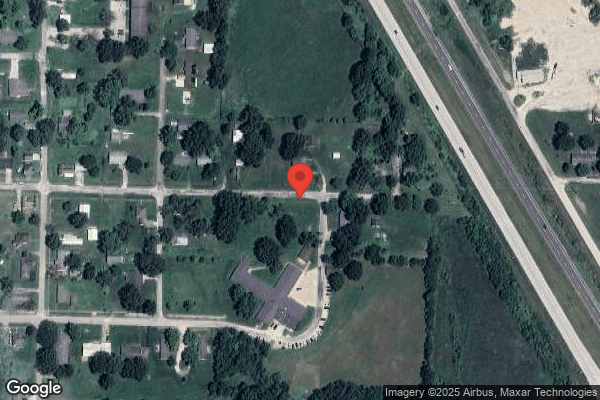
Nov 2022 1 deficiency 1 Harm
SERIOUS (G) 📢 Someone Reported This

A family member, employee, or ombudsman was alarmed enough to file a formal complaint

Actual Harm - a resident was hurt due to facility failures

Accident Prevention (Tag F0689)

A resident was harmed · This affected 1 resident

**NOTE- TERMS IN BRACKETS HAVE BEEN EDITED TO PROTECT CONFIDENTIALITY** Based on observation, interview, and record review, the facility failed to provide adequate supervision and oversight to prevent...

Read full inspector narrative →
**NOTE- TERMS IN BRACKETS HAVE BEEN EDITED TO PROTECT CONFIDENTIALITY** Based on observation, interview, and record review, the facility failed to provide adequate supervision and oversight to prevent falls for one resident, Resident #1, in a review of four sampled residents. The facility failed to implement and revise fall prevention interventions as indicated on the resident's care plan. Resident #1 had multiple falls with injuries. The facility census was 46. Review of the facility policy, revised March 2018, titled Falls - Clinical Protocol, showed the following: -The physician will help identify individuals with a history of falls and risk factors for falling: -Staff will ask the resident and the caregiver or family about a history of falling; -The staff and physician will document in the medical record a history of one or more recent falls (for example. within 90 days); -While many falls are isolated individual incidents, a few individuals fall repeatedly. Those individuals often have an identifiable underlying cause; -In addition, the nurse shall assess, and document/report the following: -Precipitating factors, detail on how fall occurred; -The staff and practitioner will review each resident's risk factors for falling and document in the medical record; -The physician will identify medical conditions affecting fall risk (for example, a recent stroke or medications that cause dizziness; or hypotension) and the risk for significant complications of falls (for example, increased fracture risk in someone with osteoporosis or increased risk of bleeding in someone taking an anticoagulant); -The staff will evaluate and document falls that occur while the individual is in the facility; for example when and where they happen, any observations of the events, etc.; -Cause Identification: For an individual who has fallen, the staff and practitioner will begin to try to identify possible causes within 24 hours of the fall; -Treatment/Management: Based on the preceding assessment, the staff and physician will identify pertinent interventions to try to prevent subsequent falls and to address the risks of clinically significant consequences or falling; -Monitoring and Follow-Up: The staff with the physician's guidance, will follow up on any fall with associated injury until the resident is stable and delayed complications such as late fracture or subdural hematoma have been ruled out or resolved. The staff and physician will monitor and document the individual's response to interventions intended to reduce falling or the consequences of falling; a. Frail elderly individuals are often at greater risk for serious, adverse consequences or falls; b. Risks of serious adverse consequences can sometimes be minimized even if falls cannot be prevented. 1. Record review of Resident #1's undated face sheet showed the resident was admitted to the facility on [DATE]. The resident's diagnoses included dementia, history of falling, pain in left knee, muscle weakness, and abnormalities of gait and mobility. Record review of the resident's care plan, dated 3/19/21, showed the following: -The resident needs assistance with activities of daily living (ADLs) and wants to stay as independent as possible while at the facility; -Encourage and give verbal cuing to do all ADLs and give extra time and approach with patience; -Follow PT/OT/ST (physical therapy, occupational therapy, speech therapy recommendations. Review of the resident's quarterly Minimum Data Set (MDS), a federally mandated assessment completed by facility staff, dated 12/22/21, showed the following: -Severely impaired cognition; diagnoses of dementia; -Independent with transfers, bed mobility, toilet use, and locomotion on and off the unit, walking in the room and corridor; -Balance during transitions and walking steady at all times; -No documentation for falls or fall history; -Cane or crutch for mobility device. Record review of the resident's progress notes, dated 1/6/22 at 9:17 P.M., showed staff documented the following: -Unwitnessed fall; -The resident lay on the floor on his/her back; -The resident was trying to unplug something; -The resident was not sure if he/she hit his/her head; -The resident had left knee pain; -The resident was sent to the local hospital by ambulance for further evaluation and treatment. Record review of the resident's hospital records, dated 1/6/22, showed staff documented the following: -Performed an x-ray of left knee; -The resident had soft tissue swelling to the left knee. Review of the resident's physician notes, dated 1/10/22, showed the resident was not dependent on a wheelchair for mobility, but does use a wheelchair occasionally when she feels weak or unstable with his/her walker. Record review of the resident's physical therapy (PT) notes dated 1/12/22 and 3/1/22, showed the following: -PT evaluated the resident on 1/12/22; -The resident received physical therapy from 1/12/22 until discharged on 3/1/22; -The resident plateaued and was independent with mobility, transfers and standing. During an interview on 11/4/22 at 1:26 P.M., the Certified Occupational Therapy Assistant (COTA) said the following: -The resident received PT therapy from 1/12/22 until discharged on 3/1/22; -The resident ambulated with a single point cane as needed; -The resident transferred with minimal assistance; -On 3/2/22 the resident began restorative therapy to exercise arms and legs by walking for 15 minutes three times a week. Review of the resident's care plan showed no documentation facility staff developed a care plan with interventions to prevent falls after the resident fell on 1/6/22 that included the use of a walker or wheelchair, a single point cane or that he/she had received physical or restorative therapy. Review of the resident's progress notes, dated 5/1/22 at 2:10 P.M., showed the resident said his/her knees bothered him/her and he/she really thought he/she needed a wheelchair. Review of the resident's medical record showed no documentation to support the resident was offered or used a wheelchair. Record review of the resident's progress notes, dated 5/20/22 at 4:54 A.M., showed staff documented the following: -Unwitnessed fall; -The resident was found sitting on his/her bottom on the floor; -The resident was returning from the bathroom; -The resident had a five centimeter (cm) area on his/her right temple with an ecchymotic (bruised) area, swelling and abrasion; -The resident fell onto his/her right knee which was bruised and painful; -The resident's right elbow and right side of his/her forehead were bruised; -The bathroom floor was wet. Record review of the resident's progress notes, dated 5/21/22 at 11:37 A.M., showed staff documented the resident had tricompartmental osteoarthritis and prepatellar (arthritis of knee) soft tissue swelling. Record review of the resident's physical therapy (PT) notes dated 5/25/22 and 6/19/22 showed the following: -The resident was evaluated for PT on 5/25/22; -The resident plateaued , independent in mobility, transfers, standing, ambulating 50 feet with two turns on 6/19/22; -Recommendation for resident to ambulate with walker with standby assist; -The resident discharged on 6/19/22. During an interview on 11/4/22 at 1:26 P.M., the Certified Occupational Therapy Assistant (COTA) said the following: -The resident received PT therapy from 5/25/22 until discharged on 6/19/22; -On 5/25/22 physical therapy recommended the resident ambulate with a walker with standby assist to strengthen his/her right leg; -The resident transferred with minimal assistance; -On 6/20/22, the resident began restorative therapy to exercise arms and legs by walking for 15 minutes three times a week. Review of the resident's care plan, last updated 5/20/22, directed staff to keep the area near the bed free of clutter or fluids. There was no update to show the recommendation for the resident to ambulate with a walker with standby assistance. Record review of the resident's progress notes, dated 5/30/22 at 6:55 A.M., showed staff documented the following: -Unwitnessed fall; -The resident was found sitting on the side of the bed; -The resident was trying to put on shoes; -The resident slid to the floor; -No injury. Review of the resident's care plan, last updated 6/7/22 (eight days after 5/30/22 fall), showed maintenance placed nonskid strips on floor in front of bed to prevent slipping when sitting on the edge of bed. Observation on 9/29/22 at 1:25 P.M. showed there were no skid strips on the floor in front of the resident's bed. During interview on 9/29/22 at 1:30 P.M. Certified Nurse Assistant (CNA) B said the following: -Staff removed the non skid strips from the resident's floor because the strips did not prevent the resident from falling, just from slipping; -The resident's family member refused a chair alarm; -The resident's walker was removed from the room because the resident would try to use it and kept falling. During an interview on 11/7/22 at 10:32 A.M. the maintenance supervisor said the following: -Maintenance staff placed nonskid strips on the resident's floor on 6/7/22; -Maintenance staff removed the nonskid strips on 9/25/22. Staff said the nonskid strips were keeping the resident from getting up safely to transfer. Record review of the resident's progress notes, dated 6/10/22 at 7:15 A.M., showed staff documented the following: -Unwitnessed fall; -The resident was found sitting on the floor; -The resident got up to close the bathroom door and lost his/her balance when turning around; -The resident fell onto his/her buttocks and hit his/her left shoulder on the wall; -Staff reminded the resident to use his/her walker. Record review of the resident's progress notes, dated 6/11/22 at 7:21 A.M., showed the staff documented the resident had bruising to the right side of his/her face from the fall. Review of the resident's physician notes, dated 6/16/22, showed the resident continued therapy. Encourage ambulation with cane or walker, only using wheelchair when necessary. With progression of his/her dementia and recent falls, the wheelchair may become a more common thing for safety. Review of the resident's care plan, dated 6/22/22, showed an intervention put in place to monitor and ensure the resident's ambulation devices are within reach at all times. Observation on 9/29/22 at 1:25 P.M. showed the following: -The resident sat in his/her wheelchair in his/her room; -No walker, wheelchair or cane within the resident's reach or in the resident's room. Record review of the resident's progress notes, dated 6/29/22 at 12:14 A.M., showed staff documented the following: -The resident was found sitting on the floor between the bed and chair, sitting on a pillow and wrapped up in his/her blankets; -The resident said he/she rolled out of bed when turning over. Review of the resident's care plan, last updated 6/22/22, showed no documentation facility staff evaluated current interventions or implemented new interventions to prevent falls after the resident fell out of bed on 6/29/22. Record review of the resident's progress notes, dated 7/5/22 at 2:45 P.M., showed staff documented at 6:20 A.M., the resident slid to the floor. No injuries. During an interview on 11/4/22 at 1:26 P.M., the COTA said the following: -The resident received PT therapy from 7/7/22 until he/she discharged on 7/12/22; -On 7/7/22 the physical therapy recommendation was for the resident to ambulate with a walker and with standby assist to strengthen his/her right leg; -The resident transferred with minimal assist; -The resident was evaluated and treated by occupational therapy (OT) on 7/12/22 until he/she was discharged on 8/19/22; -OT recommendation to educate the resident and staff on assisting the resident to maintain balance and need for assist. Review of the resident's care plan, last updated 7/6/22 showed the resident was referred to PT. There was no update to show the PT recommendations for walker use and stand by assist or restorative therapy. Record review of the resident's progress notes, dated 7/7/22 at 5:27 P.M. showed staff documented the following: -The resident was found on the floor in front of the bathroom door, sitting on his/her bottom, feet out in front of him/her; -The resident's roommate was in a wheelchair in front of the resident's feet; -The resident said he/she was trying to help his/her roommate get to the toilet, his/her feet slid out from under him/her and he/she landed on his/her bottom. Record review of the resident's progress notes, dated 7/7/22 at 6:05 P.M. and 6:24 P.M., showed staff documented the following: -Unwitnessed fall; -The resident ambulated with a walker from outside to inside the facility; -The resident hit the right side of his/her head on the dresser in the lobby area; -The resident with ½ inch gash to right forehead; complained of pain in head; -The resident with small bruise to right thumb; -911 called and are enroute; -Orders were received to send the resident to local hospital for evaluation and treatment. Record review of the resident's progress notes, dated 7/7/22 at 6:49 P.M. showed staff documented the resident was transferred to the local hospital for stitches. Record review of the resident's progress notes dated 7/8/22 at 1:29 A.M., showed staff documented the following: -Call made to local hospital and hospital staff said the resident was being admitted to local hospital for observation for a large hematoma to his/her right hip (as a result of the 7/7/22 fall); -Hospital staff said the resident's right leg was slightly shorter and he/she had a knee immobilizer to his/her right knee; -CT scan (form of x-ray) showed no fractures; -He/She had received five stitches to his/her head. Record review of the resident's progress notes, dated 7/8/22 at 12:15 P.M. showed the resident returned to facility from the local hospital. Review of the resident's medical record showed no documentation staff attempted to identify the root cause of the resident's fall on 7/7/22. Review of the resident's care plan, last updated 7/6/22, showed no documentation of the resident's falls on 7/7/22, and no documentation the resident went to the hospital and returned with a knee immobilizer or received stitches to the head. Record review of the resident's progress notes, dated 7/9/22 at 1:07 P.M. and 1:12 P.M., showed staff documented the following: -Resident had another fall (assisted to floor); -Staff notified the physician, verified supplemental O2 (oxygen) order; -The resident unaware of previous fall. Record review of the resident's PT notes dated 7/9/22 showed the resident was evaluated and began therapy on 7/9/22. Review of the resident's care plan, last updated 7/6/22, showed no documentation facility staff updated the resident's care plan documenting the fall of 7/9/22, the implementation of supplemental oxygen, physical therapy evaluation, or any new interventions put in place to prevent falls. Review of the resident's physician notes dated 7/14/22, showed the resident is having numerous falls, dementia progression and short-term memory very poor. He/She has repeatedly attempted to get up for one reason or another and then loses balance, slips and falls. All available fall precautions in place. However, he/she just does not remember to move slowly/carefully or with an assistive device. Orthostatic blood pressure checked and appears to be non-contributory. He/She has an orthopedic surgeon consult. Follow-up in one month. Record review of the resident's progress notes, dated 7/18/22 at 12:20 A.M. showed staff documented the following: -The resident was found sitting on the floor by his/her bed; -The resident said he/she was going to bathroom and when he/she stood up, his/her legs gave out. Review of the resident's care plan, last updated 7/6/22, showed no documentation facility staff updated, determined precipitating factors, evaluated or implemented new interventions after the resident's fall on 7/18/22. Review of the resident's significant change MDS, dated [DATE], showed the following: -Severely impaired cognition; -Independent with ambulation in room and unit; -Limited assistance of one person with transfers; -Balance during transitions and walking steady at all times; -Walker and wheelchair needed for mobility; -Two or more falls since admission or prior assessment with no injury; -One fall with major injury. Record review of the resident's progress notes, dated 7/29/22 at 9:22 P.M. showed staff documented the resident was helping his/her roommate and slid onto his/her knees. Review of the resident's physician order sheets showed an order dated 7/29/22 to discontinue the resident's immobilizer (hinged knee brace) and start progressive weight bearing with physical therapy, to include gait training and strengthening. Review of the resident's care plan, last updated 7/6/22, showed no documentation facility staff updated, or put new interventions in place after his/her fall on 7/29/22. Record review of the resident's progress notes, dated 8/9/22 at 6:50 P.M., showed staff documented the following: -The resident said he/she was packing up his/her belongings, lost balance and sat down on the floor; -Staff explained needing assistance with ambulation and call light in reach. (The physician's note dated 7/14/22 showed the resident's dementia had progressed, he/she had very poor short-term memory, and did not remember to use an assistive device when walking. Staff reminded the resident he/she needed assistance to use his/her call light after the resident fell on 8/9/22. Review showed no evidence staff implemented effective interventions after the resident fell.) Record review of the resident's progress notes, dated 8/12/22 at 4:20 P.M. showed staff documented the following: -Staff found the resident on his/her back on the floor; -The resident had a skin tear on his/her right forearm that measured 3 centimeters (cm) x 0.1 cm; -Another skin tear to his/her right forearm 2.5 cm x 0.1 cm; -Large hematoma to occipital area (back of the head) 3 cm x 3 cm ; -The resident complained of back pain, rated 8/10 (pain scale 1-10) and headache; -Skin tears cleaned and dressing applied; -Ice pack given for hematoma. Review of the resident's medical record showed no documentation staff attempted to identify the root cause of the resident's fall on 8/12/22. Review of the resident's care plan, last updated 8/18/22, showed staff was to provide the resident with a walker when able to safely ambulate with staff in room and encourage wheelchair use when not safe to walk. (the implementation of the walker was already a therapy recommendation on 7/7/22). Review of the resident's medical record showed no documentation as to who was to determine, or how it was to be determined, when the resident was not safe to walk and was to use a wheelchair. Record review of the resident's PT notes dated 8/19/22, showed the following: - The resident evaluated and began therapy on 7/9/22; - The resident plateaued, with stand by assist in mobility, transfers and standing; -The resident discharged from therapy on 8/19/22. Record review of the resident's progress notes, dated 8/23/22 at 7:30 P.M., showed staff documented the following: -Staff found the resident sitting on the bathroom floor; -The resident was very confused, talking to people who were not there; -Two staff assisted the resident into his/her wheelchair; -The resident was brought to the nurses desk for safety. Review of the resident's medical record showed no documentation staff identified the root cause of the resident's fall, and no documentation staff evaluated current interventions or update the care plan with new interventions after the resident fell 8/23/22. Record review of the resident's progress notes, dated 8/23/22 at 10:00 P.M. showed staff documented the following: -Staff heard the resident crying; -Entered his/her room and the resident was found sitting on the floor in front of his/her closet; -The resident said he/she was trying to find clothes for the boys to wear; -The resident's left leg was slightly shortened and rotated outward and the resident flinched with palpation (using hands while checking the body) to the posterior (back side) upper thigh; -The resident was sent to the local hospital for evaluation. Review of the resident's hospital emergency department records dated 8/24/22 showed the following: -Diagnosis was fall and pain in left hip; -Left hip and pelvis x-ray due to left hip pain; -discharged to facility, condition improved. Review of the resident's progress notes, dated 8/24/22 at 4:30 A.M., showed staff documented the following: -The resident returned to the facility from the hospital; -The emergency room nurse reported no fracture of the hip. Review of the resident's hand written care plan, showed staff added an intervention on 8/23/22 (no time), instructing staff to assist the resident to the bathroom after supper due to my fall. (The resident had two falls on 8/23/22, since the added intervention is not timed, it is unclear which fall this intervention is intended, neither fall involved the resident going to the bathroom or being found in the bathroom, one fall at 7:30 P.M. and the other at 10:00 P.M.) Review of the resident's progress notes, dated 8/24/22 at 4:18 P.M., showed staff documented they faxed the resident's physician about the resident falling and his/her behaviors and to request to increase Seroquel (antipsychotic medication). Review of the resident's physician order sheet, dated 8/27/22 at 12:42 P.M., showed staff documented orders were received to increase the resident's Seroquel to 50 milligrams (mg) in the morning and 25 mg at bedtime. Diagnoses included dementia and depression. Record review of the resident's progress notes, dated 8/31/22 at 6:45 P.M. showed staff documented the following: -Found the resident laying on the floor in front of his/her doorway; -The resident said he/she was brushing his/her patient's hair and lost balance. Review of the resident's care plan dated 8/31/22, handwritten intervention showed, Res (resident) education not to help roommate d/t (due to) my poor balance. (The physician's note dated 7/14/22 showed the resident's dementia had progressed, he/she had very poor short-term memory. Review showed no evidence staff implemented effective interventions after the resident fell on 8/31/22.) Review of the resident's progress notes, dated 9/1/22 at 5:03 P.M. showed the resident had a change in mental status. There resident was hard to arouse. Physician notified with orders to sent to the hospital for evaluation to treat. Review of the resident's progress notes, dated 9/1/22 at 10:23 P.M. showed the resident returned to the facility from the hospital with diagnosis of UTI (urinary tract infection) and was started on antibiotics Review of the resident's emergency department hospital records dated 9/1/22 showed the following: -The resident fell from an upright position while walking; -The resident has had multiple falls; -The resident is deconditioned; -Diagnosis of urinary tract infection, multiple falls Review of the resident's progress notes, dated 9/4/22 at 7:27 A.M., showed staff documented the following: -Seroquel 50 mg order changed to twice daily on 9/2/22; -Discontinued order for Seroquel 50 mg every morning. Review of the resident's progress notes dated 9/4/22 at 12:42 P.M., showed a dose increase of the resident's Seroquel at night. Review of the mayoclinic.org website, specifically for the medication Seroquel, showed precautions included: -This medicine should not be used to treat behavioral problems in older adult patients who have dementia or Alzheimer disease; -Seroquel may cause drowsiness, trouble with thinking, trouble with controlling body movements, or trouble with your vision, which may lead to falls, fractures, or other injuries; -Dizziness, lightheadedness, or fainting may occur, especially when you get up suddenly from a lying or sitting position. Review of the resident's physician notes, dated 9/8/22, showed the following: -Nursing staff are concerned the resident's memory is worsening, and the resident becomes upset when staff redirect him/her. -The resident continues to fall, mostly out of bed, likely because he/she has forgotten that he/she needs assistance; -The resident started on Depakote (anticonvulsant also used for bipolar disorders (mental illness). Review of the resident's care plan dated 9/8/22, showed staff documented handwritten intervention please monitor as I started Depakote for my behaviors. (no description of what behaviors were) Review of the goodrx.com website, specifically for the medication Depakote, showed Depakote is often used to reduce aggressive behavior in elderly patients with dementia. These drugs can unfortunately cause dizziness, confusion, and sedation as side effects. Record review of the resident's progress notes, dated 9/12/22 at 8:28 P.M., showed staff documented the following: -Staff heard the resident yelling for help; -The resident was found sitting on floor next to the bed; -The alarm on the closet was on, but did not sound with movement as it should have; -The resident said he/she slid out of bed when reaching to get a drink from bedside table; -No apparent injury. Review of the resident's care plan dated 9/12/22, showed an intervention including staff education about alarm to make sure on when I'm in bed. (this was not an effective intervention as the resident knew how to turn the alarm off). Review of the resident's significant change MDS, dated [DATE], showed the following: -Severely impaired cognition; -Independent with ambulation in room and unit; -Limited assistance of one person with transfers; -Balance not steady during walking; -Walker and wheelchair needed for mobility; -Two or more falls since admission or prior assessment with no injury; -One fall with major injury. Review of the resident's physical therapy note dated 9/27/22 showed the following: -PT evaluated the resident; -The resident received PT therapy from 9/27/22 (certification service until 10/26/22); -The resident is at risk for decrease in level of mobility and falls; -The resident is oriented to person; - Therapy recommendation, the resident would benefit from a wheelchair alarm. Record review of the resident's progress notes, dated 9/28/22 at 12:21 A.M , late entry for 9/27/22 at 7:00 P.M., showed staff documented the following: -Witnessed fall by another resident; -The resident lost balance after standing up from his/her wheelchair to turn around to see another resident and sat on his/her bottom on the floor; -Staff assisted back into wheelchair. Review of the resident's medical record showed no documentation staff identified the root cause of the resident's fall, and no documentation staff evaluated current interventions or update the care plan with new interventions after the resident fell on 9/27/22. Observation on 9/29/22 at 1:25 P.M. showed the following: - The resident sat in his/her wheelchair; - No walker or cane in room. During an interview on 9/29/22 at 1:26 P.M. the resident said the following: - He/She does not know where his/her walker went and he/she used to have one; - He/She does not remember having falls; - He/She does not want to fall. Review of the resident's fall risk assessment dated [DATE] showed the following: -Balance problem while standing and walking; -Change in gait pattern; -Decreased muscular coordination, unstable when making turns; -Requires use of assistive devices; -Takes medications including antidepressants, antipsychotics and narcotics; -Three or more falls; -Has cognitive, neuromuscular/functional and orthopedic conditions; -Score of 30 with a score of 10 or more representing high risk for falls. Record review of the resident's progress notes, dated 10/12/22 at 9:08 A.M. showed staff documented the following: -The resident sat on the floor next to the bed; -The resident was trying to get into the bed; -Staff assisted the resident into bed; -The resident then wanted to transfer to his/her wheel chair, transferred by staff; -Staff brought the resident to the nurses station. Review of the resident's written care plan, showed staff added an intervention on 10/12/22 (no time), instructing staff to get the resident up and toilet him/her and to remind him/her to use his/her call light. (The physician's note dated 7/14/22 showed the resident's dementia had progressed and he/she had very poor short-term memory. This fall also occured at 9:08 A.M., so toileting at midnight would not be an appropriate timely intervention.) Record review of the resident's progress notes, dated 10/22/22 at 4:06 A.M. showed staff documented the following: -The resident was found lying on the bathroom floor; -He/She had been in his/her wheelchair and then tried to ambulate, losing balance; -He/She lay on his/her left side, no shortening of legs or abnormalities, no bumps, bruises or contusions (bruises); -Assisted to wheelchair then back to toilet. Review of the resident's written care plan, showed staff added an intervention on 10/22/22 (no time), instructing staff to assist the resident to the bathroom after activities. (The fall occured at 4:06 A.M., this fall would not have been after an activity.) Record review of the resident's progress notes, dated 10/24/22 at 6:35 A.M. showed staff documented the following: -The resident was in the dining room; -The resident got out of his/her wheelchair and attempted to ambulate across the room to get another cup of coffee; (it was care planned if the resident ambulated it was to be with a walker and staff standby assist); -The resident lost his/her balance and fell onto his/her left side; -The resident complained of pain in his/her left rib cage; -Bruising noted on left rib cage from 10/21/22 fall; -The resident complained of pain in his/her ribs and with inspiration (breathing in). Review of the resident's written care plan, showed staff added an intervention on 10/24/22 (no time), instructing staff to reorient the resident to the wheelchair and assess his/her needs when he/she was restless. (The physician's note dated 7/14/22 showed the resident's dementia had progressed and he/she had very poor short-term memory. The progress note mentions nothing of the resident being restless.) During an interview on 9/29/22 at 1:30 P.M. Certified Nurse Aide (CNA) B said the following: -The resident is a fall risk; -The resident's family member refused bed and chair alarms for the resident; -The resident's family member placed a motion sensor located at end of the resident's bed mounted on the resident's closet; -The motion sensor alarms when sensing movement in the resident's room; - The motion sensor was within reach of the resident; -The resident knows how to turn off the motion sensor; -Staff know the resident knows how to turn off the motion sensor alarm due to the resident being out of bed when making rounds and the alarm was turned off; - The staff removed the skid strips from the resident's floor because it would put a stop to him/her from sliding on the floor, however the strips did not prevent the resident from falling; - The resident's walker was removed from the room due to the resident trying to use it and he/she kept falling. During an interview on 9/29/22 at 1:30 P.M., the activity director said the following: -The resident has dementia, so staff have to remind the resident to stay in h[TRUNCATED]
Aug 2019 3 deficiencies 1 Harm
SERIOUS (G)

Actual Harm - a resident was hurt due to facility failures

Accident Prevention (Tag F0689)

A resident was harmed · This affected 1 resident

**NOTE- TERMS IN BRACKETS HAVE BEEN EDITED TO PROTECT CONFIDENTIALITY** 5. Review of Resident #29's care plan, dated 9/11/18, showed the following: -The resident was at risk for falling related to bal...

Read full inspector narrative →
**NOTE- TERMS IN BRACKETS HAVE BEEN EDITED TO PROTECT CONFIDENTIALITY** 5. Review of Resident #29's care plan, dated 9/11/18, showed the following: -The resident was at risk for falling related to balance impairment and confusion; -The resident often refused assistance. Staff should re-approach the resident often and check on the resident frequently because he/she did not use the call light; -Give the resident verbal cues to use the assist device and keep it reach at all times; -If the resident is observed attempting unsafe tasks, walk the resident to the couch by the nurse's station to be in line of sight of staff; -Attempt to toilet the resident before and after each meal and during bed checks. Review of the resident's Significant Change in Status Assessment Minimum Data Set (MDS), a federally mandated assessment instrument required to be completed by facility staff, dated 11/30/18, showed the following: -Diagnoses included dementia and anxiety; -Required extensive assistance of one staff for bed mobility, transfers, walking, toilet use, and hygiene; -Utilized a walker -One fall without injury since the previous assessment. Review of the resident's nurse's note, dated 1/20/19 at 11:41 P.M., showed the resident had been in the recliner and crawled out of it while it was still reclined. Staff found the resident on the floor facing the bathroom with slippers removed. Staff assisted the resident off the floor and to the bathroom. Review of the resident's fall event report, dated 1/20/19, showed the resident fell in his/her room. No immediate interventions were listed for this fall. Review of the resident's care plan showed an update on 1/20/19 to ensure the resident had on non-skid footwear at all times. Review of the resident's nurse's note, dated 1/21/19 at 11:50 P.M., showed staff heard the resident hollering from his/her room. The resident hit the back of his/her head on the wheelchair pedal. There was a moderate amount of blood on the floor. The resident had a 2.0 centimeter (cm) puncture gash on the back of the head. Staff cleaned the area well and contacted the physician who gave orders to send the resident to the emergency room. The resident left the facility by ambulance at 12:30 A.M. Review of the resident's fall event report, dated 1/21/19, showed the resident fell in his/her room. The resident had been in bed previously. The resident sustained a laceration to the back of the head. The immediate intervention was first aide to the resident. Review of the resident's care plan showed an update on 1/21/19 that the resident could recline the recliner chair but would forget to put the foot rest down before trying to exit the chair. Staff should offer to put the foot rest down and check on the resident frequently while in the recliner. (The resident's care plan did not address the resident's fall from bed on 1/21/19). Review of the resident's nurse's note, dated 1/24/19 at 11:05 P.M., showed staff found the resident on the floor of his/her room. There was a small bump on the back of the resident's head and a minimal amount of blood. The resident reported the back of his/her head was tender and complained of pain in his/her back and rib area. Review of the resident's fall event report, dated 1/24/19, showed the resident had an unwitnessed fall and sustained a small bump to the back of the head that bled a minimal amount. There was no other information documented on the report. Review of the resident's care plan showed an update on 1/25/19 to keep the resident engaged. The resident got bored easily and was more likely to attempt unsafe tasks if left alone in the room. Include the resident in activities and keep the resident in areas that help keep him/her stimulated. Review of the resident's nurse's note, dated 1/28/19 at 7:50 A.M., showed staff found the resident on the floor between the bed and the recliner. The resident complained of pain in the right hip area and would not bear weight on the right leg. The physician ordered the resident be sent to emergency room for evaluation. The resident returned to the facility at 12:03 P.M. the same day. The x-rays of the pelvis and hip were negative for fractures. The resident was found to have a urinary tract infection and received orders for antibiotic therapy. Staff did not complete a fall event report for the resident's fall on 1/28/19. Review of the resident's care plan showed an update on 1/28/19, the resident was at higher risk for falls when he/she had an infection. Monitor the resident for signs and symptoms of infection. Review of the resident's care plan showed an update on 1/31/19, due to fall trends, the resident's toileting has been scheduled for 10:30 P.M. and 5:00 A.M. Review of the resident's nurse's note, dated 2/22/19 at 9:05 P.M., showed staff observed the resident trying to get out of the wheelchair into the recliner but slid to the floor before staff could reach him/her. There were no injuries noted. Review of the resident's fall event report, dated 2/22/19, showed staff observed the resident fall in his/her room. There was no injury. The immediate intervention provided for the resident was rest. Review of the resident's care plan showed an update on 2/25/19 to not leave the resident unattended in the wheelchair in his/her room. The resident would attempt to self-transfer. Toilet the resident and help him/her to the bed or recliner. Review of the resident's nurse's note, dated 2/25/19 at 9:34 P.M., showed the resident had been resting in bed. Staff then found the resident on his/her hands and knees in front of the recliner. The resident said he/she was trying to get to the bathroom. Staff assisted the resident up and to the bathroom and then back to bed. Review of the fall event report, dated 2/25/19, showed the resident fell in his/her room. There was no injury. The immediate intervention provided for the resident was rest. Review of the resident's care plan showed an update on 2/26/19 to toilet the resident before assisting him/her to bed. Review of the resident's quarterly MDS, dated [DATE], showed the following: -Required extensive assistance of one staff for bed mobility, transfers, walking, toilet use, and hygiene; -Utilized a walker -Two or more falls without injury since the previous assessment; -Two or more falls with injury since the previous assessment. Review of the resident's nurse's note, dated 3/6/19 at 8:00 A.M., showed staff found the resident on the floor in the bathroom with blood noted on the floor. Staff assisted the resident up to the wheelchair. The resident sustained lacerations to the left forehead, left cheek, and left upper arm. The physician was contacted and gave orders to send the resident to the emergency room. The ambulance arrived and the resident left the facility at 8:45 A.M. At 12:25 P.M., the hospital called the facility and reported the resident's forehead laceration was down to the skull which required sutures. The left cheek and left arm wound were cleaned and dressed. The resident was ready to be discharged back to the facility. Review of the resident's fall event report, dated 3/6/19, showed the resident fell in the bathroom. It appeared the resident got himself/herself to the bathroom, and with incontinence brief pulled down, fell and hit the left side of his/her body. The resident sustained bruising and lacerations. The immediate intervention was sending the resident to the emergency room. Review of the resident's care plan showed an update on 3/6/19, the resident would forget to use the call light and attempt to get up unassisted if left alone in the bathroom. Stay with the resident to keep him/her safe. (The resident got into the bathroom on his/her own on 3/6/19, staff did not assist the resident to the toilet). Review of the resident's nurse's note, dated 3/11/19 at 11:30 P.M., showed staff heard the resident hollering for help and found him/her on the floor on his/her bottom near the bed. The resident tried to lift himself/herself into bed. No new injuries although facial bruising remained form the previous fall. Staff assisted the resident to bed. Review of the resident's fall event report, dated 3/11/19, showed the resident had an unwitnessed fall in his/her room. The resident had been returning from the bathroom. The immediate intervention provided was rest. Review of the resident's care plan showed no update after the fall on 3/11/19. Review of the resident's nurse's note, dated 5/2/19 at 1:57 A.M., showed the resident had no ill effects from sliding to the floor from the recliner. Staff did not complete a fall event report for the fall on 5/2/19. Review of the resident's care plan showed an update on 5/2/19 to observe the resident frequently and place in a supervised area when out of bed (repeated intervention from 10/28/18). Review of the resident's nurse's note, dated 5/9/19 at 5:39 A.M., showed staff found the resident on the floor near the foot of the roommate's bed. No injury was noted. Review of the resident's fall event report, dated 5/9/19, showed the resident had an unwitnessed fall. Staff had just assisted the resident to the bathroom and returned him/her to bed. There was no immediate intervention implemented following this fall. Review of the resident's care plan showed an update on 5/9/19 to keep the resident's walker in reach when he/she was in the recliner or bed. Review of the resident's nurse's note, dated 6/13/19 at 4:09 A.M., showed staff heard a noise and upon investigation found the resident on the floor next to the bed on his/her right side. The resident complained of right hip and pelvic pain. The right leg was rotated outward. The nurse called the physician and received an order to send the resident to the emergency room. The resident was transported to the emergency room by ambulance. At 6:54 A.M., hospital staff called and informed facility staff the resident was being admitted to the hospital for a femoral head (hip) fracture. Review of the resident's fall event report, dated 6/13/19, showed the resident had an unwitnessed fall in his/her room. There was an injury to the right hip and pelvis. Review of the resident's care plan showed no update following the fall on 6/13/19. During a telephone interview on 8/1/19 at 1:20 P.M., the MDS Coordinator said after review of some of the resident's falls it was not clear what the rationale was behind several of the interventions implemented, such as checking on the resident frequently while in the recliner on 1/21/19 when the resident had fallen from bed, or not leaving the resident unattended in the wheelchair on 2/25/19 when the resident had again fallen from bed. The MDS Coordinator did not find where any intervention had been attempted after the resident's fall on 3/11/19. The MDS Coordinator did not find a fall investigation completed for the resident's fall on 5/3/19 and felt it had been missed. The MDS Coordinator said there was no new intervention added after the resident's fall on 6/13/19 that resulted in a fracture. The resident now required assistance of two staff and was no longer able to get up on his/her own, although he/she may still attempt to do so. During a telephone interview on 8/1/19 at 1:30 P.M., the Director of Nursing (DON) said he/she expected staff to add interventions to prevent falls to the care plan. Staff discussed resident falls at a weekly meeting, and staff discussed interventions to prevent falls such as frequent monitoring. Interventions should be based on the root cause of the fall. The DON said some of the interventions for Resident #29's falls did not make sense after looking at the details of the falls, such as monitoring the resident frequently in the recliner or not leaving the resident unattended in the wheelchair when the resident had fallen from bed. Interventions to prevent falls should be reassessed periodically to determine if they are appropriate or need to be revised. 6. Review of Resident #17's face sheet showed the following: -admission date 2/23/19; -Diagnoses included Alzheimer's disease, cognitive communication deficit, major depressive disorder single episode, and anxiety disorder. Review of the resident's elopement risk assessment, completed 2/23/19, showed the following: -The resident has anger regarding facility placement; -The resident verbalizes statements about leaving; -The resident recently moved to the facility; -The resident has Alzheimer's disease; -Interventions: Activities, door alarm band (Wanderguard), occupational therapy, physical therapy, reality orientation and redirection; -The resident is at risk for elopement; -Wanderguard applied. Review of the resident's care plan for behavioral symptoms, dated 2/25/19, showed the following: -The resident wanders and has attempted to elope; -Allow the resident to call his/her family if he/she becomes difficult to redirect; -Engage the resident in self-care and physical activities to channel energy, as tolerated; -Provide safe, quiet, low-stimuli environment during delusional periods; -Redirect the resident with available activities if you see him/her packing or hear him/her talking about leaving the facility. Review of the resident's physician orders showed an order dated 3/1/19 to check Wanderguard placement three times a day. Review of the resident's quarterly MDS, dated [DATE], showed the following: -The resident made himself/herself understood and understands others; -Severe cognitive impairment; -Independent in walking throughout the facility; -Utilized a walker for mobility; -Wandering did not occur in the look back period. Review of the resident's progress notes showed on 6/8/19 at 8:05 A.M., the resident walked to his/her room and came out. He/She said he/she had packed his/her belongings and was leaving. The resident began screaming about leaving this place. Various attempts with various staff members to redirect him/her were unsuccessful. The resident began wandering throughout the facility attempting to elope. The resident said, I have to find my car. My (spouse) wants me home and I have the car. I have to go. The resident became increasingly anxious and kept saying, I have to get out of here. Review of the resident's physician's progress notes, dated 7/2/19, showed the resident continues to demand to go home when seen and states he/she does not need to be in the facility. Review of the resident's progress notes showed the following: -On 7/7/19 at 9:33 P.M., the resident kept asking for boxes to pack his/her things because I'm going home tonight and I'm going to pack my clothes out to the car. The resident was trying to find a way out. He/She stood at the nurses desk hollering he/she wanted to go home and how can we keep him/her locked up; -On 7/17/19 at 6:15 P.M., a visitor brought the resident in from outside. The visitor said he/she found the resident on the ground. The resident had scraped areas on his/her forehead, the bridge of his/her nose, chin, and both knees. The resident's Wanderguard was not on at this time. The resident said it fell off and he/she threw it away. There resident was confused about where he/she was. Review of the facility's investigation of the incident on 7/17/19, showed the Director of Nursing (DON) spoke with all staff who worked on the date of the incident. The staff said they were unaware of the resident leaving. The staff reported seeing the resident eating in the dining room at meal time, but none were sure when the resident left the dining room. The nurses station was unattended, CNAs were assisting residents, and the licensed practical nurse (LPN) and certified medication technician (CMT) were passing medications. Staff watched the cameras and noted the resident left the facility out the activity door without his/her walker. Staff did not hear any alarms. When the resident was returned to the facility, he/she was not wearing his/her Wanderguard bracelet. The resident said it broke off and he/she threw it away. Staff found the resident's walker in his/her room. During an interview on 7/31/19 at 10:30 A.M., the community member who found the resident on 7/17/19 said the following: -At approximately 6:00 P.M., he/she and his/her spouse sat on their back porch and heard someone call for help several different times; -He/She and his/her spouse drove around on their golf cart and found the resident in a driveway to a house a little over a block away; -The resident had fallen and was standing back up when he/she got to him/her. The resident had a cut on his/her nose and was bleeding. The resident did not have a walker with him/her; -The resident said he/she was looking for a family member's house. The community member asked the resident to get on his/her golf cart and he/she would take the resident to where he/she was going; -As they passed by the facility, the resident said he/she needed to stop in there first. He/She assisted the resident inside the facility and to the nurses station. Observation on 7/31/19 at 10:40 A.M., showed the community member identified the location where he/she found the resident. The driveway was made of gravel and had a culvert on either side. The driveway was across the street and down the street from the facility lawn. There were no sidewalks along either side of the street. From the driveway, along the street to the facility's grassy lawn was 45 steps, or approximately 135 feet. Along the grassy lawn to the activity door exit was 103 steps, or approximately 310 feet. During an interview on 7/30 at 8:08 A.M., the DON said the following: -The resident was always wanting to leave the facility. He/She has a Wanderguard due to his/her comments of wanting to leave; -All doors in the facility were equipped with the Wanderguard alarms; -The charge nurses check the residents' Wanderguard bracelets for placement every shift; -The exit door located by the activity room was equipped with a Wanderguard alarm and also an alarm that sounds at the nurses station when the door was open; -Earlier in the day on 7/17/19 at approximately 2:30 P.M., there was a storm in the area that caused the door alarms to go off. He/She was unsure if someone turned off the door alarms at the nurses station due to the alarm going off; -The resident left the facility through the exit door by the activity room at 5:15 P.M. as verified by the video footage. The exit door by the activity room was alarmed with a Wanderguard alarm but the resident was not wearing his/her Wanderguard bracelet; -He/She was the charge nurse on 7/17/19 and had not checked for placement of the resident's Wanderguard bracelet prior to the resident leaving the facility; -At the time the resident left the facility, no staff were present at the nurses station; -At 6:15 P.M., a visitor brought the resident back into the facility. The visitor did not say where he/she found the resident. The DON originally thought the person who brought the resident back to the facility was someone who had taken the resident out for a car ride and was bringing the resident back to the facility. Observation on 7/30/19 at 8:45 A.M. showed a box mounted on the wall behind the nurses station. The box had lights with toggle switches underneath them to turn the alarm on or off. The lights were turned on (indicating the alarms were turned on) for the North, South, and activity doors. The lights for the back entrance, the lobby and the business offices were turned off, indicating the alarms on these doors were turned off. A sign was posted on the box read, all door alarms should be turned on between 8:00 P.M. and 9:00 P.M. During an interview on 7/30/18 at 8:51 A.M., Registered Nurse (RN) G said during the day, the door alarms on the North and South doors and the activity hall door are turned on. The door alarms on the doors to the lobby, business office, and back door (staff entrance) are turned off. All the doors have a Wanderguard alarm. The resident has a Wanderguard. During interview on 7/31/19 at 2:10 P.M., Nurse Aide (NA) J said the following: -He/She arrived at the facility for his/her shift between 5:30 P.M. and 6:00 P.M. on 7/17/19. He/She went outside at 6:00 P.M. to have supper with CNA K. Another staff reported to him/her the resident had left the facility and was back; -Staff were not aware the resident was gone from the facility until after he/she returned; -After the resident returned, he/she told staff his/her Wanderguard bracelet fell off. The resident also told staff he/she left the facility through the door by the activity room; -He/She was not aware of any door alarms sounding that night. During an interview on 7/31/19 at 11:44 A.M., CNA K said he/she was outside with NA J when the resident returned to the facility. He/She did not hear any alarms to alert staff the resident had left through the activity exit door. Staff did not know the resident was gone until he/she returned to the facility. During an interview on 7/31/19 at 8:27 A.M., CNA E said the following: -He/She worked on the evening shift on 7/17/19; -He/She did not hear any door alarms sound in the facility; -He/She did not remember when he/she last saw the resident on 7/17/19. He/She was in a room with another resident when the resident arrived back to the facility. During interview on 7/30/19 at 3:05 P.M., CMT I said the following: -On 7/17/19, he/she observed the resident in the dining room for supper. The resident said he/she was going to bed and went down the hall toward his/her room. The next thing he/she knew, the resident was coming in through the front door; -He/She was working on the resident's hall when the resident was gone. He/She did not hear any alarms sound in the facility; -The resident did not have his/her Wanderguard bracelet on; -It had stormed that day around 3:00 P.M. which set off the door alarms at the nurses station. Staff shut off the alarms and turn them back on at times so they stop sounding. He/She did not turn off any alarms on 7/17/19. During interviews on 7/30/19 at 2:55 P.M. and 7/31/19 at 4:21 P.M., LPN H said the following: -He/She was the medication nurse on the evening shift on 7/17/19; -The door alarm panel located at the nurses station was going off during the evening shift on 7/17/19 due to the storms. He/She was unsure which door was alarming but he/she heard them. Someone had to reset the alarms when they sounded in order for the alarm to stop, but he/she was unsure who reset the alarms; -He/She was in the medication room when a community member brought the resident into the facility. He/She didn't think anyone noticed the resident was gone from the facility; -He/She heard the community member found the resident a couple blocks from the facility. During an interview on 7/31/19 at 1:00 P.M., the maintenance supervisor and maintenance staff M said the following: -The charge nurse was responsible to turn the door alarms on at the nurses station and lock the exit doors between 8:00 P.M. and 9:00 P.M.; -Lightening during storms will cause the Wanderguard alarms locally at the doors to alarm, however, no one has reported any problems with the door alarms located at the nurses station; -The maintenance supervisor was unsure what occurred on 7/17/19 related to the door alarms, however, he heard there was a new nurse who wasn't sure what the alarm was and what it meant and shut off the alarm; -The facility was not doing anything different related to the door and the door alarms since the incident on 7/17/19. During an interview on 7/31/19 at 4:35 P.M., the DON said the following: -The facility determined because of the storm, someone must have shut off the door alarm because the alarm did not sound when the resident left through the exit door near the activity room; -She was the charge nurse on 7/17/19, but did not check the alarm panel that evening. Social services staff turned the alarms on when they left the facility around 5:00 P.M.; -She had not discussed the problems with the door alarms alarming during a storm with the maintenance staff. During an interview on 8/1/19 at 2:45 P.M., the administrator said the Wanderguard alarm on the exit door by the business office alarms locally at the door during storms. She was not aware of any problems with the door alarms, located at the nurses station, alarming during storms. 7. Review of Resident #8's annual MDS, dated [DATE], showed the following: -Diagnoses included heart failure, high blood pressure, arthritis and depression; -Required extensive assistance of one staff for transfers; -Balance was not steady during transitions but was able to stabilize without human assistance; -Utilized a cane. Review of the resident's care plan, last revised on 5/14/19, showed the following: -The resident required assistance of one staff for activities of daily living; -Required verbal cues to complete activities of daily living; -At risk for falls due to balance problems; -Required reminders and cuing about safety; -Utilized a cane; -Had confusion and depression; -The resident was allowed to go outside and smoke unsupervised. Review of the resident's nurse's note, dated 7/20/19 at 2:59 P.M. showed the resident was not in his/her room. Staff searched the entire building. The family, DON, and administrator were notified. 911 was notified when the resident was not located after thirty minutes. Non-nursing personnel searched the outside premises. The resident was found three blocks away from the facility and staff returned the resident via personal vehicle. Review of the facility's investigation of events, dated 7/20/19, showed the following: -At 2:07 P.M. staff noted the resident was not in his/her room. Staff searched the inside and outside of the building; -Two staff searched the surrounding area in personal vehicles; -The dietary manager found the resident three blocks from the facility and returned him/her to the facilty at 2:41 P.M. During an interview on 7/29/19 at 9:33 A.M. the resident said he/she went outside to smoke. There were no set smoke times. About two or three weeks ago he/she went outside and decided to go for a walk to his/her house. It was very hot that day so he/she sat down by a tree. A neighbor found the resident under a tree. One of the staff came and brought the him/her back to the facility in a vehicle. He/She just got too hot and worn out to make it any further. During an interview CNA B said he/she worked on 7/20/19 and saw the resident go out to smoke. He/She thought the resident was with a family member. He/She went to find the resident at 2:00 P.M. and the resident was not in his/her room. Staff began looking inside and outside of the building. The dietary manager found the resident and returned him/her to the facility. It was a very hot day and the resident was hot and flushed. During an interview on 7//30/19 at 1:16 P.M. the dietary manager said he/she worked on 7/20/19 and saw the resident in the dining room at the noon meal. At about 2:00 P.M. staff asked if he/she had seen the resident. He/She offered to go look for the resident in his/her vehicle and saw a group of people standing around. He/She saw the resident seated under a tree on the ground about three blocks from the back of the facility. One of the people present was on off duty Emergency Medical Technician (EMT) and had checked the resident's vital signs. It was a very hot day and the resident was sweaty and flushed. The resident said he/she was just trying to get home but couldn't make it any further. During an interview on 7/31/19 at 8:30 A.M. and 8/1/19 at 2:40 P.M. the DON said she reviewed the facility camera footage from 7/20/19 and the resident exited through the front door of the facility at 12:17 P.M. The resident always wore long sleeved shirts and blue jeans. It was very hot on 7/20/19. There were not any current specific instructions for staff to increase monitoring of residents when they were outside during extreme temperatures. She would expect staff to increase monitoring of residents who were outside during extreme temperatures and check on them at least every 15 minutes if they observed the resident go outside. Even for those residents who had been assessed as able to go outside and smoke unsupervised. During a telephone interview on 8/1/19 at 2:45 P.M. the administrator said the facility did not have a written policy for monitoring of residents during extreme temperatures. She would expect staff to use common sense and ask the resident to smoke one cigarette instead of two and try to educate the resident on the dangers of being outside during hot temperatures. Review of the temperature history for the facility area on 7/20/19 per WeatherUndergound. com showed the following: -At 11:55 A.M. the temperature was 91 degrees Fahrenheit (F), with a relative humidity of 57%, making the heat index 97 degrees F.; -At 12:55 P.M. the temperature was 93 degrees F, with a relative humidity of 54%,making the heat index 101 degrees F; -At 1:55 p.m. the temperature was 95 degrees F, with a relative humidity of 52%, making the heat index 106 degrees F. Review of the heat index chart from Weather Undergound showed the following: -For people in high risk groups, including the elderly, for heat indices of 90-105 degrees F, should use extreme caution as this group is at particular risk for sunstroke, muscle cramps and or heat exhaustion with prolonged exposure or physical activity; -For heat indices of 15-129 degrees F, people in high risk groups were in likely danger of sunstroke and heat exhaustion, heatstroke was possible with prolonged exposure and /or physical activity. 8. Review of Resident #142's face sheet showed he/she was admitted to the facility on [DATE]. Review of the resident's physician order sheet (POS) for July 2019 showed an order for oxygen at four liters per nasal cannula. Review of the resident's Smoking Evaluation, dated 7/23/19, showed the following: -The resident smokes cigarettes; -He/She wears oxygen continually and needs help taking it off to smoke; -In a wheelchair, needs help to go out to smoke. Review of the resident's care plan, dated 7/23/19, showed the following: -He/She smokes cigarettes; -He/She requires direct supervision while smoking; -The resident's oxygen must be removed and left in the building while he/she smokes. Observation on 7/30/19 at 8:30 A.M. showed CNA F propelled the resident outside the front entrance door in a wheelchair. The resident had a portable oxygen tank on the back of the wheelchair. Once outside, CNA F removed the resident's nasal cannula from his/her nose, laid the tubing on top of the oxygen tank, and turned the oxygen regulator to zero. CNA F assisted the resident to light a cigarette. The resident smoked his/her cigarette with the oxygen tank in place on the back of his/her chair. A few moments later, the Social Service Director went outside and removed the oxygen tank from the resident's wheelchair and placed it in a holder in the front entryway of the building. Observation on 7/31/19 at 8:10 A.M., showed the following; -The resident sat outside in his/her wheelchair smoking a cigarette; -An oxygen tank and tubing were attached/located on the resident's wheelchair; the oxygen tubing hung over the handle of the wheelchair, the oxygen was turned off, the oxygen tank level was at 100 psi (pounds per square inch); -The DON sat on a bench with the resident; -The DON then walked inside the building and Social Service Director (SSD) went outside and removed the oxygen tank and tubing from the resident's wheelchair, took the tank inside the building and then remained with the resident outside. During interview on 7/31/19 at 8:18 A.M., the SSD said the following: -She tries to monitor the smoking and remind staff as they go out the door to take the tank and tubing off the wheelchair and leave it in the carrier by the door; -The oxygen tank should not be outside with the resident when smoking; -The char[TRUNCATED]
CONCERN (E)

Potential for Harm - no one hurt, but risky conditions existed

Medication Errors (Tag F0758)

Could have caused harm · This affected multiple residents

**NOTE- TERMS IN BRACKETS HAVE BEEN EDITED TO PROTECT CONFIDENTIALITY** 3. Review of Resident #2's care plan, dated 9/25/18, showed the following: -The resident had poor memory/recall related to demen...

Read full inspector narrative →
**NOTE- TERMS IN BRACKETS HAVE BEEN EDITED TO PROTECT CONFIDENTIALITY** 3. Review of Resident #2's care plan, dated 9/25/18, showed the following: -The resident had poor memory/recall related to dementia; -The resident often forgot what he/he had been told. The resident obsessed about his/her shower through the early morning hours; -Allow the resident to sit on the couch and wait for his/her shower and redirect the resident with validation, redirection, and distraction techniques. Review of the resident's care plan, dated 10/29/18, showed the following: -The resident could be disruptive by asking for showers over and over. Staff should try offering snacks and reminding the resident he/she had already had a shower; -The resident has anxiety and was most anxious when he/she wanted to take a shower. The resident would ask to take more than one shower a day and would ask repeatedly for a shower when he/she was anxious. Remind the resident he/she had already had a shower and could take another shower tomorrow; -Offer the resident snacks or something to do to help with anxiety. Review of the resident's Physician Orders for December 2018 showed an order for Seroquel 12.5 milligrams by mouth at bedtime (order date of 11/9/18) for anxiety and depression. Review of the resident's Pharmacy Consult dated 12/12/18 requesting a GDR for Seroquel 12.5 mg PO at HS was declined by the physician, stating the medication was required for OCD (obsessive compulsive disorder) symptoms. Review of the resident's Quarterly Minimum Data Set (MDS, a federally mandated assessment instrument, required to be completed by facility staff), dated 12/21/18, showed the following: -Diagnosis of dementia; -No hallucinations or delusions were present; -No physical, verbal, or other behaviors were present; -Rejection of care did not occur; -Wandering did not occur; -Received antipsychotic medication seven out of seven days; -A gradual dose reduction (GDR) was attempted on 11/9/18; -A GDR had not been documented by a physician as clinically contraindicated; -Medication follow up was not assessed. Review of the resident's physician progress note, dated 3/5/19, showed the resident received Seroquel 12.5 milligrams (mg) by mouth at bedtime since 11/9/18 for anxiety and depression. Review of the resident's nurse's note, dated 3/14/19, showed Seroquel 12.5 mg by mouth at bedtime was discontinued due to stable behaviors. Review of the resident's physician orders showed the Seroquel 12.5 mg by mouth at bedtime was discontinued on 3/14/19. Review of the resident's physician progress note, dated 5/7/19, showed the following: -Chronic conditions: 1.) Unspecified dementia without behavioral disturbance (onset 9/4/18); -The resident appeared to be at his/her baseline mental status though nursing reports he/she had been more tearful of late; -During the exam the resident appeared to be acting the same way he/she did every time the physician saw him/her; -There had been no reports of episodes of psychosis or increased confusion. Review of the resident's nurse's notes showed the following: -On 6/10/19 at 5:51 A.M. the resident remained in his/her room except for short excursions to reset the television with remote. The resident walked down to the shower room at 4:00 A.M. for a shower and was very loud at times, and expressed being tired of waiting; -On 6/12/19 at 5:56 A.M. The resident walked to the common area about 2:00 A.M. and then back to his/her room. The resident returned to the common area about 4:00 A.M. and was very impatient and wanted a shower. The resident's short term memory was poor; -On 7/3/19 at 1:21 A.M. the resident's laboratory blood work results were faxed to the physician. There were no other nurse's notes documented for the resident between 7/3/19 and 7/11/19. Review of the resident's nurse's note, dated 7/11/19 at 3:24 P.M., showed the resident's family member called the facility and reported the resident's mind was racing and he/she was calling the family member more frequently. The family member thought the resident should be put back on the medication that was discontinued. A fax was sent to the physician regarding the medications that were discontinued. Review of the resident's nurse's note, dated 7/12/19 at 10:26 A.M. showed an order was received to restart Seroquel 25 mg daily. Review of the resident's physician orders showed on 7/12/19 an order for Seroquel 25 mg by mouth daily for a diagnosis of unspecified dementia without behavioral disturbance. Review of the resident's care plan, revised 7/12/19, showed the following: -Takes an antipsychotic medication for major depression; -Assess mood and behaviors before and after initiation of medications, report worsening of mood or behaviors to the physician; -Monitor medication and dose to make sure it is appropriate. Notify the physician if there is any change in mood, suicidal thoughts or actions, increased symptoms of challenging behaviors over sedation noted. Review of the resident's Quarterly MDS, dated [DATE], showed the following: -Diagnoses of dementia and anxiety; -No hallucinations or delusions were present; -No physical, verbal, or other behaviors were present; -Rejection of care did not occur; -Wandering did not occur; -Received antipsychotic medication five out of seven days; -A GDR had not been documented by a physician as clinically contraindicated; -Medication follow up was not assessed. There were no nurses notes documented for the resident from 7/12/19 at 10:26 A.M. through 7/17/19 at 9:03 A.M. Observation on 7/29/19 at 10:38 A.M. showed the resident sat in his/her room in a recliner chair. The resident had a calm affect and sat quietly in his/her room. Observation on 7/30/19 showed the following: -At 6:23 A.M. the resident sat in a recliner in his/her room with both eyes closed; -At 8:27 A.M. the resident walked up the hallway toward the shower room with hygiene supplies and a change of clothing. The resident sat quietly on a couch outside the shower room door; -At 8:35 A.M. staff assisted the resident into the shower room for a shower. During an interview on 7/31/19 at 9:51 A.M. Certified Nurse Aide (CNA) said the resident declined assistance with toileting and personal hygiene. The resident requested showers frequently and was up and down a lot at night. The resident was usually easily redirected. CNA B was not aware of any other behaviors displayed by the resident. During an interview on 7/31/19 at 9:55 A.M. the MDS Coordinator said the resident's Seroquel was discontinued on 3/14/19. The resident had recently started calling a family member frequently at night and the family member requested the resident be put back on the Seroquel. The physician was faxed and gave the order to do so. The indication for the Seroquel was a diagnosis of dementia without behavioral disturbance. Staff should document behavior charting every shift for three days after a psychotropic medication had been started. This would be found in the nurse's notes. 4. Review of Resident #31's care plan, dated 10/1/18, showed the following: -The resident was at risk for adverse consequences related to receiving antipsychotic medication for the treatment of dementia with behavioral disturbances; -Seroquel (antipsychotic medication) was reduced on 10/10/18; -Monitor the resident's behavior and response to medication; -Review for continued need at least quarterly. Review of the resident's care plan, dated 10/23/18, showed the following: -The resident had memory and recall impairment and impaired decision making due to dementia; -If the resident became agitated or restless, offer him/her a baby doll and ask him/her to hold it; -Offer activities that are meaningful to the resident and help redirect the resident when he/she was confused; -Use verbal cueing and alternative forms of communication to help the resident understand. The resident might need more time to form a response; -Validate the resident's feelings when he/she was confused and became upset. Review of the resident's physician orders for January 2019 showed the following: -Diagnoses included dementia with behavioral disturbance and major depressive disorder; -Seroquel (antipsychotic medication) 12.5 milligrams (mg) by mouth daily (start date of 10/10/18). Review of a fax to the resident's physician, undated, showed the resident was taking Seroquel 12.5 mg, for a diagnosis of dementia with behavioral disturbance and asked for a gradual dose reduction (GDR) attempt. The physician responded on 1/2/19 and declined the reduction attempt, stating the current medication regimen was indicated and appropriate. Review of the resident's Quarterly Minimum Data Set, (MDS, a federally mandated assessment instrument, required to be completed by facility staff), dated 1/3/19, showed the following: -Diagnoses of dementia and depression (other than bipolar); -No hallucinations or delusions were present; -No physical, verbal, or other behaviors were present; -Rejection of care did not occur; -Wandering did not occur; -Received antipsychotic medication seven out of seven days; -A gradual dose reduction (GDR) was attempted on 10/3/18; -The physician documented a GDR as clinically contraindicated on 1/2/19; -Medication follow up was not assessed. Review of the resident's Physician Progress note, dated 4/2/19, showed the following: -Diagnosis of unspecified dementia without behavioral disturbance (onset 9/4/18); -The resident was at his/her baseline cognition of nonverbal, there were no new concerns at that time. Review of the resident's Quarterly MDS, dated [DATE], showed the following: -Diagnoses of dementia and depression (other than bipolar); -No hallucinations or delusions were present; -No physical, verbal, or other behaviors were present; -Rejection of care did not occur; -Wandering did not occur; -Received antipsychotic medication seven out of seven days; -A gradual dose reduction (GDR) was attempted on 10/3/18; -The physician documented a GDR as clinically contraindicated on 1/2/19; -Medication follow up was not assessed. Review of the resident's pharmacy consult, dated 4/5/19, showed the resident was on Seroquel 12.5 mg by mouth at bedtime for a diagnosis of dementia and it was time to address a GDR for the medication. The physician responded on 4/8/19 the resident was on the lowest possible dose of Seroquel. Review of the resident's social service progress note, dated 4/5/19 showed the resident was doing okay. The resident seemed more tearful lately. The resident continued to use a wheelchair for mobility and ate all meals in the dining room. There were no new issues at that time. Review of the resident's pharmacy consult, dated 5/21/19, showed the resident had an order for Seroquel 12.5 mg by mouth at bedtime since 10/10/18. It was time for a dose reduction attempt. Since the resident was on the lowest possible dose available, the pharmacist asked to please discontinue the medication. The physician declined the request on 5/24/19, and said the resident was doing well on this dose. Review of the resident's Annual MDS, dated [DATE], showed the following: -Diagnoses of dementia and depression (other than bipolar); -No hallucinations or delusions were present; -No physical, verbal, or other behaviors were present; -Rejection of care did not occur; -Wandering did not occur; -Received antipsychotic medication seven out of seven days; -A gradual dose reduction (GDR) was attempted on 10/3/18; -The physician documented a GDR as clinically contraindicated on 5/24/19; -Medication follow up was not assessed. Review of the resident's social service progress note, dated 7/8/19, showed the resident was doing okay. He/she continued to use the wheelchair for mobility and ate all meals in the dining room. The resident could be tearful at times and liked to hold the baby doll. There were no new issues at that time. Observation on 7/29/19 showed the following: -At 11:44 A.M. the resident sat in his/her recliner chair, leaned to the left and drooling. The resident did not respond when his/her name was called several times; -At 12:20 P.M. the resident was seated in a wheelchair with both eyes closed in the dining room being fed by staff; -At 2:19 P.M. the resident sat quietly in the recliner chair in his/her room. Observation on 7/30/19 showed the following: -At 6:15 A.M. the resident sat in a wheelchair at the nurse's station making some quiet vocalizations and shaking his/her hands; -At 8:01 A.M. the resident sat in a wheelchair in the dining room at the table. The resident had both eyes closed and his/her chin rested on his/her chest; -At 11:52 A.M. staff fed the resident as he/she sat in wheelchair in the dining room. The resident leaned to the left and his/her eyes closed part of the time but did open his/her mouth and take bites and drinks as staff offered them; -At 12:06 P.M. the resident sat in a recliner chair in his/her room quietly with both eyes closed. Observation on 7/31/19 showed the following: -At 7:36 A.M. the resident lay in bed quietly with both eyes closed; -At 8:08 A.M. Certified Nurse Aide (CNA) B and CNA C assisted the resident to sit on the side of the bed and transferred the resident to the wheelchair. Resident did make some quiet vocalizations but was not combative with staff. The resident was cooperative with care and did not strike out. During an interview on 7/31/19 at 8:15 A.M. CNA B said the resident would try and hit staff at times during care but he/she was easily redirected. The resident would cry out at times but staff could usually console the resident by talking with him/her. CNA B was not aware of any other behaviors exhibited by the resident. During an interview on 7/31/19 at 9:56 A.M. the MDS Coordinator said the resident was on Seroquel for the diagnosis of dementia. A dose reduction was attempted in the past (prior to 10/10/18) but it did not go well. The resident was up and down a lot and hitting at staff and crying out. The resident would swat at staff and would refuse care at times. If these behaviors were present staff should document them in the nurse's notes. The resident had been on Seroquel 12.5 mg at bedtime since 10/10/18. There had not been any attempts made to discontinue the Seroquel. There was no documentation found in the resident's nurse's notes regarding combative behavior or refusal of care from January 2019 through July 2019. 5. Review of Resident #17's face sheet showed the following: -admission date 2/23/19; -Diagnoses included Alzheimer's disease, cognitive communication deficit, major depressive disorder single episode, and anxiety disorder. Review of the resident's progress notes showed the following: -On 2/24/19 at 8:40 A.M., the resident on several occasions states he/she doesn't know why he/she can't go home. The resident is easily redirected; -On 2/25/19 at 10:42 P.M., the resident has been up and down the hall asking everyone if they have given his/her family member his/her medications because he/she can't find them. Review of the resident's care plan for behavioral symptoms, dated 2/25/19, showed the following: -The resident wanders and has attempted to elope; -Allow the resident to call his/her family if he/she becomes difficult to redirect; -Engage the resident in self-care and physical activities to channel energy, as tolerated; -Praise the resident when he/she uses effective coping skills; -Provide safe, quiet, low-stimuli environment during delusional periods; -Redirect the resident with available activities if you see him/her packing or hear him/her talking about leaving the facility. Review of the resident's progress notes showed the following: -On 2/26/19 at 10:39 P.M., the resident was up and agitated most of the evening pacing the halls and stating he/she does not know why he/she is in this place. Hard to redirect and have tried using the phone several times without success. He/She is agitating his/her roommate as well. Stays in bed for short periods of times and is right back up. -No further documentation to show the resident had agitation or behaviors from 2/27/19 through 3/1/19. Review of the facility's fax to the resident's physician, undated, showed the following: -We are having issues with evening agitation. May we have something for agitation? -The physician responded on 3/1/19, to start Seroquel (an antipsychotic medication) 50 milligrams (mg) at bedtime (HS) for agitation. Review of the resident's physician orders, dated 3/1/19, showed an order for Seroquel 50 mg daily for anxiety disorder. Review of the resident's progress notes showed the following: -On 3/1/19 at 5:29 P.M., received orders for Seroquel 50 mg at HS for agitation. -On 3/1/19 at 5:56 P.M., the social services director overheard the resident upset in the hallway talking with another employee. The resident had just gotten off the phone with his/her family member. The resident's family member had told the resident several things that upset him/her. The SSD walked the resident to his/her room and got him/her a soda. The resident calmed down. Review of the resident's care plan for psychotropic medication use, dated 3/1/19, showed the following: -The resident is at risk for adverse consequences related to receiving antipsychotic medication for treatment of agitation; -The physician ordered Seroquel 50 mg at bedtime. Monitor this medication and dose to make sure it is the lowest appropriate dose for the resident. -Updates dated 3/4/19: Attempt a gradual dose reduction if not contraindicated. Monitor the resident's behavior and response to medication. Pharmacy consult reviews. Review of the resident's admission MDS, dated [DATE], showed the following: -The resident made himself/herself understood and understands others; -Severe cognitive impairment; -Did not exhibit signs or symptoms of delirium. The resident did not exhibit inattention or disorganized thinking; -The resident had trouble concentrating on things that occurred two to six days in the 14-day look back period; -Wandering occurred one to three days in the look back period; -Very important to the resident to have his/her family involved in his/her care, to do things with groups of people, to do his/her favorite activities, to go outside to get fresh air when the weather is good, and to participate in religious services or practices; -Independent in walking throughout the facility; -Received an antipsychotic medication two days in the seven-day look back period; -Received an antipsychotic medication on a routine basis; -Received an antidepressant seven days in the seven-day look back period. Review of the resident's progress notes showed on 3/4/19 at 3:38 P.M., staff offered the resident the influenza and pneumonia vaccines again. The resident refused stating No, I don't want them. And I don't want him/her in my home. The resident received a phone call while in the room. The resident was unsure how to answer so the nurse assisted him/her. The resident kept repeating to the caller, I don't know what to do. I don't know what to do. I wish someone would tell me what to do. The resident looked at his/her roommate several times during this conversation. The resident said I don't want him/her in my home and I don't want him/her messing with my things. SSD notified. Review of the resident's care plan for cognitive loss/dementia, dated 3/4/19, showed the following: -The resident had memory and recall impairment. He/She had impaired decision making due to dementia; -Never argue with the resident about his/her perception of an issue, instead distract him/her by offering an activity, snack, etc to help calm him/her down; -Offer activities that are meaningful to help redirect the resident when he/she is confused; -Use verbal curing and alternative forms of communication to help the resident understand you. He/she might need more time to form a response, and you may need to rephrase questions. -Validate the resident's feelings when he/she is confused and becomes upset. Review of Consultant Pharmacist communication to the physician, dated 3/5/19, showed no evidence the pharmacist addressed the resident's Seroquel ordered 3/1/19 for anxiety disorder. Review of the facility's fax to the resident's physician, dated 3/6/19, showed the following: -The resident began on Seroquel 50 mg on 3/1/19. Documentation shows more confusion and wandering due to nursing home placement than agitation. Can you reduce to 25 mg since the resident is adjusting to placement and room change? -On 3/7/19, the resident's physician replied to change the dose of Seroquel to 25 mg at HS. Review of the resident's physician orders, dated 3/1/19, showed an order for Seroquel 25 mg daily for anxiety disorder. Review of the resident's progress notes showed the following: -On 3/17/19 around 9:00 P.M., the resident was yelling in his/her room to the person in the bathroom that he/she needed to use the bathroom. When the nurse went to the resident's room, he/she had returned to his/her recliner and asked directions to get to another town. The resident said he/she was leaving tomorrow and driving there. The resident had his/her belongings packed; -On 3/21/19 at 8:57 P.M., the resident has been going up and down the hall yelling that he/she has not had his/her medicine and he/she needs it so he/she can go to bed. Staff showed the resident where staff had popped out his/her medications and showed him/her the empty medication cup at his/her bedside. The resident said it was from this morning and he/she had not had his/her medications. Staff finally had to walk away from the situation after letting him/her know it was not appropriate to yell down the hall. Staff told the resident it was bedtime and he/she needed to go to bed. -No further documentation to show the resident had agitation or behaviors from 3/22/19 through 4/2/19. During an interview on 8/1/19 at 1:10 P.M., the MDS Coordinator said the resident was moved to another room on 4/2/19. The resident and his/her roommate from 2/23/19 through 4/1/19 often played off each other. The resident would get loud, which caused the resident's roommate to get upset, then they would both get upset and become involved in verbal altercations. Review of the physician's progress notes, dated 4/2/19 at 7:00 A.M. showed the following: -Chronic condition: Unspecified dementia without behavioral disturbances (poorly controlled). The resident states today he/she will not be staying here and there is nothing wrong with my mind repetitively during the encounter. When the resident's family member reminds the resident his/her house had been sold, the resident becomes agitated and says he/she will make the payment and move back. He/she is oriented to place and person, but not to time or situation. When we discuss some of the concerns that lead to him/her coming to the nursing home, he/she states we are wrong. Staff said the resident has been having behavior consistent with this more days than not. Staff regularly reorient him/her. -Assessment/Plan: Due to the resident's agitation, increase Seroquel to 25 mg twice daily rather than daily. -Chronic condition: Major depressive disorder, recurrent, moderate (onset 12/28/16: Fair control). The resident states he/she is upset with the current situation of being in a nursing home, but I am unsure if this is affiliated with his/her dementia and his/her depression in conjecture of more so one more than the other. When asked if he/she felt sad, the resident said it was because he/she was not in his/her own home. Staff states he/she has not been upset beyond agitation previously mentioned; -Assessment/Plan: I hope we will be able to reduce his/her agitation before the next visit and then be able to see if this is controlled by his/her current medication regimen or if his/her medication need to be changed; -Medications included: Namenda XR (medication to treat dementia) 21 mg daily, Prozac (an antidepressant medication) 20 mg daily in the morning, and Seroquel 25 mg twice daily. Review of the resident's physician orders, dated 4/2/19, showed an order for Seroquel 25 mg twice daily for anxiety disorder. Review of the resident's care plan for psychotropic medication use showed an update on 4/2/19. The resident's Seroquel was increased to twice daily today due to increased agitation. Review of the resident's progress notes showed the following: -On 4/3/19 at 7:30 P.M., the resident has been very loud and states he/she wanted to switch rooms because his/her roommate talked all night long and he/she could not get any sleep. The nurse told the resident it wasn't his/her decision to change rooms and the resident became louder and kept talking about it. Staff told the resident nothing could be done tonight and he/she needed to quiet down because others were trying to sleep. He/She continues to talk to another confused resident about not wanting to be here and making him/her upset. Staff let the resident know nothing would be done until morning so he/she needed to quit talking about it this evening. The resident began watching the movie on the television. -On 4/4/19 at 4:13 P.M., the resident is getting upset hearing another resident talk about wanting to go home. The resident is now fixated on wanting to go home as well or move rooms because his/her roommate listens to the television too loud. SSD spoke with the resident and told him/her they would move him/her as soon as a room opened up for him/her. The resident then went into the dining room to eat supper. -On 4/10/19 at 9:51 A.M., staff heard the resident yelling. The resident sat on the edge of his/her bed yelling at his/her roommate to shut up. Attempts to calm the resident. He/She put on his/her shoes and left the room; -On 4/11/19 at 7:58 P.M., the resident returned from an outing with a friend. Staff gave the resident his/her evening medications. Approximately ten minutes later, the resident said he/she had not received his/her medications and needed them. Staff reminded the resident he/she received his/her medications and wouldn't have any more this evening. The resident began yelling at staff that he/she received his/her day medications and he/she needed his/her night medications. Staff walked away from the situation and left the resident watching television at the nurses desk with another resident. Review of consultant pharmacist communication to the physician, dated 5/21/19, showed no comments this review. There was no evidence the pharmacist addressed the resident's Seroquel for anxiety disorder. Review of the resident's quarterly MDS, dated [DATE], showed the following: -The resident made himself/herself understood and understands others; -Severe cognitive impairment; -Did not exhibit signs or symptoms of delirium. The resident did not exhibit inattention or disorganized thinking; -The resident had trouble concentrating on things that occurred seven to 11 days in the 14-day look back period; -Wandering did not occur in the look back period; -Independent in walking throughout the facility; -Received antipsychotic and antidepressant medication seven days in the seven-day look back period; -Received an antipsychotic medication on a routine basis; -A gradual dose reduction had been attempted; -No documentation a gradual dose reduction was clinically contraindicated. Review of the facility's fax to the resident's physician, signed by a physician on 6/4/19, showed the following: -The resident is currently taking the following medications with the listed diagnosis: -Fluoxetine 20 mg daily for major depressive disorder; -Seroquel 25 mg twice daily for anxiety disorder; -Would you like to reduce any of these medications? The physician responded, No. -If not, please explain why a reduction is not attempted. The space provided was left blank and no explanation was provided. -Do you feel the resident is at the lowest possible dose? The physician responded, Yes. -Do you feel the benefits of these medications outweigh potential side effects the resident could experience? The physician responded, Yes. Review of the resident's progress notes showed on 6/5/19 at 9:58 A.M., the resident was doing well. He/She has adjusted well with living in the facility. He/She has not asked about going home for quite awhile. He/She has a friend and family who visit often. He/She has confusion but was easily redirected. Review of the resident's care plan for psychosocial well-being, dated 6/5/19, showed the resident has anxiety. He/She is most anxious when he/she wants to go home. When he/she is anxious, remind him/her the physician wants him/her to stay here. To help him/her with anxiety, try offering the resident a snack or see if he/she would like to watch television. Review of the resident's progress notes showed the following: -On 6/8/19 at 8:05 A.M., after breakfast, the resident walked to his/her room and came out. He/She said he/she had packed his/her belongings and is leaving. The nurse explained she had a bed here and staff was helping care for him/her. The resident began screaming about leaving this place. Various attempts with various staff members to redirect him/her were unsuccessful. The resident began wandering throughout the facility attempting to elope. One-on-one at this time. Staff walked with the resident outside the building. When back inside, the resident said I have to find my car. My (spouse) wants me home and I have the car. I have to go. The resident became increasingly anxious and kept stating, I have to get out of here. Spoke with the resident's family and physician. Order received for Ativan (antianxiety medication) 0.5 mg one time now. Will continue one-on-one. -No further documentation to show the resident had agitation or behaviors from 6/9/19 through 7/2/19. Review of consultant pharmacist communication to the physician, dated 6/18/19, showed no comments this review. There was no evidence the pharmacist addressed the resident's Seroquel for anxiety disorder. Review of the physician's progress notes, dated 7/2/19, showed the following: -Chronic condition: Unspecified dementia without behavioral disturbances (Stable). The resident continues to demand to go home when seen and states he/she does not need to be in the nursing home. He/She recently had a fall that resulted in a head injury and extensive bruising to his/her face. Staff have not noted a change in his/her mentation or personality since this fall; -Assessment/Plan: The resident is stable at this time, so no changes to be made at this time to her regiment. -Medications included: Namenda XR 21 mg daily, Prozac 20 mg daily in the morning, and Seroquel 25 mg twice daily. Review of the resident's progress notes showed the following: -On 7/4/19, the resident left with his/her family for the night; -On 7/7/19 at 9:33 P.M., the resident keeps asking for boxes to pack his/her things because I'm going home tonight and I'm going to pack my clothes out to the car. Attempted to redirect several times. The resident was trying to find a way out. He/She stood at the nurses desk hollering he/she wants to go home and how can we keep him/her locked up. Called the resident's physician and obtained a one time order for Ativan 1 mg. Medication given at 8:00 P.M. and the resident is just now calming down at 9:30 P.M.; -On 7/14/19 at 8:42 A.M., the resident has been quite confused this morning. He/She ate breakfast and returned to his/her room. Approximately 15 minutes later, she began hollering in his/her room to inquire why she has not had her morning meal. She went to the dining room and ate another breakfast without any additional complaints; -On 7/17/19 at 6:15 P.M., the resident was brought in from outside by visitor and stated he[TRUNCATED]
CONCERN (E)

Potential for Harm - no one hurt, but risky conditions existed

Menu Adequacy (Tag F0803)

Could have caused harm · This affected multiple residents

Based on observation, interview and record review, the facility failed to ensure staff served the correct portion size of protein per the dietary spreadsheet menu to all residents with a physician's o...

Read full inspector narrative →
Based on observation, interview and record review, the facility failed to ensure staff served the correct portion size of protein per the dietary spreadsheet menu to all residents with a physician's order for a mechanical soft diet and failed to offer or serve bread to all residents with an order for a regular or mechanical soft diet. The facility census was 39 residents. 1. Review of the Order Report by Category, dated 6/29/19 to 7/29/19, provided by the Dietary Manager, showed nine residents had a physician's order for a mechanical soft diet. Review of the Diet Spreadsheet, Week 3, Day 16, showed residents on a mechanical soft diet were to receive a #8 (1/2 cup) serving of ground pork chop with gravy. Observation on 7/29/19 at 11:40 A.M. showed Dietary Staff A placed a #10 scoop in the pan of ground pork chops with gravy. He/She began plating the lunch meal. Observation on 7/29/19 at 12:29 P.M. showed the lunch meal service ended. Staff served all residents on a mechanical soft diet a #10 scoop (3/8 cup) of ground pork chops with gravy instead of a #8 scoop (1/2 cup) as directed by the Diet Spreadsheet. During an interview on 7/30/19 at 9:00 A.M., the Dietary Manager said staff should know what portion sizes to use when serving an item by looking at the recipes as well as using the spreadsheet menu. 2. Review of the Order Report by Category, dated 6/29/19 to 7/29/19, provided by the Dietary Manager, showed 20 residents with a physician's order for a regular diet and nine residents had an order for a mechanical soft diet. Review of the Diet Spreadsheet, Week 3, Day 16, showed residents on a regular diet and a mechanical soft diet were to receive a bread of choice with margarine with lunch on 7/29/19. Observation on 7/29/19 between 11:40 A.M. and 12:29 P.M. during the lunch meal service showed staff served no bread on plated trays in the kitchen. Staff did not offer bread in the dining room to residents on regular diets or mechanical soft diets. Observation on 7/29/19 at 12:32 P.M. of the requested regular diet sample test tray showed staff provided no bread on the sample tray. During an interview on 7/30/19 at 9:00 A.M., the Dietary Manager said staff should know what items to prepare and serve by looking at the prep sheet that she prepares, the recipes and the spreadsheet menu for the day. Bread should have been offered in the dining room and there were probably some residents who would have eaten bread if they would have been given the bread.
Understanding Severity Codes (click to expand)
Life-Threatening (Immediate Jeopardy)
J - Isolated K - Pattern L - Widespread
Actual Harm
G - Isolated H - Pattern I - Widespread
Potential for Harm
D - Isolated E - Pattern F - Widespread
No Harm (Minor)
A - Isolated B - Pattern C - Widespread

Questions to Ask on Your Visit

  • "What changes have you made since the serious inspection findings?"
  • "Can I speak with families of current residents?"
  • "What's your RN coverage like on weekends and overnight?"

Our Honest Assessment

Strengths
  • • 44% turnover. Below Missouri's 48% average. Good staff retention means consistent care.
Concerns
  • • Multiple safety concerns identified: 1 life-threatening violation(s), 2 harm violation(s), $173,534 in fines, Payment denial on record. Review inspection reports carefully.
  • • 31 deficiencies on record, including 1 critical (life-threatening) violation. These warrant careful review before choosing this facility.
  • • $173,534 in fines. Extremely high, among the most fined facilities in Missouri. Major compliance failures.
  • • Grade F (23/100). Below average facility with significant concerns.
Bottom line: Trust Score of 23/100 indicates significant concerns. Thoroughly evaluate alternatives.

About This Facility

What is La Plata's CMS Rating?

CMS assigns LA PLATA NURSING HOME an overall rating of 3 out of 5 stars, which is considered average nationally. Within Missouri, this rating places the facility higher than 99% of the state's 100 nursing homes. This mid-range rating indicates the facility meets federal standards but may have areas for improvement.

How is La Plata Staffed?

CMS rates LA PLATA NURSING HOME's staffing level at 3 out of 5 stars, which is average compared to other nursing homes. Staff turnover is 44%, compared to the Missouri average of 46%. This relatively stable workforce can support continuity of care.

What Have Inspectors Found at La Plata?

State health inspectors documented 31 deficiencies at LA PLATA NURSING HOME during 2019 to 2024. These included: 1 Immediate Jeopardy (the most serious level, indicating potential for serious harm or death), 2 that caused actual resident harm, 25 with potential for harm, and 3 minor or isolated issues. Immediate Jeopardy findings are rare and represent the most serious regulatory concerns. They require immediate corrective action.

Who Owns and Operates La Plata?

LA PLATA NURSING HOME is owned by a government entity. Government-operated facilities are typically run by state, county, or municipal agencies. The facility operates independently rather than as part of a larger chain. With 52 certified beds and approximately 41 residents (about 79% occupancy), it is a smaller facility located in LA PLATA, Missouri.

How Does La Plata Compare to Other Missouri Nursing Homes?

Compared to the 100 nursing homes in Missouri, LA PLATA NURSING HOME's overall rating (3 stars) is above the state average of 2.5, staff turnover (44%) is near the state average of 46%, and health inspection rating (3 stars) is at the national benchmark.

What Should Families Ask When Visiting La Plata?

Based on this facility's data, families visiting should ask: "What changes have been made since the serious inspection findings, and how are you preventing similar issues?" "Can I visit during a mealtime to observe dining assistance and food quality?" "How do you handle medical emergencies, and what is your hospital transfer rate?" "Can I speak with family members of current residents about their experience?" These questions are particularly relevant given the facility's Immediate Jeopardy citations.

Is La Plata Safe?

Based on CMS inspection data, LA PLATA NURSING HOME has documented safety concerns. Inspectors have issued 1 Immediate Jeopardy citation (the most serious violation level indicating risk of serious injury or death). The facility has a 3-star overall rating and ranks #1 of 100 nursing homes in Missouri. Families considering this facility should ask detailed questions about what corrective actions have been taken since these incidents.

Do Nurses at La Plata Stick Around?

LA PLATA NURSING HOME has a staff turnover rate of 44%, which is about average for Missouri nursing homes (state average: 46%). Moderate turnover is common in nursing homes, but families should still ask about staff tenure and how the facility maintains care continuity when employees leave.

Was La Plata Ever Fined?

LA PLATA NURSING HOME has been fined $173,534 across 1 penalty action. This is 5.0x the Missouri average of $34,814. Fines at this level are uncommon and typically indicate a pattern of serious deficiencies, repeated violations, or failure to correct problems promptly. CMS reserves penalties of this magnitude for facilities that pose significant, documented risk to resident health or safety. Families should request specific documentation of what issues led to these fines and what systemic changes have been implemented.

Is La Plata on Any Federal Watch List?

LA PLATA NURSING HOME is not on any federal watch list. The most significant is the Special Focus Facility (SFF) program, which identifies the bottom 1% of nursing homes nationally based on persistent, serious quality problems. Not being on this list means the facility has avoided the pattern of deficiencies that triggers enhanced federal oversight. This is a positive indicator, though families should still review the facility's inspection history directly.