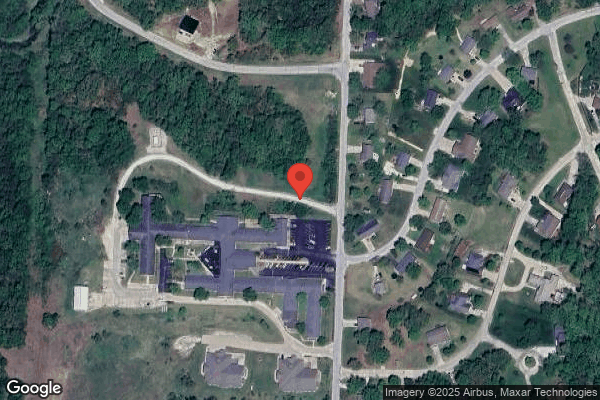

LOCH HAVEN

701 SUNSET HILLS DR, MACON, MO 63552 (660) 385-3113
Government - County 100 Beds Independent Data: November 2025 1 Immediate Jeopardy citation
Trust Grade
41/100
#167 of 479 in MO
Last Inspection: November 2023

Within standard 12-15 month inspection cycle. Federal law requires annual inspections.

Overview

Loch Haven in Macon, Missouri, has a Trust Grade of D, indicating it is below average with some concerns about care and safety. Ranked #167 out of 479 facilities in Missouri, it sits in the top half, but is last among three options in Macon County. Unfortunately, the facility's performance is worsening, with issues increasing from one in 2024 to two in 2025. While staffing turnover is impressively low at 0%, indicating stability, the overall staffing rating is only 2 out of 5 stars, suggesting there may not be enough staff present to meet residents' needs. Additionally, the facility has faced fines totaling $8,021, which is average, but there are critical incidents, such as a resident leaving the facility unnoticed due to a malfunctioning monitoring device, and another resident not receiving timely care for serious eye pain after an altercation. Overall, while there are strong points like low staff turnover, there are also significant weaknesses that families should consider.

Trust Score
D
41/100
In Missouri
#167/479
Top 34%
Safety Record
High Risk
Review needed
Inspections
Getting Worse
1 → 2 violations
Staff Stability
○ Average
Turnover data not reported for this facility.
Penalties
✓ Good
$8,021 in fines. Lower than most Missouri facilities. Relatively clean record.
Skilled Nurses
⚠ Watch
Each resident gets only 25 minutes of Registered Nurse (RN) attention daily — below average for Missouri. Fewer RN minutes means fewer trained eyes watching for problems.
Violations
⚠ Watch
24 deficiencies on record. Higher than average. Multiple issues found across inspections.
★★★☆☆
3.0
Overall Rating
★★☆☆☆
2.0
Staff Levels
★★★☆☆
3.0
Care Quality
★★★☆☆
3.0
Inspection Score
Stable
2024: 1 issues
2025: 2 issues

The Good

  • Full Sprinkler Coverage · Fire safety systems throughout facility
  • No fines on record

Facility shows strength in fire safety.

The Bad

3-Star Overall Rating

Above Missouri average (2.5)

Meets federal standards, typical of most facilities

Federal Fines: $8,021

Below median ($33,413)

Minor penalties assessed

The Ugly 24 deficiencies on record

1 life-threatening 1 actual harm
Aug 2025 1 deficiency
CONCERN (D) 📢 Someone Reported This

A family member, employee, or ombudsman was alarmed enough to file a formal complaint

Potential for Harm - no one hurt, but risky conditions existed

Deficiency F0744 (Tag F0744)

Could have caused harm · This affected 1 resident

**NOTE- TERMS IN BRACKETS HAVE BEEN EDITED TO PROTECT CONFIDENTIALITY** Based on interview and record review, the facility failed to identify the root cause of an altercation involving two residents (...

Read full inspector narrative →
**NOTE- TERMS IN BRACKETS HAVE BEEN EDITED TO PROTECT CONFIDENTIALITY** Based on interview and record review, the facility failed to identify the root cause of an altercation involving two residents (Residents #1 and #2), who had a diagnosis of dementia, in a review of seven sampled residents, following a physical altercation on 8/12/25, failed to effectively communicate the altercation to staff, and failed to develop individualized interventions to address the root cause and to prevent further incidents. On 8/15/25, Resident #2 approached Resident #1, in the same manner he/she did on 8/12/25, and knocked Resident #1 down with his/her walker. The facility census was 73. During an interview on 8/21/25 at 11:04 A.M., the Administrator said the following:-The facility did not have a policy for dementia care;-The facility did not have a policy for resident-to-resident altercations;-The facility had a policy for Wandering, but it was only specific to elopement risk and the functioning of Wanderguards (electronic monitoring devices). 1. Review of Resident #1's face sheet showed the following:-admission date 6/17/25;-Diagnoses included dementia without behavioral disturbance, psychotic disturbance, mood disturbance, and anxiety. Review of the resident's admission Minimum Data Set (MDS), a federally mandated assessment tool completed by facility staff, dated 6/24/25, showed the following:-Moderate cognitive impairment;-No inattention, disorganized thinking, or altered level of consciousness;-No hallucinations, delusions, or behaviors. Review of the resident's progress notes, dated 8/2/25 at 6:25 A.M., showed the resident was in his/her room, yelling at his/her roommate (Resident #2), you have my chicken. The resident said his/her roommate yelled at him/her. Review of the resident's progress notes, dated 8/4/24 at 3:36 A.M., showed at approximately 1:00 A.M., staff heard yelling coming from the resident's room. The resident's roommate (Resident #2) was upset as Resident #1 turned off the TV and wouldn't give the roommate the remote. The resident told the roommate (Resident #2) he/she doesn't even watch it, just wants it. Resident #1 gave staff the remote and the roommate watched TV. Review of the resident's progress notes, dated 8/7/25 at 6:22 A.M. showed the resident was screaming at his/her roommate (Resident #2), who was sleeping, saying get out of my house, you're not my son anymore! (The resident used profanity when speaking to Resident #2). Staff entered the room and found the resident lying in bed. Staff informed the resident where he/she currently was and that this home belonged to both of them. Review of the resident's Care Plan, updated on 8/7/25, showed the following:-The resident had delusions related to worsening of dementia;-The resident will interact appropriately with staff, other residents, and family members;-Do not confront, argue with, or deny the resident's belief system;-Encourage the resident to vent his/her feelings, fears, and anxiety;-Provide safe, quiet, low-stimuli environment during delusional periods;-Reinforce and focus on reality. Use clear and concise terms. Review of the resident's progress notes, dated 8/8/25 at 7:40 P.M., showed the resident tried to walk out the south 400 hall doors. The resident walked to the nurses desk and said his/her family member was with another resident (Resident #2) and that the resident (Resident #2) was trying to start a fight with his/her family member. Review of the resident's progress notes, dated 8/12/25 at 4:23 P.M., showed the resident walked in the hallway towards the door and had an interaction with another resident (Resident #2). The resident denied any pain and no skin concerns noted at this time. Staff educated the resident on safe practices when walking with a walker. Review of the resident's progress notes, dated 8/15/25 at 10:25 P.M., showed at approximately 9:00 P.M., staff heard someone scream from the 400 hallway. Staff entered the hallway and found the resident sitting on the floor, leaning on his/her right buttock with his/her arms on the cushion of the walker. The resident's left arm and right hand were bleeding. Another resident (Resident #2), stood behind the resident with his/her hands on his/her own walker, frowning and red faced, stating, I did it, I hit him/her. Staff intervened and assisted the resident to his/her room. During an interview on 8/20/25 at 10:34 A.M., the resident said the following:-He/She had multiple interactions with Resident #2, his/her former roommate;-He/She and Resident #2 got along at first;-Resident #2 got mad about little things like the TV or the window and wouldn't ask him/her to move, then would proceed to get madder;-Resident #2 ran into him/her with his/her walker on two different occasions;-On the first occasion (8/12/25), he/she was walking down the hallway. Resident #2 saw him/her and intentionally followed him/her, then ran into him/her with the walker;-On the second occasion (8/15/25), he/she was walking down the hallway. Resident #2 came out of his/her room, hit Resident #1's side with his/her walker, really hard, knocking him/her to the ground and causing injuries to his/her left arm and right hand;-Resident #2 moved to a different hallway after that and there had not been any more issues as he/she cannot see the other resident;-He/She was not scared or worried when Resident #2 was still in the same hall;-He/She was not mad at Resident #2. 2. Review of Resident #2's face sheet showed the following:-admission date 6/11/25;-Diagnoses included cognitive communication deficit. Review of the resident's care plan for cognitive loss/dementia, last reviewed/revised on 5/22/23, showed the following:-The resident can be forgetful at times and may need help making major decisions;-Give reminders on the time of day as needed;-Give the resident choices about his/her daily activities, including what to wear;-Provide visual reminders such as calendars and a clock to orient the resident to date and time of day. Review of the resident's admission MDS, dated [DATE], showed the following:-Severe cognitive impairment;-No inattention, disorganized thinking, or altered level of consciousness;-No hallucinations, delusions, or behaviors;-Diagnoses included non-Alzheimer's dementia. Review of the resident's progress notes, dated 8/4/25 at 3:07 A.M., showed at approximately 1:00 A.M., staff heard the resident yelling from his/her room. The resident was upset with his/her roommate (Resident #1) who had the TV remote. The resident wanted to watch TV, but the roommate turned off the TV and had the remote in his/her hand. The roommate (Resident #1) finally gave the remote to the resident to watch TV, used profanity and called the resident (Resident #2) a name. Review of the resident's progress notes, dated 8/7/25 at 4:48 P.M., showed the resident moved to a new room. (On the same hall, at the end of the hall farthest from the nurses station, near the emergency exit doors.) During an interview on 8/20/25 at 1:50 P.M., Certified Nurse Assistant (CNA) C said the resident voiced to him/her that he/she was upset about having to move rooms because he/she was in the room first. During an interview on 8/21/25 at 12:34 P.M., the Social Services Director said the following:-She was on vacation when the resident moved rooms on 8/7/25 so he/she was not involved in the move; -She did not follow up with the resident following the room move;-She was not aware the resident voiced being upset about the room move to other staff. During an interview on 8/20/25 at 11:58 A.M., the Administrator said the following:-Resident #1 and Resident #2 got along for about one and a half months before the outbursts started;-Verbal outbursts started first and became more frequent, resulting in moving Resident #2 to a different room on 8/7/25;-Resident #2 was moved since staff determined that he/she was the instigator or the first of the two residents to act out;-Resident #2 was moved to a new room on the same hall for continuity of care;-She was not aware Resident #2 told other staff he/she was upset about moving rooms;-There were no other issues between the two residents until a little standoff on 8/12/25, when both residents walked down the hallway with their walkers and neither resident wanted to move. There was no physical contact and no injuries;-After the standoff on 8/12/25, staff educated both residents about walker safety and staff was educated to increase monitoring for both residents for the remainder of the day when the residents were out of their rooms. Review of the resident's progress notes, dated 8/12/25 at 4:25 P.M., showed the resident was in the hallway and had an interaction with another resident (Resident #1). Educated the resident on safe practices when walking with a walker. During an interview on 8/21/25 at 1:33 P.M., Certified Nurse Assistant (CNA) K said the following:-He/She witnessed the residents' altercation on 8/12/25; -He/She walked around the corner to the 400 hall and saw Resident #1 wandering toward the end of the 400 hall. Resident #2 came out of his/her room and rammed his/her walker straight into Resident #1 multiple times;-Resident #1 put his/her arm out to block Resident #2's walker. Resident #2 yelled at Resident #1, used profanity, and called Resident #1 a name; -He/She separated the residents and asked Resident #2 why he/she was mad. Resident #2 said it was because Resident #1 took his/her room and kept bothering him/her by standing outside of Resident #2's new room;-He/She reported the altercation to his/her charge nurse (Registered Nurse (RN) J);-He/She did not recall any increased monitoring for either resident. During an interview on 8/21/25 at 9:56 A.M., RN J said the following:-The residents used to be roommates. Resident #1 had delusions and Resident #2 eventually got tired of them;-The residents had verbal arguments, usually over things like the TV remote, the lights, and the window, so staff separated the residents;-After the residents were in separate rooms (Resident #2 was moved to a different room on 8/7/25), Resident #2 began standing in his/her doorway, waiting for Resident #1 to walk by, then he/she would start a verbal argument. (Review of Resident #2's care plan showed no interventions to address this type of behavior directed toward Resident #1.)-On 8/12/25, the residents got into an altercation where Resident #2 hit Resident #1 with his/her walker;-He/She did not see the altercation, but CNA K witnessed it;-CNA K said Resident #2 was standing in his/her doorway. When Resident #1 walked by, Resident #2 came out of his/her room and pushed Resident #1 with his/her walker;-He/She notified the Administrator and the Director of Nurses (DON) following the altercation;-He/She did not recall doing any type of increased monitoring or interventions for either resident after the altercation on 8/12/25. Review of the resident's medical record showed no documentation staff implemented interventions to address the resident's behavior directed toward Resident #1 on 8/12/25 and to monitor the resident to ensure no further incidents occurred. Review of the resident's progress notes, dated 8/15/25 at 10:05 P.M., showed at approximately 9:00 P.M., a nurse in another resident room on the 400 hall heard someone scream from the hall. Upon entering the hallway, the nurse saw the resident standing with his/her hands on his/her walker, frowning, with a flushed face, stating, I hit him/her. I did it. Another resident sat on the floor and leaned on his/her right buttock near his/her walker with blood drops noted on the ground and on his/her arm. Staff separated the residents. The resident was initially resistant to return to his/her room, but eventually went with staff. DON and Administrator notified and advised to send resident to emergency room for evaluation. During an interview on 8/20/25 at 11:04 A.M., the resident said the following:-Resident #1 was bad, ornery, and mean to him/her, which made him/her angry;-He/She recalled hitting Resident #1 with his/her walker and said he/she would do it again;-If he/she did not have to see Resident #1 anymore, he/she was happy;-He/She did not want to be around Resident #1 because he/she was mean. During an interview on 8/20/25 at 3:29 P.M., RN G said the following:-He/She was aware the two residents had some prior issues;-Neither resident had ever said anything to him/her about not liking the other resident or wanting to hurt the other resident, however he/she noticed Resident #2 made facial expressions (eye rolling, grimacing, audible sighing, etc.,) to indicate he/she was annoyed with Resident #1's delusions and constant talking;-He/She was not aware of the incident involving the two residents on 8/12/25;-Staff was not given any additional direction or orders for additional monitoring or interventions for either resident (after the altercation on 8/12/25); -He/She was the charge nurse on the night of the 8/15/25 altercation;-As he/she went to a resident's room toward the end of the 400 hall, he/she saw Resident #1 wandering the hall, headed toward the exterior doors at the far end of the hall near Resident #2's room door. He/She did not think anything of it as Resident #1 had been doing this all evening;-He/She entered another resident's room to provide cares, was in the room for maybe a minute or two, and then heard a scream from the hallway;-He/She came out to the hall and found Resident #1 on the ground, and Resident #2 was standing over Resident #1 with his/her walker;-Resident #2 said Resident #1 made him/her mad and he/she would hit Resident #1 with his/her walker again. During an interview on 5/21/25 at 9:45 A.M., CMT H said the following:-He/She was aware of previous issues between the two residents, including verbal altercations, but was not aware of the incident that occurred on 8/12/25;-He/She was not aware of any increased monitoring or redirecting for either resident;-He/She was the medication technician for the 300 and 400 halls on 8/15/25;-As he/she walked to the nurses station to get the medication cart, he/she saw Resident #1 wandering to the end of the 400 hall;-He/She then heard a scream from the 400 hall;-He/She ran down the hall and immediately saw Resident #1 on the ground and Resident #2 pushing his/her walker at Resident #1;-He/She took Resident #2 to his/her room and discussed what happened. Resident #2 said he/she hit Resident #1 with his/her walker and would do it again. During an interview on 8/20/25 at 2:47 P.M., CNA F said the following:-Resident #1 was confused and talked about crazy things, which Resident #2 said he/she did not like, while they were roommates;-When Resident #2 voiced he/she did not like Resident #1's behaviors, CNA F notified the charge nurse, and the residents were moved to separate rooms (on 8/7/25);-He/She was not aware of the incident that occurred on 8/12 and was not aware of any increased monitoring or redirection for either resident;-He/She worked on 8/15/25, but did not see what happened as he/she was providing cares in a resident room on the 300 hall;-Prior to going into the resident room to provide cares, he/she saw Resident #1 wandering the halls, like normal; -He/She recalled hearing what sounded like a scream while he/she was providing cares to another resident;-When he/she exited the other resident room, approximately five minutes later, a CMT was by Resident #2's room door, Resident #1 was sitting on the ground, and the charge nurse was at the nurses station making a phone call. During an interview on 8/21/25 at 12:34 P.M., the Social Services Director said the following:-She was not aware of any issues between the two residents between the room move on 8/7/25 and the altercation on 8/15/25;-She was not notified and was not aware of the altercation involving the residents on 8/12/25. During interviews on 8/21/25 at 1:00 P.M., the DON said the following:-Resident #1 had delusions and started accusing Resident #2 of stealing his/her things;-As a result, Resident #2's behaviors escalated, resulting in verbal threats and arguments;-Staff moved Resident #2 to a new room (on 8/7/25) and increased monitoring of Resident #1's wandering;-As the DON, she should be involved in determining the cause for the behaviors, interventions, and updating the care plan;-She was not made aware of the altercation between the two residents that occurred on 8/12/25;-She expected staff to notify her and the Administrator of all resident-to-resident altercations;-Staff should update the care plans to include the resident's current needs. During an interview on 8/21/25 at 1:50 P.M., the Administrator said the following:-She expected staff to update care plans to include current care needs and interventions, including wandering and behaviors;-She expected staff to review and update the care plans as needed after a resident-to-resident altercation. Complaint 2591459
Mar 2025 1 deficiency 1 Harm
SERIOUS (G) 📢 Someone Reported This

A family member, employee, or ombudsman was alarmed enough to file a formal complaint

Actual Harm - a resident was hurt due to facility failures

Quality of Care (Tag F0684)

A resident was harmed · This affected 1 resident

**NOTE- TERMS IN BRACKETS HAVE BEEN EDITED TO PROTECT CONFIDENTIALITY** Based on interview and record review, the facility failed to ensure one resident (Resident #2), in a review of seven sampled res...

Read full inspector narrative →
**NOTE- TERMS IN BRACKETS HAVE BEEN EDITED TO PROTECT CONFIDENTIALITY** Based on interview and record review, the facility failed to ensure one resident (Resident #2), in a review of seven sampled residents, received the necessary care and services in accordance with professional standards of practice when the facility failed to assess and report Resident #2's complaint of right eye pain, redness, watering, and blurry and dim vision timely. The resident was involved in a physical altercation with Resident #1 on 02/10/25, where both resided on the facility's Special Care Unit (SCU - dementia care unit). Resident #2 reported to family and staff in the days following that his/her eye hurt. Multiple staff in the SCU, including Certified Medication Technicians (CMT) and a Certified Nursing Assistant (CNA), reported to licensed staff (nurses that worked off SCU unit and were to go to that unit to assess any reported issue), the resident's complaints and concern with his/her right eye. Licensed staff failed to come to the unit to assess the resident's eye concerns reported by unit staff. The resident was seen by his/her physician on 02/26/25 after a resident's family member brought the concern with the resident's eye becoming worse, and the physician recommended the resident be seen by his/her eye physician. The resident was seen by an optometrist (professionall who specializes in eye and vision care), on 02/27/25 who recommended further evaluation by an ophthalmologist (physician who specializes in eye and vision care including surgery). The resident had sustained a dislodged lens in his/her right eye that required treatment with eye drops and a surgical procedure to correct the condition caused by blunt force trauma. The facility census was 69. Review of the facility policy titled Physician Notification, revised 11/2020, showed the charge nurse will notify physician of an accident or incident involving residents (falls, etc.). 1. Review of Resident #1's admission Minimum Data Set (MDS), a federally mandated assessment instrument completed by facility staff, dated 12/02/24, showed the following: -The resident had both short and long term memory problems; -Rarely/never understood; -Inattention and disorganized thinking behavior present, fluctuates; -Wandered four to six days of the last seven days; -Wandered and was at significant risk of getting into a potentially dangerous place; -Wandering significantly intruded on the privacy of activities of others; -Diagnoses of stroke and dementia; -Able to walk 50 feet with two turns with supervision or touching assist; -No limitation in upper or lower extremity range of motion. Review of the resident's care plan, dated 12/08/24, showed the resident had socially inappropriate/disruptive behavioral symptoms as evidenced by wandering into others' rooms. Review of the resident's progress notes, dated 02/10/25 at 6:28 P.M., showed the following: -At 6:15 P.M. this evening resident went into another resident's room through the bathroom and grabbed that resident's (Resident #2's) right arm leaving a bruise the shape of a line on that resident's right bicep; -Called and spoke with resident's family member and a message was sent to nurse practitioner. Review of the resident's care plan, revised 02/11/25, showed the following: -When the resident was awake, encourage him/her to stay in the day room; -If the resident leaves the day room, complete frequent rounds to check on him/her; -Remove resident from other residents' rooms and unsafe situations as needed. 2. Review of Resident #2's quarterly MDS, dated [DATE], showed the following: -Moderately impaired cognition with a BIMS of nine; -Diagnoses of dementia, anxiety and depression. Review of the resident's progress notes, written by Licensed Practical Nurse (LPN) C, dated 02/10/25 at 6:46 P.M., showed the following: -At 6:15 P.M. another resident (Resident #1) came into Resident #2's room through the bathroom and grabbed Resident #2's arm, leaving a bruise the shape of a line on Resident #2's right bicep (muscle on the front of the upper arm); -Called and spoke with Family Member H and on call physician. Review of the facility's self-report, dated 02/11/25, showed the following: -Resident #1 entered Resident #2's room from the shared bathroom because Resident #1 got turned around and went into Resident #2's room by mistake; -There was an altercation between Resident #1 and Resident #2; -Resident #1 obtained some superficial scratches to his/her arm; -Resident #2 had a reddened area/bruise from where Resident #1 grabbed his/her arm; -Families and physicians notified; -No new orders received. Review of the resident's care plan, revised 02/11/25, showed he/she currently resided in the SCU due to wandering and need for safety. Review of the resident's progress notes showed staff documented on 02/11/25 at 2:00 P.M., after lunch the resident was walked up the hall and asked about that girl/boy that grabbed his/her arm; he/she did not recall who it was, but did show staff the bruise on his/her arm. There was no documentation the resident was involved in another altercation or experienced a fall or other injury other than the one documented on 02/10/25. Review of the resident's physician's progress note, dated 02/12/25, showed the following: -Resident was evaluated for right arm bruise and dementia; -The resident was apparently in some sort of altercation with one of the other residents; -The resident ended up with a bruise on his/her upper right arm. Review of the resident's progress notes dated 02/12/25 through 02/26/25 showed no documentation the resident was involved in another altercation or experienced a fall or other injury other than the one documented on 02/10/25. Review of the SCU undated report sheet (written report from lead Certified Medication Technician (CMT) to lead CMT)) showed the resident complained of his/her right eye being watery for a few days. Review of the resident's progress notes, dated 02/26/25 at 3:18 P.M., showed the following: -Care plan conference held; -Condition report given and medications reviewed; -Resident's right eye has some redness and was watery, the resident was on Claritin (antihistamine medication) for allergies. Review of the resident's progress notes, documented by Registered Nurse (RN) D, showed staff documented the following: -On 02/26/25 at 4:00 P.M., the resident was seen on rounds by his/her physician for right eye being red and watery; -The resident rubbed at it (his/her right eye) while the physician was in with him/her; -The resident said at first that he/she got whacked by someone (no issue reported or seen) and then he/she mentioned something flying by him/her and whacking his/her eye; -Physician looked at the resident's right eye and said he recommended the resident see his/her ophthalmologist. Review of the resident's encounter report, completed by Optometrist M, dated 02/27/25, showed the following: Problem exam: -Red and watering right eye; -Ongoing since 2/10/25; -Lady/Man attacked the resident at the facility. Eye has been bothering him/her ever since. The resident was hit with a book in his/her right eye; -The resident's right eye hurt in the corner; -Right eye distance visual acuity: 20/200 (normal vision 20/20); -Right eye lens: inferiorly, interior capsule was covering the upper third of vision; -Decentered (normal placement is centered) intraocular lens (IOL). Refer to Ophthalmologist L. Review of the resident's progress notes, dated 02/27/25 at 5:00 P.M., showed staff documented the following: -The resident returned from an appointment with Optometrist M; -Optometrist M noted the resident said he/she was hit in the eye with a book by another resident and said that it (right eye redness, watering and vision difficulty), was an issue since the altercation earlier in the month with his/her neighbor; -Optometrist M said that his/her implant from cataract surgery appeared to have been displaced inferiorly (towards the bottom or below); consultation arranged with Ophthalmologist L on 03/04/25. Review of the resident's encounter report, completed by Ophthalmologist L, dated 03/04/25, showed the following: Reason for visit: Decentered IOL, right eye; -The resident said the right eye was hit, blunt force trauma, on 02/10/25; -The resident and his/her family member think he/she was possibly hit with a book or a rolled up magazine at the facility he/she resides in; Severity: moderate; Context: blunt force trauma to the right eye and face; Association: loss of vision; Care plan: subluxed IOL (the implanted lens has partially shifted out of it's intended position within the eye), inferiorly, in the bag; -Plan to lower intraocular pressure, right eye (high intraocular pressure can be caused from damage to the eye's drainage system; the eyes drainage system can be damaged from trauma, leading to increased pressure and potential vision loss); -Begin instilling Latanoprost (eye drops used to lower eye pressure) one drop both eyes at bedtime, return to clinic in one month; -Discussed surgical intervention to address the subluxed IOL; -The resident was not interested in proceeding in a referral to the eye surgeon at this time; -The resident was concerned, with his/her age, about proceeding with surgical intervention. Review of the resident's progress notes, dated 03/04/25 at 4:33 P.M., showed the resident returned from (ophthalmologist) appointment with a new order for Latanoprost eye drops. During an interview on 03/06/25 at 11:35 A.M., Resident #2 said the following: -He/She stayed away from Resident #1; -He/She did not know when or who did it, but he/she was hit on the right side of his/her head/eye by something; he/she was hit with a book or a box; -After he/she was hit on the right side of his/her head, his/her right eye and right ear hurt; -He/She told all the nurses that his/her right eye was bothering him/her; -His/Her vision was perfect before he/she was hit on the right side of his/her head; -Now his/her vision in the right eye was dim and his/her right eye still hurt; -His/Her family member took him/her to the eye doctor. During an interview on 03/06/25 at 3:25 P.M., the resident's Family Member G said the following: -On 2/10/25, staff notified Family Member H that Resident #2 was in an altercation with another resident and received a big bruise on his/her arm; -When Family Member H visited with Resident #2 on 2/11/25, Resident #2 had redness around his/her right eye; -He/She saw Resident #2 three to four days after the altercation (2/13/25 or 2/14/25); -When he/she visited Resident #2 on 2/13/25 or 2/14/25, Resident #2 had redness around his/her right eye and complained of his/her right eye burning. Resident #2 told him/her that he/she was hit in the right eye with a book; -He/She did not think to tell staff about Resident #2's right eye on 2/13/25 or 2/14/25 as he/she was hoping it would improve. During an interview on 03/07/25 at 8:46 A.M., the resident's Family Member H said the following: -He/She visited Resident #2 several times a week; -Staff notified him/her on 02/10/25 that Resident #2 had a bruise on his/her arm from an altercation with another resident; -He/She visited Resident #2 on 02/11/25. Resident #2 had a red spot on his/her right temple and his/her right eye was red; -On 2/11/25, Resident #2 said a woman/man hit him/her with something on the side of his/her head; -Resident #2's eye kept getting redder and redder; -Resident #2 told him/her that he/she just couldn't see out of his/her right eye and that his/her vision was very blurry; -They did not discuss Resident #2's eye complaints during the care plan meeting on 2/26/25; -On 2/26/25 after the meeting, Resident #2 again told him/her that he/she just couldn't see out of his/her right eye; -Resident #2 had cataract removal in the past and had 20/20 vision; now Resident #2's vision was blurry; -In order to restore Resident #2's vision in his/her right eye, it must be surgically repaired; -Resident #2 did not want surgery because he/she did not want to be anesthetized (be given medication to be put to sleep to have a medical procedure/surgery). During an interview on 03/07/25 at 3:17 P.M., the resident's Family Member I said the following: -On 02/22/25, Resident #2 complained about his/her right eye and told him/her that he/she was hit in the face; -On 2/22/25, Resident #2's right eye was very red around the rim and the resident said his/her vision was blurry; -On 02/22/25, he/she reported the resident's complaints to an unknown staff member at the desk, he/she asked the staff member if he/she knew about the resident's eye; -On 02/22/25, the staff at the nurses' station said they had looked at Resident #2's eye and it was looking better; -On 02/22/25, he/she told staff, something needs to be done about Resident #2's eye; -On 02/26/25, after the resident's care plan meeting, he/she reported the resident's complaints to staff and the resident was seen by his/her physician on 02/26/25; -The resident told Optometrist M that he/she was hit in the right eye with a book by another resident. During an interview on 03/06/25 at 11:50 A.M., Certified Nurse Aide (CNA) B said the following: -Staff that worked the unit told the nurses (Licensed Practical Nurse (LPN) C and RN O) about the resident's complaint of pain in his/her right eye; -The nurses did not come to the unit and look at the resident's right eye. During an interview on 03/06/25 at 2:15 P.M., Certified Medication Technician (CMT) A said the following: -When the resident complained of his/her right eye hurting, he/she (CMT A) verbally reported it to both Registered Nurse (RN) O and LPN C; -For at least one month, staff has been reporting to the charge nurses that the resident complained about his/her right eye and no one came and looked at it until RN D and the resident's physician came and looked at the resident's right eye. During an interview on 03/10/25 at 5:37 A.M., CMT J said the following: -The resident complained about his/her right eye being blurry and not being able to see out of it; -He/She reported the resident's complaints regarding his/her right eye to Licensed Practical Nurse (LPN) C (he/she did not recall when he/she had reported). During an interview on 03/06/25 at 12:02 P.M. and 12:28 P.M., LPN C said the following: -Resident #1 wandered in and out of other resident rooms; -On 02/10/25, Resident #1 wandered into Resident #2's room and Resident #1 grabbed hold of Resident #2; -Resident #2 had a bruise to his/her arm and Resident #2 gave Resident #1 a skin tear; -On 2/10/25, he/she was not aware of any injury to Resident #2's eye and did not see any redness on or around the resident's right eye; he/she was the nurse on duty the day the altercation occurred; -No staff told him/her about the resident's right eye complaints. During an interview on 03/09/25 at 6:16 P.M., RN O said the following: -Staff in the SCU were responsible for notifying the charge nurse (the charge nurse was not stationed in SCU) of any resident complaints or altercations; -Staff reported to him/her a few weeks ago that the resident's eye was red; -He/She looked at the resident's eye and it was red; -He/She thought the resident's eye was red because he/she was rubbing it; -He/She instructed staff to make sure the resident's hands were clean to prevent infection; -He/She may have sent a note to the resident's physician but he/she was not sure. During an interview on 03/06/25 at 3:50 P.M., RN D said the following: -He/She was not aware of the resident's complaints regarding his/her right eye until 02/26/25 after the resident's care plan meeting; -He/She did not see anything in the resident's progress notes regarding his/her right eye being injured; -The resident told his/her physician that he/she got whacked by someone in his/her right eye; -When he/she questioned staff in the unit, on 02/26/25, regarding the resident's right eye, they reported the resident had been complaining about his/her right eye for some time; -He/She would expect staff to document and report resident concerns/complaints to the charge nurse or him/her to be reported on to the physician. During an interview on 03/12/25 at 3:17 P.M. Optometrist Assistant N (assistant to Optometrist M) said the following: -The resident was seen by Optometrist M due to an injury to his/her right eye; -The lens on the resident's right eye was dislodged and needed to be put back into place surgically; -The vision in the resident's right eye was much worse than in his/her left eye; -The resident's vision in the right eye would not improve without surgery. During an interview on 03/11/25 at 1:55 P.M., Ophthalmologist Assistant K (assistant to Ophthalmologist L) said the following: -The resident said his/her right eye was hurting; -The resident had cataract removal many years ago; -Blunt force trauma caused the lens to sublux inferiorly (the lens is no longer in the middle of the eye); -The injury to the resident's right eye could not have occurred by rubbing his/her eye; -The injury significantly affected the resident's vision in his/her right eye; -Without surgery, the resident's vision would not improve. During an interview on 3/17/25 at 2:15 P.M., the resident's physician's nurse said the following: -The resident's physician was not aware of the resident's complaints regarding his/her right eye until 02/26/25; -The resident's physician would expect to be notified by staff if the resident complained of redness and/or pain in his/her right eye. During an interview on 03/07/25 at 3:49 P.M., the Director of Nursing said the following: -She would expect staff to assess the resident and notify the physician if the resident complained of eye pain; -She reviews residents' progress notes daily and was not aware of the resident's complaints regarding his/her right eye. During an interview on 03/07/25 at 3:55 P.M., the Administrator said she would expect staff to notify the physician if the resident complained of eye pain. She was not aware the resident was complaining about his/her right eye. MO 250291
Mar 2024 1 deficiency 1 IJ
CRITICAL (J) 📢 Someone Reported This

A family member, employee, or ombudsman was alarmed enough to file a formal complaint

Immediate Jeopardy (IJ) - the most serious Medicare violation

Accident Prevention (Tag F0689)

Someone could have died · This affected 1 resident

Based on observation, interview, and record review, the facility failed to adequately monitor one resident's (Resident #1's) monitoring device (a small wristwatch-sized device (Tag) worn by a resident...

Read full inspector narrative →
Based on observation, interview, and record review, the facility failed to adequately monitor one resident's (Resident #1's) monitoring device (a small wristwatch-sized device (Tag) worn by a resident or attached to an asset (wheelchair, walker) that will trigger an alarm if in close proximity of an activation field; usually an exit door), per the manufacturer's instructions to ensure it functioned appropriately and would alert staff if the resident attempted to leave the facility without staff knowledge, in a review of 14 sampled residents. The resident was assessed as at risk for elopement and utilized a monitoring device as an intervention to address that risk. On 3/2/24 at 7:24 A.M., the resident exited the facility through the main entrance without staff knowledge in his/her motorized wheelchair. The monitoring device alarm system did not function and alarm when the resident exited the facility. The resident traveled approximately one half mile, on a paved road with no shoulder or side walk, before a concerned citizen saw the resident and contacted 911 and the resident's spouse. There were 24 residents identified as elopement risk that utilized the monitoring devices as an intervention to prevent elopement. The facility census was 68. The Administrator was notified on 3/11/24 at 3:30 P.M. of the Immediate Jeopardy (IJ), which began on 3/2/24. The IJ was removed on 3/11/24, as confirmed by surveyor onsite verification. Review of the manufacturer manual for the monitoring device used by the facility dated May 27, 2003, showed the following: -A Tag is defined as a small wristwatch-sized device worn by a resident or attached to an asset (wheelchair, walker); -When the resident enters an activation field (near an exit door or other area with a Tag alarm), the tag sends a signal to the zone controller (box mounted on the wall at exit/locked doors) and the controller responds by sounding an alarm; -For maximum protection of residents, the manufacturer recommends the Tags be tested on a weekly basis; -The Tags can be tested by entering the Tag in a monitored zone or by using a Tag Activator/Deactivator (TAD) device to test functionality. Review of the facility policy, Missing Residents - Elopement, dated 11/11/17, showed the following: -Elopement assessments will be completed on all new admissions, during quarterly assessments, and as needed on current residents; -If a resident is determined to be an elopement risk, a monitoring device (Tag) will be applied; -Placement of the Tag (monitoring device) will be monitored by the medication nurse twice a day. -The policy did not address testing of Tags weekly (per manufacturer's recommendations) by entering a monitored zone or by using a TAD device to check for functionality and battery life. 1. Review of Resident #1's care plan, updated on 3/6/23, showed the following: -The resident had a memory/recall problem related to dementia. At times the resident will forget he/she is in a nursing home and wants to go home. He/She has presented with exit seeking behaviors in the past; -Redirect the resident when he/she enters unsafe areas; -Resident was usually alert and oriented to person, place, and time of day. There are times he/she needed reorientation and reminding that he/she resides at the facility; -A Tag (monitoring device) was applied to the resident's wheelchair. The Tag is checked every shift for a blinking red light by the certified medication tech (CMT) and documented; -All staff are to respond to alarms and call for assistance if needed to return the resident into the facility; -The resident required assistance with activities of daily living (ADLs); -Once in his/her electric wheelchair the resident was independent with locomotion; -The resident required a stand-up lift (a mechanical lift used to transfer an individual from one seated surface to another) to transfer; -The resident was at risk for psychosocial well-being (the state of mental, emotional, and social health of an individual) and at risk for elopement related to the resident wanting to go home; -Elopement risk assessment every three months. Review of the resident's elopement risk assessment, dated 9/1/23, showed the resident was at risk for elopement. Review of the resident's medical record showed no documentation staff completed a quarterly elopement risk assessment for the resident in December 2023 per facility policy. Review of the resident's annual Minimum Data Set (MDS), a federally mandated assessment instrument required to be completed by facility staff, dated 2/29/24, showed the following: -The resident's cognition was intact; -The resident used an electric wheelchair; -The resident was dependent on two or more staff for dressing, toileting, and bathing; -The resident required substantial to maximum assist from staff members for transfers; -The resident had impaired range of motion on one side of his/her lower extremities; -The resident did not exhibit wandering behaviors; -The resident used a wander/elopement alarm daily. Review of the facility's undated investigation regarding the resident's elopement showed the following: -(On 3/2/24) at 7:05 A.M. to 7:10 A.M. Registered Nurse (RN) B saw the resident at the south nurse's desk; -At 7:15 A.M. to 7:20 A.M., Certified Nursing Assistant (CNA) F visualized the resident and instructed him/her to move into the dining room to eat breakfast; -At approximately 7:50 A.M., CNA F told RN B the resident never made it to the dining room for breakfast; -RN B went to the resident's room but he/she was not there; -RN B got a phone call from the resident's spouse that the resident was seen on a two-lane, black top road; -When the resident returned to the facility his/her Tag device did not alarm; -The resident's Tag did have a red blinking light; -CMTs check functionality twice daily by looking for a red blinking light on the device and document on the resident's medication administration record (MAR); -Five other residents' Tags were tested (no description given how they were tested); -Maintenance Staff A completed alarm checks on all exit doors (no description given of how staff checked the alarms). During an interview on 3/11/24 at 9:51 A.M., the resident said the following: -He/She did go outside and went down a hill and up a hill; -The resident could not recall or answer any other questions regarding his/her elopement on 3/2/24. Observation of the resident on 3/11/24 at 9:51 A.M., showed a Tag attached to the back side of the resident's wheelchair that had a red blinking light. Review of the resident's face sheet, dated 3/11/24, showed the following: -The resident was his/her own person; -The resident had diagnoses that included multiple sclerosis (a disease that affects the central nervous system; brain, spinal cord, and optic nerves), dementia (a mental disorder in which a person loses the ability to think, remember, learn, make decisions and solve problems), cognitive communication deficit (difficulty with thinking and how someone uses language), contracture (deformity and rigidity of joints) of right ankle, major depressive disorder (a mood disorder that causes a persistent feeling of sadness and loss of interest), lack of coordination, and abnormalities of gait (manner of walking) and mobility. During an interview on 3/11/24 at 2:10 P.M., Certified Nurse Aide (CNA) F said the following: -At 7:15 A.M. to 7:20 A.M., on 3/2/24, the resident was headed towards the north nurse's station in his/her electric wheelchair; -CNA F asked the resident if he/she was going to eat breakfast and the resident said he/she would turn around and head back to the dining room; -At 7:45 A.M., CNA F took a resident to the north hall and did not see Resident #1; -CNA F asked nurses at the north and south nurse's stations if they had seen Resident #1 and no one had seen the resident; -CNA F started looking throughout the inside of the facility for the resident; -A call came in from someone that told a staff member (unsure which staff member) the resident was outside; -CNA F went back to the dining room to continue to assist residents. During an interview on 3/12/24 at 2:40 P.M. a community member said the following: -He/She was driving on 3/2/24 at about 7:50 A.M. when he/she saw Resident #1 on a two-lane blacktop road; -The resident was headed west in the eastbound lane; -The community member stopped and asked the resident his/her name. The resident replied and said he/she was out for a daily stroll; -The community member recognized the resident's name and tried calling the facility, but no one answered; -When no one answered at the facility the community member called 911 and reported the resident's location; -The community member then called the resident's spouse; -The resident was dressed in long sleeves with a shirt over the top; the resident wore socks. The resident did not wear a jacket or shoes; -The community member got a blanket from his/her car and put it around the resident's shoulders and waited until the highway patrol arrived. During an interview on 3/12/24 at 8:21 A.M., the resident's spouse said the following: -At 7:55 A.M. on 3/2/24, a community member called him/her at home and said they found the resident on a two-lane blacktop road; -The community member said the resident did not know where he/she was; -The community member said he/she tried to call the nursing home, but here was no answer, so he/she called 911; -At 7:58 A.M. on 3/2/24, the resident's spouse called the facility and told them where the resident was located; -The facility staff said they would get the facility van to transport the resident back to the facility; -At 8:33 A.M. on 3/2/24, the resident's spouse called to check on the resident and was told the resident was not back at the facility yet; -At 8:52 A.M. on 3/2/24, the facility called and told the resident's spouse the resident was back at the facility, uninjured; -The resident's spouse was very upset the resident was able to leave the facility without staff knowledge and that it took the facility so long to get the resident back to the facility. Observation on 3/12/24 at 9:15 A.M., of the route the resident would have taken from the facility to where he/she was found, showed the following: -The front door of the facility the resident used to exit the facility is an automatic sliding door that opens when anyone gets within a certain distance from the automatic door's motion sensor; -The front door exits into the facility parking lot; -The city street in front of the facility is a two-lane municipal blacktop; -The resident would have traveled in his/her wheelchair approximately one tenth of a mile and turned left onto the two-lane municipal blacktop with a steep hill and no shoulder. The street travels through a wooded area; -Once the resident was at the bottom of the hill he/she would have turned left onto a two-lane blacktop service/outer road with a speed limit of 45 miles per hour with moderate traffic. Review of wunderground.com showed the temperature on 3/2/24 at 7:55 A.M. was 31 degrees Fahrenheit and mostly sunny. During an interview on 3/12/24 at 3:39 P.M., RN B said the following: -On 3/2/24 Resident #1 was at the south desk when he/she came on duty; -RN B went to check on a few residents and gather lab work on a resident; -When RN B returned to the nurse's station CNA F said Resident #1 had not made it to breakfast; -RN B went to check the resident's room but he/she was not in the room; -When RN B returned to the nurse's station, the resident's spouse called and said the resident was found on a two-lane blacktop road near the facility; -RN B thought the road the spouse talked about was in front of the facility. RN B went outside looking for the resident but did not see him/her; -Licensed Practical Nurse (LPN) C was also outside looking for Resident #1 at the same time and got a phone call from CMT D; -CMT D said the resident was on a two-lane blacktop road a little further from the facility and the highway patrol was with the resident; -RN B went back in the facility to call the on-call transport driver to pick up the resident; -RN B asked Maintenance Staff G to go sit with the resident until the transport driver could pick the resident up; -Maintenance Staff G ended up walking beside Resident #1's electric wheelchair and guided the resident back to the facility; -When the resident returned to the facility his/her Tag did not alert the alarm at the front entrance of the facility; -RN B checked the Tag and it had a red blinking light, but since it did not alert the system to alarm, RN B replaced it; -RN B tested five more residents with Tags by taking them to the front door and making sure they would alarm. All five of the Tags alarmed when tested; -RN B did not know if any other Tags were tested. During an interview on 3/12/24 at 4:37 P.M., Maintenance Staff G said the following: -Maintenance Staff G arrived at the facility parking lot when a nurse told Maintenance Staff G he/she needed to go look for Resident #1; -Maintenance Staff G went driving and looked for the resident. Maintenance Staff G found the resident on a two-lane blacktop road; -Police were with the resident so he/she left the resident to go back to the facility and notify the nurse of the resident's location. The nurse told him/her to go back to Resident #1 and sit with the resident until the transport van could get the resident back to the facility; -After waiting with the resident for a few minutes, Maintenance Staff G decided to help guide the resident in his/her electric wheelchair back to the facility because Maintenance Staff G was not sure how long it would take the facility van to get to the resident and wasn't sure how long the battery would last in the resident's electric wheelchair; -When Maintenance Staff G and the resident got close to the facility, Maintenance Staff G called and let the nurse know and the nurse met them at the front of the building. The nurse took over care of the resident at that time. During an interview on 3/20/24 at 4:06 P.M. the local county sheriff's deputy said the following: -On 3/2/24, the deputy arrived to the site of the resident at about 8:00 A.M.; -The resident did not know where he/she was or where he/she was going; -The resident complained that he/she was cold; -The resident looked like he/she was dressed in pajama clothes; -A facility maintenance staff came and sat with the resident; -The facility said they would send the facility van to pick up the resident; -After waiting for 30 minutes to an hour the facility maintenance staff decided to help the resident guide his/her electric wheelchair back to the facility; -The facility never did send the van to pick up the resident. During an interview on 3/11/24 at 9:14 A.M., Maintenance Staff A said the following: -He/She tests all doors in the facility with an extra Tag device to see if the doors will alarm; -He/She did not test the Tags on residents at the exit doors, he/she had an extra Tag that he/she used to test the door alarms. During an interview on 3/11/24 at 10:04 A.M., CMT L said the following: -First thing on the day shift, a notice for the residents with a Tag pops up on the medication administration record (MAR) to check that resident's Tag; -He/She looks at the Tags to make sure the red light is blinking; -If the red light is blinking it is working appropriately; -If the red light is not blinking, he/she reports it to the nurse, and it will get replaced. During an interview on 3/11/24 at 11:03 A.M., CMT M said the following: -A reminder pops up on the resident's MAR (for residents with a Tag) to check the Tag each day; -If the Tag has a red blinking light it is working okay. During an interview on 3/11/24 at 10:58 A.M., RN H said the following: -It was the responsibility of the person passing medications to check Tags to see if they were working; -He/She has not taken a resident with a Tag to an exit door to see if it would alarm; -Maintenance had an extra Tag they used to check the exit doors to make sure they alarmed. During an interview on 3/13/24 at 12:48 P.M., the Manufacturer of the monitoring system's technical support person said the following: -The only way to detect if the Tags are functional is to test with the TAD or have a Tag in the monitored zone. -The TAD will detect a low battery; -The TAD will detect functionality of the Tag. During interviews on 3/11/24 at 11:20 A.M., 12:47 P.M., and 1:15 P.M. the administrator said the following: -Nursing staff completed a random check on five residents with Tags to make sure they were working properly by taking the resident to an exit door to make sure they would alarm. They did not test all of the residents with the monitoring devices. This was completed after Resident #1 eloped from the facility; -Resident #1 had attempted to leave the facility many times in the past and the Tag always alarmed. This was the first time it did not alarm for Resident #1; -The front doors of the facility are unlocked daily about 5:30 A.M. No one physically monitors the front doors between 5:30 A.M. and 7:30 A.M. Monday through Friday or on Saturdays and Sundays. -The residents with an electronic monitoring device have a notice on their MAR for the CMTs to document that they made sure the resident had the Tag on their person, walker or wheelchair and to make sure there was a red blinking light on. If there was a red blinking light it means the device is working properly and would alarm when close to an exit door (monitored zone). She was not aware of the recommendations in the manufacturer's guidelines. NOTE: At the time of the survey, the violation was determined to be at the immediate jeopardy level J. Based on interview and record review completed during the onsite visit, it was determined the facility had implemented corrective action to remove the IJ violation at the time. A final revisit will be conducted to determine if the facility is in substantial compliance with participation requirements. At the time of exit, the severity of the deficiency was lowered to the D level. This statement does not denote that the facility has complied with State law (Section 198.026.1 RSMo.) requiring that prompt remedial action to be taken to address Class I violation(s). MO232613
Nov 2023 6 deficiencies
CONCERN (D)

Potential for Harm - no one hurt, but risky conditions existed

Deficiency F0554 (Tag F0554)

Could have caused harm · This affected 1 resident

Based on observations, interviews, and record review, the facility failed to ensure 1 (Resident #36) of 1 resident reviewed for self-administration of medications had been assessed to determine if it ...

Read full inspector narrative →
Based on observations, interviews, and record review, the facility failed to ensure 1 (Resident #36) of 1 resident reviewed for self-administration of medications had been assessed to determine if it was safe for the resident to self-administer an albuterol nebulizer treatment. Findings included: A review of Resident #36's Resident Face Sheet revealed the facility admitted the resident on 05/15/2023 with diagnoses that included dementia and asthma. A review of Resident #36's quarterly Minimum Data Set (MDS), with an Assessment Reference Date of 08/23/2023, revealed Resident #36 had a Brief Interview for Mental Status (BIMS) score of 11, which indicated the resident had moderate cognitive impairment. A review of Resident #36's Care Plan, with a reviewed/revised date of 10/31/2023, did not indicate the resident self-administered medication. A review of Resident #36's physician's orders revealed an order dated 05/15/2023 that indicated staff were to administer an albuterol nebulizer treatment twice daily as needed for shortness of breath/wheezing. The order did not indicate the resident could self-administer the nebulizer treatment. A review of Resident #36's electronic health record (EHR) for the timeframe from 05/15/2023 to 10/31/2023 revealed no documentation the resident had been assessed to determine if they could safely self-administer medication. During an observation on 10/31/2023 at 11:26 AM, Licensed Practical Nurse (LPN) #2 was observed setting up a nebulizer treatment for Resident #36. LPN #2 placed the nebulizer mask on Resident #36's face, over their nose and mouth, and turned on the nebulizer machine. LPN #2 listened to the resident's lungs using a stethoscope and then left the room. During an observation on 10/31/2023 at 11:50 AM, Resident #36 was observed with the nebulizer mask on and the machine running. The nebulizer medication cup was empty, indicating that the medication had been converted to mist for inhalation and had been fully administered. During an observation on 10/31/2023 at 12:03 AM, the resident was observed with the nebulizer mask on, the machine running, and their call light activated. Certified Nurse Aide (CNA) #3 answered the call light, turned off the nebulizer machine, and removed the nebulizer mask from Resident #36's face. During an interview on 10/31/2023 at 12:04 PM, CNA #3 stated Resident #36 had turned their call light on to request that the nebulizer mask be removed because they were hot. The albuterol nebulizer treatment mask was observed to be on Resident #36's face, with the machine running for 37 minutes. During an interview with LPN #2 and the Director of Nursing (DON) on 10/31/2023 at 12:07 PM, LPN #2 was asked how long a nebulizer mask was supposed to be left on a resident's face and how long it took to administer the treatment. LPN #2 immediately left and went toward Resident #36's room. In the absence of LPN #2, the DON stated a nebulizer treatment should be provided over 5-10 minutes. The DON stated a physician's order was required if a resident self-administered medication. During an interview on 10/31/2023 at 1:48 PM, the DON stated a resident with dementia would not be allowed to self-administer medication. The DON stated Resident #36 had a diagnosis of dementia. The DON stated that one of the reasons the resident had been admitted to the facility was because they were not taking their medications correctly at home. During an interview on 11/01/2023 at 10:47 AM, the DON stated the facility had no policy for self-administration of medications or for administering nebulizer treatments. During an interview on 11/02/2023 at 9:50 AM, the DON stated Resident #36 had not been assessed to determine if they were capable of self-administering medication, and there was no physician's order indicating the resident could self-administer medication. During an interview on 11/02/2023 at 10:03 AM, the Administrator stated she expected an assessment of a resident to be conducted and a physician's order to be written prior to a resident self-administering medication.
CONCERN (D)

Potential for Harm - no one hurt, but risky conditions existed

Drug Regimen Review (Tag F0756)

Could have caused harm · This affected 1 resident

Based on record review, interviews, facility document review, and review of a Food and Drug Administration (FDA) medication guide, the facility's pharmacy consultant failed to identify and report an i...

Read full inspector narrative →
Based on record review, interviews, facility document review, and review of a Food and Drug Administration (FDA) medication guide, the facility's pharmacy consultant failed to identify and report an irregularity related to the use of a PRN [pro re nata; as needed] antianxiety medication for 1 (Resident #48) of 5 residents reviewed for unnecessary medications. Specifically, the pharmacy consultant failed to identify an order for the use of a PRN antianxiety medication that extended beyond 14 days without a specific duration for the use documented by the resident's physician. Findings included: A review of a Consultant Services Agreement, dated 01/17/2011, and signed by the Consultant Pharmacist on 04/12/2023, revealed the consultant services included, Review the drug regimen of each resident in the FACILITY at least once each month and monitor report in writing outcomes or any irregularity to the FACILITY'S Administrator, Director of Nursing Services and where appropriate, the individual resident's physician. A review of an FDA Valium (diazepam) medication guide (https://www.accessdata.fda.gov/drugsatfda_docs/label/2023/013263Orig1s100lbl.pdf#page=19) revised in October 2023 revealed, Diazepam is a benzodiazepine that exerts anxiolytic, sedative, muscle-relaxant, anticonvulsant and amnestic effects. Further review revealed the WARNING section included, Limit dosages and durations to the minimum required. A review of Resident #48's Face Sheet revealed the facility admitted the resident on 08/02/2022 with diagnoses that included muscle spasm and generalized anxiety disorder. A review of Resident #48's quarterly Minimum Data Set (MDS), with an Assessment Reference Date (ARD) of 08/29/2023, revealed Resident #48 had a Brief Interview for Mental Status (BIMS) score of 15, which indicated the resident was cognitively intact. The MDS did not indicate the resident received antianxiety medications during the assessment review period. A review of Resident #48's physician's orders revealed an order, with a start date of 06/29/2023, for Valium (diazepam) [an anxiolytic], one 2 milligram (mg) tablet to be administered every six hours PRN for muscle spasms. The order indicated the end date for the PRN diazepam was Open Ended. A review of Resident #48's Resident Progress Notes revealed a note, dated 07/25/2023, written by the Consultant Pharmacist that revealed No new Suggestions. A review of Resident #48's Resident Progress Notes revealed a note, dated 08/22/2023, written by the Consultant Pharmacist that revealed No new Suggestions. A review of Resident #48's Resident Progress Notes revealed a note, dated 09/28/2023, written by the Consultant Pharmacist that revealed No new Suggestions. A review of Resident #48's Resident Progress Notes revealed a note, dated 10/25/2023, written by the Consultant Pharmacist that revealed No new Suggestions. During an interview on 11/02/2023 at 9:15 AM, the Consultant Pharmacist stated Resident #48's PRN diazepam was used to treat muscle spasms, not anxiety. The Consultant Pharmacist stated he had not made the resident's physician aware of the 14-day requirement because he believed it was not an irregularity since the diazepam was not used as a psychotropic drug for the resident. During an interview on 11/02/2023 at 9:01 AM, the Director of Nursing (DON) stated they had not found any documentation in Resident #48's medical record that indicated the Consultant Pharmacist had notified the physician or the facility about the open-ended PRN diazepam order. The DON found no facility policy related to the PRN use of antianxiety medication.
CONCERN (D)

Potential for Harm - no one hurt, but risky conditions existed

Infection Control (Tag F0880)

Could have caused harm · This affected 1 resident

Based on observations, interviews, record review, and review of a blood glucose meter manufacturer's instruction manual, the facility failed to ensure a blood glucose meter was disinfected after use. ...

Read full inspector narrative →
Based on observations, interviews, record review, and review of a blood glucose meter manufacturer's instruction manual, the facility failed to ensure a blood glucose meter was disinfected after use. Specifically, a blood glucose meter was not disinfected after it was used to conduct a finger stick blood glucose test for 1 (Resident #207) of 2 residents who used blood glucose meters stored in the Hall 300/400 treatment cart. Findings included: A review of the Assure Prism Blood Glucose Monitoring System User Instruction Manual, revised in November 2015, revealed, Cleaning and Disinfecting: The cleaning procedure is needed to clean dirt as well as blood and other body fluids on the exterior of the meter and lancing device before performing the disinfection procedure. The disinfection procedure is needed to prevent transmission of blood-borne pathogens. - The meter should be cleaned and disinfected after use on each patient. The Blood Glucose Monitoring System may be used for testing multiple patients when Standard Precautions and the manufacturer's disinfection procedures are followed. A review of Resident #207's Resident Face Sheet revealed the facility admitted the resident on 03/31/2023 with diagnoses that included type 2 diabetes mellitus. A review of Resident #207's active physician's orders revealed an order dated 04/07/2023 that revealed Resident #207 was to have finger stick blood glucose checks three times daily at 6:00 AM, 11:00 AM, and 4:00 PM. During an observation on 10/31/2023 at 11:53 AM, Licensed Practical Nurse (LPN) #2 was observed performing a finger stick blood glucose test for Resident #207. Following the procedure, LPN #2 placed the blood glucose meter in the top drawer of the treatment cart without first disinfecting the meter. LPN #2 then pushed the treatment cart down the hall to Resident #40's room, removed a blood glucose meter from the top drawer, and, without disinfecting the meter, prepared to take it into the resident's room. During an observation and interview on 10/31/2023 at 11:55 AM, LPN #2 stated they had not disinfected the blood glucose meter after using it to check Resident #207's blood glucose before placing it back in the treatment cart drawer. LPN #2 stated she had planned to use a different blood glucose meter for Resident #40. Three blood glucose meters in total were observed in the top drawer of the treatment cart. LPN #2 stated she did not know if the blood glucose meter she was planning to use had been disinfected. LPN #2 then wiped the blood glucose meter with a Sani-Cloth. She then removed the other two blood glucose meters from the treatment cart drawer, wiped them with Sani-Cloths, and left them on a clean surface to air dry. During an interview on 10/31/2023 at 2:00 PM, the Director of Nursing (DON) stated a blood glucose meter was supposed to be disinfected after each use. During an interview on 11/01/2023 at 10:47 AM, the DON stated the facility did not have a policy related to disinfecting the blood glucose meter, and staff were to refer to the manufacturer's instruction manual. During an interview on 11/02/2023 at 9:58 AM, the Administrator stated she expected staff to follow the directions in the manufacturer's instruction manual that indicated to disinfect the blood glucose meter after each use.
CONCERN (E)

Potential for Harm - no one hurt, but risky conditions existed

Deficiency F0638 (Tag F0638)

Could have caused harm · This affected multiple residents

**NOTE- TERMS IN BRACKETS HAVE BEEN EDITED TO PROTECT CONFIDENTIALITY** Based on document review and interviews, the facility failed to complete a Minimum Data Set (MDS) at least quarterly for 6 resid...

Read full inspector narrative →
**NOTE- TERMS IN BRACKETS HAVE BEEN EDITED TO PROTECT CONFIDENTIALITY** Based on document review and interviews, the facility failed to complete a Minimum Data Set (MDS) at least quarterly for 6 residents (Residents #11, #20, #27, #43, #46, and #50) of 27 sampled residents reviewed for resident assessments. Findings included: A review of the MDS 3.0 RAI (Resident Assessment Instrument) Manual, dated October 2019, in the section titled Chapter 5: Submission and Correction of the MDS Assessments, revealed Assessment Schedule: An OBRA [Omnibus Budget Reconciliation Act] assessment [comprehensive or quarterly] is due every quarter unless the resident is no longer in the facility. There must be no more than 92 days between OBRA assessments. 1. A review of Resident #11's Face Sheet revealed the facility admitted the resident on 02/25/2020. A review of a document titled MDS 3.0 Resident Assessments for Resident #11 revealed the most recent MDS submission to the Centers for Medicare and Medicaid Services (CMS) system with a production accepted status was a quarterly assessment dated [DATE]. A review of a document titled MDS 3.0 Assessment Summary for Resident #11's quarterly MDS, with an Assessment Reference Date (ARD) of 09/01/2023, revealed a status of in process. 2. A review of Resident #20's Face Sheet revealed the facility admitted the resident on 02/17/2023. A review of a document titled MDS 3.0 Resident Assessments for Resident #20 revealed the most recent MDS submission to the CMS system was a quarterly MDS assessment dated [DATE] with a production batch status. There were no additional MDS assessments listed. 3. A review of Resident #27's Face Sheet revealed the facility admitted Resident #27 on 02/24/2022. A review of a document titled MDS 3.0 Resident Assessments for Resident #27 revealed the most recent MDS submission to the CMS system with a production accepted status was a quarterly assessment dated [DATE]. A review of a document titled MDS 3.0 Assessment Summary for Resident #27's annual MDS with an ARD of 09/01/2023 revealed a status of validated. 4. A review of Resident #43's Face Sheet revealed the facility admitted the resident on 10/25/2022. A review of a document titled MDS 3.0 Resident Assessments for Resident #43 revealed the most recent MDS submission to the CMS system with a production accepted status was a significant change assessment dated [DATE]. A review of a document titled MDS 3.0 Assessment Summary for Resident #43's quarterly MDS, with an ARD of 08/05/2023, revealed a status of production batch. 5. A review of Resident 46#'s Face Sheet revealed the facility admitted the resident on 06/22/2022. A review of a document titled MDS 3.0 Resident Assessments for Resident #46 revealed the most recent MDS submission to the Centers for CMS system with a production accepted status was a significant change assessment dated [DATE]. A review of a document titled MDS 3.0 Assessment Summary for Resident #46's quarterly MDS, with an ARD of 09/24/2023, revealed a status of in process. 6. A review of Resident #50's Face Sheet revealed the facility admitted the resident on 11/11/2022. A review of a document titled MDS 3.0 Resident Assessments for Resident #50 revealed the most recent MDS submission to the CMS system with a production accepted status was a quarterly assessment dated [DATE]. A review of a document titled MDS 3.0 Assessment Summary for Resident #50's significant change MDS, with an ARD of 08/22/2023, revealed a status of finalized. During an interview on 11/01/2023 at 2:47 PM, the Director of Nurses (DON) stated she had previously been the MDS Coordinator. The DON stated the facility had not had an MDS Coordinator for a year and a half. The DON stated she pulled a report that showed her when an assessment was due, incomplete, or not submitted. The DON confirmed there were residents with assessments that were past due. The DON stated there was no policy on completing the MDS and that they followed RAI Manual. During an interview on 11/01/2023 at 3:18 PM, the Administrator stated it was her expectation that MDS assessments be completed in a timely manner when they were due.
CONCERN (E)

Potential for Harm - no one hurt, but risky conditions existed

Unnecessary Medications (Tag F0759)

Could have caused harm · This affected multiple residents

Based on observations, interviews, record reviews, and facility document review, the facility failed to ensure a medication error rate of less than 5%. The facility's medication error rate was 14.8%, ...

Read full inspector narrative →
Based on observations, interviews, record reviews, and facility document review, the facility failed to ensure a medication error rate of less than 5%. The facility's medication error rate was 14.8%, resulting from 4 errors out of 27 opportunities. Findings included: A review of an undated facility medication technician training course lesson plan titled, Prepare, Administer, Report, and Record Oral Metered Dose Inhaler Medications, revealed, Check medication record/card with label when removing medication from resident's individual compartment in external storage area. Review medication reference materials for any medications with which you are not familiar. Further review revealed, For steroid inhalers, have resident rinse mouth after use to minimize fungus overgrowth and dry mouth. A review of an undated facility medication technician training course lesson plan titled, Prepare, Administer, Report, and Record Oral Medications, revealed, 2. Review and verify medication administration records/cards with physician's order according to facility policy. Check for allergies. Obtain vital signs if required. The lesson plan revealed, 7. Check medication record/card and remove that container of medication from bin. Verify medication strength, dose and labeled direction on the medication administration record (MAR) against the label on the card or bottle. The lesson plan revealed, 9. Check medication record/cart with the label again. Further review revealed, 11. Check the label against the MAR a third time and return the medication container to appropriate storage. 1. A review of Resident #13's Resident Face Sheet revealed the facility admitted the resident on 01/30/2023 with diagnoses that included pneumonia due to SARS (severe acute respiratory syndrome)-associated coronavirus and constipation. A review of Resident #13's active physician's orders revealed staff were to administer the following medications: - Advair Diskus 250-50 microgram/dose, one puff/inhalation, twice daily. The order revealed, Special Instructions: To rinse mouth after use to reduce the incidence of thrush. - One daily multivitamin with minerals/ferrous sulfate, one tablet orally once daily. - Polyethylene glycol powder, 17 grams/dose, orally once daily. The order revealed, Special Instructions: Dilute in 8 oz [ounces] of water or juice. During an observation on 10/31/2023 at 7:35 AM, Certified Medication Technician (CMT) #6 was observed preparing and administering Resident #13's medications, including Advair Diskus, a multivitamin, and polyethylene glycol powder. Following the administration of the Advair Diskus, the resident was not directed to rinse their mouth. The resident was administered a multivitamin without minerals/ferrous sulfate, and the polyethylene glycol was administered in four ounces of liquid instead of eight ounces as directed in the physician's order. During an interview on 10/31/2023 at 9:48 AM, CMT #6 confirmed that she had not directed Resident #13 to rinse their mouth following administration of the Advair Diskus. CMT #6 stated the multivitamin she administered to Resident #13 did not contain minerals or ferrous sulfate, and she had administered the polyethylene glycol in four ounces of liquid instead of eight ounces. 2. A review of Resident #42's Resident Face Sheet revealed the facility admitted the resident on 09/08/2022 with diagnoses that included diabetes mellitus. A review of Resident #42's active physician's orders revealed staff were to administer a glipizide 5 milligram (mg) tablet orally twice a day. The order revealed, Special Instructions: must be given 30 minutes before eating. During an observation on 10/31/2023 at 8:15 AM, CMT #7 was observed administering the glipizide medication for Resident #42. The resident's breakfast meal tray was in front of them, and the meal was partially eaten. During an interview on 10/31/2023 at 10:05 AM, CMT #7 stated Resident #42 had received the glipizide medication after they had eaten some of their breakfast. During an interview on 10/31/2023 at 2:00 PM, the Director of Nursing (DON) stated they had no comments or questions regarding the four medication errors. The DON stated the use of the Advair Diskus inhaler required rinsing of the mouth following use. During an interview on 11/01/2023 at 4:01 PM, the Administrator stated she expected staff to follow the physician's orders for the administration of medications.
CONCERN (F)

Potential for Harm - no one hurt, but risky conditions existed

Food Safety (Tag F0812)

Could have caused harm · This affected most or all residents

Based on observations, interviews, and facility policy review, the facility failed to ensure that food was stored and served according to professional food safety standards. Specifically, the facility...

Read full inspector narrative →
Based on observations, interviews, and facility policy review, the facility failed to ensure that food was stored and served according to professional food safety standards. Specifically, the facility failed to date opened food items stored in the reach-in cooler and failed to ensure staff used appropriate hand hygiene and glove use when handling ready-to-eat foods. Findings included: 1. A review of a facility policy titled Food Storage (Dry, Refrigerated, and Frozen), dated 2020, revealed All food items will be labeled. The label must include the name of the food and the date by which it should be sold, consumed, or discarded. The policy revealed Leftover contents of cans and prepared food will be stored in covered, labeled and dated containers in refrigerators and/or freezers. An observation in the reach-in cooler on 10/30/2023 at 9:07 AM revealed cooked hamburger meat, lunch meat, and sliced cheese, all stored in plastic bags with no date label. During an interview on 10/30/2023 at 9:24 AM, the Certified Dietary Manager (CDM) stated all items in the refrigerator should be dated so staff knew what date the items needed to be used by. During a telephone interview on 11/01/2023 at 11:20 AM the Registered Dietitian (RD) stated her expectation was that all opened food items or items removed from their original container should be labelled and dated. During an interview on 11/01/2023 at 3:18 PM the Administrator stated her expectation was that everything in the refrigerator should be labelled and dated. 2. A review of a facility policy titled Proper Hand Washing and Glove Use, dated 2020, revealed Gloves are to be used whenever direct food contact is required. Hands are washed before donning gloves and after removing gloves. Gloves are changed any time hand washing would be required. This includes when leaving the kitchen for a break, or to go to another location in the building; after handling potentially hazardous raw food; or if the gloves become contaminated by touching the face, hair, uniform, or other non-food contact surface, such as door handles and equipment. The policy revealed When gloves must be changed, they are removed, hand washing procedure is followed, and a new pair of gloves is applied. Gloves are never placed on dirty hands; the procedure is always wash, glove, remove, rewash, and re-glove. An observation on 10/31/2023 at 11:30 AM revealed Dietary Aide (DA) #1 used gloved hands to serve dinner rolls on resident plates in the main dining room. DA #1 used her gloved hands to open the kitchen door and went into the kitchen with her gloved hands on two occasions. DA #1 returned to the dining room and continued to serve the dinner rolls with the same gloved hands after each time she went into the kitchen. An observation on 10/31/2023 at 11:57 AM revealed the CDM used gloved hands to open the oven door. The CDM picked up cooked chicken tenders with her gloved hands, then walked to the steam table and served dinner rolls using the same gloved hands. An observation on 10/31/2023 at 12:00 PM revealed that DA #1 handled a dirty dish, a dry-erase marker, and touched her shirt. DA #1 then donned gloves and handled salad with her gloved hands. DA #1 did not wash her hands before donning gloves. During an interview on 11/01/2023 at 8:34 AM, DA #1 stated she should not have served the dinner rolls with her hands. DA #1 stated that if staff touched a door with gloved hands, they should change their gloves. During an interview on 11/01/2023 at 8:37 AM, the CDM stated that serving food with gloved hands was acceptable, but staff should change their gloves after touching the kitchen door. The CDM confirmed that she had seen DA #1 entering the kitchen and not changing her gloves. The CDM stated she had reminded DA #1 that she needed to change her gloves. The CDM stated DA #1 should not have opened the oven doors and continued to serve food with the same gloved hands. During a telephone interview on 11/01/2023 at 11:20 AM, the Registered Dietitian (RD) stated it was her expectation staff should wash their hands and wear gloves when handling food to prevent cross-contamination. The RD stated staff needed to change their gloves after touching the door and other nonfood items. During an interview on 11/01/2023 at 3:18 PM, the Administrator stated staff should wear gloves when serving food, and if the staff touched any other surfaces, they should wash their hands and change their gloves.
Jun 2023 1 deficiency
CONCERN (D) 📢 Someone Reported This

A family member, employee, or ombudsman was alarmed enough to file a formal complaint

Potential for Harm - no one hurt, but risky conditions existed

Deficiency F0658 (Tag F0658)

Could have caused harm · This affected 1 resident

Based on interview and record review, the facility failed to administer medication as ordered to one resident (Resident #4), in a review of six sampled residents. Staff transcribed the medication orde...

Read full inspector narrative →
Based on interview and record review, the facility failed to administer medication as ordered to one resident (Resident #4), in a review of six sampled residents. Staff transcribed the medication order incorrectly which resulted in the resident receiving an antibiotic to treat a urinary tract infection (UTI) for 14 days instead of seven days as ordered. The facility census was 66. Review of the Certified Medication Technician (CMT) manual, 2008 revision, showed the following: -All transcription of orders must be error-free. -CAUTION: Accuracy is essential in transcribing all physicians' orders. 1. Review of Resident #4's quarterly Minimum Data Set (MDS), a federally mandated assessment to be completed by the facility, dated 1/11/23, showed his/her cognition was severely impaired. Review of the resident's nursing progress note, dated 3/27/23 at 8:16 P.M., showed staff documented the resident had a UTI and his/her physician ordered Bactrim DS (an antibiotic), one tablet by mouth twice a day (BID) for seven days. Review of the resident's physician's order sheet (POS), dated March 2023, showed the following: -The resident's diagnoses included UTI; -Staff transcribed the order for Bactrim DS 800/160 milligrams (mg), one tablet by mouth BID for treatment of a UTI (start date was 3/27/23, and was to be discontinued on 4/8/23 (12 days after start date).) Review of the resident's Medication Administration Record (MAR), dated March 2023, showed the following: -He/She was to receive Bactrim DS 800/160 mg; one tablet by mouth BID for treatment of a UTI, start date was 3/27/23, and was to be discontinued on 4/8/23 (12 days after start date); -Staff documented the resident received Bactrim DS one time on 3/27/23, and BID on 3/28/23, 3/29/23, 3/30/23, and 3/31/23. Review of the resident's POS, dated April 2023, showed the following: -His/Her diagnoses included UTI; -Order was transcribed for Bactrim DS 800/160 mg; one tablet by mouth BID for treatment of a UTI (start date was 3/27/23, and discontinued on 4/8/23 (12 days after start date). Review of resident's MAR, dated April 2023, showed the following: -The resident was to receive Bactrim DS 800/160 mg; one tablet by mouth BID for treatment of a UTI, start date was 3/27/23, and was to be discontinued on 4/8/23 (12 days after start date); -Staff documented the resident received Bactrim DS 800/160 mg; one tablet by mouth BID on 4/1/23, 4/2/23, 4/3/23, 4/4/23, 4/5/23, 4/6/23, and 4/7/23. Review of the resident's POS, dated April 2023, showed staff transcribed an order for Bactrim DS 800/160 mg; one tablet by mouth BID for treatment of a UTI (start date was 4/8/23, and discontinued on 4/10/23). Review of the resident's medical record showed no documentation the resident's physician extended the orders past the original order dated 3/27/23 for Bactrim DS; one tablet BID for seven days. Review of the resident's MAR, dated April 2023, showed the following: -Order dated 4/8/23 with a discontinue date of 4/10/23 for Bactrim DS 800/160 mg; one tablet by mouth BID; -Staff documented the resident received Bactrim DS 800/160 mg; one tablet by mouth BID on 4/8/23, 4/9/23, and 4/10/23. Review of resident's nursing progress notes, dated 4/13/23 at 5:54 P.M. showed staff notified the resident's physician the resident had received extended days/doses of Bactrim DS. During an interview on 5/18/23 at 2:37 P.M., Registered Nurse (RN) A said the following: -The nurse who obtained the order was the person responsible for entering the order in the computer; -The original order for Bactrim was for seven days, but the order was entered as ordered for 14 days; -The initial order, dated 3/27/23, was for Bactrim DS, one tablet every 12 hours for seven days (14 tablets); -There were no other orders for Bactrim DS obtained after the initial order (obtained on 3/27/23). During an interview on 5/18/23 at 3:45 P.M., Licensed Practical Nurse (LPN) B said the following: -On 3/27/23, the resident started on Bactrim DS 800/160 mg BID for seven days; -On 4/13/23, he/she received a call from Registered Nurse (RN) A that a medication error had occurred and Bactrim had been entered for 14 days instead of seven days. During an interview on 5/31/23 at 1:10 P.M., the resident's physician said her order was for Bactrim for seven days, not 14 days. He/She was aware staff did not administer the medication (Bactrim DS) as ordered. During an interview on 5/31/23 at 1:15 P.M., the Director of Nursing DON said the following: -Bactrim DS was ordered for BID for seven days, 14 tablets, but was confused and administered for 14 days; -Staff should have administered the medication for seven days. During an interview on 6/5/23 at 10:00 A.M., the administrator said she expected staff to follow current standards of practice for physician orders. Staff are to follow the certified medication technician manual for following physician's orders. MO218024
Feb 2023 1 deficiency
CONCERN (D) 📢 Someone Reported This

A family member, employee, or ombudsman was alarmed enough to file a formal complaint

Potential for Harm - no one hurt, but risky conditions existed

Deficiency F0658 (Tag F0658)

Could have caused harm · This affected 1 resident

Based on interview and record review, the facility failed to provide services to meet acceptable standards of practice for one resident (Residents #3), at risk for dehydration in a review of five samp...

Read full inspector narrative →
Based on interview and record review, the facility failed to provide services to meet acceptable standards of practice for one resident (Residents #3), at risk for dehydration in a review of five sampled residents. The facility failed to notify the physician and obtain orders when the resident had persistent diarrhea from 1/14/23 through 1/17/23. The facility census was 72. E-mail correspondence on 2/28/23 at 8:42 A.M. showed the administrator wrote the facility did not have a policy regarding bowel elimination. Review of the facility policy, Physician Notification Policy and Procedure, last revised November 2020 showed the following: -Charge nurses will notify the physician of significant change in the resident's physical/emotional/mental condition (deterioration); -The charge nurse will contact the physician on call immediately by phone after hours, on the weekend and on holidays. 1. Review of Resident #3's care plan last revised 9/22/22 showed the following: -The resident was at risk for dehydration; -The resident will not exhibit signs of dehydration, report lab work indicative of dehydration such as blood urea nitrogen (BUN or the reflection of the amount of protein breakdown in the blood; it will accumulate with kidney malfunction); -The resident has urinary incontinence, resident is incontinent of bladder and bowel; -The resident does not have control over his/her bowel and bladder. He/She will need assistance to the toilet and with changing his/her brief. Record review of the resident's admission Minimum Data Set (MDS), a federally mandated assessment instrument assessment required to be completed by facility staff, dated 1/13/23 showed the following; -Diagnoses include cerebral vascular accident (stroke), hypertension (high blood pressure) and diabetes; -Severe cognitive impairment; -Required limited assistance of one staff member with bed mobility, transfers, walking in room, toilet use and personal hygiene; -Frequent bowel and bladder incontinence. Review of the resident's physician order report dated 1/1/23 to 1/31/23 showed the following: -An order for Miralax powder (used to treat occasional constipation) 17 grams in water or juice, once daily; -Docusate sodium (used to treat and prevent occasional constipation and works by softening the stool) 100 milligrams (mg) one tablet daily at bedtime. Review of the resident's Vitals Report dated 1/14/23 showed staff documented the resident had a small liquid stool, medium liquid stool, and a large liquid stool. Review of the resident's medication administration record (MAR) dated 1/14/23 showed the following; -Staff documented administration of Miralax powder; -Staff documented administration of docusate sodium was held at bedtime due to loose stools. There was no documentation in the resident's record staff notified the physician of the resident having three liquid stools or of obtaining new orders to hold the medication. Review of the resident's Vital Report dated 1/15/23 showed staff documented the resident had a small liquid stool. Review of the resident's MAR dated 1/15/23 showed staff documented Miralax and docusate sodium were held due to loose stools. There was no documentation staff notified the physician of the resident having loose stools or of obtaining any new orders to hold the medications. Review of the resident's Vital Report dated 1/16/23 showed staff documented the resident had a medium loose stool. Review of the resident's MAR dated 1/16/23 showed the following: -Staff documented the Miralax was held due to loose stools; -Staff documented administration of docusate sodium at bedtime. There was no documentation staff notified the physician of the resident having loose stools or of obtaining any new orders to hold the medication. Review of the resident's Vital Report dated 1/17/23 showed staff documented the resident had a medium liquid stool and small stool (consistency not indicated). Review of the resident's MAR dated 1/17/23 showed the following: -Staff documented administration of Miralax; -Staff documented administration of docusate sodium at bedtime. There was no documentation staff notified the physician of the resident having loose stools or obtaining any new orders. Review of the resident's Vital Report dated 1/18/23 showed staff documented the resident had a large stool (consistency not indicated). Review of the resident's MAR dated 1/18/23 showed the following: -Staff documented administration of Miralax; -Staff documented administration of docusate sodium at bedtime. There was no documentation staff notified the physician of the resident having loose stools or obtaining any new orders for holding medication. Review of the resident's Vital Report dated 1/19/23 showed staff documented the resident had a large incontinent soft formed stool. Review of the resident's MAR dated 1/19/23 showed the following: -Staff documented administration of Miralax; -Staff documented administration of docusate sodium. Review of the resident's progress notes dated 1/19/23 at 5:55 P.M., showed staff received a call from the physician's nurse to administer a liter of normal saline (intravenous solution used for hydration) tonight. Obtain a BMP panel (basic metabolic panel, a blood test that gives information about the body's fluid balance, levels of electrolytes and how the kidneys are functioning) in the morning. Review of the resident's basic metabolic panel dated 1/20/23 showed the following: -BUN 67: abnormal (normal range 9-20 milligrams (mg)/deciliter (dl); -Creatinine (a breakdown product of muscle metabolism, caused by decrease in the flow of blood to the kidney such as dehydration) 2.85: abnormal (normal range 0.65-1.25 mg/dl). Review of the resident's progress note dated 1/20/23 at 1:36 P.M., showed staff received call from the resident's nurse practitioner. He/She and the physician felt due to the increased creatinine, even after receiving fluids last night, the resident needed to go to the emergency department for evaluation. Review of the resident's hospital discharge summary note, dated 1/22/23 showed the following: -The resident was given a normal saline bolus (fluids administered through the vein over a short period) and labs were rechecked with increasing creatinine; -Hospital course on 1/21/23 kidney function has improved; -The resident is back to self per family, his/her labs are improving daily, will send back to the facility. During interview on 2/8/23 at 1:30 P.M. Certified Medication Technician (CMT) A said the following -He/She held the resident's laxative when he/she worked on 1/15/23 due to the resident having loose stools; -He/She did not report the loose stools to the charge nurse. During interview on 2/14/23 at 9:10 A.M. Licensed Practical Nurse (LPN) C said the following: -The resident had brown watery stools over the weekend he/she worked on 1/14/23 and 1/15/23 the resident was incontinent all over the floor multiple times; - He/She did not report this to the physician, but thought he/she had told the charge nurse; -He/She thought the CNAs would have reported it to the charge nurse as they were cleaning up diarrhea from off the floor throughout the day on 1/14/23 and 1/15/23; -He/She did not document the diarrhea in the nursing notes, as he/she wasn't good with the facility computer and only worked part time. During interview on 2/8/23 at 4:30 P.M. Registered Nurse (RN) D said the following: -He/She worked the 7a-7p shift on 1/14/23 and 1/15/23, he/she was the charge nurse on the resident's hall; -He/She was not aware the resident had frequent episodes of diarrhea on 1/14/23 and 1/15/23; -He/She would have reported it to the physician, especially if a resident had three loose stools in one day; -The resident seemed dehydrated before going to the hospital as he/she had to draw blood on the resident and had a hard time getting the blood draw. During interview on 2/8/23 at 11:30 A.M. and 2/9/23 at 11:15 A.M., the Director of Nursing said the following: -She would expect the nursing staff to notify the physician of ongoing diarrhea and obtain orders; -She would expect the nursing staff to document ongoing diarrhea in the nursing note and what was being done to address the issue; -If a resident had ongoing diarrhea it could cause dehydration. During interview on 2/14/23 at 11:20 A.M. the administrator said the following: -She would expect the nursing staff to notify the physician and family of ongoing diarrhea; -She would expect the nursing staff to document the ongoing diarrhea in the nursing notes and what was being done to address the issue; -The CNAs should notify the CMT or charge nurse of any change in condition including diarrhea. The charge nurse would contact the physician and obtain orders; -The facility could also fax an update to the physician. During interview on 2/10/23 at 2:20 P.M. the resident's physician said the following: -She would expect the facility to notify her of the resident's persistent diarrhea; -She stopped the resident's spironolactone (potassium sparing diuretic) recently because the resident's BUN and creatinine were elevated, the resident was not getting better, even with a bag of intravenous fluids (fluids injected into to the vein and used to treat dehydration) and she could not understand why; -The resident's BUN and creatinine continued to be high even with the bag of intravenous fluids; -The diarrhea could have influenced the resident's dehydration which led to his/her hospitalization, the dehydration worsened the symptoms of a urinary tract infection; -She would have changed the laxative frequency and/or the dose if she had been notified of the persistent diarrhea. MO212947
Jan 2020 7 deficiencies
CONCERN (D)

Potential for Harm - no one hurt, but risky conditions existed

ADL Care (Tag F0677)

Could have caused harm · This affected 1 resident

**NOTE- TERMS IN BRACKETS HAVE BEEN EDITED TO PROTECT CONFIDENTIALITY** Based on observation, interview, and record review the facility failed to ensure staff provided two additional residents (Reside...

Read full inspector narrative →
**NOTE- TERMS IN BRACKETS HAVE BEEN EDITED TO PROTECT CONFIDENTIALITY** Based on observation, interview, and record review the facility failed to ensure staff provided two additional residents (Resident #193, and #4) that were unable to do their own Activities of Daily Living (ADL's), the necessary care and services to maintain good personal hygiene and prevent body odor. The facility census was 88. During interview on 1/16/20 at 11:35 A.M. the administrator said the facility did not have a policy regarding providing ADL cares. Staff should follow the Certified Nurse Assistant (CNA) manual. Review of the Nurse Assistant In A Long Term Care Facility manual revision 2001, showed the following: For oral hygiene: -Purposes: A clean mouth and properly functioning teeth are essential for physical and mental well-being of the resident to prevent infections in mouth, remove food particles and plaque, stimulate circulation of gums, and eliminate bad taste in mouth thus food is more appetizing; -Give oral care before breakfast, after meals, and also at bedtime. For activities of personal care: -To promote cleanliness; -Wash hands after the resident toilets, before meals and as needed. For perineal care: -To clean the perineal area for the resident who is unable to or has difficulty with adequately cleaning self, prevents itching, burning, and odor, and prevents infections; -The manual also showed the resident who is continent should have perineal-care daily with morning care, and perineal care is very important in maintaining the resident's comfort. More frequent care is required for residents who were incontinent; -Use a clean area of the washcloth for each wipe of the peri area (Perineum- the area between the vulva (external female genitals) and the anus in a female). The manual showed the procedures staff were to follow when they provided peri care for a male (steps 7 through 13) included: -Cover the resident; -Expose the perineal areas included), wash the penis from the tip downward, rinse, and dry (specific instructions for uncircumcised); -Wash and rinse the scrotum; -Wash and rinse other skin areas between the legs (Perineum the area between the scrotum and rectum in a male); -Wash and rinse the anal area; and -Pat the area dry. For the female resident (steps 7 through 14) included: -Cover the resident; -Expose the peri area, wash the inner legs and outer peri area along the outside of the labia (Labia Majora); -Wash the outer skin folds from front to back; -Wash the inner labia (Labia Minora) from front to back; -Gently open all the skin folds and wash the inner area (urinary meatus and vaginal area) from front to back; -Rinse the area well, start from the innermost area and proceed outward; -Wash and rinse the anal area; and -Pat the peri area dry. 1. Review of Resident #193's admission Minimum Data Set (MDS) a federally mandated assessment instrument, completed by facility staff, dated 1/3/20 showed the following: -Cognitively intact; -Required extensive assistance of two staff members with bed mobility, dressing and personal hygiene; -Required total assistance of two staff members with transfers and toileting; -Occasionally incontinent of urine. Review of the resident's care plan dated 1/14/20 showed the following: -admission dated 12/27/19; -Diagnosis of chronic kidney disease, morbid obesity, abnormal gait and mobility, weakness, lack of coordination, and need for assistance with personal care; -The resident had urinary incontinence. Staff should provide incontinence care after each incontinent episode and provide urinal to enhance continence and assist with use; -The resident had limited physical mobility related to weakness and recent hospitalization. Staff should assist with transfers, dressing toileting and required set up help with oral care. Observation on 1/16/20 at 6:52 A.M. showed the following: -Certified Nurse Assistant (CNA) O placed a urine collection device between the resident's legs per the resident's request. The resident voided approximately 200 milliliters of urine while CNA O held the device in place. The resident asked to wipe off; -Nurse Aide (NA) P applied an incontinence brief and pants around the resident's ankles; -CNA O emptied the urine collection device and NA P said the resident asked to wipe off but he/she just voided again and the bed was wet; -CNA O obtained wet washcloths and applied soap to one wash cloth; -CNA O washed the resident's urine soiled front perineal area skin folds and assisted NA P pull up the resident's incontinence brief and pants towards the resident's thighs. CNA O did not wash the resident's urine soiled buttocks; -CNA O and NA P sat the resident on the side of the bed, removed his/her gown and applied a shirt and gait belt. The resident stood and CNA O pulled up the resident's incontinence brief and pants. CNA O did not wash the resident's urine soiled buttocks; -CNA O guided the resident to the wheelchair and removed the gait belt; -CNA O brushed the resident's hair and NA P stripped and bagged the resident's urine soiled bed linens; -The resident had his/her own teeth. CNA O and NA P did not offer or provide the resident oral care or handwashing before CNA O pushed the resident in the wheelchair to the dining room for breakfast. During interview on 1/16/20 at 7:26 A.M. the resident said his/her nails were soiled and he/she did not get to wash hands or face this morning before breakfast. He/She had not brushed his/her teeth since coming to the facility. He/She tried to brush his/her teeth at home. Observation of the resident on 1/16/20 at 7:27 A.M. showed the resident's fingernails were soiled with yellow and brown matter around the nail beds. His/Her teeth were yellowed with while debris around the gum lines. 2. Review of Resident #4's care plan dated 7/29/19 showed the following: -Diagnosis of muscle weakness, dementia, lack of coordination, and abnormality of gait and mobility; -The resident required more assistance with ADLs. Staff should provide assistance with washing/drying face, hands and perineum. He/She could give self-care at the sink in his/her room, needed assistance with clothing snaps, could do own oral care, and needed assistance with wheelchair mobility. He/She was weaker now and needed assistance in the bathroom due to balance problem; -The resident had impaired balance. Staff should keep the call light in reach and educate staff the resident needed more assistance with cares. Review of the resident's quarterly MDS dated [DATE] showed the following: -Moderately impaired cognition; -Required extensive assistance of one staff member with transfers, dressing, and toileting; -Required supervision and set up help with personal hygiene. Observation on 1/16/20 at 6:31 A.M. showed the following: -CNA O dressed the resident, assisted the resident out of bed to the toilet and transferred him/her to the wheelchair; -CNA O rolled the resident in the wheelchair to the sink and handed the resident a wet wash cloth. The resident washed his/her face and CNA O combed the resident's hair; -The resident had his/her own teeth and his/her lower gum line was reddened and soiled with white debris. CNA O did not offer the resident oral care before taking the resident to breakfast in the dining room. During interview on 1/16/20 at 8:05 A.M. the resident said no one brushed his/her teeth. He/She would like to have his/her teeth brushed. He/She did not know when his/her teeth were brushed last. Observation on 1/16/20 at 8:06 A.M. showed the resident's teeth were soiled with white debris across the lower gun line with reddened gums and teeth missing. His/Her upper gum line had few teeth remaining. The upper gum line was discolored with reddened gums. Record review on 1/16/20 showed no staff documentation of dental consultations or dental assessments completed. During interview on 1/16/20 at 7:12 A.M. CNA O said the following: -Morning care included getting residents up and ready for the day; -Morning care included wash the resident's face and hands, comb hair, incontinence care, dress in clothing and oral care before breakfast; -He/She did not provide or offer the residents' oral care and did not wash Resident #193's face and hands before taking him to the dining room for breakfast; -He/She should wash all areas soiled with urine or feces while providing incontinence care. During interview on 1/16/20 at 5:00 P.M. the Director of Nursing said the following: -Staff should provide residents' face and hand washing, oral care, incontinence care, dress in clothing and comb hair while providing morning cares before breakfast; -Staff should wash all urine or feces soiled skin while providing residents incontinence care.
CONCERN (E)

Potential for Harm - no one hurt, but risky conditions existed

Safe Environment (Tag F0584)

Could have caused harm · This affected multiple residents

**NOTE- TERMS IN BRACKETS HAVE BEEN EDITED TO PROTECT CONFIDENTIALITY** Based on observation and interview, the facility failed to ensure housekeeping and/or maintenance services were provided to ensu...

Read full inspector narrative →
**NOTE- TERMS IN BRACKETS HAVE BEEN EDITED TO PROTECT CONFIDENTIALITY** Based on observation and interview, the facility failed to ensure housekeeping and/or maintenance services were provided to ensure the ceiling vents were clean and good repair. The facility failed to maintain wheelchairs in good repair for four residents (Residents #24, #48, #54 and #81). The facility census was 88. 1. Review of the facility policy Housekeeping and Maintenance Services, dated 5/15/06, showed the following: -Maintain the facility in a manner that enhanced residents ability to engage in daily activities of their choice; -Maintain a safe, comfortable, sanitary, and orderly interior; -Assuresthe environmentt was free of hazards that might contribute to injury or disease; -Provide preventive routine cleaning and maintenance of the room floors, fixtures, windows and furnishings heating and air systems and resident care equipment. 2. Observation on 01/14/20 between 9:03 A.M. and 10:00 A.M. of the Oak View Cottage showed the following: -In room [ROOM NUMBER], the ceiling vent in the bathroom was covered with a thick layer of dust; -In room [ROOM NUMBER], the ceiling vent in the bathroom was covered with a thick layer of dust; -In room [ROOM NUMBER], the ceiling vent in the bathroom was covered with a thick layer of dust; -In room [ROOM NUMBER], the ceiling vent in the bathroom was covered with a thick layer of dust; -In room [ROOM NUMBER], the ceiling vent in the bathroom was covered with a thick layer of dust; -In the spa room, the ceiling vent was covered with a thick layer of dust; -In the library, the ceiling heat and air unit fins were covered with a thick layer of dust; -In the middle hallway by the kitchen area, two 8 inch by 8 inch ceiling vents were covered with a thick layer of dust. Observation on 01/14/20 between 10:01 A.M. and 10:47 A.M. of the Cedar View Cottage showed the following: -In room [ROOM NUMBER], the bathroom ceiling vent was covered with a thick layer of dust; -In room [ROOM NUMBER], the bathroom ceiling vent was covered with a thick layer of dust; In roomm 188, the bathroom ceiling vent was covered with a thick layer of dust; -In room [ROOM NUMBER], the bathroom ceiling vent was covered with a thick layer of dust; -In room [ROOM NUMBER], the bathroom ceiling vent was covered with a thick layer of dust; -In room [ROOM NUMBER], the bathroom ceiling vent was covered with a thick layer of dust; -In the staff bathroom, the ceiling vent was covered with a thick layer of dust; -In the library, the heat and air unit fins were covered in a thick layer of dust and had several spots of a black, mold like substance; -In the middle hallway, two 8 inch by 8 inch ceiling vents were covered with a thick layer of dust. Observation on 01/14/20 at 11:18 A.M. showed in the breast feeding room, the ceiling vent was covered with a thick layer of dust. Observation on 01/15/20 between 8:02 A.M. and 2:40 P.M. showed the following: -In visitor bathroom [ROOM NUMBER] located by the main dining area, the ceiling vent was covered in a thick layer of dust; -In room [ROOM NUMBER], the bathroom ceiling vent was covered with a thick layer of dust; -In room [ROOM NUMBER], the bathroom ceiling vent was covered with a thick layer of dust; -In room [ROOM NUMBER], the bathroom ceiling vent was covered with a thick layer of dust; -In room [ROOM NUMBER], the bathroom ceiling vent was covered with a thick layer of dust; -In room [ROOM NUMBER], the bathroom ceiling vent was covered with a thick layer of dust. During interview on 01/16/20 at 10:03 A.M., the maintenance supervisor said maintenance and housekeeping staff were both responsible for cleaning the ceiling vents. He did not know how often staff cleaned the ceiling vents. During interview on 01/16/20 at 12:23 P.M., the administrator said she expected the ceiling vents to be clean and free of dust. 3. Observation on 1/16/20 at 07:07 A.M. showed the covering on both arm rests on Resident #48's wheelchair was peeling which exposed the white padding underneath. Observation on 1/14/20 at 2:36 P.M. showed Resident #24 sat in his/her wheelchair in his/her room. The black covering on the wheelchair arms was torn and peeling exposing the white padding underneath . During interview on 1/16/20 at 2:30 P.M., Resident #24 said his/her wheelchair arms were torn and he/she would like them to be fixed. Observation on 1/14/20 at 8:58 A.M. showed Resident #81 sat in his/her wheelchair at the nurses' station. The black covering on the wheelchair arms was torn and peeling exposing the white padding underneath. Observation on 1/14/20 at 10:47 A.M. showed Resident #54 propelled himself/herself in his/her wheelchair down the hallway. The black covering on the wheelchair arms was torn and peeling exposing the white padding underneath. During interview on 1/16/20 at 8:00 A.M., CertifiedMedication Techniciann (CMT) Q said nursing staff should tell therapy if there is anything wrong with the wheelchairs, including torn arm rests. During interview on 1/16/20 at 8:03 A.M., the therapy program assistant said the therapy department does not do anything with wheelchairs unless a resident is receiving skilled therapy. The therapy department would have to receive a referral in order to do anything with a resident's wheelchair. During interview on 1/16/20 at 7:30 A.M., the Maintenance Supervisor said the following: -Staff should notify maintenance if wheelchairs are in poor condition; -Maintenance has the material to repair the wheelchair arms but nursing staff doesn't always let maintenance know repairs are needed. During interview on 1/16/20 at 5:35 P.M., the Director of Nursing (DON) said she expected wheelchairs with torn arms rests with exposed padding to be repaired. The residents' wheelchair arms rests and padding should be intact.
CONCERN (E)

Potential for Harm - no one hurt, but risky conditions existed

Accident Prevention (Tag F0689)

Could have caused harm · This affected multiple residents

**NOTE- TERMS IN BRACKETS HAVE BEEN EDITED TO PROTECT CONFIDENTIALITY** Based on observation, interview, and record review, the facility failed to ensure foot pedals were in place on wheelchairs durin...

Read full inspector narrative →
**NOTE- TERMS IN BRACKETS HAVE BEEN EDITED TO PROTECT CONFIDENTIALITY** Based on observation, interview, and record review, the facility failed to ensure foot pedals were in place on wheelchairs during transportation for one resident (Resident #65), in a review of 18 sampled residents and four additional residents, (Resident #46, #60, # 77, and #91). The facility census was 88. During interview on 1/16/20 at 11:35 A.M. the administrator said the facility did not have a policy regarding use of wheelchair foot rests. 1. Review of Resident #91's admission Minimum Data Set (MDS), a federally mandated assessment instrument completed by facility staff, dated 12/23/19,showed the following: -Diagnosis of Alzheimer's disease -Cognition severely impaired; -Extensive assistance required for transfers; -Walking did not occur; -Totally dependent on staff for wheelchair locomotion; -Devices: wheelchair. Review of resident's care plan updated 2/22/19, showed the following: -Diagnoses included dementia without behavioral disturbances, abnormalities or gait and mobility; -History of falls; -Resident will remain free from injury. Observation on 1/16/20 at 7:07 A.M. showed the following: -Certified Nurse Aide (CNA) N propelled the resident in a wheelchair to the dining room; -The resident's feet slid across floor making a rubbing sound; -There were no foot pedals on the wheelchair. During an interview on 1/16/20 at 7:56 A.M., CNA N said the following: -He/She transports residents in wheelchairs without foot pedals; -He/She will assess how each resident is doing that day to determine if foot pedals are needed. 2. Review of Resident #46's admission MDS dated [DATE],showed the following: -Diagnosis of dementia; -Severely cognitively impaired; -Wheelchair utilized. Review of the resident's care plan dated 11/11/19, showed the following: -Diagnoses included muscle weakness, lack of coordination, abnormalities of gait and mobility; -Resident has had increased confusion, does not have a diagnoses of dementia or related diagnosis, but appears to have some difficulty with orientation/recall ability. Observation on 1/16/20 at 11:16 A.M., showed the following: -Feeding Aide (FA) I propelled the resident in the wheelchair with no foot pedals attached; -FA I did not instruct the resident to lift his/her feet up; -The resident had to lift his/her feet up as FA I propelled the wheelchair. 4. Review of Resident #60's Quarterly MDS 11/15/19,showed the following: -Cognition moderately impaired; -Wheelchair utilized. Review of the resident's care plan updated 10/03/19, showed the following: -Diagnoses included unspecified dementia without behavioral disturbance, muscle weakness, lack of coordination; -Falls: has the potential for legs to weaken and increase falls. Observation on 1/16/20 at 3:33 P.M., showed the following; -CNA K propelled the resident in the wheelchair; -There were no foot pedals on the wheelchair; -The resident had to lift his/her feet above floor. 5. Review of Resident # 65's quarterly MDS dated [DATE], showed the following: -Diagnoses included Alzheimer's disease and seizure disorder; -Cognition moderately impaired; -Wheelchair utilized. Review of resident's care plan updated 1/14/20, showed the following: -Diagnoses included Alzheimer's disease, seizure disorder, lack of coordination, abnormalities of gait and mobility; -Impaired decision making and decreased safety awareness related Alzheimer's dementia. Observation on 1/16/20 at 11:31 A.M. showed the following: -Registered Nurse (RN) M propelled the resident in the wheelchair in the dining room; -RN M directed the resident to lift his/her feet above the floor; -The resident lifted his/her feet above the floor; -There were no foot pedals on the wheelchair. 6. Review of Resident #77's admission MDS dated [DATE], showed the following: -Diagnosis included other specified cognitive deficit; -Severe cognitive impairment; -Wheelchair utilized. Review of the resident's care plan updated 12/08/19, showed the following: -Diagnoses included Alzheimer's disease, abnormalities of gait and mobility, lack of coordination, repeated falls; -Has a memory/recall problem related to dementia diagnosis; -Has a history of falls due to dementia and unsteady gait. Observation on 1/16/20 at 11:31 A.M. showed the following: -FA I propelled the resident to the dining room. -There were no foot pedals on the resident's wheelchair; -The resident had to lift his/her feet while FA I transported the resident. During an interview on 1/16/2020 at 11:13 A.M., Registered Nurse (RN) M said the following: -He/She assesses the residents to see if they need foot pedals; -If a resident was tired or too weak they would put foot pedals on the wheelchair; -He/She would roll the wheelchair backward if he/she thought the resident would put their feet down to the floor. During an interview on 1/16/2020 at 5:40 P.M., the Director of Nursing (DON) said the following: -Residents make the decision if they want foot pedals on their wheelchairs; -Staff should not push residents in wheelchairs if their feet are down with no foot pedals; -Foot pedals should be attached to wheelchair if the situation calls for it; -Residents propelled in wheelchairs without foot pedals could fall.
CONCERN (E)

Potential for Harm - no one hurt, but risky conditions existed

Deficiency F0700 (Tag F0700)

Could have caused harm · This affected multiple residents

**NOTE- TERMS IN BRACKETS HAVE BEEN EDITED TO PROTECT CONFIDENTIALITY** Based on observation, interview, and record review, the facility failed to appropriately assess, obtain informed consents, and r...

Read full inspector narrative →
**NOTE- TERMS IN BRACKETS HAVE BEEN EDITED TO PROTECT CONFIDENTIALITY** Based on observation, interview, and record review, the facility failed to appropriately assess, obtain informed consents, and reassess the safety and effectiveness of cane rail use for three residents (Resident #52, #84, and #85) of 18 sampled residents and five additional residents (Resident # 9, # 50, #60, #65, and #77) who had cane rails in place on their beds. The facility census was 88. Review of the facility's Restraint Policy (Device Decision Policy) undated, showed the following: -Assessment: Before any device can be used the Device Decision Guide must be completed to determine if the device is a restraint, enabler, or safety hazard; -Monitoring: Make observations following the implementation of a device; -Mood-is it improved, behavior, incontinence, skin condition,cognitive function, communication ability, interaction with staff/residents, mobility, history of falls-evaluation by therapies is applicable. Review of the Food and Drug Administration's bed safety guidelines: A Guide to Bed Safety, Bed rails in Hospitals,Nursing Homes, and Home Health Care, dated April 2010, showed the following: -Patients who have problems with memory, sleeping, incontinence, pain, uncontrolled body movements, or who get out of bed and walk unsafely without assistance, must be carefully assessed for the best ways to keep them from harm; -Assessment by the health care team will help to determine how to best keep the patient safe; -Potential risks of bed rails may include strangulation, suffocation, bodily injury or death when patients or part of their body are caught between rails and mattresses, more serious injuries from falls when patients climb over the rails, skin bruising cuts and scrapes, and feeling isolated or unnecessarily restricted; -When bed rails are used, perform an on-going assessment of the patient's physical and mental status and closely monitor high risk patients; -Use a proper size mattress with a raised foam edge to prevent patients from being trapped between the mattress and the bed rail; -Reduce the gaps between the mattress and the rails; -A process that requires ongoing patient evaluation and monitoring will result in optimizing bed safety; -Reassess the need for using bed rails on a frequent and regular basis. 1. Review of Resident #9's quarterly Minimum Data Set (MDS), a federally mandated assessment instrument completed by facility staff, dated 10/4/19, showed the following: -Diagnoses included Alzheimer's (an irreversible, progressive brain disorder that slowly destroys memory and thinking); -Severely impaired decision making; -Extensive assistance with bed mobility; -Two person physical assistance in bed; -Impairment to upper extremity on one side; -Impairment to lower extremity on both sides; -Bed rails were not utilized. Review of the resident's care plan, dated 12/20/19, showed the following: -Diagnoses included unspecified dementia with behavioral disturbance, history of falls, and muscle weakness (generalized); -Impaired bed mobility due to right hand contracture decreased coordination and strength; -Will perform bed mobility with use of right and left bed cane rails (steel bars that feature a handle which provides support getting in and out of bed) and staff assistance times two; -Has a history of falls. Low profile mat to be on floor incase of fall. High low bed. Review of the resident's medical record showed no documentation the facility obtained consent or completed an assessment to indicate the use of the cane rails on the resident's bed. Observation on 1/15/20 at 1:54 P.M. showed the resident's bed had metal, cane rails raised on both sides of the bed. Observation on 1/16/20 at 10:00 A.M. showed the resident's bed had metal, cane rails raised on each side of bed. 2. Review of the Resident #50's quarterly MDS, dated [DATE], showed the following: -Diagnoses included Alzheimer's disease; -Cognitively intact; -Independent bed mobility; -No range of motion impairments; -Bed rails were not utilized. Review of resident's care plan, updated 10/15/19, showed the following: -Diagnoses included unspecified dementia without behavioral disturbance, abnormalities of gait and mobility, repeated falls; -Impaired bed mobility due to age, decrease in strength and range of motion; -Instruct in use of right bed cane rail; -Provide staff assistance times one for repositioning if needed; -Right bed cane rail times one to aide in bed mobility. Review of the resident's medical record showed no documentation the facility obtained consent or completed an assessment to indicate the use of a cane rail on the resident's bed. Observation on 1/16/20 at 10:00 A.M. showed the resident's bed had a cane rail on the right side which was raised. 3. Review of Resident #52's quarterly MDS, dated [DATE], showed the following: -Diagnoses included senile degeneration of brain; -Severe cognitive impairment; -Independent bed mobility; -No range of motion impairments; -Bed rails were not utilized. Review of resident's care plan, updated 1/14/20, showed the following: -Diagnoses included senile degeneration of brain, repeated fall, muscle weakness; -Resident has a memory/recall problem related to severe impaired dementia; -No documentation regarding the use of cane rails on the resident's bed. Review of the resident's medical record showed no documentation the facility obtained consent or completed an assessment to indicate the use of cane rails on the resident's bed. Observation on 1/16/2020 at 10:00 A.M. showed the resident's bed had cane rails on both sides that were raised. 4. Review of Resident #60's quarterly MDS, dated [DATE], showed the following: -Diagnosis included dementia; -Cognition moderately impaired for daily decision making; -Independent bed mobility; -No range of motion impairments; -Bed rails were not utilized. Review of the resident's care plan updated 10/03/19, showed the following; -Diagnoses included unspecified dementia without behavioral disturbance, history of falling, and muscle weakness; -History of falling related to physical weakness, poor balance, poor judgement and advancing dementia; -Fell or found on the floor by his/her bed 12 times since 12/21/17; -Provided with safety device/appliance: cane rail was taken off and now it was put back, he/she uses as an enabler for transfers. Review of the resident's medical record showed no documentation the facility obtained consent or completed an assessment to indicate the use of cane rails on the resident's bed. Observation on 1/15/20 at 10:30 A.M., showed the following: -Certified Nursing Aide (CNA) H and Licensed Practical Nurse (LPN) L provided incontinence care; -The resident lay in bed with metal, cane rails on both sides of the bed which were raised. -The resident did not use the rails to reposition himself/herself during cares. Observation on 1/15/20 at 10:30 A.M. showed the resident lay in bed with metal, cane rails on both sides of the bed which were raised. Observation on 1/16/20 at 10:00 A.M. showed the resident's bed had cane rails on both sides. 5. Review of Resident #65's quarterly MDS dated [DATE], showed the following: -Diagnoses included Alzheimer's disease and seizure disorder; -Cognition moderately impaired; -Extensive assistance with bed mobility; -Two person physical assistance in bed; -No range of motion impairments; -Bed rails were not utilized. Review of the resident's care plan updated 1/14/20, showed the following: -Diagnoses included Alzheimer's disease, lack of coordination, history of falling; -Impaired decision making and decreased safety awareness related Alzheimer's dementia; -Falls prior to admission, resident is not always aware of safety risks; -Bilateral bed cane rails to help with repositioning. Review of the resident's medical record showed no documentation the facility obtained consent or completed an assessment to indicate the use of cane rails on the resident's bed. Observation on 1/16/2020 at 10:00 A.M. showed the resident's bed had cane rails on both sides that were raised. 6. Review of Resident #77's admission MDS dated [DATE], showed the following: -Diagnoses included other specified cognitive deficit; -Severely cognitively impaired; -Independent bed mobility; -No range of motion impairments; -Bed rails were not utilized. Review of the resident's care plan updated 12/08/19, showed the following: -Diagnoses included Alzheimer's disease, abnormalities of gait and mobility, lack of coordination, repeated falls; -Has a memory/recall problem related to dementia diagnosis; -Has a history of falls due to dementia and unsteady gait; -Will remain free of injury/fall; -The resident's care plan did not address cane rails on the resident's bed. Review of the resident's medical record showed no documentation the facility obtained consent or completed an assessment to indicate the use of cane rails on the resident's bed. Observation on 1/16/2020 at 10:00 A.M. showed the resident's bed had cane rails on both sides that were raised. 7. Review of Resident #84's annual MDS dated [DATE], showed the following: -Diagnosis included Alzheimer's disease; -Severely cognitively impaired; -Extensive assistance with bed mobility; -One person assistance in bed; -Bed rails were not utilized. Review of the resident's care plan updated 1/6/19, showed the following: -Diagnoses included Alzheimer's disease, dementia, muscle weakness, lack of coordination, repeated falls; -History of falling related to attempts to transfer self; -Provide resident with safety device/appliance: bed cane rail on right side of bed for easier positioning. Review of the resident's medical record showed no documentation the facility obtained consent or completed an assessment to indicate the use of cane rails on the resident's bed. Observation on 1/16/20 at 10:00 A.M. showed the resident's bed had cane rails on both sides that were raised. 8. Review of Resident # 85's significant change MDS dated [DATE], showed the following: -Diagnosis included dementia; -Cognitively intact; -Independent bed mobility; -No range of motion impairments; -Bed rails were not utilized. Review of the resident's care plan updated 11/26/19, showed the following; -Diagnoses included unspecified psychosis, lack of coordination, abnormalities of gait and mobility, muscle weakness. -History of falling; -Resident uses cane rails for positioning in bed. Review of the resident's medical record showed no documentation the facility obtained consent or completed an assessment to indicate the use of cane rails on the resident's bed. Observation on 1/16/20 at 10:00 A.M. showed the resident's bed had cane rails on both sides of the bed. During an interview on 1/16/2020 at 11:20 A.M., Registered Nurse (RN) M said the following: -Bed cane rails are used to assist residents by allowing them to move in bed; -There is a form that was used to determine if a resident is in need of bed rail/grab bar; -He/She could not find any forms in the residents' charts that had rails on their bed. During an interview on 1/15/2020 at 2:33 P.M., Nurse Coordinator T said the following: -Staff interview family and residents to decide if they want rails for their bed; -Cane rails are used as positioning devices; -Bed rails are care planned; -Consents are not obtained for positioning devices. During an interview on 1/16/2020 at 5:40 P.M., the Director of Nursing (DON) said the following: -There are safety issues with side rails; -Residents and families decide if they want side rails on beds; -Cane rails are used for repositioning; -There is no specific form used to document side rail utilization; -She expected side rail/cane rail use to be care planned; -She would expect a form with risks associated with side rails be signed by family and placed in the resident's chart; -She felt it was overkill for assessments and forms to be used for bed canes.
CONCERN (E)

Potential for Harm - no one hurt, but risky conditions existed

Deficiency F0761 (Tag F0761)

Could have caused harm · This affected multiple residents

**NOTE- TERMS IN BRACKETS HAVE BEEN EDITED TO PROTECT CONFIDENTIALITY** Based on observation, interview and record review the facility failed to destroy expired medications stored in the medication ro...

Read full inspector narrative →
**NOTE- TERMS IN BRACKETS HAVE BEEN EDITED TO PROTECT CONFIDENTIALITY** Based on observation, interview and record review the facility failed to destroy expired medications stored in the medication rooms. The facility also failed to ensure adequate temperature control for the storage of medication in the west wingmedication roomm. Thee facility census was 88. Review of the facility undated policy Disposal of Discontinued and/or Unused Medication showed the following: -All medications to be disposed of must be counted by the pharmacist and licensed nurse or two licensed nurses and record on the drug destruction record; -Any medication that can be returned to the pharmacies would be returned within 30 days; -Medication that could not be returned would be destroyed on the premises within 30 days using a method approved by the US Food and Drug Administration. 1. Observation of Oakview Cottage Medication room on 01/15/20 at 05:05 PM showed the following: -One opened bottle of Milk of Magnesia (laxative), dated 9/23/19, expired 10/19; -One bottle of allergy relief fluticasone (medication in the form of nose spray used to treat allergy symptoms), expired 12/19; -One box of 2 milligram loperamide hydrochloride (medication used to treat diarrhea) tablets, expired 3/19; -One opened tube of muscle rub cream (pain relieving cream),unlabeled and undated, expired 12/19. During interview on 1/15/2020 at 05:05 P.M., Certified Medication Technician (CMT) F said the following: -He/She thought CMT G checked the dates of the medications in the med rooms; -Expired medications are given to the nurse manager to destroy. 2. Observation of Special Care Unit medication room on 1/15/2020 at 4:18 P.M. showed the following: -One opened bottle of Oyster Shell (calcium supplement) 500 mg, expired 4/9/18; -One opened bottle of Tums (medication used to treat heartburn or indigestion), expired 12/19; -One opened bottle of Artificial Tears (medication to treat dry eyes and irritation), undated; -One opened bottle of ear ache drops (medication to treat or prevent ear infections), expired 7/17; -One opened of Nitroglycerin (medication to treat or prevent chest pain) 0.3 milligrams, expired 12/11/19; -One box of bisacodyl suppositories (medication to treat constipation),unlabeled, undated, no expiration date; -One package of Protocol Parasitology System (collection system for stool specimens), expired 8/18. During interview on 1/15/2020 at 4:45 P.M., CMT J said the following: -Expiration dates should be checked once a month; -It is the responsibility of nursing staff and central supply to check on expiration dates; -The nurse manager destroys expired medications. 3. Observation of the west wing medication room [ROOM NUMBER]/15/2020 at 2:15 P.M. showed a yellow tote sat on the floor of the room that contained the following: -An opened bottle of Pepto Bismol (medication used to treat diarrhea, heartburn, nausea, and upset stomach) dated 8/13/19; -An opened tube of triple antibiotic ointment expired 11/2019; -10 bisacodyl 10 mg suppositories labeled with Resident #73's name expired 12/31/19; -An opened bottle of Milk of Magnesia dated 3/12/19 labeled with Resident #80's name; -A card of one Apixaban (blood thinner) tablet labeled with Resident #65's name; -An undated open vial of Novolog insulin (medication used to lower blood sugar) labeled with Resident #15's name; -An opened bottle of Miralax (laxative) labeled with Resident #36's name; -A card of six Klonopin (an anticonvulsant or antiepileptic medication also used to treat panic attacks) 1mg tablets labeled with Resident #36's name; -A card of 62 Tylenol (pain reliever) 500mg tablets labeled with Resident #36's name; -A card of two Lexapro (antidepressant medication) 10mg tablets labeled with Resident #36's name; -A card of four Wellbutrin (antidepressant medication) 100mg tablets labeled with Resident #36's name; -A card of 22 Senna Docusate (stool softener/laxative) tablets labeled with Resident #36 name; -An opened vial of Humalog insulin (medication used to lower blood sugar) dated 11/30/19 expired 12/28/19 labeled with Resident #72's name. During interview on 1/15/2020 at 2:20 P.M. Registered Nurse (RN) R said the following: -The tote contained expired or no longer used medications; -No particular nurse or shift was responsible for destroying medications; -The medications should have been destroyed a couple of weeks ago but staff got busy and didn't get the medications destroyed. 4. Observation on 1/15/2020 at 2:15 P.M. in the west wing medication room showed the following: -The medication room door had an automatic closure; -Room temperature of 86.9 degrees; -Multiple boxes of ipratropium bromide and albuterol sulfate inhalation solution; -Multiple boxes of albuterol sulfate solution; -Two bottle of Milk of Magnesia; -Three bottles of Clear-lax; -Multiple bottles of Senna, Senna plus, One daily multivitamin, Simethicone, Vitamin D3, Oyster Shell calcium with Vitamin D, and Aspirin; -One bottle of UltraTuss; -One bottle of Geri-Tussin; -One bottle of Debrox; -One bottle of Nitrostat. Observation on 1/16/2020 at 6:20 A.M. in the west wing medication room showed a temperature of 81.5 degrees. Observation on 1/16/2020 at 6:35 A.M. in the west medication room showed a temperature of 80 degrees. Observation on 1/16/2020 at 6:37 A.M. in the west medication room showed a temperature of 81.3 degrees. During interview on 1/16/2020 at 6:37 A.M. CMT Q said the following: -It was too hot in the medication room; -The capsules start sticking together, specifically the Colace (stool softener) capsules. During interview 1/16/2020 at 6:35 A.M. Registered Nurse R said the following: -It was always hot in the west medication room; -Stock medications, nebulizer treatments and locked narcotic medications are stored in the medication room. During interview on 1/16/20 at 7:30 A.M., the Maintenance Supervisor said the following: -He was aware of the warm temperature in the west medication room. The room was over the boiler room; -There i\was no functioning air conditioning in the west medication room. Review of www.drugs.com showed the following medications should be stored at room temperature away from heat: -Nitrostat (medication used to treat chest pain); -Senna (laxative); -Senna plus (stool softener/laxative); -Debrox ear drops (used to soften and remove wax); -One daily multivitamin (supplement); -Clear-lax (laxative); -Simethicone (used to reduce gas); -Vitamin D3 (supplement); -Oyster shell calcium with Vitamin D (supplement); -Aspirin (pain reliever); -Melatonin (supplement used for insomnia); -Geritussin (cough medication); -UltraTuss (cough medication with decongestant). Review of the manufacturer recommendations for albuterol sulfate (medication used to treat wheezing and shortness of breath) inhalation solution 2.5mg/3ml showed the medication was to be stored between 36 and 77 degrees Fahrenheit (F). Review of the manufacturer recommendations for ipratroprium bromide and albuterol sulfate inhalation solution (medication used to help treat airway narrowing (bronchospasm) 0.5 mg/3 ml showed the medication was to be stored between 36 and 77 degrees F. Review of the manufacturer recommendations for Milk of Magnesia showed the medication was to be stored below 77 degrees F. During interview on 1/16/20 at 5:00 P.M. the Director of Nursing said the following: -The medication room temperature of 80 degrees or above was an issue for storage of medications. Medications should be stored at appropriate recommended temperatures; -Staff should not store expired or discontinued medications more that 30 days in the medication rooms. The medications should be destroyed or returned to the pharmacy within 30 days; -Staff should destroy liquid medications 30 days after the medication bottle was opened.
CONCERN (E)

Potential for Harm - no one hurt, but risky conditions existed

Infection Control (Tag F0880)

Could have caused harm · This affected multiple residents

**NOTE- TERMS IN BRACKETS HAVE BEEN EDITED TO PROTECT CONFIDENTIALITY** Based on observation, interview and record review the facility failed to ensure staff washed their hands and changed soiled glov...

Read full inspector narrative →
**NOTE- TERMS IN BRACKETS HAVE BEEN EDITED TO PROTECT CONFIDENTIALITY** Based on observation, interview and record review the facility failed to ensure staff washed their hands and changed soiled gloves after each direct resident contact and where indicated by professional standards of practice during personal care for two additional residents (Resident #4 and #193). The facility failed to disinfect a bedside table used for treatment according to acceptable infection control practice for one sampled resident (Resident #5) in a review of 18 residents. The facility census was 88. During interview on 1/16/20 at 11:35 A.M. the administrator said the facility did not have a policy regarding providing Activity of Daily Living (ADL) cares. Staff should follow the Certified Nurse Assistant (CNA) manual. Review of the Nurse Assistant in a Long-Term Care Facility manual, 2001 revision, showed the following: -Handwashing is the single most important means of preventing the spread of infections; -Wash hands before and after contact with residents; -Always wash hands for at least 15 seconds before and after glove use. Review of the Infection Control Guidelines for Long Term Care Facilities, January 2005 edition, Section 3.0, Body Substance Precautions, Subsection 3.2 Implementing the Body Substance Precautions System, showed the following regarding gloves and handwashing: -Instructions should be followed by ALL personnel at all times regardless of the resident's diagnosis; -Gloves: Wear gloves when it can be reasonably anticipated that hands will be in contact with mucous membranes, non-intact skin, any moist body substances (blood, urine, feces, wound drainage, oral secretions, sputum, vomitus, or items/surfaces soiled with these substances) and/or persons with a rash; gloves must be changed between residents and between contacts with different body sites of the same resident; -REMEMBER: Gloves are not a cure-all; they should reduce the likelihood of contaminating the hands, but gloves cannot prevent penetrating injuries due to needles or sharp objects; dirty gloves are worse than dirty hands because microorganisms adhere to the surface of a glove easier than to the skin on your hands; and handling medical equipment and devices with contaminated gloves is not acceptable; -Handwashing: Handwashing remains the single most effective means of preventing disease transmission; wash hands often and well, paying particular attention to around and under fingernails and between the fingers; wash hands whenever they are soiled with body substances, before food preparation, before eating, after using the toilet, before performing invasive procedures and when each resident's care is completed. 1. Review of Resident #4's care plan dated 7/29/19 showed the following: -Diagnosis of muscle weakness, dementia, lack of coordination, and abnormality of gait and mobility; -The resident required more assistance with ADLs. Staff should provide assistance with washing/drying face, hands and perineum. He/She was weaker now and needed assistance in the bathroom due to balance problem; -The resident had impaired balance. Staff should keep the call light in reach and educate staff the resident needed more assistance with cares. Review of the resident's quarterly Minimum Data Set (MDS) a federally mandated assessment instrument, completed by facility staff, dated 12/28/19 showed the following: -Moderately impaired cognition; -Required extensive assistance of one staff member with transfers, dressing, and toileting; -Required supervision and set up help with personal hygiene; -Frequently incontinent of urine. Observation on 1/16/20 at 6:31 A.M. showed the following: -Certified Nurse Assistant (CNA) O washed hands and applied gloves, assisted the resident out of bed, applied a gait belt and pivoted the resident into the wheelchair. CNA O pushed the resident's wheelchair into the bathroom. The resident stood with assistance and CNA O removed the resident's urine soiled incontinence brief and sat the resident on the toilet; -CNA O without changing gloves or washing hands, obtained clean wet wash cloths and placed them near the toilet; -CNA O without changing gloves or washing hands, removed the resident's gown, applied the resident's clothing and assisted the resident off the toilet. The resident stood at the bathroom grab bar; -CNA O without changing gloves or washing hands, washed the resident's urine soiled front perineal area and buttocks. The resident sat down on the toilet; -CNA O with the same soiled gloves, obtained a clean wash cloth from the resident's bedside drawer, wet the clean wash cloth and sat the wash cloth on the counter near the sink area; -CNA O with the same soiled gloves assisted the resident off the toilet, pulled up the resident's clean incontinence brief and pants, pivoted the resident to the wheelchair and removed the gait belt; -CNA O with the same soiled gloves, adjusted the resident's clean clothing pushed the resident to the sink area, turned on the water faucet, re-wet the clean wash cloth from the counter and handed the wash cloth to the resident. The resident washed his/her face and hands; -CNA O with the same soiled gloves brushed the resident's hair and removed the urine soiled gloves. CNA O did not wash his/her hands; -CNA O with soiled hands, made the resident's bed, obtained clean linens from the hallway linen closet, applied the resident's jacket, bagged the bathroom trash, picked up the resident's glass of juice and pinched the straw between his/her soiled fingers as the resident took a drink of juice; -CNA O with soiled hands, left the resident's room, sat the glass of juice on the nurses' desk and placed the soiled linen and trash bags in the dirty utility room. 2. Review of Resident #193's admission MDS dated [DATE] showed the following: -Cognitively intact; -Required extensive assistance of two staff members with bed mobility, dressing and personal hygiene; -Required total assistance of two staff members with transfers and toileting; -Occasionally incontinent of urine. Review of the resident's Care Plan dated 1/14/20 showed the following: -admission dated 12/27/19; -Diagnosis of chronic kidney disease, morbid obesity, abnormal gait and mobility, weakness, lack of coordination, and need for assistance with personal care; -The resident had urinary incontinence. Staff should provide incontinence care after each incontinent episode and provide urinal to enhance continence and assist with use; -The resident had limited physical mobility related to weakness and recent hospitalization. Staff should assist with transfers, dressing toileting and required set up help with oral care. Observation on 1/16/20 at 6:52 A.M. showed the following: -CNA O and Nurse Aide (NA) P washed hands and applied gloves; -CNA O placed a urine collection device between the resident's legs per the resident's request. The resident voided approximately 200 milliliters of urine while CNA O held the device in place. The resident asked to wipe off; -NA P applied an incontinence brief and pants around the resident's ankles; -CNA O emptied the urine collection device, removed gloves and washed hands. NA P said the resident asked to wipe off but the resident just voided again and the bed was wet; -CNA O applied clean gloves, obtained wet washcloths and applied soap to one wash cloth; -CNA O washed the resident's urine soiled front perineal area skin folds and with the same soiled gloves touched the resident's clean shirt, moved his/her walker near the bed and assisted NA P to pull up the resident's incontinence brief and pants towards the resident's thighs; -CNA O with the same soiled gloves, and NA P sat the resident on the side of the bed; -CNA O with the same soiled gloves, removed the resident's gown and applied the clean shirt and a gait belt. The resident stood and held onto the walker; -CNA O with the same soiled gloves, pulled up the resident's incontinence brief and pants; -CNA O with the same soiled gloves, guided the resident to the wheelchair and removed the gait belt; -CNA O with the same soiled gloves, reached inside the resident's pants and incontinence brief and adjusted the resident's skin folds per his/her request; -CNA O with the same soiled gloves, brushed the resident's hair, applied the resident's wheelchair foot rests, pushed the resident's wheelchair down the hall to the dining room and positioned the resident at the dining room table and locked the wheelchair brakes; -CNA O removed the urine soiled gloves and without washing his/her hands, held the urine soiled gloves in one hand and obtained a clean clothing protector and applied the resident's clothing protector. 3. Review of Resident #5's quarterly MDS, dated [DATE], showed the following: -Severe cognitive impairment; -Diagnosis of polyosteoarthritis and muscle weakness; -Total dependence of two staff for bed mobility, toileting, hygiene and bathing; -Functional limitation of bilateral lower extremities; -Presence of one stage II pressure ulcer (a partial-thickness skin loss exposing pink or red, moist tissue that may also present as an intact or ruptured blister); -Pressure ulcer care with dressing. Review of the resident's care plan, last revised 1/10/2020, showed the following: -Total assist of two staff members for activities of daily living (ADL's); -Incontinent of bowel and bladder; -Provide incontinent care after each incontinent episode;. -Pressure area on coccyx (tailbone); -Pressure ulcer treatment with dressing change every three days and as needed. Observation on 1/15/2020, at 09:59 A.M., showed the following: -The resident sat up in bed with an empty breakfast tray on the bedside table; -A pink colored liquid had spilled and a saturated wash cloth lay on the tray; -The bedside table was wet; -The liquid dripped on to the resident's top sheet; -Licensed Practical Nurse (LPN) B and CNA D entered the room; -LPN B removed the resident's breakfast tray; -The bedside table remained wet with pink liquid; -LPN B did not place a barrier on the bedside table; -LPN B brought unopened, single use, wound care treatment supplies into the room and placed them on the bedside table on top of the pink colored liquid; -LPN B provided wound care. During interview on 1/15/2020, at 4:47 P.M., LPN B said the following: -The bedside table should be cleaned before and after the treatment is completed; -The bedside table should have been cleaned before he/she began the treatment; -He/She did not clean the table. During interview on 1/16/20 at 7:12 A.M. CNA O said the following: -He/She should wash hands any time his/her hands were soiled and every time he/she changed gloves; -He/She did not wash hands and change gloves correctly and frequently enough; -He/She should not touch clean items with soiled hands or soiled gloves; -He/She should not have taken the resident to the dining room wearing soiled gloves. During interview on 1/16/20 at 5:00 P.M. the Director of Nursing said the following; -Staff should wash hands anytime in contact with residents, before gloving and after removing gloves; -Staff should not touch clean items with soiled hands; -Staff should not provide resident care with soiled hands and should not push a resident down the hall to their dining room while wearing soiled gloves; -Staff should change gloves anytime the gloves were soiled; -Staff should follow protocol during dressing changes; -Staff should clean all equipment used during a treatment before and after the treatment, including the bedside table if used. Surveyor: [NAME], [NAME]
CONCERN (F)

Potential for Harm - no one hurt, but risky conditions existed

Food Safety (Tag F0812)

Could have caused harm · This affected most or all residents

Based on observation, interview, and record review, the facility failed to ensure food items were labeled, dated or discarded when expired; failed to ensure ceiling air vents and equipment were clean ...

Read full inspector narrative →
Based on observation, interview, and record review, the facility failed to ensure food items were labeled, dated or discarded when expired; failed to ensure ceiling air vents and equipment were clean and free of an accumulation of debris; failed to ensure the dish machine vent was clean and free of a buildup of debris; failed to maintain fan shrouds inside the walk-in cooler to free of an accumulation of debris; failed to ensure pans were not stacked and stored wet; and failed to ensure trash cans were covered when not in use. The facility census was 88. 1. Review of the facility policy, Food Storage, dated 2010, showed the following: -All containers must be legible and accurately labeled; -Leftover food is stored in covered containers or wrapped carefully and securely. Each item is clearly labeled and dated before being refrigerated. Leftover food is used within three days or discarded. Review of the facility policy, Use of Leftovers, dated 2010, showed the following: -Excess leftovers should be avoided. Leftovers will be properly handled and used; -Leftovers that have not been properly stored will be discarded. (When in doubt, throw it out.). Record review of the Consultant Dietician Sanitation Review and Report, dated 10/29/19, showed the following: -Item: Leftovers labels; -Problem! Fix It Now; -Comments: Cottages-watch in and out dates. Observation on 1/14/20 at 9:27 A.M. in the Oakview Cottage of the refrigerator closest to the dish machine showed the following: -A gallon zip bag labeled turkey dated 1/4 to use for 1/5; -A gallon zip bag labeled SSG, with uncooked sausage patties inside was not dated; -A gallon zip bag with lunch meat, possibly bologna was not labeled or dated; -A gallon zip bag with raw bacon inside was labeled 12/24; -A gallon bag with what appeared to be cooked sliced pork was not labeled or dated; -A white glass bowl was labeled tomato paste and dated 1/6-1/13; -Half of a meat and cheese sandwich wrapped in plastic wrap and was not labeled or dated. Observation on 1/14/20 at 10:05 A.M. in the Cedarview Cottage of the refrigerator closest to the cabinets and countertop showed a gallon zip bag of sliced roast beef was not labeled or dated. Further observation of the second refrigerator closest to the dish machine contained the following: -A small clear container with a red lid labeled tomato paste and dated 1/6 to 1/13; -A gallon zip bag with raw bacon inside was not dated; -A round clear container labeled carmel and dated 1/2 to 1/9. Observation on 1/15/20 at 8:20 A.M. in Cedarview Cottage of the refrigerator closest to the dish machine showed the carmel and tomato paste containers were still visible inside. The other refrigerator still contained the gallon bag of raw bacon which had now been dated 1/2/20. Observation on 1/14/20 at 2:37 P.M. of the refrigerator located outside the west dining room and nurse's station showed a container inside labeled 1/5/20, prunes with a resident's name listed on the outside. During an interview on 1/14/20 at 10:21 A.M., Dietary Staff A said he/she cleaned out the refrigerators on the days he/she worked. The first date of the item was the date it was placed in the refrigerator and the second date was the discard date. Leftovers were good for seven days. During an interview on 1/15/20 at 11:12 A.M., the Dietary Manager said staff labeled the food items with two dates; the date the item was placed in the refrigerator and the date the item should be thrown out. Food items were typically good for seven days. After seven days, staff should discard the item. Staff should have thrown away the caramel and tomato paste. The meat would only be good for seven days and the prunes were good for seven days. 2. Record review of the Consultant Dietician Sanitation Review and Report, dated 10/29/19 showed the following: -Item: Ceiling; -Problem, Correct Soon; -Comments: Dust Record review of the Consultant Dietician Sanitation Review and Report, dated 11/26/19 and an undated December report showed the following: -Item: Ceiling; -Problem, Correct Soon; -Comments: Really need to get walls and light fixtures and high shelves dusted as soon as possible. Observations on 1/14/20 at 9:12 A.M. and 1:56 P.M. in the main facility kitchen showed a large rectangular ceiling vent equipped with an air filter. The filter was covered in dark fuzzy debris. The metal edges of the vent had dark fuzzy debris attached. The ceiling vent was located over food preparation counters nearby. Further observation showed a tan-colored HVAC unit outside the kitchen office. The unit vent cover had a heavy buildup of dark fuzzy debris on the bottom surface. The HVAC unit was located in close proximity to the small steam table. During an interview on 1/15/20 at 11:12 A.M., the Dietary Manager said either dietary or maintenance staff cleaned the ceiling vents/filter every two weeks. The vent got dirty pretty fast. The tan boxed unit was a heating unit and maintenance was supposed to clean it monthly. During an interview on 1/15/20 at 11:45 A.M., the Maintenance Supervisor said the ceiling air vent and filter in the kitchen was last cleaned or changed approximately four months ago and should be done every couple months. Maintenance cleaned the heat unit vent every month. 3. Observations on 1/14/20 at 9:06 A.M. and 1:56 P.M. of the inside of the dish machine exhaust vent in the main kitchen showed a heavy buildup of dark fuzzy debris in the vent over the dish machine. Fuzzy debris blew in the breeze of the running exhaust vent. During an interview on 1/15/20 at 11:12 A.M., the Dietary Manager said she was not sure how often the dish machine vent was supposed to be cleaned and it was maintenance's responsibility to clean it from the roof. During an interview on 1/15/20 at 11:45 A.M., the Maintenance Supervisor said the vent over the dish machine was last cleaned during the summer and should be cleaned every three months or so. 4. Observations on 1/14/20 at 9:01 A.M. and 1:56 P.M. of the fan shrouds covering the fans inside the walk-in cooler in the main kitchen showed a buildup of dark fuzzy dark debris blowing in the breeze of the running fans. During an interview on 1/15/20 at 11:12 A.M., the Dietary Manager said maintenance or dietary staff should clean the fan shrouds in the walk-in cooler monthly. During an interview on 1/15/20 at 11:45 A.M., the Maintenance Supervisor said maintenance staff did not clean the walk-in cooler fans and dietary was responsible for cleaning them. 5. Observation on 1/14/20 at 8:56 A.M. in the main kitchen on the metal storage rack showed a stack of five small steam table pans had water droplets in between the pans when they were separated. Further observation showed a stack of eight medium size steam table pans had water droplets in between the pans when they were separated. Observation on 1/14/20 at 1:56 P.M. showed a stack of six medium size steam table pans had water droplets in between each pan when they were separated. During an interview on 1/15/20 at 11:12 A.M., the Dietary Manager said pans should be air dried before being stacked and stored and this was an on-going problem that she addressed with staff. 6. Observation on 1/14/20 at 2:20 P.M. in the main kitchen dish room showed one of two trash cans in the dish room were not covered. The trash can was half full of food waste and paper trash. No lid was visible in the dish room for this particular trash can. No staff were present in the dish room and no dishes were currently being washed. During an interview on 1/15/20 at 11:12 A.M., the Dietary Manager said trash cans should be covered when not in use.
Mar 2019 6 deficiencies
CONCERN (D)

Potential for Harm - no one hurt, but risky conditions existed

Deficiency F0658 (Tag F0658)

Could have caused harm · This affected 1 resident

Based on observation, interview, and record review, the facility failed to follow standards of practice when administering transdermal (application of medication through the skin) medications. Staff f...

Read full inspector narrative →
Based on observation, interview, and record review, the facility failed to follow standards of practice when administering transdermal (application of medication through the skin) medications. Staff failed to remove an Exelon patch (a medication used to treat mild to moderate dementia) prior to applying the new patch as ordered for one resident (Resident #78), in a review of 19 sampled residents. The facility census was 95. 1. During interview on 3/15/19 at 3:45 P.M., the director of nursing (DON) said the facility follows the Certified Medication Technician (CMT) manual for guidance on the administration of transdermal patches. 2. Review of the Certified Medication Technician Manual, dated 2008, showed the following procedures before applying a new transdermal patch: -Locate and remove any old patches; -CAUTION: Follow specific manufacturer's instructions when removing old patches; -Clean any residual medication from the skin with a tissue; -Open medication packet and remove disk; -Label transdermal patch with date, time and your initials; -Apply disk to appropriate, dry, clean and hairless site. 3. Review of drugs.com showed the following for the Exelon patch: -Put patch on clean, dry, healthy skin on the upper or lower back. If you are not able to do this, put on upper arm or chest. -Move the patch site with each new patch. Do not put on the same site for 14 days. -Put patch on at the same time of day. -Do not put on more than one patch at a time. Take off the old patch before you put on a new one patch. Wearing more than one patch at a time can lead to very bad and sometimes deadly overdose. 4. Review of Resident #78's admission Minimum Data Set (MDS), a federally mandated assessment instrument completed by the facility staff, dated 2/8/19, showed the following: -Severe cognitive impairment; -Diagnoses included Alzheimer's disease and cerebral vascular accident (CVA; stroke). Review of the resident's physician order sheet, dated March 2019, showed an order for Exelon patch 24 hour, 9.5 milligram (mg)/ 24 hour. Amount, one patch daily; transdermal (application of medication through the skin) patch once a day at 8:00 A.M. Review of the resident's Medication Administration history for Exelon use, dated 3/1/19 to 3/14/19, showed the following: -Exelon patch 24 hour; 9.5 mg/24 hour; Amount to administer: one patch daily; transdermal; -No direction to remove the previous patch prior to administration of a new patch and no direction to rotate sites on the body. Observation during the medication pass on 3/12/19 at 9:54 A.M., showed the following: -The resident sat in his/her wheelchair. Certified Medication Technician (CMT) E prepared to administer the resident's medications; -CMT E opened a package containing an Exelon patch, removed the liner from the back of the patch, pulled up the resident's right sleeve, and applied the patch to the resident's right upper arm; -CMT E did not remove an old patch from the resident's skin. During interview on 3/15/19 at 1:35 P.M., CMT E said the following: -He/she was not aware he/she was to remove an old Exelon patch before applying a new patch; -He/she was not aware he/she was to rotate sites of application; -The resident's arm was accessible, so he/she just put it there. During interview on 3/15/19 at 12:10 P.M., CMT T said the resident's box of Exelon patches did not have a package insert with instructions for use. Observation on 3/14/19 at 8:05 A.M., showed the resident lay in bed. Certified Nurse Assistant (CNA) D assisted the resident to the side of the bed. The resident started to fall backwards and said, I am so dizzy. The room is spinning around me. CNA D transferred the resident to his/her wheelchair and removed the resident's shirt. An Exelon patch was located on the resident's left upper back, and an Exelon patch was located on the resident's right upper arm. During interview on 3/14/19 at 1:20 P.M., CNA D said the resident did not normally complain of dizziness. During interview on 3/14/19 at 2:10 P.M., the pharmacist said the following: -Staff should remove an Exelon patch before applying a new Exelon patch, as there was a possibility for the resident to continue to receive residual medication from the old patch if left on the resident; -The medication administration record should indicate the old Exelon patch should be removed, and should also indicate the location of the site. The new patch should avoid the same location on the resident's body for 14 days During interview on 3/15/19 at 3:45 P.M., the DON said she expected staff to remove an Exelon patch prior to applying a new one. Staff should also alternate the location of the patches on the resident's body. Staff should document where the patch was applied. He/she said leaving old patches on the resident's skin could possibly cause the dizziness the resident was experiencing. During interview on 3/22/19 at 2:00 P.M., the resident's physician said he expected staff to remove the old Exelon patch before applying of a new patch. Staff should also rotate sites of application. It would be difficult to tell if the resident's vertigo (dizziness) was related to receiving additional medication from wearing two patches at one time, but there could be a chance it was related. The patches should come with a package insert to follow. If not, the facility should make sure the order directed for staff to remove the old patch and rotate sites.
CONCERN (E)

Potential for Harm - no one hurt, but risky conditions existed

ADL Care (Tag F0677)

Could have caused harm · This affected multiple residents

**NOTE- TERMS IN BRACKETS HAVE BEEN EDITED TO PROTECT CONFIDENTIALITY** Based on observation, interview, and record review, the facility failed to ensure staff provided the necessary care and services...

Read full inspector narrative →
**NOTE- TERMS IN BRACKETS HAVE BEEN EDITED TO PROTECT CONFIDENTIALITY** Based on observation, interview, and record review, the facility failed to ensure staff provided the necessary care and services to maintain good personal hygiene and failed to provide oral care for three residents (Residents #27, #41, and #92), in a review of 19 sampled residents, and for two additional residents (Resident #72 and #78) who needed staff assistance to perform their own activities of daily living. The facility census was 95. 1. During interview on 3/15/19 at 3:45 P.M., the director of nursing (DON) said the facility follows the certified nurse assistant (CNA) manual for guidance regarding the provisions of proper perineal care and oral care. 2. Review of the Nurse Assistant in a Long-Term Care Facility manual, 2001 revision, showed the following: -Procedures to follow when providing perineal care for a male (steps 7 through 13): -Cover the resident; -Expose the perineal areas, wash the penis from the tip downward, rinse, and dry (specific instructions for uncircumcised); -Wash and rinse the scrotum; -Wash and rinse other skin areas between the legs; -Wash and rinse the anal area; -Pat the area dry. -Procedures to follow when providing perineal care for a female resident: -Cover the resident; -Expose the peri area, wash the inner legs and outer peri area along the outside of the labia (Labia Majora); -Use a clean area of the washcloth for each wipe of the peri area; -Wash the outer skin folds from front to back; -Wash the inner labia (Labia Minora) from front to back; -Gently open all the skin folds and wash the inner area (urinary meatus and vaginal area) from front to back; -Rinse the area well, start from the innermost area and proceed outward; -Wash and rinse the anal area; -Pat the peri area dry. -Give oral care before breakfast, after meals, and also at bedtime; -A clean mouth is very important to the physical and mental well-being of the resident. Oral care can prevent infections, the buildup of plaque, and bad breath. It can even influence the resident's appetite. Remember to observe the resident during oral care to identify potential problems. 3. Review of the Resident #72's quarterly Minimum Data Set (MDS), a federally mandated assessment required to be completed by facility staff, dated 1/30/19, showed the following: -Required limited assistance of one staff to dress; -Required extensive assistance of two staff to use the toilet; -Totally dependent on staff for personal hygiene; -Required physical assistance from one staff for bathing; -No natural teeth. Review of the resident's care plan, reviewed 3/2/19, showed the following: -The resident was limited in his/her ability to dress/undress himself/herself related to weakness; -Two staff was to assist with dressing and undressing the resident; -Staff was to check with the resident each morning and night to assist with personal cares due to increased weakness from his/her ALS (Amyotrophic lateral sclerosis, a progressive degenerative disease that affects the nerve cells in the brain and spinal cord); -Decreased muscle coordination due to ALS diagnosis; -Staff to use the stand-up lift device (mechanical lift) for transfers; -The resident had functional urinary incontinence related to ALS and required extensive assistance to transfer and used a urinal while in bed; -Used a power chair for mobility. Observation on 03/14/19 at 6:36 AM, showed CNA F and CNA G entered the resident's room. The resident wore a brown shirt, gray sweatpants, slipper socks, and lay on top of the bedspread. Staff transferred the resident from the bed to the electric wheelchair. The CNAs left the room without offering to assist the resident to wash his/her face and hands and to comb his/her hair. The resident's hair appeared greasy, disheveled, and uncombed. The resident's dentures were in his/her mouth. Staff did not offer to assist the resident or cleaning his/her dentures. During an interview on 3/14/19 at 6:40 A.M., CNA F said the resident slept in his/her clothes and on top of his/her bed. The resident changed his/her clothes on shower days which was twice a week. During an interview on 3/14/19 at 7:14 A.M., CNA F said the resident liked to be as independent as he/she could. He/she noticed today the ALS was affecting more of the resident's right hand. He/she should have offered to wash the resident's face and hands, combed the resident's hair and assisted with oral care. During an interview on 3/14/19 at 7:13 A.M., CNA G, night aide, said the day shift aide should have offered to help the resident with morning cares. CNA G just went into the resident's room to help the day aide transfer the resident from the bed to the wheelchair. Staff should have offered to wash the resident's face and hands, and combed the resident's hair. During an interview on 3/14/19 at 6:45 A.M., the resident said staff was busy and he/she didn't want to bother them to ask for help to change his/her clothes. He/she did not want to get under the bed covers because he/she was so weak from ALS disease that he/she couldn't lift up the sheets to use the urinal. He/she can call staff to help, but he/she didn't want to bother them. It was hard to wash his/her face, hands, and comb his/her hair. Observation on 3/15/19 at 8:50 A.M., showed the resident was up in the wheelchair and wore the same brown shirt and gray sweat pants he/she wore the day prior. The resident's clothing smelled strongly of cigarette smoke. During an interview on 3/15/19 at 9:06 A.M., CNA F said staff was to give the resident a shower yesterday (3/14/19). Since the resident wore the same clothes today (as he/she wore yesterday), staff probably did not give him/her a shower. The resident wears the same clothes. During interview on 3/15/19 at 9:25 A.M., CNA J said the following: -Staff transferred the resident with the stand-up lift, but otherwise the resident was self-sufficient and low maintenance and could perform his/her own personal cares; -The resident lets staff know what he/she wants; -The resident doesn't like to shower. Staff try to ask the resident to take a bath and change his/her clothes after he/she eats breakfast; -When the resident changed clothes or was in the shower, he/she was very modest and private; -Staff try to ask the resident several times about changing his/her clothes; -The resident doesn't like to be covered up while lying in bed; -He/she did not know the resident had dentures and said staff do not provide denture care for the resident; -The resident doesn't like to ask staff for help. During interview on 3/15/19 at 8:50 A.M., the resident said he/she sometimes takes out his/her dentures to clean them but he/she didn't yesterday and slept in his/her dentures last night. During interview on 3/15/19 at 1:35 P.M., the Unit Coordinator/Registered Nurse (RN) I said staff had to work with the resident to get him/her to change his/her clothes and shower. He/she expected staff to offer to wash the resident's face and hands, comb his/her hair and clean his/her dentures, even though the resident liked to do things himself/herself. During interview on 3/15/19 at 3:45 P.M., the DON said staff was to offer the resident assistance with washing his/her face and hands, and offer to clean his/her dentures. Staff was not to assume the resident would ask for assistance since his/her health was declining. 4. Review of Resident #41's annual MDS, dated [DATE], showed the following: -Severely impaired cognition; -Totally dependent on staff to perform personal hygiene and toileting; -Impaired functional range of motion in both upper and lower extremities; -Always incontinent of bowel and bladder; -Obvious or likely cavity or broken natural teeth. Review of the resident's care plan, dated 9/5/17 and last reviewed on 2/18/19, showed the following: -Resident experiences bladder and bowel incontinence; -Provide perineal care after each incontinent episode; -Resident requires assistance of one staff with oral hygiene as he/she is unable to hold the toothbrush. His/her teeth have declined and the color of the teeth are more black. He/she uses dental gel and a soft toothbrush; -Provide one person assistance for oral hygiene; -Monitor adequacy of brushing. Wipe out his/her mouth with a toothette when done brushing as he/she will pocket food in his/her cheeks. Review of the resident's Physician Order Sheet (POS), dated March 2019, showed an order for DentaGel (medicated toothpaste to prevent further tooth decay) 1.1%. Brush teeth with two pea-sized amounts and extra soft bristle brush or oral sponge twice daily. Observation on 3/14/19 at 6:14 A.M., showed the following: -The resident lay in his/her bed on his/her left side; -The resident was incontinent of bowel and bladder; -CNA A and CNA B entered the room; -CNA A assisted the resident to lay on his/her back; -CNA A wiped down the resident's left groin twice with the same surface of the disposable wipe, folded the wipe, and wiped the resident's right groin twice using the same soiled cloth surface; -CNA A cleansed down the resident's front genitalia twice with the same surface of a disposable wipe; -CNA A rolled the resident to his/her left side, cleansed the resident's right hip and buttock with a back and forth motion using the same surface of a disposable wipe; -CNA A cleansed the resident's rectal area; -CNA A put a clean incontinence brief on the resident, and assisted CNA B to dress the resident and transfer the resident to his/her wheelchair; -CNA A washed the resident's face with a warm wet washcloth, brushed the resident's hair and took the resident into the dining room for breakfast; -Staff did not provide or assist the resident with oral care. Observation and interview at 3/14/19 at 7:21 A.M., showed the resident sat in his/her wheelchair in the television room. His/her teeth were gray in color with bits of food stuck between his/her bottom teeth. The resident said staff did not offer to brush his/her teeth this morning before breakfast or since he/she had finished eating his/her meal. During interview on 3/14/19 at 1:15 P.M., CNA A said staff should clean the front genitalia with a front to back motion, cleanse the groin areas, buttocks, hips and rectal area when providing perineal care. Staff should fold the disposable wipe after each wipe. Morning cares consisted of brushing the resident's teeth. He/she does not provide oral care for the resident, and did not provide oral care (on 3/14/19), because the nurses usually brush the resident's teeth. The resident has a special toothpaste to use. During interview on 3/14/19 at 1:20 P.M., Licensed Practical Nurse (LPN) C said the CNAs should provide oral care for the resident. The charge nurse is to make sure it is being done and document the completion on the treatment record. If a licensed staff or the medication technician does not brush the resident's teeth, then the CNA should be doing this. Observation on 3/15/19 at 8:40 A.M., showed the resident sat in his/her wheelchair in the television room. The resident's teeth were a gray color with bits of leftover food stuck between his/her teeth. The resident said staff did not brush his/her teeth this morning and did not at all yesterday. During interview on 3/15/19 at 3:45 P.M., the DON said Resident #41 would know if his/her teeth had been brushed. 5. Review of Resident #92's care plan, dated 9/5/17 and last reviewed 8/15/18, showed the following: -He/she requires assistance with oral hygiene related to only having seven teeth; -Provide assistance with oral hygiene. There are a lot times he/she will do his/her own oral hygiene. Review of the resident's quarterly MDS, dated [DATE], showed the following: -Moderately impaired cognition; -Totally dependent on staff for personal hygiene and toileting; -Always incontinent of bowel and bladder; -Mouth or facial pain, discomfort or difficulty with chewing. Review of the resident' care plan, dated 9/17/16 and last reviewed on 3/12/19, showed the following: -Resident requires extensive assistance with grooming and personal hygiene; -Provide assistance with washing/drying face, hands, perineum; -Staff to assist the resident with combing his/her hair and with oral care. Observation on 3/14/19 at 6:42 A.M., showed the following: -Resident lay in bed; -The resident had been incontinent of bowel and bladder; -CNA A wiped the resident's left groin two times with the same surface of a disposable wipe, folded the wipe, and wiped the resident's right groin two times with the same surface of the wipe; -CNA A obtained a new wipe, and wiped down the resident's front genitalia multiple times with the same surface of the wipe; -CNA A assisted the resident to turn to his/her left side in bed and rolled up the wet disposable pad under the resident; -CNA A cleansed the resident's right hip in a back and forth motion two times with the same surface of a wipe, folded the disposable wipe, and cleansed in a back and forth motion across the resident's right buttock using the same surface of the wipe; -CNA A cleansed the resident's rectal area with a new wipe, positioned a clean incontinence brief behind the resident, assisted the resident to roll to his/her right side, and cleansed the resident's left hip and buttock in the same back and forth manner with the same surface of a wipe; -CNA A assisted the resident to lay on his/her back and secured the incontinence brief; -CNA A and CNA B dressed the resident, transferred him/her to the wheelchair and took the resident to the dining room; -Staff did not provide oral care for the resident. During interview on 3/14/19 at 1:15 P.M., CNA A said he/she did not provide oral care for the resident because he/she could tell by the mood the resident was in that the resident would not let him/her provide oral care. He/She should have at least offered and attempted. The resident was calm and not resistive during cares. 6. Review of Resident #27's care plan, last revised 10/11/18, showed if the resident was unable to care for himself/herself, staff was to assist the resident with dressing, toileting, oral care and changing his/her incontinence brief with any incontinent episodes. Review of the resident's quarterly MDS, dated [DATE], showed the following: -Intact cognition; -Totally dependent on two staff members to provide personal hygiene; -Broken or loosely fitting full or partial fitting dentures. Observation on 3/14/19 at 7:15 A.M. showed CNA D transferred the resident from the bed to his/her wheelchair and took the resident into the bathroom. CNA D assisted the resident to dress, wash his/her face and hands, and combed the resident's hair. The resident's mouth was dry. CNA then took the resident to the dining room for breakfast. CNA D did not offer to assist the resident with oral care. During interview on 3/15/19 at 1:19 P.M., the resident said he/she wore his/her dentures all the time. Staff didn't routinely brush his/her teeth. His/her mouth got dry and brushing his/her teeth helped that. He/she would like for staff to clean his/her dentures more often but staff forget to do this. During interview on 3/14/19 at 1:20 P.M,. CNA D said he/she forgot to offer oral care to the resident. He/she should have offered oral care with morning cares. 7. Review of Resident #78's admission MDS, dated [DATE], showed the following: -Severe cognitive impairment; -Totally dependent on staff for personal hygiene. Review of the resident's care plan, last revised 3/12/19, showed the following: -The resident is unable to make daily decisions without cues/supervision related to dementia and recent stroke; -He/she use to be very independent and believes he/she still is. He/she needs gentle reminders that he/she needs help with all of his/her transfers to and from bed, to and from the toilet, and to and from his/her wheelchair; -He/she refuses to allow for any help with activities of daily living. Will continue to offer and suggest with assistance. Observation on 3/14/19 at 7:45 A.M. showed the following: -The resident lay in bed. The resident's mouth was dry and he/she had dried matter in the left eye; -CNA D prepared to transfer the resident to his/her wheelchair; -The resident was pleasant and cooperative and asked if he/she could do something to help staff with the transfer; -CNA D assisted the resident to dress, transferred the resident to his/her wheelchair with the sit-to-stand lift, and took the resident to the dining room for breakfast. -CNA D did not offer to assist the resident with oral care or to wash his/her hands and face. During interview on 3/14/19 at 1:20 P.M., CNA D said he/she should have offered to provide oral care and assisted the resident with washing his/her face and hands with morning cares. The resident often refuses a washcloth but he/she should have offered one. 8. During interview on 3/15/19 at 3:45 P.M., the DON said the following: -He/she expected staff to offer to wash a resident's face and brush a resident's teeth as part of morning cares; -Staff should not just assume a resident can do things for themselves and should offer assistance when getting up or going to bed including taking out a resident's dentures; -When providing perineal care, staff should either fold the disposable wipe after each swipe or get a clean one.
CONCERN (E)

Potential for Harm - no one hurt, but risky conditions existed

Deficiency F0679 (Tag F0679)

Could have caused harm · This affected multiple residents

**NOTE- TERMS IN BRACKETS HAVE BEEN EDITED TO PROTECT CONFIDENTIALITY** Based on observation, interview, and record review, the facility failed to provide an ongoing program of meaningful activities o...

Read full inspector narrative →
**NOTE- TERMS IN BRACKETS HAVE BEEN EDITED TO PROTECT CONFIDENTIALITY** Based on observation, interview, and record review, the facility failed to provide an ongoing program of meaningful activities on a daily basis to meet the interests and the physical, mental, and psychosocial well-being of each resident, based on the comprehensive assessment, for one resident (Resident #27), in a review of 16 sampled residents, and for one additional resident (Resident #49). Staff reported activities did not take place as planned and residents were not able participate in activities in the main facility building. The facility census was 95. 1. Review of the undated facility policy for the activity department showed the following: -Residents are offered a program designed to enhance physical, mental and psychosocial well-being of each resident. Each resident's needs and interests will be considered in developing programs that enhance self-esteem, pleasure, education, creativity, success and independence; -The purpose of an activity program is to create an environment as comfortable and home-like as possible, thus encouraging residents to continue to enjoy meaningful activity. The program provides physical, intellectual, social, spiritual and emotional challenges much in the same way everyday life in the community does. The activity program provides these challenges in a planned, coordinated structured manner. Activities are carefully selected to be enjoyable and beneficial in overcoming special problems. The program provides activities that make people want to participate and bring with it dignity, self-respect and self-reliance. 2. Review of the Long-Term Care Facility Resident Assessment Instrument User's Manual, dated October 2013, showed the following: -Most residents capable of communicating can answer questions about what they like; -Obtaining information about preferences directly from the resident, sometimes called hearing the resident's voice, is the most reliable and accurate way of identifying preferences; -If a resident cannot communicate, then family or significant other who knows the resident well may be able to provide useful information about preferences; -Quality of life can be greatly enhanced when care respects a resident's choice regarding anything that is important to the resident; -Interviews allow the resident's voice to be reflected in the care plan; -Activities are a way for individuals to establish meaning in their lives, and the need for enjoyable activities and pastimes does not change on admission to a nursing home; -A lack of opportunity to engage in meaningful and enjoyable activities can result in boredom, depression, and behavior disturbances; -Individuals vary in the activities they prefer, reflecting unique personalities, past interests, perceived environmental constraints, religious and cultural background, and changing physical and mental abilities. 3. Review of the activity calendar for March 2019 showed the following: -On Friday, 3/1/19, nails and lotion rubs at 10:00 A.M. and 2:00 P.M. at Cedar View Cottage (CV); -On Monday, 3/4/19, games and visits scheduled at 10:00 A.M. in the Oak View Cottage (OV) and at 2:00 P.M. in CV; -On Tuesday, 3/5/19, a balloon toss scheduled at 10:00 A.M. at OV and at 2:00 P.M. at CV; -On Wednesday, 3/6/19, Bible study at 10:00 A.M. in OV and at 2:00 P.M. in CV; -On Monday, 3/11/19, games and visits scheduled at 10:00 A.M. in the OV and at 2:00 P.M. in CV; -On Tuesday, 3/12/19, parachute bounce at 10:00 A.M. in OV and at 2:00 P.M. in CV; -On Wednesday, 3/13/19, Bible study at 10:00 A.M. in OV and at 2:00 P.M. in CV; -On Friday, 3/15/19, celebration St. Pats Day at 10:00 A.M. in OV and at 2:00 P.M. at CV; -Each Saturday: family/friends (no scheduled activity); -Each Sunday: a local church Bible study (which took place in the main building). 4. Review of Resident #27's significant change Minimum Data Set (MDS), a federally mandated assessment instrument completed by the facility staff, dated 10/2/18, showed the following: -Cognition intact; -It was very important to doing things with groups of people, keeping up with the news, spending time outside, attending religious services, and doing his/her favorite activities; -It was somewhat important to read books, newspapers, and magazines, listening to music and being around [NAME] such as pets. Review of the resident's care plan, last revised 2/4/19, showed the following: -The resident needed encouragement to be a part of activities. He/she didn't have the strength he/she used to, he/she tired easily; -Involve the resident with those who have shared interests. He/she likes to visit with others at the table; -Provide materials of interest. He/she likes to work word search puzzles in his/her room. He/she likes to be a part of Bible study and singing groups that come; -Prevent isolation by encouraging the resident to attend activities and have frequent visitors. Review of the resident's activity log for March 2019 showed the following: -On 3/1/19, staff documented the resident participated in independent activity (indicating the resident was independent to choose activities), watched television/listened to the radio, and visited with residents; -On 3/2/19 through 3/4/19, staff documented the resident participated in an independent activity, watched television/listened to the radio, visited with residents, and had a visitor; -On 3/5/19, staff documented the resident participated in an independent activity, watched television/listened to the radio, visited with residents, had a visitor, and attended beauty shop activity; -On 3/6/19, staff documented the resident participated in an independent activity, participated in a one-on-one activity, attended a religious service, participated in a reminisce activity, watched television/listened to the radio, had a visitor and visited with residents; -On 3/7/19, staff documented the resident participated in an independent activity, watched television/listened to the radio, visited with residents, and had a visitor; -On 3/8/19, staff documented the resident participated in an independent activity, watched television/listened to the radio, and visited with residents; -On 3/9/19, staff documented the resident participated in an independent activity, watched television/listened to the radio, visited with residents, and had a visitor; -On 3/10/19 and 3/11/19, staff documented the resident participated in an independent activity, watched television/listened to the radio, and visited with residents. During interview on 3/15/19 at 11:30 A.M., Certified Nurse Assistant (CNA) K said the following: -Resident #27 complained on a daily basis about being bored and lonely. He/she was so active before and missed socialization and groups. He/she did attend church and he/she missed church; -Staff marked television or radio as an activity when the resident watched the television or listened to the radio in his/her room; -Staff marked one-on-one as an activity if someone visited with the resident or discussed the news; -Independent on the activity log just meant the resident was alert and oriented and could tell the staff what he/she liked to do. Review of the activity calendar for 3/12/19, showed the activity at 10:00 A.M. was parachute bounce. (The activity calendar showed no other activities were scheduled in the Oak View Cottage on 3/12/19). Observation on 3/12/19 from 9:00 A.M. to 11:00 A.M., in Oak View Cottage showed staff did not conduct the parachute bounce as scheduled on the activity calendar. Staff did not conduct any other activity involving the residents in the Oak View Cottage during this time. Observation on 3/12/19 at 11:20 A.M., showed the resident sat in his/her room with the television and radio turned off and looked out the window. Review of the resident's activity log for March 2019 showed the following: -On 3/12/19, staff documented the resident participated in an independent activity, watched television/listened to the radio, visited with residents, and attended a beauty shop activity; -On 3/13/19, staff documented the resident participated in an independent activity, watched television/listened to the radio, visited with residents, participated in a one-on-one activity, and attended a religious activity. Observation on 3/14/19 at 8:30 A.M., showed the resident sat in his/her room and attempted to turn the television channel. The resident said he/she could not find anything to watch, and he/she did not know how to work the television. Observation on 3/14/19 between 1:30 P.M. to 2:30 P.M., showed the resident sat in his/her room alone, his/her room was quiet. Review of the resident's activity log for March 2019 showed on 3/14/19, staff documented the resident participated in an independent activity, watched television/listened to the radio, and visited with residents. Observation and interview on 3/15/19 at 9:00 A.M. to 10:30 A.M., showed the resident sat in his/her chair in his/her room and looked out the window. The resident said his/her family member passed away due to health conditions and he/she missed him/her. He/she said another family member lived away and he/she didn't see him/her often, but he/she did call. Review of the activity calendar for Friday 3/15/19, showed Celebration of St. Pats day scheduled at 10:00 A.M.(The activity calendar showed no other activities were scheduled in the Oak View Cottage for 3/15/19.) Observation on 3/15/19 from 8:30 A.M. to 12:00 P.M., in the Oak View Cottage showed staff did not conduct a holiday celebration for St. Patrick's Day. Staff were to pass out cookies to the residents. During interview on 3/15/19 at 2:05 P.M., the resident said he/she got bored and felt lonely at times. He/she enjoyed group activities but the facility did not have a lot. He/she could not do a lot now he/she was sick. He/she loved music and wished the facility had more of it to attend. He/she always looked forward to music. 5. Review of Resident #49's significant change MDS, dated [DATE], showed the following: -Moderate cognitive impairment; -It was very important to keep up with the news and doing things with groups of people; -It was somewhat important reading books, newspapers and magazines, doing his/her favorite activities, going outside and participating in religious services. Review of the resident's care plan, last revised 3/8/19, showed on 2/14/19, the resident had a recent move from assisted living to the nursing home due to decline in his/her health. Involve the resident with those who have shared interests. He/she liked to play cards. His/her family also visits frequently Review of the resident's Activity log for March 2019 showed it was blank. Observation on 3/12/19 between 2:00 P.M. to 3:00 P.M. showed the resident sat in his/her room alone and his/her room was quiet. During interview on 3/15/19 at 1:20 P.M., the resident said the following: -The facility did not do any activities that he/she knew of; -He/she got bored and lonely with nothing to do at times; -He/she liked to be around people and groups; -He/she was not sure who did the activities in the cottages. Review of the activity calendar for Wednesday 3/13/19, showed a Bible study was scheduled for 2:00 P.M. (The calendar showed no other activities scheduled for Cedar View Cottage for 3/13/19.) During interview on 3/15/19 at 1:45 P.M., Certified Medication Technician (CMT) S said the Bible study on 3/13/19 was not completed in the Cedar View Cottage; each week it was alternated between cottages (the Bible study was held in the Oak View Cottage on 3/13/19). Review of the facility activity calendar for Friday 3/15/19, showed Celebration of St. Pats Day scheduled at 2:00 P.M. (The activity calendar showed no other activities were scheduled in the Oak View Cottage for 3/15/19.) Observation on 3/15/19 from 1:15 A.M. to 2:30 P.M., in the Cedar View Cottage showed staff did not conduct a holiday celebration for St. Patrick's Day. Staff were to pass out cookies to the residents. 6. During interview on 3/15/19 at 11:30 A.M., Certified Nurse Aide (CNA) K said the following: -Only one activity was scheduled a day in each of the cottages on Monday through Friday and those activities did not always take place; -The activity person was part-time and only worked around 20 hours a week between both cottages; -The CNAs did not have time to do activities as the CNAs were responsible for answering call lights, giving showers, conducting housekeeping and laundry services, and providing restorative services to residents; -CNA K worked three days this week. The activities on the activity calendar did not take place on those days; -The cottages did not have routine activities. The residents get bored with nothing to do; -The activity for today was to pass out cookies for the holiday (St. Patrick's Day Celebration). Someone in activities dropped cookies off at the cottages; -There were no activities in the cottages on the weekends. If a resident wanted to go to church in the main building, there was not enough staff available to transport them back and forth (from the cottages to the main building); -The residents love music and would like to have more music groups come. During interview on 3/15/19 at 1:45 P.M., CMT S said the following: -The staff was very busy in the cottages and very seldom had time to conduct activities with the residents; -There were no activities in the cottages on the weekends and staff have no way to get the residents to the main building for activities; -The residents in the cottages complain about being bored; -There were no activities staff this week, so the activities on the activity calendar were not completed; -Daily group activities did not occur very often in the cottages. During interview on 3/15/19 at 12:15 P.M., Licensed Practical Nurse (LPN) R said only one activity was scheduled each day in the cottages, and it often did not occur. No activities were scheduled for the weekends in the cottages. During interview on 3/25/19 at 2:10 P.M., the cottages activity staff said the following: -He/she had been off a few weeks for health reasons; -He/she worked around 25 hours each week, and was responsible for completing all the activities in the cottages; -He/she put one activity on the calendar for each cottage Monday through Friday; -He/she did not work on the weekends and there were no scheduled activities in the cottages on the weekend. The weekends were a time for family. Church was only held in the main building on the weekends; -The residents did not go to church in the main building. Staff could not be taken away from the cottages to transport a resident to the main building to attend an activity. Staff would have to stay with that resident in the main building and he/she could not do that; -He/she was not going to have someone come to the cottages to have church and maybe only three people would attend; -He/she was not there to take residents over to the main building for group activities; -The cottages had their own activities, it was a different setting. The cottages were originally set up where the residents were more independent and could do more activities, now the residents in the cottages were not capable of doing much and did not participate in a lot of activities; -Staff placed a P for participation on the log when a resident participated in a certain activity; -Independent on the activity participation log referred to the resident could ambulate and could take himself/herself to the bathroom; -Staff marked participation for exercise if the resident had therapy or completed restorative exercise; -Staff marked participation in newspaper as an activity if staff gave the resident a newspaper; -Staff marked visits with residents when the residents talked during meal time at the table; -Staff marked one-on-one when staff visited with a specific resident about something in the past and that could also be counted as reminisce and one-on-on on the activity log; -During the nails and lotion activity, he/she went to the resident's room and provided lotion therapy. During interview on 3/15/19 at 3:40 P.M., Activity Assistant L said the following: -The main building was short activity staff and the activity staff in the cottages was off for health reasons. He/she was to be a substitute for the cottages, but was busy in the main building; -The facility needed more activity staff to be able to complete the activities. He/she was too busy in the main building to get to the cottages; -It was too hard to get the residents from the cottages to the main building to participate in any activities; weather was often a factor; -The facility just needed more activity help. During interview on 3/15/19 at 3:45 P.M., the director of nursing DON) said he/she felt the residents who were in the cottages were isolated and did not have as many activities as the residents in the main building. There wasn't enough staff to bring residents from the cottages to the main building for activities on the weekends. She was aware the usual activity staff for the cottages was off for health issues but would expect staff to fill in and conduct the scheduled activities. The activity staff that worked in the cottages only worked part-time. During interview on 3/22/19 at 9:00 A.M., the administrator said he/she expected the staff to complete the activities on the calendar or make changes to the calendar. She expected the staff in the cottages to initiate small groups. She felt like there was a communication issue and staff were not aware of the resources available for transportation of residents to the main building for activities, including on the weekends. She expected only one main group activity in the cottages each day. She expected staff to provide more one-on-one activities. She felt staff did not document all the activities provided and did not document if a resident refused an activity.
CONCERN (E)

Potential for Harm - no one hurt, but risky conditions existed

Menu Adequacy (Tag F0803)

Could have caused harm · This affected multiple residents

Based on observation and interview, the facility failed to follow the spreadsheet menu when preparing and serving the lunch meal on 3/12/19 to residents on a regular diet in the Special Care Unit as d...

Read full inspector narrative →
Based on observation and interview, the facility failed to follow the spreadsheet menu when preparing and serving the lunch meal on 3/12/19 to residents on a regular diet in the Special Care Unit as directed by the spreadsheet menu. The facility census was 95. Review of the facility Order Report by Category, dated 3/12/19, showed ten residents in the Special Care Unit had a physician's order for a regular diet. Review of the spreadsheet menu for lunch on 3/12/19, showed staff was to serve residents on a regular diet the following: -Lasagna; -Buttered peas; -Caesar salad; -Fruited gelatin; -Garlic bread. Observation on 3/12/19 at 11:59 A.M. showed staff pushed the portable steam table from the main kitchen to the Special Care Unit (SCU). Observation on 3/12/19 at 12:12 P.M. showed Dietary Staff M started the meal service in the SCU. Further observation showed no salad was present, and cheesy potatoes were on the steam table. Observation on 3/12/19 between 12:12 P.M. and 12:29 P.M., during the lunch meal service in the SCU, showed staff served all residents on a regular diet lasagna, peas, cheesy potatoes, fruited Jello and a bread stick. Staff did not serve the residents Caesar salad as directed on the spreadsheet menu, and served cheesy potatoes which were not listed on the menu. During an interview on 3/12/19 at 12:18 P.M., Dietary Staff M said the residents in the SCU typically get served the regular meal on the menu. During an interview on 3/14/19 at 3:45 P.M., the dietary manager said she wrote out a preparation list for each meal. Staff prepare the items on the preparation list and should also refer to the diet spreadsheet to ensure everything has been prepared for the meal. Salad should have been in the SCU for lunch on 3/12/19, instead of cheesy potatoes for the residents on a regular diet. Potatoes were not an appropriate substitute for the salad. She was not sure what happened, because the main kitchen prepared the salad for lunch in the SCU. If staff forgot an item or realized they were missing something, they should call the kitchen and ask for someone to bring the item to them. During an interview on 3/15/19 at 8:44 A.M., the facility's consultant dietician said the cook should create and adjust the meal preparation sheet according to the spreadsheet menu. Staff should follow the spreadsheet menu when serving. Staff should have served salad to the residents on a regular diet in the SCU instead of cheesy potatoes. During an interview on 3/15/19 at 9:30 A.M., Dietary Staff M said he/she just forgot about the salad during serving lunch on Tuesday. The cook was responsible for putting the SCU steam table together. Staff assigned to serve in the SCU push the steam table to the unit and start serving. A copy of the spreadsheet was supposed to be on the clipboard underneath the steam table. He/she referred to the spreadsheet if he/she wasn't sure what to serve. He/she knew the residents pretty well and served in the SCU every day he/she worked and knew the residents' diets. Staff would know what items to serve by referring to the spreadsheet. The cook was really busy that day, the steam table wasn't put together until the last minute and the salad was evidently forgotten.
CONCERN (E)

Potential for Harm - no one hurt, but risky conditions existed

Infection Control (Tag F0880)

Could have caused harm · This affected multiple residents

**NOTE- TERMS IN BRACKETS HAVE BEEN EDITED TO PROTECT CONFIDENTIALITY** Based on observation, interview, and record review, the facility failed to ensure nursing staff washed their hands when indicate...

Read full inspector narrative →
**NOTE- TERMS IN BRACKETS HAVE BEEN EDITED TO PROTECT CONFIDENTIALITY** Based on observation, interview, and record review, the facility failed to ensure nursing staff washed their hands when indicated by professional standards of practice during personal care for three residents (Residents #41, #92, and #74), in a review of 19 sampled residents, and during the medication pass for one additional resident (Resident #78). The facility census was 95. 1. During an interview on 3/15/19 at 3:45 P.M., the director of nursing (DON) said the facility follows the certified nurse assistant (CNA) manual for guidance on proper handwashing and gloving techniques, and follows the certified medication technician (CMT) manual for guidance on the administration of eye drops. 2. Review of the Nurse Assistant in a Long-Term Care Facility manual, 2001 revision, showed the following: -Handwashing is the single most important means of preventing the spread of infections; -Wash hands before and after contact with residents; -Always wash hands for at least 15 seconds before and after glove use. 3. Review of the Body Substance Precautions from the Infection Control Guidelines for Long Term Care Facilities, January 2005 edition, Section 3.0, Subsection 3.2 Implementing the Body Substance Precautions System, showed the following regarding gloves and handwashing: -Instructions should be followed by ALL personnel at all times regardless of the resident's diagnosis; -Gloves: Wear gloves when it can be reasonably anticipated that hands will be in contact with mucous membranes, non-intact skin, any moist body substances (blood, urine, feces, wound drainage, oral secretions, sputum, vomitus, or items/surfaces soiled with these substances) and/or persons with a rash; gloves must be changed between residents and between contacts with different body sites of the same resident; -REMEMBER: Gloves are not a cure-all; they should reduce the likelihood of contaminating the hands, but gloves cannot prevent penetrating injuries due to needles or sharp objects; dirty gloves are worse than dirty hands because microorganisms adhere to the surface of a glove easier than to the skin on your hands; and handling medical equipment and devices with contaminated gloves is not acceptable; -Handwashing: Handwashing remained the single most effective means of preventing disease transmission; wash hands often and well, paying particular attention to around and under fingernails and between the fingers; wash hands whenever they are soiled with body substances, before food preparation, before eating, after using the toilet, before performing invasive procedures and when each resident's care is completed. 4. Review of the Certified Medication Technician Manual, dated 2008, showed the following procedures staff was to follow when they provided eye drops: -Wash hands. Using antibacterial hand cleanser is NOT appropriate when administering ophthalmic medications (medications administered into the eye); -Put on gloves; -Hold lower eyelid away from the eye to form a pouch. Instill drop into the pouch. With a finger, apply pressure to the inside corner of the eye. CAUTION: Do not contaminate the dropper or ointment by touching any part of the eye; -Remove gloves and dispose in appropriate container. Wash hands. 5. Review of the Resident #78's physician orders, dated March 2019, showed Refresh Liquigel drops (eye drops used to temporarily relieve burning irritation and discomfort due to dry eyes), 1% one drop into both eyes four times a day. Observation on 3/12/19 at 9:54 A.M. showed the following: -The resident sat in his/her wheelchair in his/her room; -Certified Medication Technician (CMT) E pushed the medication cart into the resident's room and sanitized his/her hands; -CMT E picked up a set of keys and opened a cabinet beside the resident's bed which contained the resident's medications. CMT E removed three bubble packs containing oral medications, a box of Exelon patches (cognition enhancing medication) and a box of Refresh Liquigel eye drops. CMT E pushed each separate medication through the bubble pack into a medication cup; -CMT E picked up a cup of water and administered the medications to the resident and provided the resident with sips of water to wash the medications down; -CMT E opened the box of Liquigel eye drops. Without washing his/her hands, CMT E removed the lid on the eye drop bottle, pulled down the resident's right lower eye lid with his/her bare fingertip, administered one eye drop into the resident's eye, and held pressure to the resident's inner eye with his/her bare fingertip. CMT E pulled down the resident's left lower lid touching the resident's inner eye with his/her bare fingertip, dropped a drop into the resident's left eye, and held pressure to the resident's left inner eye with his/her bare fingertip; -The resident's eyes were slightly reddened and the left eye had dried matter in the left inner eye area. During interview on 3/15/19 at 1:35 P.M., CMT E said he/she did not wear gloves when administering eye drops. He/she was taught to sanitize his/her hands when he/she first entered a resident's room. He/she did this so the hand sanitizer would dry well before he/she touched the resident's eyes and would not cause the resident's eyes to burn with administration. 6. Review of Resident #41's annual Minimum Data Set (MDS), a federally mandated assessment instrument required to be completed by facility staff, dated 1/17/19, showed the following: -Totally dependent on staff to provide personal hygiene and toileting' -Always incontinent of bowel and bladder. Review of the resident's care plan, dated 9/5/17 and last reviewed on 2/18/19, showed the following: -Resident experiences bladder and bowel incontinence; -Provide perineal care after each incontinent episode. Observation on 3/14/19 at 06:14 A.M., showed the following: -The resident lay in his/her bed on his/her left side; -CNA A and CNA B entered the room, washed their hands and put on gloves; -CNA A assisted the resident to lay on his/her back; -The resident was incontinent of bowel and bladder; -CNA A provided perineal care to the resident's front genitalia; -Without removing his/her gloves, CNA A assisted the resident to roll to his/her left side (touching the resident's right knee); -CNA A cleansed the resident's right hip, buttock and rectal area; -Without removing his/her gloves, CNA A picked up a clean incontinence brief, tucked it behind the resident, assisted the resident to roll to his/her right side, cleansed the resident's left hip/buttock area, untucked the left side of the incontinence brief, assisted the resident to roll to his/her back and secured the clean incontinence brief. During interview on 3/14/19 at 1:15 P.M., CNA A said staff should wash their hands upon entering a room, between glove changes and after providing care. Staff should wash their hands and put on new gloves before touching anything clean. 7. Review of Resident #92's quarterly MDS, dated [DATE], showed the following: -Totally dependent on staff to provide personal hygiene and toileting; -Always incontinent of bowel and bladder. Review of the resident's care plan, dated 9/17/16 and last reviewed on 3/12/19, showed the resident required extensive assistance with personal hygiene. Observation on 3/14/19 at 6:42 A.M., showed the following: -The resident lay on his/her back in bed; -The resident was incontinent of bowel and bladder; -CNA A provided perineal care to the resident's front genitalia; -Without removing his/her soiled gloves, CNA A assisted the resident to roll to his/her left side (touching the resident's right knee); -CNA A rolled the wet disposable pad up and under the resident and cleansed the resident's buttocks and rectal area; -Without removing his/her gloves, CNA A picked up a clean new incontinence brief, positioned the brief behind the resident, assisted the resident to roll to his/her right side, removed the soiled disposable pad and positioned the left side of the clean incontinence brief under the resident; -CNA A, while wearing the same soiled gloves, squeezed a small amount of barrier cream into his/her right gloved hand, applied the cream to the resident's tailbone area, assisted the resident to lay on his/her back, and secured the incontinence brief. 8. Review of Resident #74's quarterly MDS, dated [DATE], showed the following: -Moderate cognitive impairment; -Required limited assistance from one staff for toileting; -Totally dependent on one staff to provide personal hygiene, dressing and locomotion on the unit. Review of the resident's care plan, last revised 3/19/19, showed the resident is limited to balance self while standing related to being weak. Provide assistance for standing and walking to the bathroom. If the resident is not strong enough, use his/her wheelchair. Observation on 3/13/19 at 11:09 A.M. showed the following; -CNA D took the resident from the dayroom to the resident's bathroom; -CNA D did not wash his/her hands, assisted the resident to stand, lowered the resident's incontinence brief and pants, and transferred the resident to the toilet; -CNA D acknowledged the resident's incontinence brief was wet with urine. With his/her bare hands, CNA D removed the resident's urine soaked incontinence brief and disposed of it in the trash can; -Without washing his/her hands, CNA D put on a pair of gloves and cleansed the resident's perineal area; -CNA D removed the resident's urine soiled pants; -CNA D removed his/her gloves, and without washing his/her hands, opened the resident's closet door, touched various clothing items and removed a pair of pants from the closet; -Without washing his/her hands, CNA D put on a pair of gloves, pulled up the resident's jeans and incontinence brief to the resident's knees, grasped the gait belt, assisted the resident to stand, pulled up the resident's jeans and clean brief, grasped the resident's gait belt, and transferred the resident to his/her wheelchair; -CNA D removed his/her gloves and without washing his/her hands, CNA D pushed the resident in his/her wheelchair to the dayroom, locked the wheelchair, grasped gait belt, transferred the resident into a chair, placed the resident's oxygen tubing to the side of the recliner chair, removed the gait belt from the resident's waist, and adjusted a cushion in the chair beside the resident. During interview on 3/14/19 1:30 P.M., CNA D said the following: -He/she should wash his/her hands when he/she entered the resident's room; -He/she should put on gloves before he/she touched a resident's soiled incontinence brief, and should wash his/her hands before touching clean items. 9. During interview on 3/15/19 at 3:45 P.M., the DON said the following: -Staff should wash their hands when they enter a room, between changing gloves, and before leaving a room; -Staff should not touch anything considered clean with a soiled glove due to contamination; -Staff should wash their hands and put on gloves before providing care. Staff should put on gloves before they touch a soiled incontinence brief; -When administering eye drops, staff should wash their hands, put on gloves, administer the eye drops, remove the gloves and wash their hands.
CONCERN (F)

Potential for Harm - no one hurt, but risky conditions existed

Food Safety (Tag F0812)

Could have caused harm · This affected most or all residents

Based on observation, interview, and record review, the facility failed to ensure three kitchen range hoods were free of an accumulation of grease and debris; failed to properly utilize hair restraint...

Read full inspector narrative →
Based on observation, interview, and record review, the facility failed to ensure three kitchen range hoods were free of an accumulation of grease and debris; failed to properly utilize hair restraints in the kitchen; and failed to ensure ceiling vents over food preparation areas were free of debris. The total facility census was 95. 1. Observation on 3/12/19 at 9:03 A.M. showed the range hood in the kitchen in the main building had a heavy accumulation of yellow grease and fuzzy, dark-colored debris on the baffle filters. Observations on 3/12/19 at 2:42 P.M. and on 3/13/19 at 10:20 A.M. in the Oak View Cottage showed the kitchen range hood had a heavy buildup of clear grease on the baffle filters. Observations on 3/12/19 at 3:07 P.M. and on 3/13/19 at 9:40 A.M. in the Cedar View Cottage showed the kitchen range hood had a heavy buildup of clear grease with fuzzy debris on the baffle filters. During an interview on 3/13/19 at 10:25 A.M., the cottages dietary manager said an outside vendor professionally cleaned the range hoods in the cottages every six months. They were last cleaned in September 2018 and were due to be professionally cleaned again this month. Staff did not clean the rangehood baffle fitters between the professional cleanings. Dietary staff in the cottages only use the stove top under the range hoods for cooking eggs for breakfast, frying chicken and cooking hamburgers. During an interview on 3/14/19 at 3:45 P.M., the facility dietary manager said dietary staff cleaned the range hoods monthly. A designated person was responsible for cleaning the range hoods in all buildings. Staff cleaned the rangehood in the main facility kitchen last week but didn't do a very good job with the cleaning. The cottages dietary manager was responsible for assigning a staff member in the cottages to perform a monthly cleaning of the range hood filters in each building. 2. Observation on 3/12/19 at 2:43 P.M. in Oak View Cottage showed Dietary Staff N wore a beard restraint over his/her beard. The beard restraint did not cover his/her long moustache and goatee. He/she sliced tomatoes for sandwiches for the evening meal. Observation on 03/12/19 at 2:48 P.M. in Oak View Cottage showed Dietary Staff N wore a beard restraint on his/her chin that did not cover his/her moustache or goatee. He/she spread mayonnaise on pieces of toasted bread. He/she did not wear a proper beard restraint. Observation on 3/12/19 at 3:16 P.M. in Cedar View Cottage showed Cottage Staff O had long black hair in braids and walked into the kitchen without a hair restraint. Meal preparation was in progress in the kitchen. He/she emptied the garbage, then began hand washing (pre-washing) dishes in the sink and placed the items in the dishwasher. During an interview on 3/14/19 at 3:45 P.M., the facility dietary manager said staff should wear a hairnet once they enter the kitchen. In the cottages, the cooks and anyone who prepares food should wear a hair restraint. The dishwasher person also needed to wear a hair net. Staff should wear beard restraints that cover all facial hair. During an interview on 3/15/19 at 8:44 A.M., the facility's consultant dietician said kitchen staff in the cottages should wear hairnets when preparing food. Staff responsible for washing dishes should be wearing a hair restraint. Record review of the facility policy, Hair Restraints in all Facility Kitchens, dated 3/14/19 showed employees shall wear hair restraints such as hats, hair coverings or nets, beard restraints, and clothing that covers body hair, that are designed and worn to effectively keep their hair from contacting exposed food; clean equipment, utensils and linens, unwrapped single service and single use articles. 3. Observation on 3/12/19 at 9:20 A.M. and 1:56 P.M. in the main kitchen showed a large rectangular return air vent in the ceiling positioned over two metal food preparation counters. The vent had a buildup of dark fuzzy debris blowing in the breeze. The vent also had dark-colored debris at the edges, loose and cracked ceiling paint around the edges of the vent with bubbled areas of paint on the ceiling near the vent, and small areas of rust-colored debris on the vent edges. Observation on 3/12/19 09:51 A.M. and 1:56 P.M. in the main kitchen showed three of four square ceiling vents positioned over and near the range hood had moderate to heavy yellowish-brown greasy debris at the corners of the vents. During an interview on 3/14/19 at 3:45 P.M., the dietary manager said dietary staff cleaned the ceiling vents monthly.
Understanding Severity Codes (click to expand)
Life-Threatening (Immediate Jeopardy)
J - Isolated K - Pattern L - Widespread
Actual Harm
G - Isolated H - Pattern I - Widespread
Potential for Harm
D - Isolated E - Pattern F - Widespread
No Harm (Minor)
A - Isolated B - Pattern C - Widespread

Questions to Ask on Your Visit

  • "What changes have you made since the serious inspection findings?"
  • "Can I speak with families of current residents?"
  • "What's your RN coverage like on weekends and overnight?"

Our Honest Assessment

Strengths
  • • Licensed and certified facility. Meets minimum state requirements.
Concerns
  • • Multiple safety concerns identified: 1 life-threatening violation(s), 1 harm violation(s). Review inspection reports carefully.
  • • 24 deficiencies on record, including 1 critical (life-threatening) violation. These warrant careful review before choosing this facility.
  • • Grade D (41/100). Below average facility with significant concerns.
Bottom line: Trust Score of 41/100 indicates significant concerns. Thoroughly evaluate alternatives.

About This Facility

What is Loch Haven's CMS Rating?

CMS assigns LOCH HAVEN an overall rating of 3 out of 5 stars, which is considered average nationally. Within Missouri, this rating places the facility higher than 99% of the state's 100 nursing homes. This mid-range rating indicates the facility meets federal standards but may have areas for improvement.

How is Loch Haven Staffed?

CMS rates LOCH HAVEN's staffing level at 2 out of 5 stars, which is below average compared to other nursing homes.

What Have Inspectors Found at Loch Haven?

State health inspectors documented 24 deficiencies at LOCH HAVEN during 2019 to 2025. These included: 1 Immediate Jeopardy (the most serious level, indicating potential for serious harm or death), 1 that caused actual resident harm, and 22 with potential for harm. Immediate Jeopardy findings are rare and represent the most serious regulatory concerns. They require immediate corrective action.

Who Owns and Operates Loch Haven?

LOCH HAVEN is owned by a government entity. Government-operated facilities are typically run by state, county, or municipal agencies. The facility operates independently rather than as part of a larger chain. With 100 certified beds and approximately 68 residents (about 68% occupancy), it is a mid-sized facility located in MACON, Missouri.

How Does Loch Haven Compare to Other Missouri Nursing Homes?

Compared to the 100 nursing homes in Missouri, LOCH HAVEN's overall rating (3 stars) is above the state average of 2.5 and health inspection rating (3 stars) is at the national benchmark.

What Should Families Ask When Visiting Loch Haven?

Based on this facility's data, families visiting should ask: "What changes have been made since the serious inspection findings, and how are you preventing similar issues?" "Can you walk me through typical staffing levels on day, evening, and night shifts?" "Can I visit during a mealtime to observe dining assistance and food quality?" "How do you handle medical emergencies, and what is your hospital transfer rate?" These questions are particularly relevant given the facility's Immediate Jeopardy citations and the below-average staffing rating.

Is Loch Haven Safe?

Based on CMS inspection data, LOCH HAVEN has documented safety concerns. Inspectors have issued 1 Immediate Jeopardy citation (the most serious violation level indicating risk of serious injury or death). The facility has a 3-star overall rating and ranks #1 of 100 nursing homes in Missouri. Families considering this facility should ask detailed questions about what corrective actions have been taken since these incidents.

Do Nurses at Loch Haven Stick Around?

LOCH HAVEN has not reported staff turnover data to CMS. Staff turnover matters because consistent caregivers learn residents' individual needs, medications, and preferences. When staff frequently change, this institutional knowledge is lost. Families should ask the facility directly about their staff retention rates and average employee tenure.

Was Loch Haven Ever Fined?

LOCH HAVEN has been fined $8,021 across 1 penalty action. This is below the Missouri average of $33,159. While any fine indicates a compliance issue, fines under $50,000 are relatively common and typically reflect isolated problems that were subsequently corrected. Families should ask what specific issues led to these fines and confirm they've been resolved.

Is Loch Haven on Any Federal Watch List?

LOCH HAVEN is not on any federal watch list. The most significant is the Special Focus Facility (SFF) program, which identifies the bottom 1% of nursing homes nationally based on persistent, serious quality problems. Not being on this list means the facility has avoided the pattern of deficiencies that triggers enhanced federal oversight. This is a positive indicator, though families should still review the facility's inspection history directly.