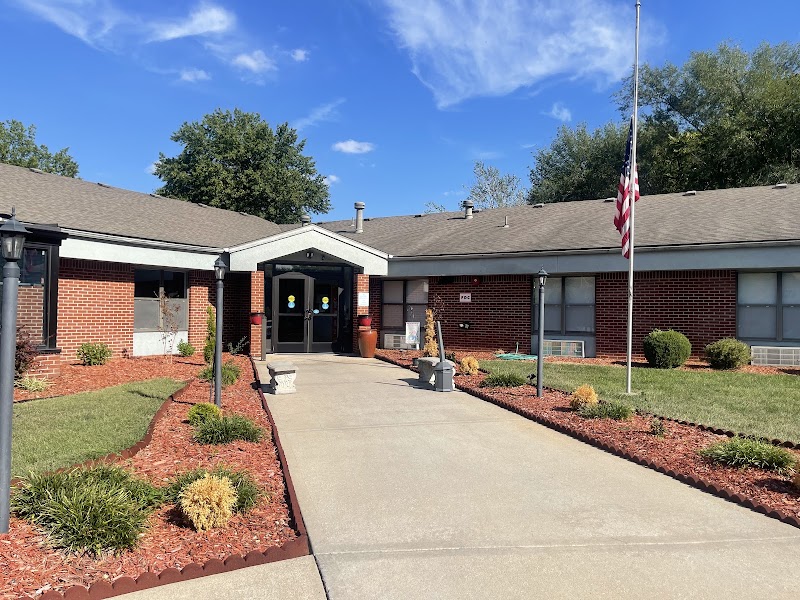
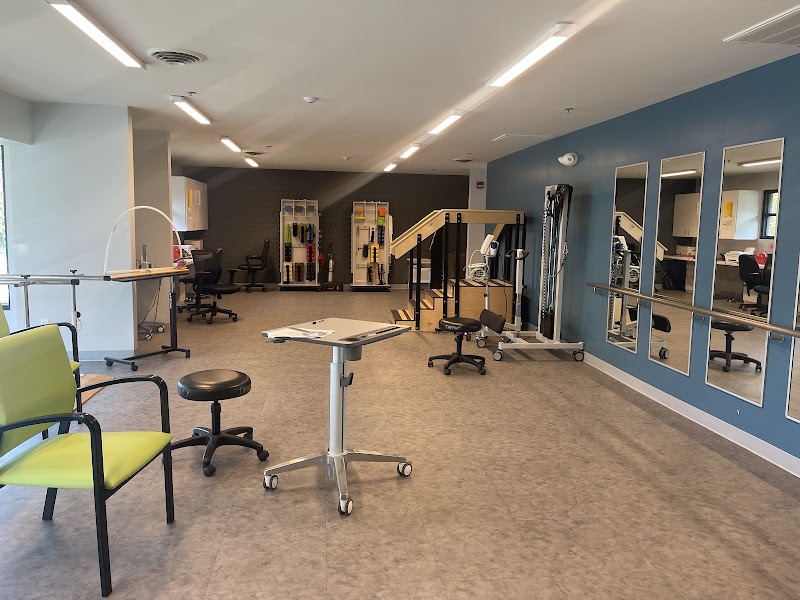
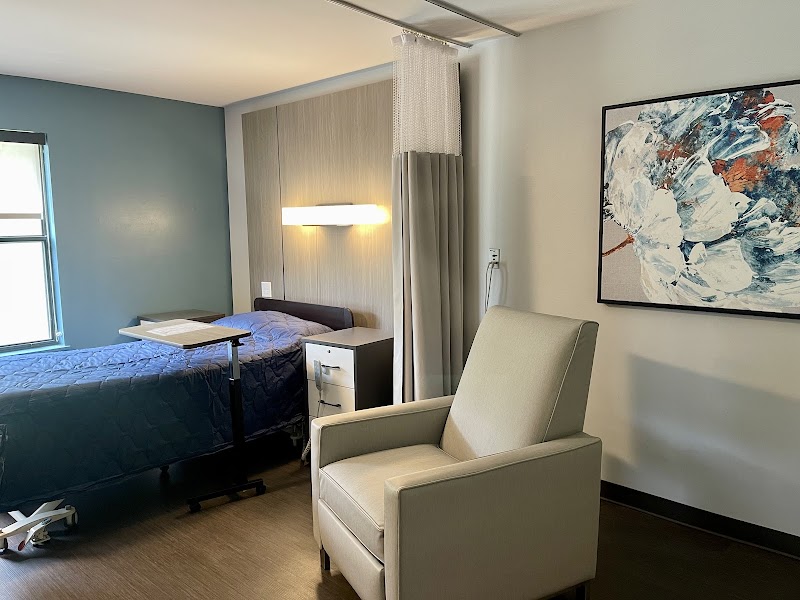
LEES SUMMIT PLACE

1501 SW 3RD STREET, LEES SUMMIT, MO 64081 (816) 525-6300
For profit - Limited Liability company 60 Beds VERTICAL HEALTH SERVICES Data: November 2025
Trust Grade
45/100
#162 of 479 in MO
Last Inspection: April 2025

Within standard 12-15 month inspection cycle. Federal law requires annual inspections.

Overview

Lees Summit Place has a Trust Grade of D, indicating below-average performance with some concerning issues. It ranks #162 out of 479 facilities in Missouri, placing it in the top half, and #9 out of 38 in Jackson County, which means there are only a few better local options. The facility is improving, having reduced its issues from 10 in 2023 to 4 in 2025, although it still faces challenges, particularly with a high staffing turnover rate of 76%, significantly above the state average. There have been no fines issued, which is a positive sign, and the facility has better RN coverage than 97% of Missouri facilities, ensuring that residents receive more attentive care. However, there are serious concerns, such as a failure to properly manage pressure injuries for residents and issues with kitchen cleanliness that could compromise food safety. Overall, while there are strengths in RN coverage and a trend toward improvement, families should weigh these against the staffing concerns and recent deficiencies noted in care practices.

Trust Score
D
45/100
In Missouri
#162/479
Top 33%
Safety Record
Moderate
Needs review
Inspections
Getting Better
10 → 4 violations
Staff Stability
⚠ Watch
76% turnover. Very high, 28 points above average. Constant new faces learning your loved one's needs.
Penalties
✓ Good
No fines on record. Clean compliance history, better than most Missouri facilities.
Skilled Nurses
✓ Good
Each resident gets 44 minutes of Registered Nurse (RN) attention daily — more than average for Missouri. RNs are trained to catch health problems early.
Violations
⚠ Watch
30 deficiencies on record. Higher than average. Multiple issues found across inspections.
★★★☆☆
3.0
Overall Rating
★☆☆☆☆
1.0
Staff Levels
★★★☆☆
3.0
Care Quality
★★★★☆
4.0
Inspection Score
Stable
2023: 10 issues
2025: 4 issues

The Good

  • Full Sprinkler Coverage · Fire safety systems throughout facility
  • No fines on record

Facility shows strength in fire safety.

The Bad

3-Star Overall Rating

Above Missouri average (2.5)

Meets federal standards, typical of most facilities

Staff Turnover: 76%

30pts above Missouri avg (46%)

Frequent staff changes - ask about care continuity

Chain: VERTICAL HEALTH SERVICES

Part of a multi-facility chain

Ask about local staffing decisions and management

Staff turnover is very high (76%)

28 points above Missouri average of 48%

The Ugly 30 deficiencies on record

1 actual harm
Apr 2025 4 deficiencies 1 Harm
SERIOUS (G) 📢 Someone Reported This

A family member, employee, or ombudsman was alarmed enough to file a formal complaint

Actual Harm - a resident was hurt due to facility failures

Pressure Ulcer Prevention (Tag F0686)

A resident was harmed · This affected 1 resident

**NOTE- TERMS IN BRACKETS HAVE BEEN EDITED TO PROTECT CONFIDENTIALITY** Based on observation, interview and record review, the facility failed to follow the facility's policies; failed to ensure preve...

Read full inspector narrative →
**NOTE- TERMS IN BRACKETS HAVE BEEN EDITED TO PROTECT CONFIDENTIALITY** Based on observation, interview and record review, the facility failed to follow the facility's policies; failed to ensure prevention and treatment of pressure injuries (localized injury to the skin and/or underlying tissue usually over a bony prominence, as a result of pressure, or pressure in combination with shear and/or friction); failed to identify individuals at risk for developing pressure injuries; failed to assess, monitor, and measure the wounds at least weekly and document the findings; failed to observe for changes in the pressure injury that could indicate a change in the treatment; failed to implement the interventions on the residents plan of care; and failed to follow physician's orders for the treatment of pressure injuries for two sampled residents (Resident #26 and #307) out of 12 sampled residents. The facility census was 48 residents. Review of the facility policy titled Comprehensive Care Plan, dated 9/1/21, showed: -It was the policy of the facility to develop and implement a comprehensive person-centered care plan for each resident, consistent with resident rights, that includes measurable objectives and timeframes to meet a resident's medical, nursing, and mental and psychosocial needs that are identified in the resident's comprehensive assessment. -The comprehensive care plan will describe any services that would otherwise be furnished but are not provided due to the resident's exercise of his or her right to refuse treatment. -The facility would attempt alternate methods for refusal of treatment and services and document such attempts in the clinical records, including discussion with the resident and/or resident representative. Review of the facility policy titled Medical Provider Orders, dated 4/7/22, showed: -The facility used uniformed guidelines for the ordering and following of medical provider orders. -Medical provider orders should be reviewed prior to administration of medication and/or treatment to validate the orders contained all required elements. -Staff would follow all valid medical provider orders timely unless there is an emergency which would temporarily delay the implementation of the order. -If an order did not contain all of the required elements, staff should contact the ordering provider for clarification of the order prior to implementation of the order. -Written transfer orders (sent with a resident by a hospital or other health care facility) would be implemented without further validation, if It was signed and dated by the resident's current attending medical provider, unless the order was unclear or incomplete, or the date signed is different from the date of admission. -If a transfer order was unsigned, signed by a different medical provider, or the date was other than the admission date, the receiving nurse should verify the order with the current attending medical provider. Review of the facility policy titled Skin Assessment, dated 9/1/22, showed: -It was the facility's policy to perform a full body skin assessment as part of the facility systematic approach to pressure injury prevention and management. -A full body, or head to toe skin assessment would be conducted by a licensed or registered nurse upon admission/re-admission and weekly thereafter. -The skin assessment may also be performed after a change of condition or after any newly identified pressure injury. -Documentation of the skin assessment included: Date and time of the skin assessment, the staff members name, and the staff members position title. -Documentation of the skin assessment included observations (skin condition, how the resident tolerated the procedure, etc.) -Documentation of the skin assessment included the type of wound. -Documentation of the skin assessment included description of the wound (measurement, color, type of tissue in wound bed, drainage, odor, pain). -Documentation of the skin assessment included if resident refused assessment and why. 1. Review of Resident #26's admission record showed: -The resident had a diagnosis of cognitive deficit (a problem or impairment in one or more aspects of a person's mental abilities, such as memory, attention, or problem-solving). -There was no diagnosis of pressure injury and/or any other skin wounds on the resident's admission record. Review of the resident's care plan dated 2/20/25, showed: -The resident had potential for impairment to skin integrity. -The resident would maintain or develop clean and intact skin by the review date. Review of the resident's Physician Order Sheet (POS) dated 2/21/25, showed weekly skin assessments were to be performed every Friday. Review of the resident's admission Minimum Data Set (MDS-A federally mandated assessment tool required to be completed by facility staff for care planning) dated 2/24/25 showed the resident: -Had moderate cognitive impairment. -Was at risk for developing pressure injury. -Did not have any pressure injuries, or any other skin problems. -Did not have any skin or ulcer/wound treatments. Review of the resident's weekly nursing skin assessment dated [DATE], showed: -A pressure injury on the resident's right outer ankle. --There were no measurements documented. --There was no description documented. -An area of discoloration on the resident's left outer ankle. --There were no measurements documented. --There was not description documented. Review of the resident's skin monitoring: Comprehensive Certified Nurse Assistant (CNA) shower review sheet dated 3/14/25, showed no wounds or other skin concerns were documented. Review of the resident's weekly nursing skin assessment dated [DATE], showed no documentation and/or description of the resident's pressure injuries. Review of the resident's skin monitoring: Comprehensive CNA shower review sheet dated 3/24/25, showed no wounds or other skin concerns were documented. Review of the resident's Initial outside wound company evaluation and management summary dated 3/25/25, showed: -The resident presented with wounds on his/her left lateral ankle, left lateral (outer) heel; and right lateral ankle. -Left lateral ankle measured 0.6 centimeters (cm) X 1.7 cm X Not measurable. --The dressing treatment plan was to apply skin prep once daily for 30 days. ---This was an unstageable pressure injury (full thickness tissue loss in which the base of the ulcer is covered by slough (yellow, tan, gray, green or brown) and/or eschar (tan, brown or black) in the wound bed) -Left lateral heel measured 0.6 cm X 1.5 cm X Not measurable. --The dressing treatment plan was to apply skin prep once daily for 30 days. ---This was an unstageable pressure injury. -Right lateral ankle measured 1.1 cm X 1.0 cm X Not measurable. --The dressing treatment plan was to apply betadine once daily for 30 days. ---This was an unstageable pressure injury. --NOTE: The wound care company evaluated the resident 13 days after the left lateral ankle and the right lateral ankle were found. Review of the resident's Treatment Administration Record (TAR) dated March 2025 showed: -The left lateral ankle and left lateral heel treatment was: apply skin prep every shift, two times a day to start on 3/30/25. --The treatment started five days after the wound care company evaluated the wound and was 18 days after recognizing the pressure injuries. -NOTE: There were no orders that addressed the right lateral ankle. Review of the resident's weekly nursing skin assessment dated [DATE], showed no observation and/or description of the resident's pressure injuries. Review of the resident's skin monitoring: Comprehensive CNA shower review sheet dated 3/28/25, showed no wounds or other skin concerns were documented. Review of the resident's POS dated 3/30/25, showed: -Treatment to the left lateral ankle and left lateral heel was to apply skin prep every shift, two times a day. -NOTE: There were no orders that addressed the resident's right lateral ankle. Review of the resident's weekly wound assessment dated [DATE], showed: -The resident had a facility acquired pressure injury on his/her right lateral ankle. --The date of onset for the pressure injury was 3/12/25. --The wound measured 1.1 cm in length X 1.0 cm in width X undetermined depth. -The resident had a facility acquired pressure wound on his/her left lateral ankle. --The date of onset for the pressure injury was 3/12/25. --The wound measured 0.6 cm in length X 1.7 cm in width X undetermined depth. -NOTE: The right lateral ankle was not assessed, Review of the resident's skin monitoring: Comprehensive CNA shower review sheet dated 3/31/25, showed no wounds or other skin concerns were documented. Review of the resident's weekly nursing skin assessment dated [DATE], showed no observation and/or description of the resident's pressure injuries. Observation on 4/3/25 at 11:49 A.M. of wound care with Licensed Practical Nurse (LPN) A and Registered Nurse (RN) A showed: -The resident had three wounds on his/her left lateral ankle. -Gauze was in between the resident's socks and his/her left lateral ankle. -There was no wound dressing and/or bandages in place on the resident's left lateral ankle. -RN A placed skin prep on all three wounds on the resident's left lateral ankle. -RN A placed a dressing over the three wounds on the resident's left lateral ankle. --NOTE: No wound care was completed on the resident's right lateral ankle. During an interview on 4/3/25 at 11:49 A.M. LPN A and RN A said the wound care for the resident was complete. During an interview on 4/3/25 at 11:49 A.M. the resident said RN A may remove the sock from his/her right foot. Observation on 4/3/25 at 11:49 A.M. showed the resident had a pressure injury on his/her right lateral ankle that measured approximately 1.1 cm X 1.0 cm X not measurable. During an interview on 4/3/25 at 11:58 A.M., LPN A said: -He/She was not aware there was a wound on the resident's right lateral ankle. -There were no physician orders for any treatment to the the resident's right lateral ankle. -He/She had not been completing any treatments or medication application on the resident's right lateral ankle. During an interview on 4/3/25 at 12:10 P.M., the resident said the staff had not been doing any type of wound care to his/her right lateral ankle. Observation on 4/7/25 at 9:39 A.M., of wound care with LPN A and the Assistant Director of Nursing (ADON), showed: -A dressing was removed from the resident's right lateral small toe that was dated 4/6/25. -LPN A applied skin prep to the pinpoint sized wound on the outside of the resident's small toe and applied a wound bandage. -An open wound was seen on the resident's right lateral foot. --LPN A measured the wound to the resident's lateral right foot 1.5 cm X 1 cm X non measurable. -An open wound seen on the resident's coccyx (tailbone). --A crumbled up dressing that had no initials or date was removed from the resident;'s coccyx area by the ADON, ---The coccyx wound measured 1.0 cm X 1.0 cm. ---The ADON applied ointment to the coccyx area and left it open to air. The resident was repositioned to his/her back. During an interview on 4/7/25 at 9:48 A.M., LPN A said there were no orders for the coccyx wound. During an interview on 4/7/25 at 10:02 A.M., the resident said: -He/She could not recall when his/her coccyx wound started. -He/She could not recall who placed the wound dressing on the coccyx wound or when it was placed, he/she believed it was the previous shift night nurse. -The coccyx wound was causing him/her some discomfort. Review of the resident's POS dated April 2025 showed no orders for any treatment to the resident's coccyx area. 2. Review of Resident #307's admission record, dated 3/25/25, showed: -The resident was his/her own responsible party. -The resident had a diagnosis of pressure injury to his/her sacral (large, triangular bone at the base of the spine and at the upper and back part of the pelvic cavity) area, Stage IV (full thickness tissue loss with exposed bone, tendon or muscle. Slough or eschar may be present on some parts of the wound bed. Often includes undermining and tunneling.) . -The resident had a diagnosis of pressure injury at other site, unstageable. -The resident had a diagnosis of cognitive communication deficit. Review of the resident's facility to facility transfer report from the hospital dated 3/25/25, showed: -Left sided ischial tuberosity (the rounded bone that extends from the ischium - the curved bone that makes up the bottom of your pelvis). pressure injury; 4 cm X 2 cm X 4 cm; Stage IV. --Cleanse wound with wound cleanser, pat dry. Pack to depth with Dakin's (A solution that kills germs and prevent their growth in wounds. It can also help dissolve dead tissue- necrosis). 1/4 strength soaked kerlex to depth. Cover with foam adhesive dressing every shift. -Right sided ischial tuberosity pressure injury; 1.5 cm X 1.5 cm X 1 cm; Stage IV. --Cleanse wound with wound cleanser, pat dry. Pack to depth with Dakin's 1/4 strength soaked kerlex to depth. Cover with foam adhesive dressing every shift. -Sacrum pressure injury; 6 cm X 5 cm X 4.5 cm; Stage IV. -- Cleanse wound with wound cleanser, pat dry. Pack to depth with Dakin's 1/4 strength soaked kerlex to depth. Cover with foam adhesive dressing every shift. -Left lateral (outside) knee pressure injury; 1 cm X 0.5 cm X 0.1 cm; Stage III (a full thickness tissue loss. Subcutaneous fat may be visible but bone, tendon or muscle is not exposed. Slough may be present but does not obscure the depth of tissue loss. May include undermining or tunneling). --Cleanse wound with wound cleanser, pat dry. Apply Silvadene to wound bed. Apply 1-2 layers of Xeroform gauze to wound. Cover with foam adhesive dressing every shift. -Right sided toe pressure injury; Unstageable. --Cleanse wound with wound cleanser, pat dry. Apply betadine painting to toe. Leave open to air daily. -Contact isolation precautions for Methicillin Resistant Staphylococcus Aureus (MRSA-a type of bacteria that is resistant to many antibiotics) in the wound. Follow facility guidelines. Review of the resident's admission skin assessment dated [DATE], showed: -The resident had a Stage III pressure injury on his/her right buttock. --There were no measurements documented. -The resident had a Stage III pressure injury on his/her left buttock. --There were no measurements documented. -The resident had a Stage III pressure injury on his/her sacrum. --There were no measurements documented. -The resident had a pressure injury on his/her left knee. --There were no measurements documented. --Described as open and covered with 4X4 for protection. -The resident had a pressure injury on his/her right lower leg (front). --There were no measurements documented. --Described as closed and covered with 4X4 for protection. -There was no mention of the right toe wound. -NOTE: There was no mentioned of the resident's wounds having MRSA. Review of the resident's admission MDS dated [DATE], showed: -One Stage III pressure injury upon admission to the facility. -Three Stage IV pressure injuries upon admission to the facility. -The resident had zero unstageable pressure injuries upon admission to the facility. -NOTE: The right toe wound was not captured on the resident's MDS. Review of the resident's POS dated 3/25/25, showed: -Left Ischial Tuberosity cleanse with wound cleanser, pat dry. Pack with Dakins soaked kerlix (A type of bandage roll made from 100% woven cotton with a unique crinkle-weave pattern) to depth. Cover with foam Dressing every shift (twice per day) and as needed for soiling. -Right ischial tuberosity wound cleanse with wound cleanser, pat dry. Pack with Dakins soaked kerlix to depth. Cover with foam dressing every shift (twice per day) and as needed for Soiling. -Sacrum wound cleanse with wound cleanser, pat dry. Pack with Dakins 1/4 strength soaked kerlex to depth. Cover with foam adhesive every shift (twice per day) and as needed for soiling. -Left lateral knee wound cleanse with wound wash, pat dry. Apply Silvadene to wound bed. Apply a layer of Xeroform to wound bed. Cover with foam adhesive dressing every shift (twice per day) and as needed for soiling. every shift -Right 4th toe wound. Cleanse wound with wound wash, pat dry. Apply betadine to toe. Leave open to air daily and as needed. -There were no orders for skin assessments. Review of the resident's care plan dated 3/28/25, showed: -An unstageable pressure injury of the left foot, third digit. --The wound was actually on the resident's right fourth digit. -A Stage IV pressure injury of the sacral region. -The resident's left ischial tuberosity, right ischial tuberosity, and left lateral knee were not addressed in the care plan. -There were no updates to the care plan that indicated the resident refused treatments to his/her wounds. Review of the resident's TAR dated April 2025, showed: -Left Ischial Tuberosity wound cleanse with wound cleanser, pat dry. Pack with Dakins soaked kerlix to depth. Cover with foam dressing every shift (twice per day) and as needed for soiling every shift. --The resident refused wound treatment on 4/1/25, 4/2/25, and 4/3/25 on the day shift. -Right ischial tuberosity wound cleanse with wound cleanser, pat dry. Pack with Dakins soaked kerlix to depth. Cover with foam dressing every shift (twice per day) and as needed for soiling every shift. --The resident refused wound treatment on 4/1/25, 4/2/25, and 4/3/25 on the day shift. -Sacrum wound cleanse with wound cleanser, pat dry. Pack with Dakins 1/4 strength soaked kerlex to depth. Cover with foam adhesive every shift (twice per day) and as needed for Soiling every shift. --The resident refused wound treatment on 4/1/25, 4/2/25, and 4/3/25 on the day shift. -Left lateral knee wound cleanse with wound wash, pat dry. Apply Silvadene to wound bed. Apply a layer of Xeroform to wound bed. Cover with foam adhesive dressing every shift (twice per day) and as needed for soiling, every shift. --The resident refused wound treatment on 4/1/25, 4/2/25, and 4/3/25 on the day shift. -Right 4th toe wound cleanse wound with wound wash, pat dry. Apply betadine to toe. Leave open to air daily and as needed. --The resident refused wound treatment on 4/1/25, 4/2/25, and 4/3/25 on the day shift. -NOTE: There were no orders for skin assessments. During an interview on 4/1/25 at 9:45 A.M., the resident said: -Since being admitted staff had not changed the dressings to his/her left and right ischial tuberosities, sacrum and left lateral knee. -Since his/her admission the right toe wound dressing had been changed one time. -He/she has never refused a wound treatment for any of his/her wounds. -He/She was admitted for wound care. -He/She would be able to go home when they were better. -He/She was upset that they were not changing the dressings because that was the whole reason he/she was at the facility. Review of the resident's medical record dated 4/1/25 to 4/3/25 showed: -There was no documentation with any details about the resident's refusal of wound treatments. -There were no skin assessments in the resident's record. -There were no wound measurements in the resident's record. -There were no nursing notes regarding the resident's wounds. During an interview on 4/3/25 at 10:32 A.M., the Medical Director said: -He/She would expect weekly skin assessments to be completed and documented on residents in the facility. -He/She would expect physicians orders to be implemented and documented when completed. During an interview on 4/3/25 at 1:45 P.M., the resident said: -The staff had not been in his/her room today, 4/3/25, to offer or complete wound care. -LPN A asked to change the dressings on 4/2/25 around 4:30 P.M., he/she gave permission. LPN A went to get supplies and did not return until 6:20 P.M. When LPN A came into the resident's room at 6:20 P.M., asked if he/she was ready for the dressings to be changed, he/she responded, yes. LPN A left and never returned to change his/her wound dressings on 4/2/25. -The night shift nurse did not offer or complete the dressing changes throughout the night of 4/2/25. -He would like to have his/her wound dressings changed as soon as possible as they were causing him/her discomfort and were dirty. During an interview on 4/3/25 at 2:15 P.M., LPN A said: -The resident refused his/her wound care treatments today (4/3/25). -He/She forgot to document the refusal in a progress note and should have done so. Observation on 4/3/25 at 3:04 P.M., showed: -LPN A and RN A changed the resident's wound dressings. -LPN A removed the resident's soiled dressing from the sacrum. --The sacrum was a Stage IV wound with visible bone: approximately 6 cm X 5 cm X 4.5 cm. --The dressing was soiled with exudate of numerous color; clear, yellow, and brown. --The dressing was crumbled up and not covering the wound completely. --The dressing did not have any nurse initials or a date. -The left ischial tuberosity and right ischial tuberosity dressings were not covering the wound. --The dressings were soiled with exudate of numerous color; clear, yellow, and brown. --The dressings were partially hanging and partially crumbled up. --The left ischial tuberosity and the right ischial tuberosity were exposed to and in contact with the resident's feces. --Wound dressings for the left ischial tuberosity and the right ischial tuberosity did not have a date or initials. --The left ischial tuberosity was approximately 1.5 cm X 1.5 cm X 1 cm; Stage IV. --The right ischial tuberosity was approximately 4 cm X 2 cm X 4 cm; Stage IV. -Wound care for the left lateral knee was not completed. --The left lateral knee had no dressing and was open to air. --The left lateral knee was approximately 1 cm X 0.5 cm X 0.1 cm. ---Wound care orders for the left lateral knee were cleanse with wound wash, pat dry. Apply Silvadene to wound bed. Apply a layer of Xeroform to wound bed. Cover with foam adhesive dressing every shift (twice per day) and as needed for soiling. Every shift. -Wound care for the right toe was not completed. --The right toe was covered by a dressing with the date of 3/30/25. --Right 4th toe wound. Cleanse wound with wound wash, pat dry. Apply betadine to toe. Leave open to air daily and as needed. -NOTE: There was a strong malodorous smell in the resident's room. During in an interview on 4/3/25 at 4:00 P.M., LPN A said: -The dressings that were on the resident's wounds had not been in stock since sometime last week. -The dressings were currently on back order. 3. During in an interview on 4/7/25 at 1:46 P.M., CNA A said: -The nurses were responsible to complete the weekly skin assessments on the resident's in the facility. -The CNA's were responsible for the bath skin assessments in the facility. -He/She was not sure where the weekly and the bath assessments were documented. -He/She gave his/her bath skin assessments to the charge nurse on duty for his/her shift. -He/She reported skin issues to his/her charge nurse. -He/She could not recall where the wounds were located for Resident #26 and Resident #307. -He/She had never completed a bath skin assessment on Resident #26 or Resident #307. During in an interview on 4/7/25 at 1:49 P.M., LPN A said: -He/She was not sure who was responsible for resident's weekly skin assessments. -The skin assessment duties were handed off from the floor nurses to the ADON recently. -There had been some confusion on who was responsible for weekly skin assessments. -He/She was unsure of who was responsible for the skin assessments from week to week. -Skin assessments were documented in the resident's electronic medical record when completed under the assessment tab. -The previous DON came in and made a lot of changes and caused a lot of confusion. -The new DON started on Monday. -He/She was unsure who was responsible for wound assessments. -Wound assessments should be documented in the resident's electronic medical record. -18 days would be an excessive and unacceptable amount of time for a resident's wounds to not receive wound care or treatments. -The charge nurse who was on duty when a wound was brought to their attention was the one responsible for ensuring that a resident received timely wound care treatment orders. -The physician should be notified within the same shift that a wound was brought to the attention of the charge nurse to receive wound care treatment orders. -When a resident refused wound care treatments, it should be documented on the TAR and in a progress note but sometimes the progress note was bypassed. -He/She was unsure of what the policy was for assessment and treatment of resident's with wounds. During an interview on 4/7/25 at 2:44 P.M., the DON said: -Upon admission the charge nurse was responsible for a complete skin assessment and measurements of any current pressure injuries that the resident may have. -Weekly skin assessments should be completed and documented by the charge nurses on the floor. -Weekly skin assessment should be documented in the resident's electronic medical records under assessments. -If a wound was found on an assessment the nurse should notify the physician as soon as they found the wound but definitely within that shift. -18 days would be an excessive and unacceptable amount of time for a resident's wounds to not receive care and treatment orders. -He/She was unsure of who was responsible for the care plans regarding wounds and wound care or what they were doing before he/she started. -He/She would expect a resident that refused wound care treatments to be care planned for those refusals. -He/She would expect the floor nurses to document in a progress note and notify him/her if a resident refused wound care treatments. -He/She would expect a resident's wounds to be measured upon assessment and documented in the resident's electronic medical record under weekly wound assessments. -The facility did not currently have a MDS Coordinator and one was being shared between another facility. MO00248773
CONCERN (D)

Potential for Harm - no one hurt, but risky conditions existed

Quality of Care (Tag F0684)

Could have caused harm · This affected 1 resident

**NOTE- TERMS IN BRACKETS HAVE BEEN EDITED TO PROTECT CONFIDENTIALITY** Based on interview and record review, the facility failed to ensure medications were given as ordered when a staff member admini...

Read full inspector narrative →
**NOTE- TERMS IN BRACKETS HAVE BEEN EDITED TO PROTECT CONFIDENTIALITY** Based on interview and record review, the facility failed to ensure medications were given as ordered when a staff member administered Lorazepam Intensol (a scheduled IV controlled substance medication was used for the management of anxiety disorders (a feeling of fear, dread, and uneasiness) without a physician's order for one supplemental resident (Resident #14) out of 12 residents. The facility census was 48 residents. Review of the facility policy titled Medical Provider Orders, dated 4/7/22, showed: -The facility shall use uniform guidelines for the ordering and following of medical provider orders. -Medications should be administered only upon the signed order of a person lawfully authorized to prescribe. -Documentation of medication if using electronic medication record, should be input in the electronic health record (EHR) with instructions per facility policy. -Medical provider orders should be reviewed prior to administration of medication to validate the orders timely. -If an order does not contain all the required elements, staff should contact the ordering provider for clarification of the order prior to implementation of the order. Review of the facility policy titled Medication Administration, dated 9/1/22, showed: -For policy explanation and compliance guidelines, staff must review the Medication Administration Record (MAR) to identify medication to be administered and compare the medication source with the MAR to verify resident name, medication name, form, dose, route, and time. -Staff must sign the MAR after administration and if the medication is a controlled substance, sign the narcotic book. -Staff must correct any discrepancies and report to the nurse manager. Review of the facility policy titled Controlled Substance Administration & Accountability, dated 9/1/22, showed: -It was the policy of the facility to promote safe, high quality patient care, compliant with state and federal regulations regarding monitoring the use of controlled substances. -The facility would have safeguards in place in order to prevent loss, diversion, or accidental exposure. -In all cases, the dose noted on the usage form must match the dose recorded on the MAR, Controlled Drug Record, or other facility specified form and placed in the patients' medical record. -The Controlled Drug Record serves the dual purpose of recording both narcotic disposition and patient administration. 1. Review of Resident #14's admission record showed: -The resident was admitted to the facility on [DATE]. -The resident was his/her own responsible party. -The resident had a diagnosis of cognitive communication deficit. -NOTE: There was no diagnosis of Anxiety and/or depression listed. Review of the resident's care plan revised on 2/2/25, showed staff were to administer medications as ordered. Document adverse side effects and notify Dr as needed. Review of the resident's MAR dated February 2025 showed: -Lorazepam Concentrate 2 milligram (mg)/milliliter (ml). Give 0.5 ml by mouth every 6 hours as needed for Anxiety to start on 2/3/25 and discontinue on 2/4/25. -Lorazepam Concentrate 2 mg/ml Give 0.5 ml by mouth every 6 hours as needed for Anxiety for 14 Days. With a Start Date of 2/4/25. -There were no staff initials on the resident's MAR to represent administration of Lorazepam Concentrate 2 mg/ml being given to the resident as ordered in February. -On 2/4/25 the resident's MAR was blank and did not have staff initials to show the medication was administered. -On 2/25/25 the resident's MAR had an X, which indicated to not give the medication. Review of the resident's Physician Order Sheet (POS) dated 2/3/25, showed: -Lorazepam Concentrate 2 mg/ml. Give 0.5 ml by mouth every 6 hours as needed for anxiety to start on 2/3/25. -Lorazepam Concentrate 2 mg/ml. Give 0.5 ml by mouth every 6 hours as needed for anxiety to discontinued on 2/4/25. -Lorazepam Concentrate 2 mg/ml. Give 0.5 ml by mouth every 6 hours as needed for anxiety for 14 days to start on 2/4/25. Review of the resident's Controlled Drug Record dated 2/4/25, showed: -Lorazepam Intensol 0.5 ml was administered to the resident on 2/4/25 at 6:00 P.M. -Lorazepam Intensol 0.5 ml was administered to the resident on 2/25/25 at 4:58 P.M. -The resident did not have a physician's order for Lorazepam Intensol on 2/25/25 when the medication was administered. -The resident's Lorazepam Intensol order was discontinued on 2/18/25. During a phone interview on 4/7/25 at 12:06 P.M., the Pharmacist said: -The resident's Lorazepam medication was ordered on 2/3/25 and delivered to the facility on 2/4/25 at 3:14 A.M. -The resident did not have any record of additional Lorazepam orders by a physician. -He/She would expect a nurse to ensure that a resident had a physicians order for a medication prior to administering a medication to the resident. During in an interview on 4/7/25 at 1:49 P.M., Licensed Practical Nurse (LPN) A said: -He/She was unaware of which staff member administered the resident Lorazepam 0.5 ml on 2/25/25. -He/She would expect a nurse to check a resident's physicians order in the computer prior to administering a resident a PRN medication. -He/She would expect a nurse to compare the physicians order with the MAR to ensure accuracy prior to administering a PRN medication. -He/She would not expect a resident to receive a medication that did not have a physician's order. During an interview on 4/7/25 at 2:44 P.M., the Director of Nursing (DON) said: -He/She would expect a nurse to ensure that that a resident was given a medication that had a physician's order. -He/She would expect a nurse administering a medication to check the resident's physician's order in the electronic medical record to ensure the right patient and ensure the right dose of the medication was being administered. -He/She would not expect a medication that did not have a physician's order to be administered to a resident.
CONCERN (D)

Potential for Harm - no one hurt, but risky conditions existed

Incontinence Care (Tag F0690)

Could have caused harm · This affected 1 resident

**NOTE- TERMS IN BRACKETS HAVE BEEN EDITED TO PROTECT CONFIDENTIALITY** Based on observation, interview and record review, the facility failed to assess the resident's ability and capacity for self-ca...

Read full inspector narrative →
**NOTE- TERMS IN BRACKETS HAVE BEEN EDITED TO PROTECT CONFIDENTIALITY** Based on observation, interview and record review, the facility failed to assess the resident's ability and capacity for self-care of his/her catheter (a tube passed through the urethra into the bladder to drain urine); failed to provide the resident with infection control education for self-administration of his/her catheter to help prevent infection; failed to capture the resident's self-catheter care on his/her admission Minimum Data Set (MDS-A federally mandated assessment tool required to be completed by facility staff for care planning); and failed to include the resident's self-care on his/her baseline care plan for one sampled resident (Resident # 307), out of 12 sampled residents. The facility census was 48 residents. A policy was requested and not received at the time of exit. 1. Review of Resident #307's admission record, dated 3/25/25, showed he/she admitted with the following diagnoses: -Cognitive communication deficit. -Neuromuscular dysfunction of the bladder (lack of bladder control due to brain, spinal cord or nerve problems). -Paraplegia (partial or complete paralysis of the lower half of the body, specifically the legs and feet). Review of the resident's facility to facility transfer report from the hospital dated 3/25/25, showed: -The resident was treated with antibiotics in the hospital prior to admission to the facility for a Urinary [NAME] Infection (UTI). -The resident's urine culture in the hospital was positive for Proteus mirabilis (a Gram-negative bacterium which is most frequently a pathogen of the urinary tract, particularly in patients undergoing long-term catheterization). -The hospital physician stated that the resident required increased and continuous education regarding the sterile straight catheter procedure (A sterile straight catheter procedure involves inserting a sterile, thin tube (a straight catheter) into the urethra to drain urine from the bladder, followed by immediate removal of the catheter. It's a medical procedure designed to minimize the risk of infection, using sterile gloves, equipment, and techniques throughout). Review of the resident's admission MDS dated [DATE], showed: -In Section H - Bladder and Bowel; the resident did not perform intermittent catheterization. -In Section H - Bladder and Bowel; the resident did not have an internal or external catheter. Review of the resident's Physician Order Sheet (POS) dated 3/25/25, showed: -A physician's order for the resident to straight catheterize self when needed. -NOTE: There were no directions specified for the catheter order in the directions section. Review of the resident's care plan dated 3/28/25, showed: -The resident had an Activities of Daily Living (ADL - dressing, grooming, bathing, eating, and toileting) self-care deficit. -There was no mention of the resident's self-catheterization or the need for infection control education. Review of the resident's Treatment Administration Record (TAR) dated March 2025 showed: -Enhanced barrier precautions for straight catheterization required. -There was no mention of education or monitoring the resident's straight catheterization. -There was no mention of assessing and monitoring for symptoms and or prevention of a urinary tract infection. During an interview on 4/1/25 at 9:45 A.M., the resident said: -He/She performed self-catheterization. -He/She was not educated by the facility staff about how to safely and accurately perform self-catheterization. -He/She had never been educated by the facility staff on using the sterile technique while performing self-catheterization to help prevent infection. -He/She recently recovered from an infection of the urinary tract. Review of the resident's electronic medical record on 4/2/25, showed: -No documentation, assessments, or progress notes of the resident's self-catheterization. -No documentation about his/her risk for urinary tract infection. During an interview on 4/3/25 at 1:45 P.M., the resident said: -The facility provided his/her catheters. -He/She kept his/her catheters in his/her bedside table. -He/She did not use gloves or aseptic wipes when he/she performed self-catheterization. Observation on 4/3/25 at 1:45 P.M. showed: -The resident had two catheters in his/her resident's bedside table. -There were no sterile supplies (aseptic wipes) or gloves. -There were no aseptic wipes in the resident's room. -The gloves hanging near the resident's door on the wall were clean, not sterile. Observation on 4/3/25 at 3:04 P.M., showed Licensed Practical Nurse (LPN) A opened the resident's bedside table drawer and saw the resident had two catheters and told the resident that he/she would bring him/her more catheters. During an interview on 4/7/25 at 1:46 P.M., Certified Nursing Assistant (CNA) A said: -He/She was not aware that the resident performed self-catheterization. -He/She had never assisted the resident in performing self-catheterization. -He/She was not educated on the resident's history of urinary tract infections. -He/She was unaware if the resident received education from the nursing staff on the sterile technique and proper procedure for self-catheterization. During an interview on 4/7/25 at 1:49 P.M., LPN A said: -He/She was aware that the resident performed self-catheterization. -He/She had never assisted the resident with the self-catheterization. -He/She had not educated the resident on the proper aseptic technique for self-catheterization. -He/She was not aware if the resident received education from other nursing staff on the proper aseptic technique for self-catheterization. -The nursing staff were responsible for educating residents on the proper aseptic technique for self-catheterization. -The nursing staff were responsible for ensuring that a resident who performed self-catheterization was care planned for the self-care. -The facility did not currently have an in house MDS Coordinator. -The MDS Coordinator that created the residents care plans and kept the residents care plans updated was working two different facilities at the same time. During an interview on 4/7/25 at 2:44 P.M., the Director of Nursing (DON) said: -He/She was not very familiar with the resident and the resident's self-catheter situation. -He/She would expect a resident to have a self-care assessment completed on admission to ensure safe and aseptic self-catheterization. -He/She would expect a resident's care plan to reflect self-catheterization and education on the procedure. -He/She would expect a resident's admission MDS to capture intermittent catheterization for a resident who performed self-catheterization.
CONCERN (D)

Potential for Harm - no one hurt, but risky conditions existed

Deficiency F0761 (Tag F0761)

Could have caused harm · This affected 1 resident

**NOTE- TERMS IN BRACKETS HAVE BEEN EDITED TO PROTECT CONFIDENTIALITY** Based on observation, interview and record review, the facility failed to ensure accurate documentation on the narcotic count sh...

Read full inspector narrative →
**NOTE- TERMS IN BRACKETS HAVE BEEN EDITED TO PROTECT CONFIDENTIALITY** Based on observation, interview and record review, the facility failed to ensure accurate documentation on the narcotic count sheets; and failed to dispose of Lorazepam Intensol (a controlled substance used to treat anxiety) per professional standards and facility policy for one supplemental resident (Resident #14). The facility census was 48 residents. Review of the facility policy titled Controlled Substance Administration & Accountability, dated [DATE], showed: -It was the policy of the facility to promote safe, high quality patient care, compliant with state and federal regulations regarding monitoring the use of controlled substances. -The facility would have safeguards in place in order to prevent loss, diversion, or accidental exposure. -Where an automated patient profiling systems is not utilized, the Director of Nursing (DON), charge nurse, and other designee and the consultant pharmacist discuss all additions or deletions to the areas stock supply. -All controlled substances (schedule II, III, IV, and V) are accounted for. -All controlled substances obtained from a non-automated medication cart or cabinet are recorded on a designated usage form. Written documentation must be clearly legible with all applicable information provided. -In all cases, the dose noted on the usage form must match the dose recorded on the Medication Administration Record (MAR), Controlled Drug Record, or other facility specified form and placed in the patients' medical record. -The Controlled Drug Record serves the dual purpose of recording both narcotic disposition and patient administration. -The controlled drug record is a permanent medical record document and in conjunction with the MAR is the source for documenting any patient specific narcotic dispensed from the pharmacy. -Areas without automated dispensing systems utilize a paper system for 24-hour recording of controlled substance use. -Two licensed staff must witness any disposal or destruction of a controlled substance and document same on the drug disposition record, controlled drug record, or via the automated dispensing system. -For inventory verification, two licensed nurses or per state regulations account for all controlled substances at the end of each shift. -Any discrepancy in the count of controlled substances is resolved by the end of the shift during which it is discovered. 1. Review of Resident #14's admission record showed: -The resident was admitted to the facility on [DATE]. -The resident was his/her own responsible party. -The resident had a diagnosis of cognitive communication deficit. -NOTE: There was no diagnosis of Anxiety and/or depression listed. Review of the resident's Physician Order Sheet (POS) dated [DATE], showed: -Lorazepam Intensol 2 mg/ml. Give 0.5 ml by mouth every 6 hours as needed for anxiety to start on [DATE]. -Lorazepam Intensol 2 mg/ml. Give 0.5 ml by mouth every 6 hours as needed for anxiety to discontinued on [DATE]. -Lorazepam Intensol 2 mg/ml. Give 0.5 ml by mouth every 6 hours as needed for Anxiety for 14 days to start on [DATE]. Review of the resident's Controlled Drug Record dated [DATE], showed: -Lorazepam Intensol 0.5 ml was administered to the resident on [DATE] at 6:00 P.M. -Lorazepam Intensol 0.5 ml was administered to the resident on [DATE] at 4:58 P.M. Review of the resident's MAR dated February 2025 showed: -Lorazepam Intensol 2 mg/ml. Give 0.5 ml by mouth every 6 hours as needed for Anxiety to start on [DATE] and discontinue on [DATE]. -Lorazepam Intensol 2 mg/ml. Give 0.5 ml by mouth every 6 hours as needed for Anxiety for 14 Days. With a Start Date of [DATE]. Review on [DATE] at 10:25 A.M., showed: -The resident's-controlled drug record for Lorazepam Intensol 2 mg/ml was in the 100/300 hall narcotic count sheet book. --The resident's controlled record log was started on [DATE]. --The resident's controlled record log showed that on [DATE] at 6:00 P.M., Lorazepam 0.5 ml was administered and left a remaining amount of 29.5 ml of Lorazepam. --The resident's controlled record log showed that on [DATE] at 4:58 P.M., Lorazepam Intensol 0.5 ml was administered and left a remaining amount of 29 ml of Lorazepam. ---There was no other documentation on the resident's controlled record log. -The resident's Lorazepam Intensol 2 mg/ml was not in the medication carts, and was not in the medication refrigerator. During an interview on [DATE] at 10:32 A.M., Licensed Practical Nurse (LPN) A said: -The staff had not been completing the medication narcotic count sheets as they should have on a regular basis. -He/She was unaware where the previous medication narcotic count sheets were. -He/She thought the previous sheets were in the management office with the DON. -He/She destroyed the Lorazepam Intensol last week with the DON. -He/She did not document the destruction of the Lorazepam Intensol in the resident's electronic medical record. -He/She did not document the Lorazepam Intensol destruction on the resident's controlled drug record. -The process for a controlled substance being destroyed by facility staff required two nurses. -Once a controlled substance was destroyed by the two nurses, the two nurses both had to document the destruction on the resident's controlled drug record. -He/She knew the correct procedure to destroy controlled substances when the resident's Lorazepam Intensol was being destroyed by himself/herself and the DON, but they did not have the resident's controlled drug record handy at the time. During an interview on [DATE] at 10:45 A.M., DON said: -Staff have not been completing the medication narcotic count sheets like they were supposed to. -He/She destroyed the resident's Lorazepam Intensol with LPN A one day last week, but he/she could not recall the exact date. -He/She and LPN A destroyed the Lorazepam Intensol because it was expired. -He/She did not document the destruction of the Lorazepam Intensol in the resident's electronic medical record. -He/She did not document the destruction of the Lorazepam Intensol on the resident's controlled drug record. -He/She and LPN A should have documented on the resident's controlled drug record when they destroyed the resident's Lorazepam Intensol. -He/She would expect the staff to follow the facility policy when destroying a controlled substance. -He/She would expect staff to document on a resident's controlled drug record when the resident's medication was destroyed. -He/She would expect the resident's controlled drug record to be pulled from the facility's narcotic logbook once destruction was complete. 2. Review of the 100/300 hall medication cart narcotic count sheets dated [DATE] to [DATE], showed: -There was no documentation from [DATE] to [DATE] on the narcotic count sheet. -Six out of 46 opportunities the oncoming nurse did not sign the count sheet. -Seven out of 46 opportunities the off going nurse did not sign the count sheet. -46 out of 46 opportunities there was no documentation of the narcotic total count. Review of the 200 hall medication cart narcotic count sheets dated [DATE] to [DATE], showed: -Two out of 40 opportunities the oncoming nurse did not sign the count sheet. -Three out of 40 opportunities the off going nurse did not sign the count sheet. -40 out of 40 opportunities there was no documentation of the narcotic total count. -There was no documentation for [DATE] and [DATE] on the narcotic count sheet. Review of the 100/300 hall medication cart narcotic count sheets dated [DATE] to [DATE], showed: -12 out of 54 opportunities the oncoming nurse did not sign the count sheet. -15 out of 54 opportunities the off going nurse did not sign the count sheet. -44 out of 54 opportunities there was no documentation of the narcotic total count. -There was no documentation for [DATE] and [DATE] on the narcotic count sheet. Review of the 200 hall medication cart narcotic count sheets dated [DATE] to [DATE], showed: -Two out of 56 opportunities the oncoming nurse did not sign the count sheet. -Four out of 56 opportunities the off going nurse did not sign the count sheet. -50 out of 56 opportunities there was no documentation of the narcotic total count. Review of the 100/300 hall medication cart narcotic count sheets dated [DATE] to [DATE], showed: -Four out of 22 opportunities the oncoming nurse did not sign the count sheet. -Five out of 22 opportunities the off going nurse did not sign the count sheet. -19 out of 22 opportunities there was no documentation of the narcotic total count. Review of the 200 hall medication cart narcotic count sheets dated [DATE] to [DATE], showed: -Four out of four opportunities there was no documentation of the narcotic total count. During in an interview on [DATE] at 1:49 P.M., LPN A said: -The oncoming and the off going nurse should both be signing the facility's medication cart narcotic count sheet at the change of each shift. -The oncoming nurse and the off going nurse should both be counting the total narcotic count and documenting that number on the facility's medication cart narcotic count sheet at the change of each shift. During an interview on [DATE] at 2:44 P.M., the DON said: -He/She was aware that they facility staff was not following the policy for completing the medication cart narcotic count sheets. -He/She would expect the medication cart narcotic count sheets be completed per the facility policy.
Sept 2023 9 deficiencies
CONCERN (D)

Potential for Harm - no one hurt, but risky conditions existed

Deficiency F0583 (Tag F0583)

Could have caused harm · This affected 1 resident

**NOTE- TERMS IN BRACKETS HAVE BEEN EDITED TO PROTECT CONFIDENTIALITY** Based on observation, interview, and record review, the facility failed to ensure residents' private records were kept private d...

Read full inspector narrative →
**NOTE- TERMS IN BRACKETS HAVE BEEN EDITED TO PROTECT CONFIDENTIALITY** Based on observation, interview, and record review, the facility failed to ensure residents' private records were kept private during a medication pass by not ensuring the computer screen was not visible to anyone walking by the computer on top of the medication cart while the nurse administered medications inside of the residents' room for two sampled residents (Resident #5 and Resident #11) and one supplemental resident (Resident # 10) out of nine sampled residents. The facility census was 13 residents. Review of the facility's policy, Medication Administration, dated 9/1/22 showed: -Medications were to have been administered by licensed nurses, or other staff who were legally authorized to do so in this state, as ordered by the physician and in accordance with professional standards of practice. -Provide privacy. 1. Review of Resident 5's face sheet showed he/she was admitted on [DATE] with the following diagnoses: -Cognitive communication deficit (a disorder in which a person has difficulty communicating as a result of a brain injury). -Depression (a common and serious medical illness that negatively affects how you feel, the way you think and how you act). -Bipolar disorder (a disorder associated with episodes of manic highs and depressive lows). -Dementia (a group of thinking and social symptoms that interferes with daily functioning). Review of the resident's annual Minimum Data Set (MDS - a federally mandated assessment tool completed by facility staff for care planning) dated 8/7/23 showed his/her Brief Interview for Mental Status (BIMS) score was 10 out of 15 indicating he/she was moderately cognitively impaired. Observation on 9/7/23 at 7:15 A.M. of the medication pass with Licensed Practical Nurse (LPN) A showed: -The nurse went into the resident's room to administer six medications to the resident. -He/she had left the screen on the computer open for two minutes with the resident's information clearly visible. -One staff member walked by the computer within two feet of the computer screen. 2. Review of Resident #10's admission MDS dated [DATE] showed: -He/she was admitted to the facility on [DATE]. -He/she had a complex medical history. -His/her BIMS score was 15 out of 15 indicating he/she was cognitively intact. Observation on 9/7/23 at 7:45 A.M. with LPN A showed: -The nurse went into the resident's room to administer one medication patch to the resident. -He/she had left the screen on the computer open for four minutes with the resident's information clearly visible. -Two staff members walked by the computer within two feet of the computer screen. -Three residents walked by the computer within two feet of the computer screen. 3. Review of Resident #11's admission MDS dated [DATE] showed: -He/she was admitted on [DATE] with the following diagnoses: -Fractures (a complete or partial break in the bone). -Obstructive Uropathy (a condition in which the flow of urine is blocked causing it to back up into the kidneys). -Cerberbal Vascular Accident (CVA -damage to the brain from interruption of its blood supply). -His/Her BIMS score was 00 out of 15 indicating he/she was severely cognitively impaired. Observation on 9/7/23 at 8:26 A.M. with LPN A showed: -The nurse went into the resident's room to administer two medications to the resident. -He/she had left the screen on the computer open for three minutes with the resident's information clearly visible. -One resident walked by the computer within two feet of the computer screen. 4. During an interview on 9/7/23 at 12:30 P.M. LPN A said: -When staff were passing medications, they should have minimized the screen on the computer so anyone passing by could not have seen the resident's information. -The facility had provided education on keeping the residents information private. During an interview on 9/7/23 at 1:00 P.M. Certified Medication Technician (CMT) A said: -Nursing should have minimized the screen if not in front of it when passing medications so no one passing by was able to see the resident's private medical information. -The facility had given them education on ensuring the residents information stayed private. -The Director of Nursing (DON) was ultimately responsible to ensure nursing was ensuring residents' information stayed private. During an interview on 9/8/23 at 12:37 P.M. the DON said: -Nursing was to use the Hide Screen tab on the computer to ensure the medical information of the resident stayed private. -Ensuring residents' information stayed private was covered during orientation. -Privacy was inserviced with the staff at least annually. -Staff was observed during morning rounds to ensure the computer screens were hidden with no resident information visible. -He/she was ultimately responsible to ensure that staff was not leaving the computer screens open with resident information visible to anyone walking by the medication cart.
CONCERN (D)

Potential for Harm - no one hurt, but risky conditions existed

Deficiency F0657 (Tag F0657)

Could have caused harm · This affected 1 resident

**NOTE- TERMS IN BRACKETS HAVE BEEN EDITED TO PROTECT CONFIDENTIALITY** Based on interview and record review, the facility failed to provide continuity of resident care by not reviewing and revising r...

Read full inspector narrative →
**NOTE- TERMS IN BRACKETS HAVE BEEN EDITED TO PROTECT CONFIDENTIALITY** Based on interview and record review, the facility failed to provide continuity of resident care by not reviewing and revising resident comprehensive care plans (a document that specified health care and supported needs and outlined how the facility met resident requirements) for one sampled resident (Resident #269) out of nine sampled residents. This practice had the potential to effect the resident's safety and physical well-being. The facility census was 13 residents. Review of the facility's Comprehensive Care Plans Policy, dated 9/1/2021, showed: -It was the facility's policy to develop and implement a comprehensive person-centered care plan for each resident. -The comprehensive care plan described the services that were furnished to attain or maintain the resident's highest practicable physical well-being. -The comprehensive care plan was prepared by the interdisciplinary team which included: --The attending physician. --A Registered Nurse (RN). --A nurse aide. --A member of the food and nutrition services staff. --The resident and the resident representative. --Other appropriate staff or professionals. -The comprehensive assessment was reviewed and revised by the interdisciplinary team. 1. Review of Resident #269's face sheet, undated, showed he/she had the following diagnoses: -Stroke. -Hemiplegia and hemiparesis (lack of ability to move or control the muscles in the affected body part). -Generalized muscle weakness. -Alcohol abuse. Review of the resident's admission Minimum Data Set (MDS- a federally mandated assessment instrument completed by facility staff for care planning) dated 8/21/23, showed: -The resident scored a 15 on the Brief Interview for Mental Status (BIMS), an assessment tool that shows a score between 3 and 15 which shows the resident's mental status. This tool helps determine the resident's attention, orientation and ability to register and recall new information. These items were crucial factors in care planning decisions. --This showed the resident was cognitively intact. -The resident required extensive assistance with transferring (how a resident moves to and from surfaces including from bed to wheel chair, chair, standing, toilet) with two staff persons providing weight bearing support. - The resident required maximal assistance with showering/bathing self. Review of the resident's care plan, dated 8/28/23, showed the resident required a mechanical lift for transfers, requiring two staff members. During an interview on 9/5/23 at 10:08 A.M., the resident said: -He/she received a bath/shower twice a week in the shower room. -Staff did not put him/her in a mechanical lift. -Staff just wheeled him/her down to the shower room and helped him/her as needed. During an interview on 9/6/23 at 10:23 A.M., Certified Medication Technician (CMT) A said: -The resident did not require a mechanical lift. -The resident had supervision during bathing. During an interview on 9/6/23 at 1:50 P.M., Licensed Practical Nurse (LPN) A said: -The resident no longer required a mechanical lift. -He/She needed to use one when he/she first was admitted . -His/Her weight bearing improved and no longer needed a mechanical lift. During an interview on 9/7/23 at 6:47 A.M., Certified Nursing Assistant (CNA) B said: -The resident did not require a mechanical lift. -The resident used it when he/she first got to the facility. -The resident no longer required maximum assist. -The resident was able to stand and pivot. During an interview on 9/7/23 at 6:57 A.M., LPN B said: -He/she believed the resident used a mechanical lift. -He/she worked nights and the resident did not usually need to be up at night. -He/she did not get the resident up. During an interview on 9/7/23 at 10:43 A.M., the Director of Nursing (DON) said: -The resident did not use a mechanical lift. -The resident used a mechanical lift when he/she was first admitted . -The [NAME] (a filing system for nursing records and orders) stated the resident was an extensive assist. During an interview on 9/7/23 at 1:25 P.M., the DON said: -The care plan should be updated as orders were changed. -He/she was able to go in and update care plans as necessary. -Some changes did not require a full care plan meeting. -If the resident no longer required a mechanical lift he/she would expect the care plan to be updated.
CONCERN (D)

Potential for Harm - no one hurt, but risky conditions existed

Deficiency F0661 (Tag F0661)

Could have caused harm · This affected 1 resident

**NOTE- TERMS IN BRACKETS HAVE BEEN EDITED TO PROTECT CONFIDENTIALITY** Based on interview and record review, the facility failed to document information regarding the resident's personal belongings f...

Read full inspector narrative →
**NOTE- TERMS IN BRACKETS HAVE BEEN EDITED TO PROTECT CONFIDENTIALITY** Based on interview and record review, the facility failed to document information regarding the resident's personal belongings for one sampled closed record resident (Resident #15) out of two sampled closed records. The facility census was 13 residents. Review of the facility's resident personal belongings policy revised 9/1/22 showed: -All resident personal belongings would be inventoried at the time of admission and documentation kept in the medical record. -Additional possessions brought in during the duration of the individual's stay would be added to the existing personal belongings inventory listing. -Following the discharge of a resident, all personal belongings would be given to the designated resident representative. -The inventory of personal belongings should be reviewed at time of discharge by Social Services and the resident's representative. -The recipient of the resident's personal belongings would sign-off with their legal signature acknowledging receipt of all personal belongings presented. 1. Review of Resident #15's entry tracking form showed he/she admitted to the facility on [DATE]. Review of the resident's long-term care facility to hospital transfer note dated 7/2/23 showed he/she was discharged to the hospital. Review of the resident's discharge assessment showed he/she was discharged from the facility on 7/2/23 and was not expected to return to the facility. Review of the resident's medical records showed no documentation regarding the resident's personal belongings. During an interview on 9/8/23 at 9:48 A.M., Licensed Practical Nurse (LPN) C said: -During the admission process, the nurses and/or Certified Nursing Assistants (CNA)s were supposed to document the resident's personal belongings on a paper form. -When the resident discharged from the facility, nursing staff were to document where the resident's belongings went upon/after discharge. During an interview on 9/8/23 at 12:37 P.M., the Director of Nursing (DON) said: -Their Social Worker was no longer employed there as of the previous week. -The CNAs have an inventory sheet they were supposed to fill out to put belongings on when residents bring in personal items. -The nurse should document what belongings the resident and/or their representative took with them and have them sign the inventory sheet upon discharge.
CONCERN (D)

Potential for Harm - no one hurt, but risky conditions existed

Accident Prevention (Tag F0689)

Could have caused harm · This affected 1 resident

Based on observation, interview and record review, the facility failed to follow physician orders by not providing supervision for one sampled resident (Resident #269) out of nine sampled residents wh...

Read full inspector narrative →
Based on observation, interview and record review, the facility failed to follow physician orders by not providing supervision for one sampled resident (Resident #269) out of nine sampled residents while the resident was alone in his/her wheelchair in his/her room. The facility census was 13 residents. Review of the facility's Medical Provider Orders policy, dated 4/7/22, showed: -The facility used uniform guidelines for the ordering and following of medical provider orders. -Medical provider orders were reviewed prior to administration of medication and/or treatment to validate the orders contained all required elements. -Staff should follow all valid medical provider orders timely unless there was an emergency that temporarily delayed the implementation of the order. Review of the facility's Incidents and Accidents policy, dated 9/1/22, showed: -The purpose of the policy was to ensure appropriate and immediate interventions were implemented and corrective actions taken to prevent recurrences and improve the management of resident care. 1. Review of Resident #269's face sheet, undated, showed he/she had the following diagnoses: -Stroke with hemiplegia and hemiparesis (the inability to move or control the muscles in the affected body part). -Generalized muscle weakness. -Difficulty walking. Review of the resident's admission Minimum Data Set (MDS- a federally mandated assessment instrument completed by facility staff for care planning) dated 8/21/23, showed: -The resident scored a 15 on the Brief Interview for Mental Status (BIMS - an assessment tool that shows a score between 3 and 15 which shows the resident's mental status. This tool helps determine the resident's attention, orientation and ability to register and recall new information. These items are crucial factors in care planning decisions). --This showed the resident was cognitively intact. -The resident required extensive assistance with transferring (how a resident moves to and from surfaces including from bed to wheel chair, chair, standing, toilet) with two staff persons providing weight bearing support. Review of the resident's physician order summary, dated 8/24/23, showed: -The resident was not to be in his/her wheelchair unsupervised. -When in room, ensure the resident was in his/her recliner. -Ensure Dycem (material used to help stabilize objects, hold objects firmly in place, or to provide a better grip) was in wheelchair at all times. Review of the resident's Care Plan dated 8/26/23, showed: -On 8/17/23 the resident slid from his/her wheelchair without injury. -On 8/22/23 the resident had an unwitnessed fall in the activity room without injury. -On 8/26/23 the resident slid from his/her wheelchair, no injury noted. Observation on 9/5/23 at 11:13 A.M. showed the resident was in his/her room in his/her wheelchair without supervision. During an interview on 9/6/23 at 10:23 A.M., Certified Medication Technician (CMT) A said: -The resident had a Dycem pad in the wheelchair. -The pad went on top of the cushion. -It helped the resident from sliding out of the wheelchair. -The resident needed supervision while in his/her wheelchair. -A Certified Nurse Assistant (CNA) or nurse supervised the resident. -The resident was not supposed to be left in the wheelchair. -The resident should have been in his/her recliner if in his/her room. During an interview on 9/6/23 at 1:50 P.M., Licensed Practical Nurse (LPN) A said: -The resident slid out of the wheelchair two to three times. -The resident was provided a Dycem pad and educated on call light use. -Currently the resident was able to be in wheelchair unsupervised. Observation from 9/7/23 from 6:35 A.M. to 6:45 A.M., showed the resident was in his/her room in his/her wheelchair, watching TV, unsupervised. During an interview on 9/7/23 at 6:47 A.M., CNA B said: -The resident had a Dycem pad on his/her wheelchair cushion. -The resident was safe to be in his/her wheelchair on his/her own but staff kept an eye on him/her. -The resident tried to get up on his/her own. -He/she made sure the resident's call light was within reach and other items needed were close to the resident. -He/she checked on the resident every 10 to 15 minutes when the resident was in his/her room. -The resident did not like to be in his/her recliner. -He/she knew the resident should be in his/her recliner. During an interview on 9/7/23 at 6:57 A.M., LPN B said: -When the resident was in his/her room and not in bed, he/she was supposed to be in the recliner to prevent falls. -The recliner helped position him/her better. -The resident was usually very cooperative about sitting in the recliner. -The resident required supervision while in the wheelchair. -Supervision meant the resident was within eye sight. Observation on 9/7/23 at 10:25 A.M. showed: -The resident was seen leaving his/her room in his/her wheelchair. -No staff were present in the area. During an interview on 9/7/23 at 10:43 A.M., the Director of Nursing (DON) said: -The resident had a Dycem pad between him/herself and the cushion on the wheelchair. -Nurses were responsible for ensuring the Dycem pad was in place. -There was no need for the resident to be in his/her recliner when in his/her room. During an interview on 9/7/23 at 1:36 P.M., the resident's physician said: -The resident had issues of being impulsive and attempted to do activities he/she was not capable of, such as transfers. -The resident was at high risk for falls if left in the wheelchair unsupervised. -He/she preferred for the resident to be supervised if the resident was in his/her wheelchair, or in a common area where staff could have him/her in eye sight. -He/she did not want the resident in his/her wheelchair without supervision. -He/she expected staff to follow physician orders.
CONCERN (D)

Potential for Harm - no one hurt, but risky conditions existed

Deficiency F0698 (Tag F0698)

Could have caused harm · This affected 1 resident

Based on observation, interview and record review, the facility failed to ensure ongoing communication and collaboration with the dialysis facility regarding dialysis care and services for one sampled...

Read full inspector narrative →
Based on observation, interview and record review, the facility failed to ensure ongoing communication and collaboration with the dialysis facility regarding dialysis care and services for one sampled resident (Resident #68) who was the only resident receiving dialysis that resided at the facility. The facility census was 13 residents. Review of the facility's dialysis policy revised 9/1/22 showed: -There should be ongoing communication and collaboration with the dialysis facility regarding dialysis care and services. -The facility staff should coordinate and collaborate with the dialysis facility to assure that documentation requirements were met to assure that treatments are provided as ordered. 1. Review of Resident #68's all-inclusive admission with baseline care plans dated 9/3/23 showed the reason for the resident's admission was to receive therapy, cares and dialysis. Review of the resident's Physician's Order Sheet dated September 2023 showed: -The resident was to receive dialysis from 5:00 A.M. to 9:00 A.M. -The resident's dialysis days were Monday, Wednesday and Friday. Review of the resident's dialysis communication form dated 9/4/23 showed: -The dialysis center information section included areas to document pre- and post-dialysis weight, vital signs, dialysis start time and end time, fluid removed, meal/snack intake, shunt location/status, new doctor's orders and additional information. -The information section from the dialysis center was left blank. During an interview on 9/5/23 at 2:30 P.M. the resident said: -He/she just came to the facility the evening of 9/1/23. -He/she went to dialysis once (on 9/4/23) since being admitted to the facility. -The dialysis center took his/her weight before and after dialysis when he/she was there the day before. -He/she was unsure if the dialysis center sent his/her weight or anything else to the facility. -The facility van took him/her to dialysis and he/she was there at 5:00 A.M. Observation on 9/6/23 at 9:56 A.M. showed the resident was being pushed into the building in his/her wheelchair (after returning from dialysis). Review of the resident's dialysis communication form dated 9/6/23 showed: -The dialysis center information section included areas to document pre- and post-dialysis weight, vital signs, dialysis start time and end time, fluid removed, meal/snack intake, shunt location/status, new doctor's orders and additional information. -The information section from the dialysis center was not completed. During an interview on 9/6/23 at 2:59 P.M., Licensed Practical Nurse (LPN) A said: -The dialysis center was supposed to fill out the middle part (titled dialysis center information) of the dialysis communication form and send it back to the facility with the resident after dialysis. -It was the responsibility of the nurse on duty to call the dialysis center and get the weights and information if the dialysis communication form did not come back with the resident after dialysis. During an interview on 9/8/23 12:37 P.M., the Director of Nursing (DON) said: -Nursing had not obtained weights from the dialysis center for Monday and Wednesday until the state surveyor requested the information. -They filled out the pre-dialysis information on the dialysis communication form, they made a copy and sent the form with the resident to the dialysis clinic. -The dialysis center was supposed to fill out the center section of the dialysis communication form and send it back to the facility. -When the resident returned to the facility, nursing staff were supposed to fill out the post-dialysis information section. -If the dialysis center did not fill out their section or send the form back to the facility, the nurse should call the dialysis center and request the form with the information completed.
CONCERN (D)

Potential for Harm - no one hurt, but risky conditions existed

Deficiency F0883 (Tag F0883)

Could have caused harm · This affected 1 resident

**NOTE- TERMS IN BRACKETS HAVE BEEN EDITED TO PROTECT CONFIDENTIALITY** Based on interview and record review, the facility failed to provide pneumococcal (lung inflammation caused by bacterial or vira...

Read full inspector narrative →
**NOTE- TERMS IN BRACKETS HAVE BEEN EDITED TO PROTECT CONFIDENTIALITY** Based on interview and record review, the facility failed to provide pneumococcal (lung inflammation caused by bacterial or viral infection) vaccines for one sampled resident (Resident #268) out of five residents sampled for immunizations. The facility census was 13 residents. Review of the facility's Pneumococcal Vaccine Policy, dated 9/1/2021, showed: -It was the facility's policy to offer residents immunizations against pneumococcal disease in accordance with current Center for Disease Control (CDC-the nation's health protection agency responsible for controlling the introduction and spread of infectious diseases) guidelines and recommendations. -Each resident was assessed for pneumococcal immunization upon admission. -Each resident was offered the pneumococcal immunization unless medically contraindicated or the resident was already immunized. -Vaccinations were offered to residents 65 years or older, according to CDC guidelines. -The resident's medical record included documentation that indicated the following: --The resident or resident representative was provided education regarding the benefits and potential side effects of the pneumococcal immunization. --The resident received the pneumococcal immunization or did not receive the immunization due medical contraindication or refusal. Review of the CDC guidelines for the pneumococcal vaccine, dated 9/11/23, showed people age [AGE] or older who previously received the pneumococcal polysaccharide vaccine (PPV23) should receive one dose of PPV23 at least 1 year after the PPV23 dose. 1. Review of resident #268's face sheet, undated, showed: -The resident was over age [AGE]. -The resident's diagnoses included cellulitis (swelling of connective tissue under the skin), muscle weakness, and atrial fibrillation (an irregular and often very rapid heart). Review of the resident's admission Minimum Data Set (MDS- a federally mandated assessment instrument completed by facility staff for care planning) dated 6/9/23, showed: -The resident scored a 15 on the Brief Interview for Mental Status (BIMS), an assessment tool that shows a score between 3 of 15 which shows the resident's mental status. This tool helps determine the resident's attention, orientation and ability to register and recall new information. These items are crucial factors in care planning decisions. --This showed that the resident cognitively intact. Review of the resident's electronic health record (EHR), undated, showed no pneumonia vaccines were noted. Review of the resident's State Immunization Record, dated 9/6/23, showed the resident last received the PPV23 on 10/23/2018. During an interview on 9/6/23 at 1:50 P.M., Licensed Practical Nurse (LPN) A said the Director of Nursing (DON) tracked resident immunizations. During an interview on 9/6/23 at 2:16 P.M., the Assistant Director of Nursing (ADON) said: -Immunizations for new admissions are tracked by the DON. -That included flu and pneumonia vaccines. -Vaccines were to be documented in the immunizations tab in the EHR. During an interview on 9/7/23 at 10:43 A.M., the DON said: -He/she used a phone application (app) from the CDC that showed vaccine guidelines for specific age groups. -He/she utilized those guidelines when offering vaccines to new residents. -He/she tracked when the vaccines were offered and which residents refused them. Review of the resident's Physician Order Summary, dated 9/8/23, showed the resident did not have an order for a pneumococcal vaccine. During an interview on 9/8/23 12:37 P.M., the DON said: -The facility offered immunizations to all new residents, including the pneumonia vaccine. -Education was provided if the resident refused. -This should have been documented in the medical record. -The resident should have had a pneumonia vaccine. -The facility did not have any pneumonia vaccines available. -The facility normally kept pneumonia vaccines on hand.
CONCERN (E)

Potential for Harm - no one hurt, but risky conditions existed

Dental Services (Tag F0791)

Could have caused harm · This affected multiple residents

**NOTE- TERMS IN BRACKETS HAVE BEEN EDITED TO PROTECT CONFIDENTIALITY** 3. Review of Resident #5's face sheet showed he/she was admitted to the facility with the following diagnoses: -Cognitive commun...

Read full inspector narrative →
**NOTE- TERMS IN BRACKETS HAVE BEEN EDITED TO PROTECT CONFIDENTIALITY** 3. Review of Resident #5's face sheet showed he/she was admitted to the facility with the following diagnoses: -Cognitive communication deficit (an acquired communication deficit after a brain injury). -Depressive disorder (a common mental disorder. It involves a depressed mood or loss of pleasure or interest in activities). -Bipolar disorder (a disorder with episodes of mood swings ranging from depressive lows to manic highs). -Dementia (a group of thinking and social symptoms that interferes with daily functioning). Review of the resident's care plan dated 9/20/21 showed: -He/she had oral/dental health problems related to poor oral hygiene. -Staff were to coordinate arrangements for dental care, transportation as needed/as ordered. -Staff were to monitor/document/report as needed any signs or symptoms of oral/dental problems needing attention. Review of the resident's last dental exam dated 11/17/21 showed: -The Dentist had done a full mouth x ray on 11/11/21. -He/she had recommended that the resident have tooth number #13 extracted. -The resident had declined treatment until the tooth became symptomatic. -He/she would monitor for now. Review of the resident's annual MDS dated [DATE] showed his/Her Brief Interview for Mental Status (BIMS) score was 10 out of 15 indicating he/she was moderately cognitively impaired. During an interview on 9/5/23 at 3:45 P.M. the resident said: -He/she had not seen the Dentist for two years. -He/she had nice teeth and would like to to keep his/her teeth well. -He/she had told the staff he/she wanted to see the Dentist but nothing had happened. During an interview on 9/5/23 at 3:50 P.M. LPN C said: -He/she did not know when the Dentist was at the facility last. -He/she did not know when the resident had last seen the Dentist. -He/she did not know if the resident had dentures or his/her own teeth. -Social Services was responsible for making dental appointments. -He/she could not remember if the resident had asked to see a Dentist. -The facility was between Social Workers right now. -He/she verified the last documentation of a dental visit was on 2/12/21. -He/she did not know how often the residents were supposed to see a Dentist. During an interview on 9/7/23 at 10:30 A.M. Certified Medication Technician (CMT) A said: -The residents should see the Dentist annually. -The Social Worker made up a list and the Dentist saw who was on the list. -A new Social Worker was just starting this week. During an interview on 9/8/23 at 12:37 P.M. the DON said: -The Nurse was responsible to have assessed the residents teeth. -The Nurse or the Social Worker would schedule a dental appointment. -The Social Worker was to have ensured the residents were seen by the Dentist annually. -They had a new Social Worker who just started that week. Based on observation, interview and record review, the facility failed to provide an annual dental exam for two sampled residents (Resident #2 and Resident #5) and to provide a dental consult for one sampled resident (Resident #12) who wanted to be evaluated for possible extractions of his/her teeth so he/she could obtain dentures out of nine sampled residents. The facility census was 13 residents. Review of the facility's dental services policy revised on 9/1/22 showed: -It was the policy of the facility to assist residents in obtaining routine and emergency dental care. -The dental needs were to be identified through the physical assessment and Minimum Data Set (MDS-a federally required assessment tool completed by facility staff for care planning) assessment process and addressed in each resident's plan of care. -Oral/dental status should be documented according to assessment findings. -Residents and/or resident representative were notified of dental services available during the admission process. -The Social Services Director maintained contact information for providers of dental services that were available to facility residents. -The facility would assist the resident with making dental appointments and arranging transportation to and from the dental services location as needed. -All information regarding dental services would be documented in the resident's medical record. 1. Review of Resident #2's entry tracking form showed he/she admitted to the facility on [DATE]. Review of the resident's dental records showed: -The resident had a dental cleaning on 7/20/21. -The resident had some teeth extracted on 11/18/21. -No documentation of dental visits after 11/18/21. Review of the resident's oral/dental section of the facility's all-inclusive quarterly screen dated 11/10/22 showed: -Date of last dental exam was left blank. -The resident had natural teeth that were in good condition. -The resident did not have dentures, partials or implants. Review of the resident's oral/dental section of the facility's all-inclusive readmission form dated 2/22/23 showed: -The date of last dental exam was left blank. -The resident had natural teeth that were in fair condition. -The resident did not have dentures, partials or implants. Review of the resident's significant change MDS dated [DATE] showed staff assessment of the resident showed the resident had no dental issues. Review of the resident's quarterly MDS dated [DATE] showed the following staff assessment of the resident: -Had clear speech. -Understood others and was understood by others. -Was cognitively intact. -Required set up assistance with hygiene. Review of the resident's care plan dated 8/24/23 showed: -The resident required set-up assistance with personal hygiene/oral care. -It did not include anything else regarding the resident's teeth or dental needs. Review of the resident's Physician's Order Sheet (POS) dated September 2023 showed an order dated 8/4/22 for dental services to be provided by facility selected provider. During an interview and observation on 9/5/23 at 10:31 A.M.,showed: -The resident said he/she had not seen a dentist in a long time, over a year and he/she would like to have a cleaning. -The resident had some build-up on his/her teeth. During an interview on 9/8/23 at 9:48 A.M., Licensed Practical Nurse (LPN) A said there was an assessment where the nurses asked all the necessary questions including dental and then the Social Worker was responsible for setting up the dental appointments. During an interview on 9/8/23 at 12:37 P.M., the Director of Nursing (DON) said: -The Social Worker was supposed to track when annual dental appointments were due. -Their Social Worker was no longer employed there as of the previous week. -All residents should have an annual dental appointment if they wanted one. 2. Review of Resident #12's entry tracking form showed he/she admitted to the facility on [DATE]. Review of the resident's dietary profile dated 6/14/23 showed the resident: -Received a mechanical soft diet (A texture-modified diet that restricts foods that are difficult to chew or swallow. Foods are finely chopped, blended, or ground to make them smaller, softer, and easier to chew. It differs from a pureed diet, which includes foods that require no chewing). -Requested a mechanical soft texture due to only having a few teeth left. -Ate independently without staff assistance. Review of the resident's physician's history and physical note dated 6/16/23 did not include anything regarding the resident's teeth or oral condition. Review of the resident's dental/nutrition section of the all-inclusive admission with baseline care plans dated 6/15/23 showed: -The resident was on a regular, mechanical soft diet. -The resident did not wear dentures. -The date of last dental exam was left blank. -The resident had some natural teeth that were in fair condition. -The resident did not have dentures, partials or implants. -The resident was independent with daily oral/dental care. Review of the resident's admission/baseline care plan dated 6/15/23 showed: -The resident had some natural teeth. -A number of teeth were missing. -The resident's teeth were in fair condition. -The resident had a nutritional problem or potential nutritional problem related to being on a mechanically altered diet for chewing. -The resident had significant weight loss in the hospital (prior to his/her admission to the facility). -The resident was at risk for malnutrition and further weight loss. -Instructions to provide and serve the resident's diet as ordered: (updated to) regular diet, regular texture and regular/thin consistency liquids consistency. Review of the resident's admission MDS dated [DATE] showed the following staff assessment of the resident: -Had clear speech. -Understood others and was understood by others. -Was cognitively intact. -Required set-up assistance with eating. -Had no dental issues. Review of the resident's nutritional assessment dated [DATE] showed the resident received a regular, mechanically altered diet. During an interview on 9/5/23 at 11:12 A.M., the resident said: -He/she had a lot of teeth extracted about five or six years ago. -It was hard for him/her to chew. -He/she was on a soft diet but he/she couldn't stand it so he/she talked to the doctor and his/her diet was changed back to regular consistency and he/she was doing better. -He/she needed a dentist because he/she thought the rest of his/her teeth needed to be pulled so he/she could have dentures. Observation on 9/6/23 at 12:27 P.M. of the resident's mouth showed the resident had eight front teeth on the bottom, no teeth on the top right and a partial on the left top. Review of the resident's progress notes showed no dental progress notes and no notes about dental needs. During an interview on 9/8/23 at 9:48 A.M., LPN A said: -There's an admission assessment where the nurse asked all the necessary questions including dental and then the Social Worker was responsible for setting up the dental appointments. -The resident had not told him/her that he/she needed any dental work. During an interview on 9/8/23 at 12:37 P.M., the DON said: -The admitting nurse was responsible for assessing the resident for any dental needs, documenting it in the all-inclusive assessment and following-up with DON or the Social Worker. -Their Social Worker was no longer employed there as of the previous week. -He/She was not aware the resident wanted his/her teeth pulled so he/she could have dentures.
CONCERN (E)

Potential for Harm - no one hurt, but risky conditions existed

Infection Control (Tag F0880)

Could have caused harm · This affected multiple residents

**NOTE- TERMS IN BRACKETS HAVE BEEN EDITED TO PROTECT CONFIDENTIALITY** 2. Review of Resident #10's admission MDS dated [DATE] showed: -He/She was admitted to the facility on [DATE]. -He/She had a com...

Read full inspector narrative →
**NOTE- TERMS IN BRACKETS HAVE BEEN EDITED TO PROTECT CONFIDENTIALITY** 2. Review of Resident #10's admission MDS dated [DATE] showed: -He/She was admitted to the facility on [DATE]. -He/She had a complex medical history. -He/she was cognitively intact. Review of the resident's POS dated September 2023 showed he/she had an order for Lidocaine (medication used to decrease pain) patch 5 percent (%) to have been applied daily to his/her left knee. Observation of medication pass on 9/7/23 at 8:15 A.M. with LPN A showed: -He/she cut open the package containing the medicated patch without cleansing the scissors that were in a drawer in the medication cart. -He/she applied the medication patch to the resident. -He/she returned the scissors to the drawer in the medication cart without sanitizing them after opening the package containing the pain patch. -He/she picked up the lid of the resident's meal tray from the floor with his/her bare hands. -He/she did not cleanse his/her hands. -He/she left the room without cleansing his/her hands. -He/she put on gloves without cleansing his/her hands. -He/she proceeded to bleach wipe the top of the medication cart. During an interview on 9/7/23 at 9:00 A.M. LPN A said: -He/she should have cleansed his/her hands before and after applying gloves. -He/she should have cleansed his/her hands after picking anything up off of the floor. -He/she should have used an alcohol pad to clean the scissors before and after using them. During an interview on 9/7/23 at 10:30 A.M. Certified Medication Technician (CMT) A said: -Staff should clean the scissors before and after using them to open a medication package like a patch. -Staff should wash their hands before and after wearing gloves. -Staff should wash their hands after picking anything up off of the floor. -The facility provided education on hand hygiene almost every month. -The DON or Infection Preventionist was responsible for ensuring good hand hygiene was done by the staff. During an interview on 9/8/23 at 12:37 P.M. the DON said: -Staff should have washed their hands when entering a room. -Staff should have washed their hands whenever they take off their gloves. -Staff should have washed their hands if they had picked something up off of the floor. -Staff should have cleaned the scissors with an alcohol wipe before and after using them. -Staff was educated about hand washing a couple of times a week by the Assistant Director of Nursing (ADON). -They had reviewed hand hygiene during the skills fair a couple of weeks ago. -He/she was ultimately responsible for ensuring staff practiced good hand hygiene. 3. Review of the facility's employee TB testing policy dated 9/1/21 showed: -At the time of employment, all new staff shall undergo pre-placement screening for TB, including an individual risk assessment, TB symptoms screen and a TB test. -All new staff shall receive two TB Skin Tests (TST) given two weeks apart unless: --A previously positive TST or positive TB blood test was reported. --Evidence of completion of adequate therapy for active TB was reported. --Two negative TSTs within the past twelve months, the more recent within the last three months. -All initial and follow-up TSTs should be interpreted 48 to 72 hours after administration. -An attachment to the policy included a flow chart from the Missouri Department of Health and Senior Services that showed if a new employee had documentation of a one-step TST with negative results within the past year that they should administer a second-step TST within one to three weeks of beginning employment. Review of the Long Term Care Infection Prevention and Control Manual, Chapter 5, Vaccinations and TB testing, created by the Quality Improvement Program for Missouri (QIPMO), dated February 2022 and the Missouri Department of Health rule 19 CSR 20-20.100, paragraph three dated 2/28/22 showed: -All new long-term care facility employees who work ten or more hours per week should have the first of two TSTs within one month prior to starting employment in the facility. -The results of the TSTs should be read within 48 to 72 hours from administration. -If the initial TST result was zero to nine millimeters (mm) induration, the second test should be administered as soon as possible within three weeks after employment begins, unless documentation was provided indicating a two-step TST was completed in the past and at least one subsequent annual test within the past year. Review of the facility's list of employees hired since the facility's last survey showed: -Employee A was hired on 6/26/23. -Employee B was hired on 6/23/23. Review of Employee A's TB screening showed: -A prior TST that was administered on 10/27/22 and read on 10/29/22 and the results were 0 mm (negative). -No additional TSTs. -No individual risk assessment or TB symptoms screening. Review of Employee B's TB screening showed: -A prior TST that was administered on 12/19/22 and read on 12/21/22 and the results were 0 mm (negative). -No additional TSTs. -No individual risk assessment or TB symptoms screening. During an interview on 9/7/23 at 8:19 A.M., the DON said: -He/she or the Assistant DON were in charge of TSTs for employees. -They usually did the TST when offering them a job and they would tell the new employee to come back in two to three days to have it read. -They were supposed to do a two-step TST if the employee had no TST in the past year. -Employee A and B should have had another TST. Based on observation, interview and record review, the facility failed to perform hand hygiene during cares for one sampled resident (Resident #12); to ensure nursing staff were cleansing their hands during medication pass, did not sanitize a pair of scissors used to open an sealed package counting a narcotic, and picked a tray lid up off of the floor without cleansing hands for one sampled resident (Resident #10) out of nine sampled residents and to follow their policy to complete testing to screen new employees and residents for tuberculosis (TB- a communicable disease that affects especially the lungs, that is characterized by fever, cough, difficulty in breathing, abnormal lung tissue and function) for two out of ten sampled new employees. The facility census was 13 residents. Review of the facility's hand hygiene policy dated 9/1/21 showed: -All staff would perform proper hand hygiene procedures to prevent the spread of infection to other personnel, residents and visitors. -Hand hygiene should be conducted after removing gloves. 1. Review of Resident #12's care plan dated 6/15/23 showed: -The resident had bladder incontinence. -Instructions to provide hygiene care after each incontinence episode. -Instructions to provide preventive skin care. Review of the resident's admission Minimum Data Set (MDS-a federally mandated assessment tool completed by facility staff for care planning) dated 6/20/23 showed the following staff assessment of the resident: -Cognitively intact. -Required limited assistance of one person with toileting and hygiene. -Occasionally incontinent of urine and continent of bowel. -No skin issues. Review of the resident's Physician's Order Sheet (POS) dated September 2023 showed a physician's order to apply barrier cream to the resident's buttocks (either of the two round fleshy parts that form the lower rear area of a human trunk), cover with gauze (per resident request to keep cream off of pants) every shift and as needed. Observation and interview on 9/6/23 at 10:00 A.M. with Licensed Practical Nurse (LPN) A showed: -He/she washed his/her hands, applied gloves and applied ointment on the resident's buttocks. -He/she took off his/her gloves, left the room to get 4 x 4 gauze to cover ointment per the residents request. -He/she did not wash his/her hands before applying gauze to the resident's buttocks. -He/she took off his/her gloves and did not wash his/her hands before leaving the room. -He/she said he/she should have washed his/her hands after glove changes before applying new gloves. During an interview on 9/8/23 at 12:37 P.M., the Director of Nursing (DON) said employees' hands should be washed before putting on new gloves and after glove changes.
CONCERN (F)

Potential for Harm - no one hurt, but risky conditions existed

Food Safety (Tag F0812)

Could have caused harm · This affected most or all residents

Based on observation, interview, and record review, the facility failed to keep the kitchen and Dry Storage (DS) room floors clean; to maintain sanitary utensils and food preparation equipment; to saf...

Read full inspector narrative →
Based on observation, interview, and record review, the facility failed to keep the kitchen and Dry Storage (DS) room floors clean; to maintain sanitary utensils and food preparation equipment; to safeguard against foreign material possibly getting into food; and to maintain plastic cutting boards in good condition to avoid food safety hazards (cross-contamination), in accordance with professional standards for food service safety. These deficient practices had the potential to affect all residents, visitors, volunteers, and staff who ate food from the kitchen. The facility's census was 13 residents with a licensed capacity for 60 residents at the time of the survey. 1. Review of the meal times provided by the Dietary Manager (DM) on 9/5/23 at 8:48 A.M. showed that breakfast was served at 8:00 A.M., lunch at 12:00 P.M., and dinner at 5:30 P.M. Observation on 9/5/23 between 8:48 A.M. and 9:17 A.M. during the initial kitchen inspection showed the following: -There was a large amount of unknown residue on the manual can opener blade. -There were grease drips along the lower edge of a metal barrier under the range hood that hung over the stove. -The red, blue, and green cutting boards were excessively scored to the point of plastic bits flaking off. -On the bottom shelf of a rack by the stove was a 1 gallon (gal.) jug of soy sauce approximately (app.) 1/4 full with a label which read, Refrigerate After Opening for Quality. -There was a butter pod under the south rack in the kitchen, and cardboard and paper trash under the racks in the DS room. Observation on 9/5/23 between 11:27 A.M. and 11:43 A.M. during the kitchen inspection showed the following: -There was a large amount of unknown residue on the manual can opener blade. -There were grease drips along the lower edge of a metal barrier under the range hood that hung over the stove. -The red, blue, and green cutting boards were excessively scored to the point of plastic bits flaking off. -On the bottom shelf of a rack by the stove was a 1 gal. jug of soy sauce app. 1/4 full with a label which read, Refrigerate After Opening for Quality. -There was a butter pod under the south rack in the kitchen and cardboard and paper trash under the racks in the DS room. Observation on 9/6/23 between 10:12 A.M. and 10:29 A.M. during the follow-up kitchen inspection showed the following: -There was a large amount of unknown residue on the manual can opener blade. -There were grease drips along the lower edge of a metal barrier under the range hood that hung over the stove. -The red, blue, and green cutting boards were excessively scored to the point of plastic bits flaking off. -On the bottom shelf of a rack by the stove was a 1 gal. jug of soy sauce app. 1/4 full with a label which read, Refrigerate After Opening for Quality. -There was a butter pod under the south rack in the kitchen and cardboard and paper trash under the racks in the DS. Review of the maintenance paperwork provided by the Director of Maintenance (DOM) showed the last professional range hood cleaning was performed on 6/5/23 with the next one due in December. Observations during the kitchen range hood inspection with the Regional Maintenance Director (RMD) on 9/6/23 at 1:22 P.M. showed the range hood baffles (metal filters that capture grease droplets from rising hot air and condenses them to drain into a filter tray, which drastically reduces the risk of spreading flames should a fire occur on the cooking surface, and with the intent of reducing food contamination) appeared overly greasy and were so to the touch. During an interview on 9/6/23 at 1:27 P.M. the DOM said that the dietary staff were responsible for cleaning the range hood baffles. During an interview on 9/7/23 at 10:29 A.M. the DM said the following: -All dietary staff were responsible for cleaning the floors throughout the day, at the end of the night, and as needed. -He/She would expect that if a food stuff label read it was to be stored at a certain temperature that it would be. -Dietary staff knew to report damaged food preparation items to him/her or put them in the office. -He/she would expect food to be free of foreign substances. -Food preparation items should be ran through the dishwasher after each use. -A professional company cleaned the range hood quarterly and they did it as needed.
May 2023 1 deficiency
CONCERN (F) 📢 Someone Reported This

A family member, employee, or ombudsman was alarmed enough to file a formal complaint

Potential for Harm - no one hurt, but risky conditions existed

Administration (Tag F0835)

Could have caused harm · This affected most or all residents

**NOTE- TERMS IN BRACKETS HAVE BEEN EDITED TO PROTECT CONFIDENTIALITY** Based on interview and record review, the facility management company failed to ensure payments were issued or issued in a timel...

Read full inspector narrative →
**NOTE- TERMS IN BRACKETS HAVE BEEN EDITED TO PROTECT CONFIDENTIALITY** Based on interview and record review, the facility management company failed to ensure payments were issued or issued in a timely manner, to Vendor B and Vendor C who provided necessary services to the residents and Vendor C who maintained the lawn care and snow removal services. The facility census was 18 residents. 1. Record review of the Vendor B door disconnect notice dated 4/13/23 showed a balance of $3964.95 for the skilled portion of the building. Record review of Vendor C disconnect notice dated 4/21/23 showed a balance of $10,573 was past due and payment was due upon receipt and before 5/9/23. During an interview on 5/2/23 at 10:15 A.M., the Administrator said: -He/she had received a shut off notice for the the facility gas utility and a late notice of the facility electric. -The business office forward all notices and bills received at the facility to the corporate office. During an interview on 5/2/23 at 10:51 A.M., the Business Office Manager (BOM) said: -If the facility received a bill or any notice directly delivered to the facility, it was scanned into the computer and sent electronically to corporate office. -He/she had no access to any report to ensure payment was made. -In the last month two notices were received at the facility door, one from the electric utility and one form the gas utility, both notices were sent directly to the corporate office. -Most all billing statements and or notices go directly to the corporation. During an interview on 5/2/23 at 12:24 P.M., the Maintenance Director said: -No lawn care has been provided as Vendor A had not been paid for their services. -The lawn care recently done was by the corporate Maintenance Director. During an interview on 5/2/23 at 1:00 P.M., Vendor B said the facility paid $3964.95 on 4/17/23 and had an current balance of $1896.66 as of this day on the scheduled utility bill. During an interview on 5/3/23 at 10:33 AM Vendor A said: -He/she had provided lawn care and snow removal in 2022. -The facility owed a balance of $1050 and payment had not been received. -He/she would resume services once a payment was received. During an interview on 5/2/23 at 1:15 P.M., the facility Third Party Accounts Payable said: -The facility had instituted a new program called [NAME], where an email was provided to vendors so the facility could directly approve the payment that the vendor submits directly. -Utility companies have had portals set up. -Payment was made to Vendor B last month after the shut off notice was received and they facility balance was what was currently due. -The last payment made to Vendor C was on 3/13/23. His/her office would make payment for the outstanding balance of $10.573.65 this day. -The delayed payments were in response to the vendors not having a steady time of the month to do a check run and before the new [NAME] system invoices were lost. -The facility had the money available to pay the bills. During an interview on 5/2/23 at 2:10 P.M., the Administrator said he/she had access to [NAME], however when he/she had logged in there was nothing there. [NAME] had not been set up or he/she had not been trained how to adequately use it. MO00217746
May 2022 16 deficiencies
CONCERN (D)

Potential for Harm - no one hurt, but risky conditions existed

Transfer Notice (Tag F0623)

Could have caused harm · This affected 1 resident

**NOTE- TERMS IN BRACKETS HAVE BEEN EDITED TO PROTECT CONFIDENTIALITY** Based on interview and record review, the facility failed to notify the resident in writing of a transfer or discharge to a hosp...

Read full inspector narrative →
**NOTE- TERMS IN BRACKETS HAVE BEEN EDITED TO PROTECT CONFIDENTIALITY** Based on interview and record review, the facility failed to notify the resident in writing of a transfer or discharge to a hospital, including the reasons for the transfer and to provide the Ombudsman (a resident advocate who provides support and assistance with problems and/or complaints regarding the facility) a copy of the notification for one sampled resident (Resident #6) out of eight sampled residents. The facility census was 14 residents. Record review of the facility's Transfer and Discharge policy revised 5/1/22 showed the staff were to provide a transfer notice upon transfer to the resident and/or the residents' representative as soon as practical. 1. Record review of Resident #6's admission Record showed he/she: -Was admitted to the facility on [DATE] for a skilled rehabilitation stay and was his/her own responsible party. -Had the following diagnoses: --Stroke. --Dysphagia (inability or difficulty swallowing). Record review of the resident's admission Minimum Data Set (MDS-a federally mandated assessment tool required to be complete by facility staff for care planning) dated 2/21/22 showed he/she was cognitively intact. Record review of the resident's Nurses Notes dated 3/9/22 showed the resident: -Had continuous coughing and was unable to catch his/her breath but had been stable all morning. -Was assessed and sent to the hospital per the resident's physician. -Was admitted to the hospital for aspiration (breathing in fluid or foreign material, especially stomach contents or food). Record review of the resident's Nurses Notes dated 3/15/22 showed the resident was re-admitted to the facility from the hospital. Record review of the resident's medical record on 5/3/22 showed no documentation showing the resident received a transfer notice. During an interview on 5/3/22 at 10:12 A.M. the Social Services Director (SSD) said: -Nurses were responsible for completing and giving the transfer notice to residents upon discharge to the hospital. -He/she was responsible for sending the list of discharges/transfers to the Ombudsman. -He/she would send a list of the discharge/transfers to the Ombudsman quarterly per the Ombudsman's request. -The Ombudsman recently changed. -He/she had not contacted the new Ombudsman to see how often he/she wanted the discharge/transfer list. -The last electronic mail of discharges/transfers was sent to the Ombudsman in 1/2022. During an interview on 5/4/22 at 7:53 A.M. Registered Nurse (RN) A said: -The nurses were responsible for completing the transfer form when a resident was sent to the hospital. -This was sent with the resident upon transfer. -This should be documented in the residents' electronic medical record. During an interview on 5/5/22 at 10:59 A.M. the Administrator said: -The resident's electronic medical record had a transfer notices form. -He/she expected the nurse to compete the form and send it with the resident upon transfer/discharge to the hospital. -The SSD was responsible for notifying the Ombudsman of transfers/discharges and these should have been completed.
CONCERN (D)

Potential for Harm - no one hurt, but risky conditions existed

Deficiency F0625 (Tag F0625)

Could have caused harm · This affected 1 resident

**NOTE- TERMS IN BRACKETS HAVE BEEN EDITED TO PROTECT CONFIDENTIALITY** Based on interview and record review, the facility failed to notify the resident in writing of the facility bed hold policy at t...

Read full inspector narrative →
**NOTE- TERMS IN BRACKETS HAVE BEEN EDITED TO PROTECT CONFIDENTIALITY** Based on interview and record review, the facility failed to notify the resident in writing of the facility bed hold policy at the time of transfer for one sampled resident (Resident #6) out of eight sampled residents. The facility census was 14 residents. Record review of the facility's policy Bed Hold Upon Transfer revised 5/1/22 showed before a resident was transferred to the hospital, the facility would provide a written notice which specified the duration of the bed hold policy. 1. Record review of Resident #6's admission Record showed he/she: -Was admitted to the facility on [DATE] for a skilled rehabilitation stay and was his/her own responsible party. -Had the following diagnoses: --Stroke. --Dysphagia (inability or difficulty swallowing). Record review of the resident's admission Minimum Data Set (MDS-a federally mandated assessment tool required to be complete by facility staff for care planning) dated 2/21/22 showed he/she was cognitively intact. Record review of the resident's Nurses Notes dated 3/9/22 showed the resident: -Had continuous coughing and was unable to catch his/her breath but had been stable all morning. -Was assessed and sent to the hospital per the resident's physician. -Was admitted to the hospital for aspiration (breathing in fluid or foreign material, especially stomach contents or food). Record review of the resident's Nurses Notes dated 3/15/22 showed the resident was re-admitted to the facility from the hospital. Record review of the resident's medical record on 5/3/22 showed no documentation showing the resident received a bed hold notification. During an interview on 5/3/22 at 10:12 A.M. the Social Services Director (SSD) said nurses were responsible for completing bed hold notifications to give to the residents upon discharge to the hospital. During an interview on 5/4/22 at 7:53 A.M. Registered Nurse (RN) A said: -The nurses were responsible for completing the bed hold form when a resident was sent to the hospital. -This was sent with the resident upon transfer. -This should be documented in the residents' electronic medical record. During an interview on 5/5/22 at 10:59 A.M. the Administrator said: -The resident's electronic medical record had a form for bed hold notices. -He/she expected the nurse to compete the form and send it with the resident upon transfer/discharge to the hospital.
CONCERN (D)

Potential for Harm - no one hurt, but risky conditions existed

Deficiency F0661 (Tag F0661)

Could have caused harm · This affected 1 resident

**NOTE- TERMS IN BRACKETS HAVE BEEN EDITED TO PROTECT CONFIDENTIALITY** 2. Record review of Resident 16's undated face sheet showed he/she admitted to the facility on [DATE]. Record review of the resi...

Read full inspector narrative →
**NOTE- TERMS IN BRACKETS HAVE BEEN EDITED TO PROTECT CONFIDENTIALITY** 2. Record review of Resident 16's undated face sheet showed he/she admitted to the facility on [DATE]. Record review of the resident's nurse's note dated 4/4/22 showed: -The resident had sustained a fall, the physician and family were notified. -The physician ordered a mobile X-Ray. -The resident's family wanted the resident sent to the hospital. -The resident was transferred to the hospital for evaluation following a fall. -The resident would not be returning to the facility. Record review of the resident's medical record showed there was no recapitulation of stay, disposition of belongings, and disposition of medications. Observation on 5/4/22 at 8:45 A.M., showed: -The resident's home medications were in a container in the medication storage room. -The resident discharged a month prior on 4/4/22. During an interview on 5/5/22 at 9:59 A.M., Agency Licensed Practical Nurse (LPN) A said: -He/she did not believe the resident was going to return to the facility. -Documentation should include the disposition of the resident's belongings including who picked them up, what belongings were picked up, or where the belongings were sent if no one picked them up. 3. During an interview on 5/5/22 at 10:59 A.M. the Administrator said: -He/she was not sure who was responsible for completing the recapitulation of the residents' stay upon discharge. -These were not being completed at the facility. -There was a big gray plastic bin in the medication room that was for discharged resident's medications. -Pharmacy should pick these medications up daily. -All medications that were in cards/bubble packs were returned to pharmacy except for controlled substances (any drug or chemical that has it's possession, use, or manufacture regulated by the government. These substances are regulated due to their potential for misuse, abuse, or addiction) which were destroyed at the facility. -Medications including insulin, eye drop, inhalers were destroyed by nurses at the facility. -The disposition of medications should be documented in the residents' medical record by the nursing staff. -The disposition of medications should be documented in the residents' medical record. Based on observation, interview and record review, the facility failed to ensure a recapitulation of stay was completed and to document the disposition of medications upon discharge for one sampled resident (Resident #15); and to ensure a recapitulation of stay was completed and to document the disposition of medications and belongings for one sampled resident (Resident #16) who was discharged after a skilled therapy stay out of two sampled closed records. The facility census was 14 residents. A policy was requested but not received from the facility. 1. Record review of Resident #15's admission Record showed he/she: -Was admitted to the facility on [DATE] for a skilled therapy stay. -Had the following diagnoses: --Pneumonia (inflammation of one or both lungs with consolidation). --Respiratory failure (a condition in which your lungs have a hard time loading your blood with oxygen or removing carbon dioxide). --Diabetes Mellitus (a complex disorder of carbohydrate, fat, and protein metabolism that is primarily a result of a deficiency or complete lack of insulin secretion in the pancreas or resistance to insulin) complications. Record review of the resident's entry Minimum Data Set (MDS-a federally mandated assessment tool required to be completed by staff for care planning) dated 2/13/22 showed he/she was admitted to the facility on [DATE]. Record review of the resident's Order Summary Report (OSR) dated 2/2022 showed the following physician's orders: -Amlodipine Besylate (is used with or without other medications to treat high blood pressure) Tablet 5 milligrams (mg), give two tablets by mouth one time per day for high blood pressure. -Gabapentin (is a prescription painkiller belonging to its own drug class, Gabapentinoids. It is considered an anticonvulsant, and is most commonly used to treat epilepsy, restless leg syndrome, hot flashes, and neuropathic pain) capsule 300 mg, give one capsule three times per day for neuropathy (damage or dysfunction of one or more nerves that typically results in numbness, tingling, muscle weakness and pain in the affected area). -Insulin Glargine Solution (Insulin glargine products work by replacing the insulin that is normally produced by the body and by helping move sugar from the blood into other body tissues where it is used for energy)100 units/milliliters (ml), inject 16 units under the skin at bedtime for diabetes. -Albuterol solution (is in a class of medications called bronchodilators. It works by relaxing and opening air passages to the lungs to make breathing easier) 0.5-2.5 3 mg/3 ml, vial inhale by mouth three times per day for shortness of air. -Loperamide HCI (used to treat diarrhea) tablet 2 mg, give one tablet by mouth every three hours as needed for diarrhea. -Sertraline HCI (a medication used to treat depression (a state of intense sadness or despair that has advanced to the point of being disruptive to an individual's social functioning and/or activities of daily living) tablet 25 mg, give one tablet by mouth at bedtime. Record review of the Nurses Notes dated 3/3/22 showed: -The resident discharged home with a family member and all personal belongings. -Home health services were in place. Record review of the resident's discharge MDS dated [DATE] showed the resident discharged from the facility with return not anticipated. Record review of the resident's electronic medical record on 5/3/22 showed no recapitulation of stay or disposition of medications completed by facility staff. During an interview on 5/3/22 at 10:12 A.M. the Social Services Director (SSD) said: -He/she would sometimes write a discharge note but did not complete a recapitulation of the stay. -He/she did a discharge plan of care assessment. -This goes over the discharge plan but was not a summary of their course of stay. -He/she was unaware of a recapitulation of stay. During an interview on 5/4/22 at 7:53 A.M. Registered Nurse (RN) A said: -He/she was unaware of a recapitulation of the resident's stay. -The nursing staff do not complete these upon discharge. -Medications were to be sent back to pharmacy by the nursing staff. -Medications including insulin, inhalers and eye drops were destroyed at the facility. -The disposition of medications should be documented in the residents' electronic medical record. During an interview on 5/4/22 at 10:12 A.M. the MDS Coordinator said: -The charge nurses were responsible for documenting the disposition of medications upon discharge in the residents' medial record. -He/she was not sure who completed the resident's recapitulation of the residents' stay.
CONCERN (D)

Potential for Harm - no one hurt, but risky conditions existed

Respiratory Care (Tag F0695)

Could have caused harm · This affected 1 resident

**NOTE- TERMS IN BRACKETS HAVE BEEN EDITED TO PROTECT CONFIDENTIALITY** Based on observation, interview, and record review, the facility failed to ensure a resident had a current, valid physician's or...

Read full inspector narrative →
**NOTE- TERMS IN BRACKETS HAVE BEEN EDITED TO PROTECT CONFIDENTIALITY** Based on observation, interview, and record review, the facility failed to ensure a resident had a current, valid physician's order for supplemental oxygen who was utilizing as needed supplemental oxygen for one sampled resident (Resident #7) out of eight sampled residents. The facility census was 14 residents. 1. Record review of Resident #7's Face Sheet showed he/she was admitted to the facility on [DATE]. Record review of the resident's May 2022 Physician's Order Sheet (POS) showed: -Check oxygen saturation every shift. If below 90 percent (%), may use oxygen as ordered as needed. --NOTE: The resident did not have an active order for the use of supplemental oxygen. The resident had a previous order for oxygen as needed at 2 Liters (L) that was discontinued on 3/5/21. Observation on 5/2/22 at 5:31 A.M. showed the resident was lying in bed asleep. The resident was wearing supplemental oxygen. Observation on 5/2/22 at 8:46 A.M. and at 12:08 P.M., on 5/3/22 at 9:49 A.M. and 2:13 P.M., on 5/4/22 at 7:34 A.M., and on 5/5/22 at 8:51 A.M., showed the resident's oxygen tubing curled up on top of the oxygen concentrator with some of the tubing on the floor. The tubing was not stored in a bag and a bag was not on or near the oxygen concentrator. The oxygen humidifier bottle was dated 5/1/22. During an interview on 5/5/22 at 8:51 A.M. the resident said he/she wore the oxygen at night. During an interview on 5/5/22 at 8:54 A.M., Certified Medication Technician (CMT) A said: -The resident used his/her oxygen as needed. -He/she should have a physician's order for the use of supplemental oxygen. During an interview on 5/5/22 at 8:56 A.M., Agency Licensed Practical Nurse (LPN) A said: -The resident used his/her oxygen mostly at night at 2L. -The resident should have a physician's order for the use of supplemental oxygen, including the number of liters the oxygen flow rate should be. -The only order he/she could find was to check the resident's oxygen saturation and could use oxygen as ordered. -He/She could not find a current, valid physician's order for the resident's supplemental oxygen. During an interview on 5/5/22 at 10:54 A.M., the Administrator said a resident should have a physician's order for the use of supplemental oxygen that would include the number of liters the oxygen flow rate should be.
CONCERN (E)

Potential for Harm - no one hurt, but risky conditions existed

Comprehensive Care Plan (Tag F0656)

Could have caused harm · This affected multiple residents

**NOTE- TERMS IN BRACKETS HAVE BEEN EDITED TO PROTECT CONFIDENTIALITY** 2. Record Review of Resident #4's undated face sheet showed he/she was admitted on [DATE] with the following diagnoses: -Congest...

Read full inspector narrative →
**NOTE- TERMS IN BRACKETS HAVE BEEN EDITED TO PROTECT CONFIDENTIALITY** 2. Record Review of Resident #4's undated face sheet showed he/she was admitted on [DATE] with the following diagnoses: -Congestive Heart Failure (CHF when the heart fails to pump blood adequately and fluid builds up in the lungs). -Kidney Failure (when the kidneys can no longer filter waste adequately). Record Review of the resident's Care Plan dated 3/11/22 showed the resident did not have a care plan for diuretics and pain. Record Review of the resident's Medication Administration Record (MAR) dated May 2022 showed: -Tramadol 100 mg (narcotic medication used for moderate pain). Give by mouth every eight hours as needed (PRN) for pain rated at a level of four to six out of 10. --Was used a total of 17 times in March 2022. --Was used a total of 31 times in April 2022. --Was used a total of three times in May 2022. -Hydrocodone-Acetaminophen 5/325 mg Give 0.5 mg by mouth every six hours as needed for severe pain. --Was used a total of two times in March 2022. --Was used a total of seven times in April 2022. --Was used a total of zero times in May 2022. -Lasix 80 mg give 40 mg by mouth one time a day for swelling. During an interview on 5/4/22 at 10:18 A.M., the Minimum Data Set (MDS) Coordinator said: -The resident should have a care plan that addressed pain. -The resident should have a care plan that addressed swelling and diuretic usage. During an interview on 5/5/22 at 10:54 A.M., the Administrator said: -He/she expected staff to complete a comprehensive care plan that addressed pain. -He/she expected staff to complete a comprehensive care plan that addressed swelling and diuretic usage. Based on observation, interview, and record review, the facility failed to develop a care plan for the use of supplemental oxygen, as needed pain medication including non-pharmacological interventions, anticoagulant use and diuretic use for three sampled residents (Resident #7, #4, and #13) out of eight sampled residents. The facility census was 14 residents. 1. Record review of Resident #7's Face Sheet showed he/she was admitted to the facility on [DATE]. Record review of the resident's care plan dated 9/25/20 and last revised on 4/12/22 showed no care plan for the resident's supplemental oxygen, or for his/her diuretic (fluid removing medication) use. His/Her pain care plan did not include non-pharmacological interventions for pain management. Record review of the resident's May 2022 Physician's Order Sheet (POS) showed: -Check oxygen saturation every shift. If below 90 percent (%), may use oxygen as ordered as needed. --NOTE: The resident did not have an active order for the use of supplemental oxygen. The resident had a previous order for oxygen as needed at 2 Liters (L) dated 9/24/20 that was discontinued on 3/5/21. -Lasix Tablet (a diuretic) 40 milligrams (mg) by mouth one time a day for edema. -Hydrocodone-Acetaminophen Tablet 5-325 mg (a narcotic pain medication) give one tablet by mouth every six hours as needed for pain. -Acetaminophen Tablet (an over-the counter pain medication) give 650 mg by mouth every four hours as needed for pain. Observation on 5/2/22 at 5:31 A.M. showed the resident was lying in bed asleep. The resident was wearing supplemental oxygen. Observation on 5/2/22 at 8:46 A.M. and at 12:08 P.M., on 5/3/22 at 9:49 A.M. and 2:13 P.M., on 5/4/22 at 7:34 A.M., and on 5/5/22 at 8:51 A.M., showed -Oxygen tubing curled up on top of the oxygen concentrator with some of the tubing on the floor. The tubing was not stored in a bag and a bag was not on or near the oxygen concentrator. The oxygen humidifier bottle was dated 5/1/22. During an interview on 5/5/22 at 8:51 A.M. the resident said he/she wore the oxygen at night. During an interview on 5/5/22 at 8:54 A.M., Certified Medication Technician (CMT) A said the resident used his/her oxygen as needed. During an interview on 5/5/22 at 8:56 A.M., Agency Licensed Practical Nurse (LPN) A said: -The resident used his/her oxygen mostly at night at 2L. -The resident's use of oxygen should be care planned. -He/She did not know how to access the resident's care plan. -After accessing the resident's care plan, he/she could not find a care plan to address the resident's use of supplemental oxygen. During an interview on 5/5/22 at 10:54 A.M., the Administrator said: -A resident should have a physician's order for the use of supplemental oxygen that would include the number of liters the oxygen flow rate should be. -He/She would expect the resident's use of oxygen to be care planned. -He/She would expect the resident to have a care plan related to his/her diuretics. -He/She would expect the resident to have a care plan related to pain including any non-pharmacological interventions for pain management. 3. Record review of Resident #13's admission Record showed he/she was admitted to the facility for skilled therapy services on 4/11/22 with the following diagnoses: -Benign neoplasm of the colon (non-cancerous tumor of the colon). -Absence of the other specified parts of the digestive tract. -High blood pressure. Record review of the resident's admission MDS dated [DATE] showed the resident: -Was cognitively intact. -Did not have pain. -Had used an anticoagulant (blood thinner) medication three times. -Had used a diuretic medication three times. Record review of the resident's Order Summary Report (OSR) dated 4/2022 to 5/2022 showed the following physician's orders: -Tramadol HCI tablet 50 mg: give 50 mg by mouth every six hours as need for pain. -Acetaminophen extra strength tablet 500 mg: give 1000 mg by mouth every 6 hours as needed for pain. -Lasix tablet 40 mg: give one tablet by mouth one time per day for diuretic. -Xarelto 20 mg tablet: give 20 mg by mouth once daily for a blood thinner. Record review of the resident's Care Plan revised 5/2/22 showed: -The resident was at the facility for short-term rehabilitation due to a neoplasm of the colon. -No care plan for pain, diuretics, or anticoagulants. During an interview on 5/4/22 at 7:53 A.M Registered Nurse (RN) A said: -The MDS Coordinator was responsible for creating and updating care plans. -The nurses did not create or update the residents' care plans. During an interview on 5/4/22 at 10:12 A.M. the MDS Coordinator said: -He/she was responsible for creating and updating residents' care plans. -He/she identified care areas for care planning from the residents' medical record including looking at diagnoses. -The residents' should have care plans for pain, diuretics and anticoagulant medications. During an interview on 5/5/22 at 10:59 A.M. the Administrator (Also a LPN) said: -He/she expected the residents' to have a care plan for pain including non-pharmacological interventions for PRN pain medications. -If a resident had anticoagulant medications he/she expected a care plan to be completed including what to monitor for. -If a resident had diuretic medications he/she expected a care plan to be completed including what to monitor for. -The MDS Coordinator was responsible for creating and updating care plans. -He/she had also been monitoring care plans for accuracy along with the Regional MDS Coordinator and the Regional [NAME] President.
CONCERN (E)

Potential for Harm - no one hurt, but risky conditions existed

Quality of Care (Tag F0684)

Could have caused harm · This affected multiple residents

**NOTE- TERMS IN BRACKETS HAVE BEEN EDITED TO PROTECT CONFIDENTIALITY** 3. Record review of Resident #4's undated face sheet showed he/she was admitted to the facility on [DATE] with the following dia...

Read full inspector narrative →
**NOTE- TERMS IN BRACKETS HAVE BEEN EDITED TO PROTECT CONFIDENTIALITY** 3. Record review of Resident #4's undated face sheet showed he/she was admitted to the facility on [DATE] with the following diagnoses: -Congestive Heart Failure (CHF when the heart fails to pump blood adequately and fluid builds up in the lungs). -Unspecified Injury of the Head. -Contusion of Left Front Wall of Thorax (Bruising to the Left Chest). Record review of the resident's most recent POS showed he/she: -Did not have any physician's orders for non-pharmacological interventions for pain. -Did not have parameters for Acetaminophen dosage in the order. Record review of the resident's MAR dated March 2022 showed: -Tramadol 100 mg (narcotic medication used for moderate pain). Give by mouth every eight hours as needed (PRN) for pain rated at a level of four to six out of 10. --Was used a total of 17 times. -Hydrocodone-Acetaminophen 5/325 mg Give 1/2 tablet by mouth every six hours as needed for severe pain. --Was used a total of two times. -All nurse's notes showed each dose of pain medication given was noted to be effective. -Note: Did not show any non-pharmacological interventions for pain or parameters for Acetaminophen dosage. Record review of resident's care plan dated 3/11/22 showed he/she did not have a care plan that addressed pain and non-pharmacological interventions. Record review of the resident's Drug Regimen Review (DRR) dated 3/24/22 showed: -The DRR was reviewed monthly. -The DRR had see report, which indicated no recommendations were given by the pharmacist. Record review of the resident's MAR dated April 2022 showed: -Tramadol 100 mg. Give by mouth every eight hours PRN for pain rated at a level of four to six out of 10. --Was given a total of 31 times. -Hydrocodone-Acetaminophen 5/325. Give 1/2 tablet by mouth every six hours PRN for severe pain. --Was given a total of seven times. -All nurse's notes showed each dose of pain medication given was noted to be effective. -Note: Did not show any non-pharmacological interventions for pain or parameters for Acetaminophen dosage. Record review of the resident's DRR dated 4/25/22 showed: -The DRR was reviewed monthly. -The DRR had see report, which indicated no recommendations given by the pharmacist. Record review of the resident's MAR dated to May 2, 2022 showed: -Tramadol 100 mg. Give by mouth every eight hours PRN for pain rated at a level of four to six out of 10. --Was given a total of three times. -All nurse's notes showed each dose of pain medication given was noted to be effective. -Note: Did not show any non-pharmacological interventions for pain or parameters for Acetaminophen dosage. During an interview on 5/4/22 at 10:40 A.M., the resident said: -He/she was not told of other things to do besides ask for pain medications. -He/she only asked for the pain medication. Based on interview and record review, the facility failed to ensure Acetaminophen (an over the counter pain medication) orders were clarified to include parameters for maximum dose per day for four sampled residents and to provide and document non-pharmacological interventions prior to administering as needed pain medication for four sampled residents (Residents #7, #8, #4, and #13) out of eight sampled residents. The facility census was 14 residents. A policy for the use of non-pharmacological interventions prior to administering as needed pain medications and a policy for medication parameters, including Acetaminophen was requested and not received at the time of exit. Record review of Micromedex on 5/3/22 showed: -The maximum dose for Extra Strength Acetaminophen is 3000 milligrams (mg) in 24 hours. -For fever or mild to moderate pain, the maximum dose for regular strength acetaminophen is 3250 mg per 24 hours. 1. Record review of Resident #7's Face Sheet showed he/she was admitted to the facility on [DATE]. Record review of the resident's care plan dated 9/25/20 and last revised on 4/12/22 showed his/her pain care plan did not include non-pharmacological interventions for pain management. Record review of the resident's Physician's Order Sheet (POS) showed: -Hydrocodone-Acetaminophen Tablet 5-325 mg (a narcotic pain medication) give one tablet by mouth every six hours as needed for pain dated 1/11/22. --NOTE: This order did not include parameters for maximum dose of Acetaminophen in a 24 hour period. -Acetaminophen Tablet give 650 mg by mouth every four hours as needed for pain or elevated temperature not to exceed 3 gm (3000 mg) in 24 hours dated 11/15/20. --NOTE: The resident's orders also did not include non-pharmacological interventions prior to administering as needed pain medication. Record review of the resident's Medication Administration Record (MAR) dated January 2022 showed: --Hydrocodone-Acetaminophen Tablet 5-325 mg give one tablet by mouth every six hours as needed for pain dated 1/11/22, was administered to the resident five times during the month. --NOTE: This order did not include parameters for maximum dose of Acetaminophen in a 24 hour period. -Acetaminophen Tablet give 650 mg by mouth every four hours as needed for pain or elevated temperature not to exceed 3 gm (3000 mg) in 24 hours dated 11/15/20 was administered to the resident two times during the month. --NOTE: The resident's orders also did not include non-pharmacological interventions prior to administering as needed pain medication. No documentation by the facility staff any non-pharmacological interventions were attempted prior to administering as needed pain medication. Record review of the resident's MAR dated February 2022 showed: --Hydrocodone-Acetaminophen Tablet 5-325 mg give one tablet by mouth every six hours as needed for pain dated 1/11/22, was administered to the one times during the month. --NOTE: This order did not include parameters for maximum dose of Acetaminophen in a 24 hour period. --NOTE: The resident's orders also did not include non-pharmacological interventions prior to administering as needed pain medication. No documentation by the facility staff any non-pharmacological interventions were attempted prior to administering as needed pain medication. Record review of the resident's MAR dated March 2022 showed: --Hydrocodone-Acetaminophen Tablet 5-325 mg give one tablet by mouth every six hours as needed for pain dated 1/11/22. --NOTE: This order did not include parameters for maximum dose of Acetaminophen in a 24 hour period. Record review of the resident's MAR dated April 2022 showed: --Hydrocodone-Acetaminophen Tablet 5-325 mg give one tablet by mouth every six hours as needed for pain dated 1/11/22. --NOTE: This order did not include parameters for maximum dose of Acetaminophen in a 24 hour period. -Acetaminophen Tablet give 650 mg by mouth every four hours as needed for pain or elevated temperature not to exceed 3 gm (3000 mg) in 24 hours dated 11/15/20 was administered to the resident one time during the month. --NOTE: The resident's orders also did not include non-pharmacological interventions prior to administering as needed pain medication. No documentation by the facility staff any non-pharmacological interventions were attempted prior to administering as needed pain medication. Record review of the resident's MAR dated May 2022 showed: --Hydrocodone-Acetaminophen Tablet 5-325 mg give one tablet by mouth every six hours as needed for pain dated 1/11/22. --NOTE: This order did not include parameters for maximum dose of Acetaminophen in a 24 hour period. -Acetaminophen Tablet give 650 mg by mouth every four hours as needed for pain or elevated temperature not to exceed 3 gm (3000 mg) in 24 hours dated 11/15/20. --NOTE: The resident's orders also did not include non-pharmacological interventions prior to administering as needed pain medication. 2. Record review of Resident #8's Face Sheet showed he/she was admitted to the facility on [DATE]. Record review of the resident's care plan dated 8/22/18 showed: -No care plan related to pain. -No non-pharmacological interventions to attempt prior to administering an as needed pain medication. Record review of the resident's POS showed: -Acetaminophen 650 mg by mouth three times daily for pain dated 4/12/22 for a scheduled daily dose of 1950 mg per day. -Acetaminophen 650 mg by mouth every four hours as needed for general discomfort dated 8/9/21. --NOTE: Neither order contained parameters for the maximum amount of Acetaminophen in a 24 hour period. The resident's order also did not include non-pharmacological interventions prior to administering as needed pain medication. Record review of the resident's MAR dated January 2022 showed Acetaminophen 650 mg by mouth every four hours as needed for general discomfort dated 8/9/21 with no maximum dose parameter. Record review of the resident's MAR dated February 2022 showed Acetaminophen 650 mg by mouth every four hours as needed for general discomfort dated 8/9/21 with no maximum dose parameter. Record review of the resident's MAR dated March 2022 showed: -Acetaminophen 650 mg by mouth every four hours as needed for general discomfort dated 8/9/21 with no maximum dose parameter administered one time during the month. --NOTE: No documentation by staff of a non-pharmacological intervention prior to administering the as needed pain medication. Record review of the resident's MAR dated April 2022 showed: -Acetaminophen 650 mg by mouth every four hours as needed for general discomfort dated 8/9/21 with no maximum dose parameter administered three times during the month. --NOTE: No documentation by staff of a non-pharmacological intervention prior to administering the as needed pain medication. -Acetaminophen 650 mg by mouth three times daily for pain dated 4/12/22 for a scheduled daily dose of 1950 mg per day with no maximum dose parameter. Record review of the resident's May 2022 MAR showed: -Acetaminophen 650 mg by mouth every four hours as needed for general discomfort dated 8/9/21 with no maximum dose parameter. -Acetaminophen 650 mg by mouth three times daily for pain dated 4/12/22 for a scheduled daily dose of 1950 mg per day with no maximum dose parameter. 4. Record review of Resident #13's admission Record showed he/she was admitted to the facility for skilled therapy services on 4/11/22 with the following diagnoses: -Benign neoplasm of the colon (non-cancerous tumor of the colon). -Clostridioides difficile (C. diff-a germ that causes severe diarrhea and severe information of the colon). -Absence of the other specified parts of the digestive tract. -Diarrhea. Record review of the resident's Order Summary Report (OSR) dated 4/2022 to 5/2022 showed the following physician's orders: -Tramadol HCI tablet 50 mg: give 50 mg by mouth every six hours as need for pain. -Acetaminophen extra strength (a medication used to treat pain) tablet 500 mg: give 1000 mg by mouth every 6 hours as needed for pain. Record review of the resident's MAR dated 4/11/22 to 4/30/22 showed: -Tramadol HCI tablet 50 mg: give 50 mg by mouth every six hours as need for pain. This medication was administered to the resident three times. -Acetaminophen extra strength tablet 500 mg: give 1000 mg by mouth every 6 hours as needed for pain. This was administered to the resident five times. There were no parameters that showed the amount of Acetaminophen that could be administered to the resident in one day. -The MAR did not show documentation of non-pharmacological interventions prior to the administration of pain medication. Record review of the resident's admission MDS dated [DATE] showed the resident was cognitively intact and did not have pain. Record review of the resident's MAR dated 5/1/22 to 5/30/22 showed: -Tramadol HCI tablet 50 mg: give 50 mg by mouth every six hours as need for pain. This medication was not administered to the resident. -Acetaminophen extra strength tablet 500 mg: give 1000 mg by mouth every 6 hours as needed for pain. This was administered to the resident one time. There were no parameters that showed the amount of Acetaminophen that could be administered to the resident in one day. -The MAR did not show documentation of non-pharmacological interventions prior to the administration of pain medication. Record review of the resident's Care Plan revised 5/2/22 showed: -The resident was at the facility for short-term rehabilitation due to a neoplasm of the colon. -There was no care plan for pain. 5. During an interview on 5/4/22 at 7:53 A.M. Registered Nurse (RN) A said: -The nurses were responsible for clarifying the parameters around pain medications that contain Acetaminophen. -There should be parameters on how much Acetaminophen could be administered in one day. -If a resident received two pain medications that contained Acetaminophen, including Hydrocodone and Acetaminophen, this should be clarified with the resident's physician for parameters. -Nurses were responsible for completing non-pharmacological interventions prior to the administration of pain medications. -Some non-pharmacological interventions were re-positioning and using ice packs. -This should be on the residents MAR but was not a triggered area in the electronic medical record. -He/she did use non-pharmacological interventions prior to administering pain medications but did not document this. During an interview on 5/4/22 at 10:12 A.M. the Minimum Data Set (MDS a federally mandated assessment tool completed by facility staff for care planning) Coordinator said: -The residents' nurse should obtain physician's orders for pain including non-pharmacological interventions prior to the administration of pain medications. -The nurses were responsible for ensuring pain medications had Acetaminophen parameters of not to exceed 3000 mg per day. -If a resident received Hydrocodone and Acetaminophen, which both contain Acetaminophen, the nurses were responsible for clarifying the orders with the physician to obtain parameters. -Nurses were responsible for completing non-pharmacological interventions prior to the administration of pain medications. -This should be documented in the residents' medical record. -The Director of Nursing (DON) was monitoring physician's orders upon admission but the DON was no longer working at the facility. During an interview on 5/5/22 at 10:59 A.M. the Administrator (Also a Licensed Practical Nurse-LPN) said: -Acetaminophen and products containing Acetaminophen should have a maximum dose parameter included on the orders. -He/she would expect staff to clarify the order for the maximum dose of Acetaminophen per 24 hours. -The nurses were responsible for obtaining physician's orders for parameters. -He/she would expect staff to attempt a non-pharmacological intervention prior to administering an as needed pain medication. -All PRN pain medications should have non-pharmacological interventions prior to the administration of the pain medications. -The non-pharmacological interventions should be documented in the residents' electronic medical record.
CONCERN (E)

Potential for Harm - no one hurt, but risky conditions existed

Unnecessary Medications (Tag F0759)

Could have caused harm · This affected multiple residents

**NOTE- TERMS IN BRACKETS HAVE BEEN EDITED TO PROTECT CONFIDENTIALITY** 4. Record review of Resident #13's undated face sheet showed he/she was admitted to the facility on [DATE] with the following di...

Read full inspector narrative →
**NOTE- TERMS IN BRACKETS HAVE BEEN EDITED TO PROTECT CONFIDENTIALITY** 4. Record review of Resident #13's undated face sheet showed he/she was admitted to the facility on [DATE] with the following diagnoses: -Clostridioides Difficile (C. Diff a bacteria that causes severe diarrhea and inflammation of the colon). -Benign Neoplasm of the Colon (non-cancerous tumor of the colon). -Absence of other specified parts of the digestive tract -Diarrhea Observation on 5/4/22 at 7:42 A. M., of the resident's medication administration with Agency Licensed Practical Nurse (LPN) A showed: -Acidophilus (a probiotic supplement) was pulled from the medication cart first. -The bottle was opened on 4/23/22. -The bottle was the same temperature as all other over-the-counter (OTC) medications in the medication cart. -One capsule was removed from the bottle. -The bottle of Acidophilus showed it must be refrigerated after opening. During an interview on 5/4/22 at 8:41 A.M. Agency LPN A said he/she did not know that Acidophilus needed to be refrigerated. 5. During an interview on 5/5/22 at 11:04 A.M., the Administrator said: -He/she would expect staff to follow directions on how to administer medications. -If a medication should be administered by itself, he/she would expect staff to administer it by itself and not with other medications. -He/she would expect staff to store medications according to the label. -If a medication was supposed to be refrigerated after opening, he/she would expect staff would refrigerate it after opening to container. -He/she would expect staff to not use a medication that was not refrigerated per the label. Staff should have discarded the Acidophilus that was opened on 4/23/22 and stored in the cart when it should have been refrigerated. Based on observation, interview, and record review, the facility failed to ensure the residents were free from medication administration error rate of less than five percent (5%). A total of three medication errors out of 31 opportunities were observed for a medication error rate of 9.67% affecting three residents (Residents #12, #165, and #13). The facility census was 14 residents. Record review of the facility Medication Administration Policy dated 5/1/22 showed: -Staff were directed to administer medications as ordered by the physician in accordance with professional standards of practice. -Compare the medication with the resident's Medication Administration Record (MAR) to verify the resident, the medication, and the time the medication was to be administered. -A list of medications that were not all-inclusive that were directed to be given on an empty stomach included Levothyroxine (a thyroid medication)and Claritin (Loratadine - a medication for allergies). Record review of Micromedex on 5/4/22 showed Levothyroxine - take as a single daily oral dose, on an empty stomach 30 minutes to one hour before breakfast or at bedtime. Record review of the medication label for Acidophilus (a probiotic supplement) on 5/5/22 showed the medication was to be refrigerated after opening the bottle. 1. Record review of Resident 12's Face Sheet showed he/she was admitted to the facility on [DATE]. Record review of the resident's May 2022 MAR showed: -Levothyroxine 25 micrograms (mcg) daily. -Loratadine 10 milligrams (mg) daily. Observation on 5/2/22 at 5:40 A.M. showed Registered Nurse (RN) A administered Loratadine 10 mg and Levothyroxine 25 mcg to the resident. 2. Record review of Resident #165's Face Sheet showed he/she was admitted to the facility on [DATE]. Record review of the resident's May 2022 MAR showed: -Levothyroxine 150 mcg daily. -Xanax (an anti-anxiety medication) 0.25 mg, give 1/2 tablet. Observation on 5/2/22 at 6:07 A.M. showed RN A administered Levothyroxine 150 mcg and Xanax 0.125 mg to the resident. 3. During an interview on 5/4/22 at 7:36 A.M., RN A said: -Levothyroxine should be given 30 minutes to an hour before meals and before other medications. -Levothyroxine should not be given with other medications because it would not absorb properly. -He/She did not recall giving Xanax and Loratadine with the Levothyroxine during medication pass. -He/She should not have administered other medications with Levothyroxine during medication pass.
CONCERN (E)

Potential for Harm - no one hurt, but risky conditions existed

Deficiency F0761 (Tag F0761)

Could have caused harm · This affected multiple residents

Based on observation, interview, and record review, the facility failed to ensure medications were labeled correctly, expired medications were properly disposed of, and medications were stored at the ...

Read full inspector narrative →
Based on observation, interview, and record review, the facility failed to ensure medications were labeled correctly, expired medications were properly disposed of, and medications were stored at the appropriate temperature. This deficient practice potentially affected all residents who received medications from the medication cart and medication storage room. The facility census was 14 residents. 1. Observation on 5/4/22 at 7:42 A. M., of the resident's medication administration with Agency Licensed Practical Nurse (LPN) A showed: -Acidophilus (a probiotic supplement) was pulled from the medication cart. --The bottle was opened on 4/23/22. --The bottle was the same temperature as all other over-the-counter (OTC) medications in the medication cart. --The bottle of Acidophilus showed it must be refrigerated after opening. During an interview on 5/4/22 at 8:41 A.M. Agency LPN A said he/she did not know that Acidophilus needed to be refrigerated. 2. Observation on 5/4/22 at 8:45 A.M., of the Certified Medication Technician (CMT) Medication Cart showed: -Timolol (eye drops that help decrease the pressure of the eyes) had an open date on the box, but not the bottle of medication. -Flonase (nose spray to help decrease side effects of allergies) had two different resident's labels on the one box with only one nose spray in the box. During an interview on 5/4/22 at 8:45 A.M. CMT A said: -Medications should have a date on the vial/bottle and box when opened. -Medications should only have one resident's label on the box. -He/she did not know how long the Flonase had two residents labels. 3. Observation on 5/4/22 at 8:50 A.M. of the medication storage room showed: -Normal Saline (NS A 0.9% sterile solution of sodium chloride in water. This concentration of sodium chloride is considered approximately isotonic with the tears) solution two 1,000 milliliter (ml) bags on an open shelf that expired on 3/25/22. -A crate on the counter that had home medications from eight discharged residents. Record review of the electronic medical record for each of the discharged residents with medications in the crate in the medication room showed the residents had all been discharged from the facility between January 2022 and May 2022. 4. Observation on 5/4/22 at 9:42 A.M. of the medication storage room refrigerator showed: -A tuberculin (medical test to determine whether the person may have tuberculosis (infectious disease of the lungs) or not) box opened on 4/25/22. --The vial inside the box had been opened and was not dated. 5. During an interview on 5/4/22 at 9:46 A.M., CMT A said: -Central Supply was responsible for removing all expired over-the-counter (OTC) medication from the medication storage room. -The charge nurse was responsible for removing the expired prescriptions medications from the medication storage room. -The charge nurse was responsible for the disposition of home medications. During an interview on 5/5/22 at 10:54 A.M., the Administrator said: -Home medications should be given back to the resident at the time of discharge. -The disposition of the medication should be charted somewhere in the residents' medical record. -Pharmacy medication that is in a bubble pack gets sent back to the pharmacy in a gray envelope. -Multi-use medications should be discarded and properly destroyed. -He/She would expect the Nurse/CMT to discard a medication that had two different resident labels on it if verification of who it belonged to could not be made.
CONCERN (E)

Potential for Harm - no one hurt, but risky conditions existed

Deficiency F0885 (Tag F0885)

Could have caused harm · This affected multiple residents

**NOTE- TERMS IN BRACKETS HAVE BEEN EDITED TO PROTECT CONFIDENTIALITY** Based on interview and record review, the facility failed to ensure residents and/or family were notified when a staff or reside...

Read full inspector narrative →
**NOTE- TERMS IN BRACKETS HAVE BEEN EDITED TO PROTECT CONFIDENTIALITY** Based on interview and record review, the facility failed to ensure residents and/or family were notified when a staff or resident in the facility tested positive for COVID (a new disease caused by a novel (new) coronavirus) for one sampled resident (Residents #8) out of one sampled resident who resided at the facility between November 2021 through January 2022 when the facility reported having positive cases in the building. The facility census was 14 residents. 1. Record review of Resident #8's Face Sheet showed he/she was admitted to the facility on [DATE]. Record review of the resident's medical record from 11/21/21 to 1/20/22 showed no documentation the resident or the resident's family was notified of positive COVID staff or residents. 2. Record review of the facility social media account showed the last post notifying residents and family of a COVID positive resident and a COVID positive staff was on 1/13/22. Record review of the facility COVID Timeline provided by the facility Administrator on 5/5/22 showed: -A facility staff member tested positive outside the facility on 11/21/21. -A facility staff member tested positive on arrival on 12/27/21. -A facility staff member tested positive at the start of his/her shift on 12/30/21. -A facility staff member tested positive at the start of his/her shift on 1/6/22. -Two facility staff members tested positive at the start of their shift on 1/10/22. -Two facility staff members tested positive at the start of their shift on 1/11/22. -A resident was transferred to the emergency room and tested positive at the emergency room on 1/18/22. -A newly admitted resident tested positive upon admission and was transferred to a sister facility the same day on 1/18/22. -A facility staff member tested positive at the start of his/her shift on 1/19/22. -Two newly admitted residents tested positive upon admission to the facility and was transferred to a sister facility the same day on 1/20/22. During an interview on 5/5/22 at 9:36 A.M., the Administrator said: -All the COVID positive staff and residents occurred prior to him/her starting at the facility. -It was the facility policy to not house COVID positive residents. If a resident tested positive, they were transferred to a sister facility. -He/she would expect residents and their families to be notified when a positive case was in the building. -He/she would expect notification to be in the resident's medical record.
CONCERN (E)

Potential for Harm - no one hurt, but risky conditions existed

Deficiency F0887 (Tag F0887)

Could have caused harm · This affected multiple residents

**NOTE- TERMS IN BRACKETS HAVE BEEN EDITED TO PROTECT CONFIDENTIALITY** Based on interview and record review, the facility failed to ensure provision and documentation of education regarding the benef...

Read full inspector narrative →
**NOTE- TERMS IN BRACKETS HAVE BEEN EDITED TO PROTECT CONFIDENTIALITY** Based on interview and record review, the facility failed to ensure provision and documentation of education regarding the benefits, risks and potential side effects associated with the COVID-19 (a new disease caused by a novel (new) coronavirus) vaccine for unvaccinated residents upon admission to the facility for two sampled residents (Residents #265 and #117) out of eight sampled residents. The facility census was 14 residents. Record review of the facility COVID-19 Vaccination policy dated 11/5/21 showed: -The facility will follow guidance from the Centers of Disease Control and Prevention (CDC) and any additional State and local guidelines and regulations. -Our facility will offer COVID-19 vaccinations to residents per CDC and/or Food and Drug Administration (FDA) guidelines and State and local guidelines and regulations unless such immunization is medically contraindicated, the individual has already been immunized during this time period or refuses to receive the vaccine due to religious reasons. -Residents will be screened for current suspected or confirmed cases of COVID-19, previous allergic reactions, and administration of therapeutic treatments and services to determine if they are an appropriate candidate for vaccination. -Prior to offering the COVID-19 vaccine, the resident, or the resident's representative, will be educated regarding the risks, benefits and potential side effects associated with the vaccine in a form and manner that can be accessed and understood. -The resident's medical record will include documentation that may include the following: --Risks, benefits, and potential side effects of the COVID-19 vaccine. --If the resident did not receive the COVID-19 vaccine due to medical contraindication or refusal. 1. Record review of Resident #117's Face Sheet showed he/she was admitted to the facility on [DATE]. Record review of the resident's COVID-19 Vaccine Consent Form showed: -The resident signed the form on 5/3/22, five days after he/she was admitted to the facility. -He/she had been educated on the risks, benefits, and potential side effects of the COVID-19 vaccine, but at this time declined the vaccine for the following reason(s): --This area was left blank with no reason for the declination. 2. Record review of Resident #265's Face Sheet showed he/she was admitted to the facility on [DATE]. Record review of the resident's COVID-19 Vaccine Consent Form showed: -The resident signed the form on 5/3/22, eight days after he/she was admitted to the facility. -He/She had been educated on the risks, benefits, and potential side effects of the COVID-19 vaccine, but at this time declined the vaccine for the following reason(s): --This area was left blank with no reason for the declination. 3. During an interview on 5/5/22 at 10:59 A.M., the Administrator said the Admissions Coordinator was responsible to ensure COVID-19 consents were completed upon admission to the facility.
CONCERN (E)

Potential for Harm - no one hurt, but risky conditions existed

Deficiency F0925 (Tag F0925)

Could have caused harm · This affected multiple residents

**NOTE- TERMS IN BRACKETS HAVE BEEN EDITED TO PROTECT CONFIDENTIALITY** Based on observation, interview, and record review, the facility failed to follow standard trash and garbage disposal practices ...

Read full inspector narrative →
**NOTE- TERMS IN BRACKETS HAVE BEEN EDITED TO PROTECT CONFIDENTIALITY** Based on observation, interview, and record review, the facility failed to follow standard trash and garbage disposal practices to mitigate the presence of common household pests, specifically ants, and to maintain an effective pest control program with adequate measures to eradicate those pests when present. These deficient practices potentially affected all residents, visitors, volunteers, and staff who ate food from the kitchen and/or resided, visited, used, or worked in the facility. The facility's census was 14 residents with a licensed capacity for 60 residents. 1. Observations during the initial kitchen inspection on 5/2/22 between 9:26 A.M. and 9:52 A.M. showed the following: -There were three ants crawling inside a microwave and numerous ants on its outer top and sides. -An unlidded large garbage can, approximately 4/5 full with food scraps on top, had its lid in between the floating prep table and steam table. -Another large garbage can in the dishwashing area was unlidded with its lid tucked between the wall and a rinsing table. Observations on 5/3/22 at 11:13 A.M. showed numerous ants on the floor around a flat, silver plumbing cleanout plate by resident room [ROOM NUMBER], with a line of several ants leading to and from it, around the door jamb to the Activity Room, and towards the exit door to a smoking area. During an interview on 5/3/22 at 10:47 A.M. the Administrator said: -He/she had started working at this facility about three months ago. -He/she thought the exterminator had been there at least four times. Record review of six exterminator's invoices to the facility provided by the Administrator, four of which were marked as past due, showed there were four visits for pest control between 2/16/22 and 4/22/22. Observations during the follow-up kitchen inspection on 5/3/22 at 11:56 A.M. showed the following: -There were two ants crawling inside the microwave and five ants on the outer top and sides. -An unlidded large garbage can, approximately 1/5 full, had its lid in between the floating prep table and steam table. -Another large garbage can in the dishwashing area was unlidded with its lid tucked between the wall and a rinsing table. Observations on 5/4/22 at 9:21 A.M. showed a line of ants on the floor across the threshold to the Activity Room going to and from a trash can with soda cans, plastic cups, and food/snack wrappers in it. During an interview on 5/4/22 at 1:52 P.M. the Dietary Manager said the following: -He/she had been working at this facility for about six months. -The exterminator came about once a month to treat for pests. -They believed the kitchen was treated less than a week ago. -The procedure for the disposal of garbage is that after food preparation any leftover scraps are discarded into one of the two large kitchen garbage cans and when they are full the bag liner is taken out to be put in the dumpster. Observations on 5/4/22 at 1:55 P.M. showed both of the kitchen large garbage cans were unlidded with their lids stored in the same spots as seen previously. Observations on 5/5/22 at 8:31 A.M. showed three ants crawling on the window sill of resident room [ROOM NUMBER].
CONCERN (F)

Potential for Harm - no one hurt, but risky conditions existed

Staffing Information (Tag F0732)

Could have caused harm · This affected most or all residents

Based on observation, interview, and record review, facility staff failed to post required nurse staffing information, which included the total and actual hours worked by both licensed and unlicensed ...

Read full inspector narrative →
Based on observation, interview, and record review, facility staff failed to post required nurse staffing information, which included the total and actual hours worked by both licensed and unlicensed staff directly responsible for resident care, per shift on a daily basis and visible for residents, visitors, and staff to view. The facility census was 14 residents. Record review of the facility policy Nurse Staffing Posting Information revised 5/1/22 showed: -The daily staffing sheet would be posted on a daily basis and contain the following information: --The facility name. --The current date. --The census. --The total number of hours worked by the following categories of licensed and unlicensed staff directly responsible for resident care per shift including Registered Nurses (RN's), Licensed Practical Nurses (LPN's) and Certified Nurses Assistants (CNA's). -The information would be clear and in a readable format. -The information would be in a prominent place readily accessible to residents and visitors. 1. Observation on 5/2/22 at 5:40 A.M. showed a staffing sheet posted on the table in the front lobby area dated 4/6/22. Observations on 5/3/22 at 8:50 A.M. and 11:04 A.M. showed no staffing posted at the front entrance area or nurses station. Observations on 5/4/22 at 7:17 A.M. and 11:04 A.M. showed no staffing posted at the front entrance area or the nurses station. During an interview on 5/4/22 at 7:53 A.M. RN A said: -The Director of Nursing (DON) was responsible for posting the staffing hours. -The DON was no longer employed and the staffing had not been posted recently. During an interview on 5/4/22 at 10:12 A.M. the Minimum Data Set (MDS a federally mandated assessment tool completed by facility staff for care planning) Coordinator said: -The DON had been posting the staffing and this was no longer being completed. -There was no DON at this time. During an interview on 5/5/22 at 10:59 A.M. the Administrator said: -The staffing should be posted daily in-house. -The former DON was completing the staffing posting and this had not been completed since he/she left. -The staffing posted should contain nurses, CNA hours and the resident census. -The staffing levels should be posted and visible for all visitors and residents.
CONCERN (F)

Potential for Harm - no one hurt, but risky conditions existed

Food Safety (Tag F0812)

Could have caused harm · This affected most or all residents

Based on observation, interview, and record review, the facility failed to keep the dry storage floor clean; failed to maintain sanitary utensils and food preparation equipment; to safeguard against f...

Read full inspector narrative →
Based on observation, interview, and record review, the facility failed to keep the dry storage floor clean; failed to maintain sanitary utensils and food preparation equipment; to safeguard against foreign material possibly getting into food and/or beverages; to keep trash and garbage receptacles lidded; and to maintain plastic cutting boards and utensils in good condition to avoid food safety hazards. These deficient practices potentially affected all residents, visitors, volunteers, or staff who ate food from the kitchen. The facility's census was 14 residents with a licensed capacity for 60 residents. 1. Observations during the initial kitchen inspection on 5/2/22 between 9:26 A.M. and 10:18 A.M. showed the following: -The dry storage room had numerous plastic lids, dried drips, paper debris, and a leaf on the floor under storage racks. -The microwave had an excessive build-up of food splatters on the upper inside, with some also on the sides and inner side of the door. -A light bulb with socket inside the reach-in refrigerator by the stove was hanging down loose from the inner top by its wires and resting on two cantaloupes. -An unlidded large garbage can, approximately 4/5 full with food scraps on top, had its lid in between the middle food preparation table and steam table. -Another large garbage can in the dishwashing area was unlidded with its lid tucked between the wall and a rinsing table. -A floor-standing fan by the Dietary Manager's office had excess amounts of lint built-up on the front and back of its fan finger guard. -The oven had a scrap of foil inside on the bottom. -The brown, blue, and red cutting boards were heavily scored with plastic bits flaking off. -The manual can opener had food debris built-up on the right side of the blade. -On a hanging utensil rack over the middle food preparation table was a ladle that had dried streaks in the bowl and a small brown-handled spatula that had chips on the white scraper end. -An approximately 21 inch (in.) square ceiling vent cover with an abundance of lint built-up on its louvers (a set of angled slats or flat strips fixed at regular intervals in a vent, shutter, or screen to allow air to pass through), located over the reach-in refrigerator by the stove, was hanging down approximately 1 in. on its southwest corner allowing excess lint to escape into the kitchen. -A two-slice black toaster on the east side of the stove area had crumbs on the top and inside, and the crumb tray underneath was completely full. Observations during the follow-up kitchen inspection on 5/3/22 at 11:56 A.M. showed all of the conditions observed above on 5/2/22 still existed. Observations outside the facility on 5/4/22 at 8:57 A.M. showed the right lid of a dumpster located in a wooden enclosure was left open. Observations on 5/4/22 at 11:07 A.M. showed the right lid of the dumpster located in a wooden enclosure was still left open. During an interview on 5/4/22 at 1:52 P.M., the Dietary Manager said the following: -All kitchen staff were responsible for cleaning and sweeping the kitchen's floors every day. -Damaged food preparation items are replaced whenever they are brought to his/her attention. -All food should be free from contamination by foreign particles. -The cook, or whoever uses them, is responsible for cleaning food preparation equipment like the toaster and microwave after each use and as needed. -The procedure for the disposal of garbage is that after food preparation any leftover scraps are discarded into one of the two large kitchen garbage cans and when they are full the bag liner is taken out to be put in the dumpster. Observations on 5/4/22 at 1:55 P.M. showed both of the kitchen large garbage cans were unlidded with their lids stored in the same spots as seen previously. Record review of the 1999 and 2009 Food and Drug Administration (FDA) Food Code and Missouri Food Codes, showed: -Chapter 4-101.11: Materials that are used in the construction of utensils and food-contact surfaces of equipment may not allow the migration of deleterious substances or impart colors, odors, or tastes to food and under normal use conditions shall be: (A) Safe; (B) Durable, corrosion-resistant, and nonabsorbent; (C) Sufficient in weight and thickness to withstand repeated wear washing; (D) Finished to have a smooth, easily cleanable surface; and (E) Resistant to pitting, chipping, crazing, scratching, scoring, distortion, and decomposition. -In Chapter 4-501.12, Surfaces such as cutting blocks and boards that are subject to scratching and scoring shall be resurfaced if they can no longer be effectively cleaned and sanitized, or discarded if they are not capable of being resurfaced. Surfaces such as cutting blocks and boards that are subject to scratching and scoring shall be resurfaced if they can no longer be effectively cleaned and sanitized, or discarded if they are not capable of being resurfaced.
CONCERN (F)

Potential for Harm - no one hurt, but risky conditions existed

Deficiency F0838 (Tag F0838)

Could have caused harm · This affected most or all residents

Based on interview and record review, the facility failed to have a Facility Assessment to determine resources necessary to meet the needs of the residents, such as assessment of the resident populati...

Read full inspector narrative →
Based on interview and record review, the facility failed to have a Facility Assessment to determine resources necessary to meet the needs of the residents, such as assessment of the resident population, staff competencies needed to provide resident care, physical plant requirements, services needed, technology resources and facility and community-based risk assessment updated annually and complete to show the current resident population and needs. A total of 8 residents were sampled. The facility census was 14 residents. Record review of the facility's Facility Assessment policy revised 5/1/22 showed: -The facility conducted and documented a facility wide assessment to determine what resources were necessary to care for the residents competently during both day-today operations and emergencies. -The facility assessment would be reviewed and updated whenever there was, or the facility plans for, any change that would require a substantial modification to any part of the assessment or at a minimum, annually. 1. Record review of the Facility Assessment Tool dated 3/30/20 and updated 2/28/22 showed: -This was the guide to complete a facility assessment. -There was limited information regarding all areas required. -This was not a completed facility assessment. During an interview on 5/3/22 at 10:05 A.M. the Administrator said: -He/she was new and there were some things that were not completed. -The last facility assessment was completed in 2020. -The previous Administrator did not update the facility assessment. -He/she was working on an updated assessment now. During an interview on 5/4/22 at 1:19 P.M. the Administrator said: -The previous Administrator should have updated the facility assessment annually and as needed. -The facility was only accepting skilled therapy short-stay residents as of 9/2021. -The facility assessment should have reflected the current population of the residents. -The facility assessment was vague and not as detailed as it should be. -The facility assessment needed to be completely re-done.
CONCERN (F)

Potential for Harm - no one hurt, but risky conditions existed

Infection Control (Tag F0880)

Could have caused harm · This affected most or all residents

**NOTE- TERMS IN BRACKETS HAVE BEEN EDITED TO PROTECT CONFIDENTIALITY** Based on observation, interview, and record review, the facility failed to meet the requirements for a comprehensive, facility-s...

Read full inspector narrative →
**NOTE- TERMS IN BRACKETS HAVE BEEN EDITED TO PROTECT CONFIDENTIALITY** Based on observation, interview, and record review, the facility failed to meet the requirements for a comprehensive, facility-specific infection prevention and control program designed to help prevent the development and transmission of waterborne pathogens (a bacterium, virus, or other microorganism that can cause disease), including documented assessments for such an outbreak and a plan to deal with them, in accordance with Centers for Medicare and Medicaid Services (CMS) guidelines. This deficient practice had the potential to affect all residents, visitors, and staff who reside in, visit, use, or work in the facility; failed to follow facility policy to ensure staff completed employee tuberculosis (TB-a potentially serious infectious bacterial disease that mainly affects the lungs) testing according to professional standards for three employees (Employee D, E, and F) out of eight sampled employees; failed to ensure infection control practices to prevent possible cross-contamination during the medication pass when staff did not properly sanitize the glucometer (a meter used to check blood sugar levels) between residents and did not wash and/or sanitize hands between glove changes for one sampled resident (Resident #8) and one supplemental resident (Resident #5), failed to ensure oxygen and nebulizer tubing were properly stored between use for one sampled resident (Resident #7), and failed to complete resident tuberculosis screening/testing annually and upon admission for four sampled residents (Resident #2, #8, #117, and #265) out of eight sampled residents. The facility census was 14 residents. 1. Observations during the Life Safety Code (LSC) room inspections with the Maintenance Director on 5/3/22 between 9:34 A.M. and 11:13 A.M. showed the following: -Each resident room had its own bathroom with a sink and toilet; those on 100 and 300 halls included a shower. -There were two bath houses located on the 200 Hall. -There were two water heaters for the facility. -The kitchen had sinks, a janitor's closet with a place to rinse mops, and a dishwashing area with a low-temperature dish washing machine. Record review of the facility's disaster manual entitled Master Emergency Book, last reviewed and updated on 12/12/18 and obtained from the nurse's station, showed an absence of any documentation that followed CMS's requirements for a waterborne pathogen program such as, but not limited to: -A facility-specific risk assessment that considers the American Society of Heating, Refrigerating, and Air Conditioning Engineers (ASHRAE) industry standard. -A completed Centers for Disease Control (CDC) toolkit assessment including control measures such as physical controls, temperature management, disinfectant level control, visual inspections, and environmental testing for pathogens. -A schematic or diagram of the facility's water system with a written explanation of the water flow throughout the facility. -A facility-specific infection prevention program or plan to deal with outbreaks of Legionella (A [NAME] of pathogenic Gram-negative bacteria that includes the species L. pneumophila, causing legionellosis (all illnesses caused by Legionella) including a pneumonia-type illness called Legionnaires' disease and a mild flu-like illness called Pontiac fever) and/or other waterborne pathogens. -A program and/or flowchart that identified and indicated specific potential risk areas of growth within the building. -Assessments of each individual area's potential risk level. -Testing protocols and acceptable ranges for control measures with a method of monitoring them specifically at this facility. -Facility-specific interventions or action plans for when control limits are not met. -Documentation of any site log book being maintained with any dated cleanings, sanitizings, descalings, and inspections mentioned. During an interview on 5/5/22 at 10:18 A.M., the Maintenance Director said the following: -He/she was hired at this facility a little over two months ago. -He/she had not worked in a Skilled Nursing Facility for quite a while. -He/she was unaware of the requirement for a waterborne pathogen program. During an interview on 5/5/22 at 10:27 A.M., the Regional Maintenance Director said he/she had asked a previous Maintenance Director that worked there now in Medical Records, if they had any such documentation and they thought they had and went to look. Record review of the facility's waterborne pathogen program paperwork provided by the Regional Maintenance Director showed a 23-page CDC document entitled Legionella Environmental Assessment Form, with numerous pages of questions to answer and charts to complete, none of which were filled out. During an interview on 5/5/22 at 11:44 A.M., the Administrator said the following: -He/she started working at this facility about eight weeks prior. -He/she did not know the Legionella paperwork was not filled out. 6. Record review of the facility Glucometer Disinfection Policy, revised on 5/1/22, showed: -Glucometers will be cleaned and disinfected after each use and according to manufacturers recommendations. -The glucometer should be disinfected with a wipe pre-saturated with an Environmental Protection Agency (EPA) registered healthcare disinfectant that is effective against Human Immunodeficiency Virus (HIV), Hepatitis C and Hepatitis B virus. -Staff were directed to gather supplies, wash hands, put on gloves, obtain the blood sample, remove gloves and wash hands prior to exiting the resident's room. Staff were then to reapply gloves, remove two disinfectant wipes from the container, using the first wipe to remove any blood or contamination, then the second wipe to thoroughly disinfect the glucometer, then allow the glucometer to air dry, then perform hand hygiene (remove gloves and wash/sanitize hands). --The policy did not instruct staff to place the glucometer on a barrier after it has been disinfected. Record review of the facility Hand Hygiene Policy, revised on 5/1/22, showed: -The use of gloves does not replace hand hygiene. -If your task requires gloves, perform hand hygiene prior to donning (applying) gloves and immediately after removing gloves. 7. Record review of Resident #8's Face Sheet showed he/she was admitted to the facility on [DATE] with a diagnosis of diabetes. Observation on 5/2/22 at 5:55 A.M., showed: -RN A donned gloves without washing or sanitizing his/her hands. -Without sanitizing or disinfecting the glucometer, he/she entered Resident #8's room and obtained the resident's blood sugar sample. -After obtaining the resident's blood sample, RN A exited the resident's room with his/her gloves on and placed the glucometer on top of the medication cart without a barrier and without disinfecting the glucometer. -He/she removed his/her gloves and without washing or sanitizing his/her hands, removed a denture cup from the top of the medication cart and delivered it to the resident in his/her room. -Without washing or sanitizing his/her hands, he/she exited the resident's room and started typing on the tablet on the medication cart then pushed the medication cart down the hall. -He/she left the medication cart, walked to the nurse's desk, removed a bottle of hand sanitizer, brought it to the cart and sanitized his/her hands. 8. Record review of Resident #5's Face Sheet showed he/she was admitted to the facility on [DATE] with a diagnosis of diabetes. Observation on 5/2/22 at 5:59 A.M., showed: -RN A donned gloves and removed the glucometer which had not been disinfected from the previous resident off the top of the medication cart without a barrier, applied hand sanitizer to his/her hands and sanitized the glucometer with the hand sanitizer, then placed the glucometer on top of the contaminated medication cart without a barrier. -He/she removed the glucometer from the top of the medication cart and entered the resident's room. -He/she obtained the resident's blood sample, exited the resident's room, removed his/her gloves, and placed the glucometer on top of the medication cart without a barrier. -He/she then placed the glucometer in the medication cart drawer without sanitizing or disinfecting the glucometer. During an interview on 5/4/22 at 7:36 A.M., RN A said: -Staff should disinfect the glucometer with a bleach wipe or alcohol before and after use. -The glucometer should be placed on a barrier and not on top of the medication cart when not in use. -The glucometer should be disinfected prior to returning to the medication cart drawer after use. -Staff should wash or sanitize their hands before putting on gloves and after removing gloves. 9. Record review of the facility Nebulizer Therapy policy, dated 5/1/22, showed staff were directed to store the nebulizer cup and mouthpiece in a bag. Record review of Resident #7's Face Sheet showed he/she was admitted to the facility on [DATE]. Record review of the resident's May 2022 POS showed: -Check oxygen saturation every shift. If below 90 percent (%), may use oxygen as ordered as needed. -Ipratropium-Albuterol 0.5-2.5 milligrams (mg) per milliliter (ml) (a breathing treatment used to help increase the movement of air into the lungs) 1 vial, inhale orally every six hours as needed for shortness of air or wheezing four times a day as needed. Observation on 5/2/22 at 5:31 A.M., showed the resident was lying in bed asleep. The resident was wearing supplemental oxygen. Observation on 5/2/22 at 8:46 A.M. and at 12:08 P.M., on 5/3/22 at 9:49 A.M. and 2:13 P.M., on 5/4/22 at 7:34 A.M., and on 5/5/22 at 8:51 A.M., showed -A nebulizer machine (a machine used to deliver breathing treatment medication) was on the resident's night stand. The nebulizer mask was on top of the machine not stored in a bag and a bag was not on or near the nebulizer. -Oxygen tubing curled up on top of the oxygen concentrator with some of the tubing on the floor. The tubing was not stored in a bag and a bag was not on or near the oxygen concentrator. During an interview on 5/5/22 at 8:51 A.M., the resident said he/she wears the oxygen at night and received breathing treatments. During an interview on 5/5/22 at 8:54 A.M., Certified Medication Technician (CMT) A said: -The resident used his/her oxygen as needed. -Oxygen tubing and nebulizer masks should be stored in a plastic bag when not in use and should not be on the floor. During an interview on 5/5/22 at 8:56 A.M., Agency LPN A said: -The resident used his/her oxygen mostly at night. -He/she gave the resident breathing treatments through the nebulizer during the day. -Oxygen tubing and nebulizer masks should be stored in a plastic bag when not in use. -Oxygen tubing should not be on the floor. During an interview on 5/5/22 at 10:54 A.M., the Administrator said: -Oxygen tubing and nebulizer masks should be stored in a bag when not in use. -Oxygen tubing should not be on the floor. 10. Record review of the facility Resident Screening for Tuberculosis Policy revised on 5/1/22 showed: -New resident screening: --Prior to or at the time of admission, all new residents will receive TB testing and/or chest radiograph (X-Ray) in accordance with state requirements. --The facility shall follow the CDC recommendations for targeted testing for TB infections. --A two-step TB test will be given two weeks apart unless the resident has previously been treated for TB or had a TB vaccine. -Current resident screening: --All residents previously TB test-negative will be retested according to state requirements. --In the absence of state requirements, the residents will be retested annually. 11. Record review of Resident #8's Face Sheet showed he/she was admitted to the facility on [DATE] with a diagnosis of diabetes. Record review of the resident's May 2022 Physician's Order Sheet (POS) showed: --May have TB screening yearly. Record review of the resident's electronic medical record on 5/2/22 showed the resident's last TB screening was completed on 3/5/21. 12. Record review of Resident #2's Face Sheet showed he/she was admitted to the facility on [DATE]. Record review of the resident's February 2022 Medication Administration Record (MAR) showed: -His/her first step TB test was administered on 2/15/22 and read on 2/17/22. -His/her second step TB test was administered on 2/22/22 and read on 2/24/22. --His/her second step TB test was administered seven days after the first step was administered. 13. Record review of Resident #117's Face Sheet showed he/she was admitted to the facility on [DATE]. Record review of the resident's April 2022 MAR showed his/her first step TB test was administered on 4/30/22. This was two days after the resident was admitted to the facility. 14. Record review of Resident #265's Face Sheet showed he/she was admitted to the facility on [DATE]. Record review of the resident's April 2022 MAR showed no documentation his/her first step TB test was administered or read upon admission. Record review of the resident's May 2022 MAR showed his/her first step TB test was administered on 5/3/22. This was eight days after the resident was admitted to the facility. During an interview on 5/5/22 at 10:54 A.M., the Administrator said: -The charge nurse was responsible to ensure a resident received his/her first step TB test upon admission to the facility. -The TB test would be documented on the resident's MAR when it was administered and when it was read. -The second step TB test should be administered two to three weeks after the first TB test. -Residents should then be screened yearly for signs and symptoms of TB if their two step test was negative upon admission to the facility. 2. Record review of the facility's Employee TB Testing policy, dated 5/1/22, showed: -The facility should follow the state or local requirements for TB testing. -At the time of employment, all new staff should receive the two step TB skin test given two weeks apart. -Each TB test should be read 48-72 hours after administration of the TB skin test. Record review of the Centers for Disease Control and Prevention (CDC) website, updated 3/8/2021, showed: -The TB skin test is performed by injecting a small amount of fluid (called tuberculin) into the skin on the lower part of the arm. -A person given the tuberculin skin test must return within 48 to 72 hours to have a trained health care worker look for a reaction on the arm. -Results should be documented in millimeters (mm). -A second skin test should be administered one to three weeks later. -The test should be read 48 to 72 hours after administration. -The results should be documented in mm. 3. Record review of Employee D's personnel file showed: -Employee D was hired on 11/24/21. -The first TB test was administered on 11/18/21 and the results of the TB test were read on 11/20/21. -The second step was administered on 11/22/21 and the results of the TB test were read on 11/24/21. -The second skin test was administer four days after the first TB skin test. 4. Record review of Employee E's personnel file showed: -Employee E was hired on 11/17/21. -The first TB test was administered on 11/14/21 and the results of the TB test were read on 11/15/21. -The second step was administered on 11/30/21 and the results of the TB test were read on 12/2/21. -The second skin test was administer six days after the first TB skin test and the first step was read in 24 hours. 5. Record review of Employee F's personnel file showed: -Employee F was hired on 1/25/22. -The first TB test was administered on 1/17/22 and the results of the TB test were read on 1/19/22. -The second step was administered on 1/24/22 and the results of the TB test were read on 1/26/22. -The second skin test was administer five days after the first TB skin test. During an interview on 5/3/22 at 1:54 P.M., the Human Resources Director said: -The employee TB skin testing was completed by a nurse but at this time the Administrator was completing these. -The first TB test was administered and read within 48-72 hours later. -The second TB test should be administered 14 to 21 days after the first step and read 24-48 hours after. -The Employee TB tests were not completed correctly. During an interview on 5/4/22 at 10:12 A.M., the Minimum Data Set (MDS) Coordinator said: -He/she was not aware of who was responsible for completing TB testing for the residents. -The first step was administered to a resident and read 48-72 hours later. -The second step was administered to a resident seven days later and read 48-72 hours later. During an interview on 5/5/22 at 10:59 A.M., the Administrator said: -When TB testing were completed for employees, the first TB test was given and read 48 hours later. -The second TB test was administered 14 days later and read within 48 hours. -The employee TB testing should start prior to hire. -The Director of Nursing (DON) was completing these prior to leaving the facility. -He/she was completing the TB testing for employees now.
CONCERN (F)

Potential for Harm - no one hurt, but risky conditions existed

Safe Environment (Tag F0921)

Could have caused harm · This affected most or all residents

Based on observation, interview, and record review, the facility failed to maintain a safe, sanitary, well graded driving surface to prevent the pooling of water, in the event of an evacuation of resi...

Read full inspector narrative →
Based on observation, interview, and record review, the facility failed to maintain a safe, sanitary, well graded driving surface to prevent the pooling of water, in the event of an evacuation of residents, and/or for emergency and transport vehicles. This deficient practice had the potential to affect all residents, visitors, volunteers, and staff who reside, visit, use, or work in the facility. The resident census was 14 residents with a licensed capacity for 60 residents. 1. Record review of the facility's disaster manual entitled Master Emergency Book, last reviewed and updated on 12/12/18 and obtained from the nurse's station, showed the following: -On the page entitled Evacuation Considerations, under point #4, which was a list of evacuation terms, at part c, it stated, Complete/Outside Evacuation: Moving residents, staff, and visitors to a pre-designated area outside of the building. -An accompanying map of the facility had the main parking lot outside the front entrance marked as the Final Meeting Place. -On the page entitled Plan of Action for Evacuation Procedures for Removal of Residents & Medical Records/Necessities, it stated, During an evacuation of the facility, a designated vehicle will park at the back door located outside the kitchen area. Observations during the Life Safety Code (LSC) outer perimeter inspection with the Maintenance Director on 5/3/22 between 1:05 P.M. and 1:39 P.M. showed the following: -There was a large pothole in the middle of the driving surface outside the kitchen that was approximately 3 feet (ft.) by 4 ft. and 3 inches (in.) deep that was pooled with water from a recent rain. -A the southwest section of the main parking lot outside the entrance there were numerous uneven patches, signs of erosion, and potholes, in an area approximately 20 ft. long and 7 ft. wide, all of various depths and pooled with water from a recent rain. During an interview on 5/5/22 at 10:18 A.M., the Maintenance Director said that if the parking lot areas were listed as evacuation meeting areas the surface should be smooth enough for wheelchairs, walkers, and emergency and evacuation vehicles. During an interview on 5/5/22 at 11:44 A.M., the Administrator said they would expect any areas listed as evacuation meeting areas to be smooth enough for wheelchairs and walkers.
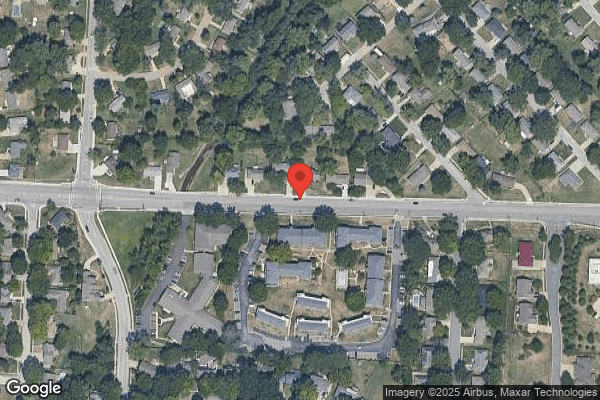
Understanding Severity Codes (click to expand)
Life-Threatening (Immediate Jeopardy)
J - Isolated K - Pattern L - Widespread
Actual Harm
G - Isolated H - Pattern I - Widespread
Potential for Harm
D - Isolated E - Pattern F - Widespread
No Harm (Minor)
A - Isolated B - Pattern C - Widespread

Questions to Ask on Your Visit

  • "Why is there high staff turnover? How do you retain staff?"
  • "Can I speak with families of current residents?"
  • "What's your RN coverage like on weekends and overnight?"

Our Honest Assessment

Strengths
  • • No fines on record. Clean compliance history, better than most Missouri facilities.
Concerns
  • • 30 deficiencies on record, including 1 serious (caused harm) violation. Ask about corrective actions taken.
  • • Grade D (45/100). Below average facility with significant concerns.
  • • 76% turnover. Very high, 28 points above average. Constant new faces learning your loved one's needs.
Bottom line: Trust Score of 45/100 indicates significant concerns. Thoroughly evaluate alternatives.

About This Facility

What is Lees Summit Place's CMS Rating?

CMS assigns LEES SUMMIT PLACE an overall rating of 3 out of 5 stars, which is considered average nationally. Within Missouri, this rating places the facility higher than 99% of the state's 100 nursing homes. This mid-range rating indicates the facility meets federal standards but may have areas for improvement.

How is Lees Summit Place Staffed?

CMS rates LEES SUMMIT PLACE's staffing level at 1 out of 5 stars, which is much below average compared to other nursing homes. Staff turnover is 76%, which is 30 percentage points above the Missouri average of 46%. High turnover can affect care consistency as new staff learn residents' individual needs. RN turnover specifically is 86%, which is notably high. RNs provide skilled clinical oversight, so turnover in this role can affect medical care quality.

What Have Inspectors Found at Lees Summit Place?

State health inspectors documented 30 deficiencies at LEES SUMMIT PLACE during 2022 to 2025. These included: 1 that caused actual resident harm and 29 with potential for harm. Deficiencies causing actual harm indicate documented cases where residents experienced negative health consequences.

Who Owns and Operates Lees Summit Place?

LEES SUMMIT PLACE is owned by a for-profit company. For-profit facilities operate as businesses with obligations to shareholders or private owners. The facility is operated by VERTICAL HEALTH SERVICES, a chain that manages multiple nursing homes. With 60 certified beds and approximately 52 residents (about 87% occupancy), it is a smaller facility located in LEES SUMMIT, Missouri.

How Does Lees Summit Place Compare to Other Missouri Nursing Homes?

Compared to the 100 nursing homes in Missouri, LEES SUMMIT PLACE's overall rating (3 stars) is above the state average of 2.5, staff turnover (76%) is significantly higher than the state average of 46%, and health inspection rating (4 stars) is above the national benchmark.

What Should Families Ask When Visiting Lees Summit Place?

Based on this facility's data, families visiting should ask: "How do you ensure continuity of care given staff turnover, and what is your staff retention strategy?" "Can you walk me through typical staffing levels on day, evening, and night shifts?" "Can I visit during a mealtime to observe dining assistance and food quality?" "How do you handle medical emergencies, and what is your hospital transfer rate?" These questions are particularly relevant given the facility's high staff turnover rate and the below-average staffing rating.

Is Lees Summit Place Safe?

Based on CMS inspection data, LEES SUMMIT PLACE has a clean safety record: no substantiated abuse findings (meaning no confirmed cases of resident harm), no Immediate Jeopardy citations (the most serious violation level indicating risk of serious injury or death), and is not on the Special Focus Facility watch list (a federal program monitoring the lowest-performing 1% of nursing homes). The facility has a 3-star overall rating and ranks #1 of 100 nursing homes in Missouri. While no facility is perfect, families should still ask about staff-to-resident ratios and recent inspection results during their visit.

Do Nurses at Lees Summit Place Stick Around?

Staff turnover at LEES SUMMIT PLACE is high. At 76%, the facility is 30 percentage points above the Missouri average of 46%. Registered Nurse turnover is particularly concerning at 86%. RNs handle complex medical decisions and coordinate care — frequent RN changes can directly impact care quality. High turnover means new staff may not know residents' individual needs, medications, or preferences. It can also be disorienting for residents, especially those with dementia who rely on familiar faces. Families should ask: What is causing the turnover? What retention programs are in place? How do you ensure care continuity during staff transitions?

Was Lees Summit Place Ever Fined?

LEES SUMMIT PLACE has no federal fines on record. CMS issues fines when nursing homes fail to meet care standards or don't correct problems found during inspections. The absence of fines suggests the facility has either maintained compliance or corrected any issues before penalties were assessed. This is a positive indicator, though families should still review recent inspection reports for the full picture.

Is Lees Summit Place on Any Federal Watch List?

LEES SUMMIT PLACE is not on any federal watch list. The most significant is the Special Focus Facility (SFF) program, which identifies the bottom 1% of nursing homes nationally based on persistent, serious quality problems. Not being on this list means the facility has avoided the pattern of deficiencies that triggers enhanced federal oversight. This is a positive indicator, though families should still review the facility's inspection history directly.