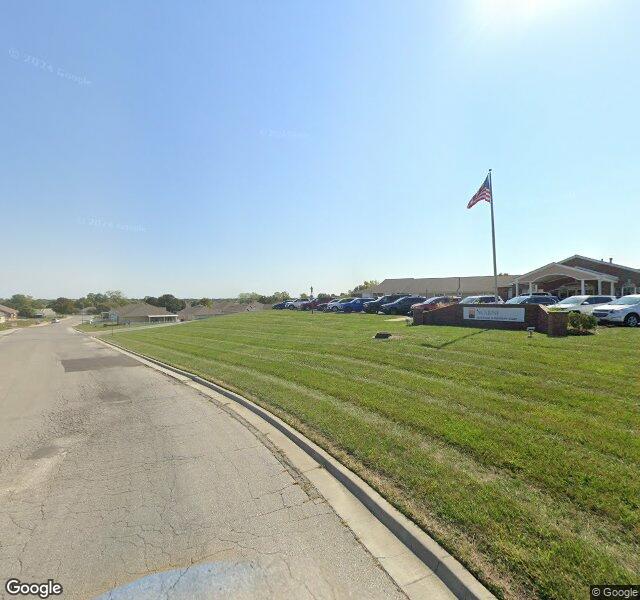
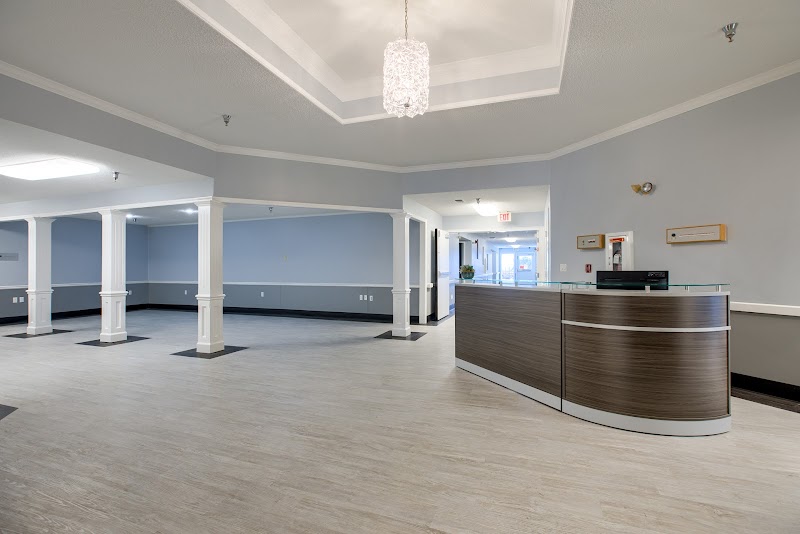
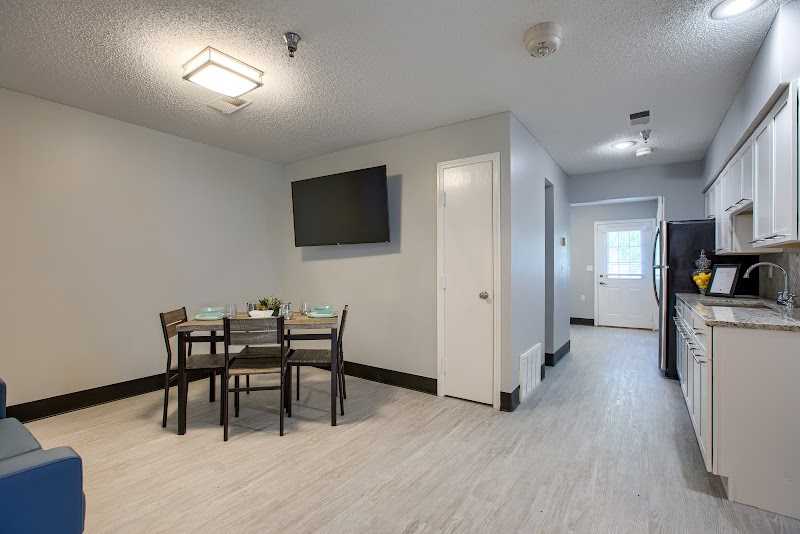
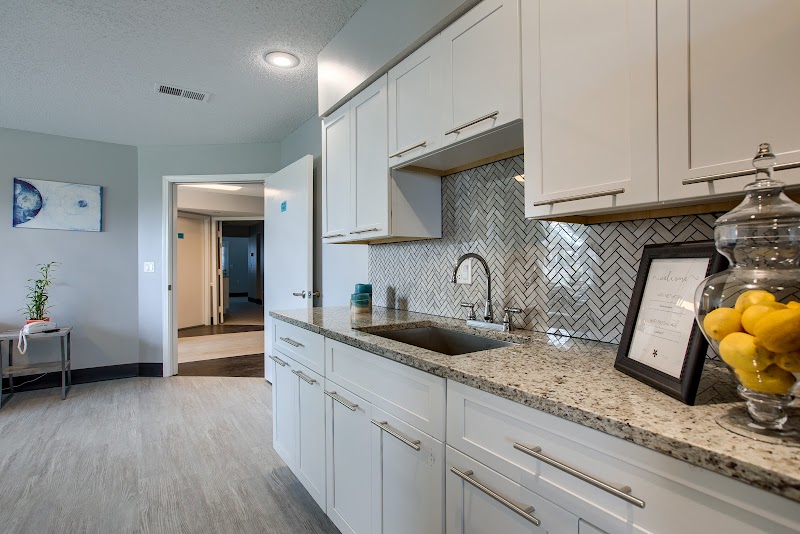
SUNRISE NURSING & REHABILITATION

600 E SUNRISE DRIVE, RAYMORE, MO 64083 (816) 322-1991
For profit - Individual 152 Beds EL DORADO NURSING AND REHABILITATION Data: November 2025 2 Immediate Jeopardy citations
Trust Grade
0/100
#465 of 479 in MO
Last Inspection: August 2023

Over 2 years since last inspection. Current conditions may differ from available data.

Overview

Sunrise Nursing & Rehabilitation has received a Trust Grade of F, which indicates significant concerns about the quality of care provided at this facility. With a ranking of #465 out of 479 facilities in Missouri, they are in the bottom half statewide and last in Cass County, suggesting there are many better options available. The facility is improving overall, with a decrease in reported issues from 12 in 2023 to just 2 in 2024. Staffing is a concern, as they received a low rating of 1 out of 5 stars, and their turnover rate is high at 53%, although this is slightly lower than the state average. Notably, there have been serious incidents, including a resident suffering injuries from another resident's abuse and a failure to safely transfer a resident, leading to hospitalization. While they do have good quality measures, families should weigh these serious issues against the improvements seen recently.

Trust Score
F
0/100
In Missouri
#465/479
Bottom 3%
Safety Record
High Risk
Review needed
Inspections
Getting Better
12 → 2 violations
Staff Stability
⚠ Watch
53% turnover. Above average. Higher turnover means staff may not know residents' routines.
Penalties
✓ Good
$30,142 in fines. Lower than most Missouri facilities. Relatively clean record.
Skilled Nurses
⚠ Watch
Each resident gets only 27 minutes of Registered Nurse (RN) attention daily — below average for Missouri. Fewer RN minutes means fewer trained eyes watching for problems.
Violations
⚠ Watch
43 deficiencies on record. Higher than average. Multiple issues found across inspections.
★☆☆☆☆
1.0
Overall Rating
★☆☆☆☆
1.0
Staff Levels
★★★★☆
4.0
Care Quality
★★☆☆☆
2.0
Inspection Score
Stable
2023: 12 issues
2024: 2 issues

The Good

  • 4-Star Quality Measures · Strong clinical quality outcomes
  • Full Sprinkler Coverage · Fire safety systems throughout facility
  • No fines on record

Facility shows strength in quality measures, fire safety.

The Bad

1-Star Overall Rating

Below Missouri average (2.5)

Significant quality concerns identified by CMS

Staff Turnover: 53%

Near Missouri avg (46%)

Higher turnover may affect care consistency

Federal Fines: $30,142

Below median ($33,413)

Moderate penalties - review what triggered them

Chain: EL DORADO NURSING AND REHABILITATIO

Part of a multi-facility chain

Ask about local staffing decisions and management

The Ugly 43 deficiencies on record

2 life-threatening 1 actual harm
Apr 2024 2 deficiencies 1 Harm
SERIOUS (G) 📢 Someone Reported This

A family member, employee, or ombudsman was alarmed enough to file a formal complaint

Actual Harm - a resident was hurt due to facility failures

Accident Prevention (Tag F0689)

A resident was harmed · This affected 1 resident

**NOTE- TERMS IN BRACKETS HAVE BEEN EDITED TO PROTECT CONFIDENTIALITY** Based on observation, interview and record review, the facility failed to transfer one sampled resident (Resident #2) safely by ...

Read full inspector narrative →
**NOTE- TERMS IN BRACKETS HAVE BEEN EDITED TO PROTECT CONFIDENTIALITY** Based on observation, interview and record review, the facility failed to transfer one sampled resident (Resident #2) safely by failing to use a full body mechanical lift or a gait belt to transfer the resident safely from the shower chair to his/her bed, resulting in a hospitalization, left knee swelling,use of a knee brace and increased pain with movement out of five sampled residents. The facility census was 127 residents. A policy was requested and no policy was received by the facility. 1. Review of Resident #2's Face Sheet showed he/she was admitted to the facility on [DATE], with diagnoses including multiple sclerosis (a progressive disease involving damage to the sheaths of nerve cells in the brain and spinal cord, whose symptoms may include numbness, impairment of speech and of muscular coordination, blurred vision, and severe fatigue), lupus (a disease that occurs when your body's immune system attacks your own tissues and organs and causes inflammation in the body), pain, glaucoma (increased pressure within the eyeball, causing gradual loss of sight), anxiety, high blood pressure, and depression. Review of the resident's quarterly Minimum Data Set (MDS-a federally mandated assessment tool to be completed by facility staff for care planning) dated 3/17/24, showed the resident: -Was alert and oriented with no confusion. -Had impairment on both sides upper and lower extremities. -Used a wheelchair for mobility and did not walk. -Was totally dependent for transfers, bathing, dressing and hygiene; and needed maximum assistance for toileting, eating and hygiene. Review of the resident's Comprehensive Care Plan dated 9/2/23, showed the resident had a deficit with performing self-care, was at risk for falls and had impaired visual function. Interventions showed: -The resident required the extensive assistance of two persons for bed mobility (turning and repositioning), toileting, dressing, bathing/showering as necessary, personal hygiene as necessary. -The resident required a mechanical lift with the assistance of two persons for transfers. Review of the resident's Cardex (resident care card indicates how nursing staff is to provide care to the resident) showed: -The resident required extensive assistance of two staff to turn and reposition in bed. -The resident required a mechanical lift with two staff assistance for transfers. -The resident needed the extensive assistance of two persons to provide his/her bath/shower as necessary. -The resident required the assistance of two persons to get dressed. Review of the resident's Physical Therapy Evaluation dated 3/18/24 showed: -The resident lower extremity weight bearing status was weight bearing as tolerated. -The resident's precautions was fall risk, mechanical lift to get out of bed and the resident used a power chair. -Prior therapy showed the resident was dependent for transfers out of his/her bed and into his/her wheelchair and required maximum assistance for rolling (in his/her wheelchair). -The resident's functional mobility assessment showed the resident needed maximum assistance for rolling left to right in bed, sitting to lying in bed, from lying to sitting up on the side of his/her bed, and was dependent for transferring from sitting to standing, transferring from chair/bed to chair/bed and toileting. -The resident did not walk and used a power wheelchair for mobility. -The resident was referred for physical therapy due to a decline in out of bed mobility. Resident had generalized weakness and an inability to perform any bed mobility or transfers without assistance. Resident required maximum assistance from laying to sitting, transferring and scooting up in bed. He/She reported only getting out of bed every few weeks. Resident would benefit from physical therapy intervention. Review of the resident's Physician's Order Sheet (POS) dated 4/2024 showed physician's orders for: -Baclofen 10 milligrams (mg) twice daily for muscle relaxant (ordered 9/2/23). -Tylenol 500 mg every 6 hours as needed for pain (ordered 9/2/23). -Hydrocodone 7.5-325 mg every 12 hours as needed for pain (ordered 9/2/23). -Lidocaine patch 4% apply one half patch to both knees topically one time daily for pain, remove at bedtime and per schedule (ordered 10/23/23). -Physical Therapy three times per week for 30 days to maximize the resident's functional mobility and out of bed mobility (ordered on 3/18/24). Review of the resident's Medication Administration Record (MAR) dated 3/2024 showed: -The resident was administered Baclofen and Lidocaine patches as ordered. -The resident did not request or receive any as needed pain medication. Review of the resident's Nursing Notes showed on 3/28/24, the resident stated that during a transfer today, he/she heard his/her left knee pop. This knee is swollen and warm to the touch. The nurse notified the Nurse Practitioner and x-rays were ordered. Review of the resident's Narcotic Record showed on 3/28/24, the nurse administered Hydrocodone 7.5-325 mg to the resident at 12:30 P.M. Review of the resident's Radiology Report dated 3/29/24 showed the reason for the exam was for localized edema in the resident's left knee. Two views were taken. The x-ray results showed the resident's left knee joint was in alignment with narrowing of the joint space due to degeneration. There was also degeneration in the thigh and leg bones. Clinical or repeat examination follow up was advised. Review of the resident's Nursing Notes showed on 3/29/24, the resident was sent to the hospital for follow up evaluation due to the result of the x-ray showing osteonecrosis (develops when the blood supply to the femoral head is disrupted) of the thigh bone, leg and large joint effusion (build up of fluid around the joint). Review of the resident's Hospital Record dated 3/29/24 showed: -The resident was seen for a knee effusion. -The resident had fluid on the knee and was ordered Voltaren Gel 100 grams (gm) to be applied to the area four times daily. -There was no evidence of acute fracture, sprain, other issues or concerns. Review of the resident's POS dated 4/2024 showed a physician's order for Voltaren Arthritis Pain Gel 1% apply to bilateral knees topically every shift for joint pain not to exceed 16 grams daily (ordered on 4/4/24). Observation and interview on 4/10/24, showed the resident was laying in his/her bed awake and dressed in bed clothes. The resident's left knee was elevated on a pillow and the knee was swollen but without any redness or bruising. Across from the resident was a black knee brace that was on a dresser. The resident was alert and oriented and said: -On 3/28/24, around lunch time on, he/she had a shower and when the nursing staff brought him/her back to his/he room, they did not transfer him/her with the mechanical lift like they were supposed to. -During the transfer, he/she heard a pop and his/her leg began hurting. Certified Nursing Assistant (CNA) A and CNA B finished transferring him/her to bed. -CNA A said to CNA B that they should not have transferred him/her without using the lift. -He/She felt the CNA staff transferred him/her without a lift because they were in a hurry. -He/She was working with physical therapy staff and they put on/removed his/her brace. -The facility nurse sent him/her to the hospital and the hospital staff told him/her that his/her knee was bone on bone and he/she thought he/she had a fracture, but the hospital sent him/her back to the facility with pain medication and a knee brace. -At 12:50 P.M., Physical Therapy Assistant A came in the resident's room to put his/her knee brace on and said the resident did not have a fracture, but his/her knee was swollen and he/she was trying to maintain range of motion in his/her lower extremities, but he/she was not flexing the resident's knee too much due to pain. During an interview on 4/10/24 at 1:00 P.M., CNA A said: -He/She was working on the date the incident with the resident occurred, but was not assigned to the resident. -CNA B had given the resident's shower and he/she went to assist CNA B to transfer the resident back to his/her bed. -The resident was sitting in a shower chair and there was no sling under him/her so they did not use a mechanical lift to transfer the resident into his/her bed. -They should have transferred the resident with the mechanical lift because the resident is non-weight bearing and they had to manually lift the resident to his/her bed. -He/She asked CNA B how the resident was transferred into the shower chair and he/she told CNA B that he/she should have not transferred the resident into the shower chair without a sling and mechanical lift. -As he/she and CNA B transferred the resident to his/her bed, the resident winced and said he/she was hurting. -They put the resident into his/her bed and then he/she and CNA B went to tell the nurse that the resident was in pain. -He/She then went back to his/her hall. During an interview on 4/10/24 at 2:45 P.M., the Director of Nursing (DON) said: -The nursing staff know how to transfer the resident by looking at the resident's Cardex. -The resident should have been transferred using a mechanical lift. -If the staff did not use a mechanical lift, they should have used a gait belt when transferring him/her. -He/She did not know how the resident was transferred when he/she was taken to the shower, but staff typically used a shower bed, not a shower chair, so a lift would not need to have been used to transfer him/her. In this case the nursing staff would use a slide board. -The resident did not fall, but he/she was aware the resident complained of knee pain once he/she was transferred back into his/her bed, so they received physician's orders for an x-ray to be completed as a standard protocol to rule out injury. -The resident did not have any acute injuries to his her knee and was sent back to the facility. During an interview on 4/10/24 at 4:08 P.M., CNA A clarified his/her prior statement and said: -When he/she and CNA B transferred the resident, they did not use a gait belt because the resident was not wearing clothes and was wet. -The resident was in a shower chair, not a shower bed when they transferred the resident. -When they transferred the resident, they were on each side of the resident and he/she placed one arm under the resident's arm and the other arm around his/her waist to pivot transfer the resident to his/her bed. -They should have gotten a sling and transferred the resident with the mechanical lift. During an interview on 4/10/24 at 4:12 P.M., the resident said: -When he/she was taken to the shower room that morning around lunch time, CNA B did not use a gait belt or a mechanical lift. Nursing staff told him/her to hug him/her around his/her neck and then he/she picked the resident up and put him/her on the shower chair. -When he/she came back to his/her room is when CNA A and CNA B transferred him/her into bed and he/she felt pain in his/her leg. -He/She received Tylenol for pain but he/she had chronic pain and received scheduled pain medication for it, so he/she was not in more pain than usual. -Once he/she was in bed, he/she only had additional pain when they came in to move him/her to take the x-ray and when they moved him/her to go to the hospital. During an interview on 4/11/24 at 8:26 A.M., CNA B said: -On the day of the occurrence, he/she went to get the resident to take him/her to give the resident a shower. -He/She did not transfer the resident into the shower chair, the resident was already in the shower chair when he/she went to get the resident. -The resident did not have a sling in the shower chair. -He/She gave the resident a shower and CNA A assisted him/her to transfer the resident back into his/her bed. -They did not use a gait belt or a mechanical lift to transfer the resident. -He/She put one arm under the resident's arm and the other arm under the resident's leg (he/she did not remember if he/she was on the left or right) and lifted the resident into his/her bed. -He/She never heard a 'pop' sound from the resident, but CNA A said his/her knee popped as they were transferring the resident. -The resident said that his/her leg hurt once he/she was in bed so he/she and CNA A went to tell the charge nurse. -This was the first time he/she had ever transferred the resident and was unaware of how the resident was supposed to be transferred. During an interview on 4/11/24 at 12:35 P.M., Physical Therapy Assistant A said: -They were working with the resident for range of motion, bed mobility, activity tolerance, and strengthening. -The resident was supposed to be transferred using a full body mechanical lift because he/she was non weight bearing. -If the nursing staff used a stand and pivot transfer with the resident, they should always use a gait belt to assist with transferring him/her. -He/She had never seen the resident transferred with a stand and pivot transfer and had only known the resident to transfer using a full body mechanical lift. MO00324304
CONCERN (D) 📢 Someone Reported This

A family member, employee, or ombudsman was alarmed enough to file a formal complaint

Potential for Harm - no one hurt, but risky conditions existed

Deficiency F0561 (Tag F0561)

Could have caused harm · This affected 1 resident

**NOTE- TERMS IN BRACKETS HAVE BEEN EDITED TO PROTECT CONFIDENTIALITY** Based on observation, interview and record review, the facility failed to ensure the resident rights of one sampled resident (Re...

Read full inspector narrative →
**NOTE- TERMS IN BRACKETS HAVE BEEN EDITED TO PROTECT CONFIDENTIALITY** Based on observation, interview and record review, the facility failed to ensure the resident rights of one sampled resident (Resident #1) for self determination by inappropriately placing the resident on a locked unit without his/her consent and without evidence, rationale or documentation showing the resident was at risk for elopement, was exit seeking or had wandering behaviors or was a danger to self and needed a more secured placement out of 5 sampled residents. The facility census was 127 residents. Review of the facility's undated Transfer of Resident from Non-Secure Unit to Secure Unit showed this policy outlines the process for transferring a resident within our facility from a non-secured, non-locked unit to a secure, locked unit. The transfer criteria include specific assessments, documentation, and approval to ensure resident safety and well-being. The policy showed: -The resident must have a recent elopement assessment that indicates a triggering risk for elopement. -Documentation should clearly outline concerns related to elopement risk. -The facility must have documented evidence of Power of Attorney/Guardianship from the responsible party. -A confirmed dementia diagnosis must be documented in the resident's medical record. -The care plan should be revised to address possible ineffective coping related to relocation stress. -The transfer process showed the interdisciplinary team will review the resident's case. If the criteria are met, the resident will be relocated to the secure unit. The responsible party will be notified of the transfer and must provide written agreement. -After placement in the secured locked unit, the facility will closely monitor the resident for 72 hours. Signs and symptoms of ineffective coping will be documented and the interdisciplinary team will assess the resident's adjustment during this time. Review of the facility's Wandering and Elopement policy and procedure dated 8/2020, showed: -The Licensed Nurse will assess residents upon admission, readmission, quarterly and upon identification of significant change in condition, to determine their risk of wandering/elopement. -The resident's risk for wandering/elopement and preventative interventions will be documented in the resident's medical record, and will be reviewed and re-evaluated by the interdisciplinary team upon admission, readmission, quarterly and upon change in condition. -The interdisciplinary team may consider interventions listed in the Elopement Risk Reduction Approaches for residents identified to be at risk for elopement. -Residents with a history of wandering or who have been assessed for being at risk for wandering or elopement will have a photograph maintained in their medical record. 1. Review of Resident #1's Face Sheet showed he/she was admitted to the facility on [DATE], with diagnoses including stroke with paralysis affecting the left side, muscle weakness, difficulty walking, lack of coordination, Parkinson's disease (a brain disorder that causes unintended or uncontrollable movements), depression, and schizophrenia (a serious mental condition of a type involving a breakdown in the relation between thought, emotion, and behavior, leading to faulty perception, inappropriate actions and feelings, withdrawal from reality and personal relationships into fantasy and delusion, and a sense of mental fragmentation). The resident did not have a diagnosis of dementia or memory loss. Review of the resident's admission Minimum Data Set (MDS-a federally mandated assessment tool to be completed by facility staff for care planning) dated 3/31/24, showed the resident: -Was alert and oriented with significant confusion. -Showed little interest, feeling down/depressed, trouble falling asleep, tired with little energy, poor appetite, trouble concentrating and social isolation. -Had no hallucinations, delusions, physical/verbal behaviors towards others, no self destructive behaviors, and did not reject care. -Had no wandering. -Had range of motion impairment on one side of the upper and lower extremities. -Used a wheelchair for mobility. -Needed moderate assistance for toileting, bathing, dressing, personal hygiene, and transferring. -Needed set up assistance for eating and oral hygiene. Review of the resident's Medical Record showed documentation from the resident's transferring facility showed: -The resident transferred from another facility on 3/27/24. -The Resident's Level One Pre admission Screening dated 9/18/16, showed the resident had a serious mental illness that did not require hospitalization or psychiatric treatment in the last two years. The resident had dementia, but did not trigger for a PASSAR Level II screening. -Nursing Notes from 2/20/24 to 3/20/24 showed there was no documentation of the resident wandering, attempted elopement or exit seeking. There was no documentation of the resident having behaviors of verbal or physical aggression or agitation. Review of the resident's Smoking assessment dated [DATE] showed: -The resident smoked, knew the location of the designated smoking area, was able to get to the area independently, was able to light smoking materials safely and extinguish smoking materials completely in the appropriate receptacle. -The resident did not have tremors while smoking, did not fall asleep, had no past accidents while smoking, had no visible burn marks and did not have finger dexterity problems. -The resident was able to smoke safely with minimal supervision and the evaluation had been explained to the resident and responsible party. Review of the resident's Physician's Order Sheet (POS) dated 4/2024 showed: -The resident did not show additional diagnoses to include memory loss or dementia. -Alprazolram 0.5 milligrams (mg) three times daily for anxiety (ordered 3/27/24). -Lorazepam 2 mg, give .25 mg under the tongue as needed for anxiety (ordered 3/27/24). -Zoloft 100 mg once daily for depression (ordered 3/27/24). -Depakote 125 mg give three tablets 3 times daily for schizophrenia (ordered 3/27/24). -Xanax 0.5 mg give every 6 hours as needed for anxiety for 14 days (ordered 3/29/24). Review of the resident's Elopement Risk assessment dated [DATE] showed: -The resident was not able to make decisions regarding tasks of daily living. -The resident was cognitively impaired and ambulated/propelled self. The resident may go outdoors on occasion but made no attempt to leave the grounds. -The resident ambulated, propelled self or wandered. The resident has intentionally or unintentionally attempted to leave the community. -The resident did not verbalize plans to leave the community. -The resident was at risk for elopement due to the results of the elopement evaluation. Review of the resident's Nursing Notes showed: -On 3/27/24 the resident was admitted to the facility and moved into room [ROOM NUMBER] (not on the locked unit). Documentation showed the resident had some confusion, and denied pain. -From 3/27/24 to 4/4/24 showed there was no documentation showing the resident had any wandering, exit seeking or elopement behaviors. There was no documentation showing the resident had any verbal or physically aggressive behaviors or agitation. Review of the resident's Social Services Notes showed: -From 3/27/24 to 4/5/24, there was no documentation showing the resident had any wandering, exit seeking or elopement behaviors and did not show the resident was referred or seen by the Social Service Designee for any verbal or physically aggressive behaviors or agitation. -On 4/5/24 the Social Service Designee documented he/she left a voice mail for the resident's Power of Attorney regarding the resident moving to room [ROOM NUMBER] (on the locked dementia unit) due to increased wandering. Review of the resident's Medical Record showed there was no documentation showing the resident had a history of elopement, exit seeking, wandering behaviors, physical or verbal aggression, or agitation. Review of the resident's Incident Report dated 4/6/24, showed: -The resident's room smelled of smoke and the nurse went to investigate. Staff found half of a cigarette laying on the resident's bedside table and the resident was rummaging in his/her closet. The nurse informed the resident that he/she could not smoke in his/her room and the resident began to yell and come towards the nurse, pushing him/her to the floor. -The resident was oriented to person and place and said the nurse couldn't tell him/her what to do and he/she could smoke when he/she wanted to. -Staff removed the resident from the area and monitored him/her, called for the nurse and called emergency services. -The resident had no injuries at the time of the incident or after the incident. -The report did not show that there were any predisposing environmental factors, physiological factors that affected the incident occurrence. -The predisposing situational factors showed the resident was smoking in his/her room due to the smell of smoke. The resident became agitated when the nurse informed him/her that his/her cigarette would have to be taken because he/she could not smoke in his/her room. The resident told the nurse he/she was going to smoke whenever he/she wanted and pushed the nurse down. -Immediate Interventions showed staff separated the resident from the nurse and was put on 15-minute checks. The nurse was sent to the hospital. The resident will be moved back to the main unit for flexible smoking protocol. -The summary showed the resident became agitated when the nurse approached him/her about smoking and the resident pushed him/her down. Staff intervened and separated the resident, placing him on 15-minute checks. He/She was moved onto the main unit for more liberal smoking, decreasing his/her anxiety. Since placement on the main unit the resident has had no aggression or agitation. The resident's room was not by the front door and staff has not observed the resident wandering or any exit seeking behavior. Review of the resident's undated Care Plan showed: -The resident was independent with bed mobility, toileting, personal hygiene and oral care, needed limited assistance with bathing, moderate assistance with transferring and set up assistance with meals and dressing. -The resident smoked and was able to smoke unsupervised. -The resident had a potential psychosocial problem due to recent admission to the facility. -The resident had poor impulse control and had the potential to be physically aggressive. -On 4/6/24 the resident would be moved for more flexible smoking. -The resident was at risk for elopement due to the resident's elopement risk score. During an interview on 4/10/24 at 10:30 A.M., with the Administrator and Director of Nursing (DON), the DON Said: -He/She was notified of the incident on 6/6/24 and was informed that the resident became agitated and had pushed Registered Nurse (RN) B after he/she addressed the resident smoking in his/her room. -RN B went to the hospital and was not able to be interviewed at the time. -Licensed Practical Nurse (LPN) A monitored the resident until LPN B came onto the unit and they placed the resident on 15 minute checks and LPN B notified the resident's physician and family of the incident. -The resident's family came and stayed with the resident for a limited time until he/she calmed down. -He/She tried to interview the resident, but he/she would not answer any questions about the incident or tell him/her what had occurred other than to say that he/she could smoke when he/she wanted to. -The resident was new to the facility and they had initially placed him/her on the main unit where he/she was able to freely move about the facility and could smoke whenever he/she wanted to. -When the resident was admitted , they were trying to place him/her where they thought he/she would best fit. -The resident had dementia, but he/she was not sure if there was any additional issues that that he/she exhibited that require placement on the locked unit. -He/She was not aware of any behaviors the resident had while he/she on the main unit. -The interdisciplinary team decided to move the resident to the locked memory unit and notified the resident and resident's responsible party on the day they moved the resident on 6/5/24. -He/She informed the responsible party that the move may not be permanent. -The resident and the resident's responsible party seemed to be in agreement with the resident moving onto the locked unit. During an interview on 4/10/24 at 10:48 A.M., the Social Service Designee said: -The resident was newly admitted from another facility and was initially placed on the main unit (which is not locked). -The resident began having wandering behaviors, wandering into other resident rooms and had taken another resident's shoes. Sometimes the resident was able to be redirected and sometimes he/she was not as easily redirectable. -The resident had dementia and some flight of thought. -The resident had no agitation, physical or verbally aggressive behaviors prior to moving to the locked unit. -He/She was part of the interdisciplinary team (Administrator, Director of Nursing, MDS Coordinator, Activities Director) who decided to move the resident to the locked unit due to wandering and safe smoking. -He/She contacted the responsible party by telephone on 6/5/24 to notify him/her of the decision to move the resident to the locked unit and followed up with an email on the same day. -They moved the resident on 6/5/24 to the locked unit and the resident's family came to visit the resident on the same day. -The primary issue the resident had was about smoking because on the main unit the resident was able to smoke whenever he/she wanted to (there were no limitations on smoking) and on the locked unit, they had designated smoking times. The resident wanted to be able to continue to smoke at will. -He/She was not in the facility at the time the incident occurred but he/she was informed of the incident. -The primary issue the resident the resident had cigarettes in his/her room and the nurse approached him/her about smoking in his/her room and to get his/her cigarettes and the resident became agitated and pushed the nurse, who fell, hit his/her head and was sent to the hospital. -After this incident the interdisciplinary team met and decided to give the resident another opportunity to live on the main unit and they would re-evaluate his/her ability to remain on this unit. -Since the resident moved back on the main unit, he/she was not aware of any further aggression or agitation from the resident and he/she had not heard of the resident wandering or exit seeking. -He/She did not know how nursing staff was monitoring him/her to ensure he/she was not exit seeking. During an observation and interview on 4/10/24 at 11:20 A.M., showed the resident was sitting in his/her wheelchair in his/her room on the main unit. The resident was wearing briefs. He/She was waiting for staff to come take him/her to shower because his/her family was coming to visit today. He/She was alert and oriented and said: -The nursing staff told him/her that he/she was moving to the locked unit on the day that they moved him/her. -He/she did not know why he/she was being moved to the locked unit and he/she did not want to be back there and told the nursing staff how he/she felt. -Once they moved him/her onto the locked unit, the nurse tried to take his/her cigarettes from him/her and told him/her that he/she could only smoke at certain times. -On the day of the incident, he/she was not smoking in his/her room but the nurse came to his/her room and said that he/she smelled cigarette smoke and tried to take his/her cigarettes. He/She told the nurse to get out of his/her room and he/she would not leave and he/she pushed him/her so I whooped (his/her) ass! -The nurse fell down and then the guards came and told him/her to calm down and he/she calmed down and went to his/her room. -His/Her family came up to visit him/her and he/she calmed down. -He/she was very angry because there was no reason he/she was locked up, no reason at all. -The staff moved him/her back to the main unit and, i'm okay now. -Now that he/she was back on the main unit, he/she was able to go out and smoke whenever he/she wanted to and has had no more problems. -The staff treated him/her nicely and they assisted him/her when he/she needed assistance. During an interview on 4/10/24 at 11:32 A.M. CNA C said: -He/She was not very familiar with the resident because he/she was new to the facility. -He/She was going to give the resident a shower today at the resident's request because the resident's family was visiting. -During the time the resident has been in the facility, he/she was not aware of the resident having any behaviors (wandering, exit seeking or aggression/agitation) since he/she was admitted . During an interview on 4/10/24 at 11:35 A.M. the Assistant Director of Nursing (ADON) said: -He/She was familiar with the resident from another facility. -The resident was impulsive and had an aggressive tone when speaking and anticipated aggression from others. The resident can be moody at times, but his/her response depends on how staff approach and interact with him/her which was important. -The resident liked to smoke and does not like that interfered with so when he/she was placed on the main unit, he/she could smoke whenever he/she wanted to and he/she was okay. -The resident began having issues when he/she was moved to the locked unit where they have scheduled and limitations on smoking. -He/She had not had any physically aggressive behaviors before this incident. -The resident had dementia and is forgetful, but he/she had not stated he/she wanted to leave the facility or trying to leave the facility before he/she was moved. During an interview on 4/10/24 at 11:48 A.M. LPN B said: -The resident was moved onto the locked unit on 4/5/24 with a couple other residents. -Nursing staff said the resident was moved onto the unit due to being exit seeking. -The resident was upset and stated that he/she did not want to be on the locked unit but he/she had no other behaviors until he/she went to get his cigarettes and informed him/her that he/she could not keep cigarettes on the unit and explained that on the locked unit the nursing staff kept the resident's smoking utensils, and had supervised and scheduled smoking times. -The resident became verbally aggressive toward him/her, so he/she notified the DON and the DON came onto the unit to check on the resident, but he/she did not take the resident's cigarettes. -He/She notified LPN A and planned to wait to try to approach the resident later to try to obtain his/her smoking utensils, but the resident had no further aggression or behaviors that day or evening. -He/She was working on the locked unit on the morning of the incident on 4/6/24 and had just gotten to work. -The incident had occurred right before the shift change and RN B was the night shift nurse that the resident pushed. -When he/she arrived to the locked unit, the police were in the building and the resident was cussing and yelling. The police said they could not take the resident's property, and the resident was stating that no one was going to take his cigarettes. -At around 9:00 A.M., the resident's responsible party and family came in and tried to calm the resident. -The resident's family said they didn't think the resident belonged on the locked unit, and though they were informed that he/she was going to be moved onto the unit, they were not going to take his/her cigarettes because the resident was already agitated because he/she was moved onto the unit. -After the incident, he/she placed the resident on 15 minute checks for the rest of the day, the resident calmed down and there were no further issues even though the resident was still unhappy that he/she was on the locked unit. -On 4/7/24, the resident got into an argument with his/her roommate and he/she was able to intervene before it escalated but she/she informed the DON and they moved the resident off of the locked unit back onto the main unit. -During the time the resident was on the locked unit, he/she was not exit seeking and did not wander. He/she was not sure why the resident was placed on the unit. During an interview on 4/11/24 at 8:07 A.M., CNA D said: -He/She worked on the locked unit from 7:00 P.M. to 7:00 A.M. on 4/5/24 and was on the unit when the incident occurred. -He/She was completing rounds on the morning of 4/6/24 around 6:50 A.M. when he/she smelled cigarette smoke coming from the resident's room. -He/She went to the resident's room and the resident was not actively smoking, but there was a cigarette butt on his/her bed. -He/She went to tell the nurse, RN B that the resident had been smoking in his/her room and RN B went to the resident's room to approach him/her about smoking and having smoking utensils in his/her room. -He/She heard RN B tell the resident that he/she could not smoke in his/her room and heard the resident tell RN B to get out of his/her room. -He/She saw RN B backing out of the resident's room as the resident was approaching RN B while yelling and then the resident pushed RN B and RN B fell backwards onto the floor. -One of the other nursing aides ran over to where the resident and RN B were standing between them while another male nursing staff took the resident to his/her room and then assisted RN B. -He/She called 911 and the police and then he/she was allowed to leave while the nurse stayed with RN B and staff was monitoring the resident. -The resident was still agitated but remained in his/her room. -He/She spoke with the DON about the incident on Monday and was asked to write a statement. During an interview on 4/11/24 at 8:35 A.M., LPN A said: -He/She was on the main unit on 4/6/24 when the incident occurred. -The incident occurred right before shift change and he/she was at the end of his/her shift when nursing staff from the locked unit came to tell him/her to come to the locked unit because the resident had pushed RN B down and he/she was on the floor. -He/She immediately went over to the locked unit and he initially saw RN B on the floor in front of the resident's room, laying on his/her left side. The resident was highly agitated and yelling inside of his/her room. -He called the DON to inform him/her of what happened, and the actions staff had taken at that time. -He/She asked the nursing staff what occurred and they told him/her that RN B had gone to the resident's room because the resident had been smoking in his/her room and the resident became agitated and pushed RN B down. -Nursing staff had already called 911 so he/she assessed RN B who complained of head injury and he/she provided an ice pack to his/her head and stayed with him/her until emergency services arrived. -RN B stated that she was informed the resident was smoking in his room and went to speak with the resident about it when he/she became agitated and then pushed him/her and he/she fell backward onto the ground. -The police also arrived and began to interview staff and the resident and RN B. The resident remained in his/her room. -After the ambulance took RN B out of the facility, he/she went to assess the resident and found he/she had no injuries. -The resident refused to state what happened, he/she continued to cuss and state that he/she could smoke whenever he/she wanted to. -The day shift nurse on the locked unit was on the unit and was aware of what had occurred so he/she went back to the main unit and continued to finish his/her tasks before giving report and going home. -Usually when resident's are placed on the locked memory unit, they have dementia but are also a high flight risk. -He/She did not know the resident very well, but the resident was initially on the main unit before being moved to the locked unit. -He/She was not aware of the resident having any wandering or exit seeking behaviors while he/she was on the main unit, but he/she was not familiar with the resident. -He/She was unaware of why the resident was moved to the locked unit, but after this incident the resident was moved back onto the main unit. -To his/her knowledge, the resident had not had any further incidents, aggression, wandering or exit seeking behaviors. During an interview on 4/11/24 at 12:48 P.M., CNA E said: -He/She came in to work on the locked unit as the ambulance staff was taking RN B out of the facility to the hospital. -Nursing staff informed him/her of what happened and the resident was still on the locked unit but he/she was in his/her room. -The resident was on 15 minute checks, but staff stayed with him/her throughout the day and the resident ate all of his/her meals in his/her room. -The resident did not have any additional behaviors while on the locked unit that he/she was aware of. -He/She had worked on the main unit when the resident was initially placed and he/she did not seem to be very confused, he/she did not wander and was not exit seeking. The resident was able to go to the designated smoking area and smoked safely and return to his/her room without staff assistance. -The resident did not seem to have any behavioral problems while he/she was on the main unit. -He/She did not understand why the resident was placed on the locked unit, the resident did not begin to act out until he/she was placed on the locked unit and was not able to go out to smoke when he/she wanted to. -Now that the resident is back on the main unit, he/she did not seem to have any behavior issues and was not wandering or exit seeking. Observation on 4/11/24 at 1:30 P.M. showed the resident was dressed for the weather, mobilizing in his/her wheelchair down the hallway toward the smoking patio. He/She was interacting with staff and interactions were pleasant. The resident went out onto the designated smoking patio to smoke. During an interview on 4/11/24 at 1:34 P.M. with the Administrator and DON, the DON said: -A resident is placed on the locked unit when the resident has impaired memory to the point they are not safe around others, if the resident was over-stimulated and will do better on a quiet environment, or at the request of the resident or family (preference). -Nursing staff reported that the resident had wandered out by the facility entrance which was not a designated smoking area and the ADON stated the resident had wandering behaviors but there was no documentation to support this. -There was no documentation in the records received from his/her prior facility that showed the resident had exit seeking/wandering behaviors or aggressive/agitation and the facility did not have a locked unit. -If there had been documentation showing the resident was at risk for elopement or had behaviors showing exit seeking/wandering, upon admission they would have initially placed the resident on the locked unit. -They determined that the resident had wandering behavior on 4/5/24 and decided to relocate the resident to the locked unit on 4/5/24. -Both the resident and his/he responsible party and family were also notified of the resident's relocation on 4/5/24 and he/she met with the resident's responsible party and family when they came to the facility on 4/5/24 and he/she informed them this may not be a permanent move and they were in agreement with the relocation. -After the incident, the interdisciplinary team met and decided to move the resident back to the main unit due to his/her agitation while on the locked unit and due to the freedom with being able to smoke on the main unit. -They have been monitoring the resident for wandering and the resident has not been observed wandering or exit seeking nor have they observed the resident have any aggressive behaviors or agitation since he has been back on the main unit. During a telephone interview on 4/17/24 at 9:51 A.M., RN B said: -He/She was working on the locked memory unit during the 7:00 P.M. to 7:00 A.M. shift on 4/5/24. -On the morning of 4/6/24 around 6:40 A.M., nursing staff told him/her that the resident was smoking in his/her room, so he/she went to the resident's room to speak with him/her. -When she got to the doorway of the resident's room she smelled cigarette smoke and saw half of a cigarette butt sitting on the resident's tray table. The resident was standing by his/her closet door. -He/She said to the resident that he/she was not allowed to smoke in his/her room and the resident immediately began yelling at him/her to get out of his/her face and he/she began approaching him/her. -He/She never touched the resident but as he/she was yelling for him/her to get out of his/ her room, the resident pushed him/her down. -The nursing staff came over to assist her and move the resident away from him/her. -The nurse came and stayed with him/her and got him/her ice for his/her head because he/she had hit his/her head on the floor and he/she had pain in his/her head. -He/she said he/she lost consciousness for a minute and when he/she aroused, he/she told the nursing staff to call 911. -LPN A stayed with him/her until the emergency service personnel came and took him/her to the hospital. -This was the first time he/she had any direct interaction with the resident. -He/She did not understand why the resident was moved onto the unit when the resident was used to smoking at will when he/she was on the main unit. -He/She did not know if the resident wandered or was exit seeking because he/she had not had any interaction with the resident during his/her shift other than the morning of 4/6/24. MO00234391
Oct 2023 1 deficiency
CONCERN (D) 📢 Someone Reported This

A family member, employee, or ombudsman was alarmed enough to file a formal complaint

Potential for Harm - no one hurt, but risky conditions existed

Free from Abuse/Neglect (Tag F0600)

Could have caused harm · This affected 1 resident

**NOTE- TERMS IN BRACKETS HAVE BEEN EDITED TO PROTECT CONFIDENTIALITY** Based on interview and record review, the facility failed to ensure one sampled resident (Residents #3) remained free from abuse...

Read full inspector narrative →
**NOTE- TERMS IN BRACKETS HAVE BEEN EDITED TO PROTECT CONFIDENTIALITY** Based on interview and record review, the facility failed to ensure one sampled resident (Residents #3) remained free from abuse, out of seven sampled residents. The facility census was 122 residents. On 10/17/23, the Administrator was notified of the past noncompliance which occurred on 10/15/23. The facility administration was notified on the same day the incident occurred and investigations were started. Facility staff were educated on the facility's abuse and neglect policy, resident interventions, and behaviors before the start of next shift. Resident care plans were updated. The deficiency was corrected on 10/16/23. Review of the facility Abuse Prevention and Prohibition Program, dated 10/24/22, showed: -Each resident has the right to be free from mistreatment, neglect, abuse, involuntary seclusion and misappropriation of property. -Staff must not permit anyone to engage in verbal, mental, sexual, or physical abuse, neglect, mistreatment, or misappropriation of resident property. -The facility was committed to protecting residents from abuse by anyone, including but not limited to facility staff, and other residents. 1. Review of Resident #3's admission Record showed the resident was admitted on [DATE] with the diagnoses: -Major depressive disorder (MDD - a state of intense sadness or despair that has advanced to the point of being disruptive to an individual's social functioning and/or activities of daily living) with severe psychotic symptoms (a mental state involving loss of contact with reality and causing deterioration of normal social functioning); -Post Traumatic Stress Disorder (PTSD- a disorder in which a person has difficulty recovering after experiencing or witnessing a shocking, scary, or dangerous event). Review of Resident #3's Annual Minimum Data Set (MDS- a federally mandated assessment instrument completed by facility staff for care planning), dated 7/18/23, showed the resident: -Was severely cognitively impaired; -Behaviors: Little to no interest in activities, appears depressed, sleep disturbances, appears tired, poor appetite, unable to concentrate, and short tempered; -Diagnoses: Alzheimer's Disease (a slowly progressive disease of the brain that is characterized by impairment of memory and eventually by disturbances in reasoning, planning, language, and perception), Dementia (a progressive organic mental disorder characterized by chronic personality disintegration, confusion, disorientation, stupor, deterioration of intellectual capacity and function, and impairment of control of memory, judgment, and impulses). Review of Resident #4's admission Record showed the resident was admitted on [DATE] with the diagnoses of metabolic encephalopathy (any abnormal condition of the structure or function of brain tissues, especially chronic, destructive, or degenerative conditions). Review of Resident #4's Quarterly MDS, dated [DATE], showed the resident was moderately cognitively impaired with wandering behaviors. Review of Resident #4's undated Care Plan showed he/she: -Had the potential to be physically aggressive related to impaired judgement and peers wandering into his/her room; -Increased anger, labile mood or agitation, feels threatened by others or thoughts of harming others, possession of weapons or objects that could be used as weapons. Review of Resident #3's Progress Notes, dated 10/15/23, showed: -Certified Nursing Assistant (CNA) A witnessed Resident #4 hitting Resident #3 in the head as he/she held onto Resident #4's shirt. -CNA A separated the two residents immediately and called out for assistance. -The charge nurse assessed Resident #3 for injuries and he/she was noted to have an abrasion to the forehead and a scratch on the right side of his/her face near the eye. -Staff administered first aid. Review of the facility Incident Report, dated 10/15/23, showed: -Resident #4 hit Resident #3 on the head in the hallway causing minor scratches. -CNA A observed the altercation. During an interview on 10/17/23 at 1:35 P.M., CNA A said: -He/She observed Resident #4 hit Resident #3, he/she separated them and called for assistance. -He/She was not sure what the altercation was about. -He/She did not feel anything would have prevented the altercation. -The staff had been doing training to prevent abuse and deescalate behaviors. During an interview on 10/17/23 at 1:51 P.M., Resident #4 said: -Resident #3 started cussing at him/her, so I hit him/her. -I'm the type that don't back down. -If I need it I'll get it. -No further conversation by the resident. During an interview on 10/17/23 at 2:15 P.M., the Director of Nurses & Administrator said: -He/She did not think this was abuse, but behavior based. -The allegations were reported as a self report on resident to resident abuse. -It was not appropriate for any resident to hit another resident. MO00225915
Aug 2023 6 deficiencies
CONCERN (D) 📢 Someone Reported This

A family member, employee, or ombudsman was alarmed enough to file a formal complaint

Potential for Harm - no one hurt, but risky conditions existed

Free from Abuse/Neglect (Tag F0600)

Could have caused harm · This affected 1 resident

**NOTE- TERMS IN BRACKETS HAVE BEEN EDITED TO PROTECT CONFIDENTIALITY** Based on interview and record review, the facility failed to ensure one sampled resident (Resident #83) out of 24 sampled reside...

Read full inspector narrative →
**NOTE- TERMS IN BRACKETS HAVE BEEN EDITED TO PROTECT CONFIDENTIALITY** Based on interview and record review, the facility failed to ensure one sampled resident (Resident #83) out of 24 sampled residents was free from physical abuse from another sampled resident (Resident #84), who had a history of previous resident to resident altercations, when Resident #84 placed his/her hand on Resident #83's neck and pushed him/her backwards causing Resident #83 to fall and sustain injuries, mainly bruising. The facility census was 112 residents. Review of the facility's Abuse Prevention and Prohibition Program policy, dated October 24, 2022 showed: -The facility had zero tolerance for abuse. -The facility was committed to protecting residents from abuse by anyone, including, but not limited to other residents. 1. Review of Resident #83's admission Record showed he/she was admitted to the facility on [DATE] with diagnoses that included: -Anxiety disorder (a psychiatric disorder causing feelings of persistent anxiety). -History of falling. Review of the resident's Nurse's Notes, dated 5/5/23 showed: -A note written at 6:49 A.M. showed the Certified Nursing Assistant (CNA) was a witness to an incident in which another resident (Resident #84) attempted to hit Resident #83 over a scooter's backup alarm. The CNA stood between the two residents and prevented contact. The residents were then separated. -A note written at 7:40 A.M. showed the resident's family member was contacted and offered to try to adjust the volume of the resident's scooter alarm. The resident would be moved to a different hall to keep the resident's separated. Review of the resident's Significant Change Minimum Data Set (MDS - a federally mandated assessment instrument completed by facility staff for care planning), dated 6/16/23 showed the resident: -Had no behaviors directed towards others or other behaviors. -Was not steady when transferring from surface to surface, but could normally stabilize himself/herself without assistance. -Used a wheelchair for mobility. Review of the resident's Nurse's Note, dated 7/25/23 at 3:17 P.M. showed: -The resident was going down the hall in his/her electric scooter when another resident (Resident #84) accidentally bumped against him/her causing a plastic piece of the resident's wheelchair arm to come off. -The resident immediately went to tell the other resident (Resident #84) at the nurses' station and the two residents got into a heated exchange that resulted in Resident #84 pushing Resident #83 while both were standing and causing Resident #83 to fall. -The fall resulted in a skin tear measuring 3.5 centimeters (cm) by 1.2 cm to the resident's right elbow, an abrasion (scraped skin) 5.0 cm by 4.0 cm to his/her right hip and bruises to the resident's left forearm. The superior (upper or closest to the head) forearm bruise measured 2.0 cm by 1.2 cm and the inferior (lower/away from the head) forearm bruise measured 2.0 cm by 2.0 cm. -The other resident (Resident #84) was immediately removed from the area and placed on 1:1 supervision status. -At 10:30 911 was called. The Nurse Practitioner (NP) gave an order for Resident #83 to be sent to the emergency room (ER) and the resident's family member was notified. -At 10:40 A.M. Resident #83 was transferred to the ER for evaluation and treatment. -At 10:55 A.M. the police arrived and took statements. -At 11:15 A.M. the police returned and issued the other resident (Resident #84) a ticket/summons for assault. -At 1:40 P.M. Resident #83 returned to the facility and no additional injuries were identified by the hospital evaluation. The facility will continue fall follow-up observations. Review of the resident's Fall Care Plan, Revised on 7/25/23 showed: -The resident had gait/balance problems and had a history of falls. -The resident had a fall with no injury on 4/4/23 and another fall on 7/25/23 when the resident was pushed by another resident. -An intervention was added on 7/25/23 to educate and encourage the resident to inform staff when having an issue with another resident and allow staff to assist and intervene to resolve the issue. Review of the resident's Potential for Aggression Care Plan, dated 8/2/23 showed: -The resident had the potential for verbal and/or physical aggression (yelling at others, threatening others) related to ineffective coping skills, poor impulse control, anger and depression. -Staff were to monitor, document and report any signs or symptoms of the resident posing a danger to self or others; provide feedback for behavior, emphasizing positive aspects of compliance; analyze the situation and what de-escalates; and allow time for expression of feelings towards the situation. Review of the resident's Potential for Unstable Mood Care Plan, updated 8/2/23 showed: -The resident's depression and anxiety was increased related to a diagnosis of cancer, chronic pain, and admission to the facility. He/She could be quick to anger and become verbally combative. -On 5/5/23 the resident was moved to a room in another hall after a verbal altercation with another resident to decrease his/her potential for anxiety. Review of the resident's Trauma History Care Plan, dated 8/3/23 showed: -Trauma was related to being diagnosed with a terminal illness and a recent resident to resident incident. -Triggers included seeing the other resident. Once triggered he/she might display verbal and physical aggression or sadness. -Staff were to monitor symptoms of depression, anxiety, sleep disturbances and substance abuse issues and allow expression of feelings and concerns in a safe place. Observation and interview with the resident on 8/2/23 at 9:26 A.M. showed: -The resident's right hip had healing bruising. -The resident was able to walk without pain. -The resident expressed being so upset regarding the incident with Resident #84 he/she threatened to leave the facility. The Medical Doctor was sending him/her out for a psych evaluation. -The resident abruptly got into his/her electronic wheelchair and sped off down the hall. Review of Resident #84's Pre-admission Screening/Resident Review (PASRR), dated 9/28/22 showed: -The resident had a long history of polysubstance (multiple substances) abuse, homelessness, and a recent threat to harm another resident. -The resident threatened to harm another resident on 9/27/22 who allegedly pushed him/her out of his/her wheelchair. -The resident needed to be monitored for mood changes, irritability, and threats toward others. Staff needed to provide redirection and support. -Recommendations were for psychiatric follow-up for evaluation. -A crisis plan was needed due to the resident's history of irritability and difficulty coping resulting in recent threats of harm toward another resident. The plan may include individual counseling, psychiatric assessment and possible hospitalization. Review of the resident's admission Record showed the resident was admitted to the facility on [DATE] and readmitted on [DATE] with diagnoses that included: -Anxiety disorder. -Other Specific Personality Disorder (a persistent way of thinking, feeling, or behaving that deviates from expectations of the culture causing distress or problems in functioning or both). Review of the resident's Nurse's Note, dated 5/5/23 at 8:47 A.M. showed: -He/she got into a verbal back and forth because another resident's (Resident #83's) electric scooter made a beeping noise when backing up and it woke him/her up. -Since he/she was awake he/she decided to go outside to get fresh air and when he/she saw the other resident (Resident #83) a verbal exchange began. -There was a staff witness who got between him/her and the other resident (Resident #83) because they were arguing. -The physician was notified of the incident. Review of the resident's PASRR Care Plan, revised 7/15/23 showed: -Staff should notify the physician of the resident's worsening clinical condition and refusal of medications. -Resident to be seen by in-house counseling and psychiatric services. Review of the resident's Behavioral Care Plan, dated 7/15/23 showed: -The resident had behaviors such as throwing food trays, tipping nurses' carts, seeking any substance that can make him/her high, and threatening staff. -Staff were to explain and reinforce why the behavior was inappropriate or unacceptable and intervene to protect the rights and safety of others. Approach and speak in a calm manner, divert the resident's attention, and remove the resident from the situation to an alternate location. Review of the resident's Annual MDS, dated [DATE] showed the resident: -Had verbal behaviors directed towards others four to six days out of seven and had other behaviors not directed towards others four to six days out of seven. -Had behavioral symptoms that: --Significantly interfered with participation in activities and/or social interactions. --Put others at risk for physical injury. --Significantly disrupted cares and/or the living environment. -Had worsening behaviors over time. Review of the resident's Nurse's Note, dated 7/25/23 showed: -Another resident (Resident #83) was coming down the hallway in his/her electric wheelchair when Resident #84 accidentally bumped against him/her causing a plastic piece of his/her wheelchair arm to come off. The other resident (Resident #83) immediately went to the nurses' station to tell Resident #84 and the two residents got into a heated exchange that resulted in Resident #84 pushing the other resident (Resident #83) while both were standing and causing the other resident (Resident #83) to fall. -Resident #84 was immediately removed from the area and placed on 1:1. -The police arrived and took Resident #84's statement. Police returned at 11:15 A.M. and issued the resident a ticket/summons for assault. Review of the resident's Potential to be Physically Aggressive Care Plan, dated 7/25/23 showed: -Staff were to analyze the situation and what de-escalates the resident. -Give feedback and assist in verbalizing the source of agitation; assist in goal-setting of more pleasant behaviors; and educate and encourage to seek out a staff member when agitated. Review of the Resident to Resident Incident Investigation, dated 7/25/23 showed: -The incident occurred on 7/25/23 at 10:20 A.M. -Resident #83 confronted Resident #84 regarding bumping into his/her electric scooter as they passed each other in the hallway. A plastic piece fell from the scooter and a verbal exchange ensued. -Resident #84 pushed Resident #83 which caused Resident #83 to fall and suffer injury. The fall resulted in a skin tear, abrasion, and bruising to Resident #83. -Injury measurements were right elbow skin tear 3.5 cm by 1.2 cm. The hip abrasion measured 5.0 cm by 4.0 cm. The upper left forearm bruise measured 2.0 cm by 1.2 cm. The left lower forearm bruise measured 2.0 cm by 2.0 cm. -Resident #84 stated Resident #83 came at him/her yelling and carrying on, so when Resident #83 stood up, Resident #84 thought Resident #83 was going to hit him/her so Resident #84 pushed Resident #83. -Resident #83 stated Resident #84 pushed him/her down. -Actions taken: --Resident #84 was immediately removed from the area and placed on 1:1 monitoring. Looking into placement at another facility. -Resident #83 was assessed for injury and transported to the ER 10 minutes later. -Both resident's families, the State Agency, the Administrator, the DON, and both resident's physicians were all notified. -As of 7/27/23 Resident #83 continued on follow-up fall observation with no additional injury noted. Review of Resident #83's statement, dated 7/25/23 showed: -Resident #84 was going by him/her down the hall and hit his/her electric chair and kept on going. -He/she went to the nurses' station and told Resident #84 he/she had to pay for what he/she broke because Resident #84 broke a piece off his/her wheelchair. -Then Resident #84 said he/she didn't want to go there. He/She told Resident #84, no he/she didn't, but just wanted his/her scooter repair paid for and that was when Resident #84 went off. -He/she didn't touch Resident #84 and Resident #84 pushed him/her down. -He/she tried to stand up to show Resident #84 the broken scooter piece in his/her hand and Resident #84 was just going off on him/her. Review of Resident #84's statement, dated 7/25/23 showed: -He/she went to the nurses' station to talk with the nurse and was rolling down the hall and his/her hand bumped Resident #83's scooter and hit something. -Resident #83 came up to the nurses' station raising hell and stood up on him/her. He/she wasn't going to tolerate that. He/she didn't know if Resident #83 was going to throw a punch or swing so he/she just pushed Resident #83 back and Resident #83 made a real theatrical scene. Review of Licensed Practical Nurse (LPN) A's statement, dated 7/25/23 showed: -He/she was at the main nurses' station and Resident #84 came to talk with him/her when Resident #83 came up on his/her scooter and leaned over in his/her seat as if he/she was going to stand and was like Hey, Resident #84's name and tried to show what had broken off his/her scooter (a black piece of plastic). Resident #83 told Resident #84 when he/she broke something he/she needed to fix it. -Resident #84 then said Do you wanna do this? and said he/she didn't like it when people sneaked up on him/her. Resident #84 stood up. -Resident #83 was half-way standing up so he/she (LPN A) tried to get between them hoping to prevent anything from happening. That's when Resident #83 fully stood up and said he/she didn't like it. When Resident #84 broke something he/she had to fix it. -He/she told the two residents No and before he/she could get in the middle of them Resident #84 pushed Resident #83 in the neck area. -Resident #83 fell onto his/her scooter's chair and it flipped over and Resident #83 fell onto the ground kind of on his/her right side. -He/she called for help and Hospitality Aide (HA) A immediately took Resident #84 outside. -He/she then assisted Resident #83 who was on the ground and CNA's came to get the scooter up. Then other staff came to help. Review of HA A's statement, dated 7/25/23 showed: -He/she was coming from around the corner when Resident #84 was at the nurses' desk and the next thing he/she saw was Resident #83 pulling up on his/her scooter. -Resident #83 said if you broke something of somebody's you needed to let them know. -Resident #84 started saying something back to Resident #83 and that was when Resident #83 kind of stood up and was showing Resident #84 the piece Resident #84 broke off his/her wheelchair. -Then Resident #84 stood up out of his/her wheelchair. At this point it looked like Resident #84 pushed Resident #83 backward at Resident #83's throat area. -Resident #83 lost his/her balance and fell backward. The scooter flipped over and Resident #83 landed on the floor. -He/she just ran up to them to help and started pulling Resident #84 away and took Resident #84 outside. Review of the Administrator's statement, dated 7/25/23 showed: -He/she was walking toward the main nurses' station when he/she heard Resident #84 start yelling at Resident #83. Both were seated in their wheelchairs. Resident #84 had a regular, manual wheelchair and Resident #83 had a small electric scooter wheelchair. -Resident #83 was telling Resident #84 he/she had broken something on his/her wheelchair. -Resident #84 started yelling at Resident #83 not to come up on him/her like that. Resident #83 responded he/she didn't. -Resident #84 stood up and increased the volume, yelling at Resident #83, saying Resident #83 always rolled up on him/her wrong. -Resident #83 then attempted to stand up, straddling his/her scooter. -He/she saw Resident #84's arm go forward and Resident #83 lost his/her balance and fell backward onto the floor. He/she couldn't see if Resident #84 gave Resident #83 a push, a punch or exactly how Resident #84 made actual contact. -Resident #84 was directed by staff to go out front and nursing immediately started caring for Resident #83. Review of LPN B's statement, dated 7/25/23 showed: -He/she was in the 400 hall and heard people arguing so he/she looked down the hall at the nurses' station where he/she saw LPN A and the Administrator so he/she stayed where he/she was. -He/she continued to watch and saw Resident #84 standing up while yelling at Resident #83. -Then Resident #84 pushed Resident #83 causing Resident #83 to fall backward. Review of the facility investigation conclusion showed: -The root cause of the incident was Resident #84 thought Resident #83 was going to hit him/her so Resident #84 pushed Resident #83 in response. -It could not be substantiated that Resident #84 set out with malicious intent to harm Resident #83. Both residents were reactionary to events and neither set out to willfully cause harm to the other. Review of the Police Department Offense/Incident Report, dated 7/25/23 showed the following narrative documented by Officer A: -On 7/25/23 at 10:37 A.M. he/she was dispatched to the facility in reference to an assault that had occurred. Dispatch advised the fire department and Emergency Medical Services (EMS) were already on the scene and requested an officer be dispatched. -He/she was advised the victim, Resident #83, was being transported to the medical center for further medical treatment. Resident #83 had a laceration to his/her arm and what looked similar to a rug burn on his/her right hip. -He/she spoke with the facility Administrator who said he/she was walking near the nurses' station when he/she heard Residents #83 and Resident #84 yelling at each other. Resident #83 was yelling at Resident #84 because Resident #84 had damaged Resident #83's wheelchair when he/she hit it. At one point Resident #83 stood up from his/her wheelchair and then Resident #84 stood up. Resident #83 appeared to be struck or pushed by Resident #84, lost his/her balance, and fell backwards onto the floor. The Administrator provided a written statement. -He/she also spoke with LPN A who said he/she tried to get in the middle of Residents #83 and #84 during the argument. LPN A observed Resident #84 push Resident #83 in the neck area causing Resident #83 to fall back onto his/her wheelchair. Resident #83's chair then flipped over. -Resident #84 said he/she was going to the nurses' station and accidentally bumped into Resident #83's wheelchair. Resident #83 then started yelling at him/her and came up on him/her. Resident #84 said he/she pushed Resident #83 back due to not knowing what Resident #83 was going to do. He/She advised Resident #84 he/she would need to speak with Resident #83 at the hospital and would contact him/her at a later time. -He/she made contact with Resident #83 at the medical center ER. The resident was getting X-rays done to determine if his/her right hip had any injury. Resident #83's right elbow had already been cleaned and bandaged and he/she was advised the resident had a small skin abrasion on his/her right hip that had also been bandaged. Resident #83 explained he/she was talking with a friend when Resident #84 bumped into his/her wheelchair, causing part of the arm rest to break. He/she told Resident #84 he/she needed to fix the wheelchair since he/she caused the damage. Resident #84 became angry and stated you don't want to go there. Resident #84 then flipped Resident #83 out of his/her wheelchair. Resident #83 stated he/she wished to pursue charges against Resident #84 and signed the summons. -At 11:38 A.M. he/she responded back to the facility and made contact with Resident #84. He/she explained that after completing his/her investigation he/she determined Resident #84 to be the primary physical aggressor in the incident and Resident #84 was issued a summons. He/she explained there would be a mandatory court date and provided the date to Resident #84. During an interview on 8/1/23 at 1:56 P.M. Resident #83 said: -He/she was very angry with Resident #84 for the incident which happened about a week ago. -He/she didn't say anything to Resident #84 when Resident #84 bumped into his/her wheelchair. -Resident #84 picked up Resident #83's wheelchair and threw it on his/her hip. It hurt like hell. He/she went to the hospital for X-rays. He/She didn't need stitches. -Resident #84 beat the crap out of him/her. He/She wanted out of the facility as soon as he/she was better. He/She wasn't going to sit there and get beat up all the time. -It still hurt real badly where his/her hip was hurt. Note: During the interview the resident was crying at times while talking and his/her tone of voice was agitated and angry. During an interview on 8/3/23 at 9:40 A.M. Resident #83 said: -A few months back Resident #84 tried to hit him/her after he/she was backing up with his/her wheelchair and the scooter's beeper went off. Resident #84 would have hit him/her then, but a night shift CNA got between him/her and Resident #84 at the time. -A week ago when Resident #84 pushed him/her Resident #84 asked if he/she wanted to fight and he/she said no, but Resident #84 picked up the wheelchair and slammed it down on him/her. Note: This verbal statement contrasts with written witness statements. The resident was noticeably calmer on 8/3/23 than when interviewed on the previous two days. During an interview on 8/3/23 at 1:51 P.M. Resident #84 said: -He/she accidentally smacked Resident #83's wheelchair with his/her hand while going to the nurses' station and knocked off a piece of plastic. At the time it left a mark on his/her left hand. -Once both he/she and Resident #83 were at the nurses' station Resident #83 hopped up out of his/her scooter and threatened to kick his/her ass. -(Note: No other witnesses said Resident #83 had threatened Resident #84.) -He/she stood up and pushed Resident #83 and Resident #83 fell back and hit the floor. -He/she just wanted Resident #83 to get away from him/her because Resident #83 got in his/her space. -He/she had never been aggressive with anyone else but Resident #83. During an interview on 8/4/23 at 10:35 A.M. Resident #83 said: -His/her hip was not as sore as it had been, but still hurt really bad. -Resident #84 did beat him/her up pretty good. During an interview on 8/7/23 at 8:50 A.M. HA A said: -He/she was able to see the whole incident. -LPN A and Resident #84 were at the nursing station on the side closest to the 300 and 400 hallways. He/She could tell by Resident #84's tone of voice he/she was upset with LPN A over medication. -While Resident #84 was talking with LPN A, Resident #83 pulled up on his/her scooter and said when you pull up on someone and break their stuff you need to let them know. Resident #83 stood up and showed Resident #84 the plastic piece that broke off from his/her wheelchair. The piece was a couple of inches long and a half inch wide and did not affect the functioning of the wheelchair. He/She could tell by Resident #83's tone of voice he/she was upset and flustered. -Resident #84 said repeatedly don't stand up on me. -Resident #84 stood up then and put his/her hand on Resident #83's neck and pushed him/her backward by the neck. -Resident #83 fell onto the seat of his/her scooter and then fell onto the floor with the whole scooter falling on top of Resident #83. When Resident #83 flipped backwards it looked as if he/she might have hit his/her head. -He/she took Resident #84 outside to get him/her away from Resident #83. At that point the nurse was busy checking out Resident #83. -Since the incident staff have been with Resident #84 1:1 at all times except when he/she was in his/her room and then staff sat outside the room and did 15 minute visual checks with Resident #84. During an interview on 8/7/23 at 9:08 A.M. LPN B said: -He/she was passing pills on the 400 hall when he/she heard some back and forth yelling, but he/she couldn't tell what was being said. -He/she saw LPN A and HA A near the nurses' station and Resident #83 was standing next to them straddling his/her scooter. -He/she saw Resident #84's hand extend towards Resident #83 and then saw Resident #83 falling backwards and hit his/her chair and then fall on the floor. -He/she rushed down the hall towards them. -LPN A had already started assessing Resident #83 for injury. Resident #83 said his/her hip hurt. During an interview on 8/7/23 at 9:31 A.M. LPN A said: -He/she was standing near the medication cart near the nurses' station. -Resident #83 and Resident #84 were coming down the 300 hall. He/She thought they had said something to each other. -Resident #84 came to talk to him/her. -Resident #83 was obviously upset and parked his/her scooter beside Resident #84 and stood over him saying hey, you broke my scooter. -Resident #84 said No. You don't want to do this. The voices of both residents were getting louder and the situation was escalating quickly. -Before he/she could intervene Resident #84 grabbed Resident #83 around his/her neck and immediately pushed him/her backwards by the neck. -Resident #83 lost his/her balance and hit his/her hip on his/her chair and then fell backwards onto the floor. The scooter came down on top of Resident #83. -Resident #83 complained his/her back, hip, and arm hurt. -Resident #84 was immediately put on 1:1 supervision. -Grabbing and pushing someone was definitely physical abuse. Resident #84's actions were definitely intentional. -Resident #83 was sent to the ER and returned to the facility later that day. -Resident #84 got a summons by the police. During an interview on 8/7/23 at 9:55 A.M. Nurse Practitioner (NP) A said: -He/she was notified about Resident #84 pushing Resident #83 down causing Resident #83 to have bruising and a cut. -If Resident #84's behavior was intentional it would be considered abuse. During an interview on 8/7/23 at 10:04 A.M. the Administrator said: -He/she heard escalating voices when heading towards the DON's office. -Resident #83 was saying you broke my wheelchair and Resident #84 said don't roll up on me like that. -He/she couldn't recall who stood up first, but both ended up standing. Resident #83 was straddling his/her scooter. He/She saw Resident #84's hand extend towards Resident #83. -It looked like Resident #83 lost his/her balance, fell over backwards, and hit his/her back on the floor. Resident #83 had abrasions on his/her hip from the arm of his/her scooter and it looked like the very top layer of skin was scraped. He/She saw Resident #83's hip injury. -Resident #83 went to the ER. -He/she didn't feel like it was abuse. It was just two men arguing like men do. They both were being defensive. -He/she thought it was reactionary on Resident #84's part when he/she pushed or knocked Resident #83 down. Resident #83 reacted to his/her wheelchair piece being broken off. -He/She still thought the two residents needed to keep their distance. During an interview on 8/7/23 at 10:30 A.M. the DON said: -On 5/5/23 Resident #83 and Resident #84 had a verbal exchange over Resident #83's beeping scooter. A CNA got between the two residents and no physical altercation took place. Resident #83 was moved to another hall after the 5/5/23 incident. During an interview on 8/7/23 at 12:49 P.M. the DON said: -Both Resident #84 and Resident #83 were heated after exchanging words with each other. -It was just a situation that happened because of an accidental hit on Resident #83's wheelchair which Resident #83 thought Resident #84 should pay to fix. -He/she thought when Resident #84 pushed Resident #83 it was reactionary rather than abuse. -Abuse can take on multiple forms. -Physical abuse was any unwanted touching. Nobody wanted to be pushed. MO00221979 MO00222123
CONCERN (E)

Potential for Harm - no one hurt, but risky conditions existed

Abuse Prevention Policies (Tag F0607)

Could have caused harm · This affected multiple residents

Based on interview and record review, the facility failed to follow their policy to complete a background screening through the Certified Nurse Assistant (CNA) Registry prior to hire to determine if t...

Read full inspector narrative →
Based on interview and record review, the facility failed to follow their policy to complete a background screening through the Certified Nurse Assistant (CNA) Registry prior to hire to determine if there was a Federal Indicator (FI - a marker given to a potential employee who has committed abuse, neglect, or misappropriation of property against residents) for seven out of ten new employees whose files were sampled. This had the potential to affect any facility resident who received services from or whose medical records or belongings could have been accessed by one or more of the seven new employees. The facility census was 112 residents. On 8/7/23, the Administrator was notified of the past noncompliance which took place over a period of time to include 1/19/23 through 7/22/23. The Human Resource (HR)/Payroll Director discovered the missing background screenings on 7/21/23 during an audit of employee files. Background screenings through the CNA Registry were obtained on 7/22/23 for employees who were missing the screening. On 7/23/23 the HR/Payroll Director received education on background screening expectations. The deficiency was corrected on 7/23/23. Review of the facility's Abuse Prevention and Prohibition Program policy, revised October 24, 2022 showed: -The facility was committed to protecting residents from abuse by anyone, including but not limited to facility staff. -The facility would not knowingly employ anyone who had disciplinary action against his/her professional license or a finding entered into the state nurse aide registry related to abuse, neglect, mistreatment, or misappropriation or had been convicted of abusing, neglecting, or mistreating other people. Centers for Medicare and Medicaid Services (CMS) 42 CFR 483.13 (1) (ii) (A) (B) (iii) showed: (1) The facility must not (ii) employee individuals who have been: (A) Found guilty of abusing, neglecting or mistreating residents by a court of law; or (B) Have had a finding entered into the State nurse aide registry concerning abuse, neglect, mistreatment of residents or misappropriation of their property; and (iii) report any knowledge it has of actions by a court of law against an employee which would indicate unfitness for service as a nurse aide or other facility staff to the State nurse aide registry or licensing authorities. 1. Review of Employee B's employee file showed: -The employee was hired on 2/1/23 as a Registered Nurse (RN). -The FI check through the CNA Registry was not completed until 7/22/23. Review of Employee C's employee file showed: -The employee was hired on 1/19/23 as a Hospitality Aide. -The FI check was not completed until 7/22/23. Review of Employee D's employee file showed: -The employee was hired on 4/12/23 as a Nurse Aide in Training. -The FI check was not completed until 7/22/23. Review of Employee E's employee file showed: -The employee was hired on 1/19/23 as Activities Aide. -The FI check was not completed until 7/22/23. Review of Employee F's employee file showed: -The employee was hired on 5/24/23 as a Certified Medication Technician (CMT). -The FI check was not completed until 7/22/23. Review of Employee G's employee file showed: -The employee was hired on 6/28/23 as a Housekeeper. -The FI check was not completed until 7/22/23. Review of Employee J's employee file showed: -The employee was hired on 2/1/23 as a Receptionist/Clerk. -The FI check was not completed until 7/22/23. Review of the facility's Performance Improvement Plan (PIP) documentation, dated 7/21/23 showed: -An area of concern was identified related to timelines for required background screenings. -The HR/Payroll Director received education on 7/23/23 from the Administrator on timelines for background screenings. This included ensuring the FI checks were completed through the CNA Registry prior to hiring a new potential employee. -Follow up would include regular audits to ensure compliance. During an interview on 8/7/23 at 10:04 A.M. the Administrator said: -The HR/Payroll Director was responsible for employee background screenings and was self-auditing all employee files when he/she realized several employees did not have the CNA Registry screenings. He/She reported these findings. -A third party was responsible for completing the CNA Registry screenings. -The HR/Payroll Director was educated on 7/23/23 that it was his/her responsibility to follow up with the third party to ensure the CNA Registry screenings were completed prior to an offer of employment. During an interview on 8/7/23 at 12:40 P.M. the HR/Payroll Director said: -He/she was responsible for ensuring required background screening results for all employees were completed prior to an offer of employment. -The CNA Registry check had not been completed for Employees B, C, D, E, F, and J prior to their hire date. -He/She did an audit of all employee files 7/21/23 and discovered that several files were missing the CNA Registry screenings for the FI. -CNA Registry screenings were completed on 7/22/23 for all employees found to be missing the screenings. -He/She received education from the Administrator on 7/23/23 related to required background screenings being completed prior to hire which included education for ensuring the CNA Registry screenings were completed prior to an offer of employment.
CONCERN (E)

Potential for Harm - no one hurt, but risky conditions existed

Drug Regimen Review (Tag F0756)

Could have caused harm · This affected multiple residents

**NOTE- TERMS IN BRACKETS HAVE BEEN EDITED TO PROTECT CONFIDENTIALITY** 2. Review of Resident #41's Annual MDS dated [DATE] showed the resident: -Was cognitively intact. -Used antianxiety medication s...

Read full inspector narrative →
**NOTE- TERMS IN BRACKETS HAVE BEEN EDITED TO PROTECT CONFIDENTIALITY** 2. Review of Resident #41's Annual MDS dated [DATE] showed the resident: -Was cognitively intact. -Used antianxiety medication seven days out of the last seven days. -Used antidepressant (a class of medication used to prevent or treat depression) medication seven days out of the last seven days. Review of the resident's Care plan revised 4/1/23 showed the resident received antianxiety medication and antidepressant medications. Review of the resident's Order Summary Report dated 8/4/23 showed the following physician ordered medications: -Citalopram (used to prevent or treat depression) 30 mg every day. -Buspirone (used to prevent or treat anxiety) 2.5 mg twice a day. Review of the resident's electronic medical record on 8/6/23 showed only one documented DRR in the past twelve months. Based on interview and record review, the facility, failed to ensure residents' monthly Drug Regimen Review (DRR-thorough evaluation of the medication regimen of a resident, with the goal of promoting positive outcomes and minimizing adverse consequences and potential risks associated with medication) were completed by the pharmacy to ensure irregularities were identified so they could be acted upon for four sampled residents (Resident #23, #41, #90, and #84) out of 24 sampled residents. The facility census was 112 residents. Review of the facility's policy titled DRR revised 6/20/20 showed: -A pharmacist must review each resident's medication regimen at least once per month and document this in the resident's medical record. -If any irregularities were found, such as unnecessary mediations, excessive dose, excessive medication, excessive duration and/or inadequate monitoring, this must be communicated with the Director of Nursing (DON), the resident's physician, and the Medical Director. -The attending physician would respond to any irregularities in the report each month and document in the resident's medical record if any actions were taken. -If no action had been taken, the attending physician must document a rationale. 1. Review of Resident #23's admission Minimum Data Set (MDS-a federally mandated assessment tool required to be completed by facility staff for care planning) dated 4/1/23 showed the resident: -Was severely cognitively impaired. -Used antipsychotic medications (a group of psychoactive drugs (pertaining to a drug or other agent that affects such normal mental functioning as mood, behavior, or thinking processes) commonly but not exclusively used to treat psychosis) seven days out of the last seven days. -Used antianxiety medications (a class of medications used to prevent or treat anxiety symptoms or disorders) seven out of the last seven days. -Used opioid (pain medication) seven out of the last seven days. Review of the resident's Care plan revised 5/10/23 showed the resident received antianxiety medications, antipsychotic medications, and pain medications. Review of the residents Order Summary Report (OSR) dated 8/4/23 showed the following physician ordered medications: -Levothyroxine sodium oral tablet 25 micrograms (mcg) (used to treat hypothyroidism, a condition where the thyroid gland does not produce enough thyroid hormone): give one tablet daily. -Lorazepam oral tablet 0.5 milligram (mg): give one tablet twice a day for anxiety. -Quetiapine Fumarate tablet 25 mg: give one tablet two times daily for anxiety. -Tramadol HCI tablet 50 mg: give one table three times per day for moderate to severe pain. Review of the resident's electronic medical record on 8/7/23 showed no documentation of the pharmacy DRRs being completed since the resident admission. 3. Review of Resident #90's Comprehensive Care Plan revised 4/10/23 showed the resident: -Received insulin (an anti-diabetic drug used to manage diabetes) and Diabetes Mellitus (DM a disease in which the body ' s ability to produce or respond to the hormone insulin is impaired, resulting in abnormal metabolism of carbohydrates and elevated levels of glucose in the blood and urine) medications. -Received anticoagulant medications (a class of drugs that prevent or reduce coagulation of blood, prolonging clotting time). -Received antidepressant medications. -Received other psychotropic drugs (drugs which affect psychic function, behavior, or experience). Review of the resident's Quarterly MDS dated [DATE] showed the resident: -Was severely cognitively impaired. -Received insulin injections seven out of the last seven days. -Used antipsychotic medications seven days out of the last seven days. -Used antidepressant medications seven days out of the last seven days. -Used opioids seven days out of the last seven days. -Used an anticoagulant seven days out of the last seven days. Review of the resident's OSR dated 8/3/23 showed the following physician ordered medications: -Apixaban (an anticoagulant) oral tablet 5 mg: give one tablet two times a day related to acute embolism (blocked artery) and thrombosis (clotting of the blood in a part of the circulatory system). -Insulin Aspart Injection Solution (Insulin Aspart): inject 24 units subcutaneously (just below the skin) with meals related to Type 1 DM. -Lantus Subcutaneous Solution 100 unit/milliliter (ml) (Insulin Glargine): inject 29 units subcutaneously in the morning for DM. -Quetiapine Fumarate (an antipsychotic) tablet 50 mg: give one tablet two times daily for psychosis. Review of the resident's electronic medical record on 8/7/23 showed no documentation of the pharmacy DRRs being completed since the resident admitted to the facility. 4. Review of Resident #84's Comprehensive Care Plan revised 7/15/23 showed the resident: -Received antianxiety medication. -Received antidepressant medication. -Received anticoagulant medication. -Received a diuretic medication (any drug that elevates the rate of urination). -Received multiple black box drugs (U.S. Food and Drug required warnings for medications that carry serious safety risks). Review of the resident's Annual MDS dated [DATE] showed the resident: -Was cognitively intact. -Used antianxiety medications six days out of the last seven days. -Used antidepressant medications six days out of the last seven days. -Used an anticoagulant medication two days out of the last seven days. -Used an antibiotic medication (an antimicrobial drug active against bacteria) seven days out of the last seven days. -Used opioid medication six days out of the last seven days. Review of the resident's OSR dated 8/4/23 showed the following physician ordered medications: -Aztreonam (an antibiotic) Injection Solution Reconstituted: use 2 grams intravenously (IV into or by means of a vein or veins) every six hours for prosthetic joint infection. 2 gram in 100 ml adapter (connection between the syringe and dispensing equipment). -Bupropion HCI Extended Release oral tablet 150 mg: give one tablet every 12 hours for depression. -Bupropion HCI tablet 5 mg: give one tablet three times a day for anxiety. -Duloxitine HCL capsule Delayed Release Particles 60 mg: give one time a day for depression. -Lasix tablet 20 mg: give one tablet two times a day for fluid retention. -Lisinopril tablet 40 mg: give one tablet a day for hypertension (high blood pressure). -Oxycodone HCL tablet 20 mg: give one tablet every four hours as needed for pain. -Vancomycin HCL Intravenous Solution: use one gram intravenously every 12 hours for prosthetic joint infection. 1000 mg intravenous every 12 hours. -Xarelto tablet 15 mg: give one tablet by mouth at bedtime to prevent Deep Vein Thrombosis (DVT). Review of the resident's electronic medical record on 8/7/23 showed no documentation of the pharmacy DRRs being completed since the resident admitted to the facility. 5. During an interview on 8/7/23 at 10:06 A.M., Certified Medication Technician (CMT) A said he/she did not know about DRR's. During an interview on 8/7/23 at 10:15 A.M., Licensed Practical Nurse (LPN) C said he/she did not handle the DRR's and thought nurse managers were responsible for DRR's. During an interview on 8/7/23 at 10:23 A.M., the Assistant Director of Nursing (ADON) said: -DRR's were printed off from an email received by the consultant pharmacist monthly. -He/she would go through them monthly with the medical director or the nurse practitioner. -He/she would then implement the DRR's if approved into the resident's electronic medical chart and update the nursing staff of changes. -All DRR's were completed by nursing management. -The DON was responsible to ensure monthly DRR's were completed. During an interview on 8/7/23 at 12:46 P.M. DON said: -The Pharmacy Consultant came in the facility monthly. -Pharmacy DRR's were submitted through email. -He/she reviewed DRR's with the physician. -The ADON would implement the DRR's and update nursing staff. -He/she was responsible to make sure the monthly DRR's were completed and documented in the resident's electronic medical chart.
CONCERN (E)

Potential for Harm - no one hurt, but risky conditions existed

Infection Control (Tag F0880)

Could have caused harm · This affected multiple residents

Based on interview and record review, the facility failed to maintain an effective infection control program that included tracking and trending of facility resident infections. The facility census wa...

Read full inspector narrative →
Based on interview and record review, the facility failed to maintain an effective infection control program that included tracking and trending of facility resident infections. The facility census was 112 residents. Review of the facility policy titled Infection Prevention and Control Program revised October 24, 2022 showed: -The facility must establish an Infection Prevention and Control Program under which it identifies, investigates, controls, and prevents infections in the facility and maintains a record of incidents and corrective actions related to infections. -The Infection Preventionist (IP) collects, analyzes, and provides infection data and trends to nursing staff, physicians. -The IP will determine specific sites and pathogen trends. -The IP will at least on a monthly basis conduct an infection control audit to identify trends. -Infection data is analyzed to identify trends. -Infection rates are compared to previous months in the current year and to the same month in previous years to identify trends, patterns, or problems that reflect the development of healthcare-associated infections. 1. During an interview on 8/4/23 at 11:12 A.M., IP said: -He/she had been the IP for two weeks and the prior IP quit with no notice. -The previous IP took the infection surveillance book when he/she left. -The facility had no infection surveillance book. -The facility was not tracking infections and did not have a year of data available for review. During an interview on 8/4/23 at 11:17 A.M., the Director of Nursing (DON) said: -The previous IP had resigned with no notice on 7/17/23. -The current IP had only been in the position for two weeks. -The previous IP had taken the infection surveillance book. -The surveillance book had a running year of data for review. -He/she had been tracking infections since he/she was hired in April. -He/she had been looking for the book since the previous IP left. -There was no surveillance book to map out outbreaks of infections. -No information was available regarding review of facility infection data for identification of trends/patterns/rates of facility infections. -No permanent data was retained at the facility regarding trends/patterns/rates of facility infections. Review of the facility infection surveillance books showed the facility had no book. During an interview on 8/7/23 at 12:50 P.M. the DON said he/she expected the IP to have maintained in the facility at least one year of resident infection data including an analysis of trends/patterns/infection rates.
CONCERN (E)

Potential for Harm - no one hurt, but risky conditions existed

Antibiotic Stewardship (Tag F0881)

Could have caused harm · This affected multiple residents

Based interview and record review, the facility failed to establish an infection prevention and control program (IPCP) that included an antibiotic stewardship program that addressed antibiotic use pro...

Read full inspector narrative →
Based interview and record review, the facility failed to establish an infection prevention and control program (IPCP) that included an antibiotic stewardship program that addressed antibiotic use protocols and a system to monitor antibiotic use. The facility census was 112 residents. Review of the facility policy titled Antibiotic Stewardship Program revised 6/20 showed: -The Infection Preventionist (IP) would be responsible for infection surveillance tracking. -The IP would utilize the Antibiotic Tracking Sheet. -The IP would measure and report outcomes at monthly/quarterly Infection Control Committee meetings. -The Antibiotic Stewardship Program (ASP) was designed to promote the appropriate use of antibiotics while optimizing the treatment of infections, and simultaneously reducing the possible adverse events associated with antibiotic use. -The IP would report on the number of antibiotics prescribed and the number of resident treated each month to the Consultant Pharmacist. -The IP would collect and analyze infection surveillance data and monitor the adherence to the ASP and created a report for the Consultant Pharmacist identified the number of residents on antibiotics that did not meet criteria for active infection and suggest appropriate overall change to make it successful, well rounded program. 1. During an interview on 8/4/23 at 11:12 A.M., IP said: -He/she had been the IP for two weeks and the prior IP quite with no notice. -The previous IP took the infection surveillance book when he/she left, and this book had all the information to that showed the facility and an Antibiotic Stewardship Program. -The facility used the McGeer criteria for infection surveillance for antibiotic use. -The forms with the criteria and laboratory reports would have been in the infection surveillance book -The facility had no infection surveillance book. -The facility was not tracking infections and the antibiotic criteria and did not have a year of data for review. During an interview on 8/4/23 at 11:17 A.M., the Director of Nursing (DON) said: -The previous IP had resigned with no notice on 7/17/23. -The current IP had only been in the position for two weeks. -The previous IP had taken the infection surveillance book that included the antibiotic stewardship. -The surveillance book had a running year of data in it that included the antibiotic steardship. -He/she did not have it in a book with antibiotic stewardship criteria in it. -He/she had been looking for the book since the previous IP left. -No permanent data was retained at the facility regarding antibiotic use for infections. Review of the facility infection surveillance books showed the facility had no book. During an interview on 8/7/23 at 12:50 P.M. the DON said he/she expected the IP to have maintained in the facility at least one year of resident infection data including the antibiotic criteria and use.
CONCERN (F)

Potential for Harm - no one hurt, but risky conditions existed

Food Safety (Tag F0812)

Could have caused harm · This affected most or all residents

Based on observation, interview and record review, the facility dietary staff failed to observe and adhere to the sanitary and hygienic food practices as outlined in the professional standards of the ...

Read full inspector narrative →
Based on observation, interview and record review, the facility dietary staff failed to observe and adhere to the sanitary and hygienic food practices as outlined in the professional standards of the U.S. Food and Drug Administration's (FDA) Food Code, when they prepared residents' meals by not wearing the required hair restraints. The facility had census of 112 residents. 1. Observation on 8/3/23 between 5:03 A.M. and 6:45 A.M. in the kitchen, showed: -At 6:10 A.M. a Dietary Aide (DA) was in the kitchen and prepared cold cereal on a food preparation table. -The DA did not have a total covering of his beard, mustache and sideburns. -At 6:35 A.M. the Dietary Manager (DMgr) entered the kitchen, had a full beard with a mustache, and was not wearing a beard/hair restraint. -At 6:38 A.M. the DMgr started to assist the Dietary [NAME] (DC) in preparing breakfast food items without donning a hair restraint. During an interview on 8/3/23 at 6:42 A.M. the DMgr said he/she would normally wear a hair/beard restraint while in the kitchen but was late in getting to the kitchen and helping out the DC thus, forgot to put one on. Observation on 8/3/23 between 10:00 A.M. and 10:45 A.M. showed at 10:35 A.M. the DMgr was assisting the DC in preparing the noontime meal, working around uncovered, raw, uncooked food, and was not wearing a beard/hair restraint. During an interview at 10:40 A.M., the DMgr said he/she: -Expected all staff to cover their facial hair using the supplied beard guards and hair nets. -Forgot to put one on then, went to obtain and donned one. 2. Observation on 8/7/23 at 8:53 A.M., of the DA showed he/she: -Was coming from the kitchen to the steam table area carrying two chocolate milk cartons. -Placed the two chocolate milk cartons on a food tray with uncovered food on the tray. -Had facial hair of a half-inch beard and mustache. -Did not have a beard net on and was working around uncovered food. Review of the 2013 edition of the Food and Drug Administration (FDA) Food Code Chapter 2-402.11, showed, (A) Except as provided in ¶ (paragraph) (B) of this section, FOOD EMPLOYEES shall wear hair restraints such as hats, hair coverings or nets, beard restraints, and clothing that covers body hair, that are designed and worn to effectively keep their hair from contacting exposed FOOD; clean EQUIPMENT, UTENSILS, and LINENS; and unwrapped SINGLE-SERVICE and SINGLE-USE ARTICLES. This section does not apply to FOOD EMPLOYEES such as counter staff who only serve BEVERAGES and wrapped or PACKAGED FOODS, hostesses, and wait staff if they present a minimal RISK of contaminating exposed FOOD; clean EQUIPMENT, UTENSILS, and LINENS; and unwrapped SINGLE-SERVICE and SINGLEUSE ARTICLES.
May 2023 1 deficiency 1 IJ
CRITICAL (J) 📢 Someone Reported This

A family member, employee, or ombudsman was alarmed enough to file a formal complaint

Immediate Jeopardy (IJ) - the most serious Medicare violation

Free from Abuse/Neglect (Tag F0600)

Someone could have died · This affected 1 resident

**NOTE- TERMS IN BRACKETS HAVE BEEN EDITED TO PROTECT CONFIDENTIALITY** Based on observation, interview, and record review, the facility failed to ensure one sampled resident (Resident #2) of eight sa...

Read full inspector narrative →
**NOTE- TERMS IN BRACKETS HAVE BEEN EDITED TO PROTECT CONFIDENTIALITY** Based on observation, interview, and record review, the facility failed to ensure one sampled resident (Resident #2) of eight sampled residents, was free from resident-to-resident abuse. On 4/20/23 Resident #1 struck Resident #2 on the top of the head with a trophy resulting in Resident #2 receiving a dime-sized raised area. On 4/25/23, Resident #1 struck Resident #2 twice on the top of his/her head with a rock placed inside of a sock, resulting in Resident #2 receiving a laceration to the top of the head that required two staples. The facility census was 101 residents. The Administrator was notified on 4/28/23 at 1:40 P.M., of the Immediate Jeopardy (IJ), which began on 4/25/23. The IJ was removed on 4/28/23, as confirmed by surveyor onsite verification. Record review of the facility's Abuse Prevention and Prohibition Program policy showed: -Each resident had the right to free from mistreatment, neglect, abuse, involuntary seclusion and misappropriation of property. -The facility had zero tolerance for abuse, neglect, mistreatment and/or misappropriation of resident property. -Staff must not permit anyone to engage in verbal, mental, sexual or physical abuse, neglect, mistreatment or misappropriation of resident property. -The facility was committed to protecting residents from abuse by anyone, including, but not limited to facility staff, other residents, consultants, volunteers, staff from other agencies serving residents, family members, legal guardians, surrogates, sponsors, friends, and visitors -The administrator was responsible for coordinating and implementing the facility's abuse prevention policies, procedures, training programs and systems. -Physical abuse included welts and bruises, abrasions or lacerations, fractures, dislocations or sprains of questionable origin, black eyes, broken teeth, improper use of restraints, sexual exploitation, rape, excessive exposure to heat or cold, involuntary seclusion, multiple burns or human bites. -Resident-to-resident altercations should be reported if the altercation was caused by a willful action that resulted in physical injury, mental anguish or pain. -The presence of a mental disorder or cognitive impairment did not automatically preclude a resident from engaging in deliberate or non-accidental behavior. 1. Record review of Resident #1's admission Record face sheet showed he/she was admitted to the facility on [DATE]. Record review of Resident #1's Preadmission Screening and Resident Review (PASRR- a federally required screening tool to help ensure that individuals are not .inappropriately placed in nursing homes for long term care), dated 3/15/23, showed: -History of cocaine abuse. -Alcohol dependence with withdrawal/delirium, (a serious change in mental abilities resulting in confused thinking). -Alcohol abuse with alcohol induced psychotic disorder, (a mental disorder characterized by disconnection from reality). -Alcohol induced mood disorder. -Nicotine dependence, (addiction to tobacco products caused by the chemical nicotine). -Mood disorder due to physiological condition. -Depression, unspecified, (a mental health disorder characterized by persistent feelings of sadness). -History of CVA with left sided hemiparesis, (a stroke causing weakness or the inability to move the left side). -History of falling/muscle weakness/generalized unsteadiness on feet. -History of non-compliance with other medical treatments and regimens. -Past history of aggression, fighting. -Past history of homicidal ideation, (thinking about or considering a murder), when I get angry. -Anxiety, (intense, excessive worry or fear about everyday situations). -Some confusion at night. -No behavioral issues since admitted to the facility. Record review of Resident #1's Quarterly Minimum Data Set (MDS - a federally mandated assessment instrument completed by facility staff for care planning), dated 2/27/22, showed he/she was moderately cognitively impaired and his/her Brief Interview Mental Status (BIMS) score was 12. Record review of Resident #1's undated Care Plan showed: -He/she had delirium or an acute confusion episode related to alcohol use/abuse. -Interventions included: providing medications to alleviate agitation as ordered by the physician, side effects and effectiveness were to be monitored; discuss concerns about delirium with the resident, family and caregivers; report abnormal lab results to the physician; use the resident's preferred name; face the resident when speaking and make eye contact; reduce distractions; the resident understood simple directive sentences; provide the resident with necessary cues; stop and return if he/she was agitated. -He/she used antidepressant medication related to depression. -Interventions included: administering medications as ordered by the physician, side effects and effectiveness were to be monitored; changes in behavior/mood/cognition, delusions/hallucinations, social isolation suicidal ideation were to be monitored; calm reassurance was to be given; non-medical interventions such as approach in a non-threatening manner, removal to a safe environment as needed for behavior, removal to a quieter environment as needed to decrease over stimulation were to be used; care should not be forced or rushed. Record review of Resident #2's admission Record face sheet showed he/she was admitted to the facility on [DATE]. Record review of Resident #2's PASRR, dated 7/22/22, showed: -Bipolar, (a mental health condition that causes extreme mood swings), single manic episode, unspecified, (a state of mind characterized by high energy, excitement and euphoria). -Substance abuse, alcohol abuse, chronic alcohol use. -Major depressive disorder, recurrent, unspecified. -Anxiety. -History of CVA with hemiparesis and hemiplegia, (a stroke with weakness and inability to move). -History of seizures, onset at age [AGE]. -Metabolic encephalopathy secondary to alcohol use (a problem in the brain caused by a chemical imbalance in the blood). -History of reckless behaviors. -Previous psychiatric treatment. -History of conflicts with neighbors. Record review of Resident #2's Quarterly MDS, dated [DATE], showed he/she was cognitively intact and his/her BIMS score was 15. Record review of Resident #2's undated Care Plan showed: -He/she smoked cigarettes. Behaviors that came with smoking included ramming his/her electric wheelchair into the door until it either opens or breaks. -Interventions included: a copy of the smoker's contract was placed in the resident's medical record, the resident was educated about smoking risks; the resident was an independent smoker. -He/she had behavior issues with kicking the front door if nobody was around to let him/her out; riding his/her scooter too fast down the halls; falling asleep on the scooter instead of going to bed, trying to do a wheelie with his/her scooter and almost hitting another resident with the scooter. -Interventions included: behavior episodes would be monitored and attempts made to determine underlying cause; behavior and potential causes would be documented; discussion should be attempted with the resident about why the behavior was unacceptable or inappropriate; intervention to protect the rights and safety of others should be made; removal from the situation and an alternative location should be made as needed. -Potential for aggression was added to the care plan after the 4/20/23 incident. Interventions included: -reassurance offered as needed when resident appears agitated; -safe interventions offered and coping skills encouraged to manage anger; -time of day, places, circumstances and triggers, as well as de-escalated behaviors to be analyzed; -give as many choices as possible about care and activities; -assess for contributory sensory deficits; -provide physical and verbal cues to alleviate anxiety, give positive feedback, -give assistance to set goals for more pleasant behavior, -encourage resident to seek out a staff person when agitated; intervention before agitation escalated, he/she to be guided away from the source of distress and engaged calmly in conversation. If response is aggressive, staff to walk calmly away and approach later. Record review of Resident#1's Progress Notes, dated 4/20/23 at 9:10 A.M., showed: -He/she was involved in a physical altercation with a male peer. -He/she informed the nurse he/she was lying in bed and heard what sounded like someone going through his/her drawers.#2 and Resident #3 leaving his/her room. -He/she got out of bed and checked his/her drawer and after going through his/her wallet could not find his/her money card. -He/she got out of bed and saw Resident -He/she then went outside to where both residents were to see what they knew. -He/she was upset that someone had stolen his/her money card, so he/she questioned Resident #2 about it, thinking he/she had stolen it. -He/she was heard by witnesses yelling and being accusatory that Resident #2 had stolen his/her card, walked toward him/her and hit him/her on the top of the left side of his/her head. Resident #2 responded by hitting Resident #1 back which caused him/her to fall to his/her knees. -Another resident went to get staff as soon as the incident began. -Staff immediately responded and separated the residents away from each other. -Resident #1 was assessed for injury and noted with a laceration to the forehead and skin tear to left hand and abrasion between his/her left index and ring finger. -Staff assisted him/her to his/her feet and he/she was taken in the building and sat in a chair. His/her laceration, skin tear, and abrasion were all cleaned and treated. -He/she was placed on 1:1 observation and 911 was called so he/she could be sent to the ER and be evaluated for his/her behaviors. Record review of Resident #2's Progress Notes, dated 4/20/23 at 9:10 A.M., showed: -Resident #2 stated Resident #1 was throwing a fit, because Resident #3 took his/her debit card to the store and lost it in the grass before he/she went to the store. -He/she stated Resident #1 said he/she was going to kick his/her and Resident #3's asses and came over and hit him/her on the head. -He/she stated he/she hit Resident #1 back on the head with his/her mug and he/she fell to his/her knees. -Staff came and took Resident #1 to the hospital. Record review of Resident #2's Progress Notes, dated 4/20/23 at 9:15 A.M., showed the Director of Nursing (DON) assessed Resident #2 for injury and found a slightly raised 2 centimeter (cm) diameter bruise on the top of his/her head on the left side for which he/she denied pain, even upon palpation. Record review of Resident #2's Progress Notes, dated 4/20/23 at 9:20 A.M., showed: -Resident #1 was sent to the hospital for evaluation related to the altercation and Resident #2 was started on 15-minute checks. -Resident #2 told the social worker he/she wanted to call the police. -The DON offered to call and Resident #2 insisted on doing so him/herself. He/she was provided the phone number and did call and report the incident. Record review of Resident #2's Progress Notes, dated 4/20/23 at 9:50 A.M., showed Officer A arrived at the facility and took Resident #2's statement and informed the DON he/she would get Resident #1's statement at the hospital. Record review of the Police Department Offense/Incident Report, dated 4/20/23 at 9:55 A.M., showed: -Officer A arrived on the scene on 4/20/23 at 10:24 A.M., to an assault not in progress at the facility. -At around 9:15 A.M. on that date, two residents were in a physical altercation. -Resident #2 said: --He/she was hit on the head by Resident #1. --He/she stated it all began on the night of 4/19/23. --He/she stated Resident #1 gave his/her social security credit card to Resident #3, who was not present at the facility during the police visit. --He/she stated Resident #3 lost the card, but Resident #1 believed either he/she or Resident #3 stole his/her card. --He/she stated that on 4/20/23, Resident #1 came outside and began threatening him/her and said he/she was going to kick your ass for fucking with my money. --He/she stated Resident #1 thought he/she was in on it in regard to the card. --He/she denied ever having possessed the card or stealing anything from Resident #1. --He/she stated that after Resident #1 threatened him/her, Resident #1 punched him/her with a closed fist on the top of his/her head. --He/she stated he/she defended him/herself by hitting Resident #1 in the face with a glass coffee mug he/she had in his/her hand, knocking him/her to the ground. --He/she stated he/she threatened Resident #1, when he/she was on the ground, and said, I'll kick you in the fucking face, but that he/she never kicked him/her. --He/she stated he/she never lost consciousness. -It was noted Resident #2 was in his/her wheelchair when the assault occurred. -A small swollen spot on the left side of Resident #2's head was observed. -Resident #2 declined medical attention, but stated he/she wanted to press charges for the assault. -Resident #7 Said: --He/she was a witness to the incident. --He/she stated on 4/20/23, he/she and Resident #2 were outside sitting on the bench in front of the facility. --He/she stated Resident #1 came outside and said, I'm going to beat someone's ass. --He/she stated Resident #1 was angry about the debit card situation, but Resident #7 did not know the extent of the situation. --He/she stated Resident #2 told Resident #1 to shut up and that is when Resident #1 punched Resident #2 on the head four times with closed fists. --He/she stated he/she tried to grab Resident #1's arm to prevent him/her from punching Resident #2, but got scared and ran inside. --He/she thought he/she observed a small trophy fly out of Resident #1's hand when he/she was punching Resident #2, but he/she was unsure whether or not he/she hit him/her with it. -Resident #1 was contacted at the hospital to obtain his/her statement. -Resident #1 said: --He/she stated he/she had loaned his/her social security debit card to his/her friend, Resident #3, to get him/her cigarettes on 4/29/23. --Resident #3 never returned the card and stated he/she lost it. --He/she stated that on 4/20/23 at around 7:00 A.M., he/she observed Resident #2 and Resident #3 in his/her room. --He/she asked them what they were doing in his/her room and they said they had found his/her debit card and were returning it. --He/she stated he/she did not believe them and believed they were trying to steal from him/her. --He/she stated later that morning, he/she went outside to find either of them and found Resident #2. --He/she stated Resident #2 was laughing and thought he/she was laughing at him/her and the debit card situation. --He/she admitted he/she hit Resident #2 first, with a trophy. I smacked him upside the head and Resident #2 smacked me. --He/she stated when Resident #2 hit him/her back, he/she fell down, since his/her balance was not that great. --He/she stated Resident #2 kicked him in the face and the laceration on the eye was from the kick. --He/she stated he/she did not know if the object Resident #2 hit him/her with caused a laceration. -An approximate one-inch laceration on Resident #1's left eye lid and a small mark of blood on his/her forehead were observed. -Resident #1 also showed his/her wrist which appeared swollen and cut, which he/she said he/she sustained when he/she was trying to get up off the concrete after the incident was over. -The conclusion of the report was that Resident #1 was the primary physical aggressor and assaulted Resident #2. Resident #2 defended him/herself by hitting Resident #1 with his/her coffee mug. -Resident #1 was issued summons #200780420 for assault. During an interview on 4/27/23 at 1:10 P.M., Certified Occupational Therapy Assistant (COTA) A said: -He/she was near the main nurses' station, toward the front, at the time of the incident on 4/20/23. -A resident said, I need help up here. -He/she went outside and Resident #1 was on the ground, bleeding from his/her head. -Resident #2 was on his/her scooter, trying to run over Resident #1. -They were both saying they were going to kill each other. -They could not initially get Resident #1 up, because Resident #2 was trying to run him/her over. -This went on about ten minutes. -They were able to get Resident #2 in the building. -They tried to get Resident #1 up in a wheelchair and Resident #2 came back out. -They were cursing and saying they were going to kill each other. -Resident #2 was never successfully able to run over Resident #1, because he/she was holding Resident #2's scooter back. -They were able to get Resident #1 to his/her room. Record review of Resident #4's Quarterly MDS, dated [DATE], showed he/she was cognitively intact and his/her BIMS score was 15. During an interview on 4/27/23 at 2:50 P.M., Resident #4 said: -Resident #1 came out to the smoking area cussing up a storm. -He/she was talking about someone stealing his/her credit card. -He/she said someone came in his/her room and stole his/her card. -Maintenance had found the card, which he/she dropped, but he/she would not hear that the card had been found. -Resident #2 told Resident #1 to shut up. -Resident #1 took his/her other and slugged Resident #2 on the left side of the head. -Resident #2 had his/her cup in his/her hand and hit Resident #1 back on the head. -There were a bunch of people around by then, unsure how many. -Resident #2 was only defending him/herself. Record review of the Police Department Offense/Incident Report, dated 4/25/23 at 7:20 A.M., showed: -Officer B arrived on the scene and contacted Resident #2, who was being loaded into an ambulance. -Resident head wound appeared to be large and there was a large amount of blood around it. -Resident #2 had visible injuries to his/her left hand and the top of his/her head. -Resident #2 said: --His/her stated he/she was sitting in front of the building in his/her electric scooter, smoking with other residents. --He/she stated he/she was struck from behind in the back of the head. --He/she stated he/she then realized it was Resident #1 who struck him. --He/she stated Resident #1 tried to strike him/her again, but he was able to raise his/her arm slightly to block the strike. --He/she stated he/she observed Resident #1 was striking him with a sock that appeared to have rocks inside of it. --He/she stated he/she then ran his/her scooter into Resident #1 and attempted to kick him/her twice in self-defense. --He/she was then transported to the hospital. -Resident #4 was then contacted and said: --He/she stated he/she was sitting outside with Resident #2 smoking. --He/she stated he/she observed Resident #1 come up behind Resident #2 and strike him/her in the head with a sock that had rocks in it. -He/she stated Resident #1 attempted to strike Resident #2 again, but Resident #2 was able to block it with his/her hand. --He stated Resident #1 would regularly imagine things that were not there and accuse people of stealing things from his/her room when he/she would lose them. -Resident #1 was then contacted in his/her room and said: --He/she stated that Resident #2 hit him/her on 4/24/23 causing him/her to get stitches in his her head. --He/she stated he/she was waiting to get Resident #2 for what he/she did to him/her. --He/she stated he/she found a sock with rocks in it on a chair in his/her room and then went outside and struck Resident #2 with it. --The police officer informed Resident #1 that a different police officer had come out the night before and determined that the resident had fallen out of bed, and that was how he/she was injured. --He/she then stated he/she did not fall out of bed and insisted he/she was struck. --He/she then stated he/she was going to hit the officer and kill everyone at the facility. --He/she was informed he/she would be released pending further investigation. --He/she was not taken into custody, because he/she was wheelchair bound and had other pre-existing medical conditions that would make him/her unfit for confinement. -The facility administrator was then contacted and advised of the ongoing situation with Resident #1. -The administrator stated he/she would be attempting to have Resident #1 permanently removed from the facility due to his/her ongoing aggressive behavior. -Another officer recovered the sock that contained a concrete rock and also contacted a witness. -Resident #6 was then contacted and said: --He/she said he/she was on his/her way outside when Resident #1 was also going outside. --He/she stated Resident #1 was aggravated and told Resident #6 he/she was attacked in his/her sleep. --He/she stated Resident #1 told him/her he/she was going to get Resident #2 back for attacking him/her. --He/she stated when they got outside, he/she saw Resident #1 strike Resident #2 with a homemade weapon twice in the head. --At that point, Resident #2 was trying to defend him/herself. --The sock with the concrete rock, which had broken in three pieces after impact with Resident #2, was placed into evidence. Record review of Resident #1's Progress Notes dated 4/25/23 at 10:58 A.M. showed: -At 8:45 P.M. on 4/24/23, the charge nurse was informed that the resident was bleeding on his/her forehead and was on the floor in his/her room. -When the charge nurse entered the room, the resident was found standing by his/her sink trying to clean the blood of his/her face. -The resident had a midline horizontal 4.5 cm laceration across his/her forehead. -The area was cleaned and a dressing applied until EMS arrived. Neuro checks and vital signs were within normal limits. -The resident was transferred to the hospital for evaluation and treatment. -The resident stated someone was hiding in his/her room and that he/she was hit on the head. He/she stated he did not see who did it. -Based on the midline, horizontal laceration to the forehead, he/she would have been hit by someone facing him/her, so the alleged assailant would have been seen. -His/her door and bathroom were visible at all times. -It appeared the resident may have dozed off while watching television and hit his/her head on the dresser. -The resident's preconceived perception that someone caused him/her to fall could not be substantiated. -Staff on the hall at the time he/she yelled out had not seen anyone else in the hall. -The resident returned to the facility from the hospital at approximately 2:00 A.M. -He/she had sutures to his forehead and the area was dry and intact. Record review of Resident #2's Progress Notes, dated 4/25/23 at 12:12 P.M., showed: -Resident #2 was involved in a physical altercation with a male resident at 7:45 A.M. that morning. -The resident's doctor, the DON, and the administrator were all notified immediately following the incident. -The resident was sent to the emergency department due to a laceration on the top of the head. Record review of Resident #1's Progress Notes, dated 4/25/23 at 12:28 P.M., showed: -Resident #1 was involved in a physical altercation with a male resident at 7:45 A.M. that morning. -The resident stated that someone came into his/her room the previous night and hit him/her on the head, causing him/her to fall, which resulted in a laceration to his forehead. -The resident claimed to have found a sock with a rock in it in his/her room, which was used on him/her last night. -He/she stated he/she did not know who hit him/her, but when he saw Resident #2 outside smoking that morning, he just knew it had been him/her who had been in his/her room last night. -Staff retrieved the sock with the rock in it, which Resident #1 brought to the nurses' station and it was thrown away. -A couple hours later, Resident #1 had another sock with a rock in it which he/she used to hit Resident #2 later than morning when he/she saw him/her outside smoking. -Based on resident and staff interviews, it could not be substantiated that someone went into Resident #1's room and hit him/her. He/she strongly believed someone went into his/her room and hit him/her, which caused him/her to fall, rather than believe he/she fell on his/her own. -The residents were separated for safety and Resident #1 was placed on 1:1 observation until his/her discharge home with family at 11:55 A.M. Observation of Resident #2 on 4/26/23 at 12:00 P.M., showed: -He/she had a small gash on the upper back part of the head closed with two staples. -He/she had a scabbed area approximately half the size of a dime on his/her left first knuckle. -He/she was sitting on a motorized scooter which he/she uses for transport around the facility. During an interview on 4/26/23 at 12:00 P.M., Resident #2 said: -Resident #1 gave his/her credit card to Resident #3, to buy him/her some cigarettes, because he/she was going to the store. -The card got lost in the grass. -When Resident #3 arrived at the store, he/she found he/she did not have the card, because it had been dropped. -Resident #1 came outside to the smoking area and threatened him/her and Resident #3 and said he/she was going to kill him/her. -Resident #1 hit him/her with a trophy on the left upper head four times, resulting in two bumps. -He/she in defense had a mug in his/her hand and knocked Resident #1 down. -When Resident #1 went down, he/she threw the trophy to Resident #7. -He/she did not know what Resident #7 did with the trophy. -Some staff got Resident #1 up and sent him/her to the hospital. -Then he/she went inside and some staff looked at his/her head. -The administrator was aware and took him/her back to his/her room. -Maintenance found the card outside the building, in the front of the building. -There were no staff present at the smoking area until the incident happened. -Afterward and until 4/25/23 he/she and Resident #1 talked again outside without issues. -He/she never went back to Resident#1's room. -Resident #1 thought he/she was hiding in his/her room during the night between 4/24/23 and 4/25/23 when Resident #1 had a fall. -On 4/25/23 morning, he/she was outside smoking. -There were a few other other residents also out at the smoking area. -He/she was just sitting there and felt a blow on the head. -He/she put his/her hand up and felt blood. -He/she was hit again, this time on the hand, which was shielding his/her head. -He/she turned his/her scooter around and knocked Resident #1 down and Resident #1 hit the ground. -Resident #1 said he/she was going to kill Resident #2. -He/she stayed outside and Resident #1 was in front of the facility door when staff came out. Two staff people broke them up. -No staff had been outside with them before that. -He/she went to the hospital. -He/she called the police on 4/20/23 and they left Resident #1 at the facility so he/she could kill him/her. -If the police had taken him the first time, he/she would not have had the chance to try to kill him/her the second time. -The police came again on 4/25/23 and did not take Resident #1 then, either. Record review of Resident #3's Quarterly MDS, dated [DATE], showed he/she was moderately cognitively impaired and his/her BIMS score was 12. During an interview on 4/26/23 at 1:40 P.M., Resident #3 said: -He/she saw Resident #1 hit Resident #2 on 4/20/23. -Resident #1 lost his/her debit card and thought he/she had it, because he/she was going to the store. -He/she would go to the store for everybody. -The card got dropped. -Resident #1 made all kinds of threats at him/her. -He/she just walked away from Resident #1. -Resident #1 thought Resident #2 had his money card. -The incident happened in the smoking area. -Resident #1 hit Resident #2 with the trophy. During an interview on 4/27/23 at 10:38 A.M., Certified Nursing Assistant (CNA) A said: -Resident #1 had fallen the night of 4/24/23 and hurt his/her head, and was sent to the hospital for evaluation. Resident #1 returned to the facility around 2:00 A.M. -He/she went to bed and was behaving normally. -The police had spoken to the resident before he/she went to the hospital. -A policeman came in and looked around the whole room and said it looked ok, that the resident had taken a fall. -The police came out related to the fall, because the resident said someone hit him/her. -Nobody went in the resident's room. -He/she was at the top of the hallway and did not see anyone walking in the hall. Everything was normal and everyone was asleep. -Not long before shift change, Resident #1 brought a sock with a rock in it to the nurse and said it was what he/she had been hit with. -The nurse took the rock from him/her. -He/she was clocked out on 4/25/23 and was sitting in his/her car, as it was exactly change of shift. -Resident #2 was having his/her regular morning smoke break, and drinking his/her Coke. -Resident #1 woke up that morning and probably was thinking about his/her idea that he/she had been hit. -He/she heard screaming and got out of his/her car to separate the two residents. -They were screaming the entire time and both saying, I'm going to kill you. -Resident #1 was on the ground. -Resident #2 had a cut, told him/her to call the police and he/she went inside. -Resident #1 stayed outside and sat in the chair and smoked a cigarette. -The injury from the fall on Resident #1's head had come open. -When he/she was breaking the two residents up, other staff who were coming to work came to help. -He/she left the facility for the day after that. During an interview on 4/27/23 at 11:10 A.M., Licensed Practical Nurse (LPN) A said: -He/she took Resident #1 home less than two hours after the second incident. -When he/she took him/her home, the resident kept going on with the delusion that people had been coming in his/her room. -The resident thought since somebody hit him/her, he/she needed to hit back. -He/she didn't know where the resident got the rock. -The resident would get agitated and hard to understand; he/she did not want to be challenged. During a telephone interview at 11:20 A.M., Resident #1 said: -He/she came to his/her room on 4/20/23 morning. -He/she saw that his/her debit card was missing and did not think he/she brought it back. -Resident #2 and Resident #3 were at his/her door then they all went out to smoke. -Resident #2 said, Fuck him/her. -This made him/her mad and he/she swung at Resident #2 and hit him/her. -He/she did not attack Resident #3, just Resident #2. -Resident #2 said, Give it back to him/her. -At night on 4/24/23, somebody was hiding in his/her room and hit him/her with a pipe or something, which knocked him/her out and he/she fell. -He/she could not see anyone. -He/she went to the hospital and had a scan on his/her head. He/she was not sure what happened at the hospital. -He/she brought the nurse a rock, because that was what he/she thought he/she had been hit with. -The next morning, on 4/25/23, he/she want outside Resident #2 was out there grinning and smiling. -He/she found a rock outside and put it in a sock and
Jan 2023 4 deficiencies
CONCERN (D) 📢 Someone Reported This

A family member, employee, or ombudsman was alarmed enough to file a formal complaint

Potential for Harm - no one hurt, but risky conditions existed

ADL Care (Tag F0677)

Could have caused harm · This affected 1 resident

**NOTE- TERMS IN BRACKETS HAVE BEEN EDITED TO PROTECT CONFIDENTIALITY** Based on observation, interview and record review, the facility failed to ensure one sampled resident (Resident #1) out of ten s...

Read full inspector narrative →
**NOTE- TERMS IN BRACKETS HAVE BEEN EDITED TO PROTECT CONFIDENTIALITY** Based on observation, interview and record review, the facility failed to ensure one sampled resident (Resident #1) out of ten sampled residents received the necessary services to maintain good grooming and personal hygiene. The facility census was 89 residents. Record review of the facility policy dated 3/2018, titled Activities of Daily Living (ADL's- those activities which a person performs every day), Supporting, showed: -Residents will be provided with care, treatment and services as appropriate to maintain or improve their ability to carry out activities of daily living. -Residents who are unable to carry out activities of daily living independently will receive the services necessary to maintain good nutrition, grooming, and personal and oral hygiene. -Residents will be provided with care, treatment and services to ensure that their activities of daily living do not diminish unless the circumstances of their clinical condition(s) demonstrate that diminishing ADL's are unavoidable. -Appropriate care and services will be provided for residents who are unable to carry out ADL's independently, with the consent of the resident and in accordance with the plan of care, including appropriate support and assistance with: --Hygiene (bathing, dressing, grooming, and oral care). Record review of the facility policy dated 2022, titled Resident Showers, showed: -It is the practice of this facility to assist residents with bathing to maintain proper hygiene, stimulate circulation and help prevent skin issues as per current standards of practice. -Residents will be provided showers as per request or as per facility schedule protocols and based upon resident safety. -Partial baths may be given between regular shower schedules as per facility policy. -The Certified Nursing Assistant (CNA) will assess the skin for any changes while performing bathing and inform the nurse of any changes. 1. Record review of Resident #1's facility face sheet showed he/she admitted to the facility on [DATE] with diagnoses that include: --Paraplegia (paralysis of the legs and lower body, typically caused by spinal injury or disease). --Type 2 Diabetes Mellitus (a chronic condition that affects the way the body processes blood sugar). --Essential Hypertension (high blood pressure). --Chronic pain. --Atherosclerotic heart disease (the build up of fats, cholesterol, and other substances in the artery wall). --Neuromuscular dysfunction of the bladder (the bladder does not fill or empty correctly). Record review of the resident's quarterly Minimum Data Set (MDS-a federally mandated assessment tool completed by facility staff for care planning), dated 7/5/22 showed: -Brief Interview for Mental Status (BIMS) score of 12, which indicated the resident was moderately cognitively impaired. -Required extensive assistance to total dependence with all ADL's. -Had a urinary catheter in place. -Always incontinent of bowel. Record review of the residents' care plan dated 11/13/22 showed: -Resident had a self care deficit requiring staff assistance with his/her ADL needs related to weakness, poor endurance, and left sided weakness. -Resident would have his/her ADL needs met with staff assistance and would maintain his/her current level of functioning through the next review date. -Bathing/Showering: Resident needed total assist with his/her bathing needs. -Resident was resistive to care, slept in chair or wanted to stay up overnight and catheter care. Resident baths sheets from 12/1/22 - 1/4/23 were requested and not received at the time of exit. During an observation/interview on 1/4/23 at 10:45 A.M.,the resident said: -It was almost lunch time and he/she was still in bed, they had done nothing with him/her. -Mostly it was the night shift that didn't do anything with him/her. -No bed bath, no shower and they won't clean him/her down there (indicating his/her genital region). -His/her hair was matted, greasy and in knots. -He/she had started really stinking, that was why the window was open. -A lot was wrong with the care that he/she was supposed to receive, but not getting bathed was his/her main concern. -He/she can't remember when his/her last shower/bath was, but for sure about a month ago. Observation on 1/4/23 at 10:45 A.M. showed the resident: -In bed laying on his/her back. -Room was very cool as the window was open. -Resident was disheveled with mismatched clothing. -Hair was in disarray with the back and side of the head with hair that was matted to scalp, tangled and greasy. -The resident emitted a strong odor. During an interview on 1/4/23 at 11:05 A.M., the Director of Nursing (DON) said: -Certified Nurse Aide (CNA) staff were responsible to provide the baths. -If residents refused baths, the refusal would be noted on the bath sheet. -Charge nurses should review the bath sheets at the end of the shift. -Refusals should be communicated to the next shift to offer a shower/bath. -Staff would give the resident a shower right now. -He/she would try to retrieve the resident's bathing/shower sheets showing when he/she was last bathed. During an interview on 1/4/23 at 11:10 A.M., the Administrator said: -He/she was not familiar with the resident as he/she was new. -He/she would speak with the resident and make sure he/she received a bath/shower. During an interview on 1/4/23 at 11:55 A.M. CNA/Certified Medication Technician (CMT) C, said: -The CNA or CMT assigned to the resident was responsible for bathing, per charge nurse instruction. -If a resident refused a bath or shower, then staff were supposed to note that on the bath sheet and let the charge nurse know. -The resident had never refused to be bathed while he/she had cared for him/her. -The resident usually wanted to get up. -He/she did not work with the resident everyday, mostly agency CNA's were assigned to that hall. MO00211916 MO00211585
CONCERN (D) 📢 Someone Reported This

A family member, employee, or ombudsman was alarmed enough to file a formal complaint

Potential for Harm - no one hurt, but risky conditions existed

Pressure Ulcer Prevention (Tag F0686)

Could have caused harm · This affected 1 resident

**NOTE- TERMS IN BRACKETS HAVE BEEN EDITED TO PROTECT CONFIDENTIALITY** Based on observation, interview and record review, the facility failed to document the weekly wound assessments and complete and...

Read full inspector narrative →
**NOTE- TERMS IN BRACKETS HAVE BEEN EDITED TO PROTECT CONFIDENTIALITY** Based on observation, interview and record review, the facility failed to document the weekly wound assessments and complete and document wound care as ordered for two sampled residents (Resident #3 and #9) out of ten sampled residents. The facility census was 89 residents. Record review of the facility's Wound Management Policy dated 6/2020: -Purpose to provide a system for the treatment and management of residents with wounds including pressure injury (pressure ulcer) (PU - localized injury to the skin and/or underlying tissue usually over a bony prominence, as a result of pressure, or pressure in combination with shear and/or friction). -A resident who has a wound will receive necessary treatment and services to promote healing, prevent infection and prevent new pressure injuries from developing. -Pressure Injury (pressure ulcer). -Wound management principles: -Wound bed: remove devitalized tissue and foreign debris, maintain moisture, minimize tension/pressure on the wound, pack dead space lightly, control bacterial bioburden and infection: -Selection of dressing: maintain moisture balanced, keep wound moist while controlling exudates, protect surrounding tissue to avoid macerating wound edges. -Assessment: A licensed nurse will perform a skin assessment upon admission, readmission, weekly, and as needed for each resident. -An assessment of care needs for pressure injury and wound management will be made with emphasis on, but not limited to: identifying risk factors, treatment, mechanical offloading and pressure reducing devices, reducing skin friction, sheer and moisture, nutritional status, evaluating and monitoring interventions for a reside with an existing pressure injury. -Wound Management: Per attending physician order, the nursing staff will initiate and utilize interventions for pressure redistribution and wound management. -Documentation: Wound documentation will occur at a minimum of weekly until the wound is healed. --Documentation will include: location of the wound; length, width, and depth measurements recorded in centimeters; direction and length of tunneling and undermining; appearance of the wound base; drainage amount and characteristics including color, consistency and odor; appearance of wound edges; description of the peri-wound condition or evaluation of the skin adjacent to the wound; presence or absence of new skin at wound rim; presence of pain. 1. Record review of Resident #3's admission Record showed he/she was admitted on [DATE] and readmitted on [DATE] with the following diagnoses: Quadriplegia (paralysis of all four extremities and usually the trunk), Essential Hypertension (HTN-high blood pressure), Chronic Pain Syndrome, Need for Assistance with Personal Care. Record review of the resident's undated Care Plan showed: -He/she had a self-care performance deficit related to quadriplegia. -He/she was totally dependent on staff to meet all basic needs. -He/she was at risk for skin breakdown related to sedentary lifestyle, incontinence of bowel and current wounds. -He/she had a pressure ulcer to his/her left buttock. -Staff to administer, assess and document medications and treatments as ordered. -Weekly treatment documentation to include measurement of each area. Record review of the resident's Quarterly Minimum Data Set (MDS- a federally mandated assessment instrument completed by facility staff for care planning) dated 11/27/22 showed: -The resident to be moderately cognitively impaired with a Brief Interview for Mental Status (BIMS, an assessment tool that shows a score between 3 of 15 which shows the resident's mental status) score of 11. -One unstageable PU (Full thickness tissue loss in which the base of the ulcer is covered by slough (yellow, tan, gray, green or brown) and/or eschar (tan, brown or black) in the wound bed) upon admission. -One unstageable PU acquired since admission. -One Stage III PU (a full thickness tissue loss. Subcutaneous fat may be visible but bone, tendon or muscle is not exposed. Slough may be present but does not obscure the depth of tissue loss. May include undermining or tunneling) acquired since admission. Record review of the resident's Physician's Order Sheet (POS) and Treatment Administration Record (TAR) dated 12/1/22 through 12/31/22 showed: -Treatment to his/her buttocks: clean with wound cleanser, lightly pack with 1/4 strength Dakin's (a strong topical antiseptic solution used to clean infected wounds, ulcers, and burns. It can dissolve necrotic tissue and can be used to irrigate, cleanse, or as a component in wet-to-dry dressings to treat or prevent skin and soft tissue infections) soaked kerlix (woven gauze that is non-adhesive used to wrap wounds and burns) dressing, cover with absorbent dry dressing every day shift and night shift for wound care with a start date 12/13/22. --No documentation by staff that the treatments were completed eight out of 37 opportunities. -Treatment to his/her left lateral (away from the midline of the body) back: to clean with wound cleanser, pat dry, apply collagen (Collagen provides the matrix for the body's tissue structure; Used for wounds that have stalled in healing - chronic wounds; Characteristics include promotion of new tissue growth, wound debridement, and pulls wound edges together; Should not be used on dry wounds or with residents sensitive to bovine products) and xerform (a wound dressing), cover with silicone gauze dressing. Change every day and as needed every day shift for wound care with a start date 11/25/22. --No documentation by staff that the treatments were completed six out of 31 opportunities. -Treatment to the resident's left dorsal foot(the area facing upwards while standing): to cleanse with wound cleanser, paint wound with iodine (used to prevent and treat infections in minor wounds) and leave open to air every day shift for wound care with a start date 11/25/22. --No documentation by staff that the treatments were completed six out of 31 opportunities. Record review of the resident's Weekly Skin assessment dated [DATE] showed: -His/her left flank/back wound has mixed granulation (any soft pink fleshy projections that form during the healing process in a wound that does not heal by first intention) tissue, mild connective (fibrous) tissue, small drainage and no signs of infection 1.5 centimeters (cm) x 2 cm x 0.5 cm. -His/her left buttock wound has good granulation tissue, nonviable (not capable of living, growing, developing, or functioning successfully) tissue to the center, small drainage and of signs of infection 3.4 cm x 4.5 cm x 1 cm. -No record for the wound his/her left foot. -No documentation of the type of wounds present (pressure or non-pressure) and no documentation of the stage of the pressure ulcers. Record review of the resident's TAR dated 1/1/23 through 1/31/23 showed: -Treatment to his/her buttocks: to cleanse with wound cleanser, lightly pack with 1/4 strength Dakin's soaked kerlix dressing, cover with absorbent dry dressing every day shift and night shift for wound care. --No documentation by staff that the treatments were completed one out of six opportunities. -Note: The dressing was observed on 1/4/23 with no date on the dressing. -Treatment to his/her left lateral back: to cleanse with wound cleanser, pat dry, apply collagen and xerform, cover with silicone gauze dressing. Change every day and as needed every day shift for wound care. --No documentation by staff that the treatments were completed four out of six opportunities. -Note: The dressing was observed on 1/4/23 with a date of 1/1/23. -Dakins (1/4 strength) Solution Apply to wound bed topically every day and night shift for wound care apply 1/4 Dakins to kerlix and lightly pack into wound. Record review of the resident's Medical Record showed no Weekly Skin Assessments for 12/20/22 and 12/27/22. Record review of the resident's Weekly Skin assessment dated [DATE] showed: -His/her left buttock pressure ulcer Stage IV (Full thickness tissue loss with exposed bone, tendon or muscle. Slough or eschar may be present on some parts of the wound bed. Often includes undermining and tunneling) 3.7 cm x 4 cm x 2.4 cm. Wound has 50% nonviable tissue at the base of wound, edge of wound has good granulation tissue, there is moderate amounts of serosanguinous (containing blood and watery drainage) drainage, no signs or symptoms of infection. -His/her left flank wound pressure ulcer unstageable,1.3 cm x 0.5 cm x 0.1 cm. Wound continues to have great epithelial and granulation tissue, no drainage, no signs or symptoms of infection. -His/her left dorsal foot pressure ulcer Stage III, 0.5 cm x 0.5 cm x 0.1 cm. Wound continues to have excellent epithelial and granulation tissue, there is 5% slough in center of wound which is being treated, no drainage, no signs or symptoms of infection. During an interview on 1/4/23 at 11:51 A.M., the resident said: -Wound care is only done by the wound care nurse resulting in times when his/her wound care is not done. -His/her wound care had not been done for the two preceding days. Observation on 1/4/23 at 1:17 P.M. of the resident's wound care showed: -The dressing on the resident's left back was dated 1/1/23. -A foul odor was present when the dressing was removed. -The dressing was saturated with drainage. -The wound bed was pink with white wound edges. -There was no date on the sacral dressing. -The dressings were saturated with brownish drainage. -The packing fell out of the wound and began to drain red thin fluid. -The wound bed was red with pink wound edges. 2. Record review of Resident #9's admission Record showed he/she was admitted on [DATE] with the following diagnoses: Type 2 Diabetes Mellitus, Quadriplegia, Seizures. Record review of the resident's undated care plan showed: -He/she had an Activities of Daily Living (ADL - how a resident eats, bathes, dresses, toilets and [NAME] themselves) self-care deficit requiring staff assistance with his/her ADL needs related to weakness and impaired mobility. -He/she had Diabetes Mellitus. -He/she was on pain medication therapy related to the sacrum wound. -Staff were to administer pain medication as ordered. -He/she had skin breakdown on the sacrum(large, triangular bone at the base of the spine and at the upper and back part of the pelvic cavity)Stage IV. -Staff were to perform weekly treatment documentation. Record review of the residents Physician's Order Sheet received on 1/4/23 showed: -To apply Dakin's Solution to his/her coccyx wound every day and night shift for wound care with a start date of 11/20/22. -His/her sacral wound to cleanse with wound cleanser, apply collagen and pack with Dakin's soaked gauze, cover with absorbent dry dressing (ABD) pad. Change twice a day every day shift for wound care with a start date of 10/28/22. -His/her sacral wound to cleanse with wound cleanser, apply collagen and pack with Dakin's soaked gauze, cover with ABD pad. Change twice a day every night shift for wound care with a start date of 10/28/22. -His/her sacral wound to cleanse with wound cleanser, apply collagen and pack with Dakin's soaked gauze, cover with ABD pad. Change twice a day every 12 hours as needed for wound care with a start date of 10/28/22. -Treatment to his/her left heel apply iodine to deep tissue injury (DTI-injury to underlying tissue below the skin's surface that results from prolonged pressure in an area of the body) on heel and calf every day shift for DTI with a start date of 12/13/22. -Treatment to his/her right heel apply iodine daily and offload (lifting or pushing an area of high pressure away from the cause of the pressure) heels every day shift for DTI with a start date of 12/13/22. -Treatment to his/her right ischial tuberosity (the lower part of your pelvis that's sometimes referred to as your sit bones) apply silvadene (medication is used to help prevent and treat wound infections) and xeroform to wound, cover with silicone foam dressing (designed for management of partial- and full-thickness wounds such as pressure injuries) as needed for soiling or leaking or missing with a start date of 12/13/22. -Treatment to his/her right ischial tuberosity to apply silvadene and xeroform to wound, cover with silicone foam dressing every day shift for wound care with a start date of 12/13/22. -Wound consult as needed with a start date of 10/5/22. Record review of the resident's TAR dated 12/1/22 through 12/31/22 showed: -Reposition (turn) the resident every two hours. --From 12/23/22 at 7:00 A.M. through 12/27/22 at 11:00 P.M. there was no documentation by staff that the resident was repositioned 55 out of 60 opportunities. - His/her sacral wound to cleanse with wound cleanser, apply collagen and pack with Dakins soaked gauze, cover with absorbent dry pad. Change twice a day every day and night shift for wound care with a start date 10/29/22. --No documentation by staff that the treatments was completed 16 out of 62 opportunities. -His/her left heel wound, apply iodide to DTI on heel and calf every day shift for DTI, with a start date of 12/14/22. --No documentation by staff that the treatments were completed five out of 18 opportunities. -His/her right heel, apply iodine daily and offload heels every day shift for DTI, with a start date of 12/14/22. --No documentation by staff that the treatments were completed five out of 18 opportunities. -To his/her right ischial tuberosity- apply iodine/betadine to wound and apply silicone foam dressing. offload buttocks every day shift for Wound Care with a start Date of 12/05/22 and discontinued on 12/13/22. --No documentation by facility staff that the treatments were completed three out of 13 opportunities. -To his/her right ischial tuberosity- apply silvadine and xerofrom to wound cover with silicone foam dressing every day shift for Wound Care with a start date of 12/14/22. --No documentation by facility staff that the treatments were completed five out of 18 opportunities. -No documentation of the type of wounds that were present (pressure or non-pressure) and no documentation of the stage of the pressure ulcers. Record review of the resident's Weekly Skin Assessments dated 12/13/22 showed: -His/her coccyx wound measured 3 cm x 2.9 cm x 1 cm. Wound has 95% granulation with some mild nonviable tissue, there is some sanguineous drainage upon removal of dressing, hemostasis (bleeding stopped) achieved via direct pressure, approximately 5 milliliters (ml) of blood lost. --The wound was not identified as pressure or non-pressure and did not include staging of the pressure ulcer. -His/her bilateral heels have DTIs, treatments are in place for wounds. --The assessment did not include a measurement for each heel. -Bilateral calves DTIs both measuring approximately 3 cm x 3 cm x 0 cm. -NOTE: There was no documentation of his/her sacral wound. -NOTE: There was no documentation of his/her right ischial tuberosity wound. Record review of the resident's Medical Record showed no Weekly Skin Assessments for 12/20/22 and 12/27/22. Record review of the resident's TAR dated 1/1/23 to 1/31/23 showed: -His/her right ischial tuberosity- apply silvadine and xerofrom to wound cover with silicone foam dressing every day shift for Wound Care with a start date of 12/14/22. -His/her sacral wound - cleanse with wound cleanser, apply collagen and pack with Dakin's soaked gauze, cover with absorbent dry pad. Change twice a day every day and night shift for wound care with a start date of 10/29/22. -Documented as completed 4 out of 4 opportunities (1/1 through 1/4) for his/her right ischial tuberosity and sacral wounds. -Note: both dressings were observed on 1/4/23 and were dated 1/2/23. -NOTE: There was no treatment listed for his/her bilateral heel DTI's. -NOTE: There was no treatment listed for his/her bilateral calves DTI's. Observation on 1/4/23 at 12:33 P.M. of the resident's wound care showed: -The dressings to the resident's sacral area and right ischium were dated 1/2/23 with the wound nurse initials in place. -A foul odor permeated the air when the sacral dressing was removed. -The dressing was saturated with green tinged reddish drainage. -Wound edges were white and the wound bed was pink. -Dressing to the resident's right ischium was saturated with reddish drainage. -There was a foul odor when the dressing was removed. -The wound edges were dry with black tissue on approximately 50% of the wound edge. -The wound bed had approximately 30% black tissue, 30% white tissue and 30% pink tissue. During an interview on 1/4/23 at 12:33 P.M., Assistant Director of Nursing (ADON) B said he/she was unsure why the dressing was dated for 1/2/23 since wound care should have been done daily. Record review of the resident's Weekly Skin Assessments dated 1/5/23 showed: -His/her coccyx pressure ulcer Stage IV 3.2 cm x 3.5 cm x 1 cm. Wound has excellent granulation, no signs or symptoms of infection, some sanguineous (bloody) drainage. -His/her right ischial tuberosity pressure ulcer unstageable, 4 cm x 3 cm x 2 cm x 1 cm. Wound has 70% nonviable tissue and 30% granulation wound has moderate purulent (discharge of pus) and sanguineous drainage, no further signs or symptoms of infection. -His/her right and left heels are both DTI, wounds are not open and are completely dry. --The assessment did not include a measurement for each heel. -NOTE: The sacral wound was not listed on the weekly skin assessment. 3. During an interview on 1/17/23 at 12:27 P.M., Licensed Practical Nurse (LPN) B said: -He/she does all the wound care when he/she is in the building, usually Monday through Friday. -When he/she is not here, wound care doesn't get done. -Wound care is not a priority to the other nurses. -Weekly skin assessments have not been done due to not enough staff and having to work the floor. -If it wasn't signed off on the Medication Administration Record (MAR) or TAR it was not done. -If the treatment was signed off, but was not done, it means someone was being lazy. -He/she has caught others signing and not completing wound care several times and reported to the Director of Nursing (DON). During an interview on 1/17/23 at 12:53 P.M. the Social Services Worker said: -Wound care has not been done depending on what staff has been scheduled. -If the wound care nurse was not in the building, wound care does not get done. -Residents have complained on the weekends that wound care was not done. During an interview on 1/17/23 at 1:34 P.M., ADON B said: -He/she expected wound care to be done as ordered and documented as ordered, even on weekends and holidays when the wound care nurse was not in the building. -The wound care nurse had been doing the wound care during the week. -The floor nurses were responsible for wound care when the wound care nurse was not in the building. -If the dressing was dated 1/1/23 and the TAR was signed on 1/3/23, the dressing was changed on 1/1/23 as per the date on the dressing. During an interview on 1/17/23 at 1:53 P.M., Certified Medication Technician (CMT) D said: -He/she had heard residents ask for the wound nurse to have their dressings changed. -The wound nurse was responsible for wound care. -The floor nurses were responsible for wound care when the wound care nurse was not in the building. During an interview on 1/17/23 at 2:16 P.M., ADON B said: -The wound care nurse was responsible for wound care. -If the wound care nurse was not available, the floor nurse was responsible for wound care. -There was no reason for wound care not to be done. MO00211707
CONCERN (E) 📢 Someone Reported This

A family member, employee, or ombudsman was alarmed enough to file a formal complaint

Potential for Harm - no one hurt, but risky conditions existed

Deficiency F0658 (Tag F0658)

Could have caused harm · This affected multiple residents

**NOTE- TERMS IN BRACKETS HAVE BEEN EDITED TO PROTECT CONFIDENTIALITY** Based on interview and record review, the facility failed to ensure residents received their medications as ordered by their phy...

Read full inspector narrative →
**NOTE- TERMS IN BRACKETS HAVE BEEN EDITED TO PROTECT CONFIDENTIALITY** Based on interview and record review, the facility failed to ensure residents received their medications as ordered by their physician for four sampled residents (Resident #1, #2, #3, #5); and by not documenting blood pressure, pulse and or blood sugars prior to the administration of medications for two sampled residents (Resident #1, and #5) out of ten sampled residents. The facility census was 89 residents. Record review of the undated facility Medication Administration Policy showed: -Medication will be administered by a Licensed Nurse per the order of an Attending Physician or licensed independent practitioner, or as consistent with state law. -Tests and taking of vital signs, upon which administration of medications or treatments are conditioned, may be performed as required by state law, and the results recorded. -When administration of the drug is dependent upon vital signs or testing, the vital signs/testing will be completed prior to administration of the medication and recorded in the medical record (i.e., Blood pressure, pulse, finger stick blood glucose monitoring etc.). -The Licensed Nurse will chart the drug, time administered and initial his/her name with each medication administration and sign full name and title on each page of the Medication Administration Record (MAR). -Whenever a medication is held for any reason, the Licensed Nurse will initial the appropriate area on the MAR and circle his/her initials and document the reason the medication was held on the back of the MAR. -Documentation: --The time and dose of the drug or treatment administered to the resident will be recorded in the resident's individual medication record by the person who administers the drug or treatment. --Recording will include the date, the time and the dosage of the medication or type of the treatment. -Initials may be used, provided that the signature of the person administering the medication or treatment is also recorded on the medication or treatment record. 1. Record review of the Resident #1's admission Record showed he/she was admitted on [DATE] and was readmitted on [DATE] with the following diagnoses: paraplegia (loss of movement of both legs and generally the lower trunk), diabetes mellitus, chronic pain and muscle spasm. Record review of the resident's undated Physician's Order Sheet (POS) showed: -Amantadine HCL Tablet 100 milligrams (mg) by mouth two times a day for dyskinesia (involuntary, erratic, writhing movements of the face, arms, legs or trunk). -Ascorbic Acid Tablet (Vitamin C) 500 mg by mouth one time a day for supplement. -Aspirin Tablet 81 mg by mouth one time daily for heart health. -Baclofen Tablet 5 mg by mouth three times daily for spasms. -Buspirone HCL Tablet 5 mg by mouth three times daily for anxiety. -Clopidogrel Bisulfate (for prevention of blood clots) Tablet 75 mg by mouth one time a day. -Colace Capsule 100 mg 2 capsules by mouth two times a day for constipation. -Drisdol Capsule 1.25 mg by mouth one time a day every Wednesday for supplement. -Duloxetine HCL Capsule Delayed Release Particles 80 mg by mouth one time a day for depression. -Gabapentin Capsule 100 mg 2 capsules by mouth three time a day for neuropathy (damage to the nerves resulting in sensory loss in the extremities). -Glycolax Powder 17 grams by mouth two times a day for constipation. -Humalog Solution 100 unit/milliliters (ml) Inject 35 units subcutaneously (beneath the skin) two times a day for diabetes. Parameters: Hold for Finger stick blood sugar (FSBS) less than 100. -Humalog Solution 100 unit/ml Inject as per sliding scale: if 0-149=0, 150-199=1, 200-249=2, 250-299=5, 300-349=7, 350-400=8, for FSBS over 400 or below 60 notify physician, subcutaneously before meals and at bedtime. -Lamictal Tablet 25 mg by mouth at bedtime for bipolar (mood disorders characterized usually by alternating episodes of depression and mania). -Lantus Solution 100 units/ml inject 50 units subcutaneously one time a day for diabetes. -Lantus Solution 100 units/ml inject 70 units subcutaneously at bedtime for diabetes. -Lidoderm Patch 5% apply to lower back topically in the morning for pain and remove per schedule. -Lipitor Tablet 80 mg by mouth in the evening for hyperlipidemia (high levels of fats in the blood). -Lisinopril Tablet 5 mg by mouth one time a day for hypertension (HTN - high blood pressure). Parameters: hold if systolic blood pressure (SBP-the maximum pressure exerted when the heart contracts) below 110, diastolic blood pressure (DBP-the pressure in the arteries when the heart is at rest) below 55 or heart rate (HR) below 55. -Mag-Oxide Tablet 400 mg by mouth one time a day for supplement. -Melatonin Tablet 9 mg by mouth at bedtime for inability to sleep. -Multivitamin-Minerals Tablet 1 tablet by mouth at bedtime for supplement. -Seroquel Tablet 50 mg by mouth at bedtime for bipolar. -Systane Solution 0.4-0.3% instill one drop in both eyes one time a day for dry eyes. -Zoloft Tablet 50 mg by mouth at bedtime for depression. Record review of the resident's MAR and Treatment Administration Record (TAR) dated 12/1/22 through 12/31/22 showed: -Amantadine HCL Tablet 100 mg by mouth two times a day for dyskinesia was not documented as administered seven out of 22 opportunities. -Ascorbic Acid Tablet 500 mg by mouth one time a day for supplement was not documented as administered seven out of 22 opportunities. -Aspirin Tablet 81 mg by mouth one time daily for heart health was not documented as administered seven out of 22 opportunities -Baclofen Tablet 5 mg by mouth three times daily for spasms was not documented as administered 20 out of 67 opportunities. -Buspirone HCL Tablet 5 mg by mouth three times daily for anxiety was not documented as administered 20 out of 67 opportunities. -Clopidogrel Bisulfate Tablet 75 mg by mouth one time a day was not documented as administered seven out of 22 opportunities. -Colace Capsule 100 mg 2 capsules by mouth two times a day for constipation was not documented as administered 15 out of 44 opportunities. -Duloxetine HCL Capsule Delayed Release Particles 80 mg by mouth one time a day for depression was not documented as administered seven out of 22 opportunities. -Gabapentin Capsule 100 mg 2 capsules by mouth three time a day for neuropathy was not documented as administered 20 out of 67 opportunities. -Glycolax Powder 17 grams by mouth two times a day for constipation was not documented as administered 13 out of 45 opportunities. -Humalog Solution 100 unit/ml Inject 35 units subcutaneously two times a day for diabetes. Parameters: Hold for FSBS less than 100 was not documented as administered 14 out of 44 opportunities. -Humalog Solution 100 unit/ml Inject as per sliding scale: if 0-149=0, 150-199=1, 200-249=2, 250-299=5, 300-349=7, 350-400=8, for FSBS over 400 or below 60 notify physician, subcutaneously before meals and at bedtime was not documented as administered 26 out of 88 opportunities. -Lamictal Tablet 25 mg by mouth at bedtime for bipolar was not documented as administered seven out of 22 opportunities. -Lantus Solution 100 units/ml inject 50 units subcutaneously one time a day for diabetes was not documented as administered seven out of 22 opportunities. -Lantus Solution 100 units/ml inject 70 units subcutaneously one time at bedtime for diabetes was not documented as administered four out of 22 opportunities. -Lidoderm Patch 5% apply to lower back topically in the morning for pain and remove per schedule was not documented as administered 12 out of 44 opportunities. -Lipitor Tablet 80 mg by mouth in the evening for hyperlipidemia (high levels of fats in the blood) was not documented as administered eight out of 22 opportunities. -Lisinopril Tablet 5 mg by mouth one time a day for HTN. Parameters: hold if systolic blood pressure below 110, diastolic blood pressure below 55, heart rate below 55, was not documented as administered seven out of 22 opportunities. -Mag-Oxide Tablet 400 mg by mouth one time a day for supplement was not documented as administered seven out of 22 opportunities. -Melatonin Tablet 9 mg by mouth at bedtime for inability to sleep was not documented as administered five out of 22 opportunities. -Multivitamin-Minerals Tablet 1 tablet by mouth at bedtime for supplement was not documented as administered five out of 22 opportunities. -Seroquel Tablet 50 mg by mouth at bedtime for bipolar was not documented as administered five out of 22 opportunities. -Systane Solution 0.4-0.3% instill one drop in both eyes one time a day for dry eyes was not documented as administered seven out of 22 opportunities. -Zoloft Tablet 50 mg by mouth at bedtime for depression was not documented as administered five out of 12 opportunities. 2. Record review of Resident #2's admission Record showed he/she was admitted on [DATE] and was readmitted on [DATE] with the following diagnoses: HTN, heart disease without heart failure, angina pectoris (chest pain), Cardiomyopathy (enlarged,weakened heart muscle), cerebral infarction (stroke). Record review of the resident's POS received on 1/4/23 showed: -Amlodipine Besylate Tablet 10 mg by mouth on time a day for HTN. -Calcium Vitamin D3 Tablet 600-400 mg 1 tablet by mouth one time a day for supplement. -Donepezil HCL Tablet 10 mg by mouth one time a day for Alzheimer's (a slowly progressive disease of the brain that is characterized by impairment of memory and eventually by disturbances in reasoning, planning, language, and perception). -Escitalopram Oxalate Tablet 10 mg by mouth one time a day for depression. -Fluticasone Propionate Suspension 50 micrograms (mcg) 2 sprays in each nostril one time a day for allergies. -Loratadine Tablet 10 mg by mouth one time a day for allergies. -Magnesium Oxide Tablet 400 mg by mouth one time a day for supplement. -Multiple Vitamin Tablet 1 tablet by mouth one time a day for supplement. -Omeprazole Tablet Delayed Release 20 mg by mouth one time a day for gastroesophageal reflux disease (GERD- back-up of stomach acid/heartburn). -Trazodone HCL Tablet 25 mg by mouth at bedtime for depression. -Tylenol Arthritis 650 mg by mouth at bedtime for arthritis. Record review of the resident's MAR and TAR dated 12/1/22 through 12/31/22 showed: -Amlodipine Besylate Tablet 10 mg by mouth on time a day for HTN was not documented as administered three out of 31 opportunities. -Calcium-Vitamin D3 Tablet 600-400 mg 1 tablet by mouth one time a day for supplement was not documented as administered two out of 31 opportunities. -Donepezil HCL Tablet 10 mg by mouth one time a day for Alzheimer's was not documented as administered two out of 31 opportunities. -Escitalopram Oxalate Tablet 10 mg by mouth one time a day for depression was not documented as administered two out of 31 opportunities. -Fluticasone Propionate Suspension 50 mcg 2 sprays in each nostril one time a day for allergies was not documented as administered seven out of 31 opportunities. -Loratadine Tablet 10 mg by mouth one time a day for allergies was not documented as administered two out of 31 opportunities. -Magnesium Oxide Tablet 400 mg by mouth one time a day for supplement was not documented as administered two out of 31 opportunities. -Multiple Vitamin Tablet 1 tablet by mouth one time a day for supplement was not documented as administered two out of 31 opportunities. -Omeprazole Tablet Delayed Release 20 mg by mouth one time a day for GERD was not documented as administered eight out of 31 opportunities. -Trazodone HCL Tablet 25 mg by mouth at bedtime for depression was not documented as administered six out of 31 opportunities. -Tylenol Arthritis 650 mg by mouth at bedtime for arthritis was not documented as administered six out of 31 opportunities. 3. Record review of Resident #3's admission Record showed he/she was admitted on [DATE] and readmitted on [DATE] with the following diagnoses: quadriplegia (paralysis of all four extremities and usually the trunk), HTN and chronic pain syndrome. Record review of the resident's Quarterly Minimum Data Set (MDS-a federally mandated assessment instrument completed by facility staff for care planning) dated 11/27/22 showed the resident to be moderately cognitively impaired with a Brief Interview for Mental Status (BIMS, an assessment tool that shows a score between 3 of 15 which shows the resident's mental status) score of 11. Record review of the resident's POS and TAR dated 12/1/22 through 12/31/22 showed: -Docusate Sodium Capsule 100 mg Give 1 capsule by mouth two times a day for constipation was not documented as administered 13 out of 62 opportunities. -Gabapentin Tablet 600 mg Give 1 tablet by mouth two times a day related to chronic pain syndrome was not documented as administered 13 out of 62 opportunities. -ProStat two times a day for low albumin and wounds was not documented as administered 13 out of 62 opportunities. -Saccharomyces boulardii Capsule 250 mg Give 1 capsule by mouth two times a day for probiotic was not documented as administered 13 out of 62 opportunities. -Polyethylene Glycol Powder Give 17 gram by mouth two times a day for constipation was not documented as administered 13 out of 62 opportunities. -Cranberry Tablet 450 mg Give 1 tablet by mouth one time a day for supplement was not documented as administered six out of 31 opportunities. , -Folic Acid Tablet 1 mg Give 1 tablet by mouth one time a day for supplement was not documented as administered 13 out of 62 opportunities. -Linaclotide Capsule 290 mcg Give 1 capsule by mouth one time a day for constipation was not documented as administered 13 out of 62 opportunities. -Movantik Give 25 mg by mouth one time a day for constipation was not documented as administered 13 out of 62 opportunities. -Multivitamin Give 1 tablet by mouth one time a day for supplement was not documented as administered 13 out of 62 opportunities. -Refresh Tears Instill 1 drop in both eyes at bedtime for dry eyes both eyes was not documented as administered 13 out of 62 opportunities. -Trazodone Tablet 100 mg Give 1 tablet by mouth at bedtime for insomnia was not documented as administered 13 out of 62 opportunities. -Baclofen Tablet 10 mg Give 1 tablet by mouth three times a day for muscle spasms was not documented as administered 19 out of 93 opportunities. -Midodrine Tablet 5 mg Give 1 tablet by mouth three times a day for low blood pressure was not documented as administered 21 out of 93 opportunities. -MS Contin (Morphine - a powerful narcotic for pain relief) Give 3 tablet by mouth two times a day related to chronic pain syndrome was not documented as administered 10 out of 62 opportunities. -Dakin's Solution Apply to wound bed topically every day and night shift for wound care apply Dakin's to kerlix and lightly pack into wound was not documented as administered eight out of 62 opportunities. -Acetic Acid Solution Use 30 ml via irrigation every shift for catheter irrigation was not documented as administered nine out of 62 opportunities. During an interview on 1/4/23 at 11:51 A.M. the resident said he/she thought he/she was getting his/her medications, but definitely not getting them on time. 4. Record review of Resident #5's admission Record showed he/she was admitted on [DATE] and readmitted on [DATE] with the following diagnosis including: diabetes mellitus,ischemic cardiomyopathy (lack of blood flow and oxygen to the heart muscle caused by narrowed heart arteries), tracheostomy (surgical opening into the wind pipe into which a tube is inserted to allow passage of air and removal of secretions) and HTN. Record review of the residents Quarterly MDS dated [DATE] showed the resident to be cognitively intact with a BIMS, score of 15. Record review of the resident's POS received on 1/4/23 showed: -Aspirin 81 mg by mouth one time a day. -Atorvastatin Calcium Tablet 40 mg by mouth at bedtime for cholesterol. -Atorvastatin Calcium Tablet 80 mg by mouth in the morning for cholesterol. -Colace Capsule 100 mg 2 capsules by mouth at bedtime for constipation. -Empaglifozin Tablet 25 mg give 12.5 mg by mouth one time a day for diabetes. -Entresto Tablet 24-46 mg by mouth two times a day for Congestive Heart Failure (CHF - disorder that impairs the ability of the heart to fill with or pump a sufficient amount of blood throughout the body). -Ergocalciferol Capsule 50,000 units by mouth every Thursday for supplement. -Finasteride Tablet 5 mg by mouth one time a day for Benign Prostatec Hyperplasia (BPH-enlargement of the prostate gland blocks the urethra (tube that carries urine from bladder out of body) causing problem urinating). -Furosemide Tablet 40 mg by mouth one time a day for Cardiomyopathy. -Lactobacillus Capsule by mouth two times a day for bowel health. -Losartan Potassium Tablet 25 mg give 12.5 mg by mouth one time a day for HTN. Parameters: Hold for SBP <110, DBP <55, HR <55. -Magnesium 1 tablet two times a day for supplement. -Melatonin 3 mg give 6 mg at bedtime for insomnia. -Menthol-Zinc Oxide Ointment apply to groin and upper thighs every shift for irritation. -Metoprolol 100 mg by mouth one time daily for HTN. -Mucus Relief 400 mg give 1.5 tablet by mouth two times daily for congestion. -Nystatin Powder apply to left and right groin every day shift for rash. -Potassium 10 mEq by mouth one time a day for supplement. -Refresh Tears instill 1 drop in both eye two times a day for dry eyes. -Rivaroxaban 20 mg by mouth in the evening for blood thinner related to atrial fibrillation (abnormal heart rhythm). -Sertraline 25 mg by mouth at bedtime for depression. -Spironolactone 25 mg give 12.5 mg by mouth one time a day for edema. -Tamsulosin 0.4 mg by mouth at bedtime for BPH. Record review of the resident's MAR and TAR dated 12/1/22 through 12/31/22 showed: -Atorvastatin Calcium Tablet 40 mg by mouth at bedtime for cholesterol was not documented as administered five out of 31 opportunities. -Colace Capsule 100 mg 2 capsules by mouth at bedtime for constipation was not documented as administered five out of 31 opportunities. -Empaglifozin Tablet 25 mg give 12.5 mg by mouth one time a day for diabetes was not documented as administered six out of 31 opportunities. -Finasteride Tablet 5 mg by mouth one time a day for BPH was not documented as administered six out of 31 opportunities. -Furosemide Tablet 40 mg by mouth one time a day for Cardiomyopathy was not documented as administered 13 out of 62 opportunities. -Lactobacillus Capsule by mouth two times a day for bowel health was not documented as administered 11 out of 62 opportunities. -Losartan Potassium Tablet 25 mg give 12.5 mg by mouth one time a day for HTN was not documented as administered seven out of 31 opportunities. -Melatonin 3 mg give 6 mg at bedtime for insomnia was not documented as administered five out of 31 opportunities. -Menthol-Zinc Oxide Ointment apply to groin and upper thighs every shift for irritation was not documented as administered 13 out of 62 opportunities. -Metoprolol 100 mg by mouth one time daily for HTN was not documented as administered seven out of 31 opportunities. -Mucus Relief 400 mg give 1.5 tablet by mouth two times daily for congestion was not documented as administered 13 out of 62 opportunities. -Nystatin Powder apply to left and right groin every day shift for rash was not documented as administered five out of 31 opportunities. -Potassium 10 mEq by mouth one time a day for supplement was not documented as administered six out of 31 opportunities. -Refresh Tears instill 1 drop in both eye two times a day for dry eyes was not documented as administered 11 out of 62 opportunities. -Rivaroxaban 20 mg by mouth in the evening for blood thinner related to atrial fibrillation was not documented as administered seven out of 31 opportunities. -Sertraline 25 mg by mouth at bedtime for depression was not documented as administered five out of 31 opportunities. -Spironolactone 25 mg give 12.5 mg by mouth one time a day for edema was not documented as administered six out of 31 opportunities. -Tamsulosin 0.4 mg by mouth at bedtime for BPH was not documented as administered five out of 31 opportunities. During an interview on 1/17/23 at 12:14 P.M. Resident #5 said he/she has not gotten his/her medications at times. 5. During an interview on 1/4/23 at 12:10 P.M., Certified Medication Technician (CMT) A said: -His/her last three shifts on 12/29/22 and 12/30/22 and 12/31/22, he/she passed medications only to the residents on the halls he/she was assigned. -The nurse was responsible for all insulin and accuchecks. -The CMT was allowed to administer low level scheduled narcotics. During an interview on 1/4/23 at 12:16 P.M. CMT B said the nurse was responsible to administer the heavy narcotics like MS Contin. During an interview on 1/17/23 at 12:18 P.M. CMT C said: -Medications should be signed off as administered. -Blank spaces in the MAR or TAR generally means the medication was not given or the task was not done. -Documentation is done in the resident's electronic medical record, Point Click Care (PCC). During an interview on 1/17/23 at 12:27 P.M. Licensed Practical Nurse (LPN) C said: -If something was not signed off on the MAR or TAR it had not been done. -He/she had observed things being signed off and not actually done. -He/she had reported the discrepancies to the Director of Nursing (DON). During an interview on 1/17/23 at 12:53 P.M., the Social Service Worker said: -Residents have complained about not getting their medications on time. -He/she knows the staff are to sign off on the MAR when passing medications. -If something isn't signed there is something wrong. -Things need to be signed off so that another nurse doesn't come in and give it again. During an interview on 1/17/23 at 1:34 P.M. Assistant Director of Nursing (ADON) A said: -He/she expected staff to take vital signs if needed prior to administering medications and document in PCC. -Documentation should be done as medications were administered. -A blank in the MAR or TAR indicated the medication wasn't given or the treatment wasn't done. -Insulin should have an accucheck done and documented. -If there was no documentation on the MAR or TAR for several days and or doses he/she would question why things weren't done or documented. During an interview on 1/17/23 at 1:53 P.M. CMT D said: -He/she signed off medications when he/she administers them. -If there was no initial on the MAR the medication was not given. -If no BP or pulse documented, it was not done. -If something wasn't documented it wasn't done. -From 12/23/22 through 12/28/22, and any of the days he/she was working, he/she passed medications on the halls he/she was assigned. -On some of those days there was no staff scheduled for the 100-200 halls so the nurse assigned to the 300-400 halls was responsible for passing medications. During an interview on 1/17/23 at 2:16 P.M. ADON B said: -He/she expected medications to be documented according to the five rights of administration. -If something had not been documented, he/she would ask questions, notify the DON, and investigate. -If there was a blank on the MAR or TAR, the task was missed for some reason. -He/she would ask staff if the medication was given or not. -If something was left blank, it could not be determined if it was done or not. -Notifications to the DON and doctor should be done. -He/she expected staff to follow any physician orders received. -He/she was unable to verify who was responsible to administer medications specifically from 12/23/22 through 12/28/22. -If it was not documented it was not done. During an interview on 1/17/23 at 2:27 P.M. DON B said: -There was no reason for no documentation on the MAR and TAR. -He/she expected documentation to be done on the MAR when medications were given. -He/she was not aware of any resident's not getting their medications or not getting their medications on time. -He/she didn't know who was responsible for auditing the MAR and TAR at this time. -He/she just started in the position. MO00211585 MO00211635 MO00211916
CONCERN (E) 📢 Someone Reported This

A family member, employee, or ombudsman was alarmed enough to file a formal complaint

Potential for Harm - no one hurt, but risky conditions existed

Deficiency F0725 (Tag F0725)

Could have caused harm · This affected multiple residents

**NOTE- TERMS IN BRACKETS HAVE BEEN EDITED TO PROTECT CONFIDENTIALITY** Based on observation, interview, and record review, the facility failed to ensure adequate staffing to meet the needs of the res...

Read full inspector narrative →
**NOTE- TERMS IN BRACKETS HAVE BEEN EDITED TO PROTECT CONFIDENTIALITY** Based on observation, interview, and record review, the facility failed to ensure adequate staffing to meet the needs of the residents based on their accuity; to ensure staffing levels were adequate to assist residents with bathing for one sampled resident (Resident #2), administer medications for seven sampled residents (Residents #1, #2, #3, #5,#6, #7 and #9), and provide wound care treatments for two sampled residents (Residents #3 and #9) and to ensure minimum staffing is maintained related to fire safety out of 10 sampled residents. The facility census was 89 residents. Record review of the Facility Assessment, dated 1/31/22, showed: -The facility was licensed for 152 residents. -The facility average daily census was 85 residents. -Acuity level over the past year: -Special treatments and conditions. -Mental Health: -Behavioral health needs: ten to 25 residents. -Active or Current substance use disorders (history of): ten to 25 residents. -Isolation or quarantine for active infectious disease (varies with COVID): three to five residents. -Assistance with Activities of Daily Living: -Dressing: Independent: 22 residents, assistance of one to two staff: 64 residents, dependent: eight residents. -Bathing: Independent: two residents, assistance of one to two staff: 71 residents, dependent: 21 residents. -Transfer: Independent: 37 residents, assistance of one to two staff: 47 residents, dependent: ten residents. -Eating: Independent: 45 residents, assistance of one to two staff: 42 residents, dependent: seven residents. -Toileting: Independent: 28 residents, assistance of one to two staff: 54 residents, dependent: 12 residents. -Mobility: Independent: 22 residents, assistance of one to two staff: 18 residents, dependent: 64 residents. -There was no information regarding wounds. 1. Record review of the facility Daily Staffing Sheet dated 12/20/22 showed three staff for the night shift. -NOTE: staffing did not meet fire code. The facility census was 89 residents. Record review of the facility Time Card Report showed two staff clocked in for the 12/20/22 night shift. Record review of the facility Daily Staffing Sheet dated 12/21/22 showed four staff for the night shift. -NOTE: staffing did not meet fire code. The facility census was 89 residents. Record review of the facility Time Card Report showed four staff clocked in for the 12/21/22 night shift. Record review of the facility Daily Staffing Sheet dated 12/22/22 showed four staff for the night shift. -NOTE: staffing did not meet fire code. The facility census was 89 residents. Record review of the facility Time Card Report showed on 12.22/22 three staff clocked in for the night shift, with one staff clocking out at 4:00 A.M. Record review of the facility Daily Staffing Sheet dated 12/23/22 showed no day shift staff was assigned to pass medications or provide care for residents residing on the 100-200 halls. The facility census was 89 residents. Record review of the facility Time Card Report showed four staff clocked in for the 12/23/22 night shift. -NOTE: staffing did not meet fire code. Record review of the facility Daily Staffing Sheet dated 12/24/22 showed three staff for the night shift. -NOTE: staffing did not meet fire code. The facility census was 89 residents. Record review of the facility Time Card Report showed three staff clocked in for the 12/24/22 night shift. Record review of the facility Daily Staffing Sheet dated 12/25/22 showed: -Day shift: Halls 100-200: None. -Three staff for the night shift. --NOTE: staffing did not meet fire code. The facility census was 89 residents. Record review of the facility Time Card Report showed two staff clocked in for the 12/25/22 night shift. -NOTE: staffing did not meet fire code. Record review of the facility Daily Staffing Sheet dated 12/26/22 showed four staff for the night shift. -NOTE: The facility census was 89 residents. Staffing did not meet fire code. The facility census was 89 residents. During an observation and interview on 12/26/22 from 1:00 P.M. - 2:15 P.M. showed: -At 1:01 P.M., a strong foul pungent odor was detected at the beginning of the hall and could be detected to the end of the hallway. A call light for room [ROOM NUMBER] was visually observed with no audible indicator it was activated. -At 1:05 P.M., a call light for room [ROOM NUMBER] was visually observed with no audible indicator it was activated. -At 1:10 P.M., multiple used meal trays with leftover breakfast food was on the shelves built into the walls lining the hallway along both walls from the beginning of the hall to the end of the hall. -At 1:15 P.M., Residents #11 (who was alert and oriented during the interview but had a communication deficit) and Resident #12 (who was cognitively intact) said: --There were not enough staff to assist the residents. --Resident #11 had a previous stroke, had a difficult time communicating and acknowledged he/she gets frustrated due to that. Resident #12 helps him/her communicate with others. --Staff are rude and not helpful. --He/she did not get his/her medications for three days due to not enough staff. --Staffing is worse at night. --Sometimes meals are not served to him/her due to the lack of staffing. -At 1:25 P.M., in the locked Memory Care Unit 600-700 halls, multiple residents were outside of their rooms in the common areas. The census on the unit was 29 residents with one staff working on the unit. -At 1:42 P.M., the visual call lights were observed as activated with no audible alerts for rooms [ROOM NUMBERS]. -At 1:45 P.M., Resident #5 (who was cognitively intact) said: --He/she was concerned there was not enough staff to care for residents that were dependent on staff for assistance. --Last night there were only two staff in the building. --His/her boyfriend/girlfriend is totally dependent on staff for assistance (Resident #3). --Staff did not bring Resident #3 food or drink yesterday, the resident's family member had to bring him/her food and assist Resident #3 with dining. --Resident #3 had gone seven weeks without a bath or shower. --This was brought up with a previous Administrator (he/she could not recall which one since there had been about five in the last year). That Administrator assured him/her a shower aide would be hired to help with bathing, but that did not occur. It has been three weeks since Resident #3 has had a bath or shower at this time. --Yesterday there was only one medication technician in the building. Because of this, Resident #3 did not get all of his/her medications, including pain medications. Resident #3 had told him/her that he/she received a pain pill on 12/25/22 at 10:00 A.M. and as of 11:00 A.M. On 12/26/22 Resident #3 had not received any additional medications. He/she feels this is due to lack of staff. -At 2:01 P.M., Resident #14 (who was cognitively intact) said: --His/her call light had been going off for at least 30 minutes. --He/she did not know why his/her call light was not audible. --He/she needed assistance with incontinence care. He/she has been wet and soiled for over 30 minutes and have been waiting on staff to answer his/her call light to assist him/her. --It was not unusual to have to wait a long time for staff to assist him/her after he/she put on his/her call light. Record review of the facility Time Card Report showed two staff clocked in for the 12/26/22 night shift. During an observation on 12/27/22 at 4:08 A.M. to 6:30 A.M. showed: -There was one Registered Nurse (RN), one Licensed Practical Nurse (LPN) and one Certified Nurses Aide (CNA) working on the 100-200 and 300-400 halls. -The facility census was 89 residents. -The facility had a strong odor of urine and feces. -Call light for room [ROOM NUMBER] was activated at 5:08 A.M. and no staff were available to answer the call light. -There was one CNA working on the locked 600-700 Memory Care Unit. During an interview on 12/27/22 at 5:29 A.M., CNA A said: -He/she was agency staff. -This was his/her first shift with the facility. -He/she had been on the Memory Care Unit by him/herself since about 1:15 A.M. -He/she was not sure when the nurse left the unit. Record review of the facility Daily Staffing Sheet dated 12/27/22 showed three staff for the night shift. -Staffing did not meet fire code. Record review of the facility Time Card Report showed four staff clocked in for the 12/27/22 night shift. Record review of the facility Daily Staffing Sheet dated 12/28/22 showed: -No staff was assigned to pass medication or provide care for the residents residing on the 100-200 hall during the day shift and for the evening shift. -Three staff were scheduled for the night shift. Staffing did not meet fire code. Record review of the facility Time Card Report showed three staff clocked in for the 12/28/22 night shift. 2. Record review of the Resident #1's admission Record showed he/she was admitted on [DATE] and was readmitted on [DATE] with the following diagnosis: paraplegia (loss of movement of both legs and generally the lower trunk), diabetes mellitus, chronic pain and muscle spasm. Record review of the resident's Quarterly Minimum Data Set (MDS- a federally mandated assessment instrument completed by facility staff for care planning) dated 1/1/23 showed the resident to be cognitively intact with a Brief Interview for Mental Status (BIMS, an assessment tool that shows a score between 3 of 15 which shows the resident's mental status) score of 12. Record review of the resident's Medication Administration Record (MAR) dated 12/1/22 through 12/31/22 showed: -From 12/23/22 at 8:00 A.M. through 12/28/22 at 7:00 P.M. no documentation for medications administered. -12/31/22 no documentation for medications administered. 3. Record review of Resident #2's admission Record showed he/she was admitted on [DATE] and was readmitted on [DATE] with the following diagnosis including: hypertensive (high blood pressure) heart disease without heart failure, angina pectoris (chest pain), cardiomyopathy (enlarged,weakened heart muscle), cerebral infarction (stroke). Record review of the resident's admission MDS dated [DATE] showed the resident to not be cognitively intact with a BIMS score of six. Record review of the resident's MAR dated 12/1/22 through 12/31/22 showed. -From 12/23/22 through 12/28/22 there was no documentation for the medication to be administered at 6:00 A.M. on those days. -From 12/22/22 through 12/27/22 there was no documentation for the medication to be administered at 8:00 P.M. on those days, or blood pressure and pulse observations for administration of blood pressure medications. -On 12/23/22 there was no documentation for the blood pressure, pulse or the corresponding medication to be administered at 8:00 A.M. -From 12/24/22 through 12/25 there was no documentation for any medications administered for those days, or blood pressure and pulse observations for administration of blood pressure medications. 4. Record review of Resident #3's admission Record showed he/she was admitted on [DATE] and readmitted on [DATE] with the following diagnosis including: quadriplegia (paralysis of all four extremities and usually the trunk), essential hypertension (HTN-high blood pressure), and chronic pain syndrome. Record review of the resident's Quarterly MDS dated [DATE] showed the resident to be cognitively intact with a BIMS score of 11. Record review of the resident's undated Care Plan showed: -He/she had a self-care performance deficit related to quadriplegia. -He/she was totally dependent on staff to meet all basic needs. -He/she was at risk for skin breakdown related to sedentary lifestyle, incontinence of bowel and current wounds. -He/she had a pressure ulcer to his/her left buttock. -Staff to administer, assess and document medications and treatments as ordered. -Weekly treatment documentation to include measurement of each area. Record review of the resident's MARs dated 12/1/22 through 12/31/22 showed: -From 12/23/22 at 8:00 A.M. through 12/28/22 at 8:00 A.M. no documentation for medications administered, or blood pressure and pulse observations for administration of blood pressure medications. -On 12/31/22 no documentation for medications administered, or blood pressure and pulse observations for administration of blood pressure medications until 7:00 P.M. Record review of the resident's Treatment Administration Record (TAR) dated 12/1/22 through 12/31/22 showed: -Assessment and treatment for suprapubic catheter (a urinary bladder catheter inserted through the skin about one inch above the symphysis pubis) care and wound care for pressure injuries (any lesion caused by unrelieved pressure that results in damage to the underlying tissue(s)) to his/her left lateral (away from the midline of the body) back, left dorsal (the area facing upwards while standing) foot, buttocks and coccyx (tailbone) had no documentation from 12/23/22 through 12/27/22, except for night on 12/24/22 and day on 12/25/22. -12/29/22 there was no documentation completed for wound care. -12/23/22 through 12/27/22 MS Contin (Morphine - a narcotic pain medication) tablet had no documentation for administration. A corresponding narcotic reconciliation log could not be located. Record review of the resident's Weekly skin assessments showed there were no assessments completed for 12/21 and 12/27. During an interview on 1/4/22 at 11:51 A.M., the resident said: -He/she went almost two months without a bath. -His/her wound dressings are supposed to be changed daily. -The last time the dressings to his/her wounds was changed was two days prior to the interview. -Care to his/her suprapubic catheter is not done very often, not daily. -He/she was in the hospital in November due to the suprapubic catheter not being cleaned like it should be. Observation on 1/4/23 at 1:17 P.M. showed: -The resident's dressing to the left back was dated 1/1/23. -A foul odor was present when the dressing was removed. -The dressing was saturated with drainage. -There was no date on the sacral dressing. -The dressings were saturated with brownish drainage. -The packing fell out of the wound and began to drain red thin fluid. -The suprapubic catheter site contained a large amount of red crusty drainage. 5. Record review of Resident #5's admission Record showed he/she was admitted on [DATE] and readmitted on [DATE] with the following diagnoses: diabetes mellitus, ischemic cardiomypathy (lack of blood flow and oxygen to the heart muscle caused by narrowed heart arteries), tracheostomy (surgical opening into the wind pipe into which a tube is inserted to allow passage of air and removal of secretions), essential HTN. Record review of the resident's Quarterly MDS dated [DATE] showed the resident to be cognitively intact with a BIMS score of 15. Record review of the resident's MAR dated 12/1/22 through 12/31/22 showed: -From 12/23/22 through 12/27/22 no documentation for medication administration, or blood pressure and pulse observations for administration of blood pressure medications. -12/31/22 no documentation for medication administration, or blood pressure and pulse observations for administration of blood pressure medications until 7:00 P.M Record review of the resident's TAR dated 12/1/22 through 12/31/22 showed: -Assessments, treatments for wound care and prevention and medications were not documented on 12/23/22, 12/24/22, and 12/26/22. -There was no documentation for the day on 12/27/22, 12/28/22 and 12/31/22. -Accuchecks due on 12/23/22 and 12/26/22 had no documentation. During an interview on 1/4/23 at 2:32 P.M., the resident said: -He/she has not been out of bed but once in the last 10 days. -Call lights are not getting answered for hours at times. -There was a frequent flier list for call lights to deter staff from answering those call lights. The list had been taken down by the time the interview was conducted. -Residents that are dependent have been left in their own waste throughout the day. -Residents have not been checked on every two hours. 6. Record review of Resident #6's admission Record showed he/she was admitted [DATE] and readmitted on [DATE] with the following diagnoses: paraplegia, cognitive communication deficit, essential HTN. Record review of the resident's MAR dated 12/1/22 through 12/31/22 showed: -From 12/23/22 at 8:00 A.M. through 12/28/22 at 7:00 P.M. there was no documentation for medication administration. -12/31/22 no documentation until 8:00 P.M. Record review of the resident's Quarterly MDS dated [DATE] showed the resident to be cognitively intact with a BIMS score of 11. Record review of the resident's TAR dated 12/1/22 through 12/31/22 showed: -There was no documentation for treatments for wound care and prevention, assessments and medications for 12/23/22, 12/24/22, and 12/26/22. -There was no documentation for 12/25/22 nights. -There was no documentation for 12/27/22, 12/28/22 and 12/31/22 days. 7. Record review of Resident #7's admission Record showed he/she was admitted on [DATE] with the following diagnoses: alcoholic cirrhosis of the liver, unsteadiness on feet, hypothyroidism, essential HTN. Record review of the resident's Quarterly MDS dated [DATE] showed the resident to be cognitively intact with a BIMS score of 15. Record review of the resident's MAR dated 12/1/22 through 12/31/22 showed: -From 12/23/22 at 8:00 A.M. through 12/28/22 at 8:00 P.M. no documentation for medication administration. -12/31/22 no documentation for medication administration until 8:00 P.M. Record review of the resident's TAR dated 12/1/22 through 12/31/22 showed: -There was no documentation for treatments for wound care and prevention, assessments and medications for 12/23/22, 12/24/22, and 12/26/22. -There was no documentation for 12/25/22 nights. -There was no documentation for 12/27/22, 12/28/22 and 12/31/22 days. 8. Record review of Resident #9's admission Record showed he/she was admitted on [DATE] with the following diagnosis including: diabetes mellitus, quadraplegia and seizures. Record review of the resident's undated care plan showed: -He/she had a ADL self-care deficit requiring staff assistance with his/her ADL needs related to weakness and impaired mobility. -He/she had Diabetes Mellitus. -Staff to administer medications and monitor for signs and symptoms of hyperglycemia and hypoglycemia. -He/she used insulin. -Staff to monitor blood sugars per physician orders. -He/she was on pain medication therapy related to arthritis and sacrum wound. -Staff to administer pain medication as ordered. -He/she had skin breakdown on is/her sacrum area. -Staff to perform weekly treatment documentation. Record review of the resident's Quarterly MDS dated [DATE] showed the resident to be cognitively intact with a BIMS score of 15. Record review of the resident's MAR dated 12/1/22 through 12/31/22 showed: -From 12/23/22 through 12/28/22 there was no documentation for any medications administered for those days, or blood pressure and pulse observations for administration of blood pressure medications. -12/31/22 there was no documentation for any medications administered for those days, or blood pressure and pulse observations for administration of blood pressure medications until 7:00 P.M. Record review of the resident's TAR dated 12/1/22 through 12/31/22 showed: -Assessment and treatment for Foley (a tube with retaining balloon passed through the urethra into the bladder to drain urine) catheter care, colostomy (an alternative exit from the colon created to divert waste through a hole in the colon and through the wall of the abdomen) care and wound care for pressure injuries to his/her sacrum, right ischial tuberosity, left heel, and right heel had no documentation from 12/23/22 through 12/27/22, except for night on 12/24/22 and day on 12/25/22. -From 12/23/22 through 12/27/22 there was no documentation of blood sugars or insulin administration. -From 12/23/22 at 7:00 A.M. through 12/27/22 at 11:00 P.M. there was 5 out of 60 turn every two hours documented. Record review of the resident's Weekly Skin Assessments showed there were no assessments completed for 12/21 and 12/27. Observation on 1/4/22 at 12:49 P.M. showed: -The resident's dressing to the sacrum was dated for 1/2/23. -A foul odor permeated the room when the dressing was removed by the LPN. -The sacral dressing contained a blue-green and brownish drainage. -The dressing to the right ischium was dated 1/2/23 and saturated with brownish-red drainage. 9. During an interview on 1/4/23 at 12:10 P.M. Certified Medication Technician (CMT) A said: -His/her last three shifts on 12/29 and 12/30 or 12/31, he/she passed medications only on the halls assigned. -The nurse is responsible for administering insulin and accuchecks. -The CMT is allowed to administer low level schedule narcotics. During an interview on 1/4/23 at 12:16 P.M. CMT B said the nurse is responsible for administering heavy narcotics like MS Contin. During an interview on 1/5/23 at 12:30 P.M. the Administrator said he/she did not do the facility assessment and did not know how staffing was determined. During an interview on 1/4/23 at 12:33 P.M. Assistant Director of Nursing (ADON) B said he/she was unsure why the dressing was dated for 1/2/23 when wound care should have been done daily. During an interview on 1/4/23 at 1:17 P.M. Director of Nursing (DON) A said he/she could not explain why the dressings on the resident were dated 1/1/23 although wound care should have been done daily. During an interview on 1/5/23 at 1:05 P.M. the DON said: -A lot of times a CMT will go to the Rehabilitation Unit to pass medications and help with the cares. Then the CNA will go to the Memory Care Unit to help there. -Staffing goals have been to meet fire code and more if possible. -Staffing goals for the facility: -Day Shift: -100-200 Hall: Nurse, CMT, 2 CNAs. -300-400 Hall: Nurse, CMT, 2 CNAs. -Rehabilitation Unit: CNA. -Memory Care Unit: Nurse, CMT, CNA. -Hospitality Aide: not counted because not direct care staff. -Bath Aide: At least one staff 5 days per week. -Evening Shift: -100-200 Hall: Nurse, CMT, 2 CNAs. -300-400 Hall: Nurse, CMT, 2 CNAs. -Rehabilitation Unit: CNA. -Memory Care Unit: Nurse, CMT, CNA. -Night Shift: -3 Nurses and 2 CNAs or 2 Nurses and 3 CNAs. During an interview on 1/17/23 at 12:18 P.M. CMT C said: -Medications should be signed off as administered. -Blank spaces in the MAR or TAR generally means the medication was not given or the task was not done. -Documentation is done in the electronic medical record, PCC. During an interview on 1/17/23 at 12:27 P.M. LPN C said: -He/she is the nurse responsible for wound care Monday through Friday. -On the days he/she is off the floor nurses are expected to do the wound care. -Wound care is not getting done on his/her days off due to staffing shortages and wound care not a priority. -If something is not signed off on the MAR or TAR it has not been done. -He/She has observed things being signed off and not actually done. -Has reported the discrepancies to the DON. During an interview on 1/17/23 at 12:53 P.M. Social Service Worker said: -Residents have complained about not getting medications on time. -He/she knows the staff is to sign things off on the MAR when passing meds. -If something isn't signed there is something wrong. -Things need to be signed off so that another nurse doesn't come in and give it again. During an interview on 1/17/23 at 1:34 P.M. ADON A said: -He/she expects staff to take vital signs if needed prior to administering medications and document in PCC. -Documentation should be done as medications are administered. -A blank in the MAR or TAR indicates the medication wasn't given or the treatment wasn't done. -Insulin should have an accucheck done and documented. -If there is no documentation on the MAR or TAR for several days and or doses he/she would question why things weren't done or documented. During an interview on 1/17/23 at 1:53 P.M. CMT D said: -He/she signs off medications as administered. -If there is no initial on the MAR the medication was not given. -If no BP or pulse documented, it was not done. -If something isn't documented is wasn't done. -From 12/23/22 through 12/28/22, any of the days he/she was working, he/she passed meds on the halls assigned on the schedule. -On some of the days there was no staff scheduled for the 100-200 halls, the nurse assigned to the 300-400 halls was responsible for passing meds. During an interview on 1/17/23 at 2:16 P.M. ADON B said: -He/she expects medications to be documented according to the five rights of administration. -If something has not been documented, he/she would ask questions, notify the DON and investigate. -If there is a blank on the MAR or TAR, the task was missed for some reason. -Will ask staff if the medication was given or not. -If something is left blank, it cannot be determined if was done or not, then -Notifications to the DON and doctor should be done, then -Follow any orders received. -Was unable to verify who was responsible to medications and wound care specifically from 12/23/22 through 12/28/22. -If it is not documented it is not done. During an interview on 1/17/23 at 2:27 P.M. DON B said there is no reason for no documentation on the MAR and TAR. MO00211403 MO00211635 MO00211585 MO00211707 MO00211874 MO00211916
Dec 2022 1 deficiency
CONCERN (D) 📢 Someone Reported This

A family member, employee, or ombudsman was alarmed enough to file a formal complaint

Potential for Harm - no one hurt, but risky conditions existed

Incontinence Care (Tag F0690)

Could have caused harm · This affected 1 resident

**NOTE- TERMS IN BRACKETS HAVE BEEN EDITED TO PROTECT CONFIDENTIALITY** Based on interview and record review, the facility failed to provide and document catheter (a thin, flexible tube inserted into ...

Read full inspector narrative →
**NOTE- TERMS IN BRACKETS HAVE BEEN EDITED TO PROTECT CONFIDENTIALITY** Based on interview and record review, the facility failed to provide and document catheter (a thin, flexible tube inserted into the bladder through the urethra to drain urine from the bladder, also referred to as a Foley or indwelling catheter) care for one resident (Resident #104) out of 10 sampled residents. This practice had to the potential to effect all residents with catheters. The facility census was 90 residents. Record review of the facility's Catheter Care Policy, dated June, 2022, showed: -The purpose of the policy was to maintain consistent and adequate hygiene standards for resident with an indwelling catheter in order to maintain comfort, function and prevention of infection and other complications. -Identify resident and explain procedure. -Perform perineal/incontinence care per facility policy prior to providing catheter care. Additional policies were requested from the facility administrator and not provided. 1. Record review of Resident #104's face sheet, undated, showed the resident's diagnoses included retention of urine, and urinary tract infection (an infection in any part of the urinary system). Record review of the resident's care plan, undated, showed: -The resident required staff assistance with activities of daily living (ADL) needs. --The resident was totally dependent on staff for toilet needs. --The resident had a Foley catheter. -The resident had a urinary catheter related to neurogenic (lack of bladder control due to a brain, spinal cord or nerve problem) bladder. --Catheter: care and treatment as ordered. Record review of the resident's quarterly Minimum Data Set (MDS- a federally mandated assessment instrument completed by facility staff for care planning) dated 9/29/22, showed: -The resident scored a 12 on the Brief Interview for Mental Status (BIMS), an assessment tool that shows a score between 3 of 15 which shows the resident's mental status. This tool helps determine the resident's attention, orientation and ability to register and recall new information. These items are crucial factors in care planning decisions. --This showed that the resident had a moderate cognitive impairment. -The resident had an indwelling (Foley) catheter. Record review of the resident's Physician Order Summary (POS), dated October 2022, showed: -Catheter and bag to be changed twice monthly. -Start date 7/12/22. -Discontinued 10/25/22. (NOTE: Resident was discharged to the hospital on [DATE]). -Check catheter anchor weekly. Record review of the resident's hospital records, dated 10/28/22, showed the resident had a chronic Foley catheter (long term catheter use). Record review of the resident's November 2022 POS, Treatment Administration Record (TAR) and Medication Administration Record (MAR) showed: -Catheter care was not ordered upon readmission to the facility. -No documentation catheter care was completed upon readmssion to the facility. -The resident was readmitted to the facility on [DATE]. Record review of the resident's December 2022 MAR/TAR showed no documentation for catheter care to be done with the resident. Record review of the resident's hospital records, dated 11/29/22, showed: -The resident's catheter was not changed since the last hospital admission on [DATE]. -Catheter should be changed monthly. -Catheter was changed in the emergency department on 11/20/22. -The resident was admitted for genital pain. Record review of the resident's Physician Progress Notes, dated 11/30/22, showed: -The resident was awake and alert. -The resident's abdomen was not distended with Foley catheter dependent for drainage. During an interview on 12/13/22 at 11:57 A.M., Certified Medication Technician (CMT) A said: -He/she performed catheter care for residents with catheters. -Catheter care was documented by the nurses in the resident's MAR/TAR. -He/she was unaware if the resident had a catheter. During an interview on 12/13/22 at 11:59 A.M., CMT B said: -He/she performed catheter care for residents with catheters. -Catheter care was completed every two hours or as needed, or when there was a brief change by the Certified Nurses Aides's. -The resident had a catheter. -If residents had catheters then they received catheter care. -Catheter care should be documented on the MAR/TAR. During an interview on 12/13/22 at 3:12 P.M., Registered Nurse B said: -He/she was unsure if the resident had a catheter. -He/she did not work with the resident. -If residents had catheter care there would of been an order. -If residents received catheter care it would be documented in the MAR/TAR. During an interview on 12/13/22 at 3:15 P.M., RN A said: -The resident had a catheter. -CNA's completed catheter care with every brief change. -It should be documented on the MAR/TAR. During an interview on 12/14/22 at 12:57 P.M., the Director of Nursing (DON) said: -He/she was unsure if the resident had a catheter. -He/she called the Assistant Director of Nursing (ADON) to confirm the resident did in fact have a catheter. -The resident received catheter care. -The resident had chronic gynecological issues, including a chronic yeast infection. -The resident was currently in the hospital. -He/she expected the resident to have catheter care and would expect to see it on the physician orders. -He/she expected there be physician orders. -He/she expected to see the catheter care on the MAR/TAR. -He/she expected Certified Nurse Assistants to perform catheter care with every brief change. -If catheter care was being done it would be documented in the MAR/TAR. -He/she would be aware if a resident had a catheter based on auditing, checking orders, walking rooms, talking to nurses. -He/she would check the resident to see if the resident returned from the hospital with a catheter. -Admitting nurses should check for those thing and note any changes and let him/her know. -He/she would reach out to physician to be ensure the catheter is necessary. MO00210704
Nov 2022 1 deficiency
CONCERN (F) 📢 Someone Reported This

A family member, employee, or ombudsman was alarmed enough to file a formal complaint

Potential for Harm - no one hurt, but risky conditions existed

Administration (Tag F0835)

Could have caused harm · This affected most or all residents

Based on interview and record review, the facility management company failed to ensure payments were issued or issued in a timely manner, to the facility's electric, gas, and water companies who provi...

Read full inspector narrative →
Based on interview and record review, the facility management company failed to ensure payments were issued or issued in a timely manner, to the facility's electric, gas, and water companies who provide services for the needs of residents. The facility census was 128 residents. 1. Record review of Vendor A's invoice and facility payment information, provided on 11/29/22 at 9:40 A.M., showed: -Invoice, dated 11/14/22, current amount due $3,992.51. -Invoice, dated 11/14/22, previous balance due $10,018.42. -Invoice, dated 11/14/22, total amount due by 12/11/22, $14,296.43 and after 12/11/22, amount due $14,681.14. -Facility did not provide any other invoices for Vendor A. -No payments issued to vendor for the invoice dated 11/11/22. During an interview on 11/30/22 at 10:56 A.M., Vendor A said: -The total amount due 11/11/11/22 was $10,018.42 and was eligible for shut off every month but he/she keeps taking the facility off the shut off list because he/she knows the facility is a nursing home. -At some point his/her boss is going to make him/her shut off the utility. -Last payment was made on 8/29/22 in the amount of $3,324.87. 2. Record review of Vendor B's invoice and facility payment information, provided 11/29/22 at 9:40 A.M., showed: -Invoice, dated 11/3/22, current amount due $4,765.20. -Invoice, dated 11/3/22, previous balance due $26,554.59. -Invoice, dated 11/3/22, total amount due by 11/28/22 was $31,319.79. -Facility did not provide any other invoices for Vendor B. -No payments issued to vendor for the invoice dated 11/3/22. During an interview on 11/30/22 at 9:02 A.M., Vendor B said: -A payment was received on 11/21/22 for the past due amount of $26,554.59 for the past due amount. -The total amount due 11/28/22 was $4,765.20, need to be paid immediately to avoid shut off. -Shut off notice was mailed out on 11/30/22. -The facility has seven to ten days to pay the amount due or the facility service will be turned off. -New invoice will be sent out 12/5/22 with the current and past due amounts. 3. Record review of Vendor C's invoice and facility payment information, provided 11/29/22 at 9:40 A.M., showed: -Invoice, dated 10/24/22, current amount due $1,150.38. -Invoice, dated 10/24/22, previous balance due $1,790.01. -Invoice, dated 10/24/22, partial payment was received 10/20/22 in the amount of $921.22. -Invoice, dated 10/24/22, total amount due by 11/8/22, $2,049.46. During an interview on 11/30/22 at 9:21 A.M. Vendor C said: -The total amount due 11/8/22 was $2,049.46. -Past due amount of $868.79 was to be paid by 11/28/22. -The facility is set to have services turned off on 11/30/22 or the next nice day. -Utility company is not in the area to turn off the utility on 11/30/22 but cannot guarantee the utility will not get shut off on 11/30/22. -Corporations do not qualify for the cold weather rule (11/1/22 thru 3/31/22 utility cannot be shut off when the predicted temperature is to drop below 32 degrees during a 24 hour period). -The corporation can get set up on a general payment arrangement plan for three month to get the bill paid in full. During an interview on 11/28/22 at 9:30 A.M., the Administrator said: -The utilities are still on and have not been shut off. -The residents have not been affected by the bills not being paid. MO00209975
Aug 2021 12 deficiencies
CONCERN (D)

Potential for Harm - no one hurt, but risky conditions existed

Deficiency F0554 (Tag F0554)

Could have caused harm · This affected 1 resident

**NOTE- TERMS IN BRACKETS HAVE BEEN EDITED TO PROTECT CONFIDENTIALITY** Based on observation, interview and record review, the facility failed to assess, monitor and develop a care plan for one sample...

Read full inspector narrative →
**NOTE- TERMS IN BRACKETS HAVE BEEN EDITED TO PROTECT CONFIDENTIALITY** Based on observation, interview and record review, the facility failed to assess, monitor and develop a care plan for one sampled resident (Resident #1001) who kept medications at his/her bedside and self administered these medications out of 33 sampled residents. The facility census was 107 residents. Record review of Certified Medication Technician (CMT) manual dated 2008 showed self administration of medication shall mean the act of actually taking or applying medication to oneself. Record review of the facility Pharmacy script self-Administration of Medication Policy revised 8/20 showed: -The resident who desire to self-administer medication were permitted to do so if the facility interdisciplinary team (IDT) has determined that the practice would be safe for the resident and other residents of the facility and there was a prescribed physician order to self-administer medication. -Assessment was conducted by IDT of the resident's cognitive (including orientation to time, physical and visual ability to carry out this responsibility during the care planning process. -The facility would conduct a skill assessment on a monthly basis or there was a significant change. -The resident medical record would include recording on the care plan the resident skills and determination regarding bedside storage of medication. -The resident should be asked to complete a bedside medication record indication of the medication self-administered at bedside. Review of the facility Policy for Physician orders revised on 6/20 showed: -The facility medical records department would verify that all physician orders were complete, accurate and clarified as necessary. -Physician orders would include a description complete enough to ensure clarity of the physician plan of care for the resident. -Medication and treatment orders would be transcribed onto the appropriate resident administration record. Licensed Nursing staff receiving the order would be responsible for documenting and implementing the physician order. 1. Record review of Resident #1001's admission face sheet showed he/she was admitted to the facility on [DATE] with the following diagnosis: -Dementia (a progressive organic mental disorder characterized by chronic personality disintegration, confusion, disorientation, stupor, deterioration of intellectual capacity and function, and impairment of control of memory, judgment, and impulses). -Benign Prostatic Hyperplasia (BPH-enlargement of the prostate gland blocks the urethra (tube that carries urine from bladder out of body) causing problem urinating. Record review of the resident's hospital Discharge summary dated [DATE] showed: -He/she has a diagnosis of mild cognitive disorder, testicular hypo-function and depression. -The hospital physician had discontinued the following medications prior to discharge included (but not limited to): -Testosterone topical gel. -Hydrocortisone tablet (a type of medicine known as a steroid used for inflammation). -Fish oil (mineral supplement). -Diphenhydramine (antihistamine compound used for the symptomatic relief of allergies). Observation on 10/13/21 of the resident's room showed: -He/she was not in the room and had seven medications and creams on his/her bedside table. -Had one large bottle of Omega-3's (are nutrients you get from supplements, that help build and maintain a healthy body) about half gone. -One bottle of fish oil (supplement). -One bottle of multi vitamin (supplement). -Two bottles of Testosterone 1.62%, 10.25 milligrams (mg) pump gel refilled on 8/16/21 at the clinic (Auderol gel for hormonal replacement cream) apply one time a day. -One bottle of Vitamin D-3 (supplement). -One tube of pain relieve cream (lidocaine 4%). -One tube of hydrophilic top cream apply to effected dry skin one time a day. -One unopened package of a self-adhesive make external catheter (collect urine). -Two bottles of open eye drops (dry eyes). -One bottle of ear wax drops. -His/her name was hand written on the packages and/or bottles with a black marker. -No dates when the items were opened and no pharmacy instruction orders for the supplemental vitamin and minerals medications. Record review of the resident's Medication Administration Record (MAR) dated 9/16/21 to 9/30/21 showed: -Multi-vitamins/mineral 1 tablet by mouth every morning for supplement, had been documented by nursing as given every day. -Carbamide peroxide solution 6.5 % install to both ears two times a day for cerumen removal for 3 days. -There was no physician order for the medication and treatments found at bedside; self-adhesive male catheter, fish oil, testosterone, Vitamin D-3, pain reliever cream, dry skin cream, eye or ear drops and the multi vitamin. Record review of the resident's MAR dated 10/1/21 to 10/31/21 showed: -Multi-vitamins/mineral 1 tablet by mouth every morning for supplement, initialed by nursing stating it had been given every day. -No physician order to include medication and treatments found at bedside; self-adhesive male catheter, fish oil, testosterones, Vitamin D-3, pain reliever cream, dry skin cream, eye or ear drops and the multi vitamin. Record review of the resident's medical record showed he/she had no documentation for: -The resident physician order for bedside prescribed medication or self- administration of medication to include medication and treatments found at resident's bedside for self-adhesive male catheter, fish oil, testosterones, Vitamin D-3, pain reliever cream, dry skin cream, eye or ear drops and the multi vitamin. -The resident's self-administration nursing or IDT assessment ability to self-administer medication or creams. During an interview on 10/13/21 at 11:35 A.M., CMT A said he/she: -Was not aware the resident had bedside medication in his/her room. -Would require the resident's physician to order those medications found in the resident's room and a physician's order for the resident to be assessed for his/her ability to self-administer the medications. -Would be required for the resident to have a self-administration assessment completed by nursing staff. -The resident had a multi vitamin ordered on his/her MAR and had been receiving a multi vitamin one time a day since admitted to the facility. -Did not find the physician order for resident to have self-adhesive male catheter, fish oil, testosterones, Vitamin D-3, pain reliever cream and dry skin cream. During an interview on 10/13/21 at 11:40 A.M., Assistant Director of Nursing (ADON) A said: -He/she had been working the floor as charge nurse and was not aware the resident had any medication in his/her room at bedside. -Did not find a physician order for testosterone gel. During interview and observation on 10/13/21 at 11:45 A.M. showed: -The ADON A said: --The resident had been taking those medication that were on his/her bedside table by himself/herself since he/she had admitted at the facility. --He/she did not remember who brought in the medication, possible his/her family member. -The resident said he/she: --Had taken the medication of what his/her spouse told him/her to take and getting medication from facility staff. -- Had been on testosterone for a long time. -- Was not aware or could remember if any medication was discontinued at the hospital. --Was concern that his/her spouse would get upset for not taken medication, he/she had at bedside. -ADON A explained to the resident, the facility required a physician order and assessment completed by nursing staff for him/her to be able to have medication at bedside. -The resident was worried about his/her spouse and wanted to ensure they facility was going to talk with his/her spouse about medication. -ADON A removed the medications from the resident's room, and said he/she would review the medications with the resident's physician and the resident would be required to complete a nursing assessment for resident to be able to self-administer medication. During interview on 10/13/21 at 12:50 P.M., ADON B said: -He/she had not worked the 100/200 hallways since the resident arrived at the facility. -The resident did not have medication at bedside upon admission to the facility. -He/she was not aware the resident had been self-administering the medication found in his/her room. -He/she would expect for nursing staff to obtain physician orders for self-administration of those medications the resident had in his/her bedroom. -He/she would expect a physician's order for the resident to be assessed for his/her ability to self-administer medications. MO 00191526
CONCERN (D)

Potential for Harm - no one hurt, but risky conditions existed

Free from Abuse/Neglect (Tag F0600)

Could have caused harm · This affected 1 resident

**NOTE- TERMS IN BRACKETS HAVE BEEN EDITED TO PROTECT CONFIDENTIALITY** Based on observation, interview and record review, the facility failed to protect one sampled resident (Resident #1006) from pos...

Read full inspector narrative →
**NOTE- TERMS IN BRACKETS HAVE BEEN EDITED TO PROTECT CONFIDENTIALITY** Based on observation, interview and record review, the facility failed to protect one sampled resident (Resident #1006) from possible abuse when Licensed Practical Nurse (LPN) A wrapped his/her arms around the resident's shoulders during a verbal altercation; escorted him/her to his/her room unwillingly while other staff were present in area out of 33 sampled residents. The facility census was 107 residents. Record review of the facility's policy titled Abuse Prevention and Prohibition Program, dated 8/2020 showed: -The facility had zero tolerance for abuse and each resident had the right to be free from mistreatment, neglect, abuse, involuntary seclusion, and misappropriation of property. -The facility was committed to protecting residents from abuse by anyone including facility staff. -Procedures for abuse prevention and prohibition included training all employees, including contractors and volunteers, through orientation and on-going training sessions, no less than annually, on abuse prevention to include the topics of: --Persons responsible for reporting abuse and neglect. --Abuse prevention. --Identifying and recognition of abuse/neglect. --Protection of residents during an abuse investigation. --The investigation process. --Reporting and documentation of abuse/neglect including allegation of such without fear of reprisal. --Appropriate intervention to deal with aggressive and/or catastrophic reactions of residents. -Prevention included among other strategies: --Supervisors to immediately intervene, correct and report identified situations of abuse, neglect or misappropriation. --Resident assessment and care planning to address behaviors that may lead to conflict. -Investigation may include reviewing all relevant documentation and interviewing the Attending Physician and facility staff members who had contact or witnessed the resident during the period of the alleged incident. -The review would include events leading up to the incident and preparing a report documenting findings. -The investigator records investigation results on the Abuse Investigation Reporting Form, providing a copy of the completed investigation report to the Administrator within five working days. -The facility will notify residents, family members, staff and the appropriate state agencies of the findings. -As part of reporting requirements the resident's Attending Physician will be notified of the allegation and outcome of the investigation. 1. Record review of Resident #1006's Face Sheet showed he/she was readmitted to the facility on [DATE] with diagnoses of: -Rheumatoid arthritis (a chronic inflammatory disorder in which the body's immune system attacks the joints, causing swelling, pain and deformity, and sometimes attacks other tissues such as the skin, eyes, lungs, heart, kidneys and blood vessels). -Osteoarthritis, unspecified site (a condition in which cartilage (flexible tissue at the ends of bones) gradually wears down, worsening over time). -History of Transient Ischemic Attack (TIA - temporary period of symptoms similar to those of a stroke, often called a mini-stroke) and Cerebral Infarction (disruption of blood flow to the brain, depriving cells of oxygen and nutrients) without residual deficits. Record review of the resident's admission Minimum Data Set (MDS - an assessment tool used for care planning), dated 7/29/21 showed: -The resident was cognitively intact and showed no signs of inattention, disorganized thinking or altered level of consciousness such as vigilance (the action or state o fkeeping carefulwatch for possible danger or difficulty) or lethargy (lack of energy and enthusiasm). -The resident had no physical behaviors such as hitting or grabbing, no verbal behaviors such as screaming or cursing, and had no behaviors that were not directed towards others (such as pacing or self-harm). -There were no incidents of the resident putting others at risk of physical injury -The resident was on scheduled pain medications for frequent presence of pain with of intensity of four on a scale of zero (no pain present) to ten (most extreme pain). -The resident took an opioid medication (a drug used to treat moderate to severe pain) seven out of the past seven days. Record review of the resident's Potential for Verbal and Physical Aggression Care Plan, dated 9/4/21 showed: -On 9/4/21 the resident screamed and hit another facility resident after that resident wandered into his/her room. -When the resident becomes agitated intervene before agitation escalates and guide away from the source of distress. -Engage calmly in conversation. -If response is aggressive staff were to walk calmly away. -Administer medications as ordered. -Analyze circumstances, triggers and what de-escalates behavior and document. -Assess and anticipate resident's needs such as comfort level, pain level, etc. -Give the resident as many choices as possible about care and activities. Record review of the resident's physician orders, dated October, 2021 showed orders for: -Tylenol (Acetaminophen - an analgesic (pain reliever) with Codeine (an opioid/narcotic analgesic with a potential for abuse less than that of a Schedule I or II medication. Acetaminophen-Codeine is used to relieve mild to moderate pain) #3, 300 - 30 milligram (mg) tablet, four times daily for pain starting 7/24/21. -Norco (Hydrocodone (an opioid pain reliever)/acetaminophen) 5-325 mg twice daily for pain starting 7/24/21. Record review of the resident's Medication Administration Record (MAR), dated October, 2021 showed the resident received: -Tylenol with Codeine #3, 300 - 30 mg, four times daily for pain starting 7/24/21 at 12:00 A.M., 6:00 A.M., 12:00 P.M., and 6:00 P.M. -Norco (hydrocodone/acetaminophen) 5-325 mg twice daily starting 7/24/21 at 8:00 A.M. and 10:00 P.M. Record review of the resident's behavioral progress note, dated 10/12/21 showed: -The resident had been at the desk demanding medication every time they are scheduled from this nurse, LPN A, then demanding to see the medication cards and trying to get into the medication cart. -LPN A informed the resident he/she didn't have the right to get into the medication cart. -The resident responded he/she would deal with LPN A later. -At 6:30 A.M., LPN A came from another unit after passing medications and the resident started cursing at this nurse demanding his/her medications and calling this nurse a white faggot. -LPN A stated to the resident that he/she didn't have to give him/her the medications due to his/her behavior and he/she needed to calm down. -The resident continued to curse at LPN A and this nurse told the resident he/she was causing a scene and he/she needed to leave the nursing station. -The resident then drew his/her fist up at this nurse (LPN A); and he/she was assisted by the nurse away from the desk. -The resident then started screaming out Look at the bruises you put on me, I'm calling my family member who is an attorney. -This nurse (LPN A) informed the resident he/she needed to calm down and remove himself/herself from the nursing station at this time. -The resident continued cursing at this nurse (LPN A) until Assistant Director of Nursing (ADON) B got the resident to leave the desk. -This nurse (LPN A) reported to the Director of Nursing (DON). Record review of the facility's Abuse/Neglect training for the past year prior to 10/12/21 showed: -Abuse/Neglect training to cover identifying abuse/neglect, notifying the Administrator, and reporting abuse/neglect took place on 4/20/21 and 4/28/21. -The following staff, among others, received Abuse/Neglect training on one or both dates: --Assistant Director of Nursing (ADON) B, Certified Medication Technician (CMT) B, CMT C, and ADON A received Abuse/Neglect training on 4/20/21. --LPN A and Certified Nurse Assistant (CNA) E received Abuse/Neglect training on 4/20/21 and on 4/28/21. --Restorative Aide (RA) A and Registered Nurse (RN) A received Abuse/Neglect training on 4/28/21. --CNAs A, F, G, and H, Housekeeper A, and the Environmental Services Director (ESD) were not listed as receiving Abuse/Neglect training on either 4/20/21 or 4/28/21 or on any other date. Staff training records for the past year prior to 10/12/21 related to responding to resident behaviors and de-escalating behaviors was requested and was not made available to the surveyor. Record review of the facility's internal Abuse Investigation Report, dated 10/16/21 showed: -On 10/12/21 an incident took place at 6:35 A.M. near the main nurses' station near the 400 hall. -The incident was reported on 10/12/21 at 6:50 A.M. -Employee LPN A stated the resident became verbally aggressive when he/she didn't get his/her scheduled 6:00 A.M. medication at exactly 6:00 A.M., but instead was given the medication at 6:35 A.M. -According to LPN A the resident attempted to hit LPN A and to protect himself/herself LPN A hugged the resident around the shoulders and tried turning the resident in the direction of his/her room, telling him/her to go to his/her room. -A skin assessment was completed and there were no apparent injuries. -The investigation summary showed: --The resident stated he/she had to wait all night long for his/her medication because LPN A wouldn't give it to him/her. --LPN A knew he/she had a 6:00 A.M. pill and took his/her sweet time going to all other people first making him/her wait. --LPN A knew he/she needed the medication for his/her arthritis pain. --The resident was mad when he/she saw LPN A coming from another unit and he/she yelled and cursed at LPN A. --That was when LPN A got mad and hugged him/her around the shoulders trying to get him/her to go away. --LPN A said he/she was attempting to give the resident his/her 6:00 A.M. medication at 6:35 A.M. and had the pill in his/her hand to give it to the resident, but the resident wanted to know how many pills he/she had remaining on his/her card of Tylenol-Codeine #3 because he/she thinks people take his/her medications for themselves. --LPN A told the resident there were systems in place to account for his/her medication. --The resident called LPN A a white faggot multiple times because he/she didn't show him/her the medication card due to already having closed and locked the medication cart. --The resident continued to yell and curse at LPN A, who told the resident to stop yelling and go to his/her room. --That was when the resident tried to hit LPN A, so he/she hugged the resident around the shoulders to stop him/her and tried turning the resident in the direction of his/her room and let go of the resident. --The resident did not go to his/her room and another nurse called the police. --The police arrived at the same time as the DON and took the resident's statement. --The DON administered the resident's 6:00 A.M. medication after the resident talked with the police. -The body of the investigation showed: --A diagram of the facility's main hall which showed RN A was sitting inside the main nurses' station closer to the 100 and 200 halls; ADON B was standing outside and at the end of the nurses' station between the 300 and 400 halls; LPN A was standing on the outside of the nurses' station nearest to the 400 hall; CNAs A and E were standing between the 300 and 400 halls near the television room; the ESD and Housekeeper A were standing just inside the end of the 400 hallway; and the resident was standing at the corner just outside the 400 hallway, across from the television room. --The resident described his/her pain level as three out of a possible 10. His/her body language showed tension and he/she had facial grimacing. --The resident was oriented to person, place, time and situation. --The resident had no observable injuries. --Under the section of predisposing factors the report showed the resident became verbally and physically aggressive towards the charge nurse when he/she didn't receive his/her scheduled medications when he/she wanted it. --There were no witnesses to the event (note: staff statements contradicted this). --Persons notified were the DON at 6:45 A.M., the resident's family member at 6:50 A.M., the facility Administrator at 7:03 A.M., and the Physician at 7:58 A.M. --The immediate intervention used was to separate the resident from LPN A. --The root cause of the incident was the resident became agitated when LPN A didn't administer the 6:00 A.M. medication when he/she wanted it at 6:00 A.M. --An intervention was put in place that staff would re-approach the resident when he/she was agitated and encourage him/her to wait for medications in his/her room when the nurse was available. Record review of the undated witness statement from the ESD showed: -Around 6:15 A.M. to 6:30 A.M. the resident came to the nurses' station asking for LPN A and stating he/she wanted his/her medication. -When LPN A arrived to the unit the resident yelled at him/her and said he/she wanted his/her medication. -LPN A told the resident he/she would get them when he/she could. -The resident said it was time now for his/her medication. LPN A asked the resident a few times to please go to his/her room and the resident responded he/she didn't have to go to his/her f ucking room and then called LPN A a fucking fag. LPN A put his/her arms around the resident to get him/her down the hall. -The resident tried to hit LPN A. -The night aide got ahold of the resident and took him/her to his/her room. -A few minutes later the resident asked him/her to take pictures of his/her body and he/she told the resident no and said he/she wouldn't do that. Record review of the undated witness staement from Registered Nurse (RN) A showed: -The resident yelled wanting LPN A and told him/her to get off his/her fat ass and go get him/her now. -The resident called him/her names such as lazy nurse and mean nurse. -He/she told the resident he/she didn't have the keys for the medication cart and couldn't get his/her medication yet. Record review of the resident's statement, dated 10/12/21 showed: -The DON interviewed the resident for his/her statement approximately 45 minutes following the incident and documetned the interview. -The resident stated LPN A was no good and made him/her wait all night for his/her medication. -He/She had to stand and wait 30 minutes until LPN A got back to the unit before he/she could get his/her 6:00 A.M. medication. -The DON would need to look at him/her because he/she was sure LPN A hurt him/her somehow but the bruises were probably going away by now. -All LPN A had to do was give him/her his/her medication at 6:00 A.M. like he/she was supposed to do. -LPN A just took his/her time and that was when he/she had to tell the nurse that wasn't right. -He/She admitted cursing at LPN A and wouldn't respond when asked three times if he/she called LPN A a faggot. -He/She denied trying to hit the nurse and said LPN A didn't have to walk him/her anywhere. He/She could walk by himself/herself. -All LPN A had to do was give him/her the medication which LPN A knew he/she was waiting for. -He/She didn't have to put his/her hands on him/her. -He/She denied LPN A hit him/her. (Note: On the same document as the resident's statement, the DON, documented he/she had assessed the resident's body for redness or discoloration. There was no visible bruising or discoloration.) Record review of CNA E's and CNA F's statement dated 10/12/21 showed: -CNA E didn't see much because he/she walked up to the main nurses' station at the end of the incident. -There was no documentation if any part of the incident was observed by CNA E. -This same document showed CNA F was interviewed and said he/she was in the hallway and heard LPN A and the resident yelling at each other. -CNA F didn't see the resident try to hit LPN A. -No details were documented such as what either the resident or LPN A were saying to each other or if LPN A was observed touching or grabbing the resident. -The document was not signed and there was no indication who interviewed either of the CNAs. Record review of LPN A's written statement dated 10/13/21 showed: -He/She was the charge nurse for the resident's hall as well as three additional halls. -At 12:00 A.M. the resident was standing at the medication cart for the 300 and 400 halls stating it was time for his/her Tylenol #3. -He/She went to obtain the medication from the cart. The resident was standing so close to the cart he/she had to ask the resident to stand back in order to open the cart. -After receiving the medication the resident asked him/her how much medication was in the narcotic box and if any new medication had been delivered. -He/She felt uneasy with the resident's concern with medications and he/she replied to the resident that he/she didn't need to worry about the medications because there was plenty on hand. -The resident said he/she was just checking because people take the medications for themselves. -He/She assured the resident the facility had protocols in place for that. -He/She turned and locked the cart and walked behind the nurses' desk. -The resident stated he/she would deal with him/her later and would speak to the DON. He/She replied OK. -On the morning of 10/12/21 at 6:35 A.M. he/she approached the main nurses' desk after passing medications on other units to give the resident his/her scheduled 6:00 A.M. dose of Tylenol-Codeine #3. -The nurse was met by the resident who was leaning on the medication cart tapping his/her fingers on the cart and saying his/her medication was due at 6:00 A.M. -He/She told the resident he/she was working elsewhere and the resident became belligerent with him/her and made derogatory statements. -He/She told the resident there was no need for the negative comments. The resident continued to be belligerent and he/she told the resident he/she was within the time frame for giving the medication. -The resident called him/her a white faggot and he/she asked the resident to leave the nurses' desk area. -As he/she prepared the medication the resident became louder and more belligerent and was causing a scene and saying what was he/she going to do and called him/her a white son of a bitch. -He/she approached the nurses' desk to reach over to call the police and informed the resident he/she would call the police if the resident did not calm down. -The resident balled up his/her fist and took a stance as if to hit him/her. He/She felt threatened and went to step away when the resident started calling out white faggot again. -He/she put his/her arm around the resident's back to support and turn the resident in the direction of his/her hall. -The resident started fighting at this time and the nurse supported him/her by putting his/her other arm around the resident to keep him/her from losing his/her balance and to try to get him/her away from the area for his/her safety and the safety of others and to de-escalate the situation. -He/she took about three steps towards the resident's hall when CNA A came up on his/her left stating come on and calling the resident by his/her name. -He/she made sure the resident's gait was stable and let him/her go with the CNA. -He/she went behind the nurses' desk and pulled up the resident's information on the computer to make the appropriate calls and notes. -The DON arrived and he/she gave him/her an update on the incident. -The police arrived at the time as well. The resident came back to the desk cursing and threatening him/her with lawsuits and stating look at his/her bruises. -The police took the resident's report and then took the nurses. -He/she obtained the resident's Tylenol-Codeine #3 and gave it to the DON to give to the resident and then counted off on medications and gave report to the on-coming nurse. Record review of Housekeeper A's written statement, dated 10/13/21 showed: -At 6:45 A.M. the resident and LPN A got into a heated argument over medications. -The resident was waiting at the main nurses' station for over 30 minutes for his/her morning medications. -Both the resident's and the staff's voices got louder. -The resident didn't want to wait any longer for his/her medications and LPN A told him/her, he/she would give him/her the medication at his/her discretion and tried to walk the resident to his/her room when the resident told LPN A to get his/her goddamn faggot hands off of him/her. -The night aide stepped in and took the resident to his/her room. Record review of ADON B's written statement, dated 10/13/21 showed: -He/she walked into work around 6:25 A.M., before he/she could time in RN A said he/she needed to speak with him/her. -The resident was at the nurses' desk by the 300/400 halls and said he/she needed to talk with him/her. -He/She told the resident he/she needed to speak with RN A first. -RN A said LPN A was passing medications on another unit and the resident had been at the nurses' desk wanting his/her pain medication since 6:00 A.M. -He/She said he/she would go to the other unit to get the medication cart key to give the medication. -He/She started to head to the other unit when he/she saw LPN A come up the hall towards the main nurses' desk. -LPN A came into the nurses' station and told the resident he/she would be right with him/her and the resident started yelling and telling LPN A his/her pain medication was late. -LPN A said again he/she would be right with him/her (the resident). -LPN A got up from the nurses' desk and went to the medication cart. The resident was still cussing and hollering and called LPN A a white faggot. -LPN A told the resident to go to his/her room and he/she would bring the medication down, but the resident threw his/her hands up and called him/her a faggot again. -LPN A turned around and asked him/her to go to his/her room, but the resident started yelling and cussing saying fuck you with his/her hands up in the air. -They both walked towards each other. The resident had his/her arms moving all around and was placed in a bear hug by LPN A who was telling him/her to go to his/her room and saying he/she was disturbing everyone. -The resident refused to go to his/her room and LPN A went back to the nurses' station. -After that the resident went back to his/her room yelling and cussing on the way. Record review of CNA G's written statement, dated 10/13/21 showed: -On 10/12/21 at 6:30 A.M. he/she was taking trash out to the dumpster. -He/She was unable to see what was happening, but heard the resident yelling at LPN A about getting his/her medication. -It was not uncommon for the resident to escalate the tone of his/her voice when he/she thinks things aren't happening in an acceptable time frame. -He/She heard LPN A responding in a tone of voice similar to the resident's. -By the time he/she came back in the situation seemed to have calmed down. -Soon after he/she came back inside the police came in the front door. Record review of Police Report dated 10/12/21 showed: -A statement given by the resident showing: --He/she was waiting for his/her medication due to feeling pain. --He/she told RN A he/she needed his/her pain medication and was told by RN A to go back to his/her room. --He/she was uninjured and just wanted his/her pain medication. -A statement given by LPN A showing: --The resident demanded his/her pain medication. --He/She was getting ready to give the resident's medication. --The resident called him/her a white faggot for not giving his/her medications quickly. --The resident flailed his/her arms, hitting LPN A. --LPN A restrained the resident by placing his/her arms around him/her and escorted the resident to his/her room. -A statement given by RN A, the nursing supervisor on duty, showing: --The resident was upset that he/she hadn't received his/her medication before the prescribed time. --The resident held his/her fist close to LPN A's face to intimidate him/her. --He/she did not see any assault take place. -A Supplemental Narrative Report, dated 10/21/21 showed LPN A provided the following additional details: --His/ser administration advised him/her to file hate crime charges against the resident which he/she did not wish to do. --LPN A wanted to add more detail to the original report and show his/her work he/she had contacted the police. --He/she believed the incident got out of hand mostly because of prior issues with fellow staff (there were no further details given). --He/she believed the resident directed his/her comments at him/her specifically because the resident knows he/she is homosexual. --He/she believes the resident was alert and oriented when making his/her comments. --He/she filed a harassment claim with his/her company's Human Resources representative (No details about this were on the report). Observation of the inaudible video from the 400 hall looking towards the main nursing station between the 300 and 400 halls showed: -Housekeeper A was visible on the right side of the camera's view close to the end of the 400 hall near the main hall. He/she appeared to be folding linens or towels. -CNA E was near the nurses' station between the 300 and 400 halls. -CNA F came into the camera's view near the nurses' station between the 300 and 400 halls. -LPN A emerged from the right and headed in the direction of the main nurses' station while the resident's arm can be seen in the air as if he/she might be pointing or gesturing in the camera's left view near the 400 hall. -LPN A immediately proceeded to the resident and stopped approximately two feet from the resident's raised hand which was moving about up and down. -LPN A pointed his/her left hand towards the 400 hall while leaning his/her head forward towards the resident's raised arm which was moving about. -LPN A was observed saying something to the resident who was mostly out of camera view except for his/her raised arm. -ADON B appeared from the right side of the camera's view and headed towards the nurses' desk between the 300 and 400 halls. -LPN A walked towards the resident and both the resident's arm and LPN A disappeared to the left side of the camera's view with only a small portion of LPN A's backside visible. -CNA A emerged from the right looking towards LPN A and then the ESD emerged from the right and headed toward the end of the 400 hall stopping before reaching LPN A, while someone else emerged from the left (the direction of the resident and LPN A) with a white cart and continued walking out of the camera's view. -LPN A backed up and his/her body could be fully seen in the camera's view. He/she was shaking his/her finger in the direction of the resident and then aggressively pointed towards the resident two more times while leaning his/her head towards the resident and emphatically saying something. -The ADON, ESD, Housekeeper A, and CNAs A, E, and F were all observed to be within earshot of LPN A. -LPN A walked away from the resident and to the far side of ADON B and was observed abruptly turning and walking back towards the resident. -He/she immediately reached out to the resident with his/her right arm and then with both arms and roughly put his/her arms around the resident pulling him/her (the resident) towards him/her. -At this point the resident's body was mostly out of camera view so exactly where the resident was initially grabbed could not be determined, but it appeared to be near the shoulder or upper arm level. -LPN A's body was visible in the camera view and his/her pulling motion was pronounced. The resident became fully visible in the camera view as LPN A pushed the resident towards the 400 hallway while his/her arms were wrapped around the resident's upper arms. -While in this position LPN A proceeded to force the resident to walk towards the 400 hall while standing a little behind and to the resident's right side. -At this point RA A emerged from the right side of the camera's view and looked in the direction of LPN A. -LPN A was also in view of and within earshot of Housekeeper A, the ESD, ADON B, and CNAs A, E and F. -The resident tried to resist being pushed towards the 400 hall and was observed writhing and and taking multiple off-balanced steps as he/she resisted being pushed. -The pulling and pushing lasted several seconds. -CNA A reached the resident's left side and held out his/her arm towards the resident as if to offer the resident support and to distract him/her from LPN A. -Note: RN A was not visible in the video. If he/she was sitting inside the nurses' desk as the diagram in the facility's internal investigation showed he/she would have been able to hear and see the incident between LPN A and the resident. -Only CNA A intervened when LPN A physically forced the resident to move towards the 400 hall. -The date and time stamp did not appear on the recorded video. Observation of the inaudible video from the 300 hall facing the main nursing station between the 300 and 400 halls showed: -LPN A was in the camera's view and was observed pointing towards the 400 hall. The resident was unable to be seen at this point in the video. ADON B and CNA A were facing LPN A. LPN A walked towards the right and disappeared from camera view. -ADON B walked towards LPN A's direction and mostly disappeared from view. CNA A walked in the direction of LPN A, but remained within camera view. At this point the resident could not be seen in the video. -A staff person with a white cart walked past LPN A and the resident towards the left of the camera view and disappeared. -The ESD emerged from the left and stood near the end of the 400 hall approximately six feet from LPN A looking in his/her direction. -RA A entered the camera view from the left while LPN A could be seen moving back and forth in a physically struggling manner. At this point the resident could not be seen in the camera. -The resident became visible when LPN A pushed him/her approximately four or five yards towards the 400 hall. The resident bucked backwards a couple of times as if to get LPN A off of him/her and his/her gait was unsteady while he/she resisted being pushed. -LPN A headed back into the main hall, then suddenly turned in the direction of the resident who was at the end of the 400 hall. CNA A and LPN A then both headed back towards the nursing desk when the resident entered back into the main hall, following LPN A who turned to face the resident, leaned his/her head in towards the resident and pointed his/her finger while emphatically speaking to the resident. It was unclear from the video if LPN A was pointing in the direction of the 400 hall or at the resident at that point. -The date and time stamp did not appear on the recorded video. 2. During an interview on 10/12/21 at 10:33 A.M. the resident said: -Last night he/she had to get out of bed at 12:15 A.M. to ask for his/her pain medication and then had to wait until around 12:30 A.M. for the nurse to give it to him/her before going back to bed. He/she was in a lot of pain. -He/she couldn't remember the nurse's name that worked the night shift of 10/11/21 into the morning of 10/12/21, but RN A would know his/her name. The nurse had been confrontational around 6:30 A.M. on 10/12/21. -He/she had both rheumatoid arthritis as well as osteoarthritis and his/her pain medication helped him/her bear the pain from the arthritis. (At this point the resident showed the surveyor his/her hands which were in a semi-closed position and said he/she couldn't move his/her fingers much and his/her hands always staying half closed.) -He/she was supposed to get his/her acetaminophen with
CONCERN (D)

Potential for Harm - no one hurt, but risky conditions existed

Deficiency F0658 (Tag F0658)

Could have caused harm · This affected 1 resident

Based on observation, interview and record review, the facility failed to ensure the resident's medication was available for administration and failed to notify the physician of medications not being ...

Read full inspector narrative →
Based on observation, interview and record review, the facility failed to ensure the resident's medication was available for administration and failed to notify the physician of medications not being given as ordered for one sampled resident (Resident #23) out of 27 sampled residents. Six residents were sampled for medication review. The facility census was 96 residents. Record review of the facility's controlled substance (medications that have the potential for abuse and dependence) prescriptions policy dated as revised August 2020 showed: -A written prescription may be faxed to the pharmacy or a valid electronic prescription may be transmitted by the prescriber to the pharmacy. -The facility staff should contact the prescriber when the medication is not or will not be available for administration. 1. Record review of Resident #23's annual Minimum Data Set (MDS-a federally mandated assessment tool completed by facility staff for care planning) dated 5/29/21 showed the following staff assessment of the resident: -Had short-term and long-term memory impairment. -Received anti-anxiety medication (A drug used to treat symptoms of anxiety, such as feelings of fear, dread, uneasiness, and muscle tightness, that may occur as a reaction to stress. Most antianxiety agents block the action of certain chemicals in the nervous system) seven out of the past seven days. -Wandered four to six days out of the past seven days. -Displayed physical, verbal and other behaviors. -Some of his/her diagnoses included dementia (a progressive mental disorder characterized by memory problems, impaired reasoning and personality changes) and anxiety disorder. Record review of the resident's physician's progress note dated 7/16/21 showed the chief complaint the physician addressed was the resident's anxiety disorder and he/she wrote a prescription for Ativan (an anti-anxiety medication) 1 milligram (mg) three times daily scheduled. Record review of the resident's July 2021 Medication Administration Record (MAR) showed: -A physician's order dated 7/14/21 for Ativan 1 mg three times a day (8:00 A.M., 2:00 P.M. and 8:00 P.M.). -Ativan 1 mg was documented as not administered and referred to the administration progress notes on: --7/22/21 at 2:00 P.M. and 8:00 P.M. --7/23/21 at 8:00 A.M., 2:00 P.M. and 8:00 P.M. -Ativan 1 mg was documented as administered on 7/24/21 at 8:00 A.M. and 2:00 P.M. -Ativan 1 mg was documented as refused on 7/24/21 at 8:00 P.M. -Ativan 1 mg was documented as administered 7/25/21 at 8:00 A.M., 2:00 P.M. and 8:00 P.M. --NOTE: The resident's controlled medication utilization records showed the resident did not have Ativan 1 mg available for administration between 7/22/21 after 8:00 A.M. until 7/25/21 8:00 A.M., for a total of nine medication administration opportunities not being available. Record review of the resident's administration notes showed: -On 7/22/21 at 3:20 P.M., 9:38 P.M., and 10:14 P.M., Ativan 1 mg was not in from the pharmacy. -On 7/23/21 at 9:16 A.M. and 2:27 P.M., Ativan 1 mg was not in from the pharmacy. -There was no documentation why Ativan 1 mg was not administered on 7/23/21 at 9:32 P.M. Record review of the resident's controlled medication utilization records for July 2021 showed: -The last documented Ativan 1 mg tablet available to be administered was on 7/22/21 at 8:00 A.M. -No controlled medication utilization records for Ativan 1 mg tablets were available to show documentation for administration or availability for administration between 7/22/21 at 2:00 P.M. until 7/25/21 at 8:00 A.M. --NOTE: The resident's controlled medication utilization record showed the resident did not have Ativan 1 mg tablets available on 7/24/21 for administration as documented by facility staff on his/her MAR. -No documentation of Ativan 1 mg being administered: --7/22/21 at 2:00 P.M. and 8:00 P.M. --7/23/21 at 8:00 A.M., 2:00 P.M. and 8:00 P.M. --7/24/21 at 8:00 A.M., 2:00 P.M. and 8:00 P.M. --7/25/21 through the morning of 7/25/21 (the time was illegible). Record review of the resident's care plan dated 8/5/21 showed: -The resident resided on the memory care unit due to wandering, exit seeking and the need for a calm environment. -The resident had impaired cognitive function and impaired thought processes. -The resident had a communication problem. -The resident's dementia interfered with his/her language skills resulting in aphasia (loss of ability to produce or comprehend language). -The resident was independent with walking. -The resident had potential to be physically aggressive related to his/her diagnosis of dementia. -Instructions to intervene before the resident's agitation escalated. -Instructions to guide the resident away from any source of distress. -Instructions to engage calmly in conversation. -Instructions to walk away calmly and approach the resident later if he/she was aggressive. -The resident had an order for Ativan. -Instructions to administer anti-anxiety medications as ordered and monitor for and document side effects and effectiveness. Record review of the resident's August 2021 MAR showed: -A physician's order dated 7/30/21 for Ativan 1 mg with meals. -Ativan 1 mg was documented as not administered and referred to the administration progress notes on 8/4/21 at 8:00 A.M. and at 12:00 P.M. -Ativan 1 mg was documented as administered on 8/4/21 at 5:00 P.M. -Ativan 1 mg was documented as not administered and referred to the administration progress notes on 8/5/21 at 8:00 A.M. and on 8/5/21 at 12:00 P.M. -Ativan 1 mg was documented as administered on 8/5/21 at 5:00 P.M. -Ativan was documented as not administered and referred to the administration progress notes on 8/6/21 at 8:00 A.M. --NOTE: The resident's controlled medication utilization records showed the resident did not have Ativan 1 mg available for administration between 8/3/21 after 2:00 P.M. until 8/6/21 12:00 P.M., for a total of eight medication administration opportunities not being available. Record review of the resident's administration notes showed: -On 8/4/21 at 11:31 A.M. and 1:51 P.M., Ativan 1 mg was not in from the pharmacy -On 8/5/21 at 9:55 A.M. and 3:14 P.M., Ativan 1 mg was not in from the pharmacy. -On 8/6/21 at 11:40 A.M., Ativan 1 mg was not in from the pharmacy. Record review of the resident's controlled medication utilization records for August 2021 showed: -The last documented Ativan 1 mg tablet available to be administered was on 8/3/21 at 2:00 P.M. -No controlled medication utilization records for Ativan 1 mg tablets were available to show documentation for administration or availability for administration between 8/3/21 at 5:00 P.M. until 8/6/21 at 8:00 A.M. --NOTE: The resident's controlled medication utilization record showed the resident did not have Ativan 1 mg tablets available on 8/3/21 at 5:00 P.M., on 8/4/21 at 5:00 P.M. or 8/5/21 at 5:00 P.M. for administration as documented by facility staff on his/her MAR. -No documentation of Ativan 1 mg being administered: --8/3/21 at 8:00 P.M. --8/4/21 at 8:00 A.M., 12:00 P.M. and 6:00 P.M. --8/5/21 at 8:00 A.M., 12:00 P.M. and 6:00 P.M. --8/6/21 at 8:00 A.M. Record review of the resident's physician's progress note dated 8/6/21 showed the chief complaint the physician addressed was the resident's anxiety disorder and he/she wrote a prescription for Ativan 1 mg three times daily scheduled. Observation on 8/12/21 at 8:53 A.M. showed the resident was standing in his/her room, rolling his/her bed sheet around in his/her hands. Observation on 8/12/21 at 12:01 P.M. showed the resident was walking around the dining room with two bowls of cream of wheat, leaned down to the surveyor and started talking but the words were not understandable. During an interview on 8/17/21 at 12:19 PM., Licensed Practical Nurse (LPN) B said: -They have Ativan in the emergency kit at times but not always. -They should have called the doctor if the resident's Ativan was not available. During an interview on 8/17/21 at 3:52 P.M., the Director of Nursing (DON) said: -The nurse should put in for another prescription eight days prior to the current prescription running out. -If the resident's Ativan was not there, the nurse should have documented that it was unavailable and notified the pharmacy. -The nurse should have notified the physician within 24 hours of the resident's medication not being available for administration to get a new prescription filled.
CONCERN (D)

Potential for Harm - no one hurt, but risky conditions existed

Accident Prevention (Tag F0689)

Could have caused harm · This affected 1 resident

**NOTE- TERMS IN BRACKETS HAVE BEEN EDITED TO PROTECT CONFIDENTIALITY** Based on observation, interview and record review, the facility failed to ensure monitoring to prevent resident falls was provid...

Read full inspector narrative →
**NOTE- TERMS IN BRACKETS HAVE BEEN EDITED TO PROTECT CONFIDENTIALITY** Based on observation, interview and record review, the facility failed to ensure monitoring to prevent resident falls was provided, failed to ensure fall interventions were followed to prevent falls and failed to document a comprehensive fall investigation for two sampled residents who were at risk for falls and had prior falls (Resident #36 and #72) out of 27 sampled residents. The facility census was 96 residents. Record review of the facility's Fall Evaluation and Prevention policy and procedure dated 8/2020, showed the purpose was to ensure the resident's environment remained free from accident hazards as is possible, and that each resident received adequate supervision and assistance to prevent accidents. The procedure showed: -Staff should evaluate the resident promptly in order to identify and treat injuries. -Following the resident's evaluation, transfer the resident to the appropriate surface. Monitor closely for indications of pain or discomfort or any signs of an injury. -Evaluate the environment where the fall occurred, noting any factors that may have contributed to the fall. -Ask the resident what occurred prior to the fall or what caused the fall. -Complete the accident/Incident report and notify the physician and responsible party. Document the physician orders and the response from the physician and responsible party. -If the fall was unwitnessed, initiate the investigation including witness statements from staff and residents. Try to determine who was the last person to see the resident prior to the fall and the resident's condition at the time. -The Interdisciplinary Team will review the plan of care and update the interventions as appropriate. 1. Record review of Resident #36's Face Sheet showed he/she was admitted to the facility on [DATE], with diagnoses including stroke, respiratory failure, diabetes, cognitive communication deficit, pain, muscle weakness, repeated falls, heart failure, dementia with behavior disturbance (chronic or persistent disorder of the mental processes caused by brain disease or injury and marked by memory disorders, personality changes, and impaired reasoning.) and psychosis (a severe mental disorder in which thought and emotions are so impaired that contact is lost with external reality). Record review of the resident's quarterly Minimum Data Set (MDS-a federally mandated assessment tool to be completed by facility staff for care planning) dated 6/11/21, showed the resident: -Was not cognitively intact. -Needed total assistance from staff for bathing, transferring, toileting, grooming and needed extensive assistance for locomotion. -Did not walk and used a wheelchair for mobility. -Had falls since admission and during the prior assessment. Record review of the resident's most recent fall risk assessment dated [DATE], showed a fall risk score of 10, which showed moderate risk. Record review of the resident's Care Plan dated 5/19/21, showed he/she was at risk for falls and had several actual falls where the resident slid out of his/her specialized wheelchair, rolled out of bed, was found on the floor in his/her room and had a fall from sliding out of the mechanical lift sling to the floor. Interventions showed staff should: -Staff would check the resident's position on hoyer sling when up in broda chair during clinical rounds. -Staff would keep the resident positioned centrally in bed. -Staff would keep the resident's door open when unattended. -Implement a low bed with mattress next to bed -Staff would offer the resident reassurance when agitated to let him/her know there was no impending doom. -Staff to immediately assist the resident into bed from his/her specialized wheelchair and not leave him/her unattended in his/her room. -Resident would be assisted by staff with a centralized placement in his/her bed to allow for bed mobility without rolling out of bed. -Staff would keep the resident's personal items and call light within reach to prevent him/her from having to reach and potentially lose his/her balance. -9/23/20 Staff would not leave the resident in his/her room up in his/her wheelchair unattended; the resident would be placed within view of staff. -Continue interventions on the at-risk plan. -Ensure the resident is tilted back in his/her wheelchair after meals. -Staff was educated not to leave the resident in his/her specialized wheelchair at 90 degrees, but tilt back so he/she was more comfortable and would not lean forward and fall from his/her chair. -For no apparent acute injury, determine and address causative factors of the fall. Record review of the resident's Nursing Notes showed on 6/4/2021 at 7:06 PM the nurse documented the resident had an unwitnessed fall, and hit his/her head and there was blood observed on the floor. The resident's family and physician were notified and the resident was sent to the hospital for evaluation and treatment. Record review of the resident's fall Investigation dated 6/4/21, showed: -6/4/21 Certified Nursing Assistant (CNA-unknown) found the resident on the floor on his/her back and the resident was unable to give a description of what occurred. -The nurse took vital signs (pulse, blood pressure, respirations, temperature and oxygen level) and notified the Director of Nursing (DON), physician and family. -The resident was alert and oriented to person and sustained a laceration to his/her scalp. -Staff provided protective oversite to the resident until the ambulance arrived. -The resident was alert and oriented to person. -There were no predisposing environmental factors. Physiological factors showed the resident was confused with impaired memory and gait imbalance. -Documentation showed the resident leaned too far over on the side of his/her specialized wheelchair and fell to the floor. -Immediate interventions showed the resident was sent to the hospital for an evaluation and treatment. Staff was to immediately assist the resident to bed from his/her specialized wheelchair and do not leave the resident unattended in his/her room. -The root cause was the resident leaned too far over in his/her specialized wheelchair chair and fell to the floor. Record review of the resident's Care Plan showed an update dated 6/4/21 which showed the resident fell and had a laceration to his/her temple. Interventions showed the resident will resume usual activities without further incident through the review date. Record review of the resident's Nursing Notes showed on 6/5/2021 the nurse documented the resident returned from the hospital at 12:45 A.M., and was in his/her bed resting with his/her call light within reach. The physician, family and DON were notified. The nurse noted the resident had stitches to his/her left front forehead. Record review of the resident's Post Fall Follow Up Report (72 hour fall follow up documentation) showed documentation on 6/5/21, 6/6/21 and 6/7/21, which showed the resident was alert with confusion and pleasant with normal responses. The reports showed the resident had some pain related to stitches on his/her forehead resulting from his/her fall. Record review of the resident's Physician's Progress Note dated 6/7/21, showed the physician documented he/she reviewed the resident's medical record and completed a physical assessment of the resident. He/She documented the resident had pain and he/she was addressing the resident's pain. He/She documented the resident appeared stable at this time. The physician's documentation showed he/she did not address the resident's fall on 6/4/21. Observation on 8/12/21 at 8:57 A.M., showed the resident was in the assisted dining room/living area, dressed for the weather without odor, groomed. He/she was sitting in his/her specialized wheelchair and was alert with confusion. The resident was eating breakfast. Observation on 8/12/21 at 10:51 A.M., showed the resident was still in the dining/living area sitting up in his/her specialized wheelchair. His/her eyes were closed and he/she was sitting upright against the table (he/she was not in a tilted position). The resident seemed to be resting comfortably. -The resident was not in a reclined position while in his/her wheelchair. During an interview on 8/16/21 at 11:42 A.M., Certified Medication Technician (CMT) C said: -The resident was a fall risk and had a history of falling from his/her bed and wheelchair. -The resident usually would crawl out of bed on to the floor if he/she was awake and so when the resident was awake, they would place him/her in his/her specialized wheelchair in the parlor area (by the nursing station) so they could watch him/her. -The resident would also try to crawl out of his/her specialized wheelchair, and has crawled out of it before also. -On one occasion the staff had left the resident in his/her room while up in his/her specialized wheelchair and the resident fell out of it (he/she did not remember the date or if the resident had sustained an injury from the fall at that time). -They started bringing the resident into the parlor area so they could monitor the resident and if he/she tried to get out of his/her chair they could see him/her and try to reposition him/her or find out what he/she needed before he/she fell. -They were not supposed to leave the resident up alone in his/her room while he/she was in his/her wheelchair due to his/her history of falls. -He/She was not familiar with the resident falling on 6/4/21. 2. Record review of Resident #72's Face Sheet showed he/she was admitted to the facility on [DATE], with diagnoses including stroke, respiratory failure, hemiplegia (paralysis on one side of the body), malnutrition (lack of proper nutrition, caused by not having enough to eat, not eating enough of the right things, or being unable to use the food that one does eat.), contracture (shortening and hardening of muscles, tendons, or other tissue, often leading to deformity and rigidity of joints) of the left elbow right and left hands, bladder dysfunction, seizure disorder, tracheostomy (a surgical procedure which consists of making an incision on the anterior aspect of the neck and opening a direct airway through an incision in the trachea), stiffness of the left hip, left and right knees and right ankle, muscle weakness, depression and a cognitive communication deficit. Record review of the resident's annual MDS dated [DATE], showed the resident: -Was not cognitively intact. -Needed total assistance from staff for bathing, dressing, transferring, toileting, eating, grooming and mobility. -Did not walk and used a wheelchair. -Had falls since admission and during the prior assessment. Record review of the resident's Care Plan dated 5/12/21, showed he/she was dependent on staff for all cares, to include bed positioning, transfers, and locomotion related to immobility, hemiplegia, and his/her brain injury. The resident used a specialized wheelchair for mobility. The resident was unable to balance himself/herself in his/her wheelchair due to paralysis, but was placed in the wheelchair for comfort while up. On 5/12/17, it showed the resident was starting to move more in bed and had been found to be at the edge of his/her bed with his/her legs dangling. The care plan showed the resident had several falls out of bed onto the floor and onto the floor mat. Interventions showed staff would: -Get the resident up more and place him/her in his/her specialized wheelchair to decrease falls. -Be present during transfers holding the sling so that staff was close enough to the resident to prevent him/her from falling out of the sling when he/she began to loose control of his/her jerking movements. -Anticipate the needs of the resident. -Ensure the resident's bed was in a low position and the call light was within reach and encourage the resident to use the call light for assistance. The documentation showed the resident was not likely to use the call light for assistance. -Staff was to check the resident every one to two hours, reposition and provide cares. -Monitor the resident every hour and as needed when in bed and moving about. -Ensure bolsters to the resident's low air loss mattress were present to define parameters. -Check the resident's positioning when making rounds. -Decrease the resident's agitation as needed. -Educate the resident, family and caregivers on what to do if a fall occurs. -Floor mat beside bed as he/she had a history of falling out of his/her bed. -Provide activities that promote exercise and strength building where possible. -Address and determine causative factors of falls. -Provide pharmacy consult to evaluate medications. Record review of the resident's Nursing Notes showed: -5/16/21 at 8:36 A.M., the CNA (unnamed) reported that the resident was found on the floor on his/her bottom. The charge nurse assessed the resident (head to toe) and no injuries were noted, tubes were intact. Neurological checks (the assessment of sensory neuron and motor responses, especially reflexes, to determine whether the nervous system is impaired) were initiated and found to be within normal limits. The resident was assisted back to bed. The physician, responsible party and DON were notified. Record review of the resident's fall Investigation dated 5/16/21, showed: -On 5/16/21 the CNA reported to the charge nurse that the resident was found on the floor on his/her bottom. The charge nurse assessed the resident and noted no injuries. The resident's tube feeding tube and tracheostomy tube were intact. Neurological assessment was completed and found to be within normal limits. The staff assisted the resident back into his/her bed. The resident's responsible party and physician were notified. -Immediate action showed the resident was assessed and assisted back into his/her bed. -The resident's mental status, orientation, and predisposing environmental factors were not documented. -Predisposing physiological factors showed the resident was confused with an impaired memory and weakness. -There were no predisposing situational factors. -The fall was unwitnessed. -Interventions showed staff would keep the resident centered in bed to prevent the resident from sliding out of his/her bed, due to his/her independent movement in bed. -The root cause showed the resident had independent movement that caused the resident to move about in bed and due to a lack of trunk control and contracture, he/she slid out of bed. -The investigation did not show when the staff last witnessed the resident, where the resident was when last witnessed and whether any fall interventions were in place at the time of the resident's fall. Record review of the resident's Care Plan showed an update on 5/16/21, showing the resident slid out of his/her bed onto the floor. The intervention showed the staff would keep the resident in the center of his/her bed to prevent him/her from sliding out. Record review of the resident's Nursing Notes showed: -7/24/21 staff came to this nurse and stated that the resident was on the floor. The resident was located in the common area near the nurse's station. The resident had an unwitnessed fall that resulted in a bloody nose from the right nostril. Staff placed a pillow under resident's head and staff kept the resident in place, laying on his/her back and not moved. The nurse took the resident's vital signs and initiated neurological checks. The physician was notified and orders were received to send the resident to the hospital for evaluation and treatment. The resident's responsible party was notified as was the DON. -7/24/21 the resident came back from the hospital and staff transferred the resident to bed with the head of his/her bed elevated. The nurse checked the resident's tube feeding and resumed it, and checked his/her tracheostomy. The resident had no injury (per hospital documentation). The nursing staff notified the resident's responsible party of the resident's return to the facility. Record review of the resident's fall Investigation showed: -7/24/21 at 10:00 A.M. staff came to the nurse stating the resident was on the floor. The resident was located in the common area near the nursing station. The resident had an unwitnessed fall that resulted in a bloody nose (right nostril). Staff placed a pillow under the resident's head and the resident was kept in place. The physician was notified and gave orders to send the resident to the hospital for evaluation and treatment. The nurse initiated vital signs and neurological checks and they were within normal limits. -The resident was unable to describe what happened. -The resident was alert and wheelchair bound. -The resident's mental status and level of pain were not documented. -The predisposing environmental factors showed other with no description of other. -The predisposing physiological factors showed the resident had a gait imbalance. -Predisposing situational factors showed other and documentation showed the resident appeared to have moved independently in a way to cause him/her to slide out of his/her specialized wheelchair and fall onto the floor. -Immediate intervention showed the resident was sent to the hospital for an evaluation and treatment. -Intervention showed staff would keep the resident close to the nurse's station within view of the resident when he/she was up in his/her wheelchair. -The root cause showed the resident appeared to have moved independently in his/her wheelchair in a way that caused him/her to slide out of his/her wheelchair and fall onto the floor. -The investigation did not show when the staff last observed the resident, exactly where the resident was located in proximity to the nursing station prior to his/her fall, what the resident was doing when last observed, what interventions were in place at the time or how the resident was being monitored. Record review of the resident's Care Plan showed an update on 7/24/21, showed the resident fell out of his/her specialized wheelchair. The intervention showed the staff would keep the resident close to the nursing station when he/she was up in his/her wheelchair. Observation on 8/10/21 at 11:08 A.M., showed nursing staff brought the resident into his/her room in his/her specialized wheelchair. The resident was in a reclined position. He/she was alert but was not able to communicate verbally. He/she was dressed for the weather without odor. Nursing staff left resident in the room in a reclining position. Observation on 8/12/21 at 11:11 A.M., showed the resident was dressed in a gown and was sitting up in his/her wheelchair in a reclined position, and was covered with a sheet. The resident was awake. His/her bed was stripped of coverings. The resident was in his/her room with his/her roommate. During an interview on 8/12/21 at 11:50 A.M., CNA B said: -The resident was not able to move without staff assistance and usually did not try to get out of bed or out of his/her wheelchair especially if it was tilted back in a reclining position. -They could leave the resident up in his/her wheelchair in his/her room, but they also put the resident in front of the television in the common area when he/she was up. -He/She was unaware of the resident's fall from his/her wheelchair on 7/24/21, or falls out of his/her bed. During an interview on 8/16/21 at 11:46 A.M., CMT C said: -The resident was supposed to be up in his/her wheelchair for at least two hours daily. -Usually when the resident was up, they would put him/her in one of the television areas (that was not far from the nursing station). -He/She did not work a lot with the resident, but to his/her knowledge, the resident had not tried to get out of his/her wheelchair and he/she was not aware of the resident's fall from his/her wheelchair. -The wheelchair the resident used was a tilt in space wheelchair that reclined. -The resident was placed in the television area so staff could watch him/her. During an interview on 8/17/21 at 11:28 A.M., Licensed Practical Nurse (LPN) E said: -He/She was not working on the dates the resident fell, but he/she recalled hearing about the resident's falls. -When the resident was up in his/her wheelchair, they should keep him/her in front of the nursing station in plain sight so if he/she begins to get restless, they can get to him/her to reposition or take the resident to lay him/her down. -The resident, while up in his/her wheelchair, would sometimes wave his/her arm or begin to move in his/her wheelchair. -When the resident starts moving, it is an indicator that he/she is not comfortable and may need to be repositioned. -Usually if the resident continues moving he/she would lay the resident down because the resident had fallen from his/her wheelchair before. -Most of the other staff would place the resident in front of the television areas, but that was too far away to watch the resident well enough to be able to see when/if he/she was moving and to get to him/her in time if he/she began to fall. -He/She would not expect any resident to be up in their wheelchair unattended if they were at risk for falling. -He/she would not expect staff to leave any resident at risk for falls (or who had falls) in their room in their wheelchair unattended. -They should follow the care plan interventions in place to prevent falls. 3. During an interview on 8/17/21 at 3:51 P.M., the DON said: -Regarding Resident #72, the resident has had falls and had restlessness and the nurses should be assessing the resident for pain and agitation frequently and if he/she is restless they should lay the resident down. -Staff should have the resident close to the nursing station to adequately monitor the resident to try to prevent any falls when he/she was up in his/her wheelchair. -Regarding Resident # 36, his/her expectation was for staff to keep the resident up for meals then lay him/her down after meals if the resident would allow it due to his/her history of falls. -If the resident did not want to lay down, they would keep him/her up, but they usually had the resident sitting in the parlor area so the nursing staff could observe and monitor him/her. -He/She would not expect staff to leave Resident #36 up in his/her wheelchair while in his/her room because the resident will try to get up. -If the resident was up in his/her wheelchair, he/she should be by the nurse's station so staff could monitor him/her. -He/She expects the fall investigation to be comprehensive and include a detailed account of the resident's fall to include how and where staff found the resident, the environmental factors, any fall interventions that were in place at the time of the resident's fall, when the staff last saw the resident before the fall, how staff responded to the residents fall and any interventions implemented after the fall. -He/She expects the resident's fall interventions to be followed. -He/She would not expect staff to leave any resident who had prior falls up in their wheelchair while unattended in their room. -He/She would expect the investigation to show the last time the resident was witnessed and whether the resident had any agitation or anxiety. -He/She would expect the resident's care plan to be updated to show any new interventions implemented.
CONCERN (D)

Potential for Harm - no one hurt, but risky conditions existed

Respiratory Care (Tag F0695)

Could have caused harm · This affected 1 resident

**NOTE- TERMS IN BRACKETS HAVE BEEN EDITED TO PROTECT CONFIDENTIALITY** Based on observation, interview, and record review, the facility failed to provide physician orders for oxygen for three sampled...

Read full inspector narrative →
**NOTE- TERMS IN BRACKETS HAVE BEEN EDITED TO PROTECT CONFIDENTIALITY** Based on observation, interview, and record review, the facility failed to provide physician orders for oxygen for three sampled residents (Resident #44, #80, and #30) out 27 sampled residents. The facility census was 96 residents. 1. Record review of Resident #44's face sheet showed he/she last admitted to the facility on [DATE] with the following diagnoses: -Chronic Respiratory Failure with Hypoxia (a condition that results in the inability to effectively exchange carbon dioxide and oxygen, and induces chronically low oxygen levels or chronically high carbon dioxide levels). -Moderate Persistent Asthma (a respiratory condition marked by spasms in the bronchi of the lungs, causing difficulty in breathing. It usually results from an allergic reaction or other forms of hypersensitivity). -Dependence on supplemental oxygen. -Tracheostomy (an incision in the windpipe made to relieve an obstruction to breathing). Record review of the resident's Physician Order Sheet (POS) dated 6/01/21 showed the resident did not have orders for oxygen. Record review of resident's POS dated 7/01/21 showed the resident did not have orders for oxygen. Record review of resident's POS dated 8/01/21 showed the resident did not have orders for oxygen. Observation on 8/10/21 at 9:10 A.M., of the resident showed he/she was in his/her bed with oxygen with the use of a O2 concentrator applied over tracheostomy. Observation on 8/11/21 at 10:30 A.M., of the resident showed he/she was sitting in his/her wheelchair with the use of O2 concentrator. Observation on 8/12/21 at 8:47 A.M., of the resident showed he/she was in his/her bed with oxygen with the use of O2 concentrator applied over tracheostomy. Observation on 8/13/21 at 4:15 A.M., of the resident showed: -He/she was in his/her bed with oxygen applied by O2 tank over tracheostomy. -He/she had been using an O2 tank since 11:30 P.M. due to a power outage in the building. Observation on 8/16/21 at 8:50 A.M., of the resident showed he/she was sitting in his/her wheelchair utilizing the use of O2 concentrator applied over tracheostomy. 2. Record review of Resident #80's face Sheet showed he/she admitted to the facility on [DATE] with the following diagnoses: -Chronic Obstructive Pulmonary Disease (COPD a chronic inflammatory lung disease that causes obstructed airflow from the lungs). -Chronic Respiratory Failure with Hypoxia. -Sarcoidosis of Lung ( disease characterized by the growth of tiny collections of inflammatory cells (granulomas) in any part of your body). -Chronic Diastolic (Congestive) Heart Failure (CHF Inability of the heart to keep up with the demands on it, with failure of the heart to pump blood with normal efficiency) Record review of the resident's nurse's notes dated 7/21/21 showed: -Resident sitting on side of the bed with oxygen at 5 Liters (L)/minute (min) via Nasal Cannula (NC) and wants it turned higher. -Resident told nurse at home he/she turns it up higher. Record review of the resident's POS dated 7/22/21 showed the resident had no orders for oxygen. Record review of the resident's care plan dated 7/22/21 showed the resident was on oxygen therapy. Record review of the resident's physician's notes dated 7/27/21, 7/29/21, and 8/04/21 showed the resident: -Had oxygen per nasal cannula. -Had acute vs chronic respiratory failure and oxygen as indicated. 3. Record review of Resident #30's Face sheet showed he/she admitted to the facility on [DATE] with the following diagnoses: -End Stage Renal Disease (a medical condition in which a person's kidneys cease functioning on a permanent basis leading to the need for a regular course of long-term dialysis or a kidney transplant to maintain life). -Respiratory failure (a condition in which your blood doesn't have enough oxygen or has too much carbon dioxide). Record review of the resident's care plan dated 5/27/21 showed he/she was on oxygen therapy. Record review of the resident's Minimum Data Set (MDS a federally mandated assessment tool completed by facility staff for care planning) dated 6/23/21 showed the resident: -Had oxygen. -Was suctioned. -Had a tracheostomy. Record review of the resident's POS dated 7/01/21 through 7/31/21 showed he/she did not have an order for oxygen. Record review of the resident's Respiratory assessment dated [DATE] to 8/8/21 showed the resident: -Was to have oxygen. -Oxygen saturations have been documented. -Had no documentation of the liters of oxygen the resident was to be on. Record review of the resident's POS dated 8/1/21 to 8/31/21 showed he/she did not have an order for oxygen. Observation on 8/10/21 at 9:30 A.M., of the resident showed he/she was in his/her bed with oxygen with the use of a O2 concentrator. Observation on 8/11/21 at 10:40 A.M., of the resident showed he/she was in his/her bed with the use of O2 concentrator. Observation on 8/12/21 at 9:10 A.M., of the resident showed he/she was in his/her bed with oxygen with the use of O2 concentrator. Observation on 8/13/21 at 4:20 A.M., of the resident showed: -He/she was in his/her bed with oxygen applied by O2 tank. -He/she had been using O2 tank since 11:30 P.M. due to a power outage in the building. Observation on 8/16/21 at 9:00 A.M., of the resident showed he/she was in his/her bed utilizing the use of O2 concentrator. 4. During an interview on 8/12/21 at 11:21 A.M., Certified Nursing Assistant (CNA) D said: -Only the nurses deal with the oxygen for residents. -His/her job was to make sure the residents had their nasal cannula on, if the resident would not keep it on the nurse would be notified. -He/she did not know the amount of oxygen each resident was on. During an interview on 8/17/21 at 2:10 P.M., Licensed Practical Nurse (LPN) D said: -Review of residents orders, There are no orders for O2 for Residents #40, #80, and #30. -Nurse knows that oxygen requires a physician order. There should be an order for oxygen. -As a nurse that works consistently with the same residents, one just knows what they are supposed to be on. -Resident #80 was on oxygen at 4L/min via NC. -Sometimes when a resident is sent out to the hospital, orders may dropped off. During an interview on 8/17/21 at 3:07 P.M., the Director of Nursing (DON) said: -Residents who wear oxygen were expected to have an order for oxygen. -Orders were reviewed once a day. -The nurse would take the orders off and the order confirmation would go into the cue. -If there was not an order for oxygen, then the expectation was for the nurses to obtain an order from the resident's physician.
CONCERN (D)

Potential for Harm - no one hurt, but risky conditions existed

Garbage Disposal (Tag F0814)

Could have caused harm · This affected 1 resident

Based on observation, interview and record review, the facility failed to maintain a cover on the trash container within the kitchen and failed to close either the top lid or the sliding lid to the ou...

Read full inspector narrative →
Based on observation, interview and record review, the facility failed to maintain a cover on the trash container within the kitchen and failed to close either the top lid or the sliding lid to the outside dumpster. The facility census was 96 residents. 1. Observations of the open trash container on on 7/29/21 from 9:32 A.M. through 12:56 P.M., showed: - At 9:34 A.M. a trash container open without a lid next to center steam table. - At 10:04 A.M. DA A placed a napkin in the open trash container. - At 10:13 A.M. the Dietary Manager (DM) placed a glove in the open trash container. - At 10:29 A.M. Dietary [NAME] (DC) A placed onion peels into the open trash container. - At 10:55 A.M., a new trash bag was placed inside the trash container - At 11:01 A.M. DC A placed a straw in the open trash container. - At 11:04 A.M. DM placed gloves in the open trash container. Observations on 7/29/21 at 10:56 A.M. and at 11:49 A.M., showed the lids of the outdoor dumpster were open. During an interview on 7/29/21 at 1:16 P.M., the DM said there should be a lid for the trash container. Observation on 8/10/21 at 2:58 P.M., showed Housekeeper B placed a bag of trash into the outdoor dumpster and did not close the sliding door to the dumpster. Observation on 8/17/21 at 2:38 P.M., showed the DC placed a bag of trash into the dumpster and did not close the sliding door to the dumpster. During a phone interview on 8/23/21 at 11:46 A.M., the DM said he/she expected that the doors of the dumpster to be closed after trash was placed in the outdoor dumpster's and he/she had not discussed that with other departments. Review of the 1999 and 2009 Food and Drug Administration (FDA) Food Code and Missouri Food Codes, showed: 5-501.113 Covering Receptacles. Receptacles and waste handling units for refuse, recyclables, and returnable's shall be kept covered: (A) Inside the Food establishment if the receptacles and units contain food residue and are not in continuous use; or (2) After they are filled; and B) With tight-fitting lids or doors if kept outside the Food Establishment Chapter 5-501.15, receptacles and waste handling units for refuse, recyclable's, and returnable's used with materials containing food residue and used outside the food establishment shall be designed and constructed to have tight-fitting lids, doors, or covers; and receptacles and waste handling units for refuse and recyclable's such as an on-site compactor shall be installed so that accumulation of debris and insect and rodent attraction and harborage are minimized and effective cleaning is facilitated around, and if the unit is not installed flush with the base pad, under the unit. MO 00188298
CONCERN (E)

Potential for Harm - no one hurt, but risky conditions existed

Deficiency F0563 (Tag F0563)

Could have caused harm · This affected multiple residents

**NOTE- TERMS IN BRACKETS HAVE BEEN EDITED TO PROTECT CONFIDENTIALITY** Based on observation, interview and record review, the facility failed to ensure resident's rights for visitation were not limit...

Read full inspector narrative →
**NOTE- TERMS IN BRACKETS HAVE BEEN EDITED TO PROTECT CONFIDENTIALITY** Based on observation, interview and record review, the facility failed to ensure resident's rights for visitation were not limited, in a private area and not restricted for five sampled residents (Resident #1001, #1003, #1011, #1012, and #1017) out of 33 sampled residents. The facility census of 107 residents. Record review of the Centers for Medicare and Medicaid revised visitation recommendations dated 4/27/21 showed: -Facilities shall not restrict visitation without a reasonable clinical or safety cause, consistent with 42 CFR § 483.10(f) (4) (v). -A nursing home must facilitate in-person visitation consistent with the applicable CMS regulations, which can be done by applying the guidance. -Failure to facilitate visitation, without adequate reason related to clinical necessity or resident safety, would constitute a potential violation of 42 CFR § 483.10(f) (4), and the facility would be subject to citation and enforcement actions. Record review of the facility's undated COVID -19 reopening Visitation Plan policy showed: -To ensure resident safety and adherence to the core principles of infection prevention, the following would occur; --The total number of visitor entering the community would be monitored manually by the receptionist. --Visitors would be restricted to two visitors per resident for inside visitation, no age restriction. --Indoor visit may be limited to 30 minutes as capacity and supervision allows. --Total number of visitors allowed within community may be restricted. Record review of the facility's undated blank sample family letter announcing the updated Visitation Guidelines showed: -Open Visitation was allowed for all resident except residents who meet the criteria of active COVID-19 infection and who are active in their quarantine period. -Indoor visitation may be limited to 30 minutes. -All visit were important for the facility resident and the resident families. -Given constraints on the number of visitors, compassionate care visits would be prioritized. -When visitor occupancy limits were met, the facility may have to restrict visitor until such time as those numbers decrease. It could involve a waiting period. Record review of the facility daily appointment calendar for the resident visitation dated 10/1/21 to 10/13/21 showed: -Visits were schedule starting at 8:45 A.M. to 6:45 P.M. seven days a week. -The facility had a total of 119 visit in 13 days, and an average of 9-11 resident visitors each day. -Visit were limited to 30 minutes each visit. -On what date a resident had a 2 schedule block of visits. No other resident visits were scheduled during that time. -The facility had cleaning scheduled for 30 minutes after each 30 minute family or friend visit. 1. Record review of Resident #1001's admission Face sheet showed he/she was admitted to the facility on [DATE] and had the following diagnoses: -Dementia (a progressive organic mental disorder characterized by chronic personality disintegration, confusion, disorientation, stupor, deterioration of intellectual capacity and function, and impairment of control of memory, judgment, and impulses). -Benign Prostatic Hyperplasia (BPH-enlargement of the prostate gland blocks the urethra (tube that carries urine from bladder out of body) causing problem urinating. Record review of the resident's Care Plan dated 9/16/21 showed: -He/she may participate in visitation as directed by our governing partners. Visitation may be conducted in a visitation area (booth), window visit, virtual visit or face to face with appropriate Personal Protective Equipment (PPE) as a compassionated care visit as defined by CMS and Center for Disease Control (CDC). -He/she had history of verbally aggression related to dementia and poor impulse control. During an interview on 9/29/21 at 10:47 A.M. Family Member A said: -During the visit, there was another resident who sits near the front desk without a mask on was so disruptive it was hard to visit with the resident. -The visits were only allowed at the front of the building not far from the front desk. -He/she was the resident's Durable Power of Attorney (DPOA) which had been activated. Record review of the facility daily appointment calendar for the facility resident scheduled visitation dated 10/1/21 to 10/13/21 showed the resident had a total of three family visit in 13 days, no other scheduled times were found. 2. Record review of Resident #1012's admission Face sheet showed he/she was admitted to the facility on [DATE] and had the following diagnoses: -Dementia. -Lack of expected normal physiological development in child hood. Record review of the resident's Care Plan printed 10/13/21 showed: -He/she had impaired cognitive function/impaired thought process related to developmental delay, dementia, and has a mind development of a six year old. -He/she required monitoring while in his/her wheel chair due to wandering. -He/she was at risk for elopement related to impaired safety awareness, dementia, developmentally delays, and wandering. -Intervention included distraction for the resident from wandering by offering pleasant diversions, structured activities, conversation, television and books. -He/she may participate in visitation as directed by our governing partners. Visitation may be conducted in a visitation area (booth), window visit, virtual visit or face to face with appropriate PPE as a compassionated care visit as defined by CMS and CDC. Review of the facility daily appointment calendar for facility resident scheduled visitation dated 10/1/21 to 10/13/21 showed he/she had three family visit schedule in last 13 days, no other scheduled times found. Observation of the resident on 10/13/21 at 1:25 P.M., showed: -He/she were gesturing toward the hallway into the facility while sitting at the front desk reception area about 4 to 5 feet (ft) from the visitation area. -Facility staff receptionist was not sitting at the front desk area. -Another resident in the front lobby area was loudly yelling at a visitor to go ahead. -The visitor looked down the hallway as if looking for a staff member, while the resident continue to loudly yell go ahead with gesturing towards the hall leading into the facility. 3. Record review of Resident #1003's admission Face sheet showed he/she was admitted to the facility 10/1/21 and had a diagnosis of Malignant neoplasm (is a cancerous tumor, an abnormal growth that can grow uncontrolled and spread to other parts of the body) of the brain located in frontal lobe (may cause personality changes; Increased aggression and/or irritation; apathy; weakness on one side of the body). Review of the facility daily appointment calendar for resident visit dated 10/1/21 to 10/13/21 showed he/she had two family visit schedule in 13 days, no other scheduled times found. Observation of the resident on 10/12/21 at 10:50 A.M. showed: -The resident was in the facility guest visitation area for the family visit; it was in the open area to to the left as visitors enter the facility with no privacy screen or door to the open room. -The facility had placed a clear plastic divider in the middle of table. -The resident sat at end table close to wall behind the divider, while his/her visitor was seated at the side of the table closest to the front entrance door while social distancing. -The resident did not have a mask in place and reported as fully COVID-19 vaccinated. -The visitor had a surgical mask in place. -During the visit it was observed Resident #1012 was about 8-10 feet from the visitor area, talking loudly and greeting visitors. -The noise level at the front desk became loud, facility staff and residents had gathered around front desk/lobby area. -This area was the exit for residents to line up to go to the smoke area. 4. Record review of Resident #1011's admission Face sheet showed he/she was readmitted to the facility on [DATE]/21 and had the following diagnosis: -Dementia. -Cognition communication deficit (thought process, difficulty paying attention to a conversation, staying on topic, remembering information, responding.) -Anxiety (anticipation of impending danger and dread accompanied by restlessness, tension, fast heart rate, and breathing difficulty not associated with an apparent stimulus). -Major depression (a state of intense sadness or despair that has advanced to the point of being disruptive to an individual's social functioning and/or activities of daily living). -Personal history of COVID-19 on 3/1/21. Observation of the resident on 10/13/21 at 11:00 A.M. showed: -He/she had two visitors at the front open lobby area. -The family appeared overwhelmed and frustrated during visit. Family Member B was looking over to another resident at the reception desk area, whom was talking loudly to staff and visitors. During an interview on 10/13/21 at 11:10 A.M. Family Member B said: -He/she was having hard time talking with the resident. -The resident was not interacting with them during the visit because of the noise and distraction. -There was a lot of congestion and foot traffic in the front lobby and visitation area. -He/She felt the visit was a distracted and not meaningful with the resident. -The facility had denied another visit for at least two weeks due to limited availability. Review of the facility daily appointment calendar for resident visitation dated 10/1/21 to 10/13/21 showed he/she had one family visit on 10/13/21, no other scheduled times. 5. Record review of Resident #1017's admission Face sheet showed he/she was readmitted to the facility on [DATE], with the following diagnosis of Dementia and stroke. During an interview on 10/12/21 at 1:49 P.M. the resident said: -He/she had one relative which came to visit him/her from time to time. -There was one resident that was disruptive to his/her visits with relatives and it affected the quality and privacy of the visit. Review of the facility daily appointment calendar for resident visitation dated 10/1/21 to 10/13/21 showed he/she had a visitor every day out of 13 days of review for indoor visitation. 6. During an interview on 10/12/21 at 1:41 P.M. Certified Nursing Assistant (CNA) B said the resident were to have family visits at the front of the building and the residents were recommended to wear a mask. During an interview on 10/13/21 at 12:48 P.M., the Assistant Director of Nurses (ADON) A and ADON B said: -Not all residents at the facility were vaccinated for COVID-19, and the facility had about 80-85% of residents were fully vaccinated. -The facility staff tried to encourage unvaccinated residents to wear a mask when not in their own rooms. -Due to the county positive rate with a range of 10-15 %, which was high risk for infection transmission in the county. The facility had required all visits to the facility by appointment only for all residents and were limited to 30 minute time to accommodate all resident to have family visitation. -The facility does not have private area for visitation unless the family visits during the resident dying process and then the facility had a special private resident room for those residents and family. -Resident visitation was in the assigned designated area, which was located at the front open side room off the main entrance. The facility did not have means to provide private visitation. -The residents liked to gather at front lobby area and enter the hallway for scheduled smoke breaks, visit with other residents and staff members, and wait for appointments. The area could be loud. During an interview on 10/13/21 at 3:35 P.M. the Administrator and the Regional Director said: -The facility was following the lasted visitation guidance provided to them from 9/17/20. -The facility monitored the county positive rate which determined the facility restriction for numbers allowed for visitation. -The county positive rate remains high, so the facility had restricted visitation in the building. -Visits were by appointment only with limited numbers of visits per day. The receptionist scheduled appointment for visitation and monitored the resident visitation at the front desk area. Visits were not allowed in resident rooms. -Review of the facility visitation appointments with the administrator showed the facility had a limited number of resident visits per day with an average of 9-11 visit per day. -He/she was not aware of CDC and State changes in visitation guidelines and thought visitation was conducted by county positivity rate. -The facility had no COVID positive residents in the building. -Resident were encouraged to wear masks and offered to resident when not in their room. During an interview on 10/13/21 at 3:45 P.M., the Receptionist and the Administrator said: -Visits were by appointment only with limited number visit per day. Thee receptionist said he/she scheduled 30 minutes appointments for each visitation and monitored the resident visitation which was located in an open room by the front desk area. -The facility had 30 minute time slots for cleaning the visitation area between and or prior to the next visit. -Resident #1012 had been sitting at front desk area and interacted with visitor as they arrived, he/she could become loud and was talkative. MO 00191526
CONCERN (E)

Potential for Harm - no one hurt, but risky conditions existed

Safe Environment (Tag F0584)

Could have caused harm · This affected multiple residents

**NOTE- TERMS IN BRACKETS HAVE BEEN EDITED TO PROTECT CONFIDENTIALITY** Based on observation, interview and record review, the facility failed to: maintain a shower chair commode in the 600 Hall showe...

Read full inspector narrative →
**NOTE- TERMS IN BRACKETS HAVE BEEN EDITED TO PROTECT CONFIDENTIALITY** Based on observation, interview and record review, the facility failed to: maintain a shower chair commode in the 600 Hall shower room free of debris; maintain a stand up lift on the 600 Hall free of a used adult brief in the open hallway; to maintain the beds of Resident's #76 and #72 in a clean and/or easily cleanable condition; to maintain oscillating fans in the room of Resident # 52 and Resident #34, free of a heavy buildup of dust; to maintain the mouthpiece for a breath operated call light system free of debris inside the mouthpiece for Resident #40; to maintain the shower stall of the 100 Hall shower room free of soap scum for two different days, and to ensure a pillow without cracks was available to Resident #58. This practice potentially affected at least 25 residents who resided in or used those areas. The facility census was 96 residents. 1. Observation with the Maintenance Director on 8/11/21 at 10:02 A.M., showed the commode shower chair with the presence of brown colored debris just underneath the seat in the 600 Hall shower room. Observation on 8/11/21 at 2:09 P.M., showed the presence of debris and soap scum in the 100 Hall shower stall. During an interview on 8/12/21 at 12:22 P.M., Certified Nurse's Aide (CNA) A said the CNA who gave the shower should be the one to clean the shower chair. Observation with CNA A on 8/17/21 at 12:22 P.M., showed the presence of soap scum on the floor of the 100 Hall shower stall. During an interview on 8/17/21 at 12:35 P.M., CNA F said the aide who gave the shower should be the one to clean the shower stall. 2. Observation with the Maintenance Director on 8/11/21 at 10:04 A.M., showed a stand up lift towards the back of the 600 Hall with a used adult brief on the base of the stand-up lift. During an interview on 8/11/21 at 10:06 A.M., Certified Medication Technician (CMT) B said he/she had no idea who used the stand-up lift and would leave an adult brief on its base. During an interview on 8/11/21 at 10:13 A.M., Licensed Practical Nurse (LPN) C said he/she expected facility staff to disinfect the standup lifts after they were used. 3. Record review of of Resident #76's significant change Minimum Data Set (MDS-a federally mandated assessment tool required to be completed by facility staff for care planning) dated 8/9/21, identified the resident as not cognitively intact with a Brief Interview for Mental Status (BIMS- an assessment tool that shows a score between 3 of 15 which shows the resident's mental status. This tool helps determine the resident's attention, orientation and ability to register and recall new information. These items are crucial factors in care planning decisions) of 3, indicting he/she was not alert and oriented. Observation with the Maintenance Director on 8/11/21 at 12:40 P.M., showed Resident #76 mattress had several stains on it which attracted several flies to that area on the foot of the bed. The resident was not in the room at the time. Observation on 8/12/21 at 11:55 A.M., showed Resident #76's mattress with numerous stains at the foot of the mattress. 4. Observation with the Maintenance Director on 8/11/21 at 1:49 P.M., showed a four inch rip in the mattress in resident room [ROOM NUMBER]. There was not a resident in that room at the time. 5. Record review of Resident #58's quarterly MDS dated [DATE] showed the resident: -Had a clear comprehension in understanding. -Had a BIMS score of 12. -Required limited assistance from facility staff for dressing and toilet use. -Did not require assistance from facility staff for transfers, walking in his/her room, and locomotion on and off the unit. Observation with the Maintenance Director on 8/11/21 at 2:21 P.M., showed Resident #58's pillow with numerous cracks in it. During an interview on 8/17/21 at 1:05 P.M., CNA A said he/she had not noticed the pillow before now, but was going to exchange it for a pillow in better condition. 6. Record review of Resident #72's quarterly MDS, dated [DATE] showed: - He/she could not complete the interview for the BIMS score. -He/she was totally dependent on facility staff for transfers, dressing, hygiene, toilet use and bathing. Observation on 8/12/21 at 9:08 AM, during a transfer of Resident #72, showed his/her bed had a dark yellow stain in the center of the bed, the bed was soiled, and there was a tear on the right side of bed where the bolster (a raised area on the side of mattresses or overlay to assist in keeping a resident in place) cushion was (it was absent) this side was against the wall. Observation on 8/12/21 at 10:10 A.M., showed Resident #72's bed with the following: raised bolsters which were ripped, multiple area of stains from various substances and discoloration towards the middle of the mattress with flies landing on the mattress at the soiled areas soiled area. Observation on 8/12/21 at 11:42 A.M., CNA E said: -Resident #72's bed was supposed to be cleaned by housekeeping, but the nursing staff will also clean it. -Most often, housekeeping staff do not clean the mattress daily or weekly like they should. -The mattress looked like it had not been cleaned for several days after they looked at the mattress. Observation on 8/12/21 at 11:55 A.M., showed Resident #72 mattress had a 25 inch rip and the presence of two holes that were about ½ inch wide and the presence of stains. During an interview on 8/12/21 at 11:58 A.M. Housekeeper A said he/she did not have a chance to wipe down and disinfect the mattresses in that room because he/she did the housekeeping for two halls. During an interview on 8/12/21 at 12:04 P.M., CNA B said: -He/she saw the condition of Resident #72's mattress, but he/she thought everyone knew about the condition of the mattress. -He/she did not know if the condition of the mattress was reported to the Central Supply Coordinator. During an interview on 8/12/21 at 12:09 P.M., LPN C (a nurse who is tasked with ordering supplies and equipment for residents who had or have pressure ulcers) said the following, when he/she saw the condition of the overlay: -He/she was in charge of ordering supplies for residents who have or had pressure ulcers or are at risk for pressure ulcers. -The item that was damaged on Resident #72's bed, was called an overlay (a layer of cushioning that can be added to the top of a mattress to enhance a mattress's comfort level by providing any or all of the following: additional softness, pressure point reduction, and increased air circulation covering on top of a Low Air Loss Mattress (a mattress designed to prevent and treat pressure wounds). -No one informed him/her about the damage to the overlay. -The overlay needed to be changed because the damage rendered it not easily cleanable anymore. 7. Observation with the Maintenance Director on 8/11/21 at 1:42 P.M., showed a heavy buildup of dust in and on the fan blades of the fan in Resident #52's room. During an interview on 8/11/21 at 1:44 P.M., Resident #52, who was identified by the quarterly MDS dated [DATE], as a resident who was able to make themselves understood, a resident who clear comprehension in understanding others and a resident was cognitively intact with a Brief Interview for Mental Status (BIMS- an assessment tool that shows a score between 3 of 15 which shows the resident's mental status. This tool helps determine the resident's attention, orientation and ability to register and recall new information. These items are crucial factors in care planning decisions) of 14, said the housekeepers have not clean his/her fan. During an interview on 8/12/21 at 12:11 P.M., the Housekeeping Supervisor said the housekeeping department has not cleaned the fans and he/she did not realize the resident had a fan in his/her room. 8. Record review of the Resident #34's quarterly MDS dated [DATE] showed: - The resident had a BIMS of 11. - The resident was able to make himself/herself understood. - The resident was independent and required no help from facility staff for transfers, bed mobility dressing and toilet use. Observation with the Maintenance Director on 8/11/21 at 2:14 P.M., showed a heavy buildup of dust on the fan in the resident's room. During an interview on 8/16/21 at 12:17 P.M., the Housekeeping Supervisor said the housekeepers have not been trained in cleaning resident fans in the past. 9. Record review of Resident #40's face sheet with an admission date of 6/11/21 showed diagnoses which included generalized muscle weakness, unspecified quadriplegia (paralysis from the neck down, including the trunk, legs and arms), stiffness of the knee and hip, and abnormal posture. Record review of Resident #40's quarterly MDS dated [DATE] showed: - The resident had a BIMS of 15. - The resident was totally dependent on facility staff for bed mobility, transfers, dressing, eating, personal hygiene, and toilet use. Record review of the resident's care plan, dated 7/6/21 regarding the blow call light, stated: -When the resident was in need of assistance, the resident blows into the call light, the resident has been educated on how to use the call light. - Goal: The resident will maintain level of mobility through the next review date. - No Interventions included regarding a schedule on how facility staff are to clean the call light blower mouthpiece. Observation with the Maintenance Director on 8/11/21 at 1:51 P.M., showed the presence of brown colored debris inside the mouthpiece of the orally operated call light in Resident #40's Room. During an interview on 8/11/21 at 1:52 P.M., Resident #40 said he/she did not remember the last time the call light blower was cleaned. During an interview on 8/12/21 at 3:51 P.M., LPN D said the tube for the orally operated call light system should be cleaned daily. During an interview on 8/12/21 at 4:02 P.M., CNA D said: - He/she noticed the debris inside the mouthpiece of the orally operated call light system when he/she brought the resident out of the room earlier that day. - He/she did not let the charge nurse know about the debris inside the mouthpiece of the blower. - The debris inside the mouthpiece did not look right. During an interview on 8/16/21 at 3:21 P.M., the Director of Nursing (DON) said he/she expected the staff to clean the call light blower once per day during the 3rd shift and he/she does not believe that facility staff know they should clean the call light blower once per day. During an interview on 8/17/21 at 10:58 A.M., Resident #40 said the facility staff does not clean his/her mouthpiece very often and the last time they cleaned it was a few months ago closer to the time he/she was admitted . MO00188298
CONCERN (E)

Potential for Harm - no one hurt, but risky conditions existed

Pharmacy Services (Tag F0755)

Could have caused harm · This affected multiple residents

Based on interview and record review, the facility failed to ensure the shift change narcotic count sheet was filled out completely and was signed by both the on-coming and off-going nursing staff. Th...

Read full inspector narrative →
Based on interview and record review, the facility failed to ensure the shift change narcotic count sheet was filled out completely and was signed by both the on-coming and off-going nursing staff. The facility census was 96 residents. Record review of Storage of Controlled Substances policy effective 9/2018 and revised 8/2020 showed: -At each shift change, or when keys were transferred, a physical inventory of all controlled substances, including refrigerated items, was conducted by two licensed personnel and was documented. 1. Record review of the facility's Narcotic Shift Count Sheet for the 500 hall medication cart dated 6/27/21 thru 7/8/21 showed: -16 out of 30 opportunities the number of cards was not listed on the count sheet. -Seven out of 30 opportunities the change in controlled medication cards was not listed with the residents initials as required -One out of 30 opportunities the shift time was missing. -Three out 30 opportunities a shift narcotic count was missing. Record review of the facility's Narcotic Shift Count Sheet for the 500 hall medication cart dated 7/9/21 thru 7/21/21 showed: -Three out of 30 opportunities the number of cards was not listed on the count sheet. -Three out of 30 opportunities the change in controlled medication cards was not listed with the residents initials as required. -Nine out 30 opportunities a shift narcotic count was missing. -Five out 60 opportunities either the on-coming or off-going nurse or Certified Medication Technician (CMT) did not sign the sheet. Record review of the facility's Narcotic Shift Count Sheet for the 500 hall medication cart dated 7/22/21 thru 8/6/21 showed: -15 out of 30 opportunities the number of cards was not listed on the count sheet. -Three out of 30 opportunities the change in controlled medication cards was not listed with the residents initials as required -One out of 30 opportunities the shift time was not documented. -14 out 30 opportunities a shift narcotic count was missing. -Two out 60 opportunities either the on-coming or off-going nurse or CMT did not sign the sheet. Record review of the facility's Narcotic Shift Count Sheet for the 500 hall medication cart dated 8/7/21 thru 8/12/21 showed: -Six out of nine opportunities the number of cards was not listed on the count sheet. -One out of nine opportunities the change in controlled medication cards was not listed with the residents initials as required -Three out of nine opportunities the shift time was missing. -Three out of nine opportunities the shift date was missing. -Seven out nine opportunities a shift narcotic count was missing. -Seven out 18 opportunities either the on-coming or off-going nurse or CMT did not sign the sheet. During an interview on 8/12/21 at 2:10 P.M. CMT A said: -Narcotic counts are done at the beginning and end of the shift. -All the columns should be filled out on the sheet. -The sheet was signed when the count was done. -If any column was missing information the count would not be considered correct. During an interview on 8/16/21 at 2:10 P.M. Assistant Director of Nursing (ADON) A said: -The narcotic count sheets were done at the beginning and end of each shift. -The columns should be filled in which are: date, time, number of cards, count change with the resident's initials, and the on-coming and off going nurse/CMT sign the sheet. -If any column was missing information the count would not be considered correct. During an interview on 8/17/21 at 8:56 A.M. the Director of Nursing (DON) said: -His/her expectation was narcotic counts were done at beginning and end of shift. -All the columns were to be filled out which were: date, time, number of cards, change in cards with the residents initials, and the signature of both nurses/CMT at time the count was done.
CONCERN (E)

Potential for Harm - no one hurt, but risky conditions existed

Safe Environment (Tag F0921)

Could have caused harm · This affected multiple residents

Based on observation and interview, the facility failed to ensure the removal of debris from under the ice machine in the 700 Hall clean storage room and failed to ensure the box fan used in the laund...

Read full inspector narrative →
Based on observation and interview, the facility failed to ensure the removal of debris from under the ice machine in the 700 Hall clean storage room and failed to ensure the box fan used in the laundry, was free of a heavy buildup of dust which blew dust on the clean clothing side of the laundry. This practice affected two non-resident use areas. The facility census was 96 residents. 1. Observation with the Maintenance Director on 8/11/21 at 9:44 A.M., showed the presence of debris including a glass container with black rocks, a cup, a spoon, and water under the ice machine located in the 700 Hall Clean storage room. During an interview in conjunction with an observation on 8/17/21 at 2:04 P.M., the Housekeeping Supervisor said it is the responsibility of the housekeeping department to clean under the ice machine. 2. Observation on 8/11/21 at 11:52 A.M., showed a heavy buildup of dust on the box fan (that was in use at the time of the observation) located on the clean side of the laundry. During an interview on 8/12/21 at 11:38 A.M., Laundry Aide (LA) A said he/she brought the fan in and it was dirty when he/she brought it in on 8/9/21. During an interview on 8/16/21 at 12:18 P.M., the Housekeeping Supervisor said he/she was unaware of how dusty the fan in the laundry area, was.
CONCERN (F)

Potential for Harm - no one hurt, but risky conditions existed

Food Safety (Tag F0812)

Could have caused harm · This affected most or all residents

Based on observation, interview and record review, the facility failed to place a date on items to indicate when they were placed in the walk in refrigerator; failed to maintain the fan that was used,...

Read full inspector narrative →
Based on observation, interview and record review, the facility failed to place a date on items to indicate when they were placed in the walk in refrigerator; failed to maintain the fan that was used, free of dust on the metal grate and on the blades; failed to maintain the floors under the preparation steam table and the serving steam table free of food debris; failed to maintain the upper nozzles of the automated dishwasher free of debris within the nozzles; and failed to ensure dietary staff checked the temperature of the ground meat when he/she pulled it from the steamer. This practice potentially affected at least 90 residents who ate food from the kitchen. The facility census was 96 residents. 1. Observations on 7/29/21 from 9:32 A.M. through 12:56 P.M., showed: - At 9:37 A.M. and 10:09 A.M., a heavy buildup of food debris under serving steam table. - At 9:57 A.M., the fan on floor with a buildup of dust on the blades, was used to circulate air throughout the kitchen. - At 10:02 A.M., Dietary [NAME] (DC) A poured ground beef into a colander without checking the temperature. - At 10:18 A.M. DC A added onions to two separate containers of ground meat, the DC A added taco seasoning mix and stirred the two items together. - At 10:23 A.M. there were containers of cheese and bacon and carrots not dated with a date that they were placed in the walk-in fridge. - At 10:26 A.M. food debris was observed in the upper nozzles of dishwasher. - Inside the dishwasher various debris such as a wash cloth, four pieces of silver ware, a steel wool, and a bottle of dish detergent. - At 10:28 A.M. several items removed from inside the dishwasher by the DM, including a wash cloth, four pieces of silver ware, a steel wool, and a bottle of dish detergent. - At 11:41 A.M. the kitchen walk-in refrigerator temp was 49.9 degrees Fahrenheit (ºF ). - At 11:43 A.M. food crumbs and food debris were present under the six burner stove and the center steam table. During an interview on 7/29/21 at 11:22 A.M. Dietary Aide (DA) A said: - He/she did not clean the dishwasher trap after breakfast. - He/she said he/she would usually do it around 11:25 A.M. or 11:30 A.M., but on today, he/she was pulled to help assist with filling the glasses with drinks. Observation on 7/29/21 at 11:43 A.M., one leaf (one half of a pair of doors) of one side of the door to the reach-in side of the walk-in fridge close to food preparation table did not self-close like the other leaf of the door. During an interview on 7/29/21 at 12:54 P.M., the DM said the door (leaf) must have started doing that recently and he/she did not know about the door. During an interview on 7/29/21 at 12:56 P.M., DA A said they are supposed to clean under the steam tables after each meal but because of short staffing, they are not able to get the amount of cleaning done they are supposed to. During an interview on 7/29/21 at 1:02 P.M., DA A said he/she was not sure of the last time the fan was cleaned. During an interview on 7/29/21 at 1:16 P.M., the DM said: - The dietary staff should clean under the tables daily. - The fan in use was cleaned a few weeks ago. - He/she expected the DC to check the temperature of the ground meat. - He/she noticed the particles in the upper nozzle of the dishwasher. During an interview on 8/11/21 at 12:04 P.M., the Maintenance Director said: - The compressor for the kitchen fridge stopped working. - There was a piece of metal which protruded from the threshold (a strip of metal at the bottom of a doorway and crossed in entering a structure) which prevented the leaf of the reach-in side of the refrigerator from closing properly. During a phone interview on 8/30/21 at 8:34 A.M., the Maintenance Director said he/she was notified that the walk in refrigerator was not working on 7/29/21. A Maintenance Director from another facility, assisted in repairing it (the compressor) on 8/18/21 and 8/19/21. Record review of the 1999 and 2009 Food and Drug Administration (FDA) Food Code and Missouri Food Codes, showed: - In Chapter 3-501.17 Ready-to-Eat, Time/Temperature Control for Safety Food, Date Marking. A)Except when PACKAGING FOOD using a REDUCED OXYGEN PACKAGING method as specified under 3-502.12, and except as specified in paragraphs (E) and (F) of this section, refrigerated, READY-TO -EAT, TIME/TEMPERATURE CONTROL FOR SAFETY FOOD prepared and held in a FOOD ESTABLISHMENT for more than 24 hours shall be clearly marked to indicate the date or day by which the FOOD shall be consumed on the PREMISES, sold, or discarded when held at a temperature of 41ºF or less for a maximum of 7 days. The day of preparation shall be counted as Day 1, - In Chapter 4-601.11 Equipment, Food-Contact Surfaces, Nonfood-Contact Surfaces, and Utensils. C) Non FOOD-CONTACT SURFACES of EQUIPMENT shall be kept free of an accumulation of dust, dirt, FOOD residue, and other debris. - In Chapter 4-602.13, nonfood-CONTACT SURFACES of EQUIPMENT shall be cleaned at a frequency necessary to preclude accumulation of soil residues; - In Chapter 6-501.12, paragraph A, The physical facilities shall be cleaned as often as necessary to keep them clean. MO 00188298
CONCERN (F)

Potential for Harm - no one hurt, but risky conditions existed

Deficiency F0886 (Tag F0886)

Could have caused harm · This affected most or all residents

Based on observation, interview and record review, the facility failed to ensure infection control protocol and procedures were followed for the use of Personal Protective Equipment (PPE) during nasal...

Read full inspector narrative →
Based on observation, interview and record review, the facility failed to ensure infection control protocol and procedures were followed for the use of Personal Protective Equipment (PPE) during nasal testing for coronavirus disease 2019; SARS-CoV-2, (COVID-19 a new disease caused by a novel (new) coronavirus). The facility census was 96 residents. Reference review by Center for Clinical Standards and Quality/Survey & Certification Group Ref: QSO-20-38-NH DATE: August 26, 2020 and revised on 4/27/2021 showed: -Conduct testing in a manner that is consistent with current standards of practice for conducting COVID-19 tests. -During specimen collection, facilities must maintain proper infection control and use recommended PPE, which includes an N95 or higher-level respirator (or facemask if a respirator is not available), eye protection, gloves, and a gown, when collecting specimens. Reference review of the Center of Disease Control and Protection (CDC) Coronavirus Guidance for SARS-CoV-2 Point-of-Care and Rapid Testing, updated July 8, 2021, showed: -For personnel collecting specimens or working within 6 feet of patients suspected to be infected with SARS-CoV-2, maintain proper infection control and use recommended personal protective equipment (PPE), which could include an N95 or higher-level respirator (or face mask if a respirator is not available), eye protection, gloves, and a lab coat or gown. -For personnel handling specimens but not directly involved in the collection (e.g., self-collection) and not working within 6 feet of the patient, follow Standard of Precautions. It is recommended that personnel wear well-fitting clothe mask, facemask's, or respirators at all times while at the point-of-care site where the testing is being performed. The facility did not provided policy and procedure for COVID-19 testing of facility staff members. 1. During an interview on 8/10/21 at 9:18 A.M., the Administrator said: -The facility had no positives COVID-19 residents or staff at that time. -The facility was providing COVID-19 testing twice weekly due to county positive rate. -78% of the resident population was vaccinated for COVID-19. -The facility census was 96 residents. -The facility had six new admissions on quarantine, which require staff to wear full PPE for all cares. Observation on 8/11/21 at 2:42 P.M. of the facility's COVID testing by the Director of Nursing (DON) showed: -Testing was being completed in the Assistant Director of Nursing (ADON) Office. -During the testing the facility had three other staff members in the testing area seated at their desks. -He/she provided COVID-19 nasal swab testing for two staff members. -He/she sanitized his/her hands, put on gloves and wore a N95 or KN95 face mask (personal protective equipment that are used to protect the wearer from airborne particles and from liquid contaminating the face) during testing. -He/she changed gloves and sanitized his/her hands in between each test. -He/she measured the depth for each staff member nasal area prior to their nasal swab test. -He/she completed nasal swab testing. -He/she did not have barrier for testing supplies. -He/she did not wear a gown or face shield while performing COVID-19 testing for the two staff members. During an interview on 8/17/21 at 11:54 A.M., ADON/ Infection Control Preventionist said: -The facility provided COVID-19 testing pending on the county positive rate. -If the county positive rate was over 5%, the facility would test all employees. -The current county positive rate was 18% and the facility was testing employees at least two times a week. -The facility did not have a shortage for PPE supplies. -Would expect facility staff to follow the CDC COVID-19 guidelines and recommendation for COVID-19 testing and infection control practices. During an interview on 8/17/21 at 2:15 P.M., the ADON and Administrator said he/she thought the employee doing the COVID-19 testing would not be required to wear full PPE while testing fully vaccinated staff. Record review on 8/17/21 at 2:15 P.M. of the manufactures testing procedure card for the COVID-19 Ag, showed no documentation related to infection control protocols during testing. During an interview on 8/17/21 at 3:51 P.M., the DON said: -The facility should follow the CDC infection control guidelines for COVID-19 testing and screening. -He/she would expect facility staff and ADON to wear required PPE for COVID-19 testing (full PPE of gowns, face shield, mask and gloves). -During COVID-19 outbreak testing, he/she would expect the facility staff to wear full PPE when performing COVID-19 testing for all residents and staff members.
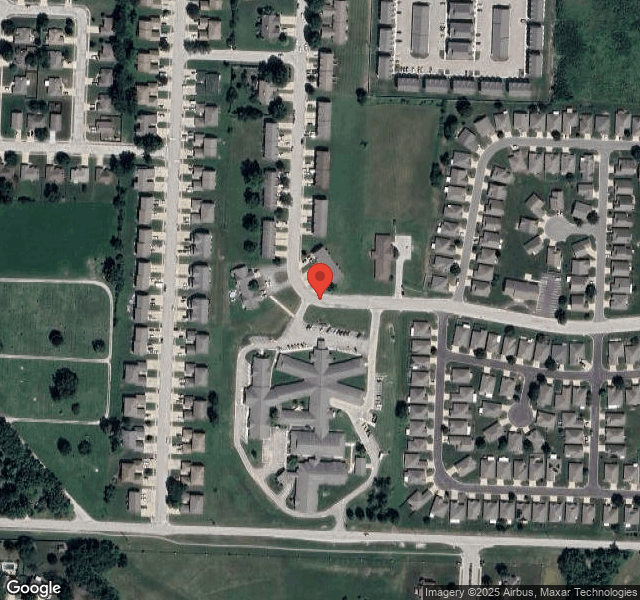
Mar 2019 15 deficiencies 1 IJ
CRITICAL (J)

Immediate Jeopardy (IJ) - the most serious Medicare violation

Accident Prevention (Tag F0689)

Someone could have died · This affected 1 resident

**NOTE- TERMS IN BRACKETS HAVE BEEN EDITED TO PROTECT CONFIDENTIALITY** Based on observation, interview, and record review the facility failed to ensure resident safety while smoking by failing to mon...

Read full inspector narrative →
**NOTE- TERMS IN BRACKETS HAVE BEEN EDITED TO PROTECT CONFIDENTIALITY** Based on observation, interview, and record review the facility failed to ensure resident safety while smoking by failing to monitor to ensure residents were smoking in designated smoking areas; failed to ensure protective oversight by supervising the residents while smoking for residents who were known to sneak out of the facility to smoke at non-scheduled smoke times; failed to monitor to ensure facility staff kept all resident smoking materials when smoking was not occurring; failed to complete comprehensive assessments that accurately addressed the resident's potential risk for changes in smoking behaviors; failed to ensure quarterly smoking assessments were completed to ensure residents continued to meet safe smoking protocols; failed to communicate changes in resident behavior and provide adequate supervision. One sampled resident who had a history of smoking non-compliance, was found smoking while using oxygen (Resident #83) and a second sampled resident (Resident #55) broke out a window on the locked Behavioral Health Unit (BHU) and caught bed linens on fire out of 22 sampled residents. The facility census was 84 residents. 1. Record review of the facility's policy, dated January 2019, titled smoking policy showed: -The facility was a non-smoking building; -Smoking was ONLY permitted in designated smoking areas and supervised by staff during designated times; -The facility operated to balance the important need for fire safety with each resident's right for independence, highest practicable functioning and dignity; -Residents would be assessed for their ability to smoke safely upon admission, quarterly, annually and with a significant change in condition where such change might impact the prior assessment; -Residents MAY NOT keep lighter, matches, etc. in their possession at any time; -Facility staff would keep fire/flame materials needed for smoking; -Based upon the completed assessment, the interdisciplinary team would evaluate the resident's ability to safely smoke independently; -A plan of care would be developed to indicate the resident's ability, risk factors to smoke safely and assistive devices deemed necessary to assist the resident to smoke safely; -Staff would supervise during smoke times in designated areas; -The plan of care would be reviewed and updated as necessary and quarterly which could impact the resident's ability to smoke safely; -Resident non-compliance with the facility's smoking policy could result in up to and including a 30 day involuntary discharge from the facility; -Resident refusal to sign and abide by the facility policy could result in up to and including 30 day involuntary discharge from the facility. Record review of the facility's policy Resident Supervised Smoking, effective 1/24/2019, showed: -Supervised smoking in designated smoking area only (outside the front entrance to the right of the front door as you exit the building); -Staff member will stay with residents for up to 15 minutes each time; -Any staff may supervise from any department; -Must be ongoing seven days a week; -(The following is a list of which department is responsible for smoke breaks): -7:15 A.M. Nursing; -8:30 A.M. Housekeeping/Laundry/Floor Technician (Tech); -12:15 P.M. Housekeeping/Laundry/Floor Tech; -1:30 P.M. Housekeeping/Laundry/Floor Tech; -5:15 P.M. Evening housekeeper; -6:30 P.M. Nursing; -8:30 P.M. Nursing. Record review of the facility's (blank) admission packet with a revision date of 4/16/18 showed: -The staff were directed to fill out the smoking safety evaluation; -All residents must be supervised when they smoke; -Smoking is not allowed anywhere on the premises of the facility by residents; -Cigarette butts must be disposed of in provided receptacles. Record review of the National Fire Prevention Agency's policy Elimination of Sources of Ignition, section 11.5.1.1 dated 1999, showed smoking materials (e.g., matches, cigarettes, lighters, lighter fluid, tobacco in any form) shall be removed from patients receiving respiratory therapy. Record review of the 1/25/19 In-service titled Incident/Accident Prevention and Safety, which included the new smoking policy showed Registered Nurse (RN) A had attended the 7:00 A.M. educational meeting. Record review of Resident #83's face sheet showed he/she admitted to the facility on [DATE] and was re-admitted on [DATE]. Record review of the resident's medical record on, 2/22/19 at 7:00 A.M., showed: -He/She had signed the smoking policy on 1/30/19; -No smoking assessment was found in the electronic chart for the 1/30/19 admission and the 2/21/19 re-admission; -No smoking assessment was found in the paper chart for the 1/30/19 admission and the 2/21/19 re-admission. During an interview on 2/22/19 at 7:20 A.M., Assistant Director of Nusing (ADON) B said: -The admitting nurse usually does the smoking assessment; -If it is at the end of a shift it might be done by the next shifts charge nurse. Record review of Resident #83's Minimum Data Set (MDS a federally mandated assessment tool completed by the facility staff for care planning), dated 2/6/19, showed: -The resident was admitted on [DATE]; -The resident had adequate hearing and did not require a hearing aide; -The resident had unclear speech (slurred or mumbled); -The resident could respond to simple direct communications only; -The resident needed supervision for locomotion on or off of the unit (oversight, encouragement, or cueing); -The resident smoked; -The resident had the following diagnoses: -COPD; -Major depression; -The resident was able to make decisions for himself/herself. Record review of the resident's care plans showed no care plan for smoking prior to 2/22/19. Record review of the resident's Physician's Order Sheet (POS), dated 2/21/19, showed: -The resident was to have oxygen as needed (PRN) from three to eight liters for hypoxemia (the absence of enough oxygen in the tissues to sustain bodily functions); -Keep oxygen level above 88 percent (%). Observation and interview of the resident on 2/22/19 at 5:20 A.M., showed: -He/She came outside the facility's front door by himself/herself unsupervised by staff; -He/She was sitting in a wheelchair; -He/She lit a cigarette and sat by himself/herself smoking unsupervised; -He/She had an oxygen tank attached to the back of his/her wheelchair, and oxygen tubing in his/her nose; -The oxygen was on (a slight hissing noise was heard coming from the tubing, indicating it was on); -When asked if he/she was smoking while he/she had oxygen on, the resident said no then took the oxygen tubing out of his/her nose and moved the tubing to the top of his/her head; -He/She smoked the cigarette down to the butt and then threw the cigarette butt onto the pavement; -He/She reapplied the oxygen tubing into his/her nose and went back into the building; -The oxygen tank was on and set at three liters; -There was no designated smoking area sign at the location where the resident was smoking; -There was no smoking receptacle located where the resident was smoking; -The smoking receptacle was located in front of the building 16 feet down the sidewalk from where the resident was smoking. During an interview on 2/22/19 at 5:30 A.M., RN A said: -He/She was coming to see if the resident was smoking; -The resident had told him/her that he/she was going outside for fresh air; -He/she had told the resident not to smoke; -The resident kept his/her own cigarettes and lighter in his/her possession. During an interview on 2/22/19 at 6:01 A.M., the resident said: -He/She only goes out to smoke once in a while (staff said he/she went out for every smoke break); -He/She did not know if there were regular smoking times or not (he/she had signed the smoking agreement on 1/30/19); -He/She told staff he/she was going out for air; -He/She knew the door code to get out of the front door. Record review of the Nurse's Progress Notes, written on 2/22/19 at 8:33 A.M., showed: -RN A had observed the resident going toward the front door of facility with his/her oxygen on; -The nurse followed the resident to the front door and warned him/her that he/she could not go outside to smoke with his/her oxygen on; -RN A was aware of the resident's previous non-compliance of smoking with oxygen on during his/her previous admission; -The resident stated he/she just wanted the cold air; -The nurse went to check on another resident taking five to seven minutes; -The nurse then stepped outside to check on the resident to make sure he/she wasn't smoking; -The resident was found to be smoking with his/her oxygen on; -The nurse then asked the resident to put the cigarette out; -The nurse asked the resident to come inside; -The resident complied. During an interview on 2/22/19 at 6:38 A.M., Certified Nursing Assistant (CNA) A said: -He/She worked the night shift last night on the same hallway as the resident; -He/She had worked with the resident before; -The resident goes out to smoke; -The resident was to be supervised when he/she goes out to smoke; -He/She did not know if the resident kept his/her cigarettes or lighter; -CNA A had been with the resident previously when he/she had smoked; -The resident did not go out to smoke last night; -The resident might have gone out this morning while he/she was getting other people up; -CNA A had provided care to him/her at 4:45 A.M. this morning; -The resident did not say he/she wanted to go out to smoke; -CNA A always punched the door code for the resident; -CNA A did not know if the resident knew the door code; -CNA A had seen the resident trying to sneak outside to smoke; -CNA A had caught him/her trying to use the door code, but did not get outside; -The residents should not smoke with oxygen on; -The staff should put the resident's oxygen on a stand; -The oxygen (tubing and tank) doesn't go outside with the residents. During an interview on 2/22/19 at 6:49 A.M., the Administrator said: -He/She went in to talk to the resident; -He/She had the resident turn in his/her lighter; -He/She had searched and there was no other lighter or matches in the resident's room; -The resident was allowed to keep his/her cigarettes with him/her; -The resident said he/she knew there were smoking times; -The resident had the paper with the smoking schedule on it. Record review of the Social Service Designee's (SSD) Progress Notes, written on 2/22/2019 at 6:57 A.M., showed: -The SSD had talked with RN C about the resident smoking outside with oxygen on; -RN C had searched the resident's coat pockets; -RN C had removed one black lighter with the resident's permission; -The ADON and the Administrator had searched his/her room with his/her permission; -No other lighters, matches, or etc. were found; -RN C reported back to the charge nurse that the resident's lighter was now in the possession of the Administrator. Record review of the SSD's Progress Notes written, on 2/22/2019 at 7:07 A.M., showed: -The resident was noted outside smoking with his/her oxygen on; -The SSD spoke with the resident; -The resident said he/she woke up that morning and really needed a cigarette; -The resident said he/she used the key pad in the front to go outside; -The SSD asked him/her about him/her still wearing his/her oxygen while smoking; -The resident said he/she forgot to take it off, but at home sometimes he/she wore it and smoked; -The resident said, It's only two liters; -Education was provided by the SSD on the facility's policy to smoke with supervision; -Education was provided by the SSD on the facility's scheduled smoking times; -The resident voiced his/her understanding of that policy; -The resident said when he/she wants to smoke he/she will smoke; -Education was provided to him/her about the risks and benefits of him/her smoking with his/her oxygen on. During an interview on 2/22/19 at 7:26 A.M. RN A said: -He/She had talked to the resident last night; -The resident was alert and oriented; -The resident was his/her own person; -The resident had smoked previously on each smoke break; -He/She did not not know how the resident got out of the building; -The nurse when admitting a resident should have done a smoking evaluation; -He/She was the admitting nurse; -He/She did not do the smoking evaluation; -RN A watched the resident go out this morning; -He/She told the resident he/she could not go out to smoke; -The resident replied he/she just wanted cold air; -The resident had the code to the door; -The resident was his/her own person; -The resident couldn't have been out more than five minutes as all he/she had was the butt left; -He/She said the facility smoking policy said if residents were their own person they could go out on their own to smoke when they want (this was not in the facility policy); -No smoking assessment had been done. During an interview on 2/22/19 at 8:00 A.M., RN B said: -He/She had worked with the resident before, mostly on the weekends; -Residents should not go out to smoke without supervision to make sure their oxygen is not on; -He/She believed the facility's policy said that the residents can only go out on supervised smoke breaks; -The smoking assessment was not done on 1/30/19 on admission; -The smoking assessment was not done on 2/21/19 on re-admission; -He/She saw the resident outside smoking about two weeks ago without supervision; -The oxygen tank was on the back of his/her wheelchair; -The resident was re-educated about not smoking with oxygen on; -The resident was re-educated about only going out during smoke break times with supervision; -He/She did not chart any of this. During an interview 2/22/19 at 9:15 A.M., the Administrator said: -He/She had met with the residents that smoked on 1/24/19; -He/She met with the residents to determine smoking times; -He/She said there would be no more independent smoking; -Smoking must be supervised; -The residents were not allowed to keep their lighters on them; -He/She had spoken with the resident upon admission regarding the new policy of supervised smoking only at scheduled times; -The resident said he/she smoked with oxygen on at home; -The resident said he/she forgot to take it off; -The new policy was posted at the nurses station. During an interview on 2/22/19 at 9:50 A.M., the Medical Director said: -The resident had signed a contract when he/she came in; -The medical director has seen it (the survey team had not been provided with a copy at the time of exit); -The resident was cognitively intact; -The resident was smoking when he/she wasn't supposed to; -The resident was smoking with oxygen on; -The resident had a lighter when he/she wasn't supposed to. During an interview on 2/22/19 at 10:05 A.M., ADON A said: -He/She knew they had a new smoking policy; -The residents had to be supervised while smoking; -He/She found out about the policy about a month ago; -The Administrator told him/her and the other ADON about the policy at the same time; -The Administrator sent out an email regarding the new policy. During an interview on 2/22/19 at 10:10 A.M., the Administrator said: -He/She verbally told staff about the new smoking policy; -He/She gave in-services about the new smoking policy. It was done but not listed on the agenda; -He/She posted the policy at the main nurse's station (closest to front door); -They have done some cleaning up of the nurse's station and may have taken it down; -The new smoking policy is posted in the copy room. Observation on 2/22/19 at 10:12 A.M., showed the new smoking policy, dated 1/25/19, was on the bulletin board in the copy room by the time clock. During an interview on 2/22/19 at 10:50 A.M., the Dietary Manager said: -The residents have scheduled times to smoke; -The residents were to smoke in the front of the facility by door; -If the resident wore oxygen, it needed to come off of the wheelchair (they can't wear it to go out to smoke); -Over the last three months, he/she had seen three or four residents sneak out to smoke (he/she was unable to remember who the residents were); -If staff saw any residents sneak out to smoke the staff were to go out with them; -The staff should supervise them while they smoked. During an interview on 2/26/19 at 2:40 P.M., the Administrator said: -The resident was transferred to the secured care unit; -When the resident goes out to smoke, he/she would have to have someone let him/her outside; -The staff would go outside with him/her to smoke; -The staff would keep his/her cigarettes. During an interview on 2/27/19 at 3:29 P.M., the Director of Nursing (DON) said: -He/She expected the staff to stay with a resident when they go out to smoke; -If the resident had oxygen the oxygen tank should be taken off of the wheelchair; -The oxygen tank should not go outside with the resident. 2. Record review of Resident #55's Face Sheet showed he/she was admitted to the facility on [DATE] and readmitted on [DATE] with the following diagnoses: -Acute and chronic respiratory failure; -Altered mental status; -Muscle weakness; -Unsteadiness on feet; -Abnormal gait and mobility; -Cognitive communication deficit; -Dementia (a progressive organic mental disorder characterized by chronic personality disintegration, confusion, disorientation, stupor, deterioration of intellectual capacity and function, and impairment of control of memory, judgment, and impulses) without behavioral disturbance; -Tobacco use. Record review of the resident's Care Plan, dated 11/13/18, showed: - No documentation the facility staff developed a care plan for the resident's smoking and/or tobacco use. Record review of the resident's admission History and Physical, dated 11/15/18, showed the resident was a current tobacco smoker. Record review of the resident's admission MDS, dated [DATE], showed the resident: -Did not use tobacco products. Record review of the resident's medical records showed no documentation by the facility staff the resident was assessed for safe smoking from the time of the resident's admission on [DATE] until the resident was discharged from the facility on 12/1/18. Record review of the resident's admission MDS, dated [DATE], showed he/she: -Was a current tobacco user; Record review of the resident's revised care plan, dated 1/15/19, showed the resident: -Used anti-anxiety medications and to monitor and record the following targeted behavioral symptoms: pacing; wandering; disrobing; inappropriate responses to verbal communication; violence/aggression toward staff dated 1/23/19; -Was a smoker and was able to light his/her cigarettes without assistance, but required staff to keep his/her lighter related to poor safety awareness dated 1/24/19; -Instruct the resident about the facility smoking policy, locations, times, and safety concerns dated 1/24/19; -Notify the charge nurse immediately if it is suspected the resident had violated the facility smoking policy dated 1/24/19; -He/She required supervision while smoking dated 2/14/19; --NOTE: No documentation the facility staff assessed the resident for safe smoking from his/her readmission on [DATE] until 2/22/19. Record review of the resident's Social Service note, dated 2/19/19, from the Administrator showed: -Talked with the resident today and re-educated him/her on the facility's smoking policy; -He/She tends to go out to smoke between scheduled smoke times and without supervision; -The facility staff had attempted to contact the resident's family to inform the family member the resident could not have his/her own matches, lighters, etc.; -The call went straight to the family member's voicemail and the voicemail box was full. Record review of the resident's Smoking Assessment, dated 2/22/19, showed the resident: -Was safe to smoke without supervision; -Had cognitive loss; -Had dexterity problems; -Smoked 5-10 cigarettes a day; -Can light his/her own cigarette; -The facility needed to store the resident's lighter and cigarettes; -Had a plan of care to ensure the resident was safe while smoking; -Notes from the Interdisciplinary Team showed the resident was able to light his/her own cigarettes without attendance, but the facility policy was for staff to keep his/her lighter; -The team decision was the resident could smoke without supervision with a condition the resident required staff to provide a lighter. Record review of the resident's medical record showed the resident signed a facility smoking policy, dated 2/22/19. During an interview on 3/12/19 at 9:11 A.M., Receptionist A said: -He/She was sitting at the front desk on 3/10/19 when the resident came up to the desk in his/wheelchair; -The resident left and came back ambulating with his/her cane; -The resident seemed agitated at that time; -The resident walked behind the front desk and tried to open a utility closet saying he/she wanted to get out; -The resident then pushed open the front doors and got outside; -Nursing staff checked on the resident and left the resident outside; -He/She tried to keep an eye on the resident while he/she was outside, but since the resident was walking up and down the parking lot, he/she was not able to visualize the resident the entire time; -He/She thinks the resident may have gone outside to the parking lot unattended twice that day; -When the resident came back inside the second time, he/she started pacing up and down the halls and fiddling with signs on the staff doors; -He/She then heard what sounded like a door being shut, so he/she got up from the reception desk and checked the administrator's door again to verify it was locked; -Because the administrator's door was locked, he/she was not aware the resident was in the administrator's office; -LPN B then came down the hall and unlocked the administrator's door and removed the resident from behind the administrator's desk; -The administrator did have lighters in his/her desk; -He/She did not see staff confiscate anything from the resident when they removed him/her from the administrator's office. During an interview on 3/12/19 at 9:19 A.M., LPN B said: -The resident seemed to be okay earlier in the shift; -Around 1:00 P.M. on 3/10/19, he/she was told by a visitor the resident was outside in the parking lot smoking; -He/She went outside, found the resident in the parking lot, but did not see the resident smoking; -He/She asked the resident if he/she had been smoking and the resident denied smoking; -He/She reminded the resident of the facility smoking policy and had the resident come back into the facility to watch television; -About few minutes later, he/she saw the resident outside in the parking lot talking to an unidentified person in a car; -He/She saw the person in the car hand the resident a cigarette and the resident started smoking; -He/She assumed the person in the car was the resident's family, so he/she did not go out to intervene at that time; -He/She looked outside sometime later and noticed the resident was still outside, but the window to the car was rolled up and no one was in the car; -It was at that time, he/she realized the person in the car earlier was not a visitor or family of the resident, so he/she brought the resident back into the facility and confiscated a lighter from the resident; -The resident had gone to the nurse's station several times after being brought back into the facility, asking staff for a cigarette; -A little while later, he/she found the resident in the administrator's office going through the administrator's desk drawers; -He/She removed the resident from the administrator's office and called the DON; -The DON told him/her to take the resident to the (Behavioral Health Unit) BHU for the night for day care services and to notify the resident's physician and family; -He/She took the resident to the BHU around 1:30 P.M.; -He/She did not check the resident for lighters after the resident was removed from the administrator's office; During an interview on 3/12/19 at 8:32 A.M. and 12:46 P.M., LPN G said: -LPN B was responsible for the Resident #55's care on 3/10/19 and took the resident to the BHU; -LPN B told him/her the resident was being transferred to the BHU for the night on 3/10/19 and would be re-evaluated for placement the following morning (3/11/19); -He/She was not responsible for the resident's care before or after the resident was transferred to the BHU on 3/10/19. -He/She was the charge nurse on the 100/300 halls on 3/10/19; -LPN B was in charge of the resident when he/she was transferred back to the 600 hall; -He/She was the charge nurse for the other resident's on the 600 and 700 halls, which was located at the opposite side of the building from the main 100/300 halls; Record review of the resident's Smoking Assessment, dated 3/10/19 at 1:45 P.M., showed the resident: -Was safe to smoke with supervision; -Had cognitive loss; -Did not have dexterity problems; -Smoked 5-10 cigarettes a day; -Can light his/her own cigarette; -Required staff supervision for safety; -The facility needed to store the resident's lighter and cigarettes; -Had a plan of care to ensure the resident was safe while smoking; -Notes from the Interdisciplinary Team showed the resident had continually gone outside to attempt to smoke outside of scheduled smoking times; -The team decision was the resident could smoke with supervision with a condition the resident was to be transferred to the locked unit. During an interview on 3/14/19 at 3:03 P.M., CNA E said: -When the resident was transferred to the BHU for day care services, meaning he/she was not officially transferred to the BHU but was on the locked unit for monitoring and supervision, he/she was told the resident had tried to elope and was found in the administrator's office; -He/She was not told the resident had been seen outside of the facility smoking unattended outside of the designated smoking times; -He/She did not search the resident for lighters upon transfer to the BHU; -He/She confiscated a pack of cigarettes from the resident, but did not confiscate a lighter when the resident was transferred to the BHU; -LPN B told him/her the resident had a lighter when he/she transferred the resident to the BHU on 3/10/19 at 4:30 P.M.; -He/She gave report on the evening of 3/10/19 to LPN H; -The resident opened the dining room window about six inches and tried to climb out the window, but it would not lift any higher so he/she could not get out; -When he/she attempted to get the resident away from the window, he/she hit him/her with his/her cane; During an interview on 3/12/19 at 9:19 A.M., LPN B said: -Around 7:00 P.M., the fire alarm went off on the BHU; -He/She went to the fire alarm and found the resident in his/her room standing by a window with the room full of smoke; -He/She removed the resident from the room and had a CNA put the resident in a wheelchair and transfer him/her to the 700 hall; -The 600 unit had started to fill up with smoke, so the night charge nurse and CNA started evacuating the residents from the 600 hall to the 700 hall; -He/She saw the fire was outside the resident's window, the resident's window was broken and the window was lifted up about six inches; -He/She went outside to extinguish the fire; -When he/she came back inside from extinguishing the fire, he/she was told the resident broke a window out in the 700 unit; -He/She did not know how the resident broke out his/her window; -He/She was told the resident's cane was confiscated about an hour after he/she was transferred to the BHU; -The resident was transferred to the BHU around 2:30 P.M.; -He/She did not know how or where the resident got the lighter; -After the resident was evacuated to the 700 hall, staff found a lighter on the resident. During an interview on 3/12/19 at 12:20 P.M., LPN B said: -The resident was taken back to the 600 hall around 4:00 P.M. - 5:00 P.M. and not 1:30 P.M. as he/she previously reported; -He/She was not the charge nurse for the 600 and 700 hall that day; -He/She did not give report to the night shift nurse for the 600 and 700 halls that day; -He/She was not aware the resident tried to open a window in the dining room to try to climb out of the window; -He/She was not aware the resident had tried to hit staff and residents with his/her cane before the fire; --NOTE: LPN B documented in his/her nursing notes on 3/10/19 at 2:35 P.M., the resident had been observed outside smoking twice during the shift and was observed in the administrator's office going through his/her desk drawers and was transferred to the BHU until further notice. During an interview on 3/12/19 at 9:33 P.M., CNA H said: -He/She was the only CNA working the 600 and 700 halls with the night charge nurse (LPN H) on 3/10/19; -He/She had been on the 700 hall and went to the 600 hall to check on residents, when he/she smelled smoke from the nurse's station at the front of the 600 hall coming from the direction of the resident's room at the end of the 600 hall; -LPN H activated the alarm and they began evacuating the resident's from the 600 hall to the 700 hall; -He/She did not see the resident when he/she found the fire; -He/She found out the resident then broke a window on the 700 hall from another resident, however he/she did not hear the window break; -He/She did not hear a window break on the 600 hall prior to the fire; -He/She would not have been able to hear a window break while he/she was on the 700 hall or if he/she was in the shared nurse's station; -He/She did not know how the resident got the lighter to start the fire. During an interview on 3/12/19 at 9:39 A.M., LPN H said: -He/She came on duty at 6:30 P.M.; -The report he/she received was the resident was transferred to the BHU from the main unit for not following the facility's smoking policy; -While he/she was receiving report from the previous shift CNA, the resident was at the nursing station asking staff how to get out; -He/She told the resident he/she could not go out at that time; -The resident tried to hit LPN H with his/her cane, so he/she took the resident's cane; -The resident then ambulated with a wheelchair; -Around 7:00 P.M., he/she was on the 700 unit and heard the smoke alarm activated for the 600 hall; -He/She smelled smoke from the nurse's station and saw smoke coming down the hall from the resident's room at the end of the 600 hall to the front of the unit; -He/She went to the resident's room and found the resident in the doorway; -He/She saw the fire was outside the resident's window; -The resident's window had been broken and the window on the right was raised about six inches; -He/She called for the Code Red (fire alarm) and started moving the residents from the 600 unit to the 700 unit with the assistance of CNA H; -A resident reported the resident had broken the 700 unit window with his/her hands; -He/She did not know where the resident obtained the lighter; -Per the facility policy, residents are not allowed to have lighters or matches; During an interview on 3/12/19 at 10:18 P.M., CNA E said: -The resident was transferred to the 600 hall around 4:30 P.M. from the 200 hall; -The resident had tried to o
CONCERN (D)

Potential for Harm - no one hurt, but risky conditions existed

Deficiency F0576 (Tag F0576)

Could have caused harm · This affected 1 resident

Based on interview and record review, the facility failed to ensure incoming mail received from the postal service for residents on Saturdays was delivered to the residents on the same day or within 2...

Read full inspector narrative →
Based on interview and record review, the facility failed to ensure incoming mail received from the postal service for residents on Saturdays was delivered to the residents on the same day or within 24 hours. The facility census was 84 residents. Record review of facility's undated policy titled Resident Rights - Mail showed: -Mail was delivered to the resident within twenty-four (24) hours of delivery to the premises or to the facility's post office box (including Saturday deliveries). 1. During the Resident Council Interview on 2/21/19 at 2:00 P.M., cognitive residents in attendance said mail was not delivered to the residents on Saturday. During an interview on 2/21/19 at 2:43 P.M., the Resident Council President said: -The mail was delivered to the facility and normally received by the receptionist; -There was a receptionist on Saturday, but not the same one as during the week; -Residents most often got Saturday's mail on Monday or Tuesday. During an interview on 2/22/19 at 10:22 A.M., the Activities Director said: -The mail was sometimes delivered to the facility so late on Saturday, as late as 5:00 P.M. on some Saturdays; -The staff person who worked with activities on Saturdays was already gone when the mail arrived; -There was no activity staff working on Sundays to deliver the mail received on Saturday evening, so that mail was not delivered until Monday. During an interview on 2/27/19 at 2:40 P.M., the Director of Nursing said: -The mail was not an area that he/she had anything to do with; -If the policy said Saturday's mail should be delivered within 24 hours that should be happening. During an interview on 2/27/19 at 4:18 P.M., the Administrator said: -There was a receptionist on Saturday; -The residents should get their mail on Saturday; -He/She would check into the matter.
CONCERN (D)

Potential for Harm - no one hurt, but risky conditions existed

Safe Environment (Tag F0584)

Could have caused harm · This affected 1 resident

**NOTE- TERMS IN BRACKETS HAVE BEEN EDITED TO PROTECT CONFIDENTIALITY** Based on observation, interview and record review, the facility failed to ensure there was a homelike environment provided for o...

Read full inspector narrative →
**NOTE- TERMS IN BRACKETS HAVE BEEN EDITED TO PROTECT CONFIDENTIALITY** Based on observation, interview and record review, the facility failed to ensure there was a homelike environment provided for one (Resident #300) of 14 sampled residents, by removing the resident's bed from his/her room when he/she returned from an extended hospital stay and replaced it with a sofa from the common area from the locked dementia unit without the resident's legal guardian's input or permission. The facility census was 92. 1. Record review of Resident #300's face sheet showed he/she was admitted to the facility on [DATE] and had the following diagnosis: -Major depressive disorder; -Dementia; -Alzheimer's disease. Record review of the resident's care plan dated 4/3/19, showed no mention of the resident sleeping in other areas other than his/her bed. Observation on 5/6/19 at 9:37 A.M., of resident's room showed he/she sleeping on a sofa. Record review of the facility's Concern/Grievance Report dated 5/6/19, received via fax on 5/9/19 showed: -The resident's family member called on 5/6/19 to complain to the Minimum Data Set (MDS-a federally mandated assessment instrument completed by facility staff for care planning) Coordinator about the resident's bed being replaced with a sofa; -It was requested that the resident's bed be put back in the resident's room; -The sofa was taken out of the resident's room right after the conversation with the MDS Coordinator. During an interview on 5/6/19 at 9:54 A.M., Licensed practical Nurse A said: -He/she was unsure why Resident #300 was sleeping on a sofa; -When he/she arrived to his/her shift last Friday (5/3/19), housekeeping was in the process of swapping out the resident's bed for the sofa that had previously been out in the common area; -The resident would routinely sleep on the sofa, so that was maybe why it was moved into his/her room; -The resident routinely slept through the majority of the day in various different locations. During an interview on 5/7/19 at 10:11 A.M., the MDS Coordinator said: -He/she was unaware of the resident's bed being removed from his/her room; -Something like that should be care planned and discussed with family; -He/she would ensure that the information would be updated by the end of the day; -He/she was aware that the resident had had previous altercations regarding others sitting on the sofa in the common area and that was maybe the reason why the resident's bed was swapped out for the sofa; -The resident routinely slept on the sofa and he/she would hope that the resident's family was involved in the decision to swap the bed for the sofa. During an interview on 5/7/19 at 10:18 A.M., the Assistant Director of Nursing (ADON) said: -Resident #300 never slept in his/her bed; -He/she had become very territorial over the sofa in the common area; -He/she had multiple confrontations with other residents sitting on the sofa; -He/she did not have a conversation with the resident's family prior to the sofa being put into the resident's room; -He/she called the facility Administrator and Social Services and neither of them had a conversation with the family regarding the resident's bed being removed and replaced with the sofa. During an interview on 5/16/19 at 11:30 A.M., the resident's family member said: -The resident returned to the facility on 5/3/19; -He/she brought the resident dinner and another family member went to the resident's room to get his/her blanket; -It was discovered then, that the resident's bed had been removed from his/her room; -He/she immediately began asking staff why the resident's bed had been replaced with the sofa from the common area, and none knew why; -About a week ago, he/she finally spoke to the facility Administrator and he/she was told that the reason the resident's bed was replaced with the sofa, was due to the resident being territorial over the sofa; -He/she explained that the resident would likely not sleep in his/her room like they wanted; -The resident will sleep in the common area in chairs and on the sofa where people generally are; -He/she would have never agreed to have the sofa placed in the resident's room, because it was from the common area. The sofa had been moved from the old unit to the current one; -Other residents as well as his/her family member sat and occasionally slept on the sofa; -His/her family member is incontinent as well as others, and he/she doesn't feel it's sanitary; -Now the sofa has been removed from the locked unit all together and he/she didn't think that was right; -He/she felt the major issue was that there was just one sofa back on the unit and all the resident's enjoyed sitting on it, which lead to some trying to make room for themselves when the sofa was already full. MO00155682
CONCERN (D)

Potential for Harm - no one hurt, but risky conditions existed

Investigate Abuse (Tag F0610)

Could have caused harm · This affected 1 resident

**NOTE- TERMS IN BRACKETS HAVE BEEN EDITED TO PROTECT CONFIDENTIALITY** Based on observation, interview and record review, the facility failed to complete a timely thorough comprehensive investigation...

Read full inspector narrative →
**NOTE- TERMS IN BRACKETS HAVE BEEN EDITED TO PROTECT CONFIDENTIALITY** Based on observation, interview and record review, the facility failed to complete a timely thorough comprehensive investigation regarding an injury of unknown source for one sampled resident (Resident #78) out of 14 sampled residents. The facility census was 92. Record review of the undated facility policy, entitled Incident Investigation showed: -The Licensed Practical Nurse fills out AP-31 C Form Incident Log to track and minimize the number of incidents that take place in a facility. -An incident includes falls, abuse, burns, usual occurrences, bruises, medication error, missing person, property loss and respiratory arrest. -The procedure is the Licensed Practical Nurse or the individual who first encounters or witnesses an incident will complete the AP-31 Form A Incident/Accident report form and on the AP-31 C documents the following: resident name, day and shift during which the incident occurred, type of code, location code, severity code and medication treatment error code. -As appropriate, interviews with staff members and other witnesses will be documented on AP-31 Form B Interview Record. -The Director of Nursing (DON/DNS) and or designee will review the information incident log every month and compile a total of each code. -The DNS will submit the monthly incident log to the QA committee. 1. Record review of Resident #78's undated face sheet showed he/she was admitted to the facility on [DATE] with a readmission date of 3/29/19. Diagnoses included: Urinary Tract Infection (UTI), altered mental status, Dementia with behavioral disturbance, post left hip fracture repair and Schizoaffective Bipolar Disorder. Record review of the resident's care plan dated 1/26/19, showed: -He/she has a potential/actual impairment to his/her skin integrity. -The resident will maintain or develop clean and intact skin by the review date. -Interventions were to avoid scratching and keep hands and body parts from excessive moisture and keep fingernails short. -Educate resident/family/caregivers of causative factors and measures to prevent skin injury. Record review of the resident's Significant change Minimum Data Set (MDS-a federally mandated assessment form to be completed by facility staff used for care planning) dated 4/9/19, showed he/she: -Had a Brief Interview for Mental Status (BIMS) score of 1 out of 15, which indicated the resident was severely cognitively impaired. -Usually understands. -Usually understood. -Had no behaviors. -Utilized Hospice. -Needed the assistance of two for transfers and dressing. -Incontinent of bowel and bladder. -Received antipsychotic, antianxiety, and anticoagulant medication. Record review of the resident's Skin Check form dated 4/22/19 at 5:29 P.M., showed he/she had a new skin injury/wound identified. The skin injury was a bruise and the location listed was the resident's left side of his/her forehead and the rest of the form was left blank. Record review of the resident's Skin Check form dated 4/24/19 at 5:29 P.M., showed skin check preformed and the box none of the above was checked. Record review of the resident's facility investigation dated 4/30/19 at 6:01 A.M., showed: -When this nurse went into the resident's room, he/she noticed a black bruise no bigger than a quarter on the resident's left upper arm, a purple bruise a couple of inches away from that bruise and on the resident's right forearm there was a fresh black bruise. -This nurse also noticed an old bruise on the resident's left mid back and rib area possibly from the most recent fall. -The injury was listed as bruises in the left and right anticubitcal (region of the arm in front of the elbow). -The resident was confused, incontinent and had impaired mobility. -During a transfer was checked for predisposing situation factors. -No witnesses found. Responsible party, hospice and DON notified on 4/30/19. Record review of the resident's Situation Background Assessment Recommendation (SBAR) dated 4/30/19 at 6:01 A.M., showed: -Staff were to evaluate the resident, check vital signs and review an INTERACT care path or Acute Change in Condition file card if indicated. -Fresh bruising on the resident's arm; two on the left arm and one on the right. -Start date was 4/30/19. -The resident had medication changes in the last week. -The resident has increased confusion, new or worsening behavioral symptoms, and a fall. Record review of the resident's facility investigation dated 4/30/19 at 6:01 A.M., and revised on 5/6/19 at 1:35 P.M., showed; -When this nurse went into the resident's room, he/she noticed a black bruise no bigger that a quarter on the resident's left upper arm, a purple bruise a couple inches away from that bruise, then on the resident's right forearm there was a fresh black bruise. -This nurse also notified an old bruise on the resident's left mid back and rib area possibly from the most recent fall. -The bruise was listed as on the right and left anticubitcal. -No witnesses found. -Under the Notes section of the form, the facility added therapy to evaluate and geri sleeves padding dated 5/1/19. -The resident frequently is known to fight with hospice staff during showers, added on 5/1/19. -Recent medication changes included an increase in Seroquel due to increased behaviors of attempting to throw himself/herself out of his/her chair. Bruising is consistent with hitting his/her arms on the wheelchair, added on 5/1/19. -Under the Notes section of the form, the facility added a root cause analysis was bruising on the resident's bilateral arms was consistent with resident hitting his/her arms on the table. Old bruising noted on the resident's mid back and rib are consistent with his/her previous fall, added 5/7/19. -There was no follow up investigation with hospice staff concerning the resident fighting with staff during showers. Record review of the resident's Skin Check form dated 4/30/19 at 7:01 A.M., showed he/she had a previously noted skin injury/wound as a bruise and older bruises to bilateral forearms. Record review of the resident's May Physician Order Sheet (POS) showed physician orders for aspirin (blood thinner) 325 milligrams (mg) daily, amlodipine 10 mg daily (to treat high blood pressure), pantoprazole (anti-ulcer) 40 mg daily, depakote (antiepileptic) 125 mg three times a day, Benztropine (used to treat side effects of antipsychotic) 1 mg daily, olanzapine (antipsychotic) 5 mg daily, Seroquel (antipsychotic) 25 mg in the A.M. and Seroquel 25 mg at 12:00 P.M. and 100 mg at time of sleep. Record review of the resident's Skin Check form dated 5/2/19 at 7:01 A.M., showed skin check preformed and the none of the above box was checked. Record review of the resident's Skin Check form dated 5/2/19 at 9:24 A.M., showed he/she had a previously noted skin injury/wound, a bruise, previously noted bruising to bilateral forearms and left upper arm. (Another skin check form from the same date at 7:01 A.M., said none of the above.) Record review of the resident's Skin Check form dated 5/4/19 at 10:25 A.M., showed he/she had a previously noted skin injury/wound, bruise, previously noted bruising to bilateral forearms and left upper arm. Observation on 5/6/19 at 12:24 P.M., showed the resident was at the table near the nurse's desk. His/her head was resting on the handrail with his/her eyes closed. Staff were providing one on one activities to another resident sitting by the resident. His/her arms were not under the table or near the wheelchair and he/she was not wearing any protective sleeves. Record review of the resident's Skin Check form dated 5/6/19 at 11:26 A.M., showed he/she had a previously noted skin injury/wound, a bruise, previously noted bruising to bilateral forearms and left upper arm. Record review of the resident's Skin Check form dated 5/7/19 at 6:00 P.M., showed he/she had a previously noted skin injury/wound, bruise. Old bruising to bilateral forearms and left upper arm in various stages of healing. Record review of the resident's care plan revised on 5/8/19, showed: -He/she has a potential/actual impairment to skin integrity due to resident hitting arms against tables and against his/her wheelchair arms, he/she has poor impulse control regarding personal safety. -The goal was the resident will maintain or develop clean and intact skin by the review date. -The interventions were to avoid scratching and keep hands and body parts from excessive moisture. -Keep fingernails short. -Educate resident/family/caregivers of causative factors and measures to prevent skin injury. -Padded geri sleeves to bilateral arms was added on 5/1/19. -Use a fiddle blanket in his/her lap to help redirect his/her from unsafe activities was added on 5/8/19. -Therapy to evaluate and treat as needed was added on 5/7/19. -New order for labs was added on 5/8/19. -This care plan update was faxed on 5/9/19 after the exit of 5/7/19. During an interview on 5/7/19 at 1:00 P.M., the Assistant Director of Nursing (ADON) and acting DON said the charge nurse fills out the form and gives it to the DON for review. The DON signs off on the report and then it goes to the Administrator and Medical Director. They have stand up meetings every Monday and they all have lap tops, so they can update information if needed. The ADON said to investigate an injury of unknown source you need to do an immediate investigation, root cause analysis, two hour window to self report, SBAR and all notifications. The team did not feel this resident's injury of unknown source was abusive or neglectful, so they did not call the State. There should be a comprehensive investigation in the record that supports that decision. He/she would look to see if there was more information about the unknown injury. Record review of the resident's investigation faxed to the DHSS on 5/9/19, showed a comprehensive investigation of the injury of unknown source completed on 5/8/19 to include the resident's diagnoses, medications, incident, contributing factors, immediate interventions, long term interventions and additional interventions, skin checks and conclusion. The conclusion was that the resident bangs his/her arms against the under side of the table excessively. When removed from the table, he/she will bang his/her arms against the wheelchair arms. Resident is unaware of his/her safety. Redirection is not always effective. Resident has episodes of anxiety/restlessness and his/her as needed Ativan does provide some comfort. It has been determined that the bruising assessed on his/her bilateral arms are consistent with the resident banging his/her arms on the wheelchair and under side of the table.
CONCERN (D)

Potential for Harm - no one hurt, but risky conditions existed

Deficiency F0657 (Tag F0657)

Could have caused harm · This affected 1 resident

**NOTE- TERMS IN BRACKETS HAVE BEEN EDITED TO PROTECT CONFIDENTIALITY** Based on interview and record review, the facility failed to notify the resident/representative in writing of quarterly Care Pla...

Read full inspector narrative →
**NOTE- TERMS IN BRACKETS HAVE BEEN EDITED TO PROTECT CONFIDENTIALITY** Based on interview and record review, the facility failed to notify the resident/representative in writing of quarterly Care Plan (a written out plan for the care of the resident) meetings for one sampled resident (Resident #25) out of 22 sampled residents. The facility census was 84 residents. Record review of the facility's undated Care Planning Policy showed: -The Facility's Interdisciplinary Team (IDT) will develop a comprehensive care plan for each resident. -The resident has a right to be informed, in advance, of changes to the plan of care. -The resident has the right to see the care plan, including the right to sign after significant changes are made to the plan of care. -The facility will invite the resident, if capable, and their family to care planning meetings and use its best efforts to schedule care planning meetings at times convenient for the resident and family. -Care plan meetings may be conducted via teleconference. -The medical record must contain evidence that the summary was given to the resident and/or representative. 1. Record review of Resident #25's admission record showed he/she was admitted to the facility on [DATE]. Record review of the resident's quarterly Minimum Data Set (MDS - a federally mandated assessment tool completed by the facility staff for care planning) dated 12/3/18 showed: -That the resident's cognition was severely impaired with a Brief Interview for Mental Status (BIM's) score of two out of 15. -That the resident's son was his/her responsible representative/party. During an interview on 2/21/19 at 9:56 A.M., the resident's son said: -He/She did not know about Care Plan meetings. -He/She had never received a letter from the facility informing him/her of a Care Plan meeting. -He/She came to visit the resident every morning. -His/Her wife came every afternoon. Record review of the resident's medical record showed no documentation of the resident/representative being notified of the Care Plan meetings or of the resident/representative attending or not attending the meetings. During an interview on 2/26/19 at 9:29 A.M., MDS Coordinator said: -He/She just started doing the Social Service Directors (SSD) duties since the SSD left at the beginning of February. -He/she would continue doing the SSD duties until the facility hired a new SSD. -The facility sent out letters to the resident's family/representatives of when the Care Plan meeting would be every quarter. -The facility did not document if the resident/representatives attended or not. -He/She was unable to find any copy of or documentation of the resident's family/representative being notified of past Care Plan meetings. During an interview on 2/27/19 at 2:40 P.M., the Director of Nursing said: -He/She would expect that notifications letters of Care Plan meetings were sent to a resident/representative by the SSD. -He/She would expect the SSD to document that a resident/representative attended or did not attend the Care Plan meeting in the Care Plan meeting notes. -The MDS coordinator was doing the SSD duties until the facility hired a new SSD.
CONCERN (D)

Potential for Harm - no one hurt, but risky conditions existed

Quality of Care (Tag F0684)

Could have caused harm · This affected 1 resident

**NOTE- TERMS IN BRACKETS HAVE BEEN EDITED TO PROTECT CONFIDENTIALITY** Based on interview and record review, the facility staff failed to ensure neurological assessment checks (neuro checks to monito...

Read full inspector narrative →
**NOTE- TERMS IN BRACKETS HAVE BEEN EDITED TO PROTECT CONFIDENTIALITY** Based on interview and record review, the facility staff failed to ensure neurological assessment checks (neuro checks to monitor level of consciousness (LOC), ability to move extremities, eye responses and change in pupils and vital signs) were completed for resident falls, as per facility policy for one sampled resident (Resident #72) out of 22 sampled residents. The facility census was 84 residents Record review of the facility's undated Fall Management Program showed: -The facility will provide the highest quality care in the safest environment for the residents. Record review of the facility's undated Neurological Assessment policy showed: -Nursing staff will perform a neurological assessment in the following circumstances: --Following an unwitnessed fall; --Following a fall or other accident/injury involving a head trauma; -Neurological checks will be performed as follows or otherwise ordered by the Attending Physician; --Four times every 15 minutes for one hour; --Then, four times every 30 minutes for one hour; --Then, four times every hour for two hours; and --Then, four times every four hours for a combined total of 72 hours. 1. Record review of Resident #72's admission Record showed he/she was admitted on [DATE], with the following diagnoses: -Adult failure to thrive (includes: decreased appetite, poor nutrition, and physical inactivity, often associated with depression); -Major Depressive Disorder (mental health disorder characterized by persistently depressed mood or loss of interest in activities, causing significant impairment in daily life); -Anxiety Disorder (anticipation of impending danger and dread accompanied by restlessness, tension, fast heart rate, and breathing difficulty not associated with an apparent stimulus); -Huntington's Disease (is a fatal genetic disorder causing progressive breakdown of nerve cells in the brain leads to physical and mental ability deterioration); -Abnormal Posture; -Repeated Falls. Record review of the resident's Nurses Notes, dated 10/16/18 at 12:41 A.M., showed: -He/She was found lying on the floor when getting out of bed; -He/She was assisted with Activities of Daily Living (ADLs) and helped back into bed; -His/Her call light was in reach; -Staff would continue to monitor. Investigation with the neurological assessments for the fall on 10/16/18 was requested on 2/26/19. This information was not provided by the facility. Record review of the resident's Situation, Background, Assessment, and Request (SBAR) communication form and progress note, dated 10/24/18 at 9:30 P.M., showed: -He/She had a non-injury fall on 10/24/18, with no indication of the time of the fall; -No indication if the fall was witnessed or un-witnessed; -He/She had no changes in mental status; -His/Her most recent vital signs were obtained on 10/24/18 at 8:30 P.M. and were: --Blood Pressure 98/57 sitting, right arm; --Pulse 72 and regular; --Respirations 16; --Temperature 96.6 axilla (under the arm); --Oxygen saturation 98% on room air on 10/22/18 at 2:01 P.M. Record review of the resident's medical record showed no Neurological Assessment checks were performed per the facility policy at the time of the fall or for the 72 hour period following the fall. Record review of the Resident's SBAR communication form and progress note, dated 1/5/19 at 11:30 P.M., showed: -The resident had a fall on 1/5/19, with no indication of the time of the fall; -No indication if the fall was witnessed or un-witnessed; -No indication if the resident sustained any injuries; -The resident had no changes in mental status; -Monitor vital signs; -The resident's most recent vital signs were obtained on 1/6/19 at 2:30 A.M. and were: --Blood Pressure 146/81 sitting, right arm; --Pulse 84 and regular; --Respirations 16; --Oxygen saturation 98% on room air; --Temperature 97.2 Tympanic (ear) on 1/6/19 at 2:30 A.M. Record review of the resident's Nurses Notes, dated 1/6/19 at 2:09 A.M., showed: -The resident was found lying on his/her left side in front of his/her wheelchair; -PROM was performed; -The resident was put back into his/her wheelchair with the use of a gait belt (a belt, usually made of heavy canvas with a sturdy buckle, used to help residents move) and three employees; -The resident was wheeled back to his/her room and assisted to bed. Record review of the resident's medical record showed no Neurological Assessment checks were performed per the facility policy at the time of the fall or for the 72 hour period following the fall. Record review of the resident's SBAR communication form and progress note dated 2/20/19 at 2:40 A.M., showed: -The resident had a fall on 2/20/19, with no indication of the time of the fall; -No indication if the fall was witnessed or un-witnessed; -No indication if the resident sustained any injuries; -The resident had no changes in mental status; -The resident had no changes in functional status; -The resident's most recent vital signs were obtained on 1/8/19 at 2:30 A.M.; -Blood Pressure 146/81 sitting, right arm.; -Pulse 84 and regular; -Respirations 16; -Oxygen saturation 98% on room air; -Temperature 97.2 Tympanic on 1/5/19 at 2:30 A.M.; -Monitor vital Signs. Record review of the resident's Nurses Notes, dated 2/20/19 at 3:01 A.M., showed: -The resident was found lying on the floor; -Had no bumps or bruises noted; -The resident was able to move all extremities with ROM within his/her normal limits; -The resident denied pain or discomfort; -The resident's hand grips were equal; -The Nurse Practitioner, the ADON, and the resident's responsible party were notified. Record review of the resident's Neurological Check List, dated 2/20/19 at 3:10 A.M., showed: -The resident's most recent vital signs were obtained on 2/20/19 at 3:10 A.M., --Temperature 97.8; --Pulse 68 and regular; --Respirations 21; --Blood Pressure 128/69; -The resident was assessed for LOC, pupil size and reaction, verbal responses, PROM, and pain. Record review of the resident's medical record showed no Neurological Assessment checks were performed per the facility policy at the time of the fall or for the 72 hour period following the fall. During an interview on 2/27/19 at 2:40 P.M., the DON said: -Neurological Assessment should be done: --For an unwitnessed fall; --If the resident hit their head; -He/She would have to check the policy as to how often and the length of time the Neurological Assessment was to be done.
CONCERN (D)

Potential for Harm - no one hurt, but risky conditions existed

Deficiency F0692 (Tag F0692)

Could have caused harm · This affected 1 resident

**NOTE- TERMS IN BRACKETS HAVE BEEN EDITED TO PROTECT CONFIDENTIALITY** Based on observation, interview and record review, the facility failed to follow orders to provide finger foods for one sampled ...

Read full inspector narrative →
**NOTE- TERMS IN BRACKETS HAVE BEEN EDITED TO PROTECT CONFIDENTIALITY** Based on observation, interview and record review, the facility failed to follow orders to provide finger foods for one sampled resident (Resident #7) out of 22 sampled residents. The facility census was 84 residents. Record review of the facility's policy titled Dietary-Therapeutic Diets dated 8/1/04, showed: -Therapeutic diets were prepared and served as prescribed by the attending physician. -A therapeutic diet was defined as any deviation from the regular diet. -The nursing department was responsible for having diet orders submitted to the dietary department in writing. These orders must correspond to the resident's medical record. Record review of the unlabeled and undated document, provided with the policies requested, titled Finger Food Diet showed: -The Finger Food Diet includes those menu items that can be eaten with minimal use of feeding utensils. The diet may be utilized to promote food intake in residents with Alzheimer's disease and/or arthritis and allows them to maintain an active role in daily meal consumption. Quality of life is enhanced as residents participate in food consumption to maintain or improve their nutritional status. -Regular entrees may be made into sandwiches by slicing or grinding meat portions and placing between two slices of bread. May also serve cut-up versions of regular entrees if appropriate. Scrambled eggs may also be served. -Gravies and sauces can be served on the side for dipping. -Fresh fruits are allowed if the resident is allowed to tolerate the texture. Canned fruits should be well drained. -Whole foods may be cut up and served as strips, wedges or chunks. 1. Record review of the resident's Care Plan, revised on 1/24/19, showed: -The resident had severe cognitive loss and very seldom verbalized any words, and staff should cue, reorient and supervise as needed; -Due to memory loss related to Alzheimer's disease, the resident was unable to communicate his/her needs, therefore behaviors may indicate needs/discomfort; and staff should: --Distract him/her from wandering by offering pleasant diversions, structured food, conversation, television, or a book. Resident prefers: (Note: The preference was not completed on the care plan); --Monitor for fatigue and weight loss. Record review of the resident's quarterly MDS, dated [DATE], showed the resident: -Was severely cognitively impaired; -Had behaviors; -Needed supervision or cueing with transfers, bed mobility and eating; -Was independent with walking and locomotion on the unit and was not observed off the unit; -Needed extensive physical assistance of one person with dressing, bathing, toilet use and personal hygiene; -Was not steady, but was able to stabilize without staff assistance; -Had weight loss of 10% or more in the last six months; -Used Antidepressant and Antianxiety medications. Record review of the resident's Administration Note, dated 1/7/19, showed an order for weekly weights in the morning every Monday. Record review of the resident's Nutrition/Dietary Progress Note, dated 2/13/19, showed: -The resident had a history of his/her weight fluctuating some, but overall, he/she appeared to be losing weight; -His/Her current weight was down by six pounds (#) (4.1%) since the last Registered Dietician's assessment on 11/8/18, when the resident's weight was 147#, with a loss of 21# (13%) loss since 2/1/18, from a weight of 162#; -His/Her intake continued to be variable between 0-100% of regular diet with large portions, ice cream with lunch and dinner, House Shake supplement three times daily with meals, and snacks; -The certified dietary manager suggested the resident may benefit from finger foods at meals, as he/she has trouble sitting still; -The medication Remeron (an antidepressant also used for the side effect of increased appetite) remained in place in further attempts to stimulate the resident's appetite and/or increase his/her oral nutritional intake; -Consider discontinuing the resident's large meal portions with his/her variable oral intake, and providing finger foods at meals with 120 milliliter (ml) Med Pass 2.0 supplement three times daily between meals; -Encourage intake by mouth greater than 50% at all meals, especially of high protein foods and supplements to provide adequate nutrition to maintain resident's nutritional status. Record review of the resident's current Order Summary Report on 2/25/19, showed the following dietary order: -Regular diet/Regular texture; -Liquids: Regular/Thin consistency; -Finger foods as much as possible; -The order date was 2/14/19. Observations of the resident showed: -On 2/19/19 at 9:26 A.M., the resident wandering into other residents' rooms; -On 2/19/19 between 12:58 P.M. and 1:20 P.M., the resident was wandering around the common area and in and out of the dining rooms, putting his/her hands in the food of other residents, and trying to get to food being served. There was not a prepared plate or tray specific to the resident with finger foods. Certified Nurse Assistant (CNA) B tried to assist the dietary staff with selecting something that would be finger food for the resident; --The resident grabbed cake from the cart and began eating it; --The resident touched another piece of cake and was also given that cake; --The resident received chunks of meat with barbeque sauce on it between 2 slices of bread; --The resident was seated with the sandwich in front of him/her. When the resident picked up the sandwich, the meat fell out of the bread. The resident left the plate and went to another resident plate and took the bread from his/her sandwich; -On 2/19/19 at 1:28 P.M., the resident grabbed a thickened liquid drink from the drink cart and drank from it when staff was not watching. The drink was for another resident. Observations of the resident showed: -On 2/21/19 at 12:57 P.M., the dietary staff arrived on the Memory Care Unit with the food cart. There was not a prepared plate or finger food prepared for the resident. The resident was wandering in and out of the east and west dining rooms and in the common area reaching for food. The resident was redirected; -On 2/21/19 at 1:04 P.M., Licensed Practical Nurse (LPN) F asked dietary staff about finger foods for the resident. Dietary staff said they could make him/her a sandwich with the beef and some bread. During an interview on 2/21/19 at 1:05 P.M., LPN F said: -The resident had an order for finger foods; -He/She does not like to stay seated; -He/She eats on the go. Observation on 2/21/19 at 1:13 P.M., showed the resident seated in the common area by the nurses' station with his/her eyes closed: -CNA B directed the resident to a table in the common area; -The resident was served a BBQ beef sandwich, BBQ potato chips, cookies, lemonade, and water. The meat fell from the sandwich. Observation on 2/21/19 1:18 P.M., the resident was up from his/her seat wandering down the hall with the sandwich (mostly bread) in his/her hand. Observation on 2/25/19 at 3:39 P.M., showed: -CNA D directed the resident to be seated in a chair near the nurses' station; -CNA D gave the resident a ham and cheese sandwich from the refrigerated snacks and a nutrition shake; -The resident was able to handle the sandwich well and ate 100%. Observation on 2/26/19 at 10:00 A.M., showed the resident got up after breakfast had been served, but his/her breakfast was kept warm on the unit: -The resident was given breakfast sausage, bacon, an extra-large portion of scrambled eggs and toast with jelly; -The resident began to wander around after sitting for a short period; -He/She ate the toast with jelly and a bite of sausage, went back to the plate several time, but did not eat any more of the food from the plate. During an interview on 2/26/19 at 10:45 A.M., CNA C said: -The kitchen staff does not send the resident a plate with finger foods already prepared; -CNA B has been talking to kitchen staff about sending the resident finger foods; -This morning the only thing that was finger food was the bacon and sausage; -He/She felt that the dietary staff could have made the resident a breakfast sandwich. During an interview on 2/26/19 at 10:51 A.M. LPN F said: -Dietary had been given the order for finger foods for the resident; -It had been a constant daily battle trying to get what is requested from dietary; -Dietary doesn't send nutrition shakes down with meals; -Staff have to leave the unit to go get items; -It is difficult to get the resident to sit down to eat; -The resident is constantly up. During an interview on 2/26/19 at 11:35 A.M. the Dietary Manager said: -He/She did have an order for finger foods for the resident; -He/She said that on his/her program scrambled eggs were listed as finger food; -He/She had requested to schedule to meet with the Assistant Director of Nursing (ADON) because the Director of Nursing (DON) was out sick last week; -He/She needed to get clarity on the resident's diet orders and finger foods that would work for the resident. During an interview on 2/27/19 at 2:40 P.M., the Director of Nursing said: -He/She would try and get a policy related to the special diet; -The order would be reviewed; -He/She did not consider scrambled eggs to be a finger food. -He/She expected dietary to send finger foods to a resident that had an order for finger foods; -He/She expected dietary to follow the facility policy for finger foods.
CONCERN (D)

Potential for Harm - no one hurt, but risky conditions existed

Deficiency F0725 (Tag F0725)

Could have caused harm · This affected 1 resident

**NOTE- TERMS IN BRACKETS HAVE BEEN EDITED TO PROTECT CONFIDENTIALITY** Based on observation, interview, and record review, the facility failed to provide sufficient staffing in the Behavioral Health ...

Read full inspector narrative →
**NOTE- TERMS IN BRACKETS HAVE BEEN EDITED TO PROTECT CONFIDENTIALITY** Based on observation, interview, and record review, the facility failed to provide sufficient staffing in the Behavioral Health Unit (BHU) (600 and 700 halls) to adequately monitor resident safety for one resident (Resident #55) out of 22 sampled residents. The facility census was 84 residents. 1. Record review of the facility staffing schedule for the BHU from 2/23/19 - 2/27/19 showed the following: -On 2/23/19, one Licensed Practical Nurse (LPN) and one Certified Nursing Assistant (CNA) for day shift; one Registered Nurse (RN) and one CNA for night shift. -On 2/24/19, one LPN and one CNA for day shift; one RN and one CNA for night shift. -On 2/25/19, one LPN and one CNA for day shift; one LPN and one Certified Medication Technician (CMT) for night shift. -On 2/26/19, one LPN and one CNA for day shift; one RN and one CNA for night shift. -On 2/27/19, one RN and one CNA for day shift; one LPN and one CNA for night shift. -On 2/28/19, one LPN and one CNA for day shift; one RN and one CNA for night shift. -On 3/1/19, one LPN for day shift; two CNAs for night shift. -On 3/2/19, one LPN and one CNA for day shift; one CMT and one CNA for night shift. -On 3/3/19, the Director of Nursing (DON) and one CNA for day shift; one RN and one CNA for night shift. -On 3/4/19, one LPN and one CNA for day shift; one CMT and one CNA for night shift. -On 3/5/19, one CMT and one CNA for day shift; one RN and one CNA for night shift. -On 3/6/19, one LPN and one CNA for day shift; one LPN and one CNA for night shift. -On 3/7/19, one LPN and one CNA for day shift; two CNAs for night shift. -On 3/8/19, one CMT and one CNA for day shift; two CNAs for night shift. -On 3/9/19, one LPN and one CNA for day shift; two CNAs for night shift. -On 3/10/19, two CNAs for day shift; one RN and one CNA for night shift. During an interview on 3/12/19 at 10:03 A.M., CMT C said: -He/She had been in charge of the 800 hall Memory Care unit, which was on the opposite side of the building from the 600 and 700 halls on 3/10/19. -From 6:30 A.M. - 2:30 P.M., he/she was also in charge of the 600 and 700 halls and was responsible for passing medications on all three units during that time. -The only day shift staff on the 600 hall and 700 hall were two CNAs. Record review of Resident #55's Face Sheet showed he/she was admitted to the facility on [DATE] and readmitted on [DATE] with the following diagnoses: -Acute and chronic respiratory failure. -Altered mental status. -Muscle weakness. -Unsteadiness on feet. -Abnormal gait and mobility. -Cognitive communication deficit. -Dementia (a progressive organic mental disorder characterized by chronic personality disintegration, confusion, disorientation, stupor, deterioration of intellectual capacity and function, and impairment of control of memory, judgment, and impulses) without behavioral disturbance. -Tobacco use. Record review of the resident's admission Minimum Data Set (MDS - a federally mandated assessment instrument completed by facility staff for care planning), dated 1/11/19, showed he/she: -Was severely cognitively impaired. -Was a current tobacco user. -Was on hospice services. Record review of the resident's care plan, 1/15/19, showed the resident: -Had an alteration in neurological status due to his/her diagnosis of dementia. -Was on hospice services dated 1/15/19. -Used anti-anxiety medications and to monitor and record the following targeted behavioral symptoms: pacing; wandering; disrobing; inappropriate responses to verbal communication; violence/aggression toward staff dated 1/23/19. During an interview on 3/12/19 at 10:18 P.M., CNA E said: -He/She was working on the BHU on 3/10/19 day shift with another CNA. -The Resident #55 had been transferred to the 600 hall from the 200 hall around 4:30 P.M. -The resident had tried to open the window in the dining room to climb out, but the window would only open around six inches, so he/she could not get out. -The resident hit him/her with his/her cane and had been walking down the hall trying to hit others with his/her cane. -The resident had said he/she wanted to get out and continued to ask how he/she could get out. -He/She gave report on the evening of 3/10/19 to LPN H. -If staff are on the 700 hall providing cares for a resident, they are unable to see or hear what is happening on the 600 hall. -If staff are on the 600 hall providing cares for a resident, they are unable to see or hear what is happening on the 700 hall. -If staff are at the nurse's station, they would only be able to see one side of the unit, either the 600 hall or the 700 hall. During an interview on 3/12/19 at 9:39 A.M., LPN H said: -The only staff working on the 600 and 700 hall on the night of 3/10/19 working with him/her was CNA H. -Around 7:00 P.M., he/she was on the 700 unit and heard the smoke alarm activated for the 600 hall. -He/She and CNA H began evacuating residents from the 600 hall to the 700 hall. -He/She did not know if anyone was monitoring the residents on the 700 hall while they were moving the residents from the 600 hall. -He/She found out from another resident that Resident #55 had broken another window out on the 700 hall. -He/She did not hear the resident break the window on the 600 hall and did not hear the resident break the window on the 700 hall. During an interview on 3/12/19 at 1:48 P.M., LPN H said: -CNA E had given him/her report at shift change. During an interview on 3/12/19 at 9:33 P.M., CNA H said: -He/She was the only CNA working the 600 and 700 halls with the night charge nurse (LPN H) on 3/10/19. -He/She had been on the 700 hall and went to the 600 hall to check on residents when he/she smelled smoke from the nurse's station at the front of the 600 hall. -He/She was assisting moving residents from the 600 hall to the 700 hall. -He/She did not know if anyone was monitoring the residents on the 700 hall while the residents on the 600 hall were being moved to the 700 hall. -He/She found out the resident broke a window on the 700 hall from another resident, however, he/she did not hear the window break. -He/She did not hear a window break on the 600 hall prior to the fire. -He/She would not have been able to hear a window break while he/she was on the 700 hall or if he/she was in the shared nurse's station. During an interview on 3/12/19 at 11:30 P.M., the Administrator and Director of Nursing (DON) said: -It was discovered CMT C, from the 800 hall (on the opposite side of the building) was covering the 600 and 700 halls until 2:30 P.M. on 3/10/19. -They did not know where the staff were when the resident broke out the window and started the fire on the 600 hall. -They expected staff to stay on the 700 hall with the residents while the residents on the 600 hall were being evacuated. -The facility's goal is to have a nurse or CMT on the 600 and 700 halls during all shifts. -If the facility does not have a nurse or CMT on the 600 and 700 halls, then the nurse in charge of the 100 and 300 halls at the front of the building (on the opposite side of the 600 and 700 halls) would be in charge of overseeing the residents in an emergency situation. -The facility staff know to call up front or one of the ADONs for assistance when another staff person is needed to monitor. During an interview on 3/12/19 at 12:24 P.M., Assistant Director of Nursing (ADON) B said: -The CMT (CMT C) that was in charge of the 800 hall on the opposite side of the building, was also in charge of the 700 and 600 halls until 2:30 P.M. -The CMT that was working on the 100, 200, 300, and 400 halls on the opposite side of the building was responsible for passing the medications on the 600 and 700 halls from 2:30 P.M. - 6:30 P.M. when the night shift arrived. -LPN B, who was in charge of the 200 and 400 halls on the opposite side of the building, was responsible for the resident while he/she still resided on the 200 hall. -Once the resident was transferred back to the 600 hall, the nurse in charge of the 100 and 300 halls, LPN G, became responsible for the resident. -He/She did not know where staff were when the fire was started in the resident's room. -It was his/her understanding LPN H and CNA H were moving residents from the 600 hall to the 700 hall. -He/She was not sure if anyone was on the 700 hall to monitor the residents while LPN H and CNA H were evacuating residents from the 600 hall. During an interview on 3/12/19 at 12:46 P.M., LPN G said: -LPN B was in charge of the resident when he/she was transferred back to the 600 hall. -He/She was the charge nurse for the other resident's on the 600 and 700 halls. -He/She did not give report to the on-coming night shift. During an interview on 3/12/19 at 12:20 P.M., LPN B said: -He/She was not the charge nurse for the 600 and 700 hall on 3/10/19. During an interview on 3/14/19 at 3:45 P.M., ADON A, ADON B, and the Interim DON said: -They were not at the facility on 3/10/19. -If the BHU only has two staff working on a shift and a resident needs assistance, staff are expected to call the main nurse's station for assistance and someone from the main halls should go back to assist them immediately. -If staff from the main hall were not available, the BHU staff could call one of them to help and they would go back. Observation on 3/11/19 at 5:15 P.M., showed no staff on the 600 hall with four residents sitting at dining tables eating. Observation on 3/11/19 at 5:20 P.M., showed two staff were seen passing meal trays on the 700 unit. During an interview on 3/11/19 at 5:23 P.M., CNA F said: -He/She was the CNA assigned to the 600 hall that evening. -He/She was assisting the CNA on the 700 hall pass out meal trays for dinner. -He/She is supposed to check on each resident on the BHU at least every 15 minutes. -If he/she is at the nurse's station closer to the 700 hall, he/she could not see residents or resident rooms on the 600 hall. -If the staff working on the 600 hall or 700 hall required assistance with a resident and there were only two staff on the unit, then no one would be monitoring the residents on the other unit. During an interview on 3/11/19 at 5:31 P.M., CNA G said: -He/She was the CNA assigned to the 700 hall the evening of 3/11/19. -If he/she was at the shared nurse's station for the 600 hall and 700 hall, he/she would not be able to hear any activity coming from the end of the 600 hall. Record review of the facility staffing schedule for the BHU on 3/12/19 showed: -One LPN and one CNA on the day shift. -One RN and one CNA on the night shift. Record review of the facility staffing schedule for the BHU showed the following: -On 3/13/19, two CNAs for day shift. -On 3/13/19, one CMT and one CNA on night shift. -On 3/14/19, one CMT and one CNA on day shift. -On 3/14/19, one RN and one CNA on night shift. During an interview on 3/14/19 at 3:03 P.M., CNA E said: -The BHU regularly only has two staff scheduled to provide cares for the 600 and 700 halls. -The BHU has a total of 16 residents on the 600 and 700 halls currently. -Of the 16 residents, at least four require extensive staff assistance for cares, including one to two person transfers, and one to two person assistance for toileting. -All of the residents on the BHU have behaviors requiring staff monitoring. -He/She is not always able to complete all cares timely or thoroughly. -If he/she calls the front main nursing station, staff do not always answer the phone, are not available to assist when the staff and residents need assistance on the BHU, or do not come to assist at all. -When staff from the main unit do not come back to assist, that means the two staff that are on the unit have to provide the care, leaving the rest of the residents unattended. During an interview on 3/14/19 at 3:28 P.M., CNA E said: -The BHU units are supposed to have two CNAs and one nurse or one CMT during the day, for a total of three staff during the day. -If the facility has a call-in, sometimes staff are shuffled to and from other units, but the BHU does not always get additional coverage and may just have two CNAs on the unit to provide care for the residents on both halls. -There is one resident on the 700 hall who requires total assistance for transfers and toileting, which would require two staff members to provide the care. -There are about five or six residents on the 600 hall and 700 hall who require at least one staff assistance for cares and transfers. -The 700 hall had more behaviors that required staff monitoring and intervention. -If there are only two staff members on the BHU and a resident required assistance, the rest of the residents are left unattended for staff to provide the care. -Staff have tried to call the main hall nursing station (100, 200, 300, and 400 halls) for assistance, but either the calls go unanswered, staff are not available, or they are not available in a timely manner to assist the resident on the BHU. -When additional staff are not available to assist from the main hall nursing station, the staff on the BHU have to assist the resident in a rushed manner since the other residents are left unattended. -He/She is not always able to provide cares in a timely manner or get all of the resident cares completed during his/her shift when there is not enough staff to provide assistance or support on the BHU. MO00153715
CONCERN (D)

Potential for Harm - no one hurt, but risky conditions existed

Deficiency F0849 (Tag F0849)

Could have caused harm · This affected 1 resident

**NOTE- TERMS IN BRACKETS HAVE BEEN EDITED TO PROTECT CONFIDENTIALITY** Based on interview and record review, the facility failed to obtain and/or maintain communication with a resident's hospice prov...

Read full inspector narrative →
**NOTE- TERMS IN BRACKETS HAVE BEEN EDITED TO PROTECT CONFIDENTIALITY** Based on interview and record review, the facility failed to obtain and/or maintain communication with a resident's hospice provider for one sampled resident (Resident #55) out of 22 sampled resident's. The facility census was 84 residents. 1. Record review of Resident #55's Face Sheet showed he/she was admitted to the facility on [DATE] and readmitted on [DATE] with the following diagnoses: -Acute and chronic respiratory failure. -Altered mental status. -Muscle weakness. -Unsteadiness on feet. -Abnormal gait and mobility. -Cognitive communication deficit. -Dementia (a progressive organic mental disorder characterized by chronic personality disintegration, confusion, disorientation, stupor, deterioration of intellectual capacity and function, and impairment of control of memory, judgment, and impulses) without behavioral disturbance. -Tobacco use. Record review of the resident's admission Minimum Data Set (MDS - a federally mandated assessment instrument completed by facility staff for care planning), dated 1/11/19, showed he/she: -Was severely cognitively impaired. -Was on hospice services. Record review of the resident's care plan, dated 1/15/19, showed the resident: -Had an alteration in neurological status due to his/her diagnosis of dementia. -Was on hospice services dated 1/15/19. During an interview on 3/12/19 at 11:30 A.M., the Administrator and Director of Nursing (DON) said: -Staff were directed to contact the resident's hospice provider when the resident was being transferred to the Behavioral Health Unit (BHU) on 3/10/19 at 4:30 P.M. -It was their understanding staff had communicated with the resident's hospice provider of the resident's non-compliance to the facility smoking policy by going outside unattended to smoke and going into the Administrator's office before the resident was transferred to the BHU. Record review on 3/14/19 at 3:40 P.M., showed the resident's hospice record only contained vital signs with no other communication between the hospice provider and the facility. During an interview on 3/14/19 at 3:45 P.M., Assistant Director of Nursing (ADON) A, ADON B, and the Interim Director of Nursing (DON) said: -They could not locate any communication between the resident's hospice provider and the facility. -The previous DON was responsible for maintaining communication between the facility hospice providers and the facility. -They did not know where the previous DON would have stored the resident's hospice communication if it was not in the resident's hospice binder. -They would have no way of knowing if the resident's hospice provider had made recommendations about the resident's medications or cares, if those recommendations were communicated with the resident's physician, or if those recommendations were followed. During an interview on 3/19/19 at 9:54 A.M., the resident's hospice Registered Nurse (RN) said: -The facility had not notified the hospice provider of the resident's behaviors on 3/10/19 or that the resident was transferred to the Behavioral Health Unit (BHU) until after the resident had started a fire. -The DON of the facility had access to online hospice documentation and should have printed the documentation for the resident's hospice chart. MO00153715
CONCERN (D)

Potential for Harm - no one hurt, but risky conditions existed

Deficiency F0883 (Tag F0883)

Could have caused harm · This affected 1 resident

**NOTE- TERMS IN BRACKETS HAVE BEEN EDITED TO PROTECT CONFIDENTIALITY** Based on interview and record review, the facility failed to offer influenza and pneumococcal immunizations, provide documentati...

Read full inspector narrative →
**NOTE- TERMS IN BRACKETS HAVE BEEN EDITED TO PROTECT CONFIDENTIALITY** Based on interview and record review, the facility failed to offer influenza and pneumococcal immunizations, provide documentation the resident had refused, or provide a medical reason the immunizations could not be given for one sampled resident (Resident #83) out of five sampled residents for immunizations, out of 22 total sampled residents. The facility census was 84 residents. Record review of the facility's policy titled Influenza (Flu) Immunization Program with a revision date of 9/01/15 showed: -The facility will provide the opportunity for residents to receive the appropriate (standard dose, high dose, or egg-free) influenza vaccine; -With the attending physicians order and the resident's or the resident's representative's consent, a licensed nurse will provide the appropriate influenza immunizations to the residents; -If the immunization is refused, document the resident's or resident's representative's refusal of the immunization and education and counseling given regarding the benefit of immunization. Record review of the facility's policy titled Pneumococcal Vaccination with a revision date of 9/28/15 showed: -The facility will provide the opportunity for all resident's to receive the pneumococcal vaccine; -With the attending physicians order and the resident's or the resident's representative's consent, a licensed nurse will provide the pneumococcal immunization to the resident; -Obtain the pneumococcal vaccination history of all patients; -Based on resident's history offer the appropriate vaccination; -If the immunization is refused document the resident's or the resident's representative reason for refusal and education and counseling given regarding the benefit of immunization. 1. Record review of resident #83's admission sheet showed the resident: -Was admitted to the facility on [DATE] and readmitted on [DATE]; -Had no known allergies; -Was his/her own person. Record review of the resident's Physician's Order Sheet (POS), dated 1/30/19, showed: -The physician had given a verbal order to Assistant Director of Nursing (ADON) A to administer the flu vaccine; -The physician had given a verbal order to ADON A to administer the pneumonia vaccine; -The order was electronically signed by the Medical Director/resident's physician on 1/31/19. Record review of the resident's, January 2019 and February 2019, Electronic Medication Administration Record (MAR) showed: -The flu vaccine was not given; -The pneumococcal vaccine was not given. During an interview on 2/26/19 at 10:00 A.M., ADON A said: -He/She was not able to find documentation that the immunizations were given; -He/She was not able to find documentation that the resident had refused the immunizations; -No one was assigned to do the vaccines; -The immunizations were to be given in the first day or two after a resident was admitted ; -These were not done. During an interview on 02/27/19 at 12:38 P.M., the Director of Nursing said: -ADON B is in charge of tracking the vaccinations; -ADON B is out sick.
CONCERN (E)

Potential for Harm - no one hurt, but risky conditions existed

Deficiency F0565 (Tag F0565)

Could have caused harm · This affected multiple residents

Based on interview and record review, the facility failed to respond to all concerns and recommendations from December 2018, January 2019 and February 2019 monthly Resident Council meetings, and provi...

Read full inspector narrative →
Based on interview and record review, the facility failed to respond to all concerns and recommendations from December 2018, January 2019 and February 2019 monthly Resident Council meetings, and provide written documentation of responses and/or rationale related to the concerns/recommendations. Three cognitively intact residents attended the group meeting during the survey. The facility census was 84 residents. Record review of the facility's undated policy titled Resident and Family Council showed: -The purpose of the Resident and/or Family Council was to provide a forum for: --The residents to have input in the operation of the facility; --Discussion of residents' concerns; --Consensus building and communication between residents and facility staff; ---Staff to disseminate information and gather feedback from interested residents and family groups; -Resident and/or Family Council meetings may be scheduled monthly, or more frequently, if requested by the residents or Administrator; -A Resident/Family Council response form is utilized to track issues and their resolution; -If the Council raises an issue of concern, the Department responsible for the issue or service is responsible for addressing the item(s) of concern promptly; -The applicable Department should be able to demonstrate its response and rationale for such responses; -The facility will respond in writing to written request or concerns of the Family Council in a prompt and timely manner; -The facility will respond to issues discussed by the Resident Council using ACT-07-Form B - Resident/Family Council Departmental Response Form. 1. Record review of the Resident Council meeting minutes, dated 12/14/18, showed the following: -Seven residents were in attendance; -Residents had concerns/recommendations in the following areas: --Residents wanted a new bus; --Administration: Nothing gets done; --Dietary: Residents requested Shepherd's pie; --Dietary: Food was still being served late; --Dietary: The residents wanted a variety of potato chips; --Dietary: The residents wanted more flavors of ice cream; --Dietary: There were too many beans in the chili; --Nursing: (Bad Habit) Certified Nurse Assistants (CNAs) were turning the call light off and saying they would be back and would not come back; --Maintenance: Channel 4 was missing on the television. The Chiefs games were not in the Cable line up if the games were at night. Record review of the Resident Council meeting minutes, dated 1/11/19, showed the following: -There were seven residents in attendance; -Review of previously discussed business included: --Call lights not being answered in a timely manner (1-2 hours); --Request for a new bus; --CNAs talking on their cell phones while giving care; --Food not good; --The request for a variety of potato chips; --More flavors of ice cream; **Note: No resolutions, or the reason for the lack of resolutions, were stated in the minutes; -Resident had concerns/recommendations in the following areas: --Administration: Residents wanted to have Channel 4 added to the television line up; --Dietary: The food still didn't taste good; --Nursing: CNAs were still talking on their cell phones while providing care to the residents; --Nursing: It was still taking the CNAs on the night shift approximately 1-2 hours to answer call lights; --Beauty Shop: Residents wanted a new hair dresser, because the current hairdresser was burning their hair and cutting it uneven. Record review of the Resident Council meeting minutes, dated 2/15/19, showed the following: -There were six residents present; -Review of previously discussed business showed: --The call light situation was not corrected; --Employees talking on their cell phones while providing cares was not corrected; --The hairdresser situation was not handled; --There was still the question of getting a new bus; -Residents had concerns/recommendations in the following areas: --Administration: The facility needed a new bus or a fairly new van; --Nursing: Call lights were not being answered in a timely manner; --Nursing: CNAs were still using their cell phones in residents' rooms; --Nursing: CNAs were rude on all shifts; --Beauty Shop: Residents said they still had the same hairdresser, who had been cutting their hair uneven and burning their hair. Record review showed facility staff did not complete an ACT-07-Form B - Resident/Family Council Departmental Response Form from for the December 2018, January 2019, or February 2019 Resident Council meetings. During Resident Meeting interviews on 2/21/19 at 2:08 P.M., the Resident Council President said there is normally no response to recommendations and concerns discussed during the meetings. He/She had not received written communications related to any of the concerns. During an interview on 2/21/19 at 12:21 P.M., the Activities Director said: -He/She was responsible for recording/documenting minutes at the Resident Council meetings; -A copy of the minutes was provided to the Administrator, Director of Nursing (DON) and Social Services Director; -He/She put the residents' concerns from the Resident Council meetings in the department mailboxes if there were concerns related to their department; -He/She did not receive any written responses back; -Each department should provide a written response on the departmental response form. During an interview on 2/26/19 at 11:35 A.M., the Dietary Manager said he/she got a copy of the dietary concerns from the meetings and tried to address them, but did not say he/she provided written responses. During an interview on 2/27/19 at 1:33 P.M., the Administrator said: -He/She did receive copies of the minutes of the last couple of Resident Council Meeting Minutes; -If there was a concern in the minutes, he/she would normally follow up with the departments having concerns noted, to make sure the concerns were addressed; -The social worker would also normally assist with following up on concerns; -He/She did not recall there being concerns in the last meetings. During an interview on 2/27/19 at 2:40 P.M., the DON said: -He/She got a copy of the resident council minutes and a written copy of the concerns for nursing staff; -He/She expected all departments to respond to the concerns of the Resident Council; -He/She had addressed concerns with the nursing staff, but had not submitted any written follow up or communication back to the Resident Council.
CONCERN (E)

Potential for Harm - no one hurt, but risky conditions existed

Deficiency F0655 (Tag F0655)

Could have caused harm · This affected multiple residents

**NOTE- TERMS IN BRACKETS HAVE BEEN EDITED TO PROTECT CONFIDENTIALITY** 5. Record review of Resident #56's admission Record showed he/she was admitted on [DATE]. Record review of the resident's medica...

Read full inspector narrative →
**NOTE- TERMS IN BRACKETS HAVE BEEN EDITED TO PROTECT CONFIDENTIALITY** 5. Record review of Resident #56's admission Record showed he/she was admitted on [DATE]. Record review of the resident's medical record showed no documentation that the resident and/or their responsible party was provided with a summary of the baseline care plan. 6. Record review of Resident #60's admission Record showed he/she was admitted on [DATE]. Record review of the resident's medical record showed no documentation that the resident and/or their responsible party was provided with a summary of the baseline care plan. During an interview on 2/25/19 at 3:30 P.M., the Director of Nursing (DON) said: -Baseline care plans are completed in the computer under the Resident Data Set (RDS-a health screening and assessment tool). -Are not printed out for the resident or his/her responsible party. During an interview on 2/25/19 at 3:07 P.M., the Minimum Data Set (MDS-a federally mandated assessment instrument completed by facility staff for care planning) Coordinator said: -He/She had been the MDS Coordinator for two months. -The Resident Data Set is completed by the admitting charge nurse and it triggers care plans. -Facility staff are supposed to give a copy of the care plan to the resident and/or their representative within two days. -Facility staff have not been giving the baseline care plans to the resident and/or their responsible party. During an interview on 2/25/19 at 10:40 A.M., Licensed Practical Nurse A said: -The nurses do the RDS on admission. -He/She doesn't know anything about giving the family a baseline care plan or the RDS. During an interview on 2/27/19 at 2:40 P.M., the DON said: He/She doesn't know anything about giving the baseline care plan to the resident and/or the resident's responsible party. Based on interview and record review, the facility failed to provide the baseline care plan to the resident and/or their responsible party with a summary of the baseline care plan for six sampled residents (Resident #14, #63, #68, #19, #56, and #60) out of 22 sampled residents. The facility census was 84 residents. Record review of the facility's undated Care Planning Policy showed: -The Facility's Interdisciplinary Team (IDT) will develop a baseline care plan for each resident. -The facility will develop a person-centered baseline care plan for each resident within 48 hours of admission. -The facility must provide the resident and/or the resident's representative with a written summary of the baseline care plan. -The baseline care plan summary must be provided to the resident and/or representative by the time the comprehensive care plan is completed. -The baseline care plan will be updated to reflect changes in the resident's condition or needs occurring prior to the development of the comprehensive care plan. -The facility may choose to develop a comprehensive care plan in place of the baseline care plan if it is completed within 48 hours of admission -If the comprehensive care plan is completed within 48 hours of admission, then a written summary must be provided to the resident and/or the resident's representative. -The medical record must contain evidence that the summary was given to the resident and/or representative. 1. Record review of Resident #14's entry tracking form showed the resident admitted to the facility on [DATE]. Record review of the resident's medical record showed no documentation that the resident and/or their responsible party was provided with a summary of the baseline care plan. 2. Record review of Resident #63's entry tracking form showed the resident admitted to the facility on [DATE]. Record review of the resident's medical record showed no documentation that the resident and/or their responsible party was provided with a summary of the baseline care plan. 3. Record review of Resident #68's entry tracking form showed the resident admitted to the facility on [DATE]. Record review of the resident's medical record showed no documentation that the resident and/or their responsible party was provided with a summary of the baseline care plan. 4. Record review of Resident #19's entry tracking form showed the resident admitted to the facility on [DATE]. Record review of the resident's medical record showed no documentation that the resident and/or their responsible party was provided with a summary of the baseline care plan.
CONCERN (E)

Potential for Harm - no one hurt, but risky conditions existed

Deficiency F0761 (Tag F0761)

Could have caused harm · This affected multiple residents

Based on observation, interview, and record review, the facility failed to ensure medications were stored, labeled, and dated correctly in three of six sampled medication carts and one of four sampled...

Read full inspector narrative →
Based on observation, interview, and record review, the facility failed to ensure medications were stored, labeled, and dated correctly in three of six sampled medication carts and one of four sampled medication rooms. The facility census was 84 residents. Record review of the facility's policy, titled Medication Storage in the Facility, dated September 2016, showed: -Medications and biological's were to be stored safely, securely, and properly, following manufacturer's recommendations or those of the supplier; -Outdated, contaminated, or deteriorated medications and those in containers that are cracked, soiled, or without secure closures were to be immediately removed from stock, disposed of according to procedures for medication disposal; -Medication storage areas were to be kept clean, well-lit, and free of clutter and extreme temperatures. 1. During observation and interview of the 400 medication cart on 2/25/19 at 12:42 P.M., with Assistant Director of Nursing (ADON) A showed: -Haloperidol concentrate (medication used to treat certain types of mental disorders) 2 milligram (mg)/milliliter (ml) bottle was opened without an opened date written on it; -ADON A said medications should be dated if they are opened; -Comparison of the controlled substance count book and the actual medication card showed: --The controlled substance count book indicated there should be four Lorazepam (a sedative) pills available; --The actual medication card of Lorazepam only had three pills available; -ADON A asked Certified Medication Technician (CMT) A about the discrepancy; -CMT A said he/she had forgotten to sign the Lorazepam out that morning; -CMT A then signed the controlled substance count book; -ADON A said the controlled substances are counted every shift by two nurses and the count should never be off -One un-identified loose white pill in the bottom of the medication cart drawer; -Two pieces of un-identified broken white pills in the bottom of the medication cart drawer; -One un-identified light pink pill loose in the bottom of the medication cart drawer; -ADON A did not know how the pills got there; -ADON A said the licensed nurse's and the CMT's were responsible for keeping the medication carts and medication rooms clean and making sure all opened items had dates as to when they were opened. 2. During observation and interview on 2/25/19 at 1:09 P.M., with ADON A of the Behavioral Health Unit's medication cart showed: -Lidocaine (a medicine to relieve pain and numb the skin) solution 2 percent (%) a 100 ml tube was opened without an opened date on it; -ADON A said it should have a date on it if it was opened. 3. During observation and interview on 2/25/29 at 1:15 P.M., with ADON A of the Memory Care Unit's medication cart showed: -One un-identified loose pink pill found at the bottom of the medication cart drawer; -One un-identified gray capsule was loose in the bottom of the medication cart drawer; -ADON A said there should not be any loose pills or capsules in the medication cart drawers; -One used 4.6 mg Execelon (used to treat Dementia) patch loose on bottom of drawer dated 2/19; -ADON A said there should not be any used medication patches in the medication cart drawers; -An open container of Cucumber body mist spray was in a drawer with the resident's medications; -ADON A did not know who the body mist spray belonged to, but it should not be in the medication cart; -An opened 32 ounce carton of thickened dairy drink (used in medication pass for residents who have a hard time swallowing) was in the medication drawer without a opened date written on it and included the following directions for use: --Refrigerate before opening; --Serve chilled; -ADON A said the thickened liquid should have been dated, refrigerated, and not stored in the medication cart. During an interview on 2/27/19 at 3:15 P.M., the Director of Nursing said: -He/She would not expect to find loose pills or used medication patches in the medication carts; -The narcotic count should be accurate; -There should not be body spray in the medication cart.
CONCERN (F)

Potential for Harm - no one hurt, but risky conditions existed

Food Safety (Tag F0812)

Could have caused harm · This affected most or all residents

Based on observation and interview, the facility failed to keep the kitchen, walk-in refrigerator, and walk-in freezer floors clean; failed to preserve sanitary knife and can opener blades; failed to ...

Read full inspector narrative →
Based on observation and interview, the facility failed to keep the kitchen, walk-in refrigerator, and walk-in freezer floors clean; failed to preserve sanitary knife and can opener blades; failed to wipe off the outside of a condiment jug; failed to maintain cutting boards in an easily cleanable condition to prevent plastic contamination; and failed to follow basic sanitation procedures. These deficient practices potentially affected all residents who ate food from the kitchen. The facility census was 84 residents with a licensed capacity for 142. 1. Observations during the kitchen inspection on 2/19/19 between 8:51 A.M. and 12:37 P.M., showed the following: - The walk-in refrigerator and freezer by the service area had food and trash debris under the racks; - One green and one red cutting board were heavily scratched to the point of having bits of plastic hanging freely; - There was a buildup of black food and paper residue on the manual can opener blade; - The kitchen floor under the food preparation table was dirty; - One knife in the knife rack had plastic on the blade; - A 1-gallon jug of syrup on a bottom rack by the steamer was heavily covered with streaks of syrup; - In the dry storage area there was an opened package of 16 hot dog buns with 12 left inside with no date of opening written on it; - The walk-in refrigerator and freezer by the dry storage area had food and trash debris under the racks; - A garbage can was left without a lid on the entire time during food preparation. Observations during the kitchen inspection on 2/21/19 between 8:11 A.M. and 8:53 A.M., showed the following: - There was still a buildup of black residue on the manual can opener blade that was able to be scratched; - Debris under the racks in the walk-in refrigerator and freezer by the dry storage remained; - The 1-gallon jug of syrup was still covered with streaks and very sticky to the touch. During an interview on 2/25/19 at 9:31 A.M., the Dietary Manager (DM) said: - The dietary aides are to sweep and mop the kitchen at the end of the day; - Cleaning the walk-in refrigerators and freezers is assigned by the DM as needed; - The cutting boards are monitored by the DM and are replaced as needed; - No one is specifically responsible for cleaning the can opener; - The cooks are to clean the knives after each use.
CONCERN (F)

Potential for Harm - no one hurt, but risky conditions existed

Infection Control (Tag F0880)

Could have caused harm · This affected most or all residents

Based on interview and record review, the facility failed to establish and maintain a comprehensive infection prevention and control program designed to help prevent the development and transmission o...

Read full inspector narrative →
Based on interview and record review, the facility failed to establish and maintain a comprehensive infection prevention and control program designed to help prevent the development and transmission of water borne pathogens (a bacterium, virus, or other microorganism that can cause disease), and failed to provide a documented, facility specific risk assessment for such an outbreak in accordance with the Centers for Medicare and Medicaid Services (CMS) standards. This deficient practice had the potential to affect all residents, visitors, and staff who reside in, visit, use, or work in the facility. The facility census was 84 with a licensed capacity for 142. Record review on 2/22/19 at 2:29 P.M., of the facility's emergency preparedness plan entitled Emergency Preparedness Manual provided by the Administrator showed a generic 13 page printed section with the heading 3.8 Legionella Management Policy, that had the name Redwood repeatedly added in handwriting, did not contain any of the following items that are required by CMS: - A facility risk assessment or water management program that considers the ASHRAE (American Society of Heating, Refrigeration, and Air-Conditioning Engineers) industry standard; - The CDC (Centers for Disease Control) toolkit including control measures such as physical controls, temperature management, disinfectant level control, and visual inspections; - A schematic or diagram of the facility's water system and environmental assessment of the water system. During an interview on 2/25/19 at 10:42 A.M., the Administrator said he/she acknowledged there were missing items and they were unaware of all the current CMS water-borne pathogen prevention assessments and requirements for skilled nursing facilities.
Understanding Severity Codes (click to expand)
Life-Threatening (Immediate Jeopardy)
J - Isolated K - Pattern L - Widespread
Actual Harm
G - Isolated H - Pattern I - Widespread
Potential for Harm
D - Isolated E - Pattern F - Widespread
No Harm (Minor)
A - Isolated B - Pattern C - Widespread

Questions to Ask on Your Visit

  • "What changes have you made since the serious inspection findings?"
  • "What safeguards are in place to prevent abuse and neglect?"
  • "Can I speak with families of current residents?"
  • "What's your RN coverage like on weekends and overnight?"

Our Honest Assessment

Strengths
  • • Licensed and certified facility. Meets minimum state requirements.
Concerns
  • • Multiple safety concerns identified: Federal abuse finding, 2 life-threatening violation(s), 1 harm violation(s), $30,142 in fines. Review inspection reports carefully.
  • • 43 deficiencies on record, including 2 critical (life-threatening) violations. These warrant careful review before choosing this facility.
  • • $30,142 in fines. Higher than 94% of Missouri facilities, suggesting repeated compliance issues.
  • • Grade F (0/100). Below average facility with significant concerns.
Bottom line: This facility has a substantiated abuse finding. Extreme caution advised. Explore alternatives.

About This Facility

What is Sunrise Nursing & Rehabilitation's CMS Rating?

CMS assigns SUNRISE NURSING & REHABILITATION an overall rating of 1 out of 5 stars, which is considered much below average nationally. Within Missouri, this rating places the facility higher than 0% of the state's 100 nursing homes. A rating at this level reflects concerns identified through health inspections, staffing assessments, or quality measures that families should carefully consider.

How is Sunrise Nursing & Rehabilitation Staffed?

CMS rates SUNRISE NURSING & REHABILITATION's staffing level at 1 out of 5 stars, which is much below average compared to other nursing homes. Staff turnover is 53%, compared to the Missouri average of 46%.

What Have Inspectors Found at Sunrise Nursing & Rehabilitation?

State health inspectors documented 43 deficiencies at SUNRISE NURSING & REHABILITATION during 2019 to 2024. These included: 2 Immediate Jeopardy (the most serious level, indicating potential for serious harm or death), 1 that caused actual resident harm, and 40 with potential for harm. Immediate Jeopardy findings are rare and represent the most serious regulatory concerns. They require immediate corrective action.

Who Owns and Operates Sunrise Nursing & Rehabilitation?

SUNRISE NURSING & REHABILITATION is owned by a for-profit company. For-profit facilities operate as businesses with obligations to shareholders or private owners. The facility is operated by EL DORADO NURSING AND REHABILITATION, a chain that manages multiple nursing homes. With 152 certified beds and approximately 131 residents (about 86% occupancy), it is a mid-sized facility located in RAYMORE, Missouri.

How Does Sunrise Nursing & Rehabilitation Compare to Other Missouri Nursing Homes?

Compared to the 100 nursing homes in Missouri, SUNRISE NURSING & REHABILITATION's overall rating (1 stars) is below the state average of 2.5, staff turnover (53%) is near the state average of 46%, and health inspection rating (2 stars) is below the national benchmark.

What Should Families Ask When Visiting Sunrise Nursing & Rehabilitation?

Based on this facility's data, families visiting should ask: "What changes have been made since the serious inspection findings, and how are you preventing similar issues?" "What safeguards and monitoring systems are in place to protect residents from abuse or neglect?" "Can you walk me through typical staffing levels on day, evening, and night shifts?" "Can I visit during a mealtime to observe dining assistance and food quality?" These questions are particularly relevant given the facility's Immediate Jeopardy citations, the substantiated abuse finding on record, and the below-average staffing rating.

Is Sunrise Nursing & Rehabilitation Safe?

Based on CMS inspection data, SUNRISE NURSING & REHABILITATION has documented safety concerns. The facility has 1 substantiated abuse finding (meaning confirmed case of resident harm by staff or other residents). Inspectors have issued 2 Immediate Jeopardy citations (the most serious violation level indicating risk of serious injury or death). The facility has a 1-star overall rating and ranks #100 of 100 nursing homes in Missouri. Families considering this facility should ask detailed questions about what corrective actions have been taken since these incidents.

Do Nurses at Sunrise Nursing & Rehabilitation Stick Around?

SUNRISE NURSING & REHABILITATION has a staff turnover rate of 53%, which is 7 percentage points above the Missouri average of 46%. Moderate turnover is common in nursing homes, but families should still ask about staff tenure and how the facility maintains care continuity when employees leave.

Was Sunrise Nursing & Rehabilitation Ever Fined?

SUNRISE NURSING & REHABILITATION has been fined $30,142 across 2 penalty actions. This is below the Missouri average of $33,380. While any fine indicates a compliance issue, fines under $50,000 are relatively common and typically reflect isolated problems that were subsequently corrected. Families should ask what specific issues led to these fines and confirm they've been resolved.

Is Sunrise Nursing & Rehabilitation on Any Federal Watch List?

SUNRISE NURSING & REHABILITATION is not on any federal watch list. The most significant is the Special Focus Facility (SFF) program, which identifies the bottom 1% of nursing homes nationally based on persistent, serious quality problems. Not being on this list means the facility has avoided the pattern of deficiencies that triggers enhanced federal oversight. This is a positive indicator, though families should still review the facility's inspection history directly.