REPUBLIC NURSING & REHAB

901 EAST HWY 174, REPUBLIC, MO 65738 (417) 732-1822
For profit - Corporation 127 Beds JAMES & JUDY LINCOLN Data: November 2025
Trust Grade
70/100
#112 of 479 in MO
Last Inspection: March 2024

Within standard 12-15 month inspection cycle. Federal law requires annual inspections.

Overview

Republic Nursing & Rehab has received a Trust Grade of B, which means it is a good option for families seeking care for their loved ones. It ranks #112 out of 479 facilities in Missouri, placing it in the top half of the state, and #7 out of 21 in Greene County, indicating that there are only six local options that are better. However, the facility's trend is concerning as the number of issues reported has worsened from 1 in 2023 to 10 in 2024. Staffing is a relative strength with a turnover rate of 42%, which is lower than the state average, but the facility has average RN coverage. While there have been no fines reported, there are some cleanliness concerns; for instance, staff failed to keep food safe by improperly stacking clean dishware and not ensuring that kitchen areas were adequately cleaned, which could pose health risks.

Trust Score
B
70/100
In Missouri
#112/479
Top 23%
Safety Record
Low Risk
No red flags
Inspections
Getting Worse
1 → 10 violations
Staff Stability
○ Average
42% turnover. Near Missouri's 48% average. Typical for the industry.
Penalties
✓ Good
No fines on record. Clean compliance history, better than most Missouri facilities.
Skilled Nurses
⚠ Watch
Each resident gets only 26 minutes of Registered Nurse (RN) attention daily — below average for Missouri. Fewer RN minutes means fewer trained eyes watching for problems.
Violations
⚠ Watch
23 deficiencies on record. Higher than average. Multiple issues found across inspections.
★★★★☆
4.0
Overall Rating
★★★☆☆
3.0
Staff Levels
★★★★☆
4.0
Care Quality
★★★★☆
4.0
Inspection Score
Stable
2023: 1 issues
2024: 10 issues

The Good

  • 4-Star Quality Measures · Strong clinical quality outcomes
  • Full Sprinkler Coverage · Fire safety systems throughout facility
  • No fines on record
  • Staff turnover below average (42%)

    6 points below Missouri average of 48%

Facility shows strength in quality measures, fire safety.

The Bad

Staff Turnover: 42%

Near Missouri avg (46%)

Typical for the industry

Chain: JAMES & JUDY LINCOLN

Part of a multi-facility chain

Ask about local staffing decisions and management

The Ugly 23 deficiencies on record

Jul 2024 2 deficiencies
CONCERN (D) 📢 Someone Reported This

A family member, employee, or ombudsman was alarmed enough to file a formal complaint

Potential for Harm - no one hurt, but risky conditions existed

Notification of Changes (Tag F0580)

Could have caused harm · This affected 1 resident

**NOTE- TERMS IN BRACKETS HAVE BEEN EDITED TO PROTECT CONFIDENTIALITY** Based on observation, interview, and record review, the facility failed to notify the physician of a change in resident conditio...

Read full inspector narrative →
**NOTE- TERMS IN BRACKETS HAVE BEEN EDITED TO PROTECT CONFIDENTIALITY** Based on observation, interview, and record review, the facility failed to notify the physician of a change in resident condition and abnormal laboratory results in a timely manner for one resident (Resident #1). The facility census was 94. Review of the facility policy titled, Condition Change, Resident (Observing, Recording, and Reporting), dated March 2015, showed staff are to observe, record, and report any condition change to the attending physician so that proper treatment can be implemented. Review of the facility policy titled, Lab Reporting Guidelines, dated March 2015, showed the following information: -Nurse will document resident name and lab ordered in the 24-hour report book and the date it is to be drawn; -Nurse will notify the physician of lab results via fax and follow up call (within twelve hours for routine labs and within one hour for statim (STAT - as soon as possible) labs); -Nurse will document on the lab report that the physician has been notified to include how they are notified, when, and nurse signature. 1. Review of Resident #1's face sheet (basic information sheet) showed the following information: -admission date of 06/05/24; -Diagnoses included congestive heart failure (CHF - chronic condition where the heart does not pump blood as well as it should), atrial fibrillation (irregular heart rate), high blood pressure, fibromyalgia (disorder that causes pain and tenderness throughout the body), chronic kidney disease (gradual loss of kidney function over time), and chronic pain. Review of the resident's Minimum Data Sheet (MDS - a federally mandated assessment tool completed by facility staff), dated 06/11/24, showed the following: -Cognitively intact; -Utilized a wheelchair for mobility assistance; -Required partial to moderate assistance with dressing, toileting, and personal hygiene; -Required set up and clean-up assistance for eating and oral hygiene; -Required supervision to touching assistance with bed mobility and transfers; -Dependent on staff for wheelchair mobility. Review of resident's Physical Therapy Evaluation, dated 06/11/24, showed the following: -Supervision or touching assistance needed for lying to sitting and sitting to standing; -Partial to moderate assistance needed with chair to bed transfer and toilet transfer; -Supervision or touching assistance needed to walk ten feet; -Partial to moderate assistance needed to wheel wheelchair fifty feet with two turns. Review of resident's Occupational Therapy Evaluation, dated 06/11/24, showed the following: -Set-up or clean-up assistance needed for eating, oral hygiene, personal hygiene, and upper body dressing; -Partial to moderate assistance needed with toilet hygiene and lower body dressing; -Substantial or maximum assistance needed with showering. Review of the resident's progress note dated 06/16/24, at 2:10 P.M., showed Licensed Practical Nurse (LPN) A documented a condition note for the resident. Resident had issues with fibromyalgia noted that day. Resident's arms have twitching on the right and the resident states there is some arm discomfort. Resident unable to stand and required total lift transfer. Resident incontinent of urine and stool, and stated he/she was not able to get up to toilet. Resident unable to feed self. Staff assisted resident with the meal. Resident ate very little and said he/she was not hungry. Resident expressed pain on movement out of bed. Four staff assisted with incontinent care and used of Hoyer lift (mechanical lift for residents who cannot bear weight) with transfer. Registered Nurse (RN) supervisor exam completed and call placed to family to update. (The nurse did not document notification of the resident's physician for the change of condition.) Review of the resident's progress note dated 06/17/24, at 1:52 P.M., showed LPN B documented resident lying in bed moaning this morning. Staff administered oxycodone (pain medication) and applied Bio freeze (topical pain relief). Resident complained of hurting all over. Therapy assisted resident out of bed at 10:45 A.M. Resident assisted back to bed and continued to moan and complain of pain. Resident stated he/she was full prior to eating lunch. Resident assisted with lunch and started to feed self, but arms noted to be weak and dropping from tray onto self. No signs or symptoms of distress noted at this time. (Staff did not document notification of the resident's physician for the change of condition.) Review of the resident's progress note dated 06/17/24, at 9:30 P.M., showed LPN C documented the resident roused to verbal stimuli and was able to answer simple questions. The resident then falls back asleep. Resident unable to feed self due to weakness and tremors of upper extremities. Resident refused evening meal and drank minimal fluids with staff assist. Resident was incontinent of bowel and bladder. Resident complained of all over generalized pain with stated relief from pain medication. (Staff did not document notification of the resident's physician for the change in condition.) Review of the resident's progress note dated 06/17/24, at 11:25 P.M., showed the Director of Nursing (DON) documented resident dependent on nursing staff for all cares and recently incontinent of bowel and bladder. (Staff did not document notification of the resident's physician.) Review of the resident's June 2024 Physician Order Report showed an order, dated 06/17/24, for complete blood count with differential (CBC - blood test that measures number of blood cells and platelets, including different types of white blood cells) and a basic metabolic panel (BMP - blood test that provides information about chemical balances and metabolism in the body). Review of the resident's laboratory results report, dated 06/17/24, showed the following: -Lab completed a blood draw on 06/17/24, at 6:15 A.M., for a CBC, BMP, and PT/INR; -Findings reported to the facility on 6/17/24, at 5:50 P.M.; -Elevated potassium 5.8 milliequivalent/Liter (mEq/L) (normal range 3.5-5.3 mEq/L); -Elevated blood urea nitrogen (BUN) 72 milligram/deciliter (mg/dL) (normal range 7-25 mg/dL); -Elevated creatinine 4.3 mg/dL (normal range 0.6-1.2 mg/dL); -Decreased GFR (indicates how well kidneys are function) level (define)10 mL/min (milliliter/minute) (normal range is greater than 60 mL/min). (The findings did not contain a nurse signature identifying physician notification of the abnormal labs.) During an interview on 07/24/24, at 11:55 A.M., a Lab Company Staff said labs were ordered for the resident on 06/17/24. The results for the labs were sent to the facility on [DATE], at 6:40 P.M. Review of the resident's progress note dated 06/18/24, at 9:28 A.M., showed RN E documented resident family verbalized concern for possible urinary tract infection (UTI - infection in part of the urinary system). Review of the resident's progress note dated 06/18/24, at 10:53 A.M., showed RN E documented nurse practitioner (NP)notified of family request for urinalysis (test of the urine) and new order received to obtain urine sample per family request. Review of the resident's June 2024 Physician Order Report showed the following: -An order, dated 06/18/24, to obtain a urine sample via straight catheter (hollow tube placed in bladder to drain urine), for a diagnosis of difficulty in walking; -An order, dated 06/18/24, for Hoyer lift for transfers. Review of the resident's care plan, last reviewed/revised on 07/15/24, showed on 06/18/24 staff updated the care plan to show the resident unable to bear weight for transfers. Review of resident's Physical Therapy Discharge, dated 06/19/24, showed the following: -Substantial to maximum assistance needed for lying to sitting; -Dependent for sitting to standing, chair to bed transfer and toilet transfer. Review of resident's Occupational Therapy Discharge, dated 06/19/24, showed the following: -Set-up or clean-up assistance with eating; -Partial to moderate assistance needed for oral hygiene -Substantial or maximum assistance needed with toilet hygiene, upper body dressing, and showering; -Dependent for lower body dressing. Review of the resident's progress note dated 06/19/24, at 12:00 A.M., showed RN E documented urine sample obtained. Resident's urine was yellow, cloudy, and had a foul odor. Review of the resident's progress note dated 06/19/24, at 2:38 P.M., showed RN E documented resident seen by NP. Last lab results seen and showed possible renal failure (condition in which kidneys lose the ability to remove waste and fluids from the body). Staff received new order to send resident to hospital (three days after staff identified the change in condition and two days after staff received abnormal labs for the resident). Review of resident's hospital after visit summary, dated 07/02/24, showed diagnoses of UTI, severe sepsis with septic shock (condition in which body responds improperly to an infection), bacteremia (bacteria in the blood), acute kidney injury (condition where kidneys are suddenly not able to filter waste products from the blood), acute encephalopathy (condition that causes brain dysfunction). During interviews on 07/22/24, at 1:35 P.M., and on 07/24/24, at 11:51 A.M., LPN B said the following: -He/She would obtain vital signs, assess the resident, document findings, and notify the physician and family for any change in a resident condition; -The resident required increased assistance from staff and had an increase in pain and weakness sometime after admission to facility; -The family was aware of resident's change in condition; -He/She does not know if the physician was notified; -He/She should have notified the physician for the resident's change in condition, but can not recall if he/she did; -Lab results are faxed to medical records office and are placed in a box for nurse retrieval; -Administration staff are responsible for placing lab results in box; -Nurses should check for lab results once per shift; -Laboratory calls facility to report abnormal results; -Nurses should call abnormal labs in to the physician. During an interview on 07/24/24, at 11:24 A.M., the resident's NP said the following: -He/She will order STAT labs for acute concerns; -He/She was onsite at the facility on 06/19/24 and reviewed lab work that indicated the resident was in renal failure; -He/She did not recall the date of the lab work he/she reviewed; -He/She had the resident sent to the hospital for evaluation; -He/She did not recall being notified of any significant change in the resident's condition or concerns with lab results prior to being onsite 06/19/24; -The facility should notify him/her or the physician immediately of any significant changes in a resident's condition; -Routinely ordered labs should be reviewed by the facility for any urgent concerns and contact the NP or physician immediately if there are concerns. During interviews on 07/22/24, at 2:19 P.M. and 3:38 P.M., LPN A said the following: -He/she would assess the resident, obtain vital signs, call the physician for orders, and contact family for a change in resident condition; -He/She observed a change in the resident's condition, obtained vital signs, and notified the RN supervisor and the residents family; -He/She did not contact the physician due to normal vital signs and comments made by family and supervisor. During an interview on 07/22/24, at 3:54 P.M., RN H said the following: -Changes in condition should be reported to the charge nurse immediately; -Changes in condition should be reported to the physician immediately by the charge nurse and documented in the nurses notes. During an interview on 07/24/24, at 11:03 A.M., LPN F said the following: -Abnormal findings such as a change in vital signs, functional status, or mentation would indicate a change in condition; -He/She would obtain vital signs, document, and notify physician, family, and RN supervisor for any change in resident condition; -Lab results are faxed to facility and nurses and physicians can view them online; -Lab calls facility for critical results; -Guidelines of abnormal lab values are posted at the nurses' station which shows the nurse when to contact the physician; -He/She would call the physician for critical lab results; -Facility policy is to notify physician of abnormal lab results. During an interview on 07/24/24, at 11:23 A.M., LPN D said the following: -Change in condition should include any changes from the resident's baseline; -He/She would obtain vital signs, gather information on current labs, vitals, medications, notify physician, and document findings and any orders; -Nurses report lab values to the physician via email or online; -Lab calls facility for critically high or low lab values; -Facility policy is to notify physician as soon as possible of lab results. During an interview on 07/24/24, at 12:56 P.M., the Assistant Director of Nursing (ADON) said the following: -Lab results are received to medical records and can also be viewed online; -Nursing staff are to check each shift for received lab results; -Nursing staff are to review received labs for any immediate concerns and notify the physician if concerns are noted; -The physician is to be notified of any changes in condition immediately by the charge nurse or abnormal labs and documented in the progress notes. During an interview on 07/24/24, at 12:20 P.M., the DON said the following: -Nurses should conduct an assessment and notify the physician and family for any change in resident condition. -A change of condition could include increased fatigue, change in functional abilities, and new onset of weakness. -Lab results are faxed to the front office. -He/she expects nurses to check for lab results. -Nurses should immediately notify physician of critical lab results. -There is no set procedure for lab results. -There is no facility policy related to labs. During an interview on 07/24/24, at 12:32 P.M., the Administrator said the following: -Resident changes in condition are to be reported to the physician immediately by the charge nurse and documented in the progress notes; -Lab results are received to the front office fax and are checked multiple times daily by nursing staff; -The physician is to be notified in a timely manner of any abnormal lab results by the charge nurse. MO00239092
CONCERN (D) 📢 Someone Reported This

A family member, employee, or ombudsman was alarmed enough to file a formal complaint

Potential for Harm - no one hurt, but risky conditions existed

Infection Control (Tag F0880)

Could have caused harm · This affected 1 resident

**NOTE- TERMS IN BRACKETS HAVE BEEN EDITED TO PROTECT CONFIDENTIALITY** Based on observation, interview, and record review, the facility failed to use appropriate infection control measures to prevent...

Read full inspector narrative →
**NOTE- TERMS IN BRACKETS HAVE BEEN EDITED TO PROTECT CONFIDENTIALITY** Based on observation, interview, and record review, the facility failed to use appropriate infection control measures to prevent or reduce the risk of spreading bacteria or other infectious causing contaminants when staff failed to provide a clean barrier for supplies, failed to appropriately wash hands, and failed to appropriately utilize personal protective equipment for one resident (Resident #2) during wound care and one resident (Resident #3) during blood sugar checks and insulin administration. The facility census was 94. 1. Review of the facility's policy and procedure for Wound Care and Treatment, dated March 2015, showed the following: -Medications should be for one designated resident only except for large volume liquids. These may be poured into a cup to take to the bedside; -Set-up supplies on a clean surface at bedside. Cover the surface with a clean, impervious barrier prior to setting supplies down. Supplies are never placed on the bed. -Place soiled scissors on one corner of the setup, not touching any other supplies. -Clean scissors with 60 seconds of contact with alcohol and place on clean corner of setup. Review of Resident #2's face sheet (a document that gives a resident's information at a quick glance) showed the following: -admission date of 04/02/13; -Diagnoses included diabetes mellitus (condition where blood sugar is too high), cerebrovascular accident (damage to the brain due to interruption of blood supply), right sided hemiplegia (paralysis), and high blood pressure. Review of the resident's quarterly Minimum Data Set (MDS - a federally mandated assessment tool completed by facility staff), dated 04/13/24, showed the following: -Difficulty communicating; -Total dependence for mobility, transfers, toileting, and dressing; -Required moderate staff assistance with eating; -Resident had a pressure ulcer. Review of the resident's July 2024 Physician Order Sheet (POS) showed an order, dated 07/11/24, to clean left ischial (rounded bone that extends from the curved bone that makes up the bottom of the pelvis) wound with wound cleanser, pat dry, apply medifil 11 particles (wound dressing) ¼ thick to wound surface (do not pack tightly; allow for expansion of particles) cover with non-adherent dressing and then foam dressing every three days and as needed. Review of the resident's care plan, dated 07/18/24, showed the following: -Resident has an open area on his/her buttocks. -Staff should ensure good infection control measures and personal protective equipment (PPE) are used with resident. -Resident had history of pressure ulcers and is at risk for additional skin impairments. Observation on 07/22/24, at 10:32 A.M., showed the following: -Licensed Practical Nurse (LPN) B obtained supplies from the treatment cart and entered the resident's room to provide wound care. -LPN B placed the wound care supplies, including wound cleanser bottle, bandage, gauze, wound medication, and scissors, on resident's bed without a barrier (possibly contaminating supplies or resident's bed with infectious organisms). -LPN B washed his/her hands and placed gloves. The LPN did not don a gown. -The LPN provided wound care to resident and then removed his/her gloves and picked supplies up from the bed and placed them on resident's dresser. -LPN B washed hands and then picked supplies up from the dresser and placed wound cleanser and scissors on top of treatment cart without cleaning them (possibly contaminating treatment cart or other residents with infectious organisms). -LPN B then pushed treatment cart to the nurses' station and walked away leaving scissors and wound cleanser on top of cart. 2. Review of Resident #3's face sheet showed the following: -admission date of 04/04/24; -Diagnoses included diabetes mellitus, chronic kidney disease (gradual loss of kidney function), and congestive heart failure (CHF - condition where heart doesn't pump blood as well as it should). Review of the resident's quarterly MDS, dated [DATE], showed the following: -Moderate cognitive impairment; -Required substantial to maximum staff assistance with dressing, transfers, and bed mobility; -Required moderate staff assistance with eating; -Received insulin injections. Review of the resident's care plan, dated 07/11/24, showed staff did not care plan related to the resident's diabetes diagnosis. Review of the resident's July 2024 POS showed the following: -An order, dated 04/15/24, for accucheck (machine used to check blood sugar level) three times a day before meals; -An order, dated 06/18/24, for Novolog Flex Pen insulin (medication used to lower blood sugar) per sliding scale. If blood sugar was less than 70 milligrams/deciliter (mg/dL) call the physician; if blood sugar was 120 mg/dL to 160 mg/dL, give one unit of insulin; if blood sugar was 161 mg/dL to 200 mg/dL, give two units of insulin; if blood sugar was 201 mg/dL to 240 mg/dL, give three units of insulin; if blood sugar is 241 mg/dL to 280 mg/dL, give four units of insulin; if blood sugar is 281 mg/dL to 320 mg/dL, give five units of insulin; if blood sugar was 321 mg/dL to 360 mg/dL, give six units of insulin; if blood sugar was greater than 360 mg/dL, call physician. Observation of blood glucose testing and medication administration on 07/22/24, at 10:53 A.M., showed the following: -LPN G prepared the resident's supplies for a blood glucose reading at the medication cart located at the nurses' station. -The LPN entered the resident's room after he/she applied gloves and gathered supplies. The LPN placed all supplies on the resident's blanket (potentially contaminating supplies and resident belongings). -The LPN pierced the resident's finger with a lancet and placed the used lancet on the resident's bed. The LPN applied blood to test strip. The LPN placed the glucometer (machine used to test blood sugar) with test strip inserted on the resident's bed. -The LPN covered resident, gathered supplies from bed, turned room light off, and walked to the nurses' station while wearing used gloves. -LPN G placed the glucometer and a test strip containing blood on the medication cart without a barrier (potentially allowing the cart to encounter infectious organisms). -The LPN removed his/her used gloves, sanitized his/her hands, and cleaned the glucometer. The LPN did not clean the medication cart where the used glucometer was placed. -The LPN checked orders for insulin and obtained and prepared the resident's insulin pen from the medication cart. -The LPN entered the resident's room with gloves on and placed the insulin pen on the bed (causing possible contamination of resident belongings or medication). The LPN administered the medication and placed the pen down on the resident's bedding. -LPN G covered resident and gathered used pen from bed, turned off the room light and walked to nurse station while wearing used gloves. The LPN obtained medication cart keys from his/her pocket, unlocked the medication cart, opened the drawer, and obtained an alcohol wipe with used gloves on. LPN G cleansed the insulin pen with the alcohol wipe, removed a clean glucometer from a cup on cart, and placed insulin pen and glucometer in the cart drawer while still wearing the same gloves used for resident care. (LPN G's used gloves had possibly contaminated all items touched after leaving the residents room with infectious organisms.) -The nurse then removed gloves and went to wash hands. 3. During an interview on 07/22/24, at 1:35 P.M., LPN B said the following: -Staff should place wound care supplies on a clean table in resident room; -He/She used a barrier for wound supplies sometimes; -He/She did not think of using a barrier while providing wound care on Resident #2; -Nurses should clean scissors between resident care; -He/She did not think to clean scissors with Resident #2, but cleaned them later; -Staff should dispose of used gloves and wash hands prior to leaving resident room. 4. During an interview on 07/22/24, at 2:19 P.M., LPN A said the following: -Nurses should place wound care supplies and glucometer on a barrier in resident rooms; -He/She would not place any supplies down on a resident bed; -Staff should clean scissors with a bleach wipe between residents; -Staff should not wear gloves out of room after resident care. 5. During an interview on 07/22/24, at 3:00 P.M., the Assistant Director of Nursing (ADON) said the following: -Supplies should be on a clean bedside table or field and not placed on a resident bed; -Staff should sanitize supplies used by multiple residents before and after use; -Staff should dispose of used gloves and perform hand hygiene; -Staff should not wear used gloves out of resident room. 6. During an interview on 07/22/24, at 3:00 P.M., the Director of Nursing (DON) said the following: -It is not acceptable to place supplies on a resident's bed; -Staff should disinfect supplies used by multiple residents. 7. During an interview on 07/24/24, at 12:32 P.M., the Administrator said the following: -Staff are expected to follow appropriate infection control procedures; -He was unsure of the specifics; -The ADON is in charge of infection prevention. MO00239092
Mar 2024 8 deficiencies
CONCERN (D)

Potential for Harm - no one hurt, but risky conditions existed

Assessment Accuracy (Tag F0641)

Could have caused harm · This affected 1 resident

**NOTE- TERMS IN BRACKETS HAVE BEEN EDITED TO PROTECT CONFIDENTIALITY** 1. Review of Resident #28's face sheet showed the following information: -admission date of 02/28/22; -Diagnoses included chroni...

Read full inspector narrative →
**NOTE- TERMS IN BRACKETS HAVE BEEN EDITED TO PROTECT CONFIDENTIALITY** 1. Review of Resident #28's face sheet showed the following information: -admission date of 02/28/22; -Diagnoses included chronic kidney disease-stage 3 (kidneys have mild to moderate damage and are less able to filter waste and fluid out of the body), Type 2 diabetes mellitus (a disease that occurs when your blood sugar is too high), and schizophrenia (a serious mental disorder in which people interpret reality abnormally). Review of the resident's quarterly (and most recent) MDS, dated [DATE], showed the resident weighed 156 pounds with no significant weight loss identified. Review of the resident's weights showed the following: -On 12/11/23, the resident weighed 156 pounds; -On 01/01/24, the resident weighed 142 pounds (a 14 pound (8.97%) weight loss). Review of the resident's significant change MDS, dated [DATE], showed the following: -Staff documented the resident's weight as 142 pounds; -Staff did not identify significant weight loss present. Review of the resident's weights showed the following: -On 01/08/24, the resident weighed 140.2 pounds; -On 01/09/24, the resident weighed 140 pounds; -On 01/15/24, the resident weighed 137.4 pounds; -On 01/19/24, the resident weighed 136.2 pounds; -On 01/22/24, the resident weighed 134 pounds; -On 01/29/24, the resident weighed 134.2 pounds. Review of the Registered Dietitian's note dated 01/30/24, at 8:49 A.M., showed the resident's current weight as 134 pounds, a 5.5% loss in the last month, and an overall loss of 13% loss in the last 6 months. Review of the resident's care plan, reviewed/revised 03/07/24, showed monitor the resident's weight per physician order and as needed. The resident had recent abnormal weight loss due to not eating. During an interview on 03/14/24, at 3:30 P.M., the MDS Coordinator said she looks back on quarterly nutrition reports for weights. The Dietary Manager in the kitchen and the dietitian run reports that she uses when collecting information for the MDS. Restorative is responsible for obtaining weekly and monthly weights. He/she did a significant change MDS on 01/05/24 and agrees that the resident's weight was 142 pounds. During an interview on 03/14/24, at 4:26 P.M., with the Administrator and DON, they said if a resident has weight loss, it should be addressed in morning meetings. The facility has weekly weight loss meetings and they discuss weights in those meetings. The MDS Coordinator is present during those meetings. They have a weekly weight variance report they review. If a resident has a significant weight loss, it should be marked on the MDS. The resident has had a significant weight loss since December 2023/January 2024 and it should have been reflected on the MDS. Based on interview and record review, the facility failed to ensure the Minimum Data Set (MDS - a federally mandated comprehensive assessment instrument completed by facility staff) included accurate nutritional and weight loss information for one resident (Resident #28). The facility census was 82. Review of the facility provided document titled, MDS and Care Planning Guidelines, dated 10/01/15, showed the following information: -It is the policy of the facility to use the most current Centers for Medicare and Medicaid Services (CMS) MDS Resident Assessment Instrument (RAI) Manual, and any published interim RAI manual errata documents, as the authoritative guide for completion of the MDS and establishing and maintaining resident care plans.
CONCERN (D)

Potential for Harm - no one hurt, but risky conditions existed

Comprehensive Care Plan (Tag F0656)

Could have caused harm · This affected 1 resident

**NOTE- TERMS IN BRACKETS HAVE BEEN EDITED TO PROTECT CONFIDENTIALITY** Based on record review and interview, the facility failed to complete a comprehensive and individualized care plan, including in...

Read full inspector narrative →
**NOTE- TERMS IN BRACKETS HAVE BEEN EDITED TO PROTECT CONFIDENTIALITY** Based on record review and interview, the facility failed to complete a comprehensive and individualized care plan, including interventions, to address the use of antianxiety medications for one resident (Resident #56) and receipt of hospice services for one resident (Resident #89). The facility had a census of 82. Review of the facility's policy titled, Care Plan Comprehensive, dated March 2015, showed the following: -The interdisciplinary care plan team, with input from the resident, family, and/or legal representative. will develop and maintain a comprehensive care plan for each resident that identifies the highest level of functioning the resident may be expected to attain; -The comprehensive care plan will be based on a thorough assessment that includes, but is not limited to, the Minimum Data Set (MDS - a federally mandated assessment instrument completed by facility staff); -Assessment of each resident is ongoing process and the care plan will be revised as changes occur in the resident's condition; -The interdisciplinary care plan team is responsible for the periodic review and updating of care plans when a significant change in the resident's condition has occurred, at least quarterly or when changes occur that impact the resident's care. 1. Review of Resident #56's face sheet (a general information sheet) showed the following: -admission date of 06/08/22; -Diagnoses included unspecified dementia (a set of symptoms that over time can affect memory, problem-solving, language and behavior), psychotic and mood disturbance (disorders-a group of illnesses affecting thinking, communicating, understanding and behaviors), and anxiety (a feeling of worry, nervousness or unease). Review of the resident's quarterly MDS, dated [DATE], showed the following: -Diagnoses included anxiety; -Resident had severely impaired cognition. Review of the resident's March 2024 Physician Order Sheet (POS) showed the following: -An order, dated 12/14/23, for buspirone (an antianxiety medication) 10 milligrams (mg), one tablet by mouth at bedtime; -An order, dated 12/14/23, for buspirone 5 mg, one tablet by mouth, once a day, scheduled at 8:00 A.M. Review of resident's progress notes showed the following: -On 02/20/24, at 2:09 P.M., the resident's Nurse Practitioner (NP) reviewed resident's medication record and verified continuation of current orders for psychotropic medications with dose reduction clinically contraindicated without improvement in anxiety, behaviors, and insomnia or current therapy. The dose reduction may cause destabilization and exacerbation of symptoms with decline in function. Resident to continue Buspar (buspirone) 5 mg by mouth every morning, and Buspar 10 mg by mouth daily at bedtime. -On 03/07/24, at 10:27 A.M., received new order to increase buspirone to 7.5 mg by mouth daily at 8:00 am due to dementia with agitation; Review of resident's March 2024 POS showed the following orders: -An order, dated 03/07/24, for buspirone 7.5 mg, one tablet by mouth, once a day at 8:00 A.M. Review of resident's progress notes showed the following: -On 03/08/24, at 10:19 A.M., psychotic medication change made to increase 8:00 A.M. buspirone to 7.5 mg daily; -On 03/10/24, at 3:54 A.M., change of dosage continued to be monitored with no behaviors noted. Review of the resident's current care plan, last revised on 03/11/24, showed staff did not address the resident's use of psychotropic medications. During an interview on 03/14/24, at 4:40 P.M., the Director of Nursing (DON) the use of psychotropic medications should be care planned. 2. Review of Resident #89's face sheet showed the following: -Most recent admission date of 01/03/24; -Diagnoses included anxiety, type II diabetes mellitus (diabetes characterized by high blood sugar, insulin resistance, and a lack of insulin, occurring when cells resist the normal effect of insulin), acute/chronic respiratory failure (difficulty to breathe on own) with hypoxia (deficiency in the amount of oxygen reaching tissues), hypertension (high blood pressure)and disorientation (losing one's sense of direction). Review of resident's progress note dated 02/24/24, at 2:19 P.M., showed hospice present for admission to the services and obtain permission from family for continuity of care. Review of resident's significant change MDS, dated [DATE], showed hospice care had been added. Review of resident's February 2024 POS showed an order, dated 02/26/24, for hospice evaluation and services. Review of the resident's current care plan showed staff did not address hospice services on the resident's care plan. During an interview on 03/14/24, at 4:40 P.M., the DON said the resident's care plan should have included hospice services. During an interview on 03/14/24, at 4:50 P.M., the Administrator said hospice evaluations hospice will evaluate a resident and then the MDS/Care Plan Coordinator will add it to the care plan. 3. During an interview on 03/13/24, at 10:28 A.M., the MDS/Care Plan Coordinator said the following: -He/she had been working at the facility since October 2023; -He/she was trained until February 2024 and then took over the MDS duties; -He/she had not done care plans until this past week; -He/she thinks the person who trained him/her had not done the care plans either; -He/she was told by the one training him/her that nurses do the care plans; -He/she just realized in the past week or two that he/she was supposed to be doing them. 4. During an interview on 03/14/24, at 4:40 P.M., the DON said the following: -The MDS/Care Plan Coordinator is responsible for adding information to the care plans; -He/she would expect to see concerns like behaviors and hospice to be care planned; -Nurses do not enter information on the care plan; -If something new comes up, a change in condition, the nurses communicate with the MDS/Care Plan Coordinator. 5. During an interview on 03/14/24, at 4:50 P.M., the Administrator said the following: -The MDS Coordinator would be the one to add anything to care plans; -Corporate came and trained the MDS/Care Plan Coordinator for a week and every couple of weeks since then; -This would include any significant changes like behaviors or hospice.
CONCERN (D)

Potential for Harm - no one hurt, but risky conditions existed

Deficiency F0658 (Tag F0658)

Could have caused harm · This affected 1 resident

Based on observation, interview, and record review, the facility staff failed provide care per standards of practice when staff failed to obtain a physician's order for hospice and update the resident...

Read full inspector narrative →
Based on observation, interview, and record review, the facility staff failed provide care per standards of practice when staff failed to obtain a physician's order for hospice and update the resident's care plan to reflect admission to hospice for one resident (Resident # 6). The facility census was 82. Review of the facility's policy titled, Physician's Orders, dated March 2015, showed the following: -Physician's orders must be signed by the physician and dated when such order was signed; -Current lists of orders must be maintained in the clinical record of each resident to avoid confusion and errors. Review of the facility's policy titled, Care Plan Comprehensive, dated March 2015, showed the following: -The interdisciplinary care plan team, with input from the resident, family, and/or legal representative, will develop and maintain a comprehensive care plan for each resident that identifies the highest level of functioning the resident may be expected to attain; -Assessment of each resident is ongoing process and the care plan will be revised as changes occur in the resident's condition; -The interdisciplinary care plan team is responsible for the periodic review and updating of care plans when a significant change in the resident's condition has occurred, at least quarterly or when changes occur that impact the resident's care. 1. Review of Resident #6's quarterly Minimum Data Set (MDS - a federally mandated assessment instrument completed by facility staff), dated 02/07/24, showed an admission date of 10/27/22. Review of the resident's face sheet showed the resident was admitted to hospice on 08/02/23. Review of the resident's current Physician Order Sheet showed staff did not document an order for hospice services. Review of the resident's care plan, updated on 03/11/24, showed staff did not address the resident receiving hospice services. During an interview on 03/14/24, at 9:45 A.M., Licensed Practical Nurse (LPN) H said the following: -Nurses add orders when received from the doctor; -Residents require an order for hospice; -He/she looked in the electronic record and found on the resident's face sheet that indicated the resident was on hospice, but he/she could not locate an order for hospice; -He/she said the resident should have an order since the resident is on hospice; -He/she knows hospice would be included on a resident's care plan and should be listed on the resident's care plan. During an interview on 03/14/24, at 9:55 A.M., Certified Med Tech (CMT) I said the following: -If a resident is on hospice, he/she doesn't believe they need an order; -The resident is on hospice; -The resident's care plans are located in their closets and in the electronic health records (EHR); -He/she doesn't know if the care plan would list whether a resident is on hospice. During an interview on 03/14/24, at 10:05 A.M., Certified Nurse Aide (CNA) J said the following: -He/she can see some of the resident's care plan on the EHR; -When a resident is on hospice, it's listed on their care plan; -The resident is on hospice so this should be on his/her care plan. During an interview on 03/14/24, at 10:15 A.M., LPN K said the following: -Nurses receive the orders and the nurse that receives the order is responsible for putting that into the resident's EHR; -Residents on hospice should have an order in their records; -The resident is on hospice; -He/she looked in the resident's record and said the resident does not have a current order for hospice; -The resident should have an order for hospice; -He/she said the MDS Coordinator is responsible for care plans; -He/she doesn't know if hospice would be listed on the resident's care plan. During interviews on 03/14/24, at 10:22 A.M., 10:30 A.M., and 3:30 P.M., the MDS Coordinator said the following: -He/she knows now that he/she is responsible for completing and updating the care plans; -He/she was told in the beginning that the nurses are doing the care plans; -He/she is told by the nurses or morning meetings when there needs to be updates to care plans; -Resident's should have an order for hospice services; -Hospice should be included on the resident's care plan. During an interview on 03/14/24, at 4:46 P.M., the Administrator and Director of Nursing (DON), said the following: -Care plans are in the resident's closets; -Staff are asked about input for resident care plans; -Nurses do not enter care plans, they communication with the MDS Coordinator, and he/she looks over notes every day and go over these in the morning meeting; -Hospice should be listed on the care plan; -MDS Coordinator is responsible for completing the care plans.
CONCERN (D)

Potential for Harm - no one hurt, but risky conditions existed

Respiratory Care (Tag F0695)

Could have caused harm · This affected 1 resident

**NOTE- TERMS IN BRACKETS HAVE BEEN EDITED TO PROTECT CONFIDENTIALITY** Based on observation, interview, and record review, the facility failed to provide respiratory care consistent with standards of...

Read full inspector narrative →
**NOTE- TERMS IN BRACKETS HAVE BEEN EDITED TO PROTECT CONFIDENTIALITY** Based on observation, interview, and record review, the facility failed to provide respiratory care consistent with standards of practice when the facility failed to have a physician's diagnosis for continuous positive airway pressure (CPAP - machine that uses mild air pressure to keep breathing airways open while one sleeps) and failed to address the CPAP on the care plan or on the Minimum Data Set (MDS - a federally mandated comprehensive assessment instrument completed by facility staff) for one resident (Resident#83). The facility had a census of 82. Review of the facility's policy titled, MDS and Care Planning Guidelines, dated 10/01/15, showed the following information: -It is the policy of the facility to use the most current Centers for Medicare and Medicaid Services (CMS) MDS Resident Assessment Instrument (RAI) Manual, and any published interim RAI manual errata documents, as the authoritative guide for completion of the MDS and establishing and maintaining resident care plans. Review of the facility's titled Continuous Pressure Airway Pressure (CPAP) Administration, undated, showed the following information: -Purpose to administer continuous airway pressure to maintain open airway to the resident with obstructive sleep apnea (characterized by episodes of complete collapse of the airway or partial collapse with an associated decrease in oxygen saturation or arousal from sleep) or respiratory problems when sleeping. (The policy did not address the need for a diagnosis for CPAP use, the need to care plan CPAP use and care, or addressing the CPAP use on the resident's MDS.) 1. Review of Resident #83's face sheet (a brief information sheet about the resident) showed the following information: -admission date of 04/17/23; -Diagnosis included Parkinson's disease (progressive disorder that affects the nervous system and the parts of the body controlled by the nerves), dementia (general term for loss of memory, language, problem-solving and other thinking abilities that are severe enough to interfere with daily life) without behavioral disturbance, and allergic rhinitis (inflammation (redness and swelling) of the inside of the nose). (Staff did not list a diagnosis related to obstructive sleep apnea or CPAP use.) Review of the resident's admission MDS, dated [DATE], showed staff did not indicate CPAP use by the resident on admission or while a resident. Review of the resident's Physician Order Sheet (POS), current as of 03/14/24, showed the following: -An order, dated 01/05/24, to apply CPAP at 4 cmH2O (pressure most commonly used to measure breathing on respirators) via nose mask every night at bedtime for sleep apnea. Review of the resident's nursing progress notes showed staff the following: -On 01/05/24, at 3:15 P.M., the resident had new tubing for CPAP. Staff spoke with the provider about the settings and provider informed this nurse to leave current setting and if needed verify setting with family. The resident was admitted to the facility with CPAP and used it every night per family. The family did not remember the setting. Currently setting was at 4 cmH2O. New order received to apply CPAP at 4 cmH2O via nose mask every night for sleep apnea. Review of the resident's quarterly MDS, dated [DATE], showed staff did not list a diagnosis related to obstructive sleep apnea or CPAP use. Review of the resident's POS, current as of 03/14/24, showed an order, dated 03/01/24, to change CPAP tubing and mask every three months. Review of the resident's care plan, last reviewed 03/07/24, showed the following: -The resident had a diagnosis of insomnia (common sleep disorder that can make it hard to fall asleep or stay asleep); -Staff should provide a quiet environment; -Staff should encourage the resident to stay up during the day and sleep at night; -The resident required assistance with activities of daily living (ADL's - dressing, grooming, bathing, eating, and toileting) tasks related to cognitive deficits, dementia, chronic pain, and weakness. (Staff did not care plan related to the resident's use of a CPAP, the care of the CPAP, or or sleep apnea diagnosis.) Observation of the resident's room showed the following: -On 03/11/24, at 9:30 A.M., a CPAP machine with mask and hose connected was setting on the bedside table at the head of the resident's bed; -On 03/13/24, at 1:30 P.M., a CPAP machine with mask and hose connected was setting on the bedside table at the head of the resident's bed. Review of the resident's Medication Administration Record (MAR), current as of 03/14/24, showed staff documented the following: -CPAP at bedtime as ordered; -Change of the tubing, filters, and mask as ordered; -No diagnosis listed on the MAR of sleep apnea. During an interview on 03/14/24, at 9:50 A.M., Certified Nurse Aide (CNA) L said that he/she is able to locate each resident's special needs on their care plan in the computer. He/she worked day shift and did not have any duties assigned to CPAP use for the resident. During an interview on 03/14/24, at 9:40 A.M., Licensed Practical Nurse (LPN) K said that all resident special equipment and individual needs will be located on the MAR and care plan, this would include CPAP. He/she did not know that the resident had a CPAP because the task does not pop up on the task list for his/her shift. He/she did not know if this information should be on the MDS. During an interview on 03/14/24, at 9:58 A.M., LPN H said that resident's individual needs and services should be on the care plan, including CPAP use. Anything in the care plan should have a diagnosis for that area of care. During an interview on 03/14/24, at 3:30 P.M., the MDS Coordinator said that all specialty items should be on resident care plans and MDS, including use of a CPAP. He/she did not know until this week during the survey that that CPAP used needed to be on the care plan. He/she did not know that the resident had a CPAP. During an interview on 03/14/24, at 4:46 P.M., the Administrator and Director of Nursing (DON), said the following: -CPAP use should be listed on the care plan; -CPAP use should have a corresponding diagnosis; -CPAP use should be on the MDS; -The MDS coordinator is responsible for completing the care plans.
CONCERN (D)

Potential for Harm - no one hurt, but risky conditions existed

Deficiency F0699 (Tag F0699)

Could have caused harm · This affected 1 resident

**NOTE- TERMS IN BRACKETS HAVE BEEN EDITED TO PROTECT CONFIDENTIALITY** Based on record review and interview, the facility failed to ensure that one resident's (Resident #17) with Post-Traumatic Stres...

Read full inspector narrative →
**NOTE- TERMS IN BRACKETS HAVE BEEN EDITED TO PROTECT CONFIDENTIALITY** Based on record review and interview, the facility failed to ensure that one resident's (Resident #17) with Post-Traumatic Stress Disorder (PTSD - disorder that develops when a person has experienced or witnessed a scary, shocking, terrifying, or dangerous event) had his/her PTSD diagnosis listed in the medical record, failed to ensure the resident's PTSD was noted on the resident's care plan to include triggers and interventions, and failed to ensure staff were knowledgeable of the resident's history of PTSD. The facility census was 82. Record review of the facility assessment, updated December 2023, showed the following information: -Individualized care plans are developed for each resident to ensure each resident within the facility has their physical, mental, psychosocial, spiritual needs met. Review showed the facility did not provide a policy related to PTSD. Review of the facility's policy titled, MDS and Care Planning Guidelines, dated 10/01/15, showed the following information: -It is the policy of the facility to use the most current Centers for Medicare and Medicaid Services (CMS) Minimum Data Set (MDS - a federally mandated comprehensive assessment instrument completed by facility staff) Resident Assessment Instrument (RAI) Manual and any published interim RAI manual errata documents, as the authoritative guide for completion of the MDS and establishing and maintaining resident care plans. 1. Review of Resident #17's face sheet (a brief information sheet about the resident) showed the following: -admission date of 08/31/20; -Diagnoses included vascular dementia (problems with reasoning, planning, judgement, memory and other thought processes caused by brain damage from impaired blood flow to the brain) with other behavioral disturbance, dysphagia (difficulty or discomfort in swallowing), repeated falls, overactive bladder (condition in which the bladder squeezes urine out at the wrong time), generalized anxiety disorder, and sleep apnea (sleep disorder in which breathing repeatedly stops and starts). (Staff did not list a diagnosis related to trauma or PTSD.) Review of the resident's electronic medical record showed an emergency room noted, dated 03/15/22, that included a PTSD diagnosis from 02/01/08. Review of the resident's initial admission assessment, dated 08/31/20, showed staff did not document regarding PTSD. Review of the resident's quarterly MDS, dated [DATE], showed staff did not list the a diagnosis of PTSD. Review of the resident's care plan, last reviewed 01/05/24, showed the following information: -Resident had behavioral symptoms and high anxiety; -Staff should redirect the resident as needed for nervousness, anxiety, and scared behavior; -Resident had experienced insomnia; -Staff should discourage daytime napping; -Staff should encourage resident to go to bed at the same time everyday and wake up at the same time everyday; -Resident had impaired decision making related to dementia; -Staff should encourage resident to verbalize feelings, concerns, and fears. (Staff did not address a diagnosis of PTSD, the resident's triggers, or interventions related to PTSD.) Review of the resident's physician progress notes, dated 02/07/24, showed the resident had a past medical history of PTSD. Review of the resident's annual MDS, dated [DATE], showed the resident's diagnoses included progressive neurological conditions, dementia, anxiety disorder, depression, and PTSD. Review of the facility provided Matrix (a form requested on survey entrance with brief details of resident care needs), completed on 03/11/24, showed the following staff identified the residents as having Alzheimer/dementia, using an anti-anxiety, anti-depressant, and anti-psychotic medications, had falls with injury and had PTSD. During an interview on 03/12/24, at 3:05 P.M., the Director of Nursing (DON) was not aware of the resident having a diagnosis of PTSD. During an interview on 03/14/24, at 9:40 A.M., Licensed Practical Nurse (LPN) K said that all resident special needs and cares should be on the care plan, including PTSD. He/she thought that PTSD would specifically have approaches needed for the resident in the care plan. He/she had received past in-services included special need training, dementia, and PTSD. He/she said that the resident's diagnosis list should accurately reflect the resident's medical history. He/she was not aware of any resident on the hall assigned with PTSD. He/she was not aware that the resident had PTSD. During an interview on 03/14/24, at 9:50 A.M., Certified Nurse Aide (CNA) L said that resident's individual needs are on resident care plan in the computer. He/she was not aware of any resident with PTSD on the assigned hall. He/she was not aware that the resident had PTSD. He/she said that staff can tell some residents have PTSD by signs they may exhibit. During an interview on 03/14/24, at 9:58 A.M., LPN H said that residents with PTSD will have a care area in their care plan and also there would be information on the computer face sheet under code status related to PTSD. He/she usually discusses resident symptoms/triggers with doctor for types of care needs. He/she said that PTSD should be in the care plan and on diagnosis list. He/she did not work with the resident and was not aware the resident had PTSD. During an interview on 03/14/24, at 11:41 A.M., the DON said that the MDS Coordinator found the PTSD diagnosis on the resident's past hospital records and from the recent provider note, dated 02/07/24, and placed it on the recent MDS. The MDS Coordinator was recently employed in that position and did not know the information should also be on the care plan. During an interview on 03/14/24, at 3:30 P.M., the MDS Coordinator PTSD should be included on the resident's care plan. He/she talks with staff and reviews medical records for the seven day look back period required for the MDS. He/she did not know that information was to be on the care plan until this week. During an interview on 03/14/24, at 4:46 P.M., the Administrator and DON, said the following: -PTSD should be listed on the resident's care plan; -There should be a diagnosis related to the PTSD for the resident; -The MDS coordinator is responsible for completing the care plans.
CONCERN (E)

Potential for Harm - no one hurt, but risky conditions existed

Accident Prevention (Tag F0689)

Could have caused harm · This affected multiple residents

**NOTE- TERMS IN BRACKETS HAVE BEEN EDITED TO PROTECT CONFIDENTIALITY** 2. Review of the facility's smoking policy, dated March 2015, showed the following information: -Prior to, or upon admission, re...

Read full inspector narrative →
**NOTE- TERMS IN BRACKETS HAVE BEEN EDITED TO PROTECT CONFIDENTIALITY** 2. Review of the facility's smoking policy, dated March 2015, showed the following information: -Prior to, or upon admission, residents shall be informed about any limitations on smoking, including designated smoking areas, and the extent to which the facility can accommodate smoking preferences; -Any smoking-related privileges, restrictions, and concerns (for example, need for close monitoring) shall be noted on the care plan, and all personnel caring for the resident shall be alerted to these issues; -The facility may impose smoking restrictions on residents at any time if it is determined that the resident cannot smoke safely with the available levels of support and supervision; -Any resident with restricted smoking privileges requiring monitoring shall have the direct supervision of a staff member at all times while smoking according to the facility smoking schedule; -The staff will review the status of a resident's smoking privileges periodically and consult as needed with the DON and the attending physician; -Independent smokers shall be permitted to keep cigarettes, pipes, tobacco, and other smoking articles in their possession. Residents may only keep disposable safety lighters. All other forms of lighters, including matches shall be prohibited; -Residents with independent smoking privileges may not give smoking articles to other residents with restricted smoking privileges; - Residents without independent smoking privileges may not have of keep any types of smoking articles, including cigarettes, tobacco, etc. except when they are under direct supervision. -The facility may check periodically to determine if the residents have any smoking articles in violation of smoking policies. Staff shall confiscate any such articles and shall notify the charge nurse. (The facility policy did not address how to ensure smoking supplies were secured from other residents not deemed as safe to have access to cigarette supplies.) 3. Review of Resident #36's annual MDS, dated [DATE], showed the following: -Moderately impaired cognition; -Staff indicated the resident used tobacco at that time. Review of the resident's smoking risk assessment, dated 02/13/24, showed the following information; -Resident smokes cigarettes hourly; -No problem smoking in unauthorized areas; -No problem with carelessness of smoking supplies; -No problem smoking cigarettes from ash trays; -No problem inappropriately providing smoking materials to others; -No problem with begging or stealing smoking materials from others; -No problem with general awareness and orientation; -No problem with general behavior and interpersonal interaction; -Ambulates with minimal problem using rollator walker; -No problem with capability to follow safe smoking guidelines; -Assessed as safe smoker- follow facility policy. Review of the resident's quarterly MDS, dated [DATE], showed the following: -Moderately impaired cognition; -The resident used a walker; -Independent with mobility. -Staff did not indicate the resident's tobacco use status. Review of the resident's care plan, last revised on 03/07/24, showed the following information: -Resident currently smokes cigarettes independently; -The resident has a history of running out of cigarettes and having no more money to buy more; -He/She tries to bum or buy cigarettes from peers/staff and/or borrow money to purchase more cigarettes; -Smoking times have changed to no smoking between 10:00 P.M. to 6:00 A.M. If not following times, notify charge nurse; -Educate the resident that he/she should not ask staff/peers to use their own money to purchase his/her cigarettes and suggest that he/she do a better job at watching his/her consumption throughout the month, so the resident does not run out; - Explain to the resident where designated smoking areas are located. Remind as needed. Observation and interview, on 03/14/24, showed the following: -At 8:39 A.M., the resident lay in bed, resting with eyes closed, facing away from his/her walker. One pack of cigarettes and disposable lighter lay on top of the resident's rollator walker; -At 11:18 A.M., the resident lay in bed awake. One pack of cigarettes and disposable lighter continue to be in same placement (on top of walker); -At 12:41 P.M., the resident left his/her room using the rollator walker. The pack of cigarettes and disposable lighter continue to lay on top of walker. The resident said about four to five residents smoke. All of them can go out independently. Staff does not accompany them at this time. If a resident is physically and mentally able, they can go alone. The facility is strict about their smoking rules. During an interview on 03/14/24, at 8:55 A.M. Certified Nursing Assistant (CNA) Q said the resident smokes independently. During an interview on 03/14/24, at 9:24 A.M., CMT R said the resident is independent with smoking. The resident was supervised when he/she came back from last emergency room visit due to being in a wheelchair, and not being able to get out the door on his/her own. 4. Review of Resident #66's face sheet showed the following: -Most recent admission date of 02/05/21; -Diagnoses included unspecified dementia (a set of symptoms that over time can affect memory, problem-solving, language and behavior) and chronic obstructive pulmonary disease (COPD - persistent respiratory symptoms like progressive breathlessness and cough), and acute respiratory disease (shortness of breath, wheezing, spasm, persistent cough, blood in sputum affecting the lungs, bronchus and respiration). Review of the resident's annual MDS, dated [DATE], showed the following: -Diagnosis of anxiety; -Cognitively intact; -Current tobacco user Review of the resident's smoking assessment, dated 03/01/24, showed the following: -Resident smokes cigarettes; -Resident smokes hourly; -Smoking in unauthorized area is marked as a minimal problem; -Careless while smoking is marked as a minimal problem; -Smokes cigarettes from ash trays marked as no problem; -Begs or steals smoking materials from others is marked as no problem; -General awareness and orientation/ability to understand safe smoking requirements is marked as a minimal problem; -General behavior and interpersonal interaction shows no problem; -Mobility is marked as a minimal problem; -Capability to follow facility safe smoking guidelines is marked as a minimal problem; -Assessed as safe smoker - follow facility policy. Review of the resident's care plan, last revised 03/06/24, showed the following: -Resident is currently a smoker; -Resident is found to be safe and independent with smoking; -Resident is able to keep smoking materials with him/her. Observation and interview on 03/13/24, at 2:10 P.M., showed the following: -Resident laying down, flat on his/her back with his/her arms folded behind his/her head and wearing glasses; -Two packs of cigarettes and a lighter laying on the bedside table; -He/she said he/she was going to try to take a nap; -He/she said he/she is able to go out to smoke at any time and it's whenever he/she feels like having a cigarette; -He/she said some people have certain times they can go out because they need staff to help them; -He/she keeps his/her own cigarettes and lighters at all times; -These are kept on his/her bedside table. Observation on 03/13/24, at approximately 3:35 P.M., showed the following: -The resident was seen sleeping, facing the wall and his/her back was towards the door; -A pack of cigarettes and a lighter were lying on the bedside table. 5. During an interview on 03/14/24, at 8:55 A.M. CNA Q said there were smoke times when he/she first started working at the facility. Residents were on restriction at first. Now, all residents are independently smoking. Residents must know the code to the door and be able roll/walk themselves out to the smoking area and get back in independently. Everyone on his/her hall has had an assessment showing they are safe to smoke independently. Nurses keep cigarettes and lighters. The residents must ask the nurse for supplies when they are ready to go out. Residents receive two cigarettes every time they go out to smoke. Supplies should not be kept in the resident rooms. During an interview on 03/14/24, at 9:24 A.M., CMT R said he/she believes the process for smoking is having scheduled smoke breaks. Most smokers are with it. They are allowed to go out as they want. For the residents that require supervision, the staff will stay with them while they smoke. They also stayed with the residents during the COVID outbreak and during the cold part of winter. If residents are independent, they keep their own supplies with them. They usually keep the smoking supplies on their walkers. Supervised smokers have the nurse keep smoking supplies in the nurses' cart. When it's time to smoke, the staff accompanying the resident obtains the supplies from the nurse and staff goes with the resident to smoke. Nurses let him/her know if a resident is supervised smoking or independent. The criteria to be independent with smoking is the resident has gotta be with it and able to take themselves in and out of the building. During an interview on 03/14/24, at 2:09 P.M. CNA S said there is one resident on C-hall that wanders throughout the facility, including into other residents' rooms. During an interview on 03/14/24, at 2:09 P.M. CMT D said there are a couple residents that do wander throughout the facility and into other residents' rooms. During an interview on 03/13/24, at 2:20 P.M., LPN H, said the following; -Residents can go out to smoke any time they choose, unless they have to be supervised; -If the resident is supervised, they would have to go to the charge nurse and they will be given their cigarettes and lighter. During an interview on 03/14/24, at 2:45 P.M., RN F said all smokers are currently independent smokers and they are allowed to have their supplies. Residents can go out whenever they want unless it's below freezing or too hot. Upon admission, if a resident is a smoker, they go through a period of supervised smoking until they prove themselves as capable of smoking independently. Nursing staff does the smoking risk assessments to determine if they should be independent or not. Supervised smokers cannot keep their supplies in their room. The charge nurse keeps them in the medication cart. The residents have designated smoking times and assigned staff to take them for smoking. The staff will come and get their supplies and take the residents out. There are residents that wander the facility and into other rooms. He/She is not sure how the facility ensures that the wandering residents do not gain access to the smokers' supplies. One resident is known for wandering into other resident rooms and has been accused of stealing items such as sunglasses, but he/she is not sure if the accusation is true. During an interview on 03/14/24, at 4:26 P.M., with the Administrator and DON, the DON said the process for smokers is to complete an assessment upon admission, which determines if the residents are safe to smoke independently safely. The facility also completes this assessment if there is a change of condition, or any rules have been broken. Staff will revoke their independent privileges and make them supervised smokers in those cases. Independent smokers can smoke whenever they want, pending weather. Supervised smokers are to be accompanied when they smoke and only go out during certain times. Independent residents keep their own supplies themselves. Supervised residents must keep their supplies at the nursing stations and must request their supplies. Independent smokers usually keep their supplies on them, or inside their walkers. There are no residents that wander the facility, and smokers are also very protective of their supplies. Based on observation, interview, and record review, the facility failed to ensure residents' environment remained as free of accident hazards as possible when staff failed to care plan transfer method and failed to obtain therapy's assessment and recommendations of how to safely transfer one resident (Resident #1) who was non-weight bearing and when staff failed to ensure access to smoking materials were limited to residents assessed able to keep them when two residents (Resident #36 and #66) kept smoking materials in an unsecured manner. The facility census was 82. 1. Review of a facility policy entitled Transfer Activities (Nursing Guidelines Manual, March 2015) showed the following: -Purpose to transfer the resident from bed to chair, toilet or tub safely; -Obtain assistance of another individual if necessary for safe transfer; -Depending upon the amount of assistance required, the nurse may either support the resident on his/her affected side or stand in front of the resident. Support may be provided by use of a waist belt; -Do not support the resident under the arms as this prevents the resident from using his/her unaffected extremity. Do not allow resident to put arms around your neck; -If resident is unable place resident in sitting position. Place yourself with your legs apart and your knees flexed, facing the resident; grasp the resident around the waist, supporting his/her back. Assist to a standing position by straightening you knees and supporting the resident's knees inside your knees; step toward the chair, supporting the resident in the same manner, until resident is positioned in front of the chair. Review of Resident #1's face sheet (gives basic profile information) showed the following information: -admission date of 03/05/99; -Diagnoses included cerebral palsy (a group of conditions that affect movement and posture), muscle weakness, muscle wasting and atrophy (partial or complete wasting away of a part of the body), and anxiety disorder. Review of the resident's quarterly Minimum Data Set (MDS - a federally mandated comprehensive assessment tool completed by facility staff), dated 12/19/23, showed the following information: -Severely impaired cognition; -Dependent on another person for mobility using a wheelchair, personal hygiene/showers, activities of daily living (ADLs - dressing, grooming, bathing, eating, and toileting), dressing, movement from lying to sitting on the side of the bed, and transfers from bed/chair; -Required assistance to roll from side to side and to move from sitting to lying down. Record review of the resident's care plan on 03/13/24 showed the care plan did not address how staff should transfer the resident safely. Observation on 03/13/24, at 11:25 A.M., showed the resident lay on his/her bed, yelling out. and crying. Certified Nurse Aide (CNA) A said the resident had just been changed and redressed. CNA A assisted the resident to sit up on the side of the bed. The resident's feet did not reach the floor. CNA A told the resident that he/she was going to transfer the resident over to his/her wheelchair for lunch. The CNA A said the resident was not able to stand and the resident refused to allow staff to put a gait transfer belt on him/her and said, We just do it like this. CNA A faced the resident and leaned over toward the resident, instructing the resident to put his/her arms around the CNA's neck. The resident did so. The CNA held the resident around the waist, picked him/her up, turned and placed the resident in the wheelchair. The resident then stopped crying. The resident's feet did not touch the floor during the transfer. CNA A said, We get it done quickly, because he/she hates to be touched. Observation on 03/14/24, at 11:30 A.M., showed the resident lay on his/her bed, crying. CNA A assisted the resident to sit up on the side of the bed. The resident's feet did not reach the floor. CNA A told the resident that he/she was going to transfer the resident over to his/her wheelchair for lunch. CNA B stood on the opposite side of the resident's bed, several feet away from the bed, and did not touch the resident. CNA A faced the resident and leaned over toward him/her. The resident put his/her arms around the CNA's neck to hold onto the CNA. CNA A put his/her arms around the resident's waist, picked him/her up, turned and placed the resident in the wheelchair. The resident then stopped crying. The resident's feet did not touch the floor during the transfer. Review of the resident's care plan,updated 03/13/24, showed the following: -Start date 03/13/24 for resident does not tolerate a gait belt being used for transfers. He/she is a one person assist for transfers. -Resident will be safely transferred without the use of a gait belt. -Staff will transfer resident without a gait belt. If staff does not feel safe transferring with one assist, they will get a second staff member to assist with the transfer. During an interview on 03/14/24, at 1:05 P.M., Certified Occupational Therapy Assistant (COTA) C and the Director of Therapy Services said the following: -Staff nurses would request an evaluation on admission or if a resident had a fall or other changes. -They would assess the resident and make recommendations for restorative therapy or for transfer abilities. -Both staff said a resident must be able to bear weight in order to do a gait belt assist to transfer; otherwise, the resident should be transferred using a Hoyer (mechanical) lift. -F a resident won't tolerate the lift or gait belt, staff should request an evaluation and recommendations by the therapy department. -Neither COTA A nor Director of Therapy Services had been asked to assess the resident. They were not aware of how staff was transferring the resident and said one staff picking up the resident was probably not safe. During an interview on 03/13/24, at 11:37 A.M., CNA B said he/she transferred the resident just like CNA A just did; the resident puts his/her arms around my neck, facing me, and I lift her from bed to the shower chair and back. CNA B said the resident cannot bear weight on his/her legs. During an interview on 03/14/24, at 3:18 P.M., Certified Medication Technician (CMT) D said the facility started a new mini care plan that is posted on each resident's closet door. It shows basic assist needs, including how they transfer. CMT D did not know how staff transferred the resident. During an interview and observation, in the resident's room on 03/14/24, at 3:25 P.M., CNA E said he/she transferred the resident by having the resident put his/her arms around the CNA's neck. The CNA then picked up the resident and put him/her in the wheelchair or back to bed. CNA E sometimes staff pick up the resident from the side, cradling him/her with one arm under the resident's back and one arm under the knees. Then they lift the resident from bed to chair or back to the bed. CNA E pointed out the new mini care plan on the outside of the resident's closet door. The form contained a line marked Transfers, which had been written as one person assist, without clarification on the procedure. During an interview on 03/14/24, at 3:29 P.M., with Registered Nurse (RN) F and Licensed Practical Nurse (LPN) G, the RN said the facility just started new summary care plans that week that are posted on the front of the residents' closet doors showing assist needs and how the resident transfers. RN F and LPN G both said on admission the nurse assesses the resident to determine their transfer ability and assist needs. If the resident's status changes at any point, the nurse can ask the therapy department to evaluate the resident and write a recommendation regarding mobility and transfers. LPN G said the resident is a one person transfer without a gait belt. The resident holds on around the CNA's neck, and the CNA picks up the resident and moves him/her. If the resident is unfamiliar with a staff member, he/she gets more upset, so they use two people (one whom the resident knows) for the transfer. RN F and LPN G did not know if therapy had ever evaluated the resident or given a recommendation regarding transfers. RN F said the resident cannot bear weight on her legs. They just do a bear hug lift to transfer the resident. During an interview on 03/14/24, at 4:40 P.M., with the Administrator and the Director of Nursing (DON), the DON said the facility recently started posting brief care plans on the residents' closet doors showing staff the residents' basic care and assist needs. If the aides note a change in a resident's mobility or transfer ability, they should tell the nurse. The nurse will request a therapy evaluation and recommendations. If a resident is not able to bear weight on their legs, staff should use a Hoyer lift or a slide board for transfers. If the resident will not allow the mechanical lift, staff should use a gait belt if it is tolerated. The resident likes to grab around the aide's neck and hang on while they lift him/her, because it makes her feel safe. The Administrator and DON were unsure whether or not therapy was involved. Someone besides the aides should make the determination on how to transfer a resident. Therapy should be involved in an assessment and care planning for transfers. The DON said the resident's care plan, updated yesterday, showed the resident's intolerance of gait belt use and specifies a one person assist and two if a staff doesn't feel safe.
CONCERN (E)

Potential for Harm - no one hurt, but risky conditions existed

Safe Environment (Tag F0921)

Could have caused harm · This affected multiple residents

Based on observation, interview, and record review, the facility failed to ensure a sanitary environment for all residents and staff when the facility staff did not keep walls, baseboards, and vents c...

Read full inspector narrative →
Based on observation, interview, and record review, the facility failed to ensure a sanitary environment for all residents and staff when the facility staff did not keep walls, baseboards, and vents clean in the kitchen area. The facility census was 82. 1. Observation on 03/11/24, beginning at 8:42 A.M., showed the following areas were dirty with grease, lint, and debris: -The walls and baseboards behind the ovens; -The baseboards underneath the metal, three-bin kitchen sink; -The space behind the ice machine, between the unit and wall; -The ceiling vents; -The ceiling air conditioning unit. During an interview on 03/14/24, at approximately 1:45 P.M., Dietary Aide O said he/she does do a lot of cleaning, but had not noticed the baseboards or up high like any of the ceiling vents or on the air conditioner. During an interview on 03/14/24, at approximately 1:55 P.M., [NAME] P said the following: -The baseboards, air conditioner, and ceiling vents, should be cleaned on a regular basis; -He/she said it has been done before, but it had been a long time; -He/she said it is difficult to move the heavy equipment out to get to those areas. During an interview on 03/14/24, at approximately 4:45 P.M., the Administrator said the following: -Kitchen staff are all responsible for cleaning: -Staff should be following a cleaning schedule; -The Dietary Manager is responsible for overseeing the cleaning task; -Staff should be doing the cleaning of all areas they can reach; -Maintenance is responsible for cleaning the ceiling vents and air conditioning unit.
CONCERN (F)

Potential for Harm - no one hurt, but risky conditions existed

Food Safety (Tag F0812)

Could have caused harm · This affected most or all residents

Based on observation, interview, and record review, the facility failed to keep food safe from potential contamination when staff stacked clean dishware inside one another trapping moisture; the facil...

Read full inspector narrative →
Based on observation, interview, and record review, the facility failed to keep food safe from potential contamination when staff stacked clean dishware inside one another trapping moisture; the facility failed to keep dented cans separate from other canned goods; and failed to ensure dry food containers were properly sealed. This could potentially affect all the residents. The facility census was 82. 1. Review of the facility's policy titled, Dishwashing, by Nutrition and Dining Services Manual, dated May 2015, showed the following information: -Rack dishes and trays in appropriate rack; -Rack cups, bowls, and glasses upside down; -Allow items thoroughly dry before unloading racks or storing items. Review of the 1999 Food Code, issued by the Food and Drug Administration (FDA), showed the following information: -After cleaning and sanitizing, equipment and utensils shall be air-dried or used after adequate draining before contact with food; -Items must be allowed to drain and to air-dry before being stacked or stored. Stacking wet items such as pans prevents them from drying and may allow an environment where microorganisms can begin to grow. Observation on 03/11/24, beginning at 8:42 A.M., showed two small metal steam table pans stacked on each other with water droplets trapped inside. Observation on 03/12/24, at approximately 1:00 P.M showed the following: -Four small metal pans for the steam table stacked on one another with water droplets trapped between pans; -Five large metal pans for the steam table stacked on one another with water droplets trapped between pans -Sixteen small plastic dessert cups stacked on one another with water droplets trapped between cups; -Eleven plastic trays stacked on one another with water droplets trapped between trays; -Ten white ceramic plates stacked on one another with water droplets trapped between plates; -Five small ceramic bowls stacked on one another with water droplets trapped between bowls. During an interview on 03/14/24, at approximately 1:35 P.M., Dishwasher M said he/she was not aware that dishes could not be stacked while wet and said that is how he/she has always done this. During an interview on 03/14/24, at approximately 1:40 P.M., Dietary Aide (DA) N said he/she said he/she was not aware that dishes could not be stacked wet. During an interview on 03/14/24, at approximately 1:55 P.M., [NAME] P said the following: -He/she did not know the dishes were being stacked while they were still wet; -If he/she had been aware, he/she would have made sure this was not happening. During an interview on 03/14/24, at approximately 4:45 P.M., the Administrator said the following: -Dishes should be air dried; -Once the dishes have air dried, they can be stacked. 2. Review of the facility's policy titled, Storage of Dry Food and Supplies, by Nutrition and Dining Services Manual, dated May 2015, showed severely dented, rusted, leaking, and bulging cans must be placed in a separate, labeled holding area for return to the distributor. Review of the 1999 Food Code, issued by the FDA, showed the following information: -Food packages should be in good condition and protect the integrity of the contents so the food is not exposed to potential contamination. -Food held for credit, such as damaged products, should be segregated and held in an area separate from other food storage. -Food packages that are damaged, spoiled or otherwise unfit for sale or use in a food establishment may become mistaken for safe and wholesome products and/or cause contamination of other foods and should be kept in separate and segregated areas. -Damaged packaging may allow the entry of bacteria or other contaminants into the contained food. Observation on 03/11/24, beginning at 8:42 A.M., showed the following canned good items to be dented or to have a compromised seal: -A 6.5 pound can of diced peaches; -A 6.8 pound can of fancy shredded sauerkraut. During an interview on 03/14/24, at approximately 1: 45 P.M., DA O said the following: -The kitchen does not keep any canned food that has dents and showed where the dented cans belong; -He/she was not aware of the two dented cans on the shelf. During an interview on 03/14/24, at approximately 1:55 P.M., [NAME] P said the following: -All dented cans should be separated away from the good cans; -He/she not aware of any dented cans not separated because staff are good about this. During an interview on 03/14/24, at approximately 4:45 P.M., the Administrator said dented cans should be separated and sent back to the supplier. Dented cans should not be mixed in with the canned food that was going to be consumed. 3. Review of the facility's policy titled, Storage of Dry Food and Supplies, by Nutrition and Dining Services Manual, dated May 2015, showed the following information: -Metal or plastic containers with tight fitting covers, labeled top or side, must be used for storing opened products; -Open boxes are to be effectively re-sealed; -Bulk crackers, cereal, cookies, pasta, etc. are to be stored and properly labeled in sealed containers. Observation on 03/11/24, beginning at 8:42 A.M., showed the following bags of dry food items not in any containers with bags open and exposed to the air: -One 20 pound bag of panko breadcrumbs; -One 20 pound bag of yellow corn meal; -One 50 pound bag of pinto beans. During an interview on 03/14/24, at approximately 1: 45 P.M., DA O said the following: -He/she was not aware of the bags of open food; -He/she said they should be closed up properly. During an interview on 03/14/24, at approximately 1:55 P.M., [NAME] P said the following: -He/she thought all of the dry food items were stored properly and had not realized there were open bags; -He/she said the bags should have been put into large plastic containers. During an interview on 03/14/24, at approximately 4:45 P.M., the Administrator said the following: -Dry food should be stored in a closed tight and sealed container; -Items found open during observations should have been sealed properly.
Jul 2023 1 deficiency
CONCERN (D) 📢 Someone Reported This

A family member, employee, or ombudsman was alarmed enough to file a formal complaint

Potential for Harm - no one hurt, but risky conditions existed

Free from Abuse/Neglect (Tag F0600)

Could have caused harm · This affected 1 resident

Based on interviews and record review, the facility failed to protect one resident's (Resident #1) right to be free from verbal and physical abuse by staff when one staff (Certified Nursing Assistant ...

Read full inspector narrative →
Based on interviews and record review, the facility failed to protect one resident's (Resident #1) right to be free from verbal and physical abuse by staff when one staff (Certified Nursing Assistant (CNA) A) yelled at the resident and forcefully pushed the resident by the shoulders to sit down. The facility census was 103. Review of the facility policy titled Abuse Prohibition, dated November 2016, showed the following: -Abuse is defined as the willful infliction of injury, unreasonable confinement, intimidation, or punishment with resulting physical harm, pain, or mental anguish; -Abuse includes verbal abuse, sexual abuse, physical abuse, and mental abuse; -Willful means the individual must have acted deliberately, not that the individual must have intended to inflict injury or harm; -Verbal abuse is defined as any use of oral, written, or body language that includes disparaging or derogatory terms to resident or their families, or within their hearing distance, to describe residents, regardless of their age, ability to comprehend or disability; -Physical abuse is defined as hitting, slapping, pinching, kicking, etc. It also includes controlled behavior through corporal punishment. 1. Review of Resident #1's face sheet showed the following: -admission date of 12/08/21; -Diagnoses included unspecified dementia, hypertension (high blood pressure), and atherosclerotic heart disease of native coronary artery with unstable angina pectoris (plaque buildup in the wall of the arteries that supply blood to the heart). Review of the resident's quarterly Minimum Data Set (MDS - a federally mandated assessment tool completed by facility staff), dated 03/17/23, showed the following: -Severely cognitively impaired; -The resident was not steady. Resident only able to stabilize with human assistance with moving from seated to standing position, walking, turning around facing the opposite direction while walking, moving on and off the toilet, and surface to surface transfers. Review of the resident's care plan, last reviewed 07/07/23, showed the following: -Resident had behavioral symptoms, including becoming agitated/anxious/scared, with a history of physical aggression towards others; -Staff should attempt to improve resident's mood with conversing, pictures, snacks, nap/sleep, singing, activity, or hug is he/she will allow; -Staff should encourage attendance to group functions and if not, provide one-to-one interactions to enhance self-esteem, mood. Review of the facility investigation, completed on 07/29/2023, showed the following: -A statement provided by Licensed Practical Nurse (LPN) C showed that said on 07/29/23, at 2:30 P.M., CNA B reported that he/she observed CNA A slam the resident into his/her chair because the resident would not stay in the chair. He/she then observed the resident strike CNA A with a stuff animal causing CNA A's glasses to fall off. CNA was heard saying to the resident, Thanks for knocking my fucking glasses off, I hope they are not broken. The LPN reported the allegation of abuse to the Assistant Director of Nursing (ADON); -A statement provided by CNA B that showed the resident was standing up in the dining room on D hall and CNA A pushed his/her shoulders, forcing the resident to sit down. The resident swung a stuffed animal back at CNA A, knocking off his/her glasses. CNA A began to yell at the resident in his/her ear, Thanks a lot for hitting me and knocking off my freaking glasses. During an interview on 07/29/23, at 11:53 A.M., CNA A said the following: -On 07/28/2023, during shift change from day to evening, he/she was receiving report outside the dining room. The report included, the resident had been restless. Staff had attempted to put the resident in a Broda (a tilt-in-space positioning) chair, but it did not work and he/she was placed back in a regular wheelchair with a body alarm. He/she heard staff in the dining room telling the resident to sit down in his/her wheelchair because the resident kept trying to stand up. He/she went in the dining room and told the resident he/she needed to sit down and had his/her hands on the resident's shoulders. The resident did not sit down and swung at him/her a couple of times. He/she said he/she may have raised his/her voice more than he/she should while telling the resident to sit down. He/she was able to sit the resident down by pushing harder on the resident's shoulders than he/she should have pushed. The resident then hit CNA A in the face with a stuff animal and knocked his/her glass off. He/she then yelled at the resident something like, I don't need my freaking glasses broken He/she said his/her actions were somewhat abusive, and he/she should have walked away with the first swing by the resident. During an interview on 07/29/23, at 10:31 A.M., CNA/Certified Medication Technician (CMT) D said staff should never yell at a resident, demand a resident sit down, or push a resident by the shoulders to sit down. This would be considered abuse and should be reported to the charge nurse immediately. He/she would ensure the resident's safety first. During an interview on 07/29/23, at 10:45 A.M., CNA/CMT E said staff should never yell at a resident, demand a resident sit down, or push a resident by the shoulders to sit down. This would be considered abuse and should be reported to the charge nurse immediately. During an interview on 07/29/23, at 10:57 A.M., LPN F said staff should never yell at a resident, demand a resident sit down, or push a resident by the shoulders to sit down. That would be considered abuse and should be reported to the charge nurse immediately. Charge nurse should remove the alleged perpetrator from resident care, assess the resident and ensure safety, and notify family and physician. During an interview on 07/29/23, at 1:19 P.M., the Director of Nursing (DON) said the following: -Staff should ensure resident safety first when made aware of an abuse allegation and then immediately report the allegation to the charge nurse; -Alleged perpetrators are immediately removed from resident care and suspended pending an investigation; -A thorough investigation is completed, including interviews with residents and staff, resident assessments and notifications to family, guardians and physicians; -Staff should never yell at a resident or push a resident in a forceful way to sit down. She would consider this to be abusive. -She considered this allegation regarding CNA A to be abuse. During an interview on 07/29/23, at 1:39 P.M., the Administrator said the following: -Staff should ensure resident safety first following an abuse allegation and then report the allegation to the charge nurse immediately; -The charge nurse would remove the alleged perpetrator from resident care and report the allegation to the ADON, or DON; -The alleged perpetrator would be suspended pending an investigation; -Staff should never forcefully push a resident to sit down, and he would consider this to be abuse; -Staff should never yell at a resident or tell a resident to sit down forcefully, and he would consider this to be a respect/dignity issue. MO00222179
Feb 2022 6 deficiencies
CONCERN (D)

Potential for Harm - no one hurt, but risky conditions existed

Deficiency F0602 (Tag F0602)

Could have caused harm · This affected 1 resident

**NOTE- TERMS IN BRACKETS HAVE BEEN EDITED TO PROTECT CONFIDENTIALITY** Based on interview and record review, the facility failed to protect residents from misappropriation of property when staff disc...

Read full inspector narrative →
**NOTE- TERMS IN BRACKETS HAVE BEEN EDITED TO PROTECT CONFIDENTIALITY** Based on interview and record review, the facility failed to protect residents from misappropriation of property when staff discovered missing doses of controlled medications that were in the possession of the facility for two residents (Resident #60 and #79). The facility census was 91. Record review of the facility's Abuse Prohibition Protocol Manual, dated November 2016, showed misappropriation of resident property means the deliberate misplacement, exploitation, or wrongful, temporary or permanent use of a resident's belongings or money with the resident's consent. Record review of the facility's policy Storage of Medications from the Nursing Guidelines Manual, March 2015, showed the following: -All mobile medication carts must be under visual control of the staff at all times, when not stored safely and securely. Carts must be either in a locked room or otherwise made immobile; -All controlled substances must be stored under double lock and key; -An unattended medication cart must remain locked at all times. In the event the nurse is distracted from the task of passing medications by some unforeseen occurrence, the cart must be locked before leaving it, or secured in a locked medication room. Record review of the facility's policy Narcotic Count from Nursing Guidelines Manual, dated March, 2015 showed the following: -The narcotics were to be kept under two locks at all times: the lock on the medication cart and the lock on the narcotics; -One registered nurse (RN), licensed practical nurse (LPN), or certified medication technician (CMT) going off duty and one RN, LPN, or CMT coming on duty must count and justify accuracy of narcotics for each individual resident at the change of each shift; -If the count is not accurate, the nurse going off duty is to remain on duty until the count is reconciled and the Director of Nursing (DON) must be notified for further instruction; -Discrepancies found at any time are to be immediately reported to the DON who will initiate an investigation to determine the cause of the discrepancy; -The nurse going off duty surrenders the narcotics key to the nurse coming on duty after the narcotics count is reconciled; -If licensed nurses take the narcotics key out of the facility, the DON should be notified immediately. The employee is to be contacted and instructed to return. 1. Record review of Resident #60's face sheet (document that gives resident's information at a glance) showed the following: -admission 5/8/19; -Diagnoses that included pelvic (lower part of abdomen and pelvis) and perineal (space between the anus and genitals) pain and generalized abdominal pain; -Hospice care (end of life care). Record review of the resident's quarterly Minimum Data Set (MDS - a federally mandated assessment instrument completed by facility staff), dated 12/16/21, showed the following: -Moderately impaired cognition; -He/she received scheduled and as needed pain medications; -He/she had frequent mild pain. Record review of the resident's physician's order, dated 8/26/21, showed an order for Percocet (a narcotic pain medications for the treatment of moderate to severe pain) 10/325 milligram (mg), one tablet by mouth three times a day at 7:00 A.M., 1:00 P.M., and 7:00 P.M. Record review of the resident's Controlled Drug Receipt/Record/Disposition Form showed the following: -On 1/1/2022, the pharmacy dispensed 15 oxycodone (generic of Percocet)10-325 mg tablets. The directions were to take one tablet by mouth three times daily; -On 1/19/22, at 12:00 P.M. (noon), staff administered one oxycodone 10/325 mg tablet to the resident which would have left three remaining tablets in the medication bubble pack; -The resident's medication bubble pack for the oxycodone 10-325 mg tablets, dated 1/1/22, with quantity of 15 of 45 showed no remaining tablets. Record review of the resident's Medication Administration Record (MAR), dated 1/1/22 to 1/19/22, showed staff documented the resident received the oxycodone 10-325 mg tablets three times a day as scheduled at 7:00 A.M., 1:00 P.M., and 7:00 P.M. 2. Record review of Resident #79's face sheet showed the following: -admission date of 6/19/18; -Diagnoses that included colon and prostate cancer, hereditary and idiopathic neuropathy (peripheral nervous system damage), and chronic pain; -Hospice care. Record review of the resident's quarterly MDS, dated [DATE], showed the following: -Cognition was intact; -Had scheduled pain medications; -Did not receive as needed (PRN) pain medications. Record review of the resident's physician's orders, dated 1/1/22 to 1/31/22, showed the following: -On 3/12/21, the physician ordered oxycodone 20 mg, one tablet four times a day for chronic pain and scheduled at 6:00 A.M., 1:00 P.M., 6:00 P.M., and 10:00 P.M.; -On 1/26/22, the physician discontinued the scheduled oxycodone 20 mg one tablet four times a day for chronic pain. Record review of the resident's MAR, dated 1/1/22 to 1/31/22, showed the resident was in the hospital from [DATE] to 1/26/22. Record review of the resident's Controlled Drug Receipt/Record/Disposition Form showed the following: -On 1/5/2022, the pharmacy dispensed 30 oxycodone 20 mg tablets with directions to take one tablet by mouth four times daily. Certified Medication Technician (CMT) E signed as receiving the medication; -On 1/6/22, staff administered one oxycodone 20 mg tablet at 6:00 P.M.; -On 1/6/22, at 10:00 P.M., staff did not document they administered oxycodone 20 mg to the resident; -On 1/7/22 at 6:00 A.M., 1:00 P.M., 6:00 P.M., and 10:00 P.M., staff did not document they administered oxycodone 20 mg to the resident; -On 1/8/22 at 6:00 A.M., 1:00 P.M., 6:00 P.M., and 10:00 P.M., staff did not document they administered oxycodone 20 mg to the resident; -On 1/9/22 at 6:00 A.M., 1:00 P.M., and 6:00 P.M., staff did not document they administered oxycodone 20 mg to the resident; -On 1/15/22 at the 6:00 P.M. administration time, the time was blank and then CMT E crossed through this dose and wrote error; -On 1/17/22, at 6:00 P.M., staff documented one oxycodone 20 mg with five remaining tablets and a note written crushed on cart, not given, didn't know he/she was gone. The number 4 was written as left in the bubble pack medication card and then scratched through. (The resident transferred to the hospital on 1/15/22 and returned 1/26/22.) Observation of the resident's bubble pack medication card (one for four), dated 1/5/22, showed the following: -Oxycodone 20 mg tablets, to take one tablet by mouth four times a day; -Quantity 30 of 120 tablets; -Four tablets of oxycodone 20 mg tablets were in the bubble medication card. Review of the resident's second Controlled Drug Receipt/Record/Disposition Form showed the following: -On 1/5/2022, the pharmacy dispensed 30 oxycodone 20 mg tablets with directions to take one tablet by mouth four times daily. CMT E signed as receiving the medication from the pharmacy; -Staff had not dispensed any of the 30 tablets of oxycodone 20 mg tablets; -There was no identifying information of which bubble card of oxycodone 20 mg medication this card referred to such as two for four, three of four, or four of four. Observation of the resident's bubble pack medication card (two of four), dated 1/5/22, showed the following: -Oxycodone 20 mg tablets, to take one tablet by mouth four times a day; -Quantity 30 of 120 tablets; -Twenty-four tablets of oxycodone 20 mg tablets were in the bubble medication card; -Six tablets of oxycodone 20 mg tablets were missing from the bubble medication card. Record review of the resident's third Controlled Drug Receipt/Record/Disposition Form, showed the following: -On 1/5/2022, the pharmacy dispensed 30 oxycodone 20 mg tablet with directions to take one tablet by mouth four times daily. CMT E signed as receiving the medication from the pharmacy; -Staff had not dispensed any of the 30 tablets of oxycodone 20 mg tablets; -There was no identifying information of which bubble card of oxycodone 20 mg medication this card referred to such as two of four cards, three of four cards, or four of four cards. Observation of the resident's bubble pack medication card (four of four cards), dated 1/5/22, showed the following: -Oxycodone 20 mg tablets, to take one tablet by mouth four times a day; -Quantity 30 of 120 tablets; -Twenty-five tablets of oxycodone 20 mg tablets were in the bubble medication card; -Five tablets of oxycodone 20 mg tablets were missing from the bubble medication card. -The resident had a total of 12 missing oxycodone 20 mg tablets. 3. Record review of the facility's Report of Missing Medications, dated 1/19/22, showed the following: -CMT B left work prior to the end of his/her shift on 1/19/22 and had not verified the narcotic count of the medications he/she was in control of; -RN C and LPN D conducted a count of the cart and discovered the count to be off with three Percocet (for moderate to severe pain) 10/325 milligrams (mg) tablets for Resident #60 and 12 oxycodone (for moderate to severe pain) 20 mg tablets for Resident #79; -The DON got statements from nurses and confirmed count of the missing medications; -The DON notified the local police department. Record review of RN C's written statement, dated 1/19/22, showed the following: -He/she found the medication cart around 5:15 P.M. in the secured unit with the narcotic keys on top of the unlocked medication cart; -Certified Nurse Aide (CNA) F witnessed this; -RN C locked the medication cart and waited until LPN D arrived. They counted the narcotics and found several missing narcotics; -Three of Resident #60's Percocet 10/325 mg tablets and 20 of Resident #79's oxycodone 20 mg tablets were missing; -Resident #79 was not in the facility at this time. There were two tablets of Resident #79's oxycodone 20 mg that were removed from the medication card but were located in the medication cart. During interview on 2/16/22, at 4:06 P.M., RN C said the following: -LPN D worked on the A hall at 6:00 P.M. and normally works 12 hour night shift; -LPN D was to relieve RN C at 10:00 P.M. on the evening of 1/18/22, and thought LPN D would count the narcotics on CMT B's medication cart when the CMT's shift ended; -CMT B asked him/her to count the narcotics and RN C asked CMT B if he/she could get LPN D to count with him/her; -RN C said CMT B could not find LPN D to count the narcotics on the CMT's medication cart because LPN D was busy, so he/she could leave; -CMT B locked the narcotic keys in the CMT medication cart and left the building around 10:00 P.M.; -On 1/19/22, RN C told CMT B he/she would do the narcotic count with him/her and CMT B got angry and cursed at RN C as he/she walked past RN C; -It was around dinner time 5:30 P.M. when RN C went back to the secured unit on D hall and the CMT's medication cart was in the commons area; -He/she asked CNA F if he/she had seen CMT B; -The narcotic keys were on top of the medication cart and the medication cart was unlocked; -When RN C and LPN D did the narcotic count, there was a total of 13 oxycodone 20 mg tablets missing from Residents #60 and #79's narcotic medications; -Resident #79 was in the hospital at the time; -RN C observed several rows of oxycodone tablets popped out of the bubble medication cards and some of the tablets were still in the card. Record review of LPN D's undated written statement showed the following: -When LPN D arrived at work and counted the narcotic box, he/she noted some missing narcotics; -RN C and LPN D opened the top drawer of the medication cart and found labeled medication cups with narcotic medications inside and were able to account for these missing narcotics; -When they were counting Resident #60's Percocet 10/325 mg tablets, his/her medication card was empty when it should have had three tablets remaining; -Resident #79 was supposed to have three cards of 30 and one card of five oxycodone 20 mg tablets. However, there were only four tablets of oxycodone 20 mg tablets in the medication card that was supposed to be five tablets left. The other two medication cards were supposed to have 30 tablets of oxycodone 20 mg tablets and one medication card had 24 tablets of oxycodone 20 mg tablets and the second medication card had 25 oxycodone 20 mg tablets. (Resident #79's third medication card of oxycodone 20 mg tablets still had 30 tablets of oxycodone 20 mg tablets.); -RN C and LPN D were unable to locate Resident #60's three missing Percocet 10/325 mg tablets; -Resident #79 was currently in the hospital and they could not account for his/her 12 oxycodone 20 mg tablets which were missing. During interview on 2/18/22, at 2:46 P.M., LPN D said the following: -CMT B had the medication cart for the A, D, and E halls and had left the narcotic keys on top of the medication cart; -LPN D went to the secured unit on D hall and began counting the medication cards and the card count was correct; -They found the narcotic medications were missing, not signed out, and the narcotic medication count was incorrect; -LPN D began looking for the missing narcotic medications and found six to eight medication cups labeled with the resident's name and what time to be administered to the resident; -He/she found all the narcotics except for two residents on the same hall; -Resident #60's three Percocet 10/325 mg tablets; -Resident #79 was in the hospital at the time. The resident had five tablets oxycodone 20 mg missing from one medication card and the other three medication cards of 30 tablets each of the oxycodone 20 mg had been tampered with and oxycodone 20 mg tablets were missing in each with approximately 12 total tablets missing. Another medication bubble card was already popped out with two to three tablets missing. 4. During interview on 2/17/22, at 5:30 P.M., LPN Q said the following: -The CMT that had the A, B, and C halls have lots of medications to administer and have 70 narcotic medications on their cart, the D and E halls have 30 narcotic medications; -The CMTs have to pre-pop their narcotic medications and they cannot have the time to do their five rights of medication administration. 5. During interviews on 2/16/22, at 3:25 P.M., and on 2/18/22, at 2:25 P.M., the Director of Nursing (DON) said the following: -On 1/17/22, CMT B left the building without counting the narcotics with the nurse coming on to work; -CMT B could not get any nurse or CMT to count the narcotics with him/her and had an emergency and had to leave the facility since it was past his/her shift time; -LPN D reported to DON that CMT B left without counting the narcotics with another nurse or CMT and then CMT B left the narcotic keys in the medication cart; -The following day on 1/18/22, the DON talked to CMT B who said he/she was stressed out with RN C; -CMT B told the DON that he/she counted the narcotic medications him/herself and the count was right and then locked the keys in the medication cart on the evening of 1/17/22; -On 1/19/22, CNA F reported to RN C who notified the DON that CMT B was gone and his/her CMT medication cart was found on the secured D hall around 5 P.M. The night nurse, LPN D, was coming in to work at 6:00 P.M.; -CNA F had reported CMT B was nowhere to be found and his/her medication cart was on the secured D hall; -CMT B wanted to leave since he/she was supposed to be off work at 9:00 P.M., and could not find LPN D or RN C at the time to count off the narcotics on the medication cart, got frustrated, and left the facility; -The medication cart was left unattended for less than an hour. 6. During interview on 2/22/22, at 1:56 P.M., the Administrator said the following: -Narcotic medications were counted, verified, and maintained under lock and key; -Whoever is in control of the medication cart was to count the narcotic medications; -Staff were to keep the narcotic keys on themselves, and not leave the keys on the medication cart; -Medication technicians give scheduled narcotic medications; -The nurses give PRN as needed narcotic medications since they do assess pain; -If there is a discrepancy in the narcotic count, the nurse will notify the DON and staff stay onsite until the DON comes in; -They had an employee who took narcotic medications off the medication cart; -CMT B, who misappropriated the narcotic medication, had locked the medication cart, but left the narcotic keys on top of the cart; -They began the investigation and notified the state and local law enforcement. 7. During interviews on 3/1/22, at 9:24 A.M. and 4:05 P.M., CMT B said the following: -He/she worked from 1:00 P.M. to 9:00 P.M. and worked on the E, D, and part of A hall; -CMT B was to leave at 9:00 P.M. and count the narcotics on his/her medication cart; -RN C refused to count the narcotics with CMT B on his/her medication cart; -Because of this, CMT B had locked his/her narcotic keys in the top drawer of the medication cart and left without doing the narcotic count with another CMT or nurse; -On the evening before 1/18/22, the same thing happened and CMT B locked the keys in top of the cart, text this to the Assistant Director of Nursing (ADON) what he/she did, and left without reconciling the narcotic medications in the CMT cart; -When CMT B came in on 1/19/22, he/she went to the DON/ADON office and talked to both DON and ADON about locking the narcotic keys in the top of the medication cart and leaving the facility because RN C or any nurse or CMT was unavailable to count with him/her; -When CMT B began work on 1/19/22, he/she counted the narcotics on the medication cart with CMT R and the narcotic medication count was accurate; -CMT B said he/she was going home; -CMT B who had been administering medications in the secured unit on Hall D, went back to the cart, and thought he/she locked the cart and put the narcotic keys inside the top drawer of the CMT medication cart (but could have left the keys on top of the cart) and left the cart in the secured unit because he/she did not want to deal with RN C. He/she wrote a note on top of the cart that said, This is your cart now. And then headed down the hall, did not see any other staff, clocked out, and left the building; -CMT B had put residents' narcotic medications in medication cups with their name, in the top drawer of the medication cart to administer to the residents which included Resident #60 and forgot about them in the moment when he/she left; -He/she always locked the narcotic box on the medication cart, but the lid did not always catch and keep it locked because he/she had found it looking like it was locked and when she went to unlock it, the lid was not fastened or the lid didn't always latch; -CMT B thought the narcotic box was locked on the medication cart; -CMT B did not try to give the CMT narcotic keys to any one since he/she did not see anyone when he/she left. MO00196147
CONCERN (E)

Potential for Harm - no one hurt, but risky conditions existed

Abuse Prevention Policies (Tag F0607)

Could have caused harm · This affected multiple residents

Based on interview and record review, the facility failed to document checking the Nurse Aide (NA) Registry prior to the start date of one staff (Housekeeper A) out of five sampled staff to ensure the...

Read full inspector narrative →
Based on interview and record review, the facility failed to document checking the Nurse Aide (NA) Registry prior to the start date of one staff (Housekeeper A) out of five sampled staff to ensure they did not have a Federal Indicator (a marker given to a potential employee who has committed abuse, neglect, or misappropriation of property against residents) prohibiting them to work in a certified facility. The facility census was 91. Record review of the facility's protocol titled, Abuse Prohibition, dated November 2016, showed the following: -It is the purpose of this facility to prohibit mistreatment, neglect, abuse, misappropriation of resident's property, and exploitation of any resident; -To assure that everything possible is being done to prevent abuse, the facility has implemented screening of potential employees. Record review of the facility's protocol titled, Employee Screening Guidelines, dated December 2016, showed the following: -It is the purpose of this facility to thoroughly screen potential employees for a history of abuse, neglect, mistreatment of residents, or misappropriation of resident's property; -Prior to the offering employment, the facility verifies the following verify the applicant (all areas) is not listed on the nurse aide abuse registry; -Documented information obtained will be maintained in the employee file. 1. Record review of Housekeeper A's employee file, showed: -Date of hire of 9/10/19; -The facility completed the nurse aide (NA) registry check on 2/21/22 (during the facility's survey). During an interview on 2/22/22, at 10:00 A.M., the Social Service Designee (SSD) said the following: -For the last four years, he/she completed all employee background checks on newly hired employees; -He/she completed all background checks, including the NA registry check, prior to an employee starting orientation; -The employee NA registry checks are kept in the employee's file; -He/she completed a NA registry check upon hire on Housekeeper A, but was unable to locate a copy of the NA check; -The SSD said he/she is unable to provide proof of Housekeeper A's initial NA registry check. During an interview on 2/22/22, at 1:56 P.M., the Administrator said the following: -It is the responsiblity of the SSD to complete all background checks on new employees; -These checks, including the NA registry check, are to be completed prior to the staff member having any resident contact; -The NA registry checks are kept in the employee files.
CONCERN (E)

Potential for Harm - no one hurt, but risky conditions existed

Accident Prevention (Tag F0689)

Could have caused harm · This affected multiple residents

**NOTE- TERMS IN BRACKETS HAVE BEEN EDITED TO PROTECT CONFIDENTIALITY** 2. Record review of the facility's policy titled Fall Precaution & Management Program and Guidelines, dated 06/27/18, showed the...

Read full inspector narrative →
**NOTE- TERMS IN BRACKETS HAVE BEEN EDITED TO PROTECT CONFIDENTIALITY** 2. Record review of the facility's policy titled Fall Precaution & Management Program and Guidelines, dated 06/27/18, showed the following: -Identify residents at significant risk of falls and provide for additional precautions to reduce and manage risk; -A resident will be placed on the Fall Precaution Program when any of the following conditions exist: Fall Risk Assessment score on John Hopkins Fall Risk Assessment Tool is 6 or greater, or as identified by the specific fall risk tool used; the resident is identified through use of the Care Area Assessment (CAA) as requiring care planning interventions to prevent and/or manage falls; the resident had a fall and the Risk Management Committee recommends he/she be placed in the Fall Precaution Program, with interventions implemented as directed in the resident's care plan; -A Fall Risk Assessment is to be completed at the time of admission to the facility; reviewed and updated upon readmission if an as appropriate following a hospitalization; significant change status; when a fall occurs and the resident is not already on the Fall Precaution Program; when a fall occurs and the resident is already in the Fall Precaution Program, the risk assessment is to be reviewed and updated with newly identified interventions based upon a root cause analysis (RCA) if and as appropriate; -Ongoing fall assessments will be done in conjunction with the fall CAA when triggered. Fall status will be evaluated at the time of all care plan reviews for all residents; -All incidents/events are to be investigated by the charge nurse for possible root cause(s) and/or contributing factors, with corrective measures to prevent or manage further falls implemented as reasonable and to the extent possible; -An event report is to be completed in the resident's medical record to include root cause analysis (RCA) and any additional interventions as identified by the RCA. These new interventions are to be incorporated into the resident's care plan appropriately; -The Risk Management Committee shall be coordinated by the Director of Nurses. Members of this committee should include therapy and restorative aide, as appropriate, MDS Coordinator, Social Services and Activities. Others will be asked to participate according to the resident under discussion and may include charge nurses and nurse assistants. The Director of Nursing (DON), or designee, will keep a record of which residents are on Fall Precautions and will ensure that care plans are updated accordingly and interventions are followed by staff. Record review of Resident #33's face sheet, a document that gives a patient's information at a quick glance, showed the following: -admission date of 12/21/20; -Diagnoses included dementia (a chronic or persistent disorder of the mental processes caused by brain disease or injury and marked by memory disorders, personality changes, and impaired reasoning) with behavioral disturbances, repeated falls, anxiety, and encephalopathy (any brain disease that alters brain function or structure). Record review of the resident's John's Hopkins Fall Risk Assessment tool, dated 03/05/21, showed staff assessed the resident as a high fall risk. (The facility did not provide fall risk assessments after 03/05/21.) Record review of the resident's quarterly Minimum Data Set (MDS - a federally mandated comprehensive assessment instrument completed by facility staff), dated 11/25/21, showed the following: -Severe cognitive impairment; -Required extensive assistance of two or more people for bed mobility, extensive assistance of one person for transfer, walking in room, locomotion, dressing, toilet use and personal hygiene and supervision of one person to walk in the corridor; -Used a wheelchair for locomotion. Record review of the resident's care plan, dated 11/26/21, showed the following: -The resident was limited in ability to walk in his/her room related to multiple falls; -The resident will ambulate in room with assistance with no further falls; -Interventions included instruct resident in proper ambulation techniques; keep area free of clutter and obstacles; praise resident for efforts; and remind the resident to not ambulate without assistance; -The resident was at risk for falls due to multiple falls since admission. The resident also had been observed putting self in floor. The resident will be free of falls. Record review of the resident's event report, dated 12/04/21, showed the following: -The resident fell in the dining room while he/she pushed a wheeled table. Facility staff witnessed the fall; -Interventions implemented included rest and assist the resident to bed when tired. Record review of the resident's nurse's progress note dated 12/04/21, at 12:33 P.M., showed the following: -The resident was up walking by him/herself in the dining room. He/she pushed a wheeled table and lost his/her balance, fell to his/her bottom, and rolled back and bumped his/her head at 11:30 A.M. Record review of the resident's care plan, dated 11/26/21, showed staff did not update the care plan with new interventions related to the fall on 12/04/21. Record review of the resident's event report, dated 02/03/22, showed the following: -Staff observed the resident laying on the floor in front of the toilet; -No interventions included in the report. Record review of the resident's nurse's progress note dated 02/03/22, at 11:26 A.M., showed the following: -Staff observed the resident laying on the floor in his/her bathroom in front of the toilet with his/her legs outstretched. Record review of the resident's event report, dated 02/09/22, showed the following: -Staff observed the resident on the floor in the bathroom with no injuries; -No interventions included on the report. Record review of the resident's nurse's progress note dated 02/09/22, at 2:24 P.M., showed the following: -Staff observed the resident on the floor in his/her bathroom doorway sitting on his/her bottom in front of his/her wheelchair. Record review of the resident's event report, dated 02/12/22, showed the following: -Staff witnessed the resident fall in his/her room and he/she hit the back of his/her head; -No interventions included on the report. Record review of the resident's nurse's progress note dated 02/12/22, at 10:12 P.M., showed the following: -The resident bent over his/her chair looking for an imaginary dog and fell to the floor hitting the back of his/her head. Record review of the resident's care plan, dated 11/26/21, showed no care plan updates for the falls on 02/03/22, 02/09/22 or 02/12/22. Observation on 02/17/22, at 10:03 A.M., showed the following: -A restorative nurse aide (RNA) walked the resident to the TV room and sat the resident in his/her wheelchair without locking the brakes on the wheelchair. The RNA then returned to assist another resident in the hallway; -The resident stood from his/her wheelchair and walked without an assistive device out of the TV room and across the hallway to the dining room; -CNA G assisted the resident back to the TV room and sat him/her in his/her wheelchair without locking the brakes on the wheelchair; -CNA G pushed the resident in his/her wheelchair to his/her room and assisted the resident to the toilet. The CNA stood behind the wheelchair with the wheelchair placed between the CNA and the resident. The CNA then exited the bathroom and shut the door to give the resident privacy and stood outside the door. The CNA told the resident that he/she would assist the resident to change his/her clothes due to the resident being a little wet; -The CNA assisted the resident to stand again with the wheelchair positioned between the CNA and the resident. The resident was unsteady when he/she stood and sat in his/her wheelchair that was unlocked and the wheelchair rolled backwards; -When the resident sat in his/her wheelchair and was positioned back in the seat, his/her feet dangled approximately two inches from the floor. The wheel chair did not have foot rests; -The resident scooted to the edge of the wheelchair to be able to reach the floor with his/her feet and the CNA asked him/her to scoot back in the wheelchair. When the resident scooted him/herself back into the wheelchair, his/her feet dangled approximately two inches off the floor. Observation on 02/17/22, at 3:55 P.M., showed the following: -The Activity Director (AD) entered the resident's room to check on him/her; -The AD assisted the resident to his/her wheelchair and took him/her to the bathroom; -The AD stood with the wheelchair positioned in the doorway of the bathroom between the AD and the resident to assist the resident to the toilet. The wheelchair with rolled backward when the resident stood; -The AD took the wheelchair out of the bathroom when the resident was in the bathroom; -The AD returned the wheelchair to the bathroom and assisted the resident to transfer back to the wheelchair. The AD did not lock the brakes on the wheelchair; -The resident sat back in his/her wheelchair and his/her feet dangled approximately two inches from the floor. During an interview on 02/22/22, at 12:00 P.M., the MDS Coordinator said the following: -The resident has had a lot of falls. He/she was very impulsive and tried to put him/herself on the floor to care for his/her dog and tried to get out of the special care unit (SCU) to go to the store; -The resident transferred him/herself, but was not steady all the time. He/she dressed and toileted him/herself on his/her own, but some days required more assistance from staff; -Items included in the care plan could include the resident's risk for falls; -Some fall interventions could include increased monitoring, non-skid socks, toileting or therapy. Interventions can be hard to come up with when a resident falls a lot; -Facility staff discussed falls in the morning meeting; -The DON added the falls and interventions to the care plan; -The charge nurse added interventions to the fall report, but not the care plan; -Fall risk assessments are completed on admission and quarterly. The nurse knew to complete them by the admission checklist and an order that fired in the system to complete quarterly thereafter. The charge nurse put the order in the system. Observation on 02/22/22, at 12:59 P.M., showed the following: -The resident walked in the hallway unassisted by staff and without an assistive device; -LPN I retrieved the resident's wheelchair from the dining room area to the resident and had the resident sit in the wheelchair. The resident's feet dangled approximately two inches from the floor and the resident only able to reach the floor with his/her feet if he/she scooted towards the edge of the wheelchair seat. During an interview on 02/22/22, at 1:04 P.M., CNA H said the following: -The resident was a fall risk; -The CNA tried to keep an eye on the resident, but the resident liked to sit on the floor. The CNA did not know why the resident put him/herself on the floor, but the resident did it several times that day. The resident would just stand up, grab an item and then just sit down. He/she did not say why he/she did it. Sometimes he/she said he/she fell; -The resident received his/her wheelchair a few weeks ago. The resident used the wheelchair on and off; -The CNA did not know if the wheelchair fit the resident. The seat of the wheelchair had Dysom (non-slip material) in it because the resident would slide out of the wheelchair. He/she did not believe the resident's wheelchair. If the wheelchair did not fit the resident, he/she would tell therapy; -He/she knew how to care for the residents through report given by other staff or in the care plan book if it was up to date; -He/she did not know how to access the resident's care plans at this facility; -He/she assumed every resident on the SCU was a fall risk. During an interview on 02/22/22, at 1:19 P.M., CNA G said the following: -The resident was a fall risk; -Interventions for the resident included Dysom in the seat of his/her wheelchair, low bed, anti-roll back device on wheelchair, and frequent checks by staff; -Sometimes the resident puts him/herself on the floor; -On 02/03/22, the resident took him/herself to the bathroom and pulled his/her call light to let staff know he/she was on the floor; -The resident required limited assistance with transfers, extensive assistance with walking and toileting and dressing depended on the day. Some days the resident was independent and some days he/she required extensive assistance for dressing; -The resident had a decline in his/her ADL's about two months ago; -The resident used both a wheelchair and walker for locomotion. He/she did not remember to use the walker; -The resident received the wheelchair around two to three months ago. The wheelchair did not fit the resident. He/she told the charge nurse it was too tall and the nurse told hospice. The CNA believed the wheelchair being too tall for the resident contributed to the resident's falls because he/she could not reach the ground with his/her feet; -If something was not working correctly, he/she would put this in the maintenance book or tell maintenance when he/she saw them; -He/she knew how to care for the resident's from their care plan that he/she could view in the computer. The care plan told him/her how much assistance the resident needed for ADL's, behaviors and fall risk; -Fall interventions included low bed, anti-roll back device on wheelchair, Dysom in wheelchair seat, frequent checks, toileting every two hours and anticipating the resident's needs. During an interview on 02/22/22, at 1:50 P.M., Licensed Practical Nurse (LPN) I said the following: -The resident has had a steady, gradual decline in his/her ADL's and was on hospice care; -He/she had a lot of falls. He/she was independent minded and would get up and try to do tasks on his/her own. He/she was a fall risk; -The resident received his/her wheelchair through hospice about three months ago. The wheelchair was too tall for the resident with the cushion in it. The LPN looked for a thinner cushion for the wheelchair. He/she told hospice the wheelchair was too tall and called the equipment company to see if the wheelchair could be lowered but they said it could not be; -Staff knew how to care for a resident through the resident's care plan in their chart, trial and error, word of mouth and report; -When he/she completed the event report, he/she had to put an intervention in the report; -Fall interventions depended on the circumstances, but could include non-skid socks or shoes, low bed, toileting or placing the resident in bed; -The charge nurse completed fall risk assessments on the resident's admission and quarterly. The MDS Coordinator put the order in the system to trigger when the fall risk assessment was due for a certain resident. If the order was placed in the system, he/she knew when to complete the assessment. When a resident admitted and the nurse did a fall risk assessment and found them to be a fall risk, they add this information to the baseline care plan; -Resident's in the SCU had a few falls, they tend to cycle. During an interview on 02/22/22, at 3:40 P.M., the DON said the following: -The resident looked for his/her dog, wanted to dust and in his/her mind wanted to accomplish a task; -Interventions for the resident have included staff providing a snack to the resident, put the resident in the common area for closer observation, do an activity with the resident, offer rest, lay the resident down or take the resident to the bathroom. Place the resident in the TV room for closer supervision; -He/she did not know when the resident received their wheelchair and did not know if it fit the resident. -The charge nurse and/or MDS Coordinator completed fall risk assessments on admission, quarterly and annually. The MDS Coordinator puts a nursing order in the chart to flag when the assessment is needed. The admitting nurse completed the initial fall risk assessment; -He/she and the ADON care planned the falls and interventions. They tried to come up with different interventions. Fall interventions could include a low bed and it just depends on the individual resident what interventions they put in place; -The SCU had a lot of falls; -In the SCU, the facility could place five staff back there and they would still have falls. In an SCU, these things happen. The nurse comes back to help for meals, medication technician passes medications, they always at least have one staff member in the SCU at all times. Activity staff go back to the SCU too. They cannot help with everything, but it is an extra set of eyes. During an interview on 02/22/22, at 3:40 P.M., the Administrator said the following: -Resident's at high risk for falls should be placed closer to the nurse's station; -He/she expected staff to inform maintenance if wheelchair or anti-rollback device not working correctly. Based on record review, observation, and interview the facility failed to complete routine fall risk assessments, to care plan new fall interventions after each fall, failed to lock wheels the wheelchair, and failed to ensure proper fit of the wheelchair to reduce the risk of falls for one resident (Resident #33). The facility also failed to ensure doors that led to an outside enclosed courtyard, and were unlocked at all time, allowed for residents, or others in the courtyard, to reenter the facility without assistance The facility census was 91. 1. Observations on 2/22/22, at 10:50 A.M. and 2:30 P.M., showed the following: -A door off the main dining room that led to a small interior courtyard; -The courtyard was completely surrounded by walls of the facility, and the only way in or out of the courtyard was the single door; -The door was unsecured (unlocked in any way) from the interior, dining-room side, which allowed anyone (including residents) free access to the courtyard; -When the door closed, it automatically locked and could not be opened by any means from the outside (from the courtyard). Once closed, anyone in the courtyard must have assistance from someone inside the building to open the door. During an interview with the maintenance director on 2/22/22, at 10:55 A.M., he said the door off the main dining room that led to a small interior courtyard was never locked. It remained opened and useable from the dining room [ROOM NUMBER] hours a day. Once a person was in the courtyard, and the door was closed, there were no means of re-entering the building other than the assistance of a person inside the building. During an interview with the Administrator on 2/22/22, at 3:05 P.M., he said the door off the main dining room that led to a small interior courtyard was never locked. He confirmed that no one in the small courtyard would be able to come back into the building unless someone opened the door from the inside.
CONCERN (E)

Potential for Harm - no one hurt, but risky conditions existed

Deficiency F0700 (Tag F0700)

Could have caused harm · This affected multiple residents

**NOTE- TERMS IN BRACKETS HAVE BEEN EDITED TO PROTECT CONFIDENTIALITY** 4. Record review of Resident #47's face sheet showed the following: -admission date of 01/08/19; -Diagnoses included fracture (a...

Read full inspector narrative →
**NOTE- TERMS IN BRACKETS HAVE BEEN EDITED TO PROTECT CONFIDENTIALITY** 4. Record review of Resident #47's face sheet showed the following: -admission date of 01/08/19; -Diagnoses included fracture (a break, usually in a bone) of the first cervical vertebrae (the upper 7 vertebrae in the spinal column), fracture of the neck of left femur (the bone of the thigh), weakness, and dementia (loss of memory, language, problem-solving and other thinking abilities that are severe enough to interfere with daily life). Record review on the residents Side Rail Assessment & Consent form, dated 7/22/21, showed the following: -The resident had an alteration in safety awareness due to cognitive decline, a history of falls, displayed poor bed mobility and difficulty moving to a sitting position on the side of the bed, poor trunk control, on medications which may require safety precautions; -Used side rails for positioning or support and expressed a desire to have side rails raised while in bed for his/her safety and/or comfort. The reasons for side rail usage were to assist with transfers, assist with medical conditions/symptoms as described; -The resident expressed desire to have side rails raised while in bed and quarter rails will be used to assist in positioning and transfers; -Assessment of potential entrapment zones completed for zones one through four; -Date the risks and benefits were explained to the resident/family, including the risk of possible significant injury was 07/22/21 with consent signed. Record review of the resident's quarterly MDS, dated [DATE], showed the following: -Severe cognitive impairment; -Used a wheelchair for locomotion (an act or the power of moving from place to place); -Required extensive assistance of two or more people for bed mobility, transfers, dressing, toilet use and personal hygiene and one person physical assistance for locomotion. Record review of the resident's February 2022 physician order sheet showed no physician order for side rails. Record review of the resident's care plan, dated 08/13/21, showed the following: -Resident at at risk for deterioration in bed mobility; -The resident will be able to assist and position self with the use of side rails; -Assess his/her need for side rails using the side rail observation. Once the assessment completed, explain the risk and benefits of the use of side rails to him/her, family and durable power of attorney (DPOA) and keep a signed consent in his/her records; -Reassess his/her need for side rails every three months. Document and report any deterioration in his/her status to physician; -He/she may use full/partial side rails to assist with bed mobility and to enable more independence when in bed; -Monitor him/her for presence of pain or intolerance during self-care. Physical Therapy or Occupational Therapy for strengthening. Record review of the resident's medical record showed staff failed to document ongoing assessments or inspections of the bed frame and rails to ensure the bed rails were appropriate for use. Observation on 02/16/22, at 2:01 P.M., showed the resident had half bed rails on both sides of his/her bed. Observation on 02/17/22, at 11:05 A.M., showed the resident laid in bed on his/her left side against the left side rail. During an interview and observation on 02/17/22, at 2:37 P.M., the resident said the following: -He/she used the bed rails to help roll him/herself over; -He/she asked for the bed rails; -He/she never got his/her arms caught in the rails; -Both side rails observed to be loose. Observation on 02/22/22, at 10:16 A.M., showed both side rails on the resident's bed were loose. During an interview and observation on 02/22/22, at 4:37 P.M., the resident said the rails on his/her bed had been loose since he/she moved to the facility. He/she had not told anyone because he/she thought they were supposed to be that way. During an interview on 02/22/22, at 4:40 P.M., Certified Nurse Aide (CNA) P said the following: -The resident's bed rails were a little wobbly, but not to the point of doing damage or hurting him/her; -He/she had not told anyone they were loose; -He/she should tell his/her charge nurse, maintenance, or housekeeping. 5. During an interview on 2/17/22, at 2:47 P.M., Restorative Nurse Aide (RNA) M said the following: -The nurse completes the side rail assessment; -Maintenance staff and housekeeping supervisor installs the bed rails. 6. During an interview on 2/18/22, at 9:54 A.M., CNA N said maintenance staff install the side rails. 7. During an interview on 2/18/22, at 10:07 A.M., LPN O said the following: -The charge nurse completes the side rail assessment; -He/she believes maintenance installs the side rails; -Staff should leave a note in the binder located at each nurses' station for maintenance for any repairs of equipment. 8. During interviews on 2/18/22, at 11:56 A.M., and on 2/22/22, at 12:04 P.M., the Housekeeping Supervisor said the following: -She installs the side rails on resident beds; -The side rails consist of one bolt and square head bolt and close the knob; -She makes sure the side rail fits on the bed and goes up and down; -She does not measure the side rails or check for gaps; -The side rails are premade for the beds which are all the same; -Hospice usually gets their beds and installs the side rail on their bed; -Staff should report if a side rail needs to be assessed; -She does not complete regular monitoring or maintenance of side rails; -She does not know of zones to assess. 9. During an interview on 2/22/22, at 10:00 A.M., the Maintenance Supervisor said he is not sure if the side rails on beds are checked on a regular basis. He believes housekeeping staff check them and he will tighten them if loose. 10. During interviews on 2/22/22, at 10:12 A.M. and 12:00 P.M., the MDS/Care Plan coordinator said the following: -Side rail assessments should be complete by the charge nurse quarterly after they received an order to put them on; -He/she thought the charge nurse put an order in the system to remind them to complete the side rail assessment quarterly. He/she will put the order in the system if he/she noticed it had not been done; -The nurses and she completes the side rail assessments; -Staff should complete the side rail assessments every three months or if discharged and readmitted ; -Maintenance staff check the bed rails for gaps; -She is unsure how often staff check for gaps and measurements on the bed rails; -He/she did not know if anyone completed audits of side rail assessments. -A sheet with measurements was located at the A hall nurses station by the computer. He/she believed maintenance provided those measurements but did not know when those measurements were completed; -He/she did not believe the nurses measured every time and used the measurements from that paper. 11. During an interview on 2/22/22, at 11:50 A.M., LPN T said the following: -They were to get an order from the physician for side rails; -He/She calls the laundry supervisor who usually puts the side rails on the residents' bed since he/she worked later in the day, like after dinner time, than the maintenance director; -If a resident was a new admission, they assess if the resident was alert and oriented; -They usually ordered side rails for positioning if resident was alert and oriented; -If a resident was not alert and oriented, they still talk to them and the family; -He/She does the side rail assessment, prints this, and the family and/or resident signs this; -This form goes to medical records who scans them into the resident's electronic medical record; -When he/she gets the form returned, he/she places this in the back of the resident's paper chart; -He/She does an initial assessment, a six months or annual assessment; -The Care Plan Coordinator makes sure the side rail assessment gets done; -There was a list of assessments that popped up, but not sure if the side rail assessment was one that popped up to be done; -There was certain side rails and beds that go together; -He/she fills out the side rail assessment and it shows in the computer as pass or fail for side rails. 12. During an interview on 02/22/22, at 1:50 P.M., LPN I said the following: -The charge nurse completed a side rail assessment upon a resident's admission to the facility or when the resident received a side rail; -The nurse completed a side rail assessment quarterly and the MDS Coordinator put an order in the chart to remind the nurse to complete the assessment quarterly; -Side rail measurements were on a piece of paper at the nurse's station. He/she did not measure but put the measurements provided on that paper in the side rail assessment. 13. During an interview on 02/22/22, at 3:40 P.M., the Director of Nursing (DON) said the following: -The nurse should determine if side rails were warranted by interviewing the resident and completing a side rail assessment; -The nurse would get an order for the side rails and housekeeping put the side rails on the bed; -Charge nurses completed side rail assessments quarterly; -Charge nurses completed the measurements and they had measuring tapes available in each treatment cart; -He/she expected the charge nurse to complete the measurements of all of the zones every time they completed a side rail assessment. The facility provided guidelines of the measurement parameters at each nurse's station; -He/she expected maintenance to check side rails for fit and tightness, but did not know how often. 14. During an interview on 02/22/22, at 3:40 P.M., the Assistant Director of Nursing (ADON) said the following: -Side rail assessments included measurements, turning, repositioning, anything other than restraint and who requested the side rail; -The MDS Coordinator let the charge nurses know when the side rail assessments were due and put an order into the system as a nursing order; -The charge nurses completed their own measurements every time they completed a side rail assessment; -The numbers on the measurements for side rails paper just told the nurses which side rail to put on the bed. 15. During an interview on 02/22/22, at 3:40 P.M., the Regional Nurse said the following: -The side rail consent should be completed annually with the signature of the resident or resident representative; -Side rail measurements had to be within certain parameters; -Maintenance should check side rails monthly for fit and tightness and nursing should report and side rail that did not operate properly or was not tight to maintenance. 16. During an interview on 02/22/22 at 4:48 P.M., the Administrator said the following: -More times than not, the family requested the side rails and the nurse educated the family that side rails could be seen as a restraint; -The charge nurse completed a side rail assessment and measured for entrapment; -Maintenance assisted with measurements and had a simulated human head to check for gaps; -The housekeeping supervisor or maintenance supervisor installs the side rails; -The facility's beds and side rails were all the same so the measurements would be similar; -Side rails should be checked for tightness at least monthly. Based on observation, interview, and record review, the facility failed to complete reevaluations for bed rails and failed to monitor and measure bed rails for risk of entrapment for three residents (Resident #47, Resident #60, and Resident #61); failed to care plan the use of side rails for two residents (Resident #60 and Resident #79); and failed to obtain physician's orders for side rail use for two residents (Resident #47 and Resident #60). The facility census was 91. 1. Record review of Resident #'61's face sheet (a document that gives a resident's information at a quick glance) showed the following: -admission date of 3/5/99; -Diagnoses included cerebral palsy (a condition marked by impaired muscle coordination and/or other disabilities, typically caused by damage to the brain before or at birth), anxiety disorder, and muscle weakness. Record review of the resident's quarterly Minimum Data Set (MDS - a federally mandated assessment instrument completed by facility staff), dated 12/17/21 , showed the following: -Severely impaired cognition; -Total dependence required for bed mobility, transfer and toilet use. Record review of the resident's care plan, revised 12/2/21, showed the following: -The resident is at risk for falling related to debility due to cerebral palsy and use of psychotropic medications related to cognitive impairments; -The resident may use two half side rails for safety and positioning. Record review of the resident's February 2022 physician's order sheet (POS) showed physician order for half side rails times two for safety and positioning. Record review of the resident's side rail assessment and consent dated 7/22/21 showed the following: -The resident is non-ambulatory; -The resident has alteration in safety awareness due to cognitive decline; -The resident has a history of falls; -The resident uses side rails for positioning or support; -Assessment of potential entrapment zones completed for zones one through four. Record review of the resident's medical record showed staff failed to document ongoing assessments or inspections of the bed frame and rails to ensure the bed rails were appropriate for use. Observation on 2/17/22, at 10:33 A.M. and 11:06 A.M., showed the resident in bed with both half side rails up on each side of the bed. The resident had his/her right hand on top of the left side rail. This surveyor touched the right side rail which wobbled and moved back and forth a few inches from the bed. Observation on 2/18/22, at 9:52 A.M., showed the resident in bed with both half side rails up on each side of the bed. The right half side rail wobbled back and forth a few inches from the bed. During an interview on 2/18/22, at 10:07 A.M., Licensed Practical Nurse (LPN) O said the resident grabs the side rail on the left when positioning and always sleeps on his/her left side. The resident can roll himself/herself over. The resident does not try to get out of bed on own. During an interview and observation on 2/18/22, at 4:35 P.M., the Administrator said the resident's bed rail on the right side was loose at the end and the bolt needed tightened. 2. Record review of Resident #60's face sheet showed the following: -admitted to the facility on [DATE]; -Diagnoses included chronic respiratory failure (oxygen levels cannot be kept normal and causes increased respiratory rate), chronic kidney disease (gradual loss of kidney function), amputation of right lower leg and absence of right leg above the knee, muscle weakness, chronic obstructive pulmonary disease (COPD - lung disease that blocks air flow and makes it difficult to breathe), and hypertension (high blood pressure). Record review of the resident's quarterly MDS, dated [DATE], showed the following -Moderately impaired cognition; -Extensive assistance of two staff required for bed mobility, toilet use, and personal hygiene; -Extensive assistance of two staff for transfers. Record review of the resident's side rail assessment and consent, dated 8/27/21, showed the following: -Non-ambulatory; -Displayed poor bed mobility or difficulty moving to sitting position on the side of the bed; -Uses side rails for positioning or support; -Assessment of potential entrapment zones completed for zones one through four. Record review of the resident's February 2022 physician's order sheet (POS) showed no order for bed rails. Record review of the resident's care plan, revised 2/17/22, showed the following: -At risk for falling related to amputation, upper body weakness and balance deficits, tries to reach for things and slides out of bed, have cognitive deficits and poor safety awareness; -Assure call light within place at all times while in bed and allow resident to raise bed to see things he/she looked at; -Continue to educate risk of keeping bed in high positions and keep personal items and frequently used items in reach. (Staff did not address bed rails on the resident's bed.) Record review of the resident's medical record showed staff failed to document ongoing assessments or inspections of the bed frame and rails to ensure the bed rails were appropriate for use. Observations on 2/15/22, at 10:00 A.M., on 2/17/22, at 10:37 A.M., on 2/18/22, at 9:24 A.M., and on 2/22/22 at 9:15 A.M., showed two bilateral half side rails up on the resident's bed. During interview on 2/17/22, at 10:37 A.M., the resident, who was in bed with both side rails up, said he/she fell out of bed so staff put the bed rails up. During an interview on 2/22/22, at 4:10 P.M., LPN S said the following: -The resident wanted the side rails to pull him/herself over since he does lay cock eyed or sideways sometimes; -He/She couldn't find a physician order in the medical record; -He/She doesn't do side rail assessments, but knows there was a form signed by family to have bed rails. They have to mark why it was needed; -LPN S looked at the resident's bed rails and thought it was maybe a half rail size. 3. Record review of Resident #79's face sheet showed the following: -admission date of 6/19/18; -Diagnoses included encephalopathy (brain disease that alters function or structure), dysphagia (difficulty swallowing), colon and prostate cancer, neuromuscular dysfunction of bladder ((lack of bladder control), hereditary and idiopathic neuropathy (peripheral nervous system damage), and chronic pain; -Hospice care. Record review of the resident's quarterly MDS, dated [DATE], showed the following: -Cognition was intact; -Extensive assistance of two staff for bed mobility and transfers; -Extensive assistance of one staff for toilet use and personal hygiene. Record review of the resident's physician's orders, dated 1/27/22, showed 1/4 side rail to aid in bed positioning. Record review of the resident's care plan, revised 2/17/22, showed the resident was dependent on staff with transfers. (Staff did not care address bed rails in the care plan.) Record review of the resident's side rail assessment and consent, dated 1/27/22, showed the following: -Non-ambulatory; -Displayed poor bed mobility or difficulty moving to sitting position on the side of the bed; -Uses side rails for positioning or support; -Assessment of potential entrapment zones completed for zones one through four.
CONCERN (E)

Potential for Harm - no one hurt, but risky conditions existed

Deficiency F0744 (Tag F0744)

Could have caused harm · This affected multiple residents

**NOTE- TERMS IN BRACKETS HAVE BEEN EDITED TO PROTECT CONFIDENTIALITY** Based on observation, interview and record review, the facility failed to routinely assess the effectiveness of interventions im...

Read full inspector narrative →
**NOTE- TERMS IN BRACKETS HAVE BEEN EDITED TO PROTECT CONFIDENTIALITY** Based on observation, interview and record review, the facility failed to routinely assess the effectiveness of interventions implemented for residents with dementia/behaviors and failed to complete person centered care plans related to residents with dementia/behaviors for for three residents (Resident #63, Resident #77 and Resident #82) in the special care unit (SCU-a secured unit for residents with a diagnosis of dementia) to ensure their highest practicable well-being. The SCU census was 18 and the facility census was 91. Record review of the facility's Special Care Unit Manual, dated 04/06, showed the following: -The overall objective of this facility's Special Care Unit is to provide a therapeutic, homelike environment that will maximize the resident's independent functioning for as long as possible and help ease the emotion/physical burden for families. The purpose is to provide each resident with individualized care that enhances their quality of life by meeting physical and psychosocial needs. -Mission Statement is to provide a quality of life for residents with dementia that encourages independence, provides dignified treatment, and helps alleviate the family's burden; to provide activity focused holistic healthcare in a comfortable, safe, structured, therapeutic environment to individuals with Alzheimer's disease or related disorders so they can enjoy a quality of life; to create guidelines that are followed to ensure continuity in the quality of care and quality of life of the residents; to maximize the residents' functional independence through: the integration of activity of daily living (ADL - dressing, grooming, bathing, eating, and toileting) activity into dementia programming; -The Special Care Unit will consist of the appropriate number of personnel necessary to provide the proper care of the residents, and maintenance of the unit according to the unit census, state regulations, and required care (acuity) of the resident population; -Each resident who is receiving a psychoactive medication, residents who have had a recent dose reduction, and residents not receiving psychoactive medications, but are displaying routine behaviors, will be placed on a behavior management plan. Each resident will have a care plan identifying the reason for the medication and behavioral interventions to be implemented by each discipline. Each resident will be monitored quantitatively and have objectively documented behaviors associated with these medications. Each resident on a behavior plan will receive a gradual dose reduction unless clinically contraindicated, in an effort to establish a minimum dose and/or discontinuation of the medication; -Each resident will have a comprehensive assessment completed to develop an individualized plan of care. Interventions will be individualized, incorporating both proactive and reactive approaches; -Staff will review residents that exhibit behavior and/or with an order for psychoactive medications upon admission or as required throughout placement to initiate a behavior management plan; -Nurses will document as incident occurs, the type and frequency of behavior, interventions implemented precipitating events and the resident's response to the interventions provided; -Staff will review the care plan at least quarterly, to update with additional behavioral interventions if the targeted behaviors and/or psychoactive medications continue; -All residents that receive anti-psychotic medication or exhibit behaviors will be documented on as follows: as behaviors occur: behavior presented, location where behavior presented, interventions used to attempt to alter behavior and outcome; nurses will complete a weekly summary of all behaviors, interventions tried, and outcomes to summarize what occurred during that week as scheduled on the following page. 1. Record review of Resident #63's face sheet, a document that gives a patient's information at a quick glance, showed the following; -admission date of [DATE]; -Diagnoses included vascular dementia (a common form of dementia caused by an impaired supply of blood to the brain) with behavioral disturbances, depression, diabetes, and high blood pressure. Record review of the resident's quarterly Minimum Data Set (MDS - a federally mandated comprehensive assessment instrument completed by facility staff), dated [DATE], showed the following: -The resident had severe cognitive impairment; -The resident had no behaviors; -The resident required extensive assistance of one person for bed mobility, transfers, locomotion, dressing, toilet use and personal hygiene and supervision of one person to walk in room; -The resident used a wheelchair and walker for mobility. Record review of the resident's care plan, dated [DATE], showed the following: -The resident had disorganized thinking or is incoherent (rambling or irrelevant conversation, unclear or illogical flow of ideas, unpredictable switching from subject to subject) related to dementia; -Assess factors that may be associated with signs and symptoms of delirium (e.g., fluid and electrolyte imbalance, diagnosis and conditions, medications, psychosocial, sensory impairment, sleep disturbance, time of symptom onset, change in functional status, recent room change, change in mood, change in social situations, use of restraint, etc.); -Assess and record cognitive level and neurological status as ordered; -Orient to person, place and time; -Speak quietly, slowly and repetitively; and provide a quiet, well-lit, calm environment. Surround the resident with familiar objects; -The resident wanders with the potential for injury or elopement risk related to dementia; -Encourage group activities and attempt to keep the resident occupied; -Frequent visual observations was needed to know the residents whereabouts for safety; -Monitor and document mood and behavior and notify the physician of changes; -The resident received antianxiety medication related to his/her anxiety and dementia. The resident would not exhibit drowsiness, over-sedation, delayed reaction, impaired cognition, behavior, disturbed balance, gait or positioning ability, slurred speech, little to no active involvement, drug dependence, sleep disturbance, rash, blurred vision or anticholinergic (inhibiting the physiological action of acetylcholine (a compound which occurs throughout the nervous system, in which it functions as a neurotransmitter), especially as a neurotransmitter (the body's chemical messengers)). -Assess if the resident's behavioral or mood symptoms present a danger to the resident and/or others and intervene as needed; -Assess the resident's functional status prior to initiation of drug use to serve as a baseline; -Monitor for drug use effectiveness and adverse consequences; -Monitor resident's mood and response to medication; -Quantitatively and objectively document the resident's behavior and mood. (Staff did not care plan specific behaviors or person-centered interventions for behavior related to dementia.) Record review of the resident's Physician Order Sheet (POS), dated 02/2022, showed the following: -An order, dated [DATE], for Remeron (antidepressant medication) tablet 15 milligrams (mg), one tablet by mouth at bedtime for major depressive disorder. Record review of the resident's Treatment Administration Record (TAR) for behavior charting, dated [DATE] through [DATE], showed the following: -On [DATE], during the day, the resident exhibited behavior of wandering and the interventions provided consisted of toileted, redirected, snack provided, offered security object, offered fluids, and pain assessment. Staff did not document the effectiveness of interventions provided; -On [DATE], during the evening, the resident exhibited behaviors of pacing, wandering and rummaging and the interventions included redirected and snack provided. Staff did not document the effectiveness of interventions provided; -On [DATE], during the night, the resident exhibited behaviors of wandering and sleep disturbance and the interventions included redirected and pain assessment. Staff did not document the effectiveness of interventions provided; -On [DATE], during the day, the resident exhibited behaviors of wandering and rummaging and interventions provided included toileted, redirected, snack provided, offered security object, offered fluids and pain assessment. Staff did not document the effectiveness of interventions provided. Record review of the resident's nurses' progress notes, dated [DATE] through [DATE], showed staff did not document related to behaviors. Record review of the resident's TAR for behavior charting, dated [DATE], showed the following: -On [DATE], during the day, the resident exhibited behaviors of wandering and rummaging and intervention provided included toileted, redirected, snack provided, offered security object, offered fluids and pain assessment. During the evening, the resident exhibited behaviors of wandering and rummaging and interventions included redirected, snack provided, offered security object, offered fluids and pain assessment. Staff did not document the effectiveness of interventions provided. Record review of the resident's nurse's progress note dated [DATE], at 5:37 P.M., showed the following: -The resident's medication change began this evening. The resident wandered into a peer's rooms. Staff redirected the resident. The resident had no combative or agitated behavior noted. Record review of the resident's POS, dated 02/2022, showed the following: -An order, dated [DATE], for Seroquel (antipsychotic medication) tablet 25 mg, ½ tablet by mouth at bed time for vascular dementia without behavioral disturbances. Record review of the resident's TAR for behavior charting, dated [DATE], showed the following: -On [DATE], during the evening, the resident exhibited behaviors of hallucinations, wandering and sleep disturbance. Staff did not document interventions provided. Record review of the resident's nurse's progress note dated [DATE], at 1:09 P.M., showed the following: -The resident was up during the day without behaviors noted. He/she yelled in the hallway by the nurse's desk at the nurse he/she wanted his/her pill, his/her pain pill. The nurse administered a PRN (as needed) medication. The resident continued to yell and demanded a pill and stated that didn't work a few minutes after the nurse administered the medication. The nurse reassured the resident and the resident went back into his/her room and laid down. Record review of the resident's TAR for behavior charting, dated [DATE] through [DATE], showed the following: -On [DATE], during the evening, the resident exhibited behavior of hallucination. Staff did not document interventions; -On [DATE], during the day, the resident exhibited behaviors of rejected care, wandering and rummaging. Interventions provided included toileted, redirected, snack provided, offered security object, offered fluids and pain assessment. During the evening, the resident exhibited behaviors of wandering and rummaging and interventions provided included toileted, redirected, snack provided, offered security object, offered fluids and pain assessment. Staff did not document the effectiveness of the interventions provided; -On [DATE], during the day, the resident exhibited behaviors of rejected care and isolated self. Interventions provided included toileted, redirected, snack provided, offered security object, offered fluids and pain assessment. Staff did not document the effectiveness of interventions; -On [DATE], during the day, the resident exhibited behaviors of rejected wandering and rummaging. Interventions provided included toileted, redirected, snack provided, offered security object, offered fluids and pain assessment. Staff did not document the effectiveness of interventions; -On [DATE], during the day, the resident exhibited behaviors of rejected care and wandering. Interventions provided included toileted, redirected, snack provided, offered security object, offered fluids and pain assessment. During the night the resident exhibited behaviors of sleep disturbances and disruptive noises. Interventions provided included pain assessment and medication given. Staff did not document the effectiveness of interventions; -On [DATE], during the day, the resident exhibited behavior of isolating self. Interventions provided included redirected, snack provided, offered security object, offered fluids and pain assessment. Staff did not document the effectiveness of interventions; -On [DATE], during the day, the resident exhibited behaviors of yelling and wandering. Interventions provided included toileted, redirected, snack provided, offered security object and offered fluids. Staff did not document the effectiveness of interventions; -On [DATE], during the day, the resident exhibited behaviors of rejected care and rummaging. Interventions provided included toileted, redirected, snack provided, offered security object, offered fluids and pain assessment. During the evening the resident exhibited behaviors of yelling and rejected care. Interventions provided included toileted, redirected, snack provided, offered security object, offered fluids and pain assessment. Staff did not document the effectiveness of behaviors; -On [DATE], during the day, the resident exhibited behaviors of yelling, wandering and rummaging. Interventions provided included toileted, redirected, snack provided, offered security object, offered fluids and pain assessment. Staff did not document the effectiveness of interventions. Record review of the resident's nurses' progress notes, dated [DATE] through [DATE], showed staff did not document regarding behaviors. During an interview on [DATE], at 12:00 P.M., the MDS Coordinator said the following: -The resident used a walker and required supervision from staff tor ADL's, walking and transfers; -His/her care plan did not include interventions related to dementia, but it should; -Interventions should be in the resident's care plan so staff know how to care for him/her. During an interview on [DATE], at 1:04 P.M., Certified Nurse Aide (CNA) H said the following: -The resident required more assistance with ADL's and declined in the last week; -He/she required assistance with getting dressed, toilet use and required encouragement to get up for meals and to eat; -He/she just wanted to stay in bed. During an interview on [DATE], at 1:19 P.M., CNA G said the following: -The resident required extensive assist for ADL's. This changed about a month and a half ago. 2. Record review of Resident #77's face sheet showed the following: -The resident admitted to the facility on [DATE]; -Diagnoses included dementia with behavioral disturbances, anxiety, and intermittent explosive disorder. Record review of the resident's admission MDS, dated [DATE], showed the following: -Severe cognitive impairment; -Behaviors of delusions, verbal behavioral symptoms and other behavioral symptoms not specified; -Extensive assistance from one person for bed mobility, transfers, dressing, toilet use and personal hygiene, limited assistance of one person for locomotion and eating; -He/she used a walker and wheelchair for mobility. Record review of the resident's POS, dated 02/2022, showed the following: -An order, dated [DATE], for Ativan (antianxiety medication) tablet .5 mg, one tablet by mouth twice a day for generalized anxiety disorder; -An order, dated [DATE], for buspirone (antianxiety medication) tablet 5 mg, one tablet by mouth at bedtime for generalized anxiety disorder; -An order, dated [DATE], for desvenlafaxine succinate (antidepressant medication) tablet extended release 24 hour 500 microgram (mcg), one tablet by mouth once a day for generalized anxiety disorder; -An order, dated [DATE], for lamotrigine (anticonvulsant medication) tablet 25 mg, one tablet by mouth at bedtime for intermittent explosive disorder; -An order, dated [DATE], for Seroquel tablet 25 mg, one tablet by mouth twice a day for vascular dementia with behavioral disturbance. Record review of the resident's TAR for behavior charting, dated [DATE], showed the following: -Behaviors were not documented; -Interventions provided included toileted, redirected, snack provided, offered security object, offered fluids, and pain assessed; -Staff did not document the effectiveness of the interventions provided. Record review of the resident's TAR for behavior charting, dated [DATE], showed the following: -The resident exhibited behaviors of rejected care and isolated self during the day; -Interventions provided included redirected; -Staff did not document the effectiveness of the interventions provided. Record review of the resident's TAR for behavior charting, dated [DATE], showed the following: -The resident exhibited behaviors of pacing, wandering, rummaging and exit seeking during the day; -Interventions provided included toileted, redirected, snack provided, offered security object, offered fluids, and pain assessed; -Staff did not document the effectiveness of the interventions provided. Record review of the resident's TAR for behavior charting, dated [DATE], showed the following: -The resident exhibited behavior of increased confusion during the evening; -Staff did not documented any interventions provided. Record review of the resident's TAR for behavior charting, dated [DATE], showed the following: -The resident exhibited behaviors of exit seeking and delusions during the evening; -Intervention provided included redirected; -Staff did not document the effectiveness of the interventions provided. Record review of the resident's nurses' progress notes, dated [DATE] through [DATE], showed staff did not document regarding resident's behaviors. Record review of the resident's TAR for behavior charting, dated [DATE], showed the following: -The resident exhibited behaviors of wandering and rummaging during the day; -Interventions provided included toileted, redirected, snack provided, offered security object, offered fluids, and pain assessed; -Staff did not document the effectiveness of the interventions provided. Record review of the resident's nurse's progress note dated [DATE], at 12:39 A.M., showed the following: -The resident was on an antibiotic with no signs or symptoms of adverse reactions. The resident had some behaviors this shift, 2:00 P.M. to 10:00 P.M., where he/she was exit seeking and wanting staff to call his/her parent to come and get him/her. His/her parent is deceased . He/she was not easily redirected. He/she later went to his/her room and laid down and went to sleep. The nurse continued to monitor the resident. Record review of the resident's TAR for behavior charting, dated [DATE], showed the following: -The resident exhibited behaviors of hallucinations, pacing, wandering, rummaging and exit seeking during the day; -Interventions provided included redirected, snack provided, offered security object, offered fluids, pain assessed and distractive activity; -Staff did not document the effectiveness of the interventions provided. Record review of the resident's nurse's progress note dated [DATE], at 1:44 P.M., showed the following: -The resident had a non-productive, infrequent cough, no shortness of breath and his/her respirations even and unlabored. Hs/she continued on nebulizer treatments and staff encouraged him/her to use his/her oxygen. He/she had no adverse side effects from the antibiotic. He/she had a delusional episode, yelling out and looking for his/her sibling. Staff redirected the resident as needed. Staff will continue to monitor the resident. Record review of the resident's nurse's progress note dated [DATE], at 3:10 P.M., showed the following: -The resident exhibited behaviors of exit seeking looking for his/her car. He/she tearful and unable to redirect with multiple nursing interventions. The nurse administered an as needed Ativan at this time. Record review of the resident's TAR for behavior charting dated [DATE], showed the following: -The resident exhibited behavior of exit seeking, kicking and hitting doors and yelling at staff during the evening; -Interventions provided included redirected and called family member for the resident to talk to; -Staff did not document effectiveness of the interventions provided. Record review of the resident's nurse's progress note dated [DATE], at 9:52 A.M., showed the following: -The resident had no exit seeking behavior or agitation. He/she went to the dining room for the meal and then back to bed after the meal. Record review of the resident's TAR for behavior charting, dated [DATE], showed the following: -The resident exhibited behavior of rummaging during the day; -Interventions provided included redirected, snack provided, offered security object, offered fluids and pain assessed; -Staff did not document the effectiveness of the interventions provided. Record review of the resident's TAR for behavior charting, dated [DATE], showed the following: -The resident exhibited the behavior of rummaging during the day; -Intervention provided included redirected, snack provided, offered security object, offered fluids and pain assessed; -Staff did not document the effectiveness of the interventions provided. Record review of the resident's nurse's progress notes, dated [DATE] through [DATE], showed staff did not document any behaviors. Record review of the resident's TAR for behavior charting, dated [DATE], showed the following: -The resident exhibited behaviors of wandering and rummaging during the day; -Interventions provided included redirected, snack provided, offered security object, offered fluids and pain assessed; -Staff did not document the effectiveness of the interventions provided. Record review of the resident's nurse's progress note dated [DATE], at 9:16 A.M., showed the following: -The resident's neurological checks were stable and he/she had no complaints of pain. He/she wore non-skid socks. The resident rummaged in his/her room and left items on the floor. Staff tidied his/her room as needed. Staff ensured pathways were well-lit and free of clutter. He/she had no injury or complaint of pain. Record review of the resident's POS, dated 02/2022, showed the following: -An order, dated [DATE], for lorazepam (generic of Ativan) solution 2 mg/milliliters (mL), inject 1 mg = .5 mL every eight hours as needed for intermittent explosive disorder. Record review of the resident's nurse's progress note dated [DATE], at 12:24 A.M., showed the following; -The resident started antibiotics this date due to upper respiratory infection and pneumonia. Staff observed no adverse reactions to the antibiotics. He/she continued to experience expiratory wheezing and productive cough but had no complaints of pain. The resident showed some behaviors of high anxiety towards the end of the evening shift. He/she looked for his/her spouse and then went up and down the hall telling everybody that his/her spouse left him/her. He/she tearful a times. Staff will continue to monitor the resident. Record review of the resident's TAR for behavior charting, dated [DATE], showed the following: -The resident exhibited behaviors of wandering and rummaging during the day; -Interventions provided included redirected, snack provided, offered security object, offered fluids and pain assessed; -Staff did not document the effectiveness of the interventions provided; -The resident exhibited behaviors of wandering and rummaging during the evening; -Interventions provided included redirected, snack provided, offered security object, offered fluids and pain assessed; -Staff did not document the effectiveness of interventions provided. Record review of the resident's TAR for behavior charting, dated [DATE], showed the following: -The resident exhibited behaviors of rejected care and rummaging during the day; -Interventions provided included redirected, snack provided, offered security object, offered fluids and pain assessed; -Staff did not document the effectiveness of interventions provided. Record review of the resident's TAR for behavior charting, dated [DATE], showed the following: -The resident exhibited behaviors of wandering, rummaging and exit seeking during the day; -Interventions provided included toilet, redirected, snack provided, offered security object, offered fluids and pain assessed; -Staff did not document the effectiveness of the interventions provided; -The resident exhibited behaviors of pacing, exit seeking and delusions during the evening; -Interventions provided included toileted, redirected, snack provided, offered fluids and distractive activity; -Staff did not document the effectiveness of interventions provided. Record review of the resident's TAR for behavior charting, dated [DATE], showed the following: -The resident exhibited behavior of rummaging during the day; -Interventions provided included redirected, snack provided, offered security object, offered fluids and pain assessed; -Staff did not document the effectiveness of interventions provided. Record review of the resident's TAR for behavior charting, dated [DATE], showed the following: -The resident exhibited behaviors of yelling, crying, rejected care and exit seeking during the evening; -Interventions provided included medication given; -Staff did not document the effectiveness of intervention provided; -The resident exhibited behavior of yelling, hallucinations, pacing, rejected care, wandering, rummaging, exit seeking, sleep disturbance, isolated self and delusions during the night; -Interventions provided included change in caregiver, toileted, redirected, snack provided, offered security object, offered fluids, pain assessed, medication given and distractive activity; -Staff did not document the effectiveness of interventions provided. Record review of the resident's nurses' progress notes, dated [DATE] through [DATE], showed staff did not document any behaviors. Record review of the resident's TAR for behavior charting, dated [DATE], showed the following: -The resident exhibited behaviors of wandering and rummaging during the day; -Interventions provided included toileted, redirected, snack provided, offered security object, offered fluids and pain assessed; -Staff did not document the effectiveness of the interventions provided; -The resident exhibited behaviors of wandering and exit seeking during the evening; -Interventions provided included toileted, redirected and distractive activity; -Staff did not document the effectiveness of the interventions provided. Record review of the resident's TAR for behavior charting, dated [DATE], showed the following: -The resident exhibited behaviors of wandering and rummaging during the day; -Interventions provided included redirected, snack provided, offered security object, offered fluids and pain assessed; -Staff did not document the effectiveness of interventions provided; -The resident exhibited behavior of refusing medications during the evening; -Interventions provided included offered fluids and pain assessed; -Staff did not document the effectiveness of interventions provided. Record review of the resident's TAR for behavior charting, dated [DATE], showed the following: -The resident exhibited behaviors of yelling, rejected care, wandering, rummaging and exit seeking during the day; -Interventions provided included redirected, snack provided, offered security object, offered fluids, pain assessed and distractive activity; -Staff did not document the effectiveness of interventions provided; -The resident exhibited behaviors of yelling, rejected care and exit seeking during the evening; -Interventions provided included redirected, pain assessed and medication given; -Staff did not document the effectiveness of interventions provided. Record review of the resident's nurse's progress note dated [DATE], at 8:53 A.M., showed the following: -The resident refused his/her medications last evening. The Certified Medication Technician (CMT) and nurse made several attempt to give them to the resident. The resident stated that he/she would not take that poison. The resident was agitated this morning, yelling and exit seeking. He/she declined his/her breathing treatment earlier stating that he/she can't breathe now. He/she accepted the breathing treatment at this time. He/she stated just let me out of here. Staff reassured the resident. Record review of the resident's care plan, revised [DATE], showed staff did not care plan interventions for behaviors or the use of psychotropic drugs. Record review of the resident's TAR for behavior charting, dated [DATE], showed the following: -The resident exhibited behaviors of wandering and rummaging during the day; -Interventions provided included redirected, snack provided, offered security object, offered fluids and pain assessed; Staff did not document the effectiveness of interventions provided; -The resident exhibited behaviors of yelling, pacing, crying, rejected care, wandering, rummaging, exit seeking and disruptive noises during the evening; -Interventions provided included change in caregiver, redirected, snack provided, offered security object, offered fluids, pain assessed, medication given, notified physician and distracted activity; -Staff did not document the effectiveness of interventions provided. Record review of the resident's nurse's progress note dated [DATE], at 8:42 A.M., showed the following: -The resident was agitated, yelling, exit seeking and resistive to all redirection and reassurance. The resident wanted to go home to feed his/her babies and stated he/she loved his/her babies and had to get home to them. He/she accused the staff of lying to him/her stating they said he/she could leave and now won't let him/her. He/she refused his/her medication scheduled for 3:00 P.M. The nurse administered intra-muscular Ativan. The resident calmed down, received his/her breathing treatment and took his/her Seroquel when he/she calmed down. He/she ate dinner in his/her room and took his/her evening breathing treatment and evening medications. The nurse notified the on-call provider of the resident's increased agitation with exit seeking in the early afternoon and need to administer intra-muscular medication the last two days. The nurse received an order to increase the morning Seroquel to 50 mg and continue with the 25 mg at 3:00 P.M. The nurse notified the resident's family of the resident's increased agitation in the afternoons and the new medication order. Record review of the resident's TAR for behavior charting, dated [DATE], showed the following: -The resident exhibited behavior of rejected care during the day; -Interventions provided included change in caregiver and redirected; -Staff did not document the effectiveness of interventions provided; -The resident exhibited behavior of rejected care during the evening; -Intervention included redirected; -Staff did not document the effectiveness of the intervention provided. Record review of the residents nurse's progress note dated [DATE], at 12:22 P.M., showed the following: -The physician increased the resident's Seroquel dose in the morning. The resident had no behaviors or exit seeking this morning. He/she rested in bed. He/she refused medications one time and stated to leave him/her alone and he/she did not need the medication to live. Staff redirected the resident and the resident showed no signs or symptoms of harm. The resident slept in and ate breakfast with set up assistance. He/she took his/her morning medications without problems. Staff checked on the resident every two hours and as needed. Staff encou[TRUNCATED]
CONCERN (E)

Potential for Harm - no one hurt, but risky conditions existed

Safe Environment (Tag F0921)

Could have caused harm · This affected multiple residents

Based on observation, interview, and record review, the facility failed to ensure the floor under the ice machine located inside of the kitchen were kept clean and free from debris. The facility censu...

Read full inspector narrative →
Based on observation, interview, and record review, the facility failed to ensure the floor under the ice machine located inside of the kitchen were kept clean and free from debris. The facility census was 91. Record review of the facility policy named Cleaning Schedules, dated April 2011, showed the following: -It is the responsibility of the Dining Services Manager (DSM) to enforce the cleaning schedules and to monitor the completion of assigned cleaning tasks; -Daily, weekly, and monthly cleaning schedules prepared by the DSM with all cleaning tasks listed posted in the dietary department; -It will specify the days the cleaning schedule will be done and specify who is responsible to do the cleaning by shift and positions; -Post the schedule prior to the beginning of each week and the employee will initial in the column under the day the task is completed; -The purpose to develop detailed cleaning schedules is to ensure sanitation is at acceptable standards. Record review of the Food and Drug Administration (FDA) 2013 Food Code showed the following: -Non food-contact surfaces shall be kept free of an accumulation of dust, dirt, food residue, or other debris. 1. Observations on 2/16/22, at 9:54 A.M., on 2/17/22, at 8:40 A.M., and on 2/18/22, at 1:45 P.M., of the kitchen showed a white, brown and black looking substance on the floor under the ice machine. The drain had a grayish, gooey looking blob on the edge of the drain approximately the size of an orange, the blob appeared to be muddy white with a gray color. Record review of the facility's Daily Cleaning Schedule sheets, dated 11/13/21, showed there was not a date or initials provided that showed the kitchen floors had been swept and mopped under the ice machine. (There was not a sheet for the current week.) During an interview on 2/17/22, at 8:45 A.M., Dietary Aide (DA) K said the following: -Staff should clean the kitchen floor after every shift; -Staff should clean the floors at night; -The ice machine drains water. The substance under the ice machine is probably permanent; -The floor under the ice machine has been like that for awhile. During an interview on 2/17/22, at 8:50 A.M., Dietary Staff L said the following: -Staff have a schedule to clean floors in the kitchen; -Staff should clean the floors in the kitchen after every shift; -The floor under the ice machine is bad and takes scrubbing; -The white substance on the floor under the ice machine is hard water. During an interview on 2/18/22, at 1:45 P.M., the Administrator said the floor under the ice machine should be cleaner. During at interview on 2/18/22, at 1:45 P.M., the Dietary Manager said the following: -Staff should document cleaning duties on the cleaning schedule; -He is aware of the floor under the ice machine and it should be clean.
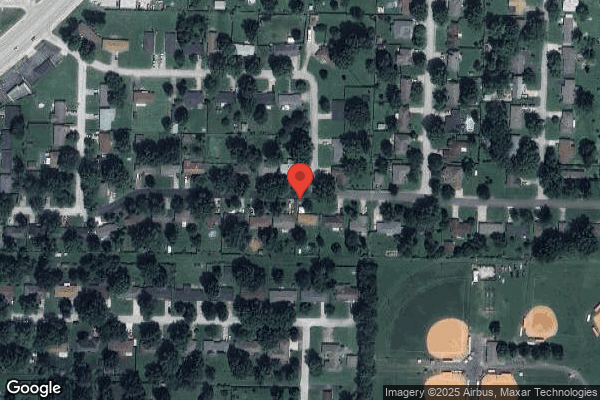
Jul 2019 6 deficiencies
CONCERN (D)

Potential for Harm - no one hurt, but risky conditions existed

Deficiency F0582 (Tag F0582)

Could have caused harm · This affected 1 resident

Based on interview and record review facility staff failed to provide the Center for Medicare and Medicaid Services (CMS) Skilled Nursing Facility Advance Beneficiary Notice (SNFABN) and the CMS Notic...

Read full inspector narrative →
Based on interview and record review facility staff failed to provide the Center for Medicare and Medicaid Services (CMS) Skilled Nursing Facility Advance Beneficiary Notice (SNFABN) and the CMS Notice of Medicare Non-Coverage (NOMNC) forms to one resident (Resident #38) out of three sampled residents. The facility initiated discharge from Medicare Part A Services when benefit days were not exhausted. The facility census was 91. Record review of the Centers for Medicare and Medicaid Services Survey and Certification memo (S&C -09-20), dated 1/9/09, showed the following: -If the skilled nursing facility (SNF) believes on admission or during a resident's stay that Medicare will not pay for skilled nursing or specialized rehabilitative services and the provider believes that an otherwise covered item or service may be denied as not reasonable or necessary, the facility must inform the resident or his/her legal representative in writing why these specific services may not be covered and the beneficiary's potential liability for payment for the non-covered services. The SNF's responsibility to provide notice to the resident can be fulfilled by use of either the SNFABN (form CMS-10055) or one of the five uniform denial letters; -The SNFABN provides an estimated cost of items or services in case the beneficiary had to pay for them his/herself or through other insurance they may have; -If the SNF provides the beneficiary with either the SNFABN or a denial letter at the initiation, reduction, or termination of Medicare Part A benefits, the provider has met its obligation to inform the beneficiary of his/her potential liability for payment and related standard claim appeal rights. -The Notice of Medicare Provider Non-Coverage (NOMNC, form CMS-10123) is issued when all covered Medicare services end for coverage reasons; -If the Skilled Nursing Facility (SNF) believes on admission or during a resident's stay that Medicare will not pay for skilled nursing or specialized rehabilitative services and the provider believes that an otherwise covered item or service may be denied as not reasonable or necessary, the facility must inform the resident or his/her legal representative in writing why these specific services may not be covered and the beneficiary's potential liability for payment for the non-covered services. The SNFs responsibility to provide notice to the resident can be fulfilled by the use of either the SNFABN (form CMS-10055) or one of the five uniform denial letters; -The SNFABN provides an estimated cost of items or services in case the beneficiary had to pay for them him/herself or through other insurance they may have; -If the SNF provides the beneficiary with either the SNFABN or a denial letter at the initiation, reduction, or termination of Medicare Part A benefits, the provider has met is obligation to inform the beneficiary of his/her potential liability for payment and related standard claim appeal rights. Issuing the NOMNC to a beneficiary only conveys notice to the beneficiary of his/her right to an expedited review of a service termination; -The SNF provider is required to notify the beneficiary of the decision to terminate covered services no later than two days before the proposed end of services. 1. Review of Resident #38's Skilled Nursing Facility (SNF) Beneficiary Protection Notification Review form, completed by the facility, showed the facility documented: -Medicare part A Skilled Services started 5/8/19; -Last covered day of Part A Service 5/30/19; -The facility/provider initiated the discharge from Medicare Part A Services when benefit days were not exhausted. -Facility staff did not provide the resident or his/her legal representative the SNFABN form CMS-10055, the NOMNC CMS-10123 or alternative denial letter. During an interview on 7/10/19 at 2:35 P.M., the social service designee (SSD) said if a resident was discharged from Medicare Part A services when benefit days were not exhausted she is required to provide the resident or residents representative with the SNFABN CMS-10055 and NOMNC CMS-10123 letters. The SSD said the previous social worker was responsible for giving Resident #38 or the residents responsible party the required Medicare Part A discharge forms and failed to do so.
CONCERN (D)

Potential for Harm - no one hurt, but risky conditions existed

Abuse Prevention Policies (Tag F0607)

Could have caused harm · This affected 1 resident

Based on interview and record review, the facility failed to check the employee disqualification list (EDL), prior to contact with residents, for one employee (Dietary Aide E) out of a sample of 12 re...

Read full inspector narrative →
Based on interview and record review, the facility failed to check the employee disqualification list (EDL), prior to contact with residents, for one employee (Dietary Aide E) out of a sample of 12 recently hired employees. The facility census was 91. 1. Record review of Dietary Aide E's personnel file showed the following: -Hire and start date of 1/3/19; -Staff did not document the required EDL inquiry for the employee. 2. During an interview on 7/12/19 at 11:25 A.M., the Administrator said the Social Services Designee was responsible for sending a request for EDL inquiry for new employees to the Business Office Manager. The Business Office Manager was responsible for completing the EDL inquiry once the request was received from the Social Services Designee.
CONCERN (D)

Potential for Harm - no one hurt, but risky conditions existed

Deficiency F0661 (Tag F0661)

Could have caused harm · This affected 1 resident

Based on interview and record review, the facility failed to complete a comprehensive discharge summary for one resident (Resident #13) out of sample of one resident discharged to the community. The f...

Read full inspector narrative →
Based on interview and record review, the facility failed to complete a comprehensive discharge summary for one resident (Resident #13) out of sample of one resident discharged to the community. The facility's census was 91. Record review of the facility's Discharge/Transfer of Resident Guidelines, dated March 2015, included the following information: -Purpose to provide safe departure from the facility and to provide sufficient information for aftercare of the resident. Equipment included a discharge summary and post discharge plan of care forms. -Complete a discharge summary and post discharge plan of care form: include a list of medications with instructions in simple terms; include instructions for post discharge care and explain to the resident and/or representative; have resident and/or representative or person responsible for care sign the discharge summary; give a copy of the form to the resident and/or representative or person responsible for care; and place signed original form in the resident's medical record. 1. Record review of Resident #13's closed medical record showed the resident discharged to the community on 6/14/19. Staff did not complete a comprehensive discharge summary. During interviews conducted on 7/12/19, at 10:50 A.M., the Director of Nursing (DON) said the nurses completed the recapitulation of stay form in the computer During an interview on 7/12/19, at 2:17 P.M., the Social Services Designee (SSD) said within 24 hours of a resident's admission to the facility, the SSD started completing the recapitulation of stay (comprehensive discharge summary) form in the resident's electronic medical record. Before the resident was discharged to the community, the SSD completed the resident's/family preferences and concerns portion of the form and the ombudsman's contact information, home health agency's contact information, if applicable, and any follow-up appointments with the resident's physician. Nursing completes the rest of the form. During an interview on 7/12/19, at 2:30 P.M., Licensed Practical Nurse (LPN) D said when a resident discharged to the community, he/she completed a nurses' note. He/she reviewed the recapitulation form, but did not expand the view, therefore, when he/she saw the SSD's portion completed, he/she thought the entire form was completed. He/she did not print the form and give to the resident or resident's family. He/she did not know he/she was supposed to. During an interview conducted on 7/12/19, at 2:51 P.M., LPN B said the SSD started the recapitulation of stay. The LPN completed the required areas to the best of his/her ability and time. He/she did not think he/she printed the form to give it to the resident and/or resident's family. During an interview on 7/12/19, at 3:00 P.M., the DON said staff should complete all of the required boxes, print it and have the resident or family sign the form. After signing, the nurse gives the form to the resident and obtains a copy of the form for the medical record.
CONCERN (D)

Potential for Harm - no one hurt, but risky conditions existed

Deficiency F0688 (Tag F0688)

Could have caused harm · This affected 1 resident

**NOTE- TERMS IN BRACKETS HAVE BEEN EDITED TO PROTECT CONFIDENTIALITY** Based on observation, interview, and record review, the facility failed to provide restorative nursing services to maintain or i...

Read full inspector narrative →
**NOTE- TERMS IN BRACKETS HAVE BEEN EDITED TO PROTECT CONFIDENTIALITY** Based on observation, interview, and record review, the facility failed to provide restorative nursing services to maintain or improve residents' functional status as directed by therapy for two residents (Resident #60 and Resident #62) out of 20 sampled residents. The facility census was 91. Record review of the facility's policy titled, Criteria for Restorative Nursing Aide (RNA) program, updated May 2006, showed the following information: The RNA program is a means of providing restorative treatment to those residents identified as having a change in function that has stabilized and is no longer in need of skilled intervention or residents who exhibit a potential for decline; -A resident may be referred to the RNA program following the stabilization of previous interventions and the need to established that these interventions can be maintained or slightly improved over a defined period of time after which a resident can be discharged to a certified nurse aide (CNA) level of care; -Residents are referred for RNA services when they are in need, but not necessarily limited to, the following: contracture (permanent shortening and hardening of muscles, tendons, or other tissue, often leading to deformity and rigidity of joints)management, safe transfer application, optimizing proper positioning technique, supervised ambulation, highest degree possible of activities of daily living (ADL - dressing, grooming, bathing, eating, and toileting), communication management, prosthetic management and eating independence; -Referral to RNA: -Referrals to the RNA program may be made by nursing, physical therapy (PT), occupational therapy (OT), speech therapy (ST), and physicians, as well as through the minimum data set (MDS) process, and CNA and family/resident input; -Upon assessment by nursing, PT, OT or ST, the referral to the RNA is made; -The nurse or therapist initiating the referral transfers the assessment information to the restorative nursing treatment plan; -Distribute the form to the licensed supervising nurse and RNA with a copy to be kept by referring therapist. An appropriate inservice or instruction will be provided to the RNA concerning the resident's specific restorative needs; -RNA initiates treatment and documentation per facility protocol (example, 24-hour nursing report and treatment log). 1. Record review of Resident #60's face sheet (admission record) showed the following: -The resident was re-admitted to the facility on [DATE]; -Diagnoses included dementia without behavioral disturbance, dementia with lewy bodies (protein deposits in nerve cells in the brain regions involved in thinking, memory and movement ), and pain in left hip. Record review of the resident's quarterly Minimum Data Set (MDS - a federally mandated assessment tool completed by facility staff), dated 3/26/19 showed the following: -Severe cognitive impairment; -Supervision for bed mobility, transfer, and walk in room; -Limited assistance for dressing and toileting; -No impairment for upper and lower extremities; -Two or more falls with no injury and one fall with injury. Record review of the resident's care plan, dated 4/23/19, showed the following: -ADL/functional/rehabilitation potential care planned; -Resident will participate with therapy and regain strength, function, and ability to complete ADLs independently by next review; -Resident at risk for falling related to generalized weakness; -Updated 4/29/19, with resident observed crawling on the floor, therapy to screen. Record review of the resident's physical therapy progress and Discharge summary, dated [DATE], showed the following: -Treatment for diagnosis of difficulty in walking; -Received services from 4/22/19 through 5/15/19; -Discharge plans and instructions included resident discharged to same skilled nursing facility with recommendations including restorative nursing program. Record review of the resident's care plan, dated 4/23/19, showed staff did not care plan a specific restorative plan of treatment. Record review of the resident's current physician order sheet (POS) showed no order for restorative services. Record review of the resident's medical record showed no treatment plan for restorative services. During an interview on 7/11/19, at 11:36 A.M., CNA G said he/she was the previous restorative aide and the resident was not on restorative within the last four months. During an interview on 7/11/19, at 1:57 P.M., CNA H said the resident has declined. The resident stumbles and was limited assistance and now is extensive assistance with ADLs. During an interview on 7/12/19, at 10:20 A.M. and 1:40 P.M., the Assistant Director of Nursing (ADON) said the following: -The resident was not placed on restorative per order on 5/15/19; -Therapy does not keep orders and does not recall if gave restorative aide recommendation for the resident. The resident should have received restorative and there was no order found. 2. Record review of Resident #62's face sheet showed the following: -The resident was re-admitted to the facility on [DATE]; -Diagnoses included repeated falls, muscle weakness, and difficulty in walking. Record review of the resident's occupational therapy progress and Discharge summary, dated [DATE], showed the following: -Treatment for diagnosis of muscle weakness; -Received services from 10/24/18 until 12/7/18; -Discharge plans and instructions included resident will remain in long term care with restorative nursing plan in place. Record review of the resident's physical therapy progress and Discharge summary, dated [DATE], showed the following: -Treatment for diagnosis of difficulty in walking; -Received services from 10/24/18 until 12/7/18; -Discharge plans and instructions included resident discharge to same skilled nursing unit with recommendations including restorative nursing plan. Record review of the resident's nurse's note dated 12/7/18, at 1:01 P.M., showed a nurse documented physician order received to discharge the resident from physical therapy and occupational therapy. (Staff did not address restorative nursing plan or orders.) Record review of the resident's December 2019 POS showed the following: -OT recommendation five times per week for six weeks to increase safety and independence with self care and transfers dated 10/24/18 through 12/5/18; -Skilled PT five time per week for six weeks with therapeutic exercises, neuro re-education, therapeutic activities and gait training dated 10/24/18 through 12/5/18. (The POS did not contain orders regarding restorative nursing.) Record review of the resident's current care plan showed the following: -Problem start date of 1/15/18 for the resident has history of falling related to disease process; -Approach, dated 2/19/19, for non-injury fall observed laying over side of bed. Initiate restorative program for strengthening and endurance; -Problem start date of 4/2/18 for ADL functional/rehabilitation potential. Goal for the resident to participate with therapy and regain strength, function, and ability to complete ADLs independently by next review. -Staff did not care plan a specific restorative nursing plan for the resident. Record review of the POS for January 2019 through April 2019 showed no orders for restorative nursing services. Record review of the resident's quarterly MDS assessment, dated 5/2/19, showed the following: -Severe cognitive impairment; -Limited assistance for bed mobility, transfer and toileting; -Mobility devices include walker and wheelchair; -Two or more falls with no injury since admission or prior assessment. Record review of the resident's nurses' notes showed the following: -On 5/9/19, at 12:37 P.M., a nurse documented the resident observed to get up by self from chair. The resident fell without striking his/her head. Staff assessed the resident for injury. Therapy notified of fall; -On 5/25/19, at 2:37 P.M., a nurse documented the resident with increased assistance in ADLs and using wheelchair for transportation due to weakness with poor safety awareness. Record review of the resident's pharmacy consultation, dated 5/26/19, showed the resident has had increased falls this month (seven so far). Many of these falls have been in late afternoon, but some at night or in the morning. The resident had one fall in April, two in March, one in February, and four in January. Recommendation included to review listed medications. Record review of the resident's nurse's note showed the following: -On 5/31/19, at 1:37 P.M., a nurse documented the resident up in his/her wheelchair and propels about. ADLS with increased assistance. Record review of the POS for May 2019 showed no orders for restorative nursing services. Record review of the resident's nurses' notes showed the following: -On 6/2/19, at 5:57 A.M., a nurse documented the resident observed by a staff member walking in the dining room and then fell backwards and hit his/her head on the corner of the wall. The nurse talked with the resident about using his/her wheelchair instead of ambulating with the walker today. The resident agreed and was compliant with using the wheelchair; -On 6/3/19, at 11:18 P.M., a nurse documented staff continues to encourage the resident to use the wheelchair instead of the walker; -On 6/7/19, at 9:47 P.M., a nurse documented the resident is dependent upon staff for majority of ADL cares. Record review of the resident's POS showed a physician order, dated 6/7/19, for PT/OT evaluation/treatment two to three times per week for two weeks then re-evaluate for diagnosis of repeated falls. Record review of the POS for June 2019 and July 2019 showed no orders for restorative nursing services. Observation on 7/8/19, at 12:46 P.M., showed a CNA assisting the resident to the bathroom for toileting. The CNA requested assistance with the resident. A registered nurse (RN) assisted the CNA with toileting the resident. The RN said the resident used to stand. Record review of the resident's medical record showed no restorative treatment plan after recommendation from therapy on 12/7/18. During an interview on 7/11/19, at 11:36 A.M., CNA G said the resident was on therapy and is not walking as much. During an interview on 7/11/19, at 1:57 P.M., CNA H said the resident has declined and had been walking and now using wheelchair. During an interview on 7/12/19, at 10:20 A.M. and 1:40 P.M., the Assistant Director of Nursing (ADON) said there is no order for restorative for resident. 3. During interviews on 7/9/19, at 10:12 A.M., and 7/11/19, at 12:49 P.M., CNA F said the following: -He/she had been back at the facility for one month as restorative aide. He/she said it is difficult to get restorative completed due to working the floor as an aide and doing weights; -He/she keeps a log of residents who receive restorative and has not been back long enough to set up the log due to working the floor two to three days per week. 4. During an interview on 7/11/19, at 11:36 A.M., CNA G said the following: -The process of a resident being placed on the restorative program includes the resident receiving therapy or a recommendation by the physician or family; -Staff place the resident on the restorative schedule three times per week for three months and if needed the order is extended and staff would get another physician order; -Staff document restorative in the computer or on paper which is in the therapy room. 5. During an interview on 7/12/19, at 9:04 A.M., the occupational therapist said the following: -When a resident discharged from therapy and was appropriate for restorative, staff write a telephone order; -Therapy completed a restorative form and gave the form to the restorative aide after the physician order was written; -The restorative order was effective for three months. 6. During an interview on 7/12/19, at 9:23 A.M., Licensed Practical Nurse (LPN) B said the following: -Signs that a resident needs restorative included a decline in walking or being stiff; -Therapy evaluated a resident; -The physician would write an order to place a resident on the restorative program. 7. During an interview on 7/12/19, at 10:20 A.M. and 1:40 P.M., the Assistant Director of Nursing (ADON) said the following: -The physician or therapy ordered restorative; -The referral form was the order for restorative; -Therapy gave the referral form to the restorative aide. The restorative aide then placed the resident on the schedule and follow the recommendations. 8. During an interview on 7/12/19, at 11:08 A.M. and 12:16 P.M., the Director of Nursing (DON) said the following: -He/she oversaw the restorative program; -Staff conducted morning meetings and therapy meetings. Every week staff reviewed the residents therapy referred to the restorative program; -Therapy gave the restorative referral to the MDS coordinator. 10. During an interview on 7/12/19, at 12:21 P.M., the MDS coordinator said the following: -A resident who received therapy or screened for therapy could be referred for restorative; -Therapy completed a restorative plan and gave the MDS coordinator and the restorative aide a copy; -He/she obtained the physician's order for restorative services.
CONCERN (D)

Potential for Harm - no one hurt, but risky conditions existed

Deficiency F0698 (Tag F0698)

Could have caused harm · This affected 1 resident

**NOTE- TERMS IN BRACKETS HAVE BEEN EDITED TO PROTECT CONFIDENTIALITY** Based on observation, interview, and record review, the facility failed to provide ongoing communication with the dialysis (the ...

Read full inspector narrative →
**NOTE- TERMS IN BRACKETS HAVE BEEN EDITED TO PROTECT CONFIDENTIALITY** Based on observation, interview, and record review, the facility failed to provide ongoing communication with the dialysis (the cleaning of the blood with a machine due to the kidneys not working) center for one resident (Resident #379) who received dialysis out of a sample of 20 residents selected for review in a facility with a census of 91. Record review of the facility's Nursing Guidelines Manual, dated March 2015, titled Dialysis, Care of a Resident Receiving, showed the following information: -A dialysis communication record will be sent with the resident on each dialysis visit. All concerns in the last 24 hours will be addressed, including the last medications given and the facility contact person. The dialysis unit will complete the lower portion of the report to include the resident's weight prior to and after dialysis, any labs completed, medication given, follow up information, and any new physician orders. The lower portion is signed by the dialysis nurse and returned to the facility. The record will be maintained in the resident's medical record. 1. Record review of Resident #379's face sheet (a general information sheet) showed the following: -The resident was admitted to the facility on [DATE]; -Diagnoses included diabetes with other diabetic kidney complication, dementia with behavioral disturbance, and end stage renal disease. Record review of the resident's baseline care plan, dated 7/4/19, showed the following information: -Resident alert/cognitively intact and confused; -Diagnosis of Alzheimer's disease; -Participate in treatment for dialysis; -Regular diet. Record review of the resident's July 2019 physician order sheet (POS) showed the following information: -Diagnosis of end stage renal disease; -Dialysis three times per week on Monday, Wednesday and Friday; -Remove pressure dressing from fistula (a connection of blood vessels to create a larger, stronger vessel to support dialysis needles) site in morning the day after dialysis on Tuesday, Thursday and Saturday. Record review of the resident's nurses' notes showed the following information; -On 7/4/19, at 1:02 P.M., a nurse documented the resident declined to have dressing to right upper extremities (RUE) fistula removed. The resident stated 'they will take if off tomorrow at dialysis; -On 7/4/19, at 2:00 A.M., a nurse documented the fistula site to RUE noted. Resident has no complaints of pain or discomfort at this time; -On 7/5/19, at 2:25 P.M., a nurse documented the resident had hemodialysis (HD) this morning and fistula site is covered with dry dressing which is intact. Record review of the resident's medical record showed no dialysis communication form between the facility and the dialysis center. Record review of the resident's nurses' notes showed the following information; -On 7/6/19, at 1:25 P.M., a nurse documented the resident declines to have fistula dressing removed; -On 7/8/19, at 12:45 A.M., a nurse documented the resident continues on new admission monitoring. Fistula to RUE. Resident on dialysis Monday, Wednesday and Friday and tolerates well. Resident continues on antibiotic for pneumonia. Record review of the resident's medical record showed a dialysis communication form (between the facility and the dialysis center) for dialysis treatment for 7/8/19. The top of the form for report from nursing home to dialysis for medications given and any problems or changes in resident's condition was not completed by facility staff. Record review of the resident's nurses' notes showed the following information: -On 7/10/19, at 12:01 A.M., a nurse documented fistula to RUE for Monday, Wednesday and Friday dialysis therapy; -On 7/10/19, at 6:30 A.M., a nurse documented antibiotic for upper respiratory infection completed per order without adverse reactions. Resident on leave of absence for dialysis. Record review of the resident's medical record showed no dialysis communication form between the facility and the dialysis center. Record review of the resident's nurses' notes showed the following information: -On 7/11/19, at 12:31 A.M., a nurse documented the fistula remains without complications. During an interviews on 07/11/19, at 1:54 P.M., and on 7/12/19, at 10:28 A.M., the Assistant Director of Nursing (ADON) said the following: -Only one communication log had been given to her for the resident for dialysis visits; -The facility had no communication with dialysis since admit. During an interviews on 07/12/19, at 9:51 A.M. and 10:38 A.M., Licensed Practical Nurse (LPN) A said the following: -The resident is new and he/she has not had anyone on dialysis; -The resident's paperwork for communication from the facility has not been sent when the resident goes to dialysis; -He/she was unaware to fill out a communication form for the resident when he/she is sent to dialysis; -He/she has not sent the resident's medication list when the resident goes to dialysis. During an interview on 7/12/19, at 10:28 A.M., the Director of Nursing (DON) said the following: -The nurses communicate with the dialysis center via phone and document accordingly if there are concerns; -The transportation staff receive the communication form from the dialysis center; -Nursing staff should have communication between the dialysis center and the facility regarding residents on dialysis; -If labs are needed or ordered, communicate with the dialysis center. During an interview on 07/12/19, at 10:36 A.M., Staff B said said no paperwork was sent with the resident for dialysis. During an interview on 7/12/19, at 10:41 A.M., the ADON spoke with an additional transportation aide over the phone who said on the resident's first day to dialysis, the social service director called in a verbal order to the dialysis center. During an interview on 7/12/19, at 10:43 A.M., the social service director said he/she is not involved with the dialysis appointments and did not verbally give or fax orders to the dialysis center for the resident.
CONCERN (E)

Potential for Harm - no one hurt, but risky conditions existed

Deficiency F0638 (Tag F0638)

Could have caused harm · This affected multiple residents

Based on record review and interview, the facility failed to ensure staff completed a quarterly and annual Minimum Data Set (MDS) assessments, a federally mandated assessment instrument completed by f...

Read full inspector narrative →
Based on record review and interview, the facility failed to ensure staff completed a quarterly and annual Minimum Data Set (MDS) assessments, a federally mandated assessment instrument completed by facility staff, within the required timeframe for four residents (Resident #2, #3, #55 and #56) out of a sample of 20 residents. The facility census was 91. 1. Record review, conducted on 7/12/19, of Resident #2's MDS assessments showed the following information: -Staff completed a Significant Change MDS assessment on 5/8/18; -Staff completed quarterly MDS assessments on 8/8/18, 11/8/18 and 2/8/19; -Staff failed to complete an Annual MDS assessment due May 2019. During an interview conducted on 7/12/19, at approximately 12:31 P.M. and 1:25 P.M., the MDS Coordinator said she should have completed Resident #2's annual MDS assessment by 5/9/19. 2. Record review, conducted on 7/12/19, of Resident #3's MDS assessments showed the following information: -Staff completed an admission MDS assessment on 1/16/19; -Staff failed to complete a Quarterly MDS assessment due April 2019. During an interview conducted on 7/12/19, at approximately 12:31 P.M. and 1:25 P.M., the MDS Coordinator said she should have completed Resident #3's quarterly MDS assessment by 4/18/19. 3. Record review, conducted on 7/12/19, of Resident 55's MDS assessments showed the following information: -Staff completed an Annual MDS assessment on 10/22/18; -Staff completed a Quarterly MDS assessment on 1/22/19; -Staff failed to complete a Quarterly MDS assessment due April 2019. During an interview conducted on 7/12/19, at approximately 12:31 P.M. and 1:25 P.M., the MDS Coordinator said she should have completed Resident #55's quarterly MDS assessment by 4/24/19. 4. Record review, conducted on 7/12/19, of Resident 56's MDS assessments showed the following information: -Staff completed an admission MDS assessment on 7/23/18 -Staff completed Quarterly MDS assessments on 10/23/18 and 1/23/19; -Staff failed to complete a Quarterly MDS assessment due April 2019. 5. During an interview conducted on 7/12/19, at approximately 12:31 P.M. and 1:25 P.M., the MDS Coordinator said she was late on some MDS assessments. The administrator was aware and was trying to get her some help to catch up. Facility staff could run a report which showed when MDS assessments were due and late assessments. Approximately 40 assessments were not completed within the required time frame. During an interview on 7/12/19 1:42 P.M., the administrator said on 6/10/19 the MDS coordinator told him she was behind on completing MDS assessments. At that time, he implemented a plan to complete the late assessments. One MDS coordinator from another facility and two corporate nurses were trying to catch the assessments up.
Understanding Severity Codes (click to expand)
Life-Threatening (Immediate Jeopardy)
J - Isolated K - Pattern L - Widespread
Actual Harm
G - Isolated H - Pattern I - Widespread
Potential for Harm
D - Isolated E - Pattern F - Widespread
No Harm (Minor)
A - Isolated B - Pattern C - Widespread

Questions to Ask on Your Visit

  • "Can I speak with families of current residents?"
  • "What's your RN coverage like on weekends and overnight?"

Our Honest Assessment

Strengths
  • • No major safety red flags. No abuse findings, life-threatening violations, or SFF status.
  • • No fines on record. Clean compliance history, better than most Missouri facilities.
  • • 42% turnover. Below Missouri's 48% average. Good staff retention means consistent care.
Concerns
  • • 23 deficiencies on record. Higher than average. Multiple issues found across inspections.
Bottom line: Mixed indicators with Trust Score of 70/100. Visit in person and ask pointed questions.

About This Facility

What is Republic Nursing & Rehab's CMS Rating?

CMS assigns REPUBLIC NURSING & REHAB an overall rating of 4 out of 5 stars, which is considered above average nationally. Within Missouri, this rating places the facility higher than 99% of the state's 100 nursing homes. This rating reflects solid performance across the metrics CMS uses to evaluate nursing home quality.

How is Republic Nursing & Rehab Staffed?

CMS rates REPUBLIC NURSING & REHAB's staffing level at 3 out of 5 stars, which is average compared to other nursing homes. Staff turnover is 42%, compared to the Missouri average of 46%. This relatively stable workforce can support continuity of care.

What Have Inspectors Found at Republic Nursing & Rehab?

State health inspectors documented 23 deficiencies at REPUBLIC NURSING & REHAB during 2019 to 2024. These included: 23 with potential for harm.

Who Owns and Operates Republic Nursing & Rehab?

REPUBLIC NURSING & REHAB is owned by a for-profit company. For-profit facilities operate as businesses with obligations to shareholders or private owners. The facility is operated by JAMES & JUDY LINCOLN, a chain that manages multiple nursing homes. With 127 certified beds and approximately 109 residents (about 86% occupancy), it is a mid-sized facility located in REPUBLIC, Missouri.

How Does Republic Nursing & Rehab Compare to Other Missouri Nursing Homes?

Compared to the 100 nursing homes in Missouri, REPUBLIC NURSING & REHAB's overall rating (4 stars) is above the state average of 2.5, staff turnover (42%) is near the state average of 46%, and health inspection rating (4 stars) is above the national benchmark.

What Should Families Ask When Visiting Republic Nursing & Rehab?

Based on this facility's data, families visiting should ask: "Can I visit during a mealtime to observe dining assistance and food quality?" "How do you handle medical emergencies, and what is your hospital transfer rate?" "Can I speak with family members of current residents about their experience?"

Is Republic Nursing & Rehab Safe?

Based on CMS inspection data, REPUBLIC NURSING & REHAB has a clean safety record: no substantiated abuse findings (meaning no confirmed cases of resident harm), no Immediate Jeopardy citations (the most serious violation level indicating risk of serious injury or death), and is not on the Special Focus Facility watch list (a federal program monitoring the lowest-performing 1% of nursing homes). The facility has a 4-star overall rating and ranks #1 of 100 nursing homes in Missouri. While no facility is perfect, families should still ask about staff-to-resident ratios and recent inspection results during their visit.

Do Nurses at Republic Nursing & Rehab Stick Around?

REPUBLIC NURSING & REHAB has a staff turnover rate of 42%, which is about average for Missouri nursing homes (state average: 46%). Moderate turnover is common in nursing homes, but families should still ask about staff tenure and how the facility maintains care continuity when employees leave.

Was Republic Nursing & Rehab Ever Fined?

REPUBLIC NURSING & REHAB has no federal fines on record. CMS issues fines when nursing homes fail to meet care standards or don't correct problems found during inspections. The absence of fines suggests the facility has either maintained compliance or corrected any issues before penalties were assessed. This is a positive indicator, though families should still review recent inspection reports for the full picture.

Is Republic Nursing & Rehab on Any Federal Watch List?

REPUBLIC NURSING & REHAB is not on any federal watch list. The most significant is the Special Focus Facility (SFF) program, which identifies the bottom 1% of nursing homes nationally based on persistent, serious quality problems. Not being on this list means the facility has avoided the pattern of deficiencies that triggers enhanced federal oversight. This is a positive indicator, though families should still review the facility's inspection history directly.