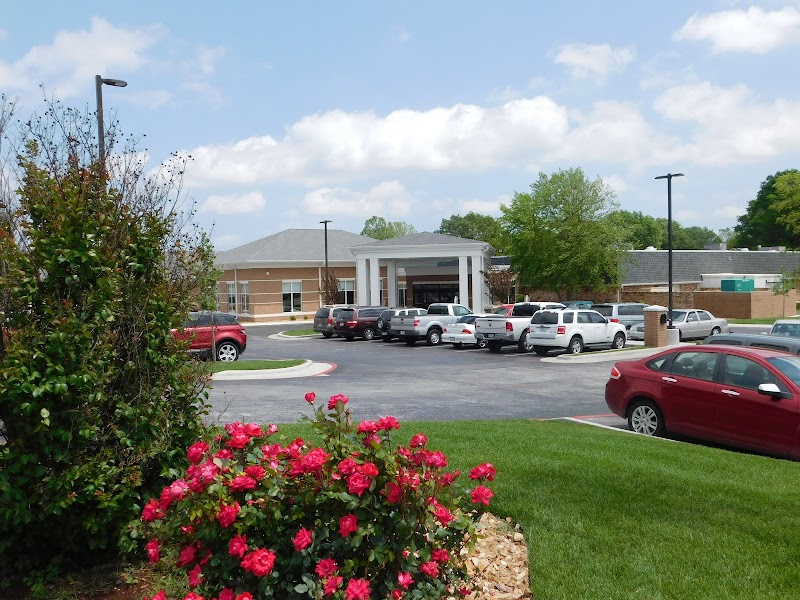
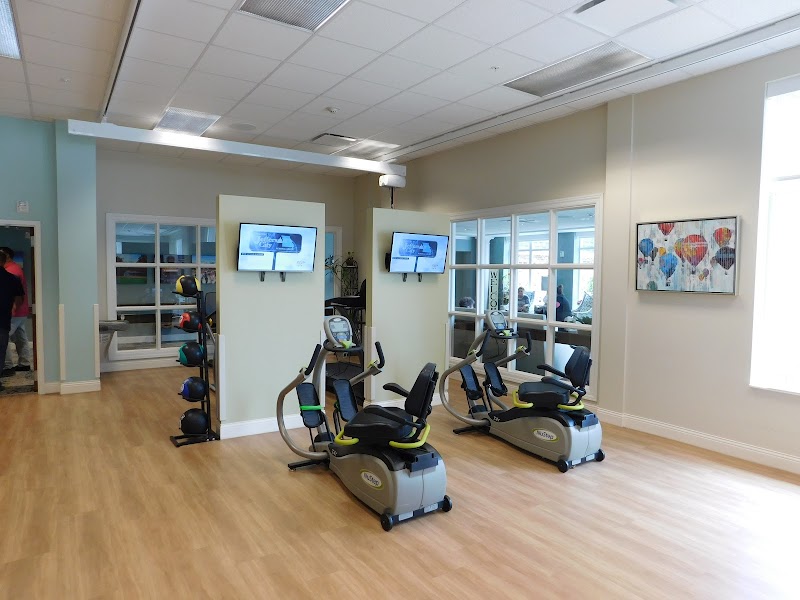
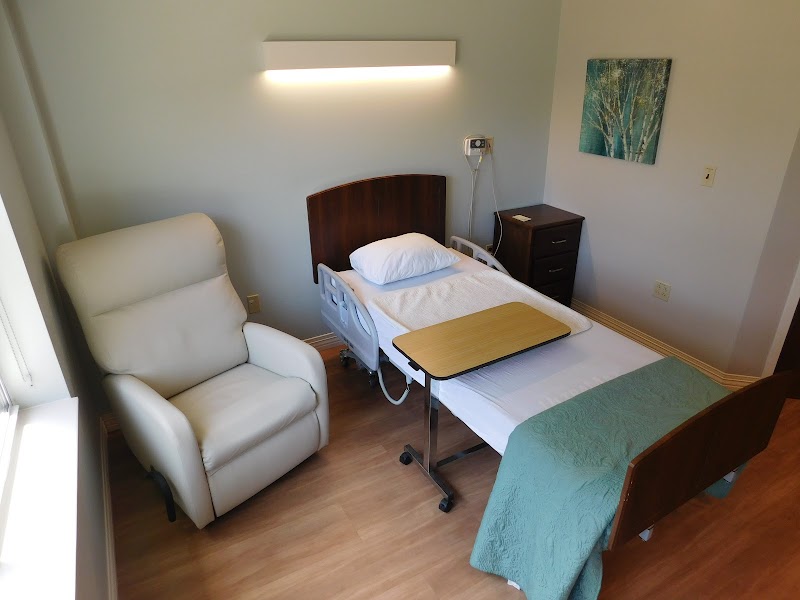
SPRINGFIELD REHABILITATION & HEALTH CARE CENTER

2800 SOUTH FORT AVENUE, SPRINGFIELD, MO 65807 (417) 882-0035
For profit - Corporation 146 Beds NATIONAL HEALTHCARE CORPORATION Data: November 2025
Trust Grade
70/100
#116 of 479 in MO
Last Inspection: May 2024

Within standard 12-15 month inspection cycle. Federal law requires annual inspections.

Overview

Springfield Rehabilitation & Health Care Center has a Trust Grade of B, indicating it is a good choice for families seeking care, though it may not be the best option available. It ranks #116 out of 479 facilities in Missouri, placing it in the top half, and #8 out of 21 in Greene County, meaning only seven local facilities are rated higher. The facility is improving, having reduced issues from 19 in 2024 to just 1 in 2025. Staffing is rated average with a turnover of 51%, below the state average, and there is more RN coverage than 92% of Missouri facilities, which is a positive sign for resident care. While the center has not incurred any fines, there are concerning incidents, such as staff failing to properly air-dry clean dishware and not providing showers as scheduled for several residents, which raises questions about adherence to care plans and safety practices.

Trust Score
B
70/100
In Missouri
#116/479
Top 24%
Safety Record
Low Risk
No red flags
Inspections
Getting Better
19 → 1 violations
Staff Stability
⚠ Watch
51% turnover. Above average. Higher turnover means staff may not know residents' routines.
Penalties
✓ Good
No fines on record. Clean compliance history, better than most Missouri facilities.
Skilled Nurses
○ Average
Each resident gets 36 minutes of Registered Nurse (RN) attention daily — about average for Missouri. RNs are the most trained staff who monitor for health changes.
Violations
⚠ Watch
34 deficiencies on record. Higher than average. Multiple issues found across inspections.
★★★★☆
4.0
Overall Rating
★★★☆☆
3.0
Staff Levels
★★★★★
5.0
Care Quality
★★★☆☆
3.0
Inspection Score
Stable
2024: 19 issues
2025: 1 issues

The Good

  • 5-Star Quality Measures · Strong clinical quality outcomes
  • Full Sprinkler Coverage · Fire safety systems throughout facility
  • No fines on record

Facility shows strength in quality measures, fire safety.

The Bad

Staff Turnover: 51%

Near Missouri avg (46%)

Higher turnover may affect care consistency

Chain: NATIONAL HEALTHCARE CORPORATION

Part of a multi-facility chain

Ask about local staffing decisions and management

The Ugly 34 deficiencies on record

Jun 2025 1 deficiency
CONCERN (D) 📢 Someone Reported This

A family member, employee, or ombudsman was alarmed enough to file a formal complaint

Potential for Harm - no one hurt, but risky conditions existed

Deficiency F0697 (Tag F0697)

Could have caused harm · This affected 1 resident

**NOTE- TERMS IN BRACKETS HAVE BEEN EDITED TO PROTECT CONFIDENTIALITY** Based on observation, interview, and record review, the facility failed to implement a pain management program that managed resi...

Read full inspector narrative →
**NOTE- TERMS IN BRACKETS HAVE BEEN EDITED TO PROTECT CONFIDENTIALITY** Based on observation, interview, and record review, the facility failed to implement a pain management program that managed resident pain effectively when staff failed to address one resident's (Resident #1) on-going pain and when staff failed to address one resident's (Resident #2) behavioral indications of pain. The facility census was 121.Review of the facility policy Pain-Clinical Protocol, dated 2001, showed the following:-The physician and staff will identify individuals who have pain or who are at risk for having pain. This includes reviewing known diagnoses and conditions that commonly cause pain such as degenerative joint disease, rheumatoid arthritis, osteoporosis, post-stroke syndromes;-The nursing staff will assess each individual for pain upon admission to the facility, at the quarterly review, whenever there is a significant change in condition, and when there is onset of new pain or worsening of existing pain;-The staff and physician will identify the characteristics of pain such as location, intensity, frequency, pattern, and severity;-Staff will use a consistent approach and a standardized pain assessment instrument appropriate to the resident's cognitive level;-The nursing staff will identify any situations or interventions where an increase in the resident's pain may be anticipated such as wound care, ambulation, or repositioning;-The staff and physician will evaluate how pain is affecting mood, activities of daily living, sleep, and the resident's quality of life;-Staff will reassess the individual's pain at regular intervals, at least each shift for acute pain or significant changes in levels of chronic pain. Review should include frequency, duration and intensity of pain, ability to perform activities of daily living, sleep patter, mood, behavior, and participation in activities;-The staff will evaluate and report the resident's use of standing and PRN analgesics: depending on the characteristics of pain, the physician may start with PRN doses or supplement standing doses with PRN doses for breakthrough pain. If there are more than occasional analgesic requests, the physician will consider changing to regular administration of at least one analgesic with another medication for PRN use, increasing the standing dose of an existing analgesic, switching to another analgesic, and/or adding nonpharmacological measures.1. Review of Resident #1's face sheet (admission information at a glance) showed the following:-admission date of 11/18/24;-Diagnoses included rheumatoid arthritis (a chronic inflammatory disorder which causes joint pain, swelling, and stiffness and inflammation in other parts of the body) with rheumatoid factor of multiple sites without organ or systems involvement, neuralgia (pain caused by damaged or irritated nerves and causes sensitivity of the skin, numbness, tingling, or other unpleasant sensations), and neuritis (inflammation of one or more peripheral nerves that can cause pain, numbness, tingling, or weakness in the area). Review of the resident's quarterly Minimum Data Set (MDS - a federally mandated assessment instrument completed by facility staff), dated 5/28/25, showed the following:-Cognitive skills were intact and made decisions;-On scheduled pain medication and received as needed (PRN) pain medication;-Had frequent pain that affected sleep and interfered with day to day activities;-A numeric pain level of 6 (indicating moderate pain);(Staff did not assess for indicators of pain such as non-verbal sounds such as crying, gasping, moaning, or groaning, whining, vocal complaints such as that hurts, ouch, stop, facial expressions such as grimaces, winces, wrinkled forehead, furrowed brow, clenched teeth or jaw, protective body movements or postures such as bracing, guarding, rubbing or massaging a body part/area, clutching or holding a body part during movement. Staff did not assess for indicator of pain or possible pain in the last 5 days such as indicators of pain observed 1 to 2 days, 3 to 4 days, or observed daily.)Review of the resident's pain assessment, dated 05/28/25, showed the following:-Received scheduled pain medications and had received medications in the past five days;-The resident received PRN pain medications or was offered and/or declined pain medications in the past 5 days;-Had not received any non-medication intervention for pain in the last 5 days;-Had frequent pain in the past 5 days;-Had not limited participation in rehabilitation therapy sessions in past 5 days because it did not apply;-Had pain which frequently limited day-to-day activities;-Pain intensity 6 (0-10 pain scale) over the past 5 days;(Staff did not assess the intensity (mild, moderate, severe, very severe, horrible, unable to answer, not assessed) of the resident's worst pain over the last 5 days. The staff assessment for pain was not conducted.)Review of the resident's care plan, revised 05/29/25, showed the following:-Resident had chronic pain related to rheumatoid arthritis (RA);-Pain will be managed at resident's tolerable level;-Administer medications as ordered and assess effectiveness, assess for pain, and intervene as indicated including non-pharmacological interventions to manage pain and assisting with positioning for comfort.Review of the resident's current Physician Orders showed the following:-An order, dated 01/14/25, for gabapentin (for seizures and a pain reliever for certain conditions in the nervous system);-An order, dated 01/16/25, for cyclobenzaprine (muscle relaxant to treat muscle spasms associated with painful musculoskeletal conditions and typically used short-term). Review of the resident's pain screen every shift (day and evening shift) showed the following:-On 06/01/25, day shift pain was assessed as a 4 and night shift pain was assessed at a 6;-On 06/02/25, day shift pain was assessed at a 4 and night shift pain was assessed at a 5;-On 06/03/35, day shift pain was assessed at a 4 and night shift pain was assessed at a 5;-On 06/04/25, day shift pain was assessed at a 4 and night shift pain was assessed at a 4;-On 06/05/25, day shift pain was assessed at a 3 and night shift pain was assessed at a 2.Review of the resident's current Physician Orders showed the following:-An order, dated 06/06/25, for hydrocodone-acetaminophen (narcotic for moderate pain) 5-325 mg one tablet every eight hours and scheduled at 6:00 A.M., 2:00 P.M., and 10:00 P.M.;-An order, dated 06/06/25, for hydrocodone-acetaminophen 5-325 mg one tablet every four hours prn for pain. Review of the resident's pain screen every shift (day and evening shift) showed the following:-On 06/06/25, day shift pain was assessed at a 5 and night shift pain was assessed at a 5;-On 06/07/25, day shift pain was assessed at a 4 and night shift pain was assessed at a 5;-On 06/08/25, day shift pain was assessed at a 4 and night shift pain was assessed at a 5;-On 06/09/25, day shift pain was assessed at a 4 and night shift pain was assessed at a 10;-On 06/10/25, day shift pain was assessed at a 2 and night shift pain was assessed at a 5. Review of the resident's June 2026 PRN Medication Administration Record (MAR), showed the following:-On 06/10/25, at 2:13 P.M., staff administered hydrocodone-acetaminophen 5-325 mg tablet for pain assessed at a 6 for generalized pain which was noted a somewhat effective for pain relief;-On 06/10/25, at 7:12 P.M., staff administered hydrocodone-acetaminophen 5-325 mg one tablet for pain assessed at a 5 for pain all over which was noted as effective. Review of the resident's progress notes dated 06/10/25, at 8:15 P.M., showed staff documented the resident continued to complain of pain and was medicated with scheduled pain medications and PRN pain medications. Resident's appetite was very poor. Staff encouraged resident to eat and eat unassisted when he/she will accept food. Review of the facility's wound report, dated 06/11/25, showed the resident had a pressure ulcer Stage III (a full thickness tissue loss) on the coccyx (tail bone) that measured 0.4 centimeters (cm) length by 0.4 cm width by 0.3 cm depth. Review of the resident's pain screen every shift (day and evening shift) showed on 06/11/25, day shift pain was assessed at a 4 and night shift pain was assessed at a 6. Review of the resident's PRN MAR showed on 06/11/25, at 4:10 P.M., staff administered hydrocodone-acetaminophen 5-325 mg tablet for pain assessed at a 5 for generalized pain which was noted as somewhat effective for pain relief. Review of the resident's pain screen every shift (day and evening shift) showed the following:-On 06/12/25, day shift pain was assessed at a 4 and night shift pain was assessed at a 4;-On 06/13/25, day shift pain was assessed at a 3 and night shift pain was assessed at a 10 Observation and interview on 06/13/25, at 11:45 A.M., showed the resident was in bed and wore a hospital gown. He/she had a pillow behind his/her right side. The resident said he/she had a sore on his/her bottom. Staff did come in and check him/her every two hours and change his/her position. Observation and interview on 06/13/25, at 11:50 A.M., showed the following:-Certified Nurse Aide (CNA) A said the resident had rheumatoid arthritis and his/her whole body hurt;-The resident said he/she was in pain and that his/her right hand was stiff. Both the resident's hands were drawn up to his/her chest in bed while lying on his/her side and fingers were curled and clenched. CNA A checked the resident who was incontinent with urine. When CNA A touched the resident, the resident winced and said it hurts as CNA A moved the resident slowly to check the incontinence brief;-When surveyor asked level of pain from 0-10 with 10 being highest level of pain, the resident said 10;-At 11:55 A.M., Certified Medication Technician (CMT) B came into the room and offered a hydrocodone 5/325 mg one tablet for pain. He/she said this was the first pain medication administered to the resident today because he/she did not ask for a pain medication earlier when he/she administered the resident's morning medications;-At 11:56 A.M., the residents said his/her knees hurt and as CNA A helped move his/her legs to remove the wet incontinence brief and provide perineal care to the resident, the resident kept grimacing with open mouth and lightly huffing. The resident said, He/she hurts all over especially his/her knees but also arms and legs and I wish I could get something stronger for pain as CNA A provided cleansing to the perineal area. CNA A asked resident about moving the pillows under his/her knees so he/she could turn the resident. The resident said when staff turned him/her, he/she felt dizzy. With each move, the resident grimaced and lightly huffed as CNA performed the perineal care slowly;-During the perineal care, the resident kept groaning, eyes were shut, brow furrowed, and made verbal noises huh .huh with each time CNA A moved him/her. CNA A moved slowly and spoke quietly to the resident during the care.Review of the resident' June 2025 PRN MAR showed on 06/13/25, at 11:57 A.M., staff administered hydrocodone-acetaminophen 5-325 mg tablet for pain assessed at a 10 for the resident's knees and documented as effective for pain relief. During an interview on 06/13/25, at 12:19 P.M., the resident said he/she did not think about asking for pain medication all the time. Sometimes he/she just deals with it. He/she said the pain level was now down to level 7 (moderate to severe pain level). The physician comes but only will give hydrocodone to him/her, and it doesn't help at all. They do give him/her a medication for muscle spasms, but he/she gets cramps in his/her feet routinely. Observation and interview on 06/13/25, at 1:52 P.M., showed the following:-Registered Nurse (RN) C entered the resident's room to do the resident's wound care. RN C did not ask the resident about pain;-The resident lay on his/her right side;-RN C asked the resident to turn more on the right side to do the dressing change;-The resident raised his/her head and said, the room is spinning and said when he/she raised his/her head, things spin;-RN C began to pull the dressing off the resident's coccyx and the resident began to blow and said who, who and hurts;-RN C cleansed the area with wound cleanser with gauze and when he/she wiped the area, the resident made ooh, ooh sounds and breathing increased. When RN C packed the wound, the resident said, Oh, oh, it hurts.;-CNA A entered the room to assist RN C. He/she held the resident over more on the right side for the nurse to put on the dressing on and tape it;-CNA A asked to turn the resident to the left side and the resident said he/she wanted to remain on the right side.Review of the resident's pain screen every shift (day and evening shift) showed on 06/14/25, day shift pain was assessed as a 4 and night shift pain was assessed at a 4. Review of the resident's PRN MAR showed on 06/14/25, at 4:00 A.M., staff administered hydrocodone-acetaminophen 5-325 mg tablet for pain assessed at a 6 for pain all over and noted a documented as somewhat effective for all over pain relief.Review of the resident's pain screen every shift (day and evening shift) showed on 06/15/25, day shift pain was assessed as a 4 and night shift pain was assessed as no pain. Review of the resident's PRN MAR showed on 06/15/25, at 7:25 P.M., staff administered hydrocodone-acetaminophen 5-325 mg tablet pain assessed at an 8 for generalized pain which and noted as somewhat effective pain relief.Review of the resident's pain screen every shift (day and evening shift) showed on 06/16/25, day shift pain was assessed as a 5 and night shift pain was assessed as a 5 or 6. Review of the resident's PRN MAR, dated 06/16/25, showed the following:-At 10:53 A.M., staff administered hydrocodone-acetaminophen 5-325 mg one tablet for pain assessed at a 5 and noted as effective;-At 7:31 P.M., staff administered hydrocodone-acetaminophen 5-325 mg one tablet for assessed at a 6 for general pain and noted as effective. Review of the resident's pain screen every shift (day and evening shift) showed on 06/17/25, day shift pain was assessed as a 4.Observation and interview on 06/17/25, at 8:45 A.M. showed the following:-The resident was lying in bed on his/her side. He/she said he/she didn't go to sleep until 3:30 A.M;-He/she said his/her pain level was currently an 8 and he/she did take a pain medication earlier but it still hurt all over;-To alleviate some pain, he/she will rock a little bit and exhibited moving his/her head and shoulders slightly back and forth. He/she said it hurt all the time and did not go away. -The hydrocodone does not work for him/her and they keep giving it to him/her;-He/she had told the physician that the hydrocodone was not helping his/her pain and would like something different than hydrocodone, but they still give it to him/her.During an interview on 06/17/25, at 8:50 A.M., Certified Medication Tech (CMT) B said the following:-He/she administered a hydrocodone-acetaminophen 5 mg/325 mg at 6:00 A.M to the resident;-The resident will request pain medication when he/she wants it;-On 6/16/25, he/she gave the hydrocodone-acetaminophen 5/325mg one tablet at 10:50 A.M. and another scheduled hydrocodone-acetaminophen at 1:00 P.M. to the resident;-The hydrocodone-acetaminophen does not work for the resident. They had increased the hydrocodone-acetaminophen and then lowered it;-He/she assessed for pain with the pain scale and if they can verbalize the pain level, he/she will document this.During an interview on 06/17/25, at 9:23 A.M., Licensed Practical Nurse (LPN) F said the following:-The resident had arthritic pain and had both scheduled and PRN pain medication;-The resident did not want staff to move him/her because it hurt;-It hurts to turn and reposition him/her even with taking different strengths of medications;-The resident asked for pain medications and both scheduled and PRN would benefit him/her;-The resident did have hydrocodone-acetaminophen 10mg and then physician changed it back to hydrocodone-acetaminophen 5mg.During an interview on 06/17/25, at 9:44 A.M., RN G said the following:-The resident had rheumatoid arthritis and chronic pain;-The resident's functional level decreased, was contracted in extremities, causing severe pain to turn and does not want to get up, and had weight loss;-The resident was on scheduled hydrocodone-acetaminophen.During an interview on 06/17/25, at 10:10 A.M., RN H said the following:-The resident had rheumatoid arthritis and knew the resident had pain and it was never completely gone;-They had asked the physician for something different for pain, but the pain was not controlled;-The resident had hydrocodone-acetaminophen 5/325 mg every 8 hours and every 4 hours PRN;-The resident can tell the CMT when he/she needed something for pain;-He/she was unaware the hydrocodone-acetaminophen didn't seem to help control the pain for the resident.During an interview on 06/17/25, at 1:25 P.M., the Director of Nursing (DON) said the following:-The resident had pain and interventions included positioning him/her, reduction of light and noise, heel boots for feet and ankles;-They had contacted the physician multiple times regarding dose and frequency and any changes in medications;-The resident had PRN hydrocodone-acetaminophen 5/325 mg and was increased to 10/325 mg and then lowered with Tylenol to keep pain control;-When the resident was first admitted to the facility, he/she had therapy and when the pain increased, the resident stopped moving and they did try to educate him/her;-The physician hesitated to give the resident too much pain medication and wanted to treat the underlying condition with prednisone (which reduces inflammation in the joints with the rheumatoid arthritis);-The resident wanted the hydrocodone at first and when they increased it to 10mg, the resident's appetite decreased;-Some days, the resident sat up and had no pain and then other days, he/she complained a lot about the pain.2. Review of Resident ##2's face sheet showed the following:-admission date of 12/10/21;-Diagnoses included peripheral vascular disease (reduced circulation of blood to a body part due to narrowed or clocked blood vessel) and vascular dementia (brain damage caused by multiple strokes). Review of the resident's Care Plan, revised 03/17/25, showed the following:-Resident may experience intermittent generalized pain;-Pain will be managed at resident's tolerable level;-Administer medications as ordered and assess effectiveness, assess for pain and intervene as indicated and use non-pharmacological interventions to manage pain such as assist with positioning for comfort.Review of the resident's quarterly MDS, dated [DATE], showed the following:-Moderately impaired cognition;-Had altered level of consciousness which fluctuated;-No behaviors or rejection of cares;-On scheduled pain medication and received PRN pain medication;-Pain presence of rarely or not at all and rarely interferes with daily activities.Review of the resident's pain assessment, dated 3/23/25, showed the following:-Received scheduled pain medications and had received medications in the past 5 days;-The resident received PRN pain medications or was offered and/or declined pain medications in the past 5 days;-Had not received any non-medication intervention for pain in the last 5 days;-Had rarely or not at all pain in the past 5 days;-Had not limited participation in rehabilitation therapy sessions in past 5 days because it did not apply;-Had pain which rarely or not at all limited day-to-day activities;-Pain intensity 2 over the past 5 days;(Staff did not assess the intensity of the resident's worst pain (mild, moderate, severe, very severe, horrible, unable to answer, not assessed) over the last 5 days.)Review of the resident's Physician's Orders showed an order, dated 03/27/25, for acetaminophen 325 mg two tablets (650mg) three times a day at 8:00 A.M., 1:00 P.M., and 8:00 P.M.Review of the resident's progress notes showed the following:-On 05/28/25, at 6:56 P.M, staff documented resident slapped two different CNAs this shift. One was trying to get the resident up for lunch and the other was attempting to change the resident;-On 05/31/25, at 7:07 P.M., staff documented CNA reported the resident had bitten him/her when he/she attempted to change him/her this shift. Review of the resident's June 2025 MAR showed the following: -On 06/01/25, day shift pain was assessed as a 2 and the night shift pain was assessed at a 0;-On 06/02/25, day shift pain was assessed at a 2 and the night shift pain was assessed at a 0;-On 06/03/25, day shift pain was assessed at a 2 and the night shift pain was assessed at a 0; -On 06/04/25, day shift pain was assessed at a 2 and the night shift pain was assessed at a 0;-On 06/05/25, day shift pain was assessed at a 2 and the night shift pain was assessed at a 0;-On 06/06/25, day shift and night shift pain was assessed as a 0;-On 06/07/25, day shift and night shift pain was assessed as a 0:-On 06/08/25, day shift and night shift pain was assessed as a 0. Review of the resident's progress notes showed on 06/09/25, at 5:52 P.M., staff documented resident was reported as hitting and biting shower aide today and told him/her to go to hell. Staff notified the physician. Review of the resident's June 2025 MAR showed the following:-On 06/09/25, day shift pain was assessed at a 2 and night shift pain was assessed at a 0;-On 06/20/25, day shift pain was assessed at a 2 and night shift pain was assessed at a 0;-On 06/11/25, day shift pain was assessed at a 1 and night shift pain was assessed at a 0;-On 06/12/25, day shift pain was assessed as a 2 and night shift pain was assessed at a 0.Observation and interview on 06/13/25, beginning at 12:25 P.M., showed the following:-CNA A came out of the resident's room and said he/she had to get someone to help him/her with the resident's personal cares because the resident was cussing and he/she cannot deal with this;-At 12:30 P.M., CNA A and Nurse Aide (NA) D entered the resident's room to perform perineal care. The resident was scratching his/her thighs with loose feces on the thighs. NA D assisted CNA A to turn the resident on his/her back as the resident was digging the feces with his/her fingers;-CNA A and NA D used cleansing wipes to wipe the resident's fingers and the resident began to curse. The resident yelled God damn! It hurts. I hate your guts. It hurts like hell! It hurts like hell! as they cleansed the resident's hands and fingers. The resident was resisting their care and pushing them away;-The resident raised his/her head and said, I told you to leave me alone. I will bust your hand, you son of a bitch! and hit CNA A with a closed fist as she was holding the resident's hand to cleanse the hand;-The resident kept saying It hurts like hell, you son of bitch! Stop hurting my hand!;-CNA A explained quietly what they needed to do to clean the resident as the resident kept yelling, I hate your guts. It hurts like hell, you son of a bitch! CNA A and NA D quickly provided perineal care;-The resident started to hit CNA A on his/her shoulder and kept trying to scratch him/her. NA D told the resident not to hit him/her and to stop scratching him/her, as they provided perineal care;-CNA A put a clean bed pad beneath the resident as NA D held the resident's arms, and then CNA A put barrier cream on the resident with a raised voice, over and over, It hurts like hell! The staff would tell the resident what they were doing each time. They tried to work fast. When they stopped touching the resident, the resident was quiet;-When CNA A told the resident they were going to move the resident up in bed, the resident said, It hurts like hell son of a bitch! I hope you go to hell in a [NAME] basket! ;-When they turned the resident to lay on his/her left side, the resident said, Help me, it hurts. When NA D talked about lunch, the resident quieted and then said, water, please in a normal voice. NA D gave a drink to the resident. NA D raised the head of the bed slowly for lunch. The resident said, Leave me be, please as CNA A removed the trash and they left the room. During interview on 06/13/25, at 12:45 P.M., CNA A said staff sometimes have to help the resident eat because he/she falls asleep. The resident does not want to be touched. When they ask if he/she hurts, sometimes he/she can point to an area or sometimes says, All over. CNA tell staff when he/she has pain and had behaviors. Review of the resident's June 2025 MAR showed on 06/13/25, day shift pain was assessed as a 2 and night shift pain was assessed at a 3.Review of a physician's order, dated 06/13/25, showed the following:-An order for acetaminophen 325 mg one tablet to give twice a day at 8:00 A.M. and 8:00 P.M;-An order for hydrocodone-acetaminophen 5-325mg one tablet with acetaminophen twice a day at 8:00 A.M. and 8:00 P.M.Review of the resident's June 2025 MAR showed the following:-On 06/14/25, day shift pain was assessed as a 3 and night shift pain was assessed at a 4;-On 06/15/25, day shift pain was assessed as a 3 and night shift pain was assessed at a 0;-On 06/16/25, day shift pain was assessed as a 2 and night shift pain was assessed at a 2.During interview on 06/17/25, at 8:50 A.M., Certified Medication Tech (CMT) B said the following:-The resident now had scheduled hydrocodone 5/325 mg with Tylenol;-The other day the resident was screaming and said he/she was in pain. He/she thinks this is why they gave the hydrocodone to the resident;-The resident will let him/her know on the pain scale of 1 to 10 and say very bad;-He/she had observed the resident's pain had increased lately, but was no aware of what the nurses and the physicians know or do about this. During interview on 06/17/25, at 9:00 A.M., CNA I said the following:-If a resident became combative during patient care and they can't tell why, they were usually in pain;-Some residents have facial expressions and some residents do not when they are in pain;-This resident was like this. He/she has not asked a pain level for the resident, but if he/she was combative, or gets belligerent and verbal, like says, Get away from me! and gets physical, he/she is hurting pretty bad;-The resident will tell you when you roll him/her, Ow, that hurts!;-The resident was contracted in extremities;-He/she will ask when rolling the resident over, what kind of pain or say, do you still hurt? after positioning him/her;-The resident did not usually hit him/her, but will grab on to him/her. This was common for the resident to do when changing him/her;-Usually in the morning, it was easier to change him/her but not sure if he/she slept all night or had a pain medications;-The last round on night shift was 4:00 A.M. and staff have to do a fast change on the resident;-If the resident was in pain, he/she will report this to the nurse.During interview on 06/17/25, at 9:30 A.M., Licensed Practical Nurse (LPN )F said the following:-The resident yells out all the time, was combative, cursed, and it was hard to tell if he/she had pain;-The resident will say That hurts and curses. He/she had looked at the tubi grips (protective sleeves) on the resident's arms and the resident yells, It hurts. Get away!;-The resident had PRN and now scheduled pain medications;-There were times, he/she offered medication for pain and the resident won't take it.During interview on 06/17/25, at 9:59 A.M., RN G said the following:-The resident had been at the facility a long time and rarely gets out of bed;-The resident always screams like someone was hurting him/her and always complains of pain and itching;-They had tried multiple things for him/her;-The resident doesn't like to get up to shower and doesn't like to get out of bed;-If he/she was up for one hour, he/she says he/she was hurting and they put him/her back to bed.During interview on 06/17/25, at 1:25 P.M., the Director of Nursing (DON) said the following:-The resident can tell staff if he/she was hurting;-The resident did not like to sit up and pain was positional such as to turn and move him/her, the pain increases;-Staff were to reposition the resident with slow movements;-When the resident did get up like for meals, he/she did not sit up long;-The resident can't tell you what hurts;-When the resident had behaviors and he/she did not want to get up;-If he/she was saying, he/she hurts, staff should go see what to give him/her.3. During an interview on 06/17/25, at 9:15 A.M., CMT E said the following:-Verbally assess residents for pain but sometimes there were facial cues for pain or the nurse aides will let him/her know such as moaning and groaning while turning a resident;-The CMTs were to chart pain level for every shift. There was a prompt on the electronic MAR for each shift;-They don't fully chart until the end of the shift;-If they ask for a pain medication, he/she will reassess later for their pain level and does check the physician orders for pain medications to administer.During an interview on 06/17/25, at 9:23 A.M., LPN F said the following:-He/she would assess pain by asking the resident to rate pain level from 1 to 10;-If staff told him/her that the resident had shoulder pain, he/she would assess the resident and if the resident could not verbalize pain, he/she would move the shoulder, then see what medication they can have such as a muscle rub;-It would depend on what kind of pain which medication would be given;-If the resident needed a pain medication, he/she would go to the medication technician to get a pain medication to administer to the resident. If the med tech was busy, he/she would get it and administer to the resident and chart it;-He/she will assess for facial grimacing but most of the time, they will whine or have cross eyes, and he/she will chart in the progress notes.During an interview on 06/17/25, at 9:44 A.M., RN G said the following:-They look at a resident's diagnoses and for verbal and nonverbal cues for pain;-The CMTs assess the resident for pain every 12 hours and administered the pain medications;-The nurses do pain assessments unless a targeted individual which was usually brought to their attention by family or the resident;-Pain was usually not an issue, but resident's shouldn't be in pain.During an interview on 06/17/25, at 10:10 A.M., RN H said the following:-For pain management, if pain was an issue with a resident, and the resident said they were in a lot of pain, usually they were on hospice services;-Acute pain was someone with a new condition like had surgery or had a fall and hurt their self;-If a resident's pain was not controlled and they had a PRN pain medication which was not alleviating the pain, staff would contact the physician to see if they could have scheduled pain medication.During an interview on 06/17/25, at 1:25 P.M., the DON said the following:-Staff did pain assessments on residents three times per day in the electronic medical record and it was documented on the MAR;-Staff ask the resident what their pain level was and if unable to give a number between 0 to 10 with 10 being the highest level of pain;-They were to administer pain medication as scheduled and as needed to the residents. During an interview on 06/17/25, at 3:18 P.M., the Administrator said the following:-Staff were to do pain assessments especially when there was obvious signs of pain which can include behaviors, or the resident said they were in pain;-Staff were to administer pain medications and reassess if the pain medications were effective or not effective for pain relief.MO00253450
Oct 2024 1 deficiency
CONCERN (D) 📢 Someone Reported This

A family member, employee, or ombudsman was alarmed enough to file a formal complaint

Potential for Harm - no one hurt, but risky conditions existed

Respiratory Care (Tag F0695)

Could have caused harm · This affected 1 resident

**NOTE- TERMS IN BRACKETS HAVE BEEN EDITED TO PROTECT CONFIDENTIALITY** Based on interview and record review, the facility failed to provide respiratory care per standards of practice when the facilit...

Read full inspector narrative →
**NOTE- TERMS IN BRACKETS HAVE BEEN EDITED TO PROTECT CONFIDENTIALITY** Based on interview and record review, the facility failed to provide respiratory care per standards of practice when the facility failed to provide a physician ordered bipap (noninvasive machine that helps people breathe by delivering pressurized air into their airways) or CPAP (a machine that treats breathing disorders by delivering pressurized air to the airways to keep them open while one sleeps) or document timely steps to acquire needed bipap supplies for one resident (Resident #1). Facility census is 120. Review of the facility policy titled, CPAP/Bipap (continuous positive airway pressure/bilevel positive airway pressure) Support, revised March 2015, showed the following: -Purpose of the machine was to provide the spontaneously breathing resident with continuous positive airway pressure with or without supplemental oxygen; -Improve arterial oxygenation in residents with respiratory insufficiency, obstructive sleep apnea, or restrictive/obstructive lung disease; -Promote resident comfort and safety; -Bipap delivers CPAP, but allows separate pressure settings for expiration and inspiration; -CPAP is used when residents have not responded to attempts to increase PaO2 (partical pressure of oxygen) with other types of oxygen delivery systems; -Document the following in the resident's medical record: general assessment, time CPAP started and duration of therapy; oxygen concentration and flow; and how resident tolerated; -Notify the physician if the resident refuses or if the resident experiences any adverse consequences. 1. Review of Resident #'1's face sheet (resident's information at a quick glance) showed the following: -admission date of 07/19/23; -readmission date of 09/13/24; -Diagnoses included chronic respiratory failure with hypercapnia and hypoxia (blood has too much carbon dioxide or not enough oxygen), chronic obstructive pulmonary disease (COPD - lung disease that makes it difficult to breathe), dependence upon supplemental oxygen - 2 liter (L), cardiomyopathy (disease of the heart), and chronic pain. Review of the resident's quarterly Minimum Data Set (MDS - a federally mandated assessment instrument completed by facility staff), dated 08/01/24, showed the following: -Cognitively intact; -Resident received Oxygen therapy and non-invasive mechanical ventilator (bipap or CPAP). Review of the resident's care plan, updated on 09/13/24, showed the following information: -Resident was prescribed oxygen to help manage his/her COPD; -Resident will have needs related to deficits in respiratory function addressed and risk of complications minimized; -CPAP at night; -Oxygen as ordered. -Resident is at increased risk for falls related to debility. Review of the resident's July 2024 Physician Order Sheet (POS) showed the following: -An order, dated 06/04/24, to apply CPAP anytime resident is in the bed sleeping (day or night). Self regulating machine; -An order, dated 02/29/24, remove CPAP every morning. Review of the resident's Progress Note, dated 07/18/24, showed the following: -Resident had oxygen off when nurse practitioner arrived to room and resident seemed more confused than baseline and had had an incontinent episode. Resident's oxygen was applied and resident seemed more alert, was joking around, and smiling; -Primary diagnosis of chronic respiratory failure, unspecified whether with hypoxia or hypercapnia; -Bipap; -Dependence upon oxygen 1 liter to keep blood oxygen level above 90% on bipap; -Obstructive sleep apnea and new bipap since being at the facility -Chronic obstructive pulmonary disease, needs consistency with oxygen and bipap. The resident is dependent upon oxygen/ Review of the resident's July 2024 Physician Order Sheet (POS) showed an order, dated 07/19/24, for oxygen at 2 L per minute via nasal cannula. Review of the resident's July 2024 Medication Administration Record (MAR) showed the following: -On 07/23/24, staff documented the resident did not use the CPAP because tubing was broken; -Resident did not wear the CPAP from 07/23/24 through 07/31/24 due to the machine not having the needed supplies. Review of the resident's July 2024 Nurses' Notes showed the following: -On 07/23/24, at 12:34 P.M., staff left a message for the Durable Power of Attorney (DPOA) asking for a return phone call. It was reported by night shift that resident's bipap tubing was broken and needed to be replaced; -On 07/23/24, at 1:26 P.M., the DPOA called back and this nurse and the DPOA were able to obtain the faxed orders from a supplier get the resident's supplies ordered for bipap machine; -On 07/24/24, at 3:29 A.M., the resident has been doing well this shift without his/her bipap and using just oxygen. Review of the resident's July 2024 Nurses' Notes showed staff did not document regarding the resident's bipap/CPAP or any steps to obtain the needed to supplies to allow the machine to be functional. Review of the resident's August 2024 POS showed the following: -An order, dated 06/04/24, to apply CPAP anytime resident is in the bed sleeping (day or night). Self regulating machine; -An order, dated 02/29/24, remove CPAP every morning; -An order, dated 07/19/24, for oxygen at 2 L per minute via nasal cannula. Review of the resident's August 2024 MAR showed staff documented the resident did not wear the CPAP the month of August 2024 due to the machine being inoperable. Review of facility records showed on 08/14/24 (22 days after the resident's machine became inoperable) a fax was sent to a home health agency for supplies. Review of the resident's Progress Note, dated 08/20/24, showed the following: -Resident seen by nurse practitioner; -Refused to wear his/her bipap overnight. He/she got the tubing to the bipap, but now states he/she does not have the face piece and thinks it got thrown away when his/her room was cleaned; -Dependence upon oxygen 1 liter to keep blood oxygen level above 90%, on bipap; -Obstructive sleep apnea, bipap, needs encouragement to wear. Resident states something is broke and -nursing to follow up; -COPD, needs consistency with oxygen and bipap. Resident is dependent upon oxygen 1 to 2 L. Review of the Resident's August 2024 nurse's notes showed on 08/26/24, at 1:59 A.M., staff noted CPAP not in use due to face mask missing. He/she was wearing 2 L of oxygen per nasal cannula. His/her vitals were stable and he/she was able to make needs known. Review of the resident's August 2024 Nurses' Notes showed staff did not document regarding the resident's bipap/CPAP or any steps to obtain the needed to supplies to allow the machine to be functional. Review of the resident's September 2024 POS showed the following: -An order, dated 06/04/24, to apply CPAP anytime resident is in the bed sleeping (day or night). Self-regulating machine; -An order, dated 02/29/24, to remove CPAP every morning; -An order, dated 07/19/24, for oxygen 2 L per minute via nasal cannula. Review of the resident's September 2024 Nurses' Notes dated 09/11/24, at 2:28 A.M., showed a family member called to asked about the resident and voiced concerns with resident having confusion over the weekend during a visit. Family member asked about the resident's CPAP and stated that he/she sent his/her son to home health supplier for the part of the CPAP and the supplier told him/her that the part that was needed and they did not have it. Staff told the family member that Registered Nurse (RN) C was the one working on it and that he/she would be the best person to talk to about it. Review of facility records shows on 10/22/24 showed RN C faxed [NAME] care information on the resident showing a physician's order for the bipap on 09/12/24. Review of the resident's Progress Note, dated 09/20/24, showed the following: -Resident had not been wearing bipap and was waiting on parts to come in. Resident also had follow up appointment with pulmonology; -Bipap needing new supplies, mentioned in last note, which has been a barrier to compliance; -Needs consistency with oxygen and bipap; -Dependent on 2 L of oxygen. Review of the resident's September 2024 POS showed the following: -The 07/19/24 order for oxygen 2 L per minute via nasal cannula was discontinued on 09/25/24; -The 06/04/24 order apply CPAP anytime resident is in the bed sleeping, (day or night), self-regulating machine, discontinued of 09/25/24; -An order, dated 09/25/24, for no CPAP/bipap for two weeks due to recent fall; -An order, dated 09/25/24, for oxygen at 3 L per nasal cannula with exertion and at night. Maintain oxygen saturation level at 88-92 %; -An order, dated 02/29/24, remove CPAP every morning. Review of the resident's September 2024 MAR showed the following: -From 09/01/24 through 09/17/24, staff noted the resident did not wear the CPAP/bipap and noted drug/item unavailable, waiting on part or missing supplies; -From 9/18/24 through 09/23/24, staff signed off the resident wore no bipap/CPAP; -On 09/24/24, staff noted CPAP/bipap unavailable; -On 09/25/24, order changed to no CPAP/bipap for two weeks and oxygen increased from 2 L to 3 L. Review of the resident's September 2024 Nurses' Notes showed staff did not document anything additional regarding the resident's bipap/CPAP or any steps to obtain the needed to supplies to allow the machine to be functional. Review of the resident's POS, dated October 2024, showed the following: -An order, dated 09/25/24, for oxygen at 3 L with exertion and at night. Maintain oxygen saturation levels at 88-92%; -An order, dated 02/29/24, to remove CPAP every morning; -An order, dated 09/25/24 to 10/14/24, to hold CPAP/bipap for two weeks due to fall. During an interview on 10/24/24, at 1:40 P.M., the resident said he/she does better when sleeping with a bipap, but it doesn't always have the parts needed to work. During an interview on 10/24/24, at 12:30 P.M., Certified Nurse's Assistance (CNA) A said the following: -The resident used oxygen, but doesn't always keep it on; -If the resident didn't have oxygen on, he/she tended to get tired; -He/she didn't know if the resident wore a sleep machine like CPAP or bipap. During an interview on 10/24/24, at 4:27 P.M., the Certified Medication Technician (CMT) F said the following: -If he/she noticed a CPAP or bipap not working he/she would notify the nurse; -He/she would see if the facility had any supplies to repair the machine or contact the outside provider. During an interview on 10/24/24, at 12:53 P.M., Licensed Practical Nurse (LPN) B, said the following: -The resident has an order for a bipap; -The family member was supposed to get some parts. RN C had been working with the family member to get the parts; -He/she said it was hard to say if or how not wearing the bipap affected the resident. During an interview on 10/24/24, at 4:16 P.M., LPN D said the following: -He/she worked on the rehab unit only and they do not have any CPAP/bipaps; -If the resident's CPAP broke and they did not have the supplies needed at the facility he/she would contact the Assistant Director of Nursing (ADON) or the DON and the family; -If it didn't get fixed timely, he/she would notify the doctor to see if the doctor had further orders; -He/she would also add a progress note in the medical record; -If the problem didn't get resolved before the next shift, he/she would pass it along to the nurse on the following shift and follow until the problem is resolved. During an interview on 10/24/24, at 4:21 P.M., the RN E said the following: -If a resident's CPAP broke, he/she would see if they have supplies and if not go to the supply company; -He/she would also fill out an FYI or call the doctor; -He/she would also notify RN C as He/she takes care of these things; -He/she would notify the next shift if the machine isn't working. During an interview on 10/24/24, at 1:06 P.M., RN C said the following: -The resident had bedbugs prior to coming to the facility, so the machine was not brought to the facility and the facility was unaware the resident was using a bipap or CPAP at home; -The resident had been in the hospital for hypercapnia and they found after that the resident was using the bipap; -The facility purchased a new machine and all was fine until they couldn't get any supplies or replacement parts; -He/she attempted to get supplies from two suppliers and they needed a new order from the pulmonologist; -He/she made several calls to two suppliers and had not been successful with getting the replacement parts; -Resident sleeps with oxygen at night; -Resident has not been compliant in the past with the bipap. During interviews on 10/24/24, at 1:54 P.M. and 3:33 P.M., the Director of Nursing (DON) said the following: -When the resident first came he/she was in rehab and when he/she came from the hospital they said the resident had bedbugs and the family was told not to bring things to the facility, however, the family did not mention the resident being on a CPAP; -In December 2023, the resident had an increase in sleepiness, they adjusted meds as that was thought to be the issue; -On 01/27/24, the resident was less alert, had an altered mental status, and oxygen levels were down so the resident was sent out to the hospital; -On 02/07/24, the resident returned from the hospital. The resident was on a bipap at the hospital and oxygen and wasn't tolerating it well; -On 02/21/24, the resident was hospitalized again and on the discharge paperwork, dated 02/29/24, it stated the resident wears a bipap at the nursing home; -They called home support and instead of renting a machine, which would cost more in the long run, they purchased the machine, with all of the supplies; -In July 2024, the hose broke and they called the supplier and because they did not have orders, they would not provide the parts; -They called another supplier and they wouldn't provide anything because they needed a new order from the pulmonologist; -Another supplier would not provide the supplies because the machine didn't come from them and since the resident was in the nursing home a contract would be needed; -The resident has refused to wear oxygen and gets more lethargic; -The facility was not aware the resident was ordered a bipap/CPAP; -Then the resident threw his/her mask away; -The resident's family had a friend that provided some supplies, but they still don't have things worked out; -The resident takes his/her oxygen off and has been in hospital due to hypercapnia; -When he./she sleeps without bipap the resident gets confused and lethargic; -The resident would usually keep the mask on half of the night; -The facility got the new mask about two weeks after the resident fell. During an interview on 10/24/24, at 3:14 P.M., the Administrator said the following: -He/she didn't all that was going on with the bipap; -He/she knew the facility was not aware the resident wore a bipap at home and he/she didn't always wear it there; -He/she didn't know about the tubing breaking. During an interview on 10/24/24, at 4:30 P.M., DON and Administrator said the following: -When staff find a resident's CPAP or bipap isn't working, they should first check the facility supplies. If they don't have what's needed, they should go to RN C; -RN C takes care of it from there; -Each case is situational. If the CPAP or bipap isn't available, the resident could be put on oxygen; -The facility would notify the doctor to get new orders; -He/she expected the staff to document in the medical record the timeline of what's being done and the contacts; -He/she would expect staff to continue pursuing the issues until it's resolved. MO00242206
May 2024 18 deficiencies
CONCERN (D)

Potential for Harm - no one hurt, but risky conditions existed

Deficiency F0554 (Tag F0554)

Could have caused harm · This affected 1 resident

Based on observation, interview, and record review, the facility failed to determine all residents who self-administered medications were clinically appropriate to do so when staff left medications at...

Read full inspector narrative →
Based on observation, interview, and record review, the facility failed to determine all residents who self-administered medications were clinically appropriate to do so when staff left medications at bedside for one resident (Resident #99) to administer to his/herself unattended without an assessment, order, or care plan to do so. The facility census was 115. Review of the facility policy titled Specific Medication Administration Procedures, revised 01/01/19, showed the following information: -Administer medication and remain with resident while medication is swallowed. Do not leave medications at bedside, unless specifically ordered by prescriber; -Chart medication administration on Medication Administration Record (MAR) immediately following each resident's medication administration. 1. Review of Resident #99's face sheet (brief information sheet about the resident) showed the following: -admission date of 05/29/23; -Diagnoses included post traumatic stress disorder (PTSD - disorder in which a person has difficulty recovering after experiencing or witnessing a terrifying event), major depressive disorder, type 2 diabetes mellitus (chronic condition that affects the way the body processes blood sugar (glucose)), and autoimmune hepatitis (disease that happens when the body's immune system attacks the liver). Review of the resident's quarterly Minimum Data Set (MDS - a federally mandated assessment instrument completed by facility staff), dated 03/09/24, showed the resident was cognitively intact. Review of the resident's care plan, reviewed 04/03/24, showed the following: -Resident was prescribed clonazepam (used to treat seizures, panic disorder, and anxiety) and duloxetine (used to treat depression and anxiety) to help manage her anxiety and depression; -Staff should administer psychoactive (drug affecting the mind) medications as ordered; -Staff should observe for potential adverse effects; -Resident may experience intermittent generalized pain; -Staff should administer medications as ordered and assess for effectiveness. (Staff did not care plan self-administration of medications by the resident.) Review of the resident's record showed the facility did not have documentation of an assessment to determine if the resident was to safely able to self-administer his/her medications. Review of the resident's current Physicians' Orders showed no order for the self-administration of medication by the resident. Review of the resident's May 2024 MAR showed on 05/08/24, at 10:19 A.M., staff documented medications as administered at 10:19 A.M. The medications administered included aldactone (used to treat high blood pressure and heart failure) tablet 50 milligram (mg), duloxetine capsule 60 mg, lisinopril (used to treat high blood pressure) tablet 5 mg, polyethylene glycol 3350 powder 17 gram/dose (used to treat constipation), and sennosides-docusate sodium tablet 8.6-50 mg (used to treat constipation). During an interview and observation on 05/08/24, at 1:14 P.M., the resident was seated in his/her bedside chair. The resident said he/she had returned from a medical procedure at about 11:30 A.M. and had not been given his/her 9:00 A.M. medications yet. The resident then looked at his/her bedside table and said Oh, I remember they brought the pills and left on bedside table when I returned at about 11:30 A.M. I just had not taken them yet. There were four tablets in the medication cup. During an interview and observation on 05/10/24, at 10:45 A.M., the resident rested in bed with eyes open facing away from the bedside table. The resident arranged self to sit on the side of the bed. There were four pills in cup on the bedside table. The resident rested in bed with eyes open. The resident said that staff trust him/her to take the medications, so they leave until he/she is more awake to take the medications. During an interview on 05/10/24, at 9:53 A.M., Licensed Practical Nurse (LPN) F said staff should not leave medications with residents. During an interview on 05/10/24, at 11:10 A.M., Registered Nurse (RN) D said that staff should not leave any medications in resident rooms or at the dining room table for residents to take later. During an interview on 05/10/24, at 12:00 P.M., LPN G said medications are not left with residents to take later. Staff can take medications out of the rooms and return when resident would prefer. During an interview on 05/10/24, at 12:32 P.M., the Director of Nursing (DON) said staff should not leave medications in a resident's room unless there is a physician's order to do so. Staff should not leave medications with a resident to take later. Staff should watch residents take their medications. It is not permissible for staff to leave medications at bedside or at the dining room table. Staff could step back and still observe a resident take the medications. During an interview on 05/10/24, at 1:32 P.M., the Administrator said medications should not be left at bedside or at table in dining room. Staff should monitor the resident taking the medication.
CONCERN (D)

Potential for Harm - no one hurt, but risky conditions existed

PASARR Coordination (Tag F0644)

Could have caused harm · This affected 1 resident

**NOTE- TERMS IN BRACKETS HAVE BEEN EDITED TO PROTECT CONFIDENTIALITY** Based on interview and record review, the facility failed to notify and coordinate with the State-designated authority when one ...

Read full inspector narrative →
**NOTE- TERMS IN BRACKETS HAVE BEEN EDITED TO PROTECT CONFIDENTIALITY** Based on interview and record review, the facility failed to notify and coordinate with the State-designated authority when one resident (Resident #100), a previously identified by the Preadmission Screening and Resident Review (PASARR - a federal requirement to help ensure that individuals who have a mental disorder or intellectual disability are not inappropriately placed in nursing homes for long-term care. The PASARR requires that all applicants to a Medicaid-certified nursing facility be evaluated for a serious mental disorder and/or intellectual disability and be offered the most appropriate integrated setting for their needs (in the community, a nursing facility, or acute care setting) and receive the services they need in those settings) as having a mental disorder, experienced a significant change. The facility census was 115. Review of the facility's policy titled Pre-admission Screening and Resident Review (PASARR), dated 11/2016, showed the center should refer any patient for Level II resident review upon a significant change in status/condition such as newly evident or possible serious mental disorder, intellectual disability, or a related condition. 1. Review of Resident #100's face sheet (gives basic profile information at a glance) showed the following information: -admission date of 07/07/23; -admission diagnoses included major depressive disorder (persistent feelings of sadness), generalized anxiety disorder (persistent worry or anxiety), and unspecified dementia with other behavioral disturbances. Review of the resident's Level 1 Nursing Facility Pre-admission Screening for Mental Illness/Mental Retardation or Related Condition, dated 08/11/2023, showed the following information: -Identified mental illness of major depression disorder; -Primary reason for nursing facility placement not due to dementia; -Had not had serious problems in levels of functioning in the last six months; -Had not received intensive psychiatric treatment in the past two years; -Not known or suspected to have mental retardation that originated prior to age [AGE]; -Not known or suspected to have a related condition. Review of the resident's progress notes showed the following: -On 01/23/24, resident had been telling the staff to go f--- themselves and calling everyone a bunch of thieves and accusing staff of not caring about him/her; -On 01/23/24, resident refusing all cares and not allowing staff to change his/her soiled clothing; -On 01/23/24, staff told the resident if he/she changed his/her mind about being changed the staff would help. The resident kicked at the staff in the air and told them he/she would not change his/her mind and just leave him/her the f--- alone; -On 01/23/24, resident threatened another resident and was throwing things in his/her room destroying things and cussing staff. Resident was reported to be combative, agitated, yelling, cursing staff, and refusing cares. Staff could hear resident threatening to kill him/herself, kill the housekeeper, and kill his/her roommate. The resident attempted to throw his/her television; -On 01/23/24, staff updated the nurse practitioner and staff was told to send the resident out to the hospital. Staff called 911 and police officers showed up first and approached the resident. Resident yelled and cursed at the police officers. Emergency medical technicians were able to get the resident on the stretcher and out of the facility; -On 01/24/24, family called and informed facility that the resident was transferred to a geriatric psychiatric facility and will remain there for at least five days; -On 01/30/24, social services spoke with resident's family requesting records from the resident's hospitalization to determine if the facility could still meet the resident's needs. Review of the resident's medical record showed staff did not refer the resident after a significant change in status, for a Level II PASARR review. During interview on 05/10/24, at 8:56 A. M., the Social Service Director, Long Term Care Social Worker, and Rehabilitation Social Worker said the following: -Level I screenings are completed prior to facility admission on all residents; -Level II screenings are completed when the level I indicates the need for a level II; -The resident had a level one screening completed in 2023 with a diagnosis of major depression and anxiety disorder, there was no level II recommended; -The resident had a hospitalization in January 2023 for threatening to harm him/herself and others, and a level II was not completed and probably should have been done; -Social Services received information from COMRU that indicated a level II could be done after a significant change. During an interview on 05/10/24, at 10:40 A.M., the Director of Nursing (DON) said the following: -He/she doesn't handle PASARR's and doesn't know about a level I screening; -He/she knows there is a level II screening done on mentally incapacitated residents and social services takes care of those. During interview on 05/10/24, at 10: 50 A.M., the Administrator said the following: -Level I screening for PASARR's are done per regulation at the hospital; -Level II is done with there is a positive level I screening; -Would need to check when a level II screening needs to be completed a second time; -He/she doesn't know if one would need to be completed for the resident after being hospitalized at a geriatric psych unit; -Social services takes care of the level II screenings and he/she would need to check with them.
CONCERN (D)

Potential for Harm - no one hurt, but risky conditions existed

ADL Care (Tag F0677)

Could have caused harm · This affected 1 resident

Based on observation, interview, and record review, the facility failed to ensure residents who required assistance with showers received the necessary assistance with showers when the facility failed...

Read full inspector narrative →
Based on observation, interview, and record review, the facility failed to ensure residents who required assistance with showers received the necessary assistance with showers when the facility failed to ensure one resident (Residents #2), dependent on staff for grooming, received regular showers and appropriate grooming. The facility census was 115. Review of the facility's policy titled Bath, Shower/Tub, revised February 2018, showed the purpose of the procedure was to promote cleanliness, provide comfort to the resident, and to observe the condition of the resident's skin. Review showed the facility did not provide a policy pertaining to the scheduling of showers/bathing. 1. Review of Resident #2's face sheet showed the following: -admission date of 05/03/02; -Diagnoses included heart failure and Stage IV (full thickness skin loss with extensive tissue destruction, tissue death or damage to muscle, bone, or supporting structures) pressure ulcer of the sacral region (the triangular-shaped bone at the base of the spine). Review of the resident's care plan, revised 03/13/24, showed the following: -Extensive assistance required for activities of daily living (ADL - dressing, grooming, bathing, eating, and toileting); -Offer and encourage two showers a week. Review of the resident's annual Minimum Data Set (MDS - a federally mandated assessment instrument completed by facility staff), dated 03/15/24, showed the following: -Moderately impaired cognition; -Dependent on staff for showers to be completed; -Unable to assist in his/her own bathing needs. Review of the resident's April 2024 and May 2024 shower records showed staff provided showers on the following days: -On 04/01/24; -On 04/04/24; -On 04/08/24; -On 04/22/24 (14 days after the previous shower; -On 04/25/24; -On 04/29/24; -On 05/02/24; -On 05/07/24. Observation and interview on 05/08/24, at approximately 1:10 P.M., showed the following: -The resident lay in his/her bed; -The resident's hair was unkempt and greasy; -The resident had a dirty face and crust buildup in the corner of his/her eyes; -The resident said he/she had not been getting any showers; -The resident could not remember when he/she last received a shower; -The resident felt it had been a long time since he/she received a shower. Observation on 05/10/24, at approximately 7:55 A.M., showed the following: -The resident sat in his/her wheelchair close to the nurses' desk; -The resident wore pajamas; -The resident's hair was very unkempt and sticking up in many different directions; -There dried crust around/on the area of the resident's eyes. During an interview on 05/09/24, at 9:43 A.M., Certified Nurse Aide (CNA) X and Certified Medication Technician (CMT) Y said all residents are given two showers per week. During interviews on 05/09/24, at 12:10 P.M., and on 05/10/24, at 12:32 P.M., the Director of Nursing (DON) said there was not a set shower schedule. The staff try their best to get each resident two showers per week, but sometimes they only get one per week. There is one shower aide scheduled for the A/B halls, one shower aide for the C/D halls, and one shower aide for the rehab hall. Generally, showers are given Mondays and Thursdays or Tuesdays and Fridays. Staff try to keep Wednesday for a catch-up day. During an interview on 05/10/24, at approximately 1:00 P.M., the Administrator said the following: -Residents usually get one to two showers each week, depending on what they wish; -Staff always try to accommodate residents when they want showers.
CONCERN (D)

Potential for Harm - no one hurt, but risky conditions existed

Quality of Care (Tag F0684)

Could have caused harm · This affected 1 resident

**NOTE- TERMS IN BRACKETS HAVE BEEN EDITED TO PROTECT CONFIDENTIALITY** Based on interview, record review, and observation, the facility failed to ensure staff followed physician orders and accurately...

Read full inspector narrative →
**NOTE- TERMS IN BRACKETS HAVE BEEN EDITED TO PROTECT CONFIDENTIALITY** Based on interview, record review, and observation, the facility failed to ensure staff followed physician orders and accurately documented the implementation of physician orders when staff failed to apply tubi grips (an elasticated tubular bandage designed to provide support for sprains, strains, and swelling) as ordered for one resident (Resident #59). A sample of 29 residents was selected for review. The facility census was 115. Review of the facility's policy titled, Physician Orders Policy, undated, showed the following information: -Orders will be received by licensed nursing staff; -Orders will be reviewed and if there are questions, clarification will be obtained from the physician; -If no questions or questions are clarified, orders will be implemented. 1. Review of Resident #59's face sheet showed the following information: -readmission date of 03/25/24; -Diagnoses included chronic respiratory failure with hypoxia (the body doesn't have enough oxygen in your blood), high blood pressure. Review of the resident's care plan, last revised on 03/27/24, showed the following information: -Administer medications per orders; -Monitor for increased edema, increased shortness of breath, and observe for signs and symptoms of hypoxia (pallor, bluish color of the skin, fast pulse, and increased confusion). Review of the resident's significant change MDS, dated [DATE], showed the resident cognitively intact. Review of the resident's current physician order sheet showed the following information: -An order, dated 04/26/24, to apply single layer tubi grips to bilateral lower extremities (BLE- both legs) in the morning and remove in the evening. Review of the resident's care plan showed staff did not revise the care plan to reflect the new treatment order for tubi grips. Review of the resident's treatment administration record (TAR), dated 05/01/24 through 05/09/24, showed the following information: -On 05/06/24 through 05/08/24, day shift staff documented application of tubi grips and night shift documented the removal of tubi grips completed. Observation on 05/06/24, at 1:53 P.M. and 4:01 P.M., showed the resident laid on his/her back in bed without tubi grips on. During an observation and interview on 05/07/24, at 9:04 A.M., the resident laid in bed without tubi grips on. The resident said he/she does not have tubi grips on. He/she woke up at 5:00 A.M. and did not ask the staff to put them on at that time. The staff does not put them on him/her unless he/she asks. Sometimes, the tubi grips cause him/her pain due to his/her neuropathy (a group of conditions that result from nerve damage in the peripheral nervous system). That may be why the staff don't offer, and he/she must instruct them. Observation on 05/07/24, at 1:34 P.M., showed the resident laid on his/her back in bed without tubi grips on. During an observation and interview on 05/08/24, at 10:15 A.M., the resident lay in bed on his/her back with BLE noticeably swollen. The resident said staff has not put the tubi grips on him/her yet. During an interview on 05/09/24, at 10:23 A.M., Certified Nursing Assistant (CNA) J said nurses or CNAs put on the tubi grips, but typically it is the aides, as they are the ones who get the residents up in the morning. The nurses are the ones who document the application after they have asked the aides if the tubi grips are on. He/she is aware the resident did have tubi grips, at one point. However, he/she has not seen any tubi grips in the resident's room lately and didn't believe the resident had any swelling or need for the tubi grips to be applied. The nurses have not informed him/her to put them on the resident. During an interview on 05/09/24, at 1:02 P.M., CNA K said if a resident has an order for tubi grips, the staff should be applying them. If the resident were to refuse, he/she would let the nurse know, so the nurse could then make a second attempt and if that was unsuccessful, document a refusal. During an interview on 05/09/24, at 1:52 P.M., Licensed Practical Nurse (LPN) C said if a resident has an order for something, that order should be followed. If the resident refuses or staff are unable to complete the task, the nurses would document the refusal and why. The resident does have an order for tubi grips and he/she wears them sometimes. The resident will put them on his/her self most of the time or will ask staff for help. Nurses don't typically document a refusal for the day, unless there has been multiple attempts and refusals. During an interview on 05/10/24, at 11:00 A.M., the Director of Nursing (DON) said if a resident has an order for something, staff should be following those orders. If the staff is unable to follow the order, the nurses need to document a refusal on the TAR. If the refusals are repetitive, the nurse needs to notify the physician. She is not aware of any issues with the resident, regarding the use of tubi grips. If the resident does not have the tubi grips on, it is ultimately the nurse's responsibility. During an interview on 05/10/24, at 12:00 P.M., the Administrator said all staff should be following physician's orders, If they are unable to do so, they need to document that and let the physician know. He is not aware of anything specific going on with the resident and his/her tubi grips.
CONCERN (D)

Potential for Harm - no one hurt, but risky conditions existed

Accident Prevention (Tag F0689)

Could have caused harm · This affected 1 resident

Based on observation, interview, and record review, the facility failed to maintain an environment as free of accident hazards as possible when staff transferred one resident (Resident #61) without th...

Read full inspector narrative →
Based on observation, interview, and record review, the facility failed to maintain an environment as free of accident hazards as possible when staff transferred one resident (Resident #61) without the use of the gait belt. The facility census was 115. Review of the facility's policy titled, Safe Lifting and Movement of Residents, dated 07/17, showed the following information: -In order to protect the safety and well-being of staff and residents, and promote quality care, this facility uses appropriate techniques and devices to lift and move residents; -Resident safety, dignity, comfort, and medical condition will be incorporated into goals and decisions regarding the safe lifting and moving of residents; -Manual lifting of residents shall be eliminated when feasible; -Staff will document resident transferring and lifting needs in the care plan; -Staff responsible for direct resident care will be trained in the use of manual (gait/transfer belts, lateral boards) and mechanical lifting devices; -Staff will be observed for competency in using mechanical lifts and observed periodically for adherence to policies and procedures regarding the use of equipment and safe lifting techniques. Review of the facility's policy titled, Gait Belts for Transfer, undated, showed the following information: -Gait belts are provided to assist staff to safely transfer or ambulate residents; -Procedure included the following: explain the procedure to the resident, apply the gait belt around the resident's waist, stand as close to the resident as possible, maintain a broad base for support, assist the resident to a standing position by grasping the belt at the waist from underneath, and pivot the resident to the chair or bed; -When the transfer is complete, remove the belt and return it to the storage area. 1. Review of Resident #61's face sheet (resident's information at a quick glance) showed the following information: -admission date of 10/14/23; -Diagnoses included senile degeneration of the brain (loss of intellectual ability) and irregular heartbeat. Review of the resident's care plan, revised 01/14/24, showed the following information: -Moderate to maximal assistance from staff for activities of daily living (ADL- bathing, dressing, transfers, toileting); -Assist with ADL's as needed; -Assist of one to two staff for ADL's; -Encourage independence as much as possible; -Support daily routines. Review of the resident's quarterly Minimum Data Set (MDS- a federally mandated assessment instrument completed by facility staff), dated 01/21/24, showed the following information: -Severe cognitive impairment; -Dependent on staff for toileting, dressing, mobility, and transfers; -Wheelchair for mobility. Review of the certified nurse a's A-hall cheat sheet, undated, showed the following information for the resident: -Alert and oriented times three; -Two staff assist for transfers. Observation on 05/08/24, at 11:41 A.M., showed CNA K and CNA T prepared for bed to chair transfer for the resident. CNA T lowered the resident's bed and both aides moved the resident to a seated position on the side of the bed. The aides did not apply a gait belt to the resident. Both aides stood on each side of the resident and placed their arms underneath the resident's arm and held the resident. Both aides assisted the resident to a standing position. CNA T and CNA K grabbed a hold of each side of the resident's pants to assist with holding the resident up in a standing position. Both aides assisted the resident to pivot into the wheelchair and assisted the resident to sit down into the wheelchair. During an interview on 05/09/24, at 10:23 A.M., CNA J said if the aides are unsure of how to transfer a resident, they should ask the nurse. If the resident is a two-person transfer, the process would be to get an additional staff member to assist with the transfer. The two staff would put a gait belt on the resident. Typically, he/she has one arm under his/her side of the resident's arm and holds onto the gait belt with his/her other arm. Both aides then pivot the resident to the chair and help them sit down. Staff should not be lifting on the resident's pants to help with the transfer. The nurse has told him/her that the was a two-person transfer and a gait belt should be used for the transfer. During an interview on 05/09/24, at 1:52 P.M., Licensed Practical Nurse (LPN) C said all staff are aware of how a resident transfers by looking at that hall's cheat sheet, which are located at the nurses' station. Staff is also able to come and ask the nurses. If a resident is a two-person transfer, staff should be using a gait belt with the transfer. Staff should never lift on the resident's arms or their pants. The resident is a one person assist most of the time. It depends on his/her mood and capabilities on that day. If the resident is going to require two staff for the transfer, they should be using a gait belt. During an interview on 05/10/24, at 11:00 A.M., the Director of Nursing (DON) said staff should be aware of how to transfer a resident by looking at that hall's cheat sheet, which is located at the nurses' station. If the staff is still unsure, they should be asking the nurses. She expects staff to use gait belts for transfers, however the facility does not have a strict policy on that. Staff should never lift a resident by their arms or the pants. During an interview on 05/10/24, at 12:00 P.M., the Administrator said the CNAs should be aware of how to transfer resident's appropriately from their classes, as well as the education provided during in-services. They are expected to use a gait belt and should never pull on a resident's arms or pants.
CONCERN (D)

Potential for Harm - no one hurt, but risky conditions existed

Respiratory Care (Tag F0695)

Could have caused harm · This affected 1 resident

Based on observation, interview, and record review, the facility failed to provide tracheostomy (a hole that surgeons make through the front of the neck and into the windpipe (trachea) where then a tu...

Read full inspector narrative →
Based on observation, interview, and record review, the facility failed to provide tracheostomy (a hole that surgeons make through the front of the neck and into the windpipe (trachea) where then a tube is placed into the hole to keep it open for breathing) care following professional standards of practice for one resident (Resident #59). The facility census was 115. Review of the facility's policy titled Tracheostomy Care Procedure, undated, showed the following information: -The purpose of the procedure was to guide tracheostomy care and the cleaning of reusable tracheostomy cannulas; -Aseptic technique (method used to prevent contamination in procedures where a sterile field is required) must be used; -Gloves must be used on both hands during any or all manipulation of the tracheostomy; -Sterile gloves must be used during aseptic procedures, a mask and eyewear must be worn; -Tracheostomy tubes should be changed as ordered and as needed; -A replacement tracheostomy tube, a suction machine, supply for suction catheters, exam and sterile gloves, and flush solution must be available at the bedside; -Staff to complete tracheostomy care in the order that follows; -Check the physician order; -Explain the procedure to the resident; -Wash hands and put exam gloves on both hands; -Remove supplemental oxygen mask from tracheostomy; -Inspect skin and stoma (an opening in the body) site for signs or symptoms of infection; -Assess resident for respiratory distress; -Remove old dressings, pull soiled glove over dressing and discard into appropriate receptacle, and wash hands; -Changing the disposable inner cannula (tube within the outer tube of the tracheostomy that can be removed) included open the cannula kit, apply gloves, remove disposable inner cannula and discard in appropriate receptacle, insert new cannula, and lock into place. -Stoma care included apply clean gloves, use gauze moistened with wound wash, peroxide, or saline to gently wipe stoma, pat dry, apply clean split sponge. 1. Review of Resident #51's face sheet (brief resident profile sheet) showed the following information: -readmission date of 03/25/24; -Diagnoses included chronic respiratory failure with hypoxia (the body doesn't have enough oxygen in your blood), high blood pressure, heart failure, dependence on supplemental oxygen, and surgical aftercare following new tracheostomy. Review of the resident's care plan, revised 03/27/24, showed the following information: -Permanent tracheostomy in place; -Observe for decreased pulse ox (blood oxygen level) and respiratory distress; -Suction as needed and maintain HAG (humidification and hydration for tracheostomy and mechanical ventilation) at settings; -Respiratory function is at risk for compromise related to shortness of breath and chronic obstructive pulmonary disease (blocked airflow causing breathing to be difficult); -Maintain tracheostomy with HAG per orders; -Administer medications per orders; -Monitor for increased edema (swelling) , increased shortness of breath, and observe for signs and symptoms of hypoxia (pallor, bluish color of the skin, fast pulse, and increased confusion); -Oxygen as ordered: five liters by tracheostomy. Review of the resident's significant change Minimum Data Set (MDS - a federally mandated assessment instrument completed by facility staff), dated 04/01/24, showed the following information: -Cognitively intact; -Special treatments included tracheostomy care, suctioning, and mechanical ventilator. Review of the resident's current physician order sheet,showed the following: -An order, dated 03/25/24, to change tracheostomy sponge (highly absorbent woven or non-woven gauze dressing) every shift; -An order, dated 03/25/24, to change trach ties (bands that go around the neck and stabilize cannula) weekly, on Mondays; -An order, dated 03/25/24, to change disposable inner cannula every day; -An order, dated 03/27/24, to suction after each duo-neb (breathing treatment) four times a day; -An order, dated 04/17/24, to check drain bag for condensation and empty as needed every shift; -An order, dated 04/17/24, to make sure balloon is deflated on trach cuff (directs airflow through the tracheostomy tube) every six hours; -An order, dated 04/17/24, to check water level every shift; -An order, dated 04/24/24, to check settings every shift: HAG-60, FiO2 35%, Heater 3, 4 liters oxygen. Observation on 05/07/24, at 9:04 A.M., showed the following: -Licensed Practical Nurse (LPN) C entered the resident's room with gown and gloves donned (put on); -The LPN gathered tracheostomy supplies from a bedside organizer; -The LPN opened the suction catheter and attached the suction catheter to suction machine tubing; -LPN removed gloves; -The suction catheter fell onto the floor of the resident's room. The LPN picked up the catheter and removed it from the tubing and threw it into the trash; -Without performing hand hygiene, the LPN obtained a new suction catheter set; -The LPN opened the set and donned gloves found in the new set. While donning gloves, the right glove broke at the palm of the LPN's hand. The LPN did not change the broken glove; -The LPN touched the suction catheter with both gloved hands. He/she removed the inner cannula's cap and began suctioning with the catheter in his/her right hand, left thumb used for the suction port. When he/she pulled the suction catheter out of the inner cannula, on the second attempt, the catheter touched the resident's shirt; -The LPN realized he/she had no sterile water to flush the catheter. The LPN removed the suction catheter from the tubing and threw it into the trash; -The LPN went into the resident's bathroom, removed gloves, put water from the bathroom sink into a graduate cylinder; -Without completing hand hygiene, the LPN donned new gloves and carried the graduate of water over to resident's bedside table; -The LPN removed the inner cannula and threw it in the trash, inserted the new cannula, and put on the cap; -The LPN removed the pad around the stoma; -Without changing gloves or completing hand hygiene, the LPN placed a new pad around the tracheostomy site. He/she hooked the oxygen back up to the resident and sat up a nebulizer treatment for the resident; -The LPN placed the nebulizer in front of the resident's tracheostomy and asked the resident to press his/her call light when the treatment finished; -The LPN obtained the tracheostomy suction canister and disposed of it's contents in the toilet and rinsed and dried the canister. While doing so, he/she dropped some of the contents onto the resident's bathroom floor. He/she wiped it up with a paper towel; -The LPN then removed gloves and donned new gloves without completing hand hygiene; -The LPN returned the canister to the resident, organized the resident's tracheostomy supplies, and got the trash; -The LPN removed his/her gown and gloves and put them into the trash bag. The LPN used the hand sanitizer located inside the resident's room and exited the room. During an interview on 05/09/24, at 1:52 P.M., LPN C said he/she did the process out of order, that he/she is supposed to suction after giving the resident a nebulizer treatment. The resident prefers to be suctioned first, then replace the inner cannula daily, and change the tracheostomy ties weekly. He/she is aware of this because it populates on the resident's medication administration record. It takes two nurses to change the tracheostomy ties. The HAG machine gets set on 60, that's where the resident likes it. Everything that populates on the medication administration record comes from the physician's orders. He/she believes the only part of tracheostomy care that is sterile, would be the suctioning. After staff put on sterile gloves, staff should not touch anything else. If the gloves become contaminated, staff should remove them, wash hands, and don new sterile gloves. If something becomes contaminated, such as the suction catheter, staff should disconnect it and throw it away. He/she would then remove gloves, wash hands, don new gloves, and start the process over. The nurse assigned to the resident's hall is who performs the care. During an interview on 05/10/24, at 11:00 A.M., the Director of Nursing (DON) said suctioning of a tracheostomy should be a sterile procedure, with sterile gloves. The care depends on the type of tracheostomy. If the resident has a disposable inner cannula, that should be changed daily. The split sponge is changed twice a day and the trach ties are changed once a week. All tracheostomy orders are in the computer. The nurses are responsible for performing this care and documenting it. While doing trach care, if something falls onto the floor, gloves should be removed, hands should be washed, and the process should be started over. She expects the nurses to wash their hands before performing the care, when going from a dirty to a clean surface, and after performing the care. During an interview on 05/10/24, at 12:00 P.M., the Administrator said his expectation for tracheostomy care would be for the nurses to follow the policy and procedure regarding that care. If something were to become contaminated during the care, he expects the nurse to pick it up, throw it away, remove gloves, wash their hands, and don new gloves. All staff are expected to wash their hands before and after care, before donning gloves, or after removing gloves.
CONCERN (D)

Potential for Harm - no one hurt, but risky conditions existed

Deficiency F0806 (Tag F0806)

Could have caused harm · This affected 1 resident

Based on observation, interview, and record review, the facility failed to have an effective system in place to ensure accommodation of residents' meal preferences when staff served one resident (Resi...

Read full inspector narrative →
Based on observation, interview, and record review, the facility failed to have an effective system in place to ensure accommodation of residents' meal preferences when staff served one resident (Resident #84) meals that did not reflect the resident's requested food preferences. The facility census was 115. Review showed the facility did not provide a policy regarding resident food preferences. 1. Review of the Resident #84's face sheet (a document showing the resident's information at a quick glance) showed the following information: -readmission date of 04/26/24; -Diagnoses included congestive heart failure (a condition in which the heart doesn't pump blood as it should), respiratory failure with hypoxia (a condition where one does not have enough oxygen in the tissues of the body), type two diabetes, and dysphagia (difficulty swallowing). Review of the resident's quarterly Minimum Data Set (MDS- a federally mandated assessment instrument completed by facility staff), dated 01/12/24, showed the following information: -Cognitively intact; -Can eat independently. Review of the resident's care plan, revised 04/27/24, showed the following information: -The resident or a resident assistant (RA) will circle preferences provided at the base of each meal ticket when desired; -Honor preferences and provide snacks; -Prefers meals in main dining room; -Regular diet, 1800 cubic centimeter (cc) fluid restriction. Observation on 05/06/24, at 12:01 P.M., showed the lunch menu as: -Beef pot roast; -Mashed potatoes and gravy; -Green beans; -Carrot cake cupcakes. During an observation and interview on 05/06/24, at 12:46 P.M., the resident received beef pot roast, mashed potatoes, green beans, a roll, and a cupcake. The resident did not receive any gravy. The resident said he/she wanted gravy and ordered gravy, but didn't want to wait the time for staff to get it, as the other food would be cold by that time. Observation and interview on 05/07/24, at 8:51 A.M., showed Certified Nursing Assistant (CNA) H in the resident's room offering to warm up the resident's breakfast tray. At 9:02 A.M., the resident said his/her tray was missing the oatmeal he/she requested. The resident showed his/her meal ticket which had oatmeal circled and handwriting which requested brown sugar with the oatmeal. The resident received brown sugar, but no oatmeal. The resident said yesterday, 05/06/24, he/she received the oatmeal, but no brown sugar. During an interview on 05/09/24, at 10:34 A.M., CNA J said staff knows what a resident wants to eat by the RA's going around and asking them. The RA's will bring around tickets the day before, typically there are two main options for the residents to choose from. If they don't like those options, staff offer the alternate menu. Once the tickets are filled out, the residents are still able to change their minds. If the resident has something marked, that is what they should get. For the residents who get a hall tray, the CNAs are the ones who serve those out. CNAs try to look at the ticket and the food to ensure nothing is missing. If something is missing, he/she tries to fix it prior to serving it to the resident. During an interview on 05/09/24, at 1:02 P.M., CNA K said there are meal tickets given to the residents every morning that tells the mealtime offerings. If the resident doesn't like what they are having, the aide will recite all the available substitutes. Staff always ask the residents what they want and will write it on the meal ticket. Sometimes the residents get served what they want, sometimes they don't. If he/she notices a resident isn't being served what they asked for, he/she will return it to the kitchen and have them fix it. During an interview on 05/09/24, at 1:52 P.M., Licensed Practical Nurse (LPN) C said the residents let staff know what they want to eat by the RA's going around with the meal tickets every morning. The residents get to choose. When the tray is served, everything on the tray should be correct. He/she has had complaints that the residents are not getting what they requested. He/she is aware that this has been a problem and is not sure if it's a miscommunication. The staff needs to look at the meal tickets, or the residents should let them know of the error in the meal and they will try to make it right when they can. During an interview on 05/09/24, at 3:16 P.M., RA L said his/her job duties included food service in the dining room, taking down hall trays and going to resident's rooms after breakfast and asking the residents what they would like to eat for the following day. After the RAs get the meal tickets filled out, they leave those tickets in the dietician's office. The kitchen staff will then use those meal tickets to dish up the meals, then the tickets are thrown away. They all check to make sure the residents are getting what they want. Typically, the cook will go through the tickets prior to cooking so they can prepare enough of the meal, then they serve the dish. He/she said they have had trouble with people getting things that they did not want. Sometimes they can make the accommodation, sometimes they cannot. As far as hall trays, the aides will help the RAs pass them out, but everyone should be checking to make sure it is correct. If an order is incorrect, staff should be going back to the kitchen to make it right. During an interview on 05/10/24, at 9:47 A.M., the Clinical Dietician/Dietary Manager said the menus are created at the corporate home office. The residents are provided with two entrée options for lunch and dinner. Breakfast is usually a special item and then the standard breakfast items. They also have the always available menu. RAs are employed by the nursing department and they are who asks the residents their preferences the day prior. After that is collected, they will leave the tickets in the mailbox for the dietician. RAs have access to the kitchen just like dietary staff. When the kitchen is serving the two entrees, they have two cooks for each meal, one of them being the helper. The helpers are responsible for cooking the always available menu items. Recently they have went down to one entrée and the always available menu, due to limited staffing. The first thing the cook should do is look at the ticket, they count how many items of what meal is needed, so they cook the correct amount. Primarily the CNAs pass the hall trays, and the RAs pass trays in the dining room. Both of them should be looking at the tickets and the trays to ensure they are correct. Three people should be looking and checking for accuracy. Those three people are the cook, the helper, and the person serving the dish. During an interview on 05/10/24, at 11:00 A.M., the Director of Nursing (DON) said residents make their wishes known for how they want their meal served. There are two choices for the main dish and they also have an alternate menu. RAs go around and fill out everyone's tickets, with their preferences the day prior. RAs then turn the tickets into the kitchen. Double checking should be happening to ensure what's on the tray matches the ticket. Kitchen staff should do that, not the aides. During an interview on 05/10/24, at 12:00 P.M., the Administrator said the facility has staff go around every day with the menus for the next day. Those staff members are to tell the residents what the meal options are, as well as what the alternate options are. The staff should fill those out and then collect them and turn them into the dietary folder. The cook is to use those tickets to determine how much of what meal to cook. There are three people that should be checking to make sure the residents are getting what they request, those people are the cook, the drink preparer, and the server.
CONCERN (E)

Potential for Harm - no one hurt, but risky conditions existed

Resident Rights (Tag F0550)

Could have caused harm · This affected multiple residents

**NOTE- TERMS IN BRACKETS HAVE BEEN EDITED TO PROTECT CONFIDENTIALITY** 4. Review of Resident #61's face sheet (resident information at quick glance) showed the following information: -admission dat...

Read full inspector narrative →
**NOTE- TERMS IN BRACKETS HAVE BEEN EDITED TO PROTECT CONFIDENTIALITY** 4. Review of Resident #61's face sheet (resident information at quick glance) showed the following information: -admission date of 10/14/23; -Diagnoses included chronic kidney disease and benign prostatic hyperplasia (age associated prostate gland enlargement that can cause urination difficulty) with lower urinary tract symptoms. Review of the resident's care plan, last revised on 01/14/24, showed the following information: -Indwelling catheter; -Change catheter as needed, by orders; -Maintain catheter for diagnosis of obstructive uropathy (a disorder of the urinary tract that occurs due to obstructed urinary flow); -Position and anchor catheter tubing and bag below the level of the bladder; -Provide catheter care daily and as needed; -Report changes in output, color, and odor. (Staff did not care plan the use of a dignity bag.) Review of the resident's quarterly MDS, dated [DATE], showed the following information: -Severe cognitive impairment; -Dependent on staff for toileting, dressing, and mobility; -Indwelling urinary catheter. Observation of the resident on 05/06/24 showed the following: -At 9:40 A.M., the door to the resident's room open and the resident lay in the bed with his/her eyes closed. The resident's urinary catheter drainage bag was hooked to the side of the bed, visible from the hall. The catheter bag did not have a dignity bag covering it; -At 4:06 P.M., the resident's room door was open with the resident in the bed on his/her back. The resident's catheter bag was hooked to the side of the bed, visible from the hall. The resident's urinary catheter drainage bag did not have a dignity bag to cover the urine. Observation on 05/07/24, at 8:36 A.M., showed the resident's room door was open with the resident in the bed on his/her back. The resident's catheter bag was hooked to the side of the bed, visible from the hall. The resident's urinary catheter drainage bag did not have a dignity bag to cover the urine. Observations on 05/08/24, at 9:14 A.M. and 11:22 A.M., showed the resident's room door was open with the resident in the bed on his/her back. The resident's catheter bag was hooked to the side of the bed, visible from the hall. The resident's urinary catheter drainage bag did not have a dignity bag to cover the urine. 5. During an interview on 05/09/24, at 10:34 A.M., Certified Nurse Aide (CNA) J said the catheter drainage bag should always have a dignity bag on it regardless of the resident's location. People should not be able to walk past the resident's room and see it. During an interview on 05/09/24, at 1:02 P.M., CNA K said the dignity bags are found under the resident's wheelchairs. He/she believes the catheter drainage bag should be always covered with a dignity bag. If a dignity bag is unavailable, he/she covers the bag with the resident's blanket. During an interview on 05/09/24, at 1:52 P.M., Licensed Practical Nurse (LPN) C said catheter drainage bags should be inside a dignity bag. That is the expectation for all residents. During an interview on 05/10/24, at 11:00 A.M., the Director of Nursing (DON) said the catheter drainage bag should be always covered with a dignity bag. During an interview on 05/10/24, at 12:00 P.M., the Administrator said catheter drainage bags should be placed inside a dignity bag. Based on observation, interview, and record review, the facility failed to ensure the dignity of all residents was maintained when staff failed to provide a dignity bag for urine collection bags for three residents (Residents #29, #2, and #61) with an indwelling urinary catheters (tubing placed internally to drain the bladder). A sample of 29 residents was selected for review in a facility with a census of 115. Review of the facility's policy titled Resident Rights, dated 06/2006, showed residents have the right to a dignified existence, self-determination, and communication with and access to persons and services inside and outside the facility. The facility must protect and promote the rights for each resident. 1. Review of the facility's policy titled, Urinary Catheter Care, undated, showed a catheter with a closed drainage system is preferred to be covered with a dignity bag. 2. Review of Resident #29's face sheet (brief information sheet about the resident) showed the following information: -admission date of 04/08/24; -Diagnoses included chronic kidney disease (CKD - kidneys are damaged and can't filter blood the way they should),. Review of the resident's care plan, dated 04/10/24, showed the following: -The resident had an indwelling catheter; -Staff should position and anchor catheter tubing and bag below the level of the bladder. (Staff did not care plan related to the use of a dignity bag.) Review of the resident's admission Minimum Data Set (MDS - a federally mandated comprehensive assessment completed by facility), dated 04/17/24, showed the resident had an indwelling catheter. Observations of the resident showed the following: -On 05/06/24, at 10:07 A.M., the resident was in bed facing the wall. The resident's catheter bag was hanging on the lower bed rail facing the doorway. The bag was not covered by or inside of a dignity bag. The urine in the bag was clear yellow and up to the 200 milliliter (ml - unit of volume for liquids) line on the collection bag. The bag could be seen from the doorway/hall; -On 05/07/24, at 2:00 P.M., the resident was in bed with eyes closed. The catheter bag was hanging on the lower bed rail facing the doorway. The bag was not covered by or inside of a dignity bag. The urine in the bag was clear yellow and above the 100 ml line on the collection bag. The bed was in the lowest position and the catheter bag was touching the floor. The bag could be seen from the doorway/hall; -On 05/08/24, at 9:31 A.M., the resident was in bed with eyes closed. The catheter bag was on the lower bed rail and was facing the doorway. Clear yellow urine was visible in the collection bag and tubing. The bag was not covered by or inside of a dignity bag. The bag could be seen from the doorway/hall; -On 05/10/24, at 10:30 A.M., the resident was in bed facing away from the door. The catheter bag was on the lower bed rail inside of a catheter bag and was touching the floor. The bag could be seen from the doorway/hall. 3. Review of Resident #2's face sheet showed the following: -admission date of 05/03/02; -Diagnoses included personal history of frequent urinary tract infections (UTI's), neuromuscular dysfunction of bladder (when the brain does not communicate with the bladder), and retention of urine (when one is unable to completely empty the bladder). Review of the resident's care plan, dated 06/11/22, showed the following: -Resident had an indwelling urinary catheter; -Staff are expected to maintain, clean, and position catheter tubing and bag below level of bladder and provide daily care. (Staff did not care plan the use of a dignity bag.) Review of the resident's annual MDS, dated [DATE], showed the following: -Resident required an indwelling urinary catheter; -Total dependence on staff for toileting needs. Observation on 05/09/24, at 4:05 P.M., showed the following: -The resident lay in his/her bed with the resident's urinary catheter hooked to the side of the bed; -The catheter drainage bag was visible from the hallway; -The catheter drainage bag did not have a dignity bag covering it.
CONCERN (E)

Potential for Harm - no one hurt, but risky conditions existed

Deficiency F0561 (Tag F0561)

Could have caused harm · This affected multiple residents

**NOTE- TERMS IN BRACKETS HAVE BEEN EDITED TO PROTECT CONFIDENTIALITY** Based on observation, interview, and record review, the facility failed to promote all residents' right for self-determination o...

Read full inspector narrative →
**NOTE- TERMS IN BRACKETS HAVE BEEN EDITED TO PROTECT CONFIDENTIALITY** Based on observation, interview, and record review, the facility failed to promote all residents' right for self-determination of schedule and cares when staff failed to provide showers as preferred and care planned for nine residents (Resident #9, #21, #23, #55, #108, #33, #8, #15, and #11) of 29 residents sampled. The facility census was 115. Review of the facility's policy titled, Bath, Shower/Tub, revised February 2018, showed the purpose of the procedure was to promote cleanliness, provide comfort to the resident, and to observe the condition of residents' skin. The policy did not address the scheduling of showers/baths. 1. Review of Resident #9's face sheet (a document that gives a resident's information at a quick glance) showed the following: -readmission date of 07/19/20; -Diagnoses include stroke, hemiplegia (paralyzed on one side of the body), anxiety disorder (feelings of worry, anger or fear), and depression (feelings of sadness). Review of the resident's quarterly Minimum Data Set (MDS - a federally mandated assessment instrument completed by facility staff), dated 05/03/24, showed the following: -Cognitively intact; -Requires partial/moderate assistance with shower/bath. Review of the resident's care plan, revised 05/08/24, showed the following: -Provide and set up for him/her to do own hygiene and oral care; -Provide and encourage two baths per week. Review of the weekly shower sheet showed the resident scheduled for showers on Tuesdays and Fridays. Review of the the resident's April 2024 shower sheets showed the staff document shower/baths provided on the following dates: -On 04/04/24; -On 04/09/24; -On 04/16/24 (seven days after the previous shower); -On 04/22/24 (six days after the previous shower); -On 04/30/24 (eight days after the previous shower). Review of the resident shower sheets, dated 05/01/24 through 05/07/24, showed staff had not provided the resident a shower. During interviews on 05/06/24, at 8:59 A.M., and on 05/07/24, at 8:35 A.M., the resident said the following: -He/she is only receiving one shower per week and would like to have two; -He/she feels dirty, especially his/her hair and armpits. 2. Review of Resident #21's face sheet showed the following: -admission date 08/24/23; -Diagnoses included Type 2 diabetes (body has problem with regulating and using sugar as fuel), chronic kidney disease stage 3 (kidneys have mild damage and are less able to filter waste), and heart disease. Review of the the resident's quarterly MDS, dated [DATE], showed the following: -Cognitively intact; -Requires partial/moderate assistance with shower/bath. Review of the resident's care plan, revised 03/06/24, showed the following: -The resident requires minimum to moderate assistance with activities of daily living (ADLs) related to generalized weakness/advanced age. Staff to support daily routines/preferences. Review of the weekly shower sheet showed the resident scheduled for showers on Tuesdays and Fridays. Review of the the resident's April 2024 shower sheets showed staff provided showers on the following dates: -On 04/01/24; -On 04/06/24; -On 04/18/24 (12 days after the previous shower); -On 04/26/24 (eight days after the previous shower); -On 04/30/24. Review of the resident shower sheets, dated 05/01/24 through 05/07/24, showed staff had not provided the resident a shower. During interviews on 05/06/24, at 1:40 P.M., and on 05/08/24, at 9:20 A.M., the resident said the following: -He/she is only receiving one shower per week and used to get two per week. He/she would like to received two showers per week; -Staff was supposed to come in on his/her day off to give him/her a shower last week and did not show up; -He/she doesn't remember when he/she had a shower last, the staff was supposed to give the resident a shower 05/07/24, but the shower staff didn't come to work. 3. Review of Resident #23's face sheet showed the following: -readmission date of 06/24/21; -Diagnoses include Type 2 diabetes with chronic kidney disease stage, major depression disorder, and generalized anxiety. Review the resident's quarterly MDS, dated [DATE], showed the following: -Cognitively intact; -Required substantial assistance with shower/bath. Review of the resident's care plan, revised 04/17/24, showed the following: -The resident required minimum to moderate assistance with ADLs related to generalized weakness/advanced age. Staff to support daily routines/preferences. Review of the weekly shower sheet showed the resident scheduled for showers on Tuesdays and Fridays. Review of the the resident's April 2024 shower sheets showed staff provided on one shower on 04/18/24. Review of the resident's shower sheets, dated 05/01/24 through 05/07/24, showed staff provided on shower on 05/02/24. During an interview on 05/07/24, at 2:20 P.M., the resident said he/she usually gets a shower one time per week and would like a bath. He/she wasn't sure when the last shower was. 4. Review of Resident #55's face sheet showed the following: -readmission date 01/30/19; -Diagnoses included muscle weakness, major depression, and insomnia (sleep problems). Review the resident's significant change MDS, dated [DATE], showed the following: -Cognitive impairment; -Requires maximum assistance with shower/bath. Review of the resident's care plan, revised date 04/17/24, showed the following: -The resident needs assistance with ADLs during times of weakness and depression; -Offer and encourage two showers a week. Review of the weekly shower sheet showed the resident scheduled for showers on Tuesdays and Fridays. Review of the the resident's April 2024 shower sheets showed staff provided a shower on the following dates: -On 04/04/24; -On 04/10/24 (six days after the previous shower); -On 04/18/24 (eight days after the previous shower). Review of the resident's shower sheets, dated 05/01/24 through 05/07/24, showed staff;provided a shower to the resident on 05/02/24 (14 days after the previous shower). During an interview on 05/06/24, at 1:40 0 P.M., the resident said the following: -He/she would like a shower at least one time per week, but really would like two per week; -He/she said it had been two weeks since he/she had a shower. 5. Review of Resident #108's face sheet showed the following: -admission on [DATE]; -Diagnoses includes wedge compression fracture of fourth lumbar vertebra (back). Review of the resident's admission MDS, dated [DATE], showed the following: -Cognitively intact; -Requires partial/moderate assistance with showers. Review of the resident's care plan, revised 04/17/24, showed the following: -Resident required minimal assistance with ADLs; -ADLs will be met with staff assistance. Review of the resident April 2024 shower sheets showed staff provided a shower on the following dates: -On 04/04/24; -On 04/06/24; -On 04/16/24 (ten days after the previous shower); -On 04/22/24 (six days after the previous shower); -On 04/30/24 (eight days after the previous shower). Review of the resident shower sheets, dated 05/01/24 through 05/07/24, showed staff had not provided the resident a shower. During an interview on 05/07/24, at 10:10 A.M., the resident said the following: -He/she has gone three weeks without a shower before and it has been almost two weeks since he/she had a shower; -He/she takes a washcloth and washes him/herself by the sink and goes to the beauty shop to get his/her hair washed weekly. Observation and interview on 05/08/24, at 9:08 A.M., with the resident showed the following: -He/she had his/her clothes beside of him/her; -Resident said he/she needed a shower; -He/she had been waiting a while to get a shower. 7. Review of Resident #8's face sheet showed the following information: -admission date of 02/29/24; -Diagnoses included Parkinson's disease (brain disorder that causes unintended or uncontrollable movements, such as shaking, stiffness, and difficulty with balance and coordination) and anxiety disorder. Review of the resident's quarterly MDS, dated [DATE], showed the following: -Cognitively intact; -Required staff supervision or touching assistance for showers. Review of the resident's care plan, reviewed 05/04/24, showed the following: -Resident required minimal to moderate assistance with ADLs; -Staff should support daily routines and preferences; -Resident had limited ability to perform self-care; -Resident will have clean, neat appearance daily and/or will be able to participate in self-care as able. Review of the facility shower list showed resident scheduled for showers on Tuesday and Fridays. Review of the resident's April 2024 shower sheets showed staff documented showers provided on the following dates: -On 04/05/24; -On 04/09/24; -On 04/22/24 (13 days after the previous shower). Review of the resident shower sheets, dated 05/01/24 through 05/07/24, showed staff had not provided the resident a shower. During an interview on 05/07/24, at 9:38 A.M., the resident said he/she would like to receive showers more often. He/she was not sure when the last shower was provided. 8. Review of Resident #15's face sheet showed the following: -admission date of 01/05/21; -Diagnoses included epilepsy (disorder in which nerve cell activity in the brain is disturbed, causing seizures), chronic kidney disease, chronic obstructive pulmonary disease (COPD - group of lung diseases that block airflow and make it difficult to breathe), and chronic pain. Review of the resident's care plan, last updated 04/15/24, showed the following: -Resident requires minimal assistance with activities related to general aging; -Staff should honor resident preferences; -Staff should assist with ADLs per patient's needs and preferences; -Staff should support daily routines and preference. Review of the resident's quarterly MDS, dated [DATE], showed the following: -Cognitively intact; -Required staff supervision or touching for showers. Review of the facility shower list showed resident scheduled for showers on Tuesday and Fridays. Review of the resident's April 2024 shower sheets showed staff provided showers on the following dates: -On 04/02/24; -On 04/05/24; -On 04/09/24; -On 04/12/24; -On 04/16/24; -On 04/23/24 (seven days after the previous shower); -On 04/30/24 (seven days after the previous shower). During an interview on 05/07/24, at 2:31 P.M., the resident said his/her shower days were schedule on Tuesday and Fridays. He/she said that he/she had only been receiving showers on Tuesdays as the Friday shower aide was often not available. He/she had missed three Friday showers in a row. He/she felt dirty and would prefer at least the two showers per week. 9. Review of Resident #11's face sheet showed the following: -admission date of 05/03/02; -Diagnoses included heart failure and major depressive disorder. Review of the resident's April 2024 and May 2024 shower records showed staff provided showers on the following dates: -On 04/04/24; -On 04/09/24; -On 04/18/24 (nine days after the previous shower); -On 04/23/24; -On 04/30/24 (seven after the previous shower). During an interview on 05/07/24, at approximately 4:25 P.M., the resident said the following: -He/she was supposed to have had a shower today (05/07/24), but did not receive one; -He/she should get showers twice a week, -His/her shower days are every Tuesday and Thursday; -The resident said he/she feels dirty and is embarrassed to come out of his/her room because of how he/she may smell to others; -He/she could not say when he/she had a shower last, but said it has been quite a while and staff makes him/her wait sometimes for days or even longer than a week, without getting one. 9. During an interview on 05/08/24, at 10:21 A.M., Certified Nurse Aide (CNA) A said the following: -There used to be two staff doing showers, but one is no longer employed; -Some staff are pulled from the floor to help with showers; -When there were two shower aides one would do halls A and B and the other aide would do halls B and C; -Residents usually get one or two showers per week; -Registered Nurse (RN) D makes up the shower schedule. 10. During an interview on 05/08/24, at 10:27 A.M., CNA B said the following: -When there were two shower aides, one would do halls A and B and the other would do halls B and C; -There are also aides that fill in to help; -There are a couple of residents who don't think they get enough showers. 11. During an interview on 05/09/24, at 9:43 A.M., CNA X said the previous bath aide recently rewrote the current shower schedule. All residents should get two showers per week; either on Mondays/Thursdays or Tuesdays/Fridays. Staff should document the showers or refusals on the shower sheets. Wednesdays and Saturdays are shower make-up days for any missed/refused showers. The nurses do not tell the bath aides when there is a new resident on their hall or when someone transfers over from rehab; they just notice the new person and add them to the schedule. 12. During an interview on 05/08/24, at 10:35 A.M., Licensed Practical Nurse (LPN) C said the following: -He/she doesn't know which staff are giving showers as it has changed; -The residents receive showers at least one time per week; -If they have staff, one aide will do A and B hall and the other C and D hall; -If the residents have wounds they would get them more often. 13. During an interview on 05/08/24, at 10:40 A.M., and on 05/10/24, at 12:32 P.M., the Director of Nursing (DON) said the following: -The facility tries to provide showers twice per week to each resident, but a minimum of one per week; -There are three staff designated to do showers, one for rehabilitation hall, one for Halls A and B, and one for Halls C and D; -The shower aides have there own method of tracking which resident receives showers on which day; -He/she just fired one shower aide as the aide was not giving showers when he/she said he/she was giving showers; -The facility tries to honor resident's preferences on showers; -Staff should document showers and refusals on the shower sheet and give the sheets to the charge nurse for review. 14. During an interview on 05/08/24, at 10:50 A.M., and 05/10/24, at 1:05 P.M., the Administrator said the following: -Staff try to give residents showers twice per week, if they want more and staff have time, they get more; -They have a bath aide for rehab, and two for long term care unit; -They did have residents complain about not getting showers and they found the one bath aide was not giving showers and they fired the staff; -Staff should document showers and refusals on the shower sheets. 6. Review of Resident #33's face sheet showed the following information: -admission date of 04/16/24; -Diagnoses included difficulty in walking, muscle weakness, chronic gout (arthritis that causes swelling, redness and tenderness in joints) to left ankle and foot, and spinal degeneration and stenosis (bones of spine too close together, can cause pain, tingling, or weakness, and/or bowel/bladder dysfunction). Review of the resident's admission MDS, dated [DATE], showed the following: -Cognition intact; -Limited range of motion; upper and lower extremities, one sided; -Required moderate assist of one person for personal hygiene; -Regarding making his/her own choice between tub bath, shower, bed bath, or sponge bath, resident responded very important. Review of the resident's care plan, dated 04/23/24, showed the following: -Required moderate/maximum assist with ADLs related to weakness while recovering. Staff to assist with toileting/incontinence care as needed and support daily routines/preferences. Review on 05/09/24, at 8:33 A.M., of the resident's shower sheets for April 2024 and May 2024, showed staff documented the following: -Shower given on 04/22/24 (six days following admission); -Shower given on 04/30/24 (eight days since previous shower). During an interview on 05/07/24, at 10:48 A.M., the resident said he/she had not had a shower or bed bath for the last two weeks and felt like he/she needed one badly. During an interview on 05/08/24, at 9:39 A.M., the resident said he/she did not know his/her shower schedule, but again said he/she had not had a bath or shower for two weeks and wanted one.
CONCERN (E)

Potential for Harm - no one hurt, but risky conditions existed

Transfer Notice (Tag F0623)

Could have caused harm · This affected multiple residents

Based on record review and interview, the facility failed to notify the resident and the resident's representative in writing of a transfer or discharge to a hospital that included the reason for the ...

Read full inspector narrative →
Based on record review and interview, the facility failed to notify the resident and the resident's representative in writing of a transfer or discharge to a hospital that included the reason for the transfer, date of transfer, and destination of transfer for three residents (Resident #100, Resident #5 and Resident #8) out of 29 sampled residents. The facility census was 115. Review of the facility provided copy of Hospital Transfer Checklist, showed the following: -Fill out Interact Nursing Home to Hospital Transfer under observation, print and send with the resident. 1. Review of Resident #100's progress note, dated 01/23/24, showed the following: -The resident was reported to be combative, agitated, yelling, and cursing at staff and refusing cares; -Order received to send resident to hospital for evaluation and treatment; -Staff called daughter and informed of nurse practitioner's (NP) order; -Resident was transferred to the hospital. (Staff did not document staff provided the resident or representative with a hospital transfer notice.) Review of the resident's medical record showed staff did not have a copy of a letter provided to the resident or representative stating the date of transfer, destination of transfer, or the reason for transfer on 01/23/24. Review of the resident's progress note, dated 05/08/24, showed the following: -On 05/08/24 staff went into resident's room to give resident a stat breathing treatment due to oxygen saturation dropping to 82% on routine vital check. Oxygen kept dropping so order was given to send resident to the emergency room if resident became unstable; -Called emergency medical services at 4:05 A.M., to send resident to the hospital; -Emergency Medical Service (EMS) arrived and resident sent to the hospital at 4:20 A.M. (Staff did not document staff provided the resident or representative with a hospital transfer notice.) Review of the resident's medical record showed staff did not have a copy of a letter provided to the resident or representative stating the date of transfer, destination of transfer, or the reason for transfer on 05/08/24. 2. Review of Resident #5's February 2024 progress notes showed the following: -On 02/14/24, at 6:30 A.M., resident transferred to emergency room due to increased temperature, pale color and poor intake; -Resident returned to facility on 02/14/24, at 5:55 P.M.; -Family contacted regarding resident transfer to the hospital; (Staff did not document staff provided the resident or representative with a hospital transfer notice.) Review of the resident's medical record did not show the facility provided the resident or representative with a letter stating the date of transport, destination of transport or the reason for transport. 3. Review of Resident #8's face sheet showed an admission date of 02/29/24. Review of the resident's electronic medical record progress notes showed the following: -On 02/29/24, at 11:11 A.M., staff documented that the resident was getting ready for the day, with two CNAs present. The resident was standing and leaned to the right. The resident hit his/her head on the roommate's bed and landed hard on right shoulder. The resident did not remember the fall. Staff notified the physician and received an order to send to the emergency room for evaluation and treatment. The resident left via ambulance at 11:03 A.M. The nurse notified the resident's family; -On 02/29/24, at 5:06 P.M., staff documented the resident returned from the emergency room at 5:03 P.M., two-person transfer from stretcher to wheelchair. (Staff did not document staff provided the resident or representative with a hospital transfer notice.) Review of the resident's medical record did not show the facility provided the resident or representative with a letter stating the date of transport, destination of transport or the reason for transport. 4. During an interview on 05/10/24, at 8:56 A.M., the Social Service Director, Long Term Care Social Worker, and Rehabilitation Social Worker said the following: -Nursing does the hospital transfer notices; -The hospital transfer notices are done when the resident is being prepared to transfer to the hospital; -The hospital transfers are sent with the resident at that time. Two copies are give one for emergency medical services and other for the emergency room staff; -The hospital staff should be giving the resident their part of the paperwork; -The staff doesn't give the residents a hospital transfer notice; -The facility provides a letter to the resident or representative if they're admitted . 5. During an interview on 05/10/24, at 9:55 A.M., Licensed Practical Nurse (LPN) E said the following: -The nurses complete the observation that includes hospital transfer information; -He/she sends the observation form with the resident. It is sometimes sent later. 6. During an interview on 05/10/24, at 10:35 A.M., LPN C said the following: -He/she sends the information on the checklist; -He/she sends the observation sheet with the resident unless the ambulance arrives before he/she gets it's completed and then it's send later. 7. During an interview on 05/10/24, at 10:40 A.M., the Director of Nursing (DON) said the following: -When a resident is transferred to the hospital, emergency medical services receives the hospital transfer along with other identifying paperwork; -He/she is not sure who else receives a hospital transfer. Social services takes care of it. 8. During an interview on 05/10/24, at 10: 50 A.M., the Administrator he/she believes nursing sends the hospital transfer with the resident at time of transport
CONCERN (E)

Potential for Harm - no one hurt, but risky conditions existed

Incontinence Care (Tag F0690)

Could have caused harm · This affected multiple residents

**NOTE- TERMS IN BRACKETS HAVE BEEN EDITED TO PROTECT CONFIDENTIALITY** 3. Review of Resident #61's face sheet showed the following information: -admission date of 10/14/23; -Diagnoses included chroni...

Read full inspector narrative →
**NOTE- TERMS IN BRACKETS HAVE BEEN EDITED TO PROTECT CONFIDENTIALITY** 3. Review of Resident #61's face sheet showed the following information: -admission date of 10/14/23; -Diagnoses included chronic kidney disease (disease of the kidneys leading to failure) and benign prostatic hyperplasia (age associated prostate gland enlargement that can cause urination difficulty) with lower urinary tract symptoms. Review of the resident's care plan, revised 01/14/24, showed the following information: -Needs related to catheter use will be addressed and risks of complications will be minimized; -Change urinary catheter as needed; -Maintain urinary catheter for diagnosis of obstructive uropathy (a urinary tract disorder that occurs when urine cannot drain through the urinary tract); -Position and anchor tubing and bag below level of the bladder; -Provide urinary catheter care daily and as needed; -Provide changes in output, color, and odor. Review of the resident's quarterly MDS, dated [DATE], showed the following information: -Severe cognitive impairment; -Dependent on staff for toileting, dressing, mobility, and transfers; -Indwelling urinary catheter. Observations on 05/07/24, at 8:36 A.M. and 1:32 P.M., showed the resident's room door open. The resident lay on his/ her back in bed with eyes closed and bed in lowest position. The urinary catheter collection bag hanging from the side of the bed and touched the floor. 4. During an interview on 05/09/24, at 1:02 P.M., Certified Nurse Aide (CNA) K said no part of the catheter system should touch the floor and the bag should be placed below the level of the bladder. 5. During an interview on 05/10/24, at 11:00 A.M., the Director of Nursing (DON) said the catheter collection bag should be below the level of the bladder and should never touch the floor. 6. During interview on 05/10/24, at 12:00 P.M. and 1:00 P.M., the Administrator said he expects staff to follow the policy and procedure for catheter care. Catheter drainage bags should never touch the floor. Based on observation, interview, and record review, the facility failed to ensure appropriate treatment and services to prevent possible urinary tract infection (UTI - infection in any part of the urinary system, the kidneys, bladder) when staff failed to ensure the catheter drainage bag (bag that collects urine from the tube that attaches to a catheter (tube) that is inside the bladder) of three residents (Resident #29, #2, and #61) did not sit or drag on the floor. The facility had a census of 115. Review of the facility's policy titled, Urinary Catheter Care, undated, showed the following information: -Use standard precautions when handling or manipulating the drainage system; -Maintain clean technique when handling or manipulating the catheter, tubing, or drainage bag; -If breaks in aseptic technique, discontinuation, or leakage occur, replace the catheter and collecting system using aseptic technique and sterile equipment. Review of the Centers for Disease Control and Prevention (CDC), Infection Control, Catheter-Associated Urinary Tract Infections (CAUTI), updated in 2017, showed do not rest the collection bag on the floor. 1. Review of Resident #29's face sheet showed the following information: -admission date of 04/08/24; -Diagnoses included dementia chronic kidney disease (CKD - kidneys are damaged and can't filter blood the way they should). Review of the resident's care plan, dated 04/10/24, showed the following: -The resident had an indwelling catheter (A sterile tube inserted into the bladder to drain urine); -Staff should position and anchor catheter tubing and bag below the level of the bladder. Review of the resident's admission Minimum Data Set (MDS - a federally mandated comprehensive assessment completed by facility), dated 04/17/24, showed the following: -Severe cognitive deficit; -Resident had an indwelling catheter. Observation showed the following: -On 05/07/24, at 2:00 P.M., the resident was in bed with eyes closed. The catheter bag was hanging on the lower bed rail facing the doorway. The bag was not covered by or inside of a dignity bag. The bed was in the lowest position and the catheter bag was touching the floor; -On 05/10/24, at 10:30 A.M., the resident was in bed facing away from the door, the catheter bag was on the lower bed rail inside of a catheter bag and touching the floor. 2. Review of Resident #2's face sheet showed the following: -admission date of 05/03/02; -Diagnoses included personal history of frequent urinary tract infections (UTI's), neuromuscular dysfunction of bladder (when the brain does not communicate with the bladder), and retention of urine (when one is unable to completely empty the bladder). Review of the resident's care plan, dated 06/11/22, showed the following: -Resident does use an indwelling catheter; -Staff are expected to maintain, clean, and position catheter tubing and bag below level of bladder and provide daily care. Review of the resident's annual MDS, dated [DATE], showed the following: -Resident required an indwelling catheter; -Toileting hygiene showed resident as totally dependent on staff for toileting needs. Observation on 05/09/24, at approximately 4:05 P.M., showed the following: -The resident lay in his/her bed and the catheter was hooked to the side of the bed; -The catheter touched the floor.
CONCERN (E)

Potential for Harm - no one hurt, but risky conditions existed

Pharmacy Services (Tag F0755)

Could have caused harm · This affected multiple residents

Based on observation, interview, and record review, the facility failed to ensure pharmaceutical services with accurate documentation and storage for the emergency kit (E-Kit - kits containing commonl...

Read full inspector narrative →
Based on observation, interview, and record review, the facility failed to ensure pharmaceutical services with accurate documentation and storage for the emergency kit (E-Kit - kits containing commonly prescribed medications for emergency use) when medication lock tags failed to match the form titled All E-Kit Lock Registration for three of five E-Kit boxes. The facility census was 115. Review of the facility policy titled Medication Storage in the Facility, dated 01/01/19, showed the following: -Medications and biologics are stored safely, securely, and properly, following manufacturer's recommendations or those of the supplier. The medication is accessible only to licensed nursing personnel, pharmacy personnel, or staff members lawfully authorized to administer medications; -The provider pharmacy dispenses medications in containers that meet regulatory requirements, including requirements of good manufacturing practices. Medications are kept in these containers; -Only licensed nurses, pharmacy personnel, and those lawfully authorized to administer medications are permitted to access medications; -Medication storage conditions are monitored on a quarterly basis by the consultant pharmacy or pharmacy designee and corrective action taken if problems are identified; Review showed the facility did not provide a policy related to emergency kit boxes and logs. 1. Observation on 05/10/24, at 9:53 A.M., showed the following: -The A/B medication room had four locked plastic boxes. Each labeled with A, B, C, or narcotic kit on the outside of the box. There was a three-ring binder with forms labeled All E-Kit lock register that had an area for the date, two nurse signatures, the box letter and lock 1 and lock 2 information; -The A kit box tag locks showed numbers 909 and 908, with a white pharmacy tag dated 05/01/24 and signed by the pharmacy; -The C kit box tag locks showed number 953 and 954, with a white pharmacy tag dated 05/01/24 and signed by the pharmacy. Review on 05/10/24, at 9:55 A.M., of the All E-Kit lock register showed the following: -On 03/28/24, staff documented the C kit box tag numbers 431 and 432 on the box received from the pharmacy; -On 04/29/24, staff documented for the A box the tag number 522 removed and 098 put on; -On 05/01/24, there was no documentation on the register form related to A kit box or the C kit box; -On 05/04/24, staff documented tag number 035 removed and 036 put on the A kit box; -There was no documentation matching the numbers currently on the A and C kit box. 2. Observation on 05/10/24, at 10:49 A.M., of the rehab hall medication room, showed the following: -Two emergency medication kits observed in the rehab hall medication room, labeled A box and B box; -The A kit box showed lock tag numbers 247 and 248, with a pharmacy tag dated 04/22/24 and signed by the pharmacy. Review of the E-kit Lock Register on 05/10/24, at 10:50 A.M., showed the following: -On 04/23/24, staff documented that lock 579 and 580 were removed and lock 565 and 566 were put on for the A kit box; -On 04/26/24, staff signed the lock register form that lock 512 and 511 were removed and lock 451 and 452 were put on for the A kit box; -No information on the log matched the lock tags currently on the A kit box. 3. During an interview on 05/10/24, at 10:00 A.M., Licensed Practical Nurse (LPN) F said that the nurses and certified medication technicians (CMT) were able to access the non-narcotic E-Kit boxes, but only the nurses can access the narcotic E-Kit. Each box had two numbered lock tags. The E-Kits are kept in the A/B hall medication room and the rehab therapy hall medication room. He/she did not know who was responsible for monitoring accuracy of the tag numbers and register documentation. 4. During an interview on 05/10/24, at 10:35 A.M., Registered Nurse (RN) D said on Wednesday the pharmacy drops off boxes. they do not put the numbers into the book. The night nurses should be putting the tags on the register form. He/she did not know why the forms did not currently match the boxes. There was not any facility staff that were responsible for reconciliation of the register books. The contents of the emergency kits included commonly prescribed antibiotics, respiratory medications, cardiac medications, intravenous (IV) fluids, and medications. The pharmacy prints the inventory list on the top of each box. 5. During an interview on 05/10/24, at 12:00 P.M., LPN G said when the night nurse received medications, he/she was to check in the medications. The staff should ensure the emergency kit registers and lock tags are correctly documented when accessed. The boxes included common medications such as blood pressure medication, cholesterol medication, muscle relaxants, antibiotics, and non-narcotics medications that would be needed before the pharmacy could deliver a new mediation order. 6. During an interview on 05/10/24, at 12:32 P.M., the Director of Nursing (DON) said that the pharmacy delivers the emergency box kits every four weeks. The boxes are locked with tags from the pharmacy and then the first staff that access the box should ensure they change the tag and enter the information accurately on the register book. The kits should be accessed by two staff and the narcotic box should be accessed by two nurses. No staff at the facility audits the emergency kit locks and register. The pharmacy likely audits when they are here. There is no policy for the facility for emergency medication kits. 7. During an interview on 05/10/24, at 1:32 P.M., the Administrator said the facility received emergency medication kits from the pharmacy, so that commonly ordered medications can be obtained in a timely manner. The pharmacy delivers to the facility six days per week, and they deliver the emergency kits when needed. The emergency medication kit tag locks should match the information on paper register. If the nursing staff enter the emergency kit, they should switch the tag and document on the book accurately. The pharmacist should ensure the information matches.
CONCERN (E)

Potential for Harm - no one hurt, but risky conditions existed

Unnecessary Medications (Tag F0759)

Could have caused harm · This affected multiple residents

**NOTE- TERMS IN BRACKETS HAVE BEEN EDITED TO PROTECT CONFIDENTIALITY** Based on observation, record review and interview the facility failed to ensure that the medication error rate was not 5 percent...

Read full inspector narrative →
**NOTE- TERMS IN BRACKETS HAVE BEEN EDITED TO PROTECT CONFIDENTIALITY** Based on observation, record review and interview the facility failed to ensure that the medication error rate was not 5 percent or greater, when staff failed to prime insulin pens (removing the air from the needle and cartridge that may collect during normal use and ensures that the pen is working correctly; failure to do so may result in administering too much or too little insulin) for three residents (Residents #220, #215, and #10) of 29 opportunities observed during medication pass (10% error rate). The facility census was 115. Review of the Instructions for Using Insulin Lispro (rapid acting insulin) KwikPen, revised 07/2023, showed the pen needs to primed before each use. The pen should be primed by the following steps: -Turn dose knob to two units; -Hold pen with needle pointing up; -Tap the cartridge holder gently to collect air bubbles at the top; -Continue holding the pen with needle pointing up and push dose knob until it stops and 0 is seen in the dose window. Hold the dose knob in and count to 5 slowly. Insulin should be visible at the tip of the needle; -Repeat, no more than four times, until insulin is visible. If insulin is still not visible, change the needle and repeat priming process. Review of the Instructions for Using NovoLog (rapid acting insulin) FlexPen, revised 01/2019, showed to perform an air shot prior to injection. For each injection: -Select a dose of two units; -Take off the outer needle cap (save it) and inner needle cap (throw away); -With the pen pointing up, tap the insulin to move the air bubbles to the top; -Press the button all the way in and make sure insulin comes out of the needle; -Repeat up to two more times with the same needle if needed; -If insulin does not come out after three times, change needle and try again. If insulin still does not come out after changing the needle, the pen may be broken. Review of a facility policy entitled Specific Medication Administration Procedures, (revision date 1/01/2019), showed the following information: -Policy was to administer medications in a safe and effective manner; -Review medication for accuracy; -If unfamiliar with the medication, consult a drug reference, manufacturer package insert, or pharmacist for more information. Review of facility guidelines entitled Insulin Administration, undated, showed the following: -Types of insulin/brand names include rapid-acting insulin lispro (Humalog) and insulin aspart (NovoLog), and long-acting insulin glargine (Lantus); -Priming the pen: Dial up two units and hold the pen with the needle pointing upwards. Tap the pen gently to remove air bubbles, and then push the injection button until a drop of insulin appears at the tip of the needle. 1. Review of Resident #220's face sheet (gives basic profile information) showed the following: -admission date of 04/30/24; -Diagnoses included type 2 diabetes mellitus with diabetic polyneuropathy (nerve pain) and diabetic chronic kidney disease and long term (current) use of insulin. Review of the resident's admission Minimum Data Set (MDS - a federally mandated assessment tool completed by facility staff), dated 05/07/24, showed the following information: -Cognition intact; -Insulin given seven of seven days during look back period. Review of the resident's care plan, updated 05/03/24, showed the resident was prescribed insulin to help manage his/her diabetes. Staff to administer insulin as ordered. Review of the resident's Physician Order Sheet (POS), dated 05/10/24, showed the following: -An order, dated 04/30/24, to administer insulin lispro, insulin pen 100 units (u)/milliliter (ml) per sliding scale; -If blood sugar is less than 40 milligrams (mg)/deciliter (dL), call physician; -If blood sugar is 120 mg/dL - 160 mg/dL, give 2 units; -If blood sugar is 161 mg/dL - 200 mg/dL, give 4 units; -If blood sugar is 201 mg/dL - 240 mg/dL, give 6 units; -If blood sugar is 241 mg/dL - 280 mg/dL, give 8 units; -If blood sugar is 281 mg/dL - 320 mg/dL, give 11 units; -If blood sugar is greater than 320 mg/dL, give 15 units; -If blood sugar is greater than 320 mg/dL, call physician; -Administer insulin subcutaneously (under the skin) before meals. Observation on 05/09/24, at 11:54 A.M., showed Registered Nurse (RN) M performed an accucheck (finger stick blood test to determine level of sugar) with a result of 183 mg/dL. The RN said the resident required four units of insulin lispro per the sliding scale order. He/she wiped the insulin pen tip with alcohol and attached the needle. Without first priming the insulin pen, RN M set the dial to 4 and administered the insulin to the resident. 2. Review of Resident #215's face sheet showed the following: -admission date of 05/01/24; -Diagnoses included type 2 diabetes mellitus and long term (current) use of insulin. Review of the resident's admission MDS, dated [DATE], showed the following information: -Cognition intact; -Insulin given seven of seven days during look back period. Review of the resident's care plan, updated 05/08/24, showed the resident prescribed insulin to help manage his/her diabetes. Staff to administer insulin as ordered. Review of the resident's POS, dated 05/10/24, showed the following: -An order, dated 05/01/24, for insulin lispro insulin pen, 100 unit/ml, 20 units subcutaneous with meals; -An order, dated 05/01/24, for insulin lispro insulin pen, 100 units/ml, per sliding scale: -If blood sugar is less than 40 mg/dL, call physician; -If blood sugar is 120 mg/dL - 160 mg/dL, give 2 units; -If blood sugar is 161 mg/dL - 200 mg/dL, give 4 units; -If blood sugar is 201 mg/dL - 240 mg/dL, give 6 units; -If blood sugar is 241 mg/dL - 280 mg/dL, give 8 units; -If blood sugar is 281 mg/dL - 320 mg/dL, give 11 units; -If blood sugar is greater than 320 mg/dL, give 15 units; -If blood sugar is greater than 320 mg/dL, call physician; -Insulin administered subcutaneously before meals. Observation on 05/09/24, at 11:33 A.M., showed RN M performed an accucheck for the resident with a result of 94 mg/dL. RN M asked the resident to calculate the required amount of insulin to be given based on the sliding scale (copy provided to the resident). The resident said he/she would not require additional insulin. RN M agreed, stating he/she would wait until the resident ate lunch before administering the ordered base amount of insulin of 20 units. Observation on 05/09/24, at 12:27 P.M., showed RN M retrieved the insulin lispro pen for the resident from the nurses' treatment/medication cart drawer. Without priming the pen, the RN turned the dial to 20, went to the resident's room, showed the pen setting to the resident, and administered the insulin to the resident. 3. Review of Resident #10's face sheet showed the following: -admission date of 09/06/23; -Diagnoses included type 2 diabetes mellitus and long term (current) use of insulin. Review of the resident's quarterly MDS, dated [DATE], showed the following information: -Cognition moderately impaired; -Insulin given seven of seven days during look back period. Review of the resident's care plan, updated 03/15/24, showed the resident prescribed insulin and oral medication to help manage his/her diabetes. Review of the resident's POS, dated 05/10/24, showed the following: -An order, dated 11/24/23, for NovoLog U-100 insulin aspart solution, 100 unit/ml, per sliding scale; -If blood sugar is less than 40 mg/dL, call physician; -If blood sugar is 120 mg/dL to 160 mg/dL, give 3 units; -If blood sugar is 161 mg/dL to 200 mg/dL, give 5 units; -If blood sugar is 201 mg/dL to 240 mg/dL, give 8 units; -If blood sugar is 241 mg/dL to 280 mg/dL, give 12 units; -If blood sugar is 281 mg/dL to 320 mg/dL, give 16 units; -If blood sugar is greater than 320 mg/dL, give 20 units; -If blood sugar is greater than 320 mg/dL, call physician; -Insulin administered subcutaneously before meals. Observation on 05/09/24, at 11:39 A.M., showed RN M performed an Accucheck for the resident, with a result of 242 mg/dL. The RN said he/she would need to retrieve a new insulin pen from the e-kit (emergency use medications to be used when resident specific medication hasn't yet been delivered) however, the resident went to the dining room and began eating before administration of the insulin. Observation on 05/09/24, at 12:02 P.M., showed RN M retrieved a NovoLog insulin pen from the medication room e-kit for the resident. The resident was still eating lunch in the dining room. Observation on 09/05/24, at 12:45 P.M., showed RN M checked the resident's sliding scale to confirm a required dose of 12 units of NovoLog insulin. Without priming the pen, RN M set the dial to 12 and administered the insulin to the resident. 4. During an interview on 05/09/24, at 12:48 P.M., RN M said he/she would usually prime an insulin pen, but forgot to do so prior to the pen injections that day. 5. During an interview on 05/10/24, at 11:00 A.M., Licensed Practical Nurse (LPN) G said the facility was in the process of switching from insulin vials to injectable pens and there had not been a facility in-service yet. LPN G said to use an insulin pen staff should remove the cap, clean the tip with an alcohol wipe, attach the needle, set the dial to the number of units required to give, and administer the insulin. LPN G was not aware of the need to prime an insulin pen. 6. During an interview on 05/10/24, at 12:32 P.M., the Director of Nursing (DON) said the facility was in the process of switching from insulin vials to injectable pens. An in-service training was planned for 05/13/24 and would probably be done by the Assistant Director of Nursing (ADON), who was currently on vacation. Staff should check the pharmacy tag to verify the resident's name, type of insulin, and that dates were marked showing when the pen was opened and the last day to use after opening. Staff should use an alcohol wipe to clean the tip of the pen, apply the needle, dial in two units to prime the pen, then dial in the required number of units of insulin to give. 7. During an interview on 05/10/24, at 1:05 P.M., the Administrator said the facility is switching from vials to the use of insulin pens. There was an in-service training scheduled for 05/13/24. The Administrator was not aware of the need to prime the pens. Staff should follow the manufacturer's guidelines for the use of the pens.
CONCERN (E)

Potential for Harm - no one hurt, but risky conditions existed

Deficiency F0760 (Tag F0760)

Could have caused harm · This affected multiple residents

**NOTE- TERMS IN BRACKETS HAVE BEEN EDITED TO PROTECT CONFIDENTIALITY** Based on observation, interview, and record review, the facility staff failed ensure all residents were free from significant me...

Read full inspector narrative →
**NOTE- TERMS IN BRACKETS HAVE BEEN EDITED TO PROTECT CONFIDENTIALITY** Based on observation, interview, and record review, the facility staff failed ensure all residents were free from significant medication errors when staff failed to to prime (removing the air from the needle and cartridge that may collect during normal use and ensures that the pen is working correctly; failure to do so may result in administering too much or too little insulin) the insulin pens before administering insulin to three residents (Residents #220 #215, and #10) of four residents observed during insulin administration. The facility census was 115. Review of the Instructions for Using Insulin Lispro (rapid acting insulin) KwikPen, revised 07/2023, showed the pen needs to primed before each use. The pen should be primed by the following steps: -Turn dose knob to two units; -Hold pen with needle pointing up; -Tap the cartridge holder gently to collect air bubbles at the top; -Continue holding the pen with needle pointing up and push dose knob until it stops and 0 is seen in the dose window. Hold the dose knob in and count to 5 slowly. Insulin should be visible at the tip of the needle; -Repeat, no more than four times, until insulin is visible. If insulin is still not visible, change the needle and repeat priming process. Review of the Instructions for Using NovoLog (rapid acting insulin) FlexPen, revised 01/2019, showed to perform an air shot prior to injection. For each injection: -Select a dose of two units; -Take off the outer needle cap (save it) and inner needle cap (throw away); -With the pen pointing up, tap the insulin to move the air bubbles to the top; -Press the button all the way in and make sure insulin comes out of the needle; -Repeat up to two more times with the same needle if needed; -If insulin does not come out after three times, change needle and try again. If insulin still does not come out after changing the needle, the pen may be broken. Review of a facility policy entitled Specific Medication Administration Procedures, (revision date 1/01/2019), showed the following information: -Policy was to administer medications in a safe and effective manner; -Review medication for accuracy; -If unfamiliar with the medication, consult a drug reference, manufacturer package insert, or pharmacist for more information. Review of facility guidelines entitled Insulin Administration, undated, showed the following: -Types of insulin/brand names include rapid-acting insulin lispro (Humalog) and insulin aspart (NovoLog), and long-acting insulin glargine (Lantus); -Priming the pen: Dial up two units and hold the pen with the needle pointing upwards. Tap the pen gently to remove air bubbles, and then push the injection button until a drop of insulin appears at the tip of the needle. 1. Review of Resident #220's face sheet (gives basic profile information) showed the following: -admission date of 04/30/24; -Diagnoses included type 2 diabetes mellitus with diabetic polyneuropathy (nerve pain) and diabetic chronic kidney disease and long term (current) use of insulin. Review of the resident's admission Minimum Data Set (MDS - a federally mandated assessment tool completed by facility staff), dated 05/07/24, showed the following information: -Cognition intact; -Insulin given seven of seven days during look back period. Review of the resident's care plan, updated 05/03/24, showed the resident was prescribed insulin to help manage his/her diabetes. Staff to administer insulin as ordered. Review of the resident's Physician Order Sheet (POS), dated 05/10/24, showed the following: -An order, dated 04/30/24, to administer insulin lispro, insulin pen 100 units (u)/milliliter (ml) per sliding scale; -If blood sugar is less than 40 milligrams (mg)/deciliter (dL), call physician; -If blood sugar is 120 mg/dL - 160 mg/dL, give 2 units; -If blood sugar is 161 mg/dL - 200 mg/dL, give 4 units; -If blood sugar is 201 mg/dL - 240 mg/dL, give 6 units; -If blood sugar is 241 mg/dL - 280 mg/dL, give 8 units; -If blood sugar is 281 mg/dL - 320 mg/dL, give 11 units; -If blood sugar is greater than 320 mg/dL, give 15 units; -If blood sugar is greater than 320 mg/dL, call physician; -Administer insulin subcutaneously (under the skin) before meals. Observation on 05/09/24, at 11:54 A.M., showed Registered Nurse (RN) M performed an accucheck (finger stick blood test to determine level of sugar) with a result of 183 mg/dL. The RN said the resident required four units of insulin lispro per the sliding scale order. He/she wiped the insulin pen tip with alcohol and attached the needle. Without first priming the insulin pen, RN M set the dial to 4 and administered the insulin to the resident. 2. Review of Resident #215's face sheet showed the following: -admission date of 05/01/24; -Diagnoses included type 2 diabetes mellitus and long term (current) use of insulin. Review of the resident's admission MDS, dated [DATE], showed the following information: -Cognition intact; -Insulin given seven of seven days during look back period. Review of the resident's care plan, updated 05/08/24, showed the resident prescribed insulin to help manage his/her diabetes. Staff to administer insulin as ordered. Review of the resident's POS, dated 05/10/24, showed the following: -An order, dated 05/01/24, for insulin lispro insulin pen, 100 unit/ml, 20 units subcutaneous with meals; -An order, dated 05/01/24, for insulin lispro insulin pen, 100 units/ml, per sliding scale: -If blood sugar is less than 40 mg/dL, call physician; -If blood sugar is 120 mg/dL - 160 mg/dL, give 2 units; -If blood sugar is 161 mg/dL - 200 mg/dL, give 4 units; -If blood sugar is 201 mg/dL - 240 mg/dL, give 6 units; -If blood sugar is 241 mg/dL - 280 mg/dL, give 8 units; -If blood sugar is 281 mg/dL - 320 mg/dL, give 11 units; -If blood sugar is greater than 320 mg/dL, give 15 units; -If blood sugar is greater than 320 mg/dL, call physician; -Insulin administered subcutaneously before meals. Observation on 05/09/24, at 11:33 A.M., showed RN M performed an accucheck for the resident with a result of 94 mg/dL. RN M asked the resident to calculate the required amount of insulin to be given based on the sliding scale (copy provided to the resident). The resident said he/she would not require additional insulin. RN M agreed, stating he/she would wait until the resident ate lunch before administering the ordered base amount of insulin of 20 units. Observation on 05/09/24, at 12:27 P.M., showed RN M retrieved the insulin lispro pen for the resident from the nurses' treatment/medication cart drawer. Without priming the pen, the RN turned the dial to 20, went to the resident's room, showed the pen setting to the resident, and administered the insulin to the resident. 3. Review of Resident #10's face sheet showed the following: -admission date of 09/06/23; -Diagnoses included type 2 diabetes mellitus and long term (current) use of insulin. Review of the resident's quarterly MDS, dated [DATE], showed the following information: -Cognition moderately impaired; -Insulin given seven of seven days during look back period. Review of the resident's care plan, updated 03/15/24, showed the resident prescribed insulin and oral medication to help manage his/her diabetes. Review of the resident's POS, dated 05/10/24, showed the following: -An order, dated 11/24/23, for NovoLog U-100 insulin aspart solution, 100 unit/ml, per sliding scale; -If blood sugar is less than 40 mg/dL, call physician; -If blood sugar is 120 mg/dL to 160 mg/dL, give 3 units; -If blood sugar is 161 mg/dL to 200 mg/dL, give 5 units; -If blood sugar is 201 mg/dL to 240 mg/dL, give 8 units; -If blood sugar is 241 mg/dL to 280 mg/dL, give 12 units; -If blood sugar is 281 mg/dL to 320 mg/dL, give 16 units; -If blood sugar is greater than 320 mg/dL, give 20 units; -If blood sugar is greater than 320 mg/dL, call physician; -Insulin administered subcutaneously before meals. Observation on 05/09/24, at 11:39 A.M., showed RN M performed an Accucheck for the resident, with a result of 242 mg/dL. The RN said he/she would need to retrieve a new insulin pen from the e-kit (emergency use medications to be used when resident specific medication hasn't yet been delivered) however, the resident went to the dining room and began eating before administration of the insulin. Observation on 05/09/24, at 12:02 P.M., showed RN M retrieved a NovoLog insulin pen from the medication room e-kit for the resident. The resident was still eating lunch in the dining room. Observation on 09/05/24, at 12:45 P.M., showed RN M checked the resident's sliding scale to confirm a required dose of 12 units of NovoLog insulin. Without priming the pen, RN M set the dial to 12 and administered the insulin to the resident. 4. During an interview on 05/09/24, at 12:48 P.M., RN M said he/she would usually prime an insulin pen, but forgot to do so prior to the pen injections that day. 5. During an interview on 05/10/24, at 11:00 A.M., Licensed Practical Nurse (LPN) G said the facility was in the process of switching from insulin vials to injectable pens and there had not been a facility in-service yet. LPN G said to use an insulin pen staff should remove the cap, clean the tip with an alcohol wipe, attach the needle, set the dial to the number of units required to give, and administer the insulin. LPN G was not aware of the need to prime an insulin pen. 6. During an interview on 05/10/24, at 12:32 P.M., the Director of Nursing (DON) said the facility was in the process of switching from insulin vials to injectable pens. An in-service training was planned for 05/13/24 and would probably be done by the Assistant Director of Nursing (ADON), who was currently on vacation. Staff should check the pharmacy tag to verify the resident's name, type of insulin, and that dates were marked showing when the pen was opened and the last day to use after opening. Staff should use an alcohol wipe to clean the tip of the pen, apply the needle, dial in two units to prime the pen, then dial in the required number of units of insulin to give. 7. During an interview on 05/10/24, at 1:05 P.M., the Administrator said the facility is switching from vials to the use of insulin pens. There was an in-service training scheduled for 05/13/24. The Administrator was not aware of the need to prime the pens. Staff should follow the manufacturer's guidelines for the use of the pens.
CONCERN (E)

Potential for Harm - no one hurt, but risky conditions existed

Deficiency F0761 (Tag F0761)

Could have caused harm · This affected multiple residents

3. During an interview on 05/10/24, at 12:00 P.M., Licensed Practical Nurse (LP:N) G said staff should lock the medication and treatment carts when they walk away. 4. During an interview on 05/10/24, ...

Read full inspector narrative →
3. During an interview on 05/10/24, at 12:00 P.M., Licensed Practical Nurse (LP:N) G said staff should lock the medication and treatment carts when they walk away. 4. During an interview on 05/10/24, at 12:32 P.M., the Director of Nursing (DON) said all medication carts and treatment carts should be locked when unattended by staff, securing the medications and treatments. 5. During an interview on 05/10/24, at 3:05 P.M., the Administrator said all medication and treatment carts should be locked when the staff walks away from the cart. Based on observation, interview, and record review, the facility failed to ensure medications were stored safely and securely when staff failed to lock medication and treatment carts when unattended by authorized personnel. The facility had a census of 115. Review of the facility policy titled Medication Storage in the Facility, revised 01/01/19, showed the following information: -Only licensed nurses, pharmacy personnel, and those lawfully authorized to administer medications are permitted to access medications; -Medication rooms, carts, and medication supplies are to be locked when not attended by persons with authorized access. Review of the facility policy titled Specific Medication Administration Procedures, revised 01/01/19, showed the following information: -All medication storage areas (carts, medication rooms, central supply) are locked at all times unless in use and under the direct observation of the medication nurse/tech. 1. Observation on 05/08/24, at 10:48 A.M., showed C hall medication cart, unlocked and accessible with no certified medication technician (CMT) or nurse present with the cart or in sight of the cart. CMT returned to the cart at 10:51 A.M. 2. Observations on 05/09/24 showed the following: -At 9:58 A.M., the rehab hall nurses' treatment cart was backed up against the nurses' desk. The cart was unlocked. The cart contained insulin, glucometers individually bagged/named, prescription creams and ointments, and two sets of keys. No staff were present at the desk or in the area of the cart; -At 10:11 A.M., Registered Nurse (RN) M walked to the unlocked cart and leaned on the cart while speaking on a cell phone regarding a resident's supplies. RN M ended the phone conversation and walked away. The cart remained unlocked; -At 10:24 A.M., the treatment cart remained unlocked. RN M approached the cart and moved it down the hallway, backing the cart up to the doorway of a resident's room. -At 12:02 P.M., RN M stood in front of the rehab hall nurses' treatment cart, which was backed up against the nurses' desk area, facing the open resident dining area. Leaving the cart unlocked, RN M walked away from the cart for several minutes while retrieving a medication from the unit medication room. Six residents, one visitor, and several staff were present in the dining area; -At 12:09 P.M., RN M stood in front of the rehab hall nurses' treatment cart, which was backed up against the nurses' desk area, facing the open resident dining area. The RN drew up insulin from a vial and placed the vial on top of the cart. Leaving the cart unlocked with the insulin vial on top, RN M walked away from the cart for several minutes to a resident's room to administer the insulin. Six residents, one visitor, and several staff were present in the dining area.
CONCERN (E)

Potential for Harm - no one hurt, but risky conditions existed

Infection Control (Tag F0880)

Could have caused harm · This affected multiple residents

**NOTE- TERMS IN BRACKETS HAVE BEEN EDITED TO PROTECT CONFIDENTIALITY** Based on observation, interview, and record review, the facility failed to maintain an effective infection control program to pr...

Read full inspector narrative →
**NOTE- TERMS IN BRACKETS HAVE BEEN EDITED TO PROTECT CONFIDENTIALITY** Based on observation, interview, and record review, the facility failed to maintain an effective infection control program to prevent the risk of contamination and spread of infection when staff failed to complete proper hand hygiene during incontinent care for one resident (Resident #81) and during urinary catheter (bag that collects urine from the tube that attaches to a catheter (tube) that is inside the bladder) care for one resident (Resident #61). The facility also failed to protect clean laundry from possible contamination. The facility census was 115. Review of the facility's policy titled Handwashing/Hand Hygiene, revised August 2015, showed the following information: -Hand hygiene is the primary means to prevent the spread of infections; -All personnel should be trained and inserviced on the importance of hand hygiene and shall follow the handwashing/hand hygiene procedures to help prevent the spread of infections; -Hand hygiene products and supplies shall be readily accessible and convenient for staff use to encourage compliance with hand hygiene policies; -Wash hands with soap (antimicrobial or non-antimicrobial) and water when hands are visibly soiled and after contact with a resident with infectious diarrhea; -Perform hand hygiene before and after coming on duty, before and after direct care with residents, before and after handling an invasive device, before donning (putting on) sterile gloves, before handling clean or soiled dressings, before moving from contaminated body sites to clean body sites, after contact with residents' skin or any bodily fluids, after handling used dressings or equipment, and after removing gloves. 1. Review of Resident #81's face sheet (brief resident profile sheet) showed the following information: -admission date of 08/01/23; -Diagnoses included Alzheimer's disease, dementia, history of falling, high blood pressure, urine retention, and insomnia. Review of the resident's quarterly Minimum Data Set (MDS- a federally mandated assessment instrument completed by facility staff), dated 02/14/24, showed the following information: -Severely cognitively impaired; -Dependent on staff for toileting, bathing, dressing, and mobility; -Frequently incontinent of bowel and bladder. Review of the resident's care plan, revised 02/12/24, showed the following information; -Incontinence care per needs; -Incontinence pads or briefs as needed; -Protective barrier cream as needed; -Requires moderate to maximum assist with all cares; -Assist with toileting and incontinence care as needed. Observation on 05/07/24, at 8:52 A.M., showed the following: -Certified Nursing Assistant (CNA) H and Nursing Assistant (NA) I entered the resident's room. CNA H and NA I donned gloves without performing hand hygiene and shut the resident's room door; -CNA H and NA I transferred the resident from the wheelchair to the bed with a mechanical lift; -CNA H entered the resident's bathroom, removed his/her gloves, and donned new gloves without performing hand hygiene; -CNA H explained to the resident he/she would be changing the resident and providing incontinent care to the resident; -CNA H and NA I undressed the resident. NA I handed CNA H wipes. CNA H wiped the resident's bottom several times. Bowel movement observed on the wipe being used; -CNA H placed the dirty brief and wipes into the trash. CNA H removed his/her gloves and donned new gloves without performing hand hygiene. NA I continued with the same gloves; -A new brief was placed under the resident and CNA H cleansed the resident's front genital area; -NA I removed gloves and donned new gloves without performing hand hygiene; -The resident rolled toward NA I for clothing adjustments and brief latch; -NA I removed the gloves and threw the gloves in the trash; -CNA H continued adjusting the resident's clothing with the contaminated gloves, covered the resident with a blanket, laid the fall mat down on the right side of the bed, and placed the resident's call light on his/her chest. NA I lowered the resident's bed; -CNA H removed his/her gloves. CNA H and NA I removed the trash bags and left the room; -CNA H and NA I applied hand sanitizer in the hallway outside of the resident's room. 2. Review of Resident # 61's face sheet (brief resident profile sheet), showed the following information: -admission date of 10/14/23; -Diagnoses included senile degeneration of the brain (loss of intellectual ability), type two diabetes, chronic kidney disease (disease of the kidneys leading to failure), benign prostatic hyperplasia (age associated prostate gland enlargement that can cause urination difficulty) with lower urinary tract symptoms, and irregular heartbeat. Review of the resident's care plan, revised 01/14/24, showed the following information: -Change catheter as needed; -Provide catheter care daily and as needed. Review of the resident's quarterly MDS, dated [DATE], showed the following information: -Severe cognitive impairment; -Dependent on staff for toileting, dressing, mobility, and transfers; -Indwelling catheter. Observations on 05/08/24, at 11:41 A.M., showed the following: -CNA K entered the resident's room and donned gloves without performing hand hygiene; -The CNA closed the door, turned on the lights, raised the bed to his/her waist level, uncovered the resident, and prepared the brief and wipes; -The CNA removed the resident's brief and pants. Without performing hand hygiene or changing gloves, the CNA performed pericare the resident's genitals and catheter. The CNA completed multiple wipes of the catheter with the same wipe; -The CNA threw the dirty wipe into the trash. Without completing any hand hygiene or glove change, he/she placed a clean brief under the resident; -The CNA wiped the resident's buttocks with a new wipe. Without completing any hand hygiene or glove change, the CNA pulled up the resident's brief in the front and fastened it; -The CNA pulled up the resident's pants, removed his/her gloves, and collected the trash. During an interview on 05/09/24, at 10:23 A.M., CNA J said the aides or the nurses can complete catheter care. Hand hygiene should be performed before starting care and staff should don gloves. Staff should wipe the catheter tubing in a downward motion. Staff should change the position of the cloth with each cleansing stroke. During an interview on 05/09/24, at 1:02 P.M., CNA K said staff should wash their hands prior to donning gloves. Staff should change the position of the cloth with each cleansing stroke of the catheter tubing or use a new wipe with each stroke. During an interview on 05/09/24, at 1:52 P.M., Licensed Practical Nurse (LPN) C said the nurses are the ones generally responsible for catheter care. When providing catheter care, staff should change the position of the cloth with each cleansing stroke or use a new wipe with each stroke. During an interview on 05/10/24, at 11:00 A.M., the Director of Nursing (DON) said staff should clean the catheter tubing in a downward motion. Staff should change to a new cloth with each cleansing stroke. 3. During an interview on 05/09/24, at 10:34 A.M., CNA J said that staff should wash their hands before providing incontinent care. Once you've done all the cleaning, staff should remove those gloves, wash their hands again before touching anything else in the room. Staff should don new gloves before putting a fresh brief onto the resident, and then again before pulling up the resident's clothing. 4. During an interview on 05/09/24, at 1:02 P.M., CNA K said that staff should wash their hands prior to performing incontinence care. After hand washing, they should don gloves. After all cleansing is done, staff should remove gloves and wash hands. After providing care, staff should not touch anything in the room until they wash their hands. 5. During an interview on 05/09/24, at 1:52 P.M., LPN C said staff should wash their hands before, in-between, and after providing care. If the gloves become contaminated, staff should remove them, wash hands, and don new gloves. 6. During an interview on 05/10/24, at 11:00 A.M., the DON said staff should wash their hands prior to starting incontinence care, when going from dirty to clean, and after providing care. Once their hands are washed, they should not touch anything else in the room before providing care. 7. During an interview on 05/10/24, at 12:00 P.M., the Administrator said all staff are expected to wash their hands before and after care and before donning or doffing gloves. If something were to become contaminated during the care, he expects staff to wash their hands, and don new gloves. 8. Review showed the facility did not provide a policy related to infection control related to clean laundry. During an observation and interview on 05/08/24, at 11:50 A.M., Laundry Staff P carried three to four garments on hangers down the full length of the A hall to a resident's room on the Rehab hall. The garments were not covered. The staff said they usually deliver the clean laundry on a rolling rack with an attached basket and the carts do not have a cover. The load he/she already delivered was too large, so he/she just hand carried the extra few items to a resident. Observation and interview on 05/08/24, at 1:20 P.M., showed an uncovered wire rolling cart was positioned along the A hall wall. Clean clothing hung on the rack or lay folded in the attached basket underneath. Housekeeping Staff Q delivered the articles into residents' rooms. The staff said the clothing cart did not have a cover. They usually delivered clean laundry from one of the same type carts. Sometimes they just picked up a few articles at a time and carried them to the correct room. During an interview on 05/08/24, at 2:49 P.M., the Housekeeping/Laundry Supervisor said the facility used rolling carts with attached baskets (not covered) to deliver clean laundry to residents. If there were only a few garments on hangers, staff would just hand carry them to the resident's room. During an interview on 05/08/24, at 2:53 P.M., the Director of Nursing (DON) said for delivering clean laundry, the facility used rolling carts with a hang-up rack and attached wire basket below. The carts did not have covers. Linens are taken on a covered cart to transfer to storage shelves on halls. During an interview on 05/08/24, at 3:01 P.M., the Administrator said the staff used rolling metal carts with clothing hung on the upper rod or folded in the wire basket below. Those carts were not covered. Linens are taken out on rolling plastic carts, covered, and transferred to wire shelving on the halls.
CONCERN (E)

Potential for Harm - no one hurt, but risky conditions existed

Deficiency F0919 (Tag F0919)

Could have caused harm · This affected multiple residents

**NOTE- TERMS IN BRACKETS HAVE BEEN EDITED TO PROTECT CONFIDENTIALITY** 8. Review of Resident #107's admission MDS, dated [DATE], showed the following: -Cognitively intact; -Required partial/moderate ...

Read full inspector narrative →
**NOTE- TERMS IN BRACKETS HAVE BEEN EDITED TO PROTECT CONFIDENTIALITY** 8. Review of Resident #107's admission MDS, dated [DATE], showed the following: -Cognitively intact; -Required partial/moderate assistance with toileting hygiene and toileting transfer; -Diagnoses included seizure disorder, high blood pressure, and anemia. Observation on 05/06/24, at 4:06 PM., of the resident's shared bathroom showed the call light about 4 feet from the floor. The call light did not have a string hanging down and was not accessible from the toilet or the floor. Observation on 05/10/24, at 9:25 A.M., of the resident's shared bathroom showed the call light without a string hanging down and was not accessible from the toilet or the floor. During an interview on 05/10/24, at 9:26 A.M., the resident said he/she uses the bathroom on a regular basis. He/she uses his/her room call light instead of the bathroom light since it doesn't have a string. During an interview on 05/10/24, at 10:24 A.M., Certified Nurse Aide (CNA) O said the resident used the bathroom and call light in the bathroom. The resident required assistance with walking back and forth. 9. During an interview on 05/09/24, at 1:02 P.M., CNA K said call lights should always be within reach. He/she directly hands the call lights to the residents and/or will clip It to their blankets. Residents should be able to reach the call lights in the bathrooms, they should not be wrapped around anything in the bathroom. He/she has seen call lights not be accessible in some of the resident's bathrooms. He/she has reported this, if it's not fixed in a timely manner, he/she will fix it his/herself. 10. During an interview on 05/08/24, at 10:21 A.M., CNA A said the following: -Call lights should always be accessible, both at the bedside and the bathroom; -He/she sometimes ties the string around the grab bar so the resident can reach the string since the call light is back pretty far; -Some resident's call lights in the bathroom don't have strings; -Maintenance checks the call lights to see if they work and if they have strings. 11. During an interview on 05/08/24, at 10:27 A.M., CNA B said the following: -Call lights should always be accessible in the room and bathroom; -The call lights should have strings on them. Sometimes the residents aren't able to reach the strings so they wrap them around the grab bar; -All call lights in the bathrooms should have strings; -He/she doesn't tie the strings to the grab bars he/she wraps it around the grab bar if the resident wants them too; -Maintenance checks the strings and to make sure they work, he/she isn't sure how often. 12. During interviews on 05/08/24, at 10:35 A.M., and on 05/09/24, at 1:52 P.M., Licensed Practical Nurse (LPN) C said the following: -Call lights should always be accessible to residents; -Call lights in the bathroom should have a string and it should be hanging down; -It would not be appropriate to tie the string around the grab bar; -If the string is tied to the grab bar the resident couldn't pull it if they were on the floor; -When he/she sees a call light wrapped up, he/she unwraps it. If any staff member sees a call light without a string, they should tell maintenance. 13. During an interview on 05/10/24, at 11:00 A.M., the Director of Nursing (DON) said call lights should be easily accessible from the resident's bed, the bathroom, and the floor. 14. During an interview on 05/10/24, at 12:00 P.M., the Administrator said that call lights are to always be within reach of the resident. Call lights being wrapped up and not accessible to the residents is not acceptable. Based on record review, observation, and interview, the facility failed to ensure all bathroom were adequately equipped with a full call light system when call light pull cords were wrapped around the grab bars or missing in the bathrooms of eight residents (Resident #9, #21, #23, #108, #8, #26, #99, and #107) preventing the pull cord accessibility to call for staff assistance. A sample of 29 residents was reviewed in a facility with a census of 115. Review of the facility's policy titled, Call Lights, dated 04/30/24, showed the following: -The center will provide each resident with a functioning call light; -The call light alerts the staff to respond to a resident's request for assistance; -Be sure the call light is always within in reach of the resident. 1. Review of Resident #9's face sheet (a document that gives a resident's information at a quick glance) showed the following: -admission date of 07/14/05; -Diagnoses include stroke, hemiplegia (weak or paralysis on one side of the body), seizure disorder, anxiety disorder, and depression. Review of the resident's quarterly Minimum Data Set (MDS - a federally mandated assessment instrument completed by facility staff), dated 05/03/24, showed the following: -Cognitively intact; -Impairment on one side of the body; -Independent with toileting hygiene and toilet transfer. Review of the resident's care plan, revised 05/08/24, showed the following: -Resident fall risk related to stroke with left side weakness; -Resident to call for assistance post toileting when he/she feels unsteady; -Keep call light and personal items within his/her reach; -Remind to call for transfer assist. Observations on 05/06/24, at 1:40 P.M., and on 05/07/24, at 8:35 A.M., of the resident's shared bathroom showed the call light pull cord wrapped tightly around the grab bar and tied preventing the resident from easily accessing and activating the call light. During an interview on 05/07/24, at 8:35 A.M., the resident said he/she uses the toilet and sink in his/her bathroom. 2. Review of Resident #21's face sheet showed the following: -admission date 08/24/23; -Diagnoses include Type 2 diabetes (body has problem with regulating and using sugar as fuel), chronic kidney disease stage 3 (kidneys have mild damage and are less able to filter waste), and heart disease. Review of the the resident's quarterly MDS, dated [DATE], showed the following: -Cognitively intact; -Requires partial to moderate assistance with toileting hygiene and toilet transfer; -Impairment on both sides of the body. Review of the resident's care plan, revised 03/06/24, showed the following: -Resident is at increased risk for falls related to generalized weakness/advanced age; -Call light within reach; -Educate on call light use; -One assist with transfers. Observations on 05/06/24, at 1:40 P.M., and on 05/07/24, at 8:35 A.M., of the resident's shared bathroom showed the call light pull cord wrapped tightly around the grab bar and tied preventing the resident from easily accessing and activating the call light. During an interview on 05/06/24, at 1:40 P.M., the resident said he/she does use the toilet in his/her bathroom and he/she has needed to use the call light. 3. Review of Resident #23's face sheet showed the following: -re-admission date of 06/24/21; -Diagnoses included Type 2 diabetes with chronic kidney disease stage, dementia (loss of memory), heart disease, major depression disorder, and generalized anxiety. Review of the resident's quarterly MDS, dated [DATE], showed the following: -Cognitively intact; -Requires partial to moderate assistance with toileting hygiene and supervision with toileting transfer. Review of the resident's care plan, revised 04/17/24, showed the following: -Fall risk related to the disease process and drug regimen; -Encourage resident to call for assistance when feeling tired or weak; -Encourage resident to call for assist with toileting, especially during the night when lighting is reduced. Observations on 05/07/24, at 10:10 A.M. and 2:20 P.M., of the resident's shared bathroom showed the call light pull cord was missing. During an interview on 05/07/24, at 2:20 P.M., the resident said he/she does use the toilet in his/her bathroom. 4. Review of Resident #108's face sheet showed the following: -admission date of 03/22/24; -Diagnoses included wedge compression fracture of fourth lumbar vertebra (back fracture) and type 2 diabetes. Review the resident's admission assessment MDS, dated [DATE], showed the following: -Cognitively intact; -Requires supervision with toileting hygiene and transfer. Review of the resident's care plan, revised 03/23/24, showed the following: -Resident at increased risk for falls related weakness and limited mobility; -Call light within reach; -Educate on call light use; -Transfer assist, one assist. Observations on 05/07/24, at 10:10 A.M. and 2:20 P.M., of the resident's shared bathroom showed the call light pull cord was missing. During interviews on 05/07/24, at 10:10 A.M. and 2:25 P.M., the resident said he/she does use the sink and toilet in his/her bathroom and he/she told the maintenance person a few days ago that the string is missing to the call light. 5. Review of Resident #8's face sheet showed the following: -admission date of 06/22/23; -Diagnoses included Parkinson's disease (brain disorder that causes unintended or uncontrollable movements, such as shaking, stiffness, and difficulty with balance and coordination), history of falling, Alzheimer's disease (progressive disease that destroys memory and other important mental functions), and generalized anxiety disorder. Review of the resident's quarterly MDS, dated [DATE], showed the following: -Cognitively intact; -Used walker and/or wheelchair for mobility; -Independent with toileting hygiene; -Independent with upper and lower body dressing; -Supervision with transferring from bed, chair, or toilet. Review of the resident's care plan, reviewed on 05/04/24, showed the following: -Resident at increased risk for falls related to Parkinson's, poor safety awareness, and history off falls; -Staff should re-educate resident to call for assistance when needed; -Staff should keep call light within reach. Observation on 05/07/24, at 10:55 A.M., of the resident's shared bathroom showed the call light cord wrapped around the positioning bar in the bathroom. The cord was wrapped around the bar multiple times and did not extend past the bar and was about four feet from the floor. The cord was not easily accessible for activation by the resident. During an interview on 05/07/24, at 11:00 A.M., the resident said that if he/she was in the bathroom and had a fall on the floor, he/she would not be able to reach the call light because it does not reach past the grab bar or to the floor. 6. Review of Resident #26's face sheet showed the following: -admission date of 08/21/23; -Diagnoses included cerebrovascular disease (group of conditions that affect blood flow and the blood vessels in the brain), malignant neoplasm (cancer) of large intestine (colon), and insomnia (sleep disorder with trouble falling and/or staying asleep). Review of the resident's quarterly MDS, dated [DATE], showed the following: -Cognitively intact; -Use of motorized wheelchair for mobility; -Partial to moderate assistance with toileting hygiene; -Partial to moderate assistance with transfers from bed, chair, or toilet. Review of the resident's care plan, reviewed 03/05/24, showed the following: -Resident is at increased risk for falls related to generalized weakness and advanced age; -Staff should keep call light within reach; -Staff should educate on call light use. Observation on 05/07/24, at 10:55 A.M., of the resident's shared bathroom showed the call light cord wrapped around the positioning bar in the bathroom. The cord was wrapped around the bar multiple times and did not extend past the bar and was about four feet from the floor. The cord was not easily accessible for activation by the resident. During an interview on 05/07/24, at 11:10 A.M., the resident said if he/she was on the floor he/she would not be able to reach the call light in the bathroom. When he/she is on the toilet he/she cannot reach the call light if the cord was not pulled forward as the cord is behind him/her when seated on the toilet. 7. Review of Resident #99's face sheet showed the following: -admission date of 05/29/23; -Diagnoses included post traumatic stress disorder (PTSD - disorder in which a person has difficulty recovering after experiencing or witnessing a terrifying event), major depressive disorder, type 2 diabetes mellitus (chronic condition that affects the way the body processes blood sugar (glucose)), and autoimmune hepatitis (disease that happens when the body's immune system attacks the liver). Review of the resident's quarterly MDS, dated [DATE], showed the following: -Cognitively intact; -Independent with toileting hygiene; -Independent with transfers from bed, chair, and toilet. Review of the resident's care plan, reviewed 04/03/24, showed the following: -Resident was at risk for increased fall related to generalized weakness and history of falls; -Staff should keep call light within reach; -Staff should educate on call light use; -Staff should provide transfer assist as needed. During an observation and interview on 05/10/24, at 10:45 A.M., the resident said he/she would not be able to reach the call light if he/she fell on the floor in the bathroom. The call light was wrapped around grab bar several times on the left side of the toilet. The call light does not reach past the grab bar.
CONCERN (F)

Potential for Harm - no one hurt, but risky conditions existed

Food Safety (Tag F0812)

Could have caused harm · This affected most or all residents

Based on observation, interview, and record review, the facility failed to keep food safe from potential contamination when staff stacked clean dishware inside one another instead of air drying, which...

Read full inspector narrative →
Based on observation, interview, and record review, the facility failed to keep food safe from potential contamination when staff stacked clean dishware inside one another instead of air drying, which could potentially contaminate food served from those items, and failed to keep dented cans separate from other canned goods. The facility census was 115. 1. Review of the 2022 Food Code, issued by the Food and Drug Administration (FDA), showed the following information: -After cleaning and sanitizing, equipment and utensils shall be air-dried or used after adequate draining before contact with food; -Items must be allowed to drain and to air-dry before being stacked or stored. Stacking wet items such as pans prevents them from drying and may allow an environment where microorganisms can begin to grow. Review of the facility's policy titled Warewashing Machines Operation, by Safety and Sanitation Best Practice Guidelines, revised November 2017, showed the following information: -Air-dry all items; -Make sure all items are completely dry before stacking to prevent wet-nesting. Observation on 05/06/24, beginning at 9:05 A.M., showed the following items left wet and stacked on top of one another trapping water between the items: -Three metal pans for the steam table; -Seventy-eight plastic soup/cereal bowls. Observation on 05/10/24, at 11:44 P.M., showed the following items left wet and stacked on top of one another trapping water between the items: -Thirty-eight plastic bowls stacked together and sitting in a large plastic tub; -Nine plastic coffee cups; -Five plastic divided plates. During an interview on 05/10/24, at 11:58 A.M., Dietary Aide AA said the following: -The few that have worked in the kitchen for some time, know to let dishes air dry before putting them away; -There are a few new employees, that are not doing a good job of air drying dishes. During an interview on 05/10/24, at 12:15 P.M., Dietary Aide DD said dishes should always be air dried and never stacked while still wet. During an interview on 05/10/24, at 12:20 P.M., Regional Dietary Manager, said the following: -He/she is aware that some dishes have not been air dried; -He/she has tried to redirect this current dishwasher. 2. Review of the 2022 Food Code showed the following information: -Depending on the circumstances, rusted and pitted or dented cans may also present a serious potential hazard; -Damaged or incorrectly applied packaging may allow the entry of bacteria or other contaminants into the contained food; -If the integrity of the packaging has been compromised, contaminants may find their way into the food. Review of the facility's policy titled Review Cans Using Following Guidelines, by Safety and Sanitation Best Practice Guidelines, revised November 2017, showed the following information: -A can is unacceptable if a dent is on side seam, top, or bottom rim or if severely dented or buckled, resulting in bulged lids; -Before discarding unacceptable cans, review with manager for appropriate credit. Observation on 05/06/24, beginning at 9:05 A.M., showed the following cans were dented and not separated from the cans that were appropriate to use: -One 6.93 pound (lb) can of tomato paste; -One 6.12 lb can of mixed sweet peas; -One 6.14 lb can of navy beans; -On 6.9 lb can of grapefruit sections. During an interview on 05/10/24, at 11:58 A.M., Dietary Aide AA, said the following: -He/she was not aware of any dented cans on the shelf; -Dented cans should be put to the side; -The manager will send pictures to the food provider to get credit. During an interview on 05/10/24, at 12:20 P.M., the Regional Dietary Manager said staff had already noticed that there were dented cans and have put them in the correct place. 3. During an interview on 05/10/24, at approximately 1:00 P.M., the Administrator said he/she was already aware of the issues in the kitchen from the Regional Dietary Manager.
Nov 2023 2 deficiencies
CONCERN (D) 📢 Someone Reported This

A family member, employee, or ombudsman was alarmed enough to file a formal complaint

Potential for Harm - no one hurt, but risky conditions existed

Resident Rights (Tag F0550)

Could have caused harm · This affected 1 resident

Based on observation, interview, and record review, the facility failed to ensure all residents were treated with dignity/respect when one staff member (Housekeeper G) yelled at one resident (Resident...

Read full inspector narrative →
Based on observation, interview, and record review, the facility failed to ensure all residents were treated with dignity/respect when one staff member (Housekeeper G) yelled at one resident (Resident # 3) in the dining room of the facility. A sample of seven residents selected for review in a facility with a census of 119. Review of the facility policy titled Quality of Life - Dignity, undated, showed the following information: -Residents shall be treated with dignity and respect at all times; -Residents shall be assisted in maintaining and enhancing his/her self-esteem and self-worth; -Staff shall speak respectfully to residents at all times. 1. Review of Resident # 3's face sheet (brief resident profile sheet) showed the following information: -admission date of 10/17/22; -Diagnoses included multiple sclerosis (a disorder in which the body's immune system attacks the protective covering of the nerve cells in the brain and spinal cord), left side hemiplegia (paralysis), and chronic urinary tract infections. Review of the resident's quarterly Minimum Data Set (MDS - a federally mandated assessment instrument completed by facility staff), dated 07/27/23, showed the following information: -Minimal cognitive impairment; -Requires extensive assistance for bed mobility, transfer, dressing, toilet use, and personal hygiene; -Incontinent of bowl and bladder. Review of the resident's care plan, revised 10/22/23, showed the following information: -Ensure call light is available; -Provide resident with supportive care and services; -Encourage interaction and development of relationships with others. Review of the resident's progress notes showed Licensed Practical Nurse (LPN) C documented the following information: -Recorded as late entry on 11/07/23, at 10:15 A.M., incident with housekeeper in dining room yesterday on 11/06/23 at 9:00 A.M. Housekeeper G was removed from facility. Resident states he/she feels safe, no complaints voiced, and attended activities as usual. Review of the facility's investigation, dated 11/7/23, showed the following: -At approximately 9:03 A.M., Housekeeper G had been yelling at the resident in the dining room; -According to witness statements, Housekeeper G became agitated and starting cursing and yelling at the resident; -Several employees intervened and told the housekeeper to leave the area; -Housekeeper G was then escorted from the facility and advised he/she was suspended; -The resident said he/she was not sure what caused the housekeeper to be upset; -The housekeeper said that the resident had bad spirits that were attacking him/her. During an interview on 11/14/23, at 11:25 A.M., the resident said approximately one week prior, Housekeeper G went nuts on him/her. The resident said that he/she was sitting in the dining room when Housekeeper G starting yelling and cursing accusing the resident of sucking all the goodness out of the room. During an interview on 11/14/23, at 11:53 A.M., Resident Assistant (RA) E said he/she came back in from break and the resident had came to the dining room for a late breakfast. RA E heard Housekeeper G screaming and pointing at the resident saying something about spirits and souls. During an interview on 11/14/23, at 12:03 P.M., LPN C said he/she was at the nurses' station charting when he/she heard Housekeeper G yelling at the resident in the dining room. LPN C said he/she immediately ran to the dining room when she saw and heard the housekeeper pointing, cursing, and yelling at the resident something about a spiritual warfare. LPN C said he/she told the housekeeper to leave immediately. LPN C then assessed the resident and made sure the area was safe. During an interview on 11/14/23, at 12:08 P.M., RA F said he/she was in the dining room at the time of the incident. RA F said Housekeeper G was being very loud and vocal and at first RA F thought the housekeeper was just joking around. Then the housekeeper started cussing and saying something like your spirit is messing me up right now. The housekeeper was extremely upset. During an interview on 11/14/23, at 2:45 P.M., Director of Nursing (DON) said that he/she expects staff to treat residents in a dignified and respectful fashion. During an interview on 11/14/23, at 2:45 P.M., the Administrator said that he/she expects expects staff to treat residents in a dignified and respectful fashion. MO00226956 and MO00227047
CONCERN (D) 📢 Someone Reported This

A family member, employee, or ombudsman was alarmed enough to file a formal complaint

Potential for Harm - no one hurt, but risky conditions existed

Infection Control (Tag F0880)

Could have caused harm · This affected 1 resident

**NOTE- TERMS IN BRACKETS HAVE BEEN EDITED TO PROTECT CONFIDENTIALITY** Based on observation, interview, and record review, the facility failed to maintain an effective infection prevent and conrol pr...

Read full inspector narrative →
**NOTE- TERMS IN BRACKETS HAVE BEEN EDITED TO PROTECT CONFIDENTIALITY** Based on observation, interview, and record review, the facility failed to maintain an effective infection prevent and conrol program when staff failed complete appropriate hand hygiene and glove usage while providing incontinent care for two residents (Resident # 1 and Resident # 2). The facility census was 119. Review of the facility policy, titled Handwashing/Hand Hygiene, undated, showed the following: -The facility considers hand hygiene the primary means to prevent the spread of infections; -Wash hands with soap and water when hands are visibly soiled and after contact with a resident with infectious diarrhea; -Use an alcohol-based hand rub before and after direct contact with residents; -Use an alcohol-based hand rub before donning gloves; -Use an alcohol-based hand rub before moving from a contaminated body site to a clean body site during resident care; -Use an alcohol-based hand rub after contact with bodily fluids; -Use an alcohol-based hand rub after removing gloves; -Hand hygiene is the final step after removing and disposing of personal protective equipment. 1. Review of Resident #1's face sheet (brief resident profile sheet) showed the following information: -admission date of 09/23/21; -Diagnoses included sick sinus syndrome (a type of heart rhythm disorder), chronic obstructive pulmonary disease (COPD - a group of lung diseases making it difficult to breathe), hypertension (high blood pressure), and Alzheimer's disease (a progressive disease that affects memory and mental functions). Review of the resident's quarterly Minimum Data Set (MDS - a federally mandated assessment instrument completed by facility staff), dated 10/17/23, showed the following information: -Severe cognitive impairment; -Required extensive assistance for bed mobility, transfer, dressing, toilet use, and personal hygiene; -Always incontinent of bowel and bladder. Review of the resident's care plan, revised 10/20/23, showed the following information: -Ensure call light is available; -Provide resident with supportive care and services; -Keep skin clean and dry to prevent skin breakdown. Observation on 11/14/23, at 9:35 A.M., showed the following: -Certified Nursing Assistant (CNA) A entered the resident's room. CNA A did not complete hand hygiene prior to entering the room; -CNA A donned gloves without completing hand hygiene; -CNA A removed a wet and soiled brief from the resident, cleaned the resident's buttocks with wet wipes, and placed the soiled brief and wipes in the trash; -CNA A placed a new brief under the resident without changing his/her gloves; -CNA A removed more wet wipes from the container, walked around to the other side of the bed, touched the curtain, then cleaned the resident's genital area without changing his/her gloves; -CNA A applied barrier cream to the resident's buttocks without changing his/her gloves; -CNA A removed the glove from his/her right hand only and donned another glove without performing hand hygiene; -CNA A then finished placing the brief on the resident; -CNA A removed his/her gloves, without performing hand hygiene, placed pillows under residents legs and head; -CNA A placed the call light within reach of the resident; -CNA A gathered the trash and dirty linens then performed hand hygiene prior to leaving the room. 2. Review of Resident # 2's face sheet showed the following information: -admission date of 08/03/22; -Diagnoses included dementia (a group of symptoms that interferes with daily functioning), osteoporosis (weak and brittle bones), glaucoma (a condition that can cause blindness), anxiety, and depression. Review of the resident's annual MDS, dated [DATE], showed the following information: -Severe cognitive impairment; -Required extensive assistance for bed mobility, transfer, dressing, toilet use, and personal hygiene; -Always incontinent of bowel and bladder. Review of the resident's care plan, revised 11/13/23, showed the following information: -Ensure call light is available; -Provide resident with supportive care and services; -Assist with incontinence cares three times per day and as needed. Observation on 11/14/23, at 9:48 A.M., showed the following information: -CNA B entered the resident's room; -CNA B did not complete hand hygiene prior to entering the room; -CNA B donned gloves without completing hand hygiene; -CNA B removed a wet brief from the resident, performed perineal care with a wet wipe, and then placed the wet brief and wipe in the trash; -CNA B placed a new brief under the resident without changing his/her gloves; -CNA B placed pillows under the resident's legs and head; -CNA B placed the call light within reach of the resident; -CNA B then removed his/her gloves, gathered the trash, and performed hand hygiene prior to leaving the room. 3. During an interview on 11/14/23, at 12:08 P.M., Licensed Practical Nurse (LPN) C said staff should perform hand hygiene when entering a resident's room, before donning gloves, after removing gloves, and when exiting the room. Gloves should be changed during incontinence cares between dirty and clean surfaces. 4. During an interview on 11/14/23, at 12:25 P.M., CNA A said staff should perform hand hygiene before and after incontinence cares and during cares if gloves become contaminated. CNA A said that hand hygiene should also be performed every time staff remove gloves. 5. During an interview on 11/14/23, at 12:25 P.M., LPN D said staff should perform hand hygiene when entering a resident's room, before donning gloves, after removing gloves, and when exiting the room. Gloves should also be changed between dirty and clean surfaces. 6. During an interview on 11/14/23, at 12:30 P.M., CNA B said that hand hygiene should be done when entering a resident's room, before donning gloves, after removing gloves and before leaving the resident's room. 7. During an interview on 11/14/23, at 2:45 P.M., Director of Nursing (DON) said that he/she expects staff to perform hand hygiene before and after donning gloves, anytime gloves are changed, between clean and dirty surfaces, and before leaving the resident's room. 8. During an interview on 11/14/23, at 2:45 P.M., the Administrator said he/she expects staff to use good infection prevention measures at all times when caring for residents. MO00226923 and MO00227047
Jul 2023 1 deficiency
CONCERN (D) 📢 Someone Reported This

A family member, employee, or ombudsman was alarmed enough to file a formal complaint

Potential for Harm - no one hurt, but risky conditions existed

Pressure Ulcer Prevention (Tag F0686)

Could have caused harm · This affected 1 resident

Based on observation, interview, and record review, the facility failed to ensure one resident (Resident #1) received timely treatment and care for one unstageable (when a pressure ulcer cannot be sta...

Read full inspector narrative →
Based on observation, interview, and record review, the facility failed to ensure one resident (Resident #1) received timely treatment and care for one unstageable (when a pressure ulcer cannot be staged because the wound base is covered with dead tissue) pressure ulcer on his/her right heel when this resident was admitted to the facility with a pressure ulcer, but staff failed to obtain a physician's order for treatment of the pressure ulcer for 10 days, failed to assist the resident with transportation to a scheduled wound clinic appointment, and failed to document pressure ulcer interventions in his/her baseline (48 hour) care plan. The facility census was 119. Review of the facility's policy titled, Weekly Skin Assessments, undated, showed the following: -Weekly skin assessments are completed on all patients by the licensed nurse and documented using the Weekly Skin Observation; -This form is in the observation section of the electronic medical record (EMR). The form allows for assessments to be documented on a weekly basis and when the patient transfers out and returns. These assessments should occur ideally no more that seven days apart. Review of the facility's policy titled, Wound documentation, undated, showed the following: -All wounds should be documented on admission and weekly using the wound management in EMR; -When documenting on a wound start at the center of the wound and assess outward ending with surrounding tissue include the type of wound, stage or classification, location, measurements in centimeters (cm) including depth, wound base tissue-slough (yellow or white material in the wound), eschar (a type of necrotic (dead) tissue, that is typically black and firm and adhered to the wound bed) granulation (new connective tissue, pink in color), epithelialization (healing, formation of skin over a wound), document the % of tissue noted in the wound bed, symptoms of infection, drainage, odor, appearance of wound edges and peri-wound, pain, treatment and treatment response, interventions, family notifications and response, and physician notifications and response. 1. Review of Resident #1's face sheet showed the following: -admission date of 07/15/23; -admitted from the hospital; -Diagnoses included of colon cancer, chronic kidney disease, and rheumatoid arthritis (a chronic inflammatory disorder affecting the lining of the joints, that can cause pain and inflammation). Review of the resident's hospital after visit summary, dated 07/14/23, showed a wound care clinic appointment scheduled for 07/17/23 at 1:30 P.M. Review of the resident's admission skin/body illustration (a body diagram), dated 07/14/23, showed Mepilex (a foam dressing) to the resident's heels. Review of the resident's admission observation form dated 07/15/23, at 4:55 A.M., showed a nurse documented the following: -Skin warm, dry, normal color, and no alterations in skin; -See skin assessment (admission skin/body illustration). Review of the resident's wound management detail report, dated 07/17/23, completed by the facility wound nurse, Registered Nurse (RN) A, showed the following: -An unstageable, pressure ulcer, present on admission, measured 2.8 centimeters (cm) long by 4.0 cm wide by 0.2 cm deep with a light amount of serosanguineous (pale red to pink, then and watery) drainage, with no odor, contained 75% slough (yellow or white material in the wound bed) and 25% clean, non-granulation (smooth) tissue. Review of the resident's medical record showed the facility did not document regarding the resident's wound care clinic appointment scheduled for 07/17/23. Review of the resident's baseline care plan, revised on 07/20/23, showed the care plan did not address the resident's skin/pressure ulcer. Review of the resident's physician admission history and physical showed: -Diagnoses of rheumatoid arthritis and right foot drop (difficulty lifting the front part of the foot); -Dermatological review of systems (ROS): negative for skin rashes or unusual skin lesions. Review of the resident's progress note dated 07/24/23, at 11:15 A.M., showed Licensed Practical Nurse (LPN) B documented the following: -Wound noted to the resident's right heel. The nurse notified the nurse practitioner. The nurse cleansed the wound with wound cleanser, applied Medihoney (a wound gel with antibacterial and bacterial resistant properties), a dressing, and wrapped the wound with Kerlix (rolled gauze). The nurse encouraged the resident to float his/her heels off the surface of the bed, while in bed. The nurse informed the certified nurse aides (CNAs) to ensure the resident's heels were floated off the bed. During interviews on 07/25/23, at 9:20 A.M. and 4:35 P.M., LPN B said the following: -On 07/24/23, he/she found a pressure ulcer on the resident's right heel. The ulcer was the approximate size of a golf ball with bloody drainage and a slight odor; -On 07/24/23, he/she notified the nurse practitioner and obtained an order for wound care; -He/she notified the facility's wound nurse and he/she will assess the wound today, 07/25/23; -The wound nurse generally performs all pressure ulcer treatments during the weekdays, Monday thru Friday. Observation and resident interview on 07/25/23, at 10:00 A.M. showed: -The resident lay on his/her bed on his/her back with the head of bed slightly elevated; -The resident said he/she had a sore on his/her heel for the past few days; -The wound nurse, RN A, entered the resident's room to perform wound care to the resident's right heel and to assess the wound; -The nurse pulled the resident's covers back to reveal edematous (swollen) legs with redness and a skin tear present to his/her left, lower leg; -The residents right heel was covered with an intact dressing, dated 07/24/23; -The wound nurse removed the resident's right heel dressing to reveal a golf ball size area of eschar (a type of necrotic tissue, that is typically black and firm and adhered to the wound bed) to the resident's right heel with approximately 90% black eschar and approximately 10% red tissue visible at the edge, and a moderate amount of yellow drainage. During an interview on 07/25/23, at 5:00 P.M., RN A said: -He/she completed wound care treatments Monday thru Friday and completed weekly wound assessments on all pressure ulcers; -At the beginning of each week, he/he reviewed the new admission skin illustrations and printed off the wound care notes from the previous week; -He/she used the admission nurse resident assessment to identify new resident wounds; -If the nurses, certified nurse assistants, or bath aides found new skin issues, they communicated the findings to the wound nurse. Review of the resident's wound management detail report, dated 07/25/23, completed by RN A showed: -A right heel, unstageable, pressure ulcer, present on admission, measured 3.0 centimeters (cm) long by 5.0 cm wide by 0.1 cm deep with a light amount of serosanguineous (pale red to pink, then and watery) drainage, with no odor, tissue type = 80% necrotic (dead tissue), 20% clean, non-granulating tissue, . Wound healing status = stable, comments = eschar pulling away from wound edges from 5 o'clock to 12 o'clock creating 20 % non-granulating tissue. Review of the resident's record showed no treatment order entered from admission to 07/25/23. During an interview on 07/26/23, at 9:21 A.M., the Director of Nursing (DON) said the following: -The wound nurse came to the DON with any wound complications or if the wound nurse did not know what to do, but the wound nurse was a certified wound nurse so he/she took the lead on wound care at the facility; -The DON did not assess resident pressure ulcers on a regular basis, unless there were issues; -The DON's expected the admitting nurse on admission to complete a skin assessment. Most of the time, the admitting nurse was an Licensed Practical Nurse (LPN), so the DON asked the admitting LPN to complete the admission skin/body illustration (a form with a body diagram printed on it). The nurses circle areas of the body diagram indicating areas of concern and may also document notes on the form; -The admission nurse should notify the wound nurse of any issues with a resident's skin; -On the rehabilitation wing of the facility (where the resident resided), the nurses did not have an assigned schedule of weekly skin assessments to be completed, but the nurses should assess each resident's skin daily; -The wound nurse saw residents when staff notified the wound nurse of a skin issue; -The DON said the resident arrived late in the night on 07/14/23 or early in the morning on 07/15/23; -The DON said the nurses would not typically remove dressings from a resident's skin on admission, if the nurse did not have orders for treatment, but would instead leave the dressings in place for the wound nurse to remove and assess the skin; -The wound nurse observed the resident's heel pressure ulcer on 07/17/23; -After looking at the resident's medical record, the DON said he/she did not see an order for treatment to the resident's right heel pressure ulcer; -Staff should have obtained a physician's order for treatment of the resident's right heel pressure ulcer; -This resident arrived in the middle of the night, but nurses should have obtained an order for treatment on 07/15/23; -After reviewing the resident's hospital discharge paperwork, the DON said the resident had an order to go to the wound physician on 07/17/23, but was unsure if the resident went to the appointment or not. During an interview on 07/26/23, at 11:53 A.M., RN A said the following: -On admission, the admitting nurse should remove dressings and look at the resident's wounds; -If the resident had open areas/pressure ulcers, the admitting nurse should call the physician or on-call physician, if a weekend, and obtain a treatment order and notify the wound nurse. -The wound nurse first assessed the resident's right heel on Monday, 07/17/23, but was unsure why the resident did not have an order for treatment and could not remember what type of treatment, he/she performed on the resident on 07/17/23; -Normally, he/she contacted the resident's physician or nurse practitioner and obtained an order for pressure ulcer treatment, but he/she did not obtain/document a treatment order for this resident's right heel pressure ulcer; -The wound nurse was unsure whether the nurses were completing weekly skin assessments or not, but that was not his/her responsibility. During an interview on 07/26/23, at 12:48 P.M., RN A said the following: -The resident was admitted with Mepilex on his/her right heel; -He/she first saw the resident's right heel on 07/17/23, but he/she was unsure if he/she completed a treatment or not; -LPN B re-discovered the resident's pressure ulcer on 07/24/23 and obtained a treatment order on 07/25/23; -The wound nurse said he/she overlooked obtaining a physician's order for treatment of the resident's right heel pressure ulcer. During an interview on 07/26/23, at 1:16 P.M. LPN B said the following: -On 07/24/23, he/she discovered a dressing to the resident's right heel, dated 07/17/23, that appeared to be a Mepilex type dressing; -The LPN notified the nurse practitioner and the nurse practitioner gave the nurse an order to start a treatment; -The nurse performed the treatment to the resident's right heel, documented in the nurse's notes, but failed to place a treatment order in the resident's physician orders. -On 07/25/23, the nurse notified the wound nurse of the resident's right pressure ulcer; -Nurses are responsible for completing a head to toe skin assessment on admission, but was unsure who was responsible for completing weekly skin assessments. During an interview on 07/26/23, at 2:20 P.M., LPN C said the following: -He/she worked as the ward clerk on the rehabilitation wing of the facility; -He/she was responsible for scheduling appointments and appointment transportation for the residents on the rehabilitation wing, including the resident; -He/she worked on Monday, 07/17/23, but did not know about the resident's wound clinic appointment scheduled for that same day; -The admitting nurse should leave the admission orders for LPN C to view, but the nurse admitting the resident's failed to leave the admission orders for LPN C, therefore, he/she did not know about the appointment; -If he/she had known about the appointment on 07/17/23, he/she would have either arranged for transport or rescheduled the appointment, if transportation could not be arranged; -Nurses do not complete weekly skin assessments on the rehabilitation wing. Review of the resident's physician orders and resident's treatment administration record (TAR) for July 2023 showed the following:: -An order, dated 07/26/23, for staff to cleanse the resident's right heel with wound cleanser, apply Medihoney and cover with Mepilex one time daily on Monday, Wednesday, and Friday. During an interview on 07/31/23, at 1:40 P.M., RN D said the following: -He/she worked during the day on the rehabilitation wing on 7/19/23, 7/20/23, and 7/21/23, and completed skin treatments during that time; -He/she was not aware the resident had a right heel ulcer and did not treat the resident's heel; -He/she was not aware of the resident's wound care clinic appointment. During interviews on 07/31/23, at 11:38 A.M. and 2:40 P.M., the DON said the following: -Upon a resident's admission, the nurse should complete a head to toe skin assessment and document any findings. The nurse should ensure the resident had treatment orders in place for any pressure ulcer or obtain treatment orders; -The DON expected the ward clerk to re-schedule any missed appointments, if unable to arrange for same-day transportation; -He/she had ensured the nurses were completing the weekly skin assessments on the rehabilitation wing of the facility; -If a resident did not have an order for wound care, then the care plan coordinator would not have known to create a care plan regarding the pressure ulcer; -The DON said he/she noticed the resident's baseline care plan did not contain any information addressing his/her skin issues, but he/she would ensure staff added a pressure ulcer care plan. During an interview on 07/31/23, at 2:42 P.M., the Administrator said the following: -He/she expected the nurses to complete a resident skin assessment on admission; -If staff discovered a pressure ulcer, the nurse should contact the physician for a treatment order and notify the wound nurse within the same shift. MO00221907
Jul 2023 1 deficiency
CONCERN (E) 📢 Someone Reported This

A family member, employee, or ombudsman was alarmed enough to file a formal complaint

Potential for Harm - no one hurt, but risky conditions existed

Food Safety (Tag F0812)

Could have caused harm · This affected multiple residents

Based on observation, interviews, and record review, the facility failed to store, prepare, and serve food in a manner that protected it from possible contamination when facilty staff failed to mainta...

Read full inspector narrative →
Based on observation, interviews, and record review, the facility failed to store, prepare, and serve food in a manner that protected it from possible contamination when facilty staff failed to maintain food contact surfaces in a clean sanitary manner; when staff failed to maintain the air conditioner located over a doorway in the kitchen; and when staff failed to store food in sealed containers and failed to dispose of expired food items. The facility census was 116. 1. Review of the facility's policy titled Refrigerator and Freezer Storage, dated November 2017, showed the following general storage guidelines: -Foods will be stored in their original container or an approved container or wrapped tightly in moisture proof container, foil, etc. The food will be clearly labeled with the contents and the use by date; -Once food is cooked, such perishable items must be labeled with the use by date before properly storing in the refrigerator. The use by date is determined by a 7-day perod that includes the day the food was prepared plus the 6 days following. However, these food items may need to be discarded at an earlier date depending on food quality; -Leftovers will be paced in National Sanitation Foundation (NSF) approved containers, covered, labeled, dated, and stored in refrigerator or freezer at correct temperature; -A designated partner will check leftovers on a daily basis and plan for their use. Review of the Missouri Food Code, published 2013, regarding refrigerator food storage showed the following: -Refrigerated, ready-to-eat, potentially hazardous food, prepared and held in a food establishment for more than twenty-four (24) hours shall be clearly marked to indicate the date or day by which the food shall be consumed on the premises, sold, or discarded when held at a temperature of forty-one degrees Fahrenheit (F) or less for a maximum of seven days or when held at a temperature of forty-five degrees F or less for a maximum of four days; -Refrigerated, ready-to-eat, potentially hazardous food, prepared and packaged by a food processing plant shall be clearly marked, at the time the original container is opened in a food establishment and if the food is held for more than twenty four hours, to indicate the date or day by which the food shall be consumed on the premises, sold, or discarded, based on the temperature and time combinations specified: -The day the original container is opened in the food establishment shall be counted as Day 1; -The day or date marked by the food establishment may not exceed a manufacturer's use-by-date if the manufacturer determined the use-by date based on food safety. Observation on 07/11/23, at 11:26 A.M., of the walk-in refrigerator in the kitchen showed the following: -Two bags of opened shredded cheese (cheddar and mozzarella) twisted closed and folded over (not secured/sealed) with no open date or use by date noted; -A gallon sized bag of chopped head lettuce, starting to turn brown, with no dates indicating when it was placed in the bag or use by date. Observation on 07/11/23, at 11:26 A.M., and on 07/12/23, at 10:46 A.M., of the walk-in refrigerator in the kitchen showed the following: -A container of mandarin oranges (not in original packaging), dated 07/07/23, with no use by date noted; -A container of mandarin oranges (not in original packaging), dated 07/08/23, with no use by date noted; -A container of applesauce (not in original packaging), dated 07/08/23, with no use by date noted; -A container of applesauce (not in original packaging), with no open or use by date noted; -A container of corn in liquid (not in original packaging), dated 07/08/23, with no use by date noted; -A large pan of jello salad containing mandarin oranges, dated 07/08/23, with use date of 07/10/23; -A container holding 17 hot dogs in liquid with small white chucks in the water, dated 07/04/23, with no use by date note and a parrtially open lid (unsealed). Observation on 07/11/23, at 11:26 A.M., and on 07/12/23, at 10:46 A.M., of the dry storage in the kitchen showed a bin with five full packs of hot dog buns with a best by date of 07/06/23. Observation on 07/12/23, at 10:46 A.M., of the walk-in refrigerator in the kitchen showed the following: -A stick of butter in a box of grapes; -An open bag of mozzarella cheese laying on its side, not secured closed, with no open or use by date noted; -A half a loaf of bread with a best by date of 07/10/23; -Eight slices of American cheese wrapped in saran wrap, with no dates. 2. Review of the Missouri Food Code, published 2013, showed the following: -Heating, ventilating, and air conditioning systems shall be designed and installed so that make-up air intake and exhaust vents do not cause contamination of food, food-contact surfaces, equipment, or utensils; -Physical facilities shall be cleaned as often as necessary to keep them clean. Observations on 07/11/23, at 11:40 A.M., and on 07/12/23, at 10:46 A.M., showed the air conditioner above the doorway in the kitchen, by the hand washing sink, had dark brown water spots that looked like the air conditioner had been leaking. The tubing from the air conditioner down the wall was visibly dirty with a black substance. 3. Review of the Missouri Food Code, published 2013, showed unpackaged food shall be protected from cross contamination by storing the food in packages, covered containers, or wrappings. Review of the Missouri Food Code, published 2013, showed a food employee may drink from a closed beverage container if the container is handled to prevent contamination of the employee's hands, the containe, and exposed food. Observations on 07/12/23, from 10:46 A.M. to 10:53 A.M., showed on the food prep table, a cell phone, open soda, a set of keys, and a clip board was located next to two metal bins of meat patties (not covered), two large containers spices (parsley and onion powder) without their lids on, a mixing bowl of brown sugar, and a measuring cup of oil. Staff were were not in the area. 4. During an interview on 07/12/23, at 11:01 A.M., Dietary Aide (DA) E said the following: -Leftover food is placed in a covered container; -The container is dated and only kept for three days; -All dietary staff is in charge of pulling expired items; -Staff check bread expiration dates prior to using; -Personal items should not be on the food prep table; -Staff can have open drinks in the kitchen as long as they are not near food; -Food cannot be left on the counter uncovered; -DA E said the air conditioner in the kitchen used to drip, but no longer does; -The air conditioner has always looked dirty. 5. During an interview on 07/12/23, at 11:10 A.M., DA F said the following: -Leftover items should be put in a container with a lid; -Items should be dated when they are open and when they expire; -Leftover food items are pulled after four days; -The staff who unloads the truck pulls the expired food items. DA F believes it is the Dietary Manager (DM); -Staff cannot put their personal items or open drinks on a food prep table by food; -Open food (uncovered) cannot be left on the counter; -Food cannot be stored in a box with other food items; -The air conditioner in the kitchen used to drip, but DA F believes it is now fixed; -DA F has not seen anyone clean the air conditioner. 6. During an interview on 07/12/23, at 11:20 A.M., DA G said the following: -Leftover food is placed in a container, covered, and labeled with the date it was opened; -Leftover food it to be used within three to four days; -The DM is in charge of pulling expired food; -All dietary staff can check expiration dates on the bread; -Food items cannot be stored in a box with another food item; -Food items not in use on the counter need to be covered; -Personal items cannot be left on the food prep table -No open drinks can be in the food area; -The air conditioner in the kitchen has dripped before, but it has been fixed; -Maintenance is in charge of cleaning the air conditioner. 7. During an interview on 07/12/23, at 1:03 P.M., the Dietary Manager (DM), with the Administrator present, said the following: -Leftovers are placed in a container, sealed and dated when opened and when expired; -The DM or another designated staff will pull expired items; -The DM last pulled items on 07/10/23; -Food items cannot be stored in a box with a different food item; -Bread expiration dates are checked by the DM and the bread delivery person; -No personal items should be left on the food prep table; -Open drinks are not to be near food prep; -Food or ice cannot be left uncovered on the counter; -The air conditioner does not drip. It should be cleaned by dietary staff and/or maintenance. MO00219315
Dec 2022 3 deficiencies
CONCERN (D) 📢 Someone Reported This

A family member, employee, or ombudsman was alarmed enough to file a formal complaint

Potential for Harm - no one hurt, but risky conditions existed

Report Alleged Abuse (Tag F0609)

Could have caused harm · This affected 1 resident

**NOTE- TERMS IN BRACKETS HAVE BEEN EDITED TO PROTECT CONFIDENTIALITY** Based on interview and record review, the facility failed to report an allegations of possible abuse involving two residents (Re...

Read full inspector narrative →
**NOTE- TERMS IN BRACKETS HAVE BEEN EDITED TO PROTECT CONFIDENTIALITY** Based on interview and record review, the facility failed to report an allegations of possible abuse involving two residents (Resident #1 and #2) to the State Survey Agency (Department of Health and Senior Services - DHSS) within two hours of staff becoming aware of an allegation of abuse. The facility census was 103. Record review of the facility's policy, titled Abuse Protection and Response Policy, document undated, showed the following information: -Any partner having either direct or indirect knowledge of any event that might constitute abuse, neglect, or misappropriation of patient property must report the event immediately; -All allegations of possible abuse, neglect, or misappropriation of patient property will be immediately assessed to determine the appropriate direction of the investigation; -All alleged violations and all substantiated incidents will be reported immediately to the Administrator or her/his designated representative and to other officials in accordance with State and Federal law (including to State survey and certification agency); -All allegations and incidents will be reported to DHSS within two hours. 1. Record review of Resident #1's face sheet (a brief resident summary sheet) showed the following: -readmission date of 7/19/20; -Diagnoses included hemiplegia and hemiparesis (muscle weakness or partial paralysis on one side of the body that can affect the arms, legs, and facial muscles) and convulsions (a sudden, violent, irregular movement of a limb or of the body). Record review of the resident's quarterly Minimum Data Set (MDS - a federally mandated assessment tool completed by facility staff), dated 11/6/22, showed the following: -The resident was cognitively intact; -The resident had no physical or sexual behaviors during the look behind period (the period of time the review was being done). Record review of the resident's care plan showed the following: -On 11/6/22, a goal was set for the resident to not exhibit inappropriate sexual behavior/comments through 120 days from update/last review. touch anyone, and no have physical contact with any other resident in any way, especially sexual. Record review of the resident's progress note dated 11/27/22, at 4:38 P.M., showed the following: -Resident witnessed by Licensed Practical Nurse (LPN) A in a resident's room with his/her hand rubbing the resident's upper thigh; -LPN A instructed resident to leave the room twice before the resident left the room; -Resident mumbled that he/she hates this place and I'm going to call the State on you and everyone in this place; -Resident went to room and slammed door. Record review of the resident's care plan showed the following: -On 11/28/22, approaches were documented including, encouraging resident to visit with her peers in public areas only, education on no inappropriately touching other residents, and reminded of respecting the privacy of peers; -On 12/1/22, a goal of keeping his/her hands to self was set for the resident; -On 12/1/22, the resident signed a contract stating he/she would keep his/her hands to him/herself, not touch anyone, and no have physical contact with any other resident in any way, especially sexual. 2. Record review of Resident #2's face sheet showed the following: -readmission date of 10/1/22; -Diagnoses included chronic obstructive pulmonary disease (a group of lung diseases that block airflow and make it difficult to breathe), ataxias (impaired balance or coordination, can be due to damage to brain, nerves, or muscles), aphasia (a language disorder that affects a person's ability to communicate), dysarthria (weakness in the muscles used for speech, which often causes slowed or slurred speech), and anarthria (speechlessness due to a severe loss of neuromuscular (nerves) control over the speech musculature (arrangement of muscles). Record review of the resident's admission MDS, dated [DATE], showed the following: -The resident was moderately cognitively impaired; -Staff documented the resident had no physical or sexual behaviors during the look behind period. Record review of the resident's care plan showed the following: -Resident at risk for complications with communication; -Staff need to ask yes/no questions and be alert to nonverbal communications. 3. During an interview on 11/30/22, at 10:24 A.M., LPN A said the following: -On 11/27/22, in the late morning before lunch, LPN A was walking up Resident #1 and Resident #2's hall; -As LPN A walked by Resident #2's door, he/she observed Resident #2 looking forward toward the television, and Resident #1's back to him/her; -LPN A could see Resident #1's hand was inside Resident #2's pants; -LPN A told Resident #1 to stop and to leave Resident #2's room. LPN A advised Resident #1 to stay out of Resident #2's room; -LPN A immediately told the Director of Nursing (DON) that he/she observed Resident #1 with his/her hand down Resident #2's pants; -At shift change, that evening, LPN B told Registered Nurse (RN) F about what he/she had observed, and advised staff to monitor Resident #1 and to ensure he/she did not enter any resident rooms; -On 11/28/22, in the late morning, LPN A talked to SSA about the situation; -The Social Service Assistant (SSA) said he/she would talk to the Social Service Director (SSD) about the situation; -LPN A charted the incident later in that day, but did not chart what he/she actually observed; -On 11/28/22, in the afternoon, the Administrator had LPN A come in their office and write a statement; -LPN A said the touching between Resident #1 and Resident #2 should been reported to the State; -LPN A did not report the event to the State as he/she reported the event the DON and thought it was taken care of; -LPN A said Resident #2 has difficulties verbalizing and will give hand commands like a thumbs up or a thumbs down; -LPN A has concerns about the accuracy of Resident #2's hand commands, and does not believe Resident #2 is capable of giving consent. 4. Record review of DHSS records showed the facility did not report an allegation of possible abuse between Resident #1 and Resident #2 within two hours of staff becoming aware of an allegation of abuse. 5. During an interview on 12/2/22, at 10:04 A.M., RN F said the following: -On 11/27/22, when arriving for his/her evening shift, he/she received report from LPN A; -LPN A said while walking down the hall, she observed Resident #1 in Resident #2's room with his/her hand on Resident #2's thigh; -LPN A said he/she asked Resident #1 to leave the room, and that Resident #1 denied doing anything wrong; -LPN A advised RN F to keep an eye on Resident #1 and to make sure he/she did not enter any resident rooms; -LPN A said he/she had contacted the DON; -LPN A did not report to RN F that Resident #1's hand was down Resident #2's pants; -Resident #1 likes to scratch people's backs, but is not inappropriate; -Allegations of abuse should be reported to the State within 2 hours. 6. During an interview on 11/29/22, at 11:40 A.M., LPN B said the following: -If a resident is observed inappropriate touching another resident, separate the residents and notify a supervisor; -Inappropriate touching between residents would be considered abuse and should be reported to the State immediately; -He/she has not observed Resident #1 inappropriately touch another resident; -Resident #1 likes to scratch staff and resident's backs; -He/she will redirect Resident #1 when they touch a resident; -Resident #1 is to stay out of resident rooms. 7. During an interview on 11/29/22, at 11:44 A.M., the Housekeeping Supervisor (HKS) said the following: -HKS would report inappropriate touching between residents to the Director of Nursing (DON) or the Administrator; -Inappropriate touching is considered sexual abuse and should be reported to the State immediately; -Resident #1 is very friendly and likes to scratch resident's backs; -HKS will redirect Resident #1 if he/she observes the resident touching another resident; -Resident #1 is not to be in any resident rooms. 8. During an interview on 11/29/22, at 11:55 A.M., Certified Nursing Assistant (CNA) C said the following: -Staff should separate residents immediately if they observe any inappropriate touching and notify a nurse; -Inappropriate touching between residents would be reported to the State, as it is considered sexual abuse; -Resident #1 is very outgoing and likes to touch other residents; -CNA C has told Resident #1 not to touch other residents; -Staff redirect Resident #1 out of resident rooms, and try to keep him/her in main areas. 9. During an interview on 12/1/22, at 8:44 A.M., the SSA said the following: -On 11/28/22, around lunchtime, LPN A asked SSA to have a private conversation; -LPN A told SSA on 11/27/22, he/she was walking down the hall and saw Resident #1 in Resident #2's room with his/her hand down Resident #2's pants; -LPN A told Resident #1 to leave Resident #2's room; -LPN A told SSA that he/she reported the incident to the DON on 11/27/22; -SSA immediately reported LPN A's statement to the SSD; -The SSD directed the SSA to immediately talk to the Administrator; -Resident #1 has been told repeatedly not to touch other residents; -SSA is unaware of Resident #1 having any prior inappropriate contact with other residents; -All inappropriate contact should be reported to the State. The staff that observes the abuse should report to management and verify who will report to State; -SSA said the contact between Resident #1 and Resident #2 was abuse as Resident #1 is incapable of indicating yes or no. 10. During an interview on 12/1/22, at 9:01 A.M., the SSD said the following: -On 11/28/22, after lunch, the SSA came to his/her office and advised him/her that LPN A observed Resident #1's hand down Resident #2's pants on Sunday (11/27/22); -The SSA asked SSD what needed to be done. The SSD directed him/her to report the allegation to the Administrator immediately; -Resident #1 will scratch resident's backs or hold their hands. Staff ask Resident #1 to keep his/her hands to themselves; -The SSD met with Resident #1 and had him/her sign a contract stating that he/she is not to enter any resident rooms and to stay in public areas; -Allegations of inappropriate touching should be reported to the State as it could be considered abuse. 11. During an interview on 12/1/22, at 9:12 A.M., RN D said the following; -On 11/28/22, after lunch, RN E mentioned to him/her that Resident #1 had been in Resident #2's room with his/her hand down Resident #2's pants; -On 11/28/22, around 2:00 P.M., RN D asked the DON about the situation between Resident #1 and Resident #2; -The DON said he/she was not aware Resident #1's hand was down Resident #2's pants, as LPN A only told him/her that Resident #1 was in Resident #2's room rubbing on his/her thigh; -The DON left his/her office to speak to the Administrator; -RN D said the incident was a reportable event and is considered abuse as Resident #2 is incapable of vocalizing or physically preventing someone from touching him/her; -The State should be notified of allegation of abuse within 2 hours. The RN Supervisor, the DON, or the Administrator normally report allegation of abuse to the State; -RN D said Resident #1 has been sexually inappropriate (kissing/fondling) before, but it was with a consenting resident; -Resident #1 likes to scratch and rub resident's backs. When these behaviors are observed, Resident #1 is told to stop; -Resident #1 has been counseled regarding entering other resident rooms. 12. During an interview on 12/1/22, at 9:27 A.M., RN E said the following: -On 11/27/22, in the evening, LPN A told RN E that he/she observed Resident #1 in Resident #2's room with his/her hand down Resident #2's pants; -LPN A told RN E that he/she reported the incident to the DON; -On 11/28/22, RN E advised RN D that LPN A observed inappropriate behavior between Resident #1 and Resident #2; -RN E does not recall elaborating about the details, but RN D acknowledge the incident occurred and they had no further conversation; -Resident #1 will scratch resident's backs. If RN E observes Resident #1 scratching a resident's back, he/she will ask Resident #1 if they obtained permission from the other resident; -The inappropriate touching between Resident #1 and Resident #2 should have been reported to the State within 2 hours, as it would be considered abuse as RN E has concerns whether Resident #2 could give consent; -The DON or Administrator normally report allegations of abuse to the State. 13. During an interview on 12/1/22, at 9:50 A.M., CNA F said the following: -Resident #1 tries to hug other residents, but CNA F will redirect him/her; -Resident #2 cannot give consent as he/she would not understand what was happening; -CNA F would report any inappropriate touching between residents to a charge nurse or DON; -The State needs to be notified of allegations of abuse within 2 hours. 14. During an interview on 12/1/22, at 11:26 A.M., the DON said the following: -On 11/28/22, around 2:00 P.M., RN D came to the DON's office and asked the DON if Resident #1 put their hand down Resident #2's pants; -The DON told RN D that he/she was unaware of the incident; -The DON went to the Administrator's office, as he had just spoke to SSA; -At that time, there was a lot of talk throughout the building about the incident, but no one had the facts; -The DON and Administrator had LPN A come into the Administrator's office; -LPN A said he/she told the DON on 11/27/22 that he/she observed Resident #1 with their hand down Resident #2's pants; -The DON said on 11/27/22, LPN A reported to him/her that Resident #1 was touching on Resident #2, and had to be ran out of Resident #2's room. The DON did not realize the extent of the allegation, as LPN A did not specify where Resident #1 was touching Resident #2, and the DON did not ask. The DON advised LPN A to chart the incident; -Allegations of abuse should be investigated to ensure they meet the level of abuse and should be reported to the State within 2 hours; -The inappropriate contact between Resident #1 and Resident #2 would be considered abuse as Resident #2 is enable to give verbal consent. 15. During an interview on 12/1/22, at 11:47 P.M., the Administrator said the following: -On 11/28/22, after lunch, the SSA asked the Administrator what he/she was going to do about the situation with Resident #1 and Resident #2; -The Administrator said he/she was not aware of a situation between the two residents; -The SSA said LPN A had told him/her earlier that day (11/28/22) that on Sunday, 11/27/22, LPN A observed Resident #1 with their hand down Resident #2's pants; -The Administrator called the DON. The DON said LPN A reported to him/her that Resident #1 had touched Resident #2; -The DON does not recall if he/she asked were Resident #1 touched Resident #2; -The Administrator spoke to LPN A, who said he/she was walking down the hallway on Sunday, 11/27/22, and observed Resident #1 in Resident #2's room with his/her hand down Resident #2's pants; -LPN A said he/she removed Resident #1 from Resident #2's room, and reported the incident to the DON; -The incident between Resident #1 and Resident #2 would be considered abuse as Resident #2 cannot give consent; -Allegations of abuse are to be reported to the State within 2 hours. MO00210457
CONCERN (D) 📢 Someone Reported This

A family member, employee, or ombudsman was alarmed enough to file a formal complaint

Potential for Harm - no one hurt, but risky conditions existed

Investigate Abuse (Tag F0610)

Could have caused harm · This affected 1 resident

**NOTE- TERMS IN BRACKETS HAVE BEEN EDITED TO PROTECT CONFIDENTIALITY** Based on interview and record review, the facility failed to begin an immediate investigation of an allegation of abuse between ...

Read full inspector narrative →
**NOTE- TERMS IN BRACKETS HAVE BEEN EDITED TO PROTECT CONFIDENTIALITY** Based on interview and record review, the facility failed to begin an immediate investigation of an allegation of abuse between two residents (Resident #1 and #2) as soon as staff were aware of the allegation and failed to thorough interview including interviews with multiple staff members The facility census was 103. Record review of the facility's policy titled Abuse Protection and Response Policy, undated, showed the following information: -Any partner having either direct or indirect knowledge of any event that might constitute abuse, neglect, or misappropriation of patient property must report the event immediately; -All allegations of possible abuse, neglect, or misappropriation of patient property will be immediately assessed to determine the appropriate direction of the investigation; -All events reported as possible abuse, neglect, or misappropriation of patient property will be investigated to determine whether the alleged abuse, neglect, or misappropriation of patient property did or did not take place; -The Administrator or Director of Nurses (DON) will determine the direction of the investigation once notified of the alleged incident; -The investigation is conducted immediately when it is identified that an alleged incident may have occurred, as soon as any partner has knowledge and reports and alleged event; -The results of all investigations will be completed within five working days of the incident. 1. Record review of Resident #1's face sheet (a brief resident summary sheet) showed the following: -readmission date of 7/19/20; -Diagnoses included hemiplegia and hemiparesis (muscle weakness or partial paralysis on one side of the body that can affect the arms, legs, and facial muscles) and convulsions (a sudden, violent, irregular movement of a limb or of the body). Record review of the resident's quarterly Minimum Data Set (MDS - a federally mandated assessment tool completed by facility staff), dated 11/6/22, showed the following: -The resident was cognitively intact; -The resident had no physical or sexual behaviors during the look behind period (the period of time the review was being done). Record review of the resident's care plan showed the following: -On 11/6/22, a goal was set for the resident to not exhibit inappropriate sexual behavior/comments through 120 days from update/last review. touch anyone, and no have physical contact with any other resident in any way, especially sexual. Record review of the resident's progress note dated 11/27/22, at 4:38 P.M., showed the following: -Resident witnessed by Licensed Practical Nurse (LPN) A in a resident's room with his/her hand rubbing the resident's upper thigh; -LPN A instructed resident to leave the room twice before the resident left the room; -Resident mumbled that he/she hates this place and I'm going to call the State on you and everyone in this place; -Resident went to room and slammed door. Record review of the resident's care plan showed the following: -On 11/28/22, approaches were documented including, encouraging resident to visit with her peers in public areas only, education on no inappropriately touching other residents, and reminded of respecting the privacy of peers; -On 12/1/22, a goal of keeping his/her hands to self was set for the resident; -On 12/1/22, the resident signed a contract stating he/she would keep his/her hands to him/herself, not touch anyone, and no have physical contact with any other resident in any way, especially sexual. 2. Record review of Resident #2's face sheet showed the following: -readmission date of 10/1/22; -Diagnoses included chronic obstructive pulmonary disease (a group of lung diseases that block airflow and make it difficult to breathe), ataxias (impaired balance or coordination, can be due to damage to brain, nerves, or muscles), aphasia (a language disorder that affects a person's ability to communicate), dysarthria (weakness in the muscles used for speech, which often causes slowed or slurred speech), and anarthria (speechlessness due to a severe loss of neuromuscular (nerves) control over the speech musculature (arrangement of muscles). Record review of the resident's admission MDS, dated [DATE], showed the following: -The resident was moderately cognitively impaired; -Staff documented the resident had no physical or sexual behaviors during the look behind period. Record review of the resident's care plan showed the following: -Resident at risk for complications with communication; -Staff need to ask yes/no questions and be alert to nonverbal communications. 3. During an interview on 11/30/22, at 10:24 A.M., LPN A said the following: -On 11/27/22, in the late morning before lunch, LPN A was walking up Resident #1 and Resident #2's hall; -As LPN A walked by Resident #2's door, he/she observed Resident #2 looking forward toward the television, and Resident #1's back to him/her; -LPN A could see Resident #1's hand was inside Resident #2's pants; -LPN A told Resident #1 to stop and to leave Resident #2's room. LPN A advised Resident #1 to stay out of Resident #2's room; -LPN A immediately told the DON that he/she observed Resident #1 with his/her hand down Resident #2's pants; -At shift change, that evening, LPN B told Registered Nurse (RN) F about what he/she had observed, and advised staff to monitor Resident #1 and to ensure he/she did not enter any resident rooms; -On 11/28/22, in the late morning, LPN A talked to SSA about the situation; -The Social Service Assistant (SSA) said he/she would talk to the Social Service Director (SSD) about the situation; -LPN A charted the incident later in that day, but did not chart what he/she actually observed; -On 11/28/22, in the afternoon, the Administrator had LPN A come in their office and write a statement; -LPN A said the touching between Resident #1 and Resident #2 should been reported to the State; -LPN A did not report the event to the State as he/she reported the event the DON and thought it was taken care of; -LPN A said Resident #2 has difficulties verbalizing and will give hand commands like a thumbs up or a thumbs down; -LPN A has concerns about the accuracy of Resident #2's hand commands, and does not believe Resident #2 is capable of giving consent. 4. During an interview on 12/1/22, at 9:01 A.M., the SSD said the following: -The SSD said he/she was informed of the allegation of abuse that occurred between Resident #1 and Resident #2 on 11/27/22, by the SSA on 11/28/22, after lunch; -The SSD started the investigation on 11/28/22 in the afternoon; -The SSD interviewed all interviewable residents on Resident #1 and Resident #2's hall; -The SSD did not interview staff; -Investigations are to be initiated immediately after an allegation of abuse has been made; -The SSD is unaware is an investigation was started on 11/27/22 by LPN A or the DON. 5. During an interview on 12/1/22, at 9:12 A.M., Registered Nurse (RN) D said the following; -On 11/28/22, after lunch, RN E mentioned to RN D that Resident #1 had been in Resident #2's room with his/her hand down Resident #2's pants; -RN D is unaware when the investigation into the allegation of abuse regarding Resident #1 and Resident #2 was initiated; -Investigations are started immediately by the SSD, the DON, and/or Administrator. 6. During an interview on 12/1/22, at 9:27 A.M., RN E said the following: -On 11/27/22, in the evening, LPN A told RN E that while he/she was walking down the hall, LPN A observed Resident #1 in Resident #2's room with his/her hand down Resident #2's pants; -RN E is unsure if an investigation was initiated on 11/27/22; -Investigation are to be started immediately by management. 7. During an interview on 12/1/22, at 9:50 A.M., Certified Nurse Aide (CNA) F said the following: -After an allegation of abuse is alleged, the facility will start an investigation; -The DON, Administrator, or RN E would complete the investigation. 8. During an interview on 12/1/22, at 11:26 A.M., the DON said the following: -An investigation is initiated as soon as an allegation of abuse is reported; -On 11/28/22, in the afternoon, the SSD started the investigation by interviewing residents; -LPN A was the only staff interviewed. 9. During an interview on 12/1/22, at 11:47 P.M., the Administrator said the following: -On 11/28/22, in the afternoon, the Administrator interviewed LPN A, who said he/she observed Resident #1 in Resident #2's room with his/her hand down Resident #2's pants; -The Administrator had the SSD immediately start interviewing residents that reside on Resident #1 and Resident #2's hall; -The Administrator did not interview staff and is unsure if the DON completed staff interviews; -Investigations are to staff immediately after an allegation of abuse is made to staff. MO00210457
CONCERN (D) 📢 Someone Reported This

A family member, employee, or ombudsman was alarmed enough to file a formal complaint

Potential for Harm - no one hurt, but risky conditions existed

Medical Records (Tag F0842)

Could have caused harm · This affected 1 resident

Based on record review and interview, the facility failed to ensure all resident records were accurate and complete when staff did not accurately document in one resident's (Resident #1) record regard...

Read full inspector narrative →
Based on record review and interview, the facility failed to ensure all resident records were accurate and complete when staff did not accurately document in one resident's (Resident #1) record regarding contact that occurred with another resident. The facility census was 103. Record review of the facility's policy titled, Charting and Documentation, revised date of March 2014, showed the following: -The medical record should facilitate communication between the interdisciplinary team regarding the resident's condition and response to care; -The following information is to be documented in the resident medical record: objective observations, medications administered, treatments or services performed, changes in the resident's condition, events, incidents, or accidents involving the resident, and progress toward or changes in the care plan goals and objectives; -Documentation in the medical record will be objective (not opinionated or speculative), complete, and accurate. 1. Record review of Resident #1's face sheet (a brief resident summary sheet) showed the following: -readmission date of 7/19/20; -Diagnoses included hemiplegia and hemiparesis (muscle weakness or partial paralysis on one side of the body that can affect the arms, legs, and facial muscles) and convulsions (a sudden, violent, irregular movement of a limb or of the body). Record review of the resident's quarterly Minimum Data Set (MDS - a federally mandated assessment tool completed by facility staff), dated 11/6/2022, showed the following: -The resident was cognitively intact; -Staff documented the resident had no physical or sexual behaviors during the look behind period (the period of time the review was being done). Record review of the resident's care plan showed the following: -On 11/6/22, a goal was set for the resident to not exhibit inappropriate sexual behavior/comments though 120 days from update/last review. Record review of the resident's progress note dated 11/27/22, at 4:38 P.M., showed the following: -Resident witnessed by Licensed Practical Nurse (LPN) A in a resident's room with his/her hand rubbing the resident's upper thigh; -LPN A instructed resident to leave the room twice before the resident left the room; -Resident mumbled that he/she hates this place and I'm going to call the State on you and everyone in this place; -Resident went to room and slammed door. During an interview on 11/30/22, at 10:24 A.M., LPN A said the following: -On 11/27/22, during the late morning, before lunch, LPN A observed the resident in another resident's room, with his/her hand down the other resident's pants; -LPN A reported to the Director of Nursing (DON) he/she observed the resident with their hand down the other resident's pants; -LPN A charted the incident later in that day, but did not chart what he/she actually observed; -LPN A charted that he/she observed the resident with his/her hand on other resident's thigh; -LPN A did not chart what he/she actually observed; -On 11/28/22, around lunch, LPN A asked to speak to the Social Services Assistant (SSA) to advise him/her of the incident that occurred the day before (11/27/22); -LPN A told SSA that he/she observed the resident with their hand in the other resident's pants; -LPN A explained to SSA that he/she did not chart exactly what he/she observed. During an interview on 12/1/22, at 9:27 A.M., Registered Nurse (RN) E said the following: -On 11/27/22, in the evening, LPN A told RN E that he/she observed the resident in another resident's room with his/her hand down the resident's pants; -LPN A said he/she charted the incident, but was very vague on what he/she charted; -Staff are to chart exactly what they observe and the facts. During an interview on 12/1/22, at 8:44 A.M., the SSA said the following: -On 11/28/22, around lunch, LPN A asked to speak to the SSA in private; -LPN A told SSA on 11/27/22, he/she observed the resident in another resident's room with his/her hand down the other resident's pants; -LPN A said he/she charted the incident, but did not say what he/she exactly charted; -On 11/28/22, at 4:00 P.M., SSA looked at the resident's progress notes from 11/27/22 and saw it did not match what LPN A said happened; -SSA did not advise any management about the charting error as management was already aware of the resident putting their hand down the other resident's pants; -Staff are to chart accurately, because if it isn't charted, it didn't happen. During an interview on 11/29/22, at 11:40 A.M., LPN B said staff are to chart the facts. During an interview on 12/1/22, at 9:12 A.M., Registered Nurse (RN) D said staff are to always chart the facts. During an interview on 12/1/22, at 11:26 A.M., the DON said the following: -On 11/27/22, LPN A reported to him/her that the resident was touching on another resident and had to be ran out of the other resident's room. The DON did not realize the extent of the allegation, as LPN A did not specify where the resident touched the other resident, and the DON did not ask. The DON advised LPN A to chart the incident; -The Administrator advised the DON of the inconsistency between what was reported and what was charted; -LPN A told the DON and the Administrator that he/she did not want to be graphic in a nurse's note; -LPN A said he/she had been told in the past to vaguely state what occurred; -The DON told LPN A to chart exactly what happened. During an interview on 12/1/22, at 11:47 P.M., the Administrator said the following: -On 11/28/22, after lunch, the SSA asked the Administrator what he/she was going to do about the situation with the resident; -The Administrator said he/she was not aware of a situation between the two residents; -The SSA said LPN A had told him/her earlier that day that on Sunday, 11/27/22, LPN A observed the resident with their hand down another resident's pants; -The Administrator called the DON. The DON said LPN A reported to him/her that the resident had touched another resident; -The Administrator spoke to LPN A, who said he/she was walking down the hallway on Sunday, 11/27/22, and observed the resident in another resident's room with his/her hand down the other resident's pants; -LPN A said he/she removed the resident from the other resident's room, and reported the incident to the DON; -The Administrator reviewed LPN A's charting and found the progress note said the resident's hand was on the other resident's thigh, and not down his/her pants as reported; -The Administrator interviewed LPN A about the charting; -LPN A said he/she didn't know what he/she needed to write because in the past management did not want exact details; -The Administrator advised LPN A to document exactly what occurred in charting. .MO00210457
Jan 2022 1 deficiency
MINOR (C)

Minor Issue - procedural, no safety impact

Deficiency F0582 (Tag F0582)

Minor procedural issue · This affected most or all residents

**NOTE- TERMS IN BRACKETS HAVE BEEN EDITED TO PROTECT CONFIDENTIALITY** Based on interview and record review, the facility failed to issue a Centers for Medicare and Medicaid Services (CMS) Skilled Nu...

Read full inspector narrative →
**NOTE- TERMS IN BRACKETS HAVE BEEN EDITED TO PROTECT CONFIDENTIALITY** Based on interview and record review, the facility failed to issue a Centers for Medicare and Medicaid Services (CMS) Skilled Nursing Facility Advance Beneficiary Notice (SNFABN: Medicare requires SNFs to issue a SNFABN to beneficiaries prior to providing care that Medicare usually covers, but may not pay for because the care is not medically reasonable and necessary or considered custodial) Form 10055 for one resident (Resident #20) out of 19 sampled residents who remained in the facility when benefits were not exhausted, and failed to issue a CMS Notice of Medicare Non-Coverage (NOMNC: Medicare requires SNFs to issue a NOMNC to beneficiaries no later than two days before covered services end) Form 10123 at least two days before coverage ended for one resident (Resident #187) outside the sample. The facility's census was 93. 1. Record review of the facility's policy titled, Beneficiary Notices of Non-Coverage, dated 4/1/18, showed: - NHC will provide proper notification of non-coverage decisions to Medicare beneficiaries; - When a determination has been made to end covered services, a written notice will be delivered to the beneficiary explaining the non-coverage decision; - The care plan team will develop a transition plan based on the goals of the patient. When the team determines that the patient in a Medicare Part A stay is close to meeting their goals (at least two days prior), a Medicare Notice of Non-Coverage (Generic Notice) will be issued to the patient. This Notice is to alert the patient and family of their right to question the planned discontinuation of skilled care services. 2. Record review of Resident #20's medical record showed the resident admitted to the facility on [DATE]. Medicare Part A services started on 10/23/21, ended on 12/5/21, and the resident remained in the facility. The facility did not issue a CMS SNFABN Form 10055. 3. Record review of Resident #187's medical record showed the resident admitted to the facility on [DATE]. Medicare Part A services started on 11/12/21 and ended on 12/17/21. The facility issued a CMS NOMNC Form 10123 to the resident on 12/16/21, one day prior to covered services ending. 4. During an interview on 1/27/22 at 9:03 A.M., the Bookkeeper and Social Worker said they were not aware the SNFABN CMS Form 10055 should be done when a resident discharges from Medicare Part A services with benefit days remaining and remains in the facility. They try to notify the resident and/or responsible party as soon as possible prior to covered services ending. During an interview on 1/27/22 at 4:30 P.M., the Administrator said he would expect the SNFABN Form 10055 to be issued when a resident remains in the facility with benefit days remaining, and would expect the NOMNC Form 10123 to be issued at least two days prior to services ending.
Jul 2019 6 deficiencies
CONCERN (D)

Potential for Harm - no one hurt, but risky conditions existed

Deficiency F0583 (Tag F0583)

Could have caused harm · This affected 1 resident

**NOTE- TERMS IN BRACKETS HAVE BEEN EDITED TO PROTECT CONFIDENTIALITY** Based on observation, interview, and record review, the facility failed to ensure the privacy of two residents (Resident #12 and...

Read full inspector narrative →
**NOTE- TERMS IN BRACKETS HAVE BEEN EDITED TO PROTECT CONFIDENTIALITY** Based on observation, interview, and record review, the facility failed to ensure the privacy of two residents (Resident #12 and #13) during incontinent care. A sample of 25 residents was selected for review. The facility census was 122. 1. Record review of Resident #12's quarterly Minimum Data Set (MDS), a federally mandated assessment instrument completed by facility staff, dated 4/8/19, showed the following information: -admitted to the facility on [DATE]; -Moderately cognitively impaired; -Diagnoses included Alzheimer's disease, dementia with behavioral disturbance, muscle weakness, chronic kidney disease, major depressive disorder, and delusional disorder; -Required limited assistance of one staff person for bed mobility, transfers, dressing, toileting, and personal hygiene; -Frequently incontinent of bladder and occasionally incontinent of bowel. Observation on 7/9/19, at 12:28 P.M., showed the following: -Certified Nursing Assistant (CNA) E entered the resident's room to get the resident up for lunch; -CNA E left the hall door open approximately eight inches, did not pull the privacy curtain between the two beds, and did not pull the curtain between the hall door and the bed; -CNA E provided incontinent care for the resident; -The resident's roommate laid in his/her bed with a view of CNA E providing incontinent care for the resident; -The resident was visible from the hallway with no pants and no brief on. During an interview on 7/15/19, at 8:48 A.M., CNA E said during care for the resident, he/she thought he/she had closed the door all the way and didn't turn around to check it. He/she should have pulled the privacy curtain, especially since the roommate was in the room. During an interview on 7/15/19, at 11:25 A.M., Licensed Practical Nurse (LPN) R said the resident will sometimes want to stand during incontinent care, so the privacy curtain should be pulled, and the hall door shut. 2. Record review of Resident #13's annual MDS, dated [DATE], showed the following information: -admitted to the facility on [DATE]; -Cognitively intact; -Diagnoses included history of urinary tract infection within the last 30 days, diabetes, anxiety disorder, and depression; -Total dependence on two staff assistance for bed mobility and transfers; -Required extensive assistance of two staff for dressing, toileting, and personal hygiene; -Frequently incontinent of bladder and bowel. Observation on 7/9/19, at 12:39 P.M., showed the following information: -CNA E entered the resident's room; -The resident asked staff to change him/her due to an incontinent episode; -CNA E performed incontinent care on the resident; -CNA E left the hall door to the room open, did not pull the privacy curtain between the three beds, and did not pull the privacy curtain between the bed and the hall; -The resident's two alert and oriented roommates were in the room with a view of CNA E providing personal care for the resident. During an interview on 7/15/19, at 8:48 A.M., CNA E said during care the resident, he/she should have closed the door and pulled the curtain, the resident usually requests the curtain to be pulled. During an interview on 7/15/19, at 11:25 A.M., LPN R said the resident should have a towel or sheet placed over him/her, the hall door shut, and both privacy curtains pulled because there are two other residents in that room who are alert and oriented and usually awake that could potentially see the resident. 3. During an interview on 7/15/19, at 8:48 A.M., CNA E said: -The door should always be closed and the privacy curtain should always be pulled when performing any type of resident personal care; -When someone knocks on the door, the CNA providing care is supposed to say patient care to alert the person knocking that there might be exposed parts and to wait. 4. During an interview on 7/15/19, at 11:24 A.M., CNA Q said: -When performing any type of resident care, always close the door and pull the privacy curtain; -Shut the bathroom door when toileting someone; -When someone knocks on the door, say resident care to alert them to not enter the room at that moment or to enter carefully so as not to expose someone. 5. During an interview on 7/15/19, at 11:25 A.M., LPN R said: -During resident care, the hall door should be closed completely, the bathroom door closed if toileting, and the privacy curtain closed around the resident; -The resident should be kept covered as much as possible with a towel or a sheet to protect their modesty; -CNAs should say resident care when someone knocks on the door to alert them that they are performing personal care for that resident; -Regardless of cognition, the hall door and privacy curtain should always be closed and pulled. 6. During an interview on 7/15/19, beginning at 4:17 P.M., the administrator, Director of Nursing (DON), Assistant Director of Nursing (ADON), and Clinical Supervisors said the following: -The DON said all staff should knock before entering a resident's room, announce who they are and what care they are going to perform; -The staff should then close the door completely, pull the privacy curtain to block the door and between the beds, close the blinds if the bed is near a window, and have a towel or sheet ready to place over them to keep the resident as covered as possible.
CONCERN (D)

Potential for Harm - no one hurt, but risky conditions existed

Comprehensive Care Plan (Tag F0656)

Could have caused harm · This affected 1 resident

**NOTE- TERMS IN BRACKETS HAVE BEEN EDITED TO PROTECT CONFIDENTIALITY** Based on observation, record review, and interview, the facility failed to develop and maintain a comprehensive person-centered ...

Read full inspector narrative →
**NOTE- TERMS IN BRACKETS HAVE BEEN EDITED TO PROTECT CONFIDENTIALITY** Based on observation, record review, and interview, the facility failed to develop and maintain a comprehensive person-centered care plan for all residents when staff failed to care plan information pertaining to the neck and spine diagnoses for one resident (Resident #5). A sample of 25 residents was selected for review in a facility with a census of 122. Record review of the facility's policy regarding patient care, revised 2/2018, showed the following information: -Patients are assessed initially and at regular intervals using a Federal/state specified, standardized, comprehensive resident assessment instrument to identify functional capacity and health status. Care Area Assessment (CAAs) triggers document the additional assessments performed and serve as the basis for planning individualized patient care; -A baseline care plan is developed to address the immediate needs of the patient within 48 hours of the patient's admission. A summary of the baseline care plan will be shared with the patient and the representative. The baseline care plan will then be used to assist in the development of the patient's care plan; -The patient care plan process involves the entire multi-disciplinary team. The center will include the attending physician in the development of the patient's plan of care by incorporating the physician orders in the care plan. Decision making/planning is based on identified needs/problems, and builds on patient strengths, while taking into account the patient's preferences. The care plan serves as a guide for care decisions and is made available for use by all patient care personnel. 1. Record review of Resident #5's face sheet (brief resident information sheet) showed the following information: -admitted to the facility on [DATE]; -Diagnoses included muscle weakness, abnormal posture, cachexia (weakness and body wasting due to chronic illness), high blood pressure, anxiety disorder, gastro-esophageal reflux disease (GERD - results in symptom of heartburn), osteoarthritis, cervical disc disorder, scoliosis (sideways curvature of the spine), torticollis (head inclination to one side due to muscle contractures on that side), and spondylopathy (fixed or stiffened vertebral joint). Record review of the resident's physician order sheet (POS) showed an order, dated 4/2/19, for occupational therapy (OT) for treatment diagnoses of weakness and abnormal posture. Record review of the resident's occupational therapy plan of care, dated 4/2/19, showed the patient exhibited poor postural control, joint misalignment, and stiffness while seated in reclining wheelchair. Record review of the resident's OT daily treatment note, dated 4/3/19, showed staff documented a skilled stretching program required in order to achieve more normal postural alignment and prevent contractures (permanent shortening and hardening of muscles, tendons, or other tissue, often leading to deformity and rigidity of joints). Record review of the resident's progress notes showed the following entries documented by nurses: -On 4/3/19, at 2:36 A.M., resident complained of pain along the back of his/her neck (rated at 8 of 10), requested pain medication, and staff administered Tylenol 325 milligrams (mg), two tablets; -On 4/4/19, at 6:53 P.M., resident complained of neck pain in the morning. C-collar (soft, removable brace) attempted, but was too big for comfort. Rolled towel placed to assist resident with head placement during meals. Staff will continue to monitor; -On 4/9/19, at 9:46 A.M., therapy doing stretching with neck muscles; -On 4/16/19, at 5:27 P.M., resident continues with right-sided weakness and torticollis of the right side of neck; -On 4/21/19, at 9:36 A.M., resident said he/she could not sleep due to neck pain last night and was not offered any pain medication. Administered as needed (PRN) pain medication and anxiety medication. Resident placed in bed with neck and head supported. Record review of the resident's OT Daily Treatment Note, dated 4/22/19, showed staff documented the resident trialed use of a neck brace and neck pillow for increased support. Record review of the resident's progress notes showed the following information: -On 4/23/19, the nurse documented the resident continued on physical therapy (PT) and OT. Resident refused to wear neck brace and corrective support; -On 5/7/19, at 9:20 A.M., continued PT and OT, has had consult with the orthopedist for neck brace for his/her torticollis. Awaiting their recommendation. Record review of the resident's OT Daily Treatment Notes showed the following entries: -On 5/2/19, resident continued to require limited to extensive assistance in self-care due to poor postural control and neck deformity. Orthotics consultation made that day for custom neck brace to improve head and neck alignment necessary for improved feeding skills and to prevent further deformity and prevent further secondary complications; -On 5/7/19, resident seen for skilled stretching program including neck and shoulder stretching with tactile and verbal cues due to torticollis on right side. Therapist skills required to assess proper joint alignment in order to isolate stretch to neck muscles to minimize risk for injury. Observation on 7/8/19, at 8:52 A.M., showed the resident sat in a reclining wheelchair with his/her head resting on his/her right shoulder, with the forehead and chin almost parallel to the floor. The resident watched television in that position, but realigned his/her head and neck upright to speak to the surveyor. Observation on 7/09/19, at 9:29 A.M., showed the resident sat in a reclining wheelchair in his/her room, with his/her head resting on his/her right shoulder. The resident ate breakfast with his/her head in that position. He/she occasionally realigned his/her head to an upright position briefly while swallowing. Observation and interview on 7/9/19, at 1:55 P.M., showed the resident sat in a reclining wheelchair in his/her room, watching television with his/her head resting on his/her right shoulder. In response to the surveyor's question, the resident said he/she didn't think anything could be done to make his/her neck better because of his/her advanced age. Observation on 7/10/19, at 9:20 A.M., showed the privacy curtain pulled between the resident, on the far side of the room, and his/her roommate, observed on the near side of the room. Resident #5 emitted noises indicative of pain. The Long Term Care Unit Manager (LTC UM) looked around the curtain and questioned the resident who said he/she was stretching his/her neck, resulting in pain. The LTC UM and the Assistant Director of Nursing (ADON), present in the room, said they had tried multiple types of pillows and support cushions for Resident #5's neck, but he/she had not liked any of them. During an interview on 7/10/19, at 3:00 P.M., the Physical Therapist (PT) said a custom neck brace had been made for the resident, but the resident did not like the way it felt and would not continue to utilize the brace. The PT said other support cushions had also been tried and rejected by the resident. Record review of the resident's care plan conducted on 7/15/19, at 1:30 P.M., showed the following: -On 4/3/19, generalized chronic pain, to be managed at patient's tolerable level. Approaches included to administer medications as ordered and assess the effectiveness, and to assess for pain and intervene as indicated; (Staff did not care plan specific information pertaining to the resident's diagnoses of muscle weakness, abnormal posture, anxiety disorder, GERD, osteoarthritis, cervical disc disorder, scoliosis, torticollis, or spondylopathy.) During an interview on 7/15/19, at 1:40 P.M., the LTC UM said he/she initiated a care plan for residents admitted to the long term care unit. Any nurse can make additions and changes to a care plan as needed. The UM said care plans should include information regarding any risks for anything adverse such as falls, weight loss, incontinence, etc., new onset problems, assistance requirements for activities of daily living (ADLs - dressing, grooming, bathing, eating, and toileting) and transfers, change in status, Hospice services, special treatments, and special equipment needed, such as braces or wraps. The UM said he/she did not work at the facility when the resident admitted , and he/she did not know that his/her care plan did not include information pertaining to abnormal posture or spine and neck conditions. During an interview on 7/15/19,beginning at 4:15 P.M., the Rehab Unit Manager (Rehab UM) said the neck issues, including braces provided by staff and refused by the resident, should be included on the resident's care plan.
CONCERN (D)

Potential for Harm - no one hurt, but risky conditions existed

Deficiency F0692 (Tag F0692)

Could have caused harm · This affected 1 resident

**NOTE- TERMS IN BRACKETS HAVE BEEN EDITED TO PROTECT CONFIDENTIALITY** Based on observation, interview, and record review, the facility failed to monitor, assess, and initiate interventions for one r...

Read full inspector narrative →
**NOTE- TERMS IN BRACKETS HAVE BEEN EDITED TO PROTECT CONFIDENTIALITY** Based on observation, interview, and record review, the facility failed to monitor, assess, and initiate interventions for one resident (Resident #2), who was at a risk for losing weight, resulting in a 12.42% weight loss in six months. A sample of 25 residents were reviewed in a facility with a census of 122. Record review of the facility's policy titled Weight Monitoring, revised 8/1/07, showed the following information: -The facility will monitor residents weights to maintain acceptable nutritional parameters; -The facility will weight residents weekly, for four weeks upon admission. If stable, the resident will then be weighed monthly according to policy; -Weights will be monitored and evaluated for significant changes, described as 5% in 30 days and 10% in 180 days using the CPCS Weight System; -If significant weights occur sooner than 30 days or 180 days, appropriate assessments may be necessary; -The facility interdisciplinary team will develop and document interventions. Refer to the Facility document, titled Guidelines for Weight Loss Prior to Admit, Temporary Weight Loss, Unavoidable Weight Loss and Unplanned Weight Loss -The Resident Assessment Instrument (RAI) manual will be the guiding principle for assessment procedures when weight loss is significant. Record review of the facility's guidelines titled Unavoidable Weight Loss, undated, directed staff to: -Identify weight loss and document in dietary assessment/notes, nursing assessment/notes, or in the medical record; -Assess or reassess nutrition and assistive devices needs, food preferences, allergies, and meal frequency needs; -Identify reasons for unavoidable weight loss; -Revise the care plan with measurable realistic goals and specific approaches as needed; -Add to Monthly Significant Weight Loss Report. Record review of the facility's guidelines titled Unplanned Weight Loss, undated, showed the following information: -Identify weight loss and document in dietary assessment/notes, nursing assessment/notes or in the medical record; -Identify risk factors for unintended weight loss; -Assess or reassess nutrition and assistive devices needs, food preferences, allergies, and meal frequency needs; -Develop care plan with measurable goals and specific approaches to achieve those goals; -Implement interventions to evaluate outcomes. Observe and evaluate for 14 days; -If weight loss is permanent and does not resolve within the 14 days, the need for a significant change of status assessment must be evaluated. Record review of the facility's policy titled Weight Reporting System, revised 8/1/07, showed the following information: -Center weight loss percentages will be monitored and evaluated at the center level, regional level, and home office; -The appropriate dietary partner will complete the monthly significant weight loss report; -Regional Dietitians will conduct quarterly audits to ensure accuracy of reporting procedures; -Each patient who has experienced a significant weight loss (greater than or equal to 5% in 30 days and/or 10% in 18- days) regardless of reason (edema, acute illness, terminal illness) must be included on the Monthly Significant Weight Loss Report. Record review of the facility's policy titled Documentation Guidelines-Difficult Documentation Situations, revised 12/1/06, showed the following for weight loss and/or gain: -Any significant and undesirable weight changes must be documented in the progress notes along with possible reasons of the change and a plan of action to correct the situation; -The progress note should include weight expressed in pounds and percentage lost or gained, appetite, food intake, recent changes in diet, medications, feeding ability, chewing/swallowing ability, summary of discussion with patient or family, approaches or interventions to correct the weight change, and discussion with other disciplines. 1. Record review of Resident #2's face sheet showed the following information: -admitted [DATE]; -Diagnosed with Myotonic Muscular Dystrophy (genetic disorder that causes progressive muscle weakness), obstructive sleep apnea, abnormal liver function studies, abnormal gait, right and left foot drop, and vertebrae disc degeneration. Record review of the resident's physician order sheet (POS) showed an order, dated 11/14/18, for a regular diet. Record review of the resident's weekly skin observation, dated 1/1/19, showed the staff documented the following information: -Staff check marked the resident had edema (swelling) present in the right and left lower extremities and feet. The staff did not document a description of the edema. Record review of the resident's weekly skin observation, dated 1/10/19, showed staff documented the following information: -Staff check marked the resident had edema present in the right and left lower extremities and feet; -Staff did not document a description of the edema. Record review of the resident's vital sign record, dated 1/14/19, showed a weight of 227.1 pounds. Record review of the resident's weekly nursing summary, dated 1/15/19, showed staff documented the following information: -Two plus pitting edema (edema in which applying pressure leaves a pit to the skin after the pressure is removed) in the left lower extremity; -Two plus pitting edema in the right lower extremity; -Edema with redness to bilateral lower extremities and feet. Record review of the resident's weekly skin observation, dated 1/17/19, showed staff did not mark the resident had edema present. Record review of the resident's quarterly Minimum Data Set (MDS), a federally mandated assessment instrument completed by facility staff, dated 1/18/19, showed the resident weighed 227 pounds. Record review of the resident's progress note dated 1/18/19, at 5:47 P.M., showed the registered dietitian (RD) documented the resident's weight as stable at 227 pounds, remained on a regular diet and eats well in the main dining room with no edema or skin issues. Record review of the resident's Mini-Nutritional assessment dated [DATE], at 5:45 P.M., completed by the RD, showed the following information: -The resident weighed 227 pounds; -No decrease in food intake over the last three months; -No weight loss in the last three months; -Able to get out of bed and chair, but does not go out; -No psychological stress or acute disease in the last three months; -Scored 13 for normal nutritional status. Record review of the resident's POS showed an order, dated 1/24/19 and discontinued 1/27/19, instructing staff to cleanse the lower extremities with wound cleaner, apply UNNA boot (compression bandage, impregnated with zinc oxide paste, used to treat edema and leg ulcers) to bilateral lower extremities. Wrap with Kerlix gauze, and secure with tape on Tuesdays and Fridays. Record review of the resident's care plan, dated 2/4/19, showed the resident had limited ability to perform self-care. Staff did not care plan related to the resident's nutritional needs. Record review of the resident's POS showed an order, dated 2/12/19, instructing staff to cleanse the bilateral lower extremities with wound cleaner, pat dry and apply Xeroform (petroleum gauze dressing) to open areas. Apply UNNA boot, wrap with Kerlix gauze, and secure with tape every other day and as needed. Record review of the resident's wound assessment form, dated 2/12/19, showed the following information: -The wound form did not have a spot to indicate if edema was present; -Staff did not document on the form if edema was present. Record review of the resident's February 2019 nurses' notes showed the following information: -On 2/12/19, at 2:23 P.M., the nurse documented he/she notified the resident's responsible party of a new order for UNNA boots related to edema, blisters, and weeping. The resident's responsible party requested a recliner in the resident's room to elevate the resident's legs; -On 2/16/19, at 5:43 P.M., the nurse documented he/she changed the UNNA boot dressing and noted a new blister on the resident's left lower leg. The resident denied any pain or discomfort; -The staff did not document any further notes related to the resident's edema or weight changes. Record review of the resident's care plan, dated 2/19/19, showed the resident had cognitive and communication deficits related to macular degeneration and instructed staff to do the following: -Allow time for the resident to process what you said and give response; -Anticipate needs; -Keep communication simple. Record review of the resident's wound assessment form, dated 2/20/19, showed the following information: -The wound form did not have a spot to indicate if edema was present; -Staff did not document on the form if edema was present. Record review of the resident's vital sign record, dated 2/25/19, showed a weight of 222.1 pounds (loss of 4.9 pounds in little over a month). Record review of the resident's wound assessment form, dated 2/26/19, showed the following information: -The wound form did not have a spot to indicate if edema was present; -The staff did not document on the form if edema was present. Record review of the resident's wound assessment form, dated 3/4/19, showed the following information: -Stasis ulcers to the left and right calf healed; -The wound form did not have a spot to indicate if edema was present; -The staff did not document on the form if edema was present. Record review of the resident's POS showed the following information: -An order, dated 3/4/19 and discontinued on 3/7/19, instructed staff to cleanse the bilateral lower extremities with wound cleaner, pat dry and apply Xeroform, to open areas. Apply UNNA boot, wrap with Kerlix gauze, and secure with tape every other day and as needed. The order had special instructions guiding staff to cleanse the incision with wound cleaner, cover with dry dressing as needed. Wrap the UNNA boot from toes up to the bottom of the kneecap on Mondays and Thursdays. (Staff did not obtain orders related to the resident's weight loss.) Record review of the resident's March 2019 nurses' notes showed staff did not document related to the resident's edema, wounds on legs, or weight loss. Record review of the resident vital sign record, dated 3/11/19, showed a weight of 219.5 pounds (additional 2.6 pound weight loss, for total of 7.5 pound loss). Record review of the resident's April 2019 POS showed no orders resident's wounds, edema, dressing, or weight change. Record review of the resident's vital sign record, dated 4/17/19, showed a weight of 220.1 pounds. Record review of the resident's annual MDS, dated [DATE], showed the following information: -Moderate cognitive impairment; -Independent with eating; -Weight of 220 pounds, with no weight loss; -Obvious or likely cavity or broken teeth; -The MDS process triggered nutritional status as an area to address in the resident's care plan. Record review of the resident's Nutrition assessment dated [DATE], at 10:28 A.M., completed by the RD, showed the following information: -Diagnosed with muscular dystrophy and anemia; -Good oral intake; -Independent with eating; -Eats in dining room and in room; -No chewing, swallowing disorders, or issues; -Poor skin elasticity. (The RD did not indicate the resident had edema.); -Current weight of 220 pounds; -The RD documented the resident had experienced slight (3%) weight loss in six months, but not significant. The RD documented the resident consumed meals in the dining room and in his/her room with excellent intakes. The RD documented no edema or significant skin issues. Record review of the resident's April 2019 progress notes showed the following information: -On 4/30/19, at 2:06 P.M., social services documented the resident suffers from poor safety awareness, mood appears stable, and spends most of time in room playing video games, but attends meals in the dining room; -The staff did not document related to the resident's edema, wounds on legs, or weight loss. Record review of the resident's POS showed the following information: -An order, dated 5/1/19, to cleanse the bilateral lower extremities with wound cleaner and pat dry. Apply UNNA boot, wrap with Kerlix gauze on shower days Tuesdays and Fridays. (Staff did not obtain orders related to the resident's weight loss.) Record review of the resident's vital sign record, dated 5/15/19, showed a weight of 207 pounds (loss of 13.1 pounds in a month). The staff reweighed the resident on 5/16/19 and obtained a weight of 214.8 pounds (loss of 5.3 pounds in a month). Record review of the May 2019 nurses' notes showed staff did not document related to the resident's edema, wounds on legs, or weight loss. Record review of the resident's wound assessment form, dated 6/4/19, showed the following information: -The wound form did not have a spot to indicate if edema was present; -Staff did not document on the form if edema was present. Record review of the resident's POS showed the following information: -An order, dated 6/10/19, to cleanse the bilateral lower extremities with wound cleaner and pat dry. Apply UNNA boot, wrap with Kerlix gauze on shower days Mondays and Thursdays. (Staff did not obtain orders related to the resident's weight loss.) Record review of the resident's wound assessment form, dated 6/10/19, showed the following information: -The wound form did not have a spot to indicate if edema was present; -Staff did not document on the form if edema was present. Record review of the resident's vital sign record, dated 6/12/19, showed a weight of 204.3 pounds (additional 10.5 pound loss since 5/15/19). Record review of the June 2019 nurses' notes showed staff did not document related to the resident's edema, wounds on legs, or weight loss. Record review of the resident's wound assessment form, dated 6/19/19, showed the following information: -The wound form did not have a spot to indicate if edema was present; -Staff did not document on the form if edema was present. Record review of the resident's weekly skin observation, dated 6/28/19, showed staff documented the following information: -Staff documented the resident's last weight of 204.3 pounds; -Staff check marked the resident had edema in the left and right lower extremity. Staff did not document the amount or description of the edema present. Record review of the resident's weekly skin observation, dated 7/2/19, showed the staff documented the following information: -Staff check marked the resident had open wounds and received bilateral UNNA boots. Staff did not document the location on the body of the open wounds; -Staff check marked the resident had edema. Staff did not document the location or amount of edema present. Observation on 7/9/19 showed the following: -At 12:58 P.M., resident in recliner sleeping; -At 1:04 P.M., hall cart brought to hall; -At 1:05 P.M., Certified Nursing Assistant (CNA) S started passing trays; -At 1:08 P.M., CNA S delivered lunch tray to the resident and said Wake up, I got your food. CNA S sat the tray down, uncovered the plate, and left the resident's room. The lunch tray sat uncovered on the bed side table and included a sandwich, cherry cobbler, and a small can of Sprite. The resident did not awaken. -At 1:22 P.M., the resident continued sleeping with the food on the bed side table, uncovered, and not eaten. CNA S did not reenter the resident's room to attempt any encouraging to eat; -At 1:35 P.M., the resident continued sleeping with the exposed food tray, not eating; -At 1:49 P.M., CNA S entered the resident's room, picked up the uneaten tray, left the opened sprite can on the bedside table. The resident continued sleeping in the same position in the recliner and did not arouse. The CNA did not attempt to wake the resident or encourage the resident to eat. Observation and interview on 7/10/19 showed the following: -At 7:47 A.M., the resident sat in the recliner sleeping. Food on bed side table included an open bag of chips, can of Sprite, empty individual ice cream container, and empty clear plastic glass; -At 8:36 A.M., resident awake and sitting up. Staff passed fresh water; -At 8:58 A.M., hall trays delivered to hall. CNA Q passed the trays; -At 9:00 A.M., the resident sat in the recliner sleeping; -At 9:10 A.M., CNA Q passed a hall tray to the resident across the hall. It was the last tray on the hall; -At 9:22 A.M., the insulated hall cart had no more meal trays inside; -At 9:45 A.M., resident sat in the recliner, sleeping, with no breakfast tray; -At 9:48 A.M., CNA Q started picking up the hall trays; -At 9:49 A.M., when CNA Q questioned as to why the resident did not receive a breakfast tray, CNA Q looked through the top of the cart and meal slips, put his/her head down, and said it was an error and he/she would fix it. CNA Q knocked on the resident's door and entered the room. CNA Q attempted to wake the resident saying name and touching. The resident was difficult to arouse. CNA Q went over to the resident's side, tapped his/her shoulder, and said the resident's name. The resident opened his/her eyes. CNA Q said, I messed up, the kitchen did not send a tray. Can I bring you something please? The resident did not respond and closed his/her eyes. CNA Q again touched the resident and said his/her name. The resident opened his/her eyes. Can I bring you something to eat? Resident replied, yes. CNA Q replied, Ok- it's already 10 am- there is no breakfast left, what else would you like? Resident tried to tell CNA Q what he/she wanted. Resident was hard to understand. Resident shook head yes to sandwich, chips, and soda and said yes; -At 9:54 A.M., CNA Q said the resident's speech is always unclear and hard to understand. Some days the resident is more awake and alert than other days. The aide continued walking down the hall towards the kitchen; -At 9:58 A.M., CNA Q delivered a meal tray containing a sandwich, chips, and drink; -At 10:04 A.M., Resident #2 eating sandwich without assistance. Eyes closed for long periods. Not fully closing mouth to masticate the food, [NAME] food around in mouth and swallowing. Resident #2 did fully close mouth to take a bite of food. During an interview on 7/11/19, at 9:50 A.M., the Assistant Director of Nursing (ADON) said they removed the resident's UNNA boots this morning and his/her stasis ulcer was healed. The ADON said they were obtaining new orders for double layer tubi grips to the previous dressing order. During an observation and interview on 7/11/19, at 10:27 A.M., the resident was in his/her room, just returned after shower. The ADON asked to see the resident's legs. The resident lifted his/her legs up and placed feet in a wheelchair, then pulled pant legs up. The resident's skin was dry, and flaky with no open areas or edema present. The ADON said the resident will have swelling in legs, and then they will open up, heal, and repeat. Record review of the resident's POS showed the following information: -An order, dated 7/11/19, to cleanse the bilateral lower extremities with soap and water, pat dry. Apply eucerin cream (lotion) and double layer of Tubi-grips (compression stocking used for edema) every day. (Staff did not obtain orders related to the resident's weight loss.) Record review of the resident's vital sign record, dated 7/12/19, showed a weight of 198.9 pounds (additional 5.4 pound loss in last month) entered at 1:00 P.M. During an interview on 07/12/19, at 2:01 P.M., the Director of Nursing (DON) and Dietary Manager (DM) said the following: -The resident has cut back on soda consumption. The resident used to drink two to three sodas with a tray and now is only having one; -The resident has tubi grips on right now; -The resident cannot have a medication diuretic so we used UNNA boots to help with edema; -The resident did have cellulitis going on, had weeping wounds, serous drainage from both lower limbs for a period of time that prompted the UNNA boots; -The UNNA boots and decreasing the soda caused the weight loss; -The resident has some delays and disabilities and loves his/her soda and junk foods; -The resident's family member brings him/her food; -The resident's edema was definitely an issue; -The facility looks at weights, and re-weighs if there is a huge difference to make sure it is accurate; -If shows up as significant weight loss, the resident is placed on weekly weight loss monitoring and is included in the weekly meetings, and referred to the RD; -They document in progress notes or observations. They document the Focus meeting in progress notes, as well as the RD's notes are in progress notes; -The resident's care plan addresses edema. If it is edema related, it is not a true protein calorie malnutrition as much as it is fluid; -When questioned related to where staff documented related to the resident's weight loss, edema, and the wounds, the DON answered the weight loss was due to edema; -It was a desired weight loss. He/she will puff up and goes through a cycle; -The DON would not see this as an undesirable weight loss and would not expect him/her to continue to lose additional weight. Record review of the July 2019 nurses' notes showed the following information: -On 7/12/19, at 4:12 P.M., the dietary manager documented the resident returned to baseline weight of 204 pounds, UNNA boots discontinued with no edema at this time. Compression successful with nearly 25-pound weight loss since therapy started. Appetite remains good. Record review of the resident's care plan showed staff did not care plan the resident's nutritional needs, risk for weight loss related to edema, or disease process. Record review of the resident's medical record showed staff did not document the resident's meal or snack intake. During an interview on 07/15/19, at 11:18 A.M., CNA S said the resident hates to be around people. His/her family member brought him/her meatloaf yesterday afternoon. He/she usually tries to bring something in the afternoons. He/she had not noticed any major weight loss with the resident, he/she looks the same. During an interview on 7/15/19, at 12:07 P.M., Licensed Practical Nurse (LPN) K said the resident refuses everything most of the time. His/her family member comes and visits. He/she tries to encourage him/her to do things. He/she is a tough one. If the resident wants to eat, he/she does. The resident's family member also brings him/her snacks. The resident has had days where he/she is tired. That happens a lot. He/she did not know for sure if the resident is up all night or stayed up late. It is normal to bring full meal (uneaten) trays back from his/her room. But, the resident does eat. He/she has other food. He/she did not know about weight loss for him/her. It should be addressed in the resident's care plan if the resident has had weight loss. The resident also does things on his/her own. CNA S works that hall every day and knows him/her well. He/she would say the resident was in one of his/her moods that he/she wasn't going to eat. Sometimes, other people pick up the trays on the hall. CNA S is in early with people. The nurse did not know of any weight loss for the resident. When reviewing resident's January through July weights, he/she said that was a weight loss. The nurse asked if the resident had fluid on him/her. The resident has been on the hall for awhile. He/she did have UNNA boots, so the resident had edema. During an interview on 7/12/19, at 2:45 P.M., the DM said: -The resident has had weight loss from edema and cutting back on soda; -He/she was aware of the missed hall tray for for the resident, but the resident still received a meal, it just wasn't at breakfast time; -He/she would consider a 12.42% weight loss in six months and 13.04% weight loss in two months significant weight losses. During an interview on 7/12/19, at 11:38 A.M., the Nurse Practitioner (NP) said she did not remember weight loss for the resident off the top of her head. He/she does have periods of lethargy, does eat in room sometimes. She said she could not remember any specifics about his/her diet. For the resident a 10% weight loss since January would be significant. During an interview on 7/15/19, at 1:28 P.M., Registered Nurse (RN) D said: -A 12.42% in 6 months would both be considered significant weight losses; -This should be addressed in the resident's care plan with interventions in place. During an interview on 7/15/19, beginning at 4:17 P.M., the administrator, DON, Assistant Director of Nursing (ADON), DM, Long Term Care Clinical Supervisor (LTCS), and Rehabilitation Clinical Supervisor (RCS) said the following: -The resident's tray was missed by mistake, they thought he/she had eaten in the dining room, once they were alerted he/she was given a tray; -A missed tray does not happen often and is usually caught; -No one has gone without a meal that the DM is aware of. 2. During an interview on 7/15/19, at 11:19 A.M., CNA M said: -Residents are allowed to eat in their rooms if they choose to; -Trays are delivered and set up for each resident; -If a resident is not eating well, then he/she will go into the room frequently and encourage them to eat more; -If a resident is lethargic or unable to feed themselves, then he/she will assist the resident with the meal; -The residents need to have good food intake to get better and stay strong; -If a resident still refuses or resists, then he/she will report to the charge nurse and how much the resident did or did not eat. 3. During an interview on 07/15/19, at 11:18 A.M., CNA S said he/she asks residents where they want to eat. If confused, tells them to go to the dining room. If a resident is not eating, he/she has them to go to the dining room. If not eating, he/she tells the nurse. The aide tries to keep everyone on a time schedule. He/she periodically checks to ensure the residents get to the dining room. If no tray, the aide goes up and corrects it with the dietary. He/she monitors tray delivery by the room slips or if a new admission, he/she gets them a tray. He/she documents intakes in charting. They just got it up to par. They document on the pods. But, his/her log in is messed up right now and has been for awhile. Sometimes, the shower aide does the weights. Sometimes, the nurse tells the aides to get weights. How they weigh the residents is the aides' preference. He/she prefers to take a dining room chair and sit it on the scale, then zeros it out. Then sits the resident on the chair. Other aides propel the resident on the wheelchair, then subtracts the weight of the wheelchair. Every wheelchair has a different weight, and that weight is not documented anywhere. You just have to weigh the wheelchair separately. 4. During an interview on 7/15/19, at 12:07 P.M., LPN K said if a resident has a choking problem, they bring the resident out to the dining room. If a resident is confused/lethargic, then someone would have to assist them with eating if they stayed on the hall. If a resident is not eating, they put the resident in the second dining room. Most of the time with encouragement, they will eat. For hall trays, aides should monitor. If a resident does not eat the food, they should tell the nurse. If a resident did not receive a hall tray, they will notify me. When staff brings the tray, he/she should set up the tray, make sure the resident is starting to eat, then check back. Intakes are only documented on intake/output. Residents are on intake/output if they are not eating or drinking. When hall trays come down the hall, the nurses also monitor the hall trays. If a resident is a daily weight, it pops up on the nurses screen and he/she expects it to be done. Restorative aides do the monthly weights. They document the weight or give it to RN Clinical Supervisor. 5. During an interview on 7/12/19, at 2:45 P.M., the DM said: -He/she prints out a report for everyone in the facility on the first day of the month and gives that to the bath aides; -The bath aides will record the weights on it for each resident, rehabilitation hall included, and give it back to him/her by the 11th or 12th of the month; -After receiving the report back, he/she reviews it and if anyone shows a significant weight loss, he/she will have them weighed again to confirm the weight; -If the new weight matches, they are added to the focus meeting for the week, a progress note is entered, the names are given to the RD, and he/she reviews the care plan; -The focus meeting includes the DON, ADON, DM, and clinical supervisors; -A significant weight loss is 5% in one month or 10% in 180 days; -Nutritional progress notes are completed quarterly for long term care residents and for rehabilitation residents they do them at five days, 14 days, 30 days, 60 days, and 90 days, if they move to long term care then they are added to the quarterly assessment; -He/she usually does all of the quarterly reviews but the RD may assist; -The RD completes all admission and annual assessments, all significant changes, and any time a resident triggers under the RAI manual; -They used to record meal intakes, but the new regulation does not require it, so they do not do that anymore; -The new Matrix system (computer program) does not have a spot for meal intakes; -If a resident has had a significant weight loss they may keep a manual, paper copy of their meal intakes for a short time period, but only in extremely high weight loss areas; -He/she expects dietary aides and nursing staff to alert him when a resident does not have adequate meal intakes; -He/she is involved in the care plan meetings; -He/she completes the MDS area for dietary and nutrition on admission, quarterly, and annually and use the care areas that trigger to build the care plan; -He/she does not see the weekly weights, only monthly, so is unable to monitor for more weight loss until the next month; -Nursing or the RD may have access to the weekly weights. 6. During an interview on 7/12/19, at 11:38 A.M., the NP said: -Weights are to be monitored monthly; -He/she does not attend any meetings for weights; -He/she has not been notified of any significant weight loss for any residents; -The facility staff should contact the physician if a resident experiences a significant weight loss; -There should be interventions put into place to address the weight loss; -If a resident cannot eat due to lethargy would expect a staff member to be in the room cueing, encouraging, and assisting if needed; -If they are notified of a significant weight loss, they would monitor the weights more frequently, look at medications, involve dietary, and start on house shakes; -The facility should follow orders and obtain orders for new interventions to address weight loss and would expect this to be in their care plan; -If a resident has a five pound weight difference they should be re-weighed to ensure the correct weight; -Thinks the facility does meal intakes because when the NP or the physician asks how the resident is eating and they give them the intake percentages, so they must be documenting that somewhere. 7. During an interview on 7/15/19, at 1:28 P.M., RN D said: -Do not record meal intakes unless it is ordered. Do not have anyone that he/she is aware of on orders for that; -If a resident has a weight loss, they reweigh to confirm the weight; -If there is a decline in weight, call the physician and report it; -Get an order for a dietary consult with the RD; -Introduce supplements and other interventions; -Significant weight loss is 5% in one month, 7.5% in 3 months, and 10% in 6 months; -Unless the CNAs can tell the nursing staff the intakes, then they do not have any intakes to provide to the physician or
CONCERN (E)

Potential for Harm - no one hurt, but risky conditions existed

Pressure Ulcer Prevention (Tag F0686)

Could have caused harm · This affected multiple residents

**NOTE- TERMS IN BRACKETS HAVE BEEN EDITED TO PROTECT CONFIDENTIALITY** 2. Record review of Resident #8's face sheet showed the following information: -admitted [DATE]; -Diagnosed with hemiplegia (par...

Read full inspector narrative →
**NOTE- TERMS IN BRACKETS HAVE BEEN EDITED TO PROTECT CONFIDENTIALITY** 2. Record review of Resident #8's face sheet showed the following information: -admitted [DATE]; -Diagnosed with hemiplegia (paralysis of one-side of the body) following stroke, dysphagia (difficulty swallowing), vascular dementia with behavioral disturbances, and major depressive disorder. Record review of the resident's weekly skin assessment, dated 1/11/19, showed the following information: -At moderate risk for pressure ulcer development; -Pressure reducing device for chair and bed; -Incontinent care; -No other skin concerns. Record review of the resident's weekly skin assessment, dated 1/17/19, showed the following information: -At moderate risk for pressure ulcer development; -Dry, flaky skin head, face, mouth; -Pressure reducing device for chair and bed; -Incontinent care; -No other skin concerns. Record review of the resident's medical record showed staff did not document completion of weekly skin assessments during the month of February 2019. Record review of the resident's medical record showed staff did not document completion of weekly skin assessments during the month of March 2019. Record review of the resident's medical record showed staff did not document completion of weekly skin assessments during the month of April 2019. Record review of the resident's medical record showed staff did not document completion of weekly skin assessments during the month of May 2019. Record review of the resident's medical record showed staff did not document completion of weekly skin assessments during the month of June 2019. Record review of the resident's weekly skin assessment, dated 7/2/19, showed the following information: -At moderate risk for pressure ulcer development; -Dry, flaky skin head, face, mouth; -Pressure reducing device for chair and bed; -Incontinent care; -No other skin concerns. Record review of the resident's annual MDS, dated [DATE], showed the following information: -Severe cognitive impairment; -Diagnosis of dementia and hemiplegia; -Required extensive assist with bed mobility and transfers; -Required total assist with toileting; -Always incontinent of bowel and bladder; -At risk for development of pressure ulcers; -No pressure relieving devices or interventions. Record review of the resident's care plan, revised 7/3/19, showed the following information: -At risk for complications, assess skin weekly; -At risk for pressure ulcers related to activity, chairfast, and moisture; -Reposition every hour when in chair; -Skin assessment and inspection every shift with close attention to heels. Observation on 7/9/19, at 8:45 A.M., showed the resident sat in the wheelchair in his/her room watching television. The resident's head, face, and lip skin was extremely dry, flaky, and peeling. Record review of the resident's Braden Score Assessment (assessment used to determine risk of pressure ulcer development), dated 7/11/19, showed the following information: -No sensory perception impairment; -Occasionally moist; -Chairfast; -Slightly limited in mobility; -Adequate nutrition; -Potential problem with friction and shearing; -Total score was 17, reflecting the resident at risk for skin break down. During an interview on 7/15/19, at 11:18 A.M., CNA S said the resident is at risk for pressure ulcer development. 3. Record review of Resident #27's face sheet showed the following information: -admitted [DATE]; -Diagnosed with Lewy Body dementia (protein deposits develop in nerve cells in the brain regions involved in thinking, memory and movement), dementia with behavioral disturbances, psychosis, restless and agitation, and major depressive disorder. Record review of the resident's weekly skin assessment, dated 1/1/19, showed the following information: -At risk for pressure ulcers; -Edema (swelling) in right and left lower extremities; -Pressure reducing device for chair and bed; -Incontinent care; -No other skin concerns. Record review of the resident's weekly skin assessment, dated 1/11/19, showed the following information: -At risk for pressure ulcers; -Edema in right and left lower extremities; -Pressure reducing device for chair and bed; -Incontinent care; -No other skin concerns. Record review of the resident's weekly skin assessment, dated 1/17/19, showed the following information: -At risk for pressure ulcers; -Edema in right and left lower extremities; -Pressure reducing device for chair and bed; -Incontinent care; -No other skin concerns. Record review of the resident's medical record showed staff did not document completion of weekly skin assessments during the month of February 2019. Record review of the resident's medical record showed staff did not document completion of weekly skin assessments during the month of March 2019. Record review of the resident's medical record showed staff did not document completion of weekly skin assessments during the month of April 2019. Record review of the resident's Braden Score Assessment, dated 5/24/19, showed the following information: -Responds to painful stimuli only; -Very moist; -Chairfast; -Very limited in mobility; -Adequate nutrition; -Potential problem with friction and shearing; -Total score was 13, reflecting the resident at moderate risk for skin break down. Record review of the resident's medical record showed staff did not document completion of weekly skin assessments during the month of May 2019. Record review of the resident's weekly skin assessment, dated 6/28/19, showed the following information: -At moderate risk for pressure ulcer development; -Edema in right and left lower extremities; -Pressure reducing device for chair and bed; -Incontinent care; -No other skin concerns. (Staff did not complete a weekly skin assessment in June 2019 prior to 6/28/19.) Record review of the resident's quarterly MDS, dated [DATE], showed the following information: -Severe cognitive impairment; -Diagnosis of dementia, psychotic disorder, and depression; -Required extensive assist with bed mobility and toileting; -Always incontinent of bowel and bladder; -At risk for development of pressure ulcers; -No pressure relieving devices or interventions. Record review of the resident's care plan, revised 7/1/19, showed staff did not care plan monitoring or assessment of the resident's skin. Staff did not care plan did if the resident was at risk for pressure ulcers or skin breakdown. Record review of the resident's weekly skin assessment, dated 7/2/19, showed the following information: -At moderate risk for pressure ulcer development; -Edema in right and left lower extremities; -Pressure reducing device for chair and bed; -Incontinent care; -No other skin concerns. Record review of the resident's Braden Score Assessment, dated 7/11/19, showed the following information: -Responds to verbal commands, but cannot always communicate discomfort or need to be turned; -Occasionally moist; -Chairfast; -Very limited in mobility; -Adequate nutrition; -Potential problem with friction and shearing; -The resident scored 15 on the assessment, reflecting the resident at risk for skin break down. During an interview on 07/15/19, at 11:18 A.M., CNA S said the resident is at risk for pressure ulcer development. 4. Record review of Resident #2's face sheet showed the following information: -admitted [DATE]; -Diagnosed with Myotonic Muscular Dystrophy (genetic disorder that causes progressive muscle weakness), obstructive sleep apnea, abnormal liver function studies, abnormal gait, right and left foot drop, and vertebrae disc degeneration. Record review of the resident's weekly skin observation, dated 1/1/19, showed staff documented the following information: -Staff check marked the resident did not have any open areas to his/her body; -Staff check marked the resident did not have dry/flaky skin; -Staff check marked the resident had edema present in the right and left lower extremities and feet. Staff did not document a description of the edema. Record review of the resident's weekly skin observation, dated 1/10/19, showed staff documented the following information: -Staff check marked the resident did not have any open areas to his/her body; -Staff check marked the resident did not have dry/flaky skin; -Staff check marked the resident had edema present in the right and left lower extremities and feet. Staff did not document a description of the edema. Record review of the resident's weekly nursing summary, dated 1/15/19, showed staff documented the following information: -Two plus pitting edema in the left lower extremity (when pressure is applied to swollen area, it leaves a pit in the skin when pressure removed); -Two plus pitting edema in the right lower extremity; -Edema with redness to bilateral lower extremities and feet. Record review of the resident's weekly skin observation, dated 1/17/19, showed staff documented the following information: -Staff check marked the resident had open wounds. Staff documented the resident had open areas to the left lower extremity, flaky peeling skin to right lower extremity, and redness to bilateral lower extremity, including feet; -Staff check marked the resident did not have dry/flaky skin; -Staff did not check mark the resident had edema present. Record review of the resident's wound assessment form, dated 2/12/19, showed the following information: -Stasis ulcers (an ulcer that develops in an area in which the circulation is sluggish and the venous return (the return of venous blood toward the heart) is poor) to the left and right calf with measurements and descriptions of the wounds documented; -The wound form did not have a spot to indicate if edema was present; -Staff did not document on the form if edema was present; -Staff did not document any other assessment of the resident's skin. Record review of the resident's wound assessment form, dated 2/20/19, showed the following information: -Stasis ulcers to the left and right calf with measurements documented; -The wound form did not have a spot to indicate if edema was present; -Staff did not document on the form if edema was present; -Staff did not document any other assessment of the resident's skin. Record review of the resident's wound assessment form, dated 2/26/19, showed the following information: -Stasis ulcers to the left and right calf with measurements documented; -The wound form did not have a spot to indicate if edema was present; -Staff did not document on the form if edema was present; -Staff did not document any other assessment of the resident's skin. Record review of the resident's medical record showed staff did not document completion of weekly skin assessments during the month of February 2019. Record review of the resident's medical record showed staff did not document completion of weekly skin assessments during the month of March 2019. Record review of the resident's medical record showed staff did not document completion of weekly skin assessments during the month of April 2019. Record review of the resident's annual MDS, dated [DATE], showed the following information: -Moderate cognitive impairment; -Diagnoses of myotonic muscular dystrophy, abnormal gait, left and right foot drop; -Frequently incontinent of bowel and bladder; -At risk for development of pressure ulcers; -No pressure relieving devices or interventions. Record review of the resident's Braden Score Assessment, dated 5/30/19, showed the following information: -No sensory perception impairment; -Very moist; -Chairfast; -No limitations in mobility; -Adequate nutrition; -No potential problem with friction and shearing; -The resident scored 18 on the assessment, reflecting the resident at risk for skin break down. Record review of the resident's medical record showed staff did not document completion of weekly skin assessments during the month of May 2019. Record review of the resident's medical record showed staff did not document completion of weekly skin assessments during the month of June 2019. Record review of the resident's wound assessment form, dated 6/4/19, showed the following information: -Stasis ulcers to the left calf with measurements documented; -The wound form did not have a spot to indicate if edema was present; -Staff did not document on the form if edema was present; -Staff did not document any other assessment of the resident's skin. Record review of the resident's wound assessment form, dated 6/10/19, showed the following information: -Stasis ulcers to the left calf with measurement documented; -The wound form did not have a spot to indicate if edema was present; -Staff did not document on the form if edema was present; -Staff did not document any other assessment of the resident's skin. Record review of the resident's wound assessment form, dated 6/19/19, showed the following information: -Stasis ulcers to the left calf with measurement documented; -The wound form did not have a spot to indicate if edema was present; -Staff did not document on the form if edema was present; -Staff did not document any other assessment of the resident's skin. Record review of the resident's weekly skin observation, dated 6/28/19, showed staff documented the following information: -Staff documented the resident's last weight of 204.3 pounds; -Staff check marked the resident had open wounds and received bilateral UNNA boots (compression bandage, impregnated with zinc oxide paste, used to treat edema and leg ulcers). Staff check marked the left and right lower leg as the location of the wounds; -Staff documented the resident did not have dry/flaky skin; -Staff check marked the resident had edema in the left and right lower extremity. Staff did not document the amount or a description of the edema present. Record review of the resident's weekly skin observation, dated 7/2/19, showed staff documented the following information: -Staff check marked the resident had open wounds and received bilateral UNNA boots. Staff did not document the location on the body of the open wounds; -Staff documented the resident did not have dry/flaky skin; -Staff check marked the resident had edema. Staff did not document the location or the amount of edema present. Record review of the resident's Braden Score Assessment, dated 7/11/19, showed the following information: -No sensory perception impairment; -Very moist; -Occasionally walks; -No limitations in mobility; -Adequate nutrition; -Potential problem with friction and shearing; -The resident scored 18 on the assessment, reflecting the resident at risk for skin break down. During an observation and interview on 7/11/19, at 10:27 A.M., the resident was in his/her room, just returned after a shower. The Assistant Director of Nursing (ADON) asked the resident to see his/her legs. The resident lifted his/her legs up and placed his/her feet in a wheelchair, then pulled pant legs up. The resident's skin was dry, and flaky with no open areas. The outside of the lower left leg has a pink area. The resident's legs showed no sign or symptoms of edema. During an interview on 7/15/19, at 11:18 A.M., CNA S said the resident is at risk for pressure ulcer development. During an interview on 7/15/19, at 12:07 P.M., LPN K said the resident can reposition him/her self, but is incontinent. 5. During an interview on 7/15/19, at 11:18 A.M., CNA S said he/she monitors skin with personal cares. If he/she notices a new skin area, he/she notifies the charge nurse. The charge nurses complete the skin assessments. A resident is at risk for skin breakdown if they are sitting in a wheelchair, or are incontinent. The aide changes the residents' position every hour and checks for incontinence every hour. Interventions that staff do to help prevent pressure ulcers is to apply cream on bottoms and make sure the residents are moving. A wheelchair cushion is a preference. Staff should reposition residents every hour and check for incontinence every hour. 6. During an interview on 7/15/19, at 12:07 P.M., LPN K said aides should monitor skin with cares and notify the nurse. A nurse completes the weekly skin assessment. The facility had a new skin assessment nurse, but he/she had not been at the facility very long. If the skin assessment nurse does not complete the assessments, the shower aides give the charge nurse the shower sheets. The skin assessment is documented under the observations tab on the computer. It is completed weekly. The shower aide marks areas on the man sheet. The skin assessment nurse goes in with the aide and resident during the shower. They document together on the skin sheet. Risk factors for pressure ulcer development include age, incontinence, weight loss, dependent on staff for care and repositioning. All residents should pretty much have wheelchair cushions. Aides can look at the care plan to know interventions. Staff should reposition residents every two hours and check for incontinence. 7. During an interview on 7/15/19, at 4:19 P.M., the LTC Clinical Supervisor said all residents are supposed to have wheelchair cushions. Skin assessments are a weekly collaboration of the bath team and includes a weekly skin diagram. 8. During an interview on 07/15/19, at 4:17 P.M., with the administrator, DON, dietary manager, the RN clinical supervisor, ADON, the Rehab Unit Manager, and another administrator said the following: -The DON said the facility completes a Braden scale on admission and quarterly on all admissions. If someone is at risk for pressure ulcer development or already has a pressure ulcer, the facility uses a low air loss mattress, roho cushion up in chair, position in off-loading type position, meet nutritional needs with protein, Arginaid, zinc, treatments as ordered, and repositioning of patients. -The Rehab Unit Manager said staff reposition residents every two hours if they are totally immobile. They look at nutritional supplements and Arginaid. Every wound is not pressure. -The administrator said the facility has not had a facility acquired pressure ulcer in the last 10 years. A slight shift can take the pressure off an area. All patients should have cushions. -The Rehab Unit Manager said skin assessments are completed weekly with the bath team. The bath team does a weekly skin diagram with notes about bruising, abrasions or no issues and gives them to the ADON. If it is marked and they know about it, then it is okay. If it is new then she reviews it and makes sure there is a treatment and order for it. Staff document on the bath sheets and the facility keeps those for 60 days. -The administrator said company policy is they shred them after 60 days. The information is not transferred over. Weekly skin assessment observations are completed in Matrix (computer program) and is what is kept on file. They are completed by a licensed nurse. The facility had a nurse that was at the facility for 18 months that completed the skin assessments. That nurse quit. The facility refilled the position and he/she quit too. There is a break in the skin assessments - February, March, April, May, and June there are breaks. A floor nurse should have been doing them. The ADON does the wound assessments and any skin issues that need to be looked at then the floor nurse channels that to the ADON and she will look at it. If there is something going on, then the ADON will get the treatment started. There is just not someone doing the skin assessments that's being entered into the system. -The DON said the facility falls back on the shower aides. They complete a weekly skin assessment during that bath time. -The Rehab Unit Manager said the charge nurse, admission nurse, unit managers, are not doing the complete skin assessment in Matrix but there are eyes on the resident. They do not rely on CNAs for their skin assessments. -The administrator said she wants a skin nurse that documents black and white, but someone is looking at skin, but they do not have breakdown. People are looking at it. RN O is here and helps out. It is not shown as much as she would like it to be. Complaint# MO00156757 Based on observation, interview, and record review, the facility failed ensure complete skin assessments and monitoring were completed and documented by nurses on four residents (Resident #2, #8, #27, and #39), whom staff identified as at risk for pressure ulcer development, as directed by the residents' plan of care and the facility policy. The facility staff failed to reposition and ensure one resident's skin (Resident #39) remained clean and dry and had appropriate pressure relieving devices in place out of a sample of 25 residents in a facility with a census of 122. Record review of the facility's (undated) pressure ulcer policy showed the following information: -Assessment of residents at risk include: -Identify residents who are particularly prone to the development of pressure ulcers, including residents with alteration in mentation, alteration in mobility, obese residents, lethargic, unresponsive residents, edematous residents, incontinent residents, residents with alterations in nutrition or fluid balance; -On each shift, examine residents prone to decubitus for development of redness, discoloration or blisters over pressure areas; -Pressure ulcer prevention included the following: -Institute a preventative plan for any resident who has the potential for developing a pressure ulcer or whose condition is rapidly deteriorating, including the following: -Develop turning and positioning schedules; -Reduce pressure by placing resident on egg-crate mattress and pads, alternating pressure mattress (air) or specialty bed -Maintain a clean, dry, and well lubricated skin; -Provide and ensure the resident receives optimum nutrition; -Observe skin condition on each shift 1. Record review of Resident #39's face sheet (brief information sheet) showed the following information: -admitted to the facility on [DATE]; -Diagnoses included Alzheimer's disease, dementia with behavioral disturbance, adult failure to thrive, moderate protein-calorie malnutrition, spinal stenosis (narrowing of the spaces within the spine), osteoporosis, and depressive disorder. Record review of the resident's care plan, last reviewed/revised 6/27/19, showed the following information: -Approach start date 10/25/18, apply moisture barrier as needed (PRN). Check the resident's skin daily for any signs of breakdown; -Approach start date 10/25/18, check and change incontinent briefs as needed, ensure resident is clean and dry; -Problem start date 12/6/18, at risk for pressure ulcer development due to moisture. The resident wears incontinent briefs and is always incontinent related to dementia and needing total care; -Approach start date 12/6/18, staff to check incontinence pads frequently and change as needed; -Approach start date 12/6/18, consider low air loss bed; -Approach start date 12/6/18, ensure resident is kept clean and dry after any incontinent episodes; -Approach start date 12/6/18, skin assessment and inspection every shift with close attention to heels; -Approach start date 12/6/18, use moisture barrier ointments (protective skin barriers). -Approach start date 12/6/18, while in bed reposition every two hours and as needed. Record review of the resident's monthly documentation, nursing summary, dated 1/15/19, showed the following information: -No behaviors; -Staff did not document whether any new skin issues noted or any summary of any current skin issues. Staff did not document a response on the form regarding skin. Record review of the resident's weekly skin assessment, dated 1/17/19, showed the following information: -Pressure ulcer risk score of 10 (high risk for pressure ulcer development); -Skin warm and dry; -No wound/open/red area; -No bruising or discoloration; -Skin treatment/interventions included pressure reducing device for chair and bed, incontinence care. Record review of the resident's pressure ulcer risk assessment, dated 2/21/19, showed the resident had a score of 12, indicating high risk for pressure ulcer development. Record review of the resident's care plan, last reviewed/revised 6/27/19, showed the following information: -Approach start date 3/20/19, showed reposition in wheelchair as needed to prevent resident from falling; -Staff did not address pressure relieving devices in the wheelchair on the care plan. Record review of the resident's progress note, dated 5/19/19, showed a certified nursing assistant (CNA) reported the resident had scratches to right thigh. A nurse viewed scratches and noted they are scabbed, red, slightly raised, with no signs or symptoms of infection. The resident had two small ones and two large ones. They appeared to be self-inflected. Record review of the resident's skin inspection sheet, dated 5/24/19, showed the resident had scratches on left front upper thigh and right front upper thigh as documented by circling a man picture. A CNA documented this information. Record review of the resident's quarterly Minimum Data Set (MDS), a federally mandated assessment instrument completed by facility staff, dated 5/26/19, showed the following information: -Severe cognitive impairment; -No behaviors; -Required extensive assistance of one staff for bed mobility, dressing, toilet use, and personal hygiene; -Required extensive assistance of two staff for transfers; -Required limited assistance of one staff for eating; -Always incontinent of bladder and bowel; -At risk for developing pressure ulcers; -No current unhealed pressure ulcer; -Staff documented the use of a pressure reducing device for chair and bed. Record review of the resident's pressure ulcer risk assessment, dated 5/27/19, showed the resident had a score of 12, indicating high risk for pressure ulcer development. Record review of the resident's skin inspection sheet, dated 5/30/19, showed the CNA did not document any skin concerns. Record review of the resident's skin inspection sheets showed the following information: -On 6/7/19, the CNA documented the resident's skin as ok; -On 6/11/19, the CNA documented the resident's skin as ok; -On 6/18/19, the CNA documented the resident's skin as ok. Record review of the resident's weekly skin observation, dated 6/28/19, showed the following information: -Pressure ulcer risk score of 12; -Skin warm and dry; -No wound/open/red area; -No bruising or discoloration; -Skin treatment/interventions included pressure reducing device for chair and bed, incontinence care. (Previous skin assessment/observation by a nurse documented as completed on 1/17/19.) Record review of the resident's weekly skin observation, dated 7/2/19, showed the following information: -Pressure ulcer risk score of 12; -Skin warm and dry; -No wound/open/red area; -No bruises or discoloration; -Skin treatment/interventions included pressure-reducing device for chair and bed, incontinence care. Record review of the resident's skin inspection sheet, dated 7/5/19, showed the CNA marked the resident's entire front chest area with a circle and wrote bruised. Record review of the resident's progress note, dated 7/5/19, showed the nurse documented the resident with green discoloration to upper chest and reddish/purple discoloration to left upper extremity. Observation on 7/8/19, at 2:05 P.M., showed the resident lay in bed on his/her back. The resident's wheelchair, positioned by the bed, had a blue non-slip mat type device. The chair did not a have a pressure relieving cushion in it. Observations on 7/9/19 showed the following information: -At 8:45 A.M., the resident sat in the wheelchair in the room. The resident had a dark blue bruise noted on the left inner forearm; At 8:52 A.M., staff entered the resident's room and asked if he/she was ok. The resident sat in the wheelchair, leaning to the right; -At 9:06 A.M., the resident continued to sit in the wheelchair, leaning to the right, the resident adjusted and moved a blanket on his/her lap; -At 9:16 A.M., the resident sat in the wheelchair in the room, leaning to the right. The resident placed his/her right arm on the arm rest; -At 9:26 A.M., the resident sat in the wheelchair in the room, CNA S checked on the resident. The aide said he/she is supposed to get a shower and that's why he/she isn't laying him/her down yet. The resident did not have a cushion in the wheelchair seat; -At 9:39 A.M., the resident continued to sit in the wheelchair in the room. Staff did not provide any care. The resident's left arm had a bruise on the inner forearm and underneath side. Just under the resident's sleeve, redness observed on the inner upper left arm. No bruising visible to the right arm; -At 9:56 A.M. , CNA S and Certified Medication Technician (CMT) J entered the room, placed the lift pad under the resident, and transferred the resident from the wheelchair to the bed. CNA S told the resident, see you before lunch. The aides did not check the resident for incontinence. The resident lay in bed on his/her back; -At 10:24 A.M., the resident continued to lay in bed on his/her back. No staff entered the room or provided any care for the resident; -At 10:25 A.M., staff brought in fresh ice water to the resident. Staff did not reposition the resident or check for incontinence; -At 10:37 A.M., CNA S entered the room and said he/she was going to check the resident. The aide applied gloves and checked the resident's brief. The aide said the brief was dry, but the resident had been incontinent of bowel movement. The aide removed the soiled brief, wiped the resident's bottom with a wipe, and placed a new brief under the resident's bottom. The aide pulled the turn pad out from under the resident and fastened the new brief. The aide did not clean or look at the resident's front perineal area. Observations and interview on 7/1/19, showed the following: -At 7:43 A.M., the resident sat in the wheelchair in front of the television in the day room. Staff in the restorative dining room said most residents had already finished eating in the assist dining room. They start eating at 7:00 a.m. -At 7:54 A.M., the resident continued to sit in the wheelchair in the day area; -At 8:33 A.M., the resident continued to sit in the wheelchair in the day area; -At 8:56 A.M., staff moved residents out of the day area into the hall. The resident sat in the short hall that leads to the courtyard area; -At 9:10 A.M., the resident continued to sit in the wheelchair on the short hall; -At 9:16 A.M., staff wheeled the resident outside for some fresh air. -At 9:46 A.M.,the resident sat in the wheelchair outside for an activity; -At 10:06 A.M., the resident continued to sit outside in the wheelchair for the activity. Observations on 7/11/19 showed the following information: -At 7:03 A.M., the resident sat in the wheelchair in the assist dining room, waiting for breakfast; -At 7:09 A.M., staff served the resident breakfast. -At 7:12 A.M., the resident continued to sit in the wheelchair eating breakfast; -At 7:24 A.M., the resident continued to eat; -At 7:32 A.M., CNA T came in and asked the resident if he/she had finished eating. The aide wheeled the resident out of the assist dining room into the day room, facing the fish aquarium; -At 8:02 A.M., the resident sat in the wheelchair facing the fish aquarium; -At 8:17 A.M., the resident sat in the wheelchair facing the fish aquarium in the day room; -At 8:40 A.M., the resident sat in the wheelchair in the da [TRUNCATED]
CONCERN (E)

Potential for Harm - no one hurt, but risky conditions existed

Deficiency F0700 (Tag F0700)

Could have caused harm · This affected multiple residents

**NOTE- TERMS IN BRACKETS HAVE BEEN EDITED TO PROTECT CONFIDENTIALITY** Based on observation, interview, and record review, the facility failed to use document attempting alternatives prior to install...

Read full inspector narrative →
**NOTE- TERMS IN BRACKETS HAVE BEEN EDITED TO PROTECT CONFIDENTIALITY** Based on observation, interview, and record review, the facility failed to use document attempting alternatives prior to installing a side or bed rail; failed to complete resident specific assessments of resident for risk of entrapment from bed rails prior to installation and/or reassess routinely; failed to review the risks and benefits of bed rails with the resident or resident representative; and failed to obtain informed consent prior to installation of side rails for five residents (Resident #2, #8, #27, #39, and #97) out of a sample of 25 residents in a facility with a census of 122. Record review of the guidance for industry and Food and Drug Administration (FDA) staff, hospital bed system dimensional and assessment guidance to reduce entrapment, issued on 3/10/2006, from the FDA, Center for Devices and Radiological Health, showed the following information: -The term medical bed and hospital bed are used interchangeably and include adult medical beds with siderails; -Evaluating the dimensional limits of the gaps in hospital beds may be one component of a bed safety program which includes a comprehensive plan for patient and bed assessment; -Bed safety programs may also include plans for reassessment of hospital bed systems; -Reassessment may be appropriate when there is reason to believe that some components are worn, such as rails wobble, rails have been damaged, mattresses are softer, and could cause increased spaces within the bed system; when accessories such as mattress overlays or positioning poles are added or removed; when components in the bed system are changed or replaced, such as new bed rails or mattresses; -Bed rails are rigid bars that are attached to the bed and are available in a variety of sizes and configurations from full length to half, one-quarter, and one-eighth length and are used as restraints, reminders, or as assistive devices; -Zone 1 is the measurement within the rail, any open space within the perimeter of the rail, a loosened bar or rail can change the size of the space; -Zone 2 is the gap under the rail between a mattress compressed by the weight of a patient's head and the bottom edge of the rail at a location between the rail supports or next to a size rail support. Factors to consider are the mattress compressibility which may change over time due to wear, the lateral shift of the mattress or rail, and any degree of play from loosened rails or rail supports. A restless patient may enlarge the space by compressing the mattress beyond the specified dimensional limit. This space may also change with different rail height positions and as the head or foot sections are raised or lowered; -Zone 3 is the space between the inside surface of the rail and the mattress compressed by the weight of a patient's head; -Zone 4 space is the gap that forms between the mattress compressed by the patient and the lowermost portion of the rail, at the end of the rail. Factors that may increase the gap size are mattress compressibility, lateral shift of the mattress or rail, and degree of play from loosened rails; -General testing considerations include for ease of mattress movement and measurement, and general safety, the patient should not be in the bed during the measurement procedures. 1. Record review of Resident #39's face sheet (brief resident information sheet) showed the following information: -admission to the facility on 2/15/18; -Diagnoses included Alzheimer's disease, dementia with behavioral disturbance, adult failure to thrive, moderate protein-calorie malnutrition, spinal stenosis (narrowing of the spaces within the spine), osteoporosis, and major depressive disorder. Record review of the resident's siderail utilization form, dated 2/15/18, showed the following information: -Staff verified the following conditions: -The location of the resident's room; -The resident is immobile and had no independent bed mobility; -The resident could spontaneously use the siderails as an enabler for mobility; -The resident had altered perception/awareness due to cognitive decline; -The resident had difficulty with balance or poor trunk control in bed; -The siderails were used as an enabler to promote independence in position and bed mobility; -The resident did not request to use siderails while in bed; -Type of side rails used listed as 1/2 rail on both sides of the bed. Record review of the resident's patient care plan approval form, dated 3/7/18, showed the following information: -Section of form titled, To be completed only if restraint use has been considered listed type and circumstances as, Zyprexa, Risperidone, and Depakote (medications). -The resident's family member signed and dated the form on 3/7/18. -Regarding the choice to use or not use restraints, staff/family did not select either option. Record review of the resident's quarterly Minimum Data Set (MDS), a federally mandated assessment instrument completed by facility staff, dated 5/26/19, showed the following information: -Severe cognitive impairment; -Staff did not document any behaviors for the resident; -Required extensive assistance for bed mobility, transfers, dressing, toilet use, and personal hygiene; -Extensive assist of one staff; -Always incontinent of bladder and bowel. Observation on 7/8/19, at 2:05 P.M., showed the resident lay in bed on his/her back. The resident's bed had half siderails in the up position on both sides of bed. Observation on 7/9/19, at 9:56 A.M., showed Certified Nursing Assistant (CNA) S and Certified Medication Technician (CMT) J transferred the resident from the wheelchair to the bed via mechanical lift. Staff positioned the resident on his/her back in bed with half siderails up on both sides of the bed. Record review of the resident's care plan, last reviewed 7/9/19, showed the following information: -At risk for complication or injury due to agitation and resistance during activity of daily living (ADL - dressing, grooming, bathing, eating, and toileting) and transfers; -Staff to monitor for bruising; -At risk for pressure ulcer development due to moisture. The resident wears briefs and is always incontinent related to dementia and needing total care; -At risk for falls related to poor muscle strength, poor balance control, and cognitive decline; -At facility due to Alzheimer's disease and needing total care; -Staff did not address the use of side rails for the resident on the care plan. Observation on 7/11/19, at 4:18 P.M., showed the resident lay in bed on his/her back. The resident's bed had half siderails on both sides of the bed, in the raised position. Record review of the resident's, undated, Restraints: Bed Rail Safety Check form, showed the following information: -The form listed a room and bed number; -The form did not list the resident's name; -The form listed measurements for Zones 1, 2, and 3 on both sides of the bed which met the pass measurement requirements; -Staff did not circle pass or fail as indicated on the form; -Staff documented NA for Zone 4. Record review of the resident's medical record showed staff did not complete a siderail assessment from November 2018 through current date. Record review of the resident's medical record showed staff did not complete consent forms regarding side rails. Record review of the resident's medical record showed staff did not document alternatives attempted prior to installation of the side rails. During an interview on 07/15/19, at 11:18 A.M., CNA S said the resident does not use his/her siderails. During an interview on 7/15/19, at 12:07 P.M., Licensed Practical Nurse (LPN) K said the resident is just resistant, hard to even wheel him/her in the wheelchair. The resident cannot reposition him/herself. They probably changed his/her transfers to using a mechanical lift because they just couldn't get him/her anymore because he/she was fighting. He/she was sure the resident could grab the side rails, but not sure if he/she uses them. 2. Record review of Resident #97's face sheet showed the following information: -admitted to the facility on [DATE]; -Diagnoses included dementia with behavioral disturbance, history of falls, restlessness and agitation, and urinary incontinence. Record review of the resident's computer census record showed the following information: -On 5/20/19, the resident admitted to a resident room. Record review of the siderail utilization observation, dated 5/20/19, showed the following information: -The room/bed listed showed the room/bed the resident moved to on 7/3/19; -The resident did not express a desire to have siderails while in bed; -The resident was ambulatory; -The resident could use the siderails spontaneously as an enabler for mobility; -History of falls in the last 180 days; -1/4 rail used on upper right and left side of the bed. Record review of the resident's care plan, revised 6/2/19, showed the following information: -Limited ability to perform self-care secondary to debility related to recent pneumonia; -Assist with transfers and bed mobility. This may vary from transfer to transfer (may be able to grab hold of side rail or grab bar in the bathroom) one time and be unable the next. Alter transfer number of staff and method per resident participation; -History of falls prior to admission secondary to dementia and impaired balance related to dementia and legionella pneumonia. Record review of the patient care plan approval form, dated 6/5/19, showed the family member participated in the patient care plan meeting and approved of the goals and approaches of the plan. Staff did not complete the section regarding restraint use. It was designated for completion only if restraint use had been considered. It did not address siderail use. Record review of the resident computer census record showed the following information: -On 6/7/19, the resident moved to a different room. Record review of the resident's significant change MDS, dated [DATE], showed the following information: -Severe cognitive impairment; -Required limited assistance for bed mobility, transfers, and dressing. Record review of the resident computer census record showed the following information: -On 7/3/19, the resident moved to a different room. Observation and interview on 07/08/19, at 2:47 P.M., showed the resident's bed had half side rails raised to the up position on both sides of the bed. The resident said he/she uses the side rails. Record review of the (undated) restraints: Bed Rail Safety Check form, showed the following information: -It listed the resident's current room number and bed; -It did not contain the resident's name; -The form listed measurements for Zones 1, 2, and 3 on both sides of the bed which met the pass measurement requirements; -Staff did not circle pass or fail as indicated on the form; -Staff documented NA for Zone 4. Record review of the resident's medical record did not show any consent forms completed regarding side rails. Record review of the resident's medical record did not show alternatives attempted prior to installation of the side rails. During an interview on 7/15/19, at 12:07 P.M., LPN K said he/she was sure the resident could use his/her side rails easily. 3. Record review of Resident #2's face sheet, showed the following information: -admitted [DATE]; -Diagnosed with Myotonic Muscular Dystrophy (genetic disorder that causes progressive muscle weakness), obstructive sleep apnea, abnormal liver function studies, abnormal gait, right and left foot drop, vertebrae disc degeneration. Record review of the resident's computer census record showed the following information: -On 4/14/18, the resident admitted to a resident room. Record review of the siderail utilization observation, dated 4/14/18, showed the following information: -The room/bed listed showed the room/bed the resident moved to on 7/16/18; -The resident did not express a desire to have siderails while in bed; -The resident was ambulatory; -The resident could use the siderails spontaneously as an enabler for mobility; -No history of falls in the last 180 days; -1/4 rail used on upper right and left side of the bed. Record review of the resident's computer census record showed the following information: -On 7/16/18, the resident moved to new resident room . Record review of the resident's care plan, dated 1/16/19, showed the resident at risk for falls secondary to poor muscle strength, and tonic movement at times. Staff did not address side rail use in the care plan. Record review of the resident's care plan, dated 2/4/19, showed the following information: -The resident had limited ability to perform self-care; -The staff should assist with transfers, and bed mobility if needed; -The resident toileted self, but staff should check occasionally to ensure he/she is clean; -Staff did not address the use of side rails. Record review of the patient care plan approval form, dated 4/24/19, showed the family member participated in the patient care plan meeting and approved of the goals and approaches of the plan. Staff did not complete the section regarding restraint use. It was designated for completion only if restraint use had been considered. It did not address siderail use. Record review of the resident's computer census record showed the following information: -On 4/18/19, the resident moved to a new resident room. Record review of the resident's annual MDS, dated [DATE], showed the following information: -Moderate cognitive impairment; -Diagnoses of myotonic muscular dystrophy, abnormal gait, left and right foot drop; -No side rails used on bed. Observation on 7/08/19, at 11:32 A.M., showed the resident's bed had ½ side rails on both sides of the bed, both at the head of the bed and foot of the bed. All side rails in the down position except left side, foot of bed. The resident had a urinal hanging on this rail. The resident was in a recliner on the left side of the bed. The raised foot bed rail prevented the resident from getting into the bed. Record review of the (undated) restraints: Bed Rail Safety Check form, showed the following information: -It listed the resident's room number and bed as the bed from 7/16/18; -The form listed measurements for Zones 1, 2, and 3 on both sides of the bed which met the pass measurement requirements; -Staff did not circle pass or fail as indicated on the form; -Staff documented NA for Zone 4; -The staff failed to measure the rails on the foot of the bed. Record review of the (undated) restraints: Bed Rail Safety Check form, showed the following information for resident's current room and bed: -Staff hand wrote Gendron BeriBed at the top of the form; -The form failed to list measurements for Zones 1, 2, and 3 on both sides of the bed; -Staff circled pass on form; -The staff failed to measure the rails on the foot of the bed. Record review of the resident's medical record did not show any consent forms completed regarding side rails. Record review of the resident's medical record did not show alternatives attempted prior to installation of the side rails. 4. Record review of Resident #27's face sheet showed the following information: -admitted [DATE]; -Diagnosed with Lewy Body dementia (protein deposits develop in nerve cells in the brain regions involved in thinking, memory and movement), dementia with behavioral disturbances, psychosis, restless and agitation, and major depressive disorder. Record review of the resident computer census record showed the following information: -On 5/23/12, the resident admitted to a resident room. Record review of the resident's care plan, revised 7/1/19, showed the resident had cognitive deficits, at risk for falls, and staff did not address the use of side rails. Record review of the resident's care plan approval form, dated 4/24/19, showed the family member participated in the resident's care plan meeting and approved of the goals and approaches of the plan. Staff did not complete the section regarding restraint use. It was designated for completion only if restraint use had been considered. It did not address side rail use. Record review of the resident computer census record showed the following information: -On 4/18/19, the resident moved to a new resident room. Record review of the resident's quarterly MDS, dated [DATE], showed the following information: -Severe cognitive impairment; -Diagnoses of dementia, depression, and psychotic disorder; -No side rails used on bed. Observation on 7/08/19, at 11:32 A.M., showed the resident's bed positioned against the wall. The bed had ½ side rails on the left outside of the bed, not against the wall. Record review of the (undated) restraints: Bed Rail Safety Check form, showed the following information: -It listed the resident's current room number and bed; -It did not contain the resident's name; -The form listed measurements for Zones 1, 2, and 3 on both sides of the bed which met the pass measurement requirements; -Staff did not circle pass or fail as indicated on the form; -Staff documented NA for Zone 4. Record review of the resident's medical record showed no siderail utilization observation. Record review of the resident's medical record did not show any consent forms completed regarding side rails. Record review of the resident's medical record did not show alternatives attempted prior to installation of the side rails. Record review of the resident's medical record did not show a resident care plan approval form. During an interview on 7/15/19, at 12:07 P.M., LPN K said the resident can use side rails. 5. Record review of Resident #8's face sheet showed the following information: -admitted [DATE]; -Diagnoses included hemiplegia (paralysis of one side of the body) following stroke, dysphagia (dificulty swallowing), vascular dementia with behavioral disturbances, and major depressive disorder. Record review of the resident computer census record showed the following information: -On 11/3/14, the resident admitted to a resident room; -On 1/17/18, the resident moved to a different resident room. Record review of the siderail utilization observation, dated 6/20/18, showed the following information: -The room/bed listed showed the room/bed the resident moved to on 7/16/18; -The resident did not express a desire to have siderails while in bed; -The resident was ambulatory; -The resident could use the siderails spontaneously as an enabler for mobility; -No history of falls in the last 180 days; -1/2 rail used on upper right and left side of the bed. Record review of the patient care plan approval form, dated 4/19/19, showed the family member did not participate in the patient care plan meeting and no legal representative signed the form. Staff did not complete the section regarding restraint use. It was designated for completion only if restraint use had been considered. It did not address side rail use. Record review of the resident's care plan, revised 7/3/19, showed the resident at risk for falls related to history of falling and hemiplegia. The care plan directed staff to encourage the resident to use environmental devices such as hand grips, hand rails, etc. Record review of the resident's annual MDS, dated [DATE], showed the following information: -Severe cognitive impairment; -Required extensive assist with bed mobility and transfers; -Diagnoses of dementia and hemiplegia; -No side rails used on bed. Observation on 7/08/19, at 11:32 A.M., the resident's bed had ½ side rails on both sides of the bed, both at the head of the bed. Record review of the resident's (undated) Restraints: Bed Rail Safety Check form, showed the following information: -The form listed a room and bed number; -It did not list the resident's name; -The form listed measurements for Zones 1, 2, and 3 on both sides of the bed which met the pass measurement requirements; -Staff did not circle pass or fail as indicated on the form; -Staff documented NA for Zone 4. Record review of the resident's medical record did not show any consent forms completed regarding side rails. Record review of the resident's medical record did not show alternatives attempted prior to installation of the side rails. During an interview on 7/15/19, at 12:07 P.M., LPN K said the resident can use side rails. 6. During an interview on 07/15/19, at 11:18 A.M., CNA S said most residents on his/her hall use siderails. 7. During an interview on 07/12/19, at 2:50 P.M., the maintenance supervisor said if staff switch to a different type of mattress, they notify him, but not if they switch out the same kind of mattress. If they change an air mattress or concave mattress, then he remeasures at that time. He is just notified verbally. They used to have better communication when the facility was fully staffed. Now, there are a lot of new people and he did not know if they were trained to notify him. 8. During an interview on 07/15/19, at 11:18 A.M., CNA S said if staff change out a mattress, they talk to therapy or a charge nurse. Sometimes, the aides or housekeeping staff change out the mattress. They let maintenance know so they can come measure everything. The mattresses are kept in a room locked up with a key. 9. During an interview on 7/15/19, at 12:07 P.M., LPN K said the charge nurse completes the side rail assessments on admission. It is documented as side rails assessment under the observation task. That determines if it is a restraint or assistive device. If it is a restraint, they would remove the side rails. After that, he/she did not know who completes additional side rail assessments. They do not sign a consent for side rails. Most beds have the quarter or half side rails. Most can use and assist with them. If a mattress needs changed, they tell housekeeping. Maintenance or housekeeping brings a new mattress. He/she did not know if residents are reassessed for the new side rail and mattress. He/she thought the bed moved with the resident if a resident changed rooms. He/she did not know who completes the quarterly or annual side rails assessments to ensure resident safety and that they are not a restraint. 10. During an interview on 07/15/19, at 1:10 P.M., Housekeeping Staff U said if a mattress was messed up and a resident needed a different one, probably nursing would get the resident a different mattress. He/she thought nursing did that. 11. During an interview on 7/15/19, at 1:15 P.M., Housekeeping Staff V said he/she had worked at the facility for about a month. When a resident changes rooms, they change to the bed that is in the room. The bed does not move with the resident. One time, they did switch out the bed. He/she did not know for sure who switches out mattresses, but it might be maintenance. He/she had not been asked to switch a mattress. He/she thought all the beds had siderails. He/she removes siderails to deep clean a room, then puts them back on. He/she did not think he/she had seen a bed without siderails at this facility. 12. During an interview on 7/15/19, at 1:22 P.M., CMT W said he/she has seen everyone move out mattresses, including maintenance and housekeeping. 13. During an interview on 7/5/19, at 4:19 P.M., the administrator and DON said the following: -The administrator said have to do bed assessment and mattress assessment when patient is not in the bed. -They thought they just had to do the bed measurements. -The Rehab Unit Manager said the facility completed assessments that indicate the side rails are facilitators, not restraints. The care plan addresses the side rails as facilitators. -The Rehab Unit Manager said the facility completes formal side rail assessments. Residents tell him they want the side rails. They are not an entrapment device because they aren't big enough. Full side rails contribute to falls and entrapment but they haven't used them for a long time. The facility does not consider them restraints. They should be addressed in the care plans as part of their mobility. No consents have been signed. Company has not made it protocol. -The administrator said staff should complete the assessments annually with a pass/fail. The facility uses the Primaris form, not sure what else to use. He marks it P if it is less than 4.5. The facility moves the bed with the patient, unless they have to move a patient to a bari-bed. If a resident moves from the rehabilitation unit to long term care, they would change beds.
CONCERN (E)

Potential for Harm - no one hurt, but risky conditions existed

Deficiency F0725 (Tag F0725)

Could have caused harm · This affected multiple residents

**NOTE- TERMS IN BRACKETS HAVE BEEN EDITED TO PROTECT CONFIDENTIALITY** Based on observation, interview, and record review, the facility failed to have sufficient staff to meet the needs of the reside...

Read full inspector narrative →
**NOTE- TERMS IN BRACKETS HAVE BEEN EDITED TO PROTECT CONFIDENTIALITY** Based on observation, interview, and record review, the facility failed to have sufficient staff to meet the needs of the residents resulting in staff failing to provide bath/showers as preferred by four residents (Resident #42, #66, #79, and #123) out of a sample of 25 residents. The facility census was 122. Record review of the (undated) protocol for bathing schedule during staffing challenges showed the following information: -Signed by two medical directors, the administrator and director of nursing (DON). -Purpose to ensure each and every resident will receive one bath every week; -This procedure will be instituted at times when staffing is challenged; -It is the goal to provide two baths weekly for the resident; however, with the recent challenges to obtaining qualified personnel, the facility will institute the following bath protocol: -Will be determined by nursing supervisors to determine where staff are best assigned to meet and accomplish the overall best outcomes for resident; -Staff will have authorized overtime paid in order to attempt to provide our goal of two baths each week; -This change of routine bathing scheduled will be shared with residents on both an individual basis as well as at resident council meetings. Record review of the (undated) plan to provide bathing of residents showed the following information: -Purpose to ensure all admitting residents obtain appropriate hygiene to maintain their dignity. -We will assign staff members as the Bath Team to work four ten hour days of each week. Each of the bath team members will be assigned to perform baths for the residents on a weekly basis. -Residents are bath/showered according to their preferred time of day, method of bathing and frequency. -Each bath team member will complete a skin assessment on every resident during their bathing process and submit this sheet to the Assistant Director of Nursing (ADON) to review and ensure residents receive appropriate hygiene maintenance. 1. Record review of Resident #42's face sheet (a document that gives a resident's information at a quick glance) showed the following information: -admission date of 7/13/17; -Diagnoses included hemiplegia (paralysis of one side of the body) and hemiparesis (weakness on one side of the body) following cerebral infarction affecting left non-dominant sideepilepsy (seizure disorder). Record review of the resident's quarterly Minimum Data Set (MDS), a federally mandated assessment instrument completed by facility staff, dated 4/19/19, showed the following information: -Cognitively intact; -Required extensive assistance with bed mobility, transfers, dressing, and personal hygiene; -Required physical help of one staff for part of bathing activity. Record review of the resident's care plan, dated 4/18/19, showed the following information: -Activities of Daily Living (ADL) self-care performance deficit; -Resident preferred bathing during the daytime; -Resident preferred showers; -Required extensive assistance by one staff to dress; -Able to do routine oral care with one staff physical assistance; -Total dependence on one staff with sit to stand mechanical lift for all transfers. Record review of the resident's skin inspection sheets used by the shower aides, dated 5/1/19 through 5/31/19, showed the following information: -Resident received a shower on 5/14/19; -Resident received a shower on 5/28/19. Record review of the resident's skin inspection sheets used by the shower aides, dated 6/1/19 through 6/30/19, showed the following information: -Resident refused shower on 6/7/19; -Resident received a shower on 6/14/19. Record review of the resident's skin inspection sheets used by the shower aides, dated 7/1/19 through 7/12/19, showed the resident received a shower on 7/1/19. During an interview on 7/8/19, at 8:55 A.M., the resident said he/she does not receive enough baths. The last bath he/she received was last Tuesday (7/2/19). He/she was scheduled for Monday and Thursday, but has not received two baths per week. The resident said he/she would like a shower every other day, but currently only receives one shower each week. He/she would like to wash his/her private area. Observation on 7/11/19, at 11:00 A.M., showed the resident wearing same shirt as the day before (07/10/19). Observation and interview on 7/11/19, at 11:31 A.M., showed the resident in hall near nurse station. The resident asked Certified Nursing Assistant (CNA) X if he/she could have a bath today. The aide said, no, you can have one tomorrow. You are on my list for tomorrow, have CNA Q bring you down in your pajamas tomorrow morning. Resident turned around and said he/she would not let me have a bath today. Observation and interview on 7/12/19, at 8:28 A.M., showed the resident sat in a wheelchair by the shower room door. The resident said he/she gets a bath today. During an interview on 7/12/19, at 9:03 A.M., CNA/Bath aide X said the resident refused a bath last week on Friday (07/05/19), and he/she refused on 6/7/19 as well. 2. Record review of Resident #79's face sheet showed the following information: -admission date of 1/29/19; -Diagnoses included cerebral palsy (group of disorders that affect a person's ability to move and maintain balance and posture), muscle weakness, spondylopathy (disorder of the vertebrae), chronic systolic, and diastolic congestive heart failure. Record review of the resident's quarterly MDS, dated [DATE], showed the following information: -Cognitively intact; -Required extensive assistance with bed mobility, transfers, dressing, personal hygiene; -Required physical help of one staff for part of bathing activity. Record review of the resident's care plan, dated 2/13/19, showed the following information: -Required assistance with bath and/or shower; -Assist with oral hygiene daily; -Assist with personal items for hygiene; -Assist with toileting; -Assist with transfers and bed mobility; -Total dependence on staff for transfers. Record review of the resident's skin inspection sheets used by the shower aides, dated 5/1/19 through 5/31/19, showed the following information: -Resident received a shower on 5/9/19; -Resident received a shower on 5/13/19; -Resident received a shower on 5/23/19. Record review of the resident's skin inspection sheets used by the shower aides, dated 6/1/19 through 6/30/19, showed the following information: -Resident received a shower on 6/3/19; -Resident received a shower on 6/10/19; -Resident received a shower on 6/17/19; -Resident received a shower on 6/24/19. Record review of the resident's skin inspection sheets used by the shower aides, dated 7/1/19 through 7/12/19, showed the resident received a shower on 7/2/19. During interviews on 7/8/19, at 9:00 A.M., and 2:04 P.M., and on 7/11/19, at 8:56 A.M., the resident said the following: -He/she wished she/she could have more than one shower per week; -When first admitted to the facility in January to the rehab hall, the showers were better. But, when he/she moved to long term care he/she only received one shower per week; -I am an adult (male/female), I stink if I don't get more baths. -At home, the resident took a shower daily, but understood that could not happen here; but, would like at least two times per week or preferably three; -He/she last received a shower last Tuesday (7/2/19); -Staff lack consistency with the shower schedule. His/her shower days should be on Monday and Thursday; -He/she has not received more than one shower per week and sometimes waited as long as ten days; -Been told there is not enough staffing for further baths; -On 7/11/19, at 8:56 A.M., the resident said he/she received a bed bath this Tuesday (7/9/19) because staff did not have time to get him/her cleaned up on Monday. (No documentation of this bath found in resident chart.) 3. Record review of Resident #66's quarterly MDS, dated [DATE], showed the following information: -admitted on [DATE]; -Cognitively intact; -Extensive assistance of one facility staff member for transfers, dressing, personal hygiene, and bathing. Record review of the resident's skin inspection sheets used by the shower aides, dated 5/1/19 through 5/31/19, showed the following information: -Received a shower on 5/7/19; -Received a shower on 5/20/19. Record review of the resident's skin inspection sheets used by the shower aides, dated 6/1/19 through 6/30/19, showed the following information: -Received a shower on 6/1/19; -Received a shower on 6/6/19; -Received a shower on 6/14/19; -Received a shower on 6/26/19. Record review of the resident's skin inspection sheets used by the shower aides, dated 7/1/19 through 7/12/19, showed the resident received a shower on 7/2/19. During an interview on 7/8/19, the resident said: -He/she was supposed to receive two showers per week; -He/she has not received two showers per week and sometimes does not even receive one shower per week; -The shower aide gets pulled to the floor to work and then showers get pushed; -He/she was told they would shower him/her the next day, but it did not happen; -He/she wants two showers per week. 4. Record review of Resident #123's admission MDS, dated [DATE], showed the following information: -admitted [DATE]; -Cognitively intact; -Extensive assistance of two staff members for transfers, personal hygiene, and bathing; -Limited assistance of one staff member for dressing. Record review of the resident's skin inspection sheets used by the shower aides, dated 6/13/19 through 6/30/19, showed the resident received a shower on 6/17/19. Record review of the resident's skin inspection sheets used by the shower aides, dated 7/1/19 through 7/12/19, showed the resident received a shower on 7/7/19. Observation and interview on 7/9/19, at 11:18 A.M., showed the following information: -The resident's hair was lanky and greasy in appearance; -The resident said he/she had not received two showers per week; -His/her hair felt dirty and his/her body had sweat build up on it; -He/she had a bed bath a couple of days ago, but not an actual shower in the shower room; -He/she wanted two showers a week because it would help him/her be more comfortable; -The resident said the facility does not have enough staff to get showers completed for the residents; -He/she could not complete the shower by him/herself and required assistance; -The facility had not made sure he/she had received his/her showers and he/she was very upset about it. 5. During an interview on 7/12/19, at 8:51 A.M., the Registered Nurse (RN) Clinical Supervisor said the ADON coordinates bath aides and resident bath schedules. In a good world when have enough bath aides available, residents would have two baths per week. The schedule is for twice a week, each hall generally has certain schedule, Monday and Wednesday, Tuesday and Thursday. Staff try to make accommodations if a resident wants another bath in the week. 6. During an interview on 7/12/19, at 9:03 A.M., CNA/Bath aide X said currently there is not a schedule for baths. The aide from rehab helps with baths at times and there is new staff in orientation that will start on the floor next week with baths. Residents have to receive a bath once per week. A skin inspection sheet is completed with baths. This is given to the charge nurse. Sometimes, he/she documents in Matrix (computer program) but not always when the resident has a bath. If a resident refused a bath on a given day, staff would check with the resident again on Monday or Tuesday. Sometimes, he/she has to help other staff with something on the floor and baths have to wait. 7. During an interview on 7/12/19, at 10:49 A.M., CNA Q said that residents receive baths at least once a week. If the resident refuses on their scheduled day, staff would try the next day to get them in the bath. 8. During an interview on 7/12/19, at 1:30 P.M., the ADON said currently there is only enough staff for one bath aide down long term care halls, and one bath aide down rehab hall. They recently had a bath aide quit with no notice. A new bath aide is starting on Monday. Currently, they schedule the residents that have been the longest time from the last bath. There is currently not a set schedule for residents but all should be getting one bath per week. The bath aides have a bath book and should mark the skin inspection sheet. When CNA students are in the building, they have them help with baths. But, the students sometimes forget to complete the skin assessment sheets. The ADON said they have discussed with residents the low staff and only able to complete one bath per week at resident council and the residents are aware that currently the facility is unable to get more staff to help with baths. The facility is unable to give residents more baths than weekly because there is not enough staff. 9. During an interview on 7/11/19, at 10:23 A.M., the administrator said: -There is not enough staff to get showers completed; -All residents receive at least one shower per week, but that is all the staff manage to get done right now; -He/she knows they are short staffed. Complaint MO00156757
Understanding Severity Codes (click to expand)
Life-Threatening (Immediate Jeopardy)
J - Isolated K - Pattern L - Widespread
Actual Harm
G - Isolated H - Pattern I - Widespread
Potential for Harm
D - Isolated E - Pattern F - Widespread
No Harm (Minor)
A - Isolated B - Pattern C - Widespread

Questions to Ask on Your Visit

  • "Can I speak with families of current residents?"
  • "What's your RN coverage like on weekends and overnight?"

Our Honest Assessment

Strengths
  • • No major safety red flags. No abuse findings, life-threatening violations, or SFF status.
  • • No fines on record. Clean compliance history, better than most Missouri facilities.
Concerns
  • • 34 deficiencies on record. Higher than average. Multiple issues found across inspections.
Bottom line: Mixed indicators with Trust Score of 70/100. Visit in person and ask pointed questions.

About This Facility

What is Springfield Rehabilitation & Health's CMS Rating?

CMS assigns SPRINGFIELD REHABILITATION & HEALTH CARE CENTER an overall rating of 4 out of 5 stars, which is considered above average nationally. Within Missouri, this rating places the facility higher than 99% of the state's 100 nursing homes. This rating reflects solid performance across the metrics CMS uses to evaluate nursing home quality.

How is Springfield Rehabilitation & Health Staffed?

CMS rates SPRINGFIELD REHABILITATION & HEALTH CARE CENTER's staffing level at 3 out of 5 stars, which is average compared to other nursing homes. Staff turnover is 51%, compared to the Missouri average of 46%.

What Have Inspectors Found at Springfield Rehabilitation & Health?

State health inspectors documented 34 deficiencies at SPRINGFIELD REHABILITATION & HEALTH CARE CENTER during 2019 to 2025. These included: 33 with potential for harm and 1 minor or isolated issues.

Who Owns and Operates Springfield Rehabilitation & Health?

SPRINGFIELD REHABILITATION & HEALTH CARE CENTER is owned by a for-profit company. For-profit facilities operate as businesses with obligations to shareholders or private owners. The facility is operated by NATIONAL HEALTHCARE CORPORATION, a chain that manages multiple nursing homes. With 146 certified beds and approximately 116 residents (about 79% occupancy), it is a mid-sized facility located in SPRINGFIELD, Missouri.

How Does Springfield Rehabilitation & Health Compare to Other Missouri Nursing Homes?

Compared to the 100 nursing homes in Missouri, SPRINGFIELD REHABILITATION & HEALTH CARE CENTER's overall rating (4 stars) is above the state average of 2.5, staff turnover (51%) is near the state average of 46%, and health inspection rating (3 stars) is at the national benchmark.

What Should Families Ask When Visiting Springfield Rehabilitation & Health?

Based on this facility's data, families visiting should ask: "Can I visit during a mealtime to observe dining assistance and food quality?" "How do you handle medical emergencies, and what is your hospital transfer rate?" "Can I speak with family members of current residents about their experience?"

Is Springfield Rehabilitation & Health Safe?

Based on CMS inspection data, SPRINGFIELD REHABILITATION & HEALTH CARE CENTER has a clean safety record: no substantiated abuse findings (meaning no confirmed cases of resident harm), no Immediate Jeopardy citations (the most serious violation level indicating risk of serious injury or death), and is not on the Special Focus Facility watch list (a federal program monitoring the lowest-performing 1% of nursing homes). The facility has a 4-star overall rating and ranks #1 of 100 nursing homes in Missouri. While no facility is perfect, families should still ask about staff-to-resident ratios and recent inspection results during their visit.

Do Nurses at Springfield Rehabilitation & Health Stick Around?

SPRINGFIELD REHABILITATION & HEALTH CARE CENTER has a staff turnover rate of 51%, which is about average for Missouri nursing homes (state average: 46%). Moderate turnover is common in nursing homes, but families should still ask about staff tenure and how the facility maintains care continuity when employees leave.

Was Springfield Rehabilitation & Health Ever Fined?

SPRINGFIELD REHABILITATION & HEALTH CARE CENTER has no federal fines on record. CMS issues fines when nursing homes fail to meet care standards or don't correct problems found during inspections. The absence of fines suggests the facility has either maintained compliance or corrected any issues before penalties were assessed. This is a positive indicator, though families should still review recent inspection reports for the full picture.

Is Springfield Rehabilitation & Health on Any Federal Watch List?

SPRINGFIELD REHABILITATION & HEALTH CARE CENTER is not on any federal watch list. The most significant is the Special Focus Facility (SFF) program, which identifies the bottom 1% of nursing homes nationally based on persistent, serious quality problems. Not being on this list means the facility has avoided the pattern of deficiencies that triggers enhanced federal oversight. This is a positive indicator, though families should still review the facility's inspection history directly.