LEWIS & CLARK GARDENS

1221 BOONES LICK ROAD, SAINT CHARLES, MO 63301 (636) 946-6140
For profit - Limited Liability company 142 Beds JAMES & JUDY LINCOLN Data: November 2025 3 Immediate Jeopardy citations
Trust Grade
0/100
#410 of 479 in MO
Last Inspection: August 2024

Within standard 12-15 month inspection cycle. Federal law requires annual inspections.

Overview

Lewis & Clark Gardens in Saint Charles, Missouri has received a Trust Grade of F, indicating significant concerns about the facility's overall care quality. Ranked #410 out of 479 facilities in Missouri, they fall in the bottom half, and at #9 of 13 in St. Charles County, only a few local options are worse. Despite showing an improving trend, reducing issues from 18 in 2024 to 8 in 2025, the facility has alarming staffing challenges, with only average staffing ratings and concerning RN coverage that is below 78% of state facilities. The facility also has a high fine total of $191,092, higher than 91% of Missouri facilities, indicating repeated compliance problems. Specific incidents of concern include a resident sustaining severe injuries after leaving the facility without supervision and another incident where a resident's advance directive was ignored, leading to unwanted medical intervention. While staffing turnover is relatively low at 46%, the overall quality of care remains a serious concern.

Trust Score
F
0/100
In Missouri
#410/479
Bottom 15%
Safety Record
High Risk
Review needed
Inspections
Getting Better
18 → 8 violations
Staff Stability
⚠ Watch
46% turnover. Above average. Higher turnover means staff may not know residents' routines.
Penalties
✓ Good
$191,092 in fines. Lower than most Missouri facilities. Relatively clean record.
Skilled Nurses
⚠ Watch
Each resident gets only 18 minutes of Registered Nurse (RN) attention daily — below average for Missouri. Fewer RN minutes means fewer trained eyes watching for problems.
Violations
⚠ Watch
57 deficiencies on record. Higher than average. Multiple issues found across inspections.
★☆☆☆☆
1.0
Overall Rating
★★★☆☆
3.0
Staff Levels
★☆☆☆☆
1.0
Care Quality
★☆☆☆☆
1.0
Inspection Score
Stable
2024: 18 issues
2025: 8 issues

The Good

  • Full Sprinkler Coverage · Fire safety systems throughout facility
  • No fines on record

Facility shows strength in fire safety.

The Bad

1-Star Overall Rating

Below Missouri average (2.5)

Significant quality concerns identified by CMS

Staff Turnover: 46%

Near Missouri avg (46%)

Higher turnover may affect care consistency

Federal Fines: $191,092

Well above median ($33,413)

Significant penalties indicating serious issues

Chain: JAMES & JUDY LINCOLN

Part of a multi-facility chain

Ask about local staffing decisions and management

The Ugly 57 deficiencies on record

3 life-threatening 1 actual harm
Sept 2025 1 deficiency
CONCERN (D) 📢 Someone Reported This

A family member, employee, or ombudsman was alarmed enough to file a formal complaint

Potential for Harm - no one hurt, but risky conditions existed

ADL Care (Tag F0677)

Could have caused harm · This affected 1 resident

**NOTE- TERMS IN BRACKETS HAVE BEEN EDITED TO PROTECT CONFIDENTIALITY** Based on observation, interview, and record review, the facility failed to provide bathing for four residents (Residents #1, #2,...

Read full inspector narrative →
**NOTE- TERMS IN BRACKETS HAVE BEEN EDITED TO PROTECT CONFIDENTIALITY** Based on observation, interview, and record review, the facility failed to provide bathing for four residents (Residents #1, #2, #3, and #4), who relied on staff to assist with their activities of daily living (ADLs), in a review of five sampled residents, during the time the residents were temporarily relocated to the COVID isolation unit. The facility census was 85. Review of the facility's ADL policy, dated March 2015, showed no documentation related to how often a resident should be offered and/or assisted with bathing. 1. Review of Resident #1's undated face sheet showed he/she received hospice services.Review of the resident's quarterly Minimum Data Set (MDS), a federally mandated assessment to be completed by the facility, dated 07/10/25, showed the following:-His/Her cognition was intact;-He/She required substantial/maximum assistance with bathing. Review of the resident's care plan, last reviewed/revised on 07/17/25, showed the following:-He/She needed some assistance with activities of daily living (ADLs);-Staff would assist him/her with bathing.(Review showed no documentation related to how frequently staff were to assist the resident with bathing.) Review of the facility's undated shower schedule showed the resident was to receive a shower on Mondays and Thursdays. Wednesday was a makeup shower day. Review of the resident's shower sheets showed he/she received a shower on 08/28/25. (Review of the shower sheets and the resident's medical record showed no documentation the resident received a shower on 08/29/25 through 08/31/25.) Review of the resident's nursing progress notes, dated 09/01/25, showed the resident tested positive for COVID and was placed on COVID isolation unit. During an interview on 09/10/25 at 4:55 P.M., the Director of Nursing (DON) said she could not locate any shower sheets completed for the resident from 09/01/25 through 09/09/25. Review of the resident's shower sheets, and medical record showed no documentation the resident received a shower on 09/01/25 through 09/10/25 (a total of 13 days since his/her last shower on 08/28/25). During an interview on 09/10/25 at 12:18 P.M., the resident said the following:-He/She was placed on the COVID isolation unit on 09/01/25;-His/Her last shower was on 08/28/25, and he/she had not changed his/her clothes; -He/She was due for a shower on 09/02/25, but no one offered or gave him/her a shower; -He/She received hospice care, but the hospice aides were not allowed to come to the COVID unit to assist him/her with a shower;-He/She asked facility staff to assist him/her with a shower. The staff always told him/her they would come back later, and then they never returned;-He/She felt bad and wanted a shower. Observation on 09/10/25 at 12:18 P.M. showed the resident's hair was greasy and disheveled. 2. Review of Resident #2's undated face sheet showed he/she received hospice services. Review of the resident's admission MDS, dated [DATE], showed the following:-His/Her cognition was intact;-He/She had occasional urinary incontinence;-He/She required partial/moderate assistance with bathing. Review of the resident's care plan, last reviewed/revised on 09/01/25, showed the following:-He/She experienced bladder incontinence at times;-He/She received hospice services.(The resident's care plan did not include the resident's need for assistance with bathing or documentation to show how often the resident was to receive bathing.) Review of the resident's progress notes, dated 09/01/25, showed the resident tested positive for COVID and was placed on the COVID isolation unit. Review of the resident's quarterly MDS, dated [DATE], showed the following:-His/Her cognition was intact;-Bathing assessment was not completed due to medical condition (the resident was on COVID isolation);-He/She had occasional urinary incontinence. Review of the facility's shower schedule showed the resident was to receive a shower on Tuesdays and Fridays. Wednesday was a makeup shower day, if needed. During an interview on 09/10/25 at 4:55 P.M., the DON said she could not locate any shower sheets completed for the resident from 09/01/25 through 09/09/25. During an interview on 09/10/25 at 1:45 P.M., the resident said the following:-He/She was placed on COVID isolation on 09/01/25 until 09/10/25;-He/She did not receive a shower the entire time he/she was on the isolation unit;-He/She received hospice services, but the hospice aides could not go on the COVID isolation unit to assist him/her with bathing;-None of the facility staff offered to assist him/her with a shower;-When he/she asked about a shower, the staff told him/her they were trying to catch up or had too many other things to do;-At one point, staff provided him/her with a washcloth to wash his/her own body, but he/she wanted a shower;-Not having a shower for nine days made him/her feel dirty. 3. Review of Resident #3's admission MDS, dated [DATE], showed the following:-His/Her cognition was severely impaired;-He/She was frequently incontinent of bladder;-He/She was always incontinent of bowel;-He/She required substantial/maximum assistance with bathing. Review of the resident's care plan, last reviewed/revised on 09/01/25, showed the resident tested positive for COVID and required contact isolation (09/01/25).(Review showed no documentation the resident needed assistance with bathing or how often the resident was to receive bathing.) Review of the facility's undated shower schedule showed the resident was to receive showers on Tuesdays and Fridays. Wednesday was a makeup shower day, if needed. Review of the resident's nursing progress note, dated 09/01/25, showed the resident tested positive for COVID and was placed on the COVID isolation unit. Review of the resident's shower sheets, dated 09/01/25 until 09/10/25, showed no documentation staff offered and/or the resident received a shower/bathing. Observation on 09/10/25 at 5:00 P.M. showed the resident had a moderate amount of facial hair on his/her face. 4. Review of Resident #4's quarterly MDS, dated [DATE], showed the following:-His/Her cognition was moderately impaired;-He/She was always incontinent of bowel and bladder;-He/She was dependent on staff for bathing. Review of the resident's care plan, last reviewed/revised on 09/16/25, showed he/she required total care with ADLs. (Review showed no documentation the resident required assistance with bathing or how often the resident should receive bathing.) Review of the facility's undated shower schedule showed no documentation of when the resident should receive a shower. Review of the resident's shower sheets from 09/01/25 through 09/10/25 showed the following:-No documentation the resident received a shower/bathing on 09/01/25 through 09/03/25;-The resident received a shower on 09/04/25;-No documentation the resident received a shower/bathing on 09/05/25 through 09/10/25 (six days since his/her last documented shower). Observation on 09/10/25 at 5:40 P.M. showed the resident was currently located in a room on the COVID isolation unit. During an interview on 09/10/25 at 5:40 P.M., the resident said the following:-He/She had been on the COVID isolation unit for five days; -He/She was supposed to receive a shower on Tuesdays and Fridays;-He/She had not received a shower since he/she was placed on the isolation unit; -He/She felt dirty and would like to shower;-He/She had not brushed his/her teeth since arriving on the isolation unit, until today;-Staff did not have time for him/her. 5. During an interview on 09/10/25 at 4:55 P.M., the DON said the following:-Residents, including residents who were on the COVID isolation unit, were supposed to receive a shower at least twice a week;-Certified Nurse Assistant (CNA) A was the main shower aide on the COVID isolation unit, but all CNAs were to offer and assist residents with showers;-Staff followed a shower schedule which consisted of Monday/Thursday and Tuesday/Friday schedule. Wednesday was a makeup date if a resident did not receive a shower on their scheduled shower day;-Staff documented when they completed a shower on the shower sheets and turned them into the nursing office;-The Assistant Director of Nursing (ADON) audited the shower sheets;-The shower on the COVID isolation unit was not draining properly last week, but staff were to offer a bed bath and/or provide a wash basin for residents to wash off if the shower was down. During an interview on 09/10/25 at 5:30 P.M., Nurse Assistant (NA) C said the following: -There was a functional shower on the COVID isolation unit;-The shower on the COVID isolation unit was not draining properly last week but was only out of service for a few hours. During an interview on 09/15/25 at 10:30 A.M., CNA A said the following:-He/She started as shower aide on 08/04/25, but was not at the facility on 08/28/25 through 09/08/25;-He/She returned on 09/09/25 and worked in the COVID isolation unit;-He/She was able to complete one shower on 09/09/25 before the shower drain backed up and had to wait for a plumber to repair it; -Resident #1 was on hospice and the hospice aides provided showers for the resident;-Resident #1 asked him/her to assist with a shower when he/she returned on 09/09/25, but the shower was broken, and he/she was unable;-He/She did not know Resident #2;-He/She did not know if Resident #3 received showers while he/she was gone from work (08/28/25 through 09/08/25). During an interview on 09/15/25 at 10:15 A.M., the Assistant Director of Nursing (ADON) said the following:-Resident #1 and Resident #2 received hospice services. The hospice aide was to assist the residents with showers twice a week. The facility staff could provide a shower to the residents receiving hospice if the residents request a shower or if staff noticed the residents needed a shower. Otherwise, the hospice aide would complete the residents' showers; -The CNAs were responsible to assist residents with showers on the COVID isolation unit even if they were on hospice; -Staff completed shower sheets and gave them to him/her when completed;-She audited the shower sheets daily when she was at the facility, but she had been out of the facility for medical reasons. During an interview on 09/15/25 at 11:20 A.M., the Administrator said the following:-Residents, including residents who resided on the COVID isolation unit, were supposed to receive showers twice a week and as needed/requested;-The shower on the COVID isolation unit was not working properly for two days. Staff reported they gave bed baths during that time, but did not complete shower sheets for the bed baths completed;-Bathing requirement was the same for those residents who received hospice services;-Typically, there was a hospice aide who assisted with bathing. If the hospice aide did not provide the bath/shower, the facility staff were to complete the baths/showers for the hospice residents;-To her knowledge, hospice aides provided care while residents were on the COVID unit. Complaint #2610531
Jun 2025 4 deficiencies 1 Harm
SERIOUS (G) 📢 Someone Reported This

A family member, employee, or ombudsman was alarmed enough to file a formal complaint

Actual Harm - a resident was hurt due to facility failures

Free from Abuse/Neglect (Tag F0600)

A resident was harmed · This affected 1 resident

**NOTE- TERMS IN BRACKETS HAVE BEEN EDITED TO PROTECT CONFIDENTIALITY** Based on observation, interview and record review, the facility failed to ensure one resident (Resident #1), in a review of seve...

Read full inspector narrative →
**NOTE- TERMS IN BRACKETS HAVE BEEN EDITED TO PROTECT CONFIDENTIALITY** Based on observation, interview and record review, the facility failed to ensure one resident (Resident #1), in a review of seven sampled residents, was free from abuse and neglect when Certified Nurse Aide (CNA) A while sweeping the resident's room, refused to assist the resident with his/her request to retrieve paper from the floor and grabbed the resident's left hand/arm pushing the resident back causing the resident to fall onto the foot board of the bed. The resident fell onto the bed then slid off the bed onto the floor. CNA A stood watching the resident with no attempt to prevent the fall or assist the resident. The resident then scooted on the floor towards the door of the room, while CNA A continued to sweep the floor telling the resident to stay in the room, with no attempt to call for assistance or a nurse to assess the resident. The resident had diagnosis of Huntington's Chorea (a hereditary neurodegenerative disorder that causes the progressive breakdown of nerve cells in the brain. It affects movement, cognition, and behavior) and was at risk for falls. The resident sustained a large bruise to the right buttock area from the fall and pain in the area. The facility had not assessed the resident after the fall that occured on 6/13/25 until 6/23/25 when the surveyor brought the resident's complaint of pain in the area of his/her hip to the facility's attention. The facility census was 69. Review of the undated facility policy for Abuse, Neglect, Exploitation, Mistreatment and Misappropriation of Resident Property policy supplied by the facility and used as training for facility employees showed the following: -It is the policy of this facility that each resident will be free from Abuse. Abuse can include verbal, mental, sexual, or physical abuse, misappropriation of resident property and exploitation, corporal punishment or involuntary seclusion. Additionally, residents will be protected from abuse, neglect, harm while they are residing at the facility. No abuse or harm of any type will be tolerated, and residents and staff will be monitored for protection. Review of the undated facility policy for Abuse Prevention and Procedure list showed: -Freedom from abuse, neglect, and exploitation: the resident has the right to be free from abuse, neglect, misappropriation of resident property, and exploitation, including freedom from corporal punishment, involuntary seclusion and any physical or chemical restraint not required to treat the resident's medical symptom. -Abuse is defined as the willful infliction of injury, unreasonable confinement, intimidation, or punishment with resulting physical harm, pain or mental anguish. Abuse also includes the deprivation by an individual, including a caretaker, of goods or services that are necessary to attain or maintain physical, mental, and physical condition, cause physical harm, pain or mental anguish. It includes verbal abuse, sexual abuse, physical abuse, and mental abuse; -Neglect means the failure of the facility, its employees or service providers to provide goods and services to a resident that are necessary to avoid physical harm, pain, mental anguish, or emotional distress. 1. Review of Resident #1's face sheet showed the following: -admitted to the facility on [DATE]; -Diagnoses of Huntington's disease, major depressive disorder (a serious mental illness characterized by persistent sadness, loss of interest in activities, and other symptoms that significantly interfere with daily life), traumatic subdural hemorrhage (a condition where blood collects between the brain and its outer covering (the dura mater) due to head trauma) and anxiety. Review of the resident's Care Plan for Falls dated 6/18/24 showed the following: -The resident was at risk for falls related to impaired mobility, impaired safety awareness, unsteady gait, lower extremity weakness, and becoming angry slamming doors causing balance to be thrown off; -Remind resident to ask staff to assistance when getting things off the floor, encourage the resident to ask for assistance related to balance related to Huntington's disease; staff to assist as needed, staff to emphasize and attempt to get the resident to slow down and try not to be so upset, and to express him/herself in a calmer manner, ensure pathway was free of clutter, encourage the resident to slow down. Review of the resident's Care Plan for Behavior Symptoms dated 6/28/24 showed the following: -I sometimes have behaviors related to my frustration of having Huntington's disease process. -I will calm with staff intervention and my basic care needs will be met; -Speak to me unhurriedly and in a calm voice, talk to me upon approaching me and try to explain what you want to do for me. Review of the resident's Care Plan for Activities of Daily Living (ADL's) dated 5/27/25 showed the following: -The resident has Huntington's disease; -Staff to be aware that this is very frustrating disease for the resident; -Staff will assist with care. Review of the resident's annual Minimum Data Set (MDS), a federally mandated assessment instrument completed by staff dated 5/28/25 showed the following: -Sometimes able to make self understood and sometimes able to understand; -Difficulty with making decisions; -Requires assistance with Activities of Daily Living (ADL's); -History of falls. Review of video camera footage from the camera inside the resident's room placed by the family time stamped 6/13/25 at 5:15 P.M. with the Administrator and the Director of Nursing on 6/20/25 at 10:30 A.M. showed the following: -Certified Nurse Aide (CNA) A sweeping up trash in the resident's room. The door to the resident's room was open, the resident 'walked in the room with his/her shorts by his/her knees and underwear exposed. CNA A said, Pull your pants up and did not close the door. As CNA A swept up trash on the floor, he/she said, this is disgusting; -The resident stood up from the bed and walked over to a piece of paper on the floor, bends over and attempts to pick it up off the floor, he/she looses his/her balance and begins to fall backwards, CNA A grabs his/her left wrist and begins to push him/her back towards the bed, causing the resident to land of the foot board of the bed on his/her right buttock. The resident then lands onto the bed and then slides off the bed onto to the floor, as CNA A did not attempt to break the residents fall but continues to sweep the floor. CNA A says Listen, sit down. -The resident is then seen scooting on the floor to retrieve a piece of paper on the floor saying this is my appointment. CNA A says something, but unable to determine what is said; -CNA A continues to sweep the floor at the resident scoots on his/her bottom on the floor to the doorway of the room, CNA A continues to sweep and did not attempt to help the resident up, or call for the nurse to assess the resident. During an interview on 6/20/25 at 2:30 P.M. Resident #1 said: -He/she was mad at CNA A because he/she was throwing away his/her snacks and papers; -Stated He/she would not listen to me when I asked him/her to stop; -When asked about the fall, the resident said that he/she began to fall and CNA A put his/her hand on his/her body and pushed him/her causing him/her to fall onto the foot board of the bed and then onto the floor; -He/she did not call for the nurse, so he/she scooted on the floor as CNA A was sweeping because he/she was throwing away his/her appointment papers; -CNA A was not nice to him/her and he/she does not want CNA A to be in his/her room again. During an interview on 6/20/25 at 2:30 P.M. Family Member (FM) A said: -He/she watched the video on 6/13/25 and seen where CNA A was sweeping the floor and when Resident #1 asked him/her to stop, the CNA continued to sweep and would not listen to the resident; -It appeared that when the resident began to fall, CNA A grabbed the resident's hand and pushed him/her causing the resident to fall onto the foot board of the bed; -The resident cannot help spilling things due to his/her uncontrolled movements caused by Huntington's disease; -The staff do not take their time with the resident and he/she feels the staff does not understand the disease process. During an interview and observation on 6/23/25 at 11:33 A.M. Resident #1 said: -CNA A pushed me as I was falling and I hit my hip on the foot board of the bed. It is sore; -Licensed Practical Nurse (LPN) D performed a skin assessment of the resident's hips and found a large purple/yellow/greenish colored bruise that was approximately the size of large orange to the right hip, when LPN D pressed on the bruise, the resident said the area was very sore. During an interview on 6/20/25 at 1:44 P.M. Registered Nurse (RN) C said: -He/she became aware of Resident #1 falling and scooting on the floor when he/she walked down the hall; -CNA A was still sweeping the floor in the resident's room; -CNA A told him/her that the resident was coming out of the bathroom and lunged at him/her and fell; -The resident was very upset about something; -He/She did not do a skin assessment after he/her had helped the CNA get the resident off the floor; -Several hours later, a family member called and stated that he/she had just watched the video at home and felt CNA A had pushed the resident down, and that the resident was upset because some containers of food had been thrown away; -He/She got the containers out of the trash, they were covered with dried food, so he/she cleaned them up and returned them to the resident; -He/she informed the DON that evening when the DON came to relieve him/her. During an interview on 6/20/25 at 11:00 A.M. the Director of Nursing (DON) said; -She had been informed of the incident after the guardian had called the administrator; -After watching the video with the audio, CNA A did not call for the nurse and did not look like he/she assisted the resident to sit down. During an interview on 6/20/25 at 10:30 A.M. the Administrator said: -She was notified by the residents guardian on 6/16/25 of the video that was taken on 6/13/25 from the camera that is in the resident's room; -The guardian said that he/she was contacted by the residents family member who supplied the video footage to the facility. -In viewing the video footage, she suspended CNA A pending their investigation; -After review of the video with the audio, CNA A did not call for the nurse as he/she said, and did not assist the resident to sit down; -The investigation into the incident will need to reopened. During an interview on 6/23/25 at 4:11 P.M. the Administrator said: -Abuse is not tolerated and cannot happen; -CNA A did not attempt to break the resident's fall; -She would consider this abuse; -Staff need to report any allegation or suspicion of abuse immediately for investigation; -Staff need to be aware of the resident's disease process and how to provide care for the resident. MO255918 and MO255925
CONCERN (D) 📢 Someone Reported This

A family member, employee, or ombudsman was alarmed enough to file a formal complaint

Potential for Harm - no one hurt, but risky conditions existed

Safe Environment (Tag F0584)

Could have caused harm · This affected 1 resident

**NOTE- TERMS IN BRACKETS HAVE BEEN EDITED TO PROTECT CONFIDENTIALITY** Based on observation, interview, and record review, the facility failed to provide housekeeping services to maintain a clean, sa...

Read full inspector narrative →
**NOTE- TERMS IN BRACKETS HAVE BEEN EDITED TO PROTECT CONFIDENTIALITY** Based on observation, interview, and record review, the facility failed to provide housekeeping services to maintain a clean, sanitary and orderly environment for one resident, (Resident #1) out of seven sampled residents. The facility census was 69. The facility did not provide a policy for housekeeping services or clean and comfortable homelike environment. 1. Review of Resident #1's face sheet showed the following: -admitted to the facility on [DATE]; -Diagnosis of Huntington's disease (a hereditary neurodegenerative disorder that causes the progressive breakdown of nerve cells in the brain. It affects movement, cognition, and behavior, and there is currently no cure). Review of the resident's annual Minimum Date Set (MDS), a federally mandated assessment instrument completed by staff dated 5/28/25 showed the following: -Sometimes able to make self understood and sometimes able to understand; -Requires assistance with Activities of Daily Living (ADL's); -History of falls. Review of video footage from a camera inside the resident's room supplied by Family Member (FM) A dated 6/13/25 showed the following: -Certified Nurse Aide (CNA) A in the resident's room with a broom, sweeping up numerous Styrofoam plates, cups, plastic silverware,and napkins that covered the resident's bedroom floor; -A trash can sat next to the resident's bed and was full of Styrofoam plates with food,cups and napkins; -Dark colored stains on the resident's bed linens on the bed. Observation and interview on 6/20/25 at 1:55 P.M. showed the following: -The resident in his/her room sitting on the bed. There was dried food debris on the bed linens and the same dark colored stains remained on the linens seen in the video camera footage; -The over the bed table was caked with dried food and spilled drinks with gnats flying around the table. Several forks and knives were on the table and caked with dried food; -Disposable plates, cups and bowls with food in some were on the floor, and next to a small trash by the resident's bed; -The toilet in the resident's bathroom had a dark brown ring around the inside of the bowl with dirty toilet tissue and empty rolls of toilet tissue on the bathroom floor. The paper towel dispenser was empty and there was no trash can in the bathroom; -Dirty and clean clothing on the floor around the bathroom entrance and closet along with several clothes hangers; -The bed closest to the entrance door had dried brown debris on the sheets. The bed frame had dried brown debris on the frame and the front wheels of the bed were broken off the frame; -A water pitcher on the floor under the first bed; -The resident stood up off the bed, his/her arms moved continuously; -The resident said he/she would like some paper towels in the bathroom and proceeded to walk to the bathroom with bare feet on the trash that covered the floor. Observation on 6/20/25 at 2:30 P.M. showed FM A in the resident's room picking up the trash off the floor while the resident sat on the bed. During an interview on 6/20/25 at 2:30 P.M. FM A said the following: -The resident could not help spilling food and drinks on the floor due to Huntington's disease; -The resident will refuse to let staff clean the room, because staff do not talk to the resident and begin throwing items away including important papers without asking the resident first; -If staff would talk to the resident and ask before they start throwing items away then the resident would not be upset with staff; -He/She had asked for a bigger trash can for the resident due to the resident's uncontrollable movements, it was difficult for him/her to throw items in the trash can -Staff do not understand the resident's Huntington's disease. During an interview on 6/20/25 at 2:30 P.M. the Director of Housekeeping Services said the following: -The former administrator told his staff they did not have to go into the resident's room to clean, as the resident had attacked one of the housekeepers. They had not been in the room for over a week; -He did not know if the room has been cleaned. During an interview on 6/20/25 at 3:00 P.M. the Administrator said the following: -She was not aware staff did not clean the resident's room or that the prior administrator told housekeeping they did not have to go into the resident's room; -Staff should be picking up the trash and emptying the resident's trash can; -She was unaware of the request for the bigger trash can; -She would expect staff to clean the resident's room. MO255918 and MO255925
CONCERN (D) 📢 Someone Reported This

A family member, employee, or ombudsman was alarmed enough to file a formal complaint

Potential for Harm - no one hurt, but risky conditions existed

Report Alleged Abuse (Tag F0609)

Could have caused harm · This affected 1 resident

**NOTE- TERMS IN BRACKETS HAVE BEEN EDITED TO PROTECT CONFIDENTIALITY** Based on interview and record review, the facility failed to report an allegation of abuse when one Resident (Resident #2) of se...

Read full inspector narrative →
**NOTE- TERMS IN BRACKETS HAVE BEEN EDITED TO PROTECT CONFIDENTIALITY** Based on interview and record review, the facility failed to report an allegation of abuse when one Resident (Resident #2) of seven sampled residents, reported to staff another staff had threatened to hit him/her with a closed fist and the resident was fearful of retaliation. The facility census was 66. Review of the undated facility policy for Abuse Prohibition showed: -All staff are to report to the Administrator and/or Designees any alleged (all allegations) violations involving abuse, neglect, exploitation or mistreatment, including injuries of unknown source and misappropriation of resident property; -The Administrator or designee must report to the State Survey agency no later than two hours after the allegation is made if the event that caused the allegation involved abuse or resulted in serious bodily injury, or not later that 24 hours if the event that caused the allegation did not involve abuse and did not result in serious bodily injury; 1. Review of Resident #2's face sheet showed the following: -admitted to the facility on [DATE]; -Diagnosis of Parkinson's disease (a progressive neurological disorder that primarily affects movement. It's characterized by symptoms like tremors, stiffness, and slowness of movement). Review of the resident's care plan for physical functioning deficit dated 5/21/25 directed staff to assist with grooming and dressing needs and provide assistance of one staff member. Review of the resident's Care Plan for Falls due to Parkinson's disease dated 5/21/25 directed staff to provide individualized toileting interventions based on needs/patterns. Review of the resident's quarterly Minimum Data Set (MDS), a federally mandated assessment instrument completed by staff, dated 5/25/25 showed the following: -Able to make self understood and usually understands others; -Alert and oriented and able to make some decisions; -Requires assistance with Activities of Daily Living (ADL's), standing, transfers and ambulation; -Diagnosis of Parkinson's disease. During an interview on 6/20/25 at 11:00 A.M. the resident said the following: -Last week he/she told a therapy aide that on the night shift an aide came in and answered his/her call light; -When he/she asked the aide to get the urinal because he/she could not walk to the bathroom as his/her legs locked up from his/her Parkinson's disease; -The aide handed him/her the urinal. He/she told the aide his/her hands were not working and he/she needed some help with the urinal. The aide walked away. The resident picked up the urinal and threw it at the aide. The aide then came toward him/her, drew back his/her fist, got up in his/her face and said do it yourself before walking out of the room; -He/she was afraid that the aide was going to hit/him. During an interview on 6/23/25 at 1:27 P.M. Family Member B said the following: -Last week, either Thursday, June12 or Friday, June 13, the resident reported problems on the midnight shift with an aide. The resident said he/she threw a urinal at the aide because the aide member refused to help him/her with the urinal. The aide raised his/her fist and threatened the resident; -The resident had reported this to staff, but could not remember who; -Family Member B reported this to the Social Services Director last week; -The SSD said she was aware of the incident. During an interview on 6/20/25 at 12:20 P.M. the Therapy Program Manager said the following: -Resident #2 had come to therapy and told him/her that last week an aide on the midnight shift accused him/her of throwing the urinal at the aide, the aide drew his/her arm or fist back and threatened to hit the resident; -He/She reported this to the Social Services Director who said she was already and had taken care of it. During an interview on 6/20/25 at 12:18 P.M. the Social Services Director (SSD) said the following: -Last week she overheard a couple of aides at the nurses station talking about the resident and how a staff member on the midnight shift refused to help the resident, had raised his/her fist at the resident and threatened the resident; -The therapy manager also told her that the resident had reported this to her; -She tried to talk to the resident, but he/she was using the bathroom so she went and reported the incident to the Director of Nursing and the Assistant Director of Nursing. During an interview on 6/20/25 at 12:28 P.M. Licensed Practical Nurse(LPN)/Assistant Director of Nursing (ADON) said the following: -Last night before the SSD left, the SSD reported the resident's family member told her the resident said an aide on the midnight shift had raised his/her fist to the resident; -He/She worked the midnight shift and did not do anything with this information until about 15 minutes ago when he/she reported this to the Administrator. During an interview on 6/20/25 at 10:45 A.M. the Director of Nursing said he was not aware of any incident of possible abuse involving the resident and a staff member. During an interview on 6/20/25 at 1:00 P.M. and 6/23/25 at 4:11 P .M. the Administrator said the following: -She was just told what Resident #2 had reported; -She was beginning an investigation. -Abuse was not tolerated; -Staff should report any allegation or suspicion of abuse immediately for investigation. MO255941
CONCERN (D) 📢 Someone Reported This

A family member, employee, or ombudsman was alarmed enough to file a formal complaint

Potential for Harm - no one hurt, but risky conditions existed

Comprehensive Care Plan (Tag F0656)

Could have caused harm · This affected 1 resident

**NOTE- TERMS IN BRACKETS HAVE BEEN EDITED TO PROTECT CONFIDENTIALITY** Based on observation, interview and record review, the facility failed to develop a comprehensive, person-centered care plan for...

Read full inspector narrative →
**NOTE- TERMS IN BRACKETS HAVE BEEN EDITED TO PROTECT CONFIDENTIALITY** Based on observation, interview and record review, the facility failed to develop a comprehensive, person-centered care plan for one resident (Resident #1), of seven sampled residents, to address care of a resident with diagnosis of Huntington's disease (a hereditary neurodegenerative disorder that causes the progressive breakdown of nerve cells in the brain. It leads to a decline in cognitive function, mood disturbances, and uncontrolled movements). The facility census was 69. Review of the facility policy for Care Planning Guidelines dated 10/1/2015 showed the following: -It is the policy of this facility to use the most current Centers for Medicare and Medicaid Services (CMS) Minimum Data Set (MDS) Resident Assessment Instrument (RAI) Manual, any published interim RA manual errata documents, and applicable federal guidelines as the authoritative guide for completion of MDS, Care Area Assessments (CAA) and resident care planning. 1. Review of Resident #1's face sheet showed the following: -admitted to the facility on [DATE]; -Diagnoses of Huntington's disease, traumatic subdural hemorrhage (a condition where blood collects between the brain and its outer covering (the dura mater) due to head trauma) and anxiety. Review of the resident's Care Plan for Behavior Symptoms dated 6/28/24 showed the following: -I sometimes have behaviors which include aggression toward staff and refusal of care related to my frustration of having Huntington's disease process. I have actually attacked staff before or chased staff down the hallway because they could not give me what I wanted, example Ibuprofen; -I have a recording device in my room; make sure I am not in pain or uncomfortable; my behaviors may include refusal of care. Notify my physician and family if/when my behavior interferes with staff's ability to address my basic needs; administer medications as orders; speak to me unhurriedly and in a calm voice, talk to me upon approaching me and try to explain what you want to do for me. Review of the resident's Care Plan for Activities of Daily Living (ADL's) dated 5/27/25 showed the following: -The resident has Huntington's disease; -Staff to be aware that this was a very frustrating disease; -Staff will assist with care. Review of the resident's Care Plan for Communication dated 5/27/25 showed the following: -The resident makes decisions but they are not always in the best interest or something that staff cannot meet: -Approaches in part: Most of the time the resident will not listen to reason, he/she is delusional and when he/she has something in his/her head and he/she request it whether it is rationale or not he/she will not work with staff, he/she becomes frustrated, yells, lunges at other and very violently slams the door multiple times; -The staff try to keep him/her from falling and offer to help with ADL's. Review of the resident's annual Minimum Data Set (MDS), a federally mandated assessment instrument completed by facility staff dated 5/28/25, showed the following: -Sometimes able to make self understood and sometimes able to understand; -Has delusions, verbal behaviors occur daily, other behaviors four to six days and rejection of care. -Difficulty with making decisions; -Requires assistance with Activities of Daily Living (ADL's); -History of falls. Review of the resident's care plans showed no care plan specific to Huntington's disease, including symptoms and care to address the symptoms and resident exerience of living with this disease. During an interview on 6/20/25 at 1:55 P.M. Resident #1 said the following: -The staff do not listen to him/her; -He/She could not help that he/she spilled things, it is my disease. During an interview on 6/20/25 at 2:00 P.M. Certified Medication Technician (CMT) B said the following: -Staff were afraid of the resident; -The resident was mean to everyone, he/she has been hit by the resident before; -The resident will not let staff clean his/her room; -He/She did not kwow what Huntington's disease was. During an interview on 6/23/25 at 1:00 P.M. Housekeeper E said the following: -He/She will go in and attempt to clean the resident's room and the resident frightened him/her; -He/She does not know what Huntington's disease was or how to approach or communicate with the resident. During an interview on 6/23/25 at 2:30 P.M. the Director of Housekeeping said the following: -Staff were afraid of the resident; -He/She had heard of Huntington's disease, but was not aware of what a resident would experience with the disease. During an interview on 6/20/25 at 2:30 P.M. Family Member (FM) A said the following: -Staff do not know how to care for a person with Huntington's disease; -Everyone thought the resident had control over his/her movements and emotions and thinks the resident was mean and having behaviors; -Staff do not take the time and talk with the resident; -He/She has watched the camera footage from the resident's room and staff do not knock on the door, will just barge in and begin to pick up things, or sit food down on the table without talking with the resident and explaining what they are doing. During an interview on 6/23/25 at 3:15 P.M. Registered Nurse (RN) C said the following: -He/She was responsible for the development of the care plan; -After review of the resident's care plans, there was no care plan for Huntington's disease process. There should be a plan specific to this to educate staff and to direct staff when providing care to the resident and to understand the disease process. During an interview on 6/23/25 at 4:11 P.M. the Administrator said: -She would expect staff to develop care plans to address the residents disease process with interventions that are appropriate; -She would expect staff to be aware of what Huntington's disease is and how to care for the resident. MO255918 MO255925
May 2025 1 deficiency
CONCERN (D) 📢 Someone Reported This

A family member, employee, or ombudsman was alarmed enough to file a formal complaint

Potential for Harm - no one hurt, but risky conditions existed

Free from Abuse/Neglect (Tag F0600)

Could have caused harm · This affected 1 resident

Based on interview and record review, the facility failed to ensure one resident (Resident #1), was free from verbal abuse when Certified Medication Technician (CMT) B yelled and cussed at the residen...

Read full inspector narrative →
Based on interview and record review, the facility failed to ensure one resident (Resident #1), was free from verbal abuse when Certified Medication Technician (CMT) B yelled and cussed at the resident and told the resident to shut up and when the resident refused cares. Resident #1 said he/she was shocked CMT B treated him/her in that manner and was scared of CMT B. The facility census was 73. The administrator was notified of the past noncompliance on 5/13/25, which occurred on 5/3/25. On 5/5/25 the administrator became aware of a staff to resident abuse allegation involving Resident #1. Upon discovery, the facility suspended the staff member, conducted an investigation, and notified appropriate parties and the police. Staff members were in-serviced on the facility abuse policy, including staff to resident abuse and reporting abuse, and all facility staff was educated on the facility abuse policy and expectations on monitoring and responding to residents. The deficiency was corrected on 5/6/25. Review of the facility's undated Abuse Policy showed the following: -It is the policy of the facility that each resident will be free from abuse; -Abuse can include verbal or mental; -Residents will be protected from abuse, neglect, and harm while they are residing at the facility; -No abuse or harm of any type will be tolerated and residents and staff will be monitored for protection; -An owner, licensee, administrator, licensed nurse, employee or volunteer of a nursing home shall not physically, mentally, or emotionally abuse, mistreat or neglect a resident. 1. Review of Resident #1's undated face sheet showed the resident had diagnoses that included dementia (a chronic condition that causes a decline in mental functioning, such as thinking, remembering, and reasoning, to the point that it interferes with daily life) with behavioral disturbances, generalized anxiety disorder (a persistent feeling of anxiety or dread that interferes with how you live your life), Alzheimer's disease (a progressive disease that destroys memory and other important mental functions), and cerebral infarction (a result of disrupted blood flow to the brain due to problems with the blood vessels that supply it). Review of the resident's admission Minimum Data Set (MDS), a federally mandated assessment instrument required to be completed by facility staff, dated 3/11/25, showed the following: -The resident had moderately impaired cognitive skills for making activities of daily living decisions; -The resident had verbal behaviors toward others and other behaviors directed at himself/herself; -The resident rejected cares daily; -The resident required partial to moderate assistance from staff to wheel 50 feet in his/her wheelchair and was dependent on staff to wheel 150 feet; -The resident required substantial to maximum assistance from staff to dress and transfer from the bed to a chair; -The resident was dependent on staff to get from a sitting to standing position. Review of the the resident's Care Plan, dated 3/15/25, showed the following: -The resident had behavioral symptoms and had the right to refuse any medications or treatment he/she desired; -If the resident refused care, notify the nurse; -Repeat attempts to give medications, care or therapies at least three times; -Document refusals and notify the physician if the refusals are compromising the resident's physical, mental, or hygienic health; -The resident had a potential for drug related complications associated with the use of psychotropic medications related to restlessness and agitation; -Encourage the resident to verbalize his/her feelings that are associated with anxiety, depression, hallucinations, delusions or mood swings. Review of the facility's investigation, dated 5/5/25, showed the following: -The resident reported that CMT B told the resident to shut the F up; -The resident said CMT B was mean and he/she was scared of CMT B; -The investigation concluded that CMT B used vulgar and inappropriate language with the resident; -The resident was consistent with his/her recollection of the incident regardless of a diagnosis of dementia. During an interview on 5/12/25 at 2:06 P.M. and 5/13/25 at 3:14 P.M. the resident said the following: -CMT B kept bugging him/her to change his/her incontinent brief. CMT B was mean and yelled at him/her and tossed him/her in bed; -The resident was shocked CMT B did that to him/her and treated the resident that way. During an interview on 5/12/25 at 2:13 P.M. Resident #3 said the following: -CMT B yelled at the resident a few times because he/she got frustrated when the resident needed help; -CMT B used the F word and yelled at Resident #1 when CMT B put Resident #1 in bed; -This occurred during the weekend on either 5/3/25 or 5/4/25. Review of Visitor #15's written statement, dated 5/13/25, showed the following: -He/She was visiting a resident diagonally across the hall from Resident #1; -He/She heard a commotion in the hallway and went to the doorway of the room he/she was visiting; -He/She saw CMT B screaming and cussing at Resident #1 across the hall. CMT B used very bad language and called the resident a fucking bitch. Review of a facility statement, written by Licensed Practical Nurse (LPN) C, dated 5/4/25, showed the following: -LPN C asked the resident if anything out of the ordinary happened yesterday (5/3/25); -The resident replied Yes, the person at the desk (CMT B) was mean to me. He/She always yells at me; -The resident said CMT B kept going in his/her room telling the resident he/she had to be changed. During an interview on 5/12/25 at 12:19 P.M. CMT B said the following: -CMT B went to Resident #1's room and provided care because the resident had food on him/her, had spilled coffee on the sheets, and had been incontinent; -Resident #1 yelled and cussed at CMT B to get out of his/her room and refused care; -CMT B had not encountered that type of yelling from a resident before and didn't know how to handle it; -CMT B had never cussed at the resident before, but he/she did on that day (5/3/25); -CMT B verbally abused the resident right back; -CMT B did not remember what he/she said to the resident but he/she did say something that was verbal abuse. During an interview on 5/13/25 at 3:50 P.M. the administrator said the following: -Staff should never yell or cuss at a resident; -CMT B should not have cussed at the resident; -The facility did not tolerate any type of abuse and CMT B was terminated for his/her actions. MO253752 MO253766
Apr 2025 1 deficiency 1 IJ
CRITICAL (J) 📢 Someone Reported This

A family member, employee, or ombudsman was alarmed enough to file a formal complaint

Immediate Jeopardy (IJ) - the most serious Medicare violation

Accident Prevention (Tag F0689)

Someone could have died · This affected 1 resident

**NOTE- TERMS IN BRACKETS HAVE BEEN EDITED TO PROTECT CONFIDENTIALITY** Based on observation, interview and record review, the facility failed to ensure one resident (Resident #1) out of a sample of e...

Read full inspector narrative →
**NOTE- TERMS IN BRACKETS HAVE BEEN EDITED TO PROTECT CONFIDENTIALITY** Based on observation, interview and record review, the facility failed to ensure one resident (Resident #1) out of a sample of eight residents, received adequate supervision to prevent accidents. The facility failed to respond to a door alarm timely after the resident, who was assessed by the facility to be at risk for elopement, exited the facility through an alarmed exit door without staff knowledge. The door alarm volume was not loud enough for staff to hear until they were halfway down the resident's hall. The facility also failed to complete 15 minute checks for the resident who required 15 minute checks for aggressive behavior. The resident fell after he/she left the facility, sustaining multiple facial fractures and a subdural hemorrhage (bleeding in the brain that can put pressure on the brain, leading to a variety of symptoms and potentially life-threatening complications if not treated promptly). The facility census was 76. On 4/24/25 the administrator was notified of the Past Non-Compliance Immediate Jeopardy (IJ) which occurred on 4/17/25. Upon discovery, staff conducted an investigation and notified appropriate parties including the police. In-service education was provided for all facility staff including elopement policies, 15 minute check policies and door monitoring policies. Staff completed elopement risk assessments for all residents and the elopement risk and code white procedure books were updated with current risk assessments and code white procedures. The alarmed, fire, exit door alarms were adjusted to increase the volume of the alarm for staff to recognize the alarm promptly. Alarmed door audits and 15 minute check audits were performed and ongoing. The IJ was corrected on 4/18/25. Review of the undated facility policy, Code [NAME] Guidelines, showed the following: -The purpose of the facility is to assure that resident safety and security are maintained. Identification of residents at risk for wandering or elopement is imperative; -Every resident will be assessed, using the wander and/or Elopement Assessment form, upon admission, readmission, annually and with significant change; -A nurse will complete the assessment and once completed and the determination has been made, the care plan coordinator will review and incorporate the information with the resident's care plan; -If the resident is determined to be at risk, the resident will be placed on the At Risk list and added to the Code [NAME] Program; -A listing of residents at risk with the resident identification record will be kept at each nursing station and in the front office. Review of Resident #1's Elopement/Wandering Assessment Form, dated 1/17/25, showed the following: -The resident was ambulatory or self-mobile in a wheelchair; -The resident had a history of wandering, confusion, disorientation, and was cognitively impaired; -The resident had a wandering risk score of four which put him/her at risk; -Interventions were frequent monitoring; -The resident usually just wandered around the facility and made no attempts to exit and was not exit seeking. Review of Resident #1's undated Face Sheet showed the following: -The resident had a power of attorney for health care; -The resident had diagnoses that included schizophrenia (a serious mental illness that affects how a person thinks, feels, and behaves), bipolar disorder (a disorder associated with episodes of mood swings ranging from depressive lows to manic highs), Alzheimer's disease (a progressive disease that destroys memory and other important mental functions) and vascular dementia (a mental disorder in which a person has problems with reasoning, planning, judgment, memory and other thought processes caused by brain damage from impaired blood flow to the brain). Review of the resident's Significant Change Minimum Data Set (MDS), a federally mandated assessment instrument required to be completed by facility staff, dated 1/19/25, showed the following: -The resident's cognition was severely impaired; -The resident used a wheelchair for ambulation; -The resident could propel himself/herself in a wheelchair 150 feet independently; -The resident had no impairments to his/her upper or lower extremities; -Walking 10 feet was not attempted due to the resident's medical conditions; -The resident wandered less than daily; -The resident required partial to moderate assistance from staff to get from sitting to lying, lying to sitting, sitting to standing and from a chair to bed positionings; -The Significant Change MDS showed a decline in communication, increased behaviors, a decrease in cognition, and risk for psychosocial isolation compared to his/her previous MDS, dated [DATE]. Review of the resident's Care Plan, dated 4/11/25, showed the following: -The resident had impaired cognition; -The resident liked to go all throughout the facility, was easily redirected, and made no attempts to push on the exit doors or speak about leaving; -The resident was at risk for wandering related to confusion; -If the resident was exit seeking, redirect him/her from doors and attempt to engage the resident in something that occupied his/her attention; -Provide the resident with increased supervision during periods of increased wandering and exit seeking behavior; -The resident had a physical functioning deficit related to dementia and weakness. Review of the resident's progress notes, dated 4/15/25, showed the following: -The resident had aggressive behavior toward another resident; -The resident was placed on 15 minute checks. Review of Resident #1's 15 minute check log, dated 4/17/25, showed the following: -On 4/17/25, the resident was in his/her bedroom from 7:00 P.M. until 8:45 P.M. -On 4/17/25, staff did not document that a 15-minute check was completed for the resident at 9:00 P.M. or at 9:15 P.M. Review of the resident's discharge MDS, dated [DATE], showed the following: -The resident wandered daily; -The resident had short term memory problems; -The resident was independent to position himself/herself from sitting to lying, lying to sitting, sitting to standing and from a chair to bed positions; -The resident could walk independently 50 feet; -The resident could propel himself/herself in a wheelchair 150 feet independently. Review of the resident's undated, facility Elopement Timeline, showed the following: -At 8:13 P.M. on 4/17/25, the resident was in the facility; -At 8:30 P.M., staff observed the resident in a wheelchair self-propelling in the hallway toward his/her room; -At 8:45 P.M., Licensed Practical Nurse (LPN) C observed the resident lying in bed; -At 9:15 P.M., the resident's call light was on, and Nursing Assistant A went to the resident's room. The resident was not in his/her room; -(no time stated) Code [NAME] was activated; the inside and outside of the building was searched and the resident was not found; -At 9:38 P.M., the Director of Nursing (DON) was notified of the missing resident; -At 9:55 P.M., the DON arrived at the facility and the search for the resident continued. Review of Resident #1's Hospital Records, dated 4/17/25, showed the following: -Upon arrival to the emergency department the resident's injuries necessitated the activation of a level 2 trauma; -A Computed Tomography (CT, a diagnostic imaging procedure that uses a combination of x-rays and computer technology to produce detailed images of the inside of the body, including the bones, muscles, fat, organs, and blood vessels) showed a subdural hemorrhage, extensive facial trauma with right and left orbital fractures (eye socket), bilateral upper jaw bone fracture, lower jaw bone fracture, nose fracture, and right cheek bone fracture; -The resident was placed in the neurological intensive care unit. During an interview on 4/23/25 at 1:08 P.M. Resident #2 (residing on the same hall), said he/she did not hear an alarm sound on the night Resident #1 went out the alarmed fire exit door. During an interview on 4/23/25 at 1:11 P.M. Resident #3 (Resident #1's roommate), said he/she did not hear an alarm sound on the night Resident #1 went out the alarmed fire exit door. During an interview on 4/23/25 at 1:22 P.M., LPN C said the following: -On 4/17/25 at 8:45 P.M., he/she checked on Resident #1 and the resident was lying in bed; -Nursing Assistant (NA) A came and told LPN C that he/she went to answer Resident #1's call light, but the resident was not in his/her room; -LPN C went to the resident's hall and did not hear the alarm until he/she got halfway down the hall; -Resident #1's wheelchair was parked in front of the alarmed fire door; -LPN C went outside and walked the perimeter of the building and did not find the resident. LPN C also went to the building behind the facility and did not see the resident; -LPN C went back inside and called 911. The 911 dispatcher told LPN C the police had the resident, and the resident was taken to the hospital; -The resident had never been exit seeking in the past. The resident would wander the halls and go to the dining room; -The resident could walk but got tired easily and used his/her wheelchair. During an interview on 4/23/25 at 1:58 P.M., LPN F said the following: -LPN C went to the A hall where LPN F was working and told him/her that Resident #1 was missing; -LPN F went to the resident's hall and did not hear the alarm until he/she got to the nurse's station (one quarter of the way down the hall); -LPN F went to the alarmed fire exit door and shut the alarm off and tested the door to see how hard it was to open. LPN F said it opened pretty easily when you held the door release and the instructions were on the door; -Resident #1 walked with his/her wheelchair, but he/she did not have a steady gait. During an interview on 4/23/25 at 2:38 P.M., NA A said the following: -NA A was making rounds on residents between 9:20 P.M. and 9:30 P.M.; -NA A saw Resident #1's call light on and went to his/her room. When NA A got to the room Resident #1 was not in his/her bed; -NA A did not hear the door alarm; -NA A went and told LPN C that Resident #1 was not in his/her room. NA A and LPN C went looking for the resident inside and outside, but did not find the resident. During an interview on 4/23/25 at 3:46 P.M., Certified Nursing Assistant (CNA) B said the following: -He/She went on break about 8:40 P.M. and when he/she returned NA A asked if he/she had seen Resident #1 because the resident was missing; -He/She did not hear an alarm when he/she was on break outside in front of the building. During an interview on 4/23/25 at 4:09 P.M., CNA E said the following: -He/She was in a resident room on the B hall assisting with cares. When he/she came out of the room CNA E heard an alarm; -He/She saw Resident #1 about an hour earlier, but did not see the resident again before he/she went missing. During an interview on 4/24/25 at 8:46 A.M., the local police department detective said the following: -Resident #1 was found at the entrance of the driveway of the building behind the facility; -A call was made to Emergency Medical Services (EMS) at 9:05 P.M. by a local citizen that found the resident on the ground; -EMS requested police assistance at 9:07 P.M. and the first officer arrived on the scene at 9:10 P.M. (EMS was already there); -EMS left the scene at 9:33 P.M. and took the resident to the hospital; -LPN C called the police department to report the resident missing at 10:08 P.M. Observation on 4/24/25 at 9:43 A.M. showed the following: -The outside of the facility where Resident #1 exited was grass and then turned into an uneven paved parking lot; -Closer to the front of the other building there was a steep slope to the drive that ended at a heavily traveled four lane road; -The distance from the facility door the resident exited from and the spot where the resident was found by police was a little over 400 feet. During an interview on 4/23/25 at 3:00 P.M., a hospital nurse said Resident #1 was stable and would have surgery that afternoon for facial fracture repairs. During interviews on 4/23/25 at 10:39 A.M. and 4/24/25 at 10:42 A.M., the DON said the following; -She was notified by LPN C that Resident #1 was missing from the facility and could not be found; -She told LPN C to call the police to report the resident missing; -Resident #1 was on 15-minute checks and was supposed to have been monitored throughout the night; -Staff did not complete the 15 minute check for Resident #1 at 9:00 P.M. on 4/17/25. During an interview on 4/23/25 at 9:55 A.M., the Administrator said the following: -Resident #1 went out the B Hall (the hall the resident resided) alarmed, fire, exit door on 4/17/25; -Resident #1 did wander the halls and would go to the Administrator's office or to the dining room. The resident had not attempted to go out a door. MO252936
Apr 2025 1 deficiency
CONCERN (D) 📢 Someone Reported This

A family member, employee, or ombudsman was alarmed enough to file a formal complaint

Potential for Harm - no one hurt, but risky conditions existed

Deficiency F0602 (Tag F0602)

Could have caused harm · This affected 1 resident

**NOTE- TERMS IN BRACKETS HAVE BEEN EDITED TO PROTECT CONFIDENTIALITY** Based on interview and record review, the facility failed to ensure one resident (Resident #1), in a review of sampled residents...

Read full inspector narrative →
**NOTE- TERMS IN BRACKETS HAVE BEEN EDITED TO PROTECT CONFIDENTIALITY** Based on interview and record review, the facility failed to ensure one resident (Resident #1), in a review of sampled residents, remained free from misappropriation of property when Certified Nurse Aide (CNA) A took the resident's government issued debit card without the resident's knowledge and permission and used the card to withdraw cash from several ATM's totaling $864.00, used the card to pay Boost Mobile (a cell phone company) $65.00, Spectrum for $140.86, Ameren for $100.00, and for doordash food totaling $140.23. The facility census was 76 On 4/11/25 at 3:00 P.M., the administrator was notified of the past noncompliance which occurred on 4/3/25. On 4/3/25, the administrator became aware of the violation of misappropriation of the resident's government issued debit card and monies taken from the account by CNA A. Upon discovery, the facility suspended CNA A, conducted an investigation, and notified appropriate parties. Staff reviewed the facility misappropriation policy, and all facility staff were educated on the facility misappropriation policy. CNA A was terminated. The deficiency was corrected on 4/7/25. Review of the undated facility policy for Abuse and Neglect showed: -It is the policy of this facility that each resident will be free from Abuse. Abuse can include misappropriation of resident property; -The Nursing Home Administrator or designee will report abuse to the state agency per State and Federal Requirements and law enforcement -It is the policy of this facility that reports of abuse are promptly and thoroughly investigated; -Investigation regarding misappropriation: the facility staff will complete an active search for missing items(s) including documentation of investigation. The investigation will consist of at least the following: a review of the completed complaint report; an interview with the person or persons reporting the incident; interviews with any witnesses to the incident; a review of the resident medical record if indicated; a search of the resident room with permission; an interview with staff members having contact with the resident during the relevant periods or shift of the alleged incident; -While the investigation is being conducted, accused individuals shall be immediately suspended and removed from contact with any residents. 1. Review of Resident #1's face sheet showed the resident admitted to the facility on [DATE]. Review of the admission Minimum Data Set (MDS) a federally mandated assessment instrument completed by staff, dated 3/12/25 showed the following: -Able to make self understood and able to understand others; -Some difficulty making decisions; -Independent with Activities of Daily Living (ADL's). During an interview on 4/11/25 at 10:00 A.M. the Administrator said the following: -Resident #1 was newly admitted , his/her own person, and able to handle his/her own finances; -The resident had a government issued bank card that he/she used to purchase items out of the facility vending machine and pay bills; -At times he/she would give the card to the Activities Director to purchase cigarettes; -On 4/3/25, the resident went to the Business Office Manager (BOM) to see if she would help him/her with checking the balance on the debit card; he/she thought some money was missing; -With the resident's permission, the BOM set up an online account, checked the account balance, and noticed that several withdrawals were made from an ATM, several meals were purchased using door dash, and several utility bills had been paid; -The resident denied giving anyone permission to use his/her debit card; -Local law enforcement was notified and the resident filed a police report; -Officer A came to the facility and took the resident's statement; -Officer A came back to the facility and showed the resident footage from one of the ATM's used to withdraw money and the resident identified CNA A as the person using his/her debit card; -CNA A was placed on suspension pending the investigation per the instructions of the police officer, as he/she wanted to speak with CNA A first before the facility terminated the employee; -The Social Services Director and Director of Nursing began to interview residents to see if any other money was taken; -In-servicing for all staff on misappropriation of resident property began; -CNA A went out of town and was to return on April 5th and was supposed to meet with Officer A, but he/she did not show up to the meeting and came into work. He/she was informed that Officer A wanted to speak with him/her about some missing money, he/she said that Resident #1 gave him/her permission to use the debit card to purchase some food and pay a utility bill. During an interview on 4/11/25 at 10:30 A.M. Resident #1 said the following: -He/She did give CNA A his/her debit card a couple of weeks ago to buy him/her some cigarettes, which he/she did and brought him/her back the debit card; -He/She did not give CNA A permission to buy any food or pay any utility bills; -He/She was asked by Officer A if he/she would like to press charges against CNA A and he/she told the officer yes. During an interview on 4/11/25 at 12:50 P.M. the BOM said the following: -On 4/2/25, Resident #1 came to him/her and said he/she had called the number on the debit card to check the balance and money was missing. The resident said he/she only had $200.00 on the debit card, and that he/she had not been using the card; -He/She asked the resident permission to call the debit card so he/she could hear the amount, after hearing the amount, the resident gave him/her permission to set up an online account to view the transactions; -The resident denied making the transactions that showed up on the account. When asked if the resident had let anyone use his/her debit card or gave out the PIN number the resident said no; -It took several days to get a representative from the debit card company to call him/her to report the fraudulent charges. The dates and times were given for all of the transactions and was given to Officer A on 4/3/25; -The total cost of the fraudulent charges were $1,369.69 and began on 3/23/25; -On 4/4/25, Officer A came back to the facility with a photo from one of the ATM's of the suspect which was identified as CNA A. Review of the transaction history provided by the debit card company showed the following: -On 3/23/25 Doordash purchase for Red Lobster for a total of $68.20; -On 3/23/25 $100.00 paid to a utility; -On 3/24/25 ATM withdrawal at a pharmacy for $260.00; -On 3/27/25 utility payment of $140.46; -On 3/27/25 Doordash for coffee for $19.85; -On 3/28/25 Doordash for pizza for $45.89; -On 3/28/25 Doordash for pizza for $6.29; -On 3/29/25 cellular provider for $65.00; -On 3/31/25 ATM with drawl at a bank for $604.00. During an interview on 4/11/25 at 3:00 P.M. the Administrator said the following: -The debit card company has filed a claim and the resident should be receiving his/her money back; -CNA A has been terminated from employment from the facility; -In-servicing has began for all staff for misappropriation of resident property; -A meeting has been held with the resident council to discuss not giving staff their personal money or debit or credit cards. MO252197
Oct 2024 2 deficiencies
CONCERN (E) 📢 Someone Reported This

A family member, employee, or ombudsman was alarmed enough to file a formal complaint

Potential for Harm - no one hurt, but risky conditions existed

Deficiency F0658 (Tag F0658)

Could have caused harm · This affected multiple residents

**NOTE- TERMS IN BRACKETS HAVE BEEN EDITED TO PROTECT CONFIDENTIALITY** Refer to CDGZ12. Based on observation, interview, and record review, the facility failed to ensure staff followed physician's o...

Read full inspector narrative →
**NOTE- TERMS IN BRACKETS HAVE BEEN EDITED TO PROTECT CONFIDENTIALITY** Refer to CDGZ12. Based on observation, interview, and record review, the facility failed to ensure staff followed physician's orders for wound care for two residents (Resident #2 and Resident #1), in a review of ten sampled residents. The facility census was 85. Review of the undated facility policy titled, Physician Orders, showed the following: -Physician's orders must be signed by the physician and dated when such order was signed; -Physician orders must be reviewed and renewed; -The policy did not address following physicians orders. Review of the undated facility policy titled, Wound Care and Treatment, showed the following: -It is the purpose of the facility to prevent and treat all wounds; -There must be a specific order for the treatment. 1. Review of Resident #2's Significant Change Minimum Data Set (MDS) a federally mandated assessment instrument completed by facility staff, dated 08/26/24, showed the following: -Surgical wound; -Application of non-surgical dressing other than to feet; -Diagnoses of anxiety disorder and arthritis. Review of the resident's care plan, revised 09/01/24, showed the following: -The resident has a chronic right hip wound; -The resident has an alteration in skin integrity, non-pressure related, to an old dehisced (a partial or total separation of previously approximated wound edges, due to a failure of proper wound healing) wound from surgery; -Right hip dressing with packing as ordered. Review of the resident's physician's orders, dated 09/01/24 - 09/22/24, showed an order for Santyl (ointment used to remove damaged tissue from chronic skin ulcers) 250 unit/gram. Cleanse right hip wound with normal saline (a sterile salt water solution that is used to clean wounds and promote healing), apply Santyl to wound bed, pack with two inch Iodosorb packing strips (impregnated with iodoform, which is an antimicrobial solution. Iodoform packing strips are used to drain exudate (fluid that leaks from blood vessels into nearby tissues during the wound healing process) from tunneling wounds (a chronic wound that forms a channel or tunnel that extends from the skin's surface into deeper tissue, such as muscle or skin layers) that are open and/or infected). Cover with dry dressing. Change daily. Review of the resident's wound care consultant note, dated 09/20/24, showed the following: -New consult for open wound to right trochanter (a bony prominence on the top of the thighbone) from a cyst (a closed, sac-like pocket of tissue that can form anywhere in the body and can be filled with fluid, air, pus, or other material) removal three years prior; -Resident said wound has been draining a lot; -Recommend Iodosorb packing daily. Review of the resident's progress notes, dated 09/22/24 at 11:44 P.M., showed the following: -The resident was noted to have severe chest pain and shooting chest pain; -The resident requested to go to the hospital. Review of the resident's progress notes, dated 09/23/24 at 8:07 A.M., showed the resident was admitted to the hospital. Review of the resident's progress notes, dated 09/29/24 at 6:04 P.M., showed the following: -The resident returned from the hospital; -Nurse practitioner (NP) called. Review of the resident's hospital discharge orders, dated 09/29/24, showed an order for Santyl 250 unit/gram topical daily. Nickel thickness topical daily, cleanse right hip wound with normal saline and apply Santyl to wound bed. Pack with two inch Iodosorb packing strips. Cover with dry dressing. Change daily. Review of the resident's physician's orders, dated 09/29/24 - 10/02/24 showed no treatment order for the resident's right hip wound. Review of the resident's Treatment Administration Record (TAR), dated 09/29/24 - 09/30/24, showed no documentation of a treatment order, or that staff had completed a treatment, for the resident's right hip wound. Review of the resident's physician's orders, dated 10/01/24 - 10/02/24, showed no treatment order for the resident's right hip wound. Review of the resident's TAR, dated 10/01/24 - 10/02/24, showed no documentation of a treatment order, or that staff had completed a treatment, for the resident's right hip wound. During an interview on 10/02/24 at 1:54 P.M. and 10/03/24 at 9:05 A.M., the resident said the following: -He/She came back from the hospital on [DATE]; -He/She has an open wound on his/her hip that drains; -He/She tried to show the dressing to staff (unknown names), but staff didn't look at it; -Facility staff had not changed his/her dressing since he/she returned from the hospital on [DATE]; -His/Her dressing was last changed at the hospital prior to returning to the facility; -His/Her dressing was changed daily at the facility prior to going to the hospital; -He/She had asked staff (unknown names) about changing his/her dressing and no one has changed it yet. During an interview on 10/03/24 at 9:10 A.M., Licensed Practical Nurse (LPN) D said the following: -The resident does not have any current wound care orders to his/her right hip wound; -He/She was told by staff the Assistant Director of Nursing (ADON) was notified the resident did not have wound care orders; -Prior to the resident's most recent hospital stay, staff packed the resident's wound with Iodosorb packing strips, covered it with a dry dressing and secured the dressing with tape. During an interview on 10/08/24 at 5:28 P.M., LPN C said the following: -He/She was the charge nurse on duty when the resident was readmitted to the facility; -He/She called the NP to verify the resident's orders with the NP on call; -The NP said it was okay to resume all the resident's previous orders; -He/She was familiar with the resident and was aware of the pre-existing wound to the right hip; -The treatment order to the resident's right hip wound should have been restarted, but he/she may have missed resuming the treatment; -He/She was unsure if anyone audited or reconciled hospital readmission orders with previous orders on readmission as he/she works on the weekends only. Observation on 10/03/24 at 11:15 A.M., in the resident's room, showed the following: -The resident lay on his/her left side in bed; -There was an undated, large tan dressing present on the resident's right hip; -The ADON removed the dressing that was saturated with a pink/tan drainage and a mucous-like appearing texture (normal drainage is a thin, watery fluid that is clear or slightly yellow in color); -The periwound (the skin surrounding a wound) was reddened approximately ½ inch around the wound; -The ADON discarded the soiled dressing, performed hand hygiene and cleansed the wound; -The ADON measured the wound with a cotton applicator; -The cotton applicator was covered with tan drainage; -The wound bed was covered with tan slough (a layer of non-viable tissue in a wound) and pink granulation tissue (a new connective tissue that forms in a wound during the healing process); -The ADON applied Santyl to the wound bed and packed the wound with plain non-medicated packing strips (not the ordered two inch Iodosorb packing strips); -The ADON covered the wound bed with a gauze dressing and Mepilex dressing (bordered foam dressing) (there was no order for a Mepilex dressing). During an interview on 10/03/24 at 9:20 A.M.,10:30 A.M. and 12:10 P.M., the ADON said the following: -When a resident was discharged to the hospital the resident's medication and treatment orders are discontinued in the computer; -The charge nurse was responsible for reinstating previous orders upon readmission unless changed by the NP or physician; -The charge nurse on duty when the resident was readmitted should have resumed the resident's previous treatment orders and did not; -She was not aware the resident did not have current treatment orders; -She reinstated the resident's previous treatment orders today; -The resident's treatment order as of today, 10/03/24, was Santyl and Iodosorb packing strips; -She didn't have Iodosorb packing strips for today's (10/03/24) treatment, so she used plain packing strips; -Iodosorb packing strips activate the Santyl; -Iodosorb packing strips are wet and plain packing strips are dry. 2. Review of Resident #1's quarterly MDS, dated [DATE], showed the following: -Cognitively intact; -Diagnosis of cancer; -No skin or ulcer treatments. Review of the resident's care plan, last revised 09/20/24, showed the following: -The resident was at risk for pressure ulcer due to impaired mobility; -No direction to staff regarding care and treatment of the right hip wound. Review of the resident's physician's orders, dated 10/01/24 - 10/09/24, showed an order for right hip wound to cleanse wound with normal saline/wound cleanser, pat dry with 4 X 4 gauze, pack wound with Iodosorb gauze using cotton-tip applicator, cover with 4 X 4 gauze, then an ABD pad (a highly absorbent dressing used to treat large wounds and heavy drainage) and secure with tape. Change daily (09/24/24). Observation on 10/03/24 at 10:35 A.M., in the resident's room, showed the following: -The resident lay in his/her bed; -With gloved hands, LPN D removed the soiled dressing and cleaned the wound; -LPN D used a cotton applicator and packed plain non-medicated packing strips into the wound bed and covered the wound with a gauze dressing (LPN D did not use the ordered Iodosorb gauze or apply an ABD pad as ordered); -LPN D secured the gauze dressing with tape. During an interview on 10/03/24 at 1:20 P.M., LPN D said the following: -He/She did not have the Iodosorb packing strip for the resident's treatment; -He/She went to the ADON's office and got the plain packing strip and that's what he/she used to pack the resident's treatment; -The resident's treatment order is to pack the resident's wound with Iodosorb packing strips, but all he/she had was the plain packing strips. 3. During an interview on 10/08/24 at 3:42 P.M., LPN B said the following: -When a resident was readmitted from the hospital, the charge nurse calls the physician's office to notify of the readmission, and faxes over the orders and face sheet for review; -The charge nurse then changes the start date of the medication and treatment orders in the computer; -Whoever does the admission is responsible for ensuring the orders are accurate; -The facility used to have an Admissions Champion (a staff member who double checked admission/readmission orders for accuracy). He/She is not sure if the facility currently has an Admissions Champion. During an interview on 10/09/24 at 1:20 P.M., the Director of Nursing said the following: -She would expect staff to follow physician's orders; -She would expect staff to follow hospital discharge orders; -The charge nurse on duty is responsible for reviewing the hospital discharge orders, comparing them to the previous orders, reconciling the orders and getting the approval from the physician or nurse practitioner. During an interview on 10/09/24 at 1:36 P.M., the Administrator said the following: -She would expect all previous orders to be resumed on re-admission unless told otherwise by the primary care physician (PCP); -She would expect staff to follow hospital discharge orders; -She would expect staff to follow wound care orders as per the physician's order. During an interview on 10/09/24 at 11:20 A.M., the wound care consultant NP said the following: -She would expect previous treatment orders to be resumed after hospitalization unless they come with new hospital discharge orders; -Resident #2's dressing should be changed daily as the wound has a lot of drainage; -She would expect staff to follow wound care treatment orders as written; -The Iodoform gauze is used to fill the wound bed and absorb drainage; -She would expect staff to notify her or the primary care provider (PCP) if wound care supplies are not available. During an interview on 10/09/24 at 1:10 P.M., the residents' physician (for both Resident #2 and Resident #1) said the following: -He would expect staff to follow hospital discharge orders; -He would expect staff to provide wound treatments as ordered. MO 242022
CONCERN (E) 📢 Someone Reported This

A family member, employee, or ombudsman was alarmed enough to file a formal complaint

Potential for Harm - no one hurt, but risky conditions existed

Deficiency F0679 (Tag F0679)

Could have caused harm · This affected multiple residents

**NOTE- TERMS IN BRACKETS HAVE BEEN EDITED TO PROTECT CONFIDENTIALITY** Refer to CDGZ12. Based on interview and record review, the facility failed to implement an ongoing activities program designed ...

Read full inspector narrative →
**NOTE- TERMS IN BRACKETS HAVE BEEN EDITED TO PROTECT CONFIDENTIALITY** Refer to CDGZ12. Based on interview and record review, the facility failed to implement an ongoing activities program designed to meet individual interests for two residents (Resident #2 and #5), in a review of 10 sampled residents and four additional residents (Resident #15, #18, #19 and #20). The facility also failed to provide activities in the evenings and on the weekends. The facility census was 85. Review of the facility policy, Role of the Activity Director, dated March 2012, showed the following: -The Activity Director provides a key role in enhancing the quality of a resident's daily life; -The Activity Director plans and promotes meaningful activities based on the resident's interests and desires to provide a more homelike atmosphere in the facility. 1. Review of the facility's activity calendar, dated September 2024, showed the following: -No activities scheduled after 3:00 P.M.; -No activities scheduled on Saturdays and Sundays. 2. Review of the resident council minutes, dated 09/11/24, showed the residents requested more crafts and Bingo. 3. Review of the facility's activity calendar, dated October 2024, showed the following: -No activities scheduled after 4:00 P.M.; -No activities scheduled on Saturdays and Sundays. 4. Review of Resident #20's admission Minimum Data Set (MDS), a federally mandated assessment instrument completed by facility staff, dated 03/11/24, showed the following: -Cognitively intact; -Very important to do favorite activities. Review of the resident's care plan, revised 08/28/24, showed the following: -The resident attends activities that he/she enjoys with encouragement from staff; -Discuss with the resident, activities offered while visiting with him/her; -Encourage the resident to socialize during group activities; -Give the resident an activities calendar and remind him/her of upcoming activities. During an interview on 10/02/24 at 11:49 A.M., the resident said the following: -There were not enough activities; -There were no activities on the weekends. 5. Review of Resident #15's annual MDS, dated [DATE], showed the following: -Cognitively intact; -Very important to do favorite activities; -Diagnoses of stroke and depression. Review of the resident's care plan, revised 08/19/24, showed the following: -The resident attends activities that he/she enjoys with encouragement from staff; -Discuss with the resident, activities offered while visiting with him/her; -Encourage the resident to socialize during group activities; -Give the resident an activities calendar and remind him/her of upcoming activities. During an interview on 10/03/24 at 11:45 A.M., the resident said nothing goes on in the facility on the weekend. There were no weekend activities. 6. Review of Resident #18's admission MDS, dated [DATE], showed the following: -Moderately impaired cognition; -Very important to do favorite activities; -Diagnosis of schizophrenia (a mental disorder characterized by disruptions in thought processes, perceptions, emotional responsiveness, and social interactions). Review of the resident's care plan, revised 08/19/24, showed the following: -The resident attends activities that he/she enjoys with encouragement from staff; -Discuss with the resident, activities offered while visiting with him/her; -Encourage the resident to socialize during group activities; -Give the resident an activities calendar and remind him/her of upcoming activities. During an interview on 10/03/24 at 11:45 A.M., the resident said nothing goes on in the facility on the weekend. There were no weekend activities. 7. Review of Resident #5's annual MDS, dated [DATE], showed the following: -Cognitively intact; -Very important to do favorite activities; -Diagnoses of cancer and depression. Review of the resident's care plan, revised 08/19/24, showed the following: -The resident attends activities that he/she enjoys with encouragement from staff; -Discuss with the resident, activities offered while visiting with him/her; -Encourage the resident to socialize during group activities; -Give the resident an activities calendar and remind him/her of upcoming activities. During an interview on 10/08/24 at 1:36 P.M., the resident said the following: -There was a new Activity Director that had no experience; -At times they had Bingo or a movie on the weekends; -There were no church services offered; -The residents used to get ice cream as an activity three times a week, but not anymore. 8. Review of Resident #19's admission MDS, dated [DATE], showed the following: -Moderately impaired cognition; -Very important to do favorite activities; -Diagnosis of depression. Review of the resident's care plan, revised 08/19/24, showed the following: -The resident attends activities that he/she enjoys with encouragement from staff; -Discuss with the resident, activities offered while visiting with him/her; -Encourage the resident to socialize during group activities; -Give the resident an activities calendar and remind him/her of upcoming activities. During an interview on 10/02/24 at 12:15 P.M., the resident said there were no evening or weekend activities. 9. Review of Resident #2's Significant Change MDS, dated [DATE], showed the following: -Severe cognitive impairment; -Diagnosis of anxiety disorder. Review of the resident's care plan, last revised 09/01/24, showed no documentation regarding activities. During an interview on 10/2/24 at 1:57 P.M., the resident said the following: -There were not enough activities at the facility; -There was nothing to do at the facility, especially on the weekends. 10. During an interview on 10/03/24 at 1:15 P.M., the Activity Assistant said the following: -She helped with activities, passed ice water and also helped in the kitchen; -She worked 12:00 P.M. to 8:00 P.M. Sunday-Thursday; -She helps pass lunch and supper trays and assists in the dining room; -There was a resident that often does Bingo on the weekends; -In the evenings, she usually played cards with a group of four residents; -Sometimes she will walk around and talk to residents, depending on how much time she has; -Sometimes on Sundays, she will do coloring or put on a movie. During an interview on 10/08/24 at 3:58 P.M. the Activity Director said the following: -She started at the facility in July 2024; -Her hours were Monday-Friday 8:00 A.M.-4:30 P.M.; -There was an Activity Assistant that worked some evenings; -The Activity Assistant helps serve supper and then plays cards with a few of the residents; She does not have documentation of this; -There was no activity staff in the building on Saturdays; -The Activity Assistant was in the facility on Sundays; Sometimes the activity assistant will serve ice cream; -Some of the residents like to do Bingo on the weekends; -There was no documentation for evening and weekend activities for the month of September; -The only documentation she had for October was for a movie and cards on 10/3/24 (Thursday). During an interview on 10/02/24 at 11:50 A.M., Licensed Practical Nurse E said the following: -He/She worked as a charge nurse on day shift every other weekend; -There were no activities on the weekends; -There was one resident who would do Bingo around 2:30 P.M. on Saturday and Sunday for those residents that can go. During an interview on 10/09/24 at 1:36 P.M., the Administrator said the following: -She would expect activities to be offered to the residents in the evenings and on weekends; -The Activity Assistant helps pass meal trays in the kitchen at meal time; -The Activity Assistant does some evening activities and works on Sundays; -The Activity Director usually tells the Activity Assistant what to do; -The Activity Assistant was supposed to do 1:1 with the cognitively impaired residents; -Activity participation should be documented. MO 242022
Aug 2024 11 deficiencies
CONCERN (D)

Potential for Harm - no one hurt, but risky conditions existed

Deficiency F0558 (Tag F0558)

Could have caused harm · This affected 1 resident

**NOTE- TERMS IN BRACKETS HAVE BEEN EDITED TO PROTECT CONFIDENTIALITY** Based on observation, interview, and record review, the facility failed to provide reasonable accommodation of needs for one res...

Read full inspector narrative →
**NOTE- TERMS IN BRACKETS HAVE BEEN EDITED TO PROTECT CONFIDENTIALITY** Based on observation, interview, and record review, the facility failed to provide reasonable accommodation of needs for one resident (Resident #135), in a review of 18 sampled residents, when staff failed to recognize the resident's need for portable oxygen when out of in his/her room, failed to ensure the resident had means for locomotion after his/her requests for a wheelchair due to his/her shortness of breath, and failed to recognize the resident's use of a cardiac (heart) monitor for his/her pacemaker (surgically implanted device to control an irregular heart rhythm) and to contact the physician for orders to continue use of the monitoring device. The facility census was 82. During an interview on 08/08/24, the Director of Nursing said the facility did not have a policy for accommodation of needs. 1. Review of Resident #135's undated Continuity of Care Document (CCD) showed the following: -He/She was admitted to the facility on [DATE]; -Diagnoses included shortness of breath and disease of the pulmonary vessel (conditions affecting lung blood vessels). Review of the resident's admission Clinical Assessment, completed by the licensed nurse, dated 07/31/24, showed the following: -The resident was oriented to person, place, and time; -The resident was independent with decision making; -The resident required one person assistance with transfers and when walking in his/her room and on the unit; -A wheelchair was the resident's primary mode of locomotion; -The resident fell within the previous 30 days; -The resident had a pacemaker; -The resident wore oxygen at 3 liters per nasal cannula. Review of the resident's Care Plan, dated 7/31/24, showed the following: -He/She was at risk for falls; -Interventions included implementation of an exercise program that targeted strength, gait, and balance, and increased staff supervision with intensity based on resident's needs. (The resident's care plan did not address if the resident walked or required a wheelchair, the resident's oxygen use or the resident's pacemaker.) Review of the resident's Functional Abilities Assessment completed by nursing staff, dated 08/01/24, showed the following: -He/She required partial to moderate assistance with chair to bed and bed to chair transfers; -He/She required partial to moderate assistance with transferring on and off toilet; -His/Her ability to ambulate at least 10 feet in a room, corridor or similar space was not attempted due to medical condition or safety concerns; -His/Her ability to walk 150 feet in a corridor or similar space was not attempted due to medical condition or safety concerns; -He/She was independent with wheeling 50 feet with two turns once seated in a manual wheelchair; -He/She was independent with wheeling 150 feet with two turns once seated in a manual wheelchair. Review of the resident's Nurses Note, dated 8/01/24 at 12:03 P.M., showed the following: -The resident was a new admit; -Alert and oriented and able to make his/her needs known; -The resident required oxygen therapy at 2 liters per minute. Review of the resident's physician's orders, dated 8/5/24, showed an order for continuous oxygen at 3 liters per minute per nasal cannula. During an interview on 08/05/24 at 11:30 A.M., the resident said the following: -He/She had been in his/her room since his/her admission on [DATE]; -He/She was very upset that staff had not offered him/her a wheelchair and portable oxygen to use; -He/She attempted to walk without assistance to the dining room yesterday without his/her oxygen and became very dizzy, short of breath, and barely made it back to his/her room where his/her oxygen (concentrator) was located; -He/She had to get out of his/her room and had requested portable oxygen, but staff did not provide it; -He/She was not wanting to stay in his/her room and was not in prison, and that was how he/she felt; -He/She had a pacemaker and had a heart monitor that monitored heart rhythm that needed to be plugged in. He/She used the monitor at home, but had not used it since he/she was admitted to facility. Observation on 08/05/24 at 11:30 A.M. showed the following: -There was no portable oxygen tank located in the resident's room; -There was no wheelchair for the resident to use located in his/her room; -There was a heart monitor box located on the resident's bedside table. Review of the resident's Nurse's Note, dated 08/06/24 at 10:58 A.M., showed the following: -The resident's diagnoses included coronary obstructive pulmonary disease (COPD; a chronic inflammatory lung disease that causes obstructed airflow from the lungs) and acute hypercapnic respiratory failure (condition caused by too much carbon dioxide in the blood); -He/She was at moderate risk for falls; -He/She was not currently enrolled in therapy services; -He/She was alert and oriented, and able to make his/her needs known. Observation on 08/6/24 at 5:00 P.M. showed the following: -The resident was not in his/her room; -A portable oxygen tank sat in a wheeled carrier in the room with no tubing attached; -There was no wheelchair in the resident's room; -There was a heart monitor box located on the resident's bedside table. Observation on 08/6/24 at 5:00 P.M. showed the following: -The resident sat in a chair in the dining room; -The resident did not have any supplemental oxygen; -He/She did not have a wheelchair or a walker. During an interview on 08/6/24 at 5:00 P.M., the resident said the following: -He/She was not in prison and was not staying in his/her room; -He/She walked to the dining room without a wheelchair and/or walker; -A wheelchair and/or a seated walker would be beneficial as he/she would feel safer and could stop and sit down if he/she had increased shortness of breath while walking; -The facility had not provided him/her with a wheelchair despite his/her requests. During an interview on 08/05/24 at 5:20 P.M., Certified Medication Technician (CMT) N said he/she was unaware the resident needed a heart monitor and portable oxygen. During an interview on 08/05/24 at 5:20 P.M., Certified Nursing Assistant (CNA) I said he/she was unaware the resident needed a heart monitor, wheelchair, and portable oxygen. During an interview on 08/05/24 at 5:20 P.M., Licensed Practical Nurse (LPN) O said the following: -He/She was an agency nurse and this was his/her first time working at the facility; -He/She was unaware of the resident's need for a heart monitor; -He/She had not received any additional information from the previous shift. During an interview on 08/08/24 at 11:30 A.M., the Director of Therapy Services said staff asked him/her about a wheelchair for this resident prior to the resident's arrival. She did not recall who inquired about the wheelchair, but instructed staff there were extra wheelchairs in the maintenance office that could be used if needed. She had not had evaluated this resident. During interview 08/6/24 at 5:30 P.M., the Director of Nursing said the following: -She was not familiar with this resident; -She was off when the resident was admitted , and she had not had a chance to visit with him/her yet; -She thought the resident was admitted with exacerbation of COPD; -She was unaware the resident had a heart monitor; -Nursing staff should be aware if the resident brought this equipment, including a heart monitor with him/her when he was admitted , and contact the resident's physician for any orders for use; -The facility provided residents with a wheelchair upon admission if needed; -She was not sure if the resident was provided a wheelchair as she was not familiar with this resident and had not had a chance to visit with him/her; -She expected staff to provide the resident with a wheelchair if needed and/or requested.
CONCERN (D)

Potential for Harm - no one hurt, but risky conditions existed

Deficiency F0805 (Tag F0805)

Could have caused harm · This affected 1 resident

Based on observation, interview, and record review, the facility failed to prepare pureed food items according to the recipe to ensure the puree was a smooth consistency. The facility identified one r...

Read full inspector narrative →
Based on observation, interview, and record review, the facility failed to prepare pureed food items according to the recipe to ensure the puree was a smooth consistency. The facility identified one resident on a pureed diet. The facility census was 82. Review of the facility policy, Types of Diets, dated April 2011, showed for a pureed diet, foods should be blended to a mashed potato consistency or altered to meet the needs of the resident, using as little liquid as possible. Review of the Resident Orders, dated 8/6/24, showed one resident had a physician order to receive a pureed diet. 1. Observation on 8/5/24 at 12:04 P.M. showed the Dietary Manager prepared the pureed meal tray from the steam table. The pureed chicken was the consistency of ground chicken with visible chunks of chicken, and the pureed carrots contained visible chunks of carrots. 2. Review of the recipe for pureed barbeque pork showed to process until smooth. Observation on 8/5/24 at 5:13 P.M. showed the Dietary Manager prepared pureed barbeque pork in the food processor. Pieces of the pulled pork were visible in the pureed mixture; the mixture was stringy. 3. Review of the recipe for pureed pasta salad showed to place the pasta salad in the food processor and process until smooth. Review of the recipe for pureed green beans (provided as the recipe for three-bean salad) showed to process until smooth. Observation on 8/5/24 at 5:40 P.M. showed Dietary [NAME] W prepared the pureed three-bean salad and pureed pasta. He/She added the beans to the food processor. The pureed beans contained chunks of beans. He/She then prepared the pureed pasta (the only liquid was the Italian dressing already on the pasta). The pureed pasta was a thick consistency with chunks of pasta in the mixture. 4. Review of the recipe for pureed roast turkey showed to prepare the turkey according to recipe. Add thickener and water/stock and prepare a slurry. Process turkey until smooth adding 1 ounce slurry per portion. Observation on 8/6/24 at 12:05 P.M., of the pureed test tray, showed the pureed turkey was the consistency of ground turkey, was thick and required chewing. 5. During interview on 8/5/24 at 4:47 P.M., the Dietary Manager said pureed food should be the consistency of baby food with no chunks. During interview on 8/7/24 at 9:47 A.M., the Speech Therapist said pureed food should be the consistency of applesauce and should not have any chunks or require chewing.
CONCERN (E)

Potential for Harm - no one hurt, but risky conditions existed

Deficiency F0658 (Tag F0658)

Could have caused harm · This affected multiple residents

**NOTE- TERMS IN BRACKETS HAVE BEEN EDITED TO PROTECT CONFIDENTIALITY** Based on observation, interview, and record review, the facility failed to ensure staff followed physician's orders for wound ca...

Read full inspector narrative →
**NOTE- TERMS IN BRACKETS HAVE BEEN EDITED TO PROTECT CONFIDENTIALITY** Based on observation, interview, and record review, the facility failed to ensure staff followed physician's orders for wound care for two residents (Resident #2 and Resident #1), in a review of ten sampled residents. The facility census was 85. Review of the undated facility policy titled, Physician Orders, showed the following: -Physician's orders must be signed by the physician and dated when such order was signed; -Physician orders must be reviewed and renewed; -The policy did not address following physicians orders. Review of the undated facility policy titled, Wound Care and Treatment, showed the following: -It is the purpose of the facility to prevent and treat all wounds; -There must be a specific order for the treatment. 1. Review of Resident #2's Significant Change Minimum Data Set (MDS) a federally mandated assessment instrument completed by facility staff, dated 08/26/24, showed the following: -Surgical wound; -Application of non-surgical dressing other than to feet; -Diagnoses of anxiety disorder and arthritis. Review of the resident's care plan, revised 09/01/24, showed the following: -The resident has a chronic right hip wound; -The resident has an alteration in skin integrity, non-pressure related, to an old dehisced (a partial or total separation of previously approximated wound edges, due to a failure of proper wound healing) wound from surgery; -Right hip dressing with packing as ordered. Review of the resident's physician's orders, dated 09/01/24 - 09/22/24, showed an order for Santyl (ointment used to remove damaged tissue from chronic skin ulcers) 250 unit/gram. Cleanse right hip wound with normal saline (a sterile salt water solution that is used to clean wounds and promote healing), apply Santyl to wound bed, pack with two inch Iodosorb packing strips (impregnated with iodoform, which is an antimicrobial solution. Iodoform packing strips are used to drain exudate (fluid that leaks from blood vessels into nearby tissues during the wound healing process) from tunneling wounds (a chronic wound that forms a channel or tunnel that extends from the skin's surface into deeper tissue, such as muscle or skin layers) that are open and/or infected). Cover with dry dressing. Change daily. Review of the resident's wound care consultant note, dated 09/20/24, showed the following: -New consult for open wound to right trochanter (a bony prominence on the top of the thighbone) from a cyst (a closed, sac-like pocket of tissue that can form anywhere in the body and can be filled with fluid, air, pus, or other material) removal three years prior; -Resident said wound has been draining a lot; -Recommend Iodosorb packing daily. Review of the resident's progress notes, dated 09/22/24 at 11:44 P.M., showed the following: -The resident was noted to have severe chest pain and shooting chest pain; -The resident requested to go to the hospital. Review of the resident's progress notes, dated 09/23/24 at 8:07 A.M., showed the resident was admitted to the hospital. Review of the resident's progress notes, dated 09/29/24 at 6:04 P.M., showed the following: -The resident returned from the hospital; -Nurse practitioner (NP) called. Review of the resident's hospital discharge orders, dated 09/29/24, showed an order for Santyl 250 unit/gram topical daily. Nickel thickness topical daily, cleanse right hip wound with normal saline and apply Santyl to wound bed. Pack with two inch Iodosorb packing strips. Cover with dry dressing. Change daily. Review of the resident's physician's orders, dated 09/29/24 - 10/02/24 showed no treatment order for the resident's right hip wound. Review of the resident's Treatment Administration Record (TAR), dated 09/29/24 - 09/30/24, showed no documentation of a treatment order, or that staff had completed a treatment, for the resident's right hip wound. Review of the resident's physician's orders, dated 10/01/24 - 10/02/24, showed no treatment order for the resident's right hip wound. Review of the resident's TAR, dated 10/01/24 - 10/02/24, showed no documentation of a treatment order, or that staff had completed a treatment, for the resident's right hip wound. During an interview on 10/02/24 at 1:54 P.M. and 10/03/24 at 9:05 A.M., the resident said the following: -He/She came back from the hospital on [DATE]; -He/She has an open wound on his/her hip that drains; -He/She tried to show the dressing to staff (unknown names), but staff didn't look at it; -Facility staff had not changed his/her dressing since he/she returned from the hospital on [DATE]; -His/Her dressing was last changed at the hospital prior to returning to the facility; -His/Her dressing was changed daily at the facility prior to going to the hospital; -He/She had asked staff (unknown names) about changing his/her dressing and no one has changed it yet. During an interview on 10/03/24 at 9:10 A.M., Licensed Practical Nurse (LPN) D said the following: -The resident does not have any current wound care orders to his/her right hip wound; -He/She was told by staff the Assistant Director of Nursing (ADON) was notified the resident did not have wound care orders; -Prior to the resident's most recent hospital stay, staff packed the resident's wound with Iodosorb packing strips, covered it with a dry dressing and secured the dressing with tape. During an interview on 10/08/24 at 5:28 P.M., LPN C said the following: -He/She was the charge nurse on duty when the resident was readmitted to the facility; -He/She called the NP to verify the resident's orders with the NP on call; -The NP said it was okay to resume all the resident's previous orders; -He/She was familiar with the resident and was aware of the pre-existing wound to the right hip; -The treatment order to the resident's right hip wound should have been restarted, but he/she may have missed resuming the treatment; -He/She was unsure if anyone audited or reconciled hospital readmission orders with previous orders on readmission as he/she works on the weekends only. Observation on 10/03/24 at 11:15 A.M., in the resident's room, showed the following: -The resident lay on his/her left side in bed; -There was an undated, large tan dressing present on the resident's right hip; -The ADON removed the dressing that was saturated with a pink/tan drainage and a mucous-like appearing texture (normal drainage is a thin, watery fluid that is clear or slightly yellow in color); -The periwound (the skin surrounding a wound) was reddened approximately ½ inch around the wound; -The ADON discarded the soiled dressing, performed hand hygiene and cleansed the wound; -The ADON measured the wound with a cotton applicator; -The cotton applicator was covered with tan drainage; -The wound bed was covered with tan slough (a layer of non-viable tissue in a wound) and pink granulation tissue (a new connective tissue that forms in a wound during the healing process); -The ADON applied Santyl to the wound bed and packed the wound with plain non-medicated packing strips (not the ordered two inch Iodosorb packing strips); -The ADON covered the wound bed with a gauze dressing and Mepilex dressing (bordered foam dressing) (there was no order for a Mepilex dressing). During an interview on 10/03/24 at 9:20 A.M.,10:30 A.M. and 12:10 P.M., the ADON said the following: -When a resident was discharged to the hospital the resident's medication and treatment orders are discontinued in the computer; -The charge nurse was responsible for reinstating previous orders upon readmission unless changed by the NP or physician; -The charge nurse on duty when the resident was readmitted should have resumed the resident's previous treatment orders and did not; -She was not aware the resident did not have current treatment orders; -She reinstated the resident's previous treatment orders today; -The resident's treatment order as of today, 10/03/24, was Santyl and Iodosorb packing strips; -She didn't have Iodosorb packing strips for today's (10/03/24) treatment, so she used plain packing strips; -Iodosorb packing strips activate the Santyl; -Iodosorb packing strips are wet and plain packing strips are dry. 2. Review of Resident #1's quarterly MDS, dated [DATE], showed the following: -Cognitively intact; -Diagnosis of cancer; -No skin or ulcer treatments. Review of the resident's care plan, last revised 09/20/24, showed the following: -The resident was at risk for pressure ulcer due to impaired mobility; -No direction to staff regarding care and treatment of the right hip wound. Review of the resident's physician's orders, dated 10/01/24 - 10/09/24, showed an order for right hip wound to cleanse wound with normal saline/wound cleanser, pat dry with 4 X 4 gauze, pack wound with Iodosorb gauze using cotton-tip applicator, cover with 4 X 4 gauze, then an ABD pad (a highly absorbent dressing used to treat large wounds and heavy drainage) and secure with tape. Change daily (09/24/24). Observation on 10/03/24 at 10:35 A.M., in the resident's room, showed the following: -The resident lay in his/her bed; -With gloved hands, LPN D removed the soiled dressing and cleaned the wound; -LPN D used a cotton applicator and packed plain non-medicated packing strips into the wound bed and covered the wound with a gauze dressing (LPN D did not use the ordered Iodosorb gauze or apply an ABD pad as ordered); -LPN D secured the gauze dressing with tape. During an interview on 10/03/24 at 1:20 P.M., LPN D said the following: -He/She did not have the Iodosorb packing strip for the resident's treatment; -He/She went to the ADON's office and got the plain packing strip and that's what he/she used to pack the resident's treatment; -The resident's treatment order is to pack the resident's wound with Iodosorb packing strips, but all he/she had was the plain packing strips. 3. During an interview on 10/08/24 at 3:42 P.M., LPN B said the following: -When a resident was readmitted from the hospital, the charge nurse calls the physician's office to notify of the readmission, and faxes over the orders and face sheet for review; -The charge nurse then changes the start date of the medication and treatment orders in the computer; -Whoever does the admission is responsible for ensuring the orders are accurate; -The facility used to have an Admissions Champion (a staff member who double checked admission/readmission orders for accuracy). He/She is not sure if the facility currently has an Admissions Champion. During an interview on 10/09/24 at 1:20 P.M., the Director of Nursing said the following: -She would expect staff to follow physician's orders; -She would expect staff to follow hospital discharge orders; -The charge nurse on duty is responsible for reviewing the hospital discharge orders, comparing them to the previous orders, reconciling the orders and getting the approval from the physician or nurse practitioner. During an interview on 10/09/24 at 1:36 P.M., the Administrator said the following: -She would expect all previous orders to be resumed on re-admission unless told otherwise by the primary care physician (PCP); -She would expect staff to follow hospital discharge orders; -She would expect staff to follow wound care orders as per the physician's order. During an interview on 10/09/24 at 11:20 A.M., the wound care consultant NP said the following: -She would expect previous treatment orders to be resumed after hospitalization unless they come with new hospital discharge orders; -Resident #2's dressing should be changed daily as the wound has a lot of drainage; -She would expect staff to follow wound care treatment orders as written; -The Iodoform gauze is used to fill the wound bed and absorb drainage; -She would expect staff to notify her or the primary care provider (PCP) if wound care supplies are not available. During an interview on 10/09/24 at 1:10 P.M., the residents' physician (for both Resident #2 and Resident #1) said the following: -He would expect staff to follow hospital discharge orders; -He would expect staff to provide wound treatments as ordered. MO 242022
CONCERN (E)

Potential for Harm - no one hurt, but risky conditions existed

Deficiency F0679 (Tag F0679)

Could have caused harm · This affected multiple residents

**NOTE- TERMS IN BRACKETS HAVE BEEN EDITED TO PROTECT CONFIDENTIALITY** Based on interview and record review, the facility failed to implement an ongoing activities program designed to meet individual...

Read full inspector narrative →
**NOTE- TERMS IN BRACKETS HAVE BEEN EDITED TO PROTECT CONFIDENTIALITY** Based on interview and record review, the facility failed to implement an ongoing activities program designed to meet individual interests for two residents (Resident #2 and #5), in a review of 10 sampled residents and four additional residents (Resident #15, #18, #19 and #20). The facility also failed to provide activities in the evenings and on the weekends. The facility census was 85. Review of the facility policy, Role of the Activity Director, dated March 2012, showed the following: -The Activity Director provides a key role in enhancing the quality of a resident's daily life; -The Activity Director plans and promotes meaningful activities based on the resident's interests and desires to provide a more homelike atmosphere in the facility. 1. Review of the facility's activity calendar, dated September 2024, showed the following: -No activities scheduled after 3:00 P.M.; -No activities scheduled on Saturdays and Sundays. 2. Review of the resident council minutes, dated 09/11/24, showed the residents requested more crafts and Bingo. 3. Review of the facility's activity calendar, dated October 2024, showed the following: -No activities scheduled after 4:00 P.M.; -No activities scheduled on Saturdays and Sundays. 4. Review of Resident #20's admission Minimum Data Set (MDS), a federally mandated assessment instrument completed by facility staff, dated 03/11/24, showed the following: -Cognitively intact; -Very important to do favorite activities. Review of the resident's care plan, revised 08/28/24, showed the following: -The resident attends activities that he/she enjoys with encouragement from staff; -Discuss with the resident, activities offered while visiting with him/her; -Encourage the resident to socialize during group activities; -Give the resident an activities calendar and remind him/her of upcoming activities. During an interview on 10/02/24 at 11:49 A.M., the resident said the following: -There were not enough activities; -There were no activities on the weekends. 5. Review of Resident #15's annual MDS, dated [DATE], showed the following: -Cognitively intact; -Very important to do favorite activities; -Diagnoses of stroke and depression. Review of the resident's care plan, revised 08/19/24, showed the following: -The resident attends activities that he/she enjoys with encouragement from staff; -Discuss with the resident, activities offered while visiting with him/her; -Encourage the resident to socialize during group activities; -Give the resident an activities calendar and remind him/her of upcoming activities. During an interview on 10/03/24 at 11:45 A.M., the resident said nothing goes on in the facility on the weekend. There were no weekend activities. 6. Review of Resident #18's admission MDS, dated [DATE], showed the following: -Moderately impaired cognition; -Very important to do favorite activities; -Diagnosis of schizophrenia (a mental disorder characterized by disruptions in thought processes, perceptions, emotional responsiveness, and social interactions). Review of the resident's care plan, revised 08/19/24, showed the following: -The resident attends activities that he/she enjoys with encouragement from staff; -Discuss with the resident, activities offered while visiting with him/her; -Encourage the resident to socialize during group activities; -Give the resident an activities calendar and remind him/her of upcoming activities. During an interview on 10/03/24 at 11:45 A.M., the resident said nothing goes on in the facility on the weekend. There were no weekend activities. 7. Review of Resident #5's annual MDS, dated [DATE], showed the following: -Cognitively intact; -Very important to do favorite activities; -Diagnoses of cancer and depression. Review of the resident's care plan, revised 08/19/24, showed the following: -The resident attends activities that he/she enjoys with encouragement from staff; -Discuss with the resident, activities offered while visiting with him/her; -Encourage the resident to socialize during group activities; -Give the resident an activities calendar and remind him/her of upcoming activities. During an interview on 10/08/24 at 1:36 P.M., the resident said the following: -There was a new Activity Director that had no experience; -At times they had Bingo or a movie on the weekends; -There were no church services offered; -The residents used to get ice cream as an activity three times a week, but not anymore. 8. Review of Resident #19's admission MDS, dated [DATE], showed the following: -Moderately impaired cognition; -Very important to do favorite activities; -Diagnosis of depression. Review of the resident's care plan, revised 08/19/24, showed the following: -The resident attends activities that he/she enjoys with encouragement from staff; -Discuss with the resident, activities offered while visiting with him/her; -Encourage the resident to socialize during group activities; -Give the resident an activities calendar and remind him/her of upcoming activities. During an interview on 10/02/24 at 12:15 P.M., the resident said there were no evening or weekend activities. 9. Review of Resident #2's Significant Change MDS, dated [DATE], showed the following: -Severe cognitive impairment; -Diagnosis of anxiety disorder. Review of the resident's care plan, last revised 09/01/24, showed no documentation regarding activities. During an interview on 10/2/24 at 1:57 P.M., the resident said the following: -There were not enough activities at the facility; -There was nothing to do at the facility, especially on the weekends. 10. During an interview on 10/03/24 at 1:15 P.M., the Activity Assistant said the following: -She helped with activities, passed ice water and also helped in the kitchen; -She worked 12:00 P.M. to 8:00 P.M. Sunday-Thursday; -She helps pass lunch and supper trays and assists in the dining room; -There was a resident that often does Bingo on the weekends; -In the evenings, she usually played cards with a group of four residents; -Sometimes she will walk around and talk to residents, depending on how much time she has; -Sometimes on Sundays, she will do coloring or put on a movie. During an interview on 10/08/24 at 3:58 P.M. the Activity Director said the following: -She started at the facility in July 2024; -Her hours were Monday-Friday 8:00 A.M.-4:30 P.M.; -There was an Activity Assistant that worked some evenings; -The Activity Assistant helps serve supper and then plays cards with a few of the residents; She does not have documentation of this; -There was no activity staff in the building on Saturdays; -The Activity Assistant was in the facility on Sundays; Sometimes the activity assistant will serve ice cream; -Some of the residents like to do Bingo on the weekends; -There was no documentation for evening and weekend activities for the month of September; -The only documentation she had for October was for a movie and cards on 10/3/24 (Thursday). During an interview on 10/02/24 at 11:50 A.M., Licensed Practical Nurse E said the following: -He/She worked as a charge nurse on day shift every other weekend; -There were no activities on the weekends; -There was one resident who would do Bingo around 2:30 P.M. on Saturday and Sunday for those residents that can go. During an interview on 10/09/24 at 1:36 P.M., the Administrator said the following: -She would expect activities to be offered to the residents in the evenings and on weekends; -The Activity Assistant helps pass meal trays in the kitchen at meal time; -The Activity Assistant does some evening activities and works on Sundays; -The Activity Director usually tells the Activity Assistant what to do; -The Activity Assistant was supposed to do 1:1 with the cognitively impaired residents; -Activity participation should be documented. MO 242022
CONCERN (E)

Potential for Harm - no one hurt, but risky conditions existed

Accident Prevention (Tag F0689)

Could have caused harm · This affected multiple residents

Based on observation and interview, the facility failed to ensure hazardous materials were kept secured and inaccessible to residents. The facility capacity was 142 and the census was 82. Observation...

Read full inspector narrative →
Based on observation and interview, the facility failed to ensure hazardous materials were kept secured and inaccessible to residents. The facility capacity was 142 and the census was 82. Observation on 8/5/24 from 11:28 A.M. to 6:58 P.M., during the life safety code tour of the facility, showed the following: -Six containers of chafing fuel were in an unlocked cabinet in the 200 hall dining and activity room; -A bottle of nail polish remover was in an unlocked lower cabinet in the ice cream/popcorn area located near the resident sitting area. The nail polish remover bottle label read '100% pure acetone, Warning: Keep away from children, Danger! Extremely flammable!; -A bottle of commercial surface disinfectant was in a lower unlocked cabinet in the 100/200 wing dining room. The label on the bottle read 'Keep out of reach of children'; -An unlabeled spray bottle containing purple liquid was in an unlocked cabinet near the lobby restrooms and resident sitting area; -An unlabeled spray bottle containing yellow liquid and a bottle of liquid starch were in an unlocked cabinet below the television in the main dining room. During interviews on 8/5/24 at 5:08 P.M. and on 8/7/24 at 2:30 P.M., the Maintenance Supervisor said he was unaware of the items found unsecured during the life safety code tour and he expected the items to be secured from access by residents. He recognized the yellow liquid as a cleaner and the purple liquid a deodorizer - both liquids were products utilized at the facility. He expected liquids such as these to be labeled. The nail polish remover, and starch were likely used by the activities staff. During an interview on 8/7/24 at 2:01 P.M., the Activities Director said she had only worked at the facility for a couple of weeks and was unaware the items found during the life safety code tour needed to be secured from resident access.
CONCERN (E)

Potential for Harm - no one hurt, but risky conditions existed

Respiratory Care (Tag F0695)

Could have caused harm · This affected multiple residents

**NOTE- TERMS IN BRACKETS HAVE BEEN EDITED TO PROTECT CONFIDENTIALITY** Based on observation, interview, and record review, the facility failed to ensure six residents (Residents #135, #136, #3, #22, ...

Read full inspector narrative →
**NOTE- TERMS IN BRACKETS HAVE BEEN EDITED TO PROTECT CONFIDENTIALITY** Based on observation, interview, and record review, the facility failed to ensure six residents (Residents #135, #136, #3, #22, #3, #43, and #42), in a review of 18 sampled residents, received respiratory therapy/care consistent with professional standards of practice and the residents' plan of care. The facility failed to administer Resident #135's oxygen per physician's orders, failed to obtain orders for his/her CPAP machine upon the resident's admission to the facility, and failed to label oxygen tubing per the resident's physician's orders. The facility failed to apply Resident #136's BiPAP as ordered, failed to label Resident #3's oxygen tubing and humidification, and failed to properly store nebulizer masks when not in use for Residents #22, #43 and #42. The facility census was 82. Review of the facility's undated policy, Oxygen Administration, showed the following: -Humidification bottles should be labeled with the date and time they were opened; -Place cannula tubing in plastic bag attached to the concentrator when tubing was not in use; (The facility's policy did not provide any direction on labeling oxygen tubing.) 1. Review of Resident #135's hospital referral, dated 07/31/24, showed the following: -The resident's diagnoses included chronic obstructive pulmonary disease (COPD/a chronic respiratory illness), shortness of breath, and obstructive sleep apnea (obstruction of upper airway which causes reduced or absence of breathing when sleeping); -The resident had used a CPAP machine (machine that helps keep airways open while sleeping) since 04/14/24. Review of the resident's Continuity of Care Document (CCD) showed the following: -The resident was admitted on [DATE]; -The resident's diagnoses included shortness of breath and disease of the pulmonary vessels (group of disorders that affect the blood vessels in the lungs). Review of the resident's personal belongings inventory list, dated 07/31/24, showed the resident had a CPAP machine in his/her possession upon admission to the facility. Review of the resident's physician's orders on admission, dated 07/31/24, showed no documentation the resident received oxygen therapy and utilized a CPAP machine. Review of the resident's baseline care plan, dated 07/31/24, showed no documentation the resident received oxygen therapy and used a CPAP machine. Review of the resident's Physician's Orders, dated 8/1/24 through 8/4/24, showed no documentation the resident received oxygen therapy. Review of the resident's nursing progress notes, dated 08/01/24 at 12:03 P.M., showed the resident was a new admission to the facility and wore oxygen at 2 liters. (The resident did not have a physician's order for oxygen therapy on 8/1/24.) Review of the resident's nursing progress notes, dated 08/02/24 at 8:58 A.M., showed the resident wore oxygen at 2 liters via nasal cannula. (The resident did not have a physician's order for oxygen therapy on 8/2/24.) Review of the resident's nursing progress notes, dated 08/03/24 at 1:26 P.M., showed the resident wore oxygen at 2 liters via nasal cannula. (The resident did not have a physician's order for oxygen therapy on 8/3/24.) Review of the resident's nursing progress notes, dated 08/04/24 at 9:21 A.M., showed the resident wore oxygen at 2 liters via nasal cannula. (The resident did not have a physician's order for oxygen therapy on 8/4/24.) Review of the resident's physician's orders, dated 08/05/24, showed the following: -Oxygen, 3 liters per minute per nasal cannula continuous every shift (original order dated 08/05/24); -Change oxygen tubing weekly on Sunday night and date all tubing when changed (original order dated 08/05/24); (Review showed no documentation the resident's needed a CPAP.) During an interview on 08/05/24 at 1:11 P.M., the resident said the following: -He/She was upset with the facility because he/she was supposed to use a CPAP at night, but the staff had not assisted him/her with setting up the machine after he/she voiced he/she needed one; -He/She could set it up, but he/she had nowhere to place it and was not going to sit it on the dirty floor. Observation on 08/05/24 at 1:00 P.M. showed the following: -The resident sat on his/her bed with oxygen in place at 2 liters via nasal cannula; -The resident's oxygen tubing was not dated; -A black bag lay on the resident's bed which contained the resident's CPAP machine. During an interview on 08/05/24 at 5:20 P.M., Certified Medication Technician (CMT) N said he/she was unaware of the resident's need for a CPAP at night. Licensed nurses were responsible for putting the CPAP machines on the residents at night. During an interview on 08/05/24 at 5:20 P.M., Certified Nursing Assistant (CNA) I said he/she was unaware the resident needed a CPAP at night. The licensed nurses were responsible for putting the CPAP machines on the residents at night. During an interview on 08/05/24 at 5:20 P.M., Licensed Practical Nurse (LPN) O (nurse responsible for putting the CPAP on the resident on 05/05/24) said he/she was an agency nurse and this was his/her first time working at the facility. He/She was unaware of the resident's need for a CPAP machine. He/She had not received any additional information in report from the previous shift regarding a CPAP. Observation on 8/6/24 at 4:48 P.M. showed the following: -The resident was not in his/her room; -The resident's oxygen tubing attached to the oxygen concentrator was not labeled. Observation on 08/06/24 at 5:00 P.M., showed the resident sat at the dining room table without supplemental oxygen. (The resident's physician's orders showed the resident was to receive continuous oxygen at 3 liters per minute.) During an interview on 08/06/24 at 5:00 P.M., the resident said the following: -He/She walked to the dining room without difficulty breathing this time, but has had shortness of breath the past; -Staff provided him/her with a portable oxygen tank with no tubing and no way to transport it as he/she did not use a wheelchair; -His/Her CPAP machine had not been set up after he/she had told multiple nurses. During an interview on 08/06/24 at 5:30 P.M., the Director of Nursing (DON) said the following: -She was not familiar with this resident; -She was off when the resident was admitted and had not had a chance to visit with him/her yet; -She thought the resident's diagnoses upon admission was exacerbation of COPD; -She was not aware of the resident's need for a CPAP machine; -She expected staff to be aware if the resident came with a CPAP machine and notify the physician for any orders. Observation on 08/07/24 at 4:15 A.M., showed the following: -The resident lay in his/her bed with his/her nasal cannula tubing in his/her nostrils; -The tubing was not labeled; -The resident's oxygen concentrator was set to 2 liters of oxygen. (The resident's physician's orders showed the resident was to receive oxygen at 3 liters per minute.) 2. Review of Resident #136's CCD showed he/she was admitted to the facility on [DATE]. Review of the resident's admission MDS, dated [DATE], showed the following: -The resident's cognition was moderately impaired; -Diagnoses included chronic lung disease and heart failure; -The resident did not require a CPAP on admission or while a resident; -The resident required substantial/maximum assistance with moving from sitting to standing position; -The resident required partial/moderate assistance with transferring from chair/bed to chair; -The resident required substantial/maximum assistance with walking 10 feet. Review of the resident's Care Plan, last reviewed/revised 07/11/24, showed the following: -The resident required one-person physical assistance with transfers; -The resident required the use of a wheelchair and assistance of one staff with locomotion. (The care plan did not include any documentation the resident used a BiPAP (a machine that helps breathing by pushing air into the lungs) machine at night.) Review of the resident's physician's order, dated 07/25/24, showed an order for a BIPAP machine to be applied every night at bedtime. Observation on 08/05/24 at 2:30 P.M., showed a BiPAP machine lay on the resident's bedside table at the foot of the resident's bed. The BiPAP mask lay uncovered on top of the machine. During an interview on 08/05/24 at 2:30 P.M., the resident said the following: -He/She had not worn the BiPAP since he/she was admitted ; -He/She felt more tired which was likely due to not wearing the BiPAP at night; -He/She had worn it for 14 years and needed it to rest. Observation on 8/7/24 at 4:25 A.M. showed the following: -The resident lay asleep in his/her bed; -The resident was not wearing the BiPAP mask; -The resident's BiPAP machine rested on the resident's bedside table and the uncovered mask lay on top of the machine. During an interview 8/7/24 at 5:00 A.M., LPN K (the night shift nurse) said the following: -He/She was an agency nurse and was not familiar with the residents; -He/She was not aware of any residents who required a BiPAP; -The evening shift nurse was responsible for applying CPAP and BiPAP(s) to the residents; -He/She looked at the resident's physician's orders and found an order for BiPAP to be applied every night; -He/She did not check to ensure the BiPAP was applied and working properly. During an interview on 08/07/24 at 5:20 A.M., CNA J said the following: -The resident wore a CPAP, but was able to put it on himself/herself; -The resident was physically able to stand up out of bed, walk to the bedside table, obtain the CPAP mask, apply the mask, and turn the machine on himself/herself. (Review of the resident's MDS showed the resident required assistance with transfers and locomotion.) During an interview 08/7/24 at 6:37 A.M., the resident said the following: -He/She did not wear his/her BiPAP last night; -No one placed it on him/her since he/she was admitted to the facility; -He/She could not walk to the bedside table to obtain the machine to apply it himself/herself; -He/She needed the BiPAP to sleep better and had been more tired due to not wearing it. 3. Review of Resident #3's quarterly MDS, dated [DATE], showed the following: -The resident's cognition was intact; -The resident's diagnoses included chronic lung disease; -The resident required oxygen therapy while he/she resided at the facility. Review of the resident's Care Plan, last reviewed on 07/24/24, showed no documentation the resident used oxygen therapy. Review of the resident's CCD, dated 08/06/24, showed his/her diagnoses included COPD and malignant neoplasm (cancer) of the bronchus or lung. Review of the resident's Physician's Orders, dated August 2024, showed and order for oxygen therapy at 2 liters per nasal cannula to keep saturations greater than 90% (original order dated 6/24/24). Observation on 8/5/24 at 1:00 P.M. showed the following: -The resident wore an undated oxygen cannula in his/her nostrils; -The humidification bottle with clear liquid in the chamber was attached to the oxygen concentrator and was not labeled. Observation on 8/6/24 at 4:00 P.M. showed the following: -The resident wore undated oxygen cannula in his/her nostrils; -The humidification bottle with clear liquid in the chamber was attached to the oxygen concentrator was not labeled. Observation on 8/7/24 at 4:20 A.M. showed the following: -The resident wore undated oxygen cannula in his/her nostrils; The humidification bottle with clear liquid in the chamber was attached to the oxygen concentrator was not labeled. Observation on 8/8/24 at 11:55 A.M. showed the following: -The resident wore undated oxygen cannula in his/her nostrils; The humidification bottle with clear liquid in the chamber was attached to the oxygen concentrator was not labeled. 4. Review of Resident #22's quarterly MDS, dated [DATE], showed the following: -The resident's cognition was intact; -The resident's diagnoses included chronic lung disease. Review of the resident's CCD, dated 08/06/24, showed the resident's diagnoses included chronic respiratory failure with hypoxia (low oxygen in the blood), cough, shortness of breath, dependence on other enabling machines and devices, and COPD. Review of resident's physician's orders, dated August 2024, showed an order for Ipratropium-Albuterol (inhaled medication used to make breathing easier) 0.5 milligrams (mg)/3 milliliters (ml); inhale 3 ml via nebulizer four times a day (QID). Observation on 08/06/24 at 10:00 A.M. showed the resident's uncovered nebulizer mask lay on the resident's bedside table. Observation on 08/7/24 at 5:00 A.M. showed the following: -The resident's uncovered nebulizer mask lay on the floor beside the resident's bed; -The resident's nebulizer machine was on the floor beside the resident's bed; 5. Review of Resident #43's POS, dated August 2024, showed the following: -Diagnoses included cough and pneumonitis (inflammation of lung tissue); -Ipratropium/albuterol solution for nebulization 0.5 mg/3 mg (2.5 mg base)/3 ml one vial inhalation four times daily. Observation on 8/6/24 at 2:30 P.M. showed the following: -The resident lay in his/her bed; -A nebulizer machine sat on the floor between the wall and the resident's bed. The machine was on and the nebulizer treatment was attached; -The DON entered the room, turned off the machine, moved the machine to the table across the room and gave the resident a pain pill; -The DON exited the room without cleaning or bagging the nebulizer equipment. Observation on 8/7/24 at 4:30 A.M. showed the resident lay in his/her bed. The nebulizer mask lay on the table across the resident's room, unbagged and was connected to the machine. 6. Review of Resident #42's POS, dated August 2024, showed the following: -Diagnoses included cough and COPD; -Albuterol sulfate solution for nebulization 2.5 mg/3 ml. (0.083%) one vial via inhalation every six hours. Observation on 8/6/24 at 3:20 P.M. showed a nebulizer mask was attached to the medication reservoir and the tubing lay unbagged on the table across from the bed. Observation on 8/7/24 at 5:00 A.M. showed the resident lay in his/her bed. A nebulizer mask attached to the medication reservoir and tubing lay unbagged on the table across from the bed. 7. During an interview on 08/21/24 at 2:30 P.M., the Director of Nursing said the following: -The night nurse should change the oxygen tubing and humidification every Sunday night; -Staff should label oxygen tubing and humidification with the date it was started; -Staff should store oxygen tubing and nebulizer masks in plastic bags attached to the machine and/or close by the machine when not in use; -Nursing staff were responsible for ensuring that oxygen tubing and nebulizer masks were stored appropriately, but other staff should be aware if it was improperly stored, and notify the charge nurse and/or place the equipment in the proper storage bag; -Nebulizer machines should not be on the floor when a treatment was being administered; -The evening nurse or the night nurse should place CPAPs and BiPAP on residents as ordered; -Some residents could put on their own CPAP and/or BiPAP machine, but it was the nurse's responsibility to ensure the resident had the machine applied correctly; -Nursing staff should contact the resident's physician for orders if the resident presented to the facility with a CPAP machine. During an interview on 08/08/24 at 5:00 P.M., the Administrator said the following: -Staff should store nebulizer masks in plastic bags when not in use; -Staff should replace nebulizer masks if found lying on the floor; -Licensed nurses were responsible for putting on the residents' BiPAP and/or CPAP at night and were expected to follow physician's orders; -Staff should label oxygen tubing and humidification bottles when opened.
CONCERN (E)

Potential for Harm - no one hurt, but risky conditions existed

Deficiency F0804 (Tag F0804)

Could have caused harm · This affected multiple residents

Based on observation, interview, and record review, the facility failed to ensure staff served food that was palatable and at an appetizing temperature. The facility census was 82. Review of the facil...

Read full inspector narrative →
Based on observation, interview, and record review, the facility failed to ensure staff served food that was palatable and at an appetizing temperature. The facility census was 82. Review of the facility policy, Food Temperatures, dated April 2011, showed the following: -Hot foods should be at least 120 degrees F when served to the resident; -Place cold menu items in the steam table over an ice bath with the well of the steam table turned off. 1. During an interview on 08/06/24 at 10:23 A.M., Resident #135 said the food did not taste good. During interview on 8/6/24 at 10:35 A.M., Resident #72 said the food was often bland. During interview on 8/5/24 at 2:50 P.M., Resident #67 said the food was cold and had no seasoning. 2. Review of the spreadsheet menu on 8/5/24 showed the dinner meal included barbeque pork and pasta salad. Review of the recipe for the pasta salad showed to hold the temperature at 41 degrees or lower for the meal service. Observation on 8/5/24 at 5:04 P.M. showed the Dietary Manager identified Dietary [NAME] W had not prepared the pasta salad from the dinner meal. Dietary [NAME] W placed the dry pasta in water on the stovetop. At 5:13 P.M., Dietary [NAME] W drained the boiling water from the pasta in the sink and ran cold water over the pasta. Dietary [NAME] W said he/she was trying to cool the pasta down. Observation showed Dietary [NAME] W placed the pasta into a pan. Steam came off the pasta. He/She poured a bottle of Italian dressing over the pasta and placed it on the steam table (not over an ice bath). He/She then began serving the dinner meal from the steam table. Observation on 8/5/24 at 6:30 P.M. showed the dinner meal service ended. Staff took the temperature of the barbeque pork from the steam table. The pork was 100 degrees F. Observation showed the steam table heating unit under the pork was not turned on. The temperature of the pasta salad was 85 degrees F. 3. Observation on 8/6/24 at 12:17 P.M. showed Dietary Aide V opened large cans of sliced potatoes and put the potatoes in a pan on the stovetop. At 12:20 P.M., the Dietary Manager placed the pan of potatoes on the steamtable. He/She served 37 residents the potatoes instead of the cornbread stuffing. During interview on 8/6/24 at 12:33 P.M., Dietary Aide V said he/she did not add any seasoning to the potatoes. Observation on 8/6/24 at 1:07 P.M. of the test tray, showed the temperature of the potatoes was 110 degrees F. The potatoes were very bland and had no flavor. During an interview on 8/6/24 at 1:30 P.M., Resident #14 said he/she was supposed to have received stuffing for his/her meal, but received potatoes instead. The potatoes had no flavor. During interview on 8/6/24 at 1:30 P.M., Resident #72 said the potatoes had no flavor. (The facility did not provide a recipe for the potatoes. The potatoes were a substitute for the cornbread which was on the spreadsheet menu for the lunch meal.) 4. During interview on 8/8/24 at 1:30 P.M., the Dietary Manager said staff only take the temperature of food when they put it on the steamtable at the beginning of the meal service.
CONCERN (E)

Potential for Harm - no one hurt, but risky conditions existed

Deficiency F0809 (Tag F0809)

Could have caused harm · This affected multiple residents

**NOTE- TERMS IN BRACKETS HAVE BEEN EDITED TO PROTECT CONFIDENTIALITY** Based on interview and record review, the facility failed to ensure staff offered nourishing evening snacks for residents who wi...

Read full inspector narrative →
**NOTE- TERMS IN BRACKETS HAVE BEEN EDITED TO PROTECT CONFIDENTIALITY** Based on interview and record review, the facility failed to ensure staff offered nourishing evening snacks for residents who wished to have a snack for seven residents (Resident #3, #46, #43, #47, #54, #135 and #72), in a review of 18 sampled residents, and for two additional residents (Residents #13 and #67). The facility also failed to ensure all residents were provided equal opportunity to have a snack. The facility census was 82. Review of the facility's undated policy, Menus, showed a bedtime snack shall be offered to all residents per federal and state regulations. 1. Review of Resident #3's admission Minimum Data Set (MDS), a federally mandated assessment to be completed by the facility, dated 10/9/23, showed the following: -Cognition was intact; -He/She considered it very important to have snacks between meals. Review of the resident's Physician's Orders, dated August 2024, showed an order for staff to offer/provide bedtime snacks to the resident daily. During an interview on 8/6/24 at 4:00 P.M., the resident said the following: -The facility did not provide bedtime snacks; -He/She would love to have a bedtime snack. 2. Review of the Resident #46's annual MDS, dated [DATE], showed the following: -Cognition was moderately impaired; -He/She considered it very important to have snacks between meals. Review of the resident's Physician's Orders, dated August 2024, showed an order for staff to offer/provide bedtime snacks to the resident daily. During an interview on 8/6/24 at 4:00 P.M., the resident said the following: -The facility did not provide bedtime snacks; -He/She would love to have a bedtime snack. 3. Review of Resident #43's significant change MDS, dated [DATE] showed it was very important to the resident to have snacks between meals. Review of the resident's Physician's Orders, dated August 2024, showed staff were to offer the resident a bedtime snack. During an interview on 8/5/24 at 12:59 P.M., the resident said staff did not offer him/her snacks and there were times he/she would like a snack in the evening. 4. Review of Resident #47's admission MDS, dated [DATE], showed it was very important to the resident to have snacks between meals. Review of the resident's quarterly MDS, dated [DATE] showed the following: -Cognitively intact; -Independent with eating. Review of the resident's Physician's Orders, dated August 2024, showed staff were to offer the resident a bedtime snack. During an interview on 8/5/24 at 1:47 P.M., the resident said the following: -Staff do not offer bedtime snacks. Staff do not go room to room offering snacks; -If he/she wanted a snack, he/she had to ask staff for one. 5. Review of Resident #54's annual MDS, dated [DATE], showed the following: -Cognitively intact; -Independent with eating; -Very important to have snack between meals. Review of the resident's Physician's Orders, dated August 2024, showed the following: -Diagnoses included diabetes; -Offer a bedtime snack. During an interview on 8/5/24 at 12:38 P.M., the resident said the following: -Staff delivered snacks to the nurse's station after supper; -Staff only brought out a small amount of snacks (around ten); -If he/she wanted a snack, he/she had to go to the nurses station to get a snack; -If he/she did not get to the nurses station early, he/she would not get a snack. 6. Review of Resident #135's Physician's Orders, dated August 2024, showed an order for staff to offer/provide bedtime to the resident daily. During an interview on 8/6/24 at 4:00 P.M., the resident said the following: -The facility did not provide bedtime snacks; -He/She would like to have a bedtime snack. 7. During interview on 8/5/24 at 2:50 P.M., Resident #67 said staff do not offer him/her a bedtime snack. He/She did not know if there were snacks at the nurses station. During interview on 8/5/24 at 3:00 P.M., Resident #13 said staff do not offer the residents a bedtime snack. Dietary staff took snacks to the nurses station, and the residents had to go to the nurses station to get their snack. There was usually not enough snacks for everyone to get one. During interview on 8/6/24 at 10:35 A.M., Resident #72 said staff take the bedtime snacks to the nurses desk. The residents have to go get the snacks themselves. Sometimes, there weren't any snack available at bedtime; the snacks were already gone when he/she went to the nurses desk. 8. During an interview on 8/8/24 at 2:07 P.M., Certified Nursing Assistant (CNA) I (who worked on the evening shift) said the residents do not get bedtime snacks. He/She was not sure why. During interview on 8/8/24 at 1:30 P.M., the Dietary Manager said the evening dietary aides filled plastic bags with different snacks and took them to the nurses stations for the bedtime snack. During an interview on 08/21/24 at 2:30 P.M., the Director of Nursing said staff should offer all residents a bedtime snack. Staff should bring the snacks from the kitchen, and the CNAs should deliver the snacks to the residents. She didn't think the CNAs were aware that all residents were supposed to be offered a snack. During an interview on 8/8/24 at 4:50 P.M., the Administrator said staff should offer all residents a bedtime snack. Staff should bring the snacks from the kitchen, and the CNAs should deliver the snacks to the residents. She not aware staff were not offering or providing bedtime snacks.
CONCERN (E)

Potential for Harm - no one hurt, but risky conditions existed

Infection Control (Tag F0880)

Could have caused harm · This affected multiple residents

**NOTE- TERMS IN BRACKETS HAVE BEEN EDITED TO PROTECT CONFIDENTIALITY** Based on observation, interview, and record review, the facility failed to ensure nursing staff performed appropriate hand hygie...

Read full inspector narrative →
**NOTE- TERMS IN BRACKETS HAVE BEEN EDITED TO PROTECT CONFIDENTIALITY** Based on observation, interview, and record review, the facility failed to ensure nursing staff performed appropriate hand hygiene and changed gloves during the provision of care for two additional residents (Residents #32 and #2), and four residents (Residents #23, #22, #43, and #47), in a review of 18 sampled residents. The facility failed to implement Enhanced Barrier Precautions for one resident (Resident #19), and failed to complete Tuberculin Skin Testing to rule out Tuberculosis (TB) for three employees, in a review of 10 sampled employees. The facility census was 82. Review of the facility policy, Hand Hygiene and Gloves, dated August 2009, showed the following: -Wash hands with soap and water when hands are visibly dirty or soiled with blood or other body fluids, or after using the restroom; -Clean your hands by rubbing them with an alcohol based formulation if your hands are not visibly soiled; -Use hand hygiene before touching a resident, before clean/aseptic procedure, after body fluid exposure risk, after touching a resident, after touching a resident's surroundings; -Gloves must be worn according to standard and contact precautions; -The use of gloves does not replace the need for washing your hands; -Remove gloves to perform hand hygiene when an indication occurs while wearing gloves; -Discard gloves after each task and clean your hands. Review of Infection Control Guidelines for Long-Term Care Facilities emphasis on Body Substance Precautions, dated January 2005, showed the following: -Handwashing remains the single most effective means of preventing disease transmission; -Wash hands often and well, paying particular attention to around and under fingernails and between the fingers; -Wash hands whenever they are soiled with body substances, before food preparation, before eating, after using the toilet, before performing invasive procedures and when each resident's care is completed; -Gloves must be changed between residents and between contacts with different body sites of the same resident. 1. Review of Resident #32's quarterly Minimum Data Set (MDS), a federally mandated assessment instrument, dated 6/12/24, showed the following: -Cognition was intact; -Occasionally incontinent of bowel and bladder; -Partial assistance with toileting and personal hygiene. Review of the resident's care plan, dated 7/20/24, showed staff was to provide peri area cleansing following any incontinence episodes. Observation on 8/7/24 at 5:04 A.M. showed the following: -Without washing hands with soap and water or using hand sanitizer, Certified Nurse Assistant (CNA) A put on gloves and a gown, entered the resident's room and prepared supplies; -The resident lay in bed and was incontinent of bowel; -CNA A removed the resident's feces soiled incontinence brief and cleaned the resident's perineum (the area between the genitals and the rectal opening) with incontinent wipes, then rolled the soiled disposable bed pad under the resident; -Without removing his/her gloves, CNA A rolled a clean bed pad and clean incontinence brief under the resident, rolled the resident to his/her right side, and removed the soiled bed bed. CNA A then tucked and pulled a clean bed pad and incontinence brief under resident; -With the same gloves he/she wore to provide incontinence care, CNA A grabbed a tube of barrier cream from the resident's bedside table, applied barrier cream to the resident's buttocks, pulled up the resident's blanket, placed a pillow between residents knees, and assisted the resident with a drink of water by touching the cup and taking it to the resident's mouth; -CNA A picked up a trash bag, and without removing his/her gloves, handed the resident his/her phone, left the room, threw the trash away and then removed his/her gloves; -CNA A did not wash hands with soap and water after doffing gloves. During interviews on 8/7/24 at 6:10 A.M. and 8/19/24 at 12:40 P.M., CNA A said the following: -Staff should wash hands before, during and after providing care to a resident; -Staff should change gloves and wash hands when moving from dirty to clean objects; -Staff should wash hands/ use hand sanitizer between changing gloves. -He/She should have changed gloves and washed hands after providing pericare and before touching clean items and offering the resident a drink. 2. Review of Resident #23's significant change MDS, dated [DATE], showed the following: -Severe cognitive impairment; -Moderate assistance with toileting hygiene and personal hygiene; -Incontinent of bowel and bladder. Review of the resident's Care Plan, dated 6/16/24, showed the following: -Provide assistance of one staff with dressing and grooming hygiene; -Provide peri-area cleansing following any incontinence episodes. Observation on 8/7/24 at 5:45 A.M. showed the following: -Without washing hands with soap and water or using hand sanitizer, CNA A donned gloves, cleaned the resident's perineum with wipes and removed feces from the resident's skin; -CNA A placed the soiled wipes in the trash bag and rolled the soiled incontinence brief and bed pad under the resident; -Without removing his/her gloves, CNA A rolled a clean incontinence brief and clean bed pad under resident, touched the resident's leg and assisted him/her to roll to his/her other side; -Wearing the same gloves he/she wore to provide incontinence care, CNA A removed the soiled incontinence brief and bed pad, and pulled the clean incontinence brief and bed pad from under the resident, fastened the incontinence brief, and covered the resident with the sheet; -CNA A took the trash and linens to the hallway, removed his/her gloves and used hand sanitizer. During an interview on 8/7/24 at 6:10 A.M. and 8/19/24 at 12:40 P.M., CNA A said the following: -Staff should wash hands before, during and after providing care to a resident; -Staff should change gloves and wash hands when moving from dirty to clean objects; -Staff should wash hands/ use hand sanitizer between changing gloves. 3. Review of Resident #2's quarterly MDS, dated [DATE], showed the following: -Severe cognitive impairment; -Required substantial to maximal assistance with toileting hygiene; -Frequently incontinent of bowel and bladder. Review of the resident's care plan, dated 6/19/24, showed the following: -Assess grooming and dressing needs and provide assistance from one staff; -Provide peri-area cleansing following any incontinence episodes. Observation on 8/7/24 at 5:15 A.M. showed the following; -CNA B put on gloves outside the resident room without washing hands with soap and water or using hand sanitizer and entered the resident's room ; -CNA B rolled the resident to his/her left side, cleaned urine from the resident's groin, genital area and buttocks; -Without removing his/her gloves, he/she tucked a clean incontinence brief under the resident, rolled the resident on his/her back, touching the resident on his/her right shoulder and right hip, and fastened the resident's clean incontinence brief; -Wearing the same gloves he/she wore to provide incontinence care, CNA B picked up a stack of clean incontinence briefs from the resident's bedside dresser, took them outside the room, placed them on a shelf in the hallway, for other staff and residents to use, and removed his/her gloves; -CNA B returned to the resident's room, and without washing hands with soap and water, put on gloves, assisted the resident to put on a gown, removed the soiled sheet and blanket and covered the resident with a clean sheet and blanket; -CNA B removed the trash from the resident's room, took the trash to the hallway and removed his/her gloves; -CNA B put on new gloves, returned to the resident's room to get dirty linens, took the dirty linens to a laundry hamper in the hall, removed his/her gloves and used hand sanitizer. During an interview on 8/7/24 at 6:13 A.M. and 8/19/24 at 6:50 A.M., CNA B said the following: -He/She should have changed gloves from dirty to clean; -He/She did not think to have hand sanitizer or extra gloves with him/her. -Staff should change gloves, use hand hygiene between glove changes when moving from dirty to clean objects; -Staff should wash hands before, during and after care of a resident; -Staff should wash hands or use hand sanitizer between changing gloves. 4. Review of Resident #22's quarterly MDS, dated [DATE], showed the following: -Cognition was intact; -Continent of bowel and bladder. Review of the resident's Care Plan, last revised on 05/10/24, showed the following: -The resident's diagnoses included incontinence; -The resident required staff to provide toileting assistance to promote bowel and bladder function. Observation on 08/06/24 at 5:06 A.M. showed the following: -The resident was incontinent and soiled with urine; -While wearing gloves, Nurse Assistant (NA) U cleaned urine from the resident's perineal area; -NA U did not remove his/her gloves after he/she completed cleaning the resident; -While wearing the same soiled gloves he/she touched the resident's clean incontinence brief and clean pants, blanket, and the closet door handle; -NA U then removed his/her gloves, exited the room without washing and/or sanitizing his/her hands, walked down the hall, and entered another resident's room. During an interview on 08/07/24 at 5:45 P.M., NA U said the following: -He/She was supposed to wash his/her hands upon entering a resident's room, between glove changes, and before exiting the room; -He/She should not touch clean surfaces with contaminated gloves and hands; -He/She did not change or remove his/her gloves and/or wash/sanitize his/her hands because he/she just didn't think about it. 5. Review of Resident #43's quarterly MDS, dated [DATE], showed the following: -Required substantial to maximum assistance with personal hygiene; -Frequently incontinent of bladder and bowel. Review of the resident's Care Plan, last revised 7/20/24 showed the following: -Incontinence; -Perform incontinence care per episode. Observation on 8/7/24 at 4:30 A.M. showed the following: -The resident lay on his/her left side in bed and was soiled with urine and feces; -NA X wiped feces from the resident's anal area; -NA X did not removed his/her gloves, and touched the resident's knee to assist the resident to roll to the right side and applied barrier cream to the resident's buttocks; -NA X removed the urine soiled incontinence brief from under the resident and laid it on the linens at the end of the bed; -While wearing the same gloves he/she wore to provide incontinence care, NA X placed a clean incontinence brief on the resident; -NA X placed the urine soiled incontinence brief in the trash can, did not remove his/her gloves, then lowered the bed, placed a pillow between the resident's right arm and the assist rail, and covered the resident with the sheet; -NA X removed his/her gloves, did not wash his/her hands, exited the room, opened a cabinet in the hallway, obtained trash bags and re-entered the room; -NA X gathered the trash, picked up a soiled bed linen, and without bagging the linen, walked out of the room, placed the trash in the garbage, walked around the nurse's desk and placed the linen in the laundry hamper and then walked to the kitchenette to wash his/her hands. During an interview on 8/16/24 at 8:30 A.M., NA X said the following: -He/She should change his/her gloves when they become soiled; -He/She should wash his/her hands before cares, when he/she changed his/her gloves, and before touching any clean surfaces after providing perineal care; -He/She should remove his/her soiled gloves and wash his/her hands before exiting a room. 6. Review of Resident #47's quarterly MDS, dated [DATE], showed he/she was always incontinent of bladder and bowel. Review of the resident's Care Plan, last revised 6/9/24, showed the following: -Urinary incontinence; -Provide peri-area cleaning following any incontinent episodes. May use barrier cream as needed. Observation on 8/7/24 at 5:19 A.M. showed the following: -The resident lay on his/her back in the bed; -NA U entered the room, and without washing his/her hands, put on gloves, and pulled the blankets off of the resident; -He/She cleaned urine from the resident's front perineal area; -While wearing the same gloves, he/she assisted the resident to his/her left side; -NA U cleaned the resident's backside, and without removing his/her gloves and washing his/her hands, NA U tucked a clean incontinence brief under the resident, assisted the resident to roll back, fastened the brief in place, placed a pillow under the resident's left arm, and covered the resident; -He/She removed the gloves, and without washing his/her hands, put on clean gloves and carried the trash out of the room. 7. Review of the facility policy, Enhanced Barrier Precautions (EBP) to Infection Control Guidance, dated March 2024, showed the following: -The purpose of the policy is to prevent broader transmission of MDRO (multidrug-resistance organisms) and to help protect patients with chronic wounds and indwelling devices. EBP (Enhanced barrier precautions) should be implemented for the period of their stay or until wounds have resolved or indwelling medical devices have been removed. -Who requires EBP: -Residents known to be infected or colonized with a MDRO -Residents with an indwelling medical device including the following: Central venous catheter, urinary catheter, feeding tube (PEG tube, G-tube), tracheostomy/ventilator regardless of their MDRO status -Residents with a wound, regardless of their MDRO status -Use EBP when providing high- contact resident care activities such as those listed below. -Bathing/showering -Transferring residents from one position to another -Providing hygiene -Changing bed linens -Changing briefs or assisting with toileting -Caring for or using an indwelling medical device -Performing wound care -Gloves and donning and doffing of gown are required when conducting high-contact resident care activities that are listed above. Gloves and gown should be removed and discarded after each resident care encounter. 8. Review of Resident #19's care plan, dated 6/24/24, showed the following: -The resident had a urinary catheter due to urinary retention; -Staff were instructed to empty the resident's catheter drainage bag contents every shift and as needed. (The resident's care plan did not identify the resident was on enhanced barrier precautions.) Review of the resident's quarterly MDS, dated [DATE], showed the following: -Cognitively intact; -Urinary catheter; -Dependent on staff for bathing. Review of the resident's Physician's Orders, dated July 2024, showed the resident had a catheter. Staff were to provide catheter care every shift. Observation on 8/7/24 at 10:32 A.M. showed PPE, including gowns, hung in an organizer on the resident's room door. The resident sat on the side of his/her bed. The resident's urinary catheter bag was attached to the resident's walker at his/her bedside. The resident said he/she had just had a shower. During interview on 8/7/24 at 10:36 A.M., CNA R said he/she was the aide assigned to the resident's hall. He/She gave the resident a shower this morning. He/She did not wear a gown when he/she gave the resident a shower and did not wear a gown when taking care of the resident's catheter. He/She said the PPE was on the resident's room door when he/she started working at the facility in June. No one told him/her what the PPE was for. He/She did not know why the PPE was on the resident's room door or which resident it was for (the resident or his/her roommate). During an interview on 8/7/24 at 11:20 A.M., the resident's family member said staff do not wear a gown when they provide care for the resident. During interview on 8/7/24 at 11:22 A.M., the resident said staff do not wear a gown when they care for his/her catheter. During an interview on 08/07/24 at 5:30 A.M., NA U said the following: -He/She was unsure why PPE was on the back of the residents' doors; -Residents who had COVID were on a separate unit and none of these residents had COVID; -He/She was not aware of what EBP was; -He/She thought maybe the PPE was on the door because these residents had an infectious disease process; -Signs on the door did not direct which resident was on precautions; he/she just had to guess which one was under precautions; -He/She did not receive any information from the previous shift; -He/She should wear the PPE if was on the door, but he/she did not. 9. During an interview on 08/21/24 at 2:30 P.M., the Director of Nursing said the following: -Staff were to wash and/or sanitize their hands before care, in between glove changes, and following care of the resident; -Staff should not touch any clean surfaces with contaminated gloves and/or hands; -She expected staff to follow EBP as listed on the resident's doors; -Residents who required EBP included those with a catheter, open wounds, and or any other implanted invasive device; -She expected staff to wear PPE as indicated on the resident's door when providing personal care. 10. Review of the facility's undated policy, Guidelines for Screening for Tuberculosis in Long-Term Care Facilities, Recommendations for Employees, showed the following: -Provide a tuberculin skin test (TST) to all employees during pre-employment procedures. -If the initial skin test result is 0-9 milliliters (mm), a second test should be given at least one week and no more than three weeks after the first test. -The results of the second test should be used as the baseline in determining treatment and follow-up of these employees. 11. Review of the Activity Director's employee file showed the following: -Her start date was 7/8/24; -She received the first-step TST on 7/5/24, and staff read the results on 7/8/24; -No documentation staff administered the second-step TST. 12. Review of Licensed Practical Nurse (LPN) P's employee file showed the following: -His/Her start date was 7/23/24; -No documentation he/she received the first-step TST. 13. Review of Housekeep Q's employee file showed the following: -His/Her start date was 5/23/24; -He/She received the first-step TST on 5/21/24, and staff read the results on 5/23/24; -No documentation staff administered the second-step TST. During an interview 8/8/24 at 12:10 P.M., the Director of Nursing said the following: -The Staffing Coordinator was responsible for employee TB testing; the Staffing Coordinator was no longer employed at the facility as of 8/1/24; -Staff were to administer the first-step TST when the new employee accepted the position (prior to hire); -Staff read the results of the first-step TST on the employee's start date; -Staff were to administer the second step TST seven to 21 days after the first-step TST; -She had not audited the employee TB testing for a while.
CONCERN (E)

Potential for Harm - no one hurt, but risky conditions existed

Deficiency F0883 (Tag F0883)

Could have caused harm · This affected multiple residents

**NOTE- TERMS IN BRACKETS HAVE BEEN EDITED TO PROTECT CONFIDENTIALITY** Based on interview and record review, the facility failed to provide the pneumococcal vaccine (a vaccine that can protect agains...

Read full inspector narrative →
**NOTE- TERMS IN BRACKETS HAVE BEEN EDITED TO PROTECT CONFIDENTIALITY** Based on interview and record review, the facility failed to provide the pneumococcal vaccine (a vaccine that can protect against pneumococcal disease) as indicated by the current Centers for Disease Control and Prevention (CDC) guidelines for five residents (Residents #23, #78, #3, #19, and #45), in a review of 18 sampled residents. The facility census was 82. Review of the facility's undated policy, Immunization, showed the following: -The resident's physician will be consulted and determine the level of risk and need for the vaccinations; -A physician order is required to administer any vaccination; -The resident/or responsible party have been educated/given a copy of The Center for Disease Control Vaccine Information Sheet on pneumococcal vaccines and have had the immunization consent. or refusal form filled out and signed by resident/ or responsible party. Review of the CDC Pneumococcal Vaccination: Summary of Who and When to Vaccinate, reviewed 9/22/23, showed the following: -Adults 65 years or older who have never received any pneumococcal vaccine and don't have an immunocompromising condition, cochlear implant, or cerebrospinal fluid leak: 1. Give one dose of PCV15 or PCV20; 2. When PCV15 is used, it should be followed by a dose of PPSV23 at least one year later. Their vaccines will then be complete; 3. When PCV20 is used, it does not need to be followed by a dose of PPSV23. The vaccines are then complete; -Adults 65 years or older who have never received any pneumococcal vaccine and have an immunocompromising condition, cochlear implant, or cerebrospinal fluid leak: 1. Give one dose of PCV15 or PCV20; 2. When PCV15 is used, it should be followed by a dose of PPSV23 at least 8 weeks later. Their vaccines will then be complete; 3. When PCV20 is used, it does not need to be followed by a dose of PPSV23. Their vaccines are then complete. -Adults 65 years or older who have only received the PPSV23 regardless of risk condition; 1. Give one dose of PCV15 or PCV20 at least one year after the most recent PPSV23 vaccination; 2. Regardless of vaccine given, an additional dose of PPSV23 is not recommended since they have already received it. Their vaccines are then complete. -Adult 65 years or older who have only received the PCV13 and don't have an immunocompromising condition, cochlear implant, or cerebrospinal fluid leak; 1. Give one dose of PCV 20 or PPSV23, at least 1 year after PCV13. Regardless of vaccine used, their vaccines are then complete. -Adults 65 years or older who have only received the PCV13 and have an immunocompromising condition, cochlear implant, or cerebrospinal fluid leak; 1. Give one dose of PCV20 or PPSV23. Regardless of vaccine used, their vaccines are then complete; 2. The PCV20 dose should be given at least 1 year after PCV13. 3. The PPSV23 dose should be given at least 8 weeks after PCV13. -Adults 65 years and older who have received PCV13 at any age and PPSV23 before age [AGE] and don't have an immunocompromising condition, cochlear implant, or cerebrospinal fluid leak; 1. Give one dose of PCV20 of PPSV23. Regardless of vaccine used, their vaccines are then complete. 2. The PCV20 dose should be given at least 5 years after the last pneumococcal vaccine; 3. The PPSV23 dose should be given at least 5 years after the last PPSV23 dose. It should also be given at least 1 year after the PCV13 dose. -Adults 65 years and older who have received PCV13 at any age and PPSV23 before age [AGE] who have an immunocompromising condition, cochlear implant or cerebrospinal fluid leak; 1. Give 1 dose of PCV20 or PPSV23. Regardless of vaccine used their vaccines are then complete; 2. The PCV20 dose should be given at least 5 years after the last pneumococcal vaccine; 3. The PPSV23 dose should be given at least 5 years after the last PPSV23 dose. It should also be given at least 8 weeks after the PCV13 dose. -Adults 65 years or older who have received the PCV13 at any age and the PPSV23 after the age of 65; 1. Use shared clinical decision-making to decide whether to administer PCV20. 2. If so, the dose of PCV20 should be administered at least five years after the last pneumococcal vaccine. -Adult 65 years or older who have only received PPSV23: 1. Give 1 dose of PCV15 or PCV20 at least 1 year after the most recent PPSV23 vaccination; 2. Regardless of vaccine given, an additional dose of PPSV23 is not recommended since they already received it. Their vaccines are then complete. 1. Review of Resident #23's medical record showed the following: -The resident received the PPSV23 on 1/21/13 (when over the age of 65); -The resident received the PCV13 on 4/18/17 (when over the age of 65). Review of the resident's face sheet showed the following: -admission date 6/1/21; -The resident had a power of attorney (POA); -Diagnoses included COVID-19 (an infectious disease that can affect the upper and lower respiratory tract), pneumonia (lung infection caused by bacteria, fungi, and viruses), disorder of the renal gland and hypertensive chronic kidney disease (condition where high blood pressure causes kidney damage); -The resident was over [AGE] years of age. Review of the resident's Immunization Consent or Refusal Form, dated 06/07/22, showed the resident marked his/her initials in the box for PCV20, indicating he/she consented to receiving the vaccination. Review of the resident's significant change Minimum Data Set (MDS), a federally mandated assessment instrument, dated 6/6/24, showed the resident's pneumococcal vaccine was up to date. Review of the resident's medical record showed the following: -No documentation the resident received the PCV20 vaccination; -No documentation to show any clinical decision-making was made (per CDC guidelines) or that the resident/POA refused a PCV20 vaccine for the resident's pneumococcal vaccination to be complete. During an interview on 8/14/24 at 8:25 A.M., the resident's POA said the following: -The resident was not offered an updated pneumonia vaccine; -He/She wanted the resident to have the updated pneumonia vaccine. 2. Review of Resident #78's medical record showed he/she received the PPSV23 on 9/10/20. Review of the resident's face sheet showed the following: -admission date 5/21/24; -The resident had a POA; -Diagnoses included COVID-19; -The resident was over [AGE] years of age. Review of the resident's admission MDS, dated [DATE], showed the following: -The resident's pneumococcal vaccine section was blank; -The resident was not offered the pneumococcal vaccine. Review of the resident's medical record showed the following: -The resident was not up to date on the pneumococcal vaccination per CDC recommendations; -No documentation to show the resident received one dose of PCV15 or PCV20 for the resident's pneumococcal vaccination to be complete. During an interview on 8/13/24 at 1:10 P.M., the resident's POA said the following: -The resident was not offered an updated pneumonia vaccine; -He/She wanted the resident to have the updated pneumonia vaccine. 3. Review of Resident #3's medical record showed he/she received the PPSV23 on 1/11/19. Review of the resident's Continuity of Care Document showed the following: -admission date 10/3/23; -The resident had a responsible party to help with decision making; -Diagnoses included COVID-19 and pneumonia (unspecified cause); -The resident was over [AGE] years of age. Review of the resident's Vaccination Consent Form, signed and dated 10/3/23, showed the resident wanted to receive the PCV20. Review of the resident's admission MDS, dated [DATE], showed the following: -Intact cognition; -The resident's pneumococcal vaccine was up to date. Review of the resident's medical record showed no evidence the resident received any pneumococcal vaccines after his/her admission on [DATE]. During an interview on 8/5/24 at 4:00 P.M., the resident said he/she believed his/her vaccines were up to date but was unsure as his/her family handled all of that for him/her. 4. Review of Resident #19's Continuity of Care Document showed the following: -He/She was admitted on [DATE]; -He/She was over [AGE] years of age; -His/He diagnoses included high blood pressure and heart disease. Review of the resident's Immunization Consent, dated 12/22/23, showed the resident provided consent to receive the pneumococcal vaccination. Review of the resident's quarterly MDS, dated [DATE], showed the resident's pneumococcal vaccination was not up to date. Review of the resident's Immunization Record showed no documentation the resident received a pneumococcal vaccination after he/she gave consent on 12/22/23. 5. Review of Resident #45's Continuity of Care Document showed the following: -He/She was admitted on [DATE]; -He/She was over [AGE] years of age; -His/Her diagnoses included high blood pressure. Review of the resident's Immunization Consent, dated 3/20/24, showed the resident provided consent to receive the pneumococcal vaccination. Review of the resident's quarterly MDS, dated [DATE], showed the resident's pneumococcal vaccination was not up to date. Review of the resident's Immunization Record showed no documentation the resident received a pneumococcal vaccination after he/she gave consent on 3/20/24. 6. During an interview on 08/21/24 at 2:30 P.M., the Director of Nursing (DON) said the following: -The facility should offer and administer the pneumococcal vaccinations per CDC guidelines; -The Assistant Director of Nursing (ADON) was responsible for ensuring immunizations were up to date; -She was aware some pneumococcal vaccinations were not current and was working with the ADON to ensure residents received immunizations and were up to date. During an interview on 8/23/24 at 12:33 P.M., the ADON said the following: -He/She was responsible for administering the pneumonia vaccinations; -He/She followed the CDC guidelines; -He/She checked resident's history for receiving the pneumonia vaccine through the state's immunization information system, from transferred facilities, hospital records, and physician offices: -He/She would follow the PPSV23 with the PCV20 if it was due; -Once a consent was signed that a resident wanted the PCV20, it should have been administered as soon as possible.
CONCERN (F)

Potential for Harm - no one hurt, but risky conditions existed

Food Safety (Tag F0812)

Could have caused harm · This affected most or all residents

Based on observation, interview, and record review, the facility failed to ensure the kitchen was clean and maintained in a manner to ensure the safe storage, preparation, and distribution of food. St...

Read full inspector narrative →
Based on observation, interview, and record review, the facility failed to ensure the kitchen was clean and maintained in a manner to ensure the safe storage, preparation, and distribution of food. Staff failed to wash hands and utilize gloves appropriately during meal preparation and service, failed to properly wash dishes in the three-compartment sink and ensure sanitizer solution was available for use, failed to properly clean food preparation surfaces with sanitizing solution, and failed to ensure the temperature in one freezer was at least 0 degrees Fahrenheit or below. The facility census was 82. 1. Review of the Registered Dietician's Kitchen Observation, dated 7/22/24, showed the following: -Open food items were not stored or properly sealed and labeled and dated; -Not all food was properly covered, labeled or dated; -The stove/oven was not clean. The front of the stove needs cleaned; -The microwave was not clean; -The cooler/freezer was not clean. Food debris was on the floor of the reach-in cooler/freezer; -The walls were not clean, without damage. The wall behind the dish machine had a dark buildup. Observation on 8/5/24 between 11:35 A.M. and 6:30 P.M. showed the following: -The floor throughout the kitchen was dirty; -The door fronts and the handles to the three-door freezer were soiled; -The ceiling on the inside surface of the microwave was heavily soiled with food debris; -The fronts and handles of the drawers, located under the preparation counter with the microwave and food processor, were heavily soiled with dried debris; -The exterior surfaces of the large, rolling flour and sugar bins, located under the preparation counter with the microwave and food processor, were soiled -The wall behind and the ceiling above the food processor were soiled; -The tiled wall, located under the preparation counter with the toaster, was heavily damaged. An area of the wall, approximately 12 inches by 12 inches, had been broken away exposing the pipes behind the wall; -The door fronts and the handles to the two-door refrigerator were soiled. The floor inside the refrigerator was soiled with food debris; -The plate warmer/holder by the steam table was soiled on the top by where the plates were dispensed and on the base of the unit; -The outside surfaces of the steam table covers were soiled; -The shelf, located under the preparation table behind the steam table, contained individual serving bowls stored inverted on a tray. The tray was soiled with loose food debris that was in contact with the lips of the bowls. A second tray contained individual bowls of dry cereal that were covered with plastic wrap. The tray, the plastic wrap covering one bowl of cereal, and the floor in front of the preparation table were soiled with an oily substance. The oily substance pooled on the top of the plastic wrap on the bowl of cereal; -The plastic food cart cover, located over the metal food cart, was heavily soiled with dried food debris and dried drips/runs. Staff stored the cake for the lunch meal on the metal food cart and reached through the opening in the cover to obtain trays of cake; -The built-up concrete platform, located under the range and measured approximately 3 feet by 7 feet, had a very rough surface with chipped and peeling paint and was heavily soiled. The surface was not easily cleanable; -The built-up concrete platform, located under the steamer and measured approximately 3 feet by 4 feet, had a very rough surface with peeling paint and was soiled with debris. The surface was not easily cleanable; -The shelf under the preparation counter across from the range was soiled with loose food debris. An opened box of contact paper and trays with inverted pitchers and lids were on the shelf. The handles and fronts of the drawers in the preparation counter were soiled; -In the dry food storage room, sticky liquid was spilled on the floor under the shelving unit, and loose debris and condiment packets were on the floor throughout the room; -The exteriors and the lids on two large trash cans, located on either side of the main food preparation counter, were heavily soiled with dried debris and drips/runs; -A portion of the wall under the sink across from the dry food storage room had been cut away, leaving an opening in the wall around the pipes; -Black mold-like substance was in the grout along the wall behind the sink in the dishwashing area; -The tile floor by the dishwashing area and the walk-in cooler had broken tiles. An area approximately 2 inches by 6 inches of tile had been removed from the floor. The flooring in this area was heavily soiled with a black debris; -The shelves on the plate cover racks were soiled with loose food debris; -A buildup of grease and debris was on the oven doors and around the temperature control knobs; -A buildup of debris was on the convection oven doors; -Inside the two-door refrigerator, two opened plastic packages of hard-boiled eggs (with liquid inside the packages) lay on their side on a wire shelf above a plastic container of cheese slices. The container of cheese slices had a large crack in the lid; -A large, plastic container, approximately half full, was labeled banana pudding and had a preparation date of 7/23. The lid was not sealed on the container; -A plastic package of hamburger buns lay on the preparation table behind the steam table. The package, which contained two buns, was ripped and open to air; -A 5-pound container of peanut butter sat on the preparation counter. The lid did not fit tightly on the container and peanut butter was on the outside of the lid and along the sides of the container; 2. Review of the facility policy, Handwashing, dated April 2011, showed turn on water, wet hands and forearms with warm water, lather hands with antiseptic soap, wash hands and forearms, rinse thoroughly with warm water, wipe hands dry with a clean paper towel, turn off water with paper towel and dispose of paper towel. Review of the facility policy, Glove Use, dated May 2015, showed the following: -Utensils or tongs should be used to serve or handle foods, both raw and cooked, whenever possible. -When serving, preference is not to use gloves unless only one task is being performed. -Hand washing per guidelines should occur between each task. -Gloves should be removed when changing or walking away from specific tasks and hands should then be washed per guidelines. -Hands should be washed: (selected items included) after disposing of trash or food, after handling dirty dishes, when changing tasks, and any other time deemed necessary Review of the Food and Drug Administration (FDA) Food Code, 2022 edition, showed the following: -Food employees may not contact exposed, ready-to-eat food with their bare hands and shall use suitable utensils such as deli tissue, spatulas, tongs, single-use gloves, or dispensing equipment; -If used, single-use gloves shall be used for only one task such as working with ready-to-eat food or with raw animal food, used for no other purpose, and discarded when damaged or soiled, or when interruptions occur in the operation. Review of the Registered Dietician's Kitchen Observation, dated 7/22/24, showed wiping cloths were not stored in sanitizing solution while not in use. Review of an email correspondence from the Administrator, dated 8/23/24, showed staff were to completely submerge cleaning cloths in the sanitizer solution. Observation on 8/5/24 at 3:22 P.M. showed Dietary [NAME] W opened four large cans of pork and beans, lifted the lid on the trash can, put the cans in the trash, removed his/her gloves, put the lid back on the trash can, turned on the faucet at the preparation counter, rinsed his/her hands under the running water, wet a wash cloth under the running water, turned off the water, wiped the spilled beans from the preparation counter with the wet washcloth (did not use sanitizing solution), and then wiped the can opener with the wet wash cloth. Observation on 8/5/24 at 4:07 P.M. showed Dietary [NAME] W shredded cooked pork with his/her gloved hands. He/She removed his/her gloves, wiped down the counter with a wet washcloth from the counter (did not use sanitizer), placed the washcloth on the counter, turned on the faucet at the preparation sink, rinsed his/her hands under the running water, turned off the faucet, dumped the bones and pork scraps from the cutting board into the trash can, put the lid on the trash can, turned on the faucet, rinsed his/her hands under the running water, wiped the counter with the wet washcloth that lay on the counter (did not use sanitizer), rinsed his/her hands under the running water and put on gloves. He/She then shredded more cooked pork with his/her gloved hands and placed the pork into a pan, removed his/her gloves, put on oven mitts, opened the oven and put the pan inside. He/She rinsed items in the three-compartment sink under the hose from the soap/water dispenser in the three-compartment sink, turned on the faucet at the preparation counter, rinsed his/her hands, picked up the wet washcloth from the counter, wiped the soiled counter top (soiled with pork), rinsed his/her hands and the washcloth in the soapy water at the three-compartment sink and wiped down the counter. Observation on 8/5/24 at 4:50 P.M. showed Dietary [NAME] W washed pans and the cutting board (used to prepare the cook pork) in the soapy water in the middle compartment of the three-compartment sink. He/She rinsed the pans under running water, did not sanitize, and left the pans in the left sink compartment. He/She put on oven mitts , opened the oven, removed the pans of pork from the oven, took off the oven mitts, did not wash his/her hands and put on gloves. He/She checked the temperature of the pork with a thermometer, and then pulled the pork off the thermometer with his/her gloved hand. He/She put on an oven mitt over his/her gloved hand, picked up the pan of barbeque sauce on the stovetop and poured it onto the meat. He/She removed his/her gloves, opened the trash can lid, threw away his/her gloves, turned on the water faucet at the preparation counter and quickly rinsed his/her hands under the running water. He/She then opened a bag of pasta, put it into a pan, turned on the water faucet at the preparation counter, filled a pitcher of water and poured it over the pasta in the pan. Observation on 8/5/24 between 5:18 P.M. and 5:45 P.M., during the dinner meal services, showed Dietary [NAME] W wore gloves and picked up buns with his/her gloved hands. He/She held one side of the bun in his/her hand, placed barbeque pork on the bun with a utensil, then picked up the other side of the bun with his/her gloved hand and placed it on top. He/She opened the utensil drawer with his/her gloved hand, obtained a scoop, closed the drawer and continued to pick up the buns with his/her gloved hands and serve other items from the steam table with utensils. Observation on 8/5/24 at 5:46 P.M. showed the Dietary Manager took over serving the dinner meal. He/She wore gloves and picked up buns with his/her gloved hands. He/She placed barbeque pork on the bun with a utensil, then picked up the other side of the bun with his/her gloved hand and placed it on top. He/She touched resident meal cards and utensils with his/her gloved hands in between making the sandwiches. During the meal service, the Dietary Manager wore gloves and opened the refrigerator and took a second pan of three-bean salad from the refrigerator. He/She continued serving the meal wearing the same gloves, including handling the bread with his/her gloved hands and touching the meal cards. He/She opened the refrigerator with his/her gloved hand, took out a container of jelly, closed the refrigerator, opened a bag of bread, held the bread in his/her gloved hand, opened the peanut butter container and put peanut butter on the bread with a spatula. He/She placed the spatula with peanut butter on it into the jelly and finished making the sandwich by holding the sandwich in his/her hand. 3. Review of the facility's undated policy, Sanitizing the Three-Compartment Sink, showed the following: -Ensure the sanitizing water is at the appropriate level, is being monitored, documented, and used correctly; -Fill the third compartment of the three-compartment sink with water to the line as indicated on the sink; -Add premeasured sanitizing solution; -Dishes should be submerged in sanitizing solution for 1 to 2 minutes and allowed to air dry. Review of the Registered Dietician's Kitchen Observation, dated 7/22/24, showed the three-compartment sink was not properly set up. Observation on 8/5/24 at 12:36 P.M. showed the floor under the three-compartment sink and the adjoining counter was heavily soiled with wet and dried food debris. The tiles surrounding the floor drain had been removed and soapy, dirty water from the drain pooled in this area of the floor. The floor drain and the PVC pipe from the sink to the floor drain were heavily soiled. The floor drain grate was rusted with peeling paint. The sanitizer solution bottle, located on the three-compartment sink and connected to the sanitizer hose in the three-compartment sink, was empty. The tube running from the sanitizer to the dispenser was dry. Observation on 8/5/24 at 2:23 P.M. showed Dietary Aide V washed dishes in the middle compartment of the three-compartment sink. He/She washed two large pans in the dirty water, did not rinse, turned on the sanitizer hose (no sanitizer in the sanitizer solution bottle connected to the sanitizer hose) and wet each pan with the water from the hose, and then put the pans on the dish rack to dry. He/She washed utensils in the dirty water, did not rinse, placed them in the empty sink to his/her left, and quickly sprayed them with water from the sanitizer hose. He/She then placed the six utensils (spoodles and a spatula) on the wet soiled towel on the side of the three-compartment sink. Dietary Staff V then pulled a lever under the middle sink to open the sink drain. As the water drained from the sink, water quickly backed out of the floor drain and onto the floor under the sink. Dietary Aide V closed the drain, waited a couple of seconds, and then opened the drain on the sink again. Water immediately backed out of the floor drain and ran out onto the floor approximately 8 feet under the counter and across the walkway and under a metal shelving unit on the opposite wall. Dry food items were stored on this shelving unit. The water on the floor was dirty with food debris. Dietary Aide V quickly mopped the floor, however, the floor was still soiled with food debris and dirty water. During interview on 8/5/24 at 2:25 P.M., the Maintenance Supervisor said the plumbers had been to the facility approximately seven times and said the floor drain was not big enough to handle the water when all three sinks were drained. He was not aware the sink overflowed when only a portion of the water from one sink was drained. During interview on 8/5/24 at 2:27 P.M., the Dietary Manager said the sink had been like this since she started working at the facility in May 2024. She directed staff to slowly drain the sink. If water came out of the floor drain, they were to close the sink drain. Observation on 8/5/24 at 2:39 P.M. showed the sanitizer solution bottle, located on the three-compartment sink and connected to the sanitizer hose in the three-compartment sink, was empty. The tube running from the sanitizer to the dispenser was dry. Observation on 8/5/24 at 3:40 P.M. showed Dietary [NAME] W turned on the water/soap dispenser at the three-compartment sink, ran the water over two pans to wash them in the middle compartment of the three-compartment sink. He/She rinsed the pans under running water but did not sanitize the pans. Observation on 8/6/24 at 12:45 P.M. showed the sanitizer bottle, located under the three-compartment sink, remained empty. Observation on 8/7/24 at 12:19 P.M. showed Dietary Aide V washed a pan in the middle compartment of the three-compartment sink. The water was dirty and contained very little soap. Dietary Aide V rinsed the pan with water from the sanitizer hose and placed the pan on the drying rack. The sanitizer bottle connected to the sanitizer hose was empty. Observation on 8/8/24 at 12:37 P.M., showed washed serving scoops, spoons and a whisk lay on a soiled, wet towel at the end of the three-compartment sink next to the drying rack. Observation on 8/8/24 at 2:07 P.M. showed the sanitizer bottle, located under the three-compartment sink, remained empty. 4. Review of the facility policy, Refrigerator and Freezer Temperatures, dated April 2011, showed the temperature of freezers should be 0 degrees Fahrenheit (F) or below. Observation on 8/5/24 at 11:37 A.M., showed the external thermometer on the three-door freezer showed the internal temperature was 15 degrees F. The internal thermometer showed 20 degrees F. Ice was melting in a small pool of water on the floor of the freezer. A sign was posted on the freezer to keep these doors closed. The freezer contained boxes of frozen food items, including beef and pork. Observation on 8/5/24 at 2:20 P.M. showed the external thermometer on the three-door freezer showed the internal temperature was 10 degrees F. The internal thermometer showed 15 degrees F. Ice had melted in a pool of water on the floor of the unit. Observation on 8/6/24 at 11:54 A.M. showed the external thermometer on the three-door freezer showed the internal temperature was 15 degrees F. The internal thermometer showed 28 degrees F. 5. During interviews on 8/5/24 at 2:20 P.M. and on 8/8/24 at 1:30 P.M., the Dietary Manager said the following: -She went over the RD's report (RD Kitchen Observations) with staff and came up with a method to determine how often staff were to clean and who would be in charge of cleaning these areas; - The staff were staying on top of cleaning in the kitchen but had not over the last couple of weeks. The deep cleaning was not done like it should due to staffing and illness; -When she cooked, she cleaned the surfaces thoroughly, but some staff were not doing this; -The dietary department had a cleaning list that she implemented a couple months ago and posted at the preparation counter, but staff were not following it due to staffing issues. -Staff were to sweep the floor in the kitchen between meals and mop the floors at the end of the evening shift; -The three-compartment sink should be set up with a basin for detergent, rinse and sanitizer. Staff should allow items to sit in the sanitizer before drying; -The two outside sinks in the three-compartment sink do not hold water, so staff are to fill the middle sink with water and detergent, rinse in the left basin and then allow the sanitizer to run in the right basin and let it run over the dishes prior to air drying; -The three-compartment sink had been like this since she started working in May 2024. She had discussed her concern with the sinks not holding water with the Maintenance Supervisor and the Administrator. They had discussed getting drain stoppers for the basins but she never received any; -Staff fill the sanitizer buckets with sanitizer from the three-compartment sink. Staff are to keep the washcloths in the sanitizer buckets and to use these washcloths to clean the surfaces. -There have been problems with the three-door freezer thawing quickly if the doors are open so staff are to get what they need and then close the door quickly. There is a sign on the door to close the door completely. The freezer had been like this since she started in May. She had not told the Maintenance Supervisor or the Administrator about this issue; -Staff were to wash their hands by scrubbing for 20 seconds with soap, dry hands with a paper towel and turn off the sink with the paper towel; -If touching food, staff should wear gloves that haven't touched anything else. During an interview on 8/22/24 at 3:40 P.M., the Administrator said she was not aware two of the sinks in the three-compartment sink did not drain. She expected staff to clean the kitchen. The Dietary Manager was to address the Registered Dietician's concerns identified during the monthly RD report with the dietary staff. The dietary staff were to follow the cleaning schedules, and the Dietary Manager was to monitor to ensure staff were cleaning per the schedule.
Jun 2024 2 deficiencies
CONCERN (D) 📢 Someone Reported This

A family member, employee, or ombudsman was alarmed enough to file a formal complaint

Potential for Harm - no one hurt, but risky conditions existed

ADL Care (Tag F0677)

Could have caused harm · This affected 1 resident

Refer to NITN12. Based on observation, interview, and record review, the facility failed to ensure facility staff provided two residents (Resident #1 and #5), of nine sampled residents who were unabl...

Read full inspector narrative →
Refer to NITN12. Based on observation, interview, and record review, the facility failed to ensure facility staff provided two residents (Resident #1 and #5), of nine sampled residents who were unable to complete their own activities of daily living (ADL), the necessary care and services to maintain good personal hygiene. Staff failed to assist and provide nail care and grooming to include shaving. The facility census was 82.
CONCERN (D) 📢 Someone Reported This

A family member, employee, or ombudsman was alarmed enough to file a formal complaint

Potential for Harm - no one hurt, but risky conditions existed

Deficiency F0688 (Tag F0688)

Could have caused harm · This affected 1 resident

Refer to NITN12. Based on observation, interview, and record review, the facility failed to apply hand splints (an external device that is used to support and protect injured bones, ligaments, tendon...

Read full inspector narrative →
Refer to NITN12. Based on observation, interview, and record review, the facility failed to apply hand splints (an external device that is used to support and protect injured bones, ligaments, tendons, and other tissues and to treat contractures (a shortening and hardening of muscles, tendons, or other tissue leading to deformity and rigidity of joints) that can be caused by disease or trauma) for one resident (Resident #1) with hand contractures in a sample of nine residents. The facility also failed to apply palm protectors (used to prevent fingers from digging into the palm of your hand, to prevent skin damage and prevent further deformity) for Resident #1 as directed by Occupational Therapy. The facility census was 82.
May 2024 3 deficiencies 1 IJ
CRITICAL (J) 📢 Someone Reported This

A family member, employee, or ombudsman was alarmed enough to file a formal complaint

Immediate Jeopardy (IJ) - the most serious Medicare violation

Free from Abuse/Neglect (Tag F0600)

Someone could have died · This affected 1 resident

Based on interview and record review, the facility failed to prevent sexual abuse between two residents (Resident #1 and Resident #2), who engaged in sexual intercourse and whose capacity to consent t...

Read full inspector narrative →
Based on interview and record review, the facility failed to prevent sexual abuse between two residents (Resident #1 and Resident #2), who engaged in sexual intercourse and whose capacity to consent to sexual activity had not been determined, in a review of 13 sampled residents. Resident #1 was assessed as severely cognitively impaired and had diagnoses including Alzheimers Disease, dementia, herpes viral infection, and human immunodeficiency virus disease. Resident #2 had diagnoses including vascular dementia and depression. When Resident #2 talked to his/her responsible party after the incident, he/she told the responsible party he/she did not want the sexual activity to occur, he/she was scared, and did not want to be around Resident #1. The facility census was 85. The administrator was notified on 5/10/24 at 4:13 P.M. of an Immediate Jeopardy (IJ) which began on 5/2/24. The IJ was removed on 5/11/24 as confirmed by surveyor on-site verification. Review of the facility's abuse prohibition protocol manual, undated, showed the following: -Establish a safe environment that supports, to the extent possible, a resident's consensual sexual relationship and by establishing policies and protocols for preventing sexual abuse, such as, identify when, how, and whom determinations of capacity to consent to a sexual contact will be made and where this documentation will be recorded and the resident's right to establish a relationship with another individual, which may include the development of or the presence of an ongoing sexually intimate relationship; -The identification, ongoing assessment, care planning for appropriate interventions, and monitoring of resident with needs and behaviors which might lead to conflict, such as sexually aggressive behavior such as saying sexual things, inappropriate touching/grabbing; -Examples of sexual abuse: unwanted sexual attention or touching, sexual touching of the body of a resident who cannot make decisions for themselves; -Training included teaching the staff to look for changes in residents' behavior, mood, or social interactions. Review of the facility's policy Resident and Tenant Sexual Expression, dated 10/21/22, showed the following: -Sexual expression is defined by language, gestures, conduct, or activities that indicate a desire for sexual gratification (hugging, kissing, hand holding, flirting, masturbation, touch, signs of romance or companionship, viewing of sexual-explicit materials); -Some residents who exhibit diminished decision-making capacity (example dementia, Alzheimer's disease, coma) who have a brief interview for mental status (BIMS) score of seven or below will not be allowed to consent; -The facility staff will conduct a thoughtful review of accounts of sexual expression among residents to determine a solution that best meets the needs of and protects those involved; -Outcomes of the reviews will be shared with the resident and interdisciplinary team and documented in the care or service plan. 1. Review of Resident #1's face sheet, undated, showed the following: -The resident had a power of attorney; -Diagnoses included Alzheimer's disease (type of dementia that affects memory, thinking and behavior), dementia (loss of memory, language, problem-solving and other thinking abilities that are severe enough to interfere with daily life), schizoaffective disorder (bipolar type) (episodes of mania and sometimes depression), herpes viral infection, major depressive disorder (mental disorder characterized by at least two weeks of pervasive low mood, low self-esteem, and loss of interest or pleasure in normally enjoyable activities), and human immunodeficiency virus disease. Review of the resident's Preadmission Screening and Resident Review level II (PASARR Level II) (confirms the indicated diagnosis noted in the Level I Screen and determines whether placement or continued stay in a Nursing Facility is appropriate), dated 12/7/22, showed due to the resident's cognitive impairment, ongoing paranoid and delusional ideation, the resident required close supervision 24 hours a day to maintain safety. Review of the resident's quarterly Minimum Data Set (MDS), a federally mandated assessment instrument completed by staff, dated 2/16/24, showed the following: -The resident had a BIMS (Brief Interview for Mental Status) score of 2, indicating severe cognitive impairment; -No behaviors documented. Review of the resident's care plan, last updated 2/28/24, showed the following: -He/She had a PASARR; -He/She had impaired cognition; -Ask open ended questions requiring only a yes/no response; -Explain all routines and procedures as they occur. Review of the resident's physician orders, dated May 2024, showed the following: -Biktarvy (antiviral combination medication) 50-200-25 milligrams (mg), give one tablet orally daily for human immunodeficiency virus disease; -Valtrex (antiviral) 500 mg, give one tablet orally daily for herpes viral infection. Review of the resident's nurse's note, dated 5/2/24 at 8:10 P.M., showed the following: -Staff observed the resident lying in Resident #2's bed without clothing; -Resident #2 was not wearing bottoms/underwear; -Staff immediately separated both residents; -The nurse called the resident's power of attorney to inform him/her of the incident. Review of the resident's nurse's note, dated 5/2/24 at 11:23 P.M., showed the following: -Staff contacted the on-call nurse practitioner regarding the incident; -The nurse practitioner prescribed labs in the morning; -Staff moved the resident to another hall away from Resident #2. During an interview on 5/9/24 at 1:31 P.M., Resident #1's next of kin said the facility notified him/her that Resident #1 was found having sex with Resident #2. Review of the resident's care plan, last revised on 2/28/24, showed it did not include documentation of interventions regarding contact between Resident #1 and Resident #2, or the resident's capacity to consent to a sexual relationship. 2. Review of Resident #2's face sheet, undated, showed the following: -admission date 4/19/24; -The resident had a responsible party; -Diagnoses included depression (common and serious medical illness that negatively affects how you feel, the way you think and how you act), vascular dementia (changes to memory, thinking, and behavior resulting from conditions that affect the blood vessels in the brain) with anxiety (feeling of fear, dread, and uneasiness), and mild agitation. Review of the resident's nurse's note, dated 4/19/24 at 2:50 P.M., showed the following: -The resident was oriented to self, very confused, and needed frequent redirection and cueing; -He/She was ambulatory with steady gait; -Recent hospitalization for worsened depression, confusion, and suicidal ideation. Review of the resident's nurse's note, dated 4/19/24, showed the resident had family members that were very abusive towards him/her in the past and had not been in the resident's life for a long time. Review of the resident's care plan, last updated 4/26/24, showed the following: -The resident had the potential for drug related complications associated with the use of psychotropic medications related to cognitive impairment; -Encourage the resident to verbalize the feelings he/she had that were associated with anxiety, depression, hallucinations/delusions, or mood swings; -The resident was at risk for wandering related to cognitive impairment and took medication to suppress thought process; -Evaluate the resident's ability to understand his/her surroundings and give him/her cues and redirection as needed to promote activities of daily living participation and reduce wandering behavior; -Please provide the resident increased supervision during periods of increased wandering and exit seeking behavior; -The care plan did not include the resident's history of abuse. - It did not include documentation of interventions regarding contact between Resident #1 and Resident #2, or the resident's capacity to consent to a sexual relationship. Record review showed the resident was a new admission and the MDS, including the BIMS, had not yet been completed. Review of the resident's nurse's note, dated 5/2/24 at 8:10 P.M., showed the following: -Staff observed the resident in bed with Resident #1; -Resident #2 wore a shirt with no bottoms/underwear; -Resident #1 was nude; -The staff separated both residents; -Attempted to notify the resident's responsible party with no success; -Call made four times to contact responsible party, no answer; -Will notify oncoming shift of incident and need to inform responsible party of incident if call is returned. Review of the resident's nurse's note, dated 5/2/24 at 11:20 P.M., showed the following: -The staff called the on-call nurse practitioner regarding the incident; -The nurse practitioner ordered staff to monitor the resident and assess his/her emotional state and call the primary physician in the morning; -The resident told the Director of Nursing (DON) that Resident #1 said he/she loved him/her and thought he/she loved Resident #1 as well. Review of the resident's nurse's note, dated 5/3/24 at 2:53 A.M., showed the following: -Immediately following the incident the resident had high anxiety and was combative with staff when trying to be redirected back to his/her room; -As staff members tried to get the resident dressed and back to his/her room, the resident hit staff with a cane and choked a staff member. That was not typical behavior for the resident; -The nurse called the on-call nurse practitioner and received an order for Haldol (antipsychotic) five milliliters (ml) now and repeat in eight hours as needed. Review of the resident's nurse's note, dated 5/3/24 at 10:23 A.M., showed staff contacted the primary care physician regarding the incident and received new orders for lab work and new medications. Review of the resident's nurse note, dated 5/3/24 at 4:34 P.M., showed the responsible party was informed of the incident and the primary care physician was notified due to the resident having unprotected sex. Review of the resident's nurse note, dated 5/10/24 at 1:05 P.M., showed the primary care physician ordered an antibiotic based on urine culture results. Review of the resident's physician orders, dated May 2024, showed the following: -Emtricitabine-tenofovir (antiviral) 200-300 mg, give one tablet orally daily for exposure to human immunodeficiency virus (started on 5/3/24); -Tivicay (antiviral) 50 mg, give one tablet orally daily for exposure to human immunodeficiency virus (started on 5/3/24); -Lab work included urinanalysis, hepatitis panel and HIV. During an interview on 5/9/24 at 1:09 P.M., Resident #2's responsible party said the following: -The resident was a very private person with a lifetime of physical, sexual, and verbal abuse; -The resident was upset about being placed in a nursing home, the placement made the resident feel worthless; -After the incident, the resident said he/she and Resident #1 spoke in the hallway, touched each other's arms, but it was not okay to have sex; -After the incident, the resident told the responsible party he/she was uncomfortable with Resident #1 around, was fearful of him/her, and did not speak with him/her or make conversation. During an interview on 5/9/24 at 1:50 P.M., Resident #2 said the following: -There was sexual contact with another resident, but nothing had happened since; -He/She felt it would be easier (than living) if he/she dropped dead; -He/She did not want Resident #1 around and was scared of him/her; -He/She had nothing positive to think about. During an interview on 5/9/24 at 11:45 A.M. and 5:53 P.M., Certified Nurse Aide (CNA) C said the following: -Resident #1 hung around Resident #2 for a couple days prior to both residents being caught having sex; -He/She found Resident #1 in Resident #2's room approximately five days before the incident. They were standing in the room talking; -He/She told the night shift staff Resident #1 was in Resident #2's room and they needed to do something about it; -He/She saw a staff member enter Resident #2's room and lead Resident #1 out of the room. During an interview on 5/10/24 at 12:40 P.M., Certified Medication Technician (CMT) D said the following: -On 5/2/24, at approximately 8:00 P.M., he/she knocked on Resident #2's door with the intention of administering medication; -A wheelchair had been placed in front of the door, making it difficult to open; -He/She pushed the door open to find Resident #1 on top of Resident #2 in bed. The two residents were having sexual intercourse; -Resident #1 was upset CMT D had entered the room and yelled for him/her to get out; -It took the staff 30 minutes to get Resident #1 out of Resident #2's room; -Resident #2 was upset after the incident and continued to look for Resident #1 and hoped he/she was not in trouble. During an interview on 5/9/24 at 2:30 P.M., Registered Nurse (RN) E said the following: -On 5/2/24, Resident #2's door was blocked by a wheelchair. RN E was not sure where it came from because neither resident used a wheelchair and Resident #2 did not have a roommate; -A staff member reported Resident #1 and Resident #2 were having sex in Resident #2's room; -Resident #1 was naked and Resident #2 did not have bottoms on; -Both residents were separated immediately; -Resident #1 had behaviors towards staff members after the incident, which was not typical; -After the incident, Resident #2 said he/she did not want Resident #1 to get in trouble. During an interview on 5/15/24 at 2:20 P.M., the Maintenance Director said the following: -He/She witnessed Resident #1 and Resident #2 holding hands while walking down the hall prior to the incident on 5/2/24; -He/She decided to monitor what was happening and saw Resident #1 pointing to his/her room; -Both residents entered Resident #1's room still holding hands, so the Maintenance Director stopped both residents and redirected Resident #1 to come out of the room; -Resident #1 and Resident #2 left the room still holding hands; -He/She reported this issue to the charge nurse at the time, who was agency staff. During an interview on 5/10/24 at 8:25 A.M., the Assistant Director of Nursing said the following: -Resident #1 and Resident #2 sat together in the common area with Resident #2 laying his/her head on Resident #1's shoulder a day or two prior to the sexual intercourse on 5/2/24; -He/She was aware the Maintenance Director found Resident #2 in Resident #1's room previously and had redirected Resident #2 out of the room; -He/She was unaware Resident #1 was found in Resident #2's room prior to the incident on 5/2/24 but learned about it after the incident (on 5/2/24) occurred. During an interview on 5/10/24 at 10:10 A.M., the DON said the following: -Staff did not notify her the Maintenance Director found Resident #2 in Resident #1's room or Resident #1 was found in Resident #2's room prior to the incident on 5/2/24; -She expected staff would report it to her and/or the Administrator; -On the day of the incident on 5/2/24, she saw Resident #1 and Resident #2 sitting together in the common area and thought they were having a conversation; -Both residents were quiet and stayed to themselves. She was aware they were developing companionship; -The intervention prior to the incident on 5/2/24 was staff were supposed to supervise the residents while they were together to ensure their interactions were appropriate, however, this did not get passed along to the staff; -When the staff separated the residents on 5/2/24, Resident #1 had behaviors towards staff while they were trying to get him/her dressed; -After the incident, Resident #2 was upset because he/she did not want Resident #1 to get into trouble; -Resident #2 tried looking for Resident #1 after the incident; -The staff moved Resident #1 to another hall; -After Resident #1 moved to another hall, Resident #2 approached other residents of the opposite sex, who have now complained because they did not want Resident #2 bothering them. During an interview on 5/15/24 at 2:45 P.M., the Administrator said staff were to report any time they witnessed residents holding hands, going to other resident's rooms, or any other intimate contact immediately to the charge nurse and/or the Director of Nursing or Administrator. During an interview on 5/10/24 at 1:06 P.M., the primary care physician for both residents said neither resident had the cognitive ability to consent to sexual activity. The physician was unaware staff had observed the residents in each others' rooms, holding hands and showing affection to one another. Staff should monitor and report those situations as they occurred. NOTE: At the time of the complaint investigation, the violation was determined to be the immediate jeopardy level J. Based on observation, interview, and record review completed during the onsite visit, it was determined the facility had implemented corrective action to remove the IJ violation at the time. A final revisit will be conducted to determine if the facility is in substantial compliance with participation requirements. At the time of the exit, the severity of the deficiency was lowered to the D level. This statement does not denote that the facility has complied with State law (Section 198.026.1 RSMo.) requiring that prompt remedial action to be taken to address Class I violation(s). MO235588
CONCERN (D) 📢 Someone Reported This

A family member, employee, or ombudsman was alarmed enough to file a formal complaint

Potential for Harm - no one hurt, but risky conditions existed

ADL Care (Tag F0677)

Could have caused harm · This affected 1 resident

Based on observation, interview, and record review, the facility failed to ensure facility staff provided two residents (Resident #1 and #5), of nine sampled residents who were unable to complete thei...

Read full inspector narrative →
Based on observation, interview, and record review, the facility failed to ensure facility staff provided two residents (Resident #1 and #5), of nine sampled residents who were unable to complete their own activities of daily living (ADL), the necessary care and services to maintain good personal hygiene. Staff failed to assist and provide nail care and grooming to include shaving. The facility census was 82. Review of the facility policy Bath (partial), undated showed the following: -The purpose was to maintain skin integrity, comfort, and cleanliness; -Wash face and ears, wash neck arms chest and abdomen, give special care to the folds of skin, hands, and feet. Wash thighs, legs, and feet; -Care of fingernails and toenails was part of the bath. Be certain nails are clean. Review of the facility policy Bath (shower), undated showed the following: -The purpose was to maintain skin integrity, comfort, and cleanliness; -Wash face and shampoo hair, wash upper extremities and body, wash lower extremities and feet; -The policy did not direct staff to trim nails or to shave the residents as a part of the shower routine. 1. Review of Resident #1's quarterly Minimum Data Set (MDS, a federally mandated assessment instrument required to be completed by facility staff) dated 3/29/24 showed the following: -Makes self understood and understands others; -Cognitively intact; -Rejection of care was not exhibited; -Functional limitation in range of motion (ROM) in upper and lower extremity with impairment on both sides; -The resident was dependent on staff for all ADLs; -Diagnoses included quadriplegia (severe or complete loss of motor function in all four limbs), traumatic subdural hemorrhage (buildup of blood on the surface of the brain that can be caused by a head injury), Review of the resident's care plan dated 4/2/24 showed the following: -The resident had severely impaired vision; -The resident had a physical function deficit related to quadriplegia; -Assess the resident's grooming and dressing needs and provide assistance of one staff member; -Inspect skin with cares and bathing. Review of the resident's shower sheets for May 2024 showed the following: -On 5/2/24 staff documented the resident received a shower; -On 5/8/24 staff documented the resident received a shower (five days after his/her the last shower); -On 5/16/24 staff documented the resident received a shower (seven days after his/her last shower); -On 5/20/24 staff documented the resident refused a shower; -On 5/27/24 staff documented the resident received a shower, and was shaved and had a haircut (10 days after his/her last shower). Review of the resident's shower sheets for June 2024 showed the following: -On 6/4/24 staff documented the resident refused a shower; -On 6/6/24 staff documented the resident refused a shower; -On 6/8/24 staff documented the resident received a shower and was shaved. Staff documented the resident needed his/her fingernails cut, but couldn't get his/her hands to stay open (the first shower documented in eight days); On 6/13/24 staff documented the resident refused a shower; On 6/17/24 staff documented the resident received a shower (eight days after his/her last shower); On 6/20/24 staff documented the resident refused a shower. There was no documentation staff offered the resident a shower or the resident refused a shower between 6/21/24 and 6/26/24 (eight days since his/her last shower). Observation on 6/25/24 at 11:30 A.M. showed the following: -The resident was in bed. His/Her fingernails were approximately one inch in length, uneven with brown debris under many of the nails, the palms of the resident's hands had patches of dry skin and there was a foul odor to the resident's hands; -The resident was unshaven with over 1/2 inch of hair growth on his/her face, chin, and neck. Observation on 6/26/24 at 12:30 P.M. showed the following: -The resident was in bed, his/her fingernails remained long, uneven with brown debris under many of the nails, the palms of the resident's hands had patches of dry skin and there was a foul odor to the resident's hands; -The resident remained unshaven and the hair growth was even more prominent than the day before. During an interview on 6/25/24 at 1:45 P.M. the resident said the following: -His/Her fingernails were extremely long, rough, and uneven, his/her nails dug into his/her palms which caused him/her pain. The staff did not wash his/her hands. He/She could smell his/her hands, it was a strong odor, it made him/her feel dirty and degraded; -He/She did not receive routine showers. He/She was always clean shaven before he/she came to the facility, it made his/her skin itch when he/she went this long without being shaved; -He/She was completely dependent on the staff for everything, and it really upset him/her that he/she didn't get the care he/she needed; -He/She always wanted a bath or cleaned up. The resident would not refuse care. During an interview on 6/26/24 at 12:40 P.M. the resident's family member said the following: -The resident's nails were always long and dirty and the resident's hands had an awful odor; -The staff never shaved the resident. The resident had always liked to be clean shaven; -It upset him/her to see the resident like this. The resident was completely dependent on the staff. 2. Review of Resident #5's quarterly MDS assessment, dated 5/2/24, showed the following -Usually understood and understands others; -Cognitively intact; -No rejection of care exhibited; -Functional impairment of range of motion (ROM) on both sides to both upper and lower body; -Dependent on staff for a shower or bath, lower body dressing and personal hygiene; -Partial to moderate assistance of a staff with dressing. Review of the resident's care plan, last reviewed on 6/10/24, showed the following: -Diagnoses included rash or other nonspecific skin eruption (a rash that is not specific to the cause, can appear as spots blotches, bumps, red patches, welts, blisters, or dry skin, this can be itchy), tension type headache, chronic lymphocytic leukemia (a type of cancer of the blood and bone marrow), excoriation skin picking disorder (repetitive and compulsive picking as at one's skin), candidiasis (a fungal infection typically on the skin or mucous membranes) -The resident required moderate to extensive assist of one to two staff members with ADLs. The resident was able to assist with simple tasks. Assist with dressing, toileting, bathing, hygiene, and transfers; -Provide setup, oversight, encouragement, cueing, and physical assistance with assistance for ADLs; -Provide adequate rest periods between activities as needed, allow the resident to perform the task at his/her pace, allow adequate time for task completion, avoid hurrying the resident; -Shower preference, the resident had requested one shower per week. Review of resident's shower sheets dated June 2024 showed the following: -On 6/6/24 and 6/13/24 staff documented the resident refused a shower; -On 6/17/24 staff documented the resident received a shower; -On 6/20/24 staff documented the resident refused a shower; -The staff documented the resident received one shower between 6/1/24 and 6/26/24. Observation on 6/26/24 at 10:20 A.M. showed the resident lay in his/her bad. The resident had a strong body odor. The skin on the resident's arms appeared flaky and dry. During an interview on 6/26/24 at 10:22 A.M. the resident said the following: -He/She often went without a bath or shower for two weeks; -He/She would prefer a bath twice a week, but at least weekly; -He/She did the best he/she could with a washcloth, but not getting washed up with soap and water caused his/her skin to itch, and he/she felt dirty; -On the days he/she was supposed to get a bath/shower, sometimes he/she wasn't feeling well. The resident would request staff come back a little later and they would never return. Staff would just put down he/she refused, which wasn't true. 3. During an interview on 6/25/24 at 1:22 P.M. Certified Nurse Assistant (CNA) C said the following: -Resident #1's nails were long and curled in. CNA C thought the nails dug into the residents hands; -He/She was not sure who trimmed the resident's nails. During an interview on 6/25/24 at 4:00 P.M. Nurse Aide (NA) A G said Resident #1 said he/she had not received a shower for almost two weeks and needed one. During an interview on 6/26/24 at 1:30 P.M. CNA D said the following: -He/She completed a lot of the residents' showers; -Resident #1's nails were hard to trim because his/her hands were so contracted. CNA D was not sure who trimmed the resident's nails; -He/She didn't always get the residents shaved during showers, the priority was to get them clean; -He/She didn't always have time to trim nails or shave the residents; -He/She thought some showers weren't getting done because there had not been a full time shower aide on A-Hall (where Resident #1 and Resident #5 resided). During an interview on 6/26/24 at 9:15 A.M. and 1:50 P.M. the Director of Nursing (DON) said the following: -She would expect all residents to have a shower twice a week unless otherwise care planned or a special request; -She would expect staff to shave and trim residents' finger nails on shower days; -If a resident refused a shower the staff should notify the charge nurse. She would expect staff to reapproach the resident two or three times and if the resident continued to refuse his/her shower attempt again later in the week; -The A hall shower aide was moved to work weekends. Various staff were completing the A-hall showers. It was possible residents' showers were getting missed. During an interview on 6/26/24 at 12:58 P.M. the Administrator said he/she would expect the staff to shave and trim the resident's nails on shower days and as needed. Showers should be completed at least two times a week unless care planned differently. MO236489 MO237754
CONCERN (D) 📢 Someone Reported This

A family member, employee, or ombudsman was alarmed enough to file a formal complaint

Potential for Harm - no one hurt, but risky conditions existed

Deficiency F0688 (Tag F0688)

Could have caused harm · This affected 1 resident

**NOTE- TERMS IN BRACKETS HAVE BEEN EDITED TO PROTECT CONFIDENTIALITY** Based on observation, interview, and record review, the facility failed to apply hand splints (an external device that is used t...

Read full inspector narrative →
**NOTE- TERMS IN BRACKETS HAVE BEEN EDITED TO PROTECT CONFIDENTIALITY** Based on observation, interview, and record review, the facility failed to apply hand splints (an external device that is used to support and protect injured bones, ligaments, tendons, and other tissues and to treat contractures (a shortening and hardening of muscles, tendons, or other tissue leading to deformity and rigidity of joints) that can be caused by disease or trauma) for one resident (Resident #1) with hand contractures in a sample of nine residents. The facility also failed to apply palm protectors (used to prevent fingers from digging into the palm of your hand, to prevent skin damage and prevent further deformity) for Resident #1 as directed by Occupational Therapy. The facility census was 82. Review of the facility's Restorative Nursing Manual, dated 6/28/23, showed the following: -It is the purpose of the facility to see that each resident receives, and the facility provides the necessary care and services to attain or maintain the highest practicable physical, mental, and psychosocial well-being in accordance with the comprehensive assessment and plan of care; -Objective: It is the entire staff's responsibility to prevent deterioration and further functional loss of each resident in the facility. -Range of Motion (ROM) may be defined as the extent of movement within a given joint which is normally achieved through the action of a muscle or groups of muscles; -Objectives of ROM include prevention of contractures and deformities, to stimulate circulation and to prevent contractures from becoming worse if they are already present. 1. Review of Resident #1's therapy Treatment Encounter note, dated 2/5/24, showed the following: -Orthotic management and training/initial encounter: Initial instruction provided on wearing schedule. Caregiver educated on donning (to put on)/doffing (to take off) splints and wearing schedule; -Response to session: Actively participates with skilled intervention. States his/her hands feel better with increased extension. Tolerated 7.5 hours with splints on, no redness or discomfort reported. Review of resident's therapy Treatment Encounter Note dated 2/6/24 showed the following: -Orthotic management and training/initial encounter: Initial instruction provided on donning/doffing orthosis (the correction of disorders of limbs or spine by use of braces and other devices to correct alignment or provide support). Trained Certified Nurse Aide (CNA) B on how to don/doff splints. Asked him/her to put them on the resident every morning after breakfast. Talked to the Director of Nursing (DON) regarding wearing schedule and the need for the CNAs to put on and take off the splints; -Response to session interventions: Actively participates with skilled interventions. Can wear splints for six to eight hours with no irritation or redness. Patient discharged to care of nursing staff to take over splint application. Review of the Occupational Therapy (OT) Discharge summary dated [DATE] showed the following: -All goals were met; -Diagnoses included quadriplegia (severe or complete loss of motor function in all four limbs), traumatic subdural hemorrhage (buildup of blood on the surface of the brain that can be caused by a head injury), contracture of left and right hand; -The resident will achieve normal anatomical alignment of right fingers, right hand, right wrist, left fingers, left hand, and left wrist for six hours using splints to further assess and order/fabricate in order to reduce pressure and decrease risk of wounds, in order to facilitate intact skin integrity, in order to improve skin integrity and hygiene, in order to decrease pain an in order to increase tone and promote mobility. At discharge goal was met. -The resident will safely wear (splints) to further assess and order/fabricate on right hand and left hand for up to eight hours with minimal signs and symptoms of redness, swelling, discomfort or pain, at discharge goal was met; -The resident will exhibit a decrease in pain 0/10 (0 being no pain and 10 being the worse pain) to decrease pain in upper extremities to allow activities of daily living (ADL) participation; -The resident will don bilateral hand splints for eight hours every day to prevent skin breakdown, at discharge goal met; -The caregiver was trained to don/doff splints. -The resident has reached maximum potential with skilled services; -Team communication/collaboration: Collaborated with the team regarding resident's discharge/transition planning and treatment results communicated to interdisciplinary team; -Discharge recommendations splint/brace; -Restorative program not indicated at this time; -Prognosis good with consistent staff follow through. Review of the resident's Physician Order Sheets (POS) dated February 2024 showed there was no order for splints. There was no documentation in the medical record to show staff put hand splints on the resident as directed by therapy or that the resident refused to wear the splints. Review of the resident's Interdisciplinary Therapy screening dated 3/4/24 showed the following: -The resident was dependent on staff; -CNA to put on resting hand splints, to be worn 4-6 hours every day after breakfast; -Staff fed the resident. Review of the resident's POS dated March 2024 showed there was no order for splints. There was no documentation in the medical record to show staff put hand splints on the resident as directed by therapy or that the resident refused to wear the splints. Review of the resident's quarterly Minimum Data Set (MDS, a federally mandated assessment instrument required to be completed by facility) staff dated 3/29/24 showed the following: -Makes self understood and understands others; -Cognitively intact; -Functional limitation in range of motion (ROM) in upper and lower extremity impairment in both sides; -The resident was dependent on staff with all activities of daily living (ADLs); -No splint or brace assistance in the last seven days. Review of the resident's care plan dated 4/2/24 showed the following: -The resident had severely impaired vision; -The resident had a physical function deficit related to quadriplegia; -Rehab screens as indicated, usually at admission, quarterly and for a change in physical function; -The care plan did not address the use of splints or palm protectors or any other devices for contractures. Review of the resident's Interdisciplinary Therapy screening, dated 6/3/24, showed the resident needed staff to put on palm protectors daily. Review of the resident's POS dated June 2024 showed there was no order for palm protectors. Observation on 6/25/24 showed the following: -At 11:30 A.M. the resident was in his/her bed. The resident did not have palm protectors or splints in place, the resident's fingernails were approximately one inch in length, very uneven with brown debris under many of the nails. The palms of the resident's hands had patches of dry skin and there was a foul odor to the resident's hands; -At 12:30 P.M. the resident was in his/her bed. The resident did not have palm protectors or splints on his/her hands; - At 1:45 P.M. the resident was in his/her bed. The resident did not have palm protectors or splints on his/her hands; -At 3:30 P.M. the resident was in his/her bed. The resident did not have palm protectors or splints on his/her hands; -At 5:00 P.M. the resident was in his/her bed. The resident did not have palm protectors or splints on his/her hands. Observation on 6/26/24 showed the following: -At 10:00 A.M. the resident was in his/her bed. The resident did not have palm protectors or splints on his/her hands; -At 12:30 P.M. the resident was in his/her bed. The resident did not have palm protectors or splints on his/her hands, the resident's nails remained long, very uneven with brown debris under many of the nails, the resident's hands had a foul odor. During an interview on 6/25/24 at 1:45 P.M. the resident said the following: -The staff refused to put his/her splints on because no one knew how; -He/She had splints made for his/her hands to help with contractures; -He/She also had soft hand protectors. Staff ever put them on his/her hands either. These helped with pain and kept his/her fingernails from digging into his/her palm, which was very painful; -It was getting harder for staff to open his/her hands at all, due to them being so contracted, and now when staff tried to open his/her hands, it caused increased pain. During an interview on 6/26/24 at 12:40 P.M. the resident's family member said he/she thought the resident was to have splints on his/her hands daily to prevent the resident's hands from being so contracted. The resident never had splints or hand protectors in place when he/she visited the resident. The resident always complained of pain in his/her hands. During an interview and observation on 6/26/24 at 11:25 A.M. CNA B said the following: -He/She was assigned the resident's hall; -Therapy staff educated him/her on how to put the resident's splints on. CNA B was not sure if the other CNAs were educated on this or not; -The resident usually refused the splints. CNA B got the resident to wear them a couple times; -Therapy recommended the resident use the soft palm protectors since he/she refused the hard splints; -CNA B was not sure if the resident was to use palm protectors or hand splints during the day or the frequency; -CNA B was not sure where they were kept because he/she only worked two days a week; -CNA B looked in the resident's bedside table and closet for the splints and palm protectors; -CNA B found a hard splint and palm protector in the resident's closet and put them against the resident's face (as the resident was visually impaired and unable to see them) and asked him/her which one was the one he/she was using now. The resident was not sure which one he/she was to wear; -CNA B wasn't sure so he/she did not put the splint or the palm protector on the resident; -Staff quit offering to put the splints or palm protectors on because the resident always refused. During an interview on 6/25/24 at 1:22 P.M. CNA C said the following: -The resident's hands were very contracted; -If the resident asked for his/her splints to be put on, the CNAs or the charge nurse would put them on; -The resident wore splints on his/her hand every now and then. CNA C was not sure how often the resident should wear the splints; -The resident's nails dug into his/her hands. CNA C was not sure about palm protectors being used for the resident. During an interview on 6/26/24 at 1:30 P.M., CNA D said the resident wore hand splints for a while. He/She was not sure why the resident didn't use them now. He/She was not sure if the resident had palm protectors or if he/she was to wear them. He/She thought the charge nurse would let the CNAs know if a resident had palm protectors. During an interview on 6/26/24 at 12:15 P.M. and 7/8/24 at 2:00 P.M. the Rehab Director said the following: -He/She trained CNA B on how to put on the resident's hand splints on once the resident was discharged from therapy; -Staff told the Rehab Director the resident refused to allow the staff to put his/her splints on; -He/She had no problems with putting the splints on when the resident was in therapy; -He/She thought the CNAs were too rushed and didn't take time and stretch the resident's hands as he/she had instructed them, and it had caused the resident some pain; -He/She recommended staff put on palm protectors because the CNAs were not getting the splints on like they were supposed to; -Eventually, if staff didn't put splints or palm protectors on the resident's hands, it would be very difficult to open the resident's hands at all because they would be so severely contracted. It would also be difficult to keep the resident's hands clean and prevent sores because the resident's nails would dig into the resident's palms. During an interview on 6/26/24 the Director of Nursing (DON) said the following: -She thought the resident refused the palm protectors and splints, but didn't remember as it had been a while; -Staff should put the splints and palm protectors on as directed by therapy or document if the resident refused them; -There was a lot of new staff so it was possible they were not getting educated on special devices (such as splints) and it was getting missed; -Since splints and palm protectors were not being put on the resident as they were supposed to, they would need to be assigned to the Restorative Aide (RA) to assure they were put on appropriately each day and documented; -Going without splints or hand protectors could affect ROM in the resident's hands, the resident may need some passive or active range of motion also to prevent decline. During an interview on 6/26/24 at 12:58 P.M. the Administrator said the following: -She would expect hand splints or palm protectors be put on the resident if it was directed by therapy; -She would expect the restorative aide to put on hand splints, palm protectors or other the devices used to assist with range of motion. MO236489
Dec 2023 7 deficiencies
CONCERN (D) 📢 Someone Reported This

A family member, employee, or ombudsman was alarmed enough to file a formal complaint

Potential for Harm - no one hurt, but risky conditions existed

Deficiency F0561 (Tag F0561)

Could have caused harm · This affected 1 resident

**NOTE- TERMS IN BRACKETS HAVE BEEN EDITED TO PROTECT CONFIDENTIALITY** Based on observation, interview, and record review, the facility failed to create an environment respectful of the rights of eac...

Read full inspector narrative →
**NOTE- TERMS IN BRACKETS HAVE BEEN EDITED TO PROTECT CONFIDENTIALITY** Based on observation, interview, and record review, the facility failed to create an environment respectful of the rights of each resident to make choices about significant aspects of their lives for two residents (Residents #4 and #5), in a review of five sampled residents, when staff failed to ensure residents' preferences for bathing were honored. The census was 79. The facility did not provide a policy for resident preferences for bathing. 1. Review of Resident #4's comprehensive Minimum Data Set (MDS), a federally mandated assessment instrument completed by staff dated 9/27/23 showed: -Able to understand others and able to make self understood; -Alert and oriented and able to make appropriate decisions; -Ability to make decisions about daily activities and choices very important -Dependent upon two staff members for Activities of Daily Living (ADL's); -Diagnoses of spinal cord injury with quadriplegia (a form of paralysis that affects all four limbs, plus the torso). During an interview on 12/26/23 at 11:10 A.M. the resident said the following: -It was very important to him/her to be able to have a shower at least two times a week; -He/She would prefer one daily, but understands that was not possible; -He/She may get one shower a week and there have been times in the recent past where he/she did not recieve a shower for several weeks because the shower aide gets pulled to work the floor due to call offs. 2. Review of Resident #5's quarterly MDS dated [DATE] showed the following: -Able to make self understood and able to understand others; -Alert and oriented and able to make decisions; -Requires assistance with ADL's; -Diagnoses of heart failure, Parkinson's disease (a progressive disease of the nervous system marked by tremor, muscular rigidity, and slow, imprecise movement), peripheral vascular disease (PVD, is a slow and progressive circulation disorder). During an interview on 12/26/23 at 2:20 P.M. the resident said he/she would like to have a shower two times a week but only gets one about every other week because staff was not available to give him/her a shower. During an interview on 12/26/23 at 2:30 P.M. Certified Nurse Aide (CNA) A said: -He/She is a full time shower aide and tries to give the residents a shower two times a week but there have been times recently that he/she has been pulled from being a shower aide to work the floor and assigned to residents; -He/She recently worked the isolation hall and did not give showers to residents who were not on the isolation hall; -When he/she is not assigned as the shower aide, the other staff are supposed to give showers but this was not always done. During an interview on 12/26/23 at 2:45 P.M. CNA B said: -He/She is a full time shower aide, but today he/she got pulled from doing showers to work the floor; -He/She will get pulled off of doing showers occasionally to give resident care; -Other CNA's are supposed to help give showers when he/she is pulled, but this does not always happen. During an interview on 12/26/23 at 3:30 P.M. the Assistant Director of Nursing said the following: -Residents are scheduled for showers per their preferences; -There are two full time shower aides, but if there is a call in, then they will get pulled to cover the call in; -Staff are to help with showers when this happens. During an interview on 12/27/23 at 10:35 A.M. Licensed Practical Nurse (LPN) A said: -He/She has had several resident's complain about not getting their showers; -If they are short of CNA's then the shower aide will be pulled. MO225402 MO229258
CONCERN (D) 📢 Someone Reported This

A family member, employee, or ombudsman was alarmed enough to file a formal complaint

Potential for Harm - no one hurt, but risky conditions existed

Deficiency F0658 (Tag F0658)

Could have caused harm · This affected 1 resident

**NOTE- TERMS IN BRACKETS HAVE BEEN EDITED TO PROTECT CONFIDENTIALITY** Based on observation, interview and record review, the facility failed to follow physician orders for two residents (Resident #2...

Read full inspector narrative →
**NOTE- TERMS IN BRACKETS HAVE BEEN EDITED TO PROTECT CONFIDENTIALITY** Based on observation, interview and record review, the facility failed to follow physician orders for two residents (Resident #2 and #3), of five sampled residents when failed to obtain and administer medications and supplements for weight loss as ordered by the physician. Review of the undated facility policy for admission Nurse's Note showed the following: -Ensure information is documented for the resident upon admission; -Upon admission of a resident the nurse will document the time the physician was notified of admission and verification of admission orders, and the time medication was ordered from the pharmacy. Review of the facility policy for Medication Orders, Standing Orders dated 7/2021 showed: -Policy: Certain, common, self-limited conditions are often amenable to treatment with nonprescription medications, using good nursing judgement. To facilitate prompt treatment of such conditions, and to avoid unnecessary telephone calls to those prescribers who approve, standing orders are used. Standing orders cannot be utilized for control substances; -Only licensed nurses implement standing orders. Professional judgement is used in the initiation and administration of standing orders; -The facility identifies a short list of over-the-counter medications for commonly occurring conditions (i.e. constipation, cough, pain or temperature) in addition to pneumococcal and influenza vaccinations. This list of medications and vaccinations is added to all residents' physician orders, unless contraindicated, upon admission to the facility; -Documentation of the situation requiring the use of the standing order is placed in the Nursing Notes section of the resident's medical record prior to initiation of the order. Review of the undated facility policy for Medication Administration showed the following: -Purpose: Medications are given to benefit a resident's health as ordered by the physician; -Guidelines in part: Administer medication. If the resident refuses medication, indicate failure to administer medication on the medication record by circling initials and making a notation on the back of the medication record (include date, time, what occurred, initials and title). Record the medication given on the medication sheet. 1. Review of Resident #3 face sheet showed the following: -admitted to the facility on [DATE] and discharged from the facility on 9/12/23; -Diagnoses of chronic kidney disease and viral pneumonia. Review of the resident's nurses notes dated 9/8/23 at 10:19 P.M. showed the following: -The resident was admitted to the facility; -Nurse Practitioner in the facility and verified the medications. Review of the Physician's Order Sheet (POS) dated 9/8/23 showed: -Allopurinol (used to prevent or lower high uric acid levels in the blood) 300 mg (milligram) one tablet daily in the morning with a start date of 9/8/23; -Atorvastitin (used to treat high cholesterol) 20 mg one table daily in the morning with a start dated of 9/8/23 with a start date of 9/8/23; -Aspirin children's (over the counter OTC) 81 mg one daily with a start date of 9/8/23; -Cefdinir (used to treat certain infections caused by bacteria) 300 mg one tablet two times a day (BID) with a start date of 9/8/23; -Colchicine (used to prevent gout attacks) 0.6 mg once daily as needed with a start date of 9/8/23; -Cyancobalamin (vitamin B-12) 1000 micrograms (mcg) one table daily at 7:00 A.M. with a start date of 9/8/23;; -Finasteride (used to treat an enlarged prostrate gland) 5 mg one table daily with a start date of 9/8/23; -Jardiance (a medication used to treat kidney disease) 10 mg OD with a start date of 9/8/23; -Metoprolol succinate (a medication used to treat kidney disease) 25 mg OD with a start date of 9/8/23; -One-a-Day 50 plus vitamin one tablet daily with a start date of 9/8/23; -Pantroprazole (a medication used to treat acid reflux) 40 mg daily with a start date of 9/8/23; -Prasugrel (a medication used to prevent strokes, heart attacks, or other serious problems with your heart or blood vessels) 10 mg daily before breakfast with a start date of 9/8/23; -Pregabalin (used to treat epilepsy and anxiety) (a scheduled II controlled substance) 75 mg three times a day (TID) with a start date of 9/8/23; -Sucralfate (used to treat stomach issues) 1 gram four times a day (QID) with a start date of 9/8/23; -Tamsulosin (used to treat an enlarged prostrate) 0.4 mg daily with a start date of 9/8/23; -Toprimate (a medication used to treat epilepsy and migraines) 25 mg BID with a start date of 9/8/23; -Topiramate (manage and treat epilepsy and migraine) 25 mg BID with a start date of 9/8/23; -Torsemide (used to treat fluid retention) 20 mg daily with a start date of 9/8/23. Review of the pharmacy packing slip proof of delivery slip (used to show what medications were delivered to the facility from the pharmacy) dated 9/9/23 at 2:07 P.M. showed: -Allopurinol 300 mg 30 delivered; -Cefdinir 300 mg 17 delivered; -Colchicine 0.6 mg 30 delivered; -doxy 100 mg 6 delivered; -Finasteride 5 mg 14 delivered; -Jardiance 10 mg 14 delivered; -Metoprolol 25 mg 14 delivered; -Solifenacin 10 mg 14 delivered; -Sucralfate 1 gm 56 tablets delivered; -Tadalafil 5 mg 14 delivered; -Topiramate 25 mg 14 delivered. Review of the resident's Medication Administration Record (MAR) dated 9/1/23 through 9/30/23 showed the following: -Allopurinol 300 mg one tablet one time daily (OD) with the 9/9/23 administration box left blank, 9/10/23 initialed as medication unavailable, 9/11/23 blank, 9/12/23 initialed as medication unavailable; -Children's aspirin 81 mg daily with the 9/9/23 and 9/11/23 administration boxes left blank -Atorvastitin 20 mg daily with the 9/9/23 administration box left blank, 9/10/23 initialed as medication unavailable, and 9/11/23 left blank; -Cefdinir 300 mg twice a day (BID) - 7:00 A.M. - 8:00 A.M. dose left blank on 9/9/23 , 9/10/23 medication unavailable, 9/11/23 blank, 9/12/23 medication not available; For the 7:00 P.M. to 8:00 P.M. dose documented as given on 9/9/23, 9/10/23, 9/11/23; -Colchicine 0.6 mg as needed; -Cyancobalamin (vitamin B-12) 1000 mcg daily with no documentation staff administered the vitamin on either 9/9/23 or 9/11/23, documented as given on 9/10/23 and 9/12/23; -Doxycycline hyclate 100 mg daily for pneumonia documented as medication unavailable on 9/9/23, 9/10/23 and 9/11/23; -Finasteride 5 mg daily, with no documentation to show staff administered (left blank) on 9/9/23 and 9/11/23; -Jardiance (a medication used to treat kidney disease) 10 mg OD 9/9/23 and 9/11/23 as blank; -Metoprolol succinate 25 mg OD 9/9/23 and 9/11/23 as blank; -Pantroprazole 40 mg daily with documentation on 9/9/23 the medication was unavailable; -Prasugrel 10 mg with documentation the medication was not available on 9/9/23 and 9/12/23; -Pregabalin 75 mg three times a day (TID) documented as unavailable on 9/8/23 at noon and PM, 9/9/23 9/10/23 and 9/11/23 at AM, noon and PM and at A on 9/12/23; -Solifenacin 10 mg daily with administration boxes left blank on 9/9/23 and 9/11/23; -Sucralfate 1 gram four times a day (QID), with administration boxes for 9/9/23 and 9/11/23 at 8:00 A.M. left blank and 9/9/23 at noon medication noted as not available; -Tamsulosin 0.4 mg daily with the administration boxes for 9/9/23 and 9/11/23 left blank; -Toprimate (a medication used to treat epilepsy and migraines) 25 mg BID documented on 9/9/23 at 7:00 A.M. as unavailable; -Topiramate 25 mg BID documented as not available on 9/9/23 at 7:00 A.M.; -Torsemide 20 mg daily with the administration boxes for 9/9/23 and 9/11/23 left blank. During an interview on 12/26/23 at 2:00 P.M. Licensed Practical Nurse (LPN) A said: -He/She did not remember the resident and could not say why the medication was not given; -The procedure for new admissions is to review the medication list from the hospital and send the medication list to the physician for review and approval; -Once this is done, then the medication list is sent to the pharmacy for filling; -The pharmacy delivers one time a day, usually in the afternoon; -If a resident comes in late, then the medication will not be delivered until the next afternoon; -The medication can be pulled from the emergency kit if available. During an interview on 12/27/23 at 2:00 P.M. the Assistant Director of Nursing said: -She would expect that new admission have medications delivered as soon as possible; -If the pharmacy has already made the delivery, then the medication can be pulled from the emergency kit or the pharmacy can be called for a stat order; -She does not know why the resident's medication was not administered as ordered; -She does not recall a reason why the medication was not available. During an interview on 12/27/23 at 3:30 P.M. the Administrator said: -The facility has a standing order for medication to give the first dose when available from the pharmacy; -She would not expect a resident to do without medication for more than 24 hours; -She would have expected nursing to call the pharmacy and see why the resident had not received his/her medications; -Nurses should check the emergency kit for the availability of any needed medication. During an interview on 12/28/23 at 11:10 A.M. the pharmacy representative said: -The facility should send the pharmacy the resident's medication list and that the resident's physician as verified the medication; -If the pharmacy receives this list before 5:00 P.M. on the day of admission, then the medication will be delivered the same day; if after 5:00 P.M. then the medication is delivered the next day; -Nurses can pull medication from the facility emergency kit or communicate with the pharmacy that the order is a STAT (needed immediately) order and the pharmacy will deliver; -The pharmacy had received the medication list for the resident on 9/8/23 at 9:31 P.M. and communicated with the nursing staff then that the orders needed to be verified by the physician. The pharmacy received this verification on 9/9/23 at 1:30 P.M. and the resident's medication was delivered on 9/9/23 by 2:30 P.M.; -The pharmacy filled all the medications that was communicated to them. 2. Review of Resident #2's care plan for Nutritional Status with a start date of 2/3/23 showed the following: -Involuntary weight loss of greater than 5% in 30 days; -Goal: Weight will remain stable within the next 90 days with a target date of 2/28/24; -Approaches: Ice cream with lunch and dinner and Boost (a high calorie, high protein supplement) 120 milliliters (ml) three times a day (TID). Consider screen/evaluation by rehab services; monitor weight via weight management committee, perform weekly weights as ordered. Review of the resident's quarterly Minimum Data Set (MDS), dated [DATE] showed the following: -The resident can sometimes make self understood and usually understands others; -Unable to make decisions; -Dependent upon staff for Activities of Daily Living (ADLs); -Weight of 100 pounds; -Diagnoses of dementia and stroke with hemiplegia (inability to move one side of the body. Review of the resident's POS dated 12/2023 showed: -Boost 120 ml TID with an order date of 2/14/23; -Super cereal (a high calorie, high protein cereal) with breakfast with an order date of 5/15/23; -Magic cup (a high calorie, high protein ice cream) with lunch and dinner with an order dated of 12/14/23. Review of the MAR dated 12/2023 showed Boost 120 ml TID documented as not given on 12/12/23 through 12/27/23 as item was not available. Review of the resident's medical record dated 12/12/23 through 12/27/23 showed no documentation of physician notification the ordered Boost was not available. Observation on 12/27/23 at 12:00 P.M. showed showed the resident sat in a wheelchair at a dining room table with three bowls of pureed food and one sippy cup of liquid, there was no magic cup served with the meal. Observation of the resident's dietary tray card on 12/27/23 at 12:30 P.M. showed: -Pureed diet with Magic cup at lunch; -No super cereal was on the tray card for breakfast. During an interview on 12/27/23 at 12:30 P.M. the Dietary Manager said: -The resident has to ask for the Magic cup at lunch and supper; -He was not aware that the resident had an order for the Magic cup to be served or for the super cereal at breakfast. During an interview on 12/27/23 at 1:27 P.M. Certified Medication Technician (CMT) A said: -The facility had not ordered any Boost and he/she did not know why; -He/She has not had any Boost to give to the resident for several weeks. During an interview on 12/27/23 at 2:00 P.M. the ADON said the following: -She does not know why the facility has not received any Boost, but she would expect the physician and the Registered Dietician (RD) be notified for a substitute to be given; -The RD makes recommendations for supplements for weight loss, the recommendations will be communicated to the physician and orders received for the supplements. The orders for the supplements are communicated to the dietary department; -The magic cup and the super cereal comes from the dietary department. During an interview on 12/27/23 at 3:30 P.M. the Administrator said the following: -The RD recommendations should be communicated to the physician. Once the physician orders the supplements, then the dietary department is notified and the supplements should be given with meals; -She does not know why the Boost was not given, but she would have expected the physician and or the RD be notified for a substitution. During an interview on 12/28/23 at 11:00 A.M. the RD said the following: -He/She will review the resident's medical record for any weight loss or concerns then send a clinical report to the Director of Nursing, ADON, MDS Coordinator and the Dietary Manager. The recommendations should be communicated to the physician and once approved then communicated to the DM and the recommendation placed on the dietary card if the supplement is supplied by the dietary department; -She would have expected the DM to be aware of the supplements and ensure that the supplements were dispensed by the dietary department, nursing will administer and monitor the consumption; -She does not know why the Boost was not available, but she would have expected the physician be notified and a substitute be given until the Boost was available. MO224222 MO222509
CONCERN (D) 📢 Someone Reported This

A family member, employee, or ombudsman was alarmed enough to file a formal complaint

Potential for Harm - no one hurt, but risky conditions existed

ADL Care (Tag F0677)

Could have caused harm · This affected 1 resident

Based on observation, interview,, and record review, the facility failed to provide necessary services to provide oral hygiene, access to fluids and assistance with dining for one resident (Resident #...

Read full inspector narrative →
Based on observation, interview,, and record review, the facility failed to provide necessary services to provide oral hygiene, access to fluids and assistance with dining for one resident (Resident #2) in a review of five residents who was unable to carry out his/her own activities of daily living (ADLs). The facility census was 79. Review of the undated facility policy for Oral Hygiene showed the following: -The purpose is to clean he mouth, teeth and dentures; -Offer oral hygiene before breakfast, after each meal and at bedtime; -Equipment included toothbrush, toothpaste, water, emesis basin, towel, tissue and denture cup if necessary. Review of the undated facility policy for Hydration showed the following: -Each resident is supplied with sufficient fluid intake to maintain proper hydration; -Fresh water is distributed each shift, pitchers and glasses are within reach of the resident and residents who are unable to pour and drink independently will be given assistance by staff. 1. Review of Resident #2's quarterly Minimum Data Set (MDS), a federally mandated assessment instrument dated 11/22/23 showed the following: -Sometimes understands and usually able to make self understood; -Unable to make decisions; -Dependent upon staff for ADL's; -Incontinent of bowel and bladder; -Diagnoses of stroke, dementia, hemiplegia (inability to move one side), and depression; -Mechanically altered diet with no weight loss or gain indicated; -Oral and dental section not completed; -At risk for pressure ulcers with no pressure ulcers present. Review of the resident's Physicians Order Sheet (POS) dated December 2023 showed provide oral care two times a day (BID) on day and evening shifts. Observation on 12/26/23 at 11:00 A.M. and again on 12/27/23 at 10:00 A.M. and 2:30 P.M. showed the following: -The resident had no toothbrush or toothpaste in his/her night stand or the bathroom; -There was no soap or lotion found in the night stand or the bathroom; -No water pitcher or drinking glass found in the resident's room; -The resident lay in the bed with dry lips and with his/her tongue coated with a white substance. The resident had several teeth missing and a few teeth were black with a white substance coating the few teeth the resident had; -Observation on 12/26/23 at 10:00 A.M., showed Certified Nurse Aide (CNA) C and CNA D transferred the resident from the bed to the wheelchair via a mechanical lift. Once in the wheelchair, the CNAs did not offer to brush the resident's teeth or offer the resident fluids; -The CNAs took the resident to the dining room and put the resident in front of the television for the noon meal and did not offer any fluids. During an interview on 12/27/23 at 11:00 A.M. CNA C said the following: -There was no water pitcher in the resident's room, the resident should have a sippy cup to drink from; -There were no oral care supplies in the resident's room, the resident did not have many teeth and when he/she gets a shower, the shower aide will brush the resident's teeth; -He/She did not usually brush the resident's teeth. During an interview on 12/27/23 at 11:15 A.M. the Social Service Director said the following: -She was aware of the resident's missing and broken teeth; -The resident had seen the facility's dentist in the past; -She was not aware of any concerns. During an interview on 12/28/23 at 12:30 P.M. Family Member A said the following: -He/She has reported to staff numerous times that the resident's teeth needed to be brushed and that he/she needs to be seen by a dentist; -He/She has come in many times and have found food on the resident's clothing from staff not assisting the resident with meals; -He/She has reported this to the nurses but nothing has been done. Observations of the resident on 12/27/23 showed the following: -At 12:00 P.M. the resident sat in a wheelchair at a dining room table. A family member pushed another resident to the dining room and sat down to assist that resident. Resident #2 had three bowls of pureed food and one cup with handles that was half full of a brown liquid sitting on the table in front of him/her. The table was at the resident's chest height. The resident had a spoon in his/her right hand and was attempting to scoop food out of one of the plastic bowls, the bowl would slip away from him/her. He/She would attempt to reach the bowl, but the bowl was out of reach. Several staff members walked past the resident but did not offer any assistance; -At 12:17 P.M. there was no staff in the dining room, staff continued to walk past the dining room and not offer any assistance. The resident pushed him/herself away from the table then pull him/herself back up to the table. One of the bowls of food had fallen off the table and had landed in the seat of the resident's wheelchair. The other bowls of food were out of the reach of the resident. A staff member came and picked the bowl off the wheelchair emptied the contents of this bowl into another bowl and pushed the resident up to the table and left. The resident took one scoop of food out of that bowl, then placed the spoon back in the bowl and pushed him/herself away from the table; -At 12:23 P.M. CNA C sat down with the resident at the table and took a spoonful from the bowl of mixed food and attempted to give it to the resident, the resident made a face and pushed the CNA's hand away; -CNA C removed all of the food from the table then pushed the resident to his/her room. During an interview on 12/27/23 at 2:30 P.M. Licensed Practical Nurse (LPN) A said the following: -Residents should have a water pitcher and a glass in their rooms unless they on a fluid restriction, Resident #2 should have a sippy cup to drink from; -Staff should provide the residents with oral care. -Staff should have been in the dining area assisting the resident with his/her food. During an interview on 12/27/23 at 3:30 P.M. the Administrator said staff should be providing residents with oral care, assistance with meals and providing water in their rooms as the resident prefers. MO222509
CONCERN (D) 📢 Someone Reported This

A family member, employee, or ombudsman was alarmed enough to file a formal complaint

Potential for Harm - no one hurt, but risky conditions existed

Pressure Ulcer Prevention (Tag F0686)

Could have caused harm · This affected 1 resident

**NOTE- TERMS IN BRACKETS HAVE BEEN EDITED TO PROTECT CONFIDENTIALITY** Based on observation, interview, and record review, the facility failed to follow their policy for pressure ulcer prevention or ...

Read full inspector narrative →
**NOTE- TERMS IN BRACKETS HAVE BEEN EDITED TO PROTECT CONFIDENTIALITY** Based on observation, interview, and record review, the facility failed to follow their policy for pressure ulcer prevention or care plan interventions to prevent the development of pressure ulcers, when staff failed to document skin assessments and wound assessments for one resident (Resident #2), developed a Stage II pressure ulcer, of five sampled residents. The facility census was 79. Review of the undated facility policy for Wound Care and Treatment showed: -Purpose: It is the purpose of this facility to prevent and treat all wounds; -There must be a specific order for the treatment; -The care plan should reflect the current status of the wound and appropriate goals and approaches -Prevention Strategies included on-going skin assessment with weekly documentation of status. 1. Review of Resident #2's quarterly Minimum Data Set (MDS), a federally mandated assessment instrument completed by staff dated 11/22/23 showed the following: -The resident can sometimes make self understood and usually understands others; -Unable to make decisions; -Dependent upon staff for Activities of Daily Living (ADLs), incontinent care and turning and repositioning; -At risk for development of pressure ulcers (PU) with no PU present; -Diagnoses of dementia and stroke with hemiplegia (inability to move one side of the body. Review of the resident's Care Plan for Pressure Ulcer/Injury last reviewed on 12/1/23 showed the following: -The resident is at risk for PU due to impaired mobility and incontinence; -The resident's skin will remain intact with no PU development; -Approaches: Document refusal to participate in PU preventative measures, cares or ADLs, encourage adequate nutritional intake and nutritional assessment, monitor meal intake; use wheelchair for pressure reduction; perform incontinence care per episode. May use barrier creams or ointments as needed as a protectant and to improve comfort from skin irritation. Perform skin assessments weekly and observation of skin condition daily with cares. Report and address concerns as indicated. Reposition with staff assistance when in bed more that short periods. Review of the resident's Physician Orders Sheet (POS) dated December 2023 showed orders for daily skin assessment due to resident having a Braden Score of 11. (The Braden Scale is a tool used to determine a person's risk for the development of a pressure ulcer with a number less than 18 is considered high risk for the development of a pressure ulcer). Review of the resident's Nurses Notes dated 12/11/23 at 10:27 A.M., signed by Licensed Practical Nurse (LPN) A showed showed the following: -Certified Nurse Aide (CNA) reported the resident with a sore to the left buttock. This nurse and the Assistant Director of Nursing (ADON) went to assess and noted the right buttock to be with an approximately quarter size purple area and redness surrounding the area. Treatment of Triad paste (a cream that provides a moist wound environment, targets wounds and debrides them, & protects surrounding skin from excess drainage). to area and turned on left side and instructed CNA to keep the resident in bed and turned side to side except for meals. Review of the resident's Weekly Skin assessment dated [DATE] showed the following: -New non-foot skin issue; -Interventions: Treatment in place and effective, Triad. There was no description of the wound or where the wound was located. Review of the resident's medical record showed no skin assessments completed on 12/12/23, 12/13/23 or 12/14/23 as ordered and no wound measurements or characteristics of the wound documented. Review of the resident's Weekly Skin assessment dated [DATE] and 12/16/23 showed the following: -Existing non-foot skin issue, fields for staff to describe the wound and interventions were left blank; -Treatment in place, effective, no comments made. Review of the resident's nurses notes dated 12/16/23 showed the following: -Notified of wound to resident's hip, upon inspection noted a eraser size Stage II pressure ulcer (partial thickness loss of dermis presenting as a shallow open ulcer with a red-pink wound base without slough. May also present as an intact or open/ruptured blister) to the left ischium (the bones forming the lower and back sides of the hip bone), wound is red and no slough (dead skin) present, wound edges are dark in color, no drainage noted. Physician called and new order obtained to cleanse with normal saline, apply Santyl (a medication used to remove dead skin tissue) and a dry dressing daily until healed. Review of the Treatment Administration Record (TAR) dated 12/16/23 showed an order for Santyl ointment, nickel thick layer daily due to pressure induced deep tissue damage. -TAR documented as treatment done daily. Review of the resident's medical record dated 12/16/23 showed no wound measurements completed. Review of the resident's medical record showed no skin assessment completed on 12/17/23 Review of the resident's Weekly Skin assessment dated [DATE] showed the following: -Existing non-foot skin issue, the section to describe the wound and interventions was blank; -Treatment in place, effective, no comments made. Review of the resident's medical record showed no skin assessment completed on 12/18/23 Review of the resident's medical record showed no skin or wound assessment completed on 12/19/23. Review of the resident's Weekly Skin assessment dated [DATE] showed the following: -Existing non-foot skin issue, the section to describe the wound and interventions was blank; -Treatment in place, effective, no comments made. Review of the resident's medical record showed no skin assessment completed on 12/20/23. Review of the medical record showed no skin or wound assessment completed on 12/21/23. Review of the resident's Weekly Skin assessment dated [DATE] showed: -Existing non-foot skin issue, the section to describe the wound and interventions was blank; -Treatment in place, effective, no comments made. Review of the medical record showed no skin assessment completed on 12/22/23. Review of the resident's nurses notes dated 12/23/23 signed by Licensed Practical Nurse (LPN) A showed the following: -Left ischium area noted to be pink in color. Assistant Director of Nursing (ADON) here and made aware and suggests to change the treatment order to Calazime/zinc oxide paste (a skin protectant) every shift. Review of the medical record showed no skin assessment completed on 12/23/23. Review of the resident's Treatment Administration Record (TAR) dated 12/23/23 showed the following: -Santyl discontinued; - New order for Calazime (a medication used for the treatment and prevention of diaper rash and minor skin irritations) ordered on 12/23/33 to the left ischial pink area every shift. Observation of the resident on 12/27/23 at 11:00 A.M. showed the following: -Certified Nurse Aide (CNA) C and CNA D provided pericare to Resident #2; -On the resident's left ischium there was a pressure ulcer the size of a nickel with several layers of skin missing with pink edges. The center of the pressure ulcer was about the size of a dime with yellow tissue; -CNA C and CNA D said that they were unaware of the PU; -CNA C applied a zinc skin protectant that was found in the resident's night stand. During an interview on 12/27/23 at 11:30 A.M. LPN A said the following: -He/She just looked at the area a few days ago and the area was not open, and had pink tissue; -The ADON who is the wound nurse also saw the area; -He/She will assess the area and call the physician. Review of the resident's medical record dated 12/27/23 at 2:30 P.M. showed no skin assessment or wound assessment for the area to the left ischium. There was no documentation staff notified the physician of the pressure ulcer During an interview on 12/27/23 at 12:00 P.M. the ADON said the following: -She was the wound nurse; -She has not been able to complete weekly wound assessments due to she has been working the floor as the facility was short of nurses and there was no Director of Nursing; -The nurses should have completed daily skin assessments; -Weekly wound assessments should be completed for any PU or wound. During an interview on 12/27/23 at 3:30 P.M. the Administrator said the following: -There is a recurring order for every resident to have a skin assessment completed weekly; -If the resident has a wound or a pressure ulcer, then a wound/pressure ulcer assessment should be completed weekly. MO222509
CONCERN (E) 📢 Someone Reported This

A family member, employee, or ombudsman was alarmed enough to file a formal complaint

Potential for Harm - no one hurt, but risky conditions existed

Deficiency F0565 (Tag F0565)

Could have caused harm · This affected multiple residents

Based on interview and record review, facility staff failed to act promptly upon the grievances and recommendations of the Resident Council concerning issues of resident care and quality of life in th...

Read full inspector narrative →
Based on interview and record review, facility staff failed to act promptly upon the grievances and recommendations of the Resident Council concerning issues of resident care and quality of life in the facility, and failed to provide the Resident Council with rationale, responses, and actions taken regarding their concerns. The facility census was 79. Review of the facility policy for Resident Council dated 3/2012 showed: -Monthly Meetings will be held with minutes of the meetings documented. Recommendations for changes by the council will be given to the Administrator who will evaluate the recommendations. The resident council serves as a liaison between the employees, residents and others who interface with the facility; -Monthly meetings are held to assist with activity planning for the following month; -The Activities Director will act as the facility liaison for resident council; -Minutes are recorded and retained by the Activity Director; -Concerns and needs are addressed as voiced by members of the council; -All department leaders are encouraged to attend the meeting for problem resolution. Review of the meeting minutes for the resident council dated 7/26/23 showed: -The Administrator and Director of Nursing were in attendance; -No record of resident attendance; -Concern of resident being talked down to was voiced by a resident; -There was no documentation of the concern being communicated to the staff for a resolution and; -No documentation of a resolution of the concern. Review of the meeting minutes for the resident council dated 10/18/23 showed: -Activities in attendance; -Concern of taking a long time to answer call lights and call lights are put out of the resident's reach, resident gets a hard time from nurses when asking for medication; -There was no documentation of the concern being communicated to the staff for a resolution and; -No documentation of a resolution of the concern. Review of the meeting minutes for the resident council dated 11/15/23 showed: -The Administrator, Dietary Manager, Social Service worker, Laundry Manager, Scheduling Manager and Activities Director in attendance; -Concerns regarding employees being disrespectful, waiting a long time for food to be served, Certified Nurse Aides complaining about how many residents they take care of, not getting showers; -There was no documentation of the concern being communicated to the staff for a resolution; -No documentation of a resolution of the concern. Review of the meeting minutes for the resident council dated 12/20/23 showed: -Activities was the only department at the meeting; -Resident started a signed petition for more juice, coffee, tea, and showers twice a week, staff not treating residents with respect. Resident rooms are not being cleaned and trash not being picked up; -There was no documentation of the concern being communicated to the staff for a resolution; -No documentation of a resolution of the concern. During an interview on 12/27/23 at 9:40 A.M. the Activities Director (AD) said the following: -He/She was unaware that any concern forms had to be filled out each month for the resident's concerns until the December meeting; -He/She would tell each department head about the resident concerns if they did not attend the meetings; -The residents invite all department heads to the meetings to hear their concerns; -The department heads should have a resolution to the resident concerns and discuss those resolutions with the residents; -He/She did not know if this was occurring, there was nothing documented; -There have been concerns about residents not getting their showers or how the staff treats them and this has been discussed with the prior DON and the administrator; -He/She was not aware of any resolutions. During an interview on 12/27/23 at 10:35 P.M. Licensed Practical Nurse (LPN) A said: -He/She has had several residents complain to him/her about not getting their showers per their preference; -If they are short of certified nurse aides (CNA's) on the floor, then the shower aide gets pulled and the residents do not get their showers. During an interview on 12/27/23 at 3:30 P.M. the Administrator said the following: -The resident council concerns had not been documented or resolved in a timely manner; -Resident Council concerns should be documented on a concern form and given to each department manager; -The department manager should review the concern, come up with a resolution to the concern, document that resolution on the form and discuss with the resident. The resident and the department manager should sign off on the form and present the resolution at the next meeting. This process should be done with in a week of the presentation of the concern and should be documented. MO225402 MO229258
CONCERN (E) 📢 Someone Reported This

A family member, employee, or ombudsman was alarmed enough to file a formal complaint

Potential for Harm - no one hurt, but risky conditions existed

Safe Environment (Tag F0584)

Could have caused harm · This affected multiple residents

Based on observation and interview, the facility failed to keep carpet in good repair and odor free and failed to ensure resident equipment was clean and in good repair for one resident (Resident #2) ...

Read full inspector narrative →
Based on observation and interview, the facility failed to keep carpet in good repair and odor free and failed to ensure resident equipment was clean and in good repair for one resident (Resident #2) of five sampled residents. The facility census was 79. Review of the undated facility policy for Housekeeping showed resident rooms cleaning procedure should be used for all resident rooms to maintain cleanliness and to promote infection control. The facility did not have a policy to address carpet cleaning or removal of stains, urine, feces or odors from the carpet. 1. Observation of the facility on 12/27/23 at 9:45 A.M. showed the following: -Upon entry through the front door, the lobby, hallways and sitting area were carpeted. There was a strong odor of urine noted; -The 100 hall and resident rooms were carpeted; -A strong old urine odor noted upon entry to the 100 hall and coming from resident rooms. During an interview on 12/26/23 at 3:30 P.M. the Assistant Director of Nursing said there were odors on the 100 hall. Housekeeping had been doing deep cleaning, but there were several residents on the hall that were incontinent and will urinate on the floor. During an interview on 12/27/23 at 10:35 A.M. Licensed Practical Nurse (LPN) A said the following: -There are several residents on the 100 hall that are incontinent and have accidents on the carpet; -Housekeeping attempts to clean the carpet, but the urine odor lingers. -The odor has been there for some time and does not go away. During an interview on 12/27/23 at 2:30 P.M. the Housekeeping Supervisor said the following: -There are odors on the 100 hall in the carpet; -There are several residents who are incontinent on the carpet; -Housekeeping has shampooed the carpet many times, but the odors remain. During an interview on 12/27/23 at 3:30 P.M. the Administrator said the following: -Replacing the carpet has been discussed due to the odors; -If the odor cannot be removed from the carpet with shampooing, the facility may have to consider removing the carpet; -She expected the facility to be clean and odor free. The facility did not have a policy for cleaning wheelchairs. 2. Review of Resident #2's quarterly Minimum Data Set (MDS), a federally mandated assessment instrument completed by staff dated 11/22/23 showed: -Sometimes understand and usually understands others; -Unable to make decisions; -Dependent upon staff for Activities of Daily Living (ADLs') and utilizes a wheelchair; -Diagnoses of dementia and hemiplegia (paralysis on one side of the body). Observation on 12/26/23 at 11:00 A.M. of the resident's wheelchair showed: -The padded section of the left arm rest was missing leaving the metal frame exposed; -The top and side of the right arm rest was covered with a dried red substance; -The seat of the wheelchair was dirty with dried food particles; -A dried white substance covered the foot rest. During an interview on 12/27/23 at 10:35 A.M. LPN A said the midnight shift are supposed to clean the wheelchairs weekly. During an interview on 12/27/23 at 3:30 P.M. the Administrator said the following: -Wheelchairs and equipment should be clean and in good repair; -They should have a cleaning schedule for the midnight shift to clean the wheelchairs; -A maintenance order should have been completed for the missing arm rest; -She was not sure if anyone follows up to ensure that equipment is being cleaned. MO222509 MO229258
CONCERN (E) 📢 Someone Reported This

A family member, employee, or ombudsman was alarmed enough to file a formal complaint

Potential for Harm - no one hurt, but risky conditions existed

Grievances (Tag F0585)

Could have caused harm · This affected multiple residents

**NOTE- TERMS IN BRACKETS HAVE BEEN EDITED TO PROTECT CONFIDENTIALITY** Based on interview and record review, facility failed to make a prompt effort to resolve resident grievances (cause for complain...

Read full inspector narrative →
**NOTE- TERMS IN BRACKETS HAVE BEEN EDITED TO PROTECT CONFIDENTIALITY** Based on interview and record review, facility failed to make a prompt effort to resolve resident grievances (cause for complaint) and provide written documentation of responses related to the grievances. The facility failed to develop a grievance policy and procedure that included all required components for three residents (Resident #2, #4 and #5) out of five sampled residents. The facility census was 79. Review of the undated facility policy for Grievance Protocol showed: -The purpose of the Grievance/Complaint Report and Grievance Log is to provide a written record of each resident and family concern and to insure proper follow-up through the appropriate discipline; -The Social Service Director is responsible for the program, although the Administrator is ultimately responsible for the proper implementation of the program. The Social Service Director informs the Administrator of each incident; -Any member of the Social Service staff can complete the Grievance Complaint Report. The appropriate situation for use of the Grievance Complaint Report are in part: resident care or personal hygiene issues that cannot be immediately resolved; any resident or family concern with a staff member; any resident or family issue that would require a resolution; -The Social Service Director will: obtain the original Grievance Complaint Report; record the grievance on the Monthly Grievance Log; inform the Administrator of the grievance; forward a copy of the grievance to the appropriate discipline; -The Administrator and Social Service Director evaluate the Monthly Grievance Log for trends or patterns and device an Action Plan to correct the issues. Review of the Customer Gift Log (a log used to document resident concerns) showed: -June 2023 phone charger lost and found on 6/28/23; -No concerns logs for July, August, September, October or November 2023; -December 2023 12/13/23 personal items lost, room searched and not found documented as resolved on 12/14/23. 12/4/23 personal items lost, room searched and not found; documented as resolved on 12/5/23. 1. Review of Resident #2's quarterly Minimum Data Set (MDS) a federally mandated assessment instrument completed by staff dated 11/22/23 showed: -Sometimes understands others and usually can make self understood; -Unable to make decisions; -Dependent upon staff for Activities of Daily Living (ADLs'); -Diagnoses of stroke,coronary artery disease (CAD, heart disease), and dementia. During an interview on 12/28/23 at 12:20 P.M. Family Member A said: -He/She has complained to the nursing staff several times that Resident #2 is not getting his/her showers as he/she should, staff are not getting the resident out of bed or getting him/her dressed on many days; -He/She did not know the process for filing a grievance or where grievance forms were located; -He/She has not received any resolutions to his/her concerns. 2. Review of Resident #4's comprehensive MDS dated [DATE] showed: -Able to make self understood and able to understand others; -Able to make decisions; -Dependent upon staff for ADLs'; -Diagnoses of quadriplegia (inability to move arms and legs), spinal cord injury. During an interview on 12/26/23 at 11:10 A.M. Resident #4 said: -The staff are rude and disrespectful to him/her; -They will refuse to help and just walk away; -Last night he/she wanted to lay down and when he/she rang the call light, staff turned off the light and left without helping him/her; -He/She does not know how to file a grievance, he/she tells his/her family about the problems. During an interview on 12/28/23 at 12:45 P.M. Family Member B said: -He/She has reported on several occasions that staff are not taking care of Resident #4 as they should. Staff do not lay him/her down when the resident requests, staff are rude and disrespectful towards the resident; -He/She did not know where grievance forms were located; -He/She has not received any resolutions to his/her concerns. 3. Review of Resident #5's quarterly MDS dated [DATE] showed: -Able to make self understood and able to understand others; -Able to make decisions; -Requires staff assistance with ADLs'; -Diagnoses of heart failure and Parkinson's disease ( a progressive disorder that affects the nervous system and the parts of the body controlled by the nerves). During an interview on 12/26/23 at 2:20 P.M. Resident #5 said: -He/she has complained about not getting a shower for several weeks, but nothing has been done about it; -He/She did not know how to file a grievance. During an interview on 12/27/23 at 9:40 A.M. the Activity Director (AD) said: -There has been no form for residents or family members to fill out to file a complaint or grievance until recently; -He/She did not know if these forms were available to residents or family. During an interview on 12/27/23 at 10:15 A.M. the Social Services Director said: -If a resident or a family member has a concern, they should go to the nurse and let them know what the concern is; -The nurse will then bring the concern to the individual department of the concerned area; -The staff can fill out an electronic grievance form. She was not sure if there was a paper form to complete, but thought there was a folder located at the front desk with paper forms; -Once he/she received the concern, he/she will log the concern on a log form and follow up with the concern; -He/She has heard about staff being disrespectful towards the residents, but he/she was not aware of what was done about this; -He/She was aware that residents have not been receiving their showers as they wished. The Director of Nursing was handling this concern, but he/she has quit; -He/She thought grievances were to be brought to her attention within 24 hours. During an interview on 12/27/23 at 3:30 P.M. the Administrator said: -A resident or family member can file a grievance with any staff member; -The forms are found at the front desk; -The department managers should be getting with the residents or the person who filed the grievance for resolution; -The turn around time for this process would be a week or two and the concern should be logged. MO222509 MO229258 MO225402
Dec 2022 5 deficiencies 1 IJ
CRITICAL (J) 📢 Someone Reported This

A family member, employee, or ombudsman was alarmed enough to file a formal complaint

Immediate Jeopardy (IJ) - the most serious Medicare violation

Deficiency F0578 (Tag F0578)

Someone could have died · This affected 1 resident

**NOTE- TERMS IN BRACKETS HAVE BEEN EDITED TO PROTECT CONFIDENTIALITY** Based on interviews, record reviews, and facility policy review, it was determined the facility failed to honor an advance direc...

Read full inspector narrative →
**NOTE- TERMS IN BRACKETS HAVE BEEN EDITED TO PROTECT CONFIDENTIALITY** Based on interviews, record reviews, and facility policy review, it was determined the facility failed to honor an advance directive for one resident (Resident #174) of 13 residents reviewed for code status. Resident #174 had a Durable Power of Attorney (DPOA) advance directive indicating the resident's wish for do not resuscitate (DNR) if the resident was found unresponsive. On [DATE], the facility called 911 and initiated cardiopulmonary resuscitation (CPR), despite Resident #174's advance directive. Subsequently, Resident #174 received CPR for 17 minutes against the resident's wishes. It was determined the facility's non-compliance with one or more requirements of participation caused, or was likely to cause, serious injury, harm, impairment, or death to residents. The Immediate Jeopardy (IJ) was related to State Operations Manual, Appendix PP, 483.10 (Resident Rights) at a scope and severity of J. The IJ began on [DATE] when Licensed Practical Nurse (LPN) #2 failed to honor Resident #174's advance directive by administering CPR when the resident was a DNR. The Administrator was notified of the IJ and provided with the IJ template on [DATE] at 2:43 PM. A Removal Plan was requested. The Removal Plan was accepted by the State Survey Agency on [DATE] at 3:12 PM. The IJ was removed on [DATE] at 8:20 PM after the survey team performed onsite verification that the Removal Plan had been implemented. Noncompliance remained at a lower scope and severity of isolate, no actual harm with potential for more than minimal harm that was not immediate jeopardy for F578. Findings included: A review of the facility's undated policy titled, Advanced Directive, revealed, The facility will respect advanced directives in accordance with state law. The policy indicated guidelines included: - 1. Upon admission of a resident to the facility, the social services designee will provide written information to the resident concerning his/her right to make decisions concerning medical care, including the right to accept or refuse medical or surgical treatment, and the right to formulate an advance directive. - 2. Upon admission of a resident, the social services designee will inquire of the resident, and/or his/her family members, about the existence of any written advance directives. -3. Information about whether or not the resident has executed an advance directive shall be displayed prominently in the medical record under the advance directive tab. Further review of the policy revealed, Staff will be in-serviced annually to ensure they remain informed about the resident's rights to formulate advance directives and facility policy governing such rights. Inquiries concerning advance directives should be referred to the social services designee. An interview on [DATE] at 12:30 P.M. with the Director of Nursing (DON) revealed during admission, the facility asked residents and residents' families if they would like to be designated as a full code (CPR should be provided) or a DNR, and paperwork was signed and placed in the residents' charts. The DON said if the resident did not have a signed DNR form, the resident was designated as a full code. According to the DON, even if a resident had a signed DPOA that indicated the resident wished to not to be resuscitated, the resident/POA had to sign a DNR form. The DON said it was the facility's responsibility to facilitate ensuring the resident and family were aware this form was required, getting the DNR formed signed, and ensuring DNR status was documented in the resident's medical record. A review of a Resident Face Sheet revealed the facility admitted Resident #174 on [DATE] and readmitted the resident on [DATE]. According to the face sheet, the resident had diagnoses that included Alzheimer's disease, chronic kidney disease, and chronic diastolic (congestive) heart failure. The face sheet indicated Resident #174 had a living will, but did not indicate whether a copy was on file. Further review revealed Resident #174 was a full code [indicated CPR should be provided]. A review of the physician's active orders for Resident #174 revealed an order with a start date of [DATE], for a full code. A review of Resident #174's care plan, initiated on [DATE], revealed the resident chooses to be a full code. Interventions included in the event of no pulse or no respirations, to start CPR and call 911. A review of a discharge Minimum Data Set (MDS) for Resident #174, dated [DATE], revealed the staff assessment for mental status (SAMS) indicated the resident had moderately impaired cognition. A review of hospital Transfer Orders For Receiving Facility revealed Resident #174 was discharged from a hospital on [DATE], and the resident's code status was DNR. Further review of the advance directive information on the transfer orders revealed Resident #174 had a DPOA for Healthcare and the DPOA was activated. A review of DPOA documents, dated [DATE], included in Resident #174's medical record at the facility, revealed the resident wanted health care providers to withhold or withdraw heart-lung resuscitation (CPR). A review of Resident Progress Notes revealed a progress note, dated [DATE] at 1:35 A.M. The note revealed the resident did not eat or drink that shift and was unresponsive to verbal and tactile stimuli. The nurse called Family Member (FM) #1 (who was the POA) at approximately 7:25 P.M. and explained the resident's condition. The nurse explained CPR and the damage it could cause. FM #1 arrived at the facility at approximately 8:45 P.M. FM #1 stated, he/she did not want the resident to have CPR and he/she would like to sign a DNR. The note further indicated FM #1 was informed social services would reach out to them in the morning regarding DNR. A review of Resident Progress Notes revealed a progress note, dated [DATE] at 9:26 PM. The note revealed Licensed Practical Nurse (LPN) #2 found Resident #174 with low vital signs, mottling (skin has a red or purple marble appearance and occurs when the heart is no longer able to pump blood effectively), and a period of apnea (not breathing). LPN #2 notified the physician, who stated to call paramedics if CPR was needed. According to the note, the facility called paramedics at 1:54 A.M. and initiated CPR at 1:55 A.M., due to the resident becoming unconscious. After paramedics arrived, the physician called back and instructed them to stop CPR. The facility contacted the POA and confirmed Resident #174's wished to be DNR, and the POA did not want CPR to continue. The POA told the nurse and EMT that he/she wanted the DNR. Resident #174 was pronounced deceased at 2:12 A.M. An interview on [DATE] at 1:55 PM with LPN #2 revealed he/she looked in a resident's EMR (electronic medical record) at the face sheet to check a resident's code status. He/She said there was probably another place to look for code status information, but he/she did not remember where else to look. LPN #2 said staff could also contact the physician regarding code status. According to LPN #2, if CPR was initiated, one staff would notify the physician and the other staff would start CPR. LPN #2 said if there was a change to a resident's code status, the information would be communicated through the end of shift report he/she assumed that other people did their job and updated the face sheet correctly. LPN #2 said he/she was an agency employee and the facility never provided training regarding residents' code status. LPN #2 said he/she remembered the incident that occurred when they provided CPR for Resident #174. He/She said he/she thought the family was in the process of getting a DNR order in place, but he/she did not remember there being any official documentation in the computer system. LPN #2 said if there was no DNR documentation in place, Resident #174 would have been designated as a full code, which should have been documented in the resident's medical record. LPN #2 said he/she was unaware there was a DPOA on file indicating Resident #174 did not want to be resuscitated (DNR). An interview on [DATE] at 2:13 P.M. with FM #1 revealed he/she could not be certain if the family provided Resident #174's DPOA paperwork during the admission process, but FM #1 was certain that when the facility discussed advance directives during the admission process, the family informed the facility they wanted Resident #174 to be a DNR. FM #1 said the DPOA paperwork was provided to the facility prior to Resident #174's death. FM #1 said he/she was aware what CPR did to a fragile senior citizen and did not want that at all for Resident #174. An interview on [DATE] at 12:30 P.M. with the Social Services Director (SSD) revealed when a resident was admitted to the facility, he/she reached out to the SSD at the transferring facility to ask about the resident's advance directive status. The SSD said during the admission process, he/she explained formulating an advance directive to the family and resident, and once the resident and family had decided, he/she would notify the nurse on duty at the time, the Assistant Director of Nursing, Director of Nursing, Administrator, Business Office Manager, and MDS staff there was an advance directive on file for that resident. The SSD said staff documented in the resident's medical record regarding the advance directive; however, if there was not a signed DNR form on file, the resident was automatically designated as a full code. The SSD said when a resident was readmitted to the facility, he/she checked with the resident's nurse about transfer orders. He/She said he/she did not look at the orders because he/she did not have a medical background and would not be able to identify a change in code status on the transferring orders. The SSD reviewed Resident #174's DPOA document and hospital transfer orders and said that according to that information, the resident should have been designated as a DNR. He/She said he/she did not know why CPR was initiated when the resident was found unresponsive, but it should not have been. An interview on [DATE] at 8:18 A.M. with LPN #19 revealed a resident's code status was documented on the spine of a binder that contained a resident's medical record chart. LPN #19 said there should also be signed papers in the chart. According to LPN #19, staff initiated CPR for a resident, then the resident's physician instructed them to stop CPR. An interview on [DATE] at 12:30 P.M. with the Director of Nursing (DON) revealed code status should be discussed during admission, all residents should have a designated code status. The DON said when a resident was readmitted from the hospital, nursing staff completing the re-admission should review the hospital discharge paperwork and ensure any code status reflected in the transfer paperwork was followed up on and changed in the facility's medical record. According to the DON, this process should be completed immediately during readmission. The DON reviewed Resident #174's hospital discharge paperwork and the resident's DPOA document and said CPR should not have been initiated when the resident was found unresponsive. The DON said staff should have followed up on the hospital transfer orders to ensure the correct code status was on file with the facility for Resident #174. An interview on [DATE] at 2:05 P.M. with the Assistant Director of Nursing (ADON) revealed a resident's code status should be documented on a physician order, the face sheet, and the spine of the resident's hard chart. The ADON said she was not sure if the SSD documented that advance directives were discussed with residents/families, but said all residents should have a code status identified on their advance directive. According to the ADON, some residents had them and others did not, but did not elaborate on what that meant. An interview on [DATE] at 3:58 P.M. with the Administrator revealed a resident's right to formulate an advance directive was covered in the admission packet and discussed during admission to the facility. The Administrator said all staff should be aware of residents' advance directives and if there was not one in place, staff should contact the physician and get an order. The administrator said that nursing staff should ensure they were reconciling hospital readmission orders to ensure any change in code status was corrected in the facility's medical records. Onsite Verification of Removal Plan: The IJ was removed on [DATE] at 8:20 P.M. after the survey team performed onsite verification that the Removal Plan had been implemented. A review of 70 residents' medical records revealed the face sheets, care plans, and physician orders matched the DNR or full code status on file. No discrepancies were identified with code status. A review of 25 residents' medical records, who chose DNR status, revealed a signed DNR form copied on purple paper was included in the front of each medical record. A review of training logs revealed 11 nurses had been educated on the advance directive protocol. Interviews with five Registered Nurses, one LPN, and one physician revealed they were knowledgeable of the facility's advance directive protocol. A review of the facility's Quality Assurance/Performance Improvement (QAPI) plan revealed the advance directive protocol would be discussed at the next QAPI meeting. An interview with the facility physician revealed he was aware of the IJ and stated that advance directives would be monitored in QAPI going forward. All corrections were completed on [DATE]. The immediacy of the IJ was removed on [DATE]. At the time of exit, the severity of the deficiency was lowered to the D level.
CONCERN (D)

Potential for Harm - no one hurt, but risky conditions existed

Deficiency F0582 (Tag F0582)

Could have caused harm · This affected 1 resident

**NOTE- TERMS IN BRACKETS HAVE BEEN EDITED TO PROTECT CONFIDENTIALITY** Based on record review and interviews, the facility failed to provide notification that a resident no longer qualified for Medic...

Read full inspector narrative →
**NOTE- TERMS IN BRACKETS HAVE BEEN EDITED TO PROTECT CONFIDENTIALITY** Based on record review and interviews, the facility failed to provide notification that a resident no longer qualified for Medicare Part A skilled benefits for one resident (Resident #244) of 3 residents reviewed who should have received notification. Specifically, the facility failed to provide a Notice of Medicare Non-Coverage (NOMNC) or a Skilled Nursing Facility Advanced Beneficiary Notice of Non-Coverage (SNF ABN) for Resident #244 when the resident was discharged from therapy services. Findings included: On 11/30/2022 a copy of the NOMNC and SNF ABN notifications were requested for three residents who received Medicare Part A skilled benefits and were required to have notifications. Resident #244 was one of the three residents and no NOMNC or SNF ABN notification was provided for Resident #244. A review of the SNF Beneficiary Notification Review form completed by the Social Services Director (SSD ) on 11/30/2022 indicated Resident #224's last covered day of Medicare Part A was 06/21/2022. The SSD wrote on the form that therapy decided to d/c [discharge] the resident after so many days. Form was not given by therapy due to transition of directors. A review of Resident #224's Face Sheet revealed Resident #224 was admitted on [DATE] and discharged from the facility on 07/11/2022. A review of Resident #224's Recertification for Medicare Part A form revealed the form was completed by the physician on 06/03/2022 and services should continue for 30 days. In an interview on 11/30/2022 at 8:36 AM, the Social Services Director (SSD) stated he/she was not sure why Resident #224 did not receive the notifications. The SSD stated therapy should have provided the notification, but they were going through a change of management at the time. In an interview on 11/30/2022 at 2:39 PM, the Director of Rehabilitation (DOR) stated that when someone was being discharged from therapy, she sent out a group email notifying other department heads, including the SSD, that the resident was being discharged from therapy. The email included the reason for discharge and any additional recommendations. The DOR stated she had been working at the facility since 08/2022 and no residents had come off Medicare Part A services since she had been at the facility. In an interview on 11/30/2022 at 3:18 PM, the SSD stated that when a resident was going to come off Medicare Part A services, the resident should receive 48 hours' notice, which would include what their next payment source would be. The SSD stated therapy was transitioning to a new director at the time of Resident #224's discharge from therapy. No discharge from therapy notification was sent from therapy to the SSD, and that was why Resident #224 did not receive the notification. Further interview with the SSD on 11/30/2022 at 4:21 PM revealed the facility did not have a policy and procedure for NOMNCs. The SSD stated the facility followed the federal guidelines. In an interview on 12/02/2022 at 1:24 PM, the Administrator stated the NOMNC should be given to residents two days before services ended so the resident and/or responsible party could decide what they wanted to do going forward. The Administrator stated he was not there when Resident #224 came off services, so he could not speak to that. In an interview on 12/02/2022 at 1:38 PM, the Director of Nursing (DON) stated she was not very familiar with the NOMNC process. The DON stated she expected the resident would get notification one to two days before they came off Medicare Part A services. The DON stated she had just started in the DON position in June, so she was not familiar with this particular situation.
CONCERN (D) 📢 Someone Reported This

A family member, employee, or ombudsman was alarmed enough to file a formal complaint

Potential for Harm - no one hurt, but risky conditions existed

Investigate Abuse (Tag F0610)

Could have caused harm · This affected 1 resident

**NOTE- TERMS IN BRACKETS HAVE BEEN EDITED TO PROTECT CONFIDENTIALITY** Based on interview, record review, and facility policy review, the facility failed to thoroughly investigate an allegation of ab...

Read full inspector narrative →
**NOTE- TERMS IN BRACKETS HAVE BEEN EDITED TO PROTECT CONFIDENTIALITY** Based on interview, record review, and facility policy review, the facility failed to thoroughly investigate an allegation of abuse for one resident (Resident #8) of 3 residents reviewed for abuse. Findings included: A review of a facility policy titled, Abuse Prohibition Protocol Manual, dated 11/28/2016, revealed the intent was the facility must take the following actions in response to alleged violation of abuse, neglect exploitation or mistreatment: Thoroughly investigate the alleged violation. Further review of the policy revealed under the Suggested Checklist: Comprehensive Abuse Prevention Management and Reporting Program and Policy and Procedure section, that The facility must have evidence (documentation forms) of a thorough investigation including resident statements, witness statements, staff statements, environmental review, resident physical assessment, etc.[et cetera], including a timeline of events. A review of Resident #8's Resident Face Sheet revealed the facility admitted the resident with diagnoses including acute kidney failure and obsessive-compulsive disorder. A review of Resident #8's quarterly Minimum Data Set (MDS), dated [DATE], revealed Resident #8 had a Brief Interview for Mental Status (BIMS) score of 10, indicating moderate cognitive impairment. The MDS indicated the resident had no behaviors. A review of Resident #8's care plan, dated 11/11/2022, revealed the resident had experienced trauma and was afraid in the dark. A review of a statement from Resident #8, dated 07/09/2022, revealed Resident #8 alleged Resident #21 grabbed their shoulder and pushed the resident and their chair. A review of Resident #8's abuse allegation, dated 07/09/2022, revealed no other residents were interviewed during the investigation. The investigation included a written statement by the interim Administrator which indicated after reviewing the video, it was determined the resident was not physically touched by Resident #21. Per the statement, Resident #21 had only touched the wheelchair. The video was no longer able to be reviewed by surveyors. On 11/28/2022 at 10:24 AM, during an interview with Resident #8, he/she stated Resident #21 grabbed their arm and turned them around and hurt their shoulder. The resident stated they tried to stay away from Resident #21. The resident stated they had not had any other incidents happen with Resident #21. On 11/29/2022 at 4:56 PM, during an interview with the Social Services Director (SSD), he/she stated the Administrator and the Director of Nursing (DON) were notified for allegations of abuse. H/She stated he/she was unfamiliar with this incident involving Resident #8. On 11/30/2022 at 11:54 AM, during an interview with the DON, she stated she would complete resident interviews, which would consist of asking if the residents were fearful of anyone. The facility staff would make up a sheet for them to fill out so they could keep track of the statements. The DON stated there were no interviews with other residents documented related to the incident with Resident #8. The DON stated she had watched the video and Resident #21 did not touch Resident #8. She stated interviews with other residents should have been completed to know if there were any other incidents which staff were not aware. On 12/01/2022 at 11:39 AM, during an interview with the Administrator, he stated there should have been other residents interviewed to determine if anyone was afraid or if any other incident had occurred with other residents related to the incident with Resident #8. Additionally, he stated social services should have been involved. He stated he was not there at the time of the incident, but after reviewing the evidence, there were no other residents interviewed.
CONCERN (D)

Potential for Harm - no one hurt, but risky conditions existed

Deficiency F0645 (Tag F0645)

Could have caused harm · This affected 1 resident

Based on interviews and record review, it was determined the facility failed to ensure a Level 1 Preadmission Screening and Resident Review (PASARR) was completed for one resident (Resident #47) of 3 ...

Read full inspector narrative →
Based on interviews and record review, it was determined the facility failed to ensure a Level 1 Preadmission Screening and Resident Review (PASARR) was completed for one resident (Resident #47) of 3 residents reviewed for PASARR. Findings included: An interview with the Social Services Director (SSD) on 12/02/2022 at 1:30 PM revealed the facility did not have a policy related to PASARR guidance and provided a PowerPoint presentation that included the Centers for Medicare and Medicaid Services (CMS) guidance on PASARR. A review of the Resident Face Sheet revealed the facility admitted Resident #47 on 12/01/2021 and readmitted the resident on 09/15/2022 with diagnoses including schizoaffective disorder bipolar type, depression, generalized anxiety disorder, major depressive disorder, and bipolar disorder. A review of Resident #47's medical record revealed there was no PASARR Level 1 completed. An interview on 12/02/2022 at 1:17 PM with the Social Services Director (SSD) revealed that after a referral had been approved for a new resident's admission, it was his/her responsibility to get to the State's website to complete the PASARR Level I and stated there would never be a reason one was not completed. The SSD stated he/she was not in the role of SSD when Resident #47's PASARR Level I should have been completed, and he/she was aware a Level I determination was never received or followed up on. The SSD also agreed the facility was still unaware if Resident #47 was eligible for a PASARR Level II and should be receiving additional services. An interview on 12/02/2022 at 2:57 PM with the Director of Nursing revealed if the facility did not receive a PASARR Level I finding, she expected staff to follow up until a determination was made. An interview on 12/02/2022 at 3:58 PM with the Administrator revealed a PASARR Level I screening should be completed at admission, and staff should be following up if a level one was not received back from the State.
CONCERN (D) 📢 Someone Reported This

A family member, employee, or ombudsman was alarmed enough to file a formal complaint

Potential for Harm - no one hurt, but risky conditions existed

ADL Care (Tag F0677)

Could have caused harm · This affected 1 resident

**NOTE- TERMS IN BRACKETS HAVE BEEN EDITED TO PROTECT CONFIDENTIALITY** Based on observations, interviews, record review, and facility policy review, the facility failed to provide assistance with bat...

Read full inspector narrative →
**NOTE- TERMS IN BRACKETS HAVE BEEN EDITED TO PROTECT CONFIDENTIALITY** Based on observations, interviews, record review, and facility policy review, the facility failed to provide assistance with bathing for one resident (Resident #19) of 3 residents reviewed for bathing. Findings included: A review of an undated facility policy titled, Bath (Shower), revealed the purpose was to maintain skin integrity, comfort and cleanliness. There was nothing in the policy addressing timeframes of bathing. A review of Resident #19's Resident Face Sheet revealed the facility admitted the resident with diagnoses including myoneural disorder and dementia with behavioral disturbance. A review of Resident #19's quarterly Minimum Data Set (MDS), dated [DATE], revealed Resident #19 had a Brief Interview for Mental Status (BIMS) score of 8, indicating moderate cognitive impairment. The resident was totally dependent on staff for bathing. A review of Resident #19's care plan, dated 05/29/2020, revealed the resident was limited in their ability to bathe themselves and needed assistance from staff. On 11/28/2022 at 1:40 PM, an observation was made of the resident sitting in the dining area with white flaky particles that resembled dandruff on both shoulders of their shirt and their hair looked dirty. The resident's hair was pushed back with a head band. On 11/28/2022 at 1:40 PM, during an interview with the resident and their family member, the resident stated they were supposed to be bathed twice a week, but sometimes they did not get bathed. The family member stated the staff did not keep the resident's hands clean and the resident's hands smelled bad. A review of Resident #19's Skin Monitoring: Comprehensive CNA [certified nursing assistant] Shower Review forms revealed the resident was bathed two times in the month of November 2022, on 11/09/2022 and 11/18/2022. There was a form dated 11/04/2022 that was not completed or signed, but had the resident's name on it. According to the resident's bathing schedule (which was two times per week, per an interview with the Director of Nursing below), the resident should have been bathed eight times in the month of November 2022, prior to the week of survey. Review of Resident #19's medical record revealed no documentation the resident refused their baths. On 11/29/2022 at 1:12 PM, during an interview with Certified Medication Technician (CMT) #3, he/she stated Resident #19 was used to getting a bed bath because the resident did not like to go to the shower. She stated the resident was bathed on Thursday, 11/24/2022, prior to leaving the facility with family for Thanksgiving. The CMT stated the resident should be bathed today, 11/29/2022. On 11/29/2022 at 2:11 PM, during an interview with the MDS Coordinator, she stated if the bathing sheets were blank, and they had the resident's name on them, the resident was not showered/bathed. She stated she and the Director of Nursing (DON) followed up on blank bathing sheets. On 11/30/2022 at 7:15 AM, during an interview with Restorative Aide #4, he/she stated the resident had not gotten their bath yesterday, 11/29/2022. H/She stated the resident would be bathed that day. He/She stated he/she had not had enough time to do all the bathing for the day due to being told later in the morning he/she was going to need to help with showers. On 11/30/2022 at 11:27 AM, during an interview with CMT #3, the CMT stated the resident had not gotten their shower yesterday, but the resident would get it today, 11/30/2022. On 12/01/2022 at 10:01 AM, during a follow-up interview, the CMT stated the resident refused to be bathed because they had already laid down for the day. On 12/02/2022 at 12:15 PM, during an interview with Licensed Practical Nurse #5, he/she stated if the shower sheets were blank with nothing on them, then the resident had not gotten their bath. He/She stated hospice came once a week, and the second bath for the week was to be done by the facility staff. He/She stated Resident #19 did not refuse their baths. On 12/02/2022 at 3:27 PM, during an interview with the DON, she stated every resident should get two showers a week. She stated that even if hospice had done the bathing for the week, she would expect her staff to give the resident a bath on the days the resident was scheduled to bathe. She stated the MDS Coordinator should follow up to make sure showers were given. She stated that if the shower sheets were signed, the shower was given, and if the shower sheets were not signed, the bathing was not done. She stated she would check into the problem with showers not being given. During an interview on 12/02/2022 at 4:00 PM, the Administrator stated he would expect residents to be assisted with bathing at least twice a week, and it should be documented on the shower sheets.
Jun 2019 19 deficiencies
CONCERN (D)

Potential for Harm - no one hurt, but risky conditions existed

Notification of Changes (Tag F0580)

Could have caused harm · This affected 1 resident

**NOTE- TERMS IN BRACKETS HAVE BEEN EDITED TO PROTECT CONFIDENTIALITY** Based on interview and record review, the facility failed to notify the physician and/or responsible parties when two residents ...

Read full inspector narrative →
**NOTE- TERMS IN BRACKETS HAVE BEEN EDITED TO PROTECT CONFIDENTIALITY** Based on interview and record review, the facility failed to notify the physician and/or responsible parties when two residents (Residents #91 and #93), in a review of 21 sampled residents, had a change in their condition. The facility census was 101. 1. Review of the facility's Condition Change Policy, dated March 2015, showed the following: -Purpose; To observe, record, and report any condition change to the attending physician so that proper treatment can be implemented; -Guidelines: After all resident falls, injuries or change in physical or mental function; notify the resident's responsible party and notify the resident's physician of the change in condition, need for treatment orders and/or medication changes. 2. Review of Resident #93's admission Minimum Data Set (MDS), a federally mandated assessment instrument, completed by facility staff, dated 5/8/19 showed the following: -The resident's diagnoses included Alzheimer's and dementia with behaviors; -The resident had severe cognitive impairment; -The resident required supervision of one staff member to transfer, ambulate, and eat; -He/She required extensive assistance of one staff member to toilet and for hygiene; -The resident did not have a urinary catheter (a sterile tube inserted into a bladder to drain urine from the bladder). Review of the resident's care plan dated 5/10/19 showed the following: -Problem-urinary incontinence; -Monitor the resident for signs and symptoms of a urinary tract infection (UTI), frequency, fever, pain with urination, abdominal pain, unusual confusion or sudden increase in existing confusion. Review of the resident's nurse's notes dated 5/15/19 showed the resident was transferred to a hospital. Review of the resident's nurse's notes dated 5/21/19 showed the following: -The resident returned to the facility; -The resident's diagnoses included a UTI and aspiration pneumonia (inhalation of food, saliva, or stomach acid into the lungs). Review of the resident's physician order sheet (POS) dated 5/21/19 showed the following: -Catheter care every shift; -Staff to change the resident's urinary catheter every month. Review of the resident's POS dated 6/5/19 showed the following: -Nystatin (an antifungal) cream 100,000 unit/gram for candidal otitis; -Apply a dime size amount to the insertion site of the urinary catheter three times daily until healed. Review of the resident's nurse's notes showed no documentation staff notified the resident's responsible party of the change in the resident's condition or the new treatment ordered for the resident. Review of the resident's POS dated 6/6/19 showed Cipro (an antibiotic) 500 mg daily for three days. Review of the resident's nurse's notes showed no documentation staff notified the resident's responsible party of the change in the resident's condition or the new treatment ordered for the resident. Review of the resident's nurse's notes dated 6/7/19 at 1:48 A.M. showed the following: -The resident's urinary catheter drained cloudy yellow urine per gravity; -No documentation staff notified the resident's physician or responsible party Review of the resident's nurse's notes dated 6/13/19 at 2:01 A.M. showed the following: -The resident's urinary catheter drained cloudy yellow urine per gravity; -No documentation staff notified the resident's physician or the resident's responsible party. Observation on 6/13/19 at 6:37 A.M. showed the following: -The resident sat on the side of his/her bed with a blanket wrapped around his/her leg and the urinary catheter leg bag; -LPN P emptied approximately 350 milliliters (ml) of cloudy milky yellow urine from the resident's leg bag. Observation on 6/13/19 at 3:33 P.M. showed approximately 10 ml of cloudy urine present in the resident's leg bag. Observation on 6/14/19 at 12:25 P.M. showed the resident's urinary catheter drained cloudy dark yellow urine into the catheter drain bag. During an interview on 6/14/19 at 4:20 P.M. Licensed Practical Nurse (LPN) O said the following: -He/She was not aware the resident had history of a recent UTI; -The resident's urine was currently cloudy mustard color; -He/She notified the on call physician. Review of the resident's nurse's notes dated 6/14/19 at 6:00 P.M. showed no documentation staff notified the resident's physician or responsible party of the resident's cloudy urine. During an interview on 6/27/19 at 10:34 A.M. Registered Nurse (RN) D said the following; -He/She thought staff had already notified the resident's physician of the resident's cloudy urine; -He/She did not notify the resident's physician; -He/She could not remember if he/she gave the information to the oncoming staff at report at the end of his/her shift. 3. Review of Resident #91's admission MDS dated [DATE] showed the following: -The resident's diagnoses included heart failure and other fractures; -The resident required limited assistance of one staff member to transfer, dress and personal hygiene; -The resident did not ambulate; -He/She required extensive assistance to toilet; -He/She had one fall within 30 days prior to admission to the facility. Review of the resident's nurse's notes dated 5/24/19 at 2:29 P.M. showed the following: -The resident sat in his/her wheel chair in the hall near the nurse's station; -The resident attempted to stand and stumbled back to the wall and fell; -The resident had no injuries; -No documentation staff notified the resident's responsible party. Review of the resident's nurse's notes dated 5/24/19 at 4:40 P.M. showed the following: -Staff found a skin tear to the resident's left inner elbow; -No documentation staff notified the resident's responsible party. Review of the resident's nurse's notes dated 5/26/19 at 3:01 A.M. showed the following: -Staff found the resident on the floor holding his/her face; -The resident denied pain; -No documentation staff notified the resident's physician or the resident's responsible party. During telephone interview on 6/18/19 at 1:05 P.M. the Director of Nursing said the following: -Staff should notify the resident's physician and family as quickly as possible following a resident's change in condition and treatment or physician orders for care and treatment; -No lapse in time should occur before the resident's physician and family are notified of the change in condition; -Staff should document the resident's change in condition and physician and family notification in the resident's progress notes or under the event tab in the electronic medical record and in the resident's care plan.
CONCERN (D)

Potential for Harm - no one hurt, but risky conditions existed

Investigate Abuse (Tag F0610)

Could have caused harm · This affected 1 resident

**NOTE- TERMS IN BRACKETS HAVE BEEN EDITED TO PROTECT CONFIDENTIALITY** Based on interview and record review, the facility failed to thoroughly investigate an incident of staff to resident abuse for o...

Read full inspector narrative →
**NOTE- TERMS IN BRACKETS HAVE BEEN EDITED TO PROTECT CONFIDENTIALITY** Based on interview and record review, the facility failed to thoroughly investigate an incident of staff to resident abuse for one resident (Resident #37) of 21 sampled residents, when the facility failed to follow their policy and interview other residents with similar care needs with specific questions related to the allegations and failed to interview staff, other than the staff involved with the allegation, who worked with the accused staff member. The facility census was 101. 1. Review of the undated, facility Abuse Prohibition Protocol Manual showed the following: -Facility investigative documentation would include: -Residents' statements; -Resident's roommate statements (if applicable); -Interviews obtained from three to four residents who received care from the alleged staff; -Interviews obtained from three to four different department staff, (if applicable); -Involved staff and witness statements of events; -A statement on a separate piece of paper completed by the alleged offender; -Everyone seeing or hearing anything related to the incident; -Everyone in the facility that was working during that period of time; - Section 7, Investigation was to include: -Documentation of interviews with other residents who might have been affected or that the involved staff person worked with to determine if there are additional concerns; -Documentation of any interviews conducted with persons who might have knowledge of the incident. 2. Review of Resident #37's Annual Minimum Data Set (MDS), a federally mandated assessment instrument, completed by facility staff, dated 03/10/19, showed the following: -Diagnoses included Alzheimer's, stroke, dementia, paraplegia (paralysis), depression and psychotic disorder; -Brief interview for mental status (BIMS) of 15 indicating no cognitive impairment (BIMS scores range from 0-15, the higher the score, the lower the impairment to the cognitive response); -The resident had adequate hearing and vision; -The resident had clear speech, could make self-understood and was able to understand others; -The resident felt down, depressed and hopeless at times; -No documentation of hallucinations or delusions; -No documentation of behaviors; -It was very important to the resident to choose his/her own bedtime; -Extensive assistance of two or more staff for bed mobility; -Extensive assistance of two or more staff for transfers; -Lower extremity impairment on one side; -Required a Hoyer lift ( a mechanical device used to lift and transfer dependent residents) transfer; -Used a wheelchair for mobility. Review of a written statement, signed by the resident, showed the resident documented the following: -Certified Nurse Aide (CNA) A yelled at him/her to get in his/her room and that he/she (CNA A) was there now and not to ask where he/she had been; -CNA A had never assisted him/her before; -After he/she told CNA A and the other unnamed new aide how to care for him/her, CNA A told the unnamed aide that next time, they would do it their way; -CNA A and the unnamed new aide were talking about him/her and he/she asked what they were talking about; -CNA A got in his/her face and screamed, I'm not talking to you; -He/She told CNA A that he/she knew they were talking about him/her and to stop talking to him/her that way; -CNA A told him/her, I'll talk any way I want. I don't care what anybody says, and I take care of you, so I will do what I want; -CNA A was like a time bomb about to blow after he/she had gotten in bed, and CNA A leaned in almost into his/her face, yelling and said if he/she did not stop, he/she would walk out and the nurse would have to finish him/her; -The new aide (unnamed) with CNA A was feeding off of CNA A and agreeing with CNA A, putting in mean things also. During interview on 6/12/19 at 8:32 A.M. the resident said the following: -He/She confirmed the written statement to be his/hers; -CNA A and a new staff member, not Certified Medication Technician (CMT )B, were helping him/her to bed the evening of 5/25/19; -He/She thought CNA A was talking about him/her to the new staff member and he/she had asked CNA A what he/she had said because he/she did not hear him/her; -CNA A got in his/her face, yelled and screamed at him/her, that he/she was not speaking to him/her; -The resident said he/she told CNA A to stop talking to him/her that way; -CNA A told him/her, I don't give a damn, I'll talk any way I want to; -CNA A later leaned in on his/her bed and yelled something again (can't remember what), but it made him/her feel down, like his/her blood pressure goes up and makes him/her mad and sad; -He/She reported this incident to Licensed Practical Nurse (LPN) C that same evening and the Director of Nursing (DON) had spoken with him/her and had him/her write a written statement. 3. Review of Resident #36's quarterly MDS, dated [DATE], showed the following: -The resident resided on C-wing; -No cognitive impairment; -Independent with care needs including bed mobility and transfers; -Used a wheelchair for mobility. Observation and interview of the resident on 6/11/19 at 12:57 P.M. showed the following: -The resident lay on his/her bed with a wheelchair at the foot of his/her bed; -He/She said he/she cared for him/herself and required little staff assistance; -He/She self-transferred into his/her wheelchair when he/she wanted to go outside and smoke. 4. Review of Resident #62's annual MDS, dated [DATE], showed the following: -The resident resided on A-wing; -Some cognitive impairment; -The resident was independent with care needs including bed mobility and transfers. -The resident used a walker and wheelchair for mobility. 5. Review of Resident #63's annual MDS, dated [DATE], showed the following: -The resident resided on C-wing; -The resident had short and long term memory problems; -Memory/recall ability showed staff documented the resident could recall staff names and faces; -The resident required oversight, encouragement and cueing for bed mobility and transfers. -The resident used a walker for mobility. Observation and interview of the resident on 6/11/19 at 3:24 P.M. showed the following: -The resident sat on his/her bed with a walker placed in front of him/her; -He/She said he/she cared for him/herself and required little staff assistance. 7. Review of the facility investigation, showed staff conducted three residents (Resident #36, #62 and #63) interviews, other than Resident #37. Staff asked the following: -How was your care over the long holiday weekend; -How did staff do with answering your call light; -No documentation the facility interviewed residents about staff yelling or screaming at them as the allegation alleged; -No documentation the facility interviewed residents specifically about the care CNA A or CMT B provided; -The facility investigation showed CMT B, also mentioned in the allegation, as being the only other staff member interviewed; no other staff were interviewed that worked with CNA A; -No documentation from LPN C regarding the resident's reported allegations; -No documentation of interviews being obtained from three to four different department staff per facility policy; -No documentation the facility interviewed the resident's roommate; -No documentation the facility interviewed three to four residents who received care from the alleged CNA A; -No documentation of a statement on a separate piece of paper completed CNA A. During interview on 6/13/19 at 5:05 A.M., CNA A said the DON questioned him/her about the allegations but he/she had not been asked to provide a written statement. During interview on 6/13/19 at 5:15 A.M. CMT B said the following: -The DON questioned him/her regarding the allegations; -The DON had asked him/her to provide a written statement, but he/she had not done so. During interview on 6/18/19 at 10:12 A.M. the Social Service Director said the following: -She was responsible for conducting the facility investigation regarding Resident #37's allegations of staff to resident abuse and was aware of the allegation and parties involved; -The DON had asked her to conduct the investigation; -The DON instructed him/her to ask residents what went on over the weekend but was not given direction what to specifically ask; -She did not interview Resident #37 as she thought the DON had and when the resident had issues or concerns he/she always told her and he/she had not brought it up, so she did not want to make anything big of it because it was unusual; -She randomly chose three other residents to interview; she did not think about residents with similar care needs; -She did not interview Resident #37's roommate. During interview on 6/13/19 at 3:00 P.M. the DON said the following: -She asked the Social Service Director to conduct the investigation of allegations of staff to resident abuse; -She did not specifically tell the Social Service director what to ask residents or whom she should speak with; -Investigations were to be thorough, but not leading; -Residents were asked general questions about their care and staff treatment; -Interviews would not include asking about specific staff, but if residents brought a specific staff name, they would further investigate the issue; -She had spoken with CNA A and CMT B and documented their verbal responses; she had asked that they fill out a statement but she did not know if they had completed it. During interview on 06/18/19 at 10:13 A.M. the Administrator said the following: -He expected staff to follow the facility policy regarding investigation of abuse; -He expected staff to ask broad, general questions with investigations; -He did not want staff asking leading questions or about specific staff.
CONCERN (D)

Potential for Harm - no one hurt, but risky conditions existed

Deficiency F0637 (Tag F0637)

Could have caused harm · This affected 1 resident

**NOTE- TERMS IN BRACKETS HAVE BEEN EDITED TO PROTECT CONFIDENTIALITY** Based on observation, interview and record review, the facility failed to complete a significant change in status assessment (SC...

Read full inspector narrative →
**NOTE- TERMS IN BRACKETS HAVE BEEN EDITED TO PROTECT CONFIDENTIALITY** Based on observation, interview and record review, the facility failed to complete a significant change in status assessment (SCSA) Minimum Data Set (MDS) a federally mandated assessment instrument required to be completed by facility staff) for two residents (Residents #43 and #15) in a review of 21 sampled residents, within 14 days after the facility determined, or should have determined, there had been a significant change in the resident's physical or mental condition which had an impact on more than one area of the resident's health status and required interdisciplinary review and/or revision of the care plan. The facility census was 101. 1. During interview on 6/14/19 at 4:30 P.M. the MDS Coordinator said he/she followed the Resident Assessment Instrument (RAI) 3.0 manual while completing residents' MDS. 2. Review of the Long Term Care Facility RAI User's Manual, version 3.0 showed a significant change is a decline or improvement in a resident's status that: -Will not normally resolve itself without intervention by staff or by implementing standard disease-related clinical interventions, is not self-limiting; -Impacts more than one area of the resident's health status; -Requires interdisciplinary review and/or revision the care plan. The Manual also showed a Significant Change in Resident Status (SCSA) is appropriate if there is a consistent pattern of changes, with either two or more areas of decline, or two or more areas of improvement. This may include two changes within a particular domain (e.g., two areas of ADL decline or improvement). Guidelines for determining significant change in resident status included the following: -Any decline in an ADL physical functioning area where a resident is newly coded as 3, 4, or 8; -Resident's incontinence pattern changes from 0 or 1 to 2, 3, or 4; -Emergence of a pressure ulcer at Stage II or higher, when no pressure ulcers were previously present at Stage II or higher; -Emergence of an unplanned weight loss problem (5% change in 30 days or 10% change in 180 days); -Hospice admission. 3. Review of Resident #15's quarterly MDS dated [DATE] showed the following: -Severe cognitive impairment; -Independent with bed mobility, transfers and personal hygiene; -One or two times required one staff member assistance with dressing; -Required one staff member supervision with eating; -Required limited assistance of one staff member with toileting; -Frequently incontinent of bladder; -Occasionally incontinent of bowel; -No risk of developing pressure ulcers (a localized injury to the skin and/or underlying tissue usually over a bony prominence, as a result of pressure, or pressure in combination with shear and /or friction); -No unhealed pressure ulcers Stage I (an observable, pressure related alteration of intact skin, whose indicators include a defined area of persistent redness) or higher; -Not on hospice care. Review of the resident's census sheet showed the following: -On 4/1/19 admitted to hospital; -On 4/11/19 readmitted to facility. Review of the resident's record showed staff completed an entry MDS dated [DATE]. There was no other MDS assessment including a Significant Change in Status assessment completed by the 14th day following admission back to the facility. Review of the resident's hospital discharge records dated 4/11/19 showed indwelling urinary catheter (a sterile tube inserted into the bladder to drain the bladder of urine) placed on 4/2/19 for continuation of chronic catheter. Review of the resident's progress note dated 4/11/19 showed staff documented the following: -admitted to facility following hospitalization for acute respiratory failure; -On hospice care; -He/She had an indwelling urinary catheter draining straw colored urine per gravity drainage; -Blister to the resident's left heel and a pressure area to the left great toe. Review of the resident's Physician Order Sheet (POS) dated 4/11/19 showed the following: -Admit to facility; -Resident needed continuous care due to inability to live independently and the need for 24 hour assistance, observation and planning. Review of the resident's census sheet showed on 4/12/19 the resident was admitted to hospice care. Review of the resident's progress note dated 4/12/19 showed staff documented the following: -He/She did not eat much and drank about 200 milliters of fluid; -He/She was in bed all shift and was turned every two hours; -He/She was incontinent of bladder and bowel; -He/She was total care. Staff performed all Activities of Daily Living. Review of the resident's progress note dated 4/14/19 showed staff documented the resident required assistance with turning and positioning. Review of the resident's progress note dated 4/16/19 showed the wound nurse documented the following: -Blister to left heel measure 2.5 centimeters by 2.0 centimeters, was fluid filled; -Treatment started of skin prep daily. Review of the resident's progress note dated 5/1019 showed the Registered Dietician documented the resident had a significant weight loss over three months of 14.9 percent and in six months 11.5 percent weight loss. Review of the resident's progress note dated 6/3/19 showed the wound nurse documented the left great toe wound was resolved. Review of the resident's progress note dated 6/9/19 showed staff documented the following: -Urinary catheter in place and draining cloudy yellow urine; -Incontinent of bowel; -Repositions self frequently in bed. Observations of the resident 6/11/19 through 6/14/19 showed the following: -He/She required staff assistance with personal hygiene and toileting; -He/She had an indwelling urinary catheter; -He/She was on hospice care; -The resident met the criteria for significant change in status. 4. Review of Resident #43's annual MDS dated [DATE] showed the resident required extensive assistance of one staff member with bed mobility, transfers, eating and toileting. Review of the resident's quarterly MDS dated [DATE] showed the-resident required total assistance of one staff member with bed mobility, transfers, eating and toileting. The resident's quarterly MDS dated [DATE] showed the following when compared to the previous annual MDS dated [DATE]: -The resident declined from extensive assistance to total assistance of one staff member with bed mobility, transfers, eating and toileting; -The resident's assessment met the criteria for significant change in status. Observation of the resident on 6/13/19 at 7:35 A.M. showed the resident required total assistance with incontinence care, personal hygiene, transfer with a gait belt and eating. 5. During interview on 6/14/19 at 4:30 P.M. the MDS Coordinator said the following: -He/She should complete a significant change MDS when the resident had a decline or improvement in condition that was not going to resolve; -He/She should have completed a significant change in condition for Resident #15 following his/her hospitalization and return to the facility. The resident had a catheter, was admitted to hospice, had a pressure ulcer and declined in ADLs; -He/She should have completed a significant change in condition for Resident #43. The resident had declined in ADLs and in overall condition. During telephone interview on 6/18/19 at 1:05 P.M. the Director of Nursing said the following: -Staff should follow the RAI manual and complete the MDS assessments; -Staff should complete the significant change assessments as indicated in the RAI manual.
CONCERN (D)

Potential for Harm - no one hurt, but risky conditions existed

Deficiency F0657 (Tag F0657)

Could have caused harm · This affected 1 resident

**NOTE- TERMS IN BRACKETS HAVE BEEN EDITED TO PROTECT CONFIDENTIALITY** Based on observation, interview, and record review, the facility failed to develop and update a plan of care consistent with res...

Read full inspector narrative →
**NOTE- TERMS IN BRACKETS HAVE BEEN EDITED TO PROTECT CONFIDENTIALITY** Based on observation, interview, and record review, the facility failed to develop and update a plan of care consistent with resident's specific conditions, needs, and risks for two residents (Residents #15 and #93), in a review of 21 sampled residents. The facility census was 101. 1. Review of the Long Term Care Facility Resident Assessment Instrument (RAI) Users Manual, Version 3.0, Chapter 4, dated October 2011, showed the following: -The care plan is driven not only by identified resident issues and/or conditions but also by a resident's unique characteristics, strengths, and needs; -A well-developed and executed assessment and care plan looks at each resident as a whole human being with unique characteristics and strengths; -The care plan should be revised on an ongoing basis to reflect changes in the resident and the care that the resident is receiving; -The effectiveness of the care plan must be evaluated from its initiation and modified as necessary; -Changes to the care plan should occur as needed in accordance with professional standards of practice and documentation. The interdisciplinary team members should communicate as needed about care plan changes; -Federal statute and regulations require that residents are assessed promptly upon admission (but no later than Day 14) and the results are used in planning and providing appropriate care to attain or maintain the highest practicable well-being; -Facilities have seven days after completing the admission RAI assessment to develop or revise the resident's care plan; -Minimum Data Set (MDS), federally mandated assessment instruments, completed by facility staff, are not required for minor or temporary variations in resident status - in these cases, the resident's condition is expected to return to baseline within two weeks. However, staff must note these transient changes in the resident's status in the resident's record and implement necessary assessment, care planning, and clinical interventions, even though an MDS assessment is not required. 2. Review of the facility's comprehensive care plan policy, dated March 2015, showed the following: -An individualized comprehensive care plan that includes measurable goals and time frames will be developed to meet the resident's highest practicable physical, mental, and psychosocial well-being; -The interdisciplinary care plan team with input from the resident, family, and/or legal representative will develop and maintain a comprehensive care plan for each resident that identifies the highest level of functioning the resident may be expected to attain. The comprehensive care plan will be based on a thorough assessment that includes, but not limited to, the MDS. Assessments of each resident is ongoing process and the care plan will be revised as changes occur in the resident's condition. -The interdisciplinary care plan team is responsible for the periodic review and updating of care plans when a significant change in the resident's condition has occurred. At least quarterly. When changes occur that impact the resident's care (i.e. change in diet, discontinuation of therapy, changes in care areas that do not require a significant change assessment). 3. Review of Resident #93's admission Minimum Data Set (MDS), a federally mandated assessment instrument, completed by facility staff, dated 5/8/19 showed the following: -The resident's diagnoses included Alzheimer's and dementia with behaviors; -The resident had severe cognitive impairment; -The resident required supervision of one staff member to transfer, ambulate, and eat; -He/She required extensive assistance of one staff member to toilet and for hygiene; -The resident was frequently incontinent of urine; -The resident did not have a urinary catheter (a sterile tube inserted into the bladder to drain urine). Review of the resident's care plan dated 5/10/19 showed the following: -Problem-urinary incontinence; -Monitor the resident for signs and symptoms of a urinary tract infection (UTI), frequency, fever, pain with urination, abdominal pain, unusual confusion or sudden increase in existing confusion. Review of the resident's nurse's notes dated 5/15/19 showed the resident transferred to a hospital. Review of the resident's nurse's notes dated 5/21/19 showed the following: -The resident returned to the facility; -The resident's diagnoses included a UTI and aspiration pneumonia Review of the resident's Physician Order Sheet (POS) dated 5/21/19 showed the following: -Catheter care every shift; -Staff to change the resident's urinary catheter every month. Review of the resident's care plan showed no documentation staff updated the resident's care plan to include urinary catheter care. Observation on 06/13/19 at 4:48 A.M. showed the following: -The resident lay flat in bed, his/her eyes closed; -Urine drained into a leg bag strapped to the resident's left leg; During an interview on 6/27/18 at 2:46 P.M. the MDS Coordinator said the following: -He/She was aware the resident returned to the facility from a hospital with a urinary catheter; -He/She should have entered interventions for the urinary catheter and any care related to the catheter should have been included in the resident's care plan. 4. Review of Resident #15's face sheet showed the following: -re-admission 4/11/19; -Diagnosis of chronic obstructive pulmonary disease, anxiety, diarrhea, urinary incontinence, intellectual disabilities, muscle weakness, pneumonia, difficulty in walking, and lack of coordination. Review of the resident's entry MDS dated [DATE] showed staff did not complete a comprehensive assessment of the resident's needs and abilities. Review of the resident's hospital discharge records dated 4/11/19 showed indwelling urinary catheter placed on 4/2/19 for continuation of chronic catheter. Review of the resident's progress note dated 4/11/19 showed admit to facility. The resident had an indwelling urinary catheter draining straw colored urine per gravity drainage, and received hospice care. Review of the resident's census sheet showed on 4/12/19 admit to hospice care. Review of the resident's care plan revised 5/12/19 showed the following: -The resident had urinary incontinence and alteration in elimination of bladder. Goal was resident would not experience complications related to incontinence such as UTI. Staff should assist resident with toileting, monitor for signs and symptoms of UTI such as urinary frequency, fever, pain with urination, unusual confusion or sudden increase in existing confusion. Staff should provide perineal care after any incontinence episodes and supply the resident with pads and incontinence briefs; -The resident's care plan did not include staff direction for indwelling urinary catheter care; -The resident's care plan did not include staff direction for hospice care. Observation on 6/13/19 at 6:50 A.M. showed the resident lay in bed. CNA N checked the resident's indwelling urinary catheter. During interview on 6/13/19 at 6:07 A.M. Licensed Practical Nurse (LPN) T said the resident recently came back to the facility from a hospitalization with the urinary catheter. During interview on 6/13/19 at 1:35 P.M. LPN Z said the following: -He/she was the charge nurse on the resident's hall; -The resident had a urinary catheter since returning to the facility in April 2019; -The resident was on hospice care. During interview on 6/13/19 at 1:50 P.M. CNA U said he/she worked on the resident's hall and did not know the resident had a urinary catheter. During interview on 6/14/19 at 4:30 P.M. the MDS/Care Plan Coordinator said the following: -The resident's care plan should direct staff how to care for the residents and should include each resident's specific needs; -Resident #15's care plan should include staff direction on indwelling catheter care and hospice care.
CONCERN (D)

Potential for Harm - no one hurt, but risky conditions existed

Deficiency F0658 (Tag F0658)

Could have caused harm · This affected 1 resident

Based on observation, interview and record review, the facility failed to follow physician orders for one sampled Resident (Resident #90) by failing to ensure the resident recieved ordered narcotic me...

Read full inspector narrative →
Based on observation, interview and record review, the facility failed to follow physician orders for one sampled Resident (Resident #90) by failing to ensure the resident recieved ordered narcotic medications and that staff who prepared the medications administered the medications and one additonal resident (Resident #87), when staff failed to administer eye drop medication in the prescribed amount and with the proper technique. The facility census was 101. 1. Review of the facility policy Installation of Eye Medication dated March 2015 showed the following: -The purpose was to introduce medication into the eye for treatment or for examination purposes; -Wipe away any secretions present; -Tilt resident's head backward, draw down lower lid. Have resident look up; -To prevent dropper tip from touching eye or lids, nurse should support hand on resident's forehead or bridge of nose. Introduce drop on center of everted lower lid; -Instruct resident to close eye. Gently press tissue against lacrimal duct (press the tear duct for one minute after eye drop administration or by gentle eye closing for approximately three minutes after the administration); -Dry lids and cheeks. 2. Review of www.drugs.com showed the following: -Brimonide was an opthalmic (eye) medication administered by drop into the affected eye. The medication was used for glaucoma, an eye disease that caused damage to the optic nerve usually caused by increased eye pressure; -Administered the prescribed dose into the affected eye. Pressure should be applied to the tear duct immediately following administration of the drug. 3. Review of the facility policy Medication Administration, dated March 2015, showed to read the label three times before administering the medication, first when comparing the label with the medication sheet, second when setting up the medication and third when preparing to administer the medication. 4. Review of Resident #90's care plan, dated 3/12/19, showed the following: -The resident was at risk for pain. Needs pain management related to amputation of lower extremity; -Goal: The resident will maintain adequate level of comfort as evidenced by his/her ability to participate with activities of daily living (ADLs), and no verbal or non-verbal signs of distress; -Administer and monitor effectiveness. Review of the resident's Physician Order Sheet (POS), dated May 2019, showed the following: -Diagnoses included complete traumatic amputation of right lower leg between knee and ankle, abdominal pain, pain in unspecified limb, phantom limb syndrome with pain, and diabetic neuropathy; -Percocet (narcotic pain medication) 7.5 milligram (mg)/325 mg three times daily (TID) at 5:00 A.M., 1:00 P.M. and 9:00 P.M. (original order dated 4/10/19). Review of the resident's quarterly Minimum Data Set (MDS), a federally mandated assessment instrument required to be completed by facility staff, dated 5/4/19, showed the following: -Scheduled pain medications received; -Use of opioid pain medication seven of the last seven days. Review of the resident's Medication Administration Record (MAR), dated 6/1/19 to 6/14/19, showed the following: -Percocet 7.5 mg/325 mg TID at 5:00 A.M., 1:00 P.M. and 9:00 P.M.; -On 6/12/19 at 1:00 P.M., LPN S documented he/she administered Percocet to the resident as ordered. Review of the Controlled Substance Emergency Drug Supply Medication Administration Record for C Hall showed the following: -Drug name: Hydrocodone/Acetaminophen (Norco) (narcotic pain medication); -Strength: 7.5 mg/325 mg; -On 6/12/19 at 6:00 P.M., the tablet count was 18; -LPN S signed out two tablets for Resident #90 which left 16 tablets. During interview on 6/28/19 at 3:43 P.M., LPN S said the following: -He/She was not aware he/she had signed and pulled out two Norco tablets (from the emergency medication kit) instead of Percocet for Resident #90 on 6/12/18; -He/She did not learn until days later he/she pulled and administered Norco to the resident on 6/12/19; -He/She pulled extra tablets of Norco for LPN O to adminster to the resident, placed them in a medication cup and marked it Percocet; -The resident did not have an order for Norco 7.5 mg/325 mg at the time he/she administered the Norco. Review of the resident's MAR, dated 6/1/19 to 6/14/19 showed the following: -Percocet 7.5 mg/325 mg TID at 5:00 A.M., 1:00 P.M. and 9:00 P.M.; -On 6/12/19 at 9:00 P.M., LPN O documented he/she administered Percocet (LPN O gave Norco, not Percocet) to the resident as ordered. During interview on 6/28/19 at 7:20 P.M., LPN O said the following: -LPN S told him/her the tablet in the medication cup marked Percocet was in fact Percocet; -He/She did not know he/she gave the resident Norco instead of the ordered Percocet (on 6/12/19); -The resident did not have an order for Norco 7.5 mg/325 mg at the time he/she administered the medication. 5. Review of Resident #87's Physician Order Sheet showed the following: -Diagnosis of glaucoma; -Brimonidine (eye drop medication used to treat glaucoma) 0.2 percent administer one drop in the left eye every eight hours. Observation on 6/13/19 at 5:45 A.M. showed the following: -The resident lay in bed in a dark room with head slightly elevated on a pillow; -Licensed Practical Nurse (LPN) T without turning on the light, shook a bottle of Brimonide Solution 0.2 percent eye drops. Without pulling down the lower left eye lid, LPN T held the bottle approximately 5 inches above the resident's face and administered one drop of the eye medication towards the resident's left eye. LPN T asked the resident, Did it go? The resident blinked and shook his/her head yes. LPN T did not hold lacrimal duct pressure on the resident's left eye; -LPN T held the Brimonide Solution 0.2 percent bottle approximately five inches above the resident face and without pulling down the lower right eye lid administered one drop of the eye medication towards the resident's right eye. LPN T said It did not go in the eye and administered a second drop of Brimonide Solution 0.2 percent towards the resident's right eye. The resident blinked. LPN T did not hold lacrimal duct pressure on the resident's right eye. During interview on 6/13/19 at 5:50 A.M. LPN T said the resident's order was for one drop in the left eye only. He/she should not administer the medication in the resident's right eye. He/she should pull the resident's lower eye lid down and drop the medication in the lower eye lid area, then apply pressure to the resident's tear duct after administration. He/She did not do that because the resident did not like his/her eye touched. During telephone interview on 6/18/19 at 1:05 P.M. the Director of Nursing said the following: -Staff should pull down the resident's lower eye lid and place the eye drop medication bottle close to the resident's lower lid to ensure the eye medication entered the resident's eye without touching the eye with the bottle of medication; -Staff should apply eye drops medication in a well lit room to ensure the medication was administered; -Staff should hold lacrimal duct pressure if required for the prescribed medication; -Staff should administer eye drop medication in the prescribed eye only and not in both eyes if not prescribed for both eyes. -He/She would not expect one nurse to sign out narcotic pain medication and place in a medication cup and store for an oncoming nurse to administer; -The nurse who removes the medications should be the nurse who administers the medications.
CONCERN (D)

Potential for Harm - no one hurt, but risky conditions existed

Accident Prevention (Tag F0689)

Could have caused harm · This affected 1 resident

**NOTE- TERMS IN BRACKETS HAVE BEEN EDITED TO PROTECT CONFIDENTIALITY** Based on observation, interview, and record review, the facility failed to ensure staff used proper technique during transfer fo...

Read full inspector narrative →
**NOTE- TERMS IN BRACKETS HAVE BEEN EDITED TO PROTECT CONFIDENTIALITY** Based on observation, interview, and record review, the facility failed to ensure staff used proper technique during transfer for one resident (Resident #96) in a review of 21 sampled residents. During a transfer form the bed to wheelchair, staff lifted the resident under the arms and by pulling up on the back of the resident's pants and not with a mechanical lift as directed on the resident's care plan. The facility census was 101. 1. During interview on 6/25/19 at 4:00 P.M. the Administrator said the facility did not have a policy for transfers. 2. Review of the Nurse Assistant in Long Term Care Facility, student reference, 2001 revision, showed the following: -The nurse assistant should never transfer or ambulate residents by grasping their upper arms or under their arms; -Such a transfer could result in skin tears, damage to nerves and arteries, and possible dislocation of the shoulder. 3. Review of Resident #96's care plan dated 3/12/19 showed the following: -Diagnosis of Parkinson's disease (a progressive and debilitating neurological disorder that affects movement and often includes tremors), history of fractured left femur (leg), lack of coordination, history of falling, and dementia; -The resident had physical functioning deficit. Staff should encourage repositioning and assist with bed mobility, and provide one or two staff member assistance with transfers; -The resident was at risk for falls related to dementia, impaired safety awareness impaired mobility, unsteady gait, lower extremity weakness. Staff should keep the bed brakes locked at all times, assess the appropriate bed height to promote transfer safety, ensure feet rest flat on the floor when sitting on the edge of bed; -The resident required assistance with dressing, transfers and personal care due to diagnosis of Parkinson Disease and dementia. Staff should provide assistance with Activities of Daily Living (ADLs), monitor for increased need for assistance and provide one or two staff member assistance with sit-to-stand mechanical lift transfers. Review of the resident's annual MDS dated [DATE] showed severe cognitive impairment. Review of the resident's quarterly MDS dated [DATE] showed the resident required extensive assistance of two staff members with bed mobility and transfers. During interview on 6/12/19 at 9:57 A.M. Certified Medication Technician (CMT) R said the resident required a sit-to-stand mechanical lift transfer with one staff member assistance. Observation on 6/13/19 at 4:50 A.M. showed the following: -Certified Nursing Assistant (CNA) V provided incontinence care and dressed the resident; -CNA V and CNA AA sat the resident on the edge of the bed. CNA V put the resident's shoes on; -CNA V and CNA AA, without the use of a sit-to-stand mechanical lift or gait belt, placed one arm under the resident's arms, held the back of the resident's pants with the other arm, lifted the resident off the bed, pivoted and sat the resident in the wheelchair. The resident's feet were crossed and his/her shoulders raised as he/she was lifted off the bed. His/her feet touched the ground with knees slightly bent. During interview on 6/13/19 at 6:00 A.M. CNA V said he/she did not transfer the resident correctly. He/She should have used a gait belt and not lifted the resident under the arms. He/she usually used a gait belt for the resident's transfers. The resident sometimes transferred better than other times. During telephone interview on 6/18/19 at 1:05 P.M. the Director of Nursing said the following: -Staff shared residents' transfer status and requirements during report, on the residents' care plans and in the electronic profile visible to CNA staff; -Residents' transfer status was detailed and included the type of mechanical lift or gait belt (canvas belt placed around the resident's waist to assist with ambulation, transfer, and positioning in a chair) transfer; -Staff should use a gait belt or mechanical lift for all transfers; -Staff should never transfer residents under the arms or with the back of the pants.
CONCERN (D)

Potential for Harm - no one hurt, but risky conditions existed

Deficiency F0691 (Tag F0691)

Could have caused harm · This affected 1 resident

**NOTE- TERMS IN BRACKETS HAVE BEEN EDITED TO PROTECT CONFIDENTIALITY** Based on observation and interview the facility failed to provide ileostomy (surgical opening in the abdominal wall also called ...

Read full inspector narrative →
**NOTE- TERMS IN BRACKETS HAVE BEEN EDITED TO PROTECT CONFIDENTIALITY** Based on observation and interview the facility failed to provide ileostomy (surgical opening in the abdominal wall also called a stoma) care to prevent excoriation of the peri-stomal skin (skin surrounding the stoma) for one resident (Resident #96), who had a history of peri-stomal skin excoriation, of four residents with ostomies. Staff failed to change the resident's leaking ostomy appliance (wafer and attached drainage pouch system used to collect feces) and failed to keep the skin surrounding the stoma clean and dry. The facility census was 101. 1. Review of the facility policy Colostomy and Ileostomy Care dated March 2015 showed the following partial guidelines: -Purpose was prevent infection, skin irritation and alleviate unpleasant odors and to obtain accurate bowel measurement output; -Be sure skin under bag was clean and dry. 2. Review of Resident #96's quarterly MDS dated [DATE] showed the following: -Required extensive assistance of two staff members with bed mobility; -Required extensive assistance of one staff member with dressing, toileting and personal hygiene; -Required an ostomy appliance (an approximately four inch square adhesive wafer attached directly to the skin surrounding the stoma with a removable plastic pouch that collected feces from the bowel) for elimination. Review of the resident's care plan dated 3/12/19 showed the following: -Diagnosis of Parkinson's disease (a progressive and debilitating neurological disorder that affects movement and often includes tremors), gastrointestinal hemorrhage (bleeding in the intestine), Ileostomy status, ulcerative colitis (ulcer formation in the colon) and dementia; -The resident had an ileostomy and frequently picked at the ostomy appliance bag and broke the seal away from the skin. The resident needed assistance to maintain the ostomy appliance. Staff should change the ostomy appliance weekly on Mondays and as needed, check the stoma and surrounding skin for skin breakdown, infection and skin condition. Staff should check the ostomy appliance and ensure the appliance was intact every two hours, observe for leakage or problems with the appliance and monitor the abdomen for distension (swelling) while providing ostomy or appliance care, while emptying or replacing the ostomy drainage pouch and as needed; -The resident required assistance with toileting and personal care due to diagnosis of Parkinson Disease and dementia. Staff should provide assistance with Activities of Daily Living (ADLs), monitor for increased need for assistance and provide assistance with toileting. Observation on 6/13/19 at 4:50 A.M. showed the following: -Certified Nursing Assistance (CNA) V uncovered the resident and provided incontinence care and turned the resident side to side. The resident's ostomy appliance pouch was approximately one-half full of liquid feces. CNA V said the resident's appliance did not stick very well and his/her skin around the stoma got irritated easily. [NAME] liquid feces was noted across the entire bottom side of the appliance wafer. Pink scarred tissue was visible beyond the ostomy appliance wafer; -CNA V placed the end of the ostomy appliance pouch into a plastic bag, opened the pouch clip and emptied the fecal contents of the ostomy appliance pouch into the plastic bag. CNA V clipped the appliance pouch closed. CNA V did not change the feces soiled ostomy appliance wafer attached to the resident's skin. CNA V dressed the resident. The ostomy appliance wafer remained soiled with brown liquid feces across the entire bottom side of the appliance wafer. During interview on 6/13/19 at 6:00 A.M. CNA V said he/she should not leave feces on the resident's skin surrounding the stoma. The feces would make the surrounding skin red and sore. During interview on 6/14/19 at 9:10 A.M. the Wound Nurse said staff should change the resident's ostomy appliance anytime the appliance was leaking feces. The surrounding stoma skin got excoriated very easily and had been very red in the past. It was important not to leave feces on the surrounding stoma skin. Observation on 6/14/19 at 9:30 A.M. showed the following; -CNA BB checked the resident's ostomy appliance. The appliance wafer was soiled with brown liquid feces across the entire bottom side of the appliance and over the surrounding stoma skin; -CNA BB said he/she would change the entire ostomy appliance. During interview on 6/14/19 at 10:20 A.M. CNA BB said the bottom side of the resident's surrounding skin was excoriated. During telephone interview on 6/18/19 at 1:05 P.M. the Director of Nursing said the following: -Staff should change a resident's ostomy appliance anytime feces was leaking under the wafer onto the resident's skin; -Feces on the resident's skin could cause infection and skin breakdown.
CONCERN (D)

Potential for Harm - no one hurt, but risky conditions existed

Tube Feeding (Tag F0693)

Could have caused harm · This affected 1 resident

Based on observation, interview and record review, the facility failed to ensure residents who were being fed by enteral (involving or passing through the intestine, either naturally via the mouth and...

Read full inspector narrative →
Based on observation, interview and record review, the facility failed to ensure residents who were being fed by enteral (involving or passing through the intestine, either naturally via the mouth and esophagus, or through an artificial opening) means, received the appropriate treatment and services for the enteral feeding by failing to ensure the head of the bed was elevated during feeding and cares for one resident (Resident #7) in a sample of 21 residents. The facility census was 101. 1. Review of the facility policy titled Enteral Nutrition Therapy, dated March 2015, showed the resident should be placed in a Semi-Fowler's position (position where the back with the head and trunk are raised to between 15 to 45 degrees with 30 degrees being the most frequently used bed angle) unless contraindicated. 2. Review of Resident #7's quarterly Minimum Data Set (MDS), a federally mandated assessment instrument, completed by facility staff, dated 01/29/19, showed the following: -Diagnoses included cerebral palsy (congenital disorder of movement, muscle tone or posture), seizure disorder, nutritional deficiency, gastro-esophageal reflux disease, vitamin deficiency, gastrointestinal hemorrhage and acute chronic respiratory failure; -The resident had a percutaneous endoscopic gastrostomy (PEG) tube (a procedure where a tube is passed into the resident's stomach through the abdominal wall to provide feeding). Review of the resident's 5/13/19 through 6/13/19 Physician Order Sheets (POS) showed an order for Fibersource HN (a nutritionally complete tube feeding formula with fiber) feeding per PEG tube at 55 cubic centimeters (cc)/hour (hr) continuous feeding. Review of the resident's care plan, dated 6/13/19, showed the resident will express acceptable comfort and not develop complications from gastric reflux. Observation on 6/12/19 at 9:08 A.M. showed the following: -The resident lay in bed with his/her head of bed flat and not elevated; -Fibersource HN infused at 55 cc/hour per PEG tube. Observation on 6/13/19 at 6:20 A.M. showed -The resident lay in bed with his/her head of bed in a flat and not elevated position; -Fibersource HN infused at 55 cc/hour per PEG tube. Observation on 6/13/19 at 7:02 A.M. through 7:45 A.M. showed the following: -Certified Nurse Aide (CNA) E and CNA F entered the resident's room to provide personal cares; -The resident lay in bed with his/her head of bed flat and not elevated; -Fibersource HN infused at 55 cc/hour per PEG tube; -Multiple times while staff provided personal care, the feeding device alarmed and CNA F silenced the alarm; -The pump did not indicate why the alarm was sounding; -When cares were completed, CNA E and CNA F left the room; -The resident remained in bed with his/her head of bed flat; -Fibersource HN infused at 55 cc/hour per PEG tube. Observation on 6/13/19 at 8:15 A.M. showed the following: -Licensed Practical Nurse (LPN) G entered the resident's room to perform a procedure; -The resident lay in bed with his/her head of bed flat and not elevated; -Fibersource HN infused at 55 cc/hour per PEG tube; -LPN G completed the procedure and left the room. During interview on 6/13/19 at 7:45 A.M., CNA E and CNA F said the following: -They had not been trained to keep the head of the bed elevated for residents who received tube feedings; -They did not know what the feeding pump alarm indicated; they would have to tell the nurse. During interview on 6/13/19 at 8:20 A.M. LPN G said the following: -Tube feeding residents should always have their head of bed elevated at least 30 degrees; -Sometimes when the feeding machine alarmed it meant a blockage in the infusion or a backflow was occurring. During telephone interview on 6/18/19 at 1:05 P.M. the Director of Nursing said the following: -Staff should maintain a resident with continuous PEG tube feeding head of bed elevated at 35 degrees and not allow the resident to lay flat; -If staff had to lower the resident's head below 35 degrees while providing cares, the tube feeding should be stopped; -The licensed nurse should stop the tube feeding if the resident's head was lowered below 35 degrees, allow staff to complete the cares, elevate the resident's head and the licensed nurse should restart the tube feeding; -Staff should not leave the resident flat with the tube feeding infusing.
CONCERN (D)

Potential for Harm - no one hurt, but risky conditions existed

Deficiency F0697 (Tag F0697)

Could have caused harm · This affected 1 resident

**NOTE- TERMS IN BRACKETS HAVE BEEN EDITED TO PROTECT CONFIDENTIALITY** Based on interview, and record review, the facility failed to manage pain for one resident (Resident #90), in a review of 21 sam...

Read full inspector narrative →
**NOTE- TERMS IN BRACKETS HAVE BEEN EDITED TO PROTECT CONFIDENTIALITY** Based on interview, and record review, the facility failed to manage pain for one resident (Resident #90), in a review of 21 sampled residents, by not ensuring physician ordered medications were available and administered when scheduled. The facility census was 101. 1. During interview on [DATE] at 4:00 P.M., the Administrator said the facility did not have a policy for pain management. 2. Review of Resident #90's care plan, dated [DATE], showed the following: -The resident was at risk for pain. Needs pain management related to amputation of lower extremity; -Goal: The resident will maintain adequate level of comfort as evidenced by his/her ability to participate with activities of daily living (ADLs), and no verbal or non-verbal signs of distress; -Administer and monitor effectiveness. Assess and monitor the resident's pain as indicated using numeric scale or other evaluation tools as appropriate. Review of the resident's Physician Order Sheet (POS), dated [DATE], showed the following: -Diagnoses included complete traumatic amputation of right lower leg between knee and ankle, abdominal pain, pain in unspecified limb, phantom limb syndrome with pain, and diabetic neuropathy; -Percocet (narcotic pain medication) 7.5 milligram (mg)/325 mg three times daily (TID) at 5:00 A.M., 1:00 P.M. and 9:00 P.M. (original order dated [DATE]). Review of the resident's quarterly Minimum Data Set (MDS), a federally mandated assessment instrument required to be completed by facility staff, dated [DATE], showed the following: -Cognitively intact; -Scheduled pain medications received; -No as needed (PRN) pain medications received; -Presence of pain rarely rated six out of ten; -Pain did not interfere with sleep or activities; -Use of opioid pain medication seven of the last seven days. Review of the resident's Medication Administration Record (MAR), dated [DATE] to [DATE], showed the following: -Percocet 7.5 mg/325 mg TID at 5:00 A.M., 1:00 P.M. and 9:00 P.M.; -On [DATE] at 1:09 P.M., Licensed Practical Nurse (LPN) Z documented he/she did not administer the medication to the resident. The resident was unavailable. Review of the resident's pain assessment for the day shift on [DATE] showed the resident's pain was a five out of ten with ten being the worst pain. Review of the resident's nurse's notes, dated [DATE], showed the following: -At 7:09 P.M., LPN Z documented the resident's activities. Review showed no documentation the resident was out of the facility or unavailable for medications. Review showed no evidence the resident missed the scheduled dose of Percocet 7.5 mg/325 mg and no documentation staff notified the resident's physician of the missed medication; -At 8:58 P.M., LPN X documented the resident was out of Percocet 7.5/325 mg. Call placed to the pharmacy provider. The pharmacist on duty said the script was expired and the pharmacist would call the physician in the morning for a new script. The resident was made aware pharmacy is waiting for a new script from physician. Voiced understanding. During interview on [DATE] at 3:00 P.M., LPN X said the following: -He/She remembered the resident was out of his/her scheduled Percocet on [DATE] during his/her shift; -When he/she discovered the medication was unavailable, he/she called the pharmacy. The pharmacy said the resident's script for Percocet had expired and the pharmacy would have to call the physician in the morning; -He/She checked the emergency medication kit, but the medication (Percocet 7.5 mg/325 mg) was not available; -He/She did not give the resident any pain medication on [DATE] at 9:00 P.M. as scheduled or notify the physician. Review of the resident's Medication Administration Record (MAR), dated [DATE] to [DATE], showed the following: -Percocet 7.5 mg/325 mg TID at 5:00 A.M., 1:00 P.M. and 9:00 P.M.; -On [DATE] at 9:45 P.M., LPN X documented he/she did not administer the medication to the resident. The medication/item was unavailable. Review of the resident's pain assessment on the night shift on [DATE] showed staff documented the resident's pain was a seven out of ten. Review of the resident's MAR, dated [DATE] to [DATE] showed the following: -Percocet 7.5 mg/325 mg TID at 5:00 A.M., 1:00 P.M. and 9:00 P.M.; -On [DATE] at 5:00 A.M., LPN X documented he/she did not administer the medication to the resident. The medication/item was unavailable. During interview on [DATE] at 3:00 P.M., LPN X said the following: -The resident was out of his/her scheduled Percocet on [DATE] during his/her shift; -He/She called the resident's physician in the morning on [DATE] and received an order for Percocet 5 mg/325 mg one time only. Review of the resident's [DATE] POS showed an order dated [DATE] for Percocet 5 mg/325 mg one time only. Review of the resident's MAR, dated [DATE] to [DATE], showed on [DATE] at 6:45 A.M., Certified Medication Technician (CMT) BB documented he/she administered Percocet 5 mg/325 mg one time only (as ordered on [DATE]). Review of the resident's pain assessment on the day shift on [DATE] showed staff documented the resident's pain was a zero out of ten. Review of the resident's MAR showed on [DATE] at 1:00 P.M., LPN S documented he/she administered Percocet to the resident as ordered. Review of the Controlled Substance Emergency Drug Supply Medication Administration Record for C Hall showed the following: -Drug name: Hydrocodone/Acetaminophen (Norco) (narcotic pain medication); -Strength: 7.5 mg/325 mg; -On [DATE] at 6:00 P.M., the tablet count was 18; -LPN S signed out two tablets for Resident #90 which left 16 tablets. During interview on [DATE] at 3:43 P.M., LPN S said the following: -He/She was not aware he/she had signed and pulled out two Norco tablets (from the emergency medication kit) instead of Percocet for Resident #90 on [DATE]; -He/She did not learn until days later he/she pulled and administered Norco to the resident on [DATE]; -He/She pulled extra tablets of Norco for LPN O to administer to the resident, placed them in a medication cup and marked it Percocet; -The resident did not have an order for Norco 7.5 mg/325 mg at the time he/she administered the Norco. Review of the resident's MAR, dated [DATE] to [DATE] showed the following: -Percocet 7.5 mg/325 mg TID at 5:00 A.M., 1:00 P.M. and 9:00 P.M.; -On [DATE] at 9:00 P.M., LPN O documented he/she administered Percocet (LPN O gave Norco, not Percocet) to the resident as ordered. During interview on [DATE] at 7:20 P.M., LPN O said the following: -LPN S told him/her the tablet in the medication cup marked Percocet was in fact Percocet; -He/She did not know he/she gave the resident Norco instead of the ordered Percocet (on [DATE]); -The resident did not have an order for Norco 7.5 mg/325 mg at the time he/she administered the medication. Review of the resident's MAR, dated [DATE] to [DATE], showed on [DATE] at 5:00 A.M., LPN T documented he/she did not administer Percocet 7.5 mg/325 mg to the resident due to the resident's condition. During interview on [DATE] at 7:44 A.M., LPN T said he/she charted Percocet was not given on [DATE] due to the resident's condition because Percocet was unavailable and he/she did not know what else to chart. During interview on [DATE] at 8:45 A.M., the resident said the following: -He/She takes Percocet 7.5mg/325 mg three times a day; -Staff told him/her they ran out of his/her pain medication one and a half days ago and he/she believed staff had not ordered it; -During the time the resident was out of his/her scheduled pain medication, his/her pain was uncontrollable (10/10) and he/she could not wear his/her prosthesis; -Staff did not offer any other medication as a substitute when he/she was out and did not ask him/her about his/her pain level; -After the one and a half days, staff obtained the pain medication from a different area in the facility and his/her medication came from the pharmacy sometime in the evening. During interview on [DATE] at 9:00 A.M., the Director of Physical Therapy said the resident was in a lot of pain two days ago. During interview on [DATE] at 1:05 P.M., the DON said the following: -Physician ordered medications should always be available; -Staff should notify the physician immediately if medication is unavailable so he/she can find another means; -If a medication is found to be unavailable, nursing staff should follow up on why -A resident should never miss a dose of scheduled pain medication due to it being unavailable. During interview on [DATE] at 10:45 P.M., the physician said the following: -He/She expected staff to give pain medications as ordered; -Medications should be available for residents, however, staff should notify the physician as quickly as possible after learning a medication is unavailable.
CONCERN (D)

Potential for Harm - no one hurt, but risky conditions existed

Medication Errors (Tag F0758)

Could have caused harm · This affected 1 resident

**NOTE- TERMS IN BRACKETS HAVE BEEN EDITED TO PROTECT CONFIDENTIALITY** Based on observation, interview and record review, the facility failed to maintain a system to monitor residents who used psycho...

Read full inspector narrative →
**NOTE- TERMS IN BRACKETS HAVE BEEN EDITED TO PROTECT CONFIDENTIALITY** Based on observation, interview and record review, the facility failed to maintain a system to monitor residents who used psychopharmacological medications to ensure attempts were made for gradual dose reductions (GDR) in an effort to reduce or discontinue these medications for two residents (Resident #15, and #37) in a review of 21 sampled residents. The facility failed to identify and treat one resident (Resident #37) who exhibited symptoms of potential side effects associated with the use of antipsychotic medications including tongue thrusts, lip smacking and rhythmic movements. The facility also failed to ensure one resident (Resident #15's), orders for as needed (PRN) psychotropic medications were limited to 14 days as required except if an attending physician believed that it was appropriate the PRN order be extended beyond 14 days, then the physician should document their rationale in the resident's medical record and indicate the duration for the as needed order. The facility census was 101. 1. Review of the facility policy Antipsychotic Medication Use dated March 2015 showed the following: -Antipsychotic medication therapy should be used only when necessary to treat a specific condition for which the medication was indicated and effective; -The attending physician and other staff would gather and document information to clarify a resident's behavior, mood, function, medical condition, symptoms and risks; -The attending physician would identify acute psychiatric episodes and would differentiate them from enduring psychiatric conditions; -Nursing staff would document in detail an individual's target symptoms; -The attending physician would identify, evaluate and document with input from other disciplines and consultants as needed, symptoms that may warrant the use of antipsychotic medication; -The staff would observe, document and report to the attending physician information regarding the effectiveness of any interventions, including antipsychotic medications; -Based on assessing the resident's symptoms and overall situation, the physician would determine whether to continue, adjust, or stop existing antipsychotic medication; -Antipsychotic medication should only be used for the following condition/diagnosis as documented in the record: a. schizo-affective disorder (mental health condition with combination of mood disorders); b. mood disorders (mental health condition); c. depression with psychotic features; d. psychosis (mental disorder characterized by disconnection from reality); e. brief psychotic disorder; f. schizophrenia (mental disorder characterized by inability to think, feel and behave clearly); g. delusional disorder (mental disorder characterized by belief or altered reality that was persistently held despite evidence or agreement to the contrary); h. schizophreniform disorder (mental disorder when symptoms of schizophrenia were present for a significant portion of the time within a one-month period, but signs of disruption were not present for the full six months required for the diagnosis of schizophrenia); i. atypical psychosis (stabilization phase of psychotic symptoms); j. dementing illnesses with associated behavioral symptoms (dementia type illness with inappropriate behaviors); k. medical illnesses or delirium with manic (extremely elevated or excitable mood) or psychotic symptoms and /or treatment-related psychosis or mania, where these meet the following criteria; The symptoms were identified as being due to mania or psychosis, the symptoms were severe enough that the individual was experiencing inconsolable or persistent distress, or a significant decline in functioin, and/or substantial difficulty receiving needed care and the symptoms were not due to preventable or treatable underlying causes; -All antipsychotic medications would be used within the dosage guidelines listed in the regulations, or clinical justification would be documented for dosages that exceeded the listed guidelines for more than 48 hours; -If antispychotic medications were administed as PRN dosages repeatedly over several days, the physician should discuss the situation with staff and evaluate the resident as needed to determine whether the use was appropriate and the symptoms were responding to the medication; -Nursing staff should monitor and report any of the following side effects to the attending physician: a. sedation; b. orthostatic hypotension (fall in blood pressure upon rising from lying down or seated position); c. lightheadedness; d. dry mouth; e. blurred vision; f. constipation; g. urinary retention; h. increased psychotic symptoms; i. extrapyramidal effects (drug-induced abnormal movement disorders); j. akathisia (feeling of muscle quivering, restlessness and inability to sit still); k. dystonia (involuntary muscle contractions that cause repetitive or twisting movements); l. tremor; m. rigidity; n. akinesia (loss or impairment of the power of voluntary movement) or tardive dyskinesia (condition affecting the nervous system often cuased by long-term use of medications used to treat psychiatric conditions. Symptoms include repetitive, involuntary movements, such as grimacing, eye blinking, lip smacking or repetitive movements); -The physician should respond appropriately by changing or stopping problematic doses or medications, or clearly documenting why the benefits of the medication outweigh the risks or suspected or confirmed adverse consequences. 2. Review of www.drugs.com showed the following: -Bupropion hydrochloride is an antidepressant medication with a common adverse effect including dry mouth; -Quetiapine is an antipsychotic medication that is used together with antidepressant medications to treat major depressive disorders and can have side effects that include dry mouth, sticking out of the tongue, lip smacking and uncontrolled chewing movement; -Sertraline is an antidepressant medication and can have a side effect of increased body movement. 3. Review of Resident #37's Annual Minimum Data Set (MDS), a federally mandated assessment instrument, completed by facility staff, dated 03/10/19, showed the following: -Diagnoses included Alzheimer's and depression; -The resident felt down, depressed and hopeless at times; -No documentation of hallucinations or delusions; -No documentation of behaviors; -Received antipsychotic medications routinely; -Received antidepressant medications routinely; -Last gradual dose reduction date of 10/26/18; -The gradual dose reduction had not been documented by the physician as being clinically contraindicated. Review of the resident's care plan, date range 4/27/19 through 5/27/19, showed the following: -On 3/29/19, he/she was at risk of experiencing side effects of anticholinergic medications which included dry mouth; he/she would suffer no negative effects of anticholinergic medications; staff was to monitor and intervene for side effects of anticholinergics and notify provider appropriately; -On 7/02/18, he/she had potential for drug related complications associated with the use of psychotropic medications related to antidepressants; he/she was to not have adverse drug reactions associated with psychotropic medications; monitor for side effects and report concerns to the physician; antidepressant medication side effects include dry mouth; pharmacy consultant review of medication regimen monthly; reduction attempts as indicated and document response; routine reviews by physician determines if this is contraindicated to his/her well-being; -On 3/28/18, he/she was at risk for adverse consequences related to receiving antipsychotic medications; he/she would not exhibit signs of drug related side effects or adverse drug reactions; monitor his/her behavior and response to medication; quantitatively and objectively document his/her behavior and report concerns to the physician. Review of the resident's physician's orders sheet (POS), dated 5/13/19 to 6/13/19, showed the following: -Bupropion (antidepressant medication) 100 milligrams (mg) two times a day (BID) began on 6/01/18; -Sertraline (antidepressant medication) 100 mg daily began on 6/01/18; -Quetiapine (antipsychotic medication) 25 mg, ½ tablet at bedtime began on 11/26/18. Review of the resident's nursing notes showed the following: -On 5/7/19 the pharmacist consultant documented a pharmacy review with documentation to see consult for recommendation; -On 5/12/19 staff documented a GDR was completed. Review of the resident's medical record showed no evidence a gradual dose reduction of the resident's antipsychotic and antidepressant medications had been attempted or documentation to show a GDR would have been contraindicated. Review of the resident's medical record showed no evidence of the pharmacist consultant's recommendations. Review of the resident's medical record showed there was no documentation of the resident's mouth movements or tongue thrusting. Observation and interview on 6/12/19 at 8:32 A.M. showed the following: -The resident lay awake in his/her bed; -The resident thrusted his/her tongue and smacked his/her lips; -During interview, the resident continued with the thrusting of his/her tongue and smacking of his/her lips; -The resident had fluids at his/her bedside; -The resident said his/her mouth was dry. Observation on 6/13/19 at 11:20 A.M. showed the following: -Staff entered the resident's room to assist him/her with personal cares and transfer; -The resident thrusted his/her tongue and smacked his/her lips upon entering the resident's room and during the provision of cares. Observation on 6/13/19 at 2:11 P.M. showed the following: -The resident sat in his/her wheelchair in the facility day area watching TV; -The resident thrusted his/her tongue and smacked his/her lips during the five minute observation. During an interview on 6/13/19 at 11:44 A.M., Certified Nursing Assistant (CNA) E said the following: -He/She noticed the resident's mouth and tongue movement and thought the resident had been doing it a long time; -He/She just thought the resident had a tic. During an interview on 6/13/19 at 1:16 P.M., Licensed Practical Nurse (LPN) C said the following: -He/She was not aware of any assessment for involuntary movements at the facility; -He/She was familiar with these assessments, but they were not conducted at the facility; -Resident #37 seemed to roll his/her tongue around a lot; -The behavior could be a side effect of his/her medications. During an interview on 6/13/19 at 2:45 A.M., the Director of Nursing (DON) said the following: -She knew Resident #37 rolled and thrusted his/her tongue and mouth around; -She thought this was just a resident behavior, similar to rolling his/her eyes when she tried to talk to the resident; -She did not feel Resident #37 had this movement all of the time; -Resident #37 was on antipsychotic and antidepressant medications for almost a year; -She didn't know if a GDR had been attempted for Resident #37's medications; -She expected staff to monitor for side effects that could be potentially caused by medication, and notify the physician when they were noticed; -Pharmacy recommendations were left with her or medical records to give to the physician so he/she could review them and either accept or decline the pharmacist's recommendations; -She could not locate the GDR or pharmacy consultant recommendation that had been documented in Resident #37's nursing notes. 4. Review of Resident #15's progress note dated 4/11/19 showed staff documented the following: -admitted to facility following hospitalization for acute respiratory failure; -On hospice care. Review of the resident's entry MDS assessment dated [DATE] showed staff did not complete a comprehensive assessment of the resident's needs and abilities. Review of the resident's Physician Order Sheet (POS) dated 4/11/19 showed the following: -Diagnosis of chronic obstructive pulmonary disease, anxiety disorder, restlessness and agitation, and intellectual disabilities -Lorazepam Intensol (antianxiety medication in a liquid form) 2 milligrams (mg)/milliliter (ml), administer 0.25 ml (0.5 mg) PRN (as needed) every 4 hours for anxiety disorder. End date of 5/15/19. Review of the resident's MAR dated 4/11/19 through 4/30/19 showed no documentation staff administered Lorazepam Intensol PRN. Review of the resident's medical record showed no physician documentation of a rationale or duration for extension of the resident's lorazepam order beyond 14 days past 4/25/19. Review of the resident's MAR dated 5/1/19 through 5/14/19 showed no documentation staff administered Lorazepam Intensol PRN. Review of the resident's pharmacist psychotropic medication review showed the following: -On 5/7/19 the pharmacist requested a stop date for Lorazepam Intensol PRN; -On 5/14/19 the physician wrote stop date of 7/31/19 at the bottom of the form. Review of the resident's POS dated 5/15/19 showed Lorazepam Intensol 2 mg/ml, administer 0.25 ml (0.5 mg) PRN every 4 hours for anxiety disorder. End date of 7/31/19. Review of the resident's medical record showed no physician documentation of a rational or duration for extension of the resident's lorazepam order beyond 14 days past 4/25/19. Review of the resident's MAR dated 5/15/19 through 5/31/19 showed no documentation staff administered Lorazepam Intensol PRN. Review of the resident's MAR dated 6/1/19 through 6/14/19 showed no documentation staff administered Lorazepam Intensol PRN. During interview on 6/14/19 at 10:35 A.M. the pharmacist said he/she requested PRN antipsychotic and antianxiety medication stop dates from the physicians. These medications should not extend beyond 14 days without a physician re-evaluation and new written order with duration of time for PRN administration. The PRN medications were more difficult to get physicians to discontinue. During telephone interview on 6/18/19 at 1:05 P.M. the Director of Nursing said the following: -The pharmacy consultant flagged the residents' charts that needed a GDR addressed. The recommendations from the pharmacist were communicated to the physician. The physician responded in writing with medication change orders or reason for continuation of the medications; -The physician's written responses to the GDR requests were filed in the resident's records after the new physician orders were implemented; -Residents exhibiting potential antipsychotic medication side effects should have a comprehensive medication review; -PRN antipsychotic and antianxiety medications required a 14 day stop date. Staff should ensure the physician re-evaluated the resident prior to reordering the PRN medication. The PRN medication required a time line and should not be open-ended.
CONCERN (E)

Potential for Harm - no one hurt, but risky conditions existed

Deficiency F0557 (Tag F0557)

Could have caused harm · This affected multiple residents

**NOTE- TERMS IN BRACKETS HAVE BEEN EDITED TO PROTECT CONFIDENTIALITY** Based on observation, interview, and record review, the facility failed to provide care in a manner that enhanced resident digni...

Read full inspector narrative →
**NOTE- TERMS IN BRACKETS HAVE BEEN EDITED TO PROTECT CONFIDENTIALITY** Based on observation, interview, and record review, the facility failed to provide care in a manner that enhanced resident dignity for two residents (Resident #7 and #96) of 21 sampled residents and one additional resident (Residents #46) when staff left them exposed for an extended amount of time during personal cares. The facility census was 101. 1. Review of the booklet, Resident Rights For Long-Term Care in Missouri provided to residents and families by the facility upon admission, showed residents should be treated with consideration and respect and with full recognition of dignity and individuality. 2. Review of the Nurse Assistant in a Long-Term Care Facility Student Reference, under Resident Rights (State of Missouri) revised 2001, showed the following: Right to be treated with consideration, respect, and full recognition of his/her dignity and individuality, including privacy in treatment and care of his/her personal needs. Respect resident's privacy, close doors, pull curtains, cover the resident's body completely while providing resident personal care needs. 3. Review of the facility policy, titled Perineal Care, dated March 2015, showed the following: -Knock and pause before entering the resident's room; -Provide privacy for the resident; -Position bath blanket so only the area between the legs is exposed. 3. Review of Resident #7's Quarterly Minimum Data Set (MDS), a federally mandated assessment instrument, completed by facility staff, dated 01/29/19, showed the following: -Diagnoses included cerebral palsy (congenital disorder of movement, muscle tone or posture), seizure disorder and manic depressive disorder; -Brief interview for mental status (BIMS) of nine indicating cognitive impairment (BIMS scores range from 0-15, the higher the score, the lower the impairment to the cognitive response); -Total dependence of one staff for bed mobility, personal hygiene and bathing; -Extensive assistance of one staff for dressing; -The resident had an indwelling suprapubic catheter (a plastic tubing through a small hole in the abdomen a few inches below the belly button that's inserted into the bladder and drains urine into a collection bag); -The resident had a right renal nephrostomy catheter (a thin plastic tube that is passed from the back, through the skin and then through the kidney, to the point where the urine collects and drains into a collection bag); -The resident had a colostomy (an opening in the belly or abdominal wall that's made during surgery and the end of the colon or large intestine is brought through this opening and bowel is secreted through the opening into a collection bag); -The resident had a percutaneous endoscopic gastrostomy (PEG) tube (a procedure where a tube is passed into the resident's stomach through the abdominal wall to provide feeding). Observation of the resident on 6/13/19 at 7:02 A.M. showed the following: -Certified Nurse Aide (CNA) E and CNA F entered the resident's room to provide personal cares; -During cares, staff placed the resident's sheet around his/her knees, exposing the resident's chest and genitalia, including his/her colostomy and suprapubic catheter. CNA F left the resident's bedside to look for supplies within the room, CNA E remained at the resident's bedside, talking to CNA F, while the resident's body was uncovered from the resident's head to his/her knees; -When CNA F could not locate the supplies needed, he/she left the room to gather the supplies, the resident remained exposed while CNA F opened the resident's door to the hallway and CNA E stood at the resident's bedside (the resident was visible to anyone in the hallway); -CNA F returned to the room, opening the resident's door while the resident lay in his/her bed, exposed with the sheet still around his/her knees; -CNA E and CNA F continued the resident's personal cares. CNA F again stepped away from the resident's beside to go into the resident's bathroom, leaving the resident exposed, when Licensed Practical Nurse (LPN) G opened the resident's room door from the hallway and entered the room (again, the resident was visible to anyone in the hallway); -Staff left the resident exposed, without cares being completed, for a total of 30 minutes. During interview on 6/13/19 at 7:45 A.M., CNA E and CNA F both said they had been trained to keep the resident covered when not providing cares and to only have the part care was being provided for exposed. 7. Review of Resident #96's annual MDS dated [DATE] showed the resident had severely impaired cognition. Review of the resident's quarterly MDS dated [DATE] showed the following: -Required extensive assistance of two staff members with bed mobility; -Required extensive assistance of one staff member with dressing, toileting and personal hygiene; -Always incontinent of bladder; -Ostomy for bowel elimination. Review of the resident's care plan dated 3/12/19 showed the following: -Diagnosis of Parkinson's disease (a progressive and debilitating neurological disorder that affects movement and often includes tremors), Ileostomy (surgical opening in the abdomen for feces elimination) and dementia; -The resident required assistance with dressing, toileting, and personal cares. He/She was incontinent of bladder at all times. Staff should provide assistance with Activities of Daily Living (ADLs), monitor for increased need for assistance, encourage clothing easy to put on and take off, provide step by step instructions during dressing and not overwhelm the resident. Staff should provide incontinence care, use absorbent, skin-friendly pads and briefs to maintain personal hygiene and dignity. Observation of the resident on 6/13/19 at 4:50 A.M. showed the following: -The resident lay in bed dressed in a hospital gown; -CNA V uncovered the resident, pulled the hospital gown up and removed the resident's incontinence brief; -CNA V provided incontinence care, turned the resident on his/her right side and washed the resident's buttocks; -CNA V, with the resident's gown pulled up and the resident exposed, rolled the soiled bed linens under the resident's right hip. CNA V removed his/her gloves, washed his/her hands, re-gloved, turned the resident on his/her left side onto the bare mattress and removed the soiled bed linens from the under the resident; -The resident lay uncovered and exposed on the bare mattress. The resident's chest and genitalia were visible. The resident said It's cold; -CNA V, with the resident uncovered and exposed only wearing socks on the bare mattress, bagged the soiled bed linens and removed the resident's hospital gown; -CNA AA opened the resident's room door. The resident lay exposed on the bare mattress with his/her hands clasped together over his/her chest; -CNA V and CNA AA washed hands and applied gloves while the resident lay exposed on the bare mattress; -CNA V and CNA AA, applied the resident's incontinence brief; -The resident lay exposed for approximately 15 minutes. 8. Review of Resident #46's care plan updated 3/12/19 showed the following: -Diagnosis of overactive bladder, muscle weakness, Alzheimer's disease, difficulty walking; -The resident required moderate assistance with ADLs and was at risk for skin breakdown due to weakness, decreased mobility and incontinence. Staff should assist with all ADL care, assist with toileting, and keep skin clean and dry. Review of the resident's annual MDS dated [DATE] showed the following: -Short and long term memory problem; -Required extensive assistance of one staff member with bed mobility, transfers, dressing, toileting and personal hygiene; -Always incontinent of bowel and bladder. Observation on 6/13/19 at 5:25 A.M. showed the following: -CNA V pulled the resident's blankets down, pulled the resident's pajama pants down, unfastened the resident's incontinence brief and provided incontinence care; -CNA V turned the resident to his/her side and washed the resident's buttocks; -CNA V rolled up and removed the resident's incontinence brief from under him/her and turned the resident to his/her back. The resident's frontal genitalia was exposed; -CNA V, with the resident left exposed, bagged the soiled incontinence brief and washed his/her hands. Paper towels were not available in the resident's room; -CNA V, opened the room door and left the room leaving the resident uncovered and exposed. He/She shut the room door behind him/her; -CNA V opened the resident's room door, entered the room and shut the door. The resident remained exposed on the bed; -CNA V applied gloves and dressed the resident; -CNA V left the resident's genitalia exposed for approximately eight minutes. During telephone interview on 6/25/19 at 11:40 A.M. CNA V said the following: -He/She should not leave the residents uncovered for extended periods of time, or leave the room while providing incontinence care and personal care; -He/She should cover the residents while he/she provided care; -He/She thought it was undignified to leave residents exposed. During telephone interview on 6/18/19 at 1:05 P.M. the Director of Nursing (DON) said the following: -Residents should be treated with dignity and respect; -Staff should not leave residents undressed or uncovered for extended periods of time while providing cares. Staff should cover residents before walking away from the bed or leaving the room to obtain additional supplies; -This was a dignity issue.
CONCERN (E)

Potential for Harm - no one hurt, but risky conditions existed

Deficiency F0567 (Tag F0567)

Could have caused harm · This affected multiple residents

Based on observation, interview and record review the facility failed to ensure residents had reasonable access to their personal funds on an ongoing basis. The facility managed funds for 55 residents...

Read full inspector narrative →
Based on observation, interview and record review the facility failed to ensure residents had reasonable access to their personal funds on an ongoing basis. The facility managed funds for 55 residents. The facility census was 101. 1. Review of the Facility/Business Office Manager Resident Trust Workflow and Facility Policy showed no documentation of times for facility banking hours. 2. Record review of the facility undated admission agreement, section titled Protection of Resident Funds, showed the following: -The facility would maintain resident personal funds that do not exceed $50.00 in a non-interest bearing account or petty cash fund; -These funds were kept in the facility; -Residents could withdraw or deposit these funds by contacting the office manager during normal business hours. 3. Observation from 06/11/19 through 06/14/19, showed no posting of banking hours throughout the facility. 4. During the resident group interview on 06/12/19 at 10:30 A.M., three of the five residents present said the following: -They were unable to get cash on the weekends; -If they wanted cash for the weekend they needed to make sure to get it on Fridays; -Banking hours were the same as lunch hours, making it difficult to get their money and eat lunch. During interview on 6/14/19 at 11:08 A.M., Resident #99 said the following: -He/She had withdrawn $25 from his/her account earlier that day; -He/She knew he/she better get it while the getting was good because it was Friday; -He/She would not have access to his/her money over the weekend; -He/She could only withdraw his/her money from the business office during the week from 11:00 A.M. to 1:00 P.M.; -He/She considered that an inconvenience. During interview on 6/14/19 at 11:25 A.M., Resident #10 said the following: -He/She had withdrawn $50 from his/her account earlier that day; -He/She could only withdraw his/her money from the business office during the week from 11:00 A.M. to 1:00 P.M.; -Access to his/her money was not possible on the weekends or any other time. During interview on 6/12/19 at 10:15 A.M., Resident #82 said the following: -He/She could only withdraw his/her money from the business office during the week from 11:00 A.M. to 1:00 P.M.; -He/She had no access to his/her money on the weekends or after 1:00 P.M. during the week; -The facility banking hours were the same as lunch hours; this caused him/her to sometimes miss the banking hours to get money or be late for lunch. During interview on 6/14/19 at 11:25 A.M., Resident #20 said the following: -Facility banking hours during the week were from 11:00 A.M. to 1:00 P.M.; -The facility did not have banking hours on Saturday or Sunday because the Business Office was not open; -He/She could not get money from his/her account after 1:00 P.M. or before 11:00 A.M. during the week, even though the business office was open; -He/She did not like this and felt like he/she should have access to their money when he/she wanted it. During interview on 6/14/19 at 11:00 A.M. the Business Office Manager said the following: -She was responsible for handing out resident money when residents requested; -The facility held funds for 55 residents; -Facility banking hours were Monday through Friday from 11:00 A.M. to 1:00 P.M.; -Residents would not have access to get money on the weekends. During interview on 6/14/19 at 10:50 A.M., the Financial Consultant said the following: -Residents are allowed to withdraw money from their resident accounts Monday through Friday, from 11:00 A.M. to 1:00 P.M., when the Business Office door is open for banking hours; -If the facility did not have set hours, residents would come at all hours of the day and the manager would not be able to get anything else done. During interview on 6/18/19 at 11:00 A.M., the administrator said the following: -Residents can withdraw money from the business office, during normal banking hours of 10:00 A.M. to 1:00 P.M., Monday through Friday; -The Business Office was not open on the weekends; -The facility tried to limit the banking hours to interruptions of regular business office business.
CONCERN (E)

Potential for Harm - no one hurt, but risky conditions existed

ADL Care (Tag F0677)

Could have caused harm · This affected multiple residents

**NOTE- TERMS IN BRACKETS HAVE BEEN EDITED TO PROTECT CONFIDENTIALITY** Based on observation, interview, and record review, the facility failed to provide necessary services to maintain good personal ...

Read full inspector narrative →
**NOTE- TERMS IN BRACKETS HAVE BEEN EDITED TO PROTECT CONFIDENTIALITY** Based on observation, interview, and record review, the facility failed to provide necessary services to maintain good personal hygiene and prevent body odors for four residents (Resident #7, #15, #16, and #96), in a review of 21 sampled residents. Staff failed to provide complete incontinence care, oral care and grooming to include shaving. The facility census was 101. 1. Review of the facility policy, Oral Hygiene, dated March 2015, showed the following guideline in part: -Purpose was to cleanse the mouth, teeth and denture; -Offer oral hygiene before breakfast, after each meal and at bedtime. 2. Review of the facility policy, Enteral Nutritional Therapy, dated March 2015, showed during cares, staff was to check the resident's mouth and give oral hygiene if necessary. 3. Review of the facility policy, Care of Nails, dated March 2015, showed the following: -Purpose was to provide cleanliness, comfort and prevent spread of infection; -Soak hands in basin of warm water, scrub nails gently and dry. 4. Review of the facility policy, Perineal Care, dated March 2015, showed the following: -Purpose was to cleanse the perineum and prevent infection and odor; -Ask male or female resident to separate legs and flex knees, apply gloves, wet wash cloths and apply soap, and wash the resident's perineal skin folds. Female residents wash from front to back. Male residents wash and dry all skin folds. 5. Review of Resident #7's quarterly Minimum Data Set (MDS), a federally mandated assessment instrument, completed by facility staff, dated 01/29/19, showed the following: -Moderate cognitive impairment; -Totally dependent on one staff for personal hygiene; -Upper extremity impairment on both sides; -The resident had a percutaneous endoscopic gastrostomy (PEG) tube (a procedure where a tube is passed into the resident's stomach through the abdominal wall to provide feeding). Observation on 6/12/19 at 9:08 A.M. showed the following: -The resident rested in bed; -The resident's chin had several long, black facial hairs at the right jaw line; -The resident's lips were dry and flaky; -The resident's tongue was dry. Observation on 6/13/19 at 4:40 A.M. showed the following: -The resident rested in bed; -The resident's chin still had several long, black facial hairs at the right jaw line; -The resident's lips were dry and flaky; -The resident's tongue was dry. Observation on 6/13/19 at 7:02 A.M. showed the following: -Certified Nurse Aide (CNA) E and CNA F entered the resident's room to provide personal cares; -The resident's lips were dry and flaky; -The resident's tongue was dry; -CNA E and CNA F did not perform oral care during the resident's personal cares or before leaving the room; -CNA E and CNA F did not shave or remove the resident's facial chin hairs during his/her personal cares or before leaving the room. Observation on 6/13/19 at 8:15 A.M. showed the following: -Licensed Practical Nurse (LPN) G entered the resident's room to flush the resident's PEG tube; -The resident's lips were dry and flaky; -The resident's tongue was dry. -LPN G did not perform oral care during the resident's procedure or before leaving the room. During interview on 6/13/19 at 6:20 A.M., CNA Y said the following: -Licensed nursing staff took care of the resident, CNA staff did not; -He/She did not perform oral care on the resident. During interview on 6/13/19 at 7:45 A.M., CNA F said the following: -He/She had not noticed the resident's facial chin hairs while providing personal cares; -He/She thought CNA E had performed the resident's oral care while he/she had stepped out of the room for supplies; -CNA staff was responsible for providing oral care, which would include applying chap stick to the resident's lips and using a moist toothette on the resident's tongue. During interview on 6/13/19 at 8:00 A.M., CNA E said the following: -He/She had not noticed the resident's facial chin hairs while providing personal cares; -He/She had not performed the resident's oral care during personal cares; -CNA staff and licensed staff were responsible for providing oral care at least daily; -Oral care for the resident would include applying chap stick to the resident's lips and using a moist toothette on the resident's tongue. 9. Review of Resident #96's care plan, dated 3/12/19, showed the following: -The resident required assistance with dressing, toileting, and personal cares. He/She was incontinent of bladder at all times. Staff should provide assistance with activities of daily living (ADLs). Staff should provide incontinence care, use absorbent, skin-friendly pads and briefs to maintain personal hygiene and dignity. Review of the resident's quarterly MDS, dated [DATE], showed the resident required extensive assistance of one staff for dressing, toileting and personal hygiene. Observation on 6/13/19 at 4:50 A.M. showed the following: -CNA V and CNA AA prepared supplies and linens; -The resident was incontinent of urine; -CNA V provided incontinence care to the resident's front peri area, turned the resident to his/her right side and rolled up the urine soiled incontinence brief and urine soiled bed linens under the resident's right hip. CNA V washed the resident's buttocks and hips; -The resident's mattress was urine soiled and appeared with rings of moisture. CNA V turned the resident to his/her back directly on top of the urine soiled bare mattress and removed the urine soiled incontinence brief and urine soiled bed linens from under the resident; -The resident lay directly on the urine soiled bare mattress. A strong urine odor was noted; -CNA V bagged the soiled linens and trash; -CNA V, without washing the resident's urine soiled skin, applied the resident's clean incontinence brief, clothes and shoes; -CNA V and CNA AA transferred the resident to a wheelchair; -CNA V washed the resident's face and combed his/her hair. CNA V did not provide oral care for the resident; -CNA V pushed the resident in his/her wheelchair to the dining room. Observation on 6/13/19 at 5:20 A.M. showed the resident sat at the dining room table. His/Her teeth had white debris on them, and his/her mouth was dry. During interview on 6/13/19 at 6:00 A.M., CNA V said he/she laid the resident on a urine soiled mattress. He/She should have cleansed the mattress with disinfectant, placed clean linens on the mattress and the resident on top of the clean linens. He/She should then wash the resident and dress him/her. The resident's skin remained soiled since he/she lay on the urine soiled mattress. He/She did not provide oral care for the resident. 10. Review of Resident #16's care plan, last revised 11/7/18, showed the following: -The resident required moderate assistance from one to two staff with ADLs; -Encourage/allow resident to do as much as he/she is able for himself/herself and assist as needed Review of the resident's quarterly MDS, dated [DATE] showed the following: -Cognitively intact; -Required extensive assistance from one staff for personal hygiene. Observation on 6/11/19 at 12:45 P.M. showed the resident lay in his/her bed and had many long, gray chin hairs. Observation on 06/12/19 09:18 A.M. showed the resident lay in his/her bed and had many long, gray chin hairs. During interview on 6/12/19 at 9:18 A.M., the resident said the following: -He/She did not get assistance with oral care but he/she wished staff would assist him/her; -He/She received a shower the day before but no one offered to shave or assist him/her with oral care. Observation on 06/13/19 at 11:00 A.M. showed the resident lay in his/her bed. The resident had long, gray chin hairs. During interview on 6/27/19 at 7:44 A.M., LPN T said the following: -Staff should provide oral care routinely with morning cares, at night and as needed; -Staff should offer to shave residents any time it was needed but specifically during bathing. 11. Review of Resident #15's face sheet showed the following: -admission 4/11/19; -Diagnoses included chronic obstructive pulmonary disease (COPD), anxiety, diarrhea, urinary incontinence, intellectual disabilities, muscle weakness, and lack of coordination. Observation on 6/11/19 at 12:38 P.M. showed the resident fed himself/herself lunch. The resident's fingernails were soiled with brown dried substance around the cuticles and under the nail beds. Observation on 6/12/19 at 11:49 A.M. showed the resident sat the dining room table and held onto the straw as he/she drank from a cup. The resident's fingernails were soiled with brown dried substance around the cuticles and under the nail beds. During interview on 6/13/19 at 6:10 A.M., LPN T said the resident played in his/her feces and smeared the feces everywhere. Observation on 6/13/19 showed the following: -At 6:15 A.M., LPN T pushed the resident in a wheelchair to the dining room. The resident's fingernails were soiled with brown dried substance around the cuticles and under the nail beds. The resident placed his/her hands on the table; -At 8:20 A.M., the resident fed himself/herself breakfast at the dining room table. The resident's fingernails remained soiled with brown dried substance around the cuticles and under the nail bed; -At 12:05 P.M., the resident fed himself/herself lunch at the dining room table. The resident's fingernails remained soiled with brown dried substance around the cuticles and under the nail bed. During interview on 6/13/19 at 2:05 P.M., CNA U said staff should wash a resident's hands when providing morning cares. 12. During telephone interviews on 6/13/19 at 1:05 P.M. and 6/14/19 at 1:05 P.M., the Director of Nursing (DON) said the following: -When providing incontinence care, staff should wash all areas of the resident's skin that were soiled with urine or feces and all skin folds; -Staff should not leave a resident on a urine soiled mattress. If the mattress was soiled, staff should place the resident on a clean surface while providing cares; -Staff should provide morning cares for residents. Morning cares should include incontinence care, oral care, and washing the resident's face and hands. Staff should provide oral care before breakfast; -He/She would not expect residents to have to ask staff for assistance with oral care or shaving; -Staff should keep residents well groomed and remove facial hair from both male and female residents; -Staff should keep residents clean. Residents should not have to ask for grooming and care. Staff should provide cares routinely. MO 00156579
CONCERN (E)

Potential for Harm - no one hurt, but risky conditions existed

Incontinence Care (Tag F0690)

Could have caused harm · This affected multiple residents

**NOTE- TERMS IN BRACKETS HAVE BEEN EDITED TO PROTECT CONFIDENTIALITY** Based on observation, interview, and record review, the facility failed to provide appropriate care, treatment and services cons...

Read full inspector narrative →
**NOTE- TERMS IN BRACKETS HAVE BEEN EDITED TO PROTECT CONFIDENTIALITY** Based on observation, interview, and record review, the facility failed to provide appropriate care, treatment and services consistent with acceptable standards of practice to prevent and treat urinary tract infections (UTIs) for three residents (Resident #93, #15 and #76 ) with an indwelling urinary catheter (a sterile tube inserted through the urethra into the bladder to drain urine) of 21 sampled residents The facility identified seven residents with indwelling catheters. The facility census was 101. 1. Review of the facility's Catheter Care policy from the Nursing Guidelines Manual, dated March 2015, showed the following: -The purpose is to prevent infection and reduce irritation; -For the female, use a clean washcloth with warm water and soap to cleanse the labia; -Use one area of the wash cloth for each downward, cleansing stroke;; -Change the position of the wash cloth with each downward stroke; -Next, change the position of the cloth and cleanse around the urethral meatus; -With a clean washcloth, rinse with warm water using the above technique; -Use a clean wash cloth with warm soapy water to cleanse the catheter from the insertion site to approximately four inches outward; -Secure catheter utilizing a leg band (optional); -Check drainage tubing and bag to ensure that the catheter is draining properly. 2. Review of the Nurse Assistant in a Long-Term Care Facility, Student Reference, 2001 Revision, showed the Steps of Procedure for Giving Peri Care with a Catheter (a sterile tube inserted and left in the bladder to drain urine) included the following instructions: -More frequent care is required for residents who have an indwelling catheter; -Expose the perineal area; separate the labia of the female resident and gently wash around the opening of the urethra with soap and water; -Wash the catheter tubing from the opening of the urethra outward four inches and further if needed; -Using a fresh wash cloth continue washing and rinsing the peri area; -The bladder is considered sterile, the catheter, drainage tubing, and bag are a sterile system; -Drainage tubing/bags must not touch the floor; always hook to unmovable part of the bed frame or chair; -When transferring residents from bed to chair, always move the drainage bag over to the chair before moving the resident; -The drainage bag should always be below the level of the bladder; -If moved above, urine could flow back into the bladder. 3. Review of Resident #15's face sheet showed the following: -admission 4/11/19; -Diagnosis of chronic obstructive pulmonary disease, diarrhea, urinary incontinence, intellectual disabilities, muscle weakness, pneumonia, difficulty in walking, and lack of coordination; -No diagnosis for indwelling urinary catheter use. Review of the resident's entry Minimum Data Set (MDS) a federally mandated assessment instrument, completed by facility staff, dated 4/11/19 showed staff did not complete a comprehensive assessment of the resident's needs and abilities. Review of the resident's hospital discharge records dated 4/11/19 showed indwelling urinary catheter placed on 4/2/19 for continuation of chronic catheter. Review of the resident's progress note dated 4/11/19 showed admit to facility. The resident had an indwelling urinary catheter draining straw colored urine per gravity drainage. Review of the resident's Physician Order Sheet (POS) dated 4/11/19 showed the following: -Admit to facility; -Resident needed continuous care due to inability to live independently and the need for 24 hour assistance, observation and planning; -No physician order for indwelling urinary catheter or indwelling urinary catheter care and maintenance care. Review of the resident's care plan revised 5/12/19 showed the following: -The resident had urinary incontinence and alteration in elimination of bladder. Goal was resident would not experience complications related to incontinence such as urinary tract infection (UTI). Staff should assist resident with toileting, monitor for signs and symptoms of UTI such as urinary frequency, fever, pain with urination, unusual confusion or sudden increase in existing confusion. Staff should provide perineal care after any incontinence episodes and supply the resident with pads and incontinence briefs; -The resident's care plan did not include indwelling urinary catheter use and care. Review of the resident's Physician Order dated 6/6/19 showed Bactrim DS (antibiotic medication) 800/160 milligrams (mg) one tablet twice daily for seven days for urinary incontinence. Review of the resident's Progress notes showed the following: -On 6/8/19 staff documented the resident required assistance with Activities of Daily Living (ADLs), had a catheter in place, and was incontinent of bowel. Perineal care provided as needed; -On 6/9/19 staff documented antibiotic continued for urinary tract infection (UTI). The resident's catheter drained cloudy yellow urine per gravity flow. He/She was incontinent of bowel and staff provided incontinence care after incontinent episode; -On 6/10/19 staff documented antibiotic continued for UTI. The resident's urinary catheter was patent; -On 6/11/19 staff documented the resident remained on antibiotics for UTI. Observation on 6/13/19 showed the following: -At 4:40 A.M. the resident lay in bed. No urinary bedside drainage bag was noted attached to the resident's bed frame; -At 6:05 A.M. the resident lay in bed. Certified Nurse Assistant (CNA) N checked the resident's urinary catheter leg bag attached to the resident's right upper leg. During interview on 6/13/19 at 6:05 A.M. CNA N said the resident had a urinary catheter. He/She did not change the resident's leg bag at night to a bedside drainage bag. The resident wore the leg bag all night. During interview on 6/13/19 at 6:07 A.M. Licensed Practical Nurse (LPN) T said the following: -The resident recently came back to the facility from a hospitalization with the urinary catheter; -Staff should change the urinary leg bag to a bedside drainage bag at night or when the resident laid down; -The resident should have a bedside drainage bag in his/her room. Observation on 6/13/19 at 6:08 A.M. showed LPN T checked the resident's room and found a new urinary bedside drainage bag sealed in the package. During interview on 6/13/19 at 6:08 A.M. LPN T said the following: -Staff had not used the bedside drainage. The package was unopened; -Staff should not leave the urinary leg bag on the resident at night, this contributed to urinary tract infections. The resident was currently on an antibiotic for UTI. During interview on 6/13/19 at 1:35 P.M. LPN Z said the following: -He/She was the charge nurse on the resident's hall; -The resident had a urinary catheter since returning to the facility in April 2019; -The resident's record should include an order for the urinary catheter, catheter care every shift, change the urinary catheter every 30 days and empty the urinary catheter every shift; -Staff should change the urinary drainage bag system from the leg bag to the bedside drainage bag at night; -The resident's record did not include a physician's order for the urinary catheter, did not include a diagnosis or reason for the catheter use, did not include physician orders for catheter care or changing the catheter every 30 days; -The resident started on Bactrim DS for symptoms of UTI. A urinalysis was not obtained. The physician saw the resident and ordered the Bactrim DS based on symptoms; -He/She was unsure if the resident's urinary catheter had been changed since April 2019. The type of catheter the resident had was not like the catheters the facility supplied. The resident's catheter came from the hospital. Observation on 6/13/19 at 1:45 P.M. showed the following: -The resident lay in bed. CNA U removed the resident's pants. He/she had a urinary catheter attached to a leg bag. The leg bag was strapped tight around the resident's knee area with indentation marks around the resident's leg and contained approximately 200 milliliters of cloudy yellow urine. Cloudy urine was visible in the clear urinary catheter tubing from the catheter insertion site to the leg bag port; -CNA U provided urinary catheter care. CNA U removed and washed bloody draining and white peeling skin, matter and feces from the resident's perineal skin folds. CNA U said the resident's perineal skin folds were not very clean. Cloudy urine remained visible in the clear urinary catheter tubing from the catheter insertion site to the leg bag port; -CNA U applied a clean incontinence brief and emptied the leg bag contents of cloudy yellow urine with strong odor. During interview on 6/13/19 at 1:50 P.M. CNA U said he/she worked on the resident's hall. He/she did not know the resident had a urinary catheter. He/She should provide urinary catheter care every shift. Observation on 6/14/19 at 9:10 A.M. showed the following: -The resident sat in a wheelchair in the A Hall. The resident wore shorts with his/her urinary catheter tubing dangling between his/her legs with no attached drainage bag system in place. The end of the urinary catheter was open and draining urine on the floor; -Certified Medication Technician (CMT) CC pushed the resident's wheelchair from A Hall, to his/her room on B hall, with the urinary catheter tubing dangling between the resident's legs and no attached drainage bag system in place; -CMT CC said he/she did not know how long the resident's leg bag was unattached; -CMT CC opened a new leg bag package and without cleansing the urinary catheter tubing port, attached the new leg bag directly into the open catheter tubing and strapped the leg bag to the resident's right leg. 4. Review of Resident #76's admission MDS, dated [DATE] showed the following: -Presence of a urinary catheter; -No urinary tract infections. Review of the resident's POS, dated 5/13/19 to 6/13/19 showed the following: -Diagnoses included benign prostatic hyperplasia (enlarged prostate gland enlargement that can lead to urination difficulty) and neurogenic bladder (lack of bladder control) and UTI; -Augmentin (antibiotic) three times daily (TID) for UTI (6/7/19); Review of the Resident's Urinalysis, dated 6/3/19 showed the following: -Cloudy urine (clear); -Blood-small (negative); -Leukocytes Esterase (white blood cell protein)-moderate (negative); -White Blood Cells-26 to 50 (0-4); -Budding yeast (reproducing fungus)-present (none); -Culture indicated. Review of the urine culture report dated 6/6/19 showed 50,000 to 100,000 Colony Forming Unit (CFU)/Milliliter (ML) Klebsiella pneumoniae (gram-negative rod-shaped bacterium causing UTI). Review of the resident's care plan, last revised 6/11/19 showed the following: -Problem: Indwelling urinary catheter due to urinary retention; -Goal; Will have no complications related to urinary catheter; -Approaches: Do not rest catheter bag on the floor and check that tubing is not on the floor. Observations on 06/12/19 at 11:27 A.M. showed the resident sat in a wheelchair in his/her room with urinary catheter drainage bag inside of a dignity bag with catheter tubing laying on the floor. Observations on 6/13/19 showed the following: -At 4:53 A.M. the resident lay sideways on the bed with the urinary drainage bag and tubing on the floor; -At 5:20 A.M. the resident lay sideways in bed with his/her feet on the floor. The catheter drainage bag lay on the floor along with the tubing. CNA AA entered the room, emptied dark amber urine from the urinary drainage bag into a graduate and then replaced the urine spout. He/She exited the room leaving the catheter bag and tubing on the floor. -At 7:30 A.M. the resident lay on his/her bed and the catheter bag and tubing remained on the floor. During interview on 6/27/19 at 7:44 A.M., LPN T said that no part of a urinary drainage system should ever touch the floor. During interview on 6/14/19 at 1:05 P.M. the Director of Nurses (DON) said no part of a urinary drainage system (bag or tubing) should ever touch the floor. 5. Review of Resident #93's admission MDS dated [DATE] showed the following: -The resident's diagnoses included Alzheimer's and dementia with behaviors; -The resident had severe cognitive impairment; -The resident required supervision of one staff member to transfer, ambulate, and eat; -He/She required extensive assistance of one staff member to toilet and personal hygiene; -The resident did not have a urinary catheter. Review of the resident's care plan dated 5/10/19 showed the following: -Problem-urinary incontinence; -Monitor the resident for signs and symptoms of a urinary tract infection (UTI), frequency, fever, pain with urination, abdominal pain, unusual confusion or sudden increase in existing confusion. Review of the resident's nurse's notes dated 5/15/19 showed the resident was transferred to a hospital. Review of the resident's nurse's notes dated 5/21/19 showed the following: -The resident returned to the facility; -The resident's diagnoses included a UTI. Review of the resident's physician order sheet (POS) dated 5/21/19 showed the following: -Catheter care every shift; -Staff to change the resident's urinary catheter every month. Review of the resident's care plan showed no documentation regarding urinary catheter care. Review of the resident's Treatment Administration Record (TAR) showed no documentation staff completed urinary catheter care on the evening shift on 6/3/19 and 6/4/19. Review of the resident's POS dated 6/5/19 showed the following: -Nystatin (an antifungal) Cream 100,000 unit/gram; -Apply a dime size amount to the head of the urinary catheter insertion site three times daily until healed. Review of the resident's POS dated 6/6/19 showed an order for Cipro (an antibiotic) 500 mg daily for three days. Review of the resident's nurse's notes dated 6/7/19 at 1:48 A.M. showed the resident's urinary catheter drained cloudy yellow urine per gravity. Review of the resident's TAR showed no documentation staff completed urinary catheter care on the evening shift on 6/10/19 and 6/12/19. Review of the resident's nurse's notes dated 6/13/19 at 2:01 A.M. showed the following: -The resident's urinary catheter drained cloudy yellow urine per gravity; -No documentation staff notified the resident's physician of the resident's cloudy urine. Observation on 06/13/19 at 4:48 A.M. showed the following: -The resident lay flat in bed, his/her eyes closed; -Urine drained into a leg bag strapped to the resident's left leg; -Staff did not connect the resident's urinary catheter to a bedside drainage bag. Observation on 6/13/19 at 6:37 A.M. showed the following: -The resident sat on the side of the bed; -A blanket was wrapped around his/her left leg/leg bag; -LPN P assisted the resident to remove the blanket and to stand; -The resident's urinary catheter leg bag had 320 cc of thick milky opaque cloudy yellow urine; -LPN P emptied the resident's leg bag. Observation on 6/14/19 at 12:25 P.M. showed the following: -The resident sat in his/her wheel chair, LPN O checked the resident's leg bag/ urine; -The resident's leg bag was under his/her thigh, LPN O stood the resident to adjust the leg bag placement; -The resident's urine was milky cloudy urine. Review of the resident's nurse's notes dated 6/14/19 at 6:00 P.M. showed no documentation staff notified the resident's physician of the resident's cloudy urine. During an interview on 6/13/19 at 5:27 A.M. CNA A said the following: -If a resident used a leg bag for urinary catheter drainage, staff left the leg bag on the resident at night; -Staff check the amount of urine in the bag every two hours during rounds. During an interview on 6/13/19 at 5:27 A.M. CNA N said staff switch some residents' urinary leg bags to a drain bag at bedtime, if the charge nurse tells staff to switch the bag. During an interview on 6/13/19 at 6:03 A.M. Registered Nurse D said the following: -Resident #93 used a leg bag for urinary catheter drainage during the day and night; -Staff do not change the leg bag to a drain bag at night because of falls; -The resident did not call for staff or remember to bring the drain bag with him/her and it almost tripped him/her; -Staff are to check and empty the bag every two hours. During an interview on 6/14/19 at LPN O said the following: -He/She was not aware the resident had a history of UTI; -Cloudy urine should be reported the same day noted; -The resident used a leg bag at all times due to he/she was a fall risk; 6. During telephone interview on 6/18/19 at 1:05 P.M. the Director of Nursing said the following: -A supporting diagnosis was required for any resident with an indwelling catheter, if no diagnosis then staff should evaluate the purpose of the catheter and if it should be discontinued; -On facility admission staff should review and confirm the resident's admitting orders with the physician including the presence of an indwelling urinary catheter. The record should include routine catheter care, frequency of changing the indwelling urinary catheter and staff should obtain those orders immediately on the resident's admission to the facility; -Licensed nursing staff should provide the resident's urinary catheter care every shift and document completion on the TAR; -Staff should ensure the resident's urinary catheter drained appropriately and change a resident's urinary drainage leg bag to a bedside bag at night or anytime the resident laid down; -Residents with an indwelling urinary catheter should not be in bed with a leg bag, the urine did not flow from the bladder into the leg bag while the resident was laying down. Staff should ensure the drainage bag was below the level of the bladder and allow gravity flow of the urine from the bladder into the drainage bag; -If urine remained in the bladder and did not drain into the drainage bag it could cause UTIs; -Anytime a resident's urinary drainage system bag was changed or became dislodged from the urinary catheter, staff should clean the urinary catheter port with alcohol before inserting the drainage bag tip into the catheter port; -Urinary catheter drainage bags and tubing should remain below the level of the resident's bladder and off the floor.
CONCERN (E)

Potential for Harm - no one hurt, but risky conditions existed

Deficiency F0761 (Tag F0761)

Could have caused harm · This affected multiple residents

**NOTE- TERMS IN BRACKETS HAVE BEEN EDITED TO PROTECT CONFIDENTIALITY** Based on observation, interview and record review the facility failed to store all drugs in locked compartments when staff left ...

Read full inspector narrative →
**NOTE- TERMS IN BRACKETS HAVE BEEN EDITED TO PROTECT CONFIDENTIALITY** Based on observation, interview and record review the facility failed to store all drugs in locked compartments when staff left the medication carts unlocked, failed to consistently reconcile controlled drugs listed as Schedule II (high potential for abuse potential), narcotics, failed to destroy expired narcotic medications, failed to ensure physician written prescriptions were obtained prior to removal of narcotic medications from the 300 Hall medication room narcotic cabinet, and failed to properly label narcotic medications removed (from the 300 Hall medication room narcotic cabinet) by one Licensed Practical Nurse (LPN) and administered by another Certified Medication Technician (CMT). The facility census was 101. 1. Review of the facility policy Narcotic Count dated [DATE] showed the following: -The purpose was to complete a physical inventory of narcotics at each shift change to identify discrepancies; -The narcotics supply was to be kept under two locks at all times. The lock on the medication cart and the lock on the narcotics. These two locks and medication room were to be locked at all times; -One Registered Nurse, LPN, or CMT going off duty AND one RN, LPN, or CMT coming on duty must count and justify accuracy of narcotics supply for each individual resident at the change of each shift; -Emergency kits containing narcotics would be checked at the same time to be sure seal was not broken or would reconciled if the seal was broken; -One prescription for a controlled substance was entered on one individual narcotic sheet; -If the count was not accurate, the DON must be notified for further instruction; -Discrepancies found at any time were to be immediately reported to the DON. The DON would initiate an investigation to determine the cause of the discrepancy and contact the pharmacist for assistance as needed. 2. Review of the facility policy Storage of Medications dated [DATE] showed the following: -All medications for residents must be stored at or near the nurse's station in a locked cabinet, a locked medicine room, or one or more locked mobile medication carts; -All mobile medication carts must be under visual control of the staff at all times when not stored safely and securely. Carts must be either in a locked room or otherwise made immobile; -The key to the medicine cabinet, medicine room, and/or mobile medication cart was the responsibility of the person authorized to handle and administer medications; -Medications must be stored in the container in which they were received; -Medications could not be transferred between containers except when staff removed medication from original containers and placed in other containers to be sent with the resident when the resident would be out of the facility; -When medications were sent out of the facility with the resident, the staff must label the container with the name of the resident, name of the medication, instructions for taking the medication; -No discontinued, outdated, or deteriorated drugs or biologicals may be retained for use. All such drugs must be returned to the issuing Pharmacy or destroyed in accordance with established guidelines; -All controlled substances must be stored under double lock and key; -An unattended medication cart must remain locked at all times. In the event the nurse was distracted from the task of passing medications by some unforeseen occurrence, the cart must be locked before leaving it, or secured in a locked medication room. 3. Observation on [DATE] at 1:45 P.M. showed a locked metal cabinet in the 300 Hall medication room. During interview on [DATE] at 1:45 P.M. Certified Medication Technician (CMT) I said he/she was the medication technician on the 300 Hall. The locked metal cabinet in the 300 Hall medication room contained narcotics and he/she did not have a key to the cabinet. The Director of Nursing (DON) had the key to the locked cabinet. The nursing staff did not count the narcotics in the locked medication cabinet every change of shift. Review of the 300 Hall medication room narcotic sign out book on [DATE] at 1:45 P.M. showed staff documented the last narcotic count was completed on [DATE]. Observation on [DATE] at 4:50 P.M. showed the following: -The DON opened the locked cabinet in the 300 Hall medication room and counted the narcotics; -The DON counted 14 packages present in the cabinet with two liquid medications located in a locked container in the 300 Hall medication room refrigerator. The DON counted a total of 16 packages; -The DON confirmed each individual package of narcotics matched the written count sheet in the narcotic count book; -One, 1 milliliter (ml) vial of morphine sulfate (a schedule II narcotic medication) 10 milligrams (mg)/ml expired [DATE]; -One card of 23 lorazepam (antianxiety medication) 0.5 mg expired on [DATE]; -One 25 microgram (mcg) Fentanyl patch in the narcotic cabinet. The corresponding Fentanyl 25 mcg count sheet listed the name and dosage of the medication with no number of patches remaining; -One unopened bottle of 30 ml of Roxanol (narcotic medication) 100mg/5ml. The corresponding Roxanol 100mg/5ml count sheet listed the name and dosage of the medication with no number of milliliters remaining; -The DON pulled the morphine sulfate 10 mg/ml vial and the card of 23 lorazepam 0.5 mg tablets from the narcotic cabinet and said she would destroy these medications because they expired. The DON left the corresponding count sheets in the narcotic count book; -The DON removed two tablets of Norco (schedule II narcotic medication) 7.5 mg/325 mg from the narcotic cabinet and placed each tablet in a separate medication cup. The DON did not label the medication cups with the name of the medication, dose, or a resident's name; -The DON signed out one Norco 7.5 mg/325 mg tablet for Resident # 90 in the narcotic count book; -The DON signed out on Norco 7.5 mg/325mg tablet for Resident # 81 in the narcotic count book; -The DON locked the 300 Hall narcotic cabinet and left the medication room with the two medication cups each containing one Norco 7.5mg/325mg tablet. During interview on [DATE] at 4:50 P.M. the DON said the following: -The facility switched pharmacies in [DATE]; -The current pharmacy provided emergency medications through an electronic system located in the 200 Hall medication room; -The 300 Hall locked narcotic cabinet contained narcotics left from the previous pharmacy emergency medication supply. The facility purchased these narcotics from the previous pharmacy and these narcotics belonged to the facility. She pulled narcotics for administration from the 300 Hall narcotic cabinet if a resident was out of prescribed narcotics and the new pharmacy's emergency medication electronic system did not contain the needed narcotic. She kept the keys to the 300 Hall medication room narcotic cabinet. No other staff had access to the cabinet; -No one checked the medications in the 300 Hall narcotic cabinet for expiration dates or reconciled the narcotics. The 300 Hall narcotic cabinet should be reconciled every time the cabinet was opened; -She removed two Norco 7.5 mg/325mg tablets for one resident who was out of pain medication and for one resident who had a card of Norco missing from the medication cart narcotic drawer; -She removed the two Norco 7.5mg/325 mg tablets and gave the narcotics to the floor nurse for administration to the residents. Observation on [DATE] at 10:05 A.M. showed the following: -LPN S unlocked the 300 Hall medication room emergency supply narcotic cabinet with the key from a ring keys in his/her pocket. LPN S said the night shift nurse gave him/her the key to the locked cabinet at change of shift; -LPN S obtained Norco 7.5 mg/325 mg one tablet from the emergency supply narcotic cabinet located in the 300 Hall medication room and signed the medication out to Resident #81. LPN S said the resident was out of pain medication; -LPN S placed one tablet of Norco 7.5 mg/325 mg in a medication cup and labeled the outside of the cup with Resident #81's name. LPN S did not label the medication cup with the name or dosage of the medication; -LPN S counted the card of Norco 7.5mg/325 mg tablets and confirmed the corresponding narcotic count sheet showed eight tablets remained. During interview on [DATE] at 10:05 A.M. LPN S said the following: -He/she did not know when the 300 Hall narcotic cabinet was reconciled last. The 300 Hall narcotic cabinet contained an extra supply of narcotics and the narcotics were not counted on a routine basis. Observation on [DATE] at 10:10 A.M. showed the following: -LPN S counted the 300 Hall medication narcotic cabinet; -A count sheet for one vial of morphine sulfate 10mg/ml was in the narcotic count book with no corresponding vial of morphine sulfate 10 mg/ml in the narcotic cabinet; -A count sheet for one card of 23 lorazepam 0.5 mg tablets was in the narcotic count book with no corresponding card of 23 lorazepam 0.5 mg tablets in the narcotic cabinet; -One 25 microgram (mcg) Fentanyl patch was in the narcotic cabinet. The corresponding Fentanyl 25 mcg count sheet listed the name and dosage of the medication with no number of patches remaining; -One unopened bottle of 30 ml of Roxanol (narcotic pain medication) 100mg/5ml. The corresponding Roxanol 100mg/5ml count sheet listed the name and dosage of the mediation with no number of milliliters remaining; -LPN S said the 300 Hall narcotic count was off. Two medications were missing. Two medications count sheets did not contain the medication's remaining doses. Observation on [DATE] at 10:20 A.M. showed the following: -LPN S carried the medication cup containing one Norco 7.5 mg/325 mg tablet and labeled Resident #81 to the 100 Hall nurses desk and asked for CMT R; -CMT R was unavailable and off the floor; -LPN S unlocked the top drawer of the nurses' medication cart and sat the medication cup containing one Norco 7.5 mg/325 mg tablet and labeled only with Resident #81's name in the drawer, closed the drawer and locked the cabinet. The Norco Schedule II narcotic was locked under only one lock; -LPN S looked up Resident #81's electronic medication administration record and said CMT R charted the Norco was administered. LPN S said the medication was not administered because the resident was out of pain medication. During interview on [DATE] at 10:30 A.M. LPN S said he/she found CMT R and he/she would give CMT R the resident's pain medication to administer right away. During interview on [DATE] at 11:00 A.M. CMT R said he/she gave Resident #81 the pain medication LPN S gave him/her from the nurses' medication cart. He/She signed out the narcotic pain medication on Resident #81's MAR before he/she gave the pain medication. He/she was administering the resident's other medications that morning and signed off the pain medication as administered as well. He/She should not do that. He/She should sign off resident's medications immediately after administering the medications. During interview on [DATE] at 11:10 A.M. LPN S said he/she did not label Resident #81's pain medication with the name and dose of the medication. He/She gave the cup with only Resident #81's name to CMT R for administration. He/She should administer the medication he/she pulled from the emergency narcotic cabinet his/herself. The medication was not labeled correctly and he/she did not store the medication correctly behind two locked doors. During interview on [DATE] at 11:30 A.M. LPN G said the following: -He/She was the 300 Hall charge nurse; -Staff do not reconcile the 300 Hall medication room narcotic cabinet. Staff stopped counting that narcotic cabinet when the new pharmacy started in [DATE]; -The last time he/she opened the 300 Hall medication room narcotic cabinet, he/she counted the one card he/she removed narcotic medication from. He/she did not count the entire cabinet; -No matter who had the keys, staff should reconcile the 300 Hall medication room narcotic box at the change of every shift. During interview on [DATE] at 10:45 A.M. the DON said the following: -Staff should reconcile the 300 Hall medication room narcotic cabinet every change of shift if the narcotic cabinet was accessed on the previous shift. She expected staff to reconcile all narcotics at the change of every shift. Staff had not reconciled the 300 Hall medication room narcotic cabinet shiftly; -She removed the expired vial of morphine sulfate and the expired card of lorazepam tablets on [DATE] and did not remove the corresponding narcotic count sheets. She placed the two medications in her office in a locked cabinet. She had not yet destroyed the two expired narcotics. The corresponding narcotic count sheets remained in the narcotic count book in the 300 Hall medication room; -Staff should label narcotics removed from the cabinet with the resident's name, name of medication, dose and timed removed from the narcotic cabinet. Staff should administer the narcotic removed from the narcotic cabinet his/herself. Staff should not give narcotic medications to another staff member for administration at a later time; -Staff should not leave narcotic medications locked in the medication cart unlabeled and under one lock; -Staff should not sign off medications before administering the medications; -The pharmacy required a physician signed prescription for narcotics before filling the prescription and delivering to the facility; -The pharmacy contacted the physicians for signed prescriptions of narcotics ordered by telephone order. Staff could pull a telephone ordered narcotic medication from the new pharmacy's electronic supply system located in the 200 Hall medication room. The pharmacy was aware of all medications removed from the 200 Hall medication room emergency supply electronic system; -No pharmacy was aware of the 300 Hall medication room narcotic cabinet and no pharmacy or staff were obtaining written signed prescriptions for the narcotic medications removed from the 300 Hall mediation room narcotic cabinet and administered to the residents. The facility had physician orders for administration of the narcotic medications in the residents' records.
CONCERN (E)

Potential for Harm - no one hurt, but risky conditions existed

Deficiency F0804 (Tag F0804)

Could have caused harm · This affected multiple residents

**NOTE- TERMS IN BRACKETS HAVE BEEN EDITED TO PROTECT CONFIDENTIALITY** Based on observation, interview, and record review, the facility failed to ensure staff prepared and provided food that is serve...

Read full inspector narrative →
**NOTE- TERMS IN BRACKETS HAVE BEEN EDITED TO PROTECT CONFIDENTIALITY** Based on observation, interview, and record review, the facility failed to ensure staff prepared and provided food that is served at an appetizing temperature. The facility census was 101. 1. Review of the facility policy, Food Temperatures, dated April 2011, showed the following: -Hot food should be at least 120 degrees Fahrenheit (F) when served to the resident; -The Dietary Services Manager or designee is responsible for seeing that all food is the proper temperature before trays are assembled. 2. During interview on 6/11/19 at 3:24 P.M., Resident #63 said the following: -The facility meals were terrible; -The food temperatures were always cold, even on foods that were supposed to be hot. During group interview on 6/13/19 at 10:00 A.M., Residents #5, #12, #82, and #89 said the food was usually cold. During interview on 6/11/19 at 1:23 P.M., Resident #54 said the facility food was cold and did not have much taste. 3. Review of the facility diet spreadsheet for lunch on 6/12/19 (Spring/Summer 2019 Week 2, Day 11), showed all residents on a regular, mechanical soft and pureed diet were to receive American fried potatoes. Observation on 6/12/19 at 12:07 P.M. of the test tray obtained after staff served the last resident showed the temperature of the American fried potatoes was 110.3 degrees F. The potatoes were cold to taste. During an interview on 6/13/19 at 10:45 A.M., the Dietary Manager said he expected food temperatures at the time of service to a resident should be 135 degrees F. He sampled a meal tray three to four times a week, but he did not measure food temperatures. Surveyor: [NAME], [NAME]
CONCERN (F)

Potential for Harm - no one hurt, but risky conditions existed

Menu Adequacy (Tag F0803)

Could have caused harm · This affected most or all residents

Based on observation, interview, and record review, the facility failed to ensure staff served the correct portion sizes and prepared food items according to the dietary spreadsheet menu for residents...

Read full inspector narrative →
Based on observation, interview, and record review, the facility failed to ensure staff served the correct portion sizes and prepared food items according to the dietary spreadsheet menu for residents on physician-ordered regular, mechanical soft, and pureed diets. The facility census was 101. 1. Review of the facility's Order Report by Category, dated 6/12/19, showed 76 residents on a regular diet, 13 residents on a mechanical soft diet, and six residents on a pureed diet. 2. Review of the diet spreadsheet for lunch on 6/12/19 (Spring/Summer 2019, Week 2, Day 11) showed residents on a regular diet were to receive 6-ounces (2/3 cup) of ham and beans and 4-ounces (1/2 cup) of seasoned cabbage. Observation on 6/12/19 at 10:49 A.M. showed Dietary Staff W placed all pans of food on the steam table for the lunch service. The following serving utensils were visible in the pans of food on the steam table: -Ham and beans, 4-ounce (1/2 cup); -Seasoned cabbage, 3-ounce (3/8 cup). Observation on 6/12/19 between 11:10 A.M. and 12:05 P.M. showed Dietary Staff W served all residents on a regular diet a 4-ounce (1/2 cup) serving of ham and beans instead of a 6-ounce serving. In addition, all residents on a regular diet were served a 3-ounce (3/8 cup) serving of seasoned cabbage instead of a 4-ounce (1/2 cup) serving. 2. Review of the diet spreadsheet for lunch on 6/12/19 (Spring/Summer 2019, Week 2, Day 11) showed residents on a pureed diet were to receive two #8 (1/2 cup) scoops (a total of 1 cup serving) of pureed ham and beans. Observation on 6/12/19 between 11:10 A.M. and 12:05 P.M., showed Dietary Staff W served all residents on a pureed diet one #8 scoop (1/2 cup) instead of a 1 cup serving as directed on the diet spreadsheet. 3. Review of the diet spreadsheet for lunch on 6/12/19 (Spring/Summer 2019, Week 2, Day 11) showed residents on a mechanical soft and pureed diet were to receive 2-ounces of ham glaze with the ground and pureed ham and bean entrée. Observation on 6/12/19 at 11:10 A.M. showed Dietary Staff W began plating the lunch meal trays. No ham glaze was prepared or visible on the steam table. Observation on 6/12/19 at 12:05 P.M. showed the lunch meal service had ended. Staff did not serve ham glaze with the ground or pureed ham and beans. 4. During an interview on 6/13/19 at 10:45 A.M., the Dietary Manager said staff should use recipe books and spreadsheets to know what food items to prepare for each meal. All items should be prepared as indicated. Staff should refer to the spreadsheet menu to know what serving utensil to use. Staff should use the recipe book to know how to prepare a food item. He thought the ham and beans were moist enough that a ham glaze wasn't needed.
CONCERN (F)

Potential for Harm - no one hurt, but risky conditions existed

Infection Control (Tag F0880)

Could have caused harm · This affected most or all residents

**NOTE- TERMS IN BRACKETS HAVE BEEN EDITED TO PROTECT CONFIDENTIALITY** Based on observation, interview and record review the facility failed to ensure nursing staff washed their hands and changed soi...

Read full inspector narrative →
**NOTE- TERMS IN BRACKETS HAVE BEEN EDITED TO PROTECT CONFIDENTIALITY** Based on observation, interview and record review the facility failed to ensure nursing staff washed their hands and changed soiled gloves when indicated by professional practices during personal care for five Residents (Resident #154, #7, #96, #76 and #15) of 21 sampled residents and for two additional residents (Resident #46 and #87). Staff failed to properly handle dirty linen and trash when staff allowed collection bags to remain on the floor throughout their shift, failed to properly store the cap of a feeding tube in a way that prevented the risk of contamination, failed to administer medications with appropriate infection control technique and failed to complete and document TB (serious infection, usually of the lungs caused by bacterium Mycobacterium tuberculosis) testing in the required time after admission. Further review showed the facility failed to maintain and implement a comprehensive infection control program designed to help prevent the development and transmission of water-borne pathogens (a bacterium, virus, or other microorganism that can cause disease) and failed to provide documented assessments for such an outbreak. The facility census was 101. 1. Review of the facility policy Gloves dated March 2015 showed the following: -Wear gloves when it could be reasonably anticipated that hands would be in contact with mucous membranes, non-intact skin, any moist body substances and/or a person with a rash; -Gloves must be changed between residents and between contact with different body sites of the same resident; -Gloves were not a cure-all. Dirty gloves were worse than dirty hands because microorganisms adhere to the surface of a glove easier than to the skin on your hands. 2. Review of the facility policy Handwashing dated March 2015 showed in part, the purpose was to reduce transmission of organisms from resident to resident, staff to resident and resident to staff. The policy did not direct staff on frequency of hand washing or situations when staff should wash hands. 3. Review of the facility policy Soiled Linens dated May 2015 showed the following: -Place all soiled linens in laundry bags at the point of use; -Avoid contact with uniform/clothing and surrounding resident care equipment; -Do not shake or place linen directly on the floor. 4. Review of the facility policy Medication Administration dated March 2015 showed the following: -Bring medication cart to the resident's room; -Wash your hands; -The policy did not included staff direction on removing medication from pre-packaged cards. 5. Review of the Guideline for Hand Hygiene in Health Care Setting, 10/25/02, from the Center for Disease Control and Prevention, showed the following: -Decontaminate hands before having direct contact with patients; -Decontaminate hands after contact with a patient's intact skin; -Decontaminate hands after contact with body fluids or excretions, mucous membranes, non intact skin, and wound dressings if hands are not visibly soiled; -Decontaminate hands after contact with inanimate objects in the immediate vicinity of the patient; -Decontaminate hands after removing gloves; -Decontaminate hands if moving from a contaminated-body site to a clean-body site during patient care. Indications for, and limitations of glove use include the following: -Hand contamination may occur as a result of small, undetected holes in examination gloves; -Contamination may occur during glove removal; -Wearing gloves does not replace the need for hand hygiene; -Failure to remove gloves after caring for a patient may lead to transmission of microorganisms from one patient to another. 6. Review of the Certified Medication Technician Student Handbook, 2008 revision, showed the following: -Wash hands or cleanse hands with antibacterial gel before preparing medication and before and after resident contact; -Avoid touching tablets or capsules. From a punch card, dispense directly into the medication cup. 7. Review of the facility's policy, Guidelines for Screening for Tuberculosis in Long Term Care Facilities, dated May 2015 showed the following: -All residents new to long-term care who do not have documentation of a previous skin test reaction more than 10 millimeters (mm) or a history of adequate treatment of tuberculosis infection or disease, shall have the initial test of a Mantoux PPD two-step skin test to rule out tuberculosis within one month prior to or one week after admission as required by Department of Health Rule 19 CSR 20-20.100 (See Appendix E). If the initial result is 0-9mm, the second test, which can be given after admission, should be given at least one week and no more than three weeks after the first test. The result of the second test is used as the baseline. Documentation of a chest x-ray ruling out pulmonary tuberculosis within one month prior to admission, along with an evaluation to rule out signs and symptoms of tuberculosis, may be acceptable by the facility on an interim basis until the Mantoux PPD two-step test is completed; -The two-step test is recommended due to the booster phenomenon, which can occur at any age, but is more pronounced with increased age. The body's response to tuberculin (the antigen in PPD), once that response has been established by infection with tuberculosis (or other mycobacteria), may gradually wane over the years. The initial test of two-step test may result in a falsely negative (0-9mm) reading. However, that initial test stimulates the body to respond normally to a subsequent test. This can cause confusion at a later time if the resident is skin tested either as a result of symptoms of tuberculosis disease or as a contact to a newly diagnosed infectious person. The boosted skin test then may appear to be the result of new infection, which puts the individual at much higher risk of progressing to tuberculosis disease. Therefore, it is imperative to purposely elicit this boosted response in all persons in whom it is important to know their tuberculosis status; -Skin test results of more than 0 millimeters, whether documented in the resident's medical history, obtained by the first test, or obtained by the second of the two-step test applied by the facility require a chest x-ray to rule out current tuberculosis disease. It is important to also perform an evaluation to determine if signs or symptoms of tuberculosis (unexplained weight loss, fever, and persistent cough.) are present. Once tuberculosis disease is ruled out, it is important to record the results of the skin test in millimeters in a prominent place on the resident's medical record. Including the skin test result at the same place and in the same manner as the resident's allergies is appropriate. 8. Review of Resident #15's face sheet showed the following: -admission 4/11/19; -Diagnosis of Chronic Obstructive Pulmonary Disease (lung disease, caused increased breathing difficulty), anxiety, diarrhea, urinary incontinence, intellectual disabilities, muscle weakness, pneumonia, difficulty in walking, and lack of coordination. Review of the resident's entry (MDS), a federally mandated assessment instrument, completed by facility staff, dated 4/11/19 showed staff did not complete a comprehensive assessment of the resident's needs and abilities. Review of the resident's care plan revised 5/12/19 showed the following: -The resident had urinary incontinence and alteration in elimination of bladder. Goal was resident would not experience complications related to incontinence such as UTI. Staff should assist resident with toileting, monitor for signs and symptoms of UTI such as urinary frequency, fever, pain with urination, unusual confusion or sudden increase in existing confusion. Staff should provide perineal care after any incontinence episodes and supply the resident with pads and incontinence briefs. Observation on 6/13/19 at 1:45 P.M. showed the following: -Certified Nursing Assistant (CNA) U gloved without washing hands and removed the resident's pants and unfastened the resident's incontinence brief. The resident was incontinent of feces and had a urinary catheter attached to a leg bag. CNA U removed his/her gloves and without washing his/her hands left the room and returned with additional supplies; -CNA U gloved without washing hands and wiped feces from the resident's front perineal area skin folds; -CNA U, with the same soiled hands and gloves, cleansed the resident's urinary catheter insertion site and surrounding skin folds. CNA U removed and washed bloody draining and white peeling skin, matter and feces from the resident's perineal skin folds. CNA U said the resident's perineal skin folds were not very clean; -CNA U changed gloves without washing hands and wiped feces from the resident's buttocks; -CNA U, with the same soiled hands and gloves, applied a clean incontinence brief and adjusted the urinary catheter and leg bag straps; -CNA U changed gloves without washing hands and obtained a urinal from the bathroom; -CNA U with soiled gloves and hands, opened the drain port of the leg bag and emptied the leg bag contents of cloudy yellow urine with strong odor; -CNA U poured the contents of the urinal in the toilet and changed gloves without washing hands; -CNA U bagged the soiled linens and trash, placed the bags of soiled linens and trash on the floor, removed his/her gloves and washed his/her hands. During interview on 6/13/19 at 1:50 P.M. CNA U said the following: -He/she should wash hands when entering a resident's room; -He/she was unsure if he/she should wash hands every time gloves were changed. His/her hands were soiled when the gloves were soiled. His/her hands remained soiled if he/she did not wash her hands after removing soiled gloves; -He/she should not touch clean items with soiled hands; -He/she should not put soiled linens on the floor. 9. Record review of the Resident # 154's entry MDS, dated [DATE] showed the resident was admitted on [DATE]. Observation on 6/13/19 at 5:00 A.M. showed the following: -The resident sat on the toilet; -The resident was incontinent of loose stool; -Certified Medication Technician (CMT) B entered the room and without washing his/her hands, applied gloves and retrieved an incontinent brief from a drawer; -CMT B removed the trash bag from the trash can (in the bathroom) and sat the bag on the floor; -CMT B removed his/her gloves and without washing hands, applied clean gloves and wet a towel in the sink; -CMT B provided frontal pericare; -CMT B removed his/her gloves and without washing his/her hands, exited the room and retrieved clean towels from the closet; -CMT B re-entered the room, washed his/her hands and applied clean gloves; -CMT B wet a towel and cleansed the resident's buttocks and anal area of loose stool; -CMT B without changing gloves or washing his/her hands, applied a clean incontinence brief and pants; -CMT B with the same soiled gloves, removed the resident's shirt and applied a clean shirt; -The resident stood up and CMT B with the same soiled gloves, pulled the resident's pants up; -CMT B removed his/her soiled gloves and without washing his/her hands, exited the room. 10. Review of Resident #7's Quarterly MDS 01/29/19, showed the following: -Diagnoses included nutritional deficiency, candidiasis (fungal infection), vitamin deficiency, urinary tract infections, anemia and infections of the central nervous system; -The resident had a percutaneous endoscopic gastrostomy (PEG) tube (a procedure where a tube is passed into the resident's stomach through the abdominal wall to provide feeding). Review of the resident's 5/13/19 through 6/13/19 Physician Order Sheets (POS) showed the following: -Fibersource HN feeding per PEG tube at 55 cubic centimeters (cc)/hour (hr) continuous feeding; -Flush PEG tube with 200 milliliters of water every four hours, scheduled for 8:00 A.M. Observation on 6/13/19 at 4:40 A.M., 7:02 A.M. and 7:45 A.M. showed the following: -The resident in bed and a continuous PEG tube feeding infusing as ordered; -The feeding was running through a device that calculated the drops per minute and the device was attached to a metal pole that had a bent, pointed end at the top of the pole; -A feeding tube cap was placed on the bent, pointed end at the top of the pole. Observation on 6/13/19 at 8:15 A.M. showed the following: -Licensed Practical Nurse (LPN) G entered the resident's room; -LPN G did not wash his/her hands with soap and water and did not apply gloves; -LPN gathered a feeding syringe and cup from the resident's table, went to the resident's bathroom and collected water in the cup; -LPN G pulled the sheet down past the resident's waist, pulled the resident's gown up, re-positioned the resident's colostomy bag (a waterproof pouch used to collect waste from the body) and without turning the feeding device off, removed the feeding tube that was running from the resident's feeding bag at the PEG tube tubing site with his/her contaminated hand; -With the syringe in the up position, LPN G put the tip of the syringe into the feeding tube tubing extending from the resident's PEG tube, placed his/her stethoscope over the resident's stomach and his/her ears and instilled a small amount of air through the tubing, then removed the stethoscope from his/her ears, wrapped the stethoscope around his/her neck, moving his/her hair away from his/her neck; -With the syringe in the down position, LPN G then pulled back on the plunger and withdrew stomach contents and then injected the contents back into the resident; -LPN G removed the syringe from the PEG tube tubing, and with the syringe tip touching the palm of his/her contaminated hand, removed the plunger part of the syringe and re-inserted the contaminated tip of the syringe into the feeding tube extending from the resident's PEG tube; -The feeding tube feeding dripped from the end of the tubing onto the resident and LPN G's hands; -LPN G crimped the feeding tube feeding, placing the tip of the feeding tube in his/her contaminated hand and shut the feeding off at the device; -LPN G removed the feeding tube cap from the bent, pointed end at the top of the pole and placed the contaminated cap on the tip of the feeding tube feeding; -LPN G flushed the PEG tube as ordered; -LPN G removed the syringe from the PEG tube tubing, removed the contaminated cap from the feeding tube tubing, inserted the contaminated tubing tip into the PEG tube tubing and began running the feeding from the feeding device. During interview on 6/13/19 at 8:20 A.M. LPN G said the following: -Resident #7's cap to his/her feeding tube had always been placed on the point of the feeding pole or on his/her bedside cabinet; -He/She had not thought of that placement being an infection control issue, but after thinking about it, realized it was; -He/She should have been wearing gloves for the flushing procedure, or at least washed his/her hands with soap and water. 11. Review of Resident #46's care plan updated 3/12/19 showed the following: -Diagnosis of overactive bladder, muscle weakness, Alzheimer's disease, difficulty walking; -The resident required moderate assistance with ADLs and was at risk for skin breakdown due to weakness, decreased mobility and incontinence. Staff should assist with all ADL care, assist with toileting, and keep skin clean and dry. Review of the resident's Annual MDS dated [DATE] showed the following: -Short and long term memory problem; -Required extensive assistance of one staff member with bed mobility, transfers, dressing, toileting and personal hygiene; -Always incontinent of bowel and bladder. Observation on 6/13/19 at 5:25 A.M. showed the following: -CNA V washed hands and applied gloves, removed the resident's pajama pants and opened the resident's urine soiled incontinence brief; -CNA V washed the resident's urine soiled front perineal area and without washing hands or changing gloves, touched the resident's leg and arm and turned the resident on his/her side; -CNA V washed the resident's urine soiled buttocks and hips and removed the urine soiled incontinence brief; -CNA V with the same soiled gloves touched the resident's leg and arm, and turned the resident on his/her back. 12. Observation on 6/13/19 at 5:45 A.M. showed LPN T obtained a medication card of Synthroid 25 micrograms out of medication cart, pushed one tablet out of the medication card into his/her bare hand and placed the medication in a medication cup. LPN T entered Resident # 87's room. LPN T assisted the resident to a sitting position and administered the Synthroid 25 mcg tablet. The resident swallowed the medication. During interview on 6/13/19 at 5:50 A.M. LPN T said he/she should not touch residents' medications with his/her bare hands. 13. Observation on 06/13/19 at 4:34 A.M. showed the following: -Two large bags (one trash and one dirty linen) on the floor near the medication cart on the 200 Hall near the nurse's station; -Two large bags (one trash and one dirty linen) on the floor between rooms [ROOM NUMBERS]; -One open, large trash bag size bag of dirty linen and one open, large trash bag size bag of trash sitting on the carpeted floor of the 300 hall/C-wing; -One open, large trash bag size bag of dirty linen and one open, large trash bag size bag of trash sitting on the carpeted floor of the 100 hall/A-wing. Observation on 6/13/19 showed the following: -At 4:53 A.M. a trash bag with trash on bathroom floor in in room [ROOM NUMBER]; -At 5:22 A.M. the trash bag remained on the bathroom floor in room [ROOM NUMBER]. During interview on 6/13/19 at 5:05 A.M. Certified Nurse Aide (CNA) A said the following: -The facility did not have enough linen and trash carts for each hall to have their own; -Staff were to gather and dispose of the dirty linen and trash in the proper storage rooms at the time of gathering; -The storage rooms were not conveniently located and he/she did not have time to run to the storage rooms every time he/she gathered dirty linen or trash from a resident room; -If he/she took the dirty linen and trash to the storage rooms each time, he/she would more than likely leave a hall unattended, so he/she just gathered all of the trash and dirty linen in the bags on each hall throughout his/her shift, and at the end of the shift, he/she took the bags to their proper storage rooms. Observation on 6/13/19 showed the following: -At 7:10 A.M. CNA U placed clean linens from a linen cart located in the hallway in a plastic bag and left the clean linen cart uncovered. The clean linen cart contained stacks of gowns, bed linens and towels; -At 7:30 A.M. the same linen cart remained uncovered in the hallway. Multiple staff and residents passed by the uncovered linen cart; -At 7:45 A.M. the same linen cart remained uncovered in the hallway. Multiple staff and residents passed by the uncovered linen cart; -At 7:47 A.M. CNA U obtained clean linens from the linen cart located in the hallway and recovered the linen cart. During interview on 6/13/19 at 1:50 P.M. CNA U said he/she should keep the linen cart covered in the hallways at all times. 14. Review of Resident #76's POS showed he was admitted to the facility on [DATE]. Review of the Resident's Immunization record showed the following: -First step Purified Protein Derivative (PPD) skin test (test to detect tuberculosis) was administered on 4/21/19; -There was no documentation of the first step having been read, results documented or second step administered or read. 15. During interview on 6/18/19 at 1:05 P.M., the DON said the following: -He/She would expect staff to wash their hands upon entering a room, with glove changes and before exiting a room; -He/She would expect staff to change gloves anytime they are moving from dirty to clean tasks, anytime they became soiled and before and after applying gloves; -Staff should not place bagged soiled linens and trash on the floor. Staff should place soiled linens directly in the soiled linen carts; -Staff should not leave the linen carts uncovered the hallways. Staff should cover the clean linen carts immediately after re moving clean linens from the cart; -Staff should not attach a resident's urinary catheter leg bag directly into the catheter port without cleansing the port with alcohol first; -Staff should not touch resident's medications with bare hands and then administer the medication. Staff should remove the medication from the card directly into the medication cup; -When performing TB testing on residents, the first step should be read and documented within 48-72 hours after being administered; If it it not done within allotted time, the process would be incomplete and would need to be redone. 16. Record review of the facility policy Water Management Program to Reduce Legionella Growth , undated showed: -Purpose: To establish and maintain an infection prevention and control program designed to provide a safe, sanitary, and comfortable environment and to help prevent the development and transmission of communicable diseases and infections; -Guidelines: The facility will create a water management committee which will consist of the administrator, Director of Nursing(DON) and Maintenance Director. The water management committee will specify testing protocols and acceptable ranges for control measures, and document the results of testing and corrective actions taken when control limits are not maintained. Review of the Facility Legionellla Binder showed the facility had literature regarding assessment, areas of risk, a map outlining areas of risk, an overview of Legionnaire's disease (symptoms, causes, risk factors, complications, and prevention); It also contained Monthly Water Management Inspection Checklists which were blank. During an interview on 6/13/19 at 8:20 A.M., the administrator said the following: -He/She and the maintenance supervisor were responsible for implementation of the water testing program; -The facility had a binder which contained a Legionella water testing program plan, but they had not yet performed any testing; -The facility had been cleaning ice machines but had not been documenting the information; -The facility was just getting started and had not yet implemented the program. No assessments or water samples had been tested and they needed to review and tighten the plan; -Staff had not initiated or documented the monthly inspection checklist.
MINOR (C)

Minor Issue - procedural, no safety impact

Safe Environment (Tag F0584)

Minor procedural issue · This affected most or all residents

**NOTE- TERMS IN BRACKETS HAVE BEEN EDITED TO PROTECT CONFIDENTIALITY** Based on observation and interview the facility failed to provide a clean and comfortable environment by failing to ensure the c...

Read full inspector narrative →
**NOTE- TERMS IN BRACKETS HAVE BEEN EDITED TO PROTECT CONFIDENTIALITY** Based on observation and interview the facility failed to provide a clean and comfortable environment by failing to ensure the ceiling vents throughout the facility were cleaned and free of dust and debris. The facility census was 101. 1. Observation on 06/12/19 between 8:00 A.M. and 5:05 P.M. during the life safety code tour of the inside of the facility showed the following: -In the soiled utility room by room [ROOM NUMBER], the ceiling vent was covered with a thick layer of dust; -In the spa room across from room [ROOM NUMBER], a 6 inch by 6 inch vent and 4 inch by 4 inch vent were covered with a thick layer of dust; -In the bathroom between room [ROOM NUMBER] and the beauty shop, a 4 inch by f4our inch ceiling vent was covered with a thick layer of dust; -In the beauty shop, a 4 inch by 4 inch ceiling vent was covered with a thick layer of dust; -In the rehabilitation bathroom, a round ceiling vent was covered with a thick layer of dust; - In the rehabilitation kitchen, a 6 inch by 8 inch ceiling vent was covered with a thick layer of dust; -In the soiled utility room by room [ROOM NUMBER], the ceiling vent was covered with a thick layer of dust; -In the spa room by room [ROOM NUMBER], a 4 inch by 6 inch and a 4 inch by 4 inch ceiling vent were covered with a thick layer of dust; -In the soiled utility room across from room [ROOM NUMBER], the ceiling vent was covered by a thick layer of dust; -In the laundry/housekeeping manager's office, the ceiling vent was covered with a thick layer of dust; -In the cable room, the ceiling vent was covered with a thick layer of dust. During interview on 06/13/19 at 3:09 P.M., the laundry/housekeeping supervisor said housekeeping was responsible for ensuring the ceiling vents were clean. She was not aware of the dust build up on the vents found during inspection. She expected the housekeeping staff to check the ceiling vents every day. There was no check list or cleaning list for the staff. During interview on 06/13/19 at 4:45 P.M., the administrator said he expected the ceiling vents to be clean and free of dust.
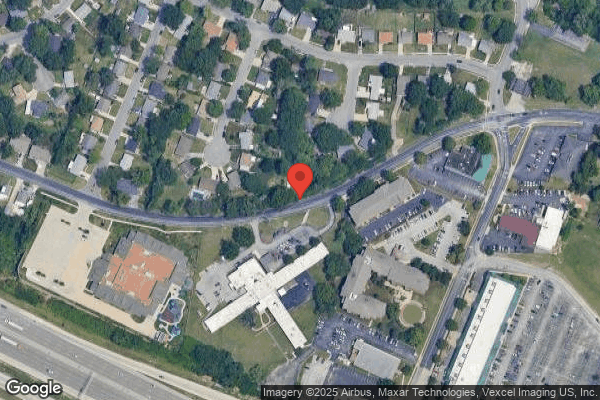
Understanding Severity Codes (click to expand)
Life-Threatening (Immediate Jeopardy)
J - Isolated K - Pattern L - Widespread
Actual Harm
G - Isolated H - Pattern I - Widespread
Potential for Harm
D - Isolated E - Pattern F - Widespread
No Harm (Minor)
A - Isolated B - Pattern C - Widespread

Questions to Ask on Your Visit

  • "What changes have you made since the serious inspection findings?"
  • "What safeguards are in place to prevent abuse and neglect?"
  • "Can I speak with families of current residents?"
  • "What's your RN coverage like on weekends and overnight?"

Our Honest Assessment

Strengths
  • • Licensed and certified facility. Meets minimum state requirements.
Concerns
  • • Multiple safety concerns identified: Federal abuse finding, 3 life-threatening violation(s), 1 harm violation(s), $191,092 in fines, Payment denial on record. Review inspection reports carefully.
  • • 57 deficiencies on record, including 3 critical (life-threatening) violations. These warrant careful review before choosing this facility.
  • • $191,092 in fines. Extremely high, among the most fined facilities in Missouri. Major compliance failures.
  • • Grade F (0/100). Below average facility with significant concerns.
Bottom line: This facility has a substantiated abuse finding. Extreme caution advised. Explore alternatives.

About This Facility

What is Lewis & Clark Gardens's CMS Rating?

CMS assigns LEWIS & CLARK GARDENS an overall rating of 1 out of 5 stars, which is considered much below average nationally. Within Missouri, this rating places the facility higher than 0% of the state's 100 nursing homes. A rating at this level reflects concerns identified through health inspections, staffing assessments, or quality measures that families should carefully consider.

How is Lewis & Clark Gardens Staffed?

CMS rates LEWIS & CLARK GARDENS's staffing level at 3 out of 5 stars, which is average compared to other nursing homes. Staff turnover is 46%, compared to the Missouri average of 46%. RN turnover specifically is 60%, which is notably high. RNs provide skilled clinical oversight, so turnover in this role can affect medical care quality.

What Have Inspectors Found at Lewis & Clark Gardens?

State health inspectors documented 57 deficiencies at LEWIS & CLARK GARDENS during 2019 to 2025. These included: 3 Immediate Jeopardy (the most serious level, indicating potential for serious harm or death), 1 that caused actual resident harm, 52 with potential for harm, and 1 minor or isolated issues. Immediate Jeopardy findings are rare and represent the most serious regulatory concerns. They require immediate corrective action.

Who Owns and Operates Lewis & Clark Gardens?

LEWIS & CLARK GARDENS is owned by a for-profit company. For-profit facilities operate as businesses with obligations to shareholders or private owners. The facility is operated by JAMES & JUDY LINCOLN, a chain that manages multiple nursing homes. With 142 certified beds and approximately 72 residents (about 51% occupancy), it is a mid-sized facility located in SAINT CHARLES, Missouri.

How Does Lewis & Clark Gardens Compare to Other Missouri Nursing Homes?

Compared to the 100 nursing homes in Missouri, LEWIS & CLARK GARDENS's overall rating (1 stars) is below the state average of 2.5, staff turnover (46%) is near the state average of 46%, and health inspection rating (1 stars) is much below the national benchmark.

What Should Families Ask When Visiting Lewis & Clark Gardens?

Based on this facility's data, families visiting should ask: "What changes have been made since the serious inspection findings, and how are you preventing similar issues?" "What safeguards and monitoring systems are in place to protect residents from abuse or neglect?" "Can I visit during a mealtime to observe dining assistance and food quality?" "How do you handle medical emergencies, and what is your hospital transfer rate?" These questions are particularly relevant given the facility's Immediate Jeopardy citations and the substantiated abuse finding on record.

Is Lewis & Clark Gardens Safe?

Based on CMS inspection data, LEWIS & CLARK GARDENS has documented safety concerns. The facility has 1 substantiated abuse finding (meaning confirmed case of resident harm by staff or other residents). Inspectors have issued 3 Immediate Jeopardy citations (the most serious violation level indicating risk of serious injury or death). The facility has a 1-star overall rating and ranks #100 of 100 nursing homes in Missouri. Families considering this facility should ask detailed questions about what corrective actions have been taken since these incidents.

Do Nurses at Lewis & Clark Gardens Stick Around?

LEWIS & CLARK GARDENS has a staff turnover rate of 46%, which is about average for Missouri nursing homes (state average: 46%). Moderate turnover is common in nursing homes, but families should still ask about staff tenure and how the facility maintains care continuity when employees leave.

Was Lewis & Clark Gardens Ever Fined?

LEWIS & CLARK GARDENS has been fined $191,092 across 4 penalty actions. This is 5.5x the Missouri average of $34,990. Fines at this level are uncommon and typically indicate a pattern of serious deficiencies, repeated violations, or failure to correct problems promptly. CMS reserves penalties of this magnitude for facilities that pose significant, documented risk to resident health or safety. Families should request specific documentation of what issues led to these fines and what systemic changes have been implemented.

Is Lewis & Clark Gardens on Any Federal Watch List?

LEWIS & CLARK GARDENS is not on any federal watch list. The most significant is the Special Focus Facility (SFF) program, which identifies the bottom 1% of nursing homes nationally based on persistent, serious quality problems. Not being on this list means the facility has avoided the pattern of deficiencies that triggers enhanced federal oversight. This is a positive indicator, though families should still review the facility's inspection history directly.