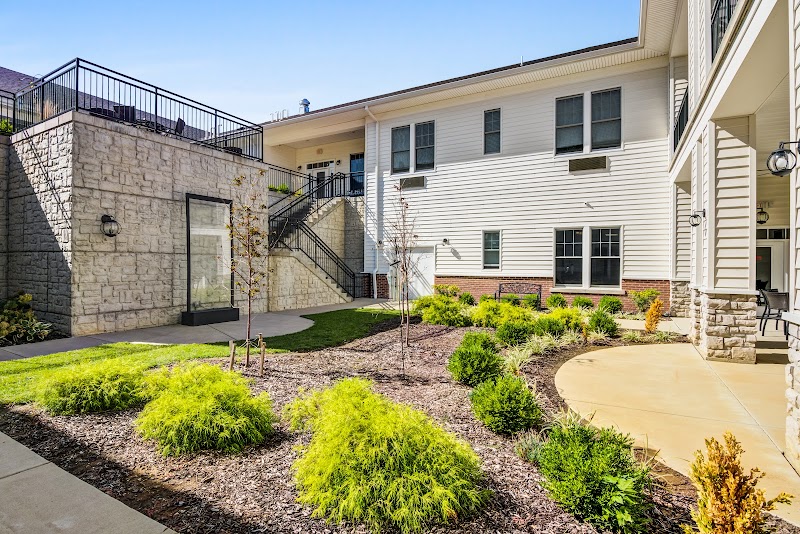
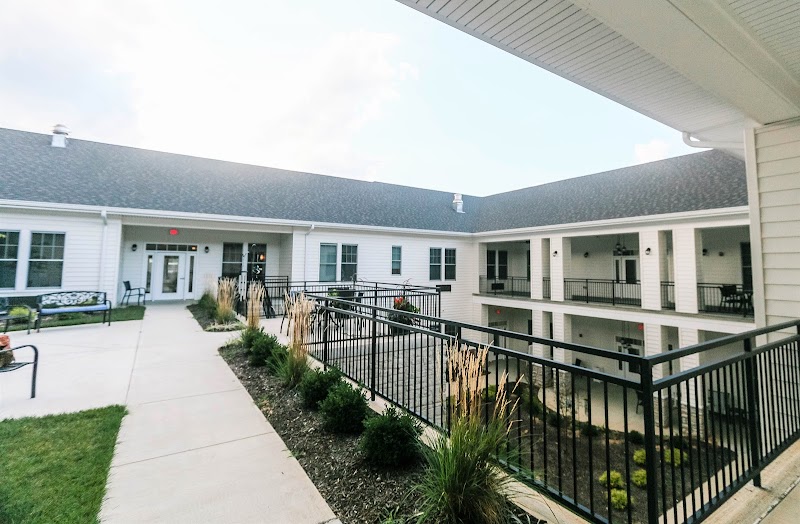
MCCLAY SENIOR CARE

3801 MCCLAY ROAD, SAINT PETERS, MO 63376 (636) 244-3323
For profit - Individual 60 Beds Independent Data: November 2025
Trust Grade
50/100
#171 of 479 in MO
Last Inspection: April 2024

Within standard 12-15 month inspection cycle. Federal law requires annual inspections.

Overview

McClay Senior Care in Saint Peters, Missouri has a Trust Grade of C, indicating that it is average and falls in the middle of the pack among nursing homes. It ranks #171 out of 479 facilities in Missouri, placing it in the top half, and #6 out of 13 in St. Charles County, meaning there are only five local options that are better. The facility is showing an improving trend, having reduced its issues from three in 2024 to two in 2025. Staffing is a relative strength with a rating of 4 out of 5 stars and a turnover rate of 47%, which is lower than the state average of 57%. However, there are concerning findings, such as failures to conduct weekly skin assessments for residents, leading to serious pressure ulcers, and issues with food safety and hygiene practices, which could pose risks to resident health. On a positive note, there have been no fines reported, indicating compliance with regulations, but it is important for families to weigh both the strengths and weaknesses when considering this facility.

Trust Score
C
50/100
In Missouri
#171/479
Top 35%
Safety Record
Moderate
Needs review
Inspections
Getting Better
3 → 2 violations
Staff Stability
⚠ Watch
47% turnover. Above average. Higher turnover means staff may not know residents' routines.
Penalties
✓ Good
No fines on record. Clean compliance history, better than most Missouri facilities.
Skilled Nurses
⚠ Watch
Each resident gets only 19 minutes of Registered Nurse (RN) attention daily — below average for Missouri. Fewer RN minutes means fewer trained eyes watching for problems.
Violations
⚠ Watch
43 deficiencies on record. Higher than average. Multiple issues found across inspections.
★★★☆☆
3.0
Overall Rating
★★★★☆
4.0
Staff Levels
★★☆☆☆
2.0
Care Quality
★★★☆☆
3.0
Inspection Score
Stable
2024: 3 issues
2025: 2 issues

The Good

  • 4-Star Staffing Rating · Above-average nurse staffing levels
  • Full Sprinkler Coverage · Fire safety systems throughout facility
  • No fines on record

Facility shows strength in staffing levels, fire safety.

The Bad

3-Star Overall Rating

Above Missouri average (2.5)

Meets federal standards, typical of most facilities

Staff Turnover: 47%

Near Missouri avg (46%)

Higher turnover may affect care consistency

The Ugly 43 deficiencies on record

2 actual harm
Sept 2025 1 deficiency
CONCERN (D) 📢 Someone Reported This

A family member, employee, or ombudsman was alarmed enough to file a formal complaint

Potential for Harm - no one hurt, but risky conditions existed

Deficiency F0627 (Tag F0627)

Could have caused harm · This affected 1 resident

**NOTE- TERMS IN BRACKETS HAVE BEEN EDITED TO PROTECT CONFIDENTIALITY** Based on interview and record review, the facility failed to permit one resident (Resident #1) in a review of five sampled resid...

Read full inspector narrative →
**NOTE- TERMS IN BRACKETS HAVE BEEN EDITED TO PROTECT CONFIDENTIALITY** Based on interview and record review, the facility failed to permit one resident (Resident #1) in a review of five sampled residents, to return to the facility following hospitalization, to the first available bed. The facility census was 50. Review of the facility admission Policy, dated February 2021, showed the following:-The purpose was to establish clear and consistent admission procedures that comply with federal and state regulations, ensure the health and safety of all residents and protect the rights of applicants;-The facility will admit residents in accordance with Centers for Medicare and Medicaid Services regulations, state long-term care licensing requirements and the facility's ability to meet the resident's physical, emotional, and medical needs;-Bed hold and readmission rights: If a resident is transferred to a hospital or takes a therapeutic leave the facility will provide written notice of bed-hold rights at the time of transfer. The facility will hold the resident's bed for the maximum number of days covered by Medicaid, private insurance or as outlined in the resident's admission agreement or the family may choose to privately pay to hold a bed beyond a covered period;-readmission priority: Residents returning after hospitalization or leave will be readmitted to the same bed if available, or to the next available bed, consistent with their level of care needs. Residents retain the right to return to the facility after hospitalization if they still require nursing facility care and the facility can meet their needs. Review of the facility Bed Hold Policy dated 8/1/22 showed the following:-The purpose was to establish consistent guidelines for reserving a resident's bed when they are absent from the facility due to hospitalization or other overnight leave;-The facility follows all federal and state regulations regarding bed hold practices for Medicare, Medicaid and private pay residents. Bed hold is voluntary and residents or their representatives may elect whether to reserve their bed during an absence. If a bed is not held, re-admission will be subject to the facility's availability and ability to meet the resident's care needs;-Private pay residents may reserve their bed during hospitalizations or overnight leaves by paying the current daily room rate;-Resident or their representatives may elect to hold or not hold a bed;-If a bed is not held, it may be reassigned to another resident. Upon return, the resident will be admitted to the first available bed that meets their care needs. 1. Review of the facility's Bed Listing for Licensure and Certification report, dated 2/12/20, showed all beds in the facility were licensed and certified beds. Review of Resident #1's Physician Order Sheet, dated 3/3/25, showed the following:-admission date of 3/3/25;-Diagnoses of Parkinson's disease (progressive disease of the nervous system that affected movement and mobility). Review of the resident's nurses' note, dated 8/27/25 at 6:23 P.M., showed staff documented the resident was admitted to a local hospital for a surgical procedure.Review of the Bed Hold Policy Guidelines, dated 8/27/25, provided to the resident's legal representative, showed the resident's legal representative did not elect to hold the resident's bed during the facility absence. The resident's legal representative signed and dated the form on 8/27/25. Review of the resident's nurses' notes showed the Social Services Designee documented the following:-On 8/27/25 the resident was taken to the hospital. The SSD spoke with the resident's legal guardian regarding the facility bed hold policy. The resident's legal guardian declined the bed hold. The SSD emphasized that room availability can fluctuate daily and no assurance of readmission to the facility without the bed hold policy in place. The resident's legal representative acknowledged understanding. The SSD communicated with the hospital social worker regarding the confirmed hospital discharge date and resident would need to be in the facility by 3:00 P.M. if returning over the weekend or on the holiday to make sure staff could meet ambulance transport and ensure appropriate receipt of the resident;-On 9/2/25 the SSD had not received any communication from the hospital;-On 9/3/25 the hospital Social Worker notified the facility the resident was ready for hospital discharge back to the facility. The facility had not received a referral or resident condition information at the time. Review of the facility census sheet, dated 9/3/25, showed the following:-The resident's previous room (bed 114-A) not currently occupied, was reserved for a resident currently in the rehabilitation unit (Resident #3) of the facility with a move in date scheduled for 9/4/25;-Bed 123-B was empty and reserved for a resident with an undocumented move in date;-Eight empty beds on the facility rehab unit;-50 occupied beds, 10 empty beds, with a total of 60 beds. During an interview on 9/8/25 at 2:25 P.M. the hospital Social Worker said on 9/3/25 he/she called the facility regarding a hospital discharge plan and transfer of the resident back to the facility. The facility said no beds were available and the facility could not take the resident back. During an interview on 9/8/25 at 3:30 P.M. the facility SSD said the resident transferred to the hospital on 8/27/25 with return anticipated following hospitalization. The resident's legal representative did not elect to hold the resident's current bed and pay the daily rate while the resident was hospitalized . The facility should provide the resident the next available bed if the resident's previous bed was no longer available. The facility planned to move Resident #3 from the rehabilitation unit to Resident #1's bed in room [ROOM NUMBER]-A. On 9/3/25 open beds were available on the rehabilitation unit and two beds reserved on the long-term care unit, one for Resident #3 moving from the rehabilitation unit to long term care and one new resident who had not arrived as of 9/8/25. During an interview on 9/8/25 at 3:45 P.M. the Director of Nursing said the SSD and Administrator were responsible for admission, readmission and implementation of the bed hold policy. The facility had a rehabilitation unit on the lower level and long-term care beds on the upper unit. She was not sure why Resident #1 was not readmitted to the facility. During an interview on 9/8/25 at 4:00 P.M. the Administrator said the facility rehabilitation unit was on the lower level with 17 beds designated by the facility for short stay rehabilitation. The upper floor was designated as long-term care resident placement with 43 beds. On 9/3/25 when the hospital notified the facility Resident #1 was ready for transfer back to the facility, the facility had no beds available on the long-term care unit. The administrator reserved Resident #1's bed for Resident #3 after Resident #1 transferred to the hospital on 8/27/25 and declined to pay for the bed hold. The other open bed on the long-term care unit was reserved for a resident who had not arrived at the facility as of 9/8/25. Staff moved Resident #3 from the lower-level rehabilitation unit on 9/4/25 to the bed Resident #1 previously occupied. On 9/3/25 the facility had 10 open beds in the rehabilitation unit on the lower level. Intake MO2607427Intake MO2607348
Apr 2025 1 deficiency 1 Harm
SERIOUS (G) 📢 Someone Reported This

A family member, employee, or ombudsman was alarmed enough to file a formal complaint

Actual Harm - a resident was hurt due to facility failures

Pressure Ulcer Prevention (Tag F0686)

A resident was harmed · This affected 1 resident

**NOTE- TERMS IN BRACKETS HAVE BEEN EDITED TO PROTECT CONFIDENTIALITY** Based on observation, interview and record review, the facility failed to conduct weekly skin assessments per their policy and c...

Read full inspector narrative →
**NOTE- TERMS IN BRACKETS HAVE BEEN EDITED TO PROTECT CONFIDENTIALITY** Based on observation, interview and record review, the facility failed to conduct weekly skin assessments per their policy and complete a Braden Scale (a tool used to identify if a resident is at risk for the development of Pressure Ulcers (PU) for four residents (Resident #1, #2, #3 and #8) out of eight sampled residents who developed PU. Resident #1 admitted to the facility from a local hospital with a pressure ulcer to the coccyx. The facility failed to complete an admission skin assessment indicating that the resident had the PU, or document the size and characteristics of the PU. The facility failed to complete weekly skin assessments on the resident and the PU to the coccyx deteriorated to a Stage III PU (full-thickness skin loss involving damage to, or necrosis of, subcutaneous tissue, extending down to but not through underlying fascia, presenting as a deep crater with or without undermining). The resident was readmitted to the hospital. The facility failed to do weekly skin assessments and complete a Braden Scale for Resident #2 and the resident developed a Stage II PU (a partial-thickness skin loss involving the dermis and epidermis, presenting as a shallow, open ulcer with a red or pink wound bed, without slough or eschar) which progressed to a Stage III PU with no skin assessments or documentation of the characteristics of the wound. The facility failed to do weekly skin assessments for Resident #3, the resident had wounds on his/her feet, the facility had no documentation of the wounds or skin assessments. Resident #8 had no weekly skin assessments or Braden Score completed. The resident was receiving Hospice benefits, and Hospice documented that the resident had open areas on the coccyx/buttock area; the facility failed to document the characteristics of the wounds, there were no measurements of the wounds and no physician notification, or weekly skin assessments completed. The resident also had an unstageable PU to the right heel that was not identified by the facility. The facility census was 47. Review of the facility policy for Admissions dated 8/1/2023 showed the following: -The charge nurse will assume responsibility for the admission; -Receive report and the name of the physician from the discharging facility; -Perform a comprehensive nursing assessment of the resident that includes: skin assessment (Braden, a tool used to predict the risk of developing pressure ulcers or injuries, with scores ranging from 6 to 23, where lower scores indicate a higher risk. ); -Findings of the assessment will be documented in the electronic health record (EHR); -Contact the resident's physician and verify the admission/readmission orders including all needed medications including as needed (PRN) medication; -Complete the admission nurse's notes including: a summarized comprehensive assessment, vital signs, height and weight; -Initiate admission 48-hour care plan. Review of the facility policy for Skin assessment dated [DATE] showed the following: -The facility will ensure that a resident who enters the facility without pressure ulcers does not develop pressure ulcers unless the resident's clinical condition demonstrates that they are unavoidable; -The charge nurse will perform a skin assessment upon admission, weekly times four, monthly and when the resident has a change of condition; -Implement care planning for any resident at risk for pressure ulcers; -Complete a comprehensive head to toe assessment of the resident's skin with each scheduled assessment and with any significant change of condition, that includes evaluating risk factors such as: poor positioning in a chair, dementia, co-morbidities such as diabetes, end stage renal disease or thyroid disease, drugs like steroids that impair wound healing, friction and shearing ( friction is the force of rubbing two surfaces against each other, while shear is a force that causes tissues to move in opposite directions, often leading to deeper tissue damage), history of skin breakdown/pressure ulcers; impaired blood floor; impaired/decreased mobility; exposure of skin to urinary and/or fecal incontinence, nutrition or hydration deficit; skin desensitized to pain or pressure; -Supervise the Certified Nurse Aides (CNA) to ensure that each resident's skin is assessed for signs of breakdown with daily care and bathing; -Instruct CNA's to identify and report signs of skin breakdown such as: purple or dark area, edema, hardening of the skin (induration; redness (erythema), bogginess (refers to a soft, spongy, or wet texture of the skin that may feel like a sponge or a wet cloth); -Document the status of the resident's skin in the resident's electronic health record (HER) once per week and in the resident's monthly summary. Review of the facility policy for Pressure Ulcers: Prevention, Identification, Evaluation and Interventions dated 8/21/2025 showed: -Definition: a pressure injury is localized damage to the skin and/or underlying soft tissue usually over a bony prominence or related to a medical or other device. A pressure injury will present as intact skin and may be painful. A pressure ulcer (PU) will present as an open ulcer the appearance of which will vary depending on the stage and may be painful. The injury occurs as a result of intense and/or prolonged pressure or pressure in combination with shear. The tolerance of soft tissue for pressure and shear may be affected by skin temperature and moisture, nutrition, perfusion, comorbidities and condition of soft tissue; -The facility will ensure that a resident who enters the facility without PU does not develop PU unless the resident's clinical condition indicates that they were unavoidable; -If the resident has a clinical condition that makes a PU unavoidable, this must be defined by the resident's physician and must be documented in the resident's chart; -The facility will ensure that all residents at risk for PU are identified and be given care to prevent the development of PU. Identification includes previous PU or pressure injury history. A Braden Scale will be completed upon admission/readmission, weekly for four weeks and with the quarterly, annual and significant change of condition assessments; -The facility will ensure that a resident with PU receives necessary treatment and services to promote healing, prevent infection and prevent new sores from developing; -The charge nurse will: Instruct and supervise CNA's to ensure that care and interventions are implemented to prevent skin breakdown including: -review of documentation of skin issues identified during the resident's shower; -application of creams/ointments with the provision of incontinent care; -monitor to ensue pressure relieving devices: mattresses, cushions and/or wedges, etc Are in place; -positioning protocols are followed to prevent skin breakdown; -Provide wound care as prescribed by the physician; mark each dressing with date and initials after treatment has been administered; document in the resident's EHR/Treatment Administration record (eTAR) that wound care was administered as prescribed; -The charge nurse will track the healing progress of PU and alter the plan of care and treatment when needed; -Completing skin integrity documentation for each resident with skin breakdown that includes: type of wound, location, shape, measurements in centimeters: width, length, depth; stage ( refers to a classification system used to categorize the depth and severity of skin and tissue damage, aiding in determining appropriate treatment and monitoring); color, redness, warmth, swelling; granulation (formation of new tissue), surrounding tissue, ulcer edges; exudate (drainage) bleeding; treatments, dressing changes, medication; presence of infection or other complications; pain; -Evaluating PU treatment weekly for effectiveness and inform the resident's physician of PU states; -Working with the care plan team to alter the PU care plan and implement new intervention(s) when healing is not adequate; -The Director of Nursing/Designee will monitor the weekly wound report: wounds present upon admission or acquired in the facility; wounds improving or worsening; wound types; proper documentation completed in the nurses' notes, treatment records, weekly skin sheets, care plans. Review of the facility's Wound Care Policy and Procedure with a review date of 8/2024 showed the following: -Purpose: to provide a standardized approach in the prevention, assessment, and treatment of wounds in our residents; -Policy Statement: Our facility is dedicated to delivering high-quality, evidence-based wound care to prevent the occurrence of pressure injuries and other wounds. We commit to comprehensive assessment, timely treatment, proper documentation, and continuous education. All wound care will be delivered in accordance with federal regulations and state agency standards; -This policy applies to all clinical staff, including licensed nurses, certified nursing assistants (CNA's), wound care specialists, and members of the interdisciplinary team involved in resident care at the facility; -Wound care team: the interdisciplinary group may include the Director of Nursing (DON), physicians, wound care nurses, dietitians, physical therapists, and specialists in wound management; -Wound Care Procedure: assessment and documentation: conduct a comprehensive head-to-toe skin inspection on admission, readmission, and with any significant change in condition; -Assess all wounds for location, type, size, stage, exudate, tissue type, and periwound (refers to the skin and tissues surrounding a wound) condition; -Reassess wounds at least weekly and document changes immediately; -Take photos of wounds with consent and per facility policy; -Risk identification and prevention: use the Braden Scale or another validated tool on admission, weekly, and with changes in health status; turn and reposition residents every two hours or as indicated; use pressure-reliving devices and provide prompt incontinence care; -Treatment and care planning: obtain specific wound care orders from the physician; use advanced therapies if ordered, coordinate with therapy services as needed; -Physician notification and orders; notify physician of new wounds, deterioration, infection or lack of healing, update and verify all treatment changes with physician orders; -Education: ensure staff complete training on wound care procedures and documentation; provide resident and family education and document it in the medical record. 1. Review of Resident #1's referral information to the facility from the resident's discharging local hospital dated 2/24/25 showed the following: -Discharge diagnosis of endocarditis (an infection of the inner lining of the heart chambers and heart valves, known as the endocardium. It is typically caused by bacteria that enter the bloodstream and settle on the heart valves, causing inflammation and damage; -Active wounds to the anterior (front) of the left and right knee, wounds on the left and right dorsal (back) knee; lower right arm and elbow and medial sacrum (middle of the sacrum, which is located at the base of the spine above the tailbone); -Utilize a low air loss mattress while in bed and a seat cushion while in a chair. Reposition frequently. Do not raise the foot of the bed, use off loading heel boots (reducing or redistributing pressure, force, or weight from a specific area of the body, particularly a wound or area prone to pressure injuries, to promote healing and prevent further complications. Review of the discharge orders from the local hospital dated 3/4/25 at 12:40 P.M. showed the following: -Mupirocin (medication commonly used to treat some skin infections) 2%, apply to affected area once daily with a start date of 3/5/25; -Zinc oxide (used to protect skin from being irritated and wet ) 40% paste, apply to affected area two times daily. Review of the resident's face sheet showed the resident admitted to the facility on [DATE] with diagnoses of endocarditis, sepsis (a life-threatening condition that occurs when the body's response to an infection damages its own tissues and organs, potentially leading to organ failure and death), acute kidney failure, type II diabetes, cognitive communication deficit and a history of falls. Review of the resident's Physician Order Sheet (POS) dated 3/4/25 showed no order for mupirocin or zinc oxide ointment. Review of the resident's admission nursing assessment completed on 3/4/25 at 2:25 P.M., and signed by Licensed Practical Nurse (LPN) B showed the following: -admitted to the facility on [DATE] via ambulance; -Generalized pain at a level 10 (one being minor or no pain to 10 being excruciating pain); -Alert and oriented to person, place and time; -No edema. Skin warm and dry, skin color within normal limits, turgor (refers to the elasticity and firmness of the skin. It indicates the body's hydration status) normal; -Area for skin issues was left blank. Review of the resident's assessments in the electronic medical record (EMR) dated 3/4/25 showed no skin assessment, or Braden Scale completed. Review of the resident's Skin Monitoring: Comprehensive CNA Shower Review (a tool used by the CNA's to document any issues with a resident's skin when giving a bath/shower) dated 3/4/25 and signed by LPN B, showed the following: -Admission. Picture of the body front facing: PICC (peripherally inserted central catheter -a long, thin, flexible tube inserted into a vein in the upper arm and threaded into a large vein near the heart, used for long-term intravenous access for medications, fluids, blood draws, or other treatments) noted in the right upper arm; -Picture of the body rear facing with a circle around the coccyx (tailbone) area and with Red written to the side. Heels circled with slightly red written to the side. Review of the resident's nursing notes dated 3/4/25, showed no documentation of any open areas, pressure ulcers, skin tears, or bruised areas. Review of the resident's undated baseline care plan showed the area for Skin Risk was left blank with no current skin issues marked and no interventions for the prevention of skin breakdown documented. During an interview on 4/3/25 at 3:40 P.M. CNA D said the following: -He/She was on duty when the resident was first admitted ; -He/She remembered the resident had sores on his/her knees, the sacrum had a small deep crack like area and his/her left heel was soft feeling. -LPN J was aware of the wounds, he/she was the admitting nurse and completed a skin assessment; -The resident refused to wear heel protectors and he/she did not have a low air loss mattress; -The CNA's complete a skin assessment when a shower was given, once completed it goes to the nurse. During an interview on 4/4/25 at 10:19 A.M. LPN J said the following: -He/She admitted the resident on 3/4/25. He/She did not complete the skin assessment in the medical record, he/she documented the resident's skin assessment on the Skin Monitoring Comprehensive CNA Shower Review sheet; -The resident's sacrum/coccyx area was red; he/she did not remember if the area was open; -He/She did not remember if the resident's heels were open, but had documented on the Shower Review sheet that they were red; -The resident did not have a low air loss mattress on the bed and did not have heel protectors; -The resident did not want to be turned, he/she was in a lot of pain; -He/She should have documented the condition of the resident's skin in the skilled admission nurses notes, but did not document anything; -Skin assessments should be done upon admission and with any issues noted with skin; the physician should be notified for a treatment order. During an interview on 4/3/25 at 3:30 P.M. LPN A said the following: -The resident admitted with endocarditis and reportedly had laid on the floor for over 30 hours before someone called the ambulance; -The resident had a foam dressing on his/her sacrum upon admission; -An admission skin assessment was not completed; -There were no skin assessments completed for the resident; -A skin assessment should have been completed upon admission; -In his/her review of the resident's medical record, he/she could not find any skin assessment completed. During an interview on 4/7/25 at 1:30 P.M. Registered Nurse (RN) E said the following: -He/She remembered the resident had a dressing to the sacrum/coccyx area and the wound nurse was aware; -The night shift would have changed the dressing, so he/she did not see the resident's skin; -A skin assessment should be done upon admission and documented in the resident's EMR under the assessment tab. Review of the resident's progress notes dated 3/5/25, signed by Nurse Practitioner (NP) A showed the following: -Nursing home visit for post hospitalization. The resident had skin breakdown to the coccyx that was present upon admission. Consulted with wound nurse; -Review of medications showed mupirocin and zinc oxide as discontinued. During an interview on 4/4/25 at 10:17 A.M. NP B said the following: -He/She saw the resident a couple of times; -He/She was aware of the wound on the resident's sacrum from the local/discharging hospital's documentation from the discharging hospital, but did not remember discontinuing any medications or treatments; -The facility had a wound nurse and a contracted outside wound care provider; residents who have wounds are referred to them for orders and treatments; -He/She did not see a skin assessment for the resident; -He/She had noticed that skin assessments were not always completed on the residents at the facility. Review of the resident's skilled nursing notes dated 3/6/25, showed no documentation of any skin breakdown on the resident's coccyx. Review of the resident's EMR for 3/6/25, showed no skin assessment or Braden Score completed. Review of the resident's progress note dated 3/6/25, and signed by Nurse Practitioner (NP) B showed the following: -While sitting on the end of the bed, the resident yelled out in pain (buttocks); -Medications: no mupirocin or zinc oxide noted as a current order; -Sacral wound/multiple abrasions, continue wound care. During an interview on 4/10/25 at 10:15 A.M. NP C said the following: -He/She had seen the resident several times, but had never seen the resident's skin; -He/She was aware that the resident had a wound on the sacrum/coccyx area from the documentation that was received from the hospital with a treatment order in place; -The facility had a treatment nurse that took care of all of the wounds. Review of the resident's Skin Monitoring: Comprehensive CNA (Certified Nurse Aide) Shower Review dated 3/7/25 showed a bed bath given, no skin issues noted. Review of the resident's EMR for 3/7/25 through 3/9/25 showed the following: -No documentation of the resident's skin in the skilled nursing notes, or in the progress notes; -No skin assessments completed, and no Braden Score completed. Review of the resident's comprehensive Minimum Data Set (MDS), a federally mandated assessment instrument completed by staff dated 3/10/25, showed the following: -Able to make self understood and able to understand others; -Alert and oriented and able to make decisions; -Dependent upon staff for Activities of Daily Living (ADL's), bed mobility and transfers; -Incontinent of bowel and bladder; -At risk for pressure ulcers with one Stage III (full-thickness skin loss, where subcutaneous fat is visible, but bone, tendon, or muscle is not exposed. The ulcer may include undermining and tunneling) PU present. Review of the resident's Skin Monitoring: Comprehensive CNA Shower Review dated 3/11/25, showed the resident refused a shower, gave a bed bath as best that could be done; no skin issues noted. During an interview on 4/4/25 at 4:15 P.M. the Registered Nurse/Wound Nurse said the following: -He/She was aware that the resident was going to be admitted with wounds from the discharging hospital documentation; -The admitting nurse should have completed a skin assessment and documented any wounds; -He/She called the resident's primary physician and got an order for the contracted wound care provider to come in to assess the resident; -He/She did not see the resident's skin until 3/10/25 when the contracted wound care provider/Nurse Practitioner assessed the resident. Review of the resident's Initial Visit Case Report completed by the contracted wound care provider dated 3/10/25, showed the following: -Abrasions to left knee, right knee, skin tear to right and left forearms; -Review of systems: Integumentary (skin): wounds to left and right knee, left and right forearm; sacrum; -General Assessment and Plan: pressure injury to sacrum: cleanse wound, apply mupirocin 2% ointment and alginate (a highly absorbent wound care products that form a gel when exposed to wound fluid, maintaining a moist environment crucial for healing and managing moderate to heavy exudate) to wound bed, cover with a bordered foam dressing three times per week and as needed; -Wound location: sacrum, pressure, Stage III 3.0 centimeters (cm) long by 0.30 cm wide, 0.20 deep with mild pain, serosanguinous drainage (a fluid that contains both serum (clear, watery fluid) and blood. It typically appears as a pinkish-red or pale yellow discharge), with yellow slough (fibrous, dead tissue that can impede healing and harbor bacteria, often appearing as a yellowish, tan, or white, stringy material). During an interview on 4/10/25 at 10:00 A.M. NP A for the contracted outside wound care provider said the following: -When a resident admitted to the facility with skin issues or concerns, the wound nurse will get an order for consultation from him/her; -He/She received an order from the facility on 3/7/25 for a consultation for a wound on the sacrum/coccyx area; -He/She saw the resident at the facility on 3/10/25; -The wound to the coccyx was a Stage III PU and he/she ordered a treatment for the PU; -If a resident admitted with a PU or wound, the facility should notify the physician and get a treatment started until he/she could evaluate the wound. Review of the resident's Multidisciplinary Care Conference note dated 3/11/25 showed the following: -Attendees included the dietary manager, activity director, therapy director, nursing administration, family and administration: -Problems: the resident entered the facility with a wound on his/her coccyx and multiple areas in the lower extremities with an IV (intravenous, a needle inserted in a vein for medication/fluids to be administered) that was working well for endocarditis. However, the resident still seemed to be in a quite a bit of pain with these injuries. -No goals established for wounds, and no interventions indicated for the wounds, no treatments indicated for the wounds. Review of the resident's Medication Administration Record dated March 2025 showed mupirocin ointment 2%, apply to sacrum topically every day shift on Monday, Wednesday, and Friday, for wound care with alginate to wound and cover with a bordered foam gauze with a start date of 3/12/25. Review of the resident's medical record from 3/11/25 to 3/16/25 showed the following: -No skin assessments completed; -No documentation of the wound on the sacrum other than the contracted wound care provider note from 3/10/25. Review of the resident's nurses notes dated 3/16/25 and signed by LPN B, showed the following: -On 03/16/25 07:59 A.M., during resident care early this morning, CNA and this nurse observed a 2 1/2 inch purple area on resident's right heel and a red/purple area on the left hip (ischium) that was non-blanchable. Staff floated the resident's heels with two pillows and used Skin Prep ( used to create a protective barrier on the skin that forms a film to protect the skin by reducing friction on the right heel; -Staff put a pillow under resident's left hip area to help with the pressure. Notified the on-call physician of findings and on-call said the resident should have a low air loss mattress. Review of the resident's nurses note dated 3/16/25 at 6:20 P.M. and signed by LPN A, showed the resident refused all medications and meals during day shift. Resident observed as lethargic, blood pressure (BP) of 93/53 (normal BP 120/80), oxygen level of 94% on room air (normal oxygen level in an adult 95-100%), pulse of 88 (normal pulse range between 60 to 100), respirations 18 (normal respirations between 12 and 20 respirations), temperature 100.1 (normal temperature 98.6). No urine output during shift. Call placed to primary physician with an order to send the resident to the emergency room for evaluation due to change in condition. During an interview on 4/8/25 at 2:50 P.M. CNA F said the following: -He/She took care of the resident a couple of times while the resident was at the facility; -The resident's bottom was red when the resident admitted and he/she put barrier cream on the resident's bottom; -He/She last saw the resident the day before he/she went to the hospital , he/she did not look at the resident's heels; -The resident would lay on his/her left side and frequently refused to turn. On 3/16/25, before the resident went to the hospital he/she had a dark red round area on his/her left side; -He/she notified the nurse of the area on the left hip; During an interview on 4/8/25 at 9:30 A.M. LPN B said the following: -He/She had taken care of the resident and was off for a few days, when he/she came back to the facility, the resident was much weaker; -On 3/16/25 before the resident was sent to the hospital, he/she found a dark non-blanchable (a discoloration of the skin that does not turn white when pressed) on the resident's right heel and a dark round spot on his/her left hip; -He/She used skin prep to the heel and tried to position the resident on the right side, but the resident did not like to be turned; -The resident did not have a low air loss mattress, so he/she got an order for one; -He/She did not remember if the resident had an open are on the sacrum/coccyx area. During an interview on 4/3/25 at 1:05 P.M. Registered Nurse/Wound Nurse from the discharging hospital said the following: -When the resident discharged from the hospital on 3/4/25 the wound on his/her coccyx was in the final stages of healing and no longer open; the resident had no wounds on the heels; -When the resident readmitted to the hospital on [DATE], the resident had an area on the left mid back 3 centimeters (cm) by 3 cm that was a deep tissue injury (DTI-is a type of pressure ulcer where damage occurs to the underlying soft tissues, like muscles and fat, before the skin shows visible signs of injury. It often presents as a purple or maroon discolored area of intact skin or a blood-filled blister, and can be mistaken for a bruise. DTIs can develop rapidly and may lead to the formation of a pressure ulcer if not addressed promptly), two areas on the right heel; one measured 2 cm by 2 cm that was an intact blister and another area that measured 4 cm by 4 cm that was a DTI. The wound on the resident's coccyx/sacral area (tailbone) measured 12 cm by 3 cm and extended from the coccyx to the peri-rectal area (the area surrounding the rectum) also DTI; -When the areas opened, the wounds would be deep and extensive. During an interview on 4/4/25 at 1:30 P.M. the Director of Nursing said the following: -Skin assessments should be done upon admission and weekly thereafter; -The admitting nurse should be doing a full body skin assessment and documenting the findings in the admission assessment; -If the resident had wounds, these should have been documented upon admission and treatment orders obtained and if needed a referral to the contracted outside wound care provider for assessment and treatments; -She was aware that the resident had wounds from the discharging hospital documentation; -She did not see the resident's skin. 2. Review of Resident #8's face sheet showed the resident admitted to the facility on [DATE] with diagnoses of dementia and stroke. Review of the resident's care plans with a revision date of 1/11/25 showed no care plan for skin issues or prevention of PU. Review of the skin assessment dated [DATE] showed right medial thigh bruising, acquired in house. Review of the resident's EMR dated 1/17/25 showed no further documentation of the bruising to the thigh or any Braden Score completed. Review of the medical record dated 1/18/25 through 3/4/25 showed no skin assessments completed. Review of the resident's contracted hospice provider notes dated 1/21/25 through 3/4/25 showed no documentation of any skin alterations or PU's. Review of the quarterly MDS dated [DATE] showed: -Able to make self understood and usually able to understand others; -Unable to make decisions; -Dependent upon staff for all ADL's, turning and repositioning and transfers; -Incontinent of bowel and bladder; -At risk for PU, with no PU present. Review of the resident's POS dated March 2025 showed an order for weekly skin assessments with a start date of 3/4/25 Review of the resident's medical record dated 3/4/25 through 3/28/25 showed no skin assessments completed. Review of the contracted hospice provider notes dated 3/4/25 through 3/28/25 showed no documentation of any skin alterations or PU's. Review of the skin assessment completed 3/28/25 showed: -Skin issue - right medial thigh bruising and wound to coccyx area with treatment order in pace, house acquired; -No previous documentation of the wound to the coccyx; -There were no measurements or description of the wound. Review of the residents EMR dated 3/28/25 showed no documentation of physician notification of the wound to the coccyx or bruising to the right medial thigh. Review of the resident's POS dated March 2025 showed an order for mupirocin to coccyx Monday-Wednesday-Friday for wound care with a foam dressing with an order date of 3/28/25. Review of the resident's medical record dated 3/28/25 through 4/1/25 showed the following: -No skin assessments completed; -No description of the wound to the coccyx with no measurements. Review of the resident's contracted hospice provider notes dated 4/1/25 showed the following: -The resident currently has three PU's, two Stage II (a partial thickness loss of dermis, presenting as a shallow open ulcer with a red or pink wound bed, without slough or bruising. It can also manifest as an intact or open/ruptured blister) on the coccyx/buttock area and one Stage I (an area of intact skin with non-blanchable redness, usually over a bony prominence) to the heal. All are being treated by the facility staff. Observation on 4/4/25 at 2:11 P.M. showed the following: -CNA I and LPN A transferred the resident from a wheelchair to the bed via a mechanical lift; -CNA I said the resident had an open are on the coccyx; -The resident's right heel had a large area of discoloration on the bottom that was red in color; -A foam dressing was on the coccyx with no date or initials to indicate when or who applied the dressing; -LPN A removed the dressing; under the dressing was an oblong shape open area that was approximately 2-3 inches long with pink tissue surrounded by white, macerated tissue (tissue that has had prolonged exposure to moisture, Signs of Maceration: Skin that appears soggy, soft, or whiter than usual. A white ring around the wound, especially in areas with excessive moisture or drainage). During an interview on 4/4/25 at 2:30 P.M. RN/Wound Nurse said the following: -The resident recently acquired the PU to the coccyx and the heel; -The contracted hospice provider measured and documented the wound in their notes; -The facil[TRUNCATED]
Apr 2024 3 deficiencies
CONCERN (E)

Potential for Harm - no one hurt, but risky conditions existed

Deficiency F0760 (Tag F0760)

Could have caused harm · This affected multiple residents

Based on observation, interview and record review, the facility failed to ensure three residents (Resident #2, #5 and #44), in a review of three sampled residents who received insulin injections, were...

Read full inspector narrative →
Based on observation, interview and record review, the facility failed to ensure three residents (Resident #2, #5 and #44), in a review of three sampled residents who received insulin injections, were free from significant medication errors. Staff failed to prime (remove the air) the Humalog/Novolog Kwik pen (prefilled pen of fast acting insulin) (medication injected under the skin used to treat diabetes) needle as instructed by the manufacturer prior to administration of the medication, resulting in administration of less than the ordered dose of Humalog/Novolog. Staff failed to hold the needle against the resident's skin for the manufacturer's suggested time after the administration of the medication. The facility census was 48. Review of the undated facility policy, Medication Administration, showed the following: -The facility will provide pharmaceutical services, including procedures that assure the accurate acquiring, receiving, dispensing and administering of all medications to meet the needs of each resident; -If the charge nurse/Certified Medication Technician (CMT) is unfamiliar with the medications, he/she should look it up in the nurse's drug handbook, call the pharmacist and/or physician for clarification, and/or look for the manufacturer guidelines if it is a recently released medication. Review of the Humalog Kwik pen/Novolog Flex pen package insert showed the following in part: -Humalog Kwik Pen was a disposable single-patient-use prefilled pen containing 300 units of Humalog insulin. Each turn (click) of the dose knob dialed one unit of insulin. You could give from one to 60 units in a single injection; -Novolog Flex pen was a disposable single-patient use prefilled pen containing 300 units of Novolog insulin. Each turn (click) of the dose knob dialed one unit of insulin. You could give from one to 60 units in a single injection; -Pull the pen cap off, wipe the rubber seal with alcohol swab, check the liquid in the pen and ensure the liquid was clear. Select a new needle, remove the paper tab from the outer needle shield, push the capped needle straight onto the pen and twist the needle on until tight. Pull off the outer needle shield and remove the inner needle shield; -Prime (remove the air from the needle and cartridge). If you do not prime before each injection you may get too much or too little insulin. Turn the dose knob to select two units, hold the pen with the needle pointed up, tap the cartridge holder gently to collect air bubbles at the top, push the dose knob in until it stops and 0 is seen in the dose window. Hold the dose knob in and count to five slowly. You should see insulin at the tip of the needle. Repeat the priming procedure if you did not see insulin at the tip of the needle; -Turn the dose knob and select the number of units you need to inject and administer the medication; -Choose your injection site. Humalog/Novolog is injected subcutaneously (under the skin) in your stomach area, buttocks, upper legs, upper arms; -Wipe skin with an alcohol swab and let the skin dry before you inject your dose; -Insert the needle into the skin. Push the dose knob all the way in; -Continue to hold the dose knob in and slowly count to five before removing the needle. 1. Review of Resident #5's April 2024 Physician Order Sheets (POS) showed the following: -Diagnosis of type 2 diabetes mellitus with hyperglycemia (high amount of sugar in the blood); -Humalog Kwik Pen Insulin 100 units/milliliter (ml) subcutaneous (tissue just below the skin) inject 15 units three times a day. Observation on 4/2/24 at 8:08 A.M showed the following; -CMT B obtained the resident's Humalog Kwik pen from the top medication cart drawer, removed the lid, cleaned the tip with an alcohol pad and attached a new sterile needle; -CMT B did not prime the insulin pen; -CMT B dialed up 15 units of Humalog insulin and administered the medication in the resident's subcutaneous tissue of the abdomen; -CMT B did not hold the dose knob in for five seconds before removing the needle. Observation on 04/02/24 at 12:27 P.M. showed the following: -CMT I obtained the resident's Humalog Kwik pen from the medication cart, cleaned the tip with an alcohol pad and attached a new sterile needle; -CMT I did not prime the the insulin pen; -CMT I prepared the resident's Humalog insulin, cleansed the site and administered the medication in the subcutaneous tissue of the right abdomen. 2. Review of Resident #44's April 2024 Physician Order Sheets (POS) showed the following: -Diagnosis of type 2 diabetes without complications; -Novolog flex pen Insulin 100 units/ml subcutaneous per sliding scale (a dose amount to be determined based on a finger stick procedure that determines the amount of sugar in the blood); for blood sugar of 100-151 administer two units, blood sugar 151-200 administer four units, blood sugar 201-250 administer six units, blood sugar 251-300 administer eight units, blood sugar 301-350 administer 10 units, blood sugar greater than 351 call physician for orders. Observation on 4/2/24 at 12:25 P.M. showed the following: -CMT B obtained the resident's blood sugar level with results of 155 milligrams per deciliter (mg/dL) (measurement of the amount of glucose or sugar in the blood) and determined Novolog sliding scale Insulin dose was to be four units; -CMT B obtained the resident's Novolog flex pen from the top medication cart drawer, removed the lid, cleansed the tip with an alcohol pad and attached a new sterile needle. CMT B did not prime the insulin pen; -CMT B dialed up four units of Novolog insulin and administered the medication in the resident's subcutaneous tissue of the abdomen; -CMT B did not hold the dose knob in for five seconds before removing the needle. 3. Review of Resident #2's quarterly Minimum Data Sheet (MDS), a federally mandated form completed by facility staff, dated 01/04/24, showed his/her diagnoses included Type 2 diabetes mellitus with diabetic polyneuropathy. Review of the resident's April 2024 POS showed the following: -Accu check (a rapid test of glucose concentration in the blood) before meals and at bedtime; -Humalog Injection Solution, inject as per sliding scale: if blood sugar 150-200, administer two units; blood sugar 210-300, administer four units; blood sugar 301-350, administer six units; blood sugar 351-400, administer eight units; blood sugar 401-450, administer 10 units, subcutaneously before meals and at bedtime for hyperlgycemia. Observation on 04/02/24 at 11:37 A.M. showed the following: -CMT B obtained the resident's blood sugar level with results of 306 mg/dL and determined Humalog insulin sliding scale dose was to be six units; -CMT B obtained the resident's Humalog Kwik pen from the medication cart, cleaned the tip with an alcohol pad and attached a new sterile needle; -CMT B did not prime the insulin pen; -CMT B dialed up six units of Humalog insulin, cleansed the site and administered the medication in the subcutaneous tissue of the left upper arm; -CMT B did not hold the dose knob in for six seconds after administration. 4. During an interview on 04/02/24 at 12:28 P.M., CMT I said the following: -He/She does not prime pre-filled insulin pens; -He/She had been taught to place the new sterile needle, then dial up the dose, this pulls the air from the needle, which acted as priming. During an interview on 04/03/24 at 8:36 A.M., CMT B said he/she primes the new sterile needle by placing the needle, then dialing up the insulin at least one unit past the ordered dose, then dialing back down to the ordered dose. During an interview on 04/04/24 at 10:07 A.M., Licensed Practical Nurse (LPN) J said the following: -When administering insulin by pre-filled pen route, two units should always be wasted after placing the needle. This is the act of priming the needle; -Without priming the needle, the full dose will not be administered. During an interview on 04/05/24 at 11:17 A.M., the Director of Nursing said the following: -She expected staff to prime insulin needles; -She expected staff to hold following administration; -She expected staff to administer insulin in accordance with facility policy, physician orders, and manufacturer guidelines.
CONCERN (E)

Potential for Harm - no one hurt, but risky conditions existed

Deficiency F0761 (Tag F0761)

Could have caused harm · This affected multiple residents

Based on observation, interview, and record review, the facility failed to keep lorazepam (a schedule IV narcotic anxiety medication with the potential for abuse) behind two locks when it was stored i...

Read full inspector narrative →
Based on observation, interview, and record review, the facility failed to keep lorazepam (a schedule IV narcotic anxiety medication with the potential for abuse) behind two locks when it was stored in the unlocked refrigerator in the lower level medication room, without evidence of when the medication was dispensed or a narcotic sheet for reconciliation. The facility failed to remove and destroy discharged resident medications from the lower level medication room for eight discharged residents (Residents #100, #101, #102, #103, #104, #105, #106, and #107) as directed by facility policy. The facility census was 48. Review of the facility undated policy, Medications - Narcotics/Controlled Substances, showed the following: -Narcotics must always be stored under a double locking system; -They must be kept in the locked box in the unit's locked medication; -Each narcotic that the pharmacy dispenses to the facility is accompanied by a narcotic sheet with: a. Medication name, amount, dose, and strength; b. Date dispersed to facility; c. Resident's name; d. Lines to record each dose removed, date and time, and signature; -Discontinued narcotics must be placed in the locked box in the medication room with their narcotics sheets attached; -Controlled substances that are no longer needed in the facility may be disposed of in the facility; -The Director of Nursing (DON)/Designee and one additional licensed person (licensed nurse or consultant pharmacist) will destroy discontinued narcotics together and sign the necessary documentation for that action. Review of the facility policy, Medication Storage in The Facility, dated February 2020, showed the following: -All drugs classified as Schedule II of the Controlled Substance Act will be stored under double locks; -Schedule III-V medications must be maintained in separately locked, permanently affixed compartments and cannot be stored with other nonscheduled medications. Review of the facility undated policy, Medication Destruction, showed the following: -The facility will dispose of unused and/or expired medications according to state, federal, local ordinances and current standards of practice; -Expired and/or discontinued medications should be removed from the medication cart and brought to the DON office; -The DON will place the medications in a locked cabinet awaiting disposal; -A record will be kept of the name of the resident, medication name, number of remaining pills, patches or liquid amount along with the narcotic count sheet, if applicable; -The DON, along with a second licensed nurse, will dispose of all unused and/or expired medications every 30 days; -The DON will maintain the records according to facility guidelines. Review of the Bureau of Narcotics and Dangerous Drugs, Controlled Substance Guidelines for Missouri Practitioners, dated 8/28/23, showed if controlled substances are stored in a refrigerator, then the refrigerator must have a lock. 1. Review of Resident #100's physician orders, dated 5/19/21, showed an order for ketorolac tromethamne solution (eye drops used to treat itching, pain, burning, and inflammation of the eye) 30 milligrams (mg)/milliliter (ml). Review of the facility clinical census showed the resident was discharged on 6/02/22. Observation on 4/02/24 at 4:00 P.M., of the lower level medication storage room, in the middle drawer of the cabinet, showed 16 vials of ketorolac tromethamne solution 30 mg/ml labeled to be used for the resident. The medication had not been pulled for destruction or destroyed per facility policy and remained in the facility 671 days after the resident was discharged . 2. Review of Resident #101's physician orders, dated 3/12/23, showed an order for NovoLog insulin (injectable medication to lower blood sugar) solution 100 unit/ml. Review of the facility clinical census showed the resident was discharged on 3/13/23. Observation on 4/02/24 at 4:00 P.M., of the refrigerator in the lower level medication storage room, showed one unopened bottle of NovoLog injection solution 100 unit/ml labeled to be used for the resident. The medication had not been pulled for destruction or destroyed per facility policy and remained in the facility 387 days after the resident was discharged . 3. Review of Resident #102's physician orders, dated 5/23/23, showed no orders for Heparin Lock Flush Solution 100 Unit/ml (a blood thinner that prevents the formation of blood clots. Heparin flush is used to flush an intravenous (IV) catheter (indwelling single-lumen plastic conduit that allows medications to be introduced directly into a peripheral vein) which helps prevent blockage in the tube after an individual receives an IV infusion (a method to put medications into the blood stream). Review of the facility clinical census showed the resident was discharged on 6/02/23. Observation on 4/02/24 at 4:00 P.M., of the lower level medication storage room, in the lower middle cabinet, showed the following medications labeled for the resident: -Nine Heparin Lock Flush Solution 100 unit/ml; -One normal saline flush 0.9 percent solution 3 ml (this product is used to help prevent IV catheters from becoming blocked and also to help remove any medication that may be left where the IV is placed through the skin); -One normal saline flush 0.9 percent solution 12 ml. The medications had not been pulled for destruction or destroyed per facility policy and remained in the facility 306 days after the resident was discharged . 4. Review of Resident #103's physician orders, dated 8/04/23, showed no orders for Heparin Lock Flush Solution 100 unit/ml. Review of the facility clinical census showed the resident was discharged on 9/14/23. Observation on 4/02/24 at 4:00 P.M., of the lower level medication storage room, in the lower middle cabinet, showed 70 Heparin Lock Flush Solution 100 Unit/ml, labeled for the resident. The medication had not been pulled for destruction or destroyed per facility policy and remained in the facility 202 days after the resident was discharged . 5. Review of Resident #104's physician orders, dated 11/03/23, showed NovoLog Flex Pen subcutaneous solution pen-injector 100 unit/ml. Review of the facility clinical census showed the resident was discharged on 11/06/23. Observation on 4/02/24 at 4:00 P.M., of the refrigerator in the lower level medication storage room, showed an unopened NovoLog Flex Pen subcutaneous solution pen-injector 100 unit/ml, labeled for the resident. The medication had not been pulled for destruction or destroyed per facility policy and remained in the facility 149 days after the resident was discharged . 6. Review of Resident #105's physician orders, dated 11/15/23, showed no orders for BD PosiFLush injection 0.9 percent (saline flush). Review of the facility clinical census showed the resident was discharged on 11/30/23. Observation on 4/02/24 at 4:00 P.M., of the lower level medication storage room, in the right lower cabinet, showed ten BD PosiFLush injection 0.9 percent (saline flush), labeled for the resident. The medication had not been pulled for destruction or destroyed per facility policy and remained in the facility 125 days after the resident was discharged . 7. Review of Resident #106's physician orders, dated 11/02/23, showed no orders for insulin glargine (injectable medication to lower blood sugar) 100 unit/ml and Heparin Lock Flush Solution 100 unit/ml. Review of the facility clinical census showed the resident was discharged on 12/01/23. Observation on 4/02/24 at 4:00 P.M., of the lower level medication storage room showed the following: -One open bottle of insulin glargine 100 unit/ml labeled for the resident; -Twelve Heparin Lock Flush Solution 100 unit/ml labeled for the resident. The medications had not been pulled for destruction or destroyed per facility policy and remained in the facility 124 days after the resident was discharged . 8. Review of Resident #107's physician orders, dated 2/19/24, showed the following: -Glucagon Emergency Kit (medication to treat severe low blood sugar) which included glucagon 1 mg vial and the diluent; -Naloxone hydrochloride (HCI) (used along with emergency medical treatment to reverse the life-threatening effects of a known or suspected opiate (narcotic) overdose) injections solution 0.4 mg/ml. Review of the facility clinical census showed the resident was discharged on 2/23/24. Observation on 4/02/24 at 4:00 P.M., of the lower level medication storage room, in the upper middle cabinet, showed one Glucagon Emergency Kit and six Naloxone hydrochloride (HCI) injections, labeled for the resident. The medications had not been pulled for destruction or destroyed per facility policy and remained in the facility 40 days after the resident was discharged . 9. Observation on 04/02/24 at 4:00 P.M. showed the following medications were found in the upper middle cabinet of the lower medication room and were unlabeled (not labeled for any specific resident): -Nine Glucose 5 oral glucose gel (to treat low blood sugar levels); -One Glucagon Emergency Kit. Observation on 4/02/24 at 4:00 P.M. showed the following medications were found in the refrigerator, in the lower level medication room, and were unlabeled (not labeled for any specific resident): -Two vials of lorazepam 2 mg/ml (There was no narcotic control count log attached and no evidence staff reconciled the medication every shift); -Two vials of Solu-Medrol (steroid for inflammation) 40 mg; -23 acetaminophen 650 mg suppositories; -67 Bisacodyl 10 mg suppositories; -One Glucagon Emergency Kit; -53 acetaminophen 650 mg suppositories; -118 bisacodyl 10 mg suppositories; -Ten loperamide hydrochloride (anti-diarrheal) 2 mg; -Four ondanestron (nausea) disintegrating tablets 2 mg; -Two dairy relief (help to digest dairy products) 9000 Foods Chemical Codex (FCC) lactase units. During an interview on 4/03/24 at 12:30 P.M., Licensed Practical Nurse (LPN) J said there were no stock medications stored in the lower level medication room. During an interview on 4/02/24 at 4:00 P.M., Registered Nurse (RN) M said the facility does not keep stock medications in the lower level medication room. 10. Observation on 4/03/24 at 12:30 P.M., showed the following: -Licensed Practical Nurse (LPN) J had removed pharmacy pill packs of medications (for an unknown resident) from the active medication cart; -LPN J was destroying the medications using the Drug Buster medication disposal system (quickly turns most non-hazardous medications into a non-toxic slurry (change the tablet form of a medication to a liquid) that can be safely put in the trash); -LPN J was by his/herself; there were not two licensed staff destroying medications together as facility policy instructed. During an interview on 4/03/24 at 12:30 P.M. and 4/11/24 at 4:55 P.M., LPN J said the following: -The only time medication were stored in the lower level medication room, was if a resident who was out of the facility, like at the hospital, and the resident was expected to return to the facility; -When a resident was discharged from the lower level, the nurse was responsible to destroy the resident's medications; -The medications he/she destroyed by himself/herself were extra medications sent from the pharmacy. These medications belonged to discharged residents; -He/She destroyed one tablet of aspirin 81 mg, senna 8.6 mg (medication to treat constipation), levothyroxide (thyroid medication) 50 micrograms (mcg) and finasteride (prostate medication) 5 mg; -He/She used the Drug Buster medication disposal system; -The medications he/she destroyed were not narcotics and did not need another licensed staff as a witness; -He/She did not document the medications destroyed; -He/She was not aware of a facility policy requiring two licensed staff being needed to destroy medications; -There was no stock medications stored in the lower level medication room. 11. During an interview on 4/02/24 at 4:00 P.M., Registered Nurse (RN) M said the following: -The nurses who worked on the lower level were responsible for maintaining the medication storage room on the lower floor; -The nurse discharging a resident was responsible for discarding medications when a resident was no longer a resident in the facility; -There was no specific time frame which medications were destroyed; -There was no specific policy or protocol for the medication destruction on the lower level of the nursing facility; -The lorazepam vials should not have been in the refrigerator. If a narcotic has to be refrigerated, it should be kept in a locked box in the refrigerator; -He/She could not recall who any of the unlabeled medications belonged to. During an interview on 4/03/24 at 2:30 P.M., 4/04/24 at 11:35 A.M. and 4/15/24 at 4:07 P.M., the DON said the following: -There should be no medications for discharged residents in the lower level medication room; -When a resident is discharged , two nurses should destroy the resident's medications; -When a resident is discharged , the facility has 30 days to destroy the medication; -Lorazepam 2 mg/IM should not be stored in an unlocked refrigerator; it should be in a lock box in the refrigerator; -A private contracted pharmacy consultant checked the medication storage room located in the lower level; -The pharmacy consultant checked the facility's medication rooms every month, as well as quarterly, for medications that need to be destroyed; -The last two times the pharmacy consultant checked the lower level medication storage room was on 3/06/24 and 4/12/24 and there were no reported medications that needed to be destroyed; -She was unaware there were any medications in the lower level medication storage room that needed to be destroyed; -There were no medications in the DON's office waiting to be destroyed. During an interview on 4/15/24 at 4:25 P.M., the administrator said the following: -She expected staff to destroy medications after a resident was discharged ; -She would not expect medications to be in the lower level storage room for 671 days, 387 days, 306 days, 202 days, 149 days, 125 days, 124 days, or 40 days; -The pharmacy consultant checked the medication rooms each month and sends a report to the facility of medication which need to be destroyed; -She was unaware there were medications in the lower level storage room which needed to be destroyed; -She would expect a narcotic to placed in a lock box in the refrigerator, if the medication needed to be refrigerated.
CONCERN (F)

Potential for Harm - no one hurt, but risky conditions existed

Food Safety (Tag F0812)

Could have caused harm · This affected most or all residents

Based on observation, interview, and record review, the facility failed to store, prepare, and serve food in accordance with professional standards for food service safety and sanitation. Staff failed...

Read full inspector narrative →
Based on observation, interview, and record review, the facility failed to store, prepare, and serve food in accordance with professional standards for food service safety and sanitation. Staff failed to practice proper hygienic practices, including hair restraint use, handwashing and gloving, and consumption of personal food and beverage items, when preparing and serving food to residents. Staff failed to ensure food and beverage containers and utensils were handled in a sanitary manner and were protected from moisture and other contaminants. Staff failed to ensure food items were in good condition and were sealed, labeled, dated, and stored in accordance with the manufacturer's label. Staff failed to ensure resident food items, including items located in a unit refrigerator outside of the kitchen, were stored under sanitary conditions. Staff also failed to ensure the ice machine and ceiling vent were clean to prevent potential contamination to food preparation and dish storage areas. The facility census was 46. 1. Review of the facility's policy, Personal Hygiene Policy, dated 6/2/21, showed the following: -Employees are expected to maintain the highest standard of personal cleanliness and present a neat, professional appearance at all times; -Facial hair that is longer than chin length must be secured away from the face; -All dietary staff are required to wear hair nets or a head covering to keep hair out of their face to maintain a sterile environment for all persons; -All persons with facial hair must wear a beard guard at all times while in the kitchen. Observation on 4/1/24 at 11:07 A.M., of the kitchen wall by the dining room door entrance, showed a black holder with a sign that read, Hairnets, All Hair Must Be Covered. Observation on 4/1/24 at 12:42 P.M., in the kitchen, showed the following: -Dietary Aide E prepared food items at the food preparation area for the lunch meal service; -He/She poured margarine into a pan of noodles, stirred the noodles and margarine, and brought it to the serving area; -He/She then poured milk into a food processor of dessert to make a pureed dessert and scooped the dessert into individual bowls; -He/She had 0.5-inch long facial hair that covered approximately 40% of his/her face; -He/She did not wear a beard restraint. Observation on 4/1/24 at 12:52 P.M., in the kitchen, showed the following: -At the beverage preparation counter, located inside the kitchen and near the food preparation and serving counters, Certified Nurse Assistant (CNA) G prepared beverages for residents; -He/She poured beverages into cups, added contents from individual packets into the cups, and stirred the beverage contents in the cups; -He/She wore a hairnet but his/her hair was not completely covered by the hairnet; -Two-inch sections of exposed hair hung down on each side of his/her face. Observation on 4/1/24 at 1:33 P.M., in the kitchen, showed the following: -The dietary manager served food onto seven resident's trays that were spread out on the food preparation counter; -Dietary Aide D leaned over the opposite side of the counter, approximately one foot away from the trays of food, and read the facility's recipe binder; -Dietary Aide D had one-inch long facial hair that covered approximately 40% of his/her face; -He/She did not wear a facial hair/beard restraint. During an interview on 4/2/24 at 1:16 P.M., the dietary manager said she expected staff to wear hair and beard restraints when working in the kitchen and for staff to wear the hair/beard restraints properly. 2. Review of the facility's policy, Hand Washing and Glove Use, dated 10/20/19, showed the following: -Hand washing is a priority for infection control; -Hands must be washed prior to beginning work, after using the restroom, after smoking, when working with different food substances (i.e. raw chicken to fresh fruit), following contact with any unsanitary surface (i.e. touching hair, sneezing, opening doors); -Washing procedure: wet hands, apply soap, lather vigorously rubbing hands together for approximately 11 seconds, rinse hands to remove soap and debris, dry hands with a disposable paper towel, discard of paper in a foot pedal trash can; -Gloves may be used when working with food to avoid contact with hands, gloves must be worn when touching any ready-to-eat food; -When gloves are used, hand washing must occur per above procedure prior to putting on gloves and whenever gloves are changed; -Gloves must be changed as often as hands need to be washed, gloves may be used for one task only; -Gloves can often give a false sense of security and can carry germs same as our hands. Observation on 4/1/24 from 12:20 P.M. to 12:44 P.M., in the kitchen, showed the following: -The dietary manager used her gloved hands to grasp the handles of utensils to serve food onto resident plates during the lunch meal service; -With her same gloved hands, she used potholders to obtain additional pans of food items from the convection oven, placed the pans into the countertop steam table, uncovered the foil on the pans, used a thermometer to take the temperature of the food items, and used an alcohol preparation pad to clean the thermometer probe; -She then opened the utensil drawer, obtained serving utensils, placed the utensils in the pans of food at the steam table, and continued serving resident's plates; -She removed her gloves and used potholders to obtain additional items from the convection oven, used the thermometer to take the temperature of the food items, and used an alcohol pad to clean the thermometer probe; -She flipped through pages of a binder (located on the food preparation counter), then opened the utensil drawer, obtained a scoop, and placed the scoop in a food item on the steam table; -She opened the utensil drawer again then closed it without obtaining any utensils; -Without washing her hands, she obtained a clean plate and touched the top eating surface of the plate and continued serving residents' plates; -She grasped a cabinet handle to obtain two cans of soup and opened one of the cans of soup; -She poured the soup into a bowl, placed the soup into the microwave by grasping the microwave handle and pushed buttons on the microwave to turn it on; -She continued serving resident's plates, then obtained serving utensils from the utensil drawer and walked across the kitchen to place the utensils on the portable food cart headed to the lower level dining room; -She obtained two small plates from a cabinet (located across the kitchen by the ice machine), brought the plates to the serving area, placed the warmed bowl of soup from the microwave onto one plate to serve to a resident, and prepared the second bowl of soup in the microwave. Observation on 4/1/24 at 12:45 P.M., in the kitchen, showed the following: -Dietary Aide E was in the dishwashing area and wore gloves on his/her hands; -He/She adjusted his/her pants and walked into the food preparation area; -He/She opened the utensil drawer by the handle, grasped a measuring spoon by the food contact surface, returned the spoon to the drawer, and closed the drawer; -He/She touched the surface of the food preparation counter, walked into the dishwashing area, and closed the door of the dishwashing machine to start a new load of dishes; -He/She discarded his/her gloves, did not wash his/her hands, and donned new gloves; -He/She grabbed a small stack of laminated resident meal cards from on top of the dishwashing machine, carried them to the serving area across the kitchen, and spread out the meal cards on the counter; -He/She removed his/her gloves, opened the convection oven door handle and used a white cloth as a potholder to obtain a pan of noodles; -He/She did not wash his/her hands and donned new gloves; -Using his/her gloved hands, he/she poured milk from a jug into a measuring cup and added it to the food processor to prepare a pureed food item. Observation on 4/1/24 at 12:56 P.M., at the kitchen serving area, showed the following: -CNA G leaned over and rested his/her bare hands on his/her face and mouth on the dining room side of the food serving counter; -Without washing his/her hands, he/she then used his/her bare hands to carry and serve plates of food and cups of desserts to residents in the dining room. Observation on 4/1/24 from 12:59 P.M. to 1:18 P.M., in the kitchen and adjacent dining room, showed the following: -The dietary manager used her bare hands to open the convection oven, use a thermometer to take the temperature of noodles in a pan, and sanitize the thermometer probe with an alcohol pad; -She used a silicone plate gripper to carry the pan of noodles to the serving area and used a scoop to serve noodles onto a resident's plate; -She used tongs to carry a piece of chicken from the countertop steam table to a cutting board on the preparation counter, cut the chicken into pieces, and placed the chicken on the plate with the noodles; -She served other food items onto the plate and carried the plate of food to a resident in the dining room; -She re-entered the kitchen, did not wash her hands, and used her bare hands to obtain a lid and placed it on the countertop steam table; -She touched and rearranged laminated resident meal ticket cards on the serving counter, touched the handles of serving utensils located in food items at the countertop steam table, and carried dirty dishes to the dishwashing area; -She opened the reach-in refrigerator and placed a food item inside, used an ink pen to write on the paper temperature log located on the refrigerator, and wiped down a tray cart with a white cloth and spray from a spray bottle in the dishwashing area; -She did not wash her hands and walked from the dishwashing area to the preparation area with a stack of clean black trays and laid them out on the counter; -She placed resident meal cards and wrapped silverware onto the trays; -She covered bowls of dessert with plastic wrap and placed the wrapped bowls on the trays. Observation on 4/1/24 at 1:24 P.M., in the kitchen, showed the following: -The dietary manager washed her hands at the handwashing sink, rubbed her nose with her clean hands, and did not discard the paper towel she used to dry her hands; -While she carried the used paper towel in her right bare hand, she picked up clean plate bases with both hands and put the bases on the preparation counter; -She carried three plate covers to the dirty side of the dishwashing area, pulled down the door of the dishwashing machine, and started the dishwashing machine; -She stopped at the handwashing sink (she did not wash her hands) and used the paper towel she was carrying to turn off the handwashing sink faucet handle and discarded the paper towel; -She obtained additional clean plate covers and placed them on the trays on the preparation counter; -She served food items onto residents' plates, placed the food plates on the trays, and put the plate covers on the plates to be served to residents on the halls. During an interview on 4/2/24 at 1:06 P.M., Dietary Aide F said staff should wash their hands constantly, such as before handling clean dishes and utensils, after completing dirty tasks, or when changing tasks. During an interview on 4/2/24 at 1:16 P.M., the dietary manager said staff should wash their hands frequently, such as when entering the kitchen, after completing dirty tasks or touching unsanitary items (i.e. door handles, items dropped on the floor), between glove changes, prior to handling clean utensils and dishes. Changing staff's gloves did not substitute the need for staff to wash their hands. 3. Review of the facility's policy, Staff Food and Drink Policy, dated 3/4/21, showed the following: -Dietary staff will keep all personal items including food and drink in the office area; -Dietary staff will consume food and beverages in the office area, no personal items will be stored or consumed near food production areas or food storage areas. Observation on 4/1/23 at 1:14 P.M., in the kitchen, showed the following: -A bottle of soda sat near a tray of clean mugs located in the beverage preparation counter; -Dietary Aide F picked up the bottle, took a drink from the bottle, and sat the bottle back on the counter; -He/She did not wash his/her hands after drinking from the bottle; -He/She touched and leaned on the beverage preparation counter. During an interview on 4/2/24 at 1:06 P.M., Dietary Aide F said staff should store personal beverage items in the dietary manager's office. During an interview on 4/2/24 at 1:16 P.M., the dietary manager said staff should store and use their personal items, such as beverages and phones, in the dietary manager's office and wash their hands after using personal items. 4. Review of the facility's policy, Dish and Utensil Procedure, dated 5/28/20, showed the following: -Spoons, knives, and forks shall be touched only by their handles; -Cups, glasses, bowls, and plates shall be handled without contact with inside surfaces or surfaces that contact the user's mouth; -Dishes and utensils shall be handled with clean hands; -Dishes and utensils shall be air dried before storage. Review of the facility's policy, Dish Handling and Dish Storage Policy, dated 2/14/21, showed the following: -Dietary staff will use ensure dishes are clean and dry before putting them into the storage areas while using clean hands; -Dietary staff will ensure that serving utensils are handled by handles only; -Dietary staff will ensure silverware is handled by the handles while transferring into the silverware container or being rolled up in a napkin for service; -Dietary staff will ensure cups, glasses, bowls, and plates are handled without touching the inside surfaces or the surface that contact users mouths. Observation on 4/1/24 at 11:48 A.M., in the kitchen, showed the following: -CNA G entered the kitchen with a cart of approximately 20 pink plastic handled cups with lids; -He/She did not wash his/her hands upon entering the kitchen; -With his/her bare hands, he/she removed lids from the cups and placed the lids on the cart, emptied water from the cups into the food preparation counter sink, and filled the cups with new water from the sink faucet; -He/She dropped a cup lid on the floor, picked it up, rinsed the cup lid with water at the sink faucet, and placed the lid back on the cart with the other lids; -He/She did not wash or sanitize the dropped cup lid nor did he/she wash his/her hands after he/she picked up the lid from the floor; -Using his/her bare hands, he/she continued preparing drinks and grasped the cup lids and cups by the upper exterior drinking surfaces; -He/She used a scoop from the ice machine to fill the cups of water with ice; -As he/she filled the cups of water with ice, he/she held the cups at an angle over the exposed ice machine bin that held fresh ice; -He/She positioned his/her left index finger on the upper interior drinking surface of the cups and some of the ice spilled from the cup of ice and water back into the ice machine bin; -When he/she returned the ice scoop to the ice machine's interior slot, his/her bare hand touched the surface of the fresh ice in the machine bin; -He/She took the lids from the cart (which included the lid that had been dropped on the floor) and put them back onto the cups. Observation on 4/1/24, in the kitchen, showed the following: -At 12:04 P.M., Dietary Aide F used his/her bare hands to move clean silverware from a green upright dishwashing utensil holder to a brown horizontal divided silverware tray. As he/she moved the silverware, he/she touched the eating surfaces of the silverware; -At 12:55 P.M., Dietary Aide F used his/her bare hands to grab silverware from the brown divided tray, place the silverware onto napkins, and wrap the silverware inside the napkins. As she moved and wrapped the silverware, he/she touched the eating surfaces of the silverware. Observation on 4/2/24 at 12:26 P.M., in the kitchen, showed the following: -Dietary Aide D used his/her bare hands to move clean silverware from a blue flat dishwashing utensil tray to a brown horizontal divided silverware tray; -As he/she moved the silverware, he/she touched the eating surfaces of the silverware; -Several drops of water dripped from the silverware as he/she moved it from the flat tray to the divided tray. Observation on 4/2/24 at 1:18 P.M., in the kitchen, showed the following: -A stack of inverted trays sat under the serving counter; -The top tray had dried brown food debris on the corner of the tray's inverted surface; -Dietary Aide E placed a clean tray (inverted) on the stack of trays; -The clean tray was visibly wet on all sides and the foodware contact surface of the tray touched the dried brown food debris (located on the previous top tray). During an interview on 4/2/24 at 1:06 P.M., Dietary Aide F said staff should handle utensils by their handles and cups, glasses, and dishes by their sides or bottoms. During an interview on 4/2/24 at 1:16 P.M., the dietary manager said the following: -If staff drop a cup lid on the floor, staff should ensure it is washed and sanitized before using it. Rinsing the cup lid under water would not be sufficient to clean/sanitize the item; -Staff should handle utensils and food/beverage items by the non-eating and non-food contact surfaces (i.e. handles, bottoms, and sides) of the items; -Food and beverage ware should be stored clean and dry. 5. Review of the facility's policy, Food Storage, dated 10/20/19, showed the following: -Food items will be stored, thawed, and prepared in accordance with good sanitary practice; -All products shall be dated upon receipt or when they are prepared; -Use date shall be marked on all food containers according to the timetable in the Dry, Refrigerated, and Freezer Storage Chart. Observation on 4/1/24 at 11:07 A.M., in the kitchen, showed the following: -Two open 17.5-pound containers of liquid margarine sat unrefrigerated on the shelf below the food preparation counter near the dry spice storage area; -The label of each container read: Refrigerate for Best Quality. Observations on 4/1/24 at 11:07 A.M., 11:58 A.M., and 1:16 P.M., in the kitchen, showed the following: -An 8.5-ounce pouch of microwavable rice sat open on top of the microwave near the serving counter; -The pouch was approximately one-third full and the top edge was loosely folded over; -The label of the pouch read, Refrigerate Unused Portion; -No staff were observed in the area nor were actively using the food item. Observation on 4/1/24 at 2:25 P.M., in the lower level dining room, showed the following: -The freezer portion of the refrigerator contained three unlabeled and undated Styrofoam cups of an ice cream-like substance, two 18-ounce bags of hot dog buns with an excessive amount of ice crystal buildup visible on the buns, and one unopened 20-ounce can of pineapple chunks. The label on the pineapple can read 'Do Not Freeze' and the can was bulging slightly at the bottom of the can; -A wadded paper towel was visible on the bottom floor of the freezer; -The refrigerated portion contained six various colored liquids in unlabeled and undated beverage pitchers, an open half-full 33.8-ounce box of orange juice concentrate that was not marked with an open date or sealed to the air, and an open half-full 12-ounce bottle of soda (on a shelf that read 'Residents Only;' -A 12-inch by 12-inch section of dried brown residue was visible on the bottom floor of the refrigerated portion; -The cabinets contained a clear plastic container of brown sugar with a disposable spoon inside and touching the food contents, a half-full opened 18-ounce strawberry lemonade powder with no open date and was unsealed to air, a Styrofoam cub with light pink powder that was unlabeled and undated, a stack of unlabeled and undated cookies that was loosely wrapped with plastic wrap (25% of the food item was exposed to air), two half-full open bags of potato chips loosely folded over with one bag's 'Use Product By' date of 3/26/24; -The exterior handles of the refrigerator felt sticky to the touch; -The entire surface of the floor, located in front of the refrigerator and cabinets, was sticky. During an interview on 4/2/24 at 1:16 P.M., the dietary manager said the following: -She expected staff to store food items according to the manufacturer's food label; -Spoons and scoops should not be stored inside food storage bins. -She monitored the lower-level dining room refrigerator and cupboards on a weekly basis to ensure food was properly stored, labeled, and dated; -She cleaned the lower-level dining room refrigerator monthly and also expected staff to clean it if they found that it was dirty; -She was unaware of the can of pineapple located in the freezer in the lower level dining room refrigerator. 6. Review of the facility's policy, Ice Machine and Equipment Policy, dated 6/2/21, showed the following: -The ice machine and equipment will be cleaned out completely semi-annually to maintain a clean and sanitary condition. Clean the exterior of the machine with a detergent solution, rinse, and allow to air dry; -The exterior of the machine should be cleaned weekly using a sanitizing solution; -Follow the manufacturer's cleaning and sanitizing instructions if available. Observation on 4/1/24 at 11:07 A.M., in the kitchen, showed several dried white drips and a moderate accumulation of brown and white crusty debris on the left exterior surface of the ice machine. During an interview on 4/2/24 at 1:16 P.M., the dietary manager said she cleaned the ice machine's exterior surface once a week but the encrusted deposits came back quickly and thought it might need to be cleaned with a calcium, lime, and rust cleaner. Staff cleaned and sanitized the interior and exterior of the machine every six months. 7. Observation on 4/2/24 at 8:30 A.M., of the kitchen ceiling above the dishwashing machine and clean dish storage area, showed an approximate 20-inch by 20-inch ceiling vent was coated with a heavy accumulation of brown fuzzy debris. During an interview on 4/2/24 at 1:16 P.M., the dietary manager said dietary staff last cleaned the dishwashing machine ceiling vent about three months ago.
Sept 2023 3 deficiencies
CONCERN (D) 📢 Someone Reported This

A family member, employee, or ombudsman was alarmed enough to file a formal complaint

Potential for Harm - no one hurt, but risky conditions existed

Deficiency F0658 (Tag F0658)

Could have caused harm · This affected 1 resident

**NOTE- TERMS IN BRACKETS HAVE BEEN EDITED TO PROTECT CONFIDENTIALITY** Based on interview and record review, the facility failed to follow professional standards of care for two residents (Residents ...

Read full inspector narrative →
**NOTE- TERMS IN BRACKETS HAVE BEEN EDITED TO PROTECT CONFIDENTIALITY** Based on interview and record review, the facility failed to follow professional standards of care for two residents (Residents #1 and #2), in a review of six sampled residents when staff failed to administer medication as ordered by the physician. The facility census was 50. Review of the facility policy for Following Physician Orders dated 11/18 showed: -Drugs will be administered only upon a clean, complete and signed order of a person lawfully authorized to prescribe; -Each medication order is documented in the resident's medical record with the date and signature of the person receiving the order. The order is recorded on the physician order sheet (POS) or the telephone order sheet if it is a verbal order, and the Medication Administration Record (MAR) or Treatment Administration Record (TAR. Review of the undated facility policy for Admissions showed the Charge Nurse will assume responsibility for the addition of contacting the resident's physician and verify the admission/readmission orders including all needed medications including as needed (PRN) medications; notify the pharmacy of the admission and order the medications. 1. Review of Resident #1's face sheet showed the resident admitted to the facility on [DATE] and discharged on 7/15/23. The resident presented with diagnosis of Parkinson's disease ( a brain disorder that causes unintended or uncontrollable movements, such as shaking, stiffness, and difficulty with balance and coordination. Symptoms usually begin gradually and worsen over time. As the disease progresses, people may have difficulty walking and talking). Review of the resident's admission orders dated 7/10/23 showed an order for Senna -S (a medication used to treat constipation) 8.6 milligrams (mg), give two tables two times a day for constipation. Review of the resident's Physician Order Sheet (POS) dated 7/23 showed no order for Senna-S. Review of the resident's Medication Administration Record (MAR) dated 7/23 showed no order for the Senna-S. During an interview on 9/19/23 at 9:00 A.M. the resident's Family Member (FM) A said: -He/She took the resident's physician orders from the hospice provider to the facility the day he/she took the resident to be admitted ; -The order for Senna-s was on the orders as the resident took this same medication at home; -The resident was only at the facility for respite care for five days; -The resident did not receive the Senna-s at the facility and was very constipated when he/she returned back home. 2. Review of Resident #2's face sheet showed the resident admitted to the facility on [DATE]. Review of the resident's discharge orders from a local hospital dated 1/20/23 showed the following medication orders: -Acetaminophen (pain reliever), 325 mg, take two tables by mouth (PO) every 6 hours as needed (PRN); -Albuterol (used to treat or prevent bronchospasm in patients with asthma, bronchitis, emphysema, and other lung diseases) 108 (90 base micrograms (mcg) inhaler, inhale 2 puffs every 4 hours PRN; -buspirone (an antidepressant) 10 mg, take one tablet by mouth in the morning and one at bedtime; -Carbidopa-levodopa ER (a medication used to treat Parkinson's disease) 50-200 mg five times a day; -Cyclobenzaprine (a medication used to treat muscle spasm) 5 mg three times a day (TID) PRN; -Famotidine (a medication used to treat heartburn) take 20 mg two times a day (BID); -Gabapentin 600 mg (a medication used to treat nerve pain) 600 mg, take one tablet TID; -Guaifenesin (a medication used to treat congestion) 600 mg BID PRN; -Heparin ( a medication used to prevent blood clots) 5000 units/ml, inject 1 ml under the skin every 12 hours Melatonin 3 mg at bedtime PRN; -Pantoprazole (a medication used to treat acid reflux 40 mg, take one tablet at 6:00 AM daily -Polyethylene glycol (used to treat constipation) 17 grams daily PRN; -Rotigotine (a medication used to treat Parkinson's disease) 4 mg, one patch on the skin in the morning. Review of the resident's admission Minimum Data Set (MDS), federally mandated assessment instrument completed by staff, dated 1/26/23 showed: -Required extensive assistance of one staff member for Activities of Daily Living (ADL's); -Diagnoses of hypertension, arthritis, Parkinson's disease and depression. Review of the resident's MAR January 2023 showed: -Carbidopa-levodopa 50-200 mg, give one tablet 5 times a day not documented as given at 6:00 A.M. on 1/21/23 and 1/24/23, and not documented as given at 5:30 P.M. on 1/24/23; -Heparin 5000 units, inject ml not documented as given at 6:00 A.M. on 1/21/23 and 1/24/23, no documented as given at 6:00 P.M. on 1/24/23; -Buspirone HCL 10 mg give one table BID not documented as given at 5:00 P.M. on 1/24/23 -Pantoprazole 40 mg give one table one time a day not documented as given 6:00 A.M. on 1/21/23 or 1/24/23; -There was no reason documented for not administering the medication as ordered. Review of the resident's MAR for February 2023 showed: -Carbidopa-levodopa 50-200 mg, give one tablet 5 times a day not documented as given at 6:00 A.M. on 2/9/23 , and not documented as given at 5:30 P.M. on 2/21/23; -Pantoprazole 40 mg give one table one time a day not documented as given 6:00 A.M. on 2/9/23; -Buspirone HCL 10 mg give one table BID not documented as given at 5:00 P.M. on 2/21/23; -Famotidine 20 mg one tablet BID not documented as given at 5:00 P.M. on 2/21/23. During an interview on 9/19/23 the resident's Family Member B said: -The resident was telling him/her that he/she had not received all of his/her medication; -He/She tried to verify the medication with facility staff; -He/She never did get a medication list from the facility that he/she had requested. During an interview on 9/13/23 Licensed Practical Nurse (LPN) A said when a resident is admitted to the facility, the nurse will review the orders received and notify the physician for approval, then fax the orders to the pharmacy. During an interview on 9/13/23 at 2:30 P.M. the Director of Nursing said: -She would expect medications to be given as ordered by the physician; -Nurses should verify the admitting medications with the physician and order the medication from the pharmacy and transcribe the medication accurately on the MAR. During an interview on 9/13/23 at 5:15 P.M. the Administrator said she would expect staff to follow physician orders and ensure that all medications ordered are available. MO222299 MO222164
CONCERN (D) 📢 Someone Reported This

A family member, employee, or ombudsman was alarmed enough to file a formal complaint

Potential for Harm - no one hurt, but risky conditions existed

Accident Prevention (Tag F0689)

Could have caused harm · This affected 1 resident

**NOTE- TERMS IN BRACKETS HAVE BEEN EDITED TO PROTECT CONFIDENTIALITY** Based on interviews and record review, the facility failed follow their policy when staff failed to assess residents implement t...

Read full inspector narrative →
**NOTE- TERMS IN BRACKETS HAVE BEEN EDITED TO PROTECT CONFIDENTIALITY** Based on interviews and record review, the facility failed follow their policy when staff failed to assess residents implement the 72 hour observations, or put interventions in place after the fall. This affected two residents (Resident #2, and #3) of six sampled residents. The facility census was 50. Review of the undated facility policy for Falls-Risk Assessment and Identification showed: -The facility will protect residents from injury by falls through risk assessment and identification; -Every resident is considered at high risk for falls until the admission fall assessment is completed; -Fall risk assessment must be completed: the first day of admission or readmission; with each quarterly and annual assessment; with every significant change in the resident's condition; after any fall; -If the admission fall assessment indicates a risk of falls, the charge nurse will initiate a fall care plan. Review of the undated facility policy for Falls-Prevention and Risk Reduction showed: -The Minimum Data Set (MDS) coordinator will complete a comprehensive care plan with input from the interdisciplinary team for all residents who are identified at risk for falls; communicate the falls care plan to the health care team; after each new occurrence of a fall, review the working care plan to ensure updated interventions(s) added by the charge nurse. Review of the undated facility policy for Falls: Post-Fall Protocol showed: -Definitions: an intercepted fall is still a fall; a fall without an injury is still a fall; when a resident is found on the floor, the most logical conclusion is that a fall has occurred. The facility is obligated to investigate and try to determine how he/she got there, and to put into place an intervention to prevent this from happening again. The distance to the next lower surface if not a factor in determining whether or not a fall occurred. If a resident rolled off a bed or mattress that was close to the floor is considered a fall; -Staff members who discover that a resident has fallen must notify the charge nurse immediately; -The charge nurse will assess the resident from head to toe, and make sure it is safe to assist the resident to a chair before moving him/her, obtain a full set of vital signs, complete a neurological assessment if the resident has struck his/her head or if it is unknown if he/she has struck his/her read, interview the resident and any witnesses of the fall to determine the exact circumstances and cause of the fall. After the assessment and treatment is done, notify the resident's responsible family member and physician, document the fall in the resident's electronic health record (EHR) including his/her explanation of the event, implement seventy-tow (72) hour incident follow-up charting, and fill out and follow through with an incident report; -The incident report and nurse's notes must include the time and location of the fall; location of any injury; results of the head to toe assessment; vital signs; the cause of the fall if know, resident explanation when possible; treatment; post-fall interventions; time the family was notified; new fall interventions implemented to prevent reoccurrence of falls with the addition to the working care plan. 1. Review of Resident #2's medical record showed a Fall Risk Assessment completed on 1/20/23 with the resident at low risk for falls. Review of the admission Minimum Data Set (MDS), a federally mandated assessment instrument completed by staff, dated 1/26/23 showed: -admitted to the facility on [DATE]; -Alert and oriented and able to answer questions, able to make self understood and able to understand others; -Required extensive assistance of one staff member for Activities of Daily Living (ADL's); -Diagnoses of hypertension, arthritis, Parkinson's disease (a brain disorder that causes unintended or uncontrollable movements, such as shaking, stiffness, and difficulty with balance and coordination.) and depression; -Has a history of falling with one fall at the facility without injury. Review of the resident's nurses notes dated 1/25/23 at 6:30 P.M. showed the resident was in the bathroom with the caregiver and stood up at the bar, got shaky, lost his/her balance and slid to the floor with the help of the caregiver. No injuries, vital signs within in normal limits (WNL). Resident stood up and sat in wheelchair with no complaints. Review of the resident's medical record dated 1/25/23 through 1/28/23 showed: -No fall assessment completed after the fall on 1/25/23; -No 72 hour post fall assessment was completed; -No documentation of any interventions to prevent the fall from reoccurring. Review of the resident's care plan for falls dated 1/29/23 showed: -Interventions in part: attempt to anticipate needs, ensure call light is within easy reach, floors free from spills and clutter, keep personal items within reach, proper fitting shoes, offer reminders and cues, offer toileting, orient to surroundings, provide activities, provide adequate lighting. -No intervention or update for the fall on 1/25/23. Review of resident's nurses notes dated 2/13/20 at 7:18 P.M. showed: -Staff informed the morning nurses the resident was on the floor. Entered into room and noted resident laying flat on his/her back with his/her head in the direction of the bathroom. The wheel chair was behind resident but not locked. Resident was assessed and said he/she did not hit his/her head. Able to move lower extremities and left upper extremity without noted changes or complaint of pain/discomfort. Right upper extremity is weak and resident wears a sling. No noted current injuries. No noted mental status changes per staff. Skin warm and dry to the touch. Review of the resident's medical record dated 2/13/23 through 2/16/23 showed: -Post 72 hour follow-up not completed; -No fall assessment completed; -No interventions put on the fall care plan for the fall on 2/13/23. 2. Review of Resident #3's care plan for falls revised on 6/2/23 showed: -Potential for falls related to a fall, impaired mobility, impaired balance at times, impaired memory and recent falls. 5/10/23 the resident had a fall resulting in being sent to the hospital for evaluation, diagnosis of a broken clavicle (collarbone) and radial head fracture (broken elbow); -Interventions: anticipate needs, ensure call light is with reach, floors free of spills and clutter, keep personal items within reach, offer reminders and cues. Review of the resident's nurses notes dated 8/9/23 at 2:33 P.M. showed -Post Fall Evaluation dated 8/9/23; Fall details was blank; -Contributing factors showed no documentation for vital signs and no interventions for the fall. -No documentation in the nurses notes to show that the resident had a fall. Review of the resident's quarterly MDS dated [DATE] showed: -The resident is usually understood and usually understands; -Requires extensive assistance of one staff member for ADL's; -Diagnoses of hypertension, Alzheimer's disease and schizophrenia (a serious mental disorder in which people interpret reality abnormally); -History of falls with one fall with no injury since admission. Review of the resident's nurses notes from 7/19/23 through 8/9/23 showed: -No documentation of any fall; -No documentation of any fall assessment; -No documentation of any vital signs. Review of the care plan for falls showed no interventions in place for the fall on 8/9/23. During an interview on 9/13/23 at 2:00 P.M. Licensed Practical Nurse (LPN) A said: -Nurses should assess the resident after a fall, document in the record the fall, vital signs and the assessment; -Should notify the physician and the responsible party; -Not for sure who puts interventions on the care plan. During an interview on 9/13/23 at 4:30 P.M. the LPN/MDS coordinator said when a resident has a fall, the fall should be documented on the care plan and interventions put in place after every fall; During an interview on 9/13/23 at 2:30 P.M. the Director of Nursing said: -When a resident falls, staff who finds the resident should notify the charge nurse that the resident has had a fall, or is found on the floor; -The nurse should assess the resident, provide first aide if needed, obtain vital signs, complete an assessment of the resident, make a note in the nurses notes, complete an incident report, notify the physician and the responsible party; -A post incident follow up should be completed along with 72 hour follow up. During an interview on 9/13/23 at 5:15 P.M. the Administrator said: -Nurses should document in the residents EHR the fall and the assessment; -Nurses should complete a post fall assessment and update the care plan for interventions for the fall; -A 72 hour post fall should be completed in the EHR.; -She would expect the nursing staff to follow the facility policy for falls. MO222299
CONCERN (E) 📢 Someone Reported This

A family member, employee, or ombudsman was alarmed enough to file a formal complaint

Potential for Harm - no one hurt, but risky conditions existed

Deficiency F0804 (Tag F0804)

Could have caused harm · This affected multiple residents

Based on observation, interview, and record review, the facility failed to provide food items at a safe and appetizing temperature. The facility census was 50. Review of the undated facility policy f...

Read full inspector narrative →
Based on observation, interview, and record review, the facility failed to provide food items at a safe and appetizing temperature. The facility census was 50. Review of the undated facility policy for Food Temperatures showed: -Foods will be served at proper temperature to insure food safety; -Inset thermometer into center of product. Allow time for stabilization. Wait until there is no movement for 15 seconds. Several readings may be required to determine hot and cold spots; -Record reading on Food Temperature Chart form at beginning of tray line and end of tray line. If temperatures to not meet acceptable servicing temperatures, reheat the product or chill the product to the proper temperature. Take the temperature of each pan of product before serving; -Acceptable serving temperatures are in part: -casseroles - greater than 140 degrees but preferable 160 degrees to 175 degrees; -meat - greater than 140 degrees but preferable 160 degrees to 175 degrees; -potatoes, pasta - greater than 140 degrees but preferable 160 degrees to 175 degrees; -vegetables - greater than 140 degrees but preferable 160 degrees to 175 degrees; -pastries, cake - greater than 60 degrees -hazardous salads and desserts - less than 41 degrees -If temperatures are not acceptable levels and cannot be corrected in time for meal service, make an appropriate menu substitution and discard out of temperature range foods; -Cold food needs to be put in the freezer one half hour to three quarters of an hour prior to meal service. Bring only one tray at at time out on the tray line. Put on ice. Ice down all cold foods on tray line. Chill dishes to be used for cold foods; -Do not put food on tray line until one half hour prior to meal service. Heat hot plates. 1. Observation in the kitchen and in the lower level dining room on 9/13/23 at 11:50 A.M. showed: -A sign posted that the noon meal is served at 12:00 P.M.; -A portable steam table plugged in; -At 12:17 P.M., the Dietary Manager (DM) removed a pan of oven baked chicken, mashed potatoes and broccoli from the oven, placed them on the portable steam table and took the steam table to the down stairs unit; -The DM took the following temperatures of the food once taken out of the oven: chicken 158 degrees, mashed potatoes 168 degrees and broccoli 148 degrees; -At 12:20 P.M. the DM manager began serving six residents who sat in the dining room and prepared two hall trays; -Staff served the last tray at 12:27 P.M.; -Temperatures of a sample tray of food were: chicken 120 degrees, mashed potatoes 160 degrees and broccoli 120 degrees; -The DM did not take the temperatures of the food before meal service in the lower level dining room. Observation on 9/13/23 at 12:35 P.M. of the main dining room showed: -The main dining room had been served; -The cook began preparing the three plates for the hall service at 12:54 P.M. and finished at 12:55 p.m.; -Staff served the first tray at 12:56 P.M., the second tray at 12:58 P.M. and the third tray at 12:59 P.M.; -Temperatures of the food on the sample tray at 1:00 P.M. were: chicken 110 degrees, mashed potatoes 130 degrees, broccoli 105 degrees and lemon cake with a vanilla glaze frosting 70 degrees. During an interview on 9/13/23 at 4:30 P.M. the DM said: -She was not aware that the portable steam table for the lower level dining room did not hold the food temperatures; -She had heated the plates for the hall meal service, but there is no thermal plate for the plates to hold the temperatures; -She was not aware that the warmed plates did not hold the temperatures well; -She would expect the food to be served at a safe and tasteful temperature. During an interview on 9/13/23 at 5:15 P.M. the Administrator said: -She would expect the DM to follow the facility policy for take the temperature of the food; -She would expect the food to be served at acceptable temperatures per guidelines and the facility policy. MO222299
Aug 2022 14 deficiencies
CONCERN (D)

Potential for Harm - no one hurt, but risky conditions existed

Deficiency F0583 (Tag F0583)

Could have caused harm · This affected 1 resident

**NOTE- TERMS IN BRACKETS HAVE BEEN EDITED TO PROTECT CONFIDENTIALITY** Based on observation and interview the facility failed to ensure one resident (Resident #39), in a review of 16 sampled resident...

Read full inspector narrative →
**NOTE- TERMS IN BRACKETS HAVE BEEN EDITED TO PROTECT CONFIDENTIALITY** Based on observation and interview the facility failed to ensure one resident (Resident #39), in a review of 16 sampled residents received personal care in a manner to protect the resident's personal privacy. The facility census was 48. Review of the facility policy, Resident Rights, dated 12/2018 showed the following: -All clients/residents have the right to be accepted and treated with dignity; -All clients/residents have the right to reasonable privacy, including privacy of self in their room and personal affairs. 1. Review of Resident #39's care plan, dated 4/19/22, showed the following: -Diagnoses include: unspecified dementia; -He/She has an indwelling urinary catheter (a tube inserted into the bladder to drain urine); -Ensure privacy with all catheter care; -He/She was incontinent of bowel; -Perineal cleansing and apply protective skin barrier after each incontinent episode. Review of the resident's significant change MDS, dated [DATE], showed the following: -Daily preference choices are important to the resident; -Totally dependent on two staff assist for transfers; -Totally dependent with one staff assist for bed mobility, dressing, locomotion on and off the unit, toileting, and personal hygiene; -Has an indwelling catheter; -Always incontinent of bowel. Observation on 8/23/22, at 3:46 P.M., showed the following: -At 4:14 P.M. - 5:11 P.M. the resident's call light activated and the resident yelling out for help nine times; -Certified Medication Technician (CMT) R and CNA S entered the resident's room at 5:18 P.M. to put the resident to bed; -CMT R and CNA S transferred the resident from the Geri-care to bed, passing by the window facing the parking lot; -No blind was pulled to provide privacy during the transfer; -Observation showed a car pulled into the parking lot and an individual walked by the resident's window during the transfer, the resident would have been visible to this person. Observation on 8/24/22, at 8:04 A.M., showed the following: -The resident had a small bowel movement; -Registered Nurse (RN) P exposed the residents buttocks after removing a soiled brief; -RN P provided peri-care and placed a brief under the resident buttocks; -RN P then placed the resident on his/her back and provided catheter care, exposing the resident's genitals during catheter care; -During the time RN P provided personal cares to the resident, the window blinds were not closed exposing the resident to view from the window facing the facility parking lot; -Observation showed two individuals walked by the resident's window while RN P provided personal care. During an interview on 9/12/22, at 9:46 A.M., RN P said he/she did not close the blinds when providing care for resident #39. During an interview on 9/12/22 at 8:55 A.M., the Director of Nursing said she would expect blinds to be closed when providing resident care to provide privacy. During an interview on 9/12/22 at 10:58 A.M., the administrator said the following: -She would expect all residents to be treated with dignity and respect at all times; -Blinds should be closed at all times when providing care to provide privacy for the residents.
CONCERN (D)

Potential for Harm - no one hurt, but risky conditions existed

ADL Care (Tag F0677)

Could have caused harm · This affected 1 resident

**NOTE- TERMS IN BRACKETS HAVE BEEN EDITED TO PROTECT CONFIDENTIALITY** Based on observation, interview and record review, the facility failed to ensure facility staff provided two residents (Residen...

Read full inspector narrative →
**NOTE- TERMS IN BRACKETS HAVE BEEN EDITED TO PROTECT CONFIDENTIALITY** Based on observation, interview and record review, the facility failed to ensure facility staff provided two residents (Resident #15 and #405) in a review of 16 sampled residents that were unable to perform their own activities of daily living (ADL), the necessary care and services to maintain good personal hygiene and prevent body odor. The facility census was 48. Review of the undated facility policy ADL Care for Dependent Residents Policy showed the following: -Residents who are unable to carry out activities of daily living should receive necessary services provided by facility staff to maintain good nutrition, grooming and personal and oral hygiene; -Assistance to the bathroom; may include commode, bedpan, urinal, transfer on / off toilet, peri-cleaning as necessary, changing absorbent pads or briefs, manage ostomy or catheter and adjust clothing will be provided by staff as necessary to ensure proper hygiene; -Shaving of face, legs and underarms as needed or requested by resident. Review of the undated facility Bathing Policy showed the following: -Residents will be offered two showers per week and more frequently if requested; -Resident rights will be respected as to self-determination related to bathing however, if a resident declines bath care the staff member will leave the room and come back later to offer the bath again; -If a resident refuses a bath because he or she prefers a shower or a different bathing method, such as in-bed bathing, prefers to bathe at a different time of day or on a different day, does not feel well that day, or is worried about falling, the facility will make reasonable efforts to accommodate residents' preferences. 1. Review of Resident #15's care plan, dated 3/28/22, showed the following: -Diagnoses include: vascular dementia without behavior disturbance (brain damage caused by multiple strokes and shows no negative behaviors), cerebrovascular disease (a group of conditions that affect blood flow and the blood vessels in the brain), and hand contracture (a shortening and hardening of muscles, tendons, or other tissue, often leading to deformity and rigidity of joints). -He/She requires assist with ADL's related to impaired mobility and impaired balance; -He/She requires assist with bathing body parts that he/she is unable to clean; -He/She is incontinent of both bowel and bladder. Review of the resident's quarterly MDS, dated [DATE], showed the following: -Sometimes is able to be understood; -Sometimes is able to understand others; -Severely impaired cognition; -Total dependence on two staff for bed mobility, transfers, dressing, and toileting; -Total dependence on one staff for locomotion on and off the unit; -Extensive assist of one person for eating and personal hygiene; -Bathing did not occur during the observation period; -Limited range of motion bilateral upper and lower extremities; -Always incontinent of bowel and bladder. Observation on 08/22/22 at 11:39 A.M. showed the resident with his/her eyes closed and reclined in his/her geri-chair in the day room. The resident had a dried brown substance around his/her, curly whiskers on the chin approximately 1/4 inch long, yellow drainage on corner of left eye and his/her eye was watering. The resident's fingernails were long with brown debris under the nails. The resident's hair was disheveled and unkempt with a slight oily appearance. Observation on 08/23/22 at 9:17 A.M. showed the resident with his/her eyes closed and reclined in his/her geri-care in the day room. His/her face was dry with white flakes of skin around his/her nose, on forehead and cheeks. The resident had yellow eye drainage dried on eye lashes and in corner of both eyes. The resident's facial hair was approximately 1/4 inch long on the chin and upper lip. The resident's hair was disheveled and unkempt with a slight oily appearance. Review of the shower schedule showed thee resident was to get showers on day shift on Tuesday and Friday. Review of the resident's shower sheets showed staff documented showers given on 7/1/22, 7/8/22, 7/22/22 and 8/12/22. The resident missed six showers for the month of July and six showers in August. During an interview on 9/12/22, at 11:23 A.M., Certified Nursing Aide (CNA) S said the following: -Resident's are given a shower or bath two times a week; -Resident showers are documented on the resident shower sheet and then given to the charge nurse; -The shower sheets are the only place a shower/bath is documented. 2. Review of Resident #405's Care Plan dated 08/10/22 showed the following: -I require assist with ADL's r/t impaired mobility and impaired balance; -Assist me with bathing body parts that I am unable to clean. Assist x1; -I require assist x1-2 to transfer. -Attempt to establish a routine in daily care so I know what to expect. Review of the resident's electronic medical record, undated, showed diagnoses including rheumatoid arthritis (a chronic inflammatory disorder affecting many joints, including those in the hands and feet), acquired absence of left leg above knee (surgically amputated due to poor blood flow), macular degeneration, an eye disease that causes vision loss. Review of the resident's admission MDS, dated [DATE], showed staff assessed the resident as follows: -Cognition intact; -Extensive assistance, one person physical assistance for toilet use; -Supervision, oversight, encouragement or cueing, one person physical assistance for personal hygiene. Observation of the resident on 08/22/22 at 12:00 P.M. showed the resident lay in bed on his/her back. The resident has uncombed, disheveled hair and has dark material/discoloration beneath his/her first two fingernails on his/her right hand (index and second finger). The resident's fingernails were all long and extend over the finger pads on both hands. During an interview on 08/22/22 at 12:10 p.m. the resident said the following: -He/She does not get a washcloth to wash his/her hands and face; -He/She asked for a comb the other day but never got one; -He/She was not aware of any shower or bathing schedule; -He/She would like a washcloth for his/her hands and face; -He/She asked for a washcloth before but did not receive one. Observation of the resident on 08/23/22 at 9:15 A.M. showed the resident lay in bed on his/her back. The resident's hair was uncombed and disheveled. His/Her fingernails were long (extend over finger pads) and had dark material/discoloration beneath them. During an interview on 08/23/22 at 9:15 A.M. the resident said the following: -He/She asked for a washcloth to wash his/her face and hands but did not get one - At 3:30 P.M. the resident said he/she had not gotten a washcloth for his/her hands or face yet today. Observation of the resident on 08/24/22 at 5:35 A.M. showed the resident lay in bed on his/her back. The resident's hair was uncombed and disheveled. The resident's fingernails were long and extend over his/her finger pads. The resident wore the same pajama top as yesterday. During an interview on 08/24/22 at 06:00 a.m. Licensed Practical Nurse (LPN) G said the following: -The resident was scheduled for showers on Wednesdays and Saturdays on the evening shift; -There were no shower sheets for the resident in the shower books. Observation of the resident on 08/25/22 at 9:00 A.M. showed the resident lay in bed on his/her back. He/She wore the same pajama top for the past two days. There was an area of spillage of an orange liquid on the upper lapel of the resident's pajama top. The resident's hair was uncombed and disheveled. Dark material was present beneath the first and second fingernails on the resident's right hand. The resident's fingernails were all long and extended past the finger pads. During an interview on 8/29/22, at 11:25 A.M., the Director of Nursing said the following: -Bathing should occur twice a week or more frequently if a resident requests more frequently; -Facial hair should be removed during the bathing process for males and females; -A bed bath should only be given if preferred by the resident or if medically necessary. During an interview on 9/12/22, at 10;58 A.M., the administrator said she would expect all residents to receive at least two baths a week and more if needed. MO173184 MO187048 MO185923 MO180902 MO190984 MO177511 MO178998 MO167544
CONCERN (D)

Potential for Harm - no one hurt, but risky conditions existed

Quality of Care (Tag F0684)

Could have caused harm · This affected 1 resident

**NOTE- TERMS IN BRACKETS HAVE BEEN EDITED TO PROTECT CONFIDENTIALITY** Based on interview and record review the facility failed to ensure one closed record (Resident #57), of 16 sampled residents and...

Read full inspector narrative →
**NOTE- TERMS IN BRACKETS HAVE BEEN EDITED TO PROTECT CONFIDENTIALITY** Based on interview and record review the facility failed to ensure one closed record (Resident #57), of 16 sampled residents and six closed records, received the necessary care and services in accordance with professional standards of practice. Resident #57 had oxygen saturation levels in the 80's on room air (normal range 95-100% on room air) in the morning on 7/27/22 which decreased even further when the resident spoke. Facility staff did not notify the resident's physician of the condition change or that oxygen was applied. The resident's condition continued to decline during the day and he/she was subsequently sent to the hospital. The facility census was 48. Review of the undated facility policy Change of Condition Notification showed the following: Policy statement: -The physician and family/responsible party will be notified when the charge nurse/designee identifies a change in the resident's condition; Procedure: 2. The charge nurse will notify the physician/designee of the noted change of the resident's condition; 3. The charge nurse should review current current orders, code status and advance directive decisions with the physician/designee to assist with his/her decision to allow the resident to remain in the facility for treatment or transfer to the hospital; 4. After review with the physician/designee, the charge nurse should notify the family/responsible party of the physician/designee treatment recommendations. If the family/responsible party is in agreement with the recommendations, the charge nurse will either implement care within the facility or make arrangements to transfer the resident to the hospital of choice; 5. The charge nurse will document in the electronic health record (EHR): a. The resident's change of condition; b. His/her conversation with the physician/designee; c. His/her conversation with the family/responsible party; d. Treatment and disposition of the resident. Review of the undated facility policy Oxygen showed the following: 1. There must be a physician's order for oxygen use which includes the route and liter flow or specific oxygen concentration and how long the oxygen is to be administered (i.e. continuous). Oxygen will be delivered through a concentrator or E tank (portable oxygen tank); 4. Only licensed nurses and respiratory therapists are authorized to set up oxygen administration or make changes to oxygen administration. 1. Review of Resident #57's face sheet showed the resident was admitted to the facility on [DATE]. He/She had diagnoses of aftercare following joint replacement survey, presence of right artificial hip joint, chronic kidney disease, Stage 3 (moderate kidney damage), supraventricular tachycardia (abnormally fast heartbeat), and combined systolic (congestive) and diastolic (congestive) heart failure (a chronic condition in which the heart doesn't pump blood as well as it should. Symptoms include shortness of breath, fatigue, swollen legs, and rapid heartbeat). Review of the resident's Clinical admission Evaluation dated 7/25/22 showed the following: -Lungs clear bilaterally. No difficulty breathing. No cough noted; -No oxygen use; -Most recent oxygen saturation level: 95% on room air. Review of the resident's physician's order dated 7/25/22 through 7/28/22 showed no orders for oxygen therapy. Review of the resident's progress notes dated 7/26/22 at 1:37 P.M. showed the resident's oxygen saturation was 96% on room air. Review of the resident's progress notes dated 7/27/22 at 7:03 P.M. showed the following: -In A.M., resident's vital signs were taken along with his/her daily assessment by this nurse and oxygen saturations were in the 80's and lowered when he/she would talk; -Family member A present at time of assessment; -Informed them both that he/she would administer oxygen per protocol to stabilize the resident's oxygen levels; -Family member A was very concerned saying the resident had never had to use oxygen before; -Resident did sound congested (normal lung sounds clear) and had some wheezes in his/her lung bases; -Waiting for physician arrival today to see if he could assess the resident as well; -At 6:15 P.M., Family Member B called this nurse to room and said the resident had to go to the hospital, he/she was getting worse; -Family Member B said the resident got winded going very short distances; -Vital signs retaken: Blood pressure 92/56 (normal 120/80) and oxygen saturation 93% on 2 liters per minute/nasal cannula; -Family Member B was insistent he/she didn't want anymore to be done at the facility, he/she needed to call the ambulance; -Contacted the physician, he gave the order and resident was sent to the hospital; -No documentation facility staff notified the resident's physician of the resident's change in condition including decreased oxygen level and application of oxygen. During interview on 8/25/22 at 1:32 P.M. Licensed Practical Nurse (LPN) D said the following: -He/She was the charge nurse for the resident on 7/27/22; -At approximately 8:00 A.M. to 9:30 A.M. on 7/27/22 he/she assessed the resident; -Family Member A was at the bedside during the assessment; -The resident was not on oxygen prior to that day; -He/She told the family the resident had a change in condition from 7/26/22 to 7/27/22; -He/She applied oxygen; -He/She couldn't remember but he/she probably talked to the resident's physician several times during the day. He/She may not have documented contacting the physician in the progress notes if the physician just said monitor or no new orders received; -The resident's oxygen saturation level when up and down throughout the day as did the resident's need for oxygen; -The resident did not appear to be short of breath at rest, but his/her oxygen saturation level went down when he/she was talking; -Family Member B said staff took the resident to the bathroom and the resident was very short of breath; -Family Member B insisted the resident go to the hospital; -He/She was taught that all residents have an order for as needed (PRN) oxygen at 2-4 liters per minute. During interview on 8/25/22 at 12:45 P.M. Family Member B said the following: -On the morning of 7/27/22, Physical Therapy Aide (PTA) Y came into the resident's room to do therapy; -The resident was having problems breathing; -PTA Y called the nurse; -The nurse came in and put oxygen on the resident; -Staff left the resident all day long, he/she was sick and laying there, he/she did not want to eat; -At 10:45 A.M. the resident's oxygen level was 85%; -At 11:00 A.M. the previous Director of Nurses (DON) was called in to check the resident and said they would get the physician; -At 4:15 P.M. PTA Y checked the resident's oxygen level, it was 85% and the resident was dizzy; -At 4:30 P.M. he/she asked for a Certified Nursing Aide (CNA) to come in; -The resident woke up and needed to use the bathroom; -The resident had trouble getting back to the bed, he/she was very short of breath; -He/She was very upset no one came to check on the resident all day; -He/She demanded staff call the ambulance; -The resident had never required oxygen; -When the resident got to the hospital, he/she was diagnosed with pneumonia. During interview on 8/29/22 at 11:25 A.M. the DON said if a resident had new onset shortness of breath and required oxygen to keep his/her saturations within normal limits (WNL), she would expect staff to tend to the resident first then notify the physician as soon as physically possible of the condition change. During interview on 8/25/22 at 3:08 P.M. the resident's physician said the following: -He would expect to be notified with a change of condition including increased shortness of breath or oxygen saturations in the 80's; -If the resident does not have an order for oxygen staff should notify him when oxygen is applied; -He would want to know why the resident's oxygen level was dropping so he could investigate further and do awork-upp; -He only received one phone call from staff on 7/27/22 about the resident and that is when he sent the resident to the hospital; -He was not notified of the resident's change of condition. MO180902 MO180955
CONCERN (D)

Potential for Harm - no one hurt, but risky conditions existed

Pressure Ulcer Prevention (Tag F0686)

Could have caused harm · This affected 1 resident

**NOTE- TERMS IN BRACKETS HAVE BEEN EDITED TO PROTECT CONFIDENTIALITY** Based on observation, interview, and record review, the facility failed to implement interventions to prevent the development of...

Read full inspector narrative →
**NOTE- TERMS IN BRACKETS HAVE BEEN EDITED TO PROTECT CONFIDENTIALITY** Based on observation, interview, and record review, the facility failed to implement interventions to prevent the development of pressure ulcers (localized damage to the skin and/or underlying soft tissue usually over a bony prominence or related to a medical or other device) for two (Residents #10 and #27), in a review of 16 sampled residents. The facility failed to reposition two residents (Residents #10 and #27), who were identified as a risk for pressure ulcers, as directed per facility policy to prevent the potential development of pressure ulcers. The facility identified four residents had pressure ulcers on their Resident Matrix (mandated document used to identify resident's care areas). The facility census was 53. Review of facility's undated policy for positioning and preventative care showed the following: -It was the facility's policy to reposition residents who were not independent with movement. Preventing pressure sores and skin break down may be achieved by turning and positioning every two hours; -A pillow or cushion between bony prominence and heel protectors often were used to relieve or prevent pressure. Abductor pillows or bed pillows might assist in alternating positions from right, left, and back' -While in chairs, chair cushions would be utilized to help prevent breakdown. Shifting positions or alternating from chair to bed may be helpful to prevent skin breakdown if a resident was immobile and not independent to do so; -Hand contractures would be assessed by therapy for appropriate type of preventative device. Wash cloths, splints, or hand rolls may be utilized to prevent pressure. Review of the facility policy Pressure Ulcers: Prevention, Identification, Evaluation and Intervention showed the following: Facility responsibilities: 3. Ensure that all residents at risk for pressure ulcers are identified and given care to prevent development of pressure ulcers; Charge Nurse Responsibilities: 1.Instruct and supervise Certified Nurse Aides (CNAs) to ensure care and interventions implemented to prevent skin breakdown including: a. Review of documentation of skin issues identified during the resident's shower; 3. Positioning protocols followed; a. Repositioning; b. Incontinent care. 1. Review of Resident #27's last documented Braden assessment dated [DATE] showed the resident was at high risk for development of pressure ulcers. Review of resident's care plan dated 4/6/22 showed the following: -He/She had the potential for developing pressure ulcers related to impaired mobility and incontinence; -Toilet per protocol and as needed with assistance of one staff; - No documentation to direct staff to reposition the resident. Review of the resident's quarterly Minimum Data Set (MDS), a federally mandated assessment tool, dated 6/10/22, showed the following: -Cognition was severely impaired; -He/She required extensive assist of one staff with bed mobility, transfers, toilet use, and personal hygiene; -He/She was always incontinent of bladder and frequently incontinent of bowel ; -He/She was risk for pressure ulcers; -He/She required a pressure relieving device for the bed. Review of resident's physician's order sheet (POS), dated 8/24/22, showed staff were to complete assessment of the resident's skin every Tuesday evening (ordered on 10/20/20). Review of resident's electronic medical record/assessments showed no documentation that staff assessed resident's skin as ordered. Observations of the resident on 8/24/22 showed the following: -At 5:30 A.M., the resident sat in his/her wheelchair; -At 7:30 A.M., the resident remained in his/her wheelchair; -At 9:00 A.M., the resident remained in his/her wheelchair. -At 10:00 A.M., the resident remained in his/her wheelchair; (The resident remained in his/her wheelchair for four and a half hours without repositioning) During an interview on 8/24/22 at 3:00 P.M., Certified Nurse Aide (CNA) C said he/she and Certified Medication Technician (CMT) B assisted the resident to lay down and provided incontinence care after lunch, but did not after breakfast. He/She had not assisted the resident after breakfast because he/she was busy with other residents. 2. Review of Resident #10's face sheet showed the following: -Diagnoses included early onset Alzheimer's disease, dementia, and peripheral vascular disease (blood circulation disorder). Review of resident's Braden score last documented on 12/6/21 showed he/she was at risk for development of pressure ulcers. Review of the resident's care plan, last updated on 3/28/22, showed the following: -The resident had potential for development of pressure ulcers related to impaired mobility and incontinence; -Toilet per protocol and as needed with assistance of one staff (resident required mechanical lift for transfers); -The resident was incontinent of both bladder and bowel; -Toilet upon rising, before and after meals, bedtime, and as needed with one to two person assist; -If restlessness was noted, offer toileting/repositioning as needed; -There was no documentation to direct staff to reposition the resident. Review of the resident's quarterly MDS completed by facility staff, dated 6/21/22, showed the following: -Required extensive assistance with bed mobility; -At risk of developing pressure ulcers; -Pressure relieving device for bed. Observations on 8/24/22 showed the following: -At 5:30 A.M., the resident sat in the Geri-chair (large padded chair used to help seniors with limited mobility) in his/her room. -At 7:30 A.M., the resident continued to sit in G-chair in front of the dining room; -At 9:00 A.M., the resident sat in the sitting area watching TV; -At 9:30 A.M., staff moved the resident to the activity room for an activity. (The resident was not repositioned for approximately four hours) During an interview on 8/24/22 at 9:50 A.M., the activity director said she brought the resident from the sitting area directly to the activity room. She did not take the resident to her room prior to taking her to the activity. During an interview on 8/24/22 at 3:00 P.M., CNA C said the resident was incontinent, and staff was supposed to check the resident for incontinence and change him/her after every meal. Staff did not change the resident after breakfast. After breakfast, he/she peeked at the resident's incontinence brief to determine if it was soiled and did not thinks the resident was incontinent. Staff brought the resident back to his/her room and assisted him/her to bed after lunch. The resident was incontinent at that time. He/She did not check on or reposition the resident every two hours. He/she was busy that morning with other residents. During an interview on 8/25/22 at 10:00 A.M., Licensed Practical Nurse (LPN) D said that weekly skin assessments come up on resident's treatment administration record when they were due and also were supposed to be documented in resident's electronic medical record (EMR) under assessments. CNAs turn in shower sheets to the charge nurse for review and assess/address any concerns that CNAs may have brought to charge nurse's attention. He/She did not necessarily go in showers to physically assess unless there was a concern with resident's skin. During an interview on 8/29/22 at 11:29 A.M., the director of nursing said residents should be rounded on at least every two hours and as needed. A resident should not sit in a Geri-chair over seven hours without being repositioned, checked for incontinence, and/or provided incontinence care if needed. Residents should not be left up until after lunch if they are a Hoyer lif (mechanical lift). Skin assessments were supposed to be done by the nurses by using the shower sheets. MO185923 MO183718 MO177511 MO178998 MO167544 .
CONCERN (D)

Potential for Harm - no one hurt, but risky conditions existed

Incontinence Care (Tag F0690)

Could have caused harm · This affected 1 resident

**NOTE- TERMS IN BRACKETS HAVE BEEN EDITED TO PROTECT CONFIDENTIALITY** Based on observation, interview, and record review, the facility failed to provide appropriated treatment and services consisten...

Read full inspector narrative →
**NOTE- TERMS IN BRACKETS HAVE BEEN EDITED TO PROTECT CONFIDENTIALITY** Based on observation, interview, and record review, the facility failed to provide appropriated treatment and services consistent with acceptable standards of practice for one resident (Resident #39), in a review of 16 sampled residents with an indwelling urinary catheter (a tube inserted into the bladder to drain urine). Staff failed to provide appropriate catheter care during personal cares and did not keep the level of the catheter tubing below the resident's bladder during a transfer. The facility census was 48. Review of the undated facility policy Urinary Catheter Care showed the following: 1. CNAs should do catheter and perineal care with A.M. and P.M. care, after each of the resident's bowel movements and as needed; a. Always wash your hands before and after handling the catheter, tube or bag and wear gloves following standard precautions for infection control; b. Clean the area where the catheter is inserted by wiping away from the insertion site to prevent germs from being moved from the anus to the urethra; c. Hold the end of the catheter tube to keep it from being pulled while cleaning; d. Wash the catheter with soapy water to remove any blood or other materials from the catheter wiping downwards from the urethra. Avoid frequent and vigorous cleaning at the entry point. 2. Catheter Tubing and Bag: a. Tubing should be secured to keep from falling on the floor; c. Keep the bag below the level of the resident's bladder at all times; -No direction to staff regarding keeping the catheter bag off the floor to prevent contamination. Review of Resident #39 ' s care plan, dated 4/19/22, showed the following: -Diagnoses include: unspecified dementia with behavioral disturbance (a group of thinking and social symptoms that interferes with daily function, often with agitation or aggression), history of prostate cancer; benign prostatic hyperplasia with lower urinary tract symptoms (age-associated prostate gland enlargement that can cause urination difficulty). -He/She has an indwelling urinary catheter; -He/She will not have complications related to the urinary catheter; -Provide catheter care per protocol; -Secure catheter to let to avoid tension on urinary meatus (opening of urethra) ; - The resident has recurrent urinary tract infections (UTI); -Assess for adequate output, color and odor of urine; -Observe for signs and symptoms of UTIs (hematuria (blood in urine), sediment, dark color, cloudy appearance). Review of the resident's significant change MDS, dated [DATE], showed the following: -Totally dependent with one staff assist for toileting and personal hygiene -Has an indwelling catheter (a tube inserted into the bladder for urine drainage); -Always incontinent of bowel. Review of the resident's August 2022 physician order sheets showed urinary catheter site care every shift, (began 7/19/22). Observation on 8/22/22 at 1:15 P.M. showed the resident lay in bed. The resident's urine was purple and cloudy in color. The urinary drainage bag and tubing touched the floor and the catheter tubing was not secure to the resident's leg. Observation on 8/23/22 at 9:35 A.M. showed the resident lay in bed. The resident's urine was maroon tinged in color with a small amount of sediment. The urinary drainage bag hung on the bed frame with the bag and tubing touching the floor. The catheter tubing was not secure to the resident ' s leg. Observation on 8/23/22 at 5:18 P.M. showed the resident sat in his/her geri-chair with staff preparing to transfer the resident to bed with a mechanical lift. Certified Nursing Aide (CNA) S unhooked the resident's urinary drainage bag from the side of the chair and raised it above the level of the resident's bladder. Urine flowed back towards the resident's bladder. CNA S sat the urinary drainage bag on the residents left side near his/her hip. During an interview on 9/12/22, at 11:23 A.M., CNA S said he/she did not recall raising the catheter bag above the bladder during the mechanical lift transfer for the resident. Observation on 8/24/22 at 5:45 A.M. showed the resident lay in bed. Urine draining into the urinary drainage bag was light tan in color, slightly cloudy with a small amount of sediment. The urinary drainage bag hung on the bed frame with the bag and tubing touching the floor. The catheter tubing was not secure to the resident's leg. Observation on 8/24/22 at 8:04 A.M. showed the resident in bed. The urinary drainage bag hung on the bed frame with the bag and tubing touching the floor. Registered nurse (RN) P provided catheter care during peri-care. The resident was noted to have dried blood on his her genitalia where the catheter entered the urethra and surrounding area. RN P cleansed the dried blood from the genitalia, using a clean side of the wipe each time, then cleaned the catheter tubing at the insertion site with a clean wipe. RN P did not complete catheter care by cleaning the tubing from insertion site toward the urinary drainage bag. The catheter tubing was not secure to the resident's leg. During an interview on 9/12/22, at 9:46 A.M., RN P said the following: -The insertion point of the catheter should be cleansed with a wipe/cloth, then the tubing cleaned with a clean wipe/cloth from the point of entry outward toward the end of the tube attached to the drainage system; -He/She provided care at the insertion point of the catheter for resident #39; -The urinary drainage bag and tubing should not touch the floor. During an interview on 8/29/22, at 11:25 A.M., the Director of Nursing (DON) said the following: -She would expect nursing standards to be followed for catheter care; -The urinary drainage system should never touch the floor. MO173184 MO187048 MO183718 MO180902
CONCERN (D)

Potential for Harm - no one hurt, but risky conditions existed

Medical Records (Tag F0842)

Could have caused harm · This affected 1 resident

Based on observation, interview and record review, the facility failed to ensure that resident records were complete and accurate as demonstrated by documentation of completed treatments (showers) per...

Read full inspector narrative →
Based on observation, interview and record review, the facility failed to ensure that resident records were complete and accurate as demonstrated by documentation of completed treatments (showers) performed for residents by staff who did not provide that care. This affected two residents (Resident #1 and Resident #405) out of a sample of 16 residents. The facility census was 48. Review of the undated facility policy Nursing Documentation showed the following: 1. General charting guidelines: e. Document objective facts, observations, and data, what was done for the resident; 4. Do Not: b. Never amend someone else's documentation. 1. Review of Resident #1's admission Care Plan (CP) dated 08/23/22 showed the following: -I require assist with ADL's r/t impaired mobility and impaired balance; -Assist me with bathing body parts that I am unable to clean, assist x1; -I require assist x1 with dressing and hygiene; -I require assist x1 at times to transfer; 2. Review of Resident #405's Care Plan (CP) dated 08/10/22 showed the following: -I require assist with ADL's r/t impaired mobility and impaired balance. -Assist me with bathing body parts that I am unable to clean. Assist x1. -I require assist x1-2 to transfer. -Attempt to establish a routine in daily care so I know what to expect. Observation of the resident on 08/22/22 showed the following: -At 12:00 p.m. the resident lay in bed on His/Her back. The resident had uncombed, disheveled hair and dark material/discoloration beneath his/her first two fingernails on his/her right hand (index and second finger). During an interview on 08/22/22 at 12:10 p.m. the resident said he/she was not aware -He/she is not aware of any shower or bathing schedule. During an interview on 08/24/22 at 05:35 a.m. the resident said he/she had not been offered a bath/shower or washcloth yet. During an interview on 08/24/22 06:00 a.m. Licensed Practical Nurse (LPN) G said the following: -Resident #405 was scheduled for showers on Wednesdays and Saturdays on the evening shift; -There were no shower sheets for Resident #405 or Resident #1 in the shower books. Record review on 08/25/22 at 10:30 a.m., showed facility shower sheets received from unidentified facility staff for Resident #405 and Resident #1 showed the following: -Resident #405 received a shower on 08/12/22, 08/16/22, 08/19/22 and 08/23/22; -Resident #1 received a shower on 08/11/22, 08/15/22, 08/18/22 and 08/22/22; -All shower sheets were signed by a different certified nurse aide (CNA); -All shower sheets were cosigned by a different charge nurse; -No times were indicated on the shower sheets; -No body diagrams were completed to indicate a visual assessment. During an interview on 08/25/22 at 10:40 a.m., CNA D said the following: -Resident #405 was scheduled for a shower on the evening shift on Wednesdays and Saturdays. He/She worked the day shift on Tuesday 08/23/22; -He/She said the signature on the shower sheet for 08/23/22 was not his/her signature; -He/She did not provide personal care or a shower to Resident #405 on 08/23/22; -CNA D signed his/her name. His/Her signature when compared to the shower sheet did not match. During an interview on 08/25/22 at 10:55 a.m., CNA Q said the following: -The signature on Resident #1's shower sheet dated 08/18/22 was not his/her signature; -He/She was not working on 08/18/22; -He/She did not provide personal care or a shower to Resident #1 on 08/18/22; -CNA Q signed his/her name. His/Her signature when compared to the shower sheet did not match. During an interview on 08/29/22 at 11:25 a.m. the Director of Nurses (DON) said the following: -Staff use shower sheets to document showers/bathing, She would expect for the shower sheets to be filled out and the nurse to check the skin documentation; -Shower sheets should be signed by the staff that provided the care.
CONCERN (E)

Potential for Harm - no one hurt, but risky conditions existed

Deficiency F0558 (Tag F0558)

Could have caused harm · This affected multiple residents

**NOTE- TERMS IN BRACKETS HAVE BEEN EDITED TO PROTECT CONFIDENTIALITY** Based on observation, interview and record review, the facility failed to provide reasonable accommodations of needs for five re...

Read full inspector narrative →
**NOTE- TERMS IN BRACKETS HAVE BEEN EDITED TO PROTECT CONFIDENTIALITY** Based on observation, interview and record review, the facility failed to provide reasonable accommodations of needs for five residents (Resident #1, #13, #30, #31, and #43), in a review of 16 sampled residents when their call lights were not accessible for use. In addition the facility failed to accommodate preferences for one resident (Resident #30) when Resident #30 would prefer to get out of bed daily. The facility census was 48. Review of the undated facility policy Call Lights showed the following: -It is the policy of the facility to provide a working call light at each resident bedside and toilet; -The call light should be placed within reach. Review of the undated facility policy Rising from Sleep and Bedtime policy showed residents will rise in the morning and go to bed at times of their choosing. 1. Review of Resident #13's care plan, dated 4/12/22, shows the following: -Diagnoses include: delusional disorder (a condition in which an individual displays one or more delusions for a month or longer), unspecified dementia with behavioral disturbance (a group of thinking and social symptoms that interferes with daily function, often with agitation or aggression), and Parkinson's disease (a disorder of the central nervous system that affects movement, often including tremors); -Allow to make decisions about his/her care to give him/her a sense of control; -He/She will be able to make decisions pertaining to care on a daily basis; -Potential for injury related to falls and impaired mobility, impaired balance, impaired memory and recent falls; -Ensure call light is within each reach and answer in a timely manner. Review of the resident's quarterly Minimum Data Set (MDS), a federally mandated assessment instrument completed by facility staff, dated 6/18/22, showed the following: -Severely impaired cognition; -No behaviors or rejection of cares; -Extensive assistance by two staff for bed mobility, transfers, locomotion off the unit, dressing, toilet use, personal hygiene and bathing. Observation on 8/22/22, at 11:43 A.M. showed resident #13's call light laying on the floor near the recliner, and behind the resident. The resident sat up in his/her wheelchair and could not reach the call light. During an interview on 8/22/22, at 1:00 P.M., the resident said the following: -He/She could not use his/her call light last night because it was in the chair; -When he/she wanted to get up he/she had to call a friend to call the facility to have staff come get him/her out of bed; -It made him/her mad when he/she couldn't access his/her call light; -Staff put it there on purpose so they don't have to take care of me. Observation on 8/23/22, at 9:20 A.M. showed the resident sat up in his/her wheelchair with the call light sitting in the resident's recliner to the left and behind the resident. The resident could not reach his/her call light. During an interview on 8/23/22, at 9:20 A.M., the resident said the following: -His/Her call light was in the chair again last night so he/she could not reach it; -Staff will put his/her call light on the chair where she/she can't reach it on purpose; -That makes him/her angry and he/she starts yelling to get help; -He/She had to call out for help just to get staff to come in his/her room to use the bathroom; -He/She was very upset about having to yell for help. 2. Review of Resident #30's care plan, dated 4/14/22, showed the following: -Diagnoses included atrial fibrillation (an irregular, often rapid heartbeat that commonly cause poor blood flow); -He/She enjoys being invited to and attending activities; -He/She is social and interacts well with others; -Potential for injury related to falls and impaired mobility, ensure call light is within easy reach; -Encourage him/her to visit with family/friends in areas of the facility other than in his/her room; -Allow him/her to make personal care decisions daily. Review of the resident's quarterly MDS, dated [DATE], showed the following: -Moderately impaired cognition; -No behaviors or rejection of care; -Extensive assist of two staff members for bed mobility and transfers. Observation on 8/22/22 at 11:28 A.M. showed the resident in bed asleep. The resident's call light was on the floor, out of reach of the resident. Observation on 8/22/22 at 1:38 P.M. showed the resident lay awake in bed with his/her call light on the floor, out of reach of the resident. During an interview on 8/22/22, at 1:38 P.M., the resident said the following: -He/She has been made to stay in bed longer that he/she wanted; -He/She guesses they don't have enough staff to get him/her up; -He/She would prefer to get up every day and would like to go to the dining room. Observation on 8/23/22, at 9:10 A.M., showed the resident lay awake in bed waiting for breakfast. During an interview on 8/23/22, at 9:10 A.M., the resident said the following: -Staff did not get to get out of bed yesterday (the 22nd); -He/She wanted to get out of bed. Observation on 8/24/22, at 5:32 A.M., show the resident in bed sleeping with his/her call light on the floor, out of reach of the resident. 3. Review of Resident #1's electronic medical record, undated, showed diagnoses including Parkinson's Disease (a disorder of the central nervous system that affects movement, often including tremors), repeated falls. Review of the resident #1's Care Plan dated 08/10/22 showed the following: -Potential for injury r/t fall r/t impaired mobility, impaired balance, impaired memory and history of fall; -Ensure call light is within easy reach and answer in a timely manner. -Has frequent mild/moderate pain. -Encourage the resident to report any pain. Review of the resident's MDS, dated [DATE], showed staff assessed the resident as follows: -Cognition moderately impaired. -Supervision, oversight, encouragement or cueing with transfers. Observation of the resident on 8/22/22 showed the following: -At 11:55 A.M. the resident lay in bed on his/her back. The resident's call light was draped over resident's headboard, the push (activation) button hung down below the mattress behind the resident's head; -At 02:55 p.m. the resident lay in bed on his/her back. The resident's call light was strung from the wall attachment over to a wheelchair about three feet from the resident's bed. Observation of the resident on 08/23/22 showed the following: -At 03:35 p.m. the resident lay in bed on his/her back. The resident's call light was hanging over the headboard with push device (activation button) nearly touching floor; Observation of the resident on 08/24/22 showed the following: -At 05:30 a.m. the resident lay in bed on his/her back. The resident's call light was tucked under the pillow beneath the resident's head; -At 01:40 p.m. the resident lay in bed on his/her back. The resident's call light was draped over the headboard, activation button nearly touching the floor at the head the of bed and out of the resident's reach; Observation of the resident on 08/25/22 at 09:30 a.m. showed the the resident on his/her back in bed, the call light was draped over the headboard with push (activation) device down toward floor, past the mattress and out of the resident's reach. 4. Review of Resident #31's care plan dated 4/12/22 showed the following: -Assist with Activities of Daily Living related to impaired mobility and balance; -Ensure call light within easy reach and answer in timely manner. Review of the resident's quarterly MDS, dated [DATE] showed the following: -Limited assist of one staff for transfers; -Supervision only for ambulation; -Extensive assist of one staff for hygiene and toileting; -Always incontinent of bladder and bowel. Observation on 8/24/22 showed the following: -At 7:13 A.M. the resident lay in bed; -The resident's call light lay on the floor in front of the head board, out of the resident's reach; -CNA E entered the room and attempted to awaken the resident but exited the room after attempts unsuccessful, saying he/she would need to get assistance; -CNA E did not place the call light in reach of the resident as it remained on the floor; -CNA E did not return to the resident's room; -At 8:07 A.M. staff entered the room to perform morning cares. The call light remained on the floor in the same location. 5. Review of Resident #43's care plan dated 5/3/22 showed the following: -Required assist with ADL's related to impaired mobility and balance; -Assist of one staff for toileting and transfers; -Ensure call light is within easy reach and answered timely. Review of the resident's significant change MDS dated [DATE] showed the following: -Supervision and one staff assist with transfers and hygiene; -Extensive assist of one staff for toileting; -Always incontinent of bladder and bowel. Observations on 8/22/22 at 11:30 A.M. showed the resident sat in his/her wheelchair in his/her room visiting with another resident. The resident's call light lay on the floor near and in front of the bedside table. The resident said call lights took a long time or were never answered and he/she just went to the doorway and hollered when he/she needed someone. Observation on 8/23/22 showed the following: -At 9:26 A.M. the resident lay in his/her bed and the call light was out of reach, on the floor near the bedside table; -At 3:50 P.M. the resident sat in his/her wheelchair and the call light remained on the floor, out of reach. Observations on 8/24/22 showed the following: -At 5:51 A.M. the resident sat on the side of the bed and the call light lay on the floor, near the bedside table, out of the resident's reach; -At 8:52 A.M. the resident sat in his/her wheelchair in his/her room where the call light remained on the floor. During an interview on 8/29/22, at 11:25 A.M., the Director of Nursing said the following: -Call lights should always be within a resident's reach; -Call lights should not be hanging on the wall or on the floor for extended periods of time. During an interview on 9/12/22, at 10:58 A.M., the administrator said the following: -Call lights should always be within a resident's reach; -Call lights should never be placed in a resident's chair out of their reach; -Resident's should be able to make choices of when to get out bed.
CONCERN (E)

Potential for Harm - no one hurt, but risky conditions existed

Deficiency F0561 (Tag F0561)

Could have caused harm · This affected multiple residents

**NOTE- TERMS IN BRACKETS HAVE BEEN EDITED TO PROTECT CONFIDENTIALITY** Based on observation, interview, and record review, the facility failed to create an environment that was respectful of the rig...

Read full inspector narrative →
**NOTE- TERMS IN BRACKETS HAVE BEEN EDITED TO PROTECT CONFIDENTIALITY** Based on observation, interview, and record review, the facility failed to create an environment that was respectful of the rights of each resident to make choices about aspects of their lives that were significant to them for four residents (Residents #10, #27, #30 and #39) in a review of 16 sampled when the facility failed to honor residents' preferences for time to awaken or be out of bed and the choice of bathing provided. The total facility census was 48. Review of the facility Resident [NAME] of Rights provided in the admission Agreement showed residents had the right to make decisions and choices in the management of their personal affairs. Review of the undated facility Bathing Policy showed the following: -Residents will be offered two showers per week and more frequently if requested; -Resident rights will be respected as to self-determination related to bathing however, if a resident declines bath care the staff member will leave the room and come back later to offer the bath again; -If a resident refuses a bath because he or she prefers a shower or a different bathing method, such as in-bed bathing, prefers to bathe at a different time of day or on a different day, does not feel well that day, or is worried about falling, the facility will make reasonable efforts to accommodate residents' preferences. 1. Review of the facility's undated get up list located at the nurse's station showed the following: -Residents on the list were expected to be up/dressed or wakened by 7:00 A.M. every day; -Resident #10 and #27 were to be dressed and out of bed. 2. Review of Resident #27's quarterly Minimum Data Set (MDS), a federally mandated assessment instrument completed by facility staff, dated 6/22/22, showed the following: -His/Her cognition was severely impaired; -He/She required extensive assistance of one staff with transfers. Review of the resident's care plan, dated 6/28/22, showed the following: -He/She would be able to make decisions pertaining to his/her care to his/her ability on a daily basis; -Staff were to allow him/her to make choices pertaining to his/her care and ability; -If he/she was unable to communicate, staff were to base his/her care on his/her known preferences. - The resident's care plan did not include information regarding the resident's preferred time to awaken. Observation on 8/24/22 at 5:30 A.M. showed the resident was fully dressed and sleeping in a wheelchair beside his/her bed. 3. Review of Resident #10's annual MDS, dated [DATE], showed the following: -His/Her cognition was severely impaired; -He/She was dependent on two staff and mechanical lift for transfers. Review of the resident's care plan, last revised on 3/28/22, showed the following: -He/She required assistance with activities of daily living (ADLs) due to impaired mobility and impaired balance; -He/She liked to get up around 8:00 A.M. Observation on 8/24/22 at 5:30 A.M. showed the resident was dressed and in his/her Geri-chair (large padded chair that is designed to help seniors with limited mobility) in his/her room watching TV with the lights off. During interview on 8/24/22 at 5:35 A.M., Certified Nurse Assistant (CNA) A said he/she didn't usually work overnights and picked up this shift. He/She asked another CNA to help him/her get up residents who were supposed to get up. There was a get up list which indicated which residents he/she was supposed to get up. Resident #10 and #27 were on the list. These residents were non-verbal and could not communicate if they wanted to get up, but the residents were up and ready for the day. 4. Review of Resident #30's care plan, dated 4/14/22, showed the following: -Diagnoses included muscle weakness, chronic obstructive pulmonary disease (a group of lung diseases that block airflow and make it difficult to breathe), atrial fibrillation (an irregular, often rapid heartbeat that commonly cause poor blood flow) and major depressive disorder (a mental health disorder characterized by persistently depressed mood or loss of interest in activities); -He/She requires assist with activities of daily living; -Allow him/her to make personal care decisions daily. Review of the resident's quarterly MDS, dated [DATE], showed the following: -Moderately impaired cognition; -No behaviors or rejection of care; -Extensive assist of two staff members for bed mobility, transfers, dressing, toilet use and personal hygiene; -Total dependence of one staff member for bathing; -Always incontinent of bowel and bladder. Observation on 8/22/22 at 1:38 P.M. showed the resident lay awake in bed. During an interview on 8/22/22, at 1:38 P.M., the resident said the following: -He/She has been made to stay in bed longer that he/she wanted; -He/She guessed they don't have enough staff to get him/her up; -He/She is supposed to get at least six baths a month and only got three last month; -He/She would like to have his/her two baths a week; -He/She would prefer to get up every day and would like to go to the dining room. Observation on 8/23/22, at 9:10 A.M., showed the resident lay awake in bed waiting for breakfast. During an interview on 8/23/22, at 9:10 A.M., the resident said the following: -He/She did not get to get out of bed yesterday (the 22nd); -He/She did not get his/her shower yesterday like staff told him/her would happen; -He/She wanted to get out of bed and get his/her shower yesterday. Observation on 8/24/22, at 7:55 A.M. showed the resident sitting up in his/her wheelchair in the dining room. During an interview on 8/24/22, at 7:55 A.M., the resident said the following: -He/She was glad to be out of bed and able to come to the dining room to eat; -He/She got a bed bath the evening before; -He/She was not satisfied with a bed bath, he/she would prefer a shower; -He/She did not get his/her hair washed during the bed bath; -He/She feels like a little pig being washed during a bed bath and does not feel clean. Observation on 8/24/22 at 7:55 A.M. noted the resident to have disheveled hair with a slight greasy appearance. 5. Review of Resident #39's care plan, dated 4/19/22, showed the following: -Diagnoses include: unspecified dementia with behavioral disturbance (a group of thinking and social symptoms that interferes with daily function, often with agitation or aggression) and osteoarthritis (a type of arthritis that occurs when flexible tissue at the ends of bones wears down); -He/She is moderately hard of hearing and usually understands when spoken to; -Ensure he/she has understood directions and repeat as needed; -Allow him/her to make decisions about his/her care to give a sense of control; -Assume unhurried manner and allow ample time for tasks; -Call him/her by name; -Introduce yourself with each interaction; -Obtain his/her attention before speaking to him/her and speak face to face; -Talk to him/her during care and explain all procedures. Review of the resident's significant change MDS, dated [DATE], showed the following: -Moderately impaired hearing; -Moderately impaired cognition; -No behavior symptoms or rejection of care; -Daily preference choices are important to the resident. Observation on 8/23/22 at 4:47 P.M. showed the following: -Certified Medication Technician (CMT) R entered the resident's room and attempted to give liquid Lorazepam (a medication to treat anxiety) via a syringe; -The resident asked what the medication was while turning his/her head to the side away from the syringe; -CMT R told the resident it was medication to help him/her calm down; -The resident moved his head multiple times saying he did not want the liquid medication; -CMT R continued two other times to attempt to put the syringe in the resident's mouth, all the while the resident is moving his/her head back and forth refusing the medication; -CMT R remarked, after attempting three times to give the medication, so you don't want your Lorazepam and left the resident's room. During an interview on 8/29/22, at 11:29 A.M., and 9/12/22 at 8:55 A.M. the Director of Nursing said the following: -If a resident turns their head when a medication is being administered the medication should not continue to be pushed at a resident's face for them to take; -The resident has the right to refuse medication; -She expected residents to be given a bath at least twice a week and more frequently if needed; -If a resident can safely be given a shower, they should be given a shower if they want one; -Bed baths are to be given only if medically necessary; -Staff should follow care plan preferences and residents should be allowed to get up when they wanted to; -She did not like get up lists and was unaware the facility had one; -For residents who were dependent on staff and could not express their needs, family and/or responsible parties should be involved as much as possible and those decisions, such as wake up time should be addressed on resident's care plan. During an interview on 9/12/22, at 10:58 A.M., the administrator said the following: -A resident has the right to refuse medication; -Resident's should be allowed to make the choice of getting out of bed and what time to get out of bed; -Residents should be allowed to make the choice of taking a shower or a bed bath; -No resident is required to be up and dressed by 7:00 A.M.; -There was no get up list in the facility. MO178998 MO179278
CONCERN (E)

Potential for Harm - no one hurt, but risky conditions existed

Deficiency F0658 (Tag F0658)

Could have caused harm · This affected multiple residents

Based on interview, observation, and record review, the facility failed to follow professional standard of care by failure to follow physician orders and medications manufacture's recommendations with...

Read full inspector narrative →
Based on interview, observation, and record review, the facility failed to follow professional standard of care by failure to follow physician orders and medications manufacture's recommendations with administration of Levothyroxine (medication used to treat hypothyroidism which is a condition caused by abnormally low activity by the thyroid gland) for one resident (Resident #27), failed to apply ace wraps and perform treatments to edematous extremities per physician orders for one resident (Resident #43) in a review of 16 sampled residents and failed to change a PICC (Peripherally Inserted Central Catheter access to the large central veins near the heart) line dressing as ordered by the physician for one additional resident (Resident #155). In addition the facility failed to administer and insulin pen (a medication used to treat diabetes/high blood sugar) for one resident (Resident #30). Facility census was 48. Review of the undated facility policy Medication Administration showed the following: 1. The facility will provide pharmaceutical services, including procedures that assure the accurate acquiring, receiving, dispensing and administering of all medication to meet the needs of each resident; 2. When getting the medication out of the resident's drawer check to make sure it is the: d. Right time; 11. Check for any special instructions the medication has for administration such as: e. Giving medications with or between meals. Review of the facility policy Insulin Pen Injection Administration dated November 2018 showed the following: Purpose: -The appropriate and safe administration of insulin will aide in the management of diabetes by the control of blood sugar levels; Procedure: 1. Follow general medication administration policy and procedures; 6. Remove pen cap and wipe rubber stopper with alcohol swab; 7. Always use a new needle for each injection. Remove protective tab from needle and screw it into the pen device; 8. To prime: turn the dose selector to two units. Hold pen with the needle pointing up and tap the cartridge gently to move air bubbles to the top. Press the button all the way in. A drop of insulin should appear at the tip of the needle; 9. Selecting the dose: turn the dose selector to the number of units needed to inject. The device will not allow you to select a dose greater than the number of units left in the pen; 10. Wipe the injection site with an alcohol swab and allow the area to dry. Insert the needle into the skin; 11. Press the button all the way until the dose selector is back to zero. Keep the needle in the skin for 10 seconds; 12. After injection, remove the needle (do not recap). Place used needle and empty insulin pens in sharps container as per facility protocol; 13. Replace the cap on the pen and store at room temperature without a needle attached. 1. Review of Resident #27's face sheet dated 8/24/22 showed his/'her diagnoses included hypothyroidism (abnormally low activity of the thyroid gland). Review of resident's Physician Order Sheet (POS) dated 8/24/22 showed an order to administer levothyroxine sodium (thyroid replacement hormone) 88 micrograms (mcg) daily at 6:00 A.M. Review of resident's Medication Administration Record (MAR) showed staff were to administer levothyroxine sodium 88 mcg daily at 6:00 A.M. Observation of medication administration on 8/24/22 at 8:22 A.M , showed Certified Medication Technician (CMT) B administered the resident's levothyroxine 88 mcg while the resident sat at dining room table eating breakfast. Review of the American Thyroid Association recommendations for levothyroxine administration dated 10/15/2018 showed levothyroxine should be consistently administered 60 minutes before breakfast or at bedtime, or at least three hours after dinner. 2. Review of Resident #30's POS, dated 8/2022, showed the following: -Diagnoses included diabetes mellitus (too much sugar in the blood); -Humalog KwikPen solution (a rapid acting injectable medication to lower blood sugar) inject 8 units three times a day; -Humalog KwikPen sliding scale insulin three times a day. Observation on 8/23/22, at 5:15 P.M., showed the following; -CMT S administered 12 units of Humalog Kwik Pen (8 scheduled units and 4 units sliding scale) to resident #30; -CMT S did not clean the rubber stopper of the Humalog Kwik Pen prior to attaching a new needle to the pen; -CMT S did not prime the pen with 2 units of insulin prior to administering the insulin. During an interview on 8/23/22, at 5:18 P.M., CMT R said the following: -He/She did clean the rubber stopper prior to attaching a needle, the SA observing must have missed it; -He/She primed the Kwik pen the first time he/she was going to give resident #30 his/her insulin around 4:30 P.M.; -He/She removed the needle attached to the pen with first attempt to administer; -He/She was not aware the Kwik pen had to be primed with each administration and each needle. 3. Review resident #155's care plan dated 6/8/22 showed the following: -IV (fluids administered through a needle in a vein), fluids for hydration as ordered, see Treatment Medication Record (TAR); -Medications and treatments as ordered; -The care plan did not address the presence of or the care of a PICC line. Review of the resident's POS dated 8/22 showed the following: -Diagnoses included unspecified severe protein-calorie malnutrition and hypomagnesemia (low magnesium level); -Sodium chloride solution 1000 milliliters (ml) intravenously (IV) (7/11/22); -Using sterile technique and change PICC line dressing every Friday and as needed (PRN) if soiled (6/24/22); Review of the resident's TAR dated 8/1 to 8/31/22 showed the following: -PICC line dressing change. Using sterile technique change PICC line dressing every Friday (day shift) and PRN if soiled; -Dressing change due 8/5, 8/12, 8/19 and 8/26; -TAR blank with no initials to show treatment completed on 8/5 and 8/12; -TAR with initials to show treatment completed on 8/19, however observation showed treatment dressing remained dated 7/31/22. Observation on 8/22/22 at 2:29 P.M. showed the following: -The resident sat dressed in his/her chair; -Licensed Practical Nurse (LPN) I entered the room and prepared to hang IV fluids. The nurse pulled the resident's shirt back to access the PICC line site. The date on the dressing read 7/31/22. Observation on 8/25/22 at 6:30 P.M showed the following: -The resident sat dressed in his/her chair in his/her room; -The PICC line dressing was intact and dated 7/31/22. During interview on 9/12/22 at 10:05 A.M. Registered Nurse (RN) P said the following: -Treatments should be completed as ordered; -PICC line dressing changes should be completed as ordered.; -There was one resident (Resident #155) who had a PICC line and the order was for the dressing to be changed every Friday and PRN if soiled. 4. Review of resident #43's care plan dated 5/3/22 showed the following: -Monitor edema of legs and feet; -Treatments as ordered. Review of the resident's POS, dated 8/22 showed the following: -Diagnoses included congestive heart failure (CHF), (chronic condition where heart does not pump blood as well as it should); -Apply ace wraps to bilateral lower extremities every morning and remove every night. Ace wraps must be placed on the night shift at 6:00 A.M every morning for edema (8/23/22); -Wound care treatment to left medial lower extremity (LE), right medial LE, right anterior LE, cleanse wounds, apply Mupirocin 2% ointment and alginate (topical preparations to treat wounds) to wounds, cover with a dry dressing/ABD (abdominal) pad, secure with kerlix (dressing) every other day and PRN. Review of the resident's MAR dated 8/22 showed the following: -Apply ace wraps to bilateral lower extremities every morning and remove every night. Ace wraps must be placed on the night shift at 6:00 A.M every morning for edema (8/16/22), (8/23/22); -Ace wraps documented as applied at 6:00 A.M. and removed at 9:00 P.M. on 8/23/22; -No dressing orders for wounds on the MAR. Observations of the resident on 8/23/22 showed the following: -At 9:26 A.M. the resident lay in his/her bed with three to four plus (rating scale: plus one to plus four with four being the most edema) edema (occurs when tiny vessels in your body (capillaries) leak fluid which builds up in surrounding tissues, leading to swelling), noted to his/her bilateral lower extremities. There were no ace bandages or dressings on the resident's lower extremities; -At 11:00 A.M. the resident sat in his/her room on the side of the bed with his/her legs unwrapped and no dressings to wounds; -At 3:50 P.M. the resident sat in his/her wheelchair in his/her room with legs unwrapped and no dressings to wounds; -At 4:05 P.M. the resident sat in his/her wheelchair in the doorway of his/her room with legs unwrapped and no dressings to wounds. The resident said his/her legs did not swell so badly when staff applied ace wraps. Observations of the resident on 8/24/22 showed the following: -At 5:51 A.M. the resident sat on the side of his/her bed with legs unwrapped and no dressings to wounds; -At 6:30 A.M. the resident remained on the side of his/her bed with legs unwrapped and no dressings to wounds; -At 8:52 A.M. the resident sat in his/her wheelchair with his/her legs unwrapped and no dressings to wounds. During interview on 8/25/22 at 9:58 A.M. LPN O said nursing was responsible for the completion of treatments and they should be completed every shift and PRN as ordered. Review of the A hall communication binder dated 8/24/22 showed Resident #43 had increased edema to his/her bilateral lower extremities. Must wear ace wraps (on 6:00 A.M.) physician here and aware. During an interview on 8/29/22 at 11:29 A.M., the Director of Nursing (DON) said the following: -Levothyroxine should be given on an empty stomach and before breakfast, around 6:00 A.M.; -PICC line dressings should be changed per physician orders and should be dated; -She would not expect a PICC line dressing observed on 8/22/22 and thereafter up to 8/25/22 to be dated 7/31/22; -She would expect ace wraps to be applied to edematous extremities and treatments to be completed as ordered by the physician; -She would not expect a resident to go an entire day without their ace wraps applied or treatments not completed. MO 173184 MO 167544 MO 180902 MO 180955
CONCERN (E)

Potential for Harm - no one hurt, but risky conditions existed

Accident Prevention (Tag F0689)

Could have caused harm · This affected multiple residents

**NOTE- TERMS IN BRACKETS HAVE BEEN EDITED TO PROTECT CONFIDENTIALITY** Based on observation, interview and record review the facility failed to ensure resident safety for four residents (Residents #1...

Read full inspector narrative →
**NOTE- TERMS IN BRACKETS HAVE BEEN EDITED TO PROTECT CONFIDENTIALITY** Based on observation, interview and record review the facility failed to ensure resident safety for four residents (Residents #1, #13, #35 and #39) in a review of 16 sampled residents. Staff failed to use a gait belt while assisting one resident (Resident #13) and lifted the resident under both arms, staff failed to ensure a mechanical lift pad was appropriately placed under a resident, or stop the transfer when the resident expressed pain during the transfer for one resident, (Resident #39) and staff failed to ensure two residents (Resident #1 and #35), had foot pedals on their wheelchairs prior to staff propelling the residents in the facility. The facility census was 48. Review of the facility Gait Belt Policy dated 4/2020 showed the following: It is the policy of the facility that the therapy director will gait belt train all new staff upon orientation with the following guidance: -Gait belts must be used when transferring a resident who requires assist; -Gait belts are kept in each resident room; -Gait belts should be applied low, above the hip bone; -Gait belts should be snug. Review of the undated facility policy Transfers and Lifts showed the following: 1. The facility will ensure that all staff members are instructed in safe transfer and lifting techniques and how to report suspected injuries; 6. Transfer and Lifting Equipment: d. Use the equipment as it is designed to be used, safely with attention and with good body mechanics; g. Gait belt-canvas belt without handles; 1. Fasten it securely around the resident's waist; 2. Grip the belt when moving the resident; h. Sling lift/Hoyer lift: 1. For residents who are totally dependent or partial or non-weight bearing; 7. Apply sling properly and position it above shoulders and below buttocks; 10. Secure the resident's arms and legs so they don't hang out of the sling during transfer. Review of the undated facility statement titled Leg Pedals Usage In-service showed the following: -All residents being propelled in a wheelchair must have leg pedals attached and utilized; -Residents legs should be placed on the leg pedals and not dangle through or be dragged on the floor; -If a resident propels themselves, they do not need leg pedals, unless staff propels them; -If the resident refuses to allow leg pedals, staff may not propel them; -It is acceptable for the resident to utilize just one leg pedal, at their request; -Every resident has been given their own individual pair of leg pedals. Each set have been labeled with their name; -There will be extra pairs of leg pedals stored at the front desk, near the dining room and in the activity therapy room; -Please use the stock for easy access but return them to the designated areas; -If you have any problems with applying the leg pedals, please contact the nursing staff. 1. Review of Resident #13's care plan, dated 4/12/22, shows the following: -Diagnoses include: heart failure (a chronic condition in which the heart does not pump blood as well as it should), delusional disorder (a condition in which an individual displays one or more delusions for a month or longer), hypertension (high blood pressure), unspecified dementia with behavioral disturbance (a group of thinking and social symptoms that interferes with daily function, often with agitation or aggression), chronic pain and Parkinson ' s disease (a disorder of the central nervous system that affects movement, often including tremors); -Potential for injury related to falls and impaired mobility, impaired balance, impaired memory and recent falls; -He/She requires assist with activities of daily living (ADL's) related to impaired mobility and impaired balance; -No documentation the resident refused to use a gait belt for transfers. Review of the resident's quarterly Minimum Data Set (MDS), a federally mandated assessment instrument completed by facility staff, dated 6/18/22, showed the following: -Severely impaired cognition; -Extensive assistance by two staff for bed mobility and transfers; Observation on 8/24/22, at 5:54 A.M., showed the following: -Resident #13 lay awake in his/her bed; -CNA T and CNA U prepared the resident to get up for the day and assisted him/her to a sitting position on the side of the bed; -CNA T assisted the resident to a standing positing by lifting under the resident's left arm; -CNA U assisted the resident to a standing position by lifting under the resident's right arm and pulling up by the waist band at the back of the resident's pants; -The resident stood and pivoted to his/her wheelchair; -CNA T and CNA U did not use a gait belt to transfer the resident. During an interview on 8/24/22 at 6:21 A.M., CNA T said the following: -He/She did not use a gait belt to transfer Resident #13 from the bed to the chair; -He/She lifted under the resident's arm to assist in a pivot transfer; -Resident #13 refuses to use a gait belt; -If the resident were to lose his/her balance there was a potential he/she could get hurt without using the gait belt. During an interview on 8/24/22 at 6:21 A.M., CNA U said the following: -He/She did not use a gait belt to transfer Resident #13 from the bed to the chair; -He/She lifted under the resident's arm and he/she held on to the residents pants at the back to assist in the transfer; -Resident #13 has a history of refusing the gait belt so he/she did not even offer a gait belt. Review of the undated facility statement titled Leg Pedals Usage In-service showed the following: -All residents being propelled in a wheelchair must have leg pedals attached and utilized; -Residents legs should be placed on the leg pedals and not dangle through or be dragged on the floor; -If a resident propels themselves, they do not need leg pedals, unless staff propels them; -If the resident refuses to allow leg pedals, staff may not propel them; -It is acceptable for the resident to utilize just one leg pedal, at their request; -Every resident has been given their own individual pair of leg pedals. Each set have been labeled with their name; -There will be extra pairs of leg pedals stored at the front desk, near the dining room and in the activity therapy room; -Please use the stock for easy access but return them to the designated areas; -If you have any problems with applying the leg pedals, please contact the nursing staff. 2. Review of Resident #1's Care Plan (CP) dated 08/23/22 showed the following: -I require assist with ADL's r/t impaired mobility and impaired balance; -I require assist x1 at times to transfer; -Potential for injury r/t fall r/t impaired mobility, impaired balance, impaired memory, hx. of falls and psychotropic drug use. Review of the resident's electronic medical record, undated, showed the resident with diagnosis including peripheral vascular disease (PVD), (a circulatory condition in which narrowed blood vessels reduce blood flow to the limbs) and Parkinson's Disease, (a disorder of the central nervous system that affects movement, often including tremors). Review of the resident's admission MDS, dated [DATE], showed staff assessed the resident as follows: -Cognition moderately impaired; -Supervision, oversight, encouragement or cueing, setup help only for locomotion on unit; -Extensive assistance-resident involved in activity, staff provide weight-bearing support, one person physical assist with locomotion off unit; -Mobility devices: walker. Observation of the resident on 08/22/22 showed the following: -At 11:55 a.m. the resident lay in bed on his/her back; -An unidentified staff member knocked on the resident's door and entered the room; -The staff member assisted the resident up to the wheelchair in his/her room; -Two foot rests lay on the floor against the wall in the resident's room; -The resident requested staff push him/her to the dining room for lunch; -Staff transported the resident without foot rests to the dining room with the resident holding his/her legs up approximately three to four inches off the floor during the transport. Observation of the resident on 08/23/22 showed the following: -At 9:30 A.M. an unidentified staff member removed the resident from the dining room by his/her wheelchair. Staff pushed the resident in his/her wheelchair back to his/her room. The resident held his/her feet up off of the floor by about three inches. There were no foot rests on the wheelchair; -At 11:18 A.M. an unidentified staff member pushed the resident in his/her wheelchair from the dining room to the resident's room. There were no foot rests are on the wheelchair. The resident held his/her feet up about three inches off of the floor while being transported. Observation of the resident on 08/24/22 showed the following: -At 08:15 A.M. an unidentified facility staff assisted the resident from his/her bed to the wheelchair to go to the dining room for breakfast. The resident propelled himself/herself in the wheelchair by taking small steps with his/her feet. No foot rests were attached to the wheelchair; -At 09:10 A.M. the resident propelled himself/herself down the hallway in the wheelchair by taking small steps. There were no foot rests on the wheelchair. Certified Occupational Therapy Assistant (COTA E) approached the resident about doing his/her physical therapy for the day. COTA E asked the resident to wait in the hallway while he/she got wheelchair foot rests. COTA E retrieved foot pedals from the resident's room and attached them to the wheelchair. COTA E assisted the resident in placing his/her feet on the foot rests and propelled the resident to the therapy room. During an interview on 08/24/22 at 09:15 a.m. COTA E said the following: -Foot rests should always be in place and used for all transfers by staff when the resident was in a wheelchair and not propelling himself/herself. -Foot rests should be used to prevent unintentional injury to the resident during the transport. During an interview on 08/25/22 at 09:20 a.m., Licensed Practical Nurse (LPN) F said the following: -Foot rests should always be used if a resident was being transported by staff; -If foot rests are not readily available in the resident's room, the staff should talk to the therapy department and not transfer the resident until the foot rests were put on the wheelchair. 3. Review of resident #35's care plan dated 7/22/21 showed the following: -I make poor safety decisions related to my diagnosis of Autism (neurological and developmental disorder that affects how people interact with others, learn, communicate and behave), bipolar disorder (episodes of mood swings ranging from depressive lows to manic highs), schizoaffective disorder and intermittent explosive disorder; -Assist with Activities of Daily Living r/t impaired mobility and impaired balance; -Wheelchair main mode of transportation with assist times one to propel. Review of the resident's significant change Minimum Data Set (MDS) a federally mandated assessment instrument to be completed by the facility and dated 7/10/22 showed the following: -Extensive assist of one staff for transfers; -Ambulation did not occur; -Used a wheelchair; -Totally dependent of one staff for locomotion. Observation on 8/23/22 at 4:50 P.M. showed the resident sat in his/her wheelchair Sitter L pushed the resident around the facility square in the wheelchair without foot rests. The resident did not wear shoes and his/her feet hung from the chair. Observation on 8/24/22 at 7:45 A.M. showed Certified Nurse Assistant (CNA) C and Registered Nurse (RN) P performed morning cares on the resident, transferred him/her to her wheelchair and CNA C pushed the resident out of his/her room (without foot rests) to the dining room. Observation on 8/25/22 at 9:46 A.M. showed Sitter L pushed the resident from the dining room to the resident's room without foot rests. During interview on 8/25/22 at 4:15 P.M. Certified Medication Technician (CMT) B said staff should never push a resident in a wheelchair without foot rests as it could cause an injury. During interview on 8/25/22 at 9:58 A.M. Licensed Practical Nurse (LPN) O said residents being transported in wheelchairs, by staff should have foot rests on the chair to prevent injury. During interview on 8/25/22 at 11:24 A.M. the Director Of Nursing (DON) said she expected staff and other caregivers to ensure foot rests were in place and used for a dependent resident in a wheelchair 4. Review of Resident #39's care plan, dated 4/19/22, showed the following: -Diagnoses include: unspecified dementia with behavioral disturbance (a group of thinking and social symptoms that interferes with daily function, often with agitation or aggression) and osteoarthritis (a type of arthritis that occurs when flexible tissue at the ends of bones wears down); -He/She has generalized pain related to osteoarthritis; -Reposition as needed to promote comfort; -Total assist for activities of daily living (ADLs) related to impaired mobility; -Requires assist of two staff to transfer with mechanical lift; -Assume unhurried manner. Review of the resident's significant change MDS, dated [DATE], showed the following: -Totally dependent on two staff assist for transfers; -Totally dependent with one staff assist for bed mobility, dressing, locomotion on and off the unit, toileting, and personal hygiene. Observation on 8/23/22, at 5:18 P.M., showed the following: -Certified Medication Technician (CMT) R and CNA S returned to the resident's room at 5:18 P.M. to put the resident to bed; -No explanation was given to the resident as to what was happening prior to hooking the lift pad that was under the resident to the mechanical lift; -The lift pad had shifted the while the resident was sitting up in his/her geri-chair, causing an excess of lift pad at the head of the resident; -When CMT R and CNA S hooked the lift pad to the lift the excess lift pad was placed over the resident's head; -When staff lifted the resident, he/she repeatedly said my neck hurts - you are breaking my neck; -CMT R and CNA S continued the lift transfer despite the residents' complaints of pain. During an interview on 8/24/22, at 2:26 P.M., CMT R said when the resident complained of neck pain staff just hurried up with the transfer because the family member present was just going to keep asking staff to put the resident to bed. During an interview on 9/12/22, at 11:23 A.M., CNA S said he/she continued the transfer because the resident always complains of pain with care given, not only during transfers. During an interview on 8/29/22 at 11:25 A.M., and 9/12/22 at 8:55 A.M., the Director of Nurses (DON) said the following: -She would expect a gait belt to be used for all assisted transfers; -Foot pedals should be used on the wheelchairs for any resident being transferred by staff; -If foot pedals are not readily available therapy should be contacted; -She would expect a transfer that causes pain to be ended and to investigate what is causing the pain; -She would not expect a transfer that is causing pain to be hurried and to continue. During an interview on 9/12/22, at 10:58 A.M., the administrator said the following: -New hires are instructed by the therapy department on wheel chair use, transportation and transfer policy including gait belt use; -Current staff are instructed by the therapy department on wheel chair use, transportation and transfer policy including gait belt use annually; -If a resident complains of pain during a mechanical lift transfer the transfer should be stopped and the cause of the pain should be determined. MO00189574
CONCERN (E)

Potential for Harm - no one hurt, but risky conditions existed

Medication Errors (Tag F0758)

Could have caused harm · This affected multiple residents

**NOTE- TERMS IN BRACKETS HAVE BEEN EDITED TO PROTECT CONFIDENTIALITY** MO173184 Based on observation, interview, and record review, the facility failed to ensure four residents (Resident #43, #27 and...

Read full inspector narrative →
**NOTE- TERMS IN BRACKETS HAVE BEEN EDITED TO PROTECT CONFIDENTIALITY** MO173184 Based on observation, interview, and record review, the facility failed to ensure four residents (Resident #43, #27 and #35), in a review of 16 sampled residents, received a gradual dose reduction (GDR), of their psychotropic medications and/or a documented rationale as to why a GDR was decline and failed to ensure a PRN psychotropic drug did not extend beyond 14 days without a stop date and/or renewed order. The census was 53. Review of the undated facility policy Medications-Antipsychotics showed the following: -Monitoring and assessment of antipsychotic medications use includes ensuring that: -Within the first year in which a resident is admitted on an antipsychotic medication or has been started on an antipsychotic medication, the charge nurse must request that the resident's physician evaluate the resident for a Gradual Dose Reduction (GDR); a. The request for GDR evaluation must be made in two separate quarters of the year, (with at least one month between the attempts), unless clinically contraindicated; b. After the first year, a GDR evaluation must be requested annually, unless clinically contraindicated; c. The charge nurse must document every request and the physician's response in the resident chart; 6. The GDR may be considered clinically contraindicated if: 1. The resident's target symptoms returned or worsened after the most recent attempt at a GDR within the facility; AND -The physician has documented why any additional attempted dose reduction at that time would be likely to impair the resident's function or increase distressed behavior; 1. Review of Resident #27's diagnoses documented on his/her face sheet showed the following: -Unspecified convulsions (uncontrolled jerking movement); -Delirium (acute disturbed state of mind characterized by delusions, and incoherence of thought and speech; -Insomnia (inability to sleep). Review of the resident's POS dated 8/24/22 showed the following: -On 10/26/20, orders obtained for Ambien (medication to aide with sleep) 5 mg to be administered at bedtime (HS); -On 5/12/21, an order was obtained to administer Trazodone 25 mg to be administered by mouth in the afternoon for treatment of insomnia. Review of resident's progress notes showed no documentation that indicated a GDR for either Ambien or Trazodone was requested, attempted, and/or declined with physician rationale as to why GDR was not recommended. Record review of the resident's quarterly MDS, dated [DATE], showed the following: -His/Her cognition was severely impaired for daily decision making; -He/She had no psychosis, including no hallucinations and no delusions; -He/She had no documented physical behavioral symptoms during the seven day look back period; -He/She had not rejected care; -Active diagnosis included medically complex conditions (there were no specific diagnoses listed); -In the last seven days, the resident had received an antidepressant and an anti-hypnotic medications seven days; -Resident did not receive any antipsychotic medications; -There was no documentation to show a GDR had not been attempted and medications had not been determined contraindicated by a physician. Review of the resident's care plan dated 4/6/22 showed: -Resident had the potential for adverse reaction to psychotropic drug use. He/she was taking antidepressant and hypnotic medications; -Staff would consult with pharmacy and primary care physician to consider dosage reduction when clinically appropriate. Review of resident's POS dated 8/24/22 showed the following: - Ambien (anti-hypnotic medication to aide with sleep) 5 mg to be administered at bedtime (HS); - Trazodone 25 mg to be administered by mouth in the afternoon for treatment of insomnia. Review of facility's GDR tracking log book on 8/25/22 showed no documented attempts and/or requests for GDRs for Ambien and/or Trazodone. There was no documentation to support why GDRs had not been attempted. During an interview on 8/29/22 at 11:29 A.M., the director of nursing said she had not worked at the facility long enough, but she believed GDRs would be completed at least quarterly and/or as directed by resident's physician. 2. Review of resident #35's care plan dated 5/5/22 showed the following: -Potential for adverse reaction to psychotropic drug use; -Consult with pharmacy, Primary Care Physician (PCP) to consider dose reduction when clinically appropriate; -Medications as ordered; -Psych visits PRN. Review of resident's progress notes dated 6/13/22 showed pharmacy reviewed medications and no new recommendations were made at that time. Review of resident's progress notes dated 7/14/22 showed pharmacy reviewed medications and no new recommendations were made at that time. Review of the resident's POS dated 8/22 showed the following: -Diagnoses included unspecified mood disorder, Autistic disorder (neurological and developmental disorder that affects how people interact with others, learn, communicate and behave), bipolar disorder (episodes of mood swings ranging from depressive lows to manic highs), schizoaffective disorder and intermittent explosive disorder; -Lorazepam (anti-anxiety) 2 mg/ml intramuscularly (IM) every six hours PRN (4/8/22); -Haldol (antipsychotic) 5 mg/ml every six hours IM PRN for agitation (4/8/22). Review of resident's progress notes dated 8/10/22 showed pharmacy reviewed medications and no new recommendations were made at that time. Review of the resident's pharmacist consultant documents did not show the Lorazepam or Haldol orders were addressed. Review of the resident's medical record did not show a stop date or new order for the PRN Lorazepam or Haldol orders. 3. Review of resident #43's care plan dated 5/3/22 showed the following: -Potential for adverse reaction to psychotropic drug use. History of depression and anxiety; -I will have minimal/no side effects r/t psychotropic drug use through next review; -Consult with pharmacy, PCP to consider dosage reduction when clinically appropriate; -Meds as ordered; -Psych visits as needed. Review of the Pharmacist's Medication Regimen Review dated 6/122 to 6/13/22, showed: Please note buspirone is meant to be a scheduled medication and PRN psychotropic orders are good for only two weeks and must be reordered with supportive documentation to be in compliance. Review of resident' progress notes dated 7/14/22 showed pharmacy medication review complete. No new recommendations. Review of the resident's POS dated 8/22 showed the following: -Diagnoses included anxiety and major depression; -Buspar (anxiety) 10 mg one tab po every eight hours PRN/anxiety (4/26/22). Review of the resident's MAR dated 8/22 showed Buspar 10 mg with a start date of 4/26/22. Review of resident's progress notes, dated 8/10/22 showed pharmacy medication review complete. Medical Doctor recommendations. During interview on 8/29/22 at 12:10 P.M. the administrator said PRN anti-anxiety medications should have a 14 day stop date and be renewed if necessary.
CONCERN (E)

Potential for Harm - no one hurt, but risky conditions existed

Infection Control (Tag F0880)

Could have caused harm · This affected multiple residents

**NOTE- TERMS IN BRACKETS HAVE BEEN EDITED TO PROTECT CONFIDENTIALITY** Based on observation, interview and record review, the facility failed to ensure staff washed their hands after each direct resi...

Read full inspector narrative →
**NOTE- TERMS IN BRACKETS HAVE BEEN EDITED TO PROTECT CONFIDENTIALITY** Based on observation, interview and record review, the facility failed to ensure staff washed their hands after each direct resident contact and when indicated by professional standard of practice during personal care for four residents (Resident #10, #26, #20, and #39) in a review of 16 sampled residents, failed to ensure one resident's (Resident #39's), urinary collection bag was kept off the floor, and failed to appropriately wear and change Personal Protective Equipment (PPE) upon entering a Covid positive resident's (Resident #155's) room, wearing a contaminated N95 mask to other resident rooms to deliver meals. Facility's census was 48. Review of the CNA in Long Term Care- 2001 Revision Manual shows the following: -Handwashing is the single most important means of preventing the spread of infections; -Instructions to wash hands before and after contact with residents; -Instructions to start with the cleanest area and work toward the dirtiest area when cleaning an item or body part; -Instructions to always wash hands for at least 15 seconds before and after glove use. Review of the Infection Control Guidelines for Long Term Care Facilities, January 2005 edition, Section 3.0, Body Substance Precautions, Subsection 3.2 Implementing the Body Substance Precautions System, showed the following regarding gloves and handwashing: -Instructions should be followed by ALL personnel at all times regardless of the resident's diagnosis; -Gloves: Wear gloves when it can be reasonably anticipated that hands will be in contact with mucous membranes, non-intact skin, any moist body substances (blood, urine, feces, wound drainage, oral secretions, sputum, vomitus, or items/surfaces soiled with these substances) and/or persons with a rash; gloves must be changed between residents and between contacts with different body sites of the same resident; -REMEMBER: Gloves are not a cure-all; they should reduce the likelihood of contaminating the hands, but gloves cannot prevent penetrating injuries due to needles or sharp objects; dirty gloves are worse than dirty hands because microorganisms adhere to the surface of a glove easier than to the skin on your hands; and handling medical equipment and devices with contaminated gloves is not acceptable; -Handwashing: Handwashing remains the single most effective means of preventing disease transmission; wash hands often and well, paying particular attention to around and under fingernails and between the fingers; wash hands whenever they are soiled with body substances, before food preparation, before eating, after using the toilet, before performing invasive procedures and when each resident's care is completed. Review of the undated facility policy Hand Hygiene showed the following: Hand hygiene is necessary to reduce the risk of transmission of microorganisms from both recognized and unrecognized sources of infection; 1. When to wash hands: a. Before and after direct contact with residents; b. Before putting on gloves; c. After removing gloves of other personal protective equipment (PPE) i.e. gown, masks; d. After contact with blood, body fluids or articles/surfaces visibly contaminated with body substances or after contact with objects in resident's environment; e. After contact with resident's skin; k. It may be necessary to wash hands between tasks or procedures on the same resident to prevent cross contamination of different body sites; 7. Employees will be educated on hand hygiene procedures during new hire orientation, annually and on an as needed basis. Review of the undated facility policy Urinary Catheter Care showed the following: 2. Catheter Tubing and Bag: a. Tubing should be secured to keep from falling on the floor; c. Keep the bag below the level of the resident's bladder at all times; -No direction to staff regarding keeping the catheter bag off the floor to prevent contamination. Review of the facility policy for PPE protocol dated 1/1/21 showed all staff will wear surgical masks or KN95's while on duty at all times. Non cloth masks will be changed for new masks only. During an outbreak, staff will wear N95 masks while entering any COVID positive room. Clean PPE will be stored outside of the COVID positive room. The mask (that is worn in all other areas) will be stored in a paper bag and hung outside the room, clearly labeled and designated with the staff member name. Once departing the room, PPE (with exception of the N95 mask) will be discarded or hung within the room The N95 mask will be removed outside the room and placed in the bag and general mask (donned for wear) throughout the other areas. 1. Review of the Resident #10's care plan, last updated on 3/28/22, showed the following: -The resident had potential for development of pressure ulcers related to impaired mobility and incontinence; -The resident was incontinent of both bladder and bowel; -Staff were to provide incontinence care after each incontinence episode. Review resident's quarterly Minimum Data Set (MDS), a federally mandated assessment instrument, completed by facility staff, dated 6/21/22, showed the following: -He/She required extensive assistance with bed mobility; -He/She was dependent on two staff with toilet use; -He/She was dependent on one staff with personal hygiene; -He/She was always incontinent of bowel and bladder. Observation on 8/23/22 at 4:53 P.M. showed the following: -The resident was incontinent of urine which had soiled through his/her clothing, incontinence brief, and sheets; -Certified Nurse Assistant (CNA) F cleaned the resident's front perineal area with disposable wipes, assisted the resident to the resident's left side by touching the resident with soiled gloves and Nurse Aide (NA) F cleansed the resident's buttock areas. With soiled gloves, CNA F placed a clean incontinence brief under the resident. Without removing soiled gloves and performing hand hygiene, both CNA F and NA G placed clean clothes on the resident and placed a mechanical lift pad under the resident. 2. Review of Resident #26's care plan, last revised 03/31/22, showed the following: -The resident is incontinent of both bladder and bowel; -Perineal cleansing and apply protective skin barrier after each incontinent episode; -Toilet upon rising, before and after meals, bedtime and as needed with assistance of one. Review of the resident's quarterly MDS dated [DATE] showed the following: -Short and long term memory problems; -Required extensive assist of one for toilet use and personal hygiene; -Always incontinent of bladder and bowel; -Diagnosis of dementia Observation on 08/23/2022 at 4:25 P.M. in the resident's bathroom showed the following: -The resident was incontinent of stool; -CNA S with gloved hands provided rectal peri care; -CNA S wiped the resident's rectal area four times and changed his/her gloves between each wipe without washing his/her hands when he/she applied clean gloves; -Without changing his/her gloves or washing his/her hands, CNA S applied a clean incontinence brief; -With the same gloved hands CNA S removed the resident's soiled sweat pants and applied clean sweat pants; -With the same gloved hands CNA S applied the resident's tennis shoes; -CNA S then removed his/her gloves and washed his/her hands. During an interview on 9/12/22, at 11:23 A.M., CNA S said the following: -He/She normally washed his/her hands before and after resident care, as well as before and after using gloves; -He/She is not sure why he/she did not perform hand hygiene before and after care provided to the resident. 3. Review of Resident #20's care plan, last revised 04/04/22, showed the following: -The resident was incontinent of both bladder and bowel; -Perineal cleansing and apply protective skin barrier after each incontinent episode; -Toilet upon rising, before and after meals, bedtime and as needed with assistance of one. Review of the resident's Quarterly MDS dated [DATE] showed the following: -Severely impaired cognition; -Total dependence on two plus persons for transfer assist; -Total dependence on one person for toileting; -Extensive assist of one for personal hygiene; -Always incontinent of bladder and bowel; -Diagnosis of Alzheimer's disease. Observation on 08/24/2022 at 8:12 A.M. in the resident's room showed the following: -The resident lay in his/her bed; -The resident was incontinent of urine; -With gloved hands CNA E provided peri care and removed the soiled brief; -Without changing gloves or washing his/her hands, CNA E applied a clean incontinence brief; -CNA E removed his/her gloves without washing his/her hands and applied clean sweat pants and rolled resident from side to side; -CNA E opened resident's dresser drawer and removed a clean pair of socks; -CNA E gathered soiled linens and left resident's room without washing his/her hands. During interview on 09/07/2022 at 2:15 P.M. CNA E said the following: -He/She could not recall the facility providing any training on hand washing; -He/She had just forgotten to wash his/her hands between glove changes while providing care for resident. 4. Review of Resident #39's care plan, dated 4/19/22, showed the following: -Diagnoses include: unspecified dementia with behavioral disturbance (a group of thinking and social symptoms that interferes with daily function, often with agitation or aggression), benign prostatic hyperplasia with lower urinary tract symptoms (age-associated prostate gland enlargement that can cause urination difficulty). -He/She has an indwelling urinary catheter related to diagnosis of obstructive and reflux uropathy; -He/She will not have complications related to the urinary catheter; -Provide catheter care per protocol. Review of the resident's significant change MDS, dated [DATE], showed the following: -Moderately impaired cognition; -Totally dependent on two staff assist for transfers; -Totally dependent with one staff assist for bed mobility, toileting, and personal hygiene; -Has an indwelling catheter (a tube inserted into the bladder for urine drainage); -Always incontinent of bowel. Observation on 8/22/22 at 1:15 P.M. showed the resident lay in bed sleeping The resident's urinary drainage bag and tubing touched the floor. The urinary bag was not in a dignity cover, as it had a dignity flap attached to the clear side of the bag. Urine was present in the bag and tubing, purple in color and cloudy in nature. Observation on 8/23/22 at 9:35 A.M. showed the resident lay in bed with eyes open. The resident's urinary drainage bag hung from the bed frame with the bag and tubing touching the floor. The urinary bag was not in a dignity cover, as it had a dignity flap attached to the clear side of the bag. Urine was present in the bag and tubing, maroon tinged with a small amount of sediment noted. Observation on 8/23/22 at 5:18 P.M. showed the following: -The resident sat up in his/her geri-chair in his/her room: -CNA S entered the room to provide care for the resident; -CNA S did not wash his/her hands prior to putting on gloves; -CNA S assisted the resident and other staff to mechanically transfer the resident to bed with a lift; -CNA S removed his/her gloves after transferring the resident and attaching the urinary drainage bag to the bed frame and did not wash his/her hands prior to exiting the resident's room. During an interview on 9/12/22, at 11:23 A.M., CNA S said he/she was not sure why he/she did not perform hand hygiene before and after care provided to Resident #39. Observation on 8/24/22 at 5:45 A.M. showed the resident lay in bed sleeping. The resident's urinary drainage bag hung on the bed frame with the bag and tubing touching the floor. The urinary bag was not in a dignity cover, as it had a dignity flap attached to the clear side of the bag. Urine was present in the bag and tubing, light tan in color, slightly cloudy in nature with a small amount of sediment. Observation on 8/24/22 at 8:04 A.M. showed the following: -The resident was awake and in bed; -The resident's urinary drainage bag hung on the bed frame with the bag and tubing touching the floor; -The urinary bag was not in a dignity cover, as it had a dignity flap attached to the clear side of the bag;. -Urine was present in the bag and tubing, light tan in color, slightly cloudy in nature with a small amount of sediment; -The resident had a small bowel movement; -Registered Nurse (RN) P provided peri-care and touched the resident's body in numerous places, left hip, left knee and inner thigh with the same soiled gloves he/she wore to provide peri-care. During an interview on 9/12/22, at 9:46 A.M., RN P said the following: -Hands should be washed before and after providing resident care; -Gloves should be changed when they become soiled; -Hand hygiene should be performed after removing soiled gloves and before putting on a clean pair of gloves; -The urinary drainage bag and tubing should not touch the floor. 5. Review of Resident #155's Covid-19 testing document dated 8/18/22 showed the test result was positive. During interview upon entrance to the facility on 8/22/22 at 10:56 A.M. the Administrator said they had one Covid positive resident who would be coming off of isolation today. Observation on 8/22/22 at 11:30 A.M. showed the resident's door to his/her room closed with signage on the door instructing visitors to don an N-95 mask, gown, and gloves before entering the room. A PPE storage bin sat outside the room. A string hung across the outside of the door with brown paper bags (labeled with names) clipped to the string. The bags contained staff's N-95 masks. During interview on 8/23/22 at 11:53 A.M. the assistant administrator said that the facility thought the quarantine period for the resident was five days but then realized it was ten days. The resident would not come off of isolation as soon as they had thought. During interview on 8/23/22 at 5:06 P.M. CNA S that before entering Resident #155's room, staff should knock on the door and don gown, gloves and an N95 mask. Observation on 8/25/22 at 6:00 P.M. showed the following: -Nurse Assistant (NA) K opened the resident's door and wearing the N95 mask he/she had on, entered the resident's room without donning a gown, gloves or changing his/her mask. He/She delivered the resident his/her supper tray and juice glass and then exited the room. During interview on 8/25/22 at 6:01 P.M NA K said the following: -He/She was only told to wear a mask in the resident's room and was not told to change the mask; -NA K walked back to the PPE station, pulled out a clean N95 mask, left the contaminated mask on, looped the clean mask over his/her wrist and continued to push the meal cart to the next room; -NA K picked up a supper plate and drink, entered room [ROOM NUMBER], delivered the tray and exited the room with the clean mask still hanging from his/her wrist; -He/She pushed the cart to the next room, picked up a supper plate and drink, entered room [ROOM NUMBER], delivered the plate and exited the room with the clean mask on his/her wrist; -At 6:08 P.M. he/she pushed the cart to the next room, picked up a supper plate and drink, entered room [ROOM NUMBER], delivered the plate and exited the room with the clean mask on his/her wrist; -At 6:10 P.M. He/She pushed the cart to the next room, picked up a supper plate and drink, entered room [ROOM NUMBER], delivered the plate and exited the room with the clean mask on his/her wrist; -At 6:12 P.M. He/She picked up the last supper plate and drink , entered room [ROOM NUMBER], delivered the plate and exited the room with the clean mask on his/her wrist. During interview on 8/25/22 at 6:14 P.M. the resident said the mask on his/her wrist was the clean mask he/she took out of the PPE bin and he/she had not changed masks. Observation on 8/25/22 at 6:16 P.M showed the following: -CNA AA entered the resident's room with a glass of juice, without donning a gown, gloves and only wore a surgical mask; -He/She said that he/she did not think the resident was still on isolation, no one had told him/her either way; -He/She should put a gown, gloves and an N-95 mask prior to entering the resident's room if the resident was still on isolation; -The red signage remained on the outside of the resident's door and the PPE station remained just outside the room. During interview on 8/25/22 at 6:20 P.M. Licensed Practical Nurse (LPN) D said the following: -He/She first became aware that the resident was in isolation last Friday (8/19/22) when he/she returned from being off of work; -That was the first day he/she noticed PPE outside of the room; -When residents were put on isolation he/she would relay that information to staff through verbal report; -Staff should apply a clean gown, gloves and an N95 mask prior to entering the room, doff inside the room and wash their hands. During interview on 8/29/22 at 11:25 A.M the Director of Nurses (DON) said the following: -There was a PPE station outside of Covid positive resident rooms; -She would expect staff to utilize the PPE per protocol, donning when entering a room and doffing when exiting; -Staff should take their mask off and apply an N95 mask at the threshold of the resident's doorway; -There were gowns hung inside the room as they are re-using them; -She would not expect staff to deliver a food tray with only their N-95 mask on; -She would not expect staff to continue to wear the same N-95 (contaminated) mask that was worn in a Covid positive room; -Staff should wash hands frequently, before and after gloving, when removing soiled gloves, and always wash before entering and when exiting a resident room; -Catheter drainage bags and tubing should not touch the floor. MO177511
CONCERN (E)

Potential for Harm - no one hurt, but risky conditions existed

Deficiency F0919 (Tag F0919)

Could have caused harm · This affected multiple residents

**NOTE- TERMS IN BRACKETS HAVE BEEN EDITED TO PROTECT CONFIDENTIALITY** 2. Review of Resident #405's admission Care Plan (CP) dated 08/10/22 showed the following: -I have frequent moderate pain; -Enco...

Read full inspector narrative →
**NOTE- TERMS IN BRACKETS HAVE BEEN EDITED TO PROTECT CONFIDENTIALITY** 2. Review of Resident #405's admission Care Plan (CP) dated 08/10/22 showed the following: -I have frequent moderate pain; -Encourage me to report any pain. -I require assist with ADL's r/t impaired mobility and impaired balance; -Ensure call light is within easy reach and answer in a timely manner. -Potential for injury r/t fall r/t impaired mobility, impaired balance, impaired memory, and history of falls. Review of the resident's electronic medical record, undated, showed the following diagnoses: -Rheumatoid Arthritis (RA), a chronic inflammatory disorder affecting many joints, including those in the hands and feet; -Acquired absence of left leg above knee (surgically amputated due to poor blood flow); -Macular degeneration, an eye disease that causes vision loss. Review of the resident's admission MDS, dated [DATE], showed staff assessed the resident as follows: -Cognition intact; -Extensive assistance, one person physical assistance for toilet use; -Supervision, oversight, encouragement or cueing, one person physical assistance for personal hygiene. -Health conditions: reports moderate, frequent pain that makes it hard to sleep at night and limits day to day activities; -Functional limitations: impairment on one side, upper and lower extremities. Review of the facility's Device Activity Report showed the resident initiated his/her call light on 08/18/22 at 12:03:46 a.m. and the device was reset at 257 minutes, 48 seconds. During an interview on 08/22/22 at 12:10 p.m. the resident said the following: -Staff leave him/her sitting on a bedpan, one night it was for five hours; -The resident said this occurred on the night shift. During an interview on 08/24/22 at 06:07, CNA E said the following: -He/She always walks around the unit and He/She will check the computers at each end of the hallway to see if they have gone off; -If He/She was working in a resident's room, he/she cannot hear the call lights; -He/She did not carry a pager or use a walkie talkie. During an interview on 08/24/22 at 05:40 a.m., Licensed Practical Nurse (LPN) G said the following: -Call lights will send a sound to each of the two desktop computers on the nursing hall; -LPN G demonstrated use of a call light; when initiated the call light sent a soft ping sound to the computer with the resident's room number and time of initiation; -This sound was not repeated while the room number remained illuminated; -If He/She was away from the computer, there are walkie talkies at the nurse's desk used by the staff to alert them of the call light; -There were no lights outside of the resident's room to indicate the call light has been activated. During an interview on 08/25/22 at 09:20 a.m., LPN F said the following: -When a resident turns on a call light, his/her room number will come up on the computer screen at the nurses' station; -The computer might make a sound; -If the resident was in the bathroom and turns on the call light, the room number on the computer screen will flash; -If staff are in a resident's room, they would not know if the resident's call light was on because staff could not see or hear it; -Residents are checked on by staff making rounds in the hallways. During an interview on 08/29/22 at 11:25 a.m. the Director of Nurses (DON) said the following: -The system there was a new system, they have to look at the computer system frequently; -Anybody can answer a call light to provide care; -She would expect everyone to be looking at the monitors; -Nursing staff should have pagers. During an interview on 08/29/22 at 12:10 p.m. the administrator said the following: -Call lights are visual at the nurse's station and the beepers are the audible section; -The charge nurse carried the beepers and they are audible; -The direct care staff are told by the nurses or they look at the monitor and sometimes they carry a walkie-talkie. -She has at least four or five beepers. Having staff carry them became a problem. A few weeks ago she tried purchasing phones, but that has not been completed. The beepers were not an effective system; -At night time staff sit at the nurses' station to watch for call lights. MO190984 MO178998 MO179278 Based on observation, interview and record review the facility failed to ensure the resident call light system in place was adequately equipped to allow residents to call for staff assistance through a communication system which relayed the call directly to a staff member or to a centralized staff work area. In addition the facility failed to answer call lights in a timely fashion for two residents (Resident #39 and #405) in a review of 16 sampled residents. The facility census was 48. Review of the undated facility policy Call Lights showed the following: -It is the policy of the facility to provide a working call light at each resident bedside and toilet; -The call light should be placed within reach; -Call lights should be answered promptly by staff; -The call light indicator will be displayed on the monitor at the nurses station and front desk; -An audible pager will be utilized by a staff member. Review of the undated facility policy Arial Call Light Logs showed the following: -It is the policy of the facility to keep record of call lights for seven days; -The call light log is available for review by the resident or responsible party upon request; -The purpose of the call light log is to identify trends and for quality improvement for optimal response times. During interview on 8/24/22 at 5:43 A.M. the administrator said the following: -As of this date, Certified Nurse Assistant's (CNA's) need to look at the screens at the desk to see if a call light was on; -The screen would turn red when staff entered or exited the room; -The CNA's used to carry pagers, but the devices would not clear, and went off constantly and it was frustrating for staff so they no longer carried them; -The nurses are the only ones currently carrying a pager and they alert the CNA's if a call light is on; -Registered Nurse (RN) M does not currently have a pager on his/her person as this was only his/her second day. During interview on 8/24/22 at 5:50 A.M RN M said the following: -He/She did not have a pager on his/her person; -This was only his/her second day; -He/She looked at the screen at the nurse's desk to see if a call light was on; -The CNA's viewed the screen for call lights at each desk. During interview on 8/24/22 at 6:22 A.M. CNA Z said the following: -He/She was not carrying a pager at this time; -It was sporadic if he/she did carry a pager; -He/She looked at the board (monitor screen) to see if a call light was on. During interview on 8/24/22 at 6:24 P.M. the administrator said the following: -Staff have not carried pagers for a while (about a month); -They began researching phones (as an alternative) about the same time. 1. Review of Resident #39 ' s care plan, dated 4/19/22, showed the following: -He/She is moderately hard of hearing and usually understands when spoken to; -Call light within reach and answer in a timely manner. Review of the resident ' s significant change MDS, dated [DATE], showed the following: -Moderately impaired hearing; -Sometimes makes self understood; -Usually understands others; -Moderately impaired cognition; -No behavior symptoms or rejection of care; -Totally dependent on two staff assist for transfers; -Totally dependent with one staff assist for bed mobility, dressing, locomotion on and off the unit, toileting, and personal hygiene. Review of the facility provided call light log for the resident showed the following: -On 8/18/22 the call light was activated at 7:10 P.M. and cleared (answered) at 7:54 P.M., 44 minutes after activation; -On 8/18/22 the call light was activated at 9:40 P.M. and cleared at 11:14 P.M., 93 minutes after activation; -On 8/18/22 the call light was activated at 11:43 P.M. and cleared at 12:21 A.M., 37 minutes after activation; -On 8/19/22 the call light was activated at 12:28 P.M. and cleared at 1:05 P.M., 36 minutes after activation; -On 8/19/22 the call light was activated at 3:36 P.M. and cleared at 4:50 P.M., 74 minutes after activation; -On 8/19/22 the call light was activated at 5:25 P.M. and cleared at 7:00 P.M., 95 minutes after activation; -On 8/20/22 the call light was activated at 1:12 P.M. and cleared at 1:55 P.M., 43 minutes after activation; -On 8/20/22 the call light was activated at 6:53 P.M. and cleared at 7:44 P.M., 51 minutes after activation; -On 8/21/22 the call light was activated at 9:51 A.M. and cleared at 12:32 P.M., 161 minutes after activation; -On 8/22/22 the call light was activated at 11:44 A.M. and cleared at 12:32 P.m., 47 minutes after activation. Observation on 8/23/22 at 3:46 P.M., showed the following: -The resident sat up awake in his/her geri-chair with complaints of stomach pain and wanting to go to the hospital; -The resident's call light showed red as activated; -Family was at bedside and said the call light had been on for about 30 minutes; -The monitor at the nurse's station showed the call light activated at 3:09 P.M.; -Certified Nurse Aide (CNA) S entered the room at 3:48 P.M. and turned off the call light (39 minutes after activation), and said he/she would tell the nurse the resident did not feel well; -At 4:14 P.M. the call light was activated and cleared by staff at 4:38 P.M., 23 minutes after activation with no care given; -At 4:40 P.M. the call light was activated again by the resident; -At 4:37 P.M. Certified Medication Technician (CMT) R entered the residents room to give medication, the call light was cleared, audible sound noted indicating a call light was sounding when CMT R entered the room; -At 4:40 P.M. the call light was activated. -From 4:14 P.M. to 5:11 P.M. the resident yelled out for help nine times; -At 5:18 P.M. CNA S and CMT R entered the room to put the resident to bed; -At 5:28 P.M. the call light was turned off by CNA S, 48 minutes after activation. During an interview on 8/23/22 at 5:15 P.M., and on 8/24/22, at 2:26 P.M., CMT R said the following: -Staff know if a call light is going off in a room by watching the monitors; -When a call light was turned on a light turns red in the room; -Sometimes he/she has a pager that sounded when the call light turns on, but not always. During an interview on 9/12/22, at 10:47 A.M., CNA S said the following: -He/She checked the monitor frequently at the nurse's station to see if a call light is going off; -He/She has never carried a call light beeper. Observation during annual survey on 8/22/22 and 8/23/22 showed no audible tones from any beepers indicating a call light had been activated. Observation on 8/24/22 at approximately 6:00 A.M. noted the charge nurse to have been given a beeper and audible sounds noted.
CONCERN (F)

Potential for Harm - no one hurt, but risky conditions existed

Food Safety (Tag F0812)

Could have caused harm · This affected most or all residents

Based on observation, interview, and record review, the facility failed to ensure sanitary practices in the kitchen. The facility census was 48. Review of the facility kitchen cleaning policy, dated D...

Read full inspector narrative →
Based on observation, interview, and record review, the facility failed to ensure sanitary practices in the kitchen. The facility census was 48. Review of the facility kitchen cleaning policy, dated December 2018, showed the following: -It is policy to follow the cleaning schedule as directed by the dietary manager. -Dietary staff will maintain a clean and sanitary kitchen. -The dietary manager delegates the cleaning to the cook or the aide for the day. -Daily cleaning: floors, and sink and countertops are cleaned and sanitized throughout the day; -Weekly cleaning: walls, doors, drains, and reach-in chillers; -Monthly cleaning: lighting and freezers; -Twice yearly the extraction ducts are cleaned. -The nightly aide is responsible for a checklist that is followed up by the dietary manager. Review of the facility's hairnet policy, dated December 2018, showed all persons working in direct contact with food, food-contact surfaces, and food packaging materials are to wear a hairnet or cap while in the kitchen for hygienic purposes. 1. Observations on 08/22/22 between 11:23 A.M. and 2:49 P.M. showed the following: -The top and bottom of the convection oven had a thick buildup of black debris; -Food was scattered all over the floor in the food preparation area, during food preparation and after the meal service; -Staff prepared tuna casserole for the noon meal and left tuna all over the sink on the serving counter. Staff did not clean the tuna from the sink after meal preparation. The tuna remained on the sink after meal service and throughout the observation; -The griddle, the counter under the stove, and the front of the stove were covered in food debris. 2. Observations on 8/22/22 between 11:23 A.M. and 2:49 P.M. showed the following: -The refrigerator by the convection oven contained fruit covered with plastic wrap that was labeled 8/17, applesauce covered with plastic wrap that was labeled 8/10, red sauce labeled 8/15, an opened jar of cherry halves with no open date, a jar of mayonnaise with no open date, a container of cooked bacon labeled 1/18, and an open bag of potatoes sat on an open bag of sliced turkey; -A bag of powdered sugar was open and sat on the window sill along with dirt, a black sharpie, a cell phone, a thermometer, keys, and a personal daily pill planner. 3. Observations on 8/22/22 showed between 11:23 A.M. and 2:49 P.M. showed the following: -At 12:01 P.M., while dietary staff were serving the noon meal, nursing staff came in the kitchen to get the food cart that contained the residents' prepared meal. The nursing staff did not wear a hair net while in the kitchen; -At 12:02 P.M. and 12:12 P.M., while dietary staff were serving the noon meal, evening dietary staff came in the kitchen not wearing a hair net. The staff walked through the kitchen, and by the food serving counter, to get a hair net. Staff them placed a hair net on, the staff's hair from the back of his/her head to mid back was not covered by the hair net; -Between 12:23 A.M. and 2:49 P.M., the dietary manager was in the kitchen. She had long hairs on the side and back of her head hanging out from under his/her hairnet. 4. During interview on 08/23/22 at 8:40 A.M., the administrator said she expected all food in the kitchen to be labeled and dated with an open date. Staff should throw away food items three days after they are opened. Staff should cover all of their hair with a hair net or cap. Staff should leave food or debris on the griddle, stove, or sink. During interview on 08/23/22 at 12:27 P.M., the dietary manger said he/she expected staff to label and date food items. Staff should throw away food items three days after they are opened. Anyone who comes in the kitchen should have all their hair covered. He/She was not aware of the debris buildup in the convection oven. There hadn't been a lot of time to clean since the kitchen was short staffed. He/She was aware cleaning needs done in the kitchen. MO185923
Nov 2019 21 deficiencies 1 Harm
SERIOUS (G)

Actual Harm - a resident was hurt due to facility failures

Pressure Ulcer Prevention (Tag F0686)

A resident was harmed · This affected 1 resident

**NOTE- TERMS IN BRACKETS HAVE BEEN EDITED TO PROTECT CONFIDENTIALITY** Based on observation, interview, and record review, the facility failed to document assessment of - including characteristics, f...

Read full inspector narrative →
**NOTE- TERMS IN BRACKETS HAVE BEEN EDITED TO PROTECT CONFIDENTIALITY** Based on observation, interview, and record review, the facility failed to document assessment of - including characteristics, failed to re evaluate weekly per facility policy, or revise one resident's (Resident #41), in a review of two sampled residents with wounds, care plan during the development and treatment of a new pressure ulcer. The resident presented with a pressure injury described as a fluid filled blister on the heel following a change in mobility status which deteriorated to a Stage III pressure ulcer (full thickness loss of skin, where adipose (fat) is visible in the ulcer and granulation tissue and rolled wound edges are often present). The facility census was 53. 1. Review of NPUAP guidelines, dated September 2016, showed the following definitions: -Stage I pressure injury is intact skin with localized area of non-blanchable (when you press on the area of redness the redness does not go away) erythema (redness). Presence of blanchable erythema changes in sensation, temperature, or firmness may precede visual changes; -Stage II pressure injury is a partial-thickness loss of skin with exposed dermis (the thick layer of living tissue below the top layer of skin that forms the true skin). The wound bed is viable, visible and deeper tissue are not visible. Granulation tissue (new connective tissue), slough (dead tissue in the process of separating from the body which is usually light colored, soft, moist, or stringy), and eschar (dead tissue that sheds or falls off from health skin) are not present; -Stage III pressure injury is a full thickness loss of skin, where adipose (fat) is visible in the ulcer and granulation tissue and rolled wound edges are often present. Slough and eschar may be visible, but do not obscure the extent of tissue loss. The depth of tissue damage varies by the location on the body. Undermining and tunneling may occur. Fascia (a thin sheath of fibrous tissue), muscle, tendon, ligament, cartilage or bone are not exposed; -Stage IV pressure injury is a full-thickness skin and tissue loss with exposed or directly palpable fascia, muscle, tendon, ligament, cartilage or bone in the ulcer. Slough and or eschar may be visible, but do not obscure the extent of tissue loss. Rolled edges, undermining and or tunneling often occur. Depth varies by location; -Unstageable pressure injury is a full thickness skin and tissue loss in which the extent of tissue damage within the ulcer cannot be confirmed because it is obscured by slough or eschar; -Deep Tissue Pressure Injury is an intact or non-intact skin with localized area of persistent non-intact skin with localized area of persistent non-blanchable deep red, maroon, purple discoloration or epidermal separation revealing a dark wound bed or blood filled blister. This injury results from intense and/or prolonged pressure and shear forces at the bone-muscle interface. The wound may evolve rapidly to reveal the actual extent of tissue injury, or may resolve without tissue loss. If necrotic tissue, subcutaneous tissue, granulation tissue, fascia, muscle, or other underlying structures are visible, this indicates a full thickness pressure injury (unstageable, Stage III or Stage IV pressure injury). 2. Review of the facility's policy Skin Assessment, undated, showed the following: -Residents who enter the facility without pressure ulcers do not develop pressure ulcers unless the resident's clinical condition demonstrates that they were unavoidable; -Skin assessments will be conducted by the nurse on admission, weekly for four weeks, then monthly; -CNAs will monitor for signs of skin breakdown daily with care and bathing and report : a. purple or dark areas; b. edema; c. hardening of skin; d. redness; e. bogginess; -Document the status of the resident's kin in the resident's record once per week and in the resident's monthly summary. Review of the facility's Pressure Ulcer policy, undated, showed the following: -Pressure ulcer is localized damage to the skin and/or underlying soft tissue usually over a bony prominence or related to a medical or other device; -Residents who enter the facility without pressure ulcers do not develop pressure ulcers unless the resident's clinical condition demonstrates that they were unavoidable; -At risk residents are identified and given care to prevent the development of pressure ulcers; -Braden scale (pressure ulcer risk assessment tool) assessment will be completed upon admission/readmission, with the quarterly, annual, and significant change of condition assessments; -Residents with pressure ulcers will receive necessary treatment and services to promote healing, prevent infection and prevent new sores from developing; -Staff will monitor interventions are implemented to prevent skin breakdown: a. instruct CNAs on interventions implemented to prevent kin breakdown; b. monitor skin issues identified during the resident's showers; c. monitor devices are in place; -Provide wound care as prescribed by the physician; -Pressure ulcers identified may be: a. non-open areas or areas covered with stable eschar; b. Unruptured serous(fluid)-filled or blood filled blisters; c. open areas; d. open areas with slough or unstable eschar; e. deep tunneling wounds; -Licensed nurses will track the healing progress of pressure ulcers and alter the plan of care and treatment when needed: a. Complete skin integrity documentation for each resident with skin breakdown that includes: 1. Type of wound; 2. Location; 3. shape; 4. Measurements in centimeters: width, length, and depth; 5. Stage; 6. Color, redness, warmth, swelling; 7. Granulation, surrounding tissue, ulcer edges; 8. Exudate (drainage), or bleeding; 9. odor; 10. Treatments, dressing changes, medications; 11. Presence of infection or other complications; 12. Pain; b. Evaluating pressure ulcer treatments weekly for effectiveness and inform the resident's physician of pressure ulcer status; c. Care plan team to alter the pressure ulcer care plan and implement new interventions when healing is not adequate; -The director of nursing (DON) will monitor the weekly wound report, and ensure proper documentation is completed. 3. Review of Resident #41's face sheet showed the resident was admitted to the facility on [DATE]. Review of the resident's Braden assessment, dated 7/24/19, showed a score of 14 indicating moderate risk for development of pressure ulcers. Review of the resident's admission Minimum Data Set (MDS),a federally mandated assessment instrument completed by facility staff dated 8/7/19, showed the following: -Moderate cognitive impairment; -Requires supervision of staff for bed mobility; -Requires limited assistance of one staff member for transfers, and toilet use; -At risk to develop pressure ulcers; -No pressure ulcers present. Review of the resident's care plan, dated 8/15/19, showed the following: -At risk for pressure ulcers due to incontinence; -Check and change the resident every two hours; -Any evidence of skin break down the nurse will be notified immediately so a treatment can be started. Review of the resident's nurses notes, dated 10/30/19, showed the following: -Late entry for 10/7/19: -Resident found by staff on the side of his/her bed on the floor; -Resident said he/she had fallen out of bed. Review of the resident's nurses notes, dated 10/17/19, showed the resident guarding and complained of pain in the right hip. Review of the resident's care plan showed no new interventions after the resident complained about the pain in his/her hip related to decreased mobility. Review of the resident's shower sheet, dated 10/22/19, showed no documentation of any skin breakdown or bruising. During an interview on 11/21/19, at 4:46 P.M., RN H said the following: -The resident developed a pressure ulcer before he/she went to the hospital; -Staff found the wound around 10/22/19, and it was a large fluid filled blister on his/her left heel; -The resident had not been moving himself/herself around much because of the hip pain, they later found out it was fractured; -He/She did not remember if interventions were started to float the heels when the wounds were found. Review of the resident's physician's orders, dated 10/23/19, showed the physician directed staff to cleanse the area on the left heel with cleanser, apply barrier cream, hydrocolloid (an opaque or transparent dressing that protects wounds) dressing, and cover with foam dressing, change daily and as needed until healed. Review of the resident's treatment administration record, dated 10/23/19 through 10/25/19, showed staff documented treatment for the left heel completed as ordered on 10/24/19 and 10/25/19. Review of the resident's record, dated 10/1/19-10/25/19, showed no documentation of measurements in centimeters: width, length, and depth; stage; color, redness, warmth, swelling; granulation, surrounding tissue, ulcer edges; exudate (drainage), or bleeding for the identified left heel presssure injury the resident developed while in the facility. Review of the resident's care plan showed the plan did not address the resident's left heel pressure injury. Review of the resident's nurses notes, dated 10/25/19, showed the following: -Treatment to left heel completed; -X-ray results obtained and called to physician; -Order to send to the emergency room for further evaluation. Review of the resident's census record showed the resident transferred to the hospital on [DATE] and the resident returned on 10/31/19. Review of the resident's hospital physician progress notes, dated 10/30/19, showed pressure ulcers to bilateral (both) heels present on admission to the hospital. Review of the resident's facility admission nursing assessment, dated 10/31/19, showed an unstageable pressure ulcer to the left heel. Review of the resident's nurses notes, dated 10/31/19, showed the following: -Resident returned from the hospital with right hip hemiarthroplasty (surgical procedure); -Dressing applied to left heel; -Pressure reduction boots applied bilaterally. Review of the resident's medical record, dated 11/1/19-11/18/19, showed no documentation of measurements in centimeters: width, length, and depth; stage; color, redness, warmth, swelling; granulation, surrounding tissue, ulcer edges; exudate (drainage), or bleeding for the identified pressure ulcer on the left heel. Review of the resident's wound assessment, dated 11/19/19, showed the resident has a left heel blister, measures 4 inches in length, and 3.2 inches in width, and the treatment order changed to Santyl (an ointment that removes dead tissue enzymatically). Review of the resident's care plan, dated 11/1/19-11/22/19, showed no update the resident developed a pressure ulcer, new interventions to treat the pressure ulcer, pressure relieving boots, or to float the resident's heels. During an interview on 11/21/19 at 7:22 A.M., Certified Nurse Aide (CNA) N said the resident did not want to get up because his/her heel hurt. Observation on 11/21/19 at 4:31 P.M., showed the following: -Registered Nurse (RN) H changed the resident's dressing to the left heel; -The soiled dressing showed serosanguinous (blood and yellowish fluid) drainage; -A large open area on the left heel approximately the size of a baseball, center of the wound bed covered with slough (dead tissue in the process of separating from the body which is usually light colored, soft, moist, or stringy), the edges of the wound bed were shiny, the wound had depth, the wound edges were hard and calloused. During an interview on 11/21/19, at 4:46 P.M., RN H said the following: -The resident had a large fluid filled blister on his/her left heel prior to going to the hospital; -The blister had opened while in the hospital; -The wound was the size of a medium orange and was at least a Stage III. The wound could be deeper, but there was slough in the center of the wound; -Staff were doing a treatment to protect the blister before the resident went to the hospital. During an interview on 11/22/19, at 8:23 A.M., the Director of Nurses said the following: -The facility had a wound nurse that did weekly measurements and wound tracking; -He/She was not working at this time and was out with medical issues; -The wound nurse's documentation on the resident's heel was missing and could not be accessed; -If a resident developed a wound the physician and resident/responsible party should be notified, the care plan should be updated, a treatment obtained, and the wound should be fully documented; -Staff were expected to re-evaluate pressure ulcers weekly, and document findings in the resident's medical record. During an interview on 12/5/19, at 1:30 P.M., the resident's physician said the following: -He was notified and gave a treatment order for the resident's pressure ulcer to the left heel on 10/23/19; -He expected staff to measure the wound/ulcer when discovered and document weekly the measurements, tissue type, stage, drainage, etc. and notify him of any deterioration; -Staff were expected to update the care plan with the development of a wound especially with turnover of staff so they know what interventions are in place to treat the wound, and prevent new wounds; -There was a wound nurse and something happened to him/her and the facility could not find the documentation; -The resident had hip pain that caused more immobility and this may have contributed to the development of the pressure ulcer/wound.
CONCERN (D)

Potential for Harm - no one hurt, but risky conditions existed

Abuse Prevention Policies (Tag F0607)

Could have caused harm · This affected 1 resident

Based on interview and record review the facility failed to develop and implement written policies to report abuse and/or neglect for suspicion or allegations that do not result in serious bodily inju...

Read full inspector narrative →
Based on interview and record review the facility failed to develop and implement written policies to report abuse and/or neglect for suspicion or allegations that do not result in serious bodily injury within 24 hours as required. The facility census was 53. 1. Review of the facility's policy Abuse and Neglect Prohibition and Prevention Policies and Procedures, undated, showed the following: -Definitions: a. Abuse: The willful infliction of injury, unreasonable confinement, intimidation or punishment with resulting physical harm, pain or mental anguish. Abuse also includes the deprivation by an individual, including a caretaker, of goods and services that are necessary to attain or maintain physical, mental and psychosocial well-being: 1. Verbal abuse: The use of oral written or gestured language that willfully includes disparaging and derogatory terms to residents or their families or within hearing distance, regardless of age, ability to comprehend or disability; 2. Sexual abuse: Non-consensual sexual contact of any type with a resident, including but is not limited to sexual coercion and sexual assault; 3. Physical abuse: Hitting, slapping, pinching, kicking or controlling behavior through corporal punishment; 4. Mental abuse: Includes humiliation, harassment, threats of punishment or deprivation; b. Involuntary seclusion: Separation of a resident from other residents or from his/her room or confinement to his/her room against the resident's will; c. Exploitation: Taking advantage of a resident for personal gain through the use of manipulation, intimidation, threats or coercion; d. Misappropriation of resident property: Deliberate misplacement, exploitation or wrongful, temporary or permanent use of resident's belongings or money without the resident's consent; e. Mistreatment: Inappropriate treatment or exploitation of a resident; f. Neglect: failure to provide goods and services to a resident that is necessary to avoid physical harm, pain, mental anguish or emotional distress; g. Injuries of Unknown Origin: An injury should be classified as an injury of unknown source when both of the following conditions are met: 1. the source of the injury was not observed by any person or the source of the injury could not be explained by the resident; 2. The injury is suspicious because the extent of the injury or the location of the injury, (e.g. the injury is located in an area not vulnerable to trauma) or the number of injuries observed at one particular point in time or the incidence of injuries over time; h. Immediately: Immediately for the purpose of reporting abuse, neglect, financial exploitation and/or misappropriation, a covered individual shall report immediately to the Missouri Hotline and to local law enforcement not more than two (2) hours after forming the suspicion. An injury of unknown origin that is suspicious in nature resulting in serious bodily injury should be reported immediately to the Missouri Hotline and local law enforcement. i. Adverse event: Untoward, undesirable and usually unanticipated event causing or risking death or serious injury. -Reporting: a. Any allegation of abuse will be reported immediately to his/her supervisor; b. The Administrator/Director of Nursing/Designee will file a self-report to the Department of Health and Senior Services (DHSS) immediately, and follow up with the state agency on the investigation progress; c. Local law enforcement will be contacted within the two (2) hour time frame for abuse, neglect, misappropriation/financial exploitation, and immediately for an injury of unknown origin suspicious in nature resulting in serious bodily injury. d. The Administrator/Director of Nursing/Designee will notify the local ombudsman office of any allegations of abuse; e. Administrator/Director of Nursing/Designee will notify DHSS within five (5) business days of the original report, on the outcome of the investigation, if the allegation was verified and the corrective action taken. f. Administrator/Director of Nursing/Designee will document the abuse allegation on the abuse/neglect log. The policy did not contain direction to the staff when to report the events that cause the suspicion do not result in serious bodily injury. During interview on 11/26/19 at 9:10 A.M. the administrator said the facility abuse policy did not include that each covered individual shall report to the State Agency not later than 24 hours if the events that cause the suspicion do not result in serious bodily injury.
CONCERN (D)

Potential for Harm - no one hurt, but risky conditions existed

Report Alleged Abuse (Tag F0609)

Could have caused harm · This affected 1 resident

**NOTE- TERMS IN BRACKETS HAVE BEEN EDITED TO PROTECT CONFIDENTIALITY** Based on interview and record review the facility failed to report injuries of unknown origin to the state agency as required fo...

Read full inspector narrative →
**NOTE- TERMS IN BRACKETS HAVE BEEN EDITED TO PROTECT CONFIDENTIALITY** Based on interview and record review the facility failed to report injuries of unknown origin to the state agency as required for one additional resident (Resident #2). The facility census was 53. 1. Review of the facility's policy Abuse and Neglect Prohibition and Prevention Policies and Procedures, undated, showed the following: -Prohibit and prevent abuse, neglect, exploitation of residents and/or misappropriation of resident property; -Definitions: a. Injuries of Unknown Origin: An injury should be classified as an injury of unknown source when both of the following conditions are met: 1. the source of the injury was not observed by any person or the source of the injury could not be explained by the resident; 2. The injury is suspicious because the extent of the injury or the location of the injury, (e.g. the injury is located in an area not vulnerable to trauma) or the number of injuries observed at one particular point in time or the incidence of injuries over time; b. Immediately: Immediately for the purpose of reporting abuse, neglect, financial exploitation and/or misappropriation, a covered individual shall report immediately to the Missouri Hotline and to local law enforcement not more than two (2) hours after forming the suspicion. An injury of unknown origin that is suspicious in nature resulting in serious bodily injury should be reported immediately to the Missouri Hotline and local law enforcement. c. Adverse event: Untoward, undesirable and usually unanticipated event causing or risking death or serious injury. -Reporting: a. Any allegation of abuse will be reported immediately to his/her supervisor; b. The Administrator/Director of Nursing/Designee will file a self-report to the Department of Health and Senior Services (DHSS) immediately, and follow up with the state agency on the investigation progress; c. Local law enforcement will be contacted within the two (2) hour time frame for abuse, neglect, misappropriation/financial exploitation, and immediately for an injury of unknown origin suspicious in nature resulting in serious bodily injury. d. The Administrator/Director of Nursing/Designee will notify the local ombudsman office of any allegations of abuse; e. Administrator/Director of Nursing/Designee will notify DHSS within five (5) business days of the original report, on the outcome of the investigation, if the allegation was verified and the corrective action taken. f. Administrator/Director of Nursing/Designee will document the abuse allegation on the abuse/neglect log. -The policy did not contain direction to the staff when to report the events that cause the suspicion do not result in serious bodily injury. 2. Review or Resident #2's face sheet, showed the resident admitted to the facility on [DATE] with a diagnosis of Alzheimer's disease. Review of the resident's nursing admission assessment, dated 3/12/19, showed the resident was confused, and required physical assistance of staff with his/her activities of daily living. Review of the resident's nurses notes, dated 6/719, showed the following: -Hospice called order to apply pressure dressing to wound for 30 minutes; -Order for a pressure dressing to the resident's head; -0.5 inch opening/incision to the top of the resident's head. Review of the facility's investigation, dated 6/8/19 at 10:00 A.M., showed the following: -On 6/7/19 early morning resident noted to have a 0.5 inch gash with minimal depth to top of his/her head; -Large amount of blood noted upon rounds; -Questioned staff assigned to the resident; -Certified Nurse Assistant (CNA) G said as he/she was rolling the resident towards him/her during care, the resident was combative; -The CNA said on the next rounds he/she found blood on the resident's head pillow and hands; -When first questioned the CNA said he/she didn't think the two were connected until he/she spoke with the Director of Nursing (DON); -CNA instructed to document behaviors and resisting care and to stop care and re-approach with assistance from other staff if a resident is combative; The investigation did contain the incident was reported to the state agency. Review of the resident's nurses notes, dated 6/11/19, showed staff documented a bruise to resident's right forearm, does not know when or from where the bruise came. The note contained no documentation of notification to the DON, physician, administrator or responsible party. Review of the resident's admission MDS, dated [DATE], showed the following: -Severe cognitive impairment; -No behaviors; -Requires extensive physical assistance of two or more staff members for bed mobility; -Dependent on two or more staff members for transfers, and toilet use; -No falls since admission. Review of the resident's nurses notes, dated 3/12/19 through 6/15/19 showed no documentation of the resident having behaviors. Review of the resident's significant change in status assessment MDS, dated [DATE], showed the following: -Severe cognitive impairment; -No behaviors; -Requires extensive physical assistance of two or more staff members for bed mobility; -Dependent on two or more staff members for transfers, and toilet use; -No falls since prior assessment. Review of the resident's nurses notes, dated 10/3/19, showed the following: -Bruising and swelling, exhibits with fingers x 5 and wrist; -Resident and staff unsure of how it happened; -Order for x-ray obtained; -No fractures with x-ray. Review of the facility's investigation, dated 10/4/19, showed the following: -Video on 10/3/19 reviewed of back of B hall; -Nothing noted on video with resident that showed trauma to his/her hand; -Staff on day shift schedule found the bruise; -Resident does not have a history of being combative with any type of care; -List of staff scheduled; -Video review on 10/2/19 show resident sitting outside room near end of hall; -At approximately 5:15 P.M. a visitor pushed the wheelchair forward, and resident's hand at wheels; -Conclusion: resident may have been moved by a visitor unfamiliar to the resident and not aware of safety when transporting or pushing residents; -The investigation did contain documentation the incident was reported to the state agency. During an interview on 11/21/19, at 3:28 P.M., Registered Nurse (RN) H said the following: -He/She was the charge nurse and documented the bruise to the resident's hand on 10/3; -The bruise was at the top of the resident's hand; -He/She does not remember if bruise went to the wrist; -He/She let the DON know about the bruise, but they never determined how it happened; -Maybe the resident hit his/her hand on something; -He/She reported the injury to the DON. During an interview on 11/22/19, at 12:28 P.M. the resident's family member said the following: -The resident was totally dependent on care; -About four months ago he/she found a large gash on the top of resident's head and no one told him/her, he/she found it; -Staff did not provide treatment for the resident's head that he/she was informed about, and it was somewhat deep. It looked like it would have bled a lot, and the resident did not go anywhere to get treatment; -Shortly after that the resident had a large bruise on his/her forearm; -In October (2019) the resident's hand was black and blue and swollen all the way down all four fingers, around to the palm of his/her hand and his/her wrist; -The bruising on the inside of the hand was significant; -He/She reported the bruising to the social worker; -No one knew what happened; -About a month ago the resident had a bruise on his/her nose and another one on his/her cheek, they were not as significant, but he/she noticed them because they were green; -He/She was concerned about the amount of injuries and the locations of the injuries. During an interview on 11/22/19, at 2:56 P.M., the DON said the following: -She investigated the resident's head injury and hand injury; -She was not sure if she reported the resident's injuries to the administrator; -The investigation of the resident's head laceration showed the CNA said the resident was combative so they assumed the resident hit his/her head on the bedside table; -She did not interview anyone else about the head laceration; -She watched the video and did not see the resident's hand in the wheel of his/her wheelchair, but assumed that the resident's hand got caught in the wheelchair; -She did not report the injuries to the state agency as required. During an interview on 11/22/19, at 3:32 P.M., the administrator said: -She does not remember any injuries that were investigated with the resident; -She was out of the country with the October incident; -The DON is expected to conduct the investigations and notify her; -The DON lets her know if it needs to be reported; -She did not know if any incidents were reported as injury of unknown origin. During additional interview on 11/26/19 at 9:10 A.M. the administrator said the following: -The resident's injuries met the definition of an injury of unknown origin; -Staff should have completed an investigation and followed the facility policy regarding injuries of unknown origin and should have reported the injuries to the state agency; -The investigation should include written staff statements or interviews regarding the injuries; -Staff did not report the injuries of unknown origin to the state agency as required.
CONCERN (D)

Potential for Harm - no one hurt, but risky conditions existed

Investigate Abuse (Tag F0610)

Could have caused harm · This affected 1 resident

**NOTE- TERMS IN BRACKETS HAVE BEEN EDITED TO PROTECT CONFIDENTIALITY** Based on interview and record review the facility failed to complete investigations as the facility policy directed for two inst...

Read full inspector narrative →
**NOTE- TERMS IN BRACKETS HAVE BEEN EDITED TO PROTECT CONFIDENTIALITY** Based on interview and record review the facility failed to complete investigations as the facility policy directed for two instances of injuries of unknown origin for one additional resident (Resident #2). The facility census was 53. 1. Review of the facility's policy Abuse and Neglect Prohibition and Prevention Policies and Procedures, undated, showed the following: -Abuse Investigation: a. All reports of abuse (mistreatment, neglect or abuse, including injuries of unknown origin, exploitation and/or misappropriation of property) are promptly and thoroughly investigated; b. When an allegation of abuse is made, the employee should first ensure the safety of the resident; c. The Administrator/Director of Nursing/Designee will being an immediate investigation with the assistance from other key personnel to assist with reporting, investigation and follow up. The investigation will consist of at least the following: 1. nature of alleged incident; 2. interview with reporting person(s), written statement(s); 3. interview with involved resident; 4. obtaining of witness statements; 5. resident assessment, injuries identified with medical care provided (when applicable); 6. environmental considerations. 2. Review or Resident #2's entry Minimum Data Set (MDS), a federally mandated assessment, dated 3/12/19, showed the resident was admitted to the facility on [DATE]. Review of the resident's nurses notes, dated 6/719, showed the following: -Hospice called order to apply pressure dressing to wound for 30 minutes; -Order for a pressure dressing to the resident's head; -0.5 inch opening/incision to the top of the resident's head. Review of the facility's investigation, dated 6/8/19 at 10:00 A.M., showed the following: -On 6/7/19 early morning resident noted to have a 0.5 inch gash with minimal depth to top of his/her head; -Large amount of blood noted upon rounds; -Questioned staff assigned to the resident; -Certified nurse assistant (CNA) G said as she was rolling the resident towards her during care the resident was combative, he/she thought the resident hit her head on the nightstand; -The CNA said on the next rounds she found blood on the resident's head pillow and hands; -When first questioned the CNA said she didn't think the two were connected until she spoke with Director of Nursing (DON); -CNA instructed to document behaviors and resisting care and to stop care and re-approach with assistance from other staff if a resident is combative. The investigation did not include other staff interviews, written statements, or resident interview (attempted interview). Review of the resident's significant change in status assessment MDS, dated [DATE], showed staff assessed the resident as: -Severe cognitive impairment; -No behaviors; -Requires extensive physical assistance of two or more staff members for bed mobility; -Dependent on two or more staff members for transfers, and toilet use; -No falls since prior assessment. Review of the resident's nurses notes, dated 10/3/19, showed the following: -Bruising and swelling, exhibits with fingers x 5 and wrist; -Resident and staff unsure of how it happened; -Order for x-ray obtained; -No fractures with x-ray. Review of the facility's investigation, dated 10/4/19, showed the following: -Video on 10/3/19 reviewed of back of B hall; -Nothing noted on video with resident that shows trauma to his/her hand; -Staff on day shift schedule found the bruise; -Resident does not have a history of being combative with any type of care; -List of staff scheduled; -Video review on 10/2/19 show resident sitting outside room near end of hall; -Approximately 5:15 P.M. a visitor pushed the wheelchair forward, and resident's hand at wheels; -Conclusion: resident may have been moved by a visitor unfamiliar to the resident and not aware of safety when transporting or pushing residents. The investigation did not include written statements, or interviews with any staff or the resident (s)/ attempted interview with the resident. During an interview on 11/22/19, at 2:56 P.M., the DON said: -She investigated the resident's head injury and hand injury; -She gets oral statements from staff and doesn't write them down or the date or time of the interview, she did not know it was the facility's policy; -The investigation of the resident's head laceration showed the CNA said the resident was combative so they assumed the resident hit his/her head on the bedside table; -She did not interview anyone else about the resident's head laceration; -She watched the video and did not see the resident's hand in the wheel, but assumed, and was not sure; -Staff were called and interviewed but he/she did not get written statements from the staff. During an interview on 11/22/19, at 3:32 P.M., the administrator said the following: -The DON is expected to conduct the investigations and notifies her; -She did not know if there are written statements for the investigations. During additional interview on 11/26/19 at 9:10 A.M. the administrator said the following: -The resident's injuries met the definition of an injury of unknown origin; -Staff should have completed an investigation and followed the facility policy regarding injuries of unknown origin; -The investigation should include written staff statements or interviews regarding the injuries.
CONCERN (D)

Potential for Harm - no one hurt, but risky conditions existed

ADL Care (Tag F0677)

Could have caused harm · This affected 1 resident

**NOTE- TERMS IN BRACKETS HAVE BEEN EDITED TO PROTECT CONFIDENTIALITY** Based on observation, interview and record review, the facility failed to ensure residents dependent on the staff for care recei...

Read full inspector narrative →
**NOTE- TERMS IN BRACKETS HAVE BEEN EDITED TO PROTECT CONFIDENTIALITY** Based on observation, interview and record review, the facility failed to ensure residents dependent on the staff for care received services to meet the hygiene needs for two residents (Resident #23, and #34) , of 16 sampled resident's. The facility census was 53. 1. Review of the facility undated policy Dining Room Meals showed the following: -CNA staff should assist resident to perform appropriate hygiene prior to the meal; -Dress residents appropriately for dining; -Assist residents with hygiene and cleanliness after meals. Staff should assist with clean clothing, wash hands and face. 2. Review of the Nurse Assistant in a Long-Term Care Facility, Student Reference, 2001 Revision, showed the following: -Activities of personal care section: a. cleanliness - taking a tub or shower bath once or twice weekly may be sufficient because the skin in elderly people became dryer and thinner. Some people preferred daily baths; d. shaving - evaluate the resident's need for shaving daily. Let residents shave themselves if they were able; f. hair care - providing hair care was another way of helping the resident maintain self-esteem. Shampooing should be done once a week or more often if necessary. 3. Review of Resident #23's significant change in status Minimum Data Set (MDS), a federally mandated assessment, dated 10/2/19, showed the following: -Severe cognitive impairment; -Requires oversight and cueing with personal hygiene; -Requires physical help in part of the bathing activity. Observation on 11/20/19, at 12:32 P.M., showed the resident at the dining room table. The resident had a red substance on his/her shirt and food on his/her pants. The resident had long facial hair, and grabbed individual hairs on his/her eye brows and face attempting to pull them out. Observation on 11/20/19, at 2:39 P.M. showed the resident stood in the 100 hall. The resident had a red substance on his/her shirt, and the crotch of his/her gray pants was wet. Certified Medication Technician (CMT) O said to the resident, I see the food all over your shirt, what did you eat to day?, and walked away from the resident. Observation on 11/20/19, at 3:15 P.M., showed the resident in the entry hall. Observation showed the resident has a red substance on his/her shirt, and a discolored yellow area on the crotch of his/her gray pants. 4. Review of Resident #34's admission MDS, dated [DATE], showed the following: -Severe cognitive impairment; -Requires limited physical assistance of one staff member with bed mobility, locomotion on and off unit, and transfers; -Requires extensive physical assistance of one staff member with bathing. Review of the resident's care plan, dated 4/28/19, showed the following: -Requires assist of one staff member with bathing; -Requires set up from staff with grooming and hygiene; -Ensure the resident is properly groomed at all times, Review of the resident's quarterly MDS, dated [DATE], showed the following: -Severe cognitive impairment; -Wandering present 1-3 days out of seven; -Independent with bed mobility, and transfers; -Requires staff supervision and cueing for hygiene; -Requires extensive physical assistance of one staff member with bathing. Review of the resident's bath record, dated 11/1/19-11/22/19, showed no documentation staff provided bathing from 11/1/19-11/9/19, or 11/13/19-11/22/19. Observation on 11/19/19, at 11:34 A.M., showed the resident in the 100 hall in his/her wheelchair. The resident's hair was oily, uncombed, and the resident has long hairs on his/her neck and chin. Observation on 11/20/19, at 8:23 A.M. and 11:51 A.M. , showed the resident sat at the dining room table in his/her wheelchair. The resident's hair was oily, uncombed, and the resident has long hairs on his/her neck and chin. Observation on 11/20/19, at 2:45 P.M., showed the resident lay in his/her bed. The resident's hair was oily, the resident has long hairs on his/her neck and chin, and food particles from lunch on his/her shirt. Observation on 11/21/19, at 11:57 A.M., showed the resident sat at the dining room table in his/her wheelchair. The resident's hair was oily, uncombed, and the resident has long hairs on his/her neck and chin. 5. During an interview on 11/27/19, at 1:30 P.M., Certified Nurse Assistant (CNA) J said: -Baths are assigned in the morning by the charge nurse; -Staff are expected to shave the residents on the bath days and as needed; -After meals staff are supposed to make sure residents do not have food on their clothing or hands, or they need to clean them up; -He/She does not know why some of the baths are not done. During an interview on 11/27/19, at 1:37 P.M., CNA I said: -Baths are assigned every day based on the shower list; -Staff are expected to document the shower on a paper shower sheet; -Residents are shaved when the need it; -Residents should be cleaned up after meals if their clothing is soiled. During an interview on 11/27/19, at 1:42 P.M., CNA L said: -there is a shower book and it list the residents shower days; -Residents should always get their baths; -The charge nurses make sure everyone gets their baths. During an interview on 11/22/19 at 8:45 A.M., Registered Nurse (RN) H said: -Charge nurse assigns the baths every morning; -Used to get paper shower sheets but thought they now document electronically; -He/She was not sure who monitored to ensure residents get their showers. 6. During interview on 11/26/19 at 12:00 P.M. the Director of Nursing said the following: -Staff should groom residents every day and provide showers at least two times weekly; -Staff should wash residents' hands and face every morning before breakfast; -Staff should shave residents daily or as needed; -Staff should change residents' soiled clothing as needed; -If a resident's care plan directed staff to assist the resident they should do so.
CONCERN (D)

Potential for Harm - no one hurt, but risky conditions existed

Incontinence Care (Tag F0690)

Could have caused harm · This affected 1 resident

**NOTE- TERMS IN BRACKETS HAVE BEEN EDITED TO PROTECT CONFIDENTIALITY** Based on observation, interview and record review, the facility failed to provide appropriate treatment and services consistent ...

Read full inspector narrative →
**NOTE- TERMS IN BRACKETS HAVE BEEN EDITED TO PROTECT CONFIDENTIALITY** Based on observation, interview and record review, the facility failed to provide appropriate treatment and services consistent with acceptable standards of practice to prevent and treat urinary tract infections (UTIs) for one resident of 16 sampled residents (Resident #151) who had an indwelling urinary catheter (a sterile tube inserted into the bladder to drain urine). The facility identified one resident with an indwelling urinary catheter. The facility census was 53. 1. Review of the facility's undated policy for Urinary Catheter Care showed the following: -Certified Nursing Assistants (CNA) should do catheter and perineal care with A.M. and P.M. care, after each bowel movement, and as needed (PRN): a. Always wash hands before and after handling the catheter, tube or bag and wear gloves following standard precautions for infection control; b. Clean the area where the catheter was inserted by wiping away from the insertion site to prevent germs from being moved from the anus (the opening from which feces is removed from the body) to the urethra (duct from which urine is conveyed out of the body); c. Hold the end of the catheter tube to to keep it from being pulled while cleaning; d. Wash the catheter with soapy water to remove any blood or other materials from the catheter wiping downwards from the urethra. Avoid frequent and vigorous cleaning at the entry point; e. Do not use powder around the catheter insertion site; f. Check for irritation, redness, tenderness, swelling, drainage, or leaking around the catheter entry site and report to the charge nurse if noted; -Catheter tubing and bag: a. Check frequently to be sure there were no kinks or loops in the tubing and that the resident was not lying on the tubing. Tubing should be secured to keep from falling onto the floor; b. To prevent the catheter from being pulled out, secure the catheter tubing to the thigh without tension on the tubing; c. Keep the bag below the level of the resident's bladder at all times; d. Use a catheter bag cover to protect the resident's dignity while in bed or up in the wheelchair/chair 2. Review of Resident #151's face sheet showed the following: -admission date 1/3/19; -Diagnoses of retention of urine, urinary tract infection and dementia. Review of the resident Physician's Order Sheet (POS) dated 4/5/19 showed indwelling urinary catheter and change monthly related to urinary retention. Review of the resident's nurse's note dated 6/18/19 showed staff documented the resident complained of abdominal pain, had decreased urinary output and was despondent. The physician ordered a urinalysis. The resident's urinary catheter was removed with immediate urine output of approximately 500 milliliters (ml) of straw colored urine and bloody urine. A sterile urinary catheter was inserted, urine sample obtained and sent to the laboratory. Total output following urinary catheter insertion was 1575 ml of bloody urine. Review of the resident's urinalysis report dated 6/18/19 showed the following: -Clarity: cloudy (normal - clear); -Blood: 3+ (normal - negative); -White Blood Cells (WBCs fight infection): greater than 100 cells per high power field (HPF) (area visible under the maximum magnification power of microscope) (normal - 0-2/hpf); -Red Blood Cells (RBCs): greater than 100 cells per HPF (normal - 0-2/hpf); -Bacteria: 1+ (normal - negative) (indicates infection); -Culture: greater than 100,000 proteus mirabilis (a type microorganism growing in the urine and the source of the urinary tract infection) (normal - no growth); -Sensitivity report: susceptible to numerous antibiotics (list of antibiotic medications to treat the urinary tract infection). Review of the resident's medical record showed no documentation the physician was notified of the resident's urinalysis results or the culture and sensitivity report. Review of the resident's nurse's note dated 6/19/19 showed staff documented the resident was sleeping at the dining room table, attempted to arouse the resident without success. Blood pressure was 92/45 millimeters of mercury (mmHg) (normal 120/80 mmHg). The physician was notified and orders received to transfer the resident to the hospital for evaluation and treatment. Review of the resident's POS dated 6/19/19 showed send to the hospital for evaluation and treatment. Review of the resident's nurse's note dated 6/24/19 showed staff documented the resident returned to the facility. Review of the resident's physician history and physical dated 6/25/19 showed the following: -Diagnosis of complicated urinary tract infection (UTI); -Late onset Alzheimer's disease, chronic kidney disease, urine retention; -hospitalized for UTI, completing two additional days of Vantin (antibiotic mediation) 200 mg daily for two days. Review of the resident's quarterly MDS Minimum Data Set (MDS) a federally mandated assessment instrument, completed by facility staff, dated 8/8/19 showed the following; -Moderately impaired cognition; -Required limited assistance of one staff member with bed mobility, dressing, toileting and personal hygiene; -Required an indwelling urinary catheter; -Occasionally incontinent of bowel. Review of the resident's care plan dated 8/20/19 showed the following: -The resident required an indwelling urinary catheter. Staff should record any urine discoloration or odor and report to the charge nurse immediately. Staff should monitor for urine infection. No staff direction regarding care, cleaning or positioning of the indwelling urinary catheter, drainage bag and tubing; -The resident required staff assistance with bathing, grooming and hygiene to remain clean and free from body odor, properly groomed and washed up for the day at all times. No staff direction regarding incontinence care. Review of the resident's nurse's note dated 9/2/19 showed staff documented the resident acted lethargic, blood pressure 178/65. Resident said he/she did not feel good. Skin color was pale. Speech somewhat slurred. Urinary catheter draining yellow urine. Physician notified and new orders for laboratory testing and urinalysis. Started on Cipro (antibiotic medication often used as UTI treatment) 250 mg twice daily for three days. Urine specimen was obtained and sent to the laboratory. Review of the resident's POS dated 9/2/19 showed Cipro 250 mg twice daily for three days. Review of the resident's urinalysis report dated 9/2/19 showed the following: -Clarity: cloudy (normal - clear); -Blood: 1+ (normal - negative); -WBCs: greater than 100 /HPF (normal - 0-2/hpf); -RBCs: 26-50/HPF (normal - 0-2/hpf); -Bacteria: 3+ (normal - negative) (indicated infection). Review of the resident's POS dated 9/4/19 showed continue Cipro 250 mg twice daily for four additional days. Review of the resident's physician progress note dated 9/4/19 showed the resident was not acting him/herself and was difficult to arouse. Urinalysis was suspicious for UTI which he/she had in the past. Started on Cipro for complicated UTI. Review of the resident's nurse's note dated 10/19/19 showed the resident said he wanted to kill him/herself. Resident sent to hospital for evaluation. Review of the resident's hospital Discharge summary dated [DATE] showed the following: -Diagnosis of chronic kidney disease; -UTI with treatment of Rocephin (antibiotic medication). Observation on 11/21/19 at 7:15 A.M. showed the following: -Certified Nurse Assistant (CAN) J obtained disposable wipes and washed the resident's front perineal area and urinary catheter tubing from the distal end (furthest away from the resident's body) toward the catheter insertion site. CNA J did not wash the resident's skin folds around the catheter insertion site; -CNA J turned the resident to his/her side, washed the resident's buttocks, turned the resident to his/her back and placed the urinary catheter drainage bag on the bed. The tubing contained urine; -CNA J threaded the urinary drainage bag and tubing through the resident's clean incontinence brief as he/she raised the urinary drainage bag above the level of the resident's bladder. Urine ran from the drainage bag tubing toward the resident's bladder. He/She laid the drainage bag on the bed and pulled up the resident's incontinence brief. Urine ran from the resident's bladder down into the tubing; -CNA J threaded the urinary drainage bag and tubing through the resident's pants as he/she raised the urinary drainage bag above the level of the resident's bladder. Urine ran from the drainage bag tubing toward the resident's bladder. He/she laid the drainage bag on the bed and urine ran from the resident's bladder down into the tubing; -Restorative Aide (RA) M entered the room and assisted CNA J reposition the resident's clothing and drainage bag tubing and transferred the resident to a wheelchair; -CNA J placed the urinary catheter drainage bag under the resident's wheelchair in a privacy pouch. The drainage bag tubing extended out the bottom of the resident's pant leg and laid on the floor; -CNA J pushed the resident's wheelchair to the dining room dragging the urinary drainage bag tubing on the floor. Observation on 11/21/19 at 10:30 A.M. showed the resident sat in the wheelchair in the facility common area. His/her urinary drainage bag tubing laid on the floor under the wheelchair. During interview on 11/26/19 at 12:00 P.M. the Director of Nursing said the following: -Staff should wash all the resident's genitalia parts while providing urinary catheter care and wash all surrounding skin folds; -Staff should maintain the urinary catheter and drainage bag tubing below the level of the bladder at all times and off the floor; -Staff should clean the resident with an indwelling catheter well to prevent pain and infection; -Elevating the resident's drainage bag above the level of the bladder allowed urine to run back into the bladder and cause infection; -The resident had a history of UTI and this practice could attribute to chronic UTI's.
CONCERN (D)

Potential for Harm - no one hurt, but risky conditions existed

Deficiency F0692 (Tag F0692)

Could have caused harm · This affected 1 resident

**NOTE- TERMS IN BRACKETS HAVE BEEN EDITED TO PROTECT CONFIDENTIALITY** Based on observation, interview, and record review, the facility failed to identify weight loss, notify the physician and dietic...

Read full inspector narrative →
**NOTE- TERMS IN BRACKETS HAVE BEEN EDITED TO PROTECT CONFIDENTIALITY** Based on observation, interview, and record review, the facility failed to identify weight loss, notify the physician and dietician of further weight loss, implement interventions, provide quarterly dietitian visits, provide adequate servings of food and fluids, and evaluate effectiveness of the interventions for one resident (Resident #34), who had significant weight loss and signs of dehydration, in a review of 16 sampled residents. The facility census was 53. 1. Review of the facility's policy Weight Loss, undated, showed the following: -Ensure each resident maintains parameters of body weight unless the resident's clinical condition demonstrates that this is not possible; -Ensure each resident is weighed monthly or as ordered by the physician; -Ensure all residents with unplanned weight loss are monitored the physician and dietitian; -Monitor all residents with unplanned weight loss to ensure interventions and documentation are appropriate; -Monitor intake records to ensure they are recorded appropriately; -Notify the physician, dietitian, a family member and the Minimum Data Set (MDS) nurse and document in the medical record; -Schedule the resident to be weighted weekly or more frequently as ordered by the physician or dietitian; -The dietitian will review weights and calculate weight losses: a. 5% weight loss in one month; b. 7.5% weight loss in three months; c. 10% weight loss in six months; -Every resident assessment triggering weight loss is investigated by the care plan team; -Ensure weight loss is addressed by the care plan team and a comprehensive care plan is developed for weight loss that includes: a. Evaluation and interventions by the dietitian; b. Evaluation of all medications; c. Monitoring of intake and weight; -Perform audits of the facility's weight loss documentation, care planning, interventions, and staff practices to ensure: a. Physician, dietitian, resident and family are notified of weight loss; b. dietary progress notes address weight loss; c. Care plans and interventions are appropriate for nutritional status. 2. Review of the facility's policy Hydration, undated, showed the following: -Ensure each resident is provided with sufficient fluid intake to maintain proper hydration and health; -Monitor for signs and symptoms of dehydration, and notify physician if symptoms are observed; -Initiate an acute care plan for dehydration if a resident is observed to be at risk and whenever a condition is present that places the resident at risk such as: a. Excessive urine output; b. Vomiting; c. Excessive sweating; d. Presence of infection of fever; e. Frequent use of laxatives, enemas, diuretics; f. Swallowing problems; -Ensure residents are provided with adequate fluid; -Remind and assist residents to drink fluids several times per shift by encouraging oral in take each time staff are in the resident's room; -Follow each resident's care plan for providing fluids and monitoring intake and output; -Inform the charge nurse if the resident exhibits the following signs that he/she may be dehydrated such as: a. Increased thirst; b. Low fluid intake; c. Dry mouth or skin; d. Poor skin turgor (elasticity of the skin); e. Dark concentrated or strong-smelling urine; g. Low urine output; -Ensure each resident has fresh water within reach; -Check with the charge nurse if the resident is on thickened liquids; -Refill each resident's water pitcher with fresh ice and water every shift and as needed. 3. Review of Resident #34's admission Minimum Data Set (MDS), a federally mandated assessment, dated 4/26/19, showed the following: -Severe cognitive impairment; -Required set up assistance for eating; -Weighed 142 pounds (lbs); -Mechanically altered diet; (Nutrition triggered the facility to care plan the resident for nutrition risk, the facility did not indicate it was addressed on the care plan.) Review of the resident's care plan, dated 4/28/19, showed the following: -Required assist of one staff member with eating; -Nectar thick water (additive in drinks to thicken the consistency) in the resident's room at all times; -Pureed food and nectar thick liquids; The care plan did not identify directions for staff regarding the resident's nutritional risk. Review of the resident's physician's orders, dated 4/13/19, showed the resident's diet order is pureed (ground to a smooth texture) with nectar thick liquids related to Parkinson's (medical condition that causes tremors and swallowing issues). Review of the resident's weight record showed the following: -On 4/13/19, the resident weighed 142.2 lbs; -On 5/1/19, the resident weighed 132.6 lbs (loss of 9.6 lbs, 6.75% significant weight loss in less than 30 days). Review of the resident's progress note, dated 8/23/19, showed the nurse practitioner documented: -Weight loss; -Weight 142 lbs in April and 135 lbs now. Review of the resident's weight record showed on 10/4/19, the resident weighed 129.2 lbs (a 9.14 % weight loss since 4/13/19). Review of the resident's registered dietitian note, dated 10/16/19, showed the following: -Current weight 129.2 lbs; -Pureed diet with nectar thickened liquids; -No nutritional interventions; -Noted weight loss of 10 lbs over the past six months (7.2%); -Suggest Medpass (a dietary supplement to promote weight gain) 60 milliliters (ml) three times a day for additional calories and protein. Review of the resident's medication administration records, dated October 2019, showed Medpass 2.0, 90 ml administered three times a day on 10/18/19-10/20/19, and one time on 10/21/19, then discontinued. The record did not show why the Medpass stopped. Review of the resident's quarterly MDS, dated [DATE], showed the following: -Severe cognitive impairment; -Required set up assistance for eating; -Weighed 129 lbs; -Mechanically altered diet. Review of the resident's weight record showed on 11/4/19, the resident weighed 123.8 lbs (an 11.06 % weight loss since 4/27/19). Review of the resident's registered dietitian note, dated 11/14/19, showed the following: -Resident experienced a significant weight loss over three months (8.6%); -Current weight 123.8 lbs; -Pureed diet with nectar thickened liquids; -Consumption at meals was usually good; -Resident feeds himself/herself in the main dining room; -Suggest Medpass 60 ml three times a day for additional calories and protein. Review of the resident's physician orders, dated November 2019, showed no order for Medpass. Review of the resident's Mediation Administration Record, dated November 2019, showed no evidence staff administered Medpass supplement. Review of the facility spreadsheet menu for lunch on 11/19/19, showed staff were to serve residents on a pureed diet meatloaf, mashed potatoes and gravy, peas, bread and butter, and cheesecake. Observations on 11/19/19 between 11:55 P.M. and 12:12 P.M., showed the following: -Staff served the resident a pureed diet on a regular plate and one glass of nectar thick liquids; -The resident did not receive bread and butter that was on the menu; -Portions appeared visually small; -The resident consumed 100%; -The resident picked up his/her plate and licked it clean; -The resident's glass was empty and the resident continued to raise the glass to his/her mouth to drink; -The resident's face was sunken around his/her eyes and cheeks; -The resident's lips were dry and cracked. Observation on 11/19/19 at 2:14 P.M., showed the resident did not have a water pitcher or fluids in his/her room. Observations on 11/19/19 showed the staff did not offer any additional food or fluids. Observation on 11/20/19 at 8:23 A.M., showed the resident consumed 50% of his/her breakfast, and had one empty glass. Observation on 11/20/19 at 10:23 A.M., showed the resident did not have a water pitcher or fluids in his/her room. Observation on 11/2019 on 11:39 A.M., showed the menu posted outside the dining room read: Old Bay Seasoned Fish, Roasted Potato Medley, bread with margarine, spinach Au Gratin, lemon pudding with topping. Observations on 11/20/19 between 11:41 A.M. and 12:45 A.M., showed the following: -The resident sat at the dining room table; -The resident's face was sunken around his/her eyes and cheeks; -The resident's lips were dry and cracked; -Staff served the resident a glass with red nectar thick fluid; -Staff served the resident his/her food on a divided plate. The resident received pureed fish, pureed potatoes, and pureed carrots. The portions appeared small, and staff did not serve bread and margarine; -The resident's plate slid around the table when the resident attempted to load his/her utensils; -At 12:04 P.M., the resident loaded each bite of food onto his/her fork with his/her fingers; -The resident consumed all of his/her drink. The resident fully tilted his/her glass and only a drop came out of the glass; -The resident consumed all of his/her food; -At 12:25 P.M., the resident picked up his/her empty glass again and tried to take a drink. He/She tapped the bottom of the glass with his/her other hand; -The resident left the dining room without any more to drink. -Observations on 11/20/19 showed the staff did not offer any additional food or fluids. Observation on 11/21/19, at 6:00 A.M., showed the resident lay in bed. The resident did not have a water pitcher or fluids in his/her room. Observation on 11/21/19, at 1:46 P.M., showed the following: -CNA I provided care for the resident in his/her room; -The resident did not have water or fluids to drink in his/her room; -The CNA did not offer the resident any fluids to drink. Observation on 11/21/19 at 11:45 A.M., showed the menu posted outside the dining room read sweet onion cranberry chicken, twisted mac pasta salad, cheesy corn, bread with margarine, chunky monkey brownie. Observation on 11/21/19 at 11:57 A.M., showed the following: -The resident sat at the dining room table; -The resident's face was sunken around his/her eyes and cheeks; -The resident's lips were dry and cracked; -Staff served the resident a pureed meal. The resident received meat with gravy, mashed potatoes with gravy, and vegetable on a divided plate; -Staff did not serve the resident a drink or bread with margarine. Observations on 11/21/19 showed the staff did not offer any additional food or fluids. During an interview on 11/27/19, at 1:20 P.M., restorative certified nurse assistant (RNA) M said the following: -Dietary and nursing staff serve the drinks in the dining room; -Staff are expected to give the residents an 8 ounce (oz) (240 ml) drink; -Staff are expected to ask if the residents want refills and water; -Dietary staff give residents with thickened liquids an 8 oz glass of fluids; -Staff are expected to give residents with thickened liquids a 180 milliliter cup of prethickened liquids each morning, evening, and night. During an interview on 11/27/19, at 1:30 P.M., CNA J said the following: -Staff are expected to give residents two fluids (480 ml), a water and whatever else they want at meals. The residents should have a water and another drink; ; -Dietary staff prepare thickened liquids during the meals; -Staff pass the ice water in the rooms every shift. Staff pass 180 ml cups of prethickened liquids to residents on thickened liquids; -Staff are expected to give residents a drink every time they provide care. During an interview on 11/27/19, at 1:37 P.M., CNA I said the following: -Residents should have two drinks (480 ml) at every meal; -All residents should have a water pitcher in their room filled every shift, except for residents on thickened liquids. Staff give 4 oz (120 ml) of thickened liquids one time each shift. During an interview on 11/22/19 at 9:14 A.M., Registered Nurse (RN) H said the following: -Staff obtain the resident's weights every month; -The dietitian evaluates the weights every month; -The director of nursing (DON) notifies the charge nurses if there are recommendations, and who is a weight loss; -The charge nurses obtain any orders requested, carry the orders through, and notify the resident/family member; -The residents with weight loss are usually put on weekly weights, and it is on their care plan so staff know who they are; -She was not aware the resident lost 20 lbs since admission; -Staff should serve residents in the dining room a glass of water and another drink of their choice; -Dietary staff serve thickened liquids to the residents; -Residents should have fresh ice and water in their rooms at all times. Staff pass water each shift; -Staff are to put thickened liquids in the residents' rooms; -Staff should offer residents a drink each time they provide care, so at least every two hours. During an interview on 11/22/19 at 11:04 A.M., the Registered Dietitian (RD) said the following: -The facility did not report the resident's weight loss in May; -The resident lost 6.75% in May, which is a significant weight loss, so he/she should have seen the resident; -She was not sure why she did not see the resident, normally she would have looked at him/her; -She comes to the facility twice a month. She looks at newly admitted residents on the first visit and looks at everyone else mid month; -The resident did not get evaluated quarterly because she was not sure how to pull the information for who is due so she missed evaluating some of the residents; -The resident did not have a quarterly visit in July like he/she should have; -She recommended Medpass in October; -She did not know it was administered for three days on one shift and then discontinued. She does not have access to the medication administration record; -She recommended Medpass again in November because she did not see it on the resident's orders; -She expected staff to try a different supplement if what she recommended did not work; -If she had known the Medpass did not work, she would have made a different recommendation; -If there are complicated issues like the resident's blood sugar, the staff are expected to call her; -The resident lost 20 lbs since April; -The recommendations are electronically sent to the dietary manager and DON; -The DON and dietary manager ensure the recommendations are carried through; -If a resident has weight loss or is at risk for weight loss, it is expected the facility has addressed it on the care plan; -The resident should have been on a supplement before he/she lost 20 lbs; -The staff are expected to notify her or the physician with a 20 lb weight loss. She was not notified. During an interview on 12/5/19, at 1:30 P.M., the resident's physician said the following: -He was not notified about the resident's weight loss; -The facility did not know about the weight loss because they did not have a system in place and the facility had problems with the electronic medical record because it was not working right for them; -The dietitian should have seen the resident in May with the 6.75% weight loss, and quarterly; -Staff should notify him and the dietitian of weight loss; -He did not know why the Medpass was discontinued in October; -The facility did not have a system in place to monitor the resident's weights; -Staff should offer at least 2 liters (2,000 ml) of fluids to every resident every day; -Staff should update care plans when a resident has weight loss to ensure all staff know what to do for the resident.
CONCERN (E)

Potential for Harm - no one hurt, but risky conditions existed

Deficiency F0567 (Tag F0567)

Could have caused harm · This affected multiple residents

**NOTE- TERMS IN BRACKETS HAVE BEEN EDITED TO PROTECT CONFIDENTIALITY** Based on record review and interview, the facility failed to ensure each resident was afforded the right to manage his/her finan...

Read full inspector narrative →
**NOTE- TERMS IN BRACKETS HAVE BEEN EDITED TO PROTECT CONFIDENTIALITY** Based on record review and interview, the facility failed to ensure each resident was afforded the right to manage his/her financial affairs, when the facility failed to advise residents of money held in the facility operating account that belonged to the resident. The facility failed to deposit funds in excess of $100 in an interest bearing account that was separate from any of the facility's operating accounts, and credit all interest earned on resident funds to that account. The deficient practice affected 27 residents (Residents #1, #4, #6, #11, #13, #14, #16, #17, #21, #23, #28, #38, #40, #149, #151, #301, #302, #303, #304, #305, #306, #307, #308, #309, #310, #311, and #312 ). The facility census was 53. 1. Record review of the facility's maintained Accounts Receivable Aging Report for the period [DATE] through [DATE], showed the following residents with personal funds held in the facility operating account: -Resident #14 had $4,818.41; -Resident #6 had $4,775.04; -Resident #40 had $565.75; -Resident #312 (resident expired [DATE]) had $6,000; -Resident #301 had $1,875.35; -Resident #11 had $110.81; -Resident #302 (resident discharged [DATE]) had $9,000; -Resident #303 had $852.50; -Resident #28 had $2,682.18; -Resident #304 (resident expired [DATE]) had $1,021.60; -Resident #305 (resident expired [DATE]) had $1,828.38; -Resident #306 had $2,000; -Resident #307 (resident discharged [DATE]) had $200; -Resident #308 (resident discharged [DATE]) had $454.29; -Resident #4 had $994.12; -Resident #13 had $4,716.82; -Resident #309 (resident expired [DATE]) had $3,711.50; -Resident #16 had $4,574.47; -Resident #310 (resident expired [DATE]) had $856.64; -Resident #311 (resident expired [DATE]) had $1,969.33; -Total resident funds in the facility's operating account was $53,007.19. During an interview on [DATE] at 11:24 A.M., the chief financial officer (CFO) said he/she was unaware resident money should be in an interest bearing account separate from the operating account. During an interview on [DATE] at 3:37 P.M., the CFO said Residents #6, #301, #28, #4, #13 and #16's families requested their money be in the operating account (per the bookkeeper). During an interview on [DATE] at 4:38 P.M., the administrator said Resident #6, #301, #28, #4, #13 and #16's families requested their money to be held in the operating account to pay for future expenses incurred at the facility. The administrator said there was no written documentation to confirm the requests for holding the residents' money. During an interview on [DATE] at 3:37 P.M., the CFO said the residents' money was still in the facility's operating account because the accounting program wasn't working. He/She said he/she noticed things weren't working right in September but was unable to get the developer onsite for training until [DATE]. 2. Review of the resident trust fund ledgers ending [DATE] showed Resident #17 (private pay) had $120.00. Review showed no evidence the resident's money was deposited into an interest-bearing account. During an interview on [DATE] at 5:13 P.M., the business officer manager said Resident #17's money was only maintained in petty cash. Review of the resident trust fund ledgers for February 2019, showed the following: -On [DATE], Resident #21 (private pay) had $120.00; -On [DATE], Resident #23 (Medicaid) had $741.00; -On [DATE], Resident #1 (Medicaid) had $1,169.06. Review of the resident trust fund ledgers showed no evidence interest was applied to any of the residents' accounts. Review of the resident trust fund bank statements ending [DATE],showed no interest was applied to the balance in the account. Review of the resident trust fund ledgers for [DATE], showed the following: -On [DATE], Resident #151 (Medicaid) had a cash deposit of $50.00. His/Her account balance in the petty cash was $64.02; -Resident #23 had $741.00; -Resident #1 had $1,169.06. Review of the resident trust fund ledgers showed no evidence interest was applied to any of the residents' accounts. Review of the resident trust fund bank statements ending [DATE], showed no interest was applied to the balance in the account. Review of the resident trust fund ledgers for [DATE], [DATE], and [DATE] showed the following: -Resident #23 had $741.00; -Resident #1 had $1,169.06. Review of the resident trust fund ledgers showed no evidence interest was applied to any of the residents' accounts. Review of the resident trust fund bank statements ending [DATE], [DATE], and [DATE], showed no interest was applied to the balance in the account. Review of the resident trust fund ledgers for [DATE], showed the following: -Resident #151 had $264.21; -Resident #23 had $741.00; -Resident #1 had $1,269.06. Review of the resident trust fund ledgers showed no evidence interest was applied to any of the residents' accounts. Review of the resident trust fund bank statement ending [DATE], showed no interest was applied to the balance in the account. Review of the resident trust fund ledgers for [DATE], showed the following: -Resident #151 had $314.21; -Resident #23 had $741.00; -Resident #1 had $1,319.06 -Resident #149 (private pay) had $150.00; Review of the resident trust fund ledgers showed no evidence interest was applied to any of the residents' accounts. Review of the resident trust fund bank statement ending [DATE], showed no interest was applied to the balance in the account. Review of the resident trust fund ledgers for [DATE], showed the following: -Resident #151 had $348.21; -Resident #23 had $741.00; -Resident #1 had $1,369.06; -Resident #149 had $150.00; Review of the resident trust fund ledgers showed no evidence interest was applied to any of the residents' accounts. Review of the resident trust fund bank statement ending [DATE], showed no interest was applied to the balance in the account. Review of the resident trust fund ledgers for [DATE], showed the following: -Resident #151 had $398.21; -Resident #23 had $741.00; -Resident #1 had $1,419.06; -Resident #149 had $150.00; -Resident #38 (Medicaid) had $150.00. Review of the resident trust fund ledgers showed no evidence interest was applied to any of the residents' accounts. Review of the resident trust fund bank statement ending [DATE], showed no interest was applied to the balance in the account. During an interview on [DATE] at 4:30 P.M., the chief financial officer said the resident trust fund bank account was not an interest bearing account.
CONCERN (E)

Potential for Harm - no one hurt, but risky conditions existed

Deficiency F0568 (Tag F0568)

Could have caused harm · This affected multiple residents

Based on interview and record review, the facility failed to maintain a system that assured a complete accounting of each resident's personal funds, in accordance with generally accepting accounting p...

Read full inspector narrative →
Based on interview and record review, the facility failed to maintain a system that assured a complete accounting of each resident's personal funds, in accordance with generally accepting accounting principles for nine residents (Residents #1, #17, #21, #23, #38, #149, #151, #350, and #351) who elected for the facility to keep their money in the resident trust since February 2019. The facility failed to reconcile the resident trust fund ledgers with the reconciled bank statements and petty cash reconciliations and failed to reconcile petty cash totals monthly. The facility also failed to provide three residents (Residents #1, #38, and #151) with their monthly personal spending allowance. The facility census was 53. 1. Review of the residents' trust fund ledgers for February 2019 showed a total of $2,054.06 in the resident trust fund account. The residents' ledgers did not differentiate between the amounts maintained in petty cash and in the resident trust fund bank account. (The facility identified Resident #350, Resident #351, Resident #17, Resident #151, and Resident #21's money was maintained in the petty cash fund. Based on this information, the resident's petty cash total was $144.00, and the bank account was $1,910.06.) Review of the resident trust bank statement for February 2019, showed an ending balance of $1,983.06. (The resident trust fund ledger for money maintained in the bank account totaled $1,910.06, a difference of $73.00.) Review showed the facility did not reconcile petty cash totals with the resident ledgers monthly. Review showed the facility did not reconcile the resident ledgers (resident trust account and petty cash) with the reconciled bank statements and petty cash reconciliation. Review of the residents' trust fund ledgers for March 2019 showed a total of $2,034.27 in the resident trust fund account. The residents' ledgers did not differentiate between the amounts maintained in petty cash and in the resident trust fund bank account. (The facility identified Resident #350, Resident #351, Resident #17, Resident #151, Resident #21, and Resident #17's money was maintained in the petty cash fund. Based on this information, the resident's petty cash total was $124.21, and the bank account was $1,910.06.) Review of the resident trust bank statement for March 2019, showed an ending balance of $1,983.06. (The resident trust fund ledger for money maintained in the bank account totaled $1,910.06, a difference of $73.00.) Review showed the facility did not reconcile petty cash totals with the resident ledgers monthly. The facility also did not reconcile the monthly resident ledgers with the reconciled bank statements and petty cash reconciliation. Review of the residents' trust fund ledgers for April 2019 showed a total of $2,018.27 in the resident trust fund account. The residents' ledgers did not differentiate between the amounts maintained in petty cash and in the resident trust fund bank account. (The facility identified Resident #350, Resident #351, Resident #17, Resident #151 and Resident #21's money was maintained in the petty cash fund. Based on this information, the resident's petty cash total was $108.21, and the bank account was $1,910.06.) Review of the resident trust bank statement for April 2019, showed an ending balance of $1,918.06. (The resident trust fund ledger for money maintained in the bank account totaled $1,910.06, a difference of $8.00.) Review showed the facility did not reconcile petty cash totals with the resident ledgers monthly. The facility also did not reconcile the monthly resident ledgers with the reconciled bank statements and petty cash reconciliation. Review of the residents' trust fund ledgers for May 2019 showed a total of $2,071.85 in the resident trust fund account. The residents' ledgers did not differentiate between the amounts maintained in petty cash and in the resident trust fund bank account. (The facility identified Resident #350, Resident #351, Resident #17, Resident #151, and Resident #21's money was maintained in the petty cash fund. Based on this information, the resident's petty cash total was $111.79, and the bank account was $1,960.06.) Review of the resident trust bank statement for May 2019, showed an ending balance of $1,896.06. (The resident trust fund ledger for money maintained in the bank account totaled $1,960.06, a difference of $64.00.) Review showed the facility did not reconcile petty cash totals with the resident ledgers monthly. The facility also did not reconcile the monthly resident ledgers with the reconciled bank statements and petty cash reconciliation. Review of the residents' trust fund ledgers for June 2019 showed a total of $2,071.85 in the resident trust fund account. The residents' ledgers did not differentiate between the amounts maintained in petty cash and in the resident trust fund bank account. (The facility identified Resident #350, Resident #351, Resident #17, Resident #151, and Resident #21's money was maintained in the petty cash fund. Based on this information, the resident's petty cash total was $111.79, and the bank account was $1,960.06.) Review of the resident trust bank statement for June 2019, showed an ending balance of $1,996.06. (The resident trust fund ledger for money maintained in the bank account totaled $1,960.06, a difference of $36.00.) Review showed the facility did not reconcile petty cash totals with the resident ledgers monthly. The facility also did not reconcile the monthly resident ledgers with the reconciled bank statements and petty cash reconciliation. Review of the residents' trust fund ledgers for July 2019 showed a total of $2405.85 in the resident trust fund account. The residents' ledgers did not differentiate between the amounts maintained in petty cash and in the resident trust fund bank account. (The facility identified Resident #350, Resident #351, Resident #17, Resident #151, and Resident #21's money was maintained in the petty cash fund. Based on this information, the resident's petty cash total was $111.79, and the bank account was $2294.06.) Review of the resident trust bank statement for July 2019, showed an ending balance of $2230.06. (The resident trust fund ledger for money maintained in the bank account showed $2294.06, a difference of $64.00.) Review showed the facility did not reconcile petty cash totals with the resident ledgers monthly. The facility also did not reconcile the monthly resident ledgers with the reconciled bank statements and petty cash reconciliation. Review of the residents' trust fund ledgers for August 2019 showed a total of $2621.85 in the resident trust fund account. The residents' ledgers did not differentiate between the amounts maintained in petty cash and in the resident trust fund bank account. (The facility identified Resident #351, Resident #17, Resident #151, and Resident #21's money was maintained in the petty cash fund. Based on this information, the resident's petty cash total was $77.79, and the bank account was $2544.06.) Review of the resident trust bank statement for August 2019, showed an ending balance of $2330.06. (The resident trust fund ledger for money maintained in the bank account showed $2544.06, a difference of $214.00.) Review showed the facility did not reconcile petty cash totals with the resident ledgers monthly. The facility also did not reconcile the monthly resident ledgers with the reconciled bank statements and petty cash reconciliation. Review of the residents' trust fund ledgers for September 2019 showed a total of $2718.85 in the resident trust fund account. The residents' ledgers did not differentiate between the amounts maintained in petty cash and in the resident trust fund bank account. (The facility identified Resident #17 and Resident #151's money was maintained in the petty cash fund. Based on this information, the resident's petty cash total was $40.79, and the bank account was $2678.06.) Review of the resident trust bank statement for September 2019, showed an ending balance of $2330.06. (The resident trust fund ledger for money maintained in the bank account showed $2718.85, a difference of $388.69.) Review showed the facility did not reconcile petty cash totals with the resident ledgers monthly. The facility also did not reconcile the monthly resident ledgers with the reconciled bank statements and petty cash reconciliation. Review of the residents' trust fund ledgers for October 2019 showed a total of $2868.85 in the resident trust fund account. The residents' ledgers did not differentiate between the amounts maintained in petty cash and in the resident trust fund bank account. (The facility identified Resident #17 and Resident #151's money was maintained in the petty cash fund. Based on this information, the resident's petty cash total was $40.79, and the bank account was $2828.06.) Review of the resident trust bank statement for October 2019, showed an ending balance of $2266.06. (The resident trust fund ledger for money maintained in the bank account showed $2828.06, a difference of $562.00.) Review showed the facility did not reconcile petty cash totals with the resident ledgers monthly. The facility also did not reconcile the monthly resident ledgers with the reconciled bank statements and petty cash reconciliation. During an interview on 11/20/19 at 4:30 P.M., the chief financial officer said she obtained the bank statements from the bank each month and sent them to the facility. She did not reconcile the resident trust fund ledgers with the bank statements. During an interview on 11/20/19 at 5:15 P.M., the business office manager said she maintains the residents' petty cash in the facility. She does not share the balances of the petty cash with the chief financial officer monthly. 2. Review of the Representative Payee Account ledgers for August 2019 showed the following: -Resident #151's personal spending allowance in the amount of $50.00 was deposited into the resident trust fund account on 8/16/19; -Resident #38's personal spending allowance in the amount of $50.00 was deposited into the resident trust fund account on 8/16/19; -Resident #1's personal spending allowance in the amount of $50.00 was deposited into the resident trust fund account on 8/16/19. Review of the resident trust fund ledgers showed $50.00 was deposited into the residents' trust fund accounts. The residents did not withdraw any of the monies deposited. Review of the resident trust bank statement ending 8/30/19, showed a remote/mobile deposit in the amount of $100.00 on 8/27/19. Review showed no further deposits were made during the month. (The facility should have deposited a total of $150.00 into the resident trust fund account for the residents' personal spending allowance.) Review of the Representative Payee Account ledgers for September 2019 showed the following: -Resident #151's personal spending allowance in the amount of $50.00 was deposited into the resident trust fund account on 9/15/19; -Resident #38's personal spending allowance in the amount of $50.00 was deposited into the resident trust fund account on 9/15/19; -Resident #1's personal spending allowance in the amount of $50.00 was deposited into the resident trust fund account on 9/15/19. Review of the resident trust fund ledgers showed $50.00 was deposited into the residents' trust fund accounts. The residents did not withdraw the $50.00 received during this month. Review of the resident trust bank statement ending 9/30/19, showed no deposits were made to the resident fund bank account during the month. Review of the Representative Payee Account ledgers for October 2019 showed the following: -Resident #151's personal spending allowance in the amount of $50.00 was deposited into the resident trust fund account on 10/11/19; -Resident #38's personal spending allowance in the amount of $50.00 was deposited into the resident trust fund account on 10/11/19; -Resident #1's personal spending allowance in the amount of $50.00 was deposited into the resident trust fund account on 10/11/19. Review of the resident trust fund ledgers showed $50.00 was deposited into the residents' trust fund accounts. The residents did not withdraw any of the personal spending monies received. Review of the resident trust bank statement ending 10/31/19, showed no deposits were made to the resident fund bank account during the month. During an interview on 11/25/19 at 11:34 A.M., the chief financial officer said the facility is representative payee for Residents #1, #38 and #151. The residents' social security checks are deposited into a facility account (not the resident trust). She is to complete an internal transfer to the deposit the residents' personal spending allowance from the facility account into the resident trust fund account. She did not transfer the residents' personal spending allowances to the resident trust fund in August, September or October 2019.
CONCERN (E)

Potential for Harm - no one hurt, but risky conditions existed

Deficiency F0569 (Tag F0569)

Could have caused harm · This affected multiple residents

**NOTE- TERMS IN BRACKETS HAVE BEEN EDITED TO PROTECT CONFIDENTIALITY** Based on record review and interview, the facility failed to provide a final accounting of individual resident fund balances mai...

Read full inspector narrative →
**NOTE- TERMS IN BRACKETS HAVE BEEN EDITED TO PROTECT CONFIDENTIALITY** Based on record review and interview, the facility failed to provide a final accounting of individual resident fund balances maintained in the facility's operating account within 30 days to the individual or probate jurisdiction administering the resident's estate, in accordance with state law, for ten residents (Residents #302, #304, #305, #309, #310, #311, #312, #313, #314, and #315). The facility census was 53. Record review of the facility's maintained Accounts Receivable Aging Report for the period [DATE] through [DATE], showed the following residents with personal funds held in the facility operating account: -Resident #302 (deceased [DATE]), $9000.00; -Resident #304 (deceased [DATE]), $1021.60; -Resident #305 (deceased [DATE]), $1828.38; -Resident #309 (deceased [DATE]), $3711.50; -Resident #310 (deceased [DATE]), $1531.00; -Resident #311 (deceased [DATE]), $1969.33; -Resident #312 (deceased [DATE]), $6000.00; -Resident #313 (deceased [DATE]), $1570.53; -Resident #314 (deceased [DATE]), $5000.00; -Resident #315 (deceased [DATE]), $7400.00. During an interview on [DATE] at 3:37 P.M., the chief financial officer said the residents' money was still in the facility's operating account because the accounting program wasn't working. He/She noticed things weren't working right in September but was unable to get the developer onsite for training until [DATE]. During an interview on [DATE] at 4:01 P.M., the administrator said she did not know the facility needed to contact the state agency after a resident was deceased and to send an accounting of the resident's remaining funds.
CONCERN (E)

Potential for Harm - no one hurt, but risky conditions existed

Deficiency F0637 (Tag F0637)

Could have caused harm · This affected multiple residents

**NOTE- TERMS IN BRACKETS HAVE BEEN EDITED TO PROTECT CONFIDENTIALITY** Based on observation, interview and record review, the facility failed to complete a significant change in status assessment (SC...

Read full inspector narrative →
**NOTE- TERMS IN BRACKETS HAVE BEEN EDITED TO PROTECT CONFIDENTIALITY** Based on observation, interview and record review, the facility failed to complete a significant change in status assessment (SCSA) Minimum Data Set (MDS), a federally mandated assessment instrument required to be completed by facility staff, for three residents (Residents #34, #41 and #18) in a review of 16 sampled residents, within 14 days after the facility determined, or should have determined, there had been a significant change in the resident's physical or mental condition which had an impact on more than one area of the resident's health status and required interdisciplinary review and/or revision of the care plan. The facility census was 53. 1. During interview on 11/26/19 at 12:00 P.M. the Director of Nursing (DON) said the facility followed the RAI 3.0 process for completion of all MDS assessments. Staff should complete a significant change MDS when there were two or more areas of change either improvement or decline and the change was sustained. 2. Review of the Long Term Care Facility RAI User's Manual, version 3.0 showed a significant change is a decline or improvement in a resident's status that: -Will not normally resolve itself without intervention by staff or by implementing standard disease-related clinical interventions, is not self-limiting; -Impacts more than one area of the resident's health status; -Requires interdisciplinary review and/or revision the care plan. The manual also showed a SCSA was appropriate if there was a consistent pattern of changes, with either two or more areas of decline, or two or more areas of improvement. This may include two changes within a particular domain (e.g., two areas of ADL decline or improvement). Guidelines for determining significant change in resident status included the following: -Any decline in an ADL physical functioning area where a resident is newly coded as 3, 4, or 8; -Resident's incontinence pattern changes from 0 or 1 to 2, 3, or 4; -Emergence of a pressure ulcer at Stage II or higher, when no pressure ulcers were previously present at Stage II or higher; -Emergence of an unplanned weight loss problem (5% change in 30 days or 10% change in 180 days). 3. Review of Resident #18's quarterly MDS dated [DATE] showed the following: -Severely impaired cognition; -Poor appetite or overeating experienced never or one day only; -Trouble concentrating on things, such as reading the newspaper or watching television experienced never or one day; -Moving or speaking so slowly that other people could have noticed, or the opposite-being so fidgety or restless that you have been moving around a lot more than usual experienced never; -Required limited assistance of two staff members with transfers; -Required limited assistance of one staff member with locomotion on and off the unit; -Required limited assistance of one staff member with eating; -Occasionally incontinent of bowel and bladder; -Weight 128 pounds. Review of the resident's quarterly MDS dated [DATE] showed the following: -Short and long term memory problem; -Poor appetite or overeating experienced seven to eleven days (half or more of the days); -Trouble concentrating on things, such as reading the newspaper or watching television experienced seven to eleven days (half or more of the days); -Moving or speaking so slowly that other people could have noticed, or the opposite-being so fidgety or restless that you have been moving around a lot more than usual experienced seven to eleven days (half or more of the days); -Required extensive assistance of two staff members with transfers; -Required total assistance of one staff member with locomotion on and off the unit; -Required total assistance of one staff member with eating; -Frequently incontinent of bowel and bladder; -Weight 112 pounds. Review of the resident's quarterly MDS dated [DATE] showed the following when compared to the previous quarterly MDS dated [DATE]: -Decline in poor appetite or overeating from never or one day to seven to eleven days (half or more of the days); -Decline in trouble concentrating on things, such as reading the newspaper or watching television from never or one day to seven to eleven days (half or more of the days); -Decline in moving or speaking so slowly that other people could have noticed, or the opposite-being so fidgety or restless that you have been moving around a lot more than usual from never or one day to seven to eleven days (half or more of the days); -Decline in transfers from limited to extensive assistance of one staff member; -Decline in locomotion on and off the unit from limited assistance to total assistance of one staff member; -Decline in eating from limited assistance to total assistance of one staff member; -Decline in continence of bowel and bladder from occasionally incontinent to frequently incontinent; -12.5 percent weight loss in three months; -The resident's assessment met the criteria for significant change in status. Observation of the resident on 11/20/19 showed the following: -At 11:30 A.M. showed staff transferred the resident to a high back wheelchair and pushed the resident's wheelchair to the dining room. The resident did not assist with maneuvering the wheelchair; -At 12:00 P.M. the resident sat in the dining room and attempted to eat lunch. He/She was unable to use a fork and ate with his/her fingers at times. Staff assisted throughout the meal; -At 2:20 P.M. staff toileted the resident and changed his/her urine soiled incontinence brief, transferred the resident back to the wheelchair and pushed the wheelchair to the common television area. 4. Review of Resident #34's admission MDS, dated [DATE], showed the following: -Severe cognitive impairment; -Wandering not present; -Requires limited physical assistance of one staff member with bed mobility, locomotion on and off unit, and transfers. Review of the resident's quarterly MDS, dated [DATE], showed the following: -Severe cognitive impairment; -Wandering present 1-3 days out of seven; -Independent with bed mobility, locomotion on and off unit, and transfers; -Two or more non-injury falls since last assessment; -Two or more injury falls since last assessment. The facility did not complete a significant change in status assessment when the resident had new wandering behaviors, several falls, and increased independence with his/her bed mobility, locomotion, and transfers. 5. Review of Resident #41's admission MDS, dated [DATE], showed the following: -Moderate cognitive impairment; -Requires supervision of staff for bed mobility -Requires limited assistance of one staff member for transfers, and toilet use; -No pressure ulcers present. Review of the resident's 5 day MDS, dated [DATE], showed the following: -Fall with major injury since last assessment; -Diagnosis unspecified fracture of right femur; -Dependent on staff for bed mobility, transfers, and toilet use; -One Stage I (an observable, pressure related alteration of intact skin, whose indicators include a defined area of persistent redness)and one Stage II (a partial thickness loss of dermis presenting as a shallow open ulcer with a red-pink wound bed) pressure ulcer (a localized injury to the skin and/or underlying tissue usually over a bony prominence, as a result of pressure, or pressure in combination with shear and /or friction) present. Review of the resident's quarterly MDS, dated [DATE], showed the following: -Moderate cognitive impairment; -Requires extensive physical assistance of two or more staff members for bed mobility, transfers, and toilet use. -One Stage I and one Stage II pressure ulcer present. The facility did not complete a significant change in status assessment after the resident had a fall with a fracture and surgical repair; decrease in the resident's bed mobility, transfers, and toilet use; and new pressure ulcers.
CONCERN (E)

Potential for Harm - no one hurt, but risky conditions existed

Accident Prevention (Tag F0689)

Could have caused harm · This affected multiple residents

**NOTE- TERMS IN BRACKETS HAVE BEEN EDITED TO PROTECT CONFIDENTIALITY** Based on observation, interview and record review, the facility failed to ensure five of 16 sampled residents (Resident #12, #3...

Read full inspector narrative →
**NOTE- TERMS IN BRACKETS HAVE BEEN EDITED TO PROTECT CONFIDENTIALITY** Based on observation, interview and record review, the facility failed to ensure five of 16 sampled residents (Resident #12, #34, #45, #151, #253) and two additional residents (Resident #2, and #354) received care in a manner appropriate to address the residents' safety when staff transferred a resident who did not bear weight with a gait belt, transported residents in wheelchairs without foot pedals, failed to follow a resident's plan of care resulting in a fall from bed, or when the facility failed to review interventions/ add appropriate interventions after an incident/accident to prevent further accidents from occurring. The facility's census was 53. 1. Review of the facility's undated Post-Fall Protocol policy showed the following: -An episode where a resident lost his/her balance and would have fallen were it not for staff intervention, and a fall without an injury were still considered falls; -When a resident was found on the floor, most logical conclusion was that a fall had occurred. The facility was obligated to investigate and try to determine how he/she got there and put into place an intervention to prevent this from happening again; -Charge nurses were responsible for completing and following through with an incident report; -Incident reports were to include the following information; a. Time and location of the fall; b. Location of any injuries; c. Results of head to toe assessment; d. Vital signs; e. The cause of the fall if known, resident explanation when possible; f. Treatment; g. Post-Fall interventions; h. Time the family was notified; i. Time physician was notified; j. New fall interventions implemented to prevent reoccurrence of falls with the addition to the working care plan. Suggestions included but were not limited to placing the resident in a low bed or providing a floor mat, monitoring the resident for positioning to prevent sliding/falling, providing proper footwear to prevent slipping, therapy consults, and responding to resident's request timely (e.g. toileting). -The Minimum Data Set (MDS) Coordinator would maintain and update chronological falls log for residents who had fallen; -The charge nurse/designee would add the new interventions to the Certified Nursing Assistant (CNA) point of care documentation. Review of the facility's undated policy for transfers and lifts showed the following: -The facility would ensure that all staff members were instructed on safe transfers and lifting techniques; -Staff should know the resident's needs a. The resident's care plan should be very explicit on exactly how the resident was to be transferred and/or lifted. Staff were to discuss any changes that needed to be made to the way the resident was lifted with the charge nurse; b. Staff were to know the resident's weight bearing status and balance problems; c. Always transfer to the resident's strongest side; d. Know the resident's ability to understand and assist. Did the resident have confusion or sensory deficits or was the resident combative; -Staff were to ensure they had all equipment or assistance available. 2. Review of Resident #151's face sheet showed the following: -admission date 1/3/19; -Diagnosis of muscle weakness, stroke and dementia. Review of the resident's quarterly Minimum Data Set (MDS) a federally mandated assessment instrument, completed by facility staff, dated 8/8/19 showed the following; -Moderately impaired cognition; -Required limited assistance of one staff member with bed mobility, transfers, dressing, toileting and personal hygiene; -Walking in room and corridor did not occur; -Not steady, only able to stabilize with staff assistance while moving from seated to standing position, moving on and off the toilet and surface-to-surface transfers; -Walking and turning around and facing the opposite direction while walking did not occur; -No falls since admission/entry or reentry or since the prior assessment; -Required an indwelling urinary catheter; -Occasionally incontinent of bowel. Review of the resident's Fall Risk assessment dated [DATE] showed a score of 12 (total score of 10 or above represented HIGH RISK). Review of the resident's nurse's note dated 8/18/19 showed staff documented the resident was found sitting on the floor next to his/her bed. The resident said he/she was trying to get into bed without assistance and slid down off the side of the bed onto the floor. The resident denied any injury. Two staff members assisted the resident onto the bed. Review of the resident's incident and accident report dated 8/18/19 showed the following: -Attempting to transfer self into bed, the call light was not on. The resident sat close to the edge of the bed and slid down the side of the bed onto the floor; -Interventions: anticipate needs. Review of the resident's care plan dated 8/20/19 showed the following: -The resident required assistance of one staff member with bed mobility. Staff should check on the resident every two hours during rounds and assist with repositioning as needed. The resident would push his/her call light for assistance; -The resident required a wheelchair for mobility and would remain safe and free from injury while in the wheelchair. He/She was independent in locomotion in the wheelchair and could propel self about; -The resident was a fall risk and would have decreased falls while in the facility. The resident would ask for assistance with transfers from surface to surface; -The resident had some cognitive loss related to Alzheimer's disease and his/her needs would be met and kept safe. Staff should remind the resident of meal times and the dining room location; -The resident required one staff member assistance with transfers and would remain safe. Staff should use a gait belt and assist with all transfers. The resident did not walk. Review of the resident's Fall Risk assessment dated [DATE] showed a total score of 16 (total score of 10 or above represented HIGH RISK). This assessment was 4 points higher than the previous 8/18/19 assessment. Review of the resident's nurses' note dated 10/6/19 showed staff documented the resident's roommate yelled the resident needed help. Staff observed the resident slide out of the wheelchair onto the floor. Review of the resident's incident and accident report dated 10/6/19 showed the following: -The resident's roommate yelled the resident needed help. Staff observed the resident slide out of the wheelchair onto the floor; -Interventions: resident was assisted to bed by staff with a gait belt. Review of the resident's care plan showed fall interventions were not reviewed and/or updated following the resident's fall on 10/6/19. Review of the resident's nurse's note dated 10/9/19 showed staff documented the resident was found in a seated position next to his bed. He/She said he/she was trying to get to the chair but slipped to the floor. Review of the resident's incident and accident report dated 10/9/19 showed the following: -The resident was found in a seated position next to his bed. He/She said he/she trying to get to the chair but slipped to the floor; -Interventions: reminded to use call light all the time. Review of the resident's care plan updated 10/9/19 showed the resident fell. He/She tried to transfer self to the wheelchair. Staff should remind the resident to ask and wait for assistance. Staff implemented no new fall prevention interventions following the resident's fall on 10/9/19. Review of the nurses' notes showed no staff documentation the resident fell on [DATE]. Review of the resident's incident and accident report dated 10/12/19 showed the following: -Staff saw the resident on the floor. The resident said he/she tried to transfer self to the wheelchair; -Interventions: All fall interventions in place. Review of the resident's care plan updated 10/12/19 showed the resident fell. He/She tried to transfer self to the wheelchair without assistance. Staff needed to assist the resident to bed. Review of the resident's nurse's note dated 10/17/19 showed staff documented on 10/16/19 the resident fell while transferring from the wheelchair to bed. He/She was found on the floor. Encouraged resident to use call light when wanting to get in or out of bed to prevent falls. Review of the resident's incident and accident report dated 10/16/19 showed the following: -The resident's roommate said the resident was on the floor; -Interventions: none Review of the resident's care plan showed fall interventions were not reviewed and/or updated following the 10/16/19 fall. Review of the resident's nurse's note dated 10/19/19 showed staff documented on 10/19/19 the resident wanted to kill him/herself because he did not want to be at the facility anymore and he/she had pills in his/her room that he/she would take to kill him/herself. After a long discussion the resident showed staff where the pills were and gave them to the staff. Staff notified the physician and the resident was sent to the emergency room for evaluation. Review of the resident's undated care plan update showed staff documented the resident said he/she wanted to die. Staff should send the resident to the emergency room for evaluation and treatment. Review of the resident's baseline care dated 10/21/19 showed the following: -Safety care problems of falls and transfers. The resident required two staff member assistance with transfers; -Activity and mobility up as desired with assistance; -Staff documented check the resident's room every 15 minutes for safety. Review of the resident's care plan showed no additional safety interventions following the resident's suicidal ideation on 10/19/19. Review of the resident's face sheet showed the resident readmitted to the facility on [DATE]. Review of the resident's Readmit History and Physical dated 10/26/19 showed the physician documented the resident had suicidal ideation, had a plan and said he/she would take a bottle of pills and then decided to give the pills to the nurses. The resident obtained a bottle of Dilaudid (narcotic pain medication), his/her family believed a friend gave to him/her while visiting. The resident had a psychiatric evaluation, was treated for a urinary tract infection and returned to the facility. Review of the resident's nurse's note dated 10/31/19 showed staff documented the resident was found on the floor. The resident's roommate reported he/she saw the resident get out of the wheelchair and slide down the side of the bed onto the floor. The resident demonstrated how to use the call light. Staff encouraged the resident to use the call light and wait for assistance. Review of the resident's Fall Risk assessment dated [DATE] showed a total score of 16 (total score of 10 or above represented HIGH RISK). Review of the resident's incident and accident report dated 10/31/19 showed the following: -The resident's roommate reported he/she saw the resident get out of the wheelchair and slide down the side of the bed onto the floor. The resident demonstrated how to use the call light. Staff encouraged the resident to use the call light and wait for assistance; -Interventions: reviewed call light use and then to wait for someone to respond. Review of the resident's care plan showed no evidence fall interventions were reviewed and/or updated following the 10/31/19 fall. Review of the resident's nurse's note dated 11/7/19, showed staff documented Certified Medication Technician (CMT) A found the resident with his/her call light cord wrapped around his/her neck. The resident was sleeping, however when CMT A woke the resident, the resident pulled the cord tight. The resident said he/she wanted to see what it was like to die. The resident also said he/she wanted a gun to shoot him/herself. The resident transferred to the hospital for evaluation. During interview on 11/19/19 at 2:57 P.M. CMT A said he/she found the resident with the call light cord wrapped around his/her neck. The resident was alert and responded to him/her immediately. He/She thought the resident wanted to commit suicide. The resident was transferred out to the hospital and remained hospitalized . Review of the resident's hospital Discharge summary dated [DATE] showed the resident was admitted with suicidal ideation. The resident apparently wrapped a cord around his/her neck and made suicidal statements to the staff. The resident was evaluated by behavioral health. Review of the resident's face sheet showed the resident readmitted to the facility on [DATE]. Review of the resident's care plan showed safety interventions were not reviewed and /or updated following the resident's 11/7/19 suicidal ideation. During interview on 11/21/19 at 7:00 A.M. Certified Nurse Aide (CNA) J said the resident returned to the facility from the hospital. There was no change in the resident's care needs or monitoring that he/she was aware of, the resident was the same. Observations on 11/21/19 between 7:00 A.M. and 4:00 P.M. showed the resident's bed was on the far side, near the window. A half wall divided the room. The resident lay in bed with one side of the bed against the half wall out of view from the hall way. The call light was in reach and on the bed. The resident's wheelchair was out of reach. No fall mats were on the floor and the bed was not in a low position. Staff transferred the resident to the wheelchair for meals and provided cares with no additional observed monitoring. During interview on 11/21/19 at 4:15 P.M. Registered Nurse (RN) H said the resident went out to the hospital following a suicide attempt with the call light cord. There had been no change in monitoring of the resident following return to the facility. The resident had a prior suicide attempt and the resident went out to the hospital. There had been no changes in monitoring following either attempt. During interview on 11/21/19 at 4:45 P.M. the Director of Nursing (DON) said the resident attempted suicide on two separate occasions. The resident had pills in his/her room to take and he/she wrapped the call light cord around his/her neck. Each time the resident was sent out for evaluation. She did not know about any new monitoring interventions for safety. The resident was more debilitated and denied suicide ideations. Staff should monitor the resident for safety and change in behavior. The call light was still in reach and staff did not assess if the resident was able to wrap the cord around his/her neck. The care plan should be updated regarding safety with new interventions for staff monitoring and should be updated following each fall with new interventions. The Resident Fact Sheet kept at the nurses' desk for CNA staff to review should be updated with new interventions regarding falls, safety interventions, increased monitoring and change in care needs. No new interventions were added to the care plan following the resident's falls or suicide attempts. Review of the Resident Fact Sheet on 11/21/19 at 5:00 P.M. showed Resident #151 was one staff member assist with transfers and used a wheelchair. His/Her special needs included a catheter. There were no updated interventions or needs regarding the resident's falls or safety included on the Resident Fact Sheet. Observation on 11/22/19 at 10:30 A.M. showed the resident lay in bed out of line of sight from the hall way. The resident's call light was in reach on the bed. No fall mats were on the floor and the bed was not in a low position. During interview on 11/22/19 at 10:30 A.M. the resident said he/she fell often trying to get out of bed. He/She tried to hurt him/herself and still wanted to get out of the facility. He/She felt sad. He/She spent all day in bed or in the dining room. He/She would like to walk again but his/her feet hurt. 2. Record review of Resident #354's significant change MDS dated [DATE], showed the following: -Moderate cognitive impairment; -The resident required total assistance of two staff for transfers; -The resident required extensive assistance of two staff for bed mobility; -The resident had functional limitation in range of motion (ROM) on one side. Record review of the resident's physician's progress note dated 8/5/19 showed the following: -The resident had two falls in the last 12 months; -The resident's diagnoses included cerebral vascular accident (CVA) (stroke) with right hemiparesis, Alzheimer's disease, chronic kidney disease and congestive heart failure. Record review of the resident's care plan, dated 8/19/19, showed the following: -The resident was at risk for falls due to the diagnosis of CVA; -The resident fell out of bed during care 8/19/19; -The resident will have two care givers when getting changed at all times. Record review of the resident's fall investigation dated 8/19/19 at 4:14 A.M. showed the following: -During the 2:00 A.M. rounds the CNA was attempting to assist the resident to lay on the resident's right side; -The CNA reports the resident started to slide from the scooped mattress, and the CNA was able to hold onto the resident; - Due to the resident's weight and position, the CNA was unable to keep the resident from sliding out of the bed; -The resident's feet fell first, then his/her legs, torso and head were lowered to the floor; -The resident was laid on the floor in a prone position; -The resident had a light purple bruise on his/her right upper arm, a light purple bruise above his/her left eye measuring 0.5 centimeters (cm.) x 0.5 cm.; -Two additional staff were required to assist the resident back to bed. During interview on 9/19/19 at 2:26 P.M. Licensed Practical Nurse (LPN) S said the following: -The resident was being repositioned; -The resident pulled himself/herself forward and slid out of bed; -The CNA tried to catch the resident so he/she wouldn't get hurt; -The resident ended up on the floor face down; -Additional staff were called to assist getting the resident in bed. During interview on 9/10/19 at 2:25 P.M. CNA F said the resident was a two person assist for all care after the resident fell, the staff was in serviced and the care plan was updated. During interview on 9/10/19 at 2:40 P.M. the administrator said the following: -The resident was in a hospital bed with bolsters; -The resident had poor trunk control; -The resident had a CVA which affected one side of his/her body; -The resident was a two person assist for transfers, and after he/she fell the resident received assist of two staff for repositioning; -The fall resulted in an abrasion to the resident's head. 3. Review of Resident #253's medical record showed the following: -He/She was admitted to the facility on [DATE] with diagnoses of Alzheimer's disease, dementia, history of uterine cancer, and pain control; -He/She was placed on hospice. Review of the resident's Physician Order Sheet (POS) showed an order dated 11/15/19 for use of a geri-chair (large padded comfortable reclining chair designed to allow elderly to sit comfortably while being fully supported and transported) and assistance of two staff (with transfers). Review of the resident's baseline care plan upon admission dated 11/15/19 showed the following: -He/She was confused; -He/She was admitted to long-term care services due to safety and he/she required daily nursing care; -He/She required assistance of two staff and gait belt use for transfers; -Provided mobility devices included a Broda chair (chair used to for support while seated and transported). Review of the CNA undated Resident Fact Sheet showed the following: -He/She required assistance of two staff with transfers; -The resident was to use a Broda chair as a his/her mobility device; -There was no documentation that directed staff to use a wheel chair. Observation on 11/20/19 at 4:06 P.M. showed the following: -CNA D and CMT C assisted the resident from his/her Broda chair by use of gait belt onto the bed to provide incontinence care; -When finished providing care, CMT C placed a gait belt on the resident, sat the resident on the side of the bed and CNA D and CMT C transferred the resident to the wheel chair (not Broda chair as directed on resident's plan of care); -The resident did not bear weight during the transfer and the two staff had to lift the resident by use of the gait belt during the transfer. During an interview, on 11/20/19 at 4:20 P.M., CMT C said the following: -The resident used the Broda chair 99% of the time, but he/she sat in a regular wheelchair at meals because he/she could sit under the table better; -The resident had good days and bad days where he/she would assist with the transfer. During an interview on 11/20/19 4:30 P.M., CNA D said the following: -He/She did not normally work on the rehab unit and he/she had not worked with the resident prior; -He/She was told by CMT C that the resident sat in the wheelchair for meals, but was in the Broda chair 99% of the time; -He/She went by what the CNAs and nurses reported to him/her on direction of care; -He/She also looked at the care plan book and expected it to be updated with current interventions for the resident's plan of care; -He/She had not looked at the resident's care plan prior to assisting the resident. Observation on 11/20/19 at 4:35 P.M., showed the following: -The resident was unable to hold his/her head up and leaned on the table with his/her head hunched forward; -The resident's spouse (who was also a resident with dementia), unlocked the resident's wheelchair brakes and pushed him/her out of the dining room. During an interview on 11/20/19 at 4:54 P.M., RN E said the following: -The resident should be in a Broda chair and he/she would consider it unsafe for the resident to use a regular wheelchair because he/she was so hunched over and could fall out; -He/She was not aware staff placed the resident in regular wheelchair for meals; -Assistive devices particular to a resident should be documented on the care plan under assistive devices used; -There was a communication book for CNAs that directed care such as what assistive devices the residents required; -The communication book was not located at the nurse's station and he/she did not know where it was; -The communication book was updated at least weekly on the rehab unit because of frequent changes in a resident's condition and level of activity. During an interview on 11/21/19 at 7:35 A.M., the DON said the following: -She expected staff to follow direction of care as listed on the Resident Fact Sheet; -The resident would not be safe to sit in a wheelchair because he/she was so hunched over and could fall out; -The resident's spouse transferred the resident and also tried to pick him/her up and he/she was not able to if the resident was in the Broda chair. 4. Review of Resident #45's face sheet showed he/she was admitted to the facility on [DATE] with diagnoses of pelvic and rib fractures and dementia with behaviors. Review of the resident's baseline care plan upon admission, dated 11/5/19, showed the following: -He/She was admitted for skilled services due to post-fall; -Safety measures would be monitored and managed until further instruction of an official care plan; -Interventions included to monitor the resident's physical safety. Review of the resident's fall risk assessment dated [DATE] showed: -He/She had a history of one or two falls within the last month; -He/She was chair bound; -He/She was considered to be high risk for falls. Review of the resident's nursing progress note dated 11/6/19 at 11:40 A.M., showed the following: -He/She was observed by the transporter sliding out of his/her wheelchair; -He/She had his/her feet propped up on the bed and when he/she tried to take his/her feet down he/she slid out of the chair. Review of the resident's plan of care showed there was no documentation that addressed the resident sliding out of his/her chair. Review of the facility's incident and accident report dated 11/6/19 showed the following: -He/She was witnessed to slide out of his/her wheelchair by the transporter; -He/She had his/her feet propped up on the bed and when he/she tried to take his/her feet down, he/she slid out of the chair; -He/She said he/she did not hit his/her head and denied pain; -He/She was not at high risk for falls, (resident was assessed to be at high risk of falls); -He/She was weak from a recent fall; -Safety devices in use included the bed's position; -There were no documented interventions to prevent the incident from reoccurring. Review of the resident's nursing progress notes dated 11/11/19 at 5:36 P.M. showed the following: -The resident was found on the floor in his/her room; -There was a pack of disposable briefs on the floor next to the resident and the resident told staff that he/she was trying to get in the bathroom to brush his/her teeth; -Staff re-educated the importance of using the call light and how he/she should always call for help even if it was only walking a few feet; -Staff returned to the resident's room five minutes later to check on the resident and the resident was on the floor again and had hit his/her head on the corner of the bed; -He/She had a large bump on the back of her head and at first said he/she was okay, but after a couple of minutes said he/she felt tired and requested to go to the hospital. Review of the resident's nursing progress notes dated 11/12/19 at 3:18 A.M. showed the resident returned from the hospital with no acute findings documented. Review of the resident's medical record showed there was no incident and accident report completed after this fall. Review of the CNAs undated Resident Fact Sheet showed the following: -The resident was at risk for falls; -There were no documented interventions such as bed positioning, cushion for chair, or any intervention to prevent falls and/or sliding out of his/her chair. Review of the resident's care plan showed interventions were not reviewed and/or updated after the resident fell on [DATE]. During an interview on 11/20/19 at 4:54 P.M., RN E said the following: -Nursing staff were responsible for completion of the resident's baseline care plans upon admission; -When a resident fell, they completed an incident and accident report, notify the DON and the MDS coordinator of the falls and they would update the care plans; -The nurses did not update/change the admission care plans once they were completed; -They did not make changes to the care plan if condition warrants a change with current interventions; -There was a CNA communication book that was used and directed staff on how to care for residents based on their individual needs; -He/She did not know where the book was, it was normally kept at the nursing desk. 5. Review of Resident #34's admission MDS, dated [DATE], showed the following: -Severe cognitive impairment; -Wandering not present; -Requires limited physical assistance of one staff member with bed mobility, locomotion on and off unit, and transfers. Review of the resident's care plan, dated 4/28/19, showed the following: -Goal: remain safe from falls; -Resident is at risk for falls related to his/her diagnosis of Parkinson's disease (disease that causes tremors and loss of control of muscles); -Staff will walk with resident when he/she wants to walk. Review of the resident's fall log showed the following: -5/11/19, fall; -6/11/19, fall in resident room; -7/29/10 fall, bruise, resident room; -8/4/19 fall, skin tear, found on floor, resident room; -8/15/19 fall, resident room; -9/30/19 fall, lobby; -10/5/19, fall, skin tear, found on floor resident room; -10/6/19 fall, common area -10/7 found by bed resident room -10/18 fall abrasion found on floor resident room -11/4 found on floor bathroom -11/6 fall abrasion found on floor common area Further review of the resident's care plan showed the following: -Goal: no injuries from falls; -On 6/11/19 the resident fell in his/her room out of his/her recliner, remind the resident to ask for assistance with transfers; -On 6/30/19 the resident fell in his/her room in front of his/her recliner, use wheelchair for man made transportation. The resident's care plan did not include re-evaluation, updates, or revisions after the multiple falls from 7/29/19-11/6/19. Observation of the resident on 11/19/19, at 11:34 A.M., showed the following: -The activity assistant propelled the resident down the 100 hall way without foot pedals; -The resident's feet slid down the hall against the carpet making a friction sound. Observation on 11/19/19, at 12:21 P.M., showed: -RN U propelled the resident through the dining room; -The resident's feet slid on the dining room floor; - RN U propelled the resident down the hall on the carpet and the resident's feet made a friction sound on the carpet Observation on 11/19/19, at 12:21 P.M., showed: -CNA I propelled the resident from the dining room down to hall to his/her room without foot pedals; -The resident's feet slid on the floor, and stopped the wheelchair when his/her feet went under the chair. 6. Review of Resident #2's quarterly MDS, dated [DATE], showed staff assessed the resident as: -Severe cognitive impairment; -Requires extensive physical assistance of two or more staff members for bed mobility; -Dependent on two or more staff members for transfers, locomotion on and off the unit, and toilet use; -No falls since prior assessment. Observation on 11/19/19, at 12:24 P.M., showed CNA J propel the resident in his/her chair down the hall from the dining room to his/her room with one foot on the foot rest, and the other hanging down. The resident's toes slid across the floor. During an interview on 11/27/19, at 1:30 P.M., CNA J said staff ask the residents to hold their feet up if the staff need to propel the resident, and the resident does not have foot rest. Sometimes the residents drop their feet so they stop and let the residents lift their feet back up. 7. Review of Resident #12's quarterly MDS, dated [DATE], showed the following: -Severe cognitive impairment; -Requires limited physical assistance of two or more staff members for bed mobility, and transfers; -Requires extensive physical assistance of one or more staff members for dressing, and toilet use; -Dependent on staff for locomotion on and off the unit and bathing. Observation on 11/19/19, at 11:39 P.M., showed: -The activity assistant propelled the resident down the 100 hall way; -One of the resident's feet was on the foot pedal and the other hung down behind the foot pedal; -The foot that hung down slid on the carpet making a friction sound. During an interview on 11/27/19, at 1:15 P.M., the activity assistant said when staff propel residents in wheelchairs, staff are expected to make sure the foot rests are on the wheelchair. During an interview on 11/27/19, at 1:37 P.M., CNA I
CONCERN (E)

Potential for Harm - no one hurt, but risky conditions existed

Drug Regimen Review (Tag F0756)

Could have caused harm · This affected multiple residents

**NOTE- TERMS IN BRACKETS HAVE BEEN EDITED TO PROTECT CONFIDENTIALITY** Based on interview, and record review the facility failed to report any irregularities to the attending physician and act on irr...

Read full inspector narrative →
**NOTE- TERMS IN BRACKETS HAVE BEEN EDITED TO PROTECT CONFIDENTIALITY** Based on interview, and record review the facility failed to report any irregularities to the attending physician and act on irregularities noted by the pharmacist during the monthly medication regimen review for three residents (Resident #23, #41, and #36) in a review of 16 sampled residents. The facility census was 53. 1. Review of the facility's undated policy for Pharmacy Consultants showed the following: -The consultant pharmacist provided consultations on all aspects of the provision of pharmacy services in the facility; -The consultant pharmacist reviewed each medication of all residents in the facility once per month to examine for supporting diagnosis, and unnecessary medication use; -The pharmacist would report any irregularities, issues, or problems to the resident's physician and the Director of Nursing (DON); -The DON would give the charge nurse a copy of the unit's monthly consultation report; -The charge nurse would ensure that all of the recommendations were acted upon, all of the recommendations were reported to the resident's physician by the unit nurses, there was documentation in the resident's chart that notification and follow-up occurred, return the copy of the consultation report to the DON when notifications, follow-ups, and documentation had been completed, and remind the resident's physician to sign the resident's consultation report that was filed in the resident's chart. 2. Review of Drugs.com showed the following: -Metoprolol succinate ER was used to treat high blood pressure and heart failure. Swallow the medication whole and do not crush, chew, break, or open it; -Metformin ER was used to treat diabetes. Swallow the medication whole and do not chew, break or crush. 3. Review of Resident #36's Physician Order Sheet (POS) dated 7/11/19 showed the following: -May crush medications per manufacturer's recommendations; -Metformin (diabetic medication) ER (Extended Release, slow release medication administered whole) 500 milligrams (mg) tablet Extended Release 24 hour, take two daily with breakfast; -Metoprolol succinate (heart failure, high blood pressure medication administered whole) ER 25 mg tablet extended release 24 hour, take one tablet twice daily. Review of the resident's Consultant Pharmacist's Monthly Medication Regimen Review recommendations created between 7/1/19 and 7/17/19 showed the following: -The resident had an order to crush medication and orders for metformin ER and metoprolol succinate that should not be crushed. Please update the administration instructions to specify do not crush. If he/she was unable to swallow these tablets whole, consider changing the dosage form to the immediate release. Review of the resident's MAR dated July 2019 showed the following: -May crush medications per manufacturer's recommendations; -From 7/11/19 through 7/31/19 staff documented administration of metformin ER 500 mg two daily with breakfast; -From 7/11/19 through 7/31/19 staff documented administration of metoprolol succinate ER 25 mg twice daily. Review of the resident's Consultant Pharmacist's Monthly Medication Regimen Review recommendations created between 8/1/19 and 8/12/19 showed the following: -The resident had an order to crush medication and orders for metformin ER and metoprolol succinate that should not be crushed. Please update the administration instructions to specify do not crush. If he/she was unable to swallow these tablets whole, consider changing the dosage form to the immediate release. Review of the resident's MAR dated August 2019 showed the following: -May crush medications per manufacturer's recommendations; -From 8/1/19 through 8/31/19 staff documented administration of metformin ER 500 mg two daily with breakfast; -From 8/1/19 through 8/31/19 staff documented administration of metoprolol succinate ER 25 mg twice daily. Review of the resident's MAR dated September 2019 showed the following: -May crush medications per manufacturer's recommendations; -From 9/1/19 through 9/30/19 staff documented administration of metformin ER 500 mg two daily with breakfast; -From 9/1/19 through 9/30/19 staff documented administration of metoprolol succinate ER 25 mg twice daily. Review of the resident's Consultant Pharmacist's Monthly Medication Regimen Review recommendations created between 10/1/19 and 10/10/19 showed the following: -The resident had an order to crush medication and orders for metformin ER and metoprolol succinate that should not be crushed. Please update the administration instructions to specify do not crush. Review of the resident's MAR dated October 2019 showed the following: -May crush medications per manufacturer's recommendations; -From 10/1/19 through 10/31/19 staff documented administration of metformin ER 500 mg two daily with breakfast; -From 10/1/19 through 10/31/19 staff documented administration of metoprolol succinate ER 25 mg twice daily. Review of the resident's quarterly MDS dated [DATE] showed the following: -Diagnosis of heart failure and diabetes; -Moderately impaired cognition; -Required staff supervision and set up help with eating and personal hygiene. Review of the resident's MAR dated November 2019 showed the following: -May crush medications per manufacturer's recommendations; -From 11/1/19 through 11/25/19 staff documented administration of metformin ER 500 mg two daily with breakfast; -From 11/1/19 through 11/25/19 staff documented administration of metoprolol succinate ER 25 mg twice daily. Observation on 11/26/19 at 9:00 A.M. showed Certified Medication Technician (CMT) A obtained metformin ER 500 mg and metoprolol succinate ER 25 mg from the medication cart, crushed the medications with the resident's other medications and mixed the crushed medications in applesauce. CMT A administered the cup of crushed medications with water. During interview on 11/26/19 at 9:05 A.M. CMT A said he/she crushed all the resident's medications that he/she could to make it easier for the resident to swallow. One medication he/she gave whole and one medication he/she opened and poured the contents into the applesauce mixture. During interview on 11/26/19 at 1:10 P.M. CMT A said the following: -The resident's MAR included may crush medications per manufacturer's recommendations; -The MAR did not include do not crush metoprolol ER or metformin ER; -He/She should not crush extended release medications; -He/She should inform the nurse and obtain a different form of the medications that could be crushed. 4. Review of Resident #23's significant change in status Minimum Data Set (MDS), a federally mandated assessment, dated 10/2/19, showed the following: -Severe cognitive impairment; -Antipsychotic and antidepressant medication administered daily; -Antipsychotic medications received on a routine basis; -Gradual dose reduction has not been attempted, and has not been documented by a physician as clinically contraindicated. Review of the monthly pharmacist medication review, dated 5/10/19, showed the following: -PRN (as needed) psychotropic drugs are limited to a 14 day supply; -In order to extend the PRN order beyond 14 days the prescriber must: 1. Document the rationale for extending the duration in the medication record; 2. Document the rationale for extending the duration for the PRN order; -Review order for hydroxyzine 25 mg every six hours PRN; -Recommend physician review medication order and document rationale along with specified stop date and/or indicated duration. The pharmacist recommendation did not include a physician response. Review of the monthly pharmacist medication review, dated 6/10/19, showed the following: -PRN psychotropic drugs are limited to a 14 day supply; -In order to extend the PRN order beyond 14 days the prescriber must: 1. Document the rationale for extending the duration in the medication record; 2. Document the rationale for extending the duration for the PRN order; -Review order for hydroxyzine 25 mg every six hours PRN (as needed) for anxiety; -Recommend physician review medication order and document rationale along with specified stop date and/or indicated duration. The pharmacist recommendation did not include a physician response. Review of the monthly pharmacist medication review, dated 6/10/19, showed the following: -Review order for hyoscyamine 0.125 mg every four hours PRN, and has not been administered in the past 90 days per the Medication Administration Record; -Recommend physician review medication order and consider discontinuing for non-use. The pharmacist recommendation did not include a physician response. 5. Review of Resident #41's entry MDS, dated [DATE], showed the resident admitted to the facility on [DATE]. Review of the resident's physician's orders, dated July 2019-November 2019, showed the physician ordered alprazolam (medication for anxiety) 0.25 mg tablet three times a day PRN, on 7/29/19, and the order did not designate a stop date. Review of the resident's admission MDS, dated [DATE], showed staff assessed the resident as: -Moderate cognitive impairment; -No psychotropic medications. Review of the monthly pharmacist medication review, dated 9/12/19, showed the following: -PRN (as needed) psychotropic drugs are limited to a 14 day supply; -In order to extend the PRN order beyond 14 days the prescriber must: 1. Document the rationale for extending the duration in the medication record; 2. Document the rationale for extending the duration for the PRN order; -Reviewed order for alprazolam 0.25 mg three times a day PRN; -Recommend physician review medication order and document rationale along with specified stop date and/or indicated duration. The pharmacist recommendation did not include a physician response. 6. During interview on 11/26/19 at 12:00 the Director of Nursing said staff should not crush extended release medications. A different form of the medication should be obtained that could be crushed. Staff should follow-up on all pharmacy recommendations. 7. During an interview on 12/5/19, at 1:30 P.M., the resident's physician said: -The pharmacist is supposed to do a monthly review of all resident's medications; -Facility staff communicate the recommendations to the physician; -He has not been getting the pharmacist recommendations; -The facility does not have a process to ensure the pharmacist recommendations are delivered to the physician, and then orders received are carried through; -He was getting the recommendations in the Spring and they stopped coming.
CONCERN (E)

Potential for Harm - no one hurt, but risky conditions existed

Medication Errors (Tag F0758)

Could have caused harm · This affected multiple residents

**NOTE- TERMS IN BRACKETS HAVE BEEN EDITED TO PROTECT CONFIDENTIALITY** Based on interview and record review the facility failed to ensure three residents (Residents #253, #26, and #41) in a review of...

Read full inspector narrative →
**NOTE- TERMS IN BRACKETS HAVE BEEN EDITED TO PROTECT CONFIDENTIALITY** Based on interview and record review the facility failed to ensure three residents (Residents #253, #26, and #41) in a review of 16 sampled residents' orders for as needed (PRN) antipsychotic medications were limited to 14 days and PRN antianxiety medications were limited to 14 days as required, except if an attending or prescribing physician believed that it was appropriate for the PRN order to be extended beyond 14 days, then the physician should document their rationale in the resident's medical record and indicate the duration for the PRN order. The facility also failed to ensure residents had an appropriate diagnosis for use of antipsychotic medications for two residents (Resident #253 and #26), and failed to incorporate into the comprehensive care plan for one resident (Resident #26), resident centered anti-psychotic medication related goals and parameters for monitoring the resident's condition, including the likely medication effects and potential for adverse consequences. The facility census was 53. 1. Review of the facility's undated policy for antipsychotic medication use showed the following: -The facility would ensure that each resident's entire medication regimen was managed and monitored to achieve the following goals; a. The medication regimen would help promote or maintain the resident's highest practicable mental, physical and psychosocial well-being as identified by the resident and/or representative in collaboration with the attending physician and facility staff; b. Each resident would received only those medications in doses and for the duration clinically indicated to treat the resident's assessed condition; c. Non-pharmacological interventions were considered and used when indicated instead of, or in addition to medication; d. Clinically significant adverse consequences were minimized; -The charge nurse would monitor all use of antipsychotic medications on the unit; -The care plan team would assess each resident's use of antipsychotic medications with scheduled resident assessments and any significant change of condition; -An antipsychotic medication was used only for the following conditions/diagnoses as documented in the record and as meets the definitions in the Diagnostic and Statistical Manual of Mental Disorders; -Schizophrenia; -Schizo-afffective disorder; -Delusional disorder; -Mood disorders; -Schizophreniform disorder; -Psychosis; -Atypical psychosis; -Brief psychotic disorder; -Dementing illnesses with associated behavioral symptoms; -Medical illnesses or delirium with manic or psychotic symptoms and/or treatment related psychosis or mania; -Within the first year in which a resident was admitted on an antipsychotic medication or had been started on an antipsychotic medication, the charge nurse must request that the resident's physician evaluate the resident for a Gradual Dose Reduction (GDR); a. The request for GDR evaluation must be made in two separate quarters of the year (with at least one month between the attempts), unless clinically contraindicated; b. After the first year, a GDR evaluation must be requested annually, unless clinically contraindicated; c. The charge nurse must document every request and the physician's response in the resident's chart; -The GDR may be clinically contraindicated if: a. The resident's target symptoms returned or worsened after the most recent attempt at a GDR within the facility, and; . The physician had documented why any additional attempted dose reduction at that time would be likely to impair the resident's function or increase distressed behavior; -As needed (PRN) orders for psychotropic medications were limited to 14 days. A PRN order for an antipsychotic could not be renewed unless the attending physician/prescribe evaluated the resident to determine if it was appropriate to write a new PRN order for the medication. The evaluation entails direct evaluation of the resident and assessment of the resident's current condition and progress to determine if the PRN antipsychotic medication was still needed; -the attending physician/prescribing practitioner's documentation should include: a. Whether the antipsychotic medication was still needed on a PRN basis; b. What benefit the medication was to the resident; - c. The resident's expression or indication of distress had improved as a result of the PRN antipsychotic medication; -PRN orders for psychotropic medications which were not antipsychotic were limited to 14 days. The attending physician/prescriber may extend the order beyond the 14 days if he/she believed it was appropriate. If the attending physician extended the PRN for psychotropic medication, he/she must document the rationale and determine the duration; -In many situations, antipsychotic medications were not indicated. They should not be used if the only indication was one or more of the following: a. Wandering; b. Poor self-care; c. Restlessness; d. Impaired memory; e. Impaired memory; f. Insomnia; g. Unsocialability; h. Inattention for indifference to surroundings; i. Fidgeting; j. Nervousness; k. Uncooperativeness; l. Verbal expressions or behavior that were not due to the conditions listed above and did not represent a danger to the resident or others. Review of the facility's undated policy for anxiolytic medication (medication used to treat anxiety) use showed the following: -The facility would ensure that each resident's entire medication regimen was managed and monitored to achieve the following goals: a. The medication regimen helped promote or maintain the resident's highest practicable mental, physical, and psychosocial well-being as identified by the resident and/or representatives in collaboration with the attending physician and facility staff; b. Each resident received only those medications in doses and for duration clinically indicated to treat the resident's assessed condition; c. Non-pharmacological interventions were considered and used when indicated instead of, or in addition to medication; d. Clinically significant adverse consequences were minimized; e. The potential contribution of the medication regiment to unanticipated decline or newly emerging or worsening symptoms was assessed and prevented; -The policy failed to address PRN use for 14 days. 2. Review of Drugs.com showed the following: -Zyprexa was an antipsychotic medication used to treat psychotic conditions such as schizophrenia and bipolar disorder; -Buspirone was an anti-anxiety medication used to treat symptoms of anxiety; -Trazodone was an antidepressant medication used to treat major depressive disorder. It may help to treat insomnia (difficulty sleeping) related to depression. 3. Review of Resident #26's face sheet showed the following: -admission date 4/2/19; -Diagnosis of dementia with behavioral disturbances; -No diagnosis of anxiety, depression or insomnia. Review of the resident's Physician Order Sheet (POS) showed the following: -On 7/12/19 Zyprexa 2.5 milligrams (mg) two times daily (BID) as needed (PRN) for extreme anxiety/agitation. No end date; -On 7/12/19 Buspirone 5 mg BID PRN for anxiety/agitation. No end date; -On 7/13/19 Trazodone 50 mg one-half tablet PRN for insomnia. No end date. Review of the resident's care plan showed no update regarding resident centered anti-psychotic, antianxiety or antidepressant medication related goals and parameters for monitoring the resident's conditions, including the likely medication effects and potential for adverse consequences. Review of the resident's Medication Administration Record (MAR) dated July 2019, showed the following; -From 7/12/19 through 7/31/19 Zyprexa 2.5 mg BID PRN for extreme anxiety/agitation not administered; -From 7/12/19 through 7/31/19 Buspirone 5 mg BID PRN for anxiety/agitation not administered; -On 7/20/19 staff documented Trazodone 50 mg one-half tablet PRN for insomnia administered. Review of the resident's pharmacy medication regimen review notes to the attending physician dated 7/16/19 showed the following: -Phase 2 of the CMS final rule stated that PRN antipsychotic drugs were limited to a 14 day supply. The order may not be extended unless the physician evaluated the resident. A new order was required every 14 days; -The resident had a PRN order for Zyprexa 2.5 mg BID PRN. Recommend physician discontinue the order and re-enter a new order with a 14 day duration/stop date. No physician/prescriber response; -The resident had a PRN order for buspirone 5 mg BID PRN. Recommend physician discontinue the order and document rationale along with specified stop date and/or indicate duration of use. No physician/prescriber response; -The resident had a PRN order for Trazodone 50 mg one-half tablet at bedtime PRN. Recommend physician discontinue the order and re-enter a new order with a 14 day duration/stop date. No physician/prescriber response. Review of the resident's quarterly Minimum Data Set (MDS) a federally mandated assessment instrument, completed by facility staff, dated 7/16/19 showed the following: -No psychiatric/mood disorder, anxiety or depression diagnosis; -Severely impaired cognition; -No evidence of acute change in mental status from the resident's baseline; -No hallucinations or delusions; -No physical, verbal or other behavioral symptoms directed towards others and no behavioral symptoms not directed toward others; -Required extensive assistance of one staff member with bed mobility, transfers, dressing and toileting; -Received antipsychotic and antidepressant medications seven of the previous seven days; -Received antipsychotic medications since facility admission/entry or reentry on a routine basis with no physician documented a gradual dose reduction attempted. Review of the resident's MAR dated August 2019 showed the following: -On 8/28/19 staff documented Zyprexa 2.5 mg BID PRN (ordered on 7/12/19) for extreme anxiety/agitation administered; -From 8/1/19 through 8/31/19 Buspirone 5 mg BID PRN (ordered on 7/12/19) for anxiety/agitation not administered; -From 8/1/19 through 8/31/19 Trazodone 50 mg one-half tablet PRN (ordered on 7/13/19) for insomnia not administered. Review of the resident's MAR dated September 2019 showed the following: -On 9/29/19 staff documented Zyprexa 2.5 mg BID PRN (ordered on 7/12/19) for extreme anxiety/agitation administered; -From 9/1/19 through 9/30/19 Buspirone 5 mg BID PRN(ordered on 7/12/19) for anxiety/agitation not administered; -From 9/1/19 through 9/30/19 Trazodone 50 mg one-half tablet PRN (ordered on 7/13/19) for insomnia not administered. Review of the resident's pharmacy medication regimen review note to the attending physician dated 9/12/19 showed the following: -Phase 2 of the CMS final rule stated that PRN antipsychotic drugs were limited to a 14 day supply. The order may not be extended unless the physician evaluated the resident. A new order was required every 14 days; -The resident had a PRN order for Zyprexa 2.5 mg BID PRN. Recommend physician discontinue the order and re-enter a new order with a 14 day duration/stop date. No physician/prescriber response; -The resident had a PRN order for buspirone 5 mg BID PRN. Recommend physician discontinue the order and document rationale along with specified stop date and/or indicate duration of use. No physician/prescriber response; -The resident had a PRN order for Trazodone 50 mg one-half tablet at bedtime PRN. Recommend physician discontinue the order and re-enter a new order with a 14 day duration/stop date. No physician/prescriber response. Review of the resident's MAR dated October 2019 showed the following: -On 10/15/19 staff documented Zyprexa 2.5 mg BID PRN (ordered on 7/12/19) for extreme anxiety/agitation administered; - On 10/14/19 and 10/30/19 Buspirone 5 mg BID PRN (ordered on 7/12/19) for anxiety/agitation administered; -On 10/12/19 and 10/13/19 staff documented Trazodone 50 mg one-half tablet PRN(ordered on 7/13/19) for insomnia administered. Review of the resident's quarterly MDS dated [DATE] showed the following: -No evidence of acute change in mental status from the resident's baseline; -No hallucinations or delusions; -No physical, verbal or other behavioral symptoms directed towards others and no behavioral symptoms not directed toward others; -Required limited assistance of one staff member with bed mobility, transfers, dressing and toileting; -Received antipsychotic and antidepressant medications seven of the previous seven days; -Did not receive antipsychotic medications since facility admission/entry or reentry. Review of the resident's MAR dated November 2019 showed the following: -From 11/1/19 through 11/22/19 Zyprexa 2.5 mg BID PRN (ordered on 7/12/19) for extreme anxiety/agitation not administered; - On 11/2/19 and 11/6/19 staff documented Buspirone 5 mg BID PRN (ordered on 7/12/19) for anxiety/agitation administered; -On 11/11/19 staff documented Trazodone 50 mg one-half tablet PRN (ordered on 7/13/19) for insomnia administered. 4. Review of Resident #41's entry MDS, dated [DATE], showed the resident admitted to the facility on [DATE]. Review of the resident's physician's orders, dated July 2019-November 2019, showed the physician ordered alprazolam (medication for anxiety) 0.25 mg tablet three times a day PRN, on 7/29/19, and the order did not contain a stop date. Review of the resident's admission MDS, dated [DATE], showed staff assessed the resident as: -Moderate cognitive impairment; -No psychotropic medications. Review of the resident's monthly pharmacist medication review, dated 9/12/19, showed the following: -PRN (as needed) psychotropic drugs are limited to a 14 day supply; -In order to extend the PRN order beyond 14 days the prescriber must: 1. Document the rationale for extending the duration in the medication record; 2. Document the rationale for extending the duration for the PRN order; -Reviewed order for alprazolam 0.25 mg three times a day PRN; -Recommend physician review medication order and document rationale along with specified stop date and/or indicated duration. The pharmacist recommendation did not include a physician response. Review of the resident's physician's orders, dated 10/31/19-11/22/19, showed the physician ordered Zyprexa (antipsychotic medication for hallucinations and delusions) 2.5 mg twice a day PRN for agitation, and the order did not contain a stop date. Review of the resident's MAR dated 7/29/19-11/22/19, showed staff administered alprazolam on 8/20/19, 8/21/19, 8/31/19, and 9/21/19. During an interview on 11/21/19, at 3:23 P.M., registered nurse (RN)H said PRN psychotropic medications must have a stop date of 14 days or less. She did not know why the orders did not contain a stop date. 6. Review of Resident #253's medical record showed the following: -He/She was admitted on [DATE] with a diagnoses of Alzheimer's disease with late onset; -There were no other psychiatric diagnoses documented; -His/Her physician's orders included Seroquel (antipsychotic medication) 25 mg for the treatment of Alzheimer's disease with late onset. 7. During interview on 11/26/19 at 12:00 P.M. the Director of Nursing said the following: -Every resident on antipsychotic, antianxiety or antidepressant medications medical record should include a corresponding diagnosis or supporting physician documentation for use of the medication; -PRN antipsychotic, antianxiety medication should be reviewed every 14 days by the physician with appropriate documentation in the medical record regarding continuation of the PRN medication. PRN antipsychotic, antianxiety medications should have a stop date of no longer than 14 days; -Currently there was no monitoring of the pharmacy monthly medication recommendations and no follow-up with the physicians regarding the recommendations. 8. During an interview on 12/5/19, at 1:30 P.M., the resident's physician said: -The pharmacist is supposed to do a monthly review of all resident's medications; -Facility staff communicate the recommendations to the physician; -He has not been getting the pharmacist recommendations; -The facility does not have a process to ensure the pharmacist recommendations are delivered to the physician, and then orders received are carried through; -He was getting the recommendations in the Spring and they stopped coming.
CONCERN (E)

Potential for Harm - no one hurt, but risky conditions existed

Deficiency F0761 (Tag F0761)

Could have caused harm · This affected multiple residents

**NOTE- TERMS IN BRACKETS HAVE BEEN EDITED TO PROTECT CONFIDENTIALITY** Based on observation, interview and record review, the facility failed to appropriately label insulin pens for three residents (...

Read full inspector narrative →
**NOTE- TERMS IN BRACKETS HAVE BEEN EDITED TO PROTECT CONFIDENTIALITY** Based on observation, interview and record review, the facility failed to appropriately label insulin pens for three residents (Resident #13, #22, and #33) who were diagnosed with insulin dependent diabetes and required the use of insulin to treat, and one stock bottle of insulin (for resident use), with the date they were opened to ensure staff did not administer expired insulin. The facility census was 53. 1. Review of the manufacturer's guideline for use for Tresiba insulin showed that it was good for eight weeks after it was opened. 2. Review of the manufacturer's guideline for use for Novolog insulin Flex Pen showed the cartridges should be discarded 28 days after opening. 3. Review of the manufacturer's guideline for use for Humalog insulin Flex Pen showed the cartridges should be discarded 28 days after opening. 4. Review of the manufacturer's guidelines for use of Lantus insulin showed it should be discarded 28 days after opening. 5. Review of the facility's policy dated November of 2018 showed the following: -Purpose was to provide appropriate and safe administration of insulin that would aid in the management of diabetes mellitus by the control of blood sugar levels; -Once insulin seals were removed, all new pens were to be labeled with the date; -All pens would be disposed of after 30 days. 6. Review of Resident #13's Physician's Orders on [DATE] showed the following: -His/Her diagnosis included insulin dependent diabetes; -On [DATE] an order for Humalog KwikPen insulin pen 100 unit/milliliter (ml) to be administered per sliding scale (scale ordered by the physician used to determine how much insulin the resident was to receive based on blood glucose level) SQ three times a day (TID). Review of the resident's Medication Administration Record (MAR) dated [DATE] showed he/she received Humalog KwikPen insulin 100 unit/ml per sliding scale subcutaneously (SQ) three times a day (TID) from [DATE] to [DATE]. 7. Review of Resident # 22's Physician's Orders on [DATE] showed the following: -His/Her diagnoses included insulin dependent diabetes; -On [DATE] orders for Humalog KwikPen insulin 100 unit/ml; administer SQ per sliding scale TID. Review of the resident's MAR dated [DATE], showed he/she received Humalog KwikPen insulin 100 unit/ml as per sliding scale SQ TID from [DATE] to [DATE]. 8. Review of Resident #33's Physician's Orders on [DATE] showed the following: -His/Her diagnoses included insulin dependent diabetes; -On [DATE] an order for Novolog Flex Pen insulin 100 unit/ml; inject 8 units SQ at lunch daily; -On [DATE] an order for Tresiba Flex touch insulin 100 unit/ml 8 units SQ every day. Review of the resident's MAR dated [DATE] showed the following: -He/She received eight units of Novolog FlexPen 100 units/ml SQ daily from [DATE] to [DATE] at lunch; -He/She received eight units of Tresiba Flex Touch 100 units/ml SQ daily from [DATE] to [DATE]. 9. Observation of the rehab unit's medication storage room on [DATE] at 6:10 A.M. showed there was one opened stock vial of Lantus insulin that was not labeled for any particular resident and had no date to indicate when staff opened the vial. During an interview on [DATE] at 6:20 A.M. Licensed Practical Nurse (LPN) B said insulin bottles should be dated the day the bottle was opened. He/She did not know why it was not labeled. 10. Observation of upper level med cart on [DATE] at 12:49 P.M. showed the following: -One Tresiba Flex touch insulin pen labeled for Resident #33, opened with 250 units remaining in the pen and no date documented on the device when it was opened; -One Novolog insulin Flex pen labeled for Resident #33, opened with 200 units remaining in the pen and no date documented on the device when it was opened; -One Humalog insulin Flex pen labeled for Resident #13, opened with 200 units remaining in the pen with no date documented on device as to when it was opened. During an interview [DATE] at 12:49 P.M., Certified Medication Technician (CMT) A said the following: -Insulins were supposed to be dated when they were opened; -Insulin was only good for 30 days from the date it was opened; -He/She did not know why the insulin was not labeled. Observation of rehab unit's medication cart on [DATE] at 1:10 P.M. showed there were two Humalog insulin KwikPens labeled for Resident #22 that were opened with no date to show when staff opened the pens or when they were removed from refrigeration. During an interview on [DATE] at 1:10 P.M., CMT C said the following: -Insulins were to be labeled when they were opened and/or removed from the refrigerator; -Insulins that were not labeled would needed to be removed because they were only good for 30-45 days, depending on what type of insulin it was; -He/She did not know why insulin was not labeled. During an interview on [DATE] 1:30 P.M. the Director of Nurses (DON) said the following: -She expected staff to label insulins when they were removed from the refrigerator and opened for resident use; -If there was not a date on the insulin then staff should not administer the insulin because they would not know when it was opened and if it was within the time frame for that particular insulin; -It was the nursing staff's responsibility to monitor and ensure insulins were labeled appropriately; -The pharmacist was at the facility and inspected medication carts on the previous Friday. She did not know why the opened insulins without open dates were not found.
CONCERN (E)

Potential for Harm - no one hurt, but risky conditions existed

Menu Adequacy (Tag F0803)

Could have caused harm · This affected multiple residents

Based on observation, interview, and record review, the facility failed to follow spreadsheet menus for serving sizes for all residents, failed to serve bread and butter to all residents, and failed t...

Read full inspector narrative →
Based on observation, interview, and record review, the facility failed to follow spreadsheet menus for serving sizes for all residents, failed to serve bread and butter to all residents, and failed to served the pureed desserts to residents as directed on the spreadsheet menu. The facility census was 53. 1. Review of physician diet orders showed four residents had physician orders for a mechanical soft diet and four residents had orders for a pureed diet. 2. Review of the facility spreadsheet menu for lunch on 11/19/19, showed staff were to serve the following to residents on a mechanical soft diet: -A 4 ounce (oz) serving of ground meatloaf; -A slice of bread with butter; -A 2 inch by 2.5 inch piece of cheesecake. Review of the facility spreadsheet menu for lunch on 11/19/19, showed staff were to serve the following to residents on a pureed diet: -A 4 oz serving of pureed meatloaf; -A #20 (1.75 oz) scoop of pureed bread and butter; -A #12 (3.25 oz) scoop of pureed cheesecake. Observation on 11/19/19 between 11:35 A.M. and 11:55 A.M. showed the following: -Staff used a 2-ounce scoop to serve mechanical soft meatloaf to residents on a mechanical soft diet. (Residents were to receive a 4 oz serving); -Staff used a soup spoon to serve the dessert to residents on a regular and mechanical soft diet; -Staff served residents on a pureed diet a pudding cup. (Residents were to receive a #12 scoop of pureed cheesecake); -Staff did not prepare or serve bread and butter to any resident, including residents on a pureed diet; -Staff sliced the meatloaf into slices and did not measure to ensure a 4 oz portion. Some of the slices were less than 0.25 inch thick while others were nearly 0.5 inch thick. Staff served the sliced meatloaf to residents on a regular consistency diet. During interview on 11/19/19 at 11:40 A.M., Dietary Aide Q said he/she knows what to serve each resident because it is listed on their meal card. He/She said he/she sliced the meatloaf and just tried to cut them consistently. 2. Review of the physician order list, updated on 11/19/19, showed Resident #299 was to receive double portions at every meal (original order dated 9/13/19). Review of the resident's dietary card showed he/she was to receive double portions at every meal. Review of the facility spreadsheet for lunch on 11/19/19 showed staff were to serve the following to residents on a regular diet: -A 4 ounce serving of meatloaf; -A 4 ounce serving of mashed potatoes; -A 2 ounce serving of beef gravy; -A 4 ounce serving of vegetables; -A slice of bread with butter; -A 2 inch by 2.5 inch piece of cheesecake. Observation on 11/19/19 between 11:35 A.M. and 11:55 A.M. showed staff did not serve Resident #299 double portions as ordered. Observation on 11/20/19 at 12:30 P.M. showed staff served Resident #299 a regular potion meal. Observation on 11/21/19 during the noontime meal service showed staff served Resident #299 a thin slice of meatloaf. Staff did not serve the resident double portions. 3. Review the facility spreadsheet for 11/21/19 showed staff were to serve the following to residents on a mechanical soft diet and a pureed diets: -A 3 oz portion of sweet onion cranberry chicken; -A 4 oz portion of twisted macaroni pasta salad; -A 4 oz cheesy corn; -A slice of bread and butter. Observation on 11/21/19 at 11:22 A.M. showed staff served residents on mechanical soft and pureed diets the following: -A 2 oz portion of chicken; -A 2 oz portion of pasta salad; -A 2 oz portion of cheesy corn. 4. During interview on 11/21/19 at 1:53 P.M., the registered dietician (responsible of menus) said spreadsheets show staff exactly what to serve. Bread is part of the carbohydrate portion of daily nutrition and should be served if on the spreadsheet. Staff is to offer bread to residents who are on a pureed diet as well. The facility needs to follow serving sizes and guidelines in the recipes and spreadsheets. During interview on 11/21/19 at 4:07 P.M., the facility registered dietician said if the spreadsheet shows a slice of bread and butter should be served, then staff should serve bread and butter with the meal. Staff should serve pureed bread. The scoop listed on the spreadsheet is the required scoop staff are to use when serving the meal. She would not expect staff to use a soup spoon to portion out the dessert. Staff should serve the dessert on the menu to residents on pureed diets. An order for double portions at every meal means staff should serve double of everything on the menu. During interview on 11/21/19 at 3:11 P.M., the dietary supervisor said the following: -Staff were to serve Resident #299 double portions at every meal; -He/She expected staff to follow the spreadsheet menu and use the correct portion sizes, but the facility does not have enough of each scoop size. With three diet types and two serving areas, it was impossible to have all the correct scoops during meal service; -Staff did not serve bread and butter because he/she was new and was trained by current kitchen staff to not serve bread and butter even though the spreadsheet said to serve it; -Staff never prepared desserts for residents on a pureed diet, they always got pudding cups. The facility has recipes for preparing desserts for residents on a pureed diet. He/She was not sure why the desserts were not prepared for those residents. MO 00162919
CONCERN (E)

Potential for Harm - no one hurt, but risky conditions existed

Infection Control (Tag F0880)

Could have caused harm · This affected multiple residents

**NOTE- TERMS IN BRACKETS HAVE BEEN EDITED TO PROTECT CONFIDENTIALITY** Based on observation, interview, and record review, facility staff failed to follow acceptable infection control practices and p...

Read full inspector narrative →
**NOTE- TERMS IN BRACKETS HAVE BEEN EDITED TO PROTECT CONFIDENTIALITY** Based on observation, interview, and record review, facility staff failed to follow acceptable infection control practices and prevent cross-contamination during the provision of cares. Staff failed to wash hands and change gloves when indicated by professional standards of practice during personal care for two sampled residents (Resident #151 and #253), and failed to properly sanitize the glucometer (a device used to evaluate blood glucose levels) in between use and after becoming soiled for one sampled resident (Resident #34) and for two additional residents (Resident #33 and #13), in a review of 16 sampled residents. The facility staff also failed to screen and administer and/or record tuberculin skin testing (TST) for ten sampled residents (Resident # 151, #12, #26, #150, #45, #250, #251, #41, #23 and #30) and for two additional residents (Resident #38 and #22) upon admission. The facility census was 53. 1. Review of the Tuberculosis (TB) Screening for Long Term Care Residents flowchart, revised 3/11/14, provided by the Department of Health and Senior Services, showed the following: -When a resident is admitted to a long term care facility and has no documentation of a two-step tuberculin skin test (TST), the facility must administer the first step TST within one month prior to or one week after admission; -Staff is to read the results of the first step TST within 48 to 72 hours after administration; -If the results were negative, staff must administer the second step TST within one to three weeks; -Staff is to read the results of the second step TST within 48 to 72 hours. -Results must be read and documented in millimeters (mm); -The facility must complete an annual evaluation of residents to rule out signs and symptoms of TB. 2. Review of the facility's undated policy for Tuberculosis Testing/Screening for residents showed the following: -The facility should screen for tuberculosis infection and disease; -Any newly admitted resident would have a baseline two step TST. If the initial test was negative (zero to nine millimeters), a second test should be administered within one to three weeks after admission; -Upon readmission, a resident would receive a one step TST if prior negative results within the past year. Review of the facility undated policy Standard Precautions showed the following: -Standard precautions would be used in the care of all residents unless otherwise indicated and were designed to reduce the risk of transmission of microorganisms from both recognized and unrecognized sources of infection; -Hand hygiene was necessary to reduce the risk of transmission of microorganisms from both recognized and unrecognized sources of infection; -Wash your hands before and after direct contact with residents, before putting on gloves, after removing gloves, after contact with blood, body fluids or articles/surfaces visibly contaminated with body substances or after contact with objects in the resident's environment, and after contact with resident's skin. It may be necessary to wash hands between tasks or procedures on the same resident to prevent cross contamination; -Wear gloves when touching blood, body fluids, secretions, excretions or contaminated items, and before touching mucous membranes or non-intact skin. It may be necessary to change gloves between tasks or procedures on the same resident after contact with material that may contain microorganisms. Gloves should not be reused; -Remove gloves promptly after contact with blood or body fluids, before touching non-contaminated items or surfaces such as resident's clean clothing, hair brush, side rail/position devices, or before going to another resident. Hands should be washed as soon as possible after glove removal. Review of the facility undated policy Blood Glucose-Assisted Monitoring, Insulin Administration and Glucometer Cleaning showed the following: -Gloves would be worn during blood glucose finger stick monitoring; -If glucometers were shared, the device must be cleaned and disinfected between each resident; -An EPA-Registered disinfectant would be used per product instructions. Examples of approved disinfectants included Cavi-Wipes1 and Sani-Cloth germicidal wipes; -Manufacturer recommendations should be followed for contact time. A second device should be available for resident use to ensure the proper contact time was allowed. 3. Review of the manufacturer guidelines for use of the Super Sani-cloth Germicidal (disinfectant wipe) showed: -Remove all heavily soiled particles from the surface, prior to disinfecting; -Unfold a clean wipe and thoroughly clean the surface; -Allow the treated surface to remain wet for 2 minutes; -Let air dry; -Dispose of the used towelette in the trash. 4. Review of Resident #253's medical record on 11/20/19 showed the following: -He/She was admitted on [DATE]; -He/She was incontinent of bowel and bladder; -He/She was dependent on staff for mobility, transfers, personal hygiene. Observation on 11/20/19 at 4:06 P.M. showed the following: -Certified Nursing Assistant (CNA) D entered the resident's room to provide post incontinence care; -After washing his/her hands, CNA D exited the room to obtain more supplies, re-entered the room, and without washing hands applied his/her gloves; -Certified Medication Technician (CMT) C entered the resident's room to assist CNA D and applied gloves without washing his/her hands; -CMT C placed a gait belt around the resident's waist, lowered the resident's legs from the Broda chair (specialized wheelchair), to the floor, and both CNA D and CMT C transferred the resident to the bed; -With gloved hands CNA D and CMT C unfastened the resident's brief and noted that he/she was incontinent of bowel and bladder; -With gloved hands, CNA D used peri wipes to remove the feces from the resident's buttocks, thighs, and anal area; -Without removing his/her contaminated gloves, CNA A obtained a soapy wash cloth from the bathroom and cleansed the resident's anal area to ensure all feces were removed; -Without removing contaminated gloves and washing his/her hands, CNA D assisted the resident to his/her back and used wipes to cleanse the resident's front perineal area; -When completed, CNA D grabbed the packages of wipes with contaminated gloves, picked up an adult brief, and assisted the resident onto his/her right side. CNA D placed barrier cream on the resident's buttocks/coccyx areas, removed contaminated gloves, and reapplied gloves without washing and/or sanitizing his/her hands; -With contaminated hands, CNA D fastened the resident's adult brief and pulled up his/her pants. -CNA D and CMT C exited the resident's room without washing and/or sanitizing their hands and assisted the resident to the dining room for dinner. During an interview on 12/11/19 at 11:15 A.M., CNA D said the following: -He/She was supposed to wash his/her hands upon entering a resident's room, after performing cares such as post-incontinence care, between processes and glove changes, and when exit the room; -He/She should change his/her gloves between processes and prior to touching any clean items; -The resident had a large amount of feces and was difficult to get clean. He/She should have washed his/her hands between gloves changes, but did not; -He/She should not touch any clean items with contaminated gloves and hands. During an interview on 12/11/19 at 12:00 P.M., CMT C said the following: -He/She was supposed to wash his/her hands when entering a resident's room, between cares such as from going from front to back when providing post-incontinence care, between gloves changes, and before exiting a resident's room; -Clean items should never be touched with contaminated hands and/or gloves. 5. Review of Resident #151's quarterly MDS dated [DATE] showed the following; -Moderately impaired cognition; -Required limited assistance of one staff member with bed mobility, dressing, toileting and personal hygiene; -Required an indwelling urinary catheter; -Occasionally incontinent of bowel. Review of the resident's care plan dated 8/20/19 showed the following: -The resident had an indwelling urinary catheter. Staff should monitor for signs and symptoms of infection every shift; -The resident required staff assistance with toileting. Staff should assist the resident to the toilet. Observation on 11/21/19 at 7:15 A.M. showed the following: -CNA J washed hands and applied gloves, obtained disposable wipes and washed the resident's front perineal area and urinary catheter tubing from the distal end (furthest away from the resident's body) toward the catheter insertion site. CNA J did not wash the resident's skin folds around the catheter insertion site; -CNA J without changing gloves or washing hands, turned the resident to his/her side and washed the resident's buttocks; -CNA J without changing gloves or washing hands, turned the resident to his/her back and placed the urinary catheter drainage bag on the bed; -CNA J without changing gloves or washing hands, threaded the urinary catheter drainage bag through the resident's clean incontinence brief and without washing hands, changed gloves and pulled up the resident's incontinence brief; -CNA J with the same gloves and without washing hands, threaded the urinary catheter tubing through the resident's pants, and laid the urinary catheter bag on the bed; -CNA J without washing hands, removed gloves and left the room. During interview on 11/21/19 at 2:00 P.M. CNA J said he/she should wash hands every time his/her hands were soiled and before touching clean items. He/She should wash hands before applying gloves and every time gloves were changed. He/She should wash hands and apply clean gloves before providing the resident care. He/she did not wash his/her hands and change gloves correctly while providing the resident's care. 6. Observation on 11/21/19 at 7:35 A.M., showed the following: -CMT P removed the glucometer from the top of the medication cart; -Obtained Resident #34's blood glucose with the glucometer; -Set the glucometer on top of the medication cart; -Placed the glucometer in the top drawer of the medication cart on top of lancets. -CMT P did not clean the glucometer to prevent the spread of contaminates from the device. Observation on 11/22/19 at 11:33 A.M. showed the following: -CMT A removed the same glucometer from the top of the medication cart; -obtained Resident #33's blood glucose with the glucometer; -Set the glucometer on top of the medication cart; -Wiped the glucometer with a Sani-Cloth for approximately 5 seconds and placed it on top of the medication cart (did not leave wet for two minutes), -On 11/22/19 at 11:42 A.M., CMT A picked up the same glucometer and obtained Resident #13's blood glucose with the glucometer; -CMT A wiped the glucometer for approximately 5 seconds with a Sani-Cloth and placed it the top drawer of the medication cart (did not leave wet for two minutes); Staff did not clean the glucometer according to the manufacturers directions to prevent the spread of contaminates that cause infection. During an interview on 11/22/19, at 11:57 A.M., CMT P said: -Staff use one glucometer on all residents that get their blood glucose checked; -Staff are expected to clean the glucometer with an alcohol wipe; -Staff are not supposed to use the Sani-cloth on the glucometers. During an interview on 11/22/19, at 12:05 P.M., CMT A said: -Staff use one glucometer on all the residents that get their blood glucose checked; -Staff are expected to wipe of the glucometer with a Sani-Cloth after each use to prevent spreading infection; -He/She did not know how long the glucometer surface needed to stay wet, or if it should air dry. 7. Review of Resident #38's medical record showed the following: -admission date 1/30/19; -Staff documented first step TST administered 7/17/19 and results read 7/19/19; -Staff documented second step TST administered 7/29/19 and results read 7/31/19; -TST completed six months after admission. 8. Review of Resident #12's medial record showed the following: -admission date 2/26/19; -Staff documented first step TST administered 7/17/19 and results read 7/19/19; -Staff documented second step TST administered 8/5/19 and results read 8/7/19; -TST completed five months after admission. 9. Review of Resident #26's medical record showed the following; -admission date 4/2/19; -Staff documented first step TST administered 7/17/19 and results read 7/19/19; -Staff documented second step TST administered 7/29/19 and results read 7/31/19; -TST completed three months after admission. 10. Review of Resident #150's medical record showed the following; -admission date 11/15/19; -On 11/22/19 no documentation staff administered the first step TST within one week following admission. 11. Review of Resident #151's medical record showed the following: -admission date 1/31/19; -Staff documented first step TST administered 7/17/19 and results read 7/19/19; -No documentation staff administered a second step TST. 12. Review of Resident #250's medical record on 11/20/19 showed the following: -He/She was admitted [DATE]; -Physician ordered for staff to initiate a two-step TST upon admission [DATE]); -There was no documentation to show staff administered the first step TST within one week following admission. 13. Review of Resident #22's medical record on 11/20/19 showed the following: -He/She was admitted on [DATE]; -Physician ordered for staff to initiate a two-step TST upon admission [DATE]); -There was no documentation to show staff administered the first step TST within one week following admission. 14. Review of Resident #45's medical record on 11/20/19 showed the following: -He/She was admitted on [DATE]; -Physician ordered for staff to initiate a two-step TST upon admission; -There was no documentation to show staff administered the first step TST within one week following admission. 15. Review of Resident #251's medical record on 11/20/19 showed the following: -He/She was admitted on [DATE]; -Physician ordered for staff to initiate a two-step TST upon admission [DATE]); -There was no documentation to show staff administered the first step TST within one week following admission. 16. Review of Resident #23's Face Sheet showed an admission date of 2/12/19. Review of the resident's medical record showed: -First step TST administered on 7/17/19, and read on 7/19/19 with a result of 0 mm (millimeter) induration; -Second step TST administered on 7/29/19, and read on 7/31/19 with a a result of 0 mm (millimeter) induration. 17. Review of Resident #30's Face Sheet showed an admission date of 7/4/19. Review of the resident's medical record showed: -First step TST administered on 7/4/19; -No documentation staff administered a second TST. 18. Review of Resident #41's Face Sheet showed an admission date of 7/24/19. Review of the resident's medical record showed it did show any documentation of provision of a TST after the resident admitted to the facility. During an interview on 11/20/19 at 3:10 P.M., Registered Nurse (RN) E said the following: -He/She tried to get TST tests started within the first 24 hours after admission; -If they are not documented in the resident's immunization record, they were not completed; -He/She was not sure why TST tests were not started; -Nurses were responsible for completing TST tests upon admission. During an interview on 11/26/19 at 12:04 P.M., the Director of Nursing (DON) said the following: -She expected first step TST tests be completed within the first 24 hours of admission and the second step completed per regulatory guidelines; -She completed an audit and noted several TSTs were not completed.
CONCERN (F)

Potential for Harm - no one hurt, but risky conditions existed

Food Safety (Tag F0812)

Could have caused harm · This affected most or all residents

Based on observation and interview, the facility failed to follow proper sanitation and food handling practices in the kitchen. The facility census was 53. Observations on 11/19/19 at 11:28 A.M. showe...

Read full inspector narrative →
Based on observation and interview, the facility failed to follow proper sanitation and food handling practices in the kitchen. The facility census was 53. Observations on 11/19/19 at 11:28 A.M. showed the following: -There was no area for racking dishes, -There was no area for dish rack storage; -A buildup of a black and mold-like substance as well as a buildup of a sticky substance on the gasket on the condiment refrigerator; -A heavy buildup of charred debris and whole pieces of old food on the stove; -A brown buildup of debris on the outside of the stacked ovens and a buildup of debris on the handles; -A heavy buildup of black debris inside the stacked ovens; -Dishes stacked in drawers and in the cabinets were put away wet; -Scoops, spoons, and knives stacked inside the drawers were put away with debris on them; -The bowl for the stand mixer had debris on the sides and bottom; -The paddle for the stand mixer had a buildup of debris; -A scoop was stored in the flour container and the handle was in direct contact with the flour. Observation on 11/19/19 at 11:59 A.M. showed the drinking glasses, located in the kitchen cabinets, had debris and a hazy film on them. During interview on 11/21/19 at 3:11 P.M., the dietary supervisor said she was new to the facility and she inherited the kitchen in the condition it was in. She knew it was dirty and was working on it. There was no area for letting dishes dry and with such a small dish area staff could not scrape dishes since there wasn't enough room.
CONCERN (F)

Potential for Harm - no one hurt, but risky conditions existed

Deficiency F0883 (Tag F0883)

Could have caused harm · This affected most or all residents

**NOTE- TERMS IN BRACKETS HAVE BEEN EDITED TO PROTECT CONFIDENTIALITY** 15. Review of Resident #15's Face Sheet showed admission date 8/30/19 and the resident was over age [AGE]. Review of the reside...

Read full inspector narrative →
**NOTE- TERMS IN BRACKETS HAVE BEEN EDITED TO PROTECT CONFIDENTIALITY** 15. Review of Resident #15's Face Sheet showed admission date 8/30/19 and the resident was over age [AGE]. Review of the resident's admission MDS dated [DATE], showed the following: -Severe cognitive impairment; -Pneumococcal vaccination up to date. Record review showed no pneumococcal vaccine history, no pneumococcal vaccine administered or offered by staff and no pneumococcal consent/refusal form. During interview on 11/22/19 at 9:00 A.M., the DON said she screened the resident's pneumococcal vaccine history and found the resident had not received any pneumococcal vaccines. Staff had not offered or administered any pneumococcal vaccines. 16. Review of Resident #23's Face Sheet showed admission date 2/12/19 and the resident was over age [AGE]. Review of the resident's significant change in status MDS dated [DATE], showed the following: -Severe cognitive impairment; -Pneumococcal vaccination up to date. Record review showed no pneumococcal vaccine history, no pneumococcal vaccine administered or offered by staff and no pneumococcal consent/refusal form. During interview on 11/22/19 at 9:00 A.M., the DON said she screened the resident's pneumococcal vaccine history and found the resident had not received any pneumococcal vaccines. Staff had not offered or administered any pneumococcal vaccines. 17. Review of Resident #30's Face Sheet showed admission date 7/4/19 and the resident was over age [AGE]. Review of the resident's quarterly MDS dated [DATE], showed the following: -Cognitively intact; -Pneumococcal vaccination up to date. Record review showed no pneumococcal vaccine history, no pneumococcal vaccine administered or offered by staff and no pneumococcal consent/refusal form. During interview on 11/22/19 at 9:00 A.M., the DON said she screened the resident's pneumococcal vaccine history and found the resident had not received any pneumococcal vaccines. Staff had not offered or administered any pneumococcal vaccines. 18. Review of Resident #34's Face Sheet showed admission date 4/13/19 and the resident was over age [AGE]. Review of the resident's admission MDS dated [DATE], showed the following: -Severe cognitive impairment; -Pneumococcal vaccination up to date. Record review showed no pneumococcal vaccine history, no pneumococcal vaccine administered or offered by staff and no pneumococcal consent/refusal form. During interview on 11/22/19 at 9:00 A.M., the DON said she screened the resident's pneumococcal vaccine history and found the resident had not received any pneumococcal vaccines. Staff had not offered or administered any pneumococcal vaccines. 19. Review of Resident #41's Face Sheet showed admission date 7/24/19 and the resident was over age [AGE]. Review of the resident's admission MDS, dated [DATE], showed the following: -Severe cognitive impairment; -Pneumococcal vaccination is up to date. Record review showed no pneumococcal vaccine history, no pneumococcal vaccine administered or offered by staff and no pneumococcal consent/refusal form. During interview on 11/22/19 at 9:00 A.M., the DON said she screened the resident's pneumococcal vaccine history and found the resident had not received any pneumococcal vaccines. Staff had not offered or administered any pneumococcal vaccines. 20. Review of Resident #250's medical record showed the following: -admitted [DATE]; -Was over the age of 65; -Diagnoses included: anxiety, dementia, and hypertension (high blood pressure); -No documentation to show the facility verified the resident's pneumonia vaccination history or offered to administer the vaccination; -His/Her physician's orders included a Pneumovax (pneumonia) vaccination every six years. 21. Review of Resident #45's medical record showed the following: -admitted [DATE]; -Diagnoses included: dementia, pelvic fracture, and rib fractures; -No documentation to show the facility verified the resident's pneumonia vaccination history or offered to administer the vaccination. -His/Her physician orders included a Pneumovax (pneumonia) vaccination every six years. 22. Review of Resident #251's medical record showed the following: -admitted [DATE]; -Was over the age of 65; -admitted with diagnoses of acute respiratory failure, coronary obstructive pulmonary disease (COPD), and tension pneumothorax (an accumulation of air under in the pleural space which is life threatening and could cause the lung to collapse); -No documentation to show the facility verified the resident's pneumonia vaccination history or offered to administer the vaccination; -His/Her physician orders included a Pneumovax (pneumonia) vaccination every six years. 23. Review of Resident #253's medical record showed the following: -admitted [DATE]; -Was over the age of 65; -Diagnoses included: dementia, Alzheimer's disease, and uterine cancer; -No documentation to show the facility verified the resident's pneumonia vaccination history and/or offered to administer the vaccination; -His/Her physician's orders included a Pneumovax (pneumonia) vaccination every six years. During an interview on 11/20/19 at 3:10 P.M., Registered Nurse (RN) E said the following: -If pneumonia vaccinations were not documented in the resident's immunization record, they were not completed; -He/She had never heard of offering pneumonia vaccinations upon admission; -Immunization history was reviewed upon admission including pneumonia, but there was no follow up or offering of the vaccination that he/she was aware of. During an interview on 11/21/19 at 6:30 P.M., the DON said the following: -Staff should offer all residents pneumonia vaccines on admission and screen all new residents for pneumonia vaccine history. No pneumonia vaccine consent/refusal forms were completed for any residents; -The MDS coordinator did not obtain residents' pneumococcal vaccine dates at the time of residents' admission. She did not know what pneumonia vaccines any of the residents received previously or track any of the vaccines for subsequent vaccinations. She did not have any residents complete consent/refusal forms on admission. No residents were offered the pneumonia vaccine in the past year; -She screened all facility residents on 11/21/19 for pneumococcal vaccine status. During an interview on 11/21/19 at 11:50 A.M. Physician R said she was aware the facility had not provided resident pneumonia vaccines and were not following the CDC guidelines. The facility should set up a pneumonia vaccine tracking system to ensure the vaccines were given appropriately. She worked with the medical director and spoke with him regarding the facility pneumonia vaccine administration. They agreed the facility needed a plan for tracking and administering the pneumonia vaccines per the CDC guidelines. During an interview on 12/5/19 at 1:30 P.M., the facility medical director said the facility did not have a process in place to track or administer pneumococcal vaccinations following the CDC guidelines. He recently took over as the medical director and plans to assist the facility to set up systems that ensure vaccinations are tracked and administered following the CDC guidelines. During interview on 11/20/19 at 6:30 P.M. the administrator said the facilty should follow the CDC guidelines for pneumococcal vaccine administration and screen residents on admission for current pneumococcal vaccine history. Based on interview and record review, the facility failed to maintain and follow policies and procedures for immunization of residents against pneumococcal disease as required for 14 of 16 sampled residents (Resident #41, #23, #30, #18, #36, #151, #26, #150, #12, #40, #299, #253, #251, #45 and #250) and three additional residents (Resident #8, #38 and #299) of which three residents (Resident #36, # 37 and #8 ) developed pneumonia. The facility also failed to document if residents received the pneumococcal vaccine or did not receive the vaccine due to medical contraindications, previous vaccination or refusal and failed to assess and vaccinate eligible residents with the pneumococcal vaccine with recommended doses of pneumococcal vaccine as indicated by the Centers for Disease Control (CDC) guidelines. The facility census was 53. 1. Review of the facility undated policy Vaccine Administration showed the following: -A licensed nurse would perform the resident vaccinations to prevent or limit infectious disease transmission within the facility; -The nurse would identify the resident's immunization status following the Vaccination of Residents protocol; -The nurse would follow the guidelines outlined in the Pneumococcal Vaccine protocol for individual vaccine administration; -Documentation of the vaccine administration would be recorded in the resident's medical record; -The Director of Nursing (DON) would monitor the logs to ensure completion and that immunization processes meet clinical standards of care. Review of the facility undated policy Vaccination of Residents showed the following: -All residents would be offered vaccines that aid in preventing infectious diseases unless the vaccine was medically contraindicated or the resident had already been vaccinated; -Prior to receiving a vaccine, the resident or his legal representative would be provided information and education regarding the benefits and potential side effects of the individual vaccine. (see current vaccine information statements at www.cdc.gov/vaccines/hcp/vis/index.html for educational materials); -Provision of such education would be documented in the resident's medical record; -Upon admission, each new resident's current vaccination status would be assessed; -The resident or his/her legal representative may refuse vaccines for any reason. Any or all refusals would be documented in the resident's medical record; -If a resident received a vaccine, at a minimum the following information would be documented in the resident's medical record; -site of administration -date of administration -lot number of the vaccine -name of person administering the vaccine; -Certain vaccines (i.e. pneumococcal vaccines) may be administered per the physician-approved facility protocol after each resident had been assessed by the physician for medical contraindications for each vaccine. The resident's Attending Physician must provide a separate order for any other vaccinations, with the order being recorded in the resident's medical record. 2. Review of the facility resident admission packet showed education provided regarding pneumococcal vaccine produced by the Centers for Disease Control and Prevention dated 4/24/15. 3. Review of the US Department of Health and Human Services CDC Pneumococcal Vaccine Timing for Adults dated 11/30/15 showed the following: -Two pneumococcal vaccines were recommended for adults: 13-valent pneumococcal conjugate vaccine (PCV13, PREVNAR13) and 23-valent pneumococcal polysaccharide vaccine (PPSV23, Pneumovax 23); -One dose of PCV 13 was recommended for adults 65 years or older who had not previously received PCV13; -One dose of PPSV23 was recommended for adults 65 years or older, regardless of previous history of vaccination with pneumococcal vaccines. Once a dose of PPSV23 was given at age [AGE] years or older, no additional doses of PPSV23 should be administered; -For those age [AGE] years or older who had not received any pneumococcal vaccines, or those with unknown vaccination history administer one dose of PCV13. Administer one dose of PPSV23 at least one year later for most adults or at least eight weeks later for adults with immunocompromising conditions; -For those age [AGE] years or older who previously received one dose of PPSV 23 and no doses of PCV13 administer one dose of PCV13 at least one year after the dose of PPSV23 for all adults regardless of medical conditions. 4. Review of Resident #36's Face Sheet showed admission date of 6/22/19 and the resident was over age [AGE]. Review of the resident's immunization record showed staff documented the resident's pneumococcal vaccine was up to date. There was no date or type of pneumococcal vaccine documented and no pneumococcal vaccine offered or administered by staff. Record review showed no pneumococcal vaccine type history and no pneumococcal consent/refusal form. Review of the resident's quarterly MDS dated [DATE], showed the following: -Moderately impaired cognition; -Pneumococcal vaccine up to date. Review of the resident's Physician Order Sheet (POS) dated 7/11/19, showed Pneumovax per facility protocol. Review of the resident's Electronic Medical Record (EMR) showed the following: -On 11/15/19 the nurse's note showed the resident had a cough and abnormal lung sounds to the left chest. Oxygen saturation level (level of oxygen in blood measured with a device attached to the finger) without supplemental oxygen was 78 percent (normal above 98 percent). Staff notified the physician. A chest x-ray, and breathing treatments were ordered; -On 11/15/19 a chest x- ray was obtained with results of slight right upper lobe infiltrate (indicates pneumonia); -On 11/15/19 the physician ordered Rocephin (injectable antibiotic medication)1 gram intramuscular (an injection in the muscle) every 24 hours for 7 days; -On 11/15/19 the physician's progress note documented diagnosis of facility acquired pneumonia. During an interview on 11/22/19 at 9:00 A.M., the DON said on 11/21/19 she screened the residents' current pneumococcal vaccine status and found the resident received PCV13 pneumococcal vaccine on 10/16/18. Staff had not administered or offered the resident a subsequent PPSV 23 pneumococcal vaccine. 5. Review of Resident #8's Face Sheet showed admission date 2/6/19 and the resident was less than [AGE] years old. Review of the resident's admission MDS, dated [DATE], showed the following: -Severe cognitive impairment; -Diagnosis of seizure disorder, intellectual disability, nutritional deficiency; -Mechanically altered diet; -Pneumococcal vaccination up to date. Record review showed no pneumococcal vaccine history, no pneumococcal vaccine administered or offered by staff and no pneumococcal consent/refusal form. Record review showed the resident developed pneumonia on 10/9/19. During interview on 11/22/19 at 9:00 A.M., the DON said she screened the resident's pneumococcal vaccine history and found the resident had not received any pneumococcal vaccines. Staff had not offered or administered any pneumococcal vaccines. 6. Review of Resident #37's Face Sheet showed admission date 4/13/19 and the resident was over age [AGE]. Review of the resident's 5 day MDS, dated [DATE], showed the following: -Moderate cognitive impairment; -Does not have a diagnosis of pneumonia; -Pneumococcal vaccination up to date. Review of the resident's admission MDS dated [DATE], showed the following; -Moderate cognitive impairment; -New diagnosis of pneumonia; -Pneumococcal vaccination up to date. -The resident acquired pneumonia between 4/22/19 and 4/29/19. Record review showed no pneumococcal vaccine history, no pneumococcal vaccine administered or offered by staff and no pneumococcal consent/refusal form. Record review showed the resident developed pneumonia on 10/9/19. During interview on 11/22/19 at 9:00 A.M., the DON said she screened the resident's pneumococcal vaccine history and found the resident had not received any pneumococcal vaccines. Staff had not offered or administered any pneumococcal vaccines. 7. Review of Resident #18's Face Sheet showed admission date 12/18/18 and the resident was over age [AGE]. Review of the resident's quarterly MDS dated [DATE], showed the following: -Short and long term memory problems; -Pneumococcal vaccine up to date. Record review showed no pneumococcal vaccine history, no pneumococcal vaccine administered or offered by staff and no pneumococcal consent/refusal form. During interview on 11/22/19 at 9:00 A.M., the DON said on 11/21/19 she screened the resident's pneumococcal vaccine history and found the resident had not received any pneumococcal vaccines. Staff had not offered or administered pneumococcal vaccine to the resident. 8. Review of Resident #151's Face Sheet showed admission date 1/31/19 and the resident was over age [AGE]. Review of the resident's quarterly MDS dated [DATE], showed the following: -Moderately impaired cognition; -Pneumococcal vaccine up to date. Record review showed no pneumococcal vaccine history, no pneumococcal vaccine administered or offered by staff and no pneumococcal consent/refusal form. During interview on 11/22/19 at 9:00 A.M., the DON said on 11/21/19 she screened the resident's pneumococcal vaccine history and found the resident received PCV 13 on 5/14/18. Staff did not offer or administer any subsequent pneumococcal vaccine. 9. Review of Resident #26's Face Sheet showed admission date 4/2/19 and the resident was over age [AGE]. Review of the resident's quarterly MDS dated [DATE] showed the following: -Severely impaired cognition; -Pneumococcal vaccine up to date. Record review showed no pneumococcal vaccine history, no pneumococcal vaccine administered or offered by staff and no pneumococcal consent/refusal form. During interview on 11/22/19 at 9:00 A.M., the DON said on 11/21/19 she screened the resident's pneumococcal vaccine history and found the resident had not received any pneumococcal vaccines. 10. Review of Resident #150's Face Sheet showed an admission date 11/15/19 and the resident was over age [AGE]. Record review showed no pneumococcal vaccine history, no pneumococcal vaccine administered or offered by staff and no pneumococcal consent/refusal form. During interview on 11/22/19 at 9:00 A.M., the DON said on 11/21/19 she screened the resident's pneumococcal vaccine history and found the resident had not received any pneumococcal vaccines. 11. Review of Resident #12's Face Sheet showed admission date 2/26/19 and the resident was over age [AGE]. Review of the resident's quarterly MDS dated [DATE], showed the following: -Severely impaired cognition; -Pneumococcal vaccine up to date. Record review showed no pneumococcal vaccine history, no pneumococcal vaccine administered or offered by staff and no pneumococcal consent/refusal form. During interview on 11/22/19 at 9:00 A.M., the DON said on 11/21/19 she screened the resident's pneumococcal vaccine history and found the resident received PCV 13 on 8/10/18. Staff had offered or administered no subsequent pneumococcal vaccine. 12. Review of Resident #40's Face Sheet showed admission date 7/17/19 and the resident was over age [AGE]. Review of the resident's significant change MDS dated [DATE], showed the following: -Severely impaired cognition; -Pneumococcal vaccine up to date. Record review showed staff documented the resident received PCV 13 on 10/23/06. Review showed no documentation staff offered or administered subsequent pneumococcal vaccine and no pneumococcal consent/refusal form. During interview on 11/22/19 at 9:00 A.M., the DON said on 11/21/19 she screened the resident's pneumococcal vaccine history and found the resident received PCV 13 on 10/23/06. Staff had not offered or administered subsequent pneumococcal vaccine. 13. Review of Resident #38's Face Sheet showed admission date 1/30/19 and the resident was over age [AGE]. Review of the resident's quarterly MDS dated [DATE], showed the following: -Moderately impaired cognition; -Pneumococcal vaccine up to date. Record review showed no documentation of the resident's pneumococcal vaccine history, no pneumococcal vaccine administered or offered by staff and no pneumococcal consent/refusal form. During interview on 11/22/19 at 9:00 A.M., the DON said on 11/21/19 she screened the resident's pneumococcal vaccine history and found the resident received PCV 13 on 9/12/18. Staff had not offered or administered subsequent pneumococcal vaccine. 14. Review of Resident #299's Face Sheet showed admission date 5/819 and the resident was age [AGE]. Review of the resident's quarterly MDS dated [DATE], showed the following: -Severely impaired cognition; -Pneumococcal vaccine up to date. Record review showed no pneumococcal vaccine history, no pneumococcal vaccine administered or offered by staff and no pneumococcal consent/refusal form. During interview on 11/22/19 at 9:00 A.M., the DON said on 11/21/19 she screened the resident's pneumococcal vaccine history and found the resident received PCV 13 on 10/21/15. Staff had not offered or administered subsequent pneumococcal vaccine.
MINOR (B)

Minor Issue - procedural, no safety impact

Deficiency F0582 (Tag F0582)

Minor procedural issue · This affected multiple residents

Based on interview and record review, the facility failed to provide a Skilled Nursing Facility Advanced Beneficiary Notice (SNFABN) (form CMS-10055) or a denial letter at the initiation, reduction, o...

Read full inspector narrative →
Based on interview and record review, the facility failed to provide a Skilled Nursing Facility Advanced Beneficiary Notice (SNFABN) (form CMS-10055) or a denial letter at the initiation, reduction, or termination of Medicare Part A benefits for three residents (Residents #5, #14, and #36) who remained in the facility upon discharge from Medicare A services. The facility census was 53. 1. Review of the Centers for Medicare and Medicaid Services Survey and Certification memo (S&C-09-20), dated 1/9/09, showed the following: -The Notice of Medicare Provider Non-Coverage (NOMNC, form CMS-10123) is issued when all covered Medicare services end for coverage reasons; -If the skilled nursing facility (SNF) believes on admission or during a resident's stay that Medicare will not pay for skilled nursing or specialized rehabilitative services and the provider believes that an otherwise covered item or service may be denied as not reasonable or necessary, the facility must inform the resident or his/her legal representative in writing why these specific services may not be covered and the beneficiary's potential liability for payment for the non-covered services. The SNF's responsibility to provide notice to the resident can be fulfilled by the use of either the SNFABN (form CMS-10055) or one of the five uniform denial letters; -The SNFABN provides an estimated cost of items or services in case the beneficiary had to pay for them him/herself or through other insurance they may have; -If the SNF provides the beneficiary with either the SNFABN or a denial letter at the initiation, reduction, or termination of Medicare Part A benefits, the provider has met is obligation to inform the beneficiary of his/her potential liability for payment and related standard claim appeal rights. Issuing the NOMNC to a beneficiary only conveys notice to the beneficiary of his/her right to an expedited review of a service termination. 2. Review of Resident #5's NOMNC, dated 3/8/19, showed the resident's skilled physical therapy (PT), skilled occupational therapy (OT), and skilled speech therapy (ST) ended on 3/12/19. During an interview on 11/20/19 at 4:30 P.M., the social services director said the resident had reached his/her maximum potential, was discharged from therapy and remained in the facility. The resident had Medicare days remaining. Review showed no evidence staff completed a SNFABN for the resident when the resident was discharged from therapy and remained in the facility. 3. Review of Resident #15's NOMNC, dated 3/8/19, showed the resident's skilled physical therapy and skilled occupational therapy ended on 3/11/19. During an interview on 11/20/19 at 4:30 P.M., the social services director said the resident was discharged from therapy and remained in the facility. The resident had Medicare days remaining. Review showed no evidence staff completed a SNFABN for the resident when the resident was discharged from therapy and remained in the facility. 4. Review of Resident #36's NOMNC, dated 8/16/19, showed the resident's skilled physical therapy and skilled speech therapy ended on 8/20/19. During an interview on 11/20/19 at 4:30 P.M., the social services director said the resident was discharged from therapy and remained in the facility. The resident had Medicare days remaining. Review showed no evidence staff completed a SNFABN for the resident when the resident was discharged from therapy and remained in the facility. 5. During an interview on 11/20/19 at 4:30 P.M., the social service worker said the facility provides a NOMNC when a resident is discharged from Medicare A therapy services. The social worker said they only provide a SNFABN to residents who want to continue therapy and do not have Medicare days remaining. He/She did not provide Residents #5, #14 and #36 with a SNFABN when they were discharged from skilled therapy and remained in the facility.
MINOR (C)

Minor Issue - procedural, no safety impact

Deficiency F0838 (Tag F0838)

Minor procedural issue · This affected most or all residents

Based on interview and record review, the facility failed to develop a detailed facility assessment to include the overall number of facility staff, training and competencies needed to ensure sufficie...

Read full inspector narrative →
Based on interview and record review, the facility failed to develop a detailed facility assessment to include the overall number of facility staff, training and competencies needed to ensure sufficient number of qualified staff were available to meet each resident's needs during day-to-day operations and emergencies, and failed to update the assessment annually and with any significant change in the resident population. The facility census was 53. Review of the facility assessment showed the assessment was conducted before the facility opened and did not address the needs of current residents' conditions. During interview on 11/22/19 at 4:55 P.M. the administrator said the facility assessment was not updated since opening the facility in January 2019. The current assessment reflected a few residents only. The entire assessment needed updated on an ongoing basis.
Understanding Severity Codes (click to expand)
Life-Threatening (Immediate Jeopardy)
J - Isolated K - Pattern L - Widespread
Actual Harm
G - Isolated H - Pattern I - Widespread
Potential for Harm
D - Isolated E - Pattern F - Widespread
No Harm (Minor)
A - Isolated B - Pattern C - Widespread

Questions to Ask on Your Visit

  • "Can I speak with families of current residents?"
  • "What's your RN coverage like on weekends and overnight?"

Our Honest Assessment

Strengths
  • • No fines on record. Clean compliance history, better than most Missouri facilities.
Concerns
  • • 43 deficiencies on record, including 2 serious (caused harm) violations. Ask about corrective actions taken.
  • • Grade C (50/100). Below average facility with significant concerns.
Bottom line: Mixed indicators with Trust Score of 50/100. Visit in person and ask pointed questions.

About This Facility

What is Mcclay Senior Care's CMS Rating?

CMS assigns MCCLAY SENIOR CARE an overall rating of 3 out of 5 stars, which is considered average nationally. Within Missouri, this rating places the facility higher than 99% of the state's 100 nursing homes. This mid-range rating indicates the facility meets federal standards but may have areas for improvement.

How is Mcclay Senior Care Staffed?

CMS rates MCCLAY SENIOR CARE's staffing level at 4 out of 5 stars, which is above average compared to other nursing homes. Staff turnover is 47%, compared to the Missouri average of 46%.

What Have Inspectors Found at Mcclay Senior Care?

State health inspectors documented 43 deficiencies at MCCLAY SENIOR CARE during 2019 to 2025. These included: 2 that caused actual resident harm, 39 with potential for harm, and 2 minor or isolated issues. Deficiencies causing actual harm indicate documented cases where residents experienced negative health consequences.

Who Owns and Operates Mcclay Senior Care?

MCCLAY SENIOR CARE is owned by a for-profit company. For-profit facilities operate as businesses with obligations to shareholders or private owners. The facility operates independently rather than as part of a larger chain. With 60 certified beds and approximately 49 residents (about 82% occupancy), it is a smaller facility located in SAINT PETERS, Missouri.

How Does Mcclay Senior Care Compare to Other Missouri Nursing Homes?

Compared to the 100 nursing homes in Missouri, MCCLAY SENIOR CARE's overall rating (3 stars) is above the state average of 2.5, staff turnover (47%) is near the state average of 46%, and health inspection rating (3 stars) is at the national benchmark.

What Should Families Ask When Visiting Mcclay Senior Care?

Based on this facility's data, families visiting should ask: "Can I visit during a mealtime to observe dining assistance and food quality?" "How do you handle medical emergencies, and what is your hospital transfer rate?" "Can I speak with family members of current residents about their experience?"

Is Mcclay Senior Care Safe?

Based on CMS inspection data, MCCLAY SENIOR CARE has a clean safety record: no substantiated abuse findings (meaning no confirmed cases of resident harm), no Immediate Jeopardy citations (the most serious violation level indicating risk of serious injury or death), and is not on the Special Focus Facility watch list (a federal program monitoring the lowest-performing 1% of nursing homes). The facility has a 3-star overall rating and ranks #1 of 100 nursing homes in Missouri. While no facility is perfect, families should still ask about staff-to-resident ratios and recent inspection results during their visit.

Do Nurses at Mcclay Senior Care Stick Around?

MCCLAY SENIOR CARE has a staff turnover rate of 47%, which is about average for Missouri nursing homes (state average: 46%). Moderate turnover is common in nursing homes, but families should still ask about staff tenure and how the facility maintains care continuity when employees leave.

Was Mcclay Senior Care Ever Fined?

MCCLAY SENIOR CARE has no federal fines on record. CMS issues fines when nursing homes fail to meet care standards or don't correct problems found during inspections. The absence of fines suggests the facility has either maintained compliance or corrected any issues before penalties were assessed. This is a positive indicator, though families should still review recent inspection reports for the full picture.

Is Mcclay Senior Care on Any Federal Watch List?

MCCLAY SENIOR CARE is not on any federal watch list. The most significant is the Special Focus Facility (SFF) program, which identifies the bottom 1% of nursing homes nationally based on persistent, serious quality problems. Not being on this list means the facility has avoided the pattern of deficiencies that triggers enhanced federal oversight. This is a positive indicator, though families should still review the facility's inspection history directly.