LAVERNA MANOR HEALTH & REHABILITATION

904 HALL AVENUE, SAVANNAH, MO 64485 (816) 324-3185
For profit - Corporation 120 Beds MO OP HOLDCO, LLC Data: November 2025 3 Immediate Jeopardy citations
Trust Grade
0/100
#406 of 479 in MO
Last Inspection: October 2024

Within standard 12-15 month inspection cycle. Federal law requires annual inspections.

Overview

Laverna Manor Health & Rehabilitation has received a Trust Grade of F, indicating significant concerns about the care provided. Ranking #406 out of 479 facilities in Missouri places them in the bottom half, and they are the second of two options in Andrew County, meaning there is only one other facility in the area that performs better. The trend is currently improving, with the number of issues decreasing from 13 in 2024 to 3 in 2025. Staffing is rated average with a 51% turnover, which is better than the state average, and while there is a concerning total of $108,048 in fines, this is higher than 86% of facilities in Missouri. Unfortunately, there have been serious incidents, including a resident being filmed without consent while undressed in the shower, and another cognitively impaired resident who was not adequately supervised and attempted to leave the facility multiple times. Overall, while there are some strengths, the facility has serious weaknesses that families should consider.

Trust Score
F
0/100
In Missouri
#406/479
Bottom 16%
Safety Record
High Risk
Review needed
Inspections
Getting Better
13 → 3 violations
Staff Stability
⚠ Watch
51% turnover. Above average. Higher turnover means staff may not know residents' routines.
Penalties
⚠ Watch
$108,048 in fines. Higher than 80% of Missouri facilities, suggesting repeated compliance issues.
Skilled Nurses
⚠ Watch
Each resident gets only 26 minutes of Registered Nurse (RN) attention daily — below average for Missouri. Fewer RN minutes means fewer trained eyes watching for problems.
Violations
⚠ Watch
65 deficiencies on record. Higher than average. Multiple issues found across inspections.
★☆☆☆☆
1.0
Overall Rating
★★★☆☆
3.0
Staff Levels
★★★★☆
4.0
Care Quality
★☆☆☆☆
1.0
Inspection Score
Stable
2024: 13 issues
2025: 3 issues

The Good

  • 4-Star Quality Measures · Strong clinical quality outcomes
  • Full Sprinkler Coverage · Fire safety systems throughout facility
  • No fines on record

Facility shows strength in quality measures, fire safety.

The Bad

1-Star Overall Rating

Below Missouri average (2.5)

Significant quality concerns identified by CMS

Staff Turnover: 51%

Near Missouri avg (46%)

Higher turnover may affect care consistency

Federal Fines: $108,048

Well above median ($33,413)

Significant penalties indicating serious issues

Chain: MO OP HOLDCO, LLC

Part of a multi-facility chain

Ask about local staffing decisions and management

The Ugly 65 deficiencies on record

3 life-threatening
Aug 2025 1 deficiency 1 IJ
CRITICAL (J) 📢 Someone Reported This

A family member, employee, or ombudsman was alarmed enough to file a formal complaint

Immediate Jeopardy (IJ) - the most serious Medicare violation

Free from Abuse/Neglect (Tag F0600)

Someone could have died · This affected 1 resident

**NOTE- TERMS IN BRACKETS HAVE BEEN EDITED TO PROTECT CONFIDENTIALITY** Based on interview and record review, the facility failed to protect one cognitively impaired resident's (Resident #1) right to ...

Read full inspector narrative →
**NOTE- TERMS IN BRACKETS HAVE BEEN EDITED TO PROTECT CONFIDENTIALITY** Based on interview and record review, the facility failed to protect one cognitively impaired resident's (Resident #1) right to be free from abuse when staff found Resident #2 in Resident #1's bed with his hand on Resident #1's genital area. This deficient practice affected one of three residents sampled. The facility census was 78. The administrator was notified on 8/6/25 at 2:04 P.M. of an Immediate Jeopardy (IJ) which began on 7/31/25. The IJ was removed on 8/6/25 as confirmed by surveyor on-site verification.Review of the facility provided Policy Abuse Prevention Program, dated 2001 and revised 2011, showed:-Residents have the right to be free of abuse, neglect, misappropriation, and exploitation. This includes but is not limited to verbal, mental, sexual, or physical abuse; -As part of the resident abuse prevention, the administration will: protect residents from abuse by anyone including facility staff, other residents, consultants, and visitors;-Our facility will not condone any form of resident abuse or neglect;-Abuse is the willful infliction of injury, unreasonable confinement, or intimidation with resulting physical harm, pain, or mental anguish. 1.Review of Resident #1's Quarterly Minimum Data Set (MDS, a federally mandated assessment completed by the facility staff), dated 7/15/25, showed: -Significant cognitive impairment, clear speech, usually understood, physical symptoms (such as hitting, kicking and pinching) directed at others 1-3 days of 7 days, and rejected care 1-3 days of 7 days, no wandering.-Diagnoses included: Dementia (a disease that affects the brain causing memory loss), without behavior disturbance, asthma, high blood pressure, psychosis (seeing /hearing and believing things that are not based in reality), anxiety, and Alzheimer's Disease. Review of the resident's Comprehensive Care Plan, dated 7/15/25, showed: -The resident had impaired cognitive function and/or impaired thought processes related to Alzheimer's Dementia;-She had difficulty making decisions, and had long and short term memory loss;-Staff should use the resident's preferred name, identify themself at each interaction, face the resident when speaking and make eye contact;-Reduce any distractions, such as turn off the television/radio, and close the door;-The resident understands consistent, simple, direct sentences. Provide the resident with necessary cues; stop and return if he/she became agitated;-Ask yes/no questions in order to determine the resident's needs. Cue, reorient and supervise as needed. Present just one thought, idea, question or command at a time.Review of the resident's July 2025 progress notes showed: -On 7/31/2025 at 6:07 A.M.: The night shift nurse called to report that a male resident had been found by the Certified Medication Technician (CMT) in Resident #1's room, lying in bed with her and his hand in Resident #1's pants, but outside of the brief. Resident #1 was not observed to be alarmed or in distress at the time. The residents were quickly separated and Resident #2 was removed from Resident #1's room and redirected. A physical exam of Resident #1 was immediately completed to ensure safety and no injury; with no signs of bruising, swelling or other sign of injury. The spouse and the doctor were to be notified this morning as well as other resident family and doctor. Staff were increasing monitoring for this resident to ensure safety and mental/emotional wellness;-7/31/2025 at 7:22 A.M.: It was reported from the previous shift, that a resident of the opposite sex was found in this resident's bed lying next to her. It was stated that Resident #2 had his hand down Resident #1's pants, moving it in a back & forth motion. It was reported the nurse on the previous shift examined Resident #1's bikini area and found no abrasions, bruising, or any other injuries. Resident #1 showed no distress/agitation. Resident #1 was very calm, resting quietly with eyes closed; -7/31/2025 at 10:41 A.M.: Resident #1's spouse notified of the incident;-7/31/2025 at 12:03 P.M.: Notified the resident's Primary Care Physician office nurse of incident.Review of Resident #2's Quarterly MDS, dated [DATE], showed: -Significant cognitive impairment, no behaviors, and partial/moderate assist of staff with Activities of Daily Living (ADLs: tasks completed in a day to care for oneself);-Diagnoses included: Respiratory failure, dementia with behavioral disturbance, high blood pressure, anxiety, bipolar disorder (a mental illness with significant shifts in mood, energy and function), and tremor. Review of the resident's Comprehensive Care Plan, dated 6/26/25, showed: -The resident was dependent on staff for meeting emotional, intellectual, physical, and social needs related to his/her cognitive deficits; -He wound wander around the unit, as he was disoriented to place, with impaired safety awareness; -Staff were to distract the resident from wandering by offering pleasant diversions, structured activities, food, conversation, television, or books;-Provide structured activities such as toileting, walking inside and outside, reorientation strategies including signs, pictures and memory boxes. -The resident resided on the secure SCU; -The resident may become inappropriate, such as excessive groping/touching with other female residents/care staff. He will be monitored with no unwanted/undirected episodes of groping/feeling behaviors towards others by review date;-Administer medications as ordered and monitor/document for any side effects and effectiveness;-Staff to intervene as necessary to protect the rights and safety of others;-Approach and speak to him in a calm manner;-Divert his attention;-Remove him from the situation and take him to an alternate location as needed; -Monitor his behavior episodes and attempt to determine any underlying cause;-Consider the location, time of day, persons involved, and situations, when behaviors occur;-Document his behavior and potential causes; -One on one activities should be held in public, open areas such as in the dining room or day room of the SCU; -Staff were to have a second person with them whenever private care is required for the resident.Review of the resident's July- August 2025 Progress Notes showed: -On 7/31/2025 at 6:03 A.M.: the night shift nurse reported the resident had been found by the CMT in another resident's room, lying in bed with her and his hand down the other resident's pants, on the outside of the brief. The other resident was not observed to be alarmed or in distress at the time. The residents were quickly separated and Resident #1 was removed from the other resident's room and was easily redirected. He was placed on 15-minute checks for closer monitoring to ensure safety;-On 7/31/2025 at 11:13 A.M.: the resident's Primary Care Physician was notified of the incident that occurred during the night shift.-On 8/1/2025 at1:57 P.M.: the resident began to question the staff about something that happened; asked what was going on, and said it was not good. Also said something happened that was not very good. The nurse sat with the resident and he began to calm down and was in good spirits at the end of conversation.During an interview on 8/5/25 at 3:53 P.M., CMT A said:-He/She assisted Resident #2 to get ready for the day at 5:30 A.M. and the resident laid back in his bed; -He/She then took linen and trash out, noting that Resident #1 was in bed at approximately 5:35 A.M.; -When he/she returned to the SCU, he/she found Resident #2 in Resident #1's bed;-He/She found Resident #2 in bed with Resident #1 at approximately 5:45 A.M. on 7/31/25;-Resident #1 was on her back and Resident #2 was on his right side facing Resident #1;-Resident #2 had his hand on the brief on Resident #1's private areas, rubbing in a circular motion;-Resident #1's brief was intact and she was barely awake and drowsy; -Resident #1 was not speaking or crying; -CMT A said stop, we need to leave the room; -Resident #2 got up and walked to him/her saying he was sorry and did not know; -He/She took Resident #2 back to her room and notified the charge nurse of the incident;-On 7/29/25 he/she was working with Resident #2 when he became aggressive and attempted to pull his/her uniform pants down and he/she left the area and another staff member assisted Resident #2. During an interview on 8/6/25 at 3:15 PM Licensed Practical Nurse (LPN) A said:-He/She was the day shift Charge Nurse on 7/31/25; -He/She was informed Resident #2 was found in bed with Resident #1 and staff could not tell if Resident #2's hand was inside the brief of Resident #1, but Resident #2 was moving his hand in Resident #1's bikini area; -The night nurse had done a skin assessment on Resident #1 and found no injuries.During an interview on 8/6/25 at 1:12 P.M., LPN B said:-He/She was on call 7/31/25 and was notified at 5:57 A.M. of the incident between Resident #1 and #2; -He/She was notified by the charge nurse, Resident #2 had been removed from Resident #1's room, returned to his room and another nurse was completing Resident #1's skin assessment.During an interview on 8/5/25 at 2:50 P.M., Certified Nurse Aide (CNA) A said: -Resident #2 did not usually go into other rooms; -Resident #2 would hold hands with other residents once in a while; -Resident #2 was kind of handsy when he would give hugs, like rubbing his hands up and down your back; he was a feely person, like when he walked up to you, he would rub your arm or hold your hand, but never saw him touch anyone inappropriately. During an interview on 8/6/25 at 2:00 P.M., the Administrator said:-He/She interviewed CNA A and CNA B in regard to the incident between Resident #1 and Resident #2; -He/She did not believe it was abuse as he/she was unsure why Resident #2 had gotten into bed with Resident #1. During a follow up interview on 8/6/25 at 2:30 P.M., CNA B said:-On 7/31/25 there were two CNAs (CNA A and CNA B) and one CMT on the SCU;-On the day shift there are two CNAs and a CMT scheduled on the SCU.During an interview on 8/5/25 at 1:29 P.M., Resident #1's Family Member A said: -He/She was notified the morning the incident occurred;-He/She did not understand how another resident got into Resident #1's room to the point of getting into bed with her and having his hand down the resident's pajamas; -When Resident #1 moved in he/she told the facility three things; one - the resident must be kept clean, two - he/she wanted the resident safe, and three - do not abuse the resident., but that is what happened. The facility did not keep Resident #1 safe;-The Administrator and Director of Nursing (DON) said nothing happened, because the other resident's hand was not inside her clothes, and that the other resident was only in there maybe 10 minutes. A lot can happen in 10 minutes;-He/She did not feel like there was enough staff to prevent this kind of incident from happening again;-Resident #1 was abused. She never would have allowed that if she was in her right mind. During an interview on 8/5/25 at 2:44 P.M., Resident #1 said: -She did not like when the other resident was in bed with her; -Resident #2 had touched down her waist, it did not hurt much and she did not like it; -She was a little bit afraid.During an interview on 8/5/25 at 2:56 P.M. Resident #2 said:-He/She was not sure if he/she had the right bed or the wrong one;-He/She did not know if he/she had gotten into another resident's bed;-He/She did not know where he/she was; -He/She did not know if something happened.During an interview on 8/5/25 at 3:27 P.M., the Interim DON said:-The MDS Coordinator was on call and notified of the incident between Resident #1 and #2; -He/She was told Resident #2 had been found lying in bed with Resident #1; Resident #2 had his hand on Resident #1's front bikini area on top of the resident's brief; -A skin assessment was completed on Resident #1 and nothing was found; -Resident #2's room is across the hall from Resident #1, so he may have been confused and went to the wrong room; -Both residents remained in the same rooms after the incident; -The police were not notified of the incident;-He/She spoke with Resident #2's Primary Care Physician (PCP) on 8/5/25 and requested a medication review; -The PCP adjusted Resident #2's medication on 8/5/25. During an interview on 8/6/25 at 2:35 P.M., Resident #2's PCP said:-He/She was called Monday August 4, 2025, in regards to the incident between Resident #1 and Resident #2.-He/She saw Resident #2 early morning on 8/5/25, and medication adjustments were made; -Resident #2 did not remember any of the incident on 7/31/25.-He/She believed residents on Special Care Communities need closer monitoring for safety and behaviors. NOTE: At the time of the survey, the violation was determined to be at the immediate and serious jeopardy level J. Based on observation, interview and record review completed during the onsite visit, it was determined the facility had implemented corrective action to address and lower the violation at the time. A final revisit will be conducted to determine if the facility is in substantial compliance with participation requirements.At the time of exit, the severity of the deficiency was lowered to the D level. This statement does not denote that the facility has complied with State law (Section 198.026.1 RSMo.) requiring that prompt remedial action be taken to address Class I violation(s). 2577793
Jun 2025 1 deficiency
CONCERN (D) 📢 Someone Reported This

A family member, employee, or ombudsman was alarmed enough to file a formal complaint

Potential for Harm - no one hurt, but risky conditions existed

Deficiency F0602 (Tag F0602)

Could have caused harm · This affected 1 resident

Based on observation, interview, and record review, the facility failed to assure one resident (Resident #2) was free from misappropriation of his/her property when the resident's narcotic medications...

Read full inspector narrative →
Based on observation, interview, and record review, the facility failed to assure one resident (Resident #2) was free from misappropriation of his/her property when the resident's narcotic medications were found missing from the facility. The facility census was 58. Review of the undated facility abuse policy included: Our residents have the right to be free from abuse, neglect, misappropriation or resident property and exploitation. Review of the Controlled Substances policy, revised April 2019, showed: - Controlled substances are reconciled upon receipt, administration, disposition, and at the end of each shift; - Upon receipt: the nurse receiving the medication and the individual delivering the medication verify the name, dose and quantity of each controlled substance being delivered. Both individuals sign the controlled substance record of receipt. - At the end of each shift: Controlled medications are counted at the end of each shift. The nurse coming on duty and the nurse doing off duty determine the count together. Any discrepancies in the controlled substance count are documented and reported to the director of nursing services immediately; - The director of nursing (DON) investigates all discrepancies in controlled medication reconciliation to determine the cause and identify and responsible parties and reports the findings to the administrator; 1. Review of Resident #2's Face Sheet, dated 6/13/25, showed diagnoses of depression, dementia, heart disease, and low back pain; Review of the resident's Medication Administration Record (MAR), dated 6/13/25, showed the resident was taking Oxycodone 5mg tablets by mouth every 8 hours routinely; Review of the facility's investigation, dated 5/22/25, showed: - No allegation stated as to why investigation was prompted; - No alleged perpetrator was identified; - The local police department was contacted; - A search of the facility and interviews with all nurses who had access to controlled substance Oxycodone was conducted with no outcomes; - Investigative interviews by the DON focused on failure to follow up on pharmacy orders not delivered, when in fact the Oxycodone order had been delivered and verified by facility staff. - The investigation did not address inventory procedures by staff prior to the missing medications or why the discovery of the missing medications happened in the middle of the shift instead of at shift change; - No clear identification of the process failures which led to the diversion of a controlled substance; - No explanation as to why the investigation was inconclusive, and the allegation could not be verified; - Corrective actions to be taken include narcotic count process strengthening and in-servicing with staff; During an interview on 6/13/25 at 10:45 A.M., LPN A said: - During the incident of the missing Oxycodone medication LPN A was not involved in the turnover of the medications or medication counts. His/her personal policy is to count all drugs including full cards when coming on and going off shift to ensure all drugs are accounted for. The old policy had changed and now everyone is required to count all narcotic medications as well as full cards in stock; - He/she said that if the medication counts were done correctly, the shift and amount of the missing drugs would have been identified and someone could have been held accountable. No one had been counting the full sheets of narcotics, so it was impossible to tell exactly when the medications went missing. During an interview on 6/13/25 at 3:30 P.M., the Administrator said: - The previous process which was in place at the time of the drug inventory discrepancy was for staff to count the in use sheets of pills but not count the full sheets in stock that had not had any pills administered from. The count sheets and the pills would be accessible to all the staff who had access to the controlled drugs. Inventories would be done at the end of each shift jointly by staff; - Now the process is that the count sheets are annotated on a inventory sheet and kept separate from the stock so they can not be removed from the inventory. All pills in use and in storage are counted at the end of each shift in order to catch any overall discrepancy in stock rather than a discrepancy from just the active pill sheet; - The previous DON who conducted the investigation of the missing controlled drugs was no longer employed by the facility; - The medication expectation by staff is all pill sheets that have not been issued and ones that are in use, are counted at the end of each shift; - She is not certain, but it looks like 60 pills of Oxycodone 5mg tablets are missing from the inventory as of 5/21/25 at 10:00 P.M and they were confirmed received into the facility on 5/4/25; - The resident's medications that are missing have been replaced with the emergency stock so that he/she never missed a required dose of Oxycodone medication; During an interview on 6/16/25 at 9:00 A.M., Police Officer A said: - The preliminary investigation through interviews indicated the facility did not have any inventory controls over the controlled medication to properly identify when and who was responsible for losing or taking the 5mg Oxycodone at the facility. - He/she said the evidence that was gathered had shown the drugs were most likely taken by a staff member. MO254681
May 2025 1 deficiency
CONCERN (D) 📢 Someone Reported This

A family member, employee, or ombudsman was alarmed enough to file a formal complaint

Potential for Harm - no one hurt, but risky conditions existed

Free from Abuse/Neglect (Tag F0600)

Could have caused harm · This affected 1 resident

**NOTE- TERMS IN BRACKETS HAVE BEEN EDITED TO PROTECT CONFIDENTIALITY** Based on interview and record review, the facility failed to keep one resident (Resident #1) safe from sexual abuse when another...

Read full inspector narrative →
**NOTE- TERMS IN BRACKETS HAVE BEEN EDITED TO PROTECT CONFIDENTIALITY** Based on interview and record review, the facility failed to keep one resident (Resident #1) safe from sexual abuse when another resident (Resident #2) ran his/her hand up the inside of Resident #1's thighs and grabbed his/her genital area. The facility census was 61. On 5/5/25, the Administrator was notified of the past noncompliance which began on 4/14/25. Upon discovery, the facility administration immediately conducted an investigation and corrective actions were implemented including: Resident #1 and #1 were seperated immediately, the facility staff assessed both residents and neither resident had injuries, Resident #2 was placed on 1:1 monitoring on 4/14/25, Resident #2's physician ordered Sertraline (a medication to treat anxiety and depression) for Resident #2, Abuse training was started for staff on 4/15/25. The noncompliance was corrected on 4/17/25. Review of the facility's Abuse Prevention Program policy, dated July 2017, showed: -Residents have the right to be free from abuse. This includes, but is not limited to freedom from sexual abuse; -As part of the resident abuse prevention, the administration will: Protect residents from abuse by anyone including, other residents; -Abuse is defined as the willful infliction of injury, confinement, intimidation or punishment with resulting physical harm, pain, or mental anguish. 1. Review of Resident #1's medical record on 5/5/25 showed: - Diagnoses included: Alzheimer's Disease (a progressive disease that destroys memory and other important mental functions), dementia with agitation (a group of thinking and social symptoms that interferes with daily functioning), delusional disorder (a mental illness characterized by the presence of one or more delusions that persist for at least a month). Review of the resident's quarterly Minimum Data Set (MDS, a federally mandated assessment completed by staff), dated 2/20/25, showed: - He/She had adequate hearing, unclear speech, is sometimes understood and sometimes makes self understood; -He/She scored zero on the Brief Interview for Mental Status (BIMS, a structured evaluation aimed at evaluating aspects of cognition in elderly patients), indicated severely impaired cognition; -He/She displays wandering behavior and rejection of care. Review of the residents comprehensive care plan, dated 4/3/25, showed interventions related to wandering and requiring a secure environment, aggression, cognition, communication and hospice. 2. Review of Resident #2's medical record on 5/5/25 showed: - Diagnoses included: Alzheimer's Disease (a progressive disease that destroys memory and other important mental functions), traumatic subdural hemorrhage (a collection of blood between the dura mater (the outermost layer of the brain's covering) and the brain itself, often caused by head trauma.), mild cognitive impairment (the in-between stage between typical thinking skills and dementia). Review of the resident's quarterly MDS, dated [DATE], showed: -He/She had adequate hearing, clear speech, understands others and usually makes self understood; -He/She scored 1 on the BIMS, indicating severely impaired cognition. Review of the resident's comprehensive care plan, dated 4/14/25, showed interventions related to wandering and need for a secure environment, behavior problem related to sexual outbursts and grabbing staff (staff are to redirect the resident when making inappropriate comments, provide distractions). Review of the facility investigation showed that on 4/14/25 at approximately 5:30 P.M., the residents were in the common area of the memory care unit, waiting for dinner to be served. Certified Medication Technician (CMT) A was at the medication cart across the common area from the seating area, preparing to pass medications with dinner. CMT A observed Resident #2 sitting in a recliner and Resident #1 walking in the common area. As Resident #1 walked passed Resident #2, Resident #2 reached out, ran his/her hand up between Resident #1's thighs and lightly squeezed his/her genital area. CMT A separated the two residents and notified the charge nurse. Both residents were assessed an no injuries were noted. Due to their declined cognition, neither resident was able to provide information regarding the incident. The physician and responsible parties were notified of the incident the evening of 4/14/25. Resident #2 was placed on 1:1 supervision. Resident #2 was receiving antibiotics for a urinary tract infection at the time of the incident. Approximately two weeks prior to the incident, Resident #2's family expressed concerns the resident was too sedated and they physician decreased the resident's Risperdal (medication used to treat a variety of mental health conditions). When notified of the incident on 4/14/25, the physician gave the facility orders to start Resident #2 on Sertraline. The facility also initiated abuse and neglect education for all staff on 4/15/25. The physician assessed the residents again on 4/17/25, and gave the facility orders to restart Resident #2's Risperdal. During an interview on 5/5/25 at 2:38 PM, CMT A said: -On 4/14/25 at approximately 5:30 P.M., CMT A was getting the evening medications ready at the medication cart in the dining area of the common area. Resident #2 was sitting in a recliner in the front part of the common area near the television. CMT A observed Resident #1 walking through the common area. As Resident #1 walked by Resident #2, Resident #2 reached out, ran his/her hand up between Resident #1's thighs and then grabbed his/her groin area. Resident #1 did not react and continued walking past Resident #2 and through the common area. CMT A had resident #1 come sit by the medication cart and then called the charge nurse to come to the memory care unit. During an interview on 5/5/25 at 3:10 P.M., the Director of Nursing said: -The residents were immediately separated and assessed; -Staff education on abuse and neglect was started on 4/14/25 and concluded on 4/17/25; -Resident #2 was placed on one to one supervision; -The physician was contacted the evening of the incident on 4/14/25 and gave orders to start Sertraline and Risperdal; -The physician assessed the resident at the facility on 4/15/25; -The physician assessed the resident again on 4/17/25 and gave orders to increase Resident #2's Risperdal. During an interview on 5/5/25 at 3:20 P.M., the Administrator said: -The resident was removed from one to one supervision on 4/21/25 as the resident has had no additional behaviors; -The facility approached Resident #2's family about in-patient placement at a geriatric behavioral health facility. The family declined, elected to see if the recent medication adjustments were effective. MO252749
Oct 2024 5 deficiencies
CONCERN (D) 📢 Someone Reported This

A family member, employee, or ombudsman was alarmed enough to file a formal complaint

Potential for Harm - no one hurt, but risky conditions existed

Free from Abuse/Neglect (Tag F0600)

Could have caused harm · This affected 1 resident

**NOTE- TERMS IN BRACKETS HAVE BEEN EDITED TO PROTECT CONFIDENTIALITY** Based on record review, interview, and policy review, the facility failed to protect the resident's right to be free from physic...

Read full inspector narrative →
**NOTE- TERMS IN BRACKETS HAVE BEEN EDITED TO PROTECT CONFIDENTIALITY** Based on record review, interview, and policy review, the facility failed to protect the resident's right to be free from physical abuse for one of four residents (Resident (R) 42) reviewed for abuse out of 23 sample residents when R23, with a history of hitting another resident, hit R42 in the shoulder unprovoked. This failure had the potential to affect all the residents on the secured unit who were at risk of abuse. The facility census was 57. Findings include: Review of the facility's policy titled, ''Abuse Prevention Program,'' revised 10/16, revealed our residents have the right to be free from abuse, neglect, misappropriation of property, and exploitation. 1. Review of R42's ''admission Record,'' located in the ''Profile'' tab of the electronic medical record (EMR), revealed the resident was admitted to the facility on [DATE] with diagnoses including dementia, depression, and psychotic disorder. Review of R42's admission ''Minimum Data Set (MDS)'' with an Assessment Reference Date (ARD) of 07/02/24 revealed a Brief Interview for Mental Status (BIMS) score of seven out of 15 which indicated R42 was severely cognitively impaired. 2. Review of R23's ''admission Record'' located in the ''Profile'' tab of the EMR, revealed the resident was admitted to the facility on [DATE] with diagnoses including Alzheimer's, major depressive disorder, insomnia, and restlessness and agitation. Review of R23's quarterly ''MDS'' with an ARD of 07/02/24 revealed a BIMS score of one out of 15 which indicated R23 was severely cognitively impaired. Review of R23's care plan, located under the ''Care Plan'' tab of the EMR and dated 07/20/24, revealed ''The resident has potential to be physically aggressive related to dementia.'' Interventions in place were to intervene when the resident became agitated to prevent escalation, document and report any signs or symptoms of danger to self or others, offer resident a distraction or offer space and reassurance to de-escalate. Review of a ''Nurse's Notes'' located in the EMR under the ''Notes'' tab, revealed no documentation related to the incident that occurred on 09/28/24 between R42 and R23. Review of the undated Follow-up Investigation Report provided by the facility revealed the conclusion of the allegation was verified through the investigation. During an interview on 10/09/24 at 2:03 PM, Hospitality Aide (HA) 1 stated R23 could be sweet but she could change with the flip of a switch. She stated R23 could get angry and cuss at you. HA1 stated she had not had any behavior for about a month before the incident on 09/28/24. HA1 stated on that day it was somewhere between 12:30 PM and 12:45 PM because she was picking up hall trays after lunch when she heard R42 yelling. She stated she walked down the hall towards R42's room and observed R23 standing right outside the doorway. She stated R42 was just inside the room by the doorway. HA1 stated she redirected R23 and sat her down by the nurse's station and asked R23 what happened, and she said, she was trying to vote. She stated she went back and spoke with R42 who said R23 came into her room and just hit her on the shoulder with a closed fist. She said R42 made a knuckle when she told her that R23 hit her. HA1 stated R42 said R23 never said anything and just hit her. HA1 stated she reported it to Licensed Practical Nurse (LPN) 1 who was in the west hall at that time. During an interview on 10/10/24 at 1:27 PM, LPN1 stated an aide came to her on 09/28/24 that a resident hit another resident, but she could not remember who the residents were. She said she was told the names at the time it was reported to her. She stated she went to the unit and assessed both residents' arms, but she did not document that she completed a skin assessment, or a progress note about what occurred because she forgot. She stated she did notify the Director of Nursing (DON), but she was overwhelmed that day. During an interview on 10/10/24 at 1:27 PM, the DON stated she was unsure what happened because she was out of town. She said the Administrator handled the investigation. During an interview on 10/10/24 at 3:34 PM, the Administrator stated she was notified about the incident on 09/28/24 and she got to the facility shortly after it was reported to her. She said she spoke with the aide who told her that R23 went into R42's room, who was in her bathroom, and when R42 came out she told R23 to leave and R23 hit R42. The Administrator stated R42 said R23 took her hand and pushed it up against her chest area. She said they did substantiate that the allegation occurred. She stated R23 was placed on 1:1 supervision until she was discharged for a psychiatric evaluation. MO242786
CONCERN (D)

Potential for Harm - no one hurt, but risky conditions existed

Transfer Notice (Tag F0623)

Could have caused harm · This affected 1 resident

**NOTE- TERMS IN BRACKETS HAVE BEEN EDITED TO PROTECT CONFIDENTIALITY** Based on record review, interview, and policy review, the facility failed to ensure two of two residents (Resident (R) 29 and R6...

Read full inspector narrative →
**NOTE- TERMS IN BRACKETS HAVE BEEN EDITED TO PROTECT CONFIDENTIALITY** Based on record review, interview, and policy review, the facility failed to ensure two of two residents (Resident (R) 29 and R61) reviewed for discharge to the hospital were provided with written transfer/discharge notice that stated the reason for transfer, the place of transfer, and other information regarding the transfer, out of 23 sample residents. This failure has the potential to affect the residents by not having the knowledge of where and why a resident was transferred, and/or how to appeal the transfer, if desired. The facility census was 57. Findings include: Review of the facility's policy titled, Transfer or Discharge Notice, revised December 2016, showed: .Policy Interpretation and Implementation .2. Under the following circumstances, the notice will be given as soon as it is practicable but before the transfer or discharge: a. The transfer is necessary for the resident's welfare and the resident's needs cannot be met in the facility .3. The resident and/or representative (sponsor) will be notified in writing of the following information: a. The reason for the transfer or discharge; b. The effective date of the transfer or discharge; c. The location to which the resident is being transferred or discharged ; d. A statement of the resident's rights to appeal the transfer or discharge, including: (1) the name, address, email and telephone number of the entity which receives such requests; (2) information about how to obtain, complete and submit an appeal form; and (3) how to get assistance completing the appeal process; e. The facility bed-hold policy; f. The name, address, and telephone number of the Office of the State Long-term Care Ombudsman; g. The name, address, email and telephone number of the agency responsible for the protection and advocacy of residents with intellectual and developmental (or related) disabilities (as applies); h. The name, address, email and telephone number of the agency responsible for the protection and advocacy of residents with a mental disorder or related disabilities (as applies); and i. The name, address, and telephone number of the state health department agency that has been designated to handle appeals of transfers and discharge notices . 1. During an interview on 10/08/24 at 9:38 AM, R29 stated she had gone to the hospital in June for kidney stones. When asked if she had received a written notice of transfer that stated where and why she was being transferred she stated, No. Review of R29's admission Record from the electronic medical record (EMR) Profile tab showed a facility admission date of 12/14/20 with medical diagnoses that included chronic obstructive pulmonary disease (COPD), cerebral infarction, contractures, hemiplegia, and hemiparesis of dominant side. Review of R29's EMR Census tab showed no hospitalizations in June but there was a hospitalization in April. Review of R29's EMR Progress Notes tab showed: 4/24/2024 08:13 [8:13 AM] Nurse's Note. Note Text: this nurse called hospital to speak with charge nurse for update on resident condition. Spoke with [Name], RN [Registered Nurse]. She states resident was admitted through the ER [emergency room] yesterday evening .she states there are no plans to d/c [discharge] resident today. Review of R29's EMR Miscellaneous tab, Progress Notes tab, and Assessments tab showed no evidence of the provision of a written notice of transfer. 2. Review of R61's admission Record from the EMR Profile tab showed a facility admission date of 07/15/24 with medical diagnoses that included cystitis, dementia, and uterine cancer. Review of R61's EMR Census tab showed a hospital leave effective 07/20/24. Review of R61's EMR Progress Notes tab showed: Effective Date: 07/26/2024 15:48 [3:48 PM] Type: Nurse's Note. Note Text: Remains in the hospital and Effective Date: 07/21/2024 11:00 [AM] Type: Nurse's Note. Note Text: Resident was transported to the ER after she was found outside last night . Review of R61's EMR Miscellaneous tab, Progress Notes tab, and Assessments tab showed no evidence of the provision of a written notice of transfer. During an interview on 10/10/24 at 11:20 AM in response to a request for evidence of the provision of written transfer notices, the Administrator provided policies and stated she was unable to find any documentation regarding the written notice of transfer provision. During an interview on 10/10/24 at 12:30 PM regarding the emergent transfer process, RN1 stated, I get the order to transfer to the ER. Print out the face sheet and med [medication] list. Call EMS [Emergency Medical Services]. Notify the Director of Nursing and family [clarified, this notification is by phone] - if emergent situation. If not emergent, we will generally talk to the family, you know, do you want them transferred, some families don't; but for emergencies we send them, then call. After they leave, we call the ER and give the report. When asked if there was anything provided in writing regarding the transfer to the resident and representative, RN1 responded, We tell them on the phone, generally speaking, it's just a verbal we get from the family. If it's not emergent we give them a written bed hold, but nothing in writing regarding the transfer. When asked to see the notice provided, RN1 provided two sheets, one a bed hold notice, and one was a transfer notice. When asked about the transfer notice, RN1 stated, Well, yes, after the fact we do use it. [Name] Social Services usually does that. During an interview on 10/10/24 at 12:37 PM, the Social Services Director (SSD) reviewed the transfer notice and asked about the provision of the form; the SSD stated, If I'm here I will help them out. If I'm not here the nursing staff would do this. Nursing staff is supposed to do the bed hold - contact family for verbal consent if not here. The SSD reviewed R61's EMR and stated it wasn't done. Once she got to the hospital there was no contact. The SSD reviewed R29's EMR and stated, There is nothing.
CONCERN (D)

Potential for Harm - no one hurt, but risky conditions existed

Deficiency F0625 (Tag F0625)

Could have caused harm · This affected 1 resident

**NOTE- TERMS IN BRACKETS HAVE BEEN EDITED TO PROTECT CONFIDENTIALITY** Based on record review, interview, and review of facility policy, the facility failed to ensure two of two residents (Resident (...

Read full inspector narrative →
**NOTE- TERMS IN BRACKETS HAVE BEEN EDITED TO PROTECT CONFIDENTIALITY** Based on record review, interview, and review of facility policy, the facility failed to ensure two of two residents (Resident (R) 29 and R61) reviewed for facility initiated emergent transfer to the hospital received a written bed hold notice that included all required information of 23 sample residents. This failure had the potential to contribute to possible denial of re-admission and loss of the residents' home following a hospitalization for residents transferred to the hospital. The facility census was 57. Findings include: Review of the facility's policy titled, Bed-Holds and Returns, revised March 2017, showed: Policy Statement. Prior to transfers and therapeutic leaves, residents or resident representative will be informed in writing of the bed-hold and return policy. Policy Interpretation and Implementation.3. Prior to a transfer, written information will be given to the residents and the resident representatives that explains in detail: a. the rights and limitations of the resident regarding bed-holds; b. the reserve bed payment policy as indicated by the state plan (Medicaid resident); c. the facility per diem rate required to hold a bed (non-Medicaid residents), or to hold a bed beyond the state bed-hold period (Medicaid residents); and d. the details of the transfer (per the notice of transfer) . 1. During an interview on 10/08/24 at 9:38 AM, R29 stated she had gone to the hospital in June for kidney stones. When asked if she had received a written bed hold notice, she stated, No. I was there three days. Review of R29's admission Record from the electronic medical record (EMR) Profile tab revealed a facility admission date of 12/14/20 with medical diagnoses that included chronic obstructive pulmonary disease (COPD), cerebral infarction, contractures, hemiplegia, and hemiparesis of dominant side. Review of R29's EMR Census tab showed no hospitalizations in June but there was a hospitalization in April. Review of R29's EMR Progress Notes tab showed: 4/24/2024 08:13 [8:13 AM] Nurse's Note. Note Text: this nurse called hospital to speak with charge nurse for update on resident condition. Spoke with [Name], RN [Registered Nurse]. She states resident was admitted through the ER [emergency room] yesterday evening . she states there are no plans to d/c [discharge] resident today. Review of R29's EMR Miscellaneous tab, Progress Notes tab, and Assessments tab showed no evidence of the provision of a written bed hold notice. 2. Review of R61's admission Record from the EMR Profile tab showed a facility admission date of 07/15/24 with medical diagnoses that included cystitis, dementia, and uterine cancer. Review of R61's EMR Census tab showed a hospital leave effective 07/20/24. Review of R61's EMR Progress Notes tab showed: Effective Date: 07/26/24 15:48 [3:48 PM] Type: Nurse's Note. Note Text: Remains in the hospital and Effective Date: 07/21/24 11:00 [AM] Type: Nurse's Note. Note Text: Resident was transported to the ER after she was found outside last night . Review of R61's EMR Miscellaneous tab, Progress Notes tab, and Assessments tab showed no evidence of the provision of a written bed hold notice. During an interview on 10/10/24 at 11:20 AM in response to a request for evidence of the provision of written bed hold notice, the Administrator provided policies and stated she was unable to find any documentation regarding the written bed hold notice. During an interview on 10/10/24 at 12:30 PM regarding the emergent transfer process, RN1 stated, I get the order to transfer to the ER. Print out the face sheet and med [medication] list. Call EMS [Emergency Medical Services]. Notify the Director of Nursing and family [clarified, this notification is by phone] - if emergent situation. If not emergent, we will generally talk to the family, you know, do you want them transferred, some families don't; but for emergent we send them, then call. After they leave, we call the ER and give the report. When asked if there was anything provided in writing regarding the transfer to the resident and representative, RN1 responded, We tell them on the phone, generally speaking, it's just a verbal we get from the family. If it's not emergent we give them a written bed hold . During an interview on 10/10/24 at 12:37 PM, the Social Services Director (SSD) reviewed the bed hold form and was asked about the provision of the form; the SSD stated, If I'm here I will help them out. If I'm not here the nursing staff would do this. Nursing staff is supposed to do the bed hold, contact family for verbal consent if not here. The SSD reviewed R61's EMR and stated it wasn't done. Once she got to the hospital there was no contact. The SSD reviewed R29's EMR and stated, There is nothing.
CONCERN (D)

Potential for Harm - no one hurt, but risky conditions existed

Deficiency F0638 (Tag F0638)

Could have caused harm · This affected 1 resident

Based on record review, interview, and review of the Resident Assessment Instrument (RAI) manual, the facility failed to ensure quarterly Minimum Data Set (MDS) assessments were completed and submitte...

Read full inspector narrative →
Based on record review, interview, and review of the Resident Assessment Instrument (RAI) manual, the facility failed to ensure quarterly Minimum Data Set (MDS) assessments were completed and submitted for processing for one of one resident (Resident (R) 14) triggered for no assessment in over 120 days from 23 residents reviewed in the sample. This failure has the potential to adversely affect care planning and care provision for any resident that may not have received a thorough assessment. The facility census was 57. Findings include: Review of the facility's policy titled, Comprehensive Assessments, revised March 2022, revealed: .Policy Interpretation and Implementation. 1. Comprehensive assessments are conducted in accordance with criteria and timeframes established in the Resident Assessment Instrument (RAI) User Manual . Review of the October 2023 RAI Manual revealed on page 2-18: Quarterly (Non-Comprehensive) .ARD [Assessment Reference Date] of previous . assessment of any type + 92 calendar days . On page 2-34: The ARD of an assessment drives the due date of the next assessment. The next noncomprehensive assessment is due within 92 days after the ARD of the most recent .assessment (ARD of previous . assessment - Admission, Annual, Quarterly, Significant Change in Status, or Significant Correction assessment - + 92 calendar days) . Review of R14's admission Record from the electronic medical record (EMR) Profile tab showed an initial facility admission date of 05/14/20 and a readmission date of 08/31/23 with medical diagnoses that included cerebral infarction, hemiplegia, dysphagia, esophageal obstruction, heart failure, Alzheimer's dementia, depression, hypothyroidism, atrial fibrillation, chronic respiratory failure, anxiety disorder, and pain. Review of R14's EMR MDS tab showed the last completed and accepted MDS was an annual with an ARD of 05/16/24. The EMR MDS tab page showed a quarterly MDS with an ARD of 08/15/24 which was listed as In Progress but not yet signed and submitted as of 10/08/24 at 11:25 AM. During a telephone interview on 10/10/24 at 11:54 AM, the MDS Coordinator (MDSC) reviewed R14's EMR and stated, Apparently this one did get missed. She [R14] was on my list for a quarterly in August, looks like it's all filled out. It looks like I missed signing and submitting it.
CONCERN (E)

Potential for Harm - no one hurt, but risky conditions existed

Assessment Accuracy (Tag F0641)

Could have caused harm · This affected multiple residents

**NOTE- TERMS IN BRACKETS HAVE BEEN EDITED TO PROTECT CONFIDENTIALITY** 5. Review of R57's undated admission Record, located in the Profile tab of the electronic medical record (EMR), revealed R57 was...

Read full inspector narrative →
**NOTE- TERMS IN BRACKETS HAVE BEEN EDITED TO PROTECT CONFIDENTIALITY** 5. Review of R57's undated admission Record, located in the Profile tab of the electronic medical record (EMR), revealed R57 was admitted to the facility on [DATE]. R57's diagnoses included acute on chronic combined systolic and diastolic congestive heart failure, atherosclerotic heart disease, and supraventricular tachycardia. Review of an MDS located in the EMR under the MDS tab, with an ARD of 09/17/24 indicated R57 was taking an anticoagulant agent. Review of R57's active Orders located in the EMR under the Orders tab revealed an order dated 09/07/24, for aspirin low dose oral tablet delayed release 81 mg (antiplatelet agent) but no order for an anticoagulant agent. During an interview on 10/07/24 at 1:15 PM and a second interview on 10/10/24 at 11:54 AM, the MDSC stated she received advisement from a consulting group that aspirin should be coded as an anticoagulant, so she had been coding all residents on aspirin as anticoagulant on the MDS assessment. During an interview on 10/10/24 at 1:05 PM the Administrator stated she expected the MDS to be an accurate assessment of the resident condition. Based on observation, record review, interview, review of the RAI [Resident Assessment Instrument] manual, and facility policy review, the facility failed to ensure Minimum Data Set (MDS) assessments were accurate for five out of 23 sampled residents (Residents (R) 37, R29, R30, R34, and R57) reviewed for MDS. The coding failures have the potential to affect the appropriate care planning and provision for the residents.The facility census was 57. Findings include: During an interview on 10/10/24 at 3:15 PM, the Director of Nursing (DON) stated the facility used the RAI Manual. Review of the facility policy titled Comprehensive Assessments, revised March 2022, revealed .Policy Interpretation and Implementation. 1. Comprehensive assessments are conducted in accordance with criteria and timeframes established in the Resident Assessment Instrument (RAI) User Manual. Review of the October 2023 RAI Manual showed on page N-8: Coding Tips and Special Populations .- Do not code antiplatelet medications such as aspirin/extended release, dipyridamole, or clopidogrel as N0415E, Anticoagulant. Regarding smoking on page J-26: J1300: Current Tobacco Use Item Rationale Health-related Quality of Life -The negative effects of smoking can shorten life expectancy and create health problems that interfere with daily activities and adversely affect quality of life. Planning for Care -This item opens the door to negotiation of a plan of care with the resident that includes support for smoking cessation. -If cessation is declined, a care plan that allows safe and environmental accommodation of resident preferences is needed. Steps for Assessment 1. Ask the resident if they used tobacco in any form during the 7-day look-back period. 2. If the resident states that they used tobacco in some form during the 7-day look-back period, code 1, yes. DEFINITION TOBACCO USE Includes tobacco used in any form. 1. Review of R37's admission Record from the electronic medical record (EMR) Profile tab revealed a facility admission date of 12/21/21 with medical diagnoses that included atrial fibrillation, congestive heart failure (CHF), pleural effusion, anxiety disorder, and epilepsy During observations on 10/07/24 at 12:30 PM and 10/08/24 at 11:30 AM, R37 was in the courtyard smoking. Review of R37's EMR Progress Notes revealed on 12/03/23 a practitioner note that showed: .Social History: Nicotine: Current every day cigarette user. 0.5 packs per day Cigarette smoker for 45 years . Review of R37's EMR MDS tab revealed the annual MDS with an Assessment Reference Date (ARD) of 12/30/23 did not show R37 used tobacco. Review of R37's EMR Assessments tab revealed a quarterly smoking evaluation, dated 10/03/23, that showed R37 was a safe smoker; and a smoking evaluation on 07/03/24 that showed the resident was a safe independent smoker and the facility would keep the smoking materials. Another smoking evaluation, effective 10/04/24, showed that R37 was appropriate for unsupervised smoking and was able to maintain his own smoking materials. During a telephone interview on 10/10/24 at 1:50 PM regarding the tobacco use coding, the MDS Coordinator (MDSC) stated, It might have been an oversight because he does smoke. 2. Review of R29's admission Record from the EMR Profile tab showed a facility admission date of 12/14/20 with medical diagnoses that included chronic obstructive pulmonary disease (COPD), cerebral infarction, contractures, hemiplegia, and hemiparesis of dominant side. Review of R29's quarterly MDS with an ARD of 03/17/24, an admission MDS with an ARD of 05/02/24, and a quarterly MDS with an ARD of 08/01/24 showed R29 received anticoagulation medication. Review of R29's EMR Orders tab for current and historical anticoagulant physician's orders showed no results. R29 did have orders for two anti-platelet medications, aspirin, and Plavix. 3. Review of R30's admission Record from the EMR Profile tab showed a facility admission date of 01/04/21, readmission on [DATE], with medical diagnoses that included dementia, type II diabetes, acute respiratory failure, and lymphocytosis. Review of R30's annual MDS with an ARD of 03/29/24 and quarterly MDS with an ARD of 09/26/24 showed R30 was receiving an anticoagulant medication. Review of R30's EMR Orders tab for current and historical anticoagulant (blood thinner) physician's orders showed no results. R30 did currently receive a low dose aspirin (antiplatelet medication) for atherosclerotic heart disease. 4. Review of R34's admission Record from the EMR Profile tab showed a facility admission date of 07/22/22, readmission on [DATE], with medical diagnoses that included cerebral infarction, dementia, cervical fracture, femur fracture, and tibia fracture. Review of R34's admission MDS with an ARD of 08/22/24 and five-day admission MDS with an ARD of 09/25/24 both showed R34 received anticoagulation medication. Review of R34's EMR Orders tab for current and historical anticoagulant physician orders showed only an anticoagulation medication that discontinued 01/06/23. During a telephone interview on 10/10/24 at 11:54 AM, the MDSC stated she was now aware that there was an issue with anticoagulation medication coding. The MDSC commented that So, we have an outside company, they audit our MDS, and they told me to do it that way. [Clarified, to code aspirin but not Plavix as anticoagulation medication]. When asked if the MDSC used a facility policy or the RAI Manual, the MDSC responded, We do have an RAI Manual, but that company does audits and on average I get one email a week with suggestions. I should verify the suggestions with RAI Manual then go through the patient's chart and documents.
Jul 2024 1 deficiency 1 IJ
CRITICAL (J) 📢 Someone Reported This

A family member, employee, or ombudsman was alarmed enough to file a formal complaint

Immediate Jeopardy (IJ) - the most serious Medicare violation

Accident Prevention (Tag F0689)

Someone could have died · This affected 1 resident

**NOTE- TERMS IN BRACKETS HAVE BEEN EDITED TO PROTECT CONFIDENTIALITY** Based on observation, interview, and record review, the facility failed to provide adequate supervision of one cognitively impai...

Read full inspector narrative →
**NOTE- TERMS IN BRACKETS HAVE BEEN EDITED TO PROTECT CONFIDENTIALITY** Based on observation, interview, and record review, the facility failed to provide adequate supervision of one cognitively impaired resident (Resident #1) with a known elopement risk and history. On 7/18/24, the resident became combative when staff attempted to redirect the resident back inside the facility from an outside activity, made multiple attempts to leave the facility unassisted, reached the facility parking lot in one attempt, and threw objects out the dining room window. On 7/20/24, the resident eloped out of a dining room window (six feet from the bottom of the windowsill to the grass below) around 4:00 P.M. and was brought back into the facility. The resident was placed on one-on-one at that time until the dining room windows could be secured. The facility staff did not continue the one-on-one or secure the resident's bedroom window. The resident removed his/her window screen and went out his/her second story window (approximately 13 feet 5 inches above the paved sidewalk below) between 8:15 P.M. - 8:23 P.M. on 7/20/24, resulting in sustained fractures to both heels and his/her lumbar spine 1 (L1). The facility census was 58. The Director of Nursing was notified on 7/24/24 at 3:23 P.M. of an Immediate Jeopardy (IJ) which began on 7/20/24. The IJ was removed on 7/24/24 as confirmed by surveyor onsite verification. Review of facility policy, Accidents and Incidents - Investigating and Reporting, revised July 2017, showed: -All accidents or incidents involving residents, employees, visitors, vendors, etc , occurring on facility premises shall be investigated and reported to the administrator. Review of facility policy, Wandering and Elopements, revised March 2019, showed: -The facility will identify residents who are at risk of unsafe wandering and strive to prevent harm while maintaining the least restrictive environment for residents; -If identified as a risk for wandering, elopement, or other safety issues, the resident's care plan will include strategies and interventions to maintain the resident's safety; -If an employee observes a resident leaving the premises, he/she should attempt to prevent the resident from leaving in a courteous manner, get help from other staff members in the immediate vicinity, if necessary; and instruct another staff member to inform the charge nurse or director of nursing services that a resident is attempting to leave or has left the premises. Review of facility policy, Safety and Supervision of Residents, undated, showed: -Supervision/Adequate supervision: refers to the intervention and means of mitigating the risk of an accident. Facilities are obligated to provide adequate supervision to prevent accidents. Adequate supervision is determined by assessing the appropriate level and number of staff required, the competency and training of the staff, and the frequency of supervision needed. This determination is based on the individual resident's assessed needs and identified hazards in the resident environment. Adequate supervision may vary from resident to resident and from time to time for the same resident; -The facility strives to make the environment as free from accident hazards as possible. Resident safety and supervision and assistance to prevent accidents are facility-wide priorities; -When accident hazards are identified, the Quality Assurance Performance Improvement (QAPI)/Safety committee shall evaluate and analyze the cause of the hazards and develop strategies to mitigate or remove the hazards to the extent possible; -The care team will target interventions to reduce individual risks related to hazards in the environment, including adequate supervision and assistive devices; -Implementing interventions to reduce accident risks and hazards shall include, communicating specific interventions to all relevant staff, assigning responsibility for carrying out interventions, providing training as necessary, ensuring that interventions are implemented, documenting interventions; -Resident supervision is a core component of the systems approach to safety. The type and frequency of resident supervision is determined by the individual resident's assessed needs and identified hazards in the environment. 1. Review of Resident #1's admission face sheet, dated 7/24/24, showed: -He/She was admitted to the facility on [DATE]; -Diagnoses included dementia (condition involving loss of memory, language, problem-solving, and other thinking abilities that are severe enough to interfere with daily life), and infection of the bladder. Review of the resident's progress notes, dated 7/15/24-7/17/24, showed staff documented: -On 7/15/24, resident was admitted to the facility; -On 7/16/24, Licensed Practical Nurse (LPN) D wrote the resident was wandering on the unit, but easily redirected; -On 7/17/24, LPN C wrote the resident was exit seeking frequently throughout the day. Review of the resident's baseline care plan, dated 7/17/24, showed: -The resident was at risk for falls; -He/She was cognitively impaired; -He/She was independent with mobility, transfers, and ambulating; -He/She required assistance with personal hygiene, dressing, eating, and toilet use. Review of the resident's Elopement Risk Evaluation, dated 7/17/24, showed facility staff assessed the resident as having a score of 18.0, indicating he/she was a high risk to wander. Review of the resident's fall risk assessment, dated 7/17/24, showed facility staff assessed the resident as having a score of 8.0, indicating he/she was a low risk to fall. During an interview on 7/24/24 at 8:54 A.M., LPN B said he/she spoke with resident's daughter when the resident was admitted to the facility who told him/her they had a hard time keeping the resident inside at home and they could not figure out how to keep the resident inside and was barricading the resident inside while at home. During an interview on 7/23/24 at 3:52 P.M., Certified Medication Technician (CMT) C said: -He/She met the resident when he/she first arrived at the facility on 7/15/24 and noted the resident was very active for a resident with dementia and had been very exit seeking; -When he/she worked with the resident on the unit, the resident would follow him/her around while he/she passed medications. During an interview on 7/24/24 at 4:00 P.M., the Activity Aide said: -He/She worked on 7/18/24 in the activity department and was doing a water balloon fight with the residents; -Resident #1 went out the special care unit courtyard door during the activity, so he/she tried to incorporate the resident into the activity; -The resident initially participated, but then said, 'oh cars' and he/she was going home and started walking towards the cars in the parking lot; -He/She and Certified Nurse Aide (CNA) B went after the resident and redirected the resident into the facility front door, because when they tried redirecting the resident into the building via the courtyard gate, the resident became combative; -After the resident initially attempted to elope into the parking lot from the balloon fight, he/she observed the resident elope from the special care unit into the courtyard two more times with the resident stating he/she was going home. This occurred within a few minutes of the resident being escorted back into facility, as he/she was still outside with other residents engaged with the balloon fight. During an interview on 7/23/24 at 2:09 P.M., CNA B said: -He/She worked the special care unit a lot; -On 7/18/24 the resident went to the door to attempt to get out. He/She was standing next to the activity assistant to help block the resident and the resident bulled (pushed) his/her way through CNA B and other the staff to go out the door; -The resident walked out of the courtyard door on 7/18/24 during an activity. During an interview on 7/24/24 at 10:48 A.M., LPN C said: -On 7/18/24 there was an activity that occurred outside and the resident went out with the rest of the residents. It took three staff members to redirect the resident back through the front doors of the facility due to the resident being combative and staff had to use their bodies as a block to try and guide the resident back inside the facility; -On 7/18/24 during the day shift the resident pushed on the courtyard door three times and the door at the end of the hallway to the main nursing unit one to two times. Review of the resident's progress notes, dated 7/18/24 at 4:24 P.M., showed LPN C wrote the resident had been exit seeking for the last hour. He/She had been pushing the alarmed doors open and rushing out of the door into the courtyard. He/She opened windows and attempted to get out the various windows. The resident did not redirect easily. He/She became aggressive and combative when redirected back into the unit. The primary care physician (PCP) made aware of exit seeking and elopement plus behaviors. New orders were received for Depakote and as needed Trazodone. The resident received medication and it made him/her calmer. Contact made with the family. Review of the resident's physician's orders, dated July 2024, showed: -Order started 7/18/24, Depakote Sprinkles oral capsule delayed release sprinkle 125 mg, give 125 mg by mouth three times a day for agitation and anxiety related to dementia with agitation; -Order started 7/18/24, Trazodone HCL tablet, give 50 mg by mouth every 12 hours as needed for agitation and anxiety related to dementia with agitation. Review of the resident's Medication Administration Record (MAR), dated July 2024, showed: -Order started 7/18/24 at 4:00 P.M., Depakote Sprinkles 125 mg was administered on 7/18 at P.M. dose, 7/19 at A.M., Midday, and P.M. dose, and on 7/20 at AM, Midday, and P.M. dose. -Order started 7/18/24 at 4:15 P.M., Trazodone HCL Tablet 50 mg as needed medication was administered on 7/18/24 at 7:15 P.M., on 7/19/24 at 7:04 P.M., and on 7/20 at 3:38 P.M. During an interview on 7/23/24 at 1:44 P.M., CMT A said: -He/She worked with Resident #1 on 7/18/24 and 7/19/24; -The resident had been exit seeking on 7/18/24 by going to doors; -The resident had to be redirected away from the doors; -The resident bulled (pushed) his/her way through the courtyard door to go out with activity staff into the courtyard; -The resident also got one window open on Thursday (7/18/24) on the south wall in the dining room next to the kitchenette, he/she threw a stuffed animal out the window. At that time, the south window did not have a screen on it; -When the family was called about opening the dining room window and throwing stuff out, the family stated the resident had the same type of windows in his/her home; -After the resident's three attempts to exit the building and making it to the parking lot on 7/18/24, staff contacted the physician and got an order for Depakote and Trazodone and kept a close eye on the resident.; -The resident had not been placed on one on one supervision on 7/18/24. During an interview on 7/23/24 at 1:37 P.M., CNA A said: -On 7/18/24, the resident was observed throwing things out the South window in the dining room next to the kitchenette and staff moved a table in front of that window to deter the resident. During an interview on 7/23/24 at 2:18 P.M., CNA C said: -He/She was working on the special care unit the day Resident #1 moved into the facility; -The family had indicated the resident had been trying to exit seek at home; -On 7/18/24, CNA C saw the resident remove the screen to the dining room window, and throw blankets and shoes out the open window. The staff redirected the resident. During an interview on 7/24/24 at 10:48 A.M., LPN C said: -He/She had been working with the resident since he/she admitted to the facility; -The resident had been observed to be exit seeking when he/she pushed on doors a few times and went to windows in the dining room; -On 7/18/24, he/she observed the resident get the window open in the dining room that was next to the kitchenette. That window had a sign on it that said do not open; -He/She immediately called the Administrator on 7/18/24 and advised that they needed to get maintenance, because the resident was going to get out through the window; -He/She saw the Administrator and DON come into the unit and check the windows on 7/18/24, including pushing on the resident's room window. The Administrator and DON could not get the bedroom window to open when they pushed on it; -To prevent the resident from going to the window next to the kitchenette, he/she pushed a table over in front of it. During an interview on 7/23/24 at 1:37 P.M., CNA A said: -He/She last worked with the resident on 7/19/24 and the resident slept most of the day; -The resident would go around and touch the window curtains, but did not attempt to open the curtains; -The resident would wander and he/she would go in and out of other resident rooms and over by the door to the courtyard. During an interview on 7/23/24 at 1:44 P.M., CMT A said he/she worked with the resident on 7/19/24 and the resident displayed no exit seeking behaviors. Review of the resident's progress notes, dated 7/20/24 at 4:04 P.M., showed LPN B wrote the resident was exit seeking. CNA heard a noise and saw the resident making it out the dining room window. The resident was initially seen laying on the ground outside of the window. The resident immediately got to his/her feet and started walking away. The nurse remained inside and kept the resident in line of sight while CNA staff went outside after him/her and were able to redirect the resident back inside. Once inside, the resident had 3 skin tears to his/her left hand, side of his/her palm, tip of index finger, and base of ring finger on the underside of his/her palm. The resident was alert and orientated to baseline. He/She moved all extremities with no expression of discomfort. He/She denied pain. Neurological assessments were initiated. The resident's PCP, and family were notified. The DON was notified. One-on-one care started and as needed Trazodone was given to the resident. Review of the resident's 15 minute check log, dated 7/20/24, showed documentation of fifteen minute checks began at 4:00 P.M. and ended 8:30 P.M. During an interview on 7/23/24 at 2:09 P.M., CNA B said: -On 7/20/24, the resident went to every window and attempted to open the window in the dining room; -On 7/20/24, he/she heard a noise and looked over and saw the resident slip out of the window that was to the right of the bird cage in the dining room around lunch time; -He/She ran outside into the courtyard and out of the gate to intercept the resident; -The resident was found with a cut on his/her hand; -When the resident went out of the window, he/she had taken the screen off; -After the resident made it out of the dining room window, the resident was placed on one-on-one supervision by the Director of Nursing with CNA C designated as his/her specific staff; -On 7/20/24, CNA C sat with resident the rest of the shift until 6:30 P.M. During an interview on 7/23/24 at 2:18 P.M., CNA C said: -He/She was working with the resident on 7/20/24 and the resident paced in the dining room and kept touching or messing with the windows and staff would redirect him/her; -He/She did not see the resident go out the window the afternoon of 7/20/24, but CNA B notified him/her the resident went out of the dining room window, and he/she went outside with CNA B to get the resident back in; -He/She noted the resident had cut his/her hand; -After the resident went out the window CNA C had to do 15-minute checks on the resident and he/she sat with the resident in his/her room until he/she woke up. The DON put the 15-minute checks in place until the maintenance staff secured the window in the dining room. - He/She was assigned to stay with resident until the end of his/her shift at 6:30 P.M. During an interview on 7/24/24 at 8:54 A.M., LPN B said: -He/She worked with the resident on the day shift on 7/20/24 around 4:00 P.M. when the resident went out the window the first time. CNA B took off running and called for CNA C. Both CNA B and CNA C took off outside the building through the courtyard door; -He/She went to the dining room window and observed the resident, was right outside the window and in the process of standing up; -The resident went out the window to the right of the bird cage in the dining room; -He/She completed an assessment of the resident and found injuries to his/her index finger, ring finger, and cuts to his/her hand. He/She notified the DON. The DON instructed him/her to start one on one checks on the resident and he/she completed the neurological checks. The DON also said maintenance staff was coming out to see what he/she could do to prevent the incident; -One-on-one meant, one staff was designated to monitor and observe only one resident and this was done until the maintenance staff had been in the facility to secure the windows in the dining room; -He/She administered an as needed medication of Trazodone to the resident and he/she got sleepy; -He/She and other staff rearranged the dining room and he/she parked his/her medication cart in front of the windows; -CNA C was the staff member assigned to be with the resident for one-on-one supervision until the maintenance man was able to secure the windows in the dining room. Then the resident went to 15-minute checks; -The facility did not have a one-on-one form, so he/she issued a 15-minute check sheet for staff to document the resident observations during the one on one with resident. -The resident slept for thirty minutes after administering the as needed medication, then got up and wandered around and touched and attempted to push on the dining room windows to open them. -Maintenance staff came while he/she was there as he/she remembered seeing the maintenance staff's cart out and heard maintenance drilling. -He/She did not know if maintenance secured the resident's bedroom window. During an interview on 7/24/24 at 9:30 A.M., the DON said: -He/She was notified of the first elopement by LPN B when the resident went out of the dining room window at 4:09 P.M -He/She had advised staff during the initial call received after the first elopement on 7/20/24, the resident needed to be one on one until windows were secured; -He/She notified maintenance staff to come fix and secure the dining room windows after he/she was notified the resident got out on the afternoon on 7/20/24; -The maintenance staff only secured the dining room windows; -He/She expected one on one supervision to include one staff to one resident and to maintain visual observation of resident; -He/She expected the one-on-one supervision to end after maintenance secured the dining room windows and go to 15-minute checks. During an interview on 7/24/24 at 10:12 A.M., Maintenance said: -He/She received a phone call from the DON at 4:30 P.M. (on 7/20/24) and was asked to secure all the dining room windows; -He/She found four metal brackets and screwed them into the windows in the dining room. He/She was not sure what time he/she secured the dining room windows; -He/She was not told to and did not secure the bedroom window at that time. Observation on 7/24/24 at 10:05 A.M. showed the facility regional administrative staff measured the window in the dining room to the right of the bird cage. The measurement read six feet from the bottom of the windowsill to the grass below. During an interview on 7/23/24 at 3:40 P.M., LPN A worked the evening shift, but on a different hall and said he/she had been told in shift change report that a resident on the unit had got out a window in the dining room area earlier in the day and had bandages to his/her finger. Observation on 7/24/24 at 10:05 A.M. showed the facility regional administrative staff measured the window in the dining room to the right of the bird cage. The measurement read six feet from the bottom of the windowsill to the grass below. During an interview on 7/24/24 at 9:18 A.M., CNA E said: -He/She started his/her shift on 7/20/24 at 6:30 P.M. -The resident was a newer resident that he/she had met briefly and was told the resident had been a wanderer; -He/She had been told during shift report the resident had gotten out the window earlier in the day and he/she had been put on one on one until the windows had been fixed; -Maintenance staff had been to facility and fixed windows prior to him/her starting the shift by bolting the windows in the dining room; -He/She had been told the resident was well versed in the facility's type of windows, because the resident had the same type at home; -The resident was on 15-minute checks from the time he/she started his/her shift at 6:30 P.M., -He/She completed 15-minute checks on the resident at 8:15 P.M. The resident had been out in the hallway where he/she could see the resident; -He/She was in with another resident for approximately fifteen minutes when he/she received a phone call from CNA D who had been working on the other hall about the resident being found outside on the ground and his/her bedroom window being open; -He/She hurried to Resident #1's room. He/she looked out of the resident's window that did not have a screen and saw the resident laying on the ground; -All of the resident's belongings were laying around the resident; -Maintenance came in to secure the dining room windows prior to their shift starting at 6:30 P.M.; -The resident was sitting up on top of clothes laying with his/her legs half in grass and his/her upper body half on pavement. During an interview on 7/23/24 at 3:40 P.M., LPN A said: -The evening of 7/20 (around 8:23 PM), he/she had stepped outside and found the resident laying on top of clothing with shoes scattered around him/her. He/She checked his/her phone log and had called the administrator at 8:23 P.M. -The resident was positioned on his/her left side laying underneath an exterior sprinkler piping; -He/She immediately called the administrator and emergency medical responders; -When he/she looked up, the window above the resident was open on the second floor; -The resident had band aids on his/her arm from the previous elopement, that he/she was picking at and had a skin tear to the resident's forearms and blood on the forearms; -The resident began kicking at staff, so he/she removed the resident's shoes; -CNA E called to alert staff that was working on the special care unit; -He/She had not seen the resident before. He/she was working on the floor off the unit; -CNA E told him/her that he/she had been doing fifteen minute checks on the resident due to the elopement attempt from earlier in the day, and last saw the resident at 8:15 P.M.; -The resident tried to get up; -CMT C came down to assist and some dietary staff also came out to courtyard. During an interview on 7/23/24 at 3:20 P.M., CNA D said: -He/She found the resident laying on his/her left side with elbow propped up on ground when he/she went outside facility to smoke at back patio while working on the evening of 7/20/24 (the second time the resident went out the window); -The resident appeared loopy and disorientated and was not able to tell him/her what had happened; -He/She was with LPN A when he/she discovered the resident. LPN A called the facility administrator and 911; -He/She stayed with resident; -He/She noted the bedroom window above was completely open; -He/She called CNA E who had been working on the unit and CNA E came to the window and the CNA stuck his/her head out of the window; -The resident was observed to have a skin tear and a little bit of blood; -He/She was not responsible for the resident and did not know if the resident was on one-on-one observations. CNA E told him/her the resident had been on fifteen-minute checks after getting out a different window and jumping up and running earlier in the day. During an interview on 7/23/24 at 3:52 P.M., CMT C said: -He/She had observed the resident going to locked doors and try to push the locked doors open; -He/She had worked two to three shifts with the resident, but was not working on the special care unit on 7/20/24; -He/She received a call from LPN A about the situation where the resident was outside on the ground and went to the courtyard to assist; -When he/she first observed Resident #1 in the courtyard the resident was laying on ground with his/her top half laying in the grass and his/her legs on the cement; -He/She observed the resident was bleeding from his/her left arm; -He/She knelt down to assess injuries with LPN A and ensure the resident did not close his/her eyes or attempt to get up; -He/She had been aware from shift report that the resident had gone out the window earlier in day; -On 7/20/24 he/she observed the resident's window above to be completely open and there was no screen in the window; -He/She had not observed the resident successfully exit the special care unit while working with him/her previously on the special care unit; -He/She was aware the facility had bolted all the windows in the dining room and of fifteen minute checks until the windows were secured in place after the resident had eloped through the dining room window earlier in the day. The 15 minute checks were in place until the resident was found on the ground in the courtyard. -He/She did not know what time the windows were secured, but stated it was after 5:30-6:00 P.M. that the resident went from being one on one observation to every fifteen minute checks. Review of the resident's progress notes, dated 7/21/24 at 11:03 P.M., showed Registered Nurse (RN) A wrote the resident was transported to the emergency room (ER) after he/she was found outside last night. Review of the hospital medical record, dated 7/23/24, showed: -7/20/24, Patient seen in ER with abrasions on hands and skin tear on left arm, skin tear measuring 5 centimeters (cm) with abrasion and left index finger, and mild bruising and swelling of left index finger; -He/She was admitted to hospital on [DATE] at 9:07 P.M.; -A computerized tomography scan (CT scan) showed the resident had a comminuted (a fracture that often splinters) fracture involving the L1 vertebra, comminuted fracture of the left calcaneus (heel of the left foot) and severely comminuted fracture of the anterior (front), central, posterior (back) portions of right calcaneus (heel) on the right foot. Observation on 7/23/24 at 11:51 A.M., showed: -Maintenance staff measured the base of the resident's windowsill to ground to measure 13 feet 5 inches; -The resident's room was on the second level at the back of the facility and his/her bedroom window was located at the corner of the building; -Beneath the resident's window was a paved sidewalk next to patch of grass and green metal piping that jutted out from the building. During an interview on 7/24/24 at 10:12 A.M., Maintenance said: -He/She received a call at 8:26 P.M. to come back to facility to secure the bedroom window. During an interview on 7/24/24 at 9:30 A.M., DON said: -He/She was notified of the second elopement out of his/her bedroom window by the administrator at 8:23 P.M.; -Staff on the unit assessed the other window in the bedroom and observed the window was not an issue and was not able to be opened when pushed on or attempted to turn the hand crank without the knob. The screen was in place; During an interview on 7/23/24 at 11:51 A.M., Maintenance said: -The windows in the resident's rooms did not have cranks to turn to open the windows, the cranks had been removed from all the windows prior to his/her start of employment with the facility a year ago. -The resident's bedroom window did have a screen in the window that was clipped in with clips that fasten the screen to the window frame. During an interview on 7/23/24 at 1:36 P.M., the DON said: -No windows on the special care unit had cranks to open the windows; -The window screen in Resident #1's room was secured with four clips; -Resident #1's room was at the corner of the building on the second level looking down over the courtyard and grass. During an interview on 7/23/24 at 2:31 P.M., the hospital social worker said: -The resident incurred fractures to the lumbar region and both feet. -The resident was going on hospice and was now bed bound as a result of the injuries from going out the window;. -The resident had significant change in status and was barely talking. During an interview on 7/23/24 at 2:35 P.M., the hospital physician said: -Based on Resident #1's fractures the resident's injuries would have been incurred from a jump or fall from a greater height; -The resident was at high risk for Achilles rupture and required surgery; -The resident was not able to bear weight and was currently bed bound. -Anticipate and meet resident needs; -Review information on past falls and attempt to determine cause of falls. Record possible root causes. Alter, remove any potential causes if possible. NOTE: At the time of the survey, the violation was determined to be at the immediate and serious jeopardy level J. Based on interview and record review completed during the onsite visit, it was determined the facility had implemented corrective action to address and lower the violation at the time. A revisit will be conducted to determine if the facility is in substantial compliance with participation requirements. At the time of exit, the severity of the deficiency was lowered to the D level. This statement does not denote that the facility has complied with State law (Section 198.026.1 RSMo.) requiring that prompt remedial action be taken to address Class I violation(s). MO239409, MO239285, MO239283, and MO239364
Apr 2024 3 deficiencies
CONCERN (E) 📢 Someone Reported This

A family member, employee, or ombudsman was alarmed enough to file a formal complaint

Potential for Harm - no one hurt, but risky conditions existed

Menu Adequacy (Tag F0803)

Could have caused harm · This affected multiple residents

Please refer to Event ID: RX1712 Based on observation and interview the facility failed to ensure menus were prepared in advance when menus were developed and prepared to meet resident choice when men...

Read full inspector narrative →
Please refer to Event ID: RX1712 Based on observation and interview the facility failed to ensure menus were prepared in advance when menus were developed and prepared to meet resident choice when menus were not posted in advance, residents were not offered to choose their menu options, and alternatives were not posted for residents to see. This deficient practice affected three of five sampled residents, (Resident #2, #3 and #4) The facility census was 58.
CONCERN (E) 📢 Someone Reported This

A family member, employee, or ombudsman was alarmed enough to file a formal complaint

Potential for Harm - no one hurt, but risky conditions existed

Deficiency F0804 (Tag F0804)

Could have caused harm · This affected multiple residents

Please refer to Event ID: RX1712 Based on observation and interviews, the facility failed to ensure staff served food to the residents that was palatable, attractive, and served at a safe and appetizi...

Read full inspector narrative →
Please refer to Event ID: RX1712 Based on observation and interviews, the facility failed to ensure staff served food to the residents that was palatable, attractive, and served at a safe and appetizing temperature when hot food was not served at an appetizing temperature (Resident #1, #2, #3, and #4), when meat was too hard to be cut (Resident #5), and when condiments were not offered (Resident #1) for five of five sampled residents (Resident #1, #2, #3, #4, and #5). The facility had a census of 58.
CONCERN (E) 📢 Someone Reported This

A family member, employee, or ombudsman was alarmed enough to file a formal complaint

Potential for Harm - no one hurt, but risky conditions existed

Food Safety (Tag F0812)

Could have caused harm · This affected multiple residents

Please refer to Event ID: RX1712 Based on observation, record review, and interviews the facility failed to store, prepare, and serve food in accordance with professional standards of food service saf...

Read full inspector narrative →
Please refer to Event ID: RX1712 Based on observation, record review, and interviews the facility failed to store, prepare, and serve food in accordance with professional standards of food service safety when staff failed to maintain food temperatures during distribution from the kitchen to the steam table and from service point to resident delivery. The facility failed to maintain temperatures out of danger zone and did not temperature check foods on the steam table after reheating in the kitchen and transporting the food to steam table. The facility did not check the temperature of food warmed in the microwave to ensure it was at a safe temperature. The facility failed to cover all foods for transport to special care unit, failed to maintain safe food preparation when they reused meal trays for meal service delivery to other residents in the dining room. The facility failed to ensure their dishwashing temperatures were checked and documented on the temperature log daily. The facility census was 58 residents.
Mar 2024 4 deficiencies
CONCERN (E) 📢 Someone Reported This

A family member, employee, or ombudsman was alarmed enough to file a formal complaint

Potential for Harm - no one hurt, but risky conditions existed

Deficiency F0557 (Tag F0557)

Could have caused harm · This affected multiple residents

**NOTE- TERMS IN BRACKETS HAVE BEEN EDITED TO PROTECT CONFIDENTIALITY** Based on observation, interview, and record review, the facility failed to ensure they cared for residents in a dignified way wh...

Read full inspector narrative →
**NOTE- TERMS IN BRACKETS HAVE BEEN EDITED TO PROTECT CONFIDENTIALITY** Based on observation, interview, and record review, the facility failed to ensure they cared for residents in a dignified way when they served meals with plastic cutlery and Styrofoam for three (Resident #1, #2, and #3, ) of three sampled residents. The facility census was 74. Review of the facility provided policy, Resident Rights, dated December 2016 showed: -Rights include a resident's right to a dignified existence. Review of the facility provided policy, Dignity, dated February 2021 showed: -Each resident shall be cared for in a manner that promotes and enhances his/her sense of well-being, level of satisfaction with life and feelings of self-worth and self-esteem. -Residents are treated with dignity and respect at all times. -The facility culture supports dignity and respect for residents by honoring resident goals, choices and preferences. -Residents are provided with a dignified dining experience. 1. Review of Resident #1 quarterly Minimum Data Set (MDS: a federally mandated assessment tool completed by facility staff) dated 2/23/24 showed: -Brief Interview of Mental Status (BIMS) of 15: indicated no cognitive loss. -Substantial to maximum assistance with Activities of Daily Living (ADL's: skills required to care for oneself such as eating, bathing, mobility and transfers); -Diagnoses of Chronic Obstructive Pulmonary Disease (COPD: a collection of diseases cause blockages in airflow and breathing difficulty), pain in the hip, Fibromyalgia (a long-lasting disorder that causes fatigue, pain and tenderness throughout the body), and obesity. Review of the resident's comprehensive care plan dated 3/2/24 showed: -Provide and serve his/her diet as ordered. Regular diet, regular consistency. -The resident was able to feed himself/herself with setup, and preferred to eat in his/her room. During an interview on 3/21/24 at 10:29 A.M. Resident #1 said: -Meals were served on paper because the dishwasher was broken. -The dishwasher has been working off and on, mostly off, for over two months. -He/She would rather eat on glass dishes. -Styrofoam should be used for a picnic, not dinner at home. 2. Review of Resident #2 Quarterly MDS dated [DATE] showed: -BIMS of 15, indicated no cognitive loss; -Partial to moderate assistance with ADL's; -Diagnoses of Depressive Disorder (a condition that causes sadness and loss of interest that effect daily life), contracture (shortening and hardening of muscles and tendons that cause joint deformity), Quadriplegia ( loss of ability to move all four limbs). Review of the resident's comprehensive Care Plan dated 1/26/24 showed: -Serve his/her diet as ordered. Regular diet and regular consistency. -He/She feeds himself/herself in his/her room with setup assistance. During an interview on 3/21/24 at 11:57 A.M. the resident said: -He/She did not like eating on Styrofoam dinnerware. -He/She would prefer to have glass dishes. 3. Review of Resident #3 quarterly MDS dated [DATE] showed: -BIMS of 15; indicated no cognitive loss; -Substantial to maximum assistance with ADL's; -Diagnoses of Cerebral Vascular Accident (stroke: blocked flow of blood to part of the brain), contracture, muscle weakness, depressive disorder. Review of the resident's comprehensive Care Plan dated 3/21/23 showed: -Serve diet as ordered. Regular diet, regular texture. -He/She feeds him/herself in his/her room, setup per his/her preference. During an interview on 3/21/24 at 12:15 P.M. the resident said: -He/She did not like Styrofoam. -It had been months since glass dishes were used. During an interview on 3/21/24 at 11:34 A.M. the Dietary Director said: -The dish washing machine has not been functioning for two months. -The dish washing machine was fixed and broke down again multiple times. -The facility was using paper dishes and hand washing pots and pans. -It was easier to use paper products for serving meals. Observations on 3/21/24 at 11:42 A.M. showed dietary staff dished and served meals on Styrofoam plates. Plastic silverware on the plastic tray for meal service. During an interview on 3/21/24 at 11:47 A.M. Certified Nurse Aide (CNA) C said: -He/She had worked for the facility since February. -Styrofoam plates and plastic ware have been used at least two weeks of his/her time worked at the facility. -He/She was aware of two days that meals were served on glass dishes, then the dishwasher broke again and Styrofoam was used. During an interview on 3/21/24 at 1:10 P.M. CNA A said: -Meals have been served on paper plates for well over a month. -He/She was told the dish washing machine was broke, worked a day or two then broke again. -The residents do not like eating on Styrofoam. During an interview on 3/21/24 at 1:43 P.M. CNA B said: -Styrofoam plates have been used over two weeks, and probably over a month or more. During an interview on 3/21/24 at 2:15 P.M. the Administrator said: -The dish washing machine was fixed on 3/21/24. -The evening meal would be served on regular dishes. -The dish washing machine was not down for two months. -The dish washing machine was leaking and could still be used in January and February. -The machine blew a fuse over the weekend of 3/16/24 to 3/17/24 and was unable to be used. -There was a problem with heating to the correct temperature and the chemical booster, and the dish washing machine may have been out of working order for a week. -She was unsure of date of the heating/chemical issues. -It was not the facility's goal to serve meals on paper products. -She does not believe it is a dignity concern to serve meals on Styrofoam dishes just because the residents do not like it. MO233129
CONCERN (E) 📢 Someone Reported This

A family member, employee, or ombudsman was alarmed enough to file a formal complaint

Potential for Harm - no one hurt, but risky conditions existed

Menu Adequacy (Tag F0803)

Could have caused harm · This affected multiple residents

**NOTE- TERMS IN BRACKETS HAVE BEEN EDITED TO PROTECT CONFIDENTIALITY** Based on observation and interview the facility failed to ensure menus were prepared in advance when menus were developed and pr...

Read full inspector narrative →
**NOTE- TERMS IN BRACKETS HAVE BEEN EDITED TO PROTECT CONFIDENTIALITY** Based on observation and interview the facility failed to ensure menus were prepared in advance when menus were developed and prepared to meet resident choice when menus were not posted in advance, residents were not offered to choose their menu options, and alternatives were not posted for residents to see. This deficient practice affected three of five sampled residents, (Resident #2, #3 and #4) The facility census was 58. Review of facility policy, The Dining Experience, dated 2021, showed: -Dining expererience will be person centered with purpose of enhancing each individual's quality of life being supportive of each individual's needs during dining. 1. Review of Resident #2's quarterly Minimum Data Set, (MDS, a federally mandated assessment tool completed by the facilty staff) dated 3/17/24, showed: -He/She had a Brief Interview fro Mental Status (BIMS) score of 13 and was cognitively intact; -He/She had clear speech, was able to make self-understood and had clear comprehension of others; -He/She was independent with eating; -Diagnoses included: stroke (damage to the brain from interruption of its blood supply), generalized muscle weakness, lack of coordination, unsteadiness on feet, and dysphagia (difficulty swallowing foods or liquids). Review of care plan, revised 7/20/23, showed: -Monitor for signs/symptoms of dysphagia; -Resident had potential nutritional problem due to stroke poor intake and poor appetite at times; -Provide and serve diet as ordered. Regular/mechanical texture, thin consistency. Fortified cereal at breakfast. Fortified potatoes at lunch/supper. -Resident eats in dining room feeds self with setup encourage him/her to finish meals. Review of physician's order, dated 4/30/24, showed: -Regular diet pureed texture, thin consistency, resident was at severe aspiration risk. During an interview on 4/30/24 at 9:14 A.M. the resident said: -He/She never gets to pick out what he/she eats except at breakfast; 2. Review of Resident #3's quarterly MDS, dated [DATE], showed: -He/She had a BIMS of 15, was cognitively intact; -He/She had clear speech, was able to make self-understood and had clear comprehension of others; -He/She required set up or clean up assistance with eating; -Diagnoses included: Renal failure (condition when the kidney stops working), gastric ulcer with perforation (a condition where the lining of stomach split open), peritonitis (a condition of inflammation of the lining of belly or abdomen), nausea with vomiting. Review of care plan, revised 4/30/24, showed: -Resident was able to feed themselves with setup, prefers to eat in his/her room. -Resident at risk for less than adequate nutritional intake due to poor appetite at times; -Encourage use of seasoning, if not contraindicated by diet order Review of physician's orders, dated 4/30/24, showed: -Regular diet of mechanical soft texture, regular/thin consistency. During an interview on 4/30/24 at 9:20 A.M. the resident said: -He/She does not get to choose what he/she was served. 3. Review of Resident #4's quarterly MDS, dated [DATE], showed: -He/She had a BIMS of 14, was cognitively intact; -He/She had clear speech, was able to make self-understood, and had clear comprehension of others; -He/She was independent with eating; -Diagnoses included renal failure (condition in which the kidney stops working), osteoarthritis of right knee (a degenerative disease when flexible, protective tissue at end of bones, called cartilage, wears down), pain, and high blood pressure. Review of care plan, revised 7/20/23, showed: -He/She had potential for inadequate nutritional intake due to impaired vision/depression; -Provide and serve diet as ordered. Review of physician's orders, dated 4/30/24, showed: -Regular diet, regular texture, regular /thin consistency. During an interview on 4/30/24 at 2:36 P.M. the resident said: -He/She gets forgotten a lot at lunch; -Facility said they have alternatives but often staff have to go downstairs to prepare grilled cheese; -He/She then would have to wait for his/her meal to be prepared. 4. Observation on 4/30/24 at 9:06 A.M. showed no menu available to residents in dining room and no alternative menu posted. 5. Observation on 4/30/24 at 12:23 P.M., showed [NAME] A dropped multiple meal tickets in chicken noodle soup and threw away in trash. Certified Nurses Aide (CNA) B expressed frustration as he/she did not know what the resident wanted because he/she did not have resident's meal ticket. 6. Observation on 4/30/24 at 12:52 P.M. showed Resident #4 said he/she still did not have their lunch referring to tablemate and self. [NAME] A was serving hall trays. [NAME] A said he/she did not have their meal ticket. CNA B went to steam table to tell [NAME] A what resident would prefer for meal. 7. During an interview on 4/30/24 at 10:29 A.M., Dietary Manager said: -Menus were not posted on wall in facility for residents since new ownership; -When residents do not like what was served they can have the menu served two days prior; -Alternative menus were not posted in the facility; -He/She obtained residents dietary preferences when they moved into facility and updates preferences quarterly. During an interview on 4/30/24 at 1:15 P.M., Dietary Manager said: -He/She did not have a standard alternative menu; -Two residents missed being served during lunch service he/she did not have their meal tickets since [NAME] A had dropped their tickets in chicken noodle soup; -He/She only had ticket system to ensure residents were not missed being served during meal service. During an interview on 4/30/24 at 1:20 P.M., CNA C said: -Meal tickets getting lost happens often during meal service. During an interview on 4/30/24 at 1:25 P.M., CNA B said: -He/She did not have meal tickets for all residents at lunch today while serving trays; -If tickets are lost he/she just has to look around dining room; -For room trays, he/she knows all residents have been served meals by looking for metal plate warmer cover outside resident rooms doors as staff sticks the plate overs between the handrail outside resident room doors. During an interview on 4/30/24 at 3:46 P.M., Administrator said: -He/She did not know if menus should be posted in facility; -Residents are made aware of food choices through printed ticket system. MO234912
CONCERN (E) 📢 Someone Reported This

A family member, employee, or ombudsman was alarmed enough to file a formal complaint

Potential for Harm - no one hurt, but risky conditions existed

Deficiency F0804 (Tag F0804)

Could have caused harm · This affected multiple residents

**NOTE- TERMS IN BRACKETS HAVE BEEN EDITED TO PROTECT CONFIDENTIALITY** Based on observation and interviews, the facility failed to ensure staff served food to the residents that was palatable, attrac...

Read full inspector narrative →
**NOTE- TERMS IN BRACKETS HAVE BEEN EDITED TO PROTECT CONFIDENTIALITY** Based on observation and interviews, the facility failed to ensure staff served food to the residents that was palatable, attractive, and served at a safe and appetizing temperature when hot food was not served at an appetizing temperature (Resident #1, #2, #3, and #4), when meat was too hard to be cut (Resident #5), and when condiments were not offered (Resident #1) for five of five sampled residents (Resident #1, #2, #3, #4, and #5). The facility had a census of 58. Review of facility policy, the dining experience, dated 2021, showed: -The dining experience will be person centered with the purpose of enhancing each individual's quality of life and being supportive of each individual's needs during dining. Individuals will be provided with nourishing, palatable, attractive meals that meet daily nutritional, and/or special dietary needs and food preferences and are served at a safe and appetizing temperature. -Food will be at the proper temperature, texture, and/or consistency to meet each individual's needs and desires. Mechanically altered diets, such as pureed diets, will be prepared and served as separate entree items. Review of facility policy, Food Temperatures, dated 2021, showed: -All foods must be cooked to appropriate temperatures, held, and served at a temperature of at least 135 degrees. -Hot food items may not fall below 135 degrees after cooking. 1. Review of Resident #1's quarterly minimum data set (MDS), a federally mandated assessment tool completed by facility staff, dated 2/6/24, showed: -He/She had a Brief Interview Mental Status (BIMS) score of 15, a brief cognitive screening tool used to measure and track resident's cognitive decline or improvement in long-term care, showed resident was cognitively intact; -He/She had clear speech, was able to make self-understood and had clear comprehension of others; -He/She required set up or clean up assistance with eating; -Diagnoses included: Respiratory failure, diabetes (a condition causing too much sugar in the blood), gastro-esophageal reflux disease (a condition where stomach acid or bile irritates the food pipe lining). Review of care plan, dated 11/7/23, showed: -Provide and serve diet as ordered. Regular diet regular texture, regular consistency. He/She feeds him/herself in the dining room, will occasionally eat in room. Review of physician's orders, dated 4/30/24, showed: -Regular diet, regular texture with thin consistency. During an interview on 4/30/24 at 8:42 A.M., resident said: -He/She ate lunch in dining room and breakfast and dinner in his/her room; -Lunch was always late and sometimes he/she did not get his/her meal until 6:30 P.M. when it was supposed to be served at 5:30 P.M.; -Food is cold when it arrives to him/her. Observation on 4/30/24 at 12:39 P.M. showed resident ordered alternative hamburger. The hamburger was served on two pieces of bread, with no additional items. During an interview on 4/30/24 at 1:00 P.M., resident said: -He/She would have liked to have had her hamburger served on a hamburger bun, with pickles and cheese. 2. Review of Resident #2's quarterly MDS, dated [DATE], showed: -He/She had a BIMS of 13 and was cognitively intact; -He/She had clear speech, was able to make self-understood and had clear comprehension of others; -He/She was independent with eating; -Diagnoses included: stroke (damage to the brain from interruption of its blood supply), generalized muscle weakness, lack of coordination, unsteadiness on feet, and dysphagia (difficulty swallowing foods or liquids). Review of care plan, revised 7/20/23, showed: -Monitor for signs/symptoms of dysphagia; -Resident had potential nutritional problem due to stroke poor intake and poor appetite at times; -Provide and serve diet as ordered. -Resident eats in dining room feeds self with setup and encourage him/her to finish meals. Review of physician's order, dated 4/30/24, showed: -Regular diet pureed texture, thin consistency, resident was at severe aspiration risk. During an interview on 4/30/24 at 9:14 A.M., Resident said: -In general the food is not good; -Food is cold when it was served; 3. Review of Resident #3's quarterly MDS, dated [DATE], showed: -He/She had a BIMS of 15, was cognitively intact; -He/She had clear speech, was able to make self-understood and had clear comprehension of others; -He/She required set up or clean up assistance with eating; -Diagnoses included: Renal failure (condition when the kidney stops working), gastric ulcer with perforation (a condition where the lining of stomach split open), peritonitis (a condition of inflammation of the lining of belly or abdomen), nausea with vomiting. Review of care plan, revised 4/30/24, showed: -Resident was able to feed themselves with setup, prefers to eat in his/her room. -Resident at risk for less than adequate nutritional intake due to poor appetite at times; -Encourage use of seasoning, if not contraindicated by diet order. Review of physician's orders, dated 4/30/24, showed: -Regular diet of mechanical soft texture, regular/thin consistency. During an interview on 4/30/24 at 9:20 A.M., Resident said: -Food could be seasoned as it did not taste good; - Food is often cold; 4. Review of Resident #4's quarterly MDS, dated [DATE], showed: -He/She had a BIMS of 14, was cognitively intact; -He/She had clear speech, was able to make self-understood, and had clear comprehension of others; -He/She was independent with eating; -Diagnoses included renal failure, osteoarthritis of right knee (a degenerative disease when flexible, protective tissue at end of bones, called cartilage, wears down), pain, and high blood pressure. Review of care plan, revised 7/20/23, showed: -He/She had potential for inadequate nutritional intake due to impaired vision/depression; -Provide and serve diet as ordered; Review of physician's orders, dated 4/30/24, showed: -Regular diet, regular texture, regular and thin consistency; During an interview on 4/30/24 at 2:26 P.M., resident said: -Food is cold quite a bit; -Lunch today was not good at all; -Meat is hard and difficult to chew; -Yesterday facility served riblets sandwich and the meat was as hard as a brick. 5. Review of Resident #5's quarterly MDS, dated [DATE], showed: -He/She had a BIMS of 9, he/she had moderately impaired cognition; -He/She had unclear speech; -He/She sometimes understands by responding adequately to simple and direct communication only; -He/She required supervision or touching assistance with verbal cues or touching while eating; -Diagnoses included stroke, aphasia (a condition that affects a person's ability to express or understand written or spoken language), and dysphagia. Review of care plan, revised 12/20/23, showed: -Resident was able to feed self with setup/supervision; -Resident was able to verbalize but cannot always respond with appropriate words; -Resident had potential for altered nutritional status due to stroke and dysphagia; -Provide and serve diet as ordered; -He/She was able to feed self in dining room with setup/supervision. Make sure his/her plate/drinks are within reach on his/her left side. Review of physician's orders, dated 4/30/24, showed: -Regular diet, regular texture, regular/thin consistency Observation on 4/30/24 at 12:55 P.M. showed Certified Nurses Aide (CNA) B tried to cut the resident's chicken breast and told resident he/she did not think resident would be able to eat it because it was too hard. CNA B offered the resident an alternative or to try a different piece of chicken breast. CNA B obtained a different piece of chicken from [NAME] A at steam table and then cut up resident's meat. 6. Observation on 4/30/24 at 1:04 P.M. of test tray showed: -Mashed potatoes with gravy added was 120 degrees; -Chicken soup was 117.1 degrees; -Pureed carrots was 110.7 degrees; -All three items tested were below safe holding temperatures for food service. During an interview on 4/30/24 at 11:06 A.M. CNA A said: -Residents complain about food temperatures all the time, mostly at supper; -By time food is served to the special care unit it was usually cold; -Some residents want their food warmed up. During an interview on 4/30/24 at 1:15 P.M., Dietary Manager said: -Food serving temperatures should be at 165 degrees; -Facility had hamburger buns but he/she did not know why [NAME] A did not serve the hamburger on a hamburger bun; -Facility had ketchup, mustard, and mayonnaise available for residents who ordered hamburgers; -He/She only brought up onions, relish, tomatoes, lettuce, cheese on days the menu included hamburgers as a part of the main meal service. During an interview on 4/30/24 at 1:20 P.M., CNA C said: -Residents complain about temperature of their foods all the time; -The special care unit often had their trays sitting out awhile in the dining room before they get taken back to the unit. During an interview on 4/30/24 at 1:25 P.M., CNA B said: -Residents complain about the taste and temperature of the food everyday; During an interview on 4/30/24 at 3:46 P.M., Administrator said: -He/She was aware that the resident council had complained about the taste of foods being served; -He/She had educated residents about the loss of taste buds as they age; -He/She had encouraged resident council members to eat in dining room and facility would always have seasonings available; -He/She expected food to be served at appropriate temperatures; -He/She would expect condiments on hamburgers to be offered only if it was on the dieticians recommended list of alternatives to ensure nutritional values were met for residents; -If dietician approved, condiments could be available but it was difficult to maintain onions, tomatoes, lettuce as they do not last long. MO234912
CONCERN (E) 📢 Someone Reported This

A family member, employee, or ombudsman was alarmed enough to file a formal complaint

Potential for Harm - no one hurt, but risky conditions existed

Food Safety (Tag F0812)

Could have caused harm · This affected multiple residents

Based on observation, record review, and interviews the facility failed to store, prepare, and serve food in accordance with professional standards of food service safety when staff failed to maintain...

Read full inspector narrative →
Based on observation, record review, and interviews the facility failed to store, prepare, and serve food in accordance with professional standards of food service safety when staff failed to maintain food temperatures during distribution from the kitchen to the steam table and from service point to resident delivery. The facility failed to maintain temperatures out of danger zone and did not temperature check foods on the steam table after reheating in the kitchen and transporting the food to steam table. The facility did not check the temperature of food warmed in the microwave to ensure it was at a safe temperature. The facility failed to cover all foods for transport to special care unit, failed to maintain safe food preparation when they reused meal trays for meal service delivery to other residents in the dining room. The facility failed to ensure their dishwashing temperatures were checked and documented on the temperature log daily. The facility census was 58 residents. 1. Review of facility policy, food temperatures, dated 2021, showed: -The temperatures of all food items will be taken and properly recorded prior to service of each meal. -All hot food items must be cooked to appropriate internal temperatures, held, and served at a temperature of at least 135 degrees Fahrenheit (F). -Cooking temperatures must be reached and maintained according to regulations, laws, and standardized recipes while cooking. -Hot foods may not fall below 135 degrees F after cooking, unless it is an item which is to be rapidly cooled to below 41 degrees F and reheated to at least 165 F (for a minimum of 15 seconds prior to service. -Temperatures should be taken periodically to assure hot foods stay above 135 degrees F and cold food stays below 41 degrees F during the holding and plating process and until food leaves the service area. -Foods should be transported as quickly as possible to maintain temperatures for delivery and service. If food transportation time is extensive, food should be transported using a method that maintains temperatures (i.e hot/cold carts, pellet systems, insulated plate bases and domes, etc.) -Foods sent to the units for distribution will be transported and delivered to unit storage areas to maintain temperatures at or below 41 degrees for cold foods and at or above 135 degrees F for hot foods. -Final cooking temperatures: meats or poultry, reheating leftovers, food reheated in microwave 165 degrees F, hold hot foods above 135 degrees. Review of facility policy, General Hazard Analysis Critical Control Point (HACCP) Guidelines for Food Safety, dated 2021, showed: -Check to be sure the staff takes food temperatures correctly and records temperatures. -Teach staff what to do if temperatures are in the temperature danger zone. Be sure temperatures are taken again halfway through tray line to assure safety. Observation on 4/30/24 at 11:39 A.M. in Kitchen to Dining Room showed: -11:39 A.M., Dietary Manager was in basement kitchen and had metal containers of food with foil on top of them sitting on the preparation table and had a thermometer. He/She was temperature checking foods, then placed foods on a 3 tiered cart open to air; -11:43 A.M., [NAME] A wheeled two different three tiered carts with metal containers of food covered in foil to the elevator; -11:45 A.M., [NAME] A pushed carts off the elevator onto the first floor dining room and added food to the steam table; -11:46 A.M., Plate warmer was noted behind steam table, not turned on, layered in crumbs and dust; -11:53 A.M., [NAME] A temperature checked the food on steam table and showed brown gravy was 155.0 degrees F, pureed carrots was 126.0 degrees F (was below serving temperature), hot dogs were 163.1 degrees F, regular carrots 195.8 degrees, ground chicken 110.3 degrees F (was below serving temperature), pureed chicken 128.6 degrees F (was below serving temperature), hamburger 164 degrees F, chicken soup 176.6 degrees F, mashed potatoes 176.1 degrees F, chicken 154.8 degrees F, and rice 192.4 degrees F. -12:01 P.M., Dietary Manager sent food to the kitchen with Dietary Aide; -12:18 P.M., Reheated chicken arrived and placed on steam table; -12:21 P.M., Foil removed from food on steam table, [NAME] A dropped meal tickets in the chicken soup so the Dietary Manager sent the chicken soup to the kitchen; -12:24 P.M., First tray served, food was not temperature checked since 11:53 A.M.; -12:26 P.M., Dietary Aide A arrived with a flat of small cans of chicken noodle soup; -12:31 P.M., Cart filled with lunch trays was wheeled to special care unit with food; -12:35 P.M., Dietary Aide A observed pouring soup into a bowl from a can and warming up the soup in the microwave. Dietary Aide A did not check the temperature of the soup; -1:04 P.M., Last tray of food served in dining room, food had not been temperature checked since 11:53 A.M. Observation on 4/30/24 at 1:04 P.M. of test tray showed mashed potatoes 120.0 degrees F, Chicken Soup 117.1 degrees F, and carrots 110.7 degrees. Food was not at appropriate serving temperatures. During an interview on 4/30/24 at 10:29 A.M., Dietary Manager said: -Food temperatures are taken at every meal; -Facility staff are expected to temperature check food while it was cooked and before it was served; -Temperatures recorded are of cooking temperature only, he/she did not record serving temperatures; During an interview on 4/30/24 at 11:06 A.M., Certified Nurse Aide (CNA) A said: -Food on the special care unit was not served in a heat maintained cart and by time food arrives back to the unit it is cold; -Residents frequently want their food warmed up; -Residents trays are prepared in dining room at steam table and wheeled back to special care unit. During an interview on 4/30/24 at 12:10 P.M., [NAME] A said: -He/She never used plate warmers since started working in facility a month ago; During an interview on 4/30/24 at 1:15 P.M., Dietary Manager said: -Food should be 165 degrees to serve; -Food is normally only temperature checked in the kitchen; -He/She temperature checked food on the steam table today because [NAME] A was still learning. During an interview on 4/30/24 at 3:46 P.M., Administrator said: -Food should be temperature checked while it was cooked, on the steam table, and before food service starts; -Food warmed in microwave should be temperature checked. 2. Review of facility policy, Food Storage, dated 2021, showed: -Food will be stored, at appropriate temperatures and by methods designed to prevent contamination or cross contamination. Review of facility policy, Food Safety and Sanitation, dated 2021, showed: -Food should be protected from contamination Review of facility policy, Food Temperatures, dated 2021, showed: -Food should be transported using a method that maintains temperatures (hot/cold carts, insulated plate bases, and domes). Observation on 4/30/24 at 12:43 P.M. showed hall trays being passed, desserts and soups were not covered. During an interview on 4/30/24 at 1:15 P.M., Dietary Manager said: -Room trays should have all food covered. During an interview on 4/30/24 at 1:20 P.M., CNA C said: -Dietary staff do not cover all food on room trays, just food on the main plate. The dessert was usually uncovered. During an interview on 4/30/24 at 1:25 P.M., CNA B said: -Room trays usually have the main dish covered with a metal cover but the dietary staff did not cover the desserts. During an interview on 4/30/24 at 3:46 P.M., Administrator said: -Dietary staff should cover all foods before it is served to rooms; -Desserts should be covered with plastic wrap if they do not have plate cover on them; -He/She expected this to be completed by dietary staff before food is brought from the kitchen. 3. Review of facility policy, food safety and sanitation, dated 2021, showed: -All local, state, and federal standards and regulations will be followed in order to assure a safe and sanitary food and nutrition services department. Observation on 4/30/24 at 12:15 P.M., of meal service in dining room showed: -12:24 P.M., first meal tray was plated for special care unit; -12:31 P.M., special care unit cart of food wheeled out of dining room; -12:33 P.M., Soup was spilled on counter behind steam table, Dietary Aide A used paper towel to clean up. No sanitizer available; -12:35 P.M., Dietary manager returned to steam table with the tray he/she used to serve a resident their meal. The tray was placed on top of the steam table and reused by [NAME] A without being sanitized; -12:39 P.M., Dietary manager served a resident another meal, returned the used tray to the steam table, placed the tray on top of steam table and [NAME] A reused the tray without sanitizing it and served the next residents meal using the dirty tray. -12:41 P.M., CNA B placed the dirty tray back on the steam table after serving a resident his/her meal. [NAME] A used the dirty tray to serve the next resident his/her meal. During an interview on 4/30/24 at 1:15 P.M., Dietary Manager said: -It was not sanitary to reuse trays for the same residents as it could cause cross contamination. During an interview on 4/30/24 at 3:46 P.M., Administrator said: -Trays should not be reused, staff should obtain a new tray to serve each resident's lunch. 4. Review of facility policy, General HACCP Guidelines for Food Safety, dated 2021, showed: -Dishwashing: -Be sure the wash and rinse temperatures are appropriate for the dish machine; -Document temperatures regularly on a temperature log. Review of facility policy, Dishwashing machine use, dated 2001, showed: -Dishwashing machine hot water sanitation rinse temperatures may not be more than 194 degrees Fahrenheit, or less than: -180 degrees Fahrenheit for all other machines -The operator will check temperatures using the machine gauge with each dishwashing machine cycle, and will record the results in a facility approved log. The operator will monitor the gauge frequently during dishwashing machine cycle. Inadequate temperatures will be reported to the supervisor and corrected immediately. Observation on 4/30/24 at 10:29 A.M. in kitchen showed: -Clean dishes being removed from dishwasher; -Dietary Manager ran high temperature dishwasher tested at 189 degrees; -Dishwasher test sanitation log posted on wall showed it had not been completed for 4/30/24. The log also showed it had only been completed one time a day for April 2024. During an interview on 4/30/24 at 10:29 A.M., Dietary Manager said: -Dishwasher had been fixed and was running appropriately; -Dishwasher temperature log should be completed and filled out three times a day; -The Dietary staff was new and he/she did not know about recording temperature on the dishwasher sanitation log. During an interview on 4/30/24 at 3:46 P.M., Administrator said: -Dishwasher should be ran prior to washing dishes each meal to ensure it was meeting requirements and those tests should be documented on the dishwasher log. MO234912
Jul 2023 1 deficiency
CONCERN (E) 📢 Someone Reported This

A family member, employee, or ombudsman was alarmed enough to file a formal complaint

Potential for Harm - no one hurt, but risky conditions existed

Deficiency F0809 (Tag F0809)

Could have caused harm · This affected multiple residents

**NOTE- TERMS IN BRACKETS HAVE BEEN EDITED TO PROTECT CONFIDENTIALITY** Based on interviews and record review, the facility failed to honor resident choices when they did not offer night time snacks t...

Read full inspector narrative →
**NOTE- TERMS IN BRACKETS HAVE BEEN EDITED TO PROTECT CONFIDENTIALITY** Based on interviews and record review, the facility failed to honor resident choices when they did not offer night time snacks to residents according to their preferences. This affected three sampled residents (Residents #1, #2, and #3). The facility census was 60. Review of the facility policy titled Snacks (Between Meal and Bedtime), Serving, revised September 2010, included the following: - The purpose of this procedure is to provide the resident with adequate nutrition; - Review the resident ' s care plan and provide for any special needs of the resident; - Assemble equipment and supplies needed; - Check the tray before serving the snack to be sure that it is the correct diet ordered and that the food consistency is appropriate to the resident ' s ability to chew and swallow; - Ensure that the necessary non-food items are on the tray. Report or replace missing items; - The person performing this procedure should record the following information in the resident ' s medical record (included: o The date and time the snack was served; o The name and title of the individual(s) who served the snack. 1. Review of Resident #1 ' s quarterly Minimum Data Set (a federally mandated assessment tool completed by facility staff, dated 5/10/23, included the following: - Date admitted - 7/27/22; - Cognitively intact. During an interview on 7/5/23 at 12:30 P.M. the resident said the facility did not give snacks at night time but it would be nice if they did. 2. Review of Resident #2 's quarterly MDS dated [DATE] included the following: - Date admitted [DATE]; - Cognitively intact. During an interview on 7/5/23 at 10:00 A.M. the resident said he/she was not offered snacks at night but it would be nice if they did. 3. Review of Resident #3 ' s quarterly MDS dated [DATE] included the following: - Date admitted [DATE]; - Cognitively intact. During an interview on 7/5/23 at 9:50 A.M. the resident said staff occasionally offered night time snacks. 4. No records of snacks provided to residents were found and none were provided when they were requested. 5. During an interview on 7/5/23 at 11:00 A.M. [NAME] A said: - Night time snacks had not been given for three to four months. The facility only had graham crackers and other types of crackers but it was probably not being given; - The night cook was responsible for snacks. 6. During an interview on 7/5/23 at 1:45 P.M. [NAME] B said: - He/she was a night shift cook and residents were not getting night time snacks; - Dietary staff were supposed to make enough snacks for two to three days and to provide the snacks two the three days a week but it was not getting ordered. The only thing being ordered was menu items; - He/she had told management that they did not have what they needed and he/she was told the facility was on a budget; - Kitchen aides were to prepare the snacks and take them to the kitchenette on each wing, then Certified Nurse Aides were supposed to distribute them; - This has been going on two to three months; - When the facility had offered snacks, residents would refuse it because they did not like what was offered and there was no alternate choice. 7. During an interview on 7/5/23 at 3:05 P.M. Certified Nurse Aide (CNA) A said: - He/she worked the night shift (2:30 P.M.-10:30 P.M.) and residents were not being given night time snacks; - When staff tell dietary that they need snacks, dietary says they will give them crackers and goldfish crackers but residents will not eat them; - Residents need snacks to include sandwiches and finger foods; - They are told the facility is on a budget; - The issue had been going on for awhile. 8. During an interview on 7/5/23 at 3:35 P.M. the Administrator said: - Snacks should be passed each evening. There were snacks in the refrigerators at each kitchenette. Snacks include peanut butter and jelly sandwiches, peanut butter sandwiches, cookies, pudding, Jell-O, Little [NAME] snacks and sometimes ice cream. MO 219719
Mar 2023 1 deficiency
CONCERN (E) 📢 Someone Reported This

A family member, employee, or ombudsman was alarmed enough to file a formal complaint

Potential for Harm - no one hurt, but risky conditions existed

Deficiency F0692 (Tag F0692)

Could have caused harm · This affected multiple residents

**NOTE- TERMS IN BRACKETS HAVE BEEN EDITED TO PROTECT CONFIDENTIALITY** Please see F692 under Event ID DFW212, dated 3/14/23 Based on record review and interviews, the facility failed to ensure they f...

Read full inspector narrative →
**NOTE- TERMS IN BRACKETS HAVE BEEN EDITED TO PROTECT CONFIDENTIALITY** Please see F692 under Event ID DFW212, dated 3/14/23 Based on record review and interviews, the facility failed to ensure they followed physician's orders to obtain weekly weights and implemented interventions for three of four residents (Residents #1, #2, and #3) to ensure they maintained acceptable parameters of nutritional status and did not experience a significant weight loss. The facility census was 62. The facility did not provide a policy on nutrition and/or unplanned weight loss. 1. Review of Resident #1's quarterly Minimum Data Set (MDS, a federally mandated assessment completed by staff), dated 1/25/23, showed: - He/she was admitted to the facility on [DATE]. - He/she scored 9 on the Brief Interview for Mental Status (BIMS, a structured evaluation aimed at evaluating aspects of cognition in elderly patients). This score indicates moderately impaired cognition. - Diagnoses of unspecified dementia (a general term for loss of memory, language, problem-solving and other thinking abilities that are severe enough to interfere with daily life), insomnia (Persistent problems falling and staying asleep), restlessness, constipation (infrequent bowel movements or difficulty passage of stools). - He/she required supervision and cueing for eating. - No weight loss in the last quarter. - No indications of eating or swallowing issues. - No indications of dental issues. Review of the resident's undated comprehensive care plan, showed: - The resident is at risk for self-care decline and to provide meal support per the resident's need. - No other interventions addressing the resident's current weight loss or is at risk for weight changes. Review of the resident's weights listed in the electronic medical record (EMR) showed: - Weight on 11/3/22: 171.0 pounds; - Weight on 12/2/22: 161.7 pounds; - Weight on 1/9/23: 159.0 pounds; - Weight on 2/13/23: 158.0 pounds; - Weight on 3/1/23: 156.0 pounds; - A 13 pound loss in 4 months, for a 8.8% weight loss. Review of the resident's progress notes, dated 11/1/22 through 3/14/23, showed: - 1/23/23: Quarterly registered dietitian (RD) review: current weight 159 pounds, -1.66% in 30 days, -6.47% in 90 days, +1.14% in 180 days; continue plan of care; to follow as needed; - 1/27/23: History and Physical (H&P) from the resident's physician: seen for regulatory visit; staff reports patient is doing well with no acute concerns; reports good appetite and eating without difficulty; weight 159.0 pounds; physician did not address the resident's 12 pound weight loss during this visit; - 2/7/23: H&P by Family Nurse Practitioner (FNP): chief complaint: fall; general: review of systems performed, patient denies weight loss; - No notes addressing weight loss or dietary evaluation. Review of the residents Physician Orders Sheets (POS) dated March 2023 showed: - Order for regular diet, regular texture with regular/thin consistency, starting 10/27/22. - No orders for supplements or fortified foods. - No orders regarding how frequently the resident is to be weighed. 2. Review of Resident #2's quarterly MDS, dated [DATE], showed: - He/she admitted to the facility on [DATE]. - He/she scored 14 on the BIMS. This score indicates no cognitive decline. - Diagnoses of chronic obstructive pulmonary disease (group of diseases that cause airflow blockage and breathing-related problems), chronic respiratory failure (condition that occurs when the lungs cannot get enough oxygen into the blood or eliminate enough carbon dioxide from the body), dysphagia (difficulty swallowing). - He/she requires extensive assistance with activities of daily living, including bathing, dressing and personal hygiene. He/she requires supervision and cueing with eating. - He/she did have an unplanned weight loss. - No indicators of swallowing/eating issues or dental issues. Review of the resident's undated comprehensive care plan showed: - No interventions addressing the resident's weight loss or risk for weight changes. Review of the resident's weights listed in the EMR showed: - Weight on 11/8/22: 170.0 pounds; - Weight on 12/1/22: 171.0 pounds; - Weight on 12/2/22: 176.5 pounds; - Weight on 1/3/23: 170.0 pounds; - Weight on 2/5/23 163.0 pounds; - Weight on 3/1/23: 162.8 pounds; - A 13.7 pound loss for a 7.7% weight loss in 90 days. - No evidence of staff completing weekly weights. Review of the resident's progress notes showed: - 2/6/23: H&P completed by FNP; seen for loss of appetite; - 3/6/23: Weight Change Note: Weight Warning: Value 162.8; 3/1/23; -10% change in over 180 days; noted new order for Marinol (used to treat nausea and vomiting caused by cancer chemotherapy) obtained today, however placed fax in physician's notebook to notify of weight loss; noted resident has had order for house stock supplement 237 cc (cubic centimeters) three times a day since October 2022; requested order for fortified cereal at breakfast; also fixed weekly weights order for weight obtained to be documented; - On 3/6/23, at 9:02 PM, the RD evaluated the resident, noting a weight of 162.8 pounds on 3/1/23, and the resident is receiving a house supplement; - 3/8/23 H&P documented by physician; acute visit for poor appetite; staff report patient has not been eating well; has had a 10% weight loss in the past year; positive for weight loss; weight 162.8 pounds; patient states he/she has not been eating because he/she is not hungry and food does not taste good; add Marinol 2.8 milligrams (mg) twice a day. Review of the residents POS dated March 2023 showed: - Order date 11/1/22 Weekly weights, every day shift every Tuesday; - Order d ate 3/6/23 Marinol 2.5 mg, give one capsule by mouth twice a day; - Fortified cereal (high calorie, high protein foods) at breakfast. - Weekly weights on Tuesdays, staring 11/1/22. - Regular diet, mechanical soft texture, regular/thin consistency, starting 10/29/22. Review of the resident's undated care plan showed no new interventions when the physician added appetite stimulating medications or to instruct staff to obtain weekly weights. The resident's care plan only had interventions for altered fluid balance and at risk for falls. 3. Review of Resident #3's quarterly MDS, dated [DATE], showed: - He/she admitted to the facility on [DATE]. - He/she scored 9 on the BIMS. This score indicates moderately impaired cognition. - Diagnoses of Alzheimer's Disease (progressive disease that destroys memory and other important mental functions), non-traumatic brain dysfunction (injuries to the brain that are not caused by an external physical force to the head). - He/she required limited assistance with activities of daily living, including bathing, dressing and personal hygiene. He/she requires supervision and cueing with eating. - He/she did not have a weight loss. - No indicators of swallowing/eating issues or dental issues. Review of the resident's undated care plan showed: - No interventions addressing the resident's weight loss or risk for weight changes. Review of the resident's weights listed in the EMR showed: - Weight on 11/8/22: 119.4 pounds; - Weight on 12/2/22: 115.6 pounds; - Weight on 1/3/23; 115.0 pounds; - Weight on 2/5/23 110.0 pounds; - Weight on 3/9/23: 108.4 pounds. - A 7.2 pound loss for 6.2% weight loss in 90 days. Review of the resident's progress notes showed: -12/29/22 1:16 P.M. Quarterly Registered Dietician Review: Current Body Weight: 115.6 pounds (12/8/22). Minus 3.18% x 30 days, Minus 7.07% x 90 days. Receiving regular diet with new order 12/9/22 for house shakes three times per day with meals. No labs to review and no skin breakdown reported. Per reports, resident walks frequently. Medication: Vitamin D2, Vitamin B12, Pantoprazole (medication to reduce the amount of acid the stomach makes), memantine (medication used to treat the symptoms of Alzheimer's disease), donepezil (medication used to treat the symptoms of Alzheimer's disease), and new order for remeron (medication used to treat depression). New interventions in place to help with weight and appetite. Continue with plan of care. Registered Dietician to follow up as needed. Review of the resident's POS dated March 2023 showed: -Regular diet, regular texture, regular/thin consistency, starting 10/28/22. -House shakes three times a day with meals, starting 12/9/22. 4. During an interview on 3/14/23 at 1:34 P.M., Licensed Practical Nurse (LPN) A said: - The certified nurses assistants (CNA) weigh the residents monthly. - If there is a change in weights, the CNA will inform the charge nurse. - He/she will ask the CNA to weigh the resident again to verify the weight. - If there is a weight change, the charge nurse will then notify the Assistant Director of Nursing (ADON). - The charge nurse will also make a progress note about the weight change and make a note on the care plan. During an interview on 3/14/23 at 1:40 P.M., the ADN said: - She is responsible for monitoring the resident's weights. - Staff weigh all residents monthly unless the physician orders for the resident to be weighed more frequently. - If a resident has a weight loss, she will notify the physician and get orders for any interventions addressing the weight loss. - There is a risk management committee at the facility that reviews residents with weight loss, but she is not a member of the committee. - The registered dietician evaluates the residents monthly and as needed. - The MDS coordinator is responsible for care planning weight loss and nutrition interventions. - She is aware there were a few residents with weight loss, including Resident #2 and #3. She was not aware Resident #1 had weight loss. During an interview on 3/14/23 at 1:46 P.M., the MDS coordinator said: - She is made aware of a resident's weight loss by an alert on the EMR, the registered dietician will send her an email, or she reviews the resident's progress notes. - The registered dietician evaluates residents annually and as needed. Residents who receive tube feedings are reviewed monthly. - She is responsible for care planning nutrition and weight loss interventions. The ADON and charge nurse also add interventions and update the care plans. During an interview on 3/14/23 at 1:51 P.M., the Director of Nursing (DON) said: - If a resident has a weight loss, the charge nurse should notify the DON. - The physician should also be notified. - The resident's weight loss should also be indicated on the MDS and included in the comprehensive care plan. - She was not aware there were residents in the facility with weight loss. During an interview on 3/14/23 at 1:55 P.M., the Administrator said: - If a resident has a weight loss, the DON should be notified and a plan will be devised. - This plan could include fortified food, weighing weekly. - The physician should also be notified. - A resident's weight loss should be addressed on the MDS and the comprehensive care plan. - She was not aware there are residents in the facility with weight loss. MO215017
Feb 2023 4 deficiencies 1 IJ
CRITICAL (J) 📢 Someone Reported This

A family member, employee, or ombudsman was alarmed enough to file a formal complaint

Immediate Jeopardy (IJ) - the most serious Medicare violation

Free from Abuse/Neglect (Tag F0600)

Someone could have died · This affected 1 resident

Based on observation, interview, and record review, the facility failed to keep one resident (Resident #1) free from abuse when a staff member used his/her cell phone to answer a video call through Sn...

Read full inspector narrative →
Based on observation, interview, and record review, the facility failed to keep one resident (Resident #1) free from abuse when a staff member used his/her cell phone to answer a video call through Snapchat with multiple other people who he/she did not know. During the call, the staff member flipped the camera from himself/herself to the resident who stood naked in the shower room. One of the people on the call recorded this. The resident did not give consent to the video and the resident's family said the resident would be embarrassed and angry if he/she knew someone had taken a video of him/her in the shower and then proceeded to post it to a social media platform and feared that if the resident were to be notified of the video, it would be harmful to his/her mental health and the resident's anxiety and depression would increase to the point of needing hospitalization. The facility census was 57. The administrator was notified on 2/9/23 at 5:26 P.M., of an Immediate Jeopardy (IJ) which began on 2/4/23. The IJ was removed on 2/10/23 as confirmed by surveyor on-site. Review of the facility's Abuse and Neglect Policy-Prevention Program, dated April 2021, showed residents have the right to be free from abuse, neglect, misappropriation of resident property and exploitation. This includes but is not limited to freedom from corporal punishment, involuntary seclusion, verbal, mental, sexual, or physical abuse. The resident abuse, neglect, and exploitation prevention program consists of a facility-wide commitment and resource allocation to support the following objectives: 1. Protect residents from abuse, neglect, exploitation or misappropriation of property by anyone, including: facility staff. 2. Develop and implement policies and protocols to prevent and identify abuse or mistreatment of residents. 4. Establish and maintain a culture of compassion and caring for all residents and particularly those with behavioral, cognitive or emotional problems. Review of the facility's Phones, Faxes and Mail Systems policy, dated December 2018, showed: - Cellular phones and/or wireless communication devices should be off or on silent during working hours and are not to be used, unless approved by the Administrator and then only for work purposes. - All personal phone calls and messages must be handled during breaks unless approved by the Administrator. Review of the facility's Social Media policy, dated December 2018, showed: - Social media includes all means of communicating or posting information or content of any sort on the Internet, including to an employee's own or someone else's web log/blog, journal or diary, personal web site, social networking or affinity web site, web bulletin board or chat room, whether or not associated or affiliated with the facility, as well as any other form of electronic communication. - Employees are forbidden to comment in any way or post pictures of a current or previous residents and/or potential referrals. - Social media platforms will be used only within the legal, ethical and professional boundaries established by state and federal privacy laws, professional standards and facility policy. - Improper use of email and Internet services is strictly prohibited. Examples of improper use include, but are not limited to: d. Posting or sharing any unauthorized images of the facility, residents, family or events on social media or a public forum. h. Using language or conveying information on a social media or a public forum that violates the privacy or dignity of any resident or patient, or group of residents/patients. Review of the facility's Cameras and Other Recording Devices in the Workplace policy, dated December 2018, showed: - The facility prohibits employee possession or use of cameras and audio/video recording devices in the workplace and requires that employees turn off all cameras and audio/video recording functions on any personal electronic communication device anytime they are in any organization work area. Taking pictures or making audio/video recordings at organization events or work-related activities off premises is also prohibited. - Residents will be protected from invasion of privacy and/or abuse that might occur from photographs, videotapes, digital images, and recordings during resident care or other facility activities. - Resident image means the likeness of a resident captured through still photography, videotaping, digital imaging, scans, audio recording, etc. - Staff may not take or release images or recordings of any resident without express written consent obtained from the resident or representative prior to obtaining images or recordings of the resident for any purposes other than investigation of abuse, neglect or emergencies. - Transmitting unauthorized images of any resident through email, Internet, or social media is considered a violation of resident rights. Any image or recording taken that may be construed as humiliating or demeaning to a resident or residents is considered resident abuse and will be reported and investigated as such. 1. Review of Resident #1's Minimum Data Set (MDS), a federally mandated assessment completed by staff, dated 11/7/22, showed: - Brief Interview for Mental Status (BIMS, a structured evaluation aimed at evaluating aspects of cognition in elderly patients) score of 15. This score indicates no cognitive impairment. - Independent with activities of daily living (ADLs), such as dressing, eating and personal hygiene. - Requires only supervision and oversight for bathing. - No behaviors noted. - Diagnoses of dementia (a condition characterized by progressive or persistent loss of intellectual functioning, especially with impairment of memory and abstract thinking, and often with personality change, resulting from organic disease of the brain), panic disorder (an anxiety disorder where a person regularly has sudden attacks of panic or fear), insomnia (persistent problems falling and staying asleep), anxiety disorder (a mental health disorder characterized by feelings of worry, anxiety, or fear that are strong enough to interfere with one's daily activities), and major depressive disorder (a mental health disorder characterized by persistently depressed mood or loss of interest in activities, causing significant impairment in daily life). Review of the resident's comprehensive care plan, dated 11/9/22, showed: - Required stand by assistance in the shower, as he/she was a risk for falling. He/she was able to shower without assistance from staff. - Experiences episodes of anxiety and insomnia. Takes medication for anxiety and depression. Review of the undated video recording showed: - The video posted to Snapchat on an unknown date. It was six seconds. - At 0:00 seconds, the video starts with an image of a person wearing a yellow face mask, a pink and white shirt with REDSKINS in black letters. A shower curtain rod and shower curtain are partially visible behind this person. - At 0:03 seconds, the video then shows the resident, standing in a shower room. He/she was not wearing any clothing. - The resident was speaking in the video, but unable to determine what he/she said. During an interview on 2/8/23 at 11:15 A.M., the Social Services Designee said: - Identified the individual shown in the beginning of the Snapchat video as NA A. - Confirmed the resident shown in the Snapchat video was Resident #1. - The resident would be mortified and angry if he/she knew NA A had recorded him/her in the shower and posted to a social media platform. During an interview on 2/8/23 at 11:15 A.M., the Administrator said: - Identified the individual shown at the beginning of the Snapchat video as NA A. - Confirmed the resident shown in the Snapchat video was Resident #1. - NA A worked the day shift, 6:00 A.M. to 6:00 P.M. - The administrator said the resident would be angry and embarrassed by the video. Review of staffing sheets and schedules for 2/4/23 showed NA A worked on 2/4/23 from 6:00 A.M. to 6:00 P.M. Review of the shower sheet for 2/4/23 showed Certified Nurse Aide (CNA) B signed the shower sheet indicating he/she provided a shower to the resident on 2/4/23, not NA A. During an interview on 2/9/23 at 4:36 P.M., NA A said: - Did not know how long he/she had worked at the facility, but since at least December 2022. - He/she worked 12 hours shifts, usually 6:00 A.M. to 6:00 P.M. - He/she gave showers and assisted residents with other care, such as dressing. - He/she had worked with the resident multiple times, including assisting in the showering. - He/she assisted the resident in the shower on 2/4/23. - He/she took the video of the resident in the shower. - He/she confirmed the video was taken on 2/4/23. - He/she had his/her phone in his/her pocket and it kept ringing. The resident asked him/her to stop the phone from ringing. NA A took the phone from his/her pocket and answered it. It was as group call from Snapchat. He/she did not know how many people or the identities of the persons on the call with him/her. After answering the call, he/she realized the phone was recording the call and tried to turn it off as soon as possible. He/she did not realize the video had posted to Snapchat. - An unknown person who was also on the call recorded the video from Snapchat. - He/she did not fill out a shower sheet after assisting the resident with a shower, and asked another CNA, CNA B, to fill out the shower sheet. During an interview on 2/10/23 at 11:10 A.M., Licensed Practical Nurse (LPN) B said: - He/She worked on 2/4/23 from 6:00 A.M. to 6:00 P.M. - He/she was assigned to North Hall and NA A was assigned to [NAME] Hall. - NA A came over to North Hall a few times during the shift. - He/she knew the resident and had worked with him/her several times. The resident would be sad and embarrassed if he/she knew someone took a video of him/her in the shower then posted it to a social media platform. The resident struggled with anxiety and the knowledge of the video would cause the resident's anxiety to increase to the point he/she may need an increase of medication or hospitalization. During an interview on 2/9/23 at 11:45 A.M., LPN A said: - He/she knew the resident and had worked with him/her multiple times. - The resident would be so embarrassed to know a staff member recorded him/her in the shower then posted it to a social media platform. - The resident had a lot of anxiety. He/she would most likely not trust staff to assist him/her again if he/she knew about the NA taking the video. During an interview on 2/9/23 at 4:00 P.M., the resident's family member said: - The resident would be embarrassed and angry if he/she knew someone had taken a video of him/her in the shower and then proceeded to post it to a social media platform. - The resident had a long history of anxiety and depression. The family member feared that if the resident were to be notified of the video, it would be harmful to his/her mental health and the resident's anxiety and depression would increase to the point of needing hospitalization. - The resident had resided at the facility for six years and would no longer be able to trust the staff to assist him/her with care. During an interview on 2/10/23 at 12:50 P.M., the Administrator said: - She expected staff not have their cell phones on them while working. - She expected employees to abide by the abuse and neglect and social media policies. - Staff are not to take pictures or videos of residents and are not to post them to social media. At the time of the abbreviated survey, the violation was determined to be at the immediate and serious jeopardy level J. Based on observation, interview and record review completed during the onsite visits, it was determined the facility had implemented corrective action to remove the IJ violation at the time. A final revisit will be conducted to determine if the facility is in substantial compliance with participation requirements. At the time of exit, the severity of the deficiency was lowered to a D level. This statement does not denote that the facility has complied with State law (Section 198.026.1 RSMo.) requiring that prompt remedial action to be taken to address Class I violation. MO213689
CONCERN (E) 📢 Someone Reported This

A family member, employee, or ombudsman was alarmed enough to file a formal complaint

Potential for Harm - no one hurt, but risky conditions existed

Deficiency F0692 (Tag F0692)

Could have caused harm · This affected multiple residents

**NOTE- TERMS IN BRACKETS HAVE BEEN EDITED TO PROTECT CONFIDENTIALITY** Based on record review and interviews, the facility failed to ensure they followed physician's orders to obtain weekly weights a...

Read full inspector narrative →
**NOTE- TERMS IN BRACKETS HAVE BEEN EDITED TO PROTECT CONFIDENTIALITY** Based on record review and interviews, the facility failed to ensure they followed physician's orders to obtain weekly weights and implemented interventions for three of four residents (Residents #1, #2, and #3) to ensure they maintained acceptable parameters of nutritional status and did not experience a significant weight loss. The facility census was 62. The facility did not provide a policy on nutrition and/or unplanned weight loss. 1. Review of Resident #1's quarterly Minimum Data Set (MDS, a federally mandated assessment completed by staff), dated 1/25/23, showed: - He/she was admitted to the facility on [DATE]. - He/she scored 9 on the Brief Interview for Mental Status (BIMS, a structured evaluation aimed at evaluating aspects of cognition in elderly patients). This score indicates moderately impaired cognition. - Diagnoses of unspecified dementia (a general term for loss of memory, language, problem-solving and other thinking abilities that are severe enough to interfere with daily life), insomnia (Persistent problems falling and staying asleep), restlessness, constipation (infrequent bowel movements or difficulty passage of stools). - He/she required supervision and cueing for eating. - No weight loss in the last quarter. - No indications of eating or swallowing issues. - No indications of dental issues. Review of the resident's undated comprehensive care plan, showed: - The resident is at risk for self-care decline and to provide meal support per the resident's need. - No other interventions addressing the resident's current weight loss or is at risk for weight changes. Review of the resident's weights listed in the electronic medical record (EMR) showed: - Weight on 11/3/22: 171.0 pounds; - Weight on 12/2/22: 161.7 pounds; - Weight on 1/9/23: 159.0 pounds; - Weight on 2/13/23: 158.0 pounds; - Weight on 3/1/23: 156.0 pounds; - A 13 pound loss in 4 months, for a 8.8% weight loss. Review of the resident's progress notes, dated 11/1/22 through 3/14/23, showed: - 1/23/23: Quarterly registered dietitian (RD) review: current weight 159 pounds, -1.66% in 30 days, -6.47% in 90 days, +1.14% in 180 days; continue plan of care; to follow as needed; - 1/27/23: History and Physical (H&P) from the resident's physician: seen for regulatory visit; staff reports patient is doing well with no acute concerns; reports good appetite and eating without difficulty; weight 159.0 pounds; physician did not address the resident's 12 pound weight loss during this visit; - 2/7/23: H&P by Family Nurse Practitioner (FNP): chief complaint: fall; general: review of systems performed, patient denies weight loss; - No notes addressing weight loss or dietary evaluation. Review of the residents Physician Orders Sheets (POS) dated March 2023 showed: - Order for regular diet, regular texture with regular/thin consistency, starting 10/27/22. - No orders for supplements or fortified foods. - No orders regarding how frequently the resident is to be weighed. 2. Review of Resident #2's quarterly MDS, dated [DATE], showed: - He/she admitted to the facility on [DATE]. - He/she scored 14 on the BIMS. This score indicates no cognitive decline. - Diagnoses of chronic obstructive pulmonary disease (group of diseases that cause airflow blockage and breathing-related problems), chronic respiratory failure (condition that occurs when the lungs cannot get enough oxygen into the blood or eliminate enough carbon dioxide from the body), dysphagia (difficulty swallowing). - He/she requires extensive assistance with activities of daily living, including bathing, dressing and personal hygiene. He/she requires supervision and cueing with eating. - He/she did have an unplanned weight loss. - No indicators of swallowing/eating issues or dental issues. Review of the resident's undated comprehensive care plan showed: - No interventions addressing the resident's weight loss or risk for weight changes. Review of the resident's weights listed in the EMR showed: - Weight on 11/8/22: 170.0 pounds; - Weight on 12/1/22: 171.0 pounds; - Weight on 12/2/22: 176.5 pounds; - Weight on 1/3/23: 170.0 pounds; - Weight on 2/5/23 163.0 pounds; - Weight on 3/1/23: 162.8 pounds; - A 13.7 pound loss for a 7.7% weight loss in 90 days. - No evidence of staff completing weekly weights. Review of the resident's progress notes showed: - 2/6/23: H&P completed by FNP; seen for loss of appetite; - 3/6/23: Weight Change Note: Weight Warning: Value 162.8; 3/1/23; -10% change in over 180 days; noted new order for Marinol (used to treat nausea and vomiting caused by cancer chemotherapy) obtained today, however placed fax in physician's notebook to notify of weight loss; noted resident has had order for house stock supplement 237 cc (cubic centimeters) three times a day since October 2022; requested order for fortified cereal at breakfast; also fixed weekly weights order for weight obtained to be documented; - On 3/6/23, at 9:02 PM, the RD evaluated the resident, noting a weight of 162.8 pounds on 3/1/23, and the resident is receiving a house supplement; - 3/8/23 H&P documented by physician; acute visit for poor appetite; staff report patient has not been eating well; has had a 10% weight loss in the past year; positive for weight loss; weight 162.8 pounds; patient states he/she has not been eating because he/she is not hungry and food does not taste good; add Marinol 2.8 milligrams (mg) twice a day. Review of the residents POS dated March 2023 showed: - Order date 11/1/22 Weekly weights, every day shift every Tuesday; - Order d ate 3/6/23 Marinol 2.5 mg, give one capsule by mouth twice a day; - Fortified cereal (high calorie, high protein foods) at breakfast. - Weekly weights on Tuesdays, staring 11/1/22. - Regular diet, mechanical soft texture, regular/thin consistency, starting 10/29/22. Review of the resident's undated care plan showed no new interventions when the physician added appetite stimulating medications or to instruct staff to obtain weekly weights. The resident's care plan only had interventions for altered fluid balance and at risk for falls. 3. Review of Resident #3's quarterly MDS, dated [DATE], showed: - He/she admitted to the facility on [DATE]. - He/she scored 9 on the BIMS. This score indicates moderately impaired cognition. - Diagnoses of Alzheimer's Disease (progressive disease that destroys memory and other important mental functions), non-traumatic brain dysfunction (injuries to the brain that are not caused by an external physical force to the head). - He/she required limited assistance with activities of daily living, including bathing, dressing and personal hygiene. He/she requires supervision and cueing with eating. - He/she did not have a weight loss. - No indicators of swallowing/eating issues or dental issues. Review of the resident's undated care plan showed: - No interventions addressing the resident's weight loss or risk for weight changes. Review of the resident's weights listed in the EMR showed: - Weight on 11/8/22: 119.4 pounds; - Weight on 12/2/22: 115.6 pounds; - Weight on 1/3/23; 115.0 pounds; - Weight on 2/5/23 110.0 pounds; - Weight on 3/9/23: 108.4 pounds. - A 7.2 pound loss for 6.2% weight loss in 90 days. Review of the resident's progress notes showed: -12/29/22 1:16 P.M. Quarterly Registered Dietician Review: Current Body Weight: 115.6 pounds (12/8/22). Minus 3.18% x 30 days, Minus 7.07% x 90 days. Receiving regular diet with new order 12/9/22 for house shakes three times per day with meals. No labs to review and no skin breakdown reported. Per reports, resident walks frequently. Medication: Vitamin D2, Vitamin B12, Pantoprazole (medication to reduce the amount of acid the stomach makes), memantine (medication used to treat the symptoms of Alzheimer's disease), donepezil (medication used to treat the symptoms of Alzheimer's disease), and new order for remeron (medication used to treat depression). New interventions in place to help with weight and appetite. Continue with plan of care. Registered Dietician to follow up as needed. Review of the resident's POS dated March 2023 showed: -Regular diet, regular texture, regular/thin consistency, starting 10/28/22. -House shakes three times a day with meals, starting 12/9/22. 4. During an interview on 3/14/23 at 1:34 P.M., Licensed Practical Nurse (LPN) A said: - The certified nurses assistants (CNA) weigh the residents monthly. - If there is a change in weights, the CNA will inform the charge nurse. - He/she will ask the CNA to weigh the resident again to verify the weight. - If there is a weight change, the charge nurse will then notify the Assistant Director of Nursing (ADON). - The charge nurse will also make a progress note about the weight change and make a note on the care plan. During an interview on 3/14/23 at 1:40 P.M., the ADN said: - She is responsible for monitoring the resident's weights. - Staff weigh all residents monthly unless the physician orders for the resident to be weighed more frequently. - If a resident has a weight loss, she will notify the physician and get orders for any interventions addressing the weight loss. - There is a risk management committee at the facility that reviews residents with weight loss, but she is not a member of the committee. - The registered dietician evaluates the residents monthly and as needed. - The MDS coordinator is responsible for care planning weight loss and nutrition interventions. - She is aware there were a few residents with weight loss, including Resident #2 and #3. She was not aware Resident #1 had weight loss. During an interview on 3/14/23 at 1:46 P.M., the MDS coordinator said: - She is made aware of a resident's weight loss by an alert on the EMR, the registered dietician will send her an email, or she reviews the resident's progress notes. - The registered dietician evaluates residents annually and as needed. Residents who receive tube feedings are reviewed monthly. - She is responsible for care planning nutrition and weight loss interventions. The ADON and charge nurse also add interventions and update the care plans. During an interview on 3/14/23 at 1:51 P.M., the Director of Nursing (DON) said: - If a resident has a weight loss, the charge nurse should notify the DON. - The physician should also be notified. - The resident's weight loss should also be indicated on the MDS and included in the comprehensive care plan. - She was not aware there were residents in the facility with weight loss. During an interview on 3/14/23 at 1:55 P.M., the Administrator said: - If a resident has a weight loss, the DON should be notified and a plan will be devised. - This plan could include fortified food, weighing weekly. - The physician should also be notified. - A resident's weight loss should be addressed on the MDS and the comprehensive care plan. - She was not aware there are residents in the facility with weight loss. MO215017
CONCERN (E) 📢 Someone Reported This

A family member, employee, or ombudsman was alarmed enough to file a formal complaint

Potential for Harm - no one hurt, but risky conditions existed

Deficiency F0726 (Tag F0726)

Could have caused harm · This affected multiple residents

Based on interview and record review, the facility failed to ensure nursing staff had the appropriate competencies and training to provide nursing and related services to provide safe and effective ca...

Read full inspector narrative →
Based on interview and record review, the facility failed to ensure nursing staff had the appropriate competencies and training to provide nursing and related services to provide safe and effective care to residents. The facility census was 56. The facility did not provide a policy regarding nurse aide (NA) training. Review of the current list of current staff provided by the facility on 2/10/23 showed: - NA A began on 9/1/2022; - NA B began on 11/21/2022; - NA C began on 10/24/2022; - NA D began on 10/18/2022. Review of NA A's employee file showed: -On 9/1/22, NA A completed the following trainings in an on-line training program developed by the facility: Basics of Hand Hygiene, Catheter and Perineal Care, Infection Control and Prevention, Oxygen Safety, Safe Swallowing and Feeding Techniques, and Safe Transfers. Review of employee files for NA B, NA C, and NA D showed no documentation of training. The facility did not provide training records for NA B, NA C, or NA D. During an interview on 2/8/23 at 11:38 A.M., Licensed Practical Nurse (LPN) A said: - The facility has NAs working the halls, providing care to residents, such as showers, changing soiled clothing, transferring residents with a mechanical lift and personal hygiene. - The NAs have not gone through certified nurses assistant (CNA) classes or received other on-the-job training. - The other staff on the floor, such as the charge nurse or CNAs, try to train the NAs if there is time. - He/she has not documented anywhere after training an NA on a task. During an interview on 2/9/23 at 4:36 P.M., NA A said: - He/she had worked at the facility for a few months. - He/she gives residents showers, changes residents' clothing, transfers residents using the mechanical lift and other tasks to help residents. - He/she has not been enrolled in a CNA training course. - He/she has not received any on-the-job training at the facility. - Other staff, such as the charge nurse or other CNAs on the hall have shown him/her some things, but he/she has mainly taught him/herself the skills needed to do the job, such as using the mechanical lift and giving a resident a shower. During an interview on 2/10/23 at 11:02 A.M., NA B said: - He/she has worked at the facility since November 2022. - He/she has not been enrolled in a CNA training course. - He/she has not received any on the job training at the facility. During an interview on 2/10/23 at 11:42 A.M., NA C said: - He/she has worked at the facility since October 2022. - He/she has not been enrolled in CNA classes. - He/she has not received any on the job training at the facility. During an interview on 2/10/23 at 11:47 A.M., NA D said: - He/she has worked at the facility since October 2022. - He/she has not been enrolled in CNA classes. - He/she has not received any on the job training at the facility. During an interview on 2/10/23 at 11:10 A.M., LPN B/Assistant Director of Nursing said: - NAs should be enrolled in a CNA class and should be trained on the job by the charge nurse or other CNA on the hall. - They did not have any documentation to show the NAs had received any on the job training. During an interview on 2/10/23 at 12:50 P.M., the Administrator said: - She thought the current NAs employed at the facility had been enrolled in a CNA class. - She wanted to pay the fee online for the classes initially, but the facility does not have a corporate credit card with a limit high enough to cover the cost. - Because the facility did not have a corporate credit care, they had to request a paper check from the corporate office, then mail it to the company. - She and business office manager were working with corporate to determine if the facility ever received a check. - The payment was never processed, thus the NAs were never enrolled in class. - She did not know why it had not been processed.
CONCERN (E) 📢 Someone Reported This

A family member, employee, or ombudsman was alarmed enough to file a formal complaint

Potential for Harm - no one hurt, but risky conditions existed

Deficiency F0728 (Tag F0728)

Could have caused harm · This affected multiple residents

Based on record review and interview, the facility failed to ensure nurse aides met the minimum qualifications which included satisfactory participation in a State-approved nurse aide training and com...

Read full inspector narrative →
Based on record review and interview, the facility failed to ensure nurse aides met the minimum qualifications which included satisfactory participation in a State-approved nurse aide training and competency evaluation program (NATCEP). The facility census was 57. Review of the facility's job description of the nurse aide (NA), dated January 2017, showed the NA worked under the supervision of the charge nurse to provide residents with basic bedside care and assistance with activities of daily living in accordance with the standards, policies, and practices of the department. NOTE: For continued employment beyond 120 days following the date of hire, the NA must complete the state required certified nurse aide (CNA) course of training and pass the examination. Qualifications include the NA must be enrolled in a CNA program. Review of the current list of current staff provided by the facility on 2/10/23 showed: - NA A began on 9/1/2022; - NA B began on 11/21/2022; - NA C began on 10/24/2022; - NA D began on 10/18/2022. -No documentation the NAs currently working at the facility have attended class or been enrolled in a class. During an interview on 2/9/23 at 4:36 P.M., NA A said: - He/she has worked at the facility for a few months, but did not know his/her date of hire. - He/she has not been enrolled in a CNA training course. - He/she has not received any on the job training at the facility. During an interview on 2/10/23 at 11:02 A.M., NA B said: - He/she has worked at the facility since November 2022. - He/she has not been enrolled in a CNA training course. - He/she has not received any on the job training at the facility. During an interview on 2/10/23 at 11:42 A.M., NA C said: - He/she has worked at the facility since October 2022. - He/she has not been enrolled in CNA classes. - He/she has not received any on the job training at the facility. During an interview on 2/10/23 at 11:47 A.M., NA D said: - He/she has worked at the facility since October 2022. - He/she has not been enrolled in CNA classes. - He/she has not received any on the job training at the facility. During an interview on 2/10/23 at 12:50 P.M., the Administrator said: - She thought the current NAs employed at the facility had been enrolled in a CNA class. - She wanted to pay the fee online for the classes initially, but the facility does not have a corporate credit card with a limit high enough to cover the cost. - Because the facility did not have a corporate credit care, they had to request a paper check from the corporate office, then mail it to the company. - She and business office manager were working with corporate to determine if the facility ever received a check. - The payment was never processed, thus the NAs were never enrolled in class. - She did not know why it had not been processed.
Aug 2022 29 deficiencies
CONCERN (D)

Potential for Harm - no one hurt, but risky conditions existed

Deficiency F0604 (Tag F0604)

Could have caused harm · This affected 1 resident

**NOTE- TERMS IN BRACKETS HAVE BEEN EDITED TO PROTECT CONFIDENTIALITY** Based on record review and interviews, the facility failed to ensure staff treated one of 3 sampled residents, selected for the ...

Read full inspector narrative →
**NOTE- TERMS IN BRACKETS HAVE BEEN EDITED TO PROTECT CONFIDENTIALITY** Based on record review and interviews, the facility failed to ensure staff treated one of 3 sampled residents, selected for the closed record review (Resident #61) with dignity and respect when staff held the resident in a four-point physical restraint while they provided perineal care while the resident struggled to free him/herself during an aggressive behavior episode. The facility's census was 59. Review of the facility's Use of Restraints policy, revised April 2017, showed restraints shall only be used for the safety and well-being of the resident and only after other alternatives have been tried unsuccessfully. Restraints shall only be used to treat the resident's medical symptoms and never for discipline or staff convenience or the prevention of falls. When the use of restraints is indicated, the least restrictive alternative will be used for the least amount of time necessary, and the ongoing re-evaluation for the need for restraints will be documented. The policy interpretation and implementation included: - Physical restraints are defined as any manual method or physical or mechanical devices, material or equipment attached or adjacent to the resident's body that the individual cannot easily removed, which restricts freedom of movement or restricts normal access to one's body; - Examples of devices that are/may be considered physical restraints include leg restraints and arm restraints; - Restraints may only be used if/when the resident has a specific medical symptom that cannot be addressed by another less restrictive intervention AND as restraint is required to: o Treat the medical symptom; o Protect the resident's safety; and o Help the resident attain the highest level of his/her physical or psychological well-being; - Prior to placing a resident in restraints, there shall be a pre-restraining assessment and review to determine the need for restraints. The assessment shall be used to determine possible underlying causes of the problematic medical symptom and to determine if there are less restrictive interventions (programs, devices, referrals, etc.) that may improve the symptoms; - Emergency use of restraints is permitted if their use is immediately necessary to prevent the resident from injuring him/herself or others and/or to prevent the resident from interfering with life-sustaining treatment, and no other less-restrictive interventions are feasible. o The Director of Nursing Services (DON) has the authority to order the use of emergency restraints. The attending physician must be notified of such use and the reason for the order. o Orders for emergency restraints may be received by telephone and shall be signed by the physician within 48 hours. o The emergency use of restraints must not extend beyond the immediate episode. - Treatment restraints may be used for the protection of the resident during treatment and diagnostic procedures if the resident and/or representative has consented to the treatment or procedure and the use of treatment restraints. - Restraints shall be used in such a way as not to cause physical injury to the resident and to insure the least possible discomfort to the resident. - Should a resident not be capable of making decisions, the surrogate or sponsor may exercise the right of the use or non-use of a restraint. (Note: the surrogate or sponsor may not give permission to use restraints for the sake of discipline or staff convenience or when the restraint is not necessary to treat the resident's medical symptoms) - Care plans shall also include the measures taken to systematically reduce or eliminate the need for restraint uses; - Documentation regarding the use of restraints shall include: o Full documentation of the episode leading to the use of the physical restraint. This includes not only the resident symptoms but also the conditions, circumstances, and environment associated with the episode; o A description of the resident's medical symptoms (i.e., an indication or a characteristic of a physical or psychological condition) that warranted the use of restraints; o How the restraint use benefits the resident by addressing the medical symptoms; o The type of the physical restraint used; o The length of effectiveness of the restraint time; and o Observation, range of motion and repositioning flow sheets. - The policy did not address the use of four-point physical restraints by staff to hold a resident in place to provide care or as a way of keeping the resident from physically harming staff or other residents. Review of the facility's Behavior Assessment, Intervention and Monitoring policy, revised March 2019, showed: - The facility will provide and residents will received behavioral health services as needed to attain or maintain the highest practicable physical, mental and psychosocial well-being in accordance it the comprehensive assessment and plan of care. - Behavioral symptoms will be identified using facility-approved behavioral screening tools and the comprehensive assessment. - Behavioral health services will be provided by qualified staff who have the competencies and skills necessary to provide appropriate services to the residents; - Residents will have minimal complications associated with the management of altered or impaired behaviors; - The facilities will comply with regulatory requirements related to the use of medications to manage behavioral changes. - The policy did not list a four-point physical restraint by staff as a way to manage residents' behaviors. Review of Resident #61's Minimum Data Set (MDS), a federally mandated assessment instrument completed by facility staff, showed: - An entry tracking record MDS dated [DATE], the resident admitted from an acute hospital; - A discharge assessment - return anticipated MDS dated [DATE], the resident discharged to an acute hospital; discharged from room [ROOM NUMBER], on the general population; - An re-entry tracking record MDS, dated [DATE], from an acute hospital into room [ROOM NUMBER] on the special care unit (the facility's dementia unit) - A discharge assessment - return not anticipated MDS, dated [DATE], discharged to an acute hospital; - Staff did not complete a full comprehensive assessment for the resident. Review of the resident's hospital progress notes, dated 6/16/22, showed: - Assessment and Plan: suspected dementia, previously on hospice who presented from assisted living facility with altered mental status after he/she suffered an unwitnessed fall and sustained a laceration to his/her scalp. CT of the head/ cervical spine and thoracic showing new T2 compression fracture with mild wedging, questionable small amount of subarachnoid hemorrhage. - Family reports mental status has been progressively becoming more depressed over the past three weeks. The suspected this is related to overmedication with Ativan (a sedative that is used to treat seizure disorders, such as epilepsy. It can also be used before surgery and medical procedures to relieve anxiety) which he/she has been getting from facility as needed for agitation. Resume home Seroquel (an antipsychotic used to treat schizophrenia, bipolar disorder, and depression). Psychiatry consulted for assistance with agitation. - Physical and occupational therapy recommending skilled nursing facility versus memory care unit; placement pending; - Was recently placed on hospice for cancer diagnosis but rescinded for this hospitalization; however family would like to restart hospice upon discharge. - Subjective: No acute events overnight. Seen this morning sitting up in chair; family at bedside. Oriented to person only; denies any complaints. Per family, was recently placed on hospice (three weeks ago after a discussion with oncologist). Family would like to discharge back on hospice. There has been a suspicion that he/she has dementia for the past four years however it has not been officially diagnosed. Reports for the past three weeks, his/her cognitive abilities appear to have worsened progressively. They believe this is related to overmedication with Ativan per his/her facility, which he/she gets as needed (PRN) for agitation. Review of the resident's hospital progress notes, dated 6/17/22, showed: - Subjective: very agitated this morning. States he/she is under attack, we are all [NAME], and that people are stealing things from him/her. - Does not voice medical complaints; - Not cooperative with interview or exam. Review of the resident's hospital progress notes, dated 6/18/22, showed: - Subjective: no acute events overnight. Seen this morning sitting up in bed; - Much calmer compared to yesterday. - Answers some questions, although oriented to person only. - No complaints; - Discussed disposition with family at length. Review of the clinical summary universal discharge orders dated 6/19/22 showed: - Height 5 foot (') 10.9 inches (); weight 137 pounds; - Discharge patient: intermediate care facility (ICF) on hospice; - Seroquel 25 milligrams (mg) tablet, orally (PO) three times a day (TID) PRN agitation; - Seroquel 50 mg tablet PO TID; - Medications listed as not part of the resident's orders that had been included as his/her home medications prior to hospitalization: Ativan 0.5 mg PO four times a day (QID) and trazadone (an antidepressant and sedative used to treat depression); - Staff hand wrote the following orders from the facility's physician on the clinical summary: o OK to follow hospital medications o Skilled for physical and occupational therapy o Depakote sprinkles (used to treat seizure disorders, mental/mood conditions such as manic phase of bipolar disorder, and to prevent migraine headaches) 125 mg TID. Review of the resident's face sheet showed: - admitted on [DATE]; discharged on 6/25/22, return no anticipated; - Diagnoses included traumatic subarachnoid hemorrhage without loss of consciousness subsequent encounter (bleeding in the space between the brain and the surrounding membrane), anxiety disorder, wedge compression fracture of second thoracic vertebra, difficulty walking, repeated falls, unspecified dementia with behavioral disturbance. Review of the admission nursing assessment, dated 6/19/22 showed: - Alert and oriented to person only; had short- and long-term memory problems; - Moderately impaired cognitive skills for daily decision making; made poor decisions; - Usually made self understood - difficulty communicating some words or finishing thoughts but able if prompted and given time; - Usually understands others - misses some part or intent of message but comprehends most conversations; - Experienced new, frequent, moderate pain; non-verbal signs included grimacing/wincing, moaning/gasping and guarding/bracing; pain in shoulder/arm/hand joint on both sides; - No behavior problems; no psychosis present; - Occasionally incontinent of bladder and bowel; - Total dependence on one staff for dressing; extensive assistance of one staff for personal hygiene, transferring, toilet use; limited assistance of one staff for bed mobility; resident did not walk and was totally dependent on staff for moving on and off the nursing unit; - Scored 15 on the fall risk assessment (a total score of 10 or above is considered at a high risk for falls). Review of the resident's baseline care plan, dated 6/19/22, showed: - Staff circled the resident was continent; staff wrote out to the side incontinent at times at night; - Assist of one staff for grooming, toileting, hygiene, bathing and dressing; - History of falls, fall risk score of 15; - Transferred with assist of one staff with a gait belt; one assist for bed mobility, ambulation, repositioning; - admitted for physical and occupational therapy; - Psychosocial well-being care: staff circled sad, blind in the right eye, confused; - Staff left the Trauma Informed Care section blank; - Disease/illness management staff marked: pain (both), weakness, on psychotropic medications; - At the bottom of the form, staff wrote frequent pain in both shoulders - moderate. Review of the facility's departmental notes showed: - 6/19/22 at 2:28 P.M. Nurses' note: admitted at 1:30 from the hospital. Alert and oriented times 1-2; pleasant. Hospital stated he/she had multiple falls at previous facility. Last fall was on 6/15/22 and was found with laceration to back of head; 1 ½ laceration with sutures to back of head. States both of his/her shoulders hurt from the fall; moderate pain at times. Hospital said he/she has sundowners and dementia, but is easily reoriented. Hospital said neurologist signed off on resident and that psychiatric physician said it was dementia. Hospital states he/she has possible subarachnoid hemorrhaged. CT showed old T2 compression fractures. Hospital states he/she is continent of bowel and bladder but incontinent of bladder at times at night, wears briefs. Resident is blind in right eye. - 6/20/22 at 1:08 P.M. Activities: resident likes to be called (another name than given name); - 6/21/22 at 6:36 A.M.: Nurses' notes: entry from 6/20/22 - orders received as follows: discontinue Seroquel orders- I will write more orders after full review of medical history. - 6/22/22 at 4:59 A.M. Nurses' Note documented by the assistant Director of Nursing (ADON): Resident has been awake most of the night shift, has been very restless and agitated. Has attempted to get up on his/her own multiple times. Offered food, beverages and declines, offered toilet and declines but has had incontinent episodes. When asked if he/she is hurting, will deny pain. Staff have frequently been with resident throughout the night to assure resident's safety. When staff assist with care, resident does become combative, swinging at staff and grabbing/pinching. Resident has not been easily redirected and he/she is unable to follow simple direction. - 6/24/22 at 1:28 A.M. Nurses' note documented by Registered Nurse (RN) A (an agency nurse): Staff alerted nurse resident is swinging out with closed fists and attempted to stand from wheelchair. Nurse found resident sitting in wheelchair on (special care) unit. When nurse attempted to engage in conversation, resident looked past nurse as if unable to make eye contact, just staring into space. Nurse continued to initiate conversation. Snack/drink offered. Nurse asked resident if he/she was ready for bed. It was apparent resident had incontinent bowel movement at this time as well. Nurse explained resident would be taken to his/her room to get dry pants on/pajamas. Resident was swinging arms out at nurse while being pushed in wheelchair to resident room. With the assist of four total staff, resident was helped to bed. Resident required total assist due to resisting to stand/bear weight. While lying in bed, four staff tried to change incontinent brief. An additional staff member was called to help, With a staff member at each limb and the fifth cleaning and replacing brief Staff on each limb was required to keep from hitting/kicking staff injuring self. Nurse requested resident to take slow deep breaths. Resident was not receptive to any type of redirection or emotional support. During this time, resident did break a staff member's nail, broke skin of another with his/her fingernails and bit charge nurse. Once resident was clean and redressed staff transferred him/her to geri-chair, he/she was pushed to common area on unit. Resident was lashing out and kicking during this time. Once resident was back to common area, he/she continued to strike out at staff and was bucking his/her body in attempt to get out of chair. Staff nurse called 911 as this was deemed the safest choice for resident and staff. 911 called at 10:47 P.M. arrived at 10:58 P.M., exited with resident at 11:05 P.M. Emergency medical services (EMS) did have police escort and resident punched police officer in face prior to loading in ambulance. emergency room (ER) called at 11:28 with report; DON notified via phone call, communication to physician and family at 10:50 P.M. - 6/25/22 at 6:07 P.M. Nurses' note: spoke to family and they state they do not want changes to his/her medications and would like him/her to continue medications per the hospital instructions. - 6/25/22 at 10:49 P.M. Nurses' note, documented by the ADON: Resident noted to have returned from ER on [DATE] per day shift nurse report. When this nurse came on shift. Certified nurse aide (CNA) notified this nurse that CNA needed assistance in special care unit (SCU) STAT, due to resident grabbing, hitting, kicking and attempting to slam door on another CNA, that resident was yelling at his/her roommate. Once noted that CNA was save/both resident and roommate safe, this nurse notified physician and received orders to send to ER for safety concerns. Fellow nurse assisted with calling 911 for transport and resident left facility via EMS accompanied by police around 8:00 P.M. During an interview on 8/25/22 at 2:03 P.M., Licensed Practical Nurse (LPN) A said he/she admitted the resident and knew he/she had been combative. He/she knew they had a couple of incidents with him/her where staff were assaulted. One CNA, CNA H, was assaulted by the resident when he/she had CNA H up against the wall and was choking him/her. CNA H no longer works at the facility. During an interview on 8/25/22 at 3:15 P.M., the ADON said he/she was working when the resident was sent out from the SCU. There were two nurses on duty that night. The resident became very combative. He/she had a standing order to send the resident out to the ER if he/she was combative so he/she sent the resident out right after the incident. He/she got to the hospital and they wanted to send him/her right back. He/she did not remember the specifics of the resident's behaviors. During an interview on 8/25/22 at 4:30 P.M. CNA A said: - He/she is the one the resident beat on. - When he/she was admitted originally, he/she lived on North hall; - After 24 hours staff sent him/her out and then brought him/her back and moved him/her to the SCU; - When the resident first came back, he/she asked him/her what his/her name was. The resident gave a different name than he/she had given to staff upon admission; - The resident was very pleasant and they had a lot of laughs and good conversations; - He/she had been working a double on 6/23/22 and when he/she left at 6:00 A.M., he/she seemed fine and in a good mood. - When he/she came back to work at 2:00 P.M., he/she found out the resident had become more combative and more talkative. - He/she was working on the SCU by him/herself, which they did frequently. - He/she took the resident his/her meal tray then left the SCU to find a staff member to come give him/her a break. - When he/she came back on the SCU, the resident was in his/her wheelchair out in the day area. He/she pushed to resident back to his/her room to eat supper and called him/her by the name he/she had told him/her to refer to him/her by the previous day. - The resident stood up out of the wheelchair screaming That's not my name and pushed him/her against the wall and began beating his/her head against the wall. He/she could not get the resident to stop choking him/her. - A family member, he/she could not remember who, rushed from the day room to help him/her but he/she told them to stay back, that he/she was ok. The resident finally let him/her go and went to sleep. - CNA J finally came back to the SCU and they went in to change his/her incontinent brief together. - When they went in, the resident became combative screaming at them that they were just wanting to see his/her genitals and touch his/her genitals. They cleaned him/her up as best they could and left him/her in bed. - He/she told the previous DON about what happened with the resident assaulting him/her but the DON did not know where the concern forms were. The previous DON told him/her to come back on the following Monday and he/she would have a form for him/her to complete. No one ever gave him/her a form to complete. - The resident than became combative again and staff sent him/her back to the ER and he/she never came back. - Staff should not hold a resident down by their arms and legs to try to change an incontinent brief or physically pick a resident up to put him/her in bed. That would be considered a restraint. During an interview on 8/25/22 at 4:30 P.M. CNA A said: - CNA A said he/she did not work while the resident was on their unit. But CNA E had worked on the unit alone while the resident resided on the SCU. - Staff should never hold a resident down to try to change their incontinent briefs. During an interview on 8/25/22 at 4:47 P.M., Certified Medication Technician (CMT) C said: - He/she was not familiar with the resident; - He/she did work the night there were issues with the resident being combative and staff had to call the police for an escort to remove him/her from the building; - He/she knew the resident had been in and out of the hospital a couple of times. - He/she did not know anything about staff holding the resident down in a four-point restraint. Staff should never do that. During an interview on 8/25/22 at 5:05 P.M. the Administrator and the Clinical Services Director said - They did not know anything about this incident. - The Administrator said she only knew that the hospital called her once he/she was in the ER because they said the facility had refused to take him/her back. - They made arrangements to transfer him/her back within the hour but then the hospital called to say they were admitting him/her; - The resident's family called and said they would not be bringing him back. - Neither had read the nurses' notes for the resident; - What the notes said happened sounded like a physical restraint by staff. - They are a no-restraint facility and they do not use physical restraints. - The administrator said We don't restrain people. - The RN who wrote the note works for an agency and is no longer working at their facility, by his/her choice. - If a resident is combative to that point and as long as the resident was in a safe place, they should have walked away and then come back later to assist him/her.
CONCERN (D)

Potential for Harm - no one hurt, but risky conditions existed

Incontinence Care (Tag F0690)

Could have caused harm · This affected 1 resident

**NOTE- TERMS IN BRACKETS HAVE BEEN EDITED TO PROTECT CONFIDENTIALITY** Based on observation, interview, and record review the facility failed to provide appropriate treatment and services to prevent ...

Read full inspector narrative →
**NOTE- TERMS IN BRACKETS HAVE BEEN EDITED TO PROTECT CONFIDENTIALITY** Based on observation, interview, and record review the facility failed to provide appropriate treatment and services to prevent urinary tract infections for those residents that are incontinent of bladder and bowel and/or have an indwelling Foley catheter. This affected two of fifteen sampled residents, (Resident #26 and #159). Facility census was 59. Review of the facility's policy regarding peri care showed the purpose of this procedure is to provide cleanliness and comfort to the resident, to prevent infections and skin irritation, and to observe the residents skin condition. The policy provided the following direction: - Preparation - review the resident's care plan to assess for any special needs of the resident. Assemble the equipment and supplies as needed. - Equipment - wash basin, towels, wash cloths, soap (or other authorized cleansing agent) and person protective equipment (e.g. gowns, gloves, mask etc. as needed.) - Steps in the procedure - *place equipment on the bedside table and arrange the supplies so they can be easily reached. Wash and dry hands thoroughly. Fill the wash basin half full of warm water. Place the wash basin on the bedside table within reach. Fold blanket to the foot of the bed. Cover the upper torso with a sheet. Raise the gown or lower pajamas, avoid unnecessary exposure of the resident body. Put on gloves. Wet washcloth and apply soap or skin cleansing agent. Wash peri area, wiping from front to back. Separate all skin folds and wipe front to back. *If the resident has an indwelling catheter, gently wash the juncture of the tubing down the catheter about three inches. Gently rinse and dry area. Continue to wash the perineum moving from inside outward to the thighs, rinse area thoroughly in same direction, using fresh water and a clean washcloth. Ask the resident to turn on their side, assist if needed, rinse wash cloth and apply soap or skin cleansing agent. Wash the rectal area thoroughly wiping from the base of the genitals towards and extending over the buttocks. Rinse and dry thoroughly. Discard disposable items into designated containers. Remove gloves and discard into designated container. Wash and dry hands thoroughly. Reposition the bed covers and make the resident comfortable. Clean wash basin and return to designated area. Clean the bedside table. Wash and dry hands thoroughly. 1. Review of Resident #159's entry tracking Minimum Data Set (MDS), a federally mandated assessment instrument completed by staff, shows the resident admitted to facility on 07/20/2022. Review of facility's base line care plan dated 07/20/22 showed: - Resident requires total dependence from staff for all activities of daily living (ADLs). - Bed/chair bound. - Requires mechanical lift and maximum staff assistance with transfers. Review of resident's facility provided care plan dated 08/01/22 showed: -My care plan will be followed and updated as needed. Review of resident's Physician Orders Sheets (POS) shows in part; - Resident was admitted to facility on 07/20/22. - admitted to hospice on 07/20/22 with a diagnosis of cancer of the liver. - Barrier cream to gluteal folds each shift and as needed. - Indwelling catheter care every shift and as needed. During an observation on 08/23/22 at 06:03 PM CNA E and NA F showed: - During perineal care, CNA E left the resident's room without washing his/her hands to get a package of wipes. - Still wearing the same dirty gloves, CNA E took wipes from package; - Rolled the resident to his/her left side without moving BSDB, which was hung on the right side of bed, and pulled the indwelling catheter tubing tight. - Neither staff completed the cleaning of resident's peri area or indwelling catheter. During an interview on 08/24/22 at 02:42 PM LPN B said: - CNAs and NA should clean the resident with wipes, apply barrier cream if the resident is incontinent, not smell, be dry, and comfortable. - If a resident refused care, he/she expected the aide to get charge nurse so the nurse can encourage the resident to be cleaned up. - Residents are to be checked every two hours. - Peri care should always be done before and after meals. During an interview on 8/24/22 at 02:52 PM CNA D said: - Staff should obtain all of their supplies before starting peri care - Use two face cloths and one hand cloth, one for the front and the other to dry, then does the same with another set of cloths for the back side. - Always separate skin folds on all residents to clean as well. 2. Review of the facility's policy for urinary catheter (sterile tube inserted into the bladder to drain urine) care, revised September 2014, showed, in part: - The purpose of this procedure is to prevent catheter-associated urinary tract infections; - Be sure the catheter tubing and drainage bag are kept off the floor; - Empty the drainage bag regularly using a separate, clean collection container for each resident; - May use a leg strap to secure catheter tubing to reduce friction and movement at the insertion site. (Note: catheter tubing should be strapped to the resident's inner thigh); - Use a wash cloth to cleanse around the meatus. Cleanse the skin folds using circular strokes from the meatus outward. Change the position of the wash cloth with each cleansing stroke; - Use a clean wash cloth with warm water and soap to cleanse and rinse the catheter from insertion site to approximately four inches outward; - Secure catheter utilizing a leg band. Review of Resident #26's care plan, reviewed 12/10/20 showed: - The resident required the assistance of two staff for incontinent care; - The resident was incontinent of bowel and bladder; - Keep the resident's urinal in resident's reach. Review of the resident's significant change in status MDS, dated [DATE] showed: - Cognitive skills severely impaired; - Required extensive assistance of two staff for bed mobility; - Dependent on the assistance of two staff for transfers, toilet use and personal hygiene; - Always incontinent of bowel and bladder; - Diagnoses included stroke, dementia, anxiety, depression, congestive heart failure (CHF, accumulation of fluid in the lungs and other areas of the body), coronary heart disease (CAD, caused by plaque buildup in the wall of the arteries that supply blood to the heart). Review of the resident's physician order list, dated 7/16/22 showed: - Macrobid 100 milligrams (mg.) twice daily for 14 days for urinary tract infection. Stop date 7/29/22. Review of the resident's urinalysis (test to analyze urine contents), dated 7/21/22 showed the presence of organisms indicative of a possible urinary tract infection (UTI). Review of the resident's physician order sheet (POS) dated August 2022 showed: - Start date 6/26/22: Foley catheter to be changed every 30 days at bedtime and as needed. Observation on 8/25/22 at 7:34 A.M., showed: - CNA D used the same area of the wipe and cleaned different areas of the skin folds; - CNA D did not anchor the tubing and using one wipe, wiped different parts of the catheter tubing; - CNA D and CNA F turned the resident on his/her side and CNA D used the same area of the wipe to clean different areas of the buttocks; - CNA D and CNA F placed a clean incontinent brief on the resident. During an interview on 8/25/22 at 3:47 P.M., CNA D said: - Should not use the same area of the wipe to clean different areas of the skin; - Should separate and clean all areas of the skin where urine or feces has touched. 3. During an interview on 08/25/22 at 09:59 AM the Clinical Services Director said: - Staff should clean from insertion site of an indwelling catheter, down the tubing with a cleansing wipe. - Charge nurse is to use alcohol wipe on tubing each shift. - The catheter should be anchored when wiping the tubing.
CONCERN (D)

Potential for Harm - no one hurt, but risky conditions existed

Deficiency F0740 (Tag F0740)

Could have caused harm · This affected 1 resident

**NOTE- TERMS IN BRACKETS HAVE BEEN EDITED TO PROTECT CONFIDENTIALITY** Based on record review and interviews, the facility failed to provide one of three sampled residents, selected for the closed re...

Read full inspector narrative →
**NOTE- TERMS IN BRACKETS HAVE BEEN EDITED TO PROTECT CONFIDENTIALITY** Based on record review and interviews, the facility failed to provide one of three sampled residents, selected for the closed record review (Resident #61) the necessary behavior health care and services to attain or maintain the highest practicable physical, mental and psychosocial well-being. The facility's census was 59. Review of the facility's Behavior Assessment, Intervention and Monitoring policy, revised March 2019, showed: - The facility will provide and residents will received behavioral health services as needed to attain or maintain the highest practicable physical, mental and psychosocial well-being in accordance it the comprehensive assessment and plan of care. - Behavioral symptoms will be identified using facility-approved behavioral screening tools and the comprehensive assessment. - Behavioral health services will be provided by qualified staff who have the competencies and skills necessary to provide appropriate services to the residents; - Residents will have minimal complications associated with the management of altered or impaired behaviors; - The facilities will comply with regulatory requirements related to the use of medications to manage behavioral changes. Review of Resident #61's Minimum Data Set (MDS), a federally mandated assessment instrument completed by facility staff, showed: - An entry tracking record MDS dated [DATE], the resident admitted from an acute hospital; - A discharge assessment - return anticipated MDS dated [DATE], the resident discharged to an acute hospital; discharged from room [ROOM NUMBER], on the general population; - An re-entry tracking record MDS, dated [DATE], from an acute hospital into room [ROOM NUMBER] on the special care unit (the facility's dementia unit) - A discharge assessment - return not anticipated MDS, dated [DATE], discharged to an acute hospital; - Staff did not complete a full comprehensive assessment for the resident. Review of the resident's hospital progress notes, dated 6/16/22, showed: - Assessment and Plan: suspected dementia, previously on hospice who presented from assisted living facility with altered mental status after he/she suffered an unwitnessed fall and sustained a laceration to his/her scalp. CT of the head/ cervical spine and thoracic showing new T2 compression fracture with mild wedging, questionable small amount of subarachnoid hemorrhage. - Family reports mental status has been progressively becoming more depressed over the past three weeks. The suspected this is related to overmedication with Ativan (a medication used to treat anxiety belongs to a class of drugs known as benzodiazepines which act on the brain and nerves (central nervous system) to produce a calming effect. ) which he/she has been getting from facility as needed for agitation. Resume home Seroquel (an antipsychotic used to treat schizophrenia, bipolar disorder, and depression). Psychiatry consulted for assistance with agitation. - Physical and occupational therapy recommending skilled nursing facility versus memory care unit; placement pending; - Was recently placed on hospice for cancer diagnosis but rescinded for this hospitalization; however family would like to restart hospice upon discharge. - Subjective: No acute events overnight. Seen this morning sitting up in chair; family at bedside. Oriented to person only; denies any complaints. Per family, was recently placed on hospice (three weeks ago after a discussion with oncologist). Family would like to discharge back on hospice. There has been a suspicion that he/she has dementia for the past four years however it has not been officially diagnosed. Reports for the past three weeks, his/her cognitive abilities appear to have worsened progressively. They believe this is related to overmedication with Ativan per his/her facility, which he/she gets as needed (PRN) for agitation. Review of the resident's hospital progress notes, dated 6/17/22, showed: - Subjective: very agitated this morning. States he/she is under attack, we are all [NAME], and that people are stealing things from him/her. - Does not voice medical complaints; - Not cooperative with interview or exam. Review of the resident's hospital progress notes, dated 6/18/22, showed: - Subjective: no acute events overnight. Seen this morning sitting up in bed; - Much calmer compared to yesterday. - Answers some questions, although oriented to person only. - No complaints; - Discussed disposition with family at length. Review of the clinical summary universal discharge orders dated 6/19/22 showed: - Height 5 foot (') 10.9 inches (); weight 137 pounds; - Discharge patient: intermediate care facility (ICF) on hospice; - Seroquel 25 milligrams (mg) tablet, orally (PO) three times a day (TID) PRN agitation; - Seroquel 50 mg tablet PO TID; - Medications listed as not part of the resident's orders that had been included as his/her home medications prior to hospitalization: Ativan 0.5 mg PO four times a day (QID) and trazadone (an antidepressant and sedative used to treat depression); - Staff hand wrote the following orders from the facility's physician on the clinical summary: o OK to follow hospital medications o Skilled for physical and occupational therapy o Depakote sprinkles (used to treat seizure disorders, mental/mood conditions such as manic phase of bipolar disorder, and to prevent migraine headaches) 125 mg TID. Review of the resident's face sheet showed: - admitted on [DATE]; discharged on 6/25/22, return no anticipated; - Diagnoses included traumatic subarachnoid hemorrhage without loss of consciousness subsequent encounter (bleeding in the space between the brain and the surrounding membrane), anxiety disorder, wedge compression fracture of second thoracic vertebra, difficulty walking, repeated falls, unspecified dementia with behavioral disturbance. Review of the admission nursing assessment, dated 6/19/22 showed: - Alert and oriented to person only; had short- and long-term memory problems; - Moderately impaired cognitive skills for daily decision making; made poor decisions; - Usually made self understood - difficulty communicating some words or finishing thoughts but able if prompted and given time; - Usually understands others - misses some part or intent of message but comprehends most conversations; - Experienced new, frequent, moderate pain; non-verbal signs included grimacing/wincing, moaning/gasping and guarding/bracing; pain in shoulder/arm/hand joint on both sides; - No behavior problems; no psychosis present; - Occasionally incontinent of bladder and bowel; - Total dependence on one staff for dressing; extensive assistance of one staff for personal hygiene, transferring, toilet use; limited assistance of one staff for bed mobility; resident did not walk and was totally dependent on staff for moving on and off the nursing unit; - Scored 15 on the fall risk assessment (a total score of 10 or above is considered at a high risk for falls). Review of the resident's baseline care plan, dated 6/19/22, showed: - Staff circled the resident was continent; staff wrote out to the side incontinent at times at night; - Assist of one staff for grooming, toileting, hygiene, bathing and dressing; - History of falls, fall risk score of 15; - Transferred with assist of one staff with a gait belt; one assist for bed mobility, ambulation, repositioning; - admitted for physical and occupational therapy; - Psychosocial well-being care: staff circled sad, blind in the right eye, confused; - Staff left the Trauma Informed Care section blank; - Disease/illness management staff marked: pain (both), weakness, on psychotropic medications; - At the bottom of the form, staff wrote frequent pain in both shoulders - moderate. Review of the resident's physician's order sheet (POS) for June 2022 showed: - Seroquel 25 mg tablet, give one PO TID PRN agitation; order date 6/19/22 and discontinued on 6/21/22; - Seroquel 50 mg tablet, give one PO TID, order date 6/19/22 and discontinued 6/21/22; - No other medications listed for PRN use for agitation after the physician discontinued the Seroquel on 6/21/22. Review of the resident's medication administration record (MAR) for June 2022 showed staff did not administer the Seroquel to the resident when it was an active order. Review of the facility's departmental notes showed: - 6/19/22 at 2:28 P.M. Nurses' note: admitted at 1:30 from the hospital. Alert and oriented times 1-2; pleasant. Hospital stated he/she had multiple falls at previous facility. Last fall was on 6/15/22 and was found with laceration to back of head; 1 ½ laceration with sutures to back of head. States both of his/her shoulders hurt from the fall; moderate pain at times. Hospital said he/she has sundowners and dementia, but is easily reoriented. Hospital said neurologist signed off on resident and that psychiatric physician said it was dementia. Hospital states he/she has possible subarachnoid hemorrhaged. CT showed old T2 compression fractures. Hospital states he/she is continent of bowel and bladder but incontinent of bladder at times at night, wears briefs. Resident is blind in right eye. - 6/20/22 at 1:08 P.M. Activities: resident likes to be called (another name than given name); - 6/21/22 at 6:36 A.M.: Nurses' notes: entry from 6/20/22 - orders received as follows: discontinue Seroquel orders- I will write more orders after full review of medical history. - 6/22/22 at 4:59 A.M. Nurses' Note documented by the assistant Director of Nursing (ADON): Resident has been awake most of the night shift, has been very restless and agitated. Has attempted to get up on his/her own multiple times. Offered food, beverages and declines, offered toilet and declines but has had incontinent episodes. When asked if he/she is hurting, will deny pain. Staff have frequently been with resident throughout the night to assure resident's safety. When staff assist with care, resident does become combative, swinging at staff and grabbing/pinching. Resident has not been easily redirected and he/she is unable to follow simple direction. - The departmental notes did not indicate staff contacted the resident's physician regarding the resident's increasing combative behaviors. Review of the resident's baseline care plan showed no other direction for staff on how to deal with the resident's combative behaviors. Review of the facility's departmental notes showed: - 6/24/22 at 1:28 A.M. Nurses' note documented by Registered Nurse (RN) A (an agency nurse): Staff alerted nurse resident is swinging out with closed fists and attempted to stand from wheelchair. Nurse found resident sitting in wheelchair on (special care) unit. When nurse attempted to engage in conversation, resident looked past nurse as if unable to make eye contact, just staring into space. Nurse continued to initiate conversation. Snack/drink offered. Nurse asked resident if he/she was ready for bed. It was apparent resident had incontinent bowel movement at this time as well. Nurse explained resident would be taken to his/her room to get dry pants on/pajamas. Resident was swinging arms out at nurse while being pushed in wheelchair to resident room. With the assist of four total staff, resident was helped to bed. Resident required total assist due to resisting to stand/bear weight. While lying in bed, four staff tried to change incontinent brief. An additional staff member was called to help, With a staff member at each limb and the fifth cleaning and replacing brief. Staff on each limb was required to keep from hitting/kicking staff injuring self. Nurse requested resident to take slow deep breaths. Resident was not receptive to any type of redirection or emotional support. During this time, resident did break a staff member's nail, broke skin of another with his/her fingernails and bit charge nurse. Once resident was clean and redressed staff transferred him/her to geri-chair, he/she was pushed to common area on unit. Resident was lashing out and kicking during this time. Once resident was back to common area, he/she continued to strike out at staff and was bucking his/her body in attempt to get out of chair. Staff nurse called 911 as this was deemed the safest choice for resident and staff. 911 called at 10:47 P.M. arrived at 10:58 P.M., exited with resident at 11:05 P.M. Emergency medical services (EMS) did have police escort and resident punched police officer in face prior to loading in ambulance. emergency room (ER) called at 11:28 with report; DON notified via phone call, communication to physician and family at 10:50 P.M. - 6/25/22 at 6:07 P.M. Nurses' note: spoke to family and they state they do not want changes to his/her medications and would like him/her to continue medications per the hospital instructions. Review of the resident's baseline care plan showed staff did not update the plan to add interventions or direction on how to deal with the resident's combative behaviors. Review of the facility's departmental notes showed: - 6/25/22 at 10:49 P.M. Nurses' note, documented by the ADON: Resident noted to have returned from ER on [DATE] per day shift nurse report. When this nurse came on shift. Certified nurse aide (CNA) notified this nurse that CNA needed assistance in special care unit (SCU) STAT, due to resident grabbing, hitting, kicking and attempting to slam door on another CNA, that resident was yelling at his/her roommate. Once noted that CNA was safe/both resident and roommate safe, this nurse notified physician and received orders to send to ER for safety concerns. Fellow nurse assisted with calling 911 for transport and resident left facility via EMS accompanied by police around 8:00 P.M. - The departmental notes did not include any documentation about an incident involving the resident choking and slamming CNA E's head against the wall repeatedly. During an interview on 8/25/22 at 2:03 P.M., Licensed Practical Nurse (LPN) A said he/she admitted the resident and knew he/she had been combative. He/she knew they had a couple of incidents with him/her where staff were assaulted. One CNA, CNA H, was assaulted by the resident when he/she had CNA H up against the wall and was choking him/her. CNA H no longer works at the facility. They did not know how to manage the resident's behaviors. During an interview at 3:15 P.M., the ADON said he/she was working when the resident was sent out from the SCU. There were two nurses on duty that night. The resident became very combative. He/she had a standing order to send the resident out to the ER if he/she was combative so he/she sent the resident out right after the incident. He/she got to the hospital and they wanted to send him/her right back. He/she did not remember the specifics of the resident's behaviors. During an interview on 8/25/22 at 4:30 P.M. CNA E said: - He/she is the one the resident beat on. - When he/she was admitted originally, he/she lived on North; - After 24 hours staff sent him/her out and then brought him/her back and moved him/her to the SCU; - When the resident first came back, he/she asked him/her what his/her name was. The resident gave a different name than he/she had given to staff upon admission; - The resident was very pleasant and they had a lot of laughs and good conversations; - He/she had been working a double on 6/23/22 and when he/she left at 6:00 A.M., he/she seemed fine and in a good mood. - When he/she came back to work at 2:00 P.M., he/she found out the resident had become more combative and more talkative. - He/she was working on the SCU by him/herself, which they did frequently. - He/she took the resident his/her meal tray then left the SCU to find a staff member to come give him/her a break. - When he/she came back on the SCU, the resident was in his/her wheelchair out in the day area. He/she pushed to resident back to his/her room to eat supper and called him/her by the name he/she had told him/her to refer to him/her by the previous day. - The resident stood up out of the wheelchair screaming That's not my name and pushed him/her against the wall and began beating his/her head against the wall. He/she could not get the resident to stop choking him/her. - A family member, he/she could not remember who, rushed from the day room to help him/her but he/she told them to stay back, that he/she was ok. The resident finally let him/her go and went to sleep. - CNA J finally came back to the SCU and they went in to change his/her incontinent brief together. - When they went in, the resident became combative screaming at them that they were just wanting to see his/her genitals and touch his/her genitals. They cleaned him/her up as best they could and left him/her in bed. - The resident than became combative again and staff sent him/her back to the ER and he/she never came back. - He/she told the previous DON about what happened with the resident assaulting him/her but the DON did not know where the concern forms were. The previous DON told him/her to come back on the following Monday and he/she would have a form for him/her to complete. No one ever gave him/her a form to complete. - He/she ended up in the ER because of the injuries and when he/she contacted the facility the previous DON had quit so the previous social services director had told her to not fill out the concern form and to let myself heal. - No one from administration has talked with him/her about the resident's behaviors or how he/she could have avoided the incident. No one gave them any direction on how to deal with his/her behaviors. - Staff frequently work on the SCU alone, especially on the weekends. It is impossible to feel like the residents' behaviors can be managed with only one staff, especially since they have residents who need two staff to provide care. - They have some training on behaviors on the computer when they first start employment but it is mostly like an introduction to dementia and nothing to really give guidance on how to deal with residents' behaviors. During an interview on 8/25/22 at 4:30 P.M. CNA A said: - CNA A said he/she did not work while the resident was on their unit. But CNA E had worked on the unit alone while the resident resided on the SCU. - They do work alone on the SCU frequently; - There is not a lot of direction for staff to know how to manage the residents' behaviors. - They have computer training when they first start working but nothing beyond that initial training. - Care plans should tell you how to deal with behaviors, but they are not usually resident specific, especially with residents like Resident #61. During an interview on 8/25/22 at 5:05 P.M. the Administrator and Clinical Services Director said: - They did not know anything about this incident where the resident assaulted the CNA. - She did not know the staff member had been assaulted because of the resident's behaviors;- She said she only knew that the hospital called her because they said the facility had refused to take him back. - They made arrangements to transfer the resident back within the hour but the hospital called to say they were admitting him/her, adding orders for Ativan and Haldol (used to treat schizophrenia and agitation); - The family called and said they would not be bringing the resident back. - Staff should know how to handle residents' behaviors and care plans, even baseline care plans, should offer direction; - They should always have at least two staff on the SCU; - They have computer training for all staff which tells staff how to redirect residents and how to talk to them; - Staff should walk away from a resident who is combative if they are in a safe place and never force a resident to do something; - Staff should never use a physical restraint as a way of dealing with combative behaviors; they should have walked away and come back later to assist him/her.
CONCERN (D)

Potential for Harm - no one hurt, but risky conditions existed

Deficiency F0849 (Tag F0849)

Could have caused harm · This affected 1 resident

**NOTE- TERMS IN BRACKETS HAVE BEEN EDITED TO PROTECT CONFIDENTIALITY** Based on observation, interview, and record review, the facility failed to collaborate with the hospice provider in the developm...

Read full inspector narrative →
**NOTE- TERMS IN BRACKETS HAVE BEEN EDITED TO PROTECT CONFIDENTIALITY** Based on observation, interview, and record review, the facility failed to collaborate with the hospice provider in the development of a coordinated Plan of Care (POC) and documentation ensure the residents' receiving hospice services needs are addressed and met, failed to ensure each resident's written (POC) included both the most recent hospice POC and facility's POC to maintain the residents' highest practicable physical mental and psychosocial well-being. This affected two of the fifteen sampled residents, (Resident #36 and #159). The facility census was 59. Review of the facility's policy regarding Hospice Program services within the facility, with a revised date of July 2017 showed: - In general, it is the responsibility of the facility to meet the resident's personal care and nursing needs in coordination with the hospice representative, and ensure that the level of care provided is appropriately based on the individual resident's needs. These include: a. 24- hour room and board care; b. Administering prescribed therapies, including those therapies determined appropriate by the hospice and delineated in the hospice plan of care; c. Notifying the hospice about the following: 1) a significant change in the residents physical, mental, social, or emotional status. 2) Clinical complications that suggest a need to alter the plan of care. 3) A need to transfer the resident from the facility for any condition. 4) The resident's death. d. Communicating with the hospice provider (and documenting such communication) to ensure that the needs of the resident are addressed and met twenty four hours per day; and e. reporting any alleged violations involving mistreatment, neglect, or verbal, mental, sexual, and physical abuse; including injuries of unknown source, and misappropriation of residents property by hospice personnel, to the hospice administrator immediately upon awareness of the alleged violation. - The facility has designated with (name and title) to coordinate care provided to the resident by our facility staff and the hospice staff. He or she is responsible for the following: a. Collaborating with hospice representatives and coordinating facility staff participation in the hospice care planning process for residents receiving services; b. Communicating with hospice representatives and other healthcare providers participating in the provision of care for the terminal illness, related conditions, and other conditions, to ensure the quality of care for the resident and family; c. ensuring that the LTC facility communicates with the hospice medical director, the residents attending physician, and other practitioners participating in the provision of care to the resident as needed to coordinate the hospice care with the medical care provided by other physicians; d. obtaining the following information from the hospice: 1. The most recent hospice plan of care specific to each resident; 2. Hospice election form; 3. Physician certification and recertification of the terminal illness specific to each resident; 4. Names and contact information for the hospice personnel involved in hospice care of each resident; 5. Instructions on how to access the hospice 24 hour on call system; 6. Hospice medication information specific to each resident; and 7. Hospice physician and attending physician (if any) orders specific to each resident. e. ensuring that facility staff provides orientation on the policies and procedures of the facility, including resident rights, appropriate forms, and record keeping requirements, to hospice staff furnishing care to the residents. - Coordinated care plans for residents receiving hospice services will include the most recent hospice plan of care as well as the care and services provided by the facility (including the responsible provider and discipline assigned to specific tasks) in order to maintain the resident's highest practicable physical, mental, and psychosocial well-being. - The coordinated care plan will reflect the resident's goals and wishes, as stated in his or her advance directives and during communication with the resident or representative, including: a. palliative goals and objectives. b. palliative interventions, and c. medical treatment and diagnostic tests. - The coordinated care plan shall be revised and updated as necessary to reflect the resident's current status including but not limited to: a. diagnosis; b. problem list; c. symptom management (pain, nausea, vomiting, etc.); d. bowel and bladder care; e. nutrition and hydration needs; f. oral health; g. skin integrity; h. spiritual, activity, psychosocial needs; and i. mobility and positioning. 1. Review of Resident #159's entry tracking Minimum Data Set (MDS), a federally mandated assessment instrument completed by staff, shows the resident admitted on [DATE]. Review of the resident's POC dated 8/1/22 showed staff will follow the resident's POC and update as needed. Review of facility's base line POC dated 7/20/22, showed: - Resident requires total dependence from staff for all activities of daily living (ADLs). - Bed/chair bound. Required a mechanical lift and maximum staff assistance with transfers. - Resident has a low air loss mattress with bolster over lay. Heel protectors to both feet as prevention. Review of the resident's physician orders sheets (POS), dated August of 2022, showed: - Resident was admitted to facility on 07/20/2022. - admitted to hospice on 07/20/22 with a diagnosis of cancer of the liver. - Resident has a pressure ulcer to left buttock/hip area with treatment of clean with wound cleanser, pat dry, apply no stain barrier to intact peri wound tissue, can be covered with foam dressing. Change every three days and when becomes soiled or removed. - Barrier cream to gluteal folds each shift and as needed. - Indwelling Foley catheter care every shift and as needed. - Coordinated task plan between facility and hospice is blank regarding what hospice services will be provided and what the facility will do. Observation on 08/22/22 at 1:49 PM showed: - The resident lying on a low air loss mattress with bolster overlay and the mattress settings set to maximum firm, numbered 350. Observation on 08/23/22 at 6:03 PM showed while observing staff during care noted resident had an open area to left buttock. Staff did not apply barrier cream after care. During an interview on 08/23/2022 at 6:03 PM Certified Nurse Aide (CNA) E said: - He/she would ask maintenance about settings for the low air loss mattress setting. - The mattress should be set according to a resident's weight. During an interview on 08/23/2022 at 6:03 PM Nurse Aide (NA) F said: - Hospice should know what the settings are and set up on delivery of the mattress. During an interview on 08/23/2022 at 6:05 PM Licensed Practical Nurse (LPN) C said; - Hospice takes care of the low air loss mattress. - The facility staff will check the mattress when the alarms go off. - There is no routine monitoring of the low air loss mattress and settings pertaining to. 2. Review of Resident #36's quarterly MDS, dated [DATE], showed: - Brief Interview of Mental Status (BIMS) of 3, indicating severe impairment to cognition. - Resident sleeps most of the day/night. -Blanks on MDS for resident preferences regarding ADL's. -Requires extensive to total assistance from staff for all ADL's. -Incontinent of bowel and bladder. -At risk for pressure ulcers. MDS shows no pressure ulcers at the time of review on 06/21/2022. Review of the resident's POC dated 09/21/21 showed: - Will coordinate with hospice team. - Dated 02/08/22 Incontinent of bowel and bladder and require staff to check and perform cares. - Reposition often - Need to be checked often for position while in bed and in broda chair, reposition as needed. - Staff did not develop interventions for the treatment of the resident's pressure ulcer. - Staff did not develop a plan of care regarding coordination of services between facility staff and hospice staff. Review of the resident's POS dated August 2022, showed: - Treatment to coccyx pressure ulcer; - Cleanse with wound cleanser, apply moist collagen pad, cover with dry dressing. - Change daily and as needed for soiled dressing. - Barrier cream as needed. Review of the Hospice care plan dated 08/16/22 showed: - Treatment to coccyx pressure ulcer; cleanse with wound cleanser, cover with hydrocellular foam, change every three days and as needed. - The POC did not indicate how many showers the resident preferred, and did not identify how many showers the facility would be responisble for and how many hospice staff would be responsible for. 3. During an interview on 08/25/22 at 01:39 PM the clinical services director said: - When hospice brings in Durable Medical Equipment (DME) as with the low air loss mattress and bolster overlay, the charge nurse should monitor the settings to make sure it has not been altered. - the low air loss mattress he/she would have to check the manufacturer's guidelines to make sure of the proper settings of the mattress but typically it is set by the weight of the resident. - If a resident is on Hospice, the facility is still responsible to make sure the resident is getting their showers. Hospice is in addition to what the facility provides. Staff should fill out a shower sheet. The charge nurse should sign the shower sheet. The CNAs should document any skin issues and the charge nurse should assess and notify the physician. Showers should be provided per the resident's wishes. The facility does not have any designated shower aides. During an interview on 08/25/22 at 04:47 PM with the clinical services director said; Hospice should be invited to care plan meetings and at that time would hope that the hospice and facility CP, orders, and medications, should match.
CONCERN (E)

Potential for Harm - no one hurt, but risky conditions existed

Resident Rights (Tag F0550)

Could have caused harm · This affected multiple residents

**NOTE- TERMS IN BRACKETS HAVE BEEN EDITED TO PROTECT CONFIDENTIALITY** Based on observation, interview, and record review the facility failed to treat each resident with respect and dignity for four ...

Read full inspector narrative →
**NOTE- TERMS IN BRACKETS HAVE BEEN EDITED TO PROTECT CONFIDENTIALITY** Based on observation, interview, and record review the facility failed to treat each resident with respect and dignity for four of 15 sampled residents (Residents #27, #47, #159, and #260)when facility staff failed to keep residents clean and groomed, provide showers and incontinent care, transfer one resident to the dining room in a forward facing position, and allow one resident to handle to manager his/her finances. The census was 59. Review of the facility's Quality of Life - Dignity Policy with a revised date of February 2020 showed: - Each resident shall be cared for in a manner that promotes and enhances his or her sense of well being, level of satisfaction with life, feeling of self-worth and self-esteem; - Residents are treated with dignity and respect at all times; - Residents are groomed as they wished to be groomed; - Residents are encouraged and assisted to be dressed in their own clothes; - Residents may choose when to sleep, eat and conduct activities of daily living. 1. Review of Resident #47's admission Minimum Data Set (MDS), a federally mandated assessment instrument completed by staff, showed: - Cognitive skills severely impaired; - Assistance of one with dressing and activities of daily living; - Occasionally incontinent of bowel and bladder; - Diagnoses included dementia, low thyroid function and high blood pressure. Review of the resident's care plan, dated 6/30/22, showed: - Assistance of one for all activities of daily living; - Frequent reminders and encouragement with care. Observation on 8/21/22 at 12:25 P.M., showed: - The resident wore a red sweatshirt, blue pajama pants and yellow non-skid socks; - The resident had facial hair; - The resident's hair was uncombed. Observation on 8/22/22 at 8:12 A.M., showed: - The resident wore a red sweatshirt, blue pajama pants and yellow non-skid socks; - The sweatshirt had a white substance on the right shoulder and the front; - The resident's hair was uncombed and still had facial hair. Observation on 8/23/22 at 8:51 A.M., showed: - The resident wore the same red sweatshirt, blue pajama pants and yellow non-skid socks; - The sweatshirt had a white stains and the arm and the front; - The resident's hair was uncombed. During an interview on 8/25/22 at 1:44 P.M., Certified Nurses Aide (CNA) C said: - Resident #47 should have a shower at least once a week; - He/she should have a clean change of clothes daily; - The staff should ensure his/her clothes are not dirty or stained. During an interview on 8/25/22 at 2:04 P.M., the Clinical Services Director said: - Residents should be clean and well groomed; - Residents should be dressed in clean clothes. During an interview on 8/25/22 at 2:21 P.M., the Administrator said: - He/she expects all residents are treated with dignity; - He/she expects residents to be groomed as we would like to be groomed; - Staff should assist residents to ensure they have clean clothes on and that they are clean and dry. Based on observation, interview, and record review showed that the facility failed to treat each resident with respect and dignity in a manner and in an environment that promotes maintenance or enhancement of his or her quality of life. The facility also failed to ensure the resident can exercise his or her rights without interference, coercion, discrimination, or reprisal from the facility. This affected three out of fifteen sampled residents, residents #27, #159 and #260. Facility census was 59. 2. Review of Resident #27 quarterly MDS, dated [DATE] showed: - Brief Interview for Mental Status (BIMS) of 15, indicating no cognitive impairment. - Requires extensive assistance with ADLs, bed/chair bound, able to feed self. - Incontinent of bowel and bladder. Review of resident's Care Plan (CP), completed by facility staff, showed: - Dated 12/22/20 activity staff will visit for one-on-one in my room. - Dated 12/30/20 have chronic pain associated with my contractured that my physician has prescribed muscle relaxers and pain medication for. Please address pain issues in a timely manner. Assist with diversion activities and offer positioning changes. Offer toileting upon waking, before and after meals and activities, and before bed. Frequently check for incontinence throughout the day and night. Need staff to perform peri-care. Please help with feeling at home. For activities provide 1:1 visits. Observe for psychosocial and mental status changes, document and report as indicated. Provide activities for psychosocial well-being. - Dated 12/31/20 provide between meal snacks. - Dated 4/22/21 resident requires two person assist with repositioning. Assess skin daily with routine care. Requires 1-2 person assist with ADLs. Review of the resident's Physician Order Sheets (POS) dated August 2022 showed: -Diagnoses of right side weakness due to stroke, weakness, contractured, depression with multiple medications for treatment of, and chronic pain with medications for treatment of. During an interview on 8/23/22 at 10:58 A.M. the resident said: - A week or two ago when he/she was isolated to their room for 10 days due to COVID exposure. - Staff rarely came into the room. Agency staff would ask why him/her he/she used call light and would tell him/her they did not have to come in his/her room and would get facility staff to come to take care of his/her needs and sometimes he/she has waited for long periods of time for facility staff to assist. He/she requires assistance with incontinence and bed mobility/repositioning. The way staff act make him/her feel like he/she had the plague. He/she did not like feeling lonely and isolated. - He/she is supposed to have two showers a week. Staff have not offered showers or bed baths, activities, to complete a menu for meals or offered alternatives regarding meals/snacks. - While on isolation last week his/her personal hygiene items were in the shower and staff used on other residents and now he/she does not have shampoo, conditioner, and body spray. 3. Review of Resident #159's entry tracking MDS dated [DATE] showed: -admitted to facility on 7/20/22. Review of the resident's CP dated 8/1/22 showed: - My CP will be followed and updated as needed. Review of facility's base line CP dated 07/20/22 showed: - Requires total dependence from staff for all ADLs; - Bed/chair bound. Requires hoyer and maximum staff assistance with transfers. - Has a low air loss mattress with bolster over lay. Heel protectors to both feet as prevention. - Has history of falls. - Has a diet for regular, mechanical soft diet, with thin liquids. Review of the resident's POS, dated August of 2022, showed: - admitted to facility on 07/20/22. - admitted to hospice on 07/20/22 with a diagnosis of cancer of the liver. Began hospice services 7/14/22 at another facility then transferred to current facility on 7/20/22. - Resident has a pressure ulcer to left buttock/hip area with a treatment of clean with wound cleanser, pat dry, apply no stain barrier to intact peri wound tissue, can be covered with foam dressing. Change every three days and when becomes soiled or removed. - Barrier cream to gluteal folds each shift and as needed. - Foley catheter care every shift and as needed. Observation and interviews on 08/23/22 showed: - At 11:28 AM with the resident facing backwards in his/her wheelchair, staff pulled the resident into the dining room and the Foley catheter tubing was pulled tight. -A t 11:44 AM staff startled the resident when asking if the resident wanted a drink. Staff hovered over the resident's head. - At 5:29 PM the resident sat at dining room table with Foley catheter laying on the floor. - At 5:56 PM CNA D pulled the resident backwards in his/her geri chair from dining room towards the resident's room. CNA D said they have to pull the residents in a couple of the geri chairs backwards because the wheels on the chairs do not work properly. Observation on 08/24/22 at 12:20 PM showed the residenet sat in a geri chair near nurses' station with clothing pulled up to exposing the resident's skin of the upper thighs with a folded blanket in his/her lap. The resident's Foley catheter tubing and drainage bag were visible and the tubing lay on the floor. The resident wore a foot protector on his/her left foot, but not on his/her left foot. The resident's calves and feet appeared cold due to light purple discoloration to both legs. 4. Review of Resident #260's entry tracking MDS showed the resident admitted on [DATE]. Review of the resident's base line CP, dated 08/04/22, completed by facility staff showed in part; - The resident preferred twice a week showers. - Independent with ADLs. - History of falls. - Regular diet with regular fluids. - Oxygen as needed (PRN) and nebulizer treatments. - The resident is a smoker. Review of the resident's admission packet showed: - The resident signed but did not date blank pages from the agreement. - He/she had not signed a financial agreement; - Had signed a blank acknowledgement of receipt of information without date; - Signed a blank authorization for release of medical records paper without a date; - Had not signed the assignment of benefits page. During an interview on 08/22/22 at 11:40 AM the resident said: - Has been at facility for about two weeks. - He/she planned on going to the store to get his/her own refrigerator, microwave, and snacks. During an interview on 08/22/22 at 3:00 PM the resident said: - He/she was mad because facility staff will not allow him/her to go to the store to buy refrigerator due to he/she owes the facility money. - He/she has money in savings and facility is demanding he/she transfers savings account money to facility. - He/she has not even signed admission papers yet. - The facility takes all of his/her disability checks from time of admit. - He/she would like to use his/her savings for his/her own shopping. - He/she wants his/her own hygiene products, not the facility provided items, and his/her own refrigerator. During an interview on 08/24/22 at 3:33 PM the Business Office Manager (BOM) said: regarding complaints with billing and/or missing personal items for resident # 27 and #260 states; Will pull up the statements and look at with them and if he/she doesn't know the information, he/she will call cooperate and get answers and call family back. Does not document anywhere about conversations. 5. During an interview on 08/25/22 at 11:17 AM the administrator said: -Usually residents will notify Social Services (SS) of things missing. - Some residents write a note and have staff give to SS. - Housekeeping may assist with finding the missing items. - If the resident reports used hygiene products are missing then the facility would probably replace those items. - The facility will try to figure out a system to ensure residents maintain items. - She expected residents' preference for showers to be honored. - Most residents are two days a week and will try to accommodate any extra requested showers. - When residents are on isolation, staff should at least be doing a bed bath and it is possible for the resident to wear a mask, gown, and use the shower. Staff would then disinfect the shower room prior to another resident using. - Regarding bed baths the residents are asked to sign off on shower sheets as well. - Independent resident and hygiene tracking of the resident should tell staff that shower was done and staff sign off. - She was unsure of how to follow residents who are independent and tracking skin assessments. - Staff should be documenting the refusal of showers and weekly skin assessments. - Staff should ask resident of skin condition. - When residents want to get their own things generally SS will obtain a list and shop for the resident. SS or activities staff may take resident shopping if able. May use resident trust money or those residents that have their own money.
CONCERN (E)

Potential for Harm - no one hurt, but risky conditions existed

Deficiency F0568 (Tag F0568)

Could have caused harm · This affected multiple residents

**NOTE- TERMS IN BRACKETS HAVE BEEN EDITED TO PROTECT CONFIDENTIALITY** Based on record review and interviews, the facility failed to ensure they did not hold residents' monies separate from facility ...

Read full inspector narrative →
**NOTE- TERMS IN BRACKETS HAVE BEEN EDITED TO PROTECT CONFIDENTIALITY** Based on record review and interviews, the facility failed to ensure they did not hold residents' monies separate from facility money when they did not reimburse residents and/or their responsible parties after the residents were discharged , which affected 19 residents sampled for resident trust fund (RTF) review and review of the facility's Interim Aged Analysis Detail report (Residents #12, #19,#42, #50 #59, #60, #61, #62, #63, #64, #65, #66, #311, #312, #314, #315, #316, #317 and #318). The facility's census was 59. Review of the facility's Final Conveyance of Resident Funds and Credit Balances policy, revised April 2014, showed the facility maintains a system that assures a full, complete ,and sparate accounting, according to generally accpeted accounting principles for each resident's funds entrused to the facility on the resident's behalf. The systme precludes and commingling of resident funds with facility funds unless instruction has been obtained and authorizied by the resident/responsible party. The policy directed the following: - The accounting department will refund any credit balances within 30 days of discharge, unless the resident is admitted to the hospital and expected to return. Upon a resident's death, the accounting department will refund the responsible party for private pay residents within 30 days of discharge. - If a credit balance is discovered on a resident's account who continues to reside at the facility (overpayment), the accounting department will immediately notify the resident and/or responsible party that a credit balance on their account exists. - The notice will advise the resident/responsible party of the credit amount and ask them to provide instruction on how they wish the credit balance administered. The appropriate action will be taken based on the resident/responsible party instruction, or the amount will be refunded to the resident/responsible party within 30 days. - Guidelines for the conveyance of resident funds and credit balances: *No commingling of resident funds with other funds of the facility. *A personal funds account balance report must be completed within 30 days after the death of a resident who is Medicaid. Refunds will be issued to resident's respresentive upon death of a private pay resident within 30 days of death. *Residents who are discharged whether they pay privately or with Social Security Surplus, their monies wil lbe refunded within 30 days, unless the resident is discharged to the hospital and expected to return. 1. Review of the Statement Register from 8/25/22 for the RTF account showed the following residents with balances higher than $5,301.85: - Resident #19 with a balance of $8,014.35; - Resident #50 with a balance of $5,826.25. During an interview on 8/25/22 at 2:30 P.M., the Business Office Manager (BOM) said she knew the amount had changed for the Medicaid spenddown and what residents could have in their accounts and thought it was $5,000.00 but she was not for sure what the actual amount was. Residents should be notified when their accounts are within $200 of that amount. She had been working with Resident #50 to get his/her balance down but so far the resident had not told her anything he/she wanted to purchase except a pair of Nike windbreaker pants. She had not bee documenting these conversations with the residents about their high balances. No one had shown her where she could document these conversations 2. Review of the facility's Interim Aged Analysis Detail for the month of August 2022, printed on 8/24/22, showed the following residents had credit amounts (negative balances) in the facility's operating account: - Resident #42 had a negative balance of ($4,452.00) for the month of June; the report indicated the resident was Medicaid pending (he/she had applied but had not been approved yet), and Medicaid had paid $4,452.00; - Resident #311 discharged on 8/20/21 and had a negative balance of ($140.00); - Resident #12 had a negative balance of ($5,762.00) for the month of May; the report indicated the resident was Medicaid pending, and Medicaid had paid $4,876.00 for the month of May; - Resident #312 discharged on 5/5/22 and had a negative balance of $5,733.00 from April and May, 2022; - Resident #3 had a negative balance of ($6,898.08) for the months of November 2021, January, March, April and May 2022; the report indicated the resident was Medicaid pending; - Resident #314 discharged on 11/5/20 and had a negative balance of ($322.78); the form indicated the resident's payer source was Hospice Medicaid; - Resident #315 discharged [DATE] and had a negative balance of ($3,366.00) from June 2022; - Resident #316 discharged [DATE] and had a negative balance of ($1,126.50) from June 2022; the report indicated the funds were the resident's surplus; - Resident #317 discharged on 7/6/21 and had a negative balance of ($3,309.55); the report indicated the money was from a managed care funding source. 2. Review of the Statement Register run on 8/25/22 showed the following residents who had been discharged with remaining balances in the RTF account: - Resident #318 discharged [DATE] with a balance of $26.78; - Resident #59 passed away on 2/4/22 with a balance of $98.83; - Resident #60 discharged on 3/2/22 with a balance of $20.00; - Resident #61 passed away on 1/21/22 with a balance of $525.01; - Resident #62 discharged on 2/15/21 with a negative balance of ($25.00); - Resident #316 passed away on 5/31/22 with a balance of $83.00; - Resident #63 discharged on 11/8/21 with a balance of $73.67; - Resident #64 discharged on 5/31/22 with a balance of $40.00; - Resident #65 discharged on 3/29/22 with a balance of $4,119.09; - Resident #66 discharged on 12/31/19 with a balance of $50.00. 3. During an interview on 8/25/22 at 2:30 P.M., the Business Office Manager said: - She and her corporate contact had looked at the agine report two time since she started working at the facility; all she can do is request the refunds, it is up to corporate to issue them. - Residents who are Medicaid pending are still paying private pay until their Medicaid is approved. Their previous social services director was supposed to send the completed forms to Medicaid to ensure they had enough points to qualify for Medicaid services, but they have recently found out she was not sending them so they have a lot of residents who have a credit due to overpayment while waiting on Medicaid to be approved. These forms should be completed timely so residents do not have an overpayment. - If a resident's payor source changed due to receving Medicare benefits, she would tell them they did not have a bill until they knew what Medicare would cover, but she is not sure what their corporate office says to them. - She does not know what the corporate's process is for refunding the residents' money from either the RTF account or the accounts receivable account. She know the money should go to the resident's new facility if they move, should be refunded if they are discharge or pass away. - She has questioned why Resident #62 has a negative balance in the RTF account but has not heard anything back from corporate on that. - The facility is still receiving Resident #65's Social Security benefit. She did not know where the resident discharged to since she was not employed at the time of his/her discharge. During an interview on 8/25/22 at 5:05 P.M., the Administrator said she did not know much about the oversight for the RTF accounts or the accounts receivable accounts. The BOM reports to their corporate office so she is not involved in that. Residents' monies should be refunded timely when they discharged or passed away.
CONCERN (E)

Potential for Harm - no one hurt, but risky conditions existed

Deficiency F0570 (Tag F0570)

Could have caused harm · This affected multiple residents

Based on record review and interviews, the facility failed to ensure they submitted their current bond to the Department of Health and Senior Services (DHSS) for approval after increasing their bond a...

Read full inspector narrative →
Based on record review and interviews, the facility failed to ensure they submitted their current bond to the Department of Health and Senior Services (DHSS) for approval after increasing their bond amount covering the Resident Trust Fund (RTF) account which affected all 44 residents who held money in the RTF. The facility census was 59. Review of the DHSS database, which tracks the most up to date information regarding approved bonds for RTF accounts for all facilities that hold resident monies showed an approved bond amount of $45,000, approved by DHSS on 4/14/20. Review of the Resident Funds Bond Worksheet, a form used by DHSS to determine what the facility's bond should be and if they have the appropriate approved amount for their bond, showed: - The average balance for the previous twelve months in the facility's RTF bank account of $53,607.52; - After multiplying this amount by 1.5, the approved bond amount should be $81,000; - The business office manager (BOM) wrote on the form the facility's approved bond amount equaled $100,000. During an interview on 8/25/22 at 2:30 P.M., the BOM said she had a letter from their corporate office saying they had raised the bond amount. The new bond letter must not have been sent to DHSS for approval as the letter did not have the seal and they did not have any documentation to show they sent it.
CONCERN (E)

Potential for Harm - no one hurt, but risky conditions existed

Transfer Notice (Tag F0623)

Could have caused harm · This affected multiple residents

**NOTE- TERMS IN BRACKETS HAVE BEEN EDITED TO PROTECT CONFIDENTIALITY** Based on interview and record review, the facility failed to ensure staff provided transfer or discharge notification to residen...

Read full inspector narrative →
**NOTE- TERMS IN BRACKETS HAVE BEEN EDITED TO PROTECT CONFIDENTIALITY** Based on interview and record review, the facility failed to ensure staff provided transfer or discharge notification to residents and/or their responsible party and the reasons for the transfer/discharge in writing in a language they understood and failed to provide information on those residents transferred to the Ombudsman's office. This affected three of 15 sampled residents, ( Resident #17, #19, and #40). The facility census was 59. The facility did not provide a policy for transfers and discharges. 1. Review of Resident #17's quarterly Minimum Data Set (MDS), a federally mandated assessment instrument completed by facility staff, dated 8/2/22 showed: - Cognitive skills moderately impaired; - Dependent on the assistance of two staff for transfers; - Extensive assistance of one staff for dressing, toilet use and personal hygiene; - Diagnoses included cancer, coronary artery disease (coronary arteries narrow limiting blood flow and oxygen to the heart) and diabetes mellitus. Review of the resident's electronic medical record showed: - On 6/2/22 at approximately 8:30 P.M., the nurse was alerted by staff of the resident being unresponsive. The nurse found the resident in bed with eyes closed and breathing. Staff said the resident was unresponsive to voice or pain. The nurse performed a sternal rub and the resident grimaced and then opened his/her eyes to name. The physician was notified and order received to transfer the resident to local emergency room (ER) for evaluation and treatment; - 6/6/22- the resident was readmitted at 4:30 P.M. via ambulance; - Staff did not document that they provided a written discharge notice to the resident and his/her representative. 2. Review of Resident #19's quarterly MDS, dated [DATE], showed: - Resident's cognition was not addressed; - Dependent on the assistance of two staff for bed mobility, transfer, dressing, and toilet use; - Upper and lower extremities impaired on both sides; - Diagnoses included traumatic brain disorder (brain dysfunction caused by an outside force, usually a violent blow to the head, or as a result of a severe sports injury or car accident) and seizure disorder. Review of the resident's electronic medical chart showed: - On 8/23/22 at 1:43 P.M., the small port on the side of the resident's gastrostomy tube (G-tube, a surgically placed device used to give direct access to the stomach for supplemental feeding, hydration or medication) was open and had what appeared to be blood on his/her gown and cloth pad. A small blood clot was noted on the resident's gown. Physician notified; - 8/23/22 at 2:04 P.M., received orders to send the resident to the ER. Ambulance and family notified; - 8/23/22 at 3:02 P.M., the resident left at 2:45 P.M. via ambulance for the ER; - 8/24/22 at 3:45 A.M., the resident returned from the ER via ambulance at 9:00 P.M.; - Staff did not document that they provided a written discharge notice to the resident and his/her representative. 3. Review of Resident #40's care plan, reviewed 3/17/22 showed: - The resident was frequently unable to control his/her bladder; - He/she wore incontinent briefs; - Required staff to provide peri care and incontinent brief changes. Review of the resident's quarterly MDS, dated [DATE] showed: - Cognitive skill intact; - Required extensive assistance of two staff for bed mobility, toilet use and personal hygiene; - Dependent on the assistance of two staff for transfers; - Upper extremity impaired on one side; - Lower extremities impaired on both sides; - Frequently incontinent of urine; - Always incontinent of bowel; - Diagnoses included stroke, hemiplegia ( paralysis affecting one side of the body), depression and diabetes mellitus. Review of the resident's electronic medical chart showed: - 4/22/22 at 8:45 P.M., during shift change it was reported the the resident was lethargic (lack of energy, sluggish) during meal time and the resident felt tired. Assessment completed and the resident was able to follow verbal cues and questions. The resident denied pain but said he/she was tired. Resident said he/she did not want to go to the hospital. Physician and Nurse Practitioner (NP) were notified and received orders for labs to be drawn in the morning. Guardian notified of resident's condition and new orders; - 4/23/22 at 4:29 A.M., at approximately 10:30 P.M., certified nurse aide (CNA) reported the resident was unable to follow verbal cues and appeared lethargic. Upon assessment, resident appears to have mental status change and unable to open eyes upon stimulation and responding to his/her name. Resident's speech is unclear and hard to understand. Guardian notified and wanted the resident sent to the ER. Physician and NP notified and received orders to send the resident to the ER. Resident transferred via ambulance; - 4/26/22- the resident returned to the facility at approximately 2:00 P.M. - Staff did not document that they provided a written discharge notice to the resident and his/her representative. 4. During an interview on 8/24/22 at 5:27 P.M., the Clinical Services Director said: - She did not have any transferor discharge information for any of the residents who had been sent to the hospital; - The Ombudsman had not been notified.
CONCERN (E)

Potential for Harm - no one hurt, but risky conditions existed

Deficiency F0625 (Tag F0625)

Could have caused harm · This affected multiple residents

**NOTE- TERMS IN BRACKETS HAVE BEEN EDITED TO PROTECT CONFIDENTIALITY** Based on interview and record review, the facility failed to ensure staff issued a notice of their bed-hold policy prior to/upon...

Read full inspector narrative →
**NOTE- TERMS IN BRACKETS HAVE BEEN EDITED TO PROTECT CONFIDENTIALITY** Based on interview and record review, the facility failed to ensure staff issued a notice of their bed-hold policy prior to/upon transferring three of 15 sampled residents, (Resident # 17, #19, and #40) to the hospital. The facility census was 59. The facility did not provide a policy for a bed-hold with transfers. 1. Review of Resident #17's quarterly Minimum Data Set (MDS), a federally mandated assessment instrument completed by facility staff, dated 8/2/22 showed: - Cognitive skills moderately impaired; - Dependent on the assistance of two staff for transfers; - Extensive assistance of one staff for dressing, toilet use and personal hygiene; - Diagnoses included cancer, coronary artery disease (coronary arteries narrow limiting blood flow and oxygen to the heart) and diabetes mellitus. Review of the resident's electronic medical record showed: - On 6/2/22 at approximately 8:30 P.M., the nurse was alerted by staff of the resident being unresponsive. The nurse found the resident in bed with eyes closed and breathing. Staff said the resident was unresponsive to voice or pain. The nurse performed a sternal rub and the resident grimaced and then opened his/her eyes to name. The physician was notified and order received to transfer the resident to local emergency room (ER) for evaluation and treatment; - 6/6/22- the resident was readmitted at 4:30 P.M. via ambulance; - Staff did not document that they provided a written discharge notice to the resident and his/her representative; - No documentation of the bed hold policy provided. 2. Review of Resident #19's quarterly MDS, dated [DATE], showed: - Resident's cognition was not addressed; - Dependent on the assistance of two staff for bed mobility, transfer, dressing, and toilet use; - Upper and lower extremities impaired on both sides; - Diagnoses included traumatic brain disorder (brain dysfunction caused by an outside force, usually a violent blow to the head, or as a result of a severe sports injury or car accident) and seizure disorder. Review of the resident's electronic medical chart showed: - On 8/23/22 at 1:43 P.M., the small port on the side of the resident's gastrostomy tube (G-tube, a surgically placed device used to give direct access to the stomach for supplemental feeding, hydration or medication), was open and had what appeared to be blood on his/her gown and cloth pad. A small blood clot was noted on the resident's gown. Physician notified; - 8/23/22 at 2:04 P.M., received orders to send the resident to the ER. Ambulance and family notified; - 8/23/22 at 3:02 P.M., the resident left at 2:45 P.M. via ambulance for the ER; - 8/24/22 at 3:45 A.M., the resident returned from the ER via ambulance at 9:00 P.M.; - Staff did not document that they provided a written discharge notice to the resident and his/her representative; - No documentation of the bed hold policy provided. 3. Review of Resident #40's care plan, reviewed 3/17/22 showed: - The resident was frequently unable to control his/her bladder; - He/she wore incontinent briefs; - Required staff to provide peri care and incontinent brief changes. Review of the resident's quarterly MDS, dated [DATE] showed: - Cognitive skill intact; - Required extensive assistance of two staff for bed mobility, toilet use and personal hygiene; - Dependent on the assistance of two staff for transfers; - Upper extremity impaired on one side; - Lower extremities impaired on both sides; - Frequently incontinent of urine; - Always incontinent of bowel; - Diagnoses included stroke, hemiplegia ( paralysis affecting one side of the body), depression and diabetes mellitus. Review of the resident's electronic medical chart showed: - 4/22/22 at 8:45 P.M., during shift change it was reported the the resident was lethargic (lack of energy, sluggish) during meal time and the resident felt tired. Assessment completed and the resident was able to follow verbal cues and questions. The resident denied pain but said he/she was tired. Resident said he/she did not want to go to the hospital. Physician and Nurse Practitioner (NP) were notified and received orders for labs to be drawn in the morning. Guardian notified of resident's condition and new orders; - 4/23/22 at 4:29 A.M., at approximately 10:30 P.M., Certified Nurse Aide (CNA) reported the resident was unable to follow verbal cues and appeared lethargic. Upon assessment, resident appears to have mental status change and unable to open eyes upon stimulation and responding to his/her name. Resident's speech is unclear and hard to understand. Guardian notified and wanted the resident sent to the ER. Physician and NP notified and received orders to send the resident to the ER. Resident transferred via ambulance; - 4/26/22- the resident returned to the facility at approximately 2:00 P.M. - Staff did not document that they provided a written discharge notice to the resident and his/her representative; - No documentation of the bed hold policy provided. 4. During an interview on 8/24/22 at 5:27 P.M., the Clinical Services Director said: - The bed holds were given to the resident or responsible party.
CONCERN (E)

Potential for Harm - no one hurt, but risky conditions existed

Deficiency F0658 (Tag F0658)

Could have caused harm · This affected multiple residents

**NOTE- TERMS IN BRACKETS HAVE BEEN EDITED TO PROTECT CONFIDENTIALITY** 7. The facility did not have provide a policy on nasal spray administration. Review of the manufacturer's guidelines for Ocean n...

Read full inspector narrative →
**NOTE- TERMS IN BRACKETS HAVE BEEN EDITED TO PROTECT CONFIDENTIALITY** 7. The facility did not have provide a policy on nasal spray administration. Review of the manufacturer's guidelines for Ocean nasal spray showed, in part: - Blow nose to clear nostrils; - Close one nostril, tilt your head forward and insert the nasal applicator to release the spray; - Repeat in other nostril; - Flow any other physician instructions. Review of Resident #35's quarterly MDS, dated [DATE], showed: - Cognitive skills severely impaired; - Supervision with bed mobility, transfers, and dressing; - Continent of bowel and bladder; - Diagnoses included dementia, heart failure and coronary artery disease (disease in the heart's major blood vessels). Review of the resident's care plan, dated 4/22/22, showed: - Follow resident's physician's orders. Review of Resident #35's POS, dated August 2022, showed: - Start date 3/4/22: Ocean Nasal Spray (used to treat dryness in the nose), give two sprays to each nostril daily, followed by nose blowing. Review of the resident's MAR, dated August 2022, showed: -Ocean Nasal Spray, give two sprays to each nostril daily, followed by nose blowing. Observation on 8/24/22 at 9:24 A.M., showed: - CMT A administered the resident his/her Ocean Nasal spray without closing the alternate nostril; - CMT A did not explain the instructions on how he/she was administering the nasal spray; - The resident did not blow his/her nose after the nasal spray was given. During an interview on 8/24/22 at 9:50 A.M., CMT A said: - He/she should have followed the manufacturer's guidelines for the nasal spray, should have closed one side of the resident's nostril; - He/she should have followed the physician order and instructed the resident to blow his/her nose after the nose spray was administered. During an interview on 8/24/22 at 4:19 P.M., the Clinical Services Director said: - Staff should follow the manufacturer's guidelines nasal spray; - Staff should follow physician orders when giving nasal spray. Based on observations, interviews, and record review, the facility failed to ensure staff followed professional standards of care when staff failed to obtain an order for accuchecks (tests the blood sugar level to determine the dose of insulin) for three of 15 sampled residents ( Resident #5, #29, and #40), failed to follow the facility policy for blood glucose monitoring when staff did not allow alcohol to completely dry before obtaining the blood sugar readings, which affected four sampled residents (Resident #3, #5, #29, and #40). Staff failed to administer eye drops according to manufaturers' guidelines for one sampled resident (Resident #50). Staff failed to administer nose spray according to manufacturer's guidelines for one sampled resident, (Resident #35). The facility census was 59. Review of the facility's policy for obtaining a fingerstick glucose level, revised October 2011, showed, in part: - The purpose of this procedure is to obtain a blood sample to determine the resident's blood glucose level; - Wash the selected fingertip, especially the side of the finger, with warm water and soap. (Note: if alcohol is used to clean the fingertip, allow it to dry completely because the alcohol may alter the reading.). 1. Review of Resident #5's physician order sheet (POS), dated August 2022, showed: - Start date 1/8/22: Lantus (long acting) insulin, 17 units every night at bedtime for diabetes mellitus and hold for blood sugar less than 150; - Start date 1/8/22: Humalog (fast acting) insulin kwikpen, nine units after meals for diabetes mellitus. Hold for blood sugar less than 150 or if resident refuses to eat meal; - The resident did not have an order to check blood sugars. Review of the resident's medication administration record (MAR), dated August 2022, showed: - Lantus insulin, 17 units every night at bedtime for diabetes mellitus. Hold for blood sugar less than 150. May hold if resident is not willing to eat a snack; - Humalog insulin kwikpen, nine units after meals for diabetes mellitus. Hold for blood sugar less than 150 or if the resident refuses to eat meal. Observation on 8/23/22 at 4:42 P.M., showed: - Licensed Practical Nurse (LPN) A cleaned the resident's fingertip with an alcohol wipe, did not let the fingertip air dry and used the first drop of blood to obtain the resident's blood sugar which was 118. 2. Review of Resident #40's POS, dated August 2022, showed: - Start date 4/26/22: Novolog insulin Flexpen 18 units before meals for diabetes mellitus. Hold for blood sugar less than 110; - Start date 4/26/22: accucheck every night at hour of sleep (HS); - Did not have an order to check blood sugars before meals. Review of the resident's MAR, dated August 2022, showed: - Novolog insulin Flexpen, 18 units before meals for diabetes mellitus. Hold for blood sugar less than 110; - Accucheck every night at HS. Staff initialed and put a check mark to indicate it had been completed but did not document the results. Observation on 8/23/22 at 4:47 P.M., showed: - LPN A cleaned the resident's fingertip with an alcohol wipe, let it air dry for five seconds, then used the first drop of blood to obtain the resident's blood sugar, which was 163. 3. Review of Resident #29's POS, dated August 2022, showed: - Start dated 11/24/21: Novolog insulin Flexpen, 18 units three times daily with meals for diabetes mellitus. Hold if accucheck is below 110; - Did not have an order to check blood sugars. Review of the resident's MAR, dated August 2022, showed: - Novolog insulin flexpen, 18 units three times daily with meals for diabetes mellitus. Hold if accucheck is below 110. Observation on 8/23/22 at 4:56 P.M., showed: - LPN A cleaned the resident's fingertip with an alcohol wipe, let it air dry for four seconds, then used the first drop of blood to obtain the resident's blood sugar, which was 153. 4. Review of Resident #3's quarterly Minimum Data Set (MDS), a federally mandated assessment instrument completed by facility staff, dated 7/25/22, showed: - Cognitive skills severely impaired; - Supervision with bed mobility, transfers, and dressing; - Frequently incontinent of bowel and bladder; - Diagnoses included dementia (loss of cognitive functioning), diabetes mellitus and high blood pressure. Review of the resident's care plan, dated 4/22/22, showed: - Obtain blood sugars as ordered. Review of Resident #3's POS, dated August 2022, showed: - Start date 4/8/22: Lantus, 15 units with breakfast for diabetes mellitus and hold for blood sugar less than 110; - Start date 4/8/22: Novolog, nine units with meals for diabetes mellitus and hold for blood sugar less than 110; - Start date 4/8/22: Accuchecks before meals and at bedtime. Review of the resident's MAR, dated August 2022, showed: -Lantus, 15 units with breakfast for diabetes mellitus and hold for blood sugar less than 110; -Novolog, nine units with meals for diabetes mellitus and hold for blood sugar less than 110. - Start date 4/8/22: Accuchecks before meals and at bedtime. Observation on 8/24/22 at 8:00 A.M., showed: - LPN A cleaned the resident's fingertip with an alcohol wipe, did not let the fingertip air dry and used the first drop of blood to obtain the resident's blood sugar which was 155. 5. During an interview on 8/24/22 at 10:08 A.M., LPN A said: - He/she was taught to obtain the blood sample when the fingertip was still wet; - The resident's should have an order to check blood sugars. During an interview on 8/25/22 at 1:39 P.M., the Clinical Services Director said: - Staff should let the fingertips air dry when they clean them with an alcohol wipe; - There should be an order to check blood sugars. 6. Review of the facility's policy for instillation of eye drops, revised January 2014, showed, in part: - The purpose of this procedure is to provide guidelines for instillation of eye drops to treat medical conditions, eye infections and dry eyes; - Gently pull the lower eyelid down. Instruct the resident to look up; - Drop the medication into the lower eyelid; - Instruct the resident to slowly close his/her eyelid to allow for even distribution of the drops; - Instruct the resident not blink or squeeze the eyelids shut, which forces the medicine out of the eye. Review of the website, www.webmd.com. for Artificial Tears eye drops showed; - For drops, place the dropper directly over the eye and squeeze out one or two drops as ordered; - Look down and gently close your eye for one or two minutes; - Place one finger at the corner of the eye near the nose and apply gentle pressure for one minute. This will prevent the medication from draining away from the eye. Review of Resident #50's POS, dated August 2022, showed: - Start date 6/27/18: Artificial Tears, one drop to each eye three times a day as need for dry eyes. Review of the resident's MAR, dated August 2022, showed: - Artificial tears, one drop in each eye three times a day as needed for dry eyes. Observation on 8/24/22 at 7:34 A.M., showed: - The resident wiped each eye with the same area of a Kleenex; - Certified Medication Technician (CMT) A did not give the resident any instructions and placed one drop in the resident's left eye and one drop in the right eye; - The resident used the same Kleenex and wiped both of his/her eyes; - CMT A did not apply lacrimal pressure (applying pressure to the corner of the eye by the nose). During an interview on 8/24/22 at 2:47 P.M., CMT A said: - He/she did not know what lacrimal pressure was or how it should be done. During an interview on 8/25/22 at 1:39 P.M., the Clinical Services Director said: - Staff should apply lacrimal pressure but was not for sure how long it should be done.
CONCERN (E)

Potential for Harm - no one hurt, but risky conditions existed

ADL Care (Tag F0677)

Could have caused harm · This affected multiple residents

**NOTE- TERMS IN BRACKETS HAVE BEEN EDITED TO PROTECT CONFIDENTIALITY** Based on observations, interviews, and record review, the facility failed to ensure dependent residents who were unable to carry...

Read full inspector narrative →
**NOTE- TERMS IN BRACKETS HAVE BEEN EDITED TO PROTECT CONFIDENTIALITY** Based on observations, interviews, and record review, the facility failed to ensure dependent residents who were unable to carry out Activities of Daily Living (ADL's) received the necessary services to maintain good personal hygiene when staff did not provide complete perineal care which affected three out of 15 sampled residents, (Resident #21, #40, and #209) and the failed to ensure showers were completed for four sampled residents (Residents #19, #26, #27, and #47). The facility census was 59. The facility policy titled Activities of Daily Living (ADL) Supporting, with a revised date of March 2018, showed residents who are unable to carry out ADL independently will receive the services necessary to maintain good nutrition, grooming, and personal and oral hygiene. The policy directed the following: - Appropriate care and services will be provided for residents who are unable to carry out ADL's independently, with the consent of the resident and in accordance with the plan of care (POC), including appropriate support and assistance with: a) Hygiene (bathing, dressing, grooming, and oral care), b) Mobility (transfer and ambulation, including walking), c) Elimination (toileting), d) Dining (meals and snacks) and e) Communication (speech, language and any functional communication systems.) - A resident's ability to perform ADLs will be measured using clinical tools, including the MDS. Functional decline or improvement will be evaluated in reference to the Assessment Reference Date (ARD) and the following MDS definitions: c) limited assistance - resident highly involved in activity and received physical help and guided maneuvering of limb(s) other other non weight bearing assistance three or more times in the last seven days. d) extensive assistance - while resident performed part of the activity over the last seven days, staff provided weight bearing support. e) total dependence - full staff performance an activity with no participation by the resident for any aspect the ADL activity. Resident was unable or unwilling to perform any part of the activity over entire seven day look back period. The facility policy regarding peri care revised February 2018, showed the purpose of this procedure is to provide cleanliness and comfort to the resident, to prevent infections and skin irritation, and to observe the residents skin condition. - Preparation: review the resident's care plan to assess for any special needs of the resident. Assemble the equipment and supplies as needed. - Equipment: wash basin, towels, wash cloths, soap (or other authorized cleansing agent) and person protective equipment (e.g. gowns, gloves, mask etc. as needed.) - Steps in the procedure: *Place equipment on the bedside table and arrange the supplies so they can be easily reached. *Wash and dry hands thoroughly. *Fill the wash basin half full of warm water. Place the wash basin on the bedside table within reach. *Fold blanket to the foot of the bed. Cover the upper torso with a sheet. Raise the gown or lower pajamas, avoid unnecessary exposure of the resident body. *Put on gloves. *Wet washcloth and apply soap or skin cleansing agent. *Wash peri area, wiping from front to back. Separate all skin folds and wipe front to back. *Ask the resident to turn on their side, assist if needed, rinse wash cloth and apply soap or skin cleansing agent. *Wash the rectal area thoroughly wiping from the base of the genitals towards and extending over the buttocks. Rinse and dry thoroughly. *Discard disposable items into designated containers. Remove gloves and discard into designated container. Wash and dry hands thoroughly. *Reposition the bed covers and make the resident comfortable. *Clean wash basin and return to designated area. Clean the bedside table. Wash and dry hands thoroughly. 1. Review of Resident #27's quarterly Minimum Data Set (MDS), a federally mandated assessment instrument completed by staff, dated 6/15/2022 shows in part: -Brief Interview for Mental Status (BIMS) of 15, indicating no cognitive impairment. -Activities of Daily Living (ADL's) are blank regarding resident preferences. -Requires extensive to total assistance with ADL's, Resident is bed/chair bound. Resident is able to feed self. -Incontinent of bowel and bladder -At risk for pressure ulcers. Review of resident's Care Plan (CP), completed by facility staff, showed in part; -Dated 4/22/21 the resident requires two person assist with repositioning. Assess skin daily with routine care. Requires 1-2 person assist with ADLs. Review of resident's Physician Order Sheets (POS) dated August 2022 showed in part; -Diagnoses of right side weakness due to stroke, weakness, contractured, depression with multiple medications for treatment of, and chronic pain with medications for treatment of. Review of the resident's shower sheets from June 2022 through August 2022; showed: - Staff documented the resident received a shower or bed bath on 6/2/22, 6/3/22, 6/14/22, 6/21/22, 6/24/22 and 6/28/22 which indicated the resident received six out of 10 scheduled showers/baths in June. - Staff documented the resident received showers or bed baths on 7/1/22, 7/12/22, 7/15/22, 7/19/22, 7/22/22, and 7/26/22; which Indicated the resident received six out of nine scheduled showers/baths in July. - Staff documented the resident received a shower or bed bath on 8/2/22, 8/15/22, 8/19/22 and 8/23/22, which indicated the resident receivied four out of seven showers or bed baths in the month of August. During an interview on 08/23/22 at 10:58 AM the resident said: - A week or two ago he/she was isolated to their room for 10 days due to COVID exposure. - Staff rarely came into the room. Agency staff would ask why the resident used his/her call light and would tell resident they did not have to come into his/her room and would get facility staff to come to take care of the resident's needs; - Sometimes he/she would wait for long periods of time for facility staff to assist. - He/she required assistance with incontinence care and bed mobility/repositioning. - He/she is supposed to have two showers a week. Staff have not States not offered to provide showers or bed baths. 2. Review of Resident #47's admission MDS, dated [DATE] showed: - The resident was admitted on [DATE]; - Cognitive skills severely impaired; - Limited assistance of one staff for bed mobility and transfers; - Extensive assistance of one staff for dressing, toilet use, personal hygiene and bathing; - Occasionally incontinent of bowel and bladder; - Diagnoses included high blood pressure, dementia and depression. Review of the resident's care plan, dated 6/30/22 showed: - It did not address how often the resident preferred to be bathed or on what days. Observation and interview on 8/16/22 at 12:55 P.M., showed: - The resident's hair was wet; - Nurse Aide (NA) B said the resident had a bowel movement earlier and the staff had just got him/her in the shower; - The resident can be combative with staff at times. The facility did not provide any shower sheets for June, 2022. Review of the resident's shower sheets for July, 2022 showed: - 7/7/22- the resident had a shower; - 7/11/22- the resident had a shower; - 7/14/22- the resident had a shower; - 7/18/22- the resident had a shower; - 7/26/22- the resident had a shower. Review of the resident's shower sheets for August, 2022 showed: - 8/4/22- the resident had a shower; - 8/8/22- the resident had a shower; - 8/9/22- the resident had a shower; - 8/16/22- the resident had a shower. 4. Review of Resident #26's significant change in status MDS, dated [DATE], showed: - Cognitive skills severely impaired; - Required extensive assistance of two staff for bed mobility; - Dependent on the assistance of two staff for transfers, toilet use, personal hygiene and bathing; - Always incontinent of bowel and bladder; - Diagnoses included stroke, dementia, anxiety, coronary artery disease (CAD, coronary arteries narrow limiting blood flow and oxygen to the heart), Congestive Heart Failure (CHF, accumulation of fluid in the lungs and other areas of the body), chronic obstructive pulmonary disease (COPD, obstruction of air flow that interferes with normal breathing). Review of the resident's care plan, reviewed on 8/5/22 showed; - Hospice (end of life care) will offer the resident two baths per week and the facility staff will provide the resident with one shower per week. Review of the resident's shower sheets for June 2022, showed: - 6/1/22- facility provided the shower; - 6/3/22- facility provided the bed bath; - 6/7/22- facility provided the shower; - 6/11/22- facility provided the bed bath; - 6/14/22- Hospice provided the bed bath; - 6/21/22- Hospice provided the bed bath. Review of the resident's shower sheets for July 2022, showed: - 7/6/22- facility provided the shower; - 7/8/22- facility provided the bed bath; - 7/12/22-Hospice provided the bed bath; - 7/17/22- facility provided the bed bath; - 7/19/22- Hospice- shower sheet was not filled out or signed; - 7/22/22- Hospice provided the bed bath; - 7/26/22- Hospice provided the shower. Review of the resident's shower sheets for August 2022, showed: - 8/16/22- facility provided the shower; - The facility did not provide any more shower sheets for August. Observation on 8/22/22 at 10:17 A.M., showed: - The resident sat in his/her Broda chair (reclining geri chair) and did not look like he/she had been bathed or shaved. His/her hair appeared greasy; unable to detect body odor. - The resident had approximately a 1/4 inch of stubble on his/her face and had dried food on his/her face. 5. Review of Resident #19's quarterly MDS, dated [DATE] showed: - Cognitive skills not addressed; - Dependent on the assistance of two staff for bed mobility, transfers, dressing, toilet use and showers; - Upper and lower extremities impaired on both sides; - Always incontinent of bowel and bladder; - Diagnoses included traumatic brain disorder (brain dysfunction caused by an outside force, usually a violent blow to the head, or as a result of a severe sports injury or car accident) and seizure disorder. Review of the resident's care plan, reviewed 8/11/22 showed: - Bathing: two person assist daily. Shower twice weekly and as needed; - The resident will scream occasionally during his/her shower and will need reassurance from staff. Review of the resident's shower sheets for June 2022, showed: - 6/1/22- the resident had a shower; - 6/4/22- the resident had a shower; - 6/8/22- the resident had a shower; - 6/15/22- the resident had a shower; - 6/22/22- the resident had a shower. Review of the resident's shower sheets for July 2022, showed: - 7/6/22- the resident had a shower; - 7/17/22- the resident had a shower; - 7/20/22- the resident had a shower; - 7/23/22- the resident had a bed bath; - 7/27/22- the resident had a shower. Review of the resident's shower sheets for August 2022, showed: - 8/2/22- the resident had a shower; - 8/10/22- the resident had a shower; - 8/13/22- the resident had a shower. Observation on 8/21/22 at 4:51 P.M., showed: - The resident was in bed; - His/her hair looked greasy and was not combed; - The resident's lips looked dry and chapped. 6. During an interview on 8/25/22 at 8:21 A.M., CNA B said: - He/she tried to make sure the showers were completed; - If a resident refused his/her shower, the staff had the resident sign a piece of paper; - The staff fill out a shower sheet when they give a shower; - When there's only one CNA scheduled on the hall, the showers are not done; - They will pass the showers that did not get done to the next shift but they normally do not do them. During an interview on 8/25/22 at 1:39 P.M., the Clinical Services Director said: - The facility does not have designated shower aides; - If a resident was on Hospice, the facility is still responsible to make sure the resident is getting their showers. Hospice is in addition to what the facility provides; - Staff should fill out a shower sheet. 7. Review of Resident #209's entry tracking MDS, dated [DATE] showed: - admission date- 7/18/22. Review of the resident's care plan, dated 8/3/22 showed: - It did not address how much assistance the resident required with toileting or if the resident was continent or incontinent of bowel and bladder. Observation on 8/16/22 at 12:56 P.M., showed: - CNA C and CNA F used the mechanical lift and transferred the resident from the wheelchair to bed; - CNA F wiped from back to front and with the same area of the wash cloth wiped down the buttocks, folded the wash cloth and with the same area of the wash cloth wiped back to front then wiped different areas of the buttocks; - CNA C provided incontinent care to the front perineal folds; - CNA C and CNA F placed a clean incontinent brief on the resident. 8. Review of Resident #21's care plan, dated 6/23/22, showed: - The resident required the assistance of two staff for toilet use and one staff to change the incontinent brief. Review of the resident's quarterly MDS, dated [DATE] showed: - Cognitive skills moderately impaired; - Limited assistance of one staff for bed mobility; - Required extensive assistance of two staff for transfers and toilet use; - Lower extremity impaired on one side; - Always incontinent of bowel and bladder; - Diagnoses included Alzheimer's disease (a progressive disease that destroys memory and other important mental functions), depression and renal insufficiency. Observation on 8/16/22 at 12:37 P.M., showed: - Nurse Aide (NA) B and CNA C turned the resident on his/her side; - CNA C unfastened the soiled incontinent brief; - CNA C wiped from back to front with fecal material noted on the wash cloth, folded the wash cloth and wiped from back to front with fecal material noted on the wash cloth; - CNA C used a new wash and wiped down the inner buttocks with fecal material on the wash cloth, folded the wash cloth and wiped down the buttocks with fecal material on the wash cloth; - CNA C used a new wash cloth and with the same area of the wash cloth wiped down the buttocks with fecal material and wiped different areas of the buttocks; - CNA C removed the soiled incontinent brief; - CNA C did not separate and clean all the front perineal folds. During an interview on 8/25/22 at 2:49 P.M., CNA C said: - When providing peri care, you are supposed to wipe downward in the front (perineal folds) and in the back (buttocks); - Should separate and clean all areas of the skin where urine or feces has touched; - Should not use the same area of the wash cloth to clean different areas of the skin. 9. Review of Resident #40's care plan, reviewed 3/17/22 showed: - The resident was frequently unable to control his/her bladder; - He/she wore incontinent briefs; - Required staff to provide peri care and incontinent brief changes. Review of the resident's quarterly MDS, dated [DATE] showed: - Cognitive skill intact; - Required extensive assistance of two staff for bed mobility, toilet use and personal hygiene; - Dependent on the assistance of two staff for transfers; - Upper extremity impaired on one side; - Lower extremities impaired on both sides; - Frequently incontinent of urine; - Always incontinent of bowel; - Diagnoses included stroke, hemiplegia ( paralysis affecting one side of the body), depression and diabetes mellitus. Observation on 8/23/22 at 6:11 P.M., showed: - CNA D and CNA I used the mechanical lift and transferred the resident from his/her wheelchair to his/her bed; - CNA D used the same area of a wash cloth and wiped down each side of the resident's groin and cleaned the front perineal folds; - CNA D and CNA I turned the resident on his/her side; - CNA D wiped from back to front with fecal material, folded the wash cloth, wiped the rectal area with fecal material, folded the wash cloth and wiped the rectal area again with fecal material; - CNA D applied A & D ointment (skin protectant) to both sides of the buttocks; - CNA D and CNA I covered the resident and moved him/her up in the bed. During an interview on 8/25/22 at 3:47 P.M., CNA D said: - Should not use the same area of the wipe to clean different areas of the skin; - It should be one wipe, one swipe; - You can fold a wash cloth four times but he/she only uses it twice; - Should separate and clean all areas of the skin where urine or feces has touched; - Should wipe from front to back. During an interview on 8/25/22 at 9:54 A.M., the Clinical Services Director said: - Staff should clean from front to back; - Staff should separate and clean all skin folds where urine or feces has touched; - Staff should not use the same area of the wash cloth or wipe to clean different areas of the skin; - If folding the wash cloth, should not fold more than twice, especially if cleaning fecal material. MO205142 MO204884
CONCERN (E)

Potential for Harm - no one hurt, but risky conditions existed

Deficiency F0679 (Tag F0679)

Could have caused harm · This affected multiple residents

**NOTE- TERMS IN BRACKETS HAVE BEEN EDITED TO PROTECT CONFIDENTIALITY** Based on observation, interview and record review, the facility failed to provide an ongoing program to support residents in the...

Read full inspector narrative →
**NOTE- TERMS IN BRACKETS HAVE BEEN EDITED TO PROTECT CONFIDENTIALITY** Based on observation, interview and record review, the facility failed to provide an ongoing program to support residents in their choice of activities designed to meet the interest of and support the physical, mental, and psychosocial well-being of each resident when residents were not offered activities. This affected seven residents (Residents #4, #21, #27, #28, #47, #209 and #260). The facility census was 59. The facility did not provide a facility policy or job description for activities as requested. Review of the facility's Quality of LIfe - Dignity Policy with a revised date of February 2020 showed: -Each resident shall be cared for in a manner that promotes and enhances his or her sense of well being, level of satisfaction with life, feeling of self-worth and self-esteem; -Residents are treated with dignity and respect at all times; -Residents are groomed as they wished to be groomed; -Residents are encouraged and assisted to be dressed in their own clothes; -Residents may choose when to sleep, eat and conduct activities of daily living. 1. Review of Resident #4's quarterly Minimum Data Set (MDS), a federally mandated assessment instrument completed by facility staff, dated 7/8/22, showed: - Cognitive skills moderately impaired; - Limited assistance with bed mobility, transfers, and dressing; - Frequently incontinent of bowel and bladder; - Diagnoses included dementia (loss of cognitive functioning), end stage kidney disease and high blood pressure. Review of the resident's care plan, dated 4/22/22, showed: - Encourage and engage resident in one on one activities (individual activity performed by one staff member with one resident). Review of the resident's Activity Participation record dated August 2022 showed: -Entries for group activities on 8/2/22, 8/16/22 and 8/18/22; -No one to one programming was found; -No other activity participation sheets were found. 2. Review of Resident #21's quarterly MDS, dated [DATE], showed: - Cognitive skills moderately impaired; - Assistance of two with bed mobility, transfers, and dressing; - Incontinent of bowel and bladder; - Diagnoses included Alzheimer's disease (progressive disease that destroys memory and other functions), end stage kidney disease, chronic obstructive pulmonary disease (group of lung diseases that block airflow and make it difficult to breathe) and depression. Review of the resident's care plan, dated 11/5/21, showed: - Provide activities for psychosocial well-being. Review of the resident's activity participation record dated August 2022 showed: -Entries for group activities on 8/9/22, 8/16/22, 8/17/22 and 8/23/22; -Entries for one to one programming on 8/12/22 and 8/22/22; - The documentation did not include what these activities were and who conducted them. -No other activity participation records were found. 3. Review of Resident #28's quarterly MDS, dated [DATE], showed: - Cognitive skills severely impaired; - Assistance of one with bed mobility, transfers, and dressing; - Occasionally incontinent of bowel and bladder; - Diagnoses included dementia, depression and high blood pressure. Review of the resident's care plan, dated 2/23/22, showed: - Encourage resident to attend activities of choice. Review of the resident's activity participation record dated August 2022 showed: -No entries for group activities; -No entries for one to one programming; -No other activity participation records were found. 4. Review of Resident #47's admission MDS, dated [DATE], showed: - Cognitive skills severely impaired; - Assistance of one with dressing and activities of daily living; - Occasionally incontinent of bowel and bladder; - Diagnoses included dementia, low thyroid function and high blood pressure. Review of the resident's care plan, dated 6/30/22 showed: -Provide activities for psychosocial well-being. Review of the resident's activity participation record dated August 2022 showed: -No entries for group activities; -No entries for one to one programming; -No other activity participation records were found. 5. Review of Resident #209's entry MDS showed: -He/she was admitted to the facility on [DATE] from in-home daycare. Review of the resident's care plan, dated 8/23/22, showed: - Provide activities for psychosocial well-being. Review of the resident's activity participation record dated August 2022 showed: -Entry on 8/17/22 for group activities; -No entries for one to one programming; -No other activity participation records were found. 6. Observations 8/21/22 through 8/24/22 at various times from 8:00 A.M. to 5:30 P.M., showed: -There were no activities in progress on the special care unit; -Resident #28 and Resident #47 wandering up and down the halls with no staff visible on halls where the residents were wandering; -Resident #4 and Resident #209 sat in their wheel chairs in the day room and no staff were visible in the day room where the residents were sitting; -Resident #21 in his/her room with no staff offering activities. 7. Review of Resident #27's quarterly MDS, dated [DATE] showed in part: - Brief Interview for Mental Status (BIMS) of 15, indicating no cognitive impairment. -Requires extensive assistance with ADLs, Resident is bed/chair bound. Resident is able to feed self. Review of the resident's Care Plan (CP), completed by facility staff, showed in part; -Dated 12/22/2020 activity staff will visit for one-on-one in my room. During an interview on 08/23/22 at 10:58 AM resident said: - A week or two ago he/she was isolated to their room for 10 days due to COVID exposure. - Staff rarely came into the room and agency staff would ask why he/she used the call light and would tell him/her they did not have to come in his/her room and would get facility staff to come to take care of resident needs and sometimes waited for long periods of time for facility staff to assist; - No one came in and offered activites. 8. Review of Resident #260's entry tracking MDS showed the resident admitted on [DATE]. Review of resident's base line CP, dated 08/04/22, completed by facility staff showed: -Resident prefers twice a week showers. - Independent with ADLs. - History of falls. Regular diet with regular fluids. - Resident is a smoker. During an interview on 08/22/22 at 11:40 AM Resident #260 said: -Has been at facility for about two weeks. - He/she is mostly independent. - He/she does not does not participate in too many facility provided activities due to facility activities are aimed towards the elderly population. - He/She feels as if there are no activities for the younger population. - He/she frequently walks hallways frequently. 9. During an interview on 08/25/22 at 11:17 AM the Administrator said she expected the activities director to complete an assessment and resident wants. They try to accommodate the resident's requests regarding activites, within reason. During an interview on 8/25/22 at 2:25 P.M., Certified Nurses Aide (CNA) C said: -There has not been activities on the special care unit for over a year; -The new activity director just started last last month, -The activities director does not have a chance to do activities because the facility has him/her taking residents to appointments; -The residents on the special care unit need activities during the day. During an interview on 8/25/22 at 2:55 P.M., the Activity Director said: -He/she has been the activity director for a month; -There is no record of actives for May, June and July of this year; -He/she is trying to get an activity program together for all residents; -The facility has him/her taking residnet's to appointments and leaves him/her little time for activities; -Activites should be conducted on the special care unit but he/she has not had time to plan or do them. During an interview on 8/25/22 at 3:15 P.M., the Administrator said: -He/she expects the residents to be provided activities as stated in their careplan; -The facility hired a new activity director this month; -The facility was without an activity director for the last three months; -The activity director is expected to plan and direct group actives and one on one programming for all residents inlcuding residents on the special care unit.
CONCERN (E)

Potential for Harm - no one hurt, but risky conditions existed

Pressure Ulcer Prevention (Tag F0686)

Could have caused harm · This affected multiple residents

**NOTE- TERMS IN BRACKETS HAVE BEEN EDITED TO PROTECT CONFIDENTIALITY** Based on observation, interview, and record review the facility failed to be consistent with professional standards of practice ...

Read full inspector narrative →
**NOTE- TERMS IN BRACKETS HAVE BEEN EDITED TO PROTECT CONFIDENTIALITY** Based on observation, interview, and record review the facility failed to be consistent with professional standards of practice to prevent, provide necessary treatment and services to promote healing, preventing infection, and prevent new pressure ulcers from developing. This affected three of the fifteen sampled residents, (Resident #26, #36 and #159). Facility census was 59. Review of the facility policy titled Prevention of Pressure Injuries with a revised date of April 2020 showed: -Preparation: review the resident CP and identify the risk factors as well as interventions designed to reduce or eliminate those considered modifiable. -Skin assessment: Inspect the skin on a daily basis when performing or assisting with personal care or activities of daily living (ADLs). a) Identify any signs of developing pressure injuries (i.e. color, temperature, consistency.) b) inspect pressure points (bony areas) c) wash the skin after any episodes of incontinence using Ph balanced skin cleanser. d) moisturize dry skin daily, and e) reposition resident as indicated on CP. - Prevention - Skin care: 1) keep the skin clean and hydrated. 2) Clean promptly after episodes of incontinence. 3) Avoid alkaline soaps and cleansers. 4) Use a barrier product to protect skin from moisture. 5) Use incontinence products with high absorbency. 6) Do not rub or otherwise cause friction on skin that is at risk of pressure injuries. 7) Use facility approved protective dressings for at risk individuals . -Nutrition: 4) Provide optimal hydration, nutrient, protein, and calorie requirements as established by current practice guidelines. 5) Monitor the resident for weight loss and intake of food and fluids. - Mobility and repositioning - Reposition all residents with or at risk for pressure injuries on an individualized schedule, as determined by the interdisciplinary care team. 2) Choose a frequency for repositioning based on the residents risk factors and current clinical practice guidelines. 3) Provide support devices and assistance as needed. Encourage residents to change positions. - Support surfaces and Pressure redistribution - Select the appropriate support surfaces based on the residents risk factors, in occurrence with current clinical practice. - Device related pressure injuries - Review and select medical devices with consideration to the ability to minimize tissue damage including size, shape, its application and ability to secure the device. 2) Monitor regularly for comfort and signs of pressure related injury. 3) For prevention measures associated with specific devices, consult current clinical practice guidelines. -- Monitoring 1) Evaluate, report, and document changes in the skin. 2) Review the interventions and strategies for effectiveness on an ongoing basis. 1. Review of Resident #36's quarterly Minimum Data Set (MDS), a federally mandated assessment instrument completed by staff, dated 06/21/2022, and shows in part: - Brief Interview of Mental Status (BIMS) of 3, indicating severe impairment to cognition. - Resident sleeps most of the day/night. - Requires extensive to total assistance from staff for all ADLs. - Incontinent of bowel and bladder. - At risk for pressure ulcers. MDS shows no pressure ulcers at the time of review on 06/21/2022. - Resident was admitted to facility on 08/22/19 and admitted to hospice on 09/09/21 with diagnosis of stroke. Review of resident's care plan, dated 09/21/21 showed in part: - Will coordinate with hospice team. - Dated 02/08/22 Incontinent of bowel and bladder and require staff to check often and perform cares. - Dated 09/03/20 reposition often, need to be checked often for position while in bed and in broda chair, reposition as needed. - Dated 2/8/22 the resident has cushion in broda chair. On 08/03/21 the resident has a pressure relieving mattress. - No mention in the CP in regarding on how to treat pressure ulcer to coccyx. - No mention of coordinated tasks between facility. Review of the resident's physician's order sheet (POS) dated August of 2022, showed: - Treatment to coccyx pressure ulcer; - Cleanse with wound cleanser, apply moist collagen pad, cover with dry dressing. - Change daily and as needed for soiled dressing. - Barrier cream as needed. Review of the Hospice care plan dated 08/16/2022 showed: - Treatment to coccyx pressure ulcer; cleanse with wound cleanser, cover with hydrocellular foam, change every three days and as needed. Hospice and facility orders are different for wound care. - No communication found between facility and hospice regarding the resident, wound care, or the remaining Plan of Care (POC). Review of the resident's shower sheets from June 2022 through August 2022 showed staff documented the resident received the following showers: - June: 6/4/22, 6/6/22, 6/16/22, staff documented bruising to left hand and arm; 6/23/22 hospice provided a shower, 6/30/22 staff marked no. - On 7/1/22 facility gave bed bath, - 7/19/22 hospice provided a shower and documented the resident had red heels' - 7/26/22 hospice provided a shower and documented the resident was red between buttocks, barrier cream applied; Review of resident's progress notes dated from May 2022 through July 2022 showed: - On 05/26/22 the licensed practical nurse (LPN) was notified by hospice certified nurse aide (CNA) that resident had an open area to coccyx. - On 05/29/22 facility called hospice to notify of pressure area, awaiting call back. - On 05/29/22 was given an order from hospice. - On 07/28/22 was noted by LPN that during treatment to coccyx noted new open area measuring 1.6 centimeters (cm) x 0.5cm x 0.1 cm. Received order to cleanse with wound cleanser, apply moist collagen pad, cover with dry dressing. Change daily and as needed for soiled dressing. Review of skin assessments for resident for July 2021 and August 2022 showed: - Saff documented the resident's skin was intact from 07/18/21 until 07/05/22: - On 7/5/22, staff documented the resident's skin was not intact. Review of the resident's wound assessment reports showed: - 0n 5/29/22 has coccyx open area that measures 0.4cm x 0.6cm x 0.1cm.; has treatment orders to cleanse wound on coccyx with wound cleanser, pat dry, apply a foam dressing, change every three days and as needed for soiled dressing. Admit weight of 112 pounds and current weight of 96 pounds. - On 7/13/2022 area was intact but placed foam dressing for prophylactic. Weight of 94 pounds. - On 7/28/22 has orders to treat open area to coccyx to cleanse with wound cleanser, apply moist collagen pad, and cover with dry dressing. Change daily and as needed for soiled dressing. - On 8/17/2022 open area to coccyx measures 0.9cm x 1.1cm x 0.1cm with treatment to cleanse with wound cleanser, apply moist collagen pad, and cover with dry dressing. Change daily and as needed for soiled dressing. Review of nurses' Treatment Administration Record (TAR) for August 2022 shows: - A treatment order date of 07/28/2022 to open area of coccyx to cleanse with wound cleanser, apply moist collagen pad, and cover with dry dressing. Change daily and as needed for soiled dressing. - Staff did not document they provided the daily treatments on 8/5/22, 8/6/22, 8/8/22, 8/9/22, and 8/22/22. Review of the resident's Treatment Administation Record showed orders for wound treatment to cleanse with wound cleanser, dry, apply moist collagen pad, and cover with dry dressing. Change daily and as needed for soiled dressing. The order did not specify as to what to moisten the collagen with. Observation on 08/24/22 at 09:09 AM showed LPN B: - Removed several 4x4 gauze pads from treatment cart and places in a cup and sprayed the gauze pads with wound cleanser. - LPN described the wound as a stage II pressure ulcer with 70% pink and 30% slough. Describes the peri wound as pink. Measures the open area as 0.5cm x 0.3cm x 0.1cm. -LPN cut a piece of collagen (to promote wound healing) approximately 1 ¼ square, moistened collagen with sterile water, covers open area and peri wound with moist collagen pad. Covered with 4x4 bordered gauze. -LPN did not initial or date the dressing. During an interview on 08/24/22 at 2:42 PM LPN B said - To complete wound treatment on the resident, he/she is to set up a barrier, have all supplies, perform hand hygiene, removed dirty dressing, clean the wound, measure the wound, apply moist collagen pad, and cover with dry/dry dressing. - He/she notified hospice about the needed wound supplies. -He/she did not clarify with hospice as to whether saline or sterile water was to be used to moisten the collagen pad. - When asked if wet collagen should touch peri wound, he/she said it can be touching the good skin (peri wound), it encourages new skin growth so he/she did not think it would harm the peri wound. It is too hard to cut to fit due to how small the wound is. - When asked about not signing and dating dressing prior to placement, he/she said he/she is supposed to write name and date on dressing and before placement. 2. Review of Resident #159's entry tracking MDS, showed the resident admitted on [DATE]. Review of the resident's baseline CP dated 07/20/2022 showed: - Requires total dependence from staff for all activities of daily living (ADL's). - Bed/chair bound. Requires hoyer and maximum staff assistance with transfers. - Has a low air loss mattress with bolster over lay. Heel protectors to both feet as prevention. Review of the resident's CP dated 08/01/2022 showed my CP will be followed and updated as needed. Review of the resident's POS, dated August of 2022, showed: - admitted to facility on 07/20/2022. - Pressure ulcer treatment to left buttock/hip area with treatment of clean with wound cleanser, pat dry, apply no stain barrier to intact peri wound tissue, can be covered with foam dressing. Change every three days and when becomes soiled or removed. - Barrier cream to gluteal folds each shift and as needed. Review of the TAR for August 2022 showed staff only documented they completed the treatment to the resident's pressure ucler on 8/1/22, 8/4/22, 8/7/22/, 8/13/22, 8/16/22, 8/19/22, and 8/22/22. Observation on 08/22/22 at 1:49 PM showed the resident lying on a low air loss mattress with a bolster overlay and the mattress settings set to maximum firm, numbered 350. Observation on 08/23/22 at 6:03 PM showed an open area to resident's left buttock. Staff did not apply barrier cream after care. Low air loss mattress continued to be set at maximum firm setting of 350. There was no dressing on resident's coccyx before care. During an interview on 08/23/2022 at 6:03 PM CNA E said; -he/she will ask maintenance about settings. He/she knew the mattress should be set according to resident's weight. During an interview on 08/23/2022 at 6:03 PM NA F said; -hospice should know the settings and set up on delivery of the mattress. During an interview on 08/23/22 at 6:23 PM LPN C said hospice takes care of the low air loss mattress. Facility staff will check the mattress when the alarms go off. There is no routine monitoring of the low air loss mattress and settings pertaining to. 3. During an interview on 08/25/22 at 01:39 PM with the clinical services director said; - When hospice brings in Durable Medical Equipment (DME) as with the low air loss mattress and bolster overlay, the charge nurse should monitor the settings to make sure it has not been altered. She would have to check the manufacturer's guidelines to make sure of the proper settings of the mattress but typically it's set by the weight of the resident. 4. Review of Resident #26's significant change in status MDS, dated [DATE], showed: - Cognitive skills severely impaired; - Required extensive assistance of two staff for bed mobility; - Dependent on the assistance of two staff for transfers, toilet use, personal hygiene and bathing; - Always incontinent of bowel and bladder; - At risk for pressure ulcers. No pressure ulcers noted; - Diagnoses included stroke, dementia, anxiety, coronary artery disease (CAD, coronary arteries narrow limiting blood flow and oxygen to the heart), Congestive Heart Failure (CHF, accumulation of fluid in the lungs and other areas of the body), chronic obstructive pulmonary disease (COPD, obstruction of air flow that interferes with normal breathing). Review of the resident's Braden risk (scale for predicting pressure ulcer risks) score, dated 6/1/22 showed a score of 12 on scale of 0 to 24. Review of the resident's care plan, dated 6/2/21 showed: - The resident was at risk for skin breakdown due to impaired mobility and incontinence; - Wound care plus to evaluate and treat weekly and as needed; - Monitor the resident's skin during care. Report any signs or symptoms of skin breakdown such as red, discoloration, sore, tender or open areas to the charge nurse and primary care physician; - Make sure the resident has heel protectors on to help relieve pressure; - Monitor areas of potential concern such as heels, hips, buttocks, ankles, ears and elbows for redness or open areas. Review of the resident's shower sheets for June 2022, showed: - 6/1/22- facility provided the shower. Staff documented redness under arms and in the groin area and the staff applied A & D ointment (skin protectant) and powder; - 6/3/22- facility provided the bed bath. Staff documented open area on top of right foot and on right heel. Charge Nurse (CN) did not sign it and no interventions were noted; - 6/7/22- facility provided the shower. Staff indicated legs and feet were dry and blisters on shins. No interventions documented; - 6/11/22- facility provided the bed bath. Staff circled bilateral shins but did not indicate what the issue was and no interventions were documented; - 6/14/22- Hospice provided the bed bath. Did not indicate the resident had any skin issues; - 6/21/22- Hospice provided the bed bath. Did not indicate the resident had any skin issues. Review of the resident's progress notes showed: - 6/1/22 at 5:27 P.M. - admit resident to Hospice (end of life care); - 6/15/22 at 11:48 P.M. - Dietary: significant change registered dietician (RD) review and follow up for right heel ulcer. Weight: 236 pounds, height 71 inches. Receiving pureed diet with double portions. Labs: no new ones to review. Resident admitted to hospice services 6/1/22 with comfort measures in place. RD to follow up as needed. - 6/24/22 at 1:47 P.M. - Hospice Registered Nurse (RN) visited today. Received new orders - discontinue right heel treatment. Review of the resident's physician order list, showed: - Order date 6/28/22; start dated 7/2/22 - weekly skin assessment - go into wound manager and fill out new skin assessment and update any skin issues that have been noted. ***If new issues are noted you are to put in wound manager and make nurse's note***call the physician and get a treatment if needed. Review of the resident's shower sheets for July 2022, showed: - 7/6/22- facility provided the shower. Staff documented skin tear to right hand and would request a treatment order. No skin breakdown and no open areas; - 7/8/22- facility provided the bed bath. No skin issues documented; - 7/12/22-Hospice provided the bed bath. No skin issues documented; - 7/17/22- facility provided the bed bath. No skin issues documented; - 7/19/22- Hospice- shower sheet was not filled out or signed. Had the resident's name, date and Hospice written on it; - 7/22/22- Hospice provided the bed bath. No skin issues documented; - 7/26/22- Hospice provided the shower. Staff documented yeasty under the resident's left arm pit and an area on the resident's buttocks, staff signed the sheet but no interventions were documented. Review of the resident's skin assessment showed: - 8/17/22- skin not intact - existing; - 8/20/22- skin not intact- existing; - Did not have further documentation to refer to what was existing. Review of the resident's shower sheets for August 2022, showed: - 8/16/22- facility provided the shower. No skin issues noted; - The facility did not provide any more shower sheets for August. Review of the resident's physician order sheet (POS), dated August 2022, showed: - Start date 3/15/22: OFF LOADING BOOTS TO BE WORN AT ALL TIMES; - Start date 7/2/22: WEEKLY SKIN ASSESSMENT - go into wound manager and fill out new skin assessment and update any skin issues that have been noted. ***if new issues are noted you are to put in wound manager and make nurse's note***call physician and get treatment if needed. Review of the resident's electronic MAR, dated August 2022, showed: - Off loading boots to be worn at all times, check at 2:00 A.M., and 2:00 P.M.; - Staff placed a check mark in the box indicating the boots were on from 8/21/22 through 8/23/22. Review of the resident's electronic treatment administration record (eTAR) showed; - Order date 3/15/22. Start date 3/15/22 - OFF LOADING BOOTS TO BE WORN AT ALL TIMES. Staff placed a check mark and their initials indicating it had been completed on 8/14/22 through 8/23/22. - Order date 6/28/22. Start date 7/2/22 - WEEKLY SKIN ASSESSMENT - go into wound manager and fill out new skin assessment and update any skin issues that have been noted. ***if new issues are noted you are to put in wound manager and make nurse's note***call physician and get treatment if needed. Staff placed a check mark and their initials indicating it had been completed on 8/6/22 and 8/20/22 and did not complete it on 8/13/22. Observation on 08/22/22 10:17 A.M. showed: - The resident had whisker stubble on his/her face. Left forearm had multiple bruised areas. right had multiple bruised areas. blanket over abdomen and lower extremities. The resident had yellow non skid socks on both feet. The resident did not have any off loading boots on his/her feet. Observations from 8/22/22 through 8/25/22 at various times showed the resident did not have any off loading boots on his/her feet. Observation and interview on 8/25/22 at 7:34 A.M., showed: - CNA D and CNA F provided catheter (sterile tube inserted into the bladder to drain urine) care and used the mechanical lift to transfer the resident from his/her bed to the broda chair (reclining geri chair); - The resident had an approximate nickel size dark scabbed area on his/her right heel; - The resident had several scabbed areas noted on his/her toes; - The resident did not have any off loading boots on while in bed and the staff were unable to locate them; - CNA D said the resident's boots were in laundry; - CNA D and CNA F said they were not aware of any areas on the resident's right heel. Observation and interview on 8/25/22 at 1:51 P.M. showed: - Certified Nurse Aide (CNA) D and CNA F provided catheter (sterile tube inserted into the bladder to drain urine) and the resident did not have any off loading boots on while he/she was in bed; - CNA D and CNA F used the mechanical lift and transferred the resident from his/her bed to the Broda chair; - CNA D said the resident did not have his/her off loading boots on because he/she sent them to laundry last Friday ( 8/19/22) and the resident still did not have them back. During an interview on 8/25/22 at 9:54 A.M., the Clinical Services Director said: - She was told on 8/24/22 the resident had open areas under his/her left abdominal fold. She was not aware of any other areas. During an interview on 8/25/22 at 1:39 P.M., the Clinical Services Director said: - The resident's Braden score was a 12 which indicated he/she was at a high risk for pressure ulcers. She could only find two skin assessments for the resident. On the skin assessment where it showed skin not intact, existing, means the nurse did not follow through on prevention of wounds or put new interventions in place. The nurse should have measured, assessed every area they observed, notified the physician, obtained treatment orders and implemented the orders. The care plan should have been updated with new interventions. Skin assessments and shower sheets should be filled out with any new issues; - Staff should find the resident's boots and put them on him/her; - Staff should make sure their documentation is accurate. During an interview on 8/25/22 at 2:32 P.M., Licensed Practical Nurse (LPN ) A said: - He/she had measured all of the resident's areas and written them down with measurements; right buttock- 0.5 centimeters (cm.) x 0.4 cm. loose scab and surrounding tissue pink; right groin- 7 cm. x 0.2 cm, red wound bed; middle of right great toe- 1.5 cm x 0.8 cm. had a red scab; right second toe, first knuckle- 0.5 cm x 0.2 cm scab; right heel -1.5 cm x 1.3 cm scab; left second toe by toenail - 0.5 cm x 0.2 cm; left second toe, first knuckle - 0.3 cm x 0.3 cm scab; left second toe, second knuckle - 0.3 cm x 0.3 cm scab; left third toe, second knuckle - 0.3 cm x 0.3 cm scab; left fourth toe by toenail - 0.2 cm x 0.3 cm scab; left fourth toe, first knuckle - 0.2 cm. 0.2 cm scab; left fifth toe, second knuckle - 0.3 cm x 0.5 cm scab; - The cause of the scabs on the toes are unknown and the onset date is unknown; - He/she thought all the areas looked new. During an interview on 8/25/22 at 3:47 P.M., CNA D said: - He/she sent the resident's boots to laundry last Friday (8/19/22) and the resident still did not have them. During an interview on 8/25/22 at 3:47 P.M., the Assistant Director of Nursing (ADON) said: - He/she was told in report today the resident had multiple areas but before today, was only aware of the area on the resident's hand; - The CNAs should mark any skin issues on the shower sheet and would like for them to verbally tell him/her about them; - Once he/she was aware of the skin issues, he/she would assess the areas, notify the physician and get orders, put it on the treatment administration record (TAR) and start the treatment; - He/she did not know where the resident's boots were at.
CONCERN (E)

Potential for Harm - no one hurt, but risky conditions existed

Accident Prevention (Tag F0689)

Could have caused harm · This affected multiple residents

**NOTE- TERMS IN BRACKETS HAVE BEEN EDITED TO PROTECT CONFIDENTIALITY** 7. Review of the facility policy titled, Safe Lifting and Movement of Residents, with a revised date of July, 2017 showed: -In o...

Read full inspector narrative →
**NOTE- TERMS IN BRACKETS HAVE BEEN EDITED TO PROTECT CONFIDENTIALITY** 7. Review of the facility policy titled, Safe Lifting and Movement of Residents, with a revised date of July, 2017 showed: -In order to protect the safety and well-being of staff and residents, and to promote quality of care, this facility uses appropriator techniques and devices to lift and move residents; -Resident safety, dignity, comfort and medical condition will be incorporated into goals and decisions regarding the safe lifting and moving of residents; -Staff responsible for direct resident care will be trained in the use of gait belt transfers and mechanical lifting devices. Review of Resident #28's quarterly MDS, dated [DATE], showed: - Cognitive skills severely impaired; - Assistance of one with bed mobility, transfers, and dressing; - Occasionally incontinent of bowel and bladder; - Diagnoses included dementia, depression and high blood pressure. Review of the resident's care plan, dated 2/23/22, showed: - Assistance of one with transfers. On observation on 8/23/22 at 8:11 A.M., showed: -CNA A and CNA G transferred the resident from the recliner to a wheelchair with a gait belt; -CNA G grabbed the right side of the gait belt with his/her left hand and placed his/her right arm under the resident's right arm and transferred the resident to the wheelchair. During an interview on 8/23/22 at 9:10 A.M., CNA G said: -He/she should have grabbed the resident's gait belt at the back and instead of putting his/her arm under the resident's right arm pit, he/she should have used the gait belt to transfer the resident to the wheelchair; -He/she worked for agency and he/she was trained years ago on how to transfer but he/she was nervous and forgot the proper way. During an interview on 8/24/22 at 4:20 P.M., the Clinical Services Director said: -Staff should not grab or put their arm under the residnet's arm to transfer; -The gait belt should be grabbed on each side by each CNA and in the back; -The gait belt should be used when doing a gait belt transfer. During observation, interview, and record review, the facility failed to ensure residents were safe, free of accidents for six of 15 sampled residents (Residents #2, #28, #29, #50, #159, and #260) when staff failed to complete a gait belt transfer properly and safely for (Resident # #28), failed to ensure staff used a mechanical lift to transfer properly and safely and failed to assess a resident who is a smoker and has oxygen in his/her room without orders. This affected residents (#159 and #260). The facility failed to ensure the floors were dry for three Residents, (Resident #2, #29 and #50). The facility census was 59. Review of facility provided policy titled Lifting machine, using a mechanical, with a revised date of July 2017 showed in part: --General Guidelines 1) At least 1-2 nursing assistants are needed to safely move a resident with a mechanical lift. 2) Mechanical lifts may be used for tasks that require; b) transferring a resident from bed to chair, e) toileting or bathing, and f) repositioning. 4) Staff must be trained and demonstrate competency using the specific machines or devices used in the facility. - Steps in the procedure - 2) Measure the resident for proper fitting sling size and purpose. 10) Place the sling under the resident. Visually check the size to ensure it is not too large or too small. 12) Attach the sling straps to the sling bar. a) make sure the sling is securely attached to the clips and that it is properly balanced. b) check to make sure the residents head, neck, and back, are supported. c) before resident is lifted, double check the security of the sling attachment. d) examine all hooks, clips, and fasteners. e) check the stability of the straps. f) ensure the sling bar is securely attached and sound. 14) Check the residents comfort level by asking or observing for signs of pinching or pulling of the skin. 15) Slowly lift the resident. Only lift as high as necessary to complete the transfer. 16) Gently support the resident as he or she is moved, but do not support any weight. 17) When the transfer destination is reached, slowly lower the resident to the receiving surface. 19) Detach the sling from the lift. Review of the manufactures' guidelines for the mechanical lift used by the facility , Invacare Hoyer Drive electric patient lift item #13245, showed when the resident is in the sling and elevated, the lift is not to have wheels locked and the legs of the hoyer are to be spread open. Slings are based on height and weight of resident. Review of facility provided policy titled Oxygen Administration, with a revised dated of October 2010 shows in part; - Purpose - to provide guidelines for safe oxygen administration. -Preparation - 1) Verify that there is a physician order for this procedure. 2) Review the residents care plan to assess for any special needs of the resident. Review of facility provided policy for residents and safe smoking with a revised date of July 2017 showed: - Oxygen use is prohibited in smoking areas - The resident will be evaluated on admission if he or she is a smoker or non-smoker, if a smoker the evaluation will include d) ability to smoke safely with or with supervision (per a completed safe smoking evaluation). - Residents who have independent smoking privileges are permitted to keep cigarettes and other smoking materials in their possession. Only disposable safety lighters are permitted. The facility did not provide a policy for placing wet floor signs. 1. Review of Resident #159's entry tracking Minimum Data Set (MDS), a federally mandated assessment instrument completed by staff, shows the resident admitted to the facility on [DATE]. Review of the resident's base line CP dated 07/20/2022 showed: - Resident requires total dependence from staff for all activities of daily living (ADLs). - Bed/chair bound. - Requires mechanical lift and maximum staff assistance with transfers. Review of residents' facility provided CP dated 08/01/2022 showed: -My CP will be followed and updated as needed. Review of residents Physician Orders Sheets (POS), dated August of 2022, shows in part; -Resident was admitted to facility on 07/20/2022. -admitted to hospice on 07/20/2022 with a diagnosis of cancer of the liver. Began hospice services 7/14/2022 at another facility then transferred to current facility on 7/20/2022. Observation on 08/23/22 at 06:03 PM showed CNA E and NA A do the following: -The resident sat in wheelchair on a gray sling with red colored piping. - Staff placed the orange loops of sling on hoyer at the head of resident; - Staff placed the lower part of sling in between the resident's legs then hooked them on lift - Staff moved the resident from wheelchair to bed with the legs of the mechical lift closed, across the floor approximately 4-6 feet from wheelchair to bed then lowered resident to his/her bed. During an interview on 08/23/22 at 6:23 PM Licensed Practical Nurse (LPN) C said; -he/she is not sure about what the colors of slings and the color of sling piping is indicated for. The lift and sling are not mentioned in the resident's CP. Hospice's lift has a grey with red piping sling. During an interview on 08/25/22 at 09:59 AM the Clinical Services Director said: - All staff should be trained during their first week on the floor training and every year continuing education with therapy. - Hoyers are a 1 or 2 person assist, with preference of 2 person staff - He/She would refer to manufacture guidelines regarding if the legs of the hoyer should be open or closed or have brakes locked or unlocked during transfer of residents. - Staff should refer to manufacturer guidelines for correct size of sling for resident. - When that information is found then the correct sling size would be placed in resident's CP or sent as an informational inservice. 2. Review of Resident #260's entry MDS showed the resident was admitted on [DATE]. Review of the resident's base line care plan, dated 08/04/2022, completed by facility staff showed: - The resident preferred twice a week showers. - Independent with Activities of Daily Living (ADLs). - History of falls. - Oxygen PRN and nebulizer treatments. - Resident is a smoker. Review of residents POS dated August 2022 showed in part; - Diagnoses of Bipolar and multiple medications for treatment of, COPD (Chronic Obstructive Pulmonary Disease, making breathing difficult due damaged air way.) with several medications, scheduled and as needed, to treat. The blank for if resident is a smoker or not is left blank. Review of residents medical record showed in part: - The smoking evaluation for resident is not completed. - There are no orders for resident to have oxygen. During an interview on 08/21/2022 at 3:03 P.M. the resident said: -Been at facility about two weeks. -Came to facility from hospital. -Says he/she set his/her face on fire by smoking with oxygen on. -On oxygen as needed and scheduled and as needed nebulizer treatments for COPD. -Has sores on his/her tongue, The tongue was swollen but swelling has gone down. Observation and interview on 08/22/22 at 11:40 AM the resident said he/she is mostly independent. He/she has an oxygen concentrator in room. He/she uses oxygen as needed for shortness of breath. He/she goes out to smoke when he/she wants.3. Review of Resident #29's care plan, reviewed 3/17/22 showed: - The resident was at risk for falls related to history of stroke and seizures; - Keep environment free of clutter; - Make sure the resident had on non skid socks or shoes at all times; - Remind the resident to lock brakes on the wheelchair when he/she transferred or attempted to stand; - He/she used a wheelchair for long distance mobility and able to propel him/herself. Review of the resident's fall risk assessment, dated 6/15/22 showed a score of 16 which indicated the resident was a high risk for falls. Review of the resident's quarterly MDS, dated [DATE] showed: - Cognitive skills moderately impaired; - Independent with bed mobility and transfers; - Independent with supervision with toilet use and personal hygiene; - Occasionally incontinent of bowel and bladder; - Diagnoses included stroke, seizure disorder and diabetes mellitus. Observation on 8/22/22 at 8:22 A.M., showed housekeeping staff mopped the resident's floor and did not place a wet floor sign in front of the resident's doorway. Observation on 8/22/22 showed: - Staff propelled the resident into his/her room and staff left the room; - The resident stood up from his/her wheelchair and took approximately six steps to his/her recliner and sat down; - The floor still had wet areas in front of the resident's wheelchair, recliner and the bathroom door. During an interview on 8/25/22 at 9:19 A.M., the resident said: - The staff did not tell him/her the floor was wet and he/she did not notice the floor was wet; - The resident did not see a wet floor sign by his/her room. 4. Review of Resident #2's care plan current showed: - The resident was at risk for falls related to his/her diagnoses and the medications he/she took; - The resident was able to walk with assistance; - The resident was able to transfer and reposition self independently; - The resident took medications that may cause dizziness; - Assist the resident with walking, transferring or repositioning as needed; - Make sure room and hallways are free of clutter; - Make sure the resident had on non-skid properly fitting footwear or gripper socks for safety. Review of the resident's fall risk assessment, dated 7/25/22 showed a score of 10 which indicated the resident was a high risk for falls. Review of the resident's quarterly MDS, dated [DATE] showed: - Cognitive skills intact; - Independent with supervision for bed mobility and transfers; - Required extensive assistance of one staff for dressing and toilet use - Occasionally incontinent of urine; - Frequently incontinent of bowel - Diagnoses included diabetes mellitus, weakness, unsteadiness on feet, high blood pressure and renal insufficiency. Observation on 8/22/22 at 9:35 A.M., showed: - The resident's floor was wet and did not have a wet floor sign in place; - The resident sat in his/her recliner eating a snack and watching TV. During an interview on 8/25/22 at 8:18 A.M., the resident said: - He/she thought the staff would tell him/her when the floor was wet; - He/she thought the staff would put a wet floor sign up so he/she would remember the floor was wet. 5. Review of Resident #50's fall risk assessment, dated 7/6/22 showed a score of 14, which indicated the resident was a high risk for falls. Review of the resident's annual MDS, dated [DATE] showed: - Cognitive skills intact; - Independent with bed mobility; - Limited assistance of one staff for transfers; - Supervision of one staff for toilet use; - Diagnoses included traumatic brain injury (brain dysfunction caused by an outside force, usually a violent blow to the head), hemipareses ( muscle weakness on one side of the body), and depression. Review of the resident's care plan reviewed 7/14/22 showed: - The resident was legally blind; - Tell the resident where items are located; - The resident was at risk for falls due to impaired mobility related to spastic quadriplegia (paralysis of both arms and legs); - Make sure the resident had non-skid footwear on during ambulation; - Make sure the room is free of clutter. Observation and interview on 8/22/22 at 9:44 A.M., showed and the resident said: - The resident said he/she was blind; - He/she sat on his/her bed drinking coffee; - The resident's floor was wet and did not have a wet floor sign in place. During an interview on 8/25/22 at 8:19 A.M., the resident said: - He/she thought the staff usually told him/her when the floor was wet; - He/she thought the staff put a wet floor sign by the door. 6. During an interview on 8/25/22 at 8:19 A.M., Housekeeping Aide A said: - He/she should tell the residents when the floors are wet; - He/she should leave a sign so the residents and staff know the floor is wet. During an interview on 8/25/22 at 8:21 A.M., CNA B said: - He/she should not take a resident into their room if their floor was wet, especially if the resident is able to get up and transfer him/herself; - He/she should have the resident wait at the nurses' station until the resident's floor was dry; - Staff should place a wet floor sign at the resident's door. During an interview on 8/25/22 at 1:39 P.M., the Clinical Services Director said: - Staff should place a wet floor sign at the door; - The staff should not not take a resident into their room if the floor is still wet.
CONCERN (E)

Potential for Harm - no one hurt, but risky conditions existed

Respiratory Care (Tag F0695)

Could have caused harm · This affected multiple residents

**NOTE- TERMS IN BRACKETS HAVE BEEN EDITED TO PROTECT CONFIDENTIALITY** Based on observations, interviews and record review, the facility failed to ensure staff provided proper respiratory care when s...

Read full inspector narrative →
**NOTE- TERMS IN BRACKETS HAVE BEEN EDITED TO PROTECT CONFIDENTIALITY** Based on observations, interviews and record review, the facility failed to ensure staff provided proper respiratory care when staff failed to properly clean oxygen concentrator filters for three of 15 sampled residents, (Resident #17, #26 and #260) and when staff failed to obtain an order for oxygen therapy which affected Resident #26 and #260. The facility census was 59. Review of the facility's policy for oxygen administration, revised October 2010, showed, in part: - The purpose of this procedure is to provide guidelines for safe oxygen administration; - Verify that there is a physician's order for this procedure; - Review the resident's care plan to assess for any special needs of the resident; - The policy does not address how often the oxygen tubing should be changed or if it should be dated and when the filters should be cleaned. Review of facility provided policy titled Oxygen Administration, with a revised dated of October 2010 shows in part; - Purpose - to provide guidelines for safe oxygen administration. -Preparation - 1) Verify that there is a physician order for this procedure. 2) Review the resident's care plan to assess for any special needs of the resident. - Documentation - the following information should be documented in the resident's chart 1) The date and time the procedure was performed. 2) The name and title of the personnel who performed the procedure. 3) The rate of oxygen flow, route, and rational. 4) The frequency and duration of treatment. 5) The reason for PRN administration. 7) How the resident tolerated the procedure. Review of facility's policy for residents and safe smoking with a revised date of July 2017 shows in part; - 3) Oxygen use is prohibited in smoking areas. - 6) The resident will be evaluated on admission if he or she is a smoker or non-smoker, if a smoker the evaluation will include d) ability to smoke safely with or with supervision (per a completed safe smoking evaluation). - 12) Residents who have independent smoking privileges are permitted to keep cigarettes and other smoking materials in their possession. Only disposable safety lighters are permitted. 1. Review of Resident #17's quarterly Minimum Data Set, (MDS), a federally mandated assessment instrument completed by facility staff, dated 8/2/22 showed: - Cognitive skills moderately impaired; - Dependent on the assistance of two staff for transfers; - Extensive assistance of one staff for dressing, toilet use and personal hygiene; - Diagnoses included cancer, coronary artery disease (CAD, coronary arteries narrow limiting blood flow and oxygen to the heart) and diabetes mellitus. Review of the resident's care plan, revised 8/25/22 showed it did not address the use of oxygen. Review of the resident's physician order sheet (POS), dated August 2022, showed: - Start date 7/1/22: Oxygen tubing, bubbler, and bag to be changed monthly and as needed; - Start date 6/7/22: oxygen continuous at three liters per nasal cannula (3L/NC). Observation and interview on 8/21/22 at 10:54 A.M., showed: - The resident was in bed and was not wearing any oxygen; - The resident said he/she uses the oxygen if the staff put it on him/her because the resident did not know how to do it; - The filters on the oxygen concentrator were covered in gray lint. Observations during the survey from 8/21/22 through 8/25/22 at various times showed the resident either in his/her room or the dining room and was not using any oxygen. 2. Review of Resident #26's care plan, dated 6/15/20, showed: - The resident required oxygen therapy related to chronic obstructive pulmonary disease (COPD, obstruction of air flow that interferes with normal breathing); - Monitor oxygen saturation levels routinely; - Apply oxygen as prescribed by the physician; - Make sure oxygen is on and functioning properly; - Change the oxygen tubing and clean the concentrator per facility protocol. Review of the resident's significant change in status MDS, dated [DATE], showed: - Cognitive skills severely impaired; - Required extensive assistance of two staff for bed mobility; - Dependent on the assistance of two staff for transfers, toilet use and personal hygiene; - Diagnoses included coronary artery disease (CAD, narrowing or blockage of the coronary arteries) , Congestive Heart Failure (CHF, accumulation of fluid in the lungs and other areas of the body), peripheral vascular disease (PVD, a slow and progressive circulation disorder), stroke, dementia, anxiety and COPD. Review of the resident's POS, dated August 2022, showed: - Start date 2/25/21: change oxygen tubing, cannula, water bottle and storage bag monthly and as needed. Change filters as needed. Date and initial each item including storage bag; - The resident did not have an order for oxygen. Observation on 8/22/22 at 10:13 A.M., showed: - The resident had oxygen on at 3.5L/NC; - The oxygen tubing was dated 8/19/22; - The humidified water bottle was almost out of water and dated 8/19/22; - The filters on both sides of the oxygen concentrator were covered in gray lint. 3. Review of Resident #260's entry tracking MDS showed the resident admitted on [DATE]. Review of resident's base line care plan, dated 8/4/22, completed by facility staff showed the resident preferred twice a week showers, was independent with activities of daily living (ADLs), a history of falls and oxygen as needed and nebulizer treatments. Resident is a smoker. Review of resident's POS dated August 2022 showed a diagnosis for chronic obstructive pulmonary disease (COPD, obstruction of air flow that interferes with normal breathing) with several medications, scheduled and as needed, to treat. The blank for if resident is a smoker or not is left blank. There are no orders for resident to have oxygen. During an interview on 08/21/2022 at 3:03 P.M. the resident said: - Has been at facility about two weeks. - Came to facility from hospital. - He/she set their face on fire by smoking with oxygen on. - On oxygen as needed and scheduled and as needed nebulizer treatments for COPD. - Has sores on his/her tongue, The tongue was swollen but swelling has gone down. Observation and interview on 08/22/22 at 11:40 AM the resident said he/she is mostly independent. He/she has an oxygen concentrator in room. He/she uses oxygen as needed for shortness of breath. 4. During an interview on 8/25/22 at 1:39 P.M., the Clinical Services Director said: - The oxygen filters should be cleaned; - Usually have the night shift nurses clean them; - If the order is continuously, then the nurse should contact the physician to see about a PRN (as needed) order versus a continuous order; - There should be a physician's order for the oxygen; - The oxygen tubing and humidified water bottle should be dated. During an interview on 8/25/22 at 4:19 P.M., the Assistant Director of Nursing (ADON) said: - It pops up on the nurse's medication administration record (MAR) when it is time to change the oxygen tubing; - The Certified Nurse Aides (CNAs) can changed the tubing but the charge nurse needs to follow up to make sure it has been done; - There should be an order for oxygen; - The oxygen tubing and humidified water bottle should be dated when changed; - The oxygen filters should be cleaned weekly.
CONCERN (E)

Potential for Harm - no one hurt, but risky conditions existed

Deficiency F0727 (Tag F0727)

Could have caused harm · This affected multiple residents

Based on record review and interviews, the facility failed to ensure they staffed a registered nurse (RN) at least eight consecutive hours a day, seven days a week on the day shift, which had to poten...

Read full inspector narrative →
Based on record review and interviews, the facility failed to ensure they staffed a registered nurse (RN) at least eight consecutive hours a day, seven days a week on the day shift, which had to potential to affect all residents. The facility's census was 59. The facility did not have a policy addressing RN coverage. Review of their June 2022 staffing schedule showed: - The following days without RN coverage 6/3/22 through 6/5/22; 6/10/22 through 6/11/22 6/13/22 through 6/15/22 6/20/22 - The following days did not have RN coverage during the day shift 6/6/22 6/8/22 through 6/19/22 6/22/22 through 6/28/22. Review of the July 2022 staffing schedule showed: - The following days without RN coverage: 7/9/22 7/21/22 through 7/25/22 7/29/22 - The following days did not have RN coverage during the day shift 7/1/22 7/9/22 7/10/22, had an RN scheduled for 7.5 hours on the evening shift 7/11/22 and 7/12/22 7/15/22 through 7/18/22 7/21 through 726/22 7/30/22 and 7/31/22. Review of the August 2022 staffing scheduled showed: - The following days without RN coverage. 8/2/22 8/4/22 and 8/5/22 8/7/22 through 8/12/22 814/22 and 8/15/22 8/18/22 through 8/25/22. - The schedule did not indicate the facility had any RNs working during the day shift. Review of the facility's daily staff sheets from 7/1/22 through 8/25/22 showed the form was computer generated and filled in the numbers and hours for each position working throughout each day, for all shifts. The form appeared to lump all adminstrative nursing staff into a column labeled RN w/Admin Duties on days the facility's schedules showed they did not have an RN working. Review of the facility's staff listed, provided by the facility on 8/22/22, showed the facility only employed one RN. That RN only worked one shift, 8/13/22, for the three months of staffing provided. The facility's Minimum Data Set (MDS) Coordiantor, Assistant Director of Nursing (ADON) and Social Services Designee were all LPNs. The facility's staff list did not indicate the facility employed a full-time DON. During an interview on 8/25/22 at 5:05 P.M., the Administrator and Clinical Services Director (CSD) who is an RN said: - They do not have a specific policy for RN coverage. - They put in requests to all of their agencies for RN coverage but have a difficult time finding them for the day shift. - They had one RN they could always count on but he/she will no longer work at the facility. - The CSD said she did not know why the daily staffing pulled the LPNs who work in administrative rolls and recorded their time as RNs. They were not RNs and should not be classified as such. - The previous DON walked out in June 2022 and they have had a corporate nurse in that roll since. The corporate DON they currently have had a death in the family and has been out of the facility for the past month so they are trying to cover for her by having other corporate staff come in and fill that roll until she gets back. - The Administrator said she did not know there was a requirement to have an RN scheduled on the day shift and that the DON could not act as the charge nurse if their census was over 60. They have had days where their census was over 60 and their average daily census hovers around 60 to 62 residents. .
CONCERN (E)

Potential for Harm - no one hurt, but risky conditions existed

Deficiency F0728 (Tag F0728)

Could have caused harm · This affected multiple residents

**NOTE- TERMS IN BRACKETS HAVE BEEN EDITED TO PROTECT CONFIDENTIALITY** Based on observation, record review and interviews, the facility failed to ensure nurse aides met the minimum qualifications whi...

Read full inspector narrative →
**NOTE- TERMS IN BRACKETS HAVE BEEN EDITED TO PROTECT CONFIDENTIALITY** Based on observation, record review and interviews, the facility failed to ensure nurse aides met the minimum qualifications which included satisfactory participation in a State-approved nurse aide training and competency evaluation program and who was at least [AGE] years of age. Review of the facility's job description of a nurse aide (NA), dated January 2017, showed the NA works under the supervision of the charge nurse to provide residents with basic bedside care and assistance with activities of daily living in accordance with the standards, policies and practices of the department. NOTE: For continued employment beyond 120 days following date of hire, the NA must complete the state required certified nurse aide (CNA) course of training and pass the examination. Qualifications included the NA must be enrolled in a CNA program. Review of the list of current staff provided by the facility on 8/22/22 showed: - NA B began employment on 10/26/21 as an NA; - NA C began employment on 11/11/21 as an NA; - NA D began employment on 2/16/22 as an NA; - NA E began employment on 2/16/22 as an NA. Review of NA B's personal records showed he/she was not yet [AGE] years old. During an interview on 8/16/22 at 12:53 P.M., NA B said he/she had worked at the facility since October 2021. He/she could not take the CNA class yet because he/she was not yet 18. He/she worked as an NA completing resident care. He/she did perineal care, showers, catheter care, fed residents, just did a little bit of everything. During an interview on 8/25/22 at 5:05 P.M., the Administrator said she believed an NA who is younger than 18 could work at the facility because they are considered a training site and partner with the school for high school students to work at the facility. She did not realize they could not work independently at the facility and only under the direction of an instructor. She thought they had 120 days to have NAs enrolled in class. She did not realize they had an NA who was not yet 18 working. During an interview on 8/25/22 at 5:05 P.M., the Clinical Services Director said staff must be [AGE] years old to work as an DNA. She did not know they had NA's who had been employed longer than 120 days who were not enrolled in a class. NA's must have completed the CNA class by 120 days of employment.
CONCERN (E)

Potential for Harm - no one hurt, but risky conditions existed

Drug Regimen Review (Tag F0756)

Could have caused harm · This affected multiple residents

**NOTE- TERMS IN BRACKETS HAVE BEEN EDITED TO PROTECT CONFIDENTIALITY** Based on interview and record review, the facility failed to ensure pharmacy Drug Regimen Reviews (DRR) were completed and in th...

Read full inspector narrative →
**NOTE- TERMS IN BRACKETS HAVE BEEN EDITED TO PROTECT CONFIDENTIALITY** Based on interview and record review, the facility failed to ensure pharmacy Drug Regimen Reviews (DRR) were completed and in the resident's medical record monthly for two of 15 sampled residents (Resident #17 and #22). The facility census was 59. Record review of the facility's policy titled Medication Therapy, revised April 2007 showed: -Each resident's medication regiment shall include only those medications necessary to treat existing conditions and address significant risks; -The consultant pharmacist shall review each residents medication regiment monthly. 1. Review of Resident #17's quarterly MDS, dated [DATE] showed: - Cognitive skills moderately impaired; - Dependent on the assistance of two staff for transfers; - Required extensive assistance of one staff for dressing and toilet use; - Diagnoses included cancer, diabetes mellitus, renal insufficiency and coronary artery disease (CAD, caused by plaque buildup in the wall of the arteries that supply blood to the heart). Review of the resident's physician's order sheet (POS), dated August 2022 showed: - Xarelto 20 milligrams (mg) (did not specify how often it was to be administered) to prevent blood clots; - Zofran 8 mg every eight hours as needed for nausea and vomiting. The facility did not provide any documentation to show a drug regimen had been completed 2. Review of Resident #22's quarterly MDS, dated [DATE] showed: - Cognitive skills intact; - Limited assistance of one staff for bed mobility; - Required extensive assistance of one staff for transfers, dressing and toilet use; - Received insulin injections seven of the last seven days; - Received anticoagulants seven of the last seven days; - Received antianxiety medications seven of the last seven days; - Received antibiotics seven of the last last seven days; - Received antidepressants seven of the last seven days; - Diagnoses included cancer, high blood pressure, diabetes mellitus, depression and anxiety. Review of the resident's POS, dated August 2022 showed: - Hydroxyzine 25 mg. every morning and at 7:00 P.M. for anxiety; - Lexapro 10 mg. daily for depression. The facility did not provide any documentation to show a drug regimen had been completed 3. During an interview on 8/25/22 at 1:39 P.M., the Clinical Services Director said: - She was unable to locate any of the pharmacy reviews and had reached out to the pharmacy but had not heard anything back from them.
CONCERN (E)

Potential for Harm - no one hurt, but risky conditions existed

Unnecessary Medications (Tag F0759)

Could have caused harm · This affected multiple residents

**NOTE- TERMS IN BRACKETS HAVE BEEN EDITED TO PROTECT CONFIDENTIALITY** 3. Review of Resident #3's quarterly Minimum Data Set (MDS), a federally mandated assessment instrument completed by facility st...

Read full inspector narrative →
**NOTE- TERMS IN BRACKETS HAVE BEEN EDITED TO PROTECT CONFIDENTIALITY** 3. Review of Resident #3's quarterly Minimum Data Set (MDS), a federally mandated assessment instrument completed by facility staff, dated 7/25/22, showed: - Cognitive skills severely impaired; - Supervision with bed mobility, transfers, and dressing; - Frequently incontinent of bowel and bladder; - Diagnoses included dementia (loss of cognitive functioning), diabetes mellitus and high blood pressure. Review of the resident's care plan, dated 4/22/22, showed: - Obtain blood sugars as ordered. Review of Resident #3's POS, dated August 2022, showed: - Start date 4/8/22: Lantus (long acting insulin) 15 units with breakfast for diabetes mellitus and hold for blood sugar less than 110; - Start date 4/8/22: Novolog, nine units with meals for diabetes mellitus and hold for blood sugar less than 110; Review of the resident's MAR, dated August 2022, showed: -Lantus, 15 units with breakfast for diabetes mellitus and hold for blood sugar less than 110; -Novolog, nine units with meals for diabetes mellitus and hold for blood sugar less than 110. Observation on 8/24/22 at 8:00 A.M., showed: - LPN A obtained the resident's blood sugar which was 155; - LPN A administered the Lantus insulin injection in the resident's abdomen and left it in the resident's skin for three seconds; - LPN A administered the Lantus insulin injection in the resident's abdomen and left it in the resident's skin for two seconds. 3. During an interview on 8/24/22 at 10:08 A.M., LPN A said: - He/she should hold the insulin pen in the skin for six seconds; During an interview on 8/25/22 at 1:39 P.M., the Clinical Services Director said: - Staff should leave the insulin pen inserted for seven seconds. 4. The facility did not have provide a policy on nasal spray administration. Review of the manufacturer's guidelines for Flonase nasal spray showed, in part: - Blow your nose to clear your nostrils; - Close one nostril, tilt your head forward slightly and keeping the bottle upright, carefully insert the nasal applicator to release the spray; - Repeat in other nostril. Review of Resident #35's quarterly MDS, dated [DATE], showed: - Cognitive skills severely impaired; - Supervision with bed mobility, transfers, and dressing; - Continent of bowel and bladder; - Diagnoses included dementia, heart failure and coronary artery disease (disease in the heart's major blood vessels). Review of the resident's care plan, dated 4/22/22, showed: - Follow resident's physician's orders. Review of Resident #35's POS, dated August 2022, showed: - Start date 3/4/22: Flonase 50 (mcg) micrograms Nasal Spray (used to treat allergies), give two sprays to each nostril daily, after saline nasal spray and nose blowing. Review of the resident's MAR, dated August 2022, showed: - Start date 3/4/22: Flonase 50 (mcg) micrograms Nasal Spray (used to treat allergies), give two sprays to each nostril daily, after saline nasal spray and nose blowing. Observation on 8/24/22 at 9:24 A.M., showed: - Certified Medication Technician (CMT) A did not explain the instructions on how he/she was giving the nasal spray; - CMT A administered the resident his/her Flonase Nasal spray without closing the alternate nostril. During an interview on 8/24/22 at 9:50 A.M., CMT A said: - He/she should have followed the manufacturer's guidelines for the nasal spray, should have closed one side of the resident's nostril. During an interview on 8/24/22 at 4:19 P.M., the Clincial Services Director said: - Staff should follow the manufacturer's guidelines nasal spray; - Staff should follow physician orders when giving nasal spray. Based on observations, interviews, and record review, the facility failed to ensure staff administered medications with a medication error rate of less than 5%. Facility staff made five medication errors out of 25 opportunities for error which resulted in a medication error rate of 20%, which affected four of 15 sampled residents, (Resident #3, #29, #35 and #40). The facility census was 59. Review of the facility's policy for administering medications, revised April 2019, showed, in part: - Medications are administered in a safe and timely manner and as prescribed; - The expiration/beyond use date on the medication label is checked prior to administering; - When opening a multi-dose container, the date opened is recorded on the container; - Insulin pens are clearly labeled with the resident's name or other identifying information. Prior to administering insulin with an insulin pen, the nurse verifies that the correct pen is used for that resident. Review of the leaflet for Novolog Flexpen, revised 3/2021, showed: - Insert the needle into your skin; - Inject the dose by pressing the push button all the way in until the zero lines up with the pointer; - Keep the needle in the skin for at least six seconds, and keep the push button pressed all the way in until the needle has been pulled out from the skin. This will make sure that the full dose has been given. 1. Review of Resident #29's physician order sheet (POS) dated August 2022, showed: - Start date 11/24/21: Novolog (fast acting insulin) Flexpen, 18 units three times daily with meals. Hold if blood sugar is below 110. Review of the resident's medication administration record (MAR) dated August 2022, showed: - Novolog Flexpen, 18 units three times daily with meals. Hold if blood sugar is below 110. Observation on 8/23/22 at 4:56 P.M., showed: - Licensed Practical Nurse (LPN) A obtained the resident's blood sugar and said it was 153; - LPN A administered the Novolog insulin injection in the resident's abdomen and left it in the resident's skin for two seconds. 2. Review of Resident #40's POS, dated August 2022, showed: - Start date 4/26/22: Novolog Flexpen, 18 units before meals. Hold for blood sugar less than 110. Review of the resident's MAR, dated August 2022, showed: - Novolog Flexpen, 18 units before meals. Hold for blood sugar less than 110. Observation on 8/23/22 at 4:47 P.M., showed: - LPN A obtained the resident's blood sugar and said it was 163; - LPN A administered the Novolog insulin in the resident's left upper arm and left it in the skin for three seconds.
CONCERN (E)

Potential for Harm - no one hurt, but risky conditions existed

Deficiency F0761 (Tag F0761)

Could have caused harm · This affected multiple residents

6. Review of the facility's Controlled Substances Policy, revised April 2019, showed: - Controlled substances are counted at the end of each shift; - The staff coming on duty and staff going off duty ...

Read full inspector narrative →
6. Review of the facility's Controlled Substances Policy, revised April 2019, showed: - Controlled substances are counted at the end of each shift; - The staff coming on duty and staff going off duty determine the count together. Observation of the medication storage refrigerator on the special care unit on 8/24/22 at 7:06 A.M., showed: - A package of Bisacodyl suppositories labeled with Resident #28's name; - Five insulin pens of Lantus labeled with Resident #3's name; - No record of refrigerator temperatures was found. 7. Review of the narcotic count book on the special care unit on 8/24/22 at 7:17 A.M., showed no signatures for the following days: -8/15/22 6:00 A.M. off going shift; -8/16/22 6:00 A.M. on coming shift; -8/17/22 2:00 P.M. on coming shift; -8/17/22 10:00 P.M. on coming shift; -8/17/22 10:00 P.M. off going shift; -8/18/22 10:00 P.M. on coming shift; -8/19/22 6:00 A.M. off going shift; -8/20/22 2:00 P.M. on coming shift; -8/21/22 2:00 P.M. off going shift; -8/23/22 10:00 P.M. off going shift. 8. Review of Resident #6's POS dated August 2022 showed; - An order for Combivent Inhaler (used to treat lung conditions) 20 micrograms (mcg)/100 mcg with a start date of 1/13/21. A review of the resident's MAR dated August 2022 showed; - An order for Combivent Inhaler 20 mcg/100 mcg with a start date of 1/13/21. Observation of the medication storage cart on the special care unit on 8/24/22 at 7:25 A.M., showed: - A card of 15 pills of Tramadol (used to treat moderate pain) 50 mg, labeled with Resident #49's name with an expiration date of 6/1/22. - An Combivent Inhaler 20 mcg/100 mcg, give one puff four times a day, labeled with Resident #6's name showing a fill date of 2/18/22 which did not match the orders the resident had on for the inhaler. During an interview on 8/24/22 at 8:00 A.M., CMT D said: -Medication storage refrigerator temperatures should be checked and recorded at least once a day; -It is the night shifts responsibility to check the temperatures; -He/she does not know where the temperature log is; -He/she is not sure anyone has been checking the temperatures; -Narcotics should be counted every shift. -The on coming and off going shift should sign the sign off sheet to verify the count is correct; -The label on the medication should match what the POS reads. During an interview on 8/25/22 at 2:21 P.M. the Clinical Services Director said: -Medication storage refrigerator should be check once a day; -Narcotic should be counted every shift; -The on coming and off going shift should sign the sign off sheet to verify the count is correct; -Expired medications should be destroyed promptly; -The label on the medication should match what the POS reads. 3. Observation on 08/24/22 at 10:33 AM in the medication administration room on 200 hall showed: - The medication refrigerator has temperature logs for August on the door with temperature ranges documented from 32- 42 degrees. Thermometer inside the refrigerator registered current temperature of 33 degrees. - A box of Bisacodyl 10 milligrams (mg) rectal suppositories for a resident who has passed away. - LPN B said when a resident passes away the medications should be pulled, fill out medication disposable sheet, and places the medications in a bin for destruction or return. - In a cabinet, a bin of loose spoons, uncovered. - On the tall refrigerator, a temperature log posted with temperature ranges from 32-39 degrees. The thermometer inside the refrigerator reads registered 34 degrees. A tupperware container of applesauce, dated 8/18; a partial gallon of distilled water with an expiration date of 10/29/20 with open date or initials. A 1/3 full can of Red Bull if opened, covered with a cup, and no name or date is on can/cup. The freezer with 1/2 gallon of vodka, about half full, without name or date on. 4. Observation on 8/24/22 at 10:56 AM of the medication technician cart showed: - a 10 milliliter (ml) vial of Lidocain 1% expiration date of 8/11/23; - a vial of Rocephin 1 gram with an expiration date of 8/11/23. - Resident #260: a box of Nicotine lozenges 2 mg. Resident does not have orders for and resident continues to smoke. Resident has order for Nicotine patch but not for the lozenges. 5. Observation on 08/24/22 at 11:09 AM with LPN B of the nurse treatment cart showed: - A canister of anti fungal powder opened without a date or initials on. - Three bottles of wound cleanser opened without a date or initials on. - A bottle of skin prep spray open without a date or initials on. - A tube of hydrogel wound treatment opened without a date or initials on. Based on observations, interviews and record review, the facility failed to discard expired medications and biologicals stored within the medication carts and medication rooms, failed to ensure insulin pens had a pharmacy label on them to indicate who they belonged to and failed to ensure medication was not placed in the resident use refrigerator, failed to record temperatures within the medication refrigerator, failed to ensure medication labels matched the physicians order sheet, and failed to ensure the narcotic count was reconciled each shift. This affected nine of nine sampled residents, (Resident #3, #6, #19, #22, #28 #49, #50, #110, and #260 ). The facility census was 59. Review of the facility's policy for storage of medications, revised April 2019, showed, in part: - The facility stores all drugs and biological's in a safe, secure, and orderly manner; - Drugs and biological's used in the facility are stored in locked compartments under proper temperature, light and humidity controls; - Drugs and biological's are stored in the packaging, containers or other dispensing systems in which they are received. Only the issuing pharmacy is authorized to transfer medications between containers; - The nursing staff is responsible for maintaining medication storage and preparation areas in a clean, safe, and sanitary manner; - Drug containers that have missing, incomplete, improper or incorrect labels are returned to the pharmacy for proper labeling before storing; - Discontinued, outdated, or deteriorated drugs or biological's are returned to the dispensing pharmacy or destroyed; - Medications requiring refrigeration are stored in a refrigerator located in the drug room at the nurse's station or other secured location. Medications are stored separately from food and are labeled accordingly. 1. Observation and interview on 8/24/22 at 9:27 A.M., of the 100 hall nurses' cart showed: - An opened bottle of Fluocinolone acetonide oil (used to relieve the redness, itching and swelling caused by ear infections) 0.01% ear drops, no box for it and the label on it is unreadable. Licensed Practical Nurse (LPN) A said he/she thought it was being used on Resident #22 but thought the resident no longer had an order for it. It should have been discarded; - Resident #22 had an opened Levemir (insulin) touch pen and did not have a label on it, staff wrote the resident's first initial and last name on the pen in black marker; - Resident #110 had an opened Lantus insulin pen (long acting insulin used to treat diabetes mellitus) with the pharmacy label removed and staff wrote the resident's last name on it; an opened Novolog flex pen (fast acting insulin to treat diabetes mellitus) without a pharmacy label on it and staff wrote the resident's last name on it in black marker; - An opened gallon jug of glacier distilled water, expired on 3/15/22; LPN A said it is used in the humidified water bottles on the oxygen concentrators; - The 100 hall treatment room had two gallon jugs of unopened glacier distilled water, expired 6/28/22; an emergency evacuation kit showed an unopened bottle of hydrogen peroxide expired June 2019. 2. Observation and interview on 8/24/22 at 9:51 A.M., of the medication room on the 100 hall showed: - An opened gallon jug of glacier distilled water, expired 3/15/22; - The resident's refrigerator had Resident #50's beer in it, a container of Applesauce without a date when it was opened, house supplements, Resident #19's intravenous ( IV, administered in a vein) antibiotics and a locked tool box with Ativan (used to treat anxiety) in it. - LPN A said all the insulin pens should have pharmacy labels on them. Should not use the expired distilled water, it should be thrown out. Anything expired should not be used, it should be discarded. Should not have medications and food in the same refrigerator. During an interview on 8/25/22 at 1:39 P.M., the Clinical Services Director said: - The insulin pens should have a pharmacy label on them or something to identify the resident and should have a date when it was opened; - Staff should discard the expired distilled water; - Staff should not place medications in a refrigerator with food in it.
CONCERN (E)

Potential for Harm - no one hurt, but risky conditions existed

Deficiency F0804 (Tag F0804)

Could have caused harm · This affected multiple residents

Based on observations, interviews and record review, the facility failed to assure staff served food to the residents that was palatable, attractive, and served at a safe and acceptable temperature to...

Read full inspector narrative →
Based on observations, interviews and record review, the facility failed to assure staff served food to the residents that was palatable, attractive, and served at a safe and acceptable temperature to the residents. The facility census was 59. No facility policy on food temperatures was provided. Observation of the kitchen on 8/24/22 at 9:12 A.M., showed: -All the pureed foods already prepared. During an interview on 8/24/22 at 9:25 A.M., The Dietary Manager in Training said: -He/she prepares the pureed food early so it will be ready for the next meal; -The pureed foods are already prepared and in the oven to be kept up to temperature until serving time; -Lunch was scheduled to be served at or around 12:00 P.M. Observation of the kitchen on 8/25/22 at 6:56 A.M., showed: -All the pureed foods already prepared and on the steamtable. Observation of the regular meal test hall tray on 8/25/22 at 8:A.M., showed: -Scrambled eggs was 83 degrees Fahrenheit; -Gravy was 101 degrees Fahrenheit; -Sausage was 78 degrees Fahrenheit, Observation of the pureed meal test tray on 8/25/22 at 8:58 A.M., showed: -Scrambled eggs was 113 degrees Fahrenheit; -Gravy was 102 degrees Fahrenheit; -Sausage was 103 degrees Fahrenheit. During an interview on 8/25/22 at 10:00 A.M., Dietary Aide A said: - He/she prepared the pureed foods when he/she came in at 5:30 A.M. this morning; - He/she usually gets the pureed foods ready and puts them on the steam table an hour or hour and half before serving; -The temperature of hot food at the time of service should be 145 degrees Fahrenheit; -Hot food should be above 120 degrees Fahrenheit at the time of service. -He/she makes the pureed foods an hour ahead of time. During an interview on 9/9/22 at 11:59 A.M. the Registered Dietitian said: -Hot food should be above 120 degrees Fahrenheit at the time of service; -Pureed foods should not be prepared more than 30 minutes in advance; -He/she expects all dietary staff to serve food that is at a safe temperature and prepared to ensure the nutritional value is not diminished.
CONCERN (E)

Potential for Harm - no one hurt, but risky conditions existed

Deficiency F0809 (Tag F0809)

Could have caused harm · This affected multiple residents

**NOTE- TERMS IN BRACKETS HAVE BEEN EDITED TO PROTECT CONFIDENTIALITY** Based on observation, interview, and record review, the facility failed to ensure staff provided a nourishing snack at bedtime a...

Read full inspector narrative →
**NOTE- TERMS IN BRACKETS HAVE BEEN EDITED TO PROTECT CONFIDENTIALITY** Based on observation, interview, and record review, the facility failed to ensure staff provided a nourishing snack at bedtime and suitable, nourishing alternative meals and snacks that must be provided to residents who want to eat at nontraditional times or outside of scheduled meal service times, consistent with the residents' plan of care. This affected four of fifteen sampled residents, (Resident #17 and #22). The facility census was 59. Review of the facility's policy titled Snacks (between Meal and Bedtime) Serving with a revised date of September 2010 showed the purpose of this procedure is to provide the resident with adequate nutrition. The policy directed the following: - Preparation 1) review the resident's care plan and provide for any special needs of the resident. 3) Check the tray before serving the snack to be sure that it is the correct diet ordered and that the food consistency is appropriate to the resident's ability to chew and swallow. - Steps in the procedure: 1) Place the snack on the over the bed table or serving area. Be sure the over the bed table is adjusted to a comfortable position and height for the resident. Arrange the supplies so that they can be easily reached by the resident. 2) Assist the resident to a nearly upright position. 3) Arrange the snack and/or drink within easy reach by the resident. 5) Assist the resident as necessary. 8) Remove the snack tray when the resident has finished his or her snack. (Note; Allow the resident plenty of time to eat the snack/drink. 14) Place the call light within easy reach of the resident. - Documentation: The person performing this procedure should record the following information in the resident's medical record: 1) the date and time the snack was served. 2) the name and title of the individual(s) who served the snack. 4) Any special request(s) made by the resident concerning his or her eating time, food. Likes, and dislikes. -Reporting: 2). Report any problems or complaints made by the resident related to the snack. 3) Report any difficulties the resident had with chewing or swallowing his or her food. 4) Report other information in accordance with facility policy and professional standards of practice. 1. Review of Resident #27's quarterly Minimum Data Set (MDS), a federally mandated assessment instrument completed by staff, dated 6/15/22 showed: - Brief Interview for Mental Status (BIMS) of 15, indicating no cognitive impairment. - Bed/chair bound. - Able to feed him/herself. Review of the resident's Care Plan (CP), completed by facility staff, showed the plan directed staff to provide the resident with snacks in between meals. During an interview on 08/23/22 at 10:58 AM the resident said: - A week or two ago when he/she was isolated to their room for 10 days due to COVID exposure. - States staff rarely came into the room. Agency staff would ask why he/she used call light and would tell the resident they did not have to come in his/her room and would get facility staff to come to take care of resident needs and sometimes waited for long periods of time for facility staff to assist. - Staff did not offer to assist him/her with completing a daily menu and did not offer alternatives meals or snacks. 2. Review of Resident #260's entry tracking MDS shows the resident admitted on [DATE]. Review of resident's base line care plan, dated 08/04/2022, showed the resident ate a regular diet with regular fluids. During an interview on 08/22/22 at 11:40 AM the resident said has been at facility for about two weeks. He/she planned to purchase his/her own refrigerator, microwave, and snacks. Evening snacks consisted of crackers and jello and he/she would like something else. During an observation on 08/23/22 at 7:21 PM showed a dietary staff came to the 100 hall with a cart of jello and jello with fruit in it and dropped off in the snack room near nurses' station. During an interview on 8/24/22 at 2:52 PM with Certified Nurse Aides (CNA) D said they do not pass snacks during his/her shift. If the cabinets in the snack room are empty, staff notify dietary. They bring up different snack items each different night. Night CNAs give snacks usually. Residents usually do not like the evening snacks. During an interview on 08/25/22 at 1:39 PM the Clinical Services Director said -dietary should be leaving evening snacks in the snack rooms at each hall and CNAs should be distributing them and offering them to all the residents except Resident #19. Dietary should let nursing know where the snacks are. The charge nurse is responsible to make sure the HS snacks get passed. She did not believe staff documented if the resident takes the snack or not. The number of snacks dietary sent up on 8/23/22 was not enough snacks for all the residents. She would expect there to be enough snacks for all the residents.3. Review of Resident #17's quarterly MDS, dated [DATE] showed: - Cognitive skills moderately impaired; - Dependent on the assistance of two staff for transfers; - Required extensive assistance of one staff for dressing and toilet use; - Independent with set up only for eating; - Diagnoses included cancer, diabetes mellitus, renal insufficiency and coronary artery disease (CAD, caused by plaque buildup in the wall of the arteries that supply blood to the heart). During an interview on 8/21/22 at 10:47 A.M., the resident said: - He/she did not think a bedtime snack was offered every night; - He/she did not know if he/she would take a snack if it was offered. 3. Review of Resident #22's quarterly MDS dated [DATE] showed; - Cognitive skills intact; - Limited assistance of one staff for bed mobility; - Required extensive assistance of one staff for transfers, dressing and toilet use; - Limited assistance of one staff for eating; - Diagnoses included cancer, diabetes mellitus, depression and high blood pressure. During an interview on 8/21/22 at 2:55 P.M., the resident said: - He/she did not get offered a snack at bedtime; - He/she would take a snack at bedtime if it was offered. 4. Observation on 08/23/22 at 7:45 PM showed; - Dietary staff placed a tray with five dessert cups of applesauce and 11 dessert cups of jello in the refrigerator in 100 hall kitchenette; - Dietary staff placed a tray with 15 dessert cups of jello and five dessert cups of applesauce in the refrigerator in the 200 hall kitchenette. Observation on 8/24/22 at 7:20 A.M., showed: - The 100 hall kitchenette had the same amount of jello and applesauce on the tray, it had not been touched; - The 200 hall kitchenette had the same amount of jello and applesauce on the tray, it had not been touched. During an interview on 8/25/22 at 3:47 P.M., CNA D said; - He/she passed the bedtime snacks if he/she worked 16 hours; - He/she did not document if the resident accepted or refused the snack because he/she did not have access to the computer. During an interview on 08/25/22 at 4:19 P.M., the Assistant Director of Nursing (ADON) said: - The CNAs should pass the bedtime snacks - Dietary did not bring up enough snacks for all the residents on the hall or they do not bring anything at all; - Not for sure if the staff document if the resident refused or accepted the bedtime snack. He/she knew several staff didn't have access to the computer; - The charge nurse was responsible to make sure the bedtime snacks get passed.
CONCERN (E)

Potential for Harm - no one hurt, but risky conditions existed

Food Safety (Tag F0812)

Could have caused harm · This affected multiple residents

Based on observation, interviews, and record review, the facility failed to ensure staff stored food in a sanitary manner and failed to maintain the kitchen in a sanitary manner. This has the potentia...

Read full inspector narrative →
Based on observation, interviews, and record review, the facility failed to ensure staff stored food in a sanitary manner and failed to maintain the kitchen in a sanitary manner. This has the potential to affect all residents residing in the facility. The facility census was 59. Review of the facility's Food Storage: Dry Goods policy, with a revised date of September 2017 showed: - All items will be stored on shelves at least six inches above the floor; - All packaged and canned foods items will be kept in clean, dry and properly sealed; - Storage areas will be neat, arranged for easy identification and date marked as appropriate. Review of the facility's Food Storage: Cold Foods policy, with a revised date of April 2018 showed: - All perishable foods will be maintained at a temperature of 41 degrees Fahrenheit or below; - All foods will be stored wrapped or in covered containers, labeled and dated, and arranged in a manner to prevent cross contamination. Review of the facility's Environment policy, with a revised date of September 2017 showed: - The Dining Services Director with ensure that the kitchen is maintained in a clean and sanitary manner, including floors, walls, ceilings, lighting and ventilation; - All food contact surfaces will be cleaned and sanitized after each use; - All dining areas will be cleaned and sanitized after each use, including tables, chairs and floors. Review of the facility's Equipment policy, with a revised date of September 2017 showed: - All food service equipment will be clean, sanitary and in proper working order; - All food contact equipment will be clean and free of debris. Observation of the kitchen on 8/21/22 at 10:22 A.M., showed: - The floors of the kitchen are sticky and covered in dirt and debris; - The ceiling is spattered with brown stains above the walk in cooler and above the handwashing sink; - Ceiling vents cover in dirt and debris; - Fan above the handwashing sink caked in dust; - Paint peeling from the walls under the dishwasher; - Portion of the ceiling is falling down above the prep table; - Area under the three compartment sink is dirty with food debris; - The wall below hand washing sink is scuffed and the paint is peeling; Walk-in cooler: - An open package of hotdogs with no date; - An open package of sliced cheese with no date; - A plastic container of shredded cheese dated 7/28/22,; - An undated bottle tarter sauce; - A plastic bottle labeled thousand island dressing dated 7/28/22. -An open back of mixed vegetable with no date. Dry good storage: - The floor was covered with dirt and debris; - A card board box setting on the floor containing seven -28 oz boxes Cream of Wheat; - An opened bag of pancake mix; - An open bag of pasta. Dish washing area: - The wall with the dishwasher sanitizer attached was covered in a black substance. Observation of the kitchen on 8/25/22 at 6:17 A.M., showed: - An undated container of pepper with the lid covered in dust; - An undated container of Lowery's Season Salt with the lid covered in dust; - An undated container of taco seasoning with the lid covered in dust; - An undated container of bacon bits; - Can of baking powder dated 8/10/21; - A bottle of red food color with no date and sticky to the touch; - The automatic can opener covered with food and debris; - Five bowls stored facing up on a shelf; - Four large stainless steel containers under the prep tabled containing biscuit mix, cracker crumbs, and four covered in dirt and debris; - Dark discolorations and stains under the big skillet; Observation of meal prep in the kitchen on 8/25/22 at 6:56 A.M., showed: - Dietary Aide A removed his/her dirty gloves, touched the trash can with his/her hands and touched the front of his/her face mask; - He/she did not wash his/her hands before applying new gloves; - Took steam table temperatures. Observation on 8/25/22 at 07:29 AM in the dining room showed: - Dietary Aide A behind the steam table with his/her mask pulled down below his/her chin, licking his/her fingers and sorting meal tickets; - He/she pulled his/her mask back up over his/her mouth and nose, then scratched his/her back; - He/she applied clean gloves without washing his/her hands and began serving food. During an interview on 82/5/22 at 10:10 A.M., Dietary Aide A said: - Food should be labeled with the name and date the item was put in storage; - Food should be in a closed container; - Food should not be setting on the floor; - The spices should be dusted off; - There should not be dirt on the stainless steel containers under the preptable; - There is a cleaning schedule and staff attempt to follow it; - He/she should wash hands and change gloves between tasks; - Foods should be served at 120 degrees Fahrenheit. During an interview on 82/5/22 at 10:30 A.M., the dietary manager in training said: -Food should be labeled with the name and date the item was put in storage; -Food should be in a closed container; -Food should not be setting on the floor; -He/she should wash hands and change gloves between tasks; -Foods should be plated at 120 degrees; -The automatic can opener should clean and in good repair; -The vents, floors, ceilings and fans should be clean and in good repair; -He/she had not talked to anyone about the repairs to the kitchen but he/she believes maintence knows. During an interview on 8/5/22 at 2:21 P.M., the Administrator said: -He/she expects the kitchen to be clean and in good repair; -He/she expects all therapeutic diets to be followed; -He/she expects food to be served at a safe temperature; -He/she expects staff to use good hand hyegene and change gloves between tasks. During an interview on 2/5/22 at 2:32 P.M., the Maintenance Assistant said: -Work orders are prioritized by safety and damage to resident areas; -No work orders have came in for the kitchen; -The floors, walls and ceilings should be clean and in good repair in the kitchen. During an interview on 9/9/22 at 11:59 A.M. the Registered Dietitian said: -Hot food should be above 120 degrees Fahrenheit at the time of service; -Pureed foods should not be prepared more than 30 minutes in advance; -He/she expects all dietary staff to serve food that is at a safe temperature and prepared to ensure the nutritional value is not diminished; -He/she expects the kitchen to be clean, including floors, surfaces, ceiling, vents, dish area, fridge, freezers, dry storage and behind/beneath appliances and prep tables. -Food should be labeled, including date opened; -Food should not be stored on the floor; -He/she expects the dietary manager to ensure these things are being done.
CONCERN (F)

Potential for Harm - no one hurt, but risky conditions existed

Deficiency F0865 (Tag F0865)

Could have caused harm · This affected most or all residents

Based on interview and record review, the facility failed to provide documentation that the Quality Assessment and Assurance (QAA) met on a quarterly basis and included the appropriate attendees; fail...

Read full inspector narrative →
Based on interview and record review, the facility failed to provide documentation that the Quality Assessment and Assurance (QAA) met on a quarterly basis and included the appropriate attendees; failed to identify, develop, implement, monitor and evaluate system problems. This had the potential to affect all residents. The facility census was 59. Review of the facility's policy for Quality Assurance and Performance Improvement (QAPI) Program, revised April, 2014, showed, in part: - This facility shall develop, implement, and maintain an ongoing, facility-wide Quality Assurance and Performance Improvement (QAPI) program to actively pursue quality of care and quality of life goals; - The primary purpose of the QAPI program is to establish data driven, facility wide processes that improve the quality of care, quality of life and clinical outcomes of our residents; - The QAPI program has been developed with four strategic elements in mind. 1) Design and scope: the program is ongoing and comprehensive; it involves the full range of services and departments in the facility; it covers all systems of care and management practices, with priority given to quality care, quality of life and resident choices. 2) governance and leadership: input is sought from individuals, residents and staff; resources are allocated to conduct QAPI efforts; members of the facility leadership are accountable for QAPI efforts; staff are trained in QAPI systems and culture; staff are encouraged to identify and report quality concerns as well as opportunities for improvement. 3) feedback data systems and monitoring: systems are in place to monitor care and services; systems are designed to incorporate feedback from residents and staff; care processes and outcomes are monitored using performance indicators; adverse events are tracked, monitored and investigated as they occur; action plans are implemented to prevent recurrence of adverse events. 4) performance improvement projects: performance improvement projects (PIPs) are initiated when problems are identified; PIPs involve systematically gathering information to clarify issues and to intervene for improvements; PIP includes systematic analysis using room cause analysis to determine as an approach to understanding the nature of the problem identified, its cause and implications to making changes for improvement; PIP includes Action Plans which identify steps implemented to improve the problem with measurable goals and outcomes to evaluate effectiveness; - The following steps are employed or will be employed to support and enhance the facility QAPI program: establishing a QAPI Committee that works in tandem with the facility leadership; allocating resources for QAPI initiatives; providing staff with information about the QAPI program; providing channels of communication between people involved in resident care and leadership; establishing a zero tolerance policy for retaliation against individuals who appropriately report or communicate quality concerns; utilizing a QAPI plan that guides quality efforts and serves as the main document that supports the QAPI implementation; communicating the QAPI plan and principles to all caregivers, including consultants and business associates; gathering and using QAPI data in an organized and meaningful way; setting measurable goals for improvement that may include percentage of reductions (or increases) from the measured baseline of a particular goal; identifying benchmarks of performance and comparing facility data available comparative data; prioritizing identified quality issues based on risk of harm and frequency of occurrence, and determining which will become the focus of PIPs; planning, conducting and documenting PIPs. The facility was unable to provide record of their QAA/QAPI committee and process. During an interview on 8/25/22 at 4:44 P.M., the Administrator said: - She had been in her position since June; - They have not had a formal QAPI meeting.
CONCERN (F)

Potential for Harm - no one hurt, but risky conditions existed

QAPI Program (Tag F0867)

Could have caused harm · This affected most or all residents

Based on record review and interview, the facility failed to ensure they developed and implemented appropriate plans of action to correct identified quality deficiencies as part of their Quality Asses...

Read full inspector narrative →
Based on record review and interview, the facility failed to ensure they developed and implemented appropriate plans of action to correct identified quality deficiencies as part of their Quality Assessment and Assurance (QAA) committee. The facility census was 59. Review of the facility's policy for Quality Assurance and Performance Improvement (QAPI) Program, revised April, 2014, showed, in part: - This facility shall develop, implement, and maintain an ongoing, facility-wide Quality Assurance and Performance Improvement (QAPI) program to actively pursue quality of care and quality of life goals; - The primary purpose of the QAPI program is to establish data driven, facility wide processes that improve the quality of care, quality of life and clinical outcomes of our residents; - The QAPI program has been developed with four strategic elements in mind. 1) Design and scope: the program is ongoing and comprehensive; it involves the full range of services and departments in the facility; it covers all systems of care and management practices, with priority given to quality care, quality of life and resident choices. 2) governance and leadership: input is sought from individuals, residents and staff; resources are allocated to conduct QAPI efforts; members of the facility leadership are accountable for QAPI efforts; staff are trained in QAPI systems and culture; staff are encouraged to identify and report quality concerns as well as opportunities for improvement. 3) feedback data systems and monitoring: systems are in place to monitor care and services; systems are designed to incorporate feedback from residents and staff; care processes and outcomes are monitored using performance indicators; adverse events are tracked, monitored and investigated as they occur; action plans are implemented to prevent recurrence of adverse events. 4) performance improvement projects: performance improvement projects (PIPs) are initiated when problems are identified; PIPs involve systematically gathering information to clarify issues and to intervene for improvements; PIP includes systematic analysis using room cause analysis to determine as an approach to understanding the nature of the problem identified, its cause and implications to making changes for improvement; PIP includes Action Plans which identify steps implemented to improve the problem with measurable goals and outcomes to evaluate effectiveness; - The following steps are employed or will be employed to support and enhance the facility QAPI program: establishing a QAPI Committee that works in tandem with the facility leadership; allocating resources for QAPI initiatives; providing staff with information about the QAPI program; providing channels of communication between people involved in resident care and leadership; establishing a zero tolerance policy for retaliation against individuals who appropriately report or communicate quality concerns; utilizing a QAPI plan that guides quality efforts and serves as the main document that supports the QAPI implementation; communicating the QAPI plan and principles to all caregivers, including consultants and business associates; gathering and using QAPI data in an organized and meaningful way; setting measurable goals for improvement that may include percentage of reductions (or increases) from the measured baseline of a particular goal; identifying benchmarks of performance and comparing facility data available comparative data; prioritizing identified quality issues based on risk of harm and frequency of occurrence, and determining which will become the focus of PIPs; planning, conducting and documenting PIPs. The facility was unable to provide records of the QAA and QAPI program. During an interview on 8/25/22 at 4:44 P.M., the Administrator said: - She had been in her position since June; - They have not had a formal QAPI meeting.
CONCERN (F)

Potential for Harm - no one hurt, but risky conditions existed

Deficiency F0868 (Tag F0868)

Could have caused harm · This affected most or all residents

Based on interviews and record review, the facility failed to maintain a quality assessment and assurance (QAA) committee that meets at least quarterly and as needed and contains the minimum required ...

Read full inspector narrative →
Based on interviews and record review, the facility failed to maintain a quality assessment and assurance (QAA) committee that meets at least quarterly and as needed and contains the minimum required members. The facility census was 59. The facility did not provide a policy regarding their QAA committee. The facility was unable to provide any record or minutes of the QAA program. During an interview on 8/25/22 at 4:44 P.M., the Administrator said: - She had been in her position since June; - They have not had a formal QAPI meeting; - The committee would include herself, the Director of Nursing (DON), Social Services, MDS/Care Plan Coordinator and therapy.
CONCERN (F)

Potential for Harm - no one hurt, but risky conditions existed

Antibiotic Stewardship (Tag F0881)

Could have caused harm · This affected most or all residents

Based on interview and record review, the facility failed to establish an antibiotic stewardship program that includes antibiotic use protocols and a system to monitor antibiotic use. This deficient p...

Read full inspector narrative →
Based on interview and record review, the facility failed to establish an antibiotic stewardship program that includes antibiotic use protocols and a system to monitor antibiotic use. This deficient practice had the potential to affect all residents in the facility. The facility census was 59. Review of the facility's policy for antibiotic stewardship, revised December, 2016, showed: - Antibiotics will be prescribed and administered to residents under the guidance of the facility's antibiotic stewardship program; - The purpose of the antibiotic stewardship program is to monitor the use of antibiotics in the residents; - Orientation, training and education of staff will emphasize the importance of antibiotic stewardship and will include how inappropriate use of antibiotics affects individual residents and the overall community; - Training and education will include emphasis on the relationship between antibiotic use and: gastrointestinal disorders; opportunistic infections; medication interactions; and the evolution of drug-resistant pathogens; - If an antibiotic is indicated, prescribers will provide complete antibiotic orders, including the following elements: drug name; dose; frequency of administration; duration of treatment (start and stop date or number of days of therapy); route of administration; and indications for use; - When a resident is admitted from an emergency department, acute care facility, or other care facility, the admitting nurse will review discharge and transfer paperwork for current antibiotic/anti-infective orders; - Discharge or transfer medical records must include all of the above drug and dosing elements; - When a resident is discharged home, the nurse will review complete antibiotic orders with the resident, including: the reason for the antibiotic; how to take the antibiotic, including all dosing essentials; possible side effects; the importance of taking the antibiotic until the prescribed end date; the date of the next physician's appointment should be scheduled; and drug monograph as provided by the dispensing pharmacy or other approved drug information resource, when discharging the resident with the antibiotic; - When a nurse call a physician to communicate suspected infection, he/she will have the following information available: signs and symptoms; when symptoms were first observed; resident's hydration status; current medication list; allergy information; infection type; any orders for warfarin (blood thinner) and results of last International Normalized Ratio (INR, a standard of measurement for the effects of warfarin); last creatinine clearance ( checks the kidney function by looking at the amount of creatinine in your urine and blood) or serum creatinine (based on a blood test that measures the amount of creatinine in your blood), if available; and time of the last antibiotic dose; - When an interacting antibiotic is to be administered concomitantly with warfarin, and INR will be ordered within three days. When results are returned: INR will be communicated to prescriber as soon as received; the appropriate dose of warfarin will be confirmed; any changes in warfarin orders will be communicated to the pharmacy; and the next scheduled INR will be ordered; - When antibiotics are prescribed over the phone, the primary care practitioner will assess the resident within 72 hours of the telephone order; - When a culture and sensitivity ( C & S, culture is a test to find germs that can cause an infection and sensitivity checks to see what kind of medicine, such as an antibiotic, will work best to treat the illness or infection), is ordered, lab results and the current clinical situation will be communicated to the prescriber as soon as available to determine if antibiotic therapy should be started, continued, modified, or discontinued; - Before a nurse removes an antibiotic from the facility emergency supply of medication, he/she will check for the right drug, right strength, allergy information and use of warfarin, along with the following: the nurse will contact the pharmacist if not familiar with the antibiotic dose or drug - drug interactions; the pharmacy removal slip for the dose removed will be completed; and as soon as clinically appropriate, the prescriber will be asked to review converting parenteral (intended for administration as an injection or infusion) antibiotics to an oral formulation. 1. Review of the CMS 672 Resident Census and Conditions of Residents form, completed and signed by facility staff on 8/22/22, showed six residents currently receiving antibiotics. 2. During an interview on 8/21/22 at 11:06 A.M., the Administrator said: - She has been the Administrator since 6/1/22; - They have a Corporate Interim Director of Nursing (DON) but her mother has passed away and the Clinical Services Director has stepped in as the Interim DON; - She did not have someone designated as the Infection Preventionist (IP); - They have not had anyone do the Antibiotic Stewardship since the former DON left in 2021; - Record review showed the facility had not implemented an antibiotic stewardship program.
CONCERN (F)

Potential for Harm - no one hurt, but risky conditions existed

Deficiency F0882 (Tag F0882)

Could have caused harm · This affected most or all residents

Based on observation, interview, and record review, the facility failed to ensure they designated staff to serve as their infection preventionist (IP) who is responsible for the facility's infection p...

Read full inspector narrative →
Based on observation, interview, and record review, the facility failed to ensure they designated staff to serve as their infection preventionist (IP) who is responsible for the facility's infection prevention and control program (IPCP). This affected all the residents in the facility. The facility census was 59. Review of the facility's undated policy for infection control guidelines for all nursing procedures showed, in part: - The purpose is to provide guidelines for general infection control while caring for residents; - Prior to having direct-care responsibilities for residents, staff must have appropriate in-service training on general infection and exposure control issues, including: the facility protocols for isolation (standard and transmission based) precautions; the location of all personal protective gear; the location of medical waste disposal containers; the facility exposure control plan; and the facility protocol for occupational exposures to bloodborne pathogens; - Prior to having direct care responsibilities for residents, staff must have appropriate in-service training on managing infections in residents, including: types of healthcare associated infections; methods of preventing their spread; how to recognize and report signs and symptoms of infections; and prevention of the transmission of multi-drug resistant organisms. - The policy did not address employing an IP. The facility did not provide a policy for the role of the IP. 2. During an interview on 8/21/22 at 11:06 A.M., the Administrator said: - She has been the Administrator since 6/1/22; - They have a Corporate Interim Director of Nursing (DON) but her mother has passed away and the Clinical Services Director has stepped in as the Interim DON; - She did not have someone designated as the Infection Preventionist (IP);
MINOR (B)

Minor Issue - procedural, no safety impact

Deficiency F0582 (Tag F0582)

Minor procedural issue · This affected multiple residents

Based on record review and interview, the facility failed ensure they provided the Skilled Nursing Facility Advance Beneficiary Notice of Non-Coverage (SNFABN) and the Notice of Medicare Non-Coverage ...

Read full inspector narrative →
Based on record review and interview, the facility failed ensure they provided the Skilled Nursing Facility Advance Beneficiary Notice of Non-Coverage (SNFABN) and the Notice of Medicare Non-Coverage (NOMNC) forms to notify residents who had been receiving skilled nursing services for physical, occupational or speech therapies prior to being discharged from these services to inform them of their rights to appeal the discharge. This affected two of three residents sampled for this review (Residents #2 and #310). The facility census was 59. The facility did not provide a policy for providing SNFABN and NOMNOC forms. 1. Review of Resident #2's SNF Beneficiary Protection Notification Review form, completed by the facility showed: - Medicare Part A skilled services episode start date: 4/18/22; - Last covered day of Part A services: 6/24/22; - The facility initiated the discharge and the resident had benefit days remaining; - The facility checked to indicate they did not give notices; social services did not completed. 2. Review of Resident #310's SNF Beneficiary Protection Notification Review form, completed by the facility showed: - Medicare Part A skilled services episode start date: 2/21/22; -Last covered day of Part A services: 4/28/22 - The facility initiated the discharge and the resident had benefit days remaining; - The facility checked to indicate they did not provide the notices; social services did not complete. During an interview on 8/24/22 at 5:00 P.M., the Clinical Services Director said the notices have not been done. The previous social services director was in charge of doing these and had not been doing her job. They just do not have them. They should be provided to residents who are discharging from Part A services between 48 and 72 hours before the last covered day.
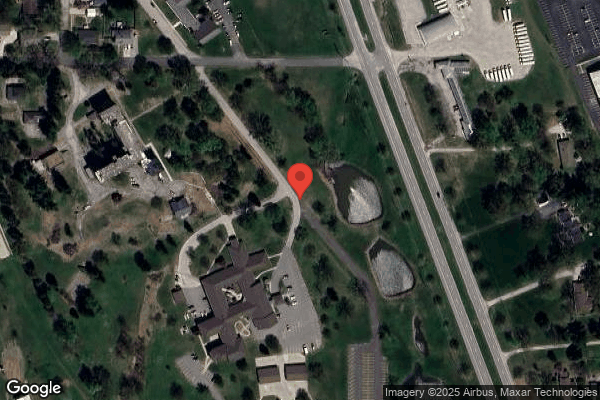
Dec 2019 14 deficiencies
CONCERN (D)

Potential for Harm - no one hurt, but risky conditions existed

Comprehensive Care Plan (Tag F0656)

Could have caused harm · This affected 1 resident

Deficiency Text Not Available

Read full inspector narrative →
Deficiency Text Not Available
CONCERN (D)

Potential for Harm - no one hurt, but risky conditions existed

Quality of Care (Tag F0684)

Could have caused harm · This affected 1 resident

Based on interviews and record review, the facility failed to notify the resident's physician in a timely manner after staff completed a straight catheter (Straight catheter is a small hollow, flexibl...

Read full inspector narrative →
Based on interviews and record review, the facility failed to notify the resident's physician in a timely manner after staff completed a straight catheter (Straight catheter is a small hollow, flexible tube used to empty urine from the bladder intermittently that may be inserted into the urethra) without a physician's order and noted tea colored urine. This affected Resident #77, who eight days later, admitted to the hospital with a diagnosis of urinary tract infection (UTI) and sepsis (a potentially life-threatening condition caused by the body's response to an infection). The facility census was 93. 1. Review of Resident #77's electronic (e-chart) medical record showed: - Nurse's note, dated 9/26/19, Some slight changes in ability to communicate needs, responses delayed, infrequent verbalization, decreased projection of voice. Spoke with a nurse practitioner and asked to decrease depakote, order obtained; - Nurse's note, dated 9/28/19, Resident straight cathed at 9:30 A.M., with 240 cc of tea colored urine; - Nurse's note, dated 10/4/19, Called resident's daughter to notify of weight loss in last 92 days. - Nurse's note, dated 10/6/19 at 12:58 P.M., Resident not able to hold food in mouth, lets the food drip out and did the same with Am medications, resistive with cares, stated wanted temperature taken, 97.0 degrees F. Has copious amount of phlegm. Fax left in primary care physician notebook to notify of today's issue; - Nurse's note, dated 10/6/19 at 6:31 P.M., at 5:00 P.M., called to resident's room as nurse aide tried to get resident up for meal. Resident unresponsive. Order received to send resident to area hospital; - Review of the hospital urinalysis report, ran 10/6/19, showed bacteria consistent with urinary tract infection; - Review of the hospital Clinical Summary, dated 10/16/19, showed discharge diagnoses of sepsis and severe sepsis with septic shock. - Nurse's note dated 10/16/19, showed the facility readmitted the resident to the facility. During an interview on 12/13/19 at 11:29 A.M., the Administrator said: - Between 9/28/19 and 10/6/19 we did complete a chest xray trying to find out why the resident was not feeling well; - After the straight cath, a procedure the nurse did not have a physician's order to do, we did not follow up with a urinalysis after the nurse noted tea colored urine. During an interview on 12/13/19 at 5:03 P.M., the Director of Nurse's said: - Staff had searched and could not find a physician order for the straight cath performed on the resident on 9/28/19; - Staff should have a physician's order for every procedure or treatment; - Staff should have followed up with the a urinalysis after he/she noted tea colored urine; - When staff noted some slight changes in the resident's condition on 9/26/19, staff should have performed and documented a complete assessment, notified physician and family, and passed the information on to the next shift for follow up.
CONCERN (D)

Potential for Harm - no one hurt, but risky conditions existed

Deficiency F0688 (Tag F0688)

Could have caused harm · This affected 1 resident

Deficiency Text Not Available

Read full inspector narrative →
Deficiency Text Not Available
CONCERN (D)

Potential for Harm - no one hurt, but risky conditions existed

Incontinence Care (Tag F0690)

Could have caused harm · This affected 1 resident

Deficiency Text Not Available

Read full inspector narrative →
Deficiency Text Not Available
CONCERN (E)

Potential for Harm - no one hurt, but risky conditions existed

Resident Rights (Tag F0550)

Could have caused harm · This affected multiple residents

**NOTE- TERMS IN BRACKETS HAVE BEEN EDITED TO PROTECT CONFIDENTIALITY** Based on observation, interview and record review, the facility failed to ensure staff treated residents with dignity and respec...

Read full inspector narrative →
**NOTE- TERMS IN BRACKETS HAVE BEEN EDITED TO PROTECT CONFIDENTIALITY** Based on observation, interview and record review, the facility failed to ensure staff treated residents with dignity and respect when residents received their meals near the end of the meal service, after other residents who came to the dining room after them; staff talked to residents in an undignified manner; failed to pull the privacy curtain during resident care; and assisted residents with eating in an undignified manner when staff stood up while they fed residents. This affected two of 20 sampled residents (Residents #31, #43) and Residents #76, #68, and #54. The facility census was 93. Review of the undated booklet, Resident Rights for Long-Term Care in Missouri, which included a list of rights provided to each resident upon admission to a long-term care facility, showed: -You may voice concerns and problems, along with recommended changes, to facility staff or outside representatives, and owners and staff of the facility are prohibited by law from retaliating. -You have the right to privacy in medical treatment and personal care. -You should be treated with consideration and respect, with full recognition of your dignity and individuality. 1. Review of Resident #31's quarterly Minimum Data Set (MDS), a federally mandated assessment instrument completed by facility staff, dated 10/14/19, showed: -Cognitively intact; -Required extensive assistance for all care except eating. Review of the resident's care plan, last updated by facility staff on 10/17/19, showed: -Alert and oriented and able to communicate his/her wants and needs; -Aware that he/she can verbally voice concerns or fill out a grievance form is he/she has any issues; -Will choose what he/she wants to eat each meal, within his/her diet. Observation and interview in the main dining room, on 12/10/19, between 11:45 A.M. and 12:16 P.M., showed, and the resident said: -11:45 A.M.-the resident waited for his/her meal at a table with several other residents. -12:11 P.M.-most of the other residents in the dining room received their meals, but the resident continued to wait to receive his/her meal. The resident said this occurred all of the time. Staff started serving at the other end of the dining room and the residents at his/her table received their meals later, even though they came to the dining room around 11:00 A.M., before the other residents arrived. -He/she and another resident said that dietary staff served them last to retaliate against them for speaking up about food issues, such as when they ran out of food, or served cold food. -12:15 P.M.-Received his/her meal, which was a hamburger on bread, rather than on a bun as he/she ordered. 2. Review of Resident #76's quarterly MDS, dated [DATE], showed: -Cognitively intact; -Independent for all care. Review of the resident's care plan, initiated on 8/22/19, showed: -Able to choose what he/she wants to eat and is able to feed him/herself; -Had strong food preferences and may prefer foods such as sandwiches, hotdogs, hamburgers, etc.; -Aware he/she can voice concerns verbally or fill out a grievance form. Observation and interview on 12/10/19, between 11:45 A.M. and 12:15 P.M., showed, and the resident said: -11:45 A.M.-the resident waited for his/her meal at a table with several other residents. -12:11 P.M.-most of the other residents in the dining room received their meals, but the resident continued to wait to receive his/her meal. The resident said this occurred all of the time. Staff started serving at the other end of the dining room and the residents at his/her table received their meals later, even though they came to the dining room around 11:00 A.M., before the other residents arrived. -He/she and another resident said that dietary staff served them last to retaliate against them for speaking up about food issues, such as when they ran out of food, or served cold food. -12:15 P.M.-received his/her meal, which was a hamburger on bread, rather than a bun. He/she removed the bread and ate the hamburger without it. 3. Review of Resident #54's quarterly MDS, dated [DATE], showed: -Cognitively intact; -Extensive assistance for personal care; -Eats independently. Observation on 12/10/19, between 11:45 A.M. and 12:20 P.M., showed: -11:45 A.M.-at a table in the main dining room waiting for his/her meal along with three other residents; -At 12:10 P.M. and 12:17 P.M., two of the other residents received their meals; -12:20 P.M.-staff told the resident and a fourth resident, who arrived after 11:45 A.M., that their soup would be ready in about three minutes. During an interview on 12/11/19 at 8:28 A.M., the resident said his/her table was always the last one served meals in the dining room. 4. Review of Resident Council meeting minutes, dated10/28/19, showed a resident voiced the following dietary concerns: -He/she did not feel dietary staff cared about the residents, as shown by the mistakes they made, and they, just throw anything on a plate. -He/she did not feel some of the dietary staff liked him/her and other residents at his/her meal table because the residents complained all of the time. -We're getting tired of eating slop. Review of the Resident Council response form for the dietary department issues, signed by the Dietary Manager (DM) on 11/19/19, showed the following response to the resident's dietary issues voiced during the 10/28/19 meeting: -We do care about our residents, we all make mistakes, and I do not think our food is slop. -We get compliments daily out our food. During a group resident interview on 12/10/19 at 2:27 P.M., residents said the following: -Resident #31 said he/she requested a double cheeseburger and staff told him/her they would have to see if they had enough. A resident at a nearby table then requested one and received a double cheeseburger, but Resident #31 did not. He/she felt that staff retaliated in this way if he/she complained about the food. -Another resident, who did not eat at Resident #31's table, said he/she overheard dietary servers make negative comments about the residents at Resident #31's table; -It depended on the staff as to whether they were treated with dignity and respect. 5. Observation on 12/13/19 at 12:20 P.M., showed the DM talked with Resident #31 and Resident #76 about evening (HS) snacks in the following manner: -The DM spoke quite loudly, which caught the surveyor's attention. -Both residents said they were not offered HS snacks every evening. -The DM asked if the residents were in the activity room the previous night, and they said they were, then the DM said staff probably offered the snacks when they were out of their rooms, even though the residents said that staff did not offer them every evening. -The DM replied that he/she knew staff offered HS snacks and named off several items that dietary sent out as HS snacks. -Resident #31 said he/she needed an HS snack to keep his/her blood sugar from being low in the mornings. -The DM said he/she had a bag of graham crackers in his/her room to eat when his/her blood sugar became low. -The DM asked what his/her blood sugar was and the resident replied that it was 85. -The DM responded that 85 was not a low blood sugar. During an interview on 12/13/19 at 2:26 P.M., the DM said: -Dietary servers tried to take resident orders as they came to the dining room, they placed those on the top, then they placed the remainder of the orders on the bottom-first come, first serve. -Residents #31 and #76 made previous comments that they were served last, and videos reviewed by the administrator showed this was not true. -The residents were served last at times, but not all of the time. -He/she instructed dietary servers to make sure they did not serve these residents last all of the time. -They always followed-up with residents related to food concerns. -They followed-up with meal concerns voiced in Resident Council meetings during the meeting the following month. -He/she told residents how they monitored food service, but had no documentation related to interventions implemented related to resident concerns. -He/she did not get the impression that Resident #76 was frustrated, but Resident #31 did appear somewhat frustrated, which occurred often. -He/she took their complaints seriously, but was out of ideas as to what to do. -He/she denied labeling the residents as troublemakers, and thought he/she spoke in a low voice while in the dining room today. -He/she did not intend to be out of line with either resident, but he/she gets frustrated. During an interview on 12/13/19 at 4:24 P.M., Resident #76 said: -He/she felt the DM did not listen to them and that the DM did not believe them. -The DM did not know what occurred of an evening related to HS snacks, because he/she was not in the facility in the evenings. -The DM just did not listen to them; - He/she did not think it was right how the DM talked to them about it today. During an interview on 12/13/19 at 4:22 P.M. Resident #31 said of the conversation with the DM: - It made him feel like they lied; - They tried to make them feel like they were not sane, like they try to control your mind; - That was an example of feeling like he/she was not treated with dignity and respect; - Dietary staff did not like the residents at his/her table . 6. Review of Resident #43's quarterly MDS, dated [DATE], showed: -Cognitively intact; -Required extensive assistance for toileting and personal hygiene; -Incontinent of bowel and bladder. Review of the resident's care plan, last updated on 9/9/19, showed; -Frequently incontinent of bowel and bladder; -Required assistance of two staff for toileting and incontinence care. Observation on 12/12/19 at 12:45 P.M., showed Certified Nurse Aide (CNA) B and CNA C provided care for the resident in the following manner: -Staff shut the room door, but did not pull the privacy curtain. -Staff uncovered the resident, removed his/her brief and provided peri care to the front genital area. -Someone knocked on the door, staff called out, Resident care, and the door opened a small amount, which showed the resident naked on the bed. -When the door opened, the resident said, Oh! Oh! -Staff hurried to the doorway and pulled the curtain. 7. During an interview on 12/13/19 at 5:03 P.M., the Director of Nurses (DON) said: -Staff received in-services related to how they should speak to residents. -Staff are instructed to treat residents with dignity and respect, like they would treat a family member. -It is not acceptable for staff to raise their voice to a resident, or to insist that a situation has or has not occurred that a resident says occurred/did not occur. -Staff should not make residents feel as though staff do not listen to them. -Staff should pull the privacy curtain, as well as shut the door in resident's rooms, when they provide personal care. 8. Review of the facility's Policy for Feeding the Resident, dated 1/30/15, did not direct staff to sit at eye level when assisting the resident with his/her meal. 9. Observation of the noon meal on 12/10/19 from 11:53 A.M. until 12:03 P.M., showed Certified Nurse Aide (CNA) A assisted three residents at the dining room assist table. At 11:53 A.M., CNA A stood beside the male resident at the table and gave him a couple bites of his pureed lunch. CNA A proceeded around to the other side of the dining room table and assisted Resident #68, asked if the resident was eating and walked to the third resident at the table where he/she sat down and gave that resident one bite of food, then walked back to the side of the male resident at the table, stood and gave him two bites of food. At 11:57 A.M., CNA A stood beside Resident #68 and gave him/her a couple bites of food. As CNA A walked around the table, he/she picked up the other female's spoon and gave her a bite of food, then walked on past and back beside the male resident and fed him a couple bites. At 11:59 A.M., CNA A spoke to one of the female residents and told her to open her eyes, CNA A back to the female resident's side, remained standing and gave the resident a bite of food. At 12:01 P.M., CNA A left the dining room and entered a small room beside the dining room, where he/she returned from carrying a pair of gloves. CNA A sanitized his/her hands, put on the gloves, walked back over by the male resident and gave him a drink of water and a bite of food, walked over to the side of Resident #68 and started feeding him/her. 10. Review of Resident #68's annual MDS dated [DATE] showed: - Severe cognitive impairment; - Required supervision, oversight, encouragement or cueing for eating. Observation on 12/12/19 8:09 A.M. showed Certified Nurse Aide (CNA) E assisting two residents at one end of the table, seated, then walked to the other end of the table and assisted Resident #68 with eating, standing up over the resident, feeding him/her. CNA was observed doing this twice during the observation. 11. During an interview on 12/18/19 at 12:20 P.M., CNA A returned a telephone call and said: - He/she knew to sit and assist the residents with their meals, should be at their eye level; - He/she often had to move around during meals to assist staff because there was not enough staff in the dining room to help assist the residents who needed assistance. During an interview on 12/13/19 at 5:03 P.M. the Director of Nursing (DON) said: - Staff should sit when assisting residents with their meals and they should not go from one resident to another.
CONCERN (E)

Potential for Harm - no one hurt, but risky conditions existed

Deficiency F0578 (Tag F0578)

Could have caused harm · This affected multiple residents

Based on interview and record review, the facility failed to ensure staff obtained appropriate documentation for advance directives before allowing another person to sign documents for health care dec...

Read full inspector narrative →
Based on interview and record review, the facility failed to ensure staff obtained appropriate documentation for advance directives before allowing another person to sign documents for health care decisions for residents. This affected 3 of 20 sampled residents (Residents #81, #18 and #21). The facility census was 93. 1. Review of the facility's Policy for Advance Directives, revised 12/16, showed: - Advance Directives will be respected in accordance with state law and facility policy; - Upon admission, the resident will be provided written information concerning the right to refuse or accept medical or surgical treatment and to formulate an advance directive if he or she chooses to do so; - If the resident is incapacitated and unable to receive information about his or her right to formulate an advance directive, the information may be provided to the resident's legal representative; - Prior to or upon admission of a resident, the Social Service Director or designee will inquire of the resident, his/her family members and/or legal representative, about the existence of any written advance directives; - The nurse will be required to inform emergency medical personnel of a resident's advance directive regarding treatment options and provide such personnel with a copy of such directive (OHDNR, outside the hospital do not resuscitate) when transfer from the facility via ambulance or other means is made. 2. Review of Missouri Revised Statue 404.825 showed: -Unless the patient expressly authorizes otherwise in the power of attorney, the powers and duties of the attorney in fact to make health care decisions shall commence upon a certification by two licensed physicians based upon an examination of the patient that the patient is incapacitated and will continue to be incapacitated for the period of time during which treatment decisions will be required and the powers and duties shall cease upon certification that the patient is no longer incapacitated. One of the certifying physicians may be the patient's attending physician. The certification shall be made according to accepted medical standards. The determination of incapacity shall be periodically reviewed by the attending physician. The certification shall be incorporated into the medical records and shall set forth the facts upon which the determination of incapacity is based and the expected duration of the incapacity. Other provisions of this section to the contrary notwithstanding, certification of incapacity by at least one physician is required. 3. Review of Resident #81's Durable Power of Attorney for health care decisions (DPOAHC), signed by the resident and notarized on 8/7/19, showed: -Named an agent to make health care decisions when unable to make decisions or communicate his/her wishes; -Authorized the agent to make these decisions when and only when, a physician certified that he/she cannot make decisions or communicate what he/she wanted done; -Included a space for the resident to initial if he/she desired to require only one physician to make such certification; -This space was left blank, which indicated that two physicians were required in order for the agent to make health care decisions for the resident. Review of the resident's certification of incapacity form, dated 9/5/19, showed: -The resident was unable to make health care decisions and communicate them due to impaired cognitive status. -One physician signed the form. Review of the resident's Outside the Hospital Do Not Resuscitate (OHDNR-form indicating that the resident did not want staff to perform heart compressions or breathing if his/her heart and/or breathing stopped) order form showed the agent signed in place of the resident on 9/5/19. Review of the resident's care plan, last updated by facility staff on 9/16/19, showed: -I have dementia that has affected my memory and thinking and am sometimes able to tell you my wants and needs. -My primary care physician (PCP) declared me incompetent to make my own decisions, as I am confused much of the time. -My DPOA agent will take care of all of my health care decisions. Review of the resident's quarterly Minimum Data Set (MDS), a federally mandated assessment instrument completed by facility staff, dated 11/20/19, showed: -Required extensive assistance for most care; -Had a BIMS (brief interview for mental status) score of 8 (8-12 indicates moderate cognitive impairment); -Diagnoses included dementia. Review of the resident's December 2019 physician order sheet (POS) showed an order dated 9/16/19 for a DNR (Do Not Resuscitate) code status. During an interview on 12/13/19 at 3:10 P.M., the social services designee said: -The resident's DPOAHC indicated that two physicians needed to verify incapacity in order for the DPOA agent to make health care decisions for the resident. -He/she did not find a second verification of incapacity for the resident. 4. Review of Resident #18's medical electric (E-chart) record showed: - The resident's DPOA signed an OHDNR on 9/25/19; - One physician signed a verification of incapacitation on 9/25/19; - The second physician signed the verification of incapacitation on 10/4/19. 5. Review of Resident #21's medical electric (E-chart) record showed: - A guardian was appointed for the resident on 3/17/09; - The resident signed his/her OHDNR on 2/8/18. 6. During an interview on 12/13/10 at 8:37 A.M., the Social Service Director (SSD) said: - He/she checked the status of the resident's DNRs during quarterly and annual assessments; - On admission, he/she checked the resident's code status, if they had a DNR at the hospital, he/she requested a copy of it; - He/she checked the OHDNRs to make sure they were signed appropriately by the right person; - He/she made sure the verification of incapacitation was in place before the durable power of attorneys were allowed to sign the OHDNR; - The two physicians should both sign the verifications of incapacity before the facility allowed the power of attorney to sign the OHDNR; - After a person had been deemed incapable of making health care decisions by the physicians, they should not be asked to sign their OHDNRs. 7. During an interview on 12/13/19 at 5:03 P.M., the Director of Nurses (DON) said: -There should be a purple DNR form in each resident's chart who chose a DNR code status. -The DNR form should contain correct information and should be signed by the correct person. - She had no idea how or why the facility had Resident #21 sign his/he own OHDNR. -Staff should obtain appropriate verification of incapacity before they allow the DPOA agent to sign a DNR. -Staff should determine if the advance directive requires verification of incapacity by one or two physicians before the DPOA agent can make health care decisions or sign health care documents.
CONCERN (E)

Potential for Harm - no one hurt, but risky conditions existed

Deficiency F0658 (Tag F0658)

Could have caused harm · This affected multiple residents

**NOTE- TERMS IN BRACKETS HAVE BEEN EDITED TO PROTECT CONFIDENTIALITY** 8. Review of resident #27's quarterly Minimum Data Set (MDS), a federally mandated assessment tool completed by facility staff, ...

Read full inspector narrative →
**NOTE- TERMS IN BRACKETS HAVE BEEN EDITED TO PROTECT CONFIDENTIALITY** 8. Review of resident #27's quarterly Minimum Data Set (MDS), a federally mandated assessment tool completed by facility staff, dated 10/9/19 showed: - Date of admission [DATE]; - Cognitively intact; - Coughed or choked during meals or when swallowing medications; Review of the resident's December Physician Orders Sheet (POS) included the following order: - Regular diet, Pureed texture, Nectar Thick Liquids, start date 12/2/19. Review of the resident's care plan dated 7/11/19 showed the resident was on a pureed diet with nectar thickened liquids due to risk of aspiration. Observation and interview on 12/10/19 at 9:49 A.M. showed: - The resident did not have any cups of water in his/her room; - The resident said he/she gets his water from his/her sink using a denture case; - There was no magnets at the resident's door signifying he/she required thickened liquids. Observations on 12/11/19 and 12/12/19 at various times showed the resident had a large reusable cup of water in his/her room room. Observation on 12/12/19 at 2:53 P.M. showed Nurse Aide (NA) A checked the resident's water while he/she was passing ice to other residents. During an interview on 12/12/19 at 2:56 P.M. NA A said staff check ice at the beginning of each shift, then as needed. Observation on 12/13/19 at 10:19 A.M. showed the Resident was laying in bed sleeping, there was no water in his/her room. During an interview on 12/13/19 at 10:49 A.M. Certified Nurse Aide (CNA) G said: - Night staff were supposed to bring clean water cups to resident each night; - Day shift staff pass ice after breakfast, and if they do not have a cup then they can go get a cup; - Resident #27 was on nectar thick liquids. Resident with thickened liquids orders were asked twice a shift is they were thirsty; - Thickened liquids were given a smaller, disposable, plastic cup because if the liquid sits too long then it would get too thick; - Usually there was a label on door picture that signified the resident was to receive thickened liquids, he/she said resident #27 not have a label on his/her door; - The resident should not get large cups of water to have in his/her room. 9. During an interview on 12/13/19 at 5:03 P.M. the Director of Nursing (DON) said: - Residents with thickened liquids orders should be given liquids with their meals, when ice is passed, and on request; - They should not get regular water when they have orders for nectar thickened liquids; - There should be a magnet on residents' doors who have orders for thickened liquids. Based on observation, record review and interviews, the facility staff failed to ensure they provided care and treatment in accordance with professional standards of practice. Staff failed to follow facility policy and manufacturer's guidelines when administering insulin, medicated eye drops, nasal spray and inhalers. Staff failed to follow physician orders. This affected six residents (Resident's #44, #42, #59, #58, #36, and #27). The facility census was 93. 1. Review of the facility Policy for Administration of Oral Inhalations, dated 5/16 showed: - Press down on inhaler once to release medication as resident starts to breathe in slowly through the mouth over three to five seconds; - Hold breath for five to ten seconds or as long as possible to allow medication to reach deeply into lungs; - Slowly exhale Review of the facility Policy for Nasal Administration, dated 9/10, showed: - Have resident gently blow nose to clear the nostrils; - Shake the medication container well; - Press a finger against the side of the nose to close one nostril and lean the head slightly forward so spray will aim forward the back of the nose; - Have resident sniff gently in through the open nostril while pump or inhaler is quickly and firmly squeezed or activated. Review of the facility's undated guidelines, How to Use a FlexPen, did not direct staff to wipe clean the port of the FlexPen before applying a new needle. Review of www.meds.com showed staff should gently shake Timolol prior to administration, and should apply gentle pressure to the inner corner of the eye for at least one minute to prevent the medication from seeping down into the tear duct. 2. Review of Resident #44's current physician order sheet (POS), dated December, 2019, showed the physician ordered: - HumaLog 100 units/milliliter (ml) Kwikpen: Give 12 units before meals. Observation on 12/12/19 at 7:28 A.M., showed Licensed Practical Nurse (LPN) A complete an accu (blood sugar) check on the resident. He/she then returned to the medication cart and retrieved the Humalog FlexPen and a new insulin needle from the medication cart and removed the cap of the FlexPen. He/she attached the new insulin needle to the FlexPen and without without cleaning the port with an alcohol wipe the pen then dialed up and administered 12 units of HumaLog. 3. Review of Resident #42's current physician order sheet (POS), dated December, 2019, showed the physician ordered: - Levimir FlexTouch 100 units/ml: Give 10 units every AM; - NovoLog 100 units/ml Flexpen: administer 14 units before meals. Observation on 12/12/19 at 7:43 A.M., showed LPN A completed an accu check on the resident. He/she then returned to the medication cart retrieved the NovoLog FlexPen, Levimir FlexTouch pen and new insulin needles from the medication cart and removed the cap of the pens. Without cleaning either port with an alcohol pad, he/she applied the new needles and administered ten units of Levimir and 14 units of NovoLog . 4. Review of Resident #59's current physician order sheet (POS), dated December, 2019, showed the physician ordered: - Advair 250-50 Diskus, one puff twice a day. Rinse mouth after each dose; - Incruse Ellipta 62.5 microgram (mcg), one puff daily. Observation on 12/12/19 at 7:48 A.M., showed LPN A retrieved two inhalers from the medication cart. Without any instruction to the resident, he/she handed first the Incruse Ellipta to the resident who inhaled twice from the inhaler, exhaling immediately after each. Without waiting any amount of time, LPN A handed the Advair diskus inhaler to the resident again with no instructions to the resident The resident held the inhaler close to his/her mouth, inhale and with return breath immediately exhaled twice. LPN A did not instruct the resident with either inhaler to attempt to hold his/her breath as long as possible 5. Review of Resident #58's current physician order sheet (POS), dated December, 2019, showed the physician ordered: - Tobramycin eye drops: one drop in both eyes four times a day for seven days. Observation on 12/12/19 at 7:53 A.M. Certified Medication Technician (CMT) B asked the resident if he/she wanted to pull down his/her lower eyelid to form a pocket. The resident pulled down his/her lower eye lid and without first gently shaking the medicated eye drop, CMT placed a drop into each of the resident's eyes and then handed the resident a tissue to dab his/her cheeks with if any of the medication ran out of the eye. CMT B did not apply any gentle pressure to the inner corner of the resident's eyes. 6. Review of Resident #36's current physician order sheet (POS), dated December, 2019, showed the physician ordered: - Flonase 50 mcg one spray each nostril daily. Observation on 12/12/19 at 8:12 A.M., showed CMT B handed a tissue to the resident and asked him/her to blow his/her nose. Without occluding the opposite nostril, CMT B administered one spray into each nostril. 7. During an interview on 12/12/19 at 10:05 A.M., CMT B said: - He/she did not he/she should close one nostril when he/she administered nasal spray in the other nostril; - He/she did not know if he/she should shake medicated eye drops before administering them to the resident; - He/she should not apply gentle pressure to the inner corner of the eye because that would block the duct the medication needed to go in; - Resident #59 did his/her own inhaler, he/she did not give him/her instructions how to do it. During an interview on 12/12/19 at 10:08 A.M., Licensed Practical Nurse (LPN) said: - It would make sense to clean the insulin pen rubber port with an alcohol wipe before putting a new needle on the pen, but nobody had ever mentioned that to him/her; - He/she was relatively new to using flexpens. During an interview on 12/13/19 at 5:03 P.M., the Director of Nurses said: - She expected staff to roll or shake medicated eye drops before administering them; - She expected staff to apply lacrimal (inner corner of the eye) pressure after administering eye drops; - She expected staff to give all needed instructions to all residents during the administration of inhalers, nasal sprays, or eye drops; - She expected staff to follow facility policies and manufacturer's guidelines. Staff should have occluded the one nostril when they administered nasal spray in the there nostril; - She expected staff to clean the FlexPen ports before applying new needles.
CONCERN (E)

Potential for Harm - no one hurt, but risky conditions existed

ADL Care (Tag F0677)

Could have caused harm · This affected multiple residents

**NOTE- TERMS IN BRACKETS HAVE BEEN EDITED TO PROTECT CONFIDENTIALITY** 6. Review of Resident #45's quarterly MDS, dated [DATE], showed: -Total dependence on staff for all care; -Incontinent of bowel ...

Read full inspector narrative →
**NOTE- TERMS IN BRACKETS HAVE BEEN EDITED TO PROTECT CONFIDENTIALITY** 6. Review of Resident #45's quarterly MDS, dated [DATE], showed: -Total dependence on staff for all care; -Incontinent of bowel and bladder. Review of the resident's care plan, last updated on 10/31/19, showed: -Required two-person assistance for toileting and peri care needs; -Check frequently for incontinence and assist with peri care as needed. Observation on 12/12/19 at 9:39 A.M., showed CNA B and CNA A provided incontinent care for the resident in the following manner as the resident lay in bed; -Both washed their hands and put on gloves. -Staff removed the resident's covers. -CNA A cleansed each groin and each inner thigh with clean wash cloths for each wipe, wiped over the top of the front genital area, but did not separate and cleanse between the skin folds. -CNA A removed his/her gloves, washed his/her hands and put on new gloves, then both staff turned the resident to his/her side. -CNA B cleansed the resident's backside, both staff removed their gloves, washed hands and put on new gloves, then positioned the resident on his/her side. During an interview on 12/12/19 at 2:16 P.M., CNA A said staff should separate and cleanse between the front genital skin folds during incontinent care. They should wipe once on each side between the skin folds, then down the middle. 7. During an interview on 12/13/19 at 5:03 P.M., the director of nurses (DON) said: -One wipe over the top of the front genital area is not sufficient peri care. -Staff should separate and cleanse between the front genital skin folds, and continue wiping if not visibly clean. -Staff should cleanse the entire backside of an incontinent resident and any place that touched urine or fecal material. -Staff should always cleanse the front genital area with incontinent care. Based on observation, record review and interview the facility failed to ensure four of 20 sampled residents who required staff assistance (Resident #18, #21, #44 and #45) received complete perineal care. The facility census was 93. 1. Review of the facility's policy for Perineal Care, revised 10/10, showed: - Wash peri area washing front to back; - Separate the peri area washing from front to back moving from inside outward; - Do not reuse the same washcloth to clean inner perineal folds; - Assist the resident to turn to the side and wash the rectal area thoroughly. 2. Review of Resident #18's care plan, dated 9/25/19, showed: - The resident needs two staff assist with toilet use and peri care as needed. Review of the resident's Minimum Data Set (MDS), a federally mandated assessment instrument completed by facility staff, dated 9/26/19, showed: - Impaired decision making skill; - Required extensive assistance of staff for toilet use and personal hygiene; - Always incontinent of bowel and bladder; - Diagnoses included stroke, dementia and hemiplegia. Observation on 12/12/19 at 9:00 A.M., showed Certified Nurse Aide (CNA) F and CNA I transferred the resident from his/her wheelchair to bed. CNA I provided perineal care in the following way: - Used one wash cloth for each wipe and wiped down the right and left groin and without thoroughly manipulating and opening the perineal fold, wiped twice down the center of the perineal fold; - Assisted CNA F to roll the resident on his/her side and removed fecal matter with two wiped from the rectum to the coccyx; - He/she then wiped one hand width on each buttock. CNA I did not clean the pubis area, entire buttock or thoroughly clean the perineal folds. 3. Review of Resident #21's MDS, dated [DATE], showed: - Impaired decision making skill; - Required extensive assistance of staff for toilet use and personal hygiene; - Always incontinent of bowel and bladder; - Diagnosis of dementia. Review of the resident's care plan, dated 9/21/19, showed: - The resident needs assistance of staff for toilet use peri care and brief changes. Observation on 12/12/19 at 10:16 A.M., showed CNA I transferred the resident from his/her wheelchair to the toilet. The resident urinated in the toilet then CNA I used a clean washcloth with each wipe. CNA I stood to the side and slightly behind the resident, reached forward from behind wiped twice. CNA I did not thoroughly manipulate and clean the resident's perineal area or buttocks. 4. Review of Resident #44's MDS, dated [DATE], showed: - Impaired decision making skill; - Required extensive assistance of staff for toilet use and personal hygiene; - Always incontinent of bowel and bladder; - Diagnoses included heart failure and diabetes mellitus. Review of the resident's care plan, dated 10/30/19, showed: - The resident needs assistance of staff with toilet use, peri care and brief changes. Observation on 12/12/19 at 8:19 A.M., showed CNA D and CNA G transferred the resident from wheel chair to bed with a mechanical lift. Staff provided peri care in the following way: - Staff removed a wet brief and CNA G partially cleaned (the top side of) the perineal fold; - Staff assisted the resident to roll to his/her side and CNA G wiped once from the rectum to coccyx area ad once hand width swipe on each buttock. CNA G did not wash pubis area, perineal fold, or entire buttocks. 5. During an interview on 12/12/10 at 2:55 P.M., CNA I said: - Clean the dirtiest first; - Wash down each groin area then open and down the center; - It is difficult to know a resident is clean when you do peri care while they are standing.
CONCERN (E)

Potential for Harm - no one hurt, but risky conditions existed

Accident Prevention (Tag F0689)

Could have caused harm · This affected multiple residents

Based on observation, record review, and interviews, the facility failed to monitor residents to ensure they followed the facility's smoking policy when one resident (Resident #59) had a lighter in hi...

Read full inspector narrative →
Based on observation, record review, and interviews, the facility failed to monitor residents to ensure they followed the facility's smoking policy when one resident (Resident #59) had a lighter in his/her room. Addtionally, staff failed to monitor safe water temperatures. The facility census was 93. Review of the facility's policy titled Smoking Policy, Resident, Employee, and Visitors, dated 10/16/19 included the following: - All tobacco products that belong to the resident are to be stored in the locked medication room. The staff/medication tech will issue the tobacco products/lighters to the assigned supervisor when the resident is going out to smoke; - No smoking products or lighters of any kind are to be kept in the resident's room at any time. This is a fire safety rule. 1. Review of Resident #59's annual Minimum Data Set (MDS), a federally mandated assessment tool completed by facility staff, dated 10/17/19 showed: - Cognitively intact; - Diagnoses included Bipolar disease, and Schizophrenia; - Did not use tobacco. Review of the resident's December 2019 Physician Orders Sheet (POS) showed the resident was a smoker. Review of the resident's care plan dated 10/17/19 showed the resident smoked with supervision. Review of the resident's smoking evaluation dated 1/22/2019 showed: - The resident was unable to smoke safely; - The resident must be supervised at all times while smoking; - Was unable to safely light his/her cigarette. Review of the resident's Level II evaluation, a comprehensive evaluation conducted by state-designated authority that determines whether an individual has a mental disability or intellectual disability or related condition and determines the appropriate setting for the individual, and recommends what, if any, specialized services and/or rehabilitative services the individual needs, dated 3/22/2009 showed the resident had a history of lighting fires. During observation and interview on 12/11/19 at 9:04 A.M. the resident said: - He/she was a smoker; - The facility kept his/her cigarettes and lighters; - When the resident pulled out his/her dresser drawer to show the surveyor his/her hearing aides, there was a lighter was in the back corner in the drawer; - The resident said he/she found the lighter in the yard. During an interview on 12/13/19 at 9:08 A.M. Certified Nurse Aide (CNA) F said: - Residents were not allowed to keep cigarettes or lighters on them; - Facility staff kept cigarettes and lighting material; - When staff help residents in their resident's room staff check to make sure they do not have any lighting materials. During an interview on 12/13/19 at 9:15 A.M. Licensed Practical Nurse (LPN) B said: - To his/her knowledge, the resident did not have a history of keeping lighting materials; - Residents were not allowed to keep lighting materials; - LPN B later confirmed he/she found a lighter in the resident's dresser drawer. During an interview on 12/13/19 at 9:22 A.M. the Director of Nursing (DON) said: - The resident was not allowed to have lighting materials and the staff make sure he/she did not - She did not know the resident had a lighter. 2. Observation of hot water temperatures, measured at resident accessible faucets on the SCU, on 12/11/19 between 8:21 A.M. and 8:55 A.M., showed the following when measured with the surveyors stem-digital indicating thermometer: - The toilet room lavatory faucet in Resident #74's room measured 118° - 119° F within 20 seconds and 126.8° F at two minutes. - The toilet room lavatory faucet in Resident #69's room measured 118° - 119° F within 10 seconds and 126.8° F at two minutes. - Central bath: Lavatory faucet 124.3° F at one minute and 126.8° F in two minutes; shower head in central bath using a plastic cup as catch basin, 129.2° F at two minutes. During an interview, maintenance worker (MW) A said they liked to keep the temperature of the hot water around 112° - 114° F. He said he had been doing some work in the heater room that supplied the short hall, and it was possible that he had accidentally hit the thermostat switch. During an interview, an unnamed SCU Certified Nurse's Aide (CNA) said the central bath shower was used for all the unit residents. She said aides were trained to put their hands in the shower stream to insure a safe and comfortable temperature for the residents. During an interview, Resident #74, who lived on the short, west hall, said she used the hot water in her room and the temperature was perfect. Review of the TELS hot water temperature log used my maintenance for resident rooms, on 12/11/19, for 10/19 and 11/19, showed temperatures ranging from 110° to 115° F.
CONCERN (E)

Potential for Harm - no one hurt, but risky conditions existed

Respiratory Care (Tag F0695)

Could have caused harm · This affected multiple residents

**NOTE- TERMS IN BRACKETS HAVE BEEN EDITED TO PROTECT CONFIDENTIALITY** 2. Review of resident #17's significant change MDS, dated [DATE] showed: - Date of admission 5/26/17; - On hospice; - Used oxyge...

Read full inspector narrative →
**NOTE- TERMS IN BRACKETS HAVE BEEN EDITED TO PROTECT CONFIDENTIALITY** 2. Review of resident #17's significant change MDS, dated [DATE] showed: - Date of admission 5/26/17; - On hospice; - Used oxygen therapy. Review of the resident's care plan dated 9/12/19 showed the resident's oxygen concentrator wore oxygen at 3 liters per minute (3L) continuously. Review of the resident's December 2019 physician orders sheet (POS) included the following orders: - Clean oxygen machine and change bubbler and bags for equipment weekly; - Oxygen at 3L nasal cannula continuous to keep saturation at 91 percent (%) or higher Observation on 2/11/19 at 8:09 A.M. showed: - The resident was laying in bed, the nasal cannula was on with the oxygen concentrator set at 1.5 Liters per minute; - There was a moderate amount of dust on the filter; - The concentrator between the resident's bed and a corner beside the head of the resident's bed. During an interview on 12/11/19 at 1:23 P.M. Licensed Practical Nurse (LPN) A said: - He/she knew the resident's physician order was for 3 liters per minute - Due to the location of where then concentrator was, he/she could not see what it was set at; - The resident's bed or concentrator needed to be moved so they can better monitor the concentrator. 3. Review of Resident #27's quarterly MDS dated [DATE] showed: - Date of admission 2/23/18; - Diagnoses included Chronic Obstructive Pulmonary Disease (COPD), a lung disease that makes it hard to breathe; - Used oxygen therapy. Review of the resident's care plan dated 7/11/19 showed that the resident's oxygen was ordered for 2L. Review of the resident's December 2019 POS included the following order: - Start date 10/12/18- Oxygen 2L nasal cannula to keep saturation (sat) 91% or higher, every shift; - Change tubing monthly on the first day of the month. Observation on 12/11/19 at 9:16 A.M. showed: -There was no date on tubing for the portable oxygen tank on the resident's wheelchair. Observation on 12/12/19 showed the following: - 7:44 A.M. showed the resident in dining room wearing nasal cannula on his/her portable oxygen tank. The tank fill indicator in was in the red indicating it was empty; - 8:38 A.M. showed the resident was sitting in his/her wheelchair by the North wing nurse station, the tank fill indicator was still in the red; - 8:47 A.M. the Resident wheeled down to his/her room, the tank fill indicator was still in the red; - LPN A came in the room to give the resident his/her inhaler and checked the resident's oxygen level then. left the room; - 9:54 A.M the resident was still in his/her room, wearing the nasal cannula connected to the portable oxygen tank, the fill indicator was still empty. During an interview on 12/12/19 10:17 AM Certified Nurse Aide (CNA) D confirmed the resident's oxygen tank was empty. Observation on 12/13/19 08:53 A.M. showed the resident was sitting by the North wing nurse station, wearing his/her portable oxygen nasal cannula. The tank fill indicator showed it was empty. 4. During an interview on 12/12/19 at 10:03 A.M. Certified Nurse Aide (CNA) D said: -Oxygen tubing changes and cleaning the filters were completed by night time CNA's; - Portable oxygen tanks were checked when the residents get up and then throughout the shift. They were changed out when they were empty. During an interview on 12/13/19 at 5:03 P.M. the Director of Nursing (DON) said: - The amount of oxygen being administered should be according to the physician's orders; - Staff should check portable tanks for their fill level when they put them on the resident to ensure they are full and three or four times each day; - The resident should be taken off the portable tank and put on their oxygen concentrator when they get to their room; - It was not acceptable to have an empty portable oxygen tank connected to a resident; -Filters should be cleaned weekly and as needed if they are dirty between scheduled cleanings; - Oxygen tubing was changed every 30 daysand humidifiers were changed weekly and documented on the electronic Medication Administration Record (MAR) -The tubing and humidifiers should be dated when they are changed; 1. Review of Resident #81's quarterly Minimum Data Set (MDS), a federally mandated assessment instrument completed by facility staff, dated 11/20/19, showed: -Received oxygen therapy; -Diagnoses included asthma/chronic obstructive pulmonary disease (COPD-a disease that obstructs air flow in the lungs and interferes with normal breathing) and respiratory failure. Review of the resident's care plan, last updated 11/21/19, showed the resident received oxygen at 2 liters (L)/nasal cannula (NC). Review of the resident's December 2019 physician order sheet (POS) showed: -Continuous oxygen at 2 L/NC; -Clean machine weekly on Sunday night; -Diagnoses included respiratory failure and pneumonia. Review of the resident's December 2019 nurse electronic medication administration record (e-MAR) showed: -Continuous oxygen at 2 L/NC-titrate (adjust oxygen delivery rate) according to oxygen saturation to keep equal to or greater than 91%; -Clean machine weekly on Sunday nights, which staff initialed on 12/1/19 and 12/8/19. Observations on 12/11/19 and 12/12/19 showed the resident received oxygen at 2 L/NC. Observation on 12/12/19 at 1:02 P.M., showed the filters on each side of the oxygen concentrator were both covered with light gray lent. During an interview on 12/12/19 at 1:24 P.M., Certified Nurse Aide (CNA) C said: -Staff cleaned oxygen concentrator filters once a month and the administrator delegated which shift would clean them. -If staff saw that the filters were dirty between cleanings, they should change or clean them. Based on observation, record review and interview, the facility failed to assure staff provided proper respiratory care when they failed to date oxygen tubing, ensure the filters were clean, and ensure the amount of oxygen being administered were according to physicians orders. This affected three of 20 sampled residents (Resident # 17, #81, #27) The facility census was 93.
CONCERN (E)

Potential for Harm - no one hurt, but risky conditions existed

Unnecessary Medications (Tag F0759)

Could have caused harm · This affected multiple residents

Based on observation, interview and record review, the facility failed to ensure staff administered medications with an error rate of less than 5%. Staff made four errors out of 29 opportunities for e...

Read full inspector narrative →
Based on observation, interview and record review, the facility failed to ensure staff administered medications with an error rate of less than 5%. Staff made four errors out of 29 opportunities for error, resulting in a medication error rate of 13.79%. This affected two of 20 sampled residents (Residents #42, #44) and Resident #22. The facility census was 93. 1. Review of the facility's policy related to nasal medication administration, dated 2007, showed: -Refer to the medication package insert, medication label, or other appropriate reference to determine the correct technique required for administration. -Have the resident gently blow his/her nose to clear the nostrils. -Shake the medication container well and remove the cap from the nozzle. -Insert the tip of the container into the nostril, press a finger against the side of the nose to close one nostril, lean the resident's head slightly forward, and have the resident sniff gently in through the open nostril while the pump or inhaler is quickly and firmly squeezed or activated. Review of the package insert for Flonase nasal spray (a corticosteroid that reduces inflammation and is used to treat nasal allergies) showed the following instructions for use: -Shake the bottle gently then remove the dust cover. -Prime the spray by pressing down and releasing six times until a fine spray appears, if this is a first time use, or if the spray has not been used for a week or more. -Blow your nose. -Close one nostril, tilt your head slightly forward, insert the applicator into the opposite nostril, breath in through your nose, and at the same time, press down firmly and quickly on the applicator. -Repeat the same process in the other nostril, if required. 2. Review of Resident #22's December 2019 physician order sheet (POS) showed: -Administer Flonase nasal spray, one spray to each nostril daily; -Diagnoses included allergic rhinitis (inflammation of the nasal passages). -Observation and interview on 12/12/19 at approximately 9:00 A.M., showed Certified Medication Technician (CMT) A administered the resident's Flonase nasal spray in the following manner, and said: -Sanitized his/her hands and put on gloves; -Shook the Flonase bottle; -Did not have the resident blow his/her nose, did not occlude the opposite nostril during medication administration, and sprayed one spray into each nostril; -Removed his/her gloves and washed his/her hands; -He/she was not aware that staff should have residents blow their nose before Flonase administration or the they should occlude the opposite nostril during administration. During an interview on 12/13/19 at 5:03 P.M., the Director of Nurses (DON) said: -Staff should follow the facility policy and manufacturer's guidelines related to Flonase nasal spray administration. -Staff should have the resident blow their nose prior to administration and occlude the opposite nostril during administration. 3. Review of the facility's undated guideline for How to Use a Flexpen, showed: - Turn the dose selector to select two units; - Press the push button all the way in. The dose selector returns to zero. A drop of insulin should appear at the needle tip. 4. Review of Resident #44's current physician order sheet (POS), dated December, 2019, showed the physician ordered: - HumaLog 100 units/milliliter (ml) Kwikpen: Give 12 units before meals. Observation on 12/12/19 at 7:28 A.M., showed Licensed Practical Nurse (LPN) A complete an accu check on the resident. He/she then returned to the medication cart and retrieved the Humalog FlexPen and a new insulin needle from the medication cart and removed the cap of the FlexPen. He/she attached the new insulin needle to the FlexPen and without priming the pen, dialed up and administered 12 units of HumaLog. 5. Review of Resident #42's current physician order sheet (POS), dated December, 2019, showed the physician ordered: - Levimir FlexTouch 100 units/ml: Give 10 units every AM; - NovoLog 100 units/ml Flexpen: administer 14 units before meals. Observation on 12/12/19 at 7:43 A.M., showed LPN A complete an accu check on the resident. He/she then returned to the medication cart retrieved the NovoLog FlexPen, Levimir FlexTouch pen and new insulin needles from the medication cart and removed the cap of the pens, applied the new needles and without priming the pens administered ten units of Levimir and 14 units of NovoLog. During an interview on 12/12/19 at 10:08 A.M., LPN A said: - He/she had only been trained on priming the flexpen when administering insulin from them the first time; - He/she did not know to waste two units of insulin each time before dialing up the ordered dose of insulin. During an interview on 12/13/19 at 5:03 P.M., the Director of nursing said: - She expected staff to prime the insulin pens with two units and continue to do so until a small drop of insulin could be seen at the end of the needle with each administration of insulin with the flexpens.
CONCERN (E)

Potential for Harm - no one hurt, but risky conditions existed

Deficiency F0804 (Tag F0804)

Could have caused harm · This affected multiple residents

2. During a group resident meeting on 12/10/19 at 2:27 P.M., attended by 12 residents, most of the residents said that they received cold food, at some time, during all meals served in the dining room...

Read full inspector narrative →
2. During a group resident meeting on 12/10/19 at 2:27 P.M., attended by 12 residents, most of the residents said that they received cold food, at some time, during all meals served in the dining room and in resident rooms. Scrambled eggs were generally cold. Sometimes residents received room trays quickly, and other times staff stopped and talked to each other in the hallway, then the meals were late and cold. 3. Review of Resident #54's quarterly Minimum Data Set (MDS), a federally mandated assessment instrument completed by facility staff, dated 11/6/19, showed he/she was cognitively intact. During an interview on 12/11/19 at 8:28 A.M., the resident said he/she ate breakfast in his/her room each morning and it was always cold. Some meals in the dining room were also served cold. Based on observation, interview and record review the facility to serve food to residents at a safe and palatable temperature at each meal. The facility census was 93. 1. Review of the Resident Council meeting minutes, dated 10/28/19, showed: -One resident reported that the food is sometimes not hot enough and also noticed that sometimes the steam table was not plugged in. Review of the Resident Council meeting minutes, dated 11/25/19, showed: -The dietary manager's (DM) response related to cold food was a request for residents to notify staff if they notice that the steam table is not plugged in, and that he/she instructed dietary staff to pay attention to this issue. -A resident reported that food was still sometimes cold and that sometimes staff did not serve the meal trays quickly enough after they were filled. -The DM reported that the steam table temperatures were good. Observation of the main dining room on 12/12/19 at 8:15 A.M., showed Dietary [NAME] (DC) A serving the last of the breakfast hall trays, consisting of pancakes, bacon and hot rice cereal, from a steamtable. During an interview, he/she said temperatures of the food items were measured before the meal and after the meal. Review of a temperature chart at the steamtable with columns for breakfast, lunch and dinner, and dated 12/12/19, showed beginning temperatures of: Pancakes - 165° Fahrenheit (F) and bacon - 110° F. DC A said it was hard to get an accurate temperature of the bacon. Temperatures measured by the surveyor of a test tray provided by DC A, at 8:22 A.M., showed the following: Two stacked pancakes - 112.2° F. The surveyor was not able to measure the temperature of the bacon strip with a thermometer, but a taste test showed the bacon strip luke warm.
CONCERN (E)

Potential for Harm - no one hurt, but risky conditions existed

Deficiency F0809 (Tag F0809)

Could have caused harm · This affected multiple residents

Deficiency Text Not Available

Read full inspector narrative →
Deficiency Text Not Available
CONCERN (E)

Potential for Harm - no one hurt, but risky conditions existed

Infection Control (Tag F0880)

Could have caused harm · This affected multiple residents

Based on observation, interview, and record review the facility failed to ensure staff provided care in a manner to prevent infection or the possibility of infection when staff did not change soiled g...

Read full inspector narrative →
Based on observation, interview, and record review the facility failed to ensure staff provided care in a manner to prevent infection or the possibility of infection when staff did not change soiled gloves and wash their hands during incontinent care before they performed clean tasks which affected two of 20 sampled residents (Resident #44 and #18), and failed to ensure they used a clean field during medication administration for Resident #58. The facility census was 93. 1. Review of the facility's policy for Handwashing, revised 8/19, showed: - All personal shall follow the handwashing/hygiene procedures to help prevent the spread of infections to other personnel, residents and visitors; - Wash hands with soap when hands are visibly soiled; - After contact with a resident with infectious diarrhea including, but not limited to infections caused by norovirus, salmonella, shigella and C. difficile; - Use an alcohol-based hand rub containing at least 62% alcohol or soap and water before and after direct contact with residents; - Before moving from a contaminated body site to a clean body site during resident care; - After removing gloves. 2. Review of Resident #18's care plan, dated 9/25/19, showed: - The resident needs two staff assist with toilet use and peri care as needed. Review of the resident's Minimum Data Set (MDS), a federally mandated assessment instrument completed by facility staff, dated 9/26/19, showed: - Impaired decision making skill; - Required extensive assistance of staff for toilet use and personal hygiene; - Always incontinent of bowel and bladder; - Diagnoses included stroke, dementia and hemiplegia. Observation on 12/12/19 at 9:00 A.M., showed Certified Nurse Aide (CNA) F and CNA I transferred the resident from his/her wheelchair to bed. CNA I provided perineal care and without changing gloves or washing hands, walked over to the resident's sink and handled three different bottles of lotion looking for a barrier cream. After not finding the barrier cream, CNA I walked back to the resident's bed and assisted putting the resident's clean brief on before he/she removed gloves and washed hands. During an interview on 12/12/19 at 2:55 P.M., CNA I said: - He/she should always change gloves and wash hands when going from a dirty task to a clean task; - It was never okay to touch clean items with soiled gloves on. 3. Review of Resident #44's MDS, a federally mandated assessment instrument completed by facility staff, dated 10/30/19, showed: - Impaired decision making skill; - Required extensive assistance of staff for toilet use and personal hygiene; - Always incontinent of bowel and bladder; - Diagnoses included heart failure and diabetes mellitus. Review of the resident's care plan, dated 10/30/19, showed: - The resident needs assistance of staff with toilet use, peri care and brief changes. Observation on 12/11/19 at 9:36 A.M. showed CNA E brought a bed pan to the resident's room, did not wash or sanitize hands, gloved, removed the resident's brief and placed the bed pan under resident. CNA E removed his/her gloves and left room to give privacy. CNA E knocked on the resident's door, reentered the room and gloved without washing or sanitizing his/her hands. He/she prepared wet washcloths in the sink as vocational occupations students observed. CNA E removed the bed pan from under the resident who had a large loose bowel movement. CNA E cleaned the resident's buttocks, asked the resident if he/she wanted a brief, opened the closet door and got a brief, Without washing his/her hands he/she changed gloves and put the brief on the resident. He/she removed his/her gloves gathered trash, repositioned the resident up in bed with one of the students, handed the resident his/her call light, gathered dirty linens, bed, pan and trash, lowered the resident's bed and left the room without washing his/her hands. 4. Review of Resident #58's current physician order sheet (POS), dated December, 2019, showed the physician ordered: - Tobramycin eye drops: one drop in both eyes four times a day for seven days. Observation on 12/12/19 at 7:53 A.M. showed Certified Medication Technician (CMT) B entered the resident's room laid the box containing the medicated eye drop on the counter by the sink while he/she washed his/her hands. Laid the box containing medicated eye drops on the top of an over the bed table while he/she administered a eye drop in each eye. Following administration of the eye drops, CMT B replaced the drops back into the container and while speaking with the resident laid the container on a blanket that covered the resident's abdomen. CMT B then picked up the box of eye drops, placed them on the counter while he/she washed his/her hands and then returned the box of eye drops to the medication cart drawer. 5. During an interview on 12/13/19 at 5:03 P.M., the Director of Nurses said staff should: - Wash hands when they enter a resident's room; - Wash hands after dirty tasks before clean tasks; - Wash hands between glove changes and before they leave a resident's room - Staff should always create clean fields in the resident's rooms.
Understanding Severity Codes (click to expand)
Life-Threatening (Immediate Jeopardy)
J - Isolated K - Pattern L - Widespread
Actual Harm
G - Isolated H - Pattern I - Widespread
Potential for Harm
D - Isolated E - Pattern F - Widespread
No Harm (Minor)
A - Isolated B - Pattern C - Widespread

Questions to Ask on Your Visit

  • "What changes have you made since the serious inspection findings?"
  • "What safeguards are in place to prevent abuse and neglect?"
  • "Can I speak with families of current residents?"
  • "What's your RN coverage like on weekends and overnight?"

Our Honest Assessment

Strengths
  • • Licensed and certified facility. Meets minimum state requirements.
Concerns
  • • Multiple safety concerns identified: Federal abuse finding, 3 life-threatening violation(s), $108,048 in fines, Payment denial on record. Review inspection reports carefully.
  • • 65 deficiencies on record, including 3 critical (life-threatening) violations. These warrant careful review before choosing this facility.
  • • $108,048 in fines. Extremely high, among the most fined facilities in Missouri. Major compliance failures.
  • • Grade F (0/100). Below average facility with significant concerns.
Bottom line: This facility has a substantiated abuse finding. Extreme caution advised. Explore alternatives.

About This Facility

What is Laverna Manor Health & Rehabilitation's CMS Rating?

CMS assigns LAVERNA MANOR HEALTH & REHABILITATION an overall rating of 1 out of 5 stars, which is considered much below average nationally. Within Missouri, this rating places the facility higher than 0% of the state's 100 nursing homes. A rating at this level reflects concerns identified through health inspections, staffing assessments, or quality measures that families should carefully consider.

How is Laverna Manor Health & Rehabilitation Staffed?

CMS rates LAVERNA MANOR HEALTH & REHABILITATION's staffing level at 3 out of 5 stars, which is average compared to other nursing homes. Staff turnover is 51%, compared to the Missouri average of 46%.

What Have Inspectors Found at Laverna Manor Health & Rehabilitation?

State health inspectors documented 65 deficiencies at LAVERNA MANOR HEALTH & REHABILITATION during 2019 to 2025. These included: 3 Immediate Jeopardy (the most serious level, indicating potential for serious harm or death), 61 with potential for harm, and 1 minor or isolated issues. Immediate Jeopardy findings are rare and represent the most serious regulatory concerns. They require immediate corrective action.

Who Owns and Operates Laverna Manor Health & Rehabilitation?

LAVERNA MANOR HEALTH & REHABILITATION is owned by a for-profit company. For-profit facilities operate as businesses with obligations to shareholders or private owners. The facility is operated by MO OP HOLDCO, LLC, a chain that manages multiple nursing homes. With 120 certified beds and approximately 60 residents (about 50% occupancy), it is a mid-sized facility located in SAVANNAH, Missouri.

How Does Laverna Manor Health & Rehabilitation Compare to Other Missouri Nursing Homes?

Compared to the 100 nursing homes in Missouri, LAVERNA MANOR HEALTH & REHABILITATION's overall rating (1 stars) is below the state average of 2.5, staff turnover (51%) is near the state average of 46%, and health inspection rating (1 stars) is much below the national benchmark.

What Should Families Ask When Visiting Laverna Manor Health & Rehabilitation?

Based on this facility's data, families visiting should ask: "What changes have been made since the serious inspection findings, and how are you preventing similar issues?" "What safeguards and monitoring systems are in place to protect residents from abuse or neglect?" "Can I visit during a mealtime to observe dining assistance and food quality?" "How do you handle medical emergencies, and what is your hospital transfer rate?" These questions are particularly relevant given the facility's Immediate Jeopardy citations and the substantiated abuse finding on record.

Is Laverna Manor Health & Rehabilitation Safe?

Based on CMS inspection data, LAVERNA MANOR HEALTH & REHABILITATION has documented safety concerns. The facility has 1 substantiated abuse finding (meaning confirmed case of resident harm by staff or other residents). Inspectors have issued 3 Immediate Jeopardy citations (the most serious violation level indicating risk of serious injury or death). The facility has a 1-star overall rating and ranks #100 of 100 nursing homes in Missouri. Families considering this facility should ask detailed questions about what corrective actions have been taken since these incidents.

Do Nurses at Laverna Manor Health & Rehabilitation Stick Around?

LAVERNA MANOR HEALTH & REHABILITATION has a staff turnover rate of 51%, which is about average for Missouri nursing homes (state average: 46%). Moderate turnover is common in nursing homes, but families should still ask about staff tenure and how the facility maintains care continuity when employees leave.

Was Laverna Manor Health & Rehabilitation Ever Fined?

LAVERNA MANOR HEALTH & REHABILITATION has been fined $108,048 across 3 penalty actions. This is 3.2x the Missouri average of $34,159. Fines at this level are uncommon and typically indicate a pattern of serious deficiencies, repeated violations, or failure to correct problems promptly. CMS reserves penalties of this magnitude for facilities that pose significant, documented risk to resident health or safety. Families should request specific documentation of what issues led to these fines and what systemic changes have been implemented.

Is Laverna Manor Health & Rehabilitation on Any Federal Watch List?

LAVERNA MANOR HEALTH & REHABILITATION is not on any federal watch list. The most significant is the Special Focus Facility (SFF) program, which identifies the bottom 1% of nursing homes nationally based on persistent, serious quality problems. Not being on this list means the facility has avoided the pattern of deficiencies that triggers enhanced federal oversight. This is a positive indicator, though families should still review the facility's inspection history directly.