SPRINGFIELD VILLA

1100 EAST MONTCLAIR, SPRINGFIELD, MO 65807 (417) 569-1114
For profit - Limited Liability company 146 Beds JAMES & JUDY LINCOLN Data: November 2025
Trust Grade
30/100
#299 of 479 in MO
Last Inspection: November 2023

Within standard 12-15 month inspection cycle. Federal law requires annual inspections.

Overview

Springfield Villa has received a Trust Grade of F, indicating significant concerns about the quality of care provided. Ranking #299 out of 479 facilities in Missouri places it in the bottom half, and it is #18 out of 21 in Greene County, meaning there are many better options nearby. Although the facility is improving, with a reduction in issues from 13 in 2023 to 10 in 2025, it still has serious concerns, including incidents where residents were not properly supervised, leading to unsafe situations. Staffing is a weakness with a 2/5 rating and 67% turnover, which is concerning as it can affect the continuity of care. However, the absence of fines is a positive note, suggesting that the facility has not been penalized for compliance issues. Specific incidents included a resident falling and potentially injuring their hip due to inadequate monitoring and another resident being pushed to the ground during unsupervised interactions. Overall, while there are areas of improvement, families should carefully consider the risks and challenges associated with this facility.

Trust Score
F
30/100
In Missouri
#299/479
Bottom 38%
Safety Record
High Risk
Review needed
Inspections
Getting Better
13 → 10 violations
Staff Stability
⚠ Watch
67% turnover. Above average. Higher turnover means staff may not know residents' routines.
Penalties
✓ Good
No fines on record. Clean compliance history, better than most Missouri facilities.
Skilled Nurses
⚠ Watch
Each resident gets only 12 minutes of Registered Nurse (RN) attention daily — below average for Missouri. Fewer RN minutes means fewer trained eyes watching for problems.
Violations
⚠ Watch
36 deficiencies on record. Higher than average. Multiple issues found across inspections.
★★☆☆☆
2.0
Overall Rating
★★☆☆☆
2.0
Staff Levels
★★★☆☆
3.0
Care Quality
★★☆☆☆
2.0
Inspection Score
Stable
2023: 13 issues
2025: 10 issues

The Good

  • Full Sprinkler Coverage · Fire safety systems throughout facility
  • No fines on record

Facility shows strength in fire safety.

The Bad

2-Star Overall Rating

Near Missouri average (2.5)

Below average - review inspection findings carefully

Staff Turnover: 67%

21pts above Missouri avg (46%)

Frequent staff changes - ask about care continuity

Chain: JAMES & JUDY LINCOLN

Part of a multi-facility chain

Ask about local staffing decisions and management

Staff turnover is elevated (67%)

19 points above Missouri average of 48%

The Ugly 36 deficiencies on record

3 actual harm
Sept 2025 2 deficiencies
CONCERN (D) 📢 Someone Reported This

A family member, employee, or ombudsman was alarmed enough to file a formal complaint

Potential for Harm - no one hurt, but risky conditions existed

Notification of Changes (Tag F0580)

Could have caused harm · This affected 1 resident

1.Please refer to event ID HP9H-H2, exit date 09/04/25, for citation details. Complaint #2572449 and #2586807

Read full inspector narrative →
1.Please refer to event ID HP9H-H2, exit date 09/04/25, for citation details. Complaint #2572449 and #2586807
CONCERN (D) 📢 Someone Reported This

A family member, employee, or ombudsman was alarmed enough to file a formal complaint

Potential for Harm - no one hurt, but risky conditions existed

Quality of Care (Tag F0684)

Could have caused harm · This affected 1 resident

Deficiency Text Not Available

Read full inspector narrative →
Deficiency Text Not Available
Jul 2025 3 deficiencies
CONCERN (D) 📢 Someone Reported This

A family member, employee, or ombudsman was alarmed enough to file a formal complaint

Potential for Harm - no one hurt, but risky conditions existed

Notification of Changes (Tag F0580)

Could have caused harm · This affected 1 resident

1.Please refer to event ID HP9H-H2, exit date 09/04/25, for citation details. Complaint #2572449 and #2586807

Read full inspector narrative →
1.Please refer to event ID HP9H-H2, exit date 09/04/25, for citation details. Complaint #2572449 and #2586807
CONCERN (D) 📢 Someone Reported This

A family member, employee, or ombudsman was alarmed enough to file a formal complaint

Potential for Harm - no one hurt, but risky conditions existed

Quality of Care (Tag F0684)

Could have caused harm · This affected 1 resident

Deficiency Text Not Available

Read full inspector narrative →
Deficiency Text Not Available
CONCERN (D) 📢 Someone Reported This

A family member, employee, or ombudsman was alarmed enough to file a formal complaint

Potential for Harm - no one hurt, but risky conditions existed

Pressure Ulcer Prevention (Tag F0686)

Could have caused harm · This affected 1 resident

Based on observation, interview, and record review, the facility failed to document regarding identification of potential pressure ulcers, failed to document timely assessment and tracking for potenti...

Read full inspector narrative →
Based on observation, interview, and record review, the facility failed to document regarding identification of potential pressure ulcers, failed to document timely assessment and tracking for potential pressure ulcers, and failed to care plan regarding newly identified possible pressure ulcers. The facility census was 116.Review of the facility policy titled Wound Care and Treatment, undated, showed prevention strategies include on-going skin assessment with weekly documentation of status, minimize dry skin by applying lotion, avoid massage, minimize friction and sheer through proper positioning, transferring, and turning, and develop and implement a method of communication position changing. Review of the facility policy titled Care Area Assessments, dated March 2015, showed the following: -Care area assessments (CAA's) will be used to help analyze data obtained from the MDS and to develop individualized care plans;-CAA's are the link between assessment and care planning;-Triggered care areas will be evaluated by the interdisciplinary team to determine the underlying causes, potential consequences and relationships to other triggered care areas;-Review the triggered CAA's by doing an in-depth, resident-specific assessment of the triggered condition, which includes history taking, physical assessment, gathering of relevant information such as labs or tests and sequencing of clinically significant events;-The problem shall be defined by identifying the implications of the problem and the relationships between risk factors, triggers and problems;-Decisions about the care plan are made;-Document interventions on the care plan. Review showed the facility did not provide a policy regarding assessment of skin and wounds and documentation protocol of those wounds. 1. Review of Resident #1's face sheet (a brief look at the residents personal, incoming information) showed the following: -admission date of 03/02/22;-Diagnoses included Parkinson's disease (a progressive neurodegenerative disorder that primarily affects movement, but also involves non-motor symptoms), dementia (a general term for a decline in mental ability severe enough to interfere with daily life) and palliative care (specialized medical care focused on improving the quality of life for individuals with serious illnesses, like cancer, by managing symptoms and side effects of treatment). Review of the resident's quarterly Minimum Data Set (MDS- a federally mandated assessment tool filled out by facility staff), dated 05/22/25, showed the following: -Cognitively impaired;-Dependent on staff assistance for all activities of daily living (ADL- to include dressing, bathing, transfers, and mobility). Review of the resident's care plan, dated 03/02/22, showed the following: -At risk for skin breakdown, with contractures, impaired mobility, incontinence, and disease processes;-Goal to be free from skin breakdown;-Apply moisture barrier as appropriate;-Check positioning in wheelchair and bed regularly;-Clean and dry skin after each incontinent episode;-During staff assisted showers, note and report any areas of redness/breakdown to the skin. Review of the resident's Physician Order Sheet (POS), dated 06/01/25 through 07/10/25, showed an order, dated 03/14/25, to apply barrier cream to left glute (buttock) two times a day (BID). Review of the resident's shower sheet, dated 06/06/25, showed the resident had redness to bilateral (both) buttocks and the peri-area. Review of the resident's progress notes, dated 06/06/25 through 06/11/25, showed staff did not document regarding the identified redness to the resident's buttocks. Review of the resident's POS dated 06/01/25 through 07/10/25, showed no new physician orders for the identified redness to the resident's buttocks. Review of the resident's care plan showed staff did not update the care plan regarding the identified redness to the resident's buttocks and any new treatments or interventions. Review of the resident's hospice shower sheet, dated 06/30/25, showed the resident had a small open area to the left buttock. Review of the resident's progress notes, dated 06/30/25, showed the resident had a small open area to the coccyx (a small triangular bone at the base of the spinal column). Hospice was notified. Review of the resident's weekly skin assessments showed staff had not completed a skin assessment completed since December 2024. Review of the resident's wound management log, dated 06/30/25, showed staff did not document regarding the discovered wound. Review of the resident's POS, dated 06/30/25 through 07/07/25, showed no new orders for the resident's open area. Review of the resident's progress notes, late entry dated on 07/10/25, at 9:56 A.M., for 07/06/25, at 9:56 A.M., showed the Director of Nursing (DON) observed the resident's area of concern to the right buttock, physician was notified, and new orders were placed. Hospice aware. Review of the resident's wound management log, dated 07/07/25, showed the resident had a stage two (an open wound that involves partial-thickness skin loss, affecting the epidermis and dermis) pressure ulcer to the left buttock, measuring 0.4 centimeter (cm) by 0.4 cm with a 0.1 cm depth. Peri-wound was pink/red and blanchable (skin that turns pale or white when pressed on and then quickly returns to normal when pressure is released.) No drainage present. Review of the resident's July 2025 POS showed an order, dated 07/08/25, to cleanse buttock wound with wound cleanser, apply calcium alginate (alginate dressings are a highly absorptive, non-occlusive dressing made of soft, non-woven calcium alginate fibers derived from brown seaweed or kelp) to the wound bed, and cover with an abdominal pad and tape daily. During an interview on 07/07/25, at approximately 11:20 A.M., Certified Nursing Assistant (CNA)/Shower Aide A, said the following: -Residents are changed every two hours or more often, if needed;-Most residents receive two showers a week;-He/she does give showers to the residents receiving hospice;-Shower aids are expected to document any skin issues onto the resident's shower sheet;-Skin issues would include any redness, open areas, bruising, any changes to the skin, and should be reported to the nurse;-Nurses will do an assessment if there are any reports of skin issues;-He/she has seen a red spot on the resident's coccyx in the past, while assisting with some of the residents personal care;-He/she was unsure of the date, but thinks it was a week, or so, prior to today's date of 07/07/25;-He/she did report the skin redness to the nurse and the nurse did put barrier cream on the resident's bottom. During an interview on 07/07/25, at approximately 11:40 A.M., CNA/Shower Aide B, said the following: -Residents receive showers twice a week, unless they request something different;-Hospice also provides showers;-Shower aides are expected to document any signs of redness, sores, or markings to the skin onto the shower sheet and pass onto the nurse;-If it is bad, the nurse will look right then but if not as bad, may look at it later but within the shift. During an interview on 07/07/25, at approximately 12:00 P.M., the Licensed Practical Nurse (LPN) C said the following: -He/she visits the resident twice a week;-Two aides also come twice weekly and an RN comes once a week;-There is a full-body skin assessment completed weekly;-Has seen there was a small red spot on the resident, but unsure when, as he/she did not do the last couple skin assessments and another nurse had completed;-It would be expected that the wound was assessed and reported to the physician and that nurses are treating the open area, as the physician has prescribed. During an interview on 07/07/25, at approximately 12:50 P.M., the Director of Nursing (DON) said the following: -Either the treatment nurse, or whichever nurse is on the floor, is expected to assess the resident's skin, when there are concerns;-Nurses are usually informed of skin concerns following an aide providing personal care, such as changing an incontinent resident or giving a resident a shower;-Nurses are expected to put barrier cream on the resident twice each shift, to ensure they are continuously assessing, and the aides are to use each time they change the resident;-The size of the open area on the right buttock small, measuring .2x.3, if that large;-The size of the open area on the left buttock is even smaller, measuring .2x.1;-The treatment orders had no date because he/she just added them earlier today. During an interview on 07/10/25, at approximately 10:25 A.M., Nursing Assistant (NA) D, said the following: -If there are any kind of skin concerns, he/she will immediately let a nurse know;-He/she will also turn the resident onto his/her side or in a different position, to relive any pressure;-He/she would expect the nurse to do a skin assessment right away;-He/she has not seen a nurse ignore anything such a skin concerns. During an interview on 07/10/25, at 10:40 A.M., LPN E said the following: -The facility has a treatment nurse Monday through Friday. The staff nurses only complete wound treatments on the weekends;-He/she has cared for the resident. The resident had two small open areas. One to the left buttock and one to the right buttock. At that time the ordered treatment was skin prep to the surrounding skin and barrier cream to the open areas, frequent repositioning, and to be laid down after meals. He/she and his/her staff had those areas healed about a week prior to this date;-He/she was then not scheduled to work for three days and when he/she came back to work, the resident had a large opening to the right buttock;-The treatment to the area has since changed to calcium alginate. They have also implemented a wedge for repositioning the resident;-The DON does the measurements on any open areas, weekly;-Skin assessments are to be completed weekly;-LPN looked in the resident's electronic medical record (EMR) and said the resident had not had a skin assessment completed since December 2024. This is due to the order being put in incorrectly;-The bath aides should also be filling out a shower sheet with any areas of concern, those sheets should be turned into the charge nurse. If a concern is reported, the charge nurse should call the doctor, call the residents family, document, and initiate a treatment;-Wounds and wound treatment should be visible in the resident's care plan. Observation on 07/10/25, at 10:45 A.M., showed the following: -The resident lay on his/her left side in bed. The wound was uncovered. The treatment nurse was in the room to provide wound care;-There was a pinpoint opening to the upper left buttock;-There was an open area to the upper right buttock, approximately larger than a golf ball. At least 25 % slough (non-viable tissue, yellow in color), at least 10 % eschar (non-viable tissue, black in color), with the rest of the tissue appearing to be granulation tissue (red healthy tissue);-Scant (small) amount of bloody drainage when the treatment nurse would cleanse the area. Moderate amount of yellow drainage also observed. No odor. During an interview on 07/10/25, at approximately 10:45 A.M., CNA F said the following:-He/she is unsure who does skin assessments but thinks it is a nurse;-When asked who he/she would report skin concerns to, he/she said the nurse;-He/she thinks nurses do skin assessments weekly. During an interview on 07/10/25, at 11:05 A.M., the DON said the following: -She measures wounds weekly, but is usually a week behind with her documentation and has to backdate the information;-She was told about the wound on 07/07/25 and observed the resident's wounds on that date, at that time the resident had a pea-sized area to the right buttock which was dusky colored with granulation tissue present. Treatment of barrier cream was already in place. That treatment was appropriate for the left side wound, however due to decline of the right buttock wound, the treatment was changed to calcium alginate;-Initially the wound was documented as pressure;-Skin assessments are expected to be completed weekly by the treatment nurse;-If a staff member discovers a new or worsened wound, they should immediately report it to the charge nurse, herself, and notify the physician and/or hospice team;-She measured the wounds as one whole wound which is why she documented it as a wound to the left buttock versus the right. She will update and correct that in the resident's EMR;-Wounds and wound treatment should be found in the care plan. During an interview on 07/10/25, at approximately 11:30 A.M., Licensed Practical Nurse (LPN) G, said the following: -He/she is an MDS coordinator, so he/she will enter information regarding the resident's care, onto the care plan;-The information regarding the resident comes from nurse's assessments, reports from staff, risk management meetings, and wound and therapy reports;-The weekly skin assessments are discussed weekly by all staff at the risk management meetings;-The skin assessments should be completed by the nurses. During an interview on 07/10/25, at approximately 11:55 A.M., Registered Nurse (RN) H, said the following: -He/she was an MDS coordinator;-The ADON or DON should be letting him/her know at the risk management meeting, if there has been a change in condition, for any resident;-The information gets to the ADON or DON from one of the RN's on the floor, who does assessments on residents;-Assessments are to be done weekly;-Any skin issues should be put on the care plan;-When any skin integrity issues are brought to his/her attention, the problem, interventions or treatments and goals are set, as well as following the progress of the healing and updating, as needed. During an interview on 07/10/25, at approximately 12:35 P.M., RN I said the following: -He/she is an RN and also a case manager for the resident;-He/she had just learned about the pressure ulcer on the resident, this past Monday, 07/07/25;-He/she saw it for the first time on 07/08/25;-The physician orders had already been updated by the time he/she had seen the open area on the resident. During an interview on 07/10/25, at approximately 12:50 P.M., the Administrator, said the following: -Skin assessments are expected to be done weekly, as scheduled, for all residents;-If the nurse is notified of a skin issue or an assessment finds this to be the case, the nurse is expected to report this to the DON and then the physician, for orders;-Everything regarding skin issues should be care planned. Complaint #1759506
Jun 2025 3 deficiencies
CONCERN (D) 📢 Someone Reported This

A family member, employee, or ombudsman was alarmed enough to file a formal complaint

Potential for Harm - no one hurt, but risky conditions existed

Notification of Changes (Tag F0580)

Could have caused harm · This affected 1 resident

Based on record review and interviews, the facility failed ensure resident representatives were notified of changes in condition in a timely fashion when staff failed to document contact of one reside...

Read full inspector narrative →
Based on record review and interviews, the facility failed ensure resident representatives were notified of changes in condition in a timely fashion when staff failed to document contact of one resident's (Resident #1) responsible party regarding changes in the resident's health condition. The facility census was 122.Review of the facility provided policy titled, Change in Condition of a Resident, dated 05/15/28, showed the following: -The facility is committed to timely recognition and response to significant changes in a resident's condition. This includes medical evaluation, appropriate interventions, family/representative and physician notifications, interdisciplinary collaboration, and updating the care plan and assessments as necessary to ensure the resident receives person-centered, high-quality care.-The resident's representative must be notified promptly, within 24 hours of the change in condition;-Documentation of notification must be in the medical record;-All assessments, physician communications, family notification, interdisciplinary meetings, and care plan updates must be documented in the medical record.1. Review of Resident #1's face sheet (a brief information sheet about the resident) showed the following:-admission date of 08/06/24;-Diagnoses included heart failure (severe failure of the heart to function properly, especially as a cause of death), Alzheimer's disease (a progressive brain disorder that causes memory loss, cognitive decline, and changes in behavior and personality), and chronic kidney disease (a condition where the kidneys gradually lose their ability to filter waste products from the blood);-Three emergency contacts were listed for the resident, including his/her Durable Power of Attorney (DPOA).Review of the resident's nursing progress notes showed the following:-On 05/12/25, at 4:33 A.M., staff documented a new order received from physician for vitamin D3 2000 international units (IU) oral capsule liquid filled, administer two capsules daily; complete blood cell count lab (CBC - blood test measures various components of the blood), comprehensive metabolic panel (CMP - blood test measuring 14 substances), magnesium lab (MG - blood test measures the amount of the essential mineral magnesium in the blood to diagnose deficiencies or imbalances that can affect muscle, nerve, heart, and bone function), brain natriuretic peptide lab (BNP - blood test that measures levels of BNP hormone, which the heart releases when it's under pressure or strained, especially in heart failure) every month, and discontinue Spironolactone (used to treat high blood pressure). Staff notified the lab and the pharmacy of the changes/orders. (Staff did not document notification or attempted notification of the resident's representatives or DPOA.);-On 07/04/25, at 2:30 A.M., staff noted a new order received from physician for CMP, BNP, Vitamin D, Vitamin B12, and CBC with differential labs to be drawn on 07/07/25 with daily blood pressure checks, weekly weight, and ferrous sulfate (salt of iron used as dietary supplement) 65 milligrams (mg) every other day. Staff notified the lab and pharmacy of the changes/orders. (Staff did not document notification or attempted notification of the resident's representatives or DPOA.)-On 07/08/25, at 6:14 P.M., staff noted critical lab communication. The lab called and notified staff of a critical BNP of 529 (normal less than 100 picograms per milliliter (pg/ml)). The nurse notified the nurse practitioner (NP). The NP said he/she was not worried as he/she had seen the resident in the past week and to monitor the resident for signs and symptoms of fluid overload. The NP would see the resident this week on his/her rounds. The nurse assessed the resident, 2+ pitting edema (type of swelling where a 3 to 4 millimeter (mm) deep indentation appears after pressing on the affected area) was present. Resident usually had some edema. Resident showed no signs or symptoms of shortness of breath or fatigue, and he/she had just walked down from dinner. Resident's vital signs were stable and within normal limits. The resident's lungs were clear to auscultation. Will report and continue to monitor. (Staff did not document notification or attempted notification of the resident's representatives or DPOA.)Review of the resident's care plan, last reviewed on 07/09/25, showed the following:-Resident had dementia, if noted to have increased confusion or difficulty regarding cares, refer to advance directive paperwork;-Resident had an active DPOA;-Resident may need assistance with end-of-life issues, related to hospice;-Staff should allow the resident's family and resident to vent, as needed with staff and to be available to listen to family and resident's feelings;-Resident was at risk for inadequate nutrition, with nutritional status, related to fluctuating intake and disease process. Staff should communicate with the resident's family regarding any food and weight issues;-The resident was at risk for falls, walking independently, medication regimen, occasional weakness and disease processes. Staff should notify my family and doctor, and complete documentation as per facility protocol.Review of the resident's nursing progress note dated 07/12/25, at 3:28 P.M., showed the resident was having shortness of breath with accessory muscle breathing (using muscles other than those typically used for breathing to take in and expel air) noted. Oxygen level (O2) would go to 88% and then go back down to 81% (normal greater than 90%). Staff notified on-call physician. The physician ordered a chest x-ray, DuoNeb treatment (brand named for inhaled solution with two active ingredients work together to relax and open the airways and increase airflow to the lungs), and to titrate oxygen to keep pulse oximetry (non-invasive medical procedure that measures the percentage of oxygen in the blood (oxygen saturation)) at greater than 90. Resident being checked on about every 15 to 30 minutes. Staff will continue to monitor. (Staff did not document notification or attempted notification of the resident's representatives or DPOA.)Review of the resident's July 2025 Physician Orders Sheet (POS) showed an order, dated 07/12/25 for ipratropium-albuterol solution for nebulization, 0.5 mg - 3 mg, administer twice per day for shortness of breath.Review of the resident's chest x-rays report dated 07/13/25, at 11:52 A.M., showed findings consistent with congestive heart failure (CHF - chronic condition where the heart muscle is weakened and cannot pump blood effectively, leads to a buildup of fluid in the lungs, legs, and other parts of the bod) and pulmonary edema (condition where excess fluid accumulates in the lungs), without focal consolidation (localized area in the lung where the normally air-filled sacs are filled with fluid, pus, blood, or other cells instead of air). Follow up exam can be obtained to evaluate for interval improvement.Review of the resident's July 2025 POS showed the following:-An order, dated 07/13/25 (with discontinued date of 07/13/25), for Lasix ( powerful diuretic (water pill) used to treat fluid retention (edema) and high blood pressure) tablet, 40 mg administered one time for diagnosis of heart failure;-An order, dated 07/13/25 (with discontinued date of 07/14/25), for Lasix tablet 20 mg, administer once a day for diagnosis of shortness of breath;-An order, dated 07/13/25 (with discontinued date of 07/13/25), for potassium chloride capsule (used to treat or prevent low blood potassium levels), 20 milliequivalent (mEq), administer one time for diagnosis shortness of breath;-An order, dated 07/13/25 (with discontinued date of 07/21/25), for potassium chloride capsule, extended release, 10 mEq, administer once per day for diagnosis shortness of breath;-An order, dated 07/14/25, for Lasix tablet 20 mg, administer once per day for diagnosis of heart failure;-An order, dated 07/21/25, for Geri-Tussin (guaifenesin - expectorant that works by thinning and loosening mucus in the chest and throat, making it easier to cough up) over-the-counter (OTC) liquid, 100 milliliters (ml) /5 ml, administer 5ml twice per day as needed for cough;-An order, dated 07/21/25, for Zyrtec (used to treat allergy symptoms) OTC tablet, 10 mg, administer once per day for cough.Review of the resident's chest x-rays report dated 07/23/25, at 6:07 P.M., showed comparison to 07/13/25 showed mild CHF noted with no residual effusion seen. Mild interval improvement seen. Follow-up with chest x-ray is needed.Review of the resident's nursing progress notes showed the following:-On 07/23/25, at 2:44 P.M., staff noted the resident continued to complain of a cough. Staff notified the NP of the situation, resident having edema, and low stats at times. Staff received new orders for STAT (immediately) chest x-ray. Staff noted he/she attempted to call resident representative; however, mailbox was full. Staff will continue to monitor and treat as needed. (Staff did not document any additional attempts to contact representative or attempts to reach other representatives regarding x-ray results.); -On 07/24/25, at 12:45 A.M., staff noted resident had a change of condition. Staff called to the resident's room by family. Resident was seated beside the bed with his/her legs outstretched and back against the wall. Resident stated that he/she just could not stand up. Vital signs assessed and blood pressure noted to be very low with O2 noted to be 75% on room air. Staff placed nasal cannula (NC - simple, flexible tube with two prongs that sit in the nostrils, delivering supplemental oxygen) 5 liters per minute (lpm) on the resident. Heart rate was irregular and in the low 100s to 110s (normal range is 60 to 100). Respirations labored with some sternal retractions noted. Upper respiratory congestion with expiratory wheeze noted. Resident was lethargic. On-call physician group phoned with voice message left. Staff called 911. Staff notified family of condition and sending out to hospital. Review of the resident's progress notes showed staff did not document staff notification of the family related to new medication orders including Lasix, potassium chloride, Geri-tussin, and Zyrtec.During an interview on 08/28/25, at 2:10 P.M., Licensed Practical Nurse (LPN) A said the following:-He/she will contact family when there is a resident change in condition;-He/she forgot to document on the entry date of 07/04/25 for the resident;-Other missing documentation regarding contacting family, was probably overlooked;-He/she tried to focus on documenting that the physician was notified, as that is the most important.During an interview on 08/28/25, at approximately 2:45 P.M., LPN B said the following:-Each progress note entry was reviewed regarding the resident and he/she said that for the entries on 07/04/25, 07/08/25, and 07/12/25, staff should have notified family;-Changes in condition includes examples such as a respiratory concern requiring monitoring, being sent to the hospital, medication changes, labs or x-rays, abuse, or a death;-Staff are expected to call the resident's next-of-kin (NOK) for all changes in condition. They are to also notify physician's, hospice, the Director of Nursing (DON) or anyone involved;-Even if they documented that they attempted, that is not enough, because there is usually more than one contact provided;-There is almost always a second contact provided, and staff should keep trying to contact a family member.During an interview on 08/28/25, at approximately 3:30 P.M., LPN C said the following:-He/she will call family first when there is a change in health, because the physician may want family input or to know their wish;-Shortness of breath or any respiratory problems, or being taken off hospice, would be reasons to call the family;-It's best to keep the family aware of what is going on;-Documentation of contacting the NOK goes in the progress notes;-If he/she is unable to contact the first NOK listed, the face sheet will usually have more than one person, so staff are to go down the list;-Staff should be documenting the attempts;-If the resident has a critically high lab, staff should call the family as it is part of the resident's care.During an interview on 09/04/25, at approximately 12:40 P.M., LPN F said the following:-Coming off hospice was a change in condition;-Staff should notify the on-call nurse, family, and the physician;-He/she would go down the list of contacts and would continue to call until he/she finally got in touch with someone;-Staff are supposed to document each attempt to contact a resident's family.During an interview on 09/04/25, at 12:45 P.M., LPN H said the following:-Usually, his/her process for any change of condition was to notify the provider and obtain any new orders. Then he/she would notify the family. If there is a significant change, he/she would call down the entire contact list until he/she was able to reach someone and would document when the family was notified;-On 07/23/25, the resident was stable and not in any distress. There had been a chest x-ray several days before but his/her complaint was of nausea and sore throat. He/she noted there was an order for cough syrup. The resident had some edema on the right side of his/her face, but he/she laid in bed a lot. The LPN notified the NP and asked if he/she could get a new order for a chest x-ray. When his/her shift ended at 6:00 P.M., the x-ray was not completed so he/she reported to the oncoming shift;-The next shift tried to call again with no answer, but he/she could not say when they called or if they documented;-He/she always called a resident's responsible party of new orders and made a progress note;-If he/she would have known the resident was going to go downhill so quickly he/she would have kept calling everyone on the contact list;-The resident had been put on Lasix about one week before. The staff should have made a note and notified the family of that. He/she found that information when looking for the cough syrup order.During an interview on 09/04/25, at 11:55 A.M., Assistant Director of Nursing (ADON) said the following:-The nursing staff should contact family or resident responsible parties with any abnormal lab results and any new orders and document in the progress notes;-He/she worked on 07/08/25, the evening shift, and he/she attempted to contact the resident's responsible party regarding the critical lab result, but the voice mailbox was full, and it was not a rare occurrence that the mailbox was full;-He/she probably was busy and failed to document the attempt to contact family;-If a resident was being sent out, he/she would call down the full list of contacts as he/she would want someone to know their loved one was in the hospital;-He/she usually only contacted the first listed responsible party for new orders or results that were not urgent;-From 07/08/25 to 07/24/25, the resident was having a CHF exacerbation (sudden worsening) and staff were watching for fluid in the resident's legs and monitoring. The day he/she was sent to the hospital he/she had been pushed to meals in a wheelchair due to increased shortness of breath;-On 07/23/25, the resident had to use a wheelchair to meals due to his/her increased shortness of breath;-LPN H notified the family of x-ray results that night. The resident had increased shortness of breath. The resident had already been started on an antibiotic or prednisone (steroid);-There was one nurse that had not reported information to the family, so the family was upset;-LPN H attempted the responsible party but the voice mailbox was full;-On the 07/12/25, he/she assumed staff had called the family about the low oxygen saturations but could not speak to that as he/she was not present, and it was not documented;-In July a respiratory illness went through the building and a majority of residents and staff had cough and congestion.During an interview on 09/04/25, at 1:45 P.M., the Director of Nursing (DON) said the following:-The staff chart by exception;-When there is a change in condition, staff should notify the doctor, DPOA, and/or family;-Family should also be notified of new orders;-If staff were not able to contact someone, they should be going down the list of contacts provided;-For the concerns for the resident between 07/08/25 and 07/12/25, staff should have contacted the family;-The DPOA's mailbox would often be full, and it took multiple calls up, until after midnight or later, to finally get;-All of the contacts or attempts should be documented.During an interview on 09/04/25, at 2:00 P.M., the Administrator-In-Training said the following:-Changes in resident's condition include issues such as falls, medication changes, changes with cares, hospitalizations, and altercations;-He/she expected to see staff go down the entire list of contacts until they finally reach someone.During an interview on 09/04/25, at 2:00 P.M., the Administrator said the expectation was that staff were to attempt to contact family until someone is finally reached and it should be documented.Complaint #2572449, #2586807
CONCERN (D) 📢 Someone Reported This

A family member, employee, or ombudsman was alarmed enough to file a formal complaint

Potential for Harm - no one hurt, but risky conditions existed

Quality of Care (Tag F0684)

Could have caused harm · This affected 1 resident

Based on record review and interviews, the failed to provide care per standard of practice when staff failed to document continued monitoring and assessment on one resident (Resident #1) with an ongoi...

Read full inspector narrative →
Based on record review and interviews, the failed to provide care per standard of practice when staff failed to document continued monitoring and assessment on one resident (Resident #1) with an ongoing change of condition resulting in new medication orders and a follow-up x-ray. The facility census was 122.Review of the facility policy titled, Change in Condition of a Resident, dated 05/15/28,showed the following:-The facility is committed to timely recognition and response to significant changes in a resident's condition. This includes medical evaluation, appropriate interventions, family/representative and physician notifications, interdisciplinary collaboration, and updating the care plan and assessments as necessary to ensure the resident receives person-centered, high-quality care;-Nursing staff must immediately report and document any suspected significant changes in the resident's status;-A licensed nurse must promptly assess the resident, document findings in the medical record, and notify the physician or nurse practitioner immediately, or within 24 hours;-All assessments, physician communications, family notification, interdisciplinary meetings, and care plan updates must be documented in the medical record.Review showed the facility did not provide a policy related to nursing staff documentation.1. Review of Resident #1's face sheet (a brief information sheet about the resident), showed the following:-admission date of 08/06/24;-Diagnosis included heart failure (severe failure of the heart to function properly, especially as a cause of death), Alzheimer's disease (a progressive brain disorder that causes memory loss, cognitive decline, and changes in behavior and personality), and chronic kidney disease (a condition where the kidneys gradually lose their ability to filter waste products from the blood).Review of the resident's care plan, date 07/09/25, showed the following:-Resident had dementia, if noted to have increased confusion or difficulty regarding cares, refer to advance directive paperwork;-Resident may need assistance with end-of-life issues, related to hospice;-Staff should allow the resident's family and resident to vent, as needed with staff and to be available to listen to family and resident's feelings;-Resident was at risk for inadequate nutrition, with nutritional status, related to fluctuating intake and disease process;-The resident was at risk for falls, walking independently, medication regimen, occasional weakness and disease processes. Staff should notify my family and doctor, and complete documentation as per facility protocol.Review of the resident's nursing progress note dated 07/12/25, at 3:28 P.M., showed the resident was having shortness of breath with accessory muscle breathing (using muscles other than those typically used for breathing to take in and expel air) noted. Oxygen level (O2) would go to 88% and then go back down to 81% (normal greater than 90%). Staff notified the on-call physician. The physician ordered a chest x-ray, DuoNeb treatment (brand named for inhaled solution with two active ingredients work together to relax and open the airways and increase airflow to the lungs), and to titrate oxygen to keep pulse oximetry (non-invasive medical procedure that measures the percentage of oxygen in the blood (oxygen saturation)) at greater than 90. Resident being checked on about every 15 to 30 minutes. Staff will continue to monitor.Review of the resident's July 2025 Physician Orders Sheet (POS) showed an order, dated 07/12/25 (with discontinued date of 07/17/25), for ipratropium-albuterol solution (used to treat breathing difficulty) for nebulization, 0.5 milligram (mg) - 3 mg administer twice per day for shortness of breath.Review of the resident's chest x-ray report dated 07/13/25, at 11:52 A.M., showed findings consistent with congestive heart failure (CHF - chronic condition where the heart muscle is weakened and cannot pump blood effectively, leads to a buildup of fluid in the lungs, legs, and other parts of the bod) and pulmonary edema (condition where excess fluid accumulates in the lungs) without focal consolidation (localized area in the lung where the normally air-filled sacs are filled with fluid, pus, blood, or other cells instead of air). Follow up exam can be obtained to evaluate for interval improvement.Review of the resident's July 2025 POS showed the following:-An order, dated 07/13/25 (with discontinued date of 07/13/25), for Lasix ( powerful diuretic (water pill) used to treat fluid retention (edema) and high blood pressure) tablet, 40 mg administered one time for diagnosis of heart failure;-An order, dated 07/13/25 (with discontinued date of 07/14/25), for Lasix tablet 20 mg, administer once a day for diagnosis of shortness of breath;-An order, dated 07/13/25 (with discontinued date of 07/13/25), for potassium chloride capsule (used to treat or prevent low blood potassium levels), 20 milliequivalent (mEq), administer one time for diagnosis shortness of breath;-An order, dated 07/13/25 (with discontinued date of 07/21/25), for potassium chloride capsule, extended release, 10 mEq, administer once per day for diagnosis shortness of breath;-An order, dated 07/14/25, for Lasix tablet 20 mg, administer once per day for diagnosis of heart failure;-An order, dated 07/21/25, for Geri-Tussin (guaifenesin - expectorant that works by thinning and loosening mucus in the chest and throat, making it easier to cough up) over-the-counter (OTC) liquid, 100 milliliters (ml) /5 ml, administer 5ml twice per day as needed for cough;-An order, dated 07/21/25, for Zyrtec (used to treat allergy symptoms) OTC tablet, 10 mg, administer once per day for cough.Review of the resident's chest x-ray dated 07/23/25, at 6:07 P.M., showed the comparison to 07/13/25 showed mild CHF noted with no residual effusion was seen. Mild interval improvement seen. Follow-up chest x-ray is needed.Review of the resident's nursing progress note dated 07/23/25, at 2:44 P.M., showed the resident continued to complain of a cough. Staff notified the nurse practitioner (NP) of the situation, resident having edema, and low stats at times. Staff received new orders for STAT (immediately) chest x-ray. Staff attempted to call resident representative, and the mailbox was full. Staff will continue to monitor and treat as needed.Review of the resident's nursing progress notes, dated 07/24/25 to 07/22/25, showed staff did not document monitoring the resident's condition.During an interview on 08/28/25, at approximately 2:45 P.M., Licensed Practical Nurse (LPN) B said the following:-Changes in condition included examples such as a respiratory concern requiring monitoring, being sent to the hospital, medication changes, labs or x-rays, abuse or a death;-Staff should document changes in health and changes in physician orders.During an interview on 09/4/25, at approximately 12:40 P.M., LPN F said the following:-Staff document by events and are not required to document on residents daily;-Any change in condition for the resident should be documented.During an interview on 09/04/25, at 12:45 P.M., LPN H said he/she could not say why there was no documentation from 07/12/25 to 07/23/25 related to the resident being monitored for his/her health changes, but staff should have documented.During an interview on 09/04/25, at 11:55 A.M., the Assistant Director of Nursing (ADON) said the following:-From 07/08/25 to 07/24/25, the resident was having a CHF exacerbation (sudden worsening) and staff were watching for fluid in the resident's legs and monitoring. The day he/she was sent to the hospital he/she had been pushed to meals in a wheelchair due to increased shortness of breath;-He/she could not say why there was no documentation from 07/12/25 to 07/23/25 related to the resident being monitored for his/her health changes.During an interview on 09/04/25, at 1:45 P.M., Director of Nursing (DON) said they document by exception, so staff generally only document significant changes or concerns.During an interview on 09/04/25, at 2:00 P.M., the Administrator-In-Training, said the following:-Changes in resident's condition include issues such as falls, medication changes, changes with cares, hospitalizations and altercations;-Staff are expected to be documenting all changes in condition;-When there is a change in condition, he/she would like to see documentation about the resident during each shift.During an interview on 09/04/25, at 2:00 P.M., the Administrator said staff should be documenting all changes in condition.Complaint 2586807
CONCERN (E) 📢 Someone Reported This

A family member, employee, or ombudsman was alarmed enough to file a formal complaint

Potential for Harm - no one hurt, but risky conditions existed

Deficiency F0602 (Tag F0602)

Could have caused harm · This affected multiple residents

**NOTE- TERMS IN BRACKETS HAVE BEEN EDITED TO PROTECT CONFIDENTIALITY** Based on interview and record review, the facility failed to ensure all residents' right to free from misappropriation was prote...

Read full inspector narrative →
**NOTE- TERMS IN BRACKETS HAVE BEEN EDITED TO PROTECT CONFIDENTIALITY** Based on interview and record review, the facility failed to ensure all residents' right to free from misappropriation was protected when medication of three residents (Resident #1, Resident #2, and Resident #3) went missing and were unaccounted for while in the possession of the facility. The facility had a census of 110. Review of the facility provided document titled, The National Consumer Voice Fact Sheet: Abuse, Neglect, Exploitation, and Misappropriation of Property, showed federal law gave each nursing home resident the right to quality care and quality of life. This included freedom from neglect, abuse, exploitation, and misappropriation of property. Review of the facility's Abuse Prohibition Protocol Manual: Identification, undated, showed the following: -It is the policy of the facility to identify, correct, and intervene in situations in which physical and mental abuse, neglect, adverse events, exploitation, mistreatment, involuntary seclusion, and/or misappropriation of resident's property may occur; -Monitoring for indicators of abuse, mistreatment, exploitation, neglect, misappropriation will be conducted by all staff and reported immediately to the Administrator and/or Director of Nursing (DON). Staff will intervene appropriately. 1. Review of the facility's completed investigation, dated 06/05/25, showed the following: -On 05/28/25, at 12:00 A.M., a nurse reported the DON that he/she suspected a certified medication tech (CMT) had popped bills out of a card, tore the top off, and put the pills in a pocket; -On 05/29/25, at 9:30 A.M., a nurse reported finding three labels for three medication cards containing gabapentin (medication used to treat nerve pain and seizures) in the shred bin. The cards belonged to Resident #1, Resident #2, and Resident #3; -The audit showed approximately 60 gabapentin were missing. 2. Review of Resident #1's face sheet showed the following: -admission date of 08/15/24; -Diagnoses included pain. Review of the resident's pain care plan, dated 08/15/24, showed the following: -Resident was at risk for altered comfort related to weakness, impaired mobility, and disease processes; -Staff to observe resident for effective pain management; -Staff to assess the resident routinely for the presence of pain and document the onset, location, quality, and intensity of the pain; -Staff to consider the type and source of pain when selecting relief strategies; -Staff to administer pain medications as ordered. Review of the resident's quarterly Minimum Data Set (MDS - a federally mandated assessment tool completed by facility staff), dated 05/12/25, showed the following: -Resident had moderately impaired cognitive skills; -Staff administered scheduled pain medication. Review of the resident's most recent Physician Order Sheet (POS) showed the following: -An order, dated 08/22/24, for staff to assess the resident's pain weekly using a pain scale of 0 to 10; -An order, dated 09/26/24, for gabapentin 300 milligram (mg) oral capsule twice a day. Review of the pharmacy proof of delivery packing slip, dated 05/16/25, showed the pharmacy delivered two cards of the resident's 30 gabapentin 300 mg (60 total tablets). Review of the resident's May 2025 medication administration history showed the following: -An order, dated 9/26/24, for staff to administer gabapentin 300 mg orally twice a day (once between 6:00 A.M. and 10:00 A.M. and and once between 6:00 P.M. and 10:00 P.M.) for diagnoses of neuralgia (nerve pain) and neuritis (nerve inflammation); -Beginning 05/19/25, staff documented the medication was not given because the resident was in the hospital. During an interview on 06/03/25, at 12:05 P.M., the DON said the following: -Staff found a gabapentin label for the resident in the shred bin; -The resident was in the hospital at the time of the discovery; -On 05/16/25, the pharmacy filled a card of 30 gabapentin pills and the resident should have had 25 pills left when he/she went to the hospital on [DATE]. Staff could not locate any gabapentin for the resident. 3. Review of Resident #2's face sheet showed the following: -admission date of 03/18/25; -Diagnoses included pain. Review of the resident's admission MDS, dated [DATE], showed the following: -Resident had moderately impaired cognitive skills; -Staff administered scheduled and as needed pain medication to the resident; -Indicators of pain in the last five days included, non-verbal sounds, facial expressions, and protective body movements. Review of the resident's current physician orders showed: -An order, dated 03/18/25, for gabapentin 800 mg, three times a day; -An order, dated 03/25/25, for pain assessment every week (scale 0 to 10). Review of the resident's pain care plan, dated 03/31/25, showed the following: -Resident was at risk for altered comfort related to weakness, impaired mobility, and disease processes; -Staff to observe resident for effective pain management; -Staff to assess the resident routinely for the presence of pain and document the onset, location, quality, and intensity of the pain; -Staff to consider the type and source of pain when selecting relief strategies; -Staff to administer pain medications as ordered. Review of the pharmacy proof of delivery packing slip, dated 05/06/25, showed the pharmacy delivered three cards of the resident's 30 gabapentin 800 mg (90 total tablets). Review of the resident's May 2025 medication administration history showed: -An order, dated 03/18/25, for staff to administer gabapentin 800 mg orally three times a day (once between 6:00 A.M. and 10:00 A.M., once between 12:00 P.M. and 4:00 P.M., and once between 6:00 P.M. and 10:00 P.M.) for diagnosis of generalized muscle weakness. -Staff initialed administration of doses of the medication from 05/01/25 to 05/31/25, with the following exceptions: During an interview on 06/03/25, at 12:05 P.M., the DON said the following: -Staff found a gabapentin label for the resident in the shred bin; -The resident currently resided at the facility; -On 05/06/25, the pharmacy filled three cards of 30 gabapentin pills and the resident should have had 55 pills remaining, but staff could only locate 30 pills of gabapentin for the resident. 4. Review of Resident #3's face sheet showed: -admission date of 03/03/22; -Diagnoses included spinal muscular atrophy (causes progressive muscle weakness and wasting), contractures (shortening, hardening or muscles, tendons, or other tissue, often leading to deformity and rigidity of joints) of both hands, and muscle weakness. Review of the resident's pain care plan, dated 03/31/22, showed the following: -Resident was at risk for altered comfort related to weakness, impaired mobility, and disease processes; -Staff to observe resident for effective pain management through next review; -Staff to assess the resident routinely for the presence of pain, document the onset, location, quality, and intensity of the pain; -Staff to consider the type and source of pain when selecting relief strategies; -Staff to administer pain medications as ordered. Review of the resident's quarterly MDS, dated [DATE], showed the following: -Resident had moderate cognitive impairment; -Staff administered scheduled and as needed pain medications for occasional pain. Review of the resident's current physician orders showed the following: -An order, dated 10/18/23, for gabapentin 600 mg, three times a day; -An order, dated 10/25/23, for pain assessment every week (scale 0 to 10). Review of the pharmacy proof of delivery packing slip, dated 05/19/25 showed the pharmacy delivered three cards of the resident's 30 Gabapentin 600 mg (90 tablets total). Review of the resident's May 2025 medication administration history showed the following: -An order, dated 10/18/23, for staff to administer gabapentin 600 mg orally three times a day (once between 6:00 A.M. and 10:00 A.M., once between 12:00 P.M. and 4:00 P.M., and once between 6:00 P.M. and 10:00 P.M.) for diagnosis of chronic pain syndrome. During an interview on 06/03/25, at 12:05 P.M., the DON said the following: -Staff found a gabapentin label for the resident in the shred bin; -The resident currently resided at the facility; -On 05/18/25, the pharmacy filled three cards of 30 gabapentin pills (90 pills) and the resident should have had approximately 60 pills left. but staff could only locate 30 pills of gabapentin for the resident. 5. During an interview on 06/05/25, at 9:35 A.M., Licensed Practical Nurse (LPN) D said the following: -On the night of 05/28/25, while working with CMT C, the LPN heard multiple popping noises, at least 8 times. The LPN turned around saw the CMT tear off the top portion of a pill card and toss it into the shred box. The LPN saw the CMT placed his/her hand into the front pocket of his/her backpack and appeared to drop something into the pocket; -The LPN called the DON and the DON told the nurse to confront CMT C. The LPN left the nurse's station to get the other nurse and when the two nurses returned to the area, the CMT had left the building. This occurred at the end of the CMT's shift. -The LPN checked the shred bin and found resident medication card prescription labels for gabapentin. During an interview on 05/30/25, at 11:00 A.M., Licensed Practical Nurse (LPN) A said the following: -Only nurses and CMTs had access to the resident medications; -Medications are kept locked in the medication cart or locked in the medication room. During an interview on 05/30/25, at 11:53 A.M., CMT B said the following: -In the past, when a nurse or CMT used the last of a resident medication, he/she was supposed to tear the label off the medication and place the label in the shred box before disposing of the empty card to protect the resident's health information; -If he/she suspected a staff member of taking resident medications, he/she would immediately notify his/her charge nurse; -Staff administered resident medications as ordered; -On 05/29/25, he/she arrived for work and LPN D said he/she saw CMT C pop resident medication out of a bubble pack card and place the medication in the CMT's backpack; -The LPN said he/she notified the DON of the situation; -LPN D went to get another nurse before confronting the CMT and by the time he/she returned to the unit, the CMT had left the facility; -The nurses opened the locked shred box to look for medication labels; -Nurses found a label for Resident #1's gabapentin, but the resident was in the hospital and should not have been out of gabapentin; -Nurses found a label for Resident #2's gabapentin, but this resident should not have been out of his/her supply of the medication. During interviews on 05/30/25, at 12:56 P.M. and at 2:55 P.M., and on 06/03/25, at 3:56 PM., the DON said the following: -On Wednesday night (05/28/25), the LPN D called the DON and reported he/she thought CMT C had taken some pills from the medication room and placed these pills into his/her backpack; -LPN D also reported he/she saw CMT C throw some medication labels from bubble packs into the shred bin; -The DON instructed the LPN to ask the CMT about the medication and ask to check his/her back pack; -The LPN went to get another nurse as a witness and while gone to do so, CMT C left the facility; -The next morning nurses discovered three residents with missing cards of gabapentin. They were Resident #1, Resident #2, and Resident #3; -The facility CMTs generally order the resident medications; -If staff discover or someone makes an allegation of misappropriation of resident medication, staff should immediately go to the charge nurse or to the DON; -The nurse should immediately report all allegations or misappropriation to the DON; -As the DON, he/she would notify the Administrator of the allegation; -For allegations of misappropriation, staff notifies the Department of Health and Senior Services (DHSS), the facility notifies the resident and/or responsible party, the resident physician, assess the resident for pain or signs/symptoms of oversedation, and submit a completed investigation to DHSS within 5 days. During an interview on 06/03/25, at approximately 4:05 P.M., the Administrator said the following: -No staff were allowed to take any resident medications; -The LPN who observed the issue immediately called the DON and the DON notified DHSS within 24 hours. MO00254977
Feb 2025 2 deficiencies 1 Harm
SERIOUS (G) 📢 Someone Reported This

A family member, employee, or ombudsman was alarmed enough to file a formal complaint

Actual Harm - a resident was hurt due to facility failures

Accident Prevention (Tag F0689)

A resident was harmed · This affected 1 resident

**NOTE- TERMS IN BRACKETS HAVE BEEN EDITED TO PROTECT CONFIDENTIALITY** 2. Review of Resident #3's face sheet showed the following: -admission date of 12/30/24; -Diagnoses included cognitive communica...

Read full inspector narrative →
**NOTE- TERMS IN BRACKETS HAVE BEEN EDITED TO PROTECT CONFIDENTIALITY** 2. Review of Resident #3's face sheet showed the following: -admission date of 12/30/24; -Diagnoses included cognitive communication deficit, muscle weakness, osteoarthritis, low back pain, abnormality of gait and mobility, insomnia, and left hip fracture. Review of the resident's care plan, dated on 12/30/24, showed the following: -Resident at risk for falls related to altered cognition and impaired mobility; -Staff to keep call light in reach, monitor for any change in condition, provide standby assistance for mobility, complete my fall risk assessment quarterly and as needed, and ensure appropriate footwear that fits well, fastens securely, and has nonskid soles. Review of the resident's fall event report, dated 01/04/25, showed the resident had an unwitnessed fall. Resident was observed on floor with possible injury to the left hip. Staff began neuro checks and completed full assessment. Resident complained of moderate pain to left hip. Review of the resident's nurses' notes showed staff documented the following: -On 01/04/25, at 11:05 P.M., resident was found on the floor on his/her back. Resident complained of left hip pain. Physician ordered on-site x-ray and mobile x-ray unable to respond until 8:00 A.M. Physician was made aware; -On 01/05/25, staff noted x-ray negative. Review of the resident's care plan showed staff did not update the care plan with the fall or new interventions to prevent future falls. Review of the resident's admission MDS, dated [DATE], showed the following information: -Resident had moderately impaired cognition; -Resident dependent on assistance for wheelchair mobilization, dressing, personal hygiene, bed mobility, standing from sitting, and bed/chair transfers; -Ambulation did not occur during the 7-day look back period. Review of the resident's fall event report, dated 01/16/25, showed the following: -An unwitnessed fall with injuries and skin tears to left forehead and left wrist; -Staff began 72-hour neurochecks per protocol and to document appropriately; -Staff document full assessment documented and complaint of left leg pain; -Interventions immediate measures of first aid. Preventative interventions of encouraged to use call light for assistance; -Outcome of interventions: no interventions used, resident in bed resting at this time. Review of the resident's nurses' notes showed staff documented the following: -On 01/16/25, at 12:55 A.M., resident was alert and oriented to person and place with periods of confusion and restless at times and easily redirected; -On 01/16/25 at 10:05 P.M., aide reported a fall. Nurse observed resident lying down on his/her left side with skin tears to forehead that measured 0.4 centimeters (cm) and left wrist 1.0 cm. Resident complained of pain and was unable to tell staff what happened. Staff obtained order for x-ray in the morning. Staff will continue to monitor; -On 01/17/25, at 12:05 A.M., resident alert to person and place with periods of confusion, trying to get out of bed without assistance. Resident required total assist with cares and used wheelchair for mobility; -On 01/17/25, at 9:23 A.M., resident noted to have left hip fracture related to fall on 01/16/25 that was confirmed by mobile x-ray. Family advised and physician advised of results. Resident sent to hospital at 9:10 A.M. for evaluation and treatment. Review of the resident's care plan showed staff did not update the care plan with the fall or new interventions to prevent future falls. 3. Review of Resident #4's face sheet showed the following: -admission date of 12/31/24; -Diagnoses included arthritis, osteoporosis, left pubic fracture (on admission), insomnia, restlessness and agitation, hallucinations, repeated falls (on admission), osteoarthritis to right shoulder, and chronic pain. Review of the resident's admission MDS, dated [DATE], showed the following information: -Resident had moderate to severely impaired cognition; -Resident required partial to moderate assistance for toileting hygiene and upper body dressing; -Resident required substantial to maximal assistance for bed mobility, standing from sitting, bed/chair transfers, and ambulation of 10 feet. Review of the resident's care plan, dated 12/31/24, showed the following: -Resident at risk for falls related to history of falls, altered cognition, impaired mobility, medication regimen, general debility, and disease processes; -Staff to avoid clutter on floor surface, complete fall risk assessment quarterly and as needed, ensure appropriate footwear that fits well, fastens securely, and has nonskid soles, and place a fall mat next to the bed. Review of the resident's fall event report, entered 01/01/25 at 1:16 A.M., showed the following: -Event date of 12/31/24 at 6:30 P.M.; -Resident found lying in floor next to bed; -Unwitnessed fall. Staff began 72-hour neurochecks per protocol and to document appropriately; -Full assessment documented with no injuries noted and resident denied pain. Resident exhibited agitation, anxiety, and confusion; -Resident placed at nurses' station for monitoring; -Falls Prevention Program initiated and care plan updated. Review of the resident's fall event report, entered 01/01/25 at 1:44 A.M., showed the following: -Event date of 12/31/25 at 8:00 P.M.; -Resident found by staff lying in floor of room next to bed; -Interventions was left blank; -No injuries noted; -Vital signs documented; -Falls Prevention Program initiated and care plan updated. Review of the resident's fall event report, entered 01/01/25 at 2:41 A.M., showed the following: -Event date of 01/01/25 at 1:00 A.M.; -Resident found lying in floor of room next to bed and stated, I had to help my roommate. Resident had placed roommate in chair; -Interventions were left blank; -Resident refused vital signs and full assessment; -Falls Prevention Program initiated and care plan updated. Review of the resident's fall event report, entered on 01/01/25 at 5:57 A.M., showed the following: -Event date of 01/01/25 at 5:57 A.M.; -Resident found lying in floor next to bed and unable to state what happened; -Unwitnessed fall and staff began 72-hour neurochecks per protocol and to document appropriately; -No injuries noted and resident denied pain; -Interventions of other and left blank. Outcome of interventions noted no interventions used; -Falls Prevention Program initiated and care plan updated. Review of the resident's nurses' notes showed staff documented the following: -On 12/31/24, at 6:30 P.M., resident found by staff lying in floor of room next to bed and unable to say what occurred. Staff noted no injuries and placed resident back in bed. Staff informed physician and family; -On 12/31/24, at 8:00 P.M., resident found by staff lying in floor next to bed and unable to say what occurred. Staff noted no injuries and placed resident in wheelchair and brought to nurses' station for observation. Staff informed physician and family; -On 01/01/25, at 1:00 A.M., resident found on floor next to bed. Resident stated he/she had to help his/her roommate and had gotten roommate up to wheelchair. Resident refused vital signs and full assessment. Resident placed in wheelchair and sat by nurses' station for monitoring; -On 01/01/25, at 5:52 A.M., resident found lying on floor of room next to bed and unable to state what occurred. Staff noted no injuries noted and placed resident back in bed. Staff informed family of all falls and physician to be notified by day shift; -On 01/01/25, at 5:59 A.M., resident found lying in floor of room next to bed with no injuries noted. Resident refused assessment and staff informed family informed; -On 01/01/25, at 6:13 A.M., staff informed Assistant Director of Nursing (ADON) of all falls. Review of the resident's care plan showed staff did not update the care plan with the falls or new interventions to prevent future falls. Review of the resident's fall event report, entered on 01/07/25 at 2:52 P.M., showed the following: -Event date of 01/07/25 at 2:51 P.M.; -Resident found on floor beside his/her bed; -The fall was unwitnessed fall and staff begin 72-hour neurochecks per protocol and to document appropriately; -Resident had bruising/hematoma with no location noted; -Interventions included rest, fall mat placed, and use of relaxation techniques such as white noise, soothing music, fish tank; -Outcome of interventions were somewhat effective; -Falls Prevention Program initiated and care plan updated. Review of the resident's nurse's note dated 01/08/25, at 12:57 A.M., showed the resident continued on fall monitoring and had a bruise to right side of face from previous fall. Vital signs and range of motion (ROM) within normal limits (WNL) to baseline. Resident did not complain of pain or discomfort. Staff will continue to monitor. Review of the resident's care plan showed staff did not update the care plan with the fall or new interventions to prevent future falls. Review of the resident's fall event report, entered on 01/10/25 at 1:57 P.M., showed the following: -Event date of 01/09/25 at 7:45 P.M.; -Observed resident on floor beside bed with no injury noted and neurochecks initiated; -Resident had dozed off. Resident assisted up with two assist. Resident stated that he/she was trying to get into bed, but didn't quite make it. Neuros initiated and baseline for resident. Resident with advanced dementia and no retention to educate. Vital signs stable. Staff assisted to bed with bed in low position and mat beside bed. -Fall was unwitnessed and staff began 72-hour neurochecks per protocol and to document appropriately; -Mental status of confusion and sleepiness; -Possible contributing factors included recent decline in ADLs (activities of daily living) abilities and dementia; -Resident on antipsychotics and anti-anxiety medications; -Interventions of fall mat placed, ensure necessary items are in reach, and assist resident to bed when tired were somewhat effective; -Falls Prevention Program initiated and care plan updated. Review of the resident's nurse's notes showed a late entry dated 01/10/25, at 2:04 A.M., for 01/09/25 at 7:59 P.M. Resident observed lying on floor beside bed. Resident had dozed off. Staff assisted resident up with two assist. Resident stated that he/she was trying to get into bed, but didn't quite make it. Neuros initiated and baseline for resident. Resident with advanced dementia and no retention to educate. Vital signs stable. Staff assisted to bed with bed in low position and mat beside bed. Review of the resident's care plan showed staff did not update the care plan with the fall or new interventions to prevent future falls. Review of the resident's fall event report, entered on 01/10/25 at 2:03 P.M., showed the following: -Event date of 01/10/25 at 2:00 P.M.; -Observed on the floor at the foot of his/her bed with no injury and neurochecks initiated; -Resident stated he/she went to get up to put him/herself to bed and slipped and fell. Resident denied pain or discomfort; -Fall was unwitnessed fall and staff began 72-hour neurochecks per protocol and to document appropriately; -No changes in mental status; -Interventions noted to ensure necessary items are in reach and assist resident to bed when tired; -Falls Prevention Program initiated and care plan updated. Review of the resident's nurse's note dated 01/10/25, at 2:08 P.M., showed the resident was observed lying on the floor at the foot of his/her bed. Resident stated that he/she went to get up to put him/herself to bed and slipped and fell. Resident denied any pain or discomfort and had full range of motion (FROM). Neurochecks initiated and at baseline for resident. Staff notified physician and family. Review of the resident's care plan showed staff did not update the care plan with the fall or new interventions to prevent future falls. Review of the resident's fall event report, entered on 01/14/25 at 5:54 P.M., showed the following: -Event date of 01/14/25 at 12:00 P.M.; -Witnessed fall with no injury; -Interventions of non-slip socks; -Falls Prevention Program initiated and care plan updated. Review of the resident's care plan showed staff did not update the care plan with the fall or new interventions to prevent future falls. Review of the resident's fall event report, entered on 02/09/25 at 11:57 A.M., showed the following: -Event date of 02/09/25 at 10:00 A.M.; -Resident was heard to yell out. Upon entering room staff observed resident sitting on the floor. Resident stated he/she was trying to go to the bathroom and slipped and fell. Brief noted on the floor with a puddle under resident's feet. Resident had a small laceration to back of head and right elbow. Area to back of the head cleaned with wound cleanser and covered with one steri-strip. Resident denied pain and neurochecks initiated; -Fall was unwitnessed fall and staff began 72-hour neurochecks per protocol and to document appropriately; -No change in mental status; -Immediate intervention of first aid; -Falls Prevention Program initiated and care plan updated. Review of the resident's nurse's note dated 02/09/25, at 10:10 A.M., showed resident was heard to yell out. Upon entering room resident was observed sitting on the floor. Resident stated he/she was trying to go to the bathroom and had slipped and fell. Brief noted on the floor with a puddle under resident's feet. Resident had small laceration to back of head and right elbow. Area to back of the head cleaned with wound cleanser and pressure applied until bleeding stopped. Area to right elbow cleansed with wound cleanser and covered with one steri-strip. Resident denied any pain or discomfort. FROM to all extremities. Resident assisted up via two staff members. Staff initiated neuros and at baseline for resident. Staff notified physician and family. Review of the resident's care plan showed staff did not update the care plan with the fall or new interventions to prevent future falls. Review of the resident's fall event report, entered on 02/23/25 at 10:04 A.M., showed the following: -Event date of 02/23/25 at 6:30 A.M.; -Fall was witnessed. Resident was sitting at the nurses' desk and stood up out of her wheelchair, slipped on the floor, fell, and hit her head on the counter with no injuries noted. Staff completed full assessment and neurochecks initiated. Staff will continue to monitor. Review of the resident's nurse's note dated 02/23/25. at 6:30 A.M., resident was sitting at the nurses' desk and stood up out of her wheelchair, slipped on the floor, fell, and hit her head on the counter with no injuries noted. Resident had FROM to all extremities. Resident assisted up via two staff members. Staff initiated neuros and resident at baseline for resident. Staff notified physician and family. Review of the resident's care plan showed staff did not update the care plan with the fall or new interventions to prevent future falls. Observation on 02/27/25, at 9:30 A.M., showed the resident rested in bed that was was in the lowest position. A wheelchair was positioned close to the bed. A fall mat was folded in half and was standing on edge at the foot of the bed. Observation on 02/27/25, at 10:56 A.M., showed the resident rested in bed with his/her eyes closed. A fall mat was fold up and positioned at the foot of the bed. Observation on 02/28/24, at 2:15 P.M., showed the resident rested on his/her bed. A wheelchair was positioned close to the bed with wheels locked and a fall mat was folded up close to the vacant bed across the room. The resident's doorframe did not have a maple leaf magnet attached to it. 4. Review of Resident #5's face sheet showed the following: -admission date of 04/15/24; -Diagnoses included Alzheimer's disease with late onset, dementia, delusions, history of repeated falls, and difficulty with near vision. Review of the resident's quarterly MDS, dated [DATE], showed the following: -Severely impaired cognition; -No ambulation and used manual wheelchair, assisted by staff; -Dependent on others for eating, hygiene/bathing, dressing, sitting/lying/ sitting/standing, and chair/bed transfers; -No functional limitation on upper or lower extremities; -Falls since prior assessment (quarterly (dated 10/16/24)) were two without injury, two with minor skin injury, and none with major injury. Review of the resident's significant change MDS assessment, dated 01/26/25, showed the following; -Severely impaired cognition; -No ambulation, manual wheelchair assisted by staff; -Dependent on others for eating, hygiene/bathing, dressing, sitting/lying, sitting/standing, and chair/bed transfers; -No functional limitation on upper or lower extremities; -No falls since prior assessment. Review of the resident's care plan, initiated on 04/15/24 and last reviewed/revised 01/29/25, showed the following; -Resident required assist of one to two staff for ADLs related to severe cognitive loss, impaired mobility, weakness, and disease processes; -Resident preferred to be in the floor at times and this was a long-term habit; -Resident up daily to a wheelchair via one to two assist and required assistance for locomotion; -Resident at risk for falls related to history of falls, impaired safety awareness, impaired mobility, medication regimen, general debility, and disease processes; -Resident slept on mattress in the floor to ensure safety and was personal preference to sleep in the floor; -Initiate facility fall protocol; -Avoid clutter on the floor surface; -Complete a fall risk assessment quarterly and as needed; -Ensure resident wears appropriate footwear that fits well, fasten securely, and has non-skid soles; -If resident falls, do an assessment, including vital signs, prior to moving. Review of the resident's fall event report, entered on 12/01/24 at 5:46 P.M., showed the following: -Event date of 12/01/24; -Witness stated resident was rocking in wheelchair, pushing table, and suddenly slid out of wheelchair onto floor. Witness stated resident did not hit head. Resident agitated and appeared anxious. Certified medication technician (CMT) to give resident medication for anxiety. Staff assisted resident assisted up into wheelchair and placed at table to eat dinner. Staff Will continue to monitor; -No pain reported and no injury noted; -Immediate interventions of none. Preventative interventions of fall mat placed and shoes with non-skid soles; -Falls Prevention Program initiated and care plan updated. Review of the resident's nurse's note, dated 12/01/24, showed witness stated resident was rocking in wheelchair, pushing table, and suddenly slid out of wheelchair onto floor. Witness stated resident did not hit head. Resident agitated and appears anxious. CMT to give resident anxiety medication. Staff assisted resident up into wheelchair and placed at table to eat dinner. Staff will continue to monitor. Review of the resident's care plan showed staff did not update the care plan with the fall or new interventions to prevent future falls. Review of the resident's fall event report, entered on 12/08/24 at 2:52 P.M., showed the following: -Event date of 12/08/24; -Resident observed on floor in hallway following his/her attempting to stand up from his/her wheelchair. Resident sustained no visible injury. Extremities all move within normal limits for resident. There was no shortness, rotation, or deformation noted in any extremity. Neuros initiated and are within resident's baseline. Following assessment resident was assisted to standing position with assist of two staff and placed back in wheelchair. Staff attempted notification to durable power of attorney (DPOA) and phone not working. Staff notified physician and received no new orders. Staff will continue with ongoing monitoring;. -No pain reported and no injury noted; -No mental changes; -No interventions; -Care plan not reviewed; -Falls Prevention Program initiated and care plan updated. Review of the resident's nurse's note, dated 12/08/24 at 2:53 P.M., showed resident observed on floor in hallway following his/her attempting to stand up from his/her wheelchair. Resident sustained no visible injury. Extremities all move within normal limits for resident. There was no shortness, rotation or deformation noted in any extremity. Neuros initiated and were within resident's baseline. Following assessment resident was assisted to standing position with assist of two staff and placed back in wheelchair. Staff attempted notification to DPOA and phone not working at this time. Staff notified physician notified with no new orders received. Staff will continue with ongoing monitoring. Review of the resident's care plan showed staff did not update the care plan with the fall or new interventions to prevent future falls. Review of the resident's fall event report, entered on 12/10/24 at 4:13 P.M., showed the following: -Event date of 12/10/24; -No pain reported and no injury noted; -No immediate interventions and preventative interventions implemented and care plan updated - other, describe below; -Describe other measures, if necessary: (left blank); -Care plan not reviewed; -Outcome of interventions was ineffective, describe below; -Describe outcome of interventions: (left blank); -Falls Prevention Program initiated and care plan updated. Review of the resident's nurse's note dated 12/10/24, at 4:09 P.M., showed resident witnessed attempting to stand and falling to the floor in the process. Resident did not strike head. Resident without complaint or expression of pain. Resident without any obvious deformity or shortening of limbs. Resident noted at baseline for ROM. Vital signs within normal limits. Staff assisted resident back into wheelchair with two assist. Staff notified physician, responsible party, and DON. Review of the resident's care plan showed staff did not update the care plan with the fall or new interventions to prevent future falls. Review of the resident's fall event report, entered on 12/18/24 at 6:24 A.M., showed the following: -Event date of 12/18/24; -Resident sitting nurses' station and fell out of wheelchair onto right side. A skin tear of 0.5 cm noted to right elbow. Staff applied dressing; -Unwitnessed fall and staff must begin 72-hour neurochecks per protocol and document appropriately; -No pain reported and no injury noted; -No immediate interventions. Preventative interventions implemented (care plan updated) - adjust bed to lowest level, fall mat placed, shoes with non-skid soles, and assist resident to bed when tired; -Care plan not reviewed; -Outcome of interventions was effective; -Falls Prevention Program initiated and care plan updated. Review of the resident's nurse's note dated 12/18/24, at 6:24 A.M., showed resident was sitting behind nurses' station in his/her wheelchair when he/she attempted to stand up, resulting in falling to the floor. Event was witness by staff. Small skin tear noted to the left elbow with no other injury noted at this time. Resident was assisted to standing position and placed back in wheelchair. Neuros not initiated due to resident not hitting head. Physician and responsible party to be notified by oncoming nurse. Staff will continue with ongoing monitoring and nurse on duty informed. Review of the resident's care plan showed staff did not update the care plan with the fall or new interventions to prevent future falls. Review of the resident's fall event report, dated 12/19/24, showed the following: -Event date of 12/19/24; -Observed on floor, neuros initiated, bruising and raised area to the left side of face; -Unwitnessed fall and staff must begin 72-hour neurochecks per protocol and document appropriately; -No pain reported; -Injury of bruising, bump; -No change in mental status; -Immediate intervention of rest and preventative interventions implemented of other, describe below; -Describe other measures: (left blank); -Outcome of interventions: no interventions used; -Notifications made: (none indicated); -Care plan not reviewed; -Falls Prevention Program initiated and care plan updated. Review of the resident's nurse's note dated 12/19/24, at 10:39 A.M., showed resident was standing at the desk and lost his/her balance, falling and hitting the left side of his/her head/face on the floor. Resident denied pain at this time and neuros initiated. Vitals have been recorded within normal limits. Staff notified DON and called family who did not answer. Review of the resident's care plan showed staff did not update the care plan with the fall or new interventions to prevent future falls. Review of the resident's fall event report, entered on 12/22/24 at 3:23 P.M., showed the following: -Event date of 12/22/24; -Unwitnessed fall on 12/22/24, in the hallway; -Resident was sitting in wheelchair at nurses' station; -Unwitnessed fall, staff must begin 72-hour neurochecks per protocol and document appropriately; -No pain reported; -Injury of bump to left side of forehead and rub burn; -Mental status of anxiety, confusion, and restlessness; -Immediate interventions of rest and preventative interventions implemented of assist resident to bed when tired; -Outcome of interventions noted as effective; -Care plan not reviewed; -Falls Prevention Program initiated and care plan updated. Review of the resident's care plan showed staff did not update the care plan with the fall or new interventions to prevent future falls. Review of the resident's nurse's note dated 02/24/25, at 11:05 A.M., showed resident sitting behind nurses' desk and slid out of chair onto floor in front of medication room door. Staff unable to stop resident from having fall. Incident witnessed by staff. ROM within normal limits for resident and no injuries noted at this time. Staff notified physician and responsible party. Staff assisted resident from floor with two staff and placed back in wheelchair. Review of the resident's fall event reports showed no entry pertaining to the fall on 02/24/25. Review of the resident's care plan showed staff did not update the care plan with the fall or new interventions to prevent future falls. Review of the resident's quarterly Evaluation Notes, documented by MDS Coordinator B, showed the following: -Quarterly falls from 02/21/24 - 06/19/24: 15 falls; 7 with injury, 8 without injury; interventions reviewed and appropriate; -Quarterly falls from 06/20/24 to 09/04/24: 1 fall with no injury, 3 falls with injury; interventions reviewed and appropriate; will continue plan of care; -Quarterly falls from 09/05/24 to 12/13/24: 16 falls - 12 falls with no injury, 4 falls with injury; interventions reviewed and appropriate; will continue plan of care. Observation on 02/27/25, at 10:35 A.M., showed the resident rested in bed, which was positioned low to the floor. A thick fall mat was positioned close to the bed and a rubber type mat was positioned lengthwise from the fall mat toward the sink and vanity area of the room. Observation on 02/27/25, at 10:54 A.M., showed the resident called out with a loud noise and no words were used. A CNA and the facility Administrator both entered the room to respond. The Administrator told the surveyor the resident's care plan indicated the resident would crawl out of bed onto the fall mat, and would crawl and scoot around on the floor, but didn't ever go too far from his/her bed. The mats were in place to protect him/her from falls and from hurting his/her knees. Observation on 02/28/25, at 2:14 P.M., showed a maple leaf magnet on the top left side of the resident's doorframe. 5. During an interview on 02/28/25, at 2:17 P.M. CNA J said he/she did not know why there was a leaf on some residents' doors. The CNA was unaware of the Falling Leaf Program. During an interview on 02/28/25, at 9:15 A.M., CNA G said the following: -He/she gets the nurse if a resident has a fall. The nurse assesses the resident; -He/she helps by getting vitals signs and will assist with getting the resident up; -Generally, he/she will then turn the television on or put resident into bed depending on why the resident fell; -He/she was generally made aware if a resident had a fall by what is passed on in report; -He/she was not aware of the falling leaf program. He/she was not aware of anything marking the door frame of residents that have had falls or are a high fall risk; -Resident's that have interventions for falls should have it on their care plan. The nurse should pass on any interventions to the staff. During an interview on 02/28/25, at 9:36 A.M., CNA I said the following: -He/she was not aware of what the falling leaf program was; -If a resident falls he/she goes to get the nurse; -The resident was assessed and he/she assisted with getting vital signs; -Generally, he/she was told about new falls and interventions in report; -He/she thought fall interventions should be on the care plan. During an interview on 02/28/25, at 2:18 P.M., Hospitality Aide (HA) K said he/she did not know why there was a leaf on some residents' doors. The HA was unaware of the Falling Leaf Program. During an interview on 02/28/25, at 2:20 P.M., CMT L said the leaf magnet on a resident's door means they are a fall risk and staff should monitor them more often. During an interview on 02/28/25, at 9:23 A.M., LPN H said the following: -The residents are assessed after a fall by the nurse and the nurse then will provide immediate interventions of pain medication or first aide if needed. The physician is notified immediately if there is injury or suspected injury; -The staff generally keep a close eye on the residents after they fall; -He/she was not aware of there being anything on the resident's doorways that lets staff know they are a high falls risk, but it is generally passed on in report. He/she was not aware of the falling leaf program; -He/she believed the facility fall protocol was regarding completing an event and fall follow up assessments for 72 hours; -The DON decided on further interventions; -The interventions for falls should be added to the residents' care plans. During an interview on 02/28/25, at 9:00 A.M., RN F said the following: -He/she was not sure what the exact policy and procedure was after a resident falls; -He/she was not sure what the falling leaf program was; -He/she assesses the resident after a fall. The nurse fills out the event and continues monitoring for 72 hours once per shift; -Fall prevention depends on the mechanism of the fall; -He/she thought the fall would be investigated and then interventions should be added to the care plan; -He/she was not sure who adds the interventions to the care plan. During an interview on 02/28/25, at 1:36 P.M., MDS Coordinator N said the following: -Resident care plans are updated with each fall quarterly. New interventions should be added to the care plan; -He/she did not update the care plan after each fall; -The intervention depended on what the reason was for the fall; -If a resident had repeated falls they should be on the falling leaf program; -The DON puts leaves up on the doorway of residents who have had multiple falls so that staff is aware and checks on them more often; -They put that on the care plan as the fall protocol; -The nurses do not update the care plan with interventions; -The staff discussed falls at the morning meeting and weekly for residents at risk; -He/she kept putting in interventions for falls until they felt like they are maxed out. During an interview on 02/28/25, at 2:14 P.M., MDS Coordina[TRUNCATED]
CONCERN (D) 📢 Someone Reported This

A family member, employee, or ombudsman was alarmed enough to file a formal complaint

Potential for Harm - no one hurt, but risky conditions existed

Deficiency F0561 (Tag F0561)

Could have caused harm · This affected 1 resident

**NOTE- TERMS IN BRACKETS HAVE BEEN EDITED TO PROTECT CONFIDENTIALITY** Based on interview and record review, the facility failed to promote each resident's right to self-determination when the facili...

Read full inspector narrative →
**NOTE- TERMS IN BRACKETS HAVE BEEN EDITED TO PROTECT CONFIDENTIALITY** Based on interview and record review, the facility failed to promote each resident's right to self-determination when the facility failed to complete showers/bathing to meet resident preferences for two residents (Resident #1 and #2). The facility census was 114. Review showed the facility did not provide a policy regarding showers/bathing. 1. Review of Resident #1's face sheet (a document that gives a resident's information at a quick glance) showed the following: -admission date of 01/27/24 -Diagnoses included cerebrovascular disease (a group of conditions that affect the blood vessels in the brain, leading to reduced blood flow and oxygen supply to the brain), cellulitis (bacterial skin infection) of left lower leg, hemiplegia and hemiparesis following cerebral infarction affecting left non-dominant side (refers to a condition where a person experiences weakness or paralysis on the left side of their body due to a stroke (cerebral infarction) that damaged the right side of their brain, which controls the left side of the body), adjustment disorder with depressed mood, dizziness and giddiness, muscle weakness, and repeated falls. Review of the resident's quarterly Minimum Data Set (MDS - a federally mandated assessment instrument completed by facility staff), dated 12/08/24, showed the following: -The resident was cognitively intact; -The resident used a walker and a wheelchair; -The resident required partial/moderate assistance for showering/bathing. Review of the resident's care plan, updated 01/31/24, showed the following: -The resident required one to two assist for all of the resident's activities of daily living (ADL's - dressing, grooming, bathing, eating, and toileting) due to hemiplegia with impaired mobility, weakness, altered vision, medication regimen pain, and disease processes; -The resident will receive the level of care needed to ensure that all needs are met through the review period; -Staff to assist the resident with hygiene measures such as applying deodorant and perfume and brushing air; -Staff to bathe/shower the resident two times a week and assist him/her to maintain good personal hygiene and clean clothes; -Staff to offer resident up to two baths per week, however may resident may refuse or request extra at any time. Review of the resident's shower records showed the following: -On 01/03/25, hospice staff offered the resident a shower. The resident refused; -On 01/07/25, hospice staff provided the resident a shower; -On 01/09/25, hospice staff provided the resident a shower; -On 01/14/25, hospice staff provided the resident a shower (five days after the prior shower); -On 01/21/25, hospice staff offered the resident a shower (seven days after the prior shower). The resident refused -On 01/24/25, hospice staff provided the resident a shower (ten days after the prior shower); -On 01/28/25, hospice staff provided the resident a shower; -On 02/07/25, hospice staff provided the resident a shower (seven days after the prior shower); -On 02/10/25, hospice staff provided the resident a shower; -On 02/17/25, hospice staff provided the resident a shower (seven days after the prior shower); -On 02/21/25, hospice staff provided the resident a shower (seven days after the prior shower); -On 02/25/25, hospice staff provided the resident a shower. Review of the resident's shower records for January 2025 and February 2025 showed facility staff did not document offering or providing showers to the resident. During an interview on 02/28/25, at 8:48 A.M., the resident said he/she would like to have more showers. He/she believed that he/she gets around one to two showers a week. He/she knew staff was busy. He/she does not refuse showers unless he/she was having increased pain. 2. Record review of Resident #2's face sheet showed the following: -admission date of 01/22/21 -Diagnoses included diabetes type II, anxiety disorder, and muscle weakness. Review of the residents annual MDS, dated [DATE], showed the following: -The resident was cognitively intact; -The resident required partial/moderate assistance for showering/bathing. Review of the resident's care plan, dated 04/29/22, showed the following: -The resident required supervision/set-up/assist of one to complete ADL's due to impaired mobility, lower extremity weakness, pain, and disease processes; -The resident would receive the level of care needed to ensure that all needs are met through the review period; -Staff to assist the resident with hygiene measures such as applying deodorant and perfume and brushing air; -Staff to bathe/shower the resident two times a week and assist him/her to maintain good personal hygiene and clean clothes.; -The resident is offered two baths per week, however may refuse or request extra at any time; -Schedule ADL's at a time when he/she is most likely to participate. Review of the resident's February 2025 shower/bathing records showed the following: -The resident received a tub bath on 02/14/25 (at least 14 days since prior bath/shower); -The resident refused a shower on 02/15/25; -As of 02/28/25, no the shower/bath had been offered/provided for February 2025. During an interview on 03/27/25, at 10:54 A.M., the resident said the following: -He/she has not had a shower in about two weeks. He/she would like to have more showers. He/she was supposed to get a shower yesterday, but staff never offered; -He/she was supposed to get showers every Wednesday and Saturday, but sometimes staff don't offer. 3. During an interview on 02/28/25, at 9:15 A.M., Certified Nurse Aide (CNA) G said the following: -The resident's are supposed to get showers at least two times a week, but more often if they request it. It is not always happening; -Sometimes the residents will refuse, but that should be documented. The CNAs fill out a shower sheet and document it in the computer when a shower is completed or they get a refusal. During an interview on 02/28/25, at 9:23 A.M., Licensed Practical Nurse (LPN) H said showers should be offered to residents at least two times a week. He/she does not know if that was always happening. The showers should be documented on a shower sheet. During an interview on 02/28/25, at 9:00 A.M., Registered Nurse (RN) F said the CNA's try to give the residents two showers a week or whatever their preference is. It should be documented on a shower sheet. During an interview on 02/28/25, at 1:36 P.M., MDS Coordinator A said the following: -The residents should be offered at least two baths/showers a week; -If the resident has multiple refusals it should be on the care plan and it should be documented in the resident's chart; -The staff that completes the shower should document that the shower was given. During an interview on 02/28/25, at 2:14 P.M., MDS Coordinator B said the following: -Resident refusals/preferences for showers should be put in the care plan; -Showers should be given two times a week. He/she does now know if the residents are having showers offered two times a week. During an interview on 02/28/25, at 3:04 P.M., the Assistant Director of Nursing (ADON) said the following: -Showers were scheduled for at least twice weekly. He/she thought showers were being completed per the schedule or at resident's request, but didn't think staff were documenting showers appropriately; -Resident refusals should documented in the chart; -He/she was not aware that the facility should be offering showers in addition to what hospice provides; -Staff should document showers on shower sheets and in the electronic medical record. During an interview on 02/27/25, at 3:37 P.M., the Director of Nursing (DON) said the following: -The residents were supposed to be offered at least two showers a week, but staff can provide more if requested; -The resident's are scheduled certain days so that each CNA have around four showers to do a shift; -If a resident is on hospice the resident should be getting at least offered two showers by the facility in addition to what hospice provides, especially if that is the resident's preference; -Resident showers should be documented on shower sheets and in the chart, including, refusals/attempts. During an interview on 02/28/25, at 3:35 P.M., the Administrator said showers are offered one to two times per week. A resident can request showers more frequently or can refuse. Staff should document showers or refusals appropriately. MO00247762
Nov 2023 8 deficiencies
CONCERN (D)

Potential for Harm - no one hurt, but risky conditions existed

Deficiency F0678 (Tag F0678)

Could have caused harm · This affected 1 resident

**NOTE- TERMS IN BRACKETS HAVE BEEN EDITED TO PROTECT CONFIDENTIALITY** Based on interview and record review, the facility failed to ensure one resident (Resident #92), out of five sampled residents, ...

Read full inspector narrative →
**NOTE- TERMS IN BRACKETS HAVE BEEN EDITED TO PROTECT CONFIDENTIALITY** Based on interview and record review, the facility failed to ensure one resident (Resident #92), out of five sampled residents, resuscitation status as in accordance with the resident's and resident's wishes. The facility census was 94. Review of theCardiopulmonary Resuscitation (CPR - lifesaving technique that's useful in many emergencies in which someone's breathing or heartbeat has stopped), undated, document provided by the facility showed the following: -Purpose to establish circulation on a resident with absence of respirations and pulse; -Do not initiate CPR if a valid DNR (resident did not wish to receive CPR) order is in place. Review of the Advance Directive document, undated, provided by the facility showed the following: -The facility will respect advance directives in accordance with state law; -The facility has defined advanced directives as preferences regarding treatment options and include, but are not limited to DNR. 1. Review of Resident #92's Face Sheet, undated, in the electronic medical record (EMR) under the Resident tab showed the following: -admission date of [DATE]; -Resident was Full Code (wished to receive CPR); -The resident had a diagnosis of unspecified B-cell lymphoma (cancer). Review of the resident's admission Minimum Data Set (MDS - a federally mandated assessment completed by facility staff) with an assessment reference date (ARD) of [DATE], in the EMR under the RAI (Resident Assessment Instrument) tab, showed the resident's cognition was intact. Review of resident's physician's Active Orders, dated [DATE], in the EMR under the Resident tab showed a current order for resident to be full code. Review of the resident's Health Care Directive, Durable Power of Attorney for Health Care (DPOA - document by which a person appoints a person to act as his/her agent), dated [DATE], in the EMR under the Documents tab and signed by the resident showed the following: -The resident did not desire to have his/her unduly prolonged by the initiation or continuance of life-sustaining medical procedure or treatment in any of the following circumstances: -If the resident had a condition, disease, or other medical problem which is incurable or irreversible and which, without life-sustaining treatment, will or is reasonably expected to result in death within a relatively short period of time; -If the resident's body can no longer sustain respiration, circulation and/or nutrition without artificial aide; - Two family members were designated as joint DPOA for health care. Review of the resident's Outside The Hospital Do-Not-Resuscitate (OHDNR) Order, dated [DATE], showed the following: -The resident's family member, who was joint DPOA, signed the document directing staff not to resuscitate the resident in the event he/she suffered cardiac or respiratory arrest; -The physician had not signed the form. During an interview on [DATE], at 3:06 P.M., the Social Service Director (SSD) said the facility was waiting on the resident's physician to sign the OHDNR order. The SSD stated if the resident went into cardiac or respiratory arrest now, the facility would conduct CPR since the OHDNR form had not been signed by the physician and it was not valid. During an interview on [DATE], at 3:44 P.M., the SSD stated there was a folder for documents the physician was to sign and the OHDNR was in the folder. The SSD had also given the resident;s OHDNR form to the physician twice since it was signed by the family on [DATE]; however, it had not been signed by the physician. During an interview on [DATE], at 12:37 P.M., the Assistant Director of Nursing (ADON) said the resident's status was full code. The ADON stated the resident's physician came to the facility every two weeks, and it did not typically take this long for the OHDNR to be signed by the physician. During an interview on [DATE], at 5:13 P.M., the Administrator said the physician had been in the facility after the resident's OHDNR form was filled out and he was not sure why it had not been signed.
CONCERN (D)

Potential for Harm - no one hurt, but risky conditions existed

Accident Prevention (Tag F0689)

Could have caused harm · This affected 1 resident

Based on observation, interview, and record review, the facility failed to ensure an environment free of accident hazards for all residents when the staff failed to lock two tub/shower rooms in the de...

Read full inspector narrative →
Based on observation, interview, and record review, the facility failed to ensure an environment free of accident hazards for all residents when the staff failed to lock two tub/shower rooms in the dementia care unit where one resident (Resident #75), of 13 sampled residents, wandered continuously and routinely pushed on doors throughout the dementia care unit. The facility census was 94. 1. Review of Resident #75's Census Record, located under the Resident Census tab of the electronic medical record (EMR), showed the following: -admission date of 08/25/22; -Diagnoses included Alzheimer's disease early onset. Review of the resident's quarterly Minimum Data Set (MDS - a federally mandated assessment completed by facility staff), with an assessment reference date (ARD) of 11/02/23 and located under the MDS tab of the EMR, showed the resident was severely cognitively impaired and a wanderer. Review of the resident's Care Plan, dated 11/02/23, showed the following: -Tendency for wandering (moves with no rational purpose, seemingly oblivious to needs or safety); -The goal was noted as I will not injure/harm myself secondary to wandering through next review; -Interventions included redirect me from other resident's rooms and unsafe situations. Review of the resident's Wandering or Elopement Risk Assessment, dated 11/02/23, showed the resident was identified as a high risk due to history of wandering, confusion, paces, disorientation, cognitively impaired, restlessness, depression, and medications. Observation of the resident on the secured dementia care unit showed the following: -On 11/19/23, at 9:58 A.M., the resident was observed wandering about the unit, up and down the two halls, pushing on the locked doors; -On 11/19/23, at 10:18 A.M., the tub/shower room door was not locked. The door had a key punch locking mechanism on the outside of the door. Inside the tub/shower room was a shaving razor on top of a can of shaving cream, body wash, curling iron, hair dryer, and an unlocked cabinet with a second shaving razor inside on the shelf; -On 11/19/23, at 10:20 A.M., the resident was observed wandering about the unit, frequently pushing on the exit doors; -On 11/19/23, at 10:34 A.M., the resident was observed following staff in and out of rooms and up and down the halls; -On 11/19/23, at 10:47 A.M., the resident was observed to move very quickly toward the exit in an attempt to follow a staff member off the unit. The resident immediately turned and entered the tub/shower room which was unlocked. At the time of the observation, the Nurse Aide (NA) 1 and the Licensed Practical Nurse (LPN) 1 were not visible on the unit; -On 11/19/23, at 12:09 PM, housekeeping was observed cleaning the tub/shower room. Upon exiting the room, the door was not completely closed which did not lock, therefore the door was easily pushed open; -On 11/19/23, at 12:29 PM, the two tub/shower room remained unlocked. Both rooms had unlocked shaving razors, body wash, and equipment stored in the rooms; -On 11/20/23, at 11:33 AM, the resident was observed wandering throughout the secured unit, pushing on exit doors. The tub/shower rooms were observed to be unlocked; -On 11/20/23, at 11:45 AM, the resident was observed wandering about the unit, up to the nurses' station, and was noted to be holding her left side. LPN 4 took the resident by the hand into the tub/shower room to assess the resident. Upon leaving the tub/shower room, LPN 4 did not ensure the door was closed completely and locked; -On 11/20/23, at 12:47 P.M., the tub/shower rooms remained unlocked. The rooms contained shaving razors, shaving cream, shampoo, conditioner, body wash, hair dryers, curling irons, and stored equipment. During an interview on 11/20/23, at 1:35 P.M., LPN 4 said the resident is always looking to get out the doors. During an interview on 11/21/23, at 1:20 P.M., with LPN 4 and CNA 1, LPN 4 said he/she tried to make sure the tub/shower rooms are locked. During an interview on 11/21/23, at 4:50 P.M., with the Director of Nurses (DON), Assistant Director of Nurses (ADON), and the MDS Coordinator (MDSC), the staff members confirmed that all staff needed to lock the tub/shower rooms to prevent potential accidents. During an interview on 11/21/23, at 11:30 A.M., the Administrator said they did not have a policy on locking the tub/shower room.
CONCERN (E)

Potential for Harm - no one hurt, but risky conditions existed

Deficiency F0561 (Tag F0561)

Could have caused harm · This affected multiple residents

**NOTE- TERMS IN BRACKETS HAVE BEEN EDITED TO PROTECT CONFIDENTIALITY** Based on observation, interview, and record review, the facility failed to provide selected food and beverage choices for six re...

Read full inspector narrative →
**NOTE- TERMS IN BRACKETS HAVE BEEN EDITED TO PROTECT CONFIDENTIALITY** Based on observation, interview, and record review, the facility failed to provide selected food and beverage choices for six residents (Resident #51, #92, #71, #84, #83, and #89) out of a total of 20 sampled residents and 10 supplemental residents when residents' food preferences and selections for meals documented on their tray cards were not followed. The facility census was 94. 1. During an interview on 11/19/23, at 9:42 A.M., the Dietary Manager (DM) said residents were provided meal choices daily and utilized an Anytime menu. When breakfast trays were distributed, residents were sent paper menus with the meal selections for lunch and dinner that day and for breakfast the following day. Residents marked on the paper menus which foods and beverages they wanted, and the menus were returned to the kitchen via the residents' returned breakfast trays. When the menus were received in the kitchen after breakfast, she wrote the residents' selections on their tray cards for lunch, dinner, and breakfast the next day. 2. Review of Resident Council Minutes, dated June 2023 to November 2023, showed concerns with residents' food/beverage selections: -Resident Council Minutes, dated 06/02/23, under food concerns showed, Staff not paying attention to menus, getting things on tray not ordered, anytime menu always the same. -Resident Council Minutes, dated 08/04/23, under food concerns showed, need more vegetable choices on anytime menu; -Resident Council Minutes, dated 11/03/23, under food concerns showed, . orders not followed. 3. Review of the Resident #92's Face Sheet, undated, in the electronic medical record (EMR) under the Resident tab showed the resident was admitted to the facility on [DATE]. Review of the resident's admission Minimum Data Set (MDS - a federally mandated assessment completed by facility staff), with an assessment reference date (ARD) of 10/24/23, in the EMR under the RAI (Resident Assessment Instrument) tab, showed the resident's cognition was intact. During an interview on 11/19/23, at 11:49 P.M., the resident said he/she did not like oatmeal, and this was reflected on his/her tray card. He/She had been served oatmeal that morning. During an interview and observations on 11/21/23, at 7:54 A.M. showed the resident showed the surveyor his/her breakfast tray which was observed to include apple juice. The resident said he/she did not like apple juice and it was supposed to be cranberry juice instead. The resident had not received cranberry juice. Review of the resident's tray card for breakfast, dated 11/21/23, showed cranberry juice had been handwritten onto the card. 4. Review of Resident #71's Face Sheet, undated, in the EMR under the Resident tab, showed the resident was admitted to the facility on [DATE]. Review of the resident's quarterly MDS, with an ARD of 10/4/23, in the EMR under the RAI tab, showed the resident's cognition was intact. During an interview on 11/19/23, at 12:22 P.M., in the dining room during lunch, the resident said he/she had ordered a ham sandwich for lunch that day. He/She showed the surveyor the meal he/she had been served which included a thick piece of pork and a dry hamburger bun. The resident said he/she was served the pork with hamburger bun instead of a ham sandwich. He/she said he/she could not eat a dry piece of pork on a plain bun. The ham sandwich was documented on the resident's tray card. 5. Review of Resident #84's Face Sheet, undated, in the EMR under the Resident tab, showed the resident was admitted to the facility on [DATE]. Review of the resident's quarterly MDS, with an ARD of 11/13/23, in the EMR under the RAI tab, showed the resident had moderately impaired in cognition. Observation during lunch meal service on 11/20/23, at 12:25 P.M., showed the resident's tray card read, No pork. Staff served the resident the main entrée which was a bowl of ham (pork) and beans. 6. Review of Resident #83's Face Sheet, undated, in the EMR under the Resident tab, showed the resident was admitted to the facility on [DATE]. Review of the resident's quarterly MDS, with an ARD of 08/16/23, in the EMR under the RAI tab, showed the resident had severely impaired in cognition. Observation during lunch meal service on 11/20/23, at 12:26 PM, showed the resident's tray card read, No pork. Staff served the resident the main entrée which was a bowl of ham and beans. 7. Review of Resident #89's Face Sheet, undated, in the EMR under the Resident tab, showed the resident was admitted to the facility on [DATE]. Review of the resident's quarterly MDS, with an ARD of 11/02/23, in the EMR under the RAI tab, showed the resident had severely impaired in cognition. Observation during lunch meal service on 11/20/23, at 12:26 PM, showed the resident's tray card read, finger foods. Staff served the resident the regular lunch consisting of a bowl of ham and beans, boiled potatoes, cooked cabbage, a piece of cornbread, and canned mandarin oranges in syrup in a dessert cup. During an interview on 11/21/23, at 8:27 A.M., the DM said the resident should have been served sandwiches for lunch and other foods that could be picked up and eaten with her hands. The regular diet of ham and beans, cabbage, boiled potatoes, and mandarin oranges should not have been served to the resident. 8. Review of Resident #51's quarterly MDS in the EMR under the MDS tab, showed the resident's cognition was intact. During an interview on 11/19/23, at 5:28 P.M., the resident said that the kitchen staff gives him a meal menu card each day so he can select his choice of foods offered on the menu. He/she said, I may as well not select anything because the staff never get my choices right. Observation of the resident's breakfast meal on 11/21/23, at 9:27 A.M showed it included oatmeal. Review of the resident's menu card indicated to not serve him/her oatmeal and he/she preferred cold cereal with milk. 9. During an interview on 11/21/23, at 8:27 A.M., the DM said ham was pork and residents such as Resident #83 and Resident #84 should not be served ham. 10. During an interview on 11/21/23, at 3:18 P.M., the Registered Dietitian (RD) said dietary staff should serve residents the selections they made on their menus. 11. During interviews on 11/21/23 at 4:51 P.M. and at 6:17 P.M., the Administrator stated he was aware of some of the residents' concerns about the food/dietary services and the facility should offer food/beverage choices to residents that they have selected. The facility did not have a policy addressing residents' choices.
CONCERN (E)

Potential for Harm - no one hurt, but risky conditions existed

Safe Environment (Tag F0584)

Could have caused harm · This affected multiple residents

**NOTE- TERMS IN BRACKETS HAVE BEEN EDITED TO PROTECT CONFIDENTIALITY** Based on observations and interviews, the facility failed to provide a homelike environment to all residents when one resident (...

Read full inspector narrative →
**NOTE- TERMS IN BRACKETS HAVE BEEN EDITED TO PROTECT CONFIDENTIALITY** Based on observations and interviews, the facility failed to provide a homelike environment to all residents when one resident (Resident #56) had a dresser with a broken drawer; when two residents (Residents #51 and #88) had broken blind slats; and when staff failed to maintain the Memory Care Unit in good repair. The sample size was 20 residents with a facility cenus of 94. 1. Observation and interview on 11/19/23, at 4:25 P.M., showed Resident #56's dresser drawer had a broken front panel on the right side of the dresser that prevented the resident from opening the drawer. The resident said he/she had requested several times that the drawer be repaired, but it was still broken. The drawer contained personal items and the resident was not able to open the drawer to access them. During an interview on 11/21/23, at 2:55 P.M. the Maintenance Director said that she was aware the resident's dresser needed repair. 2. Observation and interview on 11/19/23, at 5:28 P.M., showed Resident #51's room had five broken window blind slats that prevented closing the blinds for privacy. The resident said he/she had requested several times that the window blinds be repaired, but was told by the facility Maintenance Director that they do not have the budget to fix the blinds. During an interview on 11/21/23, at 2:55 P.M., the Maintenance Director said she was aware that window blinds in seven different rooms were broken and in need of repair, including the resident's window blind. 3. Observation on 11/19/23, at 9:48 A.M., showed the window blinds in Resident #88's room were noted to have broken and missing slats. Observation on 11/20/23, at 11:38 A.M., showed the resident was in his/her room, seated on his/her bed, fidgeting with the linens. The window blinds were closed. There was an approximately six-inch gap with an additional four broken slats that were broken preventing privacy. During an interview on 11/21/23, at 1:00 P.M., the Maintenance Director confirmed the blinds were broken and needed replaced. During an interview on 11/20/23, at 4:12 PM, the resident's family member said he/she would be glad if the blinds were fixed, they've always been broken. 4. Observations on 11/19/23, at 9:53 A.M., of the Secured Dementia Care Unit showed the following: -Window blinds in the dining room had numerous slats that were broken, broken in half, and missing; -We window blinds, on an exterior door by room [ROOM NUMBER], had broken slats; -The baseboard outside the tub/shower room, across from the nurses' station, was missing exposing wall damage; -Three overhead lights were burnt out on the hallway starting with room [ROOM NUMBER]. During an interview on 11/21/23, at 1:00 PM, the Maintenance Director confirmed the blinds were broken, the baseboard was missing, and the light bulbs were burnt out and stated. 5. Review and interview showed the facility's routine maintenance logs, including weekly, monthly, and yearly system checks, showed no routine check of the window blinds. The Maintenance Director said, on 11/21/23, at 1:00 PM, that she checked with the nursing staff every morning and relied on them to inform her of concerns. 6. During an interview on 11/21/23, at 1:10 P.M., Licensed Practical Nurse (LPN) #4 said the unit had a maintenance logbook to enter concerns or staff would just tell the maintenance director.
CONCERN (E)

Potential for Harm - no one hurt, but risky conditions existed

Deficiency F0804 (Tag F0804)

Could have caused harm · This affected multiple residents

**NOTE- TERMS IN BRACKETS HAVE BEEN EDITED TO PROTECT CONFIDENTIALITY** Based on observation, interview, and record review, the facility failed to prepare and serve palatable food to seven residents (...

Read full inspector narrative →
**NOTE- TERMS IN BRACKETS HAVE BEEN EDITED TO PROTECT CONFIDENTIALITY** Based on observation, interview, and record review, the facility failed to prepare and serve palatable food to seven residents (Residents #92, #71, #34, #51, #12, #28, and #200) out of a total of 20 sampled residents and 10 supplemental residents, when the food was not hot, not flavorful, overcooked, and served without seasoning and/or without condiments when residents received their meal trays. The facility census was 94. Review of the facility's policy titled Food Temperatures, dated May 2015, showed hot foods should be at least 120 degrees F (Fahrenheit) when served to the resident. Review of the facility's policy titled Food Preparation and Distribution, dated May 2015, showed the Dining Services Department will prepare foods by methods that are safe and sanitary while conserving nutritive value as well as enhancing flavor. Food is prepared by methods that conserve nutritive value, flavor, and appearance. 1. Review of Resident Council Minutes, dated July 2023 to November 2023, showed the following: -Resident Council Minutes, dated 07/07/23, under food concerns noted boneless skinless chicken was awful and room trays were being served cold; -Resident Council Minutes, dated 08/04/23, under food concerns noted grilled ham and cheese underdone; -Resident Council Minutes, dated 11/03/23, under food concerns noted condiments not on carts. 2. Review of Resident #92's Face Sheet, undated, in the electronic medical record (EMR) under the Resident tab, showed the resident was admitted to the facility on [DATE]. Review of the resident's admission Minimum Data Set (MDS - a federally mandated assessment complete by facility staff), with an assessment reference date (ARD) of 10/24/23 in the EMR under the RAI (Resident Assessment Instrument) tab, showed the resident cognitively intact. During an interview on 11/19/23, at 11:49 P.M., the resident said the food was not hot when he/she received meals served in his/her room. 3. Review of the Resident #71's Face Sheet, undated, in the EMR under the Resident tab, showed the resident was admitted to the facility on [DATE]. Review of the resident's quarterly MDS, with an ARD of 10/04/23, in the EMR under the RAI tab, showed the resident's cognition was intact. During an interview on 11/19/23, at 12:22 P.M., in the dining room during lunch, the resident showed the surveyor the meal he/she had been served which included a thick piece of dry pork and a plain hamburger bun. The resident said he/she had ordered a sandwich. The resident said she could not eat the pork on a hamburger bun without mayonnaise. The sandwiches are served without mayonnaise, mustard, lettuce, tomato, etc. and it was unappetizing. During an interview on 11/21/2,3 at 8:27 A.M., the Dietary Manager (DM) said the meat sandwiches consisted of bread and meat only. If a resident wanted mayonnaise, mustard, lettuce, tomato, or cheese on their sandwich, this had to be requested because it did not come on or with the sandwich. 4. Review of Resident #34's Face Sheet, undated, in the EMR under the Resident tab, showed the resident was admitted to the facility on [DATE]. Review of the resident's quarterly MDS, with an ARD of 10/16/23, in the EMR under the RAI tab, showed the resident was cognitively intact. During an interview on 11/19/23, at 5:13 P.M., the resident said The food is terrible. It is always cold. 5. Review Resident #51's Face Sheet, undated, in the EMR under the Resident tab, showed the resident was admitted to the facility on [DATE]. Review of the resident's quarterly MDS, with an ARD of 08/27/23, in the EMR under the RAI tab showed the resident's cognition was intact. During an interview on 11/19/23, at 5:28 P.M., the resident said the food was not good. 6. Review of Resident #12's Face Sheet, undated, in the EMR under the Resident tab, showed the resident was admitted to the facility on [DATE]. Review of the resident's quarterly MDS, with an ARD of 11/06/23, in the EMR under the RAI tab, showed the resident's cognition was intact. During an interview on 11/19/23, at 12:22 P.M., in the dining room during lunch, the resident said, The food is not good and further said it was very starchy. 7. Review of Resident #200's Face Sheet, undated, in the EMR under the Resident tab, showed the resident was admitted to the facility on [DATE]. Review of the resident's admission MDS, with an ARD of 11/15/23, in the EMR under the RAI tab showed the resident's cognition was intact. During an interview on 11/19/23, at 12:28 P.M., in the dining room during lunch, the resident said the food was bland and the oven baked chicken he/she was recently served was too tough to eat. 8. Review of Resident #28''s Face Sheet, undated, in the EMR under the Resident tab, showed the resident was admitted to the facility on [DATE]. Review of the the resident's quarterly MDS, with an ARD of 09/03/23, in the EMR under the RAI tab, showed the resident's cognition was intact. During an interview on 11/19/23, at 11:26 A.M., the resident said the food did not taste good and the meat was like shoe leather. His/her meals were not hot when he/she received his/her trays. 9. Observations on 11/20/23, of the lunch meal, showed served to the 100-hall showed the following: -The cart contained approximately 25 trays on the food; -The distribution of all the meals from the food cart were observed; -One resident was offered margarine to go with the corn bread; -None of the residents were observed to be offered the salt and pepper packets that were available on top of the cart; -The trays did not include margarine,salt, or pepper; -The main meal consisted of ham and beans, cooked cabbage, corn bread, fried potatoes, and canned mandarin oranges. During an interview on 11/20/23, during the lunch meal service on 100-hall, the DM verified the nursing staff had not provided salt, pepper, or margarine that was available on the food cart when residents were served their meals. 10. Observation and interview on 11/20/23, at 1:29 P.M., of a test tray showed the following: -The mashed potatoes with gravy were gray tint, bland, and pasty in texture. The DM verified the potatoes were bland and stated the cooks should add salt according to the recipes. -The puree cabbage was 114 degrees F and had pieces of cabbage that required chewing. It was not a smooth consistency. It was lukewarm to the palate and bland. The DM stated the cabbage texture was not correct. It should have been smooth in texture and without pieces requiring chewing. The DM verified it was bland and lukewarm; -The regular cabbage was 92 degrees F and was cool to the palate which was verified by the DM; -The fried potatoes were 112 degrees F and were lukewarm and bland. The DM verified the potatoes were not hot enough and lacked seasoning; -The mandarin oranges were 50 degrees F. The DM stated they should be colder. 11. During an interview on 11/21/23, at 3:18 P.M., the Registered Dietitian (RD) said dietary staff should follow the recipes/menu when preparing food. 12. During an interview on 11/21/23, at 4:51 P.M., the Administrator said he was aware of some of the residents' concerns about the food/dietary services. The Administrator stated residents should be offered condiments.
CONCERN (E)

Potential for Harm - no one hurt, but risky conditions existed

Safe Environment (Tag F0921)

Could have caused harm · This affected multiple residents

Based on observation, interview, and record review, the facility failed to provide a sanitary environment for all residents, staff and public when staff failed to ensure one of two exterior doors, on ...

Read full inspector narrative →
Based on observation, interview, and record review, the facility failed to provide a sanitary environment for all residents, staff and public when staff failed to ensure one of two exterior doors, on the secured dementia care unit, had proper weather stripping to prevent cold air, rodents, or bugs from entering the facility. The facility census was 94. 1. Observations on 11/19/23, at 9:53 A.M., of the secured dementia care unit, showed two exterior doors leading from the lounge out to a courtyard were noted to be missing weather stripping allowing a gap approximately 3/4th inches between the doors and approximately 7/16th inches underneath the doors. Four live crickets were observed on the floor in the lounge and two live crickets were observed in the dining room attached to the lounge. During an observation on 11/19/23, at 11:38 A.M., two crickets were observed in the tub/shower room across from the nurses' station and one cricket was observed in the second tub/shower room. During an interview on 11/20/23, at 3:33 P.M., the Maintenance Director confirmed the gap in the doors and stated. During an interview on 11/20/23, at 3:58 P.M., with the Licensed Practical Nurse (LPN) 4 and the Certified Nurse Assistant (CNA) 1, each staff member confirmed the gap in the door and the potential for rodents and cold air to enter through the gap.
CONCERN (F)

Potential for Harm - no one hurt, but risky conditions existed

Deficiency F0802 (Tag F0802)

Could have caused harm · This affected most or all residents

**NOTE- TERMS IN BRACKETS HAVE BEEN EDITED TO PROTECT CONFIDENTIALITY** Based on observation, interview, and record review, the facility failed to ensure there was sufficient staffing of the dietary d...

Read full inspector narrative →
**NOTE- TERMS IN BRACKETS HAVE BEEN EDITED TO PROTECT CONFIDENTIALITY** Based on observation, interview, and record review, the facility failed to ensure there was sufficient staffing of the dietary department to ensure timely meal service for all residents when meals were served late to all units due to staffing shortages in the dietary department. The facility census was 94. Review of the document titled Mealtimes, provided by the facility, showed the following: -Breakfast 7:00 A.M. to 8:15 A.M.; -Lunch 11:30 A.M. to 1:00 P.M.; -Dinner 5:00 P.M. to 6:15 P.M. 1. During an interview on 11/21/23, at 8:27 AM, the Dietary Manager (DM) said the serving order of the meal carts was the Secure Unit, the Dining Room, Love 1 (100 hall), Hope (200 - 300 halls), and Love 2 (100 hall). 2. Review of Resident Council Minutes, dated 11/03/23, showed residents voice a concern with ,mealtimes getting later. 3. Review of Resident #34's Face Sheet, undated, in the electronic medical record (EMR) under the Resident tab showed the resident was admitted to the facility on [DATE]. Review of the resident's quarterly Minimum Data Set (MDS - a federally mandated assessment completed by facility staff) with an assessment reference date (ARD) of 10/16/23 in the EMR under the RAI tab, showed the resident's was cognition was intact. During an interview on 11/19/23, at 5:13 PM, the resident said the food was always late. 4. Review President #51's Face Sheet, undated, in the EMR under the Resident Tab showed the resident was admitted to the facility on [DATE]. Review of the resident's quarterly MDS with an ARD of 08/27/23 in the EMR under the RAI tab, showed the resident was cognitively intact. During an interview on 11/19/23. at 5:28 P.M., the resident said the food was always late. 5. Review of Resident #22's Face Sheet, undated, in the EMR under the Resident Tab showed the resident was admitted to the facility on [DATE]. Review of the resident's quarterly MDS with an ARD of 11/20/23 in the EMR under the RAI tab, showed the resident was moderately impaired in cognition. During an interview on 11/19/23, at 12:50 P.M., the resident said he/she was, so hungry. The resident was in his/her room waiting for lunch to be served and said lunch was late. The resident said he/she should be served lunch by 12:00 P.M. and no later than 12:30 P.M. 6. Observations showed the following: -On 11/19/23, the trays for the secure unit arrived at 12:15 P.M. (45 minutes after the posted mealtime). The secure unit was the unit whose meal trays were served first. The trays for Love 1 (first cart to 100 hall) arrived at the unit at 12:40 PM. (an hour and 10 minutes after the posted mealtime). There were two more carts and approximately 60 residents still to be served (Hope and Love 2) after 12:40 PM. -On 11/20/23, observations of tray line meal service showed the first tray was served at 12:20 P.M. (50 minutes after the posted mealtime of 11:30 A.M.) The trays for the secure unit arrived at 12:32 P.M. (over an hour after the posted mealtime). The last resident served on Love 1 received their tray at 1:29 P.M. (30 minutes after the end of the meal service time. The Hope cart and Love 2 cart, serving approximately 60 residents, had not yet been delivered as of 1:29 P.M. 7. During an interview on 11/20/23, at 12:32 P.M., Licensed Practical Nurse (LPN) 4 said the meals could come anytime between 11:30 A.M. and 12:30 P.M. The secure unit was the first unit to be served. 8. During an interview on 11/21/23, at 8:27 A.M., the Dietary Manager (DM) said on 11/19/23, she was short two staff during the day, a prep cook and a drink aide. She was not able to find a replacement for either position. She covered the shifts on 11/19/23. They were short two staff on 11/20/23 as well during the day and she could not find a replacement for either position. She tried to cover these two shifts on 11/20/23 in addition to fulfilling her DM responsibilities. The DM said the meals were late on 11/19/23 and 11/20/23 due to staffing shortages in the dietary department. 9. During an interview on 11/21/23, at 4:51 PM, the Administrator stated he was aware of staffing concerns in the dietary department. He stated the facility had been reviewing applicants and had ongoing recruitment efforts in place.
CONCERN (F)

Potential for Harm - no one hurt, but risky conditions existed

Food Safety (Tag F0812)

Could have caused harm · This affected most or all residents

**NOTE- TERMS IN BRACKETS HAVE BEEN EDITED TO PROTECT CONFIDENTIALITY** Based on observation, interview, and record review, the facility failed to ensure proper food service practices were implemented...

Read full inspector narrative →
**NOTE- TERMS IN BRACKETS HAVE BEEN EDITED TO PROTECT CONFIDENTIALITY** Based on observation, interview, and record review, the facility failed to ensure proper food service practices were implemented in the kitchen to prevent the potential spread of food borne illness to all residents receiving meals in the facility when four residents (Residents #92, #200, #7, and #33) were served over easy non-pasteurized eggs creating risk for salmonella (bacteria) food borne illness; when bulk foods and refrigerated shakes were not labeled; when the dishwasher's wash temperature was below the minimum required temperature; when food from significantly dented cans was served, and when a dietary staff member failed to wear a hair covering in the kitchen. The facility census was 94. Review of the facility's policy titled Safe Food Handling, dated May 2015, showed the following: -Dietary employees will follow safe food handling guidelines to prevent the spread of foodborne illness; -Potentially hazardous foods should be thawed in the refrigerator; -Food items are to be labeled and dated when removed from the freezer to be thawed; -All food, including bulk items, should be tightly sealed with an identifying label and date. Review of the facility's policy titled Dish Machine Temperature, dated May 2015, showed the following: -To ensure that the wash and rinse temperatures are properly monitored and controlled, a log must be completed by those who are directly involved in the dishwashing process; -Entries must be made for each meal; -Actual wash and rinse temperatures must be observed and logged at the beginning of the dishwashing period by the dish machine operator; -Report temperatures that are below the required levels to the DSM (Dietary Service Manager) immediately; -Chemically sanitized machines should be checked daily with test strip. Review of the facility's policy titled Dietary Personnel Guidelines, dated May 2015, showed hairnets or bouffant disposable caps should be worn at all times and should cover the entire head of hair. Review of the facility's policy titled Food Purchases, dated May 2015, showed leaking or severely dented cans should be disposed of promptly. 1. Observations on 11/19/23, from 9:26 A.M. to 10:09 A.M., showed the following: -Dietary Aide (DA) 1 was washing dishes using the commercial dishwasher. The manufacturer's name plate affixed to the exterior of the machine showed the minimum wash and rinse temperatures were both 120 degrees Fahrenheit (F) and the minimum level of chlorine chemical sanitizer, was 50 parts per million (PPM). Two cycles of dishwashing were observed. Observation of the first cycle showed the wash temperature was 100 degrees F and the wash temperature of the second cycle was 110 degrees F. The temperatures were verified by DA 1, who showed the surveyor the dish machine temperature log and the wash temperature were consistently 110 degrees F. -Two large bins of bulk food, which had been removed from the original packaging, were observed in the kitchen without labels on the bins specifying what the contents was. Each contained a white food. The contents of the first bin looked like flour or cornstarch and the contents of the second bin looked like white sugar or salt. -At 9:42 AM, the Dietary Manager (DM) arrived in the kitchen and was not wearing a hairnet/hair covering during the inspection that occurred throughout the kitchen; -During an observation in the walk-in refrigerator, there were four boxes of individual serving cartons of health shakes in different flavors. There was no label on the boxes, on the shakes, or anywhere else identifying when they were pulled out of the freezer and placed into the walk-in refrigerator. The DM said their practice was to remove boxes of the shakes from the freezer and place them on the counter in the kitchen, at room temperature, for a few hours to thaw and then to transfer them into the walk-in refrigerator; -Observation in the dry store room showed a can of black eye peas that was significantly dented along the top seam. This can was in the can rack and had not been set aside to be returned to the vendor. There was no area in the dry storeroom that was labeled for dented cans that were not to be used. Observations on 11/20/23, 11:23 A.M. through 12:03 P.M., of the kitchen showed the following: -Two bins of bulk white foods lacked labels specifying the contents. The DM said one bin contained flour and the other one contained white sugar. The DM verified the labels for the bulk foods were no longer present and the foods could have more than one identity; -DA 1 had four cans of mandarin oranges on the counter and had opened two of them. DA 1 was dishing up oranges from the opened, dented cans into individual dessert cups for lunch. The two cans that had been opened had large, significant dents along the top and/or bottom seams and in the middle. DA 1 said he/she was allowed to use dented cans if the cans were not punctured. The DM, who was present, stated normally she placed dented cans on the top shelf in the dry storeroom to be returned to the vendor; however, she was aware of how the cans became dented. The DM stated the cans of mandarin oranges were dropped when the order came in and were okay to be used; -The DM and surveyor entered the dry storeroom. The dented can of black eye peas continued to be on the can rack. The DM stated the dent was significant and removed the can and placed it on another shelf. The area where she placed the dented can was not labeled for dented cans or foods to be returned; -During an observation in the walk-in refrigerator, the four boxes of health shakes remained in their respective boxes on the shelves without labels. The DM and surveyor looked at the label of one of the individual cartons which read, Discard after 14 days. The DM stated the dietary staff had not been labeling shakes when they were pulled from the freezer and placed into the walk-in refrigerator and had not known the shelf life once placed in the refrigerator was 14 days; -A cycle of dishwashing was observed, and the temperature of the wash cycle was 110 degrees F. Review the temperature log, dated November 2023, showed all the wash temperatures were 110 degrees F and DA 1 stated that was the normal wash temperature. During an interview on 11/21/23, at 8:27 A.M., the DM verified the dish machine temperature log showed wash temperatures of 110 degrees F were recorded consistently for the month of November 2023. The DM stated she was not aware the wash cycle was running at 110 degrees F. The DM verified the wash temperature should be at least 120 degrees F. The DM stated staff were supposed to, but had not, let her know if the machine temperatures were not within specifications. The DM stated the vendor had not been called to look at the dish machine. During the interview on 11/21/23, at 8:27 PM, the DM stated she had just come into the kitchen to meet with the surveyor and did not get her hairnet donned. The DM verified she completed the kitchen inspection without wearing a hair net/covering; however, should have been wearing one. The DM stated staff should apply hair nets before they enter the kitchen. 2. Review of the facility's policy titled Safe Food Handling, dated May 2015, showed the following: -Egg guidelines prohibit uncooked eggs in uncooked products. Use only pasteurized egg products. Review of the FDA (Food and Drug Administration) Food Code dated 2023 showed the following: -Eggs that have not been specifically treated to destroy all viable Salmonellae shall be labeled to include safe handling instructions; -In a food establishment that serves a highly susceptible population pasteurized eggs or egg products shall be substituted for raw eggs in the preparation of soft-cooked eggs that are made from raw eggs. Observation on 11/19/23, at 9:49 A.M., with the DM, showed there were two boxes of whole shell eggs in the walk-in refrigerator. One box was labeled, Pasteurized. The box was sealed and none of the eggs had been used. The second box did not have a label indicating the eggs were pasteurized and had a label that read, Safe Handling Instructions: To prevent illness from bacteria: Keep eggs refrigerated, cook eggs until yolks are firm, and cook foods containing eggs thoroughly. The box of unpasteurized eggs was open and approximately two thirds of the eggs had been used. The DM verified the second box did not have a label indicating the eggs were pasteurized and acknowledged the Safe Handling Instructions printed on the exterior of the box. The DM stated the food vendor must have substituted regular whole shell eggs for pasteurized eggs because she had ordered pasteurized eggs. The DM stated all whole eggs should be pasteurized. Observations on 11/21/23, at 7:06 A.M., of the kitchen showed [NAME] 1 said he/she had already prepared the over easy eggs for breakfast and they were currently in the steam table. [NAME] 1 was preparing fried eggs on the grill and stated these would be the over hard eggs. There was a box of non-pasteurized whole eggs sitting on the counter and [NAME] 1 stated she used this box of eggs to prepare the over easy and over hard eggs. [NAME] 1 stated there were about five residents who ordered over easy eggs every day. [NAME] 1 verified there was no label on the box of eggs indicating the eggs were pasteurized and that there was a Safe Handling Instruction warning label on the exterior of the box of whole shell eggs. Observations on 11/21/23, at 7:08 A.M., of the walk-in refrigerator, showed one box of whole shell eggs: the unopened box of whole shell pasteurized eggs. 3. Review of Resident #200's Face Sheet, undated, in the electronic medical record (EMR) under the Resident tab showed the resident was admitted to the facility on [DATE]. Review of the the resident's admission Minimum Data Set (MDS - a federally mandated assessment completed by facility staff) with an assessment reference date (ARD) of 11/15/23 in the EMR under the RAI tab, showed the resident's cognition was intact. Observation and interview on 11/21/23, at 7:51 A.M., showed the resident was eating breakfast in the dining room. He/she said he/she had been served three over easy eggs for breakfast per his/her request. The yellow runny yolk from the over easy eggs was observed on the resident's plate. The resident's tray card indicated his request for over easy eggs. 4. Review of Resident #92's Face Sheet, undated, in the EMR under the Resident tab,s showed the resident was admitted to the facility on [DATE]. Review of the resident's admission MDS, with an ARD of 10/24/23, in the EMR under the RAI tab, showed the resident's cognition was intact. During an interview on 11/19/23, at 11:49 A.M., the resident said I get over easy fried eggs every day. During an observation on 11/21/23, at 7:54 AM, the resident had just been served breakfast in his/her room. The resident had two fried eggs on his/her plate. The resident poked the yolk of one of her eggs and the yolk of the egg was runny; the liquid yolk spread onto the plate. The resident stated, It is soft. The resident's tray card documented her request for over easy eggs for breakfast. 5. Review of Resident #7's Face Sheet, undated, in the EMR under the Resident tab, showed the resident was admitted to the facility on [DATE]. Review of the resident's quarterly MDS, with an ARD of 11/12/23, in the EMR under the RAI tab, showed the resident's cognition was intact. During an observation on 11/21/23, at 7:52 A.M., the resident had been served two over easy eggs for breakfast. One egg had a runny yolk and the resident verified over easy eggs were preferred. 6. Review of Resident #33's Face Sheet, undated, in the EMR under the Resident tab, showed the resident was admitted to the facility on [DATE]. Review of the resident's quarterly MDS, with an ARD of 08/17/23, in the EMR under the RAI tab, showed the resident was moderately impaired in cognition. During an observation on 11/21/23, at 8:07 A.M., the resident said he/she received his/her breakfast tray with sunny side up eggs which he/she liked. The resident popped the egg yolk, and it ran onto the white of the egg. The resident proceeded to eat the egg. 7. During an interview on 11/21/23, at 8:11 A.M., [NAME] 1 and [NAME] 2 said they did not know of any requirements for use of non-pasteurized eggs. [NAME] 1 and [NAME] 2 said they prepared over easy eggs for residents who wanted them, and they had not been informed about needing to use pasteurized eggs when preparing over easy eggs. [NAME] 1 and [NAME] 2 said they would have to check with the DM to find out if there were restrictions on use of non-pasteurized eggs. 8. During an interview on 11/21/23, at 8:20 A.M., the DM said the dietary staff prepared and served over easy eggs daily. Normally they only purchased pasteurized eggs; however, the vendor had substituted in a box of unpasteurized eggs. The DM stated she was not aware that non-pasteurized eggs should not be used when serving eggs with runny yolks. She knew eggs contained salmonella and verified that was the reason pasteurized eggs were purchased. 9. During an interview on 11/21/23, at 3:18 P.M., the Registered Dietitian (RD) said that 120 F was the minimum wash temperature for a low temperature dish washer. If cans were significantly dented, the cans should be separated from the general can supply and should be returned to vendor. Pasteurized whole eggs should be used to make over easy eggs. She stated soft, cooked eggs did not get hot enough to kill salmonella, which could cause food borne illness. A a frozen item that was potentially hazardous should be thawed in the refrigerator or under cool running water. Shakes should be dated when they were removed from the freezer and placed into the walk-in refrigerator. Staff in the kitchen should be wearing hairnets/hair covering. Bulk foods removed from their original packaging should be in containers with labels identifying the bulk food. 10. During an interview on 11/21/23, at 4:51 P.M., the Administrator said he was not aware dietary staff had served undercooked unpasteurized eggs to residents and was not aware the dish machine wash temperature was too low.
Aug 2023 1 deficiency 1 Harm
SERIOUS (G) 📢 Someone Reported This

A family member, employee, or ombudsman was alarmed enough to file a formal complaint

Actual Harm - a resident was hurt due to facility failures

Accident Prevention (Tag F0689)

A resident was harmed · This affected 1 resident

Deficiency Text Not Available

Read full inspector narrative →
Deficiency Text Not Available
Jun 2023 2 deficiencies 1 Harm
SERIOUS (G) 📢 Someone Reported This

A family member, employee, or ombudsman was alarmed enough to file a formal complaint

Actual Harm - a resident was hurt due to facility failures

Accident Prevention (Tag F0689)

A resident was harmed · This affected 1 resident

**NOTE- TERMS IN BRACKETS HAVE BEEN EDITED TO PROTECT CONFIDENTIALITY** Based on interview and record review, the facility staff failed to ensure the safety of all residents when lack of staff supervi...

Read full inspector narrative →
**NOTE- TERMS IN BRACKETS HAVE BEEN EDITED TO PROTECT CONFIDENTIALITY** Based on interview and record review, the facility staff failed to ensure the safety of all residents when lack of staff supervision on the locked special care (memory) unit resulted in extended resident to resident interaction that ended with one resident (Resident #2) pushing one resident (Resident #1) to the floor resulting in one resident (Resident #1) sustaining a hip fracture. A sample do 25 residents were reviewed in a facility with a census of 94. Review of the facility policy titled, Routing Monitoring of Events (Incidents and Accidents), dated 11/14/16, showed the following: -This is a general guideline for event monitoring, to include, but not limited to bruises, skin tears, and falls; -Event prevention and actions to minimize them are ongoing each shift/day. Staff should report and/or take action for circumstances that may result in an event or lessen the likelihood of an event; -Events are reviewed at the time of occurrence by staff on duty, looking for causes and or methods/actions to minimize future occurrence; -Events are monitored/reviewed by management daily, not including weekends and holidays. However, events triggering the abuse prohibition protocol are reported to the nurse on call after hours, weekends, and holidays; -Education is ongoing with all staff. Event education is routinely completed at staff meetings and immediately as required/applicable. 1. Review of the Facility Assessment Tool (an assessment used to make decisions about direct care staff needs, and what resources are necessary to care for the residents), dated 02/24/23, showed the following: -The average daily census was 105 to 120 residents; -The average number of residents who required one to two staff assist for transfer was 40% to 60%; -The average number of residents who required one to two staff assist for toileting was 40% to 60%; -Day shift needed three to five licensed nurses, two to four certified medication technicians (CMTs), and four to sixteen nurse aides; -Night shift needed two to three licensed nurses, and three to nine nurse aides. (The Facility Assessment Tool showed the home did not address the staffing needs specific to the special care unit in the Facility Assessment.) Review of the Facility Staffing Roster, dated 07/19/23 through 08/15/23, showed the following on overnights: -Two nurses in the building, with no nurse was in the memory unit; -Four to five aides in the building, with one being in the memory unit. Review of the facility's Daily Census Report, dated 08/13/23, showed 17 residents in the memory unit as of midnight on 08/13/23, with six of those residents requiring one to two assist for transfer and toileting. Review of the Facility Fall Log, dated 07/16/23 to 08/16/23, showed 12 falls occurred on the memory hall, with three occurring during the overnight shift. 2. Review of Resident #1's face sheet showed the following: -admission date of 05/08/23; -Diagnoses included unspecified intellectual disabilities, epilepsy (a disorder in which nerve cells activity in the brain is disturbed, causing seizures), repeated falls, unspecified behavioral and emotional disorders with onset usually occurring in childhood and adolescence, and a history of traumatic brain injury (TBI-a brain injury caused by an outside force, usually a violent blow to the head). Review of Resident #1's quarterly Minimum Data Set (MDS- a federally mandated assessment tool completed by facility staff), dated 08/03/23, showed the following: -The resident was severely cognitively impaired; -Wandering occurred one to three days of the seven day look back period (the period of time the evaluation was done); -The resident required setup to one person assist for eating, toileting, and transfers. Review of Resident #1's care plan, updated 08/12/23, showed the following: -Resident has a tendency for wandering (moves with no rational purpose, seemingly oblivious to needs or safety) while dragging personal belonging behind him/her (i.e. clothing, purses, chair); -Required assist of one staff for all activities of daily living (ADLs-transfers, toileting, bathing, dressing, grooming) related to impaired mobility and weakness at times and disease processes. Including hygiene and toileting; - Resident is at risk for complications and physical injury related to seizure disorder. Review of Resident #1's nursing notes showed the following: -On 07/04/23, at 8:42 A.M., staff documented the resident was standing at nurses' station after bath and fell straight backwards hitting his/her head on floor. Resident obtained skinned left arm with hematoma (bruising). The resident was noted to be having grand mal seizure (a type of seizure that causes strong muscle movements on both sides of your body, including convulsions), both eyes turning towards the right, snorting and shaking lasted approximately two minutes. A pillow was placed under his/her head and he/she was turned on his/her side with another licensed practical nurse (LPN) at his/her side. The resident came out of the seizure, stood up by him/herself, was unsteady on his/her feet, and was assisted by the certified nurse aide (CNA) and nurse to ambulate. Staff administered as needed (PRN) Ativan (an anti-seizure medication). Staff notified the resident's responsible party to see what his/her wishes were. Responsible party asked for staff to monitor. Staff notified the physician with no new orders written. Staff notified the Assistant Director of Nursing (ADON). Staff assisted the resident to bed and resident is resting with his/her eyes closed at this time. Vital signs are high on blood pressure, neurological checks (an assessment to evaluate the resident's level of mental function) intact (no change to level of consciousness, movement to all four extremities or unchanged from baseline, pupil reactions equal and brisk, hand grip equal and strong or unchanged from baseline, speech unchanged from baseline), and at baseline, his/her right eye is starting to darken, and a small bump noted to right lower base of skull; -On 07/21/23, at 5:05 P.M., staff documented the resident was observed sitting on the floor of his/her room leaning against sink console surrounded by books and two purses. The resident was unable to relate how or what occurred but it was noted during the assessment, a red purse strap was wrapped around his/her leg and he/she had previously trying to carry large load of books/magazines. No marks or sign of injury apparent. The resident was restless and not wanting to sit still for complete vital signs. Resident had normal movement with no pain displayed. Neuro-checks within normal limits. Staff called the nurse practitioner at 4:50 P.M. and the responsible party at 4:55 P.M. The resident is calm at present time and allowing further assessments and vital signs; -On 07/26/23, at 9:45 A.M., staff documented the resident has been taking all the chairs from around nurses' station to his/her room along with several overhead tables. The physician was present and observed behaviors. Staff administered PRN Ativan one hour prior. Physician gave an order to give an extra dose of Ativan. Staff administered the dose and the resident is still moving chairs. He/she is not easily able to be redirected; -On 07/26/23, at 5:55 P.M., staff documented the resident continued to take all chairs around the nurses' station to her room along with the overhead tables, then poured water pitcher on floor. The floor was cleaned up, and chairs were attempted to be replaced at desk. The resident continued to move chairs back to his/her room. Staff administered PRN medication with no relief; -On 07/28/23, at 10:13 A.M., staff documented the resident up to nurses' station taking everything to his/her room, all the books, paperwork, gloves, supplies, all items were taken off the desk and put into the med room. Staff administered PRN medication for wandering, attempting to get in med room, and rummaging; -On 07/30/23, at 9:10 A.M., staff documented the resident has been pacing and wandering much of the morning. His/her appetite remained good. He/she been somewhat irritable and trying to drag furniture off to his/her room. Upon attempting to take chairs to room, staff noted resident had some unsteadiness of gait and would have fallen with the chair if staff had not intervened. Staff administered a PRN medication for anxiety. The resident continued to display agitation upon not letting him/her drag chairs. Staff attempted diversion with walking. Resident was calmer after walking in courtyard. Upon return inside consented to lie down for rest; -On 08/01/23, at 8:13 A.M., staff documented the resident had been agitated and restless all morning, he/she had been moving chairs and overhead tables from nurses' station to her room, and when staff attempted to remove excess chairs and tables from his/her room he/she tried to throw him/herself backwards. The resident has been a one-on-one (a care giver providing support specifically to one individual) this morning. Staff administered PRN medication with little relief. He/she is also taking things from nurses' station. The resident's purse keeps getting wrapped around his/her feet and had to be removed several times. He/she remains a high fall risk due to TBI, seizure history, and poor insight to safety from TBI; -On 08/02/23, at 8:18 A.M., staff documented the resident has been up pacing and pulling chairs and tables and the dehumidifier into his/her room. The night shift reported he/she has been up since 3 A.M. and was throwing him/herself backwards when asked to leave the chairs and tables alone. He/she had several chairs already in his/her room. Staff administered PRN medication with some relief. When the resident has these behaviors he/she was working him/herself up and crying. He/she was helped back to bed and is resting peacefully at this time face is more relaxed; -On 08/02/23, at 5:40 P.M., staff documented the resident continued to pace and pull chairs and tables into his/her room. He/she becomes agitated when chairs are removed from the room and he/she is not allowed to pull on them. The chairs pose a trip hazard. He/she is unsteady on his/her feet, and when the chairs are removed he/she throws him/herself backwards and repeats over and over chairs, chairs. The responsible party states the resident had an interest in chairs at home. The resident has been unable to be redirected today. His/her appetite is poor, and he/she does not want to sit still long enough to eat. He/ she did nap for a short time today; -On 8/03/23, at 8:58 A.M., staff documented the resident is pacing and attempting to drag chairs to his/her room. He/she is unaccepting of redirection and yelling and holding onto furniture. A PRN dose of Ativan was given. The resident consented to go on a walk with staff and then lie down for rest. -On 08/06/23, at 5:58 P.M., staff documented the resident has been moving all the chairs and overhead tables from the dining room and around the nurses' station to his/her room. He/she has knocked over several of them when dragging them, has gone through all the drawers and cubby holes at nurses' station and taking anything he/she can get. He/she has been rummaging in other residents' rooms as well. He/she is difficult to redirect. Staff administered PRN medication with no relief; -On 08/08/23, at 4:10 P.M., staff documented that at 3:15 P.M., the resident was observed pushing the over bed table behind the nurses' desk. When the table became caught on a chair, the resident pulled back on the table and fell backwards to the floor and bumped the back of his/her head on another chair. Neuro-checks were initiated with normal results. The resident had a small bump on upper right side of his/her head. No redness or tenderness was observed. No other marks or sign of injury were apparent. Staff notified the physician and responsible party; -On 08/09/23, at 4:06 P.M., staff documented the resident had been wandering in the hallways, holding on to two purses and books. He/she had dropped the books he/she was holding numerous times and bent over to pick them up. He/she is also picking up the trash cans and carrying them up and down the hallways. The resident is pleasant, but busy; -On 08/10/23, at 3:19 P.M., staff documented the resident wandered up and down the hallways and was unsteady on his/her feet, but can correct unless he/she was upset than he/she throws him/herself backwards. He/she was carrying two purses and drops things at times then bends down to pick them up. He/she does fall at times. He/she has a bruise on top of his/her head at this time, but no signs or symptoms of pain; -On 08/13/23, at 2:45 A.M., staff documented the CNA reported that he/she came out of bathroom from assisting another resident when he/she saw Resident #1 on the floor. The resident was crying and had his/her hand on his/her right mid lateral (outer) leg. Staff notified the responsible party, Assistant Director of Nursing (ADON), and physician with no new orders at that time; -On 08/13/23, at 4:30 A.M., staff documented a telephone order was received for an x-ray to the resident's right lower extremity; -On 8/13/23, at 4:59 A.M., staff documented resident's responsible party to transport resident to emergency room (ER) for x-ray. Staff informed him/her that the physician had ordered an x-ray, but the responsible party opted not to wait for the mobile x-ray to arrive. Encouraged to keep staff posted on resident's condition; -On 08/13/2023, at 10:47 A.M., staff documented a call was received from the responsible party who informed staff that resident had a fractured hip and would be having surgery later that day. Review of Resident #1's hospital records, dated 08/13/23, showed the following: -The resident was admitted for further evaluation of a closed intertrochanteric (the upper thigh bone) fracture of the right hip, sustained after a fall at his/her living facility. 3. Review of Resident #2's face sheet showed the following: -admission date of 08/02/23 -Diagnoses included Alzheimer's disease (a progressive disease that destroys memory and other important mental functions) restlessness and agitation, and insomnia (persistent problems falling and staying asleep). Review of Resident #2's discharge MDS, dated [DATE], showed the following: -The resident was moderately cognitively impaired; -He/she required one person for assist for ADLs; -He/she exhibited wandering four to six days of the seven day look behind period, but no other physical or verbal behaviors. Review of Resident #2's care plan, updated 08/15/23, showed the following: -The resident required assist of one for all ADL's related to occasional weakness and disease processes, including transfers and toileting; -He/she has a tendency for wandering (moves with no rational purpose, seemingly oblivious to needs or safety). (Staff did not address any other behaviors in the care plan.) Review of Resident #2's nursing notes showed the following: -On 08/02/23, at 5:44 P.M., staff documented the resident had been pacing in hallways introducing self to everyone. He/she was pleasant and cooperative. Resident testing all the doors and setting off alarms. Resident was able to be redirected at this time; -On 08/02/23, at 7:47 P.M., staff documented the CNA reported that the resident continued with extreme aggressive behaviors (pushing on all exit doors, throwing things at others, trying to exit through windows). Staff notified the on-call nurse practitioner (NP) regarding residents behaviors and received new order for lorazepam (an anti-anxiety medication) 0.5 milligrams (mg), one tablet by mouth (PO) times one dose. The new order was entered in the medical record and med pulled from the emergency kit (STAT safe); -On 08/02/23, at 10:37 P.M., staff documented the CNA and CMT reported to this nurse that the resident was having suicidal ideations. The resident told the CMT that he/she wished the lorazepam was poison, wanted to climb to out of windows on the memory unit and walk out into traffic, and wanted to know if he/she climbed up on the desk and jumped would it kill him/her. The resident was assisted to bed by two staff members due to the effectiveness of one dose of lorazepam. Staff notified on-call for the physician, the NP, the Director of Nursing (DON), and ADON. Staff implemented 15-minute checks. The responsible party was called and message left to return call to facility at his/her convenience. Staff made aware of checks and resident was resting in bed with his/her eyes closed at this time; -On 08/03/23, at 6:40 A.M., staff documented the resident pulled two fire alarms in the memory unit. He/she is anxious and stating that we have to get out of here, we are all going to burn. Staff reassured resident that there was not a fire and everyone is safe. The resident continued pacing toward doors. Staff called the NP with a report of the incident. A new order for lorazepam 0.5 mg every 6 hours was written. Staff will administer as soon as available from STAT safe; -On 08/05/23, at 12:07 A.M., staff documented the resident was wandering the unit. He/she ambulating with a steady gait. He/she attempted to exit earlier and was redirected with some success. The resident is resting quietly at this time, and remains on 15 minute monitoring for behaviors; -On 08/05/23, at 6:34 A.M., staff documented the resident remained on 15 minute monitoring for suicidal ideations. He/she had no plan, but voiced the idea. The resident was in his/her room at this time with the door barricaded by the sofa. He/she stated he/she is ok, with no suicidal ideations. The resident is up wandering in his/her room; -On 08/05/23, at 4:45 P.M., staff documented the resident has been up pacing in the hallways and asking to smoke numerous times. He/she had been taken out several times. His/her responsible party came to visit and stayed approximately 30 minutes. The resident was upset after the responsible party left. The responsible party voiced his/her concerns about the resident doing self-harm and stated he/she tried at home. The resident said he/she wanted to die after the responsible party left. The resident pacing hallways and setting off alarms. He/ she did get outside and tried to get out the gate. Staff administered a PRN medication and he/she is on the psychiatrist's list for next week. The resident is on one-on-one care at this time; -On 08/05/23, at 6:06 P.M., staff documented the resident had been crying and putting him/herself on the floor and praying to die. He/she has not voiced any plans or suicidal ideation. Resident has not been eating or drinking, and is more depressed after his/her responsible party leaves. Staff notified the physician and a new order was received for Remeron (an antidepressant) 7.5 mg at bedtime. Staff made the responsible party aware. The resident had set off every alarm in unit and had been outside several times; -On 08/06/23, at 1:16 A.M., staff documented the resident is resting quietly this shift. He/she was wandering the memory unit earlier and attempting exit seeking; -On 08/06/23, at 12:52 P.M., staff documented the resident was witnessed falling in front of the nurses' station. The resident had been up pacing. His/her gait was unsteady. He/she made quick turns and walks with his/her head facing the ground. The resident fell to the right side, causing a skin tear to his/her right elbow. Staff assessed the resident and first aid administered to his/her arm. Staff notified the ADON and attempted to call the responsible party. Neuro checks were intact and at baseline. Resident had previous old bruise to left forehead, his/her range of motion was within normal limits, and he/she had no complaints of pain; -On 08/06/23, at 2:32 P.M., staff documented the resident slept in a chair for a short time, woke up and started running. He/she is very unsteady on his/her feet and has almost fallen several times. The resident did have a witnessed fall and hit his/her head. He/she is very impulsive, at times does put him/herself on the floor and cover his/her head and prays and cries. The resident has not been as tearful today; -On 08/07/23, at 4:48 P.M., staff documented resident to be praying God take me, I want to die. What have I done to deserve this, over and over. Attempted to redirect and reassure resident, but he/she is having difficulty accepting. The responsible party in to visit and expressed concern regarding resident's continuing statements about wanting to die. -On 08/09/23, at 3:01 P.M., staff documented the resident was attempting to break the glass doors in the dining room with a metal chair, is wandering into the other residents' rooms, and tearing up the rooms. Staff to administer PRN medication and monitor the resident for falls; -On 08/09/23, at 3:53 P.M., staff documented the resident is wandering the hallways, took the fire extinguisher out of the holder on wall, and attempted to hit the CNA with it. He/she had also tried to tear up the fax machine on the memory unit. Staff administered PRN medication, but it was ineffective. The resident had been having hallucinations and stated the CMT is in the medication room lighting candles. The CMT is preparing drinks for residents. The resident is one-on-one at this time. He/she was seen by the NP earlier this day; -On 08/10/23, at 9:44 A.M., staff documented the resident had been up wandering the halls, exit seeking, trying all the doors and setting alarms off. He/she had been at the nurses' desk attempting to argue with staff and had been in other residents' rooms attempting to take their belongings. The resident had been verbally abusive with staff and wanting to go out and smoke repeatedly. He/she had attempted to take the drawers out of copy machine. Staff administered a PRN medication; -On 08/10/23, at 3:49 P.M., staff documented the resident had been pacing the hallways, had been up to nurses' station numerous times, had been going into other residents' rooms and taking things, and was setting off the alarms on the doors. Staff administered a PRN medication and was awaiting relief; -On 08/11/23, at 8:34 A.M., staff documented the resident was up all night and had been very agitated this morning. He/she had been pacing halls and threatening nurse physically, but no physical contact made. The resident did follow staff while passing medications and obtaining blood sugars. Staff administered PRN medication. The resident is now resting peacefully; -On 08/11/23, at 3:11 P.M., staff documented the resident had been agitated this afternoon and asked to go smoke frequently. Staff reminded resident of the smoking times. The resident was cursing at the nurse and flipping the nurse the bird. He/she was able to be redirected away from nurses' station, but is coming by nurses' station and making threatening and vulgar remarks. Staff contacted the NP. Staff were waiting for a return call; -On 08/11/23, at 5:00 P.M., staff documented the NP gave a one-time order for Haldol (an antipsychotic medication) 1 mg intramuscularly (IM-injected into the muscle) for behaviors. Staff notified the responsible party; -On 08/11/23, at 6:00 P.M., staff documented the resident was not as agitated, but was still exit seeking and setting off all the alarms; -On 08/13/23, at 9:43 A.M., staff documented that at 6:35 A.M., the resident was observed after being awakened from dozing in a chair near the nurses' station, take two steps while turning, fall against the doorway, and hit his/her head on door frame. The resident then fell on his/her left side. Neuro-checks initiated were initiated. The resident complained of pain to his/her left hip, but was able to straighten his/her leg with no rotation and the left leg was even with the right leg. The resident was lifted into a wheelchair with an assist of two staff. The resident continued to complain of left hip pain, stating my hip is out of place. No misalignment was apparent. Staff called the physician at 7:52 A.M. and order was received for stat (immediate) left hip and pelvis x-rays. Staff called the responsible party at 8:02 A.M., and notified him/her of the event and x-ray orders. Resident resting in bed at this time per request. Staff administered Tylenol for continued pain. Staff called the mobile x-ray company notified of the order for x-rays; -On 08/13/23, at 10:23 P.M., staff documented that at 8:30 P.M., staff received the x-ray results of intertrochanteric fracture of left hip. Staff notified the physician at 8:30 P.M. and orders were received at 8:35 P.M. to transport resident to hospital. At 8:40 P.M., staff notified the responsible party and ADON of orders. The resident was transported via ambulance at 8:55 P.M., to the hospital. 4. Review of the Facility Investigation, dated 08/13/23, showed the following: -On 08/13/23, at 2:45 A.M., video footage noted Resident #1 approach Resident #2 three times in quick succession; -On two occasions, it appeared Resident #2 motions for Resident #1 to stay away; -On the third interaction/push, Resident #1 fell to the ground; -Upon staff observation of Resident #1, fall protocols were initiated; -No staff or residents reported knowledge or observation of the event; -Resident #1 and Resident #2 were the only observable individuals during the event that resulted in a fall. Review of summary of interview with witness on the Facility Investigation showed the following: -Recorded documentation by Registered Nurse (RN) A addressed the event as observed on floor due to no staff witnesses. Notifications to the Primary Care Provider (PCP) and responsible party were completed and documented. Orders for an x-ray was issued, but not completed as the responsible party elected to transport the resident to the emergency room. Observation of the facility video footage on 08/15/23, at 1:40 P.M., showed the following: -On 08/13/23, at 2:10 A.M., Resident #1 was leaned over in front of the memory care nurses' station with a bag. Resident #2 was standing at a chair behind him/her. No staff was visible; -Resident #2 walked behind and around the left side of Resident #1, behind the side of the nurses' station, and Resident #1 followed; -Resident #2 pushed Resident #1 back, Resident #1 stumbled, but did not fall; -Resident #1 went back towards Resident #2; -Resident #2 pushed Resident #1 again, Resident #1 fell, landing on his/her right side next to the nurses' station; -No staff was visible throughout the video. Review of CNA B's written statement, dated 08/13/23, showed the following: -At around 2:30 A.M., on 08/13/23, CNA B was in the shower room helping a resident. While CNA B was in the shower room, he/she could hear Resident #1 crying. CNA B rushed out to find him/her laying on his/her right side crying out for his/her purse that was in Resident #2's hands. CNA B got the purse back, then helped Resident #1 off the floor and into a chair. After Resident #1 was in a chair, he/she repeated the word Devil while looking at Resident #2. Resident #1 continued to cry and complain of pain in his/her right hip and upper right thigh. During an interview on 08/16/23, CNA B said he/she works overnights and has worked all the units. He/she has worked on the Faith Unit (the memory care unit). After 10:00 P.M., he/she is usually the only staff on the memory unit. If he/she needs help, he/she has to call another unit. If no one is available, he/she waits until someone is available, which is usually around 20 minutes. He/she said that happens often. Over the past couple weeks, the acuity of the hall has become heavy. He/she hadn't seen any interactions between Resident #1 and Resident #2, but Resident #2 had been having behaviors. Both residents had been being up most nights. It was a challenge being in the memory unit alone with both residents up. CNA B said he/she did not call for help on the night Resident #1 fell, because the residents were not interacting with each other before the fall. Normally he/she could take someone to the restroom with no issues. The CNA said there is not enough staff on the memory unit to meet the residents' needs and they cannot provide oversight. Review of the Maintenance Supervisor's Statement, undated, showed the following: -He/she said the camera time is off approximately 40 minutes; -At 2:11 A.M., on 08/13/23, Resident #1 and Resident #2 were at the nurse's desk; -Resident #1 walked up to Resident #2, and Resident #2 pushed Resident #1 away; -Resident #1 walked back to Resident #2, and Resident #2 pushed Resident #1 away again; -When Resident #1 went up to Resident #2 the next time, Resident #2 pushed Resident #1 and Resident #1 fell; -The aide was in the shower room toileting another resident. When the aide came out, he/she assisted Resident #1 to sit in the chair and got on the phone. 5. During an interview on 08/15/23, at 8:10 P.M., Nursing Assistant (NA) C said he/she had worked on the memory unit, and after 10:00 P.M., he/she is alone. He/she did not feel there was enough staff to meet the residents' needs. Once the residents are in bed, it is better, but trying to get everyone in bed is a challenge. When he/she needs assistance from another staff member, he/she calls to another hall for assistance. It usually takes a minute for staff to respond. He/she was aware of Resident #2 having behaviors towards staff members. 6. During an interview on 08/16/23, at 9:35 A.M., LPN D said he/she always worked on the memory unit. There are at least five residents that require two person assist depending on the day, sometimes six. During the day, there are three staff, at night one aide and a nurse floats between the memory unit and another unit. If an aide goes in a room to take care of a resident, that leaves the hall basically uncovered. The aide doesn't usually call for assistance unless there is a problem or they are going on break. Resident #1 was very protective of his/her belongings. LPN D said he/she had not seen anyone take Resident #1's belongings. Resident #2 had behaviors and was aggressive to staff. There had been four broken hips occur in the last two months on the memory unit. On a good night, one staff member might be enough, otherwise, no. The aide should call for assistance before going into a room to perform cares. A resident to resident altercation could occur in a matter of minutes. 7. During an interview on 08/16/23, at 9:45 A.M., LPN E said he/she floats to different units to assist when needed. He/she has heard of the memory unit being short staffed overnight, having one aide overnight, and a nurse going back and forth between the memory unit and another unit. Some nights he/she would consider that appropriate and some nights not appropriate. If residents are still up wandering in the unit, the aide should call for assistance before assisting another resident in their room. 8. During an interview on 08/16/23, at 12:25 P.M., CNA F said there was not enough help in the memory unit. It was difficult to perform ADLs for the residents. He/she has taken care of Resident #1 and Resident #2. Resident #2 had behaviors that consisted of aggression towards staff. The aide was afraid Resident #2 would hurt someone if staff did not intervene. He/she said he/she did not believe one staff is enough at night to prevent residents from wandering into the other residents' rooms. He/she hears from the night shift that they need more help. 9. During an interview on 08/16/23, at 10:20 A.M., the Nurse Practitioner said she was aware of both resident's behaviors. It is up to the facility to determine staffing for the halls. If the staff feel they need more assistance, they should let the Director of Nursing (DON) know. 10. During an interview on 08/16/23, at 1:18 P.M., the DON and Administrator said staffing is based on a reasonable census and acuity of the residents. They look at the acuity of the residents and base it on that and the facility assessment tool. No one had brought concerns to the DON or Administrator regarding Resident #1 or Resident #2. They were aware after the fact. MO00222956
CONCERN (D) 📢 Someone Reported This

A family member, employee, or ombudsman was alarmed enough to file a formal complaint

Potential for Harm - no one hurt, but risky conditions existed

Incontinence Care (Tag F0690)

Could have caused harm · This affected 1 resident

**NOTE- TERMS IN BRACKETS HAVE BEEN EDITED TO PROTECT CONFIDENTIALITY** Based on observation, interview, and record review, the facility failed to provide incontinent care for two residents (Resident ...

Read full inspector narrative →
**NOTE- TERMS IN BRACKETS HAVE BEEN EDITED TO PROTECT CONFIDENTIALITY** Based on observation, interview, and record review, the facility failed to provide incontinent care for two residents (Resident #1 and #2), out of two sampled residents, in a manner that prevented possible infection when staff failed to follow proper hand washing during incontinent care. The facility census was 68. Review of the Centers for Disease Control and Prevention (CDC) website, updated 1/30/2020, showed the following: -Hand hygiene (washing hands or using alcohol based hand rub) should be performed before putting on gloves; -Hand hygiene should be performed before moving from work on a soiled body site to a clean body site on the same resident; -Hand hygiene should be performed after body fluid exposure or assisting with toileting; -Hand hygiene should be performed after direct contact with a resident; -Hand hygiene should be performed after removing gloves. Review of the facility policy titled Perineal (genital) Care, undated, showed the policy did not address when to perform hand hygiene. Review of the facility policy titled Handwashing, undated, showed the policy did not address when to perform hand hygiene. Review of the facility policy titled Standard and Transmission Based Precautions, undated, showed the following: -Change gloves, as necessary, during the care of a resident to prevent cross-contamination from one body site to another (when moving from a dirty site to a clean one); -Remove gloves promptly after use, before touching non-contaminated items and environmental surfaces, and before going to another resident and wash hands immediately to avoid transfer of microorganisms to other residents or environments; -Wash hands after removing gloves. 1. Review of Resident #1's face sheet showed the following: -admission date of 09/17/18; -Diagnoses included Alzheimer's disease (a progressive disease that destroys memory and other important mental functions) and history of a cerebral infarction (stroke). Review of the resident's significant change Minimum Data Set (MDS - a federally mandated assessment tool completed by facility staff), dated 05/10/23, showed the following: -The resident was severely cognitively impaired; -The resident required extensive assistance with toileting. Review of the resident's care plan, updated 06/04/23, showed the following: -Resident required maximum assistance for toileting; -Assist resident to maintain good personal hygiene and clean clothing; -Clean and dry skin if resident has an incontinent episode. Observations on 06/27/23, at 1:15 P.M., showed the following: -Certified Nursing Assistant (CNA) A and CNA B entered the resident's room, performed hand hygiene, and applied gloves; -The CNAs assisted the resident from his/her wheelchair to a standing position, removed the resident's pants, and assisted the resident to bed; -The CNAs removed the resident's soiled brief and placed it in the trash; -Without changing gloves and performing hand hygiene, CNA A cleaned the resident's genital area, with one wipe per swipe; -The aides turned the resident to his/her left side; -CNA A cleaned the resident's buttocks; -CNA A, without changing gloves or performing hand hygiene, placed a new pad under the resident and applied barrier cream (a cream used to prevent skin break down) to the resident's buttocks; -CNA A removed his/her gloves and applied new gloves without performing hand hygiene; -The CNAs placed a new brief under the resident and attached the brief; -CNA A closed the wipes container and covered the resident with a blanket; -CNA B removed his/her gloves and performed hand hygiene; -CNA A removed his/her gloves, gathered the trash in a bag, and exited the room without performing hand hygiene. 2. Review of Resident #2's face sheet showed the following: -admission date of 07/29/22; -Diagnoses included hemiplegia (paralysis on one side of the body) and hemiparesis (muscle weakness on one side of the body) following a cerebral infarction (stroke) affecting the left non-dominant side, and diabetes. Review of the resident's annual MDS, dated [DATE], showed the following: -The resident was severely cognitively impaired; -He/she required extensive assistance with toileting. Review of the resident's care plan, updated 06/20/23, showed the following: -The resident is at risk for complications related to incontinence of bowel and/or bladder; -Perform incontinence care when resident has an incontinent episode. Review of the resident's physician's orders, dated 06/26/23, showed the following: -An order, 06/26/23, for a urinalysis (analysis of urine by physical, chemical, and microscopical means to test for the presence of disease) with a urine culture (a lab test to check for bacteria or other germs in a urine sample) with a diagnosis of a urinary tract infection. Observations on 06/27/23, at 2:45 P.M., showed the following: -CNA C and CNA D entered the resident's room; -Both CNAs performed hand hygiene and applied gloves; -CNA C removed the resident's soiled brief; -Without changing gloves and performing hand hygiene, CNA C cleaned the resident's genitals, using one wipe per swipe; -The aides rolled the resident to his/her left side; -CNA C cleaned the resident's buttocks; -Without changing gloves and performing hand hygiene, the CNAs placed a clean brief underneath the resident; -CNA C removed his/her gloves and applied new gloves with no hand hygiene; -CNA C pulled the brief front up between the resident's legs and attached the brief; -CNA C covered the resident with a blanket and handed the resident his/her call light; -CNA C and CNA D removed their gloves and performed hand hygiene. 3. During an interview on 06/27/23, at 2:58 P.M., CNA C said staff should perform hand hygiene before beginning incontinent care, after completing incontinent care, and if hands get soiled while performing incontinent care. 4. During an interview on 06/27/23, at 3:05 P.M., CNA D said staff should perform hand hygiene before starting incontinent care, if gloves get soiled during incontinent care, and after completing incontinent care. 5. During an interview on 06/27/23, at 3:10 P.M., CNA A said staff should perform hand hygiene before beginning incontinent care, before going from a dirty to a clean surface, and after completing the task. 6. During an interview on 06/27/23, at 2:55 P.M., Licensed Practical Nurse (LPN) E said he/she expects staff to perform hand hygiene before beginning incontinence care, anytime they change gloves, between dirty and clean body areas, and when completing the task. 7. During an interview on 06/27/23, at 3:00 P.M., Registered Nurse (RN) F said he/she expects staff to perform hand hygiene when beginning incontinence care, between dirty and clean body surfaces, any time gloves are changed, and after completing the care. 8. During an interview on 06/27/23, at 3:35 P.M., the Administrator said he expects staff to perform hand hygiene when beginning incontinence care, between dirty and clean body surfaces, any time gloves are changed, and after completing the care. MO00218611
May 2023 1 deficiency
CONCERN (D) 📢 Someone Reported This

A family member, employee, or ombudsman was alarmed enough to file a formal complaint

Potential for Harm - no one hurt, but risky conditions existed

Deficiency F0657 (Tag F0657)

Could have caused harm · This affected 1 resident

**NOTE- TERMS IN BRACKETS HAVE BEEN EDITED TO PROTECT CONFIDENTIALITY** Based on interview and record review, the facility failed to revise the comprehensive care plan for one resident (Resident #1) o...

Read full inspector narrative →
**NOTE- TERMS IN BRACKETS HAVE BEEN EDITED TO PROTECT CONFIDENTIALITY** Based on interview and record review, the facility failed to revise the comprehensive care plan for one resident (Resident #1) out of seven sampled residents to reflect the residents' current care needs. The facility census was 88. Review of the (undated) facility policy, titled Care Plan Comprehensive, showed the following: -An individualized comprehensive care plan that includes measurable goals and time frames will be developed to meet the resident's highest practicable physical, mental, and psychosocial well-being; -An interdisciplinary care plan team with input from the resident, family, and/or legal representative will develop and maintain comprehensive care plan for each resident that identifies the highest level of functioning the resident may be expected to attain; -Assessment of each resident is ongoing process and the care plan will be revised as changes occur in the resident's condition; -A well-developed care plan will be oriented to: -Managing risk factors to the extent possible or indicating the limits of such interventions; -Addressing additional care planning areas that are relevant to meeting the resident's needs in the long-term care setting; -The interdisciplinary care plan team is responsible for the periodic review and updating of care plans: -When a significant change in the resident's condition occurred; -At least quarterly; -When changes occur that impact the resident's care (example: change in diet, discontinuation of therapy, changes in care areas that do not require a significant change of assessment). 1. Review of Resident #1's face sheet showed the following information: -admitted on [DATE]; -Diagnoses included: respiratory failure, adult failure to thrive, heart disease, and major depressive disorder. Review of the facility's online report to Department of Health and Senior Services (DHSS), dated 1/27/2023, showed the following information: -The Administrator made an online report regarding an allegation of sexual abuse involving Resident #1; -DHSS began an investigation on 1/27/23, and completed the investigation on 2/03/2023 with no deficiency cited. Review of the resident's quarterly Minimum Data Set (MDS), a federally mandated assessment instrument, completed by facility staff, dated 2/15/2023, showed the following: -Cognitively intact; -No physical behaviors directed toward others. Review of the resident's care plan, dated 2/8/2023, did not reflect the allegation of sexual abuse against Resident #1 from 1/27/2023. Review of the resident's progress notes, dated 4/30/2023, at 5:00 P.M., showed the following: -At 2:40 P.M., Resident #2 made an allegation of sexual assault against Resident #1; -Resident #2 said Resident #1 attempted to push oral sex on him/her; -Resident #2 told Resident #1 to leave, and he/she zipped up his/her pants and left the room; -The residents were separated by staff. During an interview on 5/1/2023, at 1:15 P.M., Certified Nursing Assistant (CNA) A, said the following: -CNA A is familiar with Resident #1; -Resident #1 had a prior incident involving sexual behaviors in January 2023; -After the prior incident, Resident #1 was placed on 1-1 supervision for 24 hours; -Resident #1 is very touchy, as he/she likes to hug other residents and staff. Staff remind Resident #1 to keep his/her hands to themselves; -CNA A believes Resident #1's sexual behaviors back in January 2023 were added to the care plan; -Staff can access an electronic version of the care plan; -Charge nurses determine what information is added to the care plan and are responsible for updating the care plan. During an interview on 5/1/2023, at 1:32 P.M., Certified Medication Technician (CMT) B, said the following: -CMT B does not recall Resident #1 having any prior issues with inappropriate sexual behavior; -Sexual behaviors should be recorded in the resident's care plan; -Staff can access resident care plans in the computer. During an interview on 5/1/2023, at 1:46 P.M., CNA C said the following: -He/she is familiar with Resident #1; -CNA C said Resident #1 is a flirt as he/she calls CNA C beautiful; -Care plans are hung up in resident's closets; -Any known behaviors or new incidents should be documented in the resident's care plan. During an interview on 5/1/2023, at 2:11 P.M., CNA D said the following: -He/she heard from fellow staff that Resident #1 had a prior sexual incident a few months ago; -Sexual behaviors are to be documented in the care plan; -Staff can access resident care plans in the computer; -The care plan lays out the resident's needs; -Social Services decides what information is added to the care plan. During an interview on 5/1/2023, at 2:17 P.M., CNA E said the following: -Fellow staff informed CNA E that Resident #1 had previously been sexually inappropriate with another resident; -Sexual behaviors are placed in the care plan by social services; -Care plans let staff know how to care for the resident; -Staff can access the care plan in the computer. During an interview on 5/1/2023, at 2:22 P.M., Nursing Assistant (NA) F said the following: -Staff notified NA F that Resident #1 had prior inappropriate sexual behaviors; -Sexual behaviors should be documented in the care plan; -Care plans help staff care for residents; -Staff can access the resident's care plan in the electronic chart. During an interview on 5/1/2023, at 2:30 P.M., CMT G said the following: -Resident #1 had a prior sexual incident with another resident; -Sexual behaviors should be in the care plan to ensure all staff are aware; -The MDS Coordinator or the nurse updates the care plans. During an interview on 5/1/2023, at 2:45 P.M., Registered Nurse (RN) G said the following: -Resident #1 had a prior sexual incident with a resident; -He/she is unaware if the care plan has the prior incident documented; -Staff can access resident care plans in the computer. During an interview on 5/1/2023, at 2:58 P.M., the Social Service (SS) worker said the following: -SS updates resident behaviors in the care plan; -Resident #1's prior sexual behaviors were not added to the care plan. The behaviors should have been documented in the care plan; -Self-report allegations of abuse are added to a resident's care plan; -The care plan notifies staff of a resident's needs; -Care plans are accessed on the computer; -SS notifies staff of any new information added to a resident's care plan. During an interview on 5/1/2023, at 3:21 P.M., the Administrator said the following: -Any event or self-report regarding sexual behaviors are documented in the care plan; -SS updates behaviors in the care plan; -Resident #1's prior sexual behaviors, which resulted in a self-report, should have been documented in his/her care plan. MO00217773
Jan 2023 1 deficiency
CONCERN (D) 📢 Someone Reported This

A family member, employee, or ombudsman was alarmed enough to file a formal complaint

Potential for Harm - no one hurt, but risky conditions existed

Deficiency F0658 (Tag F0658)

Could have caused harm · This affected 1 resident

**NOTE- TERMS IN BRACKETS HAVE BEEN EDITED TO PROTECT CONFIDENTIALITY** Based observation, record review, and interviews the facility staff failed to identify and assess a significant bruise in a time...

Read full inspector narrative →
**NOTE- TERMS IN BRACKETS HAVE BEEN EDITED TO PROTECT CONFIDENTIALITY** Based observation, record review, and interviews the facility staff failed to identify and assess a significant bruise in a timely manner causing a delay in determining the possible cause and any needed changes for one resident (Resident #1). The facility census was 94. Record review of the facility's policy titled, Freedom from Abuse, Neglect, Misappropriation and Exploitation, dated 2017, showed staff are to report all skin changes and injuries to their supervisor right away. Record review of the facility's policy titled, Routine Monitoring of Events (Incidents and Accidents), dated 2017, showed the following: -This is a general guideline for event monitoring, to include but not limited to: bruises, skin tears, falls. No guideline can be all encompassing. Seek clarification from the primary care physician and/or Medical Director if further guidance is needed; -Events are routinely monitored for 72 hours unless physician orders direct otherwise; -Utilize internal EHR (electronic health record) observation(s) for notification and documentation guidance; -Event prevention and actions to minimize them are ongoing each shift/day. Staff should report and/or take action for circumstances that may result in an event or lessen the likelihood of an event; -Events are reviewed at the time of occurrence by staff on duty, looking for cause(s) and/or methods/actions to minimize future occurrence; -Events are monitored/reviewed by management Director of Nursing (DON) / Assistant Director of Nursing (ADON) daily, not including weekends and holidays. However, events that trigger the abuse prohibition protocol are reported to the nurse on call after hours, weekends, and holidays; -Events are presented/reviewed at stand up meeting by the DON/ADON for review/discussion/action by facility department heads. 1. Record review of Resident #1's face sheet (a document that gives a resident's information at a quick glance) showed the following: -admission date of 9/23/21; -Diagnoses included congestive heart failure (CHF - a weakened heart condition that causes fluid buildup in the feet, arms, lungs, and other organs), chronic pain, depression, and anxiety. Record review of the resident's care plan, dated 9/23/21 showed the following: -At risk for skin breakdown due to frequent falls, impaired mobility, edema (swelling), incontinence, oxygen tubing, and disease process; -During staff assisted showers, note and report any areas of redness/breakdown to the charge nurse. Record review of the resident's quarterly Minimum Data Set (MDS - a federally mandated comprehensive assessment instrument completed by facility staff), dated 12/15/22, showed the following information: -Resident was cognitively intact; -Extensive assistance required for transfers and self-care. Record review of the Hospice Residential Communication Form (located in the hospice binder at the nurses' station) showed the following: -On 12/28/22, Registered Nurse (RN) D said the type of visit was nursing and a new bruise to left shoulder of unknown origin was noted. Record review of the resident's Weekly Skin assessment dated [DATE], at 10:15 A.M., showed the following: -Existing skin conditions, edema to bilateral lower extremities, healing skin tear. No new skin issues. (Staff did not note the resident's shoulder bruise on the form.) Record review of the Hospice Residential Communication Form showed the following: -On 1/5/23, RN D said the type of visit was nursing and the bruise to resident's left shoulder/chest/upper arm had increased in size. Record review of the resident's hospice nurse's note, dated 1/5/23, shows the following: -Late entry for 12/28/22: RN D said while giving the resident a bed bath he/she noticed an area of new bruising to residents left shoulder clavicle (collarbone). Resident said staff was rough when providing care. The ADON was shown the area and made aware of the resident's statement. The ADON said he/she was unaware of the situation or that resident had a bruise. He/she also notified RN E who has no reports of an incident or how the bruise came about. The physician was notified of the bruise when calling to update medications. Record review of the resident's hospital records, dated 1/6/23, showed the following: - An emergency department assessment showed the resident had a large hematoma (collection of blood outside of blood vessels) on left shoulder extending down on chest. (This was nine days after the bruise was first noted by the hospice nurse.) Record review of the facility's investigation, dated 1/6/23, showed the following: -The resident attributed the bruising to being rolled; -The medical director discussed resident medications with facility administrator on 01/09/2023 and noted a propensity of bruising with larger doses of steroids, which resident takes on a scheduled basis; -The medical director said he/she would review resident medications and has since issued orders for a dose reduction of the steroids, leading to medication being discontinued. Record review of the resident's progress notes showed the following: -On 1/6/23, at 9:04 A.M., Licensed Practical Nurse (LPN) C said the bruise: resident currently at the hospital; -On 1/6/23, at 10:05 P.M., RN B said left shoulder has a dark blue/purple bruise to the top of shoulder. There is fading bruising going down the front breast area. It also goes down the back some, but not far. Bruise to right shoulder is beginning to fade it is on the top of shoulder. On the left arm laterally is a red scratch marks where resident has scratched her arm. She denies any pain at this time to either bruise areas. Will continue to monitor; -On 1/6/23, at 9:26 A.M., RN E said left shoulder with deep purple ecchymosis (also known as a bruise, refers to the blue or purple skin discoloration that occurs as a result of rupture of blood vessels under the skin) extending from the top of shoulder to left anterior chest. Resolving ecchymosis with yellowing present. Denies pain, will continue to monitor. (Record review of the progress notes shows staff did not document regarding the bruising prior to 1/6/23.) Record review of weekly skin assessment, dated 1/7/23, showed the following: -Existing skin issue, large blue/purple bruise to left shoulder on top down the front toward the left breast. Record review of the resident's progress notes showed the following: -On 1/7/23, at 2:28 P.M., Interim Director of Nursing (DON) said area of ecchymosis to left shoulder down to left breast measuring 10.5 centimeter (cm) width across shoulder and 33.3 cm in length to the left breast. Ecchymosis is in healing stages with varying colors from dark purple to yellow. Fading slight ecchymosis notes to left deltoid (the muscle forming the rounded contour of the human shoulder) measuring 12 cm in width and 12 cm in length. Investigating for bruise continues; -On 1/8/23, at 1:07 A.M., LPN F resident continues on monitoring due to bruising to both shoulders and alleged physical and sexual abuse. Bruising continues to be fading at this time; -On 1/8/23, at 10:07 A.M., LPN F said resident continues to be on monitoring for bruise on chest. Area fading slowly. Record review of the resident's progress notes showed the following: -On 1/9/23, at 1:29 P.M., LPN C said no changes noted to bruise on left shoulder and left chest area, appears to be resolving. Will continue to monitor. During an interview on 1/6/23, at 2:29 P.M., Certified Nursing Aide (CNA) A said the following: -He/she noticed on 1/5/23 the resident had a bruise on the top of his/her left shoulder. The nurse was already aware of the bruise when she told him/her. It looked large to him/her, but he/she did not see all of it; -He/she was not aware of how he/she got the bruise; -He/she is to report any new bruising to the nurse. During an interview on 1/6/23, at 4:09 P.M., RN B said the following: -He/she saw a bruise on the resident's left shoulder that had been there about a week; -It seemed to be getting bigger. He/she had been keeping an eye on it, but did not document that. The resident tends to bruise easily; -He/she is not sure where the bruise came from, but she has a history of falls. He/she is not sure it came from a fall. During an interview on 1/6/23, at 4:50 P.M., LPN C said the following: -He/she saw the bruise on the resident's left shoulder on 1/5/22. The hospice nurse asked her to come in and look at it. He/she did not document about it or assess the bruise because hospice was aware of it. He/she was not aware of the bruise before then; -The nursing staff are supposed to follow up on bruising by documenting and monitoring; -He/she was unable to describe the bruising. Observation on 1/6/23, at 5:00 P.M., showed a bruise on the residents left shoulder that spanned from the top of the back of the shoulder to the residents chest under his/her hospital gown that was hanging down. The bruise appeared to extend towards the arm pit. The bruise was reddish/purple in color. During an interview on 1/6/23, at 5:00 P.M., the resident said the following: -He/she is not sure how long he/she has had the bruise, but thought it had been about a week; -He/she thought he/she got it from staff being rough with him/her. During an interview on 1/13/23, at 10:19 A.M., CNA G said the following: -He/she noticed a bruise on the resident on 1/5/23 and told the nurse. He/she could not remember which nurse he/she told, but they said they were aware of it. He/she was off for about three days prior to that; -During cares the staff try not to touch the resident too much because he/she is pretty fragile and has chronic pain; -He/she is not aware of where the bruise came from or when it originated; -He/she always tells the nurse if he/she sees a new bruise on a resident. During an interview on 1/13/23, at 12:42 P.M., RN D said the following: -He/she noticed the bruise on the resident's shoulder on 12/28/22 and reported it to the ADON at the facility. -He/she also wrote it on the communication form that the nursing staff at the facility have access to. It is located in the hospice binder at the nurses station; -He/she does not believe the facility was monitoring the bruise because he/she reported the information to another nurse (LPN C) on 1/5/22 and he/she had not been monitoring it. The bruise had worsened significantly and appeared to be spreading to the abdomen and left upper arm; -He/she thought the facility would monitor and investigate the bruise. During interviews on 1/13/23, at 10:36 A.M. and 1:27 P.M., the ADON said the following: -The resident tends to bruise easily due to fragile skin. He/she had not seen the bruise prior to him/her coming back from the hospital; -He/she did not think there was a bruise about three days prior to the resident going to the hospital; -He/she does not recall anyone from hospice reporting a new bruise on the resident to him/her; -A new bruise should be assessed, documented and monitored for at least 72 hours or more as indicated by physician. If it is getting larger the physician should be notified of that; -The bruise should be investigated if staff is not sure of what caused it. During an interview on 1/13/23, at 11:16 P.M., the Interim DON said the following: -If a new bruise is identified the staff should notify the nurse. The nurse should assess and monitor the bruise. If it is of unknown origin there should be an investigation completed; -The resident's bruise was not investigated until after he/she returned from the hospital; -The resident's bruise is believed to have been caused by an accidental bump and has worsened due to being on a steroids and the use of Lasix. The physician is tapering him/her off of the medication to minimize more bruising/bleeding; -He/she would have expected the nurse to document finding the new bruise and to monitor it even if they are on hospice. During an interview on 1/13/23, at 11:45 P.M., the Medical Director said the following: -He/she would expect a new bruise to be documented and monitored and any worsening should be reported to him/her; -He/she discussed the bruise with the Administrator on 1/9/22 and believes the bruise became significantly larger due to a steroid and he/she is tapering the resident off of it. The nurse should have written up a report. During an interview on 1/13/23, at 2:40 P.M., the Administrator said the following: -He/she expects that new bruises will be assessed and monitored for 72 hours. It should be documented in the resident's chart. If the cause is unknown then an investigation should be completed to find the cause; -He/she was not aware of the resident's bruise until 1/6/22 when he/she returned from the hospital; -He/she would have expected the facility nurses to document the new bruise and monitor. -The on-call provider was notified of the new bruise and then the medical director followed up on 1/9/23. MO00212201
Sept 2021 4 deficiencies
CONCERN (D)

Potential for Harm - no one hurt, but risky conditions existed

Accident Prevention (Tag F0689)

Could have caused harm · This affected 1 resident

**NOTE- TERMS IN BRACKETS HAVE BEEN EDITED TO PROTECT CONFIDENTIALITY** Based on observation, interview, and record review, the facility failed to ensure two residents (Resident #47 and Resident #56) ...

Read full inspector narrative →
**NOTE- TERMS IN BRACKETS HAVE BEEN EDITED TO PROTECT CONFIDENTIALITY** Based on observation, interview, and record review, the facility failed to ensure two residents (Resident #47 and Resident #56) were routinely assessed for the ability to safely smoke independently and to store their smoking supplies in their rooms. The facility census was 58. Record review of the Non-Smoking Facility-Resident Agreement, undated, showed the following information: -The purpose of the agreement is to verify understanding that the facility was a non-smoking facility upon admission. Residents of the facility who choose to smoke/use tobacco (including smokeless tobacco, cigarettes, vape (a device used for inhaling vapor containing nicotine and flavoring) cigarettes, etc) must agree and acknowledge the following: -Resident must sign out in the leave of absence (LOA) binder; -If the resident is not their own responsible party the active responsible party must give facility permission to allow resident to sign the leave of absence binder; -Resident will smoke at least 50 feet from building; -Resident will leave property or smoke in designated smoking area; -If there is elevated threat of weather conditions (example tornado warning, mass flooding, extreme temperature) facility will request that residents do not go out into the elements until said elevated threat passes; -If resident wears oxygen, the resident should remove oxygen prior to going outside to smoke; -The resident will cheek in with the charge nurse to check in the oxygen; -If any of the above rules are not followed then a potential 30-day discharge notice could be issued. Record review of the facility's admission packet, which contained the resident rules and regulations, undated, showed the following: -For safety reasons, the resident and any visitor to this facility is hereby advised not to smoke except under supervision and/or in the designated smoking areas. Residents may not retain matches or lighter. 1. Record review of Resident #47's face sheet (admission data) showed the resident admitted to the facility on [DATE]. Record review of the resident's care plan, revised 10/28/19, showed the following information: -The resident is an active smoker; -Smoking assessment per protocol; -The resident is aware of risks of smoking and continues to do so; -The resident is aware of designated smoking area; -Staff will continue to educated about the risks of smoking and encourage resident to quit; -Staff to observe and document the resident's non compliance with smoking. Record review of the residents' record showed staff did not document a smoking assessment completed at admission. Record review of the resident's smoking risk assessment, with an observation date of 1/28/20 and a completion date of 1/28/20, showed the following: -A score of 0 (scores of 0 to 9 indicate safe smoker); -Resident did not smoke in unauthorized areas; -Resident was not careless with smoking materials; -Resident was capable of following facility's safe smoking guidelines. Record review of the resident's record showed staff did not document another smoking assessment completed for the the resident. Record review of the resident's quarterly Minimum Data Set (MDS - a federally mandated comprehensive assessment instrument completed by facility staff), dated 7/28/21, showed the following information: -Moderately impaired cognitive skills; -Required supervision with walk in corridor, locomotion on and off unit and eating. Observations and interviews on 9/15/21, at 9:14 A.M. and 12:01 P.M., showed the resident smoked a cigarette outside in the designated smoking area. The resident said staff do not go outside with him/her. The resident said he/she keeps his/her cigarettes and lighter in his/her robe pocket or top dresser drawer. He/she has had no accidents or burns. He/she has not had a smoking assessment done. During an interview on 9/16/21, at 1:26 P.M., the activity director said the resident is confused and gets lost at times. The resident's room used to be toward the back of the facility. During an interview on 9/16/21, at 2:38 P.M., the resident said he/she signs out to smoke. He/she keeps his/her cigarettes and lighter in his/her room in the top drawer. Staff do not go outside with him/her when he/she smokes. During an interview on 9/17/21, at 8:22 A.M., the Director of Nursing (DON)/MDS coordinator said the resident required cueing and reminders to get back to his/her room and deemed a safe smoker. 2. Record review of Resident #56's face sheet showed the following: -admitted to the facility on [DATE]; -readmitted on [DATE]. Record review of the resident's care plan, revised 7/4/19, showed the following information: -The resident is an active smoker; -The resident at times has been know to pick up trashed butts to smoke; -Smoking assessment per protocol; -The resident is aware of risks of smoking and continues to do so; -The resident is aware of designated smoking area; -Staff to continue to educated the resident about the risks of smoking and encourage resident to quit; -Staff to observe and document the resident's non compliance with smoking. Record review of the resident's smoking risk assessment, with an observation date of 3/3/21 and a completion date of 3/3/21, showed the following: -A score of 12 (score of 10 to 18 indicates potentially unsafe smoker); -Resident with minimal problem to smoke in unauthorized areas; -Resident with moderate problem with smoking materials; -Resident with minimal problem with begs or steals smoking materials from others; -Resident was moderate problem of capability of following facility's safe smoking guidelines; -Resident safely followed smoking guidelines during this assessment. However, the resident's clothes have multiple burns associated with smoking as well as finger tips. Record review of the resident's smoking risk assessment, with an observation date of 5/11/21 and a completed date of 5/11/21, showed the following: -A score of 12; -Resident with no problem to smoke in unauthorized areas; -Resident with severe problem of careless with smoking materials; -Resident with moderate problem of beging or stealing smoking materials from others; -Moderate problem with general awareness and orientation, including ability to understand safe smoking requirements; -Resident marked minimal problem with capability of following facility's safe smoking guidelines; -Comments or additional information: Resident is careless with smoking materials. Resident has switched to using a vape at this time, but continues to ask other residents for cigarettes and has been seen picking up cigarette butts. Record review of the resident's record showed staff did not document another smoking assessment completed for the the resident. Record review of the resident's quarterly MDS, dated [DATE], showed the following information: -Cognitive skills intact; -Required supervision with bed mobility, transfer, walk in room, locomotion on and off unit, dressing, eating, toilet use and personal hygiene. Record review of the resident's progress notes dated 8/17/21, at 2:30 P.M., showed the Social Service Director (SSD) documented he and the Assistant Director of Nursing (ADON) called the resident's Durable Power of Attorney (DPOA - a person appointed to act as an individual's agent) and physician. Staff did not document any new interventions at that time) to review the resident's care plan. SSD reviewed the facility's non smoking guidelines with the resident's DPOA and informed the DPOA that the resident had been observed using his/her vape cigarette in his/her room. SSD informed the DPOA that the resident must sign out LOA and use his/her vape 50 foot from the facility building. SSD explained that the resident does not have the ability to take himself/herself to the designated smoking area and therefore the facility will send referrals to facilities that have smoking assistance available. SSD explained that while the facility waits for another facility to accept the resident, the DPOA should ask for the resident's vape. The DPOA stated the facility can just throw the device in the trash and do whatever they needed to do. During an interview on 9/16/21, at approximately 1:30 P.M., Registered Nurse (RN) K said the the resident used a vape which he/she keeps in his/her room. He/she is unaware of a time the resident lit up the vape in his/her room. He/she said the resident went outside with other smokers to vape. During interviews on 9/16/21, at 1:50 P.M. and 2:30 P.M., the SSD said the following: -The resident wants to stay at the facility and staff have discussed a vape to be used; -The resident had nicotine stained fingertips when he/she smoked cigarettes;. -The resident switched to a vape and has done well; -The resident keeps the vape in his/her room; -He is unaware of who filled the vape for the resident; -Staff should complete a smoking reassessment if safety concerns; -He had not heard the resident took cigarettes from other residents; -The residents informed him if the resident asked for cigarettes. He does not go outside to check. During an interview on 9/17/21, at 8:22 A.M., the DON/MDS coordinator said the following: -The resident took care of his/her vape; -The residents in the smoking area informed staff if the resident asked them for cigarettes. During an interview on 9/17/21, at 8:22 A.M., the administrator said the following: -The resident's 3/3/21 and 5/11/21 smoking assessment showed an example of a resident who was admitted as a smoker; -The resident signed out LOA. The responsible party gave permission for the resident to smoke; -The staff found a cigarette mark on the resident's shorts, staff completed a smoking assessment; -Staff discussed the resident's transition to a vape which the resident's responsible party agreed; -Staff discussed a transfer to a smoking facility due to the documented 8/17/21 progress note of the resident use of the vape in the room; -The resident followed the rules of the vape since the 8/17/21 incident; -Staff monitor the resident's request for cigarettes from the residents who smoke. During an observation and interview on 9/17/21, at 9:29 A.M., the resident sat in his/her wheelchair outside on the sidewalk with a vape pen in his/her hand. The resident said he/she is able to get out of building. He/she signs out to smoke. He/she said there are no staff out with him/her when he/she uses his/her vape pen. He/she is able to fill the vape pen on his/her own. The vape pen does not burn him/her. He/she burned himself/herself sometime back and now used a vape pen. He/she does not use cigarettes anymore. The facility assessed him/her for the vape pen. He/she used the vape pen outside. 3. During an interview on 9/16/21, at 12:14 P.M., the administrator said the facility does not have a smoking policy due to the facility does not allow smoking. The residents signed out of the facility LOA and smoked 50 feet from the building. 4. During an interview on 9/16/21, at 12:49 P.M., Certified Nurse Aide (CNA) H said the following: -The administrator gave staff a list of residents who smoke; -Residents cannot go out to smoke unless they can open the door themselves; -Residents have to know the facility code to enter and exit the building; -Residents should sign out on the book located by the back door; -The residents go outside to smoke anytime they want. Staff do not supervise the residents outside when they smoke; -The residents kept cigarettes and lighters in their room. 5. During an interview on 9/16/21, at 1:26 P.M., the activity director said the following: -The facility is a non smoking facility; -Staff do not go out with the residents who smoke; -Residents go out anytime they want; -The residents kept their cigarettes and lighter; -She has no concerns of accidents, burns or falls of the residents who smoke; -She is unaware of a smoking assessment. 6. During interviews on 9/16/21, at 1:50 P.M. and 2:30 P.M., the SSD said the following: -He informed the residents who smoke of the rules of the non smoking facility; -He informed the residents to sign out of the facility and the smoking area is 50 foot from the building. Staff do not help or assist the residents; -He informed the residentsof LOA when they sign out; -The residents signed out of the facility at the end of the 300 hall; -The residents signed their name and time to sign out and sign back in with the time; -The facility does not have a smoking policy due to the facility is non smoking; -The facility had a non smoking facility agreement; -There is no designated person to monitor when the residents sign out; -No staff supervise the residents who smoke; -Nurses complete the smoking assessment; -The residents keep their lighter and cigarettes; -He is unaware of the staff who monitor the residents with their cigarettes and lighters; -He was unaware of the residents' care plans which showed a smoking area. 7. During an observation and interview on 9/16/21, at 2:51 P.M., the maintenance director said the following: -She determined the 50 foot from the building by stepping and walking it off; -The spot where the table currently sits is about 35 feet from the building; -The facility has a no smoking policy. The residents sign out because they are not allowed to smoke on the property; -About four weeks ago, the SSD met with the residents and discussed the smoking changes to smoke 50 feet from the building; -The residents should sign out LOA. 8. During an interview on 9/16/21, at 3:37 P.M., the SSD said the following: -He met one to two months ago with the residents who smoke. He reviewed the facility non smoking agreement; -LOA meant a resident signs out for a visit; -Quarterly or annual smoking assessments are not completed unless there is a concern. 9. During an interview on 9/17/21, at 8:22 A.M., the DON/MDS coordinator said the following: -The residents kept their cigarettes/lighter in their room or on their person; -The nurses and social services look at the sign out log at times. -Staff should monitor the smokers' skin on the shower sheets; -Smoking assessments are not completed unless their is a concern; -The last MDS coordinator completed smoking risk assessments. She has not completed smoking assessments. 10. During an interview on 9/17/21 at 8:22 A.M., the administrator said the following: -Prior to the coronavirus pandemic, the facility historically allowed the residents to sign out LOA to smoke outside on the city sidewalk; -Post pandemic, the facility was on lookdown and the facility was concerned about exposures; -Staff informed residents to smoke out in the facility courtyard on the bench which was 50 feet from the building due to the coronavirus; -Staff informed the residents individually 30 to 45 days ago to transition out of the courtyard to outside. Staff informed the residents should sign out LOA on the log book at the end of the 300 hall; -The maintenance director stepped the required clearance off and used a rolling measuring tape to determine the 50 foot; -The 50 foot clearance is for fire safety; -The admissions director communicated with new admissions of the smoking rules, the facility is a non smoking facility. The residents sign out LOA to smoke; -Staff do not complete a smoking assessment due to the residents sign out LOA and the facility is a non smoking facility; -The residents kept their smoking materials in the top drawer at their bedside table; -She has not observed lighters or cigarettes out; -Residents go out anytime they wish to smoke; -The smoking rules and location of the smokers is in the place due to the pandemic; -The facility staff performed weekly assessments, adminstered medications, monitored bath sheets and observed residents' skin to provided protective oversight.
CONCERN (E)

Potential for Harm - no one hurt, but risky conditions existed

MDS Data Transmission (Tag F0640)

Could have caused harm · This affected multiple residents

**NOTE- TERMS IN BRACKETS HAVE BEEN EDITED TO PROTECT CONFIDENTIALITY** Based on interview and record review, the facility failed to electronically transmit encoded Minimum Data Set (MDS - a federally...

Read full inspector narrative →
**NOTE- TERMS IN BRACKETS HAVE BEEN EDITED TO PROTECT CONFIDENTIALITY** Based on interview and record review, the facility failed to electronically transmit encoded Minimum Data Set (MDS - a federally mandated assessment instrument completed by facility staff) from the facility to the Centers for Medicare & Medicaid Services (CMS) system within 14 days after completion for four residents (Resident #1, Resident #3, Resident #4, and Resident #22 ) out of a sample of 19 residents selected for review. The facility had a census of 58 residents. Record review showed the facility did not provide a policy regarding transmitting MDS data. 1. Record review of Resident #1's face sheet (a document that gives a resident's information at a quick glance) showed the following information: -readmitted to the facility on [DATE]; -Diagnoses included anxiety disorder, chronic pain, and Alzheimer's disease. Record review of the resident's quarterly MDS assessment, due and completed on 8/24/21, showed staff encoded the MDS assessment data into the facility's system, but did not electronically transmit the encoded MDS information to the CMS System within 14 days. During an interview on 9/17/21, at 2:23 P.M., the Assistant Director of Nursing (ADON) said staff had not submitted the resident's quarterly MDS assessment, completed on 8/24/21, to the CMS system. 2. Record review of Resident #3's face sheet showed the following information: -readmitted to the facility on [DATE]; -Diagnoses included psychotic disorder and high blood pressure. Record review of the resident's quarterly MDS assessment, due and completed on 8/24/21, showed staff encoded the MDS assessment data into the facility's system, but did not electronically transmit the encoded MDS information to the CMS System within 14 days. During an interview on 9/17/21, at 2:23 P.M., the ADON said staff had not submitted the resident's quarterly MDS assessment, completed on 8/24/21, to the CMS system. 3. Record review of Resident #4's face sheet showed the following information: -readmitted to the facility on [DATE]; -Diagnoses included unspecified dementia with behavioral disturbance, high blood pressure, and viral pneumonia. Record review of the resident's quarterly MDS assessment, due and completed on 8/19/21, showed staff encoded the MDS assessment data into the facility's system, but did not electronically transmit the encoded MDS information to the CMS System within 14 days. During an interview on 9/17/21, at 2:23 P.M., the ADON said staff had not submitted the resident's quarterly MDS assessment, completed on 8/19/21, to the CMS system. 4. Record review of Resident #22's face sheet showed the following information: -readmitted to the facility on [DATE]; -Diagnoses included diabetes and pneumonia. Record review of the resident's quarterly MDS assessment, due and completed on 8/11/21, showed staff encoded the MDS assessment data into the facility's system, but did not electronically transmit the encoded MDS information to the CMS system within 14 days. Record review of the resident's death in facility assessment, completed on 8/15/21, showed staff encoded the MDS assessment data into the facility's system, but did not electronically transmit the encoded MDS information to the CMS system within 14 days. During an interview on 9/17/21, at 2:23 P.M., the ADON said staff had not submitted the resident's quarterly MDS assessment completed on 8/11/21, nor the death in facility assessment completed on 8/15/21, to the CMS system. 5. During an interview on 9/17/21, at 1:44 P.M. the Director of Nursing (DON) said the following: -She started as the MDS coordinator on 8/1/21; -She completes the MDS assessment; -The ADON worked as the care plan coordinator and submitted the completed MDS assessments. The ADON should submit the completed MDS assessments once per week; -The first of the month they have a report which shows MDS due dates; -MDS assessments should be submitted within the appropriate time frame. MDS assessments are submitted and accessed through the CMS website; -The completed MDS assessments have not been submitted timely. 6. During an interview on 9/17/21, at 2:23 P.M., the ADON said the following: -He is in charge of submitting the MDS assessments; -He has not submitted the recent MDS assessments due to staffing issues, the previous department head of MDS resigned; -MDS assessments should be transmitted within 14 days after completion. 7. During an interview on 9/17/21, at 2:29 P.M., the administrator said the following: -The ADON submitted the MDS assessments; -The MDS assessments should be submitted weekly; -Staff had not submitted the completed MDS assessments timely.
CONCERN (E)

Potential for Harm - no one hurt, but risky conditions existed

ADL Care (Tag F0677)

Could have caused harm · This affected multiple residents

**NOTE- TERMS IN BRACKETS HAVE BEEN EDITED TO PROTECT CONFIDENTIALITY** 3. Record review of Resident #3's face sheet showed the following information: -readmitted to the facility on [DATE]; -Diagnoses...

Read full inspector narrative →
**NOTE- TERMS IN BRACKETS HAVE BEEN EDITED TO PROTECT CONFIDENTIALITY** 3. Record review of Resident #3's face sheet showed the following information: -readmitted to the facility on [DATE]; -Diagnoses included unspecified fracture of left femur (thigh bone) with routine healing, psychotic disorder with delusions (a belief or altered reality), need for assistance with personal care, altered mental status, abnormalities of gait and mobility, muscle wasting and atrophy (gradual decline), muscle weakness, and unspecified glaucoma (condition of increased pressure within the eyeball). Record review of the resident's quarterly MDS, dated [DATE], showed the following information: -Severe cognitive impairment; -Required extensive assistance for bed mobility, transfers, dressing, toilet use, and personal hygiene; -Always incontinent of bowel and bladder; -The resident received a diuretic (causing increased passing of urine). Record review of the resident's care plan, revised 2/13/2021, showed the following information: -Incontinent of urine; -Needed assistance with toileting; -Required incontinent briefs; -Anticipate the resident's needs, assist with ADLs as needed; -Provide proper perineal care as needed. Record review of the resident's September 2021 Physician Orders showed the following: -An order, dated 12/12/2019, for Lasix (medication used to treat symptoms of fluid retention) tablet, 20 milligram (mg) by mouth daily. Observations on 9/15/21 showed the following: -At 11:56 A.M., the resident sat in his/her wheelchair in the dining room while waiting for lunch. A strong odor of feces surrounded resident. The front of the resident's slacks (upper front thighs and groin area) appeared wet from a brown liquid seeping through to the front of his/her slacks; -At 12:05 P.M., staff wheeled the resident to another table without offering to take the resident to his/her room to check or change the resident; -At 12:25 P.M., the staff served the resident his/her lunch and cut-up his/her meat. The wet brown area remained visible on the front of the resident's pants and he/she smelled of urine; -At 1:03 P.M., CNA I took the resident to his her room and left immediately; -At 1:05 P.M., another staff walked into the resident's room and left within a few seconds; -At 1:06 P.M., the resident's room smelled of a strong odor of urine from the resident. The resident had a wet and brown ring colored area from the left side of his/her hip across to right hip, and down in groin area; -At 1:38 PM, CNA F entered the resident's room, spoke with resident then left the room; -At 1:41 P.M., the Housekeeping Supervisor entered then quickly exited the resident's room and was talking to another staff; -At 1:42 P.M., CNA F returned to the resident's room with incontinent supplies and wheeled the resident to shower room; -At 1:50 P.M., the resident sat on a shower chair in the shower room. The resident was incontinent of bowel with non-formed soft fecal material visible in the resident's brief and fecal on the inside of the resident's slacks. Fecal material covered the resident's groin and upper thighs. Stool dripped down to floor while staff removed the resident's brief and slacks. Staff assisted the resident into the shower in attempt to clean the fecal material off the resident's skin. Both staff stated the resident was last checked for incontinence and changed after breakfast at approximately 9:30 A.M. that morning (approximately 4 and 1/2 hours prior) and the resident had not been checked or changed since that time. Both staff said they only have time to change residents one time in the morning between breakfast and lunch. During an interview on 9/17/2021, at 2:02 P.M., CNA G said the following: -He/she assisted residents with incontinence care immediately if their clothing was visibly soiled; -The resident could not tell staff he/she was incontinent and depended on staff for assistance. 4. During an interview on 9/17/2021, at 12:31 P.M., CNA C said staff should provide incontinent care and provide toileting assistance before and after every meal. When staff assisted a resident into bed, they should check for incontinence. When a resident laid in bed, staff should check the resident every two hours and provide incontinent care as needed. Staff should clean all parts of the body that had contact with urine. 5. During an interview on 9/17/2021, at 2:02 P.M., CNA G said the following: -Staff should check residents for incontinence every two hours; -His/her shift started at 5:45 A.M. He/she checked residents for incontinence before and after breakfast, and before and after lunch;\. -He/she usually checked residents for incontinence four to five times a day during his/her eight hour shift; -He/she asked the nurses or other staff for assistance if he/she could not check on a resident every two hours. - If a resident was incontinent, he/she performed perineal care and applied a clean brief and bed pad, if needed. 6. During an interview on 9/17/2021, at 2:45 P.M., LPN J said the CNAs should reposition, check for incontinence, and change residents every two hours and as needed. 7. During an interview on 9/17/2021, at 4:17 P.M., the Director of Nursing (DON) said the following: -Incontinent care should be given before and after meals, at bedtime and as needed; -Toileting should occur at the same times as incontinent care or when asked; -Staff are educated with peri-care expectations each month; -If a resident is seen wet or dirty with urine or stool, staff should take the resident to his/her room and provide incontinence care; -The staff should clean all skin potentially contaminated with urine or fecal material; -Staff do rounds for peri-care every two to three hours and if that time a resident is wet or had odors, she would expect the staff to changed the resident then; -The DON expected staff to change the resident when they are brought back from a meal to their room if it is needed. 8. During an interview on 9/17/2021, at 4:17 P.M., the Administrator said the following: -At orientation and on the job training, the expectation of incontinent and continent care was covered; -Staff are expected to do rounds every two hours; -Staff knows the residents who need to be checked more frequently; -Residents can use their call lights and if they are not able to communicate, staff are trained to do rounds every two hours and before and after meals; -When residents are brought back to their room after meals, staff should check them and change them if they were wet or had an odor. 2. Record review of Resident #19's quarterly MDS, dated [DATE], showed the following: -admitted to the facility on [DATE]; -Cognitively intact; -Did not reject care from staff; -Required extensive assistance of two or more staff with bed mobility and personal hygiene; -Total dependence on two or more staff for toileting; -Always incontinent of bowel; -Diagnoses included chronic obstructive pulmonary disease (COPD - a disease causing constriction of the airways and difficulty in breathing), high blood pressure, morbid obesity, and full incontinence of feces; -At risk for the development of pressure ulcers. Record review of the resident's care plan, revised on 6/15/2021, showed the following: -The resident needed assistance with activity of daily living (ADL - dressing, grooming, bathing, eating, and toileting), including toileting; -Anticipate the resident's needs and assist with ADLs as needed; -Provide pericare as needed. Observation and interview on 9/15/2021, at 10:07 A.M., showed the following: -The resident laid on the bed with blankets covering his/her body. An odor of feces permeated the room. The resident said at times, he/she did not know he/she had a bowel movement; -CNA A and CNA E, entered the resident's room to reposition him/her in bed. The CNAs washed their hands, donned gloves, and pulled back the resident's blanket and top sheet. The resident wore an incontinent brief. Stool oozed out from under the lower edge of the brief and onto the resident's upper anterior (front) thighs; -Staff pulled down the resident's brief and assisted him/her onto his/her side and removed the brief. The resident's brief was full of loose non-formed fecal material that covered the resident's buttocks, some of which had dried on the resident's skin; -Dried fecal material, approximately the size of a basketball, adhered to the bed pad; -Staff performed perineal care which showed an intact adhesive dressing on the resident's right buttock, dated 9/13/21, and an open area presenting as a shallow open blister with pink tissue, approximately 1.0 centimeter (cm) by 0.5 cm in size, on his/her left buttock. The skin to the resident's entire buttocks was reddish/purple in color and blanched (turned white) when staff applied pressure to the area. During an interview on 9/15/2021, at 10:10 A.M., CNA E said the following: -His/her shift started at 6:00 A.M. -CNA A and CNA E performed the resident's personal cares, including incontinence care; -He/she had not had time this morning to check the resident for incontinence or to reposition him/her in bed. During an interview on 9/15/2021, at 10:20 A.M., CNA A said the following: -His/her shift started at 6:00 A.M., but this was the first time he/she changed the resident today; -The resident usually notified the aides when he/she needed changed and usually had a bowel movement in the afternoon, not in the morning. Based on observation, interview, and record review, the facility failed to provide incontinent care for one resident (Resident #20) and failed to assist two residents (Resident #3 and Resident #19) with toileting or incontinent care in a timely manner. The facility census was 58. Record review of the facility's policy titled Perineal Care, dated March 2015, stated the purpose of perineal care is to cleanse the perinium (the area between the anus and the genitalia) and to prevent infection and odor. 1. Record review of Resident #20's face sheet (brief resident profile sheet) showed the following information: -readmitted to the facility on [DATE]; -admitted to hospice services on 7/20/2021; -Diagnoses included generalized muscle weakness, dementia with behavioral disturbance, aphasia (loss of ability to understand or express speech) following stroke, hemiplagia (paralysis of one side of the body) and hemiparesis (weakness or inability to move on one side of the body) following stroke, and chronic moderate kidney disease (gradual loss of kidney function). Record review of the resident's quarterly Minimum Data Set (MDS - a federally mandated assessment instrument completed by facility staff), dated 6/22/2021, showed the following information: -Severe cognitive impairment; -Required extensive assistance for bed mobility, transfers, dressing, toilet use, and personal hygiene; -Always incontinent of bowel and bladder; -Diagnoses included dementia. Record review of the resident's care plan, revised 9/13/2021, showed the following information: -Offer resident assistance with toileting as needed; -Visually check resident every two hours; -Complete rounds at least every two hours when the resident is in bed; -Provide proper perineal care with each incontinence episode. Observation on 9/14/2021, at 12:48 P.M., showed Certified Nursing Assistant (CNA) A and Licensed Practical Nurse (LPN) B entered the resident's room to reposition him/her in bed. Staff removed the blanket and sheet covering the resident. The resident did not wear an incontinent brief and the bed pad and blue disposable pad positioned under the resident appeared wet with urine. The aide confirmed the pads were wet. The LPN and CNA removed the wet pads and placed a clean cloth turn pad and blue disposable pad under the resident. Staff removed the resident's wet, soiled gown and dressed him/her in a clean gown. Staff covered the resident with a blanket, then took the bag containing the soiled linens out of the room. The CNA and LPN did not perform perineal care or clean the resident's body contaminated with urine. During an interview on 9/17/2021, at 12:31 P.M., CNA C said staff should turn and check the resident for incontinence every two hours. Staff should also check the resident every 30 minutes to an hour because he/she received comfort care (hospice services).
CONCERN (E)

Potential for Harm - no one hurt, but risky conditions existed

Deficiency F0804 (Tag F0804)

Could have caused harm · This affected multiple residents

Based on observation, record review, and interview, the facility staff failed to ensure serving sizes met the approved menu when preparing pureed food for residents. The facility census was 58. Record...

Read full inspector narrative →
Based on observation, record review, and interview, the facility staff failed to ensure serving sizes met the approved menu when preparing pureed food for residents. The facility census was 58. Record review of the facility's Food Preparation and Distribution, dated May 2015, showed the following: -Recipes should be followed on each item prepared; -Adequate amount of food is prepared to serve residents, allowing for seconds; -Measured utensils are used to serve proportions as described on the menu. 1. Record review of the facility's puree menu showed residents should receive one slice of bread per resident for lunch on 9/16/21. Observations on 9/16/21, at 11:09 A.M., showed the following: -Dietary Aide (DA) D had the recipe book out and completed purees; -DA D put six pieces of bread into the blender and added milk; -DA D pureed until a correct blend then poured the bread into 8 small bowls and placed them in the cold side of the serving table. During in interview on 9/16/21, at 1:09 P.M., DA D said the following: -When completing purees, he/she should follow the recipe and he/she usually makes extra just in case they get a new resident or if residents want more; -He/she had six purees and two minced and moist for lunch. He/she was making one slice of bread for each resident; -He/she said there should have been eight slices of bread pureed for lunch. During in interview on 09/16/21, 1:14 P.M., the dietary manager said the following: -She expects staff to have the recipe book out and follow the recipe; -She expects staff to use the proper spoon sizes to have the right amount of food and would expect staff to make extra; -The facility had seven purees and one mince and moist; -Staff should have pureed eight slices of bread. During an interview on 09/16/21, at 1:26 P.M., the consulting dietitian said the following: -She expects staff to follow the recipes and follow menus when possible; -Staff should have measured by proper scoop and use the proper slices of bread; -The facility had seven residents receiving pureed diets; -If making eight servings, then staff should use eight slices of bread. Staff using six slices of bread would not been correct. During an interview on 9/17/21, at 7:50 A.M., the Administrator said the following: -She expects staff to following the recipes; -She expects staff to use the correct equipment; -She expects staff to measure out the correct amount of food; -She expects staff to use the correct scoops; -She would have expected the staff to use eight slices of bread if the recipe said one slice per resident.
Apr 2019 9 deficiencies
CONCERN (D)

Potential for Harm - no one hurt, but risky conditions existed

Deficiency F0679 (Tag F0679)

Could have caused harm · This affected 1 resident

**NOTE- TERMS IN BRACKETS HAVE BEEN EDITED TO PROTECT CONFIDENTIALITY** Based on observation, interview, and record review, the facility failed to provide, based on the comprehensive assessment and ca...

Read full inspector narrative →
**NOTE- TERMS IN BRACKETS HAVE BEEN EDITED TO PROTECT CONFIDENTIALITY** Based on observation, interview, and record review, the facility failed to provide, based on the comprehensive assessment and care plan and the preferences of each resident, an ongoing program to support residents in both facility-sponsored group and individual activities, designed to meet the interest of and support the physical, mental, and psychosocial well-being of one resident (Resident #71) who resided at the facility. A sample of 23 residents was selected for review. The facility census was 77. 1. Record review showed the facility did not have an activities policy. Record review of Resident #71's Minimum Data Set (MDS), a federally mandated comprehensive assessment instrument, completed by facility staff, dated 3/10/19, showed the following information: -Severely cognitively impaired; -Other behavioral symptoms not directed towards others was present; -Did not significantly interfere with the resident's participation in activities or social interactions; -Did not put others at risk of physical harm, did not intrude on the privacy or activity of others, and did not significantly disrupt care or living environment; -It is important to resident to have books, newspapers, and magazines to read, listen to music, and participate in religious services or practices; -Extensive assistance of one staff person for bed mobility, transfers, locomotion on unit, toileting, and personal hygiene; -Limited assistance of one staff person for transfers, walk in room and corridor, and eating; -Total dependence with one staff person assist for dressing and locomotion off unit; -Diagnoses included dementia (decline in mental ability severe enough to interfere with daily life), Parkinson's disease (progressive nervous system disorder that affects movement), and anxiety disorder. Record review of the resident's March 2019 physician order sheet (POS) showed an order, dated 12/11/18, for activities as tolerated. Record review of the resident's care plan, last reviewed on 3/25/19, showed the following information: -Stronger Longer recommended for strengthening; -Encourage resident to become involved with activities especially music or special entertainment; -Sit with resident and reassure resident that he/she is okay; -Encourage resident to color in book or turn on music to lower anxiety level; -Offering snacks and drinks sometimes calms resident also; -Assist resident to and from activities; -Provide resident with a monthly calendar. Record review of the resident's activity logs, dated December 2018, showed the resident did not attend any activities. Record review of the resident's activity logs, dated January 2019, showed the resident did not attend any activities. Record review of the resident's activity logs, dated February 2019, showed the resident did not attend any activities. Observation on 3/26/19, at 9:50 A.M., showed the following: -Activity Aide (AA) Q came by the nurses' station and invited and assisted residents to Stronger Longer (exercise program), which began at 10:00 A.M. -The AA did not invite Resident #71 who was seated in his/her reclining wheelchair at the nurses' station. Record review of the facility's activity calendar showed the following activities available on 3/26/19: -At 10:00 A.M., Stronger Longer; -At 2:30 P.M., Art & Music Therapy. Observation on 3/26/19, at 10:00 A.M., showed Stronger Longer occurred in the main dining room and the resident did not participate. The resident remained seated in his/her wheelchair at the nurses' station. Observation on 3/26/19, at 2:30 P.M., showed Art & Music Therapy occurred in the activities room and the resident did not participate. The resident remained seated in his/her wheelchair at the nurses' station. Observation on 3/27/19, from 8:43 A.M. until 11:55 A.M., showed the resident seated in his/her wheelchair at the nurses' station with no activity and no one-on-one interaction. Observation on 3/27/19, at 11:56 A.M., showed Takeout activity occurred and the resident did not participate. The resident remained seated in his/her wheelchair at the nurses' station. Record review of the facility's activity calendar showed the following activities available on 3/27/19: -Takeout: [NAME] Family Restaurant with no specific time listed; -At 2:30 P.M., Springtime Jingo. Observation on 3/28/19, at 2:20 P.M., showed the following: -Resident was seated in his/her wheelchair in his/her room visiting with a family member; -Resident is listening to the radio quietly and eating a snack. Record review of the facility's activity calendar showed the following activities available on 3/28/19: -At 9:00 A.M., Popcorn & Movie; -At 2:30 P.M., Music. Observation on 3/29/19, at 9:28 A.M., showed the following: -AA Q came to the nurses' station and invited and assisted residents to Stronger Longer; -AA Q did not invite Resident #71 to the activity. Record review of the facility's activity calendar showed the following activities available on 3/29/19: -At 10:00 A.M., Stronger Longer; -At 2:30 P.M., Bingo. Record review of the facility's activity calendar showed the following activities available on 3/30/19: -At 10:00 A.M., Coffee & Chat; -At 2:30 P.M., Just Saying - Word Game. Record review of the facility's activity calendar showed the following activities available on 3/31/19: -At 11:00 A.M., Catholic Mass; -At 2:30 P.M., Protestant Service. Record review of the activities' department documentation form, quarterly assessment, dated 3/20/19, showed the following information: -Resident awake morning, afternoon, and evening with naps for no more than a one hour time period; -Average time involved in activities: most - more than 2/3 of the time; -Preferred activity setting is the day/activity room; -Resident prefers large groups, independent leisure, and small groups; -Resident prefers program times morning, afternoon, evening, and night; -Resident's interests included: arts & crafts, walking and wheeling outdoors, talking or conversing; -Focus of programming included: one-on-one activities, independent activities, relaxation activities, social interaction activities, and talk-oriented activities; -Activity care plan in place. Record review of the resident's activity logs, dated March 2019, showed the following information: -Resident's family member here daily; -On 3/4/19, at 2:30 P.M., resident attended the Sing Along and left early; -On 3/5/19, at 2:30 P.M., resident attended the Mardi Gras party; -On 3/16/19, at 2:30 P.M., resident attended a music event; -on 3/18/19, at 2:30 P.M., resident attended the St. Patrick's Day party; -On 3/25/19, at 2:30 P.M., resident attended the monthly birthday party; -On 3/28/19, at 2:30 P.M., resident attended a music event and left early; -On 3/29/19, with no time, resident had one-on-one activity. During an interview on 3/28/19, at 11:51 A.M., the Activities Director (AD) said the following: -All residents are able to come to activities; -The activity director and aide will tell certified nursing aides (CNAs) to remind residents about an activity going on that day; -Residents who are not physically able to get to the activity will be assisted by the activities department and nursing aides; -Residents who are cognitively impaired are still allowed to attend activities and staff will assist them; -When a resident attends an activity it is circled on their calendar and at the end of the month the calendars are scanned into the resident's electronic chart; -A quarterly assessment is completed to determine if the resident's care plan is being met; -Resident #71 does not like group activities very much; -Group activities raise his/her anxiety level and he/she can be disruptive at times; -The resident likes to be seated at the nurses' station; -When the resident is seated at the nurses' station or in his/her room staff should be offering coloring books, snacks, and one-on-one for activities for the resident; -The resident's family visits daily and often the staff will not invite the resident to the activity so that it does not interfere with the visit. During an interview on 3/28/19, at 2:20 P.M., Resident #71's family member said the following: -The resident is not invited or taken to activities; -The resident would enjoy attending musical events; -The resident did attend the Mardi Gras party earlier in the month, but has not attended any other activities that he/she is aware of; -The resident is supposed to go to Stronger Longer, but the staff do not take the resident; -The family member feels that the resident would benefit from social activities with other people. During an interview on 4/2/19, at 11:23 A.M., CNA M said the following: -The nurse aides will assist residents to activities; -He/she has never seen Resident #71 at an activity; -Resident #71 is usually seated at the nurses' station and family visits daily at lunch time. During an interview on 4/2/19, at 11:56 A.M., NA G said the following: -Every resident is supposed to be able to attend activities; -Nurse aides will assist residents who cannot get there by themselves, including cognitively impaired residents; -Resident #71 is never asked to attend activities and has not attended any that he/she is aware of; -Resident #71 does better one-on-one, but the activities department and nursing staff do not do this with the resident; -Resident #71 usually sits at the nurses' station in either his/her high back wheelchair or recliner. During an interview on 4/2/19, at 1:03 P.M., Licensed Practical Nure (LPN) E said the following: -The activities department will check with residents to see who would like to go to an activity; -If the residents are cognitively impaired then the family will let staff know if the resident should attend activities or not; -Resident #71 never goes to activities; -Resident #71's family has never told him/her to take the resident to an activity; -He/she has never asked the resident's family if staff should take the resident to an activity. During an interview on 4/2/19, at 2:35 P.M., with the administrator, Director of Nursing (DON), and Assistant Director of Nursing (ADON) said the following: -The activities department goes around to residents and invites them to attend an activity; -If the resident is physically unable to get to the activity, then staff assist; -Try to take cognitively impaired residents to activities; -Posted a calendar outside of the dining room to help the residents know about activities; -Try to host the activity in the activities room; -Activities Director documents attendance on the monthly calendar by circling the event; -A quarterly assessment is completed and one-on-one's are documented there; -Resident #71 is disruptive during group activities and to other residents; -Resident #71 likes to color in his/her coloring book in the afternoon; -Resident #71 had a radio in his/her room; he/she pushed it off the table and will not listen to it.
CONCERN (D)

Potential for Harm - no one hurt, but risky conditions existed

Pharmacy Services (Tag F0755)

Could have caused harm · This affected 1 resident

Based on observation, interview, and record review, the facility failed to assure narcotics (controlled substances - a drug or chemical whose manufacture, possession, or use is regulated by a governme...

Read full inspector narrative →
Based on observation, interview, and record review, the facility failed to assure narcotics (controlled substances - a drug or chemical whose manufacture, possession, or use is regulated by a government such as prescription medications that are designated by law) were properly accounted for and secured when staff failed to properly document and account for red lock tabs used by the facility to lock and secure narcotics in an E-kit (emergency kit) per facility policy. The facility census was 77. Record review of the facility's Delivery and Receipt of Routine Deliveries Policy, dated 1/1/13, showed the following: -Upon delivery by the pharmacy, the facility nurse or other authorized designee on behalf of the facility should perform the following: -Sign the delivery manifest (record) (may be electronic signature if permitted by applicable law), note the time of arrival, and take responsibility for the receipt, proper storage and distribution of the delivered medications; -Copies of manifests or packing slips may be retained for reference for a period to be determined by the facility or facility policy; -After taking delivery, the facility should place medications into the facility's controlled medication inventory system and should store such controlled substances in complaint with applicable law; -Store refrigerated medications under proper temperature. 1. Record Review of the manufacturer's package insert, dated October 2012, regarding the proper storage of Ativan (name brand for lorazepam, a medication used to treat anxiety) Intensol (liquid form of the medication) showed the medication should be stored at cold temperatures, and to refrigerate at 36-46 degrees Fahrenheit. Observation of the Hope Unit medication room on 03/28/19, at 2:45 P.M., with Certified Medication Technician (CMT) W, showed the following the refrigerator had a red box for holding narcotics, but had no lock on it nor any medications in it. Record review of a form titled Narcotic E-Kit Medication Security Lock Register and Removal Log Fridge Lock located in the narcotic log book for the refrigerator showed the following: -Date of Entry: 3/11/19; Time: 9:35 A.M.; Signature of LPN E and another staff member. -The number 6264219 was written under the Old Lock number section and the number 6264211 was written beside number 6264209 under the New Lock # section on the same line; -The number 6261793 was written under the Old Lock # section on the line below the line dated 3/11/19 under the New Lock number section with a signature but no date; -An arrow was drawn from the number of the Old Lock number section to the New Lock number section on the undated line below it to indicate it was the New Lock Number, and to indicate it was the last number applied to the red narcotic box, however, the box was blank; -An arrow was also drawn from the blank box on the last line toward the Old Lock number section on the undated line where the number 6261793 was written; -No more entries were recorded on the form. During an observation and interview in the Hope Unit Medication room on 3/28/19, at 3:00 P.M., Licensed Practical Nurse (LPN) E said he/she she signed the narcotic sheet for the refrigerator medications last. The arrows written on sheet were to indicate the red tab numbers for the appropriate sections. The numbers for the orange E-Kit box in the upper cabinet matched, but the red tabs did not match for the refrigerator red narcotic box, and could not be located. The red narcotic E-Kit box in the refrigerator showed no red tab lock on the box nor Ativan Intensol inside. LPN E said he/she would look for the form that showed the last time Ativan Intensol was added to the stock for the refrigerator since he/she could not locate the form during the observation. LPN E said the log (Narcotic E-Kit Medication Security Lock Register and Removal Log) showed the Ativan Intensol was added on 3/11/19. Observation and interview on 03/28/19, at 3:16 P.M., with the Director of Nursing present in the Hope Unit medication room, showed the following: -The red narcotic box in the refrigerator had no red lock tabs on it, and the red lock tab numbers indicated as last documented on the form could not be located; -The red lock tabs were not located in the Hope Unit medication room. -The DON said only one Ativan Intensol at a time was supposed to be in refrigerator. Staff pull the sheet for the Ativan Intensol when it is removed, and reorder it when it is used. Record review of forms found in the narcotic log book titled Controlled Substance Emergency Kit Transfer Record/Invoice showed the following: -A form that showed the following: -Date of request: 3/11/19; Drug: Ativan Intensol two milligrams (mg)/milliliter (ml); One Bottle 30 ml ; Handwritten on upper right corner Fax to pharmacy on 3/11/19 at 7:30 P.M.; -A form that showed the following: -Date of Request: 3/17/18: Drug: Ativan Intensol two mg/ml; One bottle 30 ml. Record review of forms found in the narcotic book titled Controlled Substance Emergency Drug Supply Medication Administration Record, Drug name: Lorazepam (generic name for Ativan); Strength: two mg/ml; Formulation: Intensol; -Date 3/16/19: Time: 11:00 P.M.; Signed by nurse: Added to Package Inventory Log signed by nurse: Doses Removed: One; New Total: Zero; -Date: 3/18/19: Time: Midnight; Signed by staff; Added to Package Inventory Log with checkmark by staff; New Total: One; -Neither of the above entries were recorded on the Narcotic E-Kit Medication Security Lock Register and Removal Log Fridge Lock located in the narcotic log book for the refrigerator. Record review of the Controlled Substance Emergency Drug Supply Medication Administration Record forms found in the narcotic book for the E-Kit located in the upper cabinet in the Hope Unit medication room showed the following: -Drug name: Clonazepam (medication to treat anxiety); Strength 0.5 mg; Formulation: Tablet; New total: Ten: No date or signature of a nurse was written on the form to indicate when or by whom the medication was received from the pharmacy and added to the stock of medications; -Drug name: Lorazepam: Strength: 0.5 mg: Formulation: Tablet: New total: Ten: No date or signature of a nurse was written on the form to indicate when or by whom the medication was received from the pharmacy and added to the stock of medications. During an observation and interview on 3/28/19, at 3:16 P.M., the DON said the forms for the lorazepam and clonazepam were blank, and she would check the pharmacy logs to see who signed them in. The DON also reviewed the narcotic logs for the Ativan Intensol that was supposed to be in the refrigerator, and she said she could not determine what was meant by all of the tag numbers and arrows written on that form. The Ativan Intensol, was located in the box in the cabinet. The DON said the Ativan should not be in that location. She said the last time it was recorded as delivered was on 3/18/19. She observed the refrigerator and saw the red narcotic E-Kit box had no red tab on it and no Ativan Intensol in it. During an interview on 3/29/19, at 10:38 A.M., Certified Medication Technician (CMT) N said narcotics come in on the evening shift. CMT N signed medications in with the pharmacy, and he/she and the nurse put them in their medication carts. The E-Kits were on Hope Unit. There was a book to log where the new red lock tabs and old red lock tabs were recorded. There had to be a nurse present when the narcotic E-Kits were accessed. Narcotics for the E-Kit were reordered as needed. CMT N administered Ativan Intensol, and it should be kept in the refrigerator. During an interview on 3/29/19, at 10:50 A.M., LPN F said when staff receive narcotics from the pharmacy, staff put them in the medication carts and add them to the count on the narcotic sheets in the books. LPN F had taken narcotics to the Hope Unit nurse. There was a paper process for handling those. If a nurse removed a narcotic from the E-Kit, there has to be two nurses present, and both signed the narcotic sheet. The nurses should put new red tab locks on the E-Kits. That was important with narcotics. If the nurses didn't follow proper procedure, another nurse could be held accountable if the narcotic count was wrong later. Staff should call a nurse if the count was wrong, or the red tabs didn't match. Liquid Ativan Intensol should be kept in the refrigerator. During an interview on 3/29/19, at 1:43 P.M., LPN E said when nurses obtained narcotics from the E-Kit, they entered them on the white narcotic sheet supplied by the facility. The facility received a yellow sheet from the pharmacy. One nurse signed for them when they arrived. When the narcotic was removed from the E-Kit, the nurses signed the sheet on the bottom, and faxed it to the pharmacy. The red lock tabs should always match the sheets. Staff do not check the red tabs every shift when counting narcotics. Ativan Intensol should be stored in the refrigerator. During an interview on 4/1/19, at 1:30 P.M., the DON said when pharmacy delivers medications, the nurses and CMT's verify the count before accepting them. Narcotics are added to the narcotic count, and added to the narcotic records when we receive them. The narcotics are documented on the white narcotic sheets in the narcotic books. The narcotic sheet arrives with the narcotics when delivered from the pharmacy. We can show where a card of medication is added or subtracted from the counts. This was important with narcotics in order to keep track of them and account for them. If a discrepancy was found, it would be reported to the pharmacy and Drug Enforcement Agency (DEA). The Ativan Intensol should be stored in the refrigerator. The red lock tabs should always match, and should be visualized and counted every shift. Staff had not been charting those counts. The facility needs to know who is getting into the narcotic boxes. She had not been checking the logs, and now realized there was a problem.
CONCERN (D)

Potential for Harm - no one hurt, but risky conditions existed

Unnecessary Medications (Tag F0759)

Could have caused harm · This affected 1 resident

Based on observation, record review, and interview, the facility failed to assure a medication error rate of less than five percent when staff made two medication errors out of 32 opportunities result...

Read full inspector narrative →
Based on observation, record review, and interview, the facility failed to assure a medication error rate of less than five percent when staff made two medication errors out of 32 opportunities resulting in an medication error rate of 6.25%. Facility staff failed to administer Resident #65's insulin per manufacture's guidelines and failed to administer one medication to Resident #2 due to the medication not being available. The facility census was 77. Record review of the Novolog (brand name for insulin aspart - a fast-acting insulin injected under the skin used for control of blood sugar) insulin manufacturer's insert, showed Novolog starts acting fast. A meal should be eaten within five to ten minutes of taking a dose of Novolog. Record review of the facility's Insulin Administration Policy, dated 3/27/17, showed the following: -Check physician's order; -Compare medication label with Medication Administration Record (MAR); -Read MAR again and compare with label on the medication. (The policy did not address timing of insulin administration in relation to meals.) Record review of the facility's Medication Administration Guidelines Policy, dated March 2015, showed the following: -It is the purpose of this facility that residents receive their medications on a timely basis and in accordance with established policies; -A current Physician's Desk Reference (a commercially published compilation of manufacturer's prescribing information on prescription drugs, updated annually) is available at each nurse's station. 1. Record review of Resident # 65's face sheet (general resident information) showed the resident had a diagnosis of diabetes mellitus (a chronic condition that affects the way the body processes blood sugar). Record review of the resident's current physicians' orders for March 2019 showed the following: -An order dated 11/18/18, for Novolog Insulin 100 units/milliliter per sliding scale (dose range dependent upon blood sugar results) with meals (11:30 A.M.); -If blood sugar is 161 to 200 milligrams/deciliter (mg/dL), give five units of Novlog subcutaneously (SC) (injected under the skin). Record review of the resident's March 2019 MAR showed the Novolog insulin was to be administered with meals. During an observation on 3/28/19, at 11:27 A.M., Licensed Practical Nurse (LPN) E administered five units of Novolog insulin SC into the resident's lower right abdomen at 11:27 A.M. During an observation on 3/28/19, at 12:02 P.M., staff served a lunch tray to the resident (35 minutes after the insulin administration). During an interview on 3/29/19, at 10:50 A.M., LPN F said when he/she administered short-acting insulins, he/she administered them within 30 minutes to one hour before a meal. If the blood sugar was below 100 mg/dL, he/she would hold them until after they had eaten. During an interview on 3/29/19, at 1:43 P.M., LPN E said the resident should eat within 30 minutes to an hour after the fast-acting insulins have been administered to residents. During an interview on 4/1/19, at 1:30 P.M., the Director of Nursing (DON) said fast-acting insulins such as Novolog should be administered as soon as possible in regards to meals. When food trays are passed, the insulin should be administered within 15 minutes of when the meal is eaten, or if a resident that may have a habit of not eating, would wait to see if they had eaten first, then administer the insulin during the meal. The facility had no specific policy regarding the timing of insulins with meals. She expected staff to be aware of how to administer fast-acting insulins. 2. Record review of Resident # 2's face sheet showed a diagnosis of generalized anxiety disorder. Record review of the resident's current physicians' orders for March 2019, showed the following: -An order dated 11/14/18, for buspirone (a medication used to treat anxiety) tablet, five milligrams, twice a day at 8:00 A.M. and 8:00 P.M. Record review of the resident's March MAR showed the Buspar (buspirone) medication had been circled (indicating not administered) since 3/15/19 for both doses due at 8:00 A.M. and 8:00 P.M. During an observation and interview on 3/29/19, at 7:52 A.M., Certified Medication Technician (CMT) N passed medications to the resident. CMT N did not administer an ordered dose of buspirone due at that time. CMT N said the resident had been out of the medication since the 15th of that month. CMT N said the DON was supposed to get a form filled out for the facility to replace the medication at their cost. During an interview on 3/29/19, at 10:38 A.M., CMT N said normally it could take until the next day to receive medications after they ran out of them. The facility should have had them available sooner than 15 days. CMT N was not aware if the physician had been notified or not about the resident's Buspar not being available. CMT N had reported to the nurse the first time when it had been missing around the 15th, and had faxed the information to pharmacy. Last week, when he/she worked on Friday, he/she had noticed it still had not arrived, and reported to the nurse, LPN F . During an interview on 3/29/19, at 10:50 A.M., LPN F said the following: -When he/she administered short-acting insulins, he/she administered them within 30 minutes to one hour before a meal. If the blood sugar was below 100, he/she would hold them until after they had eaten. LPN F would expect medications to be replaced within a day or two of being ordered. As for Resident # 2, LPN F was aware of his/her Buspar missing last week, and that was the first time he/she was aware of it. The pharmacy said they had sent it, and someone had signed for it. We searched for it and couldn't find it. Pharmacy said they would fax a paper to the facility to fill out in order to pay for it. This was last Friday or Saturday. We let the DON know. CMT N told LPN F about the Buspar missing. That was the last I heard about the Buspar missing. No one told me again until yesterday and today, and I told the DON again. Fifteen days was a long time to go without a medication, but Resident # 2 is on so many medications anyway, and gets sleepy. The DON told the Nurse Practitioner today, and she discontinued the Buspar today. During an interview on 3/29/19, at 10:50 A.M., LPN F said he/she would expect medications to be replaced within a day or two of being ordered. He/she was aware the resident's Buspar was missing last week, and that was the first time he/she was aware of it. The pharmacy said they had sent it, and someone had signed for it. Staff searched for it and could not find it. Pharmacy said they would fax a paper to the facility to fill out in order to pay for it. CMT N told LPN F about the Buspar missing. Fifteen days was a long time to go without a medication, but the resident is on many medications and gets sleepy. During an interview on 3/29/19, at 1:43 P.M., LPN E said if the facility ran out of a medication, they would call the pharmacy and see when it was to be delivered. If it wasn't delivered, it could be a problem with insurance or due to waiting on the physician to write the e-script or to sign it. If there was a problem with the insurance, the pharmacy faxes a form for the DON to fill out so that the medication can be paid for by the facility. Deliveries are usually at 2:00 P.M. and 10:00 P.M. He/she would expect the medication to be replaced within eight hours, and two hours for stat (emergency) medications. LPN E would let the DON know if he/she was having trouble getting a medication. During an interview on 3/29/19, at 3:15 P.M., the DON said today was the first time she had heard the resident was not getting his/her Buspar. During an interview on 4/1/19, at 1:30 P.M., the DON said typically the process for when a resident runs out of medications is for the CMT's to call the pharmacy and the nurse. The nurse reorders the medication. If the medication is not here by the next delivery, the nurse calls the pharmacy again. Her investigation of the incident showed the medication had been delivered on 3/12/19 by pharmacy according to the manifest (a term used by nursing staff to describe a list of medications). The Assistant Director of Nursing (ADON) said she remembered putting it in the medication cart. The nurses should have notified the physician that the medications were being missed. The CMT must notify the nurse, who is to notify the physician and the responsible party. She would expect staff to fill out an incident report documented as a medication error of omission. If insurance doesn't cover a medication or it is too early to refill, pharmacy will send a form for us to fill out. The pharmacy did not send the DON a form for the resident's Buspar. MO00154201
CONCERN (D)

Potential for Harm - no one hurt, but risky conditions existed

Infection Control (Tag F0880)

Could have caused harm · This affected 1 resident

Based on observation, record review, and interviews, the facility failed to ensure staff used appropriate infection control procedures to prevent the spread of bacteria or other infection causing cont...

Read full inspector narrative →
Based on observation, record review, and interviews, the facility failed to ensure staff used appropriate infection control procedures to prevent the spread of bacteria or other infection causing contaminants when staff failed to use appropriate hand hygiene during toileting assistance and incontinent care for one resident (Resident #71) in a sample of 23 residents. The facility's census was 77. Record review of the facility's policy titled Handwashing, dated March 2015, showed the following: -The purpose is to reduce transmission of organisms from resident to resident, nursing staff to resident, and resident to nursing staff; -Use soap, comfortably hot water, and disposable hand towel; -Turn on water and adjust temperature; -Soap hands well; -Use brush to clean under nails as necessary; -Rinse with hands lowered to allow soiled water to drain directly into sinks; -Do not allow hands to touch sink; -Use disposable hand towel to turn off faucet and dry hands well, especially between fingers. 1. Record review of Resident #71's face sheet (brief information sheet) showed the following information: -admission date of 12/11/18; -Diagnoses included Alzheimer's disease with late onset (irreversible, progressive brain disorder that slowly destroys memory and thinking skills), anxiety disorder due to know physiological condition, restlessness and agitation, Parkinson's disease (progressive nervous system disorder that affects movement), dementia without behavioral disturbance (decline in mental ability severe enough to interfere with daily life), and unspecified dementia with behavioral disturbance. Record review of the resident's Minimum Data Set (MDS), a federally mandated assessment instrument completed by facility staff, dated 3/10/19, showed the following information: -Severely cognitively impaired; -Extensive assistance with bed mobility, toileting, and personal hygiene. Observation on 3/27/19, at 11:31 A.M., showed the following: -Certified Nurse Aide (CNA) B and Nurse Aide (NA) J wheeled the resident in his/her wheelchair into the shower room to go to the bathroom; -CNA B and NA J did not wash their hands, and put on gloves; -The staff positioned the resident for transfer and completed the transfer to the toilet; -CNA B told the resident that he/she was going to wipe the resident; -The staff transferred the resident back to his/her wheelchair; -NA J removed his/her gloves and left the shower room without washing his/her hands; -While still wearing the same contaminated gloves, CNA B wheeled the resident over to the sink and adjusted the resident's shirt and hair; -CNA B turned on the water for the resident to wash his/her hands; -CNA B removed his/her gloves and dried the resident's hands with a paper towel; -CNA B did not wash his/her hands before he/she wheeled the resident back out to the nurses' station area and covered the resident with a blanket; -CNA B left to answer another randomly observed resident's call light, entered the room, and did not wash his/her hands before putting on a new pair of gloves to perform resident care. Observation on 3/28/19, at 3:37 P.M., showed the following: -NA O and NA P assisted the resident to his/her room to use the toilet; -NA O and NA P did not wash their hands before donning gloves; -NA O and NA P assisted the resident to walk to the bathroom; -The surveyor heard the resident urinate; -NA O told the resident he/she was going to wipe him/her; -NA O and NA P assisted the resident to walk back to his/her bed and laid him/her down; -NA P removed his/her gloves, did not wash his/her hands, and left the room to answer another resident's call light; -NA O removed his/her gloves, did not wash his/her hands, covered the resident with blankets and removed the resident's glasses from his/her face, placing them on the table. During an interview on 3/28/19, at 4:03 P.M., NA O said: -Hands are to be washed prior to putting on gloves; -Gloves are to be removed, hands washed, and a new pair of gloves put on after any toileting; -Staff should never use the same pair of gloves, without washing hands, and then touch a resident's face or perform another care for the resident. Observation on 4/1/19, at 2:00 P.M., showed CNA A and NA L washed their hands and donned gloves. The aides positioned the resident on the bed and removed his/her pants and wet brief. CNA A used pre-moistened wipes to clean the resident's front peri area. The aides turned the resident to his/her left side. Without changing gloves or performing hand hygiene, CNA A used wipes to clean the buttocks and coccyx area. Staff noted a small (pea-sized) open area to the left buttock, and the coccyx area was very reddened. Using the same contaminated gloves, CNA A applied barrier cream to the entire buttocks and coccyx areas, including the open area. The aides removed their gloves, did not perform hand hygiene, and dressed the resident in a clean brief and his/her pants. During an interview on 4/2/19, at 9:32 A.M., CNA B said: -Wash hands before putting on gloves; -Toilet or complete pericare on the resident, remove gloves, wash hands, and put on a new pair of gloves; -Finish resident care; -Remove gloves and wash hands prior to exiting the room. During an interview on 4/2/19, at 11:23 A.M., CNA M said: -Wash hands and put on gloves before performing any care on a resident, including pericare or toileting; -Once pericare or toileting is completed, wash hands, put on new gloves, and assist the resident with anything else; -Remove the gloves and wash hands before exiting the room. During an interview on 4/2/19, at 1:06 P.M., Licensed Practical Nurse (LPN) E said staff should do the following: -Wash their hands before putting on a pair of gloves; -Assist a resident with toileting and remove gloves, wash hands, and put on a new pair of gloves; -Complete any other needed care; -Remove gloves and wash hands before exiting the room. During an interview on 4/2/19, at 2:30 P.M., the Director of Nursing (DON) said staff should wash or sanitize their hands with glove changes, which should be done between care on different body parts of a resident and prior to applying barrier cream.
CONCERN (E)

Potential for Harm - no one hurt, but risky conditions existed

Resident Rights (Tag F0550)

Could have caused harm · This affected multiple residents

**NOTE- TERMS IN BRACKETS HAVE BEEN EDITED TO PROTECT CONFIDENTIALITY** Based on observation, interview, and record review, the facility failed to ensure staff treated residents with respect and digni...

Read full inspector narrative →
**NOTE- TERMS IN BRACKETS HAVE BEEN EDITED TO PROTECT CONFIDENTIALITY** Based on observation, interview, and record review, the facility failed to ensure staff treated residents with respect and dignity when staff stood over one resident (Resident #19) while assisting the resident to eat; when staff interacted with each other while without interacting with the resident two residents (Resident #19 and #72) with meals; when staff spoke inappropriately in front of four residents (Resident #8, #19, #48, and #53) by using curse words and discussing medical related information; and staff spoke inappropriately to one resident (Resident #71) during personal care. A sample of 23 residents was selected for review. The facility census was 77. 1. Record review of Resident #72's medical chart showed the following information: -admitted to the facility on [DATE]; -Cognitively intact; -Required extensive assistance by two staff for bed mobility and transfers. During an interview on 3/25/19, at 10:42 A.M., the resident said staff that are assisting with his/her cares sometimes forget he/she is there. They carry on a conversation between themselves about things having nothing to do with the resident or of interest to him/her. 2. Record review of Resident #19's quarterly Minimum Data Set (MDS), a federally mandated comprehensive assessment instrument completed by facility staff, showed the following information: -Original admission date of 1/12/07; -Diagnoses included stroke, aphasia (difficulty speaking), hemiplegia (condition that causes paralysis of one side of the body), seizure disorder, anxiety disorder, and depression; -Severely cognitively impaired; -Extensive assistance with transfers, dressing, personal hygiene, and eating. Record review of Resident #53's quarterly MDS showed the following information: -Original admission date of 2/7/19; -Diagnoses included diabetes and Parkinson's disease (progressive nervous system disorder that affects movement); -Moderately cognitively impaired; -Supervision for transfers; -Limited assistance with dressing, toileting, and personal hygiene; -Independent with eating. Observation on 3/25/19, at 12:23 P.M., showed the following: -Resident #19 was seated at the table in the dining room in his/her high back wheelchair with a clothing protector on; -Resident #53 was seated at the table in the dining room across from Resident #19 in his/her wheelchair; -Nurse Aide (NA) G set up Resident #19's meal on the table in front of him; -Licensed Practical Nurse (LPN) F stood beside Resident #19's wheelchair; -NA G and CNA A were standing between Resident #19's and Resident #53's tables; -LPN F said Resident #19 is pissed off because he/she had his/her face washed and didn't want it done; -NA G, CNA A, and LPN F smiled and LPN F laughed; -Resident #19's face was set in a frown with a furrowed brow and his/her mouth turned down at the corners and looked at LPN F while frowning; -LPN F looked at Resident #19 and again said he/she is just pissed off; -Resident #53 heard the conversation; -LPN F sat down on the stool beside Resident #19 with his/her body turned away from the resident and began to scoop up food with a spoon and push it at his/her face without speaking to the resident; -Resident #19 opened his/her mouth and took the bite of food; -LPN F never looked at or spoke to Resident #19 and continued to push food at his/her face on the spoon; -Resident #19 would take two-three bites and then would close his/her mouth into a tight line and shake his/her head; -LPN F did not acknowledge the resident doing this and would lay the spoon against his/her lips until he/she would take the bite of food; -While assisting the resident to eat, LPN F had a conversation regarding another resident which included his/her care, doctor's orders for medications, and his/her diagnoses; -This pattern continued until the resident had completed his/her meal. Observation on 3/29/19, at 12:31 P.M., showed the following: -Resident #19 was seated at the table in the dining room in his/her high back wheelchair with a clothing protector on; -The resident's food had been set up on the table in front of him/her and no one was assisting the resident to eat; -Resident #53 was in his wheelchair and seated at the next table facing Resident #19; -LPN I stood beside Resident #19 and began to feed the resident; -LPN F entered the dining room and walked over the LPN I and leaned against the back of Resident #19's wheelchair and began a conversation with LPN I; -LPN F and LPN I had a conversation for about two minutes with LPN F leaning against the resident's chair and talking loudly over his head to LPN I; -LPN I continued to stand beside the resident's wheelchair and feed him/her and did not speak to the resident or make eye contact with the resident; -Resident #53 witnessed the entire situation. 3. Record review of Resident #71's quarterly MDS showed the following information: -admission date of 12/11/18; -Diagnoses included Parkinson's disease (progressive nervous system disorder that affects movement), anxiety disorder, and muscle weakness; -Severely cognitively impaired; -Extensive assistance with toileting and personal hygiene; -Limited assistance with transfers. Observation on 3/27/19, at 11:31 A.M., showed the following: -CNA B and CNA J assisted the resident to the bathroom; -CNA J asked the resident if he/she needed to have a bowel movement and the resident said yes; -CNA J said the resident needs to hurry up and go to the bathroom because he/she has to go too and can't wait for the resident if the resident is going to take a long time; -The resident urinated and did not attempt to have a bowel movement. 4. Record review of Resident #48's quarterly MDS, a federally mandated comprehensive assessment instrument, showed the following information: -admission date of 1/24/19; -Diagnoses included high blood pressure, pressure ulcer to right heel, and dementia; -Moderately cognitively impaired; -Extensive assistance with dressing, transfers, toileting, and personal hygiene; -Independent with eating. Record review of Resident #8's quarterly MDS showed the following information: -admission date of 12/22/17; -Diagnoses included high blood pressure, history of urinary tract infections, aphasia, hemiplegia (paralysis to one side of the body), anxiety disorder, and depression; -Severely cognitively impaired; -Extensive assistance with transfers, toileting, personal hygiene, and dressing; -Limited assistance with eating. Observation on 4/1/19, at 10:43 A.M., showed the following: -Resident #48 was seated in front of the nurses' station in his/her wheelchair with the brakes locked; -Resident #8 was seated by the nurses' station in his/her wheelchair; -NA L and CNA A had a conversation by the nurses' station; -NA L said Resident #30 was pissed off because he/she had to wait to go pee because the aides were busy; -CNA A asked if the resident was currently going to the bathroom; -NA L said yes, but he/she is still pissed because it took so long; -NA L said he/she was just waiting for the resident to pee so he/she could get him/her ready. 6. During an interview on 4/2/19, at 9:32 A.M., CNA B said the following: -All residents should be treated with respect and dignity; -Residents should never be rushed and staff should not use inappropriate language in front of residents'; -Side conversations should not happen in front of residents but this has occurred before. 7. During an interview on 4/2/19, at 11:23 A.M., CNA M said the following: -When assisting a resident to eat he/she sits down beside the resident, makes eye contact, cues the resident, and converses with the resident; -Side conversations with another co-worker should not occur; -Inappropriate language should not be used in front of residents or in areas where residents might hear it, he/she has heard this from other staff before; -Residents' medical information should be kept confidential and not discussed in open areas or in front of other residents or visitors; -Residents' should always be treated with dignity and respect, including cognitively impaired residents. 8. During an interview on 4/2/19, at 11:56 A.M., NA G said the following: -When assisting a resident to eat he/she sits down beside the resident or residents, makes eye contact, and converses with the resident or residents; -Side conversations with another co-worker should not occur, but he/she has participated in side conversations before; -Inappropriate language should never be used in front of residents; -Residents' medical information should be kept confidential and staff should not talk about it in open areas, but he/she has heard this happen before; -Residents' should always be treated with respect; -Residents' with cognitive impairment should be treated the same as all other residents. 9. During an interview on 4/2/19, at 1:03 P.M., LPN E said the following: -When residents are being assisted to eat in the dining room the staff should sit beside the resident, make eye contact, encourage and cue the resident to eat or drink, and should converse with the resident; -Staff should never stand beside a resident to assist with eating; -Resident medical information should be kept confidential and should not be discussed in front of other residents; -Inappropriate language should never be used in front of residents or family; -All residents should be treated with dignity and respect. 10. During an interview on 4/2/19, at 2:35 P.M., with the administrator, Director of Nursing (DON), and Assistant Director of Nursing (ADON) the following was said: -When staff assist a resident with eating the staff member should sit beside the resident, make eye contact, encourage the resident to eat and drink, and have a conversation with the resident; -Staff should never stand beside a resident to assist with eating and should never lean on a resident's wheelchair; -Staff should never have side conversations about their home life or other resident's medical information in front of residents; -Inappropriate language should never be used in front of a resident; -A resident should never be rushed or told to hurry so that staff can see to their own needs, if the staff member needs to leave, then they should find another staff member to finish the resident's care; -Staff should always treat residents, even those that are cognitively impaired, with dignity and respect, they should be nice to them. MO00153487
CONCERN (E)

Potential for Harm - no one hurt, but risky conditions existed

Deficiency F0561 (Tag F0561)

Could have caused harm · This affected multiple residents

**NOTE- TERMS IN BRACKETS HAVE BEEN EDITED TO PROTECT CONFIDENTIALITY** Based on observation, interview, and record review, the facility failed to provide resident choices regarding bath schedules for...

Read full inspector narrative →
**NOTE- TERMS IN BRACKETS HAVE BEEN EDITED TO PROTECT CONFIDENTIALITY** Based on observation, interview, and record review, the facility failed to provide resident choices regarding bath schedules for seven residents (Resident #24, #45, #61, #62, #69, #71, and #100) and failed to ensure menu planning was available to all residents of the facility. A sample of 23 residents was selected for review. The facility census was 77. 1. Record review showed the facility did not have a policy regarding residents' choices. 2. Record review of Resident #24's quarterly Minimum Data Set (MDS), a federally mandated comprehensive assessment instrument completed by facility staff, dated 1/6/19, showed the following information: -admission date 3/29/18; -Cognitively intact; -Extensive assistance of one staff person for bed mobility, transfer, dressing, toileting, and bathing; -Limited assistance of one staff person for locomotion on unit and personal hygiene; -Supervision for eating; -Diagnoses included stroke and hemiplegia (a form of paralysis that affects just one side of the body). Record review of the resident's care plan, last reviewed on 1/3/19, showed the following information: -Resident is usually able to make needs known; -Allow resident time to express needs; -Resident can be incontinent. (The care plan did not include any information regarding assistance with bathing activities of daily living (ADLs).) Record review of the facility's monthly shower log, dated December 2018, showed the the resident did not receive or refuse a shower from 12/23/18 through 12/31/18. Record review of the resident's Comprehensive Certified Nursing Aide (CNA) Shower Reviews, showed the following information: -From 12/23/18 through 1/7/19, the resident did not receive or refuse a shower; -From 1/14/19 through 2/22/19, the resident did not receive or refuse a shower. Record review of the facility's monthly shower log, dated January 2019, showed the resident did not receive or refuse a shower from 1/1/19 through 1/31/19. Record review of the facility's monthly shower log, dated February 2019, showed the resident did not receive or refuse a shower from 2/1/19 through 2/22/19. During an interview on 3/26/19, at 9:10 A.M., the resident said the following: -The last shower he/she received was on 3/22/19; -He/she has not been receiving a shower one time per week; -He/she would like a shower at least twice a week; -He/she talked to nursing about the issue, but nothing had been resolved. 3. Record review of Resident #45's quarterly MDS, dated [DATE], showed the following information: -admission date 7/29/18; -Cognitively intact; -Extensive assistance of one staff person for bed mobility, transfers, dressing, toileting, and personal hygiene; -Limited assistance of one staff person for bathing; -Diagnoses included conversion disorder with seizures. Record review of the resident's care plan, last reviewed on 3/6/19, showed the staff did not care plan any information regarding assistance with bathing activities of daily living (ADLs). Record review of the resident's Comprehensive CNA Shower Reviews, showed the following information: -From 1/19/19 through 1/31/19, the resident did not receive or refuse a shower; -From 2/2/19 through 2/12/19, the resident did not receive or refuse a shower; -From 2/27/19 through 3/11/19, the resident did not receive or refuse a shower. Record review of the facility's monthly shower log, dated January 2019, showed the resident did not receive or refuse a shower from 1/19/19 through 1/31/19. Record review of the facility's monthly shower log, dated February 2019, showed the following information: -The resident did not receive or refuse a shower from 2/2/19 through 2/11/19; -The resident did not receive or refuse a shower from 2/27/19 through 2/28/19. During an interview on 3/29/19, at 12:19 P.M., the resident said the following: -He/she would like to receive showers at least twice per week; -Sometimes has to refuse showers because it interferes with an activity or therapy; -The aides will not come back the next day to do the shower; -Feels like he/she has to pick between things like receiving therapy, enjoying time with friends, or being clean. 4. Record review of Resident #61's quarterly MDS, dated [DATE], showed the following information: -admission date 6/17/18; -Severely cognitively impaired; -Extensive assistance of two staff persons for bed mobility, toileting, and personal hygiene; -Extensive assistance of one staff person for transfers and dressing -Bathing activity did not occur in the past seven days; -Diagnoses included history of urinary tract infections and Alzheimer's disease. Record review of the resident's care plan, last reviewed on 3/6/19, showed the following information: -He/she has special soap to be used during showers; -He/she can be incontinent of bowel and bladder; -He/she needs assistance with ADLs such as bathing; -Wash hair with showers at least once weekly. Record review of the resident's Comprehensive CNA Shower Reviews, showed the following information: -From 1/14/19 through 1/24/19, the resident did not receive or refuse a shower; -From 2/9/19 through 2/18/19, the resident did not receive or refuse a shower. Record review of the facility's monthly shower log, dated January 2019, showed the the resident did not receive or refuse a shower from 1/1/19 through 1/31/19. Record review of the facility's monthly shower log, dated February 2019, showed the resident did not receive or refuse a shower from 2/9/19 through 2/18/19. During an interview on 3/29/19, at 12:23 P.M., the resident's family member said the following: -Bathing at the facility is not good; -There is no schedule; -There are a lot of days missed; -The staff do not use the soap provided and the resident keeps getting rashes; -He/she would like the resident to have a shower at least twice per week and would like to see a shower schedule implemented. 5. Record review of Resident #62's quarterly MDS, dated [DATE], showed the following information: -admission date 11/7/18; -Moderately cognitively impaired; -Extensive assistance of one staff person for bed mobility and personal hygiene; -Extensive assistance of two staff persons for transfers, toileting, and dressing; -Total dependence of two staff persons for bathing; -Diagnoses included anxiety disorder. Record review of the resident's care plan, last reviewed on 3/6/19, showed the following information: -Hoyer lift for all transfers. (Staff did not include any information regarding assistance with bathing activities of daily living (ADLs).) Record review of the resident's Comprehensive CNA Shower Reviews, showed the following information: -From 1/18/19 through 1/31/19, the resident did not receive or refuse a shower; -From 2/2/19 through 2/12/19, the resident did not receive or refuse a shower; -From 3/22/19 through 3/31/19, the resident did not receive or refuse a shower. Record review of the facility's monthly shower log, dated January 2019, showed the following information: -The resident did not receive or refuse a shower from 1/1/19 through 1/16/19; -The resident did not receive or refuse a shower from 1/18/19 through 1/31/19. Record review of the facility's monthly shower log, dated February 2019, showed the resident did not receive or refuse a shower from 2/2/19 through 2/12/19. Record review of the facility's monthly shower log, dated March 2019, showed the resident did not receive or refuse a shower from 3/22/19 through 3/31/19. During an interview on 3/26/19, at 9:21 A.M., the resident said the following: -There are issues with receiving showers; -Facility staff will often tell them it is his/her shower time during another activity or appointment; -Sometimes when they do give him/her a shower, they do not wash his/her body entirely; -Family has given him/her showers before because the facility had not given him/her one is so long; -There is no set schedule and that would be nice to have; -Would like two showers a week and know in advance which days so that he/she can be prepared. 6. Record review of Resident #69's quarterly MDS, dated [DATE], showed the following information: -admission date 9/3/17; -Cognitively intact; -Extensive assistance of one staff person for toileting and bathing; -Limited assistance of one staff person for bed mobility, dressing, and personal hygiene; -Supervision for transfers; -Diagnoses included history of UTIs, hematuria (presence of blood in the urine), major depressive disorder, and neuropathic bladder (bladder dysfunction). Record review of the resident's care plan, last reviewed on 3/6/19, showed the resident needs assistance with ADLs, such as bathing, at times. Record review of the resident's Comprehensive CNA Shower Reviews, showed the following information: -From 1/9/19 through 1/31/19, the resident did not receive or refuse a shower; -From 2/2/19 through 2/19/19, the resident did not receive or refuse a shower. Record review of the facility's monthly shower log, dated January 2019, showed the resident did not receive or refuse a shower from 1/1/19 through 1/31/19. Record review of the facility's monthly shower log, dated February 2019, showed the resident did not receive or refuse a shower from 2/2/19 through 2/19/19. During an interview on 3/28/19, at 12:03 P.M., the resident said the following: -He/she does not receive two showers a week, usually it is only one; -Would like to receive two showers a week; -There is no schedule and would like to see a schedule; -Too many times shower time conflicts with other things like appointments, activities, and resident council meetings. 6. Record review of Resident #71's quarterly MDS, dated [DATE], showed the following information: -admission date 12/11/18; -Severely cognitively impaired; -Extensive assistance of one staff person for bed mobility, toileting, personal hygiene, and bathing; -Limited assistance of one staff person for transfers and eating; -Total dependence of one staff person for dressing; -Diagnoses included Alzheimer's disease with late onset (irreversible, progressive brain disorder that slowly destroys memory and thinking skills), anxiety disorder due to know physiological condition, restlessness and agitation, Parkinson's disease (progressive nervous system disorder that affects movement), dementia without behavioral disturbance (decline in mental ability severe enough to interfere with daily life), and unspecified dementia with behavioral disturbance Record review of the resident's care plan, last reviewed on 3/6/19, showed the resident needs assistance with ADLs such as bathing. Record review of the resident's Comprehensive CNA Shower Reviews, showed the following information: -There were no records from 12/11/18 through 12/31/18 of the resident receiving or refusing a shower; -There were no records from 1/1/19 through 1/31/19 of the resident receiving or refusing a shower; -From 2/9/19 through 2/18/19, the resident did not receive or refuse a shower; -From 2/27/19 through 3/6/19, the resident did not receive or refuse a shower by facility staff; -From 3/8/19 through 3/19/19, the resident did not receive or refuse a shower by facility staff; -From 3/21/19 through 4/2/19, the resident did not receive or refuse a shower by facility staff. Record review of the facility's monthly shower log, dated December 2018, showed the following information: -The resident did not receive or refuse a shower from 12/11/18 through 12/16/18; -The resident did not receive or refuse a shower from 12/18/18 through 12/23/18. Record review of the facility's monthly shower log, dated January 2019, showed the resident did not receive or refuse a shower from 1/1/19 through 1/31/19. Record review of the facility's monthly shower log, dated February 2019, showed the resident did not receive or refuse a shower from 2/9/19 through 2/18/19. Record review of the facility's monthly shower log, dated March 2019, showed the following information: -The resident did not receive or refuse a shower from 3/8/19 through 3/19/19; -The resident did not receive or refuse a shower from 3/27/19 through 3/31/19. During an interview on 3/28/19, at 2:20 P.M., the resident's family member said the following: -The facility was not bathing the resident twice a week, it was usually not even once per week; -Once started on hospice, the facility staff stopped doing bathing altogether; -The resident likes to be clean and showered daily, which is his/her preference; -At least twice per week is the expectation; -There is not a schedule and has not been since the resident's admission; -Showers occurred if and when there was enough staff to do the showers. 7. Record review of Resident #100's Discharge Assessment MDS, dated [DATE], showed the following information: -admitted to the facility on [DATE]; -Cognitively intact; -Diagnoses included chronic inflammatory demyelinating polyneuritis (CIPD: a neurologic disorder characterized by progressive weakness and impaired sensory function in the arms and legs), anxiety disorder, and quadriparesis (weakness of arms and legs) from CIPD; -Required extensive assistance from staff for bed mobility, transfers, locomotion, toileting, and personal hygiene; -Bathing did not occur during the entire look back period of seven days; -Resident was not receiving hospice services. Record review of the resident's Quarterly MDS, dated [DATE], showed the following information: -admitted to the facility on [DATE]; -Cognitively intact; -Diagnoses included chronic inflammatory demyelinating polyneuritis (CIPD: a neurologic disorder characterized by progressive weakness and impaired sensory function in the arms and legs), anxiety disorder, and quadriparesis (weakness of arms and legs) from CIPD; -Required limited to extensive assistance from staff for bed mobility, transfers, locomotion, toileting, and personal hygiene; -Bathing did not occur during the entire look back period of seven days; -Resident was not receiving hospice services. Record of resident's nurses' notes for the resident showed staff documented on 11/26/18, the following information: -Resident stated he/she would prefer four showers per week. The ADON was notified and the bath schedule updated; -Resident said he/she preferred tub baths and did not mind baths in the evening. Record review of the resident's care plan, last updated 3/6/19, showed staff did not document information regarding the resident's preferences for bathing. Record review of the resident's monthly shower logs combined with CNA bath charting for December 2018, and January 2019, showed the following information: -Resident received a bath on 12/8, refused baths offered on 12/10 and 12/11, and received a bath on 12/18 (a gap of nine days without a bath); -Resident received a bath on 12/24 (a gap of five days without a bath); -Resident received a bath on 1/16/19 (a gap of 12 days without a bath); -Resident received a bath on 1/27/19 (a gap of 10 days without a bath). Record review of the resident's CNA bath charting for February 2019, showed the resident received baths on 2/3 and 2/6 (two of 28 days in the month.) Record review of the resident's monthly shower log for February 2019, showed staff did not document any showers given by facility staff. The record showed the resident received showers given by hospice on 2/12, 2/16, 2/20 and 2/26. During an interview on 4/2/19, at 11:20 A.M., the administrator said the resident was not on hospice services. 8. During an interview on 4/2/19, at 9:32 A.M., Certified Nurse Aide (CNA) B said the following: -He/she was hired as a full-time shower aide; -He/she has been pulled to work the floor three days out of the last ten days worked; -He/she has to help with dining room at every meal on his/her shift, which is breakfast and lunch; -It can take up to three hours to get everything completed in the dining room because they cannot leave until all of the residents are finished eating; -This does cut into the time left to give showers; -Residents have not been receiving two showers a week. 9. During an interview on 4/2/19, at 11:23 A.M., CNA M said the following: -Residents do not receive two showers a week; -Most residents would like at least two showers a week; -There is not set schedule, which many residents have asked the facility to do; -The residents would like a schedule because often they are left trying to choose between therapy or getting a shower. 10. During an interview on 4/2/19, at 11:56 A.M., NA G said the following: -There is no schedule for bathing except on the special care unit (SCU); -The residents that reside off of the SCU do not receive two showers a week, most of the time they do not get one a week; -Residents have requested a schedule so they know what days and can be ready; -Residents have voiced their unhappiness to him/her regarding the showers. 11. During an interview on 4/2/19, at 1:03 P.M., LPN E said the following: -There is no shower schedule; -The bath aides often get pulled to work the floor as care aides because staff calls in or doesn't show up; -The residents often do not receive two showers a week. 12. During an interview on 4/2/19, at 2:35 P.M., the administrator, Director of Nursing (DON), and Assistant Director of Nursing (ADON) said the following: -There is currently no bathing schedule; -The facility has tried a schedule in the past and the staff felt it did not work; -Residents were not receiving two showers a week and that is the policy of the facility; -The residents bathing varies based on their own preferences or if they are on hospice; -The facility should be offering showers to residents on hospice in addition to the showers given by hospice staff; -The facility does not have a good tracking system at this time and it often gets confusing; -Bath aides do sometimes get pulled off shower duty to assist on the floor, it happened one time last week; -They were not aware that the residents would like a shower schedule. 13. During an interview on 3/25/19, at 8:56 A.M., the kitchen manager said the following: -The facility has one regular meal choice and an extra menu with choices of different all the time items; -Residents are given a weekly meal packet and the extra menu to choose what they would like to have for each meal; -The meal packet is due back on Saturday night before the next week starts; -If residents are physically or cognitively unable to fill out the packet, then they do not get to pick what they would like and are served the regular meal; -He/she does not assist the residents with picking out their meal, but will make a copy of the menus for them to keep in their room; -If the resident is a new admission or returning from the hospital they are served what is on the regular menu that day. 14. During an interview on 3/29/19, at 10:48 A.M., Dietary Aide (DA) R said the following: -Last week during lunch they ran out of the main dish, meatloaf, due to staff eating before residents; -Residents were served a hamburger patty instead; -Residents were not given a choice of the hamburger patty or something from the extra menu. 15. During an interview on 4/2/19, at 2:35 P.M., the administrator, DON, and ADON said the following: -Residents are given the meal packet to fill out and the extra menu; -They may pick either the regular entrée or something from the extra menu; -Residents who are physically or cognitively unable to fill out the menu are assisted by the kitchen manager every week; -Nursing staff do not usually assist the residents with the menus; -Residents should always be allowed to choose between the main entrée and the extra menu; -Residents should not have been served a hamburger patty instead of the main entrée and should have been given a choice. MO00154201
CONCERN (E)

Potential for Harm - no one hurt, but risky conditions existed

Deficiency F0757 (Tag F0757)

Could have caused harm · This affected multiple residents

Based on observation, interview, and record review, the facility failed to routinely attempt and document nonpharmalogical interventions prior to administering antipsychotic medication, failed to cons...

Read full inspector narrative →
Based on observation, interview, and record review, the facility failed to routinely attempt and document nonpharmalogical interventions prior to administering antipsychotic medication, failed to consistently document the reason for administration of a antipsyhotic medication, and failed to have a diagnosis that warranted use of a psychotropic medication for one resident (Resident #71) in a selected sample of 23. The facility census was 77. Record review of the facility's policy titled, Antipsychotic Medication Use from the nursing guidelines manual, dated March 2015, showed the following information: -Antipsychotic medication therapy shall be used only when it is necessary to treat a specific condition for which they are indicated and effective; -Nursing staff will document in detail an individual's target symptom(s); -The staff will observe, document, and report to the attending physician information regarding the effectiveness of any interventions, including antipsychotic medications; -Antipsychotic medications shall only be used for the following conditions/diagnosis as documented in the record, consistent with the definition(s) in the Diagnostic and Statistical Manual of Mental Disorders (current or subsequent editions): schizo-affective disorder, mood disorders, depression with psychotic features, and treatment of refractory major depression, psychosis, brief psychotic disorder, schizophrenia, delusional disorder, schizopreniform disorder, atypical psychosis, dementing illnesses with associated behavioral symptoms, medical illnesses or delirium with manic or psychotic symptoms and/or treatment-related psychosis or mania, where these meet the following criteria: -The symptoms such as auditory, visual, or other hallucinations; delusions such as paranoia or grandiosity are identified as being due to mania or psychosis; -The symptoms are severe enough that the individual is experiencing one or more of the following: inconsolable or persistent distress (fear, continuous yelling, screaming, distress associated with end-of-life, or crying), a significant decline in function, and/or substantial difficulty receiving needed care (not eating resulting in weight loss, fear, and not bathing leading to skin breakdown or infection); -The symptoms are not due to preventable and treatable underlying causes; -Nursing staff shall monitor and report any of the following side effects to the physician: sedation, orthostatic hypotension, lightheadedness, dry mouth, blurred vision, constipation, urinary retention, increased psychotic symptoms, extrapyramidal effects, akathisia, dystonia, tremor, rigidity, akinesia or tardive dyskinesia; -The physician shall respond appropriately by changing or stopping problematic doses or medications, or clearly documenting (based on assessing the situation) why the benefits of the medication outweigh the risks or suspected or confirmed adverse consequences. Record review of the facility's policy titled Behavior Management Program, dated April 2006, showed the following information: -Each resident who is receiving a psychoactive medication, residents who have had a recent dose reduction, and residents not receiving psychoactive medications, but are displaying routine behaviors will be placed a behavior management plan; -Each resident will have a care plan identifying the reason for the medication and behavioral interventions to be implemented by each discipline; -Each resident will be monitored quantitatively and have objectively documented behaviors; -Each resident will have a comprehensive assessment completed to develop an individualized plan of care, interventions will be individualized, incorporating both proactive and reactive approaches; -Nurses will document as incident occurs, the type and frequency of behaviors, interventions implemented precipitating events and the resident's response to the interventions provided; -No psychoactive drug will be initiated without first being approved by the Behavior Management Committee, any psychoactive medication initiated or changed will be noted on the 24-hour report to alert the director of nursing (DON) and the team for follow up; -Identification of a new problem behavior will be assessed to rule out other possible reasons for the resident's distress (environmental stressors, acute illness, medication change, etc.) prior to obtaining an order for a psychoactive medication; -Alternative interventions must be implemented and recorded prior to the use of a as needed (PRN) medication or when orders are obtained to initiate or reinstate a psychoactive; -The first choice of treatment should not be the use of psychoactive medications; -The facility must implement alternative interventions prior to psychoactive medication use. Record review of the facility's policy titled Behavior Charting Protocol, dated April 2006, showed the following information: -All residents receiving antipsychotic medication or exhibit behaviors will be documented on as follows: as behavior occurs; behavior presented; location where behavior presented; interventions used to attempt to alter behavior; and outcome; -Nurses will complete weekly summary of all behaviors, interventions tried, and outcomes to summarize what occurred during the week as scheduled. -This facility will use psychoactive drugs only in the best interest of the resident, never for the convenience of the staff or to punish residents, and in conjunction with non-drug interventions and approaches whenever possible; -An unnecessary drug is any drug when used in excessive dose or excessive duration, or without adequate monitoring, without adequate indication for use, or in the presence of adverse consequences, which indicate the dose should be reduced or discontinued. Psychoactive medications are those prescribed to control mood, mental status, or behavior. These include anti-anxiety agents, sedative-hypnotic, antidepressants, anti-psychotics, and anti-manic drugs; -Physician orders for all will include: medication name and strength, route of administration, frequency of administration, and target behavior; -Documentation of medication administration will be monitored along with targeted behaviors. Record review of the facility's policy titled, Behavior Management Program, dated April 2006, showed the following information: -Each resident who is receiving a psychoactive medication will be placed on a behavior management plan; -Each resident will have a care plan identifying the reason for the medication and behavioral interventions to be implemented by each discipline; -Identification of a new problem behavior will be assessed to rule out other possible reasons for the resident's distress (i.e. environmental stressors, acute illness, medication change, etc.), prior to obtaining an order for a psychoactive medication. Record review of the facility's policy titled Behavior Charting Protocol, dated April 2006, showed the following information: -All resident that receive antipsychotic medication or exhibit behaviors will be documented on as follows; -As behavior occurs; -Behavior presented; -Location where behavior presented; -Interventions used to attempt to alter behavior; -Outcome; -Nurses will complete a weekly summary of all behaviors, interventions tried, and outcomes to summarize what occurred during that week as scheduled on the following page. 1. Record review of Resident #71's face sheet (brief information sheet) showed the following information: -admission date of 12/11/18; -Diagnoses of Alzheimer's disease with late onset (irreversible, progressive brain disorder that slowly destroys memory and thinking skills), anxiety disorder due to know physiological condition, restlessness and agitation, Parkinson's disease (progressive nervous system disorder that affects movement), dementia without behavioral disturbance (decline in mental ability severe enough to interfere with daily life), and unspecified dementia with behavioral disturbance. Record review of the resident's Minimum Data Set (MDS), a federally mandated assessment instrument completed by facility staff, dated 3/10/19, showed the following information: -Severely cognitively impaired; -Other behavioral symptoms not directed towards others daily; -Extensive assistance with bed mobility, toileting, and personal hygiene; -Total dependence for locomotion; -Limited assistance with transfers and eating. Record review of the resident's physician order sheet (POS) showed the following information: -An order dated 3/13/19, for Haloperidol (an antipsychotic medication), 5 milligrams (mg), by mouth as needed (PRN) every four hours, for Alzheimer's disease; -An order dated 3/13/19, for Zyprexa (an antipsychotic medication), 5 mg, one tablet by mouth at bedtime for Alzheimer's disease. Record review of the nurses' medical record administration of PRN medications, dated March 2019, showed Haloperidol was administered: -On 3/14/19 two times, at 3:30 P.M., for constant chanting and the second time no time and reason were recorded; -On 3/15/19 one time, at 1:00 A.M., for constant yelling out; -On 3/16/19 two times, at 6:00 A.M., for yelling out and the second time no time and reason were recorded; -On 3/18/19 two times, at 9:30 A.M., for constant yelling out and the second time no time and reason were recorded; -On 3/19/19 two times, at 6:10 P.M., for constant yelling and the second time no time and reason were recorded; -On 3/20/19 three times, at 9:00 A.M., for yelling out and anxiety, at 3:00 P.M., for repetitive yelling out, and at 11:30 P.M., for yelling out and anxiety; -On 3/21/19 two times, at 1:00 P.M., for yelling out repetitively and at 6:20 P.M., for yelling out repetitively; -On 3/22/19 two times, at 9:00 A.M., for yelling out repetitively and at 2:40 P.M., for yelling out repetitively; -On 3/24/19 one time, at 9:30 A.M., for yelling out repetitively; Record review of the resident's care plan, last updated 3/25/19, showed the following information: -Anticipate needs; -Redirect as needed; -Monitor for changes in condition; -Document behaviors as they occur; -Attempt to redirect resident; -Provide reassurances; -Provide a calm and quiet environment with reassurances. (Staff did not care plan the use of antipsychotic medications Zyprexa and Haldol.) Observation on 3/25/19, at 8:33 A.M,. showed the resident seated in his/her reclining wheelchair at the nurses' station quietly saying he/she needed help. Facility staff did not intervene or check on the resident. Record review of the nurses' medical record administration of PRN medications, dated March 2019, showed staff administered Haloperidol on 3/25/19 two times, at 12:47 P.M., for yelling I need help and at 10:10 P.M., for yelling. Observation on 3/26/19, at 9:47 A.M., showed the resident seated and leaned to the right in his/her reclining wheelchair at the nurses' station. The resident had drool hanging from the right side of his/her mouth. The facility staff did not assist or reposition the resident. During an interview on 3/26/19, at 10:30 A.M., the hospice nurse said the resident had behaviors that they are trying to control with scheduled pain medications. The resident is not receiving her pain medications per the physician's orders and the resident has significant behaviors when the facility does not administer the medications appropriately and when they do not perform interventions for the resident. The resident is uncomfortable lying in bed and does not get toileted as he/she should. When the facility skips the pain medications, the resident is usually given Haldol to control the behaviors. The hospice nurse said he/she has repeatedly told the facility to not use the Haldol unless it is a last resort. Observation on 3/26/19, at 1:02 P.M., showed the resident seated upright with pillows behind his/her head and under his/her right arm in his/her reclining wheelchair at the nurses' station. The resident had drool hanging from the right side of his/her mouth. The resident appeared calm. Observation on 3/27/19, at 8:43 A.M., showed the resident seated in his/her reclining wheelchair by the nurses' station. The resident quietly said he/she needed help and facility staff did not intervene or check on the resident. Observation on 3/27/19, at 9:09 A.M., showed the resident seated in his/her reclining wheelchair by the nurses' station. The resident smiled and waved hello. Observation on 3/27/19, at 9:45 A.M. to 10:30 A.M., showed the resident was seated and leaned to the right in his/her reclining wheelchair by the nurses' station. The facility staff did not check on the resident or intervene. Licensed Practical Nurse (LPN) E was seated at the nurses' station and did not check on the resident or intervene. Observation on 3/27/19, at 11:00 A.M., showed the resident seated and leaned to the right in his/her reclining wheelchair by the nurses' station and the resident said he/she needed help repetitively in a normal tone of voice. Facility staff did not check on the resident or intervene. Observation on 3/27/19, at 11:06 A.M., showed the resident seated and leaned to the right in his/her reclining wheelchair and the resident said he/she needed help and he/she needed help to go to the bathroom repetitively. Certified Nurse Aide (CNA) B stopped and repositioned the resident, but did not ask the resident if he/she needed to use the bathroom. Observation on 3/27/19, at 11:09 A.M., showed the resident seated in his/her reclining wheelchair and the resident loudly said he/she needed help to go to the bathroom repetitively. Facility staff did not check on the resident or intervene. Observation on 3/27/19, at 11:19 A.M., showed the resident seated in his/her reclining wheelchair at the nurses' station and CNA B walked by the resident when the resident said he/she needed help to go to the bathroom repetitively. CNA B did not stop or check on the resident. Observation on 3/27/19, at 11:31 A.M., showed the resident seated in his/her reclining wheelchair at the nurses' station. The resident was agitated and loudly said he/she needed help to go to the bathroom repeatedly. CNA B stopped and asked the resident if he/she would like to go to the bathroom and the resident responded yes. The resident was toileted and the resident was placed in front of the nurses' station in his/her reclining wheelchair seated and leaned to the right again in the wheelchair. CNA B covered the resident's legs with a blanket turned upside down and the resident said no loudly and repetitively while he/she pulled the blanket up. CNA B and other facility staff did not assist the resident. Observation on 3/27/19, at 11:37 A.M., showed the resident seated and leaned to the right in his/her reclining wheelchair, with the gait belt secured around the resident's upper torso. The resident was agitated and repeatedly said he/she needed help loudly and pulled at the blanket and the gait belt. Observation on 3/27/19, at 11:55 A.M., showed the resident seated and leaned to the right in his/her reclining wheelchair in his/her room with a family member. The resident was agitated and repeatedly said he/she needed help loudly. The resident's family member removed the blanket and placed it back on his/her legs right side up and repositioned the resident with pillows placed under his/her right arm to assist with sitting up straight. The gait belt was still secured around the resident's upper torso. The resident calmed down and ate lunch, which he/she ate unassisted. Observation on 3/27/19, at 2:01 P.M., showed the resident seated in his/her reclining wheelchair with the gait belt wrapped around his/her upper torso. The resident pulled at the gait belt and quietly said he/she needed help and his/her back hurts. The resident's family member pushed the call light and Nurse Aide (NA) P assisted the resident to bed. The resident's family member pointed out that the resident still had the gait belt around his/her upper torso from being toileted right before lunch. NA P removed the gait belt and the resident calmed down and closed his/her eyes. Observation on 3/27/19, at 3:41 P.M., showed the resident laid in bed on his/her back with eyes open and resident smiled. Observation on 3/27/19, at 4:18 P.M., showed the resident laid in bed on his/her back with eyes closed. Observation on 3/27/19, at 5:43 P.M., showed the resident laid in bed on his/her back, eyes open, and the resident repeatedly said he/she needed help. Facility staff did not check on the resident or offer interventions. During an observation and an interview on 3/28/19, at 2:20 P.M., showed the resident seated in his/her reclining wheelchair in his/her room. The resident's family member said the resident was toileted twice at the family member's request, the resident had eaten lunch, and had listened to music. The resident appeared calm and when asked if he/she was okay, said yes and smiled. Record review of the resident's nurses' medical record administration of PRN medications, dated March 2019, showed staff administered Haloperidol on 3/28/19 one time, at 9:00 P.M., for yelling repetitively. Record review of the resident's physician order sheet (POS) showed the following information: -On 3/29/19, an order to discontinue Haloperidol, 5 mg, by mouth PRN every four hours; -On 3/29/19, an order for Haloperidol, 5 mg, by mouth PRN every four hours for Alzheimer's disease; -On 3/29/19, an order for Zyprexa, 5 mg, by mouth twice a day in the morning and afternoon for dementia without behavioral disturbance. Observation on 3/29/19, at 9:03 A.M., showed the resident seated and leaned to the right in his/her high back wheelchair at the nurses' station. There was a call light ringing and within a minute three more call lights started ringing. The call lights sounded for over 10 minutes and the resident showed signs and symptoms of distress and was agitated. The resident said he/she need help repeatedly in a loud voice and banged his/her right hand on his/her leg. The resident continued this way for 15 minutes before facility staff checked on him/her. When facility staff checked on the resident they asked what do you need and the resident would respond loudly with he/she needed help. Facility staff did not attempt interventions with the resident. Observation on 3/29/19, at 10:01 A.M., showed the resident seated and leaned to the right in his/her high back wheelchair at the nurses' station. The resident appeared calm and he/she watched people as they walked by. The call lights had been answered and were not ringing at this time. Record review of the resident's nurses' medical record administration of PRN medications, dated March 2019, showed staff administered the Haloperidol on 3/29/19 two times, at 1:00 P.M., for yelling and anxiety and at 7:00 P.M., for repetitive I need help and the second time no time and reason were recorded; During an observation and an interview on 3/29/19, at 3:27 P.M., showed the resident was agitated and said he/she needed help to go to bed repeatedly and in a loud voice. The call lights rang repeatedly during at this time. NA O stopped by the resident and asked if he/she would like to go to bed. The resident said yes. NA O and NA P assisted the resident to bed. The resident became more agitated once in bed and repeatedly said he/she needed help to go to bed loudly. NA O said the resident does this frequently and he/she will go through a series of questions with the resident until the resident answers. If the resident doesn't answer, then NA O said he/she will offer a snack or an activity to redirect the resident. NA O said usually the intervention questions or the snack works to calm the resident. NA O asked the resident intervention questions and the resident responded with no answers until NA O asked if he/she would like to go to the bathroom. The resident said yes. NA O and NA P assisted the resident to the bathroom and transferred him/her back to bed. The resident was agitated and yelling he/she needed help to go back to bed. NA O asked the intervention questions again and the resident said no until NA O asked if he/she would like to be placed in his/her recliner. The resident said yes. NA O and NA P transferred the resident back to the recliner and the resident calmed down. NA O pushed the resident out to the common area in front of the nurses' station. Record review of the resident's nurses' medical record administration of PRN medications, dated March 2019, showed staff administered Haloperidol on 3/30/19 one time, no time or reason were recorded. Observation on 3/30/19, at 10:41 A.M., showed the resident was seated upright in his/her reclining wheelchair at the nurses' station. The resident appeared calm and smiled at people. Observation on 3/30/19, at 2:18 P.M., showed the resident was seated and leaned to the right in his/her reclining wheelchair and said he/she needed help repeatedly in a quiet voice. The resident did not appear to be agitated or show signs or symptoms of distress. Record review of the resident's nurses' medical record administration of PRN medications, dated March 2019, showed staff administered Haloperidol on 3/31/19 one time, 6:50 A.M., for anxiety and yelling I need help repeatedly. Observation on 3/31/19, at 11:01 A.M., showed the resident was seated upright in his/her wheelchair in his/her room. The resident was being visited by his/her family member and was going to eat lunch. The resident was responsive and calm. Observation on 4/2/19, at 9:15 A.M., showed the resident seated upright in high back wheelchair at the nurses' station. The resident repeatedly said he/she needed help in a loud voice. The resident had his/her coloring book and color pencils and a cup of orange juice. The assistant director of nursing (ADON) checked on the resident and asked the resident what he/she needed. The resident responded with he/she needed help. The ADON asked the resident if he/she would like to lie down and the resident said yes. The ADON transferred the resident from the high back wheelchair to the reclining wheelchair in the hall in front of the nurses' station. The resident cried out during the transfer. During an interview on 4/2/19, at 11:23 A.M., CNA M said the following: -The resident should be checked every 1-2 hours; -The resident will respond to direct questions with yes and no answer; -Behavioral interventions should be attempted to control the behaviors and notify the charge nurse if the behavior continues. During an interview on 4/2/19, at 11:56 A.M., NA G said the following: -The resident is usually awake and will say I need help; -The resident is easily calmed down if you sit with him/her for a few minutes and offer reassurances; -The resident likes to color and loves to eat, so often his/her coloring book or food will also calm the resident down; -The resident will respond with yes or no to direct questions; -The residents should be checked every 1-2 hours; -Behavioral interventions should be used prior to notifying the charge nurse for medication. During an interview on 4/2/19, at 1:03 P.M., LPN E said the following: -The staff are supposed to round on the residents every 2 hours and should toilet or change the residents at that time if they are wet or need to go to the bathroom; -The resident has had behaviors of repeatedly saying I need help since he/she admitted to the facility but it has been worse in the past month; -He/she feels that the resident has peaked in his/her disease process and that has caused the behaviors to worsen; -The staff should use all behavioral interventions prior to giving medications; -The behavioral interventions are toileting, offering a snack or a drink, offering an activity, one on one time; offering reassurances, offering to lay down the resident, and offering reassurances; -If these fail to work then they will give a medication to assist the resident to control the behaviors; -An antipsychotic is used only as a last resort and since the doctor wrote the prescription it is available to use if needed. During an interview on 4/2/19, at 2:35 P.M., the administrator, DON, and ADON said the following: -Antipsychotic medication is used for psychotic disorders and should be written with the correct diagnosis; -Alzheimer's is not a correct diagnosis; -PRN psychotropic medications should be given when all other non-pharmacological interventions have been exhausted and the resident is beside themselves yelling; -Those interventions include toileting, offering a snack, reposition, putting to bed, food, and redirection; -They expect staff to check on and toilet or change residents every 2 hours and as needed; -Staff should document the behaviors and the interventions used on the treatment administration record (TAR); -Behavioral interventions were tried and should have been documented; -If an antipsychotic is given, staff should document when the medication was given, the reason it was given, and if it was effective or not; -The resident has had an recent increase in behaviors and Haldol was ordered for him/her PRN; -They were not aware that the resident had received Haldol 16 out of the last 21 days.
CONCERN (E)

Potential for Harm - no one hurt, but risky conditions existed

Deficiency F0761 (Tag F0761)

Could have caused harm · This affected multiple residents

Based on observation, interview, and record review, the facility failed to properly store medications per manufacturer's guidelines for four residents (Residents #18, #19, #37, and #73) when the facil...

Read full inspector narrative →
Based on observation, interview, and record review, the facility failed to properly store medications per manufacturer's guidelines for four residents (Residents #18, #19, #37, and #73) when the facility kept opened eye drops for the residents longer than manufacturer recommendations. The facility also failed to dispose of expired medications; failed to store all medication at the correct temperature; failed dispose of open vials of medication per recommended guidelines; and stored medication in an unmarked medication cup. The facility census was 77. Record review of the Center's for Disease Control (CDC) guidelines, last updated 8/16/16, and showed the following: -Medication vials should be dedicated to a single resident whenever possible; -Medication vials should always be discarded whenever sterility is compromised or questionable; -If a multi-dose vial has been opened or accessed (for example needle-punctured) the vial should be dated and discarded within 28 days, unless the manufacturer specified a different (shorter or longer) date for that opened vial; -The preservative in multi-dose vials has no effect on viruses and does not protect against contamination when healthcare personnel fail to follow safe injection practices. Record review of the facility's Storage of Medication Policy, dated March 2015, showed the following: -No discontinued, outdated, or deteriorated drugs or biologicals may be retained for use. All such drugs must be returned to the issuing pharmacy or destroyed in accordance with established guidelines; -Drugs must be stored at appropriate temperature levels; -Drugs must be stored in an orderly manner in cabinets, drawers, or carts. Record review of the recommendations by the American Academy of Ophthalmology showed the following: -The older the bottle of eye drops, the greater chance that it has been contaminated, and the longer time the bacteria has to grow; -A good rule of thumb is to throw away any opened bottle of eye drops after three months. Record review of the manufacturer's package insert for dorzolamide (antiglaucoma eye drop) showed to discard the bottle of solution 28 days after opening. Record review of the manufacturer's package insert for latanaprost (antiglaucoma eye drop) showed to discard the bottle of solution six weeks after opening. 1. Observation of the Love Unit medication room on 03/28/19, 9:49 A.M., with Certified Medication Technician (CMT) V present, showed the following: -A Humalog (a fast-acting insulin) Kwikpen (prefilled device with insulin provided by the manufacturer) with an expiration date of 11/2018; -Located in the refrigerator, three acetaminophen (pain reliever with brand name of Tylenol) rectal suppositories with an expiration date of 11/2018; -Located in an upper cabinet in the Love Unit medication room one vial of Xylocaine (an anesthetic solution injected under the skin and used to numb the skin and relieve pain), 1% HCI (hydrochloride) injection, which showed a hand-written opened date 1/17/19, with the protective cap off. During an interview on 3/28/19, at 12:00 P.M., the Director of Nursing said the following: -The expired vial of Xylocaine should have been discarded after use; 2. Record review of Resident # 18's face sheet (general information) showed the following: -admission date of 7/12/13; -Diagnoses of glaucoma (eye disease that affects the optic nerve in the eye affecting vision). Record review of the resident's March 2019 physicians' orders showed the following: -An order, dated 2/22/19, for dorzolamide 2%, one drop in left eye three times a day; -An order, dated 2/22/19, for latanoprost drops, 0.005 %, one drop both eyes once a day at 7:30 P.M. Observation of the Love Unit medication cart, in the Love Unit medication room, on 3/28/19, at 9:49 A.M., showed the following: -A box of latanoprost, 125 micrograms (mcg)/2.5 milliliter (ml), with bottle of medication inside and the resident's name on it. A opened date of 1/19/19 was written on the box lid; -A box of dorzolamide 2%, with bottle of medication inside, with the resident's name on it. The box had no date on the lid or the bottle. 3. Record review of Resident # 37's face sheet showed the following: -admission date of 9/9/04; -Diagnosis of muscle wasting and atrophy (decrease in the mass of muscle). Record review of the resident's March 2019 physicians' orders showed the following: -An order, dated 8/31/17, for artificial tears 1.4%, polyvinyl alcohol (eye lubricant), one drop in both eyes every day, twice a day for diagnosis of muscle wasting. Observation of the Love Unit medication cart, in the Love Unit medication room, on 3/28/19, at 9:49 A.M., showed the following: -A box of artificial tears with a bottle of solution in it with the resident's name on it. No opened date was noted written on the box or the bottle. 4. Record review of Resident # 19's face sheet showed the following: -admission date of 1/12/07; -Diagnosis of flaccid hemiplegia (paralysis affecting movement of the body) affecting unspecified side. Record review of the resident's March 2019 physicians' orders showed the following: -An order, dated 5/31/17, for artificial tears 1.4 %, polyvinyl alcohol, one drop in both eyes four times a day for diagnosis of flaccid hemiplegia affecting non-dominant side. Observation of the Love Unit medication cart, in the Love Unit medication room, on 3/28/19, at 9:49 A.M., showed the following: -A box of artificial tears with a bottle of solution in it, with the resident's name on it. No opened date was noted on the box or the lid. 5. Record review of Resident # 73's face sheet showed the following: -admission date of 3/2/18; -Diagnosis of dry eye syndrome of unspecified lacrimal gland (gland that secretes tears). Record review of the resident's March 2019 physicians' orders showed the following: -An order, dated 6/20/18, for artificial tears (PF) (dextran 70-hypromellose - a lubricant added to artificial tear solution for treatment of dry eyes), two drops in both eyes four times a day. Observation of the Love Unit medication cart, in the Love Unit medication room, on 3/28/19, at 9:49 A.M., showed the following: -A box of artificial tears (PF) (dextran 70-hypromellose) with a bottle of solution in it with the resident's name on it. No opened date was written on the box or the bottle. 6. Observation of the Love Unit medication cart, in the Love Unit medication room, on 3/28/19, at 9:49 A.M., showed the following: -A box containing nine bisacodyl (laxative to relieve constipation) suppositories (inserted rectally) that showed an expiration date of 02/2018. 7. Observation and interview, during the inspection of the Love Unit medication cart, in the Love Unit medication room, on 3/28/19, at 9:49 A.M., showed the following: -A box of medication was picked up for inspection. Two cups of pills in unmarked plastic medication cups in the top drawer of the medication cart, covered with loose paper scraps, spilled over into the top drawer of the medication cart. -CMT V and Licensed Practical Nurse (LPN) F witnessed the pills being spilled in the medication cart. CMT V said the pills had not been there yesterday, so the pills were probably from the night shift. CMT V said the pills could be for Resident #28 because the medications looked like night medications for the resident because the pills contained a Norco (name brand for Hydrocodone with acetaminophen), calcium carbonate (an antacid that lowers acid amount in the stomach or to treat low levels of calcium in the blood), Tegretol (a medication that can treat nerve pain, seizures, and bipolar disorder-a mental disorder with symptoms of mania and depression), Montelukast (a medication to treat allergies and asthma attacks), and a pill with an A on it. Record review of Resident #28's medication administration record (MAR) record showed the following: -admission date of 4/5/10; -Diagnosis of pain; -An order, dated 6/20/17, for calcium carbonate 1500 milligrams (mg) with Vitamin D3 400 units, twice a day at 9:00 A.M. and 7:00 P.M.; -An order, dated 6/2/17, for Tegretol XR (Extended Release) 100 mg, twice a day at 9:00 A.M. and 7:00 P.M.; -An order, dated 5/2/17, for Montelukast 10 mg once and evening; -An order, dated 4/26/18, for Hydrocodone-acetaminophen tablet, 5-325 mg twice a day for pain at 9:00 A.M. and 7:00 P.M. Record review of the resident's MAR showed the most recent dates circled (to indicate not given) prior to the medication cart inspection was 3/26/19 for the morning doses. A note was written on the back of a MAR by CMT V that showed on 3/26/19, the resident refused medications. 8. Record review of manufacturer's instructions for Ativan Intensol (an antianxiety medication) showed to store at cold temperature, and to refrigerate at 36-46 degrees Fahrenheit. Observation and interview on 03/28/19, at 3:16 P.M., showed the Hope Unit medication room refrigerator had no Ativan Intensol located in it. The Ativan Intensol was located in the locked E-kit in an upper cabinet. The DON said there was to be only one Ativan Intensol at a time in the refrigerator. 9. Observation on 3/28/19, at 10:55 A.M., of the 300 hall medication room showed one stock bottle (can be used for any resident with a physician order for that medication) of Enteric Coated Aspirin with an expiration date of 02/2019. 10. During an interview on 3/29/19, at 10:38 A.M., CMT N said everyone was responsible for checking for expired medications. The process was to go through every bottle of medication. When a bottle is opened, it should be dated, including eye drops. Medications should be checked weekly by just whoever can get to it. There is someone who checks the cabinets for restocking purposes; the transportation person. The refrigerators are checked by the CMT or nurse. The nurses check the insulins. Everyone checks the suppositories. Nurses check the Tylenol suppositories and the glass vials of medications. The nurses administer Ativan Intensol, and it should be kept in the refrigerator. If medications are not administered to a resident for some reason, they should be destroyed right away. Staff should not leave unmarked medications in medication cups in the medication cart. 11. During an interview on 3/29/19, at 10:50 A.M., LPN F said whoever is on the medication cart is responsible for checking for expired medications. A nurse or CMT can check the refrigerators. No one specific is assigned to check it. Nurses check the insulins and suppositories. When a vial of medication is opened such as Xylocaine, the date should be written on it. With Xylocaine, it should be thrown away after opened and used once. It is given with Rocephin (antibiotic) here. The vials are good for 30 days after opened sometimes. When staff open new bottles of eye drops, they should write the date opened on them. It is important to do so because they expire like insulins do within 30 days. Liquid Ativan Intensol should be kept in the refrigerator. 12. During an interview on 3/29/19, at 1:43 P.M., LPN E said staff should check medication carts, refrigerators, and cabinets for expired medications. Whoever puts the new medications in the cabinets should check for the old ones and remove them. Vials of medications such as Xylocaine, should be dated when opened along with the resident's name. LPN E was not aware of the expiration date after opening a vial. Eye drops were good for 30 days after opening. The date should be written on them when they were opened. The CMT's and nurses checked for expired medications in the refrigerators. The nurses checked the insulins and CMT's checked the suppositories. If expired medications were found, they should be disposed of right away. Ativan Intensol should be stored in the refrigerator. If medications could not be administered, he/she would dispose of them. If LPN E found medications in a cup in the cart, he/she would dispose of in the drug buster. Nurses should not leave medications in the medication cart without a name written on the cup. 13. During an interview on 4/1/19, at 1:30 P.M., the DON said nurses and CMT's were responsible for checking for expired medications that are on the units. They should look at the medications for expiration dates every time they pass medications. Periodically, the facility did audits with no set time frame. The nurses check the refrigerators since they are the ones with the keys, and should check the medications before using them. Department heads were to check the expired medications weekly in the medication rooms, but they have just been asking the nurses instead of checking the medications themselves. We discovered a failure there. We will start having them look at the medications themselves. As for the cabinets, the CMT's check and stock those. Anything injectable is to be checked by the nurses, including insulins, since they administer those. Suppositories in the refrigerator and the medication carts should be checked by the CMT's. Tylenol suppositories should be checked by the nurses. Expired medications should be disposed of. Staff should write the opened date on new medications either on the box or the bottle. Vials of Xylocaine should be disposed of after one use even though they are large vials. That is my expectation due to infection control issues. Ativan Intensol should be stored in the refrigerator. We replaced the Ativan Intensol found in the cabinet, and I talked to the nurse involved about proper storage of it. Staff should not leave unmarked medications in medication cups in the medication cart. The facility did an investigation into the medications found in the medication cart on Love Unit, and could not narrow down all of the morning medications. Some of those medications might have belonged to Resident # 28. It was important to not leave medications in unmarked cups in the medication cart because we would need to know whose they were, and they would need to be destroyed. One of the pills was a Norco. She had talked to CMT V who swore she wasn't aware of the unmarked pills. She was going to in-service all CMT's. 14. During an interview on 4/2/19, at 2:30 P.M., the DON said staff should not administer medications that were past the usage date on the package, because they might not be effective or they might be overly potent.
CONCERN (F)

Potential for Harm - no one hurt, but risky conditions existed

Food Safety (Tag F0812)

Could have caused harm · This affected most or all residents

**NOTE- TERMS IN BRACKETS HAVE BEEN EDITED TO PROTECT CONFIDENTIALITY** Based on observation, interview, and record review, the facility failed to protect food from possible contamination when staff f...

Read full inspector narrative →
**NOTE- TERMS IN BRACKETS HAVE BEEN EDITED TO PROTECT CONFIDENTIALITY** Based on observation, interview, and record review, the facility failed to protect food from possible contamination when staff failed to store food properly; staff failed to follow proper hand hygiene when handling food items and food contact surfaces; when staff failed to wear facial hair nets; when staff failed to dry dishes properly; when staff failed to ensure that the warewasher was working properly; when staff failed to keep non-contact food surfaces clean; and when staff failed to remove dented cans from the food storage area. The facility had a census of 77 residents. 1. Record review of the 2013 Food and Drug Administration (FDA) Food Code showed the following: -Depending on the circumstances, rusted, and pitted or dented cans may present a serious potential hazard; -Damaged packaging may allow the entry of bacteria or other contaminants into the contained food. Record review of the facility's policy titled Receiving and Storage of Food, dated May 2015, showed the following information: -The Dining Services Manager is responsible for receiving and storing food and non-food items; -Keep all foods in clean, undamaged wrappers or packages. Observation of the kitchen on 3/25/19, beginning at 8:23 A.M., showed the following: -One 105 ounce can of fruit cocktail dented and creased on the top of the can and in first rotation on the shelf; -One 106 ounce can of applesauce contained a dent about three inches in length on the side of the can; -One 50 ounce can of Campbell's tomato soup creased on the top of the can and dented on the side of the can; -One 105 ounce can of Reliance tomatoes creased down the entire side of the can and put on a crate to hold open the dry goods storage room door; -One 105 ounce can of prunes dented on the side of the can and put on a crate to hold open the dry goods storage room door; -One 106 ounce can of diced potatoes dented on side of can and in first rotation on the shelf; -One 105 ounce can of purple [NAME] halves with the top of the can entirely dented and put on a crate to hold open the dry goods storage room door; -One 106 ounce can of kosher dill pickle spears with a dent on the side of the can and put on a crate to hold open the dry goods storage room door. During an interview on 3/28/19, at 9:53 A.M., Dietary Aide (DA) R said dented cans should never be used, they are supposed to be taken to the kitchen manager's office for return to the vendor. During an interview on 4/1/19, at 3:18 P.M., the kitchen supervisor said the following: -Dented cans should be removed immediately from the dry storage goods area and placed in the kitchen manager's office for return to vendor; -Dented cans should never be used to serve food to residents. During an interview on 4/2/19, at 2:35 P.M., the administrator said dented cans should be placed in the kitchen supervisor's office for return to the vendor. 2. Record review of the 2013 Food and Drug Administration (FDA) Food Code showed the following: -Food shall be protected from contamination by storing the food in a clean, dry location; where it is not exposed to splash, dust, or other contamination; and at least 15 cm (6 inches) above the floor; -Food in packages and working containers may be stored less than 15 cm (6 inches) above the floor on case lot handling equipment; -Pressurized beverage containers, cased food in waterproof containers such as bottles or cans, and milk containers in plastic crates may be stored on a floor that is clean and not exposed to floor moisture. Record review of the facility's policy titled Storage of Dry Food and Supplies, dated May 2015, showed the following information: -The dietary department will store dry food and supplies according to facility guidelines and state regulations; -Food is to be stored a minimum of six inches above the floor and 18 inches from the ceiling and sprinkler heads; -Food should be protected from splash, overheated pipes, or other contamination; -Contents of open cases will be stored on shelves. Observation of the kitchen on 3/25/19, beginning at 8:23 A.M., showed the following: -Six 105 ounce cans of fruit cocktail, five 106 ounce cans of green beans, nine quart boxes of prune juice, one box of graham cracker crumbs, six 106 ounce cans of cream style corn, one box of corn flakes, one box of Reynold's foil wrap, two boxes of individual non-dairy creamer packets, one box of individual strawberry jam packets, one box of stuffing mix, and one box of saltine crackers sitting on the floor in the dry goods storage room; -One stack of milk crates stacked four high, one stack of milk crates stacked three high, and one stack of milk crates stacked six high with assorted milk in them, stored directly on the floor of the walk-in cooler; -Under the stacks of milk crates, a white liquid puddle was on the floor of the walk-in cooler; -Food stored in the walk-in cooler and the two walk-in freezers stored on the bottom shelf of the shelving units was stored 1.5 inches off the ground. During an interview on 3/25/19, at 8:41 A.M., the kitchen supervisor said the following: -The dry good items on the floor were delivered on 3/22/19 and he/she ran out of time to get them put away; -The weekend staff should have put the items away but failed to do so. During an interview on 3/28/19, at 9:53 A.M., Dietary Aide (DA) R said the following: -Food should never be stored on the floor in any area; -He/she did not know how high off the floor the shelves are supposed to be. During an interview on 4/1/19, at 3:18 P.M., the kitchen supervisor said the following: -All food, including dry goods, should be put away as soon as the items are delivered; -Items should never be stored on the floor; -Items should be stored at least 6 inches off the floor. During an interview on 4/2/19, at 2:35 P.M., the administrator said: -Food should be put away in storage immediately; -Food should never be stored directly on the floor. 3. Record review of the 2013 FDA Food Code showed the following: -Food employees shall clean their hands and exposed portions of their arms immediately before engaging in food preparation including working with exposed food, clean equipment and utensils, and unwrapped single-service and single-use articles; -After touching bare human body parts other than clean hands and clean, exposed portions of arms; -During food preparation, as often as necessary to remove soil and contamination and to prevent cross contamination when changing tasks; -Before donning gloves to initiate a task that involves working with food; -After engaging in other activities that contaminate hands. Record review of the facility's policy titled Dietary Personnel Guidelines, dated May 2015, showed the following information: -Hands should be washed: before beginning shift, after breaks, after using the restroom, after smoking or eating, after blowing nose, after disposing of trash or food, after handling dirty dishes, after handling raw meat, poultry, or eggs, after picking up anything from the floor, and any other time deemed necessary. Observation of the kitchen on 3/25/19, beginning at 12:07 P.M., showed the following: -DA S touch his/her face and then without gloves on, loaded resident plates onto the trays, and then placed the tray onto the cart (the DA did not wash his/her hands after touching his/he face). -Certified Nurse Aide (CNA) M and NA G assisted with passing trays to residents; -CNA M and NA G did not wash their hands after passing trays to residents; -CNA M sat with two residents to assist them with eating; -CNA M picked up a resident's roll and buttered it with his/her bare hands; -NA G sat with two resident to assist them with eating; -NA G wiped his/her mouth with his/her right hand, picked up a resident's roll with his/her right hand, tore it open, and handed a piece of the roll to the resident to eat. During an interview on 3/28/19, at 9:53 A.M., Dietary Aide (DA) R said the following: -When in doubt always wash hands; -Wash hands upon entering the kitchen, in between tasks, dirty to clean, prior to and after using gloves, and every time you are able to; -Staff should never touch their face or other body parts and continue to prepare food, they should wash their hands first; -Staff should never touch a resident's food with their bare hands, only with a glove or utensils. During an interview on 4/1/19, at 3:18 P.M., the kitchen supervisor said the following: -Staff should wash hands upon entering the kitchen, in between tasks, prior to putting on gloves and after removing gloves, when they have come into contact with something dirty, and any other time they are not sure; -Staff should not touch their face, not wash hands, and continue to prepare food; -Staff should never touch a resident's food with their bare hands, they should use gloves or utensils only. During an interview on 4/2/19, at 9:32 A.M., with CNA B said: -Hands should be washed prior to passing trays; -Sanitizer is to be used in between trays, but they do not always use it due to time constraints; -Staff are not supposed to pick up the residents' food with their hands, but he/she sometimes does pick up the food with his/her bare hand. During an interview on 4/2/19, at 11:23 A.M., CNA M said: -Staff are supposed to wash hands upon entering the dining room and prior to passing trays; -Staff are supposed to use hand sanitizer in between each tray, but this doesn't always happen; -Staff are not supposed to touch residents' food with bare hands, they should always use a utensil or a glove, but he/she does use his/her bare hand and touch resident food sometimes; -If they touch something with their hand by accident, they should get a new one from the kitchen. During an interview on 4/2/19, at 11:56 A.M., Nurse Aide (NA) G said: -Staff should wash hands upon entering the dining room and before passing trays; -Sanitizer should be used between each tray; -Staff are not to touch resident food with bare hands, but he/she has done it in the past. During an interview on 4/2/19, at 1:06 P.M., Licensed Practical Nurse (LPN) E said: -Staff are expected to wash hands after entering the dining room and before passing resident trays; -Staff are expected to use sanitizer between each tray pass; -Staff are not to touch resident food with their bare hands. During an interview on 4/2/19, at 2:35 P.M., the administrator said all staff are expected to follow proper hand hygiene and should never touch the resident's food with their bare hands. 4. Record review of the 2013 FDA Food Code showed the following: -Food employees shall wear hair restraints such as hats, hair coverings or nets, beard restraints, and clothing that covers body hair, that are designed to be worn to effectively keep their hair from contacting exposed food; clean equipment, utensils, and linens; and unwrapped single-service and single-use articles. Record review of the facility's policy titled Dietary Personnel Guidelines, dated May 2015, showed the following information: -Dietary employees will follow the established facility dress code plus the guidelines; -Employees of the dietary department handle the food that is eaten by everyone and for this reason be conscious of clean and sanitary habits; -Hairnets or bouffant disposable caps should be worn at all times and should cover the entire head of hair. Observation of the kitchen on 3/25/19, beginning at 12:07 P.M., showed DA S did not have on a beard restraint while preparing plates on the food service line for resident consumption. Observation of the kitchen on 4/1/19, beginning at 2:46 P.M., showed DA S did not have on a beard restraint while preparing drink mixes for resident consumption. During an interview on 4/1/19, at 3:18 P.M., the kitchen supervisor said the following: -Hair nets and beard restraints are required to be worn by all staff; -Staff should not in the kitchen without donning this equipment; -Staff should not be preparing food or beverages for resident consumption without wearing the equipment; -The facility provides the equipment free of charge to the staff. During an interview on 4/2/19, at 2:35 P.M., the administrator said all staff are expected to wear hairnets and beard restraints should be worn when they enter the kitchen area. 5. Record review of the 2013 FDA Food Code showed the following: -Warewashing machines require the presence of a temperature measuring device in each tank of the warewashing machine and is based on the importance of temperature in the sanitization step; -In hot water machines it is critical that minimum temperatures be met at various cycles so that the cumulative effect of successively rising temperatures causes the surface of the item being washed to reach the minimum temperature for sanitization; -When chemical sanitizers are used, specific minimum temperatures must be met because of the effectiveness of chemical sanitization is directly affected by the temperature of the solution. Record review of the facility's policy titled Dishwashing, with no date, showed the following information: -Fill dish machine with water and turn on heaters according to manufacturer's instructions; -Check chemical dispensers for proper operation and adequate supply of chemical; -Record temperature of wash and rinse cycles three times daily on heat sanitized machines and one time daily on chemical sanitized machines. Observation of the kitchen on 3/25/19, beginning at 8:23 A.M., showed the following: -Dirty utensils in the drawers; -Nine dinner plates with food still stuck to them; -Three racks of plastic cups with a cloudy residue on them; -Two racks of coffee mugs with a residue on them. Observation of the kitchen on 3/27/19, beginning at 9:14 A.M., showed the two serving trays of glasses, turned upside down on the trays with a cloudy residue on them. During an interview on 3/28/19, beginning at 9:53 A.M., DA R said the dishes sometimes have a residue or have food still on them, he/she will send them back when they are found this way. Observation of the kitchen on 4/1/19, beginning at 2:46 P.M., showed the following: -Four racks of plastic cups with a cloudy residue on them; -Steam tray pans (1/4, ½, and full) with food still stuck on them; -Dinner plates with a residue on them;-The temperature gauge on the warewashing machine was broken; -The temperatures were taken manually with a thermometer due to the temperature gauge being broken; -The first wash cycle reached a temperature of 88 degrees F; -DA T picked up a red hose from the ground, placed it along the back wall, into the warewashing machine, and turned on the water; -The water was turned on and the warewashing machine was started for the second wash cycle; -The second wash cycle reached a temperature of 91 degrees F; -The warewashing machine was started for a third wash cycle; -The third wash cycle reached a temperature of 94 degrees F. During an interview on 4/1/19, at 2:46 P.M., DA T said: -The warewashing machine does not clean the dishware, utensils, and cups like it should due to it is broken; -The residue will be on everything if the hose is not used to reach the proper water level in the machine; -The machine has been broken for several weeks; -If they do not use the hose, then the machine does not reach the correct water levels and it leaves food and residue on the dishes; -The hose runs directly into the machine and they run it the entire time that they are washing dishes and utensils; -They are supposed to take the temperature readings every shift; -The temperature gauge has been broken for over six months; -Maintenance has been aware of the problem for a while. During an interview on 4/1/19, at 3:18 P.M., the kitchen supervisor said: -The warewashing machine has been broken for a while, the top is calcified and cannot be taken off, the filter has to be changed in order for the right amount of water to get into the machine; -They are using the hose to offset that for now; -The temperature gauge has been broken for a while too, was not aware the staff are not temping the water or that it is not getting up to the specified standards of the machine of 120 degrees F or higher; -Dishes should not be put away dirty, but should be sent back to be washed, they are supposed to spot check them before putting them away. During an interview on 4/2/19, at 11:04 A.M., the maintenance supervisor said: -He/she was aware the warewashing machine was broken and has scheduled an appointment to get it fixed; -He/she was not aware the temperature gauge was broken on the machine, but will ask them to look at that too; -Does not think the water hose will have any bacteria in it and it is safe for use to fill the warewashing machine. During an interview on 4/2/19, at 2:35 P.M., the administrator said: -Should follow manufacturer directions for washing dishes; -Dishes should never be put away dirty. 6. Record review of the 2013 FDA Food Code showed items must be allowed to drain and to air-dry before being stacked or stored. Stacking wet items such as pans prevents them from drying and may allow an environment where microorganisms can begin to grow. Record review of the facility's policy titled Dishwashing, with no date, showed allow items to thoroughly dry before unloading racks or storing items. Observation of the kitchen on 3/25/19, beginning at 8:23 A.M., showed the following: -Eight one-quarter deep steam pans put away wet; -Three one-eighth shallow steam pans put away wet; -Four one-quarter deep steam pans put away wet; -Six full steam pans put away wet; -Two half steam pans put away wet and dripping onto the pans below them; -Three four quart plastic containers and lids put away wet; -Five baking sheet pans stacked and put away wet; -Three serving trays of 16 plastic cups per tray, turned upside down on the trays wet and set out for lunch service. Observation of the kitchen on 3/28/19, beginning at 9:53 A.M., showed the following: -Seven dinner plates stacked in the plate warmer wet; -Nine plate chargers stacked in the charger warmer wet; -Four baking sheet pans stacked and put away wet; -Two serving trays of 16 plastic cups per tray, turned upside down on the trays wet and set out for lunch service; -DA R dried the puree machine bowl with a dish towel and then used it for the next food puree. During an interview on 3/28/19, beginning at 9:53 A.M., DA R said: -Dishes should always be air dried before putting them away; -Dishes should never be dried with a towel. During an interview on 4/1/19, at 2:46 P.M., DA T said: -Dishes should never be put away wet; -Dishes should be air dried completely before putting them away; -Dishes should never be dried with a towel. During an interview on 4/1/19, at 3:18 P.M., the kitchen supervisor said: -Dishes should be 100% dry before being put away; -Dishes should be air dried and never dried with a towel. During an interview on 4/2/19, at 2:35 P.M., the administrator said dishes should be air dried completely before being put away. 7. Record review of the 2013 FDA Food Code showed non food-contact surfaces of equipment shall be kept free of an accumulation of dust, dirt, food residue, and other debris. Observation of the kitchen on 3/25/19, beginning at 8:23 A.M., showed the following: - Utensil storage drawers contained small food particles and crumbs; -Shelving units in the dry storage goods room, the walk-in cooler, and the two walk-in freezers were covered in dust and food debris including purple jelly or jam, a thick, white, sticky liquid, and spilled juice; -The vent hoods were covered in dust with long dust globs hanging off of them; -The grill was covered in spilled food and debris; -The cooktop was covered in burnt food, spilled food, and dust; -The inside of the oven was covered in burnt food; -The fryer oil was covered in food particles; -The inside of the professional reach in cooler had spilled brown liquid in the bottom, the doors were covered in splashed liquids and dried foods, and the seals were covered in dust. Observation of the kitchen on 3/27/19, beginning at 9:14 A.M., showed the following: -Utensil storage drawers contained small food particles and crumbs; -Shelving units in the dry storage goods room, the walk-in cooler, and the two walk-in freezers were covered in dust and food debris including purple jelly or jam, a thick, white, sticky liquid, and spilled juice; -The vent hoods were covered in dust with long dust globs hanging off of them; -The grill was covered in spilled food and debris; -The cooktop was covered in burnt food, spilled food, and dust; -The inside of the oven was covered in burnt food; -The fryer oil was covered in food particles; -The inside of the professional reach in cooler had spilled brown liquid in the bottom, the doors were covered in splashed liquids and dried foods, and the seals were covered in dust. Observation of the kitchen on 3/28/19, beginning at 9:53 A.M., showed the following: - Utensil storage drawers contained small food particles and crumbs; -Shelving units in the dry storage goods room, the walk-in cooler, and the two walk-in freezers were covered in dust and food debris including purple jelly or jam, a thick, white, sticky liquid, and spilled juice; -The vent hoods were covered in dust with long dust globs hanging off of them; -The grill was covered in spilled food and debris; -The cooktop was covered in burnt food, spilled food, and dust; -The inside of the oven was covered in burnt food; -The fryer oil was covered in food particles; -The inside of the professional reach in cooler had spilled brown liquid in the bottom, the doors were covered in splashed liquids and dried foods, and the seals were covered in dust; -The hot food transportation cart covered in spilled food and debris, it was used to transport lunch trays this way. Observation of the kitchen on 4/1/19, beginning at 2:46 P.M., showed the following: -Utensil storage drawers contained small food particles and crumbs; -Shelving units in the dry storage goods room, the walk-in cooler, and the two walk-in freezers were covered in dust and food debris including purple jelly or jam, a thick, white, sticky liquid, and spilled juice; -The vent hoods were covered in dust with long dust globs hanging off of them; -The grill was covered in spilled food and debris; -The cooktop was covered in burnt food, spilled food, and dust; -The inside of the oven was covered in burnt food; -The fryer oil was covered in food particles; -The inside of the professional reach in cooler had spilled brown liquid in the bottom, the doors were covered in splashed liquids and dried foods, and the seals were covered in dust; During an interview on 3/28/19, beginning at 9:53 A.M., DA R said: -There is not set cleaning schedule; -The utensil drawers and shelving units should be cleaned weekly; -The vent hoods are supposed to be cleaned by maintenance and it has been about a month since they were last cleaned; -The stove, cooktop, the grill, and the fryer should be cleaned as needed and weekly, the fryer should be skimmed at least once per shift; -The professional reach in cooler is supposed to be cleaned weekly and as needed when something is spilled; -The hot cart should be cleaned after every use and prior to the next serve out. During an interview on 4/1/19, at 2:46 P.M., DA T said: -There used to be a cleaning schedule but they have not had one in several months; -Things are not being cleaned because there isn't a schedule; -The drawers, shelving, cooktop, oven, grill, fryer, and coolers should be cleaned weekly. During an interview on 4/1/19, at 3:18 P.M., the kitchen supervisor said: -There used to be a cleaning schedule, but it didn't work with how they operate the kitchen now, so it is being revised; -The staff are supposed to clean as needed, whenever there is a spill or they see something dirty; -The vent hoods are supposed to be cleaned by maintenance at least monthly, they were last done about a month ago; -The cooktop, oven, grill, and fryer should be cleaned weekly, the oil should be skimmed at least once per shift, and the oil changed in the fryer weekly; -The professional cooler, walk-in cooler, walk-in freezer, and dry goods should be cleaned weekly and as needed; -The shelving units should be cleaned weekly, rotating through every day in one area to the next. During an interview on 4/2/19, at 11:04 A.M., the maintenance supervisor said the kitchen hood vents are supposed to be cleaned by dietary staff, maintenance has been trying to help out, but they are not being cleaned like they should be. During an interview on 4/2/19, at 2:35 P.M., the administrator said: -Staff are expected to follow the cleaning schedule that was created about a month ago; -Shelving units, drawers, equipment, and coolers and freezers should be deep cleaned weekly and as needed; -Dietary, not maintenance is responsible for cleaning the hood vents.
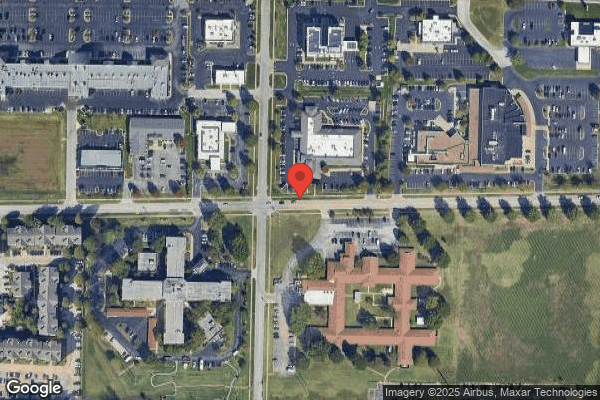
Understanding Severity Codes (click to expand)
Life-Threatening (Immediate Jeopardy)
J - Isolated K - Pattern L - Widespread
Actual Harm
G - Isolated H - Pattern I - Widespread
Potential for Harm
D - Isolated E - Pattern F - Widespread
No Harm (Minor)
A - Isolated B - Pattern C - Widespread

Questions to Ask on Your Visit

  • "Why is there high staff turnover? How do you retain staff?"
  • "Can I speak with families of current residents?"
  • "What's your RN coverage like on weekends and overnight?"

Our Honest Assessment

Strengths
  • • No fines on record. Clean compliance history, better than most Missouri facilities.
Concerns
  • • Multiple safety concerns identified: 3 harm violation(s). Review inspection reports carefully.
  • • 36 deficiencies on record, including 3 serious (caused harm) violations. Ask about corrective actions taken.
  • • Grade F (30/100). Below average facility with significant concerns.
  • • 67% turnover. Above average. Higher turnover means staff may not know residents' routines.
Bottom line: Trust Score of 30/100 indicates significant concerns. Thoroughly evaluate alternatives.

About This Facility

What is Springfield Villa's CMS Rating?

CMS assigns SPRINGFIELD VILLA an overall rating of 2 out of 5 stars, which is considered below average nationally. Within Missouri, this rating places the facility higher than 0% of the state's 100 nursing homes. A rating at this level reflects concerns identified through health inspections, staffing assessments, or quality measures that families should carefully consider.

How is Springfield Villa Staffed?

CMS rates SPRINGFIELD VILLA's staffing level at 2 out of 5 stars, which is below average compared to other nursing homes. Staff turnover is 67%, which is 21 percentage points above the Missouri average of 46%. High turnover can affect care consistency as new staff learn residents' individual needs. RN turnover specifically is 62%, which is notably high. RNs provide skilled clinical oversight, so turnover in this role can affect medical care quality.

What Have Inspectors Found at Springfield Villa?

State health inspectors documented 36 deficiencies at SPRINGFIELD VILLA during 2019 to 2025. These included: 3 that caused actual resident harm and 33 with potential for harm. Deficiencies causing actual harm indicate documented cases where residents experienced negative health consequences.

Who Owns and Operates Springfield Villa?

SPRINGFIELD VILLA is owned by a for-profit company. For-profit facilities operate as businesses with obligations to shareholders or private owners. The facility is operated by JAMES & JUDY LINCOLN, a chain that manages multiple nursing homes. With 146 certified beds and approximately 113 residents (about 77% occupancy), it is a mid-sized facility located in SPRINGFIELD, Missouri.

How Does Springfield Villa Compare to Other Missouri Nursing Homes?

Compared to the 100 nursing homes in Missouri, SPRINGFIELD VILLA's overall rating (2 stars) is below the state average of 2.5, staff turnover (67%) is significantly higher than the state average of 46%, and health inspection rating (2 stars) is below the national benchmark.

What Should Families Ask When Visiting Springfield Villa?

Based on this facility's data, families visiting should ask: "How do you ensure continuity of care given staff turnover, and what is your staff retention strategy?" "Can you walk me through typical staffing levels on day, evening, and night shifts?" "Can I visit during a mealtime to observe dining assistance and food quality?" "How do you handle medical emergencies, and what is your hospital transfer rate?" These questions are particularly relevant given the facility's high staff turnover rate and the below-average staffing rating.

Is Springfield Villa Safe?

Based on CMS inspection data, SPRINGFIELD VILLA has a clean safety record: no substantiated abuse findings (meaning no confirmed cases of resident harm), no Immediate Jeopardy citations (the most serious violation level indicating risk of serious injury or death), and is not on the Special Focus Facility watch list (a federal program monitoring the lowest-performing 1% of nursing homes). The facility has a 2-star overall rating and ranks #100 of 100 nursing homes in Missouri. While no facility is perfect, families should still ask about staff-to-resident ratios and recent inspection results during their visit.

Do Nurses at Springfield Villa Stick Around?

Staff turnover at SPRINGFIELD VILLA is high. At 67%, the facility is 21 percentage points above the Missouri average of 46%. Registered Nurse turnover is particularly concerning at 62%. RNs handle complex medical decisions and coordinate care — frequent RN changes can directly impact care quality. High turnover means new staff may not know residents' individual needs, medications, or preferences. It can also be disorienting for residents, especially those with dementia who rely on familiar faces. Families should ask: What is causing the turnover? What retention programs are in place? How do you ensure care continuity during staff transitions?

Was Springfield Villa Ever Fined?

SPRINGFIELD VILLA has no federal fines on record. CMS issues fines when nursing homes fail to meet care standards or don't correct problems found during inspections. The absence of fines suggests the facility has either maintained compliance or corrected any issues before penalties were assessed. This is a positive indicator, though families should still review recent inspection reports for the full picture.

Is Springfield Villa on Any Federal Watch List?

SPRINGFIELD VILLA is not on any federal watch list. The most significant is the Special Focus Facility (SFF) program, which identifies the bottom 1% of nursing homes nationally based on persistent, serious quality problems. Not being on this list means the facility has avoided the pattern of deficiencies that triggers enhanced federal oversight. This is a positive indicator, though families should still review the facility's inspection history directly.