
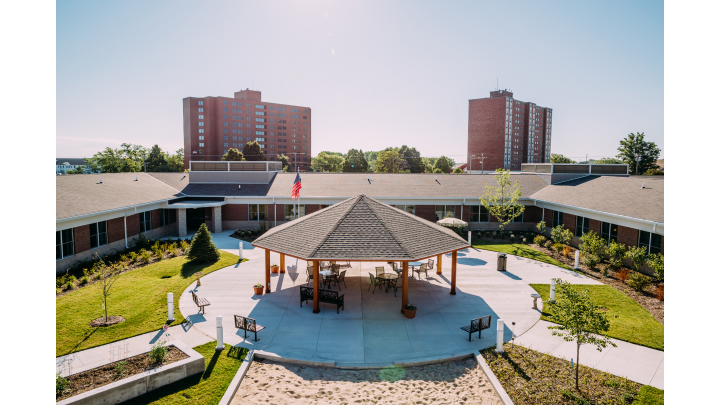
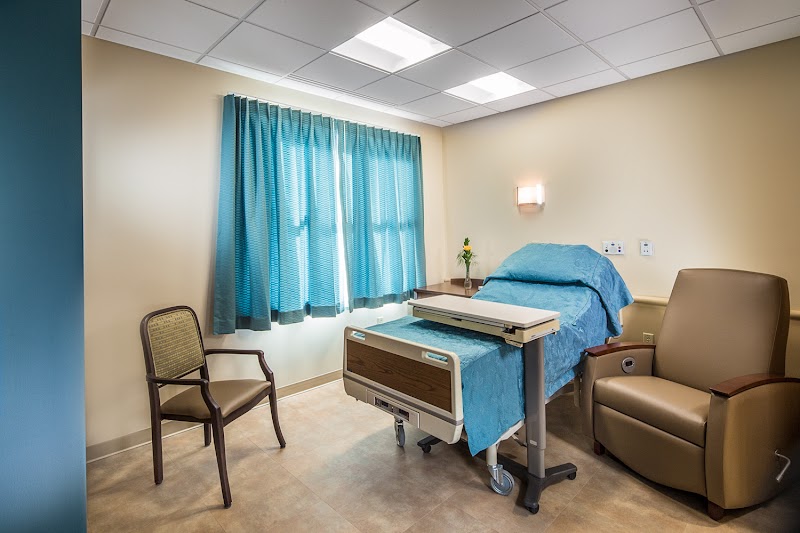
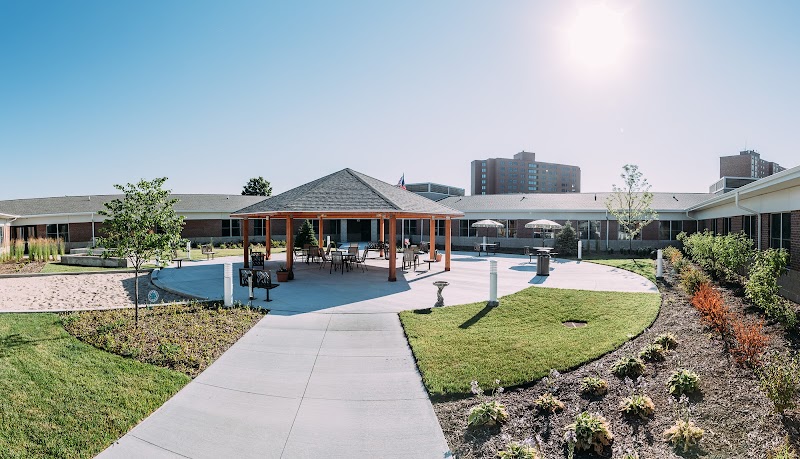

Dunklau Gardens

450 East 23rd Street, Fremont, NE 68025 (402) 721-1610
Non profit - Corporation 106 Beds Independent Data: November 2025
Trust Grade
90/100
#13 of 177 in NE
Last Inspection: May 2025

Inspected within the last 6 months. Data reflects current conditions.

Overview

Dunklau Gardens in Fremont, Nebraska, has received an impressive Trust Grade of A, indicating it is highly recommended and performing excellently compared to other nursing homes. It ranks #13 out of 177 facilities statewide, placing it in the top half, and is the best option among the three homes in Dodge County. However, the facility is experiencing a worsening trend, with issues increasing from 1 in 2024 to 3 in 2025. Staffing is a strong point, earning a 5 out of 5 stars rating, with a turnover rate of 35%, significantly lower than the state average, and there is more RN coverage than 91% of Nebraska facilities. On the downside, there were specific concerns noted, such as food being prepared without following recipes, which risks the nutritional quality, and the failure to implement necessary pressure-reducing devices for residents at risk of skin breakdown. Overall, while there are notable strengths, families should be aware of these weaknesses and ongoing issues.

Trust Score
A
90/100
In Nebraska
#13/177
Top 7%
Safety Record
Low Risk
No red flags
Inspections
Getting Worse
1 → 3 violations
Staff Stability
○ Average
35% turnover. Near Nebraska's 48% average. Typical for the industry.
Penalties
✓ Good
No fines on record. Clean compliance history, better than most Nebraska facilities.
Skilled Nurses
✓ Good
Each resident gets 68 minutes of Registered Nurse (RN) attention daily — more than 97% of Nebraska nursing homes. RNs are the most trained staff who catch health problems before they become serious.
Violations
✓ Good
Only 4 deficiencies on record. Cleaner than most facilities. Minor issues only.
★★★★★
5.0
Overall Rating
★★★★★
5.0
Staff Levels
★★★☆☆
3.0
Care Quality
★★★★☆
4.0
Inspection Score
Stable
2024: 1 issues
2025: 3 issues

The Good

  • 5-Star Staffing Rating · Excellent nurse staffing levels
  • Full Sprinkler Coverage · Fire safety systems throughout facility
  • No fines on record
  • Staff turnover below average (35%)

    13 points below Nebraska average of 48%

Facility shows strength in staffing levels, fire safety.

The Bad

Staff Turnover: 35%

10pts below Nebraska avg (46%)

Typical for the industry

The Ugly 4 deficiencies on record

May 2025 3 deficiencies
CONCERN (D)

Potential for Harm - no one hurt, but risky conditions existed

Quality of Care (Tag F0684)

Could have caused harm · This affected 1 resident

**NOTE- TERMS IN BRACKETS HAVE BEEN EDITED TO PROTECT CONFIDENTIALITY** Licensure Reference Number 175 NAC 12.006.09(H)(iii)(3) Licensure Reference Number 175 NAC 12.006.09(A)(ii) Based on observation...

Read full inspector narrative →
**NOTE- TERMS IN BRACKETS HAVE BEEN EDITED TO PROTECT CONFIDENTIALITY** Licensure Reference Number 175 NAC 12.006.09(H)(iii)(3) Licensure Reference Number 175 NAC 12.006.09(A)(ii) Based on observation, interview, and record review, the facility failed to implement pressure reducing devices for skin breakdown prevention on 2 (Residents 60 and 68) of 4 sampled residents, and failed to ensure Insulin pens were dated when opened for 2 (Residents 31 and 37) of 2 sampled residents. The facility census was 84. Findings are: A. A record review of the facility's Skin Assessment, Care and Treatment policy dated September 2001 revealed a wound was a physical injury to the body with damage to the underlying tissue. To prevent a wound the facility would develop a care plan on the Braden Subscale (an assessment to determine the risk of developing a pressure wound) areas of risk rather than total assessment score. The facility would address turning, repositioning, floating heels, and the support surface. The facility would select appropriate interventions such as floating heels off the bed with pillows under the lower portion of legs or with heel lift boots. A record review of Resident 60's Client Diagnosis Report dated 04/30/2025 revealed the resident had diagnoses of Severe Protein-Calorie Malnutrition (lack of nutrition related to low protein in the diet), Adult Failure to Thrive (global decline), Dementia (confusion), and a Stage 2 Pressure Ulcer of the Sacral Region (wound on the resident's bottom). A record review of Resident 60's Minimum Data Set (MDS)(a comprehensive assessment used to develop a resident's care plan) dated 03/19/2025 did not reveal the resident had a Brief Interview for Mental Status (BIMS)(a score of a resident's cognitive abilities) which indicated the resident was rarely/never understood. The resident was on hospice care. The resident had limited range of motion on both sides of the upper extremities (shoulder to hand or hip to toe) and the lower extremities (below the hips). The resident was dependent on staff for all Activities of Daily Living (ADLs) and needed substantial/maximal staff assistance with mobility. The MDS indicated the resident was at risk for developing pressure wounds but did not reveal the resident had one at the time the MDS was completed. The resident had skin treatments that included pressure reducing devices for bed and chair and application of dressings and ointments/medications. A record review of Resident 60's OPC Review dated 03/19/2025 revealed that a Braden Scale had been completed, and the resident had a score of 10 that indicated the resident was at high risk of developing a pressure injury. A record review of Resident 60's Pressure Injury Documentation Form dated 04/18/2025 - 04/30/2025 revealed the facility identified the resident had a 4.5 centimeter (cm) by (x) 7.8 cm unstageable pressure injury on the right heel on 4/18/2025. A record review of Resident 60's Plan Of Care-Current with an admission date of 09/26/2023 revealed the resident had a problem area of self-care deficit (unable to perform ADLs). A problem area of potential for impaired skin integrity related to fragile skin and impaired mobility. An unstageable pressure injury to the right heel. The resident had an intervention of Prevalon heel boots (padded cushions attached to feet that ensure the heels stay elevated) on bilateral (both) feet at all times except for cares, for the problem area of potential for impaired skin integrity. A record review of Resident 60's Kardex Summary dated 04/30/2025 revealed that the resident was to have Prevalon heel lift boots on at all times except for care under skin interventions. A record review of Resident 60's Physician Orders dated 05/01/2025 - 05/31/2025 revealed the resident had an order dated 04/21/2025 of HEEL - OFFLOAD HEELS USING PREVLON HEEL BOOTS ONCE PER SHIFT [Time: Shift 1, Shift 2] keep on @ (at) all x's (times), except for skin care. A record review of Resident 60's Treatment Record (TAR) dated 04/01/2025 - 04/30/2025 revealed the staff was marking the resident had Prevalon boots on each shift since 04/18/2025. An observation on 04/28/2025 at 10:11 AM did not reveal that Resident 60 was wearing Prevalon boot and heels were directly on wheelchair footrests. An observation on 04/29/2025 at 9:52 AM revealed Resident 60 was sitting in wheelchair with the Hospice nurse in the room, and the resident did not have Prevalon boots on. An observation on 04/29/2025 at 10:34 AM with the facility's Assistant Director of Nursing (ADON), Unit Leader (UL)-B, and Registered Nurse (RN)-C revealed Resident 60 was sitting in the wheelchair but did not have Prevalon boots on. In an interview on 04/30/2025 at 10:27 AM, RN-C confirmed that Resident 60 was not wearing Prevalon boots during the 04/29/2025 at 10:34 AM observation and should have had them on. In an interview on 04/30/2025 at 10:33 AM, UL-B confirmed that Resident 60 was not wearing Prevalon boots during the 04/29/2025 at 10:34 AM observation and should have had them on due to there was an order to have Prevalon boot on at all times except during cares. UL-B confirmed the Nursing Assistant (NA) thought the Prevalon boots were just to be on at night. B. A record review of the facility's Skin Assessment, Care and Treatment policy dated September 2001 revealed a wound was a physical injury to the body with damage to the underlying tissue. To prevent a wound the facility would develop a care plan on the Braden Subscale (an assessment to determine the risk of developing a pressure wound) areas of risk rather than total assessment score. The facility would address turning, repositioning, floating heels, and the support surface. The facility would select appropriate interventions such as floating heels off the bed with pillows under the lower portion of legs or with heel lift boots. A record review of Resident 68's Client Diagnosis Report dated 04/30/2025 revealed the resident had diagnoses of Type 2 Diabetes Mellitus with Diabetic Chronic Kidney Disease (uncontrolled blood sugars that damaged the kidneys), Lymphedema (swelling in the body due to excess protein-rich fluid), and Atrial Fibrillation (abnormal heart rhythm). A record review of Resident 68's MDS dated 04/30/2025 revealed it was an admission MDS and the resident was admitted [DATE]. It did not reveal BIMS score, ADLs, or skin conditions. A record review of Resident 68's 48-Hour Care Plan dated 04/23/2025 revealed the resident was verbal, alert, and cognitively intact (not confused). The resident required a staff assist of 2 with bed mobility, transfers, and toileting. The resident had a skin concerns area and the resident had other skin concerns. An intervention was to offload heels (elevate heels so not to rub against a surface). A record review of the facility's Nursing Orders dated 04/23/2025 revealed the nurse completed the form and Resident 68 was to have heels offloaded when in bed and bilateral offloading boots when in bed. A record review of Resident 68's Kardex Summary dated 04/30/2025 did not reveal that the resident was to have the heels offloaded or bilateral offloading boots. A record review of Resident 68's Braden Scale dated 04/24/2025 revealed that the resident had a score of 18 that indicated the resident was at a low risk of developing a pressure injury. A record review of Resident 68's TAR dated 04/01/2025 - 04/30/2025 revealed the resident was to have off-loading boots when in bed at bedtime and it was not marked as being completed on any days from 04/23/2025 - 04/30/2025. The staff was to offload the resident's heels when in bed and document it every shift and it had not been completed. An observation on 04/28/2025 at 9:50 AM revealed Resident 68 was lying in bed and did not have heels elevated off the mattress or off-loading boots on. No off-loading boots were observed in the room. An observation on 04/29/2025 at 9:32 AM revealed Resident 68 was lying in bed and did not have heels elevated off the mattress or off-loading boots on. The resident did have a pillow under the resident's knees. No off-loading boots were observed in the room. An observation on 04/29/2025 at 12:45 PM revealed Resident 68 was lying in bed and did not have heels elevated off the mattress or off-loading boots on. No off-loading boots were observed in the room. An observation on 04/30/2025 at 08:28 AM revealed that Resident 68 was lying in bed with a pillow under the knees, heels were not offloaded, and no heel off-loading boots observed on the resident or in the room. An observation on 04/30/2025 at 9:16 AM with Licensed Practical Nurse (LPN)-G revealed that Resident 68 was lying in bed and did not have heels elevated off the mattress or off-loading boots on. No off-loading boots were observed in the room. In an interview on 04/30/2025 at 9:52 AM with NA-H confirmed the NA uses a pillow to offload Resident 68's heels and that the resident did not have off-loading boots. In an interview on 04/30/2025 at 9:52 AM, Resident 68 confirmed the resident did not have a pillow under the resident's lower legs to keep the heels off the mattress, it was under the resident's knees, and the resident did not know where it was supposed to go. Resident 68 confirmed the NA put it there. Resident 68 confirmed the staff had not been putting off-loading boots on at night. In an interview on 04/30/2025 at 8:28 AM, Resident 68 confirmed that the resident had not been wearing any off-loading boots at night, pillow was not under the lower legs, it was under the resident's knees, and the resident has not had off-loading boots since she was re-admitted to the facility on [DATE]. In an interview on 04/30/2025 at 9:16 - 9:38 AM, LPN-G confirmed that there was an order for Resident 68 to have heels offloaded and off-loading boots. LPN-G confirmed LPN-G observed the resident, the resident did not have heels offloaded, and the resident did not have off-loading boots in the room or offloaded heels and should have had. C. A record review of the facility's Insulin Pens policy dated April 2017 revealed the facility was to store insulin pens at room temperature for 1 month from date of opening. Place date opened and date pen to be thrown away on pen. A record of [NAME] Lilly's Basaglar pamphlet dated 10/2024 revealed: Storage tips: Store your opened Pen at room temperature up to 86°F (30°C) and throw it away after 28 days. https://insulins.lilly.com/basaglar A record review of the Cleveland Clinic's Insulin Pens webpage with a last reviewed date of 02/12/2024 revealed you should Write the date on the insulin pen when you first open it. Most pens are good for 28 days once you open them. (https://my.clevelandclinic.org/health/treatments/17923-insulin-pen-injections). A record review of Resident 37's Client Diagnosis Report dated 05/01/2025 revealed the resident had diagnoses of Type 2 Diabetes Mellitus with Diabetic Chronic Kidney Disease, Lymphedema, and Weakness. A record review of Resident 37's MDS dated 04/08/2025 revealed the resident had a BIMS of 15 which indicated the resident was cognitively intact. The resident had limited range of motion on one side of the lower extremities. The resident was independent for eating and upper body dressing, needed setup or clean-up assistance for oral hygiene (cleaning), and dependent on staff for toileting, bathing, lower body dressing, footwear, and personal hygiene. The resident required Insulin injections daily. A record review of Resident 37's Plan of Care-Current with an admit date of 12/16/2020 revealed the resident had a problem area of the resident is at risk for potential complications related to diabetes and an intervention of Insulin per physician's order. A record review of the facility's Physician Orders dated 04/01/2025 - 04/30/2025 revealed Resident 37 had an order for Basaglar Kwikpen 100 units per 1 milliliter (ml) solutions 70 units once daily for Type 2 Diabetes Mellitus. A record review of Resident 37's Medication Record and Treatment Record (MAR & TAR) dated 04/01/2025 - 04/30/2025 revealed the Basaglar Kwikpen 100 units per 1 milliliter (ml) solutions 70 units once daily for Type 2 Diabetes Mellitus was administered daily. An observation on 04/30/2025 at 8:31 AM with LPN-G revealed LPN-G administered Resident 37's Basaglar Kwikpen 100 units per 1 ml solutions 70 units once daily for Type 2 Diabetes Mellitus, but observation of the pen did not reveal a date the pen was opened, just a sticker to discard within 28 days after opened. In an interview on 04/30/2025 at 8:31 AM, LPN-G confirmed Resident 37's Basaglar Kwikpen 100 units per 1ml solutions 70 units once daily for Type 2 Diabetes Mellitus did not have an open date and should have had. In an interview on 4/30/2024 at 1:50 PM, the Director of Nursing confirmed the facility staff do not write open dates on the insulin pens when opened. They only have 2 residents in the facility that use insulin pens. The DON confirmed after record review of the facility's Insulin Pen policy, they should be dating then insulin pens when opened for Resident 37. D. A record review of the facility's Insulin Pens policy dated April 2017 revealed the facility was to store insulin pens at room temperature for 1 month from date of opening. Place date opened and date pen to be thrown away on pen. A record review of Biocon Biologics, Incorporated (Inc.) SEMGLEE - insulin glargine-yfgn injection, solution manufacturer's instruction with a revised date of 11/2024 revealed: 3 mL single-patient-use prefilled pen until expiration date was 28 days, Room temperature only (Do not refrigerate). Only use your pen for up to 28 days after its first use. Throw away the SEMGLEE pen you are using after 28 days, even if it still has insulin left in it. The box did have an area to date with an Initial Used Date. https://dailymed.nlm.nih.gov/dailymed/fda/fdaDrugXsl.cfm?setid=8cf5544f-87d6-468b-f6ae-898b1fdb5d80&type=display#section-14 A record review of the Cleveland Clinic's Insulin Pens webpage with a last reviewed date of 02/12/2024 revealed you should Write the date on the insulin pen when you first open it. Most pens are good for 28 days once you open them. https://my.clevelandclinic.org/health/treatments/17923-insulin-pen-injections A record review of Resident 31's Client Diagnosis Report dated 05/01/2025 revealed the resident had diagnoses of Type 2 Diabetes Mellitus with Diabetic Neuropathy (uncontrolled blood sugars casing damage to the nerves), and Weakness. A record review of Resident 31's MDS dated 04/08/2025 revealed the resident had a BIMS of 15 which indicated the resident was cognitively intact. The resident had limited range of motion on one side of the upper and lower extremities. The resident was independent for all ADLs. The resident required Insulin injections daily. A record review of Resident 31's Plan of Care-Current with an admit date of 06/11/2017 revealed the resident hand a problem area of the resident is at risk for complications related to diabetes and an intervention of Insulin per physician's order. A record review of the facility's Physician Orders dated 05/01/2025 - 05/31/2025 revealed Resident 31 had an order for SEMGLEE pen 100 units per 1 ml solution (Insulin Glargine, Recombinant) 35 units before breakfast and at bedtime for Type 2 Diabetes Mellitus. An observation on 04/30/2025 at 1:50 PM with the DON revealed the Resident 31's Insulin pen was a Biocon Biologics Insulin Glargine - YFGN Injection. Label revealed Insulin Glargine 100 units per 3 ml. Inject 35 units twice daily. Open pens good for 28 days. The pen did not have an open date. In an interview on 04/30/2025 at 1:50 PM, the DON confirmed Resident 31's Insulin pen did not have an open date and the staff do not put open dates on the pen when opening and it was not in the facility's policy. After the record review of the facility's Insulin Pen policy dated April 2017, the DON confirmed the staff were to place a date opened and date pen to be thrown away on pen when they opened a new Insulin pen.
CONCERN (D)

Potential for Harm - no one hurt, but risky conditions existed

Infection Control (Tag F0880)

Could have caused harm · This affected 1 resident

**NOTE- TERMS IN BRACKETS HAVE BEEN EDITED TO PROTECT CONFIDENTIALITY** Licensure Reference Number 175 NAC 12.006.18(B) Based on observation, interview and record review the facility failed to ensure...

Read full inspector narrative →
**NOTE- TERMS IN BRACKETS HAVE BEEN EDITED TO PROTECT CONFIDENTIALITY** Licensure Reference Number 175 NAC 12.006.18(B) Based on observation, interview and record review the facility failed to ensure staff performed hand hygiene (cleaning) with glove changing when going from a contaminated area to a clean area for 2 residents (Resident 47 and 62) of 4 residents sampled during cares and treatments to prevent the potential for cross contamination. The facility census was 84 at the time of the survey. Findings are: Record review of facility policy date revised 5/2024 titled Hand Hygiene revealed to complete Hand Hygiene before and after touching a patient, and immediately after glove removal. Record review of CDC.gov website Hand Hygiene for Healthcare Workers dated [DATE] stated to perform hand hygiene before donning gloves and after removing them. Record review of facility policy dated 3/2018 titled Isolation Procedures revealed gloves must be changed between tasks and procedures on the same patient if moving from a dirty site to a clean site. A. During an interview on 04/28/25 at 10:29 AM Resident 47 stated (gender) had a sore on (gender) bottom. Record review of Resident 47's Quarterly Minimum Data Set (MDS -a comprehensive assessment of each resident's functional capabilities used to develop a resident's plan of care) dated 3/3/25 revealed: -the resident admitted to the facility on [DATE] - St. 2 pressure ulcer, which is partial thickness skin loss and indicated not present on admission -dependent for cares. - Brief Interview for Mental Status (BIMS - a test used to get a quick snapshot of a resident's cognitive function, scored from 0-15, the higher the score, the higher the cognitive function) score of 15, which indicated the resident is cognitively intact. Record review of Resident 47's skin interventions on [NAME] revealed to apply barrier cream after each incontinence episode. Record review of Resident 47's Comprehensive Care Plan (CCP- written instructions needed to provide effective and person centered care of the resident that meet professional standards of quality care) revealed: -problem initiated on 10/25/2023 of impaired skin integrity, always incontinent and fragile skin, and 1/1/2025 stage 2 pressure ulcer identified to coccyx. -interventions dated 10/25/2023 included proper hand washing technique before and after cares, pericare and moisture barrier after each incontinent episode, and to keep skin clean and dry. In an observation on 04/29/25 at 11:25 AM Medication Aide (MA) - D and Registered Nurse (RN) - C completed hand hygiene and applied gloves, got supplies and then began to perform incontinence cares for Resident 47. The resident was incontinent of bowels, and MA - D performed peri cares but did not change contaminated gloves before reaching into the wipes container. MA - D changed gloves when peri cares were completed but did not perform any hand hygiene. MA - D then applied the barrier cream. This observation did not reveal any hand hygiene after removing gloves. During an interview on 04/29/25 at 11:26 AM RN - C confirmed that hand hygiene should be performed when changing gloves. During an interview on 04/29/25 at 1:05 PM Unit Leader (UL) - B confirmed that hand hygiene should be performed when changing gloves. During an interview on 04/30/25 at 2:04 PM the Director of Nursing (DON) confirmed that staff should perform hand hygiene when donning (to put on) and doffing (to take off) gloves. B. During an interview on 04/28/25 at 3:20 PM Resident 62 stated there was a sore on (gender) bottom, and the nurses put ointment on it. Record review of Resident 62's Quarterly MDS dated [DATE] revealed: -resident was admitted to the facility on [DATE] - ADL's dependent with 1 assist - BIMS score of 15, which indicates the resident is cognitively intact. Record review of Resident 62's skin interventions on [NAME] did not reveal that skin barrier cream needed to be applied. Record review of Resident 62's CCP revealed: -problem initiated on 12/19/2024 of impaired skin integrity and fragile skin -interventions dated 12/19/2024 included proper hand washing technique before and after cares, pericare and moisture barrier after each incontinent episode, and to keep skin clean and dry. In an observation on 04/29/25 at 10:59 AM MA - F assisted Resident 62 into the bathroom, completed hand hygiene and put on gloves and pulled the resident's pants down. MA - F changed gloves and did not perform any hand hygiene, then the MA applied barrier cream. During an interview on 04/29/25 at 11:16 AM interview with MA - F confirmed that (gender) should have washed (gender) hands when changing (gender) gloves. During an interview on 04/29/25 at 1:05 PM UL - B confirmed that hands should be washed when changing gloves. During an interview on 04/30/25 at 2:04 PM the DON confirmed that staff should perform hand hygiene when donning and doffing gloves.
CONCERN (F)

Potential for Harm - no one hurt, but risky conditions existed

Deficiency F0804 (Tag F0804)

Could have caused harm · This affected most or all residents

Licensure reference: 175 NAC12-006.11D Based on observation, interview and record review, the facility failed to ensure food was prepared according to the recipe to conserve the nutritive value. This ...

Read full inspector narrative →
Licensure reference: 175 NAC12-006.11D Based on observation, interview and record review, the facility failed to ensure food was prepared according to the recipe to conserve the nutritive value. This had the potential to affect all residents in the facility. The facility census was 84. Findings are: Observation on 4/30/2025 at 11:39 AM revealed [NAME] A used the following procedure and ingredients: • Precooked beef unmeasured • Diced the celery and placed it in the pan with the meat without measuring. • Obtained two onions and diced them. Placed in pan with the meat without measuring • Cut open 2 bags frozen peas and 2 bags of frozen Carrots and added to pan without measuring. • Added frozen diced potatoes by opening the bag and pouring out a portion of the bag and did not measure. • Spices were measured by pouring an amount into the lid of the spice jar and poured into the pan. Record Review of the undated recipe titled Beef Stew Old Fashioned revealed the following ingredient list: • Meat 13.88 pounds • Celery fresh 1.13 Pounds • Onions Yellow Fresh 1.13 pound • Carrots Fresh 1.13 pounds • Peas Green, Frozen Thawed and drained 1.22 Pound • Potatoes Peeled Fresh Diced 2.53 Pounds • Garlic Fresh chopped 1.50 Teaspoon • Oregano Leaves Dried 1.50 Teaspoon • Pepper [NAME] Ground 0.75 Teaspoon Interview on 4/30/2025 at 2:00 PM with the Registered Dietician revealed [NAME] A did not measure ingredients or follow the recipe instructions. This would result in a change in the nutritive value. Interview on 5/1/2025 at 10:00 AM with the Admissions Coordinator revealed all residents eat food from the kitchen.
Apr 2024 1 deficiency
CONCERN (F)

Potential for Harm - no one hurt, but risky conditions existed

Food Safety (Tag F0812)

Could have caused harm · This affected most or all residents

Licensure Reference Number 175 NAC 12.006.11E Licensure Reference Number 175 NAC 12.006.11D Based on observation, interview, and record review; the facility failed to ensure recipes were followed duri...

Read full inspector narrative →
Licensure Reference Number 175 NAC 12.006.11E Licensure Reference Number 175 NAC 12.006.11D Based on observation, interview, and record review; the facility failed to ensure recipes were followed during food preparation (prep) and clean ceiling tiles, ventilation covers, and equipment surfaces in the kitchen to prevent the potential for cross-contamination. This had the potential to affect all 72 residents that consumed food from the kitchen. Findings are: A. A record review of the facility's Food Preparation and Production policy with a revised date of 6/21 revealed standardized recipes that incorporate hazard analysis and critical control points (HACCP) procedures that protect the safety of the food supply while maintaining the nutrient content of the food and appropriate preparation techniques will be used. A record review of the Nutrition Services for Residents policy with a revised date of 5/21 revealed foods are prepared by methods that conserve nutritive value, flavor, and appearance and are attractively served at the proper temperature. A file of tested recipes adjusted to appropriate yields is maintained. A record review of the facility's undated Basil & Chive Chicken Breast Master Recipe revealed ingredients were: Basil Sweet Dried - 5 ounce Chives, Dried - 4 ounce Lemon Juice Fresh Pasteurized - 1 Quart Wine Chablis - 4 Cup Garlic Fresh (minced) - 8 Ounce Pepper Black Ground - 8 Teaspoon Oil Olive - 2 Quart Chicken Breast Boneless 4 - 96 Each 1 standard portion equals (=) 1 Breast 1. Combine basil, chives, lemon juice, white wine, garlic, black pepper and olive oil for marinade. Whisk until well-blended. 2. Pour marinade over chicken, turning to evenly coat. Hold refrigerated at internal temperature on 40 degrees Fahrenheit (F) or below for 24 hours to marinate. Drain and discard excess marinade. A record review of the facility's undated Basil & Chive Chicken Breast Master Recipe did not reveal cooking directions. An observation on 04/22/2024 at 8:46 AM revealed the [NAME] got a steam pan from the walk-in refrigerator and placed by the grill. The [NAME] used tongs and took chicken breasts from the steam pan and placed on the grill. The [NAME] then waited an untimed amount of time, flipped the chicken breast and grilled the breasts for an untimed amount of time. The [NAME] then placed the chicken breast from the grill onto a large cookie sheet. The [NAME] took the large cookie sheet to the food prep table and sprinkled the breasts with an unmeasured amount of basil and an unmeasured amount of chives from their containers. An observation of the steam pan of marinade did not reveal any green (chives) or flakes in the mixture. The [NAME] then placed the chicken breasts in the oven at 350 degrees F for 10 minutes. In an interview on 04/22/2024 at 9:02 AM the facility's Food Service Manager (FSM) confirmed the recipe did not have cooking directions so the FSM revealed a Herbed Chicken Master Recipe and said the [NAME] would go by that. The Herbed Chicken Master Recipe revealed a cooking temperature of 325 degrees F. In an interview on 04/22/2024 at 9:09 AM, the [NAME] confirmed that the steam pan only included the marinade and chicken breast, and the marinade was just Italian dressing. A record review of the Hungarian Goulash Recipe Information dated 04/22/2024 revealed the following ingredients: Noodles-Egg - 8 and 2/3 Pound Margarine - 5 and ¾ 1-pound pints Beef Stew Meat, 10% Fat, Raw - 9 and 1/8 Pound Onions - Yellow, Fresh - 4 and 1/3 Pound Garlic, Fresh (chopped fine) - 1 and ½ Teaspoon Granulated Sugar - 2 and 7/8 Ounce Paprika - 2 and ¼ Ounce Pepper-White, Ground - 1 and ½ Teaspoon Seasoning - Bar-B-Que (BBQ) - 1 and ½ Tablespoon Tarragon - Leaf, Dried - 1 and ½ Teaspoon Tomatoes- Diced, Canned - 1 and 1/3 Gallon Sour Cream 1 and ½ Cup All-Purpose Flour - 1 and ½ Tablespoon Preparation 1. Prepare Egg Noodles according to recipe 2. In a large soup kettle heat margarine until melted 3. Add beef. sauté, stirring frequently, until well-browned 4. Add onion and garlic. [NAME] for 8 minutes until translucent 5. Stir in sugar, paprika, white pepper, seasoning blend and tarragon 6. Add tomatoes. Mix well. Bring to boil. Reduce heat and simmer 2 to 2 and ¼ hours or until 2/3 of liquid has been absorbed, meat is tender but not shredded and minimum internal temperature is 145 degrees F. (for 15 seconds) 7. Combine sour cream and flour. Mix until smooth. Add to meat mixture. Stir constantly until well blended. Hold hot for service An observation on 04/23/2024 at 6:55 AM revealed the facility's [NAME] sprayed a large steam pan with cooking spray, went to the walk-in refrigerator and got 2 packages of 2-pounds of ground beef and placed in the steam pan. The [NAME] then broke up the ground beef and placed in the steamer for 1 to 1.5 hours. At 8:34 AM the [NAME] removed the ground beef from the steamer and scraped the ground beef into a medium sized steam pan. The [NAME] took a pre-opened gallon can of diced tomatoes and poured an unmeasured amount of diced tomatoes in the steam pan with the ground beef. The [NAME] then had 3 pre-prepared cups that contained sugar, Bar-B-Que seasoning, and diced onions and added them to the mixture. The [NAME] then took a container of Paprika, a container of Granulated Garlic, and a container of [NAME] Pepper and added an unmeasured amount of each to the mixture and stirred with a large spoon. The [NAME] covered the steam pan with plastic wrap and placed in the steamer. The observation did not reveal tarragon was used. In an interview on 04/23/2024 at 8:37 AM, the [NAME] confirmed the paprika, granulated garlic, and white pepper was not measured, and the recipe was not followed. In an interview on 04/23/2024 at 8:40 AM, the facility's Clinical Dietician (CD) confirmed the CD observed the food prep and the [NAME] did not follow the recipes for 04/22/2024 Basil and Chive Chicken or the 04/23/2024 Hungarian Goulash. B. A record review of the facility's Kitchen Sanitization policy with a revised date of 6/21 revealed local and state sanitization requirements are reflected in schedules, procedures, and sanitizing compounds in use. A record review of the Planned Event Work Order Kitchen, Dishroom, [NAME] Wall & Cafe Vents log sheet dated 03/04/2024 revealed it was to be completed monthly, it was last completed on March 4th, 2024. A record review of the facility's undated Equipment/Areas to Clean log revealed the staff was to delime and clean steam oven weekly on Tuesdays and wash and clean all sides would be done weekly on Saturdays. Clean prep table would be done weekly on Saturdays. An observation on 04/17/2024 at 8:48 AM revealed the warmer cart trough below the controls contained a moderate amount of food debris, the bottom shelf of prep table appeared uncleaned with oily smears throughout the surface, scattered crust, and food debris. The square white ceiling vents all contained a gray, fuzzy substance especially above the food prep and cooking area. The ceiling tiles and thermostat above prep table contained a gray, fuzzy substance and was actually hanging from below the thermostat. The light fixture above the prep table contained an orange dried substance. The Heating Ventilation and Air Conditioning (HVAC) vents in the ceiling above the food prep and cooking area contained a gray, fuzzy substance. The vents on the back of the deli cooler contained a gray, fuzzy substance. The table under the steamer contained a white crusty substance and scattered food debris. There was food debris on the top of the steamer. The bug light located on the wall by the steamer had a yellow food splash on it. The vents above reach-in fridge contained a gray, fuzzy substance. An observation on 04/17/2024 at 9:18 AM with the CD revealed the warmer cart trough below the controls contained a moderate amount of food debris, the bottom shelf of prep table appeared uncleaned with oily smears throughout the surface, scattered crust, and food debris. The square white ceiling vents all contained a gray, fuzzy substance especially above the food prep and cooking area. The ceiling tiles and thermostat above prep table contained a gray, fuzzy substance and was actually hanging from below the thermostat. The light fixture above the prep table contained an orange dried substance. The Heating Ventilation and Air Conditioning (HVAC) vents in the ceiling above the food prep and cooking area contained a gray, fuzzy substance. The vents on the back of the deli cooler contained a gray, fuzzy substance. The table under the steamer contained a white crusty substance and scattered food debris. There was food debris on the top of the steamer. The bug light located on the wall by the steamer had a yellow food splash on it. The vents above reach-in fridge contained a gray, fuzzy substance. In an interview on 04/17/2024 at 9:18 AM, the facility's CD confirmed the above listed items were not cleaned and should have been. In an interview on 04/17/2024 at 3:50 PM, the CD confirmed the facility's Planned Event Work Order Kitchen, Dishroom, [NAME] Wall & Cafe Vents log sheet dated 03/04/2024 was last completed on 03/04/2024, it should have been completed monthly, and had not been completed in the month of April.
Understanding Severity Codes (click to expand)
Life-Threatening (Immediate Jeopardy)
J - Isolated K - Pattern L - Widespread
Actual Harm
G - Isolated H - Pattern I - Widespread
Potential for Harm
D - Isolated E - Pattern F - Widespread
No Harm (Minor)
A - Isolated B - Pattern C - Widespread

Questions to Ask on Your Visit

  • "Can I speak with families of current residents?"
  • "What's your RN coverage like on weekends and overnight?"

Our Honest Assessment

Strengths
  • • Grade A (90/100). Above average facility, better than most options in Nebraska.
  • • No major safety red flags. No abuse findings, life-threatening violations, or SFF status.
  • • No fines on record. Clean compliance history, better than most Nebraska facilities.
  • • Only 4 deficiencies on record. Cleaner than most facilities. Minor issues only.
Concerns
  • • No significant concerns identified. This facility shows no red flags across CMS ratings, staff turnover, or federal penalties.
Bottom line: Generally positive indicators. Standard due diligence and a personal visit recommended.

About This Facility

What is Dunklau Gardens's CMS Rating?

CMS assigns Dunklau Gardens an overall rating of 5 out of 5 stars, which is considered much above average nationally. Within Nebraska, this rating places the facility higher than 99% of the state's 100 nursing homes. This rating reflects solid performance across the metrics CMS uses to evaluate nursing home quality.

How is Dunklau Gardens Staffed?

CMS rates Dunklau Gardens's staffing level at 5 out of 5 stars, which is much above average compared to other nursing homes. Staff turnover is 35%, compared to the Nebraska average of 46%. This relatively stable workforce can support continuity of care.

What Have Inspectors Found at Dunklau Gardens?

State health inspectors documented 4 deficiencies at Dunklau Gardens during 2024 to 2025. These included: 4 with potential for harm.

Who Owns and Operates Dunklau Gardens?

Dunklau Gardens is owned by a non-profit organization. Non-profit facilities reinvest revenue into operations rather than distributing to shareholders. The facility operates independently rather than as part of a larger chain. With 106 certified beds and approximately 82 residents (about 77% occupancy), it is a mid-sized facility located in Fremont, Nebraska.

How Does Dunklau Gardens Compare to Other Nebraska Nursing Homes?

Compared to the 100 nursing homes in Nebraska, Dunklau Gardens's overall rating (5 stars) is above the state average of 2.9, staff turnover (35%) is significantly lower than the state average of 46%, and health inspection rating (4 stars) is above the national benchmark.

What Should Families Ask When Visiting Dunklau Gardens?

Based on this facility's data, families visiting should ask: "Can I visit during a mealtime to observe dining assistance and food quality?" "How do you handle medical emergencies, and what is your hospital transfer rate?" "Can I speak with family members of current residents about their experience?"

Is Dunklau Gardens Safe?

Based on CMS inspection data, Dunklau Gardens has a clean safety record: no substantiated abuse findings (meaning no confirmed cases of resident harm), no Immediate Jeopardy citations (the most serious violation level indicating risk of serious injury or death), and is not on the Special Focus Facility watch list (a federal program monitoring the lowest-performing 1% of nursing homes). The facility has a 5-star overall rating and ranks #1 of 100 nursing homes in Nebraska. While no facility is perfect, families should still ask about staff-to-resident ratios and recent inspection results during their visit.

Do Nurses at Dunklau Gardens Stick Around?

Dunklau Gardens has a staff turnover rate of 35%, which is about average for Nebraska nursing homes (state average: 46%). Moderate turnover is common in nursing homes, but families should still ask about staff tenure and how the facility maintains care continuity when employees leave.

Was Dunklau Gardens Ever Fined?

Dunklau Gardens has no federal fines on record. CMS issues fines when nursing homes fail to meet care standards or don't correct problems found during inspections. The absence of fines suggests the facility has either maintained compliance or corrected any issues before penalties were assessed. This is a positive indicator, though families should still review recent inspection reports for the full picture.

Is Dunklau Gardens on Any Federal Watch List?

Dunklau Gardens is not on any federal watch list. The most significant is the Special Focus Facility (SFF) program, which identifies the bottom 1% of nursing homes nationally based on persistent, serious quality problems. Not being on this list means the facility has avoided the pattern of deficiencies that triggers enhanced federal oversight. This is a positive indicator, though families should still review the facility's inspection history directly.