Tabitha At Prairie Commons
3490 Ewoldt Street, Grand Island, NE 68803 (308) 321-1122
Non profit - Corporation 36 Beds Independent Data: November 2025 1 Immediate Jeopardy citation
Trust Grade
41/100
#133 of 177 in NE
Last Inspection: May 2025

Inspected within the last 6 months. Data reflects current conditions.

Overview

Tabitha At Prairie Commons has a Trust Grade of D, indicating below-average performance with some concerns regarding care and compliance. It ranks #133 out of 177 nursing homes in Nebraska, placing it in the bottom half of facilities statewide, and #4 out of 6 in Hall County, meaning there are only a few local options that are better. The facility's trend is improving, having reduced issues from 10 in 2024 to 5 in 2025, which is a positive sign. Staffing is a strong point, rated 4 out of 5 stars with zero turnover, meaning staff stay long-term and are familiar with the residents; however, the facility has concerning fines totaling $15,840, which are higher than 91% of other Nebraska facilities. There are some significant issues noted, including a critical finding where a resident's care plan was not adequately followed, and concerns about food safety, as meals were not prepared according to nutritional standards and proper temperatures, potentially affecting all residents. Overall, while there are strengths in staffing and an improving trend, the facility has notable weaknesses that families should consider.

Trust Score
D
41/100
In Nebraska
#133/177
Bottom 25%
Safety Record
High Risk
Review needed
Inspections
Getting Better
10 → 5 violations
Staff Stability
○ Average
Turnover data not reported for this facility.
Penalties
⚠ Watch
$15,840 in fines. Higher than 94% of Nebraska facilities. Major compliance failures.
Skilled Nurses
✓ Good
Each resident gets 75 minutes of Registered Nurse (RN) attention daily — more than 97% of Nebraska nursing homes. RNs are the most trained staff who catch health problems before they become serious.
Violations
⚠ Watch
15 deficiencies on record. Higher than average. Multiple issues found across inspections.
★★☆☆☆
2.0
Overall Rating
★★★★☆
4.0
Staff Levels
★★★★★
5.0
Care Quality
★☆☆☆☆
1.0
Inspection Score
Stable
2024: 10 issues
2025: 5 issues

The Good

  • 4-Star Staffing Rating · Above-average nurse staffing levels
  • 5-Star Quality Measures · Strong clinical quality outcomes
  • Full Sprinkler Coverage · Fire safety systems throughout facility
  • No fines on record

Facility shows strength in staffing levels, quality measures, fire safety.

The Bad

2-Star Overall Rating

Below Nebraska average (2.9)

Below average - review inspection findings carefully

Federal Fines: $15,840

Below median ($33,413)

Minor penalties assessed

The Ugly 15 deficiencies on record

1 life-threatening
May 2025 5 deficiencies 1 IJ
CRITICAL (J)

Immediate Jeopardy (IJ) - the most serious Medicare violation

Deficiency F0678 (Tag F0678)

Someone could have died · This affected 1 resident

**NOTE- TERMS IN BRACKETS HAVE BEEN EDITED TO PROTECT CONFIDENTIALITY** B. Record review of the admission Record dated [DATE] for Resident 18 revealed that Resident 18 admitted into the facility on [D...

Read full inspector narrative →
**NOTE- TERMS IN BRACKETS HAVE BEEN EDITED TO PROTECT CONFIDENTIALITY** B. Record review of the admission Record dated [DATE] for Resident 18 revealed that Resident 18 admitted into the facility on [DATE]. Diagnoses included high blood pressure, atrial fibrillation (an irregular heart rhythm that can lead to blood clots and stroke), old myocardial infarction (heart attack), hyperlipidemia (elevated levels of cholesterol and triglycerides in the blood that can cause heart attack and stroke), coronary angioplasty implant and graft (surgery to repair blocked heart arteries), and history of malignant neoplasm of the prostate (prostate cancer). The admission Record revealed Do Not Resuscitate as another diagnoses. Record review of the care plan (an individualized written interdisciplinary comprehensive plan detailing how to provide quality care for a resident) dated [DATE] for Resident 18 revealed a self-care deficit related to heart attack with damage to the heart muscle (NSTEMI). Record review of the resident profile page in the electronic health record dated [DATE] for Resident 18 revealed a code status of Full Code. Full code means that Cardiopulmonary Resuscitation (CPR) (a lifesaving attempt combination of rescue breathing and chest compressions when someone's heart has stopped/cardiac arrest) would be initiated if the resident's heart stopped. Record review of the Advanced Directives form dated [DATE] for Resident 18 revealed that Resident 18 chose the option that they Did not want CPR to be attempted should their heart stop beating. Record review of the Physician's Do Not Resuscitate (DNR) (A type of advance directive in which a person states that health care providers should not perform cardiopulmonary resuscitation (restarting the heart) if his or her heart or breathing stops) Order for the Medically Ill dated [DATE] for Resident 18 revealed the resident choice for DNR in the event of cardiac arrest. The form was signed by the physician on [DATE]. Interview on [DATE] at 12:05 PM with Medication Aide-D (MA-D) revealed that if MA-D found a resident not breathing with no pulse that MA-D would immediately let the nurse know. MA-D revealed that MA-D does not look up the resident code status to see if CPR should be started. MA-D revealed that MA-D is just responsible for letting the nurse know if the resident does not appear to be breathing or have a pulse. Interview on [DATE] at 12:06 PM with Registered Nurse-C (RN-C) revealed that if staff reports a resident not breathing or without a pulse, then RN-C would check the resident code status on the electronic health record profile page for the resident. RN-C confirmed that RN-C would determine if the resident wanted CPR or not by looking at the electronic health record profile page to determine the resident's code status. Interview on [DATE] at 12:09 PM with Resident 18 revealed that the resident chooses to be a DNR (the resident does not want staff to do CPR in the event of cardiac arrest) and that the resident has an advanced directive confirming their choice for DNR. Interview on [DATE] at 12:12 PM with the Assistant Director of Nursing (ADON) revealed that the resident's code status is on the resident profile page in the electronic health record. The ADON revealed that the nurses and aides have a pocket cheat sheet that also lists the resident's code status. Record review of the undated and unlabeled staff pocket cheat sheet revealed that Resident 18's code status was identified as Full Code. Interview on [DATE] at 12:27 PM with the ADON confirmed that the electronic health record profile page for Resident 18 revealed Resident 18 to be a full code (CPR to be performed in the event of cardiac arrest). The ADON confirmed that the Physician's Do Not Resuscitate (DNR) Order for the Medically Ill for Resident 18 revealed that Resident 18 chose to be a DNR. The ADON confirmed that the code status on the electronic health record profile did not match Resident 18's choice for DNR. The ADON confirmed that in the event of cardiac arrest the staff reviewing the electronic health record profile page would have performed CPR against the wishes of Resident 18. The ADON revealed that the ADON would fix it. Interview on [DATE] at 12:36 PM with the facility Assistant Administrator (AA) revealed that the listing of Resident 18 as a full code was an oversight. The AA confirmed that Resident 18 chose to be a DNR. The AA revealed that the ADON did update the electronic health record and placed a red dot on the resident's door to signify the resident is a DNR. The deficient practice of advanced directive/code status reviews have been corrected [DATE] by implementing the following: .-The code status for (Resident 1) has been reviewed with resident, signed by resident, and faxed to [gender] primary physician for signature. -The code status for (Resident 18) has been updated on the PCC eMAR. The pocket care plan, and the sticker on the resident's room door to reflect the current signed code status. System Changes: -The advanced directives/code status will be verified utilizing a 2-step process, with second nurse reviewing the signed order and verifying the PCC eMAR, the pocket care plan, and the stocker on the resident's name plate accurately reflects the current signed code status order. -Education regarding the system changes as it relates to advanced directives/code status, were provided [DATE] to all licensed nurses on site and the social worker. Education will be provided to all licensed nurses on site at the next shift change and will provide continued education with the next staff meeting. Monitoring and Auditing: -All current residents code status/advanced directives will be audited by the interdisciplinary team for compliance weekly and documented on Risk Management template. -All new residents code status/advanced directives will be audited by the interdisciplinary team for compliance weekly and documented on risk meeting template. At the time of the survey, the violation was determined to be at the immediate jeopardy level J. Based on observation, interview and record review completed during the onsite visit, it was determined the facility had implemented corrective action to remove the IJ violation at the time. A final revisit will be conducted to determine if the facility is in substantial compliance with participation requirements. At the time of exit, the severity of the deficiency was lowered to the D level. Based on record reviews and interviews, the facility failed to ensure resident code status for life saving measures were accurate for all residents. This affected 2 (Resident 1 and Resident 18) of 23 sampled residents. The facility census was 23. [NAME] at Prairie Commons was notified on [DATE] at 1:43 PM of an Immediate Jeopardy (IJ) which began on [DATE]. The IJ was removed on [DATE] at 5:20 PM, as confirmed by surveyor onsite verification. Findings are: Record review of the facility policy Advanced Directives dated [DATE] stated the purpose of the policy was to recognize the Senior's rights to make decisions relating to their own medical care, including the right to accept or refuse treatment and the right to formulate an advanced directive (a document allowing a person to give directions about future medical care or to designate another person to make medical decisions if he or she should lose the ability to make decisions. consistent with state and federal regulations and the patient self-determination act (PSDA). A process to educate and inform seniors of their rights to formulate and advanced directive, to promote the senior's right to accept or refuse medical treatment to the extent allowed under state law and provide education regarding advanced directives. The procedure for the Advanced directives stated that upon admission staff would: 1.) provide services to the residents and family members or representatives with a copy of the statement of rights prepared by the Nebraska Department of Health and Human Services. 2.) Staff would identify if a senior had an Advanced Directive as well as their right to formulate one but not be required to do so. 5.) The admissions coordinator or social services staff would ensure the admission Application had been completed identifying the type of Advanced Directive, if any, the resident had, and if not available, request a copy. 7.) Copies of the Advanced directive would be maintained in the senior's clinical record- an electronic version would be in the electronic medical record. 8.) Upon admission the resident's Advanced Directive would be added to the resident care plan (facility plans of care that state how a patient wants to be cared for as well as interventions to assist with cares). Any Senior may revoke their advanced directive at any time without regard to the Senior's mental or physical condition. At that time, when a revocation happens, it is communicated to staff, the physician will be notified and the chance in advanced directive documented in the clinical record. The advanced directive will be removed from the clinical record. 9.) A durable power of Attorney for Health Care will go into effect when the client's Power of Attorney has been invoked and determined to be incapable of making health care decisions. This determination is to be made by the attending physician and documented in the clinical record. 10.) The facility will honor any Senior's choice to decline treatment. The senior may not be treated against their will. Record review of the undated policy and procedure CPR (Cardio-Pulmonary Resuscitation- a life saving measure for when one stops breathing or one's heart stops beating) stated Any client found unconscious without pulse and/or respirations will have CPR initiated immediately unless the client has a valid 'Do Not Resuscitate form on file. The procedure included the following instructions: 1.) When the client is found unconscious without pulse and respirations have been established, the first person to respond must confirm the resuscitation status by checking. 2.) After calling for assistance, CPR shall be initiated by certified responders at the scene. 6.) All nursing staff and medication aides to be current with CPR certification. Record review of electronic medical records for all 23 residents living in the facility revealed that for Resident 1 and Resident 18, the electronic medical record (EMR) did not match the signed requests or code status of these two, individual residents. Resident 1 had a current code status of Do Not Resuscitate with a code status of Full Code which was signed upon admission [DATE]. Resident 18 had a newly signed code status of Do Not Resuscitate and the EMR showed Resident 18 as a Full Code. A. Record review of the admission Minimum Data Set (MDS- a standardized assessment tool used to evaluate the health status of residents in long-term care facilities certified to participate in Medicare or Medicaid which helps facilities provide better care, create care plans, and meet regulatory requirements) dated [DATE] revealed that Resident 1 was legally blind, had a Brief Interview for Mental Status (BIMS - a tool used to assess the cognitive status of residents and is scored from 0 (severe impairment) to 15 (cognitively intact)) score of 8, had no behavior issues, was used a wheelchair, had mobility issues due to Parkinson's, and had limited range of motion to both upper extremities, had diagnoses for diabetes, arthritis, Chronic Obstructive Pulmonary Disorder, macular degeneration, Parkinson's Disease, and frequently suffered from pain. Resident 1 took medications to control anxiety and depression, diuretics for edema, high blood pressure, and fluid retention, opioids for pain control, and antiplatelets to prevent blood clots. Record review of the working Care Plan for Resident 1 revealed that the code status for Resident 1 was Do Not Resuscitate. Record review of the Physician Orders for Life Sustaining Treatment (POLST) for Resident 1 was dated [DATE] and signed by Resident 1's Power of Attorney on [DATE]. The Advanced directive was then signed by the physician on [DATE]. This information revealed that Resident 1 had chosen to die a natural death and asked to be a DNR (do not attempt resuscitation). The resident wanted comfort focused treatment. The facility obtained a facsimile of this document on [DATE]. Record review of the Advanced Directive document dated [DATE] and signed by Resident 1 upon admission to the facility on [DATE] revealed the resident did have a living will and would provide a copy to the facility, did have a durable power of attorney and would provide a copy to the facility. The directive stated I do want cardiopulmonary resuscitation (CPR) should my heart stop beating. I understand that I will receive cardiopulmonary resuscitation and life sustaining treatment to the extent of the provider's ability. This was signed by Resident 1 on [DATE] at 7:17 PM and witnessed by the Assistant Administrator (AA) at the time of admission to the facility. Record review of Resident 1's online Electronic Medical Record on [DATE] revealed that the code status for Resident 1 was DNR. Record review of the daily nursing staff pocket care plan (a single sheet of paper used in daily report of all residents during staff change and report) revealed that Resident 1 was listed as a Full Code and wanted CPR. Observation of the name plate at the room entrance to the room of Resident 1 revealed there was a Red Dot on the door that indicated Resident 1 was to be a DNR and did not want CPR or life saving measures. Interview at 11:38 AM on [DATE] with Resident 1. My attorney signs most everything for me. But I would expect that I would be a full code because I would like to be transferred to the hospital to see if I could be saved. That's what I would want. Interview on [DATE] at 12:00 PM with Medication Aide (MA)-B, who revealed that if a resident becomes unconscious and needs life saving measures, then those residents who are full codes (want CPR) and those who do not want CPR (also called a DNR) are on a list. MA-B stated [gender] has everyone's code status memorized. When asked about Resident 1, [gender] did not know because MA-B rarely works with the residents in the south hall and works almost primarily in the north hall. MA-B did look at the door and stated that there is a Red Dot on the name plate at the door entrance for Resident 1 and that signifies that individual would be a DNR. Looking at the other doors in the south hall, where MA-B worked on [DATE], MA-B was able to point to several doors that had red dots on the name plates at the entrance and a couple doors with a green dot on the name plate. MA-B stated that the green dots mean those individuals living in those rooms are a full code and would want to have CPR and life saving measures. Sometimes the new residents may not have a red or green dot on their door nameplate for a few days. We can also look in the Electronic medical record, but the first thing medication aides and nursing assistants must do is to tell the charge nurse. Interview on [DATE] at 12:10 PM with Licensed Practical Nurse (LPN)-A stated that the best place to look to see if a resident is a DNR or a Full Code is in the Electronic Medical Record (EMR) as it is posted on the bar at the top of each resident's page. We also make sure there is a red or green dot on the name plate at the entrance door of every room. This gives us the information at a quick glance. [NAME] dots mean full code and those residents want CPR. Red dots mean DNR and do not want to have life saving measures in the event something happens to them. Interview on [DATE] at 12:25 PM with the Director of Nursing (DON) stated that everyone is a full code whether anything is signed or not until the doctor's sign the orders. After the doctor signs the orders, then the resident is either a DNR or a Full Code. This information should be listed in every resident's Care Plan. In the EMR, the information is stated at the top of the page for each resident and is on all pages. Interview on [DATE] at 12:30 PM with the Assistant Director of Nursing (ADON). Confirmed the Code status signed on [DATE] for Resident 1 does not match the code status on the EMR. Resident 1 requested to be a full code. The EMR stated Resident 1 was a DNR. Interview on [DATE] at 12:31 PM with the DON who also confirmed the code status for Resident 1 does not match on the EMR and on the Code document signed upon admission by Resident 1.
CONCERN (D)

Potential for Harm - no one hurt, but risky conditions existed

Deficiency F0582 (Tag F0582)

Could have caused harm · This affected 1 resident

Based on record review and interview, the facility failed to provide the required Skilled Nursing Facility Advanced Beneficiary Notice-SNFABN Form CMS 10055 ( a notice issued to a resident and/or resp...

Read full inspector narrative →
Based on record review and interview, the facility failed to provide the required Skilled Nursing Facility Advanced Beneficiary Notice-SNFABN Form CMS 10055 ( a notice issued to a resident and/or responsible party to inform them that Medicare will no longer pay for their services) and Notice of Medicare Non-Coverage-NOMNC Form CMS 10123 (a notice required to be provided by the facility to beneficiaries (residents) that are receiving nursing services paid for by Medicare Part A explaining that skilled nursing services will no longer be paid for by Medicare and informing the residents of the right to appeal) for discharge from Medicare Part A to 2 (Residents 5 and 125) of 3 residents sampled which resulted in the potential to prevent Resident 5 and 125 from filing an appeal of the discharge from Medicare Part A covered services. The facility census was 23. Findings are: A. Record review of the undated SNF Beneficiary Notification Review for Resident 5 revealed this resident started Medicare Part A skilled services on 10/16/2024. The last date of coverage for part A services occurred on 01/01/2025. This was a facility/provider-initiated discharge from Medicare Part A services. Resident 5 remained in the facility after being released from Skilled Care and had a full year of days remaining. Staff indicated that the resident reached highest practical level (of recovery) at that time but continued to have 4 more weeks of weight bearing as tolerated with (Resident 5's) arm. Further review revealed SNF ABN, Form CMS-10055, was not provided to Resident 5 with an explanation that stated Resident didn't indicate further desire for therapy at the time. Interview with the Assistant Administrator (AA) on 04/28/2025 at 2:45 PM revealed that there had been a change in social services and a few things have slipped through the cracks. We are still looking for some of our documentation. Interview on 04/29/2025 at 10:12 AM confirmed the facility staff had been unable to locate anymore information pertaining to the beneficiary notice; and, confirmed a copy of the Form CMS-10055 was not found for Resident 5. B. Record review of the undated SNF Beneficiary Notification Review for Resident 125 revealed this resident started Medicare Part A skilled services on 10/17/2024. The last date of coverage for part A services occurred on 11/20/2024. This was a facility/provider-initiated discharge from Medicare Part A services and benefit days were not exhausted. Resident 125 remained in the facility after being released from Medicare A Skilled care and had 65 days remaining of benefits. Further review revealed SNF ABN, Form CMS-10055, was not provided to Resident 125 with an explanation that stated Resident 125 was on MCA (Medicare A Services) not part B. Resident wasn't indicating desire to continue therapy. Secondly, the beneficiary review also revealed that the resident had not been given a Notice of Medicare Non-Coverage letter. The written facility explanation stated not able to locate the NOMNC. See documentation in the EMAR (electronic medical record) resident and family notification. Interview with the Assistant Administrator (AA) on 04/28/2025 at 2:45 PM revealed that there had been a change in social services and a few things have slipped through the cracks. We are still looking for some of our documentation. Interview on 04/29/2025 at 10:12 AM confirmed the facility staff had been unable to locate any more information pertaining to the beneficiary notice. AA confirmed there was a written explanation about the NOMNC in the EMAR, but Staff were unable to find the NOMNC.
CONCERN (D)

Potential for Harm - no one hurt, but risky conditions existed

Pressure Ulcer Prevention (Tag F0686)

Could have caused harm · This affected 1 resident

**NOTE- TERMS IN BRACKETS HAVE BEEN EDITED TO PROTECT CONFIDENTIALITY** Licensure Reference Number 175NAC 12-006.09(H)(iii)(2) Based on observation, record review, and interview the facility failed to...

Read full inspector narrative →
**NOTE- TERMS IN BRACKETS HAVE BEEN EDITED TO PROTECT CONFIDENTIALITY** Licensure Reference Number 175NAC 12-006.09(H)(iii)(2) Based on observation, record review, and interview the facility failed to ensure documentation that resident wounds were evaluated and monitored at least weekly as required for 1 of 1 residents reviewed (Resident 16). This prevented staff from determining if the wound condition was healing or worsening. The facility census was 23. Findings are: Record review of the facility Wound and Skin Care Management dated 11/11/23 revealed that the facility will provide care to promote prevention and management of skin injuries. Weekly evaluations of skin impairment, including measurements, will be completed in the EMR (electronic medical record) (the electronic health record). Record review of the Minimum Data Set (MDS) (a mandatory comprehensive assessment tool used for care planning) dated 4/14/25 for Resident 16 revealed that Resident 16 admitted into the facility on 4/8/25. The MDS revealed that Resident 16 had an unstageable pressure ulcer [a wound/bedsore where the true depth cannot be determined because the base of the ulcer is covered by slough (yellow, tan, grey, green, or brown moist stringy tissue that is essentially dead tissue that needs to be removed to allow the wound to heal properly) and/or eschar (a tan, brown, or black thick, dry crust of dead tissue that forms over a wound)] that was present on admission. Record review of the current care plan (an individualized written interdisciplinary comprehensive plan detailing how to provide quality care for a resident) dated 4/28/25 for Resident 16 revealed that Resident 16 had a pressure ulcer on the left heel. Interventions included monitor/document location, size and treatment of the skin injury. Report abnormalities, failure to heal, signs and symptoms of infection, to the physician. Interventions included weekly treatment documentation to include measurement of each area of skin breakdown's width, length, depth, type of tissue and exudate (any liquid that drains from a wound) and any other notable changes or observations. Observation on 4/30/25 at 2:42 PM in the room of Resident 16 revealed that the Director of Nursing (DON) requested permission to look at the resident's left heel. The DON uncovered the resident's left foot and removed the tan gripper sock from the foot. An approximately 1 centimeter (cm) long x 2 cm wide tan/brown raised eschar was present on the back of the left heel. Observation on 5/1/25 at 9:41 AM in the room of Resident 16 revealed that Resident 16 sat on the edge of the bed. The resident had bare feet. The wound on the left heel measured approximately 1 cm x 2 cm per visual measurement. The wound base was a raised eschar that was brown/tan in color. A dark red/brown skin discoloration was present on the upper wound edge above the eschar from the 1 o'clock to 3 o'clock position of the wound. The discoloration was approximately 0.6 cm in length and 1.5 cm in width. Interview on 4/30/25 at 1:59 PM with Licensed Practical Nurse-F (LPN-F) revealed that the facility uses an iPhone to picture and measure resident wounds. LPN-F revealed that the information is transferred to the resident electronic medical record somewhere. Interview on 4/30/25 at 2:02 PM with the facility Assistant Director of Nursing (ADON) revealed that wound monitoring and measurements may be under the skin and wound tab, the skin check, or skin evaluation in the resident's electronic medical record. Record review of the Clinical admission evaluation for Resident 16 dated 4/8/25 revealed a skin note that Resident 16 had left heel eschar prior to hospitalization. The Clinical admission had no documentation of the measurements or description of the left heel pressure ulcer with eschar. Record review of the Skin Check for Resident 16 dated 4/16/25 revealed that the left heel skin issue was documented as bruising. The Skin Check had no documentation of the left heel pressure ulcer. The Skin Check had no documentation of the measurements or description of the left heel pressure ulcer with eschar. Record review of the Skin and Wound Total Body Skin assessment dated [DATE] for Resident 16 revealed no documentation of the left heel pressure ulcer. The Skin and Wound Total Body Assessment had no documentation of the measurements or description of the left heel pressure ulcer with eschar. Record review of the progress note dated 4/8/25 at 3:38 PM for Resident 16 revealed that Resident 16 had a left heel wound with eschar that was present prior to hospitalization. The progress note revealed that it contained no documentation of the measurements or description of the left heel pressure ulcer with eschar. Record review of the medication administration record (MAR) (a legal record of the medications administered to a patient at a facility by a health care professional) for the month of April 2025 for Resident 16 revealed that staff documented the application of povidone iodine (an antiseptic used for skin disinfection and wound care) to the left heel once daily beginning on 4/9/25 through 4/30/25. The MAR revealed that it contained no documentation of the size or description of the left heel pressure ulcer with eschar. Record review of the electronic medical record for Resident 16 revealed no measurements or descriptions of any evaluation of the left heel wound of Resident 16. Interview on 4/30/25 at 2:44 PM with the DON confirmed that the wound on the left heel of Resident 16 was currently present and not healed. The DON confirmed that the expectation is for ongoing monitoring and documentation of any unhealed resident wounds. The DON was asked by this surveyor to locate and provide the weekly documentation of the left heel wound measurements and description of the wound. Interview on 5/1/25 at 11:06 AM with the facility DON confirmed that the facility did not have any documentation that evaluations or measurements of the left heel wound of Resident 16 were completed as required.
CONCERN (E)

Potential for Harm - no one hurt, but risky conditions existed

Unnecessary Medications (Tag F0759)

Could have caused harm · This affected multiple residents

**NOTE- TERMS IN BRACKETS HAVE BEEN EDITED TO PROTECT CONFIDENTIALITY** Licensure Reference Number 175 NA 12-006.10(D) Based on record reviews, observations and interviews, the facility failed to ensu...

Read full inspector narrative →
**NOTE- TERMS IN BRACKETS HAVE BEEN EDITED TO PROTECT CONFIDENTIALITY** Licensure Reference Number 175 NA 12-006.10(D) Based on record reviews, observations and interviews, the facility failed to ensure medication error rates were not 5% or greater (27 opportunities with 10 errors resulted in an error rate of 37.04%). This affected 3 (Residents 1, 5, and 123) of 4 residents sampled. The facility census was 23. Findings are: Record review of the undated Medication Error Policy revealed it is the facility policy to ensure residents are free from significant medication errors and that the facility maintains a medication error less that 5%. Medication errors included the following errors: Wrong time Omission of a medication Record review of the undated facility medication times revealed that 6:00 AM to 11:00 AM [NAME] is called AM 6a-11a. This is the time period any of the scheduled morning medications can be given to residents except those medications that have a specific time indicated by pharmacy or a physician. A. Record review of the Electronic Medical Record for Resident 1 revealed an order for carbidopa/levodopa (a medication for Parkinson's Disease) 25 milligrams (mg)/100 (mg) was scheduled for a specific time three times daily at 6:00 AM, 1:00 PM, and 7:00 PM. This order was not signed off by the nurse (meaning it had not been charted as given). Observation on 04/30/2025 at 8:14 AM of Licensed Practical Nurse (LPN-F) who prepared and administered medications to Resident 1. The medication carbidopa/levodopa 25/100 mg which was scheduled to be given at 6:00 AM was administered at 8:15 AM to Resident 1 who was seated at the table eating breakfast. Interview on 04/30/2025 at 8:20 with LPN-F who confirmed the medication Carbidopa/Levodopa 25/100 mg was administered late to Resident 1. B. Record review the EMAR on 4/30/2025 at 8:25 AM of Resident 123 had all medications scheduled for administration at 6:00 AM. These medications included the following: aspirin 81 mg enteric coated one daily (QD), docusate 100 mg twice daily (BID) , Eliquis (an anticoagulant to prevent blood clots) 2.5 mg BID, lisinopril for high blood pressure) 10 mg QD, vitamin D3 2000 Units, Lactulose 10 mg/15 ml, Miralax 17 grams QD, and Men's Gummy Vitamin QD. Observation on 04/30/2025 at 8:25 AM of LPN-F who prepared and administered medications to Resident 123. The medications were aspirin 81 mg enteric coated one daily (QD), docusate 100 mg BID, Eliquis 2.5 mg BID, lisinopril 10 mg QD, vitamin D3 2000 Units, Lactulose 10 mg/15ml, Miralax 17 grams QD, and Men's Gummy Vitamin QD. Interview on 04/30/2025 at 8:35 AM with LPN -F who confirmed that officially all of these medications were given late because all of the medications were scheduled to be given at 6:00 AM. However, we (the facility) use [NAME] times (a time used to cover all morning medications from 8 AM to 11 AM) and the scheduled times in the electronic medication administration record (EMAR) were not entered correctly. Somebody needs to fix that in the computer. Interview on 04/30/2025 at 8:40 AM with the Assistant Director of Nursing (ADON) confirmed the times that are in the computer are not correct. But, at that time the medications did have a scheduled time of 6:00 AM and they were given late. The ADON was going to contact the pharmacy and have the changes made immediately to fix this error in the system because nobody in the facility could change the times in the online system. Interview on 05/01/2025 at 10:30 AM with Consulting Pharmacist (PharmD) who revealed that the facility does use [NAME] times for medication administration. However, PharmD also confirmed the medications were given late and a staff member or nurse should have contacted the pharmacy on Saturday when this first occurred to let the pharmacy know that the times were incorrect. Because they didn't contact the pharmacy the medications should have been given at 6:00 AM as indicated on the EMAR. C. A review of the EMAR for Resident 5 revealed there was an order for pantoprazole 40 mg daily with a specific administration time of 7:30 AM that was not given. Observation on 04/30/2025 at 8:44 AM as LPN-F looked though the remaining medications that needed to be given for the morning. Resident 5 had pantoprazole 40 mg scheduled for 7:30 AM that was not given. Interview on 04/30/2025 at 8:44 AM with LPN-F who stated Resident 5 had not been out to the dining room for breakfast yet so had not received the pantoprazole that was scheduled. So yes, this is a medication error too. Interview on 04/30/2025 at 8:45 AM with the Assistant Director of Nursing (ADON) confirmed the times that medications that are in the computer with a specific time and not [NAME] time are to be given at that time. ADON confirmed the pantoprazole was a medication error. Interview on 04/30/2025 at 08:45 AM confirmed with LPN-F that Resident 123's medications needed to be changed to [NAME] time. The times were placed by pharmacy and so they were officially all late. LPN-F confirmed Resident 1's carbidopa/levodopa was late and should have been given at 0730. LPN-F confirmed that because Resident 5 had not been out of their room yet, Resident 5 had not been given the early morning dose of pantoprazole.
CONCERN (E)

Potential for Harm - no one hurt, but risky conditions existed

Infection Control (Tag F0880)

Could have caused harm · This affected multiple residents

Licensure Reference Number 175 NAC 1-005.06(D) Based on observation, record review, and interview; the facility failed to ensure staff performed hand hygiene to prevent the potential for cross contami...

Read full inspector narrative →
Licensure Reference Number 175 NAC 1-005.06(D) Based on observation, record review, and interview; the facility failed to ensure staff performed hand hygiene to prevent the potential for cross contamination while assisting residents who were eating meals in the dining room. This had the potential to affect 9 (Residents 1, 2, 3, 6, 10, 11, 12, 13, and 123) of 9 sampled residents. The facility census was 23. Findings are: A record review of the facility's Hand Hygiene policy with a review date of 10/26/2024 revealed the purpose of the policy was to prevent and control the spread of infections to the best of the facility's abilities. The procedure stated; 1. Alcohol-based hand rub is recommended in all situations except when hands are visibly soiled or when caring for a resident with certain known infections. 3. Food and Nutrition staff or staff that are handling food must wash hands with soap and water. 6. The facility strives to provide feedback regarding hand hygiene. 7. Supplies to adhere to hand hygiene practices are readily accessible within resident care areas. An observation on 04/30/25 at 8:45 AM of Licensed Practical Nurse (LPN)-G who assisted residents in the dining room with breakfast. LPN-G went first to Resident 13 to assist with breakfast. Resident 13, who frequently eats with hands and not with utensils, was assisted by LPN-G. LPN-G stood behind Resident 13 and helped this resident pick up breakfast finger foods so Resident 13 would start eating. Once Resident 13 started eating, LPN-G went to Resident 6, touched both shoulders of Resident 6 and assisted this resident. LPN-G then assisted Resident 1 with removing their clothing protector and carried the soiled clothing protector to the dirty linens in the dining area. LPN-G continued assisting residents. LPN-G checked on Resident 122 and Resident 22 and touched the shoulders of each resident. Following this, LPN-G walked to the food service window and used alcohol-based hand sanitizer (ABHS) for the first time. LPN-G then assisted Resident 13, then Resident 1 and then Resident 3 before using ABHS again. An interview on 04/30/25 at 8:55 AM with the Assistant Director of Nursing (ADON) who confirmed LPN-G had not used hand hygiene between residents while assisting at breakfast. ADON revealed LPN-G was orienting to the facility. An interview on 04/30/2025 at 9:05 AM with LPN-G confirmed they had not used ABHS between each resident. LPN-G confirmed that usually there is a bottle of alcohol in (gender) pocket and they didn't have that little bottle today.
Dec 2024 2 deficiencies
CONCERN (D) 📢 Someone Reported This

A family member, employee, or ombudsman was alarmed enough to file a formal complaint

Potential for Harm - no one hurt, but risky conditions existed

ADL Care (Tag F0677)

Could have caused harm · This affected 1 resident

**NOTE- TERMS IN BRACKETS HAVE BEEN EDITED TO PROTECT CONFIDENTIALITY** Licensure Reference Number 175NAC 12-006.09(H)(i)(3) Based on observation, record review, and interview, the facility failed to ...

Read full inspector narrative →
**NOTE- TERMS IN BRACKETS HAVE BEEN EDITED TO PROTECT CONFIDENTIALITY** Licensure Reference Number 175NAC 12-006.09(H)(i)(3) Based on observation, record review, and interview, the facility failed to answer call lights timely for 1 (Resident 1), of 8 sampled residents and failed to ensure residents received routine bathing for 1 (Resident 1), of 8 sampled residents. The facility census was 32. Findings are: Review of the facility supplied Resident Handbook revealed documentation that residents would be assisted with a bath or shower each week or more often if necessary and assistance from the nursing staff may be obtained by pushing the button on the call light or pendent. Review of the resident demographic record revealed Resident 1 was admitted to the facility on [DATE] with diagnoses of: multiple sclerosis (which is disease that affects central nervous system causing muscle weakness and vision changes), malnutrition (which is the lack of proper nutrition), type 2 diabetes (which is when the body does not produce enough or properly use insulin resulting in elevated blood sugar levels), neurogenic bladder (which is a condition that causes a loss of bladder control due to damage to the nervous system), and enterocolitis due to clostridium difficile (which is an infection in the longest part of the large intestine resulting in diarrhea often uncontrollable). The comprehensive Minimum Data Set (MDS, a mandatory comprehensive assessment tool that measures the health status of nursing home residents and is used for care planning) with an Assessment Reference Date (ARD) of 12/09/2024 revealed Resident 1 had a Brief Interview for Mental Status (BIMS, a brief screening tool that aids in detecting cognitive impairment) score of 13 indicating the resident was cognitively intact. The MDS was coded to reflect it was very important to the resident to choose between a tub bath, shower, bed bath, or sponge bath. The resident had range of motion limitations to both upper and lower extremities and used a wheelchair for mobility in and outside of the facility. Staff provided set up or clean up assistance with eating and the resident was dependent on staff assistance for bed mobility, bathing, and transfers. The resident was frequently incontinent of bowel and bladder and dependent on staff assistance for toilet use and personal hygiene. Review of Resident 1's Care Plan dated 12/23/2024 revealed a focus of the resident having a self-care performance deficit with interventions listed of 1 or 2 staff assistance for bathing or showering and transfers with a full body lift. A focus of the resident having diabetes melilitus and interventions of medication as ordered by doctor. A. In an observation completed on 12/23/2024 at 11:39 AM Resident 1 was visualized to be sitting in their wheelchair beside their bed in their room. The residents call light indicator located to the left of the head of the bed had a green light glowing on it. When asked the resident stated that light being on indicated they had their call light activated to get assistance. In an interview completed on 12/23/2024 at 11:40 AM with Resident 1, Resident 1 stated they often must wait long periods of time to have their call light answered. The resident stated has waited over a half an hour to have their call light answered in the past. In an observation completed on 12/23/2024 at 11:55 AM Resident 1 was visualized to be sitting in their wheelchair beside their bed in their room. The green light indicating the call light had been activated was visible in the box to the left of the head of the resident's bed. In an interview completed on 12/23/2024 at 11:55 AM Resident 1 stated staff had not answered their call light yet and continued to await staff assistance. In an observation completed on 12/23/2024 at 12:02 PM Resident 1 was visualized to be sitting in their wheelchair beside their bed in their room. The resident's position was unchanged from the prior two observations. In an interview completed on 12/23/2024 at 12:02 PM with Resident 1, Resident 1 stated no staff had entered the room or come to answer the call light. The resident stated continued to wait of assistance from staff. In an interview completed on 12/23/2024 at 12:02 PM with Licensed Practical Nurse G (LPN-G), LPN-G stated the only way to turn off a call light was to enter the room and manually turn the call light off. In an interview completed on 12/23/2024 at 12:30 PM with Resident 1, Resident 1 stated staff answered their call light just after noon and assisted them to the bathroom as requested. In a Record Review of the facility supplied document titled Ascom and dated 12/23/2024 revealed Resident 1 had a call light lasting 23 minutes on 12/23/2024 from 11:39 AM till 12:01 PM. In a interview on 12/23/2024 at 2:23 PM with the facility Assistant Director of Nursing (DON), the DON confirmed that the facility did not have a call light time standard for being answered. The DON confirmed that 23 minutes was outside of their expectation for answering call lights in a timely manner and the call light should have been answered sooner. B. In an interview completed on 12/23/2024 at 11:40 AM with Resident 1, Resident 1 stated on admission they had stated that they would prefer to have a bath or shower twice a week. The resident stated that they had gone over a week with out a bath or a shower multiple times since admission to the facility. Record review of a facility supplied document titled POC (Point of Care) Response History-Bathing revealed from 11/23/2024-12/23/2024 Resident 1 had a bath or shower documented on 12/12/2024 and 12/18/2024. In an interview completed on 12/23/2024 at 4:00 PM with the Director of Nursing (DON), the DON confirmed that the facility standard is for residents to receive choice of bathing at least weekly. The DON confirmed that Resident 1 had no documentation of bathing occurring from 11/23/2024 through 12/11/2024 indicating the resident did not receive weekly bathing as indicated in the facility Resident Handbook.
CONCERN (D) 📢 Someone Reported This

A family member, employee, or ombudsman was alarmed enough to file a formal complaint

Potential for Harm - no one hurt, but risky conditions existed

Deficiency F0760 (Tag F0760)

Could have caused harm · This affected 1 resident

**NOTE- TERMS IN BRACKETS HAVE BEEN EDITED TO PROTECT CONFIDENTIALITY** Licensure Reference Number 175NAC 12-006.10D Based on observation, record review, and interview, the facility failed to follow p...

Read full inspector narrative →
**NOTE- TERMS IN BRACKETS HAVE BEEN EDITED TO PROTECT CONFIDENTIALITY** Licensure Reference Number 175NAC 12-006.10D Based on observation, record review, and interview, the facility failed to follow provider orders for medication administration for 1 (Resident 1) of 2 sampled residents, and failed to ensure proper labeling and priming of an insulin pen for 1 resident (Resident 1) of 1 sampled resident. The facility census was 32. Findings are: A. Review of the resident demographic record revealed Resident 1 was admitted to the facility on [DATE] with diagnoses of: hypertensive heart disease (which is high blood pressure), type 2 diabetes (which is when the body does not produce enough or properly use insulin resulting in elevated blood sugar levels), and atrial fibrillation (which is a type of irregular heartbeat). The comprehensive Minimum Data Set (MDS, a mandatory comprehensive assessment tool that measures the health status of nursing home residents and is used for care planning) with an Assessment Reference Date (ARD) of 12/09/2024 revealed Resident 1 had a Brief Interview for Mental Status (BIMS, a brief screening tool that aids in detecting cognitive impairment) score of 13 indicating the resident was cognitively intact. The MDS revealed that the resident had range of motion limitations to both upper and lower extremities and used a wheelchair for mobility in and outside of the facility. Staff provided set up or clean up assistance with eating and the resident was dependent on staff assistance for bed mobility, bathing, and transfers. The resident was frequently incontinent of bowel and bladder and dependent on staff assistance for toilet use and personal hygiene. The MDS was coded to reflect the resident received insulin injections 7 days during the look back period. Review of Resident 1's Care Plan dated 12/23/2024 revealed a focus of the resident having diabetes and unstable blood sugar levels with an intervention for diabetic medication as ordered by the physician. Review of the facility supplied Resident Handbook revealed documentation that residents would receive medications as ordered by their physicians. Review of Davis's Drug Guide dated 12/23/2024 revealed for the medication Digoxin, which is a medication used to strengthen and regulate the heart rate, to monitor apical pulse for 1 full minute before administering the medication and to hold the dose and notify the health care professional if the pulse rate is less then 60 bets per minute in an adult. Review of Resident 1's physician orders on 12/23/2024 at 11:25 AM revealed Resident 1 had an order for Digoxin 0.125 milligrams with directions to give half of a tablet one time a day with lunch and to hold the medication if apical heart rate was less than 60 beats per minute dated 11/21/2024. In an observation completed on 12/23/2024 at 11:12 AM Medication Aide-B (MA-B) prepared medications for Resident 1. MA-B placed the medication into a clear plastic cup the took the medication to Resident 1. MA-B placed an electronic pulse oximeter on the residents left index finger and stated to the resident they needed a pulse prior to the resident taking the medication. MA-B told the resident their pulse was 59 beats per minute then handed the clear medication cup to the resident and a small cup containing water. The resident placed the medication into their mouth and swallowed the medication using the water provided by MA-B. MA-B then returned to the medication cart and documented the resident's pulse and medication administration in the residents electronic medication record. In an interview completed on 12/23/2024 at 11:25 AM with MA-B, MA-B denied knowledge of why a pulse was obtained prior to the administration of the Digoxin medication. MA-B revealed [gender] was not aware of any directions to not give the medication or to notify the nurse due to the pulse rate being obtained prior to administration of the medication. In an interview completed on 12/23/2024 at 11:30 AM with Licensed Practical Nurse-G (LPN-G), LPN-G confirmed that an apical pulse was not obtained on Resident 1 prior to administering the Digoxin medication. The LPN confirmed directions in the order for the medication to have an apical pulse obtained prior to administering the medication and to hold the medication and notify the provider for a pulse less then 60 beets per minute. The LPN confirmed that MA-B did not hold the medication for a pulse less then 60 and that the nurse did not notify the provider of a pulse less then 60 as directed by the providers orders. B. Record review of a document labeled Humalog KwikPen dated 07/2023 revealed: -Do not use the pen for more then 28 days after first use of the pen. -Not priming the pen before each injection will result in to much or to little insulin. -To prime the pen turn the dose knob select 2 units, gently tap the pen to collect air bubbles at the top, push the dose knob until it stops and count to 5 slowly. Record review of a facility supplied policy titled Insulin Pen Administration and dated 08/2016 revealed: -Prime pen before each injection by dialing two units on the pen and press the button to shoot insulin into the air. In an observation completed on 12/23/2021 at 11:30 AM LPN-G obtained an insulin pen from the medication cart. The insulin pen was labeled with the manufacturer label only. There was no resident identification, pharmacy label, expiration or open date on the insulin pen. The LPN then obtained another insulin pen from the medication cart. This pen was labeled with a pharmacy label including Resident 1's name. A white label was also on the insulin pen with typed writing Discard Date. There was no date written in this area. No legible date of opening or discarding was present on the pen. LPN-G obtained a needle cap and screwed the cap onto the end of the insulin pen. The LPN turned the dose dial at the end of the insulin pen and then depressed the plunger. In an interview with LPN-G on 12/23/2024 at 11:35 LPN-G confirmed that neither of the two insulin pens were labeled correctly. The LPN confirmed that the insulin pens should be discarded, and new pens obtained prior to administering insulin to the resident. The LPN stated they do not turn the dial to a certain number of units when priming the insulin pen. The LPN stated that they just turn the dial some and depress the plunger and continue to do this until insulin comes out meaning the pen is primed. In an interview on 12/23/2024 at 4:30 PM with the Director of Nursing (DON), confirmed that the insulin pens are to be labeled properly with the resident information pharmacy label and open or discard date present before using the pen. The DON confirmed all required labeling information was not present on the 2 insulin pens. The DON confirmed the LPN did not follow manufacturer recommendation or facility policy for priming of the insulin pen.
May 2024 8 deficiencies
CONCERN (D)

Potential for Harm - no one hurt, but risky conditions existed

Deficiency F0561 (Tag F0561)

Could have caused harm · This affected 1 resident

**NOTE- TERMS IN BRACKETS HAVE BEEN EDITED TO PROTECT CONFIDENTIALITY** Licensure Reference Number 175 NAC 12-006.05 (4) Based on interview and record review, the facility failed to provide bathing pr...

Read full inspector narrative →
**NOTE- TERMS IN BRACKETS HAVE BEEN EDITED TO PROTECT CONFIDENTIALITY** Licensure Reference Number 175 NAC 12-006.05 (4) Based on interview and record review, the facility failed to provide bathing preferences for 1 (Resident 71) of 2 sampled residents. The facility census was 18. Record review of Resident 71's admission Record dated 05/01/2024 revealed that Resident 71 admitted to the facility on [DATE]. Record review of Resident 71's Minimum Data Set (MDS -a comprehensive assessment of each resident's functional capabilities used to develop a resident's plan of care) dated 04/22/2024 revealed a Brief Interview for Mental Status (BIMS-a test used to get a quick snapshot of a resident's cognitive function, scored from 0-15, the higher the score, the higher the cognitive function) of 10, which indicated the resident was mildly impaired. In an interview on 04/29/24 at 11:23 AM with Resident 71 and spouse revealed they wanted a bath twice weekly and that they have not been receiving that preference. A record review of Resident 71's bathing task report documented in Point Click Care (PCC- electronic medical records system) for a 30 day look back, document dated 04/29/2024, baths offered and provided were documented on 04/22/2024 at 12:46 PM with no further documentation that resident received or refused any additional baths. A record review of Resident 71's Progress Notes dated 4/07/2024 - 04/29/2024 revealed no bathing refusals documented or documentation related to bathing. A record review of the Preference Sheet dated 04/18/2024 printed on 04/29/2024 confirmed that Resident 71 prefers 2 baths a week. A record review of Resident 71's Care Plan (CP- written instructions needed to provide effective and person-centered care of the resident that meet professional standards of quality care) with an initiated date of 04/22/2024 revealed that under bathing/showering the resident is totally dependent on 2 staff to provide shower twice weekly and as necessary. In an interview on 04/30/2024 at 10:41 AM with the Bath Aide-E (BA-E) revealed that preferences and schedules are made when the resident is admitted . That information is then given to the nurse who enters the information on the bathing preferences sheet that is hanging on a wall in the nurses' station. The BA-E will obtain information from the bathing preferences sheet to complete. BA-E confirmed that Resident 71 only received 1 bath since admission. An interview with the Director of Nursing (DON) on 05/01/2024 at 1:17 PM revealed that when a resident is admitted , preferences are obtained and entered within the personal preference sheet, entered in the CP, and entered on the bathing schedule that is hung on the wall at the nurses' station. If a Resident is unable to make decisions or has the capacity to do so, the resident is provided 2 baths a week until preferences change. Preferences can be changed at any time through communication with the residents daily. The DON reported that when a resident refuses a bath, the resident is re-approached. If the resident continues to refuse, this information is documented in the progress notes and task report. The DON reported that there is no bathing policy available.
CONCERN (D)

Potential for Harm - no one hurt, but risky conditions existed

Quality of Care (Tag F0684)

Could have caused harm · This affected 1 resident

Licensure Reference Number 175 NAC 12-006.09D3(5) Based on interview and record review; the facility failed to ensure routine bowel movements for 1 (Resident 2), of 2 sampled residents. The facility s...

Read full inspector narrative →
Licensure Reference Number 175 NAC 12-006.09D3(5) Based on interview and record review; the facility failed to ensure routine bowel movements for 1 (Resident 2), of 2 sampled residents. The facility stated census of 18. Review of a facility policy titled Maintaining Bowel and Bladder Function dated 09/21/2023 revealed the Bowel Care Medication regimen will be implemented for all patients unless otherwise directed by the patient's provider to prevent or manage constipation. Review of a facility document labeled Bowel Care Protocol and dated 04/30/2024 revealed Resident 2 had gone five days without a bowel movement. The document also stated: A. on day three of no bowel movement - Milk of Magnesia 30 milliliters by mouth one time. B. on day four of now bowel movement - Bisacodyl 10 milligram suppository one time. C. if no stool with in four hours of having Dulcolax, re-evaluate to rule out impaction and administer one of the following: Fleets enema on time, or Magnesium Citrate 4 ounces by mouth. If no results, contact the physician to update on client's bowel status. Review of a facility document labeled POC Response History, Bowel Elimination dated 04/30/2024 revealed Resident 2 did not have a recorded bowel movement from 04/06/2024 to 04/10/2024, from 04/17/2024 to 04/20/2024, and from 04/24/2024 to 04/30/2024. The Annual Minimum Data Set (MDS) which is a mandatory comprehensive assessment tool that measures the health status of nursing home residents and is used for care planning, with the Assessment Reference Dated (ARD) of 05/13/2024, revealed Resident 2 had a Brief Interview for Mental Status score of 2 indicating severe cognitive impairment. The resident was documented as to being able to understand others and always be understood. The resident needed set up and clean up assistance with eating and substantial or maximal assistance with bed mobility, transfers, and toilet use. The resident needed supervision or touching assistance to walk with a walker for mobility around the facility. The resident was always incontinent of bladder and occasionally incontinent of bowel. In an interview conducted on 04/30/2024 at 9:16 AM with Registered Nurse-D (RN-D), RN-D stated the facility did have a bowel protocol. RN-D stated night shift created the list for day shift of residents who had not had a bowel movement in three days and the day shift administer to the resident the medication intervention as listed on the Bowel Care Protocol sheet. RN-D confirmed that Resident 2 was listed on this sheet as not having a bowel movement in five days. In an interview conducted on 05/01/2024 with the Director of Nursing (DON), confirmed that Resident 2 had no documented interventions for not having a bowel movement in three or more days for the month of April 2024 in either the medication administration record or the residents progress notes. DON confirmed the facility Bowel Care Protocol was not followed ensuring the resident had a bowel movement or intervention to result in a bowel movement after not having a bowel movement in three days.
CONCERN (D)

Potential for Harm - no one hurt, but risky conditions existed

Accident Prevention (Tag F0689)

Could have caused harm · This affected 1 resident

Licensure Reference Number 175 NAC 12.006.09D7b Based on observation, interview, and record review; the facility failed to update and or change interventions to prevent falls for 1 resident (Resident ...

Read full inspector narrative →
Licensure Reference Number 175 NAC 12.006.09D7b Based on observation, interview, and record review; the facility failed to update and or change interventions to prevent falls for 1 resident (Resident 2), out of 2 sampled residents. The facility census was 18. Findings are: Review of facility policy titled Fall Risk Evaluation and Post fall Procedures not dated revealed under procedure to review and update care plan if a resident falls. Review of facility supplied document labeled Post-Fall Checklist dated 02/12/2023 revealed item four, care plan which is a written interdisciplinary comprehensive plan detailing how to provide quality care for a resident, updated post-fall with new fall in focus statement, new intervention, and goals. A review of an admission Record revealed the facility admitted Resident 2 on 05/04/2023 with diagnoses of dementia which is the impaired ability to remember, think, or make decisions that interferes with doing everyday activities, with mood disturbance which is noticeable disruptions in someone's emotions, and anxiety which is feelings of worry, anxiety, or fear that are strong enough to interfere with daily activities, type 2 diabetes which is when the body has trouble controlling blood sugar and using it for energy , muscle weakness, and pain. The Annual Minimum Data Set (MDS) which is a mandatory comprehensive assessment tool that measures the health status of nursing home residents and is used for care planning, with the Assessment Reference Dated (ARD) of 05/13/2024, revealed Resident 2 had a Brief Interview for Mental Status score of 2 indicating severe cognitive impairment. The resident was documented as to being able to understand others and always be understood. The resident needed set up and clean up assistance with eating and substantial or maximal assistance with bed mobility, transfers, and toilet use. The resident needed supervision or touching assistance to walk with a walker for mobility around the facility. The resident was always incontinent of bladder and occasionally incontinent of bowel. The resident was documented to have had two or more falls without injury in the last 90 days. Record review of facility supplied document unlabeled for Resident 2 revealed the following: -On 12/11/2023 Resident 2 was indicated to have had a fall. No new or changes in interventions related to the determining cause were found on the resident's care plan. -On 01/27/2024 Resident 2 was found on the floor sitting in front of their bed. The interventions documented as being placed not reflected on the resident's care plan. -On 02/17/2024 Resident 2 was indicated to have had a fall. The interventions documented as being placed were already present on the resident's care plan to have been being used to prevent falls. -On 02/26/2024 Resident 2 was indicated to have had a fall. The interventions documented as being placed were already present on the resident's care plan to have been being used to prevent falls. In an observation on 04/29/2024 at 1:36 PM Resident 2 was observed to be lying in their bed on their right side facing the wall. Both residents' feet were observed to be hanging over the edge of the bed and the residents' buttocks was observed to be inches away from the edge of the bed. The bed was observed to be approximately two feet from the floor. In an observation on 04/30/2024 at 9:50 AM Resident 2 was observed to be lying in their bed on the left side facing the room with both feet and knees hanging over the edge of the bed. The resident's right arm was observed to be draped/hanging over the positioning bar located at the head of the resident's bed. The trunk of the resident's body was observed to be at the edge of the bed. In an interview with Medication Aide-C (MA-C), MA-C stated interventions to help prevent Resident 2 from falling were frequent checks while the resident was in their room, for the residents bed to be at the height therapy indicated safe for resident to transfer, and if staff observed the resident close to the edge of the bed staff would assist the resident to position better towards the center of the bed. In an interview on 04/30/2024 at 11:15 AM with Registered Nurse-D (RN-D), RN-D revealed fall prevention interventions were communicated to staff through report and updated on the care plan after each fall or incident. Stated would have to check Resident 2 care plan for specific fall prevention interventions. In an interview on 05/01/2024 with the MDS Coordinator (MDSC) which is a facility nurse that utilizes a mandatory comprehensive assessment tool for care planning and reviews and updated resident care plans as needed, at 10:41 am, MDSC stated that new interventions are placed on the care plan after each fall/incident. Stated these interventions are reviewed weekly at the weekly risk meetings and updated or changed if needed at that time. In an interview on 05/01/2024 with the Director of Nursing (DON) the DON confirmed Resident 2 had falls on 12/11/2023, 01/27/2024, 02/17/2024, and 02/26/2024 and no new or change in fall prevention interventions were present on the resident's care plan reflecting actions taken to prevent further incidents.
CONCERN (D)

Potential for Harm - no one hurt, but risky conditions existed

Deficiency F0757 (Tag F0757)

Could have caused harm · This affected 1 resident

**NOTE- TERMS IN BRACKETS HAVE BEEN EDITED TO PROTECT CONFIDENTIALITY** Licsensure Reference Number 175 NAC 12-006.09D Based on record review, observation and interviews, the facility failed to ensure...

Read full inspector narrative →
**NOTE- TERMS IN BRACKETS HAVE BEEN EDITED TO PROTECT CONFIDENTIALITY** Licsensure Reference Number 175 NAC 12-006.09D Based on record review, observation and interviews, the facility failed to ensure that medications used together will not lead to adverse consequences, and that all medications had adequate indications for use with an appropriate diagnosis code. This affected 1 (Resident 3) of 5 sampled residents. Census was 18. Findings are: A. The National Capital of Poison Control posted an article entitled Trazodone: Side Effects, Interactions, and Overdose on their website accessed and read May 2024. Taking trazodone with other medications that increase serotonin levels, such as dextromethorphan, tricyclic antidepressants, tryptophan or 5-HTP, and buspirone, can cause a potentially life-threatening condition called serotonin syndrome (serotonin syndrome is a potentially life-threatening drug reaction. It causes the body to have too much serotonin, a chemical produced by some nerve cells.). Trazodone commonly causes drowsiness, which may be increased when taken with other sedating medications. People with underlying heart disease, or those who take medications that affect heart rhythm, are at increased risk of developing irregular heartbeats when taking trazodone. https://www.poison.org/articles/trazodone#:~:text=Trazodone%20Interactions,condition%20called%20%E2%80%9Cserotonin%20syndrome%E2%80%9D. The National Institute of Health reveals Buspirone is primarily used to treat generalized anxiety disorder (GAD). It is an FDA-approved medicine for managing anxiety disorders or the short-term relief of anxiety symptoms. Off-labeled buspirone is used for the augmentation of unipolar depression. [NAME] TK, Tripp J. Buspirone. [Updated 2023 [DATE]]. In: StatPearls [Internet]. Treasure Island (FL): StatPearls Publishing; 2024 Jan-. Available from: https://www.ncbi.nlm.nih.gov/books/NBK531477/ The National Institute of Health reveals Trazodone is a medication used in the management and treatment of major depressive disorder. It is in the serotonin-antagonist-and-reuptake-inhibitor class of medications. Shin JJ, Saadabadi A. Trazodone. [Updated 2022 [DATE]]. In: StatPearls [Internet]. Treasure Island (FL): StatPearls Publishing; 2024 Jan-. Available from: https://www.ncbi.nlm.nih.gov/books/NBK470560/ RXLIST.com reveals that the side effects of trazodone include weight loss, tiredness, and sleep. https://www.rxlist.com/trazodone/generic-drug.htm Drugs.com reveals that Buspar may cause drowsiness. www.drugs.com/buspar Record review of Resident 3's Order summary dated 4/29/2024 reveals orders for the following two medications: -Trazadone Tablet (Tab) 50 miligrams (mg) 1 Tab by mouth every bedtime. (Related diagnosis: Dementia in other disease classified elsewhere with mood disturbance) started on 9/5/2023 -Buspirone Tab 5mg 1 Tab by mouth every bedtime. (Anxiety) started on 9/23/2023 Record review of Resident 3's electronic medical record (EMR) shows that resident was admitted first to the memory care unit on September 5, 2023, and transferred to the long term care unit September 28, 2023. Resident 3 is a Hospice resident with a terminal diagnosis. Record review of Resident 3's electronic medical record (EMR) dated September 2023 to present date revealed Resident 3's chart is reviewed monthly for needed gradual dose reductions (GDR) but found no evidence that these two drugs (trazadone and buspirone) were reviewed for reduction or discontinuation. Record review of Resident 3's Order Summary for Trazadone was started on 10/09/2023 state the Trazadone is for dementia in other diseases classified elsewhere with mood disturbances. Resident does have related diagnoses for insomnia, restlessness and agitation. However Resident 3 does not have a diagnosis for major depressive disorder found in the diagnosis list found in the order summary. Record Review of the Current Minimum Data Set (a tool used for resident assessment are care screening) (MDS) dated [DATE] does not indicate a diagnosis of major depressive disorder. Observation on 4/29/2024 at 9:09 AM in Resident 3's room Resident 3 was lying in bed sleeping. Water is on the bedside table. Interview on 4/29/2024 at 11:00 AM with Registered Nurse-D (RN-D) revealed Resident 3 doesn't always speak to strangers. The resident does sleep a lot more than when first arrived. Truly depends on the day as we take it one day at a time with the resident to see how Resident 3 will act and react when approached and at meal times. Interview on 4/29/2024 at 11:45 AM with Resident 3's spouse reveals Resident 3 is more or less stopped eating. Continues to drink water in large amounts but does need help now lifting the glass to mouth to drink. Resident 3 drinks large amounts of water when the spouse is there to assist with the water glass. Resident 3 was placed on a pleasure diet (a diet which allows a resident to eat anything they want to eat in any amount desired). Resident 3 sleeps frequently and has no interest in activities, can no longer walk or stand per self, and needs assistance for almost everything. Resident 3 has gotten weaker and has a difficult time holding a water glass. Resident 3 sleeps often in the bed or the wheelchair. Because of weight loss, the clothes Resident 3 entered the facility with no longer fit. The spouse of Resident 3 has purchased new clothing for Resident 3 to wear. Observation on 4/29/2024 at 12:30 PM. Resident 3 is sitting in wheelchair at the dining table. Resident 3 has occasional assistance while eating but refusing most of the meal. Record Review of meal intake from 4/29/2024 at 1:10 pm reveals the resident ate only 25-50% of the noon meal. Observation on 4/29/2024 at 3:35 PM. Resident 3 is sitting in front of the television in room with television on. When asked if there is anything needed, Resident 3 states I just need a lot of water. Just make sure there is a lot of water. Observation on 4/30/2024 at 2:40 PM. Resident 3 is sleeping in his wheelchair which is tipped back as Resident 3 sits in room in front of the tv. Observation on 5/1/2024 at 2:30 PM. Spouse is in the room and Resident 3 is sleeping.
CONCERN (E) 📢 Someone Reported This

A family member, employee, or ombudsman was alarmed enough to file a formal complaint

Potential for Harm - no one hurt, but risky conditions existed

Deficiency F0578 (Tag F0578)

Could have caused harm · This affected multiple residents

**NOTE- TERMS IN BRACKETS HAVE BEEN EDITED TO PROTECT CONFIDENTIALITY** B. Review of an admission Record revealed the facility admitted Resident 68 on [DATE] with diagnoses that included pneumonia, (w...

Read full inspector narrative →
**NOTE- TERMS IN BRACKETS HAVE BEEN EDITED TO PROTECT CONFIDENTIALITY** B. Review of an admission Record revealed the facility admitted Resident 68 on [DATE] with diagnoses that included pneumonia, (which is an infection that inflames the air sacs in your lungs and respiratory failure which is a condition that makes it difficult to breath on your own). Record review of facility supplied document labeled Physician's Do Not Resuscitate (DNR) Order for the Medically Ill revealed the resident did not want to be intubated and did not want to be resuscitated. This document was signed by the resident on [DATE]. This document revealed no physician signature. Record review of Resident 68 Physician Orders dated [DATE] revealed Resident 68 had an active physician order for Do Not Resuscitate (DNR). In an interview conducted on [DATE] at 11:35 PM with the DON, confirmed that there was no physician signature on the Physician's Do Not Resuscitate (DNR) Order for the Medically Ill form. The DON confirmed that the facility had not obtained the physicians signature on Resident 68 form ensuring the physician was aware of the residents wishes for Do Not Resuscitate (DNR). Based on record review and interview the facility failed to obtain the advanced directive for the residents wishes in regards to code status [a resident's choice for cardiopulmonary resuscitation (a lifesaving attempt combination of rescue breathing and chest compressions when someone's heart has stopped) or do not resuscitate (DNR) (a type of advance directive in which a person states that health care providers should not perform cardiopulmonary resuscitation (restarting the heart) if his or her heart or breathing stops)] and obtain a signed physician order for DNR for 1 resident (Resident 61) and failed to obtain a signed physician order for DNR for 1 resident (Resident 68). The facility census was 18. Findings are: A. Record review of the facility Advanced Directives form dated [DATE] revealed that the facility will provide all clients (residents) with information regarding their right to formulate an Advance Directive and honor Advanced Directives as executed by the client to the extent allowed under state law. The document contained a section with the instructions One of the following must be checked. The first of the two choices provided is I do not want cardiopulmonary resuscitation (CPR) to be attempted should my heart stop beating. The Do Not Attempt Resuscitation (DNR) form must be completed and signed by your physician. The second of the two choices provided is I do want cardiopulmonary resuscitation (CPR) should my heart stop beating. I understand that I will receive cardiopulmonary resuscitation and life sustain treatment to the extent of the provider's ability. Record review of the admission Record dated [DATE] for Resident 61 revealed that Resident 61 admitted into the facility on [DATE]. Diagnoses included cardiomegaly (an enlarged heart causing difficulty pumping blood), chronic heart failure (a chronic condition in which the heart doesn't pump blood as well as it should), and tachycardia (a rapid heartbeat that may be regular or irregular). Record review of the medical record for Resident 61 revealed it contained no completed Advanced Directives form for Resident 61 to identify the resident's choice for CPR or no CPR in the event the resident's heart stopped beating. Record review of the progress note dated [DATE] at 1:16 AM for Resident 61 revealed that the nurse and nurse aide were doing rounds. At approximately 1:16 AM they arrived at the room of Resident 61 and Resident 61 was noted to not be in the bed nor the recliner in the resident's room. The nurse and nurse aide found Resident 61 lying on the bathroom floor. The nurse aide approached Resident 61 and called out the resident's name and shook the resident's arm to wait for a response. Resident 61 did not respond. The nurse aide then raised Resident 61's head and the resident was noted to be unresponsive and not breathing and was blue in the face. The nurse called 911 at 1:18 AM for ambulance assistance. The nurse identified that records in the facility stated Resident 61 was Do Not Resuscitate (DNR) status. The ambulance arrived on scene at approximately 1:30 AM. The Emergency Medical Technician and the paramedic began performing full code (CPR) due to their policy. The ambulance left the facility with Resident 61 at approximately 2:00 AM heading to the hospital. Record review of the facility policy titled Code Protocol dated [DATE] revealed that any client (resident) found unconscious without pulse and/or respirations will have Cardiopulmonary Resuscitation (CPR) initiated immediately unless the client has a valid Do Not Resuscitate (DNR) form on file. Record review of the progress note dated [DATE] at 3:08 AM for Resident 61 revealed that a nurse from the hospital called the facility to report Resident 61 had died. Interview on [DATE] at 8:54 AM with the facility Social Services Director (SSD) confirmed that on admission all residents complete the facility Advanced Directives form and indicate their choice for code status (choice of CPR or DNR). The SSD revealed that the Physician's Do Not Resuscitate (DNR) Order for the Medically Ill form is completed for residents that choose a code status of DNR. The SSD confirmed that the Physician's Do Not Resuscitate (DNR) Order for the Medically Ill form is then faxed to the physician for signature. Interview on [DATE] at 9:50 AM with the facility Assistant Administrator (AA) confirmed that the facility did not have an Advanced Directives form for Resident 61. Interview on [DATE] at 10:32 AM with the facility Director of Nursing (DON) revealed that a Licensed Practical Nurse was working when Resident 61 was found without pulse or respirations. The DON revealed that Resident 61 was a DNR. The DON revealed that the Licensed Practical Nurse called Emergency Medical Services (EMS) for an ambulance. The DON revealed that EMS started CPR on Resident 61 due to the facility not having the form signed by the physician documenting Resident 61 was a DNR. The DON confirmed that the facility did not have a physician signed Physician's Do Not Resuscitate (DNR) Order for the Medically Ill form that EMS needed.
CONCERN (E)

Potential for Harm - no one hurt, but risky conditions existed

Deficiency F0658 (Tag F0658)

Could have caused harm · This affected multiple residents

Licensure Reference Number 175NAC 12-006.12E5; Licensure Reference Number 175 NAC 12-006.12E1b Based on observation, interview, and record review the facility failed to store medications administered...

Read full inspector narrative →
Licensure Reference Number 175NAC 12-006.12E5; Licensure Reference Number 175 NAC 12-006.12E1b Based on observation, interview, and record review the facility failed to store medications administered by different routes separately for 1 resident, (Resident 67) of 7 sampled residents; failed to administer eye drops following current professional standards of care for 1 resident, (Resident 63) of 7 sampled residents; and failed to ensure accountability of a controlled substance for 1 resident (Resident 7) of 7 sampled residents. The facility census was 18. Findings are: A. Medication pass observation was conducted on 04/30/2024 from 11:50 AM to 12:21 PM with Medication Aide-C (MA-C), in which the following was observed: MA-C knocked and entered Resident 67 room. MA-C used keys to unlock the cabinet located just inside the doorway to Resident 67's room and retrieved a drawer like container from the cabinet that contained unit dose cards for medications and two taller cardboard boxes. The cardboard boxes were labeled as Fluticansone Propionate which is a medication that is administered by inhaling the medication, and the other box was labeled as Lidocaine and Prilocaine cream which is a medication that is applied topically to the skin. In an interview on 04/30/2024 at 11:55 AM with MA-C, MA-C confirmed that the inhalation medication and topical medication should not be stored in the same drawer/container as the oral medications. MA-C stated that medications should be stored separately by route. Record review of the facility supplied policy titled Medication Storage and not dated revealed oral medication should be separated from substances that are for external use only and pharmaceutical products not intended for oral use. B. Medication pass observation was conducted on 04/30/2024 from 11:50 AM to 12:21 PM with Medication Aide-C (MA-C), in which the following was observed: MA-C knocked and entered Resident 63's room. Resident 63 was sitting in their room in their recliner sitting in an upright position. MA-C then informed the resident that the MA was going to administer the residents scheduled eye drops. MA-C handed Resident 63 a Kleenex and then with gloved hand used their finger to lift up on resident 63's left top eye lid of the residents left eye. MA-C then administered the eye drop by holding the container just above the inner corner of the residents left eye and allowed one drop to come out of the bottle landing on the resident's eyeball. MA-C then used a finger of a gloved hand and pulled up on Resident 63's right top eye lid. MA-C then administered the eye drop by holding the container just above the inner corner of the resident's right eye and allowed one drop to come out of the bottle landing on the resident's eyeball. In an interview on 04/30/2024 at 11:55 AM with MA-C, MA-C confirmed that they should have pulled down on the lower eye lid of Resident 63 and instilled the eye drop to the outer corner of the lower eye lid. MA-C confirmed that MA-C incorrectly pulled up on the upper lid and placed the eye drop on the eyeball at the inner corner of the eye. Record review of the facility supplied policy titled Medication Administration: Ophthalmic Eye Drops revealed to pull down on the lower eye lid gently to form a pouch. Instruct the resident to look up. Instill the eye drop inside the lower lid close to the outer corner of the eye. C. In an observation on 04/30/2024 at 2:17 PM Licensed Practical Nurse-B (LPN-B) was preparing to administer a controlled substance liquid to Resident 7. After drawing up the liquid medication from the bottle LPN-B went to sign out the controlled substance in the narcotic record book. LPN-B stated the amount of medication in the bottle per the resident's narcotic record should be 19.25 milliliters. LPN-B set the bottle of medication on top of the medication cart and observed the level of the medication in the bottle at just above the 16 milliliters measurement line indicating a discrepancy in the narcotic count for this medication. LPN-B confirmed that at 2:00 PM on 04/30/2024 a narcotic count was completed with MA-C. LPN-B confirmed when completing this count, the LPN held the bottle up to the light to better see the level of medication in the bottle and did not place the bottle on a flat surface to assist with accuracy of measurement of the medication. LPN-B confirmed that the narcotic count for this medication was not correct. In an interview on 04/30/2024 with the Director of Nursing (DON), confirmed that the narcotic count for this medication was incorrect. The DON confirmed the amount of medication in the bottle measured just above the 16 milliliters measurement line not 19.25 milliliters and that the narcotic count was verified by LPN-B and MA-C and documented as 19.25 milliliters at 2:00 PM. Record Review of the facility supplied policy titled Controlled Substances revealed Medications are dispensed by the pharmacy in readily accountable containers designed for easy counting of contents. A controlled drug administration record must be prepared when the facility is receiving or documenting receipt of a controlled substance and is used to document medication administration to maintain a perpetual inventory. The inventory will be verified at the end of each shift.
CONCERN (F)

Potential for Harm - no one hurt, but risky conditions existed

Menu Adequacy (Tag F0803)

Could have caused harm · This affected most or all residents

**NOTE- TERMS IN BRACKETS HAVE BEEN EDITED TO PROTECT CONFIDENTIALITY** Licensure Reference Number 175 NAC 12-006.11A1 Based on record review, observation and interviews; the facility failed to use re...

Read full inspector narrative →
**NOTE- TERMS IN BRACKETS HAVE BEEN EDITED TO PROTECT CONFIDENTIALITY** Licensure Reference Number 175 NAC 12-006.11A1 Based on record review, observation and interviews; the facility failed to use recipes during meal preparation of all foods to ensure the nutritional adequacy of dishes served. This affected all residents that ate food prepared by the facility kitchen. Current census was 18. Findings are: Observation on 04/30/24 at 9:21 AM in the facility's main kitchen. Observed the Cook-A (C-A) preparing a substituted soup of the day; Ham and Beans. There was no recipe visible. This will be an alternative to scheduled soup of the day. Information was sent out to the satellite areas so that all residents were aware of the change. Interview on 04/30/24 at 9:25 AM with the Certified Dietary Manager (DM). When asked about the recipe C-A was using, DM states the ham and beans were substituted for the [NAME] Wedding Soup that they were to have today. DM confirms that recipes are generated from their Dining Manager (DiningRD) computer program to which the facility is subscribed (this program creates food menus and recipes for the facility and residents to assure nutritionally complete menus). When changes are made to any of the recipes, those changes are then sent to the remote Registered Dietician (RD) who then prepares a recipe and sends this back to the facility as an approved recipe. The facility uses a remote Registered dietician that is available daily. A Registered dietician only visits the facility every 6 months, but the DM has a weekly remote calls with an RD ( by phone or zoom calls). Observation on 04/30/24 at 9:30 AM in the facility's main kitchen. A recipe for the Italian Wedding soup was observed but there was no recipe for the Ham and Beans. The [NAME] Wedding soup recipe was removed for review but there was not a recipe for the ham and beans available to review at the time of the observations in the kitchen. C-A retrieved a large fully cooked ham from the walk in refrigerator and cut the ham in half. C-A diced up over ½ of the ham for the soup and added the cut up pieces to the soup stock pot on the stove, as well as two large serving spoons of a soup base. The weight of the diced ham was not weighed nor was the amount of diced ham measured. Interview on 04/30/24 at 9:40 AM with the C-A who stated once enough ham for the soup had been diced, the rest of the ham was diced for the salad bar. C-A confirmed there were cut up carrots, celery, onions, garlic salt, and salt simmering together with the ham. When asked about whether a recipe for the ham and bean soup had been used, C-A said, it's just memorized and stored in my head because I have made it so many different times. Interview on 04/30/24 at 9:45 AM with DM. The DM stated that there would be a recipe for the bean soup shortly as it had to be sent off to the RD to ok the recipe. DM stated throughout the kitchen visit that the facility is continually evolving as they get new residents in each department of the facility. It feels that they are more like a PIONEERING facility because the census changes so often as more residents are admitted that the kitchen staff is constantly having to adjust so much every week. C-A was a chef that has come to the side of institutional cooking and everyone continues to learn. C-A is going through DM training now too and should be certified by May or June. Record Review with a copyright date of 2024 of the recipe for the Ham and Bean soup served on 4/29 indicates that Great Northern beans were substituted for the Navy beans and an additional 4 cups of carrots were added to the recipe. Carrots were not a part of the recipe. There is a variation of the soup that states that ham base may be substituted for the water. The recipe had not been updated to include the addition of the carrots to the soup. Interview on 04/29/24 at 1:30 PM with DM confirms C-A did not follow a printed recipe.
CONCERN (F)

Potential for Harm - no one hurt, but risky conditions existed

Food Safety (Tag F0812)

Could have caused harm · This affected most or all residents

Licensure Reference Number 175 NAC 12-006.11E Based on record review, observation and interviews; the facility failed to ensure that foods were maintained at the required temperatures to prevent food ...

Read full inspector narrative →
Licensure Reference Number 175 NAC 12-006.11E Based on record review, observation and interviews; the facility failed to ensure that foods were maintained at the required temperatures to prevent food borne illnesses on the steam table during meal service and failed to remove and destroy foods that were in the refrigerator longer than 7 days. This had the ability to affect all 18 residents who ate food served by the facility kitchen. Current census was 18. Findings are: A. The Nebraska Food Code of 2017 states that foods must be heated to a temperature of 165 degrees Fahrenheit prior to serving and can then be held for hot holding at a temperature of 135 degrees Fahrenheit until served for up to two hours. (Nebraska Food Guide 2017) Observation on 04/29/24 at 11:50 AM in the satellite kitchen of the Long Term Care (LTC) area: Food products were transferred from the main kitchen area to the satellite kitchen in the LTC area. Once the food products were loaded onto the steam table, all foods were temped. Temperature of the turkey ham and cheese sandwich alternative had a temperature of 135 degrees Fahrenheit (F). Record Review of the Recipe copyrighted 2024 for the Grilled Turkey Ham and Cheese Sandwich states in paragraph 3. of the instructions that sandwiches are to maintain a temperature of 135 degrees or above. Interview on 04/29/24 at 12:20 PM with the Certified Dietary Manager (DM) in the satellite kitchen of LTC: While taking the temperature of the foods at the end of the meal distribution, DM stated. Let's get the elephant out of the room. The temperature of the sandwiches are difficult to maintain and although we did keep them covered with plastic wrap, staff seem to have a difficult time keeping the sandwiches at the appropriate temperatures. The DM then took the temperature of the sandwiches. The DM stated there needs to be more education around keeping the temperatures of foods at their proper levels for the duration of the food service distribution during meal times. Observation on 04/29/24 at 12:20 PM in the satellite kitchen of the LTC area: Temperature of the turkey, ham, and cheese sandwiches that remained on the steam table were now 131 Degrees F, under the required 135 degrees F at which they were to be maintained. Interview on 05/01/24 at 09:30 AM with DM confirms facility follows the leftover guidelines for food safety. DM has been able to do some teaching with the staff in the kitchen about maintaining temperatures and food storage both yesterday and this morning. B. The Nebraska Food Guide of 2017 states that foods that remain in the original container and refrigerated under the conditions of less than 41 degrees Fahrenheit may be kept for up to a period of 7 days prior to removing and destroying any leftovers. (Nebraska Food Guide, 2017) Observation on 04/29/24 at 8:25 AM Upon initial observation in the walk-in refrigerator in the main kitchen, the following items were found: Sausage cooked and labeled on 4/5 remain in the refrigerator. Mashed potatoes labeled on 4/10 remain in the refrigerator. Apples labeled 4/10 remain in the refrigerator. Interview on 04/30/24 at 9:15 AM with DM; Confirms and agrees that the Cook-A (C-A) must have done the daily walk through as the sausage, potatoes and apples are no longer in the walk-in refrigerator. The walk in areas have not been cleaned or swept but will give staff further directions on keeping these areas clean. Record review of the Facility Food and Nutrition policy and procedure manual dated January 2023 discloses the purpose of the policy and procedure to be: to provide a guideline for handling leftovers. Paragraph 5. states Leftovers are to be refrigerated (40 degrees F or below) for no longer than 3 days. Interview on 05/01/24 at 9:30 AM with DM confirms facility follows the left over guidelines for food safety. DM has been able to do some teaching with the staff in the kitchen about maintaining temperatures and food storage both yesterday and this morning.
Understanding Severity Codes (click to expand)
Life-Threatening (Immediate Jeopardy)
J - Isolated K - Pattern L - Widespread
Actual Harm
G - Isolated H - Pattern I - Widespread
Potential for Harm
D - Isolated E - Pattern F - Widespread
No Harm (Minor)
A - Isolated B - Pattern C - Widespread

Questions to Ask on Your Visit

  • "What changes have you made since the serious inspection findings?"
  • "Can I speak with families of current residents?"
  • "What's your RN coverage like on weekends and overnight?"

Our Honest Assessment

Strengths
  • • Licensed and certified facility. Meets minimum state requirements.
Concerns
  • • Multiple safety concerns identified: 1 life-threatening violation(s). Review inspection reports carefully.
  • • 15 deficiencies on record, including 1 critical (life-threatening) violation. These warrant careful review before choosing this facility.
  • • $15,840 in fines. Above average for Nebraska. Some compliance problems on record.
  • • Grade D (41/100). Below average facility with significant concerns.
Bottom line: Trust Score of 41/100 indicates significant concerns. Thoroughly evaluate alternatives.

About This Facility

What is Tabitha At Prairie Commons's CMS Rating?

CMS assigns Tabitha At Prairie Commons an overall rating of 2 out of 5 stars, which is considered below average nationally. Within Nebraska, this rating places the facility higher than 0% of the state's 100 nursing homes. A rating at this level reflects concerns identified through health inspections, staffing assessments, or quality measures that families should carefully consider.
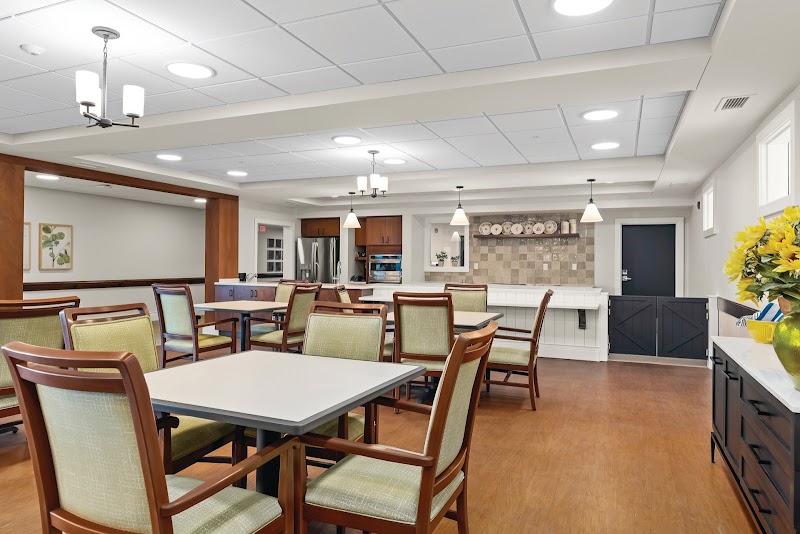
How is Tabitha At Prairie Commons Staffed?

CMS rates Tabitha At Prairie Commons's staffing level at 4 out of 5 stars, which is above average compared to other nursing homes.

What Have Inspectors Found at Tabitha At Prairie Commons?

State health inspectors documented 15 deficiencies at Tabitha At Prairie Commons during 2024 to 2025. These included: 1 Immediate Jeopardy (the most serious level, indicating potential for serious harm or death) and 14 with potential for harm. Immediate Jeopardy findings are rare and represent the most serious regulatory concerns. They require immediate corrective action.

Who Owns and Operates Tabitha At Prairie Commons?

Tabitha At Prairie Commons is owned by a non-profit organization. Non-profit facilities reinvest revenue into operations rather than distributing to shareholders. The facility operates independently rather than as part of a larger chain. With 36 certified beds and approximately 19 residents (about 53% occupancy), it is a smaller facility located in Grand Island, Nebraska.

How Does Tabitha At Prairie Commons Compare to Other Nebraska Nursing Homes?

Compared to the 100 nursing homes in Nebraska, Tabitha At Prairie Commons's overall rating (2 stars) is below the state average of 2.9 and health inspection rating (1 stars) is much below the national benchmark.

What Should Families Ask When Visiting Tabitha At Prairie Commons?

Based on this facility's data, families visiting should ask: "What changes have been made since the serious inspection findings, and how are you preventing similar issues?" "Can I visit during a mealtime to observe dining assistance and food quality?" "How do you handle medical emergencies, and what is your hospital transfer rate?" "Can I speak with family members of current residents about their experience?" These questions are particularly relevant given the facility's Immediate Jeopardy citations.

Is Tabitha At Prairie Commons Safe?

Based on CMS inspection data, Tabitha At Prairie Commons has documented safety concerns. Inspectors have issued 1 Immediate Jeopardy citation (the most serious violation level indicating risk of serious injury or death). The facility has a 2-star overall rating and ranks #100 of 100 nursing homes in Nebraska. Families considering this facility should ask detailed questions about what corrective actions have been taken since these incidents.

Do Nurses at Tabitha At Prairie Commons Stick Around?

Tabitha At Prairie Commons has not reported staff turnover data to CMS. Staff turnover matters because consistent caregivers learn residents' individual needs, medications, and preferences. When staff frequently change, this institutional knowledge is lost. Families should ask the facility directly about their staff retention rates and average employee tenure.

Was Tabitha At Prairie Commons Ever Fined?

Tabitha At Prairie Commons has been fined $15,840 across 1 penalty action. This is below the Nebraska average of $33,237. While any fine indicates a compliance issue, fines under $50,000 are relatively common and typically reflect isolated problems that were subsequently corrected. Families should ask what specific issues led to these fines and confirm they've been resolved.

Is Tabitha At Prairie Commons on Any Federal Watch List?

Tabitha At Prairie Commons is not on any federal watch list. The most significant is the Special Focus Facility (SFF) program, which identifies the bottom 1% of nursing homes nationally based on persistent, serious quality problems. Not being on this list means the facility has avoided the pattern of deficiencies that triggers enhanced federal oversight. This is a positive indicator, though families should still review the facility's inspection history directly.