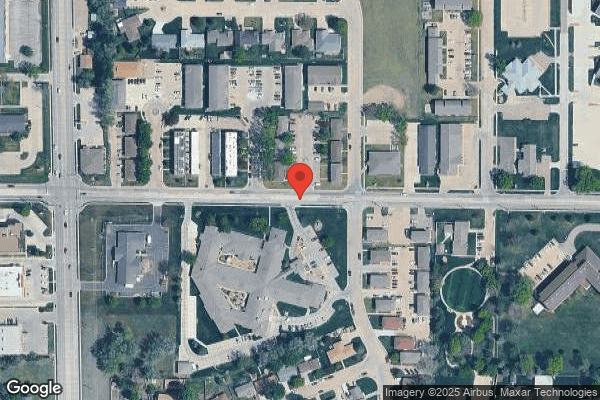

Tiffany Square

3119 West Faidley Avenue, Grand Island, NE 68803 (308) 384-2333
Non profit - Other 103 Beds VETTER SENIOR LIVING Data: November 2025
Trust Grade
65/100
#99 of 177 in NE
Last Inspection: October 2024

Within standard 12-15 month inspection cycle. Federal law requires annual inspections.

Overview

Tiffany Square in Grand Island, Nebraska has a Trust Grade of C+, indicating it is slightly above average but still has room for improvement. It ranks #99 out of 177 facilities in Nebraska, placing it in the bottom half, and #3 out of 6 in Hall County, meaning only two local options are better. The facility is on an improving trend, with issues decreasing from 7 in 2024 to just 2 in 2025. Staffing is a strength, rated at 4 out of 5 stars with a turnover rate of 33%, which is significantly lower than the Nebraska average of 49%. While there have been no fines, there have been concerns regarding food safety practices, including failure to maintain cleanliness in the kitchen and ensure proper hand hygiene, which could increase the risk of foodborne illnesses for residents. Overall, the facility has strengths in staffing and is improving, but families should be aware of the identified concerns related to cleanliness and hygiene practices.

Trust Score
C+
65/100
In Nebraska
#99/177
Bottom 45%
Safety Record
Low Risk
No red flags
Inspections
Getting Better
7 → 2 violations
Staff Stability
○ Average
33% turnover. Near Nebraska's 48% average. Typical for the industry.
Penalties
✓ Good
No fines on record. Clean compliance history, better than most Nebraska facilities.
Skilled Nurses
○ Average
Each resident gets 36 minutes of Registered Nurse (RN) attention daily — about average for Nebraska. RNs are the most trained staff who monitor for health changes.
Violations
⚠ Watch
20 deficiencies on record. Higher than average. Multiple issues found across inspections.
★★★☆☆
3.0
Overall Rating
★★★★☆
4.0
Staff Levels
★★☆☆☆
2.0
Care Quality
★★★☆☆
3.0
Inspection Score
Stable
2024: 7 issues
2025: 2 issues

The Good

  • 4-Star Staffing Rating · Above-average nurse staffing levels
  • Full Sprinkler Coverage · Fire safety systems throughout facility
  • No fines on record
  • Staff turnover below average (33%)

    15 points below Nebraska average of 48%

Facility shows strength in staffing levels, fire safety.

The Bad

3-Star Overall Rating

Near Nebraska average (2.9)

Meets federal standards, typical of most facilities

Staff Turnover: 33%

13pts below Nebraska avg (46%)

Typical for the industry

Chain: VETTER SENIOR LIVING

Part of a multi-facility chain

Ask about local staffing decisions and management

The Ugly 20 deficiencies on record

Jan 2025 2 deficiencies
CONCERN (D) 📢 Someone Reported This

A family member, employee, or ombudsman was alarmed enough to file a formal complaint

Potential for Harm - no one hurt, but risky conditions existed

Pressure Ulcer Prevention (Tag F0686)

Could have caused harm · This affected 1 resident

**NOTE- TERMS IN BRACKETS HAVE BEEN EDITED TO PROTECT CONFIDENTIALITY** Licensure Reference Number 175 NAC 12-00.609 (H)(iii)(2) Based on observation, record review, and interview, the facility failed...

Read full inspector narrative →
**NOTE- TERMS IN BRACKETS HAVE BEEN EDITED TO PROTECT CONFIDENTIALITY** Licensure Reference Number 175 NAC 12-00.609 (H)(iii)(2) Based on observation, record review, and interview, the facility failed to provide wound care according to physcian orders for 2 residents, (Resident 2 and Resident 3) of 3 sampled residents, and the faccility failed to obtain physican orders for wound care for a pressure injury for 1 residnet (Resident 1) of 3 sampled residents. The facility census was 71. Findings are: Review of a facility policy titled Skin and Wound Management Standard dated 04/2019 revealed the treatment plan will be specific for each individual resident as directed by the physician. A. A review of an admission Record revealed the facility admitted Resident 2 on 05/14/2024 with diagnoses of hepatic failure (when the liver can no longer function properly), congestive heart failure (when the heart cannot pump enough blood to the body), and dementia (which is a condition where thinking abilities are impaired enough to interfere with daily living). The Quarterly Minimum Data Set (MDS, a mandatory comprehensive assessment tool that measures the health status of nursing home residents and is used for care planning) with an Assessment Reference Date (ARD) of 12/06/2024 revealed Resident 2 had a Brief Interview for Mental Status (BIMS, a brief screening tool that aids in detecting cognitive impairment) score of 11 indicating the resident was moderately impaired. The resident required supervision or touching assistance with eating and was dependent on staff assistance with bed mobility, toilet use, and transfers. The resident was coded to be at risk for pressure related skin conditions but did not have any present at time of assessment. Review of Resident 2's Care Plan dated 01/13/2024 revealed a problem of the resident having a pressure ulcer dated 12/30/2024. An intervention was listed with start date of 12/301/24 to administer treatments as ordered by physician and document. Review of Resident 2's Physician Orders dated 01/13/2024 revealed an order to cleans would with soap and water on coccyx then apply zinc oxide after cleansing twice daily. In an observation completed on 01/13/2025 at 1:30 PM of wound care being completed by Licensed Practical Nurse B (LPN-B), LPN-B squirted a clear liquid from a vial labeled normal saline 0.9% onto Resident 2's wound located mid gluteal cleft. LPN-B the squirted some of the clear liquid onto folded 4X4 gauge and used the gauze to pat at the skin surrounding the wound and then over the top of the wound. In an interview completed on 01/13/2024 at 1:45 PM with LPN-B, LPN-B confirmed that the order for cleansing Resident 2's wound was to use soap and water not normal saline and gauze. In an interview completed on 01/14/2024 at 12:30 PM with the Director of Nursing (DON), the DON confirmed that LPN-B did not follow the physician orders for cleansing Resident 2's wound. B. Review of an admission Record revealed the facility admitted Resident 3 on 05/10/2023 with diagnoses of hemiplegia and hemiparesis (which is the lack of ability to move extremities on one side of the body), type 2 diabetes (where the body has trouble controlling blood sugar and using it for energy), and chronic pulmonary disease (which is a lung disease that causes breathing problems). The Comprehensive MDS with and ARD of 11/15/2024 revealed Resident 3 had a BIMS score of 14 indicating the resident was cognitively intact. The resident was independent with eating and was dependent on staff assistance with bed mobility, toilet use, and transfers. The resident was coded to be at risk for and have an unhealed pressure injury. Review of Resident 3's Care Plan dated 01/13/2024 revealed a focus that resident 3 has a stage 3 pressure ulcer to the coccyx dated 11/11/2024. An intervention dated 11/11/2024 was listed to administer treatments as ordered by physician and document. Review of Resident 3's Physician Orders dated 01/14/2024 revealed an order to cleanse sacral wound with wound cleanser, pat dry with gauze. Apply thin layer of topical antibiotic, then a thin layer of viscous lidocaine to the wound bed. Apply skin prep to the perimeter of the wound and bordered foam once daily and as needed. In an observation completed on 01/14/2024 at 9:00 AM of wound care being completed by Registered Nurse A (RN-A), RN-A used a Q-Tip to apply topical antibiotic ointment to the skin directly surrounding the wound with visible depth located to Resident 3's gluteal cleft. RN-A then obtained another Q-Tip and applied viscous lidocaine over the same area. The RN did not apply the topical antibiotic ointment or the viscous lidocaine directly to the wound. The RN then applied skin prep to the skin surrounding where the topical antibiotic ointment and viscous lidocaine were applied and covered the area with a bordered foam dressing. In an interview on 01/14/2024 at 9:15 AM with RN-A, RN-A confirmed that they did not apply the topical antibiotic ointment and viscous lidocaine directly to the wound. In an interview on 01/14/2024 at 10:50 AM with Licensed Practical Nurse-G (LPN-G), LPN-G confirmed that the topical antibiotic ointment and viscous lidocaine was to be applied directly to the wound and the skin prep was to be applied to the skin surrounding the wound. LPN-G confirmed that RN-A did not complete the treatment to Resident 3 wound as ordered by the physician. In an interview completed on 01/14/2024 at 12:30 PM with the DON, the DON confirmed that RN-A did not follow the physician orders for cleansing Resident 3 wound. C. A review of an admission Record revealed the facility admitted Resident 1 on 08/13/2024 with diagnoses of type 2 diabetes (where the body has trouble controlling blood sugar and using it for energy) and congestive heart failure (when the heart cannot pump enough blood to the body). The Quarterly MDS with an ARD of 11/29/2024 revealed Resident 1 had a BIMS score of 9 indicating the resident was cognitively impaired. The resident required supervision or touching assistance with eating and was dependent on staff assistance with bed mobility, toilet use, and transfers. The resident was coded to be at risk for pressure injury. Review of Resident 1's Care Plan dated 01/13/2025 revealed a focus of the resident having and being at risk for impairment to skin integrity. An intervention was listed to follow the facility skin and wound management standard and weekly and as needed skin monitoring by a professional nurse. Review of Resident 1's Progress Notes on 01/13/2025 documentation on 01/09/2024 that the resident returned to the facility with a pressure ulcer to the right buttock measuring 5.0 centimeters by 3.0 centimeters by 0.1 centimeters. Review of an After visit Summary dated 01/09/2025 revealed documentation that Resident 1 had a wound located to the right buttock. Review of an Visit Note Report dated 01/09/2025 revealed documentation by the Hospice nurse that Resident 1 had a pressure injury/ulcer located on the right buttock. Review of Resident 1's Physician Orders revealed no treatment order for Resident 1 pressure ulcer/injury located on the right buttock. In an interview on 01/14/2025 at 8:15 AM with RN-A, confirmed there was no treatment orders for the pressure injury/ulcer located on Resident 1's right buttock. In an interview on 01/14/2025 at 12:30 PM with the DON, the DON confirmed that Resident 1 was re-admitted to the facility on [DATE] and documentation reflected that the resident had a pressure injury/ulcer to the right buttock. The DON confirmed no documentation present in the resident's physician orders for treatment of this area.
CONCERN (D) 📢 Someone Reported This

A family member, employee, or ombudsman was alarmed enough to file a formal complaint

Potential for Harm - no one hurt, but risky conditions existed

Infection Control (Tag F0880)

Could have caused harm · This affected 1 resident

Licensure Reference Number 175 NAC 12-006.18B Based on observation, record review, and interview, the facility failed to use Enhanced Barrier Precautions during direct care and to clean lifts between ...

Read full inspector narrative →
Licensure Reference Number 175 NAC 12-006.18B Based on observation, record review, and interview, the facility failed to use Enhanced Barrier Precautions during direct care and to clean lifts between resident use for 1 resident (Resident 3) of 3 sampled residents, failed to provide wound cleansing in a manner to prevent cross contamination for 1 resident (Resident 2) of 3 sampled residents. The facility census was 71. Findings are: A. Review of a facility policy titled Policy for Enhanced Barrier Precautions (EBP) dated 04/05/2024 revealed that enhanced barrier precautions refer to an infection control intervention designed to reduce transmission of multidrug-resistant organisms that employs the use of gown and gloves during high contact resident cares such as transferring and changing briefs or assisting with toileting. Review of a facility policy titled Mechanical Lift and Transfer Standard dated 10/2024 revealed instruction for lift disinfection procedure to wipe all lift surfaces that come into direct contact with resident's skin with a approved disinfectant between each resident use. Heavy soiling, such as the foot plate, may require soap and water scrubbing prior to disinfecting. Review of an admission Record revealed the facility admitted Resident 3 on 05/10/2023 with diagnoses of hemiplegia and hemiparesis (which is the lack of ability to move extremities on one side of the body), type 2 diabetes (where the body has trouble controlling blood sugar and using it for energy), and chronic pulmonary disease (which is a lung disease that causes breathing problems). The Comprehensive Minimum Data Set (MDS, a mandatory comprehensive assessment tool that measures the health status of nursing home residents and is used for care planning) with an Assessment Reference Date (ARD) of 11/15/2024 revealed Resident 3 had a Brief Interview for Mental Status (BIMS, a brief screening tool that aids in detecting cognitive impairment) score of 14 indicating the resident was cognitively intact. The resident was independent with eating and was dependent on staff assistance with bed mobility, toilet use, and transfers. Review of Resident 3's Care Plan dated 01/13/2024 revealed a focus that the resident had an activities of daily living self care performance deficit with an intervention listed to provide assistance of 2 staff and a full body lift to transfer the resident dated 05/10/2023. A focus of the resident being at risk for infection due to pressure injury/ulcer to coccyx with and intervention listed for enhanced barrier precautions for high contact activities dated 11/11/2024. In an observation completed on 01/13/2025 at 2:45 PM with Nurse Aide C (NA-C) and Nurse Aide E (NA-E) revealed they were assisting Resident 3 to transfer from a lying position in their bed up to a sitting position in their wheelchair using a full body lift. NA-C did not use or have a gown on while providing the direct care and assisting the resident with the transfer. NA-E did not use or have a gown on while providing the direct care and assisting the resident with the transfer. After using the lift to complete the transfer NA-E placed the lift over the resident's bed and proceeded to exit the resident's room. NA-C assisted to propel the resident from the room in their wheelchair and then returned to the resident room. The NA removed the lift from the room and placed the lift in the hallway outside of the resident's room. The NA then proceeded down the hall entering another resident's room. In an interview completed on 01/13/2025 at 3:10 PM with NA-C, NA-C confirmed that staff were to use enhanced barrier precautions when providing direct care for Resident 3. NA-C confirmed that they did not have or use a gown when assisting Resident 3 to transfer with the full body lift and should have. In an interview completed on 01/13/2025 at 3:10 PM with NA-E, NA-E confirmed that staff were to use enhanced barrier precautions when providing direct care for Resident 3, and staff were to cleanse the lift after each use. NA-E confirmed that they did not have or use a gown when assisting Resident 3 to transfer with the full body lift, and that they did not clean the lift after using it to assist Resident 3 and placing the lift in the hall for further use and should have. In an interview completed on 01/13/2024 at 4:10 PM with the Director of Nursing (DON), the DON confirmed that Resident 3 was on enhanced barrier precautions for all direct cares including transfers. The DON confirmed that NA-C and NA-E should have used a gown while assisting Resident 3 with the transfer. In an interview completed on 01/14/2024 at 11:10 PM with the DON, the DON confirmed that lifts are to be cleansed between each resident use including the foot plate of the sit to stand lift B. Review of a facility policy titled Skin and Wound Management Standard dated 04/2019 revealed dressing changes will be done using good infection control technique. A review of an admission Record revealed the facility admitted Resident 2 on 05/14/2024 with diagnoses of hepatic failure (when the liver can no longer function properly), congestive heart failure (when the heart cannot pump enough blood to the body), and dementia (which is a condition where thinking abilities are impaired enough to interfere with daily living). The Quarterly MDS with an ARD of 12/06/2024 revealed Resident 2 had a BIMS score of 11 indicating the resident was moderately impaired. The resident required supervision or touching assistance with eating and was dependent on staff assistance with bed mobility, toilet use, and transfers. The resident was coded to be at risk for pressure related skin conditions but did not have any present at time of assessment. Review of Resident 2's Care Plan dated 01/13/2024 revealed a problem of the resident having a pressure ulcer dated 12/30/2024. An intervention dated 12/30/2024 was listed to administer treatments as ordered by physician and document. Review of Resident 2's Physician Orders dated 01/13/2024 revealed an order to cleans would with soap and water on coccyx then apply zinc oxide after cleansing twice daily. In an observation completed on 01/13/2025 at 1:30 PM of wound care being completed by Licensed Practical Nurse B (LPN-B), LPN-B squirted a clear liquid from a vial labeled normal saline 0.9% onto Resident 2 wound located mid gluteal cleft. LPN-B the squirted some of the clear liquid onto folded 4X4 gauge and used the gauze to pat at the skin surrounding the wound and then over the top of the wound. LPN-B applied a thick white cream to a gloved finger. The LPN then applied the cream to Resident 2 gluteal cleft starting at the resident's anus and spreading the cream up the cleft into the residents open wound located mid gluteal cleft. In an interview completed on 01/13/2025 at 1:45 PM with LPN-B, LPN-B confirmed that they did not cleanse the wound and apply the thick white cream in a manor to prevent cross contamination. In an interview completed on 01/14/2025 at 12:30 PM with the DON, the DON confirmed that they did not cleanse the wound and apply the thick white cream in a manor to prevent cross contamination.
Oct 2024 6 deficiencies
CONCERN (D)

Potential for Harm - no one hurt, but risky conditions existed

Deficiency F0661 (Tag F0661)

Could have caused harm · This affected 1 resident

**NOTE- TERMS IN BRACKETS HAVE BEEN EDITED TO PROTECT CONFIDENTIALITY** Licensure Reference Number 175NAC 12-006.09(G)(i) Based on record review and interview; the facility failed to ensure that a rec...

Read full inspector narrative →
**NOTE- TERMS IN BRACKETS HAVE BEEN EDITED TO PROTECT CONFIDENTIALITY** Licensure Reference Number 175NAC 12-006.09(G)(i) Based on record review and interview; the facility failed to ensure that a recapitulation (a concise summary of the resident's stay and course of treatment in the facility) of the resident's stay was completed as required for 1 of 1 residents reviewed (Resident 78). The facility census was 77. Findings are: Record review of the admission Record dated 10/16/2024 for Resident 78 revealed that Resident 78 admitted into the facility on [DATE]. Resident 78 had a discharge date of 08/14/2024. Record review of the Care Plan for Resident 78 dated 10/16/2024 revealed that Resident 78 had a goal to return to their own home with their spouse. Record review of the Minimum Data Set (MDS, a mandatory comprehensive assessment tool used for care planning) for Resident 78 dated 07/11/2024 revealed that it was an admission assessment. The MDS revealed that Resident 78 and their spouse participated in the assessment and goal setting. The MDS revealed that Resident 78's overall goal was to discharge to the community. Record review of Progress Notes dated 07/11/2024 through 08/14/2024 revealed Resident 78 and their spouse were actively talking with the facility about discharge plans. Record review of the MDS for Resident 78 dated 08/14/2024 revealed that it was a discharge assessment. The MDS revealed that Resident 78 discharged from the facility on 08/14/2024. Record review of the medical record for Resident 78 revealed that it contained no documented recapitulation of Resident 78's stay. Interview on 10/16/2024 at 11:44 AM with the facility Director of Nursing (DON) revealed that the facility does not have a policy or procedure for resident discharge. The DON revealed that the facility uses the Nursing Discharge Summary assessment to document the recapitulation of stay for discharged residents. The DON reviewed the medical record of Resident 78. The DON confirmed that a Nursing Discharge Summary was not completed for Resident 78. The DON confirmed that a recapitulation of stay was not completed for Resident 78 as required.
CONCERN (D)

Potential for Harm - no one hurt, but risky conditions existed

Unnecessary Medications (Tag F0759)

Could have caused harm · This affected 1 resident

Licensure Reference Number 175NAC 12-006.10(D) Based on observation, record review, and interview, the facility failed to maintain a Medication Error rate less then 5% with an actual medication error ...

Read full inspector narrative →
Licensure Reference Number 175NAC 12-006.10(D) Based on observation, record review, and interview, the facility failed to maintain a Medication Error rate less then 5% with an actual medication error rate of 12% (25 medication administrations were observed with 3 errors occurring) affecting 3 of 11 sampled residents (Residents 13, 30, and 33). The facilty census was 77. Findings are: Review of a document titled Types of Medication Errors and dated 02/12/2024 by the National Library of Medicine revealed a medication error has occurred when specific direction for method or administration of the medication is not followed by the individual taking or administering the medication. Review of a document titled Patient Education: Inhaler Techniques in Adults dated 09/2024 revealed as directions for use to seal the lips around the mouthpiece and keep the tongue under the mouthpiece. Take a slow deep breath at the same time you press down on the medication canister, hold your breath for as long as comfortable then exhale. Wait 20 to 60 seconds before taking another puff of the medicine and repeat the above steps. In an observation of medication administration by Medication Aide C (MA-C) from 10:50 AM to 11:50 AM on 10/15/2024 the following was observed: -MA-C prepared Resident 13's medications at the medication cart in the hallway. MA-C removed a white oblong tablet from a unit dose card labeled with Resident 13 name and Potassium Chloride Extended Release 20 Milliequivalents tablet. Directions were written on the label of the unit dose card to give one tablet by mouth three times a day and to take each dose with a meal and a full glass of water. MA-C placed the medication into a medication cup then poured water into a clear 4 oz glass approximately filling the glass half full. MA-C knocked and entered Resident 13's room then handed the cup with the medications in it and the cup with the water in it to Resident 13. Resident 13 emptied the cup of medications into their mouth then handed the empty cup back to MA-C. Resident 13 then took a drink of the water that MA-C gave to them. The resident drank approximately half of the half full 4 oz glass then handed the cup back to MA-C. MA-C thanked the resident then exited the room and returned to the medication cart and signed out the administration of the medications for this resident. -MA-C prepared Resident 30's medications at the medication cart in the hallway. MA-C removed 4 yellow oblong tablets from a unit dose card labeled with Resident 30's name and Potassium Chloride 10 Milliequivalents tablet. Directions were written on the label of the unit dose card to give 4 tablets twice daily by mouth with a full glass of water. MA-C placed the medication into a medication cup then poured water into a clear 4 oz glass filling the glass approximately ¾'s full. MA-C knocked and entered Resident 30's room then handed the cup with the medications in it and the cup with the water in it to Resident 30. Resident 30 emptied the cup of medications into their mouth then handed the empty cup back to MA-C. Resident 30 then took a drink of the water that MA-C gave to them. The resident drank all of the water except ¼ of what was in the cup then handed the cup back to MA-C. MA-C then returned to the medication cart and signed out the medications for this resident. -MA-C prepared Resident 33's medications at the medication cart in the hallway. MA-C removed all the tablet medications from the unit dose cards and place them in the medication cup. MA-C then obtained a gray inhaler from a drawer on the medication cart. The gray inhaler was labeled with Resident 33's name and directions for the resident to inhale 2 puffs into the lungs three times a day. MA-C knocked and entered Resident 33 room. MA-C then handed Resident 33 the cup with the medications in it and a cup with water in it. Resident 33 placed the medications into their mouth then took a drink of water from the cup. The resident then handed the items back to MA-C. MA-C then handed Resident 33 the gray inhaler. Resident 33 removed the cap from the mouth piece of the inhaler opened their mouth, placed their lips around the mouth piece and depressed the inhaler twice releasing two puffs of medication. The resident then performed a deep inhale and handed the inhaler back to MA-C. The resident then thanked MA-C and MA-C exited the room and returned to the medication cart in the hallway and signed out the medication administration to Resident 33. In an interview on 10/15/2024 at 11:50 AM with MA-C, confirmed that the label and the order on the medication administration record for both resident 13 and 30 gave instructions for the residents to drink a full glass of water with the administration of the Potassium Chloride medications. MA-C stated the these residents did not drink a full glass of water with their medication administrations. MA-C confirmed that Resident 33 should have waited one minute between the puffs of the inhaler and not taken the two puffs then inhaled them both at the same time. In an interview on 10/15/2024 at 1:35 PM with the Director of Nursing (DON), confirmed that not following the administration directions like drinking a full glass of water and waiting the allotted time between inhaler puffs were medication errors.
CONCERN (D)

Potential for Harm - no one hurt, but risky conditions existed

Deficiency F0761 (Tag F0761)

Could have caused harm · This affected 1 resident

Licensure Reference Number 175NAC 12-006.12(D)(vi) Based on observation, record review, and interview; the facility failed to ensure medications were labeled properly for 1 resident (Resident 229), of...

Read full inspector narrative →
Licensure Reference Number 175NAC 12-006.12(D)(vi) Based on observation, record review, and interview; the facility failed to ensure medications were labeled properly for 1 resident (Resident 229), of 11 sampled residents. The facility census was 77. Findings are: Review of a facility policy titled Medication Ordering and Receiving from Pharmacy: Medication Labels dated 05/2021 revealed under specific directions for use, due to the complexity and length/amount of instructions some medications may be labeled use as directed and refer the person administering the medication to the medication administration record for instruction details. Review of a facility policy titled Medication Storage and Utilization dated 03/2019 revealed multi dose vials which have been opened or accessed should be discarded within 28 days unless the manufacturer specifies a different date for that open vial. In an observation of insulin administration on 10/15/2024 from 8:10 AM to 8:18 AM by Registered Nurse B (RN-B), to Resident 229 the following was observed: A. RN-B removed a box from the top drawer of the medication cart with a label reading Resident 229 name and Insulin Aspart (which is a fast-acting synthetic version of human insulin used to control blood sugar levels), 100 units per milliliter and directions to inject 1-6 units under the skin three times a day with meals and inject 1-5 units at bedtime per sliding scale. Refrigerate until opening, discard 28 days after opening. RN-B revealed that Resident 229 would not get any of the medication due to their blood glucose reading that was obtained prior. RN-B revealed the medication was administered before meals and at bedtime per a sliding scale. Record review of Resident 229 physician order in the electronic medical health record for the month of October 2024 read, Insulin Aspart FlexPen subcutaneous solution Pen injector 100 units per milliliter. Inject as per sliding scale if 151-200 = 1 unit, 201-260= 2 unit, 261-300 = 3 unit, 301-360 = 4 unit, 361-400 = 4 unit, 401-999 6 unit and notify provider. In an interview with RN-B on 10/15/2024 at 08:20 AM, RN-B confirmed that the label on the box of Insulin and the physician order in the electronic medical health record did not match. RN-B confirmed that they should not administer a medication to a resident if the label and the order did not match. The RN confirmed that a clarification was needed prior to Resident 229 receiving any of this medication. B. RN-B removed a box from the top drawer of the medication cart with a label reading Resident 229 name and Lantus 100 unit per milliliter and directions to inject 12 units under the skin every morning with breakfast. To refrigerate until opening and discard 28 days after first use. The RN removed a vial from the box with a sticker attached to the bottle. The sticker read opened date of 09/29 and discard date of 10/29. In an interview with RN-B on 10/15/2024 at 08:20 AM, RN-B confirmed that the medication discard date should be 28 days from the opening date. The RN confirmed that 28 days from 09/29 should be 10/26 and not 10/29 and the vial was miss labeled for the discard date. In an interview on 10/15/2024 at 01:35 PM with the Director of Nursing (DON), the DON confirmed that the order for the insulin on the label and the physician order did not match. The DON stated that the written direction on the label was a shorter way of writing the residents prescribed sliding scale order. The DON confirmed that if a label and order did not match the medication should not be given. The DON confirmed that the facility policy was to use use as directed on the label for complex and lengthy instructions on medications. The DON confirmed that the discard date was to be 28 days from opening and should be written as 10/26 not 10/29.
CONCERN (E)

Potential for Harm - no one hurt, but risky conditions existed

Medication Errors (Tag F0758)

Could have caused harm · This affected multiple residents

**NOTE- TERMS IN BRACKETS HAVE BEEN EDITED TO PROTECT CONFIDENTIALITY** C. Record review of Resident 12's admission Record dated 10/10/2024 revealed an admission date of 09/11/2024. Resident admission...

Read full inspector narrative →
**NOTE- TERMS IN BRACKETS HAVE BEEN EDITED TO PROTECT CONFIDENTIALITY** C. Record review of Resident 12's admission Record dated 10/10/2024 revealed an admission date of 09/11/2024. Resident admission diagnosis on the admission record revealed atrial fibrillation (an abnormal heart rhythm characterized by rapid and irregular beating of the heart) and gastrointestinal hemorrhage (uncontrolled bleeding internally from the mouth to the rectum). Record review of Resident 12's Care Plan (a written interdisciplinary comprehensive plan detailing how to provide quality care for a resident) dated 09/11/2024 revealed Resident 12 has no plans for discharge and placement is needed for end-of-life care. Resident 12's Care Plan further revealed a focus on terminal prognosis related to Atrial Fibrillation. The Care Plan revealed the goal to maintain comfort levels, and interventions on encouraging support from family and friends; observe for signs and symptoms of pain, and to work with nursing staff on providing comfort. Continued review of Resident 12's Care Plan revealed a medication regimen including medication with black box warnings (medication with serious safety risks). Interventions listed for the medication regimen with black box warnings revealed to consult with the pharmacist to conduct monthly and PRN (as needed) medication reviews; administer medications per physician order; observe for any complications; and to report concerns to charge nurse and physician as needed. Record review of Resident 12's order summary for medications revealed an order for Lorazepam (a psychotropic medication, (any medication that affects behavior, mood, thoughts, or perception), used for short term relief to treat anxiety disorders (a mental health disorder characterized by feelings of worry, anxiety, or fear that are strong enough to interfere with one's daily activities)). The medication was prescribed to be provided as needed (PRN) every hour. The medication was prescribed upon admission on [DATE] with no end date. The DON) and Administrator (ADMIN) were interviewed on 10/15/2024 at 2:21 PM about the PRN medication Lorazepam for Resident 12 and if an end date was provided. The DON revealed not knowing and indicated they would follow up. On 10/16/2024 at around 8:45 AM, the DON confirmed there was no previous end date and provided this surveyor with a new hospice order for Resident 12's PRN medication Lorazepam with a new start/end date of 10/15/2024-10/29/2024. Licensure Reference Number 175NAC 12-006.09(H) Based on observation, record review, and interview; the facility failed to ensure residents medication regimen was free from unnecessary psychotropic medications for 2 (Residents 10, and 32) of 6 sampled residents, and the facility failed to implement a stop date for a PRN (as needed) psychotropic medication for 1 (Resident 12) of 5 sampled residents. The facility census was 77. Findings are: A. Review of a facility policy titled Psychoactive Medication and Medication Regimen Review Management Standard and dated 09/2024 revealed: -Unnecessary Drug is defined as any medication used in excessive dose, excessive duration, with out adequate monitoring, with adequate indications, and in the presence of adverse consequences or any combinations of the reasons stated. -Section 5. Gradual dose reduction or tapering of medications should be reviewed during weekly risk meeting. -Antidepressant medications gradual dose reduction. Tapering may be clinically contraindicated if the resident's target symptoms returned or worsened after the most recent attempt at tapering the dose within the facility. -Documentation requirements for psychoactive medications best practice would be to ensure the documentation is initiated with the appropriate target behavior and side effects listed and review the documentation at the end of the month. The expectation is to review this documentation during the weekly Risk meeting, in conjunction with the care planning process and as needed. Review of an admission Record revealed the facility admitted Resident 10 on 06/02/2010 with diagnoses of: depression (a mood disorder that causes a persistent feeling of sadness and loss of interest and can interfere with one's daily activities) and anxiety (a mental health disorder characterized by feelings of worry, anxiety, or fear that are strong enough to interfere with one's daily activities). The quarterly Minimum Data Set (MDS, a mandatory comprehensive assessment tool that measures the health status of nursing home residents and is used for care planning) with an Assessment Reference Dated (ARD) of 08/23/2024 revealed that Resident 10 was unable to complete the Brief Interview for Mental Status (BIMS, a brief screening tool that aids in detecting cognitive impairment). The staff assessment for mental status was conducted and was coded that the resident had both short term and long-term memory problem. The resident was coded as to not have any behaviors during the look back period and staff provided supervision and touching assistance with eating, substantial or maximal assistance with bed mobility, transfers, and toilet use. The resident was dependent on their wheelchair pushed by staff for mobility. The resident was coded as to receive antidepressant medication and no gradual dose reduction was coded as to have occurred or documentation that a gradual dose reduction was clinically contraindicated. Review of Resident 10's Care Plan dated 10/09/2024 revealed no specific or targeted behaviors for Resident 10 and the use of the antidepressant medication. Review of Resident 10's medical health record revealed: -04/10/2024 Resident 10's provider agreed with the pharmacist recommendation to reduce the residents Lexapro medication from 20 milligrams to 10 milligrams. -Resident10's Behavior Intervention Monthly Flow Record for the month of April and May revealed no documentation of the resident having mood or behavior being exhibited during these months. -Resident 10's progress notes revealed no documentation of the resident having alterations in mood or behavior from 04/10/2024 through 05/13/2024. -05/13/2024 the nurse sent a communication to the resident's provider requesting Resident 10's Lexapro be increased back to the 20 milligram dose. The communication did not include any notification of change in mood or behavior since the decrease in the dosing of the Lexapro. -05/14/2024 Resident 10's provider increased the Lexapro back to 20 milligrams. -05/24/2024 Resident 10's Patient Health Questionnaire (PHQ-9, which is an assessment that objectifies and assesses the degree of depression severity) score was 7 indicating mild depression. -08/23/2024 Resident 10's Lexapro medication was decreased from 20 milligrams to 10 milligrams per pharmacy recommendations to the provider. -Resident 10's Behavior Intervention Monthly Flow Record for the months of July and August of 2024 revealed no documentation of the resident having mood or behavior having been exhibited during these months. -Review of Resident 10 progress notes revealed no documentation of the resident having alterations in mood or behavior from 05/14/2024 through 09/22/2024. -09/22/2024 communication from nursing staff sent to Resident 10's provider stating Resident 10 had been more anxious since the decrease in their Lexapro medication and requested to increase the medication. -09/24/2024 Resident 10's Lexapro medication was increased back to the 20 milligrams. In an interview on 10/15/2024 at 2:45 PM with Medication Aide D (MA-D), revealed Resident 10s' behaviors are getting confused and crying out for family, not knowing where the resident is and thinking that family had just left the resident and did not know where the resident was. MA-D revealed Resident 10s' behaviors get charted on the paper flow record each shift. MA-D further revealed [gender] would notify the nurse if unable to get the resident to calm down or be able to reassure the resident. In an interview on 10/15/2024 at 3:30 PM with the Director of Nursing (DON) revealed that residents with psychotropic medication changes should be monitored in the weekly risk meeting. The DON confirmed that Resident 10's mood and behaviors were not being monitored in the weekly risk meeting and was unaware of the changes in the resident's antidepressant medication and documentation being present to support the changes in the resident's antidepressant medication. B. Review of an admission Record revealed the facility admitted Resident 32 on 05/14/2024 with diagnoses of Alzheimer's disease (which is a brain disorder that gradually destroys memory ad thinking skills, and eventually the ability to perform everyday tasks), and depression (a mood disorder that causes a persistent feeling of sadness and loss of interest and can interfere with one's daily activities). The comprehensive quarterly MDS with an ARD of 09/06/2024 revealed that Resident 32 had a BIMs score of 11 indicating the resident was moderately cognitively impaired. The resident was coded to not have any mood or behavior problems. The resident needed setup or clean up assistance with eating and substantial or maximal assistance with bed mobility, transfers, and toilet use. The resident was coded to be receiving routine antidepressant medication and no gradual dose reduction was coded as to have occurred or documentation that a gradual dose reduction was clinically contraindicated. Review of Resident 32's Care Plan dated 10/09/2024 revealed no specific or targeted behaviors for Resident 32 and the use of the antidepressant medication. Review of Resident 32's medical health record revealed: -Physician orders for Remeron (Mirtazapine)(an antidepressant medication) 15 milligram tablet once daily dated 05/14/2024. -Physician orders for Zoloft (Sertraline) (an antidepressant medication) 100 milligram tablet once daily dated 07/30/2024. -Progress Notes from 06/01/2024 through 07/30/2024 revealed no documentation of alterations in mood or behavior for Resident 32. -Resident 32 Behavior Intervention Monthly Flow Record for the Month of July 2024 revealed no behaviors documented as being exhibited for the resident. -Review of Resident 32's Informed Consent for use of Psychotropic medications dated 05/15/2024 was completed for the use of the antidepressant medication of Remeron. The document was not signed by the resident or their responsible party. -Review of Resident 32's Informed Consent for use of Psychotropic medications dated 10/10/2024 was completed for the use of the antidepressant medication of Remeron and Zoloft. The document was not signed by the resident or their responsible party. In an interview on 10/15/2024 at 3:30 PM with the DON revealed that residents with psychotropic medication changes should be monitored in the weekly risk meeting. The DON confirmed that Resident 32 mood and behaviors were not being monitored in the weekly risk meeting. The DON confirmed that the Informed Consent for use of Psychotropic Medications were not signed by the resident or responsible parties and that no mood or behavior documentation was present to reflect the addition of the Zoloft medication.
CONCERN (E)

Potential for Harm - no one hurt, but risky conditions existed

Menu Adequacy (Tag F0803)

Could have caused harm · This affected multiple residents

Licensure Reference Number 175NAC 12-006.11(A)(i) Based on observation, interview and record review the facility failed to ensure that residents were served the required food portion size per the men...

Read full inspector narrative →
Licensure Reference Number 175NAC 12-006.11(A)(i) Based on observation, interview and record review the facility failed to ensure that residents were served the required food portion size per the menu to meet nutritional needs for 50 of 58 residents (Residents 68, 19, 7, 57, 28, 5, 9, 47, 22, 36, 41, 32, 61, 49, 46, 71, 38, 45, 20, 63, 39, 14, 30, 279, 229, 59, 43, 64, 76, 48, 18, 52, 16, 53, 66, 3, 40, 74, 17, 51, 50, 75, 4, 62, 72, 24, 35, 29, 25, and 8). The facility census was 77. Findings are: Record review of the facility Food Preparation and Dining Service Audit dated 4/2022 revealed that standardized recipes are available for all menu items. The audit revealed that portions are served according to the menu unless the resident specifically requests otherwise. Record review of the Dietary Spreadsheet (menu) for 10/10/24 revealed that the lunch meal was Beef Chili. The menu revealed that the regular portion size for the beef chili was 8 ounces. Observation on 10/10/24 at 11:10 AM in the facility kitchen at the steam table revealed that a black handled ladle was in the pan of chili. The ladle was imprinted (labeled) as 6 ounces. Dietary Cook-A (DC-A) used a thermometer to check the temperature of the foods in the pans in the steam table. DC-A revealed the beef chili temperature was 202.2 degrees Fahrenheit. DC-A revealed the temperature of the diced carrots was 194.7 degrees Fahrenheit. DC-A confirmed that the serving spaedle (a ladle-like utensil with slots in the bottom to drain liquid from food) in the diced carrots was a 4 ounce spaedle. DC-A along with this surveyor observed the ladle in the beef chili was imprinted (marked) as a 6 ounce ladle. DC-A confirmed that the ladle in the beef chili in the steam table pan was a 6 ounce ladle for serving the beef chili. Observation on 10/10/24 at 11:25 AM in the facility kitchen revealed that DC-A performed handwashing and prepared to start meal service for facility residents. Record review of the undated list of residents on small portions provided by the facility Registered Dietitian on 10/10/24 revealed that 15 Residents (Residents 21, 33, 60, 1, 26, 31, 56, 12, 44, 34, 67, 37, 42, 2, and 6) requested small portions. Observation on 10/10/24 at 11:31 AM in the facility kitchen revealed that DC-A picked up the 6 ounce ladle from the pan of chili in the steam table. DC-A used the 6 ounce ladle to scoop beef chili from the pan in the steam table. DC-A poured the 6 ounces of chili from the ladle into a maroon cup for Resident 21 (Resident 21 requested a small portion). DC-A used the 6 ounce ladle to scoop chili from the pan in the steam table and poured the 6 ounces of chili from the ladle into a bowl for Resident 33 (Resident 33 requested a small portion). DC-A used the 6 ounce ladle to scoop chili from the pan in the steam table and poured the 6 ounces of chili from the ladle into a bowl for Resident 68. DC-A used the 6 ounce ladle to scoop chili from the pan in the steam table and poured the 6 ounces of chili from the ladle into a bowl for Resident 19. DC-A used the 6 ounce ladle to scoop chili from the pan in the steam table and poured the 6 ounces of chili from the ladle into a bowl for Resident 60 (Resident 60 requested a small portion). DC-A used the 6 ounce ladle to scoop chili from the pan in the steam table and poured the 6 ounces of chili from the ladle into a bowl for Resident 7. DC-A used the 6 ounce ladle to scoop chili from the pan in the steam table and poured the 6 ounces of chili from the ladle into a bowl for Resident 57. DC-A used the 6 ounce ladle to scoop chili from the pan in the steam table and poured the 6 ounces of chili from the ladle into a bowl for Resident 28. DC-A used the 6 ounce ladle to scoop chili from the pan in the steam table and poured the 6 ounces of chili from the ladle into a bowl for Resident 5. DC-A used the 6 ounce ladle to scoop chili from the pan in the steam table and poured the 6 ounces of chili from the ladle into a bowl for Resident 9. DC-A used the 6 ounce ladle to scoop chili from the pan in the steam table and poured the 6 ounces of chili from the ladle into a bowl for Resident 47. DC-A used the 6 ounce ladle to scoop chili from the pan in the steam table and poured the 6 ounces of chili from the ladle into a bowl for Resident 22. DC-A used the 6 ounce ladle to scoop chili from the pan in the steam table and poured the 6 ounces of chili from the ladle into a bowl for Resident 36. DC-A used the 6 ounce ladle to scoop chili from the pan in the steam table and poured the 6 ounces of chili from the ladle into a bowl for Resident 1 (Resident 1 requested a small portion). DC-A used the 6 ounce ladle to scoop chili from the pan in the steam table and poured the 6 ounces of chili from the ladle into a bowl for Resident 41. DC-A used the 6 ounce ladle to scoop chili from the pan in the steam table and poured the 6 ounces of chili from the ladle into a maroon cup for Resident 26 (Resident 26 requested a small portion). DC-A used the 6 ounce ladle to scoop chili from the pan in the steam table and poured the 6 ounces of chili from the ladle into a bowl for Resident 32. DC-A used the 6 ounce ladle to scoop chili from the pan in the steam table and poured the 6 ounces of chili from the ladle into a bowl for Resident 61. DC-A used the 6 ounce ladle to scoop chili from the pan in the steam table and poured the 6 ounces of chili from the ladle into a bowl for Resident 49. DC-A used the 6 ounce ladle to scoop chili from the pan in the steam table and poured the 6 ounces of chili from the ladle into a bowl for Resident 46. DC-A used the 6 ounce ladle to scoop chili from the pan in the steam table and poured the 6 ounces of chili from the ladle into a bowl for Resident 31 (Resident 31 requested a small portion). DC-A used the 6 ounce ladle to scoop chili from the pan in the steam table and poured the 6 ounces of chili from the ladle into a bowl for Resident 71. DC-A used the 6 ounce ladle to scoop chili from the pan in the steam table and poured the 6 ounces of chili from the ladle into a bowl for Resident 38. DC-A used the 6 ounce ladle to scoop chili from the pan in the steam table and poured the 6 ounces of chili from the ladle into a bowl for Resident 45. DC-A used the 6 ounce ladle to scoop chili from the pan in the steam table and poured the 6 ounces of chili from the ladle into a bowl for Resident 20. DC-A used the 6 ounce ladle to scoop chili from the pan in the steam table and poured the 6 ounces of chili from the ladle into a bowl for Resident 63. DC-A used the 6 ounce ladle to scoop chili from the pan in the steam table and poured the 6 ounces of chili from the ladle into a bowl for Resident 39. The time was now 11:58 AM. DC-A removed a dining bowl of pureed chili from the warmer. DC-A removed the foil from the top of the bowl and poured approximately half of the bowl of pureed chili into another bowl for Resident 14. DC-A used the 6 ounce ladle to scoop chili from the pan in the steam table and poured the 6 ounces of chili from the ladle into a bowl for Resident 30. DC-A used the 6 ounce ladle to scoop chili from the pan in the steam table and poured the 6 ounces of chili from the ladle into a bowl for Resident 279. DC-A used the 6 ounce ladle to scoop chili from the pan in the steam table and poured the 6 ounces of chili from the ladle into a bowl for Resident 229. DC-A used the 6 ounce ladle to scoop chili from the pan in the steam table and poured the 6 ounces of chili from the ladle into a bowl for Resident 59. DC-A used the 6 ounce ladle to scoop chili from the pan in the steam table and poured the 6 ounces of chili from the ladle into a bowl for Resident 43. DC-A used the 6 ounce ladle to scoop chili from the pan in the steam table and poured the 6 ounces of chili from the ladle into a bowl for Resident 64. DC-A used the 6 ounce ladle to scoop chili from the pan in the steam table and poured the 6 ounces of chili from the ladle into a bowl for Resident 76. DC-A used the 6 ounce ladle to scoop chili from the pan in the steam table and poured the 6 ounces of chili from the ladle into a bowl for Resident 48. DC-A used the 6 ounce ladle to scoop chili from the pan in the steam table and poured the 6 ounces of chili from the ladle into a bowl for Resident 18. DC-A used the 6 ounce ladle to scoop chili from the pan in the steam table and poured the 6 ounces of chili from the ladle into a bowl for Resident 52. DC-A used the 6 ounce ladle to scoop chili from the pan in the steam table and poured the 6 ounces of chili from the ladle into a bowl for Resident 16. DC-A used the 6 ounce ladle to scoop chili from the pan in the steam table and poured the 6 ounces of chili from the ladle into a bowl for Resident 53. DC-A used the 6 ounce ladle to scoop chili from the pan in the steam table and poured the 6 ounces of chili from the ladle into a bowl for Resident 56 (Resident 56 requested a small portion). DC-A used the 6 ounce ladle to scoop chili from the pan in the steam table and poured the 6 ounces of chili from the ladle into a bowl for Resident 66. DC-A used the 6 ounce ladle to scoop chili from the pan in the steam table and poured the 6 ounces of chili from the ladle into a bowl for Resident 3. DC-A used the 6 ounce ladle to scoop chili from the pan in the steam table and poured the 6 ounces of chili from the ladle into a bowl for Resident 40. DC-A used the 6 ounce ladle to scoop chili from the pan in the steam table and poured the 6 ounces of chili from the ladle into a bowl for Resident 74. DC-A used the 6 ounce ladle to scoop chili from the pan in the steam table and poured the 6 ounces of chili from the ladle into a bowl for Resident 17. DC-A used the 6 ounce ladle to scoop chili from the pan in the steam table and poured the 6 ounces of chili from the ladle into a bowl for Resident 51. DC-A used the 6 ounce ladle to scoop chili from the pan in the steam table and poured the 6 ounces of chili from the ladle into a bowl for Resident 50. DC-A used the 6 ounce ladle to scoop chili from the pan in the steam table and poured the 6 ounces of chili from the ladle into a bowl for Resident 75. DC-A used the 6 ounce ladle to scoop chili from the pan in the steam table and poured the 6 ounces of chili from the ladle into a bowl for Resident 4. DC-A used the 6 ounce ladle to scoop chili from the pan in the steam table and poured the 6 ounces of chili from the ladle into a bowl for Resident 62. DC-A used the 6 ounce ladle to scoop chili from the pan in the steam table and poured the 6 ounces of chili from the ladle into a bowl for Resident 72. DC-A used the 6 ounce ladle to scoop chili from the pan in the steam table and poured the 6 ounces of chili from the ladle into a bowl for Resident 24. DC-A used the 6 ounce ladle to scoop chili from the pan in the steam table and poured the 6 ounces of chili from the ladle into a bowl for Resident 35. DC-A used the 6 ounce ladle to scoop chili from the pan in the steam table and poured the 6 ounces of chili from the ladle into a bowl for Resident 29. DC-A used the 6 ounce ladle to scoop chili from the pan in the steam table and poured the 6 ounces of chili from the ladle into a bowl for Resident 25. DC-A used the 6 ounce ladle to scoop chili from the pan in the steam table and poured the 6 ounces of chili from the ladle into a bowl for Resident 12 (Resident 12 requested a small portion). The time was now 12:32 PM. DC-A used the 6 ounce ladle to scoop chili from the pan in the steam table and poured the 6 ounces of chili from the ladle into a bowl for Resident 8. DC-A placed the bowl on a plate. DC-A covered the bowl and plate for Resident 8 with foil and placed it into the warmer. DC-A confirmed that the ladle used to serve the beef chili was a 6 ounce ladle. Observation on 10/10/24 at 12:35 PM at the facility steam table with the facility Registered Dietitian (RD) confirmed that the ladle in the pan of beef chili was a 6 ounce ladle. Interview on 10/10/24 at 1:32 PM with the Registered Dietitian (RD) confirmed that the regular serving size for the beef chili served for lunch on 10/10/24 was to be 8 ounces per the menu. The RD confirmed that a 6 ounce ladle had been used for serving the beef chili. The RD confirmed that the residents served beef chili did not receive the 8 ounce serving required.
CONCERN (E)

Potential for Harm - no one hurt, but risky conditions existed

Infection Control (Tag F0880)

Could have caused harm · This affected multiple residents

**NOTE- TERMS IN BRACKETS HAVE BEEN EDITED TO PROTECT CONFIDENTIALITY** Licensure Reference Number 175NAC 1-005.06(D) Licensure Reference Number 175NAC 1-005.06(F) Based on record review, interview,...

Read full inspector narrative →
**NOTE- TERMS IN BRACKETS HAVE BEEN EDITED TO PROTECT CONFIDENTIALITY** Licensure Reference Number 175NAC 1-005.06(D) Licensure Reference Number 175NAC 1-005.06(F) Based on record review, interview, and observations; the facility failed to ensure staff complete hand hyigene between resident rooms while delivering laundry to prevent the potential for cross contamination for 4 (Residents 71, 16, 53, and 43) of 5 residents observed and the facility failed to ensure that oxygen equipment and supplies were maintained per infection control procedures as required for 1 of 2 residents (Resident 50). The facility census was 77. Findings are: A. Observation on 10/10/2024 at 10:35 AM of Laundry and Housekeeping Supervisor (LHS) who delivered cleaned laundry to the rooms of residents. LHS removed laundry from the laundry cart and carried it into the room of Reisdent 60. LHS exited the room carrying used empty hangers with the bare hands and placed them into the laundry cart. LHS did not perform hand sanitization. LHS entered the room of Resident 71 with cleaned personal clothing items and returned to the laundry cart with empty hangers. LHS hung the potentially contaminated hangers up on the laundry rack next to the cleaned linens. LHS did not perform hand sanitization. LHS then took the cleaned linens for Resident 16, carried these into the room of Resident 16, hung them up in the closet, and returned with used empty hangers. LHS did not perform hand sanitization. LHS removed the cleaned clothing for Resident 53, took those clothes into the resident's room, hung them up in the closet and returned with used empty hangers and hung them next to the cleaned linens. LHS did not perform hand sanitization. LHS removed the cleaned linens and clothing from the laundry cart for Resident 43, took those clothes into the room and hung them up in the closet, returned to the laundry cart with used empty hangers and hung those next to the remaining cleaned laundry on the laundry cart. LHS did not perform hand sanitization. At no time while distributing clothing or returning with potentially contaminated hangers did LHS clean their hands with alcohol-based hand sanitizer or wash hands with soap and water. Observation on 10/10/2024 at 10:45 AM of the laundry cart used by LHS. There was no alcohol-based hand sanitizer on the laundry cart. Interview with LHS on 10/10/2024 at 11:30 AM. LHS stated they did not use alcohol-based hand sanitizer, nor did [gender] wash hands with soap and water between resident rooms while distributing cleaned clothing and personal items and after returning to the cart with potentially contaminated hangers from the rooms. LHS confirmed that all employees are expected to do this to help stop cross contamination and decrease the risk of infections from one resident to another. B. Record review of Resident 50's admission Record revealed Resident 50 admitted on [DATE] with a primary diagnoses of: chronic diastolic (congestive) heart failure (COPD; an impairment of the heart's ability to fill an pump enough blood to meet your body's needs), and chronic obstructive pulmonary disease (a lung disease that limits the airflow into and out of the lungs). Record review of Resident 50's Care Plan (a written interdisciplinary comprehensive plan detailing how to provide quality care for a resident) dated 07/01/2024 revealed Resident 50 is at risk for altered respiratory function related to COPD, and a need for oxygen therapy. The care plan indicated the goal for Resident 50 was to display optimal breathing patterns daily. The interventions listed for this care plan revealed: -nursing to assess respiratory status, depth, rate, presence of breath sounds, shortness of breath, and/or cough, -check oxygen saturation as required, -use continuous positive airway pressure ((CPAP) a machine that delivers pressurized air to keep airway open during sleep,) -provide oxygen per the physician order. Record review of Resident 50's Order Summary Report revealed the following orders: -oxygen 2 liters(L)/per nasal canula (a device used to deliver oxygen) as needed for shortness of breath, with an order start date of 06/26/2024 -therapy recommendation: resident will benefit from oxygen during ambulation every day and evening shift for the prevention of oxygen desaturation (inability for oxygen to reach your blood), with an order date of 07/01/2024 -therapy recommendation: resident will benefit from oxygen during ambulation. Document O2 saturation levels with ambulation every day and evening shift for the prevention of oxygen desaturation, with an order date of 10/10/2024 -Change oxygen tubing and holder every evening shift starting on the 2nd and ending on the 2nd every month, with an order date of 08/02/2024 On 10/09/2024 at 10:48 AM, Resident 50 was observed in their room not using oxygen at the time. The oxygen tubing was curled up and lying on the floor. When Resident 50 was asked what the oxygen is for, Resident 50 revealed they need it at times and is available when that time happens. Resident 50 also shared the availability of a portable oxygen container on a walker, used while the resident is up walking to activities, meals, and outings. Upon further observation, the oxygen tubing on the oxygen concentrator revealed a tag notating 08/02. The portable oxygen container revealed its own nasal canula with a tag notating 08/02, hanging off of the container loosely on the walker and touching the floor. On 10/10/2024 at 10:35 AM Resident 50 was in their room, the portable oxygen container's nasal canula was observed to still have a tag stating 08/02, the oxygen concentrator oxygen nasal canula was changed revealing a date of 10/09 with a black bag present dated 10/24. On 10/15/2024 at 09:01 AM Resident 50 was observed sitting in their room watching television. Upon further observation the portable oxygen container nasal canula was observed to have the same tag 08/02 remain on the tubing. The Director of Nursing (DON) was interviewed on 10/15/2024 at 2:42 PM. The DON stated that the nasal cannula that is connected to the oxygen concentrator and plugged to the wall is to be changed monthly and tagged with a date and initials, as well as the portable oxygen container's nasal canula. The DON further indicated that if the nasal canular had a tag of 08/02 today, this would reveal that the tubing had not been maintained per infection control procedures.
Feb 2024 1 deficiency
CONCERN (D) 📢 Someone Reported This

A family member, employee, or ombudsman was alarmed enough to file a formal complaint

Potential for Harm - no one hurt, but risky conditions existed

Accident Prevention (Tag F0689)

Could have caused harm · This affected 1 resident

**NOTE- TERMS IN BRACKETS HAVE BEEN EDITED TO PROTECT CONFIDENTIALITY** Licensure Reference Number 175 NAC 12-006.09D7b Based on observations, interviews, and record reviews, the facility failed to id...

Read full inspector narrative →
**NOTE- TERMS IN BRACKETS HAVE BEEN EDITED TO PROTECT CONFIDENTIALITY** Licensure Reference Number 175 NAC 12-006.09D7b Based on observations, interviews, and record reviews, the facility failed to identify and implement interventions to prevent the potential for falls for 2 (Residents 3 and 1) of 3 sampled residents. The facility census was 77. Findings are: A. A record review of Resident 3's undated admission Record revealed an original admission date to the facility of 9/27/23 with diagnosis of Dementia and a Subdural Hemorrhage from a fall at home. A record review of Resident 3's Minimum Data Set (MDS - a comprehensive assessment of each resident's functional capabilities used to develop a resident's plan of care) dated 1/26/24 revealed in section C a Brief Interview for Mental Status (BIMS - a test used to get a quick snapshot of a resident's cognitive function, scored from 0-15, the higher the score, the higher the cognitive function) score of 99, indicating resident was unable to answer questions, and in section GG it was revealed that the resident needed total assist with transfers. A record review of incidents provided by the facility from 11/14/23-2/14/24 revealed Resident 3 fell on the following dates: - 11/21/23, - 11/25/23, - 11/29/23, - 11/30/23, - 12/1/23, - 12/2/23, - 12/3/23, - 12/7/23, - 12/11/23, - 12/14/23, - twice on 1/19/24. In an interview on 2/14/24 at 10:57 AM with LPN (Licensed Practical Nurse) - F confirmed that Resident 3 was sitting at nurses' desk due to restlessness and attempts to crawl out of bed, recliner, and wheelchair, and previous falls. In an interview on 2/14/24 at 1:33 PM with Resident 3's representative confirmed that Resident 3 probably shouldn't sit in the recliner since Resident 3 fell out of it and the resident can't control the remote. In an interview on 2/14/24 at 1:43 PM with NA (Nursing Assistant) - D confirmed that the fall interventions for Resident 3 could be found on the [NAME] on the computer. In an interview on 2/14/2024 at 1:45 PM with LPN - C confirmed that Resident 3 is restless and does not sit in recliner often. A record review of Resident 3's Morse Fall Scale Assessments dated 12/1/23 and 2/10/24 had scores of 75, which indicated Resident 3 was a high risk for falls. A record review of Resident 3's Comprehensive Care Plan (CCP - written instructions needed to provide effective and person centered care of the resident that meet professional standards of quality care) revealed the following interventions: - a scoop mattress to define the edges of the bed which was initiated on 10/23/23 - keep Resident 3 within the hallway or doorway until the resident is transferred into their recliner which was initiated on 10/25/2023. The CCP did not reveal interventions for Resident 3's sustained falls on: - 11/30/23, - 12/1/23, - 12/2/23, - 12/11/23, - 12/14/23. A record review of the facility's policy dated [DATE], titled Comprehensive Care Plans revealed the CCP will be reviewed and revised by the interdisciplinary team as needed. A record review of the facility's policy dated 1/2024 titled Fall Prevention/Management Standard revealed the CCP will be reviewed and revised with dated interventions added after each fall. An observation on 2/14/24 at 3:14 PM of Resident 3's room revealed the resident was sitting in their recliner with the hand on the remote and there was not a scoop mattress on the resident's bed. An observation on 2/14/24 at 3:22 PM with the Director of Nurses (DON) confirmed Resident 3 was sleeping in their recliner with their hand on the recliner remote and there was no scoop mattress on the resident's bed. In an interview on 2/14/24 at 3:49 PM with DON it was confirmed that Resident 3 had falls on 11/30/23, 12/1/23, 12/2/23, 12/11/23, and 12/14/23 and did not have new interventions on the CCP and they should have been added to the CCP. B. A review of an admission Record dated 02/14/2024 indicated the facility admitted Resident 1 on 06/01/2021 with diagnoses of Osteoarthritis, Dementia (a loss of memory, language, problem-solving and other thinking abilities that interfere with daily life), and Atrial Flutter (which is an abnormal heart rhythm). The quarterly MDS, with an Assessment Reference Date of 12/02/2023 revealed Resident 1 had a Brief Interview for Mental Status (BIMS) score of 2 indicating severe cognition impairment. Resident 1 required staff assistance for bed mobility, toilet use, and was independent after set up with eating. Resident 1 used a mechanical lift for transfers with staff assistance and was dependent on a wheelchair for mobility around the facility. Review of Resident 1's undated Care Plan revealed a focus of the resident had a history of and a potential for falls initiated 06/02/2021 with interventions listed as soft touch call light reachable, to keep the resident's bed in lowest position, and a scoop mattress. All interventions were dated 08/15/2021. In a review of the facility supplied document labeled Comprehensive Care Plan it was revealed team members responsible for carrying out interventions specified in the care plan will be notified of their roles and responsibilities for carrying out the interventions, initially and when changes are made. In an observation on 02/14/2024 at 9:50 AM Resident 1 was observed lying in bed. Resident 1's bed was elevated with the bed frame approximately 3 feet from the floor. Resident 1's call light was attached to resident's pillow above the resident's head, and the mattress on the bed was a flat non scoop mattress. The call light was a standard call light with a red push button on the end. In an interview conducted on 02/14/2024 at 11:00 with Nurse Aide B (NA-B) revealed Resident 1's fall prevention interventions were: keep the resident's bed in the lowest position and place the resident's belongings within reach. NA-B revealed Resident 1's call light should be where the resident could find or reach it. NA-B revealed Resident 1 had a standard push button call light. In an observation on 02/14/2024 at 3:10 PM Resident 1 was observed lying in their bed which was in the lowest position and a standard push button call light was attached to a blanket located at the foot of the resident's bed out of the residents reach. In an interview conducted on 02/14/2024 at 3:30 PM with NA-E revealed Resident 1 had a standard push button call light and Resident 1's bed should be lowered all the way when resident was in bed. NA-E confirmed that resident had a flat mattress and not a scoop mattress. In an interview conducted on 02/14/2024 at 3:40 PM with the Director of Nursing (DON) confirmed that Resident 1's bed should have been in the lowest position when occupied, the resident was to have a soft touch call light (a call light that is larger and easier for the resident to activities) which should be kept in the resident's reach, and the resident was to have a scoop mattress. The DON confirmed these interventions were care planned to prevent falls for Resident 1.
Oct 2023 5 deficiencies
CONCERN (D)

Potential for Harm - no one hurt, but risky conditions existed

Assessment Accuracy (Tag F0641)

Could have caused harm · This affected 1 resident

**NOTE- TERMS IN BRACKETS HAVE BEEN EDITED TO PROTECT CONFIDENTIALITY** Licensure Reference Number 175 NAC 12-006.09B Based on record review and interview, the facility failed to reflect 1 resident's ...

Read full inspector narrative →
**NOTE- TERMS IN BRACKETS HAVE BEEN EDITED TO PROTECT CONFIDENTIALITY** Licensure Reference Number 175 NAC 12-006.09B Based on record review and interview, the facility failed to reflect 1 resident's (Resident #22) of 1 sampled resident use of non-invasive Mechanical Ventilator (Trilogy) on the MDS (Minimum Data Set, mandated assessment used for care planning). The facility census was 68. Findings are: Record review of Resident #22's admission record dated 7/4/2023 revealed the resident had the following diagnoses: Acute Bronchitis with COPD (Chronic Obstructive Pulmonary Disease), Chronic respiratory failure with hypoxia and hypercapnia, and COPD. Record review of Resident 22's active Physician orders revealed Triology machine with continued settings. Record review of Resident 22's Treatment Records for the month of October 2023 revealed the facility staff were signing their initials which indiciated Resident 22 was wearing the Triology mask. Record review of Resident # 22's MDS dated [DATE] under Section O: Special Treatments, Procedures, and Programs revealed the category under Respiratory Treatment of Non-Invasive Mechanical Ventilator (Triology) which was not marked as applicable to Resident 22. An interview on 10/3/23 at 9:00 AM with RN-F confirmed that Resident #22 does wear trilogy mask at night. An interview on 10/3/23 at 1:30 PM with MDS C confirmed Resident #22 does wear a trilogy mask at night and it it was not coded on the MDS and should have been.
CONCERN (D)

Potential for Harm - no one hurt, but risky conditions existed

Deficiency F0655 (Tag F0655)

Could have caused harm · This affected 1 resident

Licensure Reference Number 175NAC 12-006.09C1a Based on record review and interview the facility failed to ensure that the written summary of the baseline care plan (a written plan required to be deve...

Read full inspector narrative →
Licensure Reference Number 175NAC 12-006.09C1a Based on record review and interview the facility failed to ensure that the written summary of the baseline care plan (a written plan required to be developed within 48 hours of admission detailing the instructions needed to provide initial effective and person-centered quality care for a resident) was provided to the resident/resident representative in the required timeframe for 3 residents (Residents 5, 34, and 60). This prevented the resident/resident representative from participating in the care plan and identifying any additional care needed by the resident. The facility census was 68. Findings are: A. Record review of the facility policy titled Baseline Care Plan Guidelines dated 3/2021 revealed that the baseline care plan is to be completed per state guidelines (within 24 hours in Nebraska). The Baseline Care Plan is locked by the facility when the Comprehensive Care plan (a written interdisciplinary comprehensive plan to meet the resident's needs that are identified in the resident's comprehensive assessment) is complete. A team member will review the baseline care plan summary with the resident/representative prior to the completion of the Comprehensive Care Plan (7 days from when the comprehensive assessment is signed). All team members that enter information into the Baseline Care Plan will type their name and title in the designated area for Signatures of Staff Completing the BCP. The signed Care Plan Acknowledgement Form is scanned into the resident record to verify the Baseline Care Plan Review was done with the resident/resident representative. Record review of the document titled Resident Rights dated 5/19 contained in the facility admission Packet revealed that the resident has the right to review and make changes to their own plan of care. Record review of the admission Record dated 10/3/23 for Resident 5 revealed that Resident 5 admitted into the facility on 4/3/23. Record review of the Minimum Data Set (MDS) (the mandatory comprehensive assessment tool used for the comprehensive care plan) for Resident 5 dated 4/7/23 revealed that the comprehensive assessment was signed on 4/14/23. (7 days from the date the assessment was signed was 4/21/23-the deadline for the review of and provision of the written summary of the baseline care plan with the resident/resident representative was 4/21/23). Record review of the Care Plan Acknowledgement Form for Resident 5 dated 4/27/23 (6 days after the due date) revealed that it was the date of the initial discussion of the baseline care plan for Resident 5. The form did not contain documentation that a written summary of the baseline care plan was provided to the resident/resident representative. The form did not contain documentation that the resident/resident representative was offered a copy of the baseline care plan but declined. Record review of the resident medical record for Resident 5 revealed no documentation that a written summary of the baseline care plan was provided to the resident/representative. Interview on 10/5/23 at 8:24 AM with the Facility Administrator (FA) confirmed that the expectation was for the baseline care plan to be developed within 24 hours. The FA confirmed that the facility was to review and provide a written summary of the baseline care plan in the timeframe outlined in the Baseline Care Plan Guidelines. Interview on 10/5/23 at 8:24 AM with facility Social Services Director (SSD) confirmed that the baseline care plan was to be reviewed with the resident/resident representative, and a written summary of the baseline care plan provided to the resident/resident representative within 7 days after the resident's comprehensive assessment was signed. The SSD confirmed that the baseline care plan was not reviewed with the resident/representative within the 7 days after the comprehensive assessment was signed. B. Record review of the MDS (comprehensive assessment) for Resident 34 dated 9/12/23 revealed that Resident 34 admitted into the facility on 9/6/23. The comprehensive assessment was signed on 9/19/23. (7 days from the date the assessment was signed was 9/26/23-the deadline for the review of and provision of the written summary of the baseline care plan with the resident/resident representative was 9/26/23). Record review of the Care Plan Acknowledgement Form for Resident 34 dated 10/4/23 23 (8 days after the due date) revealed that it was the date of the initial discussion of the baseline care plan for Resident 34. Record review of the resident medical record for Resident 34 revealed no documentation that a written summary of the baseline care plan was provided to the resident/representative. Interview on 10/5/23 at 8:24 AM with facility Social Services Director (SSD) confirmed that the baseline care plan was to be reviewed with the resident/resident representative, and a written summary of the baseline care plan provided to the resident/resident representative within 7 days after the resident's comprehensive assessment was signed. The SSD confirmed that the baseline care plan was not reviewed with the resident/representative within the 7 days after the comprehensive assessment was signed. C. Record review of the admission Record for Resident 60 dated 10/3/23 revealed that Resident 60 admitted into the facility on 7/18/23. Record review of the MDS (comprehensive assessment) for Resident 60 dated 7/24/23 revealed that the comprehensive assessment was signed on 7/31/23. (7 days from the date the assessment was signed was 8/7/23-the deadline for the review of and provision of the written summary of the baseline care plan with the resident/resident representative was 8/7/23). Record review of the Care Plan Acknowledgement Form for Resident 60 dated 8/9/23 (2 days after the due date) revealed that it was the date of the initial discussion of the baseline care plan for Resident 60. The form did not contain documentation that a written summary of the baseline care plan was provided to the resident/resident representative. The form did not contain documentation that the resident/resident representative was offered a copy of the baseline care plan but declined. Record review of the resident medical record for Resident 60 revealed no documentation that a written summary of the baseline care plan was provided to the resident/representative. Interview on 10/5/23 at 8:24 AM with facility Social Services Director (SSD) confirmed that the baseline care plan was to be reviewed with the resident/resident representative, and a written summary of the baseline care plan provided to the resident/resident representative within 7 days after the resident's comprehensive assessment was signed. The SSD confirmed that the baseline care plan was not reviewed with the resident/representative within the 7 days after the comprehensive assessment was signed.
CONCERN (D)

Potential for Harm - no one hurt, but risky conditions existed

Infection Control (Tag F0880)

Could have caused harm · This affected 1 resident

**NOTE- TERMS IN BRACKETS HAVE BEEN EDITED TO PROTECT CONFIDENTIALITY** Licensure Reference Number 175 NAC 12.006.17B Licensure Reference Number 175 NAC 12.006.17D Based on observation, interview, and...

Read full inspector narrative →
**NOTE- TERMS IN BRACKETS HAVE BEEN EDITED TO PROTECT CONFIDENTIALITY** Licensure Reference Number 175 NAC 12.006.17B Licensure Reference Number 175 NAC 12.006.17D Based on observation, interview, and record review, the facility failed to clean 3 (Resident 18, 41, and 26) of 6 sampled resident's nebulizer administration set (neb kit)(a system used to deliver liquid medications to the lungs) after each treatment and failed to perform hand hygiene (sanitizing) and change gloves when going from contaminated (dirty) process to clean process during wound care on 1 (Resident 18) of 4 sampled residents to prevent cross contamination (transfer of bacteria from one surface to another). The facility census was 68. Findings are: A. A record review of the facility's Nebulizer Therapy, Small Volume policy dated 11/17/2017 revealed the staff should have rinsed the nebulizer with sterile water and allowed it to air-dry after each use. A record review of Resident 18's Clinical Census dated 10/03/2023 revealed the resident was admitted to the facility on [DATE]. A record review of Resident 18's Medical Diagnosis dated 10/03/2023 revealed the resident had a primary diagnosis of Chronic Obstructive Pulmonary Disease (COPD)(long term lung disease), and other diagnoses included Myocardial Infarction (heart attack), Heart Failure, Legal Blindness, COVID-19, Anxiety Disorder, and many others. A record review of Resident 18's Minimum Data Set (MDS)(a comprehensive assessment used to develop a resident's care plan) dated 09/06/2023 revealed the resident had a Brief Interview for Mental Status (BIMS)(a score of a residents cognitive abilities) of 15 of 15 which indicates the resident was cognitively aware. The resident was a 2-person physical assist with bed mobility (moving in bed), transfers, walking, dressing, toilet use, and personal hygiene (cleaning). The MDS revealed the resident received Respiratory Therapy (medical care for a resident's breathing system) at least 15 minutes per day for the 7 days prior to the assessment. A record review of Resident 18's Care Plan with an admission date of 01/12/2023 did not reveal the resident had a Focus area, Goals, or Interventions for the resident's nebulizer use. An observation on 10/03/2023 at 7:26 AM revealed Resident 18's nebulizer kit was laying on the bedside table with an oily film on the mask and a residual (small) amount of medication still in the cup. An observation on 10/03/2023 at 3:29 PM revealed Resident 18's nebulizer kit was laying on the bedside table with an oily film on the mask and a residual amount of medication still in the cup. An observation on 10/04/2023 at 6:38 AM revealed Resident 18's's nebulizer kit was laying on the bedside table with an oily film on the mask and a residual amount of medication still in the cup. An observation on 10/04/2023 at 08:04 AM with Licensed Practical Nurse (LPN)-L revealed Resident 18's nebulizer kit was laying on the bedside table with an oily film on the mask and a residual amount of medication still in the cup. In an interview on 10/04/2023 at 08:04 AM, LPN-L confirmed Resident 18's nebulizer kit had not been cleaned and should have been after each treatment and placed in a black bag. In an interview on 10/04/2023 at 10:38 AM, the Director of Nursing (DON) confirmed it was the facility's expectation that the neb kit would be cleaned after each use and stored in a black bag after drying. B. A record review of Resident 41's Clinical Census dated 10/04/2023 revealed the resident was admitted to the facility on [DATE]. A record review of Resident 41's Order Summary Report dated 10/04/2023 revealed the resident had diagnoses of Shortness of Breath, Pleural Effusion (fluid in the sac around the lungs), Atherosclerotic Heart Disease (disease of the vessels of the heart), Hypertensive Heart Disease (heart disease related to high blood pressure), and many others. A record review of Resident 41's Minimum Data Set dated 09/19/2023 revealed the resident had a BIMS of 15 of 15 which indicates the resident was cognitively aware. The resident was a 1-person physical assist with bed mobility, transfers, walking, dressing, toilet use, and personal hygiene. A record review of Resident 41's Care Plan with an admission date of 06/14/2023 did not reveal the resident had a Focus area, Goals, or Interventions for the resident's nebulizer use. An observation on 10/02/2023 at 11:00 AM revealed Resident 41's nebulizer kit was laying on the bedside table with an oily film on the mask and a residual amount of medication still in the cup. In an interview on 10/02/2023 at 11:00, Resident 41 confirmed the resident was on nebulizer treatments. An observation on 10/03/2023 at 07:49 AM revealed Resident 41's nebulizer kit was on the nebulizer machine on the bedside table with an oily film on the mask and a residual amount of medication still in the cup. An observation on 10/03/2023 at 03:32 PM revealed Resident 41's nebulizer kit was on the nebulizer machine on the bedside table with an oily film on the mask and a residual amount of medication still in the cup. An observation on 10/04/2023 at 09:01 AM revealed Resident 41's nebulizer kit was on the nebulizer machine on the bedside table with an oily film on the mask and a residual amount of medication still in the cup. An observation on 10/04/2023 at 08:04 AM with LPN-L revealed Resident 41's nebulizer kit was laying on the bedside table with an oily film on the mask and medication still in the cup. A record review of Resident 41's Order Summary Report dated 10/04/2023 revealed the resident had orders for nebulizer treatments 3 times per day Cough and Shortness of Breath. In an interview on 10/04/2023 at 08:04 AM, LPN-L confirmed Resident 18's nebulizer kit had not been cleaned and should have been after each treatment and placed in a black bag. In an interview on 10/04/2023 at 10:38 AM, the DON confirmed it was the facility's expectation that the neb kit would be cleaned after each use and stored in a black bag after drying. C. A record review of Resident 26's Clinical Census dated 10/04/2023 revealed the resident was admitted to the facility on [DATE]. A record review of Resident 26's Medical Diagnosis dated 10/04/2023 revealed the resident had a primary diagnosis of Parkinson's Disease (a progressive nervous system disease), and other diagnoses of COPD, Primary Pulmonary Hypertension (high blood pressure in the arteries to the lung), and many others. A record review of Resident 26's Minimum Data Set dated 06/23/2023 revealed the resident had a BIMS of 14 of 15 which indicates the resident was cognitively aware. The resident was a 1-person physical assist with bed mobility, transfers, walking, dressing, toilet use, and personal hygiene. The MDS revealed the resident had Respiratory Therapy for at least 15 minutes a day for 4 out of 7 days prior to the assessment. A record review of Resident 26's Care Plan with an admission date of 10/01/2020 did not reveal the resident had a Focus area, Goals, or Interventions for the resident's nebulizer use. An observation on 10/03/2023 at 11:22 AM revealed Resident 26's nebulizer kit was laying uncovered on the bedside table with an oily film on the mask and a residual amount of medication in the cup. An observation on 10/04/2023 at 6:34 AM revealed Resident 26's nebulizer kit was uncovered on the bedside table and the mask had facial oils on the mask and a residual amount of medication in the cup. An observation on 10/04/2023 at 08:10 AM with LPN-L revealed Resident 26's nebulizer kit was laying on the bedside table uncovered with an oily film on the mask and a residual amount of medication in the cup. A record review of Resident 26's Order Summary Report dated 10/05/2023 revealed the resident had orders for nebulizer treatments 2 times a day and every 6 hours as needed for COPD. In an interview on 10/04/2023 at 08:04 AM, LPN-L confirmed Resident 18's nebulizer kit had not been cleaned and should have been after each treatment and placed in a black bag. In an interview on 10/04/2023 at 10:38 AM, the Director of Nursing (DON) confirmed it was the facility's expectation that the neb kit would be cleaned after each use and stored in a black bag after drying. D. A record review of the facility's Skin and Wound Management Standard dated 04/2019 revealed dressing changes should have been done using good infection control technique. Dressings would be dated, timed, and initialed by the nurse doing the treatment and it should have been completed prior to applying the dressing using good infection control technique. A record review of Resident 18's Clinical Census dated 10/03/2023 revealed the resident was admitted to the facility on [DATE]. A record review of Resident 18's Medical Diagnosis dated 10/03/2023 revealed the resident had a primary diagnosis of Chronic Obstructive Pulmonary Disease (COPD)(long term lung disease), and other diagnoses included Myocardial Infarction (heart attack), Heart Failure, Legal Blindness, COVID-19, Anxiety Disorder, and many others. A record review of Resident 18's Minimum Data Set dated 09/06/2023 revealed the resident had a BIMS score of 15 of 15 which indicates the resident was cognitively aware. The resident was a 2-person physical assist with bed mobility (moving in bed), transfers, walking, dressing, toilet use, and personal hygiene (cleaning). The MDS revealed the resident had an unstageable (unable to determine the stage) pressure ulcer (wound). A record review of Resident 18's Care Plan with an admission date of 01/12/2023 revealed the resident had an unstageable pressure ulcer to the right heel and an intervention to administer (do) treatments as ordered by the physician and document. In an interview on 10/02/2023 at 12:09 PM, Resident 18 confirmed the resident had a sore on the right heel and the nursing staff was doing treatments to it. A record review of Resident 18's Order Summary Report dated 10/05/2023 revealed the resident had orders of Pressure Ulcer (PU) to right heel: Cut Aquacel AG (a antimicrobial dressing for use in wounds that are infected or at risk of infection) strip pack ulcer, cover with boarder dressing, every day shift Tuesday, Friday, Sunday, and as needed for soiled dressing. A record review of Resident 18's Pressure Ulcer Record - V1 dated 09/28/2023 revealed the resident did have a facility acquired (happened in the facility), unstageable pressure ulcer to the right heel that was getting treatments. An observation on 10/03/2023 at 11:09 AM revealed LPN-D sanitized hands and applied gloves, held the right foot up with the left hand and cleaned the pressure ulcer on the right heel with wound cleanser on a washcloth with the right hand. LPN-D took scissors out of LPN-D's pocket and cut open the Aquacel AG and cut a piece while holding the Aquacel AG in the left hand and scissors in the right hand. LPN-D then removed a pen from the pocket, opened the border dressing, dated the border dressing with the right hand, and lifted the foot with both hands. LPN-D then took the Aquacel AG and placed in the wound with LPN-D's right hand. LPN-D then applied the border dressing with the right hand. The observation did not reveal LPN-D performed hand hygiene or glove change after cleansing the heel and touching contaminated objects to packing Resident 18's wound with the Aquacel AG. In an interview on 10/03/2023 at 11:09 AM, LPN-D confirmed LPN-D did not do hand hygiene or change gloves when going from the cleaning Resident 18's right heel to packing and dressing the wound and should have. In an interview on 10/03/2023 at 04:36 PM, the DON confirmed LPN-D should have changed gloves and performed hand hygiene after leaving the contaminated site and items and before placing the Aquacel AG in the wound.
CONCERN (F)

Potential for Harm - no one hurt, but risky conditions existed

Food Safety (Tag F0812)

Could have caused harm · This affected most or all residents

Licensure Reference Number 175 NAC 12.006.011E Licensure Reference Number 175 NAC 12.006.017B Based on observation, interview, and record review, the facility failed to ensure the sanitizer (chemical ...

Read full inspector narrative →
Licensure Reference Number 175 NAC 12.006.011E Licensure Reference Number 175 NAC 12.006.017B Based on observation, interview, and record review, the facility failed to ensure the sanitizer (chemical cleaning) bucket was tested regularly and failed to ensure the top of the oven was clean to prevent food-borne illness. This had the potential to affect all 68 residents that consumed food from the kitchen; and the facility failed to serve meals to residents in a manner to prevent the potential for cross contamination (the spread of bacteria from one surface or resident to another). This affected 14 residents (Residents 29, 61, 36, 8, 37, 1, 35, 50, 56, 23, 20, 42, 59, and 118). The facility census was 68. Findings are: A. A record review of the undated Sanitizing Bucket Chemical Log revealed a test was to be completed on the sanitizing bucket chemical concentration in parts per million (PPM) at breakfast, lunch, and dinner. An observation on 10/02/2023 at 8:39 AM revealed a red bucket ½ full of a green solution located on the right-hand side of the 2-compartment sink by the prep table. In an interview on 10/02/2023 at 8:39 AM, Prep [NAME] (PC)-J confirmed the red bucket ½ full of a green solution located on the right-hand side of the 2-compartment sink by the prep table was the sanitizing solution the kitchen staff used to sanitize the kitchen surfaces. A record review of the kitchen's Log Books with multiple dates did not reveal a Sanitizing Bucket Chemical Log. In an interview on 10/02/2023 at 9:03 AM, PC-J confirmed the staff never tested the sanitizing bucket chemical concentration of the sanitizing solution in the red bucket. In an interview on 10/02/2023 at 9:03 AM, the facility's Dietary Manager (DM) confirmed that the DM reviewed the Log Books with multiple dates and it did not reveal a Sanitizing Bucket Chemical Log and should have. The DM confirmed the kitchen staff had not tested the chemical concentration of the sanitizing solution in the red bucket the staff used to clean the kitchen surfaces. In an interview on 10/05/2023 at 8:19 AM, the facility's Registered Dietician (RD) confirmed all 68 residents in the facility consume (eat) food prepared in the facility's kitchen. B. A record review of the facility's undated Cleaner's Daily Sheets revealed the staff should have wiped down the oven top and sides daily. An observation on 10/02/2023 at 8:39 AM revealed the top of the facility's oven had a gray fuzzy and white substance on it with scattered food particles. An observation on 10/03/2023 at 8:43 AM revealed the top of the facility's oven had a gray fuzzy and white substance on it with scattered food particles. An observation on 10/03/2023 at 2:11 PM with the DM revealed the top facility's oven had a gray fuzzy and white substance on it with scattered food particles. In an interview on 10/03/2023 at 2:11 PM, the DM confirmed the top of the facility's oven had a gray fuzzy and white substance on it with scattered food particles and it had not been cleaned and should have been cleaned daily. In an interview on 10/05/2023 at 08:19 AM, the facility's RD confirmed all 68 residents in the facility consume food prepared in the facility's kitchen.C. Record review of the Nebraska Food Code, Effective date 7/21/16 section 3-304.15 revealed that if used, single use gloves shall be discarded when soiled (contaminated). Record review of the Nebraska Food Code, Effective date 7/21/16 section 4-904.11 Kitchen and Tableware revealed that cleaned and sanitized tableware shall be handled so that contamination of food and lip contact surfaces is prevented. Observation on 10/02/23 at 11:39 AM in the facility dining room revealed that Dietary Aide-A (DA-A) carried a cup of coffee and a glass of water to Resident 121 with gloved hands. Resident 121 did not wear a mask. DA-A returned to the kitchen galley and opened the refrigerator with the gloved hands. DA-A carried a glass of water with the left gloved hand and picked up a coffee pot with the right gloved hand and went to Resident 29. DA-A sat the glass of water in front of Resident 29 and poured coffee into the coffee cup in front of the unmasked resident. DA-A held the bottom of the coffee pot with the left gloved hand as they held the handle of the coffee pot with the right gloved hand. DA-A sat the coffee pot on the 3-shelf cart in the dining room. DA-A entered the kitchen galley and grabbed a plastic mug and lid with the gloved hands. DA-A then placed the lid on the mug with the right gloved hand over the top (drinking surface) and sides of the lid. DA-A entered the dining room and picked up the coffee pot with the right gloved hand and went to Resident 61. DA-A picked up the maroon cup by the handle with the left gloved hand and poured coffee into the cup. DA-A sat the cup on the table in front of Resident 61 with the left gloved hand touching the table as DA-A sat it down. DA-A placed the left gloved hand underneath the coffee pot as DA-A carried it to the 3-shelf cart and sat it down. DA-A entered the kitchen galley and picked up a glass with the left gloved hand and used the right gloved hand to scoop ice with the scoop and placed the ice into the glass. DA-A filled the glass with water and carried it with the gloved hands to Resident 61 in the dining room. DA-A returned to the kitchen galley and got a glass of water, a can of cola, and a glass of milk with the gloved hands. DA-A carried the drinks to Resident 36 and sat them on the table in front of Resident 36. The gloved hands touched the table in front of the unmasked resident as DA-A sat them on the table. DA-A placed their left gloved hand palm down on the table as DA-A visited with the resident. DA-A returned to the kitchen galley and used the gloved hands to fill a mug with ice and tea. DA-A carried the mug of tea to Resident 8 using the gloved hands. DA-A sat the mug on the table in front of the unmasked resident and the right gloved hand touched the table as DA-A sat it down. DA-A returned to the kitchen galley and used the gloved hands to get a can of lime soda and a cup of water. DA-A carried the soda and water to Resident 37. DA-A sat the soda and water on the table in front of unmasked Resident 37. The gloves of both hands touched the table as DA-A sat the drinks on the table. DA-A returned to the kitchen galley and picked up glasses of water with the gloved hands. DA-A carried the glasses of water with the gloved hands to the table of Residents 1 and 35 (tablemates). DA-A sat a glass of water in front of Resident 1 and a glass of water in front of Resident 35. DA-A touched the table with the gloved hands as DA-A sat the glasses on the table in front of the unmasked residents. DA-A returned to the kitchen galley and grabbed a glass of liquid with the left gloved hand. DA-A held the glass with the left gloved hand touching the drinking surface of the glass. DA-A picked up the coffee pot from the 3-shelf cart with the right gloved hand. DA-A sat the glass of liquid on the table in front of Resident 50. DA-A picked up the white coffee cup from the table in front of Resident 50 by grabbing the handle of the cup with the left gloved hand. DA-A poured coffee into the cup and sat the cup back down on the table in front of unmasked Resident 50. DA-A returned to the kitchen galley and used the gloved hands to pick up a cup of milk and a cup of water. DA-A carried the milk and water to Resident 56 and sat them on the table in front of the unmasked resident. The gloved hands touched the table as DA-A sat the drinks on the table. DA-A returned to the kitchen galley and picked up a maroon-colored tray from the rack with the gloved hands. DA-A sat the tray on the kitchen service counter and rested the right gloved hand on the service counter. DA-A used the gloved hands to pick up a small bowl of fruit from the cart next to the kitchen service counter. The left gloved hand was over the top of the fruit bowl as DA-A picked it up and sat it on the maroon tray. Dietary Cook-C (DC-C) sat a plate of food on the tray. DA-A carried the tray to Resident 23 in the dining room. DA-A used the right gloved hand to pick up the plate of food and set it on the table in front of unmasked Resident 23. DA-A then used the right gloved hand to pick up the bowl of fruit with the gloved hand over the top of the bowl of fruit. DA-A sat the bowl on the table in front of the resident. DA- A carried the empty tray back to the kitchen galley and sat it on the kitchen service counter. DA-A then picked up a white coffee cup by the handle using the left gloved hand. DA-A picked up the coffee pot from the 3-shelf cart with the right gloved hand and poured coffee into the cup. DA-A carried the coffee cup to Resident 36 with the left gloved hand and sat the cup on the table in front of the unmasked resident. DA-A walked into the back dining room and picked up a tray from the counter in the back dining room with the gloved hands. DA-A carried the tray into the kitchen galley with the gloved hands and sat it on the kitchen service counter. DA-A removed the plastic wrap cover from a small bowl of fruit with the gloved hands. DA-A picked up the bowl by grabbing it from over the top of the bowl of fruit with the left gloved hand and sat it on the tray on the kitchen service counter. DC-C sat a plate of food on the tray. DA-A carried the tray with the gloved hands to the table of Resident 20. DA-A used the right gloved hand to set the plate of food on the table in front of unmasked Resident 20. The right gloved hand touched the table as DA-A sat the plate down. DA-A picked up the knife from the table in front of Resident 20 with the gloved right hand. DA-A used the knife to cut the baked potato on the plate in half for Resident 20. DA-A sat the knife on the table and Resident 20 picked up the knife with their bare right hand. DA-A then picked up Resident 20's fork with the left gloved hand. DA-A took the knife from Resident 20 using the right gloved hand. DA-A used the knife and the fork to cut up the meat on the plate for Resident 20. DA-A then put butter on the baked potato for Resident 20. DA-A went into the kitchen wearing the gloves. DA-A exited the kitchen carrying a small plastic cup of salad dressing. DA-A carried the cup with the gloved left hand and sat it on the table in front of Resident 20. DA-A went into the kitchen galley and picked up a meal tray from the kitchen service counter with the gloved hands. DA-A carried the tray of food to the table of Resident 61. DA-A used the gloved hands to set the meal on the table in front of unmasked Resident 61. DA-A returned to the kitchen galley and picked up a small bowl of fruit with the gloved left hand over the top of the bowl. DA-A sat the bowl of fruit on the tray on the kitchen service counter. DA-A carried the tray of food with the gloved hands to the table of Resident 42. DA-A used the gloved hands to set the plate of food and the bowl of fruit on the table in front of unmasked Resident 42. The gloved hands touched the table as DA-A sat the items on the table. DA-A carried the tray back to the kitchen service counter with the gloved hands. DC-C sat a plate of food on the tray. DA-A picked up a small bowl of fruit from the cart with the right gloved hand over the top of the bowl of fruit. DA-A sat the bowl on the tray with the plate of food. DA-A picked up the tray using the gloved hands and carried it to Resident 35. DA-A used the right gloved hand to set the plate of food and the bowl of fruit on the table in front of the unmasked resident. DA-A returned to the kitchen galley and grabbed a small container of butter with the right gloved hand. DA-A carried the butter with the right gloved hand and sat it on the table in front of Resident 35. DA-A returned to the kitchen galley. DA-A used the left gloved hand to pick up a glass bowl of applesauce with the left gloved hand over the top of the bowl. DA-A sat the bowl on a tray on the kitchen service counter with a plate of food on it. DA-A carried the tray of food into the dining room to the table of Resident 59. DA-A used the right gloved hand to set the plate on the table of the unmasked resident. DA-A grabbed the top of the bowl of applesauce with the left gloved hand over the top of the bowl and set it on the table for Resident 59. DA-A went to the counter in the back dining room and used the left gloved hand to open a drawer. DA-A used the right gloved hand to pick up silverware from inside the drawer. DA-A carried the silverware to Resident 59. DA-A sat the silverware on the top of the napkin with the right gloved hand touching the napkin in front of the resident. DA-A returned to the kitchen galley. DA-A picked up a small bowl of fruit from the cart with the right gloved hand over the top of the bowl. DA-A sat the bowl on a tray on the kitchen service counter. DC-C sat a plate of food on the tray. DA-A carried the tray of food with the gloved hands to the table of Resident 118. DA-A used the gloved right hand to set the plate on the table in front of the unmasked resident. DA-A used the right gloved hand to set the bowl of fruit on the table in front of Resident 118. DA-A wore the same pair of single use gloves through the entire observation. Interview on 10/5/23 at 8:43 AM with the facility Registered Dietician (RD) confirmed that the expectation is for staff not to wear gloves while serving residents. The RD revealed that staff are to wash the hands with soap and water or use the alcohol-based hand sanitizer in the kitchen galley to sanitize the hands between residents. The RD confirmed that staff should not wear the same gloves throughout the meal service to residents. Interview on 10/5/23 at 9:23 AM with the facility Dietary Supervisor (DS) confirmed that staff should not touch the tops of bowls or cups to prevent the potential for cross contamination. The DS confirmed that bowls and cups are to be handled to prevent contact with the tops or the drinking surfaces.
MINOR (C)

Minor Issue - procedural, no safety impact

Comprehensive Care Plan (Tag F0656)

Minor procedural issue · This affected most or all residents

**NOTE- TERMS IN BRACKETS HAVE BEEN EDITED TO PROTECT CONFIDENTIALITY** E. Record review of the admission Record dated 2/15/23 for Resident # 9 revealed Resident # 9 was admitted on [DATE] with admitt...

Read full inspector narrative →
**NOTE- TERMS IN BRACKETS HAVE BEEN EDITED TO PROTECT CONFIDENTIALITY** E. Record review of the admission Record dated 2/15/23 for Resident # 9 revealed Resident # 9 was admitted on [DATE] with admitting diagnosis of Chronic kidney disease stage 4, moderate persistent asthma, morbid obesity, Acute on chronic diastolic congestive heart failure, Paroxysmal atrial fibrillation, pulmonary hypertension, Obstructive sleep apnea, Chronic diastolic congestive heart failure, iron deficiency anemia, Acute Respiratory failure with hypoxia, and Acute respiratory failure with hypercapnia. Record Review of the October Treatment Admisinistration records for Resident # 9 revealed orders for Bi-Pap(noninvasive ventilator), a machine used to assist a resident in breathing by using a mask every night that had been initialed as wearing the Bi-pap mask at bedtime and to cut a strip of Mepilex at night to fit over bridge of nose for protection from the Bi-pap machine at bedtime had been initialed as being done. Record review of the progress notes dated 8/19/23 for Resident # 9 revealed Resident # 9 had an abrasion to bridge of nose that is scabbed over. Treatment is Mupirocin External ointment 2% apply to bridge of nose as needed and cut a strip of Mepilex at night to fit over bridge of nose for protection of C-pap/Bi-pap mask. Record review of Care Plan for Resident # 9 revealed no focus, goals or interventions for wounds on nose and no focus, goals or interventions for wearing a C-pap/Bi-pap at bedtime. An interview with the DON (Director of Nursing) on 10/3/23 confirmed that there was no focus, goals or interventions for the wound on Resident # 9 and no focus, goals, or interventions on the care plan for Resident #9 wearing the C-pap/Bi-pap and there should have been focus, goals, and interventions for the wound care and wearing the C-pap/Bi-pap. F. Record Review of Resident # 13's admission Record revealed that Resident # 13 was admitted on [DATE] with diagnosis of Chronic Respiratory failure with hypoxia, Chronic Obstructive Pulmonary disease with exacerbation, Type 2 diabetes mellitus without complications, Chronic respiratory failure with hypercapnia, Acute cystitis with hematuria, Emphysema, and several other diagnoses. Record Review of the progress note dated 9/5/23 for Resident # 13 on 10/3/23 revealed Resident # 13 has an area to lower back measuring 5cm x 4.5 cm, area is red, warm to touch and tender. Has imaging of area scheduled today. Record Review of the progress note dated 9/28/23 for Resident # 13 revealed Resident # 13 complained of wound vac on Resident #13 back making the skin red and itchy, redness noted, and nurse noted no drainage in the wound vac canister Record Review of the Physician's Order dated 9/19/23 for Resident # 13 revealed a wound vac to back incision was ordered. Physician visit/communication form signed by APRN wound care dated 9/19/23 for wound vac continuous to back-using black form change Tuesday and Friday. Wound nurse was in on 10/3/23 to change dressing on wound vac. Record Review of Resident # 13 Care Plan revealed that there was no focus, goals or interventions in place for the Wound vac on Resident # 13 back. An interview with the DON on 10/3/23 confirmed that the wound vac had not been added to the care plan for Resident #13 and that the wound vac should have been added to the care plan. G. Record Review of Resident # 13 admission record revealed that Resident # 13 was admitted on [DATE] with diagnosis of Chronic Respiratory failure with hypoxia, Chronic Obstructive Pulmonary disease with exacerbation, Type 2 diabetes mellitus without complications, Chronic respiratory failure with hypercapnia, Acute cystitis with hematuria, Emphysema, and several other diagnoses. An observation on 10/2/23 at 10:48 AM revealed Resident # 13 had a trilogy machine (noninvasive mechanical ventilation) in room with mask and tubing draped over the trilogy machine. An observation on 10/3/23 at 10:48 AM revealed Resident # 13 had a trilogy machine (noninvasive mechanical ventilation) in room with mask and tubing in black bag hanging from the trilogy machine. Record review of Resident # 13 medication list on 10/3/23 revealed Physician's order for Trilogy (noninvasive mechanical ventilation) for bedtime and for naps and oxygen at 3 liters continuous every shift. To keep Oxygen saturations above 90%. The Physicians order for mechanical ventilation was dated 7/5/23 Record review of Resident #13 Care Plan revealed no focus, goals or interventions for Trilogy machine or oxygen usage. An interview with the DON on 10/3/23 at 1:30 PM confirmed oxygen usage and trilogy (noninvasive mechanical ventilation) should have been included in Resident 13 care plan and was not included in the care plan. Licensure Reference Number 175 NAC 12.006.09C Based on observation, interview, and record review, the facility failed to ensure the Comprehensive Care Plan (Care Plan)(the plan of how the facility will care for a resident) included oxygen use and nebulizer (a system used to deliver liquid medications to the lungs) treatments for Residents 18, 41, and 47, nebulizer treatments for Resident 26, non-invasive ventilator (a machine used to assist a resident in breathing by using a mask) for Residents 9 and 13, wound vacuum (vac) system for Resident 13, and oxygen use for Resident 6. This had the potential to affect 7 of 17 sampled residents. The facility census was 68. Findings are: A record review of the Comprehensive Care Plans policy dated 11/28/16 revealed the facility would develop and implement a comprehensive person-centered care plan for each resident consistent with resident rights, that includes measurable objectives and timeframes to meet a resident's medical, nursing, and mental and psychological (the influence of social factors on a resident's mind or behavior) needs that are identified in the resident's comprehensive assessment (an assessment of the resident's strengths and needs). The Care Plan would describe at a minimum the services that were to be furnished to attain or maintain the resident's highest practicable physical, mental, and psychosocial wellbeing. A. A record review of Resident 18's Clinical Census dated 10/03/2023 revealed the resident was admitted to the facility on [DATE]. A record review of Resident 18's Medical Diagnosis dated 10/03/2023 revealed the resident had a primary diagnosis of Chronic Obstructive Pulmonary Disease (COPD)(long term lung disease). Other diagnoses include Myocardial Infarction (heart attack), Heart Failure, Legal Blindness, COVID-19, anxiety disorder, and many others. A record review of Resident 18's Minimum Data Set (MDS)(a comprehensive assessment used to develop a resident's care plan) dated 09/06/2023 revealed the resident had a Brief Interview for Mental Status (BIMS)(a score of a residents cognitive abilities) of 15 of 15 which indicates the resident was cognitively aware. The resident was a 2-person physical assist with bed mobility (moving in bed), transfers, walking, dressing, toilet use, and personal hygiene (cleaning). The MDS revealed the resident was on oxygen and received Respiratory Therapy (medical care for a resident's breathing system) at least 15 minutes per day for the 7 days prior to the assessment. An observation on 10/03/2023 at 7:26 AM revealed Resident 18 had oxygen on at 3 liters per minute (l/m) and the resident's nebulizer kit was laying on the bedside table with an oily film on the mask and a residual (small) amount of medication still in the cup. An observation on 10/03/2023 at 3:29 PM revealed Resident 18 had oxygen on, and the resident's nebulizer kit was laying on the bedside table with an oily film on the mask and a residual amount of medication still in the cup. An observation on 10/04/2023 at 6:38 AM revealed Resident 18 had oxygen on, and the resident's nebulizer kit was laying on the bedside table with an oily film on the mask and a residual amount of medication still in the cup. An observation on 10/04/2023 at 08:04 AM with Licensed Practical Nurse (LPN)-L revealed Resident 18 had oxygen on, and the resident's nebulizer kit was laying on the bedside table with an oily film on the mask and a residual amount of medication still in the cup. A record review of Resident 18's Clinical Physician Orders dated 10/03/2023 revealed the resident had orders for oxygen set at 2-6 l/m for Respiratory Failure and nebulizer treatments 2 times per day and every 4 hours as needed for Cough and Shortness of Breath. A record review of Resident 18's Progress Notes dated 02/03/2023 at 10:05 AM revealed the nurse address the resident's oxygen needs during a Care Plan Meeting. A record review of Resident 18's Care Plan with an admission date of 01/12/2023 did not reveal the resident had a Focus area, Goals, or Interventions for the resident's oxygen or nebulizer use. In an interview on 10/05/2023 at 08:33 AM, the Director of Nursing (DON) confirmed oxygen and nebulizer treatments should have been included in Resident 18's Care Plan and was not. B. A record review of Resident 41's Clinical Census dated 10/04/2023 revealed the resident was admitted to the facility on [DATE]. A record review of Resident 41's Order Summary Report dated 10/04/2023 revealed the resident had diagnoses of Shortness of Breath, Pleural Effusion (fluid in the sac around the lungs), Atherosclerotic Heart Disease (disease of the vessels of the heart), Hypertensive Heart Disease (heart disease related to high blood pressure), and many others. A record review of Resident 41's Minimum Data Set dated 09/19/2023 revealed the resident had a BIMS of 15 of 15 which indicated the resident was cognitively aware. The resident was a 1-person physical assist with bed mobility, transfers, walking, dressing, toilet use, and personal hygiene. The MDS revealed the resident was on oxygen. An observation on 10/02/2023 at 11:00 AM revealed Resident 41 had oxygen machine in the room and the resident's nebulizer kit was laying on the bedside table with an oily film on the mask and a residual amount of medication still in the cup. In an interview on 10/02/2023 at 11:00, Resident 41 confirmed the resident used oxygen at night and was on nebulizer treatments. An observation on 10/03/2023 at 07:49 AM revealed Resident 41 had an oxygen machine in the room, and the resident's nebulizer kit was on the nebulizer machine on the bedside table with an oily film on the mask and a residual amount of medication still in the cup. An observation on 10/03/2023 at 03:32 PM revealed Resident 41 had an oxygen machine in the room, and the resident's nebulizer kit was on the nebulizer machine on the bedside table with an oily film on the mask and a residual amount of medication still in the cup. An observation on 10/04/2023 at 09:01 AM revealed Resident 41 had oxygen on at 2 l/m, and the resident's nebulizer kit was on the nebulizer machine on the bedside table with an oily film on the mask and a residual (small) amount of medication still in the cup. An observation on 10/04/2023 at 08:04 AM with LPN-L revealed Resident 41 used oxygen, and the resident's nebulizer kit was laying on the bedside table with an oily film on the mask and medication still in the cup. A record review of Resident 41's Order Summary Report dated 10/04/2023 revealed the resident had orders for oxygen set at 2 l/m as needed for Shortness of Breath and nebulizer treatments 3 times per day Cough and Shortness of Breath. A record review of Resident 41's Care Plan with an admission date of 06/14/2023 did not reveal the resident had a Focus area, Goals, or Interventions for the resident's oxygen or nebulizer use. In an interview on 10/05/2023 at 08:33 AM, the Director of Nursing (DON) confirmed oxygen and nebulizer treatments should have been included in Resident 41's Care Plan and was not. C. A record review of Resident 47's Clinical Census dated 10/05/2023 revealed the resident was admitted to the facility on [DATE]. A record review of Resident 47's Medical Diagnosis dated 10/04/2023 revealed the resident had a primary diagnosis of Acute and Chronic Respiratory Failure with Hypoxia (recent and long-term respiratory failure), and other diagnoses of Emphysema (lung disease), and many others. A record review of Resident 47's Minimum Data Set dated 08/29/2023 revealed the resident had a BIMS of 10 of 15 which indicates the resident was moderately cognitively impaired. The resident was a 2-person physical assist with bed mobility, transfers, walking, dressing, toilet use, and personal hygiene. The MDS revealed the resident was on oxygen. An observation on 10/02/2023 at 10:20 AM revealed Resident 47 was on oxygen at 3.5 l/m and the resident's nebulizer kit was laying on the bedside table. In an interview on 10/02/2023 at 10:20, Resident 47 confirmed the resident used oxygen and was on nebulizer treatments. An observation on 10/03/2023 at 07:41 AM revealed Resident 47 had on oxygen at 4 l/m, and the resident's nebulizer kit was uncovered on the bedside table. An observation on 10/04/2023 at 08:10 AM with LPN-L revealed Resident 47 used oxygen, and the resident's nebulizer kit was laying on the bedside table uncovered. A record review of Resident 47's Order Summary Report dated 10/05/2023 revealed the resident had orders for oxygen for Respiratory Failure and nebulizer treatments every 2 hours as needed for Cough and Shortness of Breath. A record review of Resident 47's Care Plan with an admission date of 12/05/2022 did not reveal the resident had a Focus area, Goals, or Interventions for the resident's oxygen or nebulizer use. In an interview on 10/05/2023 at 08:33 AM, the DON confirmed oxygen and nebulizer treatments should have been included in Resident 47's Care Plan and was not. D. A record review of Resident 26's Clinical Census dated 10/04/2023 revealed the resident was admitted to the facility on [DATE]. A record review of Resident 26's Medical Diagnosis dated 10/04/2023 revealed the resident had a primary diagnosis of Parkinson's Disease (a progressive nervous system disease), and other diagnoses of COPD, Primary Pulmonary Hypertension (high blood pressure in the arteries to the lung), and many others. A record review of Resident 26's Minimum Data Set dated 06/23/2023 revealed the resident had a BIMS of 14 of 15 which indicated the resident was cognitively aware. The resident was a 1-person physical assist with bed mobility, transfers, walking, dressing, toilet use, and personal hygiene. The MDS revealed the resident was on oxygen and had Respiratory Therapy for at least 15 minutes a day for 4 out of 7 days prior to the assessment. An observation on 10/03/2023 at 11:22 AM revealed Resident 26's nebulizer kit was laying on the bedside table uncovered. An observation on 10/04/2023 at 6:34 AM revealed Resident 26's nebulizer kit was uncovered on the bedside table. An observation on 10/04/2023 at 08:10 AM with LPN-L revealed Resident 26's nebulizer kit was laying on the bedside table uncovered. A record review of Resident 26's Order Summary Report dated 10/05/2023 revealed the resident had orders for nebulizer treatments 2 times a day and every 6 hours as needed for COPD. A record review of Resident 26's Care Plan with an admission date of 10/01/2020 did not reveal the resident had a Focus area, Goals, or Interventions for the resident's nebulizer use. In an interview on 10/05/2023 at 08:33 AM, the DON confirmed the nebulizer treatments should have been included in Resident 26's Care Plan and was not. H. Record review of the facility policy titled Comprehensive Care Plans dated 11/28/16 revealed that it is the facility policy to develop and implement a comprehensive person-centered care plan for each resident that includes measurable objectives and timeframes to meet a resident's medical, nursing, and mental and psychosocial needs that are identified in the resident's comprehensive assessment. Record review of the admission Record for Resident 6 dated 10/3/23 revealed that Resident 6 admitted into the facility on 7/11/23. Diagnoses for Resident 6 included hypoxemia (low levels of oxygen in the blood. It causes symptoms like headache, difficulty breathing, rapid heart rate and bluish skin). Record review of the Minimum Data Set (MDS) (the mandatory comprehensive assessment tool used for care planning) for Resident 6 dated 7/14/23 revealed in section O0100C that Resident 6 was identified as having oxygen therapy while a resident in the facility. Observation on 10/03/23 at 4:31 PM in the room of Resident 6 revealed that Resident 6 sat in the recliner. Resident 6 wore an oxygen nasal cannula (a small, flexible tube that contains two open prongs intended to sit just inside your nostrils to provide supplemental oxygen therapy to people who have lower oxygen levels). The oxygen tubing of the nasal cannula was connected to the oxygen concentrator (a medical device that concentrates the oxygen from the surrounding air to provide supplemental oxygen). The oxygen flowed at 3 liters per minute. Observation on 10/04/23 at 7:54 AM in the room of Resident 6 revealed that Resident 6 was in bed. Resident 6 wore a nasal cannula. The oxygen flowed at 3 liters per minute from the oxygen concentrator. Observation on 10/4/23 at 12:07 PM in the room of Resident 6 revealed that Resident 6 sat in the recliner in the corner of the room. Resident 6 wore a nasal cannula. Oxygen flowed at 3l liters per minute from the oxygen concentrator. Record review of the current Care Plan for Resident 6 dated 10/2/23 revealed no focus with interventions for the resident's use of supplemental oxygen. Interview on 10/5/23 at 8:24 AM with the Facility Administrator (FA) confirmed that resident Care Plans are expected to contain focus areas and interventions for needs identified on the MDS comprehensive assessment. The FA confirmed the expectation was to include the use of oxygen on the resident care plan for Resident 6.
Jul 2022 6 deficiencies
CONCERN (D)

Potential for Harm - no one hurt, but risky conditions existed

Deficiency F0625 (Tag F0625)

Could have caused harm · This affected 1 resident

Based on record review and interviews, the facility failed to notify Resident 41's legal representative of the bed hold policy. The sample size was 1 and the facility census was 74. Findings are: Revi...

Read full inspector narrative →
Based on record review and interviews, the facility failed to notify Resident 41's legal representative of the bed hold policy. The sample size was 1 and the facility census was 74. Findings are: Review of a progress note dated 4/29/22 revealed that Resident 41 was sent to the ER(Emergency Room) and admitted to the hospital. Review of a progress note dated 4/29/22 revealed the Resident was not responding and unable to follow commands. Vitals were taken and the physician was called. Orders were received to call the ambulance and send the resident to the ER. The family was called and notified of the status change but not regarding the bed hold policy. Interview with the SSD (Social Service Director) on 7/26/22 at 4:00 PM revealed that there was no bed hold policy sent to the legal representative for Resident 41. Interview with the DON (Director of Nursing) on 7/26/22 at 4:00 PM revealed that there was no bed hold policy sent to the legal representative or on file.
CONCERN (D)

Potential for Harm - no one hurt, but risky conditions existed

Deficiency F0658 (Tag F0658)

Could have caused harm · This affected 1 resident

LICENSURE REFERENCE NUMBER 175 NAC 12-006.10 Based on observation, interview, and record review; the facility failed to follow the standard of practice by mixing and administering medications togethe...

Read full inspector narrative →
LICENSURE REFERENCE NUMBER 175 NAC 12-006.10 Based on observation, interview, and record review; the facility failed to follow the standard of practice by mixing and administering medications together per G-tube (Gastrostomy-a tube inserted into the stomach that is left in place for the administration of nutrition and medication) which placed Resident 58 at risk for complications including G-tube occlusion and aspiration. This affected 1 of 1 sampled residents. The facility identified a census of 74 at the time of survey. Findings are: Review of Resident 58's quarterly MDS (Minimum Data Set-a comprehensive assessment tool used to develop a resident's care plan) dated 6/14/2022 revealed Resident 58 had a BIMS (Brief Interview for Mental Status) score of 11 which indicated moderate cognitive impairment. Resident 58 required assistance from staff for eating which included nutrition received through a feeding tube. Feeding tube was used while a resident. Observation of Resident 58 on 7/21/22 at 11:18 AM revealed Resident 58 had a G-tube. Review of Resident 58's Order Summary Report dated 7/26/2022 revealed the following orders: -Nothing by Mouth diet (NPO) with an active date of 12/17/2021. -PEG (a type of G-tube) tube feeding with an active date of 3/30/2022. -Carvidopa-Levodopa Tablet 25-100 MG Give 1 tablet via PEG-Tube four times a day for Parkinson's Disease with an active date of 12/17/2021. -Hydrocodone-Acetaminophen Tablet 5-325 MG Give 1 tablet via PEG-Tube two times a day for Pain with an active date of 12/17/2021. Observation of Resident 58 on 7/25/22 at 11:00 AM revealed LPN-E (Licensed Practical Nurse) placed a tablet of carvidopa-levodopa and a tablet of hydrocodone-acetaminophen into a medication cup, placed the medications together into a pouch, then LPN-E crushed both medications together, poured them into a cup, and mixed them with water. LPN-E then proceeded to pour the medications into a syringe inserted into Resident 58's G-tube that was directly inserted into their stomach. Interview with the DON (Director of Nursing) on 7/25/22 at 1:45 PM revealed the staff were expected to follow the standard of practice and facility procedure and not mix the medications together and give them all at once. The DON revealed the medications should have been given separately with a water flush in between each medication. Review of the facility policy Medications Through an Enteral Tube Competency dated 12/2019 revealed the following: Administer medication by gravity flow. If administering more than one medication, flush with 5-10 cc warm water between medications. Review of the Practice Standard Maintaining Patency of a Feeding Tube (Flushing) dated 11/18/2019 revealed the following: Steps in the Procedure 1. Place the equipment on the bedside stand or overbed table. Arrange the supplies so they can be easily reached. 2. Wash and dry your hands thoroughly. 3. Wear clean gloves. 4. Position resident in semi-Fowler's or higher position. 5. Confirm placement of tube by checking gastric residual. 6. Attach sixty (60) mL syringe (and transition adapter if necessary) without plunger to tube. 7. Unclamp tube and unless otherwise ordered, pour 30 mL warm water into syringe. 8. Allow water to flow by gravity into feeding tube. 9. Clamp tube and remove syringe. (Note: If the tube has a Y port connector, flush through the side port.) 10. Flush tube after each feeding and after each medication administration to ensure patency of feeding tube. (Note: If administering more than one medication, flush the tube with five (5) to ten (10) mL, or prescribed amount, of water between each medication.) 11. Discard disposable supplies in the designated containers. 12. Clean reusable equipment according to the manufacturer's instructions. 13. Clean the overbed table and return it to its proper position. 14. Reposition the bed covers. Make the resident comfortable. 15. Place the call light within easy reach of the resident. 16. Remove gloves and discard into designated container. 17. Wash and dry your hands thoroughly. https://www.qiequip.com/policies/1/TX/Nursing%20Policies%20and%20Procedures/GastrointestinalConditions/Maintaining%20Patency%20Feeding%20Tube.pdf
CONCERN (D)

Potential for Harm - no one hurt, but risky conditions existed

Infection Control (Tag F0880)

Could have caused harm · This affected 1 resident

LICENSURE REFERENCE NUMBER 175 NAC 12-006.17D Based on observation, interview, and record review; the facility staff failed to perform hand hygiene to prevent potential cross contamination during a dr...

Read full inspector narrative →
LICENSURE REFERENCE NUMBER 175 NAC 12-006.17D Based on observation, interview, and record review; the facility staff failed to perform hand hygiene to prevent potential cross contamination during a dressing change for 1 of 4 sampled residents, Resident 4 and during G-Tube (Gastrostomy tube-a tube inserted into and left in the stomach for the purpose of administering nutrition and medications) care for 1 of 1 sampled residents, Resident 58. The facility identified a census of 74 at the time of survey. Findings are: A. Review of the undated facility policy Hand Hygiene revealed the following: Hand hygiene is to occur: before and after patient contact; after removing and disposing of gloves and other protective equipment; after contact with inanimate objects or medical equipment close to patient; before handling medication or food. Procedure for hand hygiene with soap and water: wet hands first, then apply soap. Using friction, rub hands together, cleaning under nails and between fingers thoroughly. Wash up to your wrist as well. Do this for 20 seconds. Review of a progress note dated 7/25/22 revealed Resident 4 had a wound to the left buttock that was at a stage 3 with packing inside the wound. The wound bed was dark pink and fleshy colored with the wound edges a light pinkish white. The wound measured 1 cm (centimeter) x 0.7 cm x 1.3 cm and tunneled at 12 o'clock by 2.3 cm. A wound vac (vacuum assisted closure of a wound to help a wound heal) had been applied to the wound. Observation of LPN (Licensed Practical Nurse)-E doing a wound vac and dressing change revealed that LPN-E initially gathered all the supplies needed for the dressing and wound vac change. LPN-E then assisted with pulling down Resident 4's pants to reveal the wound area. LPN-E then clamped the plastic line on the wound vac and proceeded to put on gloves and removed the dressing and the foam packing that was inside the wound. Next LPN-E removed the gloves and performed hand hygiene for 10 seconds. LPN-E opened all supplies that were needed, measured the foam for the wound and measured the wound with a paper measuring tape. LPN-E wrote down the measurements on a piece of paper and cut the film that was needed to cover the wound and the foam. LPN-E then put on gloves without doing any hand hygiene. LPN-E then inserted foam packing into the wound tunneling (a wound that has progressed to form passageways underneath the surface of the skin) with a sterile Q-tip and put a piece of film on the wound and surrounding skin. LPN-E cut a small hole in the middle of that film to attach a long slender piece of foam that ran upward from the buttock to the lower back and covered it with a larger piece of film. LPN-E then cut another small hole in that film to attach the suction ring and another piece of film over that to create a tight seal. LPN-E then attached the small slender plastic hose to the suction ring and attached that to the wound vac machine. LPN-E changed the wound vac canister and took off the gloves. LPN-E helped pull Resident 4's pants up and walked the resident to a chair. LPN-E then did hand hygiene for less than 20 seconds. Interview with LPN-E on 7/26/22 at 10:37 AM confirmed that LPN-E was aware that LPN-E needed to do hand hygiene for longer periods of time. B. Review of Resident 58's quarterly MDS (Minimum Data Set-a comprehensive assessment tool used to develop a resident's care plan) dated 6/14/2022 revealed Resident 58 had a BIMS (Brief Interview for Mental Status) score of 11 which indicated moderate cognitive impairment. Resident 58 required assistance from staff for eating which included nutrition received through a feeding tube. Feeding tube was used while a resident. Observation of LPN-E (Licensed Practical Nurse) on 7/25/22 at 11:00 AM revealed LPN-E pushed the medication cart down the hall and stopped in front of Resident 58's door. Without doing hand hygiene, LPN-E took 2 medication blister packs out of a drawer on the medication cart and pushed the medications out of the blister packs into a medication cup which LPN-E handled with their bare hands. LPN-E then went into Resident 58's bathroom and washed their hands for 3 seconds, donned gloves, and put water in the cup with the medications and in a graduate. LPN-E then shut the faucet off with the same gloved hands. Using the same gloved hands, LPN-E then aspirated the G-tube that was inserted into Resident 58's stomach after placing a 30 cc syringe into the port and aspirated and returned the stomach contents. LPN-E then poured the medications into the tube then flushed it with water then connected the feeding to the G-tube, removed one glove, and using the ungloved hand started the pump that was hanging on a pole with the bag of tube feeding formula. LPN-E then removed the other glove and went into the bathroom with the graduate and syringe and grabbed the trash can with their right hand and moved it. LPN-E then rinsed the 30 cc syringe, plunger, and graduate by handling them with their bare hands after LPN-E had handled the trash can and turned the water on by handling the faucet with their bare hand. LPN-E then placed the items on the stand in Resident 58's room. LPN-E then returned to the bathroom and washed their hands for 7 seconds. Interview with the DON (Director of Nursing) on 7/25/22 at 11:17 AM revealed hand hygiene was expected before touching the medications, after touching the pole, after removing the gloves, and after touching the trash can. Hand washing was to occur for 20 seconds.
CONCERN (E)

Potential for Harm - no one hurt, but risky conditions existed

Deficiency F0761 (Tag F0761)

Could have caused harm · This affected multiple residents

LICENSURE REFERENCE NUMBER 175 NAC 12-006.12E7 Based on observation, interview, and record review; the facility failed to label eye drops with the date they were opened to ensure they were not used be...

Read full inspector narrative →
LICENSURE REFERENCE NUMBER 175 NAC 12-006.12E7 Based on observation, interview, and record review; the facility failed to label eye drops with the date they were opened to ensure they were not used beyond the manufacturer's recommended discard date for 6 non-sampled residents, (Resident 17, 44, 52, 50, 38, and 170); and the facility failed to ensure medications were labeled according to physician's orders to ensure the medications were not administered through the wrong route for 1 of 1 sampled residents, Resident 58. The facility identified a census of 74 at the time of survey. Findings are: A. Observation on 7/25/22 at 11:30 AM of the 200/300 medication cart with MA (Medication Aid)-G revealed: -1 open and undated Polyvinyl Alcohol 1.4% eyedrops for Resident 17 -1 open and undated Artificial Tears eyedrops for Resident 44 -1 open and undated Refresh Plus 0.5% eyedrops for Resident 52 -1 open and undated Ketotifen 0.025% eyedrops for Resident 50 -1 open and undated Genteal Tears 0.1%-0.3% eyedrops for Resident 38 -1 open and undated Brimondine-Timolol 0.2% eyedrops for Resident 170 Interview with MA-G on 7/25/22 at 11:40 AM confirmed the undated medications on the 200/300 medication cart. B. Review of Resident 58's quarterly MDS (Minimum Data Set-a comprehensive assessment tool used to develop a resident's care plan) dated 6/14/2022 revealed Resident 58 had a BIMS (Brief Interview for Mental Status) score of 11 which indicated moderate cognitive impairment. Resident 58 required assistance from staff for eating which included nutrition received through a feeding tube. Feeding tube was used while a resident. Observation of Resident 58 on 7/21/22 at 11:18 AM revealed Resident 58 had a G-tube. Review of Resident 58's Order Summary Report dated 7/26/2022 revealed the following orders: Nothing by Mouth diet (NPO) with an active date of 12/17/2021. PEG (a type of G-tube) tube feeding with an active date of 3/30/2022. Carvidopa-Levodopa Tablet 25-100 MG Give 1 tablet via PEG-Tube four times a day for Parkinson's Disease with an active date of 12/17/2021. Hydrocodone-Acetaminophen Tablet 5-325 MG Give 1 tablet via PEG-Tube two times a day for Pain with an active date of 12/17/2021. Observation of Resident 58 on 7/25/22 at 11:00 AM revealed LPN-E (Licensed Practical Nurse) placed a tablet of carvidopa-levodopa and a tablet of hydrocodone-acetaminophen into a medication cup, placed the medications into a pouch, then LPN-E crushed both medications together, poured them into a cup, and mixed them with water. LPN-E then proceeded to pour the medications into a syringe inserted into Resident 58's G-tube that was directly inserted into their stomach. Observation of the medication labels on the medication revealed the following directions: Carvidopa-Levodopa 25-100 1 tablet by mouth three times a day and Hydrocodone-Acetaminophen 5-325 1 tablet by mouth two times a day. Interview with LPN-E on 7/25/22 at 11:00 AM revealed the medications were labeled incorrectly and the medications were to be administered per the G-tube, not by mouth. Interview with the DON (Director of Nursing) on 7/25/22 at 11:01 AM confirmed the medications were labeled incorrectly and the medications were to be administered through the G-tube and not by mouth as Resident 58 was NPO. Review of the facility policy Medication Ordering and Receiving From Pharmacy dated 5/21 revealed the following: Medications are labeled in accordance with facility requirements and state and federal laws. Each prescription medication label includes: specific directions for use, including route of administration.
CONCERN (F)

Potential for Harm - no one hurt, but risky conditions existed

Food Safety (Tag F0812)

Could have caused harm · This affected most or all residents

LICENSURE REFERENCE NUMBER 175 NAC 12-006.11E Based on observation, interview, and record review; the facility failed to do hand hygiene while prepping food; failed to wear a hair covering while worki...

Read full inspector narrative →
LICENSURE REFERENCE NUMBER 175 NAC 12-006.11E Based on observation, interview, and record review; the facility failed to do hand hygiene while prepping food; failed to wear a hair covering while working in the kitchen; and failed to ensure the stove hood was not greasy and soiled. This had the potential to affect 73 of 74 facility residents for the potential to prevent food born illness that received food items from the kitchen. Findings are: Observation of the facility kitchen on 7/20/22 at 0910 AM revealed there were (2) staff, the MSS (Maintenance Services Supervisor) and MS-C (Maintenance Staff) in the kitchen working on a sink and did not have hair restraints or coverings on their heads. Observation of the facility kitchen on 7/20/22 at 0920 AM revealed the vent hood over the stove and grill on the underside had grease and dust that fell off the vent when touched. Observation of the facility kitchen on 7/20/22 at 10:00 AM revealed the DC-F (Dietary Cook) preparing items for lunch on the prep table. DC-F left several times and went to the refrigerator and freezer to gather items and did not complete hand hygiene. On 7/20/22 at 2:00 PM interview with RD (Registered Dietitian) revealed the expectation would be to complete hand hygiene any time leaving any items the staff wass working on, and prior to returning to the work space. The RD confirmed all staff was required to wear hair covering whenever the staff was in the kitchen area. The RD revealed all dietary staff have inservices each year, and hand hygiene is one of the tasks they practice. 7/26/22 at 0735 AM Observation of DC-F starting meal service for the residents in the Dining Room; at 07:45 AM the DC-F was picking up paper menu to look at it, and it fell to the floor. The DC-F reached down to floor and picked paper up, continued to hold the menu in hands while continued to dish up and serve trays from the steam table. The paper menu was placed on the table in front of the steam table, and then up in the window ledge for the rest if the dietary staff picked up the menus and food to serve in the dining room. 0755 AM A yellow towel, the DC-F was using to wipe steam table, fell to floor, was picked up by DC-F and placed in another sink behind stove. When DC-F returned from placing this over in another sink, no hand hygiene was completed, and continued to serve residents breakfast. 07/26/22 at 11:00 AM Interview with the RD, revealed the expectation would be to pick up the menu paper and towel from the floor, and then complete hand hygiene and continue on with meal service. Record review revealed Job Specific Orientation Checklist for the Cook, from the RD.
CONCERN (F)

Potential for Harm - no one hurt, but risky conditions existed

Deficiency F0886 (Tag F0886)

Could have caused harm · This affected most or all residents

**NOTE- TERMS IN BRACKETS HAVE BEEN EDITED TO PROTECT CONFIDENTIALITY** LICENSURE REFERENCE NUMBER 175 NAC 12-006.17 Based on observation, interview, and record review; the facility failed to prevent ...

Read full inspector narrative →
**NOTE- TERMS IN BRACKETS HAVE BEEN EDITED TO PROTECT CONFIDENTIALITY** LICENSURE REFERENCE NUMBER 175 NAC 12-006.17 Based on observation, interview, and record review; the facility failed to prevent the potential spread of Covid-19 by failing to ensure unvaccinated facility staff were tested for Covid-19 in accordance with CDC (Centers for Disease Control) and CMS (Centers for Medicare and Medicaid Services) guidelines. This had the potential to affect all the facility residents due to the risk of disease transmission. The facility identified a census of 74 at the time of survey. Findings are: Interview with the FA (Facility Administrator) on 7/21/22 at 9:35 AM revealed Resident 19 had tested positive for Covid-19 and would be moved to a Red Zone. The FA revealed the facility residents on Unit 3 were in a modified yellow zone due to exposure to Covid-19 from a staff member who had tested positive for Covid-19. Record review of the facility Staff Vaccination Matrix dated 7/20/2022 revealed NA-H (Nurse Aide) and NA-I were not vaccinated for Covid-19 and had been granted Covid-19 vaccine exemptions. Review of the untitled nursing staff schedule for May, June, and July 2022 revealed the following documentation: NA-H worked 6 AM to 2 PM on 5/20/22 and 2 AM to 10 AM on 6/18/22. NA-I worked 10 PM to 6 AM on 5/21/22 and 6/26/22 and 2 PM to 10 PM on 7/24/22. Review of the facility [NAME] BinaxNow Covid-19 Ag Card Internal Control and Testing Logs for May, June, and July 2022 revealed no documentation NA-I had been tested for Covid-19. NA-H was tested for Covid-19 on July 8, 2022. There was no documentation NA-H had been tested for Covid-19 on any other date. Review of the untitled undated facility document which listed the facility residents and their Covid-19 vaccination status revealed Resident 25 was unvaccinated and Resident 30 was partially vaccinated having received 1 dose of the Covid-19 vaccine on 11/17/2021. Interview with the DON on 7/26/22 at 1:20 PM revealed all unvaccinated staff were expected to test for Covid-19 twice a week or before they reported to the floor for duty if they PRN or as needed staff. Interview with the FA (Facility Administrator) on 7/26/22 at 2:43 PM revealed Covid-19 unvaccinated staff were required to test twice a week regardless of community transmission rate. Interview with the DON (Director of Nursing) on 7/26/22 at 4:43 PM confirmed there was no documentation NA-I had been tested for Covid-19 and NA-H had only been tested 1 time in the 3 month time frame. The DON revealed the charge nurse was supposed to be testing staff on weekends/off hours. The DON confirmed there were issues with testing. The DON confirmed NA-H and NA-I were employed by the facility, had worked the shifts documented on the nursing staff schedule, and they provided care for all the facility residents. Review of the facility policy Mandatory Covid-19 Vaccination Policy dated January 14, 2022 revealed the following: Team members who are not fully vaccinated will be assigned to low risk areas of the building whenever possible. They will also be expected to adhere to universal source control, physical distancing at all times, and testing on at least twice a week.
Understanding Severity Codes (click to expand)
Life-Threatening (Immediate Jeopardy)
J - Isolated K - Pattern L - Widespread
Actual Harm
G - Isolated H - Pattern I - Widespread
Potential for Harm
D - Isolated E - Pattern F - Widespread
No Harm (Minor)
A - Isolated B - Pattern C - Widespread

Questions to Ask on Your Visit

  • "Can I speak with families of current residents?"
  • "What's your RN coverage like on weekends and overnight?"

Our Honest Assessment

Strengths
  • • No major safety red flags. No abuse findings, life-threatening violations, or SFF status.
  • • No fines on record. Clean compliance history, better than most Nebraska facilities.
  • • 33% turnover. Below Nebraska's 48% average. Good staff retention means consistent care.
Concerns
  • • 20 deficiencies on record. Higher than average. Multiple issues found across inspections.
Bottom line: Mixed indicators with Trust Score of 65/100. Visit in person and ask pointed questions.

About This Facility

What is Tiffany Square's CMS Rating?

CMS assigns Tiffany Square an overall rating of 3 out of 5 stars, which is considered average nationally. Within Nebraska, this rating places the facility higher than 99% of the state's 100 nursing homes. This mid-range rating indicates the facility meets federal standards but may have areas for improvement.

How is Tiffany Square Staffed?

CMS rates Tiffany Square's staffing level at 4 out of 5 stars, which is above average compared to other nursing homes. Staff turnover is 33%, compared to the Nebraska average of 46%. This relatively stable workforce can support continuity of care.

What Have Inspectors Found at Tiffany Square?

State health inspectors documented 20 deficiencies at Tiffany Square during 2022 to 2025. These included: 19 with potential for harm and 1 minor or isolated issues.

Who Owns and Operates Tiffany Square?

Tiffany Square is owned by a non-profit organization. Non-profit facilities reinvest revenue into operations rather than distributing to shareholders. The facility is operated by VETTER SENIOR LIVING, a chain that manages multiple nursing homes. With 103 certified beds and approximately 78 residents (about 76% occupancy), it is a mid-sized facility located in Grand Island, Nebraska.

How Does Tiffany Square Compare to Other Nebraska Nursing Homes?

Compared to the 100 nursing homes in Nebraska, Tiffany Square's overall rating (3 stars) is above the state average of 2.9, staff turnover (33%) is significantly lower than the state average of 46%, and health inspection rating (3 stars) is at the national benchmark.

What Should Families Ask When Visiting Tiffany Square?

Based on this facility's data, families visiting should ask: "Can I visit during a mealtime to observe dining assistance and food quality?" "How do you handle medical emergencies, and what is your hospital transfer rate?" "Can I speak with family members of current residents about their experience?"

Is Tiffany Square Safe?

Based on CMS inspection data, Tiffany Square has a clean safety record: no substantiated abuse findings (meaning no confirmed cases of resident harm), no Immediate Jeopardy citations (the most serious violation level indicating risk of serious injury or death), and is not on the Special Focus Facility watch list (a federal program monitoring the lowest-performing 1% of nursing homes). The facility has a 3-star overall rating and ranks #1 of 100 nursing homes in Nebraska. While no facility is perfect, families should still ask about staff-to-resident ratios and recent inspection results during their visit.

Do Nurses at Tiffany Square Stick Around?

Tiffany Square has a staff turnover rate of 33%, which is about average for Nebraska nursing homes (state average: 46%). Moderate turnover is common in nursing homes, but families should still ask about staff tenure and how the facility maintains care continuity when employees leave.

Was Tiffany Square Ever Fined?

Tiffany Square has no federal fines on record. CMS issues fines when nursing homes fail to meet care standards or don't correct problems found during inspections. The absence of fines suggests the facility has either maintained compliance or corrected any issues before penalties were assessed. This is a positive indicator, though families should still review recent inspection reports for the full picture.

Is Tiffany Square on Any Federal Watch List?

Tiffany Square is not on any federal watch list. The most significant is the Special Focus Facility (SFF) program, which identifies the bottom 1% of nursing homes nationally based on persistent, serious quality problems. Not being on this list means the facility has avoided the pattern of deficiencies that triggers enhanced federal oversight. This is a positive indicator, though families should still review the facility's inspection history directly.