

Brookestone Village

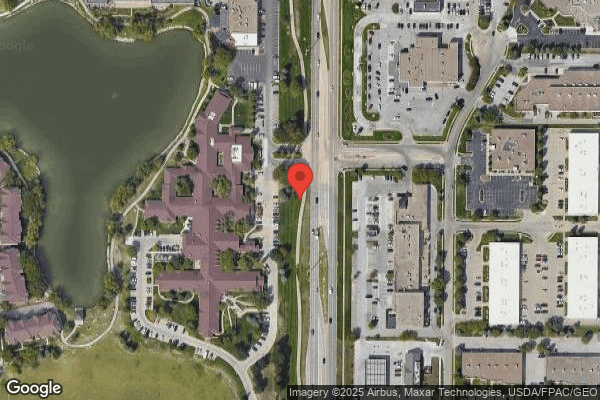
4330 South 144th Street, Omaha, NE 68137 (402) 614-4000
Non profit - Other 140 Beds VETTER SENIOR LIVING Data: November 2025
Trust Grade
90/100
#6 of 177 in NE
Last Inspection: October 2024

Within standard 12-15 month inspection cycle. Federal law requires annual inspections.

Overview

Brookestone Village in Omaha, Nebraska, has an excellent Trust Grade of A, indicating that it is highly recommended and overall performs well compared to other facilities. It ranks #6 out of 177 nursing homes in Nebraska and #2 out of 23 in Douglas County, placing it near the top of both state and local options. The facility is improving, having reduced its issues from two in 2023 to one in 2024, and it boasts a strong staffing rating with a turnover of only 31%, significantly lower than the state average. Importantly, there have been no fines reported, which is a positive sign for compliance. However, there were some concerns noted during inspections, such as unsealed and unlabeled food storage that could affect resident safety and instances where staff did not perform hand hygiene during resident care, which raises infection risk.

Trust Score
A
90/100
In Nebraska
#6/177
Top 3%
Safety Record
Low Risk
No red flags
Inspections
Getting Better
2 → 1 violations
Staff Stability
○ Average
31% turnover. Near Nebraska's 48% average. Typical for the industry.
Penalties
✓ Good
No fines on record. Clean compliance history, better than most Nebraska facilities.
Skilled Nurses
✓ Good
Each resident gets 53 minutes of Registered Nurse (RN) attention daily — more than average for Nebraska. RNs are trained to catch health problems early.
Violations
✓ Good
Only 5 deficiencies on record. Cleaner than most facilities. Minor issues only.
★★★★★
5.0
Overall Rating
★★★★★
5.0
Staff Levels
★★★★☆
4.0
Care Quality
★★★★★
5.0
Inspection Score
Stable
2023: 2 issues
2024: 1 issues

The Good

  • 5-Star Staffing Rating · Excellent nurse staffing levels
  • 4-Star Quality Measures · Strong clinical quality outcomes
  • Full Sprinkler Coverage · Fire safety systems throughout facility
  • No fines on record
  • Staff turnover below average (31%)

    17 points below Nebraska average of 48%

Facility shows strength in staffing levels, quality measures, fire safety.

The Bad

Staff Turnover: 31%

15pts below Nebraska avg (46%)

Typical for the industry

Chain: VETTER SENIOR LIVING

Part of a multi-facility chain

Ask about local staffing decisions and management

The Ugly 5 deficiencies on record

Oct 2024 1 deficiency
CONCERN (D)

Potential for Harm - no one hurt, but risky conditions existed

Deficiency F0657 (Tag F0657)

Could have caused harm · This affected 1 resident

**NOTE- TERMS IN BRACKETS HAVE BEEN EDITED TO PROTECT CONFIDENTIALITY** B. Observation on 10/16/24 at 10:37 AM of wound care to Resident 7's right second toe with RN-I revealed after removal of Reside...

Read full inspector narrative →
**NOTE- TERMS IN BRACKETS HAVE BEEN EDITED TO PROTECT CONFIDENTIALITY** B. Observation on 10/16/24 at 10:37 AM of wound care to Resident 7's right second toe with RN-I revealed after removal of Resident 7's slipper, an approximately pea sized open area to the knuckle area, with soft yellow scabbed center, no drainage or odor. Resident 7's skin around the area was without redness. Review of Resident 7's MDS, dated [DATE], revealed the following: -One Stage 2 pressure injury (wound that affects the first two layers of skin) that was not present upon admission or reentry. Review of Resident 7's progress notes, dated 9/16/24 revealed the following: Weekly visual skin check complete. Noted new pressure area to right second toe. 1.1 cm x 1.1 cm in size. Area is non blanching with red and white center and purple skin at the outer edges of circle. No other areas of concern noted at this time. Review of Resident 7's CCP, dated 10/16/24, revealed a focus for potential for skin breakdown related to edema and impaired mobility. History of cellulitis to left lower extremity (LLE); Current skin issues: 1) Pressure injury to right second toe knuckle, revised 9/16/24. Further review of the care plan revealed no revisions were made and no new interventions were put into place after the area to Resident 7's toe was found. Review of the facility policy, Skin and Wound Management, dated 4/2019, revealed the following under Pressure Ulcer/Injury condition: -2. Care plan. All actions/interventions will be included in the care plan in PCC (point click care- electronic health record system) Interview on 10/16/24 at 10:55 AM with ADON-A confirmed that the care plan was not changed after the pressure area to Resident 7's right second toe was found, and Resident 7's care plan should have been updated. C. Review of Resident 87's orders, dated 10/15/24, revealed a new order received on 10/4/24 for Ativan (medication used to treat anxiety) oral tablet 0.5 milligrams (mg), give 0.5 tablet by mouth (PO) as needed (PRN) for anxiety for 30 days, give 0.25 mg PO twice daily PRN. Review of Resident 87's CCP, dated 10/15/24, revealed a focus of: uses psychoactive medications related to: depression, created 9/9/24. Further review of the CCP revealed no revisions or new interventions put into place after Resident 87 was started on an anti-anxiety medication. Interview on 10/16/24 at 7:51 AM with the MDS coordinator confirmed that there were no changes made to Resident 87's CCP after they were started on the anti-anxiety medication and that the CCP should have been updated. Licensure Reference Number 175 12-006.09 (F)(III) Based on observation, interview and record review, the facility failed to update the Comprehensive Care Plans (CCP) related to wound care for Residents 7 and 88, anti-anxiety medication use for Resident 87 and targeted behaviors and interventions for Resident 69. The sample size was 5 and the facility census was 132. Findings are: A review of the facility's CCP policy dated [DATE] revealed it is the policy of the facility to develop and implement a comprehensive person centered care plan for each resident, consistent with resident rights, that includes measurable objectives and timeframe's to meet a resident's medical, nursing, and mental and psychosocial needs that are identified in the resident's comprehensive assessment. It further confirmed that the comprehensive careplan will be reviewed and revised by the interdisciplinary team after each comprehensive, quarterly Minimum Data Set (MDS-a comprehensive assessment of each resident's functional capabilities used to develop a resident's plan of care) assessment and as needed. A review of the facility's Skin and Wound Management Standard policy reviewed 4/2019 revealed that an assessment should be completed on all skin tears/abrasions/bruises/scrapes/cuts, etc. It further revealed that all actions and interventions will be included in the careplan at the time of identification. A. A record review of Resident 88's facility admission Record revealed Resident 88 had an admission to the facility on [DATE] with no diagnosis of wounds. A record review of Resident 88's quarterly MDS dated [DATE] revealed a Brief Interview for Mental Status (BIMS- a test used to get a quick snapshot of a resident's cognitive function, scored from 0-15, the higher the score, the higher the cognitive function) score of 7, which indicates cognitive impairment. It also revealed, in Section M Resident 88 has no wounds but was at risk for developing wounds. A record review of Resident 88's progress notes dated 9/9/2024 revealed an open skin tear to the resident's lower left leg. A record review of the facility's non pressure skin condition record for Resident 88 dated 9/9/24 revealed a skin tear to left lower leg that measured 1.5 centimeters (cm) length, 1.5 cm width, and 0.2 cm depth. A record review of Res 88's Treatment Administration Record (TAR) for 9/2024 and 10/2024 revealed an order dated 9/25/24 for the left ankle wound to cleanse with wound cleanser, apply silver alginate (used in the treatment of at risk or infected wounds), apply adaptic dressing (used to help protect the wound while preventing the dressing from adhering to the wound), then cover with ABD pad (an highly absorbent sterile dressing). Change Monday, Wednesday, and Friday and as needed if soaked. A record review of Resident 88's physician orders dated 9/25/24 revealed an order for the Left ankle wound to cleanse with wound cleanser, apply adaptic dressing with silver alginate over it then cover with ABD pad. Change Monday, Wednesday, and Friday and as needed if soaked. An observation on 10/16/24 at 9:19 AM Registered Nurse (RN) - H provided wound care to Resident 88's left lower leg as ordered. A record review of Resident 88's CCP revealed: -problem for skin impairment due to fragile skin initiated on 2/28/2024 current skin issues: 1) Scabbed area to right temple 2) chin 3) unmeasurable area inside left ear 4) Labia/groin/buttocks redness 5) bruise to left outer aspect of eye 6) Skin tear to right thigh An interview on 10/16/24 at 9:41 AM with RN - H confirmed that all the resident careplans are supposed to be updated with all new orders and that careplans are periodically reviewed. An interview on 10/16/24 at 9:47 AM with ADON - B confirmed that the wound to Resident 88's left lower leg is not on the careplan and should have been. D. A record review of Resident 69's admission Record printed 10/16/2024 revealed an admission date of 06/27/2019, and diagnoses of dementia, mood disorder, psychosis, and obsessive-compulsive disorder (OCD, a mental illness that causes people to have uncontrollable, recurring thoughts [obsessions] and repetitive behaviors [compulsions]). A record review of Resident 69's Quarterly MDS dated [DATE] revealed a BIMS score of 14, indicating the resident was cognitively intact. A record review of Resident 69's CCP revealed a focus for out-of-character responses due to dementia-related diagnosis. This focus had an initiation date of 06/27/2019 and had no revision dates or mention of specific responses the resident might exhibit. There was no mention in the CCP of the out-of-character responses or behaviors of coughing, looking for spouse, and frequent bathroom visits, or of the interventions of offering hard candy, going for walks, distraction, or offering food or snacks. A record review of Resident 69's Behavior/Intervention Monthly Flow Records for May 2024 to October 15, 2024, revealed the following: -May: Behaviors listed were OCD AEB [as evidenced by] face scratching, sleeplessness, agitation, and OCD AEB obsessed with toileting. A personalized intervention of encourage to come out of bathroom, was listed under OCD AEB obsessed with toileting. -June: Behaviors listed were OCD AEB face scratching, sleeplessness, and OCD AEB obsessed with toileting. There were no personalized interventions listed. -July: Behaviors listed were OCD AEB face scratching, sleeplessness, and OCD AEB obsessed with toileting. There were no personalized interventions listed. -August: Behaviors listed were OCD AEB face scratching and sleeplessness. There were no personalized interventions listed. -September: Behaviors listed were OCD AEB face scratching and sleeplessness. There were no personalized interventions listed. -October: Behaviors listed were OCD AEB face scratching, sleeplessness, and agitation. There were no personalized interventions listed. An interview on 10/16/2024 at 9:45 AM with Nurse Aide (NA) C revealed Resident 69 had behaviors of pacing the halls looking for their spouse, constantly going back and forth to the bathroom, and coughing frequently at meals. NA C stated the staff offered snacks and distraction to Resident 69 when they were pacing in the hall, and that was sometimes effective. NA C stated the coughing was a behavior, and to help with that, staff would take Resident 69 for a walk or offer hard candy. The NA reported there were no current effective interventions to distract Resident 69 from the bathroom. An interview on 10/16/2024 at 9:55 AM with NA D revealed Resident 69 had behaviors of going back and forth to the bathroom frequently. Reported that sometimes when the resident does that, they will forget they have eaten, so staff will save a tray for the resident. An interview on 10/16/2024 at 10:00 AM with NA E revealed that Resident 69 had behaviors of looking for their spouse, frequent bathroom trips, and coughing. NA E stated that staff attempted to redirect the resident or change the subject when Resident 69 was looking for their spouse and that going for walks and offering hard candy helped with the coughing. NA E further stated the resident's family member had suggested to have Resident 69 blow through a straw because that had helped in the past. NA E stated that there were no current effective interventions when the resident was going back and forth to the bathroom. NA E confirmed that the interventions of blowing in a straw, offering hard candy, and going for walks were not on the care plan. An interview on 10/16/2024 at 10:04 AM with Registered Nurse (RN) F revealed Resident 69 had behaviors of going to the bathroom frequently, coughing that the resident was unaware they were doing, and frequently looking for their spouse. When Resident 69 was coughing, staff offered candy or a walk, and would attempt to distract them when the resident was looking for their spouse. RN F revealed that the behaviors were documented on the Behavior/Intervention Monthly Flow Records kept at the nurse's station, and stated this was where staff would find what to do for each behavior. RN E confirmed the behaviors of coughing and looking for their spouse were not on the behavior flow sheet for Resident 69. An interview on 10/16/2024 at 12:39 PM with the Director of Nursing (DON) confirmed that Resident 69's behaviors of coughing and looking for their spouse was not on the Behavior/Intervention Monthly Flow Records. An interview on 10/16/2024 at 1:28 PM with the Assistant Director of Nursing (ADON) A confirmed that Resident 69's behaviors of coughing, frequent toileting, and looking for their spouse, and the interventions of offering hard candy, going for a walk, distraction, and offering food or snacks were not on the CCP and should be. ADON A further confirmed the care plan interventions were not personalized and had not been revised or updated since 06/28/2019, and should have been. A review of the facility's Comprehensive Care Plans policy dated 6.2017 revealed: It is the policy of this facility to develop and implement a comprehensive person-centered care plan for each resident, consistent with resident rights, that includes measurable objectives and timeframes to meet a resident's medical, nursing, and mental and psychosocial needs that are identified in the resident's comprehensive assessment, and that The comprehensive care plan will be reviewed and revised by the interdisciplinary team after each comprehensive, quarterly MDS assessment and as needed. A review of the facility's Psychoactive Medication and Medication Regiment Review Management Standard policy dated 9.2024 revealed on of the key elements was that the care plan was reflective of the out-of-character response/behavior and management. A review of the facility's Out of Character Response and Prevention Standard policy dated 6.2024 revealed: During the weekly Risk Meeting and at the care plan meetings, the care plan will be reviewed to ensure that it is current and up to date. Social Services and Nursing are responsible for working with the Interdisciplinary Team to develop a strengths-based care plan with a goal of addressing and preventing Out of Character Responses/Behaviors.
Aug 2023 2 deficiencies
CONCERN (E)

Potential for Harm - no one hurt, but risky conditions existed

Infection Control (Tag F0880)

Could have caused harm · This affected multiple residents

**NOTE- TERMS IN BRACKETS HAVE BEEN EDITED TO PROTECT CONFIDENTIALITY** Licensure Number 175 NAC 12-006.17D The facility failed to ensure that staff performed hand hygiene between Residents 9, 59, 77,...

Read full inspector narrative →
**NOTE- TERMS IN BRACKETS HAVE BEEN EDITED TO PROTECT CONFIDENTIALITY** Licensure Number 175 NAC 12-006.17D The facility failed to ensure that staff performed hand hygiene between Residents 9, 59, 77, 87, 91, 95, and 103 during dining and failed to ensure that staff performed hand hygiene when providing wound care to one (Resident 6) of two sampled residents. The total facility census was 130. Findings are: A. A record review of the facility's Hand Hygiene (washing) Policy dated 08/19/2022 revealed that according to the World Health Organization, 5 key moments in patient (resident) care during which hand hygiene should be performed is before touching a patient (resident), before a clean procedure, after touching a patient (resident), after body fluid exposure risk, and after touching a patient's (resident's) surroundings. A record review of the Dietary Handwashing Policy and Procedure dated 10/2017 revealed the staff should wash hands after handling soiled equipment or supplies, after touching bare body parts, and after engaging in other activities that contaminate hands. An observation of the 600-hall dining room on 08/15/2023 at 08:22 AM revealed Nursing Assistant (NA)-F assisted Resident 95 with bites of food using the resident's utensils, then went and a got clothing protector and placed around Resident 77 while touching Resident 77's clothing and hair. NA-F then went to dining room window and got plates for Resident 9 and Resident 87 and delivered plates to the residents. NA-F then went back and assisted Resident 95 with eating, all without having performed hand hygiene. An observation of the 600-hall dining room on 08/15/2023 at 08:28 AM revealed NA-F performed hand hygiene and went to the dining room window, placed NA-F's hands on the counter, and delivered a plate to Resident 91. NA-F sat the plate down in front of Resident 91 and opened the resident's yogurt container using both hands. NA-F then went to Resident 59 and assisted Resident 59 with drink by holding the cup and straw. NA-F then returned to Resident 95 and assisted 95 with eating oatmeal while NA-F touched surfaces in front of resident and the Resident 95's utensils without having performed hand hygiene throughout the observation. An observation on 08/15/2023 at 08:35 AM revealed NA-F scratched NA-F's own nose with the right hand, brushed hair to the side, and gave Resident 95 oatmeal bowl to another NA. NA-F was handed a plate of food and continued to assist Resident 95 with NA-F's right hand. NA-F got up, opened the blinds with NA-F's right hand and sat back down and continued to assist Resident 95 with eating eggs while NA-F used the right hand, all without having performed hand hygiene. An observation on 08/15/2023 08:46 AM revealed NA-F in the 600-hall dining room do hand hygiene, grab the coffee pot, went and served 3 residents coffee and touched the back of 2 of the resident's chairs, and 1 of the resident's wheelchair. NA-F then went and assisted Resident 59 with eating eggs and pancakes by using Resident 59's utensils, wiped food from the resident's lap and threw it away. NA-F got papers off the dining room counter and went to nurse's station and returned papers to dining room counter. At 08:55 AM, NA-F moved the chair by Resident 95 and assisted Resident 95 with a drink while NA-F touched the resident's cup and straw. NA-F then went and assisted Resident 64 with 2 bites of yogurt while Registered Nurse (RN)-E put medications in the spoon of yogurt. NA-F gave resident 1 more bite, got up by touching the chair and went and assisted Resident 103 with eating without having performed hand hygiene throughout the entire observation from before serving the coffee. In an interview on 08/15/2023 at 12:46 PM, Assistant Director of Nursing (ADON)-C confirmed NA-F should have performed hand hygiene before and after each resident contact. B. Record review on 08/15/23 at 1:19 PM Resident 6's electronic health record confirmed an Operative/Procedure Report signed by [NAME], MD (medical doctor) and dated 2/9/2023 which revealed Resident 6 had lower right extremity wounds. She previously hit her right foot back around Christmas time and since then the wound has been progressively getting worse. This wound was acquired prior to admission to the facility. Record review on 08/14/2023 at 9:00AM Resident 6's post surgical discharge instructions confirmed a wound care order to keep the dressing C/D/I. (Clean, dry, intact). Start vac (vacuum) therapy in conjunction with thigh wound starting 8/11/2023. Record review on 08/14/23 at 9:10 AM of Resident 6's Treatment Administration Record (TAR) revealed an active order, dated 8/11/2023 for the following: Foot Wound Vac Management: cleans wound with normal saline; use negative pressure black foam in wound place VAC at 125mmHg continuous. every day shift every Mon, Wed, Fri related to unspecified atherosclerosis of nonautologous biolgional bypass graft(s) of the extremities, right leg. An observation on 8/14/2023 at 11:45AM of the application of a wound vacuum system (provides vacuum assisted closure of a wound) and dressing change provided to Resident 6's right dorsal (related to the upper side) foot by ADON-A (Assistant Director of Nursing). ADON-A had the wound vacuum supplies laid out on a clean bedside table. These consisted of a sterile package containing black foam sponge, an adhesive pad attached to tubing and two separate wound care drapes (transparent sheets of adhesive film used to secure the dressing to the Resident). A second package containing a sterile scissors and two skin prep wipes was also on the bedside table. Resident 6 had their right leg propped up on a pillow with the foot extended beyond the pillow. A clean towel was beneath Resident 6's right leg. ADON-A donned basic exam gloves. ADON-A did not wash their hands or use hand sanitizer prior to donning gloves. ADON-A used a syringe and a bottle of normal saline to clean the surgical area and allow it to air dry. The ADON-A removed the exam gloves and did not perform hand hygiene prior to donning sterile gloves. ADON-A measured the surgical area. The wound is a large circular shape with a ring of staples securing the graft to the surrounding skin. The diameter measurements are 4.75cm x 4.0cm. ADON-A removed their gloves and had to leave the room to obtain another pair of sterile gloves. ADON-A did not wash their hands or use hand sanitizer before leaving the resident room or when ADON-A returned to the room or before donning the 2nd pair of surgical gloves. ADON-A opened the wound vac dressing package and the sterile scissors package. ADON-A cut a piece of black foam and trimmed it to fit the wound bed. ADON-A then trimmed two pieces of dressing drape to fit the wound. ADON-A peeled the backing from the first drape and placed the black sponge on the drape. ADON-A fit the sponge to the wound bed and pressed the adhesive drape to the resident's skin, creating a seal around the sponge. ADON-A cut an opening on the drape over the sponge. ADON-A attached the wound vaccum tubing to the sponge with the attached adhesive tab. ADON-A placed the second layer of adhesive drape over the tubing and created a seal with the original drape underneath. ADON-A attached the tubing to the wound vaccum and turned it on. The vaccum effectively created a seal. ADON-A cleared the debris from the end table and removed their gloves. ADON-A did not perform hand hygiene at that time. RN-B (Registered Nurse) was present in the room and observed the care provided by ADON-A to Resident 6. An interview on 8/15/2023 at 1:36 PM with RN-B confirmed ADON-A did not perform hand hygiene prior to putting their gloves on or after taking their gloves off. RN-B confirmed ADON-A did not perform hand hygiene when the wound care was complete or before they left the room. RN-B confirmed that hand hygiene should be completed before putting on gloves and after taking gloves off and hand hygiene should also be performed when the treatment is complete and when leaving the resident's room. Record review on 08/15/23 at 1:51 PM of the Lippincott procedures - Hand Hygiene followed by the facility and reviewed August, 19, 2022 revealed the following: Using an alcohol-based rub is appropriate for decontaminating the hands before direct patient contact; before putting on gloves; before inserting an invasive device; after contact with a patient; when moving from a contaminated body site to a clean body site during patient care; after contact with body fluids, excretions, mucous membranes, nonintact skin, or wound dressings (if hands aren't visibly soiled); after removing gloves; and after contact with inanimate objects in the patient's environment. Record review on 08/15/23 at 1:57 PM of the Lippincott procedures - Negative Pressure Wound Therapy revised February 20, 2023 requires hand hygiene before donning (putting on) and doffing(removing) standard gloves, before donning and doffing sterile gloves, and when the wound vacuum dressing change is completed but before the wound vaccum is turned on.
CONCERN (F)

Potential for Harm - no one hurt, but risky conditions existed

Food Safety (Tag F0812)

Could have caused harm · This affected most or all residents

Licensure Reference Number 175 NAC 12.006.11E Based on observation, interview, and record review, the facility failed to ensure food was stored in the facility's refrigerators and freezers in a sealed...

Read full inspector narrative →
Licensure Reference Number 175 NAC 12.006.11E Based on observation, interview, and record review, the facility failed to ensure food was stored in the facility's refrigerators and freezers in a sealed container that was labeled and dated. This had the potential to affect all 130 resident that consumed food from the kitchen. The total census was 130. Findings are: A record review of the facility's Dietary Storage Policy and Procedure dated 08/2023 revealed the facility staff should store food in covered containers or wrap securely and clearly label and date each item. An observation on 08/09/2023 at 07:35 AM revealed the following items were in the facility's reach-in freezer and were unsealed and not labeled or dated: • 2 bags of onion rings • 2 bags of French fries • 1 bag of carrots • 1 bag of waffle fries • 1 bag of hamburger patties • 1 bag of an unknown substance • 1 bag of cookies An observation on 08/09/2023 at 07:35 AM revealed the following items were in the facility's walk-in refrigerator and were opened and did not have an open date: • 1 container of pickles • 1 container of relish • 1 container of capers • 1 bottle of enchilada sauce • 1 bottle of French dressing • 1 bottle of Sweet Baby Rays Bar-B-Que sauce • 1 bottle of Sweet Baby Rays Wing sauce • 1 bottle of mayonnaise In an interview on 08/16/2023, the Registered Dietician (RD) confirmed that 100 percent (%) of the residents in the facility consume food prepared in the kitchen. In an interview on 08/09/2023 at 07:35 AM, the Dining Specialist (DS)-D confirmed DS-D observed the opened, unsealed, unlabeled, and/or undated items and confirmed all opened items should have been in a sealed container and clearly labeled and dated.
May 2022 2 deficiencies
CONCERN (D)

Potential for Harm - no one hurt, but risky conditions existed

Transfer Notice (Tag F0623)

Could have caused harm · This affected 1 resident

Based on record review and interview, the facility failed to provide written notification for reason of transfer for Resident 23. The facility census was 121 and the sample size was 24. Findings are: ...

Read full inspector narrative →
Based on record review and interview, the facility failed to provide written notification for reason of transfer for Resident 23. The facility census was 121 and the sample size was 24. Findings are: A record review of Resident 23's Electronic Health Record revealed a transfer/discharge summary was not present for Resident 23's discharge to the Emergency Department on 3/28/2022. An interview with Licensed Practical Nurse-B (LPN-B) on 05/11/2022 at 12:11 PM confirmed a discharge transfer summary was to be completed every time a resident was sent to the hospital for evaluation. An interview on 05/11/2022 at 12:58 PM with Registered Nurse - C (RN-C) confirmed that a transfer/discharge summary was not done when Resident 23 was transferred to the Emergency Department on 3/28/22. RN-C confirmed that the expectation is that whenever a resident is discharged to another facility, a transfer/discharge summary is to be completed. An interview on 05/11/2022 at 01:02 PM with RN-C confirmed that a signed transfer/discharge summary was not given to the resident's family when Resident 23 was transferred to the hospital.
CONCERN (D)

Potential for Harm - no one hurt, but risky conditions existed

Quality of Care (Tag F0684)

Could have caused harm · This affected 1 resident

**NOTE- TERMS IN BRACKETS HAVE BEEN EDITED TO PROTECT CONFIDENTIALITY** LICENSURE REFERENCE NUMBER 175NAC 12-006.09D3 Based on record review and interview; the facility staff failed to implement order...

Read full inspector narrative →
**NOTE- TERMS IN BRACKETS HAVE BEEN EDITED TO PROTECT CONFIDENTIALITY** LICENSURE REFERENCE NUMBER 175NAC 12-006.09D3 Based on record review and interview; the facility staff failed to implement ordered interventions for bowel care for 1 (Resident 230) of 2 sampled residents. The facility staff identified a census of 121. Findings are: Record review of Resident 230's Office/Progress Notes dated 5-09-2022 revealed Resident 230 was admitted to the facility on [DATE] . According to Resident 230's Office/Progress Notes dated 5-09-2022, Resident 230 was seen by the practitioner on 5-04-2022 for a constipation issue. Record review of a Physician/Prescriber sheet dated 5-04-2022 revealed Resident 230's practitioner order a treatment plan for the constipation that included obtaining laboratory testing, Magnesium Citrate (liquid laxative ) 1/2 bottle now and a fleets enema now. Record Review of Resident 230's Medication Administration Record for 5-04-2022 revealed the Magnesium Citrate was not given. Review of Resident 230's Progress note dated 5-05-2022 revealed the Magnesium Citrate was given on the 5th of May. On 5-11-2022 at 9:45 AM an interview was conducted with the Advanced Practice Registered Nurse (APRN) D. During the interview review of Resident 230's order for the Magnesium Citrate was reviewed. APRP D reported the Magnesium Citrate should have been given on 5-04-2022 and not on 5-05-2022. On 5-11-2022 at 11:25 an interview was conducted with Registered Nurse (RN) C. During the interview RN C confirmed the Magnesium Citrate was not given as ordered.
Understanding Severity Codes (click to expand)
Life-Threatening (Immediate Jeopardy)
J - Isolated K - Pattern L - Widespread
Actual Harm
G - Isolated H - Pattern I - Widespread
Potential for Harm
D - Isolated E - Pattern F - Widespread
No Harm (Minor)
A - Isolated B - Pattern C - Widespread

Questions to Ask on Your Visit

  • "Can I speak with families of current residents?"
  • "What's your RN coverage like on weekends and overnight?"

Our Honest Assessment

Strengths
  • • Grade A (90/100). Above average facility, better than most options in Nebraska.
  • • No major safety red flags. No abuse findings, life-threatening violations, or SFF status.
  • • No fines on record. Clean compliance history, better than most Nebraska facilities.
  • • Only 5 deficiencies on record. Cleaner than most facilities. Minor issues only.
Concerns
  • • No significant concerns identified. This facility shows no red flags across CMS ratings, staff turnover, or federal penalties.
Bottom line: Generally positive indicators. Standard due diligence and a personal visit recommended.

About This Facility

What is Brookestone Village's CMS Rating?

CMS assigns Brookestone Village an overall rating of 5 out of 5 stars, which is considered much above average nationally. Within Nebraska, this rating places the facility higher than 99% of the state's 100 nursing homes. This rating reflects solid performance across the metrics CMS uses to evaluate nursing home quality.

How is Brookestone Village Staffed?

CMS rates Brookestone Village's staffing level at 5 out of 5 stars, which is much above average compared to other nursing homes. Staff turnover is 31%, compared to the Nebraska average of 46%. This relatively stable workforce can support continuity of care.

What Have Inspectors Found at Brookestone Village?

State health inspectors documented 5 deficiencies at Brookestone Village during 2022 to 2024. These included: 5 with potential for harm.

Who Owns and Operates Brookestone Village?

Brookestone Village is owned by a non-profit organization. Non-profit facilities reinvest revenue into operations rather than distributing to shareholders. The facility is operated by VETTER SENIOR LIVING, a chain that manages multiple nursing homes. With 140 certified beds and approximately 130 residents (about 93% occupancy), it is a mid-sized facility located in Omaha, Nebraska.

How Does Brookestone Village Compare to Other Nebraska Nursing Homes?

Compared to the 100 nursing homes in Nebraska, Brookestone Village's overall rating (5 stars) is above the state average of 2.9, staff turnover (31%) is significantly lower than the state average of 46%, and health inspection rating (5 stars) is much above the national benchmark.

What Should Families Ask When Visiting Brookestone Village?

Based on this facility's data, families visiting should ask: "Can I visit during a mealtime to observe dining assistance and food quality?" "How do you handle medical emergencies, and what is your hospital transfer rate?" "Can I speak with family members of current residents about their experience?"

Is Brookestone Village Safe?

Based on CMS inspection data, Brookestone Village has a clean safety record: no substantiated abuse findings (meaning no confirmed cases of resident harm), no Immediate Jeopardy citations (the most serious violation level indicating risk of serious injury or death), and is not on the Special Focus Facility watch list (a federal program monitoring the lowest-performing 1% of nursing homes). The facility has a 5-star overall rating and ranks #1 of 100 nursing homes in Nebraska. While no facility is perfect, families should still ask about staff-to-resident ratios and recent inspection results during their visit.

Do Nurses at Brookestone Village Stick Around?

Brookestone Village has a staff turnover rate of 31%, which is about average for Nebraska nursing homes (state average: 46%). Moderate turnover is common in nursing homes, but families should still ask about staff tenure and how the facility maintains care continuity when employees leave.

Was Brookestone Village Ever Fined?

Brookestone Village has no federal fines on record. CMS issues fines when nursing homes fail to meet care standards or don't correct problems found during inspections. The absence of fines suggests the facility has either maintained compliance or corrected any issues before penalties were assessed. This is a positive indicator, though families should still review recent inspection reports for the full picture.

Is Brookestone Village on Any Federal Watch List?

Brookestone Village is not on any federal watch list. The most significant is the Special Focus Facility (SFF) program, which identifies the bottom 1% of nursing homes nationally based on persistent, serious quality problems. Not being on this list means the facility has avoided the pattern of deficiencies that triggers enhanced federal oversight. This is a positive indicator, though families should still review the facility's inspection history directly.