ALPINE SKILLED NURSING AND REHABILITATION CENTER
3101 PLUMAS ST, RENO, NV 89509 (775) 829-7220
For profit - Corporation 189 Beds Independent Data: November 2025
Trust Grade
10/100
#52 of 65 in NV
Last Inspection: January 2025

Within standard 12-15 month inspection cycle. Federal law requires annual inspections.

Overview

Alpine Skilled Nursing and Rehabilitation Center has received a Trust Grade of F, indicating significant concerns and poor performance overall. They rank #52 out of 65 facilities in Nevada, placing them in the bottom half of state options, and #6 out of 9 in Washoe County, meaning only three local facilities are viewed as better. The facility's trend is improving slightly, with reported issues decreasing from 19 in 2024 to 16 in 2025, but the overall situation remains concerning. Staffing is a significant weakness, with a low rating of 1 out of 5 and a turnover rate of 60%, which is much higher than the state average. While there are no fines on record, which is a positive aspect, there have been serious incidents where residents did not receive necessary care, such as one resident developing a deep tissue injury due to a power outage affecting their air mattress. Additionally, residents have reported discomfort due to cold temperatures in the shower room, indicating ongoing issues with environmental comfort.

Trust Score
F
10/100
In Nevada
#52/65
Bottom 20%
Safety Record
High Risk
Review needed
Inspections
Getting Better
19 → 16 violations
Staff Stability
⚠ Watch
60% turnover. Above average. Higher turnover means staff may not know residents' routines.
Penalties
✓ Good
No fines on record. Clean compliance history, better than most Nevada facilities.
Skilled Nurses
⚠ Watch
Each resident gets only 26 minutes of Registered Nurse (RN) attention daily — below average for Nevada. Fewer RN minutes means fewer trained eyes watching for problems.
Violations
⚠ Watch
55 deficiencies on record. Higher than average. Multiple issues found across inspections.
★☆☆☆☆
1.0
Overall Rating
★☆☆☆☆
1.0
Staff Levels
★☆☆☆☆
1.0
Care Quality
★★☆☆☆
2.0
Inspection Score
Stable
2024: 19 issues
2025: 16 issues

The Good

  • Full Sprinkler Coverage · Fire safety systems throughout facility
  • No fines on record

Facility shows strength in fire safety.

The Bad

1-Star Overall Rating

Below Nevada average (3.0)

Significant quality concerns identified by CMS

Staff Turnover: 60%

14pts above Nevada avg (46%)

Frequent staff changes - ask about care continuity

Staff turnover is elevated (60%)

12 points above Nevada average of 48%

The Ugly 55 deficiencies on record

2 actual harm
Jun 2025 5 deficiencies
CONCERN (D) 📢 Someone Reported This

A family member, employee, or ombudsman was alarmed enough to file a formal complaint

Potential for Harm - no one hurt, but risky conditions existed

Resident Rights (Tag F0550)

Could have caused harm · This affected 1 resident

**NOTE- TERMS IN BRACKETS HAVE BEEN EDITED TO PROTECT CONFIDENTIALITY** Based on interview, clinical record review, and document review, the facility failed to protect a resident's right to a dignifie...

Read full inspector narrative →
**NOTE- TERMS IN BRACKETS HAVE BEEN EDITED TO PROTECT CONFIDENTIALITY** Based on interview, clinical record review, and document review, the facility failed to protect a resident's right to a dignified existence without discrimination when a resident-to-resident verbal altercation involved the use of racial slurs for 1 of 11 sampled residents (Resident #11). This deficient practice had the potential to result in psychosocial harm. Findings include: Resident #10 Resident #10 was admitted to the facility on [DATE], and readmitted on [DATE], with a diagnosis of bipolar disorder, unspecified. Resident #10's care plan included a focus initiated on 12/05/2024, documenting Resident #10 demonstrated a potential for verbally aggressive behaviors as evidenced by yelling out related to a cognitive communication deficit and bipolar disorder. A nursing narrative note, dated 05/28/2025, documented Resident #10 walked past another resident's room. The other resident was on the phone and yelled at Resident #10 to get away. Resident #10 yelled out a racial slur. The Nurse spoke with the other resident who confirmed the incident and verbalized doing their best to stay away from Resident #10, but Resident #10 kept coming back. The residents had a history involving the police. A communication note dated 05/29/2025, documented the Licensed Master Social Worker met with Resident #10 regarding the resident-to-resident interaction the previous day. They discussed the resident's ability to distance themselves from other people the resident may have a negative interaction with. Resident #11 Resident #11 was admitted to the facility on [DATE], with diagnoses including cognitive communication deficit and anxiety disorder, unspecified. Resident #11's care plan with a focus initiated on 04/28/2024, and last revised on 04/03/2025, documented Resident #11 was at risk for adverse consequences of post-traumatic stress disorder related to a history of abuse and racial trauma. The care plan was not updated after the 05/28/2025 incident. A communication note dated 05/29/2025, documented the Licensed Master Social Worker met with Resident #11 regarding the resident-to-resident interaction the previous day. They discussed the resident's ability to distance themselves from other people the resident may have a negative interaction with. Resident #11's clinical record lacked any other documentation related to the incident occurring on 05/28/2025. On 06/11/2025 at 1:59 PM, Resident #10 verbalized a few weeks prior, Resident #11 approached Resident #10 and called Resident #10 derogatory names. Resident #10 yelled racial slurs in return. On 06/11/2025 at 2:05 PM, Resident #11 verbalized Resident #10 walked by Resident #11's room, stopped in the doorway and used racial profanity. The facility then asked Resident #11 to move rooms and requested the residents stay away from one-another. On 06/11/2025 at 3:34 PM, a Certified Nursing Assistant (CNA) explained staff could view resident care plans to ascertain if resident needs changed and what actions staff were expected to take. The CNA explained Resident #10 had a history of yelling profanity. The CNA was unaware of any altercation between Residents #10 and #11. On 06/11/2025 at 3:43 PM, a Licensed Practical Nurse (LPN) verbalized two weeks prior Resident #11 was on the phone in the resident's room. Resident #10 stopped in Resident #11's doorway and used racial slurs toward Resident #11. The LPN explained the LPN was at the end of another hallway, heard the altercation, and was able to get to the residents quickly. Since the incident, Resident #11 began avoiding Resident #10. On 06/11/2025 at 6:32 PM, the Abuse Coordinator/Director of Nursing AC/DON confirmed the incident and verbalized using racial slurs would be considered racially abusive language, bullying and harassment. The AC/DON confirmed racism was a pervasive issue in the facility and verbalized in healthcare, racially discriminatory behavior was normalized. The AC/DON explained the facility could have offered talk therapy, reached out to Behavioral Health Services for additional interventions, and implemented care plans related to racial discrimination. The facility policy, titled Non-Discrimination, adopted 02/01/2019, documented the facility did not permit discrimination, bullying, abuse, or harassment on the basis of actual or perceived race. Discrimination of any form, including ethnic slurs would be promptly reported to the Administrator. The facility policy, titled Resident Rights, adopted 02/01/2019, documented residents had the right to be treated with respect and dignity. Cross reference with F610 and F657.
CONCERN (D) 📢 Someone Reported This

A family member, employee, or ombudsman was alarmed enough to file a formal complaint

Potential for Harm - no one hurt, but risky conditions existed

Investigate Abuse (Tag F0610)

Could have caused harm · This affected 1 resident

**NOTE- TERMS IN BRACKETS HAVE BEEN EDITED TO PROTECT CONFIDENTIALITY** Based on interview, clinical record review, and document review, the facility failed to ensure an allegation of verbal abuse was...

Read full inspector narrative →
**NOTE- TERMS IN BRACKETS HAVE BEEN EDITED TO PROTECT CONFIDENTIALITY** Based on interview, clinical record review, and document review, the facility failed to ensure an allegation of verbal abuse was investigated and reported to the State Agency (SA) for 1 of 11 sampled residents (Resident #11). This deficient practice had the potential to result in psychosocial harm due to allegations of abuse not being thoroughly investigated and protections not put in place to prevent future abuse. Findings include: Resident #10 Resident #10 was admitted to the facility on [DATE], and readmitted on [DATE], with a diagnosis of bipolar disorder, unspecified. Resident #10's care plan included a focus initiated on 12/05/2024, documenting Resident #10 demonstrated a potential for verbally aggressive behaviors as evidenced by yelling out related to a cognitive communication deficit and bipolar disorder. A nursing narrative note, dated 05/28/2025, documented Resident #10 walked past another resident's room. The other resident was on the phone and yelled at Resident #10 to get away. Resident #10 yelled out a racial slur. The Nurse spoke with the other resident who confirmed the incident and verbalized doing their best to stay away from Resident #10, but Resident #10 kept coming back. The residents had a history involving the police. A communication note dated 05/29/2025, documented the Licensed Master Social Worker met with Resident #10 regarding the resident-to-resident interaction the previous day. They discussed the resident's ability to distance themselves from other people the resident may have a negative interaction with. Resident #11 Resident #11 was admitted to the facility on [DATE], with diagnoses including cognitive communication deficit and anxiety disorder, unspecified. Resident #11's care plan with a focus initiated on 04/28/2024, and last revised on 04/03/2025, documented Resident #11 was at risk for adverse consequences of post-traumatic stress disorder related to a history of abuse and racial trauma. The care plan was not updated after the 05/28/2025 incident. A communication note dated 05/29/2025, documented the Licensed Master Social Worker met with Resident #11 regarding the resident-to-resident interaction the previous day. They discussed the resident's ability to distance themselves from other people the resident may have a negative interaction with. Resident #11's clinical record lacked any other documentation related to the incident occurring on 05/28/2025. On 06/11/2025 at 1:59 PM, Resident #10 verbalized a few weeks prior, Resident #11 approached Resident #10 and called resident #10 derogatory names. Resident #10 yelled racial slurs in return. On 06/11/2025 at 2:05 PM, Resident #11 verbalized Resident #10 walked by Resident #11's room, stopped in the doorway and used racial profanity. The facility then asked Resident #11 to move rooms and requested the residents stay away from one-another. On 06/11/2025 at 3:43 PM, a Licensed Practical Nurse (LPN) verbalized two weeks prior Resident #11 was on the phone in the resident's room. Resident #10 stopped in Resident #11's doorway and used racial slurs toward Resident #11. The LPN explained the LPN was at the end of another hallway, heard the altercation, and was able to get to the residents quickly. Resident #11 has since been avoiding Resident #10. On 06/11/2025 at 5:55 PM the Abuse Coordinator who is the Director of Nursing (AC/DON) explained verbal abuse occurred when someone attacked or said something to make another person upset, particularly if the victim of the verbal abuse was vulnerable. The AC/DON verbalized it would not immediately be considered abuse if a staff member informed the AC/DON a resident raised their voice at another resident. The AC/DON verbalized the incident occurred in the hallway outside Resident #11's room. The two residents were yelling at one-another and the LPN on duty heard the commotion. The AC/DON explained because it was just a verbal altercation the facility did not do an official investigation, submit a Facility Reported Incident (FRI) report, nor make any notifications to the Ombudsman, the residents' families, or the Medical Director. On 06/11/2025 at 6:32 PM, the AC/DON explained a FRI investigation was to be completed within two hours of the facility being made aware. The AC/DON verbalized using racial slurs would be considered racially abusive language, bullying and harassment. The AC/DON confirmed racism was a pervasive issue in the facility and verbalized in healthcare, racially discriminatory behavior was normalized. The AC/DON explained when the AC/DON was informed of the incident on 05/28/2025, the AC/DON interviewed the LPN and determined the incident was not abuse. The AC/DON confirmed the verbal conversation with the LPN was not documented anywhere. The AC/DON verbalized there were multiple resident rooms between where the incident occurred and where LPN heard the incident down the hallway. The AC/DON did not speak with the residents involved, nor any other residents who may have heard. On 05/29/2025, one day after the incident, the Licensed Master Social Worker interviewed the residents and completed a trauma screening. There was no further investigation into the incident. The facility policy, titled Abuse Investigation and Reporting, adopted 02/01/2019, documented investigations into suspected abuse would include review of the resident's medical record and interviews with the reporter of the alleged abuse, witnesses, any involved residents, the physician, and the resident's family members. Notification would be made to the SA, the Ombudsman, the resident's representative, adult protective services, law enforcement, the resident's physician, and the Medical Director. All allegations of abuse would be reported no later than two hours. Cross reference with F550 and F657.
CONCERN (D) 📢 Someone Reported This

A family member, employee, or ombudsman was alarmed enough to file a formal complaint

Potential for Harm - no one hurt, but risky conditions existed

Comprehensive Care Plan (Tag F0656)

Could have caused harm · This affected 1 resident

**NOTE- TERMS IN BRACKETS HAVE BEEN EDITED TO PROTECT CONFIDENTIALITY** Based on interview, clinical record review, and document review, the facility failed to ensure a resident with a history of nico...

Read full inspector narrative →
**NOTE- TERMS IN BRACKETS HAVE BEEN EDITED TO PROTECT CONFIDENTIALITY** Based on interview, clinical record review, and document review, the facility failed to ensure a resident with a history of nicotine dependence had a care plan to address the resident's stated plans to continue smoking for 1 of 11 sampled residents (Resident #2). This deficient practice had the potential to result in facility staff being unaware of a resident's behavior and stated desire to continue smoking while wearing oxygen with the potential for the resident to suffer severe harm or death from burns as the result of smoking with oxygen in use from lack of care planned interventions to prevent adverse outcomes associated with the behavior. Findings include: Resident #2 Resident #2 was admitted to the facility on [DATE], and readmitted on [DATE], with diagnoses including nicotine dependence, cigarettes, uncomplicated and chronic obstructive pulmonary disease, unspecified. A Facility Reported Incident (FRI), dated 06/06/2025, documented the resident's wheelchair was on fire in the facility parking lot and the resident was on the ground next to the wheelchair. The resident had black and red discoloration to the skin of the resident's upper legs, abdomen, nostrils, and hands. The resident was crying and verbalizing pain all over. The resident was transported to the hospital via ambulance. A Physician's Order, dated 04/21/2025, documented oxygen administered via nasal cannula at 2 liters per minute as needed. A Behavior Note, dated 04/28/2025, documented the resident had stated the resident would take the oxygen to go outside but it would be the facility's fault if the resident blows up. The resident planned to go outside to smoke. The resident's need for oxygen was reviewed and the resident became more upset. A Communication Note, dated 05/07/2025, documented the resident had stated the resident did not understand why others were able to smoke but the resident was not able to smoke. The dangers of smoking with oxygen were discussed with the resident. A Nursing Narrative Note, dated 05/13/2025, documented the resident became verbally aggressive when the resident was told the resident was on isolation when the resident wanted to go outside for a cigarette. The resident stated the resident would smoke in the resident's bathroom. A Mental Health Exam, dated 05/31/2025, documented the resident was frustrated because the resident had not smoked in two days. A Medication Order, dated 06/01/2025, documented nicotine transdermal patch, apply 14 milligrams transdermal one time a day to try to quit smoking. A provider's Progress Note, dated 06/04/2025, documented the resident was outside with smokers and was attempting to bum a smoke. The Care Plan for Resident #2 did not include a care plan related to the resident's risk factors of continuing to smoke while wearing oxygen. On 06/11/2025 at 11:58 AM, a Registered Nurse (RN) verbalized the resident had been told not to smoke on the facility property, but the RN was aware the resident had been seen smoking on property prior to the incident on 06/06/2025. The RN explained the RN had spoken to the resident on 06/05/2025 about the importance of quitting smoking. The RN verbalized the RN did not know if the resident's history of smoking on facility property would be care planned. On 06/11/2025 at 12:13 PM, the Director of Nursing (DON) verbalized the DON assumed the resident had been smoking while wearing oxygen on 06/06/2025, causing the fire and injuries to the resident. On 06/11/2025 at 1:51 PM, the DON verbalized the resident's history of smoking and risk factors associated with smoking while wearing oxygen could have been care planned. The facility policy titled Care Plan, Comprehensive Person-Centered, adopted 02/01/2019, documented the care plan would incorporate identified problem areas and their causes and develop targeted and meaningful interventions for the resident. FRI #NV00074424
CONCERN (D) 📢 Someone Reported This

A family member, employee, or ombudsman was alarmed enough to file a formal complaint

Potential for Harm - no one hurt, but risky conditions existed

Deficiency F0657 (Tag F0657)

Could have caused harm · This affected 1 resident

**NOTE- TERMS IN BRACKETS HAVE BEEN EDITED TO PROTECT CONFIDENTIALITY** Based on interview, clinical record review, and document review, the facility failed to ensure resident care plans were updated ...

Read full inspector narrative →
**NOTE- TERMS IN BRACKETS HAVE BEEN EDITED TO PROTECT CONFIDENTIALITY** Based on interview, clinical record review, and document review, the facility failed to ensure resident care plans were updated after a resident-to-resident altercation for 2 of 11 sampled residents (Residents #10 and #11). This deficient practice has the potential to result in a resident not receiving care and services to meet their needs and prevent further altercations and psychosocial harm. Findings include: Resident #10 Resident #10 was admitted to the facility on [DATE], and readmitted on [DATE], with a diagnosis of bipolar disorder, unspecified. A nursing narrative note, dated 05/28/2025, documented Resident #10 walked past another resident's room. The other resident was on the phone and yelled at Resident #10 to get away. Resident #10 yelled out a racial slur. The Nurse spoke with the other resident who confirmed the incident and verbalized doing their best to stay away from Resident #10, but Resident #10 kept coming back. The residents had a history involving the police. A communication note dated 05/29/2025, documented the Licensed Master Social Worker met with Resident #10 regarding the resident-to-resident interaction the previous day. They discussed the resident's ability to distance themselves from other people the resident may have a negative interaction with. Resident #10's care plan included a focus initiated on 12/05/2024, documenting Resident #10 demonstrated a potential for verbally aggressive behaviors as evidenced by yelling out related to a cognitive communication deficit and bipolar disorder. Resident #10's care plan lacked a revision on or after 05/28/2025 regarding the resident-to-resident altercation involving the use of a racial slur. Resident #11 Resident #11 was admitted to the facility on [DATE], with diagnoses including cognitive communication deficit and anxiety disorder, unspecified. A communication note dated 05/29/2025, documented the Licensed Master Social Worker met with Resident #11 regarding the resident-to-resident interaction the previous day. They discussed the resident's ability to distance themselves from other people the resident may have a negative interaction with. Resident #11's care plan with a focus initiated on 04/28/2024, and last revised on 04/03/2025, documented Resident #11 was at risk for adverse consequences of post-traumatic stress disorder related to a history of abuse and racial trauma. The care plan was not updated after the 05/28/2025 incident. Resident #11's care plan lacked a revision on or after 05/28/2025 regarding the resident-to-resident altercation involving the use of a racial slur. Resident #11's clinical record lacked any other documentation related to the incident occurring on 05/28/2025. On 06/11/2025 at 1:59 PM, Resident #10 verbalized a few weeks prior, Resident #11 approached Resident #10 and called resident #10 derogatory names. Resident #10 yelled racial slurs in return. On 06/11/2025 at 2:05 PM, Resident #11 verbalized Resident #10 walked by Resident #11's room, stopped in the doorway and used racial profanity. The facility then asked Resident #11 to move rooms and requested the residents stay away from one-another. On 06/11/2025 at 3:34 PM, a Certified Nursing Assistant (CNA) explained staff could view resident care plans to ascertain if resident needs changed and what actions staff were expected to take. The CNA explained Resident #10 had a history of yelling profanity. The CNA was unaware of any altercation between Residents #10 and #11. On 06/11/2025 at 3:43 PM, a Licensed Practical Nurse (LPN) verbalized two weeks prior, Resident #11 was on the phone in the resident's room. Resident #10 stopped in Resident #11's doorway and used racial slurs toward Resident #11. The LPN explained the LPN was at the end of another hallway, heard the altercation, and reached the residents quickly. After the altercation, Resident #11 avoided Resident #10. The LPN verbalized being unaware of any new interventions implemented after the altercation. On 06/11/2025 at 6:32 PM, the AC/DON verbalized care plans allowed staff to communicate resident needs and prevent accidents from occurring or recurring. The AC/DON verbalized care plans should be updated to document racial trauma and behavior related to racial discrimination. The AC/DON was unsure if Resident #10 or #11's care plans were updated after the 05/28/2025 incident. The facility policy titled Care Plan, Comprehensive Person-Centered, adopted 02/01/2019, documented the care plan would incorporate identified problem areas and their causes and develop targeted and meaningful interventions for the resident. Cross reference with F550 and F610.
CONCERN (D) 📢 Someone Reported This

A family member, employee, or ombudsman was alarmed enough to file a formal complaint

Potential for Harm - no one hurt, but risky conditions existed

Accident Prevention (Tag F0689)

Could have caused harm · This affected 1 resident

**NOTE- TERMS IN BRACKETS HAVE BEEN EDITED TO PROTECT CONFIDENTIALITY** Based on interview, clinical record review, and document review, the facility failed to ensure a resident with a history of nico...

Read full inspector narrative →
**NOTE- TERMS IN BRACKETS HAVE BEEN EDITED TO PROTECT CONFIDENTIALITY** Based on interview, clinical record review, and document review, the facility failed to ensure a resident with a history of nicotine dependence and stated plans to continue smoking was adequately supervised to prevent the resident from experiencing a preventable accident while smoking with oxygen in place for 1 of 11 sampled residents (Resident #2) and two residents were not near Resident #2 while the resident was smoking with oxygen in place (Resident #3 and #4). This deficient practice had the potential to result in residents suffering burns causing severe pain and a decline in quality of life. Findings include: Resident #3 Resident #3 was admitted to the facility on [DATE], and readmitted on [DATE], with diagnoses including multiple sclerosis, muscle weakness (generalized), and chronic obstructive pulmonary disease, unspecified. Resident #4 Resident #4 was admitted to the facility on [DATE], and readmitted on [DATE], with diagnoses including chronic obstructive pulmonary disease, unspecified and pain, unspecified. Resident #2 Resident #2 was admitted to the facility on [DATE], and readmitted on [DATE], with diagnoses including nicotine dependence, cigarettes, uncomplicated and chronic obstructive pulmonary disease, unspecified. A Facility Reported Incident (FRI), dated 06/06/2025, documented the resident's wheelchair was on fire in the facility parking lot and the resident was on the ground next to the wheelchair. The resident had black and red discoloration to the skin of the resident's upper legs, abdomen, nostrils, and hands. The resident was crying and verbalizing pain all over. The resident was transported to the hospital via ambulance. A Physician's Order, dated 04/21/2025, documented oxygen administered via nasal cannula at 2 liters per minute as needed. A Behavior Note, dated 04/28/2025, documented the resident had stated the resident would take the oxygen to go outside but it would be the facility's fault if the resident blows up. The resident planned to go outside to smoke. The resident's need for oxygen was reviewed and the resident became more upset. A Communication Note, dated 05/07/2025, documented the resident had stated the resident did not understand why others were able to smoke but the resident was not able to smoke. The dangers of smoking with oxygen were discussed with the resident. A Nursing Narrative Note, dated 05/13/2025, documented the resident became verbally aggressive when the resident was told the resident was on isolation when the resident wanted to go outside for a cigarette. The resident stated the resident would smoke in the resident's bathroom. A Mental Health Exam, dated 05/31/2025, documented the resident was frustrated because the resident had not smoked in two days. A Medication Order, dated 06/01/2025, documented nicotine transdermal patch, apply 14 milligrams transdermal one time a day to try to quit smoking. A provider's Progress Note, dated 06/04/2025, documented the resident was outside with smokers and was attempting to bum a smoke. The Care Plan for Resident #2 did not include a care plan related to the resident's risk factors of continuing to smoke while wearing oxygen. On 06/11/2025 at 11:58 AM, a Registered Nurse (RN) verbalized the resident had been told not to smoke on the facility property, but the RN was aware the resident had been seen smoking on property prior to the incident on 06/06/2025. The RN explained the RN had spoken to the resident on 06/05/2025 about the importance of quitting smoking. The RN verbalized the RN did not know if the resident's history of smoking on facility property would be care planned. On 06/11/2025 at 12:13 PM, the Director of Nursing (DON) verbalized the DON assumed the resident had been smoking while wearing oxygen on 06/06/2025, causing the fire and injuries to the resident. On 06/11/2025 at 12:36 PM, Resident #3 verbalized the resident had heard staff tell Resident #2 not to smoke many times, but the resident was regularly smoking in the parking lot. Resident #3 explained on 06/06/2025, Resident #2 was smoking in the parking lot and then the oxygen hose was on fire. Resident #3 saw Resident #4 get Resident #2 out of the resident's wheelchair and Resident #4 told Resident #3 to go get help. On 06/11/2025 at 12:41 PM, Resident #4 verbalized on 06/06/2025, Resident #2 was in the parking lot and attempted to light a cigarette. The resident explained everything was on fire. The resident verbalized the resident pulled Resident #2 out of the resident's wheelchair because the wheelchair was on fire and the resident wanted the oxygen tank attached to the wheelchair to be farther away from the residents. The resident explained the resident had seen Resident #2 smoking in the parking lot many times while wearing oxygen and had informed the office staff. On 06/11/2025 at 1:51 PM, the DON verbalized the resident's history of smoking and risk factors associated with smoking while wearing oxygen could have been care planned. The facility policy titled Care Plan, Comprehensive Person-Centered, adopted 02/01/2019, documented the care plan would incorporate identified problem areas and their causes and develop targeted and meaningful interventions for the resident. The facility policy titled Respiratory Therapy Policy - Oxygen Use, written 08/2024, documented clinical staff would ensure applicable precautions would be observed at all times. The facility policy titled Smoking Policy - Residents and Employees, adopted 03/2022, documented the facility was a smokefree environment, prohibiting smoking in all indoor and outdoor areas by residents. Residents refusing to follow safe smoking practices would be issued a 30-day notice for being a danger to self or others. FRI #NV00074424
Jan 2025 11 deficiencies
CONCERN (D)

Potential for Harm - no one hurt, but risky conditions existed

Deficiency F0583 (Tag F0583)

Could have caused harm · This affected 1 resident

**NOTE- TERMS IN BRACKETS HAVE BEEN EDITED TO PROTECT CONFIDENTIALITY** Based on observation, interview, and document review, the facility failed to ensure the facility's electronic health record was ...

Read full inspector narrative →
**NOTE- TERMS IN BRACKETS HAVE BEEN EDITED TO PROTECT CONFIDENTIALITY** Based on observation, interview, and document review, the facility failed to ensure the facility's electronic health record was not left open and accessible on a computer attached to a medication cart with a resident's identifiers and medication administration record visible while staff were not in attendance or sight of the cart for 1 of 21 residents residing on the 800 hall (Resident #15). This deficient practice had the potential to result in a resident's confidential information being accessed by unauthorized individuals including other residents or visitors without the resident's permission. Findings include: Resident #15 Resident #15 was admitted to the facility on [DATE], and readmitted on [DATE], with diagnoses including major depressive disorder, recurrent, moderate and bipolar disorder, unspecified. On 01/06/2025 at 8:58 AM, a computer located on top of a medication cart on the 800-hall had information for Resident #15 including the resident's name, picture, and current medications with associated diagnoses visible. There was not a staff member in front of the cart or visible from the cart. On 01/06/2025 at 9:00 AM, a Certified Nursing Assistant (CNA) walked by the cart and verbalized the Registered Nurse (RN) was attending to a resident on the 600 hall. The RN came from the direction of the 600 hall and confirmed the RN had left the resident information visible on the computer when the RN had walked away from the medication cart. The RN verbalized the RN should have ensured the resident information was not visible when the RN had walked away from the medication cart. On 01/09/2025 at 10:53 AM, the Director of Nursing (DON) verbalized resident's personal information and medical records were private and should not have been visible on an unattended computer. The DON verbalized when records were left open and unattended the records could be accessed by others and staff were responsible for ensuring the resident's electronic health record was not accessible to unauthorized individuals. The facility policy titled Protected Health Information (PHI), Management and Protection of, adopted 02/01/2019, documented PHI would not be used or disclosed except as permitted by current federal and state laws. It was the responsibility of all personnel who had access to resident information to ensure such information was managed and protected to prevent unauthorized disclosure.
CONCERN (D)

Potential for Harm - no one hurt, but risky conditions existed

Comprehensive Care Plan (Tag F0656)

Could have caused harm · This affected 1 resident

**NOTE- TERMS IN BRACKETS HAVE BEEN EDITED TO PROTECT CONFIDENTIALITY** Based on observation, interview, clinical record review, and document review the facility failed to ensure a care plan was devel...

Read full inspector narrative →
**NOTE- TERMS IN BRACKETS HAVE BEEN EDITED TO PROTECT CONFIDENTIALITY** Based on observation, interview, clinical record review, and document review the facility failed to ensure a care plan was developed related to the care of a Foley catheter for 1 of 28 sampled residents (Resident #123). This deficient practice had the potential to result in residents not receiving care and services to meet their needs related to indwelling devices. Findings include: Resident #123 Resident #123 was admitted to the facility on [DATE], and readmitted on [DATE], with diagnoses including unstable burst fracture of first lumbar vertebra, subsequent encounter for fracture with routine healing and paraplegia, unspecified. On 01/06/2025 at 8:30 AM, Resident #123 had a Foley catheter in place. The drainage bag was secured to the bed frame, and clear yellow urine was in the bag. The resident verbalized the resident believed the drainage bag was not emptied often enough. A Minimum Data Set 3.0 (MDS) admission assessment, completed 11/06/2024, documented Resident #123 had an indwelling catheter. An MDS significant change in status assessment, completed 12/26/2024, documented Resident #123 had an indwelling catheter. On 01/07/2025 at 3:23 PM, during a review of Resident #123's Care Plan, the Care Plan included a focus area of enhanced barrier precautions related to catheter. Interventions included assessing the resident's comorbidities quarterly and as needed and enhanced barrier precautions per facility policy. The date initiated for the focus area and the interventions was 10/30/2024. The Care Plan lacked any other focus area, goals, or interventions related to care of the resident's catheter. On 01/09/2025 at 8:30 AM, a Licensed Practical Nurse (LPN) verbalized a Care Plan for a resident with a Foley catheter should include monitoring for signs and symptoms of infection, cleaning of the insertion site, assuring a privacy cover was in place over the drainage bag, keeping the drainage bag below the level of the bladder, and changing of the catheter. On 01/09/2025 at 1:42 PM, the Director of Nursing (DON) verbalized a Care Plan for a resident with a Foley catheter should include checking for kinks in the tubing, keeping the drainage bag off the floor, cleaning the catheter every shift, positioning the drainage bag below the level of the bladder, and observing for signs and symptoms of a urinary tract infection. The DON confirmed Resident #123 had a Foley catheter in place and a Care Plan should have been developed related to care of the resident's catheter. The DON reviewed Resident #123's Care Plan and verbalized a focus area related to care of the resident's catheter was added on 01/07/2024. On 01/09/2025 at 2:48 PM, the Regional MDS Nurse verbalized a Care Plan related to care of Resident #123's Foley catheter was developed 01/07/2025, however the resident had the catheter in place prior to 01/07/2025 and the Care Plan was not developed timely. The facility policy titled Care Plans, Comprehensive Person-Centered, dated 02/01/2019, documented the Interdisciplinary Team (IDT) would develop and implement a comprehensive, person-centered care plan for each resident. The care plan would include measurable objectives and timetables to meet the resident's needs, incorporate identified problem areas, and incorporate risk factors associated with identified problems. The IDT was to review and update the care plan when there was a significant change in the resident's condition, when the resident was readmitted to the facility from a hospital stay, and at least quarterly.
CONCERN (D)

Potential for Harm - no one hurt, but risky conditions existed

Deficiency F0657 (Tag F0657)

Could have caused harm · This affected 1 resident

**NOTE- TERMS IN BRACKETS HAVE BEEN EDITED TO PROTECT CONFIDENTIALITY** Based on interview, clinical record review, and document review the facility failed to ensure a care plan was updated to include...

Read full inspector narrative →
**NOTE- TERMS IN BRACKETS HAVE BEEN EDITED TO PROTECT CONFIDENTIALITY** Based on interview, clinical record review, and document review the facility failed to ensure a care plan was updated to include new interventions for the prevention of falls for 1 of 28 sampled residents (Resident #448). This deficient practice had the potential to result in residents not receiving care and services to meet their needs and help prevent falls. Findings include: Resident #448 Resident #448 was admitted to the facility on [DATE], and readmitted on [DATE], with diagnoses including metabolic encephalopathy and other osteonecrosis, right femur. Fall Risk Evaluations dated 12/20/2024, 12/28/2024, and 01/02/2025 documented Resident #448 was a high risk for falling. A progress note dated 12/20/2024, documented Resident #448 had a fall. The resident reported the resident slipped during transfer and agreed to ask for assistance with transfers in the future. A progress note dated 01/02/2025, documented Resident #448 had a fall. The resident sustained no injuries. Resident #448's Care Plan included a focus area of fall risk related to confusion and deconditioning. The date initiated was 12/23/2024. Interventions included the following: -12/20/2024 Unwitnessed fall without injury. Remind resident to ask for help with transfers. -Follow facility fall protocol. -Neurological checks and vital signs per facility policy post fall. Notify physician of significant abnormalities. -Physical Therapy to evaluate and treat as ordered or as needed. The date initiated for all interventions was 12/23/2024. On 01/08/2025 at 10:36 AM, a Licensed Practical Nurse (LPN) verbalized Resident #448 was a high risk for falls due to confusion and being impulsive. The LPN recalled Resident #448 had a fall on 01/02/2024. The LPN verbalized to help prevent falls the LPN was checking on Resident #448 frequently and offering activities near the nurses' station to keep the resident busy. On 01/13/2025 at 9:50 AM, the Director of Nursing (DON) explained the facility's process when a resident fell was to assess the resident for injuries, assist the resident to a safe place such as a chair or the resident's bed, notify the resident's family and physician and document in a progress note. The facility's risk management team reviewed each fall and assured proper interventions were in place to help prevent future falls. The DON verbalized it was part of the facility's process to update the resident's care plan after a fall with new or revised interventions. The DON verbalized Resident #448 had fallen in the facility on 12/20/2024 and on 01/02/2025. The DON explained the resident was reaching for the resident's phone when the resident fell on [DATE]. The DON reviewed Resident #448's Care Plan and confirmed the Care Plan was not updated after the fall on 01/02/2025. The DON verbalized an intervention to place the resident's belongings within reach should have been added to the Care Plan. The facility policy titled Fall Prevention and Management, dated 02/01/2019, documented residents identified as high risk would be care planned and individualized precautions would be noted to avoid falls. Following a fall, staff were to make appropriate interventions to prevent reoccurrence of a fall or to minimize injury and update the resident's Care Plan.
CONCERN (D)

Potential for Harm - no one hurt, but risky conditions existed

Quality of Care (Tag F0684)

Could have caused harm · This affected 1 resident

**NOTE- TERMS IN BRACKETS HAVE BEEN EDITED TO PROTECT CONFIDENTIALITY** Based on interview, clinical record review, and document review the facility failed to ensure physician ordered wound care was p...

Read full inspector narrative →
**NOTE- TERMS IN BRACKETS HAVE BEEN EDITED TO PROTECT CONFIDENTIALITY** Based on interview, clinical record review, and document review the facility failed to ensure physician ordered wound care was performed for 1 of 28 sampled residents (Resident #448). This deficient practice had the potential for a resident's wound to worsen and/or delay healing. Findings include: Resident #448 Resident #448 was admitted to the facility on [DATE], and readmitted on [DATE], with diagnoses including metabolic encephalopathy and other osteonecrosis, right femur. On 01/06/2025 at 9:05 AM, Resident #448 had a dressing covering the resident's right elbow. The dressing had a date of 01/05/2025 written on it. A physician's order dated 01/01/2025, documented wound treatment: clean right elbow skin tear with Normal Saline (NS), pat dry, apply xeroform sheet to area, cover with silicone dressing daily and as needed (PRN) if dressing becomes soiled or dislodged, every day shift. Resident #448's January Treatment Administration Record (TAR) lacked documented evidence wound care was provided to the resident's right elbow on 01/04/2025. On 01/08/2025 at 10:41 AM, a Licensed Practical Nurse (LPN1) verbalized Resident #448 had a wound on the resident's right elbow and floor nurses were providing wound care. The LPN1 explained the nurses documented wound care in the TAR or progress notes. On 01/09/2025 at 8:39 AM, an LPN2 confirmed the LPN2 was assigned to care for Resident #448 on 01/04/2025. The LPN2 verbalized Resident #448's TAR indicated the resident had a skin tear on the resident's right elbow. The LPN2 denied the LPN2 provided wound care to the resident's right elbow on 01/04/2025, and explained the LPN2 was unaware the resident had the wound until 01/09/2025. On 01/09/2025 at 10:55 AM, the Director of Nursing (DON) verbalized wounds could deteriorate or get worse if physician ordered wound care was not provided/performed. On 01/09/2025 at 1:52 PM, during an interview with the DON and the Administrator, the DON reviewed Resident #448's TAR and confirmed the TAR lacked documentation of wound care being provided to the resident's right elbow on 01/04/2025. The DON confirmed Resident #448 had an active physician's order for daily wound care and should have received wound care on 01/04/2025. The facility policy titled Skin and Wound Management, last revised 01/11/2024, documented each resident with skin breakdown would receive services and treatment to prevent infection and promote wound healing.
CONCERN (D)

Potential for Harm - no one hurt, but risky conditions existed

Dental Services (Tag F0791)

Could have caused harm · This affected 1 resident

**NOTE- TERMS IN BRACKETS HAVE BEEN EDITED TO PROTECT CONFIDENTIALITY** Based on observation, interview, clinical record review, and document review, the facility failed to ensure a resident's request...

Read full inspector narrative →
**NOTE- TERMS IN BRACKETS HAVE BEEN EDITED TO PROTECT CONFIDENTIALITY** Based on observation, interview, clinical record review, and document review, the facility failed to ensure a resident's requests for a dentist appointment to address broken teeth and pain with chewing food were addressed and efforts were made to schedule the resident for a dental appointment for 1 of 28 sampled residents (Resident #59). This deficient practice had the potential to result in a resident with dental concerns experiencing increased pain with chewing food or infection from cracked and broken teeth. Findings include: Resident #59 Resident #59 was admitted to the facility on [DATE], and readmitted on [DATE], with diagnoses including need for assistance with personal care, type II diabetes mellitus with other specified complication, and other specified sepsis. On 01/06/2025 at 8:33 AM, Resident #59 verbalized the resident had been asking to see a dentist since May of 2024. The resident explained the resident had chipped and broken teeth causing the resident to have difficulty with chewing food and sometimes experienced tooth related pain. The resident verbalized the resident had told the nursing staff when admitted to the facility in May of 2024, the resident wanted to see a dentist. The resident had also requested to see a dentist when the resident spoke with a staff member from social services a couple of times. The resident verbalized the facility had not communicated to the resident whether any effort had been made to schedule a dental appointment for the resident or if there were any barriers to the resident receiving dental care. A Minimum Data Set (MDS) note, dated 05/11/2024, documented during the MDS admission interview Resident #59 verbalized having oral pain, chipped teeth, and discomfort. The resident had difficulty chewing. An MDS note, dated 05/16/2024, documented the resident verbalized the resident had oral pain due to chipped teeth. A care plan, initiated 05/23/2024, documented Resident #59 had oral/dental health problems (chipped teeth). A care plan intervention, initiated 05/23/2024, documented to coordinate arrangement for dental care, transportation as needed/as ordered. An MDS note, dated 06/19/2024, documented the resident reported mouth pain related to broken and missing teeth. The resident's teeth appeared carious and affected the resident's chewing. An order for Resident #59, dated 10/16/2024, documented dental care as needed. A Social Services Note, dated 11/19/2024, documented the resident was requesting dental services. Social Services sent referral. On 01/08/2025 at 11:34 AM, the Licensed Practical Nurse (LPN) for Resident #59 verbalized when a resident requested a dental appointment the nurse would notify Social Services. On 01/08/2025 at 11:46 AM, the Social Worker for Resident #59 verbalized the Social Worker would notify the Social Work Coordinator (SWC) to send the referral. On 01/08/2025 at 11:48 AM, the SWC verbalized the SWC sent a request to Transportation Services (TS) on 11/19/2024. On 01/08/2025 at 11:51 AM, the TS verbalized the TS did not have a request to schedule a dentist appointment for Resident #59. The TS explained the TS would call and schedule an appointment once the TS receives the request. The TS verbalized the TS documentation did not have a note regarding scheduling a dental appointment for Resident #59. On 01/09/2025 at 9:09 AM, the TS verbalized the TS would input a note if a resident still needed an appointment. The TS verbalized the resident had an appointment request entered on 11/19/2024, but the request was crossed out because it was a duplicate request. The TS verbalized the Transportation Log did not have any documentation indicating the resident still needed an appointment. The Transportation Log documented the following two entries requesting dental appointments for Resident #59: - a request on 08/19/2024 documented broken teeth had been causing the resident pain. - a request on 11/19/2024 documented the resident had Medicaid and needed to see a dentist for an exam. The entry was crossed out. On 01/09/2024 at 10:44 AM, the Director of Nursing (DON) verbalized it would be important for the resident to be seen by a dentist for the resident's well being and to ensure the resident was not in pain. The DON verbalized if the facility was unable to schedule a dental appointment for the resident, then the facility should have been documenting the reason for any delays. The facility policy titled Dental Services, adopted 02/01/2019, documented routine and emergency dental services were available to meet the resident's oral health needs in accordance with the resident's assessment and plan of care. Social services representatives would assist residents with appointments, transportation arrangements, and for reimbursement of dental services under the state plan, if eligible.
CONCERN (D)

Potential for Harm - no one hurt, but risky conditions existed

Administration (Tag F0835)

Could have caused harm · This affected 1 resident

**NOTE- TERMS IN BRACKETS HAVE BEEN EDITED TO PROTECT CONFIDENTIALITY** Based on observation, document review, and interview the facility failed to demonstrate effective administration by not ensuring...

Read full inspector narrative →
**NOTE- TERMS IN BRACKETS HAVE BEEN EDITED TO PROTECT CONFIDENTIALITY** Based on observation, document review, and interview the facility failed to demonstrate effective administration by not ensuring the Administrator and the Director of Engineering adequately addressed the low ambient temperatures in 3 of 3 shower rooms. Findings include: On 01/07/2025, the following shower room ambient temperatures were taken with facility Maintenance staff present to confirm findings: -7:29 AM Boundary Peak communal shower room: 62.1 degrees Fahrenheit (F) -7:37 AM [NAME] communal shower room: 62.4 degrees F -8:52 AM [NAME] Peak communal shower room: 67.6 degrees F On 01/07/2025 at 9:14 AM, the Administrator explained the Administrator was unaware of the shower room ambient temperatures registering so low and the Administrator would not feel comfortable taking a shower in a room at the same temperatures. The Administrator confirmed the Director of Engineering was responsible for facility maintenance oversight. On 01/07/2025 at 12:14 PM, the Director of Engineering explained becoming aware the thermostat was not identifying proper temperatures on 12/19/2024. The Director of Engineering verbalized the Director of Engineering had called a repair company and thought the issue was fixed. The Director of Engineering verbalized Maintenance staff had not communicated the continued issue with low ambient temperatures in the shower rooms to the Director of Engineering. A job description titled Director of Engineering, undated, documented the Director of Engineering managed contracts and follow-up with work performed by outside vendors, ensured the facilities were in good shape, and ensured Plant Operations Managers were completing work orders timely. The position was responsible for overseeing all physical areas of the facility were maintained in good function and presentation. A job description titled Administrator, dated 08/01/2024, documented the primary purpose of the position was to direct the day-to-day facility functions to assure the highest degree of quality care could be provided to residents. The Administrator would consult with department managers and directors concerning the operation of those departments to assist in eliminating/correcting problem areas, and/or improvement of services. The Administrator would review and check workforce competence and make necessary adjustments/corrections as required or that may become necessary.
CONCERN (D)

Potential for Harm - no one hurt, but risky conditions existed

Medical Records (Tag F0842)

Could have caused harm · This affected 1 resident

**NOTE- TERMS IN BRACKETS HAVE BEEN EDITED TO PROTECT CONFIDENTIALITY** Resident #198 Resident #198 was admitted to the facility on [DATE], with diagnoses including fusion of the spine, lumbar region,...

Read full inspector narrative →
**NOTE- TERMS IN BRACKETS HAVE BEEN EDITED TO PROTECT CONFIDENTIALITY** Resident #198 Resident #198 was admitted to the facility on [DATE], with diagnoses including fusion of the spine, lumbar region, encounter for orthopedic aftercare, other spondylosis, lumbar region, and intervertebral dis disorders with radiculopathy, lumbar region. Resident #198's December 2024 Treatment Administration Record (TAR) documented wound treatment: clean left lower back surgical incision with normal saline, pat dry, apply skin, cover with island dressing every Monday, Wednesday, and Friday, and as needed if dressing becomes soiled or dislodged. The start date was 12/20/2024. There was no wound treatment documented for 12/23/2024. Resident #198's December 2024 TAR documented wound treatment: clean right lower back surgical incision with normal saline, pat dry, apply skin, cover with island dressing every Monday, Wednesday, and Friday, and as needed if dressing becomes soiled or dislodged. The start date was 12/20/2024. There was no wound treatment documented for 12/23/2024. Resident #198's January 2025 TAR documented wound treatment: clean right lower back surgical incision with normal saline, pat dry, apply mupirocin ointment, cover with silicone dressing. Daily and as needed if dressing becomes soiled or dislodged. The start date was 12/28/2024. There was no wound treatment documented for 01/02/2025 and 01/06/2025. On 01/09/2025 at 10:00 AM, the LPN Wound Care Nurse explained the LPN Wound Care Nurse was responsible for all resident wound care every week, Monday through Friday. The wound care provided to the resident, would be documented in the resident TAR by the end of the day, documenting wound care had been completed. The LPN Wound Care Nurse verbalized Resident #198's physician's orders documented to cleanse the left and right lower back surgical incisions with normal saline, pat dry, apply skin, cover with island dressing every Monday, Wednesday, and Friday, and as needed if dressing becomes soiled or dislodged. The physician's orders had a start date of 12/20/2024. The order was then discontinued on 12/28/2024 and replaced with a new order on 12/28/2024. The new physician's order documented clean right lower back surgical incision with normal saline, pat dry, apply mupirocin ointment, cover with silicone dressing. Daily and as needed if dressing becomes soiled or dislodged. The LPN Wound Care Nurse confirmed the December TAR for Resident #198 lacked documented evidence wound care was provided on 12/23/2024 and the January TAR lacked documented evidence wound care was provided on 01/02/2025 and 01/06/2025. The LPN Wound Care Nurse verbalized there was no proof the wound care was provided to Resident #198 on those days. Based on clinical record review, interview and document review, the facility failed to ensure 4 of 28 sampled residents clinical records were completed for pressure wound treatments (Resident #3), surgical wound treatments (Resident #198 and #133), and skin tear wound treatments (Resident #448). Findings include: Resident #3 Resident #3 was admitted to the facility on [DATE], with diagnoses including spastic quadriplegic cerebral palsy and pressure ulcer of sacral region, stage 3. Resident #3's November 2024 TAR documented wound care treatment: clean sacrum pressure injury with normal saline, pat dry, apply honey gel to area, follow by calcium alginate sheet, cover w/silicone dressing, daily and as needed if dressing becomes soiled or dislodged, every day shift. There was no wound treatment documented on 11/01/2024, 11/10/2024, and 11/19/2024 through 11/27/2024. Resident #3's December 2024 TAR documented wound care treatment: clean sacrum pressure injury with normal saline, pat dry, apply santyl to area, follow by calcium alginate sheet, cover with silicone dressing, daily and as needed if dressing becomes soiled or dislodged every day shift. There was no wound treatment documented on 12/03/2024, 12/12/2024, 12/17/2024, 12/18/2024, 12/23/2024, 12/24/2024, and 12/27/24. Resident #3's January 2025 Treatment Administration Record (TAR) documented wound care treatment: clean sacrum pressure injury with normal saline, pat dry, pack with Hydrofera Blue (activate with normal saline), cover with silicone dressing, Monday, Wednesday, Friday, and as needed, every day shift, for treatment. There was no wound treatment documented on 01/01/2025, 01/03/2025, or 01/06/2025. On 01/09/2025 at 10:27 AM, the Licensed Practical Nurse (LPN) Wound Care Nurse verbalized having provided care to Resident #3's sacral wound and forgot to document the treatments in the resident's record for the months of November 2024, December 2024, and January 2025. On 01/09/2025 at 11:12 AM, the Director of Nursing (DON) confirmed the wound care treatments for Resident #3's sacral pressure wound had not been documented in the resident's clinical records. Resident #448 Resident #448 was admitted to the facility on [DATE], and readmitted on [DATE], with diagnoses including metabolic encephalopathy and other osteonecrosis, right femur. Resident #448's January 2025 TAR documented wound treatment: clean right elbow skin tear with normal saline, pat dry, apply Xeroform sheet to area, cover with silicone dressing daily and as needed if dressing becomes soiled or dislodged. The start date was 01/02/2025. There was no wound treatment documented for 01/02/2025 and 01/03/2025. On 01/09/2025 at 10:14 AM, the LPN Wound Care Nurse verbalized the LPN Wound Care Nurse was responsible to provide wound treatment to residents on the days the LPN Wound Care Nurse worked, Monday through Friday. The LPN Wound Care Nurse confirmed Resident #448's January 2025 TAR lacked documented evidence wound care was provided on 01/02/2025 and 01/03/2025. The LPN Wound Care Nurse explained the LPN Wound Care Nurse had provided wound treatment to Resident #448's right elbow on 01/02/2025 and 01/03/2025 and had forgotten to document the care provided. Resident #133 Resident #133 was admitted to the facility on [DATE], and readmitted on [DATE], with diagnoses including polyneuropathy, unspecified and postlaminectomy syndrome, not elsewhere classified. Resident #133's January 2025 TAR documented wound treatment: clean right hip wound with normal saline, pat dry, apply honey gel to area, follow by calcium alginate sheet, cover with silicone dressing. Daily and as needed, every day shift. The start date was 12/28/2024. There was no wound treatment documented for 01/02/2025 and 01/03/2025. On 01/09/2025 at 10:01 AM, the LPN Wound Care Nurse verbalized the LPN Wound Care Nurse was responsible to provide wound treatment to residents on the days the LPN Wound Care Nurse worked, Monday through Friday. The LPN Wound Care Nurse confirmed Resident #133's January 2025 TAR lacked documented evidence wound treatment was provided on 01/02/2025 and 01/03/2025. The LPN Wound Care Nurse explained the LPN Wound Care Nurse had provided wound treatment to Resident #133's right hip on 01/02/2025 and 01/03/2025 and did not document the care provided. On 01/09/2025 at 10:55 AM, the Director of Nursing (DON) explained the DON's expectation of nursing staff after providing wound care to residents was to document the care provided as soon as possible and before the end of the nurses' shift. The DON confirmed nurses were expected to chart on the resident's TAR when wound care was provided and verbalized a blank space on a resident's TAR indicated the nurse forgot to chart the care provided. The facility policy titled Charting and Documentation, dated 02/01/2019, documented all services provided, objective observations and treatments performed were to be documented in the resident's medical record. The facility policy titled Wound Care, dated 02/01/2019, documented the type of wound care given, date and time wound care was given and the name and title of the person performing the wound care were to be recorded in the resident's medical record.
CONCERN (D)

Potential for Harm - no one hurt, but risky conditions existed

Infection Control (Tag F0880)

Could have caused harm · This affected 1 resident

**NOTE- TERMS IN BRACKETS HAVE BEEN EDITED TO PROTECT CONFIDENTIALITY** Based on observation, clinical record review, interview, and document review, the facility failed to ensure an employee donned p...

Read full inspector narrative →
**NOTE- TERMS IN BRACKETS HAVE BEEN EDITED TO PROTECT CONFIDENTIALITY** Based on observation, clinical record review, interview, and document review, the facility failed to ensure an employee donned proper personal protective equipment (PPE) prior to entering a resident's room on isolation contact-based precautions for 1 of 2 residents on contact-based precautions (Resident #119). This deficient practice of lack of proper infection control practices had the potential to spread infection and affect all residents within the facility. Findings include: Resident #119 Resident #119 was admitted to the facility on [DATE], with diagnoses including methicillin-resistant staphylococcus aureus (MRSA), urinary tract infection, recurrent, major depressive disorder, unspecified, difficulty walking, and muscle weakness. On 01/06/2025 at 8:02 AM, a Social Services employee opened the door and walked into room [ROOM NUMBER], Resident #119's room. The room's door had a contact-based precautions sign posted on the outside of the door. The sign documented the room was on contact-based insolation precautions and to visit the nurses' station for information on the isolate precautions and documented illustrated examples of the required PPE to don and how to don prior to entering the room. On 01/06/2025 at 8:04 AM, in the presence of a Licensed Practical Nurse (LPN), the Social Services employee exited room [ROOM NUMBER] and closed the door. The Social Services employee confirmed knowing room [ROOM NUMBER] was on isolation precautions and confirmed not having donned PPE prior to entering the room, only having used alcohol-based hand rub. The Social Services employee verbalized not needing to don PPE as the employee had not provided care to the resident. The LPN verbalized to the Social Services employee the requirement for PPE, including the washing of hands, prior to entering room [ROOM NUMBER], was illustrated on the outside of the door, and all employees and visitors were to don PPE prior to entering and doff prior to exiting. On 01/06/2025 at 8:09 AM, the Director of Nursing (DON) verbalized the Social Services employee should have donned PPE before entering room [ROOM NUMBER] to prevent the spread of infection and all staff were expected to follow proper isolation precaution procedures. On 01/06/2025 at 2:56 PM, Resident #119 verbalized not having been sure if all persons entering the resident's room had on gowns and gloves. The facility policy titled, Isolation-Transmission-Based Precautions, adopted 02/01/2019, documented staff were to adhere to the appropriate hand hygiene and PPE procedures; when contact precaution were to implemented, staff and visitors were to perform proper hand hygiene, wear gloves and disposable gowns when entering the room and remove gloves and disposable gown and perform hand hygiene before leaving the room.
CONCERN (E)

Potential for Harm - no one hurt, but risky conditions existed

Deficiency F0761 (Tag F0761)

Could have caused harm · This affected multiple residents

**NOTE- TERMS IN BRACKETS HAVE BEEN EDITED TO PROTECT CONFIDENTIALITY** Wound Care Cart On 01/05/2025 at 10:20 AM, a wound care cart located next to the nurses' station near the 400 Hall was unlocked....

Read full inspector narrative →
**NOTE- TERMS IN BRACKETS HAVE BEEN EDITED TO PROTECT CONFIDENTIALITY** Wound Care Cart On 01/05/2025 at 10:20 AM, a wound care cart located next to the nurses' station near the 400 Hall was unlocked. The nurses' station was unattended and there were no residents visibly in the area. The following opened items were located in the cart: -16-ounce bottle of Patrin Pharma H-Chlor 12 (sodium hypochlorite), 0.125 percent (%) solution, located in the second drawer. The bottle's label documented for topical use only, if swallowed contact poison control immediately. -50-gram jar of Dr. Reddy's SSD Silver Sulfadiazine 1% topical cream, located in the top drawer. The jar's label documented for topical use only, not for ophthalmic use. -100-gram tube of Cipla diclofenac sodium topical gel 1%, located in the top drawer. The tube's label documented for topical use only, not for ophthalmic use. On 01/05/2025 at 10:22 AM, the Licensed Practical Nurse (LPN) administering medications on the 400 Hall, confirmed the cart was unlocked and contained the opened items listed above. The LPN confirmed the items could have possibly been hazardous to a resident if consumed. The LPN verbalized the LPN did not have a key to the cart and the cart had been left opened as the LPN had scheduled wound care treatments to administer later in the day. The LPN confirmed the cart should have been locked and locked the cart. On 01/05/2025 at 11:32 AM, the Administrator verbalized additional keys of the wound care cart were made approximately two weeks previous, and all nursing staff were provided a key, including the LPN administering medications on the 400 Hall, to ensure the wound care cart remained locked when not in use. The facility policy titled, Storage of Medication, adopted 02/01/2019, documented nursing staff would be responsible for maintaining medication storage, carts would be locked when not in use, and carts shall not be left unattended if opened or otherwise potentially available to others. Based on observation and interview, the facility failed to ensure expired medications were removed from 2 of 3 medication storage rooms, and a wound care cart containing potentially hazardous opened treatment items remained secured. The opened items in the unsecured wound care cart had the potential to be available to resident's in and around the 400 Hall and the 400 Hall nurses' station. Findings include: Expired Medication On 01/09/2025 at 7:59 AM, the following expired medications were located in the [NAME] medication storage room: -Geri Care Iron Liquid Supplement, one 16 ounce (oz) bottle, expired 12/2024. -Tubersol tuberculin purified protein derivative five tub (T) unit (U) per 0.1 milliliters vial, three vials, all vials opened and unmarked with a date of opening. On 01/09/2025 at 8:03 AM, the Unit Manager (UM) confirmed the Iron Liquid Supplement had expired 12/2024. The UM also confirmed none of the three vials of Tubersol were marked with a date of opening and would be considered expired as there was no way of knowing how long the vials had been opened. The UM verbalized a multi-unit dose vial would be considered expired 30 days after the date of opening. On 01/09/2025 at 11:26 AM, one 16 oz bottle of Iron Liquid Supplement was located in the Boundary Peak medication storage room and had an expiration date of 12/2024. On 01/09/2025 at 11:30 AM, the Director of Nursing (DON) confirmed the bottle of Iron Liquid Supplement had expired 12/2024. The DON verbalized the consequences of taking an expired medication was the medication may cause an adverse reaction or not be as effective for treatment. The facility policy titled Storage of Medication, adopted 02/01/19, documented the facility did not use outdated drugs or biologicals. All outdated drugs were returned to the pharmacy or destroyed.
CONCERN (F)

Potential for Harm - no one hurt, but risky conditions existed

Safe Environment (Tag F0584)

Could have caused harm · This affected most or all residents

**NOTE- TERMS IN BRACKETS HAVE BEEN EDITED TO PROTECT CONFIDENTIALITY** Resident #104 Resident #104 was admitted to the facility on [DATE], with diagnoses including fracture of one rib, left side, sub...

Read full inspector narrative →
**NOTE- TERMS IN BRACKETS HAVE BEEN EDITED TO PROTECT CONFIDENTIALITY** Resident #104 Resident #104 was admitted to the facility on [DATE], with diagnoses including fracture of one rib, left side, subsequent encounter for fracture with routine healing, unspecified fracture of unspecified pubis, subsequent encounter for fracture with routine healing, difficulty walking, and muscle weakness. On 01/07/2025 at 8:07 AM, Resident #104 verbalized having used the shower room and the room temperature felt cold. The resident verbalized not liking when it was cold, and it should have been warmer. Resident #1 Resident #1 was admitted to the facility on [DATE], with diagnoses including paraplegia, unspecified, neuralgia and neuritis, unspecified, difficulty walking, and muscle weakness. On 01/07/2025 at 8:15 AM, Resident #1 verbalized having used the shower room and felt the room was cold resulting in the resident feeling uncomfortable. Based on observation, interview, clinical record review and document review, the facility failed to ensure a comfortable ambient air temperature was provided to residents (Resident #59, #19, #76, #30, #123, #104, #1, #2, #106, and #41) using the communal shower rooms in 3 of 3 facility shower rooms with temperatures of 62.1 degrees Fahrenheit (F), 62.4 F, and 67.6 F. This deficient practice had the potential to cause residents widespread discomfort before, during and after showers. Findings include: Resident #59 Resident #59 was admitted to the facility on [DATE], and readmitted on [DATE], with diagnoses including need for assistance with personal care and polyneuropathy, unspecified. On 01/07/2025 at 8:03 AM, Resident #59 verbalized it was a little chilly in the shower room and it was not very comfortable. Resident #19 Resident #19 was admitted to the facility on [DATE], and readmitted on [DATE], with diagnoses including need for assistance with personal care and chronic obstructive pulmonary disease, unspecified. On 01/07/2025 at 8:07 AM, Resident #19 verbalized the resident had started showering in the sink in the resident's room because the shower room was not warm enough. Resident #76 Resident #76 was admitted to the facility on [DATE], and readmitted on [DATE], with diagnoses including need for assistance with personal care and unspecified sequelae of cerebral infarction. On 01/07/2025 at 8:11 AM, Resident #76 verbalized the shower room was always cold, and the resident would refuse to take a shower some days because the shower room was freezing. On 01/07/2025 at 8:53 AM, a Certified Nursing Assistant (CNA) verbalized residents had complained to the CNA about the shower room being too cold and the CNA had informed Maintenance. On 01/07/2025 at 8:55 AM, a Registered Nurse (RN) verbalized residents had told the RN the residents did not like the shower room because it was not warm enough. On 01/07/2025 at 8:57 AM, an LPN verbalized when residents complained about the temperature in the shower room the complaint was passed on to Maintenance. The LPN verbalized the LPN agreed with the resident complaints of the room being too cold and felt the shower rooms were chilly. Resident #2 Resident #2 was admitted to the facility on [DATE], and re-admitted on [DATE], with diagnoses including metabolic encephalopathy and type two diabetes mellitus with diabetic nephropathy. On 01/06/2025 at 9:02 AM, Resident #2 explained the resident had complained of cold temperatures in the shower room since admission. The resident explained the resident had to decide to either shower and freeze or to not take a shower at all. The resident communicated the resident felt the resident had to suffer through the shower when the room did not feel as though there was any heat. Resident #2 expressed feeling dehumanized when the shower room was too cold for a shower. Resident #106 Resident #106 was admitted to the facility on [DATE], with diagnoses including non-Hodgkin lymphoma, unspecified, unspecified site, and muscle weakness, generalized. On 01/07/2025 at 8:08 AM, Resident #106 communicated the shower room was too cold and the resident hated the idea of going into the shower rooms. Resident #14 Resident #14 was admitted to the facility on [DATE], and readmitted on [DATE], with diagnoses including polyneuropathy, unspecified, other abnormalities of gait and mobility, and need for assistance with personal care. On 01/07/2025 at 8:13 AM, Resident #14 verbalized the shower room was freezing and not acceptable. Resident #14 verbalized reporting the cold shower room temperature to staff and the resident felt staff had not addressed the resident's concern as the resident felt the shower room was still too cold. Resident #14 explained the resident did not take showers in the shower rooms because of the cold ambient temperature and instead performed personal hygiene in the bathroom sink. Resident #41 Resident #41 was admitted to the facility on [DATE], and readmitted on [DATE], with diagnoses including polyneuropathy, unspecified, unspecified sequelae of cerebral infarction, other abnormalities of gait and mobility, and need for assistance with personal care. On 01/07/2025 at 8:14 AM, Resident #41 communicated the resident felt the shower room temperatures were too cold to use for a shower. On 01/07/2025, the following ambient temperatures were taken in each facility unit shower room with Maintenance staff present to confirm findings: -7:29 AM Boundary Peak communal shower room: 62.1 F -7:37 AM [NAME] communal shower room: 62.4 F -8:52 AM [NAME] Peak communal shower room: 67.6 F On 01/07/2025 at 7:38 AM, the Maintenance Director confirmed a shower room temperature of 62.1 to 62.4 degrees F was chilly and would not like to take a shower in those temperatures. The Maintenance Director verbalized the Maintenance Director had thought the shower room ambient temperatures were fixed when the heaters were replaced last year. On 01/07/2025 at 8:53 AM, the Engineering Manager confirmed the ambient temperature of the shower rooms were too cold. The Engineering Manager explained the Engineering Manager would not want to take a shower in a cold shower room. On 01/07/2025 at 9:01 AM, a Licensed Practical Nurse (LPN) communicated the ambient temperatures in the shower rooms were too cold for showers. On 01/07/2025 at 9:14 AM, the Administrator explained the Administrator was unaware of the shower room ambient temperatures registering so low and the Administrator would not feel comfortable taking a shower in a room at the same temperatures. The Administrator confirmed the Director of Engineering was responsible for facility maintenance oversight. On 01/07/25 at 9:58 AM, the Owner explained the Owner was aware of the low ambient temperatures in the shower rooms and resident complaints regarding the shower room temperatures. The Owner explained the facility had been waiting for the vendor to show up after being closed for two weeks over the holidays. The Owner confirmed Maintenance did not measure the temperatures in the shower rooms. The Owner explained the facility had tried raising the heat temperatures universally within the facility and it heated up the hallways but the shower rooms had remained cold. On 01/07/2025 at 10:41 AM, six out of seven Resident Council attendees communicated the residents felt the unit shower rooms were too cold for showering. On 01/07/2025 at 12:14 PM, the Director of Engineering explained becoming aware the thermostat was not identifying proper temperatures on 12/19/2024. The Director of Engineering verbalized the Director of Engineering had called a repair company and thought the issue was fixed. The Director of Engineering verbalized Maintenance staff had not communicated the continued issue with low ambient temperatures in the shower rooms to the Director of Engineering. A facility policy titled Resident Rights, adopted 02/01/2019, documented federal and state laws guaranteed certain basic rights to all facility residents. The resident had a right to a safe, clean, comfortable, and homelike environment, including receiving treatment and support for daily living safely. A facility policy titled Quality of Life-Homelike Environment, adopted 02/01/2019, documented residents would be provided with a safe, clean, comfortable and homelike environment. The facility staff and management would maximize the characteristics of the facility to reflect a personalized, homelike setting to include comfortable and safe temperatures (71 degrees F to 81 degrees F). A facility policy titled Maintenance Service, adopted 02/01/2019, documented maintenance service would be provided to all areas of the building, grounds, and equipment. Maintenance personnel functions included maintaining the heat/cooling system, plumbing fixtures, and wiring in good working order. Resident #30 Resident #30 was admitted to the facility on [DATE], with diagnoses including unspecified mononeuropathy of bilateral lower limbs and primary generalized osteoarthritis. On 01/07/2025 at 8:12 AM, Resident #30 verbalized Resident #30 had taken one shower since admission to the facility and had refused any more showers because the shower room was freezing. Resident #123 Resident #123 was admitted to the facility on [DATE], and readmitted on [DATE], with diagnoses including unstable burst fracture of first lumbar vertebra, subsequent encounter for fracture with routine healing and paraplegia, unspecified. On 01/07/2025 at 8:21 AM, Resident #123 verbalized the resident's last shower was approximately two weeks prior and the shower room was cold.
MINOR (C)

Minor Issue - procedural, no safety impact

Staffing Information (Tag F0732)

Minor procedural issue · This affected most or all residents

Based on observation, interview, and document review the facility failed to ensure current nursing hours were posted for the facility. This deficient practice had the potential to result in a lack of ...

Read full inspector narrative →
Based on observation, interview, and document review the facility failed to ensure current nursing hours were posted for the facility. This deficient practice had the potential to result in a lack of awareness for residents and visitors regarding the number of nursing staff on duty. Findings include: On 01/05/2025 at 10:22 AM, the nursing staff posting for the facility, located in the hallway near the entrance to the facility, was dated 01/03/2025. On 01/05/2025 at 10:55 AM, the Director of Nursing (DON) verbalized the DON believed the staffing posting was only posted in one location, the hallway near the main entrance to facility, not on each unit. On 01/05/2025 at 10:56 AM, the Administrator verbalized the staff posting was supposed to be updated daily. The Administrator confirmed the staff posting for the facility was dated 01/03/2025, was not current, and should have been removed and updated for 01/05/2025. The Adminsitrator confirmed the daily nursing staff posting was only posted in one location, in the hallway near the entrance to building, and was not posted on each unit throughout the facility. The facility policy titled Posting Direct Care Daily Staffing Numbers, revised 08/02/2019, documented the facility would post, on a daily basis for each shift, the number of nursing personnel responsible for direct care to residents.
Dec 2024 2 deficiencies
CONCERN (D) 📢 Someone Reported This

A family member, employee, or ombudsman was alarmed enough to file a formal complaint

Potential for Harm - no one hurt, but risky conditions existed

Free from Abuse/Neglect (Tag F0600)

Could have caused harm · This affected 1 resident

**NOTE- TERMS IN BRACKETS HAVE BEEN EDITED TO PROTECT CONFIDENTIALITY** Based on interview, clinical record review, and document review, the facility failed to ensure a resident was protected from ver...

Read full inspector narrative →
**NOTE- TERMS IN BRACKETS HAVE BEEN EDITED TO PROTECT CONFIDENTIALITY** Based on interview, clinical record review, and document review, the facility failed to ensure a resident was protected from verbal and physical abuse by a Certified Nursing Aide (CNA) when the CNA yelled at and threw an object at 1 of 5 sampled residents (Resident #1). This deficient practice had the potential to result in physical and psychosocial harm. Findings include: Resident #1 Resident #1 was admitted to the facility on [DATE], and readmitted on [DATE], with a primary diagnosis of chronic hepatic failure without coma. A Resident Abuse Interview with Resident #1 dated 05/07/2024, documented the CNA was rude to Resident #1 when the CNA yelled at the resident, threw a pillow at the resident and shoved a pillow under the resident. Resident #1 was afraid to ask for help because of the way the resident was treated. A witness statement from Resident #1 dated 05/07/2024, documented the resident asked the CNA to assist with cleaning after a bowel movement but the CNA yelled at the resident don't tell me how to do my job. After the argument, Resident #1 asked the CNA for a pillow and the CNA threw the pillow at the resident. Later in the shift, the CNA returned to the resident and shoved a pillow under the resident's back. Resident #1 verbalized being uncomfortable and the CNA told the resident to stop micromanaging. A witness statement from Resident #1's roommate dated 05/07/2024, documented the roommate witnessed yelling between the CNA and Resident #1 and observed the CNA throw a pillow at Resident #1. Resident #1's care plan included a focus initiated 05/10/2024, documenting Resident #1 was at risk for emotional distress related to an incident with a staff member. A Complaint Form to the Nevada State Board of Nursing, dated 05/13/2024, documented a complaint against the CNA related to substantiated verbal, physical, and emotional abuse towards a resident. On 12/05/2024 at 2:55 PM, the Director of Nursing/Abuse Coordinator verbalized abuse could be anything that made the resident feel uncomfortable or scared. The Abuse Coordinator explained the facility did report the CNA to the Nevada State Board of Nursing because the Abuse Coordinator substantiated the allegation for abuse. The Abuse Coordinator verbalized the CNA threw a pillow at Resident #1 and yelled at the resident. The CNA job description dated 01/2020, documented the CNA had a duty to treat residents with courtesy, respect, and dignity. The facility policy titled, Recognizing Signs and Symptoms and Abuse or Neglect, dated 01/2011, documented abuse was defined as willful infliction of injury, unreasonable confinement, intimidation, or punishment with resulting physical harm, pain or mental anguish. The facility policy titled, Abuse Prevention Program, dated 12/2016, documented administration would protect residents from abuse by anyone including facility staff. Complaint #NV00072523
CONCERN (D) 📢 Someone Reported This

A family member, employee, or ombudsman was alarmed enough to file a formal complaint

Potential for Harm - no one hurt, but risky conditions existed

Pressure Ulcer Prevention (Tag F0686)

Could have caused harm · This affected 1 resident

**NOTE- TERMS IN BRACKETS HAVE BEEN EDITED TO PROTECT CONFIDENTIALITY** Based on clinical record review, interview, and document review, the facility failed to ensure a resident with a stage four pres...

Read full inspector narrative →
**NOTE- TERMS IN BRACKETS HAVE BEEN EDITED TO PROTECT CONFIDENTIALITY** Based on clinical record review, interview, and document review, the facility failed to ensure a resident with a stage four pressure ulcer was evaluated timely by the facility's Registered Dietician and a physician ordered nutritional supplement was administered to the resident (Resident #1). This deficient practice had the potential to result in a pressure ulcer to not receive the services and treatment to promote healing and prevention. Findings include: Resident #1 Resident #1 was admitted to the facility on [DATE], and readmitted on [DATE], with diagnoses including unspecified severe protein-calorie malnutrition and pressure ulcer of sacral region, stage four. A Physician Note dated 01/18/2024, documented Resident #1 had severe protein-calorie malnutrition and a stage four pressure ulcer of the sacral region. The plan included a dietary evaluation and Pro-Stat (a concentrated liquid protein drink). A Physician Order dated 01/22/2024, documented Pro-Stat, one drink per day with lunch. The order was created by the Physician and confirmed by a Registered Nurse (RN) on 01/22/2024. Resident #1's January 2024 Medication Administration Record (MAR) documented Pro-Stat, one drink per day with lunch. No administrations of Pro-Stat were documented on the January 2024 MAR. Resident #1's Care Plan included a focus of multiple pressure ulcers related to immobility and end stage liver disease. Interventions included: -Administer medications as ordered. The date initiated was 01/29/2024. -Assess nutritional status. The date initiated was 01/29/2024. A Nutrition/Dietary Note dated 03/19/2024, documented diet changed from no added salt to regular. Wounds to resident's sacrum and right hip, will add Pro-Stat daily to aid in wound healing and provide an additional 15 grams (g) of protein per day. Resident #1's clinical record lacked documented evidence a dietary evaluation was completed in January or February 2024. On 12/05/2024 at 3:00 PM, during an interview with the Director of Nursing (DON) and the Administrator, the DON verbalized the facility's Registered Dietician (RD) or the RD's assistant would evaluate all residents upon admission to the facility. The intent of the dietary evaluation was to make sure the facility was addressing all the nutritional needs of each resident. The DON and Administrator reviewed Resident #1's clinical record and confirmed the Physician note dated 01/18/2024, documented a plan of dietary evaluation and Pro-Stat for severe protein-calorie malnutrition. The DON and Administrator confirmed Resident #1's clinical record lacked documented evidence a dietary evaluation was completed timely, upon admission to the facility. The DON confirmed a physician order dated 01/22/2024, documented Resident #1 was prescribed Pro-Stat once daily with lunch. The DON confirmed the order was signed by the physician and had been confirmed by an RN. The DON explained when an order was confirmed by a nurse it equated to the nurse acknowledging the order. The DON explained Pro-Stat was ordered for residents who may not be getting enough protein in the resident's diet or to help with wound healing. The DON and Administrator explained Pro-Stat would not have been delivered by dietary staff and would have been administered by nursing staff. The DON reviewed Resident #1's January 2024 MAR and confirmed the MAR lacked documentation of any administrations of Pro-Stat. The facility policy titled Food and Nutrition Services, adopted by the facility on 02/01/2019 and reviewed annually, documented the multidisciplinary staff would assess each resident's nutritional needs. The facility policy titled Nutrition Risk - Weight Loss Management Policy and Program, undated, documented the program emphasized assessment, identification and intervention to promote resident nutrition. The criteria for immediate referral to the Food Services Department and/or Registered Dietician (RD) and care plan interventions within 72 hours of admission included stage two, three, or four pressure ulcers. Food Services Department or RD would complete a Comprehensive Nutrition and Hydration Assessment which included a progress note titled Nutrition/Dietary Note. The facility policy titled Skin and Wound Management, last revised 01/11/2024, documented residents with stage two or greater pressure ulcers would be referred to the RD. The RD would assess for nutritional interventions and develop a plan as indicated. Complaint #NV00072523
Jun 2024 1 deficiency
CONCERN (D) 📢 Someone Reported This

A family member, employee, or ombudsman was alarmed enough to file a formal complaint

Potential for Harm - no one hurt, but risky conditions existed

Deficiency F0602 (Tag F0602)

Could have caused harm · This affected 1 resident

**NOTE- TERMS IN BRACKETS HAVE BEEN EDITED TO PROTECT CONFIDENTIALITY** Based on interview, clinical record review and document review, the facility failed to ensure a resident was free from misapprop...

Read full inspector narrative →
**NOTE- TERMS IN BRACKETS HAVE BEEN EDITED TO PROTECT CONFIDENTIALITY** Based on interview, clinical record review and document review, the facility failed to ensure a resident was free from misappropriation of property when a Housekeeper asked for money from a resident for 1 of 11 Facility Reported Incidents (FRI) (Resident #1). Findings include: Resident #1 Resident #1 was admitted to the facility on [DATE], with diagnoses including chronic obstructive pulmonary disease, major depressive disorder, and anxiety. A Facility Reported Incident (FRI) final report dated 02/18/2024, documented a staff member had reported to the facility a Housekeeper had asked the resident to borrow money. The resident provided money to the Housekeeper and the Housekeeper had paid Resident #1 back and did not owe the resident anything. An investigation by the facility on 02/13/2024, documented 16 residents were randomly selected and verbalized they were not asked by staff to borrow funds. The Administrator verbalized the Housekeeper was terminated by the facility for a substantiated allegation of misappropriation of resident funds on 02/14/2024. On 06/26/2024 at 10:48 AM, Resident #1 explained the Housekeeper had asked to borrow money from the resident. The resident did not have any issues with loaning the employee the money. Resident #1 confirmed the employee had paid the resident back in full but would not be loaning money to any other employees after the Director of Nursing (DON) informed the resident it was against the facility policy for an employee to borrow money from residents. On 06/26/2024 at 11:10 AM, the DON confirmed the resident had been asked for money by the Housekeeper and the resident provided money to the Housekeeper. The Housekeeper had paid Resident #1 back and did not owe the resident anything. The DON confirmed the Housekeeper had been discharged from employment for violating facility policy. On 06/26/2024 at 11:12 AM, the Administrator verbalized the facility's immediate response to the misappropriation of resident property on 02/13/2024 was corrected by the facility on 02/15/2024. Resident #1 was interviewed and ensured no mental anguish and all money was paid back to the resident. The facility staff member of concern was terminated on 02/14/2024, and all facility staff attended the in-service regarding financial exploitation/misappropriation of resident property. All facility staff continues to attend monthly all staff meetings to include financial exploitation/misappropriation of resident property. On 06/26/2024, the Administrator provided the facility's in-service sign-in sheets documenting the training was provided on 02/15/2024. The facility policy titled Abuse Prevention Program, adopted 02/01/2019, documented the residents had the right to be free from abuse, neglect, misappropriation of resident property and exploitation. Facility policy titled Investigating Incident of Theft and/or Misappropriation of Resident Property, adopted 02/01/2019, documented residents had the right to be free from theft and/or misappropriation of personal property. Misappropriation of resident property was defined as the deliberate misplacement, exploitation or wrongful, temporary, or permanent use of a resident's belongings or money. The facility would exercise reasonable care to protect the resident from property loss or theft, including implementing policies to strictly prohibit, and pursue to the full extent of the law, staff or employee theft or misappropriation of resident property. The facility policy titled Resident Rights, adopted 02/01/2019, documented employees shall treat all residents with kindness respect and dignity. The resident had the right to be free from abuse, neglect, misappropriation of resident property and exploitation. FRI #NV00070458
Feb 2024 16 deficiencies
CONCERN (D)

Potential for Harm - no one hurt, but risky conditions existed

Resident Rights (Tag F0550)

Could have caused harm · This affected 1 resident

Deficiency Text Not Available

Read full inspector narrative →
Deficiency Text Not Available
CONCERN (D)

Potential for Harm - no one hurt, but risky conditions existed

Deficiency F0552 (Tag F0552)

Could have caused harm · This affected 1 resident

**NOTE- TERMS IN BRACKETS HAVE BEEN EDITED TO PROTECT CONFIDENTIALITY** Resident #87 Resident #87 was admitted to the facility on [DATE], and readmitted on [DATE], with diagnoses including unspecified...

Read full inspector narrative →
**NOTE- TERMS IN BRACKETS HAVE BEEN EDITED TO PROTECT CONFIDENTIALITY** Resident #87 Resident #87 was admitted to the facility on [DATE], and readmitted on [DATE], with diagnoses including unspecified sequelae of cerebral infarction, attention and concentration deficit following cerebral infarction, and muscle weakness (generalized). The clinical record for Resident #87, included a Psychoactive Medications Disclosure and Consent, dated 05/15/23. The consent had the medication quetiapine circled and documented schizophrenia/bipolar disorder under the section titled Antipsychotic Drugs. The medication orders for Resident #87 included documentation of the following: - Quetiapine fumarate tablet 25 mg, give one tablet by mouth at bedtime for schizophrenia/bipolar disorder. The order date was 05/15/23 and was discontinued on 05/23/23. - Quetiapine fumarate tablet 25 mg, give one tablet by mouth at bedtime for agitation. The order date was 05/23/23 and was discontinued on 05/26/23. - Quetiapine fumarate tablet 25 mg, give one half tablet by mouth at bedtime for agitation for three days until finished. The order date was 05/26/23. - Quetiapine fumarate tablet 25 mg, give one tablet by mouth at bedtime for sleep. The order date was 11/27/23. The Medication Administration Records for Resident #87 documented the following: - Quetiapine fumarate 25 mg was administered at bedtime for schizophrenia/bipolar disorder from 05/16/23 through 05/22/23. - Quetiapine fumarate 25 mg was administered at bedtime for agitation from 05/23/23 through 05/25/23. - Quetiapine fumarate 12.5 mg was administered at bedtime for agitation from 05/26/23 through 05/29/23. - Quetiapine fumarate 25 mg was administered at bedtime for sleep from 11/27/23 through 01/30/24, except for a documented resident refusal on 01/29/24. On 01/31/24 at 12:06 PM, the Licensed Practical Nurse for Resident #87 verbalized the nursing staff would obtain consents for a psychotropic medication when the order was received. On 01/31/24 at 2:52 PM, the DON verbalized Resident #87 would have needed a new consent when the medication was reordered for a different diagnosis and when the dosage was changed. The DON verbalized the purpose of ensuring consents were completed for a psychotropic medication was to make sure the resident was aware of medication side effects and risks and benefits of the medication. The facility policy titled Resident Rights, dated 12/2016, documented the resident had the right to be informed in advance of the risks and benefits of proposed treatment options. Cross reference with F656, F756, and F758 Resident #40 Resident #40 was admitted to the facility on [DATE], with a diagnosis of major depressive disorder, recurrent, unspecified. A physician's order dated 01/16/24, documented sertraline hydrochloride tablet 25 milligrams (mg). Give one tablet by mouth one time a day for depression. Resident #40's Medication Administration Record (MAR) dated January 2024, documented the first administration of sertraline hydrochloride tablet was on 01/17/24. A consent for the administration of sertraline hydrochloride tablet 25mg was signed by Resident #40 but was undated. A Nursing Progress Note dated 01/19/24, documented a psychotropic medication consent was signed for sertraline. On 02/01/24 at 12:53 PM, the DON confirmed the first administration of sertraline to Resident #40 was on 01/17/24. The DON confirmed Resident #40's consent for sertraline was undated and the nursing progress note documented the consent was signed on 01/19/24, two days after the first administration. The DON confirmed the consent should have been dated and in place prior to the administration of the psychotropic medication. Based on observation, interview, clinical record review and document review, the facility failed to ensure a resident or resident representative gave informed consent prior to placing a resident's bed on the floor, against the wall and a resident had been provided with an informed consent for a psychoactive medication prior to the administration of the medication for 3 of 26 sampled residents (Resident #102, #40 and #87). Findings include: Resident #102 Resident #102 was admitted to the facility on [DATE], with diagnoses including anoxic brain damage, not elsewhere classified, muscle weakness (generalized), and unspecified mental disorder due to known physiological condition. On 01/29/24 at 10:10 AM, Resident #102 had two mattresses on the floor and one of the mattresses was placed against the wall. On 01/30/24 at 7:55 AM, Resident #102 was sleeping on the mattresses on the floor, placed against the wall. A progress note dated 12/28/23, documented the Director of Nursing (DON) spoke with the resident's Power of Attorney (POA) about behaviors being exhibited by the resident and the POA agreed to move the resident's mattress on the floor and against the wall for safety. Resident #102's clinical record lacked a care plan for the bed against the wall. Resident #102's clinical record lacked documented evidence the risks and benefits were explained to the resident and the resident had been assessed for the risk of entrapment and restraint. On 01/31/24 at 12:21 PM, a Certified Nursing Assistant (CNA) explained Resident #102 was a fall risk and kept falling in the facility. As a result, the resident was put on a one-on-one supervision with a staff member at all times. The CNA verbalized the one-on-one supervision was too overwhelming and time consuming so the resident's mattresses were placed on the floor and against the wall. On 01/31/24 at 12:35 PM, the Unit Manager confirmed the resident's mattresses were on the floor and one mattress was up against the wall. The mattresses were placed on the floor so the resident would not fall anymore and bed rails were not in consideration because the bed rails would have been an entrapment risk for the resident. The Unit Manager verbalized the bed was placed on the floor so the resident would not fall anymore. The Unit Manager was unsure if an informed consent was obtained for placing the mattresses on the floor and against the wall from the POA. On 01/31/24 at 12:37 PM, the Regional Minimum Data Set (MDS) Coordinator could not locate an informed consent from the resident's POA related to the mattresses being placed on the floor and against the wall. On 01/31/24 at 12:46 PM, the DON confirmed there was no informed consent created and obtained regarding the resident's mattresses being placed on the floor and against the wall and admitted not knowing what the informed consent would look like. The facility policy titled Use of Restraints, adopted 02/01/19, documented restraints would only be used to treat a resident's medical symptoms and never for discipline or staff convenience or for the prevention of falls. A physical restraint was defined as any manual method, physical, or mechanical device, material or equipment attached or adjacent to the resident's body that the individual could not easily remove, which restricts freedom of movement or restricts normal access to one's body. If a resident was not able to remove a device, the device was considered a restraint. Prior to using a restraint, a resident would need to be assessed to determine the need of a restraint. Lastly, the facility would need to obtain an informed consent, what the reasoning was for the restraint and benefits of the restraint. The facility policy titled Resident [NAME] of Rights,: adopted 02/01/19, documented resident's had the right to be informed, in advance, by a physician, of the risks and benefits of proposed care, of treatment and treatment alternatives or treatment options and choose the alternative or option the resident preferred.
CONCERN (D)

Potential for Harm - no one hurt, but risky conditions existed

Deficiency F0565 (Tag F0565)

Could have caused harm · This affected 1 resident

Based on interview and document review, the facility failed to ensure grievances and complaints documented from Resident Council meetings related to missing and misplaced laundry were addressed and ac...

Read full inspector narrative →
Based on interview and document review, the facility failed to ensure grievances and complaints documented from Resident Council meetings related to missing and misplaced laundry were addressed and acted upon for 5 of 10 months of Resident Council meeting minutes. Findings include: On 01/31/24 at 10:01 AM, during the Resident Council Interview, seven of seven Resident Council members verbalized the facility had not responded to grievances or complaints discussed in recent Resident Council meetings. The Resident Council members explained the complaints were regarding missing laundry, and the facility had yet to respond with a solution. The Resident Council Meeting Minutes, dated 06/20/23, documented residents' complaints were related to missing personal items from laundry. The Resident Council Meeting Minutes, dated 09/19/23, documented the residents' complaints were related to missing personal laundry. The Resident Council Meeting Minutes, dated 11/21/23, documented the residents' complaints were related to missing personal laundry. The Resident Council Meeting Minutes, dated 12/19/23, documented the residents' complaints were related to missing personal laundry. The Resident Council Meeting Minutes, dated 01/16/24, documented the residents' complaints were related to missing personal laundry. On 01/31/24 at 12:55 PM, the Director of Nursing (DON) explained when concerns were identified from Resident Council meetings, the staff would notify all heads of department staff. Once the department staff were notified, all staff would be notified and the concern would begin a resolution process until resolved. The DON verbalized all clothing items belonging to residents were labeled with their names to be able to return items to the proper resident. The DON was not aware of any outstanding concerns regarding missing items from laundry. On 01/31/24 at 2:57 PM, the Activity Director explained laundry had been an issue for a while and had been discussed at all recent Resident Council meetings. No resolution had been made regarding the missing items in laundry and could not determine if the residents had been informed verbally or in writing as to the status or resolution of their missing clothes. On 01/31/24 at 3:27 PM, the Administrator confirmed having been aware of the issues related to the missing or misplaced personal laundry items and being a facility wide problem. The facility had not resolved the grievances from Resident Council related to the missing laundry items. The facility policy titled Resident Council, adopted 02/01/19, documented Resident Council Response Forms would be utilized to track concerns arising from Resident Council meetings. The form would include a resolution to the complaints. The facility policy titled Grievances/Complaints, Filing, last revised 04/2017, documented all grievances, complaints or recommendations stemming from residents would be acted on and would provide a response in writing to the residents to include a rationale for the response. The facility policy titled Resident Rights, adopted 02/01/19, documented all residents had the right to voice grievances to the facility and have the grievances heard by the facility. The facility would provide a prompt effort to resolve grievances.
CONCERN (D)

Potential for Harm - no one hurt, but risky conditions existed

Abuse Prevention Policies (Tag F0607)

Could have caused harm · This affected 1 resident

Deficiency Text Not Available

Read full inspector narrative →
Deficiency Text Not Available
CONCERN (D)

Potential for Harm - no one hurt, but risky conditions existed

Report Alleged Abuse (Tag F0609)

Could have caused harm · This affected 1 resident

Deficiency Text Not Available

Read full inspector narrative →
Deficiency Text Not Available
CONCERN (D)

Potential for Harm - no one hurt, but risky conditions existed

Investigate Abuse (Tag F0610)

Could have caused harm · This affected 1 resident

Deficiency Text Not Available

Read full inspector narrative →
Deficiency Text Not Available
CONCERN (D)

Potential for Harm - no one hurt, but risky conditions existed

Comprehensive Care Plan (Tag F0656)

Could have caused harm · This affected 1 resident

**NOTE- TERMS IN BRACKETS HAVE BEEN EDITED TO PROTECT CONFIDENTIALITY** Resident #79 Resident #79 was admitted to the facility on [DATE], with diagnoses including Alzheimer's disease unspecified, repe...

Read full inspector narrative →
**NOTE- TERMS IN BRACKETS HAVE BEEN EDITED TO PROTECT CONFIDENTIALITY** Resident #79 Resident #79 was admitted to the facility on [DATE], with diagnoses including Alzheimer's disease unspecified, repeated falls, and muscle weakness generalized. On 01/29/24 at 3:27 PM, Resident #79's bed had half side rails up on both sides and was in the lowest position. An oxygen concentrator was next to the bed with a tag label documenting two liters per minute (LPM) as needed. On 01/31/24 at 2:48 PM, Resident #79 verbalized using the side rails to assist with getting out of bed and used oxygen as needed for shortness of breath, typically at night. A physician's order dated 11/28/23, documented half side rails on both sides of the bed. A physician's order dated 11/15/23, documented administer oxygen at two LPM via nasal cannula as needed as needed (prn) for sleep apnea. Resident #79's Comprehensive Care Plan lacked documented evidence of a care plan for side rails and for the administration and monitoring of oxygen. On 01/31/24 at 3:47 PM, a Licensed Practical Nurse - Unit Manger confirmed Resident #79 did not have a care plan for the use of side rails. On 02/01/24 at 11:13 AM, the DON explained nursing staff and therapy discussed if the resident was a candidate for side rails and would update the care plan. The DON confirmed Resident #79's Comprehensive Care Plan lacked documented evidence of a care plan for side rails and administration and monitoring of oxygen. The facility policy Proper Use of Side Rails, adopted 02/01/19, documented the use of side rails as an assistive device will be addressed in the resident's care plan. The facility policy titled Care Plans, Comprehensive Person-Centered, dated 12/2016, documented the person-centered care plan would describe services furnished to attain or maintain the resident's highest practicable well-being, incorporate identified problem areas, and incorporate risk factors associated with identified problems. Cross reference with tag F700 Resident #45 Resident #45 was admitted to the facility on [DATE], and readmitted on [DATE], with diagnoses including unspecified sequelae of cerebral infarction, non-ST elevation (NSTEMI) myocardial infarction, and atherosclerotic heart disease of native coronary artery without angina pectoris. A physician's order dated 12/04/23, documented clopidogrel bisulfate 75 mg tablets, give one tablet by mouth in the morning for blood thinner. A physician's order dated 12/04/23, documented aspirin 81 mg tablets, give one tablet by mouth one time a day for blood thinner. Resident #45's Comprehensive Care Plan did not include a care plan related to the use and monitoring of anticoagulant medications (blood thinners). On 01/30/24 at 2:44 PM, the DON confirmed the expectation was the use and monitoring of anticoagulants would be care planned and confirmed Resident #45's clinical record did not include a care plan related to the use of anticoagulant medications. Resident #96 Resident #96 was admitted to the facility on [DATE], with diagnoses including encounter for other orthopedic aftercare, displaced trimalleolar fracture of right lower leg, subsequent encounter for closed fracture with routine healing, displaced fracture of medial malleolus of right tibia, subsequent encounter for closed fracture with routine healing, other tear of lateral meniscus, current injury, right knee, subsequent encounter. A physician's order dated 01/18/24, documented wound treatment, cleanse right lower extremity (RLE) with normal saline, pat dry, apply Thermoform, wrap with Kerlix every Monday, Wednesday, and Friday and as needed. A physician's order dated 01/18/24, documented right leg: adaptic, telfa, ACE wrap, right thigh, change daily, leave open to air, trim edges of Xeroform as it lifts away. On 02/01/24 at 12:47 PM, the Regional Director of Nursing Services confirmed Resident #96's clinical record did not include a care plan related to wound care of the resident's RLE and/or the care of the skin graft site on the resident's right thigh and confirmed a care plan should have been developed and implemented. Based on observation, interview, clinical record review, and document review, the facility failed to ensure a care plan was developed 1) for a psychotropic medication (Residents #87), 2) to address a resident's phantom limb sensations and pain (Resident #322), 3) for the use and management of an anticoagulant (Resident #45), 4) regarding wound care and the care of a skin graft (Resident #96), and 5) the administration and monitoring of oxygen and the use of siderails (Resident #79) for 5 of 26 sampled residents. Findings include: Resident #87 Resident #87 was admitted to the facility on [DATE], and readmitted on [DATE], with diagnoses including unspecified sequelae of cerebral infarction, attention and concentration deficit following cerebral infarction, and muscle weakness (generalized). The medication orders for Resident #87 included documentation of the following: - Quetiapine fumarate tablet 25 milligrams (mg), give one tablet by mouth at bedtime for schizophrenia/bipolar disorder. The order date was 05/15/23 and was discontinued on 05/23/23. - Quetiapine fumarate tablet 25 mg, give one tablet by mouth at bedtime for agitation. The order date was 05/23/23 and was discontinued on 05/26/23. - Quetiapine fumarate tablet 25 mg, give one half tablet by mouth at bedtime for agitation for three days until finished. The order date was 05/26/23. - Quetiapine fumarate tablet 25 mg, give one tablet by mouth at bedtime for sleep. The order date was 11/27/23. The clinical record for Resident #87 lacked a care plan for the Quetiapine. On 01/31/24 at 2:52 PM, the Director of Nursing (DON) verbalized a psychotropic medication would need a care plan to address the need for psychotropic therapy. Cross reference with F552, F756, and F758 Resident #322 Resident #322 was admitted to the facility on [DATE], with diagnoses including complete traumatic amputation at level between left hip and knee, subsequent encounter, pain, unspecified, and hemiplegia and hemiparesis following cerebral infarction affecting right dominant side. On 01/29/24 at 10:58 AM, Resident #322 verbalized the resident could still feel sensations in the resident's left foot. The resident verbalized the resident thought some of the medications the resident was receiving might have been for the phantom limb sensations but was unsure if the medications were effective. On 01/31/24 at 11:52 AM, Resident #322 verbalized the resident's pain level was frequently as high as an 8 out of 10. The resident verbalized the resident was told to call for pain medications when needed but was not provided education on non-medication interventions to help manage the pain. The clinical record for Resident #322 lacked a care plan to address the phantom limb sensations or non-pharmacological interventions for the resident's pain. On 01/31/24 at 1:50 PM, the Licensed Practical Nurse (LPN) for Resident #322 verbalized the resident had sensations in the amputated limb and had pain from multiple surgical and traumatic wounds. The LPN verbalized the resident had oxycodone available every four hours for the pain. On 01/31/24 at 3:07 PM, the DON verbalized phantom limb sensations and non-pharmacological interventions for pain would be care planned. The DON verbalized the purpose of non-pharmacological interventions was to help the resident not be as dependent on medication. The facility policy titled Pain Management, updated 05/2023, documented for all residents with pain or a diagnosis likely to cause pain, there would be a care plan with risk factors identified. Cross reference with F697
CONCERN (D)

Potential for Harm - no one hurt, but risky conditions existed

Respiratory Care (Tag F0695)

Could have caused harm · This affected 1 resident

**NOTE- TERMS IN BRACKETS HAVE BEEN EDITED TO PROTECT CONFIDENTIALITY** Based on observation, clinical record review, interview and document review, the facility failed to follow a physician's order f...

Read full inspector narrative →
**NOTE- TERMS IN BRACKETS HAVE BEEN EDITED TO PROTECT CONFIDENTIALITY** Based on observation, clinical record review, interview and document review, the facility failed to follow a physician's order for respiratory care for 1 of 26 sampled residents (Resident #49). Findings include: Resident #49 Resident #49 was admitted to the facility on [DATE], with diagnoses including chronic obstructive pulmonary disease, chronic respiratory failure, and major depressive disorder. On 01/29/24 at 12:55 PM, Resident #49 was in bed. An oxygen concentrator was next to the bed, turned on and administering oxygen via nasal cannula to the resident. The oxygen concentrator flow was four liters per minute (LPM) with the humidification bottle empty. On 01/30/24 at 10:15 AM, Resident #49 was in bed. An oxygen concentrator was next to the bed, turned on and administering oxygen via nasal cannula to the resident. The oxygen concentrator flow was four LPM with the humidification bottle empty. A physician's order dated 11/03/22, documented administer oxygen at four LPM via nasal cannula continuously. A physician's order dated 01/05/23, documented check humidifier for water level every night shift and change as needed if the water level was low. On 01/31/24 at 9:19 AM, a Registered Nurse (RN) explained oxygen tubing and humidification was changed weekly and as needed by the Certified Nursing Assistants. The RN confirmed Resident #49's oxygen humidification bottle was empty and was unsure when it was last changed as the bottle was not dated/labeled. On 01/31/24 at 9:22 AM, the Director of Nursing (DON) explained the oxygen tubing was to be changed weekly and to change and/or replace humidification bottle when necessary. The DON verbalized the humidification bottle should have been checked daily and dated when last changed. The facility policy titled, Oxygen Administration, adopted 02/01/19, documented humidifier bottles were needed if the oxygen order was for two LPM or more. Procedure steps include to ensure there was water in the humidifying jar and the water level was high enough for the water bubbles as oxygen flows.
CONCERN (D)

Potential for Harm - no one hurt, but risky conditions existed

Deficiency F0697 (Tag F0697)

Could have caused harm · This affected 1 resident

**NOTE- TERMS IN BRACKETS HAVE BEEN EDITED TO PROTECT CONFIDENTIALITY** Based on observation, interview, clinical record review, and document review, the facility failed to ensure a resident with phan...

Read full inspector narrative →
**NOTE- TERMS IN BRACKETS HAVE BEEN EDITED TO PROTECT CONFIDENTIALITY** Based on observation, interview, clinical record review, and document review, the facility failed to ensure a resident with phantom limb sensations and severe pain had non-pharmacological interventions to manage the resident's pain for 1 of 26 sampled residents (Resident #322). Findings include: Resident #322 Resident #322 was admitted to the facility on [DATE], with diagnoses including complete traumatic amputation at level between left hip and knee, subsequent encounter, pain, unspecified, and hemiplegia and hemiparesis following cerebral infarction affecting right dominant side. On 01/29/24 at 10:58 AM, Resident #322 verbalized the resident could still feel sensations in the resident's left foot. The resident verbalized the resident thought some of the medications the resident was receiving might have been for the phantom limb sensations but was unsure if the medications were effective. On 01/31/24 at 11:52 AM, Resident #322 verbalized the resident's pain level was frequently as high as an 8 out of 10. The resident verbalized the resident was told to call for pain medications when needed but was not provided education on non-medication interventions to help manage the pain. The clinical record for Resident #322 lacked a care plan to address the phantom limb sensations or non-pharmacological interventions for the resident's pain. On 01/31/24 at 1:50 PM, the Licensed Practical Nurse (LPN) for Resident #322 verbalized the resident had sensations in the amputated limb and had pain from multiple surgical and traumatic wounds. The LPN verbalized the resident had oxycodone available every four hours for the pain. On 01/31/24 at 3:07 PM, the Directors Of Nursing (DON) verbalized phantom limb sensations and non-pharmacological interventions for pain would be care planned. The DON verbalized the purpose of non-pharmacological interventions was to help the resident not be as dependent on medication. On 02/01/24 at 9:12 AM, the Minimum Data Set Regional Coordinator confirmed there was not documentation of phantom limb sensations in the resident's clinical record and confirmed there were interventions therapy could initiate to alleviate the resident's discomfort. The facility policy titled Pain Management, updated 05/2023, documented for all residents with pain or a diagnosis likely to cause pain, there would be a care plan with risk factors identified. Cross reference with F656
CONCERN (D)

Potential for Harm - no one hurt, but risky conditions existed

Deficiency F0700 (Tag F0700)

Could have caused harm · This affected 1 resident

**NOTE- TERMS IN BRACKETS HAVE BEEN EDITED TO PROTECT CONFIDENTIALITY** Based on observation, interview, record review and document review, the facility failed to ensure alternatives were attempted an...

Read full inspector narrative →
**NOTE- TERMS IN BRACKETS HAVE BEEN EDITED TO PROTECT CONFIDENTIALITY** Based on observation, interview, record review and document review, the facility failed to ensure alternatives were attempted and informed consent was obtained prior to installation of side rails for 1 of 26 sampled residents (Resident #79). Findings include: Resident #79 Resident #79 was admitted to the facility on [DATE], with diagnoses including Alzheimer's disease unspecified, repeated falls, and muscle weakness generalized. On 01/29/24 at 3:27 PM, Resident #79's bed had half side rails up on both sides and was in the lowest position. On 01/31/24 at 2:48 PM, Resident #79 verbalized using the side rails to assist with getting out of bed. Resident #79's physician's order dated 11/28/23, documented half side rails on both sides of the bed. Resident #79's Side Rails for Consideration Assessment, dated 11/30/23, documented the resident was unable to get in and out of bed safely with side rails. Resident #79's clinical record lacked documented evidence alternatives were attempted and informed consent was obtained prior to installation of side rails. On 02/01/24 at 11:13 AM, the Director of Nursing (DON) explained nursing staff and therapy discussed if the resident was a candidate for side rails. The assessment would be completed, along with a consent and updated care plan. The DON confirmed Resident #79's clinical record lacked documented evidence of alternatives tried and failed and an informed consent was obtained prior to the installation of side rails. The facility policy Proper Use of Side Rails, adopted 02/01/19, documented risks and benefits of side rails would be considered for each resident, consent for side rail use would be obtained from the resident or legal representative and documentation of less restrictive approaches were unsuccessful prior to considering the use of side rails. Cross reference with tag F656
CONCERN (D)

Potential for Harm - no one hurt, but risky conditions existed

Drug Regimen Review (Tag F0756)

Could have caused harm · This affected 1 resident

**NOTE- TERMS IN BRACKETS HAVE BEEN EDITED TO PROTECT CONFIDENTIALITY** Resident #79 Resident #79 was admitted to the facility on [DATE], with diagnoses including Alzheimer's disease unspecified, repe...

Read full inspector narrative →
**NOTE- TERMS IN BRACKETS HAVE BEEN EDITED TO PROTECT CONFIDENTIALITY** Resident #79 Resident #79 was admitted to the facility on [DATE], with diagnoses including Alzheimer's disease unspecified, repeated falls, and muscle weakness generalized. The medication orders for Resident #79 included documentation of the following: - diclofenac sodium external gel 1% topical, apply to joint pain topically three times a day for joint pain. The order date was 10/20/23. A Consultant Pharmacist Recommendation to Physician, dated 11/06/23, documented recommend clarifying specific joints to apply diclofenac gel. The manufacturer recommends application of a specific amount of the gel using the provided dosing card, such as 2 grams (gm) to upper extremities or 4 gm to lower extremities, applying to affected area up to every six hours. May consider adding a specific dose to the order to allow for more accurate application. The clinical record for Resident #79 lacked documentation of a response from the prescriber regarding the Consultant Pharmacist's Recommendation. On 01/30/24 at 2:03 PM, the DON verbalized pharmacy recommendations were put into a binder for the physician to review. The DON confirmed there was no documentation of the physician receiving the recommendation to change the order. The facility policy titled Medication Regimen Reviews, dated 04/2007, documented as part of the review, the Consultant Pharmacist would document findings and recommendations on the monthly drug/medication regimen review report. The Consultant Pharmacy would provide a written report to the physician for each resident with an identified irregularity. The Consultant Pharmacist would provide the Director of Nursing Services and Medical Director with a written, signed, and dated copy of the report, listing the irregularities found and recommendations for their solutions. Copies of the drug/medication regimen review reports, including physician responses, would be maintained as part of the permanent medical record. Based on interview, clinical record review, and document review, the facility failed to ensure a recommendation from a drug regimen review had a follow up response or rationale from the prescriber for 2 of 26 sampled residents (Resident #87 and #79). Findings include: Resident #87 Resident #87 was admitted to the facility on [DATE], and readmitted on [DATE], with diagnoses including unspecified sequelae of cerebral infarction, attention and concentration deficit following cerebral infarction, and muscle weakness (generalized). The medication orders for Resident #87 included documentation of the following: - Quetiapine fumarate tablet 25 milligrams (mg), give one tablet by mouth at bedtime for sleep. The order date was 11/27/23. A Consultant Pharmacist Recommendation to Physician, dated 12/18/23, documented the current diagnosis (sleep) was not an approved diagnosis for antipsychotic therapy. Consider a trial of tapering quetiapine to 12.5 mg nightly, with potential to discontinue after 14 days if well tolerated. The document lacked a response from the Physician/prescriber. The Medication Administration Records for Resident #87 documented the following: - Quetiapine fumarate 25 mg was administered at bedtime for sleep from 11/27/23 through 01/30/24, except for a documented resident refusal on 01/29/24. The clinical record for Resident #87 lacked documentation of a response from the prescriber regarding the Consultant Pharmacist's Recommendation. On 01/31/24 at 2:52 PM, the Director of Nursing (DON) verbalized the DON was unsure of why there was not a response from the prescriber regarding the Pharmacist's recommendation. Documentation of the prescriber response to the Consultant Pharmacist's Recommendation was requested from the facility on 01/31/24 at 2:59 PM and at 4:41 PM. The facility did not provide a response from the prescriber. Cross reference with F552, F656, and F758
CONCERN (D)

Potential for Harm - no one hurt, but risky conditions existed

Medication Errors (Tag F0758)

Could have caused harm · This affected 1 resident

**NOTE- TERMS IN BRACKETS HAVE BEEN EDITED TO PROTECT CONFIDENTIALITY** Based on interview, clinical record review, and document review, the facility failed to ensure a psychotropic medication was pre...

Read full inspector narrative →
**NOTE- TERMS IN BRACKETS HAVE BEEN EDITED TO PROTECT CONFIDENTIALITY** Based on interview, clinical record review, and document review, the facility failed to ensure a psychotropic medication was prescribed to a resident for an appropriate indication for 1 of 26 sampled residents (Resident #87). Findings include: Resident #87 Resident #87 was admitted to the facility on [DATE], and readmitted on [DATE], with diagnoses including unspecified sequelae of cerebral infarction, attention and concentration deficit following cerebral infarction, and muscle weakness (generalized). The medication orders for Resident #87 included documentation of the following: - Quetiapine fumarate tablet 25 milligrams (mg), give one tablet by mouth at bedtime for schizophrenia/bipolar disorder. The order date was 05/15/23 and was discontinued on 05/23/23. - Quetiapine fumarate tablet 25 mg, give one tablet by mouth at bedtime for agitation. The order date was 05/23/23 and was discontinued on 05/26/23. - Quetiapine fumarate tablet 25 mg, give one half tablet by mouth at bedtime for agitation for three days until finished. The order date was 05/26/23. - Quetiapine fumarate tablet 25 mg, give one tablet by mouth at bedtime for sleep. The order date was 11/27/23. The Medication Administration Records (MAR) for Resident #87 documented the following: - Quetiapine fumarate 25 mg was administered at bedtime for schizophrenia/bipolar disorder from 05/16/23 through 05/22/23. The antipsychotic targeted behavior monitoring documented the resident had no behaviors on the dates of administration. - Quetiapine fumarate 25 mg was administered at bedtime for agitation from 05/23/23 through 05/25/23. The antipsychotic targeted behavior monitoring documented the resident had no behaviors on the dates of administration. - Quetiapine fumarate 12.5 mg was administered at bedtime for agitation from 05/26/23 through 05/29/23. The antipsychotic targeted behavior monitoring documented the resident had no behaviors on the dates of administration. - Quetiapine fumarate 25 mg was administered at bedtime for sleep from 11/27/23 through 01/30/24, except for a documented resident refusal on 01/29/24. The November and December of 2023 MARs lacked antipsychotic targeted behavior monitoring. Antipsychotic targeted behavior monitoring was started on 01/13/24 and behaviors were documented as occurring on two-day shifts and one night shift between 01/13/24 and 01/31/24. A care plan for Resident #87, dated 11/16/23, and revised 12/28/23, documented the resident preferred to be up at night due to a history of working night shifts during the resident's career. The facility would honor the resident's preference to sleep during the day and be awake at night. The Diagnosis Report for Resident #87 documented the diagnosis of schizophrenia, unspecified had an onset of 05/15/23, and was resolved on 05/23/23. A comment for the diagnosis documented the diagnosis had been input by the admitting nurse but the resident denied a history of the diagnosis during an interview and encounter with the social worker. A Discharge Summary from the resident's hospital stay prior to admission to the facility, did not include a diagnosis of schizophrenia. A Consultant Pharmacist Recommendation to Physician, dated 12/18/23, documented the current diagnosis (sleep) was not an approved diagnosis for antipsychotic therapy. Consider a trial of tapering quetiapine to 12.5 mg nightly, with potential to discontinue after 14 days if well tolerated. The document lacked a response from the Physician/prescriber. The clinical record for Resident #87 lacked documentation of a response from the prescriber regarding the Consultant Pharmacist's Recommendation. On 01/31/24 at 2:52 PM, the Director of Nursing (DON) verbalized the DON was unsure of why there was not a response from the prescriber regarding the Pharmacist's recommendation and did not know why the diagnosis of schizophrenia, unspecified had initially been added to the resident's clinical record. Documentation of the prescriber response to the Consultant Pharmacist's Recommendation was requested from the facility on 01/31/24 at 2:59 PM and at 4:41 PM. The facility did not provide a response from the prescriber. The facility policy titled Medication Regimen Reviews, dated 04/2007, documented as part of the review the Consultant Pharmacist would document findings and recommendations on the monthly drug/medication regimen review report. The Consultant Pharmacy would provide a written report to the physician for each resident with an identified irregularity. The Consultant Pharmacist would provide the Director of Nursing Services and Medical Director with a written, signed, and dated copy of the report, listing the irregularities found and recommendations for their solutions. Copies of the drug/medication regimen review reports, including physician responses, would be maintained as part of the permanent medical record. The facility policy titled Psychoactive Medication Use, dated 01/2012, documented residents would only receive psychoactive medications when necessary to treat specific conditions for which they were indicated and effective. Diagnosis of a specific condition for which psychoactive medications were necessary to treat would be based on a comprehensive assessment of the resident. Cross reference wtih F552, F656, and F756
CONCERN (D)

Potential for Harm - no one hurt, but risky conditions existed

Deficiency F0761 (Tag F0761)

Could have caused harm · This affected 1 resident

**NOTE- TERMS IN BRACKETS HAVE BEEN EDITED TO PROTECT CONFIDENTIALITY** Expired Medication On 01/31/24 at 11:26 AM, a medication card containing 30 capsules of Nortriptyline 50 milligram (mg) capsules...

Read full inspector narrative →
**NOTE- TERMS IN BRACKETS HAVE BEEN EDITED TO PROTECT CONFIDENTIALITY** Expired Medication On 01/31/24 at 11:26 AM, a medication card containing 30 capsules of Nortriptyline 50 milligram (mg) capsules was located in the Boundary Peak North's medication cart and had an expiration date of 09/12/23. A Licensed Practical Nurse confirmed the medication was expired and should have been removed from the medication cart. The facility policy titled Storage of Medication, adopted 02/01/19, documented the facility did not use outdated drugs. All outdated drugs were returned to the pharmacy or destroyed. Based on observation, interview, clinical record review, and document review the facility failed to ensure unsecured medications were not left in a resident's room for 1 of 26 sampled residents (Resident #10) and failed to ensure expired medications were removed from 1 of 6 medication carts. Findings include: Resident #10 Resident #10 was admitted to the facility on [DATE], and readmitted on [DATE], with diagnoses including multiple sclerosis, need for assistance with personal care, and acute and chronic respiratory failure with hypoxia. On 01/29/24 at 12:36 PM, next to Resident #10's bed, on the side table, was an albuterol inhaler. The resident explained the inhaler was the resident's inhaler and was in the resident's room at all times. On 01/29/24 at 12:44 PM, the Registered Nurse (RN) explained Resident #10 was not to self-administer medications, except for the albuterol inhaler because the resident has a self-administering physician's order. The RN could not locate a self-administering physician's order for Resident #10 to self-administer the albuterol inhaler. The RN confirmed the albuterol inhaler was an unsecured medication and the resident could not have the inhaler in the room. A physician's order dated 12/28/23, documented Ipratropium-Albuterol Solution 0.5-2.5 (3) milligram (mg)/ three milliliters (ml). Inhale orally every four hours as needed for shortness of breath or wheezing via nebulizer and three ml inhale orally three times a day for pneumonia for seven days. Resident #10's clinical record lacked a physician's order for self-administration for the ipratropium-albuterol solution inhaler. On 01/29/24 at 1:11 PM, the Registered Nurse (RN) confirmed medications should always be locked and never unattended. On 01/29/24 at 1:11 PM, the Unit Manager confirmed the inhaler was unsecured in the resident's room and verbalized all medications were to be locked at all times. The Unit Manager explained residents who self-administered medications were required to have an order from a physician allowing self-administration and a lock box to secure the medications. On 01/29/23 at 1:28 PM, the Director of Nursing (DON) confirmed the inhaler was unsecured in the resident's room and had been unsecured in the resident's room since admission to the facility. The DON explained a physician was required to put in a physician's order for self-administration of any medication and confirmed there was not an order for Resident #10 to self-administer medications. The facility policy titled Storage of Medications, adopted 02/01/19, documented medications were to be stored in locked containers and medications should not be left unattended.
CONCERN (D)

Potential for Harm - no one hurt, but risky conditions existed

Infection Control (Tag F0880)

Could have caused harm · This affected 1 resident

**NOTE- TERMS IN BRACKETS HAVE BEEN EDITED TO PROTECT CONFIDENTIALITY** Based on observation, interview, clinical record review, and document review, the facility failed to ensure a resident with a pe...

Read full inspector narrative →
**NOTE- TERMS IN BRACKETS HAVE BEEN EDITED TO PROTECT CONFIDENTIALITY** Based on observation, interview, clinical record review, and document review, the facility failed to ensure a resident with a peripherally inserted continuous catheter (PICC) line had the PICC line dressing changed per facility policy for 1 of 26 sampled residents (Resident #319). Findings include: Resident #319 Resident #319 was admitted to the facility on [DATE], with diagnoses including cellulitis of left lower limb, sepsis, unspecified organism, and local infection of the skin and subcutaneous tissue, unspecified. On 01/29/24 at 10:32 AM, Resident #319 had a PICC line in the resident's left upper arm. The PICC line insertion site was covered with a transparent dressing with tape covering the top and bottom edges. The dressing was not dated or initialed. The resident verbalized he could not recall when the dressing was last changed or when the dressing was due to be changed again. On 01/31/24 at 11:57 AM, the PICC line dressing on Resident #319's left upper arm had the same appearance from the dressing observation on 01/29/24. On 01/31/24 at 1:49 PM, the Licensed Practical Nurse for Resident #319 verbalized the PICC line dressing was changed every 24 hours by the night shift nurse. A care plan for Resident #319, initiated 01/26/24, documented the resident had intravenous (IV) access for antibiotic administration. Dressing changes would be completed per physician orders. The clinical record for Resident #319 lacked physician orders for IV site care or dressing changes and lacked documentation of any dressing changes for the PICC line site. On 01/31/24 at 2:50 PM, the Director of Nursing (DON) verbalized a PICC line dressing would be changed every seven days. The dressing would include documentation of the date the dressing was changed and the initials of the staff member who completed the dressing change. The DON verbalized the clinical record should have included an order for the PICC line site care and documentation of when the dressing was changed. The DON confirmed the clinical record for Resident #319 lacked an order for the PICC line care and lacked documentation of dressing changes. The DON confirmed the resident's PICC line dressing was not dated and did not include the initials of the nurse who applied the dressing. The DON verbalized the purpose of ensuring a PICC line dressing was changed per policy was to prevent infection and ensure the site stayed clean. The facility policy titled Central Venous Catheter Dressing Changes, dated 04/2017, documented to change transparent semi-permeable membrane dressings at least every five to seven days and as needed. The dressing would include documentation of the initials of the nurse changing the dressing, the date, and the time. The following information would be recorded in the resident's medical record: - date and time dressing was changed. - location and objective description of insertion site. - signature and title of the person recording the data.
CONCERN (D)

Potential for Harm - no one hurt, but risky conditions existed

Deficiency F0941 (Tag F0941)

Could have caused harm · This affected 1 resident

Based on interview and document review, the facility failed to ensure training related to communication was provided to 2 of 20 sampled employees (Certified Nursing Assistant (CNA) CNA1 and CNA2). Fin...

Read full inspector narrative →
Based on interview and document review, the facility failed to ensure training related to communication was provided to 2 of 20 sampled employees (Certified Nursing Assistant (CNA) CNA1 and CNA2). Findings include: A Personnel Records Checklist completed by the Human Resources Director (HRD) documented the following employees' personnel records lacked documented evidence the employees were provided Communication training: CNA1 CNA1 had a start date of 10/24/23. On 02/06/24 at 3:49 PM, the HRD confirmed CNA1's personnel record lacked documented evidence of communication training. CNA2 CNA2 had a start date of 02/01/22. On 02/06/24 at 3:51 PM, the HRD confirmed CNA2's personnel record lacked documented evidence of communication training.
MINOR (B)

Minor Issue - procedural, no safety impact

Medical Records (Tag F0842)

Minor procedural issue · This affected multiple residents

**NOTE- TERMS IN BRACKETS HAVE BEEN EDITED TO PROTECT CONFIDENTIALITY** Resident #6 Resident #6 was admitted to the facility on [DATE], with diagnoses including unspecified sequelae of cerebral infarc...

Read full inspector narrative →
**NOTE- TERMS IN BRACKETS HAVE BEEN EDITED TO PROTECT CONFIDENTIALITY** Resident #6 Resident #6 was admitted to the facility on [DATE], with diagnoses including unspecified sequelae of cerebral infarction, chronic obstructive pulmonary disease, unspecified, memory deficit following cerebral infarction, and hemiplegia and hemiparesis following cerebral infarction affecting the non-dominant side. On 01/31/24 at 11:16 AM, the computer terminal screen on the Boundary Peak medication cart was left open and facing a public area. The computer terminal screen displayed protected healthcare information (PHI) belonging to Resident #6 including the resident's name, date of birth , age, code status, photograph and medications. The nurse was not present at or near the medication cart and two residents were present in the hallway. The DON confirmed the computer screen was left open and unattended and confirmed the expectation was computer screens would be closed when facing a public area and not in the direct line of sight of the nurse. On 01/31/24 at 11:17 AM, a Licensed Practical Nurse (LPN) returned to the medication cart. The LPN confirmed the computer screen was left opened and should have been closed when the LPN left the medication cart unattended. The facility policy titled Computer Terminals/Workstations, adopted 02/01/19, documented computer terminals were positioned/shielded to ensure PHI was protected from public view or unauthorized access. Based on observation, clinical record review, interview, and document review, the facility failed to complete Treatment Administration Records (TAR) for the administration of care of a urinary catheter for 2 of 26 sampled residents (Resident #40 and #72), and for the administration of care of a gastrostomy tube (G-tube) for 1 of 26 sampled residents (Resident #85), and failed to ensure resident information was not visible on an unattended computer screen facing a public area for 1 of 26 sampled residents (Resident #6). Findings include: Resident #40 Resident #40 was admitted to the facility on [DATE], with diagnoses including neuromuscular dysfunction of bladder, unspecified, and benign prostatic hyperplasia with lower urinary tract symptoms. A physician's order dated 01/03/24, documented indwelling Foley catheter, assess for catheter related pain, such as bladder spasms every shift. Resident #40's TAR dated January 2024, lacked documented evidence care for the Foley catheter had been completed per the physician's order for the morning shift of 01/19/24. A physician's order dated 01/03/24, documented indwelling Foley catheter, assess skin around catheter site and check for urinary leakage every shift. Report to physician urethral tears, maceration, erythema and erosion every shift. Resident #40's TAR dated January 2024, lacked documented evidence care for the Foley catheter had been completed per the physician's order for the evening shift of 01/10/24 and the morning shift of 01/19/24. A physician's order dated 01/03/24, documented indwelling Foley catheter, catheter care routine, every day shift. Wipe off four inches of catheter length with disposable wipes. Secure catheter with strap around upper thigh every shift. Resident #40's TAR dated January 2024, lacked documented evidence care for the Foley catheter had been completed per the physician's order for the morning shift of 01/19/24. A physician's order dated 01/03/24, documented indwelling Foley catheter, monitor position of tubing and urine collection bag every shift. Monitor tubing for kinks, urine collection bag positioned below the bladder and off floor every shift. Resident #40's TAR dated January 2024, lacked documented evidence care for the Foley catheter had been completed per the physician's order for the evening shift of 01/10/24 and the morning shift of 01/19/24. A physician's order dated 01/03/24, documented indwelling Foley catheter, French #16 with ten cubic centimeters (cc) balloon, attached to down drainage for neurogenic bladder every shift. Resident #40's TAR dated January 2024, lacked documented evidence care for the Foley catheter had been completed per the physician's order for the evening shift of 01/10/24 and the morning shift of 01/19/24. Resident #72 Resident #72 was admitted to the facility on [DATE], with diagnoses including neuromuscular dysfunction of bladder, unspecified, and benign prostatic hyperplasia with lower urinary tract symptoms. A physician's order dated 01/09/24, documented flush Foley catheter with normal saline solution 30cc twice a day and as needed in the morning for chronic Foley and as needed for chronic Foley and at bedtime for chronic Foley. Resident #72's TAR dated January 2024, lacked documented evidence care for the Foley catheter had been completed per the physician's order for the morning shift of 01/19/24. A physician's order dated 11/30/23, documented indwelling Foley catheter, assess for catheter related pain, such as bladder spasms every shift. Resident #72's TAR dated January 2024, lacked documented evidence care for the Foley catheter had been completed per the physician's order for the morning shift of 01/19/24. A physician's order dated 11/30/23, documented indwelling Foley catheter, assess skin around catheter site and check for urinary leakage every shift. Report to physician urethral tears, maceration, erythema and erosion every shift. Resident #72's TAR dated January 2024, lacked documented evidence care for the Foley catheter had been completed per the physician's order for the morning shift of 01/19/24. A physician's order dated 11/30/23, documented indwelling Foley catheter, catheter care routine every day shift. Wipe off four inches of catheter length with disposable wipes. Secure catheter with strap around upper thigh every shift. Resident #72's TAR dated January 2024, lacked documented evidence care for the Foley catheter had been completed per the physician's order for the morning shift of 01/19/24. A physician's order dated 01/14/24, documented indwelling Foley catheter, French #26 with ten cc balloon, attached to down drainage for chronic indwelling Foley catheter every shift for neurogenic bladder. Resident #72's TAR dated January 2024, lacked documented evidence care for the Foley catheter had been completed per the physician's order for the morning shift of 01/19/24. A physician's order dated 11/30/23, documented indwelling Foley catheter, leg strap placement check every shift. Resident #72's TAR dated January 2024, lacked documented evidence care for the Foley catheter had been completed per the physician's order for the morning shift of 01/19/24. A physician's order dated 11/30/23, documented indwelling Foley catheter, monitor position of tubing and urine collection bag every shift. Monitor tubing for kinks, urine collection bag positioned below the bladder and off floor every shift. Resident #72's TAR dated January 2024, lacked documented evidence care for the Foley catheter had been completed per the physician's order for the morning shift of 01/19/24. On 02/01/24 at 12:31 PM, the Director of Nursing (DON) confirmed the TARs dated January 2024, for the catheter care orders for Resident #40 and #72 had not been documented as completed on 01/10/24 and 01/19/24. The DON confirmed the treatments should have been documented on each residents' TAR after completion. The facility policy titled, Foley Catheter Insertion, Male Resident, adopted 02/01/19, documented the date and time the procedure(s) were performed were to be documented in the resident's clinical record. Resident #85 Resident #85 was admitted to the facility on [DATE], with diagnoses including dysphagia, oropharyngeal phase, and unspecified protein-calorie malnutrition. A physician's order dated 08/05/23, documented G-tube, flush before, after and between medication administration and after bolus every shift. Flush with 30cc of water before medication administration. Flush with five to ten cc of water between each medication administration. Resident #85's TAR dated January 2024, lacked documented evidence care for the G-tube had been completed per the physician's order for the morning shift of 01/02/24 and the morning shift of 01/19/24. A physician's order dated 08/05/23, documented G-tube, observation of site/dressing, assess for leakage or skin irritation at tube insertion site every shift. Cleanse with normal saline every shift and assess for leakage or skin irritation at tube insertion site. Resident #85's TAR dated January 2024, lacked documented evidence care for the G-tube had been completed per the physician's order for the morning shift of 01/02/24 and the morning shift of 01/19/24. On 02/01/24 at 12:41 PM, the DON confirmed the TAR dated January 2024, for the G-tube care for Resident #85 had not been documented as completed on 01/02/24 and 01/19/24. The DON confirmed the treatments should have been documented on the resident's TAR after completion. The facility policy titled, Maintaining Feeding Tube, adopted 02/01/19, documented the date and time the procedure(s) were performed were to be documented in the resident's clinical record.
Dec 2023 1 deficiency
CONCERN (D) 📢 Someone Reported This

A family member, employee, or ombudsman was alarmed enough to file a formal complaint

Potential for Harm - no one hurt, but risky conditions existed

Deficiency F0757 (Tag F0757)

Could have caused harm · This affected 1 resident

**NOTE- TERMS IN BRACKETS HAVE BEEN EDITED TO PROTECT CONFIDENTIALITY** Based on observation, interview, clinical record review, and document review the facility failed to administer medications per a...

Read full inspector narrative →
**NOTE- TERMS IN BRACKETS HAVE BEEN EDITED TO PROTECT CONFIDENTIALITY** Based on observation, interview, clinical record review, and document review the facility failed to administer medications per a physician's order for 2 of 7 sampled residents (Resident #2 and #3). Findings include: Resident #2 Resident #2 was admitted to the facility on [DATE], and readmitted on [DATE], with diagnoses including vitamin D deficiency, unspecified and mild protein-calorie malnutrition. On 12/21/23 at 8:53 AM, a Licensed Practical Nurse (LPN) began preparing medications for Resident #2. One of the medications prepared was one tablet of Calcium Citrate-Vitamin D 400 milligrams (mg)-12.5 micrograms (mcg). On 12/21/23 at 8:56 AM, the LPN administered the prepared medications to Resident #2. An Order Review History Report for Resident #2 documented the following: -Calcium Citrate-Vitamin D oral tablet chewable 500-10 mg-mcg. Give one tablet by mouth one time a day for supplement. On 12/21/23 at 1:39 PM, the LPN reviewed Resident #2's medication orders and confirmed the resident's order was for Calcium Citrate-Vitamin D 500 mg-10 mcg. The LPN confirmed the Calcium Citrate-Vitamin D tablet administered to Resident #2 was 400 mg-12.5 mcg and did not match the physician's order. Resident #3 Resident #3 was admitted to the facility on [DATE], with a diagnosis of pain, unspecified. On 12/21/23 at 8:59 AM, an LPN began preparing medications for Resident #3. One of the medications prepared was one Salonpas Lidocaine 4 percent (%) patch. On 12/21/23 at 9:08 AM, the LPN administered the prepared medications to Resident #3. The Lidocaine patch was applied to the resident's right shoulder. An Order Review History Report for Resident #3 documented the following: -Lidocaine patch 4%, apply to left shoulder topically in the morning for left shoulder pain. Remove patch after 12 hours. On 12/21/23 at 1:39 PM, the LPN confirmed the Lidocaine patch was applied to Resident #3's right shoulder. The LPN reviewed Resident #3's medication orders and confirmed the order was to apply the Lidocaine patch to the resident's left shoulder. The LPN verbalized the LPN should have verified the order prior to administering the patch and should have contacted the physician to obtain a new order to place the patch on the right shoulder. On 12/21/23 at 1:20 PM, during an interview with the Director of Nursing (DON) and the Administrator, the DON and the Administrator confirmed applying the lidocaine patch to a location different than indicated on a physician's order or administering the wrong dose of a medication was not following a physician's order. The facility policy titled Verbal Orders, revised 09/2017, documented the facility would comply with related laws and regulations. The facility policy titled Liberalized Medication Administration - Policy and Procedure, created 02/2023, documented the general nursing standard of practice for medication administration would remain in place. Nevada Nurse Practice Act NAC 632.236 (NRS 632.120), revised 08/2019, documents before carrying out an order, a licensed practical nurse must: understand the order, verify the order is appropriate, and verify there are no documented contraindications in carrying out the order. Nevada Nurse Practice Act NAC 632.238 (NRS 632.120), revised 08/2019, documents a licensed practical nurse may prepare the required dosage of a medication and administer medication.
Mar 2023 15 deficiencies
CONCERN (D)

Potential for Harm - no one hurt, but risky conditions existed

Resident Rights (Tag F0550)

Could have caused harm · This affected 1 resident

**NOTE- TERMS IN BRACKETS HAVE BEEN EDITED TO PROTECT CONFIDENTIALITY** Based on observation, interview, clinical record review and document review, the facility failed to provide care for a resident ...

Read full inspector narrative →
**NOTE- TERMS IN BRACKETS HAVE BEEN EDITED TO PROTECT CONFIDENTIALITY** Based on observation, interview, clinical record review and document review, the facility failed to provide care for a resident to promote personal hygiene to ensure a dignified existence for 1 of 23 sampled residents (Resident #20). Findings include: Resident #20 Resident #20 was admitted to the facility on [DATE] and readmitted on [DATE], with diagnoses including epilepsy, unspecified, not interactable without status epilepticus, unspecified mental disorder due to known physiological condition, neuromuscular dysfunction of bladder, unspecified and functional quadriplegia. On 03/13/23 at 10:43 AM, during the telephone interview, Resident #20's Guardian explained every time the Guardian would visit Resident #20, which was one to two times per week, the resident's hair looked greasy and the resident did not appear clean. The Guardian verbalized Resident #20 was to receive a shower twice per week and had contacted the facility Social Worker to voice concerns. On 03/14/23 at 8:17 AM, Resident #20 was in bed awaiting medication administration. The resident's hair was greasy, had dandruff and under the resident's nails was a build-up of dirt. Resident #20's annual Minimum Data Set 3.0 assessment (MDS), section G (functional status) and section GG (functional abilities and goals), dated 12/10/22, documented the resident was totally dependent and required the assistance of two or more for bathing. Resident #20's Care Plan, last revised 12/13/22, documented the resident had an activities of daily living (ADL) self-care performance deficit related to musculoskeletal impairment, functional quadriplegia. The goal documented the resident would remain clean, with a neat appearance, appropriately dressed and free from unpleasant odors daily. The interventions included the following: -The resident would be provided a sponge bath when a full bath or shower could not be tolerated. -The resident was totally dependent on 1-2 staff to provide a bath or shower daily and as necessary. -The resident was totally dependent on staff for personal hygiene care. On 03/15/23 at 10:36 AM, the Nurse Supervisor verbalized Resident #20 was scheduled to receive a shower every Tuesday and Saturday in the evening. The Nurse Supervisor explained the shower schedule sheets were incomplete for Resident #20 for October 2022, November 2022, December 2022, January 2023, and February 2023 and if staff did not document on the scheduled shower day, that meant the showers were not completed for Resident #20. On 03/15/23 at 2:24 PM, the DON confirmed Resident #20's shower schedule documented the resident was scheduled to receive showers twice per week. The shower days were assigned based on the residents' room number. The DON verbalized Resident #20's shower schedule was every Tuesday and Saturday evening. The DON was aware Resident #20's Guardian had notified the facility Social Worker with concerns related to the lack of showers and concerned for Resident #20's hygiene. On 03/13/23 at 2:24 PM, the DON confirmed Resident #20 lacked showers (or bed baths) as follows: -October 2022, the resident received five out of eight scheduled showers. -November 2022, the resident received two of nine scheduled showers. -December 2022, the resident received one of nine scheduled showers. -January 2023, the resident did not receive a shower, however was scheduled to receive nine showers for the month. -February 2023, the resident received two of eight scheduled showers. On 03/15/23 at 2:24 PM, the DON confirmed Resident #20 should have received two showers each week and when a shower was missed, a shower should have been offered the following day. The DON explained Resident #20 could not speak or move on their own and there was no possibility the resident could have refused a shower. The DON confirmed Resident #20's clinical record lacked documented evidence showers were offered on the days showers were missed. The DON explained when showers were missed, residents were at risk of skin break down, skin infections, urinary tract infections, and odors from uncleanliness. The facility policy titled Resident Rights, revised December 2016, documented employees shall treat all residents with dignity, be treated with respect, kindness, self-determination, and to exercise his or her rights without interference, coercion, or reprisal from the facility.
CONCERN (D)

Potential for Harm - no one hurt, but risky conditions existed

Deficiency F0552 (Tag F0552)

Could have caused harm · This affected 1 resident

**NOTE- TERMS IN BRACKETS HAVE BEEN EDITED TO PROTECT CONFIDENTIALITY** Based on interview, clinical record review, and document review, the facility failed to ensure 1 of 23 sampled residents had giv...

Read full inspector narrative →
**NOTE- TERMS IN BRACKETS HAVE BEEN EDITED TO PROTECT CONFIDENTIALITY** Based on interview, clinical record review, and document review, the facility failed to ensure 1 of 23 sampled residents had given informed consent for the possible side effects and risks of a psychotropic medication prior to administration of the medication (Resident #63). Findings include: Resident #63 Resident #63 was admitted to the facility on [DATE], with diagnoses including unspecified sequelae of cerebral infarction, attention and concentration deficit following cerebral infarction, and cognitive social or emotional deficit following cerebral infarction. A Physician's Order, dated 01/23/23, documented trazodone hydrochloride (HCl) oral tablet, 50 milligrams (mg), give 50 mg by mouth at bedtime for insomnia. A Physician's Order, dated 02/18/23, documented Seroquel oral tablet, 50 mg, give 50 mg by mouth two times a day for agitation. The Medication Administration Records (MAR) for January, February, and March of 2023, documented the trazodone had been administered daily at bedtime since 01/24/23. The MARs for February and March of 2023, documented the Seroquel had been administered twice daily since 02/19/23. The clinical record for Resident #63 lacked consents for the trazodone and the Seroquel. On 03/16/23 at 8:26 AM, the Director of Nursing (DON) verbalized there were no consents for the trazodone or the Seroquel for Resident #63. The DON confirmed the resident or the resident's representative should have consented to the use of the psychotropic medications prior to administration. The facility policy titled Resident Rights, revised 12/2016, documented the resident had the right to be informed of, and participate in, his or her care planning and treatment.
CONCERN (D)

Potential for Harm - no one hurt, but risky conditions existed

Deficiency F0602 (Tag F0602)

Could have caused harm · This affected 1 resident

**NOTE- TERMS IN BRACKETS HAVE BEEN EDITED TO PROTECT CONFIDENTIALITY** Based on observation, interview, clinical record review and document review, the facility failed to protect and promote resident...

Read full inspector narrative →
**NOTE- TERMS IN BRACKETS HAVE BEEN EDITED TO PROTECT CONFIDENTIALITY** Based on observation, interview, clinical record review and document review, the facility failed to protect and promote residents' rights to have outside food stored in the facility for 1 of 23 sampled residents (Resident #8). Findings include: Resident #8 Resident #8 was admitted to the facility on [DATE] and readmitted on [DATE], with diagnoses including multiple sclerosis, depression, acquired absence of limb, unspecified and chronic obstructive pulmonary disease. On 03/12/23 at 1:51 PM, Resident #8 approached a Licensed Practical Nurse (LPN) to explain the food the resident had bought recently was missing from nourishment room [ROOM NUMBER]. The resident was upset and spoke with an elevated voice and explained the following items were missing: -One container of Tostitos cheese sauce. -One package of dry salami. -American sliced cheese in a sealable bag. -A two pound back of of extra sharp [NAME] cheese. -Two boiled eggs in a sealed package. On 03/12/23 at 1:51 PM, the LPN searched nourishment room [ROOM NUMBER] and could not locate Resident #8's food recently purchased. The LPN confirmed Resident #8 was missing food the resident had purchased with their own money and had not been reimbursed for the missing food. The LPN explained dietary staff cleaned out the nourishment rooms everyday. The food was required to be labeled with the date the food was put in the nourishment room, the resident's name and room number. In addition, the missing food would be reported to the Nurse Supervisor. On 03/13/23 at 9:02 AM, nourishment room [ROOM NUMBER] was searched, however, Resident #8's food was not located. On 03/13/23 at 9:04 AM, the LPN's search continued, however, Resident #8's food was not located. On 03/14/23 at 3:31 PM, Resident #8 verbalized staff had a conversation with the resident and explained both nourishment rooms and the kitchen were searched but the resident's food could not be located. The resident explained the resident had not been reimbursed for the missing food. Resident #8's receipt dated 03/04/23, documented the resident had purchased the food items two days prior to them being discovered missing from the nourishment room [ROOM NUMBER]. On 03/14/23 at 4:12 PM, the Nurse Supervisor explained Resident #8's food was not dated so staff had thrown the food away and did not ask the resident when the food was purchased. The Nurse Supervisor verbalized the missing food was reported to the Nurse Supervisor and Director of Nursing (DON) on 03/12/23, the day the food was discovered missing. The Nurse Supervisor verbalized all resident food put into the nourishment rooms were to have the resident's name, room number and date on all items. The Nurse Supervisor admitted the facility was at fault for throwing away the resident's food. The Nurse Supervisor confirmed Resident #8 was missing food items the resident had purchased and was not aware if a reimbursement would be provided to the resident. On 03/14/23 at 4:20 PM, the Dietary Manager explained the kitchen staff were to check nourishment rooms everyday for outdated food. If food did not have a documented date, the staff were to throw out the food, however, if the food was unopened, lacked a date, lacked the resident's name, then the staff were required to ask nursing about the items to confirm when the food was placed in the nourishment rooms. The Dietary Manager was unaware Resident #8 was missing food from the nourishment room. On 03/15/23 at 2:33 PM, the DON verbalized all resident food placed in the nourishment rooms were to have the residents' name and date labeled on the items. The DON explained dietary staff checked the nourishment rooms throughout each week and if the food lacked a date, the staff would throw it away. The DON verbalized the resident had requested reimbursement for the food and the Administrator was made aware. The DON confirmed Resident #8 was missing food, personally purchased and a reimbursement to the resident had not been made to the resident. On 03/15/23 at 2:40 PM, the Administrator verbalized the Administrator was responsible for processing reimbursement claims for residents and a reimbursement would be possible if a resident were to provide a receipt. The Administrator was aware the resident was missing food the resident had purchased, was aware the resident had a receipt for the purchased food, however, was not aware the resident desired a refund for the missing food and had not begun to process a request for a refund. On 03/16/23 at 12:13 PM, the Administrator in Training (AIT) confirmed the AIT threw away the food for Resident #8 because the food was not labeled, dated and the resident name was not scribed on the food packaging. No follow up or investigation was done to find out when the food was purchased or placed into the nourishment room. The facility policy titled Resident Rights, revised December 2016, documented employees shall treat all residents with dignity, be treated with respect, kindness, self-determination, and to exercise his or her rights without interference, coercion, or reprisal from the facility. The facility procedure titled, Proper Food Storage and Date Marking Use By or Open Date-Refrigerator Items, undated, documented cheese was to be used within a month after opening and egg dishes were to be discarded after three days of opening. The facility policy titled, Investigating Incidents of Theft and/or Misappropriation of Resident Property, last revised April 2017, documented when an incident of misappropriation of resident property was reported, the Administrator would appoint a staff member to investigate the incident. The investigation would include interviews with the resident with missing items, any witnesses who may have knowledge of the missing items, and staff who were on shift at the time the incident took place. A review of the personal inventory would be reviewed and a search of the facility would be conducted. Once the investigation was completed, a report would be compiled and provided to the resident. The facility handbook provided to residents upon admission documented the facility would be responsible for missing resident items if the items were delivered to the custody of the Administrator or designated person for safe keeping. In addition, each resident had the right to be free from misappropriation of property.
CONCERN (D)

Potential for Harm - no one hurt, but risky conditions existed

Comprehensive Care Plan (Tag F0656)

Could have caused harm · This affected 1 resident

**NOTE- TERMS IN BRACKETS HAVE BEEN EDITED TO PROTECT CONFIDENTIALITY** Based on interview, clinical record review, and document review, the facility failed to ensure psychoactive medications prescrib...

Read full inspector narrative →
**NOTE- TERMS IN BRACKETS HAVE BEEN EDITED TO PROTECT CONFIDENTIALITY** Based on interview, clinical record review, and document review, the facility failed to ensure psychoactive medications prescribed for a resident were care planned for 1 of 23 sampled residents (Resident #63). Findings include. Resident #63 Resident #63 was admitted to the facility on [DATE], with diagnoses including unspecified sequelae of cerebral infarction, attention and concentration deficit following cerebral infarction, and cognitive social or emotional deficit following cerebral infarction. A Physician's Order, dated 01/23/23, documented trazodone hydrochloride (HCl) oral tablet 50 milligrams (mg), give 50 mg by mouth at bedtime for insomnia. A Physician's Order, dated 02/18/23, documented Seroquel oral tablet 50 mg, give 50 mg by mouth two times a day for agitation. The Medication Administration Records (MAR) for January, February, and March of 2023, documented the trazodone had been administered daily at bedtime since 01/24/23. The MARs for February and March of 2023, documented the Seroquel had been administered twice daily since 02/19/23. The clinical record for Resident #63 lacked a care plan to address the use of trazodone or Seroquel. On 03/16/23 at 9:03 AM, the Director of Nursing (DON) confirmed the clinical record for Resident #63 lacked care plans for the trazodone or Seroquel. The DON verbalized the resident should have had a care plan for the classification of the medication or the specific medication to address the effects and interventions for the staff. The facility policy titled Psychoactive Medication Use, revised 12/2019, documented behavioral interventions would be attempted and included in the plan of care and nursing staff would monitor for and report side effects and adverse consequences of psychoactive medications. The facility policy titled Care Planning - Interdisciplinary Team, revised 09/2013, documented the facility's Care Planning/Interdisciplinary Team was responsible for the development of an individualized comprehensive care plan for each resident.
CONCERN (D)

Potential for Harm - no one hurt, but risky conditions existed

Deficiency F0657 (Tag F0657)

Could have caused harm · This affected 1 resident

**NOTE- TERMS IN BRACKETS HAVE BEEN EDITED TO PROTECT CONFIDENTIALITY** Based on observation, interview, clinical record review, and document review, the facility failed to ensure a resident's care pl...

Read full inspector narrative →
**NOTE- TERMS IN BRACKETS HAVE BEEN EDITED TO PROTECT CONFIDENTIALITY** Based on observation, interview, clinical record review, and document review, the facility failed to ensure a resident's care plan was updated to include interventions for a scheduled toileting program for 1 of 23 sampled residents (Resident #78). Findings include: Resident #78 Resident #78 was admitted to the facility on [DATE], with diagnoses including hemiplegia and hemiparesis following cerebral infarction affecting left non-dominant side, other symptoms and signs involving cognitive functions following cerebral infarction, and need for assistance with personal care. On 03/12/23 at 11:31 AM, Resident #78 was lying in bed and the floor next to the resident' bed was covered in a sheet. The resident verbalized the staff put the sheet down because the resident sometimes spilled urine from the urinal onto the floor and the sheet prevented the staff from having to clean the floor every time the resident spilled urine. The resident verbalized the staff did not come to check the urinal at scheduled times. On 03/13/23 at 2:32 PM, a Certified Nursing Assistant (CNA) for Resident #78 verbalized the resident was not incontinent in the resident's bed and the resident knew when the resident needed to urinate. The sheets were on the floor because the resident would choose to urinate off the side of the bed and onto the floor when the resident felt the urge to void. Bowel and Bladder Program Screeners, dated 11/21/22 and 02/22/23, documented the resident was alert and oriented, voided appropriately without incontinence at least daily, was sometimes aware of the need to toilet, and would be a candidate for scheduled toileting with a void diary needed. The clinical record for Resident #78 lacked a voiding diary completed after the screenings completed on 11/21/22 and 02/22/23. The Minimum Data Set 3.0 (MDS) assessment, dated 02/23/23, documented the resident had not had a trial of a toileting program attempted. The Care Plan for Resident #78, revised on 11/29/22, documented the resident had bladder incontinence related to history of cerebrovascular accident, impaired mobility, hemiplegia, and weakness. The interventions included for the resident to use a disposable brief and for staff to check and change the brief every shift and as needed. On 03/15/23 at 11:13 AM, a Licensed Practical Nurse (LPN) Unit Manager, verbalized the facility was unable to locate any voiding diaries completed after the screeners completed on 11/21/22 and 02/22/23. The Unit Manager verbalized the Unit Manager did not know why the resident would have been on a bladder training program since the resident was not fully incontinent. On 03/15/23 at 2:15 PM, the Director of Nursing (DON) verbalized interventions for a scheduled toileting program would be added to the resident's care plan. The DON confirmed the resident's care plan lacked interventions for a scheduled toileting program. The DON verbalized the resident had an incontinence care plan due to staff members documenting the resident was incontinent when the resident chose to urinate on the floor. The facility policy titled Bowel and Bladder Management, undated, documented a care plan would be developed based on the bowel and bladder screen. The facility policy titled Urinary Continence and Incontinence - Assessment and Management, revised 09/2010, documented the staff would evaluate the effectiveness of interventions and implement additional pertinent interventions as indicated. The facility policy titled Care Planning - Interdisciplinary Team, revised 09/2013, documented the facility's Care Planning/Interdisciplinary Team was responsible for the development of an individualized comprehensive care plan for each resident.
CONCERN (D)

Potential for Harm - no one hurt, but risky conditions existed

ADL Care (Tag F0677)

Could have caused harm · This affected 1 resident

**NOTE- TERMS IN BRACKETS HAVE BEEN EDITED TO PROTECT CONFIDENTIALITY** Based on interview, clinical record review and document review the facility failed to provide a dependent resident a shower two ...

Read full inspector narrative →
**NOTE- TERMS IN BRACKETS HAVE BEEN EDITED TO PROTECT CONFIDENTIALITY** Based on interview, clinical record review and document review the facility failed to provide a dependent resident a shower two times per week per the resident's shower schedule for 1 of 23 sampled residents (Resident #20). Findings include: Resident #20 Resident #20 was admitted to the facility on [DATE] and readmitted on [DATE], with diagnoses including epilepsy, unspecified, not interactable without status epilepticus, unspecified mental disorder due to known physiological condition, neuromuscular dysfunction of bladder, unspecified and functional quadriplegia. On 03/13/23 at 10:43 AM, during a telephone interview, Resident #20's Guardian explained every time the Guardian would visit Resident #20, which was one to two times per week, the resident's hair looked greasy and the resident did not appear clean. The Guardian verbalized Resident #20 was to receive a shower twice per week and had contacted the facility Social Worker to voice concerns. On 03/14/23 at 8:17 AM, Resident #20 was in bed awaiting medication administration. The resident's hair was greasy, had dandruff and under the resident's nails was a build-up of dirt. Resident #20's annual Minimum Data Set 3.0 assessment (MDS), section G (functional status) and section GG (functional abilities and goals), dated 12/10/22, documented the resident was totally dependent and required the assistance of two or more for bathing. Resident #20's Care Plan, last revised 12/13/22, documented the resident had an activities of daily living (ADL) self-care performance deficit related to musculoskeletal impairment, functional quadriplegia. The goal documented the resident would remain clean, with a neat appearance, appropriately dressed and free from unpleasant odors daily. The interventions included the following: -The resident would be provided a sponge bath when a full bath or shower could not be tolerated. -The resident was totally dependent on 1-2 staff to provide a bath or shower daily and as necessary. -The resident was totally dependent on one staff for personal hygiene care. On 03/15/23 at 10:36 AM, the Nurse Supervisor verbalized Resident #20 was scheduled to receive a shower every Tuesday and Saturday in the evening. The Nurse Supervisor explained the shower schedule sheets were incomplete for Resident #20 for October 2022, November 2022, December 2022, January 2023, and February 2023 and if staff did not document on the scheduled shower day, that meant the showers were not completed for Resident #20. On 03/15/23 at 2:24 PM, the Director of Nursing (DON) confirmed Resident #20's shower schedule documented the resident was scheduled to receive showers twice per week. The shower days were assigned based on the resident's room numbers. The DON verbalized Resident #20's shower schedule was every Tuesday and Saturday evening. The DON was aware Resident #20's Guardian had notified the facility Social Worker with concerns relating to the lack of showers and concern for Resident #20's hygiene. On 03/13/23 at 2:24 PM, the DON confirmed Resident #20 lacked showers (or bed baths) as follows: -October 2022, the resident received 5 out of eight scheduled showers. -November 2022, the resident received two of nine scheduled showers. -December 2022, the resident received one of nine scheduled showers. -January 2023, the resident did not receive a shower, however was scheduled to receive nine showers for the month. -February 2023, the resident received two of eight scheduled showers. On 03/15/23 at 2:24 PM, the DON confirmed Resident #20 should have received two showers each week and when a shower was missed, a shower should have been offered the following day. The DON explained Resident #20 could not speak or move on their own and there was no possibility the resident could have refused a shower. The DON confirmed Resident #20's clinical record lacked documented evidence showers were offered on the days showers were missed. The DON explained when showers were missed, residents were at risk of skin break down, skin infections, urinary tract infections, and odors from uncleanliness. The facility policy titled, Activities of Daily Living (ADLs), Supporting, dated March 2018, documented residents who were unable to perform ADLs independently, received the necessary services to maintain grooming and personal hygiene. Services provided for residents unable to carry out ADLs independently included bathing, dressing, grooming and oral care. A resident's ability to perform ADLs was measured using clinical tools including the MDS.
CONCERN (D)

Potential for Harm - no one hurt, but risky conditions existed

Pressure Ulcer Prevention (Tag F0686)

Could have caused harm · This affected 1 resident

**NOTE- TERMS IN BRACKETS HAVE BEEN EDITED TO PROTECT CONFIDENTIALITY** Based on observation, clinical record review, interview, and document review, the facility failed to maintain or implement neces...

Read full inspector narrative →
**NOTE- TERMS IN BRACKETS HAVE BEEN EDITED TO PROTECT CONFIDENTIALITY** Based on observation, clinical record review, interview, and document review, the facility failed to maintain or implement necessary evaluations and interventions for the treatment of a deep tissue injury as it progressed to a stage III pressure ulcer for 1 of 23 sampled residents (Resident #207). Findings include: Resident #207 Resident #207 was admitted to the facility on [DATE], with diagnoses including spinal stenosis, lumbar and cervical regions, low back pain, and muscle weakness. On 03/12/23 at 9:26 AM, Resident #207 was sitting in a wheelchair next to the resident's bed. The bed had not been made and the center of the mattress appeared concaved. The bed frame did not have bed rails attached. On 03/12/23 at 9:27 AM, Resident #207 verbalized having had an open wound on the resident's backside and was unsure if the wound was healing. The resident verbalized not liking the mattress on the bed as it had a dip in the middle and the resident believed the bed was not helping heal the wound. The resident verbalized the mattress had always had a dip in it since the resident had been using it. A Hospital Discharge summary dated [DATE], documented Resident #207 had a deep tissue injury to the sacrum and scattered scar tissue to the coccyx area. The wound assessment documented the injury on the sacrum with fragile skin, light purple and red in color, and the shape was irregular with no odor. The wound dressing was dry and intact. A Physician's Order dated 01/26/23, documented the use of a pressure reducing mattress while the resident was in bed for skin breakdown prevention. A Physician's Order dated 01/26/23, documented skin evaluations were to have been completed weekly. A Braden Scale for Predicting Pressure Sore Risk dated 01/27/23, documented Resident #207 was at risk for the development of a pressure sore. A Nursing Progress Note dated 01/28/23 at 2:01 PM, documented Resident #207's bed had a pressure reducing mattress in place. A Nursing Progress Note dated 02/01/23 at 6:14 PM, documented Resident #207's skin was intact, but a dressing was applied to the sacral, coccyx area for protection. The resident was educated to reposition every two hours since the resident was able to reposition themselves. Resident #207's Care Plan dated 02/03/23, documented the resident had a sacral deep tissue injury related to immobility and staff were to administer treatments as ordered and monitor for effectiveness. The resident was at risk for skin breakdowns and pressure injury formations, required assistance with position changes, and was to be provided with a pressure reducing mattress. A Braden Scale for Predicting Pressure Sore Risk dated 02/06/23, documented Resident #207 was at risk for the development of a pressure sore. A Nursing Progress Note dated 02/11/23 at 4:46 PM, documented Resident #207's buttocks and sacrum were very red, and an opened area was noted. The wound nurse was notified. A Physician Assistant Progress Note dated 02/13/23, documented Resident #207 had an early stage II pressure ulcer on the sacrum and bed rails were ordered for improved bed mobility. A physician's order dated 02/13/23, documented two bed rails for bed mobility. A Weekly Wound Evaluation dated 02/23/23, documented Resident #207 had a new pressure injury to the sacral, coccyx area, with the skin fragile and discolored, and light drainage. The evaluation documented the dimensions of the pressure injury to have been 1.0 centimeter (cm) in length, 0.9 cm in width, with the depth and stage of the injury unstageable. The evaluation documented the pressure injury was acquired after admission. A Weekly Wound Evaluation dated 02/26/23, documented Resident #207's pressure injury of the sacral, coccyx area was 100% granulation tissue, with light serous drainage and no odor. The evaluation documented the dimensions of the pressure injury to have been 1.0 cm in length, 1.2 cm in width, 0.2 cm in depth, and was assessed to be a stage III pressure injury. The evaluation documented the pressure injury was acquired after admission. A Weekly Wound Evaluation dated 03/01/23, documented Resident #207's pressure injury of the coccyx area was 100% slough to the wound bed, with light serosanguinous drainage and no odor. The evaluation documented the dimensions of the pressure injury to have been 1.0 cm in length, 0.8 cm in width, with the depth and stage of the injury unstageable. The evaluation documented the pressure injury was acquired after admission. A Weekly Wound Evaluation dated 03/07/23, documented Resident #207's pressure injury of the coccyx area was 100% slough to the wound bed, the wound was dry, with light serous drainage, and no odor. The evaluation documented the dimensions of the pressure injury to have been 0.7 cm in length, 0.5 cm in width, 0.2 cm in depth, and was assessed to be a stage III pressure injury. The evaluation documented the pressure injury was acquired after admission. Resident #207's Care Plan dated 03/13/23, documented the resident had a stage III wound to the coccyx area. On 03/15/23 at 9:23 AM, the Licensed Practical Nurse (LPN) confirmed the LPN had been providing wound care to Resident #207. The LPN verbalized the resident's first wound evaluation and treatment completed by the LPN was on 02/23/23. The LPN confirmed the resident's bed did not have bed rails attached. On 03/15/23 at 9:28 AM, the Registered Nurse confirmed Resident #207's first wound evaluation and treatment was completed on 02/23/23, and no skin evaluation had been completed between 02/06/23 and 02/23/23. On 03/15/23 at 9:40 AM, the Director of Nursing (DON) confirmed Resident #207 had an unopened deep tissue injury to the sacrum area upon admission, and the injury was first observed to be an opened wound on 02/23/23. The DON verbalized a Braden Scale for Predicting Pressure Sore Risk evaluation was considered a skin evaluation. The DON confirmed Resident #207's first wound evaluation and treatment was completed on 02/23/23, and no skin evaluation had been completed between 02/06/23 and 02/23/23. The DON verbalized skin evaluations should have been completed weekly per the physician's order. The DON confirmed the physician's orders for a pressure reducing mattress and bed rails were active, and the resident had not had a room change since admission. On 03/15/23 at 9:48 AM, the DON entered Resident #207's room. The DON confirmed the resident's bed was concaved and was no longer to be considered a pressure reducing mattress. The DON confirmed the resident's bed did not have bed rails and believed the resident would have benefited from the use of bed rails as the resident was currently using the headboard to reposition themselves. The facility policy titled, Pressure Ulcer/Injury Risk Assessment, revised July 2017, documented a risk assessment was to have been completed upon admission, weekly and as often as required. Interventions were to have been developed and the effectiveness of the interventions evaluated. The facility policy titled, Pressure Ulcers/Injuries Overview, revised July 2017, documented the definition of an avoidable pressure ulcer or injury was to have not completed evaluations of the resident's condition, did not implement interventions, or did not monitor or evaluate the impact of the interventions.
CONCERN (D)

Potential for Harm - no one hurt, but risky conditions existed

Deficiency F0692 (Tag F0692)

Could have caused harm · This affected 1 resident

**NOTE- TERMS IN BRACKETS HAVE BEEN EDITED TO PROTECT CONFIDENTIALITY** Resident #63 Resident #63 was admitted to the facility on [DATE], with diagnoses including unspecified sequelae of cerebral infa...

Read full inspector narrative →
**NOTE- TERMS IN BRACKETS HAVE BEEN EDITED TO PROTECT CONFIDENTIALITY** Resident #63 Resident #63 was admitted to the facility on [DATE], with diagnoses including unspecified sequelae of cerebral infarction, dysphagia following cerebral infarction, and hyperkalemia. The Weight Summary for Resident #63 documented the following: - on 02/02/23, the resident weighed 145.8 pounds (lbs.). - on 03/03/23, the resident weighed 125.8 lbs. The resident had a 20 lb. or 13.72 percent (%) weight loss in one month. A Nutrition/Dietary Note, dated 03/08/23 (five days after the documented weight loss), documented the resident had a 20 lb. or 14 % weight loss in one month. An order for Resident #63, dated 01/23/23, documented weekly weights for four weeks, if weights stable, then once every month. The Weight Summary for Resident #63 documented the resident was weighed on 01/23/23, 01/26/23, 02/02/23, and 03/03/23. The clinical record for Resident #63 lacked documentation of weights during the weeks of 02/06/23 or 02/13/23. A care plan for Resident #63, initiated on 01/27/23, documented the resident had nutritional problems and was updated on 03/08/23, to include issues of weight loss and continued confusion. An intervention, revised on 01/29/23, documented staff would monitor, record, and document the resident's oral intake. The Activity of Daily Living flowsheet for Resident #63, documented oral intake was not recorded on the dates of 03/06/23, 03/10/23, or 03/13/23. On 03/15/23 at 2:01 PM, a Certified Nursing Assistant (CNA) verbalized a CNA would be scheduled to obtain weights on all residents in the facility. The CNA verbalized the weights were documented on paper and the paper was given to the Unit Manager to enter into the electronic health record. On 03/15/23 at 2:24 PM, the Director of Nursing (DON) confirmed the weekly weights were not completed as ordered for Resident #63 after the weight on 02/02/23. The DON verbalized a CNA would obtain the weights and then report the weights to the Unit Manager. The DON verbalized the Unit Manager would notify the Dietitian and the DON immediately of any significant weight changes. The DON verbalized a resident would be reweighed on the same day a significant weight change was identified. The DON confirmed the clinical record for Resident #63 lacked documentation of the notification to the dietitian and was unable to provide documentation of an email notification. The DON verbalized it would be important to document the oral intake of a resident with significant weight loss to ensure the resident was eating the appropriate amount of food to gain or maintain weight. On 03/16/23 at 8:08 AM, the RD verbalized the RD monitored oral intake and would expect to see oral intake documented daily for a resident with a significant weight loss. The RD verbalized the RD was made aware of the weight loss of Resident #63 during the weekly weight loss meeting on 03/08/23. The RD verbalized the RD expected to see weekly weights for the first four weeks of a resident's admission, but sometimes there were errors in the process. The facility policy titled Weight Assessment and Intervention, revised September 2008, documented any weight change of 5% or more since the last weight assessment will be retaken the next day for confirmation. A weight loss of 5% in one month or 7.5% is considered significant and over 5% in one month or over 7.5% in 3 months was considered severe. If the weight was verified, nursing will immediately notify the Dietitian in writing. Individualized care plans should address the identified cause of the weight loss, goals for improvement and time frames and parameters for monitoring. Based on interview, clinical record review and document review, the facility failed to identify a significant weight loss within a one month and three month period, and notify the Registered Dietitian of significant weight loss (Resident #41), and failed to ensure a resident with significant weight loss had oral intake documented and was weighed as ordered and per facility policy (Resident #63) for 2 of 23 sampled residents. Findings include: Resident #41 Resident #41 was admitted to the facility on [DATE] and re-admitted on [DATE], with diagnoses including diarrhea, unspecified, vitamin D deficiency, dysphasia, unspecified, severe protein-calorie malnutrition, and adult failure to thrive. Resident #41's Weights and Vitals Report documented the following: 03/03/23 at 202.6 pounds (lbs) 02/03/23 at 226.8 lbs (Chair Scale) 01/05/23 at 232.8 lbs (Standing) 12/06/22 at 232 lbs (Standing) 10/11/22 at 228.2 lbs (Wheelchair) 09/13/22 at 221.6 lbs (Wheelchair) 08/04/22 at 229 lbs (Wheelchair) Resident #41 had a 10.67% weight loss from 02/03/23 to 03/03/23 (28 days). Resident #41 had a 12.67% weight loss from 12/06/22 to 03/03/23 (87 days). A physician's diet order dated 02/11/22, documented regular diet, regular texture, thin liquids consistency. Resident #41's care plan dated 01/05/23, documented the resident had a nutritional problem or potential nutritional problem relating to hemiplegia, dementia, hypertension, and protein-calorie malnutrition. Interventions included monitor and document intake of food, monitor, record and report monthly weight and provide and serve diet as ordered. The care plan documented a goal to maintain nutritional status evidenced by maintaining weight with 229 lbs plus or minus 10 lbs and consuming at least 75% of meals daily. Resident #41's eating task documented the resident ate 76-100% of 64% of resident's meals in the last 30 days and another 27% of meals at 51-75%. Resident #41's clinical record lacked documented evidence the resident's physician was made aware of the weight loss. Resident #41's clinical record lacked documented evidence the physician evaluated and recommended interventions to address Resident 41's weight loss. On 01/05/23 at 2:15 PM, a Nutrition/Dietary Note by the Registered Dietitian (RD) documented the resident continued to feed self a regular diet, with no vegetables, with fair intake. The resident would request special food items from dietary and consumed meals from outside the facility provided by family. The resident's current monthly weight was 233 lbs and stable. On 03/15/23 at 7:41 AM, the Licensed Practical Nurse (LPN) verbalized if a resident's weight measurement had a 5-7 lb gain or loss, the facility would re-weigh the resident and made sure the scale was calibrated. The nurse would advise the RD, the resident's physician, and the Unit Manager. Resident #41's weight loss from 226.8 lbs on 02/03/23 to 202.6 lbs on 03/03/23 was greater than a 5% loss in one month and the resident's electronic medical record (EMR) should have triggered a warning for significant weight loss. The LPN confirmed the resident was not re-weighed. The LPN verbalized the resident's care plan should have been updated for the significant weight loss and confirmed the care plan was not updated. On 03/15/23 at 8:23 AM, the Registered Nurse (RN) verbalized resident's weight loss of 5% or greater in 30 days would trigger an alarm in the EMR. Staff would notify the RD and the resident's physician. The resident would be re-weighed the next day. The RN confirmed Resident #41 was not re-weighed and the RD and resident's physician were not notified. On 03/16/23 at 8:06 AM, the RD verbalized there was a facility meeting every week when the RD was in the facility to discuss residents with significant weight loss. The RD would expect a resident to be re-weighed if there was a significant weight loss because sometimes there were errors in weighing residents. The RD looked at all residents with significant weight loss and developed interventions to be care planned. The RD confirmed the RD was not aware of the weight measurement for Resident #41 on 03/03/23 indicating a 10.67% weight loss in 30 days. On 03/16/23 at 8:25 AM, the Director of Nursing (DON) verbalized the expectation was for the Certified Nursing Assistant to communicate significant weight loss of more than 5% in 30 days to the nurse. The nurse would notifiy the RD and resident's physician so interventions could be developed and implemented on the resident's care plan. The DON confirmed Resident #41 was not re-weighed according to facility policy and the RD and resident's physician had not been informed of the 10.67% weight loss in 30 days.
CONCERN (D)

Potential for Harm - no one hurt, but risky conditions existed

Respiratory Care (Tag F0695)

Could have caused harm · This affected 1 resident

**NOTE- TERMS IN BRACKETS HAVE BEEN EDITED TO PROTECT CONFIDENTIALITY** Based on observation, interview and record review, the facility failed to follow a physician's order for oxygen therapy for 1 of...

Read full inspector narrative →
**NOTE- TERMS IN BRACKETS HAVE BEEN EDITED TO PROTECT CONFIDENTIALITY** Based on observation, interview and record review, the facility failed to follow a physician's order for oxygen therapy for 1 of 23 sampled residents (Resident #16). Findings include: Resident #16 Resident #16 was admitted to the facility on [DATE], with diagnoses including cognitive communication deficit, hypertensive heart disease without heart failure, essential (primary) hypertension, acute kidney failure, unspecified, and chronic vascular disorders of the intestine. A physician's order dated 02/28/23, documented administer oxygen at 2 liters per minute (lpm) via nasal cannula or mask continuously, every shift. The Minimum Data Set 3.0 Assessment (MDS), section O (respiratory treatments) dated 03/02/23, documented Resident #16 was on oxygen therapy. Resident #16's care plan dated 02/27/23, documented the resident had oxygen therapy related to ineffective gas exchange and decreased oxygen saturation with an intervention of oxygen via nasal cannula as ordered and scheduled. A Treatment Administration Record dated 03/01/23-03/31/23, documented Resident #16 received oxygen therapy as follows: 03/12/23 Day shift: administered 03/12/23 Night shift: administered 03/13/23 Day shift: not administered 03/13/23 Night shift: administered 03/15/23 Day shift: not administered On 03/12/23 at 10:47 AM, Resident #16 was laying in bed with the oxygen concentrator turned off and the oxygen tubing laying on top of the concentrator. Resident #16 explained the resident used the oxygen when needed. On 03/13/23 at 3:55 PM, Resident #16 was laying in bed asleep and not wearing oxygen. The oxygen concentrator was turned off and the oxygen tubing was laying on top of the concentrator. On 03/15/23 at 9:30 AM, Resident #16 was laying in bed and asleep. The oxygen concentrator was turned off and the oxygen tubing was laying on top of the concentrator. On 03/15/23 at 9:56 AM, a Licensed Practical Nurse (LPN) verbalized Resident #16 sometimes refused to wear the oxygen but was not sure if the resident had refused this day. The LPN confirmed there should have been documented communication with the physician and of the resident's refusal to use the oxygen in the electronic medical record (EMR). The LPN confirmed the EMR lacked documentation of physician notification or the resident's refusal to use the oxygen. On 03/15/23 at 11:27 AM, the Director of Nursing (DON) explained the nurses were expected to follow the physician orders for resident care. The DON verbalized the expectation of nursing was to notify the physician of the resident refusing the oxygen, receive new oxygen orders or a discontinue order, and to have documented the communication and refusals in the progress notes. The DON confirmed the EMR lacked documentation of physician communication and Resident #16's refusal for the oxygen. A facility policy titled Oxygen Administration, revised October 2010, documented the physician's order was reviewed and verified for oxygen administration. Documentation would include the rate of oxygen flow, route, rationale, frequency and duration of treatment, and if the resident refused the procedure to include the reason why and interventions taken. Notification to a supervisor would occur when the resident refused oxygen in accordance with facility policy and professional standards of practice. [NAME] and [NAME] Fundamentals of Nursing, Ninth Edition, Copyright 2017, Chapter 41, Oxygenation, documented the dosage or concentration of oxygen was monitored continuously. The physician orders were checked routinely to verify the resident was receiving the prescribed oxygen concentration. The medical record was reviewed for a medical order for oxygen and would note the delivery method, flow rate, and duration of oxygen therapy.
CONCERN (D)

Potential for Harm - no one hurt, but risky conditions existed

Deficiency F0726 (Tag F0726)

Could have caused harm · This affected 1 resident

Based on interview, clinical record review, and document review, the facility failed to ensure a Unit Manager was able to describe the facilities bowel and bladder program and was aware of the process...

Read full inspector narrative →
Based on interview, clinical record review, and document review, the facility failed to ensure a Unit Manager was able to describe the facilities bowel and bladder program and was aware of the process to determine a resident's need for a bladder training program. Findings include: On 03/15/23 at 10:42 AM, a Nurse Unit Manager (Unit Manager) verbalized the Unit Manager was unsure why a bowel or bladder program would be initiated. The Unit Manager verbalized the Unit Manager did not know why a continent resident would need to be evaluated for a bladder program. The Unit Manager verbalized the Unit Manager did not know who would be responsible for initiating or completing a voiding diary for a resident or how staff would be made aware of the need for a voiding diary. On 03/15/23 at 2:15 PM, the Director of Nursing (DON) verbalized the Unit Managers should have been aware of the facility's program and should have understood the benefit of a bladder program for a continent resident. The facility policy titled Bowel and Bladder Management, undated, documented the nursing leadership team would have the responsibility to analyze the Bowel and Bladder Program. Staff orientation would include types of incontinence and management of bowel and bladder incontinence, bladder and bowel management program and protocols, and documentation related to elimination. The Nurse Unit Manager job description, signed by the Unit Manager on10/17/22, documented the Unit Manager was tasked with ensuring individual residents received optimal care and was delegated the administrative authority necessary for carrying out assigned duties. The Unit Manager was responsible for daily operation of assigned unit to ensure quality service in accordance with current nursing standards of practice and would monitor the implementation of the facility's policies and procedures.
CONCERN (D)

Potential for Harm - no one hurt, but risky conditions existed

Unnecessary Medications (Tag F0759)

Could have caused harm · This affected 1 resident

**NOTE- TERMS IN BRACKETS HAVE BEEN EDITED TO PROTECT CONFIDENTIALITY** Based on observation, interview, clinical record review, and document review the facility failed to ensure medication was admini...

Read full inspector narrative →
**NOTE- TERMS IN BRACKETS HAVE BEEN EDITED TO PROTECT CONFIDENTIALITY** Based on observation, interview, clinical record review, and document review the facility failed to ensure medication was administered with an error rate less than 5 percent (%). There were 33 opportunities and two medication errors. The medication error rate was 6.06%. Findings include: Resident #54 Resident #54 was admitted to the facility on [DATE], with diagnoses including chronic obstructive pulmonary disease, unspecified, chronic diastolic (congestive) heart failure, and Crohn's disease, unspecified, without complications. A physician's order for Resident #54, dated 11/03/23, documented aspirin tablet chewable 81 milligrams (mg), give one tablet by mouth one time a day for deep vein thrombosis (DVT) prophylaxis with meals. The March 2023 Medication Administration Record (MAR) for Resident #54, documented aspirin tablet chewable 81 mg, give one tablet by mouth one time a day for DVT prophylaxis with meals at 7:00 AM. On 03/15/23 at 8:20 AM, the Licensed Practical Nurse (LPN) for Resident #54 administered the aspirin to the resident. Resident #51 Resident #51 was admitted to the facility on [DATE], with diagnoses including malignant neoplasm of prostate and benign prostatic hyperplasia with lower urinary tract symptoms. A physician's order for Resident #51, dated 10/19/22, documented Flomax capsule 0.4 mg, give one capsule by mouth one time a day for benign prostatic hyperplasia, take by mouth 30 minutes after breakfast. The March 2023 MAR for Resident #51, documented Flomax capsule 0.4 mg, give one capsule by mouth one time a day for benign prostatic hyperplasia, take by mouth 30 minutes after breakfast. On 03/15/23 at 8:38 AM, the LPN for Resident #51 administered the Flomax to the resident. On 03/15/23 at 10:17 AM, the LPN confirmed the LPN had administered the aspirin late to Resident #54 and had administered the Flomax early to Resident #51. The LPN verbalized the LPN was supposed to administer medications within an hour before or after the scheduled administration time. On 03/15/23 at 3:10 PM, the Director of Nursing verbalized medications were administered within one hour before or after the scheduled time and outside of the time frame was considered an early or late administration. The facility policy titled, Administering Medications, revised 12/2021, documented medications would be administered in a safe and timely manner, and as prescribed. Medications would be administered in accordance with the orders, including any required time frame. Medications would be administered within one hour of their prescribed time.
CONCERN (D)

Potential for Harm - no one hurt, but risky conditions existed

Deficiency F0761 (Tag F0761)

Could have caused harm · This affected 1 resident

**NOTE- TERMS IN BRACKETS HAVE BEEN EDITED TO PROTECT CONFIDENTIALITY** Resident #32 Resident #32 was admitted to the facility on [DATE] and readmitted on [DATE], with diagnoses including chronic obst...

Read full inspector narrative →
**NOTE- TERMS IN BRACKETS HAVE BEEN EDITED TO PROTECT CONFIDENTIALITY** Resident #32 Resident #32 was admitted to the facility on [DATE] and readmitted on [DATE], with diagnoses including chronic obstructive pulmonary disease (COPD), unspecified, allergic rhinitis, unspecified, and allergy, unspecified sequela. A physician's order dated 03/14/23, documented Spiriva Respimat Aerosol (tiotropium bromide monohydrate) solution 2.5 micrograms (mcg)/actuation (act), two puffs inhaled orally one time a day for COPD. A physician's order dated 03/14/23, documented fluticasone propionate suspension 50 mcg/act, one spray each nostril one time a day for allergies. On 03/12/23 at 12:19 PM, the following medications were left on Resident #32's overbed table: Fluticasone 50 mcg/act and Spiriva inhaler 2.5 mcg/act, both medications had labels affixed which documented the first and last name of Resident #32. The resident explained the nurse had left the medications on the resident's overbed table during the morning medication administration. On 03/12/23 at 12:21 PM, a Registered Nurse (RN) confirmed the RN had left both medications on Resident #32's overbed table by mistake. On 03/13/23 at 2:58 PM, the Unit Manager explained a resident could keep medications in the resident's room if there was an order for the medication to be left with the resident, a locked drawer was placed in the room, and an assessment for self-administration was performed. The Unit Manager confirmed Resident #32 did not have an order, a locked drawer for the medications, or an assessment for medication self-administration. On 03/16/23 at 10:42 AM, the Director of Nursing (DON) confirmed medication kept at the resident's bedside required a physician's order, a documented nurse assessment for the resident to self-administer the medication, and a locked drawer in the resident's room. The DON confirmed Resident #32 did not have any of the required items to keep the resident's medication in the resident's room.Resident #79 Resident #79 was admitted to the facility on [DATE], with diagnoses including unspecified toxic encephalopathy, cognitive communication deficit, and impulsiveness. On 03/12/23 at 10:20 AM, the following medications were located on the table in an unlocked conference room by the lobby and sitting area at the entrance to the facility: - Two bottles of vitamin B-6 50 milligram (mg) tablets. - One bottle of zinc 50 mg tablets. On 03/12/23 at 10:22 AM, the Administrator in Training verbalized the medications should not have been left in an unlocked, unsecured location. On 03/12/23 at 10:24 AM, the Director of Nursing (DON) confirmed the medications had been left in an unlocked room and medications should have been stored in a locked drawer or room. The DON verbalized residents did not enter the conference room and would not confirm if a resident would have been able to enter the room if the door was unlocked. On 03/14/23 at 10:04 AM, Resident #79 entered the conference room, where the medications had been stored, while the conference room door was unlocked. The facility policy titled Storage of Medications, revised April 2007, documented the nursing staff would be responsible for maintaining medication storage and preparation areas in a clean, safe, and sanitary manner. Compartments including drawers, cabinets, and rooms containing drugs and biologicals should not be unattended if open or otherwise potentially available to others. Based on observation, interview, and document review, the facility failed to ensure 1) the medication cart was secure on the [NAME] Hall, 2) resident medications were not left unsecured in the resident's room for 1 of 23 sampled residents (Resident #32) and 3) medications were not left unsecured in rooms accessible to residents when left unlocked. Findings include: On 03/12/23 at 10:30 AM, upon entering the [NAME] hall, the medication cart found in the hallway was found to be unlocked. No staff were in the hallway with the cart. The Registered Nurse (RN) was at the nurse's station approximately five resident rooms away and not in sight of the cart. On 03/12/23 at 10:31 AM, the RN confirmed the medication cart was left unlocked and unattended and stated the cart should be locked at all times a nurse is not accessing it or monitoring it. On 03/15/23 at 7:33 AM, the Director of Nursing (DON) verbalized the DON expected medication carts to be locked and no medications left on top of the cart when the nurse was not in them or near the cart. The facility policy titled Administering Medications, revised December 2021, documented during administration of medications, the medication cart must be kept closed and locked when out of the sight of the medication nurse. The facility policy title Security of Medication Cart, revised April 2007, documented medication carts must be securely locked at all times when out of the nurse's view.
CONCERN (D)

Potential for Harm - no one hurt, but risky conditions existed

Food Safety (Tag F0812)

Could have caused harm · This affected 1 resident

Based on observation, interview and document review, the facility failed to discard expired mushrooms from the refrigerator. Findings include: On 03/12/23 at 10:22 AM, located inside a refrigerator wa...

Read full inspector narrative →
Based on observation, interview and document review, the facility failed to discard expired mushrooms from the refrigerator. Findings include: On 03/12/23 at 10:22 AM, located inside a refrigerator was a clear container containing mushrooms. On the container was a date of 03/07/23. On 03/12/23 at 10:31 AM, the Dietary Assistant Manager explained food would be labeled upon placing in the refrigerator and was to be discarded after three days. The food was to be discarded to avoid residents becoming sick with a foodborne illness. The Dietary Assistant Manager confirmed the mushrooms had been canned mushrooms, opened and placed in the refrigerator on 03/07/23. The Dietary Assistant Manager confirmed the mushrooms should have been discarded on 03/10/23. The facility procedure titled, Proper Food Storage and Date Marking Use By or Open Date-Refrigerator Items, undated, documented leftover, perishable food, was to be discarded after three days. The facility policy titled, Refrigerators and Freezers, last revised March 2021, documented all food would be appropriately dated to ensure proper rotation by expiration dates. Food would be marked with use by dates and expiration dates for food placed in the refrigerator.
CONCERN (D)

Potential for Harm - no one hurt, but risky conditions existed

Medical Records (Tag F0842)

Could have caused harm · This affected 1 resident

**NOTE- TERMS IN BRACKETS HAVE BEEN EDITED TO PROTECT CONFIDENTIALITY** Personal Health Information (PHI) Resident #1 was admitted to the facility on [DATE] and readmitted [DATE] with diagnoses includ...

Read full inspector narrative →
**NOTE- TERMS IN BRACKETS HAVE BEEN EDITED TO PROTECT CONFIDENTIALITY** Personal Health Information (PHI) Resident #1 was admitted to the facility on [DATE] and readmitted [DATE] with diagnoses including chronic respiratory failure with hypoxia NTA, need for assistance with personal care, peripheral vascular disease, unspecified, atherosclerotic heart disease of native coronary artery without angina pectoris, type 2 diabetes mellitus with unspecified complications, nonrheumatic aortic (valve) stenosis, shortness of breath, pain, unspecified and acquired absence of right leg above knee and acquired absence of left leg above knee. On 03/12/23 at 9:56 AM, the computer terminal on the [NAME] medication cart located in the resident hallway outside of room [ROOM NUMBER], displayed PHI for Resident #1. A nurse was not located in the hallway at or near the medication cart. The computer terminal was open to Resident #1's morning medication list and included the resident's name, photograph, and morning medication orders. On 03/12/23 at 9:58 AM, a Registered Nurse (RN) returned to the cart and confirmed the computer terminal was open to Resident #1's morning medication screen and the resident's PHI was in view of anyone in the hallway, including other residents and visitors. The RN explained the expectation was when the nurse walked away from the computer terminal, the nurse would log out of the system. The RN verbalized not knowing how to turn the screen off and got assistance from the Licensed Practical Nurse on how to hide the screen information. Resident #71 was admitted to the facility on [DATE] with diagnoses including end stage renal disease, muscle weakness (generalized), abnormal posture, need for assistance with personal care, other synovitis and tenosynovitis, unspecified hand, anemia, unspecified and type 2 diabetes mellitus with unspecified complications. On 03/12/23 at 10:28 AM, the computer terminal on the [NAME] medication cart located in the resident hallway outside of room [ROOM NUMBER], displayed PHI for Resident #71. A nurse was not located in the hallway at or near the medication cart. The computer terminal was open to Resident #71's morning medication list and included the resident's name, photograph, and morning medication orders. On 03/12/23 at 10:31 AM, the RN returned to the cart and confirmed the Resident #71's morning medication screen and the resident's PHI was in view of anyone in the hallway, including other residents and visitors. On 03/15/23 at 7:33 AM, the Director of Nursing (DON) verbalized the DON expected resident PHI on the medication cart computer would be hidden or down when the nurse was away from the cart and no resident PHI would be visible to other residents or visitors. The facility policy titled Computer Terminals/Workstations, revised April 2014, documented computer terminals/workstations will be positioned or shielded so the screens are not visible to the public or unauthorized staff and a user may not leave the workstation or terminal unattended unless the screen is cleared. Based on observation, clinical record review, interview, and document review, the facility failed to complete a Medication Administration Record (MAR) for the administration of insulin for 1 of 23 sampled residents (Resident #12), and failed to secure personal health information for 2 of 23 sampled residents (Resident #1 and #71). Findings include: Resident #12 Resident #12 was admitted to the facility on [DATE], with a diagnosis of type II diabetes mellitus with hyperglycemia and diabetic neuropathy. A physician's order dated 02/24/23, documented insulin regular human injection solution, pen-injector, 100 unit/milliliter, inject 10 units subcutaneously before meals and at bedtime for diabetes mellitus. Resident #12's MAR dated March 2023, lacked documented evidence of the administration of insulin regular human injection solution before the evening meal on 03/09/23. On 03/15/23 at 3:12 PM, the Director of Nursing (DON), confirmed Resident #12's MAR lacked documented evidence of the administration of insulin regular human injection solution before the evening meal on 03/09/23. The DON verbalized the DON's expectation was to document on the resident's record at the time of administration. The facility policy titled, Administering Medications, revised December 2021, documented medications were to be administered in accordance with physician orders, and the individual administering the medication would record the administration in the resident's record, to include the date and time, the dosage, the route of administration, and the injection site.
CONCERN (F)

Potential for Harm - no one hurt, but risky conditions existed

Incontinence Care (Tag F0690)

Could have caused harm · This affected most or all residents

**NOTE- TERMS IN BRACKETS HAVE BEEN EDITED TO PROTECT CONFIDENTIALITY** Resident #13 Resident #13 was admitted to the facility on [DATE], with diagnoses including muscle weakness (generalized), hypo-o...

Read full inspector narrative →
**NOTE- TERMS IN BRACKETS HAVE BEEN EDITED TO PROTECT CONFIDENTIALITY** Resident #13 Resident #13 was admitted to the facility on [DATE], with diagnoses including muscle weakness (generalized), hypo-osmolality, and hyponatremia. The Bowel and Bladder Program Screener for Resident #13 dated 01/16/23, documented the resident was a candidate for retraining and a voiding diary was needed. The clinical record for Resident #13 lacked a voiding diary to develop a toileting plan. Resident #14 Resident #14 was admitted on [DATE] and readmitted on [DATE], with a diagnosis of unspecified dementia, unspecified severity, with other behavioral disturbance. The Bowel and Bladder Program Screener for Resident #14 dated 12/12/22, documented the resident was a candidate for retraining and a voiding diary was needed. The clinical record for Resident #14 lacked a voiding diary to develop a toileting plan. Resident #27 Resident #27 was admitted on [DATE] and readmitted on [DATE], with diagnoses including cerebral palsy, unspecified, and need for assistance for personal care. The Bowel and Bladder Program Screener for Resident #27 dated 01/19/23, documented the resident was a candidate for retraining and a voiding diary was needed. The clinical record for Resident #27 lacked a voiding diary to develop a toileting plan. Resident #30 Resident #30 was admitted on [DATE] and re-admitted on [DATE], with diagnoses including vascular dementia, unspecified severity, without behavioral disturbance, cognitive communication deficit, and disease of the digestive system. The Bowel and Bladder Program Screener for Resident #30 dated 01/31/23, documented the resident was a candidate for scheduled toileting and a voiding diary was needed. The clinical record for Resident #30 lacked a voiding diary to develop a toileting plan. Resident #45 Resident #45 was admitted to the facility on [DATE] and readmitted on [DATE], with diagnoses including type II diabetes mellitus with foot ulcer and muscle weakness (generalized). The Bowel and Bladder Program Screener for Resident #45 dated 02/23/23, documented the resident was a candidate for scheduled toileting and a voiding diary was needed. The clinical record for Resident #45 lacked a voiding diary to develop a toileting plan. Resident #53 Resident #53 was admitted to the facility on [DATE] and re-admitted on [DATE], with diagnoses including weakness, muscle weakness (generalized), need for assistance with personal care, and unspecified symptoms and signs involving cognitive functions and awareness. The Bowel and Bladder Program Screener for Resident #53 dated 01/03/23, documented the resident was a candidate for scheduled toileting and a voiding diary was needed. The clinical record for Resident #53 lacked a voiding diary to develop a toileting plan. Resident #75 Resident #75 was admitted to the facility on [DATE] and readmitted [DATE], muscle weakness (generalized), functional quadriplegia, and other nontraumatic intracerebral hemorrhage. The Bowel and Bladder Program Screener for Resident #75 dated 01/03/23, documented the resident was a candidate for scheduled toileting and a voiding diary was needed. The clinical record for Resident #75 lacked a voiding diary to develop a toileting plan. Resident #16 Resident #16 was admitted to the facility on [DATE], with diagnoses including encounter for surgical aftercare following surgery on the genitourinary system, muscle weakness (generalized), and urinary tract infection, site not specified. The Bowel and Bladder Program Screener for Resident #16 dated 02/28/23, documented the resident was a candidate for retraining and a voiding diary was needed. The clinical record for Resident #16 lacked a voiding diary to develop a toileting plan. Resident #17 Resident # 17 was admitted to the facility on [DATE], and readmitted on [DATE], with diagnoses including type II diabetes mellitus with unspecified complications, cognitive communication deficit, and other symptoms and signs involving cognitive functions and awareness. The Bowel and Bladder Program Screener for Resident #17 dated 02/14/23, documented the resident was a candidate for scheduled toileting and a voiding diary was needed. The clinical record for Resident #17 lacked a voiding diary to develop a toileting plan. Resident #24 Resident # 24 was admitted to the facility on [DATE], and readmitted on [DATE], with diagnoses including anoxic brain damage, not elsewhere classified, quadriplegia, unspecified, and persistent vegetative state. The Bowel and Bladder Program Screener for Resident #24 dated 02/14/23, documented the resident was a candidate for scheduled toileting and a voiding diary was needed. The clinical record for Resident #24 lacked a voiding diary to develop a toileting plan. Resident #29 Resident # 29 was admitted to the facility on [DATE], with diagnoses including Wernicke's encephalopathy, unspecified dementia, unspecified severity, with other behavioral disturbance, and type II diabetes mellitus without complications. The Bowel and Bladder Program Screener for Resident #29 dated 02/23/23, documented the resident was a candidate for scheduled toileting and a voiding diary was needed. The clinical record for Resident #29 lacked a voiding diary to develop a toileting plan. Resident #44 Resident #44 was admitted to the facility on [DATE], with diagnoses including weakness and type II diabetes mellitus with unspecified complications. The Bowel and Bladder Program Screener for Resident #44 dated 02/10/23, documented the resident was a candidate for retraining and a voiding diary was needed. The clinical record for Resident #44 lacked a voiding diary to develop a toileting plan. Resident #74 Resident # 74 was admitted to the facility on [DATE], with diagnoses including muscle weakness (generalized) and need for assistance with personal care. The Bowel and Bladder Program Screener for Resident #74 dated 03/13/23, documented the resident was a candidate for retraining and a voiding diary was needed. The clinical record for Resident #74 lacked a voiding diary to develop a toileting plan. Resident #78 Resident # 78 was admitted to the facility on [DATE], with diagnoses including hemiplegia and hemiparesis following cerebral infarction affecting left non-dominant side, muscle weakness (generalized), and need for assistance with personal care. On 03/12/23 at 11:31 AM, Resident #78 was lying in bed and the floor next to the resident' bed was covered in a sheet. The resident verbalized the staff put the sheet down because the resident sometimes spilled urine from the urinal onto the floor and the sheet prevented the staff from having to clean the floor every time the resident spilled urine. The resident verbalized the staff did not come to check the urinal at scheduled times. On 03/13/23 at 2:32 PM, a Certified Nursing Assistant (CNA) for Resident #78 verbalized the resident was not incontinent in the resident's bed and the resident knew when the resident needed to urinate. The sheets were on the floor because the resident would choose to urinate off the side of the bed and onto the floor when the resident felt the urge to void. Bowel and Bladder Program Screeners, dated 11/21/22 and 02/22/23, documented the resident was alert and oriented, voided appropriately without incontinence at least daily, was sometimes aware of the need to toilet, and would be a candidate for scheduled toileting with a void diary needed. The clinical record for Resident #78 lacked a voiding diary completed after the screenings completed on 11/21/22 and 02/22/23. The Minimum Data Set 3.0 (MDS) assessment, dated 02/23/23, documented the resident had not had a trial of a toileting program attempted. The Care Plan for Resident #78, revised on 11/29/22, documented the resident had bladder incontinence related to history of cerebrovascular accident, impaired mobility, hemiplegia, and weakness. The interventions included for the resident to use a disposable brief and for staff to check and change the brief every shift and as needed. On 03/15/23 at 11:13 AM, a Licensed Practical Nurse (LPN) Unit Manager, verbalized the facility was unable to locate any voiding diaries completed after the screeners completed on 11/21/22 and 02/22/23. The Unit Manager verbalized the Unit Manager did not know why the resident would have been on a bladder training program since the resident was not fully incontinent. On 03/15/23 at 2:15 PM, the Director of Nursing (DON) verbalized interventions for a scheduled toileting program would be added to the resident's care plan. The DON confirmed the resident's care plan lacked interventions for a scheduled toileting program. The DON verbalized the resident had an incontinence care plan due to staff members documenting the resident was incontinent when the resident chose to urinate on the floor. The DON verbalized the purpose of a bladder management and toileting program would be to ensure the resident remained at the highest level of continence possible for the resident. Resident #79 Resident # 79 was admitted to the facility on [DATE], with diagnoses including unspecified toxic encephalopathy, cognitive communication deficit, and impulsiveness. The Bowel and Bladder Program Screener for Resident #79 dated 12/16/22, documented the resident was a candidate for retraining and a voiding diary was needed. The clinical record for Resident #79 lacked a voiding diary to develop a toileting plan. Resident #102 Resident # 102 was admitted to the facility on [DATE], with diagnoses including muscle weakness (generalized) and cognitive communication deficit. The Bowel and Bladder Program Screener for Resident #102 dated 02/27/23, documented the resident was a candidate for retraining and a voiding diary was needed. The clinical record for Resident #102 lacked a voiding diary to develop a toileting plan. On 03/16/23 at 2:06 PM, the Administrator confirmed the toileting program was not followed per policy and the voiding diary was not completed for every resident. On 03/16/23 at 2:22 PM, the DON confirmed all residents should have been assigned a voiding diary upon admission to identify appropriateness for a bowel and bladder program. The DON confirmed there was not a voiding diary completed for every resident and the bowel and bladder program was not followed. The facility policy titled Bowel and Bladder Management, undated, documented all residents would be evaluated and scored for elimination status. This would be completed in the Bowel and Bladder Program Screener. Residents with a score indicating the resident would be a candidate for scheduled toileting or retraining would have bowel and bladder elimination documented on a Voiding Diary. A care plan would be developed based on the bowel and bladder screen, results of the voiding diary, documentation in the resident's chart, and evaluations. An individualized toileting plan would be developed and added to the comprehensive care plan. The facility policy titled Urinary Continence and Incontinence - Assessment and Management, revised 09/2010, documented the staff would evaluate the effectiveness of interventions and implement additional pertinent interventions as indicated. Based on observation, interview, clinical record review, and document review, the facility failed to ensure a bowel and bladder program was attempted or in use for 109 of 115 residents with the potential to participate in a program (Resident #1, #2, #3, #4, #5, #6, #7, #8, #9, #10, #11, #12, #15, #18, #19, #21, #22, #23, #25, #26, #28, #31, #32, #34, #35, #36, #37, #38, #39, #40, #41, #42, #43, #46, #47, #48, #50, #51, #52, #54, #55, #56, #57, #58, #60, #61, #62, #63, #65, #66, #68, #69, #70, #71, #72, #73, #77, #80, #81, #83, #85, #86, #87, #88, #89, #90, #91, #92, #93, #94, #96, #98, #101, #103, #107, #108, #109, #110, #111, #112, #113, #114, #115, #116, #207, #208, #209, #210, #211, #257, #357, #358, #359, #13, #14, #27, #30, #45, #53, #75, #16, #17, #24, #29, #44, #74, #78, #79 and #102). This failure to have a bowel and bladder program had the potential to affect the entire census' ability to improve or maintain urinary continence or incontinence status. Findings include: Resident #1 Resident #1 was admitted to the facility on [DATE] and readmitted [DATE], with diagnoses including flaccid neuropathic bladder, not elsewhere classified, constipation, not elsewhere classified, retention of urine, unspecified, and chronic kidney disease, unspecified. The Bowel and Bladder Program Screener for Resident #1 dated 12/22/22, documented the resident was a candidate for scheduled toileting and a voiding diary was needed. The clinical record for Resident #1 lacked a voiding diary to develop a toileting plan. Resident #2 Resident #2 was admitted to the facility on [DATE] and readmitted on [DATE], with a diagnosis of neuromuscular dysfunction of bladder, unspecified. The Bowel and Bladder Program Screener for Resident #2 dated 02/14/23, documented the resident was a candidate for scheduled toileting and a voiding diary was needed. The clinical record for Resident #2 lacked a voiding diary to develop a toileting plan. Resident #3 Resident #3 was admitted to the facility on [DATE] and readmitted on [DATE], with diagnoses including type II diabetes mellitus without complications, and muscle weakness (generalized). The Bowel and Bladder Program Screener for Resident #3 dated 12/07/22, documented the resident was a candidate for retraining and a voiding diary was needed. The clinical record for Resident #3 lacked a voiding diary to develop a toileting plan. Resident #4 Resident #4 was admitted to the facility on [DATE], with diagnoses including type II diabetes mellitus with hyperglycemia, and muscle weakness (generalized). The Bowel and Bladder Program Screener for Resident #4 dated 12/26/22, documented the resident was a candidate for scheduled toileting and a voiding diary was needed. The clinical record for Resident #4 lacked a voiding diary to develop a toileting plan. Resident #5 Resident #5 was admitted to the facility on [DATE] and readmitted on [DATE], with a diagnosis of muscle weakness (generalized). The Bowel and Bladder Program Screener for Resident #5 dated 2/08/23, documented the resident was a candidate for scheduled toileting and a voiding diary was needed. The clinical record for Resident #5 lacked a voiding diary to develop a toileting plan. Resident #6 Resident #6 was admitted to the facility on [DATE], with diagnoses including type II diabetes mellitus with unspecified complications and muscle weakness (generalized). The Bowel and Bladder Program Screener for Resident #6 dated 02/14/23, documented the resident was a candidate for scheduled toileting and a voiding diary was needed. The clinical record for Resident #6 lacked a voiding diary to develop a toileting plan. Resident #7 Resident#7 was admitted to the facility on [DATE], with a diagnosis of type II diabetes mellitus with unspecified complications. The Bowel and Bladder Program Screener for Resident #7 dated 11/16/22, documented the resident was a candidate for retraining, and a voiding diary was needed. The clinical record for Resident #7 lacked a voiding diary to develop a toileting plan. Resident #8 Resident #8 was admitted to the facility on [DATE] and readmitted on [DATE], with diagnoses including muscle weakness (generalized) and type II diabetes mellitus with hyperglycemia. The Bowel and Bladder Program Screener for Resident #8 dated 12/07/22, documented the resident was a candidate for scheduled toileting and a voiding diary was needed. The clinical record for Resident #8 lacked a voiding diary to develop a toileting plan. Resident #9 Resident #9 was admitted to the facility on [DATE] and readmitted on [DATE], with diagnoses including type II diabetes mellitus without complications and muscle weakness (generalized). The Bowel and Bladder Program Screener for Resident #9 dated 01/31/23, documented the resident was a candidate for scheduled toileting and a voiding diary was needed. The clinical record for Resident #9 lacked a voiding diary to develop a toileting plan. Resident #10 Resident #10 was admitted to the facility on [DATE], with a diagnosis of muscle weakness (generalized). The Bowel and Bladder Program Screener for Resident #10 dated 03/02/23, documented the resident was a candidate for scheduled toileting and a voiding diary was needed. The clinical record for Resident #10 lacked a voiding diary to develop a toileting plan. Resident #11 Resident #11 was admitted to the facility on [DATE] and readmitted on [DATE], with diagnoses including benign prostatic hyperplasia with lower urinary tract symptoms and muscle weakness (generalized). The Bowel and Bladder Program Screener for Resident #11 dated 02/09/23, documented the resident was a candidate for scheduled toileting and a voiding diary was needed. The clinical record for Resident #11 lacked a voiding diary to develop a toileting plan. Resident #12 Resident #12 was admitted to the facility on [DATE], with diagnoses including muscle weakness (generalized) and type II diabetes mellitus with hyperglycemia. The Bowel and Bladder Program Screener for Resident #12 dated 02/27/23, documented the resident was a candidate for scheduled toileting and a voiding diary was needed. The clinical record for Resident #12 lacked a voiding diary to develop a toileting plan. Resident #15 Resident #15 was admitted on [DATE] and readmitted on [DATE], with a diagnosis of muscle weakness (generalized). The Bowel and Bladder Program Screener for Resident #15 dated 12/02/22, documented the resident was a candidate for retraining, and a voiding diary was needed. The clinical record for Resident #15 lacked a voiding diary to develop a toileting plan Resident #18 Resident #18 was admitted to the facility on [DATE] and readmitted on [DATE], with a diagnosis of muscle weakness (generalized). The Bowel and Bladder Program Screener for Resident #18 dated 03/13/23, documented the resident was a candidate for retraining, and a voiding diary was needed. The clinical record for Resident #18 lacked a voiding diary to develop a toileting plan. Resident #19 Resident #19 was admitted to the facility on [DATE], with diagnoses including muscle weakness (generalized) and constipation. The Bowel and Bladder Program Screener for Resident #19 dated 01/21/23, documented the resident was a candidate for retraining, and a voiding diary was needed. The clinical record for Resident #19 lacked a voiding diary to develop a toileting plan. Resident #21 Resident #21 was admitted to the facility on [DATE], with a diagnosis of muscle weakness (generalized). The Bowel and Bladder Program Screener for Resident #21 dated 12/26/22, documented the resident was a candidate for scheduled toileting and a voiding diary was needed. The clinical record for Resident #21 lacked a voiding diary to develop a toileting plan. Resident #22 Resident #22 was admitted to the facility on [DATE] and readmitted on [DATE], with a diagnosis of muscle weakness (generalized). The Bowel and Bladder Program Screener for Resident #22 dated 01/26/23, documented the resident was a candidate for scheduled toileting and a voiding diary was needed. The clinical record for Resident #22 lacked a voiding diary to develop a toileting plan. Resident #23 Resident #23 was admitted to the facility on [DATE] and readmitted on [DATE], with diagnoses including muscle weakness (generalized) and disorientation, unspecified. The Bowel and Bladder Program Screener for Resident #23 dated 03/13/23, documented the resident was a candidate for scheduled toileting and a voiding diary was needed. The clinical record for Resident #23 lacked a voiding diary to develop a toileting plan. Resident #25 Resident #25 was admitted to the facility on [DATE], with a diagnosis of muscle weakness (generalized). The Bowel and Bladder Program Screener for Resident #25 dated 01/28/23, documented the resident was a candidate for retraining, and a voiding diary was needed. The clinical record for Resident #25 lacked a voiding diary to develop a toileting plan. Resident #26 Resident #26 was admitted to the facility on [DATE], with a diagnosis of muscle weakness (generalized). The Bowel and Bladder Program Screener for Resident #26 dated 01/26/23, documented the resident was a candidate for scheduled toileting and a voiding diary was needed. The clinical record for Resident #26 lacked a voiding diary to develop a toileting plan. Resident #28 Resident #28 was admitted to the facility on [DATE], with diagnoses including muscle weakness (generalized), urinary tract infection, site not specified, type II diabetes mellitus with hyperglycemia, and weakness. The Bowel and Bladder Program Screener for Resident #28 dated 12/08/22, documented the resident was a candidate for scheduled toileting and a voiding diary was needed. The clinical record for Resident #28 lacked a voiding diary to develop a toileting plan. Resident #31 Resident #31 was admitted to the facility on [DATE], with diagnoses including muscle weakness (generalized) and chronic kidney disease, stage 3A. The Bowel and Bladder Program Screener for Resident #31 dated 02/23/23, documented the resident was a candidate for scheduled toileting and a voiding diary was needed. The clinical record for Resident #31 lacked a voiding diary to develop a toileting plan. Resident #32 Resident #32 was admitted to the facility on [DATE] and readmitted on [DATE], with a diagnosis of fibromyalgia. The Bowel and Bladder Program Screener for Resident #32 dated 02/17/23, documented the resident was a candidate for retraining, and a voiding diary was needed. The clinical record for Resident #32 lacked a voiding diary to develop a toileting plan. Resident #34 Resident #34 was admitted to the facility on [DATE], with diagnoses including muscle weakness (generalized) and constipation. The Bowel and Bladder Program Screener for Resident #34 dated 03/13/23, documented the resident was a candidate for scheduled toileting and a voiding diary was needed. The clinical record for Resident #34 lacked a voiding diary to develop a toileting plan. Resident #35 Resident #35 was admitted to the facility on [DATE], with diagnoses including type II diabetes mellitus without complications and muscle weakness (generalized). The Bowel and Bladder Program Screener for Resident #35 dated 02/08/23, documented the resident was a candidate for scheduled toileting and a voiding diary was needed. The clinical record for Resident #35 lacked a voiding diary to develop a toileting plan. Resident #36 Resident #36 was admitted to the facility on [DATE], with a diagnosis of muscle weakness (generalized). The Bowel and Bladder Program Screener for Resident #36 dated 02/15/23, documented the resident was a candidate for scheduled toileting and a voiding diary was needed. The clinical record for Resident #36 lacked a voiding diary to develop a toileting plan. Resident #37 Resident #37 was admitted to the facility on [DATE], with diagnoses including muscle weakness (generalized) and weakness. The Bowel and Bladder Program Screener for Resident #37 dated 12/28/22, documented the resident was a candidate for retraining and a voiding diary was needed. The clinical record for Resident #37 lacked a voiding diary to develop a toileting plan. Resident #38 Resident #38 was admitted to the facility on [DATE], with diagnoses including muscle weakness (generalized) and type II diabetes mellitus with unspecified complications. The Bowel and Bladder Program Screener for Resident #38 dated 02/21/23, documented the resident was a candidate for scheduled toileting and a voiding diary was needed. The clinical record for Resident #38 lacked a voiding diary to develop a toileting plan. Resident #39 Resident #39 was admitted to the facility on [DATE], with a diagnosis of type II diabetes mellitus with hyperglycemia. The Bowel and Bladder Program Screener for Resident #39 dated 02/23/23, documented the resident was a candidate for scheduled toileting and a voiding diary was needed. The clinical record for Resident #39 lacked a voiding diary to develop a toileting plan. Resident #40 Resident #40 was admitted to the facility on [DATE] and readmitted on [DATE], with diagnoses including muscle weakness (generalized) and type II diabetes mellitus with diabetic neuropathy, unspecified. The Bowel and Bladder Program Screener for Resident #40 dated 01/31/23, documented the resident was a candidate for retraining and a voiding diary was needed. The clinical record for Resident #40 lacked a voiding diary to develop a toileting plan. Resident #41 Resident #41 was admitted to the facility on [DATE] and re-admitted on [DATE], with a diagnosis of chronic kidney disease, stage 3 unspecified. The Bowel and Bladder Program Screener for Resident #41 dated 01/19/23, documented the resident was a candidate for retraining and a voiding diary was needed. The clinical record for Resident #41 lacked a voiding diary to develop a toileting plan. Resident #42 Resident #42 was admitted to the facility on [DATE], with a diagnosis of muscle weakness (generalized). The Bowel and Bladder Program Screener for Resident #42 dated 01/26/23, documented the resident was a candidate for scheduled toileting and a voiding diary was needed. The clinical record for Resident #42 lacked a voiding diary to develop a toileting plan. Resident #43 Resident #43 was admitted to the facility on [DATE], with a diagnosis of muscle weakness (generalized). The Bowel and Bladder Program Screener for Resident #43 dated 01/19/23, documented the resident was a candidate for scheduled toileting and a voiding diary was needed. The clinical record for Resident #43 lacked a voiding diary to develop a toileting plan. Resident #46 Resident #46 was admitted to the facility on [DATE], with diagnoses including muscle weakness (generalized) and type II diabetes mellitus with unspecified complications. The Bowel and Bladder Program Screener for Resident #46 dated 03/13/23, documented the resident was a candidate for scheduled toileting and a voiding diary was needed. The clinical record for Resident #46 lacked a voiding diary to develop a toileting plan. Resident #47 Resident #47 was admitted to the facility on [DATE], with diagnoses including muscle weakness (generalized) and type II diabetes mellitus with hyperglycemia. The Bowel and Bladder Program Screener for Resident #47 dated 01/26/23, documented the resident was a candidate for retraining and a voiding diary was needed. The clinical record for Resident #47 lacked a voiding diary to develop a toileting plan. Resident #48 Resident #48 was admitted to the facility on [DATE], with a diagnosis of muscle weakness (generalized). The Bowel and Bladder Program Screener for Resident #48 dated 03/03/23, documented the resident was a candidate for retraining and a voiding diary was needed. The clinical record for Resident #48 lacked a voiding diary to develop a toileting plan. Resident #50 Resident #50 was admitted to the facility on [DATE] and readmitted on [DATE], with diagnoses including type II diabetes mellitus with hyperglycemia and muscle weakness (generalized). The Bowel and Bladder Program Screener for Resident #50 dated 03/13/23, documented the resident was a candidate for retraining and a voiding diary was needed. The clinical record for Resident #50 lacked a voiding diary to develop a toileting plan. Resident #51 Resident #51 was admitted to the facility on [DATE], with a diagnosis of type II diabetes mellitus with hyperglycemia. The Bowel and Bladder Program Screener for Resident #51 dated 10/19/22, documented the resident was a candidate for retraining and a voiding diary was needed. The clinical record for Resident #51 lacked a voiding diary to develop a toileting plan. Resident #52 Resident #52 was admitted to the facility on [DATE] and readmitted on [DATE], with diagnoses including type II diabetes mellitus with hyperglycemia and muscle weakness (generalized). The Bowel and Bladder Program Screener for Resident #52 dated 01/26/23, documented the resident was a candidate for retraining and a voiding diary was needed. The clinical record for Resident #52 lacked a voiding diary to develop a toileting plan. Resident #54 Resident #54 was admitted to the facility on [DATE], with diagnoses including Crohn's disease, unspecified, without complications and diarrhea, unspecified. The Bowel and Bladder Program Screener for Resident #54 dated 02/11/23, documented the resident was a candidate for retraining and a voiding diary was needed. The clinical record for Resident #54 lacked a voiding diary to develop a toileting plan. Resident #55 Resident #55 was admitted to the facility on [DATE] and readmitted on [DATE], with diagnoses including type II diabetes mellitus with hyperglycemia and muscle weakness (generalized). The Bowel and Bladder Program Screener for Resident #55 dated 02/23/23, documented the resident was a candidate for scheduled toileting and a voiding diary was needed. The clinical record for Resident #55 lacked a voiding diary to develop a toileting plan. Resident #56 Resident #56 was admitted to the facility on [DATE] and readmitted on [DATE], with diagnoses including multiple sclerosis, age-related physical debility, and constipation, unspecified. The Bowel and Bladder Program Screener for Resident #56 dated 03/03/23, documented the resident was a candidate for retraining and a voiding diary was needed. The clinical record for Resident #56 lacked a voiding diary to develop a toileting plan. Resident #57 Resident #57 was admitted to the facility on [DATE], with diagnoses including type II diabetes mellitus, with unspecified complications, type II diabetes mellitus with diabetic neuropathy, unspecified, and muscle weakness (generalized). The Bowel and Bladder Program Screener for Resident #57 dated 02/23/23, documented the resident was a candidate for scheduled toileting and a voiding diary was needed. The clinical record for Resident #57 lacked a voiding diary to develop a toileting plan. Resident #58 Resident #58 was admitted to the facility on [DATE], with diagnoses including type II diabetes mellitus with hyperglycemia and muscle weakness (generalized). The Bowel and Bladder Program Screener for Resident #58 dated
Jan 2023 4 deficiencies 2 Harm
SERIOUS (G) 📢 Someone Reported This

A family member, employee, or ombudsman was alarmed enough to file a formal complaint

Actual Harm - a resident was hurt due to facility failures

Free from Abuse/Neglect (Tag F0600)

A resident was harmed · This affected 1 resident

**NOTE- TERMS IN BRACKETS HAVE BEEN EDITED TO PROTECT CONFIDENTIALITY** Based on observation, interview, clinical record review, and document review, the facility failed to ensure a bed fast resident ...

Read full inspector narrative →
**NOTE- TERMS IN BRACKETS HAVE BEEN EDITED TO PROTECT CONFIDENTIALITY** Based on observation, interview, clinical record review, and document review, the facility failed to ensure a bed fast resident with limited mobility received necessary care during a power outage resulting in actual harm when the resident developed a deep tissue injury for 1 of 10 sampled residents (Resident #3). Findings include: Resident #3 Resident #3 was admitted to the facility on [DATE], and readmitted on [DATE], with diagnoses including paraplegia, unspecified, need for assistance with personal care, moderate protein-calorie malnutrition. A facility reported incident, dated 01/04/23, documented on 01/02/23, Resident #3 was found by the wound care provider and a nurse to have a new wound to the resident's sacral area and the resident's air mattress was deflated. On 01/18/23 at 9:15 AM, the Administrator verbalized the facility had a power outage starting on 12/31/22 between 3:00 PM and 4:00 PM, and the power was not restored until 01/03/23. The Administrator verbalized the plug for the air mattress had not been plugged into an emergency power outlet during the power outage. The Administrator confirmed the plug for the resident's air mattress was not plugged into an emergency outlet receiving power from the generator until after the resident's wound was discovered on 01/02/23. A Wound Care Specialist Nurse Practitioner note, dated 12/26/22, documented the resident had one wound to the resident's left great toe. A Wound Care Specialist Nurse Practitioner note, dated 01/02/23, documented the resident had developed a second wound. The new wound was a pressure sacral coccyx deep tissue injury measuring eight centimeters (cm) by 11 cm with moderate serosanguineous drainage. On 01/18/23 at 11:41 AM, the Wound Care Registered Nurse (RN) verbalized the deep tissue injury to Resident #3's sacral area was a new skin condition discovered after the power outage as a result of the deflated mattress. On 01/18/23 at 11:52 AM, the Administrator and the Director of Nursing (DON) verbalized the generator had been operational during the power outage, but the resident's air mattress was not plugged in to an emergency outlet with power supplied by the generator. On 01/18/23 at 12:21 PM, Resident #3 verbalized the staff did not check the resident's air mattress regularly. On 01/18/23 at 12:27 PM, an Licensed Practical Nurse was unable to find an emergency outlet in the room of Resident #3 and did not know what outlet the resident's air mattress would be plugged into to ensure the mattress remained inflated in the event of a power outage. On 01/18/23 at 12:39 PM, the Administrator verbalized Resident #3's room did not have an emergency outlet and the facility would have to run an extension cord from the resident's room into the hallway to the nearest available emergency outlet. On 01/18/23 at 3:23 PM, the DON verbalized the DON was the abuse coordinator for the facility. The DON verbalized any management in the facility during the power outage would have been responsible for checking to ensure medical equipment used by residents was plugged into an emergency power outlet. The DON verbalized the facility staff did not think of the resident's air mattress during the power outage. The DON verbalized the responsibility of checking the resident's air mattress was operating correctly was the responsibility of the bedside nurses, Certified Nurse's Assistants, and any staff entering the resident's room. The air mattress check would include pushing on the air mattress to ensure it was inflated and checking the settings. The DON verbalized the facility determined it was not neglect when an ordered treatment and checking the air mattress settings every shift was not completed for three days, resulting in a deep tissue injury. A Physician's Order dated 02/09/22, documented low air loss mattress on bed, confirm inflation every shift. The December 2022 and January 2023 TAR documented low air loss mattress on bed, confirm inflation every shift for wound care/pressure relief/redistribution. There was no documentation for the air mattress check for all of December 2022 through 01/10/23. The facility policy titled Emergency Procedure - Utility Outage, revised 08/2018, documented resident would remain safe and comfortable during a temporary loss of power. Staff would monitor residents to ensure they were safe and check resident-used medical equipment. The facility policy titled Recognizing Signs and Symptoms of Abuse/Neglect, revised 01/2011, documented the facility would not condone any form of resident abuse or neglect. Neglect was defined as failure to provide goods and services as necessary to avoid physical harm. Signs of actual physical neglect included inadequate provision of care. FRI #NV00067711
SERIOUS (G) 📢 Someone Reported This

A family member, employee, or ombudsman was alarmed enough to file a formal complaint

Actual Harm - a resident was hurt due to facility failures

Pressure Ulcer Prevention (Tag F0686)

A resident was harmed · This affected 1 resident

**NOTE- TERMS IN BRACKETS HAVE BEEN EDITED TO PROTECT CONFIDENTIALITY** Based on observation, interview, clinical record review, and document review the facility failed to ensure a resident received t...

Read full inspector narrative →
**NOTE- TERMS IN BRACKETS HAVE BEEN EDITED TO PROTECT CONFIDENTIALITY** Based on observation, interview, clinical record review, and document review the facility failed to ensure a resident received the appropriate care to not develop a deep tissue injury (DTI) while in the facility resulting in actual harm for 1 of 10 sampled residents (Resident #3). Findings include: Resident #3 Resident #3 was admitted to the facility on [DATE], and readmitted on [DATE], with diagnoses including paraplegia, unspecified, need for assistance with personal care, moderate protein-calorie malnutrition. A facility reported incident, dated 01/04/23, documented on 01/02/23, Resident #3 was found by the wound care provider and a nurse to have a new wound to the resident's sacral area and the resident's air mattress was deflated. On 01/18/23 at 9:15 AM, the Administrator verbalized the facility had a power outage starting on 12/31/22 between 3:00 PM and 4:00 PM, and the power was not restored until 01/03/23. The Administrator verbalized the plug for the air mattress had not been plugged into an emergency power outlet during the power outage. The Administrator confirmed the plug for the resident's air mattress was not plugged into an emergency outlet receiving power from the generator until after the resident's wound was discovered on 01/02/23. A Wound Care Specialist Nurse Practitioner note, dated 12/26/22, documented the resident had one wound to the resident's left great toe. A Wound Care Specialist Nurse Practitioner note, dated 01/02/23, documented the resident had developed a second wound. The new wound was a pressure sacral coccyx deep tissue injury measuring eight centimeters (cm) by 11 cm with moderate serosanguineous drainage. A Nursing Note dated 01/02/23, documented the writer did a skin sweep on the resident and discovered a sacral coccyx area had a pressure injury measuring eight cm by ll cm. The area was purple and had moderate serosanguinous drainage. On 01/18/23 at 11:41 AM, the Wound Care Registered Nurse (RN) verbalized the deep tissue injury to Resident #3's sacral area was a new skin condition discovered after the power outage. On 01/18/23 at 11:52 AM, the Administrator and the Director of Nursing (DON) verbalized the generator had been operational during the power outage, but the resident's air mattress was not plugged in to an emergency outlet with power supplied by the generator. On 01/18/23 at 12:21 PM, Resident #3 verbalized the staff did not check the resident's air mattress regularly. On 01/18/23 at 3:23 PM, the DON verbalized any management in the facility during the power outage would have been responsible for checking to ensure medical equipment used by residents was plugged into an emergency power outlet. The DON verbalized the facility staff did not think of the resident's air mattress during the power outage. The DON verbalized the responsibility of checking the resident's air mattress was operating correctly was the responsibility of the bedside nurses, Certified Nurse's Assistants, and any staff entering the resident's room. The air mattress check would include pushing on the air mattress to ensure it was inflated and checking the settings. A Physician's Order dated 02/09/22, documented low air loss mattress on bed, confirm inflation every shift. The December 2022 and January 2023 Treatment Administration Record (TAR) documented low air loss mattress on bed, confirm inflation every shift for wound care/pressure relief/redistribution. There was no documentation for the treatment for all of December 2022 through 01/10/23. The facility policy titled Emergency Procedure - Utility Outage, revised 08/2018, documented resident would remain safe and comfortable during a temporary loss of power. Staff would monitor residents to ensure they were safe and check resident-used medical equipment. The facility policy titled Pressure Ulcer Prevention and Management, undated, documented caregivers would communicate skin breakdown risk and a skin check would be completed daily. Staff would be trained on the prevention of pressure ulcers including pressure reduction and relief measures. FRI #NV00067711
CONCERN (D) 📢 Someone Reported This

A family member, employee, or ombudsman was alarmed enough to file a formal complaint

Potential for Harm - no one hurt, but risky conditions existed

Report Alleged Abuse (Tag F0609)

Could have caused harm · This affected 1 resident

Deficiency Text Not Available

Read full inspector narrative →
Deficiency Text Not Available
CONCERN (D) 📢 Someone Reported This

A family member, employee, or ombudsman was alarmed enough to file a formal complaint

Potential for Harm - no one hurt, but risky conditions existed

Investigate Abuse (Tag F0610)

Could have caused harm · This affected 1 resident

Deficiency Text Not Available

Read full inspector narrative →
Deficiency Text Not Available
Understanding Severity Codes (click to expand)
Life-Threatening (Immediate Jeopardy)
J - Isolated K - Pattern L - Widespread
Actual Harm
G - Isolated H - Pattern I - Widespread
Potential for Harm
D - Isolated E - Pattern F - Widespread
No Harm (Minor)
A - Isolated B - Pattern C - Widespread

Questions to Ask on Your Visit

  • "What safeguards are in place to prevent abuse and neglect?"
  • "Why is there high staff turnover? How do you retain staff?"
  • "Can I speak with families of current residents?"
  • "What's your RN coverage like on weekends and overnight?"

Our Honest Assessment

Strengths
  • • No fines on record. Clean compliance history, better than most Nevada facilities.
Concerns
  • • Multiple safety concerns identified: Federal abuse finding, 2 harm violation(s). Review inspection reports carefully.
  • • 55 deficiencies on record, including 2 serious (caused harm) violations. Ask about corrective actions taken.
  • • Grade F (10/100). Below average facility with significant concerns.
  • • 60% turnover. Above average. Higher turnover means staff may not know residents' routines.
Bottom line: This facility has a substantiated abuse finding. Extreme caution advised. Explore alternatives.

About This Facility

What is Alpine Skilled's CMS Rating?

CMS assigns ALPINE SKILLED NURSING AND REHABILITATION CENTER an overall rating of 1 out of 5 stars, which is considered much below average nationally. Within Nevada, this rating places the facility higher than 0% of the state's 100 nursing homes. A rating at this level reflects concerns identified through health inspections, staffing assessments, or quality measures that families should carefully consider.
How is Alpine Skilled Staffed?

CMS rates ALPINE SKILLED NURSING AND REHABILITATION CENTER's staffing level at 1 out of 5 stars, which is much below average compared to other nursing homes. Staff turnover is 60%, which is 14 percentage points above the Nevada average of 46%. High turnover can affect care consistency as new staff learn residents' individual needs. RN turnover specifically is 58%, which is notably high. RNs provide skilled clinical oversight, so turnover in this role can affect medical care quality.

What Have Inspectors Found at Alpine Skilled?

State health inspectors documented 55 deficiencies at ALPINE SKILLED NURSING AND REHABILITATION CENTER during 2023 to 2025. These included: 2 that caused actual resident harm, 51 with potential for harm, and 2 minor or isolated issues. Deficiencies causing actual harm indicate documented cases where residents experienced negative health consequences.
Who Owns and Operates Alpine Skilled?

ALPINE SKILLED NURSING AND REHABILITATION CENTER is owned by a for-profit company. For-profit facilities operate as businesses with obligations to shareholders or private owners. The facility operates independently rather than as part of a larger chain. With 189 certified beds and approximately 152 residents (about 80% occupancy), it is a mid-sized facility located in RENO, Nevada.
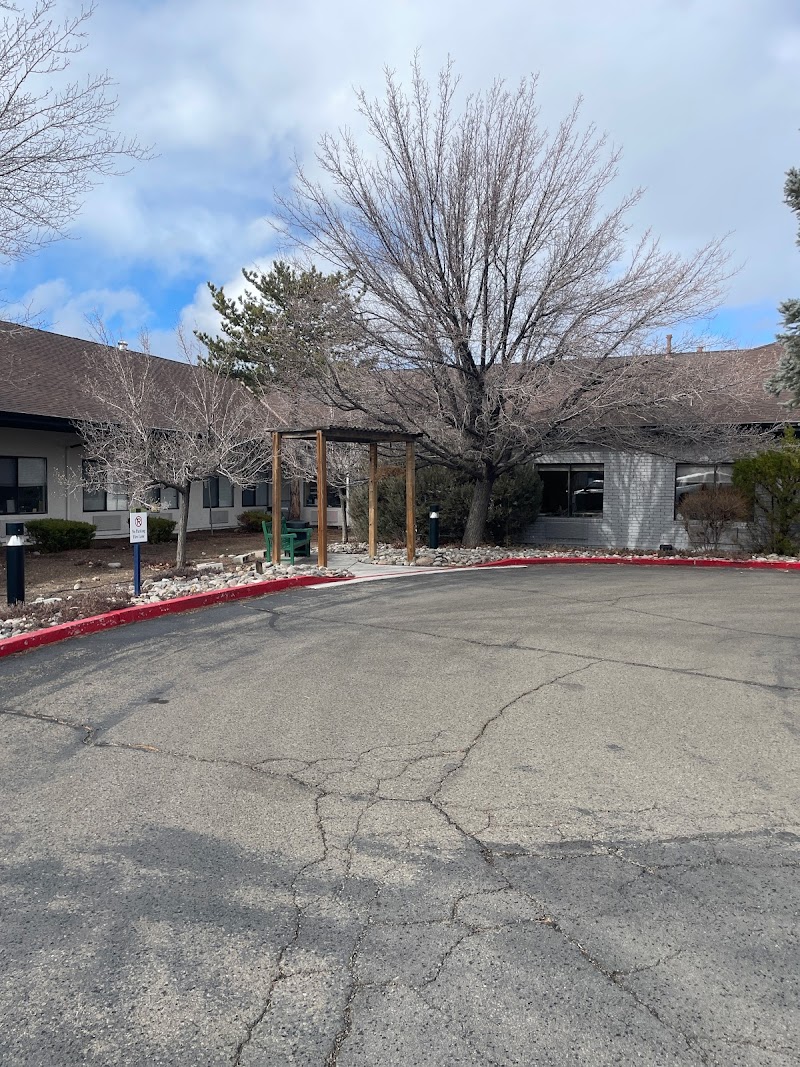
How Does Alpine Skilled Compare to Other Nevada Nursing Homes?

Compared to the 100 nursing homes in Nevada, ALPINE SKILLED NURSING AND REHABILITATION CENTER's overall rating (1 stars) is below the state average of 3.0, staff turnover (60%) is significantly higher than the state average of 46%, and health inspection rating (2 stars) is below the national benchmark.

What Should Families Ask When Visiting Alpine Skilled?

Based on this facility's data, families visiting should ask: "What safeguards and monitoring systems are in place to protect residents from abuse or neglect?" "How do you ensure continuity of care given staff turnover, and what is your staff retention strategy?" "Can you walk me through typical staffing levels on day, evening, and night shifts?" "Can I visit during a mealtime to observe dining assistance and food quality?" These questions are particularly relevant given the substantiated abuse finding on record, the facility's high staff turnover rate, and the below-average staffing rating.

Is Alpine Skilled Safe?

Based on CMS inspection data, ALPINE SKILLED NURSING AND REHABILITATION CENTER has documented safety concerns. The facility has 1 substantiated abuse finding (meaning confirmed case of resident harm by staff or other residents). The facility has a 1-star overall rating and ranks #100 of 100 nursing homes in Nevada. Families considering this facility should ask detailed questions about what corrective actions have been taken since these incidents.

Do Nurses at Alpine Skilled Stick Around?

Staff turnover at ALPINE SKILLED NURSING AND REHABILITATION CENTER is high. At 60%, the facility is 14 percentage points above the Nevada average of 46%. Registered Nurse turnover is particularly concerning at 58%. RNs handle complex medical decisions and coordinate care — frequent RN changes can directly impact care quality. High turnover means new staff may not know residents' individual needs, medications, or preferences. It can also be disorienting for residents, especially those with dementia who rely on familiar faces. Families should ask: What is causing the turnover? What retention programs are in place? How do you ensure care continuity during staff transitions?

Was Alpine Skilled Ever Fined?

ALPINE SKILLED NURSING AND REHABILITATION CENTER has no federal fines on record. CMS issues fines when nursing homes fail to meet care standards or don't correct problems found during inspections. The absence of fines suggests the facility has either maintained compliance or corrected any issues before penalties were assessed. This is a positive indicator, though families should still review recent inspection reports for the full picture.

Is Alpine Skilled on Any Federal Watch List?

ALPINE SKILLED NURSING AND REHABILITATION CENTER is not on any federal watch list. The most significant is the Special Focus Facility (SFF) program, which identifies the bottom 1% of nursing homes nationally based on persistent, serious quality problems. Not being on this list means the facility has avoided the pattern of deficiencies that triggers enhanced federal oversight. This is a positive indicator, though families should still review the facility's inspection history directly.