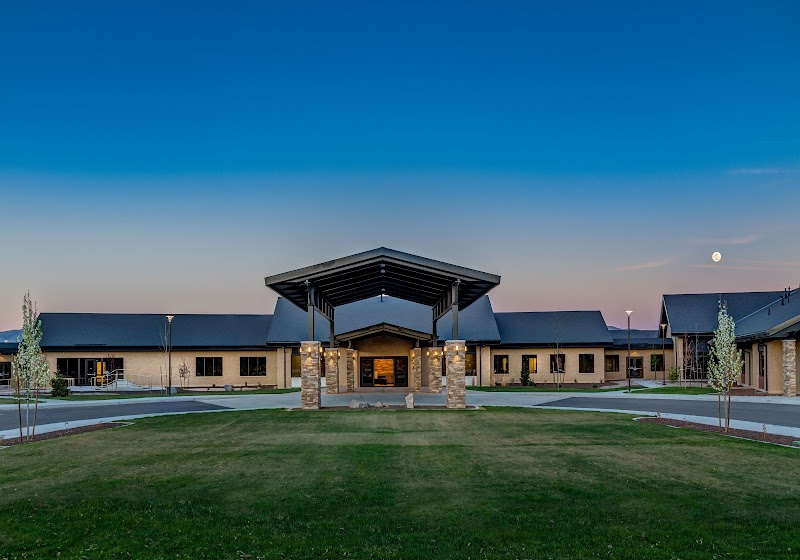
NORTHERN NEVADA STATE VETERANS HOME
36 BATTLEBORN WAY, SPARKS, NV 89431 (763) 537-5700
For profit - Limited Liability company 96 Beds HEALTH DIMENSIONS GROUP Data: November 2025
Trust Grade
35/100
#47 of 65 in NV
Last Inspection: March 2025

Within standard 12-15 month inspection cycle. Federal law requires annual inspections.

Overview

The Northern Nevada State Veterans Home has received a Trust Grade of F, indicating significant concerns about its quality of care. Ranking #47 out of 65 facilities in Nevada places it in the bottom half, and #4 out of 9 in Washoe County means there are only three local options that are better. The facility is on an improving trend, having reduced issues from 20 in 2024 to 14 in 2025, but it still has serious areas of concern. Staffing is a relative strength with a 4/5 star rating, although the turnover rate is high at 78%, which is well above the state average. There have been no fines recorded, which is a positive sign, but incidents such as failing to provide required urinary care for a resident and not discarding expired food items demonstrate ongoing issues. Additionally, the facility did not ensure timely elder abuse prevention training for some staff, potentially putting residents at risk. Overall, while there are strengths in staffing and an improving trend, serious weaknesses in care practices raise concerns for families considering this home.

Trust Score
F
35/100
In Nevada
#47/65
Bottom 28%
Safety Record
Moderate
Needs review
Inspections
Getting Better
20 → 14 violations
Staff Stability
⚠ Watch
78% turnover. Very high, 30 points above average. Constant new faces learning your loved one's needs.
Penalties
✓ Good
No fines on record. Clean compliance history, better than most Nevada facilities.
Skilled Nurses
✓ Good
Each resident gets 67 minutes of Registered Nurse (RN) attention daily — more than 97% of Nevada nursing homes. RNs are the most trained staff who catch health problems before they become serious.
Violations
⚠ Watch
57 deficiencies on record. Higher than average. Multiple issues found across inspections.
★★☆☆☆
2.0
Overall Rating
★★★★☆
4.0
Staff Levels
★★★★☆
4.0
Care Quality
★★☆☆☆
2.0
Inspection Score
Stable
2024: 20 issues
2025: 14 issues

The Good

  • 4-Star Staffing Rating · Above-average nurse staffing levels
  • 4-Star Quality Measures · Strong clinical quality outcomes
  • Full Sprinkler Coverage · Fire safety systems throughout facility
  • No fines on record

Facility shows strength in staffing levels, quality measures, fire safety.

The Bad

2-Star Overall Rating

Below Nevada average (3.0)

Below average - review inspection findings carefully

Staff Turnover: 78%

32pts above Nevada avg (46%)

Frequent staff changes - ask about care continuity

Chain: HEALTH DIMENSIONS GROUP

Part of a multi-facility chain

Ask about local staffing decisions and management

Staff turnover is very high (78%)

30 points above Nevada average of 48%

The Ugly 57 deficiencies on record

1 actual harm
Mar 2025 14 deficiencies
CONCERN (D)

Potential for Harm - no one hurt, but risky conditions existed

Resident Rights (Tag F0550)

Could have caused harm · This affected 1 resident

**NOTE- TERMS IN BRACKETS HAVE BEEN EDITED TO PROTECT CONFIDENTIALITY** Based on observation, interview, clinical record review, and document review, the facility failed to ensure a resident's right t...

Read full inspector narrative →
**NOTE- TERMS IN BRACKETS HAVE BEEN EDITED TO PROTECT CONFIDENTIALITY** Based on observation, interview, clinical record review, and document review, the facility failed to ensure a resident's right to choose to not be approached by individuals providing pet therapy when the resident had a documented allergy to animal hair and a care plan addressing the resident's desire to not be asked about receiving pet therapy was respected for 1 of 19 sampled residents (Resident #16). This deficient practice had the potential to result in the resident feeling disrespected due to the resident's requests not being honored in the facility. Findings include: Resident #16 Resident #16 was admitted to the facility on [DATE], with diagnoses including bipolar disorder, unspecified, major depressive disorder, recurrent, unspecified, and post-traumatic stress disorder, chronic. On 03/10/2025 at 1:27 PM, Resident #16 was sitting on the side of the resident's bed when a handler and a therapy dog stood at the doorway to the resident's room and asked Resident #16 if the resident would like a visit from the dog. Resident #16 responded by clenching the resident's fists and raising the resident's voice when answering the handler. The resident verbalized the resident had told the dog handler many times the resident was allergic. The handler informed the resident the handler was unaware the resident did not want to see the dog because there were several different handlers and dogs involved in the program and different people visited the facility. The resident responded by asking the handler how many times the resident would have to inform people he did not want to see the dogs. The resident verbalized the resident felt disrespected because the resident was unable to be around the dogs due to an allergy and had made the resident's wishes known but was still approached for pet therapy. The documented allergies in the electronic health record for Resident #16 included an allergy to animal hair/dander with an active date of 01/06/2025. The allergy severity was documented to be moderate. A care plan for Resident #16, revised on 12/21/2024, documented the resident preferred not to have dog therapy. On 03/11/2025 at 2:50 PM, the Licensed Practical Nurse (LPN) for Resident #16 verbalized the LPN was not aware of any residents the pet therapy handlers would need to avoid approaching. On 03/11/2025 at 2:51 PM, the Certified Nursing Assistant for Resident #16 verbalized the staff were not made aware of when the pet therapy handlers and dogs would be on the unit. On 03/12/2025 at 10:40 AM, the Volunteer Services Director/Interim Activities Director (AD) verbalized the pet therapy organization should have been informed of which residents did not wish to receive pet therapy and should have been escorted by a staff member who could have informed the handler to avoid Resident #16's room. On 03/13/2025 at 3:09 PM, the Director of Nursing (DON) verbalized a resident with a care plan indicating the resident was not to receive pet therapy should not have been approached for pet therapy. The DON confirmed the facility staff should have communicated with the animal's handler to ensure the resident was not approached. The facility document titled Visiting Pet Policies, undated, documented residents would not be forced to have contact with animals or pets. Contact would be based on the resident's verbal permission or preference. The facility policy titled Resident Rights, revised 01/2023, documented residents had the right to dignity, self-determined, and person-centered care.
CONCERN (D) 📢 Someone Reported This

A family member, employee, or ombudsman was alarmed enough to file a formal complaint

Potential for Harm - no one hurt, but risky conditions existed

Free from Abuse/Neglect (Tag F0600)

Could have caused harm · This affected 1 resident

**NOTE- TERMS IN BRACKETS HAVE BEEN EDITED TO PROTECT CONFIDENTIALITY** Based on interview, clinical record review, and document review the facility failed to protect a resident from neglect after a f...

Read full inspector narrative →
**NOTE- TERMS IN BRACKETS HAVE BEEN EDITED TO PROTECT CONFIDENTIALITY** Based on interview, clinical record review, and document review the facility failed to protect a resident from neglect after a fall in the facility for 1 of 19 sampled residents (Resident #60). This deficient practice placed the resident at risk for changes in condition to go unnoticed by staff and a delay in transfer to the hospital. Findings include: Resident #60 Resident #60 was admitted to the facility on [DATE], and readmitted on [DATE], with diagnoses including nontraumatic chronic subdural hemorrhage, hepatic encephalopathy, and alcohol dependence with alcohol-induced persisting dementia. A Progress Note dated 11/20/2024 at 4:30 PM, documented Resident #60 was found by a nurse on the floor, face down in the resident's room. The resident had no signs or symptoms of head injury, equal hand grips and denied pain. The resident had frequent falls. The resident was assisted to the shower and a skin assessment was performed. The resident had a large red scrape to the right chest, a skin tear on the lower right arm and the left middle finger and thumb appeared purple and swollen. Per physician, continue checking neurological (neuro) signs as the fall was unwitnessed. The Director of Nursing (DON) and the oncoming nurse were made aware. The nurse did not see any head trauma, resident was alert, pleasant, and cooperative. A Progress Note dated 11/20/2024 at 10:46 PM, documented upon arrival to the unit, outgoing staff reported Resident #60 fell around 4:30 PM. The resident was on neuro checks. Noted resident's systolic blood pressure (SBP) from the time of the fall until the start of night shift were all high, as high as 193/74. Redness to the resident's forehead was noted. Staff reported to the night shift nurse the resident was found in the resident's bathroom with the resident's forehead touching the floor. At 6:22 PM, the night shift nurse notified the physician of a possible head strike and high SBP. The physician ordered to resident to be sent out for further treatment due to head strike. At approximately 7:00 PM, Resident #60 was sent to the emergency room via emergency medical services. A Neurological Assessment flowsheet dated 11/20/2024, included assessments for Resident #60 from 4:30 PM through 6:15 PM. The assessment items to be performed included vital signs (VS) and the flowsheet documented the following blood pressure (BP) readings: -4:30 PM, BP 193/74. -4:45 PM, BP 191/69. -5:00 PM, BP 193/65. -5:15 PM, BP 195/79. -5:45 PM, BP 187/67. -6:15 PM, BP 187/81. On 03/12/2025 at 4:02 PM, a Licensed Practical Nurse (LPN) verbalized the LPN had received training from the facility related to abuse and neglect. Neglect included not providing care to residents and not performing expected job functions. The LPN confirmed the LPN was familiar with Resident #60 and verbalized Resident #60 was confused at baseline, was unable to accurately recall recent events, was a fall risk, and fell frequently. The LPN recalled Resident #60 had a fall in November 2024. The resident was sent to the hospital for a few days prior to being transferred back to the facility. The LPN recalled the LPN found Resident #60 on the ground in the resident's room. The resident was lying face down on the floor, with the resident's head touching the ground. The LPN and Certified Nursing Assistants (CNAs) assisted the resident into the shower due to a large amount of bowel movement on the resident. The LPN recalled when the resident was assisted off the ground, a red spot in the middle of the resident's forehead was present. The LPN checked Resident #60's vital signs and performed a neuro check and everything seemed ok. The LPN explained neuro checks were documented on a flowsheet. The LPN verbalized the night shift nurse sent Resident #60 to the hospital after seeing the resident's vital signs, noting the resident's BP was high, and the nurse felt the resident seemed more confused. The LPN recalled the LPN initially checked the resident's blood pressure with the LPN's wrist cuff after the fall and the LPN did not notice anything wrong. The LPN denied the LPN documented the BP reading. The LPN reviewed the Neurological Assessment flowsheet dated 11/20/2024 and confirmed the initials at the bottom of the columns for assessments completed from 4:30 PM through 5:45 PM belonged to the LPN. The LPN verbalized the blood pressure readings documented on the flowsheet were documented by the CNA. The LPN verbalized the LPN had been busy with two resident falls, was focused on the residents' eyes and handgrips, and never saw the vital signs. The LPN denied the LPN followed up with the CNA to ask what the vital signs were following Resident #60's fall and denied the LPN reviewed the vital signs documented by the CNA prior to initialing the bottom of each column on the flowsheet. On 03/13/2025 at 8:59 AM, a CNA confirmed the CNA was familiar with Resident #60 and recalled the resident fell on [DATE]. The CNA recalled the resident was found flat on the floor, face down. The LPN stayed with the resident while the CNA retrieved a VS machine. When the CNA returned to the room, the resident was lying on the resident's back and had a red bump on the resident's forehead. The CNA and LPN assisted the resident with a shower, then assisted the resident to the dining room. The CNA recalled the CNA continued to check Resident #60's vital signs every 15 minutes for one hour, then every 30 minutes, and notified the LPN the resident's blood pressure was really high. The CNA verbalized the CNA had concerns related to the LPN's response to Resident #60's fall and the resident not being sent to the hospital despite the resident's vital signs and the bump on the resident's forehead. The CNA recalled the CNA voiced the CNA's concerns to the night shift nurse at change of shift. On 03/13/2025 at 10:19 AM, a Physician confirmed the Physician was familiar with Resident #60. The Physician verbalized the Physician was aware Resident #60 had fallen in the facility however could not recall specific details related to a fall on 11/20/2024. The Physician verbalized for unwitnessed falls in the facility with head strike the Physician had a low threshold for sending the resident to the hospital. The Physician explained if a resident fell, the Physician would want to know if the fall was witnessed or unwitnessed, if the fall was ground level, if the resident lost consciousness, the results of the nurse's head to toe assessment, and the resident's VS. VS after a fall were important and nursing assessment was key. The Physician affirmed a SBP reading in the 190's after an unwitnessed fall with possible head strike would be concerning and would likely prompt transfer of the resident to the hospital. On 03/13/2025 at 11:00 AM, a Registered Nurse (RN) verbalized the RN was familiar with Resident #60. The RN recalled Resident #60 had many falls in the facility and confirmed the RN was familiar with the fall on 11/20/2024. The RN recalled the RN came on shift, was informed the resident had fallen during the day shift and was on neuro checks. The RN noted Resident #60's SBP documented on the neuro check form was high, and verbalized the RN knew something was wrong. The day shift CNA informed the RN the resident had an indentation on the resident's head and asked the RN to reassess the resident. The RN recalled Resident #60 was alert and appropriate in responses during the assessment and the RN had a concern with an injury on the resident's forehead which prompted the RN to call the Physician. The RN explained it was the facility's protocol to send residents to the hospital after a fall if the resident struck the resident's head, especially if the resident was on a blood thinner or the resident had a bump. On 03/13/2025 at 11:35 AM, the Regional Director of Quality and Clinical Services (RDQCS) verbalized neglect was failure to provide care for a resident. If a resident sustained a serious bodily injury and the facility didn't know how the injury occurred or if it could have been preventable, the facility needed to rule out neglect. The RDQCS explained the facility's expectation of staff after a resident fell was for the nurse to assess the resident, get a set of VS, do a neuro check, and check range of motion. Based on the findings of the assessment and VS, staff were to contact the doctor. The RDQCS verbalized monitoring of VS after an unwitnessed fall was very important and neuro checks were to be done every 15 minutes. Increased blood pressure after a fall could indicate an injury or a subdural hematoma (a collection of blood between the outmost layer of the meninges and the surface of the brain). The RDQCS reviewed Resident #60's clinical record and explained after the Physician was notified of elevated SBP and redness to the resident's forehead, the resident was transferred to the hospital on [DATE] due to possible head strike during a fall. The RDQCS verbalized the RDQCS would expect a nurse to review and be aware of the resident's VS documented on the neuro flowsheet. The RDQCS verbalized if a CNA checked the VS and the nurse did not review the VS, did not recheck the VS, did not notify the physician of the VS, or did not look in the record to see if there were any as needed medications available to treat blood pressure then it would be considered neglect. If the nurse saw the VS and did not intervene it could be considered neglect. The State of Nevada Administrative Code 632 - Nursing, revised August 2019, documented a Practical Nurse may supervise other personnel in the provision of care (NAC 632.228, 3). Unprofessional conduct by a licensee or certificate holder included: failing to supervise a person to whom functions of nursing are delegated or assigned, if responsible for supervising that person (NAC 632.890, 7), failing to collaborate with other members of a health care team as necessary to meet the health needs of a patient (632.890, 24), and failing to observe the conditions, signs and symptoms of a patient, to record the information or to report significant changes to the appropriate persons (632.890, 25). The Nevada State Board of Nursing Decision Tree for Delegation by Advanced Practice Registered Nurse (APRN), RN, LPN to Assistive Personnel (AP), undated and viewed on the Nevada State Board of Nursing website on 03/18/2025, documented steps in the delegation of tasks to AP included supervision and monitoring. An LPN was to assure tasks had been performed as delegated. The nurse maintained accountability for nursing tasks/activities delegated and performed by the AP, monitored the outcomes of the delegated task/s, and recognized subtle signs and symptoms with appropriate intervention when the client's condition changed. AP included CNAs. The facility policy titled Accidents/Falls, reviewed 11/2024, documented if a fall occurred, nursing/emergency care was to be provided per the facility's policy/standard of practice. Neurological observations (neuros) would be conducted following any observation of a resident hitting their head during a fall or if it was unknown/not observed whether a resident hit their head or not during a fall. Even if a resident reported the head was not hit and the fall was not observed, neuros were required to be completed. The facility policy titled Freedom from Abuse, Neglect, and Exploitation, dated 09/13/2022, documented neglect occurred when the facility was aware of, or should have been aware of, goods or services a resident required but the facility failed to provide them to the resident. Neglect included cases where the facility's indifference or disregard for resident care, comfort or safety resulted or could result in physical harm, pain, mental anguish, or emotional distress. Neglect may have been the result of a pattern of failures or may have been the result of one or more failures involving one resident and one staff person. Cross reference tag F609 and F610. CPT #NV00072985
CONCERN (D) 📢 Someone Reported This

A family member, employee, or ombudsman was alarmed enough to file a formal complaint

Potential for Harm - no one hurt, but risky conditions existed

Report Alleged Abuse (Tag F0609)

Could have caused harm · This affected 1 resident

**NOTE- TERMS IN BRACKETS HAVE BEEN EDITED TO PROTECT CONFIDENTIALITY** Based on clinical record review, interview, and document review the facility failed to ensure an allegation of neglect and a fal...

Read full inspector narrative →
**NOTE- TERMS IN BRACKETS HAVE BEEN EDITED TO PROTECT CONFIDENTIALITY** Based on clinical record review, interview, and document review the facility failed to ensure an allegation of neglect and a fall resulting in serious bodily injury was reported to the State Agency (SA) for 1 of 19 sampled residents (Resident #60). This deficient practice had the potential for allegations of neglect to not be investigated by the facility and/or the SA. Findings include: Resident #60 Resident #60 was admitted to the facility on [DATE], and readmitted on [DATE], with diagnoses including nontraumatic chronic subdural hemorrhage, hepatic encephalopathy, and alcohol dependence with alcohol-induced persisting dementia. A Progress Note dated 11/20/2024 at 4:30 PM, documented Resident #60 was found by a nurse on the floor, face down in the resident's room. The resident had no signs or symptoms of head injury, equal hand grips and denied pain. The resident had frequent falls. The resident was assisted to the shower and a skin assessment was performed. The resident had a large red scrape to the right chest, a skin tear on the lower right arm and the left middle finger and thumb appeared purple and swollen. Per physician, continue checking neurological (neuro) signs as the fall was unwitnessed. The Director of Nursing (DON) and the oncoming nurse were made aware. The nurse did not see any head trauma, resident was alert, pleasant, and cooperative. A Progress Note dated 11/20/2024 at 10:46 PM, documented upon arrival to the unit, outgoing staff reported Resident #60 fell around 4:30 PM. Resident was on neurological checks. Noted resident's systolic blood pressure (SBP) from the time of the fall until the start of night shift were all high, as high as 193/74. Redness to the resident's forehead was noted. Staff reported to the night shift nurse the resident was found in resident's bathroom with the resident's forehead touching the floor. At 6:22 PM, the night shift nurse notified the physician of a possible head strike and high SBP. The physician ordered to resident to be sent out for further treatment due to head strike. At approximately 7:00 PM, Resident #60 was sent to the emergency room via emergency medical services. A Progress Note dated 11/20/2024 at 11:13 PM, documented a call was received by the facility at 10:15 PM from the emergency room (ER). The ER nurse reported the resident was being transferred to another hospital for further treatment due to computed tomography (CT) scan results showing a subdural hematoma. An acute care History and Physical dated 11/20/2024, documented Resident #60 was injured in a mechanical, ground-level fall with probable brief loss of consciousness. The resident was initially evaluated at an alternate hospital and transferred for a neurosurgical evaluation. Review of the resident's transfer CT imaging demonstrated a new acute left frontotemporal extra-axial hemorrhage with mild mass effect. An Issue Brief Form initiated by the facility on 11/21/2024, documented Resident #60 was found on the floor in the resident's bathroom with the resident's forehead touching the floor. The resident was sent to the emergency room for further evaluation, report received indicating the resident had a subdural hematoma. The facility's action steps following the incident included: -Medical evaluation and further management of the resident's subdural hematoma. The action step had a documented completion date of 11/20/2024. -Reassess if the subdural hematoma was acute or chronic. The action step included a note indicating acute on chronic and had a task completed date of 11/25/2024. The Issue Brief was signed by the Executive Director (ED). On 03/13/2025 at 11:35 AM, the Regional Director of Quality and Clinical Services (RDQCS) verbalized neglect was failure to provide care for a resident. Serious bodily injuries were injuries requiring further medical attention, if the resident had to be transferred to the hospital, if the resident needed a CT scan, if there was a closed head injury, or if the resident had altered mental status. The RDQCS confirmed a subdural hematoma was considered a serious bodily injury. All allegations of abuse, neglect, mistreatment, misappropriation of resident property, elopements, and injuries of unknown origin were required to be reported to the SA. If a resident sustained a serious bodily injury and the facility was unsure how the injury occurred or if it could have been preventable, the facility needed to rule out neglect and needed to be reported. On 03/13/2025 at 12:29 PM, the RDQCS denied the facility had received any concerns, complaints, or allegations regarding the failure of staff to follow post-fall policy or delay/refusal to transfer Resident #60 to the hospital after the fall on 11/20/2024 aside from a report filed against the facility's former Director of Nursing (DON). The RDQCS verbalized the facility had received a subpoena for records from the Nevada State Board of Nursing. The RDQCS explained the subpoena received did not include any allegations against the former DON however the former DON contacted the RDQCS via phone and informed the RDQCS the allegations included the former DON telling staff not to send Resident #60 to the hospital or the emergency room and not to care for Resident #60. The RDQCS believed the allegations were communicated to the RDQCS in January 2025. On 03/13/2025 at 2:53 PM, via phone call with the ED and with the RDQCS present, the ED denied Resident #60's fall on 11/20/2024 was reported to the SA. On 03/13/2025 at 2:54 PM, the RDQCS denied the allegations against the facility's former DON were thoroughly investigated or reported to the SA. It was the RDQCS's belief the allegations were not neglect and were allegations of the former DON working outside the former DON's scope of practice. The RDQCS explained the facility did not thoroughly investigate or report the allegations because the RDQCS had looked in the resident's record at the time the allegations were communicated to the RDQCS and did not believe the allegations had any merit. The facility policy titled Freedom from Abuse, Neglect and Exploitation - Abuse Reporting and Responsibilities of Covered Individuals, revised 09/13/2022, documented the facility would report alleged violations involving abuse, neglect, exploitation, or mistreatment including injuries of unknown source and misappropriation of resident property and results of investigations of the allegations according to regulatory guidelines and in accordance with state law within the required timeframes. Serious bodily injury was defined as an injury involving extreme physical pain, substantial risk of death, protracted loss or impairment of the function of a bodily member, organ, or mental faculty or requiring medical intervention such as surgery or hospitalization. Each covered individual was to report immediately, but not later than two hours after forming the suspicion, if the events resulted in serious bodily injury or not later than 24 hours if the events did not result in serious bodily injury. Cross reference tag F600 and F610. CPT #NV00072985
CONCERN (D) 📢 Someone Reported This

A family member, employee, or ombudsman was alarmed enough to file a formal complaint

Potential for Harm - no one hurt, but risky conditions existed

Investigate Abuse (Tag F0610)

Could have caused harm · This affected 1 resident

**NOTE- TERMS IN BRACKETS HAVE BEEN EDITED TO PROTECT CONFIDENTIALITY** Based on clinical record review, interview, and document review the facility failed to ensure an allegation of neglect was thoro...

Read full inspector narrative →
**NOTE- TERMS IN BRACKETS HAVE BEEN EDITED TO PROTECT CONFIDENTIALITY** Based on clinical record review, interview, and document review the facility failed to ensure an allegation of neglect was thoroughly investigated for 1 of 19 sampled residents (Resident #60). This deficient practice had the potential for physical and/or emotional harm to residents due to allegations of neglect not being investigated and protections put in place to prevent future neglect. Findings include: Resident #60 Resident #60 was admitted to the facility on [DATE], and readmitted on [DATE], with diagnoses including nontraumatic chronic subdural hemorrhage, hepatic encephalopathy, and alcohol dependence with alcohol-induced persisting dementia. A Progress Note dated 11/20/2024 at 4:30 PM, documented Resident #60 was found by a nurse on the floor, face down in the resident's room. The resident had no signs or symptoms of head injury, equal hand grips and denied pain. The resident had frequent falls. The resident was assisted to the shower and a skin assessment was performed. The resident had a large red scrape to the right chest, a skin tear on the lower right arm and the left middle finger and thumb appeared purple and swollen. Per physician, continue checking neurological (neuro) signs as the fall was unwitnessed. The Director of Nursing (DON) and the oncoming nurse were made aware. The nurse did not see any head trauma, resident was alert, pleasant, and cooperative. A Progress Note dated 11/20/2024 at 10:46 PM, documented upon arrival to the unit, outgoing staff reported Resident #60 fell around 4:30 PM. Resident was on neurological checks. Noted resident's systolic blood pressure (SBP) from the time of the fall until the start of night shift were all high, as high as 193/74. Redness to the resident's forehead was noted. Staff reported to the night shift nurse the resident was found in resident's bathroom with the resident's forehead touching the floor. At 6:22 PM, the night shift nurse notified the physician of a possible head strike and high SBP. The physician ordered to resident to be sent out for further treatment due to head strike. At approximately 7:00 PM, Resident #60 was sent to the emergency room via emergency medical services. A Progress Note dated 11/20/2024 at 11:13 PM, documented a call was received by the facility at 10:15 PM from the emergency room (ER). The ER nurse reported the resident was being transferred to another hospital for further treatment due to computed tomography (CT) scan results showing a subdural hematoma. An acute care History and Physical dated 11/20/2024, documented Resident #60 was injured in a mechanical, ground-level fall with probable brief loss of consciousness. The resident was initially evaluated at an alternate hospital and transferred for a neurosurgical evaluation. Review of the resident's transfer CT imaging demonstrated a new acute left frontotemporal extra-axial hemorrhage with mild mass effect. An Issue Brief Form initiated by the facility on 11/21/2024, documented Resident #60 was found on the floor in the resident's bathroom with the resident's forehead touching the floor. The resident was sent to the emergency room for further evaluation, report received indicating the resident had a subdural hematoma. The facility's action steps following the incident included: -Medical evaluation and further management of the resident's subdural hematoma. The action step had a documented completion date of 11/20/2024. -Reassess if the subdural hematoma was acute or chronic. The action step included a note indicating acute on chronic and had a task completed date of 11/25/2024. The Issue Brief was signed by the Executive Director (ED). On 03/13/2025 at 11:35 AM, the Regional Director of Quality and Clinical Services (RDQCS) verbalized neglect was failure to provide care for a resident. All allegations of abuse, neglect, mistreatment, misappropriation of resident property, elopements, and injuries of unknown origin were required to be reported to the SA. On 03/13/2025 at 12:29 PM, the RDQCS denied the facility had received any concerns, complaints, or allegations regarding the failure of staff to follow post-fall policy or delay/refusal to transfer Resident #60 to hospital after the fall on 11/20/2024 aside from a report filed against the facility's former Director of Nursing (DON). The RDQCS verbalized the facility had received a subpoena for records from the Nevada State Board of Nursing. The RDQCS explained the subpoena received did not include any allegations against the former DON however the former DON contacted the RDQCS via phone and informed the RDQCS the allegations included the former DON telling staff not to send Resident #60 to the hospital or the emergency room and not to care for Resident #60. The RDQCS believed the allegations were communicated to the RDQCS in January 2025. On 03/13/2025 at 2:54 PM, the RDQCS denied the allegations against the facility's former DON were thoroughly investigated or reported to the SA. It was the RDQCS's belief the allegations were not neglect and were allegations of the former DON working outside the former DON's scope of practice. The RDQCS explained the facility did not thoroughly investigate or report the allegations because the RDQCS had looked in the resident's record at the time the allegations were communicated to the RDQCS and did not believe the allegations had any merit. The facility policy titled Freedom from Abuse, Neglect and Exploitation - Abuse Reporting and Responsibilities of Covered Individuals, revised 09/13/2022, documented the facility would report alleged violations involving abuse, neglect, exploitation, or mistreatment including injuries of unknown source and misappropriation of resident property and results of investigations of the allegations according to regulatory guidelines and in accordance with state law and within the required timeframes. The facility policy titled Freedom from Abuse, Neglect, and Exploitation, reviewed 11/2024, documented allegations of abuse, neglect, or exploitation would be thoroughly investigated, and the investigation would be initiated upon receipt of the allegation. The investigation could include but was not limited to: the names of the resident/s involved, the date and time of the incident, the circumstances surrounding the incident, where the incident took place, the names of any witnesses, and the name of the person alleged to have committed the act. The results of all investigations were to be reported to the Administrator and the SA within five working days of the alleged violation. Cross reference tag F600 and F609. CPT #NV00072985
CONCERN (D)

Potential for Harm - no one hurt, but risky conditions existed

Deficiency F0658 (Tag F0658)

Could have caused harm · This affected 1 resident

**NOTE- TERMS IN BRACKETS HAVE BEEN EDITED TO PROTECT CONFIDENTIALITY** Resident #72 Resident #72 was admitted to the facility on [DATE], and readmitted on [DATE], with a diagnosis of unspecified deme...

Read full inspector narrative →
**NOTE- TERMS IN BRACKETS HAVE BEEN EDITED TO PROTECT CONFIDENTIALITY** Resident #72 Resident #72 was admitted to the facility on [DATE], and readmitted on [DATE], with a diagnosis of unspecified dementia, moderate, without behavioral disturbance, psychotic disturbance, mood disturbance, and anxiety. A Physician's Order dated 12/25/2024, document Artificial Tears ophthalmic solution one percent (Carboxymethylcellulose Sodium), instill one drop in both eyes three times a day for dry eye. On 03/12/2025 at 9:04 AM, an LPN administered Artificial Tears to Resident #72. During administration, the LPN failed to draw the resident's lower eyelid down prior to administration of the medication. A portion of the eye drops fell below the resident's eye, onto the resident's skin. The LPN handed Resident #72 a tissue, and the resident wiped the medication from below the resident's eyes. On 03/13/2025 at 8:12 AM, the DON explained it was the DON's expectation of nursing staff to adhere to nursing standards of practice as well as state and federal guidelines when administering medications to residents. The correct process for administering eye drops to residents was to perform hand hygiene, open the medication, ensure the eye was free from any discharge, hold the eye open (the DON demonstrated pulling the lower eye lid down), and administer the eye drop. The DON explained if an eye drop was not administered with correct technique an infection could occur, or the medication could be less effective when the eye/eyelid was not held open as the resident could receive less than the ordered amount of the medication. The facility policy titled Eye - Instillation of Medications, dated 04/01/2008, documented all eye medications would be administered appropriately and with a physician's order. The procedure included having the resident tilt the resident's head backward, drawing the lower eyelid down, having the resident look up, and dropping one drop of medication every three to five minutes in the pouch of the lower lid. Based on observation, interview, clinical record review, and document review, the facility failed to ensure nurses performed the job duties as outlined in the State Board of Nursing Nurse Practice Act with safe medication administration when 1) qualified Licensed Practical Nurses (LPN) and Registered Nurses failed to verify the appropriateness of a medication order for 1 of 19 sampled residents (Resident #69) and 2) eye drops were administered with incorrect technique for 1 of 4 residents observed during medication administration (Resident #72). The deficient practice resulted in a physician order being inaccurately transcribed onto a resident's electronic health record (EMR) and medication administration record (MAR), as well as the misadministration of ordered medication. Findings include: Resident #69 Resident #69 was admitted to the facility on [DATE], and readmitted on [DATE], with a diagnosis of heart failure, unspecified. Resident #69's January, February, and March 2025 MARs documented Spironolactone oral tablet. Give 12.5 milligrams (mg) by mouth one time a day. Hold if heart rate was less than 60 beats per minute, related to heart failure, unspecified. The list of chart codes documented a check mark indicated the medication was administered, and 11 indicated vitals were outside of parameters. Spironolactone had check marks on the following dates when the resident's heart rate was below 60 beats per minute: -On 01/08/2025 pulse was 58 -On 01/29/2025 pulse was 55 -On 02/17/2025 pulse was 58 -On 02/19/2025 pulse was 58 -On 02/23/2025 pulse was 58 -On 02/24/2025 pulse was 58 -On 02/25/2025 pulse was 58 -On 03/04/2025 pulse was 58 -On 03/05/2025 pulse was 59 -On 03/07/2025 pulse was 59 Spironolactone had 11s on the following dates when the resident's heart rate was below 60 beats per minute: -On 01/07/2025 pulse was 58 -On 02/09/2025 pulse was 58 An order audit report, dated 03/12/2025, included a physician order dated 05/25/2024, documenting Spironolactone oral tablet. Give 12.5 mg by mouth one time a day related to heart failure, unspecified. On 03/13/2025 at 8:54 AM, a Registered Nurse (RN) verbalized Resident #69's EMR order for Spironolactone documented to hold when the resident's heart rate was less than 60 beats per minute. The nurse confirmed if the resident's heart rate was under 60 beats per minute, the nurse would hold the medication. On 03/13/2025 at 12:04 PM, the Director of Nursing (DON) verbalized the DON expected nurses to adhere to professional standards of medication administration by verifying the right person, time, route, dosage, medication, and documentation of medication administration. The DON confirmed Resident #69's EMR physician orders documented to hold Spironolactone if heart rate was less than 60 beats per minute. The DON verbalized a check mark on the MAR would indicate the nurse verified and followed the order while a 5 or 11 on the MAR would indicate the medication was held. The DON confirmed Resident #69's 2025 MARs documented check marks for the Spironolactone on the dates above. The DON verbalized Resident #69's EMR lacked documentation the physician was asked for clarification regarding the Spironolactone order. On 03/13/2025 at 12:44 PM, the DON explained after the DON was made aware of concerns regarding Resident #69's Spironolactone order, the DON sought clarification from the Physician. The DON was informed the original Spironolactone order lacked parameters, and pulse rate did not need to be monitored for Spironolactone. The DON explained the nurses were responsible for reviewing medication orders daily. The DON explained when the facility went through a change of ownership, physician orders were transcribed from the previous EMR to the current EMR and some orders were transcribed inaccurately, including Resident #69's Spironolactone. The Nurse Practice Act Nevada Administrative Code (NAC) 632.236 Understanding and verifying orders, documented before an LPN carried out a physician order, the Licensed Practical Nurse must understand the reason for the order, verify the order was appropriate, and verify there were no documented contraindications in carrying out the order. An RN would perform or supervise the verification of an order given to ensure the order was appropriate, properly authorized and lacked documented contraindications in carrying out the order. The facility policy titled, Medication Administration, dated 11/2024, documented all medication would be administered per physician orders. Medication orders initiated by the pharmacy were verified by the DON, executive director, or designee. Staff members responsible for administering medications reviewed the physician's order prior to administering medications. Cross reference with F842.
CONCERN (D)

Potential for Harm - no one hurt, but risky conditions existed

Deficiency F0678 (Tag F0678)

Could have caused harm · This affected 1 resident

**NOTE- TERMS IN BRACKETS HAVE BEEN EDITED TO PROTECT CONFIDENTIALITY** Based on personnel record review, document review, and interview, the facility failed to ensure direct care staff maintained cur...

Read full inspector narrative →
**NOTE- TERMS IN BRACKETS HAVE BEEN EDITED TO PROTECT CONFIDENTIALITY** Based on personnel record review, document review, and interview, the facility failed to ensure direct care staff maintained current Cardio-Pulmonary Resuscitation (CPR) certification for 2 of 11 sampled direct care employees (Employee #11 and #12). This deficient practice could result in a negative outcome for a resident requiring CPR while awaiting the arrival of emergency medical personnel. Findings include: Employee #11 Employee #11 was hired by the facility as a Registered Nurse (RN) with a start date of [DATE]. The RN's personnel record lacked documented evidence of CPR training and certification. Employee #12 Employee #12 was hired by the facility as an RN/Infection Preventionist with a start date of [DATE]. The RN's personnel record documented CPR training and certification expired on 01/2025. The RNs' Job Description documented the minimum job requirements included CPR certified. On [DATE] at 1:17 PM, the Human Resources Director verbalized CPR certification was required of all direct care staff and confirmed Employees #11 and #12 did not have a current CPR certification and their respective Job Description documented the requirement. The Facility Assessment, last revised 02/2025, documented licensed nurses and certified nursing assistants would maintain cardiopulmonary resuscitation certification.
CONCERN (D)

Potential for Harm - no one hurt, but risky conditions existed

Deficiency F0679 (Tag F0679)

Could have caused harm · This affected 1 resident

**NOTE- TERMS IN BRACKETS HAVE BEEN EDITED TO PROTECT CONFIDENTIALITY** Based on observation, interview, clinical record review, and document review, the facility failed to ensure a resident received ...

Read full inspector narrative →
**NOTE- TERMS IN BRACKETS HAVE BEEN EDITED TO PROTECT CONFIDENTIALITY** Based on observation, interview, clinical record review, and document review, the facility failed to ensure a resident received individualized activities to meet the resident's interests and need to have assistance with the use of electronic devices for 1 of 19 sampled residents (Resident #74). This deficient practice had the potential to result in a resident feeling isolated and frustrated from lack of social interaction and opportunities to pursue personalized interests. Findings include: Resident #74 Resident #74 was admitted to the facility on [DATE], with diagnoses including post-traumatic stress disorder, chronic and major depressive disorder, recurrent, moderate On 03/10/2025 at 11:31 AM, Resident #74 verbalized the resident did not enjoy participating in group activities but the resident felt very depressed and would have liked for someone to visit the resident in the resident's room when the resident wanted someone to talk to. The resident verbalized the resident wanted help with learning how to use a smart phone and a tablet a family member had sent to the resident. The resident verbalized the resident needed someone to show the resident how to answer the phone and the resident wanted assistance with learning how to access a video streaming application on the tablet. An Activities/Life Enrichment care plan for Resident #74, dated 09/26/2024, documented the resident did not like groups and would rather stay in the resident's room. The goals included for the resident to engage in activities of interest and offer alternate activities the resident could do alone. The activities task in the electronic health record included one date with documentation of a self-directed engagement for Resident #74 in the 14 day look back period. The task documented the resident participated in the self-directed activity of movies and or television on 02/28/2025. On 03/12/2025 at 10:38 AM, the Director of Volunteer Services/Interim Activities Director (AD) verbalized the activities staff would document individualized interactions with the resident under the activities task in the electronic health record. The AD verbalized the activity staff should have been checking in with the resident daily to ensure the resident had what the resident needed to meet the resident's interests and keep the resident occupied and happy while providing the resident with some socialization if the resident wanted to talk. The AD confirmed the activity program would have been able to assist the resident with learning how to use a smartphone or access an application on the resident's tablet. The AD confirmed the last documented activity for Resident #74 was the self-directed activity of movies or television on 02/28/2025. The facility policy titled Activities, revised 10/2022, documented the facility would provide an ongoing program of activities designed to meet the preferences of each resident, including individual activities.
CONCERN (D)

Potential for Harm - no one hurt, but risky conditions existed

Deficiency F0761 (Tag F0761)

Could have caused harm · This affected 1 resident

Based on observation, interview, and document review, the facility failed to ensure a medication cart containing resident medications was secure and expired medications were removed from the active su...

Read full inspector narrative →
Based on observation, interview, and document review, the facility failed to ensure a medication cart containing resident medications was secure and expired medications were removed from the active supply in 1 of 3 medication storage rooms and 1 of 3 medication carts reviewed for medication storage. The deficient practice could have facilitated unauthorized access to medications in the carts and had the potential for expired medications to be administered to residents. Findings include: On 03/11/2025 at 8:42 AM, a medication cart was left unlocked in the Tahoe/Truckee unit the with five residents sitting in the same area as the cart. On 03/11/2025 at 8:44 AM, a Registered Nurse (RN) returned to the unsecured medication cart and confirmed the cart was left unlocked. The RN confirmed there were five residents near the unsecured medication cart and could have accessed resident medications. The facility policy titled Medication Labeling and Storage, revised 11/2024, documented the community must store all drugs and biologicals in locked compartments. All medications would be stored appropriately, either in the locked medication cart or medication room. On 03/13/2025 at 9:16 AM, in the presence of an RN, a medication cart on the Pinion/Aspen unit was inspected. The following items were found in the cart, stored with active medications: -A bottle of Docusate Sodium stool softener, 100 milligram (mg) capsules. The expiration date printed on the bottle was 12/2024. -A bubble pack containing seven tablets of Ondansetron four mg tablets. The expiration date printed on the pharmacy label was 12/03/2024. The RN confirmed the Docusate Sodium capsules and the Ondansetron tablets had expired. The RN verbalized the expired medications should have been removed from the medication cart and destroyed using Drug Buster (a drug disposal system) on or before the expiration date. On 03/13/2025 at 9:31 AM, in the presence of the RN, the medication storage room on the Pinion/Aspen unit was inspected. An intravenous (IV) solution bag containing 1000 milliliters of five percent Dextrose was found in a cabinet. The expiration date printed on the IV solution bag was November 2024. A vial of Tuberculin Purified Protein Derivative with an open date of 01/28/2025 written on the vial and the box was found in the refrigerator. The RN confirmed the IV solution bag had expired. The RN confirmed the open date written on the vial and the box of Tuberculin Purified Protein Derivative was 01/28/2025, and explained the vial should have been discarded within 30 days of the open date. The Tuberculin Purified Protein Derivative (Tubersol) package insert, with product information as of October 2021, documented a vial of Tubersol which had been entered and in use for 30 days should be discarded. On 03/12/2025 at 1:46 PM, the Director of Nursing (DON) verbalized expired medications were to be removed from the medication cart and the medication storage room immediately to prevent the expired medication from being administered to a resident. If expired medications were administered to a resident, the medications could make the resident sick or could be less effective. The facility policy titled Medications - Discontinued for deceased or discharged Residents, revised 03/01/2024, documented all medications which were no longer being administered to residents would be removed and appropriately discarded. All medications which had passed the expiration date on the label were to be properly disposed of and re-ordered if necessary.
CONCERN (D)

Potential for Harm - no one hurt, but risky conditions existed

Food Safety (Tag F0812)

Could have caused harm · This affected 1 resident

**NOTE- TERMS IN BRACKETS HAVE BEEN EDITED TO PROTECT CONFIDENTIALITY** Based on observation, interview, and document review, the facility failed to ensure culinary staff checked the holding temperatu...

Read full inspector narrative →
**NOTE- TERMS IN BRACKETS HAVE BEEN EDITED TO PROTECT CONFIDENTIALITY** Based on observation, interview, and document review, the facility failed to ensure culinary staff checked the holding temperatures for all hot foods to ensure the foods were at a safe temperature prior to beginning meal service from a satellite kitchen to residents in the [NAME]/Quail dining room during a lunch service with the potential to affect 15 of 15 residents residing on the unit and to ensure vegetables prepared for residents requiring a minced and moist diet in the Aspen/Pinion dining room were at a safe temperature prior to beginning lunch service with the potential to affect 1 of 15 residents residing on the unit. This deficient practice had the potential to result in food not held at appropriate temperatures resulting in the growth of pathogens that cause foodborne illness being served to residents. Findings include: [NAME]/Quail On 03/12/2025 at 11:57 AM, a Culinary Staff member entered the satellite serving kitchen to serve lunch to the 15 residents located in the [NAME]/Quail neighborhood of the facility. The items brought in to be placed on the holding table included the following: - fried fish. - garlic mashed potatoes. - gravy. - steamed vegetables. - mechanical soft fried fish. - mechanical soft steamed vegetables. - corn. On 03/12/2025 at 11:59 AM, the Culinary Staff member checked the holding temperature of the following hot foods: - fried fish was 155 degrees Fahrenheit (F). - gravy was 154 F. - steamed vegetables were 154 F On 03/12/2025 at 12:07 PM, the Culinary Staff member began plating food including the mashed potatoes, mechanical soft vegetables, and mechanical soft fish for residents in the [NAME]/Quail neighborhood. On 03/12/2025 at 12:09 PM, the Culinary Staff member confirmed the Culinary Staff member had not checked the temperature for all hot food items on the holding table prior to beginning to plate food for the residents. On 03/12/2025 at 12:10 PM, the Dietary Manager (DM) entered the satellite kitchen and assisted the Culinary Staff member to complete the temperature checks of the hot food. The DM found the mechanical soft fish was 128 F. The DM pulled the mechanical soft fish to reheat the fish to a safe temperature. On 03/12/2025 at 12:15 PM, the DM verbalized all hot foods should have been checked for an appropriate holding temperature of at least 135 F before the Culinary Staff started plating the food. The DM confirmed the Culinary Staff had not recorded the temperature for all hot foods prior to serving the food. Aspen/Pinion On 03/12/2025 at 11:51 AM, a Culinary Staff member began checking and recording temperatures of the food prepared for lunch on the Aspen/Pinion unit. Vegetables prepared for residents requiring a minced and moist texture diet had a temperature reading of 132 F. The Culinary Staff member verbalized the temperature for the mechanical soft vegetables was out of range. When a temperature was out of range the Culinary Staff member would place the food on the hot holding table and recheck the temperature prior to serving the food to residents to ensure the temperature was within a safe range for consumption. On 03/12/2025 at 12:03 PM, the Culinary Staff member placed the prepared food items on the hot holding table in the Aspen/Pinion unit. On 03/12/2025 at 12:10 PM, the Culinary Staff member began preparing plates for residents. Once prepared, the Culinary Staff member passed the plates to the staff on the opposite side of the counter and the staff would deliver the plates to residents in the dining room. On 03/12/2025 at 12:13 PM, the Culinary Staff member placed a serving of the mechanical soft vegetables on a plate and handed the plate to a staff member in the dining room. The staff member took the plate and turned toward the dining room. On 03/12/2025 at 12:14 PM, the Culinary Staff member confirmed the Culinary Staff member had not rechecked the temperature of the vegetables prior to placing the vegetables on the plate and handing the plate to the staff member in the dining room. On 03/12/2025 at 12:15 PM, the Culinary Staff member rechecked the temperature of the mechanical soft vegetables and the reading on the thermometer was 125 F. On 03/12/2025 at 12:27 PM, the DM arrived in the satellite kitchen on the Aspen/Pinion unit. The Culinary Staff member explained the temperature of the mechanical soft vegetables was too low. The DM explained when the temperature of food was too low, the food should have been taken off the line and reheated in the microwave until the food was 165 F for at least 15 seconds prior to serving to residents. The facility policy titled Food Temperature, dated 2021, documented the temperature of all food items would be taken and properly recorded prior to service of each meal. All hot food items would be cooked to appropriate internal temperatures, held, and served at a temperature of at least 135 F.
CONCERN (D)

Potential for Harm - no one hurt, but risky conditions existed

Medical Records (Tag F0842)

Could have caused harm · This affected 1 resident

**NOTE- TERMS IN BRACKETS HAVE BEEN EDITED TO PROTECT CONFIDENTIALITY** Based on clinical record review, interview, and document review, the facility failed to ensure an electronic medical record (EMR...

Read full inspector narrative →
**NOTE- TERMS IN BRACKETS HAVE BEEN EDITED TO PROTECT CONFIDENTIALITY** Based on clinical record review, interview, and document review, the facility failed to ensure an electronic medical record (EMR) accurately reflected a resident's code status for 1 of 19 sampled residents (Resident #52) and physician orders were transcribed accurately into the resident's Medication Administration Record (MAR) and EMR to prevent medication errors for 1 of 19 sampled residents (Resident #69). This deficient practice had the potential for a resident's preference related to cardiopulmonary resuscitation (CPR) to not be followed and to result in a significant medication error and compromised resident safety. Findings include: Resident #52 Resident #52 was admitted to the facility on [DATE], and readmitted on [DATE], with a diagnosis of unspecified dementia, mild, without behavioral disturbance, psychotic disturbance, mood disturbance, and anxiety. On [DATE] at 9:13 AM, Resident #52's EMR documented the resident was to receive full treatment CPR. A Physician's Order dated [DATE], documented physician order for life-sustaining treatment (POLST): full treatment CPR. A Nevada POLST dated [DATE], documented do not resuscitate (DNR) and the resident was to receive selective treatment. The POLST was signed by the resident and the physician. On [DATE] at 4:00 PM, a Registered Nurse (RN) explained the RN knew a resident's code status and how to respond in the event of a medical emergency by looking in the resident's EMR. The code status was at the top of the screen when the RN opened a resident's record. The facility social worker and the physician would communicate updates in a resident's code status to the resident's nurse and paper copies of the resident's POLST were kept in a binder at the nurses' station. The RN reviewed Resident #52's EMR and verbalized the resident was a full code (all life-saving measures to be taken). On [DATE] at 4:04 PM, the RN reviewed Resident #52's POLST and verbalized the POLST indicated the resident was a DNR and only selective treatment was to be implemented. The RN confirmed the resident's EMR and POLST did not match. On [DATE] at 8:23 AM, the Director of Nursing (DON) explained a resident's code status was reflected in the EMR at the top of the page when the record was opened and POLSTs were kept in a binder at the nurses' station. Updates in residents' code status were communicated to staff immediately by the POLST being uploaded to the EMR and the physician's order being changed. If a resident's POLST and the code status in the EMR did not match, staff would verify the correct code status with the resident or guardian and assure the update was reflected in the EMR. The DON reviewed Resident #52's clinical record and verbalized the EMR and POLST indicated Resident #52 was to only receive selective treatment and was a DNR. The DON verbalized DNR was added to the EMR on [DATE], and a full code order was active from [DATE] through [DATE]. The DON confirmed the physician order related to code status in the resident's EMR was changed several days late. It was important to update the EMR immediately when any changes were made so staff were honoring the resident's wishes. The facility policy titled Cardiopulmonary Resuscitation (CPR), reviewed 11/2024, documented each resident's CPR preference would be expressed in an advance directive document. Each resident's choice regarding CPR or DNR code status would be readily available for quick identification. Staff were to provide CPR in accordance with the resident's advance directive and any related physician order such as code status. The facility policy titled Advanced Directives and Rights Regarding Treatment, reviewed 10/2022, documented residents had the right to refuse treatment. The community would document in the EMR any advance directive the resident executed. Resident choices would be documented and communicated to the interdisciplinary team. Resident #69 Resident #69 was admitted to the facility on [DATE], and readmitted on [DATE], with a diagnosis of heart failure, unspecified. Resident #69's January, February, and [DATE] MARs documented Spironolactone oral tablet. Give 12.5 milligrams (mg) by mouth one time a day. Hold if heart rate was less than 60 beats per minute, related to heart failure, unspecified. On [DATE] at 12:04 PM, Resident #69's EMR documented a physician order dated [DATE], for Spironolactone oral tablet. Give 12.5 mg by mouth one time a day. Hold if heart rate less than 60 beats per minute, related to heart failure, unspecified. An order audit report, dated [DATE], included a physician order dated [DATE], documenting Spironolactone oral tablet. Give 12.5 mg by mouth one time a day related to heart failure, unspecified. On [DATE] at 8:54 AM, an RN verbalized Resident #69 EMR order for Spironolactone documented to hold when the resident's heart rate was less than 60 beats per minute. The nurse confirmed if the resident's heart rate was under 60 beats per minute, the nurse would hold the medication. On [DATE] at 12:04 PM, the DON verbalized the DON expected nurses to adhere to professional standards of medication administration by verifying the right person, time, route, dosage medication, and documentation of medication administration. The DON confirmed Resident #69's MARs and EMR documented to hold Spironolactone if heart rate was less than 60 beats per minute. On [DATE] at 12:44 PM, the DON explained after the DON was made aware of concerns regarding Resident #69's Spironolactone order, the DON sought clarification from the Physician. The DON was informed the original Spironolactone order lacked parameters, and pulse rate did not need to be monitored for Spironolactone. The DON explained the nurses were responsible for reviewing medication orders daily. The DON explained when the facility went through a change of ownership, physician orders were transcribed from the previous EMR to the current EMR and some orders were transcribed inaccurately, including Resident #69's Spironolactone. Cross reference with F658.
CONCERN (D)

Potential for Harm - no one hurt, but risky conditions existed

Deficiency F0883 (Tag F0883)

Could have caused harm · This affected 1 resident

**NOTE- TERMS IN BRACKETS HAVE BEEN EDITED TO PROTECT CONFIDENTIALITY** Based on interview, clinical record review, and document review, the facility failed to ensure residents were offered timely pne...

Read full inspector narrative →
**NOTE- TERMS IN BRACKETS HAVE BEEN EDITED TO PROTECT CONFIDENTIALITY** Based on interview, clinical record review, and document review, the facility failed to ensure residents were offered timely pneumonia vaccines to complete the recommended pneumonia vaccine schedule for 2 of 5 residents reviewed for immunizations (Residents #21 and #22). This deficient practice had the potential to result in a resident contracting a preventable illness. Findings include: Resident #21 Resident #21 was admitted to the facility on [DATE], with diagnoses including acute respiratory failure, unspecified whether with hypoxia or hypercapnia, pneumonitis due to inhalation of food and vomit, and heart failure, unspecified. The clinical record for Resident #21 did not include documentation of the resident receiving or being offered a pneumonia vaccine. On 03/13/2025 at 8:53 AM, the Infection Preventionist (IP) confirmed the clinical record for Resident #21 lacked documentation of a pneumonia vaccine being offered or administered to the resident. The IP verbalized the consent for vaccinations was not completed and staff should have followed up with the resident or representative to provide education and offer the vaccine to the resident. Resident #22 Resident #22 was admitted to the facility on [DATE], and readmitted on [DATE], with diagnoses including atherosclerotic heart disease of native coronary artery without angina pectoris, ischemic cardiomyopathy, and old myocardial infarction. The clinical record for Resident #22 documented the resident had received the 23-valent pneumococcal polysaccharide (PPV23) vaccine on 12/19/2023. The clinical record did not include documentation of the resident receiving education on or being offered any of the next pneumococcal conjugate vaccines (PCV) in the series at least one year after the resident had received the PPV23 vaccine. The Centers for Disease Control and Prevention (CDC) document titled, Pneumococcal Vaccine Timing for Adults, dated 10/2024, documented for adults 50 years or older who had received a PPV23 vaccine at any age, the complete pneumococcal vaccine schedule included two options. Option A was to offer the PCV20 or PCV21 vaccine after one year and Option B was to offer a PCV15 vaccine after one year. On 03/13/2025 at 8:55 AM, the IP confirmed the resident had not been offered any of the additional PCV vaccines to complete the pneumococcal vaccine schedule. The IP verbalized the resident should have been offered one of the PCV vaccines after 12/19/2024, to complete the pneumococcal vaccine series. The facility policy titled Infection Prevention and Control: Influenza and Pneumococcal Immunizations, revised 06/08/2022, documented the facility would provide pneumococcal immunizations to minimize the risk of residents acquiring, transmitting, or experiencing complications from pneumococcal disease. Residents and/or resident representatives would receive information related to the risks and benefits of immunizations. Residents who had previously received only PPSV23 would be offered a PCV (either PCV15 or PCV20) one year after the most recent PPSV23. CDC recommendations would be followed for the administration of vaccines.
CONCERN (D)

Potential for Harm - no one hurt, but risky conditions existed

Deficiency F0887 (Tag F0887)

Could have caused harm · This affected 1 resident

**NOTE- TERMS IN BRACKETS HAVE BEEN EDITED TO PROTECT CONFIDENTIALITY** Based on interview, clinical record review, and document review, the facility failed to ensure a resident was provided education...

Read full inspector narrative →
**NOTE- TERMS IN BRACKETS HAVE BEEN EDITED TO PROTECT CONFIDENTIALITY** Based on interview, clinical record review, and document review, the facility failed to ensure a resident was provided education on the risks and benefits of COVID-19 vaccination and a resident was offered the COVID-19 vaccine for 2 of 5 residents reviewed for immunizations (Resident #21 and #22). This deficient practice had the potential to result in residents and their representatives not being given the opportunity to make informed decisions before accepting or declining vaccination and a resident not given the opportunity to accept the vaccine and potentially prevent severe illness and hospitalization from infection with COVID-19. Findings include: Resident #21 Resident #21 was admitted to the facility on [DATE], with diagnoses including acute respiratory failure, unspecified whether with hypoxia or hypercapnia, pneumonitis due to inhalation of food and vomit, and heart failure, unspecified. The clinical record for Resident #21 did not include documentation of the resident receiving or being offered a COVID-19 vaccine. On 03/13/2025 at 8:53 AM, the Infection Preventionist (IP) confirmed the clinical record for Resident #21 lacked documentation of a COVID-19 vaccine being offered or administered to the resident. The IP verbalized the consent for vaccinations was not completed and staff should have followed up with the resident or representative to provide education and offer the vaccine to the resident. Resident #22 Resident #22 was admitted to the facility on [DATE], and readmitted on [DATE], with diagnoses including atherosclerotic heart disease of native coronary artery without angina pectoris, ischemic cardiomyopathy, and old myocardial infarction. The clinical record for Resident #22 documented the resident had refused a COVID-19 vaccination on 10/18/2024 and no education was provided to the resident or representative. On 03/13/2025 at 8:55 AM, the IP confirmed the clinical record for Resident #22 documented the resident had not received education on the COVID-19 vaccine when the resident refused the vaccination on 10/18/2024. The IP verbalized the resident, or representative should have been given education on the risks and benefits of vaccination when the vaccine was offered. The facility policy titled Infection Prevention and Control Vaccination Requirement for SARS-CoV-2 (COVID-19), revised 06/29/2022, documented the facility would maintain compliance with Federal mandates.
CONCERN (E)

Potential for Harm - no one hurt, but risky conditions existed

Deficiency F0943 (Tag F0943)

Could have caused harm · This affected multiple residents

Based on personnel record review, interview and document review, the facility failed to ensure initial elder abuse prevention training was completed timely for 10 of 20 sampled employees (Employees #1...

Read full inspector narrative →
Based on personnel record review, interview and document review, the facility failed to ensure initial elder abuse prevention training was completed timely for 10 of 20 sampled employees (Employees #1, #5, #11, #12, #14, #15, #16, #18, #19, and #20). This deficient practice had the potential to place all residents at risk for abuse and neglect. Findings include: Employee #1 Employee #1 was hired by the facility as the Executive Director with a start date of 09/03/2024. Employee #1's personnel file lacked documented evidence of elder abuse prevention training. Employee #5 Employee #5 was hired by the facility as the Social Services Director with a start date of 01/07/2025. Employee #5's personnel file documented elder abuse prevention training on 03/11/2025, 4 weeks late. Employee #11 Employee #11 was hired by the facility as an Agency Registered Nurse (RN) with a start date on 08/01/2024 and as a facility Registered Nurse with a start date on 01/28/2025. Employee #11's personnel file documented elder abuse training on 02/23/2025, six months late. Employee #12 Employee #12 was hired by the facility as an RN/Infection Preventionist with a start date of 08/01/2024. Employee #12's personnel file lacked documented elder abuse prevention training. Employee #13 Employee #13 was hired by the facility as an RN with a start date of 08/01/2024. Employee #13's personnel file documented elder abuse prevention training on 01/10/2025, five months late. Employee #14 Employee #14 was hired by the facility as a License Practical Nurse (LPN) with a start date of 08/27/2024. Employee #14's personnel file documented elder abuse prevention training on 12/27/2025, four months late. Employee #15 Employee #15 was hired by the facility as an LPN with a start date of 09/03/2024. Employee #15's personal file documented elder abuse prevention training on 12/17/2024, three months late. Employee #16 Employee #16 was hired by the facility as a Certified Nursing Assistant (CNA) with a start date of 08/01/2024. Employee #16's personnel file documented elder abuse prevention training on 12/23/2024, four months late. Employee #18 Employee #18 was hired by the facility as Culinary Staff with a start date of 01/28/2025. Employee #18's personnel file documented elder abuse prevention training on 03/11/2025, two weeks late. Employee #19 Employee #19 was hired by the facility as Culinary Staff with a start date on 10/28/2024. Employee #19's personnel file lacked documented evidence of elder abuse prevention training. Employee #20 Employee #20 was hired by the facility as a Housekeeper with a start date on 10/08/2024. Employee #20's personnel file lacked documented evidence of elder abuse prevention training. On 03/12/2025 at 2:00 PM, the Human Resources Director (HRD) verbalized elder abuse prevention training was to be completed by all staff within the first orientation, and prior to working with residents. The HRD confirmed Employee #1, #5, #11, #12, #14, #15, #16, #18, #19, and #20 lacked timely completion of elder abuse training and had been working with residents prior to completion. The facility policy titled, Abuse, Neglect and Exploitation, revised January 2023, documented employees are trained through orientation and on-going sessions on issues related to abuse prohibition practices. All employees will receive training no less frequently than annually on the requirements of the facility's policies and procedures regarding alleged violations and the requirements of federal and state laws.
MINOR (C)

Minor Issue - procedural, no safety impact

Staffing Information (Tag F0732)

Minor procedural issue · This affected most or all residents

Based on observation and interview, the facility failed to ensure current nursing hours were posted for 6 of 6 units in the facility. This deficient practice had the potential to result in a lack of a...

Read full inspector narrative →
Based on observation and interview, the facility failed to ensure current nursing hours were posted for 6 of 6 units in the facility. This deficient practice had the potential to result in a lack of awareness for residents and visitors regarding the number of nursing and direct care staff on duty. Findings include: On 03/10/2025 at 7:23 AM, the nursing staff postings in the facility were dated 03/07/2025. On 03/10/2025 at 8:42 AM, the Staffing Coordinator verbalized the Staffing Coordinator was responsible to post the direct care staff posting daily Monday through Friday. On 03/10/2025 at 8:45 AM, a Registered Nurse (RN) verbalized being responsible to post the direct care staff posting on Saturdays and Sundays. The RN confirmed having not posted the direct care staff for 03/08/2025 or 03/09/2025. The Staffing Coordinator and the RN confirmed the nursing staff posting had not been updated since 03/07/2025.
Nov 2024 2 deficiencies
CONCERN (D) 📢 Someone Reported This

A family member, employee, or ombudsman was alarmed enough to file a formal complaint

Potential for Harm - no one hurt, but risky conditions existed

Free from Abuse/Neglect (Tag F0600)

Could have caused harm · This affected 1 resident

**NOTE- TERMS IN BRACKETS HAVE BEEN EDITED TO PROTECT CONFIDENTIALITY** Based on interview, clinical record review, and document review the facility failed to ensure a resident was not verbally abused...

Read full inspector narrative →
**NOTE- TERMS IN BRACKETS HAVE BEEN EDITED TO PROTECT CONFIDENTIALITY** Based on interview, clinical record review, and document review the facility failed to ensure a resident was not verbally abused by a Certified Nursing Assistant (CNA) when the CNA used profane language towards a resident for 1 of 5 sampled residents (Resident #2). Findings include: Resident #2 Resident #2 was admitted to the facility on [DATE], and re-admitted on [DATE], with diagnoses including post-traumatic stress disorder, chronic, major depressive disorder, single episode specified, and generalized anxiety disorder. An initial Facility Reported Incident (FRI) documented on the evening of 09/11/2024, Resident #2 reported the resident had been called a profanity by a CNA while in the resident's room. An investigation for verbal abuse was initiated. Resident #2 did not want the CNA to provide any further care to the resident. A final FRI documented the CNA was assigned to Resident #2's unit and had provided care to the resident that evening. The investigation was substantiated by the facility for employee verbal abuse. On 11/06/2024 at 11:02 AM, Resident #2 explained on the evening of 09/11/2024, a CNA had come into the resident's room to provide care. Resident #2 communicated being annoyed with the CNA and yelled for the CNA to leave. Resident #2 confirmed the CNA called the resident a profane word and felt angry a staff member would speak to a resident in that manner. On 11/06/2024 at 11:15 AM, the Regional Director of Quality and Clinical Services (RDQ) explained on 09/11/2024, Resident #2 reported a CNA had called the resident a profane word. The CNA admitted to the Director of Nursing (DON) to calling Resident #2 a profane word out of frustration with the resident. The CNA was escorted out of the building by the DON. The RDQ confirmed the CNA had verbally abused Resident #2. The CNA was suspended during the investigation, terminated, and reported to the State Board of Nursing. The facility's policy titled Abuse, Neglect, and Exploitation, revised 01/2023, documented abuse would include verbal abuse, sexual abuse, and mental abuse. Staff were trained on the appropriate interventions to deal with aggressive and/or catastrophic reactions of residents. Staff was supervised to identify inappropriate behaviors, such as using derogatory language. The facility's policy titled Resident Rights, revised 01/2023, documented the resident had the right to be free from verbal, sexual, physical, or mental abuse, exploitation, corporal punishment, and involuntary seclusion. Residents would be treated with dignity and respect in full recognition of the resident's individuality. The facility's CNA job description, dated 01/2017, documented CNA common core roles included maintaining professionalism and composure when interacting with management, employees, residents, and families by being inclusive and respectful, working well with others, listening attentively and empathetically, and following up with resident expressed concerns. FRI #NV000072178
CONCERN (D) 📢 Someone Reported This

A family member, employee, or ombudsman was alarmed enough to file a formal complaint

Potential for Harm - no one hurt, but risky conditions existed

Report Alleged Abuse (Tag F0609)

Could have caused harm · This affected 1 resident

**NOTE- TERMS IN BRACKETS HAVE BEEN EDITED TO PROTECT CONFIDENTIALITY** Based on interview, clinical record review, and document review, the facility failed to 1) submit a Facility Reported Incident (...

Read full inspector narrative →
**NOTE- TERMS IN BRACKETS HAVE BEEN EDITED TO PROTECT CONFIDENTIALITY** Based on interview, clinical record review, and document review, the facility failed to 1) submit a Facility Reported Incident (FRI) initial report with accurate and complete information, and 2) submit a final report to the State Agency (SA) within the required five-day timeframe for 1 of 5 sampled residents (Resident #1). Findings include: Resident #1 Resident #1 was admitted to the facility on [DATE], and re-admitted on [DATE], with diagnoses including major depressive disorder, vascular dementia, moderate with other behavioral disturbance, and anxiety disorder. On 09/06/2024, an initial FRI was submitted to the State agency for employee to resident verbal abuse towards Resident #1 during medication administration in the resident's room. The initial FRI was completed by the Administrator and documented the incident occurred on 08/27/2024. A final FRI was not received by the SA. On 11/06/2024 at 2:51 PM, the Regional Director of Quality and Clinical Services (RDQ) confirmed the previous facility Administrator had submitted the initial FRI and did not reflect an accurate date of occurrence. The RDQ confirmed the incident was reported to have occurred on 09/06/2024, and the facility did not complete or submit the final FRI to the SA. The RDQ verbalized the final FRI report was to be submitted within five days of the incident occurrence. The facility policy titled Abuse, Neglect, and Exploitation, last reviewed 11/2023, documented allegations of abuse, neglect, or exploitation would be thoroughly investigated. The investigation was initiated upon allegation receipt and the Administrator/designee would complete the investigation process. The results of all investigations were reported to the appropriate State Agency, as required by state law and/or within five (5) working days of the alleged violation. FRI #NV00072148
Apr 2024 18 deficiencies
CONCERN (D)

Potential for Harm - no one hurt, but risky conditions existed

Resident Rights (Tag F0550)

Could have caused harm · This affected 1 resident

**NOTE- TERMS IN BRACKETS HAVE BEEN EDITED TO PROTECT CONFIDENTIALITY** Based on interview, clinical record review, observation, and document review, the facility failed to ensure a resident's dignity...

Read full inspector narrative →
**NOTE- TERMS IN BRACKETS HAVE BEEN EDITED TO PROTECT CONFIDENTIALITY** Based on interview, clinical record review, observation, and document review, the facility failed to ensure a resident's dignity was maintained when maintenance staff opened a resident's closed bedroom door and entered without knocking or asking permission to enter for 1 of 19 sampled residents (Resident #60). Findings include: Resident #60 Resident #60 was admitted to the facility on [DATE], with diagnoses including cerebral infarction, bipolar disorder, unspecified, and post-traumatic stress disorder, chronic. On 04/15/2024 at 9:50 AM, Resident #60 explained facility staff did not always wait for a reply when knocking on the resident's bedroom door. The resident explained the resident would not want someone to enter the room without permission because sometimes the resident emptied their own catheter device or was in the bathroom and would not be fully dressed at the time. On 04/15/2024 at 9:56 AM, a maintenance worker opened the resident's bedroom door and walked into the resident's room without knocking or asking permission. The maintenance worker continued to the resident's bathroom to check a light fixture. Resident #60 asked the maintenance worker if they had forgotten to knock before entering. The maintenance worker verbalized having forgotten to knock and ask permission to enter the resident's room. On 04/15/2024 at 10:09 AM, the maintenance worker explained the maintenance worker did not know why they had entered the resident's room without knocking and asking the resident's permission to enter. On 04/16/2024 at 1:58 PM, the Administrator verbalized the expectation of all staff was to knock on a resident's door and ask permission to enter prior to entry. On 04/16/2024 at 2:04 PM, a Registered Nurse explained staff would knock on a resident's door and ask permission to enter because it was the resident's personal space and home. The facility policy titled Resident Rights-Respect and Dignity, last reviewed 12/18/2023, documented the policy purpose was to reinforce the resident's right to be treated with respect and dignity. The facility policy titled Resident Rights-Exercise of Rights, last reviewed 12/18/2023, documented the resident had a right to a dignified existence, self-determination, and communication.
CONCERN (D)

Potential for Harm - no one hurt, but risky conditions existed

Abuse Prevention Policies (Tag F0607)

Could have caused harm · This affected 1 resident

**NOTE- TERMS IN BRACKETS HAVE BEEN EDITED TO PROTECT CONFIDENTIALITY** Based on interview, clinical record review, and document review, the facility failed to ensure the facility's abuse policy was i...

Read full inspector narrative →
**NOTE- TERMS IN BRACKETS HAVE BEEN EDITED TO PROTECT CONFIDENTIALITY** Based on interview, clinical record review, and document review, the facility failed to ensure the facility's abuse policy was implemented to investigate and report a resident's injury of unknown origin for potential abuse (Resident #4) and the policy included the required time frames for investigation and reporting of potential abuse. The deficient practice could result in resident's injuries of unknown origin to continue without investigation resulting in the potential for resident harm. Findings include: Resident #4 Resident #4 was admitted to the facility on [DATE], and readmitted on [DATE], with diagnoses including Alzheimer's disease, unspecified and dementia in other diseases classified elsewhere, severe, with agitation. On 04/16/2024 at 11:56 AM, a Representative for Resident #4 verbalized the resident was found with a large wound to the resident's lower leg on 02/26/2024. The Representative verbalized the facility had informed the Representative the facility was unsure of the cause of the wound. The resident had been sent to the emergency department for profuse bleeding for the wound and required stitches to close the wound and stop the bleeding. A Nursing Note, dated 02/26/2024 at 5:07 AM, documented the resident was found with a skin tear on the resident's leg. The wound was cleansed, and a dressing was applied. A Nursing Note, dated 02/26/2024 at 5:57 AM, documented steri-strips (surgical tape strips used to close wounds) were applied to the wound and the wound was then covered with a dressing. A Nursing Note, dated 02/26/2024 at 7:50 AM, documented the Unit Manger was notified the resident was actively bleeding. The Unit Manager removed the blood-soaked bandage and applied a fresh bandage. The Physician advised to send the resident out for further treatment and evaluation. A Nursing Note, dated 02/26/2024 at 10:18 AM, documented the night nurse had reported the resident had a skin tear to the resident's leg. Upon assessment, the dressing and bed linens were soaked. A deep skin tear, measuring approximately four to five inches with profuse bleeding was observed. The Manager and Physician were notified. A Nursing Note, dated 02/28/2024, documented the root cause of the injury was investigated. An Emergency Department Provider Note, dated 02/26/2024, documented the resident had a left lower leg laceration measuring 14 centimeters and required 12 sutures to close. On 04/17/2024 at 1:05 PM, the Director of Nursing (DON) verbalized an injury of unknown origin of the severity Resident #4 was observed to have suffered on 02/26/2024, would require a thorough investigation to determine the root cause. The DON verbalized the resident's cognitive impairment prevented the resident from being able to tell staff what had happened. Staff working with the resident would have been interviewed and written statements would have been collected. On 04/17/2024 at 1:38 PM, the Administrator confirmed the injury to Resident #4 was reported by the resident's nurse as an injury of unknown origin on 02/26/2024. The Administrator confirmed the facility did not report the incident to the State agency and the incident should have been reported since the investigation was not concluded until 02/28/2024. The Administrator confirmed the facility policy did not include the time frames for investigation of abuse and reporting to the State Agency. The facility policy titled Freedom from Abuse, Neglect, and Exploitation: Preventing and Prohibiting Abuse, revised 12/18/2023, documented administration and staff would monitor for signs of abuse, including a suspicious injury. Staff would immediately report alleged violations to the Administrator, State Agency, and other required agencies within specified timeframes as required by law. Cross reference with tag F609
CONCERN (D)

Potential for Harm - no one hurt, but risky conditions existed

Report Alleged Abuse (Tag F0609)

Could have caused harm · This affected 1 resident

**NOTE- TERMS IN BRACKETS HAVE BEEN EDITED TO PROTECT CONFIDENTIALITY** Based on interview, clinical record review, and document review, the facility failed to ensure a resident's injury of unknown or...

Read full inspector narrative →
**NOTE- TERMS IN BRACKETS HAVE BEEN EDITED TO PROTECT CONFIDENTIALITY** Based on interview, clinical record review, and document review, the facility failed to ensure a resident's injury of unknown origin was reported to the State Agency (Resident #4). The deficient practice could allow injuries of unknown origin to not be investigated for potential abuse to occur and not be reported to the State Agency (SA) and/or Law Enforcement. Findings include: Resident #4 Resident #4 was admitted to the facility on [DATE], and readmitted on [DATE], with diagnoses including Alzheimer's disease, unspecified and dementia in other diseases classified elsewhere, severe, with agitation. On 04/16/2024 at 11:56 AM, a Representative for Resident #4 verbalized the resident was found with a large wound to the resident's lower leg on 02/26/2024. The Representative verbalized the facility had informed the representative the facility was unsure of the cause of the wound. The resident had been sent to the emergency department for profuse bleeding for the wound and required stitches to close the wound and stop the bleeding. A Nursing Note, dated 02/26/2024 at 5:07 AM, documented the resident was found with a skin tear on the resident's leg. The wound was cleansed, and a dressing was applied. A Nursing Note, dated 02/26/2024 at 5:57 AM, documented steri-strips (surgical tape strips used to close wounds) were applied to the wound and the wound was then covered with a dressing. A Nursing Note, dated 02/26/2024 at 7:50 AM, documented the Unit Manger was notified the resident was actively bleeding. The Unit Manager removed the blood-soaked bandage and applied a fresh bandage. The Physician advised to send the resident out for further treatment and evaluation. A Nursing Note, dated 02/26/2024 at 10:18 AM, documented the night nurse had reported the resident had a skin tear to the resident's leg. Upon assessment the dressing and bed linens were soaked. A deep skin tear, measuring approximately four to five inches with profuse bleeding was observed. The Manager and Physician were notified. A Nursing Note, dated 02/28/2024, documented the root cause of the injury was investigated. An Emergency Department Provider Note, dated 02/26/2024, documented the resident had a left lower leg laceration measuring 14 centimeters and required 12 sutures to close. On 04/17/2024 at 1:38 PM, the Administrator confirmed the injury to Resident #4 was reported by the resident's nurse as an injury of unknown origin on 02/26/2024. The Administrator confirmed the facility did not report the incident to the SA and the incident should have been reported since the investigation was not concluded until 02/28/2024. The facility policy titled Freedom from Abuse, Neglect, and Exploitation: Preventing and Prohibiting Abuse, revised 12/18/2023, documented administration and staff would monitor for signs of abuse, including a suspicious injury. Staff would immediately report alleged violations to the Administrator, State Agency, and other required agencies within specified timeframes as required by law. Cross reference with tag: F607
CONCERN (D)

Potential for Harm - no one hurt, but risky conditions existed

Deficiency F0655 (Tag F0655)

Could have caused harm · This affected 1 resident

**NOTE- TERMS IN BRACKETS HAVE BEEN EDITED TO PROTECT CONFIDENTIALITY** Based on clinical record review, document review, and interview, the facility failed to ensure a baseline care plan was develope...

Read full inspector narrative →
**NOTE- TERMS IN BRACKETS HAVE BEEN EDITED TO PROTECT CONFIDENTIALITY** Based on clinical record review, document review, and interview, the facility failed to ensure a baseline care plan was developed to address the care and interventions for oxygen therapy for 1 of 19 sampled residents (Resident #295). The deficient practice could result in a negative outcome for the resident if staff were not aware of the resident's chronic oxygen status. Findings include: Resident #295 Resident #295 was admitted to the facility on [DATE], with diagnoses including chronic obstructive pulmonary disease (COPD), unspecified, presence of other heart-valve replacement, and nonrheumatic aortic (valve) stenosis. Resident #295's baseline care plan dated 04/12/2024, lacked a care plan for the care and intervention for oxygen therapy. A Nursing Note, dated 4/12/2024 at 12:16 PM, documented the Nurse called the hospital to gather report on the resident. The resident had a history of hypertension, COPD, and hyperlipidemia, and was at baseline on 3 liter per minute (lpm) of oxygen via nasal cannula. A Hospital Discharge Plan, dated 04/12/2024, documented the resident had COPD and was on chronic oxygen at 3 lpm via nasal cannula. A physician's order, dated 04/13/2024, documented routine oxygen care as needed for dyspnea and cyanosis, check oxygen saturation as needed and every night shift for signs and symptoms of respiratory distress. On 04/15/2024 at 1:19 PM, Resident #295 was observed wearing a nasal cannula with tubing connected to an oxygen concentrator running at 2.0 lpm. The resident verbalized the resident used oxygen continuously due to many years of smoking and having COPD. On 04/16/2024 at 3:51 PM, the Registered Nurse confirmed the resident was on an oxygen concentrator and verbalized the flow rate was currently set for 2.0 lpm and the resident was wearing a nasal cannula. The RN confirmed the resident's baseline care plan lacked a care plan for oxygen therapy. On 04/16/2024 at 4:02 PM, the Director of Nursing (DON) confirmed the Resident #295 was on oxygen therapy and the resident's baseline care plan lacked oxygen therapy. The DON verbalized the resident's baseline care plan should include oxygen therapy. The facility policy titled Quality of Care: Respiratory Care/Tracheostomy Care and Suctioning, reviewed 12/18/2023, documented there would be a practitioner's order for oxygen therapy. The resident's care plan would identify the interventions for oxygen therapy, based on the resident's assessment and orders, but not limited to type of oxygen delivery system, when to administer, equipment setting for the prescribed flow rates, monitoring of oxygen saturation levels and monitoring of complications. Cross-referenced with Tag F695.
CONCERN (D)

Potential for Harm - no one hurt, but risky conditions existed

Deficiency F0657 (Tag F0657)

Could have caused harm · This affected 1 resident

**NOTE- TERMS IN BRACKETS HAVE BEEN EDITED TO PROTECT CONFIDENTIALITY** Based on observation, interview, clinical record review, and document review, the facility failed to ensure the Comprehensive Ca...

Read full inspector narrative →
**NOTE- TERMS IN BRACKETS HAVE BEEN EDITED TO PROTECT CONFIDENTIALITY** Based on observation, interview, clinical record review, and document review, the facility failed to ensure the Comprehensive Care Plan was updated to include the care and interventions for oxygen therapy for 1 of 19 sampled residents (Resident #145) and the care plan interventions were appropriate for 3 of 32 residents residing in the specialized care unit (memory care) (Residents #9, #56, and #67). Findings include: Resident #145 Resident #145 was admitted to the facility on [DATE], and readmitted on [DATE], with diagnoses including acute on chronic diastolic (congestive) heart failure, unspecified atrial fibrillation, and morbid obesity due to excess calories. Resident #145's Care Plan dated 03/20/24, documented Resident #145 had altered cardiovascular status related to chronic heart failure, with interventions to include oxygen therapy via nasal cannula at two liters per minute (lpm). A physician's order dated 03/20/24, documented to administer oxygen via nasal cannula at 1-3 lpm, may titrate to maintain saturations greater then 90 percent (%). The Care Plan for Resident #145 lacked an update when the physician's order and the oxygen therapy intervention for congestive heart failure did not match. On 04/17/2024 at 11:52 AM, the Director of Nursing (DON) confirmed the congestive heart failure care plan intervention for oxygen therapy was inaccurate and the oxygen therapy intervention should match the physician's order. The DON verbalized it would be beneficial for the care plan to have been updated to reflect the resident's current oxygen therapy interventions. The facility policy titled Quality of Care: Respiratory Care/Tracheostomy Care and Suctioning, reviewed 12/18/2023, documented there would be a practitioner's order for oxygen therapy. The resident's care plan would identify the interventions for oxygen therapy, based on the resident's assessment and orders, but not limited to type of oxygen delivery system, when to administer, equipment setting for the prescribed flow rates, monitoring of oxygen saturation levels and monitoring of complications. Cross-referenced with Tag F695. Resident #9 Resident #9 was admitted to the facility on [DATE], with a diagnosis of chronic obstructive pulmonary disease with acute exacerbation. Resident #9's Comprehensive Care Plan documented the resident resided in the Reflections (memory care) neighborhood. The resident was able to verbalize their desire to leave the locked unit, knew the security code to exit independently if desired, and understood not to open the locked doors for others. Resident #56 Resident #56 was admitted to the facility on [DATE], with a diagnosis of end stage renal disease. Resident #56's Comprehensive Care Plan documented the resident resided in the Reflections (memory care) neighborhood. The resident was able to verbalize their desire to leave the locked unit, knew the security code to exit independently if desired, and understood not to open the locked doors for others. Resident #67 Resident #67 was admitted to the facility on [DATE] and readmitted on [DATE], with a diagnosis of unilateral primary osteoarthritis, left hip. Resident #67's Comprehensive Care Plan documented the resident resided in the Reflections (memory care) neighborhood. The resident was able to verbalize their desire to leave the locked unit, knew the security code to exit independently if desired, and understood not to open the locked doors for others. Care Plans printed and provided by the facility lacked dates. On 04/17/2024 at 3:16 PM, the DON verbalized some residents residing in the locked memory care unit did not have dementia and were able to leave the unit independently. The DON explained the residents able to leave independently needed to be mindful of other residents when exiting the locked unit and would need to alert the staff and not proceed with opening the door until staff responded. On 04/17/2024 at 3:40 PM, the Administrator verbalized the residents who were able to leave the memory care unit independently were encouraged to communicate to staff when they were leaving the unit. The Administrator confirmed the resident care plans for Residents #9, #56, and #67 documented for residents to not open the door for other residents on the memory care unit. The Administrator explained memory care staff should have oversight of the residents in memory care and it was not the intention for the care plan to place the responsibility of oversight on Resident #9, #56, and #67. The facility policy titled Comprehensive Care Plans, revised 03/2024, documented the care plan would be comprehensive and person centered. It would drive the type of care and services a resident received; as well as how the facility would assist in meeting those needs and preferences. Cross reference with Tag F689
CONCERN (D)

Potential for Harm - no one hurt, but risky conditions existed

Deficiency F0658 (Tag F0658)

Could have caused harm · This affected 1 resident

**NOTE- TERMS IN BRACKETS HAVE BEEN EDITED TO PROTECT CONFIDENTIALITY** Based on observation, interview, clinical record review, and document review, the facility failed to meet professional standards...

Read full inspector narrative →
**NOTE- TERMS IN BRACKETS HAVE BEEN EDITED TO PROTECT CONFIDENTIALITY** Based on observation, interview, clinical record review, and document review, the facility failed to meet professional standards of medication administration for 1 of 19 sampled residents (Resident #71). Findings include: Resident #71 Resident #71 was admitted to the facility on [DATE], with a diagnosis of unspecified dementia, moderate, with anxiety. A Physician's Order for Resident #71, dated 02/14/2024, documented Metoprolol Succinate Extended Release 25 milligrams (mg), give 1.5 tablets by mouth one time a day. On 04/15/2024 at 11:02 AM, a pill was located on Resident #71's side table. On 04/15/2024 at 11:03 AM, the Assistant Director of Nursing (ADON)/ Registered Nurse (RN) verbalized when medication was administered the nurse administering the medication was expected to stay with the resident until the medication was swallowed. On 04/15/2024 at 11:05 AM, the ADON confirmed a pill was located at Resident #71's bedside. The ADON looked up the medication and confirmed the medication was Metoprolol and the resident was administered the Metoprolol the previous night per the Medication Administration Record (MAR). The ADON explained it was important to ensure residents swallowed their medications when they were administered to ensure medications were taken. The ADON explained dangers would include residents hoarding medications or having an adverse reaction to not taking the medication. A Medication Transcription Error Report dated 04/15/2024, documented a medication error for metoprolol. The night nurse did not stay at the bedside to ensure all medications were taken before leaving the room. On 04/17/2024 at 2:08 PM, the Director of Nursing (DON) verbalized medications should not be unsecured at a resident's bedside and nurses were expected to stay with the resident until the medication has been effectively administered. The facility policy titled Pharmacy Services: Medication Administration, reviewed 12/18/2023, documented medications would be administered following the six rights of medication administration including the right practices (correct, accepted standards of practice and manufacturer's specifications). Medications would be prepared and administered in accordance with the prescriber's order, manufacturer's specifications, and accepted professional standards and principles.
CONCERN (D)

Potential for Harm - no one hurt, but risky conditions existed

Deficiency F0678 (Tag F0678)

Could have caused harm · This affected 1 resident

**NOTE- TERMS IN BRACKETS HAVE BEEN EDITED TO PROTECT CONFIDENTIALITY** Based on personnel record review, document review, and interview, the facility failed to ensure nursing staff were trained and c...

Read full inspector narrative →
**NOTE- TERMS IN BRACKETS HAVE BEEN EDITED TO PROTECT CONFIDENTIALITY** Based on personnel record review, document review, and interview, the facility failed to ensure nursing staff were trained and certified to perform Cardio-Pulmonary Resuscitation (CPR) in the event of a resident cardiac arrest for 1 of 4 sampled licensed nurses (Employee #15). The deficient practice could result in a negative outcome for a resident in cardiac arrest while awaiting the arrival of emergency medical personnel. Findings include: Employee #15 Employee #15 was hired as a Licensed Practical Nurse (LPN) with a start date of [DATE]. The LPN's personnel record lacked documented evidence of CPR training and certification. On [DATE] at 2:30 PM, the Human Resources Director verbalized CPR was required to be taken by all licensed nurses upon hire and confirmed Employee #15 did not have current CPR certification. The facility policy titled Quality of Life: Cardiopulmonary Resuscitation (CPR), last reviewed [DATE], documented all licensed nursing staff would maintain a current CPR certification.
CONCERN (D)

Potential for Harm - no one hurt, but risky conditions existed

Quality of Care (Tag F0684)

Could have caused harm · This affected 1 resident

**NOTE- TERMS IN BRACKETS HAVE BEEN EDITED TO PROTECT CONFIDENTIALITY** Based on observation, interview, record review, and document review, the facility failed to ensure a resident's medication order...

Read full inspector narrative →
**NOTE- TERMS IN BRACKETS HAVE BEEN EDITED TO PROTECT CONFIDENTIALITY** Based on observation, interview, record review, and document review, the facility failed to ensure a resident's medication orders were coordinated with the contracted hospice agency providing the resident with end-of-life care for 1 of 19 sampled residents (Resident #26). The deficient practice could result in Resident #26 not receiving the correct medications for managing symptoms of the resident's terminal diagnosis. Findings include: Resident #26 Resident #26 was admitted to the facility on [DATE], and readmitted on [DATE], with diagnoses including Alzheimer's disease, unspecified, unspecified cirrhosis of liver, and other chronic pain. An order for Resident #26 dated 02/22/2024, documented admit to hospice services related to Alzheimer's disease and cerebral atherosclerosis. The Order Summary Report (facility orders) and the Client Medication Report (CMR), dated 03/27/2024, from the contracted hospice agency and located in the hospice binder documented the following discrepancies: - The facility orders included an order for Famotidine oral tablet 20 milligrams (mg), give one tablet by mouth daily for acid reflux. The start date for the order was 04/12/2024. The Famotidine was not included on the CMR. - The CMR included an order for Omeprazole 40 mg capsule, one capsule daily. The start date for the order was 02/21/2024. The Omeprazole was not included in the facility orders. - The facility orders included an order for Lorazepam oral tablet 0.5 mg, give 0.5 mg by mouth every four hours as needed for anxiety. The start date for the order was 04/03/2024. - The CMR included an order for Lorazepam 0.5 mg tablet, give one tablet every eight hours as needed for anxiety. The start date for the order was 02/21/2024. - The facility orders included an order for oxygen to be administered as needed at one to two liters per minute via nasal cannula if oxygen saturations were less than 90 percent. The start date for the order was 02/20/2024. - The CMR included an order for oxygen to be administered continuously at two to five liters per minute via nasal cannula. The start date for the order was 02/21/2024. - The facility orders included an order for Venelex external ointment to be applied to urinary meatus topically every shift for tenderness related to catheter. The start date for the order was 02/26/2024. - The CMR did not include an order for Venelex ointment. On 04/16/2024 at 1:14 PM, a Registered Nurse (RN) for the resident verbalized hospice documented all care and changes to the plan of care in the hospice binder and would communicate changes to the facility staff. The RN verbalized the facility nurse, and the hospice nurse would compare the medication orders and ensure the facility orders and hospice orders matched. On 04/16/2024 at 1:25 PM, the RN Case Manager (CM) from the contracted hospice agency verbalized the facility nurse and the hospice nurse would reconcile medications each week. The RNCM confirmed the CMR, dated 03/27/2024, contained the most recent hospice orders. A facility document titled Hospice Coordinator, revised 01/2024, documented the Hospice Coordinators were the Director of Social Services and the Licensed Social Worker. On 04/16/2024 at 1:42 PM, the Director of Social Services (Director) verbalized the Director was not familiar with the term hospice coordinator, but the Director did assist families with finding a hospice and sending a referral to the hospice of choice. The Director verbalized the Director did not have much interaction with the hospice agencies once the resident was admitted to hospice services. On 04/16/2024 at 1:48 PM, the Administrator confirmed the Social Workers were the Hospice Coordinators. On 04/16/2024 at 2:28 PM, the Director of Nursing (DON) verbalized changes to medications would be reconciled in real time. The DON verbalized the hospice medication list would match the facility medication list to ensure there were no discrepancies and any changes to medication orders were enacted or medications were discontinued as needed. The facility contract with the hospice agency, signed by the facility on 11/20/2019, documented if physician orders were inconsistent with the plan of care, an RN with the facility would notify hospice. The facility policy titled Administration: Hospice, dated 04/2024, documented the facility would designate a staff member to work with the hospice representative to coordinate care to the resident. Both the hospice and the facility could enter physician orders in the resident's facility record. If there was a conflict between orders from the hospice physician and the attending physician, the facility would communicate with the providers for clarification.
CONCERN (D)

Potential for Harm - no one hurt, but risky conditions existed

Respiratory Care (Tag F0695)

Could have caused harm · This affected 1 resident

**NOTE- TERMS IN BRACKETS HAVE BEEN EDITED TO PROTECT CONFIDENTIALITY** Based on observation, clinical record review, interview and document review, the facility failed to obtain and/or follow a physi...

Read full inspector narrative →
**NOTE- TERMS IN BRACKETS HAVE BEEN EDITED TO PROTECT CONFIDENTIALITY** Based on observation, clinical record review, interview and document review, the facility failed to obtain and/or follow a physician's order for respiratory care for 2 of 19 sampled residents (Resident #145 and #295). Findings include: Resident #145 Resident #145 was admitted to the facility on [DATE], and readmitted on [DATE], with diagnoses including acute on chronic diastolic (congestive) heart failure, unspecified atrial fibrillation, and morbid obesity due to excess calories. On 04/16/2024 at 11:15 AM, Resident #145 was lying in bed with oxygen being administered via nasal cannula. The oxygen was set to 4 liters per minute (lpm). On 04/17/2024 at 11:28 AM, Resident #145 was in a wheelchair with oxygen being administered via nasal cannula. The oxygen was set to 4.5 lpm. A physician's order dated 03/20/2024, documented administer oxygen at 1-3 lpm via nasal cannula continuously, may titrate to maintain saturations greater than 90 percent, every shift. On 04/17/2024 at 11:46 AM, the Registered Nurse 1 (RN) explained the resident's oxygen was to be set between 1-3 lpm. The RN1 confirmed the oxygen was set to 4.5 lpm and should not be set above 3.0 lpm. If the resident's saturations were not above 90 percent at 3.0 lpm, the physician should be notified. On 04/17/2024 at 11:52 AM, the Director of Nursing (DON) explained staff should verify and ensure oxygen was being administered per the physician's order. The DON confirmed the oxygen should not be administered at 4.5 lpm without a change in the physician's order. Cross-referenced with Tag F657.Resident #295 Resident #295 was admitted to the facility on [DATE], with a diagnosis of chronic obstructive pulmonary disease (COPD), unspecified. On 04/15/2024 at 1:19 PM, Resident #295 was wearing a nasal cannula with tubing connected to an oxygen concentrator running at 2.0 lpm. The resident verbalized the resident used oxygen continuously due to many years of smoking and having COPD. A Nursing Note, dated 04/12/2024 at 12:16 PM, documented the Nurse called the hospital to gather report on the resident. The resident had a history of hypertension, COPD, and hyperlipidemia, and was at baseline on 3.0 lpm of oxygen via nasal cannula. A Hospital Discharge Plan, dated 04/12/2024, documented the resident had COPD and was on chronic oxygen at 3.0 lpm via nasal cannula. A physician's order, dated 04/13/2024, documented routine oxygen care as needed for dyspnea and cyanosis, check oxygen saturation as needed and every night shift for signs and symptoms of respiratory distress. Change nasal cannula and tubing every Tuesday and as needed. Change humidifier bottle as needed when low. On 04/16/2024 at 3:51 PM, the RN2 confirmed the resident was on an oxygen concentrator and verbalized the flow rate was currently set for 2.0 lpm and the resident was wearing a nasal cannula. The RN confirmed the resident's oxygen order lacked a flow rate and what level to maintain the resident's oxygen saturation. On 04/16/24 at 4:02 PM, the DON confirmed the resident's current oxygen therapy order lacked a flow rate and a range to maintain the resident's oxygen saturation. The facility policy titled Quality of Care: Respiratory Care/Tracheostomy Care and Suctioning, last reviewed 12/18/2023, documented there would be a practitioner's order for oxygen therapy. The resident's care plan would identify the interventions for oxygen therapy, based on the resident's assessment and orders, but not limited to type of oxygen delivery system, when to administer, equipment setting for the prescribed flow rates, monitoring of oxygen saturation levels and monitoring of complications. Cross-referenced with Tag F655.
CONCERN (D)

Potential for Harm - no one hurt, but risky conditions existed

Drug Regimen Review (Tag F0756)

Could have caused harm · This affected 1 resident

**NOTE- TERMS IN BRACKETS HAVE BEEN EDITED TO PROTECT CONFIDENTIALITY** Resident #51 Resident #51 was admitted to the facility on [DATE], and readmitted [DATE], with diagnoses including adjustment dis...

Read full inspector narrative →
**NOTE- TERMS IN BRACKETS HAVE BEEN EDITED TO PROTECT CONFIDENTIALITY** Resident #51 Resident #51 was admitted to the facility on [DATE], and readmitted [DATE], with diagnoses including adjustment disorder with mixed anxiety and depressed mood, insomnia, unspecified, and other specified depressive episodes. Resident #51 lacked an MMR completed within thirty (30) days of the prior MMR for August 2023. The July 2023 review was completed 07/24/2023 and the August 2023 review was completed 09/01/2023. On 04/17/2024 at 3:04 PM, the Director of Nursing (DON) confirmed monthly was defined as every 30 to 31 days, depending on the number of days in the month. The DON confirmed the MMR review for Resident #51 was more than 30/31 days for the August 2023. The facility policy titled Pharmacy Services, Medication Regimen Review, last reviewed 12/18/2023, documented an MMR will be conducted at least monthly by a licensed pharmacist and includes a review of the resident's medical record. Based on interview, clinical record review, and document review, the facility failed to ensure Monthly Medication Reviews (MMR) were completed monthly for 2 of 5 residents reviewed for unnecessary medications (Resident #66 and #51). Findings include: Resident #66 Resident #66 was admitted to the facility on [DATE], and readmitted on [DATE], with a diagnosis of dementia in other diseases classified elsewhere, moderate, without behavioral disturbance, psychotic disturbance, mood disturbance, and anxiety. Resident #66 lacked an MMR completed within thirty (30) days of the prior MMR for August 2023. The July 2023 review was completed 07/24/2023 and the August 2023 review was completed 09/01/2023. On 04/18/2024 at 2:19 PM, the Pharmacist verbalized the MMR should be completed monthly. The Pharmacist confirmed Resident #66's MMR for August was completed on 09/01/2023.
CONCERN (D)

Potential for Harm - no one hurt, but risky conditions existed

Unnecessary Medications (Tag F0759)

Could have caused harm · This affected 1 resident

**NOTE- TERMS IN BRACKETS HAVE BEEN EDITED TO PROTECT CONFIDENTIALITY** Based on observation, interview, clinical record review and document review the facility failed to ensure medication was adminis...

Read full inspector narrative →
**NOTE- TERMS IN BRACKETS HAVE BEEN EDITED TO PROTECT CONFIDENTIALITY** Based on observation, interview, clinical record review and document review the facility failed to ensure medication was administered with an error rate of less than 5 percent (%). There were 25 opportunities and two medication errors. The medication error rate was 8%. Findings include: Resident #43 Resident #43 was admitted to the facility on [DATE], with diagnoses including unspecified dementia, unspecified severity, without behavioral disturbance, psychotic disturbance, mood disturbance, and anxiety and adult failure to thrive. On 04/16/2024 at 8:30 AM, a Registered Nurse 1 (RN) was administering medications to Resident #43. The RN1 was preparing to apply a lidocaine patch to the resident's lower back. RN1 found the resident already had a patch on the resident's lower back. The RN1 removed the patch and applied the new lidocaine patch above the area where the previous patch had been removed. The April 2024 Medication Administration Record (MAR) and medication orders for Resident #43 documented the following: - Lidocaine external patch 4% apply low back patch topically in the morning per 12 hour on/off schedule. The order start date was 03/27/2024. - Remove Lidocaine patch to lower back at bedtime (on 12 hours/off 12 hours) at bedtime for lidocaine patch removal. The order start date was 03/27/2024. The MAR documented the patch had been removed on the evening of 04/15/2024. On 04/16/2024 at 8:44 AM, the RN1 confirmed the lidocaine patch the RN1 had removed had been applied the morning of 04/15/2024 and should have been removed on the evening of 04/15/2024. On 04/17/2024 at 1:02 PM, the Director of Nursing (DON) verbalized a Lidocaine patch should be removed as ordered to prevent a resident from developing skin irritation. Resident #39 Resident #39 was admitted to the facility on [DATE], with diagnoses including type two diabetes mellitus with diabetic peripheral angiopathy without gangrene and type two diabetes mellitus with diabetic neuropathy, unspecified. On 04/17/2024 at 7:51 AM, an RN2 began preparing an Insulin Glargine (Lantus) pen for Resident #39. The RN2 removed the cap from the insulin pen and screwed a needle onto the pen without first wiping the pen tip (rubber seal) with an alcohol swab. The RN2 explained the RN2 did not swab the pen tip with alcohol because the cap had been covering the tip of the pen prior to inserting the needle. The RN2 then removed the needle and demonstrated with a new needle how the RN2 applies the needle without wiping the pen tip with alcohol. On 04/17/2024 at 7:56 AM, the RN2 administered insulin to the resident. The April 2024 MAR and medication orders for Resident #39 documented the following: - Insulin Glargine subcutaneous solution 100 unit/milliliter (ml), inject 10 units subcutaneously one time a day for diabetes. On 04/17/2024 at 1:02 PM, the DON verbalized the correct steps to preparing an insulin pen for injection were to take off the cap, swab the end of the pen with alcohol, insert the needle, and dial up the ordered dose. The Lantus pen safety information pamphlet, copyrighted 2022, documented the following steps to prepare a pen for injection: 1. Remove the pen cap. 2. Wipe the pen tip (rubber seal) with an alcohol swab. Remove the protective seal from the new needle and screw the needle on. The facility policy titled Pharmacy Services: Medication Administration, reviewed 12/18/2023, documented medications would be administered following the six rights of medication administration including the right practices (correct, accepted standards of practice and manufacturer's specifications). Medications would be prepared and administered in accordance with the prescriber's order, manufacturer's specifications, and accepted professional standards and principles. Staff would observe infection prevention practices during the administration of medications. Cross reference with tag F880
CONCERN (D)

Potential for Harm - no one hurt, but risky conditions existed

Food Safety (Tag F0812)

Could have caused harm · This affected 1 resident

**NOTE- TERMS IN BRACKETS HAVE BEEN EDITED TO PROTECT CONFIDENTIALITY** Hand Hygiene On 04/15/2024 the following was observed during a lunch service in the common dining area of the Reflections: Pyram...

Read full inspector narrative →
**NOTE- TERMS IN BRACKETS HAVE BEEN EDITED TO PROTECT CONFIDENTIALITY** Hand Hygiene On 04/15/2024 the following was observed during a lunch service in the common dining area of the Reflections: Pyramid/[NAME] neighborhood: - At 11:57 AM a Certified Nursing Assistant (CNA) applied a plate protector to a resident's plate and delivered the plate to the resident seated at a table. - At 11:58 AM the CNA retrieved a lunch plate from the kitchen and delivered the plate to a resident seated at a table. - At 11:59 AM the CNA retrieved a lunch plate from the kitchen and delivered the plate to a resident seated at a table. - At 12:00 PM the CNA retrieved a lunch plate from the kitchen and delivered the plate to a resident seated at a table. The CNA placed the CNA's hand on the resident's shoulder while explaining the contents of the plate to the resident. - At 12:01 PM, the CNA retrieved a lunch plate from the kitchen and delivered the plate to a resident seated at a table. - At 12:02 PM, the CNA requested a burger for a resident, retrieved the burger and delivered the plate to a resident at a table and assisted the resident to set up the plate. - At 12:05 PM, The CNA then returned to the kitchen, dispensed ketchup into a cup and delivered it to the resident eating the burger at a table. - At 12:07 PM, the CNA retrieved a plate from the kitchen and poured juice into a cup and delivered the plate and cup to a table. - At 12:08 PM, the CNA walked out of the dining area to assist a resident in a wheelchair. The CNA did not perform hand hygiene at any point between the first plate delivered at 11:57 AM and the CNA leaving the dining room at 12:08 PM. On 04/15/2024 at 12:16 PM, the CNA confirmed the CNA had not performed hand hygiene between passing plates to residents and the CNA was supposed to perform hand hygiene between each plate delivered to residents. On 04/17/2024 at 9:32 AM, the Infection Preventionist (IP) verbalized hand hygiene would be performed after a staff member had delivered a tray or plate to a resident and before picking up the next tray or plate to reduce the risk of spreading pathogens. The facility policy titled Infection Prevention and Control Program, revised 12/18/2023, documented staff would perform hand hygiene before and after contact with residents. Based on observation, interview, and document review, the facility failed to ensure an employee wore the appropriate hair restraints when working in the kitchen and hand hygeine was performed before and after resident contact during a lunch service. The deficient practice could impact the sanitary conditions of the working area for preparing resident food and meals and the potential to cause the spread of communicable disease to residents in the facility. Findings include: On 04/17/2024 at 12:05 PM, a Certified Nursing Assistant (CNA) entered the kitchen area on the Quail/[NAME] neighborhood to retrieve a beverage container from the refrigerator. The CNA lacked a hair restraint covering the CNA's full beard. On 04/17/2024 at 12:14 PM, the Dietary Services Director (DSD) verbalized staff should wear a hair restraint at all times when working in the kitchen. The facility policy titled Food Safety and Sanitation, last revised 05/2013, documented hair restraints are required and should cover all hair on the head. On 04/17/2024 at 2:00 PM, the DSD confirmed the facility's current policy did not address facial hair, however, the DSD verbalized the DSD expected employees to cover all hair on the head and face while working in the kitchen to maintain sanitary conditions.
CONCERN (D)

Potential for Harm - no one hurt, but risky conditions existed

QAPI Program (Tag F0867)

Could have caused harm · This affected 1 resident

Based on observation, interview, and document review the Quality Assessment and Assurance (QAA) Committee failed to identify the lack of timely training (see Tag F678, F943, and F949). Findings includ...

Read full inspector narrative →
Based on observation, interview, and document review the Quality Assessment and Assurance (QAA) Committee failed to identify the lack of timely training (see Tag F678, F943, and F949). Findings include: On 04/18/2024 at 2:29 PM, the Administrator verbalized the QAA Committee had not identified concerns with timeliness of trainings. The Administrator explained the online training system tracked trainings and would allow for trainings to be completed by the end of the month the training the was due, allowing for the trainings to be completed late. The Administrator verbalized training was due upon hire and annually thereafter. The Administrator confirmed trainings were being completed by the online training company standards and not by the regulatory standards. The facility policy titled QAPI Plan, dated 2024, documented the facility used quality assurance and performance improvement to make decisions and guide their day-to-day operations. The Quality Assurance and Improvement (QAPI) Plan focused on systems and processes, rather than individuals. The emphasis was on identifying opportunities for systemic improvement, and to educate individuals in facility processes and systems.
CONCERN (D)

Potential for Harm - no one hurt, but risky conditions existed

Infection Control (Tag F0880)

Could have caused harm · This affected 1 resident

**NOTE- TERMS IN BRACKETS HAVE BEEN EDITED TO PROTECT CONFIDENTIALITY** Based on observation, interview, clinical record review, and document review, the facility failed to ensure the rubber seal on a...

Read full inspector narrative →
**NOTE- TERMS IN BRACKETS HAVE BEEN EDITED TO PROTECT CONFIDENTIALITY** Based on observation, interview, clinical record review, and document review, the facility failed to ensure the rubber seal on an insulin pen was disinfected with alcohol prior to inserting a needle, COVID-19 testing was performed in an appropriate area, and a used COVID-19 test was not left in a resident area. The deficient practices have the potential to cause the spread of communicable disease to residents in the facility. Findings include: Safe Injection Practices Resident #39 Resident #39 was admitted to the facility on [DATE], with diagnoses including type two diabetes mellitus with diabetic peripheral angiopathy without gangrene and type two diabetes mellitus with diabetic neuropathy, unspecified. On 04/17/2024 at 7:51 AM, an Registered Nurse1 (RN) began preparing an Insulin Glargine (Lantus) pen for Resident #39. The RN1 removed the cap from the insulin pen and screwed a needle onto the pen without first wiping the pen tip (rubber seal) with an alcohol swab. The RN1 explained the RN1 did not swab the pen tip with alcohol because the cap had been covering the tip of the pen prior to inserting the needle. The RN1 then removed the needle and demonstrated with a new needle how the RN1 applies the needle without wiping the pen tip with alcohol. On 04/17/2024 at 7:56 AM, the RN1 administered insulin to the resident. The April 2024 MAR and medication orders for Resident #39 documented the following: - Insulin Glargine subcutaneous solution 100 unit/milliliter (ml), inject 10 units subcutaneously one time a day for diabetes. On 04/17/2024 at 1:02 PM, the DON verbalized the correct steps to preparing an insulin pen for injection were to take off the cap, swab the end of the pen with alcohol, insert the needle, and dial up the ordered dose. The Lantus pen safety information pamphlet, copyrighted 2022, documented the following steps to prepare a pen for injection: 1. Remove the pen cap. 2. Wipe the pen tip (rubber seal) with an alcohol swab. Remove the protective seal from the new needle and screw the needle on. The facility policy titled Pharmacy Services: Medication Administration, reviewed 12/18/2023, documented medications would be administered following the six rights of medication administration including the right practices (correct, accepted standards of practice and manufacturer's specifications). Medications would be prepared and administered in accordance with the prescriber's order, manufacturer's specifications, and accepted professional standards and principles. Staff would observe infection prevention practices during the administration of medications. Cross reference with tag F759 COVID test On 04/16/2024 at 8:21 AM, a used COVID test was sitting on top of a document shredding receptacle in a common area near the nursing desk in the Reflection: Pyramid/[NAME] neighborhood. On 04/16/2024 at 8:49 AM, the used test was still located on top of the document shredding receptable in the common area. An RN2 verbalized the test had been used by a staff member earlier in the morning of 04/16/2024. The staff member had been vomiting the previous night before coming to work and wanted to rule out COVID-19. On 04/17/2024 at 9:33 AM, the IP verbalized the test should have been performed in the designated testing room and not in a resident area. The IP verbalized there was a potential risk of spreading illness by leaving a used test in a resident care area. The IP confirmed the staff member should not have entered a resident care area if the staff member was symptomatic. The facility policy titled Infection Prevention and Control Program: Testing for COVID-19, dated 10/05/2022, documented symptomatic staff, regardless of vaccination status, would be restricted from the facility pending the results of COVID-19 testing.
CONCERN (D)

Potential for Harm - no one hurt, but risky conditions existed

Deficiency F0943 (Tag F0943)

Could have caused harm · This affected 1 resident

**NOTE- TERMS IN BRACKETS HAVE BEEN EDITED TO PROTECT CONFIDENTIALITY** Based on personnel record review, document review and interview, the facility failed to ensure elder abuse prevention training w...

Read full inspector narrative →
**NOTE- TERMS IN BRACKETS HAVE BEEN EDITED TO PROTECT CONFIDENTIALITY** Based on personnel record review, document review and interview, the facility failed to ensure elder abuse prevention training was completed timely for 3 of 20 sampled employees (Employee #4, #7, and #9). Findings include: The Facility assessment dated [DATE], documented all staff would go through the initial general orientation upon hire. All training would be in accordance with state and federal guidelines. Employee #4 Employee #4 was hired as the Registered Dietitian with a start date of 04/21/2022. Employee #4's personnel record documented abuse prevention training dated 05/22/2023, one month past the employee's anniversary date. Employee #7 Employee #7 was hired as a Certified Nursing Assistant with a start date of 04/10/2023. Employee #7's personnel record documented an abuse prevention training dated 04/10/2023. The employee's file lacked documented evidence of abuse training for 2024, prior to the anniversary date of the training. Employee #9 Employee #9 was hired as a Registered Nurse with a start date of 05/06/2019. Employee #9's personnel record documented an abuse prevention training dated 03/27/2023. The employee's file lacked documented evidence of abuse training for 2024, prior to the anniversary date of the training. On 04/17/2024 at 2:30 PM, the Human Resources Director (HRD) confirmed the abuse prevention training was provided at the employee's orientation and annually thereafter. The HRD confirmed Employee #4 lacked abuse prevention training prior to working with residents and Employee #7 and #9 lacked documented evidence of annual abuse prevention training for 2024. The facility policy titled Training Requirements: Abuse, Neglect and Exploitation, last reviewed 12/18/2023, documented training would be provided to staff upon hire, annually and as needed.
CONCERN (D)

Potential for Harm - no one hurt, but risky conditions existed

Deficiency F0949 (Tag F0949)

Could have caused harm · This affected 1 resident

**NOTE- TERMS IN BRACKETS HAVE BEEN EDITED TO PROTECT CONFIDENTIALITY** Based on personnel record review, interview, and document review, the facility failed to ensure annual behavioral health trainin...

Read full inspector narrative →
**NOTE- TERMS IN BRACKETS HAVE BEEN EDITED TO PROTECT CONFIDENTIALITY** Based on personnel record review, interview, and document review, the facility failed to ensure annual behavioral health training was completed for 6 of 20 sampled employees (Employee #1, #2, #3, #7, #9, and #12). Findings include: The Facility assessment dated [DATE], documented all staff would go through the initial general orientation upon hire. All training would be in accordance with state and federal guidelines. The following employees lacked documented evidence of behavioral health training for 2024: - Employee #1 was hired as the Administrator with a start date of 01/03/2022. Employee #1's personnel file documented dementia training dated 04/16/2023. - Employee #2 was hired as the Director of Nursing with a start date of 01/10/2022. Employee #2's personnel file documented dementia training dated 04/16/2023. - Employee #3 was hired as the Recreation Director with a start date of 01/07/2020. Employee #3's personnel file documented dementia training dated 04/16/2023. - Employee #7 was hired as a Certified Nursing Assistant with a start date of 04/10/2023. Employee #7's personnel file documented dementia training dated 04/10/2023. - Employee #9 was hired as a Registered Nurse with a start date of 05/06/2019. Employee #9's personnel file documented dementia training dated 04/09/2023. - Employee #12 was hired as the Infection Preventionist/Licensed Practical Nurse with a start date of 08/08/2019. Employee #12's personnel file documented dementia training dated 04/16/2023. On 04/17/2024 at 2:34 PM, the Human Resources Director (HRD) verbalized behavioral health training was required for all staff upon hire and annually. The HRD confirmed Employees #1, #2, #3, #7, #9, and #12 did not receive behavioral health training in 2024 on or before their anniversary date. The facility policy titled Behavioral Health Services: Treatment/Service for Dementia, last reviewed 12/18/2023, documented a facility staff member who has direct contact with and provides care to persons with dementia of any type and is licensed or certified by an occupational licensing board will complete continuing education specifically related to dementia.
CONCERN (E)

Potential for Harm - no one hurt, but risky conditions existed

Accident Prevention (Tag F0689)

Could have caused harm · This affected multiple residents

**NOTE- TERMS IN BRACKETS HAVE BEEN EDITED TO PROTECT CONFIDENTIALITY** Based on observation, interview, clinical record review, and document review, the facility failed to ensure the secured memory c...

Read full inspector narrative →
**NOTE- TERMS IN BRACKETS HAVE BEEN EDITED TO PROTECT CONFIDENTIALITY** Based on observation, interview, clinical record review, and document review, the facility failed to ensure the secured memory care unit did not contain potentially harmful and hazardous substances and materials for vulnerable, cognitively impaired residents for 22 of 32 residents residing in the secured unit (Residents #88, #31, #43, #22, #12, #82, #37, #52, #26, #81, #64, #40, #246, #4, #2, #5, #15, #45, #54, #63, #66, and #92). The deficient practice could result in vulnerable residents ingesting harmful and hazardous substances and materials with the potential for adverse health outcomes and hospitalization. Findings include: Resident #88 Resident #88 was admitted to the facility on [DATE], with a diagnosis of unspecified dementia, moderate, without behavioral disturbance, psychotic disturbance, mood disturbance, anxiety, and cognitive communication deficit. A Brief Interview for Mental Status (BIMS) for Resident #88, dated 09/25/2023, documented the resident had a score of four indicating severe cognitive impairment. Resident #88's Evaluation for admission to Specialized Care Unit, dated 03/23/2024, documented the resident required the safety of a secure unit due to a diagnosis of dementia, short term memory impairment, and impaired decision making. Resident #31 Resident #31 was admitted to the facility on [DATE], with diagnoses of disorder of brain, unspecified, neurocognitive disorder with Lewy bodies, and dementia in other diseases classified elsewhere, moderate, without behavioral disturbance, and anxiety. Resident #31's Evaluation for admission to Specialized Care Unit, dated 04/01/2024, documented the resident required the safety of a secure unit due to a diagnosis of dementia, impaired judgement and impaired decision making. The resident required a secured unit for safety. Resident #43 Resident #43 was admitted to the facility on [DATE], with a diagnosis of unspecified dementia, unspecified severity, without behavioral disturbance, psychotic disturbance, mood disturbance, and anxiety. A BIMS for Resident #43, dated 03/19/2024, documented the resident had a score of seven indicating severe cognitive impairment. Resident #43's Evaluation for admission to a Specialized Care Unit, dated 03/22/2024, documented the resident required the safety of a secure unit due to impaired safety awareness related to a diagnosis of dementia. Resident #22 Resident #22 was admitted to the facility on [DATE], with diagnoses of unspecified dementia, moderate, with psychotic disturbance and metabolic encephalopathy. A BIMS for Resident #22, dated 02/15/2024, documented the resident had a score of five indicating severe cognitive impairment. Resident #22's Evaluation for admission to a Specialized Care Unit, dated 01/17/2024, documented the resident required the safety of a secure unit due to a diagnosis of dementia and impaired safety awareness. Resident #12 Resident #12 was admitted to the facility on [DATE], and readmitted on [DATE], with a diagnosis of vascular dementia, moderate, without behavioral disturbance, psychotic disturbance, mood disturbance, and anxiety. A BIMS for Resident #12, dated 07/30/2021, documented the resident had a score of five indicating severe cognitive impairment. Resident #12's Evaluation for admission to a Specialized Care Unit, dated 01/17/2024, documented the resident required the safety of a secure unit due to poor safety awareness, impaired judgement, unaware of environment, and inability to return to unit without assistance. Resident #82 Resident #82 was admitted to the facility on [DATE], with a diagnosis of unspecified dementia, moderate, with agitation. A BIMS for Resident #82, dated 05/15/2023, documented the resident had a score of nine indicating the resident was moderately cognitively impaired. Resident #82's Evaluation for admission to a Specialized Care Unit, dated 02/16/2024, documented the resident required the safety of a secure unit due to the resident having cognitive impairment and poor safety awareness with a diagnosis of dementia. Resident #37 Resident #37 was admitted to the facility on [DATE], with diagnoses of unspecified dementia, unspecified severity, with other behavioral disturbance, cognitive communication deficit, and psychotic disorder with delusions due to known physiological condition. A BIMS for Resident #37, dated 03/13/2024, documented the resident had a score of six indicating severe cognitive impairment. Resident #37's Evaluation for admission to a Specialized Care Unit, dated 03/08/2024, documented the resident required the safety of a secure unit due to a diagnosis of dementia, impaired short-term memory, and impaired decision making. Resident #52 Resident #52 was admitted to the facility on [DATE], with diagnoses of dementia in other diseases classified elsewhere, moderate, with psychotic disturbance and Alzheimer's disease, unspecified. A BIMS for Resident #52, dated 03/30/2022, documented the resident had a score of nine indicating moderate cognitive impairment. Resident #52's Evaluation for admission to a Specialized Care Unit, dated 01/20/2023, documented the resident required the safety of a secure unit due to a diagnosis of vascular dementia. The resident could not safely leave the unit without supervision as evidence by being unable to find the unit on their own, impaired safety awareness, and impaired judgement resulting in unsafe decisions. Resident #26 Resident #26 was admitted to the facility on [DATE], and readmitted on [DATE], with diagnoses of Alzheimer's disease, unspecified and dementia in other diseases classified elsewhere, severe, without behavioral disturbance, psychotic disturbance, mood disturbance, and anxiety. A BIMS for Resident #26, dated 04/14/2023, documented the resident had a score of four indicating severe cognitive impairment. Resident #26's Evaluation for admission to a Specialized Care Unit, dated 12/01/2023, documented the resident required the safety of a secure unit due to unintentional wandering, unable to find the way back to the resident's room or unit, being unaware of environment and safety risks, and impaired judgement resulting in unsafe decisions. Resident #81 Resident #81 was admitted to the facility on [DATE], with diagnoses of neurocognitive disorder with Lewy bodies and dementia in other diseases classified elsewhere, severe, with agitation. A BIMS for Resident #81, dated 04/13/2023, documented the resident was unable to complete the BIMS due to the resident being rarely/never understood. Resident #81's Evaluation for admission to a Specialized Care Unit, dated 01/11/2024, documented the resident required the safety of a secure unit due to a diagnosis of dementia. The resident would not be able to safely leave the unit without supervision as evidenced by impaired safety awareness and impaired judgement resulting in unsafe decisions. Resident #64 Resident #64 was admitted to the facility on [DATE], with diagnoses of Alzheimer's disease, unspecified, dementia in other diseases classified elsewhere, severe, without behavioral disturbance, psychotic disturbance, mood disturbance, and anxiety, and unspecified dementia, unspecified severity, with agitation. A BIMS for Resident #64, dated 02/21/2022, documented the resident had a score of seven indicating severe cognitive impairment. Resident #64's Evaluation for admission to a Specialized Care Unit, dated 02/06/2024, documented the resident required the safety of a secure unit due to a diagnosis of dementia. The resident would not be able to safely leave the unit without supervision as evidenced by being unable to find unit on their own, being unaware of environment and safety risks, and impaired judgement resulting in potential unsafe decisions. Resident #40 Resident #40 was admitted to the facility on [DATE], with a diagnosis of unspecified dementia, severe, with agitation. A BIMS for Resident #40, dated 04/25/2023, documented the resident was unable to complete the BIMS due to the resident being rarely/never understood. Resident #40's Evaluation for admission to a Specialized Care Unit, dated 01/22/2024, documented the resident required the safety of a secure unit due to a dementia diagnosis, sun-downing behaviors, episodes of agitation, paranoia, and exit-seeking behaviors. The resident would be unable to return to the unit if the resident strayed from the designated unit. Resident #246 Resident #246 was admitted to the facility on [DATE], with a diagnosis of vascular dementia, moderate, without behavioral disturbance, psychotic disturbance, mood disturbance, and anxiety. A BIMS for Resident #246, dated 04/15/2024, documented the resident had a score of four indicating severe cognitive impairment. Resident #246's Evaluation for admission to a Specialized Care Unit, dated 04/12/2024, documented the resident required the safety of a secure unit due to a diagnosis of dementia and impaired decision making. Resident #4 Resident #4 was admitted to the facility on [DATE], and readmitted on [DATE], with diagnoses of Alzheimer's disease, unspecified and dementia in other diseases classified elsewhere, severe, with agitation. A BIMS for Resident #4, dated 11/14/2023, documented the resident had a score of five indicating severe cognitive impairment. Resident #4's Evaluation for admission to a Specialized Care Unit, dated 04/12/2024, documented the resident required the safety of a secure unit due to a diagnosis of dementia and impaired short-term memory resulting in unsafe decision making. During a tour of the memory care unit Pyramid/[NAME] neighborhood, beginning on 04/16/2024 at 10:34 AM, the following substances were found in resident rooms and areas accessible to residents. The presence of the substances and items was verified by a recreation assistant: - A [NAME] Automated External Defibrillator (a portable device capable of delivering an electric shock to the heart to restore a normal rhythm) was in an open medication treatment room in a resident common area between the neighborhood doors and the locked memory care unit doors. - Alcohol based hand rub (ABHR) on a wound cart in the hallway and on the wall beside the community kitchen. - ABHR on the wall inside of 16 of 16 resident rooms. - Antibacterial hand soap mounted to the wall of resident bathrooms for 16 of 16 resident bathrooms. - Room B201 contained Calazime zinc oxide paste. - Room B208 contained a bottle of hair spray with a label documenting to keep out of reach of children. - Room B211 contained a bottle of aftershave with a label documenting to keep out of reach of children. - Room B212 contained a bottle of mouthwash with a label documenting to keep out of reach of children. - Room D205 contained a bottle of stress relief body lotion with a label documenting to keep out of reach of children, a bottle of anti-dandruff shampoo with a label documenting to keep out of reach of children, and a manual razor. - Room D206 contained prescription toothpaste (Prevident 5000) and a box of lens wipes with a label documenting to keep out of reach of children. - Room D208 contained a bottle of mouthwash with a label documenting to keep out of reach of children. - Room D212 contained an additional bottle of 75% alcohol ABHR on the nightstand, a bottle of mouthwash with a label documenting to keep out of reach of children, and a bottle of anti-dandruff shampoo with a label documenting to keep out of reach of children. On 04/16/2024 at 10:46 AM, the Director of Nursing (DON) verbalized residents in the memory care unit should not have had access to the [NAME] Automated External Defibrillator. Resident #2 Resident #2 was admitted to the facility on [DATE] and readmitted on [DATE], with a diagnosis of unspecified dementia, severe with anxiety. A BIMS for Resident #2, dated 05/24/2022, documented the resident was rarely/never understood. The Staff Assessment portion of the form documented the resident was moderately cognitively impaired. Resident #2's Evaluation for admission to Specialized Care Unit dated 11/23/23, documented Resident #2 had a diagnosis of dementia and required the safety of a secure unit due to a diagnosis of dementia and a history of wandering. Resident #5 Resident #5 was admitted to the facility on [DATE], with a diagnosis of mild cognitive impairment of uncertain or unknown etiology. A BIMS for Resident #5, dated 03/02/2024, documented the resident had a score of four indicating severe cognitive impairment. Resident #5's Evaluation for admission to Specialized Care Unit dated 02/09/2024, documented Resident #5 had a diagnosis of dementia and was a good candidate for residence on the special care unit. Resident #15 Resident #15 was admitted to the facility on [DATE] and readmitted on [DATE], with a unspecified dementia, moderate with psychotic disturbance and unspecified dementia, moderate, with agitation. A BIMS for Resident #15, dated 03/31/2024, documented the resident had a score of nine indicating moderate cognitive impairment. Resident #15's Evaluation for admission to Specialized Care Unit dated 03/28/2024, documented Resident #15 had a diagnosis of dementia and the resident currently resided on the special care unit and would benefit from continued residence on the special care unit. Resident #45 Resident #45 was admitted to the facility on [DATE] and readmitted on [DATE], with diagnoses including unspecified dementia, moderate, with agitation and unspecified dementia, moderate, with mood disturbance. A BIMS for Resident #45, dated 11/15/2023, documented the resident had a score of 12 indicating moderate cognitive impairment. Resident #45's Evaluation for admission to Specialized Care Unit dated 11/17/2023, documented Resident #45 had a diagnosis of dementia the resident currently resided on the special care unit and would benefit from continued residence on the special care unit. Resident #54 Resident #54 was admitted to the facility on [DATE], with diagnoses including Alzheimer's disease and unspecified dementia, unspecified severity, without behavioral disturbance, psychotic disturbance, mood disturbance, and anxiety. A BIMS for Resident #54, dated 03/14/2023, documented the resident had a score of five indicating severe cognitive impairment. Resident #54's Evaluation for admission to Specialized Care Unit dated 03/02/2024, documented Resident #54 had a diagnosis of dementia the resident was a good candidate for residence on the special care unit. Resident #63 Resident #63 was admitted to the facility on [DATE], with a diagnosis of unspecified dementia, unspecified severity, with other behavioral disturbance. A BIMS for Resident #63, dated 05/01/2023, documented the resident had a score of three indicating severe cognitive impairment. Resident #63's Evaluation for admission to Specialized Care Unit dated 01/26/2024, documented Resident #63 had a diagnosis of dementia and the resident currently resided on the special care unit and would benefit from continued residence on the special care unit. Resident #66 Resident #66 was admitted to the facility on [DATE] and readmitted on [DATE], with diagnoses including dementia in other diseases classified elsewhere, moderate, without behavioral disturbance, psychotic disturbance, mood disturbance, and anxiety. Resident #66's Evaluation for admission to Specialized Care Unit dated 11/30/2023, documented Resident #66 had a diagnosis of dementia and the resident currently resided on the special care unit and would benefit from continued residence on the special care unit. Resident #92 Resident #92 was admitted to the facility on [DATE], with diagnoses including Alzheimer's disease and dementia in other diseases classified elsewhere, moderate, with other behavioral disturbance. A BIMS for Resident #92, dated 02/15/2024, documented the resident had a score of three indicating severe cognitive impairment. Resident #92's Evaluation for admission to Specialized Care Unit dated 02/15/2024, documented Resident #92 had a diagnosis of dementia and the resident was a good candidate for residence on the special care unit. During a tour of the memory care unit Truckee/Tahoe neighborhood, beginning on 04/16/2024 at 10:55 AM, the following substances were found in resident rooms and areas accessible to residents. The presence of the substances and items was verified by the Activities Director: - ABHR on the wall inside of 16 of 16 resident rooms. - Antibacterial hand soap mounted to the wall of resident bathrooms for 16 of 16 resident bathrooms. - Room A201 contained two bottles of mouthwash, one bottle of body wash, three bottles of body lotion, two bottles of body spray, two bottle of deodorant, three cans of shaving cream, one bottle of gorilla glue, two bottles of disc cleaning solution, two bottles of white out, four sharpies, 46 double AA batteries, one bottle of aftershave, one bottle of window cleaner, one stapler, two pairs of scissors, two pairs of nail clippers, and eleven razors. - Room A202 contained six razors, a professional grade denture realigning kit, seven pairs of nail clippers, three bottles of aftershave, three bottles of mouthwash, five bottles of shaving cream, three bottles of body wash, five tubes of toothpaste, two bottles of shave cream, one tube of cortisone cream, 2 boxes of 210 count lense and screen cleaning wipes, eight triple A batteries, 9 bags of 30 count cough drops, three boxes of dental adhesive. - Room A205 contained two bottles of shave cream, one bottle of mouthwash, two bottles of aftershave, two bottles of shave cream, four bottles of body wash, one container of deodorant, one bottle of cologne, one sharpie, and one electric hair clipper. - Room A206 contained two bottles of lotion, two bottles of shave cream, three razors, two tubes of toothpaste, three bottles of cologne, two bottles of aftershave, a bottle of sunscreen, a bottle of dandruff shampoo, a bottle of facewash, and a bar of soap. - Room A207 contained one bottle of mouthwash, four bottles of face cream, two bars of soap, two tubes of toothpaste, two bottles of bodywash, one jar of face cream, one bottle of hand soap, and one bottle of lotion. -Room A208 contained fingernail polish remover, seven bottles of lotion, a bottle of baby oil, two containers of [NAME], an eyeliner pen, a bottle of shampoo, a bottle of conditioner, a bottle of body wash, a bottle of mouthwash, and two 120 count containers of polydent. - Room A211 contained three bottles of body cleanser, two bottles of body lotion, one battery, three pairs of nail clippers, a bag of cough drops, a tube of Fixodent, two tubes of medicated ointment, a bottle of mouthwash, two tubes of toothpaste, and a bottle of aftershave. - Room A212 contained two bottles of lotion, a package of hemorrhoid wipes, three nail clippers, two razors, dandruff shampoo, body cleansing spray, four bottles of mouthwash, two bottles of body wash, and two bottles of shampoo. - Room C201 contained three bottles of cologne, four bottles of cleansing spray, two pair of nail clippers, one bottle of body wash, two tubes of toothpaste, four bottles of aftershave, one bottle of shampoo, one bottle of shave cream. - Room C202 contained nail polish, shaving cream, two containers of lotion, a tube of medicated ointment, toothpaste, and three bottles of body cleansing spray. - Room C205 contained three razors, there containers of shave cream, two tubes of medicated ointment, a pair of nail clippers, toothpaste, four bottles of shampoo and two bars of soap. - Room C206 contained a container of Fixodent, a tube of toothpaste, a bottle of shave cream, and a bottle of lotion. - Room C207 contained two pairs of nail clippers, two bottles of body cleanser, three razors, three bottles of shave cream, two bottles of mouthwash, three tubes of toothpaste, and one bottle of shampoo. - Room C208 contained three bottles of gorilla glue, two bottles of wood glue, one bottle of shave cream, two bottles of mouthwash, three bottles of cleansing spray, three bottles of lotion, and one tube of toothpaste. - Room C211 contained two bottles of body cleanser, a bottle of wound cleanser, a bottle of shampoo, six bars of soap, six bottles of shave cream, four tubes of toothpaste, two pair of nail clippers, and one bottle of lotion. - Room C212 contained an electric beard trimmer, two bottles spray cleanser, one bottle of aftershave, and one bottle of lotion. On 04/16/2024 at 2:34 PM, the DON verbalized many of the residents residing in the memory care unit were severely cognitively impaired. The DON confirmed over the counter medicated lotions and creams and prescriptions would not be appropriate to be stored in resident rooms and should have been secured. The DON verbalized a razor was a potentially hazardous item for residents with cognitive impairment. On 04/16/2024 at 2:38 PM, the DON verbalized some residents in the secured memory care unit had dementia and could wander into other resident's rooms in the memory care. The DON confirmed items such as batteries, scissors, nail clippers, screwdrivers, colognes, and mouthwashes, were not appropriate for a memory care unit and were toxic and dangerous items. The facility policy titled Memory Care Accident Hazards/Supervision, revised 12/18/2023, documented the facility would provide an environment free of accident hazards and provided supervision and assistance for residents to prevent avoidable accidents. The facility recognized the high-risk nature of the facility population and setting. In order to be considered hazardous, a potentially hazardous item must be accessible to a vulnerable resident.
MINOR (B)

Minor Issue - procedural, no safety impact

Deficiency F0838 (Tag F0838)

Minor procedural issue · This affected multiple residents

**NOTE- TERMS IN BRACKETS HAVE BEEN EDITED TO PROTECT CONFIDENTIALITY** Based on interview and document review, the facility failed to ensure the Facility Assessment (FA) was updated to reflect accura...

Read full inspector narrative →
**NOTE- TERMS IN BRACKETS HAVE BEEN EDITED TO PROTECT CONFIDENTIALITY** Based on interview and document review, the facility failed to ensure the Facility Assessment (FA) was updated to reflect accurate and current staffing needs of the facility's special care unit (memory care). Findings include: The Facility assessment dated 02/2024, documented the staffing plan for direct care staff was 1 staff member to 16 residents. The FA staffing plan did not include staffing levels required for the facility's memory care unit. On 04/17/2024 at 3:16 PM, the Director or Nursing verbalized the staffing ratio in the memory care unit was one staff member to eight residents. On 04/18/2024 at 3:24 PM, the Administrator verbalized the FA staffing plans did not address the staffing needs of the memory care unit. The Administrator confirmed the FA staffing plan should indicate all staffing needs, including the staffing needs of the memory care unit. The facility policy titled Facility Assessment, revised on 02/2024, documented the Pyramid/[NAME] household was designated as a special care unit specific to memory care.
Dec 2023 4 deficiencies
CONCERN (D) 📢 Someone Reported This

A family member, employee, or ombudsman was alarmed enough to file a formal complaint

Potential for Harm - no one hurt, but risky conditions existed

Transfer Requirements (Tag F0622)

Could have caused harm · This affected 1 resident

**NOTE- TERMS IN BRACKETS HAVE BEEN EDITED TO PROTECT CONFIDENTIALITY** Based on clinical record review, interview, and document review the facility failed to ensure required documentation was entered...

Read full inspector narrative →
**NOTE- TERMS IN BRACKETS HAVE BEEN EDITED TO PROTECT CONFIDENTIALITY** Based on clinical record review, interview, and document review the facility failed to ensure required documentation was entered into the clinical record by a physician when residents were transferred to another facility for 5 of 5 sampled residents (Residents #1, #2, #3, #4, and #5). Findings include: Resident #1 Resident #1 was admitted to the facility on [DATE], and readmitted on [DATE], with diagnoses including Alzheimer's disease, unspecified and anxiety disorder, unspecified. A Physician Discharge Summary signed by the Physician on 10/23/23, documented the resident's name, date of birth , admission date, discharge date , disposition, admission diagnoses, attending physician's name, and Summary of Care / Reason for Transfer. The section titled Summary of Care / Reason for Transfer documented Resident #1 was transported to inpatient behavioral health. Resident #2 Resident #2 was admitted to the facility on [DATE], and readmitted on [DATE], with diagnoses including other seizures and acute on chronic respiratory failure with hypoxia. A Physician Discharge Summary signed by the Physician on 12/03/23, documented the resident's name, date of birth , admission date, discharge date , disposition, admission diagnoses, attending physician's name, and Summary of Care / Reason for Transfer. The section titled Summary of Care / Reason for Transfer documented Resident #2 was sent to acute care due to seizure. Resident #3 Resident #3 was admitted to the facility on [DATE], and readmitted on [DATE], with diagnoses including acute and chronic respiratory failure with hypoxia and unspecified systolic (congestive) heart failure. A Physician Discharge Summary signed by the Physician on 11/30/23, documented the resident's name, date of birth , admission date, discharge date , disposition, admission diagnoses, attending physician's name, and Summary of Care / Reason for Transfer. The section titled Summary of Care / Reason for Transfer documented Resident #3 was sent to acute care due to generalized edema, dyspnea and weakness. Resident #4 Resident #4 was admitted to the facility on [DATE], and readmitted on [DATE], with diagnoses including constipation, unspecified and abdominal distention (gaseous). A Physician Discharge Summary signed by the Physician on 12/19/23, documented the resident's name, date of birth , admission date, discharge date , disposition, admission diagnoses, attending physician's name, and Summary of Care / Reason for Transfer. The section titled Summary of Care / Reason for Transfer documented Resident #4 was sent to acute care for constipation related to large bowel obstruction. Resident #5 Resident #5 was admitted to the facility on [DATE], with diagnoses including anemia, unspecified and atherosclerotic heart disease of native coronary artery without angina pectoris. A Physician Discharge Summary signed by the Physician on 12/10/23, documented the resident's name, date of birth , admission date, discharge date , disposition, admission diagnoses, attending physician's name, and Summary of Care / Reason for Transfer. The section titled Summary of Care / Reason for Transfer documented Resident #5 was sent to acute care due to unresponsiveness. The clinical record for Resident #1, #2, #3, #4, and #5 lacked physician documentation of the following: -Specific needs of the resident the facility could not meet at the time of transfer. -The facility's attempts to meet the resident's needs. -The service available at the receiving facility to meet the needs. On 12/28/23 at 2:37 PM, the Director of Nursing (DON) reviewed the Physician Discharge Summary for Resident #4. The DON confirmed the Physician Discharge Summary did not include adequate information. On 12/28/23 at approximately 3:00 PM, the Administrator confirmed the Physician's documentation when residents were transferred to another facility lacked the specific needs of the resident the facility could not meet, the facility's attempts to meet the resident's needs, and the service available at the receiving facility to meet the needs. On 12/28/23 at 4:12 PM, the Administrator explained the Physician Discharge Summary was used by the Physician to document when a resident was discharged home or transferred to another facility. The facility policy titled Admission, Transfer & Discharge, dated 11/2017, indicated documentation of the facility initiated discharge for a clinical care reason would be entered into the resident's medical record by the physician and would include the following elements: -The basis for the transfer or discharge. -The resident's specific needs the facility could not meet, facility's attempts to meet the resident's needs and the service available at the receiving facility as indicated. -The resident's physician will document the reason for transfer or discharge.
CONCERN (D) 📢 Someone Reported This

A family member, employee, or ombudsman was alarmed enough to file a formal complaint

Potential for Harm - no one hurt, but risky conditions existed

Comprehensive Care Plan (Tag F0656)

Could have caused harm · This affected 1 resident

**NOTE- TERMS IN BRACKETS HAVE BEEN EDITED TO PROTECT CONFIDENTIALITY** Based on observation, clinical record review, interview, and document review the facility failed to ensure a Comprehensive Care ...

Read full inspector narrative →
**NOTE- TERMS IN BRACKETS HAVE BEEN EDITED TO PROTECT CONFIDENTIALITY** Based on observation, clinical record review, interview, and document review the facility failed to ensure a Comprehensive Care Plan was updated to include a care plan related to constipation and abdominal distention for 1 of 5 sampled residents (Resident #4) Findings include: Resident #4 Resident #4 was admitted to the facility on [DATE], and readmitted on [DATE], with diagnoses including abdominal distention (gaseous), constipation, unspecified, and other chronic pain. Resident #4's Comprehensive Care Plan did not include a care plan related to constipation and/or abdominal distention. On 12/28/23 at 2:49 PM, the Director of Nursing (DON) verbalized the expectation was when a resident had a diagnosis of constipation and/or abdominal distention, a care plan would be created to ensure the resident did not have future complications. The DON confirmed Resident #4's Comprehensive Care Plan did not include a care plan related to constipation and abdominal distention. The DON confirmed the purpose of the care plan was to ensure staff were aware the resident had the potential and/or risk of complications related to constipation and abdominal distention including bowel blockage. The facility policy titled Quality of Care, dated 11/2017, documented quality of care was a fundamental principal applicable to the treatment and care provided to residents and each resident's care plan reflected individual needs. The facility policy titled Comprehensive Care Plans, dated 11/2017, documented each resident was provided with a comprehensive care plan to address the resident's medical, nursing, physical, mental, and psychosocial needs. Care plans drove the type of care and services residents received and described a resident's medical, nursing, physical, mental, and psychosocial needs and how the facility would assist in meeting the resident's needs. Cross reference with F684
CONCERN (D) 📢 Someone Reported This

A family member, employee, or ombudsman was alarmed enough to file a formal complaint

Potential for Harm - no one hurt, but risky conditions existed

Quality of Care (Tag F0684)

Could have caused harm · This affected 1 resident

**NOTE- TERMS IN BRACKETS HAVE BEEN EDITED TO PROTECT CONFIDENTIALITY** Based on record review, interview, and policy review the facility failed to ensure quality of care was provided for 1 of 5 sampl...

Read full inspector narrative →
**NOTE- TERMS IN BRACKETS HAVE BEEN EDITED TO PROTECT CONFIDENTIALITY** Based on record review, interview, and policy review the facility failed to ensure quality of care was provided for 1 of 5 sampled residents (Resident #4) by failing to ensure a resident with ongoing abdominal distention and pain received the care and treatment necessary to identify and treat a bowel obstruction. Findings include: Resident #4 Resident #4 was admitted to the facility on [DATE], and readmitted on [DATE], with diagnoses including abdominal distention (gaseous), constipation, unspecified, and other chronic pain. A nurse progress note dated [DATE], documented Resident #4 had not had a bowel movement (BM) for three days and Milk of Magnesia was administered to the resident. A nurse progress note dated [DATE], documented Resident #4's abdomen was bloated, and the resident complained of discomfort with palpation. An order for simethicone, a medication used to relieve gas, was received. A nurse progress note dated [DATE], documented Resident #4 had not had a BM for three days. Milk of Magnesia was not effective and a Dulcolax suppository was given. A nurse progress note dated [DATE], documented Resident #4 had a BM with characteristics of phlegm/slime consistency and the physician was notified. A nurse progress note dated [DATE], documented Resident #4 had a medium BM and did not document characteristics. A nurse progress note dated [DATE], documented Resident #4 had a distended abdomen for three days, the resident was given simethicone to treat the distention but remained distended. Resident #4 had hypoactive bowel sounds in all four quadrants and complained of discomfort with abdominal palpation. Resident #4 had been eating less than the residents usual baseline. The nurse notified the physician and received orders for a kidney, ureter, and bladder (KUB) x-ray. A nurse progress note dated [DATE], documented Resident #4 continued to complain of abdominal pain with palpation and bowel sounds were present and more frequent than when previously listened to. The note did not document if the bowel sounds were hypo or normoactive. A nurse progress note dated [DATE], at 4:49 AM, documented Resident #4 had a large mucoidal stool and was scheduled for a KUB today. The resident's abdomen was distended. A nurse progress note dated [DATE], at 4:30 PM, documented Resident #4 was sent to an acute care hospital for constipation related to a large bowel obstruction. Resident #4 had not been having regular BMs but had a small hard BM and emesis after morning medications and breakfast. Resident #4's Bowel Elimination Record documented the resident had one to three loose/diarrhea BMs each day from 12/01/-[DATE]. Resident #4 did not have a BM on 12/11-[DATE] and [DATE]. One medium and one small, loose/diarrhea BM was documented on [DATE]. One large, loose water/diarrhea BM was documented on [DATE]. A radiology report dated [DATE], documented Resident #4 had prominent gas-filled loops of bowel measuring up to 10 centimeters (cm) raising concern for obstruction. A computerized tomography (CT) scan of the abdomen and pelvis was recommended to further assess for bowel obstruction. A discharge summary note titled Keep Me Home (SPN), dated [DATE], entered by the Director of Nursing (DON) documented Resident #4 had experienced abdominal distention and KUB results and indicated prominent, gas-filled loops, raising concern for obstruction. Resident #4 was transferred to acute care on [DATE], and the facility had received a report Resident #4 expired on [DATE]. On [DATE] at 2:08 PM, a Licensed Practical Nurse (LPN) verbalized the LPN was Resident #4's nurse on [DATE] and recalled prior to Emergency Medical Services (EMS) arriving, the resident had been sitting up in a chair to eat and was vomiting. On [DATE] at 2:45 PM, the Director of Nursing verbalized when a resident had not had a BM for three days, Point Click Care (PCC) the facility's electronic health record (EHR) program, triggered a notification to the nurse. The notification would trigger each day until a BM was documented and always indicated the resident had not had a BM for three days regardless of the actual amount of days the resident had gone with out a BM. The DON verbalized the expectation was the nurse receiving the notification would review the chart to determine how many actual days had passed since the resident's last BM. The DON confirmed the note entered on [DATE] did not accurately document how many days since the resident's last BM. On [DATE] at 2:47 PM, the DON verbalized Certified Nursing Assistants (CNAs) were responsible for documenting bowel elimination, including size and characteristics. The DON confirmed if there was no stool content and only mucous was present, it should not be documented by CNAs as a BM. The expectation was it would be reported to the nurse, and documented in a progress note. On [DATE] at 3:40 PM, a Registered Nurse (RN)/ Unit Supervisor verbalized being on the unit on [DATE], and confirmed Resident #4 was sitting up in a chair for a meal when the Unit Supervisor received results for the resident's KUB. The RN Unit Supervisor called the provider and helped prepare the resident for transport to the hospital. On [DATE] at 4:16 PM, the Administrator confirmed the facility's standard of practice was Clinical Nursing Skills and Techniques, by [NAME] and [NAME]. The facility's Standard of Practice titled Clinical Nursing Skills and Techniques, 10th edition, ([NAME] and [NAME]), with a copyright date of 2022, Section 6.5 Abdominal Assessment, page 155, documented when the abdomen protrudes symmetrically with skin taut and the patient complains of tightness, and/or bowel sounds are absent, motility has ceased and the patient is vomiting, signs suggest an obstruction. Related interventions included keeping the patient on nothing by mouth (NPO) status and notifying the health care provider. The facility policy titled Quality of Care, dated 11/2017, documented quality of care was a fundamental principal applicable to the treatment and care provided to residents. The facility ensured resident centered care and services were provided in accordance with professional standards of practice in order to meet the resident's physical, mental, and psychosocial needs. Cross reference with F656 and F711
CONCERN (D) 📢 Someone Reported This

A family member, employee, or ombudsman was alarmed enough to file a formal complaint

Potential for Harm - no one hurt, but risky conditions existed

Deficiency F0711 (Tag F0711)

Could have caused harm · This affected 1 resident

**NOTE- TERMS IN BRACKETS HAVE BEEN EDITED TO PROTECT CONFIDENTIALITY** Based on observation, clinical record review, interview, and document review the facility failed to ensure a physician's order f...

Read full inspector narrative →
**NOTE- TERMS IN BRACKETS HAVE BEEN EDITED TO PROTECT CONFIDENTIALITY** Based on observation, clinical record review, interview, and document review the facility failed to ensure a physician's order for an x-ray and a physician's order to transfer a resident to an acute care emergency room were entered into the residents clinical record and signed by the physician for 1 of 5 sampled residents (Resident #4). Findings include: Resident #4 Resident #4 was admitted to the facility on [DATE], and readmitted on [DATE], with diagnoses including abdominal distention (gaseous), constipation, unspecified, and other chronic pain. A nurse progress note dated 12/16/23, documented Resident #4 had a distended abdomen for three days, the resident was given simethicone to treat the distention but remained distended. Resident #4 had hypoactive bowel sounds in all four quadrants and complained of discomfort with abdominal palpation. Resident #4 had been eating less than the resident's usual baseline. The nurse notified the physician and received orders for a kidney, ureter, and bladder (KUB) x-ray. A nurse progress note dated 12/17/23 at 4:49 AM, documented Resident #4 had a large mucoidal stool and was scheduled for a KUB today. The resident's abdomen was distended. A nurse progress note dated 12/17/23 at 4:30 PM, documented Resident #4 was sent to an acute care hospital for constipation related to a large bowel obstruction. Resident #4 had not been having regular BMs but had a small hard BM and emesis (vomiting) after morning medications and breakfast. Resident #4's Order Summary report did not include an order entered or signed by the physician related to a KUB, or to transfer the resident to an acute care Emergency Department (ED). On 12/28/23 at 4:14 PM, the DON verbalized Resident #4's clinical record lacked orders for a KUB x-ray and lacked orders to transfer the resident to an acute care ED. The DON confirmed orders for a KUB and to transfer the resident to an acute care ED should have been entered into the resident's clinical record and signed off by a physician. The facility policy titled Physician Services-Physician Visits and Physician Delegation of Visits, documented physicians must sign and date orders. Cross reference with F684
Oct 2023 2 deficiencies
CONCERN (D) 📢 Someone Reported This

A family member, employee, or ombudsman was alarmed enough to file a formal complaint

Potential for Harm - no one hurt, but risky conditions existed

Free from Abuse/Neglect (Tag F0600)

Could have caused harm · This affected 1 resident

**NOTE- TERMS IN BRACKETS HAVE BEEN EDITED TO PROTECT CONFIDENTIALITY** Based on interview, clinical record review, and document review, the facility failed to ensure a resident was not verbally abuse...

Read full inspector narrative →
**NOTE- TERMS IN BRACKETS HAVE BEEN EDITED TO PROTECT CONFIDENTIALITY** Based on interview, clinical record review, and document review, the facility failed to ensure a resident was not verbally abused by an employee for 1 of 7 sampled residents (Resident #6). Findings include: Resident #6 Resident #6 was admitted to the facility on [DATE], with diagnoses including polyneuropathy, anxiety disorder, and muscle wasting. Resident #6 was discharged on 09/12/23. A Performance Documentation form dated 09/08/23, documented Resident #6 reported poor customer service when discussing end of benefits. Resident #6 reported the Business Office Manager told Resident #6 You're taking a bed away from a Veteran who needs it. Resident #6 expressed having felt sad by the statement made by the Business Office Manager. The clinical records for Resident #6 lacked documentation of the incident. On 10/12/23 at 2:07 PM, the Social Worker Director (SWD) verbalized if there was an allegation of employee to resident verbal abuse, the supervisor of the staff in question would be notified and an in-service (training) would be conducted. The SWD explained verbal abuse would be if it caused emotional distress, fear, or anxiousness to the resident. On 10/12/23 at 2:25 PM, the Business Office Manager verbalized employee to resident abuse was to be documented within and few hours and sent to the Administrator for investigation. The Business Office Manager explained telling Resident #6, the resident had a lot of life and why would they want to be in the facility if it was not necessary. The Administrator came and talked to the Business Office Manager about the issue and was instructed not to speak to the resident. On 10/12/23 at 2:34 PM, the Administrator verbalized the resident did not appreciate the way the Business Office Manager had spoken to Resident #6. The Administrator provided the Business Office Manager with on-the-spot abuse training and advised the Business Office Manager to include the SWD in any additional conversations. The facility policy titled Freedom from Abuse, Neglect and Exploitation, revised 11/2017, documented the facility would provide a safe resident environment and protect residents from abuse. Staff were expected to be in control of their behavior and were to behave professionally and understand how to work with the facility population. Verbal or nonverbal conduct which causes or had the potential to cause the resident to experience humiliation, intimidation, fear, shame, agitation or degradation are considered to be a type of mental abuse.
CONCERN (D) 📢 Someone Reported This

A family member, employee, or ombudsman was alarmed enough to file a formal complaint

Potential for Harm - no one hurt, but risky conditions existed

Report Alleged Abuse (Tag F0609)

Could have caused harm · This affected 1 resident

**NOTE- TERMS IN BRACKETS HAVE BEEN EDITED TO PROTECT CONFIDENTIALITY** Based on interview, clinical record review, and document review, the facility failed to ensure a Facility Reported Incident (FRI...

Read full inspector narrative →
**NOTE- TERMS IN BRACKETS HAVE BEEN EDITED TO PROTECT CONFIDENTIALITY** Based on interview, clinical record review, and document review, the facility failed to ensure a Facility Reported Incident (FRI) was completed and submitted to the state agency for an allegation of staff to resident verbal abuse for 1 of 7 sampled residents (Resident #6) and for an allegation of exploitation for 1 of 7 sampled residents (Resident #1). Findings include: Resident #6 Resident #6 was admitted to the facility on [DATE], with diagnoses including polyneuropathy, anxiety disorder, and muscle wasting. Resident #6 was discharged on 09/12/23. A Performance Documentation form dated 09/08/23, documented Resident #6 reported poor customer service when discussing end of benefits. Resident #6 reported the Business Office Manager told Resident #6 You're taking a bed away from a Veteran who needs it. Resident #6 expressed having felt sad by the statement made by the Business Office Manager. On 10/12/23 at 2:25 PM, the Business Office Manager verbalized employee to resident abuse was to be documented within and few hours and sent to the administrator for investigation. On 10/12/23 at 2:34 PM, the Administrator confirmed when a resident reported a staff member made the comments and the resident felt sad the expectation was a Facility Reported Incident (FRI) would be completed and submitted to the state agency. The Administrator confirmed a FRI was not completed and not submitted to the state agency and would need to be reported within two hours. CPT #NV00067870 Resident #1 Resident #1 was admitted to the facility on [DATE], with diagnoses including type 2 diabetes mellitus, poly-osteoarthritis, and unspecified dementia, without behavioral disturbances. A Social Services Progress Note dated 10/04/23, documented Resident #1 reported concern of possible financial exploitation from a family member. On 10/12/23 at 2:07 PM, the Social Worker Director explained having assisted Resident #1 with reporting possible financial exploitation from a family member to Adult Protective Services and the Ombudsman. On 10/12/23 at 2:34 PM the Administrator explained the facility did not report the allegation of exploitation from a family member for Resident #1 as the Administrator was unsure how the facility would investigate against a family member. The Administrator confirmed an FRI was not completed and not submitted to the state agency. The facility policy titled Freedom from Abuse, Neglect and Exploitation, revised 11/2017, documented when the facility had identified abuse, the facility should take appropriate steps to remediate the non-compliance and protect resident from additional abuse immediately. These include but not limited to reporting the allegation to appropriate authorities within required timeframe's.
Aug 2023 3 deficiencies
CONCERN (D) 📢 Someone Reported This

A family member, employee, or ombudsman was alarmed enough to file a formal complaint

Potential for Harm - no one hurt, but risky conditions existed

Resident Rights (Tag F0550)

Could have caused harm · This affected 1 resident

**NOTE- TERMS IN BRACKETS HAVE BEEN EDITED TO PROTECT CONFIDENTIALITY** Based on interview, clinical record review, and document review, the facility failed to ensure a resident's dignity was maintain...

Read full inspector narrative →
**NOTE- TERMS IN BRACKETS HAVE BEEN EDITED TO PROTECT CONFIDENTIALITY** Based on interview, clinical record review, and document review, the facility failed to ensure a resident's dignity was maintained when a resident fell in the shower and a Certified Nursing Assistant (CNA) disregarded the fall as a purposeful behavior and laughed at the resident for 1 of 15 Facility Reported Incident (FRI) residents (Resident #1). Findings include: Resident #1 Resident #1 was admitted to the facility on [DATE], with diagnoses including unspecified sequelae of cerebral infarction (CVA), vascular dementia, moderate, with mood disturbance, and pain disorder with related psychological factors. On 06/01/23 at 3:02 PM, Resident #1 verbalized the resident slipped and fell off a shower chair during a shower. The resident explained the resident had placed the resident's buttocks on the edge of the shower chair and slipped off the chair to the ground while washing self. The resident recalled the CNA laughed and told the resident to get up. The CNA told the resident to get up using the hand rails in the shower, however the resident was unable to pull self-up with the hand rails due to shoulder injuries and pain. After attempts to lift the resident off the floor, the CNA and two nurses assisted the resident off the floor with a Hoyer lift. On 06/01/23 at 3:14 PM, a CNA verbalized Resident #1 required limited to extensive assistance with bathing and transfers, depending on the resident's mood. The resident can perform hygiene care once settled in the shower or bath, however the resident required an extensive assist with transfers from the wheelchair to the shower chair and back. The CNA explained the resident was known to put self on the floor in the resident's room to relieve back pain. On 06/01/23 at 3:23 PM, a Licensed Practical Nurse (LPN) verbalized during shift change on 05/18/23, CNA#1 informed the LPN Resident #1 purposely put self on floor during the resident's shower the evening of 05/17/23. The LPN felt it was odd for the resident to put self on the floor during a shower and spoke with the resident regarding the incident. The resident told the LPN the resident had slipped off the shower chair during the shower. The LPN verbalized the LPN did not care for the way CNA#1 had spoken about the resident while explaining the incident. The LPN recalled the CNA stated the resident purposely fell out of the chair and that the resident had pissed CNA#1 off and was making the CNA mad. The LPN verbalized the CNA#1's attitude regarding Resident #1's fall was poor. The LPN explained Resident #1 liked to put self on floor to relieve back pain. The resident was care planned to have a mat at the bedside to allow the resident to get on the floor and stretch the resident's back. A Nursing Note dated 05/18/23, documented Resident #1 reported a fall out of the resident's shower chair. The resident stated the staff directed the resident to pull self up from the floor, but the resident had limited range of motion in the left shoulder and was unable to pull up with their arm. A Hoyer lift was used to assist the resident off the floor. An Abuse/Neglect Allegation Investigation Witness Interview Notes form for Resident #1 documented on 05/18/23, Resident #1 was interviewed regarding the fall. The resident stated the resident slipped out of the shower chair and was ticked off by the way the staff laughed. The staff told the resident to get their self off the floor, but the resident's left arm did not go up high enough and the resident was unable to pull self up with just the right arm. The resident reiterated the staff had laughed and kept telling the resident to pull self up and the resident was unable to do so with one arm. An Abuse/Neglect Allegation Investigation Witness Interview Notes form dated 05/18/23, documented an interview with a Registered Nurse (RN#1). RN#1 stated the resident was in the shower chair. CNA#1 told RN #1 the resident was slipping purposefully, like in the resident's care plan. The resident could not get back into the wheelchair. A Hoyer lift was used. RN #1 did not think the resident did not want to take a shower. The resident wanted to take a bath, but the staff was unable to accommodate a bath. RN #1 told the resident the resident could take a shower with a shower chair. The resident agreed and had no problem with the decision. CNA#1 was new, and Resident #1 did not want to cooperate with transfer. An Abuse/Neglect Allegation Investigation Witness Interview Notes form dated 05/19/23, documented an interview with CNA#1. CNA#1 stated the resident could transfer self with coaching. CNA#1 was standing around the door and then saw the resident on the floor. CNA#1 asked the resident: What did you do? The resident responded if the CNA had given the resident a bath, this would not have happened. CNA#1 stated because of the bath (or lack thereof), the resident was acting out. The RN was trying to coach the resident because the resident put the resident on the floor all the time. An email from RN#1 dated 05/22/23, documented on 05/17/23, in the evening, Resident #1 was given a shower by CNA#1. The resident usually preferred a tub bath but agreed to the shower instead with no problems. CNA#1 assisted the resident from the wheelchair to the shower successfully with no issues. After a few minutes, CNA#1 approached RN#1 and reported Resident #1 purposefully slid self off the shower chair to the floor. CNA#1 had completed the resident's shower and was attempting to transfer the resident back to the resident's wheelchair when the resident purposefully slid off the shower chair to the floor. RN#1 and CNA#1 encouraged the resident to get back into the resident's wheelchair a few times. The resident's transfer status: the resident could independently propel self, transfer from chair to bed, bed to chair, and also from floor to wheelchair with supervision to limited assistance. The resident was actively participating in the transfer from the floor to the shower chair, however when the resident was almost to the shower chair, the resident threw self back to the floor. The resident agreed to try to get into the shower chair from the floor again. RN#1 and CNA#1 noted Resident #1 was having a hard time, the CNA and RN attempted to help the resident get up, but to no avail, as the resident did not seem to be cooperating well. RN#1 then elected to use a Hoyer lift for safety with CN #1 and RN#2. Resident #1 agreed, and the resident was assisted off the floor and back to the bed. Resident #1's Comprehensive Care plan documented the following: -Showers: the resident was an extensive assist of one staff to provide baths and showers. -Transfers: the resident was supervision to extensive assist with squat pivot transfers. The resident was not ambulatory. The resident was able to intentionally lower self to the floor from wheelchair or bed onto fall mat independently. -Falls: Resident would often place self on floor, preferably on top of a fall mat, to stretch back. -Resident #1 had times when the resident intentionally lowered self from wheelchair and placed self on floor in room between the wheelchair and the bed. The resident liked to lay on a hard surface and stretch for their back discomfort at the resident's leisure. The resident has a mat on the floor provided by family so the resident would be able to lounge on the floor per the resident's preference. -Resident #1 had limited physical mobility related to history of CVA with cognitive deficits that impair ability to take care of self. Resident used manual wheelchair for locomotion. Resident was not ambulatory. Resident #1's Minimum Data Set 3.0 assessment dated [DATE], documented the resident had a Brief Interview Mental Score of 15. On 06/01/23 at 3:30 PM, the Administrator verbalized it was not appropriate for staff members to laugh at residents. The Administrator acknowledged Resident #1 had a history of putting self on floor in the resident's room to relieve back pain and did not have a history of putting self on floor in the shower. The facility policy titled Resident Rights/Exercise of Rights, dated March 2023, documented residents were treated with respect and dignity. Residents had the right to a dignified existence. FRI #NV00068612
CONCERN (D) 📢 Someone Reported This

A family member, employee, or ombudsman was alarmed enough to file a formal complaint

Potential for Harm - no one hurt, but risky conditions existed

Free from Abuse/Neglect (Tag F0600)

Could have caused harm · This affected 1 resident

**NOTE- TERMS IN BRACKETS HAVE BEEN EDITED TO PROTECT CONFIDENTIALITY** Based on clinical record review, interview and document review, the facility failed to prevent resident to resident physical abu...

Read full inspector narrative →
**NOTE- TERMS IN BRACKETS HAVE BEEN EDITED TO PROTECT CONFIDENTIALITY** Based on clinical record review, interview and document review, the facility failed to prevent resident to resident physical abuse for 3 of 15 Facility Reported Incident (FRI) residents (Resident #3, #4, and #5). Findings include: Facility Reported Incident (FRI) #NV00068418 documented on 04/19/23, Resident #2 approached Resident #3 and hit Resident #3 on the cheek. An Abuse/Neglect Allegation Investigation Witness Interview Note dated 04/20/23, documented a Licensed Practical Nurse (LPN) witnessed the incident. The LPN stated Resident #3 was yelling and Resident #2 was getting agitated. Resident #2 hit Resident #3 on the cheek with the back of the hand. Resident #3 Resident #3 was admitted to the facility on [DATE], with diagnoses including vascular dementia, severe, with agitation, mood disturbance, anxiety, and psychotic disturbance and post-traumatic stress disorder, chronic. A Progress Note dated 04/19/23, documented Resident #3 was hit on the cheek by another resident when the other resident was agitated. Resident #3 stated the other resident just hit Resident #3. No other reaction noted, no marks or bruises on Resident #3's cheek. Resident #3's spouse and physician were notified. Continue to monitor. An Interdisciplinary Team (IDT) Note dated 04/20/23, documented Resident #3 was reviewed in the clinical IDT meeting related to recently receiving a strike on the cheek. The resident was evaluated and had no signs or symptoms remaining from the strike. Resident #2 Resident #2 was admitted to the facility on [DATE], with diagnoses including dementia in other diseases classified elsewhere, unspecified severity, with anxiety, anxiety disorder, and neurocognitive disorder with Lewy bodies. A Progress Note dated 04/19/23, documented Resident #2 was agitated after a brief change and was yelling at other residents. Resident #2 approached Resident #3 and hit Resident #3 on the cheek. The residents responsible party and physician were notified. The resident was given their scheduled anti-anxiety medication and was less agitated. An IDT Note dated 04/20/23, documented Resident #2 was reviewed in the clinical IDT meeting due to recently having physical aggression toward another resident. On 06/01/23 at 4:42 PM, the Abuse Coordinator verbalized Resident #2 was a new admission to the facility and memory care. Resident #3 was yelling out in the dining room and Resident #2 did not like the yelling. Contact was made by Resident #2. No injuries were found. Neither resident recalled the incident. Staff were present in the dining room and intervened immediately. Resident #2 was easily agitated by loud noises. There was an adjustment period for Resident #2. The resident was initially combative and aggressive with cares, however, with medication, monitoring, and redirected, those issues seemed to have resolved. There have been no further incidents with residents or staff. FRI #NV00068418 Facility Reported Incident (FRI) #NV00068716 documented on 06/02/23, a Housekeeper witnessed Resident #5 approach Resident #4 and hit Resident #4 above the left eyebrow. An Abuse/Neglect Allegation Investigation Witness Interview Note dated 06/02/23, documented a Housekeeper witnessed the incident. The Housekeeper stated Resident #4 was hit by Resident #5 as Resident #4 came in from the enclosed courtyard. Resident #4 hit Resident #5 in return. Resident #4 Resident #4 was admitted to the facility on [DATE], with diagnoses including Parkinson's Disease, and dementia in other diseases classified elsewhere, moderate with anxiety. An IDT Note dated 06/02/23, documented Resident #4 was reviewed by the IDT related to physically striking another resident. Resident #5 Resident #5 was admitted to the facility on [DATE], with diagnoses including Alzheimer's disease, dementia in other diseases as classified elsewhere, moderate, with mood disturbance, and anxiety disorder. An IDT Note dated 06/02/23, documented Resident #5 was reviewed by the IDT related to physically striking another resident. On 06/01/23 at 5:01 PM, the Abuse Coordinator verbalized Resident #5 came in from outside and walked over to Resident #4 and hit Resident #4 with no provocation. Resident #4 hit Resident #5 in return. The incident was witnessed by a Housekeeper. Staff were present and intervened immediately. The facility policy titled, Freedom from Abuse, Neglect and Exploitation, revised 09/13/22, documented the purpose was to keep residents free from abuse and neglect. This included freedom from physical abuse. Physical abuse included but was not limited to, hitting, slapping, and punching. Complaint #NV00068716
CONCERN (D) 📢 Someone Reported This

A family member, employee, or ombudsman was alarmed enough to file a formal complaint

Potential for Harm - no one hurt, but risky conditions existed

Accident Prevention (Tag F0689)

Could have caused harm · This affected 1 resident

**NOTE- TERMS IN BRACKETS HAVE BEEN EDITED TO PROTECT CONFIDENTIALITY** Based on interview, clinical record review, and document review, the facility failed to ensure post fall protocol was followed a...

Read full inspector narrative →
**NOTE- TERMS IN BRACKETS HAVE BEEN EDITED TO PROTECT CONFIDENTIALITY** Based on interview, clinical record review, and document review, the facility failed to ensure post fall protocol was followed and supervision was provided when a resident fell for 1 of 15 Facility Reported Incident (FRI) residents (Resident #1). Findings include: Resident #1 Resident #1 was admitted to the facility on [DATE], with diagnoses including unspecified sequelae of cerebral infarction (CVA), vascular dementia, moderate, with mood disturbance, and pain disorder with related psychological factors. On 06/01/23 at 3:02 PM, Resident #1 verbalized the resident slipped and fell off a shower chair during a shower. The resident explained the resident had placed the resident's buttocks on the edge of the shower chair and slipped off the chair to the ground while washing self. On 06/01/23 at 3:23 PM, a Licensed Practical Nurse (LPN) verbalized on 05/18/23, Resident #1 reported to the LPN the resident had fallen in the shower in the evening on 05/17/23. The LPN explained the Registered Nurse (RN) had mentioned during shift change, the resident put self on floor during the resident's shower the previous evening. The LPN asked the CNA that gave a shower to the resident about the fall. The CNA informed the LPN the resident slipped off the chair to the ground. The CNA was unable to lift the resident, so the CNA left the resident to get help from the RN. The LPN verbalized the resident required supervision while in the shower and the CNA should not have left the resident to get help, instead, the CNA should have pulled the call rope located in the bathroom. The LPN noticed the Post Fall Checklist had not been completed for Resident #1's fall on 05/17/23. The LPN completed the Post Fall Checklist and documented the resident's fall in the electronic record. The LPN confirmed the Post Fall Checklist and documentation should be completed at the time of the incident. A Nursing Note for Resident #1 dated 05/18/23, documented the resident reported a fall out of a shower chair during the nocturnal shift on 05/17/23. The resident stated the resident slipped out of the shower chair. Will initiate fall protocol at this time. An Interdisciplinary Team (IDT) Fall Review Note dated 05/19/23, documented Resident #1 self reported a fall in the shower. The resident stated the resident slipped out of the shower chair and landed on their buttocks. Upon report to dayshift, the resident was evaluated for injury. Resident #1's Comprehensive Care plan documented the following: -Resident #1 had an Activities of Daily Living self-care performance deficit related to history of CVA with cognitive deficits that impair ability to take care of self. -Showers: the resident was an extensive assist of one staff to provide baths and showers. -Transfers: the resident was supervision to extensive assist with squat pivot transfers. The resident was not ambulatory. The resident was able to intentionally lower self to the floor from wheelchair or bed onto fall mat independently. -Falls: Resident would often place self on floor, preferably on top of a fall mat, to stretch back. -Resident #1 had times when the resident intentionally lowered self from wheelchair and placed self on floor in room between the wheelchair and the bed. The resident liked to lay on a hard surface and stretch for their back discomfort at the resident's leisure. The resident has a mat on the floor provided by family so the resident would be able to lounge on the floor per the resident's preference. -Resident #1 had limited physical mobility related to history of CVA with cognitive deficits that impair ability to take care of self. Resident used manual wheelchair for locomotion. Resident is not ambulatory. On 06/01/23 at 3:30 PM, the Administrator verbalized their expectation was an incident report would be completed and a progress note indicating the resident was assessed, notifications were made, and orders were received, at the time of the fall, by the staff present and on duty at the time of the incident. The Administrator verbalized it was not appropriate for a staff member to leave a resident on the ground to get help, instead the call light should have been pulled to alert staff assistance was needed. The Administrator confirmed the fall protocol was not followed when Resident #1 fell in the shower on 05/17/23. The Administrator confirmed the CNA left the resident on the floor to go find the nurse for further assistance and the CNA did not pull the call light. Facility policy titled Quality of Care - Accident Hazards/Supervision/Devices, dated 07/2018, documented the facility would provide an environment free of accident hazards as is possible and provide supervision and assistance devices to residents to avoid preventable accidents. When a fall occurred the facility would determine if injuries occurred and provide treatment, determine what may have caused or contributed to the fall, address risk factors for the fall, and revise the resident's care plan to reduce the likelihood of another fall. FRI #NV00068612
Apr 2023 10 deficiencies
CONCERN (D)

Potential for Harm - no one hurt, but risky conditions existed

Deficiency F0557 (Tag F0557)

Could have caused harm · This affected 1 resident

**NOTE- TERMS IN BRACKETS HAVE BEEN EDITED TO PROTECT CONFIDENTIALITY** Based on observation, interview, and document review the facility failed to ensure staff referred to residents needing assistanc...

Read full inspector narrative →
**NOTE- TERMS IN BRACKETS HAVE BEEN EDITED TO PROTECT CONFIDENTIALITY** Based on observation, interview, and document review the facility failed to ensure staff referred to residents needing assistance with eating were referred to in a dignified manner and not called feeders with the potential to effect 16 of 16 residents in the Pinion/Aspen unit, and 8 of 8 residents in the Pyramid/[NAME] unit. Findings include: Resident #23 Resident #23 was admitted to the facility on [DATE], with a diagnosis of unspecified dementia, moderate, with psychotic disturbance. On 04/05/23 at 7:55 AM, a Dietary Aide (DA) was in the dining area of the facility's Pinion/Aspen unit and verbalized feeders were served meals last. There were nine residents present in the dining area. The DA acknowledged the DA used the term feeders and communicated the DA had not been instructed to not use the term feeders. On 04/05/23 at 8:20 AM, a Certified Nursing Assistant (CNA) was sitting at the nurse's station on the Pyramid/[NAME] unit and communicated Resident #23 was a feeder. There were three residents in the common areas surrounding the nurse's station. The CNA acknowledged using the term feeder and communicated the facility had not instructed the CNA to not use the term feeder when referring to residents needing assistance with eating. On 04/06/23 at 12:29 PM, the Administrator explained using the term feeders to refer to residents was a dignity concern. The expectation was staff would communicate by using terms such as residents in need of assistance with meals. The Administrator confirmed it was not acceptable to use the term feeders when referring to residents. The facility policy titled Resident Rights/Exercise of Rights, dated March 2023, documented residents were treated with respect and dignity. Residents had the right to a dignified existence.
CONCERN (D)

Potential for Harm - no one hurt, but risky conditions existed

Comprehensive Care Plan (Tag F0656)

Could have caused harm · This affected 1 resident

**NOTE- TERMS IN BRACKETS HAVE BEEN EDITED TO PROTECT CONFIDENTIALITY** Based on observation, clinical record review, interview, and document review the facility failed to ensure Comprehensive Care Pl...

Read full inspector narrative →
**NOTE- TERMS IN BRACKETS HAVE BEEN EDITED TO PROTECT CONFIDENTIALITY** Based on observation, clinical record review, interview, and document review the facility failed to ensure Comprehensive Care Plans were updated to include a care plan related to a urinary catheter for 1 of 18 sampled residents (Resident #23). Findings include: Resident #23 Resident #23 was admitted to the facility on [DATE], with diagnoses including unspecified dementia, moderate, with psychotic disturbance, and benign prostatic hyperplasia without lower urinary tract symptoms. A physician's order dated 03/31/23, documented may insert Foley catheter for urine retention, 18 French (Fr.) A nursing note dated 04/02/23, documented an 18 Fr indwelling urinary catheter had been placed and was draining to gravity. Resident #23's clinical record lacked a care plan for the monitoring and care of a urinary catheter. On 04/05/23 at 8:48 AM, Resident #23 had a urinary catheter to gravity and the urine collection bag contained a clear yellow fluid. On 04/05/23 at 8:53 AM, a Registered Nurse (RN) confirmed Resident #23's clinical record did not include a care plan for a urinary catheter. The RN explained a care plan was needed to ensure the following: -the resident was monitored for signs and symptoms of a urinary tract infection -the urinary catheter was changed on time each month -the collection bag was changed weekly -goals were set related to use and care of the urinary catheter On 04/05/23 at 9:56 AM, the Director of Nursing (DON) explained the expectation was any time an invasive procedure was performed, such as placing a urinary catheter, the nurse would enter a care plan to reflect the reason for placement, care goals, and interventions. Care plans directed the frequency of care, type of care, assessments and monitoring required for a urinary catheter. The DON confirmed Resident #23's clinical record did not include a care plan for a urinary catheter and should have. The facility policy titled Comprehensive Care Plans, last revised 03/2023, documented care plans were person centered and drove the type of care and services a resident received. Care plans described a resident's medical, nursing, and physical needs and how the facility assisted in meeting the residents' needs with measurable objectives, interventions, and time frames. The care planning process was an ongoing process.
CONCERN (D) 📢 Someone Reported This

A family member, employee, or ombudsman was alarmed enough to file a formal complaint

Potential for Harm - no one hurt, but risky conditions existed

Quality of Care (Tag F0684)

Could have caused harm · This affected 1 resident

**NOTE- TERMS IN BRACKETS HAVE BEEN EDITED TO PROTECT CONFIDENTIALITY** Based on interview, clinical record review, and document review, the facility failed to ensure a Registered Nurse (RN) adhered t...

Read full inspector narrative →
**NOTE- TERMS IN BRACKETS HAVE BEEN EDITED TO PROTECT CONFIDENTIALITY** Based on interview, clinical record review, and document review, the facility failed to ensure a Registered Nurse (RN) adhered to standards of nursing practice when preparing and administering medications for 1 of 18 sampled residents (Resident #51). Findings include: Resident #51 Resident #51 was admitted to the facility on [DATE], with diagnoses including Parkinson's disease, rheumatoid arthritis, unspecified, and other reduced mobility. A Facility Reported Incident final report, dated 01/06/23, documented on 12/31/22, an RN administered Resident #51's evening medications while Resident #51 was lying flat in bed and poured the cup of medications into Resident #51's mouth. The December 2022 Medication Administration Record (MAR) for Resident #51 documented the following medications were administered at 10:00 PM on 12/31/22: -carbidopa-levodopa extended release tablet, 50-200 milligram (mg), give one tablet by mouth for Parkinson's disease, give at bedtime -lisinopril 2.5 mg oral tablet, give one tablet by mouth on time a day related to essential hypertension at bedtime -senna plus 8.6-50 mg tablet, give two tablets by mouth at bedtime for constipation -simvastatin 10 mg tablet, give one tablet by mouth at bedtime related to hyperlipidemia, unspecified -Tylenol 325 mg tablet, give two tablets by mouth at bedtime for pain -percocet 5-325 mg tablet, give one tablet by mouth two times a day for pain, not to exceed 3000 mg daily The December 2022 MAR for Resident #51 documented the resident was administered eight medication tablets at 10:00 PM on 12/31/22. On 04/05/23 at 11:34 AM, Resident #51 explained having discussed with the staff and requested to be sitting up when being administered medications. Resident #51 verbalized remembering laying flat one time when the medications were administered, but could not recall what the date was, and knew it was in the evening since the resident recalled being in bed. The investigation witness interview notes, dated 01/01/23, documented the Director of Nursing (DON) conducted an interview with the night shift RN. The RN explained having administered Resident #51's medications by pouring the medications directly into the resident's mouth. On 04/05/23 at 2:30 PM, the DON verbalized the incident occurred on the evening of 12/31/22, when the RN administered Resident #51's bedtime medications. The resident complained to the morning RN, verbalizing the night RN left the resident's bed flat and poured all the bedtime medications into the resident's mouth. The DON explained the resident recalled feeling as if nearly choking. The DON verbalized the correct process for medication administration would have been for the nurse to have the resident administer their own medications or to follow the standard of practice by administering each medication one at a time to ensure the resident did not choke. The DON confirmed the process was not followed by the nurse. The facility's Standard of Practice titled Perry and [NAME], Clinical Nursing Skills and Techniques: 10th edition, Section 21, page 608, dated 2022, documented when administering medication, to protect the patient from aspiration. Nurse's would allow the patient to self-administer medication if possible or administer pills one at a time, ensuring each medication was properly swallowed before the next one was introduced. The facility policy titled Pharmacy Services - Medication Administration, dated 08/2018, documented medications would be prepared and administered in accordance with standard nursing principles and practices. FRI #NV00067697
CONCERN (D)

Potential for Harm - no one hurt, but risky conditions existed

Deficiency F0687 (Tag F0687)

Could have caused harm · This affected 1 resident

**NOTE- TERMS IN BRACKETS HAVE BEEN EDITED TO PROTECT CONFIDENTIALITY** Based on record review, interview, and document review the facility failed to ensure the identification of a new wound was commu...

Read full inspector narrative →
**NOTE- TERMS IN BRACKETS HAVE BEEN EDITED TO PROTECT CONFIDENTIALITY** Based on record review, interview, and document review the facility failed to ensure the identification of a new wound was communicated to a resident's Health Care Provider (HCP) and orders were obtained to treat a wound for 1 of 18 sampled residents (Resident #66). Findings include: Resident #66 Resident #66 was admitted to the facility on [DATE], with a diagnosis of hemiplegia and hemiparesis following nontraumatic intracerebral hemorrhage affecting left non-dominant side. On 04/03/23 at 12:04 PM, the first day of the survey, Resident #66's Representative communicated to a Registered Nurse (RN), the toenail on Resident #66's left great toe was ingrown and appeared to be infected. The RN acknowledged the concern and verbalized Resident #66's HCP would be informed, and orders would be obtained for treatment of the toe, including a wound care consult and a podiatry consult. On 04/05/23 at 9:00 AM, Resident #66's clinical record lacked documented evidence of a wound to the resident's left great toe including progress notes, referrals, and orders for care and treatment of the wound. On 04/05/23 at 1:14 PM, the Infection Preventionist (IP) communicated the IP was not aware Resident #66 had an ingrown/infected toenail. The IP explained when a resident had a potential infection, the expectation was the resident's HCP would be notified and a progress note entered into the resident's clinical record to communicate the concerns and actions taken. The IP confirmed Resident #66's clinical record lacked documented evidence of the following: -progress/communication notes regarding an ingrown/infected toenail -a request for a wound care consult -a referral to podiatry -orders for lab work -orders for antibiotics -wound care orders On 04/05/23 at 1:26 PM, the IP assessed Resident #66's left great toenail and communicated Resident #66's left toe was swollen and dried blood was noted around the nail bed. The IP explained to Resident #66 the nail on the resident's left great toe was ingrown and the IP would notify the resident's HCP and request orders for a treatment plan including antibiotics and a referral to podiatry. The IP confirmed the wound to Resident #66's left great toe was a new wound and the expectation was it would have been reported to the resident's HCP and the IP when the wound was first identified. On 04/06/23 at 8:57 AM, the DON communicated an ingrown toenail left untreated had the potential to become infected and/or existing infection could worsen causing the resident to experience increased or prolonged pain. The DON confirmed the expectation was when a nurse became aware of a new wound, the nurse evaluated the wound, notified the resident's HCP, entered orders into the resident's clinical record, documented the wound and actions taken in a progress note, and updated the resident's care plan with goals and interventions related to the new wound. The DON confirmed Resident #66's clinical record lacked documented evidence of the wound to Resident #66's left great toe. The facility policy titled Quality of Care, Skin Integrity, dated 08/2018, documented facility staff monitored residents' skin conditions, were alert to potential changes in the resident's skin condition, and identified changes were reported. The assistance of a physician was sought when a resident had a change in condition.
CONCERN (D)

Potential for Harm - no one hurt, but risky conditions existed

Respiratory Care (Tag F0695)

Could have caused harm · This affected 1 resident

**NOTE- TERMS IN BRACKETS HAVE BEEN EDITED TO PROTECT CONFIDENTIALITY** Based on observation, record review, document review, and interview the facility failed to ensure a physician's order for oxygen...

Read full inspector narrative →
**NOTE- TERMS IN BRACKETS HAVE BEEN EDITED TO PROTECT CONFIDENTIALITY** Based on observation, record review, document review, and interview the facility failed to ensure a physician's order for oxygen therapy was followed for 1 of 18 sampled residents (Resident #1). Findings include: Resident #1 Resident #1 was admitted to the facility on [DATE], with diagnoses including chronic obstructive pulmonary disease, unspecified, aphasia following cerebral infarction, and shortness of breath. A physician's order dated 09/26/22, documented to administer oxygen at 4.0 liters per minute (LPM) continuously via nasal cannula for dyspnea. On 04/04/23 at 2:36 PM, Resident #1 was resting in bed with oxygen being delivered via nasal cannula at 3.5 liters per minute (LPM). On 04/04/23 at 2:54 PM, a Registered Nurse (RN) confirmed Resident #1's oxygen concentrator was set to deliver oxygen to the resident at a rate of 3.5 LPM and should have been set to administer oxygen at 4.0 LPM On 04/06/23 at 9:07 AM, the Director of Nursing (DON) communicated a physician's order for oxygen should be followed as written. If the medication needed to be titrated, the nurse would obtain orders to change the dosage and monitor the resident to ensure the new setting was tolerated. The DON confirmed it was not acceptable to administer oxygen at 3.5 LPM when a physician's order instructed for the medication to be delivered at 4.0 LPM. The facility's Standard of Practice titled Perry and [NAME], Clinical Nursing Skills and Techniques: 10th edition, Section 23, pages 710 - 711, dated 2022, documented oxygen was a medication and was not to be adjusted without a health care provider's order. The dosage or concentration of oxygen was to be continuously monitored. The health care providers orders were to be routinely reviewed to ensure the prescribed oxygen concentration was being administered.
CONCERN (D)

Potential for Harm - no one hurt, but risky conditions existed

Medical Records (Tag F0842)

Could have caused harm · This affected 1 resident

**NOTE- TERMS IN BRACKETS HAVE BEEN EDITED TO PROTECT CONFIDENTIALITY** Based on observation, interview, and document review the facility failed to ensure a resident's Protected Healthcare Information...

Read full inspector narrative →
**NOTE- TERMS IN BRACKETS HAVE BEEN EDITED TO PROTECT CONFIDENTIALITY** Based on observation, interview, and document review the facility failed to ensure a resident's Protected Healthcare Information (PHI) was kept secure for one unsampled resident (Resident #60). Findings include: Resident #60 Resident #60 was admitted to the facility on [DATE], with a diagnosis of Parkinson's disease. On 04/04/23 at 2:39 PM, the computer terminal on the [NAME]/Quail medication cart was unattended and displayed Resident #60's PHI, including the residents name, birthday, age, photograph, current vital signs, code status, allergies, diagnosis, and a medication order. A nurse was not at or near the cart. There were three residents in the common living area and two residents in the hallway. On 04/04/23 at 2:52 PM, a Registered Nurse (RN) returned to the cart and confirmed the computer terminal had been left open displaying Resident #60's PHI and should not have been. On 04/06/23 at 9:05 AM, the Director of Nursing (DON) confirmed when nurses were away from a computer terminal the lock screen function should be used to protect residents' PHI. The facility policy titled Confidential Information, dated 07/01/20, documented all employees were required to know what information concerning residents was to be kept confidential. Confidential information included medical records, resident diagnoses, and resident names.
CONCERN (D)

Potential for Harm - no one hurt, but risky conditions existed

Deficiency F0883 (Tag F0883)

Could have caused harm · This affected 1 resident

**NOTE- TERMS IN BRACKETS HAVE BEEN EDITED TO PROTECT CONFIDENTIALITY** Based on clinical record review, interview, and document review the facility failed to ensure 2 of 5 residents sampled for vacci...

Read full inspector narrative →
**NOTE- TERMS IN BRACKETS HAVE BEEN EDITED TO PROTECT CONFIDENTIALITY** Based on clinical record review, interview, and document review the facility failed to ensure 2 of 5 residents sampled for vaccinations, or the resident's representative, received education regarding the benefits and potential side effects of pneumococcal immunizations and did not ensure the resident was offered the pneumococcal vaccine (Resident #32 and #3). Findings include: Resident #32 Resident #32 was admitted to the facility on [DATE], and readmitted on [DATE], with diagnoses including chronic obstructive pulmonary disease, unspecified, dyspnea unspecified, heart failure unspecified, and dependence on supplemental oxygen. Resident #32's immunization record documented the resident was last vaccinated for pneumonia with the pneumococcal vaccine PCV13 on 01/07/16. Resident #32's clinical record lacked documented evidence the resident was screened for eligibility or offered the recommended PPSV23 pneumococcal vaccine. On 04/05/23 at 2:53 PM, the Infection Preventionist (IP) confirmed Resident #32 should have been screened for eligibility and offered a dose of the PPSV23 pneumococcal vaccine and was not offered the vaccine. Resident #3 Resident #3 was admitted to the facility on [DATE], and readmitted on [DATE], with diagnoses including unspecified dementia, severe, without behavioral disturbance, psychotic disturbance, mood disturbance, and anxiety, and chronic obstructive pulmonary disease. Resident 3's immunization record documented the resident was last vaccinated for pneumonia with the pneumococcal vaccine PCV13 on 05/03/17. Resident #3's clinical record lacked documented evidence the resident was screened for eligibility or offered the recommended PPSV23 pneumococcal vaccine. On 04/05/23 at 2:59 PM, the IP explained Resident #3 was not administered the PPSV23 vaccine because the resident pulled the resident's arm away. The IP communicated Resident #3's representative instructed the IP not to administer vaccines if the resident resisted. The IP confirmed Resident #3's clinical record did not include documented evidence of the conversation, or a declination form signed by Resident #3's representative. The IP confirmed Resident #3's clinical record lacked documented evidence a dose of PPSV23 pneumococcal vaccine was offered, provided and/or declined. On 04/06/23 at 10:19 AM, the Administrator explained when a resident lacked decisional capacity and pulled away or refused vaccination the expectation was the facility would reach out to residents' representative for assistance encouraging the resident and/or to sign a declination of vaccination form. The declination form was added to the resident's clinical record and a progress note was completed to document the conversation with the resident's representative. The facility policy titled Infection Prevention and Control: Influenza and Pneumococcal Immunizations, dated 06/08/22, documented residents previously vaccinated for pneumonia with the PCV13 vaccine should complete the recommended PPSV23 series. The PPSV23 vaccine was administered eight weeks or longer after the PCV13 vaccine was administered.
CONCERN (D)

Potential for Harm - no one hurt, but risky conditions existed

Deficiency F0943 (Tag F0943)

Could have caused harm · This affected 1 resident

Based on personnel record review, interview and document review, the facility failed to ensure elder abuse training was completed timely for 2 of 20 sampled employees (Employee #1 and #6). Findings in...

Read full inspector narrative →
Based on personnel record review, interview and document review, the facility failed to ensure elder abuse training was completed timely for 2 of 20 sampled employees (Employee #1 and #6). Findings include: Employee #1 Employee #1 was hired on 01/03/22, as the Administrator. Employee #1's personnel record documented initial elder abuse training completed on 01/30/22. Annual abuse training was completed 27 days late. Employee #6 Employee #6 was hired on 03/22/22, as the Registered Dietician. Employee #6's personnel record lacked documented evidence initial and annual abuse training were completed. On 04/06/23 at 11:26 AM, the Human Resources Director/Payroll Coordinator confirmed having been responsible to ensure initial elder abuse training was completed. The Human Resources Director/Payroll Coordinator confirmed Employee #1 had completed the training late. The Human Resources Director/Payroll Coordinator confirmed Employee #6 had not completed initial nor annual abuse training. Human Resources Director/Payroll Coordinator verbalized elder abuse training needed to be completed upon hire and annually thereafter. The facility policy titled Freedom from Abuse, Neglect, Exploitation, revised 09/13/22, documented staff members would be trained to identify and report on elder abuse was the facilities timeframe.
CONCERN (E)

Potential for Harm - no one hurt, but risky conditions existed

Incontinence Care (Tag F0690)

Could have caused harm · This affected multiple residents

**NOTE- TERMS IN BRACKETS HAVE BEEN EDITED TO PROTECT CONFIDENTIALITY** Based on interview, observation, clinical record review, and document review, the facility failed to ensure 1) an order was obta...

Read full inspector narrative →
**NOTE- TERMS IN BRACKETS HAVE BEEN EDITED TO PROTECT CONFIDENTIALITY** Based on interview, observation, clinical record review, and document review, the facility failed to ensure 1) an order was obtained for the care and maintenance of a Foley catheter for 1 of 11 resident's with an indwelling catheter (Resident #23), 2) a resident assessed as a candidate for bowel and bladder retraining had a bowel and bladder program attempted and implemented for 1 of 18 sampled residents (Resident #78), and 3) the facility had a bowel and bladder program to implement for any resident assessed for candidacy for the program resulting in a systemic failure. The lack of bowel and bladder program had been identified by the facility prior to survey and a plan to implement was in place through the Quality Assurance Performance Improvement (QAPI) Committee. The facility did not plan to implement the bowel and bladder program for more than 30 days. Findings include: Urinary Catheter Resident #23 Resident #23 was admitted to the facility on [DATE], with a diagnosis of unspecified dementia, moderate, with psychotic disturbance. A physician's order dated 03/31/23, documented may insert Foley (urinary) catheter for urine retention, 18 French (Fr.). The order lacked instructions for the care, maintenance, and monitoring of a urinary catheter. On 04/05/23 at 8:48 AM, Resident #23 was resting in bed and a urinary catheter was in place. On 04/05/23 at 8:51 AM, a Registered Nurse (RN) confirmed Resident #23 had a urinary catheter and the resident's clinical record lacked documented evidence of a physician's order for the care and monitoring of a urinary catheter. On 04/05/23 at 9:56 AM, the Director of Nursing (DON) communicated when a urinary catheter was placed, a physician's order related to the care, monitoring, and maintenance of the catheter was required. The DON confirmed Resident 23's clinical record lacked an order for the care, monitoring and maintenance of a urinary catheter. The facility's Standard of Practice titled Perry and [NAME], Clinical Nursing Skills and Techniques: 10th edition, Chapter 43, pages 997-998, dated 2022, documented urinary catheterization was an invasive procedure that required the order of a health care provider. The management of a long term indwelling catheter was done in collaboration with the health care provider. The facility policy titled, Quality of Care, Urinary Catheterization, dated 04/2021, documented the facility provided care and services to support residents in the management of a urinary catheter. The resident's medical record reflected the resident's response to treatment and on-going monitoring for potential change in condition. Bowel and Bladder Resident #78 Resident #78 was admitted to the facility on [DATE], with diagnoses including low back pain, unspecified, pain in unspecified joint, polyneuropathy, unspecified, irritable bowel syndrome without diarrhea, and fusion of the spine, lumbar region. The Minimum Data Set 3.0 (MDS) assessment Section H: Bladder and Bowel for Resident #78 documented the following: - On 11/10/22, the resident was frequently incontinent of urine without a trial toileting program and always continent of bowel. - On 02/08/23, the resident was frequently incontinent of urine without a trial toileting program and always continent of bowel. On 04/03/23 at 11:25 AM, Resident #78 verbalized the resident could toilet independently and used adult briefs as a precaution. Resident #78's clinical record documented the following Nursing Bowel and Bladder (B/B) Screenings: - On 02/24/23, documented the resident was a candidate for schedule toileting (timed voiding). - On 11/24/22, documented the resident was a candidate for schedule toileting (timed voiding). - On 08/24/22, documented the resident was a good candidate for retraining. - On 05/16/22, documented the resident was a good candidate for retraining. - On 02/16/22, documented the resident was a candidate for schedule toileting (timed voiding), date of admission. On 04/05/23 at 2:56 PM, the Licensed Practical Nurse verbalized the resident was aware when the resident had to toilet, the resident required supervision for toileting and sometimes the resident toileted themselves. On 04/05/23 at 3:22 PM, the Director of Nursing (DON) verbalized residents were screened for bowel and bladder continence upon admission and quarterly thereafter, to assess the resident's change of status. A loss of function would be addressed in the resident's care plan and staff would encourage a resident's participation in the resident's toileting program. On 04/05/23 at 4:35 PM, the DON confirmed the facility did not currently have a formal toileting program and no toileting retraining was taking place at this time. Residents were screened and the information was used for the MDS assessment. The DON confirmed Resident #78 did not have retraining or scheduled toileting. The DON confirmed the facility did not have a policy for the B/B Screening tool. On 04/06/23 at 8:20 AM, the Administrator verbalized the facility did not have a formal B/B program and confirmed the resident B/B screener was conducted but the assessment information had not been implemented into a toileting program. On 04/06/23 at 8:46 AM, the Administrator verbalized the lack of a B/B program had been identified in February 2023 and the facility had plans to implement a B/B program in April 2023. The facility had hired a Restorative Nursing Assistant (RNA) in January 2023 and the B/B program would be implemented under the RNA. The RNA would train other Certified Nursing Assistants in the B/B program. The MDS Registered Nurse would oversee the B/B program and the DON would have overall responsibility for the program. The B/B program would be a focus area for the QAPI Committee. On 04/06/23 at 2:10 PM, Resident #78 verbalized staff had aided now and then to assist the resident with toileting when the resident used the call light and verbalized the resident had not received any toileting retraining. The facility policy titled Urinary Incontinence, dated 11/2017, documented a resident will receive the necessary care and services to maintain continence unless the resident's clinical condition was such that continence was not possible to maintain. The facility policy titled Fecal Incontinence, dated 11/2017, documented a resident will receive the necessary care and services to maintain continence unless the resident's clinical condition was such that continence was not possible to maintain.
CONCERN (F)

Potential for Harm - no one hurt, but risky conditions existed

Food Safety (Tag F0812)

Could have caused harm · This affected most or all residents

**NOTE- TERMS IN BRACKETS HAVE BEEN EDITED TO PROTECT CONFIDENTIALITY** Based on observation and interview, the facility failed to ensure food items were discarded by the discard dates with the potent...

Read full inspector narrative →
**NOTE- TERMS IN BRACKETS HAVE BEEN EDITED TO PROTECT CONFIDENTIALITY** Based on observation and interview, the facility failed to ensure food items were discarded by the discard dates with the potential to affect 86 of 86 residents in the facility. Findings include: On 04/03/23 at 8:33 AM, the refrigerator contained the following items: - tray of lemon squares labeled opened on 03/27/23, discard on 04/02/23 - container of turkey gravy labeled opened on 03/30/23, discard on 04/02/23 - tray of fruit [NAME] labeled opened on 03/31/23, discard on 04/02/23 - container of cranberries labeled opened on 03/22/23, discard on 03/25/23 On 04/03/23 at 8:48 AM, the Dining Services Director verbalized the facility policy was to discard leftover food three days after the food was prepared or opened, and confirmed the aforementioned foods should have been discarded. The facility policy titled Food Safety and Sanitation, revised 05/13, documented all leftovers were to be labeled, covered, and dated when stored, and are used within 72 hours (or discarded).
Feb 2023 4 deficiencies 1 Harm
SERIOUS (G) 📢 Someone Reported This

A family member, employee, or ombudsman was alarmed enough to file a formal complaint

Actual Harm - a resident was hurt due to facility failures

Incontinence Care (Tag F0690)

A resident was harmed · This affected 1 resident

**NOTE- TERMS IN BRACKETS HAVE BEEN EDITED TO PROTECT CONFIDENTIALITY** Based on clinical record review, interview, and document review the facility failed to ensure 1 of 6 FRI sampled residents (Resi...

Read full inspector narrative →
**NOTE- TERMS IN BRACKETS HAVE BEEN EDITED TO PROTECT CONFIDENTIALITY** Based on clinical record review, interview, and document review the facility failed to ensure 1 of 6 FRI sampled residents (Resident # 4) received the care required to prevent urinary retention and urethral trauma (bleeding from the urethra). Findings include: Resident #4 was admitted to the facility on [DATE], with diagnoses including neuromuscular dysfunction of the bladder, unspecified, presence of urogenital implants, and vascular dementia, unspecified severity, without behavioral disturbance, psychotic disturbance, mood disturbance, and anxiety. A physician's order dated 02/28/22, documented an order to change an indwelling Foley 16 French (Fr)/10 cubic centimeters (cc) balloon (urinary) catheter every 30 days on night shift. A physician's order dated 05/04/22, documented an order to change an indwelling 16 fr/30 cc catheter every 30 days and check for functionality every shift. A nurse progress note dated 05/05/22 at 1:12 AM, documented Resident #4's urinary catheter was changed and a 16 Fr/30 cc urinary catheter was inserted. Resident #4's bladder elimination record documented Resident #4's urinary output as follows: -On 05/05/22 at 5:18 AM, 250 cc of urine, and -On 05/05/22 at 1:51 PM, 0 cc of urine, a notation documented the resident had not voided. The bladder elimination record lacked documented evidence Resident #4's urinary drainage bag was checked for urinary output from 05/05/22 at 5:19 AM, until 5/05/22 at 1:51 PM. A nurse progress note dated 05/05/22 at 3:09 PM, documented Resident #4's urinary drainage bag contained a small amount of dark colored urine with sediment. A nurse progress note dated 05/05/22 at 3:52 PM, documented a bladder scan was completed and Resident #4 was retaining 275 milliliters (ml) of urine. Urine was not draining into the drainage bag and the drainage bag contained less than 10 cc of urine. The catheter balloon was deflated, and a 16 Fr/30 cc catheter was removed. Upon removal of fluid from the balloon, a large amount of bright blood was noted coming from the urethra, and light pressure was applied. The resident was sent via ambulance to the emergency room for evaluation and treatment. A facility Physician Discharge Summary note, dated 05/05/23, documented Resident #4's summary of care/reason for transfer was bleeding with foley (urinary catheter) removal. An emergency room Progress note dated 05/05/22, documented Resident #4 had an abnormal genitourinary exam related to blood draining from the urethra status post traumatic foley placement A physician's order dated 05/06/22, documented an order to change an indwelling 16 fr/10 cc catheter every 30 days on night shift. A physician's order dated 05/06/22, documented to flush Resident #4's urinary catheter with 30 milliliters of normal saline three times per day for three days due to bleeding from urethra. A nurse progress note dated 05/06/22, documented Resident #4 continued to have a fair amount of red blood inside of the resident's brief, coming from the resident's urethra. On 12/20/22 at 4:48 PM, the Director of Nursing (DON) explained when Resident #4's urinary catheter was replaced on 05/05/22 at 1:12 AM, the catheter was inserted into the urethra and was not advance far enough. The DON explained when the night shift nurse inserted the catheter, the nurse reported urinary return was noted. On 05/05/22, at 1:51 PM, the day shift nurse assessed the urniary drainage bag and noted there was no evidence of urinary out put. On 12/20/22 at 4:51 PM, the Administrator communicated Resident #4's urinary catheter was changed around 1:00 AM on 05/05/22, and no urine was present in the drainage bag when assessed by the day shift nurse around 3:00 PM on 05/05/22. The Administrator confirmed the incident occurred and could have been prevented by more closely monitoring the resident's urinary output. On 12/21/22 at 12:22 PM, the DON explained the order for a urinary catheter with a 30-cc balloon was a transcription error and a 10-cc balloon should have been ordered. The DON confirmed the order to place a urinary catheter with a 30-cc balloon was an inaccurately written order and confirmed when the order was written, the order was not read back to the physician. On 12/21/22 at 12:37 PM, the DON confirmed on 05/05/22 between 5:19 AM and 1:51 PM, Resident #4 did not have any urinary output resulting in urinary retention and urethral trauma. The DON confirmed the lack of urinary output should have been identified during hourly rounds and reported to physician immediately. The facility policy titled Quality of Care, Urinary Catheterization, dated 04/2021, documented if a resident had an indwelling catheter, the medical record would reflect the resident's response to treatment and on-going monitoring for a potential change in condition. FRI #NV00066278
CONCERN (D) 📢 Someone Reported This

A family member, employee, or ombudsman was alarmed enough to file a formal complaint

Potential for Harm - no one hurt, but risky conditions existed

Free from Abuse/Neglect (Tag F0600)

Could have caused harm · This affected 1 resident

**NOTE- TERMS IN BRACKETS HAVE BEEN EDITED TO PROTECT CONFIDENTIALITY** Based on clinical record review, interview, and document review the facility failed to protect 1 of 6 Facility Reported Incident...

Read full inspector narrative →
**NOTE- TERMS IN BRACKETS HAVE BEEN EDITED TO PROTECT CONFIDENTIALITY** Based on clinical record review, interview, and document review the facility failed to protect 1 of 6 Facility Reported Incident (FRI) sampled residents (Resident #3) from physical and verbal abuse, and ensure 1 of 6 FRI sampled residents (Resident #4) was provided the services necessary to prevent neglect resulting in harm. Findings include: Resident #3 Resident #3 was admitted to the facility on [DATE], and readmitted on [DATE], with diagnoses including Parkinson's disease, Hemiplegia, unspecified affecting left nondominant side, other muscle spasm, pain unspecified, and contracture of left hand. A Facility Reported Incident (FRI) report, dated 11/14/22, documented on 11/12/22, Resident #3 and facility staff reported a Licensed Practical Nurse 1 (LPN) accused Resident #3 of pulling Resident #3's gastric tube (g-tube) out, used profanity towards the resident and slapped the resident's hand away when the resident attempted to lift the resident's shirt to show LPN1 what happened. Resident #3's quarterly Minimum Data Set 3.0 (MDS) assessment dated [DATE], section C0500 (cognitive patterns) documented the resident had a Brief Interview for Mental Status (BIMS) score of 14, indicating the resident was cognitively intact. A nurse progress note dated 11/12/22, documented Resident #3 removed Resident #3's gastric tube (g-tube) and a foley catheter was inserted to hold patency. On 12/21/22 at 9:58 AM, Resident #3 recalled the resident was lying in bed and felt something warm and wet on the resident's left side and noticed the resident's g-tube had come out. The resident informed a Certified Nursing Assistant (CNA) the g-tube was out and the CNA informed LPN1. Resident #3 communicated LPN1 entered the resident's room in a rushed manner and yelled at the resident using profanity and asked the resident, what have you done? Resident #3 explained the resident attempted to lift the resident's shirt to show LPN1 the g-tube site and LPN1 hit Resident #3's hand away from the resident's shirt and using profanity, yelled at the resident you don't need to show me anything, I see what you have done and tubes don't just come out. Resident #3 verbalized the resident felt belittled and scared and was angry the LPN called the resident a liar. Resident #3 shared the resident remained upset throughout the night and the next day. On 12/21/22 at 10:23 AM, LPN2 verbalized LPN2 relieved LPN1 on the morning of 11/12/22, and explained LPN1 communicated to LPN2 it had been a crazy night and LPN1 verbalized to LPN2, using profanity, that guy down there pulled out his g-tube. LPN2 explained the conversation took place at a medication cart in the resident hallway and LPN1 flailed LPN1's arms around and yelled loudly using profanity. LPN1 claimed Resident #3 argued with LPN1 about how the g-tube came out. LPN2 confirmed Resident #3 reported the incident to LPN2 and explained LPN1 yelled at the resident using profanity and hit the resident's hand. On 12/21/22 at 11:49 AM, the Administrator confirmed LPN1 accused Resident #3 of removing the resident's g-tube, yelled at the resident using profanity, and hit the resident's hand away when the resident attempted to show LPN1 the g-tube site. The facility policy titled Freedom From Abuse, Neglect and Exploitation, dated 11/2017, documented the facility provided a safe resident environment and protected residents from abuse, including verbal, mental, and physical abuse. Staff were expected to be in control of behavior and behave professionally. The facility's protection from abuse included contracted staff. Resident #4 Resident #4 was admitted to the facility on [DATE], with diagnoses including neuromuscular dysfunction of the bladder, unspecified, presence of urogenital implants, and vascular dementia, unspecified severity, without behavioral disturbance, psychotic disturbance, mood disturbance, and anxiety. Resident #4's Comprehensive Care Plan included a care plan for a Foley (urinary) catheter, initiated on 12/28/21, the care plan included the following interventions: -Observe for potential complications involving catheter occlusion, (decreased or no output), catheter migration (catheter movement), and skin breakdown at the insertion site. Notify a Licensed Nurse (LN) if any complications were observed. -monitor, record, and report to the physician signs and symptoms (s/s) of a urinary tract infection (UTI) The s/s of a UTI included blood-tinged urine, no urinary output, and deepening of urine color. Resident #4's bladder elimination record documented Resident #4's urinary output as follows: -On 05/05/22 at 5:18 AM, 250 cubic centimeter (cc) of urine, and -On 05/05/22 at 1:51 PM, 0 cc of urine, a notation documented the resident had not voided. The bladder elimination record lacked documented evidence Resident #4's urinary drainage bag was checked for urinary output from 05/05/22 at 5:19 AM, until 5/05/22 at 1:51 PM. A nurse progress note dated 05/05/22 at 3:09 PM, documented Resident #4's urinary drainage bag contained a small amount of dark colored urine with sediment. A nurse progress note dated 05/05/22 at 3:52 PM, documented a bladder scan was completed and Resident #4 was retaining 275 milliliters (ml) of urine. Urine was not draining into the drainage bag and the drainage bag contained less than 10 cc of urine. The catheter balloon was deflated, and a 16 French (Fr)/30 cc catheter was removed. Upon removal of fluid from the balloon, a large amount of bright blood was noted coming from the urethra, and light pressure was applied. The resident was sent via ambulance to the emergency room for evaluation and treatment. On 12/20/22 at 4:51 PM, the Administrator communicated Resident #4's urinary catheter was changed around 1:00 AM on 05/05/22, and no urine was present in the drainage bag when assessed by the day shift nurse around 3:00 PM on 05/05/22. The Administrator confirmed the incident occurred and could have been prevented by more closely monitoring the resident's urinary output. On 12/21/22 at 12:37 PM, the DON confirmed on 05/05/22, between 5:19 AM and 1:51 PM, Resident #4 did not have any urinary output resulting in urinary retention and urethral trauma. The DON confirmed the lack of urinary output should have been identified during hourly rounds and reported to the physician immediately. The facility policy titled Quality of Care, Urinary Catheterization, dated 04/2021, documented if a resident had an indwelling catheter, the medical record would reflect the resident's response to treatment and on-going monitoring for a potential change in condition. The facility policy titled Freedom for Abuse, Neglect, and Exploitation-Abuse, dated November 2017, documented abuse included the deprivation by an individual, including a caretaker, of the goods or services necessary to attain or maintain physical, mental, and psychological well-being. Staff were not to withhold care and services which resulted in care deficits to a resident. Neglect could be the result of a pattern of failures or could be the result of one or more failures involving one resident and one staff member. FRI #NV00066278 FRI #NV00067398
CONCERN (D) 📢 Someone Reported This

A family member, employee, or ombudsman was alarmed enough to file a formal complaint

Potential for Harm - no one hurt, but risky conditions existed

Deficiency F0602 (Tag F0602)

Could have caused harm · This affected 1 resident

**NOTE- TERMS IN BRACKETS HAVE BEEN EDITED TO PROTECT CONFIDENTIALITY** Based on clinical record review, interview, and document review, the facility failed to ensure a nurse did not take a resident's...

Read full inspector narrative →
**NOTE- TERMS IN BRACKETS HAVE BEEN EDITED TO PROTECT CONFIDENTIALITY** Based on clinical record review, interview, and document review, the facility failed to ensure a nurse did not take a resident's personal property for 1 of 6 Facility Reported Incident (FRI) investigated residents (Resident #2). Findings include: Resident #2 was admitted to the facility on [DATE], with a diagnosis of type II diabetes mellitus with diabetic neuropathy, unspecified. A purchase order dated 09/19/22, documented Resident #2 purchased a Wi-Fi 6 Range Extender device from an online company for $119.99. A facility Check Requisition form documented reimbursement was to be made to Resident #2 in the amount of $199.00, to purchase a new Wi-Fi booster (booster). On 12/20/22 at 3:50 PM, Resident #2 explained the resident bought a booster, but it did not work in the facility. The resident offered to sell the booster to a Licensed Practical Nurse (LPN). The LPN took the booster home and the resident never saw the LPN again. Resident #2 confirmed the LPN did not return or pay for the booster. On 12/20/22 at 5:00 PM, the Administrator communicated the resident submitted a receipt for the booster and the facility was reimbursing the resident for the cost of the device. The Administrator confirmed the LPN, a travel nurse, took the device from Resident #2, and did not return or pay for the device. The Administrator confirmed Resident #2's purchase amount for the booster was $119.99, and the facility was reimbursing the resident $199.00. The Administrator explained the difference in the purchase amount and the reimbursement amount was a clerical error. The facility policy titled Freedom From Abuse, Neglect and Exploitation, dated 11/2017, documented the facility kept resident free from abuse, including misappropriation of resident property and exploitation. The protection extended to abuse by staff including contracted staff. Staff would not borrow or take a resident's personal items. FRI #NV00067604
CONCERN (D) 📢 Someone Reported This

A family member, employee, or ombudsman was alarmed enough to file a formal complaint

Potential for Harm - no one hurt, but risky conditions existed

Deficiency F0657 (Tag F0657)

Could have caused harm · This affected 1 resident

**NOTE- TERMS IN BRACKETS HAVE BEEN EDITED TO PROTECT CONFIDENTIALITY** Based on interview, clinical record review, and document review, the facility failed to ensure a care plan was updated and inclu...

Read full inspector narrative →
**NOTE- TERMS IN BRACKETS HAVE BEEN EDITED TO PROTECT CONFIDENTIALITY** Based on interview, clinical record review, and document review, the facility failed to ensure a care plan was updated and included interventions to monitor the occurrence of and prevent recurrence of urinary retention and urethral trauma for 1 of 6 Facility Reported Incident (FRI) investigated residents (Resident #4) Findings include: Resident #4 Resident #4 was admitted to the facility on [DATE], with diagnoses including neuromuscular disfunction of the bladder, unspecified, presence of urogenital implants, and vascular dementia, unspecified severity, without behavioral disturbance, psychotic disturbance, mood disturbance, and anxiety. A nurse progress note dated 05/05/22 at 1:12 AM, documented Resident #4's urinary catheter was changed and a 16 French (Fr)/30 cubic centimeters (cc) balloon (urinary) urinary catheter was inserted. A nurse progress note dated 05/05/22 at 3:09 PM, documented Resident #4's urinary drainage bag contained a small amount of dark colored urine with sediment. A nurse progress note dated 05/05/22, at 3:52 PM, documented a bladder scan was completed and Resident #4 was retaining 275 milliliters (ml) of urine. Urine was not draining into the drainage bag and the drainage bag contained less than 10 cc of urine. The catheter balloon was deflated, and a 16 Fr/30 cc catheter was removed. Upon removal of fluid from the balloon, a large amount of bright blood was noted. The resident was sent via ambulance to the emergency room for evaluation and treatment. A care plan initiated on 12/28/21, documented the resident had a urinary catheter due to urinary retention. Interventions included the following: - monitoring intake and output, -monitor for signs and symptoms of urinary tract infections, -monitor for potential complications involving occlusion, migration, and skin breakdown, and -catheter care each shift. The care plan was last revised on 04/10/22, and did not include new goals or interventions. The care plan lacked documented evidence the care plan was revised on or after 05/05/22, following Resident #4's urinary catheter becoming dislodged resulting in urinary retention and urethral trauma. On 12/21/22 at 12:37 PM, the DON confirmed on 05/05/22, between 5:18 AM and 1:51 PM, Resident #4 did not have any urinary output resulting in urinary retention and urethral trauma. The DON confirmed the lack of urinary output should have been identified during hourly rounds and reported to physician immediately. On 12/21/22 at 12:49 PM, the DON confirmed Resident #4's care plan should have been reviewed and revised/updated after the resident's urinary catheter became dislodged resulting in urinary retention and urethral trauma. The DON explained the care plan should have been updated to include monitoring related to urethral bleeding and trauma sustained, psychosocial well-being, and pain. The care plan should have included interventions to ensure the trauma was resolving, and no long-term signs or symptoms of adverse outcomes were present. The facility policy titled Comprehensive Care Plans, dated 11/2017, documented the care planning process was an ongoing process. The care plan was comprehensive, person centered, and addressed the residents medical, nursing, physical, mental, and psychosocial needs. FRI #NV00066278
Understanding Severity Codes (click to expand)
Life-Threatening (Immediate Jeopardy)
J - Isolated K - Pattern L - Widespread
Actual Harm
G - Isolated H - Pattern I - Widespread
Potential for Harm
D - Isolated E - Pattern F - Widespread
No Harm (Minor)
A - Isolated B - Pattern C - Widespread

Questions to Ask on Your Visit

  • "Why is there high staff turnover? How do you retain staff?"
  • "Can I speak with families of current residents?"
  • "What's your RN coverage like on weekends and overnight?"

Our Honest Assessment

Strengths
  • • No fines on record. Clean compliance history, better than most Nevada facilities.
Concerns
  • • 57 deficiencies on record, including 1 serious (caused harm) violation. Ask about corrective actions taken.
  • • Grade F (35/100). Below average facility with significant concerns.
  • • 78% turnover. Very high, 30 points above average. Constant new faces learning your loved one's needs.
Bottom line: Trust Score of 35/100 indicates significant concerns. Thoroughly evaluate alternatives.

About This Facility

What is Northern Nevada State Veterans Home's CMS Rating?

CMS assigns NORTHERN NEVADA STATE VETERANS HOME an overall rating of 2 out of 5 stars, which is considered below average nationally. Within Nevada, this rating places the facility higher than 0% of the state's 100 nursing homes. A rating at this level reflects concerns identified through health inspections, staffing assessments, or quality measures that families should carefully consider.
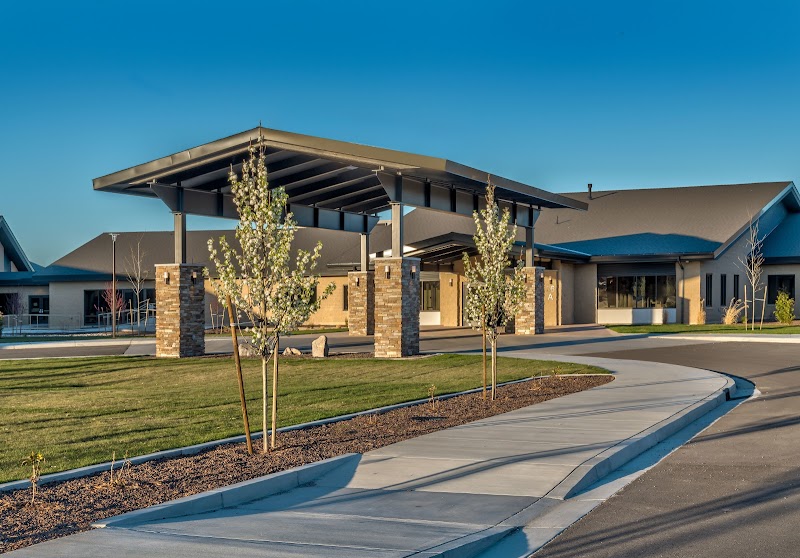
How is Northern Nevada State Veterans Home Staffed?

CMS rates NORTHERN NEVADA STATE VETERANS HOME's staffing level at 4 out of 5 stars, which is above average compared to other nursing homes. Staff turnover is 78%, which is 32 percentage points above the Nevada average of 46%. High turnover can affect care consistency as new staff learn residents' individual needs. RN turnover specifically is 72%, which is notably high. RNs provide skilled clinical oversight, so turnover in this role can affect medical care quality.

What Have Inspectors Found at Northern Nevada State Veterans Home?

State health inspectors documented 57 deficiencies at NORTHERN NEVADA STATE VETERANS HOME during 2023 to 2025. These included: 1 that caused actual resident harm, 54 with potential for harm, and 2 minor or isolated issues. Deficiencies causing actual harm indicate documented cases where residents experienced negative health consequences.

Who Owns and Operates Northern Nevada State Veterans Home?

NORTHERN NEVADA STATE VETERANS HOME is owned by a for-profit company. For-profit facilities operate as businesses with obligations to shareholders or private owners. The facility is operated by HEALTH DIMENSIONS GROUP, a chain that manages multiple nursing homes. With 96 certified beds and approximately 94 residents (about 98% occupancy), it is a smaller facility located in SPARKS, Nevada.

How Does Northern Nevada State Veterans Home Compare to Other Nevada Nursing Homes?

Compared to the 100 nursing homes in Nevada, NORTHERN NEVADA STATE VETERANS HOME's overall rating (2 stars) is below the state average of 3.0, staff turnover (78%) is significantly higher than the state average of 46%, and health inspection rating (2 stars) is below the national benchmark.

What Should Families Ask When Visiting Northern Nevada State Veterans Home?

Based on this facility's data, families visiting should ask: "How do you ensure continuity of care given staff turnover, and what is your staff retention strategy?" "Can I visit during a mealtime to observe dining assistance and food quality?" "How do you handle medical emergencies, and what is your hospital transfer rate?" "Can I speak with family members of current residents about their experience?" These questions are particularly relevant given the facility's high staff turnover rate.

Is Northern Nevada State Veterans Home Safe?

Based on CMS inspection data, NORTHERN NEVADA STATE VETERANS HOME has a clean safety record: no substantiated abuse findings (meaning no confirmed cases of resident harm), no Immediate Jeopardy citations (the most serious violation level indicating risk of serious injury or death), and is not on the Special Focus Facility watch list (a federal program monitoring the lowest-performing 1% of nursing homes). The facility has a 2-star overall rating and ranks #100 of 100 nursing homes in Nevada. While no facility is perfect, families should still ask about staff-to-resident ratios and recent inspection results during their visit.

Do Nurses at Northern Nevada State Veterans Home Stick Around?

Staff turnover at NORTHERN NEVADA STATE VETERANS HOME is high. At 78%, the facility is 32 percentage points above the Nevada average of 46%. Registered Nurse turnover is particularly concerning at 72%. RNs handle complex medical decisions and coordinate care — frequent RN changes can directly impact care quality. High turnover means new staff may not know residents' individual needs, medications, or preferences. It can also be disorienting for residents, especially those with dementia who rely on familiar faces. Families should ask: What is causing the turnover? What retention programs are in place? How do you ensure care continuity during staff transitions?

Was Northern Nevada State Veterans Home Ever Fined?

NORTHERN NEVADA STATE VETERANS HOME has no federal fines on record. CMS issues fines when nursing homes fail to meet care standards or don't correct problems found during inspections. The absence of fines suggests the facility has either maintained compliance or corrected any issues before penalties were assessed. This is a positive indicator, though families should still review recent inspection reports for the full picture.

Is Northern Nevada State Veterans Home on Any Federal Watch List?

NORTHERN NEVADA STATE VETERANS HOME is not on any federal watch list. The most significant is the Special Focus Facility (SFF) program, which identifies the bottom 1% of nursing homes nationally based on persistent, serious quality problems. Not being on this list means the facility has avoided the pattern of deficiencies that triggers enhanced federal oversight. This is a positive indicator, though families should still review the facility's inspection history directly.