SAINT VINCENT REHABILITATION & NURSING CENTER
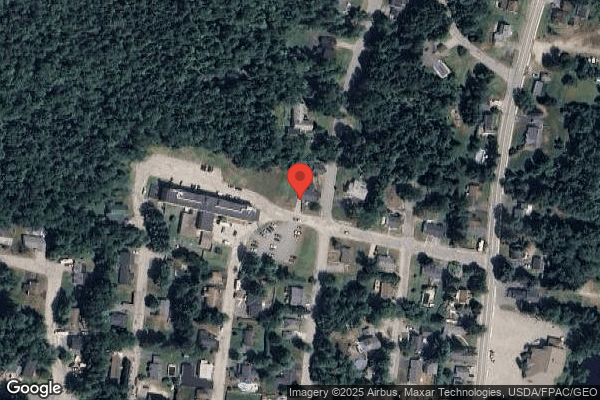

29 PROVIDENCE AVENUE, BERLIN, NH 03570 (603) 752-1820
Non profit - Church related 80 Beds CATHOLIC CHARITIES NEW HAMPSHIRE Data: November 2025
Trust Grade
35/100
#70 of 73 in NH
Last Inspection: June 2025

Inspected within the last 6 months. Data reflects current conditions.

Overview

Saint Vincent Rehabilitation & Nursing Center has received a Trust Grade of F, indicating poor performance with significant concerns. Ranked #70 out of 73 facilities in New Hampshire, this places it in the bottom half of nursing homes in the state, and it ranks last in Coos County where only one other option is available. The facility's performance has been stable over the last year, maintaining a concerning number of 24 issues reported. Staffing is rated average, with a turnover rate of 60%, which is higher than the state average. While the center has not incurred any fines, which is a positive aspect, it has faced serious deficiencies, including failing to ensure adequate RN coverage for several days and not properly tracking antibiotic use, raising potential safety and health risks for residents.

Trust Score
F
35/100
In New Hampshire
#70/73
Bottom 5%
Safety Record
Low Risk
No red flags
Inspections
Holding Steady
6 → 6 violations
Staff Stability
⚠ Watch
60% turnover. Above average. Higher turnover means staff may not know residents' routines.
Penalties
✓ Good
No fines on record. Clean compliance history, better than most New Hampshire facilities.
Skilled Nurses
○ Average
Each resident gets 35 minutes of Registered Nurse (RN) attention daily — about average for New Hampshire. RNs are the most trained staff who monitor for health changes.
Violations
⚠ Watch
24 deficiencies on record. Higher than average. Multiple issues found across inspections.
★☆☆☆☆
1.0
Overall Rating
★★★☆☆
3.0
Staff Levels
★★☆☆☆
2.0
Care Quality
★☆☆☆☆
1.0
Inspection Score
Stable
2024: 6 issues
2025: 6 issues

The Good

  • Full Sprinkler Coverage · Fire safety systems throughout facility
  • No fines on record

Facility shows strength in fire safety.

The Bad

1-Star Overall Rating

Below New Hampshire average (3.0)

Significant quality concerns identified by CMS

Staff Turnover: 60%

14pts above New Hampshire avg (46%)

Frequent staff changes - ask about care continuity

Chain: CATHOLIC CHARITIES NEW HAMPSHIRE

Part of a multi-facility chain

Ask about local staffing decisions and management

Staff turnover is elevated (60%)

12 points above New Hampshire average of 48%

The Ugly 24 deficiencies on record

Jun 2025 6 deficiencies
CONCERN (D)

Potential for Harm - no one hurt, but risky conditions existed

Deficiency F0605 (Tag F0605)

Could have caused harm · This affected 1 resident

Based on record review, and interview, it was determined that the facility failed to ensure that a resident receiving psychotropic medications received a gradual dose reduction (GDR) for 1 out of 5 re...

Read full inspector narrative →
Based on record review, and interview, it was determined that the facility failed to ensure that a resident receiving psychotropic medications received a gradual dose reduction (GDR) for 1 out of 5 residents reviewed for unnecessary medications in a final sample of 16 residents. (Resident identifier is #2.) Findings include: Review on 6/18/25 of Resident #2's physician orders revealed an order for Sertraline (antidepressant) 50 milligrams (mg) daily for Depression, dated 9/14/23, and an order for Seroquel (antipsychotic) 25 mg daily at bedtime for delusions, dated 9/14/23. Review on 6/18/25 of Resident #2's medical record revealed no attempts to perform a GDR or documentation of clinical necessity of either Sertraline or Seroquel. Interview on 6/19/25 at approximately 2:00 p.m. with Staff E (Corporate Nurse) confirmed there was no documentation of a GDR attempt or of a contraindication for a GDR to be attempted. Review on 6/19/25 of facility policy titled Utilization and Documentation of Psychotropic Medications revised 7/20/17 revealed .Residents who use psychotropic medications receive gradual dose reductions .unless clinically contraindicated, in an effort to discontinue these drugs .
CONCERN (D)

Potential for Harm - no one hurt, but risky conditions existed

Pressure Ulcer Prevention (Tag F0686)

Could have caused harm · This affected 1 resident

Based on interview and record review, it was determined that the facility failed to ensure that a resident with a pressure ulcer had necessary treatment and services, which included documentation of w...

Read full inspector narrative →
Based on interview and record review, it was determined that the facility failed to ensure that a resident with a pressure ulcer had necessary treatment and services, which included documentation of weekly assessments that contained measurements and descriptions of the pressure ulcer for 1 out of 3 residents reviewed for pressure ulcers (Resident Identifier is #29). Findings include: Review on 6/19/25 of Resident #29's progress note, dated 3/15/25, revealed that Resident has two wounds to bilateral heels. Right inner heel is black/blue and reddened area . No measurements or wound stage were indicated. Further review of Resident #29's medical record revealed nurse's notes with descriptions and measurements of Resident #29's wounds on the following dates: 3/17/25, 4/2/25 (two weeks from prior assessment), 5/16/25 (6 weeks from previous assessment and is from wound clinic note), 5/23/25, and 6/4/25 (2 weeks from prior assessment and wound clinic note). Review on 6/19/25 of wound clinic note, dated 6/4/25, revealed Resident #29 had Active problems Unstageable pressure ulcer R heel. Interview on 6/19/25 at approximately 10:50 a.m. with Staff B (Director of Nursing) confirmed that there were no weekly assessments to include descriptions and measurements of Resident #29's wounds. Interview on 6/19/25 at approximately 11:25 a.m. with Staff A (Unit Manager) revealed wounds are not monitored weekly. Review on 6/19/25 of facility policy titled Skin Care Guidelines revealed Documentation The Weekly Pressure Ulcer Flow Sheet . is completed immediately after skin rounds are conducted . The weekly Management Wound Report is also completed during rounds .
CONCERN (D)

Potential for Harm - no one hurt, but risky conditions existed

Respiratory Care (Tag F0695)

Could have caused harm · This affected 1 resident

Based on observation, interview, and record review, it was determined that the facility failed to obtain physician's orders for oxygen for 1 of 1 residents reviewed for respiratory care in a final sam...

Read full inspector narrative →
Based on observation, interview, and record review, it was determined that the facility failed to obtain physician's orders for oxygen for 1 of 1 residents reviewed for respiratory care in a final sample of 16 residents (Resident identifier is #54). Findings include: Observation on 6/17/25 at approximately 7:15 p.m. of Resident #54 revealed that Resident #54 was lying in bed using oxygen via nasal canula. Observation on 6/18/25 at approximately 2:45 p.m. of Resident #54 revealed he/she was in bed with the head of bed elevated and oxygen on at 1 liter via nasal canula. Observation on 6/19/25 at approximately 11:45 a.m. Resident #54 revealed he/she was in a wheelchair in the dining room with a portable oxygen tank via nasal canula. Review on 6/19/25 of Resident #54's clinical notes dated 6/14/25 revealed the following: Resident returned from hospital in wheelchair .Resident was admitted for acute bronchitis, UTI [urinary tract infection], early pneumonia and reactive airway disease . Resident is on 1L [liter] on NC [nasal canula] .Resident is currently sleeping nasal canula in place at 1 liter at 95%. Orders will be initiated, MD [medical doctor] will be notified. Review on 6/19/25 of Resident #54's physician orders revealed that there was no orders for oxygen. Interview on 6/19/25 at approximately 12:00 p.m. with Staff A (Unit Manager) confirmed Resident #54 was receiving continuous oxygen and there were no physician orders in place for oxygen.
CONCERN (D)

Potential for Harm - no one hurt, but risky conditions existed

Infection Control (Tag F0880)

Could have caused harm · This affected 1 resident

**NOTE- TERMS IN BRACKETS HAVE BEEN EDITED TO PROTECT CONFIDENTIALITY** Based on observation, interview, and record review, it was determined that the facility failed to implement policies and procedu...

Read full inspector narrative →
**NOTE- TERMS IN BRACKETS HAVE BEEN EDITED TO PROTECT CONFIDENTIALITY** Based on observation, interview, and record review, it was determined that the facility failed to implement policies and procedures for Transmission Based Precautions (TBP) to prevent the potential spread of infection for 1 of 1 residents reviewed for TBP in a final sample of 16 residents. (Resident identifier is #44.) Findings include: Observation on 6/18/25 between 8:46 a.m. and 8:52 a.m. of Resident #44's room revealed a sign on the door of the room stating Enteric Contact Isolation . Prior to entering the room*: Clean Hands, Gown, Gloves, Clean Hands With Soap + [and] Water on Exit. Further observation revealed Staff F (Laundry) standing inside of Resident #44's room at the doorway holding empty hangers. Staff F exited Resident #44's room without washing his/her hands with soap and water and proceeded to push the laundry rack down the hallway and enter the residents room. Interview on 6/18/25 at 8:50 a.m. with Staff F confirmed the above findings. Staff F was not aware that Resident #44 was on contact precautions. Interview on 6/18/25 at 8:53 a.m. with Staff G (Licensed Nursing Assistant) revealed that Staff G thought that Resident #44's contact precautions were removed. Interview on 6/18/25 at 9:09 a.m. with Staff H (Registered Nurse) revealed that Resident #44 was on contact precautions for Clostridioides difficile (C. diff). Interview on 6/19/25 at 8:20 a.m. with Staff B (Director of Nursing) and Staff C (Infection Preventionist) confirmed that Resident #44 finished his/her treatment regime for C. diff but remained on contact precautions. Staff C stated Resident #44 was still having loose and/or watery bowel movements and it was hard to contain. Further interview revealed that all staff should wear a gown along with gloves prior to entering a room with contact precautions and wash their hands prior to entering and exiting the room. Review on 1/17/25 of the facility policy, Isolation-Categories of Transmission-Based Precautions, Revision Date September 2022, revealed: .Contact Precautions .7. Staff and visitors wear gloves (clean, non-sterile) when entering the room [ROOM NUMBER]. Staff and visitors wear a disposable gown upon entering the room .
CONCERN (D)

Potential for Harm - no one hurt, but risky conditions existed

Deficiency F0887 (Tag F0887)

Could have caused harm · This affected 1 resident

Based on interview and record review, it was determined that the facility failed to ensure that residents were offered the COVID-19 vaccine or provided education regarding the benefits and risks and p...

Read full inspector narrative →
Based on interview and record review, it was determined that the facility failed to ensure that residents were offered the COVID-19 vaccine or provided education regarding the benefits and risks and potential side effects associated with the COVID-19 vaccine for 4 of 5 residents reviewed for immunizations (Resident Identifiers are #22, #29, #36, and #39). Findings include: Review on 6/19/25 of the current CDC immunization guidelines retrieved from https://www.cdc.gov/covid/vaccines/stay-up-to-date.html revealed People ages 65 years and older .are up to date when you have received: 2 doses of any 2024-2025 COVID-19 vaccine 6 months apart. Resident #22 Review on 6/19/25 of Resident #22's vaccination records revealed Resident #22, born in 1933, received the COVD-19 Bivalent Booster (Pfizer) on 10/17/24. There was no documentation of Resident #22 being offered or educated about the next dose recommendations. Resident #29 Review on 6/19/25 of Resident #29's vaccination records revealed Resident #29, born in 1932, received the COVID-19 Bivalent Booster (Pfizer) on 10/17/24. There was no documentation of Resident #29 being offered or educated about the next dose recommendations. Resident #36 Review on 6/19/25 of Resident #36's vaccination record revealed Resident #36, born in 1939, received the COVID-19 Bivalent Booster (Pfizer) on 10/17/24. There was no documentation of Resident #36 being offered or educated about the next dose recommendations. Resident #39 Review on 6/19/25 of Resident #39's vaccination record revealed Resident #39, born in 1931, received the COVID-19 Bivalent Booster (Pfizer) on 10/17/24. There was no documentation of Resident #39 being offered or educated about the next dose recommendations. Interview on 6/19/25 at approximately 9:30 a.m. with Staff C (Infection Preventionist) confirmed the above findings. Review on 6/19/25 of facility policy dated 3/1/2025 revealed . Eligibility: All residents are eligible for COVID-19 vaccination, as per CDC guidelines, unless contraindicated . Ongoing Updates: The facility will monitor CDC updates to adjust vaccination schedules accordingly .
MINOR (B)

Minor Issue - procedural, no safety impact

Deficiency F0582 (Tag F0582)

Minor procedural issue · This affected multiple residents

Based on interview and record review, it was determined that the facility failed to ensure that the resident and/or resident representative was informed, in writing, the items and services that the fa...

Read full inspector narrative →
Based on interview and record review, it was determined that the facility failed to ensure that the resident and/or resident representative was informed, in writing, the items and services that the facility offers and for which the resident may be charged, and the amount of charges for those services for 2 of 3 residents reviewed for Beneficiary Notices who remained in the facility (Resident identifiers are #44 and #45). Findings include: Resident #44 Review on 6/18/25 of the Beneficiary Notice - Resident discharged within the last 6 months form, completed by the facility, revealed Resident #44 was discharged from Medicare services and remained in the facility. Resident #44's last covered day was 5/15/25. Review on 6/18/25 of Resident #44's Skilled Nursing Facility Advance Beneficiary Notice of Non-Coverage (SNF ABN) dated 5/13/25 revealed that beginning on 5/15/25, Resident #44 will no longer require Physical Therapy, Occupational Therapy, Skilled Nursing Care, and will no longer be covered by Medicare. Further review revealed the SNF ABN did not contain the services that the facility offers and for which the resident may be charged, and the amount of charges for those services. Instead the SNF ABN stated No cost estimate available as the per day/item or service. Resident #45 Review on 6/18/25 of the Beneficiary Notice - Resident discharged within the last 6 months form, completed by the facility, revealed Resident #45 was discharged from Medicare services and remained in the facility. Resident #45's last covered day was 3/24/25. Review on 6/18/25 of Resident #45's SNF ABN dated 3/21/25 revealed that beginning on 3/25/25, Resident #45 will no longer require Physical Therapy, Occupational Therapy, Skilled Nursing Care, and will no longer be covered by Medicare. Further review revealed the SNF ABN did not contain the services that the facility offers and for which the resident may be charged, and the amount of charges for those services. Instead the SNF ABN stated No cost estimate available as the per day/item or service. Interview on 6/18/25 at approximately 1:10 p.m. with Staff D (Social Services) confirmed the above findings and that Staff D stated it was his/her practice to write No cost estimate available instead of the estimated cost. Review on 6/18/25 of Form Instructions Skilled Nursing Facility Advanced Beneficiary Notice of Non-Coverage (SNF ABN) Form CMS-10055 (2024) section D. Estimated Cost Section revealed .The SNF should enter an estimated total cost .SNFs must make a good faith effort to insert a reasonable cost estimate for the care .If for some reason the SNF is unable to provide a good faith estimate of projected costs of care at the time of the SNF ABN delivery, the SNF should indicate in the cost estimate area that no cost estimate is available, This should not be a routine or frequent practice .
May 2024 6 deficiencies
CONCERN (D)

Potential for Harm - no one hurt, but risky conditions existed

Deficiency F0679 (Tag F0679)

Could have caused harm · This affected 1 resident

**NOTE- TERMS IN BRACKETS HAVE BEEN EDITED TO PROTECT CONFIDENTIALITY** Based on observation, interview, and record review, it was determined that the facility failed to provide activities designed to...

Read full inspector narrative →
**NOTE- TERMS IN BRACKETS HAVE BEEN EDITED TO PROTECT CONFIDENTIALITY** Based on observation, interview, and record review, it was determined that the facility failed to provide activities designed to meet the interests of and support the physical, mental, and psychosocial well-being of each resident for 3 of 3 residents reviewed for activities (Resident Identifiers are #45, #55, and #63). Findings include: Observation on 5/5/24 at approximately 2:00 p.m. of the Second Floor Unit revealed Resident #45 sitting in his/her wheelchair in the hall with eyes closed. Further observation of the second floor unit revealed that there were no activities in place on the unit. Review on 5/5/24 of the Second Floor Unit posted activity calendar for 5/5/24 revealed that the afternoon activity scheduled was a lemonade cart at 2:00 p.m. Observation on 5/6/24 at approximately 10:00 a.m. of the Second Floor Unit revealed Resident #45 with approximately five other residents sitting in their wheelchairs in the hall at the nurse's desk. Further observation revealed no activities occurring on the unit. Observation on 5/6/24 at approximately 12:00 p.m. of Second Floor Unit revealed Resident #45 pointing at Resident #26 and verbalizing their discontent with them as Resident #26 continued to self propel in their wheelchair through the halls, crying and verbally escalating. Further observation revealed no diversional activities on the unit in place. Observation on 5/7/24 at approximately 10:10 a.m. of the Second Floor Unit revealed Resident #45 to be sitting slumped in his/her wheelchair in the hall asleep. Interview on 5/7/24 at approximately 10:10 a.m. with Staff E (Licensed Nursing Assistant (LNA)) revealed that an activity occurs one day every other week on the Second Floor Unit and other than that the residents need to be brought to other floors to attend activities. Staff E stated that Resident #45 used to be very involved and active in activities, but due to some behaviors, they stopped bringing him/her off the unit for activities and he/she only attends ones on the unit now. Review on 5/7/24 of the activities calendar for 5/7/24 revealed the activities scheduled were hairdresser visits, 10:00 a.m. resident council, and 2:00 p.m. bean bag toss in the dining room. Review on 5/7/24 of Resident #45's medical record revealed a diagnosis of vascular dementia. Review on 5/7/24 of Resident #45's activities participation documentation for April 2024 and May 2024 revealed the following was documented as attended: 4/1/24-Mass; 4/8/24-Mass; 4/9/24 music entertainment; 415/24 Mass; 4/21/24 Mass; 4/22/24 Mass; 4/30/24-Gardening. Further review of Resident #45's activities participation documentation for April 2024 and May 2024 revealed that there were no activities documented as attended for May 2024. Interview on 5/7/24 at approximately 11:00 a.m. with Staff F (Activities Director) confirmed that Resident #45 had 7 activities documented as attended for the month of April 2024 and no documented activity attendance thus far in May 2024. Resident #55 Interview on 5/5/24 at 2:30 p.m. with Resident #55's Representative revealed that he/she was concerned that the activities in the facility were not engaging for Resident #55. [Pronoun omitted] stated that Resident #55 has dementia and was unable to participate in a lot of the activities scheduled. Interview further revealed that Resident #55 loved music. The family had purchased an iPad and headphones for Resident #55 to listen to music but Resident #55 was unable to turn it on themselves due to their cognitive impairment. Observation on 5/6/24 at 9:00 a.m. revealed Resident #55 was sitting in wheelchair with his/her eyes closed. Further observation revealed headphones lying on Resident #55's dresser. Observation on 5/6/24 at 2:00 p.m. revealed Resident #55 was sitting in his/her wheelchair in his/her room. Further observation revealed the TV was on but Resident #55 was not facing the TV. Review on 5/7/24 of Resident #55's Care Plan last revised 9/11/23 revealed that Resident #55 enjoyed activities such as animals, arts and crafts, TV, music, reading, talking on the phone, doing group activities, games, cards, and going outside. Review on 5/7/24 of Resident #55's activities participation documentation for April 2024 and May 2024 revealed that Resident #55 attended Mass 3 times and music 2 times in April. Further review revealed no documentation of activity participation for May. Interview on 5/7/24 at approximately 11:00 a.m. with Staff F confirmed the above. Staff F stated that Resident #55 attends activities when his/her spouse brings him/her. Resident #63 Observation on 5/5/24 at 2:15 p.m. on the third Floor revealed that Resident #63 was sitting in the hallway in a wheelchair against the wall in front of the nursing station. Further observation revealed that Resident #63 said, I am bored, I want to go to bed. Interview on 5/5/24 at 2:20 p.m. with Staff K (Registered Nurse) revealed that Resident #63 has aggressive behaviors with staff and gets easily agitated when he/she is bored. Observation on 5/5/24 at 3:00 p.m. of Resident #63 revealed that Resident #63 was in bed with his/her eyes closed. Observation on 5/6/24 at 2:30 p.m. of Resident #63 revealed that Resident #63 was in the hallway in a wheelchair. Resident #63 was yelling at a staff member. Further observation revealed a staff member wheeled Resident #63 into his/her room. Observation on 5/6/24 at 2:45 p.m. of Resident #63 revealed that Resident #63 was in his/her room in a wheelchair facing the bed, no television or music was on. Resident #63 was trying to get out of his/her wheelchair. Review on 5/7/24 of Resident #63's medical record revealed that Resident #63 was admitted to the facility in 2/2024 with a diagnosis of Alzheimer's disease and Dementia with agitation. Review on 5/7/24 of Resident #63's Leisure Interest assessment dated [DATE] revealed that Resident #63 liked animals, TV, fishing, playing chess and sudoku, the outdoors and liked his/her independence and going to religious services or practices. Review of the Activity Calendars for March, April and May 2024 revealed that Mass was offered every Monday. Review on 5/7/24 of Resident #63's activities participation documentation for April 2024 and May 2024 revealed that there was no documentation that Resident #63 attended any activities in April or May. Interview on 5/7/24 at approximately 11:00 a.m. with Staff F confirmed the above findings. Staff F stated that Resident #63 had behaviors and did not attend group activities. Staff F could not provide an individualized activity program for Resident #63.
CONCERN (D)

Potential for Harm - no one hurt, but risky conditions existed

Deficiency F0883 (Tag F0883)

Could have caused harm · This affected 1 resident

**NOTE- TERMS IN BRACKETS HAVE BEEN EDITED TO PROTECT CONFIDENTIALITY** Based on interview and record review, it was determined that the facility failed to ensure residents were offered and/or provide...

Read full inspector narrative →
**NOTE- TERMS IN BRACKETS HAVE BEEN EDITED TO PROTECT CONFIDENTIALITY** Based on interview and record review, it was determined that the facility failed to ensure residents were offered and/or provided education on the risks and benefits of the Pneumococcal or Influenza Vaccination for 2 of 5 residents reviewed for vaccinations (Resident Identifiers are #29 and #59). Findings include: Resident #29 Review on 5/7/24 of Resident #29's medical record revealed that there was no record that the influenza vaccination had been offered for the 2023/2024 flu season. Interview on 5/7/24 at 3:10 p.m. with Staff G (Regional Clinical Director) confirmed the above finding. Review on 5/7/24 of the facility's policy titled, Immunizations: Influenza (Flu) Vaccination of Residents, Staff and Volunteers dated 2015, revealed: .II. Administration Procedure: A. Current and newly admitted residents, all staff, and volunteers will be offered the influenza vaccine from October of each year through the end of March the following year . Resident #59 Review on 5/7/24 of Resident #59's medical record revealed that Resident #59 was admitted to the facility in June 2023. Further review on 5/7/24 of Resident #59's medical record revealed that a consent was signed by Resident #59 upon admission to administer the pneumococcal vaccine. Further review revealed that there was no documentation that the pneumococcal vaccine had been given. Review on 5/7/24 of Resident #59's Quarterly Minimum Data Set (MDS) with an Assessment Reference Date (ARD) of 4/7/24 revealed under Section O Is the resident's Pneumococcal vaccination up to date was coded No. Interview on 5/7/24 at 3:00 p.m. with Staff A (Director of Nursing) confirmed the above findings. Staff A stated Resident #59 had not received the pneumococcal vaccine. Review on 5/7/24 of the facility's policy titled, Pneumococcal Vaccination of Residents revised 6/9/22, revealed: .III. Policy: a. All residents age [AGE] years or older will be offered appropriate pneumococcal vaccination, if applicable, based on their prior pneumococcal vaccine status and new 2022 CDC recommendations .VI. Administration Procedure: .c. Informed consent in the form of a discussion regarding the risks and benefits of vaccination will occur prior to vaccination . g. Vaccine will be administered according to standing order .
CONCERN (E)

Potential for Harm - no one hurt, but risky conditions existed

Deficiency F0727 (Tag F0727)

Could have caused harm · This affected multiple residents

Based on interview and record review, it was determined that the facility failed to ensure that a Registered Nurse (RN) was on duty for 8 consecutive hours a day, 7 days a week, for 7 of 92 days revie...

Read full inspector narrative →
Based on interview and record review, it was determined that the facility failed to ensure that a Registered Nurse (RN) was on duty for 8 consecutive hours a day, 7 days a week, for 7 of 92 days reviewed between October 1, 2023 and December 30, 2023. Findings include: Review on 5/5/24 of the facility's Payroll Based Journal Staffing Data Report for Quarter 1 2024 (October 1-December 1, 2023) revealed that there were no RN hours for the following days: 10/7/23, 10/21/23, 12/16/23, and 12/17/23. Review on 5/7/24 of the facility's daily nursing time sheets for October and December 2023 revealed the following: On 10/7/23 there were only 6 RN hours worked; On 10/8/23, 10/21/23, 10/22/23 there were no RN hours documented as worked; On 12/16/23 and 12/17/23 there were no RN hours documented as worked; On 12/31/23 there were 2 RN hours worked. Interview on 5/6/24 at 3:15 p.m. and on 5/7/24 at 1:58 p.m. with Staff J (Human Resources) confirmed the above findings.
CONCERN (E)

Potential for Harm - no one hurt, but risky conditions existed

Antibiotic Stewardship (Tag F0881)

Could have caused harm · This affected multiple residents

Interview on 5/7/24 at approximately 2:30 p.m. with Staff A (Director of Nursing) revealed that the facility could not provide documentation or evidence of regular reporting on antibiotic use and anti...

Read full inspector narrative →
Interview on 5/7/24 at approximately 2:30 p.m. with Staff A (Director of Nursing) revealed that the facility could not provide documentation or evidence of regular reporting on antibiotic use and antibiotic resistance to relevant staff such as prescribing clinicians and nursing staff. Based on interview and record review, it was determined that the facility failed to follow antibiotic use protocols related to the appropriate use of antibiotic monitoring, tracking, and reviewing antibiotic use for 6 of 12 months reviewed for antibiotic use. Findings include: Review on 5/6/24 of the facility's line listing for antibiotic use from May 2023 through April 2024 revealed that the facility did not track antibiotic use within the facility from December 2023 through April 2024. Interview on 5/7/24 at 2:00 p.m. with Staff A (Director of Nursing) confirmed the above findings. Interview further revealed that the facility did not have monthly antibiotic monitoring, tracking, or review documented from December to present, including documentation that antibiotics met criteria for use. Staff A confirmed that the facility had residents with infections and who were on antibiotics from December 2023 through April 2024. Review on 5/7/24 of the facility's policy titled, Antibiotic Stewardship, revised 2/11/22, revealed: .The Infection Preventionist, in conjunction with the Director of Nursing, will have primary oversight of the Antibiotic Stewardship Program. The Infection Preventionist has key expertise and data to inform strategies to improve antibiotic use. This includes: tracking of antibiotics, starts adherence to evidence-based published criteria, including utilizing the McGreers criteria during the evaluation and management of related infections, and reviewing antibiotic resistance patterns in the facility to understand which infections are caused by resistant organism .The Infection Preventionist is responsible for infection surveillance and MDRO [Multidrug Resistant Organism] tracking .
MINOR (B)

Minor Issue - procedural, no safety impact

Deficiency F0582 (Tag F0582)

Minor procedural issue · This affected multiple residents

Based on interview and record review, it was determined that the facility failed to ensure that the resident and/or resident representative was informed timely of the Skilled Nursing Facility (SNF) No...

Read full inspector narrative →
Based on interview and record review, it was determined that the facility failed to ensure that the resident and/or resident representative was informed timely of the Skilled Nursing Facility (SNF) Notice of Medicare Non-Coverage (NOMNC) or Advance Beneficiary Notice (ABN) for 2 out of 3 residents reviewed for beneficiary notices (Resident Identifiers are #5 and #65). Findings include: Resident #5 Review on 5/6/24 of the Beneficiary Notice - Residents discharged Within the Last Six Months form, completed by the facility, revealed that Resident #5 was discharged from Medicare Services on 2/28/24 and remained in the facility. Review on 5/6/24 of Resident #5's SNF Beneficiary Notification Review form, completed by the facility, revealed that Resident #5's last covered day of Medicare Part A Skilled Services was 2/27/24 and that the facility/provider initiated the discharge from Medicare Part A Services when benefit days were not exhausted. Review on 5/6/24 of Resident #5's SNF ABN revealed that it was signed by Resident #5 on 2/27/24. Review on 5/6/24 of Resident #5's NOMNC revealed that it was signed by Resident #5 on 2/27/24. Resident #65 Review on 5/6/25 of the Beneficiary Notice - Residents discharged Within the Last Six Months form, completed by the facility, revealed that Resident #65 was discharged from Medicare Services on 3/26/24 and discharged home. Review on 5/6/24 of Resident #65's SNF Beneficiary Notification Review form, completed by the facility, revealed that Resident #65's last covered day of Medicare Part A Skilled Services was 3/25/24 and that the facility/provider initiated the discharge from Medicare Part A Services when benefit days were not exhausted. Review on 5/6/24 of Resident #65's NOMNC revealed that it was signed by Resident #65 on 3/25/24. Interview on 5/6/24 at 2:58 p.m. with Staff H (Social Worker) confirmed the above findings for Resident #5 and Resident #65. Interview on 5/7/24 at 2:46 p.m. with Staff G (Regional Clinical Director) and Staff I (Director of Clinical Reimbursement) revealed the facility does not have a policy for issuing beneficiary notices. Review on 5/7/24 of Form Instructions for the Notice of Medicare Non-Coverage (NOMNC) CMS-10123 retrieved from https://www.cms.gov/medicare/medicare-general-information/bni/downloads/instructions-for-notice-of-medicare-non-coverage-nomnc.pdf revealed, . The NOMNC must be delivered at least two calendar days before Medicare covered services end or the second to last day of service if care is not being provided daily .
MINOR (B)

Minor Issue - procedural, no safety impact

Deficiency F0868 (Tag F0868)

Minor procedural issue · This affected multiple residents

Based on interview and record review, it was determined that the facility failed to ensure that the required committee members attended meetings at least quarterly for 2 of the 4 quarterly meetings re...

Read full inspector narrative →
Based on interview and record review, it was determined that the facility failed to ensure that the required committee members attended meetings at least quarterly for 2 of the 4 quarterly meetings reviewed. Findings include: Review on 5/7/24 of the Quality Assurance Performance Improvement (QAPI) meeting attendance sheets revealed the following required members were not in attendance: Quarter 2 - Medical Director and Infection Preventionist; and Quarter 3 - 1 other member of the facility's staff. Interview on 5/7/24 at approximately 2:30 p.m. with Staff A (Director of Nursing) confirmed the above findings.
Nov 2023 4 deficiencies
CONCERN (D) 📢 Someone Reported This

A family member, employee, or ombudsman was alarmed enough to file a formal complaint

Potential for Harm - no one hurt, but risky conditions existed

Infection Control (Tag F0880)

Could have caused harm · This affected 1 resident

Based on observation and interview, it was determined the facility failed to follow Centers for Disease Control and Prevention (CDC) guidelines for conducting COVID-19 testing for 1 of 1 unit observed...

Read full inspector narrative →
Based on observation and interview, it was determined the facility failed to follow Centers for Disease Control and Prevention (CDC) guidelines for conducting COVID-19 testing for 1 of 1 unit observed. Findings include: Third Floor Memory Care Unit Observation on 11/29/23 at approximately 11:15 a.m. on the Third Floor revealed Staff G (Memory Care Coordinator) and Staff H (Licensed Nursing Assistant (LNA)) in the process of completing COVID-19 testing on residents. Further observation revealed that Staff G and Staff H were not wearing N95 masks during the process of collecting the sample for COVID-19 testing. Both Staff G and Staff H were wearing a surgical masks. Interview on 11/29/23 at approximately 11:25 a.m. with Staff G confirmed the above observation. Staff G stated they were not aware that an N95 mask would be needed when collecting COVID-19 samples. Interview on 11/29/23 at approximately 11:45 a.m. with Staff F (Director of Nursing) revealed that they would expect that an N95 is to be worn when collecting COVID-19 samples. Staff F stated they had an ample supply of N95 masks for staff use. Review on 11/29/23 of the facility policy titled Point of Care Antigen Testing Policy & Procedure, established 10/28/20, revealed .IV. Procedure .Prior to obtaining sample: wash hands; and [NAME] [put on] PPE [Personal Protective Equipment]-Np5 [N95] respirator, surgical mask, gown, eye protection, gloves . Review on 11/29/23 of the CDC website titled Interim Guidelines for Collecting and Handling of Clinical Specimens for COVID-19 Testing, found at https://www.cdc.gov/coronavirus/2019-nCoV/lab/guidelines-clinical-specimens.html, updated 7/15/22, revealed .For healthcare providers collecting specimens or working within 6 feet of patients suspected to be infected with SARS-CoV-2, maintain proper infection control and use recommended personal protective equipment (PPE), which includes an N95 or higher-level respirator (or face mask if a respirator is not available), eye protection, gloves, and a gown .
CONCERN (E) 📢 Someone Reported This

A family member, employee, or ombudsman was alarmed enough to file a formal complaint

Potential for Harm - no one hurt, but risky conditions existed

Deficiency F0725 (Tag F0725)

Could have caused harm · This affected multiple residents

Based on interview and record review, it was determined that the facility failed to provide sufficient staffing numbers to meet the residents' needs for 12 out of 32 days reviewed. Findings include: ...

Read full inspector narrative →
Based on interview and record review, it was determined that the facility failed to provide sufficient staffing numbers to meet the residents' needs for 12 out of 32 days reviewed. Findings include: Interview on 10/27/23 at approximately 12:00 p.m. with Staff I (Anonymous) revealed: . normal staffing was one nurse to first floor no LNA [Licensed Nursing Assistant], second floor 1 nurse and 1 LNA and third floor 1 nurse and 1 to 1 and 1/2 LNAs on average. This means 3 nurses and 2 and 1/2 LNAs to care for 63 residents. This is not safe. Review on 11/29/23 of the facility Nursing Schedule from 10/28/23 through 11/28/23 revealed: 10/28/23 3:00 p.m. until 7:00 p.m. there were 2 nurses, 1 Medication Nursing Assistant (MNA) and 2 LNAs, from 7:00 p.m. until 11:00 p.m. there was no nurse in the facility and 1 MNA and from 11:00 p.m. to 7:00 a.m. there was no nurse, 2 MNAs and 1 LNA in the facility. Facility census was 63. 10/29/23 7:00 a.m. until 3:00 p.m. there was 1 nurse and 1 MNA and from 7:00 p.m. until 11:00 p.m. there was no nurse and 2 MNAs. Facility census was 63 residents. 11/5/23 3:00 p.m. until 7:00 p.m. there was 3 LNAs in the facility. Facility census was 63 residents. 11/6/23 7:00 a.m. until 3:00 p.m. there were 4 LNAs in the facility. Facility census was 63 residents. 11/7/23 3:00 a.m. until 7:00 a.m. there was 1 LNA in the facility. Facility census was 63 residents. 11/10/23 7:00 a.m. until 7:00 p.m. there was 1 nurse and 1 MNA in the facility. Facility census was 65 residents. 11/11/23 7:00 a.m. until 3:00 p.m. there was 1 nurse, 1 MNA and 4 LNAs in the facility. Facility census was 65 residents. 11/13/23 3:00 p.m. until 11:00 p.m. there was 1 nurse and 1 MNA in the facility. Facility census was 65 residents. 11/14/23 11:00 a.m. until 3:00 p.m. there was 1 nurse and 1 MNA in the facility. Facility census was 65 residents. 11/16/23 3:00 p.m. until 7:00 p.m. there was no nurse in the facility. Facility census was 65 residents. 11/25/23 7:00 a.m. until 3:00 p.m. there was 1 nurse in the facility. Facility census was 66 residents. 11/26/23 7:00 a.m. until 3:00 p.m. no nurse, 1 MNA, and 3 LNAs, 3:00 p.m. until 11:00 p.m. no nurse, 3:00 until 7:00 p.m. there was 1 MNA and from 7:00 p.m. until 11:00 p.m. there were 2 MNAs. Facility census was 65 residents. Interview on 11/29/23 at approximately 10:00 a.m. with Staff C (LNA) revealed, Staffing is horrible, last Sunday there was only 1 LNA on the entire third floor. Further interview revealed that when staffing is short meals are late being passed and the residents' care suffers. Sometimes there is only 1 nurse in the building for all 3 floors. Interview on 11/29/23 at approximately 10:45 a.m. with Resident #5, #6, and #7 revealed that sometimes it takes 20 minutes to get assistance when needed. All 3 residents confirmed that they feel the facility needs more staff. I time it and if it takes more than 20 minutes, I wheel myself to the hall and yell for someone, stated Resident #5. Interview on 11/29/23 at approximately 11:30 a.m. with Staff F (Director of Nursing) revealed that optimal staffing would be: 1st shift there would be 7 LNAs 2nd shift there would be 6 LNAs 3rd shift there would be 3 LNAs Interview on 11/29/23 at approximately 2:00 p.m. with Staff D (Administrator) and Staff F was unable to provide any evidence of additional staffing during the above noted time frames. Review on 11/29/23 of the facility assessment, updated on 10/31/23 revealed: . Staffing Plan 3.2. Staffing needs based on resident acuity and census . Licensed Nurses providing direct care 6-8 Nurse Aides 21-27 . Staffing plan 3.3 Primary assignments to establish continuity of care, primary scheduling of staff to each unit are used as much as possible. Group schedules are created based on acuity and reviewed periodically, determined by resident and unit needs. Staff assignments might be adjusted based on resident acuity and unit requirements.Every attempt will be made to provide adequate staffing, during times of inadequate staffing staff will rotate throughout the facility to assist each other.
CONCERN (E) 📢 Someone Reported This

A family member, employee, or ombudsman was alarmed enough to file a formal complaint

Potential for Harm - no one hurt, but risky conditions existed

Deficiency F0761 (Tag F0761)

Could have caused harm · This affected multiple residents

Resident #1 Observation on 11/29/23 at approximately 10:30 a.m. of the First Floor Medication Cart revealed the following: Resident #1's Levemir Flexpen opened and not labeled with an open date or ope...

Read full inspector narrative →
Resident #1 Observation on 11/29/23 at approximately 10:30 a.m. of the First Floor Medication Cart revealed the following: Resident #1's Levemir Flexpen opened and not labeled with an open date or open expiration date Resident #1's Victoza pen opened and not labeled with an open date or open expiration date. Interview on 11/29/23 at approximately 10:30 a.m. with Staff A (MNA) confirmed the above findings. Further interview revealed that Staff A administered both medications that morning to Resident #1. Review on 11/29/23 of Resident #1's November 2023 MAR revealed: Levemir FlexTouch Subcutaneous Solution [Insulin Detemir] Pen-injector 100 UNIT/ML [milliliter], Inject 12 units subcutaneously two times a day ., Start date 10/3/23. Victoza Subcutaneous Solution [Liraglutide] Pen-injector 18 MG [milligrams[/3 ML, Inject 1.2 mg subcutaneously one time a day, ., Start date 10/3/23. Review on 11/29/23 of the manufacturer's instructions of Levemir Flexpen, undated revealed: .Storage after use . Dispose after 42 days, even if there is insulin left in the pen or vial . Review on 11/29/23 of the manufacturer's instructions of Victoza pen, dated September 2022 revealed: . Use a Victoza pen for only 30 days; it should be thrown away after 30 days, even if some medication is left in the pen. Based on observation, interview, and policy review it was determined that the facility failed to ensure that medications were labeled and stored in accordance with the manufacturer's instructions for 2 of 4 medication carts observed (Resident identifiers are #1, #2, and #3). Findings include: Second Floor Observation on 11/29/23 at approximately 10:20 a.m. of the Second Floor [NAME] Wing medication cart with Staff B (Medication Nursing Assistant (MNA)) revealed the following: Resident #2's open Novolog insulin pen with a pharmacy sticker that read Discard 28 days after opening and a handwritten discard date of 10/11/23; Resident #2's other open Novolog insulin pen with no open or expiration date and a pharmacy sticker that read Discard 28 days after opening, and a pharmacy delivery date of 9/19/23; Resident #3's open Lantus insulin pen with a pharmacy sticker that read Discard 28 days after opening and a handwritten open expiration date of 11/24/23. Review of Resident #2's November 2023 Medication Administration Record (MAR) revealed they had received 4 units of Novolog insulin daily. Review of Resident #3's November 2023 MAR revealed they had received 25 units every morning and 15 units every evening of Lantus insulin. Interview on 11/29/23 at approximately 10:20 a.m. with Staff B confirmed the above findings. Review on 11/29/23 of the manufacturer's instructions for Novolog revealed . Keep at room temperature (below 86 ° [degrees] F [Fahrenheit]) or refrigerated for up to 28 days, keep away from direct heat and light, Dispose after 28 days, even if there is insulin left in the pen or vial . Review on 11/29/23 of the manufacturer's instructions for Lantus revealed .After 28 days, throw your opened Lantus pen away-even if it still has insulin in it . Review of the facility's policy titled Medication Storage, initiated January 2021 revealed .Medications and biologicals are stored properly, following manufacturer's or provider pharmacy recommendations, to maintain their integrity and to support safe effective drug administration .Insulin products should be stored in the refrigerator until opened. Note the date on the label for insulin vials and pens when first used. The opened insulin pens must be stored at room temperature .
MINOR (C) 📢 Someone Reported This

A family member, employee, or ombudsman was alarmed enough to file a formal complaint

Minor Issue - procedural, no safety impact

Staffing Information (Tag F0732)

Minor procedural issue · This affected most or all residents

Based on interview and record review, it was determined that the facility failed to ensure that the daily nurse staffing data was posted for 25 of the 30 days reviewed. Findings include: Review of the...

Read full inspector narrative →
Based on interview and record review, it was determined that the facility failed to ensure that the daily nurse staffing data was posted for 25 of the 30 days reviewed. Findings include: Review of the last 30 days of Daily In House Nursing Staff postings revealed that the facility had the following daily postings available, 11/19/23, 11/26/23, 11/27/23, 11/28/23, and 11/29/23. Interview on 11/29/23 at approximately 11:30 a.m. with Staff D (Administrator) confirmed the above findings and revealed that the there were no other daily postings done within the last 30 days.
Sept 2023 1 deficiency
CONCERN (E) 📢 Someone Reported This

A family member, employee, or ombudsman was alarmed enough to file a formal complaint

Potential for Harm - no one hurt, but risky conditions existed

Infection Control (Tag F0880)

Could have caused harm · This affected multiple residents

**NOTE- TERMS IN BRACKETS HAVE BEEN EDITED TO PROTECT CONFIDENTIALITY** Based on interview and record review, it was determined that the facility failed to follow the Center for Disease Control and Pr...

Read full inspector narrative →
**NOTE- TERMS IN BRACKETS HAVE BEEN EDITED TO PROTECT CONFIDENTIALITY** Based on interview and record review, it was determined that the facility failed to follow the Center for Disease Control and Prevention's (CDC) return to work guidelines for healthcare personnel (HCP) who were positive for COVID-19 and failed to implement a system for surveillance to monitor all staff who had worked and tested positive for COVID-19 for 8 of 10 healthcare personnel reviewed for COVID-19 infection. Findings Include: Review on 9/6/23 of the CDC's Interim Guidance for Managing Healthcare Personnel with SARS-CoV-2 [Severe acute respiratory syndrome coronavirus 2] Infection or Exposure to SARS-CoV-2, updated September 23, 2022, revealed, . Return to Work Criteria for HCP [Health Care Personnel] with SARS-CoV-2 Infection. HCP with mild to moderate illness who are not moderately to severely immunocompromised could return to work after the following criteria have been met: at least 7 days have passed since symptoms first appeared if a negative viral test* is obtained within 48 hours prior to returning to work (or 10 days if testing is not performed or if a positive test at day 5-7), and At least 24 hours have passed since last fever without the use of fever-reducing medications, and Symptoms (e.g. [for example], cough, shortness of breath) have improved.*Either a NAAT (molecular) or antigen test may be used. If using an antigen test, HCP should have a negative test obtained on day 5 and again 48 hours later HCP who were asymptomatic throughout their infection and are not moderately to severely immunocompromised could return to work after the following criteria have been met: at least 7 days have passed since the date of their first positive viral test if a negative viral test* is obtained within 48 hours prior to returning to work (or 10 days if testing is not performed or if a positive test at day 5-7). *Either a NAAT (molecular) or antigen test may be used. If using an antigen test, HCP should have a negative test obtained on day 5 and again 48 hours later . Review on 9/6/23 of the CDC's Strategies to Mitigate Healthcare Personnel Staffing Shortages, updated September 23, 2022 revealed, .Contingency Capacity Strategies to Mitigate Staffing Shortages . Allowing HCP with SARS-CoV-2 infection who are well enough and willing to work to return to work as follows: HCP with mild to moderate illness who are not moderately to severely immunocompromised: at least 5 days have passed since symptoms first appeared (day 0), and At least 24 hours have passed since last fever without the use of fever-reducing medications, and Symptoms (e.g., cough, shortness of breath) have improved. Healthcare facilities may choose to confirm resolution of infection with a negative nucleic acid amplification test (NAAT) or a series of 2 negative antigen tests taken 48 hours apart*. HCP who were asymptomatic throughout their infection and are not moderately to severely immunocompromised: at least 5 days have passed since the date of their first positive viral test (day 0). Healthcare facilities may choose to confirm resolution of infection with a negative NAAT (molecular) or a series of 2 negative antigen tests taken 48 hours apart*. * Some people may be beyond the period of expected infectiousness but remain NAAT positive for an extended period. Antigen tests typically have a more rapid turnaround time but are often less sensitive than NAAT. Antigen testing is preferred if testing asymptomatic HCP who have recovered from SARS-CoV-2 infection in the prior 90 days. Review on 9/6/23 of the CDC's Guidance for SARS-CoV-2 Rapid Testing Performed in Point-of-Care Settings retrieved on 9/8/23 from https://www.cdc.gov/coronavirus/2019-ncov/lab/point-of-care-testing.html revealed, . Specimen Collection & Handling of Rapid Tests in Point-of-Care Settings . Each point-of-care test has been authorized for use with certain specimen types and should only be used with those specimen types . After the Test . Read and record results only within the amount of time specified in the manufacturer's instructions . Staff F Review of Staff F (Licensed Nursing Assistant (LNA)) employee time card revealed that Staff F worked on 8/11/23, 8/12/23 and 8/13/23. Review on 9/6/23 of the facility's Staff Symptoms/Infections Surveillance Monitoring Log revealed that Staff F was not included on the line listing. Interview on 9/6/23 at 11:10 a.m. with Staff A (Director of Nursing) and Staff B (Infection Preventionist) confirmed the above and revealed that Staff F had tested positive at home for COVID-19 on or around 8/13/23. Staff B confirmed that Staff F was not on the COVID-19 line list. Staff D Review of Staff D's (Licensed Practical Nurse (LPN)) employee time card revealed that Staff D worked on 8/12/23. Review on 9/6/23 of the facility's Staff Symptoms/Infections Surveillance Monitoring Log revealed that Staff D was not included on the line listing. Interview on 9/6/23 at 12:00 p.m. with Staff B confirmed the above and they had been told that Staff D had tested positive for COVID-19 on or around 8/14/23, but did not have documentation of a positive test. Staff B confirmed that Staff D was not on the COVID-19 line list. Staff E Review on 9/6/23 of the facility's COVID-19 testing log revealed that on 8/25/23 Staff E (Maintenance) tested positive for COVID-19. Review on 9/6/23 of the facility's Staff Symptoms/Infections Surveillance Monitoring Log revealed that Staff E was not included on the line listing. Interview on 9/6/23 at 12:15 p.m. with Staff E confirmed that he/she had tested positive for COVID-19 on 8/25/23. Staff E stated he/she returned to work on 9/1/23 after testing negative at home on 9/1/23 and then testing negative at the facility on 9/1/23. Staff E stated that Staff C (Administrator) had tested him/her on 9/1/23. Interview on 9/6/23 at 1:25 p.m. with Staff C confirmed that he/she had tested Staff E for COVID-19 on 9/1/23, but did not document the test or the negative results. Interview on 9/6/23 at 2:40 p.m. with Staff B confirmed that Staff E was not on the COVID-19 line list and that there was no follow up testing documented. Staff G Review on 9/6/23 of the facility's Staff Symptoms/Infections Surveillance Monitoring Log revealed that Staff G (LPN) tested positive for COVID-19 with date of onset of 8/9/23. Documented symptoms include fever, dry cough, sore throat and headache. Review on 9/6/23 of Staff G's employee time card revealed that Staff G worked on 8/13/23. Review on 9/6/23 of the facility's COVID-19 testing logs revealed that there was no log of the above positive test and no additional testing for Staff G. Interview on 9/6/23 at 11:00 a.m. with Staff B confirmed the above. Staff H Review on 9/6/23 of the facility's Staff Symptoms/Infections Surveillance Monitoring Log revealed that Staff H (LNA) tested positive for COVID-19 with date of onset of 8/9/23. Documented symptoms include fever, chills, dry cough and sore throat. Review on 9/6/23 of Staff H's Employee Time Card revealed that Staff H worked 8/9/23 from 10:58 p.m. through 7:02 a.m. Further review revealed that on 8/10/23 Staff H worked from 10:51 p.m. until 11:01 p.m. and returned to work on 8/14/23 at 10:55 p.m. Review on 9/6/23 of the facility's COVID-19 testing logs revealed that there was no log of the above positive test and no additional follow-up tests. Interview on 9/6/23 at 2:00 p.m. with Staff B confirmed the above and revealed that Staff H tested positive for COVID-19 on 8/10/23 at the facility. Staff B confirmed that there was no documentation of the positive test. Staff I Review on 9/6/23 of the facility's Staff Symptoms/Infections Surveillance Monitoring Log revealed that Staff I (LNA) tested positive for COVID-19 with date of onset of 8/11/23. Documented symptoms include fever, sore throat and headache. Review on 9/6/23 of Staff I's Employee Time Card revealed that Staff I worked on 8/11/23 from 6:27 a.m. until 2:49 p.m. and returned to work on 8/16/23 at 6:53 a.m. until 11:05 p.m. Further review revealed that Staff I worked on 8/17/23 from 7:01 a.m. until 2:06 p.m. Review on 9/6/23 of the facility's testing logs revealed that Staff I tested negative for COVID-19 on 8/18/23. There was no other documentation of testing for Staff I, including the above positive from 8/11/23 or on 8/16/23 and 8/17/23. Interview on 9/6/23 at 2:05 p.m. with Staff B confirmed the above. Staff J Review on 9/6/23 of the facility's Staff Symptoms/Infections Surveillance Monitoring Log revealed that Staff J (LNA) tested positive for COVID-19 with date of onset of 8/11/23. Documented symptoms include fever, dry cough and sore throat. Review on 9/6/23 of Staff J's Employee Time Card revealed that Staff J had an excused absence on 8/11/23 and returned to work on 8/19/23 at 2:55 p.m. Review on 9/6/23 of the facility's testing logs revealed no COVID-19 testing for Staff J. Interview on 9/6/23 at 2:00 p.m. with Staff B confirmed the above and that there were no follow-up COVID-19 tests documented. Interview on 9/6/23 at 2:40 p.m. with Staff A confirmed that on 8/11/23 Staff A tested Staff J for COVID-19 due to having a cough and nasal congestion and received a positive test. Staff A confirmed that he/she did not document or log this test. Staff K Review on 9/6/23 of the facility's Staff Symptoms/Infections Surveillance Monitoring Log revealed that Staff K (LNA) tested positive for COVID-19 (unknown date of test) with date of onset of 8/11/23. Documented symptoms include dry cough, sore throat and headache. Review on 9/6/23 of Staff K's Employee Time Cards revealed that Staff K worked on 8/12/23 from 5:45 a.m. until 1:52 p.m. and then returned to work at 11:05 p.m. and worked until 7:01 a.m. Staff K next worked on 8/16/23 at 10:51 p.m. Review on 9/6/23 of the facility's testing logs revealed from 8/12/23 to 8/28/23 no COVID-19 testing was documented as being completed for Staff K. Interview on 9/6/23 at 3:40 p.m. with Staff K revealed that he/she could not recall when he/she had tested positive or if he/she had worked while COVID-19 positive. Staff K stated that he/she had symptoms including head and body aches. Staff K stated that he/she had taken antiviral medication due to being ill. Interview on 9/6/23 at 2:06 p.m. with Staff B revealed that he/she was notified by Staff K that he/she had tested positive for COVID-19 on 8/12/23. Staff B confirmed that Staff K worked the above times on 8/12/23. Staff B stated that Staff K tested negative on the 7th day of COVID-19, but confirmed that this was not documented on the testing log. Staff L Review on 9/6/23 of the facility's Staff Symptoms/Infections Surveillance Monitoring Log revealed that Staff L (LNA) had tested positive for COVID-19 with date of onset of 8/11/23. Documented symptoms included dry cough. Review on 9/6/23 of Staff L's Employee Time Cards revealed that Staff L worked 8/11/23 from 6:55 a.m. until 7:13 p.m.; on 8/12/23 from 6:53 a.m. until 7:13 p.m.; on 8/14/23 from 2:50 p.m. until 10:59 p.m.; on 8/17/23 from 6:57 a.m. until 2:06 p.m.; and 8/19/23 from 6:57 a.m. until 6:55 p.m. Review on 9/6/23 of the facility's testing logs revealed Staff L was tested on [DATE] for COVID-19 and tested negative. No other COVID-19 testing was documented. Interview on 9/6/23 at 2:06 p.m. with Staff B confirmed the above. Review on 9/6/23 of the facility's policy titled Updated COVID isolation and work restriction and testing guidance for employees post pandemic and end of public health emergency established 5/15/23 revealed, .If using an antigen test, a negative result should be confirmed by either a negative NAAT [Nucleic Acid Amplification Tests] test or a second negative antigen test taken 48 hours after the first negative test .Return to Work Criteria for HCP [Health Care Personnel] with SARS-CoV-2 Infection . HCP with mild to moderate illness who are not moderately to severely immunocompromised could return to work after the following criteria have been met: 1. At least 7 days have passed since the date of their first positive viral test if a negative viral test is obtained within 48 hours prior to returning to work * or 10 days if testing is not performed prior to returning to work .and symptoms have improved or resolved (cleared by Infection Preventionist/[Director of Nursing] .*either a NAAT or antigen test may be used. If using an antigen test, HCP should have a negative test obtained on day 5 and again 48 hours later . Review on 9/6/23 of the facility's Infection Prevention Surveillance Guidelines dated 2012 revealed, .Purpose: To conduct surveillance of resident and employee infections to guide prevention activities. Policy: The Infection Preventionist does surveillance of infections among residents and employees. I. The Infection Preventionist does surveillance of healthcare-associated infections by: A. Review of culture reports and other pertinent lab data . III. Surveillance documentation is maintained on the . C. Log of Employee Infections . VIII. Begin to Document . Institute a line list of all ill residents and staff. Update line list daily or as needed . Keep records of how events transpired, who was notified and when, what specimens were collected and their results . XIII. Communicate Findings . Document all information about the outbreak in a narrative summary, including a final line list of all ill residents and staff . all pertinent laboratory findings . Interview on 9/6/23 at 4:15 p.m. with Staff A confirmed that the above policies and procedures were the most current.
Aug 2023 2 deficiencies
CONCERN (D) 📢 Someone Reported This

A family member, employee, or ombudsman was alarmed enough to file a formal complaint

Potential for Harm - no one hurt, but risky conditions existed

Report Alleged Abuse (Tag F0609)

Could have caused harm · This affected 1 resident

Based on interview and record review, it was determined that the facility failed to report an allegation of abuse immediately, but no later than 24 hours, to the State Survey Agency (SSA) and the resu...

Read full inspector narrative →
Based on interview and record review, it was determined that the facility failed to report an allegation of abuse immediately, but no later than 24 hours, to the State Survey Agency (SSA) and the results of the investigation to the SSA within 5 working days of the incident for 1 of 3 residents reviewed for alleged abuse (Resident Identifier is #1). Findings include: Interview on 8/8/23 at approximately 9:30 a.m. with Staff C (Licensed Nursing Assistant) revealed that they witnessed Staff B (Licensed Practical Nurse) grab Resident #1's wrists and said Look into my eyes, this is not okay. Staff C stated that he/she could not recall the date when the incident happened. Staff C also stated that he/she reported to Staff A (Director of Nursing) immediately on the same day of the alleged abuse. Interview on 8/8/23 at approximately 1:00 p.m. with Staff A revealed that Staff C reported to him/her that Staff B grabbed Resident #1's face to have Resident #1 look in Staff B's direction. Staff A stated that the incident happened on the 7/16/23 day shift (7:00 a.m. to 3:00 p.m.). Interview with Staff A further revealed that this allegation was not reported to the SSA. Review on 8/8/23 of the facility policy titled, Abuse Prevention and Reporting, revised date of 10/24/22, revealed .All alleged violations involving abuse, neglect or mistreatment, including injuries of unknown source and misappropriation of resident property, will be reported immediately after the incident is discovered or observed by the employee to the employee's supervisor on duty. The supervisor on duty has the responsibility to report same [sic] immediately to the facility Administrator (or designee). The facility will investigate and report all allegations of abusive conduct to the state agency .Initial Report The administrator or designee will report alleged violations involving abuse, neglect or mistreatment, including injuries of unknown source and misappropriation of resident property, and exploitation to .The State Agency through the Ombudsman's Office reporting system immediately .Note: Immediate notification .means as soon as possible .or 24 hours after the incident of there is no bodily injury .Final Report The completed results of all investigations will be reported by the Administrator (or designee) as soon as possible but no later than five working days of [sic] the incident to State Officials. Note: working days include Saturday, Sunday and Holidays .Reporting/Response: The center will report all alleged instances of abuse to appropriate state agencies. a. The facility will report all alleged instances of abuse to the Administrator/Director of Nursing, to the State of New Hampshire Ombudsman's Office and to all other agencies as required .
CONCERN (D) 📢 Someone Reported This

A family member, employee, or ombudsman was alarmed enough to file a formal complaint

Potential for Harm - no one hurt, but risky conditions existed

Investigate Abuse (Tag F0610)

Could have caused harm · This affected 1 resident

Based on interview and record review, it was determined that the facility failed to prevent further potential abuse by allowing a staff member to continue to work with residents after an allegation of...

Read full inspector narrative →
Based on interview and record review, it was determined that the facility failed to prevent further potential abuse by allowing a staff member to continue to work with residents after an allegation of abuse was reported to the designated representative for 1 of 3 residents reviewed for alleged abuse (Staff Identifier is Staff B and Resident Identifier is #1). Findings include: Interview on 8/8/23 at approximately 9:30 a.m. with Staff C (Licensed Nursing Assistant) revealed that Staff C witnessed Staff B (Licensed Practical Nurse) grab Resident #1's wrists and said Look into my eyes, this is not okay. Staff C could not recall the date of the incident. Staff C stated that he/she reported to Staff A (Director of Nursing) immediately on the same day of the incident. Interview on 8/8/23 at approximately 11:00 a.m. with Staff A revealed that Staff C reported to him/her that Staff B grabbed Resident #1's face to have Resident #1 look in Staff B's direction. Review on 8/8/23 of Staff A's email to the contracted staffing agency, dated 7/17/23, revealed .On 7/16 Same resident [Resident #1] was again agitated, When I came into assist I was informed by staff that [Staff B name omitted] elevated [pronoun omitted] voice at a resident [Resident #1] and reached for [pronoun omitted] face to have [pronoun omitted] look in [pronoun omitted] direction . Review on 8/8/23 of Staff B's timesheet, dated 7/21/23, revealed that Staff B worked on 7/16/23 from 6:30 a.m. to 7:00 p.m. and on 7/17/23 from 6:30 a.m. to 2:45 p.m. Interview on 8/8/23 at approximately 12:00 p.m. with Staff B revealed that he/she worked his/her 12-hour shift on Sunday (7/16/23) and also worked Monday (7/17/23) and left at approximately 3:00 p.m. Interview on 8/9/23 at approximately 1:00 p.m. with Staff A confirmed the above findings regarding the email to the contracted staffing agency and Staff B's time sheet. Staff A stated that he/she could not recall the exact date of the incident and to refer to the email, as mentioned above, for the date of the incident. Staff A also referred to Staff B's time sheet for when Staff B was suspended. Interview with Staff A further revealed that on 7/17/23 at 2:45 p.m. Staff B was suspended. Review on 8/8/23 Review on 8/8/23 of the facility policy titled, Abuse Prevention and Reporting, revised date of 10/24/22, revealed Protection Residents will be protected from the alleged abuser or abusive situation during an investigation. a. The facility will respond immediately to protect the alleged victim and integrity of the investigation .If an employee, the alleged abuser will be suspended until the investigation is complete .
Jun 2023 5 deficiencies
CONCERN (D)

Potential for Harm - no one hurt, but risky conditions existed

Deficiency F0761 (Tag F0761)

Could have caused harm · This affected 1 resident

Based on observation, interview, and review of the facility's policy and procedure it was determined that the facility failed to ensure expired medications were removed on 1 of 3 medication carts and ...

Read full inspector narrative →
Based on observation, interview, and review of the facility's policy and procedure it was determined that the facility failed to ensure expired medications were removed on 1 of 3 medication carts and 1 of 2 medication storage rooms observed (Resident Identifier is #53). Findings include: Second Floor Medication Room Observation on 6/12/23 at approximately 8:55 a.m. revealed the following: Emergency Kit with an expiration date of 5/31/23. Interview on 6/12/23 at approximately 8:56 a.m. with Staff B (Licensed Nurse Assistant) confirmed the above finding. Second Floor Medication Cart Observation on 6/12/23 at approximately 8:57 a.m. revealed Resident # 53's Latonprost 0.005 percent Opthalmic Solution 2.5 milliliters (ml) with an expiration date of 1/23. Interview on 6/12/23 at approximately 8:58 a.m. with Staff B confirmed Resident #53 was prescribed the above medications and confirmed the above finding. Review on 6/13/23 of Resident's #53s June Medication Administration Record (MAR) revealed that the resident had received the Latonprost from June 1-11, 2023. Review on 5/15/23 of the facility policy titled, Storage of Medication Dated 2007 PharMerica Corp revealed: Medications and biologicals are stored properly, following manufacturer's or provider pharmacy recommendations, to maintain their integrity and to support safe effective drug administration 14. Outdated, contaminated, discontinued or deteriorated medications .are immediately removed from stock, disposed of according to procedures for medication disposal.
CONCERN (D)

Potential for Harm - no one hurt, but risky conditions existed

Room Equipment (Tag F0908)

Could have caused harm · This affected 1 resident

Based on observation, interview, and record review it was determined that the facility failed to maintain patient equipment (oxygen filter) for the use of oxygen for 2 of 2 residents reviewed for resp...

Read full inspector narrative →
Based on observation, interview, and record review it was determined that the facility failed to maintain patient equipment (oxygen filter) for the use of oxygen for 2 of 2 residents reviewed for respiratory care in a final survey sample of 23 residents (Resident identifiers are #19 and #30). Findings include: Resident #19 Observation on 6/11/23 of Resident #19 at 11:44 a.m. revealed resident was sitting in a recliner with his/her nasal cannula in place. Further observation revealed resident's oxygen filters on both sides of the concentrator were covered in lint and dust. Interview on 6/11/23 with Resident #19 at 11:45 a.m. revealed that he/she used oxygen continuously. Observation on 6/12/23 of Resident #19 at 8:20 a.m. revealed resident was sitting in a recliner, eating breakfast with a nasal cannula in place. Further observation revealed resident's oxygen filters on both sides of the concentrator were covered in lint and dust. Interview on 6/12/23 with Staff H (Licensed Nursing Assistant (LNA)) at 8:15 a.m. confirmed Resident #19's oxygen filter was covered in lint and dust. Interview on 6/12/23 with Staff B (Licensed Practical Nurse) at 9:00 a.m. revealed that Staff B was unsure who is responsible for cleaning the filters on the oxygen condenser but they were changed once a month. Review on 6/12/23 of Resident #19's active physician's orders revealed an order To change oxygen tubing and clean filters weekly. Interview on 6/12/23 with Staff I (Unit Manager) at 1:15 p.m. confirmed that Resident #19's oxygen filters were not cleaned on the evening of 6/11/23. Resident #30 Observation on 6/11/23 of Resident #30 at 12:27 p.m. revealed resident was sitting in a recliner with his/her nasal cannula in place. Further observation revealed resident's oxygen filters on both sides of the concentrator were covered in lint and dust. Observation on 6/12/23 of Resident #30 at 8:30 a.m. revealed resident was sitting in a recliner, with his/her nasal cannula in place. Further observation revealed resident's oxygen filters on both sides of the concentrator were covered in lint and dust. Interview on 6/12/23 with Staff J (LNA) at 8:35 a.m. confirmed Resident #30's oxygen filters were covered in lint and dust. Interview on 6/12/23 with Staff B at 9:00 a.m. revealed that Staff B was unsure who is responsible for cleaning the filters on the oxygen condenser but they were changed once a month. Review on 6/12/23 of Resident #30's current physician orders revealed an order dated 11/22/21 that read: Oxygen (O2) at 2 L/min per nasal cannula 3 times daily. Interview on 6/12/23 with Staff I at 1:25 p.m. confirmed the above findings. Review on 6/12/23 of facility's policy titled Oxygen Tubing revised on 3/6/23, revealed .Please remember to clean filters weekly . Review on 6/12/23 of the manufacturer's instructions for the Invacare Perfecto2 V Oxygen Concentrator . 1. Remove the filter and clean as needed. Environmental conditions that may require more frequent inspection and cleaning of the filter include, but are not limited to: high dust, air pollutants, ect.
CONCERN (E)

Potential for Harm - no one hurt, but risky conditions existed

Deficiency F0727 (Tag F0727)

Could have caused harm · This affected multiple residents

Based on interview and record review it was determined that the facility failed to ensure that a Registered Nurse (RN) was on duty for 8 consecutive hours a day, 7 days a week, for 10 of 90 days revie...

Read full inspector narrative →
Based on interview and record review it was determined that the facility failed to ensure that a Registered Nurse (RN) was on duty for 8 consecutive hours a day, 7 days a week, for 10 of 90 days reviewed for Quarter 2 (January 1 - March 31, 2023). Findings include: Review on 6/11/23 of the facility's Payroll Based Journal Staffing Data Report for Quarter 2 (2023) revealed that there were no RN hours for the following days; 1/21/23, 1/22/23, 2/4/23, 2/5/23, 2/11/23, 2/12/23, 2/18/23, 2/19/23, 3/4/23 and 3/5/23. Review on 6/13/23 of the facility's daily staffing for January, February, and March 2023 revealed the following; On 1/21/23 and 1/22/23 there was no RN hours documented as worked; On 2/4/23 an RN worked for 5.5 consecutive hours; On 2/5/23 an RN worked for 7 consecutive hours; On 2/11/23, 2/12/23, 2/18/23 and 2/19/23 there were no RN hours documented as worked; and on 3/4/23 and 3/5/23 there were no RN hours documented as worked. The above 10 days fell on weekends. Interview on 6/13/23 at 1:40 p.m. with Staff C (Assistant Director of Nursing) confirmed the above findings.
CONCERN (E)

Potential for Harm - no one hurt, but risky conditions existed

Food Safety (Tag F0812)

Could have caused harm · This affected multiple residents

Based on observation, interview, and policy review it was determined that the facility failed to label, date, and store food in accordance to professional standards in the main kitchen and in 2 of 3 k...

Read full inspector narrative →
Based on observation, interview, and policy review it was determined that the facility failed to label, date, and store food in accordance to professional standards in the main kitchen and in 2 of 3 kitchenettes observed and failed to monitor the dishwasher temperature to ensure proper temperatures were achieved. Findings include: Review on 6/13/23 of the Food Code U.S. Public Health Service 2022 U.S. Department of Health and Human Services retrieved from https://www.fda.gov/food/FDA-food-code/food-code-2022 revealed the following: .Annex 3, Public Health Reasons/Administrative Guidelines . Chapter 3 Food .3-305.11 Food Storage .FOOD shall be protected from contamination by storing the FOOD: (1) In a clean, dry location; (2) Where it is not exposed to splash, dust, or other contamination .On-premises preparation .(D) A date marking system that meets the criteria stated in (A) and (B) of this section may include: (1) Using a method approved by the regulatory authority for refrigerated, ready-to-eat time/temperature control for safety food that is frequently rewrapped, such as lunchmeat or a roast, or for which date marking is impractical, such as soft serve mix or milk in a dispensing machine; (2) Marking the date or day of preparation, with a procedure to discard the food on or before the last date or day by which the food must be consumed on the premises, sold, or discarded .(3) Marking the date or day the original container is opened in a food establishment, with a procedure to discard the food on or before the last date or day by which the food must be consumed on the premises, sold, or discarded .; or (4) Using calendar dates, days of the week, color-coded marks, or other effective marking methods .4-501.15 Ware washing Machines, Manufacturers' Operating Instructions. To ensure properly cleaned and sanitized equipment and utensils, ware washing machines must be operated properly. The manufacturer affixes a data plate to the machine providing vital, detailed instructions about the proper operation of the machine including wash, rinse, and sanitizing cycle times and temperatures which must be achieved . Main Kitchen Observation on 6/11/23 at 10:15 a.m. with Staff E (Cook) of the Reach In refrigerator revealed the following: Fifteen (15) facility made cupcakes with no made or use by date; Twenty (20) pieces of facility made chocolate cake with no made or use by date; One (1) container of sour cream with a manufacturer's use by date of 6/2/23; Four (4) packages of sliced yellow cheese with no open or use by date; One (1) bottle of lemon juice with a manufacturer's use by date of 6/1/23; One (1) container of liquid eggs with no open date. Interview on 6/11/23 at 10:20 a.m. with Staff E confirmed the above findings and revealed that the liquid egg product should be used within 4 days of opening. Observation on 6/11/23 at 10:25 a.m. of the Walk In refrigerator revealed the following: One (1) pre-made ham and cheese sandwich with a preparation date of 6/3/23; A metal container of black olives with an open date of 5/1/23 and use by date 6/1/23; Two (2) pre-made egg salad sandwiches with no preparation or use by date; Three (3) pre-made chef salads with no made or use by date. Interview on 6/11/23 at 10:30 a.m. with Staff E confirmed the above findings. Staff E stated that pre-made foods are kept for four days. Observation on 6/11/23 at 10:35 a.m. of the refrigerator revealed a strong, foul odor. Further observation revealed seven (7) wilted heads of cabbage soft and wet to the touch with visible brown spots on the outside leaves. Interview on 6/11/23 at 10:37 a.m. with Staff E confirmed the foul smell and the condition of the cabbage. Review on 6/11/23 of the facility's dishwasher temperature logs from 6/1/23 to 6/10/23 revealed no dishwasher temperatures recorded for 6/2/23, 6/5/23 and 6/6/22. Interview on 6/11/23 at 10:45 a.m. with Staff E confirmed the above findings. Interview on 6/11/23 at 10:50 a.m. with Staff F (Kitchen Staff) revealed that he/she ran this morning's breakfast dishes through the dishwasher but he/she did not know what the temperature was for the wash or rinse cycle. Third Floor Kitchenette Observation on 6/11/23 at 10:55 a.m. of the refrigerator revealed the following: One (1) half opened chocolate pudding with a preparation date of 6/6/23 and no resident name; Two (2) Reign energy drinks with no received date or resident name; One (1) facility made cupcake with no preparation date or resident name; One (1) bottle of orange soda with no resident name or open date; Three (3) bottles of fruit punch with no resident name or open date. Interview on 6/11/23 at 11:00 a.m. with Staff D (Licensed Practical Nurse (LPN)) confirmed that the above food items were not labeled and dated. Staff D stated that the food and drinks were from the kitchen and Staff D was unsure if the energy drinks belonged to a residents or staff. Second Floor Kitchenette Observation on 6/11/23 at 11:15 a.m. of the refrigerator revealed the following: One (1) half of a pre-made seafood salad sandwich with no preparation date or name One (1) package of luncheon meat with a preparation date of 6/4/23 and no use by date; One (1) package of sliced yellow cheese with no preparation open or use by date; One (1) quart of half and half with no name, open date and a manufacturer expiration date of 6/5/23; A bottle of Drocate Soylent chocolate nondairy creamer with no received by date or name. One (1) bottle of apple juice with no open date; One (1) bottle of cranberry juice with no open date. Interview on 6/11/23 at 11:25 p.m. with Staff G (LPN) confirmed that the above food items were not labeled and dated. Staff G stated that food brought in by residents, residents' family, or anything that is leftover from a resident's meal that the resident may want to eat later should be labeled with the resident's name and dated. Review on 6/13/23 of the facility's policy titled, Dishwashing by Use of a Machine, revised 2/20/2013, revealed .10. Check the temperature dials during the dishwashing procedures to determine if wash and rinse temperatures are being maintained . Review on 6/13/23 of the facility's policy titled, Guidelines for Nourishment Refrigerators, revised 12/2016, revealed .1. All items must have a label identifying what the item is i.e.: applesauce, Jell-O, ect. 2. All items brought in for a resident must have a label on it indicating the resident's name, room number and date .Leftover/take out type items will be discarded three (3) days after the day it was placed in the refrigerator . 3. All opened items must have a discard date applied . 3. All opened items must have a discard on date applied. The discard date or expiration date is the last day an item is to be served. The following guidelines will serve as a guideline for discard dates . Review on 6/13/23 of the facility's policy titled, Food Labeling, effective 2/7/2017, revealed .Refrigerator items: 2. All opened and leftover items must have a visible label that identifies the item, the date it was prepared or opened on, and the use by date. This includes (but is not limited to) juice, salad dressing, leftovers, and portioned desserts . Review of 6/13/23 of facility's policy titled, Use and Storage of Food and Beverage Brought in for Residents, revised 1/11/18, 2. Follow proper sanitation and food handling practices . 3. Requirements for covered containers or secure wrapping . 4. Proper labeling and dating of each item . 5. Leftover food will be used within 3 days .
MINOR (C)

Minor Issue - procedural, no safety impact

Staffing Information (Tag F0732)

Minor procedural issue · This affected most or all residents

Based on observation, interview, and record review it was determined that the facility failed to update or post the daily nurse staffing data since 5/19/23. Findings include: Observation on 6/11/23 at...

Read full inspector narrative →
Based on observation, interview, and record review it was determined that the facility failed to update or post the daily nurse staffing data since 5/19/23. Findings include: Observation on 6/11/23 at 10:25 a.m. revealed that the daily nursing staffing data which was posted on the wall near the elevator and business office had a date of 5/19/23. Interview on 6/11/23 at 10:27 a.m. with Staff A (Director of Nursing) and Staff D (Licensed Practical Nurse) confirmed that the daily nurse staffing data posting was not updated or posted since 5/19/23. Review on 6/12/23 of the facility's policy titled Daily Posting of Nurse Staffing Information established 1/10/07, revealed, .It is the policy of this center to post on a daily basis for each shift the total number of hours worked by licensed [Registered Nurses, Licensed Practical Nurses, Licensed Medication Nursing Assistant, and Licensed Nursing Assistants] who are directly responsible for resident care . The Charge Nurse is responsible for updating the posting on his/her assigned shift. The [Director of Nursing] is ultimately responsible for ensuring that the posting occurs . On a daily basis, at the beginning of each shift, the charge nurse must post the following on the center's designated form . a. Facility name b. Current Date c. Resident Census d. Facility-specific shifts for the 24 hour period . e. Categories of nursing staff employed or contracted by the facility per shift . If a staff person leaves prior to the end of a scheduled shift for any reason, the schedule must be adjusted to reflect the actual hours worked . Nurse staffing data must be displayed in a clear and readable format and be posted in one prominent location, readily accessible to residents and visitors . The facility must maintain the posted Daily Staffing Forms for a minimum of 18 months .
Understanding Severity Codes (click to expand)
Life-Threatening (Immediate Jeopardy)
J - Isolated K - Pattern L - Widespread
Actual Harm
G - Isolated H - Pattern I - Widespread
Potential for Harm
D - Isolated E - Pattern F - Widespread
No Harm (Minor)
A - Isolated B - Pattern C - Widespread

Questions to Ask on Your Visit

  • "Why is there high staff turnover? How do you retain staff?"
  • "Can I speak with families of current residents?"
  • "What's your RN coverage like on weekends and overnight?"

Our Honest Assessment

Strengths
  • • No major safety red flags. No abuse findings, life-threatening violations, or SFF status.
  • • No fines on record. Clean compliance history, better than most New Hampshire facilities.
Concerns
  • • 24 deficiencies on record. Higher than average. Multiple issues found across inspections.
  • • Grade F (35/100). Below average facility with significant concerns.
  • • 60% turnover. Above average. Higher turnover means staff may not know residents' routines.
Bottom line: Trust Score of 35/100 indicates significant concerns. Thoroughly evaluate alternatives.

About This Facility

What is Saint Vincent Rehabilitation & Nursing Center's CMS Rating?

CMS assigns SAINT VINCENT REHABILITATION & NURSING CENTER an overall rating of 1 out of 5 stars, which is considered much below average nationally. Within New Hampshire, this rating places the facility higher than 0% of the state's 100 nursing homes. A rating at this level reflects concerns identified through health inspections, staffing assessments, or quality measures that families should carefully consider.
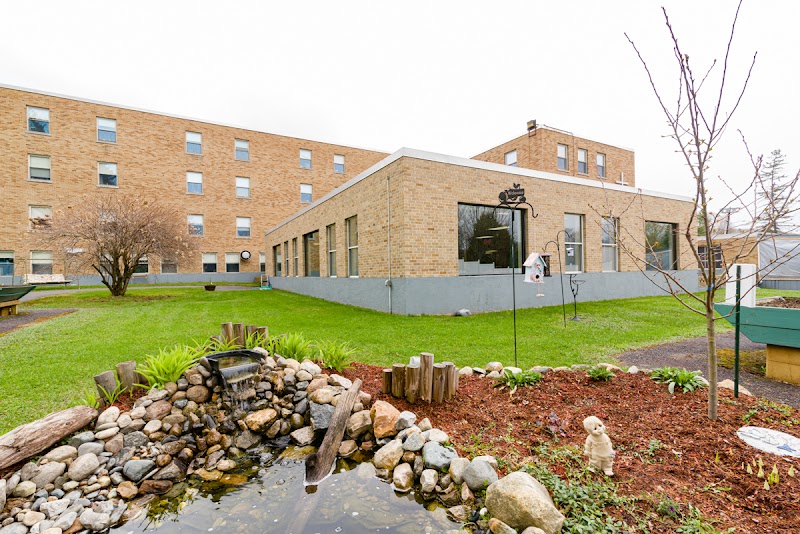
How is Saint Vincent Rehabilitation & Nursing Center Staffed?

CMS rates SAINT VINCENT REHABILITATION & NURSING CENTER's staffing level at 3 out of 5 stars, which is average compared to other nursing homes. Staff turnover is 60%, which is 14 percentage points above the New Hampshire average of 46%. High turnover can affect care consistency as new staff learn residents' individual needs.

What Have Inspectors Found at Saint Vincent Rehabilitation & Nursing Center?

State health inspectors documented 24 deficiencies at SAINT VINCENT REHABILITATION & NURSING CENTER during 2023 to 2025. These included: 19 with potential for harm and 5 minor or isolated issues.
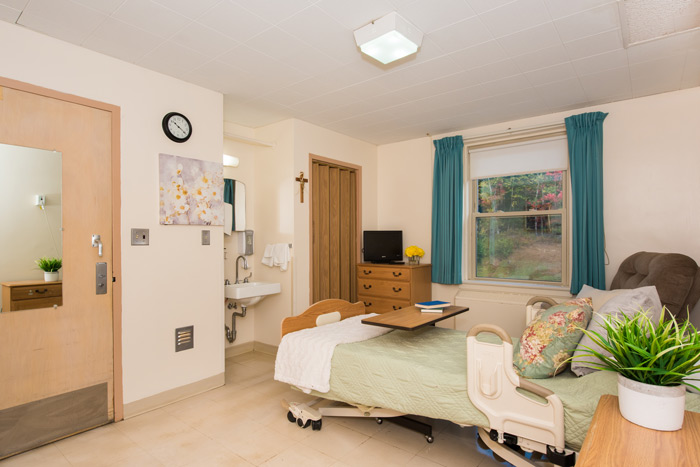
Who Owns and Operates Saint Vincent Rehabilitation & Nursing Center?

SAINT VINCENT REHABILITATION & NURSING CENTER is owned by a non-profit organization. Non-profit facilities reinvest revenue into operations rather than distributing to shareholders. The facility is operated by CATHOLIC CHARITIES NEW HAMPSHIRE, a chain that manages multiple nursing homes. With 80 certified beds and approximately 62 residents (about 78% occupancy), it is a smaller facility located in BERLIN, New Hampshire.
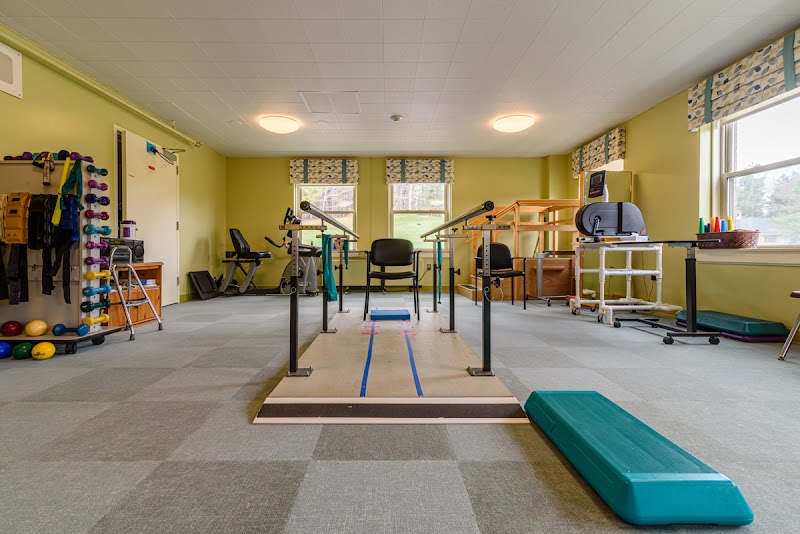
How Does Saint Vincent Rehabilitation & Nursing Center Compare to Other New Hampshire Nursing Homes?

Compared to the 100 nursing homes in New Hampshire, SAINT VINCENT REHABILITATION & NURSING CENTER's overall rating (1 stars) is below the state average of 3.0, staff turnover (60%) is significantly higher than the state average of 46%, and health inspection rating (1 stars) is much below the national benchmark.

What Should Families Ask When Visiting Saint Vincent Rehabilitation & Nursing Center?

Based on this facility's data, families visiting should ask: "How do you ensure continuity of care given staff turnover, and what is your staff retention strategy?" "Can I visit during a mealtime to observe dining assistance and food quality?" "How do you handle medical emergencies, and what is your hospital transfer rate?" "Can I speak with family members of current residents about their experience?" These questions are particularly relevant given the facility's high staff turnover rate.

Is Saint Vincent Rehabilitation & Nursing Center Safe?

Based on CMS inspection data, SAINT VINCENT REHABILITATION & NURSING CENTER has a clean safety record: no substantiated abuse findings (meaning no confirmed cases of resident harm), no Immediate Jeopardy citations (the most serious violation level indicating risk of serious injury or death), and is not on the Special Focus Facility watch list (a federal program monitoring the lowest-performing 1% of nursing homes). The facility has a 1-star overall rating and ranks #100 of 100 nursing homes in New Hampshire. While no facility is perfect, families should still ask about staff-to-resident ratios and recent inspection results during their visit.

Do Nurses at Saint Vincent Rehabilitation & Nursing Center Stick Around?

Staff turnover at SAINT VINCENT REHABILITATION & NURSING CENTER is high. At 60%, the facility is 14 percentage points above the New Hampshire average of 46%. High turnover means new staff may not know residents' individual needs, medications, or preferences. It can also be disorienting for residents, especially those with dementia who rely on familiar faces. Families should ask: What is causing the turnover? What retention programs are in place? How do you ensure care continuity during staff transitions?

Was Saint Vincent Rehabilitation & Nursing Center Ever Fined?

SAINT VINCENT REHABILITATION & NURSING CENTER has no federal fines on record. CMS issues fines when nursing homes fail to meet care standards or don't correct problems found during inspections. The absence of fines suggests the facility has either maintained compliance or corrected any issues before penalties were assessed. This is a positive indicator, though families should still review recent inspection reports for the full picture.

Is Saint Vincent Rehabilitation & Nursing Center on Any Federal Watch List?

SAINT VINCENT REHABILITATION & NURSING CENTER is not on any federal watch list. The most significant is the Special Focus Facility (SFF) program, which identifies the bottom 1% of nursing homes nationally based on persistent, serious quality problems. Not being on this list means the facility has avoided the pattern of deficiencies that triggers enhanced federal oversight. This is a positive indicator, though families should still review the facility's inspection history directly.