
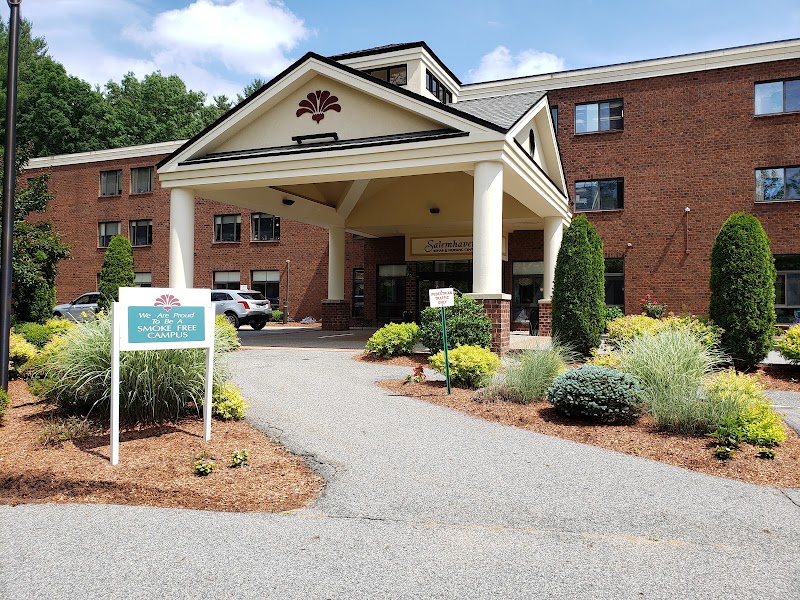
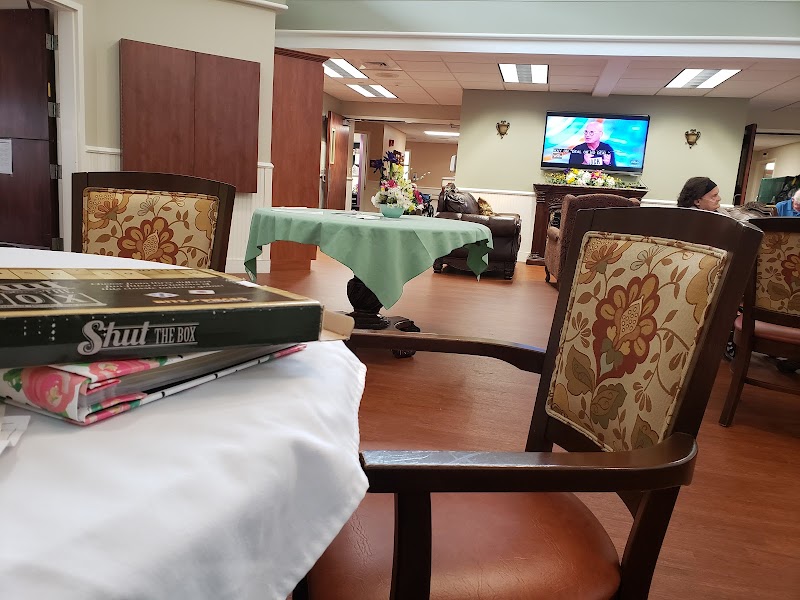
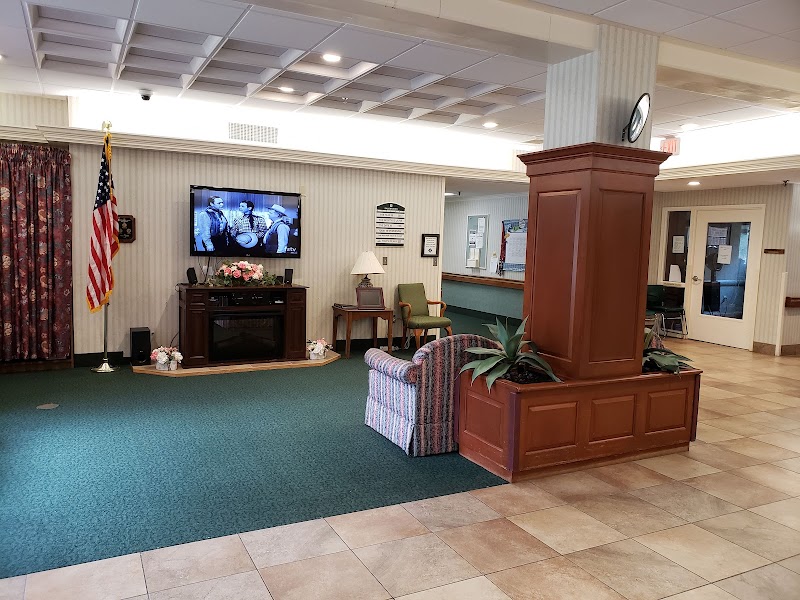
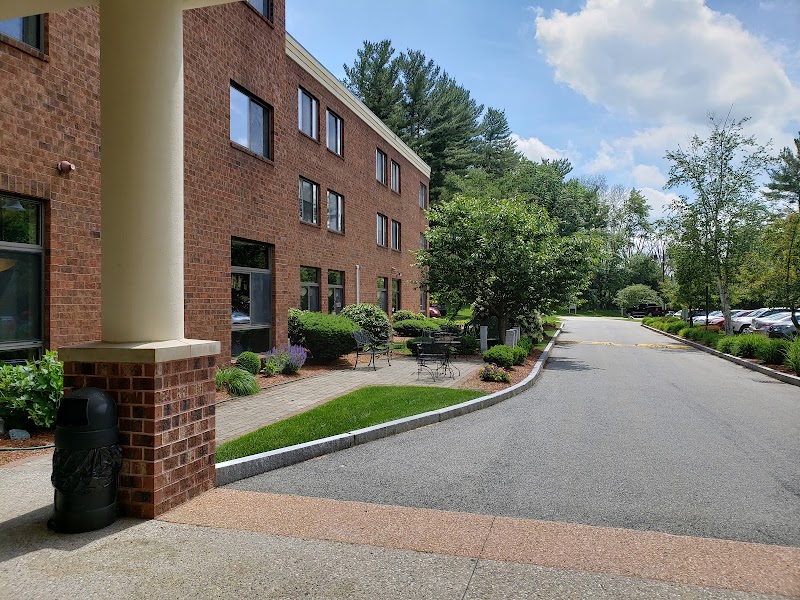
SALEMHAVEN

23 GEREMONTY DRIVE, SALEM, NH 03079 (603) 893-5586
Non profit - Corporation 110 Beds Independent Data: November 2025
Trust Grade
55/100
#58 of 73 in NH
Last Inspection: August 2025

Inspected within the last 6 months. Data reflects current conditions.

Overview

Salemhaven has a Trust Grade of C, meaning it is average and sits in the middle of nursing home options. It ranks #58 out of 73 facilities in New Hampshire, placing it in the bottom half, and is #11 out of 12 in Rockingham County, indicating that only one local facility performs better. The facility is currently worsening, with the number of issues rising from 5 in 2024 to 7 in 2025. Staffing is a strong point, rated 4 out of 5 stars with a turnover rate of 34%, which is better than the state average. While there are no fines on record, which is positive, recent inspections revealed concerns such as staff failing to follow food safety standards, improper infection control practices during medication administration, and expired medications not being removed from use. Overall, families should weigh these strengths and weaknesses when considering Salemhaven for their loved ones.

Trust Score
C
55/100
In New Hampshire
#58/73
Bottom 21%
Safety Record
Low Risk
No red flags
Inspections
Getting Worse
5 → 7 violations
Staff Stability
○ Average
34% turnover. Near New Hampshire's 48% average. Typical for the industry.
Penalties
✓ Good
No fines on record. Clean compliance history, better than most New Hampshire facilities.
Skilled Nurses
○ Average
Each resident gets 39 minutes of Registered Nurse (RN) attention daily — about average for New Hampshire. RNs are the most trained staff who monitor for health changes.
Violations
⚠ Watch
14 deficiencies on record. Higher than average. Multiple issues found across inspections.
★★☆☆☆
2.0
Overall Rating
★★★★☆
4.0
Staff Levels
★★★★☆
4.0
Care Quality
★★☆☆☆
2.0
Inspection Score
Stable
2024: 5 issues
2025: 7 issues

The Good

  • 4-Star Staffing Rating · Above-average nurse staffing levels
  • 4-Star Quality Measures · Strong clinical quality outcomes
  • Full Sprinkler Coverage · Fire safety systems throughout facility
  • No fines on record
  • Staff turnover below average (34%)

    14 points below New Hampshire average of 48%

Facility shows strength in staffing levels, quality measures, fire safety.

The Bad

2-Star Overall Rating

Below New Hampshire average (3.0)

Below average - review inspection findings carefully

Staff Turnover: 34%

11pts below New Hampshire avg (46%)

Typical for the industry

The Ugly 14 deficiencies on record

Aug 2025 7 deficiencies
CONCERN (D)

Potential for Harm - no one hurt, but risky conditions existed

Deficiency F0658 (Tag F0658)

Could have caused harm · This affected 1 resident

Based on interview and record review, it was determined that the facility failed to ensure that physician's orders were followed for 1 of 5 residents reviewed for choices in a final sample of 19 resid...

Read full inspector narrative →
Based on interview and record review, it was determined that the facility failed to ensure that physician's orders were followed for 1 of 5 residents reviewed for choices in a final sample of 19 residents. (Resident identifier is #84.)Findings include: Review on 8/13/25 of Resident #84's August 2025's MAR (Medication Administration Record) revealed:Labetalol HCL (Hydrochloric Acid) Oral Tablet (Labetalol HCL) Give 100 mg (milligrams) by mouth every 6 hours for HTN (Hypertension) (Give if SBP (Systolic Blood Pressure) greater than 160, Hold if AP (Apical Pulse) less than 60), Start Date 8/1/25 revealed: 8/3 the medication was administered at 8:00 am with a SBP of 121, at 2:00 p.m. with a SBP of 137, and 8:00 p.m. with a SBP of 134.8/6 the medication was administered at 8:00 p.m. with a SBP of 128.8/7 the medication was administered at 2:00 a.m. with a SBP of 139.8/8 the medication was administered at 2:00 a.m. with a SBP of 141.8/9 the medication was administered at 8:00 a.m. with a SBP of 152, and at 2:00 p.m. with a SBP of 142.8/10 the medication was administered at 2:00 p.m. with a SBP of 143 and at 8:00 p.m. with a SBP of 145.Interview on 8/13/25 at approximately 11:45 a.m. with Staff D (Infection Preventionist) confirmed that the check in the MAR indicates the medication was administered outside of the parameters that were ordered. Interview on 8/13/25 at approximately 12:15 p.m. with Staff C (Doctor of Medicine) revealed that Staff C would not expect the medication to be administered outside of the parameters that were indicated on the order.Review on 8/14/25 of the facility policy titled, Medication Administration (General Guidelines), Dated 1/25 revealed: . Medication Administration: 1. Medications are administered in accordance with written orders of the prescriber. Documentation: . 2. If a dose of regularly scheduled medication is withheld . the nurse shall document either in the Electronic Medication Administration Record or the paper MAR that the dose was withheld, . and enter an explanatory note .
CONCERN (D)

Potential for Harm - no one hurt, but risky conditions existed

Incontinence Care (Tag F0690)

Could have caused harm · This affected 1 resident

Based on interview and record review, it was determined that the facility failed to ensure that residents received the appropriate care and services for catheter care for 2 of 2 residents reviewed for...

Read full inspector narrative →
Based on interview and record review, it was determined that the facility failed to ensure that residents received the appropriate care and services for catheter care for 2 of 2 residents reviewed for urinary catheters in a final sample of 19 residents. (Resident identifiers are #1and #5).Findings include:Resident #1 Review on 8/12/25 of Resident #1's physician orders revealed the following: Irrigate Foley/Suprapubic Catheter with normal saline PRN [as needed] per MD [Doctor of Medicine] orders (SPECIFY), dated 7/14/25. Further review revealed that there were no other orders indicating when to irrigate Resident #1's foley catheter and no orders for how much normal saline to use when flushing Resident #1's foley catheter. Review on 8/12/25 of Resident #1's care plan, initiated on 7/15/25 revealed that Resident #1 had an indwelling catheter due to his/her diagnosis of urinary retention. Further review revealed that under interventions included .Report to MD (Doctor of Medicine) no output . Review on 8/12/25 of Resident #1's medical record revealed there was no urine output documented between 8/9/25 at 10:22 p.m. and 8/10/25 at 6:15 a.m. Further review revealed that there was no documentation that a provider was notified that Resident #1 had no urine output reported on 8/10/25 at 6:15 a.m. Interview on 8/13/25 at 12:45 p.m. with Staff I (Unit Manager) confirmed that a provider was not notified on 8/10/25 that Resident #1 had no urine output during the overnight. Resident #5 Review on 8/12/25 of Resident #5's physician orders revealed the following order: Irrigate Foley/Suprapubic Catheter with normal saline PRN (as needed) per MD (Doctor of Medicine) orders (SPECIFY), dated 7/17/25. Further review revealed that there were no other orders indicating when to irrigate Resident #5's foley/suprapubic catheter and no orders for how much normal saline to use when flushing Resident #5's foley/suprapubic catheter. Interview on 8/13/25 at approximately 12:25 p.m. with Staff A (Director of Nursing) confirmed the order to irrigate Resident #1 and Resident #5's foley/suprapubic catheter did not have clear indications for when to perform catheter irrigation. Interview on 8/13/25 at approximately 12:30 p.m. with Staff C (Doctor of Medicine) confirmed that Resident #1 and Resident #5's order to irrigate his/her foley/suprapubic catheter did not have indications needed for a complete order. Interview further revealed that Staff C was not notified that Resident #1 had no urine output at 8/10/25 at 6:15 a.m. Review on 8/14/25 of the facility policy titled, Medication Orders, Non-Controlled Medication Orders, Dated 1/23 revealed: . Elements of The Medication Order: . i. Indication for use if ordered PRN. 3. PRN orders shall specify the condition for which they are being administered, for example, as needed for pain Documentation of The Medication Order: . C. A designated nurse reviews the order summary for any necessary corrections. This is done on a routine basis per regulation.
CONCERN (D)

Potential for Harm - no one hurt, but risky conditions existed

Deficiency F0761 (Tag F0761)

Could have caused harm · This affected 1 resident

Based on observation, interview, and record review, it was determined the facility failed to properly label a vial of multidose injectable medication when opened for 2 out of 3 medication refrigerator...

Read full inspector narrative →
Based on observation, interview, and record review, it was determined the facility failed to properly label a vial of multidose injectable medication when opened for 2 out of 3 medication refrigerators observed.Findings include:Observation on 8/13/25 at 8:40 a.m. of the third floor medication room refrigerator revealed an open vial of Tuberculin Purified Protein Derivative that was unlabeled with an opened date or an open expiration date. Interview on 8/13/25 at 8:40 a.m. with Staff E (Licensed Practical Nurse) confirmed the above findings. Observation on 8/12/25 at approximately 9:10 a.m. in the Infection Preventionist Office refrigerator revealed one opened undated vial of Tuberculin solution. Interview on 8/12/25 at approximately 9:10 a.m. with Staff D (Infection Preventionist) confirmed the above findings. Review on 8/13/25 of manufacturer's instruction for Tuberculin Purified Protein Derivative revealed: A vial of TUBERSOL which has been entered and in use for 30 days should be discarded. Do not use after expiration date. Review on 8/13/25 of the facility's policy titled Section 3.7 Medications and Medication Labels dated 1/25 revealed, 2. Multi-dose vials shall be labeled to assure product integrity, considering the manufacturers'; specifications. (Example: Modified expiration dates upon opening the multi-dose vial.). Nursing staff should document the date opened on multi-dose vials on the attached auxiliary label.
CONCERN (D)

Potential for Harm - no one hurt, but risky conditions existed

Infection Control (Tag F0880)

Could have caused harm · This affected 1 resident

Based on observation, interview, and record review, it was determined that the facility failed to conduct an annual review of its infection prevention and control program and implement policies and pr...

Read full inspector narrative →
Based on observation, interview, and record review, it was determined that the facility failed to conduct an annual review of its infection prevention and control program and implement policies and procedures for Transmission Based Precautions (TBP) to prevent the potential spread of infection for 3 of 4 resident observed for TBP in a final sample of 19 residents. (Resident identifier is #17, #56, and #68.). Findings include:Interview on 8/12/25 at 8:30 a.m. with Staff J (Licensed Practical Nurse) revealed that there was an upper respiratory virus outbreak and the following residents were on contact precautions: Resident #17, Resident #56, and Resident #68. Interview 8/12/2025 at 12:30 p.m. with Staff D (Infection Preventionist) confirmed that rooms Resident #17, Resident #56, and Resident #68 were on droplet precautions recommended by the health department due to a respiratory outbreak at the facility. He/she stated that residents that were symptomatic should remain on droplet precautions until they had completed their antibiotics or symptomatic free for 24 hours. Staff D stated that all staff who entered a room on droplet precautions should wear a N95 mask, gloves, gowns, and a face shield. Resident #68 Review on 8/12/25 of Resident #68's care plan, revised on 8/12/25 revealed that Resident #68 had pneumonia. Further review revealed that under interventions included Droplet Precautions. Observation on 8/12/25 at 9:59 a.m. of Resident #68's room revealed droplet precaution PPE signage outside of Resident #68's room. The sign indicated that an N95, gloves, gowns and a face shield should be worn. Observation further revealed Staff K (Contracted Dermatologist) was in Resident #68's room and he/she was wearing only a surgical mask and a gown. Staff K exited Resident #68's room and doffed his/her gown. Interview on 8/12/25 at 10:00 a.m. with Staff K confirmed the above findings. Resident #17 Observation on 8/12/25 at 11:01 a.m. of Resident #17's room revealed a droplet precaution and PPE signage was posted at the doorway. Staff L (Social Worker for Hospice Company) was seated inside Resident #17's room, Staff L was not wearing any PPE. Further observation revealed that Staff L exited Resident #17's room. Interview on 8/12/25 at 11:10 a.m. with Staff L confirmed the above findings. Resident #56 Review on 8/12/25 of Resident #56's medical record revealed that Resident #56 continued on antibiotic therapy for an upper respiratory infection and was placed on droplet precautions on 8/6/25. Observation on 8/12/25 at 12:18 p.m. of Resident #56's room revealed a droplet precaution PPE sign posted at the doorway. Observation further revealed Staff M (Licensed Nursing Assistant) entered Resident #56's room with his/her meal tray. Staff M remained in Resident #56's while he/she helped Resident #56 with meal set up. Staff M exited the room and was wearing a surgical mask. Interview on 8/12/25 at approximately 12:20 p.m. with Staff M confirmed that he/she was wearing a surgical mask only and that he/she would wear an N95 mask, gloves, gown, and a face shield to provide care for residents on droplet precautions. Review on 8/13/25 of the facility's Infection Prevention and Control Plan 2024 dated 6/22/24, revealed, Infection Prevention and Control Plan . The facility's risk assessment is done at least annually . Each goal has at least one measurable objective that is evaluated annually .Policies and Monitoring . Transmission-based Precautions: The CDC's guidelines for Transmission-based Precautions also known as Isolation Precautions will be followed. Transmission-based Precautions are designed for patient/resident known or suspected to infected or colonized with highly transmissible or epidemiologically significant pathogens for which additional precautions beyond Standard Precautions are needed to interrupt transmission within the facility. Transmission-based Precautions will be followed by all employees per policy . Review on 8/14/25 of the facility's policy titled Isolation Precautions and last revised on 6/20/23 revealed, .Droplet Precautions- In addition to standard precautions, use droplet precautions for a resident known or suspected to be infected with microorganisms transmitted by droplets that can be generated by the resident sneezing, coughing, talking, etc., and drip from the air . III. Inform all staff members for the need for isolation Precautions A. Explain procedure that must be initiated and maintained B. Provide education as appropriate IV Gather equipment A. Obtain isolation cart and place on outside of door with a 24-hour supply of masks, gowns, etc. needed to maintain isolation Precautions . V. Notify other departments that resident is on isolation precautions . 7. All personal protective equipment (disposable isolation gowns, mask, gloves, etc.) should be used once and discarded in the trash receptacle and linen placed in soiled linen bucket . Interview on 8/13/25 at 1:12 p.m. with Staff D (Infection Preventionist) revealed that the facility followed the CDC guidelines for Transmission-Based Precautions to develop their procedures. Interview on 8/14/25 at 10:22 a.m. with Staff F (Administrator) confirmed that the above Infection Prevention and Control Plan 2024 had not been reviewed since June 2024.
CONCERN (D)

Potential for Harm - no one hurt, but risky conditions existed

Deficiency F0887 (Tag F0887)

Could have caused harm · This affected 1 resident

Based on interview and record review, it was determined that the facility failed to implement policies and procedures on COVID-19 immunization for 1 of 1 staff reviewed for COVID-19 immunizations. (St...

Read full inspector narrative →
Based on interview and record review, it was determined that the facility failed to implement policies and procedures on COVID-19 immunization for 1 of 1 staff reviewed for COVID-19 immunizations. (Staff identifier is Staff M).Findings include: Review on 8/14/25 of the facility's policy titled COVID-19 Vaccination implemented on 8/12/25 revealed, . It is the policy of this facility to minimize the risk of acquiring, transmitting or experiencing complications from COVID-19 . by education and offering our residents and staff the COVID-19 vaccine . Up-to-date is defined as receiving a 2024-2025 updated COVID-19 vaccine . 14. The facility will educate and offer the COVID-19 vaccine to residents, resident represents and staff and maintain documentation of such. 15. The facility will maintain documentation related to staff COVID-19 vaccination and include at a minimum: a. Education to the staff regarding the risks, benefits, and potential side effects of the COVID-19 vaccine; b. The offering of the COVID-19 vaccine or information on obtaining the COVID-19 vaccine; c. The COVID-19 vaccine status of staff and related information . Interview on 8/13/25 at 3:10 p.m. with Staff D (Infection Preventionist) revealed that the facility does not offer COVID-19 vaccinations to employees or track/obtain a declination. Staff D revealed that there was no policy for COVID-19 immunization for staff. Review on 8/13/25 of Staff M immunization Report Card revealed that Staff M last COVID-19 vaccination was 12/13/21. Interview on 8/14/25 at 8:45 a.m. with Staff M revealed that they could not recall when the facility had last offered them the COVID-19 vaccination. Staff M confirmed that he/she had not been asked to sign a declination that they had been educated and refused the COVID-19 vaccination. Review on 8/13/25 of the facility's Infection Prevention and Control Plan 2024 dated 6/22/24, revealed, .A number of vaccinations are available to patients/residents and employees by physician order or upon request with a physician's order .Employee influenza vaccinations will be offered during flu season Further review revealed that this plan did not address COVID-19 vaccinations for staff. Interview on 8/13/2025 at 12:45 p.m. with Staff D revealed the above plan was the only policy for COVID-19 vaccination. Interview on 8/14/25 at 10:22 a.m. with Staff F (Administrator) confirmed that the above Infection Prevention and Control Plan 2024 had not been reviewed since June 2024.
CONCERN (E)

Potential for Harm - no one hurt, but risky conditions existed

Food Safety (Tag F0812)

Could have caused harm · This affected multiple residents

Based on observation, interview, and policy review, it was determined that the facility failed to store and serve food in accordance with professional standards for food safety to prevent foodborne il...

Read full inspector narrative →
Based on observation, interview, and policy review, it was determined that the facility failed to store and serve food in accordance with professional standards for food safety to prevent foodborne illness in 1 of 1 kitchen and 3 of 3 kitchenettes observed. Findings include:Review on 4/23/24 of the U.S. Food and Drug Administration Food Code, dated 2017, retrieved from https://www.fda.gov/food/FDA-food-code/food-code-2017 revealed the following: .Annex 3, Public Health Reasons/Administrative Guidelines . Chapter 3 Food .3-305.11 Food Storage .FOOD shall be protected from contamination by storing the FOOD: . On-premises preparation .(D) A date marking system that meets the criteria stated in (A) and (B) of this section may include: (1) Using a method approved by the regulatory authority for refrigerated, ready-to-eat time/temperature control for safety food that is frequently rewrapped, such as lunchmeat or a roast, or for which date marking is impractical, such as soft serve mix or milk in a dispensing machine; (2) Marking the date or day of preparation, with a procedure to discard the food on or before the last date or day by which the food must be consumed on the premises, sold, or discarded .(3) Marking the date or day the original container is opened in a food establishment, with a procedure to discard the food on or before the last date or day by which the food must be consumed on the premises, sold, or discarded .; or (4) Using calendar dates, days of the week, color-coded marks, or other effective marking methods . Observation on 8/12/25 at approximately 8:25 a.m. of the walk-in refrigerator in the kitchen revealed the following: one (1) carton of thickened apple juice with no open or use by date; one (1) carton of thickened cranberry juice cocktail with no open or use by date; one (1) carton of thickened orange juice with no open or use by date; one (1) carton of hydrolyte thickened water with a hint of lemon with no open or use by date; one (1) carton of thickened dairy beverage with no open or use by date. Observation on 8/12/25 at approximately 8:35 a.m. of the 2nd floor Unit kitchenette refrigerator revealed two (2) Vital Cuisine Mighty Shakes with no thawed date or use by date. Observation on 8/12/25 at approximately 8:40 a.m. of the 2nd floor Skilled Nursing Unit kitchenette refrigerator revealed eight (8) Vital Mighty Shakes with no thawed date or use by date and one (1) carton of thickened apple juice with no open or use by date.Observation on 8/12/25 at approximately 8:45 a.m. of the 3rd floor Unit kitchenette refrigerator revealed four (4) Vital Cuisine Mighty Shakes with no thawed date or use by date.Interview on 8/12/25 at approximately 8:45 a.m. with Staff G (Dietary Manager) confirmed that the thickened beverages and shakes on the kitchen and kitchenettes should have been labeled with an open and use date based on the manufacturer's instructions.Review on 8/12/25 of the manufacturer's instructions for Vital Cuisine Mighty Shakes under storage and handling revealed .Store frozen. Use thawed product within 14 days. Keep Refrigerated .Review on 8/12/25 of the manufacturer's instructions for Thick & Easy Thickened Orange Juice, Apple Juice, Cranberry Juice, and Hydrolyte Lemon Water under storage and handling revealed .Discard if not used within 10 days of opening .Review on 8/12/25 of the manufacturer's instructions for Thick & Easy Thickened Dairy Beverage under storage and handling revealed .Discard if not used within 4 days of opening .Review on 8/12/25 of the facility's policy titled Food Labeling,with no date, revealed 1. Any product that is unopened, go by manufacturers use by date.4. Mighty shakes are to be labeled with an expiration date, 14 days after they are taken out of the freezer. This includes shakes used on the tray line, stocked on the floors or stored in the walk-in .
MINOR (B)

Minor Issue - procedural, no safety impact

Deficiency F0565 (Tag F0565)

Minor procedural issue · This affected multiple residents

Based on interview and record review, it was determined that the facility failed to demonstrate their response and rationale to resident council grievances for May and June 2025 and maintain evidence ...

Read full inspector narrative →
Based on interview and record review, it was determined that the facility failed to demonstrate their response and rationale to resident council grievances for May and June 2025 and maintain evidence demonstrating the response and rationale of the resident group grievances from the Resident Council Meeting. Findings include: Review on 8/12/25 of the facility's Resident Council Meeting minutes revealed the following:On 5/13/25 there were concerns that food was not hot and there were missing items (blanket and two afghans);On 6/9/25 there were concerns of cold meals; food was not what was ordered and the wait times for using the bathroom were too long. On 7/24/25 there were concerns that residents were waiting too long to use the bathroom, there were missing items (did not specify what items were missing) and food was served cold, delivered late and was not what was ordered.Further review of the above three meeting minutes revealed that there was no documentation that concerns were responded to or followed up on at the next Resident Council Meeting. There were no Resident Council Meeting minutes for the months of February, March or April 2025 for review. Interview on 8/12/25 at 12:48 p.m. during Resident Council Meeting revealed that all eight members in attendance agreed that the facility did not inform them of what, if any, actions had been taken regarding concerns/grievances that were discussed during previous Resident Council Meetings. Further interview revealed that all eight members attended Resident Council regularly. Interview on 8/13/25 at 10:31 a.m. with Staff H (Activity Director) revealed that he/she attended Resident Council Meetings and confirmed that concerns/grievances were not responded. Staff H revealed that he/she did not share the above concerns from June and July with the Department Heads. Interview on 8/13/25 at 10:52 a.m. with Staff F (Administrator) confirmed that concerns were not documented as being followed up on. Staff F also confirmed that Resident Council was not held in February and March 2025, and that they could not find the minutes from April 2025. Review on 8/14/25 of the facility's undated policy titled Resident Council Meeting revealed, .The resident council agenda should include the following . Resident Rights . Grievance Procedure . Minutes of last Meeting . Procedure . 3 The AD [Activities Director] or Designee will facilitate follow-up on all concerns, complaints, suggestions and ideas presented at the council meeting and will report results at the next meeting for the residents' information. This information will be included in the minutes .6. Each department and or department manager will be responsible for follow up and completion of a response form to address the resolution prior to the next meeting. 7. Always ask the council fi they would like any department directors to attend the next month's meeting i.e. food service director if there was any concerns or questions with food or meal service . 10. The minutes for each of the month's meetings will be kept on file in the Activity Director's office or Administrator/Executive Directors' office . 13. The meeting minutes should be reviewed by the Administrator each month to ensure appropriate and timely follow up .
Aug 2024 5 deficiencies
CONCERN (D)

Potential for Harm - no one hurt, but risky conditions existed

Report Alleged Abuse (Tag F0609)

Could have caused harm · This affected 1 resident

Resident #20 Allegation of neglect 7/22/24 for a complaint of Staff R (LNA) refusing to answer Resident #20's call bell, causing incontinence, then when the LNA did come after multiple calls, told the...

Read full inspector narrative →
Resident #20 Allegation of neglect 7/22/24 for a complaint of Staff R (LNA) refusing to answer Resident #20's call bell, causing incontinence, then when the LNA did come after multiple calls, told the resident you can do it yourself regarding toileting and incontinence care. Interview on 8/7/24 at approximately 2:10 p.m. with Resident #20 confirmed that they filed the above grievance alleging that didn't answer their call bell resulting in incontinence. Interview on 8/8/24 at 9:38 a.m. with Staff A confirmed the above allegations of neglect for Residents #20 and #79 were not reported to the SSA. Review on 8/8/2024 of facility's policy titled Abuse Policy and Procedure effective date 6/22/2023 revealed: G REPORTING When an alleged or suspected case of abuse mistreatment, neglect, exploitation, misappropriation of resident property, or injuries of unknown origin is reported, the Administrator, or designee, will immediately the State Agency but no later than 2 hours after the allegation is made, if the events that cause the allegation involve abuse and do not result in serious bodily injury , or not later than 24 hours if the events that cause the allegation do not involve abuse . Based on interview and record review, it was determined that the facility failed to ensure that alleged violations of neglect were reported immediately or no later than 2 hours after the allegation was made to the State Survey Agency (SSA) for 2 of 3 residents reviewed for neglect (Resident Identifiers are #20 and #79). Findings include: Resident #79 Review on 8/6/24 of the facility grievance log revealed the following allegations of neglect: An allegation of neglect dated 7/24/24 reported by Resident #79 stating that he/she rang the call bell Tuesday at 3:30 a.m. and the call bell was not answered until 4:15 a.m When staff entered the room the call light was shut off and Resident #79 was told We don't have time right now, you need to wait your turn. Resident #79 further reported that prior to breakfast that same morning, an Licensed Nursing Assistant (LNA) entered her room and stated get up while pulling the blankets off her.
CONCERN (E)

Potential for Harm - no one hurt, but risky conditions existed

Infection Control (Tag F0880)

Could have caused harm · This affected multiple residents

**NOTE- TERMS IN BRACKETS HAVE BEEN EDITED TO PROTECT CONFIDENTIALITY** Based on observation, interview, and record review, it was determined that the facility failed to follow accepted guidelines to ...

Read full inspector narrative →
**NOTE- TERMS IN BRACKETS HAVE BEEN EDITED TO PROTECT CONFIDENTIALITY** Based on observation, interview, and record review, it was determined that the facility failed to follow accepted guidelines to prevent the spread of infections for 5 of 10 residents reviewed for infection control (Resident identifier #15, #22, #69, #84, and #343) and for 1 out of 4 residents observed for medication administration (Resident identifier is #14). Findings include: Resident #14 Observation on 8/7/24 at approximately 7:24 a.m. with Staff O (Licensed Practical Nurse (LPN)) during medication administration observation revealed that Staff O donned gloves and administered Resident #14's Insulin Glargine 20 units subcutaneously at the left upper quadrant of the abdomen. Staff O did not doff used gloves and did not perform hand hygiene before administering brinzolamide-brimonidine 1-0.2% (percent) eye drops to Resident #14. Staff O then touched Resident #14's bilateral lower eyelids and on the top of his/her head, while wearing the gloves, during administration of the eye drops. Further observation revealed that Staff O did not doff used gloves and did not perform hand hygiene before administering Resident #14's saline nasal spray. Staff O administered the saline nasal spray while wearing the same gloves. Interview on 8/7/24 at approximately 7:40 p.m. with Staff O confirmed the above findings. Staff O stated that he/she should have doffed his/her used gloves and perform hand hygiene before administering Resident #14's eye drops and saline nasal spray. Review on 8/7/24 of Resident #14's active physician's order revealed the following orders: Insulin Glargine 20 units one time a day with a start date of 1/24/24, brinzolamide-brimonidine 1-0.2% Ophthalmic Solution instill 1 drop in both eyes twice a day with a start date of 6/22/24, and Saline Nasal Solution 0.65% 1 spray in both nostrils three times a day with a start date of 6/22/24. Interview on 8/8/24 at 12:47 p.m. with Staff B (Infection Preventionist (IP)) confirmed that licensed nurses should doffed used gloves and perform hand hygiene before administering insulin, eye drops, and nasal sprays. Review on 8/9/24 of the CDC guidelines titled, Considerations for Blood Glucose Monitoring and Insulin Administration, dated 8/7/24, retrieved from https://www.cdc.gov/injection-safety/hcp/infection-control/index.html, revealed .Hand Hygiene .Wear gloves during blood glucose monitoring and during any other procedure that involves potential exposure to blood or body fluids. Change gloves between patient contacts. Change gloves that have touched potentially blood-contaminated objects or fingerstick wounds before touching clean surfaces. Discard gloves in appropriate receptacles (containers). Perform hand hygiene immediately after removing gloves and before touching other medical supplies intended for use on other persons . Review on 8/8/24 of the facility's policy titled, Medication Administration Subcutaneous Insulin, dated 1/2023, revealed .Perform hand hygiene .Put on gloves .Inject insulin slowly .Remove gloves .Perform hand hygiene . Review on 8/8/24 of the facility's policy titled, Medication Administration Eye Drops, dated 1/2023, revealed .Perform Hand Hygiene .With a gloved finger, gently pull down lower eyelid .remove and dispose gloves. Discard any barrier used for carrying or storing the medication and supplies. Wash hands thoroughly with antimicrobial soap and water or facility-approved hand sanitizer . Review on 8/8/24 of the facility's policy titled, Medication Administration Nasal Administration, dated 1/2023, revealed .Perform hand hygiene .Administer medication .Perform hand hygiene . Review on 8/8/24 of the facility's policy titled, Hand Hygiene, dated 1/1/24, revealed .When to was with alcohol-based sanitizer .Before and after each resident contact .Before and after glove use .Before and after procedure or treatment administration .after medication administration . Review on 8/8/24 of CDC guideline titled, Core Infection Prevention and Control Practices for Safe Healthcare Delivery in All Settings, dated 4/12/24, retrieved from: https://www.cdc.gov/infection-control/hcp/core-practices/index.html, revealed .Hand Hygiene .Require healthcare personnel to perform hand hygiene in accordance with Centers for Disease Control and Prevention (CDC) recommendations. Use an alcohol-based hand rub or wash with soap and water for the following clinical indications: Immediately before touching a patient . After touching a patient or the patient's immediate environment . Immediately after glove removal . Resident #343 Observation on 8/7/24 at approximately 8:00 a.m. revealed Staff P (LPN) obtained a fingerstick blood sugar on Resident #343 with a retractable lancet needle and glucometer. Further observation revealed that Staff P placed the used retractable lancet needle inside of a glove and threw it in the uncovered medication cart trash. Staff P used an alcohol swab to clean glucometer device. Interview on 8/7/24 at approximately 8:10 a.m. with Staff P confirmed the above finding. Interview on 08/08/24 at approximately 12:47 p.m. with Staff B confirmed that glucometers should be cleaned and disinfected with bleach wipes and follow manufacturer's instructions. Staff B also confirmed that the used retractable lancet needle should have been disposed in the sharps container. Review on 8/8/24 of the manufacturer's instructions for glucometers dated 9/2019 revealed .Cleaning and Disinfecting .The disinfection is needed to prevent transmission of blood-borne pathogens. The meter should be cleaned and disinfected after use on each patient .We have validated Clorox healthcare Bleach Germicidal Wipes, Dispatch hospital cleaner disinfectant towels with bleach, Caviwipes 1, and PDI Super Sani-Cloth Germicidal Disposable Wipe for disinfecting . Review on 8/8/24 of the manufacturer's instructions for lancets with no date, revealed .Dispose of the entire safety lancet after use into an approved sharps container . Review on 8/8/24 of the OSHA guidelines titled Bloodborne Pathogens and Needlestick Prevention with no date, retrieved from:https://www.osha.gov/bloodborne-pathogens/general, revealed .General Guidelines Engineering controls are the primary means of eliminating or minimizing employee exposure and include the use of safer medical devices, such as needleless devices, shielded needle devices, and plastic capillary tubes .Immediately dispose of contaminated needles in in properly secured, puncture-resistant, closable, leak-proof, labeled sharps containers . Review on 8/8/24 of the CDC guidelines titled, Injection Safety: Considerations for Blood Glucose Monitoring and Insulin Administration, dated 8/7/24, retrieved from:https://www.cdc.gov/injection-safety/hcp/infection-control/index.html, revealed .Clean and disinfect blood glucose meters after every use, per the manufacturer's instructions . Resident #84 Observation on 8/7/24 at approximately 8:00 a.m. at the Skilled Care Unit (SCU) revealed that Resident #84 had a Personal Protective Equipment (PPE) cart outside of his/her room with a sign on top of the PPE cart that indicated Enhanced Barrier Precaution (EBP). Interview on 8/6/24 at approximately 8:30 a.m. and 2:00 p.m. with Staff Q (LPN) revealed that Resident #84 was not on EBP. Staff Q also stated that residents with indwelling catheter and open wounds would require the use of EBP. Staff Q was unable to state other indications of when to use EBP. Interview on 8/7/24 at approximately 8:00 a.m. with Staff Q confirmed the above findings. Staff Q stated that Resident #84 should have been on precautions since admission [DATE]) as Resident #84 was admitted with open wounds. Review on 8/7/24 of Resident #84's medical record revealed that on admission Resident #84 was admitted with a stage 2 pressure ulcer on his/her coccyx (July 2024). Further review of Resident #84's medical record revealed wound assessments, dated 7/4/24, for open lesions on the right and left upper extremities. Review also revealed active treatments orders for open wounds on left upper extremity and coccyx. Interview on 08/08/24 at approximately 12:47 p.m. with Staff B confirmed that Resident #84 had open lesions and a stage 2 pressure ulcer and should have been on EBP. Resident #22 Observation on 8/7/24 at approximately 5:37 a.m. with Staff L (Registered Nurse) revealed that Staff L did not don a gown when he/she administered Resident #22's Intravenous (IV) Vancomycin antibiotic via a Peripherally Inserted Central Catheter (PICC) line (indwelling medical device). Review on 8/7/24 of Resident #22's medical record revealed an active order for PICC line care and IV Vancomycin 750 mg (milligram). Interview on 8/7/24 at approximately 5:40 a.m. with Staff L confirmed the above observation. Interview on 08/08/24 at approximately 12:47 p.m. with Staff B confirmed that Resident #22 had a PICC line since admission [DATE]) and should have been on EBP. Resident #15 Observation on 8/6/24 at approximately 12 p.m. revealed Staff D Licensed Nursing Assistant (LNA)) doffing personal protective equipment (PPE) when leaving room [ROOM NUMBER] and neglecting to perform hand hygiene. Interview on 8/6/24 at approximately 12 p.m. with Staff D (LNA) confirmed he/she did not hand wash or use hand sanitizer prior to leaving the room. Interview on 8/07/24 at approximately 11:00 a.m. with Staff C (Unit Manager) revealed room [ROOM NUMBER]A had active Clostridium difficile (CDiff) and was on Contact Transmission Based Precautions (TBP). Review on 8/8/24 of Resident #15's physician orders revealed current medication Dificid 200mg by mouth two times daily for CDiff for 10 days. Review on 8/8/24 of Resident #15's careplan revealed that Resident #15 has diarrhea related to CDiff infection. Interview on 8/8/24 at approximately 11:50 a.m. with Staff B confirmed Resident #15 was on TBP and that the expectation would be to wash your hands after doffing PPE, before leaving the resident room. Review on 8/8/24 of Center for Disease Control and Prevention (CDC) at website https://www.cdc.gov/niosh/learning/safetyculturehc/module-3/8.html, titled Donning and Doffing PPE: Proper Wearing, Removal, and Disposal, revealed Always wash hands with soap and water before wearing and after removal of PPE.Resident #69 Interview on 8/6/24 at 12:00 p.m. with Staff M (Unit Manager) revealed that Resident #69 had a newly identified pressure ulcer on 8/4/24. Observation on 8/6/24 at 12:20 a.m. of the Resident #69's room revealed that there was no PPE inside or outside Resident #69's room. Review on 8/6/24 of Resident #69's nurse progress note for a new pressure ulcer dated 8/4/24 revealed that Resident #69 had 2 open areas to the right buttocks. Interview on 8/6/24 at 12:30 p.m. with Staff M confirmed the above findings. Interview further revealed that Resident #69 should have been placed on EBP. Interview on 8/6/24 at 12:35 a.m. with Staff N (Licensed Nursing Assistant, LNA) revealed that he/she had provided perineal care to Resident #69 earlier in the day and he/she wore gloves only. Interview on 8/7/24 at 8:00 a.m. with Staff B (Infection Preventionist) confirmed that Resident #69 had two stage 2 pressure ulcers and Resident #69 should have been placed on EBP. Interview further revealed that nursing staff providing high contact care to a resident on EBP should wear gloves and gowns. Review on 8/7/24 of the facility's policy Enhanced [NAME] Precautions, dated 1/1/2024, revealed .The purpose of Enhanced Barrier Precautions is to prevent opportunities for transfer of MDROs to employee's hands and clothing during cares, beyond situations in which staff anticipate exposure to blood or body fluids. High contact Resident Care Activities include: dressing, bathing/showering, transferring, providing hygiene, changing linens, changings briefs or assisting in toileting, devise care or use: central line, urinary catheter, feeding tube, tracheostomy/ventilator, preforming wound care . Enhanced Barrier Precautions are to be implemented in addition to Standard Precautions when other Transmission-based precautions do not apply .Personal protective equipment is required for all staff providing high contact resident care activities to include: gloves and gowns . Review on 8/7/24 of the CDC website titled, Implementation of Personal Protective Equipment (PPE) Use in Nursing Homes to Prevent Spread of Multidrug-resistant Organisms (MDROs), retrived from: https://www.cdc.gov/long-term-care-facilities/hcp/prevent-mdro/PPE.html, revealed .Enhanced Barrier Precautions All residents with any of the following: Infection or colonization with an MDRO when Contact Precautions do not apply Wounds and/or indwelling medical devices (e.g., central line, urinary catheter, feeding tube, tracheostomy/ventilator) regardless of MDRO colonization status .
MINOR (B)

Minor Issue - procedural, no safety impact

Transfer Notice (Tag F0623)

Minor procedural issue · This affected multiple residents

Based on record review and interview, it was determined that the facility failed to send a copy of the notice of Transfer/Discharge to a representative of the Office of the State Long-Term Care Ombuds...

Read full inspector narrative →
Based on record review and interview, it was determined that the facility failed to send a copy of the notice of Transfer/Discharge to a representative of the Office of the State Long-Term Care Ombudsman in 2 of 3 residents reviewed for hospitalization for a final sample of 23 residents (Resident identifiers are #30 and #57). Findings include: Resident #30 Review on 8/8/24 of Resident #30's medical record revealed that Resident #30 was transferred to the hospital for a higher level of care on 2/6/24. Review on 8/8/24 of Resident #30's Notice of Transfer/Discharge form dated 2/6/24 revealed no evidence that it was sent to the Office of the State Long-Term Care Ombudsman. Resident #57 Review on 8/6/24 of Resident #57's progress notes revealed a hospitalization on 12/18/23. Review on 8/8/24 of Resident #57's Notice of Transfer/Discharge form dated 12/18/23 revealed no evidence that it was sent to the Office of the State Long-Term Care Ombudsman. Interview on 8/8/24 at approximately 2:30 p.m. with Staff F (Director of Social Services) confirmed that copies of the transfer/discharge notices are not sent to the Office of the State Long-Term Care Ombudsman. Review on 8/8/24 of Facility Policy & Procedure Titled: Transfer/Discharge & Bed Hold Notifications dated January 17, 2019 revealed: .Procedure: Transfers to Hospital: .2. Social Services representative will follow up on written notifications .c. Fax/Mail the Gold copy to the Office of the State Long-Term Care Ombudsman Office.
MINOR (B)

Minor Issue - procedural, no safety impact

Assessment Accuracy (Tag F0641)

Minor procedural issue · This affected multiple residents

**NOTE- TERMS IN BRACKETS HAVE BEEN EDITED TO PROTECT CONFIDENTIALITY** Resident #90 Review on 8/8/24 of Resident #90's Discharge Return Not Anticipated MDS (Minimum Data Set) with an ARD (Assessment ...

Read full inspector narrative →
**NOTE- TERMS IN BRACKETS HAVE BEEN EDITED TO PROTECT CONFIDENTIALITY** Resident #90 Review on 8/8/24 of Resident #90's Discharge Return Not Anticipated MDS (Minimum Data Set) with an ARD (Assessment Reference Date) date of 5/9/24 revealed that Section A0310G type of discharge was coded unplanned. Review on 8/8/24 of Resident #90's social services notes revealed the following: - On 5/7/24, a care plan meeting was held with Resident #90's family and that it was determined that Resident #90 would transfer to a memory care unit closer to family per families request. -On 5/9/24, Resident #90 was discharged this afternoon as planned to memory care unit and would continue skilled therapy services. Interview on 8/8/24 at approximately 1:43 p.m. with Staff E (MDS Coordinator) confirmed the above MDS findings. Interview on 8/8/24 at approximately 2:16 p.m. with Staff F (Director of Social Services) confirmed that Resident #90 was a planned discharge. Resident #5 Observation on 8/06/24 at approximately 10:00 a.m. revealed Resident #5 in bed sitting up eating a banana with bilateral half rails up. Interview on 8/06/24 at approximately 10:00 a.m. with Resident #5 confirms he/she utilizes side rails for repositioning. Review on 8/07/24 of Resident #5's last Quarterly Minimum Data Set (MDS) assessment with the Assessment Reference Date (ARD) of 7/10/24 was coded as bilateral bed rails used daily as a restraint. Review on 8/08/24 of Resident #5's physician orders revealed a provider order for 2 upper half side-rails up at all times to assist with bed mobility and transfers in and out of bed. Review on 8/08/24 of Resident #5's careplan revealed an intervention of 2 upper half-side rails up at all times to assist with bed mobility and transfers in and out of bed. Interview on 8/08/24 at 2:00 p.m. with Staff C (Unit Manager) confirmed Resident #5 utilizes side rails for mobility. Interview on 8/08/24 at approximately 2:15 p.m. with Staff E (MDS Coordinator) confirmed above findings. Based on observation, record review, and interview, it was determined that the facility failed to ensure that the Minimum Data Set (MDS) assessment accurately reflected the residents' status for 4 out of 23 residents reviewed for MDS in a final sample of 23 residents (Resident identifiers are #5, #12, #34, and #90). Findings include: Resident #12 Review on 8/7/24 of Resident #12's Quarterly MDS dated [DATE], section P0100- Restraints and Alarms, revealed that the section Used in Bed; A. Bed rail was coded with a 2, indicating it was used daily. Review on 8/8/24/24 of Resident #12's Orders revealed a MD order dated 7/17/24 for 2 upper half rails on bed at all times to help with bed mobility and transfers in and out of bed, Diagnosis -muscle weakness and Cerebrovascular Accident (CVA). Interview on 8/8/24 at approximately 1:00 p.m. with Resident #12 revealed that he/she liked to use the bed rails to shift positions when lying in bed and to help steady him/her when getting out of bed. Resident #34 Review on 8/8/24 of Resident #34's admission MDS, dated [DATE], section P0100- Restraints and Alarms, revealed that the section Used in Bed; A. Bed rail was coded with a #2, indicating it was used daily. Review on 8/8/24 of Resident #34's physician order for 1/2 bed rails, dated 7/12/24 revealed that Resident #34's bed rails were used to assist with bed mobility and transfers, in and out of bed. Interview on 8/8/24 at 10:00 a.m. with Staff K (MDS Coordinator) confirmed that Resident #12's and Resident #34's MDS had been incorrectly coded.
MINOR (B)

Minor Issue - procedural, no safety impact

Deficiency F0730 (Tag F0730)

Minor procedural issue · This affected multiple residents

Based on interview and record review, it was determined that the facility failed to complete a performance review at least once every 12 months for 2 of 4 Licensed Nurse Assistants (LNA) reviewed. Fin...

Read full inspector narrative →
Based on interview and record review, it was determined that the facility failed to complete a performance review at least once every 12 months for 2 of 4 Licensed Nurse Assistants (LNA) reviewed. Findings include: Review on 8/8/24 of Staff I's (LNA) employee records revealed an employment start date of 6/3/22. Further review revealed there has been no evidence of a performance evaluation completed. Review on 8/8/24 of Staff J's (LNA) employee records revealed an employment start date of 7/25/23. Further review revealed there was no evidence of performance evaluation completed. Interview on 8/8/24 at approximately 10:30 a.m. with Staff A (Director of Nurses) confirmed above findings.
Aug 2023 2 deficiencies
CONCERN (E)

Potential for Harm - no one hurt, but risky conditions existed

Deficiency F0761 (Tag F0761)

Could have caused harm · This affected multiple residents

Based on observation, interview, record review, and policy review, it was determined that the facility failed to ensure that expired medications were removed from use for 2 of 2 medication rooms obser...

Read full inspector narrative →
Based on observation, interview, record review, and policy review, it was determined that the facility failed to ensure that expired medications were removed from use for 2 of 2 medication rooms observed and 2 of 3 medication carts observed. (Resident identifiers are #62 and #63.) Findings include: Observation on 7/31/23 at approximately 8:00 a.m. of the 2 East Medication Cart with Staff D (Licensed Practical Nurse) revealed: 1 Bottle of Vitamin C 500 milligrams (mg) with an expiration date of 2/23; 1 Bottle of Vitamin B12 100 micrograms (mcg) with an expiration date of 6/23. Interview on 7/31/23 at approximately 8:00 a.m. with Staff D confirmed the above findings. Observation on 8/1/23 at approximately 8:30 a.m. of the 2 [NAME] Medication Cart with Staff A (Unit Manager) revealed: 1 Bottle of Delsym Cough Syrup with an expiration date of 07/23; 1 opened Lispro Insulin 100 units per milliliter (U/mL) pen for Resident #62 with no open date, no open expiration date, and a dispense date of 6/28/23 with a pharmacy label indicating to discard 28 days after opening; 1 medication card of Trazadone 50 mg half tablets for Resident #63 with an expiration date of 02/23. Interview on 8/1/23 at approximately 8:30 a.m. with Staff A confirmed the above findings. Observation on 8/1/23 at approximately 9:00 a.m. of the second floor medication room refrigerator revealed 1 box of Preparation H suppositories with an expiration date of 07/23. Interview on 8/1/23 at approximately 9:00 a.m. with Staff A confirmed the above findings. Interview with Staff A revealed that expired medication should be placed in a blue plastic bin in the medication room. Observation on 7/31/23 at approximately 10:30 a.m. with Staff F (Unit Manager) of the third floor medication room revealed 1 tube of antifungal 1 percent cream with an expiration date of 9/22. Interview on 7/31/23 at approximately 10:30 a.m. with Staff F confirmed the above finding. Review on 8/2/23 of the facility's policy titled Medication Storage dated 01/23 revealed, .12 .Note the date on the label for insulin vials and pens when first used . 14 .Outdated, contaminated, discontinued,or deteriorated medications and those in containers that are cracked, soiled, or without secure closures are immediately removed from stock .
CONCERN (E)

Potential for Harm - no one hurt, but risky conditions existed

Food Safety (Tag F0812)

Could have caused harm · This affected multiple residents

Based on observation, interview, and record review, it was determined that the facility failed to ensure that food was prepared in accordance with professional standards for food service safety for 1 ...

Read full inspector narrative →
Based on observation, interview, and record review, it was determined that the facility failed to ensure that food was prepared in accordance with professional standards for food service safety for 1 of 1 main kitchen observed and the facility failed to store food in accordance with professional standards for food safety to prevent foodborne illness for 3 of 3 kitchenettes observed. Findings include: Observation on 7/31/23 at 8:40 a.m. in the main kitchen with Staff E (Food Service Director) revealed that the range hood over the stove had accumulated gray dust and grease debris on the grates located on the inside of the hood. Interview on 7/31/23 at 8:40 a.m. with Staff E confirmed the above finding. Observation on 7/31/23 at approximately 8:40 a.m. revealed two fans in the dishwashing area with gray dust and grease debris on the front and back of the fans blowing onto air-dried clean dishes. Interview on 7/31/23 at approximately 8:40 a.m. with Staff E confirmed above finding. Review on 8/3/23 of the FDA [Food and Drug Administration] Food Code, dated 2022, retrieved from: https://www.fda.gov/media/164194/download, revealed . 4-602.13 Nonfood Contact Surfaces Nonfood contact surfaces or equipment shall be cleaned at a frequency necessary to preclude accumulation of soil residues .4-9 Protection of Clean Items .4-901.12 Wiping Cloths, Air-Drying Locations .shall be air-dried in a location and in a manner that prevents contamination of FOOD, EQUIPMENT, UTENSILS . Review of the July 2023 Dish Machine Temperature/PPM [Part Per Million] (chemical sanitizer) log on 7/31/23 at approximately 8:40 a.m. revealed 24 of 30 days missing recorded temperatures and PPMs (7/4/23, 7/5/23, 7/7/23, 7/8/23, 7/10/23, 7/11/23, 7/12/23, 7/13/23, 7/14/23, 7/15/23, 7/17/23, 7/18/23, 7/19/23, 7/20/23, 7/21/23, 7/22/23, 7/23/23, 724/23, 7/25/23, 7/26/23, 7/27/23, 7/28/23, 7/29/23, and 7/30/23). Interview on 7/31/23 at approximately 8:40 a.m. with Staff E confirmed the above findings. Staff E stated that they were using a low-temperature dishwashing machine. Staff E also stated that dietary staff should monitor dishwashing temperature and PPMs before washing dishes and document it in the dish machine log three times per day for each meal (breakfast, lunch, and dinner). Review on 8/1/23 of the facility's policy titled, Dish Room Log, with an issue of 6/9/2020 revealed: Procedure: .Log wash/rinse temps & PPM on the form provided in the dish room. Place on the proper date, meal & initial. Observation on 7/31/23 at approximately 8:45 a.m. with Staff E revealed the Special Care Unit (SCU) kitchenette refrigerator contained 2 milk bottles available for use with an expiration date of 7/24/23 and 7/27/23. Review on 7/31/23 at approximately 8:45 a.m. of the SCU kitchenette Refrigerator/Freezer Temperature Log for July 2023 with Staff E revealed 8 missing daily recorded temperatures (7/19/23, 7/20/23, 7/21/23, 7/22/23, 7/26/23, 7/27/23, 7/28/23, and 7/29/23). Review on 7/31/23 at approximately 8:45 a.m. of the second floor kitchenette Refrigerator/Freezer Temperature Log for July 2023 with Staff E revealed 8 missing daily recorded temperatures (7/1/23, 7/19/23, 7/20/23, 7/21/23, 7/22/23, 7/26/23, 7/28/23, and 7/29/23). Review on 7/31/23 at approximately 8:45 a.m. of the third floor kitchenette Refrigerator/Freezer Temperature Log for July 2023 with Staff E revealed 6 missing daily recorded temperatures (7/15/23, 7/22/23, 7/26/23, 7/27/23, 7/28/23, and 7/29/23). Interview on 7/31/23 at approximately 8:45 a.m. with Staff E confirmed the above findings. Staff E stated that staff should be monitoring and documenting the kitchenette's refrigerator and freezer temperatures daily. Review on 8/1/23 of the facility's policy titled, Policy and Procedures for Refrigerators, dated 6/2/03, revealed: .Temperatures: The kitchen will maintain logs posted on the refrigerators . Review on 8/3/23 of the FDA [Food and Drug Administration] Food Code, dated 2022, retrieved from: https://www.fda.gov/media/164194/download, revealed .3-501.18 Ready-to-Eat, Time/Temperature Control for Safety Food, Disposition. (A) A FOOD specified in 3-501.17(A) or (B) shall be discarded if it: (1) Exceeds the temperature and time combination specified in 3- 501.17(A), except time that the product is frozen; P (2) Is in a container or PACKAGE that does not bear a date or day; P or (3) Is inappropriately marked with a date or day that exceeds a temperature and time combination .
Understanding Severity Codes (click to expand)
Life-Threatening (Immediate Jeopardy)
J - Isolated K - Pattern L - Widespread
Actual Harm
G - Isolated H - Pattern I - Widespread
Potential for Harm
D - Isolated E - Pattern F - Widespread
No Harm (Minor)
A - Isolated B - Pattern C - Widespread

Questions to Ask on Your Visit

  • "Can I speak with families of current residents?"
  • "What's your RN coverage like on weekends and overnight?"

Our Honest Assessment

Strengths
  • • No major safety red flags. No abuse findings, life-threatening violations, or SFF status.
  • • No fines on record. Clean compliance history, better than most New Hampshire facilities.
  • • 34% turnover. Below New Hampshire's 48% average. Good staff retention means consistent care.
Concerns
  • • 14 deficiencies on record. Higher than average. Multiple issues found across inspections.
  • • Grade C (55/100). Below average facility with significant concerns.
Bottom line: Mixed indicators with Trust Score of 55/100. Visit in person and ask pointed questions.

About This Facility

What is Salemhaven's CMS Rating?

CMS assigns SALEMHAVEN an overall rating of 2 out of 5 stars, which is considered below average nationally. Within New Hampshire, this rating places the facility higher than 0% of the state's 100 nursing homes. A rating at this level reflects concerns identified through health inspections, staffing assessments, or quality measures that families should carefully consider.

How is Salemhaven Staffed?

CMS rates SALEMHAVEN's staffing level at 4 out of 5 stars, which is above average compared to other nursing homes. Staff turnover is 34%, compared to the New Hampshire average of 46%. This relatively stable workforce can support continuity of care.

What Have Inspectors Found at Salemhaven?

State health inspectors documented 14 deficiencies at SALEMHAVEN during 2023 to 2025. These included: 10 with potential for harm and 4 minor or isolated issues.

Who Owns and Operates Salemhaven?

SALEMHAVEN is owned by a non-profit organization. Non-profit facilities reinvest revenue into operations rather than distributing to shareholders. The facility operates independently rather than as part of a larger chain. With 110 certified beds and approximately 86 residents (about 78% occupancy), it is a mid-sized facility located in SALEM, New Hampshire.

How Does Salemhaven Compare to Other New Hampshire Nursing Homes?

Compared to the 100 nursing homes in New Hampshire, SALEMHAVEN's overall rating (2 stars) is below the state average of 3.0, staff turnover (34%) is significantly lower than the state average of 46%, and health inspection rating (2 stars) is below the national benchmark.

What Should Families Ask When Visiting Salemhaven?

Based on this facility's data, families visiting should ask: "Can I visit during a mealtime to observe dining assistance and food quality?" "How do you handle medical emergencies, and what is your hospital transfer rate?" "Can I speak with family members of current residents about their experience?"

Is Salemhaven Safe?

Based on CMS inspection data, SALEMHAVEN has a clean safety record: no substantiated abuse findings (meaning no confirmed cases of resident harm), no Immediate Jeopardy citations (the most serious violation level indicating risk of serious injury or death), and is not on the Special Focus Facility watch list (a federal program monitoring the lowest-performing 1% of nursing homes). The facility has a 2-star overall rating and ranks #100 of 100 nursing homes in New Hampshire. While no facility is perfect, families should still ask about staff-to-resident ratios and recent inspection results during their visit.

Do Nurses at Salemhaven Stick Around?

SALEMHAVEN has a staff turnover rate of 34%, which is about average for New Hampshire nursing homes (state average: 46%). Moderate turnover is common in nursing homes, but families should still ask about staff tenure and how the facility maintains care continuity when employees leave.

Was Salemhaven Ever Fined?

SALEMHAVEN has no federal fines on record. CMS issues fines when nursing homes fail to meet care standards or don't correct problems found during inspections. The absence of fines suggests the facility has either maintained compliance or corrected any issues before penalties were assessed. This is a positive indicator, though families should still review recent inspection reports for the full picture.

Is Salemhaven on Any Federal Watch List?

SALEMHAVEN is not on any federal watch list. The most significant is the Special Focus Facility (SFF) program, which identifies the bottom 1% of nursing homes nationally based on persistent, serious quality problems. Not being on this list means the facility has avoided the pattern of deficiencies that triggers enhanced federal oversight. This is a positive indicator, though families should still review the facility's inspection history directly.