SKILLED NURSING AT FELLOWSHIP VILLAGE
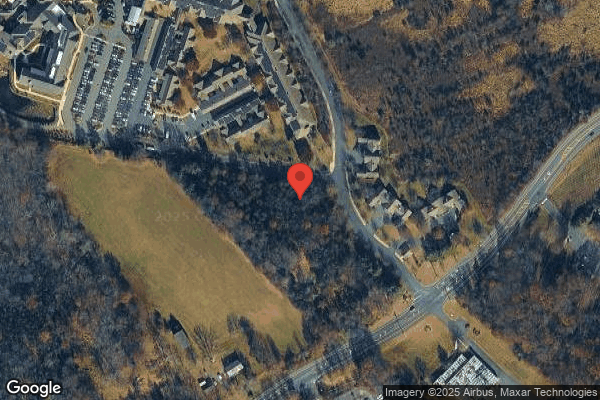
8000 FELLOWSHIP DRIVE, BASKING RIDGE, NJ 07920 (908) 580-3800
Non profit - Corporation 67 Beds Independent Data: November 2025
Trust Grade
90/100
#70 of 344 in NJ
Last Inspection: November 2024

Within standard 12-15 month inspection cycle. Federal law requires annual inspections.

Overview

Skilled Nursing at Fellowship Village has received an excellent Trust Grade of A, indicating a high level of quality and care. They rank #70 out of 344 facilities in New Jersey, placing them in the top half, and #4 out of 15 in Somerset County, which means there are only a few local options that are better. The facility is improving, having reduced issues from 1 in 2023 to none in 2024. Staffing is a strong point, with a 4-star rating and a remarkable 0% turnover, much lower than the New Jersey average, indicating stability among caregivers. However, there have been some concerns, such as a failure to administer medication according to physician orders for one resident and issues with expired medications not being disposed of properly, which suggest areas for improvement. Overall, while there are some weaknesses, the facility is highly recommended and demonstrates a commitment to quality care.

Trust Score
A
90/100
In New Jersey
#70/344
Top 20%
Safety Record
Low Risk
No red flags
Inspections
Getting Better
1 → 0 violations
Staff Stability
○ Average
Turnover data not reported for this facility.
Penalties
✓ Good
No fines on record. Clean compliance history, better than most New Jersey facilities.
Skilled Nurses
✓ Good
Each resident gets 85 minutes of Registered Nurse (RN) attention daily — more than 97% of New Jersey nursing homes. RNs are the most trained staff who catch health problems before they become serious.
Violations
✓ Good
Only 2 deficiencies on record. Cleaner than most facilities. Minor issues only.
★★★★★
5.0
Overall Rating
★★★★☆
4.0
Staff Levels
★★★★★
5.0
Care Quality
★★★★★
5.0
Inspection Score
Stable
2023: 1 issues
2024: 0 issues

The Good

  • 4-Star Staffing Rating · Above-average nurse staffing levels
  • 5-Star Quality Measures · Strong clinical quality outcomes
  • Full Sprinkler Coverage · Fire safety systems throughout facility
  • No fines on record

Facility shows strength in staffing levels, quality measures, fire safety.

The Bad

No Significant Concerns Identified

This facility shows no red flags. Among New Jersey's 100 nursing homes, only 0% achieve this.

The Ugly 2 deficiencies on record

Jul 2023 1 deficiency
CONCERN (D)

Potential for Harm - no one hurt, but risky conditions existed

Pharmacy Services (Tag F0755)

Could have caused harm · This affected 1 resident

Based on observation, interview, and record review, it was determined that the facility failed to ensure that a medication was administered according to physician orders and acceptable standards of pr...

Read full inspector narrative →
Based on observation, interview, and record review, it was determined that the facility failed to ensure that a medication was administered according to physician orders and acceptable standards of practice in accordance with the New Jersey Board of Nursing. This deficient practice was identified in 1 (one) of 7 (seven) residents during the medication observation pass (Resident #46). This deficient practice was evidenced by the following: Reference: New Jersey Statutes Annotated, Title 45. Chapter 11. Nursing Board. The Nurse Practice Act for the State of New Jersey states: The practice of nursing as a registered professional nurse is defined as diagnosing and treating human responses to actual and potential physical and emotional health problems, through such services as case-finding, health teaching, health counseling, and provision of care supportive to or restorative of life and wellbeing, and executing medical regimens as prescribed by a licensed or otherwise legally authorized physician or dentist. Reference: New Jersey Statutes Annotated, Title 45, Chapter 11. Nursing Board. The Nurse Practice Act for the State of New Jersey states: The practice of nursing as a licensed practical nurse is defined as performing tasks and responsibilities within the framework of case finding; reinforcing the patient and family teaching program through health teaching, health counseling, and provision of supportive and restorative care, under the direction of a registered nurse or licensed or otherwise legally authorized physician or dentist. On 07/12/23 at 9:40 AM, during the medication administration observation, the surveyor observed the Registered Nurse (RN#1) in the room of Resident #46. The surveyor observed RN#1 checking the resident's identification bracelet and informing Resident #46 that she will be administering the resident's medications. The surveyor observed the resident in bed and just finished eating breakfast. On 07/12/23 at 9:45 AM, the surveyor observed RN#1 preparing to administer five (5) medications to Resident #46 which included Metoprolol Succinate Extended Release (ER) 50 mg tablet (medication for lowering blood pressure), Potassium Chloride 20 MEQ ER tablet (potassium supplement), Eliquis 2.5 tablet (irregular heartbeat), Torsemide 10 mg tablet (medication for lowering blood pressure) and Rhopressa eye drops (medication for pressure in the eye). The surveyor observed RN #1 prepared the resident's medication and then brought it into Resident #46's room. At that time, Resident #46 asked RN#1 if she could split the Potassium ER 20 MEQ tablet in half since it was too big to swallow. The surveyor observed RN#1 take the medications to the medication cart and then scooped out the Potassium Chloride tablet and proceeded to crush Potassium ER 20 MEQ tablet. After crushing the tablet, RN#1 placed it into a medication cup and then added apple sauce. RN#1 then added the remaining tablets into the medication cup containing the crushed Potassium Chloride ER tablet and apple sauce. The surveyor stopped RN#1 prior to administering the medications and asked RN#1 if she can bring the medication cup outside of the resident's room. At that time, the surveyor interviewed RN#1 who stated that she crushed the Potassium ER 20 MEQ tablet because the resident complained that they were unable to swallow the whole tablet. The surveyor asked RN#1 if it was recommended to crush an extended-release tablet. RN#1 stated that an extended-release tablet should not be crushed and that when the resident complained that they were unable to swallow the tablet that she should have held the medication and contacted the physician for a recommendation. The surveyor reviewed the medical record for Resident # 46. A review of the admission Record (an admission summary) reflected that the resident was admitted to the facility with diagnoses that included but not limited to hypertension (elevated blood pressure), glaucoma (pressure in the eye) and atrial fibrillation (abnormal heart rhythm characterized by rapid and irregular beating of the atrial chamber of the heart). A review of the admission Minimum Data Set, an assessment tool used to facilitate the management of care, dated 7/04/23, reflected that the resident's cognitive skills for daily decision-making score was 15 out of 15, which indicated that the resident was cognitively intact. A review of the July 2023 Physician Order Sheet (POS) revealed no physician order (PO) for medications to be crushed. Further review of the July 2023 POS revealed a PO dated 7/7/23, for Potassium Chloride ER Oral Extended-release 20 MEQ tablet give (1) tablet by mouth two times daily for supplement with food. A review of the July 2023 Electronic Medication Administration Record (eMAR) revealed an order dated 7/7/23, for Potassium Chloride ER Oral Extended-release 20 MEQ tablet give (1) tablet by mouth two times daily for supplement with food. A review of the Manufacturer's specifications for Potassium Chloride ER 20 MEQ revealed the following: To take each dose without crushing, chewing, or sucking the tablet. If those patients are having difficulty swallowing whole tablets, they may try one of the following alternate methods of administration: a. Break the tablet in half and take each half separately with a glass of water. b. Prepare an aqueous (water) suspension as follows: 1. Place the whole tablet (s) in approximately 1/2 glass of water (4-fluid ounces). 2. Allow approximately 2 minutes for the tablet (s) to disintegrate. 3. Stir for about half a minute after the tablet (s) has disintegrated. 4. Swirl the suspension and consume the entire contents of the glass immediately. 5. Add another 1 fluid ounce of water, swirl and consume immediately 6. Then, add an additional 1 fluid ounce of water, swirl, and consume immediately. On 07/12/23 at 10:20 AM, the surveyor interviewed the RN/UM#2 Unit Manager (UM) who stated that the resident's Potassium Chloride ER 20 MEQ tablet should not have been crushed because it was an extended-release tablet. The RN/UM#2 further stated that the facility called the resident's physician, and the order was changed after surveyor inquiry. On 7/13/23 at 1:30 PM, the surveyor discussed the above observations and findings with the Licensed Nursing Home Administrator (LNHA) and Director of Nursing (DON). There was no additional information provided. A review of the facility's policy for sub-acute/Skilled Nursing Household Medication Administration-General Guidelines dated 6/25/19, which was provided by the DON included the following, Cautionary information on the MAR or medication package/container (e.g., don't crush, shake well, give food on an empty stomach, etc.) is checked and adhered to prior to medication administration. Nurse personnel must contact the physician/Physician assistant (PA) and Advance Nurse Practitioner (APN) when there is a discrepancy based on the written order or for any questions related to cautionary information. NJAC 8:39-11.2 (b), 29.2 (d)
Jul 2021 1 deficiency
CONCERN (D)

Potential for Harm - no one hurt, but risky conditions existed

Deficiency F0761 (Tag F0761)

Could have caused harm · This affected 1 resident

**NOTE- TERMS IN BRACKETS HAVE BEEN EDITED TO PROTECT CONFIDENTIALITY** Based on observation, interview, and record review, it was determined that the facility failed to properly label, store and disp...

Read full inspector narrative →
**NOTE- TERMS IN BRACKETS HAVE BEEN EDITED TO PROTECT CONFIDENTIALITY** Based on observation, interview, and record review, it was determined that the facility failed to properly label, store and dispose of medications for 2 of 2 medication room refrigerators inspected. This deficient practice was evidenced by the following: On [DATE] at 6:50 PM, the surveyor inspected the 2nd-floor medication room refrigerator in the presence of a Licensed Practical Nurse (LPN#1). The surveyor observed an expired bottle of Rocklatan eye drops that had an opened date of [DATE]. The surveyor interviewed LPN #1, who stated that the Rocklatan eye drops were expired and belonged to a resident discharged from the facility. LPN #1 said that all expired and medications belonging to a discharged resident should have been removed from the medication refrigerator. On [DATE] at 7:15 PM, the surveyor inspected the 3rd-floor medication room refrigerator in the presence of LPN #2. The surveyor observed an expired Purified Protein Derivative (PPD) vial with an opened date of [DATE] and an opened Novolog pen that had an expiration date of [DATE] inside the medication refrigerator. The surveyor interviewed LPN #2, who stated that the PPD dated [DATE] was expired and should have been removed from the medication refrigerator. LPN #2 also noted that the expired Novolog pen was for a discharged resident and should have been removed from the medication refrigerator. A review of the Manufacturer's Specifications for the above medications indicated the following: 1. Rocklatan eye drops, once opened, had an expiration date of 42-days 2. PPD vial, once opened, had an expiration date of 30-days 3. Novolog Insulin pen, once opened, had an expiration date of 28-days. On [DATE] at 3:15 PM, the surveyor met with the Licensed Nursing Home Administrator and the Director of Nursing (DON). The facility provided no further information. A review of the facility's policy for Storage of Medications dated [DATE] that the DON provided indicated the following: Outdated, contaminated, or deteriorated medications and those in containers that are cracked, soiled, or without secure closures are immediately removed from stock, disposed of according to procedures for medication disposal and reordered from the pharmacy if a current order exist. A review of the facility's policy for Disposal of Medications and Medication-Related Supplies dated [DATE] that the DON provided indicated the following: Medications are removed from the medication cart immediately upon receipt of an order to discontinued (to avoid inadvertent administration). Medications awaiting disposal or return are stored in a locked, secure area designated for that purpose until destroyed or picked up by pharmacy. NJAC: 8:39-29.4 (a) (h) (d)
Understanding Severity Codes (click to expand)
Life-Threatening (Immediate Jeopardy)
J - Isolated K - Pattern L - Widespread
Actual Harm
G - Isolated H - Pattern I - Widespread
Potential for Harm
D - Isolated E - Pattern F - Widespread
No Harm (Minor)
A - Isolated B - Pattern C - Widespread

Questions to Ask on Your Visit

  • "Can I speak with families of current residents?"
  • "What's your RN coverage like on weekends and overnight?"

Our Honest Assessment

Strengths
  • • Grade A (90/100). Above average facility, better than most options in New Jersey.
  • • No major safety red flags. No abuse findings, life-threatening violations, or SFF status.
  • • No fines on record. Clean compliance history, better than most New Jersey facilities.
  • • Only 2 deficiencies on record. Cleaner than most facilities. Minor issues only.
Concerns
  • • No significant concerns identified. This facility shows no red flags across CMS ratings, staff turnover, or federal penalties.
Bottom line: Generally positive indicators. Standard due diligence and a personal visit recommended.

About This Facility

What is Skilled Nursing At Fellowship Village's CMS Rating?

CMS assigns SKILLED NURSING AT FELLOWSHIP VILLAGE an overall rating of 5 out of 5 stars, which is considered much above average nationally. Within New Jersey, this rating places the facility higher than 99% of the state's 100 nursing homes. This rating reflects solid performance across the metrics CMS uses to evaluate nursing home quality.

How is Skilled Nursing At Fellowship Village Staffed?

CMS rates SKILLED NURSING AT FELLOWSHIP VILLAGE's staffing level at 4 out of 5 stars, which is above average compared to other nursing homes.

What Have Inspectors Found at Skilled Nursing At Fellowship Village?

State health inspectors documented 2 deficiencies at SKILLED NURSING AT FELLOWSHIP VILLAGE during 2021 to 2023. These included: 2 with potential for harm.

Who Owns and Operates Skilled Nursing At Fellowship Village?

SKILLED NURSING AT FELLOWSHIP VILLAGE is owned by a non-profit organization. Non-profit facilities reinvest revenue into operations rather than distributing to shareholders. The facility operates independently rather than as part of a larger chain. With 67 certified beds and approximately 58 residents (about 87% occupancy), it is a smaller facility located in BASKING RIDGE, New Jersey.

How Does Skilled Nursing At Fellowship Village Compare to Other New Jersey Nursing Homes?

Compared to the 100 nursing homes in New Jersey, SKILLED NURSING AT FELLOWSHIP VILLAGE's overall rating (5 stars) is above the state average of 3.3 and health inspection rating (5 stars) is much above the national benchmark.

What Should Families Ask When Visiting Skilled Nursing At Fellowship Village?

Based on this facility's data, families visiting should ask: "Can I visit during a mealtime to observe dining assistance and food quality?" "How do you handle medical emergencies, and what is your hospital transfer rate?" "Can I speak with family members of current residents about their experience?"

Is Skilled Nursing At Fellowship Village Safe?

Based on CMS inspection data, SKILLED NURSING AT FELLOWSHIP VILLAGE has a clean safety record: no substantiated abuse findings (meaning no confirmed cases of resident harm), no Immediate Jeopardy citations (the most serious violation level indicating risk of serious injury or death), and is not on the Special Focus Facility watch list (a federal program monitoring the lowest-performing 1% of nursing homes). The facility has a 5-star overall rating and ranks #1 of 100 nursing homes in New Jersey. While no facility is perfect, families should still ask about staff-to-resident ratios and recent inspection results during their visit.

Do Nurses at Skilled Nursing At Fellowship Village Stick Around?

SKILLED NURSING AT FELLOWSHIP VILLAGE has not reported staff turnover data to CMS. Staff turnover matters because consistent caregivers learn residents' individual needs, medications, and preferences. When staff frequently change, this institutional knowledge is lost. Families should ask the facility directly about their staff retention rates and average employee tenure.

Was Skilled Nursing At Fellowship Village Ever Fined?

SKILLED NURSING AT FELLOWSHIP VILLAGE has no federal fines on record. CMS issues fines when nursing homes fail to meet care standards or don't correct problems found during inspections. The absence of fines suggests the facility has either maintained compliance or corrected any issues before penalties were assessed. This is a positive indicator, though families should still review recent inspection reports for the full picture.

Is Skilled Nursing At Fellowship Village on Any Federal Watch List?

SKILLED NURSING AT FELLOWSHIP VILLAGE is not on any federal watch list. The most significant is the Special Focus Facility (SFF) program, which identifies the bottom 1% of nursing homes nationally based on persistent, serious quality problems. Not being on this list means the facility has avoided the pattern of deficiencies that triggers enhanced federal oversight. This is a positive indicator, though families should still review the facility's inspection history directly.