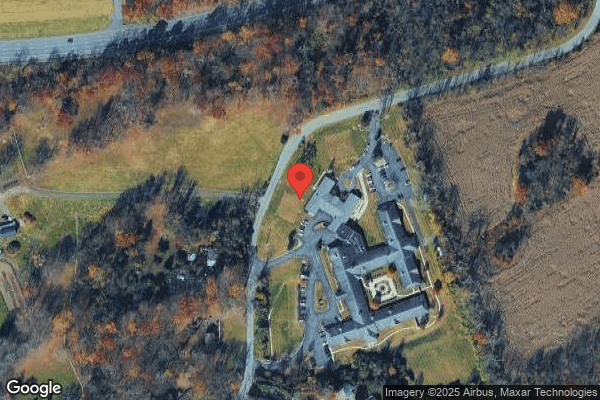
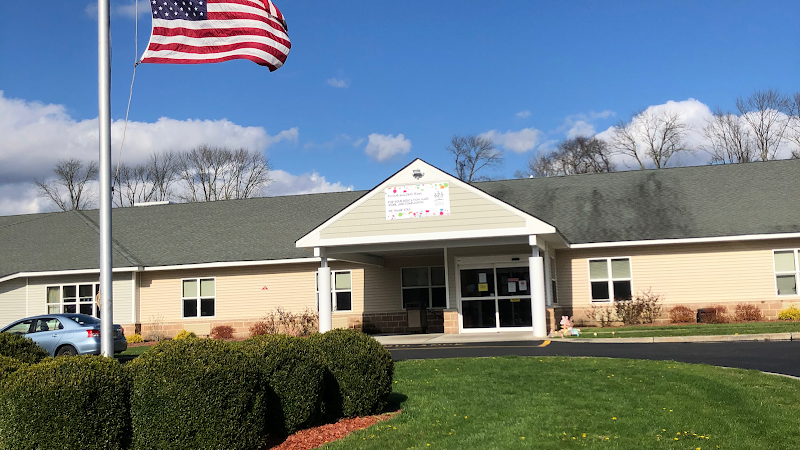
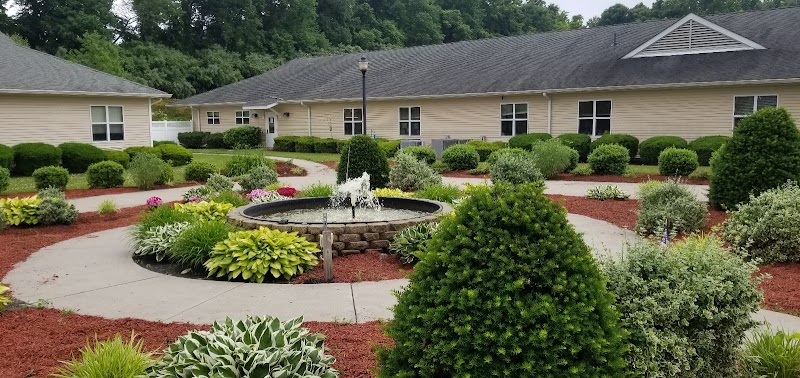
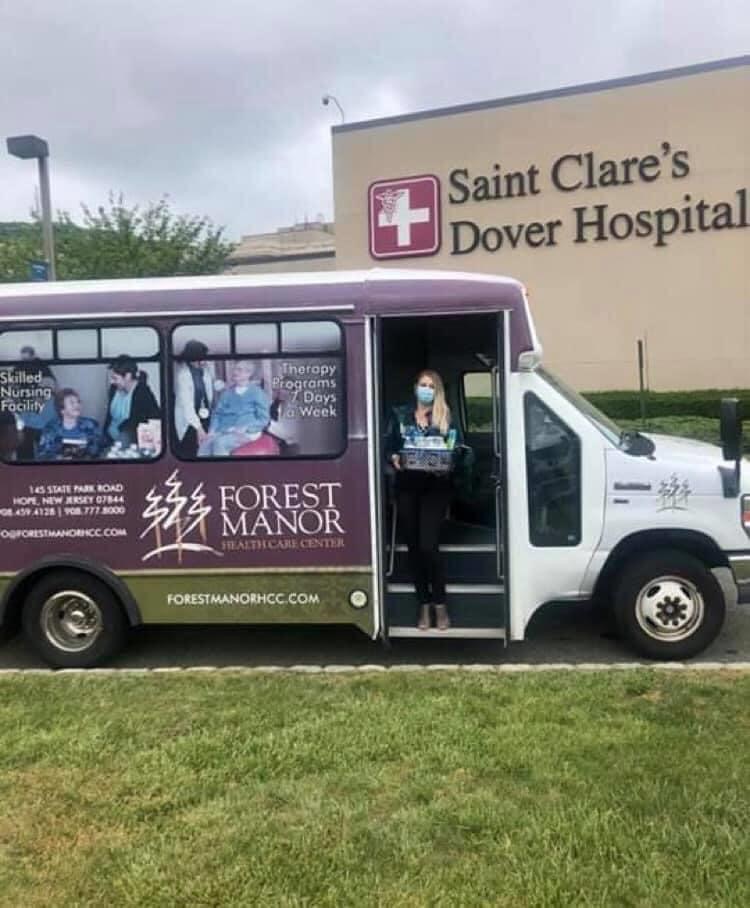
FOREST MANOR HCC

145 STATE PARK ROAD, BLAIRSTOWN, NJ 07825 (908) 459-4128
For profit - Individual 120 Beds Independent Data: November 2025
Trust Grade
58/100
#199 of 344 in NJ
Last Inspection: March 2025

Within standard 12-15 month inspection cycle. Federal law requires annual inspections.

Overview

Forest Manor HCC in Blairstown, New Jersey, has a Trust Grade of C, which means it is considered average and falls in the middle of the pack among nursing homes. It ranks #199 out of 344 facilities in New Jersey, placing it in the bottom half, and #3 out of 6 in Warren County, with only one local competitor performing better. The facility's performance has been stable, maintaining 8 issues in both 2023 and 2025. Staffing is a relative strength, with a turnover rate of 34%, lower than the state average, but the RN coverage is concerning as it is less than 83% of other facilities in New Jersey. However, there are notable weaknesses. The facility faced serious issues, including a resident being improperly transferred by one staff member instead of two, resulting in a fall and injuries. Additionally, kitchen sanitation practices have been inadequate, with observations of dirty equipment and improperly stored food, which could lead to foodborne illnesses. Overall, while Forest Manor HCC has some strengths in staffing, there are critical areas that families should consider when evaluating care options.

Trust Score
C
58/100
In New Jersey
#199/344
Bottom 43%
Safety Record
Moderate
Needs review
Inspections
Holding Steady
8 → 8 violations
Staff Stability
○ Average
34% turnover. Near New Jersey's 48% average. Typical for the industry.
Penalties
✓ Good
$16,720 in fines. Lower than most New Jersey facilities. Relatively clean record.
Skilled Nurses
⚠ Watch
Each resident gets only 20 minutes of Registered Nurse (RN) attention daily — below average for New Jersey. Fewer RN minutes means fewer trained eyes watching for problems.
Violations
⚠ Watch
18 deficiencies on record. Higher than average. Multiple issues found across inspections.
★★★☆☆
3.0
Overall Rating
★★★☆☆
3.0
Staff Levels
★★★★☆
4.0
Care Quality
★★★☆☆
3.0
Inspection Score
Stable
2023: 8 issues
2025: 8 issues

The Good

  • 4-Star Quality Measures · Strong clinical quality outcomes
  • Full Sprinkler Coverage · Fire safety systems throughout facility
  • No fines on record
  • Staff turnover below average (34%)

    14 points below New Jersey average of 48%

Facility shows strength in quality measures, fire safety.

The Bad

3-Star Overall Rating

Near New Jersey average (3.3)

Meets federal standards, typical of most facilities

Staff Turnover: 34%

12pts below New Jersey avg (46%)

Typical for the industry

Federal Fines: $16,720

Below median ($33,413)

Minor penalties assessed

The Ugly 18 deficiencies on record

1 actual harm
Mar 2025 8 deficiencies 1 Harm
SERIOUS (G)

Actual Harm - a resident was hurt due to facility failures

Accident Prevention (Tag F0689)

A resident was harmed · This affected 1 resident

Compliant #: NJ168954, NJ169014 Based on interview and review of pertinent facility documents, it was determined that the facility failed to ensure a resident who was dependent on staff for transfers...

Read full inspector narrative →
Compliant #: NJ168954, NJ169014 Based on interview and review of pertinent facility documents, it was determined that the facility failed to ensure a resident who was dependent on staff for transfers was safely and properly transferred to bed with two staff members via a Hoyer lift (a mechanical lift) who was transferred by one staff member on 11/2/23, and fell sustaining a laceration to their head and a skin tear to their left hand. This deficient practice was identified for 1 of 3 residents (Resident #301) reviewed for accidents and was evidenced by the following: On 3/19/25 at 10:45 AM, the surveyor requested from the Licensed Nursing Home Administrator (LHNA) to provide a copy of the Facility Reportable Event (FRE) that was reported to the New Jersey Department of Health (NJDOH) for Resident #301. On 3/24/25 at 9:05 AM, the surveyor reviewed the FRE provided by the LHNA that indicated that the Certified Nursing Assistant (CNA #1) was transferring the resident via Hoyer lift into bed and one of the loops (one of the straps attached to the crossbar of the lift that holds the resident in place) on the Hoyer lift fell off. CNA #1 tried to brace the fall and guide the resident to the ground, but Resident #301 hit their head against the Hoyer lift resulting in a laceration to their head. Resident #301 also had a skin tear to their left hand from the fall. The resident's Power of Attorney (POA) was notified by the Hospice Registered Nurse (RN #1). The resident's doctor was notified. RN #1 called 911 and the resident was taken to the emergency room (ER) where stitches were applied to the resident's left forehead. On 3/24/25 at 9:20 AM, the surveyor reviewed the closed medical record for Resident #301. A review of the Transfer/Discharge Report face sheet (an admission summary) reflected the resident was admitted to the facility with diagnoses which included but were not limited to; Alzheimer's disease, heart failure, and major depressive disorder. A review of the Minimum Data Set (MDS), an assessment tool dated 11/7/23, indicated the resident was unable to complete a Brief Interview for Mental Status (BIMS) score due to severe cognitive impairment. A further review in Section GG Functional Abilities and Goals reflected the resident was dependent on transfers, indicating two staff members are needed to transfer the resident. A review of the Progress Notes included a Nurses Note dated 11/2/23 at 8:55 PM, written by the Licensed Practical Nurse (LPN #1), revealed that CNA #1 was transferring the resident via a Hoyer lift into bed and one of the loops on the Hoyer fell off. CNA #1 tried to brace the fall and the resident fell to the ground. The resident hit their head against the Hoyer resulting in a laceration to their head. The resident also had a skin tear to their left hand from the fall. The Resident Representative (RR #1) was notified by RN #1 and the physician was called. RN #1 called 911 and vital signs were taken: temperature - 96.9 degrees Fahrenheit (F), blood pressure - 166 over 121 millimeters of mercury (166/121 mm hg) lying right arm, respirations - 19 breaths per minute, pulse rate - 78 beats per minute. The resident transported to [name redacted] hospital at 7:55 PM, by two emergency medical technicians (EMTs). The family was made aware and was meeting the resident at the hospital. A review of the Nurses Note note dated 11/3/23 at 2:49 AM, written by LPN #2, indicated that the resident returned to facility at 2:30 AM, from the hospital for a fall evaluation via Emergency Medical Services (EMS) on a stretcher accompanied by RR #1. The nurse attempted a full assessment and neurological checks (neuro; assessments performed to determine brain function), and RR #1 refused full assessment and neuro checks. RR #1 let the nurse check the resident's temperature (97.5 degrees F), oxygen (95% saturation rate) and pulse (74 beats per minute). RN #1 was informed that the resident returned to the facility and will be in tomorrow to evaluate resident. The writer went to reassess the resident and continue neuro checks, and the resident was sleeping with no signs or symptoms of any pain or discomfort. RR #1 was at bedside, the resident's call bell was within reach, and the writer asked RR #1 if everything was okay and if anything was needed, and RR #1 declined any needs or concerns at that time. The writer gave a report to oncoming the nurse. A review of a Nurses Note dated 11/3/25 at 10:51 PM, indicated that the resident was received in a recliner chair with no pain or discomfort noted. The resident's forehead sutures (stitches) were intact and the treatment was done to the resident's forehead with no bleeding. The treatment was also completed to the resident's left hand. A review of the Physician's Order Sheet (POS) revealed the following post ER visit orders all dated 11/3/23, for: Bacitracin external ointment 500 unit per gram (unit/gm); apply to forehead topically two times a day for laceration for 14 days (external use only). Cleanse laceration with normal saline, pat dry, and apply Bacitracin then cover with dry dressing. Weekly skin assessment every day shift every Friday; document in nursing skin assessment. Cefadroxil oral capsule 500 milligram (mg), an antibiotic; give one capsule by mouth two times a day for laceration for five days. A review of the Individualized Comprehensive Care Plan (ICCP) included a focus area dated 6/16/20, for activities of daily living (ADLs) and self-care performance deficit related to Alzheimer's disease. Interventions included transfers requires 2 staff participation with transfers via Hoyer by certified nursing assistants (CNA). On 3/24/25 at 10:44 AM, the surveyor interviewed the Licensed Practical Nurse (LPN #1), who was the nurse in charge of Resident #301 at the time of the incident. LPN #1 stated CNA #1 used the Hoyer lift by themself and did not ask for help so the resident was either dropped or fell out of the lift. LPN #1 further stated CNA #1 did not ask for help, and they knew that two people were needed at all times for a Hoyer lift transfer. LPN #1 stated that CNA #1 did not wait because other staff members were busy at the time with other residents. She further stated that CNA #1 was by themself in the room with the resident at the time of the incident. LPN #1 also stated the resident had been assessed by RN #1 from [name redacted] Hospice before the incident occurred and was still in the building. LPN #1 stated the resident was assessed and sent to the emergency room (ER). On 3/24/25 at 11:05 AM, the surveyor conducted a telephone interview with RN #1, who stated Resident #301 had just been assessed by her and she was in the process of enrolling the resident onto hospice care. RN #1 was at the nursing station at the time of the incident, and observed Resident #301 bleeding from the left eyebrow and staff were attending to the resident. RN #1 stated she alerted the Power of Attorney (POA) of the incident and the resident was sent to the ER. On 3/24/25 at 11:10 AM, the surveyor conducted a telephone interview with CNA #1, who stated they did not wait for assistance with the Hoyer lift transfer and thought she could do it herself despite knowing the Hoyer lift was a two-person transfer. No further pertinent information was provided. On 3/24/25 at 1:02 PM, the surveyor met with the Licensed Nursing Home Administrator (LNHA), Director of Operations (DO), Director of Nursing (DON), and Chief Operating Officer (COO). All the facility staff present in the meeting acknowledged that a Hoyer lift transfer required a two-person transfer. There was no additional information provided. On 3/24/25, the DO provided the surveyor with a facility policy titled Mechanical lifts/transfers policy and procedure dated reviewed 1/2025. The policy included the use of Mechanical Lifts should have two (2) staff in attendance . NJAC 8:39-27.1(a)
CONCERN (D)

Potential for Harm - no one hurt, but risky conditions existed

Deficiency F0558 (Tag F0558)

Could have caused harm · This affected 1 resident

Based on observation, interview, and record review, it was determined that the facility failed to ensure the resident's call device was readily accessible. The deficient practice was identified for 1 ...

Read full inspector narrative →
Based on observation, interview, and record review, it was determined that the facility failed to ensure the resident's call device was readily accessible. The deficient practice was identified for 1 (one) of 20 residents (Resident #14) reviewed for reasonable accommodations of needs/preferences. This deficient practice was evidenced by the following: On 3/19/25 at 10:20 AM and 3/24/25 at 10:10 AM, the surveyor observed Resident #14 lying in bed, awake and alert. The surveyor observed that the call light was hanging on the left side of the resident's bed. Resident #14 stated they would shout for help if they could not find the call light. On 3/19/25 at 10:22 AM, the surveyor interviewed the Unit Manager/ Licensed Practical Nurse (UM/LPN), who stated that the call bell should be within the residents' reach. The UM/LPN placed the call light on the resident's sheets. On 3/24/25 at 10:15 AM, the surveyor interviewed the Certified Nurse Assistant (CNA), who stated that the call bell should be within the resident's reach. The CNA added that she did not clip the call bell in the resident's bed sheets, which is why it fell. On 3/24/25 at 10:20 AM, the surveyor got the LPN's attention regarding the call bell. The LPN returned the call bell on the resident's bedsheet and stated it should be within the resident's reach. Then, she clipped the call light to the sheets. On 3/19/25 at 10:44 AM, the surveyor reviewed the hybrid medical record (paper and electronic) of Resident #14, which revealed the following: According to the admission Record (an admission summary) (AR), Resident #14 was admitted to the facility with diagnoses that included but were not limited to unspecified dementia (memory loss), unspecified severity without behavioral disturbance, psychotic (loss of contact with reality) disturbance, mood disturbance, and anxiety (is a feeling characterized by fear or worry). A review of the recent quarterly Minimum Data Set (Q/MDS), an assessment tool used to facilitate the management of care dated 3/1/25, indicated that the facility assessed the residents' cognitive status using a Brief Interview for Mental Status (BIMS) score of 10 out of 15, which indicated that the resident had a moderate impairment cognition. Further review of QMDS, reflected in section GG, revealed that the resident depends on staff assistance for daily living activities. A review of the Care Plan Report initiated on 11/7/19 focused on the resident's risk for falls related to dementia, left-sided weakness, and poor safety awareness. Interventions included, but were not limited to, keeping the call bell within reach at all times while the resident was in the room. On 3/24/25 at 1:01 PM, the surveyors met with the Licensed Nursing Home Administrator, Director of Nursing, Chief Operating Officer/Registered Nurse, and Director of Operation regarding the concern but did not provide further information. A review of the facility policy titled Call Light Policy and Procedure, with a review date of January 2025, was revealed under the Procedure: 8. When providing care to a resident, be sure to position the call light conveniently for the resident to use. Tell residents where the call light is and show them how to use the call light. NJAC 8:39-31.8(c)9
CONCERN (D)

Potential for Harm - no one hurt, but risky conditions existed

Comprehensive Care Plan (Tag F0656)

Could have caused harm · This affected 1 resident

Based on observation, interview, and record review, it was determined that the facility failed to develop and implement a comprehensive person-centered care plan (CP) that included refusal of care. Th...

Read full inspector narrative →
Based on observation, interview, and record review, it was determined that the facility failed to develop and implement a comprehensive person-centered care plan (CP) that included refusal of care. This deficient practice was identified for one (1) of 20 residents (Resident #49) reviewed for comprehensive person-centered CP. This deficient practice was evidenced by the following: On 3/19/25 at 10:05 AM, the surveyor observed Resident #49's right hand closed tightly, with nails dug into the palm. The surveyor interviewed the residents and stated they could not open their hands but did not bother them. On 3/19/25 at 10:15 AM, the surveyor interviewed the Unit Manager/Licensed Practical Nurse (UM/LPN), who stated that the resident was refusing any device for the hand. On 3/20/25 at 10:30 AM, the surveyor interviewed the Rehab Director (RD), who stated that they screen the resident at least every three months. Still, the resident refuses to use a splint (a device that maintains or protects a displaced or movable body part), ROM (range of motion) exercise, and therapy services. On 3/20/25 at 8:52 AM, the surveyor reviewed the hybrid medical record (paper and electronic) of Resident #49, which revealed the following: A review of the admission Record (an admission summary) (AR) reflected that Resident #49 was admitted with diagnoses that included but were not limited to other specified rheumatoid arthritis (RA) (a disease that affects the small joints in the hands and feet, causing potential joint damage). A review of the annual Minimum Data Set (A/MDS), (an assessment tool used to facilitate the management of care) dated 12/15/24 indicated that the facility assessed the residents' cognitive status using a Brief Interview for Mental Status (BIMS) score of 12 out of 15, which indicated that the resident had moderately impaired cognition. A further review of the A/MDS in Section GG -Functional Limitation in Range of Motion revealed that both the upper and lower extremities had an impairment on both sides. A review of the recent Orthopedic Consult dated 12/11/24 stated under the report, with handwritten findings, B/L (bilateral) hand arthritis (swelling and tenderness of one or more joints) and contractures (abnormal shortening of muscle tissue), with a written recommendation for evaluation and treatment with occupational therapy. A review of the Screen/Referral Form given by the RD for 9/13/24, 12/13/24, and 3/13/25 showed that Resident #49 was refusing ROM, splint, and skilled therapy services. A review of the resident's individualized person-centered care plan (CP), initiated on 12/11/23, reflected the focus on potential acute/chronic pain related to RA, OP (osteoporosis), and osteoarthritis. The CP did not reflect the refusal to use a splint, ROM exercise, or skilled therapy services. On 3/20/25 at 10:32 AM, the surveyor interviewed the UM/LPN, who stated that the resident's refusal of treatment and care should be addressed in the CP. On 3/20/25 at 10:35 AM, the surveyor interviewed the MDS Coordinator/Registered Nurse (MDSC/RN), who stated that she usually updates the CP for each resident during the team meeting. The MDSC/RN stated that the refusal of care, ROM exercise, and therapy services should be in the CP. On 3/24/25 at 1:01 PM, the team of surveyors met with the Licensed Nursing Home Administrator (LNHA), Director of Nursing (DON), Chief Operations Officer RN, and Director of Operations regarding the concern but did not provide further information. A review of the facility policy titled Care Plan Policy and Procedure with the revision date of January 2025, stated under Procedure: 1.b. Part 2 - The Person Centered Care Plan focuses on the resident as a whole and supports resident in making their own choices and having control over their daily lives. Should address specific problems/needs/risks that are unique for the resident and require intervention beyond standard or protocol care. NJAC 8:39-27.1(a)
CONCERN (D)

Potential for Harm - no one hurt, but risky conditions existed

Pharmacy Services (Tag F0755)

Could have caused harm · This affected 1 resident

Based on observations, interviews, record review, and review of other facility documents, it was determined that the facility failed to provide pharmaceutical services in accordance with professional ...

Read full inspector narrative →
Based on observations, interviews, record review, and review of other facility documents, it was determined that the facility failed to provide pharmaceutical services in accordance with professional standards to ensure signing the reconciliation form Individual Patient Controlled Substance Administration Record - 30 dose (IPCSAR; declining inventory log) form after the dispensed and administered a controlled dangerous substance (narcotic with high potential for drug diversion) medication for one (1) of 20 residents (Resident #250) medication carts reviewed for medication storage. The deficient practice was evidenced by the following: On 3/20/24 at 10:15 AM, in the presence of a Licensed Practical Nurse (LPN #1), the surveyor began the narcotic medication inspection, which was stored in a mounted, double-locked portion of the medication cart B (narcotic box) located on unit 100 LTC (Long Term Care). The surveyor and the LPN #1 observed Resident #250's Morphine Sulfate 30 mg (milligram) ER (extended-release; narcotic medication indicated for pain) bingo card (a multidose card containing individually packaged medications) contained 21 tablets. Furthermore, the surveyor observed the IPCSAR-30 dose form, which reflected the following: - Balance entry #23, with a handwritten date of 3/17/25 at 9:00 PM and signed by the nurse administering, the initial ARahn was crossed off the signature, and a handwritten ERROR beside the initial name. - Balance entry #22, with a handwritten date of 3/18/25 at 9:00 AM and signed by the nurse administering. Entry #22 was circled with a handwritten arrow pointing to the date of 3/17/25. - Balance entry #21, with a handwritten date of 3/19/25 at 8:00 PM and signed by the nurse administering. Entry #21 was crossed with a bold line on the number entry. - Balance entry #20, with a handwritten date of 3/2, was crossed out, and the time and nurse administering were not signed. A review of the Order Summary Report (OSR) active order as of 3/21/25 revealed an order date of 3/9/25 Morphine Sulfate ER 30 mg by mouth every 12 hours for pain for 30 days. A review of the electronic Medication Administration Record (eMAR) revealed that on 3/17/25 at 9:00 PM, the nurse initialed ALR pain level was NA (Not Applicable). There is no further documentation from the nurse's notes on why the narcotic medication was not given. On 3/20/25 at 10:17 AM, the surveyor interviewed LPN #1 regarding the above concern and stated that the remaining narcotics were 21 counts. LPN#1 added that the nurse who worked on 3/17/25 mistakenly signed the morphine sulfate, which is why there is a straight line on top of the signature. On 3/21/25 at 10:11 AM, the surveyor interviewed LPN #2, who stated that she signed the IPCSAR-30 dose form without popping the morphine sulfate tablet and went to Resident #250 that she would be given the narcotic medication, but the resident refused the morphine sulfate tablet. LPN #2 revealed that she wrote a line on top of her name because she could not give the narcotic medication and added that she should get the narcotic medication first to the bingo card, sign the IPSCAR-30 dose form then give it to the resident, and then sign the eMAR. If the resident refuses, there should be two nurses who dispose of the narcotic medication to the drug buster, and both will sign and dispose of the narcotic. On 3/24/25 at 1:01 PM, the team of surveyors met with the Licensed Nursing Home Administrator, Director of Nursing, Chief Operations Officer RN, and Director of Operations regarding the concern but did not provide further information. A review of the facility policy titled Narcotic Declining Balance Sheet Monitoring & Destruction Policy and Procedure with a revision date of January 2025, stated under Procedure: 3. The medication once verified to be accurate, is poured and is immediately signed for on the declining inventory sheet. NJAC 8:39-29.2 (a)
CONCERN (D)

Potential for Harm - no one hurt, but risky conditions existed

Medical Records (Tag F0842)

Could have caused harm · This affected 1 resident

**NOTE- TERMS IN BRACKETS HAVE BEEN EDITED TO PROTECT CONFIDENTIALITY** Based on observation, interview, record review, and review of facility policies, it was determined that the facility failed: a.)...

Read full inspector narrative →
**NOTE- TERMS IN BRACKETS HAVE BEEN EDITED TO PROTECT CONFIDENTIALITY** Based on observation, interview, record review, and review of facility policies, it was determined that the facility failed: a.) to have readily accessible an initial physician assessment (IPA) and b.) legible physician's progress notes (PPN). This deficient practice was identified for 3 of 6 residents reviewed (Resident #83, #49, and #72) and was evidenced by the following: 1. On 3/19/25 at 10:42 AM, the surveyor observed Resident #83 awake in their bed. Resident #83 stated they have only been in the facility for two months but might be staying long-term. Resident #83 stated they had seen the Nurse Practitioner (NP) but did not remember seeing the Primary Physician (PP #1). A review of Resident #83 Face sheet (FS) (an admission summary), was admitted to the facility with diagnoses that included but were not limited to depression, anxiety disorder, and muscle weakness. On 3/19/25 at 12:54 PM, the surveyor reviewed the Hybrid Medical Record (HMR) (a combination of the physical and electronic chart), which did not reflect an IPA (initial physician assessment, which is the first examination and evaluation of a patient by the physician). A review of the admission MDS (an assessment tool used to facilitate care management) dated 2/5/25 reflected a BIMS score of 13 out of 15, which indicated that the resident had intact cognition. On 3/20/25 at 9:32 AM, the surveyor interviewed the Director of Nursing (DON) and Licensed Practical Nurse/Subacute unit manager (UM#1), who both reviewed the HMR but were unable to find the IPA. The DON stated they would call the PP #1 to obtain the IPA. On 3/21/25 at 9:02 AM, the Director of Operations (DOO) provided the surveyor with a paper copy of Resident #83's IPA but was unable to state why the IPA was not in the HMR. On 3/21/25 at 9:10 AM, the surveyor made multiple phone calls to the PP #1 for a phone interview. The PP #1 did not call the surveyor back. 2. On 3/19/25 at 10:05 AM, the surveyor observed Resident #49 in bed awake, able to answer the surveyor's inquiry. On 3/20/25 at 8:52 AM, the surveyor reviewed the hybrid medical record (paper and electronic) of Resident #49, which revealed the following: A review of the admission Record (an admission summary) (AR) reflected that Resident #49 was admitted with diagnoses that included but were not limited to other specified rheumatoid arthritis (RA) (a disease that affects the small joints in the hands and feet, causing potential joint damage). A review of the annual Minimum Data Set (A/MDS), (an assessment tool used to facilitate the management of care) dated 12/15/24 indicated that the facility assessed the residents' cognitive status using a Brief Interview for Mental Status (BIMS) score of 12 out of 15, which indicated that the resident had moderately impaired cognition. A review of the paper copy of the handwritten physician's progress notes (PPN) on 10/11/24, 11/15/24, 12/13/24, 1/12/25, and 3/2/25 showed that they were all illegible. 3. On 3/19/25 at 10:15 AM, the surveyor observed Resident #72 in bed awake, able to answer the surveyor's inquiry. On 3/21/25 at 11:52 AM, the surveyor reviewed the hybrid medical record of Resident #72, which revealed the following: A review of the AR reflected that Resident #72 was admitted with diagnoses that included but were not limited to chronic kidney disease (there is damage to the kidney). A review of the recent quarterly Minimum Data Set (Q/MDS) dated [DATE] indicated that the facility assessed the residents' cognitive status using a BIMS score of 13 out of 15, indicating that the resident's cognition was intact. A review of the paper copy of the handwritten physician's progress notes (PPN) on 10/11/24, 11/15/24, 12/13/24, 1/7/25, and 3/2/25 showed that they were all illegible. On 3/21/25 at 10:10 AM, the surveyor asked the Licensed Practical Nurse (LPN) to read the PPN to the surveyor. The LPN stated that she could not read the PPN and added that the PPN was not legible. The LPN revealed that if she cannot read the PPN, she will call the PP #2 to read it. On 3/21/25 at 10:13 AM, the surveyor interviewed the LPN/Unit Manager (LPN/UM), who stated that she could not read the PP #2's notes. The LPN/UM added that the PP #2 told them to call him anytime to read or clarify the notes. On 3/21/25 at 10:17 AM, the surveyor interviewed the PP #2 over the phone. The PP #2 stated that he does not use a computer for his PPN. He writes the notes because he does not have time to do them on the computer. He has been doing the paper for years. If the nurses cannot read, they can call him anytime to clarify his notes. On 3/24/25 at 12:08 PM, the Chief Operations Officer/Registered Nurse (COO/RN) stated that they do not have a policy regarding PPN legibility of notes. On 3/21/25 at 9:05 AM, the DOO provided the surveyor with a facility policy titled, Physician Services Policy and Procedure with a reviewed date of 1/2025. Under the policy interpretation and implementation section of the policy it states, 1. The resident's Attending Physician participates in the resident's assessment .3. Physician orders and progress notes shall be maintained in accordance with current OBRA (Omnibus Budget Reconciliation Act) regulations and facility policy. On 3/24/25 at 1:01 PM, the surveyors met with the Licensed Nursing Home Administrator, Director of Nursing, COO/RN, and Director of Operation regarding the concern but did not provide further information. NJAC 8:39-35.2 (d)(5)
CONCERN (D)

Potential for Harm - no one hurt, but risky conditions existed

Infection Control (Tag F0880)

Could have caused harm · This affected 1 resident

Based on observation, interview, review of medical records, and pertinent facility documentation, it was determined that the facility failed to follow appropriate infection control practices for handl...

Read full inspector narrative →
Based on observation, interview, review of medical records, and pertinent facility documentation, it was determined that the facility failed to follow appropriate infection control practices for handling soiled linens observed in the hallway of the floor unit. This deficient practice was evidenced by the following: On 3/24/25 at 10:14 AM, the surveyor observed a Certified Nurse Assistant (CNA) dragging the plastic bag with soiled linens inside from the shower room to the soiled utility room. The CNA said she was rushing to remove the dirty linens from the bathroom. The CNA stated she should use the bin in the hallway to put the soiled linens, but she did not want to use it because it would be full. On 3/24/25 at 10:16 AM, the surveyor called the attention of the Unit Manager/Licensed Practical Nurse (UM/LPN), who witnessed the CNA dragging the plastic bag full of soiled linens. The UM/LPN stated that the CNA should be using the bin for the dirty linen and bring the bin to the soiled utility room to be emptied. On 3/24/25 at 11:35 AM, the surveyor interviewed the Infection Preventionist/Registered Nurse (IP/RN) regarding the above concern. The IP/RN stated that the CNA should not drag the plastic bag with the soiled linen inside from the shower room to the soiled utility room. On 3/24/25 at 1:01 PM, the surveyors met with the Licensed Nursing Home Administrator, Director of Nursing, Chief Operating Officer/RN, and Director of Operations regarding the concern but did not provide further information. A review of the policy titled General Infection Control Program, with a review date of 2/10/2025, was revealed under Laundry and Linen Procedures: All soiled linen is to be placed in a covered container lined with plastic or in plastic bags. NJAC 8:39-19.1
CONCERN (D)

Potential for Harm - no one hurt, but risky conditions existed

Deficiency F0919 (Tag F0919)

Could have caused harm · This affected 1 resident

**NOTE- TERMS IN BRACKETS HAVE BEEN EDITED TO PROTECT CONFIDENTIALITY** Based on observations and interviews from 03/19/2025 to 03/21/2025 in the presence of the Administrator and Maintenance Director...

Read full inspector narrative →
**NOTE- TERMS IN BRACKETS HAVE BEEN EDITED TO PROTECT CONFIDENTIALITY** Based on observations and interviews from 03/19/2025 to 03/21/2025 in the presence of the Administrator and Maintenance Director (MD), it was determined that the facility failed to ensure that all devices used to identify call bell notifications were properly functioning. This deficient practice had the potential to affect 2 of 120 resident and was evidenced by the following: An observation on 3/19/2025 at 10:55 AM revealed that 2 of 2 call bells for resident room [ROOM NUMBER] did not function when tested by the DM. Neither audible nor visual notification of activation was given at the nurse's station. In an interview at the time, the DM confirmed the observation and stated that he would have someone repair it right away. The facility's Administrator was informed of the deficient practices at the Life Safety Code exit conference on 03/21/2025 at 2:00 PM. N.J.A.C 8:39-31.2 (e)
CONCERN (F)

Potential for Harm - no one hurt, but risky conditions existed

Food Safety (Tag F0812)

Could have caused harm · This affected most or all residents

Repeat Deficiency Based on observation, interview, and review of facility policies, it was determined that the facility failed to maintain proper kitchen sanitation practices in a manner to prevent fo...

Read full inspector narrative →
Repeat Deficiency Based on observation, interview, and review of facility policies, it was determined that the facility failed to maintain proper kitchen sanitation practices in a manner to prevent food borne illness. On 3/19/25 at 10:14 AM, the surveyor in the presence of the Food Service Director (FSD) observed the following during the kitchen tour: 1. The 5 bay steam table was observed dirty with broccoli, potatoes white/greyish colored murky water in all 5 bays. The FSD stated the steam table bays should be cleaned nightly at end of day and acknowledged that they were not drained and cleaned according to facility policy. They should be drained and cleaned to prevent cross contamination and bacteria. 2. In the walk-in freezer, the surveyor observed multiple open bags of French toast, tilapia, mixed vegetables and cookie dough; all items were open to air as well as not labeled or sealed, according to facility policy. 3. On the chef preparatory table, the surveyor observed the can opener blade with a stuck on gelatinous debris and the can opener base holder was covered with brown colored debris. 4. In the cooking area, the surveyor observed a tray under the 6-burner stove top that had a black colored burnt-on debris, that had not been changed according to policy. On 3/20/25 at 03/20/25 10: 00 AM, the surveyor inspected the pantry's/nourishment centers on all three units and observed the following: 5. In the Long-term care (LTC) unit the surveyor observed a black colored debris on the gaskets of the refrigerator. Per the LTC unit manager (UM) the kitchen staff oversees cleaning the refrigerator 6. In the Sub-acute rehabilitation (SAR) unit the surveyor observed multiple crumb-like debris in the microwave and a black colored debris on the gaskets of refrigerator. 7. In the secure unit (SU) the surveyor observed a black colored debris on the gaskets of the refrigerator. On 3/20/25 at 12:10 PM, the Director of Operations (DOO) provided the surveyor with two facility policies, Dietary Sanitation Policy and Procedure and Food Storage Policy and Procedure, both with reviewed dates of 1/2025. Under the procedure section of the Dietary Sanitation Policy and Procedure policy it stated, 2. All utensils, counters, shelves and equipment shall be kept clean, maintained in good repair and shall be free from breaks, corrosion, open seams, and cracks, and chipped areas that may affect their use or proper cleaning. Seals, hinges, and fasteners will be kept in good repair. Under the procedure section of the Food Storage Policy and Procedure policy it stated, 1. Food services, or other designated staff, will maintain clean food storage areas at all times .5. Prepared food stored in the refrigerator until service shall be dated with an expiration date. Such food will be tightly sealed with plastic wrap, foil, or a lid. On 3/20/25 at 12:15 PM, the surveyor met with the Licensed Nursing Home Administrator (LNHA) and DOO to review concerns found during the kitchen and unit inspections. The DOO stated all kitchen concerns would be addressed immediately. On 3/25/25 at 11:00 AM, the surveyor met with the LNHA, DOO and Chief Operating Officer (COO) for the exit conference. No further information provided by the facility staff. NJAC 8:39-17.2(g)
Mar 2023 8 deficiencies
CONCERN (D)

Potential for Harm - no one hurt, but risky conditions existed

Deficiency F0658 (Tag F0658)

Could have caused harm · This affected 1 resident

Based on observation, interview, record review, and review of facility documents, it was determined that the facility failed to transcribe a current Physician's Order for a resident's diet for 1 of 5 ...

Read full inspector narrative →
Based on observation, interview, record review, and review of facility documents, it was determined that the facility failed to transcribe a current Physician's Order for a resident's diet for 1 of 5 residents (Resident #36) reviewed for nutrition. This deficient practice was evidenced by the following: Reference: New Jersey Statutes Annotated, Title 45, Chapter 11. Nursing Board. The Nurse Practice Act for the State of New Jersey states: The practice of nursing as a licensed practical nurse is defined as performing tasks and responsibilities within the framework of casefinding; reinforcing the patient and family teaching program through health teaching, health counseling and provision of supportive and restorative care, under the direction of a registered nurse or licensed or otherwise legally authorized physician or dentist. On 03/22/23 at 11:41 AM, the surveyor interviewed Resident #36 in their room. The resident stated that the food is gross because it is chopped. The resident further explained he/she has been receiving chopped foods for at least four months. According to the admission Record, Resident #36 was admitted to the facility with diagnoses that included, but were not limited to, Bipolar Disorder, Asthma, Type 2 Diabetes, and Anxiety. A review of the resident's March 2023 Physician Orders (PO) revealed an order with a start date of 02/10/23 for: NAS (No Added Salt) & NCS (No Concentrated Sweets) diet, Mechanical Soft texture, Thin Liquids. On 03/27/23 at 9:43 AM, the surveyor reviewed Resident #36's Electronic Medical Record (EMR). Review of Resident #36's Progress Notes revealed a note written by the Registered Dietitian (RD), dated 11/25/2022 at 10:07 AM, which included, Resident (rt) with c/o [complaint of] difficulty swallowing. Recommended SLP [Speech Language Pathology] consult, at this time recommend downgrade diet to Mech Soft texture until evaluated. Recommendation placed in chart for nursing. Further review of the Progress Notes included a nurse's note completed on the same day at 1:58 PM which revealed, MD called, recommendation approved. On 03/27/23 at 10:41 AM, the surveyor reviewed Resident # 36 physical/paper chart. Review of the paper Physician's Orders (Yellow Sheet) revealed there weren't any diet change orders related to the 11/25/22 RD note. Further review of the paper chart revealed a paper titled Dietary Alert Sheet and under the action to be taken section, it included Downgrade diet texture to mechanical soft. Also included in the paper chart was a change of diet slip dated 11/25/22 signed by the LPN, with a new diet order of: Mechanical soft texture. During an interview with the surveyor on 03/27/23 at 11:13 AM, the 200-Unit Unit Manager (UM) stated for a diet change, we alert the doctor and get their approval. Once we get the approval the nurse will enter the diet order in the EMR under the PO section and also fill out a paper 'change of diet' slip. The UM further stated one copy of the form stays in the chart and the other is sent to the dietary office. The surveyor and UM reviewed the POs and the UM stated, I don't see an order for a diet change on 11/25/2022, but the diet was correctly entered on 02/10/2023. The UM stated that the expectation would be for the nurse to enter the PO in EMR on the day it was ordered. Review of the facility's Entering of Pharmacy Orders in EMAR policy from included a purpose To identify a procedure to ensure the accuracy and completeness of transcriptions of medication and treatment orders received by Licensed Personnel. Further review of the policy included, When a physician's order is placed verbally or by telephone, the receiving nurse shall enter the order that was received in the EMAR. NJAC 8:39-19.4 (a)(1)
CONCERN (D)

Potential for Harm - no one hurt, but risky conditions existed

Respiratory Care (Tag F0695)

Could have caused harm · This affected 1 resident

Based on observation, interview, and review of facility documentation, it was determined that the facility failed to ensure that a resident received supplemental oxygen as prescribed by the physician ...

Read full inspector narrative →
Based on observation, interview, and review of facility documentation, it was determined that the facility failed to ensure that a resident received supplemental oxygen as prescribed by the physician for 1 of 1 resident (Resident #3) reviewed for respiratory care. The deficient practice was evidenced by the following: On 03/22/23 at 11:35 AM, the surveyor observed Resident #3 in bed wearing a nasal cannula (a device used to deliver supplemental oxygen). The surveyor observed that the nasal cannula was connected to an oxygen concentrator that was set to 3 liters per minute (LPM) of oxygen. The resident stated that they usually receive 2 LPM of oxygen. On 03/24/23 at 10:10 AM, the surveyor observed Resident #3 sitting in their wheelchair in their room. The surveyor observed that the resident was wearing the nasal cannula and that the oxygen concentrator was set to 3 LPM. The resident stated that they do not touch the concentrator and that only the nurses adjust it. On 03/27/23 at 9:50 AM, the surveyor observed Resident #3 in bed with their eyes closed. The surveyor observed that the resident was wearing the nasal cannula and that their oxygen concentrator was set to 3 LPM. During an interview with the surveyor on 03/27/23 at 10:06 AM, the Certified Nursing Assistant (CNA) #1 stated that Resident #3 was on oxygen continuously. CNA #1 stated that she must adjust the oxygen tubing when the resident goes to the bathroom but that otherwise she does not touch the oxygen. During an interview with the surveyor on 03/27/23 at 10:10 AM, the Licensed Practical Nurse (LPN) #1 stated that Resident #3's oxygen is routine and that it should be set to 2 LPM. LPN #1 stated that she checks that the rate of oxygen is correct every shift. At this time the surveyor and LPN #1 went to Resident #3's room together. LPN #1 acknowledged that the oxygen concentrator was set to 3 LPM. LPN #1 stated that she checked that the oxygen was set to 2 LPM when she came in. The surveyor stated that she observed that the oxygen was set to 3 LPM on three different days. LPN #1 stated that the nurses should check every shift. During an interview with the surveyor on 03/28/23 at 10:24 AM, the LPN/ Unit Manager (LPN/UM) stated that Resident #3 receives 2 LPM of oxygen continuously and that the oxygen concentrator should be set to 2 LPM because that is what is ordered by the physician. She stated that if the resident is not maintaining a good oxygen saturation (the amount of oxygen that is circulating in the blood) on 2 LPM then the nurse should call the doctor to get a new order. The LPN/UM stated that she expected that the nurses would check the oxygen rate at least once every shift. On 03/28/23 at 10:58 AM, the surveyor observed Resident #3 sitting in their wheelchair. The surveyor observed the nasal cannula tubing on the ground, not connected to the oxygen concentrator. The surveyor immediately informed the LPN/UM that the resident was not connected to any supplemental oxygen. The LPN/UM went into Resident #3's room and confirmed that the tubing was not connected to the oxygen concentrator. Resident #3 stated that they did not feel the air coming through the prongs of the nasal cannula. The LPN/UM plugged the nasal cannula into the oxygen concentrator and stated that she checked this morning and the resident was connected to the oxygen at that time. During a follow up interview with the surveyor on 03/28/23 at 11:07 AM, Resident #3 stated that the oxygen must have been disconnected when their aide got them out of bed and into their wheelchair. During a follow up interview with the surveyor on 03/28/23 at 11:27 AM, CNA #1 stated that she got Resident #3 out of bed around 9:30 or 10:00 AM. CNA #1 stated that she usually checks oxygen tubing when she transfers residents to make sure that it is not tangled and that it is connected. The CNA stated that when she got Resident #3 out of bed and into the chair, the nasal cannula was connected. The CNA stated that maybe the resident moved and disconnected the oxygen themselves. During a follow up interview with the surveyor on 03/28/23 at 12:27 PM, LPN #1 stated that she saw the resident around 9:30 AM and that they were in bed and were connected to the concentrator at that time. LPN #1 stated that she instructed the CNAs that if they take residents out of bed that they can switch their oxygen to portable oxygen tanks. LPN #1 stated that CNA #1 took the resident to be weighed and that she might have disconnected the resident at that time. LPN #1 stated that residents sometimes are disconnected from their oxygen concentrators when they get out of bed to use the bathroom but acknowledged that Resident #3's nasal cannula should have been connected to the concentrator. According to the admission Record, Resident #3 was admitted to the facility with diagnoses which included, but were not limited to, Acute Respiratory Failure, Heart Failure, muscle weakness, and difficulty in walking. Review of the quarterly Minimum Data Set (MDS), an assessment tool used to facilitate the management of care, dated 01/13/23, indicated that Resident #3 had a Brief Interview for Mental Status score of 10 out of 15, which indicated that the resident had moderate cognitive impairment. The MDS also revealed that Resident #3 used oxygen therapy, that they needed limited assistance from one staff member to transfer (from the bed to a wheelchair) and move about their room, and that they did not walk in their room during the assessment window of the MDS. Review of the Order Summary Report indicated that Resident #3 had an active physician order for Oxygen 2 LPM via nasal cannula continuously, dated 02/10/23. Review of the Care Plan indicated that Resident #3 had a focus, dated 04/23/21, of Oxygen Therapy related to CHF [congestive heart failure] with an intervention to have the oxygen delivered via nasal prongs at 2 liters continuously. Review of the March 2023 Medication Administration Record (MAR) revealed that nurses signed every shift from 03/22/23 to 03/28/23 that Resident #3 received 2 LPM of oxygen continuously. On 03/30/23 at 2:01 PM, the surveyor notifed the Licensed Nursing Home Administrator, Director of Nursing, Director of Operations, and Chief Operating Officer (COO) of the above concern. During an interview with the surveyor on 3/31/23 at 10:05 AM, the COO acknowledged that oxygen should be set to the rate ordered by the physician. The facility policy, Respiratory Therapy Administration and Equipment Policy and Procedure with a reviewed date of 01/23 indicated under Preparation to Verify that there is a physician's order for this procedure. Review the physician's orders or facility protocol for oxygen administration. NJAC 8:39-27.1 (a) NJAC 8:39-29.2 (d)
CONCERN (D)

Potential for Harm - no one hurt, but risky conditions existed

Deficiency F0698 (Tag F0698)

Could have caused harm · This affected 1 resident

**NOTE- TERMS IN BRACKETS HAVE BEEN EDITED TO PROTECT CONFIDENTIALITY** Based on observation, interview, record review, and review of facility documents, it was determined that the facility failed to ...

Read full inspector narrative →
**NOTE- TERMS IN BRACKETS HAVE BEEN EDITED TO PROTECT CONFIDENTIALITY** Based on observation, interview, record review, and review of facility documents, it was determined that the facility failed to consistently assess and monitor the dialysis access site for any complications before and after dialysis treatments for 1 of 1 resident (Resident #26) reviewed for dialysis care This deficient practice was evidenced by the following: According to the admission Record, Resident #26 was admitted with diagnoses which included, but were not limited to, end stage renal (kidney) disease and dependence on renal dialysis. Review of the admission Minimum Data Set (MDS), an assessment tool used to facilitate the managment of care, dated 01/31/23, revealed that Resident #26 had a Brief Interview for Mental Status (BIMS) score of 9 out of 15 which indicated that the resident had moderately impaired cognition. Further review of the MDS, Section O - Special Treatment and Procedures, included that the resident received dialysis services (a process of purifying the blood due to impaired kidney function). Review of the Nurses Notes in the electronic Progress Notes (PN), dated 03/13/23, revealed that Resident #26 had an Arteriovenous (AV) shunt (a surgically created connection between an artery and a vein for dialysis access to help with treatment) on his/her right upper arm. Review of the Order Summary Report (OSR) revealed a Physician's Order (PO) dated 03/13/23 for Dialysis at [name redacted] every Tuesday, Thursday, and Saturday . Further review of the OSR revealed no documented evidence of a PO to check the AV shunt for bruit and thrill (a sound and sensation test to identify how well the dialysis access is functioning). Review of the resident's Dialysis Communication Log (a form that the facility used to communicate with the dialysis center for each of the resident's dialysis sessions) book reflected that the resident had dialysis sessions on the following dates: 03/16/23 (Thursday) 03/18/23 (Saturday) 03/21/23 (Tuesday) 03/23/23 (Thursday) 03/25/23 (Saturday) 03/28/23 (Tuesday) Further review of the resident's Dialysis Communication Log revealed no documented evidence that Resident #26's AV shunt site was assessed prior to dialysis and upon return from dialysis treatments on the dates mentioned above. Review of the electronic PN revealed no documented evidence that Resident #26's AV shunt site was assessed prior to and upon return from dialysis on the dates mentioned above, except upon return to the facility on [DATE]. Review of the resident's hybrid medical records revealed no documented evidence that Resident's #26's AV shunt site was assessed prior to and upon return from dialysis treatments on the dates mentioned above, except upon return to the facility on [DATE]. During an interview with the surveyor on 03/27/23 at 12:37 PM, the Licensed Practical Nurse/Unit Manager (LPN/UM) stated the resident had dialysis on Tuesdays, Thursdays, and Saturdays. She stated that the facility did not have a policy and the resident did not have a PO for assessment of the dialysis access site. She further stated, personally, it needs a doctor's order to check for bruit and thrill. On 03/27/23 at 1:29 PM, the surveyor observed the resident lying in bed awake and responded to the surveyor's inquiry, but with eyes closed. The surveyor observed the resident with an intact dressing on his/her right upper arm. The surveyor was unable to complete the interview due to the resident's refusal to continue. On 03/30/23 at 2:29 PM, the surveyor informed the Chief Operating Officer (COO), Director of Operations (DO), Administrator (LNHA), and the Director of Nursing (DON) of the above concern in the presence of the survey team. The COO acknowledged that the facility did not have a policy for dialysis. She further stated that there should have been a PO for an AV shunt access site assessment for bruit and thrill for Resident #26, so they can be consistently recorded in the resident's electronic medical records. On 03/31/23 at 1:03 PM, the survey team met with the COO, DO, LNHA, and DON. There was no additional information provided by the facility. NJAC 8:39 - 27.1(a)
CONCERN (D) 📢 Someone Reported This

A family member, employee, or ombudsman was alarmed enough to file a formal complaint

Potential for Harm - no one hurt, but risky conditions existed

Pharmacy Services (Tag F0755)

Could have caused harm · This affected 1 resident

COMPLAINT # NJ00160909 Based on interview, record review, and review of facility documents, it was determined that the facility failed to a.) notify the physician when a medication became unavailable ...

Read full inspector narrative →
COMPLAINT # NJ00160909 Based on interview, record review, and review of facility documents, it was determined that the facility failed to a.) notify the physician when a medication became unavailable and b.) maintain an accurate record of a controlled drug for 1 of 3 residents (Resident #138) reviewed for pain management. This deficient practice was evidenced by the following: 1. According to the admission Record, Resident #138 had diagnoses that included, but were not limited to, palliative care, umbilical hernia, and altered mental status. Review of Resident #138's Significant Change in Status Minimum Data Set (MDS), an assessment tool used to facilitate the management of care, dated 01/06/23, revealed the resident was rarely/never understood, and had moderately impaired cognitive skills for daily decision making. Further review of the MDS included the resident received a scheduled pain medication regimen. Review of Resident #138's Care Plan, initiated 10/29/19, included a focus that [Resident #138] has chronic pain r/t [related to] Umbilical Hernia, and is now on hospice. Interventions for this focus included Administer analgesia as per orders. Further review of the Care Plan included a focus of terminal prognosis, and with an intervention to administer pain medications as ordered. Review of Resident #138's January 2023 Medication Administration Record (MAR) included a physician's order for Morphine Sulfate Solution 20 MG/ML [milligrams/milliliter] Give 0.5 ml by mouth every 6 hours for pain with administration times of 12:00 AM, 6:00 AM, 12:00 PM, and 6:00 PM. Starting on the 01/17/23 6:00 PM dose through the 01/20/23 6:00 AM dose, the morphine order was not coded as administered and instead coded as 9 indicating Other/See Nurse Notes for 10 doses. Further review of the January 2023 MAR revealed the resident did not have pain from 01/17/23 to 01/20/23. Review of Resident #138's Progress Notes revealed the corresponding eMAR (electronic MAR) notes for the aforementioned morphine order: 01/17/23 at 5:03 PM: med on order from RX [pharmacy]. Resident reports no pain 01/18/23 at 5:30 AM: medication not available 01/18/23 at 5:31 AM: medication pending delivery 01/18/23 at 2:06 PM: not available 01/18/23 at 5:59 PM: Not giving awaiting for pharmacy 01/19/23 at 12:07 AM: Not giving awaiting for delivery 01/19/23 at 6:21 AM: Not available awaiting to delivery 01/19/23 at 6:12 PM: med not available Further review of the Progress Notes revealed a note written by the Advanced Nurse Practitioner (ANP), dated 01/19/23 at 12:01 AM, which included, [he/she] is using [his/her] morphine routinely every 6 hours for pain as per Hospice recommendations. [He/She] needs new Rx [prescription] for every 3 hours PRN [as needed] for SOB [Shortness of Breath] and every 6 hours routinely for pain. Rx written and faxed to pharmacy. There were no progress notes prior to the ANP's note that indicated the nursing staff had notified the physician or ANP of the resident's morphine being unavailable, and therefore not administered, starting on 01/17/23. Review of the declining record for Resident #138's morphine sulfate revealed the resident received the last dose signed out from one bottle on 01/17/23 at 12:00 PM and the following dose was not signed out until 01/20/23 at 12:00 PM from a new bottle of morphine received by the facility on 01/20/23. During an interview with the surveyor on 03/30/23 at 10:06 AM, the Licensed Practical Nurse (LPN) stated that if a resident's medication was unavailable, the nurse should call the pharmacy to check the status of the medication and notify the physician because the physician may want to order an alternative medication or place the medication on hold. The LPN also stated that the nurse on the following shift should follow up if the medication was still unavailable. The LPN added that it is important to notify the physician if a resident's medication is unavailable because there could be consequences for the resident depending on the medication. During an interview with the surveyor on 03/30/23 at 10:29 AM, the LPN/Unit Manager (LPN/UM) stated that if a medication is unavailable, the nurse should contact the pharmacy to check how soon the medication could be delivered and notify the physician to check if an alternative medication could be given. The LPN/UM also stated that the nurse on the following shift should continue to follow up on the unavailable medication. The LPN/UM added that it is important to notify the physician if a resident's medication is unavailable to ensure the resident is receiving what they need. In reference to Resident #138, the LPN/UM stated she called the pharmacy and they informed her the resident needed a new prescription for the morphine and the LPN/UM realized the physician did not send one. The LPN/UM further stated that the pharmacy contacted the physician for a prescription and that to the LPN/UM's knowledge, the resident only missed two doses of morphine. The LPN/UM also stated that the nurse on 01/17/23 should have notified the pharmacy and physician of the unavailable medication because then the nurse would have known the pharmacy needed a new prescription for the morphine and could have followed up with the physician at that time. During an interview with the surveyor on 03/30/23 at 10:45 AM, the Director of Nursing (DON) stated that if a medication is unavailable, the nurse needs to notify the physician and follow up with the pharmacy on the status of the medication. In reference to Resident #138, the DON stated the nurse should have notified the physician on 01/17/23 when the morphine became unavailable and called the pharmacy to have the medication delivered stat to the facility. Review of the facility's Medication Administration Policy and Procedure, revised 01/2023, included, If a medication is unavailable the pharmacy will be contacted for the medication to be received on the next scheduled delivery. The primary MD [physician] will be notified of the unavailable medication and orders obtained as needed. 2. Further review of the declining record for Resident #138's morphine sulfate revealed the medication was destroyed on 01/17/23 by two nurses and there was a line with the word destroyed indicating the last dose of morphine was given on 01/17/23 at 12:00 PM. However, there were two doses signed out after 01/17/23 which included 01/18/23 at 6:00 PM and 01/19/23 at 6:00 AM and were written through the line that had the word destroyed on it. During an interview with the surveyor on 03/31/23 at 10:00 AM, the DON stated she was unsure which nurse signed out the 01/18/23 and 01/19/23 doses of morphine. During an interview with the surveyor on 03/31/23 at 1:02 PM, the Chief Operating Officer (COO) provided a written statement from one of the nurses who destroyed the morphine on 01/17/23 verifying the medication was destroyed on that date. The COO then stated that a nurse should not have signed out the morphine on 01/18/23 and 01/19/23 after the medication was already destroyed. Review of the facility's Narcotic Declining Balance Sheet Monitoring and Destruction Policy and Procedure, revised 03/23, included, The medication once verified to be accurate, is poured and is immediately signed for on the declining inventory sheet, and, Narcotic destruction will be performed by two licensed nurses using RX destroyer located on the medication cart and documented on the declining inventory sheet. NJAC 8:39-27.1(a) NJAC 8:39-29.7(c)
CONCERN (D)

Potential for Harm - no one hurt, but risky conditions existed

Drug Regimen Review (Tag F0756)

Could have caused harm · This affected 1 resident

Based on observation, interview, record review, and review of facility documents, it was determined that the facility failed to respond in a timely manner to the Consultant Pharmacist's (CP) monthly r...

Read full inspector narrative →
Based on observation, interview, record review, and review of facility documents, it was determined that the facility failed to respond in a timely manner to the Consultant Pharmacist's (CP) monthly recommendations for 1 of 6 residents (Resident #5) reviewed for unnecessary medications. The deficient practice was evidenced by the following: On 03/27/23 at 10:30 AM, the surveyor observed Resident #5 in bed. The resident stated that he/she slept well but was tired. Resident #5 informed the surveyor that he/she didn't want to get out of bed. According to the admission Record, Resident #5 was admitted to the facility with diagnoses that included, but were not limited, to unspecified Dementia without behavioral disturbances and Major Depressive Disorder. Review of Resident #5's Physician Order Sheet (POS), dated March 2023, revealed that the Resident was treated with Xanax (Alprazolam, an anxiolytic) Tablet 0.25 mg (milligram) 1 tablet by mouth every 12 hours for anxiety, Venlafaxine HCl (an antidepressant) Tablet 75 mg 2 tablet by mouth one time a day for Depression, and Seroquel (Quetiapine Fumarate, an antipsychotic) Tablet 25 mg Give 1 tablet by mouth at bedtime for behaviors. All these medications were active physician orders noted since the resident's admission in 04/2021. Review of the Quarterly Minimum Data Set (MDS), an assessment tool used to facilitate the management of care, dated 02/03/23, revealed a Brief Interview for Mental Status (BIMS) score of 6 out of 15, which indicated that the resident had severe cognitive impairment. Review of Resident #5's Care Plan, initiated on 04/30/2021, included, Resident #5 uses psychotropic medications Seroquel related to behavior management Yelling. In addition, the Care Plan included an intervention to, Monitor/record occurrence of for target behavior symptoms (hallucinations) and document per facility protocol. Review of Resident #5's Behavior Monitoring Sheets from 12/22 to 03/30/23 revealed that there were, No Behaviors Observed. During an interview with the surveyor on 03/30/23 at 11:35 AM, the Licensed Practical Nurse (LPN) that cared for Resident #5 stated that Resident #5 had no behaviors during the day. The LPN added that Resident #5 had behaviors in the evening such as talking nonstop, asking questions to other residents, and being very loud. The LPN further explained that Resident #5 was hard to redirect. During an interview with the surveyor on 03/30/23 at 11:40 AM, the LPN/Unit Manager (UM) identified the documented behaviors for Resident #5's, as listed on the Behavior Tab of the Electronic Medical Record, as delusions, crying and wandering. Review of CP Evaluations from 02/14/22 to 12/28/22 revealed the following recommendations to the Physician related to requests to identify the behaviors being monitored for Seroquel 25 mg: 02/14/22: Identify and monitor the behavior being exhibited for Xanax and Seroquel. Please clarify and update the diagnosis for Seroquel. 12/29/22: Please clarify and update the diagnosis for Seroquel. On 03/30/23 at 2:20 PM, the surveyor met with the facility Licensed Nursing Home Administrator, Director of Nursing, Chief Operations Officer (COO), and Director of Operations to discuss the absence of the indication of use for Seroquel and the response time for the CP recommendations. The COO stated that the facility should respond to the CP recommendations before the CP's next monthly visit. During an interview with the surveyor on 03/31/23 at 11:22 AM, the Consultant Pharmacist Director of Operations stated that Seroquel should be evaluated periodically when a resident was treated with an antipsychotic. He further stated that the CP (who was not available to be interviewed) reviewed the resident's charts monthly and evaluated the Seroquel, requesting that the diagnosis be updated more than once. During an interview with the surveyor on 03/31/23 at 12:42 PM, the COO and the LPN/UM stated that CP recommendations should be responded to before their next monthly visit. No further information was provided by the facility. NJAC 8:39- 11.2 (d)
CONCERN (D)

Potential for Harm - no one hurt, but risky conditions existed

Medication Errors (Tag F0758)

Could have caused harm · This affected 1 resident

Based on interview, record review, and review of facility documents, it was determined that the facility failed to ensure a PRN (as needed) psychotropic medication was ordered for a 14-day period for ...

Read full inspector narrative →
Based on interview, record review, and review of facility documents, it was determined that the facility failed to ensure a PRN (as needed) psychotropic medication was ordered for a 14-day period for 1 of 5 residents (Resident #81) reviewed for unnecessary medications. This deficient practice was evidenced by the following: On 03/24/23 at 12:17 PM, the surveyor observed Resident #81 sitting at a table during the lunch meal service. The resident was calm and showed no signs or symptoms of distress or discomfort. According to the admission Record, Resident #81 was admitted to the facility with diagnoses which included, but were not limited to, dementia without behavioral disturbance, insomnia, restlessness, and agitation. Review of the Order Summary Report, order date range 02/05/2023 - 03/31/2023, revealed a physician order (order), dated 02/05/23, for Lorazepam (Ativan) (an antianxiety medication) one milligram (mg) every 12 hours as needed for anxiety. The order did not contain a 14-day duration. Review of the February 2023 Medication Administration Records (MAR) included the aforementioned order for Lorazepam, dated 02/05/23. The order did not contain a 14-day duration and had been discontinued on 03/03/23. The MARS reflected the medication was administered on the following dates and times: 02/05/23 at 7:56 PM 02/06/23 at 6:49 PM 02/08/23 at 10:55 PM 02/10/23 at 5:19 PM 02/15/23 at 10:25 AM 02/22/23 at 12:13 PM 02/24/23 at 6:49 PM 02/27/23 at 11:08 AM and 11:20 PM During an interview with the surveyor on 03/29/23 at 12:37 PM, the Licensed Practical Nurse (LPN) stated that PRN Ativan orders were initially ordered for 14 days. The LPN added that the order would then be re-evaluated and the physician would need to send another order/prescription to the pharmacy if the medication was to be continued. During an interview with the surveyor on 03/30/23 at 1:01 PM, the LPN/Unit Manager (LPN/UM) stated that PRN psychotropic medications were ordered for a duration of 14 days and sometimes 30 days depending on the physician order. The initial order should automatically disappear after 14 days and then be re-evaluated by the physician. The LPN/UM further stated that PRN Ativan orders without a duration should be clarified with the physician and that the nurses knew that any PRN psychotropic medication should have a stop date. During an interview with the surveyor on 03/30/23 at 1:41 PM, the Director of Nursing (DON) stated that PRN Ativan orders should be for 14 days and then re-evaluated by the physician. The DON added that she expected nurses to clarify a PRN psychotropic medication order with no duration with the physician. During an interview with the surveyor on 03/31/23 at 1:00 PM, the Chief Operating Officer stated there was no additional information in reference to Resident #81's PRN Ativan order and that it should have been discontinued after 14 days and reordered if necessary. Review of the facility's Psychotropic Medication Use Policy and Procedure, reviewed 01/23, indicated that PRN orders for psychotropic medications were limited to 14 days. The policy revealed that the physician would document a rationale and include a duration for extending the use of the prn psychotropic medication. NJAC 8:39 - 29.3(a)(4)
CONCERN (E)

Potential for Harm - no one hurt, but risky conditions existed

Report Alleged Abuse (Tag F0609)

Could have caused harm · This affected multiple residents

**NOTE- TERMS IN BRACKETS HAVE BEEN EDITED TO PROTECT CONFIDENTIALITY** Based on observation, interview, record review, and review of pertinent facility documentation, it was determined that the facil...

Read full inspector narrative →
**NOTE- TERMS IN BRACKETS HAVE BEEN EDITED TO PROTECT CONFIDENTIALITY** Based on observation, interview, record review, and review of pertinent facility documentation, it was determined that the facility failed to report to the New Jersey Department of Health (NJDOH) incidents pertaining to a.) a bruise of unknown origin and b.) four incidences of resident-to-resident physical abuse. This deficient practice was identified for 2 of 3 residents reviewed for abuse (Resident #21 and #81) and was evidenced by the following: 1. On 03/22/23 at 11:14 AM, the surveyor observed Resident #21 sitting in a wheelchair in the hallway. The surveyor interviewed the resident at this time. The resident stated that they have been at the facility for several years. According to the admission Record, Resident #21 was admitted to the facility with diagnoses which included, but were not limited to, Dementia, need for assistance with personal care, and muscle weakness. Review of the quarterly Minimum Data Set (MDS), an assessment tool used to facilitate the management of care, dated 02/20/22, indicated that Resident #21 had a Brief Interview for Mental Status (BIMS) score of 10 out of 15 which indicated that the resident had moderate cognitive impairment. The MDS also indicated that the resident required extensive assistance with activities of daily living (ADLs) including personal hygiene from staff members. Review of Resident #21's Care Plan, dated 08/14/21, indicated that the resident had an ADL self care performance deficit related to dementia and musculoskeletal impairment. An intervention for this care plan was that the resident required one staff to participate with their personal hygiene needs. Review of Resident #21's Progress Notes revealed a 03/01/22 Social Service Note which indicated, Director of Social Services was made aware that [Resident #21] made an allegation that a CNA [certified nursing assistant] at the facility by the name of [CNA #1] pulled [his/her] hair hard and on purpose when in the shower. According to [Resident #21] the CNA said, 'You better listen to me or I'm going to pull your hair!' Administrator and Director of Social Services were both made aware of the situation 03/01/22. Both Administrator and Director of Social Services spoke with Resident #21 together and [he/she] stated that yes, the CNA pulled [his/her] hair on purpose and hard. It was also stated by other staff that the aide in question confessed to pulling [Resident #21's] hair on purpose. On 03/23/23 at 10:13 AM, the surveyor attempted to interview Resident #21 about the allegation of abuse. Resident #21 stated that they did not remember the incident. On 03/27/23 at 12:02 PM, the surveyor reviewed the investigation into the allegation that was provided by the facility. The Resident Concern Form indicated that the event occurred on 02/27/22 and that the investigation began on 03/01/22. On 3/27/23 at 12:05 PM, the surveyor requested the reportable event form that was submitted to the NJDOH from the Licensed Nursing Home Administrator (LNHA). The LNHA stated that he was responsible to report but that this was not something that he would have reported because the investigation determined that there was no abuse. During an interview with the surveyor on 3/27/23 at 12:16 PM, the LNHA stated, in the presence of the survey team, that he interpreted the regulation about reporting allegations of abuse to be about, intent. The LNHA stated that he knew CNA #1's intent after the investigation was completed. On 03/30/23 at 2:01 PM, the surveyor expressed concerns to the LNHA, Director of Nursing (DON), Director of Operations, and Chief Operating Officer (COO). The COO stated that the allegation should have been reported. No additional information was provided. 2. On 03/24/23 at 12:17 PM, the surveyor observed Resident #81 sitting at a table during the lunch meal service. The resident was calm and showed no signs or symptoms of distress or discomfort. According to the admission Record, Resident #81 was admitted to the facility with diagnoses which included, but were not limited to, dementia without behavioral disturbance, insomnia, restlessness, and agitation. Review of the admission MDS, dated [DATE], reflected that Resident #81 was severely cognitively impaired, had behavioral symptoms not directed toward others one to three days out the week, and significantly intruded on the privacy or activity of others. Review of Resident #81's Care Plan, initiated on 02/08/23, indicated the resident was prescribed psychotropic medications for behavior management, which included Ativan (an antianxiety medication) for anxiety and Haldol (an antipsychotic medication) for behaviors. Review of Resident #81's Unusual Occurrence Incident Report (Incident Report), dated 02/28/23, revealed that the CNA observed another resident tap Resident #81 on the cheek three times. The residents were separated, Resident #81 was assessed and had no apparent injuries. Review of Resident #81's Incident Report, dated 03/02/23, revealed that Resident #81 removed his/her shoe and hit another resident in the face with the shoe. The residents were separated and monitored. Review of Resident #81's Incident Report, dated 03/09/23, revealed that Resident #81 was hit on the left arm by another resident. The residents were separated, Resident #81 was assessed and had no apparent injuries. Review of Resident #81's Incident Report, dated 03/22/23, revealed that Resident #81 was hit on the left arm by another resident. The residents were separated, Resident #81 was assessed and had no apparent injuries. During an interview with the surveyor on 03/31/23 at 11:00 AM, the DON stated Resident #81's resident to resident incidents were not reported to the NJDOH because there were no injuries and did not pose an imminent threat. The DON added that she would report a resident to resident altercaton to the NJDOH if there was an injury or escalation of threat to the safety of the others which would be determined by the physician. During an interview with the surveyor on 03/31/23 at 11:55 AM, the LNHA stated that he or the DON was responsible for reporting to the NJDOH. The LNHA added that they follow the regulation of the NJDOH to their understanding. During an interview with the surveyor on 03/31/23 01:00 PM, the COO stated there was no additional information. The COO added that they reviewed the resident to resident incidents, determined it was not abuse, and an incident report was completed. Review of the facility's policy titled, Abuse Identification and Prevention Program, with a reviewed date of 07/22, indicated under the Reporting section that, All alleged or suspected incidents of abuse, neglect or mistreatment shall be reported promptly to the New Jersey Department of Health and Senior Services, and, The Administrator/ Director of Nursing/ designee will notify the Department of Health and the Ombudsman of the alleged abuse by telephone immediately but not later than 2 hours after the allegation is made, if the events that cause the allegation involve abuse or result in serious bodily injury, or not later than 24 hours if the events that cause the allegation do not involve or abuse and do not result in serious bodily injury. Notification will include the details known up to this point in time, and that the investigation has been started. Review of the facility's Incident Reporting for Residents and Visitors policy, reviewed 01/23, indicated that 5. The Administrator [LNHA], Director of Nursing, or designee must notify the appropriate state agency within the required State and Federal regulations. NJAC 8:39-9.4(f)
CONCERN (E)

Potential for Harm - no one hurt, but risky conditions existed

Food Safety (Tag F0812)

Could have caused harm · This affected multiple residents

Based on observation, interview, and review of facility documentation, it was determined that the facility failed to handle potentially hazardous foods in a safe, consistent manner designed to prevent...

Read full inspector narrative →
Based on observation, interview, and review of facility documentation, it was determined that the facility failed to handle potentially hazardous foods in a safe, consistent manner designed to prevent foodborne illness. This deficient practice was evidenced by the following: On 03/22/23 at 12:03 PM, the surveyor, in the presence of the Food Service Director (FSD), observed the following during the kitchen tour: 1. In the dry storage room, an opened an undated package of chicken soup mix powder wrapped in plastic was stored on a shelf. When interviewed, the FSD stated the container should have been dated when opened. 2. In the dry storage room, a dented can of applesauce was stored on a shelf alongside undented cans. When interviewed, the FSD stated the can should not have been on the rack and should have been placed in the designated dented can area. 3. In the dessert refrigerator, a tray dated 03/21 containing seven cups of pineapples was stored on a shelf. The pineapple cups were uncovered and exposed. 4. In the dessert refrigerator, a tray containing pudding was stored on a shelf. The cups of pudding were uncovered and exposed. When interviewed, the FSD stated the pineapples were from last night's meal and that they normally stored the aforementioned items uncovered in the refrigerator. 5. In the walk-in refrigerator, a box containing 10 undated vanilla mighty shakes (MS) and one chocolate MS, was stored on a multitiered shelf. A second box containing 34 undated strawberry MS, was stored on a multitiered shelf. 6. In the walk-in refrigerator, the surveyor observed multiple trays stored on a multitiered cart. The first tray contained three undated vanilla MS, one undated strawberry MS and one undated chocolate MS. A second tray contained three undated vanilla MS and one undated chocolate MS . When questioned about the pull dates for the MS, the FSD could not provide a date and asked the surveyor was if she supposed to date them when pulled. Review of the facility's Food Storage Policy and Procedure, reviewed 01/23, indicated that prepared foods stored in the refrigerator should be dated with an expiration date and stored tightly sealed with plastic wrap, foil, or a lid. Review of the facility's Mighty Shake Storage Policy and Procedure, reviewed 01/23, indicated that MS placed in refrigerator would be labeled with pull date. The policy further indicated the MS had a 14-day shelf life from the pull date and must be used or discarded by date on label. NJAC 8:38-17.2 (g)
Aug 2021 2 deficiencies
CONCERN (D)

Potential for Harm - no one hurt, but risky conditions existed

Accident Prevention (Tag F0689)

Could have caused harm · This affected 1 resident

2.) On 08/16/2021 at 10:15 AM, the surveyor observed Resident #31 sitting in the dayroom. On 08/17/21 at 8:55 AM, the surveyor observed Resident #31 in the dayroom being assisted with breakfast. On 0...

Read full inspector narrative →
2.) On 08/16/2021 at 10:15 AM, the surveyor observed Resident #31 sitting in the dayroom. On 08/17/21 at 8:55 AM, the surveyor observed Resident #31 in the dayroom being assisted with breakfast. On 08/17/21 at 9:52 AM, the surveyor observed Resident #31 in the dayroom, well groomed and his/her head down. Resident #31 was calm. On 08/17/21 at 12:50 PM, the surveyor observed Resident #31 sitting at the table in the dayroom with his/her head down. On 08/18/21 at 9:20 AM, the surveyor observed Resident #31 in bed, the CNA was at the bedside getting the resident ready for morning care. On 08/18/2021 at 11:00 AM, the surveyor reviewed the clinical record of Resident #31 which indicated that Resident # 31 was admitted to the facility with diagnoses which included major depressive disorder, hypertension, cerebral infarction and dementia with behavioral disturbances. The Annual MDS, with an assessment Reference Date (ARD) of 06/12/2021, indicated that Resident #31 was severely cognitively impaired. Resident #31 was fully dependent on staff to meet his/her needs in bed mobility, transfer, toilet use and dressing. The Comprehensive Care Plan included in part: Focus: Resident #31 is at risk for falls r/t[related to] to Confusion, Gait/balance problems, Psychoactive drug use. Resident #31 had a history of falls in the facility. The goal was for Resident #31 to be free from falls through the review date. Interventions included, Anti-rollbacks to wheelchair ( 06/27/2018 ), bed sensor alarm applied (09/13/2020 ), and Anti-tippers to wheelchair (07/23/2021) . The surveyor reviewed the clinical record of Resident #31 which revealed that on 08/16/2021 at 11:00 AM, Resident #31 sustained falls at the facility on the following dates: fall 04/12 /2021, 05/03/2021 and 06/04/2021. On 08/18/2021 at 9:30 AM the surveyor reviewed a form titled, Unusual Occurrence Incident Report ,dated 05/03/2021 and timed 6:45 PM, which revealed the following : Resident leaning in wheelchair found on the floor face down. Resident noted with lump on forehead, 4 centimeters (cm) x 4 cm. Condition prior to the fall restless, pacing in wheelchair. Location of the fall, Nursing Station. Actions taken to prevent potential for reoccurrence was left blank. Another Incident Report dated 06/04/ and timed 9:30 AM, indicated the following: Resident observed lying on floor close to nurses station Resident was sitting in wheelchair at nurse's station. Resident unable to explain what happened. The nurse documented that Resident #31 was agitated, restless, leaning forward prior to the fall. Actions taken to prevent recurrence: Chair alarm to alert staff. On 08/18/21 at 9:30 AM, the surveyor interviewed the CNA who cared for the resident. The CNA stated that Resident #31 required extensive assistance with care, was calm and pleasant in the morning but was restless, agitated in the evening, and wanted to leave the facility. The surveyor asked the CNA what she does to keep the resident safe. The CNA stated that the resident did not exhibit any behavior in the morning. The behavior will start most of the time after lunch and it Resident #31 was difficult to redirect. On 08/19/21 at 10:42 AM, an interview with the Licensed Practical Nurse (LPN) assigned to the unit and also cared for Resident #31 the day of the fall, confirmed that most of the behaviors occurred in the evening. Resident #31 was loud, disturbing the other residents, trying to go to the his/her room and self transfer to bed. The LPN further stated that Resident #31 was difficult to redirect. The surveyor inquired about non pharmacological interventions that had been beneficial to assist the resident in regaining control. The LPN told the surveyor that Resident #31 liked coloring books, and browsing through magazines. The LPN also stated that returning the resident to bed after dinner at times was helpful. None of the activities identified were attempted prior to the fall. The Progress Notes dated 05/03/2021, revealed the following: Resident sitting near nurse's station. Resident leaning in wheelchair and restless. Resident found on floor face down. Resident noted with lump on forehead measuring 4 cm x 4 cm. stat (immediate) X-Ray ordered was negative for fracture. Another entry dated 06/04/2021 timed at 9:30 AM, indicated the following: Activity Aide reported to this writer [the nurse] that Resident #31 was on the floor. Resident observed lying on the floor on her/his back Body check done. Redness noted to back of resident's head. Resident denied pain. Resident still agitated. There was no documentation in the clinical record that the staff attempted to redirect the resident to an activity or provided the resident with his/her activity preferences. There were no staff at the nursing station to monitor the resident. The facility was made aware of the above concerns with the falls on 08/20/2021 at 10:00 AM. The DON stated on 08/202021 at 10:05 AM, that whoever staff were working that day were to supervise and offer interventions to calm Resident #31 down. On 08/24/2021 the Director of Nursing (DON) told the survey team that the investigation of 06/04/2021 was again revisited on 08/20/2021. Intervention were added for the staff to return the resident to bed or provide the resident with the activity of his/her choice when agitated. The DON also stated that the staff were in-serviced regarding the plan of care for the resident. Upon further inquiry regarding supervision required at the nurse's station when a resident was agitated, the DON stated clearly, Based on my nursing judgement, she (referring to Resident #31) should not be left at the nursing station. A review of the facility's undated fall prevention policy revealed the following: Policy: A fall prevention program will be developed for each resident that will provide the staff with creative functional strategies, while recognize the resident's rights and their need to maintain there highest level of function. Purpose: The fall prevention program is to reduce the number of fall incidents and reduce the risk of injuries from falls. Guidelines: All residents admitted to the facility will be assessed for falls. All residents at risk for falls will have a care plan for falls within 24 hours. This care plan will the be modified, as needed with the admission MDS, CAAS, and care plans. These care plans will address any risk factors such as previous falls in the past 180 days with or without injury, history of wandering, poor safety awareness, use of psychotropic medications, and current clinical condition or dizziness or irregular heart rate/ rhythm, TIA's, CVA's and/ or postural hypotension. All residents who experience a fall will have an Unusual Occurrence Incident Report completed as described in the Policy and Procedure for Unusual Occurrences. This report will be followed by a fall investigation report. The Director of Nursing and / or designee will review these investigations and document as needed. All falls /incidents are reviewed by the Falls Committee ( IDCP ) at the daily morning meeting where risks factors and interventions are discussed. The Falls committee therapy representative completes the Rehab Post Fall Screen when appropriate. The falls Committee nursing representative reviews the medical record to identify medical issues that may have contributed to the incident. Witness statements are completed and returned to the Falls committee for input The Falls committee members meet to analyze interdisciplinary data related to the fall/incident and recommend an appropriate intervention to decrease the risk for that resident. The MDS/ Care plan team updates the resident's plan of care including the new intervention. Resident #31 sustained a fall at the nursing station on 05/03/2021 the facility did not take any action to prevent recurrence. Resident #31 was described as being agitated and restless prior to the falls and was left without supervision at the nursing station. NJAC 8:39-27.1(a) Based on observation, interview, record review, and review of other pertinent documents, it was determined that the facility failed to: a.) ensure that interventions were in place and consistently implemented to prevent accidents, and b.) ensure that residents at risk for falls received adequate supervision to prevent falls. This deficient practice was identified for two of five residents, (Resident #31 and #78) reviewed for accidents and was evidenced by the following: 1.) On 08/13/21 at 10:41 AM, the surveyor observed Resident #78 seated in a wheelchair in front of the nurse's station with an overbed table placed in front of him/her. The surveyor observed that both resident's eyes were black underneath, and the bridge of the resident's nose was reddish in color and swollen. The resident stated that that he/she had fallen out of his/her wheelchair but couldn't recall when. The surveyor asked if the resident had pain and the resident shook his/her head, no. On 08/18/21 at 10:21 AM, the surveyor observed the resident seated in a wheelchair in front of the nurse's station. The residents face was observed to be less swollen. The resident stated that he/she had no pain upon inquiry by the surveyor. The surveyor walked away and observed a staff member walk up to the resident and kindly ask the resident if she could bring the resident a snack. The resident stated, no. and continued to quietly sit in front of the nurses station and watch everyone. The surveyor reviewed the medical record for Resident #78. Review of the resident's admission Record reflected that the resident was admitted to the facility within the past year and had diagnoses which included but were not limited to a.fib (irregular heart beat), unspecified dementia without behavioral disturbances, hypertension, and history of falling. Review of the resident's quarterly Minimum Data Set (MDS), an assessment tool, dated 07/26/21, used to facilitate the management care, reflected that the resident had a Brief Interview of Mental Status (BIMS) score of 02 out of 15 which indicated the resident had severe cognitive impairment. A further review of the resident's MDS Section G - Functional Status indicated that the resident required a two person assist for transfers from bed, chair, wheelchair, to a standing position. Review of the facility's Unusual Occurrence Incident Report dated 06/30/21 and timed at 9:30 PM, revealed that while care was being rendered by the Certified Nursing Aide (CNA) in the resident's bathroom, the resident was sitting at the edge of his/her wheelchair and when the CNA went to adjust the resident back, the resident fell forward. The investigative results indicated that the resident had increased weakness and to prevent against future falls, a two person assist was to be utilized to transfer the resident. Review of the facility's Unusual Occurrence Incident Report dated 07/07/21 and timed at 8:45 PM, revealed that an Aide transferred the resident from wheelchair to bed and while the resident was seated at the edge of the bed with the Aide present, the resident started to fall forward. The Incident Report further indicated that when the resident started to fall, the Aide grabbed the back of the resident's pants to stop the fall and the resident landed on his/her knees. The investigative results indicated that the resident had sustained no injury as a result of the fall and staff was re-educated regarding the resident's plan of care which consisted of two person assist for transfers. Review of the facility's Formal Reinstruction/Education Form dated 07/09/21 indicated that on 07/08/21 during the 3:00 PM - 11:00 PM shift, Resident # 78 sustained a fall while being transferred to bed. A further review of the Formal Reinstruction/Education Form indicated that per the resident's Care Plan the resident was a two person assist by staff for safety and the staff member did not follow the resident's plan of care. The purpose of the education for the staff member was, to reinforce the importance of following a resident's Care Plan to ensure the safety of the resident's in our care. Review of the resident's Care Plan dated 01/22/21, reflected a focus area that the resident was at risk for falls related to confusion and deconditioning. The goal of the resident's fall Care Plan was that the resident would be free of falls through the next review date. Interventions for the resident's Care Plan included anti-rollbacks and anti-tippers to wheelchair, anticipate and meet needs, and a revised intervention dated 07/01/21 for two person assist for transfers. On 08/19/21 at 11:46 AM, the surveyor interviewed the resident's Nursing Aide (NA) who stated that the resident was alert to self with confusion. The NA stated that the resident liked to sit in front of the clock at the nurse's station and was a, people watcher. The NA further stated that the resident was a high risk for falls and when she first started working at the facility, the resident was a one person assist for transfers, but now required two people to assist with transfers. The NA stated that the two person assist for transfers was implemented at the end of June because the resident had a fall. On 08/19/21 at 12:40 PM, the surveyor interviewed the resident's Licensed Practical Nurse (LPN) who stated that the resident was alert, aware of his/her environment, and was able to recall some of the staff members names. The LPN stated that the resident would tell other residents to be careful and not fall but he/she had a history of falls. The LPN told the surveyor that the resident's face was bruised because he/she was self-propelling himself/herself in a wheelchair in front of the nurse's station and fell forward out of the wheelchair. The LPN further stated that on 06/30/21 the resident had a fall due to weakness in the bathroom when the CNA was performing care and after that incident the resident had been a two person assist with transfers. On 08/19/21 at 12:46 PM, the surveyor interviewed the Licensed Practical Nurse/Unit Manager (LPN/UM) who stated that she was working the night of 07/08/21 and was the staff member that entered the room when she heard the resident's alarm sounding. The LPN/UM stated that the resident was supposed to be a two person assist with transfers and had observed one Aide in the room. The LPN/UM further stated that the resident had no injuries from the fall. On 08/19/21 at 1:14 PM, the surveyor interviewed the Director of Nursing (DON) who stated that the staff member who transferred the resident on 07/08/21, transferred the resident independently, the resident fell, sustained no injuries, and the resident should have been transferred by two people. The DON stated that she educated the staff member to follow the residents plan of care for a two person assist with transfers.
CONCERN (F)

Potential for Harm - no one hurt, but risky conditions existed

Food Safety (Tag F0812)

Could have caused harm · This affected most or all residents

Based on observation, interview and document review, it was determined that the facility failed to maintain the kitchen in a clean and sanitary manner, and properly store potentially hazardous foods t...

Read full inspector narrative →
Based on observation, interview and document review, it was determined that the facility failed to maintain the kitchen in a clean and sanitary manner, and properly store potentially hazardous foods to ensure they are used by a safe use by date to prevent the development of food borne illness. The deficient practice was evidenced by the following: On 08/13/21 at 9:00 AM the surveyor conducted a tour of the kitchen in the presence of the Dietary Director. 1.) At 9:12 AM, the surveyor observed the ice scoop that was attached to the wall next to the ice machine and stored in a plastic holder. The bottom part of the ice scoop was in direct contact with the holder. The surveyor observed a grayish material caked to the bottom of the ice scoop holder. The Dietary Director stated that the ice scoop holder looked dusty and was usually cleaned everyday. The Dietary Director could not provide the surveyor with an accountability sheet for cleaning the ice scoop upon surveyor inquiry. 2.) At 9:13 AM, the surveyor observed that the reach in refrigerator next to the ice machine did not have an internal thermometer. The external thermometer of the reach in read 38 degrees Fahrenheit. The surveyor observed inside of the reach in refrigerator, Ranch dressing dated 07/12, with no use by date. The Dietary Director stated that the Ranch dressing was dated when it was opened and was good for 30 days. 3.) The surveyor observed a reach in freezer to the right of the refrigerator. The surveyor observed an internal thermometer stuck to the bottom of the freezer which was coated in a reddish sticky material that coated the bottom of the reach in freezer. The surveyor asked the Dietary Director how often the reach in freezer was cleaned. The Dietary Director stated that the freezer was supposed to be cleaned weekly. 4.) At 9:18 AM, the surveyor observed in an additional reach in refrigerator that contained eight small bowels of undated lettuce with plastic wrap over them. The Dietary Director stated that the lettuce was supposed to be dated. 5.) At 9:24 AM, the surveyor observed a Dietary Aide walking throughout the kitchen. The Dietary Aide had her hair pulled back in a bun at the top of her head, with her hair net only covering the bun, leaving the top portion of her hair exposed. The Dietary Aide stated that the hair covering was supposed to cover her whole head. 6.) At 9:30 AM, the surveyor inspected another reach in refrigerator to the left of the large walk refrigerator in the kitchen that contained the following: A large container of a unidentifiable food labeled, chili dated 04/20. An open plastic bag of undated food coated in ice. The Dietary Director identified the food as hush puppies and stated that the ice was, freezer burn. Roast beef dated 08/08, with no use by date. A package of ham dated 08/03 with no use by date An undated package of unidentifiable food labeled, seafood in a plastic container. A package of pork dated 08/04 with no use by date. An open, undated plastic bag of meat balls. 7.) At 9:46 AM, the surveyor observed in the presence of the Dietary Director in the walk in refrigerator: A medium sized pan that contained mushroom soup dated 08/12 with no use by date. A medium sized pan that contained macaroni dated 08/12 with no use by date. A medium sized pan that contained rice dated 08/08 with no use by date. A medium sized pan that contained pureed three bean soup dated 08/12 with no use by date. A medium sized pan of pureed turkey dated 08/12 with no use by date. The Dietary Director stated that he had just started working at the facility a few weeks ago and identified that the food was not labeled and dated with a use by date, so he ordered stickers that were supposed to be coming in that day to start that process in the kitchen. The Dietary Director further stated that all foods in the kitchen needed to be labeled an dated with a date they were prepared and a use by date. 8.) The surveyor further observed two plastic packages of shredded yellow cheese in the walk-in refrigerator dated 07/07. The Dietary Director stated that the cheese was good for 30 days after it had been opened. 9.) At 9:49 AM, the surveyor observed in the back of the walk in refrigerator on the bottom shelf, an opened package of chicken in a plastic bag stored in a card board box. The card board box the chicken was stored in was dated 07/28. The surveyor further observed that the bottom of the card board box that the chicken was stored in was wet. Underneath the card board box, the surveyor observed a reddish colored liquid on the floor in the walk in refrigerator. The Dietary Director stated that the chicken was thawed yesterday and the date 07/28 on the card board box reflected when the chicken was initially placed in the freezer. The Dietary Director could not speak to why the bag of chicken wasn't dated and labeled. 10.) To the right of the card board box of chicken on the bottom shelf in the reach-in refrigerator the surveyor observed a card board box dated 07/06. Inside of the card board box was bacon stored in an opened, undated plastic bag. The Dietary Director stated that the bacon was received on 07/06, placed in the freezer, thawed yesterday, and should have been dated when it was opened. 11.) The surveyor further observed five hamburger patties in a box on a shelf in the reach in refrigerator dated 07/19. The Dietary Director stated that the food was received on 07/19 and should be labeled with a pull date when they were removed from the freezer. On 08/24/21 at 9:48 AM, the Administrator stated that all food stored in the freezer would be labeled with a pull date and used by date. The Administrator acknowledged that the food in the kitchen was not properly dated and labeled and stated that once the food was pulled from the freezer, the facility would use it right away. The Administrator further stated that all the food would be dated and labeled according to the Federal Drug Administration (FDA) food storage guidelines for food safety. The Administrator stated that the kitchen was not dating the food before as they should have. Review of the facility's, Food Storage Policy and Procedure reviewed on 01/21 indicated that all food storage areas would be maintained in a clean, safe, and sanitary manner. The Policy and Procedure further indicated that all prepared foods stored in a refrigerator would be dated with an expiration date. The facility's, Food Storage Policy and Procedure did not reflect specific guidelines of expiration dates for foods after they were prepared. Review of the facility's Personnel Adherence to Sanitary Procedures Dietary Policy and Procedure reviewed 02/21 indicated that coverings of all hair would be worn at all times while on duty and the Dietary Director would enforce the appropriate and necessary sanitary conditions. NJAC 8:39-17.2(g)
Understanding Severity Codes (click to expand)
Life-Threatening (Immediate Jeopardy)
J - Isolated K - Pattern L - Widespread
Actual Harm
G - Isolated H - Pattern I - Widespread
Potential for Harm
D - Isolated E - Pattern F - Widespread
No Harm (Minor)
A - Isolated B - Pattern C - Widespread

Questions to Ask on Your Visit

  • "Can I speak with families of current residents?"
  • "What's your RN coverage like on weekends and overnight?"

Our Honest Assessment

Strengths
  • • 34% turnover. Below New Jersey's 48% average. Good staff retention means consistent care.
Concerns
  • • 18 deficiencies on record, including 1 serious (caused harm) violation. Ask about corrective actions taken.
  • • $16,720 in fines. Above average for New Jersey. Some compliance problems on record.
  • • Grade C (58/100). Below average facility with significant concerns.
Bottom line: Mixed indicators with Trust Score of 58/100. Visit in person and ask pointed questions.

About This Facility

What is Forest Manor Hcc's CMS Rating?

CMS assigns FOREST MANOR HCC an overall rating of 3 out of 5 stars, which is considered average nationally. Within New Jersey, this rating places the facility higher than 0% of the state's 100 nursing homes. This mid-range rating indicates the facility meets federal standards but may have areas for improvement.

How is Forest Manor Hcc Staffed?

CMS rates FOREST MANOR HCC's staffing level at 3 out of 5 stars, which is average compared to other nursing homes. Staff turnover is 34%, compared to the New Jersey average of 46%. This relatively stable workforce can support continuity of care.

What Have Inspectors Found at Forest Manor Hcc?

State health inspectors documented 18 deficiencies at FOREST MANOR HCC during 2021 to 2025. These included: 1 that caused actual resident harm and 17 with potential for harm. Deficiencies causing actual harm indicate documented cases where residents experienced negative health consequences.

Who Owns and Operates Forest Manor Hcc?

FOREST MANOR HCC is owned by a for-profit company. For-profit facilities operate as businesses with obligations to shareholders or private owners. The facility operates independently rather than as part of a larger chain. With 120 certified beds and approximately 103 residents (about 86% occupancy), it is a mid-sized facility located in BLAIRSTOWN, New Jersey.

How Does Forest Manor Hcc Compare to Other New Jersey Nursing Homes?

Compared to the 100 nursing homes in New Jersey, FOREST MANOR HCC's overall rating (3 stars) is below the state average of 3.3, staff turnover (34%) is significantly lower than the state average of 46%, and health inspection rating (3 stars) is at the national benchmark.

What Should Families Ask When Visiting Forest Manor Hcc?

Based on this facility's data, families visiting should ask: "Can I visit during a mealtime to observe dining assistance and food quality?" "How do you handle medical emergencies, and what is your hospital transfer rate?" "Can I speak with family members of current residents about their experience?"

Is Forest Manor Hcc Safe?

Based on CMS inspection data, FOREST MANOR HCC has a clean safety record: no substantiated abuse findings (meaning no confirmed cases of resident harm), no Immediate Jeopardy citations (the most serious violation level indicating risk of serious injury or death), and is not on the Special Focus Facility watch list (a federal program monitoring the lowest-performing 1% of nursing homes). The facility has a 3-star overall rating and ranks #100 of 100 nursing homes in New Jersey. While no facility is perfect, families should still ask about staff-to-resident ratios and recent inspection results during their visit.

Do Nurses at Forest Manor Hcc Stick Around?

FOREST MANOR HCC has a staff turnover rate of 34%, which is about average for New Jersey nursing homes (state average: 46%). Moderate turnover is common in nursing homes, but families should still ask about staff tenure and how the facility maintains care continuity when employees leave.

Was Forest Manor Hcc Ever Fined?

FOREST MANOR HCC has been fined $16,720 across 1 penalty action. This is below the New Jersey average of $33,246. While any fine indicates a compliance issue, fines under $50,000 are relatively common and typically reflect isolated problems that were subsequently corrected. Families should ask what specific issues led to these fines and confirm they've been resolved.

Is Forest Manor Hcc on Any Federal Watch List?

FOREST MANOR HCC is not on any federal watch list. The most significant is the Special Focus Facility (SFF) program, which identifies the bottom 1% of nursing homes nationally based on persistent, serious quality problems. Not being on this list means the facility has avoided the pattern of deficiencies that triggers enhanced federal oversight. This is a positive indicator, though families should still review the facility's inspection history directly.