ARBOR AT LAUREL CIRCLE, THE

100 MONROE STREET, BRIDGEWATER, NJ 08807 (908) 595-6500
For profit - Limited Liability company 64 Beds LIFE CARE SERVICES Data: November 2025
Trust Grade
55/100
#164 of 344 in NJ
Last Inspection: September 2024

Within standard 12-15 month inspection cycle. Federal law requires annual inspections.

Overview

The Arbor at Laurel Circle in Bridgewater, New Jersey has received a Trust Grade of C, which means it is average and sits in the middle of the pack for nursing homes. It ranks #164 out of 344 facilities in New Jersey, placing it in the top half, but #10 out of 15 in Somerset County indicates that there are better local options available. The facility's performance is worsening, with the number of issues increasing from 11 in 2023 to 12 in 2024. Staffing is a strong point, with a 5/5 star rating and a turnover rate of 23%, which is significantly lower than the state average. However, the facility has concerning fines totaling $25,857, higher than 81% of similar facilities, indicating potential compliance issues. Additionally, there were specific incidents noted, such as failing to keep the food service pantry clean, with pests observed in the kitchen, and the lack of yearly performance reviews for Certified Nursing Aides, which can impact the quality of care. Overall, while the staffing levels are strong, the facility has notable weaknesses in cleanliness and staff evaluations that families should consider.

Trust Score
C
55/100
In New Jersey
#164/344
Top 47%
Safety Record
Moderate
Needs review
Inspections
Getting Worse
11 → 12 violations
Staff Stability
✓ Good
23% annual turnover. Excellent stability, 25 points below New Jersey's 48% average. Staff who stay learn residents' needs.
Penalties
⚠ Watch
$25,857 in fines. Higher than 80% of New Jersey facilities, suggesting repeated compliance issues.
Skilled Nurses
✓ Good
Each resident gets 67 minutes of Registered Nurse (RN) attention daily — more than 97% of New Jersey nursing homes. RNs are the most trained staff who catch health problems before they become serious.
Violations
⚠ Watch
27 deficiencies on record. Higher than average. Multiple issues found across inspections.
★★★☆☆
3.0
Overall Rating
★★★★★
5.0
Staff Levels
★★★★☆
4.0
Care Quality
★★☆☆☆
2.0
Inspection Score
Stable
2023: 11 issues
2024: 12 issues

The Good

  • 5-Star Staffing Rating · Excellent nurse staffing levels
  • 4-Star Quality Measures · Strong clinical quality outcomes
  • Low Staff Turnover (23%) · Staff stability means consistent care
  • Full Sprinkler Coverage · Fire safety systems throughout facility
  • No fines on record
  • Staff turnover is low (23%)

    25 points below New Jersey average of 48%

Facility shows strength in staffing levels, quality measures, staff retention, fire safety.

The Bad

3-Star Overall Rating

Near New Jersey average (3.3)

Meets federal standards, typical of most facilities

Federal Fines: $25,857

Below median ($33,413)

Moderate penalties - review what triggered them

Chain: LIFE CARE SERVICES

Part of a multi-facility chain

Ask about local staffing decisions and management

The Ugly 27 deficiencies on record

1 actual harm
Sept 2024 12 deficiencies 1 Harm
SERIOUS (G) 📢 Someone Reported This

A family member, employee, or ombudsman was alarmed enough to file a formal complaint

Actual Harm - a resident was hurt due to facility failures

Quality of Care (Tag F0684)

A resident was harmed · This affected 1 resident

Deficiency Text Not Available

Read full inspector narrative →
Deficiency Text Not Available
CONCERN (D)

Potential for Harm - no one hurt, but risky conditions existed

Safe Environment (Tag F0584)

Could have caused harm · This affected 1 resident

Based on observation and interview it was determined that the facility failed to maintain the healthcare dining room in a clean and homelike manner. The deficient practice was evidenced by the followi...

Read full inspector narrative →
Based on observation and interview it was determined that the facility failed to maintain the healthcare dining room in a clean and homelike manner. The deficient practice was evidenced by the following: On 09/10/24 at 11:34 AM, the surveyor observed the meal preparation in the healthcare pantry, located on the 2nd floor, with the Food Service Supervisor (FSS) present. The trays were being assembled for distribution to the residents who eat in their rooms. At that time the surveyor observed an ant crawling up the wall in the kitchen and several small flying insects in the pantry. The FSS stated there was an ant issue and the facility was notified and the pest people sprayed for ants. At that time, the surveyor observed that there were splatters in several areas on the wall and crumbs and other debris on the floor behind the equipment and in the corners. The surveyor asked about the pantry cleaning and the FSS stated the floors are swept and mopped. The adjacent storage room was observed and contained debris on the floor and in the corners, the walls also had splatters and stains. A soiled dust pan was on the floor next to a small plunger and a broom. There were flying insects observed in the storage room, and boxes of cold cereal and sugar packets were stored on a metal shelf. The surveyor then exited the pantry into the main healthcare dining room and observed the following: -Dust and debris on the window sill with several dead insects. -Multiple insects appeared to be stuck to the wall molding. -Chairs and tables had visibly worn table legs and chair legs. -There was a visible crack in the painted ceiling above the resident meal tables which appeared to be approximately one foot long. -Two rugs outside of the door from the pantry to the dining room were visibly soiled with various debris. -There were stains and debris on the floor, including white splatter type stains on the floor and under the resident dining tables. -A black piano in the dining room was visibly dusty. On 09/10/24 at 12:00 PM, the surveyor showed the Licensed Nursing Home Administrator (LNHA) the above concerns and he acknowledged and stated, give me one hour to have it cleaned. NJAC 8:39- 4.1(a)11
CONCERN (D)

Potential for Harm - no one hurt, but risky conditions existed

Deficiency F0657 (Tag F0657)

Could have caused harm · This affected 1 resident

Based on observation, interview, record review, and review of pertinent documentation, it was determined that the facility failed to revise a resident-centered on-going care plan for a resident who su...

Read full inspector narrative →
Based on observation, interview, record review, and review of pertinent documentation, it was determined that the facility failed to revise a resident-centered on-going care plan for a resident who sustained multiple falls. This deficient practice was identified for 1 of 13 residents (Resident #34) reviewed for care plans and was evidenced by the following: A review of the facility provided policy, Care Plans, Comprehensive Person-Centered revised March 2022, included but was not limited to; Policy Statement: A comprehensive, person-centered care plan that includes measurable objectives and timetables to meet the resident's physical, psychosocial and functional needs is developed and implemented for each resident. 11. Assessments of residents are ongoing and care plans are revised as information about the residents and the resident's conditions change. On 09/09/24 at 6:32 PM, the surveyor observed Resident #34 in the Seasons Unit (SU) day room visiting with a family member. The family member stated that the resident had fallen multiple times. On 09/11/24 at 8:24 AM, the surveyor observed Resident #34 in the SU day room eating breakfast while sitting in a wheelchair. On 09/11/24 at 8:31 AM, the Certified Nursing Assistant (CNA) #1 stated Resident #34 needed total assistance, could stand only a few seconds, and has had falls. On 09/11/24 at 10:25 AM, the direct care Registered Nurse (RN) stated if a resident had a fall, the process was to assess the resident, ask alert and oriented residents what happened, call the physician and family, monitor the resident, follow the physician orders, and document in the medical record. The surveyor then reviewed the Medical Record which revealed: The admission Record revealed diagnoses, including but not limited to; fall on same level from slipping, tripping, and stumbling; abnormalities of gait and mobility; muscle weakness; difficulty walking; lack of coordination; and muscle wasting. The quarterly Minimum Data Set (MDS), an assessment tool used to facilitate resident care dated 06/04/2024, included but was not limited to; a Brief Interview for Mental Status (BIMS) of 01 out of 15 indicating Resident #34 had a severely compromised cognition. Additionally, Resident #34 was documented as being dependent on staff for hygiene, bathing, and dressing. It was also documented that the resident did not walk due to medical condition or safety concerns. Resident #34 was noted as having had two or more falls since the previous assessment. A review of the facility provided fall incident reports included the following fall dates: 02/26/2024, 02/27/2024, 03/07/2024, 03/21/2024, 05/21/2024, 06/17/2024, 08/09/2024, and 09/03/2024. A review of the resident-centered ongoing care plan included but was not limited to; a focus area of falls and listed the following fall dates: 02/26/2024, 02/27/2024, 03/07/2024, 03/21/2024, 05/21/2024, and 06/17/2024. The care plan failed to include the 08/09/2024 and 09/03/2024 falls or any interventions put in place. The interventions included but were not limited to; dated 02/26/2024, offer to have (Resident #34) transfer to sofa per preference; and dated 03/07/2024, provide reclining chair if (Resident #34) prefers to stay in the lounge area. On 09/12/24 at 10:10 AM, the Director of Nursing (DON) was in the conference room with two surveyors and stated Resident #34, required supervision but it was not always direct, and things happen. The DON further stated that resident falls should be documented on the care plan. It would include the date of the fall and interventions if appropriate. The DON stated updating the care plan was important but that she would not usually list the dates of the falls just the interventions. When asked about the reclining chair listed as an intervention, the DON stated that the resident refused the recliner and there was no documentation. The surveyor informed the DON of the concern regarding the missing fall dates and missing updated information. On 09/13/24 at 10:07 AM, the DON again acknowledged that there was no documentation regarding use of the recliner and if it was offered to Resident #34 per the documented care plan intervention. There was no further information provided regarding the care plan not being revised or updated with Resident #34's two most recent falls. NJAC 8:39-11.2 (h)(i)
CONCERN (D)

Potential for Harm - no one hurt, but risky conditions existed

Respiratory Care (Tag F0695)

Could have caused harm · This affected 1 resident

Based on observation, interview, and record review, it was determined that the facility failed to ensure that oxygen and respiratory related treatments were provided in a manner to prevent the spread ...

Read full inspector narrative →
Based on observation, interview, and record review, it was determined that the facility failed to ensure that oxygen and respiratory related treatments were provided in a manner to prevent the spread of infection and injury for 1 of 1 resident (Resident #153) reviewed for respiratory care. The deficient practice was evidenced by the following: On 9/10/24 at 10:55AM, in the room of Resident #153, the surveyor observed an oxygen cylinder by the chair in a canvas carrier, unsupported, not in a cylinder holder. The oxygen tubing was wrapped around top of cylinder with a label dated 8/30/24. The surveyor did not observe an oxygen in use sign on the door or over the bed. The surveyor also observed a nebulizer machine on Resident #153's bedside table, with a mask wrapped in a paper towel. The surveyor did not observe a label on the nebulizer tubing/mask. Resident #153 stated to the surveyor that their breathing was ok and that they were on oxygen when they first came to facility but they had not used it for at least two weeks. Resident #153 also stated that they no longer received breathing treatments. On 09/10/24 at 11:03 AM, the surveyor interviewed the Unit Manager (UM) regarding the oxygen tank. The UM stated, that should be gone, only thing that should be there is the concentrator. The UM stated that the resident #153's orders are prn (as needed). She also stated that the tubing should be in the bag and the oxygen tank shouldn't be on the floor, it should be in a cylinder holder. When asked about the nebulizer machine, the UM stated that the nebulizer mask and tubing should be in a bag with a label and date. On 09/10/24 at 12:43PM, the surveyor reviewed the medical record which revealed an order dated 09/02/24 for oxygen at 2 liters/minute via nasal cannula as needed for shortness of breath. The Medication Administration Record for September 2024 revealed an order for Ipratoplum-Albuterol inhalation 0.5-2.5milligrams/3milliliter application four times a day for cough for 7 days, start date 8/25/24; last dose administered was 11:00 AM on 09/01/24. The Treatment Administration Record for September 2024 revealed an order for oxygen at 2 liters/minute via nasal cannula around the clock every shift with a start date of 08/25/24 and a discontinued date of 09/02/24. According to the medical record, Resident #153 was admitted from the hospital after treatment for acute respiratory failure due to congestive heart failure and pneumonia. The admission Minimum Data Set (MDS), an assessment tool, dated 09/01/24, indicated a Brief Interview of Mental Status (BIMS) score of 15, which indicated intact cognition. On 09/12/24 at 10:41 AM, the surveyor interviewed the Director of Nursing (DON) about the oxygen tank leaning against a chair and she stated, that an oxygen tank should not be propped up in a corner, because it could blow up. She also stated that if oxygen tubes and masks are used and soiled, they should be discarded, and the tanks should be off the floor. She further stated that she was not made aware of the oxygen tank issue. On 09/12/24 at 02:24 PM, the surveyor interviewed the DON about oxygen signs, and she stated that the staff usually puts a sign in place when the resident is using oxygen. A review of Oxygen Administration policy provided by the Administrator on 9/11/22 revised on October 2010 included: Steps in Procedure 2. Place an Oxygen in Use sign on the outside of the room entrance door. 3. Place an Oxygen in Use sign in a designated place on or over the resident's bed. Review of Replacement of Respiratory Disposables policy provided by the Assistant Director of Nursing on 9/11/24 included: Authority: Night shift nurses or designees are responsible for changing disposables weekly Instruction: Replace all disposable respiratory equipment weekly for infection control Change O2 tubing, nebulizer and humidifier bottles weekly Nasal cannulas and patient bag to be changed weekly Changes should be dated Nasal cannulas and nebulizers are to be kept in the patients' bag at bedside when not in use A policy for proper storage of oxygen tanks was not provided by the facility. NJAC 8:39-27.1 (a)
CONCERN (D)

Potential for Harm - no one hurt, but risky conditions existed

Pharmacy Services (Tag F0755)

Could have caused harm · This affected 1 resident

Based on observation, interview and record review, it was determined that the facility failed to provide pharmaceutical services in accordance with professional standards by not ensuring a.) proper ad...

Read full inspector narrative →
Based on observation, interview and record review, it was determined that the facility failed to provide pharmaceutical services in accordance with professional standards by not ensuring a.) proper administration technique for an insulin pen injector as per manufacturer specifications and b.) vital parameters, (blood sugar, blood pressure, heart rate), were obtained just prior to administration of medications that had physician's orders which based the results of the parameters on whether to administer the medications for four (4) of seven (7) residents, (Resident #39, #44, #153 and #252), observed for one (1) of two (2) nurses during the medication administration observation. Reference: New Jersey Statutes Annotated, Title 45. Chapter 11. Nursing Board. The Nurse Practice Act for the State of New Jersey states: The practice of nursing as a registered professional nurse is defined as diagnosing and treating human responses to actual and potential physical and emotional health problems, through such services as case finding, health teaching, health counseling, and provision of care supportive to or restorative of life and well-being, and executing medical regimens as prescribed by a licensed or otherwise legally authorized physician or dentist. The deficient practice was evidenced by the following: 1. On 9/11/24 at 8:00 AM, during the medication administration observation, the surveyor observed the Registered Nurse (RN #1) preparing to administer insulin (a medication used to lower blood sugar) to Resident #44. The surveyor observed the RN #1 refer to a paper on the medication cart that had resident's names on it and stated that the resident's blood sugar (BS) result was 181 and that according to the physician's order (PO) that she was reading on the electronic medication administration record (EMAR) indicated to administer two (2) units (U) of insulin. The RN #1 removed the resident's Humalog KwikPen (an insulin pen injector) from the medication cart, added a needle to the pen injector and dialed the dose indicator to read 2 U in the dose window. At that time, the RN #1 stated that she had taken the resident's BS earlier when she came in on her shift at approximately 7:30 AM. The surveyor had not observed the RN #1 obtain a BS from Resident #44 just prior to insulin administration. On 9/11/24 at 8:10 AM, the surveyor observed the RN #1 inject the resident's right arm subcutaneously (SC) using the resident's Humalog KwikPen that had been dialed to a dose of 2 U by pushing the dose knob down. The RN then held the insulin pen injector dose knob down for less than four (4) seconds. The surveyor had not observed the RN #1 follow manufacturer specifications for priming the Humalog KwikPen before administration of the required dose The surveyor had not observed the RN #1 follow manufacturer specifications after pushing the dose knob down, hold the pen injector in and count slowly to five (5) seconds. On 9/11/24 at 9:26 AM, the surveyor interviewed the RN #1 at the medication cart who stated that My usual routine is to come in for my shift at 7 AM, get report and then would do rounds on my residents and obtain vitals. The RN #1 added that the approximate time that she was obtaining vitals was usually around 7:30 AM. The RN #1 added that she obtained vital parameters before she started her morning medication pass because it helped with timeliness. The RN #1 also stated that she was unaware of any instructions for using the insulin pen injector and thought it was similar to a subcutaneous injection with a needle. The RN #1 then reviewed the labeling of the resident's Humalog KwikPen in the medication cart and stated there was no special instructions that she could see. The RN #1 then described the technique she used for the Humalog KwikPen which included checking to make sure she had the resident's correct medication, correct needle, correct dose and rotated the sites of injection. The RN #1 was unable to speak to priming the insulin pen injector or holding the pen injector in the site for a specific time after pressing the dose knob down. The RN #1 added that she was a per diem employee as of May 2024 but worked two days every week and was usually on a different unit but could float. The RN #1 added that she was unsure if there were any inservices on medication administration or the insulin pen injectors and that the Assistant Director of Nursing (ADON) usually did inservices. The surveyor reviewed the electronic medical record for Resident #44. A review of the most recent comprehensive Minimum Data Set (MDS), an assessment tool used to facilitate the management of care dated 8/10/24, reflected the resident had a brief interview for mental status (BIMS) score of 13 out of 15, indicating that the resident had an intact cognition. A review of the Order Summary Report (OSR) revealed a PO with a start date of 8/3/24 for Humalog KwikPen Subcutaneous Solution Pen-Injector 100 Unit/ML (Insulin Lispro)(a fast acting insulin), Inject as per sliding scale: if 150-199=2 U; 200-249=3 U; 250-299=6 U; 300-349=8 U;350-400=10 U, subcutaneously before meals and at bedtime for Diabetes Mellitus (DM)(high blood sugar levels) A review of the EMAR reflected the above PO. On 9/11/24 at 9:31 AM, the surveyor interviewed the ADON who stated that he was the staff educator. The ADON also stated there was a specific technique for insulin pen injector administration that included priming the insulin pen injector. The ADON added that an inservice on the insulin pen injector technique had not been done. The ADON stated that he would provide a policy regarding the technique for insulin pen injectors. On 9/11/24 at 9:43 AM, the surveyor interviewed the RN #2 who stated that she has worked at the facility for approximately four (4) years and was familiar with Resident #44. The RN #2 stated that she was unsure if there had been an inservice regarding the insulin pen injector technique. The RN #2 then explained that the insulin pen injector technique included priming the insulin pen with a small amount of insulin that you would visualize coming out of the needle prior to dialing the dose that was ordered. The RN #2 added that after injecting, the plunger had to be held in for approximately 10 seconds to make sure all the insulin was administered. The RN #2 also added that she tried to obtain a BS as close to before a meal as possible and then administered the insulin following taking the BS. On 9/11/24 at 12:03 PM, the ADON provided the surveyor with an undated policy and procedure for Administering Insulin Pen. The ADON stated that he had a Medication Observation completed by the Consultant Pharmacist for RN #2 but had no Medication Observation completed for the RN #1. The ADON also stated that usually the Consultant Pharmacist (CP) does medication observations but was seeing that there was a gap in time for when nurses were having a completed medication observation after they were first employed. A review of the facility undated policy and procedure for Administering Insulin Pen revealed that the procedure required Prime pen with two units of insulin while pointing upwards. In addition, Hold insulin pen in place for 10 seconds. On 9/11/24 at 12:48 PM, the surveyor interviewed the Director of Nursing (DON) who stated that she would expect vital parameters such as a BS to be obtained right before administering the medication when there was a sliding scale PO. The surveyor, with the DON, reviewed the facility policy for Administering Medications which indicated The following information is checked/verified for each resident prior to administering medications: a. Allergies to medications; and b. Vital signs, if necessary. The DON acknowledged that the policy had not indicated a specific timeframe prior to administering a medication but would expect the BS be taken just prior to the administration of the insulin. On 9/12/24 at 10:43 AM, the surveyor, in the presence of another surveyor, interviewed the CP via the telephone who stated that he was not the CP who services the facility but was the owner and that the CP who services the facility was no longer employed and he could speak to any questions. The CP stated that he was unsure if inservices on medication administration and the technique for insulin pen injectors was completed but that the ADON would have the records if there was an inservices. The CP explained that insulin pen injectors had a specific technique which included priming the pen injector before administering a dose and holding in the plunger as per manufacturer specifications to ensure proper insulin administration. The CP also stated that a BS should be taken just prior to administering the dose of insulin and that results could change if they were taken too early. On 9/12/24 at 11:25 AM, the surveyor interviewed Resident #44 who stated that they had their BS taken several times a day and also received insulin several times a day. The resident was unable to speak to the timing of the BS in accordance with the insulin being administered. On 9/12/24 at 2:19 PM, the survey team met with the Licensed Nursing Home Administrator (LNHA) and DON. The DON acknowledged that the nurses should obtain a BS immediately before administration of insulin for a sliding scale PO. A review of the current facility policy for Administering Medications with a revision date of April 2019 provided by the ADON which reflected The following information is checked/verified for each resident prior to administering medications: a. Allergies to medications; and b. Vital signs, if necessary. A review of the manufacturer's specifications for Instructions for use Humalog KwikPen (Insulin Lispro) reflected that the steps required to properly administer an insulin pen included Prime before each injection. Priming your pen means removing the air from the needle and cartridge that may collect during normal use and ensures that the pen is working correctly. If you do not prime before each injection, you may get too much or too little insulin. The instructions also revealed Step 6: To prime your pen, turn the dose knob to select 2 units. Step 7: Hold your pen with the needle pointing up. Tap the cartridge holder gently to collect air bubbles at the top. Step 8: Continue holding your pen with the needle pointing up. Push the dose knob in until it stops, and 0 is seen in the dose window. Hold the Dose Knob in and count to 5 slowly, You should see insulin at the tip of the needle. If you do not see insulin, repeat priming steps 6 to 8. In addition, the instructions for giving the injection reflected Step 11: Insert he needle into your skin. Push the dose knob all the way in. Continue to hold the dose knob in and slowly count to 5 before removing the needle. 2. On 9/11/24 at 8:11 AM, during the medication administration observation, the surveyor observed the RN #1 preparing to administer five (5) medications to Resident #44 which included one tablet of 12.5 milligrams (MG) of Coreg (a medication used to treat high blood pressure). The surveyor observed the RN #1 refer to a paper on the medication cart that had residents names on it and stated that the resident's BP was 155 and the pulse (heart rate) (HR) was 100 so she was allowed to administer the Coreg according to the PO on the EMAR. The surveyor had not observed the RN #1 obtain a BP or HR from Resident #44. On 9/11/24 at 9:26 AM, the surveyor interviewed the RN #1 at the medication cart who stated that My usual routine is to come in for my shift at 7 AM, get report and then would do rounds on my residents and obtain vitals. The RN #1 added that the approximate time that she was obtaining vitals was usually around 7:30 AM. The RN #1 added that she obtained vital parameters before she started her morning medication pass because it helped with timeliness. The surveyor reviewed the electronic medical record for Resident #44. A review of the Order Summary Report (OSR) revealed a PO with a start date of 8/3/24 for Carvedilol (Coreg) oral tablet 12.5 MG (Carvedilol) Give 1 tablet by mouth two times a day for hypertension (HTN) (high blood pressure) hold for systolic BP (SBP)(maximum pressure during one heartbeat or the top number) less than 100 and HR less than 60. A review of the EMAR reflected the above PO. On 9/11/24 at 12:48 PM, the surveyor interviewed the DON who stated that she would expect vital signs such as a BP and HR to be obtained right before administering the medication when there was a PO indicating that a medication be held for specific vital parameters. The surveyor, with the DON, reviewed the facility policy for Administering Medications which indicated The following information is checked/verified for each resident prior to administering medications: a. Allergies to medications; and b. Vital signs, if necessary. The DON acknowledged that the policy had not indicated a specific timeframe prior to administering a medication but would expect the vital parameters be taken as close to the administration time of the medication as possible. The DON added that she would allow up to 15 minutes prior to the administration of the medication. On 9/12/24 at 10:43 AM, the surveyor, in the presence of another surveyor, interviewed the CP via the telephone who stated that he was not the CP who services the facility but was the owner and that the CP who services the facility was no longer employed and he could speak to any questions. The CP stated that he was unsure if inservices on medication administration were completed but that the ADON would have the records if there was an inservice. The CP acknowledged when a PO had hold parameters that vital parameters were to be obtained from a resident. The CP stated, Vital signs were to be obtained just before pouring meds [medication] because vital signs can change. The CP added that Getting vital signs during rounds can be a good marker but when there is a hold order the BP should be done just prior to the med being administered. On 9/12/24 at 2:19 PM, the survey team met with the LNHA and DON. The DON acknowledged that the nurses should obtain vital parameters immediately before administration of a medication when there was a PO with hold parameters and would give a grace period of 15 minutes to take the vital signs before administering the medication. 3. On 9/11/24 at 8:37 AM, during the medication administration observation, the surveyor observed the RN #1 preparing to administer morning medications to Resident #39. The surveyor observed the RN #1 refer to a paper on the medication cart that had resident's names on it and stated that the resident's BP was 93/56 so she was not going to be administering the Coreg and the Diltiazem (Cardizem)(a medication used to lower blood pressure) because according to the PO on the EMAR she had to hold both medications because the SBP was less than 100. The surveyor observed the RN #1 enter electronically a BP of 93/56 and HR of 75. The surveyor had not observed the RN #1 obtain a BP or HR from Resident #39. On 9/11/24 at 9:26 AM, the surveyor interviewed the RN #1 at the medication cart who stated that My usual routine is to come in for my shift at 7 AM, get report and then would do rounds on my residents and obtain vitals. The RN #1 added that the approximate time that she was obtaining vitals was usually around 7:30 AM. The RN #1 added that she obtained vital parameters before she started her morning medication pass because it helped with timeliness. The surveyor reviewed the electronic medical record for Resident #39. A review of the OSR revealed a PO with a start date of 8/20/24 for Carvedilol (Coreg) oral tablet 6.25 MG (Carvedilol) Give 1 tablet by mouth two times a day for HTN Hold SBP less than 100, hold HR less than 55 Administer with food/meals. Further review of the OSR revealed a PO with a start date of 8/20/24 for Diltiazem (Cardizem) hydrochloride ER oral tablet Extended Release 24 hour 120 MG Give 1 tablet by mouth in the morning for HTN Hold SBP less than 100, hold HR less than 55. A review of the EMAR reflected the above POs. On 9/11/24 at 12:48 PM, the surveyor interviewed the DON who stated that she would expect vital signs such as a BP and HR to be obtained right before administering the medication when there was a PO indicating that a medication be held for specific vital parameters. The surveyor, with the DON, reviewed the facility policy for Administering Medications which indicated The following information is checked/verified for each resident prior to administering medications: a. Allergies to medications; and b. Vital signs, if necessary. The DON acknowledged that the policy had not indicated a specific timeframe prior to administering a medication but would expect the vital parameters be taken as close to the administration time of the medication as possible. The DON added that she would allow up to 15 minutes prior to the administration of the medication. On 9/12/24 at 10:43 AM, the surveyor, in the presence of another surveyor, interviewed the CP via the telephone who stated that he was not the CP who services the facility but was the owner and that the CP who services the facility was no longer employed and he could speak to any questions. The CP stated that he was unsure if inservices on medication administration were completed but that the ADON would have the records if there was an inservice. The CP acknowledged when a PO had hold parameters that vital parameters were to be obtained from a resident. The CP stated, Vital signs were to be obtained just before pouring meds because vital signs can change. The CP added that Getting vital signs during rounds can be a good marker but when there is a hold order the BP should be done just prior to the med being administered. On 9/12/24 at 2:19 PM, the survey team met with the LNHA and DON. The DON acknowledged that the nurses should obtain vital parameters immediately before administration of a medication when there was a PO that had hold parameters and would give a grace period of 15 minutes to take the vital signs before administering the medication. 4. On 9/11/24 at 8:31 AM, during the medication administration observation, the surveyor observed the RN #1 preparing to administer five (5) medications to Resident #153 which included one tablet of 25 MG of Metoprolol (Lopressor)(a medication used to treat irregular heart rhythms). The surveyor observed the RN #1 refer to a paper on the medication cart that had resident's names on it and stated that the resident's BP was 102/54 and the HR was 62 so she was allowed to administer the Metoprolol according to the PO on the EMAR. The surveyor had not observed the RN #1 obtain a BP or HR from Resident #153. On 9/11/24 at 9:26 AM, the surveyor interviewed the RN #1 at the medication cart who stated that My usual routine is to come in for my shift at 7 AM, get report and then would do rounds on my residents and obtain vitals. The RN #1 added that the approximate time that she was obtaining vitals was usually around 7:30 AM. The RN #1 added that she obtained vital parameters before she started her morning medication pass because it helped with timeliness. The surveyor reviewed the electronic medical record for Resident #153. A review of the OSR revealed a PO with a start date of 8/23/24 for Metoprolol Tartrate oral tablet 50 MG (Metoprolol) Give 0.5 tablet by mouth every 12 hours for A Fib (atrial fibrillation)(an irregular heart rhythm) Hold SBP less than 100, Hold HR less than 655. Administer ½ tab of Metoprolol Tartrate 25 MG = 12.5 MG with food. A review of the EMAR reflected the above PO. On 9/11/24 at 12:48 PM, the surveyor interviewed the DON who stated that she would expect vital signs such as a BP and HR to be obtained right before administering the medication when there was a PO indicating that a medication be held for specific vital parameters. The surveyor, with the DON, reviewed the facility policy for Administering Medications which indicated The following information is checked/verified for each resident prior to administering medications: a. Allergies to medications; and b. Vital signs, if necessary. The DON acknowledged that the policy had not indicated a specific timeframe prior to administering a medication but would expect the vital parameters be taken as close to the administration time of the medication as possible. The DON added that she would allow up to 15 minutes prior to the administration of the medication. On 9/12/24 at 10:43 AM, the surveyor, in the presence of another surveyor, interviewed the CP via the telephone who stated that he was not the CP who services the facility but was the owner and that the CP who services the facility was no longer employed and he could speak to any questions. The CP stated that he was unsure if inservices on medication administration were completed but that the ADON would have the records if there was an inservice. The CP acknowledged when a PO had hold parameters that vital parameters were to be obtained from a resident. The CP stated, Vital signs were to be obtained just before pouring meds because vital signs can change. The CP added that Getting vital signs during rounds can be a good marker but when there is a hold order the BP should be done just prior to the med being administered. On 9/12/24 at 2:19 PM, the survey team met with the LNHA and DON. The DON acknowledged that the nurses should obtain vital parameters immediately before administration of a medication when there was a PO that had hold parameters and would give a grace period of 15 minutes to take the vital signs before administering the medication. 5. On 9/11/24 at 9:13 AM, during the medication administration observation, the surveyor observed the RN #1 administer five (5) medications to Resident #252 which included one tablet of 50 MG of Metoprolol. Upon returning to the medication cart, the surveyor observed the RN #1 refer to a paper on the medication cart that had resident's names on it and electronically entered a BP of 158/73 and a HR of 69 for the Metoprolol PO and electronically signed for administration. The RN #1 stated that she had taken the BP and HR earlier on her rounds and knew that the Metoprolol was allowed to be administered. The surveyor had not observed the RN #1 obtain a BP or HR from Resident #252. On 9/11/24 at 9:26 AM, the surveyor interviewed the RN #1 at the medication cart who stated that My usual routine is to come in for my shift at 7 AM, get report and then would do rounds on my residents and obtain vitals. The RN #1 added that the approximate time that she was obtaining vitals was usually around 7:30 AM. The RN #1 added that she obtained vital parameters before she started her morning medication pass because it helped with timeliness. The surveyor reviewed the electronic medical record for Resident #252. A review of the OSR revealed a PO with a start date of 8/23/24 for Metoprolol Tartrate oral tablet 50 MG (Metoprolol) Give 1 tablet by mouth two times a day for HTN Hold SBP less than 110, or a HR less than 60. To be given with food. A review of the EMAR reflected the above PO. On 9/11/24 at 12:48 PM, the surveyor interviewed the DON who stated that she would expect vital signs such as a BP and HR to be obtained right before administering the medication when there was a PO indicating that a medication be held for specific vital parameters. The surveyor, with the DON, reviewed the facility policy for Administering Medications which indicated The following information is checked/verified for each resident prior to administering medications: a. Allergies to medications; and b. Vital signs, if necessary. The DON acknowledged that the policy had not indicated a specific timeframe prior to administering a medication but would expect the vital parameters be taken as close to the administration time of the medication as possible. The DON added that she would allow up to 15 minutes prior to the administration of the medication. On 9/12/24 at 10:43 AM, the surveyor, in the presence of another surveyor, interviewed the CP via the telephone who stated that he was not the CP who services the facility but was the owner and that the CP who services the facility was no longer employed and he could speak to any questions. The CP stated that he was unsure if inservices on medication administration were completed but that the ADON would have the records if there was an inservice. The CP acknowledged when a PO had hold parameters that vital parameters were to be obtained from a resident. The CP stated, Vital signs were to be obtained just before pouring meds because vital signs can change. The CP added that Getting vital signs during rounds can be a good marker but when there is a hold order the BP should be done just prior to the med being administered. On 9/12/24 at 2:19 PM, the survey team met with the LNHA and DON. The DON acknowledged that the nurses should obtain vital parameters immediately before administration of a medication when there was a PO that had hold parameters and would give a grace period of 15 minutes to take the vital signs before administering the medication. NJAC 8:39-11.2(b), 29.2 (d)
CONCERN (D)

Potential for Harm - no one hurt, but risky conditions existed

Medication Errors (Tag F0758)

Could have caused harm · This affected 1 resident

Based on observation, interview, record review and other pertinent facility documents it was determined that the facility failed to document attempted non-drug interventions and the need for an as nee...

Read full inspector narrative →
Based on observation, interview, record review and other pertinent facility documents it was determined that the facility failed to document attempted non-drug interventions and the need for an as needed (PRN) psychoactive medication (Xanax) to be administered. The deficient practice was identified for one (1) of five (5) residents reviewed for unnecessary medications, (Resident #25) and was evidenced by the following: On 9/9/24 at 7:15 PM, the surveyor observed the Resident #25 sleeping in the room on an air mattress bed. On 9/10/24 at 8:58 AM, the surveyor observed the resident in the room sitting on a recliner. The resident stated, I've been here for five years. I'm working with therapy a couple of times a week because I try to move my legs and arms. I would like to walk again that's why I feel sad, but I really love it here and working towards that. On 9/10/24 at 1:03 PM, a record review of the electronic health records (EHR) revealed diagnoses which included but not limited to unspecified fracture of left femur subsequent encounter for closed fracture with routine healing; anxiety; depression; and unspecified psychosis not due to a substance or known physiological condition. A review of the order summary revealed: Xanax Oral Tablet 0.25 MG (Alprazolam) *Controlled Drug* Give 0.5 tablet by mouth every 6 hours as needed for Anxiety for 60 Days Administer 0.125mg only = half tablet of 0.25 mg (milligrams); ordered 8/1/24; end date 9/20/24. Monitor for behaviors: List targeted behaviors related to Xanax. Monitor and document every shift. If behavior is observed document the behavior, any contributing factors, interventions, and outcomes in progress notes, every shift if behaviors are observed document Yes and document in progress notes. Observe for significant side effects: sedation, drowsiness, agitation, dry mouth, blurred vision, urinary retention, tachycardia, muscle tremor, weight changes, photosensitivity, dizziness, insomnia, somnolence, nausea, vomiting, confusion, falls, SPECIAL ATTENTION: heart disease, glaucoma, chronic constipation, seizure disorder, edema. every shift for depression document N-No side effects observed, and Y-Yes Side effects observed, enter progress note describing side effects and notify the physician. A review of the Quarterly Minimum Data Set (MDS), an assessment tool used to facilitate the management of care with an assessment reference date of 8/2/24, reflected that the resident had a brief interview for mental status (BIMS) score of 10 out of 15, indicating that the resident had a moderately impaired cognition. Furthermore, the resident reflected the health questionnaire-9 (PHQ-9), a mental health screening revealed no behaviors. A review of the care plans revealed psychotropic medications-Xanax for anxiety, Mirtazapine for depression and Seroquel for psychosis. On 9/11/24 at 10:53 AM, the surveyor interviewed the Registered Nurse (RN) #1, who has been working in the facility for four years, the RN stated, The resident can be confused, can be anxious, restless, but we re-direct the patient. What eases the patient the most is a call from the son. The patient is on medication for it, and it works. The patient is seen by psychiatry. The patient is on Xanax PRN ordered for 60 days, usually it's ordered for 14 days. The Psychiatry Nurse Practitioner (NP) ordered it for 60 days. They're usually here every Thursday. On 9/11/24 at 11:09 AM, the surveyor interviewed the Unit Manager (UM) License Practical Nurse (LPN), who has been working in the facility for one year, regarding the Xanax PRN. The UM stated, I am aware that the Psychiatry NP, ordered it for 60 days because the resident has been on this long term, she sees the resident all the time. The NP knows the PRN (as needed) regulations are ordered for 14 days but this resident will probably continue it per NP. On 9/11/24 at 11:15 AM, the surveyor observed the resident in the room sitting on a wheelchair. The resident stated, I generally don't feel anxious or sad. I am okay, I love everybody here, they treat me very well. On 9/11/24 at 12:40, PM, a record review of the electronic medication administration record (eMAR) revealed Xanax ordered as PRN for June 2024, July 2024, were not given for two months; on August 2024, Xanax Oral Tablet 0.25 MG (Alprazolam) Give 0.5 tablet by mouth every 6 hours as needed for Anxiety for 60 Days Administer 0.125 mg only = half tablet of 0.25 mg.-Start Date 8/1/2024 1:00 PM, was administered for one day on 8/1/24 at 3:46 PM, by RN #2, with no documentation on the nursing progress notes indicating why the medication was given; no documentation of a target behavior; and no documentation of any non-drug interventions done prior to medicating. Furthermore, the RN #2 documented on the eMAR on 8/1/24 under monitor for behaviors as NO behaviors. A review of the physician progress notes on 8/5/24 revealed, Continue Remeron for anxiety/mild depressed mood and poor appetite. Continue to monitor patient's mood/mental status. Continue Xanax 0.125 mg every 6 hours as needed for anxiety attack, and 0.125 mg in the morning and 0.25 mg at bedtime. A review of the nursing progress notes of RN #3 on 8/1/2024 at 2:40 PM, revealed, The psychiatry NP came to visit the resident and renewed Xanax 0.125 mg tablet every 6 hours as needed for anxiety x 60 days. On 9/11/24 at 3:18 PM, the surveyor interviewed RN #2, who administered the Xanax PRN on 8/1/24, via telephone call, and she stated, I've been working at the facility for a year, full time 3-11 PM shift. The resident is fine, sometimes the resident has this confusion, you must explain every situation with the resident. Sometimes the resident has agitation but easily calmed after you explain things to the resident, re-directing works at times. I don't really remember the situation on 8/1/24 when I gave the Xanax PRN, but I usually will give it if I see anxiousness is high and there is agitation. If I did everything to re-assure the resident and nothing else worked, that would be the time I would give the PRN Xanax. The next thing I would do I would be to re-assess the resident to see if it was effective or not and I would ask the resident how they feel and then I will have to document it. I don't remember why I did not document on that day. On 9/12/24 at 9:03 AM, the Certified Nursing Assistant (CNA), who has been working in the facility for 13 years, full time, stated, Sometimes the patient gets anxious because the patient doesn't know where [they] are and looking for [their] family but then [they] call the family and [they] calm down. The patient has no other behaviors I see. On 9/12/24 at 9:10 AM, the Director of Nursing (DON) provided the Psychiatry consult dated 7/5/24 which revealed the resident, Reports anxiety/worry and consult dated 8/1/24 which revealed, Renew Xanax 0.125 mg PRN x 60 days. May renew as indicated for increased anxiety. On 9/12/24 at 9:41 AM, in the presence of another surveyor, the surveyor interviewed the DON, the Psychiatry NP, the Psychiatrist from the [name redacted] Psychiatry group stated, The collaborating doctor and I have been here for 2-3 years. The psychiatrist stated regarding the Xanax PRN, The resident has a history of anxiety, and the order was ordered for 60 days with the documented rationale of the resident showing increasing anxiety. The PRN has an end date of 9/20/24. I cannot speak for why there was no nursing documentation on 8/1/24. The NP stated, On the day I ordered it on 8/1/24 the nurse should have documented the symptoms on 8/1/24. The DON acknowledged that the nurse did not complete a narrative note and stated they should have documented the target behavior/s, what occurred on 8/1/24 that required the use of PRN Xanax and if any other non-drug interventions were implemented prior to administration of the Xanax. On 9/12/24 at 2:35 PM, the survey team met with the facility Licensed Nursing Home Administrator (LNHA) and DON, to discuss the use of Xanax PRN. The surveyor informed that on 8/1/24 there was no nursing documentation, no documentation of target behaviors, symptoms, or non-drug interventions prior to medicating Resident #25 with Xanax. The DON stated, I totally agree that the nurse should have documented the targeted behavior, symptom/s at that time and what other interventions were taken before medication administration. The surveyor requested for any other additional documentation. On 9/13/24 at 9:55 AM, the facility did not provide any additional documentation. On 9/13/24 at 10:02 AM, a review of the most current facility Policy and Procedure for Psychotropic Medication Use, with a revised date in July 2022 revealed, Psychotropic medications are not given on a PRN basis unless that medication is necessary to treat a diagnosed specific condition that is documented in the clinical record. The most current facility policy and procedure for Administering Medications, revised in April 2019, revealed, As required or indicated for a medication, the individual administering the medication records in the resident's medical record: any complaints or symptoms for which the drug was administered. NJAC 8:39 11.2(b), 27.1(a), 29.2(d)
CONCERN (D)

Potential for Harm - no one hurt, but risky conditions existed

Infection Control (Tag F0880)

Could have caused harm · This affected 1 resident

Based on observation, interview, and record review, it was determined that the facility failed to follow appropriate infection control and hand hygiene practices to prevent the spread of infection. Th...

Read full inspector narrative →
Based on observation, interview, and record review, it was determined that the facility failed to follow appropriate infection control and hand hygiene practices to prevent the spread of infection. This deficient practice was identified for 6 of 6 resident's observed during the meal delivery. The evidence was as follows: On 9/10/24 at 8:10 AM, the surveyor observed the Certified Nursing Assistant (CNA) delivered the breakfast meals to the Unit. The surveyor followed the CNA to the rooms and observed there was no sani-wipe on the tray, The CNA delivered the tray, adjusted the bedside table, set the tray up and left the room. The CNA did not provide the residents with opportunities to cleanse their hands prior to the meals. The CNA left the room and used Alcohol Base Hand Rub (ABHR) to cleanse his hands prior to deliver the next tray. The surveyor followed the CNA to the next room and observed that the resident was not provided with opportunities to cleanse their hands. The surveyor followed another CNA in the next hallway and observed that none of the residents served were provided with opportunity to cleanse their hands. On 9/11/24 at 12:15 PM, the surveyor observed the lunch meals being delivered to the residents at the table. The residents were not provided with opportunity to cleanse their hands. On 9/12/24 at 12:35 PM, the surveyor observed the CNA delivered the lunch tray to the residents in their rooms. The residents were not provided with opportunity to wash their hands. On 9/12/24 at 12:45 PM, an interview with a random resident who was awake and alert confirmed there was no sani-wipe delivered with the tray and no hand sanitizer was being offered also prior to the meals. On 9/12/24 at 1:30 PM, the surveyor interviewed the CNA. The surveyor asked the CNA about hand hygiene for the residents prior to consume their meals. The CNA stated, If the resident requested hand sanitizer we will provide but we do not offer regularly. The surveyor then asked the CNA where the sani-wipes were located. The CNA accompanied the surveyor to the storage room and showed the wipe used when the residents requested. The surveyor reviewed the instructions on the bag with the CNA and informed the CNA that these wipe were indicated to clean the perineal area, not the hands prior to meals. The CNA was not aware. On 09/12/24 at 1:42 PM, the surveyor reviewed the facility's policy and procedures. A Review of the facility's Handwashing Policy and Procedure dated 2001, included that this facility considers hand hygiene the primary means to prevent the spread of healthcare -associated infections. All personnel are trained and regularly in-serviced on the importance of hand hygiene in preventing the transmission of healthcare associated infections. Residents, family members and/or visitors are encouraged to practice hand hygiene. On 9/12/24 at 2:00 PM, the surveyor interviewed the Director of Nursing (DON). The DON stated that the residents should be provided with hand sanitizer. She stated the facility used to provide sani-wipes on the tray but the facility stopped the process after COVID. NJAC 8:39-19.4(a)
CONCERN (E)

Potential for Harm - no one hurt, but risky conditions existed

Deficiency F0679 (Tag F0679)

Could have caused harm · This affected multiple residents

Based on observation, interview, record review, and review of pertinent documentation, it was determined that the facility failed to 1) have a system in place to ensure activities were conducted as sc...

Read full inspector narrative →
Based on observation, interview, record review, and review of pertinent documentation, it was determined that the facility failed to 1) have a system in place to ensure activities were conducted as scheduled, and 2) have a system in place to ensure residents were receiving their identified activity preferences to support the physical, mental, and psychosocial well-being of each resident, encouraging both independence and interaction in the community. This deficient practice was identified for Resident #34, on 2 of 2 units and was evidenced as follows: A review of the facility provided policy and procedure, Community Life Services [name redacted] Policies and Procedures revised 1/2024, included but was not limited to; Monthly Program Calendars. There are 3 neighborhood calendars. Calendars are distributed for each neighborhood. On 09/09/2024 at 6:36 PM, the surveyor toured the Seasons Unit (SU) and observed that two residents (one unsampled and Resident #34) were in the common area while the other six residents were in their rooms or in bed. One of the two residents was visiting with family and the other resident was just sitting at a table. There was a Lifestyle Programs Calendar (LPC) on a table that indicated at 6:00 PM there was an Evening Movie scheduled but there was no movie playing. The surveyor observed two Certified Nursing Assistants (CNA) working on the unit and no nurse. The surveyor walked over to the Cherry Unit (CU) and observed only one resident in the common area. The LPC indicated that at 6:00 PM there would be Evening Bingo scheduled but there was no Bingo activity happening. On 09/09/2024 at 6:39 PM, the CU Unit Clerk stated that Bingo had happened earlier in the day and there was no evening Bingo. On 09/11/2024 at 9:28 AM, the surveyor was on the SU and observed four residents who had finished breakfast were in the common area. The television was on a music channel, but no residents were watching the television. At that time, the surveyor reviewed the LPC which noted that at 9:30 AM Morning Meet-Up (SL) [Seasons Lounge], 10:00 AM Morning Exercise Group (SL), and 10:30 AM Daily Chronicle Reading Group (SL). On 09/11/2024 at 9:32 AM, the surveyor observed two CNAs assigned to the SU. CNA #1 stated, the residents usually relax after breakfast and there usually will be activities. On 09/11/2024 at 9:41 AM, Resident #34 self-propelled to the surveyor and asked, where do I go now? A review of Resident #34's admission Record revealed diagnoses which included but were not limited to; unspecified dementia, depression, muscle weakness, and lack of coordination. A review of most recent Quarterly Minimum Data Set (MDS) an assessment tool used to facilitate resident care dated 06/04/2024, included but was not limited to; Section C: Brief Interview for Mental Status (BIMS) of 01 out of 15 indicating severe cognitive impairment. A review of the resident-centered on-going care plan included but was not limited to; a focus area of at risk for mood disorder and/or cognitive decline with interventions that included activities to develop activity plan dated 02/26/2024 upon admission. A focus area enjoys playing balloon volleyball, listening to stories, taking care of lifelike animatronic pets, and engaging in the life stations through out the neighborhood dated 09/10/2024, after surveyor inquiry. A focus area for staff to invite the resident to programs of interest. A review of the Life Enrichment admission Data Collection dated 05/09/2024, over 2 months after admission, included but was not limited to; enjoyed reading (audio books, newspapers, magazines) and watching television; would like to attend book club, meditation, pet care station; outings included scenic drives; times for engagement afternoon, evening, weekends; desired outcomes pleasure, success; social: table games, visits, parties/social events; education/lectures; travelogues; puzzles/games/trivia; Physical: sports play/watch, exercise, arts and crafts, service project, gardening, intergenerational, cooking/baking; Spiritual: meditation, nature appreciation, movies/TV [television], pet therapy, beauty shop/spa services/massage, music (classical, rock and roll, easy listening); social visits one to one; Programs admission Note: Programming staff will invite and encourage Resident #34 to participate in programs of choice as tolerated. A review of Life Enrichment Quarterly dated 05/21/2024, included but was not limited to; would benefit from programs since last review: comfort, pleasure, education, creativity; social outings, family/friends visits, social events; Intellectual reading; physical: exercise; purposeful: chat, arts/crafts, intergenerational; Emotional interest: art, movie/TV, music, pet therapy, spa, social visits, . loves utilizing the pet care life stations; attend in morning, afternoon, evening, weekends; outings trips to the garden; Group Programs of Interest: pet therapy, pet life stations, live music, current events, reading, conversations; Resident resources: activity calendar, assistance to groups, reminders/encouragement, small groups, 1:1 resident programming. A review of the Life Enrichment Quarterly dated 08/16/2024, included but was not limited to; Benefits from: comfort, pleasure, self-esteem, success, independence, education, creativity; Interest/participation: visits, groups, social events/parties, table games; Intellectual: book club, reading, education/lectures, newspaper/current events, puzzle/games/trivia, travelogues; Physical exercise; purposeful cooking/baking, gardening, intergenerational; nature appreciation, medication, Emotional: art, movie/TV, music, pet therapy, spa, social visit; morning, afternoon, weekends; Interest: reading, daily chronicle news, reading, stretching, pet care station; Reminders: activity calendar, assistance to groups, reminders/encouragement, small groups, 1:1 resident programming. On 09/11/24 at 10:19 AM, CNA #1 reviewed the activities calendar and stated, I don't know what to do except they don't do anything. I know Resident #34 roams around. The surveyor asked what Resident #34 likes to do and if there was any guideline for staff to follow to see what the residents enjoy. CNA #1 stated, no. On 09/11/24 at 10:30 AM, the surveyor observed that there was still no activities staff on the SU. On 09/11/24 at 10:32 AM, during an interview with the surveyors, the Community Life Services Manager (CLSM) stated that activities would be scheduled based on resident preferences. The CLSM stated she was responsible for the SU and that the activities staff would meet every morning for their assignment and that there were 3 activity staff not including herself. The CLSM further revealed that she reviewed daily activities and which residents would like to attend those activities and stated, We invite everyone always. We keep attendance and will write which activity and check off who attended. We have residents who stay in their room, and we ask what independent activities that resident wants. There are designated times for room visits from 1:00 PM to 2:00 PM and it is recommended to spend 20 minutes for each room visit. Where conduct nighttime activities and an activity coordinator will run that. The CLSM stated that it was important for evening activities as well because, we want to ensure we are enriching their lives. I noticed after dinner about 6:00 PM, is the most engagement. When asked the process to monitor how many activity hours residents receive, the CLSM stated they were tracked via attendance. When asked about the system in place to quantify how much time a resident receives in their preferred activities, the CLSM stated through attendance. The CLSM stated that they review the resident care plans also but could not say the process to determine if the goals were met or not. On 09/11/24 at 10:57 AM, the Community Life Services Director (CLSD) arrived and stated she works in the assisted living but would help in long term care. The CLSD stated, Our goal is to have everyone engaged all the time. She further stated that the current system of monitoring was via attendance. The CLSD was unable to provide a process for tracking resident activity attendance and added there was no system to quantify. The CLSD explained that the activities department had conversations daily, but she was not sure if anything was documented or updated in the resident care plans. She stated, I expect programs to start on time. I make rounds and talk to residents. The CLSD stated she was not aware that the evening bingo on CU and the evening movie on SU had happened. The CLSD stated, we are leaning on nursing to assist that was the plan. There is no excuse for no program and no help from nursing. When asked about no activities all morning from 9:00 AM through 10:30 AM, she stated she was not aware. On 09/11/24 at 12:42 PM, the CLSD stated in presence of the survey team, that there were no activity records to provide to the surveyors. A review of the facility provided job description, Community Life Services Manager revised June 2023, included but was not limited to; . responsible for the overall planning and implementation of a varied activity program designed to meet the requirements of Lifestyles & Health Services . Plans, develops, organizes, implements, evaluates, and directs the activity programs in the health center. Wellness Focus: . employees are expected to promote a health community culture for all residents and employees. This is a whole-person approach to health and wellness with includes eight dimension of wellness: emotional, environmental, health services, intellectual, physical, social, spiritual, and vocational. Through these efforts we can ensure and exceed residents' wellness needs relating to their mind, body and soul . NJAC 8:39-4.1 (22); 7.1 (a); 7.2; 7.3; 8.1; 8.3; 8.4 (a)
CONCERN (E)

Potential for Harm - no one hurt, but risky conditions existed

Accident Prevention (Tag F0689)

Could have caused harm · This affected multiple residents

**NOTE- TERMS IN BRACKETS HAVE BEEN EDITED TO PROTECT CONFIDENTIALITY** 2.) On 09/09/2024 at 6:32 PM, Surveyor #2 observed Resident #34 in the Seasons Unit (SU) day room visiting with a family member....

Read full inspector narrative →
**NOTE- TERMS IN BRACKETS HAVE BEEN EDITED TO PROTECT CONFIDENTIALITY** 2.) On 09/09/2024 at 6:32 PM, Surveyor #2 observed Resident #34 in the Seasons Unit (SU) day room visiting with a family member. The family member stated that there was usually no staff in the area and Resident #34 had fallen many times trying to get up and walk. On 09/11/24 at 8:23 AM, observed one staff member in the day room area on SU. The staff member was identified as a unit clerk who stated that there was just one CNA on the unit who was in a room helping a resident and no nurse on the unit. She stated the nurse works on another unit as well. On 09/11/24 at 8:24 AM, Surveyor #2 observed Resident #24 in the SU day room sitting in a wheelchair eating breakfast. At that time, there was no nurse or CNA present while three residents were eating breakfast. On 09/11/24 at 8:31 AM, CNA #3 stated that Resident #34 required total staff assistance, could stand only a few seconds, and has had falls. A review of the admission Record for Resident #34 listed diagnoses which included but were not limited to; Dementia; fall on same level from slipping, tripping, and stumbling; abnormality of gait and mobility; and difficulty in walking. A review of the quarterly MDS dated [DATE], included but was not limited to; a BIMS of 01 out of 15 indicated severe cognitive impairment. Resident #34 was noted as having a behavior of wandering which occurred 1 to 3 days in a 7-day look back period. Resident #34 was coded as totally dependent or requiring maximal assistance from staff for activities of daily living. Resident #34 was noted as having had two or more falls since the previous MDS assessment. A review of the resident-centered ongoing Care )which included but was not limited to; focus area at risk for targeted behaviors of yelling out, wandering with purpose with an intervention to monitor targeted behaviors; and a focus area of falls with a goal of not sustaining a fall related injury and with interventions including but not limited to; if awake encourage to come in lounge area for distance supervision, after dinner offer transfer to sofa per preferences, and place call system and most frequently used items within resident reach. The care plan documented only six of eight actual falls and five of the falls having documented updated interventions. A review of the facility provided Incident reports included eight falls from admission in February 2024 through September 9, 2024. Of those eight falls, six were unwitnessed including the following: 03/21/2024 at 6:58 AM, the staff statement the last time staff saw resident before fall and documented 6:00 AM (almost an hour prior). 05/21/2024 at 8:58 AM, with no staff statement as to when the resident was last supervised or observed by the staff. 06/17/2024 at 9:30 PM, resident was found in the SU dayroom and last supervision by staff was documented at 9:00 PM. The physician ordered Resident #34 to be sent to the emergency room for evaluation of their head. 09/03/2024 at 11:05 PM, with no staff statement as to when the resident was last supervised or observed by the staff. The Incident reports failed to identify causal factors or identify any staff supervision. On 09/12/24 at 10:10 AM, the DON stated, Resident #34 required supervision but it is not always direct and things happen. She stated that during the over night shift, the SU had only one CNA and the other two shifts there were two CNAs. The DON stated that Resident #34,can't call for assistance and feels like [Resident #34] can get up and walk. On 09/12/24 at 10:35 AM, the DON stated it was not appropriate if the staff had not observed a resident within 30 minutes. On 09/12/2024 at 12:45 PM, in the presence of Surveyor #1 and Surveyor #2, the DON stated that the facility fall process was that the team would discuss the resident's fall incident, will place an intervention as agreed by the team, put an order and will update the care plan for the intervention. The DON confirmed that a staff was to be in the common area when residents were in the dayroom. On 09/12/24 at 1:37 PM, the DON confirmed that the facility had no policy or procedure to define what constitutes close supervision and distant supervision or the criteria to determine which resident needs what type of supervision. A review of the facility's Fall Policy last revised 1/2024,indicated the following: It is the policy of this facility to evaluate all residents for falls. Purpose: A system to prevent and/or minimize accidents and incidents. Procedure: All residents will be assessed for risk for falls upon admission, quarterly and as needed. Based on the completed fall risk assessment, resident medical condition and history, appropriate preventive interventions and referrals to the team (OT,PT,etc) will be initiated, care plans developed and documented in the resident's chart. Adapt care plan and actions according to the resident's specific disease process. NJAC 8:39-27.1(a) Based on observation, interview, and record review it was determined that the facility failed to ensure fall prevention interventions were consistently implemented, revised after each fall and supervision was provided for residents at risk for falls. This deficient practice was identified for 2 of 2 residents (Resident #9 and Resident #34) reviewed for falls and was evidenced by the following: 1.) On 09/09/24 at 7:04 PM, Surveyor #1 observed Resident #9 in bed, the bed was in a low position, the resident was non verbal and would not respond to the surveyor. Surveyor #1 observed a folded floor mat on the side of the bed in the resident's room. On 09/10/24 at 8:42 AM, Surveyor #1 observed Resident #9 sitting in a wheelchair at the bedside. Resident #9 was awake and alert and able to feed themselves after the breakfast tray was set-up. On 09/11/24 at 9:32 AM, the surveyor observed Resident #9 in bed. The bed was in a low position. the surveyor observed a floor mat on the right side of the bed in the resident's room. On 09/11/24 at 12:20 PM, Surveyor #1 observed Resident #9 sitting in the dayroom and there was no staff in attendance, and there was no activity in progress. Most of the residents were observed in the dining room at that time. On that same day at 12:45 PM, the surveyor interviewed the Certified Nursing Aide (CNA) observed in the hallway. The CNA stated that the resident was cognitively impaired, and should not be left alone in the dayroom. The CNA further added, I have been doing this type of work for many years, the residents need to be supervised while in the dayroom. On 09/11/24 at 1:15 PM, the surveyor reviewed the medical record of the resident. The medical record reflected Resident #9 was admitted to the facility with medical diagnoses which included dementia, specified persistent mood disorder, unspecified psychotic disorder, restless and agitation. Review of the 8/23/24, Quarterly MDS (Minimum Data Set), an assessment tool used for the management of care, indicated that Resident #9 required extensive assistance of two person for bed mobility and transfers. The MDS was coded as 01 for activity of daily living which indicated that the resident was dependent on staff for ambulation and transfer. Resident #9 had Dementia and had a BIMS (Brief Interview for Mental Status score of 99 and was unable to recall. Review of the Progress Notes dated 8/7/23, revealed that Resident #9 was found on the floor in their room. Resident #9 was noted with an abrasion to the left posterior arm measuring 25 centimeters in length. The fall event summary dated 8/07/23, indicated the resident fell asleep, and slipped out of the chair. The suggested intervention was to place Resident #9 back to bed after lunch. On 8/28/23 at 6:20 PM, Resident #9 was found lying on the left side in the activity room with the head against the floor. The CNA assigned to the resident revealed that she was assisting another resident and could not visualize Resident #9 in the activity room. The suggested intervention was that Resident #9 needs to participate in activities but the facility does not know what he/she liked. On 9/27/23 at 8:10 PM, Resident #9 was observed lying on the floor on their right side with the wheelchair nearby. No Incident/Accident Report was provided for this fall. The current DON stated that she could not comment regarding this fall. On 10/05/23 at 3:38 PM, Resident #9 was left in the activity room for supervision. At 1:38 PM, Resident #9 was observed on the floor laying on their right arm in front of the wheelchair. The suggested intervention was to pay attention to all residents. On 1/15/24 at 6:45 PM, Resident #9 was found face down lying in their room. Resident #9 was unable to explain what happened. Suggested interventions, Tell the resident to use the call bell for help. On 5/23/24 at 6:00 PM, Resident #9 was found in the activity room on the floor in front of the wheelchair. Fall Unwitnessed. Suggested intervention: Put the resident to bed after dinner. On 7/3/24 7:10 PM, Resident #9 was found face down in the Cherry Unit. Resident noted with bruises on forehead and above right eye. Resident unable to explain cause of the incident. Resident was transferred to the Emergency Department for evaluation and treatment. The surveyor requested the New Jersey Universal Transfer Form and it was not provided. On 8/26/24 at 2:10 PM, Resident #9 observed sliding of the wheelchair in the dayroom. Review of the fall risk evaluation dated 8/22/24, indicated Resident #9's fall risk score was 11 indicating high risk for falls. Further review of the Interdisciplinary Team (IDT) fall note revealed current fall interventions in place included, floor mat, call system and personal items within reach, check for activity and toileting. keep bed in low position. Keep room well-lit and free from clutter. The facility was not consistently following their interventions. On 09/09/24 at 7:42 PM during the initial tour, Resident #9 was observed in bed and the floor mat to minimize fall with injury was not in place. On 09/10/24 at 11:05 AM, Surveyor #1 reviewed the September 2024 Order Summary Report which revealed that fall preventions measures including low bed, keep personal items and call bell within reach, keep room well lit and clutter free, and the floor mat had been initiated since 10/24/23. On 09/10/24 at 12:15 PM, the DON provided a Care Plan Report initiated 7/21/22, which indicated that on 8/7/23, Resident #9 was observed in the Television Lounge face down on the floor. Resident noted with bruises to middle of forehead, and above right eye. Resident #9 was transferred to the hospital for evaluation. The fall was not witnessed. The facility did not indicate who was responsible to monitor the dayroom when residents were in attendance. The Care Plan Report dated 8/17/23, revealed that Resident #9 was at risk for fall. The goal was that the resident will not sustain a fall with related injury. Supervision was not included in the Care Plan. On 09/12/24 at 1:46 PM, the Liscensed Nursing Home Administrator provided the surveyor a copy of Incident/Accident (I/A) Report dated 08/17/23. A review of the I/A Report revealed that Resident #9 was found on the floor in the hallway, sustained an abrasion to the left posterior upper arm. The causal factor was not identified. Further review of the 8/17/23, Incident /accident Report report showed that the immediate action taken to prevent further incidents was to put the resident to bed after lunch. There was no documented evidence that the resident was being supervised in the dayroom during the falls. On 09/12/24 at 12:45 PM, the surveyor and the CNA went to the activity room and observed Resident #9 sitting alone and unsupervised in the dayroom. The CNA stated that the resident should not be left unsupervised in the dayroom. During an interview with the Director of Nursing (DON) that same day at 1:15 PM, the DON informed the surveyor that the facility's fall process was that the team will discuss the resident's fall incident, will place an intervention as agreed by the team, put an order and will update the care plan for the intervention. The DON confirmed that a staff was to be in the common area when residents were in the dayroom. On 9/12/24 at 1:40 PM, the DON provided a copy of the recent Care Plan and Interdisciplinary Fall notes. The Current Care Plan did not reflect that the care plan was revised after each fall. The Incident/Accident Report of 8/3/24 notes revealed that on 8/3/24 there was no Interdisciplinary Fall Note (IFN) that indicated the fall was addressed. The DON confirmed that the fall process was not followed as she was unable to identify what interventions were added to further prevent falls.
CONCERN (E)

Potential for Harm - no one hurt, but risky conditions existed

Deficiency F0865 (Tag F0865)

Could have caused harm · This affected multiple residents

Based on observation, interview and document review it was determined that the facility failed to have an effective system in place to self- identify concerns and develop and maintain an effective dat...

Read full inspector narrative →
Based on observation, interview and document review it was determined that the facility failed to have an effective system in place to self- identify concerns and develop and maintain an effective data-driven Quality Assurance Performance Improvement (QAPI) program for: a) reviewing adverse events, including medication errors and falls, b) ensuring an effective pest control program was maintained, c) ensuring kitchen sanitation was maintained, and d) ensuring activity programs occurred as scheduled. The deficient practice was as evidenced by the following: Refer: 679E, 684G, 689E, 812F, 925E On 09/12/24 at 1:44 PM, the Liscensed Nursing Home Administrator (LHNA) provided the QAPI minutes for August 2024. The document revealed the following QAPIs: Admin [LHNA]-N/A [not applicable]; Community Life-N/A; EVS [environmental services]- Turnover of rooms after discharge; Nusing-Infection Control, Anti-biotic Stewardship, Falls [# of falls per LNHA], Rehospitalizations; Dietary-Continue to address monthly weights; Food Services-Continue to address labeling of food products, Continue to address equipment wear and tear, Continue to monitor and document dishwasher temperatures, Social Services-N/A, Rehab [rehabilitation]-w/c[wheelchair cushions and appropriateness. At that time the surveyor asked if the identified concerns during survey had been addressed by the QAPI, which included concerns with: hand hygiene, activities, pests, failure to complete thorough Iinvestiations, review of significant events and care planning and the LNHA confirmed those concerns were not part of the QAPI. On 09/12/24 at 1:48 PM, the surveyor asked the LNHA to expand on what was reviewed at QAPI regarding falls. The LNHA stated, the number of falls, and nothing else regarding falls. The surveyor asked about significant events and investigations being brought to the QAPI and then asked what should be included in an investigation. The LNHA stated for a fall, a root cause analysis was his expectation to be included as part of an investigation. The surveyor asked the LNHA how the facility determined what should be reviewed at QAPI and the LNHA stated that he would ask the department heads what were the concerns in their respective departments. On 09/13/24 at 8:45 AM, the surveyor interviewed the LNHJA regarding how the facility determined what would be reviewed with the QAPI. The LNHA stated he would ask the department heads about the concerns for each area. The surveyor asked what was supposed to be monitored with each QAPI. The LNHA stated, you are supposed to show progress. The surveyor asked about the the pests and the pest management reports also identifying sanitation concerns with the kitchen as a cause. The LNHA stated it was not handled in appropriate way. The surveyor asked what should have happened, and the LNHA stated it should have been brought to the QA (Quality Assurance). The LNHA further stated there was a gap in communication and it [pests] was not brought up. The LNHA also confirmed that the QAPI does not review significant event, including facility reportable events. The LNHA also confirmed that activities was not reviewed at the QAPI. The QAPI Improvement Activity Progress Form provided by the LNHA for Labeling of food items was reviewed, Activity Start Date: 1/12024. The QAPI did not contain cleanliness of the kitchen. The Quality Assurance Improvement Plan, dated 2019 revealed: III. Guidelines for Governance and Leadership: a. The QA Comittee and administration are responsible and accountable for developing, leading, and closely monitoring the QAPI program. IV. Feedback, Data Systems, and Monitoring: b. The following data is monitored through the QAPI Committee: i. Input from staff, residents, families, and others; II. Adverse events . c. Process for collecting the above information: i. Gather input from caregivers, residents, families, and others (surveys, council meetings .) ii. Adverse events (incident reports, 24 hour reports). NJAC 8:39-33.2(a)(b)(c)
CONCERN (E)

Potential for Harm - no one hurt, but risky conditions existed

Deficiency F0925 (Tag F0925)

Could have caused harm · This affected multiple residents

Based on observation, interview and document review it was determined that the facility failed to maintain an effective pest control program for the healthcare dining room, attached meal service pantr...

Read full inspector narrative →
Based on observation, interview and document review it was determined that the facility failed to maintain an effective pest control program for the healthcare dining room, attached meal service pantry and food storage area. The deficient practice was evidenced by the following: On 09/10/24 at 11:34 AM, the surveyor observed the meal preparation in the healthcare pantry, located on the 2nd floor, with the Food Service Supervisor (FSS) present. The trays were being assembled for distribution to the resident and for dining room service. The surveyor observed an ant crawling up the wall in the kitchen and several small flying insects in the pantry. The FSS stated there was an ant issue and the facility was notified and the pest people sprayed for ants. At that time, the surveyor observed that there was splatters in several areas on the wall and crumbs and other debris on the floor behind the equipment and in the corners. The surveyor asked about cleaning and the FSS stated the floors are swept and mopped. The adjacent storage room contained debris on the floor and in the corners, the walls had splatters and stains. A soiled dust pan was on the floor next to a small plunger and a broom. There were flying insects observed in the storage room, and boxes of cold cereal and sugar packets were stored on a metal shelf. During the observation, the surveyor exited the pantry into the main healthcare dining room and observed. dead insects on the window sill and multiple insects on the wall molding. On 09/10/24 at 12:00 PM, the surveyor showed the Liscensed Nursing Home Administrator (LHNA) the insects and condition of the healthcare pantry, attached storage area and adjacent dining room. The surveyor requested 6 months of pest control documentation. On 09/10/24 at 2:09 PM, the surveyor reviewed the Pest Sighting/ Evidence Log which revealed: Date/Time; Pest/Issue; Exact Locartion/Description; Person Reporting; Date/Time [Vendor] Called; Name/Date/Action Taken. On 08/21/24, ants inspected and treated [3 room numbers listed]; 08/15/24 inspected/treated for ants weekly kitchen. The surveyor requested the reports associated with the pest control treatments which were provided by the LNHA. The reports revealed: -06/18/24 Pest Company Report: Service Related Comment: I inspected 10 drains in 2nd floor kitchen and bar for small fly activity. Pest Activity Found, Location, Kitchen Area-Interior, Finding: Small flies noted during service, I treated small flies by drains in kitchen, Action Needed/Taken: This area was inspected and serviced. -8/15/24 Pest Company Report: Service Related Comment: I inspected the kitchen and office space and treated for ants in mds (Material Data Set) office on 2nd floor and main kitchen and secondary kitchen on first and 2nd floor. Structural Concerns: Receiving-introduction Point, Finding: -Exit door doesn't close/seal properly, Action Needed/Taken: Install/replace door sweep. Install weather stripping. Exclusion measures here will reduce the number of pests entering the area. Sanitation Issues: Kitchen, Area- interior, Finding: Floor drains need cleaning, Action Needed/Taken: Please clean in and around drains frequently to help prevent pest breeding sites; Kitchen, Area-interior, Finding: excess water noted. Found standing water in containers under juice and coffee maker, wet rag and leaking hoses under soda machine leaks and drippings on the floor, small fly active areas where they reproduce in these wet areas and drips, Action Needed/Taken: Keep area dry; Kitchen, Area-Interior, Finding: Main kitchen 2nd floor great job on keeping the cook lines and floors clean your sanitation efforts speak volumes, Action Needed/Taken: Please address sanitation issue. On 09/12/24 at 2:58 PM, the surveyor, in the presence of the survey team, reviewed with the LNHA the observations of pests and sanitation concerns that have been observed during the survey, and about the reports of sanitation concerns regarding the kitchen areas related to pests that was documented by the Pest Company. The surveyor asked the LNHA if he was aware of the concerns and if he made rounds of the different areas. The LNHA stated, I'm not going to say anything. On 09/13/24 at 9:33 AM, during the Exit conference conducted with the facility, there was no additional information provided regarding the pests observed during survey. NJAC 8.39-31.5(a)
CONCERN (F)

Potential for Harm - no one hurt, but risky conditions existed

Food Safety (Tag F0812)

Could have caused harm · This affected most or all residents

Based on observation, interview and record review the facility failed to ensure the remote healthcare food service pantry area, and adjacent storage room was maintained in a clean and sanitary manner ...

Read full inspector narrative →
Based on observation, interview and record review the facility failed to ensure the remote healthcare food service pantry area, and adjacent storage room was maintained in a clean and sanitary manner to prevent the potential for food borne illness. The deficient practice was evidenced by the following: On 09/10/24 at 11:34 AM, the surveyor toured the healthcare food service pantry in the presence of the Food Service Supervisor (FSS). -During the meal set up, and placement into the steam table, the surveyor observed an ant crawling up the wall in the kitchen and several small flying insects in the pantry. The FSS stated there was an ant issue and the facility was notified and the pest people sprayed for ants. At that time, the surveyor observed that there was splatters in several areas on the wall and crumbs and other debris on the floor behind the equipment and in the corners. The surveyor asked about cleaning and the FSS stated the floors are swept and mopped. The surveyor asked if a deep cleaning was performed, including moving mobile equipment and cleaning the entire pantry. The FSS stated that has not occurred since he has been in the role. -The steam table used to hold the food items, had an attached cutting board which was grooved, when the FSS lifted up the cutting board, there was various debris in the crevice along the length of the steam table. -A red bucket was lodged behind a metal table, the wall and blue dish racks. Debris was observed on the lower shelf of the table and there were splatters on the wall. -The adjacent storage room contained debris on the floor and in the corners, the walls had splatters and stains. A soiled dust pan was on the floor next to a small plunger and a broom. There were flying insects in the storage room, and boxes of cold cereal and sugar packets were stored on a metal shelf. -An open cart used to hold resident trays during the meal preparation was cracked on the side of the top shelf and had visible debris on the cart. -Directly outside of the door from the healthcare pantry to the dining room, contained a black insulated food transportation cart which was visibly soiled with debris on the outside of the cart and the handles. A second open cart in the main dining room had visible debris and was soiled. On 09/10/24 at 12:00 PM, the surveyor accompanied the Liscensed Nursing Home Admininstrator (LNHA) to the storage area and the healthcare pantry to to share the above concerns. The LNHA acknowledged the concerns and stated, give me one hour to clean it. The surveyor requested 6 months of pest control logs. The Sanitation Policy, undated, revealed It is the policy of the community to store, prepare, distribute and serve food under sanitary conditions. Procedure: Written effective procedures regarding food procurement, storage, garbage disposal, personal hygiene, pest control, wearing of gloves, handling of ice, food preparation and infection control will be followed by all food service personnel. NJAC 8:39-17.2(g)
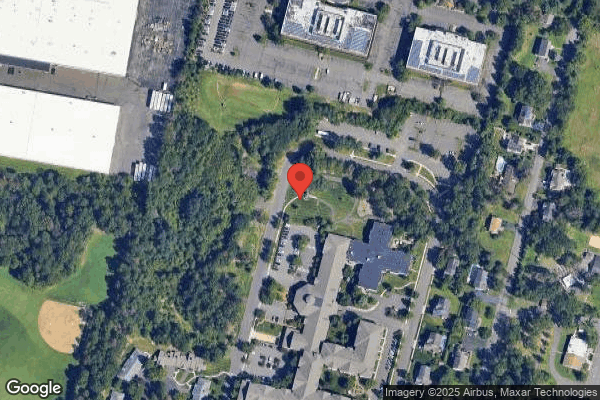
Jul 2023 7 deficiencies
CONCERN (D) 📢 Someone Reported This

A family member, employee, or ombudsman was alarmed enough to file a formal complaint

Potential for Harm - no one hurt, but risky conditions existed

Abuse Prevention Policies (Tag F0607)

Could have caused harm · This affected 1 resident

Deficiency Text Not Available

Read full inspector narrative →
Deficiency Text Not Available
CONCERN (D)

Potential for Harm - no one hurt, but risky conditions existed

ADL Care (Tag F0677)

Could have caused harm · This affected 1 resident

Based on observation, interview, and review of pertinent facility documents, it was determined that the facility failed to ensure a visually impaired resident who was dependent on staff for activities...

Read full inspector narrative →
Based on observation, interview, and review of pertinent facility documents, it was determined that the facility failed to ensure a visually impaired resident who was dependent on staff for activities of daily living (ADL) was physically assisted with meals to prevent weight loss. This deficient practice was identified for 1 of 15 residents reviewed for ADL care (Resident #13), and was evidenced by the following: On 7/10/23 at 12:17 PM, the surveyor observed Resident #13 in their room eating lunch feeding themselves. The resident questioned the surveyor several times what they were eating, they stated they could not see what was on the plate. The surveyor observed that the resident was eating a whole sweet potato and grilled chicken that was cut in large pieces, and part of the chicken was not cut all the way through and still intact whole; a salad with ranch dressing, pudding, macaroni salad, and an unopened container of apple juice and water. The surveyor observed an empty chair next to the resident's tray table, and the surveyor asked the resident if someone should be assisting them with feeding, and the resident stated no. The surveyor observed the resident pick-up food with a fork from the plate and dropped the food off the fork. The surveyor asked the resident if they had difficulty seeing, and they did not respond. On 7/10/23 at 12:20 PM, the surveyor interviewed the resident's Licensed Practical Nurse (LPN) who stated that Resident #13 was legally blind and could not see anything at all. The LPN continued that the resident was fed by staff because they had a poor appetite needing encouragement and could not see what was on the plate, so they often dropped food from their fork. The LPN stated the resident was not at risk for choking as to why they needed to be fed, but staff needed to physically sit with the resident to feed them. On 7/10/23 at 12:23 PM, the surveyor accompanied by the LPN went into the resident's room, and the LPN confirmed someone should be feeding Resident #13. The LPN introduced themselves to the resident and informed them that they would assist them with feeding as the resident confirmed they could not see what they were eating. The LPN opened the resident's apple juice and offered them a drink, which the resident accepted as the LPN proceeded to feed him/her. On 7/10/23 at 12:34 PM, the surveyor interviewed the resident's Certified Nursing Aide (CNA) who stated he generally took care of Resident #13 daily, so he was familiar with the resident. The CNA stated the resident had blurry vision, but he/she fed themselves as long as staff cut the food for them. The CNA stated that he did not have to feed the resident; he just had to bring in the tray and cut the food up. The surveyor asked the CNA how they were informed of the resident's ADL assistance needs, and the CNA brought the surveyor to the computer system at the wall. The CNA showed that he documented the level of assistance provided to the resident for their ADLs each shift, but he stated the program did not include what level of assistance the resident needed. The CNA went under the care plan tab in the computer system, which did not include the resident's feeding assistance needs. On 7/10/23 at 12:42 PM, the surveyor asked the Director of Nursing (DON) how the CNAs were informed of the level of assistance and care residents needed, the DON stated that the nurses received a daily report, and the aides could view the care plan. The DON provided the surveyor with a list of all residents, which included Resident #13 was a feeder. The surveyor asked the DON what a feeder meant, and she replied that someone would be physically assisting them with feeding. The surveyor asked how the CNA would be made aware, and she informed the surveyor to ask the Assistant Director of Nursing/Infection Preventionist (ADON/IP) who was also the staff educator. On 7/10/23 at 12:48 PM, the surveyor interviewed the ADON/IP who stated the nurses were aware of the resident's assistance needs for their ADLs from the report provided to the surveyor by the DON. The surveyor reviewed the report with the ADON/IP who confirmed Resident #13 was a feeder, so they needed assistance with feeding. The ADON/IP stated the nurse was responsible for letting the CNA know that, but if the CNA was their regular aide, then they should know that. The ADON/IP confirmed that the CNA did not have any task or report to know the resident's required ADL assistance. On 7/10/23 at 12:55 PM, the surveyor re-interviewed the LPN who confirmed she received a copy of that report that indicated Resident #13 was a feeder, but the CNA was not provided that report. On 7/10/23 at 1:01 PM, the DON informed the surveyor that the CNA would know the resident's ADL assistance needs in the Cares section of the computer program, and to ask the ADON/IP to show me. On 7/10/23 at 1:04 PM, the ADON/IP reviewed the Cares section of the computer program with the surveyor for Resident #13, and the ADON/IP confirmed it did not include the resident's need for physical assistance with meals. The surveyor reviewed the medical record for Resident #13. A review of the Face Sheet (admission summary) reflected that the resident was admitted to the facility in May of 2023 with diagnoses which included difficulty walking, dysphagia (difficulty swallowing), unspecified severe protein-calorie malnutrition, dementia, unspecified infantile and juvenile cataract to right eye (changes in the lens of eye cause it to become unclear and cloudy), dry eye syndrome of bilateral lacrimal glands (do not produce enough tears), and cataract extraction status (surgery removal of the cloudy lens from eye). A review of the admission Minimum Data Set (MDS), an assessment tool dated 6/3/23, reflected the resident had a brief interview for mental status (BIMS) score of 5 out of 15, which indicated a severely impaired cognition. A further review in Sect G. Functional Status, that the resident required extensive assistance of a one-person physical assist for eating. A review of the individualized comprehensive care plan effective 5/19/23 to present, that the resident had impaired vision. Interventions included to offer cues/assistance as needed such as identifying location of food on plate .A further review included a problem area for a decline in functional ADL. Interventions included physical, occupational speech therapy to evaluate and treat per physician order, assist with feeding; identify level of assistance needed and complete resident summary or nursing assistant assignment of care. A review of the July 2023 Physician Order Sheet included a physician's order dated 5/23/23, to assist with meals. The surveyor reviewed the CNA Assignment sheets from 7/1/23 until 7/10/23, the date of the observation, which revealed the CNA was assigned to Resident #13 on 8 of the 10 days. On 7/14/23 at 9:34 AM, the DON in the presence of the Licensed Nursing Home Administrator (LNHA), ADON/IP, and survey team confirmed that Resident #13 should have been assisted by staff with meals, which included a staff member being present. A review of the facility provided Activities of Daily Living (ADL), Supporting policy dated revised March 2018, included residents will be provided with care, treatment and services as appropriate to maintain or improve their ability to carry out activities of daily living (ADLs). Residents who are unable to carry out activities of daily living independently will receive the services necessary to maintain good nutrition, grooming, and personal and oral hygiene .appropriate care and services will be provided for residents who are unable to carry out ADLs independently, with consent of the resident and in accordance with plan of care, including appropriate support and assistance with: .d. dining (meals and snacks) . NJAC 8:39-27.1(a)
CONCERN (D)

Potential for Harm - no one hurt, but risky conditions existed

Food Safety (Tag F0812)

Could have caused harm · This affected 1 resident

Based on observation, interview, and review of pertinent facility documentation, it was determined that the facility failed to a.) handle potentially hazardous foods and maintain sanitation in a safe,...

Read full inspector narrative →
Based on observation, interview, and review of pertinent facility documentation, it was determined that the facility failed to a.) handle potentially hazardous foods and maintain sanitation in a safe, consistent manner designed to prevent foodborne illness and b.) maintain kitchen equipment in a manner to prevent microbial growth. This deficient practice was evidenced by the following: On 7/7/23 at 10:14 AM, the surveyor toured the kitchen with the Executive Chef and observed the following: 1. On a rack in the walk-in freezer, six baked pies, not dated or covered. The pies were exposed to air. The Executive Chef confirmed the pies should be dated and covered. 2. On a drying rack, one large white cutting board discolored yellow and deeply pitting. The Executive Chef confirmed the cutting board should be discarded because of the potential for bacterial growth. The Executive Chef stated that cutting boards were usually discarded after six months of use, but he could not speak to the last time cutting boards were changed. 3. On a spice storage rack, one 32-ounce (oz) bottle of lime juice labeled opened 6/26/23. The packaging indicated to refrigerate after opening. 4. On a spice storage rack, one 48-oz bottle of lemon juice dated received 6/27/23. The Executive Chef confirmed the bottle was opened and not dated when opened. The packaging indicated to refrigerate after opening. 5. On a storage rack under the preparation table, four large white, two large green, and six large red cutting boards. The cutting boards were all deeply pitted and discolored. The Executive Chef confirmed they should not be used. 6. In dry storage, one bulk container of thickener that contained a scoop stored directly in the thickener. The Executive Chef confirmed scoops should not be stored inside the bins. On 7/14/23 at 9:34 AM, the Licensed Nursing Home Administrator (LNHA) in the presence of the Director of Nursing (DON), Assistant Director of Nursing (ADON), and survey team acknowledged the above concerns. A review of the facility provided Sanitation policy dated 2013, included it is the policy of the community to store, prepare, distribute and serve food under sanitary conditions . A review of the facility provided Food Storage policy dated 2013, included .all exposed foods should be stored tightly covered . A review of the undated facility provided Labeling and Dating policy included .pies and cakes desserts made in house once product has been made in house, it will be marked with an expiration date of three days from when the product was made . A review of the facility provided Equipment Maintenance policy dated 2013, included .all food service equipment will be operated, maintained, serviced and cleaned according to manufacturer's directions. NJAC 8:39-17.2(g)
CONCERN (D)

Potential for Harm - no one hurt, but risky conditions existed

Infection Control (Tag F0880)

Could have caused harm · This affected 1 resident

Based on observation, interview, and review of pertinent facility documentation, it was determined that the facility failed to ensure their infection control policies were followed and maintained for ...

Read full inspector narrative →
Based on observation, interview, and review of pertinent facility documentation, it was determined that the facility failed to ensure their infection control policies were followed and maintained for water management to minimize the risk of legionella and other opportunistic pathogens in building water systems. This deficient practice had the potential to affect all 42 residents and was evidenced by the following: On 7/13/23 at 9:47 AM, the surveyor interviewed the Director of Facilities (DOF) who stated that he was not sure how often the facility tested the water for legionella (bacteria that can cause a serious type of pneumonia), that the facility had a scheduled testing in August. The DOF stated he was not aware when legionella testing was last done in the facility and would reach out to the Licensed Nursing Home Administrator (LNHA) in order to obtain that information. On 7/13/23 at 2:00 PM, the survey team met with the LNHA, Director of Nursing (DON) and Infection Preventionist/Assistant Director of Nursing (IP/ADON) and requested further information regarding the facility's water management program for legionella including a copy of the policy and any testing completed if applicable. On 7/14/23 at 9:35 AM, the LNHA in the presence of the DON and IP/ADON, provided the survey team with a copy of the facility's undated water management program, and confirmed that it was facility policy to test annually for legionella. The LNHA stated that he was unable to locate any pervious water testing for legionella; that he did not know where the previous Director of Facilities stored the documentation. At this time, the IP/ADON informed the survey team it was important to test the water for legionella because any bacteria in the water could be widespread and could cause gastrointestinal upset. The ADON/IP stated he had spoken to the Medical Director who stated the facility would conduct additional legionella testing if the residents were symptomatic. A review of the undated facility provided Legionella Water Management Program policy included .our facility is committed to the prevention, detection and control of water-borne contaminants, including legionella .the purposes of the water management program are to identify areas in the water system where legionella bacteria can grow and spread, and to reduce the risk of Legionnaire's Disease .the water management program used by our facility is based on the Centers for Disease Control and Prevention and ASHRAE recommendations for developing a legionella water management program .the Water Management Program will be reviewed at least once a year . A review of the Centers for Disease Control and Prevention (CDC) Water Management in Healthcare Facilities dated last reviewed March 25, 2021, included the CDC encourages healthcare facilities included in the scope of ASHRAE Standard 188 (Section 5.2) to develop and implement comprehensive water management programs. Water management programs can help reduce the risk of legionella growth and transmission. Water management programs should therefore be monitored for their efficacy in reducing the risk for a variety of pathogens. NJAC 8:39-19.1; 19.4
CONCERN (D)

Potential for Harm - no one hurt, but risky conditions existed

Deficiency F0947 (Tag F0947)

Could have caused harm · This affected 1 resident

Based on interview and review of pertinent facility documents, it was determined that the facility failed to maintain an effective tracking system to ensure that Certified Nursing Aides (CNA) received...

Read full inspector narrative →
Based on interview and review of pertinent facility documents, it was determined that the facility failed to maintain an effective tracking system to ensure that Certified Nursing Aides (CNA) received twelve hours of mandatory in-service training. This was identified for 4 of 5 CNA files reviewed for in-service education training (CNA #1, #3, #4, and #5) and was evidenced by the following: On 7/12/23 at 2:10 PM, the surveyor requested from the Director of Nursing to provide all education from 2022 for five randomly selected CNAs (CNA #1; #2; #3; #4; and #5). On 7/13/23 at 9:05 AM, the Licensed Nursing Home Administrator (LNHA) provided the survey team with education for the five selected CNAs with education dates which included both 2022 and 2023. At this time, the surveyor requested again the education provided in 2022. On 7/13/23 at 12:03 PM, the surveyor reviewed the 2022 education and in-service training provided by the facility. Review of the documents revealed the following: CNA #1 with a date of hire of 1/2/19, received 2.75 education hours for 2022, which included infection control and LGBTQ+ trainings. CNA #2 with a date of hire of 11/19/18, received 28 education hours for 2022. CNA #3 with a date of hire of 11/24/17, received 28 education hours for 2022, which included infection control, Health Insurance Portability and Accountability Act (HIPPA) Basics, Elder Justice Act, and LGBTQ+ trainings. CNA #4 with a date of hire of 10/11/11, received 0.75 education hours for 2022, which included LGBTQ+ training only. CNA #5 with a date of hire of 7/24/21, received 10.05 education hours for 2022, which included infection control, abuse and neglect, dementia care, and LGBTQ trainings. On 7/13/23 at 12:51 PM, the DON stated during an office move last year, the Assistant Director of Nursing/Infection Preventionist (ADON/IP) was also the staff educator, misplaced a box that contained staff education from 2022. On 7/14/23 at 8:51 AM, the surveyor interviewed the ADON/IP who confirmed he was the staff educator as well with the responsibility to ensure all staff were in-serviced. The ADON/IP stated staff were mandated twelve hours of education with mandatory topics which included abuse and neglect, HIPPA, emergency preparedness, dementia care, and infection control. The ADON/IP stated he was conducting in-services on paper and then inputting the information into the computer in-service training program for 2022, but lost the binder during renovations before he finished inputting the in-services into the system. This year he was just putting all the in-services directly into the computer in-service education system, and started this year to catch-up on missing mandatory trainings. On 7/15/23 at 9:34 AM, the LNHA in the presence of the DON, ADON/IP, and survey team stated there had been no allegations of abuse made towards any of the five CNAs missing education hours. At this time, the ADON/IP confirmed there were no additional education hours that could be provided for the five CNAs for 2022; that all CNAs should have a minimum of twelve hours of education yearly which included mandatory topics. A review of the facility provided In-Service Training Program, Nurse Aide policy dated revised October 2017, included . annual in-services must: be no less than twelve hours per employment year; address any weakness as determined by nurse aide performance reviews; include training that addresses the care of residents with cognitive impairment; and include training in dementia management . NJAC 8:39-43.17(b)
CONCERN (F)

Potential for Harm - no one hurt, but risky conditions existed

Deficiency F0730 (Tag F0730)

Could have caused harm · This affected most or all residents

Based on interview and review of pertinent facility documents, it was determined that the facility failed to conduct yearly performance reviews of Certified Nursing Aides (CNA) in order to provide spe...

Read full inspector narrative →
Based on interview and review of pertinent facility documents, it was determined that the facility failed to conduct yearly performance reviews of Certified Nursing Aides (CNA) in order to provide specific education based on the outcomes of the reviews. This deficient practice was identified for 5 of 5 CNAs whose personnel records were reviewed, and was evidenced by the following: On 7/12/23 at 2:10 PM, the surveyor requested from the Director of Nursing to provide the most recent performance evaluation for five randomly selected Certified Nursing Aides (CNA #1; #2; #3; #4; and #5). On 7/13/23 at 9:05 AM, the Licensed Nursing Home Administrator (LNHA) provided the survey team with the five selected CNAs performance evaluations. The LNHA stated the facility had not completed any performance evaluations for the employees since 2021, that the facility wanted to change their performance evaluation process from completing on the date of the employees anniversary to a set date for the year for all employees. The surveyor reviewed the performance evaluations provided by the LNHA which revealed the following: 1. CNA #1 was hired on 1/2/19. The last performance evaluation was completed January 2021, and signed by the employee on 1/15/21. 2. CNA #2 was hired on 11/19/18. The last performance evaluation was completed 12/13/21, and signed by the employee on 12/13/21. 3. CNA #3 was hired on 11/24/17. The last performance evaluation was completed on 2/11/21, and signed by the employee on 2/11/21. 4. CNA #4 was hired on 10/11/11. The last performance evaluation was completed December 2020, and signed by the employee on 12/7/2020. 5. CNA #5 was hired on 7/24/21. There was no performance evaluation provided. On 7/14/23 at 8:37 AM, the surveyor interviewed the LNHA who stated that Human Resources (HR) was responsible for performance evaluations in combination with the Director of Nursing (DON) and himself. On 7/14/23 at 8:56 AM, the surveyor conducted a telephone interview with HR, who confirmed she was responsible for performance evaluations. HR stated that the facility identified performance evaluations were not being completed yearly, that no evaluations were completed in 2022. HR stated that the facility has piloted a program that all employees were to be reviewed at the same time each year for consistency. At this time, there are no completed evaluations. On 7/14/23 at 9:34 AM, the LNHA in the presence of the DON, Assistant Director of Nursing/Infection Preventionist (ADON/IP), and survey team confirmed there were no additional performance evaluations; that they were not completed annually as required. A review of the facility provided In-Service Training Program, Nurse Aide policy dated revised October 2017, included the facility will complete a performance review of nurse aides at least every twelve months. In-service training will be based on the outcome of the annual performance reviews, addressing weakness as identified in the reviews . NJAC 8:39-43.17(b)
CONCERN (F)

Potential for Harm - no one hurt, but risky conditions existed

Deficiency F0802 (Tag F0802)

Could have caused harm · This affected most or all residents

Based on observations, interviews, and review of pertinent facility documents, it was determined that the facility failed to ensure dietary staff had the appropriate competencies and skill sets to eff...

Read full inspector narrative →
Based on observations, interviews, and review of pertinent facility documents, it was determined that the facility failed to ensure dietary staff had the appropriate competencies and skill sets to effectively use and maintain the facility's high temperature dish machine. This deficient practice had the potential to affect all residents, and was evidenced by the following: During a follow-up visit to kitchen on 7/13/23 10:09 AM, the surveyor conducted an inspection of the dish machine, that was not currently in use, in the presence of the Executive Chef. The Executive Chef stated the facility utilized a high temperature dish machine and the gauges should read minimum of 160 degrees Fahrenheit (F) for wash and minimum of 180 F for rinse. The Executive Chef sent an empty tray through the dish machine, and the surveyor observed the wash gauge which read 150 F and the rinse gauge that read 148 F. The surveyor questioned the temperatures, and the Executive Chef stated that he might be mistaken, that the machine might be a low temperature dish machine that utilized a chemical sanitizing solution that required lower temperatures. The Executive Chef picked up a bottle that contained a pink solution which he stated was sanitizer. At this time, the surveyor requested to see the facility's dish machine temperature log for the month of July 2023. The surveyor reviewed the July 2023 High Temperature Dishwasher Log in the presence of the Executive Chef which revealed for the month of July, the final rinse was recorded between 145-165 F when checked three times a day. The log indicated final rinse should be between 180-190 F; to report temperatures higher than 190 F or below 180 F for the final rinse to the manager. The Executive Chef, who during a previous kitchen visit informed the surveyor that he had worked at the facility for eight months now, stated that he was unsure the type of dish machine used at the facility, and he needed to contact the [Dish Machine Repair Company] to follow-up and he would let the surveyor know. On 7/13/23 at 2:10 PM, the surveyor in the presence of the survey team, informed the Licensed Nursing Home Administrator (LNHA), Director of Nursing (DON), and the Assistant Director of Nursing/Infection Preventionist (ADON/IP) that they were still waiting to hear back from the Executive Chef what type of dish machine the facility used. The LNHA informed the survey team that he was unsure the type of dish machine the facility used, but the [Dish Machine Repair Company] was currently in the kitchen. At this time, the surveyor requested to speak with the Dish Machine Repair Employee #1. On 7/13/23 at 2:19 PM, the Food Service Director (FSD) in the presence of the LNHA, DON, and ADON/IP informed the survey team that from my understanding the dish machine was high temperature. The FSD stated that Dish Machine Repair Employee #1 conducted a test with a digital temperature recording plate that measured the maximum surface temperature in the dish machine which was 160 F that was okay. The surveyor informed the FSD that the July 2023 High Temperature Dishwasher Log for the entire month was recorded that the dish machine did not reach 180 F for the entire month. The FSD acknowledged this. On 7/13/23 at 2:20 PM, Dish Machine Repair Employee #1 in the presence of the FSD, LNHA, DON, and ADON/IP informed the survey team that the facility had a high temperature dish machine that should reach 160 F for the wash cycle and 180 F for the final rinse cycle. Dish Machine Repair Employee #1 stated that when he tested the internal temperature of the machine using digital temperature recording plate, the surface temperature reached 160 F which was acceptable per federal code, and in his opinion, the gauges were not operating correctly. At this time the surveyor requested to view the test. On 7/13/23 at 2:32 PM, Dish Machine Repair Employee #1 in the presence of the surveyor, FSD, and Executive Chef ran the digital temperature recording plate through the high temperature dish machine. The surveyor observed the gauges on the dish machine to read 155 F for wash and 148 F for rinse, and the digital temperature recording plate indicated the surface temperature was 160 F. Dish Machine Repair Employee #1 showed the surveyor the manufacturer's specifications which indicated at 160 F, the temperature effectively sanitized ware surfaces in accordance with the Food and Drug Administration (FDA) Food Code section 4-501. On 7/13/23 at 2:32 PM, the surveyor in the presence of the Executive Chef and FSD interviewed Utility Worker #1 who stated he worked at the facility for almost a year, and his job along with Utility Worker #2 was to wash dishes. Utility Worker #1 stated he recorded the dish machine temperatures yesterday, but Utility Worker #2 completed the log for today. Utility Worker #1 stated that he thought the temperatures needed to be between 160 F and 180 F, that the temperatures were not specific for the wash and rinse, just a temperature range. Utility Worker #1 stated that the wash temperature usually went up to 170 F. The surveyor reviewed the High Temperature Dishwasher Log with Utility Worker #1 and showed him where it indicated final rinse 180-190 F. Utility Worker #1 stated that he was aware the log indicated 180 F, but no one at the facility educated him that the temperature had to be above 180 F. At this time, the FSD and Executive Chef confirmed they educated kitchen staff with in-services and confirmed they had not conducted a dish machine in-service. The FSD and Executive [NAME] both confirmed they do not review the High Temperature Dishwasher Log unless staff gave it to them. At this time, the surveyor reviewed the May and June 2023 High temperature Dishwasher Logs with the FSD, which revealed for the months of May and June, temperatures were recorded within acceptable range. The FSD confirmed the recorded temperatures in question were just for the month of July 2023. On 7/13/23 at 2:47 PM, the Executive Chef in the presence of the LNHA informed the surveyor that Dish Machine Repair Employee #1 contacted the usual service technician (Dish Machine Repair Employee #2) who informed them that there was a third gauge located towards the back of the dish machine that recorded the final rinse temperature, that no one was aware of. The Executive Chef stated that gauge was reading 180 F. The Executive Chef confirmed no one in the kitchen was aware of this gauge, and he acknowledged that was concerning. On 7/14/23 at 9:10 AM, the surveyor observed the FSD with Dish Machine Repair Employee #1 and Dish Machine Repair Employee #2 at the facility's dish machine. Dish Machine Repair Employee #2 stated that the two water gauges in the front of the dish machine were the internal temperature gauges for the wash cycle, and the third temperature gauge towards the back of the machine recorded the final rinse temperature which had to be 180 F. Dish Machine Repair Employee #2 stated the facility only had a high temperature dish machine meaning that the final rinse needed to reach 180 F to sanitize; that the machine did not use a chemical sanitizing solution. Dish Machine Repair Employee #2 stated that the pink solution the Executive Chef mistook for sanitizer, was dish detergent and did not sanitize. The surveyor observed an empty dish rack run through the dish machine and the final rinse gauge read 180 F. At this time, the FSD stated that the facility had utilized paper products since surveyor inquiry yesterday while the [Dish Machine Repair Company] has been here. The FSD acknowledged that he was unaware of the third water gauge that was for the final rinse temperature; as well as no other staff in the kitchen was aware. On 7/14/23 at 9:34 AM, the LNHA in the presence of the DON, ADON/IP, and survey team confirmed the facility had been utilizing paper products since survey inquiry; that there have been no reported gastrointestinal issues for the month for residents. The LNHA acknowledged the above concerns. No additional information was provided as to how the High Temperature Dishwasher Logs of May and June of 2023 where documented within acceptable range. The facility did not provide any dish machine in-services conducted prior to surveyor inquiry. A review of the facility provided Sanitation policy dated 2013, included .utility workers will be trained in the proper use of the dish machine and three-compartment sinks. Dish machine temperatures will be taken three times a day and recorded in log . NJAC 8:39-17.1(a)
Apr 2023 2 deficiencies
CONCERN (D) 📢 Someone Reported This

A family member, employee, or ombudsman was alarmed enough to file a formal complaint

Potential for Harm - no one hurt, but risky conditions existed

Deficiency F0658 (Tag F0658)

Could have caused harm · This affected 1 resident

**NOTE- TERMS IN BRACKETS HAVE BEEN EDITED TO PROTECT CONFIDENTIALITY** Complaint #: NJ00163106 Based on interviews, and record review, as well as review of pertinent facility documents on 4/6/23 and ...

Read full inspector narrative →
**NOTE- TERMS IN BRACKETS HAVE BEEN EDITED TO PROTECT CONFIDENTIALITY** Complaint #: NJ00163106 Based on interviews, and record review, as well as review of pertinent facility documents on 4/6/23 and 4/10/23, it was determined the facility failed to; a. administer medications according to Physician orders (PO) and notify the Physician for not administering the medication; b. to provide the correct diet according to the PO in accordance with the current standards of practice and facility protocol for 1 of 4 residents (Resident #2) reviewed. This deficient practice is evidenced by the following: 1. According to the facility Face Sheet (FS) Resident #2 was admitted on [DATE] and discharged on 2/24/23 with diagnoses that included but were not limited to: Dysphagia and Seizures. The care plan (CP), undated, revealed that Resident #2 had diagnoses of Seizure Disorder and Dysphagia. Interventions included but were not limited to: Give medications as ordered and liquids should be thickened to nectar consistency. a. The February 2023 Physician Order Sheet (POS), dated 2/23/23 reflected a PO for Levetiracetam (Keppra) tablet 750 milligrams (mg) give 1 tablet by mouth two times a day for Epileptic Syndromes with Seizures of Localized Onset. The February 2023 MEDICATIONS (medication administration record) (MAR) reflected the aforementioned order for Keppra. However, on 2/23/23 at 9:00 pm and on 2/24/23 at 9:00 am the MAR was initialed by a nurse and grayed out. Review of the My Unity EMR [electronic medical record] indicated that if the MAR was grayed out, the medication was not administered. Review of Resident #2's progress notes (PN) did not indicate that Keppra was/was not administered or that the Physician was notified that the Keppra was not administered on 2/23/23 at 9:00 pm and on 2/24/23 at 9:00 am. During the interview with the surveyor on 4/6/23 at 3:00 pm, Registered Nurse (RN #1), who worked on 2/23/23 during 3:00 pm to 11:00 pm shift, confirmed that Resident #2 was admitted on [DATE] during 3:00 pm to 11:00 pm shift. The RN stated that the resident's medications/orders were reconciled and approved by the resident's primary physician. RN #1 further stated that the orders was faxed to the pharmacy on 2/23/23 (unable to recall time). RN #1 stated that Keppra was not administered because it was not delivered from the pharmacy and was not available in the facility's back up medication box. RN #1 was unable to recall if he notified the physician that the Keppra was not administered. During the interview with the surveyor on 4/10/23 at 11:24 am, the Licensed Practical Nurse (LPN#1), who worked on 2/24/23 during 7:00 am to 3:00 pm shift, confirmed that the 9:00 am dose of Keppra was not administered to Resident #2 because the medication was not available and it was not available in the facility's medication back up box. LPN #1 stated that he did not remember if he called the Pharmacy and the primary physician to notify them that the medication Keppra was not delivered or that the medication was not administered to Resident #2. He also stated that he did not document the reason why the medication was not administered in the progress notes (PN) because there was so many things going on. During the interview with the surveyor on 4/6/23 and 4/10/23, the Director of Nursing (DON) stated that Keppra was not administered to Resident #2 because the medication was not delivered from the pharmacy on 2/23/23 and 2/24/23. The DON further stated that the nurse should have called the pharmacy to inquire why it was not delivered, notified the physician that the medication was not given and documented the notification in the MR. During the interview with the surveyor on 4/10/23 at 12:42 pm. the physician stated she was not made aware that the medication Keppra was not administered to Resident #2 on 2/23/23 and 2/24/23. b. Review of the February 2023 Physician Order Sheet, dated 2/23/23 reflected a diet order for Cardiac diet, Puree Texture, and Nectar Thicken Liquids (NTL). Review of Resident #2's DIET ORDER & COMMUNICATION (DOC) provided to the kitchen by Registered Nurse (RN #1), dated 2/23/23 at 4:15 pm reflected that the resident's DIET ORDER was Cardiac and TEXTURE was Pureed and Thin Liquids (instead of NTL) which was not according to the POS. During the interview with the surveyor on 4/6/23 at 3:08 pm, RN #1 confirmed that Resident #2 was admitted on [DATE] during 3:00 pm to 11:00 pm shift. The RN stated that the resident's orders were reconciled and approved by the resident's primary physician. However, the RN stated that the DOC ticket was sent to the kitchen was for Thin liquids instead of the physician ordered Nectar Thicken Liquids. The RN explained that the POs were not double-checked with another nurse because the staff were busy. The surveyor conducted an interview with the Dietary Supervisor (DS) on 4/6/23 at 3:38 pm. The DS revealed that on 2/23/23 during dinner time, Resident #2's tray was prepared with a regular diet instead of the physician ordered Puree diet, which was not according to the DOC. The DS further revealed that she received a call from the nurse's station asking her to replace the resident's tray according to the DOC. The DS prepared and delivered the second tray according to the DOC Puree and Thin Liquids. However, upon delivering the second tray to the resident's room the responsible party (RP) noted that the water consistency was incorrect, and the DS reported it to the nurse. According to the DS, she replaced the thin liquids with NTL Review of the facility Concern/Grievance Form (CGF), dated 2/24/23, reflected that the resident's responsible party (RP) reported that [Resident #2] had not received [her/her] Keppra medication, and that [she/he] had been given the wrong diet order the previous night. The CGF indicated that the Dietary and the Director of Nursing were informed of the concerns. The CGF further indicated dietician reports that tray was removed immediately, and appropriate diet was provided. Resident did not consume any part of the wrong diet .DON reports waiting for delivery of the medication. DON is to have medication in our back up box. Review of the facility My Unity EMR [Electronic Medication Report] Legend, undated, reflected 1. MAR's [Medication Administration Record] that are printed or viewed on a computer screen will have the following appearance .B. If a medication was not administered the initial will be present but the box next to the administration time will be grayed out. The facility policy titled Administering Medications, dated 12/2012, reflected Policy Statement Medications shall be administered in a safe and timely manner, and as prescribed .3. Medications must be administered in accordance with the orders, including any required time frame. 4. Medications must be administered within one (1) power of their prescribed time, unless otherwise the specified (for example, before and after meal orders) . NJAC 8:39-11.2(b) NJAC 8:39-27.1(a)
CONCERN (D) 📢 Someone Reported This

A family member, employee, or ombudsman was alarmed enough to file a formal complaint

Potential for Harm - no one hurt, but risky conditions existed

Deficiency F0805 (Tag F0805)

Could have caused harm · This affected 1 resident

**NOTE- TERMS IN BRACKETS HAVE BEEN EDITED TO PROTECT CONFIDENTIALITY** Complaint #: NJ00163106 Based on interviews, and record review, as well as review of pertinent facility documents on 4/6/23 and ...

Read full inspector narrative →
**NOTE- TERMS IN BRACKETS HAVE BEEN EDITED TO PROTECT CONFIDENTIALITY** Complaint #: NJ00163106 Based on interviews, and record review, as well as review of pertinent facility documents on 4/6/23 and 4/10/23, it was determined the facility failed to provide the correct diet consistency according to the physician's order for 1 of 4 sampled residents (Resident #2) reviewed for diet consistency. This deficient practice is evidenced by the following: 1. According to the facility Face Sheet (FS) Resident #2 was admitted on [DATE] and discharged on 2/24/23 with diagnosis that included but was not limited to: Dysphagia. The care plan (CP), undated, revealed that Resident #2 had Dysphagia. Interventions included but was not limited to: Liquids should be thickened to nectar consistency. Review of the February 2023 Physician Order Sheet (POS), dated 2/23/23 reflected a diet order for Cardiac diet, Puree Texture, and Nectar Thicken Liquids (NTL). Review of the facility Concern/Grievance Form (CGF), dated 2/24/23, reflected that the resident's responsible party (RP) reported that [she/he] had been given the wrong diet order the previous night. The CGF indicated that the Dietary department and the Director of Nursing (DON) were informed of the aforementioned concern. The CGF further indicated dietician reports that tray was removed immediately and appropriate diet was provided. Resident did not consume any part of the wrong diet . Review of Resident #2's DIET ORDER & COMMUNICATION (DOC) provided to the kitchen by Registered Nurse (RN #1), dated 2/23/23 at 4:15 pm reflected that the resident's DIET ORDER was Cardiac and TEXTURE was Pureed and Thin Liquids which was not according to the POS. During the interview with the surveyor on 4/6/23 at 3:08 pm, Registered Nurse (RN #1) revealed that prior to the resident ' s admission, he received a call from the sending hospital on 2/23/23 regarding the resident ' s information ' s which included but not was limited to the resident ' s diet which was Pureed and thin liquids. The RN explained he prepared and provided the DOC ticket to the kitchen prior to the resident ' s arrival. The RN further explained that Resident #2 was admitted on [DATE] during 3:00 pm to 11:00 pm shift, the resident's medications/orders were reconciled and approved by the resident's primary physician but was not double-checked with another nurse, per facility protocol, because the staff were busy and didn ' t have time to double-check the diet order versus the DOC ticket. RN #1 stated that the DOC ticket he sent to the kitchen was Puree and thin liquids instead of the physician ordered Puree and NTL. The RN further stated that on 2/23/23 during dinner (unable to recall exact time), the kitchen prepared and delivered a wrong diet to the resident, which consisted of a regular diet (whole chicken leg) and thin liquids instead of the physician ' s ordered diet of Puree and NTL. The RN confirmed that he did not feed Resident #2 with the regular diet and thin liquid, the tray was untouched and a replacement with the correct diet was brought up. The RN stated that Resident #2 required total assistance during care and was not able to feed herself/himself. The surveyor conducted an interview with the Dietary Supervisor (DS) on 4/6/23 at 3:38 pm. The DS revealed that on 2/23/23 during dinner time, Resident #2 ' s tray was prepared with a regular diet instead of Puree which was not according to the DOC. The DS further revealed that she received a call from the nurse ' s station asking her to replace the resident ' s tray according to the DOC. The DS prepared and delivered the second tray according to the DOC Puree and Thin Liquids. However, upon delivering the second tray to the resident's room the responsible party (RP) noted that the water consistency was incorrect, and the DS reported it to the nurse. According to the DS, she replaced the thin liquids to nectar thicken liquids. The surveyor conducted an interview with the Certified Nursing Assistant (CNA #1) on 4/10/23 at 11:06 am. CNA #1 confirmed that Resident #2 required total care and was unable to feed him/herself. The CNA stated that the kitchen delivered the wrong diet, the tray had whole chicken leg and thin liquids. I didn't feed the resident; I was removing the tray from [Resident #2] room when RP walked into the room. Review of the Dietary Aide job description, dated 4/2015, indicated GENERAL SUMMARY: The Dietary Aide is responsible for preparing and serving therapeutic diet trays to Health Center residents in accordance with posted therapeutic diet menus. the dietary aid is also responsible for maintaining safety and sanitation regulation at all times. During the interview with the surveyor on 4/6/23 at 10:42 am, the Health Care Kitchen Manager (HCKM) stated that the kitchen aides (KA) were to prepare food according to the DOC ticket. The KA ' s had to look at the DOC ticket and prepare according to the DOC. Review of HealthCare Dietary Aid Job Flow, undated, reflected under Job Flow Position 3 .You are the checker. Check food against ticket. What is their therapeutic diet? Are they on a mechanically altered diet? Are they on Thickened liquids? Do they have a fluid restriction? Have their preferences been met . Review of the Tray Line Training, undated, reflected Puree: all foods are pureed to stimulate a soft food bolus eliminating the whole chewing phase. NJAC 8:39-17.4(a)(1)(2)
Jan 2023 2 deficiencies
CONCERN (D) 📢 Someone Reported This

A family member, employee, or ombudsman was alarmed enough to file a formal complaint

Potential for Harm - no one hurt, but risky conditions existed

Notification of Changes (Tag F0580)

Could have caused harm · This affected 1 resident

**NOTE- TERMS IN BRACKETS HAVE BEEN EDITED TO PROTECT CONFIDENTIALITY** Complaint #NJ156388 Based on interviews, review of the facility policy, and record review, the facility failed to notify the res...

Read full inspector narrative →
**NOTE- TERMS IN BRACKETS HAVE BEEN EDITED TO PROTECT CONFIDENTIALITY** Complaint #NJ156388 Based on interviews, review of the facility policy, and record review, the facility failed to notify the responsible party (RP) of incidents of a resident altercation, aggressiveness, and transfers to the hospital for 1 (Resident #1) of 3 residents sampled for notification of changes. Findings included: A review of the facility's policy titled, Change in a Resident's Condition or Status, revised May 2018 indicated, Unless otherwise instructed by the resident, the Nurse Supervisor/Charge Nurse will notify the resident's family or representative (sponsor) when: a. The resident is involved in any accident or incident that results in an injury including injuries of an unknown source; b. There is significant change in the resident's physical, mental, or psychosocial status; c. There is a need to change the resident's room assignment; d. A decision has been made to discharge the resident from the facility; and/or e; It is necessary to transfer the resident to a hospital/treatment center. A review of the Face Sheet indicated the facility admitted Resident #1 with diagnoses that included seizures, bladder cancer, hypertension, depression, persistent mood disorders, and other conduct disorders. The Face Sheet also identified the RP as the person that had all responsibility for Resident #1. There was only one RP listed on the Face Sheet. A review of the quarterly Minimum Data Set (MDS) for Resident #1, dated 05/16/2022, indicated the resident had a Brief Interview for Mental Status (BIMS) score of 3, which indicated the resident was severely cognitively impaired. No behaviors were identified on the MDS. The MDS indicated Resident #1 required supervision for locomotion on the unit and eating, limited assistance for locomotion off the unit, and extensive assistance for bed mobility, transfers, dressing, toilet use, and personal hygiene. Resident #1 had no psychiatric/mood disorders identified on the MDS. A review of the Care Plan for Resident #1, revised on 07/06/2022, indicated the resident had a problem area of poor cognition and had disorders that manifested by verbal distress. The care plan indicated the resident wandered and had alteration in mood related to depression. The care plan further indicated on 07/06/2022 the resident had approached another resident and slapped the resident. The interventions included assessing the potential causes for deterioration to include lack of sleep, medication change, illness, and/or change in routine. Review of the Clinical Notes, dated 07/07/2022 at 2:12 AM, indicated at 4:30 PM the unit clerk reported to the nurse that Resident #1 was sitting at the unit secretary's desk and approached another resident and slapped the resident's face with an open hand. The nurse documented Resident #1's RP would be notified of the incident the following morning. At 11:38 AM on 07/07/2022, the clinical notes indicated the resident had no further behavioral issues. Review of the clinical notes revealed there were no further notes for Resident #1 until 07/10/2022. There was no documentation that Resident #1's RP had been notified of the 07/07/2022 incident involving Resident #1. A review of the Clinical Notes, dated 07/10/2022 at 3:48 PM, indicated Resident #1 received every half hour checks, where the resident was observed and redirected as needed when the resident attempted to go in other residents' rooms. There was no documentation that indicated the RP was made aware of the 07/07/2022 incident. The review of the Clinical Notes, dated 07/11/2022 at 4:57 PM, indicated Resident #1 continued to attempt to enter other residents' rooms and refused vital signs. There was no documentation that Resident #1's RP was made aware of the wandering or refusal of care. A review of the New Jersey Universal Transfer Form, dated 07/11/2022, with no time entered, revealed Resident #1 had two episodes of aggression toward other residents. The form had the RP's name and telephone number listed, but there was no indication the RP had been notified of the transfer. A review of the Clinical Notes, dated 07/14/2022 at 10:08 PM indicated Resident #1 had exhibited aggressive behavior toward another resident during the day shift. The note indicated both the resident's psychiatrist and the primary care physician were notified and ordered Resident #1 to be transferred to the hospital emergency department for evaluation. There was no documentation Resident #1's RP was notified of the resident's transfer to the hospital. Registered Nurse (RN) #4 was interviewed on 01/21/2023 at 3:05 PM. The nurse stated she notified the physician and RP for a resident that refused care, onset of behaviors, when medications changed, a change in condition, and when a resident was transferred to the hospital. RN #6 was interviewed on 01/21/2023 at 3:57 PM. The nurse stated family members were notified when a resident's medications were changed, physical status changed, and before being sent to the hospital. The nurse stated Resident #1 was transferred to the hospital on [DATE] due to the resident's behavior becoming unmanageable. RN #6 stated he worked the day the resident was transferred, but he had not called Resident #1's RP. The nurse stated that prior to his arrival, the Director of Nursing (DON) and Resident #1's RP had a conversation, and the RP knew the resident was being sent to the hospital. RN #8 was interviewed on 01/21/2023 at 5:05 PM. RN #8 stated she provided notification to the MD and the RP when a resident was transferred to the hospital, after falls, development of wounds, skin tears, any change in condition, and changes in medication. Resident #1's RP was interviewed by phone on 01/22/2023 at 12:20 PM. The RP stated the resident had been sent to the hospital in July 2022 for behaviors and to receive a psychiatric evaluation. The RP stated he/she had no notification about Resident #1's transfer to the hospital and only found out the resident had been discharged when the hospital called to let him/her know Resident #1 would be returning to the facility. The RP stated he/she called the DON and asked why he/she had not received notification of the transfer and asked that the DON alert him/her when the resident arrived back in the facility. Resident #1's RP stated he/she heard nothing more from the facility. The RP stated at 9:30 PM on 07/12/2022, he/she called the facility to see if the resident had arrived and was told by RN #10 that Resident #1 had arrived at the facility but had immediately been sent back to the hospital due to arriving in the facility in four point restraints. RN #10 was interviewed on 01/22/2023 at 1:18 PM. RN #10 stated she had called Resident #1's RP on 07/12/2022 when the resident was returned to the hospital due to the restraints the resident was wearing when the resident arrived at the facility. RN #10 added there was no reason for the lack of documentation that described the transfer or the RP's notification and there was no reason why she had not documented. The DON was interviewed on 01/22/2023 at 2:42 PM. The DON stated if a resident was transferred to the hospital or if the resident was involved in an incident that was reported to a state agency, she expected the family or RP to be immediately notified. The DON stated it was the responsibility of the assigned nurse or the nurse supervisor to notify the family. The DON stated she reviewed Resident #1's clinical notes for the 07/07/2022 incident and verified the nurse had not called the family and had written the family would be contacted the next day. She verified there was no documentation of family notification on 07/07/2022 or 07/08/2022. The DON reviewed Resident #1's medical record and confirmed she could find no documentation the resident's representative had been notified when the resident was sent to the hospital on [DATE] and no documentation the resident's representative was notified prior to the facility sending the resident back to the hospital on [DATE]. On 01/23/2023 at 5:50 PM, the Administrator was interviewed and stated nurses were expected to notify family members or responsible parties about falls, medication changes, transfers to the hospital, issues that required state reports, and any change in a resident's condition. The Administrator stated Resident #1's RP was notified before the resident was transferred to the hospital, but the Administrator was unaware who notified the RP and said without documentation he did not have a leg to stand on. The telephone number for the nurse that documented the 07/07/2022 note was requested multiple times but was not provided by the facility. New Jersey Administrative Code § 8:39-5.1(a)
CONCERN (D) 📢 Someone Reported This

A family member, employee, or ombudsman was alarmed enough to file a formal complaint

Potential for Harm - no one hurt, but risky conditions existed

Infection Control (Tag F0880)

Could have caused harm · This affected 1 resident

**NOTE- TERMS IN BRACKETS HAVE BEEN EDITED TO PROTECT CONFIDENTIALITY** Complaint #NJ154391 Based on interviews, record review, Centers for Disease Control and Prevention (CDC) guidelines, and facilit...

Read full inspector narrative →
**NOTE- TERMS IN BRACKETS HAVE BEEN EDITED TO PROTECT CONFIDENTIALITY** Complaint #NJ154391 Based on interviews, record review, Centers for Disease Control and Prevention (CDC) guidelines, and facility policy review, the facility failed to maintain an infection prevention and control program to prevent the transmission of communicable diseases for 1 (Resident #1) of 4 residents reviewed for infection control. Resident #1 tested positive for COVID-19 on 04/12/2022 and the facility failed to ensure isolation precautions were maintained for the resident. Findings included: The facility's policy, titled, Considerations for Cohorting COVID-19 Patients in Post-Acute Care Facilities, dated 02/25/2022, indicated, Patient/resident management 1) SARS-CoV-2 positive patients/residents (i.e., COVID-19 care unit/area) These individuals consist of both symptomatic and asymptomatic patients/residents who test positive for SAR-CoV-2, regardless of vaccination status. This also includes any new or re-admitted patients/residents known to be positive who have not met the criteria for discontinuation of transmission-based precautions. If feasible, care for SAR-CoV-2 positive patients/residents on a separate closed unit. Patients/residents should be placed in the COVID-19 care unit/area, regardless of symptoms, if they have confirmed SARS-CoV-2 infection. A review of Centers for Disease Control and Prevention (CDC) guidelines, provided by the facility and described as the guidelines they were using, titled, Considerations for Memory Care Units in Long-term Care Facilities, dated 05/13/2020, indicated, Memory care services, designed to meet the unique needs of residents with dementia, are often provided in dedicated care units or wings of a facility. Infection prevention strategies to prevent the spread of COVID-19 are especially challenging to implement in dedicated memory care units where numerous residents with cognitive impairment resides together. A review of the Face Sheet indicated the facility admitted Resident #1 with diagnoses that included seizures, bladder cancer, hypertension, depression, persistent mood disorders, and other conduct disorders. A review of the quarterly Minimum Data Set (MDS), dated [DATE], indicated Resident #1 had a Brief Interview for Mental Status (BIMS) score of 3, which indicated the resident was severely cognitively impaired. No behaviors were identified on the MDS. The MDS indicated Resident #1 required supervision for locomotion on the unit and eating, limited assistance for locomotion off the unit, and required extensive assistance for bed mobility, transfers, dressing, toilet use, and personal hygiene. Resident #1 had no psychiatric/mood disorders identified on the MDS. A review of the Care Plan for Resident #1, revised on 04/12/2022, indicated Resident #1 was at risk for social isolation related to testing positive for COVID-19 and was at risk for behaviors. A review of a Nursing Note, dated 04/12/2022 at 4:49 PM, revealed Resident #1 was noted to have a deep voice and lung sounds were diminished. The doctor was asked to evaluate Resident #1 and a COVID-19 test was conduct. The note indicated Resident #1 was positive for COVID-19 and isolation signs were immediately placed on the resident's door, and the resident was given a mask. The note further indicated Resident #1 could remain in their room for isolation as the resident always wandered the unit with their wheelchair. A review of the Nursing Note, dated 04/14/2022 at 11:00 PM, revealed Resident #1 was on isolation precautions but was non-compliant with isolation and staff would continue to re-educate the resident. The note indicated Resident #1 was receiving Robitussin (medication for cough) every six hours. A review of the Nursing Note, dated 04/16/2022 at 4:24 PM, revealed Resident #1 was confused and wandering all over the unit in their wheelchair. The note indicated Resident #1 was asked repeatedly to adhere to isolation precautions but refused. A review of the Nursing Note, dated 04/16/2022 at 11:10 PM, revealed Resident #1 was in and out of their room and required redirection at all times. The note indicated Resident #1 was non-compliant with isolation. During an interview on 01/21/2023 at 9:30 AM, Certified Nursing Assistant (CNA) #1 revealed residents that were COVID-19 positive were isolated from other residents, and the staff wore full personal protective equipment (PPE) when interacting or caring with the positive resident. CNA #1 indicated there was an area of the facility for COVID-positive residents that was at the end of the hallway away from other residents that were not positive. CNA #1 revealed Resident #1 had behaviors and was aggressive at times. She stated the resident would roam in and out of other rooms and required frequent monitoring. CNA #1 indicated that when Resident #1 had COVID-19, it was difficult to keep the resident in their room and they had to be redirected often. CNA #1 indicated Resident #1 was encouraged to wear a mask, but the resident would take it off or wear it below their chin. During an interview on 01/21/2023 at 2:26 PM, CNA #3 revealed Resident #1 had dementia and often had to be redirected to go back to their room. During an interview on 01/21/2023 at 2:39 PM, Registered Nurse (RN) #4 revealed COVID-19 positive residents were required to be isolated, and residents were tested as the regulation required but also anytime there were symptoms that developed like coughing or runny nose. RN #4 indicated Resident #1 had COVID-19 in April of 2022 and due to confusion and dementia they had to be redirected and put back in their room at times. During an interview on 01/21/2023 at 3:26 PM, Licensed Practical Nurse (LPN) #5, the infection control nurse, revealed any resident or staff member who became symptomatic for COVID-19 was tested immediately. He stated new admissions were tested, and residents were also tested based on if there was an outbreak. LPN #5 revealed Resident #1 was the first resident who tested positive for COVID-19 in the month of April 2022. LPN #5 stated he attempted to contact trace to determine where Resident #1 obtained COVID-19 but was unsuccessful, so all residents and staff were tested. LPN #5 indicated the residents were then tested every two to three days. LPN #5 revealed that at that time, there was an entire hallway dedicated to COVID-19 positive residents and there were eight rooms available. LPN #5 revealed Resident #1 was not placed in the COVID-19 unit due to the resident's confusion and behaviors. Resident #1 was in a private room, and a sign was immediately placed on the resident's door with personal protective equipment (PPE) available. LPN #5 indicated Resident #1 did come out of their room at times, but it was not frequent and staff would put a mask on Resident #1 and redirect them back to their room. LPN #5 stated he did not witness Resident #1 going into other residents' rooms while the resident was positive for COVID-19. LPN #5 indicated Resident #1 had mild symptoms, runny nose, and cough, and that was what triggered the staff to test Resident #1 for COVID-19. During an interview on 01/21/2023 at 3:48 PM, RN #6 revealed Resident #1 was always in the hallway or dining room. RN #6 stated Resident #1 also enjoyed sitting in the doorway of their room. RN #6 stated Resident #1 developed a mild occasional cough, so they were tested immediately for COVID-19. RN #6 indicated Resident #1 was placed in isolation in their private room. RN #6 indicated Resident #1 would have to be redirected to stay in their room anytime they would try to exit the room. During an interview on 01/22/2023 at 2:38 PM, the Director of Nursing (DON) revealed Resident #1 was placed in isolation for COVID-19 in the resident's room on 04/12/2022. The DON stated Resident #1 had poor cognition and behaviors and due to their dementia, they required redirection to wear a mask and to stay in their room. The DON did not recall Resident #1 going into other residents' rooms but would attempt to come in the hall and staff would redirect them back into their room. During an interview on 01/22/2023 at 4:54 PM, LPN #5 revealed residents with confusion who obtained COVID-19 would be isolated in the COVID-19 unit, when possible, but if it was going to cause stress and anxiety to move the resident, they could stay in their own rooms where they were more comfortable. LPN #5 stated residents were asked to wear masks, and staff wore PPE when they went into the room. LPN #5 revealed when Resident #1 became positive, the LPN discussed it with the DON and the Administrator, and they determined that if Resident #1 was moved to the COVID-19 unit it would increase their behaviors and not be good for the resident. LPN #5 indicated that sometimes they attempted to move confused residents to the COVID-19 unit and see if it worked, but in the case of Resident #1 they did not feel they should try to move the resident. LPN #5 indicated they followed the guidance from the CDC for residents in a dementia unit/memory care. LPN #5 revealed Resident #1 was not living in a memory care or dementia unit and the facility did not have a memory care unit. LPN #5 reported there was not any documentation to support not moving Resident #1 to the COVID-19 unit. LPN #5 revealed Resident #1 would attempt to exit their room, but staff would redirect the resident. Resident #1 would wear a mask at times, but often it was below their chin or nose. During an interview on 01/22/2023 at 5:50 PM, the Administrator revealed the facility staff made the determination that when Resident #1 tested positive for COVID-19 to keep the resident in their room for quality of life. The staff was very familiar with Resident #1 and did not feel it would be good for the resident to move. The Administrator revealed Resident #1's room was the first one located near the nurses station at the beginning of the hallway, so when staff would notice Resident #1 attempting to leave their room, they would re-direct them. The Administrator indicated the facility did not have a memory care or dementia unit. The Administrator revealed he expected the staff to follow the guidelines for COVID-19 and make every effort to follow the isolation precautions when a resident had dementia and to document interventions attempted to protect all residents. New Jersey Administrative Code § 8:39-19.4(a)1-6
May 2021 4 deficiencies
CONCERN (D)

Potential for Harm - no one hurt, but risky conditions existed

Deficiency F0698 (Tag F0698)

Could have caused harm · This affected 1 resident

**NOTE- TERMS IN BRACKETS HAVE BEEN EDITED TO PROTECT CONFIDENTIALITY** Based on observation, interview and record review it was determined that the facility failed to ensure: a.) medications were seq...

Read full inspector narrative →
**NOTE- TERMS IN BRACKETS HAVE BEEN EDITED TO PROTECT CONFIDENTIALITY** Based on observation, interview and record review it was determined that the facility failed to ensure: a.) medications were sequenced to accommodate a resident's Hemodialysis (HD) schedule in accordance with professional standards of practice in a timely manner, and b.) a physician's order was followed to maintain left arm precautions. This deficient practice was identified for 1 of 1 resident reviewed for hemodialysis (Resident #377), and was evidenced by the following: 1. On 5/17/21 at 10:40 AM, the surveyor was unable to interview Resident #377 because he/she had left the facility for a hemodialysis treatment (a life-sustaining treatment that filters waste and toxins from the blood of people with kidney failure). The Registered Nurse #1 (RN #1) at the medication cart on the south wing stated that the Resident #377 went out for a dialysis treatment on Monday, Wednesday, and Friday at 8:30 AM and returned to the facility between 2:30 PM - 3:30 PM. The surveyor reviewed the medical record for Resident #377. A review of the Face Sheet (an admission summary) for Resident #377 reflected that the resident was admitted to the facility with a diagnosis which included, but not limited to: end stage renal disease (kidney failure), diabetes mellitus (DM; too much sugar in the blood), and essential hypertension (HTN; high blood pressure). A review of the resident's Physician's Order Sheet (POS) for May 2021 and the electronic Medication Administration Record (eMAR) for May 2021, reflected the following physician orders (PO), with their plotted administration times: - A PO dated 5/9/21 to adminsiter insulin (an injectable medication used to lower blood sugar levels in the blood), Humalog insulin 100 unit/milliliter (mL) sliding scale coverage subcutaneous four times a day at 7:30 AM, 11:30 AM, 4:30 PM and 9 PM for hyperglycemia (too much sugar in the blood). - A PO dated 5/8/21 for an anti-hypertensive medication, Hydralazine 50 milligrams (mg) by mouth three times a day at 6 AM, 2 PM and 10 PM for high blood pressure. - A PO dated 5/8/21 for an anti-hypertensive medication, Clonidine 0.1 mg by mouth three times a day at 6 AM, 2 PM and 10 PM for high blood pressure. A review of the May 2021 NON-PRN Medication Notes (justification within the eMAR for why the medication was not given) from 5/1/2021 to 5/19/2021 reflected the following: - The medications Humalog, Hydralazine and Clonidine were not sequenced during the days and times that Resident #377 was out of the facility to HD from 8:30 AM until approximately 2:30 PM to 3:30 PM. The eMAR for May 2021 reflected that on 5/12/21, 5/14/21 and 5/17/21 the scheduled doses for Humalog insulin at 11:30 AM, Clonidine 0.1 mg at 2 PM, and Hydralazine 50 mg at 2 PM were documented as Not Administered because: resident out on pass. Further review of the POS and the eMAR for May 2021 reflected that the physician orders weren't corrected to accommodate the resident's dialysis schedule until 5/17/21. On 5/19/21 at 10:39 AM, the surveyor interviewed the Assistant Director of Nursing (ADON) regarding medication reconciliation. The ADON stated the night shift 11 PM - 7 AM, conducted the 24-hour chart check. He further stated they called the Attending Physician on 5/17/21 to get the medications Humalog, Clonidine and Hydralazine administration times changed because they realized the resident was not in the facility during the scheduled administration times. On 5/20/21 at 10:51 AM, in the presence of the survey team the Director of Nursing (DON) stated the nurses were educated on what to do when medications are not administered during their scheduled medication pass. She further stated, if nurses see anything, they know it should be addressed right away. The DON concluded the nurses monitored the resident and there were no adverse effects or events for the missed doses of Humalog, Hydralazine and Clonidine doses. A review of the facility's policy End-Stage Renal Disease, Care of a Resident revised 09/2010, included Residents with ESRD will be cared for according to currently recognized standards of care. The policy did not address what that meant nor did it specifically address the sequencening of medications to accommodate a resident's dialysis schedule. A review of the Medication Administration Policy dated 5/2019 provided by the DON and the ADON, did not address the need to sequence medications in accordance with the resident's individualized dialysis schedule. 2. On 5/18/21 at 10:51 AM, the surveyor observed Resident #377 lying in bed watching tv. The surveyor interviewed the resident. The Resident #377 stated that therapy seems to be helping and his/her goal was to go back home. He/she further stated they received their medications prior to leaving the facility for dialysis on Monday, Wednesday and Friday at 8:30 AM. The surveyor attempted to review the admission Minimum Data Set (MDS), an assessment tool used to facilitate the management of care, but it had not yet been complete as the resident was admitted to the facility less than 14 days ago. A review of the Resident #377 individualized, Interdisciplinary Plan of Care, dated 5/13/21 reflected that the resident was admitted with a diagnosis of end stage renal disease with hemodialysis. The care plan further reflected that the resident had a left arm fistula (A fistula is a surgically created dialysis access site where the vein is connected to the artery. A mature fistula (able to be used for HD) creates turbulent blood flow that can be heard (bruit) by placing a stethoscope over the area and felt (thrill) by placing fingers over the access site.) The interventions included the resident would go to the HD center as scheduled three (3) times and week, no lab draws or BP in shunt arm and addition to checking the bruit and thrill. A review of the current PO dated 5/17/2 indicated to maintain Left arm precautions (arm precautions typically indicates to not use the specified limb for any blood draws or blood pressures readings due to medical reason). A review of the May 2021 eMAR from 5/1/2021 to 5/19/2021 reflected the following: - Occuring on all three shifts (Day, Evening and Night) the nurses were signing that they were obtaining blood pressures (BP) for Resident #377 and that they were taking them at times in his/her left arm (the same arm as the resident's dialysis access site), which did not follow the PO and care plan for left arm precautions. The BP was taken in the Resident #377 left arm 14 times out of 29 opportunities by five (5) nurses RN #1, RN #2, RN #3, RN #4, and the Licensed Practical Nurse #1 (LPN #1). On 5/19/21 at 12 PM, the surveyor interviewed the LPN #1. Both the LPN #1 and the surveyor reviewed the electronic medical record at the medication cart. The LPN #1 confirmed that the Resident #377 had a left arm AV fistula (dialysis access site) and that he/she had an order for left arm precautions. The LPN #1 stated arm precautions meant that no blood draws or BP would be taken on the arm with the precautions. The surveyor continued to interview the LPN #1 how she would identify if the resident had a limb alert or limb precautions, and the LPN #1 replied when I performed a skin assessment, I would see the fistula and know the resident had an arm precaution. She further stated residents usually came from the hospital and they would already have a limb precaution bracelet on them. The LPN #1 concluded she did not recall having an inservice on limb precautions but stated the resident did have a limb precautions bracelet on for his/her left arm. On 5/19/21 at 1:10 PM, in the presence of the survey team, the ADON/IP stated he completed a resident roster and he reviewed it daily. He further stated that the Resident #377 had a left arm precautions: AV shunt which was placed on his 24-hour report that he presented to the survey team. On 5/20/21 at 10:57 AM, the ADON stated he spoke to the nurses regarding the Resident #377 arm precautions. He stated the nurses knew that the Resident #377 had left arm precautions and they would not take a BP in his/her left arm. The ADON further stated the computer system defaulted to the left arm when taking a blood pressure and that the nurses may have clicked it wrong in the system without changing it from the default. He stated that he interviewed all the nurses and that they do not take blood pressures in the left arm for Resident #377 and that it may have been a documentation error. He stated that the resident did not have any adverse incident with the dialysis access site. He confirmed that staff need to pay closer attention. At that time, the Licensed Nursing Home Administrator (LNHA) and Director of Nursing (DON) did not provide any additional documentation from the resident's progress notes that refuted the surveyor's findings. In addition, no dialysis education in-service records were provided to the surveyor team. The DON stated that Resident #377 was hospitalized on [DATE] and has not returned back to the facility yet. On 5/20/21 at 12:00 PM, the surveyor was unable to return to interview the resident due to his/her current hospitalization. A review of the facility's policy End-Stage Renal Disease, Care of a Resident revised 9/2010 included .Resident with ESRD will be cared for according to currently recognized standards of care Staff caring for resident with ESRD .shall be trained in the care and special needs of these residents .Education and training of staff includes, specifically: The care of grafts and fistulas. The facility did not provide any documentation regarding the education and inservice training for staff caring for resident with limb precautions. NJAC 8:39-27.1 (a)
CONCERN (E)

Potential for Harm - no one hurt, but risky conditions existed

Deficiency F0658 (Tag F0658)

Could have caused harm · This affected multiple residents

Based on observation, interview, and record review, it was determined that the facility failed to: a.) follow a physician's order during a wound dressing change to apply a skin protectant to a residen...

Read full inspector narrative →
Based on observation, interview, and record review, it was determined that the facility failed to: a.) follow a physician's order during a wound dressing change to apply a skin protectant to a residents skin fold abrasion and a skin protectant paste to the buttocks, b.) obtain and apply an anti-fungal powder in accordance with a physician's order, c.) accurately sign in the electronic Treatment Administration Record, and d.) address a resident's allergy of adhesive tape before applying a gentle adhesive bandage. This deficient practice was identified for 1 of 12 residents reviewed for professional standards of nursing practice (Resident #17). Reference: New Jersey Statutes Annotated, Title 45. Chapter 11. Nursing Board. The Nurse Practice Act for the State of New Jersey states: The practice of nursing as a registered professional nurse is defined as diagnosing and treating human responses to actual and potential physical and emotional health problems, through such services as casefinding, health teaching, health counseling, and provision of care supportive to or restorative of life and wellbeing, and executing medical regimens as prescribed by a licensed or otherwise legally authorized physician or dentist. Reference: New Jersey Statutes Annotated, Title 45, Chapter 11. Nursing Board. The Nurse Practice Act for the State of New Jersey states: The practice of nursing as a licensed practical nurse is defined as performing tasks and responsibilities within the framework of casefinding; reinforcing the patient and family teaching program through health teaching, health counseling and provision of supportive and restorative care, under the direction of a registered nurse or licensed or otherwise legally authorized physician or dentist. The evidence was as follows: 1. On 5/18/21 at 11:16 AM, the surveyor observed Resident #17 in bed on a low air loss mattress. The resident was awake and a Certified Nursing Aide (CNA) was cleaning up the resident's room after assisting him/her with morning care. The CNA stated that she was waiting for the nurse to perform a wound treatment, and she was going to assist in turning the resident during the treatment. The CNA stated that the resident was alert and oriented to person, place and time but had occasional forgetfulness. She stated that the resident was noncompliant at times and would refuse to get out of bed. She added that the resident was refusing to get out of bed today as well. The CNA stated that the resident was dependent on staff for all care and was always incontinent of bowel and bladder. The CNA added that he/she was aware when a new incontinent brief was needed. She stated that she would apply a skin protectant paste to the resident's buttocks/perineal area to protect the skin from moisture with each incontinent change. The surveyor reviewed the medical record for Resident #17. A review of the resident's Face Sheet (an admission summary) reflected that the resident was admitted with diagnoses which included hemiplegia (weakness) affecting the non-dominant left side, cerebral infarction (stroke), depression, and seizures. The section to record allergies indicated that the resident had an allergy to Adhesive Tape. A review of the quarterly Minimum Data Set (MDS), an assessment tool used to facilitate the management of care, dated 1/14/21 indicated that the resident had a brief interview for mental status (BIMS) score of 10 out of 15, indicating the resident had an intact cognition with moderate forgetfulness. It further included that the resident was always incontinent of bladder and bowel and was at risk for pressure ulcers. The use of pressure relieving devices to the bed and chair were in use as well as medication/ointments to the skin to reduce the risk for skin breakdown. A review of the resident's Physician Order Sheet (POS) signed on 3/30/21 included a physician's order (PO) dated 12/1/19 to apply Remedy Calazime Cream Protectant Paste 0.2% - 20% topically to the buttocks every shift after care. In addition, there was a PO dated 2/12/21 to cleanse the open area to the right abdominal fold with normal saline and pat it dry. The order included to Apply Skin Prep surrounding the skin and a medihoney/calcium alginate, and cover the wound with a foam dressing twice a day. A review of the electronic Treatment Administration Record (eTAR) for May 2021 included the order for the Remedy Calazime Protectant Paste dated 12/1/19. The eTAR was plotted for the skin protectant paste to be applied after care every Day, Evening and Night shift. The PO dated 2/12/21 for the right abdominal fold wound was timed for twice a day in the Morning shift and Evening shift. On 5/18/21 at 11:30 AM, the surveyor observed the Registered Nurse (RN) prepare the wound treatment, but she did not remove the Skin Prep pad from the drawer in the treatment cart. At 11:57 AM, the surveyor observed the RN perform the wound care to the right abdominal fold in the presence of the resident's assigned Licensed Practical Nurse (LPN) and the CNA. The RN did not have the Skin Prep pad with her and performed the entire treatment without applying the Skin Prep around the surrounding skin of the wound. The surveyor observed the LPN ask the RN about the Skin Prep during the wound treatment, but the RN continued without applying it, and the LPN did not stop the RN to get the skin prep when she had seen it had not been applied. The RN applied a 3 x 3 silicone foam dressing labeled gentle adhesive without the skin prep. There was no evidence of skin irritation around the wound area. When turning the resident on his/her left side, the surveyor observed that the resident's skin to the buttocks was clean, dry and without breakdown or irritation. There was no evidence that the white skin protectant paste had been applied yet. After the RN completed providing a wound to the right lateral abdominal fold at 12:03 PM, the surveyor observed the LPN and CNA apply a new incontinent brief by using a draw sheet to turn the resident. The LPN and CNA turned the resident on the right side followed by the left side, then repositioned the resident on his/her back and secured the incontinent brief using the sticker tabs. Neither the CNA nor the LPN applied the Remedy Calazime Protectant Paste in accordance with the physician's order before securing the incontinent brief. At 12:07 PM, the surveyor interviewed the CNA about the Calazime Protectant Paste, and the CNA stated that she usually applies it with every incontinent change and acknowledged that she did not apply it just now. She stated that she would wait and apply it after lunch during the next incontinent episode. The surveyor asked how they were protecting the resident's skin before the next incontinent episode if there was no skin protectant barrier cream on it now in accordance with the physician's order, and the CNA acknowledged there was nothing on his/her buttocks currently to protect the skin from moisture. The CNA stated that she would have the resident turned again to apply the paste. At that time, the CNA told the LPN that she would need to apply the barrier paste, and the LPN asked the CNA, You didn't do it yet? The CNA replied, No. The LPN and CNA began to explain to the resident that they would be turning him/her again to apply the paste to the buttocks. The resident agreed to be turned for the paste application. At 12:08 PM, in the presence of the LPN, the CNA applied the Remedy Calazime Protectant paste to the resident's buttocks/perineal area after surveyor inquiry. At 12:12 PM, the surveyor observed the RN sign the eTAR for May 2021 for the PO dated 2/12/21 for the right abdominal fold wound which included to apply skin prep to the surrounding skin. The RN stated that the wound developed from friction within the fold and increased perspiration, and that it was almost healed. At 12:19 PM, the surveyor had the RN read the physician's order out loud after she signed the eTAR and she read the words, Skin Prep Surrounding Skin out loud. At that time, the RN acknowledged she forgot to apply the skin prep. She then pulled out a box of skin prep pads and stated that she had a ton of them and the purpose was to protect the skin and provide a barrier. She acknowledged she had inaccurately signed in the eTAR that she had applied the skin prep with the rest of the wound care order when she had not done it. The surveyor asked the LPN why she mentioned to the RN to apply the skin prep, and the LPN stated that she had said that because she was usually the one who did the wound treatment for Resident #17 so she knew it was supposed to be applied, but didn't want to interfere with what the RN was doing. Both the LPN and RN acknowledged that the skin prep was not applied in accordance with the Physician's order. The LPN confirmed that they did apply the Calazime skin protectant paste to the resident's buttocks, but after surveyor inquiry. A review of the eTAR for May 2021 reflected that the LPN had signed for the application of the skin protectant paste to the buttocks on 5/18/21 during the day shift. The surveyor continued to review the medical record for Resident #17 which revealed that the resident had a healing pressure ulcer to the left hip. A review of the weekly clinical notes from the Wound Consultant (WC) dated 4/22/21 revealed that the resident began to develop an irritation to periwound around the left hip pressure ulcer. Recommendations included to apply skin prep to periwound and cover with foam dressing daily. A review of the subsequent weekly clinical notes from the WC dated 5/6/21 included that there continued to be irritation to periwound of the left hip ulcer and that a fungal rash was present around the periwound. Recommendations included to apply skin prep and [a medicated anti-fungal powder] Nystatin powder to periwound and cover with foam dressing daily. A review of the Physician's Order Form revealed a handwritten order dated the same day on 5/6/21 to apply Nystatin powder and skin prep to the left hip periwound daily with dressing changes .cover with foam dressing daily. A review of the WC notes dated 5/13/21 continued to indicate that there was irritation to periwound of the left hip ulcer but that the fungal rash to the area was improving. Recommendations continued to remain the same which included to apply the skin prep and Nystatin powder to the periwound and cover with foam dressing daily. A review of the eTAR for May 2021 included that the nurses were signing for the PO dated 5/6/21 for Nystatin powder and skin prep to left hip periwound daily with dressing change every day shift. In addition, there was a separate order dated 5/6/21 that included to .Cover with foam dressing daily. The nurses were signing that the treatments were being performed every day shift from 5/7/21 through 5/18/21, when the surveyor reviewed the eTAR. On 5/18/21 at 1:51 PM, the surveyor interviewed the resident's assigned LPN a second time. The LPN stated that Resident #17 also had a left hip wound that required wound dressing changes daily. She stated that she would do that dressing change right now. On 5/18/21 at 2:06 PM, the surveyor observed the LPN remove the old dressing to the left hip that was dated 5/17/21. The surveyor observed a moderate-sized reddened irritated area around the periwound of the left hip pressure ulcer. The reddened area had a visible shine to it reflecting evidence of the skin prep barrier that had been previously applied, but there was no evidence of any white powder residue indicative of Nystatin powder on the skin or on the old dressing. The LPN showed the surveyor what products she was using for the left hip wound which included a Skin Prep pad but it did not include the Nystatin powder. In the presence of the RN, the surveyor asked the LPN what the red irritated area was from, and the LPN stated that it was from the dressing. She then held up the old foam silicone dressing to show the surveyor that the foam dressing edges very closely matched the same edges of the reddened irritated area of the skin. She then started lightly pressing on the reddened area to show the surveyor that the irritated skin was blanchable (reddened area that turns white when pressed to show that blood flow was prevented, indicating that it was not related to the pressure ulcer). The resident denied pain. The LPN stated that the Skin Prep was supposed to provide a barrier for the application of the silicone foam gentle adhesive dressing. The next day on 5/19/21 at 10:08 AM, the surveyor interviewed the LPN a second time at the treatment cart. She showed the surveyor again what dressing she uses for the left hip wound. She pulled out a 3 x 3 silicone foam dressing that reflects gentle adhesive and states that she uses the silicone foam dressing for both the right lateral abdominal fold abrasion, and the left hip pressure ulcer. The LPN removed a box of Promogran and the box of Skin Prep pads that she uses for the wound, but she did not show the surveyor any Nystatin powder for the periwound. On 5/19/21 at 10:59 AM, the surveyor interviewed the Infectious Disease/ Nurse Practitioner (ID/NP) who works with the WC/NP. The ID/NP stated that she has not personally seen the wound of Resident #17 but that she could assist in answering any questions. The surveyor asked the ID/NP if they were aware of the resident's allergy to adhesive tape and if the silicone foam dressing that indicated it was a gentle adhesive if that may be causing the irritation to the periwound of the left hip. The ID/NP stated that she would have to get back to the surveyor on that. The ID/NP stated however that the WC/NP was documenting that the reddened area was irritated but that there was also an improving fungal rash to the area as well being treated with Nystatin powder. She stated that she would talk with the WC/NP if the red irritated area could be from a possible allergy. At 11:45 AM, the surveyor returned to interview the LPN to request if there was any Nystatin powder assigned to the resident and available in the treatment cart. The LPN looked through the drawers with the surveyor and confirmed it was not there. She then stated that sometimes it may be left in the resident's top drawer in his/her room, and the surveyor and the LPN went to the resident's room to look for any Nystatin Powder in the nightstand cabinet. The LPN confirmed it was not there. The surveyor asked if she had used the Nystatin Powder with the left hip wound treatment as indicated in the order and the LPN admitted that she did not use the powder. She acknowledged that not only was it not available, it also was not appropriate because The Nystatin powder affects the adhesive of the silicone foam dressing. She stated that if you apply powder, then the dressing won't stick to the resident's skin. She stated that she does not apply the Nystatin powder for this reason. She stated that she intended to the call the physician, and that she would notify them now. The surveyor and the LPN reviewed the signed eTAR together where the LPN had signed that Nystatin powder was applied to the periwound on 5/18/21, and the LPN acknowledged that she did not apply the Nystatin powder, even though she signed in the eTAR that she did. The LPN stated that maybe the powder ran out already, and that she had to order another bottle, but confirmed that it was only ordered 12 days ago and applied once a day. She stated that how long a bottle of Nystatin powder lasts for varies depending on the size of the area needing treatment. She could not speak to if Nystatin powder had ever been applied to the periwound. The surveyor asked how they would get the Silicone adhesive foam to stick of there was powder, and the LPN confirmed she did not know. She stated she would call the physician. On the same day on 5/19/21 at 12:07 PM, the surveyor conducted a phone interview with the Pharmacy Provider/Pharmacist. The Pharmacist stated that they had delivered two 15 gram bottles of Nystatin Powder on 1/20/21 and two 15 gram bottles on 2/22/21 for Resident #17 for unrelated orders, and no other bottles had been filled since 2/22/21. The Pharmacist stated that they had received an order on 5/6/21 for the Nystatin powder, but the physician's order form was missing resident identifiers so they had to return the form back to the facility. The Pharmacist stated that they received it back on 5/8/21 with the updated identifiers and they sent a box of medicated packing, but missed the order for the Nystatin Powder. The Pharmacist stated that they could send it over right now, and confirmed it had not been sent yet. She reviewed her log and denied that any staff had called the Pharmacy Provider requesting the Nystatin to be sent. She confirmed it had not been processed. The Pharmacist stated that depending on the size of the areas being treated with the Nystatin back in January and February 2021 it was possible that there could have been some powder remaining to treat the left hip periwound. On 5/19/21 at 1:43 PM, the Assistant Director of Nursing (ADON) stated that he does the wound rounds together with the WC/NP and stated that they believed that the irritation around the periwound was from a fungal rash which was why the Nystatin powder was ordered. The ADON also acknowledged that the resident's allergy to adhesive tape was not immediately considered but that the fungal rash was improving. He stated that he spoke with the WC/NP and that they were going to change the order for the left hip dressing to one that is non-adhesive and try a cream instead of the Nystatin powder and a paper tape dressing instead of the gentle adhesive dressing. He acknowledged that the powder would make it difficult to stick. The ADON confirmed that the skin prep was a skin barrier and would help reduce risk of irritation from the dressing if for any reason the adhesive was causing the redness. The ADON was unable to provide documented evidence that the resident's allergy of adhesive tape was addressed for the particular silicone dressing being used that indicated it was a gentle adhesive. The ADON provided the surveyor a copy of the medications available in back up, which included Nystatin Powder. On 5/20/21 at 11:06 AM, the surveyor interviewed the Director of Nursing (DON), the ADON and the Licensed Nursing Home Administrator (LNHA) in the presence of the survey team. The DON acknowledged that the CNA or the LPN should have applied the paste to the resident's buttocks before surveyor inquiry. The facility administration acknowledged that the skin protectant should have been applied prior to securing the incontinent brief. The ADON stated that the CNA, LPN, and RN were nervous with a surveyor watching which was why they missed the Calazime Paste to the buttocks and the skin prep to the surrounding skin of the right abdominal fold wound. He further added that the resident's buttocks and surrounding skin of the wound had been protected with the barrier and skin prep in the past because the resident did not have skin breakdown to those areas. The ADON acknowledged that one bottle of Nystatin powder was available in back-up, but could not provide evidence if it was accessed and removed. He confirmed there was none on the treatment cart to use for the resident and neither he nor the DON could speak to if Nystatin powder was used around the left hip peri- wound when they were signing that they were applying it. They confirmed it had not been delivered from the Pharmacy since 2/22/21. They stated that the process was that if a medication was not available they should inform the ADON or call the Pharmacy provider to request the delivery of the specified order. The DON confirmed that the nurses should not be inaccurately signing for the Skin Prep and the Nystatin Powder if it was not being administered to the resident, in accordance with professional standards of nursing practice. The DON stated that the resident had no adverse effects, and acknowledged that despite the same gentle adhesive foam dressing being used since the start of the wound at the end of January 2021, the irritation of the periwound to the left hip only started after 4/22/21. The ADON stated that they first thought it was fungal related as it also produces a red irritated glow to the skin, but now they are ruling out if the adhesive was playing a role in the ongoing irritation. They confirmed that it was not addressed with the physician that it was okay to use the gentle adhesive silicone dressing despite the resident's allergy to adhesive tape, in accordance with professional standards of nursing practice. The ADON stated that the WC/NP was not available to interview today. A review of the facility's undated protocol for: Medication Not Available, included that if a medication was not available to be administered to the resident, the nurse will call the pharmacy and clarify why the medication is not there. Should the problem continue, the ADON would be notified and he will call the Consultant to have the pharmacy resolve the issue . A review of the Pressure Ulcer Prevention and Management policy revised 2020 included that all risk factors are identified .there will be documentation in the clinical record to determine tissue tolerance to pressure as indicated. The physician will b notified of any tissue intolerance or skin conditions requiring interventions . NJAC 8:39-27.1(a)
CONCERN (E)

Potential for Harm - no one hurt, but risky conditions existed

Pharmacy Services (Tag F0755)

Could have caused harm · This affected multiple residents

Based on observation, interview and record review, it was determined that the facility failed to: a.) provide pharmaceutical services by ensuring the proper administration time of an iron medication (...

Read full inspector narrative →
Based on observation, interview and record review, it was determined that the facility failed to: a.) provide pharmaceutical services by ensuring the proper administration time of an iron medication (Ferrous Sulfate) by separating from an interacting medication (Magnesium Oxide) during the medication pass for 1 of 5 residents (Resident #2), in accordance with manufacturer's specifications and professional standards of practice, b.) remove expired controlled drugs from the electronic backup supply machine from January 2021 until May 2021, and c.) maintain an accurate accountability and reconciliation for the back-up supply of a controlled analgesic drug (Tramadol) from April 2021 to May 2021. This deficient practice was identified for 1 of 1 electronic backup storage machine which contained 3 of 27 controlled drugs that were expired, and 1 of 27 controlled drugs that had an inaccurate count. The deficient practice was evidenced by the following: Reference: New Jersey Statutes Annotated, Title 45, Chapter 11. Nursing Board. The Nurse Practice Act for the State of New Jersey states: The practice of nursing as a licensed practical nurse is defined as performing tasks and responsibilities within the framework of case finding; reinforcing the patient and family teaching program through health teaching, health counseling and provision of supportive and restorative care, under the direction of a registered nurse or licensed or otherwise legally authorized physician or dentist. 1. On 5/18/21 at 9:21 AM during the medication pass, the surveyor observed the Licensed Practical Nurse (LPN) preparing medications for Resident #2. The LPN removed three (3) different plastic bags from the medication cart with the resident's name on the top right-hand corner of each bag. Each bag had a label timed for 8 AM, 9 AM, and 10 AM labeled consecutively on the upper right-hand corner. The LPN explained that the provider pharmacy places the resident's medications in unit dose form in plastic bags that are labeled on the outside with the resident's name in the upper right hand corner, the time of administration on the upper left hand corner and the list of the specific medications contained in the bag on the front of the bag. The LPN further explained that she had removed the resident's 8 AM, 9 AM and 10 AM bags because the resident had one (1) 8 AM medication that needed to be administered with food and the resident had just finished breakfast so she was administering that medication with the 9 AM medications. In addition, the LPN stated that the resident also had one (1) 10 AM medication, Ferrous Sulfate (iron)(a medication used to treat a lower red blood cell count/anemia), and was able to administer the Iron with the 9 AM medications because she was allowed to administer medications one (1) hour before 10 AM. On 5/18/21 at 9:27 AM, the surveyor observed the LPN administer nine (9) medications which included one tablet of 400 milligrams (MG) of Magnesium Oxide (MAG OXIDE; a medication used to treat lower magnesium levels) from the 9 AM bag and one tablet of 325 MG of Iron from the 10 AM bag. Upon returning to the medication cart, the surveyor asked the LPN if there was a reason that the Iron medication had a time of administration of 10 AM and was not included in the 9 AM bag. The LPN stated that she was unsure but thought the Iron was ordered twice a day and thought the facility administered twice a day medications at 10 AM. The LPN then checked the electronic medication administration record (EMAR) which revealed that there were no cautionary warnings noted for the Iron. In addition, the LPN noted that there were other medications that were ordered twice a day and administered at 9 AM. The LPN had discarded the labeled bags of medication and could not check the cautionary labels on the bags. The LPN stated that she thought the pharmacy provider added cautionary warnings and would have to check why the Iron had a 10 AM administration time. The surveyor reviewed the medical record for Resident #2. A review of the resident's face sheet indicated that the resident had diagnoses which included dementia. According to the quarterly Minimum Data Set (MDS), an assessment tool used to facilitate the management of care dated 3/16/2021 reflected that the resident had a Brief Interview for Mental Status (BIMS) score of 7 out of 15 which indicated the resident had a moderately impaired cognition. A review of the current Physician's Order Sheet (POS) reflected an order dated 2/12/2020 for MAG OXIDE 400 MG, one tablet three daily to be administered at 9 AM, 1 PM, and 5 PM. In addition, there was a physician's order dated 2/12/2020 for Iron 325 MG, one tablet two times daily to be administered at 10 AM and 7 PM. There were no cautionary warnings associated with either medication order. A review of the May 2021 EMAR reflected the same physician's orders for the MAG OXIDE and Iron with no cautionary warnings. On 5/18/21 at 10:47 AM, the surveyor conducted a phone interview with the Order Entry Technician from the provider pharmacy who verified the medication bag system that the LPN had explained. The Order Entry Technician also explained that the administration time noted on the upper right-hand corner of the medication bags was decided by the facility. On 5/18/21 at 10:54 AM, the surveyor conducted an interview with the Registered Pharmacist (RP) from the provider pharmacy who stated that the times of administration were decided by the facility and a twice a day administration frequency would automatically be 9 AM and 5 PM according to the provider pharmacy records. The RP further explained that the provider pharmacy would change the medication time only if a physician's order was received with a different administration time indicated. The RP added that according to his records for Resident #2 the times of administration were decided by the facility for 10 AM and 7 PM. The RP further added that the times of 10 AM and 7 PM would avoid an interaction between the MAG OXIDE and the Iron. The RP stated that the provider pharmacy does not include separation cautionary warnings on the labels of the bags of medication. The RP stated that the nurses would have to enter that information on the EMAR that was used by the facility because the provider pharmacy does not utilize the same EMAR computer system. The RP further explained that the medication name would be on the bag with cautionary warnings such as with food or do not crush but separations of medications was too much information to type on the bags. The RP added that when there was a need for two medications to be separated the pharmacy provider would call the nursing facility and speak with a nurse to let them know and then the nurses would have to get clarification to change the time and add that information to the EMAR. On 5/18/21 at 11:16 AM, the surveyor interviewed the Assistant Director of Nursing (ADON) who stated that he was familiar with the EMAR system. The ADON stated that cautionary warnings were entered into the computer by the nurses and should be followed. The surveyor with the ADON reviewed the EMAR for May 2021 for Resident #2 which revealed that cautionary warnings for the medications were inconsistent and there were no cautionary warnings for the Iron. The ADON added that Iron usually required a different time to separate due to interaction alerts from other medications. On 5/18/21 at 12:02 PM, the surveyor interviewed the ADON who stated that he had reviewed the EMAR again and that the Iron was timed for 10 AM to separate from the 9 AM medications. The ADON added that having the 10 AM time would highlight to the nurses that the Iron be separated. The ADON added that the nurses had to include cautionary warnings on the EMAR because the provider pharmacy does not utilize the same EMAR computer system. The ADON acknowledged that the Iron physician's order on the EMAR should have had a cautionary warning to separate one hour from other meds. On 5/18/21 at 12:11 PM, the surveyor conducted a phone interview with the Consultant Pharmacist (CP). The CP stated that he was aware that the provider pharmacy would call the facility to notify the nurse if the pharmacy received orders for medications that should be separated. The CP added that the nurses would have to change the times of administration on the EMAR and enter the cautionary information. The CP also stated that Iron interacts with several medications and would recommend separating the Iron from other medications such as MAG OXIDE. The CP added that the 10 AM time of administration would highlight for the nurses the need to separate the Iron. On 5/19/21 at 8:41 AM, the surveyor with the LPN reviewed Resident #2's 10 AM medication bag containing the Iron which revealed a label for Iron 325 MG one tablet with a cautionary with water. The LPN stated that she was told that she should have separated the Iron from the 9 AM medication bag but was unaware because there was no cautionary warning written on the label of the bag. On 5/19/21 at 1:03 PM, the survey team met with the Licensed Nursing Home Administrator (LNHA), Director of Nursing (DON), ADON and the Executive Director (ED). The facility Nurse Consultant was included via a conference call. The ADON acknowledged that the EMAR computer system was not the same as the provider pharmacy and therefore the provider pharmacy could not enter any information on the EMAR. The ADON stated that the nurses were responsible for entering cautionary warnings on the EMAR and the cautionary warnings should be followed. On 5/20/21 at 10:07 AM, the surveyor interviewed Resident #2 who stated that he/she had a bad memory and was unaware of the medications that he/she took. The resident added that the nurses brought him/her the medications that he/she needed to take. A review of the Medication Administration policy dated May 2019 provided by the DON and ADON reflected that the right medication was to be administered at the time ordered. In addition, the right time of the medication was to be administered no sooner than one hour before the time on the EMAR or no later than one hour after and to read cautionaries on the EMAR and medication package. The manufacturer specifications for Iron include to avoid administering with antacids containing magnesium and using MAG OXIDE together with Iron may decrease the effects of the Iron. In addition, the administration of Iron should be separated by at least two hours from MAG OXIDE 2. On 5/20/21 at 8:45 AM, the surveyor interviewed the ADON who stated that he was responsible for the controlled drugs (CD) maintained in the electronic backup supply. The ADON stated that an inventory count for all the CD maintained in the backup supply machine was not done on a scheduled basis. The ADON added that an inventory count was performed for a specific CD when that CD was removed or restocked. The ADON further explained that if there was a discrepancy then he would verify the count of that CD and do an investigation. At that time, the ADON provided the surveyor with a printed list of the names of the CD in the electronic backup supply machine and included on the list was a maximum and minimum level to be maintained and soonest expiration dates. The ADON stated that the list was sent to him by the provider pharmacy. On 5/20/21 at 8:56 AM, the surveyor observed the ADON with the DON preparing to perform an inventory of the CD stored in the electronic backup supply machine in the medication room. At that time, the ADON, with the DON, stated that there was no need for two (2) verification codes for the inventory to be completed because each had administrative responsibilities and an inventory count could be done by the ADON. The surveyor observed the DON leave the medication room. On 5/20/21 between 8:56 AM to 9:40 AM, the surveyor observed the ADON perform an inventory count of each CD stored in the electronic backup supply machine. During the CD inventory count, the surveyor observed the ADON identify the following expired CD: -9 of 9 tablets of Hydrocodone/Acetaminophen (NORCO) 5/325 had an expiration date of April 2021. The electronic screen indicated the soonest expiration date was April 30, 2021. -9 of 10 tablets of Morphine Sulfate Immediate Release (MSIR) 15 MG had an expiration date of January 2021. The electronic screen indicated the soonest expiration date was January 30, 2021. -4 of 9 tablets of Oxycodone 10 MG had an expiration date of January 2021. The electronic screen indicated the soonest expiration date was January 30, 2021. During the CD inventory count, the ADON stated that the soonest expiration dates noted in the computer were not always correct. The ADON also stated that he was unsure why there were expired CD. The ADON stated that he thought the provider pharmacy representative had recently been in the facility to reorganize the CD in the electronic back up machine and thought any expired medications would have been removed. The ADON was unsure when that reorganization had occurred. The ADON added that the indicated soonest expiration date was accurate for the NORCO, MSIR and Oxycodone but thought the electronic system would have notified him that there was expired CD. The ADON acknowledged that the expired CD should have been removed before the expiration date. The ADON was unable to speak to why there was expired CD in the electronic back up supply since January 2021. The ADON stated that the system would have to be changed. On 5/20/21 at 10:18 AM, the surveyor interviewed the ADON who stated that he had spoken with the provider pharmacy liaison she was unable to answer any questions regarding the electronic CD back up supply machine. The ADON added that the pharmacy liaison instructed him to have the surveyor call the provider pharmacy and ask for a representative that could help with questions regarding the CD in the electronic back up supply machine. On 5/20/21 at 11:04 AM, the survey team met with the LNHA, DON, ADON and ED. The ADON stated that there was no written policy or protocol for the CD in the electronic back up supply machine. On 5/20/21 at 11:18 AM, the surveyor conducted a phone interview with the CP who stated that he did not have any responsibility regarding notifying the administration of expired CD in the electronic backup supply machine. The CP stated that the backup supply was an active inventory of CD and any expired CD should be removed before the expiration date. On 5/20/21 at 1:34 PM, the surveyor conducted a phone interview with a RP#2 who stated that she could not answer questions regarding the electronic CD backup supply machine and would have to forward the request to the proper individuals. The surveyor made a second attempt to call on 5/20/21 at 3:38 PM and was unable to interview a provider pharmacy representative regarding the CD electronic backup supply machine. A review of the facility policy for Controlled Drugs dated April 2019 provided by the DON and ADON reflected that controlled substances are reconciled at the end of each shift. 3. On 5/20/21 at 8:45 AM, the surveyor interviewed the ADON who stated that he was responsible for the controlled drugs (CD) maintained in the electronic backup supply. The ADON stated that an inventory count for all the CD maintained in the backup supply machine was not done on a scheduled basis. The ADON added that an inventory count was performed for a specific CD when that CD was removed or restocked. The ADON further explained that if there was a discrepancy then he would verify the count of that CD and do an investigation. At that time, the ADON provided the surveyor with a printed list of the names of the CD in the electronic backup supply machine and included on the list was a maximum and minimum level to be maintained and soonest expiration dates. The ADON stated that the list was sent to him by the provider pharmacy. The ADON explained that he was performing the inventory count by using the printed list to make sure he counted each CD. The ADON was unaware if there was a computerized program he could use instead of utilizing the printed list to perform an inventory count. The ADON further explained that the inventory count was done by entering a blind count into the computer, meaning that the person entering the actual count physically being done would not have knowledge of what the count was supposed to be according to the computer records. The ADON added that if the two (2) counts did not match then there was a discrepancy and the computer system would prompt whoever was doing the count and the nurses would have to notify either himself or the DON. The surveyor observed the electronic backup supply machine which had no prompt on the screen that there was a discrepancy. On 5/20/21 at 8:56 AM, the surveyor observed the ADON with the DON preparing to perform an inventory of the CD stored in the electronic backup supply machine in the medication room. At that time, the ADON, with the DON, stated that there was no need for two (2) verification codes for the inventory to be completed because each had administrative responsibilities and an inventory count could be done by the ADON. The surveyor observed the DON leave the medication room. On 5/20/21 between 8:56 AM to 9:40 AM, the surveyor observed the ADON perform an inventory count of the CD stored in the electronic backup supply machine. During the CD inventory count, the surveyor observed the ADON identify the count for the Tramadol 50 MG tablets as 31 and entered the amount into the electronic system which then initiated a prompt on the screen Count different-are you sure? The ADON verified more than once that the count was 31 tablets. The ADON stated that after completing the inventory he would have to investigate why the count for the Tramadol was incorrect. On 5/20/2021 at 9:40 AM, the surveyor observed the ADON complete the CD inventory count and the screen indicated that You have 1 unresolved discrepancy. The ADON then checked the electronic transaction list for Tramadol which indicated that on 4/20/2021 there was 16 tablets and one (1) tablet was removed which left a remaining 15 tablets. The screen also indicated that on 4/28/2021 the Tramadol was restocked, and 15 tablets were added, which calculated to a total count of 30 tablets. The ADON stated that the count of 31 was over by 1 tablet and could not explain why there was a discrepancy. The ADON acknowledged that the discrepancy should have been found sooner. The ADON also stated that he would have to investigate how the discrepancy occurred. On 5/20/21 at 10:18 AM, the surveyor interviewed the ADON who stated that he had spoken with the provider pharmacy liaison she was unable to answer any questions regarding the CD in the electronic back up supply machine. The ADON also stated that the liaison had informed him that there was a computerized system that could be generated to complete an inventory count and it was called a cycle count. The ADON added that the pharmacy liaison instructed him to have the surveyor call the provider pharmacy and ask for a representative that could help with questions regarding the CD in the electronic back up supply machine. On 5/20/21 at 11:04 AM, the survey team met with the LNHA, DON, ADON and ED. The ADON stated that there was no written policy or protocol for the CD in the electronic backup supply machine. The ADON stated that he was continuing to investigate the discrepancy with the Tramadol inventory count. On 5/18/21 at 1:24 PM, the surveyor conducted a phone interview with the CP who stated that he did not have any responsibility regarding maintaining the accountability of the CD in the electronic back up supply machine. The CP stated that CD should be maintained for inventory and reconciliation accountability. On 5/20/21 at 1:34 PM, the surveyor conducted a phone interview with the RP#2 who stated that she could not answer questions regarding the CD in the electronic backup supply machine and would have to forward the request to the proper individuals. The surveyor made a second attempt to call on 5/20/21 at 3:38 PM and was unable to interview a provider pharmacy representative regarding the CD electronic backup supply machine. A review of the facility policy for Controlled Drugs dated April 2019 provided by the DON and ADON reflected that controlled substances are reconciled at the end of each shift. NJAC 8:39-11.2(b), 29.2(d), 29.4(b,3) (c) (f) (g) (k) (c)
MINOR (B)

Minor Issue - procedural, no safety impact

Deficiency F0582 (Tag F0582)

Minor procedural issue · This affected multiple residents

Based on interview and review of pertinent facility documents, it was determined that the facility failed to provide written notification to the beneficiary of the potential liability charges for serv...

Read full inspector narrative →
Based on interview and review of pertinent facility documents, it was determined that the facility failed to provide written notification to the beneficiary of the potential liability charges for services not covered, when the resident was discharged from Medicare Part A services with benefit days remaining. This deficient practice was identified for 1 of 3 residents reviewed for beneficiary notice reviews (Resident #59), and was evidenced by the following: On 05/18/21 at 1:53 PM, the surveyor reviewed the Skilled Nursing Facility (SNF) Beneficiary Protection Notification Review (BPNR) that was completed by the facility for Resident #59. The BPNR reflected that the facility initiated Resident # 59's discharge from Medicare Part A Services on 4/27/21 when benefit days were not exhausted. The Resident #59 remained in the facility for long term care until 5/3/21. The BPNR form completed by the Social Worker #2 (SW #2) further reflected that the Skilled Nursing Facility Advance Beneficiary Notice of Non-Coverage (SNFABN) Form section indicated, a copy was not provided to the Resident #59's representative because, the resident did not receive therapy services from 4/28/21-5/3/21. In addition, it reflected a copy of the Notice of Medicare Non-Coverage (NOMNC) form was provided which allowed the resident/resident's representative to appeal the decision. On 5/19/21 at 10:12 AM, the surveyor interviewed the SW #1 regarding the Resident # 59 SNF BPNR form. The SW #1 stated she was not the primary SW who took care of the SNF BPNR forms, but that she did help SW #2 often and could speak on it a little. The SW #1 stated she would have offered the therapy services and presented to the resident/resident's representative how much it would cost for those remaining days after the last covered day of Medicare Part A Services. On 5/19/21 at 10:16 AM, the surveyor interviewed the Licensed Nursing Home Administrator (LNHA). The LNHA stated the facility did not have to offer the SNF ABN form because the Resident # 59 had finished his/her Medicare Part A Services, and that the resident was made aware they were private pay. The LNHA emphasized once the Medicare Part A services ended, the facility does not provide an SNF ABN form, as the SNF ABN form was only for resident's discharged on Medicare Part B. The surveyor reviewed the invoice and communication record the LNHA provided, which reflected an email from SW #2 dated 4/26/21 at 2:18 PM. The email communication reflected that the resident representative had requested an appeal, but the appeal was denied and that his/her discharge date was going to be 4/28/21. The liability invoice reflected from 4/28/21 through 5/2/21 which was after the resident was discharged from Medicare Part A. On 5/20/21 at 9:22 AM, the surveyor interviewed the SW #2 regarding the SNF ABN form. The SW #2 stated, she did not provide the SNF ABN form because it is only for Medicare Part B Services. The SW #2 further stated she provided the NOMNC because it is for Medicare Part A Services. She emphasized the resident was getting the assisted living rate for respite care services. On 5/20/21 at 11:34 AM in the presence of the survey team, the LNHA stated that after Resident #59 was discharged from Medicare Part A services, the resident began private pay from 4/28/21-5/3/21 for respite care. He added that the NOMNC was filled out and he thought that was all we needed and therefore they did not have to provide an SNF ABN form. The facility did not provide a policy pertaining to SNF Beneficiary Protection Notification review for residents who were discharged from Medicare Part A services with benefit coverage days remaining. NJAC 8:39-5.4 (b)(c)
Understanding Severity Codes (click to expand)
Life-Threatening (Immediate Jeopardy)
J - Isolated K - Pattern L - Widespread
Actual Harm
G - Isolated H - Pattern I - Widespread
Potential for Harm
D - Isolated E - Pattern F - Widespread
No Harm (Minor)
A - Isolated B - Pattern C - Widespread

Questions to Ask on Your Visit

  • "Can I speak with families of current residents?"
  • "What's your RN coverage like on weekends and overnight?"

Our Honest Assessment

Strengths
  • • 23% annual turnover. Excellent stability, 25 points below New Jersey's 48% average. Staff who stay learn residents' needs.
Concerns
  • • 27 deficiencies on record, including 1 serious (caused harm) violation. Ask about corrective actions taken.
  • • $25,857 in fines. Higher than 94% of New Jersey facilities, suggesting repeated compliance issues.
  • • Grade C (55/100). Below average facility with significant concerns.
Bottom line: Mixed indicators with Trust Score of 55/100. Visit in person and ask pointed questions.

About This Facility

What is Arbor At Laurel Circle, The's CMS Rating?

CMS assigns ARBOR AT LAUREL CIRCLE, THE an overall rating of 3 out of 5 stars, which is considered average nationally. Within New Jersey, this rating places the facility higher than 0% of the state's 100 nursing homes. This mid-range rating indicates the facility meets federal standards but may have areas for improvement.

How is Arbor At Laurel Circle, The Staffed?

CMS rates ARBOR AT LAUREL CIRCLE, THE's staffing level at 5 out of 5 stars, which is much above average compared to other nursing homes. Staff turnover is 23%, compared to the New Jersey average of 46%. This relatively stable workforce can support continuity of care.

What Have Inspectors Found at Arbor At Laurel Circle, The?

State health inspectors documented 27 deficiencies at ARBOR AT LAUREL CIRCLE, THE during 2021 to 2024. These included: 1 that caused actual resident harm, 25 with potential for harm, and 1 minor or isolated issues. Deficiencies causing actual harm indicate documented cases where residents experienced negative health consequences.

Who Owns and Operates Arbor At Laurel Circle, The?

ARBOR AT LAUREL CIRCLE, THE is owned by a for-profit company. For-profit facilities operate as businesses with obligations to shareholders or private owners. The facility is operated by LIFE CARE SERVICES, a chain that manages multiple nursing homes. With 64 certified beds and approximately 39 residents (about 61% occupancy), it is a smaller facility located in BRIDGEWATER, New Jersey.

How Does Arbor At Laurel Circle, The Compare to Other New Jersey Nursing Homes?

Compared to the 100 nursing homes in New Jersey, ARBOR AT LAUREL CIRCLE, THE's overall rating (3 stars) is below the state average of 3.3, staff turnover (23%) is significantly lower than the state average of 46%, and health inspection rating (2 stars) is below the national benchmark.

What Should Families Ask When Visiting Arbor At Laurel Circle, The?

Based on this facility's data, families visiting should ask: "Can I visit during a mealtime to observe dining assistance and food quality?" "How do you handle medical emergencies, and what is your hospital transfer rate?" "Can I speak with family members of current residents about their experience?"

Is Arbor At Laurel Circle, The Safe?

Based on CMS inspection data, ARBOR AT LAUREL CIRCLE, THE has a clean safety record: no substantiated abuse findings (meaning no confirmed cases of resident harm), no Immediate Jeopardy citations (the most serious violation level indicating risk of serious injury or death), and is not on the Special Focus Facility watch list (a federal program monitoring the lowest-performing 1% of nursing homes). The facility has a 3-star overall rating and ranks #100 of 100 nursing homes in New Jersey. While no facility is perfect, families should still ask about staff-to-resident ratios and recent inspection results during their visit.

Do Nurses at Arbor At Laurel Circle, The Stick Around?

Staff at ARBOR AT LAUREL CIRCLE, THE tend to stick around. With a turnover rate of 23%, the facility is 23 percentage points below the New Jersey average of 46%. Low turnover is a positive sign. It means caregivers have time to learn each resident's needs, medications, and personal preferences. Consistent staff also notice subtle changes in a resident's condition more quickly.

Was Arbor At Laurel Circle, The Ever Fined?

ARBOR AT LAUREL CIRCLE, THE has been fined $25,857 across 1 penalty action. This is below the New Jersey average of $33,337. While any fine indicates a compliance issue, fines under $50,000 are relatively common and typically reflect isolated problems that were subsequently corrected. Families should ask what specific issues led to these fines and confirm they've been resolved.

Is Arbor At Laurel Circle, The on Any Federal Watch List?

ARBOR AT LAUREL CIRCLE, THE is not on any federal watch list. The most significant is the Special Focus Facility (SFF) program, which identifies the bottom 1% of nursing homes nationally based on persistent, serious quality problems. Not being on this list means the facility has avoided the pattern of deficiencies that triggers enhanced federal oversight. This is a positive indicator, though families should still review the facility's inspection history directly.