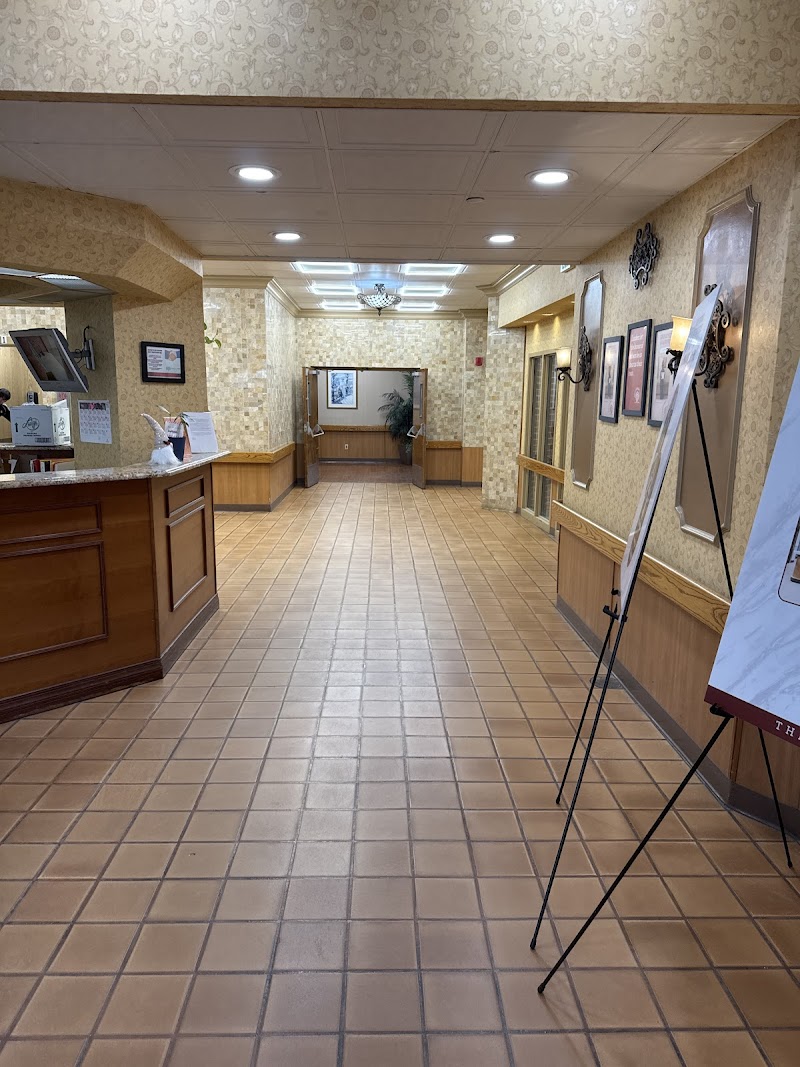
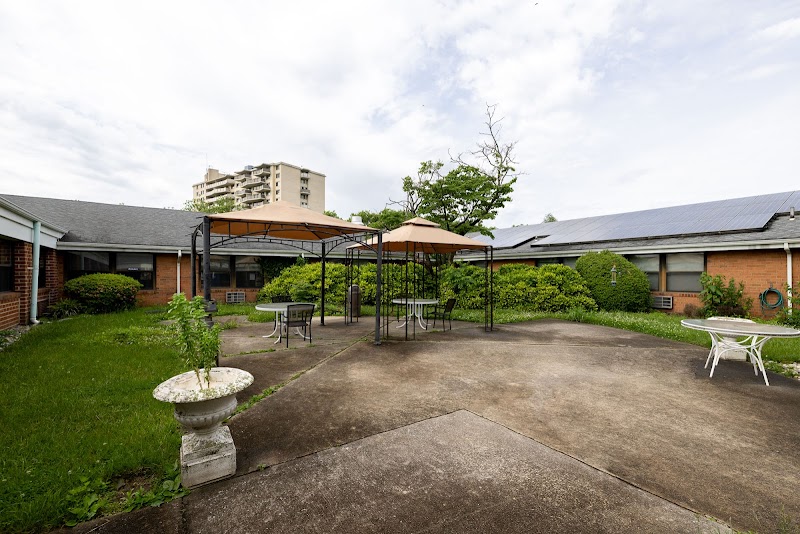
DWELLSIDE CARE AND REHAB

3025 CHAPEL AVENUE WEST, CHERRY HILL, NJ 08002 (856) 675-3000
For profit - Limited Liability company 162 Beds Independent Data: November 2025 2 Immediate Jeopardy citations
Trust Grade
0/100
#317 of 344 in NJ
Last Inspection: May 2025

Inspected within the last 6 months. Data reflects current conditions.

Overview

Dwellside Care and Rehab in Cherry Hill, New Jersey, has received a Trust Grade of F, indicating significant concerns regarding its quality of care. It ranks #317 out of 344 facilities in the state, placing it in the bottom half overall, and #18 out of 20 in Camden County, meaning there are very few local options that are better. The facility's situation is worsening, with issues increasing from 4 in 2024 to 27 in 2025. Staffing is a concern, rated 2 out of 5 stars, with a high turnover rate of 61%, significantly above the New Jersey average of 41%. Additionally, the facility has incurred fines totaling $155,207, which is higher than 93% of other facilities in the state, indicating repeated compliance problems. Specific incidents include a resident with cognitive impairments who was able to elope from the facility despite being monitored with an alarmed device, raising serious safety concerns. There were also reports of physical abuse among residents, with one resident attacking three staff members, highlighting issues with safety and oversight. Finally, the facility failed to administer pain medication to a resident who was in severe pain, indicating a lack of proper medical care. Overall, while there are some positive aspects regarding quality measures, the facility's significant deficiencies and troubling trends make it a concerning option for families.

Trust Score
F
0/100
In New Jersey
#317/344
Bottom 8%
Safety Record
High Risk
Review needed
Inspections
Getting Worse
4 → 27 violations
Staff Stability
⚠ Watch
61% turnover. Above average. Higher turnover means staff may not know residents' routines.
Penalties
✓ Good
$155,207 in fines. Lower than most New Jersey facilities. Relatively clean record.
Skilled Nurses
⚠ Watch
Each resident gets only 10 minutes of Registered Nurse (RN) attention daily — below average for New Jersey. Fewer RN minutes means fewer trained eyes watching for problems.
Violations
⚠ Watch
44 deficiencies on record. Higher than average. Multiple issues found across inspections.
★☆☆☆☆
1.0
Overall Rating
★★☆☆☆
2.0
Staff Levels
★★★★☆
4.0
Care Quality
★☆☆☆☆
1.0
Inspection Score
Stable
2024: 4 issues
2025: 27 issues

The Good

  • 4-Star Quality Measures · Strong clinical quality outcomes
  • Full Sprinkler Coverage · Fire safety systems throughout facility
  • No fines on record

Facility shows strength in quality measures, fire safety.

The Bad

1-Star Overall Rating

Below New Jersey average (3.2)

Significant quality concerns identified by CMS

Staff Turnover: 61%

15pts above New Jersey avg (46%)

Frequent staff changes - ask about care continuity

Federal Fines: $155,207

Well above median ($33,413)

Significant penalties indicating serious issues

Staff turnover is elevated (61%)

13 points above New Jersey average of 48%

The Ugly 44 deficiencies on record

2 life-threatening 2 actual harm
Sept 2025 1 deficiency 1 IJ
CRITICAL (J) 📢 Someone Reported This

A family member, employee, or ombudsman was alarmed enough to file a formal complaint

Immediate Jeopardy (IJ) - the most serious Medicare violation

Accident Prevention (Tag F0689)

Someone could have died · This affected 1 resident

COMPLAINT #: 2599447Based on observation, interviews, review of medical records, and review of other pertinent facility documents on 9/10/2025, 9/11/2025, 9/18/2025, and 9/23/2025, it was determined t...

Read full inspector narrative →
COMPLAINT #: 2599447Based on observation, interviews, review of medical records, and review of other pertinent facility documents on 9/10/2025, 9/11/2025, 9/18/2025, and 9/23/2025, it was determined that the facility failed to provide adequate supervision of a severely cognitively impaired resident (Resident #2) with a known history of exit seeking behaviors and documented history of previous attempts to elope from their unit; who eloped form the facility on 8/23/2025. The deficient practice was identified for 1 of 3 residents reviewed (Resident #2).A review of facility record revealed that on 8/23/2025 at approximately 8:15 AM, Resident #2 eloped from the facility while wearing a Wander Guard (WG; alarmed security bracelet) through an alarmed second floor elevator, down to the first floor, and exited the building through the employee entrance door on the first floor. A review of facility document revealed that the Certified Nursing Aide (CNA #3) observed the resident as they exited the building through an employee entrance door as CNA #3 was entering the facility through the same employee door. CNA #3 confirmed during interview on 9/11/2025, that he observed the resident exit the building, but he did not stop the resident because he thought the resident was a visitor because they were well dressed and the exit alarm which was supposed to sound to alert staff that a resident with a WG exited the building, did not sound when Resident #2 exited the building. CNA #3 further stated that he did not recognize Resident #2 because the resident resided on the second floor and I work on B-wing on the first floor. Resident #2 was located in the community five hours later on 8/23/2025 at 1:46 PM, by the local police department and transferred the resident to the hospital for evaluation. The facility's failure to provide adequate supervision to a severely cognitively impaired resident who was at risk for elopement and eloped, posed a likelihood of serious harm, injury, impairment, or death. This resulted in an Immediate Jeopardy (IJ) situation. The IJ began on 8/23/2025 at 8:15 AM, after Resident #2 eloped from the facility. The facility Administration was notified of the IJ on 9/11/2025 at 6:00 PM. The facility submitted an acceptable Removal Plan (RP) on 9/19/2025 at 10:46 AM. The survey team verified the implementation of the RP during the continuation of the on-site survey on 9/23/2025. The evidence was as follows: A review of the facility provided Elopements and Wandering Residents policy dated July 2024, included the facility ensure that residents who exhibit wandering behavior and/or are at risk for elopement receive adequate supervision to prevent accidents.Policy Explanation and Compliance Guidelines 1. The facility is equipped with door locks/alarms to help avoid elopements. 2. Alarms are not a replacement for necessary supervision. Staff are to be vigilant in responding to alarms in a timely manner. 3. The facility shall establish and utilize a systemic approach to monitoring and managing residents at risk for elopement or unsafe wandering, including identification and assessment of risk.4. Monitoring and Managing Residents at Risk for Elopement or Unsafe Wandering.d. Adequate supervision will be provided to prevent accidents or elopements.A review of the Facility Reportable Event (FRE) dated 8/22/2025, that the facility submitted to the New Jersey Department of Health (NJDOH), revealed that on 8/23/2025, at around 9:34 AM, the Nursing Supervisor, a License Practical Nurse (LPN #3), called the Director of Nursing (DON) and informed him that she could not find Resident #2 in the facility. The DON then called the local police and reported the resident missing, and that the police went to the facility and initiated a search for the resident. The police later found Resident #2 in the community and transferred them to the hospital for evaluation.According to the police report dated 8/25/2025, facility staff notified the police of the missing resident on 8/23/2025, at approximately 9:49 AM. The report included that the police arrived at facility and conducted interviews with facility staff, and the staff informed the police that Resident #2 was a known wander and that Resident #2 wore ankle monitors which were supposed to disable the use of elevators and sound alarms to detect if a resident left the building. The report further indicated that their review of the facility's camera footage showed Resident #2 leaving the building at 8:15 AM, heading westbound on [name of street]. The report indicated that police then searched the building several times with negative results. The family member responded back to the facility about the elopement of Resident #2 and mentioned that the resident may return to old addresses. The family member provided the police with two addresses and emphasized that the police check one of the addresses because Resident #2 had previously repeatedly mentioned that address. The police report included that at approximately 1:46 PM, the family member informed the police that Resident #2 showed up to the house (old address). The resident was then taken to the hospital for an evaluation.According to an undated Investigation Summary document provided by the facility, Resident #2 returned back to the facility from the hospital at approximately 6:30 PM on 8/23/25, and that the facility assessed the resident for pain and injury, and none was noted and placed Resident #2 on one-to-one (1:1) supervision to monitor behavior and prevent further elopement.A review of CNA #3's statement revealed that he observed Resident #2 as they exited the building through an employee entrance door at the same time he was entering the building. CNA #3 indicated that he did not stop the resident because he thought the resident was a visitor because they were well dressed; was dressed in a thin long sleeve buttoned up dress shirt, black pants, socks, and loafers.During interview with the Licensed Nursing Home Administrator (LNHA) on 9/10/2025 at 9:50 AM, he stated that the employee entrance was a locked door and that a code needed to be entered on the pin pad for an employee to exit the building through that door. The LNHA also stated that when a resident who was wearing a WG approached the door, the door was supposed to sound an alarm and remain locked.The surveyor reviewed the medical record for Resident #2.According to the admission Record (AR) face sheet, Resident #2 was admitted to the facility with diagnoses which included but were not limited to: dementia, Alzheimer's Disease, hallucinations, and cognitive communication deficit.According to the quarterly Minimum Data Set (MDS), an assessment tool dated 8/06/2025, Resident #2 had a Brief Interview for Mental Status (BIMS) score of 3 out of 15, which indicated the resident's cognition was severely impaired.The surveyor reviewed Resident #2's Admit/Readmit Screener (admission assessment) with an effective date of 7/31/2025 at 4:55 PM, which revealed that Resident #2 needed supervision for locomotion off the unit.A review of Resident #2's Care Plan (CP) with an initiated date of 8/08/2025, revealed that Resident #2 was an elopement risk/wanderer as evidenced by disoriented to place. The CP also indicated that Resident #2 had a WG placed on their right ankle and that the resident should be distracted from wandering.A review of the Progress Note (PN) dated 8/03/2025 at 12:03 AM, written by LPN #4, included that Resident #2 was redirected for attempting to transfer on to the elevator.A review of the PN dated 8/06/2025 at 11:45 AM, written by LPN #5, included that the resident was redirected back to the floor from the first floor, Management made aware that the resident had a functioning wander guard that has been checked multiple times, however, the elevator isn't working properly to contain the resident.A review of the PN dated late entry 8/23/2025 at 6:00 PM, written by the Director of Nursing (DON), included that the Nursing Supervisor alerted the DON of potential elopement that morning as resident could not be found in the bedroom or on unit. The DON arrived at facility with the local police, they reviewed the camera, and the resident was confirmed to have eloped from the facility at 8:15 AM. The police then went into active search and rescue and were able to locate the resident and transported them to the hospital for evaluation.A review of the PN dated 8/23/2025 at 6:00 PM, written by LPN #5, included that the resident returned from the Emergency Department (ED) on a stretcher with no noticeable injuries and a functioning wander guard to right ankle. The resident was placed on 1:1 supervision as well as fifteen minute checks.On 9/10/2025 at 11:25 AM, the surveyor conducted an interview with Resident #2's assigned CNA (CNA #2), who stated that she last saw the resident on 8/23/2025, at around 7:20 AM, in the dining room. CNA #2 was later alerted by CNA #1 that she could not locate the resident after she went to give resident their breakfast. CNA #2 further stated that Resident #2 had gone down on the elevator two to three days after admission and had also gone and stood by employee door hanging around and that they went and got the resident by the employee door on that day and reported it to the nurse. CNA #2 stated that she could not remember the nurse's name because the nurse was from an agency. CNA #2 stated that usually if a resident who had a WG went on the elevator, the elevator door would probably close, but would not move up or down, it would beep and if it kept beeping long enough, the elevator would go down. When asked about staff responsibility and how staff supervised residents that wandered, she stated: the mentality is if they are not their Aide, they are not responsible . they are not going to chase or fight with resident to get off the elevator.On 9/10/2025 at 12:43 PM, the surveyor conducted a telephone interview with Resident #2's assigned nurse (LPN #1), who stated that for a resident at risk for wandering and elopement, the resident should be redirected to the dining room for activities; they should monitor the resident; make sure WG was working; and monitor them 1:1 to ensure the resident did not leave the unit. LPN #1 stated that on 8/23/2025, Resident #2 stopped at her medication cart, and that she told the resident that breakfast would be there shortly and encouraged the resident to go to the dining room, which the resident did. LPN #1 stated that 10 minutes later, around 8:15 AM, CNA #1 told her that she could not find Resident #2, and that she then informed Resident #2's CNA, and they all started to search for the resident. LPN #1 further stated that she informed the overnight Nursing Supervisor (LPN #3), who was supervising the 7:00 AM-3:00 PM shift. LPN #1 stated that LPN #3 and herself went up to the second floor, and checked the unit. LPN #3 stated that she called 911, contacted the DON, and initiated a Code Grey around 8:50 AM, because that was when they did a complete sweep (look around) including outside.On 9/10/2025 at 2:08 PM, the surveyor conducted an interview with CNA #1, who stated that Resident #2 had been going on the elevator since day one of admission to the facility. CNA#1 stated that on 8/23/2025, she saw Resident #2 with another resident on the unit, and when the breakfast tray cart arrived on the floor, (she did not remember the time), she took Resident #2's tray to the dining room but the resident was not there. CNA #1 stated she then went to Resident #2's room, but they were not in the room either, and she went immediately to LPN #1and informed her, and they all started searching for Resident #2. CNA #1 stated that she had previously witnessed Resident #2 walking onto the elevator at least two to three other times prior to the elopement on 8/23/2025. CNA #1 stated that the elevator has been a problem and that no one with a WG should get into the elevator because if they did, the elevator closed and would go down to another floor. CNA #1 stated she reported the elevator issue to the Agency nurse, and that she remembered reporting it to the nurse because she was agitated on that day. CNA #1 stated that two other people were at the nurse's station waiting for her to finish care with another resident and they then sent her downstairs to get Resident #2 instead of going downstairs to get the resident themselves.CNA #1 further stated that the other aides and herself had previously informed the Unit Manager that they were tired of chasing Resident #2 in and out of the elevator, and the Unit Manager usually replied that she would report to the higher ups. CNA #1 stated that when the DON would come to the second floor to check on the unit, the aides had previously reported to him about the elevator issues with multiple residents including Resident #2, and that Resident #2 succeeded in exiting the building. CNA #2 further stated that a day or two before Resident #2's elopement, she informed the DON about the elevator issue and that he asked her to inform the manager.On 9/10/2025 at 2:59 PM, the surveyor conducted an interview with LPN #2, who stated that the pin pad outside of the elevator door was newly placed that morning and required a code to be entered for the elevator to open. LPN #2 stated that the pin pad inside the elevator was previously in place and required a code for the elevator to operate when a resident with a WG entered the elevator because it was a locked unit. LPN #2 stated that the elevator alarm had been an issue and not effective in sensing WG, and that after a few minutes of opening the elevator, the elevator would close even without the code being entered, and that Resident #2 on more than one occasion went down the elevator to another floor. LPN #2 stated that it was not the first time that Resident #2 eloped to another unit, and that Management was aware and had even brought Resident #2 up to the second floor unit on more than one occasion. LPN #2 stated that she had witnessed Resident #2 being brought back to the unit by Management who stated, we need to do a better job watching the resident. LPN #2 further stated that they previously explained to Management that staff do watch the resident, but the elevator system is not effective. LPN #2 did not provide the name of the person she informed of the elevator alarm issues.On 9/10/2025 at 4:20 PM, the surveyor conducted an interview with the LNHA, who stated that Resident #2 should not be able to get off the unit because they had a sensor in the elevator that would shut off the elevator if someone with WG enter the elevator. The LNHA stated that he was not sure that Resident #2 ever came off the unit with the WG. The LNHA stated that staff were trained and supposed to recognize residents with WGs because they had binders on the nursing units with list of residents wearing WGs including pictures of those residents. The LNHA did not offer an explanation for why staff did not recognize and prevent Resident #2 from eloping out of the facility on 8/23/2025.At that time, the surveyor asked about the PN from 8/6/2025, that indicated Resident #2 went off the unit and was brought back to second floor from the first floor, and the LNHA stated that he could not remember now. When asked if the facility completed an investigation for the incident, he stated that the facility administration team was not made aware of the incident. The LNHA also stated that he was not aware of any reports regarding the elevator alarm issues, and that the Maintenance Director (MD) usually checked the WG alarm system weekly for function.On 9/10/2025 at 4:56 PM, the surveyor attempted to reach LPN #5 who wrote the PN 8/6/2025, via telephone and got no response.On 9/10/2025 at 5:19 PM, the surveyor reviewed the camera footage with the LNHA. The security camera revealed that on 8/23/2025, the Receptionist responded to the sound of the door at the employee entrance to allow CNA #3 into the facility. At that same time, Resident #2 was leaving out that same entrance at 7:21:46 AM. The LNHA explained that the camera had a time lag on the clock timer, so the actual time was 8:15 AM, and not 7:21 AM.On 9/11/2025 at 10:52 AM, the surveyor interviewed the Regional Director of Nursing (RDON), who stated that there was a glitch in the system and the WG system was not connecting to the sensor in the ceiling. The RDON stated that she was not aware of the PN from 8/6/2025, about Resident #2 leaving their unit and being returned to the second floor from the first floor. The RDON stated that after Resident #2 eloped on 8/23/2025, the facility recognized gaps in the system and they started addressing them.On 9/11/2025 at 12:14 PM, the surveyor interviewed CNA #2 who stated; if a staff member was at the end of the hallway, they would not be able to see the resident get onto the elevator or hear an alarm sound from the WG. CNA #2 stated that she did not recall hearing an alarm sound when Resident #2 went onto the elevator on 8/23/2025, and eloped.According to the Assistant Director of Nursing (ADON), during interview on 9/11/2025 at 12:46 PM, Resident #2 was found at their childhood home which was approximately a sixteen minute drive or a two hour walk from the facility.On 9/11/2025 at 12:55 PM, the surveyor conducted an interview with the Maintenance Director (MD), who stated that he was familiar with the WG system and did weekly checks by taking the WG sensor to the elevator and to employee entrance door to see if the alarm sounded up to three to five feet away from the exit. The MD stated that the setup was to not allow the resident with the WG to go down on the elevator unaccompanied and that when he checked the door alarms, they worked. The MD stated maybe the signal on the ankle did not connect. The MD also stated that the technicians moved the antenna box from the top when they were called to check the elevator alarms after elopement incident.On 9/11/2025 at 1:27 PM, the surveyor interviewed second floor Unit Manager (UM), who stated that she was aware that Resident #2 had exit seeking behavior and that the entire staff was aware that resident had exit seeking behavior and the WG and resident's behavior is on the resident's care plan.On 9/11/2025 at 1:40 PM, the survey conducted an interview with CNA #3, who stated that on 8/23/2025, he was already at work and had to get something from the car. When he opened the door to re-enter the building, the resident came out and that CNA #3 was a bit frightened because of the way the resident came out. CNA #3 further stated that Resident #2 looked like a doctor and that he did not hear an alarm or else it would have triggered him to check. CNA #3 also stated that he did not recognize the resident because the resident resided on the second floor and he worked on the first floor.On 9/11/2025 at 2:15 PM, the surveyor re-interviewed the LNHA in the presence of the ADON and RDON, who stated that it was expected of all facility staff to know who the residents were at risk for elopement and who had WGs for the alarm system to work consistently.During interview with the DON on 9/18/2025 at 10:05 AM, the surveyor asked about the facility's protocol for how staff communicated and reported any system issues including WG alarm related issues. The DON stated that staff were supposed to verbally inform the supervisor, DON, LNHA or any other administrative member. The DON also stated that he was not made aware of any issues with the elevator alarming system.On 9/18/25 at 12:45 PM, during the survey team's verification of the Removal Plan (RP), the surveyor went to the employee entrance door with the MD to test the alarm system. As part of the test, the surveyor asked CNA #4 to bring a resident with a WG to the employee entrance door, and when the resident approached the door, the alarm did not sound. At that time, the MD opened the employee entrance door and asked the staff to walk with the resident through the door. The resident, who was wearing a WG, walked out of the building and the door alarm did not sound. Both CNA #4 and the MD stated that the alarm was supposed to sound to alert staff that a resident with a WG exited the building.On 9/18/2025 at 1:00 PM, the surveyor went to the second floor and requested CNA #5 to walk a resident with a WG through the elevator to test the functioning of the alarm system. CNA #5 then accompanied Resident #2 to Elevator #1, and when Resident #2 entered Elevator #1, the alarm did not sound. The surveyor entered the same elevator and joined CNA #5 and the resident. Without entering the alarm code, CNA #5 pushed the elevator down button; the elevator door closed and went down to the first floor without the code being entered and the alarm did not sound. CNA #5 stated that the elevator alarm was supposed to sound; the door was not supposed to close; and the elevator was not supposed to go down if a resident was in the elevator with a WG and the code was not entered. CNA #5 then checked the resident's ankle to make sure the resident was wearing their WG and confirmed the presence of the WG on the resident's ankle. The surveyor then requested that the WG alarm be tested on Elevator #2, and CNA #5 accompanied the resident into Elevator #2, and the alarm did not sound.During interview with the LNHA, in the presence of the DON on 9/18/2025 at 1:55 PM, he stated that he expected the alarm systems to work consistently whenever a resident with a WG tried to enter the elevator or to exit through the employee door.The implementation of the Removal Plan was not verified, and the immediacy continued.An acceptable Removal Plan (RP) was received on 9/19/2025 at 10:56 AM, indicating the action the facility will take to prevent serious harm from occurring or recurring.The facility implemented a corrective action plan to remediate the deficient practice to include Resident #2 was located on 8/23/2025, sent to the hospital for evaluation, returned to the facility the same day, and immediately placed on 1:1 supervision that was maintained until 8/24/2025. Resident #2 had a skin and pain assessment with no injury; the physician and family were notified; and the resident's WG was checked every shift for placement and function. On 8/25/2025, the facility's vendor serviced the WG system, and staff were stationed at employee entrance/exit until 9/18/2025, when the system was repaired when the WG vendor increased the system's sensitivity. All residents with WG were checked; updated resident photos for residents with WGs were posted in both elevators and employee entrance. All receptionists were educated on the process of buzzing employees in and out of the facility, and all staff were educated on the facility's elopement policy, wandering binders and identification process, and elopement drills were conducted.The surveyor verified the implementation of the RP on-site during the continuation of the survey on 9/23/2025.NJAC 8:39-27.1(a)
May 2025 20 deficiencies
CONCERN (D)

Potential for Harm - no one hurt, but risky conditions existed

Deficiency F0569 (Tag F0569)

Could have caused harm · This affected 1 resident

Based on interview and review of facility documents, it was determined that the facility failed to ensure that residents who maintained a Personal Needs Account (PNA) received a written notification t...

Read full inspector narrative →
Based on interview and review of facility documents, it was determined that the facility failed to ensure that residents who maintained a Personal Needs Account (PNA) received a written notification that their account approached the limit that could jeopardize a resident's eligibility for Medicaid or Supplemental Security Income (SSI). This deficient practice was identified for 2 of 94 residents (Resident #28 and #51) who maintained a Personal Needs Accounts at the facility and was evidenced by: On 5/13/25 at 1:10 PM, the Licensed Nursing Home Administrator (LNHA) provided the surveyor with the PNA balances. A review of the Funds Balance Report, dated 5/6/25, included a list of 94 active resident names with a total balance of $45,057.40. There were two (2) residents (Residents #28 and #51) listed with PNA funds that ranged from $1,835.38 to $1,868.83. On 5/14/25 at 12:39 PM, the surveyor interviewed the LNHA who stated that the Business Office informed him of the PNA balances and if the account needed to be spent down to prevent reaching the limit that could jeopardize a resident's eligibility for Medicaid or SSI. He stated that if the residents were close to the maximum allowed, then the facility spoke with the resident. When asked if a written notification was provided to the resident, the LNHA stated the residents were notified, but not by a written notification. On 5/14/25 at 2:34 PM, during a follow up interview, the LNHA stated that the Business Office provided a verbal notification to the residents who reached $1,800.00. The LNHA confirmed a written notification was not provided. On 5/16/25 at 9:33 AM, the surveyor interviewed the Receptionist who stated that herself and the evening receptionist handled the PNA money, distributed the statements, and reviewed the statements with the residents. She then stated that an outside company notified the resident and/or the resident's representative that they were reaching the maximum amount. When asked if she was aware of a written notification, the Receptionist stated she was not aware that she needed to provide a written notification to the residents that reached $1,800.00. She further stated she was not sure if Social Services provided a written notification since the Director of Social Services typically asked for the monthly statements. On 5/16/25 at 11:47 AM, the surveyor interviewed the Director of Nursing (DON) in the presence of the survey team who stated he was not aware of the PNA process. On 5/16/25 at 12:07 PM, the surveyor interviewed the Social Worker (SW) who stated she worked part time, and that the Director of Social Services (DSS) provided the residents their statements. The SW stated that she did not distribute the statements, and she did not provide a written notification of their balances as that was not in her role. She further stated she was unaware of any written notification as she was just the assistant and her role was very limited. The SW stated that she would redirect the resident and/or the resident's representative to the DSS, the LNHA, or the Director of Admissions as they were in contact with the business office which was an outside company. On 5/19/25 at 9:24 AM, in the presence of the DON and the survey team, the LNHA stated he spoke with Resident #28 and Resident #51 regarding their PNA balances and provided a check request for the money to be spent down. The LNHA stated that the check request was considered a written notification for the accounts that were over $1,800.00. The LNHA acknowledged it was after surveyor inquiry when he spoke with the residents to complete the check request. He further stated that any time during the month that the resident reached $1,800.00, the resident should be notified that they were over the maximum threshold. A review of the facility's undated Resident Personal Funds policy included, Notice of Certain Balances: 1. The facility must notify each resident that receives Medicaid Benefits: a. when the amount in the resident's account reaches $200 less than the SSI resource limit for one person and; b. If the amount if the account, in addition to the value of the resident's other nonexempt resources, reaches the SSI resource limit for one person, the resident may lose eligibility for Medicaid or SSI. NJAC 8:39-9.5(c)
CONCERN (D)

Potential for Harm - no one hurt, but risky conditions existed

Report Alleged Abuse (Tag F0609)

Could have caused harm · This affected 1 resident

Based on interview, record review, and review of facility documents, it was determined that the facility failed to report an allegation of staff-to-resident verbal abuse to the New Jersey Department o...

Read full inspector narrative →
Based on interview, record review, and review of facility documents, it was determined that the facility failed to report an allegation of staff-to-resident verbal abuse to the New Jersey Department of Health (NJDOH) within two hours of the allegation being made for 1 of 2 residents (Resident #4) reviewed for abuse. This deficient practice was evidenced by the following: On 5/14/25 at 9:01 AM, the surveyor observed Resident #4 seated in the wheelchair at the nurse's station. The resident stated that he/she wanted to leave the facility. The resident further stated that a nurse called him/her a bitch yesterday. When the surveyor asked the resident who said that, the resident pointed to a nurse who walked past the nursing station in blue scrubs. The resident was unable to state the nurse's name or to give any further details. The resident then pointed to the accused nurse a second time and stated, That's her. The surveyor reviewed the medical record for Resident #4. A review of the admission Record, an admission summary, revealed the resident had diagnoses which included, but were not limited to: End stage renal (kidney) disease, muscle weakness, and difficulty in walking. A review of the resident's quarterly Minimum Data Set (MDS), an assessment tool used to facilitate the management of care, dated 4/7/25, included the resident had a Brief Interview for Mental Status (BIMS) score of 11 out of 15, which indicated that the resident's cognition was moderately impaired. Further review of the the MDS revealed the resident had no documented behaviors. A review of the resident's individual comprehensive care plan (ICCP) included a focus area, dated 3/29/25, that the resident had Behavior: Passive-aggressive behavior: Argumentative and directs frustrations toward others and staff including negative attitudes, resistance to cooperate with care even when the situation is non-threatening. Resident is undergoing the early stages of grief due to the disease process, placement, and loss of independence. Interventions included: Appropriate limit setting: do not engage in negative conversation, attempt to move conversation with a positive goal, listen and offer support as needed, agree only when resident's statement or behavior is appropriate or positive. A review of the progress notes (PN) failed to contain documented evidence of the accusation of staff-to-resident verbal abuse as previously described by the resident. On 5/14/25 at 10:07 AM, the surveyor interviewed Certified Nursing Assistant (CNA) #2 who stated that the resident was not on her assignment. CNA #2 stated the resident had a foul mouth, cussed at staff and residents, and was very inappropriate. CNA #2 further stated that the resident hates me, so I just kept quiet and walked away. CNA #2 also stated that she reported her concerns with the resident's behavior to the Licensed Nursing Home Administrator (LNHA) and they spoke with the resident. On 5/14/25 at 10:17 AM, the surveyor interviewed Licensed Practical Nurse (LPN) #8 who stated that she was an agency nurse and today was her first day back after not being at the facility for awhile. LPN #8 stated that she was never assigned to the resident, and while she did know the resident, she never had any verbal exchanges with the resident. LPN #8 described the resident as a very particular person. On 5/14/25 at 10:26 AM, the surveyor interviewed Licensed Practical Nurse/Unit Manager (LPN/UM) #1 who stated that the resident had behaviors which included agitation, hitting and pushing the medication carts, and name calling. LPN/UM #1 stated that the resident had not come to her with any accusations against staff. LPN/UM #1 further stated that if an allegation was made, she usually did an investigation, obtained statements, and changed the staffing assignments. LPN/UM #1 stated that this was the first time that she heard about the above allegation. On 5/14/25 at 11:41 AM, LPN #8 came into LPN/UM #1's office to speak with the surveyor who was present at that time. LPN #8 stated that she spoke with the resident, who was then present outside of the office door in his/her wheelchair. At that time, LPN #8 stated the resident denied that it was LPN #8 who called him/her a bitch. LPN/UM #1 asked the resident to confirm LPN #8's statement and the resident nodded their head in agreement, and confirmed that LPN #8 was mistakenly identified as having called the resident a bitch. The resident stated that he/she would find the employee and let LPN/UM #1 who said it. On 5/15/25 at 11:11 AM, the surveyor interviewed the Director of Nursing (DON) who stated that there were no investigations or reportable events reported to the NJDOH on behalf of Resident #4. The DON stated that the resident made allegations against staff and it may have been documented in a PN, but there have been no investigations or reportable events made to the NJDOH for Resident #4. The DON stated that he was not aware of the allegation that the resident made the day prior until after surveyor inquiry today. On 5/15/25 at 11:40 AM, the DON stated that LPN #8 was sent home pending an investigation. On 5/15/25 at 11:52 AM, during a follow-up interview, the DON stated that he was not made aware of the allegation the day prior. The DON stated that LPN #8 was not assigned to the resident, but to be safe, he did not want the presence of LPN #8 to trigger another situation, so she was sent home today. The DON stated that psychiatry was consulted and the resident was educated on respecting staff. The DON further stated that the resident was a difficult resident. On 5/16/25 at 9:19 AM, the surveyor observed the resident seated in the wheelchair in the dining room eating breakfast. The resident stated that the accused employee had not returned back to work today. On 5/16/25 at 10:05 AM, the surveyor interviewed LPN/UM #1 who stated that she told the DON that the allegation was made and that the resident informed the surveyor that no one up here heard LPN #8 call the resident a bitch. LPN/UM #1 stated that the resident was later heard saying that he/she made that up. LPN/UM #1 explained that employees should be sent home immediately until the investigation was over with, and added, I guess the DON makes that determination. LPN/UM #1 further stated that she was unsure why the DON waited until yesterday to send LPN #8 home because she wrote a statement and obtained statements from everyone who was present at the desk at the time the allegation was made and handed them right over to the DON. On 5/16/25 at 12:18 PM, the surveyor interviewed the DON who stated that when an allegation of verbal abuse was made, an investigation should be started. The DON stated that statements were obtained and the allegation was reported to the NJDOH as necessary. The DON maintained that the report was not made within two hours of the allegation since he was not alerted of the allegation against LPN #8 until the following day. The DON stated that LPN/UM #1 informed him on the same day (5/14/25) and then later told the him the resident recanted the allegation. The DON stated the resident said quote, I made the whole thing up, and he/she laughed about it to LPN/UM #1. The DON stated that when LPN/UM #1 gave him the details, the only thing that she mentioned was that the resident pointed to LPN #8 initially. Once he learned of that, then he reported it. When the surveyor asked the DON when the allegation of verbal abuse was made, the DON stated that he was notified the following day, and he had received conflicting stories. The DON stated, I think that I handled it the best way possible. The DON further stated, LPN/UM #1 never told him that LPN #8 was initially, positively identified by the resident. On 5/16/25 at 1:42 PM, the surveyor interviewed the LNHA regarding the allegation of verbal abuse. The LNHA stated that the employee's superior should be alerted immediately upon the identification of an allegation of verbal abuse to ensure that proper action was taken. The LNHA stated that if it were something of that caliber, then the DON or the LNHA should have been notified. The LNHA stated that the NJDOH would be notified as soon as the DON or LNHA were made aware. The DON provided the surveyor with an Investigation Summary which included a LTC (long-term care) Reportable Event Survey, Form AAS-45, Reportable Event Record/Report which indicated that on 5/15/25 at 10:00 AM, the NJDOH was notified in writing of the allegation of Staff-to-Resident abuse, and the allegation was then phoned into the NJDOH on 5/15/25 at 10:30 AM, for the event that occurred on 5/14/25 at 10:00 AM. A review of the facility's Abuse, Neglect and Exploitation policy, included: The facility will have written procedures that include: Reporting of all alleged violations to the Administrator, state agency, adult protective services and to all other required agencies (e.g., law enforcement when applicable) within specified timeframes: a. Immediately, but not later than 2 (two) hours after the allegation is made, if the events that caused the allegation involve and/or result in serious bodily injury, or b. No later than 24 hours if the events that cause the allegation do not result in serious bodily injury. NJAC 8:39-9.4(f)
CONCERN (D)

Potential for Harm - no one hurt, but risky conditions existed

Assessment Accuracy (Tag F0641)

Could have caused harm · This affected 1 resident

**NOTE- TERMS IN BRACKETS HAVE BEEN EDITED TO PROTECT CONFIDENTIALITY** Based on interview, record review, and review of pertinent facility documents it was determined that the facility failed to code...

Read full inspector narrative →
**NOTE- TERMS IN BRACKETS HAVE BEEN EDITED TO PROTECT CONFIDENTIALITY** Based on interview, record review, and review of pertinent facility documents it was determined that the facility failed to code the Minimum Data Set (MDS), an assessment tool used to facilitate the management of care for all residents, accurately. This deficient practice was identified for 1 of 28 residents reviewed for MDS (Resident #69), and was evidenced by the following: On 5/13/25 at 9:52 AM, during entrance conference with the Licensed Nursing Home Administrator (LNHA) and the Director of Nursing (DON), the surveyor requested a list of residents who smoke. On 5/13/25 at 10:33 AM, during the initial tour, Licensed Practical Nurse/Unit Manager (LPN/UM) #3 identified Resident #69 as a smoker. On 5/13/25 at 10:51 AM, during the initial tour, the surveyor observed Resident #69 sitting in a wheelchair in their room resting with their eyes closed. On 5/13/25 at 2:05 PM, the surveyor reviewed the medical record for Resident #69. A review of the admission Record, an admission summary, revealed the resident had diagnoses which included, but were not limited to, high blood pressure and chronic obstructive pulmonary disease (COPD). A review of the admission Minimum Data Set (MDS), an assessment tool used to facilitate the management of care, dated 4/29/25, included the resident had a Brief Interview for Mental Status (BIMS) score of 14 out of 15, which indicated the resident's cognition was intact. Further review of the MDS revealed the resident as coded as 0. No for tobacco use, which indicated Resident #69 was assessed as a non-smoker. A review of the resident's Safe Smoking assessment dated [DATE], revealed the resident was safe to smoke with supervision. A review of the resident's Independent Smoking Contract and Lighter Contract revealed the resident signed both forms dated 4/23/25. A review of the individual comprehensive care plan (ICCP), included a focus, initiated 5/13/25, that the resident used tobacco. The interventions included conduct smoking safety evaluation on admission and as needed (PRN). On 5/15/25 at 9:17 AM, the surveyor conducted a telephone interview with the MDS Coordinator who stated she worked at the facility part time and came to the facility on Mondays and Tuesdays. When asked if she was the only MDS Coordinator for the facility, she stated no, there was another MDS Coordinator that was also part time but that they worked remote only. The MDS Coordinator stated she collected her data from the resident's medical record, and she reviewed the diagnoses, the physician orders, and progress notes. When asked where she collected her data if the resident was a smoker, the MDS Coordinator stated the data for the smokers was generally collected by the activities staff or she would get the information from the smoking contract or the hospital records. At that time, she reviewed the electronic medical record (EMR) for Resident #69 and stated the smoking contract was completed 4/23/25 but it was not uploaded until 5/13/25, so it would not be reflected on the admission MDS dated [DATE]. She further stated she also reviewed the History and Physical (H&P) and if it was in those records she must have missed it. On 5/16/25 at 9:20 AM, the surveyor interviewed the Licensed Practical Nurse/Unit Manager (LPN/UM) #3 who stated the MDS Coordinator completed the MDS, but the interdisciplinary team could also complete the MDS. LPN/UM #3 stated that if a resident was a smoker the MDS Coordinator would be able to determine the resident was a smoker by the smoking contract and the smoking assessment which was uploaded into the electronic medical record (EMR). She then stated they were slow moving with uploading as they only had one Unit Secretary Monday through Friday for the entire building. At 9:25 AM, the surveyor and LPN/UM #3 reviewed the EMR, and the LPN/UM confirmed the MDS was coded inaccurate as the resident was a smoker. On 5/16/25 at 11:41 AM, the surveyor interviewed the Director of Nursing (DON) in the presence of the survey team who stated the MDS Coordinator was responsible for coding the MDS and collecting data from the EMR, hospital records, interviews, and assessments. When asked did he review the MDS for accuracy, the DON stated he did not conduct any audits of the MDS or look behind the MDS Coordinator's work. On 5/19/25 at 9:47 AM, in the presence of the Licensed Nursing Home Administrator (LNHA) and the survey team, the DON stated the MDS coordinator did not code the resident as a smoker because there was no documentation that the resident smoked within the last 7 days of the MDS. When asked if it would trigger the resident as a smoker if the resident had a signed smoking contract and received a smoking assessment, the DON stated since it was not documented in the progress notes that the resident went out to smoke, it would not trigger for the MDS Coordinator to code the resident as a smoker. A review of the facility's undated Resident Smoking policy, included: 5. All resident will be asked about tobacco use during the admission process, and during each quarterly or comprehensive MDS assessment process. 6. Residents who smoke will be further assessed, using the Resident Safe Smoking Assessment, to determine whether or not supervision is required for smoking, or if resident is safe to smoke at all. NJAC 8:39-27.1(a);33.2 (d)
CONCERN (D)

Potential for Harm - no one hurt, but risky conditions existed

Deficiency F0655 (Tag F0655)

Could have caused harm · This affected 1 resident

Based on interview, record review, and review of pertinent documents, it was determined that the facility failed to develop and implement a baseline care plan within 48 hours of admission to include a...

Read full inspector narrative →
Based on interview, record review, and review of pertinent documents, it was determined that the facility failed to develop and implement a baseline care plan within 48 hours of admission to include a resident's code status for 1 of 1 resident (Resident #142) reviewed for death. This deficient practice was evidenced by the following: On 5/13/25 at 12:49 PM, the surveyor reviewed the medical record for Resident #142. A review of the admission Record, an admission summary, revealed the resident had diagnoses which included, but were not limited to, dementia, chronic kidney disease, and adult failure to thrive. A review of the Baseline Care Plan, dated 2/28/25, revealed the Code Status was left blank. A review of the Universal Transfer Form, dated 2/28/25, include a Code Status of Do Not Resuscitate (DNR). A review of the Social Service Assessment, dated 3/3/25, included a Code Status of DNR. On 5/16/25 at 9:03 AM, the surveyor interviewed Licensed Practical Nurse/Unit Manager (LPN/UM) #3 who stated the facility had 48 hours to complete the baseline care plan. When asked if the code status would be included in the baseline care plan, LPN/UM #3 stated the code status should included. She further stated the facility should always ask the residents their code status and get a physician's order. On 5/15/25 at 9:09 AM, LPN/UM #3 reviewed the EMR with the surveyor and confirmed the code status was left blank on the baseline care plan. On 5/16/25 at 11:34 AM, the surveyor interviewed the Director of Nursing (DON) in the presence of the survey team who stated the process for the baseline care plan should be initiated upon admission and completed within 48 hours. He also stated that a baseline care plan covered the resident's history, the resident's needs, and the resident's goals. The DON further stated the code status should be obtained on admission and included on the baseline care plan. On 5/19/25 at 9:51 AM, in the presence of the LNHA and the survey team, the DON stated once they have a physician's order (PO) then it would be entered into the baseline care plan so that it will be completed in a timely manner. The DON acknowledged the code status should have been included on the baseline care plan. A review of the facility's Baseline Care Plan policy dated revised October 2022, included, 1. The baseline care plan will b. include the minimum healthcare information necessary to properly care for a resident. NJAC 8:39-11.2(d)(g)
CONCERN (D)

Potential for Harm - no one hurt, but risky conditions existed

Comprehensive Care Plan (Tag F0656)

Could have caused harm · This affected 1 resident

Based on interview, record review, and review of facility documents, it was determined that the facility failed to develop an individual comprehensive care plan to include a resident's fall risk for 1...

Read full inspector narrative →
Based on interview, record review, and review of facility documents, it was determined that the facility failed to develop an individual comprehensive care plan to include a resident's fall risk for 1 of 4 residents (Resident # 12) reviewed for accidents. This deficient practice was evidenced by the following: On 5/14/25 at 12:46 PM, the surveyor observed Resident #12 being fed by staff in the day room. The surveyor reviewed the medical record for Resident #12. A review of the admission Record, an admission summary, revealed the resident had diagnoses which included, but were not limited to, dementia, muscle weakness, and difficulty in walking. A review of the comprehensive Minimum Data Set (MDS), an assessment tool used to facilitate the management of care, dated 3/1/25, included the resident had a Brief Interview for Mental Status (BIMS) score of 1 out of 15, which indicated the resident's cognition was severely impaired. Further review of the MDS revealed the resident had one fall with injury since the prior assessment. A review of the individual comprehensive care plan (ICCP), which included resolved and cancelled items, revealed a focus, initiated 2/16/25, that the resident was at risk for falls related to an increased need for assistance with activities of daily living and transfers, poor safety awareness, and unsteady gait. The interventions for the risk for falls focus were all initiated between 2/16/25 and 2/17/25. A review of the Fall Risk Evaluation, dated 3/17/24 and signed by the Director of Nursing (DON) on 3/25/24, revealed the resident scored a 19 which indicated the resident was a high risk for falls at that time. A review of the Progress Notes included a General Nurses Note, dated 2/16/25 at 8:48 PM, which revealed the resident fell and sustained a laceration to the right side of his/her forehead. On 5/16/25 at 9:33 AM, the surveyor interviewed Licensed Practical Nurse (LPN) #2 who stated the nursing supervisors initiated the ICCP within 24 hours. The LPN further stated the purpose of the ICCP was for staff to know the goals for the residents and improve the residents' condition. On 5/16/25 at 9:41 AM, the surveyor interviewed Licensed Practical Nurse/Unit Manager (LPN/UM) #1 who stated the Unit Managers initiated the ICCP about a week after the resident's initial care conference meeting. The LPN/UM further stated the purpose of the ICCP was to keep staff updated with any changes to the residents' care and to be used as a reference for new staff to know what was going on with the residents. On 5/16/25 at 11:36 AM, the surveyor interviewed the Director of Nursing (DON) who stated the ICCP was initiated by the interdisciplinary team within 21 days of the resident's admission. The DON further stated the purpose of the ICCP was to ensure the facility was meeting the residents' needs. At that time, the surveyor informed the DON that Resident #12 was identified as a high risk for falls on 3/17/24, but that a fall risk care plan was not initiated until 2/16/25 after the resident sustained a fall. The DON then verified the fall risk care plan should have been initiated on 3/17/24 at the time of the fall risk identification. On 5/19/25 at 9:23 AM, the surveyor conducted a follow-up interview with the DON, in the presence of the survey team and the Licensed Nursing Home Administrator (LNHA). The DON verified the fall risk care plan was not initiated until the resident experienced a fall on 2/16/25 and further stated he did not feel as though Resident #12 was at risk for falls despite receiving the high score on the Fall Risk Evaluation on 3/17/24. A review of the facility's Care Planning - Interdisciplinary Team policy, undated, included the following: Comprehensive, person-centered care plans are based on resident assessments and developed by an interdisciplinary team (IDT). A review of the facility's Care Plan Revisions policy, updated 2/2025, included the following: The comprehensive care plan will be reviewed, and revised as necessary, when a resident experiences a status change. NJAC 8:39-27.1(a)
CONCERN (D)

Potential for Harm - no one hurt, but risky conditions existed

Deficiency F0678 (Tag F0678)

Could have caused harm · This affected 1 resident

**NOTE- TERMS IN BRACKETS HAVE BEEN EDITED TO PROTECT CONFIDENTIALITY** Based on interview, record review, and review of facility documents, it was determined that the facility failed to obtain a phys...

Read full inspector narrative →
**NOTE- TERMS IN BRACKETS HAVE BEEN EDITED TO PROTECT CONFIDENTIALITY** Based on interview, record review, and review of facility documents, it was determined that the facility failed to obtain a physician's order for a resident's code status (medical instructions regarding resuscitation and other lifesaving measures in the event of a medical emergency) for 1 of 1 resident reviewed (Resident #142) for death. This deficient practice was evidenced by the following: On [DATE] at 12:49 PM, the surveyor reviewed the medical record for Resident #142. A review of the admission Record, an admission summary, revealed the resident had diagnoses which included, but was not limited to, dementia, chronic kidney disease, and adult failure to thrive. A review of the Order Summary Report (OSR) as of [DATE], did not include a physician's order (PO) for the resident's code status. A review of the Baseline Care Plan, dated [DATE], revealed the Code Status section was left blank. A review of the Universal Transfer Form (UTF), dated [DATE], included a Code Status of Do Not Resuscitate (DNR). A review of the Social Service Assessment, dated [DATE], included a Code Status of DNR. A review of the electronic medical record (EMR) did not include a completed New Jersey Practitioner Orders for Life-Sustaining Treatment (POLST) form or Advance Directive (legal document that outlines your wishes for medical care). A review of the Progress Notes dated [DATE] at 6:36 PM, reflected the resident was found unresponsive, Cardiopulmonary Resuscitation (CPR) was initiated, and the resident was pronounced deceased at 6:24 PM. On [DATE] at 10:06 AM, the surveyor interviewed Certified Nursing Assistant (CNA) #5 who stated she would ask the nurses the resident's code status, and she could also check the resident's plan of care (POC) in the EMR. On [DATE] at 10:15 AM, the survey interviewed the Director of Nursing (DON), in the presence of the survey team, who stated the code status was included in the Social Services assessments. The DON stated the Social Worker (SW) would gather the information from the UTF. He then stated that the nurses would notify the physician to obtain the PO, but until then they treated the resident as a full code. When asked if there would be a PO if the resident was a full code, the DON stated if the resident was a full code there would be a PO because it had to be verified. The DON stated the code status should be obtained on admission and confirmed by the physician during the history and physical (HP) within 48 hours. The DON stated that Resident #142 was on a respite stay (allows for a short-term break for the primary caregiver) and did not have a PO for DNR. On [DATE] at 10:33 AM, the surveyor interviewed Licensed Practical Nurse (LPN) #5 who stated the code status was in the medical record and if the resident did not have one, they would call the physician and talk to the resident/representative to obtain the code status. The LPN stated if there was no PO they would treat the resident as a full code. She stated they would call to get report within 24 hours of the resident's admission, but that the Interdisciplinary Team was responsible for reviewing the code status. LPN #5 stated that the physicians were very good at coming in to visit the residents and putting in the orders. When asked if the process was the same for a resident on respite, the LPN stated it was the same process. She further stated if the nurse was unsure of the resident's code status they should call the physician to clarify if the resident was a full code or DNR. On [DATE] at 12:41 PM, the surveyor interviewed the Licensed Nursing Home Administrator (LNHA) who stated that the resident's codes status was reviewed during their morning meetings when they discussed all admissions. On [DATE] at 9:03 AM, the surveyor interviewed the Licensed Practical Nurse/Unit Manager (LPN/UM) #3 who stated there should be a PO for the code status which was also on the checklist for the nurses to ask. She stated they should always ask the resident's code status and obtain a PO. LPN/UM #3 stated that Medical Doctor (MD) and his team were at the facility six days a week and if they were not in the facility, they had a 24 hours on-call service. She explained if the resident was admitted late Saturday night or on a Sunday, there may not be a physician to sign orders, but on Monday morning there was a physician in the facility to sign and review the orders. She stated they have another physician that generally came during off hours so they caught every shift. On [DATE] at 9:14 AM, the surveyor and LPN/UM #3 reviewed the EMR. LPN/UM #3 confirmed there was no PO for the resident's code status or POLST form. She acknowledged the code status should be reflected in the EMR. On [DATE] at 11:34 AM, the surveyor interviewed the Director of Nursing (DON) in the presence of the survey team who stated there should be a PO for the code status and the nurse should verify the code status with the resident and physician. He further stated that the code status should be obtained on admission. On [DATE] at 12:12 PM, the surveyor interviewed the Social Worker (SW) who stated during the social services assessment they asked the resident or the resident's representative their code status and they also reviewed the medical records. She stated the nurses obtained the code status on admission and the SW would assist with completing the POLST form. The SW stated that every resident should have a code status. She stated knowing the resident's code status was important, so everyone was aware of the resident wishes such as DNR or full code. She stated the physician should also review the code status and if there was no order, then the resident was considered a full code. On [DATE] at 9:51 AM, in the presence of the LNHA and the survey team, the DON stated they did not have a PO for the code status. The DON acknowledged there should have been a physician's order for the code status. A review of the facility's undated Cardiopulmonary Resuscitation (CPR) policy, included It is the policy of this facility to adhere to the residents' rights to formulate advance directives. In accordance to these rights, this facility will implement guidelines regarding CPR. A review of the facility's Advance Directives policy dated [DATE], included, The Director of Nursing Services or designee will notify the Attending Physician of advance directives so that appropriate orders can be documented in the resident's medical record and plan of care. A review of the facility's Practitioner Orders for Life-Sustaining Treatment (POLST) policy dated [DATE], included, At the time of admission the facility will determine whether the individual has completed a POLST form. If the individual does not have a POLST form at the time of admission, the facility will introduce POLST. NJAC 8:39-27.1(a)
CONCERN (D)

Potential for Harm - no one hurt, but risky conditions existed

Deficiency F0692 (Tag F0692)

Could have caused harm · This affected 1 resident

Based on observation, interviews, record review, and review of pertinent facility documentation, it was determined that the facility failed to obtain, record, and monitor weights on admission, readmis...

Read full inspector narrative →
Based on observation, interviews, record review, and review of pertinent facility documentation, it was determined that the facility failed to obtain, record, and monitor weights on admission, readmission, and weekly in accordance with professional standards of practice. This deficient practice was identified for 2 of 3 residents (Resident #20 and Resident #48) reviewed for nutrition and was evidenced by the following: 1.) On 5/13/25 at 10:01 AM, the surveyor observed Resident #20 awake and alert sitting in a wheelchair in the lounge. On 5/14/25 at 9:18 AM, the surveyor observed Resident #20 during breakfast, but the resident refused to eat. The resident had a split plate, built-up angled utensils, nectar thickened liquids, and a fortified frozen supplemental dessert on his/her tray. On 5/14/25 at 1:15 PM, the surveyor observed Resident #20 during lunch. Resident #20 was seated in a wheelchair with a clothing protector eating lunch with built-up utensils and drinking thickened liquids out of a cup. The surveyor reviewed the medical record for Resident #20. A review of the admission Record, an admission summary, revealed the resident had diagnoses which included, but were not limited to: encephalopathy (a broad category of brain disorders that affect brain function), major depressive disorder, unspecified protein-calorie malnutrition, muscle wasting and atrophy (to waste away), and muscle weakness. A review of the resident's comprehensive Minimum Data Set (MDS), an assessment tool used to facilitate the management of care, dated 3/27/25, included the resident had a Brief Interview for Mental Status (BIMS) score of 0 out of 15, which indicated that the resident's cognition was severely impaired. Further review of the MDS revealed the resident weighed 142 pounds (lbs) and had experienced a weight loss of five percent (5%) or more in the last month or a loss of 10% or more in the last six months while not on a physician-prescribed weight-loss regimen. A review of the individual comprehensive care plan (ICCP) included a focus area, revised 4/25/25, that the resident had a potential nutritional problem. Interventions included: Monitor weights per protocol/as ordered and monitor/record/report to Medical Doctor as needed for signs and symptoms of malnutrition: emaciation, muscle wasting, significant weight loss: 3 lbs in 1 week, >5% in 1 month, >7.5% in 3 months, >10% in 6 months. A review of the Weights and Vitals Summary, as of 5/15/25, included the following weights: 12/6/24 176.4 lbs (Wheelchair) 1/7/25 171.8 lbs. (Wheelchair) 2/5/25 162 lbs. (Wheelchair) 2/27/25 156 lbs. (Wheelchair) 3/4/25 142.4 lbs. (Wheelchair) 3/7/25 142 lbs. (Sitting) 4/2/25 148.4 lbs. (Wheelchair) 5/12/25 147.6 lbs. (Wheelchair) A review of the Dietician Progress Note (DPN), dated 2/11/25, included that the resident had a significant weight loss in one month and recommendations to obtain a re-weight to confirm significant loss and to increase the frozen nutritional supplement to twice daily. Further review of the DPN, dated 2/28/25, included an addendum that the resident was added to weekly weights for four weeks upon readmission for strict weight monitoring of any further weight loss. A review of the February 2025 Treatment Administration Record (TAR) revealed the following: -A physician's order (PO), dated 2/14/25, for weekly weights every Wednesday for four weeks for weight monitoring. There was no documented evidence a reweight on 2/11/25 and a weekly weight on 2/19/25 were obtained. -A PO, dated 2/27/25, for weights on admit/readmit, day after admit/readmit, then weekly every Friday for four weeks. There was no documented evidence a weekly weights on 2/28/25 was obtained. A review of the March 2025 TAR revealed there were no documented evidence weekly weights on 3/14/25, 3/21/25, and 3/28/25 were obtained. A review of the April 2025 TAR revealed there were no documented evidence weekly weights were obtained on 4/8/25, 4/15/25, 4/22/25, 4/29/25, and 5/6/25. A review of the Order Summary Report (OSR) included the following active PO: A PO, with an ordered date of 3/25/25 and a start date of 4/1/25, for weekly weights every Tuesday morning. 2.) On 5/13/25 at 10:15 AM, the surveyor observed Resident #48 awake, alert, and sitting in bed. Resident #48 stated they may have lost some weight and sometimes I eat sometimes I don't, depends on what they serve. On 5/14/25 at 9:30 AM, the surveyor observed Resident #48 sitting on the side of the bed eating breakfast. On 5/14/25 1:25 PM, the surveyor observed Resident #48 sitting on the side of the bed eating lunch. The resident stated the food was good. The surveyor reviewed the medical record for Resident #48. A review of the admission Record, an admission summary, revealed the resident had diagnoses which included, but were not limited to: encephalopathy (a broad category of brain disorders that affect brain function), altered mental status, Alzheimer's disease with early onset, unspecified protein-calorie malnutrition, muscle wasting and atrophy (to waste away), and dysphagia (difficulty swallowing). A review of the resident's comprehensive Minimum Data Set (MDS), an assessment tool used to facilitate the management of care, dated 12/20/24, included the resident had a Brief Interview for Mental Status (BIMS) score of 13 out of 15, which indicated that the resident's cognition was intact. Review of the MDS revealed the resident weighed 231 pounds (lbs) and no known history of weight loss. A review of the individual comprehensive care plan (ICCP) included a focus area, revised 3/7/25, that the resident had a nutritional problem. Interventions included: Monitor/record/report to Medical Doctor as needed for signs and symptoms of malnutrition: emaciation, muscle wasting, significant weight loss: 3 lbs in 1 week, >5% in 1 month, >7.5% in 3 months, >10% in 6 months. A review of the Dietician Progress Note (DPN), dated 2/28/25, included a recommendation to add Resident #48 to weekly weights for four weeks for strict weight monitoring upon readmission. A review of the DPN, dated 3/7/25, included: Re-weight obtained and resident continues to trigger for a significant weight change Weight History: Weight with significant loss x 1mo [month] and non-significant loss x 3mo. 6mo weight measurement not available to review. Current wt hx [weight history] as follows: 2/10/25 - 236.2 lb. (-17.8 lb., -7.5%) 12/13/24 - 229 lb.(-10.6 lb., -4.6%) Further review of the note included: Resident [#48] added to weekly weights x 4 weeks upon 3/4/25 readmission, will closely monitor weight trends via weekly weights for any additional undesirable weight changes. Current diet is liberalized diabetic, regular texture/consistency, and PO [oral] intakes noted to be good (70-100% at meals) since readmission and w/o [without] noted chewing/swallowing difficulties. A review of the Physician's Orders (PO) for March 2025 included: A PO, dated 3/4/25, for weights on admit/readmit, day after admit/readmit then weekly for four weeks every Tuesday. A review of the Treatment Administration Record (TAR) for March and April 2025 for Resident #48 revealed the following: Weekly Weight (Tuesday) 3/18/25 - Blank in TAR, No Weight Recorded Weekly Weight (Tuesday) 3/25/25 - No Weight, Marked as refused, No nursing note clarifying refusal/follow-up Weekly Weight (Tuesday) 4/1/25 - Blank in TAR, No Weight Recorded On 5/15/25 at 10:16 AM, the surveyor interviewed the Certified Nursing Assistant (CNA) #6 who stated that the nurses would let them know in the morning who needed to be weighed; that all residents were weighed at the beginning of each month, and that on admission the residents were weighed right away. The CNA further stated that the nurses recorded the weights in the electronic medical record (eMAR) and if a resident refused or missed a weight for another reason, that they would report it to the nurse, would try to weigh the resident again later, or pass it to the next shift to complete. On 5/15/25 at 10:35 AM, the surveyor interviewed the Licensed Practical Nurse (LPN) #3 who stated that weekly and monthly weights populated in the computer system for the nurse to sign as completed, whereas a re-weigh request would usually come from the dietician or the Unit Manager. LPN #3 further stated that if a resident refused a weight, they would try again later and if refusal continued, the nurse would inform the Unit Manager and document the refusal in the eMAR. LPN #3 further stated that if there was a significant change or discrepency in the weight, they would reweigh the resident to confirm the weight, and if accurate would inform the provider, dietician and unit manager. LPN #3 stated that the importance of maintaining an accurate weight log for a resident with a PO for weekly weights was to see if there was a weight gain or loss, implement timely interventions, and to update the plan of care for the resident. On 5/15/25 at 10:51 AM, the surveyor interviewed the Licensed Practical Nurse/Unit Manager (LPN/UM) #2 who stated that when a resident was first admitted to the facility or readmitted from a hospital stay, the resident would be put on weekly weights for four weeks, and that any reweight requests would come from dietary. LPN/UM #2 then stated that weekly weights were entered into the Weights and Vitals section of the eMAR by the nurses and signed as completed in the TAR. LPN/UM #2 stated that if a resident's weight was missed or refused, the nurse would weigh the resident as soon as possible and document the refusal or reason in the eMAR. LPN/UM #2 stated that the importance of maintaining an accurate weight log for residents with ordered weekly weights was so the doctors could adjust medications based on weight, monitor for any significant changes, and address any issues the resident may have. On 5/15/25 at 3:22 PM, the surveyor interviewed the Registered Dietician (RD) and Regional Registered Dietician (RRD). The RRD stated that weights were completed on admission and readmission to the facility, and then weekly for four weeks. RRD then stated that nursing had been entering weights and vitals into the electronic medical record. The RRD also stated that if there was a descrepency or significant change in a weight they would want the resident to be reweighed and follow up with the nursing team. The RRD confirmed that Resident #20 and Resident #48's ordered weights were not documented in the eMAR. On 5/19/25 at 9:20 AM, the Director of Nursing (DON), in the precense of the Licenced Nursing Home Administrator and Survey Team, stated that weekly weights should be documented in the electronic medical record. A review of the facility policy Weight Monitoring, undated, revealed that a weight monitoring schedule will be developed upon admission for all residents: weights should be recorded at the time obtained, new admitted residents - monitor weight weekly for 4 weeks, residents with weight loss - monitor weight weekly per indications of orders or recommendations, if clinically indicated - monitor weight daily. Observations pertinent to the resident's weight status should be recorded in the medical record as appropriate. NJAC 8:39 - 27.2 (a)
CONCERN (D)

Potential for Harm - no one hurt, but risky conditions existed

Pharmacy Services (Tag F0755)

Could have caused harm · This affected 1 resident

3.) On 5/13/25 at 10:27 AM, during the initial tour of the B Unit, the surveyor observed Resident #79 awake, alert, and lying in bed. Resident #79 stated that his/her medications were always late, usu...

Read full inspector narrative →
3.) On 5/13/25 at 10:27 AM, during the initial tour of the B Unit, the surveyor observed Resident #79 awake, alert, and lying in bed. Resident #79 stated that his/her medications were always late, usually about an hour and a half late. Resident #79 further stated I did not get my morning medications yet. On 5/13/25 at 1:06 PM, the surveyor reviewed the medical record for Resident #79. A review of the admission Record, an admission summary, revealed the resident had diagnoses which included, but were not limited to: metabolic encephalopathy (a change in how your brain works due to an underlying condition), depression, Type 2 Diabetes, Non -Hodgkin's Lymphoma (a type of blood cancer), anxiety, and chronic pain. A review of the resident's comprehensive Minimum Data Set (MDS), an assessment tool used to facilitate the management of care, dated 2/21/25, included the resident had a Brief Interview for Mental Status (BIMS) score of 15 out of 15, which indicated the resident's cognition was intact. Further review of the MDS revealed the resident took the following high-risk medications: insulin injections, antianxiety, antidepressant, diuretic, opioid, hypoglycemic, and anticonvulsant. A review of the resident's individual comprehensive care plan (ICCP) included a focus area, dated 2/16/24, that the resident is on antianxiety medications, antidepressant medication, diuretic medication and pain management medications. Interventions included: antianxiety, antidepressant, methadone and pain medications as ordered. A review of the Order Summary Report (OSR), dated as of 5/15/25, included the following physician orders (PO): A PO, dated 2/13/25, for Pantoprazole Sodium delayed release 40 milligram (mg), give one tablet by mouth one time a day for reflux. A PO, dated 2/13/25, for MiraLAX Oral packet 17 Gram (gm), give 17 gm by mouth one time a day for constipation. mix well in at least 4 oz (ounces) of water, juice, coffee, or tea prior to administration. A PO, dated 2/10/25, for Lisinopril 20 mg give one tablet by mouth one time a day for hypertension. A PO, dated 2/10/25, for Furosemide 20 mg give one tablet by mouth one time a day for hypertension. A PO, dated 2/12/25, for Sertraline HCL (hydrochloride) 50 mg give one tablet one time a day for depression. A PO, dated 4/25/25, for Gabapentin 300 mg give one capsule by mouth three times a day for neuropathy. A PO, dated 4/29/25, for Colace 100 mg give two capsules by mouth one time a day for constipation. A PO, dated 3/28/25, for Nifedipine ER (extended release) 24-hour 60 mg give 60 mg by mouth one time a day for high blood pressure. A PO, dated 4/17/25, for Ozempic (0.25 or 0.5 mg/dose) Subcutaneous Solution Pen- Injector 2mg/3ml(milliliters) inject 0.5mg subcutaneously one time a day every Monday. A PO, dated 2/17/25, for Xanax (Alprazolam) 0.5mg give one tablet by mouth three times a day for anxiety. Give with 1 mg total 1/5 mg. A PO dated 2/17/25 for Alprazolam (Xanax)1 mg give one tablet by mouth three times a day for anxiety. Give with 0.5mg tablet total 1.5 mg. A review of the Medication Administration Audit Report, dated 5/1/25 through 5/14/25, revealed the following: On 5/4/25: 1.Pantaprazole 40 mg tablet, scheduled for 9:00 AM was administered at 10:43 AM. 2.Lisinopril 20 mg tablet, scheduled for 9:00AM was administered at 10:43 AM. 3. Sertraline 50 mg, scheduled for 9:00AM was administered at 10:43 AM. 4.Furosimide 20 mg tablet, scheduled for 9:00AM was administered at 10:43 AM. 5.Gabapentin 300 mg capsule, scheduled for 9:00AM was administered at 10:43 AM. 6. Nifedipine ER 60mg tablet, scheduled for 9:00AM was administered at 11:29 AM. 7. Colace 100 mg capsule, scheduled for 9:00AM was administered at 11:29 AM. 8. MiraLAX 17 gm, scheduled for 9:00 AM was administered at 11:29AM. On 5/5/25: 1.Ozempic Injection, scheduled for 9:00 AM was administered at 10:52 AM. On 5/6/25: 1.Gabapentin 300 mg capsule, scheduled for 5:00 PM was administered at 8:06 PM. 2.Xanax 0.5 mg tablet, scheduled for 6:00 PM was administered at 8:06 PM. 3.Tamsulosin 0.4mg capsule, scheduled for 6:00 PM was administered at 8:06 PM. 4.Alprazolam (Xanax)1 mg tablet scheduled for 6:00 PM was administered at 8:06 PM. On 5/7/25: 1.Pantaprazole 40 mg tablet, scheduled for 9:00 AM was administered at 1:48 PM. 2.Lisinopril 20 mg tablet, scheduled for 9:00AM was administered at 1:48 PM. 3. Sertraline 50 mg, scheduled for 9:00AM was administered at 1:48 PM. 4.Furosimide 20 mg tablet, scheduled for 9:00AM was administered at 12:52 PM. 5. Gabapentin 300 mg capsule, scheduled for 9:00AM was administered at 10:43 AM. 6. Nifedipine ER 60mg tablet, scheduled for 9:00AM was administered at 11:29 AM. 7. Colace 100 mg capsule, scheduled for 9:00AM was administered at 12:52 PM. 8. MiraLAX 17 gm, scheduled for 9:00 AM was administered at 1:48 PM. 9. Alprazolam 1mg tablet, scheduled for 12:00 PM was administered at 1:52 PM. 10.Xanax 0.5mg tablet, scheduled for 12:00 PM was administered at 1:52 PM. On 5/8/25: 1.Pantaprazole 40 mg tablet, scheduled for 9:00 AM was administered at 10:20 AM. 2.Lisinopril 20 mg tablet, scheduled for 9:00AM was administered at 10:20 AM. 3. Sertraline 50 mg, scheduled for 9:00AM was administered at 10:20 AM. 4.Furosimide 20 mg tablet, scheduled for 9:00AM was administered at 10:20 AM. 5. Gabapentin 300 mg capsule, scheduled for 9:00AM was administered at 10:20 AM. 6. Nifedipine ER 60mg tablet, scheduled for 9:00AM was administered at 10:20 AM. 7. Colace 100 mg capsule, scheduled for 9:00AM was administered at 10:20 AM. On 5/9/25: 1. Gabapentin 300 mg capsule, scheduled for 5:00 PM was administered at 6:51 PM. On 5/11/24: 1.Pantaprazole 40 mg tablet, scheduled for 9:00 AM was administered at 10:37 AM. 2. MiraLAX 17 gm, scheduled for 9:00 AM was administered at 10:37 AM. 2.Lisinopril 20 mg tablet, scheduled for 9:00AM was administered at 10:37 AM. 3. Sertraline 50 mg, scheduled for 9:00AM was administered at 10:37 AM. 4.Furosimide 20 mg tablet, scheduled for 9:00AM was administered at 10:37AM. 5. Gabapentin 300 mg capsule, scheduled for 9:00AM was administered at 10:37 AM. 6. Nifedipine ER 60mg tablet, scheduled for 9:00AM was administered at 10:37 AM 7. Colace 100 mg capsule, scheduled for 9:00AM was administered at 10:37AM. On 5/12/25: 1.Ozempic Injection, scheduled for 9:00 AM was administered at 12:47 PM. On 5/13/25: 1.Pantaprazole 40 mg tablet, scheduled for 9:00 AM was administered at 11:26 AM. 2.Lisinopril 20 mg tablet, scheduled for 9:00AM was administered at 11:26 AM. 3. Sertraline 50 mg, scheduled for 9:00AM was administered at 11:26 AM. 4.Furosimide 20 mg tablet, scheduled for 9:00AM was administered at 11:26 AM. 5. Gabapentin 300 mg capsule, scheduled for 9:00AM was administered at 11:26 AM. 6. Nifedipine ER 60mg tablet, scheduled for 9:00AM was administered at 11:26 AM. 7. Colace 100 mg capsule, scheduled for 9:00AM was administered at 11:26 AM. 8. MiraLAX 17 gm, scheduled at 9:00AM was administered at 11:26 AM. A review of the Progress Notes, dated 5/1/25 to 5/16/25, revealed no documentation for the reasons the medications were administered late. On 5/15/25 at 10:35 AM, the surveyor interviewed Licensed Practical Nurse (LPN) #3 who stated that medications were to be administered one hour before or one hour after the scheduled administration time. The LPN #3 further stated that it was important to administer medications within the scheduled time frame to prevent any risks or complications that may be associated with the reason they are getting the medications. On 5/15/25 at 10:51 AM, the surveyor interviewed LPN/Unit Manager (LPN/UM) #2 who stated that scheduled medication should be administered one hour before and one hour after the scheduled time. The LPN/UM further stated that it was important that the medications were administered within the timeframe because of the effectiveness of the medications. On 05/16/25 11:49 AM, the surveyor interviewed the Director of Nursing (DON) who stated the timeframe for administering scheduled medications was one hour before and one hour after the scheduled administration time. The DON further stated it was important to administer the medications within the timeframe to ensure the medications were given consistently at the same time daily. A review of the facility's Medication Administration policy, undated, included the following: Administer within 60 minutes prior to or after scheduled time unless otherwise ordered by physician. NJAC 8:39-27.1(a) Based on observation, interview, record review, and review of facility documentation, it was determined that the facility failed to a.) administer medicated eye drops according to manufacturers' instructions for 1 of 4 residents (Resident #13) observed during the medication administration pass and b.) ensure medications were administered in the allotted timeframe for 2 of 2 residents (Resident #79 and #110) reviewed for medication administration times. This deficient practice was evidenced by the following: 1.) On 5/15/25 at 8:12 AM, the surveyor observed Licensed Practical Nurse (LPN) #4 prepare medications for Resident #13, which included two medicated eye drops: Cosopt 2-0.5% and Brimonidine Tartrate 0.2%. At 8:29 AM, the LPN administered one drop of the Cosopt eye drops to each of Resident #13's eyes. At 8:32 AM, only three minutes later, the LPN administered one drop of the Brimonidine Tartrate eye drops to each of Resident #13's eyes. At 8:49 AM, the surveyor interviewed LPN #4 who stated she had to wait three to five minutes between administering two different eye drops in the same eye to give the eye drops a chance to be effective. The surveyor reviewed the medical record for Resident #13. A review of the admission Record, an admission summary, revealed the resident had diagnoses which included, but were not limited to, unspecified dementia. A review of the comprehensive Minimum Data Set (MDS), an assessment tool used to facilitate the management of care, dated 3/23/25, included the resident had a Brief Interview for Mental Status (BIMS) score of 3 out of 15 which indicated the resident's cognition was severely impaired. A review of the individual comprehensive care plan (ICCP), dated 4/2/21, included a focus that the resident had impaired cognitive function and dementia. Interventions included: Administer medications as ordered. A review of the Order Summary Report (OSR), as of 5/15/25, included the following physician orders (PO): A PO, dated 1/10/24, for Cosopt Ophthalmic Solution 2-0.5% instill one drop in both eyes two times a day for Glaucoma. A PO, dated 3/5/25, for Brimonidine Tartrate Ophthalmic Solution 0.2% instill one drop in both eyes two times a day for Glaucoma. A review of the May 2025 Medication Administration Record (MAR) included the above PO with administration times as follows: Cosopt 2-0.5% was scheduled to be administered at 9:00 AM and 5:00 PM Brimonidine Tartrate 0.2% was scheduled to be administered at 9:10 AM and 5:10 PM. A review of the Cosopt 2-0.5% manufacturer instructions, provided by the facility, included the following instructions: If more than one topical ophthalmic drug is being used, the drugs should be administered at least five minutes apart. A review of the Brimonidine Tartrate 0.2% manufacturer instructions, provided by the facility, included the following instructions: If more than one topical ophthalmic product is to be used, the different products should be instilled at least 5 minutes apart. On 5/16/25 at 9:41 AM, the surveyor interviewed Licensed Practical Nurse/Unit Manager (LPN/UM) #1 who stated nurses had to wait three to five minutes between administering two different eye drops in the same eye to prevent mixing the two different eye drops together. On 5/16/25 at 10:18 AM, the surveyor interviewed the Consultant Pharmacist (CP) who stated nurses had to wait five minutes between administering two different eye drops in the same eye so the first eye drop could be absorbed in time before the second eye drop. On 5/16/25 at 11:36 AM, the surveyor interviewed the Director of Nursing (DON) who stated the nurse should follow the manufacturer's instructions to determine how long to wait between administering two different eye drops to the same eye. The DON further stated that LPN #4 should have administered the two medicated eye drops according to the manufacturer's instructions. A review of the facility's Administration of Eye Drops or Ointments policy, undated, included the following: If a second medication is required in the same eye, wait appropriate amount of time per manufacturer's specifications (usually five minutes). 2.) On 5/13/25 at 10:39 AM, the surveyor observed Resident #110 lying in bed. The resident stated he/she had pain in his/her back, legs, and hands, but did not always receive pain medications on time. The surveyor reviewed the medical record for Resident #110. A review of the admission Record, an admission summary, revealed the resident had diagnoses which included, but were not limited to, osteoarthritis of the knee, spinal stenosis in the lumbar region (lower back), and other low back pain. A review of the comprehensive Minimum Data Set (MDS), an assessment tool used to facilitate the management of care, dated 3/14/25, included the resident had a Brief Interview for Mental Status (BIMS) score of 15 out of 15, which indicated the resident's cognition was intact. Further review of the MDS revealed the resident had frequent pain and rated his/her pain as moderate intensity. A review of the individual comprehensive care plan (ICCP), dated 3/7/24, included a focus that the resident had chronic pain related to spinal stenosis and lower back pain. Interventions included: Administer analgesia per physician's orders. A review of the Order Summary Report (OSR), as of 5/15/25, included the following physician orders (PO): A PO, dated 3/8/24, for Morphine Sulfate (MS) Contin Extended Release 15 milligrams (mg) give one tablet by mouth every 12 hours for moderate pain. A review of the May 2025 Medication Administration Record (MAR) included the above PO with administration times as follows: MS Contin was scheduled to be administered at 9:00 AM and 9:00 PM. A review of the Medication Administration Audit report for 5/1/25 through 5/14/25, revealed the following: On 5/5/25, the 9:00 PM dose of MS Contin was administered at 10:39 PM. On 5/10/25, the 9:00 AM dose of MS Contin was administered at 10:32 AM. On 5/12/25, the 9:00 AM dose of MS Contin was administered at 11:19 AM. On 5/14/25, the 9:00 AM dose of MS Contin was administered at 10:28 AM. On 5/16/25 at 9:33 AM, the surveyor interviewed Licensed Practical Nurse (LPN) #2 who stated medications should be administered within one hour before and one hour after the scheduled administration time because if the medication was scheduled for multiple times per day, the medications would need appropriate spacing in between to prevent over dosage. The LPN further stated that if the medication had to be given late, the nurse should contact the physician to get approval. On 5/16/25 at 9:41 AM, the surveyor interviewed Licensed Practical Nurse/Unit Manager (LPN/UM) #1 who stated medications should be administered within one hour before and one hour after the scheduled administration time to ensure the resident received the proper dosages and the proper effect. On 5/16/25 at 10:18 AM, the surveyor interviewed the Consultant Pharmacist (CP) who stated medications should be administered within one hour before and one hour after the scheduled administration time because some medications work better at the times they are scheduled. On 5/16/25 at 11:36 AM, the surveyor interviewed the Director of Nursing (DON) who stated medications should be administered within one hour before and one hour after the scheduled administration time to ensure the medications were given consistently at the same time daily. The DON further stated that Resident #110's MS Contin should have been administered within the allotted timeframe and if the medications had to be administered late, the nurse should have notified the physician as appropriate.
CONCERN (D) 📢 Someone Reported This

A family member, employee, or ombudsman was alarmed enough to file a formal complaint

Potential for Harm - no one hurt, but risky conditions existed

Deficiency F0806 (Tag F0806)

Could have caused harm · This affected 1 resident

Complaint #: NJ184692 Based on observation, interview, record review, and other facility documents, it was determined that the facility failed to ensure that resident's preferences were accurately ide...

Read full inspector narrative →
Complaint #: NJ184692 Based on observation, interview, record review, and other facility documents, it was determined that the facility failed to ensure that resident's preferences were accurately identified and implemented for 2 of 5 residents (Resident #111 and Resident #128) reviewed for food and dining services. This deficient practice was evidenced by the following: 1.) On 5/14/25 at 9:12 AM, the surveyor observed Resident #128 lying in bed with their meal tray in front of them. The resident's meal ticket indicated that the resident was on a liberalized diabetic diet with no pork, beef, or fish, and included that the resident received regular skim milk six (6) ounces (oz). The surveyor observed the meal tray and noted that the resident had received whole milk instead of skim milk. On 5/15/25 at 12:44 PM, the surveyor observed Resident #128 seated in the wheelchair in the dining room with their meal tray in front of them. The resident stated that he/she received everything that was requested except for skim milk. The resident stated that he/she received whole milk again, and not skim milk. The surveyor reviewed the medical record for Resident #128. A review of the admission Record, an admission summary, revealed the resident had diagnoses which included, but were not limited to: Morbid (severe) obesity due to excess calories, cerebral infarction (stroke), unspecified, and Type 2 diabetes mellitus (adult onset diabetes) without complications. A review of the resident's comprehensive Minimum Data Set (MDS), an assessment tool used to facilitate care, dated 2/26/25, included the resident had a Brief Interview for Mental Status (BIMS) score of 15 out of 15, which indicated the resident's cognition was intact. A review of the resident's individual comprehensive care plan (ICCP) included a focus area, dated 2/21/25, that the resident had a nutritional problem or potential nutritional problem. Interventions included: Provide, serve diet as ordered: Offer replacement foods as necessary. A review of the Order Summary Report (OSR), included the following physician's order (PO): A PO, dated 5/16/25, for Liberalized Diabetic, NAS (No Added Salt) diet, Regular texture, Thin consistency, increased protein options at breakfast and small carb portions at all meals. On 5/15/25 at 3:22 PM, the surveyor interviewed the Regional Registered Dietician (RRD) who stated that while the resident's liberalized diabetic diet just restricted sugar packets and a smaller portion of dessert or sugar free dessert if available, the facility could always modify the resident's preferences further. The RRD stated that skim milk and salads were a preference that the resident previously identified and that whole milk should not be given to the resident, as it was not his/her preference. The RRD stated that she would have expected that the tray were inspected for accuracy prior to the meal service. A review of a Dietician Progress Note, dated 5/16/25 at 7:57 AM, revealed a nutritional follow-up: Recorded additional food preferences from resident, and Kitchen notified of all additional changes. On 5/16/25 at 9:29 AM, the surveyor observed the resident lying in bed awake with their breakfast tray in front of them. The resident had whole milk on their tray, but the meal ticket indicated skim milk. The resident stated that the Registered Dietician was there yesterday, but the resident still received whole milk with their cereal. The resident stated that he/she really preferred skim milk to be served with their cereal. On 5/16/25 at 10:28 AM, the surveyor interviewed Licensed Practical Nurse/Unit Manager (LPN/UM) #1 who stated that dietary delivered the meal carts to the unit and the aides delivered the trays. LPN/UM #1 stated that the aides were supposed to look at the meal ticket to make sure that the right things are on the tray, and the right food consistency was served. LPN/UM #1 stated that if the correct type of milk were not served, they could call downstairs to get skim milk. On 5/16/25 at 10:48 AM, the surveyor interviewed Certified Nursing Assistant (CNA) #4 who stated that he did not pass the resident's meal tray that morning. CNA #4 stated that he did not know if the meal ticket indicated skim milk, but he could always swap it out if it were not received. 2.) On 5/14/25 at 10:35 AM, the surveyor conducted a resident council meeting with six awake, alert, and oriented residents (Resident #44, #55, #62, #85, #109 and #111). During the meeting, 6 out of 6 residents stated that their meal trays were not accurate. Resident #111 stated that he/she preferred no margarine, and he/she had received margarine on his/her meal trays. On 5/16/25 at 9:28 AM, the surveyor observed Resident #111 awake, alert, and lying in bed with his/her breakfast tray on the overbed table. The surveyor observed the resident's meal ticket which included whole milk and jelly, but the breakfast meal tray did not include the whole milk or jelly. Resident #111 stated that sometimes condiments had been missing from the meal trays. The surveyor reviewed the medical record for Resident #111. A review of the admission Record, an admission summary, revealed the resident had diagnoses which included, but were not limited to: Type 2 Diabetes Mellitus (DM), Hypertension (HTN), and Cerebral Infarction (a type of stroke). A review of the resident's quarterly Minimum Data Set (MDS), an assessment tool used to facilitate the management of care, dated 4/20/25, included the resident had a Brief Interview for Mental Status (BIMS) score of 15 out of 15, which indicated the resident's cognition was intact. Further review of the MDS revealed the resident was a set-up for eating, had no significant weight loss, and was on a therapeutic diet A review of the resident's individual comprehensive care plan (ICCP) included a focus area, dated 7/24/23, that the resident has a nutrition problem or potential nutrition problem related to the need for a therapeutic diet, obesity, altered skin integrity and diagnosis of DM and HTN. Interventions included: provide food preferences as able. A review of the Order Summary Report (OSR), dated as of 5/16/25, included the following physician orders (PO): A PO, dated 8/28/24, for No Added Salt (NAS) diet, regular/level 7 texture (easy to chew). Thin liquids, level 0 consistency (unthicken liquids). No Pork. A review of the progress notes included a Dietician Note, dated 1/27/25 at 6:10 PM, which included the current diet order was NAS, regular consistency, thin liquids, no new food allergies, no new food preferences. On 5/15/25 at 3:22 PM, the surveyor interviewed the Registered Dietician (RD) and the Regional Registered Dietician (RRD). The RRD stated that the RD usually assessed for food preferences on admission and then quarterly. The RRD stated that she would expect meal tray tickets to be checked for accuracy prior to the delivery to the resident. On 5/16/25 at 11:15 AM, the surveyor interviewed Certified Nursing Assistant (CNA) #3 who stated it was the CNAs or nurses' responsibility to check that the meal ticket matched what was on the meal tray, and if something was missing, they would call the kitchen and get the missing item. The CNA further stated it was important to make sure the meal ticket matched the meal tray because the resident could have allergies or could be on a special diet. On 5/16/25 at 11:17 AM, the surveyor interviewed Licensed Practical Nurse/Unit Manager (LPN/UM) #2 who stated that the nurse or the CNA who delivered the meal tray should check that it was the right resident and the right diet. The LPN further stated that it was important that the resident received everything that was on the meal ticket because it was their preference. On 5/16/25 at 12:08 PM, the surveyor interviewed the Director of Nursing (DON) who stated that both aides and nurses delivered the meal trays and they should check the meal trays for accuracy. The DON stated that it was important that the meal ticket matched the items received to ensure that resident requests and nutritional needs were met in order to provide a homelike environment. On 5/16/25 at 1:41 PM, the Licensed Nursing Home Administrator (LNHA) was made aware of concerns with tray accuracy. A review of the facility's Nutritional Management policy, dated November 2017, included: Interviewing the resident and/or resident representative to determine if their personal goals and preferences are being met. Directly observing the resident and observing for tray accuracy. NJAC 8:39-17.4(a)(1
CONCERN (D)

Potential for Harm - no one hurt, but risky conditions existed

Garbage Disposal (Tag F0814)

Could have caused harm · This affected 1 resident

Based on observation, interview, and review of facility documents, it was determined that the facility failed to properly dispose of waste in and around the trash compactor in order to maintain a safe...

Read full inspector narrative →
Based on observation, interview, and review of facility documents, it was determined that the facility failed to properly dispose of waste in and around the trash compactor in order to maintain a safe, and sanitary environment. This deficient practice was evidenced by the following: On 5/13/25 at 10:46 AM, in the presence of the Food Service Director (FSD) the surveyor observed that there were three cigar tips and an empty pack of cigars outside of the trash compactor on the loading dock. The FSD stated that staff cleaned the area around the trash compactor three times daily. When the surveyor asked if staff were permitted to smoke on the loading dock, the FSD stated that smoking was not permitted. The FSD stated the cigar packaging and cigar tips may have blown from trash onto the ground. The surveyor also observed that there was a surgical mask, two pair of disposable gloves, and a coffee cup on the ground. The FSD stated that those items were usually placed in the trash can after use. The surveyor also observed that there were two No Smoking signs in the immediate vicinity. On 5/16/25 at 12:44 PM, the surveyor interviewed the Director of Nursing (DON) who stated that if cigars were thrown on the ground, it was uncleanly and should not have been done. On 5/16/25 at 1:30 PM, the surveyor interviewed the Licensed Nursing Home Administrator (LNHA), in the presence of the survey team, who stated that there were designated smoking areas with receptacles that were to be used and that it may create an unsafe environment if smoking materials were not disposed of properly. A review of the facility's undated Disposal of Garbage and Refuse policy, included: Refuse containers and dumpsters kept outside the facility shall be designed and constructed to have tightly fitting lids, doors, or covers. Containers and dumpster shall be kept covered when not being loaded. Surrounding areas shall be kept clean so that accumulation of debris and insect/rodent attractions are minimized . A review of the facility's Resident Smoking policy, accessed July 2022, included: Smoking is prohibited in all areas except the designated smoking area. A Designated Smoking Area sign will be prominently posted. NJAC 8:39-31.5(a)1
CONCERN (D)

Potential for Harm - no one hurt, but risky conditions existed

Medical Records (Tag F0842)

Could have caused harm · This affected 1 resident

Based on observation, interview, record review, and review other facility documentation, it was determined that the facility failed to ensure residents' records were kept confidential for 1 of 4 resid...

Read full inspector narrative →
Based on observation, interview, record review, and review other facility documentation, it was determined that the facility failed to ensure residents' records were kept confidential for 1 of 4 residents (Resident #13) observed during the medication administration pass. This deficient practice was evidenced by the following: On 5/15/25 at 8:12 AM, the surveyor observed Licensed Practical Nurse (LPN) #4 prepare medications for Resident #13. When the LPN left the medication cart to administer the resident's medications, she did not put up a privacy screen to cover the resident's information displayed on the laptop. On 5/15/25 at 8:49 AM, the surveyor interviewed LPN #4 who stated that she should have put the privacy screen up on her laptop when leaving the medication cart to protect the resident's private information. On 5/16/25 at 9:41 AM, the surveyor interviewed Licensed Practical Nurse/Unit Manager (LPN/UM) #1 who stated the nurse should put the privacy screen up on the laptop when leaving the medication cart to ensure all resident information was not accessible. On 5/16/25 at 10:18 AM, the surveyor interviewed the Consultant Pharmacist (CP) who stated nurses should put the privacy screen up on the laptop when leaving the medication cart to keep residents' health information private. On 5/16/25 at 11:36 AM, the surveyor interviewed the Director of Nursing (DON) who stated LPN #4 should have put the privacy screen up on her laptop when leaving the medication cart to protect the resident's information. A review of the facility's Confidentiality of Information policy, undated, included the following: The facility will safeguard all resident records, whether medical, financial, or social in nature, to protect the confidentiality of the information. Access to resident medical records will be limited to the staff and business associates. A review of the facility's Safeguarding of Resident Identifiable Information policy, dated 5/2024, included the following: Medical records shall not be left in open areas where unauthorized persons could access identifiable resident information. Computer screens showing clinical record information may not be left unattended and readily observable or accessible by other residents or visitors. NJAC 8:39-4.1 (a)(18)
CONCERN (D)

Potential for Harm - no one hurt, but risky conditions existed

Infection Control (Tag F0880)

Could have caused harm · This affected 1 resident

**NOTE- TERMS IN BRACKETS HAVE BEEN EDITED TO PROTECT CONFIDENTIALITY** Based on observation, interview, record review, and review of facility documents, it was determined that the facility failed to ...

Read full inspector narrative →
**NOTE- TERMS IN BRACKETS HAVE BEEN EDITED TO PROTECT CONFIDENTIALITY** Based on observation, interview, record review, and review of facility documents, it was determined that the facility failed to adhere to proper infection control practices during the provision of a wound treatment. This deficient practice was identified for 1 of 2 residents (Resident #47) reviewed for Pressure Ulcer/Injury and was evidenced by the following: Refer to F584 On 5/14/25 at 9:44 AM, the surveyor observed Resident #47 lying in bed awake. The resident stated that he/she had a Stage 3 (three) pressure ulcer (a deep wound with full-thickness skin loss with no exposed bone, tendon, or muscle) that developed in the hospital on 4/6/25. The resident stated that Licensed Practical Nurse (LPN) #1 changed the dressing the day prior. The resident agreed to allow the surveyor to observe his/her next scheduled wound treatment. The surveyor reviewed the medical record for Resident #47. A review of the admission Record, an admission summary, revealed the resident had diagnoses which included, but were not limited to: multiple sclerosis (MS, a disease in which the immune system eats away the protective covering of nerves and disrupts communication between the brain and the body), sepsis (a life-threatening complication of infection), osteomyelitis (inflammation of the bone caused by infection), acute candidiasis (yeast infection), and urinary tract infection. A review of the resident's quarterly Minimum Data Set (MDS) , an assessment tool used to facilitate the management of care, dated 3/27/25, included the resident had a Brief Interview for Mental Status (BIMS) score of 15 out of 15, which indicated the resident's cognition was intact. Further review of the MDS included the resident was always incontinent of bowel and bladder, and had one unstageable pressure ulcer due to coverage of wound bed by slough and/or eschar. A review of the resident's individual comprehensive care plan (ICCP) included a focus areas, dated 3/14/25, for pressure ulcer (coccyx, tail bone) unstageable present on readmission from hospital and at risk for pain related to sacral wound. Interventions included: Follow MD treatment orders and provide sacral/perineal care routinely and as needed. A review of the Order Summary Report (OSR), included the following physician orders (PO): A PO, dated 4/27/25, for Dakin's 1/4 (quarter) strength external solution (Sodium Hypochlorite) Apply to coccyx topically one time a day for wound care. Cleanse wound with wound cleanser. Protect peri-wound with no sting skin prep. Apply packing strip iodoform packing. Cover with bordered gauze. Change dressing daily and as needed. A review of the progress notes included a Progress Note Details, dated 5/7/25, which indicated the resident was seen with the Unit Manager for follow-up evaluation of a Stage 3 sacral PI (Pressure Injury), that the wound was chronic and unchanged with slough (dead tissue formation) present, and that they would continue to follow the resident for wound care. On 5/14/25 at 10:41 AM, the surveyor interviewed LPN #1 who stated that she had worked at the facility since March of 2024. LPN #1 described Resident #47's wound as near the top of the resident's sacrum (a triangular shaped bone at the base of the spine) that was about the size of a golf ball, about 2 (two) centimeters (cm) and did look better. LPN #1 stated that the wound got cleaned with Dakin's solution [a mixture of sodium hypochlorite (0.4% to 0.5%) and boric acid (4%) diluted in water], and no sting skin prep was used around the wound, the wound was packed with iodoform (an antiseptic that released iodine to help control infection and promote healing), and covered with a border gauze dressing. LPN #1 stated that the dressing was always dated when completed. On 5/14/25 at 10:44 AM, LPN #1 looked in the treatment cart and stated that she needed to find a towel. On 5/14/25 at 10:49 AM, LPN #1 was unable to find a towel on the nursing unit. LPN #1 then observed Certified Nursing Assistant (CNA) #2 in Resident room [ROOM NUMBER] and asked her if she had any towels. CNA #2 provided LPN #1 with towels from inside Resident room [ROOM NUMBER], and LPN #1, accompanied by the surveyor, proceeded to Resident #47's room with the towels. On 5/14/25 at 10:50 AM, LPN #1 stated that she needed to change the resident. On 5/14/25 at 10:52 AM, LPN #1 placed a towel in the sink and ran water over the towel. LPN #1 then washed her hands for five seconds out of the stream of running water and proceeded to rub her hands together under the stream of running water for five seconds over the towel in the sink before she dried her hands and turned off the faucet. LPN #1 then rang out the water from the towel and placed the towel on the floor beside the resident's bed. On 5/14/25 at 10:54 AM, LPN #1 donned gloves without first performing hand hygiene and placed a towel on the resident's bed. LPN #1 then obtained treatment supplies from the resident's night stand which included iodoform, skin prep, Dakin's Solution, a border gauze dressing, and a stack of 4x4 gauze dressing, which she placed on the towel next to the resident on the bed. LPN #1 then proceeded to date the border dressing. On 5/14/25 at 10:56 AM, LPN #1 unfastened the resident's brief and prepared to remove the dressing that covered the resident's wound. The surveyor observed that the old wound dressing was not dated and asked when the dressing was changed last. Resident #47 stated that the dressing was changed the day prior by LPN #1. LPN #1, with her gloved hand, proceeded to remove the iodoform dressing from inside the resident's wound and discarded the dressings into the resident's trash can that was on the right side of the resident's bed. On 5/14/25 at 10:57 AM, LPN #1, who wore the same gloves and did not perform hand hygiene, proceeded to cleanse the inside of the wound bed with Dakin's Solution using 4x4 gauze dressings and applied Skin Prep to the perimeter of the wound. On 5/14/25 at 10:58 AM, LPN #1 removed a single strip of iodoform from the container and placed it in the wound bed. On 5/14/25 at 10:59 AM, LPN #1 then proceeded to remove a large amount of iodoform from the container and placed it in the wound bed. The LPN did not cut the strip of iodoform to fit it into the wound bed. Instead, she pressed the iodoform into the wound bed and a large amount protruded from the wound, which she then covered with a dated border dressing. On 5/14/25 at 11:00 AM, LPN #1 placed a towel in the sink, applied liquid soap to the towel, and ran water over the towel. When the surveyor asked what the towel was for, LPN #1 stated it was to change the resident. On 5/14/25 at 11:01 AM, LPN #1 removed the towel from the sink and used it to clean the resident's perineal area, rectum, and buttocks before she fully removed the resident's brief which was soiled with urine and then she applied a clean brief. On 5/14/25 at 11:03 AM, LPN #1 placed the towels on top of a wet towel on the floor. LPN #1 then adjusted the resident's bed controls with her gloved hands and placed the call bell within reach of the resident. On 5/14/25 at 11:04 AM, LPN #1 doffed her gloves and then proceeded to wash her hands for 11 seconds before she dried her hands with a paper towel and then used the same paper towel to turn off the faucet. On 5/14/25 at 11:06 AM, LPN #1 stated that she needed to get some trash bags. LPN #1 then proceeded to bag the soiled towels and removed the trash bag from the resident's trash can and disposed of the trash bags in the soiled utility and soiled linen rooms. When finished, LPN #1 cleaned her hands with hand sanitizer and accessed the computer to sign out the treatment as administered. On 5/14/25 at 11:13 AM, the surveyor interviewed LPN #1 who stated that there was a concern for cross-contamination when she used towels from another resident's room as a drape for wound treatment supplies and to clean the resident. LPN #1 stated that she usually cleaned the table and placed the supplies on there, but it was cluttered and was not cleared for use. At that time, LPN #1 stated that she was supposed to wash her hands for 20 seconds and she sang the ABCs song to determine the length of time to wash her hands. LPN #1 stated she may introduce germs to herself and the resident if she washed her hands for less than 20 seconds. When asked why she did not doff her gloves and perform hand hygiene after she removed the resident's soiled dressing, LPN #1 stated that the trash can was on the other side of the bed, and she did the wound treatment according to the resident's environment. On 5/13/25 at 11:21 AM, the surveyor interviewed Licensed Practical Nurse/Unit Manager (LPN/UM) #1 who stated that a towel brought out of another resident's room cannot be used for incontinence care, as it may put the resident at risk of infection. LPN/UM #1 stated that LPN #1 should have sanitized her hands, gathered her supplies, sanitized the table, placed a drape on the table, donned gloves, removed the old dressing, ensured that it was labeled and dated, and checked for odor and drainage. LPN/UM #1 stated that she would not have put wound treatment supplies on the bed because it was not appropriate and contaminated the supplies. At that time, LPN/UM #1 stated that after the soiled dressing was removed, LPN #1 should have doffed her gloves and washed her hands, and donned new gloves before she started the wound treatment because of contamination. LPN/UM #1 stated that it would put the resident at risk of infection if gloves were not doffed and hands were not sanitized before she proceeded to do the treatment. At that time, LPN/UM #1 stated that a basin should have been used instead of placing a towel directly into the sink due to the possibility of infection. LPN/UM #1 further stated that hands should be washed for 20-25 seconds and a paper towel should be used to dry the hands and a second paper towel should be used to turn off the faucet because it were not proper hand washing if hands were only washed for 11 seconds and the same paper towel that was used to dry your hands was also used to turn off the faucet. On 5/14/25 at 1:38 PM, the surveyor interviewed the Infection Preventionist (IP) who stated that hands should be washed for 20-30 seconds, dried with a paper towel, and the faucet turned off with a different paper towel. The IP stated that if staff washed their hands for less than 20 seconds, they did not follow the policy for the correct length of time. The IP stated that LPN #1 just received a hand washing competency the night prior. At that time, the IP stated that wound treatment supplies should not be kept in the resident's room as they could become contaminated. The IP stated that cross-contamination could result if towels were removed from one resident's room and taken to another resident's room for use. The IP further stated that the towel was contaminated when it was placed into the sink and the resident's wound treatment supplies were contaminated when they were placed on the towel on the resident's bed. The IP stated that if the dressing were not dated, you would not know how long that dressing had been there and the wound could worsen. The IP further stated that once the soiled dressing was removed, you had to sanitize or wash your hands because of the risk of contamination. The IP stated that LPN#1's wound treatment was completely unacceptable from start to finish. The IP explained that you should never use gloved hands to place iodoform into the wound, but instead you were supposed to use a cotton tipped swab to place it in the wound. The IP stated that one continuous piece of iodoform was supposed to be used, not two, because it may be retained in the wound and the resident could get an infection and sepsis. On 5/14/25 at 2:01 PM, the surveyor interviewed the Director of Nursing (DON) who stated that you should not take towels from another resident's room due to cross-contamination. The DON stated that if the towel were then placed in the sink and used for incontinence care it could also lead to cross-contamination. The DON stated that wound treatment supplies should be placed on the resident's bed on top of a disposable pad. The DON further stated that a bath towel should not have been used instead of a clean drape. At that time, the DON stated that after the packing was removed, the gloves should be doffed, hands washed, and then new gloves donned prior to the wound treatment. The DON stated that a swab should be used to apply the iodoform into the wound because of possible contamination if the gloved hands were used to pack the wound. The DON stated that a single piece of iodoform was preferred, as additional pieces could be retained in the wound. The DON stated that it was important to determine the correct length of iodoform to use because it could contaminate and compromise the skin integrity of the wound if the piece of iodoform used were too large. The DON stated that incontinence care should have been done prior to the wound treatment, not after, due the possibility of infection. The DON further stated that hands should be washed for a minimum of 20 seconds. On 5/16/25 at 1:36 PM, the Licensed Nursing Home Administrator (LNHA) was informed of the concerns with the wound treatment observation. A review of the facility's Hand Hygiene Policy, dated April 2023, included: All staff will perform hand hygiene procedures to prevent the spread of infection to other personnel, residents, and visitors. Hand hygiene is indicated and will be performed under the conditions listed in, but not limited to, .immediately before touching a patient, .after touching a patient or the patient's immediate environment, after contact with blood, body fluids or contaminated surfaces, immediately before putting on gloves and after glove removal. Hand hygiene technique when using soap and water: Wet hands with water .Apply to hands the amount of soap recommended by the manufacturer. Rub hands together vigorously for at least 20 seconds, covering all surfaces of the hands and fingers, rinse hands with water, dry thoroughly on a single-use towel, use clean towel to turn off the faucet. A review of the facility's Wound Care policy, reviewed/updated May 2021, included: Assemble the equipment and supplies as needed. Date and initial all bottles and jars upon opening. Wipe nozzles, foil packets, bottle tops, etc. with alcohol pledge before opening as necessary. (Note: this may be performed at the treatment cart.) Steps in the Procedure: Use disposable cloth (paper towel is adequate) to establish clan field on resident's overbed table .Wash and dry hands thoroughly. Position resident. Place disposable cloth next to resident (under the wound) to serve as a barrier to protect the bed linen and other body sites. Put on exam glove. Loosen tape and remove dressing. Pull glove over dressing and discard into appropriate receptacle, wash and dry your hands thoroughly. Put on gloves. Gowns will only be necessary if soiling of your skin or clothing with blood, urine, feces, or other bodily fluids is likely .Use no-touch technique. Use sterile tongue blades and applicators to remove ointments and creams from their containers. Pour liquid solutions directly on gauze sponges on their papers Wear sterile gloves when physically touching the wound or holding a moist surface over the wound .Remove dry gauze. Apply treatments as indicated. Dress wound. Pick up sponge with paper and apply directly to area. [NAME] tape with initials, time, and date and apply to dressing Wipe reusable supplies with alcohol as indicated .Take only the disposable supplies that are necessary for the treatment into the room .Wash and dry your hands thoroughly. NJAC 8:39-19.4
CONCERN (E)

Potential for Harm - no one hurt, but risky conditions existed

Safe Environment (Tag F0584)

Could have caused harm · This affected multiple residents

**NOTE- TERMS IN BRACKETS HAVE BEEN EDITED TO PROTECT CONFIDENTIALITY** Based on observation, interview, record review, and review of facility documents, it was determined that the facility failed to:...

Read full inspector narrative →
**NOTE- TERMS IN BRACKETS HAVE BEEN EDITED TO PROTECT CONFIDENTIALITY** Based on observation, interview, record review, and review of facility documents, it was determined that the facility failed to: a.) maintain one resident bathroom in good condition, b.) ensure that bath towels and wash cloths were readily available in sufficient quantities for resident care needs, and c.) maintain the resident's environment, equipment and living areas in a safe, sanitary, and homelike manner. This deficient practice was identified for 1 unsampled resident's bathroom (Resident room [ROOM NUMBER]), 1 of 1 resident (Resident #47) observed for pressure ulcer/injury, and 2 of 3 residents (Residents #26 and #78) observed for tube feeding, and was evidenced by the following: 1.) On 5/14/25 at approximately 9:26 AM, Surveyor #1 observed inside Resident room [ROOM NUMBER]'s bathroom that the wallpaper was loose and lifting apart form the wallboard. Further inspection identified an approximately 18 inch by 22 inch section of wallboard (where the wallpaper was lifted) with a black substance adhered to the wallboard. The Administrator and the Maintenance Director (MD) were informed of the deficient practice during the Life Safety Code survey exit on 05/16/2025 at approximately 12:15 PM. 2.) Refer to F880 On 5/14/25 at 9:44 AM, Surveyor #2 observed Resident #47 lying in bed awake. The resident stated that there were frequently no linens, towels, or wash cloths available and staff resorted to using toilet paper or sheets to dry the resident after care. The resident agreed to allow the surveyor to observe his/her next scheduled wound treatment. On 5/14/25 at 10:23 AM, the surveyor interviewed Certified Nursing Assistant (CNA) #1 who stated that there were plenty of linens today, but not usually. CNA #1 stated that the linen closet was stocked and then the aides pulled from the closet and stocked the linen carts. On 5/14/25 at 10:44 AM, the surveyor interviewed Licensed Practical Nurse (LPN) #1 who stated that she planned to complete Resident #47's wound treatment at that time. LPN #1 stated that she first needed to obtain a towel to change the resident's brief post-wound treatment. LPN #1 then proceeded to look in the linen closet and three linen carts before she stated there were no towels left in that hallway. LPN #1 then proceeded to search the two linens carts on the opposite hallway and stated that there were no towels left. On 5/14/25 at 10:49 AM, LPN #1 observed CNA #2 inside of Resident room [ROOM NUMBER] and then proceeded to ask her if she had any towels. CNA #2 then provided LPN #1 with bath towels from inside of the Resident room [ROOM NUMBER]. On 5/14/25 at 10:51 AM, LPN #1 entered Resident #47's room and stated that she needed to change the resident's brief. LPN #1 then proceeded to place a towel on the resident's bed as drape for the resident's wound treatment supplies, a second towel was placed on the floor beside the resident's bed, and a third towel was used for incontinence care post-wound treatment to both clean and dry the resident. On 5/14/25 at 11:21 AM, the surveyor interviewed the Licensed Practical Nurse/Unit Manager (LPN/UM) #1 who stated that the facility has had the issue of not being stocked with enough linens. LPN/UM #1 stated that the issue was brought to the Director of Environmental Services (DEVS) attention and additional linens were received. On 5/14/25 at 12:17 PM, the surveyor interviewed the Certified Volunteer Advocate (CVA) via telephone. The CVA stated that she started volunteering at the facility in July of 2024 and the residents had expressed that there were ongoing laundry and linen issues that had occurred for a long time. The CVA stated that most of her visits were on a Saturday or Sunday during dinner hours and most of the residents were still in bed. The CVA stated that they had enough staff it seemed, but there were not enough linens on the units. The CVA stated that the Housekeeping Director left and a new Housekeeping Director started four or five weeks ago. The CVA stated that she had a conference and expressed her concerns with the Licensed Nursing Home Administrator (LNHA) who stated that there was a Quality Assurance Performance Improvement (QAPI) in place and it was determined that the linens were not being returned to be laundered. The LNHA stated that they implemented an intervention of checking in with the night housekeeper for follow-up. On 5/15/25 at 9:33 AM, the surveyor interviewed CNA #2 who stated that she had worked at the facility for 25 years. CNA #2 stated that sometimes there were enough linens, and sometimes not. CNA #2 stated that they called the laundry department when they needed additional linens, but it could take awhile to get more. CNA #2 further stated, I had extra in a bag yesterday, so I gave it to LPN #1. On 5/15/25 at 10:07 AM, the surveyor interviewed LPN #2 who stated that the aides complained there were no linens and she told them to go downstairs to get more. LPN #2 further stated that the residents also complained about a lack of linens and that the aides held onto the linens for their residents. LPN #2 also stated that was really the only issue, that there was not enough linens. On 5/15/25 at 10:17 AM, LPN #2 and CNA #2 showed the surveyor the linen closet and there were nine wash cloths and five bath towels that remained at that time. On 5/15/25 at 10:59 AM, the surveyor interviewed the DEVS who stated that he had worked at the facility for two months. The DES stated that he had his first encounter with the resident council recently and a resident brought up that there was never enough linens. The DES stated that a couple of times he saw that the linen closet was empty, so he started a PAR (Periodic Automatic Replenishment) level to keep an eye on it a little better. On 5/16/25 at 12:37 PM, the surveyor interviewed the Director of Nursing (DON) who stated that the facility had no linen shortage, but that the issue had been brought up at resident council. The DON further stated that it was not uncommon for there to be no linens left around 11:00 AM, and it just showed how hard the aides were working. On 5/16/25 at 1:39 PM, the surveyor shared the concerns regarding insufficient quantities of towels and wash cloths that were noted during the provision of resident care. A review of the facility's Handling Clean Linen policy, updated and reviewed May 2024, included: Clean washcloths and towels shall be readily available to all residents at all times to support personal hygiene and comfort. If clean washcloths or towels are not available, staff must promptly notify the supervisor and housekeeping to ensure timely replenishment and provide suitable alternatives (such as; but not limited to; disposable wash cloths, wipes .) to maintain resident care and hygiene standards. 3.) On 5/15/25 at 8:50 AM, Surveyor #3 observed Resident #78's enteral feeding [a method of providing nutrition directly into the gastrointestinal tract (GI tract) through a feeding tube] running. At that time, the surveyor observed dried formula drippings on the intravenous pole (IV pole) and harden spillage on the wheels and floor. On 5/15/25 at 8:53 AM, the surveyor interviewed Licensed Practical Nurse (LPN) #5 who stated that housekeeping was responsible for cleaning the IV poles and the floor, but that the nurses were also responsible for cleaning the area if dirty. On 5/15/25 at 9:32 AM, the surveyor interviewed the Housekeeper (HK) who stated that she was responsible for cleaning everything in the resident's room. She stated that she cleaned the IV poles and mopped the floors. The HK stated that she cleaned the rooms daily and the equipment as needed. When asked if she followed a checklist for cleaning the rooms, the HK stated the cleaning checklist was in her head. On 5/15/25 at 9:38 AM, the surveyor interviewed Licensed Practical Nurse/Unit Manager (LPN/UM) #3 who stated the housekeeping department was responsible for cleaning the rooms and equipment and the nurses were responsible for spot checking and cleaning as needed. On 5/15/25 at 9:42 AM, the surveyor and LPN/UM #3 entered Resident #78's room and she confirmed the IV pole and the bottom of the IV pole needed to be cleaned and that there was dried formula on the floor that needed to be removed. 4.) On 5/14/25 at 10:26 AM, the surveyor observed Resident #26 lying in bed watching tv, with the enteral feeding running. At that time, the surveyor observed dried formula on the floor. On 5/15/25 at 9:44 AM, the surveyor and LPN/UM #3 entered Resident #26's room. The LPN/UM confirmed there was dried formula on the floor. She then stated she would call the HK. On 5/15/25 at 9:49 AM, the surveyor interviewed the Director of Environmental Services (DEVS), who stated housekeeping was responsible for cleaning the resident's rooms daily. The DEVS stated the HKs were expected to clean dried formula off the floor and clean equipment as needed. On 5/15/25 at 9:55 AM, the surveyor showed the DEVS the pictures from tour with LPN/UM #3 and he confirmed the IV poles and floors were dirty and needed to be clean. The DEVS stated his expectation was that staff was cleaning those areas when observed dirty. On 5/16/25 at 11:44 AM, in the presence of the survey team, the Director of Nursing (DON) stated the HKs were responsible for cleaning the IV poles and floors. He stated that the resident's rooms and equipment should be inspected daily and cleaned as needed. At that time, the surveyor showed the DON the pictures of the rooms. The DON stated he did not feel it was that disastrous but his expectation was for the equipment and floor to be clean. On 5/16/25 at 12:05 PM, in the presence of the DON, Regional Nurse #1, and the survey team, the Licensed Nursing Home Administrator (LNHA) stated the floors should be cleaned daily, the equipment should be clean as needed, and if the nurses noticed it needed to be cleaned, they could clean it as well as notify the HK. A review of the facility's undated WeeklyMinders: Stretchers, IV Poles and Wheelchair form included, Process: wipe all surfaces with germicidal solution including wheels. Use all purpose cleaner and white hand pad on stubborn stains. A review of the facility's Environmental Cleaning policy dated July 2021, included, equipment is cleaned and disinfected according to manufacturers' instructions .Objects and environmental surfaces that are touched frequently and in close proximity to the resident are cleaned and disinfected at least daily and when visibly soiled . All floors shall be mopped/cleaned/vacuumed daily. NJAC 8:39-31.4(a); 27.2(h)(j);4.1 (a)11; 31.2(e)
CONCERN (E)

Potential for Harm - no one hurt, but risky conditions existed

Deficiency F0658 (Tag F0658)

Could have caused harm · This affected multiple residents

2.) On 5/14/25 at 1:33 PM, the surveyor observed Resident #2 awake and alert in his/her room. The resident was not displaying any behaviors. The surveyor reviewed the medical record for Resident #2. A...

Read full inspector narrative →
2.) On 5/14/25 at 1:33 PM, the surveyor observed Resident #2 awake and alert in his/her room. The resident was not displaying any behaviors. The surveyor reviewed the medical record for Resident #2. A review of the admission Record, an admission summary, revealed the resident had diagnoses which included, but were not limited to: dementia, major depressive disorder, and post-traumatic stress disorder (PTSD). A review of the resident's quarterly MDS, an assessment tool used to facilitate the management of care, dated 4/22/25, included the resident had a Brief Interview for Mental Status (BIMS) score of 15 out of 15, which indicated the resident's cognition was intact. Further review of the MDS revealed the resident received an antidepressant and antianxiety medication within the last seven days of the assessment. A review of the resident's individual comprehensive care plan (ICCP) included a focus area, dated 10/14/24, that the resident had experienced a past trauma. Interventions included: monitor and report any changes to mood, behavior, sleep appetite and/or cognition. Further review of the ICCP included a focus area, dated 1/13/25, that the resident used psychotropic medications related to depression. Interventions included: monitor/record occurrence for target behavior symptoms and document per facility protocol. A review of the Order Summary Report (OSR), dated as of 5/15/25, included the following physician orders (PO): A PO, dated 1/13/25, for Lexapro 10 milligrams (mg) give one tablet by mouth one time a day for depression. A PO, dated 10/15/24, for Temazepam 30 mg give one capsule by mouth at bedtime for insomnia. A review of the PMQS evaluations in the resident's medical record revealed no documentation that monthly/quarterly PMQS were completed. A review of the Psychiatry Notes in the resident's medical record revealed the resident was last seen by the psychiatrist on 5/14/25. 3.) On 5/14/25 at 12:47 PM, the surveyor observed Resident #20 eating lunch in the day room. The resident was not displaying any behaviors and was in a pleasant mood. The surveyor reviewed the medical record for Resident #20. A review of the admission Record, an admission summary, revealed the resident had diagnoses which included, but were not limited to: encephalopathy (a broad category of brain disorders that affect brain function, resulting in altered mental status and neurological symptoms), and major depressive disorder. A review of the resident's comprehensive MDS, an assessment tool used to facilitate the management of care, dated 3/27/25, included the resident had a Brief Interview for Mental Status (BIMS) score of 0 out of 15, which indicated the resident's cognition was severely impaired. Further review of the MDS revealed the resident received an antipsychotic and antidepressant medication within the last seven days of the assessment. A review of the individual ICCP included a focus, dated 4/10/23, that the resident used drugs having an altering effect on the mind characterized by problems with cardiac, neuromuscular, gastrointestinal systems, decline in mood/behavior, hallucinations/delusions, involuntary movements. Interventions included: monitor residents mood/state behavior. A review of the Order Summary Report (OSR), as of 5/15/25, included the following physician orders (PO): A PO, dated 5/14/25, for Remeron 15 mg give one tablet by mouth at bedtime for depression. A PO, dated 3/20/25, for Seroquel 25 mg give 0.5 mg tablet by mouth at bedtime for mood. A review of the Psychotropic Monthly/Quarterly Summary (PMQS) evaluations in the resident's medical record revealed the last PMQS was completed on 12/11/24. A review of the Psychiatry Notes in the resident's medical record revealed the resident was last seen by the psychiatrist on 5/14/25. 4.) On 5/14/25 at 8:48 AM, the surveyor observed Resident #49 lying in bed with their eyes closed. The surveyor reviewed the medical record for Resident #49. A review of the admission Record, an admission summary, revealed the resident had diagnoses which included, but were not limited to: metabolic encephalopathy (is a change in how your brain works due to an underlying condition), epilepsy (seizure disorder), depression, unspecified dementia, and anxiety A review of the resident's quarterly Minimum Data Set (MDS), an assessment tool used to facilitate the management of care, dated 6/6/25, included the resident had a Brief Interview for Mental Status (BIMS) score of 7 out of 15, which indicated the resident's cognition was severely impaired. Further review of the MDS revealed the resident received an antipsychotic, an antianxiety, and an anticonvulsant medication within the last seven days of the assessment. A review of the resident's individual comprehensive care plan (ICCP) included a focus area, dated 12/18/24, that the resident used drugs that had mind altering effects on the mind characterized by problems with cardiac, neuromuscular, gastrointestinal systems, involuntary movement, motor agitation and tremors. Interventions included: monitor mood state/behavior and evaluate the effectiveness and side effects of medciations for possible decrease/elimination of psychotropic drugs. A review of the Order Summary Report (OSR), dated as of 5/15/25, included the following physician orders (PO): A PO, dated 4/3/25, for Depakote delayed release125 mg give one tablet by mouth two times a day for mood. A PO, dated 12/4/24, for Olanzapine 5 mg give one tablet by mouth in the evening for mood disorder. A PO, dated 3/6/25, for Zoloft 25 mg give one tablet by mouth one time a day for depression/anxiety. A review of the PMQS evaluations in the resident's medical record revealed the last PMQS was completed on 2/15/25. A review of the Psychiatry Notes in the resident's medical record revealed the resident was last seen by the psychiatrist on 5/14/25. 5.) On 5/13/25 at 10:27 AM, during the initial tour of the B Unit, the surveyor observed Resident # 79 awake and alert, lying in bed. The resident was not displaying any behaviors and was in a pleasant mood. The surveyor reviewed the medical record for Resident #79. A review of the admission Record, an admission summary, revealed the resident had diagnoses which included, but were not limited to: metabolic encephalopathy (is a change in how your brain works due to an underlying condition), depression, Type 2 Diabetes, Non -Hodgkin's Lymphoma (a type of blood cancer), anxiety, and chronic pain. A review of the resident's comprehensive Minimum Data Set (MDS), an assessment tool used to facilitate the management of care, dated 2/21/25, included the resident had a Brief Interview for Mental Status (BIMS) score of 15 out of 15, which indicated the resident's cognition was intact. Further review of the MDS revealed the resident received an antianxiety, and an antidepressant in the last seven days of the assessment. A review of the resident's individual comprehensive care plan (ICCP) included a focus area, dated 2/16/24, that the resident was on antianxiety medications, antidepressant medication, diuretic medication, and pain management medications. Interventions included: monitor and record occurrence of target behaviors symptoms. A review of the Order Summary Report (OSR), dated as of 5/15/25, included the following physician orders (PO): A PO, dated 2/12/25, for Sertraline HCL (hydrochloride) 50 mg give one tablet one time a day for depression. A PO, dated 2/17/25, for Xanax (Alprazolam) 0.5mg give one tablet by mouth three times a day for anxiety. Give with 1 mg for a total of 1.5 mg. A PO, dated 2/18/25, for Alprazolam (Xanax) 1 mg give one tablet by mouth three times a day for anxiety. Give with 0.5 mg tab for a total of 1.5 mg. A review of the PMQS evaluations in the resident's medical record revealed the last PMQS was completed on 1/6/25. A review of the Psychiatry Notes in the resident's medical record revealed the resident was last seen by the psychiatrist on 5/7/25. 6.) On 5/14/25 at 8:44 AM, the surveyor observed Resident #115 awake and alert sitting in the activity lounge. The resident was not displaying any behaviors. The surveyor reviewed the medical record for Resident #115. A review of the admission Record, an admission summary, revealed the resident had diagnoses which included, but were not limited to: anxiety disorder, bipolar, and PTSD. A review of the resident's quarterly MDS, an assessment tool used to facilitate the management of care, dated 2/21/25, included the resident had a BIMS score of 15 out of 15, which indicated the resident's cognition was intact. Further review of the MDS revealed the resident received antipsychotic, an antianxiety, and an antidepressant in the last seven days of the assessment. A review of the resident's ICCP included a focus area, dated 1/20/25, that the resident was on antianxiety, antidepressant, and antipsychotic medications. Interventions included: monitor and record occurrence of target behaviors symptoms and ongoing signs and symptoms of anxiety and depression. A review of the Order Summary Report (OSR), dated as of 5/1/25, included the following physician orders (PO): A PO, dated 1/15/25, for Klonopin 1 mg give one tablet by mouth two time a day for anxiety. A PO, dated 1/15/25, for Seroquel 100 mg give two tablets by mouth two times a day for bipolar disorder. A PO, dated 1/20/25, for Trazadone 50 mg give one tablet by mouth at bedtime for depression. A review of the PMQS evaluations in the resident's medical record revealed no documentation that monthly/quarterly PMQS were completed. A review of the Psychiatry Notes in the resident's medical record revealed the resident was last seen by the psychiatrist on 3/19/25. On 5/15/25 at 10:35 AM, the surveyor interviewed LPN #3 who stated that the PMQS was in the electronic medical record but I haven't done one yet. On 5/15/25 at 10:51 AM, the surveyor interviewed the LPN/UM #2 who stated that the PMQS was completed monthly and should be completed by the 6th of each month. On 5/16/25 at 11:36 AM, during an interview with the DON, the DON verified that Residents #2, #20, #79, #49, and #115 should have had a PMQS completed monthly. A review of the facility's Psychotropic Medication - Monthly and Quarterly Monitoring Summaries policy, undated, included the following: Psychotropic medications shall be reviewed monthly and quarterly to evaluate effectiveness, side effects, ongoing indication, and opportunities for gradual dose reduction (GDR). These reviews are essential to reduce unnecessary use and protect resident rights. Monthly Summary: A nursing progress notes or summary that evaluates a resident's response to prescribed psychotropic medications each month. Documentation: Must be entered into the resident's medical record . Use standardized facility form or HER [electronic health record] template if available. NJAC 8:39-27.1(a) Based on observation, interview, record review, and review of facility documentation, it was determined that the facility failed to complete monthly psychotropic medication summaries for 1 of 4 residents (Resident #63) reviewed for mood/behavior and 5 of 5 residents (Resident #2, #20, #48, #79, and #115) reviewed for unnecessary medications. This deficient practice was evidenced by the following: Reference: New Jersey Statutes, Annotated Title 45, Chapter 11. Nursing Board. The Nurse Practice Act for the state of New Jersey states: The practice of nursing as a registered professional nurse is defined as diagnosing and treating human responses to actual or potential physical and emotional health problems, through such services as case finding, health teaching, health counseling and provision of care supportive to or restorative of life and wellbeing, and executing medical regimes as prescribed by a licensed or otherwise legally authorized physician or dentist. Reference: New Jersey Statutes, Annotated Title 45, Chapter 11. Nursing Board. The Nurse Practice Act for the state of New Jersey states: The practice of nursing as a licensed practical nurse is defined as performing tasks and responsibilities within the framework of case finding, reinforcing the patient and family teaching program through health teaching, health counseling and provision of supportive and restorative care, under the direction of a registered nurse or licensed or otherwise legally authorized physician or dentist. 1.) On 5/14/25 at 12:47 PM, the surveyor observed Resident #63 eating lunch in the day room. The resident was not displaying any behaviors and was in a pleasant mood. The surveyor reviewed the medical record for Resident #63. A review of the admission Record, an admission summary, revealed the resident had diagnoses which included, but were not limited to, major depressive disorder and insomnia. A review of the quarterly Minimum Data Set (MDS), an assessment tool used to facilitate the management of care, dated 3/29/25, included the resident had a Brief Interview for Mental Status (BIMS) score of 9 out of 15, which indicated the resident's cognition was moderately impaired. Further review of the MDS revealed the resident received an antidepressant medication within the last seven days of the assessment. A review of the individual comprehensive care plan (ICCP) included a focus, revised 3/21/25, that the resident had the potential for altered psychosocial well-being related to ongoing adjustment to placement, health status, and/or age/condition related losses. The focus further included the resident was on antidepressant medications. A review of the Order Summary Report (OSR), as of 5/15/25, included the following physician orders (PO): A PO, dated 3/5/25, for Escitalopram Oxalate 10 milligrams (mg) give one tablet by mouth one time a day for depression. A PO, dated 3/20/25, for Mirtazapine 7.5 mg give one table by mouth at bedtime for depression/sleep. A PO, dated 5/3/25, for Trazodone 100 mg give one tablet by mouth at bedtime for depression/sleep, give with half tablet to equal 125 mg. A PO, dated 5/3/25, for Trazodone 50 mg give half tablet by mouth at bedtime for depression/sleep, give with 100 mg to equal 125 mg. A review of the Psychotropic Monthly/Quarterly Summary (PMQS) evaluations in the resident's medical record revealed the last PMQS was completed on 1/12/25. A review of the Psychiatry Notes in the resident's medical record revealed the resident was last seen by the psychiatrist on 3/19/25. On 5/16/25 at 9:33 AM, the surveyor interviewed Licensed Practical Nurse (LPN) #2 who stated the PMQS evaluations were completed by the Unit Managers to ensure the residents' psychotropic medications were working effectively. On 5/16/25 at 9:41 AM, the surveyor interviewed Licensed Practical Nurse/Unit Manager (LPN/UM) #1 who stated the PMQS evaluations were completed by the nurses by the 15th of each month. The LPN/UM further stated the importance of the PMQS was to keep staff updated on the psychotropic medications prescribed, to know how many behaviors the resident had each month, and to know if the psychotropic medications were working. On 5/16/25 at 11:36 AM, the surveyor interviewed the Director of Nursing (DON) who stated the PMQS evaluations were completed collaboratively by the nursing team by the 15th of each month in order to capture the events of the previous month including any gradual dose reductions, psychiatry visits, and the resident's behaviors. At that time, the surveyor informed the DON that Resident #63's last PMQS was in January 2025, and the DON verified the resident should have had a PMQS completed in February, March, and April 2025.
CONCERN (E)

Potential for Harm - no one hurt, but risky conditions existed

Quality of Care (Tag F0684)

Could have caused harm · This affected multiple residents

Based on interview, record review, and review of facility documents, it was determined that the facility failed to notify the physician of a resident's elevated blood pressure for 1 of 28 sampled resi...

Read full inspector narrative →
Based on interview, record review, and review of facility documents, it was determined that the facility failed to notify the physician of a resident's elevated blood pressure for 1 of 28 sampled residents (Resident #13). This deficient practice was evidenced by the following: The surveyor reviewed the medical record for Resident #13. A review of the admission Record, an admission summary, revealed the resident had diagnoses which included, but were not limited to, essential hypertension (high blood pressure), and unspecified dementia. A review of the comprehensive Minimum Data Set (MDS), an assessment tool used to facilitate the management of care, dated 3/23/25, included the resident had a Brief Interview for Mental Status (BIMS) score of 3 out of 15 which indicated the resident's cognition was severely impaired. A review of the individual comprehensive care plan (ICCP) included a focus, dated 5/15/25, that the resident had hypertension related to lifestyle, poor diet, and stroke. Interventions included: Give anti-hypertensive medications (medications that lower blood pressure) as ordered. A review of the Weights and Vitals Summary, as of 5/15/25, revealed the following blood pressures (BP): On 5/7/25 at 10:16 AM, a BP of 188/92 (machine), with an alert that the diastolic (bottom number) exceeded 89 and the systolic (top number) exceeded 139. On 5/7/25 at 10:15 PM, a BP of 164/80 (manual), with an alert that the systolic exceeded 139. On 5/8/25 at 9:58 AM, a BP of 191/83 (machine), with an alert that the systolic exceeded 139. On 5/9/25 at 9:48 AM, a BP of 224/110 (machine), with an alert that the diastolic exceeded 89 and the systolic exceeded 139. On 5/13/25 at 10:13 AM, a BP of 214/95 (machine), with an alert that the diastolic exceeded 89 and the systolic exceeded 139. On 5/14/25 at 10:07 AM, a BP of 233/98 (machine), with an alert that the diastolic exceeded 89 and the systolic exceeded 139. On 5/14/25 at 10:22 PM, a BP of 158/80 (manual), with an alert that the systolic exceeded 139. A review of the Progress Notes, dated 5/7/25 through 5/14/25, did not indicate the physician was notified of the elevated BPs listed above. Further review of the Progress Notes included a General Note, dated 5/12/25 at 10:41 PM and written by the Attending Physician (AP), which revealed the resident had no complaints, but had an elevated BP. Further review of the note revealed the resident's neck was supple without Jugular Vein Distention (JVD - an indicator of increased blood pressure) and the resident's heart rate and rhythm were normal. The note also included that the AP increased the resident's Metoprolol Succinate ER (an anti-hypertensive medication) to 50 mg by mouth every 12 hours. On 5/15/25 at 1:42 PM, the surveyor interviewed Licensed Practical Nurse (LPN) #4 who stated that if the resident had an elevated BP, the nurse should notify the physician and document the notification in the resident's progress notes. On 5/15/25 at 1:54 PM, the surveyor interviewed Licensed Practical Nurse/Unit Manager (LPN/UM) #2 who stated that if the resident had an elevated BP, the nurse should notify the physician and document the physician's recommendations in the resident's progress notes. When asked about Resident #13, the LPN/UM stated she was not notified of the resident's high BP on the above dates, but that the nurse should have rechecked the BP, notified the physician if the BP was still high, and documented the physician's response in the resident's progress notes. On 5/15/25 at 2:29 PM, the surveyor interviewed the Director of Nursing (DON) who stated that the nurse should notify the physician if the resident's BP was abnormal, or the resident was experiencing distress. The DON further stated that the nurse should document the physician notification in the resident's progress notes. When asked about Resident #13, the DON stated he was not notified about the resident's elevated BP on the above dates, but that whoever took the resident's BP should have notified the nurse so the nurse could assess the resident and contact the physician. Further review of the Progress Notes included a NN, dated 5/15/25 at 2:33 PM (after surveyor inquiry) and written by LPN/UM #2, which revealed the physician was notified of the resident's elevated BP of 157/92 and the physician provided new orders for anti-hypertensive medication. Further review of the NN revealed the resident was assessed and denied blurry vision, headache, or nausea. On 5/16/25 at 9:41 AM, the surveyor interviewed LPN/UM #1 who stated there was a contracted company that sent a Medical Assistant (MA) to obtain vital signs at the facility. The LPN/UM explained it was never the same MA who came to the facility and that the MA was required to get 100 sets of vital signs prior to leaving the facility. The LPN/UM then stated that if the vital signs were abnormal, the MA should report that to the nurse so that the nurse could assess the resident and recheck the vitals to ensure accuracy. LPN/UM #1 further stated that if a resident's BP was high, the nurse should notify the physician and document the physician's response in the resident's progress notes because an uncontrolled BP could cause issues for the resident. On 5/16/25 at 10:00 AM, the surveyor interviewed the MA that was in the facility that day who stated she was responsible for getting 100 sets of vital signs in the facility prior to leaving. The MA further stated that she started on the first floor and worked her way up to the second floor until she got 100 vitals. The MA explained that when she obtained vital signs, the vital signs were automatically uploaded into the resident's electronic medical record through the vital signs machine. When asked about abnormal vital signs, the MA stated that she reported any abnormal vital signs to the nurse just in case something is wrong with the resident, or they need their medications. On 5/16/25 at 10:18 AM, the surveyor interviewed the Consultant Pharmacist (CP) who stated if a resident had a high BP, it was important to notify the physician so the physician could order anti-hypertensive medications. On 5/16/25 at 10:25 AM, the surveyor interviewed the Attending Physician (AP) who stated if a resident had a high BP, the nurse should notify the physician to obtain further orders. When asked about Resident #13, the AP stated he was not notified of the resident's high BP, but reviewed the resident's BP himself during his routine monthly visit on 5/12/25 and increased the resident's anti-hypertensive medication. A review of the facility's Vital Signs policy, undated, included the following: Licensed nurses are responsible for knowing the usual range of a resident's vital signs, analyzing and interpreting routine vital signs, and notifying the physician of abnormal findings. Acceptable ranges for adults: .d. Blood pressure: average <120/<80 A review of the facility's Notification of Changes policy, undated, included the following: The facility must inform the resident, consult with the resident's physician and/or notify the resident's family member or legal representative when there is a change requiring such notification. Significant change in the resident's physical, mental or psychosocial condition . Circumstances that require a need to alter treatment. A review of the facility's Conducting an Accurate Resident Assessment or Reassessment policy, undated, included the following: Reassessments will be performed to determine the efficiency of treatment or to identify additional needs when the residents' condition or diagnosis changes. NJAC 8:39-27.1(a)
CONCERN (E)

Potential for Harm - no one hurt, but risky conditions existed

Deficiency F0760 (Tag F0760)

Could have caused harm · This affected multiple residents

Based on observation, interview, record review, and review of facility documents, it was determined that the facility failed to notify the physician of a physician's order that was pending a physician...

Read full inspector narrative →
Based on observation, interview, record review, and review of facility documents, it was determined that the facility failed to notify the physician of a physician's order that was pending a physician's signature which resulted in five missed doses of an anti-hypertensive medication for 1 of 4 residents (Resident #13) observed during the medication administration pass. This deficient practice was evidenced by the following: On 5/15/25 at 8:12 AM, the surveyor observed Licensed Practical Nurse (LPN) #4 prepare medications for Resident #13. As the LPN was reviewing the physician's orders (PO) to dispense the resident's medications, the surveyor observed a PO for Metoprolol Succinate (an anti-hypertensive medication which is used to lower blood pressure) which had an alert of Pending Order Signature and the PO would not allow the LPN to administer the medication. When the LPN administered the resident's scheduled medications, the surveyor observed the resident was sitting on the side of the bed, had no complaints, and was not in distress. The surveyor reviewed the medical record for Resident #13. A review of the admission Record, an admission summary, revealed the resident had diagnoses which included, but were not limited to, essential hypertension (high blood pressure), and unspecified dementia. A review of the comprehensive Minimum Data Set (MDS), an assessment tool used to facilitate the management of care, dated 3/23/25, included the resident had a Brief Interview for Mental Status (BIMS) score of 3 out of 15 which indicated the resident's cognition was severely impaired. A review of the individual comprehensive care plan (ICCP) included a focus, dated 5/15/25, that the resident had hypertension related to lifestyle, poor diet, and stroke. Interventions included: Give anti-hypertensive medications as ordered. A review of the Progress Notes included a General Note, dated 5/12/25 at 10:41 PM and written by the Attending Physician (AP), that the resident had no complaints, but had an elevated blood pressure. Further review of the note revealed the resident's neck was supple without Jugular Vein Distention (JVD - an indicator of increased blood pressure) and the resident's heart rate and rhythm were normal. The note also included that the AP increased the resident's Metoprolol Succinate ER to 50 mg by mouth every 12 hours. A review of the Order Summary Report (OSR), as of 5/15/25, included the following physician orders (PO): A PO, dated 3/1/25, for Apixaban Oral Tablet 2.5 milligrams (mg) Give one tablet by mouth every 12 hours for A-Fib (a condition that causes an irregular and rapid heartbeat). A PO, dated 12/13/23, for Losartan Potassium Oral Tablet 100 mg Give one tablet by mouth one time a day for hypertension (HTN). A PO, with a start date of 5/13/25, for Metoprolol Succinate Oral Capsule Extended Release (ER) 24 Hour Sprinkle 50 mg Give one capsule by mouth every 12 hours for HTN, with an order status of Pending Order Signature. A review of the May 2025 Medication Administration Record (MAR) included the following: PENDING ORDER SIGNATURE Metoprolol Succinate Oral Capsule ER 24 Hour Sprinkle 50 MG Give 1 capsule by mouth every 12 hours for HTN - Order Date- 05/12/2025. Further review of the May 2025 MAR revealed the above order was scheduled to start on 5/13/25, but was not signed out as administered on the following dates/times: On 5/13/25 at 9:00 AM On 5/13/25 at 9:00 PM On 5/14/25 at 9:00 AM On 5/14/25 at 9:00 PM On 5/15/25 at 9:00 AM A review of the Weights and Vitals Summary, as of 5/15/25, revealed the following blood pressures (BP): On 5/13/25 at 10:13 AM, a BP of 214/95 (machine), with an alert that the diastolic (bottom number) exceeded 89 and the systolic (top number) exceeded 139. On 5/14/25 at 10:07 AM, a BP of 233/98 (machine), with an alert that the diastolic exceeded 89 and the systolic exceeded 139. On 5/14/25 at 10:22 PM, a BP of 158/80 (manual), with an alert that the systolic exceeded 139. Further review of the Progress Notes revealed Nurses' Notes (NN) on the following dates: On 5/13/25 at 2:52 PM, there was a NN which did not indicate the resident was experiencing any symptoms related to high blood pressures. On 5/14/25 at 3:40 AM, there was a NN which indicated the resident was stable and without signs of distress. On 5/15/25 at 1:42 PM, the surveyor interviewed LPN #4 who stated if a PO had an alert of Pending Order Signature, the nurse should notify the physician to verify whether the medication should be given. LPN #4 further stated that if a resident did not receive their anti-hypertensive medication, depending on the resident's blood pressure, the resident could experience a stroke. On 5/15/25 at 1:54 PM, the surveyor interviewed Licensed Practical Nurse/Unit Manager (LPN/UM) #2 who stated if a PO had an alert of Pending Order Signature, the nurse should report it to the UM who would then report it to the Director of Nursing (DON). LPN/UM #2 further stated that it was important to have the order signed by the AP because even though the pharmacy would still deliver the medication, the nurse would not be able to administer the medication until the order was signed. The LPN/UM explained that if a resident missed multiple doses of an anti-hypertensive medication, the resident could have issues with their blood pressure. When asked about Resident #13, the LPN/UM stated she was not notified by the nurse that the resident's PO for Metoprolol Succinate was pending the physician's signature and that the nurse should have notified the physician to sign the order. On 5/15/25 at 2:29 PM, the surveyor interviewed the DON who stated if a PO had an alert of Pending Order Signature, the nurse would not be able to administer the medication. The DON further explained that the nurses would not have any responsibility to clarify the PO or notify the physician to sign the order, as it was the responsibility of the physician to sign the order. The DON stated that the physicians saw residents for their monthly visits, but had access to the residents' electronic medical record at all times. When asked about Resident #13, the DON stated he was not notified by the nurse or UM that the resident's PO for Metoprolol Succinate was pending the physician's signature. Further review of the Progress Notes included a NN, dated 5/15/25 at 2:33 PM (after surveyor inquiry) and written by LPN/UM #2, revealed the physician was notified of the resident's elevated BP of 157/92. Further review of the NN revealed the resident was assessed and denied blurry vision, headache, or nausea. On 5/16/25 at 10:18 AM, the surveyor interviewed the Consultant Pharmacist (CP) who stated if a PO for an anti-hypertensive medication had an alert of Pending Order Signature, the nurse should notify the physician to sign the PO because multiple missed doses of an anti-hypertensive medication could cause the resident to experience the consequences of high blood pressure. On 5/16/25 at 10:25 AM, the surveyor interviewed the AP who stated if a PO had an alert of Pending Order Signature, the nurse should notify the physician to sign the order so that the medication could be administered to the resident. The AP further stated it was important to notify the physician as soon as possible that a PO was Pending Order Signature because the nurse should not wait for something to happen to the resident before addressing it. When asked about Resident #13, the AP stated he was not notified of the PO which required a physician's signature until the day prior (5/15/25, after surveyor inquiry). A review of the facility's Medication Orders and Treatment policy, undated, included the following: All orders for the treatment of the resident's medical problems must be in writing and signed and dated by the physician. Medication orders and treatment will be administered by nursing service personnel as soon as the order has been received. A review of the facility's Medication and Treatment Orders policy, undated, included the following: All drug and biological orders shall be written, dated, and signed by the person lawfully authorized to give such an order. The signing of orders shall be by signature or a personal computer key. NJAC 8:39-11.2(b), 27.1(a), 29.2(d)
CONCERN (E)

Potential for Harm - no one hurt, but risky conditions existed

Deficiency F0761 (Tag F0761)

Could have caused harm · This affected multiple residents

REPEAT DEFICIENCY Based on observation, interview, record review, and review of other facility documentation, it was determined that the facility failed to properly secure medication within the medica...

Read full inspector narrative →
REPEAT DEFICIENCY Based on observation, interview, record review, and review of other facility documentation, it was determined that the facility failed to properly secure medication within the medication cart for 1 of 2 nurses observed during the medication administration pass. This deficient practice was evidenced by the following: On 5/15/25 at 8:12 AM, the surveyor observed Licensed Practical Nurse (LPN) #4 prepare medications for Resident #13, which included two medicated eye drops: Cosopt and Brimonidine Tartrate. The LPN then locked the medication cart and took the PO (by mouth) medications into the resident's room, but left the medicated eye drops on top of the medication cart while the cart was left unattended. At 8:29 AM, after administering the PO medications, the LPN unlocked the medication cart, used alcohol-based hand rub, put on gloves, and retrieved the Cosopt eye drops from the top of the medication cart. The LPN left the Brimonidine Tartrate eye drops on top of the medication cart and the medication cart unlocked when she re-entered the resident's room. At 8:32 AM, after administering the Cosopt eye drops, the LPN returned to the medication cart, used alcohol-based hand rub, put on gloves, and retrieved the Brimonidine Tartrate eye drops. The LPN then re-entered the resident's room and left the medication cart unlocked while unattended. At 8:33 AM, after administering the Brimonidine Tartrate eye drops, the LPN used alcohol-based hand rub, received a box of Lidocaine pain patches from another nurse, and prepared one Lidocaine patch for Resident #13. The LPN then locked the medication cart and entered the resident's room, but left the box of Lidocaine patches on top of the medication cart while unattended. At 8:49 AM, the surveyor interviewed LPN #4 who stated she should not have left medications on top of the medication cart unattended and should have locked the medication cart prior to leaving the cart unattended to protect residents from taking medications from the cart. On 5/16/25 at 9:41 AM, the surveyor interviewed Licensed Practical Nurse/Unit Manager (LPN/UM) #1 who stated the nurse should ensure there were no medications left on top of the medication cart and should lock the cart prior to leaving the cart unattended to prevent residents from taking medications from the medication cart. On 5/16/25 at 10:18 AM, the surveyor interviewed the Consultant Pharmacist (CP) who stated nurses should not leave medications on top of the medication cart and should lock the medication cart when unattended to prevent anyone from taking medications from the cart. On 5/16/25 at 11:36 AM, the surveyor interviewed the Director of Nursing (DON) who stated LPN #4 should not have left medications on top of the medication cart and should have locked the medication cart when it was left unattended for the safety of the residents. A review of the facility's Storage of Medications policy, undated, included, Compartments (including, but not limited to, drawers, cabinets, rooms, refrigerators, cart, and boxes) containing drugs and biologicals shall be locked when not in use, and trays or carts used to transport such items shall not be left unattended if open or otherwise potentially available to others. NJAC 8:39-29.4(h)
CONCERN (E)

Potential for Harm - no one hurt, but risky conditions existed

Food Safety (Tag F0812)

Could have caused harm · This affected multiple residents

**NOTE- TERMS IN BRACKETS HAVE BEEN EDITED TO PROTECT CONFIDENTIALITY** Based on observation, interview, and review of facility documents, it was determined that the facility failed to handle potentia...

Read full inspector narrative →
**NOTE- TERMS IN BRACKETS HAVE BEEN EDITED TO PROTECT CONFIDENTIALITY** Based on observation, interview, and review of facility documents, it was determined that the facility failed to handle potentially hazardous foods and maintain sanitation in a safe consistent manner. This deficient practice was evidenced by the following: On 5/13/25 from 9:41 AM until 10:52 AM, the surveyor observed the following in the presence of the Food Service Director (FSD): 1.) In the walk-in refrigerator, on the second shelf from the top of a four-tiered wired rack, there was an opened and undated container of cranberry juice. The FSD stated that it should not have been in there and discarded the cranberry juice 2.) In the galley of the kitchen, the bottom aspect of the oven was heavily soiled with a thick, black substance. The FSD stated that it was cleaned recently and regularly. On 5/14/25 between 12:19 PM and 12:35 PM, the surveyor observed the following in the B-Wing Nursing Unit Pantry in the presence of Licensed Practical Nurse (LPN) #6 and Licensed Practical Nurse/Unit Manager (LPN/UM) #2: 3.) In the freezer, there was a clear plastic cup with a convenience store logo that contained ice and was not labeled or dated. LPN #6 stated the cups should not be in there without being labeled or dated. LPN #6 further stated that they thought that it could have belonged to a resident, as family members sometimes brought in ice or beverages. 4.) In the refrigerator, two 64-ounce containers of prune juice were found to be opened, unlabeled, and undated, with a best by date of 11/4/24. LPN #6 stated that the juices should have been labeled and dated, and should have been discarded after one month. LPN/UM #2 stated the refrigerator should be checked daily for outdated items to discard. LPN/UM #2 further stated that residents could get stomach problems if they were served expired juice. On 5/15/25 from 12:22 PM until 12:39 PM, the surveyor observed the following in the A-Wing Nursing Unit Pantry in the presence of LPN #7: 5.) The microwave was found to be soiled with a dark, brown colored substance on the upper aspect of the interior and along the interior corners. LPN #7 stated that per the cleaning log, the microwave should have been cleaned by housekeeping and that the substance should not have been present. A review of the facility's Daily Pantry and Fridge cleaning log revealed the log was signed off as cleaned at 9 AM that day. 6.) In the freezer, there were three clear plastic cups with a convenience store logo that contained ice and were not labeled or dated. LPN #7 stated they were unsure who the cups belonged to, and that the cups should have been labeled and dated. LPN #7 discarded the cups at that time. On 5/15/25 from 12:30 PM to 12:38 PM, the surveyor observed the following in the [NAME] Unit pantry in the presence of LPN #2: 7.) In the freezer, there was a clear plastic cup with a convenience store logo that contained ice that was not labeled or dated. LPN #2 stated that they believed an agency nurse brought the ice in and might have been unaware that the break room had a freezer for personal storage. LPN #2 discarded the cup and stated that they should not have been kept in the pantry freezer. 8.) In the cabinet below the sink, there was an opened case of individual eight-ounce cartons of a thickened milk product. LPN #2 stated they were not aware that there was a case of thickened milk under the sink, and they did not know that it could not be stored there. On 5/16/25 at 9:45 AM, the surveyor interviewed the Housekeeper (HK) #2 regarding the cleaning of the unit pantries. HK #2 stated that they believed that cleaning the microwave was their responsibility. HK #2 stated that it was not done properly if it was still dirty after someone signed the cleaning log. On 5/16/25 at 1:30 PM, in the presence of the survey team, DON, and Regional Director of Nursing, the surveyor informed the Licensed Nursing Home Administrator (LNHA) of the concerns with both the kitchen and pantries. The LNHA stated that cartons of beverages should not have been stored under the sink and the preferred option would be for it to have been stored on a shelf on top of the sink. A review of a facility Unit Refrigerators policy, undated, included the following: Housekeeping staff should clean the refrigerator daily and as needed. Nursing staff should discard any foods that are out of compliance and clean up spills as needed, or refer to housekeeping staff. Foods with use-by dates shall be discarded accordingly. No staff food, personal food to be in refrigerator. A review of a facility Foods Brought by Family/Visitors policy, updated and reviewed March 2024, included the following: Food brought by family/visitors that is left to consume later is labeled and stored in a manner that is clearly distinguishable from facility-prepared food. The nursing staff will discard perishable foods on or before the use by date. A review of a facility Storage Areas policy, undated, included the following: To prevent the risk of water damage, mold growth, and potential pest issues, storing items under the sink is not permitted. A review of a facility Dietary Department Cleaning Schedule policy, updated April 2024, included the following: Weekly Cleaning Tasks: Deep clean and sanitize all kitchen equipment (ovens, refrigerators, freezers, and dishwashers). A review of a facility Food Receiving and Storage policy, updated January 2023, included: 'Food items and snacks kept on nursing units' that all food items to be kept below 41 degrees must be placed in the refrigerator and labeled with a use by date and beverages must be dated when opened and discarded after twenty-four (24) hours. A review of a facility Dating and Labeling policy, undated, included the following: Always use manufacturers expiration dates when available; all food must have a receive date as well as a use by dated; and discard all foods that expire immediately. NJAC 8:39-17.2 (g); 19.4
CONCERN (E)

Potential for Harm - no one hurt, but risky conditions existed

Social Worker (Tag F0850)

Could have caused harm · This affected multiple residents

Based on interview and review of facility documentation, it was determined that the facility failed to employ a full time Social Worker (SW) from 3/24/25 to 5/19/25. This deficient practice was eviden...

Read full inspector narrative →
Based on interview and review of facility documentation, it was determined that the facility failed to employ a full time Social Worker (SW) from 3/24/25 to 5/19/25. This deficient practice was evidenced by the following: On 5/14/25 at 12:41 PM, the surveyor interviewed the Licensed Nursing Home Administrator (LNHA) who stated the full time Social Worker (SW) was on a leave of absence. When asked who was filling in for the full time SW, he stated they had a part time SW. On 5/16/25 at 9:33 AM, the surveyor interviewed the Receptionist who stated the full time SW was out on leave, and they had a part time SW who handled all of the social service related concerns. On 5/16/25 at 12:07 PM, the surveyor interviewed the part time SW who stated her role was very limited and she was just the assistant. She stated that for certain issues she redirected the resident and/or the resident's representative to the Director of Social Services (DSS), the LNHA, or the Director of Admissions. When asked who was filling in for the DSS in her absence, the SW stated she was trying to do the things that were needed, but it was very limited. A review of the facility provided time clock punches for the SW revealed the SW worked as follows: 3/23/25 to 3/29/25 a total of 28.75 hours 3/30/25 to 4/5/25 a total of 30.0 hours 4/6/25 to 4/12/25 a total of 29.50 hours 4/13/25 to 4/19/25 a total of 28.50 hours 4/20/25 to 5/3/25 a total of 33.25 hours 5/4/25 to 5/10/25 a total of 8.75 hours 5/11/25 to 5/17/25 a total of 25.50 hours On 5/16/25 at 1:54 PM, in the presence of the Director of Nursing (DON), Regional Nurse #1, and the survey team, the LNHA stated the DSS was full time, but was on a leave of absence for six to eight weeks. The LNHA confirmed did not currently have a full time SW but that they tried to have the part time SW in as much as possible. The LNHA stated they did not have a Regional SW, and the part time SW had taken the role as the main SW. On 5/19/25 at 9:29 AM, in the presence of the DON and the survey team, the LNHA provided the resume and job description of the SW. He stated that the part time SW worked 48 hours in a pay period (8 hours a day, 3 days a week to equal 24 hours in a week). He stated he attempted to hire a temporary full time SW, but was unsuccessful. The LNHA verified the full time SW had been out since 3/24/25 and that they only had the part time SW. He then stated the full time SW was scheduled to return to work 5/20/25. The facility was on record as being licensed for 162 beds. The Centers for Medicare & Medicaid Services (CMS) guidelines implemented 11/28/17, included, but were not limited to, a qualified SW full-time for a facility with over 120 beds. A review of the facility's Social Worker job description included, The primary purpose of your job position is to plan organize, develop, and direct overall operations of the Social Services Department in accordance with the current federal, state, and local standards, guidelines and regulation, our established policies and procedures, and as may be directed by the Administrator, to assure that the medically related emotional and social needs of the resident are met/maintained on an individual basis. N.J.A.C. 8:39-9.3(a); 39.2; 39.4(i)
CONCERN (E)

Potential for Harm - no one hurt, but risky conditions existed

Antibiotic Stewardship (Tag F0881)

Could have caused harm · This affected multiple residents

Based on interviews and review of other pertinent facility documentation, it was determined that the facility failed to implement the antibiotic stewardship program, including ongoing monitoring and u...

Read full inspector narrative →
Based on interviews and review of other pertinent facility documentation, it was determined that the facility failed to implement the antibiotic stewardship program, including ongoing monitoring and use of surveillance criteria when antibiotics were being prescribed. This deficient practice was identified for 10 of the 10 months reviewed and evidenced by the following: On 5/16/25 at 10:47 AM, the surveyor interviewed the Infection Preventionist (IP) and reviewed the the facility's Antibiotic Stewardship Program (efforts to ensure that antibiotics are used only when necessary and appropriate). The IP stated that she completed the facility's Infection Tracking Worksheet (clinical and laboratory findings used to define and track infections) for each resident when an antibiotic was prescribed to ensure that the resident met the criteria for antibiotic usage. At that time, the surveyor reviewed the Infection Control Binder which included the following: A review of the Order Listing Report (OLR - which includes a list of residents receiving antibiotics) with the order date range from 3/1/2024 through 9/30/2024, revealed that 40 residents were prescribed antibiotics. A review of the OLR with the order date range from 1/1/2025 through 5/31/2025, revealed that 43 residents were prescribed antibiotics. At that time, the IP further stated that the Monthly Antibiotic Tracking Log was completed to determine if there was an influx of infections and to monitor antibiotic usage. The surveyor then asked the IP to show how she tracked the infections. The surveyor and the IP continued to review the Infection Control Binder together which revealed the following: For the months of April 2024 through September 2024, January 2025, March 2025, April 2025, and May 2025, there was no documented evidence or tracking log for the prescribed antibiotics. The surveyor continued to interview the IP who confirmed that she did not have the tracking logs for the months mentioned above. She further stated that she did not know what happened to them. The IP then stated that the tracking log should have been updated when an antibiotic was initiated and kept in the binder. On 5/16/2025 at 1:14 PM, the surveyor interviewed the Director of Nursing (DON), in the presence of the Licensed Nursing Home Administrator (LNHA) and the survey team, who stated that the Monthly Antibiotic Tracking Log and the Infection Tracking Worksheet should have been updated and completed when a new antibiotic was initiated to monitor infections in the facility and ensure that the resident met the criteria for antibiotic usage. On 5/19/2025 at 9:20 AM, during a follow up interview, the DON, in the presence of the LNHA and the survey team, stated that the tracking logs and infection worksheets should have been readily available for the surveyors. He further stated that they were found and were back in the infection control binder. The facility was unable to provide the surveyor with evidence that the Infection Tracking Worksheet was completed for the residents who were prescribed antibiotics for the months mentioned above. A review of the facility's Antibiotic Stewardship - Review and Surveillance of Antibiotic Use and Outcomes policy, reviewed February 2025, included, Antibiotic usage and outcome data will be documented using a facility-approved antibiotic surveillance tracking form. The data will be used to guide decisions for improvement of individual resident antibiotic prescribing practices and facility-wide antibiotic stewardship.As part of the facility Antibiotic Stewardship Program, all clinical infections treated with antibiotics will undergo review by the Infection Preventionist (IP), or designee.all resident antibiotic regimens will be documented on the facility-approved antibiotic surveillance tracking form. NJAC 8:39-19.4(c) (d)
Feb 2025 6 deficiencies 1 IJ
CRITICAL (J) 📢 Someone Reported This

A family member, employee, or ombudsman was alarmed enough to file a formal complaint

Immediate Jeopardy (IJ) - the most serious Medicare violation

Free from Abuse/Neglect (Tag F0600)

Someone could have died · This affected 1 resident

**NOTE- TERMS IN BRACKETS HAVE BEEN EDITED TO PROTECT CONFIDENTIALITY** NJ00176090, NJ00175919, NJ00171909, NJ00169026, NJ00165303, NJ00181236, NJ00179553, NJ00179421, NJ00175629, NJ00177976, NJ001830...

Read full inspector narrative →
**NOTE- TERMS IN BRACKETS HAVE BEEN EDITED TO PROTECT CONFIDENTIALITY** NJ00176090, NJ00175919, NJ00171909, NJ00169026, NJ00165303, NJ00181236, NJ00179553, NJ00179421, NJ00175629, NJ00177976, NJ00183043, NJ00167029, NJ00165390, NJ00165211, NJ00164234, NJ00181173, NJ00183473, N00183733. Based on observations, interviews, record reviews, and facility policy review, the facility failed to ensure three residents (Resident (R)21, R22, and R24) were free from physical abuse by R20 out of a total sample of 32 residents. Due to the vulnerable nature of the nursing home population, the potential for serious injury or serious physical or psychosocial impairment from being physically abused by R20 existed, and the likeliness of R20 hitting another resident in the facility was high and required immediate action to prevent further events of physical abuse by R20. In addition, R20 physically assaulted three staff members Certified Nursing Assistant (CNA)4, Licensed Practical Nurse (LPN)16, and LPN1). The facility's Administrator and Regional Director of Nursing (DON) were informed on 02/26/25 at 3:33 PM of the Immediate Jeopardy related to the failure to ensure R21, R22, and R24 were free from abuse from R20. The Immediate Jeopardy began on 01/04/25 at 6:30 AM, which was the second resident-to-resident physical assault. On 02/27/25 at 2:32 PM, the facility provided an acceptable Immediate Jeopardy Removal Plan. The survey team verified the implementation of the facility's IJ Removal Plan on 02/27/25 at 6:40 PM, which included the following: The Director of Nursing (DON) immediately implemented 1:1 Monitoring for Resident #20 on all shifts. The in-service included the staff member assigned for 1:1 monitoring and will not be assigned other duties. Resident # 20 will remain on 1:1 monitoring per the physician's order indefinitely. The 1:1 monitoring will be for 24 hours, including the 7-3PM, 3-11 PM, and 11PM-7AM shifts. On 2/26/25, the DON initiated verbal education for all working nursing staff, including agency staff. The in-service included is as follows: a Staff member will be assigned for 1:1 monitoring and will not be assigned to any other duties. 2, The Unit manager and supervisors will ensure 1:1 is implemented and maintained at all times. Nursing staff reporting to duty will be educated by the supervisor/ designee prior to working unit 100% of the nursing staff education is completed. A staff member will be assigned to 1:1 monitoring and will not be assigned to any other duties. All newly hired nursing staff will be educated during orientation by Human resources on 1:1 monitoring per the facility's policy. The staff who received the education will verbalize understanding by signing the in-service as an acknowledgment of the education provided. After the Immediate Jeopardy was removed, the deficiency remained at a G scope and severity for actual harm due to R24 voicing that he/she was afraid and kept his/her door closed. Findings include: Review of the facility's Abuse, Neglect, and Exploitation policy dated 10/21/24 revealed, It is the policy of this facility to provide protections for the health, welfare and rights of each resident by developing and implementing written policies and procedures that prohibit and prevent abuse . Abuse means the willful infliction of injury, unreasonable confinement, intimidation, or punishment with resulting physical harm, pain or mental anguish, which can include . certain resident to resident altercations . Willful means the individual must have acted deliberately, not that the individual must have intended to inflict injury or harm . Physical abuse includes, but is not limited to hitting, slapping, punching, biting, and kicking . Review of the undated admission Record in the electronic medical record (EMR) under the Profile tab revealed R20 was admitted to the facility on [DATE]; diagnoses included Alzheimer's disease, dementia, major depressive disorder, mood (affective) disorder, and hallucinations. Review of the annual Minimum Data Set (MDS) with an assessment reference date (ARD) of 01/14/25 located in the EMR under the MDS tab revealed R20 was moderately impaired in cognition with a BIMS score of eight out of 15. R20 was independent in mobility and walked 150 feet independently. R20 did not exhibit behavior during the assessment period. The progression of R20's aggressive behavior was as follows: a. Review of the Reportable Event Record/Report form dated 06/17/24 and provided by the facility revealed the type of incident was resident-to-resident abuse, and it occurred on 06/15/24 at 6:10 PM. The incident was called into the State Survey Agency on 06/16/24 at 11:33 AM. The description of the event read, On 06/15/24 at about 6:10 PM, C.N.A [CNA4] in his/her w/c [wheelchair] between the A and B bed. The CNA [CNA4] called for help, resident [R20] was taken out of the room to calm his/her down . Review of the undated Investigation Summary provided by the facility verified the incident occurred as described on the Reportable Event Record/Report form dated 06/17/24, in which R20 became agitated, flailed his/her arms which came in contact with R21's head and arms. The Investigation Summary indicated both residents were assessed for injury, and no injuries were noted. The Investigation read, In conclusion, the incident was unintentional. [R20] accidentally hit [R21] when flailing his/her arms . On 06/17/24 both residents were interviewed by this writer, they had no recollection of the incident. [R21] was moved to a different room, however, on Wednesday, 06/19/24, he/she verbalized that he/she missed his/her roommate and requested to go back to his/her room . Review of R20's Care Plan revised on 06/15/24 was included in the Event Reporting file dated 06/15/24 and revealed a problem of [R20] is/has potential to be physically aggressive, refusing care, and strong desire to be independent r/t [related to] dementia, poor impulse control . 06/15/24 [R20 unintentionally hit another resident [R21]. The goal was for R20 to not harm himself/herself or others. Intervention in pertinent part[s] included psych consult, medication review, giving choices, and documenting behavior and interventions. CNA4 was an agency staff member. The facility did not have a phone number for CNA4, who witnessed the incident, and an interview was not conducted with CNA4. b. Review of a Nurse's Note dated 11/17/24 at 10:56 PM revealed, Resident [R20] was received (sic) in the hallway ambulating. Later he/she walked into room [ROOM NUMBER] and was scattering things in the room . In an attempt to redirect him/her to his/her room he/she punched me [LPN16] on my face. During an interview on 02/26/25 at 4:24 PM, LPN16 stated he was the nurse for the resident who resided in room [ROOM NUMBER] on 11/17/24 when the incident with R20 occurred. LPN16 stated another nurse called him to go to room [ROOM NUMBER] to remove R20 from the room, adding that the nurse told him R20 was combative. LPN16 stated that R20 was in the bathroom in room [ROOM NUMBER] and went to use the resident's (who resided in room [ROOM NUMBER]) toothbrush. LPN16 said there were two other staff (a nurse and a CNA) in the room [ROOM NUMBER]. LPN16 stated he tried to prevent R20 from using the toothbrush, and he/she punched him/her in the face. LPN16 stated he quit trying to get him/her to come with him/her out of the bathroom. LPN16 stated it was painful, and he sustained a cut to his nose from being punched. During an interview on 02/26/25 at 2:12 PM, the DON stated that he was not aware of this incident. c. Review of a Nurses Note dated 12/11/24 at 10:25 PM in the EMR under the Progress Notes tab revealed, This nurse [LPN]1 was called by one of the aides reporting that patient [R20] had entered another patient's room and was barricading himself/herself in room # . This nurse [LPN1] went to room # . and attempted to redirect the patient [R20] out of the room. Patient then proceeded to grab this nurse's left ear and punch his/her closed fist in the face twice. This nurse stepped away and asked patient [resident] to leave the room at which point the patient [R20] placed this nurse in a choke hold and continued to physically assault this nurse. This nurse called the unit manager to deescalate situation. During an interview on 02/25/25 at 2:45 PM, LPN1 stated R20 was strong and was aggressive to staff and residents. LPN1 stated R20 punched her in the face twice and put her in a chokehold on 12/11/24 when she tried to redirect R20 out of another resident's room. LPN1 stated she did not think it was safe for residents with R20 continuing to reside in the facility. LPN1 stated she reported the incident to the supervisor on duty. During an interview on 02/26/25 at 2:12 PM, the DON stated that he was not aware of this incident. d. Review of the Reportable Event Record/Report form dated 01/05/25, provided by the facility revealed the event occurred on 01/04/25 at 6:30 AM and was classified as resident-to-resident abuse. The description of the event read, Nurse reported to supervisor that during 6 AM med [medication] pass on 01/04/24, CNA observed a physical altercation between the two residents [R20 and R22]. [R20] had no visible injuries and [R22] had visible bruising to left eye area and left side of the face and mouth. [R22] was transported to [the] hospital for evaluation and returned with no new orders. [R20] was escorted to crisis with police and returned with no new orders. Physician and family members were contacted and made aware. 1:1 supervision applied to [R20] as primary intervention for incident . Review of the undated CNA Statement provided by the facility revealed CNA5 documented, I was doing my rounds and I asked [R21] where was his/her roommate [R20] and he/she (sic) was just here. Walked out of the room, heard talking so I went in the room and [R20] was on top off (sic) [R22] with his/her hands on [R22's] neck. Review of the undated Investigation Summary revealed . Upon further investigation, the CNA stated that both residents were both seen in their individual bedrooms at 0430 [4:30 AM] and upon another round @ 0500 [5:00 PM], residents were seen in a physical altercation in [R22] s room. Following [the] return from crisis, staff attempted to transfer [R20] to another room however he/she refused and became combative with staff. Room change was then offered to [R22], and his/her family agreed to room change temporarily for safety. [R22] was moved to another unit, [R20] was placed on q [every] 15 [15 minutes] checks and was then evaluated via telehealth by psych who gave [an] order to remove q 15 checks and recommended med [medication] increase pending lab results . [R21 and [R20] have no previous issues, and this incident is isolated. It is concluded that [R20] may have entered [R22]'s room in a moment of confusion, which then caused [R22] to get out of bed and approach him/her to remove him/her from his/her bedroom. This may have led to the altercation . Both residents also did not recall the incident when interviewed the following day . Interventions were separating the residents immediately, skin evaluations, police notification, physician notification, families notified, [R22] transported to the emergency department and R20 transported to crisis. Increased supervision was removed on 01/06/25. Review of R22's Weekly Skin Evaluation dated 01/04/25 revealed R22 had a scratch on his/her right arm, sore on his/her right lower arm, two bruises on his/her left front thigh, a swollen area under his/her eye, eyeball that was red, swollen right side of his/her face, scratches on the front of his/her face, scratches on the side of his/her face, a scratch on the neck on the left side, and a swollen left lip. The narrative read, Resident was attacked by another resident [R20]. He/She has injuries to his/her face and left eye. Scratches on his/her face, left neck, right arm, and a bruise on his/her left thigh . Review of R20's Weekly Skin Evaluation dated 01/05/25 revealed R20 had an abrasion to the front of his/her right knee. The narrative read, The abrasion is a result of physical altercation with peer. First aid Triple Antibiotic applied. No pain verbalized or observed. Review of the Order Summary Report current through 02/25/25 in the EMR under the Order tab revealed the physician ordered a psych consult for R20 for aggression and violent behavior on 01/08/25. Review of the investigation file revealed Statewide Clinical Outreach Program for the Elderly (S-COPE) was conducted on 01/13/25 Review of the S-COPE clinical consultation form dated 01/13/25 revealed R20 jumped on another resident and had his/her hands around the resident's neck. No injuries were sustained. S-Cope support was requested. The form read, Risk factors: No risk at [the] time of assessment for harming others. Recommendations included monitoring interactions with residents, monitoring for unmet needs, and follow up with psychiatry with ongoing concerns of behavior. Training recommended included staff training on Resident Aggression in LTC. CNA5, an agency staff, was called on the phone on 02/26/25, and a message was left by the surveyor. CNA5 did not return the call, and CNA5, who was a witness to the incident, was not interviewed. LPN14, an agency staff assigned to R20 on 01/04/25, was called on 02/26/25; there was no answer, and voice mail was not activated to leave a message. LPN14 was not interviewed. There was no written statement by LPN14 regarding the incident. During an interview on 02/26/25 at 2:04 PM, the DON stated he completed the investigation and stated R20 was sent to the psych portion of the ER [emergency room] following this incident. The DON stated it was common, as in this case, that the hospital reported the resident had dementia, and they sent R20 back to the facility. The DON stated R20 was initially on 1:1 observation, then 15-minute checks, and then the Psychiatrist recommended the discontinuation of 15-minute checks. The DON stated R20's Depakote [seizure medication with off label use for behaviors] was increased after this incident. The DON verified there were no additional staff statements and no staff training after the incident (as recommended in the S-COPE evaluation). The DON stated both residents had histories of behaviors. During an interview on 02/27/25 at 7:03 PM, the DON was asked if the abuse was substantiated as this was not documented on the Investigation Summary. The DON stated he was not sure if it was substantiated. e. Review of the Reportable Event Record/Report form dated 02/20/25 provided by the facility revealed the incident was classified as resident-to-resident abuse that occurred on 02/19/25 at 5:45 PM and was reported to the state on 02/19/25 at 7:40 PM by the DON. The Reportable Event Record/Report revealed that the incident occurred in R24's bedroom, and it was reported to the DON that R20 had wandered into R24's bedroom. Staff intervened and attempted to redirect R20 out of the room. R20 became combative and a physical altercation started between the residents. Both residents were separated, and Emergency Medical Services (EMS) was called. R24 was transported to the hospital for evaluation and returned on 02/20/25 with no new orders or injuries. EMS was requested to send R20 to crisis, but they refused. R20 was placed on 1:1 supervision immediately. Skin evaluations were completed, and new skin issues were noted; however, what the skin issues were was not documented. Interventions included separating the residents, skin evaluations, pain evaluations, police notification, emergency contacts and physician notified, 1:1 supervision implemented, emergency psych telehealth consult ordered, psychosocial evaluation and S-COPE consult, as well as emotional support being provided. Review of LPN15's Employee Statement revealed the incident occurred at 5:30 PM as follows, Resident was last seen in [the] hallway going to dayroom for dinner. Was notified by aide that resident [R20] was in R24's room following a physical altercation and refusing to leave the room. Resident became physically aggressive with staff upon entry. Physical altercation resulted in another resident [R24] being injured and sent to the hospital with hematoma to the back of his/her head. Review of R20's Weekly Skin Evaluation dated 02/19/25 and provided to the surveyor revealed R20 was not documented with any skin issues/abnormalities. Review of R24's Weekly Skin Evaluation dated 02/19/25 and provided to the surveyor revealed R24 was observed with a medium sized knot to the back of his/her head that hurts even more per the facial pain scale. R24 was noted with swelling on the back of his/her head and the narrative read, Resident hit back of head when he/she fell. Sent to ER for evaluation and treatment. Review of the Emergency Department report dated 02/19/25 and provided by the facility revealed R24's diagnoses of, closed head injury, initial encounter, disorder of spinal cord in neck, hematoma of occipital region of scalp . Review of the Order Summary Report dated 02/20/25 in the EMR under the Orders tab revealed a physician's order on this date for, 1:1 observation every shift for observation and monitor and document. During observation on 02/26/25 at 6:09 AM, R20 was in his/her room. R20's roommate was in bed with his/her eyes closed. There was no CNA providing 1:1 in the room, and no CNA was observed in the hallway outside R20's room. A second observation on the same day, 8:15 AM through 8:30 PM, revealed that R20 was under continuous 1:1 observation. During an interview on 02/26/25 at 2:12 PM, the DON stated that there should be 1:1 on all shifts. The DON stated usually R20 was a lovely lady/man, but when anyone tried to redirect him/her, there was no stopping him/her. The DON stated that it was his/her personality. During an interview on 02/26/25 at approximately 5:15 PM, R24 recalled the incident on 02/19/25. R24 stated he/she was eating dinner in his/her room, and R20 came into his/her room and told him/her that it was his/her bed. R24 stated he/she told R20 no; it was not his/her room and asked him/her to leave. R24 stated that R20 tried to grab a small bag at the head of the bed with his/her cell phone in it. R24 stated that two staff members came into the room and tried to get R20 to go out, but R20 said No and would not leave. R24 stated he/she got up and walked to the door and R20 followed him/her, the staff having already left the room. R24 stated he/she was standing by the door, and R20 pushed him/her, and he/she fell in the hallway, hitting the back of his/her head on the floor, which caused him/her pain to the back of his/her head. R24 stated the police came, and he/she was asked by the nurse if they wanted to go to the hospital, which he/she stated he/she did. R24 stated the incident on 02/19/25 was not the first time R20 came into his/her room uninvited. R24 stated, a few days before that, R20 came into his/her room, went into his/her bathroom, and stayed there for about 30 minutes. R24 reported it to the CNA and asked if she could see what R20 was doing. R20 eventually left the room. R24 stated after the incident on 02/19/25, he/she was in the dining area, and she saw R20 walking around and did not see any staff with him/her. R24 stated he/she was nervous about that. R24 stated he/she was traumatized by the incident on 02/19/25. R24 stated he/she was keeping the door to his/her room closed so people wouldn't come in. R24 stated none of the staff came and asked him/her to give them a statement of what occurred on 02/19/24 or came to discuss how he/she was doing. Review of R20's Psychiatric Progress Note dated 02/20/25 and provided by the facility, revealed recommendations were made regarding R20 to consider supportive and non-pharmacological approaches, redirect, provide support, provide comfort, reduce stimulation, treat medical issues, encourage participation in activities, and social engagement. The recommended medication changes were to add Depakote 125 q day at 2:00 PM and increase the bedtime dose to 250 mg, with the morning dose remaining unchanged. Review of the Order Summary Report current through 02/25/25 in the EMR under the Orders tab revealed the recommended changes to Depakote were ordered. LPN15 was called on 02/26/25, and a message was left. LPN15 did not return the surveyor's call, and she was not interviewed. CNA6 was called on 02/26/25 at 3:57 PM, and a message was left. CNA6 did not return the surveyor's call and was not interviewed. During an interview on 02/26/25 at 6:19 AM, CNA7 stated she had an assignment of residents, including R20. CNA7 stated there was no permanent CNA completing 1:1 on the night shift; 1:1 for R20 was completed on the day shift and evening shift only. CNA7 was in the hallway after coming out of a different resident's room and stated she had a chair she sat in outside of R20's room for extra supervision when she was not providing care or doing rounds. During an observation on 02/26/25 at 7:00 AM, R20 was observed in his/her room. There were no staff in the room providing 1:1 observation. At this time, the day shift CNA came on duty and went to R20's room. During an interview on 02/26/25 at 10:55 AM, the Medical Director stated wandering and aggressive residents were a big concern, and they looked at each case and patient individually. The Medical Director stated he was not aware of any residents that were currently having a problem with wandering or of resident-to-resident abuse incidents. The Medical Director stated he would like to be involved in the plan to address these incidents. The Medical Director reviewed R20's Physician's Orders and stated the 1:1 should be on all shifts per the orders. The Medical Director stated he was not the attending physician of R20. During an interview on 02/26/25 at 5:10 PM, the Administrator stated 1:1 required staff to be in the resident's line of sight. During an interview on 02/27/25 at 11:57 AM, CNA8 stated that R20 tended to be aggressive towards staff and could also be aggressive towards residents. CNA8 stated that R20 said, Don't you dare at times when trying to provide care or redirect, and he/she was very quick and aggressive. CNA8 stated that the main approach was to redirect R20 when he/she became aggressive and to keep him/her busy to prevent behaviors. During an interview on 02/27/25 at 3:01 PM, LPN9 stated R24 was traumatized by the incident with R20. During an interview on 02/27/25 at 6:39 PM, the DON stated he had spoken with R24 on the phone after the incident occurring on 02/19/25. The DON stated R24 reported to him that R20 wandered into his/her room and the staff tried to get R20 out. The DON stated R24 told him R20 pushed him/her down. The DON stated R24 had not reported R20 coming into his/her room previously and trying to get his/her cell phone. The DON stated he was aware that there were wanderers on the [NAME] unit. The staff had talked with families, offered stop signs to residents to place on their doors, put photos on the doors so residents knew which room was theirs. The DON stated the wandering occurred mostly in the evenings, and they could not restrain residents. The DON stated they had consulted psych and did tele-visits for R20. The DON stated the facility was seeking placement elsewhere for R20, although his/her family was not open to it. The DON stated R20 would be more appropriate in a behavioral facility so her behaviors could be better managed. Additionally, the DON stated that their regular night shift nurse was sick on 02/26/25, and the night 1:1 supervision was not provided. The DON stated that LPN17 should have assigned a CNA for 1:1 supervision for R20 and should not have given that CNA any other assignment. The DON verified that there was a charge nurse working the night shift who also could have caught the error of R20 not having a staff member assigned for 1:1 supervision. N.J.A.C. 8:39-4.1(5)
SERIOUS (G) 📢 Someone Reported This

A family member, employee, or ombudsman was alarmed enough to file a formal complaint

Actual Harm - a resident was hurt due to facility failures

Quality of Care (Tag F0684)

A resident was harmed · This affected 1 resident

**NOTE- TERMS IN BRACKETS HAVE BEEN EDITED TO PROTECT CONFIDENTIALITY** Based on record review and interview, the facility failed to monitor and assess a resident's skin around a cast and notify the p...

Read full inspector narrative →
**NOTE- TERMS IN BRACKETS HAVE BEEN EDITED TO PROTECT CONFIDENTIALITY** Based on record review and interview, the facility failed to monitor and assess a resident's skin around a cast and notify the physician timely when necrotic skin was found around the cast for one of one (Resident (R)14) reviewed for timely monitoring and assessments of 32 sampled residents. This failure resulted in harm when R14 was sent to the hospital, surgery was required, and a maggot infestation was found under the cast. Findings include: Review of R14's undated Face Sheet located under the Profile tab in the electronic medical record (EMR) revealed that R14 had been admitted to the facility initially on 10/14/22 with the diagnosis of dementia and diabetes mellitus. The resident passed away at the facility on 01/25/25. Review of R14's quarterly Minimum Data Set (MDS) located under the MDS tab in the EMR with an Assessment Reference Date (ARD) of 04/17/23 revealed that he/she had a Brief Interview for Mental Status (BIMS) score of two out of 15, which indicated he/she was severely cognitively impaired. Review of R14's Progress Notes dated 04/23/23 at 4:25 AM, located under the Progress Note tab in the EMR, revealed that the resident had an unwitnessed fall. The resident was assessed; his/her right wrist was noted with swelling, and he/she was unable to flex it. Emergency Medical Services (EMS) was notified, and the resident was transferred to the emergency room (ER). The Progress Note further revealed at 10:31 AM, and the resident returned to the facility with a diagnosis of right wrist fracture with a wrap to immobilize his/her right arm. At 11:56 AM, the resident was sent to the hospital to have a cast placed on his/her right arm due to him/her taking the wrap off continuously. At 8:16 PM, the resident was admitted to the hospital for surgery of his/her right wrist. The resident returned to the facility on [DATE] with a right hand cast in place. There was no further documentation of any assessments or monitoring of the resident's arm, wrist, or skin around the cast until 06/18/23. Review of R14's Progress Note dated 06/18/23 revealed that the resident complained of pain in his/her arm. After the cast was assessed, necrotic skin and an opening under the cast were noted around the resident's wrist. The supervisor was notified. There was no further documentation or assessment of the resident's skin until 06/20/23. Review of R14's Progress Note dated 06/20/23 at 12:55 PM revealed, a foul odor was noted from the resident's right arm cast. The physician was notified and an order was received for Keflex (antibiotic) for 10 days. There was no documentation showing that the physician had been notified of the necrotic tissue found two days prior. Review of R14's Progress Note dated 06/22/23 at 8:19 AM revealed the resident was noted with a persistent foul odor on his/her right arm. The physician was made aware, and the resident was sent to the ER and admitted with a right wrist infection. Review of R14's admission Worksheet located under the MISC tab in the EMR dated 06/29/23 revealed the resident returned to the facility with the diagnosis of right wrist infection, status post hardware removal and maggot infestation. An attempt was made to contact Licensed Practical Nurse (LPN)18, who was identified by the Director of Nursing (DON) as the Nursing Supervisor on 06/18/23 when the necrotic skin was identified. A voice message and no return call was received prior to the survey's on exit 02/27/25. An attempt was made to contact LPN19 on 02/26/25 at 2:57 PM, who had been assigned to the care of R14 from 04/23/23 to 06/23/23. A voice message was left, but no return call was received prior to the survey's exit on 02/27/25. An attempt was made to contact LPN20 on 02/26/25 at 4:10 PM, who had previously been the B wing Unit Manager where R14 had resided. A voice message was left, but no return call was received prior to the survey's exit on 02/27/25. During an interview on 02/26/25 at 5:50 PM, LPN8 stated, I know that he/she [R14] broke his/her arm, and we sent him/her [R14] out to the hospital. He/She [R14] came back and kept picking at the ace wrap, and then we had to send him/her [R14] back out to the hospital, at which time he/she had a cast on his/her arm. I remember that he/she [R14] had to go to the hospital to have it debrided, and then he/she came back to us. An attempt was made to contact the Medical Doctor for R14 on 02/27/25 at 4:00 PM. A voice message was left, but no return call was received prior to the survey's exit on 02/27/25. During an interview on 02/27/25 at 7:00 PM, the DON was asked his expectations of the nurses caring for a resident, such as R14 with a cast, and he stated, 'I would rather not speak to this as I was not the DON at that time. N.J.A.C. 8:39-3.2 (a)(b)
CONCERN (D) 📢 Someone Reported This

A family member, employee, or ombudsman was alarmed enough to file a formal complaint

Potential for Harm - no one hurt, but risky conditions existed

Investigate Abuse (Tag F0610)

Could have caused harm · This affected 1 resident

**NOTE- TERMS IN BRACKETS HAVE BEEN EDITED TO PROTECT CONFIDENTIALITY** Based on record review, interview, and facility policy review, the facility failed to ensure abuse investigations were thoroughl...

Read full inspector narrative →
**NOTE- TERMS IN BRACKETS HAVE BEEN EDITED TO PROTECT CONFIDENTIALITY** Based on record review, interview, and facility policy review, the facility failed to ensure abuse investigations were thoroughly investigated for three out of five investigations reviewed affecting four out of 32 sampled residents (R20, R21, R22, and R24) Specifically, the facility failed to interview the alleged victims, perpetrators, witnesses, and failed to determine whether abuse occurred, the extent, the cause, and failed to ensure complete and thorough documentation was maintained. This created the potential for abuse to occur unchecked. Findings include: Review of the facility's, Abuse, Neglect, and Exploitation policy dated 10/21/24 revealed, It is the policy of this facility to provide protections for the health, welfare and rights of each resident by developing and implementing written policies and procedures that prohibit and prevent abuse . Written procedures for investigations include: . 4. Identifying and interviewing all involved persons, including the alleged victim, alleged perpetrator, witnesses, and others who might have knowledge of the allegations; 5. Focusing the investigation on determining if abuse, neglect, exploitation, and/or mistreatment has occurred, the extent, and cause and 6. Providing complete and thorough documentation of the investigation . 1. Review of the undated admission Record in the electronic medical record (EMR) under the Profile tab revealed R20 was admitted to the facility on [DATE]; diagnoses included Alzheimer's disease, dementia, major depressive disorder, mood (affective) disorder, and hallucinations. Review of the annual Minimum Data Set (MDS) with an assessment reference date (ARD) of 01/14/25 in the EMR under the MDS tab revealed R20 was moderately impaired in cognition with a BIMS score of eight out of 15. R20 was independent in mobility and walked 150 feet independently. R20 did not exhibit behavior during the assessment period. Review of R21's annual MDS with an ARD of 01/08/25 in the EMR under the MDS tab revealed R21 was moderately impaired in cognition with a BIMS of 10 out of 15. Review of the 06/15/24 Reportable Event file provided by the facility revealed there were two witness statements in the file, one from Certified Nursing Assistant (CNA)4 and one from Licensed Practical Nurse (LPN)13: Review of the undated CNA Statement from CNA4 revealed, [R20] was trying to enter room while [R21] was being changed. [R20] expressed interest in going to another hallway upstairs to his/her children. I [CNA4] attempted to shut the door as [R21] was exposed/naked, in an attempt to protect his/her privacy. [R20] busted through the door, I redirected him/her towards the dining room, and he/she started to swing his/her fists, stating 'don't touch me.' I asked [R20] to please calm down, guiding his/her hands in a downward motion, to keep from being punched again, and to protect [R21], as he/she was sitting in his/her wheelchair next to me. [R20] is quite strong and began to swing again, hitting [R21] in the top of his/her head, [R21] put his/her arms up to block [R20] and [R20] also hit [R21] in his/her arm. I called for help once [R21] wasn't being attacked as I saw the nurse heading to room [ROOM NUMBER]. Nurse came immediately and attempted to remove [R20] from the room. [R20] then tried to hit the nurse and ended up punching me [CNA4] in the stomach. We then removed the other resident [R21] to keep him/her safe . The CNA statement did not document CNA4's name. Nowhere in the investigation file was CNA4's name documented. Review of the Witness Statement from LPN13 read, This nurse [LPN13] was called to room [R21's room] by CNA [CNA4]. CNA then informed this nurse that resident [R20] was attempting to enter room during CNA changing roommate [R21] and at some point, made it in swinging his/her arms where other resident [R21] was then hit in the arm and head. This nurse [LPN13] attempted to redirect resident [R20]. However, resident started swinging his/her arms again at this nurse however CNA [CNA4] was hit in stomach. This nurse removed other resident [R21] out of room for safety. Review of the undated Investigation Summary provided by the facility verified the incident occurred on 06/15/24. There was no documentation of the actual statements taken from either R20 or R21 on 06/15/25 or thereafter, in the Report Event File dated 06/15/24. Neither of the residents' skin assessments following the incident on 06/15/24 were in the Reportable Event 06/15/24 file. The skin assessments for R20 and R21 were requested. The skin assessment for R21 was not provided. During an interview on 02/26/25 at 2:01 PM the Director of Nursing (DON) confirmed that there were no additional witness statements and confirmed CNA4's name was missing from the document. 2. Review of the Reportable Event Record/Report form dated 01/05/25 revealed the event occurred on 01/04/25 at 6:30 AM and was classified as resident-to-resident abuse. The description of the event read, Nurse reported to supervisor that during 6 am med [medication] pass on 01/04/24, CNA [CNA5] observed a physical altercation between the two residents [R20 and R22]. [R20] has no visible injuries and [R22] had visible bruising to left eye area and left side of the face and mouth. [R22] was transported to hospital for evaluation and returned with no new orders. [R20] was escorted to crisis with police and returned with no new orders. Physician and family members contacted and made aware. 1:1 supervision applied to [R20] as primary intervention for incident . Review of the undated CNA Statement provided by the facility revealed CNA5 documented, I was doing my rounds and I asked where was his/her roommate [R20] was, and he/she (sic) was just here. Walked out of the room, heard talking so I went in the room and [R20] was on top off (sic) [R22] with his/her hands on [R22's] neck. This was the only witness statement associated with the incident. There was no name, signature, or date on the statement by CNA5. A request was made on 02/25/25 to the Administrator for any additional witness statements for the reportable event that occurred on 01/05/25. None were provided. There was no witness statement from the nurse involved in the incident and there were no statements taken from the residents involved (R20 and R22). Review of the undated Investigation Summary provided by the facility revealed, there were no statements from the residents describing what happened; it is unknown how it was determined that R22 may have gotten out of bed and approached R20 to remove him/her from the bedroom. The witness statement CNA5 did not document this. In addition, the Investigation Summary did not indicate whether abuse occurred. During an interview on 02/26/25 at 2:04 PM, the DON verified there were no additional witness statements for the incident occurring on 01/05/25. Even though CNA5 observed R20 with his/her hands on R22's neck and R22 sustained injuries to his/her face, neck, arm, thigh, eyeball, and lip from the incident, during an interview on 02/27/25 at 7:03 PM, the DON was asked if the abuse was substantiated as this was not documented on the Investigation Summary. The DON stated he was not sure if abuse was substantiated. 3. Review of the Reportable Event Record/Report form dated 02/20/25 provided by the facility revealed the incident was classified as resident-to-resident abuse that occurred on 02/19/25 at 5:45 PM and was reported to the state on 02/19/25 at 7:40 PM by the DON. The Reportable Event Record/Report revealed the incident occurred in R24's bedroom and it was reported to the DON that R20 wandered into R24's bedroom. Staff intervened and attempted to redirect R20 out of the room. R20 became combative and a physical altercation started between the residents. Both residents were separated, and Emergency Medical Services (EMS) was called. R24 was transported to the hospital for evaluation and returned on 02/20/25 with no new orders or injuries. EMS was requested to send R20 to crisis, but they refused. Review of LPN15's Employee Statement revealed the incident occurred at 5:30 PM as follows, Resident [R20] was last seen in hallway going to dayroom for dinner. Was notified by aide that resident [R20] was in [R24's room] following a physical altercation and refusing to leave the room. Resident [R20] became physically aggressive with staff upon entry. Physical altercation resulted in [R24] being injured and sent to the hospital with hematoma to the back of his/her head. This was the only witness statement in the Reportable Event file dated 02/19/25. There was no witness statement by CNA6 who was involved/assigned per the facility's undated/untitled document of staff who were working. Nowhere in the file was CNA6's name documented. There was no documentation in the Reportable Event file dated 02/19/25 of R24's witness statement. Review of R24's admission MDS with an ARD of 01/18/25 in the EMR under the MDS tab revealed R24 was intact in cognition with a BIMS score of 13 out of 15. During an interview on 02/27/25 at 6:39 PM, the DON stated he had spoken with R24 on the phone after the incident occurring on 02/19/25. The DON stated R24 reported to him that R20 wandered into his/her room and the staff tried to get R20 out. The DON stated R24 told him R20 pushed him/her down. The DON confirmed all documents including witness statements for the 02/19/25 incident was provided and there was no additional information to provide. N.J.A.C. 8:39-9.4
CONCERN (D) 📢 Someone Reported This

A family member, employee, or ombudsman was alarmed enough to file a formal complaint

Potential for Harm - no one hurt, but risky conditions existed

Deficiency F0761 (Tag F0761)

Could have caused harm · This affected 1 resident

**NOTE- TERMS IN BRACKETS HAVE BEEN EDITED TO PROTECT CONFIDENTIALITY** Based on observation, staff interview, and review of facility policy, the facility failed to ensure that one of two medication c...

Read full inspector narrative →
**NOTE- TERMS IN BRACKETS HAVE BEEN EDITED TO PROTECT CONFIDENTIALITY** Based on observation, staff interview, and review of facility policy, the facility failed to ensure that one of two medication carts on A Hall was secure when staff were not present. This had the potential to affect all residents on that hall who could have accessed the cart. Findings include: Review of the facilities policy titled, Security of Medication Cart, revised August 2024 revealed, medication carts must be secured during medication pass to prevent unauthorized entry. During an observation on 02/26/25 at 6:07 AM revealed a medication cart sitting in the front of the nurse's station outside the hallway down from resident rooms [ROOM NUMBERS] was not locked and the computer screen was also open and upright revealing 14 resident names. There was one certified nurse's aide walking down the hallway. During an interview on 02/26/25 at 6:11 AM Licensed Practical Nurse (LPN) 6 walked up from another hallway and stated she knew the cart was unlocked. She said there were no families visiting or residents up during the 11 PM to 7 AM shift so she wasn't as careful with locking the cart as she was during the morning or evening shifts. However, she agreed the medication cart should be locked regardless of what shift it was. During an interview on 02/26/25 at 5:10 PM the Director of Nursing (DON) stated he would defer to the facility policy. He stated the cart should have been locked unless a nurse was at the cart. He also expected nursing staff to ensure they ensure privacy and HIPPA to maintain the privacy of the resident information. N.J.A.C. 8:39-29.4(h)
CONCERN (E) 📢 Someone Reported This

A family member, employee, or ombudsman was alarmed enough to file a formal complaint

Potential for Harm - no one hurt, but risky conditions existed

Safe Environment (Tag F0584)

Could have caused harm · This affected multiple residents

**NOTE- TERMS IN BRACKETS HAVE BEEN EDITED TO PROTECT CONFIDENTIALITY** Based on observation, interview, record review, and policy review, the facility failed to ensure the environment was clean, sani...

Read full inspector narrative →
**NOTE- TERMS IN BRACKETS HAVE BEEN EDITED TO PROTECT CONFIDENTIALITY** Based on observation, interview, record review, and policy review, the facility failed to ensure the environment was clean, sanitary, and homelike for four out of 11 sampled residents (Resident (R)4, R17, R18, R27) who resided on the second floor ([NAME] unit). Specifically, the only shower room on the second floor ([NAME] unit) and common area floors on the second floor were unclean. Additionally, food carts with partially eaten meals from the previous day were observed in the hallway on the first floor. Findings include: Review of the facility's Homelike Environment policy dated August 2024 revealed, Residents are provided with a safe clean, comfortable and homelike environment . The facility staff and management maximizes, to the extent possible, the characteristics of the facility that reflect a personalized, homelike setting. These characteristics include: Clean, sanitary, and orderly environment . 1. Residents residing on the second-floor reported concerns about cleanliness and the condition of the shower room on the second floor: a. During an interview on 02/24/25 at 2:21 PM R4 stated the shower room that he/she utilized for showers on the second floor was used as a storage area for scales, equipment, clothing from residents who had discharged , and soiled incontinence briefs were stored in the shower room creating terrible odors at times. R4 stated cleanliness on the second floor was also a concern and reported that the hallway had not been mopped for four days. R4 stated the flooring in the common areas was disgusting. R4 reported there were concerns with the housekeeping shifts not being filled on the second floor. Review of R4's quarterly Minimum Data Set (MDS) with an assessment reference date (ARD) of 12/17/24 located in the electronic medical record (EMR) under the MDS tab revealed R4's cognition was intact with a Brief Interview for Mental Status (BIMS) score of 15 out of 15. b. During an interview on 02/24/25 at 3:32 PM, R17 stated The shower is a mess. R17 stated staff used the shower room as a storage area and he/she was not able to take a shower today due to the clutter and stated, It was totally dirty. R17 stated there were two mats on the floor in the shower stalls, a shower bed in one shower stall and two chairs in the second shower stall. R17 stated the room was such a mess he/she did not end up taking a shower. Review of R17's quarterly MDS with an ARD of 10/29/24 located in the EMR under the MDS tab revealed R17's cognition was intact with a BIMS score of 15 out of 15. c. During an interview on 02/24/25 at 4:08 PM, R18 stated he/she did not take showers, reporting he/she could not stand or walk. R18 stated the staff wanted him/her to lay on a gurney on top of a foam pad to be showered. R18 stated the foam pad on top of the gurney was not adequately cleaned. When staff had taken him/her in there, the pad he was supposed to lay on was wet, soggy, and unclean. R18 stated he/she had complained about this to staff and had refused to take showers ever since. Review of R18's quarterly MDS with an ARD of 12/12/24 located in the EMR under the MDS tab revealed R18's cognition was intact with a BIMS score of 15 out of 15. d. During an interview on 02/26/25 at 6:29 AM, R27 stated the shower room was unclean. R27 stated he/she sat on a shower chair when taking him/her shower and a few times the shower chair had not been wiped off and there was stuff all over the floor. R27 stated someone's clothes were stored in the shower room in a pile. Review of the admission MDS with an ARD of 01/16/25 located in the EMR under the MDS tab revealed R27's cognition was intact with a BIMS score of 15 out of 15. 2. During an observation on 02/24/25 at 2:00 PM, the hallways of the [NAME] unit were observed with numerous areas of sticky food/beverage spills and small white particles mostly concentrated on the floor by the walls. The dining common area had a large spill of several feet in length and approximately one foot in width near the windows. During an observation on 02/24/25 at 4:00 PM, the [NAME] shower room was made with Licensed Practical Nursing (LPN)15. The shower room had three shower stalls. Each shower stall contained equipment. The first stall had a shower bed with two shower pads, one solid foam and one with fabric on top. The fabric pad was soiled with white residue, verified by LPN15 who agreed it was not clean. There were shower chairs in the other two shower stalls. There was garbage on the floor such as an empty plastic garbage bag and wadded up paper towels. LPN15 stated the Certified Nursing Assistants (CNAs) showered residents and it was the only shower room for [NAME] which had a typical census of 57 residents. LPN15 stated housekeeping staff cleaned the shower room once a day, including sterilizing the shower pad daily. LPN15 stated CNAs were to clean up after each shower that was provided. The second shower stall was missing the floor drain; the hole approximately two inches in diameter was not covered. The area at the back of the shower room was used for dressing residents per LPN15. This area was cluttered and in a state of disarray with multiple pieces of equipment including two Geri chairs, a walker on top of one of the Geri chairs, curled up floor mats, two scales, and two large 55-gallon garbage cans. One garbage can did not have the lid on it; it contained garbage. LPN15 put the lid on the can and stated the lid should be on the can. The second can was opened by LPN15, and it was a third full of soiled linen including soiled incontinence briefs that were not individually bagged and it smelled when the lid was removed. On one of the Geri Chairs, there was a pile of clothing (at least 20 pieces) that overflowed onto the floor where there were about another 10 pieces of clothing in a pile on the floor. LPN15 verified the shower room was not clean and needed to be organized with excess equipment/items removed. LPN15 verified residents' clothing should not be stored in the shower room. During an observation on 02/24/25 at 4:05 PM, there was a large sticky area, approximately 12 inches in diameter, in the hallway on [NAME] between room [ROOM NUMBER] and 230. There was also a sticky area in hallway between 231 and 230 about 12 inches in diameter. During an observation on 02/25/25 at 11:19 AM, the floors in the [NAME] hallways were observed with lots of sticky looking areas of food/beverage spills. During an observation on 02/27/25 at 1:13 PM, the surveyor and Housekeeping/Laundry Supervisor observed the [NAME] floors of both hallways and the dining room. There were numerous sticky areas, multiple smaller areas of accumulated spills, and small white flecks throughout the hallways and dining room floors. The Housekeeping/Laundry Supervisor stated the small white flecks were paint chips. The Housekeeping/Laundry Supervisor stated the floors needed a lot of attention; she stated they are not clean. There were sticky areas throughout the dining room floor. During an observation on 02/27/25 at 1:18 PM the surveyor and Housekeeping/Laundry Supervisor entered the [NAME] shower room. There was a balled-up paper towel, plastic pieces, and breadcrumbs on the floor. One of the garbage cans contained soiled incontinence briefs. The Housekeeping/Laundry Supervisor stated the shower room should be cleaner than it was and there should not be soiled incontinence briefs placed into the garbage bin. 3. During an interview on 02/25/25 at 2:45 PM, LPN1 stated some residents were showered on the shower bed on top of one of the pads. LPN1 stated the shower pad should be disinfected with purple top wipes after being used. LPN1 stated she went into the shower room on the afternoon of 02/24/25 and stated it was disorganized. LPN1 stated the extra wheelchairs, and walker had been removed and should not be stored there. LPN1 stated a resident's clothing was stored in the shower room but it was not normal to store residents' clothing in the shower room. LPN1 stated there were times when she had scraped stuff off the floors and the shower rooms were not as clean as it should be. During an interview on 02/27/25 at 11:57 AM, CNA8 stated the CNAs were responsible for cleaning and sanitizing the shower chairs/bed. She further stated the shower room should be maintained in a clean and tidy manner. During an interview on 02/27/25 at 12:50 PM, the Housekeeping/Laundry Supervisor stated there should be two housekeepers per day on the [NAME] unit and a Floor Tech to clean the common area floors. The Housekeeping/Laundry Supervisor stated one staff member had been out with illness. She further stated the common areas should be cleaned daily and each housekeeping was responsible for about 16 rooms. The Housekeeping/Laundry Supervisor stated that every day the Floor Tech. cleaned the floors. The Housekeeping/Laundry Supervisor stated after each shower the CNAs should wipe down the area. The Housekeeping/Laundry Supervisor stated that extra equipment should not be stored in the shower room. She stated her housekeeping staff went into the shower room first thing in the morning to ensure cleanliness and to check for garbage. The Housekeeping/Laundry Supervisor stated she had heard residents' concerns about housekeeping and the shower room from resident council meetings. During an interview on 02/27/25 at 6:21 PM, the Director of Nursing (DON) stated a lack of cleanliness had been brought up by the resident council. The DON stated clothing and extra equipment should not be stored in the shower room. The DON stated the CNAs should clean up after themselves after giving showers. 4. During an observation on 02/26/25 at 6:10 AM of the hallway between A and B wing outside of the dining room doors revealed two carts stacked full of dirty dishes and old food. The carts were placed outside the dining room door that was locked. During an interview on 02/26/25 at 6:15 AM with Unit Manager/Licensed Practical Nurse (LPN)11 revealed she was the nursing supervisor on duty. She stated she was aware that the carts had been left there but she wasn't sure why. She did not offer any additional information. During an interview on 02/26/24 at 6:20 AM with Certified Nurse Aide (CNA)1 revealed the nursing supervisor had the key to access the room and that the dinner carts should have been stored in the dining room overnight. She stated the carts should not have been left in the hallway where residents had access to them. During an interview on 02/26/24 at 6:28 AM with Dietary Aide (DA) revealed he was a dishwasher and had just got to work. He stated the carts are usually placed in the back of the kitchen and not in the hallway for them to clean the dishes in the morning. He stated they should not have been left in the hallway like this. During an interview 02/26/25 at 5:10 AM the Director of Nursing (DON) stated the carts should not have been left in the hallway outside dining room door. The DON said the carts should have been left inside a locked area by the back of the dining room behind a locked door. He said staff should be rounding every hour to ensure things like this do not happen it was a hazard and puts residents at risk. N.J.A.C. 8:39-4.1a(11)
CONCERN (E) 📢 Someone Reported This

A family member, employee, or ombudsman was alarmed enough to file a formal complaint

Potential for Harm - no one hurt, but risky conditions existed

Deficiency F0804 (Tag F0804)

Could have caused harm · This affected multiple residents

Based on observations, interviews, record review, review of Resident Council Meeting Minutes, and policy review, the facility failed to provide palatable food to eight out of 32 sampled residents (Res...

Read full inspector narrative →
Based on observations, interviews, record review, review of Resident Council Meeting Minutes, and policy review, the facility failed to provide palatable food to eight out of 32 sampled residents (Residents (R)4, R17, R18, R26, R1, R28, R6, and R30). Additionally, there were complaints from Resident Council Meetings without responses. The food was not at an appetizing temperature when residents received their meals, the food was bland, food was not prepared appropriately, and condiments were not available or served. This created the potential for weight loss and resident dissatisfaction. Findings include: Review of the facility's undated Food Preparation Guidelines policy revealed, It is the policy of this facility to prepare foods in a manner to preserve or enhance a resident's nutrition and hydration status . Food palatability refers to the taste and/or flavor of the food. Proper (safe and appetizing) temperature means both appetizing to the resident and minimizing the risk for scalding and burns .Food shall be prepared by methods that conserve nutritive value, flavor and appearance. 1. Resident interviews revealed concerns about the food: a. During an interview on 02/24/25 at 2:21 PM, R4 stated he/she was not served sweetener with hot beverages. R4 stated he/she did not like his/her lunch; the noodles were dry, and vegetables were mashed up/overcooked and it was terrible. R4 stated he/she could not get relish, ketchup, or mustard for hot dogs. R4 stated he/she was recently served fish sticks that were so hard he/she could not cut them and could not chew them. R4 stated that one night last week he/she was served bean soup with only three beans in his/her bowl of soup. Review of the quarterly Minimum Data Set (MDS) with an assessment reference date (ARD) of 12/17/24 located in the electronic medical record (EMR) under the MDS tab revealed R4's cognition was intact with a Brief Interview for Mental Status (BIMS) score of 15 out of 15. b. During an interview on 02/24/25 at 3:32 PM, R17 stated, Condiments are few and far between. R17 stated sometimes he/she was not served creamer or any type of sugar with his coffee. Review of the quarterly MDS with an ARD of 10/29/24 located in the EMR under the MDS tab revealed R17 was intact in cognition with a BIMS score of 15 out of 15. c. During an interview on 02/25/25 at 11:11 AM, R18 stated he/she could not eat the food and further stated, It looks and tastes horrible. Review of the quarterly MDS with an ARD of 10/29/24 located in the EMR under the MDS tab revealed R18's cognition was intact with a BIMS score of 15 out of 15. d. During an interview on 02/26/25 at 7:05 AM, R26 stated his/her breakfast was, cold as ice. During a subsequent interview on 02/26/25 at 1:15 PM, R26 stated his/her lunch meal consisting of grilled cheese sandwiches and greens was cold and he/she sent it back. Review of the annual MDS with an ARD of 01/27/25 located in the EMR under the MDS tab revealed R26 was moderately impaired in cognition with a BIMS score of 11 out of 15. e. During an interview on 02/25/25 at 11:44 AM, R1 stated, The food is horrible. There is no seasoning. R1 stated he/she was recently served pea soup with three 3 peas in the soup. R1 stated he/she would like to have salt and pepper but did not receive or was not offered either. Review of the quarterly MDS with an ARD of 12/28/24 located in the EMR under the MDS tab revealed R1 was unimpaired in cognition with a BIMS score of 15 out of 15. 2. Review of Resident Council Minutes revealed that dietary/food service concerns were not discussed in resident council in 2024 until 05/2024 at which time Food Service was added. Concerns with the taste, temperature, and/or appearance of the food in Resident Council Minutes between 05/2024 and 12/2024 included: a. Review of Resident Council Minutes dated 05/29/24 revealed a resident report, Food is poor. b. Review of Resident Council Minutes dated 06/26/24 revealed residents' comments including Hamburger without cheese . c. Review of Resident Council minutes dated 11/27/24 revealed, Food Committee Meeting to be reschedule to discuss food reference, breakfast is the only good meal . Food Committee meeting is not effective 3. Menu Committee Minutes were requested for 2023 through February 2025. Four months of Food Committee Minutes were provided (April 2024, July 2024, August 2024, and February 2025). Review of the Food Committee Minutes revealed concerns with the palatability of food included: a. Review of Menu Committee Minutes dated 04/17/24 revealed new concerns including hot food being served cold and cold food being served warm and condiments missing on the trays. Action taken was, Staff are trained in holding temperatures, batch cooking, reheating foods. QAPI, test trays, competencies, and monitoring started. Food temperatures still an issue at this meeting. b. Review of Menu Committee Minutes dated 07/17/24 revealed a resident did not like what was for dinner. He/She called down to change the meal and it was the same one. The response was that the menu was still in effect. Another resident reported there were no condiments for breakfast and there was no cheese served on a hamburger. There was no response to this comment. c. Review of the Menu Committee Minutes dated 08/2024 revealed concerns of no ketchup or mustard with a hot dog meal. Two residents reported their food was cold. A resident reported the pork chops were too salty. A resident reported there was no cheese for hamburgers. A resident reported the rice was cooked too hard. A resident reported no jelly was available with an English muffin. Residents reported artificial sugar was missing and there was no salad dressing available. The response to these comments was to order jelly and condiments. d. Review of handwritten Menu Committee Minutes dated 02/19/25 revealed concerns with cold food and the lack of availability of salt and pepper. There was no documentation of the response to these concerns. 4. Observations of the tray line in the kitchen on 02/25/25 at 12:10 PM revealed the lunch meal consisted of turkey chili, corn, rice, a piece of bread and applesauce. All tray line hot food holding temperatures prior to serving were in the acceptable range, greater than 140 degrees Fahrenheit (F). Tray line service to the first cart on the first floor was observed. Trays were observed to include a margarine packet, salt and pepper packets, a sugar or sugar substitute packet and a creamer packet. The Dietary Manager (DM) stated the nursing department served the beverages and distributed residents' trays. A regular diet test tray was placed on the first cart and the cart left the kitchen at 12:32 PM and was wheeled to the first floor. Once the food cart was delivered to the first floor at 12:32 PM, there were two CNAs passing the trays. The cart included meals for two hallways and for a few residents eating in the dining area on the unit. All trays were served at 12:46 PM. The test tray temperatures were measured by the surveyor once the last resident was served their tray. The temperatures were observed and verified by Licensed Practical Nurse (LPN)10. Temperatures of the foods of the regular diet test tray were acceptable (between 129 degrees and 142 degrees F); however, the rice was dry and chewy and the corn was bland. The applesauce was cool but not cold at 59 degrees F. Observations were made in the first-floor main dining room from on 02/25/25 from 12:48 PM - 12:59 PM. All 18 residents were served their meals and were eating lunch. None of the 18 residents had been served condiment packets that the residents' trays on the first cart received such as salt, pepper, sugar, or sugar substitute. a. R28 was observed eating lunch in the first-floor dining room and having a small cup with white crystals in it next to his/her meal; he/she stated it was salt that he/she brought it from his/her room. R28 stated salt was not provided by the facility. Review of R28's quarterly MDS with an ARD of 01/02/25 in the EMR located under the MDS tab revealed he/she was unimpaired in cognition with a BIMS score of 15 out of 15. Review of R28's tray card for lunch on 02/26/25 revealed he/she was prescribed a liberalized diabetic diet. His/Her tray card indicated he/she should be served a salt packet. b. R30 was observed eating lunch in the first-floor dining room and stated he/she liked to add salt and pepper to his/her food but he/she was not served any. Review of the quarterly MDS with an ARD of 01/29/25 located in the EMR under the MDS tab revealed R30 was unimpaired in cognition with a BIMS score of 15 out of 15. Review of R30's tray card for lunch on 02/26/25 revealed he/she was on a no added salt regular diet and should receive a pepper packet with lunch. c. R6 was observed eating lunch in the first-floor dining room and his/her rice had been coated with the chili. R6 stated he/she could eat the rice if it was moist and had eaten the rice that had the chili on it. R6 stated he/she would not eat the middle of the rice because it was too dry. R6 stated he/she was not offered salt or pepper. Review of R6's quarterly MDS with an ARD of 01/20/25 located in the EMR under the MDS tab revealed R6 was intact in cognition with a BIMS score of 15 out of 15. Review of R6's tray card for lunch on 02/26/25 revealed he/she was prescribed a liberalized diabetic no added salt diet and should be served a pepper packet. During an interview on 02/25/25 at 1:00 PM with the DM in the first-floor dining room, he verified salt and pepper packets had not been provided to residents in the first-floor dining room. The DM stated the small ceramic condiment containers should be filled with condiments such as salt and pepper packets and a condiment containers should be placed on each table in the dining room prior to meal service. The DM stated he was short staffed for lunch and it hadn't been done (condiment containers filled and placed on the tables) prior to meal service. During an observation on 02/26/25 revealed the second food cart was delivered to the second floor at 1:03 PM. There were 19 residents in the second-floor dining room. During an observation at 1:16 PM revealed all trays served from the second cart on the second floor were served at 1:16 PM and a pureed test tray was evaluated with LPN18. The pureed chili was thin and spread across the plate and the temperature was 115 degrees F. The surveyor and LPN18 sampled it and agreed it was lukewarm. The pureed bread was pasty, verified by LPN18. The pureed corn and mashed potatoes were bland, verified by LPN 18. The juice was cool but not cold at 63 degrees F and the applesauce was cool but not cold at 61 degrees F. 5. During an interview on 02/25/25 at 2:45 PM, LPN1 stated residents complained to her about the food. LPN1 stated the food looked terrible and she could not always identify what was being served. LPN1 stated the vegetables were overcooked and residents had recently been served fish sticks that were so hard, they could not be broken in half. LPN1 stated that at least once a day, the residents asked for condiments. LPN1 stated condiments were not routinely available. During an interview on 02/25/25 at 5:14 PM, CNA3 stated she served residents their meals and condiments like ketchup or mustard might or might not be provided. CNA3 stated there was usually one condiment packet on the tray such as sugar or sugar substitute packet. During an interview on 02/27/25 at 11:57 AM, CNA8 stated sometimes the kitchen ran out of condiments and they were not included on the meal trays. During an interview on 02/27/25 at 2:24 PM, LPN9 stated residents reported to her that sugar substitute was not always available. LPN9 stated it should be sent on the residents' meal trays. During an interview on 02/27/25 at 4:08 PM, the DM stated he had been working on the menus. The DM stated residents hated rice for example so he was trying to get this changed. The DM stated the residents had not told him the food was bad. The DM stated he had heard complaints about the food not being hot enough. The DM stated he had fielded four or five Menu Committee Menus but did not have minutes for all the meetings because he did not have time to write them all up. The DM stated food temperatures as served to residents should be 140 degrees F for hot food and 40 degrees F or below for cold foods. The DM stated that the rice on 02/25/25 for lunch looked, a little sticky. The DM verified that the dietary staff put condiments on the residents' trays or in the condiment holders in the dining room and nursing staff was not responsible for this. The DM stated he had been working on getting condiments ordered so they would be available to residents. During an interview on 02/27/25 at 5:58 PM, the Regional Dietitian (RD) stated she was not aware of residents' food complaints. The RD stated residents should get condiments such as ketchup and mustard with hamburgers or hot dogs. The RD stated food temperatures for the time residents receive their trays should be 40 degrees F or below for cold foods and beverages and above 165 degrees F for meats. N.J.A.C. 8:39-17.4(a)(2)
Jan 2024 4 deficiencies
CONCERN (D) 📢 Someone Reported This

A family member, employee, or ombudsman was alarmed enough to file a formal complaint

Potential for Harm - no one hurt, but risky conditions existed

Comprehensive Care Plan (Tag F0656)

Could have caused harm · This affected 1 resident

COMPLAINT #: NJ00167155 Based on interviews, medical record review, and review of other pertinent facility documents on 1/26/24 and 1/30/24, it was determined that the facility failed to initiate a co...

Read full inspector narrative →
COMPLAINT #: NJ00167155 Based on interviews, medical record review, and review of other pertinent facility documents on 1/26/24 and 1/30/24, it was determined that the facility failed to initiate a comprehensive person center care plan for a resident with a vaginal infection. The facility also failed to follow its undated policy titled Nursing Documentation. This deficient practice was identified for 1 of 2 residents (Resident #4) reviewed for comprehesive Care Plan (CP) and was evidenced by the following: Review of the Medical Record was as follows: According to the Face Sheet, Resident #4 was admitted to the facility with diagnoses that included but were not limited to: Multiple Sclerosis (a condition that happens when the immune system attacks the brain and spinal cord), neuromuscular dysfunction of bladder (lacking bladder control), and Vaginitis, vulvitis, and vulvovaginitis (vaginal infections). The surveyor reviewed the progress notes (PN) for Resident #4 which revealed: -A Physician PN, dated 08/22/23, at 3:22 P.M., Resident #4 was receiving treatment for: Anogenital candidiasis of female (a fungal infection caused by a yeast called Candida) -A Physician PN, dated 09/12/23 at 9:10 P.M., Resident #4 was receiving treatment for: Candida Vaginitis (an infection caused by a yeast) The surveyor reviewed the Order Summary Report for Resident #4 which revealed the following active Physician Orders (PO): -Nystatin External Cream, related to Acute Candidiasis of vulva and vagina, Order date: 08/22/23 Review of the Care Plan (CP) for Resident #4's failed to reveal a focus and interventions that address the resident's vaginal infections. On 01/30/24 at 12:30 P.M., the surveyor interviewed Licensed Practical Nurse (LPN) #2, who said that the Unit Manager is responsible for updating and initiating CPs. LPN #2 further stated that it is important that the CP be kept up to date so that the needs of the resident could be met. On 01/30/24 at 12:40 P.M., the surveyor interviewed the Unit Manager/LPN (UM/LPN) #2, who said that the unit/nurse manager, or the Director of Nursing (DON), are responsible for updating CPs. He further explained that the, CPs were usually updated during care conferences, or if new issues develop. UM/LPN #2 added that CPs were important because it was the plan of care for the resident. The UM/LPN #2 further stated that the CP should be updated to reflect the infection as soon as a treatment is ordered. On 01/30/24 at 01:30 P.M., the surveyor interviewed the DON who said that the CP was the individualized plan of care for each resident and that, All changes in a resident's clinical and/or functional status are to be reflected there. The DON further explained that any member of the interdisciplinary team could update the CP. The surveyor asked the DON if a resident develops an infection that requires treatment, would that be reflected on the CP? The DON stated, Yes, anything new should be reflected on the CP. The DON reviewed Resident #4s CP in the presence of the surveyor. The surveyor asked if Resident #4's CP addressed vaginal infections, at which time the DON requested for an opportunity to search the CP's history as there may not be a current diagnosis. The DON did not provide the surveyor with any additional documentation regarding Resident #4's CP. A review of the facility's undated Policy/Procedure Nursing Documentation policy revealed that documentation was to be accurately maintained at all times. NJAC: 8:39-11.1 NJAC: 8:39-11.2(i)
CONCERN (D) 📢 Someone Reported This

A family member, employee, or ombudsman was alarmed enough to file a formal complaint

Potential for Harm - no one hurt, but risky conditions existed

ADL Care (Tag F0677)

Could have caused harm · This affected 1 resident

**NOTE- TERMS IN BRACKETS HAVE BEEN EDITED TO PROTECT CONFIDENTIALITY** COMPLAINT #: NJ00170403 Based on interviews, medical record review, and review of other pertinent facility documents on 1/26/24 ...

Read full inspector narrative →
**NOTE- TERMS IN BRACKETS HAVE BEEN EDITED TO PROTECT CONFIDENTIALITY** COMPLAINT #: NJ00170403 Based on interviews, medical record review, and review of other pertinent facility documents on 1/26/24 and 1/30/24, it was determined that the facility staff failed to consistently document in the Documentation Survey Report (DSR) the Activities of Daily Living (ADL) status and care provided to the resident according to facility policy and protocol for 2 of 2 residents (Resident #4 and Resident #5) reviewed for documentation. This deficient practice was evidenced by the following: 1.) According to the admission Record (AR), Resident #4 was admitted to the facility with diagnoses that included but were not limited to: Multiple Sclerosis (a condition that happens when the immune system attacks the brain and spinal cord), muscle weakness, and epileptic seizures. The Quarterly Minimum Data Set (MDS), an assessment tool used to facilitate the management of care, dated 12/04/23, indicated that Resident #4 had a Brief Interview for Mental Status (BIMS) score of 13 out of 15, which indicated that the resident's cognition was intact. The MDS also indicated that the resident needed assistance with ADLs including bed mobility (turning and positioning), toilet transfer, dressing, and transfers. A review of the Resident #4's Care Plan (CP) noted that the resident required extensive assistance with bed mobility, dressing, toileting, and transfers. Review of Resident #4's DSR (ADL Record) and the progress notes (PN) for 1/1/24 thru 1/25/24, lack any documentation to indicate that the care for bed mobility (turn and positioning), toilet use, dressing, and transfers was provided and/or the resident refused care on the following dates and shifts: 7:00 am-3:00 pm shift on 1/5/24, 1/6/24, 1/20/24, 1/23/24, and 1/24/24. 3:00 pm-11:00 pm shift on 1/1/24, 1/2/24, 1/7/24, 1/8/24, 1/10/24, 1/12/24, 1/24/24, and 1/25/24. 11:00 pm-7:00 am shift on 1/4/24, 1/15/24, 1/20/24, and 1/24/24. 2.) According to the AR, Resident #5 was admitted to the facility with diagnoses that included but were not limited to: Multiple Sclerosis (a condition that happens when the immune system attacks the brain and spinal cord), muscle weakness, and restless leg syndrome. The Quarterly MDS, dated [DATE], revealed that Resident #5 had a BIMS of 14 out of 15 which indicated that the resident's cognition was intact. The MDS also indicated that the resident needed substantial assistance with toileting, dressing, and bed mobility (turning and positioning), and transfers. A review of the Resident #5's CP noted that the resident required extensive assistance with bed mobility, dressing, toileting, and transfers. Review of Resident #5's DSR and the PN for 1/1/24 thru 1/12/24, lacked any documentation to indicate that the care for bed mobility (turn and positioning), toilet use, and dressing was provided and/or the resident refused care on the following dates and shifts; -7:00 am-3:00 pm shift on 1/6/24 and 1/12/24. -3:00 pm-11:00 pm shift on 1/2/24, 1/8/24 thru 1/10/24, and 1/12/24. -11:00 pm-7:00 am shift on 1/4/24. Review of Resident #5's DSR and the PN for 1/1/24 thru 1/12/24, lack any documentation to indicate that the care for transferring was provided and/or that the resident refused care on the following dates and shifts; -7:00 am-3:00 pm shift on 1/6/24 and 1/12/24. -3:00 pm-11:00 pm shift on 1/2/24, and 1/8/24 thru 1/12/24. -11:00 pm-7:00 am shift on 1/4/24. On 01/26/24 at 10:49 A.M., the surveyor interviewed the Unit Manager/Licensed Practical Nurse (UM/LPN) #1 who said it was important to document ADL care so that the care team was aware that care was provided to the resident and at what level of assistance the resident required. UM/LPN #1 explained that Certified Nurse Aides (CNA) were responsible for providing ADL care and documenting the care provided in the electronic system. UM/LPN #1 said that it is expected that all care be documented at least twice a shift and that there should be no missing documentation on the ADL reports [DSR]. On 1/30/24 at 11:40 A.M., the surveyor interviewed CNA #2 who said that CNAs were responsible for documenting ADLs. She further stated that all documentation is entered into the electronic system, and that it is to be done at least twice a shift. CNA #2 said, If there are blanks, it means that the CNA did not document the care that was done. CNA #2 further stated that, There should be no blanks and that documentation is important to show all of the care that the residents received. On 01/30/24 at 11:50 A.M., the surveyor interviewed LPN #1, who said that CNAs were responsible for completing all ADL care. LPN #1 also said that the CNAs documented all care in the electronic system. LPN #1 further said that there should be no blanks in the system, Blanks mean that the task wasn't completed. On 01/30/24 at 01:30 P.M., the surveyor interviewed the Director of Nursing (DON) who stated that the CNAs were responsible for providing ADL care and documenting in the electronic system throughout the shift. He further explained that it was the responsibility of the nurse supervisor to ensure that the CNAs completed and documented the completion of the tasks. The DON said, There should not be any [missing documentation] blanks. That it could mean that it wasn't done, or it could also mean that the CNA forgot. There is no way for me to know which one, but the expectation is that all care is documented and there should be no blanks. Review of the facility's Activities of Daily Living (ADLs) policy, revised October 2023, reflected A resident who is unable to carry out ADLs will receive the necessary services . The policy further noted that, All ADLs will be documented at a minimum daily in resident record. NJAC 8:39-35.2(d)(9)
CONCERN (D) 📢 Someone Reported This

A family member, employee, or ombudsman was alarmed enough to file a formal complaint

Potential for Harm - no one hurt, but risky conditions existed

Laboratory Services (Tag F0770)

Could have caused harm · This affected 1 resident

COMPLAINT #: NJ00166293 Based on observation, interview, record review, and other facility documentation on 1/26/24 and 1/30/24, it was determined that the facility failed to submit a specimen to the ...

Read full inspector narrative →
COMPLAINT #: NJ00166293 Based on observation, interview, record review, and other facility documentation on 1/26/24 and 1/30/24, it was determined that the facility failed to submit a specimen to the laboratory in a timely manner. This deficient practice was identified for 1 of 1 resident (Resident #4)reviewed for laboratory services and was evidenced by the following: The surveyor reviewed the medical record for Resident #4. According to the admission Record, Resident #4 was admitted to the facility with diagnoses that included but were not limited to Multiple Sclerosis (is a condition that happens when the immune system attacks the brain and spinal cord), muscle weakness, and epileptic seizures. The Quarterly Minimum Data Set (MDS), an assessment tool used to facilitate the management of care, dated 12/04/23, indicated that Resident #4 had a Brief Interview for Mental Status (BIMS) score of 13 out of 15, which indicated that the resident's cognition was intact. The surveyor reviewed Resident #4's Order Summary Report (OSR) for the active orders as of 08/01/23, which reflected that a Stool for c-diff was ordered on 08/01/23. The surveyor reviewed the Resident #4's Progress Notes (PN) for August 2023 which revealed that on 08/02/23 at 6:09 P.M. a Stool specimen was collected and placed in fridge specimen fridge [at 6:00 A.M.], by the Unit Manager/Licensed Practical Nurse (UM/LPN) #1. The PN did not reveal any further documentation regarding when the lab picked up Resident #4's stool specimen. The surveyor reviewed a Lab Result Report that was provided by the facility which reflected the following: -Collection Date: 08/08/23 12:00 P.M. -Received Date: 08/08/23 12:51 P.M. -Reported Date: 08/08/23 1:25 P.M. On 01/26/24 at 2:50 P.M., the surveyor interviewed the UM/LPN #1, who stated that after a doctor puts in an order for a stool sample it was the responsibility of the nurse to obtain the sample as soon as possible. He further explained that, Once the sample is obtained, it is placed in the fridge for the next pick-up day. Pick-up days are Tuesdays and Fridays. When the surveyor asked UM/LPN #1 why Resident #4's specimen was not received by the lab until 08/08/23? UM/LPN #1 stated that he could not recall when the specimen was picked up but that it should have been on the next scheduled day. On 01/26/24 at 3:00 P.M., the surveyor interviewed the Director of Nursing (DON) who stated that, Once collected, the specimens are [would] placed in the designated fridge and staff contact the lab to schedule pick-up on the next scheduled day. During a follow-up telephone interview, on 02/08/24 at 3:24 P.M., the DON said that the facility's scheduled lab pick-up days were Tuesdays & Fridays. The surveyor asked why Resident #4s 08/02/23 stool specimen was not picked up until 08/08/23. The DON said that ideally it should have been picked up on 08/04/23. No additional information was provided to the surveyor. During a telephone interview with the surveyor, on 02/09/2024 at 12:21 P.M., the physician said that the facility had a contract with a laboratory to pick up on Tuesdays and Fridays. The physician further stated, Unless a lab was ordered as 'stat', the expectation was that it would be picked on the next Tuesday or Friday, whichever was first. The physician said that this included stool specimens. The physician said although she recalled working with Resident #4, she could not recall the details of the event. The surveyor asked if it was reasonable for a stool specimen that was collected on 08/02/23 take six days to get to the lab [08/08/23] and the physician said, I am unsure as to why it took six days, but it should have been sooner. The physician further stated, I would have expected that the specimen should have been picked up on the next scheduled day [08/04/23]. Review of the facility's Laboratory Services and Reporting policy, revised October 2023, indicated, The facility must provide or obtain services when ordered by a physician . The policy also indicated that the laboratory services are to meet the needs of its residents and that, .The facility is responsible for the appropriateness of the laboratory services . N.J.A.C. 8:39-11.2(b)
CONCERN (D) 📢 Someone Reported This

A family member, employee, or ombudsman was alarmed enough to file a formal complaint

Potential for Harm - no one hurt, but risky conditions existed

Medical Records (Tag F0842)

Could have caused harm · This affected 1 resident

Complaint #: NJ00165770 Based on observation, interview, record review, and review of other pertinent facility documentation on 01/26/24 and 01/30/24, it was determined that the facility failed to pro...

Read full inspector narrative →
Complaint #: NJ00165770 Based on observation, interview, record review, and review of other pertinent facility documentation on 01/26/24 and 01/30/24, it was determined that the facility failed to provide shower care to a resident that was dependent on staff for activities of daily living (ADLs). This deficient practice was identified for 1 of 2 residents (Resident #4) reviewed for showers, and was evidenced by the following: The surveyor reviewed the medical record for Resident #4. According to the admission Record, Resident #4 was admitted to the facility with diagnoses that included but were not limited to Multiple Sclerosis (is a condition that happens when the immune system attacks the brain and spinal cord), muscle weakness, and epileptic seizures. The Quarterly Minimum Data Set (MDS), an assessment tool used to facilitate the management of care dated 12/04/23 revealed that Resident #4 had a Brief Interview for Mental Status (BIMS) score of 13 out of 15, which indicated that the resident's cognition was intact. The MDS also indicated that the resident required substantial assistance with showering. Review of Resident #4's Care Plan (CP) revealed a Focus, initiated on 03/18/22, that Resident #4 had an ADL self-care performance deficit related to Multiple Sclerosis and deconditioning. The CP indicated that the resident required extensive assistance with bathing. On 01/26/24 at 10:38 A.M., the surveyor observed Resident #4 sitting up in bed, wearing a hospital gown. The resident's hair was damp, and the gown and bedding were clean. Resident #4 said that he/she had just returned to the room after receiving a shower. Resident further stated that, I'm receiving my showers as scheduled now, but I was not getting them back in July [2023]. The surveyor reviewed the resident's Documentation Survey Report v2 (DSR) for July 2023 and noted that there was no documentation noted for Bathing on July 12, 2023, on the 7:00 A.M. to 3:00 P.M. shift. Review of Resident #4's Progress Notes for July 2023 revealed no documentation regarding showers/baths on July 12, 2023. On 01/26/24 at 10:49 A.M., the surveyor interviewed the Unit Manager/Licensed Practical Nurse (UM/LPN) #1 who stated it was important to document ADL care so that the care team was aware that care was provided to the resident and at what level of assistance the resident required. UM/LPN #1 explained that Certified Nurse Aides (CNA) were responsible for providing ADL care and documenting the care provided in the electronic system. UM/LPN #1 stated that showers were scheduled twice a week and were usually assigned based on room and bed numbers. He added that accommodations were also made based on residents' preferences. UM/LPN #1 further stated that it is expected that all care be documented at least twice a shift and that there should be no missing documentation on the ADL reports [DSR]. On 01/30/24 at 11:50 A.M., the surveyor interviewed LPN #1, who said that CNAs were responsible for completing all ADL care. LPN #1 added that the CNAs documented all care in the electronic system. She stated that it was important to document ADL care because it reflected that the care was provided and at what level of assistance the resident received. LPN #1 further stated that there should be no blanks in the system and that, Blanks mean that the task wasn't completed. On 01/30/24 at 01:30 P.M., the surveyor interviewed the Director of Nursing (DON) who stated that ADL documentation reflected how much a resident can participate in their own care. He said that the CNAs were responsible for providing ADL care and documenting in the electronic system throughout the shift. He further explained that it was the responsibility of the nurse supervisor to ensure that the CNAs completed and documented the completion of the tasks. The DON said, There should not be any [missing documentation] blanks. That it could mean that it wasn't done, or it could also mean that the CNA forgot. There is no way for me to know which one, but the expectation is that all care is documented and there should be no blanks. During a telephone interview on 02/06/24 at 03:25 P.M., CNA #1 said that CNAs were responsible for ADL care and that everything was documented in the electronic system. She further stated that showers/baths were provided twice weekly. She explained that if a resident were to refuse, the CNA was to try again later, in addition to notifying the nurse and documenting. CNA #1 said, I try to document at least twice a shift, around lunch time and before the end of the day. There are times, rarely, when I forget but I try to do it right then and there because if it wasn't documented it wasn't done. She further explained, [Resident #4] rarely ever refuses if I'm there. I must have forgotten. Review of the facility policy, Activities of Daily Living, with a last revised date of October 2023, indicated that All ADLs will be documented at a minimum daily in resident record. NJAC 8:39-27.1(c), 27.2(i)
Apr 2023 11 deficiencies 1 Harm
SERIOUS (H)

Actual Harm - a resident was hurt due to facility failures

Deficiency F0697 (Tag F0697)

A resident was harmed · This affected multiple residents

**NOTE- TERMS IN BRACKETS HAVE BEEN EDITED TO PROTECT CONFIDENTIALITY** Based on observation, interview, record review, and review of pertinent facility documentation it was determined that the facili...

Read full inspector narrative →
**NOTE- TERMS IN BRACKETS HAVE BEEN EDITED TO PROTECT CONFIDENTIALITY** Based on observation, interview, record review, and review of pertinent facility documentation it was determined that the facility failed to administer a physician ordered scheduled pain medication to a resident who was verbalizing pain at a level of ten (10) out of ten. This deficient practice was identified for one (1) of one residents, (Resident #35) reviewed for pain management and was evidenced by the following: Refer to F684E On 04/06/23 at 12:35 PM, Surveyor #1 observed Surveyor #2 talking to Resident #35 at the end of the hallway on the [NAME] unit. Surveyor #1 overheard the resident tell Surveyor #2 that he/she had not received any of his/her medications that day and their shoulders were in pain. At that time, Surveyor #1 observed Surveyor #2 walk toward the Licensed Practical Nurse/Acting Unit Managers (LPN/AUM) office to notify the facility staff member that Resident #35 was requesting his/her medications. On 04/06/23 at 12:36 PM, Surveyor #1 walked down the end of the hallway toward Resident #35 and observed the resident seated in his/her wheelchair. The resident stopped the surveyor and stated that he/she had not received their medications that day and was in pain. The resident stated his/her pain was constant and in his/her shoulders. The resident further stated, I don't know why they haven't given me my medications. On 04/06/23 at 12:40 PM, Surveyor #1 interviewed the LPN/AUM at the medication cart in front of the nurse's station. The surveyor asked the LPN/AUM if Resident #35 had received his/her pain medications. The LPN/AUM stated that she had just taken the resident's blood pressure because the resident was on a blood pressure medication, and she was going to administer the resident's medications now. On 04/06/23 from 12:40 PM to 12:46 PM, Surveyor #1 stood at the nurse's station, next to the medication cart and observed the LPN/AUM gather the resident's medications, walk down the hallway, and administer medications to Resident #35. On 04/06/23 at 12:48 PM, the surveyor reviewed Resident #35's April 2023 Medication Administration Record (MAR) on the computer attached to the medication cart in the presence of the LPN/AUM. At that time, Surveyor #1 identified that the resident had not received his/her routine scheduled Tramadol 50 milligrams (mg) by mouth three times a day at 8:00 AM and had not received the application of his/her Lidocaine 4% patch to the left shoulder which was scheduled to be administered at 9:00 AM. Surveyor #1 asked the LPN/AUM what medications she had administered to the resident and the LPN/AUM stated that she had just administered all the resident's 8:00 AM and 9:00 AM physician prescribed medications and normally would not have administered them this late. Surveyor #1 asked the LPN/AUM why the medications were administered outside of the physician prescribed time frame, and the LPN/AUM stated that she was caring for other residents, it was an oversite, and there were other nurses available that could have helped her. The surveyor asked the LPN/AUM if she had evaluated Resident #35's pain prior to administering the pain medication, Tramadol. The LPN/AUM stated that she had not evaluated the resident's pain prior to the administration of the Tramadol because it was a routine schedule pain medication, and the resident had a diagnosis of chronic pain. The LPN/AUM further stated that if a resident had chronic pain, the pain medication should have been administered according to Physician Orders (PO)'s to prevent the resident from being in pain. The LPN/AUM told Surveyor #1 that she had one hour before and one hour after to administer the resident his/her medications. The LPN/AUM explained that when she had administered the resident his/her medications the resident had complained of pain because the resident did not sleep with his/her usual pillow the night before. On 04/06/23 at 01:01 PM, Surveyor #1 interviewed Resident #35 in his/her room. The surveyor asked the resident what his/her pain level was on a scale of zero (0) to 10. The resident stated his/her pain was a 10 because he/she had, locked arms. At that time, the resident showed the surveyor that he/she was unable to lift his/her arms and was only able to slowly bend them from the elbow without pain. The resident stated, I feel bad that nobody realizes what constant pain is. I'll be so truthful to you. Sometimes the pain is so bad, I can't take it anymore. I've had locked arms for two years, and the pain never goes away. Sometimes it's tolerable because I'm used to it, but it's intolerable when I don't receive my medications. The resident further told the surveyor that he/she, didn't want to cause problems for nobody and just wanted to be treated right. On 04/06/23 at 01:26 PM, Surveyor #1 interviewed the resident's Certified Nursing Aide (CNA) who stated that he had been working at the facility for a month or two and Resident #35 was on his care assignment that day. The CNA stated that he had provided care to the resident about four (4) to five (5) times before. Surveyor #1 asked the CNA if the resident ever complained to him about pain? The CNA stated that, yes, the first time anyone provided care to the resident, he/she would tell the staff that took care of him/her that he/she had pain in his/her arms and to be careful with the arms. The CNA told Surveyor #1 that he had helped the resident get dressed earlier in the day around 9:45 AM - 10:00 AM and at that time the resident did not complain of pain, but the resident told him to be mindful of his/her arms. The CNA further stated that when he had dressed the resident that morning, he dressed the resident very slowly, helped the resident get out of bed, and sat the resident in his/her wheelchair. The CNA told the surveyor that the resident did not tell him that he/she had not been administered his/her medications when he provided care to the resident that morning. On 04/06/23 at 01:46 PM, in the presence of the Licensed Nursing Home Administrator (LNHA), Surveyor #1 interviewed the Director of Nursing (DON) who stated that the resident's medications should have been administered as ordered by the physician, one hour before and one hour after the scheduled medication time, unless otherwise indicated in the PO. The DON stated that he was a little familiar with the residents and the resident had a past medical history of respiratory illness, history of a hip fracture, and arthritis. Surveyor #1 asked the DON, what was the importance of administering pain medication as ordered by the physician for a resident with chronic pain? The DON stated that it was important that pain medications were administered as ordered by the physician to alleviate or minimize the discomfort of pain as much as possible. On 04/11/23 at 11:29 AM, Surveyor #1 interviewed the facility's Consultant Pharmacist (CP) who stated that medication was to be administered one hour before and one hour after the scheduled medication times. The CP further stated that if a resident was prescribed routine medications to treat chronic pain, the expectation would have been for the nurses to administer the medications as scheduled to hopefully keep the resident from having pain. On 04/11/23 at 12:56 PM, Surveyor #1 conducted a follow up interview with the resident in his/her room who stated that his/her pain had been better, and he/she was now receiving his/her medications on time. On 04/12/23 at 11:09 AM, Surveyor #1 conducted a follow up interview with the DON who stated that he had reviewed Resident #35's March 2023 and April 2023 Medication Administration Audit Report (MAAR) and had identified that the nurses had not been administering Resident #35's medications on time as prescribed by the physician. On 04/18/23 at 09:47 AM, Surveyor #1 interviewed the resident's Primary Care Physician (PCP) who stated that when a resident had a PO for a medication, the medication should be administered one hour before and one hour after the scheduled administration time. Surveyor #1 asked the PCP why administering scheduled pain medication was important if a resident had diagnoses that supported chronic pain. The PCP stated that it was important to administer the pain medication on time and appropriately to manage the resident's pain level and keep the resident's pain at a level that was tolerable. The surveyor reviewed the electronic medical record for Resident #35. A review of the resident's admission Record (an admission Summary) reflected that the resident was a long term care resident at the facility and had diagnoses which included but were not limited to polyarthritis (a term used where at least five joints are affected with arthritis), muscle weakness, unspecified fracture of sacrum, subsequent fracture with routine healing, difficulty walking, need for assistance with personal aftercare, other specified arthritis, unspecified site (inflammation of one or more joints, causing pain and stiffness that can worsen with age), unspecified osteoarthritis, unspecified site (a type of arthritis that occurs when flexible tissue at the ends of bones wears down; the wearing down of the protective tissue at the ends of bones which occurs gradually and worsens over time), and repeated falls. A review of the resident's quarterly Minimum Data Set (MDS), an assessment tool used to facilitate the management of care, dated 03/14/23, indicated the resident had a Brief Interview for Mental Status (BIMS) score of 09 out of 15 which indicated the resident's cognition was moderately impaired. A further review of the resident's MDS, Section J - Health Conditions - Pain Assessment Interview indicated that the resident's pain was almost constant, pain made it hard for the resident to sleep at night, and the resident verbally described their pain as severe. A review of the resident's March 2023 Order Summary Report (OSR) reflected a PO dated 02/20/21 for the medication, Tramadol 50 mg by mouth three times a day for arthritis pain, please give at 8:00 AM, 2:00 PM, and 8:00 PM. A further review of the resident's March 2023 OSR revealed a PO dated 02/20/23 for Lidocaine Patch 4%, apply to left shoulder one time a day for chronic shoulder pain. Remove patch at bedtime and apply per schedule. A review of the resident's March 2023 MAR revealed that the nurses had signed that the medication Tramadol 50 mg by mouth three times a day for arthritis pain was administered at 0800 (8:00 AM), 1400 (2:00 PM), and 2000 (8:00 PM) throughout the month of March. A further review of the March 2023 MAR revealed that the nurses had signed that the Lidocaine Patch 4% was applied topically to the resident's left shoulder one time a day for chronic shoulder pain at 0900 (9:00 AM) and removed at 2100 (9:00 PM) throughout the month of March. A review of the resident's April 2023 OSR reflected a PO 02/20/21 for the medication, Tramadol 50 mg by mouth three times a day for arthritis pain, please give at 8:00 AM, 2:00 PM, and 8:00 PM. A further review of the resident's April 2023 OSR revealed a PO dated 02/20/23 for Lidocaine Patch 4%, apply to left shoulder one time a day for chronic shoulder pain. Remove the patch at bedtime and remove per schedule. A review of the resident's April 2023 MAR revealed that the nurses were signing that the medication Tramadol 50 mg by mouth was administered three times a day for arthritis pain at 0800 (8:00 AM), 1400 (2:00 PM), and 2000 (8:00 PM) from 04/01/23 through 04/06/23. A further review of the April 2023 MAR revealed that the nurses had signed that they had applied the Lidocaine Patch 4% topically to the resident's left shoulder one time a day for chronic shoulder pain at 0900 (9:00 AM) and removed at 2100 (9:00 PM) from 04/01/23 through 04/06/23 at 0900. A review of the March 2023 MAAR revealed the following: -On 03/01/23, Tramadol 50 mg was administered at 9:48 AM. Forty-eight (48) minutes late. -On 03/03/23, Tramadol 50 mg was administered at 10:31 AM. One (1) hour and thirty-one (31) minutes late. -On 03/03/23, Lidocaine Patch 4% was administered at 10:31 AM. Thirty-one (31) minutes late. -On 03/05/23, Tramadol 50 mg was administered at 10:36 AM. One (1) hour and thirty-six (36) minutes late. -On 03/05/23, Lidocaine Patch 4% was administered at 10:38 AM. Thirty-eight (38) minutes late. -On 03/06/23, Tramadol 50 mg was administered at 9:51 AM. Fifty-one (51) minutes late. -On 03/07/23, Tramadol 50 mg was administered at 10:34 AM. One (1) hour and thirty-four (34) minutes late. -On 03/07/23, Lidocaine Patch 4% was administered at 10:34 AM. Thirty-four (34) minutes late. -On 03/09/23, Tramadol 50 mg was administered ay 9:40 AM. Forty (40) minutes late. -On 03/10/23, Tramadol 50 mg was administered a 10:06 AM. One (1) hour and six (6) minutes late. -On 03/11/23, Tramadol 50 mg was administered at 12:29 PM. Three (3) hours and twenty-nine (29) minutes late. -On 03/11/23, Lidocaine Patch 4% was administered at 12:29 PM. Two (2) hours and twenty-nine (29) minutes late. -On 03/12/23, Lidocaine Patch 4% was administered at 10:31 AM. Thirty-one (31) minutes late. -On 03/13/23, Tramadol 50 mg was administered at 10:40 AM. One (1) hour and forty (40) minutes late. -On 03/13/23, Lidocaine Patch 4% was administered at 10:40 AM. Forty (40) minutes late. -On 03/16/23, Tramadol 50 mg was administered at 9:46 AM. Forty-six (46) minutes late. -On 03/17/23, Tramadol 50 mg was administered at 11:25 AM. Two (2) hours and twenty-five (25) minutes late. -On 03/17/23, Lidocaine Patch 4% was administered at 11:25 AM. One (1) hour and twenty-five (25) minutes late. -On 03/18/23, Tramadol 50 mg was administered at 10:09 AM. One (1) hour and nine (9) minutes late. -On 03/19/23, Tramadol 50 mg was administered at 9:47 AM. Forty-seven (47) minutes late. -On 03/20/23, Tramadol 50 mg was administered at 10:46 AM. One (1) hour and forty-six (46) minutes late. -On 03/20/23, Lidocaine Patch 4% was administered at 10:54 AM. Fifty-four (54) minutes late. -On 03/21/23, Tramadol 50 mg was administered at 9:57 AM. Fifty-seven (57) minutes late. -On 03/22/23, Tramadol 50 mg was administered at 9:36 AM. Thirty-six (36) minutes late. -On 03/22/23, Lidocaine Patch 4 % was administered at 10:31 AM. Thirty-one (31) minutes late. -On 03/24/23, Tramadol 50 mg was administered at 9:40 AM. Forty (40) minutes late. -On 03/25/23, Tramadol 50 mg was administered at 10:51 AM. One (1) hour and fifty-one (51) minutes late. -On 03/25/23, Lidocaine Patch 4% was administered at 10:52 AM. Fifty-two (52) minutes late. -On 03/27/23, Tramadol 50 mg was administered at 9:58 AM. Fifty-eight (58) minutes late. -On 03/28/23, Tramadol 50 mg was administered at 10:48 AM. One (1) hour and forty-eight (48) minutes late. -On 03/28/23, Lidocaine Patch 4% was administered at 11:07 AM. One (1) hour and seven (7) minutes late. -On 03/29/23, Tramadol 50 mg was administered at 10:14 AM. One (1) hour and fourteen (14) minutes late. -On 03/30/23, Tramadol was administered at 10:01 AM. One (1) hour and one minute late. -On 03/31/23, Lidocaine Patch 4% was administered at 11:05 AM. One (1) hour and five (5) minutes late. -On 03/31/21, Tramadol 50 mg was administered at 6:01 PM. Three (3) hours and one (1) minute late. A review of the April 2023 MAAR revealed the following: -On 04/01/23, Tramadol 50 mg was administered at 9:45 AM. Forty-five (45) minutes late. -On 04/02/23, Tramadol 50 mg was administered at 12:33 PM. Three (3) hours and thirty-three (33) minutes late. -On 04/03/23, Lidocaine Patch 4% was administered at 10:55 AM. Fifty-five (55) minutes late. -On 04/04/23, Lidocaine Patch 4% was administered at 14:09 (2:09 PM). Four (4) hours and nine (9) minutes late. -On 04/05/23, Tramadol 50 mg was administered at 10:07 AM. One (1) hour and seven (7) minutes late. -On 04/06/23, Tramadol 50 mg was administered at 12:41 PM. Three (3) hours and forty-one (41) minutes late. -On 04/06/23, Lidocaine patch 4% was administered at 12:43 PM. Two (2) hours and forty-three (43) minutes late. A review of the resident's physician progress note dated 03/21/23 at 2100 (9:00 PM) indicated that the resident had a past medical history of bilateral shoulder pain and was on the medication Tramadol three times a day as a pain management regimen. A review of the resident's Care Plan (CP) dated 12/14/21, reflected a focus area that the resident had chronic pain related to arthritis, repeated falls, and a sacral fracture. The goal of the resident's CP was that the resident would not have an interruption in normal activities due to pain through the review date. Interventions in the resident's CP included to anticipate the resident's need for pain relief and respond immediately to any complaints of pain. The resident's CP did not speak to administering pain medication as ordered by the physician for the treatment of chronic pain. A review of the facility's undated policy, Pain Assessment and Documentation Policy and Procedure, indicated, It is the policy of [the facility] to provide an effective and appropriate method of assessment and documentation of our resident's verbal and non-verbal complaints of pain and attempt to identify the source and effectively manage resident's chronic and/or acute pain. The effective treatment, reduction or elimination of pain and the associated discomfort will enable the resident/patient to participate or increase participation in therapy or activities of daily living. A review of the facility's policy, Medication - Administration Policy and Procedure, revised 08/01/17, indicated that medications could be administered one hour before and one hour after the scheduled medication time. NJAC 8:39-27.1(a)
CONCERN (D)

Potential for Harm - no one hurt, but risky conditions existed

Respiratory Care (Tag F0695)

Could have caused harm · This affected 1 resident

Based on observation, interview, record review and review of pertinent facility documentation, it was determined that the facility failed to: a.) store respiratory equipment in a manner to prevent inf...

Read full inspector narrative →
Based on observation, interview, record review and review of pertinent facility documentation, it was determined that the facility failed to: a.) store respiratory equipment in a manner to prevent infection, b.) create a Care Plan for the use of respiratory equipment for the resident and c.) provide physician orders for the care of the respiratory equipment. This deficient practice was identified for one (1) of one (1) resident, (Resident #57) reviewed for respiratory care and was evidenced by the following: On 04/06/23 at 11:12 AM, the surveyor observed Resident #57 in bed in his/her room. At that time, the surveyor observed that the resident had a Continuous Positive Airway Pressure (CPAP) machine (a treatment option for sleep apnea which provides air pressure just high enough to prevent collapse of the airway) and a CPAP mask on the nightstand next to the resident's bed. The surveyor saw that the CPAP mask was left open to air, uncovered and was in direct contact with the CPAP machine. The surveyor observed that the resident had a nebulizer mask, resting on the nebulizer machine (a small machine that turns liquid medicine into a mist that can be easily inhaled). The nebulizer mask was observed in direct contact with the nebulizer machine. The tubing to the nebulizer mask was undated. The resident told the surveyor that the nurse took care of the CPAP mask and nebulizer mask when he/she was done using them. On 04/11/23 at 11:28 AM, the surveyor observed the resident in bed. The surveyor further observed the CPAP machine on the nightstand with the undated CPAP mask not stored in a plastic bag, and in direct contact with the CPAP machine. The surveyor further observed that the nebulizer mask and tubing were undated and in direct contact with the CPAP machine. The tubing connected to the nebulizer mask was in direct contact with the floor in the resident's room. At the time of the observation, the resident told the surveyor that the nurse put the masks on him/her and took them off. On 04/14/23 at 11:55 AM, the surveyor entered Resident #57's room. The surveyor observed the CPAP mask in direct contact with the CD player on the resident's nightstand. The surveyor further observed that the CPAP mask was made from a clear, soft plastic. The clear, soft plastic was observed to have a yellowish tint to it. The resident's nebulizer mask was observed to be in direct contact with the straps of the CPAP mask and resting on the nebulizer machine. None of the tubing was dated for the use of the respiratory equipment. The resident was not in the room at the time of the surveyor's observations. On 04/14/23 at 11:48 AM, the surveyor interviewed the resident's Certified Nursing Aide (CNA) who stated that the resident was alert, but forgetful at times. The CNA told the surveyor that the resident had breathing treatments next to his/her bedside, but she had never seen the resident wear oxygen. The CNA stated that it was the resident's nurse's responsibility to take care of the resident's medications, nebulizer equipment, and CPAP machine. The CNA further stated that to her knowledge the resident did not touch the O2 equipment because, the resident was not the type to touch stuff and would wait. On 04/14/23 at 12:00 PM, the surveyor interviewed the resident's Licensed Practical Nurse (LPN) who stated that she was somewhat familiar with the resident and that the resident was alert, oriented, and able to make needs known. The LPN further stated that the resident wore a CPAP at nighttime and required nebulizer treatments. On 04/14/23 at 12:02 PM, the surveyor entered the resident's vacant room with the resident's LPN who observed the CPAP and nebulizer mask in the presence of the surveyor. The LPN stated that the inside of the CPAP and nebulizer masks appeared like they needed to be cleaned and were supposed to be rinsed after each use. The LPN further stated that the CPAP was worn at nighttime and should have been placed in a plastic bag when not in use, as well as the nebulizer mask for the resident. The LPN told the surveyor that the tubing for the nebulizer needed to be changed out weekly and dated. The LPN further explained to the surveyor that if a resident required a CPAP for sleep apnea and nebulizer treatments, that it should be something that was reflected in the resident's Care Plan (CP-an individualized plan used to direct a resident's care.) The LPN told the surveyor that the Licensed Practical Nurse/Acting Unit Manager (LPN/AUM) was responsible for creating the CPs for the resident. On 04/14/23 at 12:10 PM, the surveyor interviewed the LPN/AUM who stated that the resident was alert and oriented to person, place, and time, and was forgetful at times. The LPN/AUM told the surveyor that the resident had a diagnosis of chronic obstructive pulmonary disease, wore a CPAP at nighttime as ordered by the physician and received nebulizer treatments. The LPN/AUM further stated that the nebulizer mask and tubing were required to be changed weekly, labeled, dated, and that when not in use, stored in a plastic bag. The LPN/AUM explained that after the resident used the masks, they should have been wiped down after every use for infection control purposes. The LPN/AUM stated that if the resident required a nebulizer mask and CPAP machine for care, that they should have been care planned for. On 04/14/23 at 12:16 PM, the surveyor reviewed the resident's CP in the presence of the LPN/AUM who identified in the presence of the surveyor that the resident did not have a CP for the use of the CPAP machine and nebulizer treatments. On 04/14/23 at 1:14 PM, the surveyor interviewed the facility's Infection Preventionist who stated that regarding care of respiratory equipment, she would expect that the tubing would be dated, the equipment was cleaned after use, and placed in a plastic bag after each use to prevent the spread of an infection. The surveyor reviewed the medical record for Resident #57. A review of the resident's admission Record (an admission Summary) reflected that the resident was admitted to the facility in June of 2022 and had diagnoses which included but were not limited to anemia, obstructive sleep apnea (intermittent airflow blockage during sleep), acute bronchitis, chronic obstructive pulmonary disease (a group of lung diseases that block airflow and make it difficult to breathe), heart failure and depression. A review of the resident's quarterly Minimum Data Set (MDS), an assessment tool used to facilitate the management of care, dated 01/28/23, reflected that the resident had a Brief Interview for Mental Status (BIMS) score of 12 out of 15 which indicated the resident had moderately impaired cognition. A further review of the resident's MDS, Section O - Special Treatments, Procedures, and Programs indicated the resident was on oxygen therapy. A review of the resident's April 2023 Order Summary Report (OSR) reflected a Physician's Order (PO), dated 03/24/23, to apply CPAP at bedtime and remove in AM every day and evening shift for preventive sleep apnea. A further review of the April 2023 OSR did not reflect a PO for the care of the CPAP machine, CPAP mask, nebulizer mask, and nebulizer tubing. A review of the resident's April 2023 Medication Administration Record (MAR) did not reflect a PO for the care of the CPAP machine, CPAP mask, nebulizer mask, and nebulizer tubing. A review of the resident's April 2023 Treatment Administration Record (TAR) reflected that the nurses were signing from 04/01/23 through 04/13/23 for the application of the CPAP mask at bedtime and removal of the CPAP mask in the AM, every day and evening shift for preventative sleep apnea. A further review of the April 2023 TAR did not reveal a PO for the care CPAP machine, CPAP mask, nebulizer mask, and nebulizer tubing. A review of the resident's CP dated 06/08/22 did not reveal a focus area that the resident had a diagnoses of sleep apnea and chronic obstructive pulmonary disease. A further review of the resident's CP did not indicate that the resident required respiratory equipment such as a CPAP and nebulizer treatments. The CP did not reflect the care of the resident's respiratory equipment. A review of the facility's policy, Oxygen Administration Policy and Procedure, revised 08/01/17, indicated that all oxygen tubing, humidifiers, masks, and cannulas used to deliver oxygen would be changed weekly and when visibly soiled. The facility's Oxygen Administration Policy and Procedure further indicated, Oxygen items will be stored in a plastic bag at the resident's bedside to protect the equipment from dust and dirt when not in use. NJAC 8:39-27.1(a)
CONCERN (D)

Potential for Harm - no one hurt, but risky conditions existed

Pharmacy Services (Tag F0755)

Could have caused harm · This affected 1 resident

Based on observation, interview, record review and review of pertinent facility documentation it was determined, that the facility failed to: a.) ensure that medication records were in order and b.) a...

Read full inspector narrative →
Based on observation, interview, record review and review of pertinent facility documentation it was determined, that the facility failed to: a.) ensure that medication records were in order and b.) an account of all controlled medications were maintained and reconciled for one (1) resident's, (Resident #43's) controlled medications which was identified during the inspection of medication carts. This deficient practice was observed in 1 of three (3) medication carts inspected and was evidenced by the following: The admission Record indicated that Resident #43 was admitted to the facility with diagnoses which included but was not limited to epilepsy (seizures disorder). The quarterly Minimum Data Set (MDS), an assessment used to facilitate the management of a resident's care) dated 02/18/2023, indicated that the resident had short- and long-term memory deficits and was nonverbal. The MDS further indicated that the resident was unable to be interviewed. The surveyor reviewed the resident's electronic medical record (EMR) for the last six months which revealed the resident did not have seizure activity. On 04/18/23 at 09:36 AM, the surveyor inspected the medication cart on the A-wing low-side room numbers. During a reconciliation of controlled medications with the Licensed Practical Nurse (LPN #1) the surveyor observed that a controlled medication for Resident #43 named Lacosamide (Vimpat-a medication used to treat seizure disorder) Solution 10 milligrams (mg) per milliliter (ml) was supposed to have 265 ml of the medication left in the bottle and the surveyor observed 300 ml left in the bottle. LPN #1 confirmed with the surveyor that the narcotic count was not accurate and was 35 ml over the amount that it should have been. On 04/18/23 10:46 AM, the surveyor interviewed LPN #1 who stated that she arrived at the facility at 7:30 AM on 04/18/23 and did not perform the controlled medication reconciliation. She stated that the reconciliation of the controlled medications was performed by two other nurses before she arrived the morning of 04/18/23. She further stated that she did not recognize the signatures that were documented on the controlled reconciliation sheet and could not identify the staff who performed the controlled substance reconciliation that morning. She stated that she did report the narcotic count discrepancy for Resident #43's controlled medication Vimpat to the Licensed Practical Nurse Unit Manager (LPN/UM) after surveyor inquiry. On 04/18/23 at 10:51 AM, the surveyor interviewed the LPN/UM who stated that he was made aware of the controlled medication discrepancy for Resident #43's narcotic medication, Vimpat. He further stated that the Vimpat narcotic count indicated that the controlled substance in the bottle should have been 265 ml, however there was 300 ml in the bottle. He stated that the narcotic medication, Vimpat was 35 ml over the amount that it should have been. He stated that he would discuss the issue with the Director of Nursing (DON) so that an investigation could ensue and to see if a new bottle of the medication needed to be ordered from the pharmacy. He confirmed that when the controlled medication reconciliation was performed and a discrepancy was identified in the narcotic count, the discrepancy should have been reported to the unit manager or nursing supervisor so that it could have been investigated by the DON. On 04/18/23 10:55 AM, the surveyor interviewed LPN #2 who identified herself as the nurse who performed the controlled medication reconciliation that morning (04/18/23) on A-wing low-side. LPN #2 stated that when she performed the narcotic count the morning of 04/18/23 at approximately 6:50 AM with the 11:00 PM - 7:00 AM nurse, she identified that Resident #43's narcotic medication, Vimpat was 35 ml over the correct count. She confirmed that the medication count for Vimpat should have been 265 ml but instead was 300 ml. She stated that she did not know the 11:00 AM - 7:00 AM nurse's name, but brought it to the other nurse's attention that the narcotic count for the medication Vipat was 35 ml over the amount of what it should have been. She stated that she did not report the discrepancy to the LPN/UM because she did not know she had to report a narcotic discrepancy when it was over the correct amount and thought that she only reported it if it was under the correct amount. On 04/18/23 at 11:24 AM, the DON stated that the process for a controlled substance discrepancy should have been that the nurse who found the discrepancy should have reported the discrepancy to the nurse manager or nursing supervisor so that an investigation could have been conducted. The DON stated that it was difficult to determine the correct amount for liquid narcotics because the packaging sometimes was delivered under the amount and sometimes it was delivered over the amount. He stated that the accuracy for liquid narcotics count was also difficult to determine because when the nurses pour the medication that it could be off by a couple of milliliters. The DON did confirm with the surveyor that the narcotic count for Resident #43's narcotic medication Vimpat was 35 ml over the amount of what it should have been. He confirmed that the nurses should have reported the discrepancy to the nursing supervisor and DON when they discovered it during the controlled substance reconciliation the morning of 04/18/23. On 04/18/23 at 11:44 AM, the surveyor interviewed the Pharmacy Consultant (PC)who stated that if an error was identified during the controlled medication reconciliation count then it should have been reported to the DON. She continued to explain that it was very difficult to have an exact amount in liquid bottles of narcotics. She stated it was not an exact science when measuring a liquid and that it could be off. She stated that a measuring cup was not as accurate as a syringe would be as a form of measurement and added that the amount could also be off if the pharmacy overfilled the medication bottle. The PC did not speak to the pharmacies practicies for delivering the appropaite amount of a narcotic medication to the facility for a resident. She further stated that the narcotic count could very easily be over by 35 ml. The PC then stated, In that big bottle, it could be off in practical use. The PC did not speak to the six rights of medication administration which included the right dose of the medication to be administered regardless if it was in liquid form. On 04/20/23 at 09:24 AM, in the presence of the survey team, the LNHA stated that she did not know what should have been done when the nurses discovered that there was a discrepancy in the controlled substance reconciliation for Resident #43's narcotic medication, Vimpat. The DON stated that the importance of signing out that a narcotic was given and having an accurate record of the narcotic count was to assure there was not a drug diversion and that there was no evidence that the resident missed doses of the medication. The DON and the LNHA did not provide the surveyor with any additional information. The surveyor reviewed the undated facility policy, Guidelines for ordering, Receipt, storage, and inventory of Narcotic/Controlled Substance. The purpose of the facility policy is to provide guidelines for the process of a physical inventory check, storage, tracking and documentation of controlled substances. The procedure section of the policy indicated: -The nursing supervisor will count controlled medications and fill in the appropriate information on the count sheet. The count sheet will be delivered to the floor and the floor nurse would sign off the delivery manifest to signify receipt of medications with the right documented amount or quantity. -Documentation on the count sheet should be done immediately upon removal of medication. It should indicate the quantity/amount removed and remaining quantity and amount. -A narcotic count is done at the end of each shift or when there is a change in the nursing staff. Discrepancies should be reported immediately to the nursing supervisor or manager for investigation. N.J.A.C. 8:39-29.4 (k)
CONCERN (D)

Potential for Harm - no one hurt, but risky conditions existed

Deficiency F0804 (Tag F0804)

Could have caused harm · This affected 1 resident

**NOTE- TERMS IN BRACKETS HAVE BEEN EDITED TO PROTECT CONFIDENTIALITY** Based on observation, interview and review of pertinent facility documentation it was determined that the facility failed to ser...

Read full inspector narrative →
**NOTE- TERMS IN BRACKETS HAVE BEEN EDITED TO PROTECT CONFIDENTIALITY** Based on observation, interview and review of pertinent facility documentation it was determined that the facility failed to serve hot and cold foods at an acceptable temperature for the residents. This deficient practice was identified for five (5) of five (5) residents who attended a Resident Council (RC) group meeting, and on one (1) of three (3) nursing units, the [NAME] unit, during the lunch meal service on 04/19/23. The deficient practice was evidenced by the following: 1.) On 04/14/23 at 11:04 AM, the surveyor conducted RC with five (5) residents (Resident #30, #47, #56, #72 and #87), who were alert, oriented and regularly attended the RC group meeting. During the RC meeting, 5 out of 5 residents had complaints regarding the temperature of the food. Residents #72 and #87 resided on B wing located on the first floor of the facilty and Residents #30, #47 and #56 resided on the second floor [NAME] unit. They all agreed that the food was cold and told the surveyor that the food was currently only warm because the survey team was at the facility. Resident #47 stated that he/she complained to the Food Service Director (FSD) regarding the temperatures. All five (5) residents stated that every meal was cold. Resident #56 stated that even the soups were served cold. Resident #47 stated that the staff used to utilize the steam tables on the second floor and the food would be hot, but the facility had stopped utilizing them. He/she further stated that the steam tables on the second floor were still currently not being utilized. 2.) On 04/19/23 at 11:51 AM, the surveyor met the Food Services Director (FSD) in the kitchen at the food tray line steam table. Steam was observed coming off of all of the prepared foods. At 11:58 AM, the surveyor and FSD observed A wing food cart leave the kitchen. The FSD then calibrated his own thermometer in front of the surveyor. In the presence of the surveyor, the FSD took the following food temperatures from the tray line: Gravy: 180 degrees Fahrenheit (F) Sliced roast beef: 140 degrees F The FSD placed clear plastic wrap over the pan of sliced roast beef and placed it into the steamer. The roast beef was light brown in the center with brown edges and appeared thoroughly cooked. During an interview with the surveyor at that time, the FSD stated that the temperature of the roast beef should have been 160-165 degrees F and stated that they had put gravy on top of the meat which would have increased the temperature and kept the food hot. The FSD further stated that it was important to serve the food at the correct temperatures. At 12:08 PM, the FSD removed the sliced roast beef from the steamer, checked the temperature and the thermometer read 192 degrees F. The FSD placed the tray back on the steam table food line. The FSD then took the following food temperatures from the tray line: Ground roast beef: 120 degrees F The FSD placed clear plastic wrap over the pan of ground roast beef and placed the pan into the steamer then continued checking the tray line food temperature. Chicken breasts: 160 degrees F Pureed roast beef: 150 degrees F The FSD stated the pureed roast beef should have been between 160 and 165 degrees F. The FSD placed clear plastic wrap over the pan of pureed roast beef and placed the pan into the steamer. At 12:13 PM, the FSD removed the ground roast beef from the steamer, checked the temperature and the thermometer read 150 degrees F. The FSD placed the ground roast beef back into the steamer. At that time, the surveyor requested to see the food temperature log from lunch service. The FSD stated, We didn't test yet today. When the surveyor inquired about the A wing cart that already left the kitchen, the FSD acknowledged that the food temperatures were not checked on the A wing cart and that they should have been checked before the cart left the kitchen. The FSD stated that the food line was tested as soon as the food was set up for the first cart and then the cart would have left the kitchen to go to the unit. The FSD further stated that it was important to test food temperatures accurately. At 12:16 PM, the FSD removed the ground roast beef from the steamer, checked the temperature and the thermometer read 150 degrees F. The FSD placed the pan back into the steamer. The surveyor observed steam coming from the ground roast beef. At 12:17 PM, the surveyor was joined by another surveyor in the kitchen. At 12:27 PM, the surveyors observed the FSD utilizing another thermometer. The surveyors informed the FSD that the food temperatures would be taken from a tray delivered to the [NAME] unit. At 12:32 PM, the FSD removed the pureed ground beef from the steamer, checked the temperature and the thermometer read 180 degrees F. The FSD placed the tray on the steam table and continued to check temperatures. Mashed potatoes: 204 degrees F Carrots/green beans 197 degrees F At 12:38 PM, the FSD removed the ground roast beef from the steamer, checked the temperature and the thermometer read 177 degrees F. The FSD placed the tray on the steam table. At 12:48 PM, the surveyors observed the kitchen staff plate lunch trays for the [NAME] unit. The plated food was placed on a heated plastic bottom and covered with a plastic lid. The FSD stated that no plate warmers were used that only a bottom plastic pellet warmer was used. At 01:00 PM, the surveyors observed the test tray placed on the top right row of a covered, plastic food cart. At 01:04 PM, the food cart was closed and left the kitchen in the presence of the FSD and the surveyors. At 01:05 PM, the food cart, the FSD, and the surveyors entered the elevator. At 01:06 PM, the food cart, the FSD, and the surveyors arrived on the [NAME] unit. At that time, the FSD removed the test tray from the cart and checked the temperatures of the plated test meal tray which revealed the following: Mashed potatoes with gravy- 116 degrees F. Sliced roast beef with gravy- 115 degrees F. Gravy on the plate- 106 degrees F. Tomato soup in plastic cup- 103 degrees F Cranberry juice- 61 degrees F. Peaches 65- degrees F. At 01:09 PM, the surveyors interviewed the FSD who stated that the hot food was to be served over 160 degrees F and that the cold food was to be served below 40 degrees. A review of the facility's undated policy, Food Temperatures, revealed, Policy: Foods will be cooked, cooled, held, reheated and stored at the proper temperature to minimize the growth of pathogenic bacteria that may result in foodborne illness. Temperature of food will be monitored to ensure safety. Procedure: 3. Temperatures of Time/Temperature Control for Safety (TCS) foods will be recorded at time of service and monitored periodically during meal service. 4. All hot food items must be cooked to appropriate internal temperatures, and held at a temperature of at least 135 degrees F. 6. Temperatures should be taken periodically to assure hot foods stay above 135 degrees F and cold foods stay below 41 degrees F during the holding and serving process. 8. All cold foods should be received at 41 degrees F or less. 9. All hot TCS foods should be received at 135 degrees F or more. NJAC 8:39-17.4 (a)
CONCERN (E)

Potential for Harm - no one hurt, but risky conditions existed

Deficiency F0567 (Tag F0567)

Could have caused harm · This affected multiple residents

**NOTE- TERMS IN BRACKETS HAVE BEEN EDITED TO PROTECT CONFIDENTIALITY** Based on interview, record review and review of pertinent facility documentation it was determined the facility failed to follow...

Read full inspector narrative →
**NOTE- TERMS IN BRACKETS HAVE BEEN EDITED TO PROTECT CONFIDENTIALITY** Based on interview, record review and review of pertinent facility documentation it was determined the facility failed to follow resident rights for the distribution of funds from a resident's personal needs allowance (PNA). This deficient practice was identified for five (5) of five (5) residents (Resident #30, #47, #56, #72 and #87) who attended a Resident Council (RC) group meeting and was evidenced by the following: On 04/14/23 at 11:04 AM, the surveyor conducted RC with five (5) residents (Resident #30, #47, #56, #72 and #87), who were alert and oriented and regularly attended the RC group meeting. During the RC meeting, five (5) out of five (5) residents had complaints regarding their PNA. They stated that they should not be told several times during the day that there was not enough money for withdrawal. They all stated that the facility should make sure that there was an ample amount of funds at the facility. Resident #87 stated that they were limited to $40.00 a day. Resident #47 stated that the Licensed Nursing Home Administrator (LNHA) should have allowed more money to be kept at the facility. Resident #87 stated that there was an issue with the execution of the accounting department because every day we were told that the facility did not have any money in the PNA account. The surveyor reviewed the electronic medical record (EMR) for Resident #30. A review of the resident's admission Record (AR) reflected that the resident was initially admitted to the facility August of 2013 and readmitted June of 2022, with diagnoses which included: Hypertension (high blood pressure). A review of the most recent Annual Minimum Data Set (MDS-an assessment tool utilized to facilitate the management of care) dated 08/14/22, reflected a Brief Interview for Mental Status (BIMS) score of 15 out of 15, which indicated an intact cognition. The surveyor reviewed the EMR for Resident #47. A review of the resident's AR reflected that the resident was admitted to the facility June of 2016, with diagnoses which included: Hypertension (HTN-high blood pressure) and Type 2 [two] Diabetes Mellitus (DM-high blood sugar). A review of the most recent annual MDS dated [DATE], reflected a BIMS score of 15 out of 15, which indicated an intact cognition. The surveyor reviewed the EMR for Resident #56. A review of the resident's AR reflected that the resident was admitted to the facility September of 2017, with diagnoses which included: Hypertension (high blood pressure) and major depressive disorder. A review of the most recent annual MDS dated [DATE], reflected a BIMS score of 15 out of 15, which indicated an intact cognition. The surveyor reviewed the EMR for Resident #72. A review of the resident's AR reflected that the resident was initially admitted to the facility December of 2022 and readmitted January of 2023, with diagnoses which included: HTN and Type 2 [two] DM. A review of the most recent admission MDS dated [DATE], reflected a BIMS score of 15 out of 15, which indicated an intact cognition. The surveyor reviewed the EMR for Resident #87. A review of the resident's AR reflected that the resident was initially admitted to the facility June of 2021 and readmitted September of 2021, with diagnoses which included: HTN. A review of the most recent annual MDS dated [DATE], reflected a BIMS score of 15 out of 15, which indicated an intact cognition. On 04/14/23 at 12:39 PM, the surveyor interviewed the facility's Receptionist who was responsible to the distribution of the PNA funds to the residents. The Receptionist stated that she received PNA money from the Corporate Office on a weekly basis on Wednesday's. The Receptionist told the surveyor that she would frequently run out of money and not be able to supply the residents with funds if they requested them. The Receptionist told the surveyor that she received approximately $250.00 a week from the Corporate Office. The process included her e-mailing the Corporate Office and the facility's LNHA to request a check, the Corporate Office would then scan and e-mail a check back to the LNHA, the LNHA would cash the check and then supply the Receptionist with the resident's money from their PNA. The surveyor asked the Receptionist what she would do if a resident wanted more money, and the funds were not available? The Receptionist stated, We only get so much. The surveyor asked, How come? The Receptionist replied that she wasn't quite sure. The Receptionist then explained that the facility had to put a limit on the amount of money because if a resident asked for $100 of their money, the facility wouldn't have the funds readily available and would have to reach out to the Corporate Office, put an additional request in, and the resident would have to wait. The Receptionist stated that the Corporate Office would address each resident individually if they made a request for more money. The Receptionist further stated that it was frustrating for her because sometimes she would have a resident that would request $60, but she only had $40 to give them and she would have to negotiate with the resident, put in a check request, and the resident would not be able to receive their money all at once. The Receptionist told the surveyor that it would take a day or two for the facility to receive the resident's money from their PNA that was controlled by the Corporate Office. The surveyor asked the Receptionist if the facility not having PNA funds available for the resident's was a problem. The Receptionist stated, To be honest it is a problem for the residents, and I do my best to help them. Hopefully they will change the process. On 04/18/23 at 11:35 AM, the survey team interviewed the LNHA who stated that that the residents had access to their PNA funds seven (7) days a week during business hours of 8:00 AM to 8:00 PM. She stated that the person that had access to the safe was the receptionist who hours were 8:00 AM to 8:00 PM. The LNHA stated that the receptionist would complete a check request which were sent to the corporate office. She further stated that the corporate office then sent her an electronic check which typically took one (1) day, and then she would have to go the bank to cash the check. The LNHA stated that the funds were replenished weekly which was typically around $300.00. The survey team inquired about the $40.00 limit per day and the LNHA stated that they did not set a limit on how much a resident could take out. The survey team continued to interview the LNHA regarding if the facility did not have any funds in the PNA. The LNHA explained that if they did not have enough money than they would submit a check request. She further explained if the resident wanted more money then the facility had available, the receptionist would complete a check request for that specific resident. She further stated that if they did not have the funds available then the receptionist would put in a check request and the residents would have to wait at least another day for the resident to withdrawal money. The LNHA then stated that sometimes she had to front the money from her own personal funds to the residents and then take the money out of the PNA funds to replace the amount that she provided to the resident. On 04/18/23 at 12:25 PM, the survey team interviewed the Corporate Office Manager (COM) for the facility who stated that the process for PNA funds was the residents received their checks at the beginning of the month. She further stated that the resident received $50 per month and the balance was sent to the facility. The COM stated that the facility was allocated a certain amount of petty cash which was around $500. She stated that the allocated amount was determined by the request from the facility. The COM emphasized if the facility needed additional funds they could request for an increase in petty cash. She further stated that the facility's funds would be replenished based on their request that was sent to the corporate office. The COM stated if the facility required additional funds for the residents the facility would let the corporate office know and the corporate office would send the funds to the LNHA for it to be dispersed to the residents. The survey team ask how long it took for the facility to receive the funds requested? The COM stated, right away. When asked for clarification on right away. The COM stated if the Director of Nursing (DON) requested funds today then the corporate business office would send the check right away, so the resident could get their money. The survey team then asked according to the federal regulations how long should the residents have to wait to get their money? The COM could not speak to that and stated, They get their money right away because the DON has petty cash. The statement contradicted the previous interviews with the Receptionist and LNHA. A review of the Bank Hours for PNA withdrawals reflected the following: Monday to Friday 8:30 AM to 4:30 PM; Saturday and Sunday 8:30 AM to 2:00 PM only. It further reflected, please note anything over $40.00 will need a check request. A review of the PNA cash report from 04/11/23 to 04/17/23, revealed that $40.00 was the max amount of cash given and totaled less than $250. A review of the Funds Balance as of 04/17/23, reflected there was more than $50,000 in the resident's facility managed account. On 04/19/23 at 02:02 PM, the LNHA in the presence of the DON and the survey team stated that she needed to update the signage at the receptionist desk because the receptionist thought the residents were limited to $40.00 a day. She further stated that the residents should be able to receive at least $55.00 a day from the PNA funds. A review of the facility's admission Agreement under Resident's Finances included, The Resident may deposit funds into a Facility managed account called a PNA Account. The Facility will make arrangements to hold such funds in accordance with all legal requirements and will make periodic disbursements to the Resident and provide the Resident with all necessary documentation and information, consistent with the Facility's policies and procedures. A Review of the facility's undated Patient Needs Allowance (PNA) Policy included, 2. Petty cash in the amount of $500 is to be kept for small requests and should be replenished on a weekly basis. 3. Requests for $55 or more need to be made in writing and will be sent for processing. NJAC 8:39-4.1(a)7-9
CONCERN (E)

Potential for Harm - no one hurt, but risky conditions existed

Deficiency F0658 (Tag F0658)

Could have caused harm · This affected multiple residents

**NOTE- TERMS IN BRACKETS HAVE BEEN EDITED TO PROTECT CONFIDENTIALITY** Based on observation, interview, record review and review of pertinent facility documentation it was determined the facility fai...

Read full inspector narrative →
**NOTE- TERMS IN BRACKETS HAVE BEEN EDITED TO PROTECT CONFIDENTIALITY** Based on observation, interview, record review and review of pertinent facility documentation it was determined the facility failed to: a.) ensure staff consistently document the urine output from the indwelling urinary catheter drainage bag for, (Resident #41), b.) ensure staff consistently follow a Physician Order (PO) to apply heel booties and offload heels for, (Resident #100), and c.) notify a resident's representative of an injury that occurred at the facility for, (Resident #24). This deficient practice was identified for three (3) of 38 residents reviewed for professional standards of practice related to nursing care. This deficient practice was evidenced by the following: Reference: New Jersey Statutes, Annotated Title 45, Chapter 11. Nursing Board The nurse practice act for the State of New Jersey states; The practice of nursing as a registered professional nurse is defined as diagnosing and treating human responses to actual or potential physical and emotional health problems, through such services as casefinding, health teaching, health counseling, and provision of care supportive to or restorative of life and wellbeing, and executing medical regimens as prescribed by a licensed or otherwise legally authorized physician or dentist. Reference: New Jersey Statutes Annotated, Title 45, Chapter 11. Nursing Board. The Nurse Practice Act for the State of New Jersey states: The practice of nursing as a licensed practical nurse is defined as performing tasks and responsibilities with in the framework of case finding; reinforcing the patient and family teaching program through health teaching, health counseling and provision of supportive and restorative care, under the direction of a registered nurse or licensed or otherwise legally authorized physician or dentist. 1.) On 04/06/23 at 10:18 AM, during the initial tour the surveyor observed Resident #41 lying in bed resting with his/her eyes closed. The surveyor reviewed the electronic medical record (EMR) for Resident #41. A review of the resident's admission Record (AR) reflected that the resident was admitted to the facility July of 2022, with diagnoses which included: urinary tract infection and retention of urine. A review of the Order Summary Report (OSR) for April 2023, reflected the following: Start Date: 02/16/23 - Monitor output every shift and record amount and color every shift. Refer to MD [medical doctor] if no output during shift or change in color to bloody A review of the February 2023 Medication Administration Record (MAR) reflected the following: -The day shift (7:00 AM to 3:00 PM) on 02/17/23, 02/20/23, 02/21/23, 02/24/23, 02/25/23, and 02/28/23 had documented x and 9 and the nurses' initials. A review of the March 2023 MAR reflected the following: -The day shift on 03/01/23, 03/02/23, 03/07/23, 03/08/23, 03/10/23, 03/11/23, 03/12/23, 03/14/23, 03/15/23, 03/16/23, 03/20/23, and 03/21/23 had documented x and 9 and the nurses' initials. -The day shift on 03/26/23 was left blank. -The evening shift (3:00 PM to 11:00 PM) on 03/12/23, 3/14/23, 3/16/23, and 3/19/23 had documented x and 9 and the nurses' initials. -The evening shift on 3/23/23 was left blank. A review of the April 2023 MAR reflected the following: -The day shift on 04/03/23, 04/04/23, 04/05/23, 04/07/23, 04/08/23, 04/09/23, 04/12/23 and 04/13/23 had documented x and 9 and the nurses' initials. A review of the Progress Notes (PN) from February 2023 to April 2023 reflected on 02/15/23, Resident #41 was in the hospital from [DATE] to 2/15/23. A further review of the PN revealed the nurses documented the urinary catheter was patent but did not follow the PO by consistently recording the urine amount and color. On 04/11/23 at 10:41 AM, the surveyor observed Resident #41 sitting in the wheelchair in the dayroom participating in the activities. On 04/13/23 at 10:51 AM, the surveyor interviewed the Certified Nursing Aide (CNA) who stated that her role included emptying the urinary catheter bag and reporting the amount to the nurse. The CNA stated that she did not have to document the amount in the electronic medical record (EMR) and that the aides only verbally informed the nurses. On 04/17/23 at 09:36 AM, the surveyor interviewed the Licensed Practical Nurse (LPN) who stated that the process for caring for residents with a urinary catheter bag included the aides emptying the urinary bag and then would inform the nurse. The LPN stated that the nurses would document the color, the urine output and if the catheter was intact and patent. She further stated that nurses documented it every shift in the Medication Administration Record (MAR). The surveyor showed the LPN the MAR and inquired what the x and 9 meant in the system. The LPN stated she was not sure what they meant but emphasized she documented Resident #41's urine output every shift. On 04/17/23 at 10:30 AM, the surveyor interviewed an additional LPN working on the unit who stated that the CNAs or the nurses would empty the urinary catheter bag. The LPN stated that if the CNAs emptied it, they would have informed the nurse of the urine output and the color. She further stated that the nurses were responsible for documenting it in the EMR. The surveyor inquired about what the x and 9 meant on the MAR. The LPN stated she was not sure what they meant. She then stated that they should have been following the PO and documented the urine output. On 04/17/23 at 10:32 AM, the surveyor interviewed the Licensed Practical Nurse/Unit Manager (LPN/UM) for the B wing who stated that the CNAs were responsible for emptying the urinary catheter bag. He further stated that the aides then informed the nurses of the amount and the color. The LPN/UM stated that the nurses were responsible for documenting the amount and the color in the EMR. The surveyor inquired about the x and 9 on the MAR. The LPN/UM stated that meant the resident was unavailable or in the hospital. He then stated that there should be a progress note to reflect that the resident was not in the facility. The LPN/UM stated that Resident #41 was hospitalized but was unable to confirm at that time when the resident was hospitalized . The LPN/UM acknowledged that they should have been following the PO every shift. On 04/17/23 at 11:05 AM, the surveyor conducted a follow up interview with the same LPN interviewed at 09:36 AM, that same day. The LPN stated that the 9 on the MAR meant there was a progress note. The LPN stated that they should have followed the PO every time. She further stated that Resident #41 had urine output every shift and acknowledged that she should have documented the urine output in the EMR. On 04/17/23 at 11:12 AM, the surveyor interviewed the Director of Nursing (DON) who stated that the nurses should have been following the PO and documenting it in the EMR. The DON acknowledged that the documentation he provided did not reflect the missing urine output on the MAR and progress notes. The DON stated that the nurses should have documented the urine output and color every time. The DON then stated the importance of following the PO was to provide care to the residents. The DON concluded he always told his staff to take credit for what they did because if it was not documented then it was not done. On 04/17/23 at 11:39 AM, in the presence of the survey team, the surveyor interviewed the LPN/UM who stated upon his review there was no documentation of the missing urine output. He stated that the importance of following the PO was to provide care needed to the residents. The LPN/UM stated that if the urine output was not documented then they would not know the output and if further interventions were needed. He stated that the PO was to monitor the urine output and color and that if there was no output then the nurses should notify the physician. The LPN/UM stated that Resident #41 had urine output every shift and that he also conducted rounds on the residents and monitored the urine output. The LPN/UM stated that the 9 on the MAR reflected to check the progress note but looked and saw that there was no corresponding progress note. He acknowledged that there should have been a progress note or urine output documented in the MAR. A review of the facility's undated policy, Foley Catheter/External Catheter Utilization Policy/Procedure, included The Foley/external catheter output/characteristics are to be observed by nursing staff each shift and as needed. Changes are reported to the physician for evaluation/treatment. The output measuring and documentation is only required when a change is noted and per physician's order, e.g., new tube, monitoring acute medical condition. 2). On 04/13/23 at 12:53 PM, the surveyor observed Resident #100 in bed with his/her left leg flexed to the groin and the left foot flat on the mattress. The resident's right leg was extended and the right heel was flat on the mattress. No heel booties were observed to be worn. The surveyor observed one green padded heel bootie resting on the resident's side table. The resident stated that sometimes the staff put the booties on his/her feet. The surveyor reviewed the EMR for Resident #100. A review of the resident's AR reflected that the resident was admitted to the facility December of 2022, with diagnoses which included: hemiplegia (paralysis on one side of the body) and hemiparesis (weakness on one side of the body) following nontraumatic subarachnoid hemorrhage (bleeding in the brain) affecting left non-dominant side, epilepsy (seizure disorder), and pulmonary embolism (blood clot in the lungs). A review of Resident #100's quarterly Minimum Data Set (MDS- an assessment tool utilized to facilitate the management of care) dated 03/27/23, indicated that the resident scored 12 out of 15 on the Brief Interview for Mental Status (BIMS) score which indicated moderate cognitive impairment. A further review of the resident's MDS revealed that the resident required extensive assistance for dressing, toileting, and bed mobility and that the resident was dependent on staff for bathing and transfers. A review of Resident #100's April 2023 Order Summary Report (OSR) revealed a PO dated 03/30/23 to apply heel boots at all times except during hygiene, every shift. A further review of the resident's April 2023 OSR reflected an additional PO dated 03/30/23 to off load the residents heels when in bed, every shift for preventative skin care. A review of Resident #100's individualized Care Plan, initiated 12/21/22, revealed an intervention to float the residents heels when in bed and apply prophylactic (preventative) skin care products as ordered. A review of Resident #100's April 2023 Treatment Administration Record (TAR), dated 04/01/23 - 04/30/23, revealed the LPN's electronic signature marked in the 04/13/23 day shift space to apply heel boots at all times except during hygiene, every shift. A further review of the April 2023 TAR reflected that the LPN electronically signed during the day shift on 04/13/23 that the resident's heels were offloaded. A review of the April 2023 TAR contradicted the surveyors observations. On 04/13/23 at 12:58 PM, the surveyor interviewed the CNA that was assigned to the resident. The CNA stated that she would ask the nurse about the resident's level of assistance and their care and that she was familiar with Resident #100. The CNA stated that Resident #100's left leg would stay flat in the bed with a pillow under it. When the surveyor and the CNA observed the resident together, the CNA acknowledged that the resident was not wearing booties. The CNA stated that she was unsure if the green bootie on the side table belonged to the resident and that she had never put booties on him. When the surveyor inquired about the pillow under the resident's left leg, the CNA stated she would, just do it so his leg doesn't hit the rail. The CNA acknowledged that the resident's left foot was flat on the mattress and stated that his right foot should have been flat on the mattress. On 04/13/23 at 01:03 PM, the surveyor interviewed the LPN that was assigned to Resident #100. The LPN stated that she learned how to care for her residents from a verbal report from the previous nurse and also a paper assignment provided at the start of her shift. The LPN stated that she would look in the EMR at the resident's TAR to see if a resident needed some type of device. Together, the surveyor and the LPN looked at the resident's TAR in the EMR. The LPN displayed the TAR and the tasks Off load heels when in bed and Apply heel booties at all times except for hygiene were displayed in green. When the surveyor inquired what the green color represented, the LPN stated that the task would turn green when the tasks were marked by the nurse as completed. At that time, the surveyor and the LPN observed Resident #100 in bed. The LPN acknowledged that the resident was not having hygiene at that time and that the resident's right and left heels were directly on the mattress and stated that the resident's heels should have been elevated. The LPN placed the green bootie on the resident's right foot and stated, In my opinion as long as the left leg is on the pillow then he does not need both booties. The LPN then stated that it was important to follow the PO and that she should have elevated both heels off of the bed to prevent heel soreness, bogginess and skin breakdown. The surveyor then observed the LPN obtain a large black padded heel protector from the closet. The LPN removed the green bootie from the resident's right foot and placed it on the resident's left foot. The LPN then placed the large black padded heel protector on the resident's right foot. When the surveyor inquired about the LPN signing off the heel booties and the offloading of the resident's heels on the TAR, the LPN acknowledged that she signed the TAR as completed without knowing if the tasks were actually done. The LPN stated that she should not have signed the tasks as completed before they were done and that it was important to follow the PO correctly to make sure everything was completed as ordered. On 04/14/23 at 11:31 AM, the surveyor interviewed the (LPN/UM) about Resident #100. The LPN/UM stated that the resident had boots to keep his/her heels off loaded and that they were to be worn in bed at all times. Together, the surveyor and the LPN/UM reviewed the resident's TAR in the EMR. The LPN/UM acknowledged the PO for heel booties at all times except during hygiene and for off loading heels while in bed and stated that when the order was obtained that it went on the TAR and that would have been how the nurse knew to complete the task. The LPN/UM acknowledged that once the task was completed that the display turned green. The surveyor informed the LPN/UM of the observation of the resident with the LPN and the task being marked as completed in the EMR. The LPN/UM stated that the TAR should not have been marked as completed if the booties were not worn or the heels were not off loaded. The LPN/UM further stated that it was important to wear the heel booties to prevent skin breakdown and that the PO should have been followed for continuity of care. On 04/14/23 at 11:50 AM, the surveyor interviewed the DON about Resident #100. Together, the surveyor and the DON reviewed Resident #100's TAR in the EMR. The DON stated that if there was a PO, the expectation was for the staff to follow the order and that if the order was displayed as green that it meant that the nurse saw the order and marked that it was done. The surveyor informed the DON of the observation of the resident with the LPN and the tasks being marked as completed in the EMR. The DON acknowledged that the nurse did not follow the order correctly and that she should have looked at the treatment first, put the booties on, made sure that the resident's heels were off loaded and then signed off on the TAR. The DON stated that it was important to off load the resident's heels for basic skin prevention and that the doctor's order was not followed. A review of the facility's undated policy, Treatment and Medication Pass Documentation, POC (Electronic Medical Record), revealed, Procedure: 1.Treatment and Medication Pass EMR Documentation, B .The entering, verification, activation, and signing of orders in the EMR is through an electronic signature which is unique for each authorized EMR user. G. Medication Administration and Treatment Documentation, Med Pass and Treatment documentation will be on Point Click Care for all licensed staff. 3.) On 04/06/23 at 11:58 AM, the surveyor conducted an interview over the telephone with Resident #24's resident representative who stated that the resident at one time had broken his/her finger at the facility and the facility did not call the resident representative to notify him/her of the broken finger and the scheduled doctor's appointment due to the broken finger. The resident representative stated that he/she, was not happy about this. On 04/11/23 at 11:58 AM, the surveyor observed Resident #24 self-propelling throughout the unit in his/her wheelchair. The resident was observed with his/her hands positioned on their lap and was using their feet to quickly travel throughout the unit. On 04/14/23 at 11:27 AM, the surveyor observed the resident self-propelling out of their room in his/her wheelchair. The resident was observed with his/her hands in their lap and was quickly moving their feet to obtain speed while moving throughout the unit. The surveyor reviewed the EMR for Resident #24. A review of the resident's admission Record (an admission Summary) reflected that the resident had resided at the facility since June 2019 and had diagnoses which included but were not limited to epilepsy (a neurological disorder marked by sudden recurrent episodes of sensory disturbances, loss of consciousness, or convulsions associated with abnormal electrical activity in the brain), major depressive disorder, and unspecified intellectual disabilities. A review of the resident's quarterly MDS, dated [DATE], revealed that the resident had a BIMS score of 01 out of 15 which indicated the resident had severely impaired cognition. A review of the facility's Incident Report dated 10/07/22 and timed at 14:20 (2:20 PM) indicated that a facility staff member observed bruising to the resident's left thumb, with no swelling, and the resident complained of pain with slight pressure to the area. The Incident Report indicated that the resident was unable to give a description of how the injury occurred. A splint was applied to the resident's left thumb and an immediate x-ray was taken of the resident's thumb. Additional information included in the Incident Report revealed that the resident was independently mobile when in wheelchair, had very poor safety awareness and had a history of bumping into furniture and walls. The Incident Report further provided information that the resident self propelled his/her wheelchair with their feet out and reached out at objects while the wheelchair was in motion. The Incident Report indicated that no people were notified that the resident had injured his/her thumb. A review of the DONs Findings and Conclusion of the event indicated that an x-ray was ordered which revealed a fracture of the residents left thumb and the most plausible causative factor of the injury was that the resident had poor safety awareness with a history of wheeling himself/herself into doorways and objects, and the injury was self-inflicted. A review of the resident's Progress Notes (PN) dated 10/7/22 and timed at 12:44 PM, authored by the DON revealed, Asked to see resident's 'bruised left thumb'. [Resident's name redacted] is in [his/her] room sitting in [his/her] wheelchair. [He/she] is cognitively and functionally [his/her] usual self. Noted bruising to the distal left thumb, and diffuse discoloration along the base of the left thumb, no swelling noted at this time. No visible break/injury to the hand or thumb. Left hand is contracted, unable to extend 2, 3, 4, 5th fingers with limited independent ranging of left thumb. Per assessment, patient complains of pain even with slight pressure along the distal phalange but none even with ranging of phalangeal joints. [Resident's name redacted] is not able to verbalize cause of bruise due to cognitive deficits. [He/She] does wheel [himself/herself] independent in and out of unit. The PN does not indicate that a family member was notified of the incident. A further review of the resident's PN reflected a PN written by the resident's LPN dated 10/10/22 and timed at 15:20 (3:20 PM). The PN indicated that the resident's representative came into the facility to visit the resident and expressed concern about not being made aware of the resident's broken left thumb and scheduled doctor's appointment for the broken left thumb. On 04/12/23 at 10:26 AM, the surveyor interviewed the resident's CNA who stated that the resident was alert with developmental disabilities and was able to make his/her needs known. The CNA further stated that the resident self-propelled around the unit in his/her wheelchair, could open his/her right hand and the resident's left hand was contracted. The CNA told the surveyor that she remembered that the resident had a history of a broken thumb and if she identified that a resident had redness, swelling, or pain, she would notify the nurse and write a statement as to what she had observed. The CNA did not speak to notification of the resident's representative On 04/12/23 at 10:29 AM, the surveyor interviewed the resident's LPN who stated that the resident had developmental disabilities, refused care at times, was easy to re-direct, and would self-propel throughout the unit in his/her wheelchair. The LPN stated that she recalled when Resident #24 broke his/her thumb. The LPN stated that part of the incident investigative process was to notify the family of the incident. On 04/12/23 at 10:34 AM, the surveyor interviewed the LPN/UM who stated that he had been working at the facility for two (2) months, so he was not at the facility when the resident broke his/her thumb. The LPN/UM spoke to the investigative process which included getting statements from facility staff, notifying the resident's physician and resident representative. On 04/12/23 at 10:41 AM, the surveyor interviewed the facility's Social Worker (SW) who stated that if a resident had an injury, it was the facility's practice to call the resident's representative and notify them of the injury and the continuation of care that was to be provided to the resident. On 04/12/23 at 10:56 AM, the surveyor interviewed the DON who stated that it was the facility's protocol to notify the family (resident representative) if a resident obtained an injury at the facility. On 04/12/23 at 11:03 AM, the surveyor interviewed the facility's Licensed Nursing Home Administrator (LNHA) who stated that if a resident had an injury at the facility the family, guardian or responsible party would be notified of the event. A review of the facility's undated policy, Incident, Accident Investigation and Reporting Policy and Procedure, indicated that incidents or accidents included but were not limited to falls and injuries and the resident's responsible party and family would be made aware of all incident and accidents investigations. NJAC 8:39-27.1 (a)(b)
CONCERN (E)

Potential for Harm - no one hurt, but risky conditions existed

Deficiency F0661 (Tag F0661)

Could have caused harm · This affected multiple residents

Based on observation, interview, record review and review of pertinent facility documentation it was determined the facility failed to ensure discharge summaries were documented which included a recap...

Read full inspector narrative →
Based on observation, interview, record review and review of pertinent facility documentation it was determined the facility failed to ensure discharge summaries were documented which included a recapitulation (recap) of the resident's stay and a final summary of the resident's status for five (5) of five (5) residents (Resident #29, #123, #325, #326, and #327) reviewed for discharge. This deficient practice was evidence by the following: 1.) On 04/06/23 at 10:02 AM, during the initial tour, the surveyor observed Resident #29 sitting in his/her wheelchair watching television in their room. Resident #29 stated that he/she might be discharged on Saturday 04/08/23, due to insurance issues but was not completely sure. The surveyor reviewed the electronic medical record (EMR) for Resident #29. A review of the resident's admission Record (AR) reflected that the resident was initially admitted to the facility in September of 2022 and readmitted February of 2023, with diagnoses which included: Hypertension (high blood pressure), type two (2) diabetes mellitus (high blood sugar), end stage renal (kidney) disease and major depressive disorder. A review of an unsigned Patient Discharge Instructions revealed the resident was discharged on 04/08/23. A review of the April 2023 Progress Notes (PN) reflected the following: -On 04/07/23 at 17:47 (5:47 PM), the PN indicated that Resident #29 was scheduled to be discharged home with their family tomorrow (04/08/23) at 12 PM. A Review of the April Order Summary Report (OSR) did not reflect a Physician Order (PO) for discharge. On 04/11/23 at 11:31 AM, the surveyor interviewed the Agency Licensed Practical Nurse (A/LPN) who stated that today was only her third time at the facility. She stated she never discharged a resident at this facility but could speak to the, normal process for discharging a resident. The A/LPN stated that the process would have been to go over the paperwork and medications, check the resident's vital signs, ensure the resident signed the discharge instructions and then document it in the medical record on what time the resident left the facility and who they left with. The A/LPN stated that they needed a PO to discharge the resident and that the discharge summary should have been documented in the medical record. On 04/11/23 at 11:41 AM, the surveyor interviewed the LPN/Unit Manager (LPN/UM) for the A Wing who stated that the process for discharge was that during the Interdisciplinary Team (IDT) meeting the team would discuss tentative dates for the resident's discharge. He stated that then the resident's Primary Care Physician (PCP) was informed of the tentative date, so that the PCP could have prepared the discharge instructions and placed it in the hard chart if it was completed ahead of time. The LPN/UM further stated they did not need to obtain a PO to discharge the resident. He stated that the PCPs completed the discharge summary the day of the discharge or whenever they came into the facility. He explained to the surveyor the PCPs did not have set days when they came into the facility and could not speak to how often they came into the facility. The LPN/UM explained that during the day of discharge the nurse went over the discharge instructions with the resident and ensured that the resident signed and understood the instructions. He stated that Resident #29 was discharged over the weekend. The surveyor asked if the process was the same over the weekend? The LPN/UM replied, yes. He stated that the nurse should still have put in a discharge note even if it was over the weekend. The LPN/UM reviewed the EMR with the surveyor and confirmed that at that time there was no discharge note from the nurse and no discharge summary from the PCP. He acknowledged that a discharge note should have been completed. On 04/11/23 at 12:08 PM, the surveyor interviewed the Director of Nursing (DON) who stated that during the IDT meetings they discussed the potential discharges. The DON stated that they then informed the PCP so that they could obtain a PO and the prescriptions for discharge. The DON stated that Social Services started the process first because sometimes there were issues with the insurance companies such as with Resident #29. He further stated that the PCP would come into the facility to see the resident and wrote the prescriptions for discharge. The DON explained the PCP wrote the discharge order and if they had time then they completed the discharge summary at the time of the visit. He further explained that if the discharge was short notice, then the nurses were assured that they had an order for discharge and the prescriptions for the resident prior to discharge. The DON stated that the nurse was also responsible for going over the discharge instructions with the resident, which was typically done the day of discharge. He stated that prior to the resident being discharged the nurse took the resident's vital signs to ensure that the resident was being discharged in a stable condition. The DON stated that all discharge information should have been documented in the EMR. He stated that because they used agency staff, they sometimes did not document in the EMR. The DON acknowledged that there should have been a discharge PO as well as a discharge summary from the physician and a discharge PN from the nurse. On 04/11/23 at 12:16 PM, the surveyor continued to interview the DON who stated that some of the physicians did not come to the facility on a regular basis. He stated it depended on the group because the Medical Doctor's group came more frequently. He further stated that PCP #1 did not come as frequently but was available by phone. On 04/11/23 at 12:36 PM, the surveyor interviewed PCP #1 via the telephone who stated the process for discharge was that he would be notified by the facility of the potential discharge. He stated that he would then come into the facility and write the prescriptions and filled out anything the resident needed. He further stated that he would then visit with the resident and used a medical scribe service (an allied health paraprofessional who specializes in charting physician-patient encounters in real time, such as during medical examinations) that wrote his notes which were then transferred to the EMR. PCP #1 stated that it had been taking the medical scribe service about three (3) days to complete the transcription before he transferred it into the EMR. He further stated it currently took the three days because the service was currently behind. The surveyor asked PCP #1 if he saw Resident #29 for discharge? PCP #1 stated that his Nurse Practitioner (NP) saw the resident probably the night before [04/07/23] the resident was discharged . PCP #1 stated that Resident #29 was a unique situation as the resident had been waiting on an insurance appeal. He stated that the appeal was declined, and Resident #29 was discharged . PCP #1 stated that his NP used the medical scribe service as well for documentation. The surveyor asked PCP #1 if a PO was required to discharge a resident from the facility? PCP #1 stated that he did not have to write a discharge PO because he was writing the prescriptions which would have been considered the discharge PO. On 04/11/23 at 12:40 PM, the surveyor continued to interview PCP #1 who stated that he came to the facility two (2) to three (3) times a week. He stated that his NP only came as needed in situations where he was unable to come to the facility. PCP #1 stated that the last time he was in the facility was on Thursday, 04/06/23, but was unable to confirm another day that week that he came to the facility. PCP #1 again stated that he typically did not write a discharge order because he wrote the prescriptions which reflected that the resident would have been getting discharged . On 04/11/23 at 01:05 PM, in the presence of the survey team, the LPN/UM stated that it was an agency nurse that discharged Resident #29. At that time, the LPN/UM provided a copy of the discharge instructions provided to Resident #29. The LPN/UM stated that the agency nurse did not make a copy of the discharge instructions that reflected both the nurse and residents' signatures. He stated that because it was an agency nurse that discharged Resident #29, another nurse (LPN #1) that was at the facility at the time of discharge entered a late entry discharge note in the EMR after surveyor inquiry. The LPN/UM acknowledged the discharge PN should have been completed at the time of discharge. On 04/11/23 at 01:31 PM, in the presence of the survey team and the DON, the Licensed Nursing Home Administrator (LNHA) stated that the expectations were that the discharge summary should have been completed upon discharge. She further stated that documentation in the form of a PN from social services, the nurses, and the physicians should have been completed as well. A further review of the April 2023 PN for Resident #29 revealed the following: -Effective date 04/02/23 at 15:47 (3:47 PM); Created date 04/10/23 at 15:47 by PCP #1 indicated: Tentative discharge end of week to home with grandson. -Effective date 04/06/23 at 09:01 (9:01 AM); Created date 04/13/23 at 09:02 (9:02 AM) by PCP #1 indicated: Discharge Summary - Resident seen for discharge. Patient seen today in room. Stable for discharge with services. -Effective date 04/08/23 at 13:30 (01:30 PM); Created 04/11/23 at 12:46 (12:46 PM) from LPN #1 indicated: Resident's [family member] came and p/u [pick-up] resident for discharge, resident is stable, resident was discharged home. - There were no discharge summaries from the nurses nor from the attending physician until after surveyor inquiry. On 04/12/23 at 10:14 AM, the surveyor and the DON reviewed the EMR together as the surveyor inquired about the discharge summary from the NP for Resident #29. The DON stated he could not find a discharge summary from the NP. The DON stated that he was unable to confirm if the NP discharged Resident #29 because he was not sure of the last time that the resident was seen by the NP. At that time, the DON confirmed that there was no discharge PO, physician's discharge summary and no nurse's PN until after surveyor inquiry. The DON stated that it was not best practice and that it should have been done prior to surveyor inquiry. 2.) The surveyor reviewed the EMR for Resident #123. A review of the resident's AR reflected that the resident was admitted to the facility December of 2022, with diagnoses which included: hypertension (high blood pressure), generalized muscle weakness and anxiety disorder. A review of the January 2023 PN reflected the following: - On 01/25/23 the resident was discharged with family. -Effective 1/18/23 at 10:03 AM; created 2/3/23 at 10:04 AM by PCP #1 indicated: Patient seen for discharge. Patient for discharge in two (2) days. A further review of the January 2023 PN revealed there was no discharge summary from the PCP. A review of the January 2023 OSR did not reflect a PO for discharge. 3.) The surveyor reviewed the EMR for Resident #325. A review of the resident's AR reflected that the resident was admitted to the facility January of 2023, with diagnoses which included: hyperlipidemia (high blood cholesterol), generalized muscle weakness and anxiety disorder. A review of the January 2023 PN reflected the following: - On 01/23/23 the resident was discharged home with family. -Effective 1/18/23 at 10:59 AM; created 2/3/23 at 10:59 AM by PCP #1 indicated: Patient seen for follow up of pain. A further review of the January 2023 PN revealed there was no discharge summary from the PCP. A review of the January 2023 OSR did not reflect a PO for discharge. 4.) The surveyor reviewed the EMR for Resident #326. A review of the resident's AR reflected that the resident was admitted to the facility March of 2023, with diagnoses which included: hypertension (high blood pressure), generalized muscle weakness and Alzheimer's Disease. A review of the March 2023 PN reflected the following: - On 03/28/23 the resident was discharged with a family member. -Effective 03/25/23 at 10:12 AM; created 04/04/23 at 10:12 AM by PCP #1 indicated: Respite Admission. A further review of the March 2023 PN revealed there was no discharge summary from the PCP. A review of the March 2023 OSR did not reflect a PO for discharge. 5.) The surveyor reviewed the EMR for Resident #327. A review of the resident's AR reflected that the resident was admitted to the facility November of 2022, with diagnoses which included: type 2 diabetes mellitus (high blood sugar), generalized muscle weakness and schizophrenia. A review of the December 2022 PN reflected the following: - On 12/06/22 the resident was discharged to another facility. -Effective 12/01/22 at 09:57 AM; created 12/6/22 at 09:58 AM by PCP #1 indicated: Patient seen for follow up of gait abnormality. A further review of the December 2023 PN revealed there was no discharge summary from the PCP. A review of the December 2022 OSR did not reflect a PO for discharge. On 04/14/23 at 01:11 PM, in the presence of the LNHA, the Infection Preventionist (IP) and the survey team, the DON stated that the expectations for physicians that utilized the medical scribe service was that the physician should have uploaded the information within a few hours after they assessed the resident. He further stated that the expectations were for the physician to have assessed the resident and documented that day. The DON stated that it was important for the information to be uploaded within a few hours was so that they knew a physician followed up with that resident and so that staff were aware of that assessment and provided the appropriate care. On 04/14/23 at 01:13 PM, in the presence of the DON, IP, and the survey team, the LNHA stated that the expectations of the physician were for them to see and assess the resident, ensure that the recommendations were reviewed and carried out if appropriate. She stated that it was important because it ensured that the physicians and the nursing staff cared for the residents. On 04/14/23 at 01:19 PM, the surveyor interviewed the DON again regarding the time length it took for the medical scribe service to be uploaded into the EMR. The DON could not speak to how long it took. On 04/17/23 at 01:14 PM, in the presence of the survey team, the LNHA confirmed upon review that there was no discharge summary for Residents #123, #325, #326, and #327. The LNHA acknowledged that there should have been a discharge summary. The LNHA stated that she was not sure how long it took for the medical scribe service to upload. She further stated that the physician's discharge summary should have been completed within three days. The LNHA stated that the facility did not have a specific policy to reflect the time frame for when the discharge summary should have been completed. The LNHA again acknowledged a physician's discharge summary should have been done. On 04/19/23 at 11:17 AM, the survey team interviewed PCP #1, via telephone, who stated that he utilized two (2) Registered Nurses (RN) who typed his notes for him to be uploaded into the EMR. PCP #1 stated that he was not aware of the federal regulation of when the medical records should have been completed. On 04/19/23 at 11:29 AM, the survey team continued to interview PCP #1 regarding who saw Resident #29 prior to discharge. He stated that the NP saw the resident the day of discharge (4/8/23), but he could not speak to if she wrote a PN reflecting the physician visit. He stated that the PN he wrote was the last time he saw the resident. PCP #1 stated that the expectations for PN were that they should have been completed within a few days. The surveyor informed PCP #1 of the multiple late entries and PCP #1 stated that he never put in late notes and never as late as those that were reviewed with him over the phone for Residents #123, #325, #326, and #327. He then stated that the PN should have been entered right away. PCP #1 stated that as soon as he found out a resident was in the process of being discharged , that he came to the facility to see the resident, wrote the prescriptions, and then wrote a PN. He then stated that if he saw the resident the day of them being discharged then he wrote a discharge PN but that if he did not see the resident the day of the discharge then he did not write a discharge PN. PCP #1 stated that he did not know that he had to write a discharge summary for the resident once they were discharged . On 04/19/23 at 11:59 AM, the survey team interviewed the Medical Director (MD) for the facility, via telephone, who stated that the physician's discharge summary should have been completed within a timely manner after the assessment of the resident to ensure the facility complied with the federal regulations. The MD stated that the physician was responsible for completing the discharge summary because they had to close out a chart. The MD emphasized there should have been a discharge summary somewhere in the chart. He stated that a PO was required to discharge the resident from the facility. On 04/20/23 at 09:31 AM, in the presence of the DON and the survey team, the LNHA acknowledged that if something was not documented that it was not done. A review of the facility's policy, Discharge of a Patient, revised 04/20/23, included, 7. The attending physician will be notified and a discharge order will be obtained by nursing .12. Nursing discharge documentation will include but not limited to: patient condition on day of discharge, review and understanding of discharge instructions . A review of the facility's policy, Physician Services, revised April 2013, included, 4. Physician orders and progress notes shall be maintained in accordance with current OBRA [Omnibus Budget Reconciliation Act] regulations and facility policy. NJAC 8:39-35.2(d)(16)
CONCERN (E)

Potential for Harm - no one hurt, but risky conditions existed

Quality of Care (Tag F0684)

Could have caused harm · This affected multiple residents

**NOTE- TERMS IN BRACKETS HAVE BEEN EDITED TO PROTECT CONFIDENTIALITY** Based on observation, interview, record review, and review of pertinent facility documentation it was determined that the facili...

Read full inspector narrative →
**NOTE- TERMS IN BRACKETS HAVE BEEN EDITED TO PROTECT CONFIDENTIALITY** Based on observation, interview, record review, and review of pertinent facility documentation it was determined that the facility failed to: a.) ensure a resident who had multiple clinical diagnoses received their medications to treat their clinical diagnoses in accordance with physician prescribed orders consistently over a two month time frame, b.) ensure a resident received their medications in accordance with manufacturer specifications and c.) follow their medication administration policy and procedure. This deficient practice was identified for one (1) of 38 residents, (Resident #35), reviewed for quality of care and was evidenced by the following: Refer to F697H On 04/06/23 at 12:35 PM, Surveyor #1 observed Surveyor #2 talking to Resident #35 at the end of the hallway on the [NAME] unit. Surveyor #1 overheard the resident tell Surveyor #2 that he/she had not received any of his/her medications that day. At that time, Surveyor #1 observed Surveyor #2 walk toward the Licensed Practical Nurse/Acting Unit Manager's (LPN/AUM) office to notify the facility staff member that Resident #35 was requesting his/her medications. On 04/06/23 at 12:36 PM, Surveyor #1 walked down the end of the hallway toward Resident #35 and observed the resident seated in his/her wheelchair. The resident stopped the surveyor and stated that he/she had not received their medications that day. The resident further stated, I don't know why they haven't given me my medications. On 04/06/23 at 12:40 PM, Surveyor #1 interviewed the LPN/AUM at the medication cart in front of the nurse's station. The surveyor asked the LPN/AUM if Resident #35 had received his/her medications. The LPN/AUM stated that she had just taken the resident's blood pressure because the resident was on a blood pressure medication, and she was going to administer the resident's medications now. On 04/06/23 from 12:40 PM to 12:46 PM, Surveyor #1 stood at the nurse's station, next to the medication cart and observed the LPN/AUM gather the resident's medications, walk down the hallway, and administer medications to Resident #35. On 04/06/23 at 12:48 PM, the surveyor reviewed Resident #35's April 2023 Medication Administration Record (MAR) on the computer attached to the medication cart in the presence of the LPN/AUM. At that time, Surveyor #1 identified that the resident had not received his/her 8:00 AM and 9:00 AM routine scheduled medications which included pain medications, vitamins, medications to alleviate constipation, and medications to treat hypertension (high blood pressure). Surveyor #1 asked the LPN/AUM what medications she had administered to the resident and the LPN/AUM stated that she had just administered all the resident's 8:00 AM and 9:00 AM physician prescribed medications and normally would not have administered them this late. Surveyor #1 asked the LPN/AUM what happened, and the LPN/AUM stated that she was caring for other residents, it was an oversite, and there were other nurses available that could have helped her. The LPN/AUM told Surveyor #1 that she had one hour before and one hour after to administer the resident his/her medications. The LPN/AUM stated that she had just administered the resident's blood pressure medication Coreg, that should have been administered with food, but the resident was going to receive his/her lunch soon. On 04/06/23 at 01:26 PM, Surveyor #1 interviewed the resident's Certified Nursing Aide (CNA) who stated that he had cared for Resident #35 about four (4) or five (5) times prior and had the resident on his assignment that day. The CNA told the surveyor that the resident was alert and could make needs known. The CNA further gave the example that the resident was able to verbalize that he/she needed to be dressed slowly and carefully to avoid pain. The CNA explained that he had cared for the resident earlier that day around 9:45 AM - 10:00 AM and at that time the resident did not mention to him that she had not received her medications. On 04/06/23 at 01:46 PM, the surveyor interviewed the Director of Nursing (DON) in the presence of the Licensed Nursing Home Administrator (LNHA) who stated that medications should be administered as ordered by the physician and the nurse had one hour before and one hour after to administer the resident their medications. The DON told the surveyor that he was familiar with Resident #35 and the resident recently had healed from a respiratory illness, had a past medical history of a fractured hip, and a diagnosis of arthritis. On 04/11/23 at 11:29 AM, Surveyor #1 interviewed the facility's Consultant Pharmacist (CP) over the telephone. The CP stated that medications were required to be administered one hour before and one hour after the physician prescribed the medication. The CP further stated that the medication, Coreg was supposed to be administered with food because it helped with the absorption of the medication. On 04/12/23 at 11:09 AM, Surveyor #1 conducted a follow up interview with the DON who stated that he had reviewed Resident #35's March 2023 and April 2023 Medication Administration Audit Report (MAAR) and had identified that the nurses had not been administering Resident #35's medications on time as prescribed by the physician. On 04/18/23 at 09:47 AM, Surveyor #1 interviewed the resident's Primary Care Physician (PCP) who stated that when a resident had a physician order (PO) for a medication, the medication should have been administered within one hour before and one hour after the scheduled administration time. Surveyor #1 asked the PCP why administering scheduled pain medication was important if a resident had diagnoses that supported chronic pain? The PCP told the surveyor that it was important to administer the pain medication on time and appropriately to manage the resident's pain level and keep the resident's pain at a level that was tolerable. The PCP further stated that the medication, Coreg, was supposed to be administered with food because food helped the body absorb the medication. The surveyor reviewed the medical record for Resident #35. A review of the resident's admission Record (an admission Summary) reflected that the resident was a long term care resident at the facility and had diagnoses which included but were not limited to polyarthritis (a term used where at least five joints are affected with arthritis), muscle weakness, unspecified fracture of sacrum, subsequent fracture with routine healing, difficulty walking, need for assistance with personal aftercare, other specified arthritis, unspecified site (inflammation of one or more joints, causing pain and stiffness that can worsen with age), unspecified osteoarthritis, unspecified site (a type of arthritis that occurs when flexible tissue at the ends of bones wears down; the wearing down of the protective tissue at the ends of bones which occurs gradually and worsens over time), constipation, essential hypertension, and repeated falls. A review of the resident's quarterly Minimum Data Set (MDS- an assessment tool used to facilitate the management of care) dated 03/14/23, indicated the resident had a Brief Interview for Mental Status (BIMS) score of 09 out of 15 which indicated the resident's cognition was moderately impaired. A review of the March 2023 Order Summary Report (OSR) revealed the following PO's: -PO dated 02/20/23 for the medication, Norvasc 5 milligrams (mg), give one table by mouth one time a day for hypertension. -PO dated 02/20/23 for the medication, Calcium + Vitamin D 600 + D3 tablet 600 -400 mg-unit, give one tablet by mouth two times a day related to arthritis and osteoporosis. -PO dated 02/20/23 for the medication, Coreg 12.5 mg, give one tablet by mouth two times a day for hypertension. Hold for blood pressure less than 120 and heart rate less than 65. -PO dated 02/20/23 for the medication, Lidocaine Patch 4%, apply to left shoulder topically one time a day for chronic shoulder pain. Remove patch at bedtime and remove per schedule. -PO dated 02/26/23 for the medication, Miralax powder 17-gram (gm) scoop, give one scoop by mouth one time a day for constipation. -PO dated 03/31/23 for the medication, Probiotic Capsule, give one capsule by mouth one time a day for times days. -PO dated 03/21/23 for the medication, Sodium Chloride one gm, give one tablet by mouth two times a day for hyponatremia (low sodium). -PO dated 02/20/23 for the medication, Tramadol 50 mg, give one tablet by mouth three times a day for arthritis pain at 8:00 AM, 2:00 PM, and 8:00 PM. -PO dated 02/20/23 for the medication, Vitamin D3 50 microgram, give one tablet by mouth one time a day for arthritis and osteoarthritis. A review of the March 2023 Medication Administration Record (MAR) indicated that the nurses were signing for the administration of the following medications: -Norvasc 5 mg by mouth one time a day at 0900 (9:00 AM). -Lidocaine Patch 4%, apply topically to left shoulder one time a day at 0900. -Miralax powder 17-gram (gm) scoop, give one scoop by mouth one time a day at 0900. - Probiotic Capsule, give one capsule by mouth one time a day at 0900. - Sodium Chloride one gm, give one tablet by mouth two times a day at 0900 and 1700 (5:00 PM). - Vitamin D3 50 microgram (mcg), give one tablet by mouth one time a day at 0900. -Calcium + Vitamin D 600 + D3 tablet 600 -400 mg-unit, give one tablet by mouth two times a day at 0900 and 1700 (5:00 PM). - Coreg 12.5 mg, give one tablet by mouth two times a day for hypertension at 0800 (8:00 AM) and 1700. Hold for blood pressure less than 120 and heart rate less than 65. - Tramadol 50 mg, give one tablet by mouth three times a day for arthritis pain at 8:00 AM, 2:00 PM, and 8:00 PM. A review of the April 2023 OSR revealed the following PO's: -PO dated 02/20/23 for the medication, Calcium + Vitamin D 600 + D3 tablet 600 -400 milligrams (mg)-unit, give one tablet by mouth two times a day related to arthritis and osteoporosis. -PO dated 02/20/23 for the medication, Coreg 12.5 mg, give one tablet by mouth two times a day for hypertension. Hold for blood pressure less than 120 and heart rate less than 65. -PO dated 02/20/23 for the medication, Lidocaine Patch 4%, apply to left shoulder topically one time a day for chronic shoulder pain. Remove patch at bedtime and remove per schedule. -PO dated 02/26/23 for the medication, Miralax powder 17-gram (gm) scoop, give one scoop by mouth one time a day for constipation. -PO dated 03/31/23 for the medication, Probiotic Capsule, give one capsule by mouth one time a day for prophylaxis (preventative) for ten (10) days. -PO dated 03/31/23 for the medication, Sodium Chloride one gm, give one tablet by mouth two times a day for hyponatremia (low sodium). -PO dated 02/20/23 for the medication, Tramadol 50 mg, give one tablet by mouth three times a day for arthritis pain at 8:00 AM, 2:00 PM, and 8:00 PM. -PO dated 02/20/23 for the medication, Vitamin D3 50 mcg, give one tablet by mouth one time a day for arthritis and osteoarthritis. A review of the April 2023 MAR indicated that the nurses were signing for the administration of the following medications. -Lidocaine Patch 4%, apply topically to left shoulder one time a day at 0900. -Miralax powder 17-gram (gm) scoop, give one scoop by mouth one time a day at 0900. - Probiotic Capsule, give one capsule by mouth one time a day at 0900. - Sodium Chloride one gm, give one tablet by mouth two times a day at 0900 and 1700. - Vitamin D3 50 mcg, give one tablet by mouth one time a day at 0900. -Calcium + Vitamin D 600 + D3 tablet 600 -400 mg-unit, give one tablet by mouth two times a day at 0900 and 1700. - Coreg 12.5 mg, give one tablet by mouth two times a day for hypertension at 0800 and 1700. Hold for blood pressure less than 120 and heart rate less than 65. - Tramadol 50 mg, give one tablet by mouth three times a day for arthritis pain at 8:00 AM, 2:00 PM, and 8:00 PM. A review of the March 2023 MAAR revealed the following: -On 03/01/23, Tramadol 50 mg was administered at 9:48 AM. Forty-eight (48) minutes late. -On 03/01/23, Coreg 12.5 mg was administered at 9:47 AM. Forty-seven (47) minutes late. -On 03/03/23, Coreg 12.5 mg was administered at 10:25 AM. One (1) hour and twenty-five (25) minutes late. -On 03/03/23, Tramadol 50 mg was administered at 10:31 AM. One (1) hour and thirty-one (31) minutes late. -On 03/03/23, Norvasc 5 mg was administered at 10:31 AM. Thirty-one (31) minutes late. -On 03/03/23, Calcium + Vitamin D 600 + D3 tablet 600 -400 mg-unit was administered at 10:30 AM. Thirty (30) minutes late. -On 03/03/23, Lidocaine Patch 4% was administered at 10:31 AM. Thirty-one (31) minutes late. - On 03/03/23, Vitamin D3 50 mcg was administered at 10:30 AM. Thirty (30) minutes late. -On 03/03/23, Miralax 17 gm scoop was administered at 10:31 AM. Thirty-one (31) minutes late. -On 03/05/23, Coreg 12.5 mg was administered at 10:35 AM. One (1) hour and thirty-five (35) minutes late. -On 03/05/23, Tramadol 50 mg was administered at 10:36 AM. One (1) hour and thirty-six (36) minutes late. -On 03/05/23, Norvasc 5 mg was administered at 10:36 AM. Thirty-six (36) minutes late. -On 03/05/23, Calcium + Vitamin D 600 + D3 tablet 600 -400 mg-unit was administered at 10:36 AM. Thirty-six (36) minutes late. -On 03/05/23, Miralax 17 gm scoop was administered at 10:36 AM. Thirty-six (36) minutes late. -On 03/05/23, Vitamin D3 50 mcg was administered at 10:37 AM. Thirty-seven (37) minutes late. -On 03/05/23, Lidocaine Patch 4% was administered at 10:38 AM. Thirty-eight (38) minutes late. -On 03/05/23, Coreg 12.5 mg was administered at 9:40 AM. Forty (40) minutes late. -On 03/06/23, Tramadol 50 mg was administered at 9:51 AM. Fifty-one (51) minutes late. -On 03/07/23, Coreg 12.5 mg was administered at 10:38 AM. One (1) hour and thirty-eight (38) minutes late. -On 03/07/23, Vitamin D3 50 mcg was administered at 10:34 AM. Thirty-four (34) minutes late. -On 03/07/23, Miralax 17 gm was administered at 10:34 AM. Thirty-four (34) minutes late. -On 03/07/23, Norvasc 5 mg was administered at 10:34 AM. Thirty-four (34) minutes late. -On 03/07/23, Calcium 600 + D3 tablet 600 -400 mg-unit was administered at 10:34 AM. Thirty-four (34) minutes late. -On 03/07/23, Tramadol 50 mg was administered at 10:34 AM. One (1) hour and thirty-four (34) minutes late. -On 03/07/23, Lidocaine Patch 4% was administered at 10:34 AM. Thirty-four (34) minutes late. -On 03/09/23, Coreg 12.5 mg was administered at 9:49 AM. Forty-nine (49) minutes late. -On 03/09/23, Tramadol 50 mg was administered ay 9:40 AM. Forty (40) minutes late. -On 03/10/23, Tramadol 50 mg was administered a 10:06 AM. One (1) hour and six (6) minutes late. -On 03/10/23 Coreg 12.5 mg was administered at 10:01 AM. One (1) hour and one minute late. -On 03/11/23, Tramadol 50 mg was administered at 12:29 PM. Three (3) hours and twenty-nine (29) minutes late. -On 03/11/23, Coreg 12.5 mg was administered at 12:28 PM. Three (3) hours and twenty-eight (28) minutes late. -On 03/11/23, Lidocaine Patch 4% was administered at 12:29 PM. Two (2) hours and twenty-nine (29) minutes late. -On 03/11/23, Vitamin D3 50 mcg was administered at 12:29 PM. Two (2) hours and twenty-nine (29) minutes late. -On 03/11/23, Miralax 17 gm was administered at 12:29 PM. Two (2) hours and twenty-nine (29) minutes late. -On 03/11/23, Calcium + Vitamin D 600 + D3 tablet 600 -400 mg-unit was administered at 12:29 PM. Two (2) hours and twenty-nine (29) minutes late. -On 03/11/23, Norvasc 5mg was administered at 12:29 PM. Two (2) hours and twenty-nine (29) minutes late. -On 03/12/23, Miralax 17 gm scoop was administered at 10:31 AM. Thirty-one (31) minutes late. -On 03/12/23, Lidocaine Patch 4% was administered at 10:31 AM. Thirty-one (31) minutes late. -On 03/13/23, Coreg 12.5 mg was administered at 10:40 AM. One (1) hour and forty (40) minutes late. -On 03/13/23, Tramadol 50 mg was administered at 10:40 AM. One (1) hour and forty (40) minutes late. -On 03/13/23, Norvasc 5 mg was administered at 10:41 AM. Forty-one (41) minutes late. -On 03/13/23, Calcium + Vitamin D 600 + D3 tablet 600 -400 mg-unit was administered at 10:41 AM. Forty-one (41) minutes late. -On 03/13/23, Lidocaine Patch 4% was administered at 10:40 AM. Forty (40) minutes late. -On 3/13/23, Miralax 17 gm scoop was administered at 10:40 AM. Forty (40) minutes late. -On 03/13/23, Vitamin D3 50 mcg was administered at 10:41 AM. Forty-one (41) minutes late. -On 03/16/23, Coreg 12.5 mg was administered at 9:43 AM. Forty-three (43) minutes late. -On 03/16/23, Tramadol 50 mg was administered at 9:46 AM. Forty-six (46) minutes late. -On 03/17/23, Tramadol 50 mg was administered at 11:25 AM. Two (2) hours and twenty-five (25) minutes late. -On 03/17/23, Coreg 12.5 mg was administered 11:24 AM. Two (2) hours and twenty-four (24) minutes late. -On 03/17/23, Vitamin D3 50 mcg was administered at 11:25 AM. One (1) hour and twenty-five (25) minutes late. -On 03/17/23, Miralax 17 gm scoop was administered at 11:25 AM. One (1) hour and twenty-five (25) minutes late. -On 03/17/23, Lidocaine Patch 4% was administered at 11:25 AM. One (1) hour and twenty-five (25) minutes late. -On 03/17/23, Norvasc 5 mg was administered at 11:25 AM. One (1) hour and twenty-five (25) minutes late. -On 03/17/23, Calcium + Vitamin D 600 + D3 tablet 600 -400 mg-unit was administered at 11:25 AM. One (1) hour and twenty-five (25) minutes late. -On 03/18/23, Tramadol 50 mg was administered at 10:09 AM. One (1) hour and nine (9) minutes late. -On 03/19/23, Tramadol 50 mg was administered at 9:47 AM. Forty-seven (47) minutes late. -On 03/19/23, Coreg 12.5 mg was administered at 9:46 AM. Forty-six (46) minutes late. -On 03/20/23, Tramadol 50 mg was administered at 10:46 AM. One (1) hour and forty-six (46) minutes late. -On 03/20/23, Coreg 12.5 mg was administered at 10:53 AM. One (1) hour and fifty-three (53) minutes late. -On 03/20/23, Vitamin D3 50 mcg was administered at 10:46 AM. Forty-six (46) minutes late. -On 03/20/23, Calcium + Vitamin D 600 + D3 tablet 600 -400 mg-unit was administered at 10:46 AM. Forty-six (46) minutes late. -On 03/20/23, Norvasc 5 mg was administered at 10:46 AM. Forty-six (46) minutes late. -On 03/20/23, Lidocaine Patch 4% was administered at 10:54 AM. Fifty-four (54) minutes late. -On 03/21/23, Tramadol 50 mg was administered at 9:57 AM. Fifty-seven (57) minutes late. -On 03/21/23, Coreg 12.5 mg was administered at 10:04 AM. One (1) hour and four (4) minutes late. -On 03/22/23, Coreg 12.5 mg was administered at 9:36 AM. Thirty-six (36) minutes late. -On 03/22/23, Tramadol 50 mg was administered at 9:36 AM. Thirty-six (36) minutes late. -On 03/22/23, Lidocaine Patch 4 % was administered at 10:31 AM. Thirty-one (31) minutes late. -On 03/24/23, Coreg 12.5 mg was administered at 9:37 AM. Thirty-seven (37) minutes late. -On 03/24/23, Tramadol 50 mg was administered at 9:40 AM. Forty (40) minutes late. -On 03/25/23, Coreg 12.5 mg was administered at 10:51 AM. One (1) hour and fifty-one (51) minutes late. -On 03/25/23, Tramadol 50 mg was administered at 10:51 AM. One (1) hour and fifty-one (51) minutes late. -On 03/25/23, Calcium + Vitamin D 600 + D3 tablet 600 -400 mg-unit was administered at 10:51 AM. Fifty-one (51) minutes late. -On 03/25/23, Norvasc 5 mg was administered at 10:51 AM. Fifty-one (51) minutes late. -On 03/25/23, Lidocaine Patch 4% was administered at 10:52 AM. Fifty-two (52) minutes late. -On 03/25/23, Vitamin D3 50 mcg was administered at 10:53 AM. Fifty-three (53) minutes late. -On 03/25/23, Miralax 17 gm scoop was administered at 10:51 AM. Fifty-one (51) minutes late. -On 03/25/23, Probiotic capsule was administered at 10:52 AM. Fifty-two (52) minutes late. -On 03/25/23, Sodium Chloride 1 mg was administered at 10:51 AM. Fifty-one (51) minutes late. -On 03/27/23, Tramadol 50 mg was administered at 9:58 AM. Fifty-eight (58) minutes late. -On 03/27/23, Coreg 12.5 mg was administered at 10:00 AM. One (1) hour late. -On 03/28/23, Tramadol 50 mg was administered at 10:48 AM. One (1) hour and forty-eight (48) minutes late. -On 03/28/23, Coreg 12.5 mg was administered at 11:04 AM. Two (2) hours and four (4) minutes late. -On 03/28/23, Calcium + Vitamin D 600 + D3 tablet 600 -400 mg-unit was administered at 10:54 AM. Fifty-four (54) minutes late. -On 03/28/23, Norvasc 5mg was administered at 10:48 AM. Forty-eight (48) minutes late. -On 03/28/23, Lidocaine Patch 4% was administered at 11:07 AM. One (1) hour and seven (7) minutes late. -On 03/28/23, Miralax 17 gm scoop was administered at 11:07 AM. One (1) hour and seven (7) minutes late. -On 03/28/23, Vitamin D3 50 mcg was administered at 11:07 AM. One (1) hour and seven (7) minutes late. -On 03/28/23, Probiotic capsule was administered at 11:07 AM. One (1) hour and seven (7) minutes late. -On 03/28/23, Sodium Chloride 1 gm was administered at 11:07 AM. One (1) hour and seven (7) minutes late. -On 03/29/23, Tramadol 50 mg was administered at 10:14 AM. One (1) hour and fourteen (14) minutes late. -On 03/29/23, Coreg 12.5 mg was administered at 10:13 AM. One (1) hour and thirteen (13) minutes late. -On 03/30/23, Tramadol was administered at 10:01 AM. One (1) hour and one minute late. -On 03/30/23, Coreg 12.5 mg was administered at 10:01 AM. One (1) hour and one minute late. -On 03/31/23, Calcium + Vitamin D 600 + D3 tablet 600 -400 mg-unit was administered at 11:05 AM. One (1) hour and five (5) minutes late. -On 03/31/23, Norvasc 5 mg was administered at 11:04 AM. One (1) hour and four (4) minutes late. -On 03/31/23 Vitamin D3 was administered at 11:04 AM. One (1) hour and four (4) minutes late. -On 03/31/23, Lidocaine Patch 4% was administered at 11:05 AM. One (1) hour and five (5) minutes late. -On 03/31/23, Miralax 17 gm was administered at 11:05 AM. One (1) hour and five (5) minutes late. -On 03/31/23, Probiotic capsule was administered at 11:04 AM. One (1) hour and four (4) minutes late. -On 03/31/23, Sodium Chloride 1 gm was administered at 11:04 AM. One (1) hour and four (4) minutes late. -On 03/31/21, Tramadol 50 mg was administered at 6:01 PM. Three (3) hours and one (1) minute late. A review of the April 2023 MAAR revealed the following: -On 04/01/23, Tramadol 50 mg was administered at 9:45 AM. Forty-five (45) minutes late. -On 04/01/23, Coreg 12.5 mg was administered at 9:40 AM. Forty (40) minutes late. -On 04/02/23, Coreg 12.5 mg was administered at 10:07 AM. One (1) hour and seven (7) minutes late. -On 04/02/23, Tramadol 50 mg was administered at 12:33 PM. Three (3) hours and thirty-three (33) minutes late. -On 04/03/23, Lidocaine Patch 4% was administered at 10:55 AM. Fifty-five (55) minutes late. -On 04/04/23, Lidocaine Patch 4% was administered at 14:09 (2:09 PM). Four (4) hours and nine (9) minutes late. -On 04/05/23, Coreg 12.5 mg was administered at 10:08 AM. One (1) hour and eight (8) minutes late. -On 04/05/23, Tramadol 50 mg was administered at 10:07 AM. One (1) hour and seven (7) minutes late. -On 04/06/26, Coreg 12.5 mg was administered at 12:42 PM. Three (3) hours and forty-two (42) minutes late. -On 04/06/23, Tramadol 50 mg was administered at 12:41 PM. Three (3) hours and forty-one (41) minutes late. -On 04/06/23, Lidocaine patch 4% was administered at 12:43 PM. Two (2) hours and forty-three (43) minutes late. -On 04/06/23, Calcium + Vitamin D 600 + D3 tablet 600 -400 mg-unit was administered at 12:44 PM. Two (2) hours and forty-four (44) minutes late. -On 04/06/23, Miralax 17 gm scoop was administered at 12:43 PM. Two (2) hours and forty-three (43) minutes late. -On 04/06/23, Vitamin D3 50 mcg was administered at 12:44 PM. Two (2) hours and forty-four (44) minutes late. -On 04/06/23, Probiotic capsule was administered at 12:43. Two (2) hours and forty-three (43) minutes late. -On 04/06/23, Sodium Chloride 1 gm was administered at 12:43 PM. Two (2) hours and forty-three (43) minutes late. A review of the resident's Care Plan (CP) dated 12/15/21 reflected a focus area that the resident plan of care would be resident centered. The goal of the CP was for Resident #35's individualized goals to be honored through the review period. Interventions included to ensure adequate resources that honor the resident's likes, dislikes, and personal preferences remain available and appropriate. A further review of the resident's CP updated 02/21/22 indicated a focus area that the resident had a nutritional or potential nutritional problem related to need for supplements. The goal of the resident's CP was the resident would tolerate diet supplements as ordered. The interventions for the resident's CP included to provide and serve supplements as needed. An additional review of the resident's Care Plan dated 12/14/21 reflected a focus area that the resident had chronic pain related to arthritis, repeated falls, and a sacral fracture. The goal of the resident's Care Plan was the resident would not have an interruption in normal activities due to pain through the review date. Interventions in the resident's Care Plan included to anticipate the resident's need for pain relief and respond immediately to any complaints of pain. The resident's Care Plan did not speak to administering pain medication as ordered by the physician for the treatment of chronic pain. A review of the facility's policy, Medication - Administration Policy and Procedure, revised 08/01/17, indicated that medications could be administered one hour before and one hour after the scheduled medication time. NJAC 8:39-27.1(a)
CONCERN (E)

Potential for Harm - no one hurt, but risky conditions existed

Deficiency F0711 (Tag F0711)

Could have caused harm · This affected multiple residents

Based on interview, medical record review and review of other pertinent facility documentation it was determined that the facility failed to ensure that the physician responsible for supervising the c...

Read full inspector narrative →
Based on interview, medical record review and review of other pertinent facility documentation it was determined that the facility failed to ensure that the physician responsible for supervising the care of residents documented physician visit progress notes at the time of each visit. This deficient practice was identified for seven (7) of sixteen (16) residents reviewed (Resident #6, #13, #29, #31, #57, #72, #225) and one (1) of two (2) physicians reviewed for physician visits and was evidenced by the following: On 04/18/23 at 12:23 PM, the surveyor reviewed physician visits in the electronic medical records for the following residents which revealed the following information: 1.) The admission Record (AR) indicated that Resident #6 was admitted to the facility with the diagnoses which include but was not limited to diabetes mellitus (high blood sugar) and schizoaffective disorder (psychiatric illness). The surveyor reviewed the Physician Visit Progress Note (PVPN) which revealed four (4) visits were documented late. The PVPN reflected the following: -On 12/22/22, there was a PVPN which reflected that the progress note was created on 12/27/22, which indicated it was five (5) days late. -On 12/24/22, there was a PVPN however, the progress note was created on 12/31/22, which indicated it was seven (7) days late. -On 01/05/23, there was a PVPN however, the progress note was created on 01/06/23, which indicated it was one (1) day late. -On 02/27/23, there was a PVPN however, the progress note was created on 03/03/23, which indicated it was five (5) days late. 2.) The AR indicated that Resident #13 was admitted to the facility with the diagnoses which included but was not limited to dysphasia (difficulty swallowing)and malnutrition. The surveyor reviewed the PVPN and there were fifteen (15) visits that were documented as being late. The PVPN reflected the following: -On 12/24/22, there was a PVPN however, the progress note was created on 12/27/22, which indicated it was three (3) days late. -On 01/18/23, there was a PVPN however, the progress note was created on 02/03/23, which indicated it was 16 days late. -On 01/22/23, there was a PVPN however, the progress note was created on 02/03/23, which indicated it was 12 days late. -On 02/01/23, there was a PVPN however, the progress note was created on 02/10/23, which indicated it was nine (9) days late. -On 02/05/23, there was a PVPN however, the progress note was created on 02/19/23, which indicated it was 14 days late. -On 02/12/23, there was a PVPN however, the progress note was created on 02/17/23, which indicated it was five (5) days late. -On 02/15/23, there was a PVPN however, the progress note was created on 02/20/23, which indicated it was five (5) days late. -On 02/23/23, there was a PVPN however, the progress note was created on 03/03/23, which indicated it was eight (8) days late. -On 02/27/23, there was a PVPN however, the progress note was created on 03/03/23, which indicated it was four (4) days late. -On 03/05/23, there was a PVPN however, the progress note was created on 03/10/23, which indicated it was five (5) days late. -On 03/08/23, there was a PVPN however, the progress note was created on 03/17/23, which indicated it was nine (9) days late. -On 03/10/23, there was a PVPN however, the progress note was created on 03/17/23, which indicated it was seven (7) days late. -On 03/13/23, there was a PVPN however, the progress note was created on 03/19/23 which indicated it was six (6) days late. -On 03/22/23, there was a PVPN however, the progress note was created on 04/03/23, which indicated it was 12 days late. -On 04/02/23, there was a PVPN however, the progress note was created on 04/10/23, which indicated it was eight (8) days late. 3.) The AR indicated that Resident #29 was admitted to the facility with the diagnoses which included but was not limited to sepsis (blood infection) and malnutrition. The surveyor reviewed the PVPN and there were eight (8) visits that were documented as being late. The PVPN reflected the following: -On 02/12/23, there was a PVPN however, the progress note was created on 02/17/23, which indicated it was five (5) days late. -On 02/15/23, there was a PVPN however, the progress note was created on 02/20/23, which indicated it was five (5) days late. -On 03/05/23, there was a PVPN however, the progress note was created on 03/10/23, which indicated it was five (5) days late. -On 03/08/23, there was a PVPN however, the progress note was created on 03/13/23, which indicated it was five (5) days late. -On 03/13/23, there was a PVPN however, the progress note was created on 03/19/23, which indicated it was six (6) days late. -On 03/30/23, there was a PVPN however, the progress note was created on 04/06/23, which indicated it was seven (7) days late. -On 04/02/23, there was a PVPN however, the progress note was created on 04/10/23, which indicated it was eight (8) days late. -On 04/06/23, there was a PVPN however, the progress note was created on 04/13/23 which indicated it was seven (7) days late. 4.) The AR indicated that Resident #31 was admitted to the facility with the diagnoses which included but was not limited to diabetes mellitus and dementia. The surveyor reviewed the PVPN and there were seven (7) visits that were documented as being late. The PVPN reflected the following: -On 12/02/22, there was a PVPN however, the progress note was created on 12/09/22, which indicated it was seven (7) days late. -On 12/11/22, there was a PVPN however, the progress note was created on 12/16/22, which indicated it was five (5) days late. -On 01/29/23, there was a PVPN however, the progress note was created on 02/03/23, which indicated it was five (5) days late. -On 03/08/23, there was a PVPN however, the progress note was created on 03/13/23, which indicated it was five (5) days late. -On 03/10/23, there was a PVPN however, the progress note was created on 03/17/23, which indicated it was seven (7) days late. -On 03/13/23, there was a PVPN however, the progress note was created on 03/19/23, which indicated it was six (6) days late. -On 03/19/23, there was a PVPN however, the progress note was created on 03/23/23, which indicated it was four (4) days late. 5.) The AR indicated that Resident #57 was admitted to the facility with the diagnoses which included but was not limited to diabetes mellitus and respiratory virus. The surveyor reviewed the PVPN and there were two (2) visits that were documented as being late. The PVPN reflected the following: -On 12/24/22, there was a PVPN however, the progress note was created on 12/27/22, which indicated it was three (3) days late. -On 01/08/23, there was a PVPN however, the progress note was created on 01/16/23, which indicated it was eight (8) days late. 6.) The AR indicated that Resident #72 was admitted to the facility with the diagnoses which included but was not limited to diabetes mellitus and osteoarthritis. The surveyor reviewed the PVPN and there were twenty (20) visits that were documented as being late. The PVPN reflected the following: -On 12/24/22, there was a PVPN however, the progress note was created on 12/31/22, which indicated it was seven (7) days late. -On 12/29/22, there was a PVPN however, the progress note was created on 01/06/23, which indicated it was eight (8) days late. -On 01/05/23, there was a PVPN however, the progress note was created on 01/06/23, which indicated it was one (1) day late. -On 01/15/23, there was a PVPN however, the progress note was created on 01/23/23, which indicated it was eight (8) days late. -On 01/18/23, there was a PVPN however, the progress note was created on 02/02/23, which indicated it was 15 days late. -On 01/22/23, there was a PVPN however, the progress note was created on 02/02/23, which indicated it was 11 days late. -On 01/29/23, there was a PVPN however, the progress note was created on 02/03/23, which indicated it was five (5) days late. -On 02/01/23, there was a PVPN however, the progress note was created on 02/06/23, which indicated it was five (5) days late. -On 02/05/23, there was a PVPN however, the progress note was created on 02/19/23, which indicated it was 14 days late. - On 02/09/23, there was a PVPN however, the progress note was created on 02/17/23, which indicated it was eight (8) days late. - On 02/12/23, there was a PVPN however, the progress note was created on 02/17/23, which indicated it was five (5) days late. - On 02/15/23, there was a PVPN however, the progress note was created on 02/20/23, which indicated it was five (5) days late. - On 02/23/23, there was a PVPN however, the progress note was created on 03/03/23, which indicated it was nine (9) days late. -On 02/27/23, there was a PVPN however, the progress note was created on 03/03/23, which indicated it was four (4) days late. - On 03/05/23, there was a PVPN however, the progress note was created on 03/10/23, which indicated it was five (5) days late. - On 03/19/23, there was a PVPN however, the progress note was created on 03/23/23, which indicated it was four (4) days late. -On 03/13/23, there was a PVPN however, the progress note was created on 03/19/23, which indicated it was six (6) days late. - On 03/22/23, there was a PVPN however, the progress note was created on 04/03/23, which indicated it was 12 days late. - On 04/02/23, there was a PVPN however, the progress note was created on 04/10/23, which indicated it was eight (8) days late. - On 04/05/23, there was a PVPN however, the progress note was created on 04/12/23, which indicated it was seven (7) days late. 7.) The AR indicated that Resident #225 was admitted to the facility with the diagnoses which included but was not limited to diabetes mellitus and cerebral infarction (stroke). The surveyor reviewed the PVPN and there were six (6) visits that were documented as being late. The PVPN reflected the following: - On 12/11/22, there was a PVPN however, the progress note was created on 12/16/22, which indicated it was five (5) days late. - On 01/29/23, there was a PVPN however, the progress note was created on 02/03/22, which indicated it was five (5) days late. -On 03/08/23, there was a PVPN however, the progress note was created on 03/13/23, which indicated it was five (5) days late. -On 03/10/23, there was a PVPN however, the progress note was created on 03/17/23, which indicated it was seven (7) days late. - On 03/19/23, there was a PVPN however, the progress note was created on 03/23/23, which indicated it was four (4) days late. - On 03/22/23, there was a PVPN however, the progress note was created on 04/03/23, which indicated it was 12 days late. On 04/19/23 at 11:17 AM, the surveyor conducted a telephone interview in the presence of the survey team with the primary care physician (PCP) for the above-mentioned residents. The PCP stated that he came to see the residents, usually between 24 - 48 hours after admission and that his notes were dictated and then sent to the scribe (a person who copied out documents). He explained what the word dictates meant that he would make little notes and send them to two (2) Registered Nurses (RN's). He stated that the nurses would then type up the notes and he proofread the note and then transferred the notes into the resident's electronic medical records (EMR). He stated that he would also make corrections if needed. He stated that he would do this on a monthly bases for the long term care (LTC) residents. The PCP stated that he was not aware that the federal regulations regarding documentation of physician visit progress notes was to be done at the time of the visit, but would be complying with the regulation moving forward. He stated that if he came in and saw a resident that needed immediate treatment that he would speak to the nurse, prescribe a treatment order, and would follow through with the treatment and care for the resident. He stated that he wanted to do what was right for the patients and voiced an understanding of the regulations. On 04/19/23 at 11:55 AM, the surveyor conducted a telephone interview in the presence of the survey team with the Medical Director (MD). The MD stated that every new admission should have been seen by a physician within the timeframe of 72 hours. The MD stated that after the physician assessed the resident that the physician should have documented in the resident's record in a timely manner. The MD confirmed that the physicians should comply with the facility policy and state and federal regulations concering physician visits and timely documentation. The surveyor reviewed the facility's policy, Physician Services, revised April 2013, which revealed that the care of each resident was under the supervision of the licensed physician. The policy reflected that the physician will pertinent timely medical assessments; prescribe appropriate medical regimen; provide adequate timely information about the resident's medical condition and medical needs; visit the resident at appropriate intervals. The policy also indicated that physician progress notes would be maintained in accordance with OBRA (Omnibus Budget Reconciliation Act) regulations and facility policy. NJAC 8:39-23.2 (b) -
CONCERN (E)

Potential for Harm - no one hurt, but risky conditions existed

Food Safety (Tag F0812)

Could have caused harm · This affected multiple residents

Based on observation, interview and review of facility documentation it was determined that the facility failed to: a.) properly store potentially hazardous foods in a manner intended to prevent the s...

Read full inspector narrative →
Based on observation, interview and review of facility documentation it was determined that the facility failed to: a.) properly store potentially hazardous foods in a manner intended to prevent the spread of food borne illnesses and b.) maintain equipment and kitchen areas in a manner to prevent microbial growth and cross contamination. This deficient practice was evidenced by the following: On 04/06/23 from 09:34 AM until 10:42 AM, the surveyor toured the kitchen in the presence of the Food Services Director (FSD) and observed the following: 1.) The blue base of the can opener mounted on the counter was observed with brown debris. The FSD acknowledged that it was dirty and stated it should not have been like that. The FSD stated that the can opener got cleaned nightly and that it was missed last night. The FSD then removed the can opener and base from the counter and handed it to the dishwasher to clean. 2.) In the walk-in freezer, on the fourth shelf of a metal rack, there was an opened cardboard box that was marked best before or use by 10/24/22 that contained four (4), 10 pound frozen packages of reddish brown meat, each individually wrapped in clear plastic. The FSD stated that the ground meat was sent in plastic bags and that he kept the cardboard box to store them. Two of the four packages were marked with a manufacturer's label, ground beef best before or freeze by 10/24/22. The other two of the four packages had no labels and no use by dates. The FSD acknowledged there were no labels and stated that he assumed the meat was still good and that he could not tell from the packaging how old the meat was but that if he was in doubt that he would throw the meat away. One of the nonlabeled packages of meat had a small hole in the bag with the meat exposed to air. The FSD acknowledged there was a hole in one package of ground meat and stated it should not have been there. The FSD then removed both unlabeled packages of meat and discarded them in the garbage. 3.) The surveyor further observed in the walk in freezer, one opened cardboard box marked tilapia that contained an opened clear plastic bag with eight frozen whitish tan pieces of meat that were exposed to air. The FSD acknowledged that the fish was not stored properly and that the plastic bag and the box should have both been closed. The FSD stated that it was important to store food correctly to prevent freezer burn or contamination. 4.) On the metal clean rack, there were several quarter pans that were wet nested. The FSD acknowledged the wet nesting and stated that the pans should have been dry before they were placed on the rack. 5.) On the spice rack, there was one opened undated 18 ounce jar of paprika and one opened 18 ounce jar of white pepper with an unreadable faded date. The FSD stated it was important to date the spices when they were opened so they would have known if they were still good. The FSD threw the undated spices into the garbage. 6.) On a metal rack with paper products, there was a large, opened, clear plastic bag of coffee filters with the filters exposed and several filters resting on top of the bag. The FSD stated the coffee filters should not have been exposed and that they should have been covered to protect them from dust and contamination. 7.) On the plastic guard on the inside of the ice machine, there was grayish brown debris. The surveyor wiped the area with a paper towel and the debris was observed on the towel. The FSD acknowledged the debris and stated that it should not have been there and that it was important that the ice machine was cleaned so that no one got sick. Review of the facility's policy, Cleaning Instructions: Can Opener, dated 2019, revealed, Policy: The can opener will be cleaned after each use. Procedure: 1.b. Clean the base thoroughly with hot detergent water. Be sure to remove all food particles from the blade and base. Sanitize, Air dry, Reassemble. Review of the facility's policy, Food Receiving and Storage, effective date 03/19/17, revealed, Procedure: 7. All foods stored in the refrigerator or freezer will be covered, labeled, and dated (Use by date.) Review of the facility's undated policy, Manual Ware Washing, revealed, Procedure: 6. After washing, rinsing and sanitizing, all wares will be air dried prior to storage. Review of the facility's undated policy, Dish Machine, revealed, Procedure: 6. Dishes, pots and pans should never be wet nested. Review of the facility policy, Ice Machine-Operation and Cleaning, dated August 1, 2017, revealed Procedure: III. Sanitation of Equipment a. No less than every six months and or as needed . Review of the facility document, Ice Machine Maintenance Checklist, Kitchen revealed the last line with written documentation: Date: marked 1/18/23, Time: left blank, Location: marked kitchen, Cleaned: marked Y, Sanitized: marked Y, Staff Initials: marked R.O. No policies provided for spices or coffee filters. NJAC 8:39 17.2(g)
CONCERN (E)

Potential for Harm - no one hurt, but risky conditions existed

Infection Control (Tag F0880)

Could have caused harm · This affected multiple residents

**NOTE- TERMS IN BRACKETS HAVE BEEN EDITED TO PROTECT CONFIDENTIALITY** 2.) On 04/06/23 at 12:07 PM, the surveyor observed Resident #6 seated in a wheelchair in the dining area awaiting lunch. The res...

Read full inspector narrative →
**NOTE- TERMS IN BRACKETS HAVE BEEN EDITED TO PROTECT CONFIDENTIALITY** 2.) On 04/06/23 at 12:07 PM, the surveyor observed Resident #6 seated in a wheelchair in the dining area awaiting lunch. The resident did not have socks on and had a wound dressing on the right heel and a wound dressing on the left great toe (big toe). The resident informed the surveyor that an x-ray image was taken of the right foot the day prior and that the wound on the right foot was infected. The resident further stated that a wound care specialist came to the facility every Wednesday, and the dressing was changed daily by nursing staff. On 04/11/23 at 11:24 AM, the surveyor observed Resident #6 seated in a wheelchair, this time wearing socks. The resident again informed the surveyor that dressing changes to the wounds on their feet were changed daily. The surveyor reviewed the medical record for Resident #6. A review of the resident's admission Record reflected that the resident had resided at the facility since December 2022 and had diagnosis which included but were not limited to type two diabetes, protein-calorie malnutrition, cerebral infarction (stroke), and primary hypertension (high blood pressure). A review of the resident's most recent quarterly MDS, dated [DATE] reflected that the resident had a BIMS score of 11 out of 15 which indicated the resident had moderate cognitive impairment. A further review of the resident's MDS, Section M - Skin Conditions indicated the resident had one Stage 3 pressure ulcer (a bed sore with full thickness breakdown of tissue down to the fatty layer under the skin). A review of the resident's April 2023 Order Summary Report reflected a PO dated 03/20/23, to cleanse the open area to the right heel with Dakins 1/4 (a solution used to kill germs and prevent germ growth in wounds), apply skin prep (a wipe that creates a barrier between the skin and adhesives to help preserve skin integrity and prevent injury during removal of tapes and films) on peri wound (around the wound), apply Santyl (a prescription medication used to treat pressure ulcers). Cover with dry protective dressing, calcium-alginate (a medication used to promote wound healing) and border gauze (a sterile wound dressing). A review of the resident's March and April 2023 TAR revealed the PO dated 03/21/23, to perform the right heel wound care. A further review of the TAR indicated that day shift nurses were performing wound care from the start date of 03/21/23 through 04/13/23. A review of Resident #6's Care Plan reflected a focus area that the resident had a stage three pressure ulcer to the right heel dated 02/01/23. The goal of the resident's Care Plan was the resident's ulcer would show signs of healing and remain free from infection. The interventions in the residents Care Plan included but was not limited to, administer medications as ordered, administer treatments as ordered, and follow facility policies/protocols for the prevention/treatment of skin breakdown. On 04/14/23 at 10:12 AM, during a wound care observation performed by the LPN, the surveyor observed the following: The LPN brought the wound treatment cart to Resident #6's room door, she opened the cart and brought into the resident's room a container of disinfectant wipes, which she set down on the dresser next to the television and without using gloves, used a wipe from the container to disinfect the bedside table. The LPN then disposed of the wipe, went into the restroom, and washed her hands lathering with soap for 20 seconds (timed by the surveyor using a stopwatch). She then donned (put on) disposable gloves and proceeded to the treatment cart to prepare and gather all the treatment supplies. The LPN gathered a disposable barrier pad to place on the tray table, on which she placed an unopen full package of 4x4 clean gauze pads, skin prep pads, Dakins solution bottle, single use sterile calcium alginate, two tubes of Santyl which were in a plastic bag, one 4x4 sterile border gauze dressing, several wooden medication application sticks, and a bottle of Alcohol Based Hand Sanitizer (ABHS). The LPN then opened the 4x4 clean gauze pack and placed six small stacks of gauze on the barrier pad, leaving approximately half the pack in the original packaging. She then proceeded to elevate the resident's feet and placed a hard foam pad behind the ankles to keep the heels accessible. The LPN then doffed (took off) her gloves, disposed of them and returned to the restroom to wash her hands again. This time, the LPN lathered her hands with soap and water for 13 seconds. She then donned new gloves, opened the calcium alginate, skin prep pad, and 4x4 sterile border dressing. The surveyor observed the LPN remove the wound dressing on the resident's right heel. She disposed of the used dressing, and without changing gloves or performing hand hygiene, grabbed the bottle of Dakins solution, poured the Dakins solution on the six 4x4 stacks of gauze, put down the bottle, picked up a stack of Dakins saturated gauze, dabbed the resident's right heel wound to clean it, and repeated this step with the two remaining saturated stacks of 4x4 gauze. The LPN then patted the right heel wound dry with the three remaining dry stacks of gauze. The surveyor further observed the LPN doff (remove) her gloves, and without performing hand hygiene or using ABRS, donned a new pair of clean gloves, applied the skin prep around the wound, disposed of the used prep and doffed and disposed of the gloves. At this time the LPN used the ABHS to sanitize her hands and stated to the surveyor, I forgot to sanitize between glove changes. Then she donned new clean gloves, opened one tube of Santyl and applied a small amount directly onto an application stick and while lifting the resident's foot higher with one hand, applied the Santyl to the wound, disposed of the stick, applied the calcium alginate pad and covered the heel wound with the 4x4 border dressing. The LPN then assessed the resident's pain level to which the resident replied they felt, alright. Without changing gloves and performing any hand hygiene, the LPN picked up the open Santyl tube, closed it, placed it into the plastic bag with the second tube and closed the Dakins bottle which was left uncovered during the process. With the same gloves still on, she collected the trash bag, tied it and placed the trash bag on the floor. The LPN then repositioned the resident's feet by removing the foam pad. The LPN still had on the same gloves, no glove change or hand hygiene was performed. The surveyor further observed the LPN gather the remaining unused supplies including the half-used pack of 4x4 gauze, Dakins bottle, and tubes of Santyl. She left these supplies on the tray table, and proceeded to use a pen to date and label the dressing that was just applied to the resident's heel. Next, she doffed the gloves, and without performing hand hygiene or wiping any containers, while holding the used gloves balled up in one hand, picked up the Dakins bottle, opened the pack of clean 4x4 gauze, and the bag containing the 2 tubes of Santyl and brought them back to the treatment cart and placed them in their drawers and disposed of the dirty gloves. Without performing hand hygiene, donned new gloves, disposed of remaining used treatment items including the barrier pad on the tray table into a second trash bag, pulled another disinfecting wipe from the container left in the resident's room and wiped the tray table. Then, without disinfecting the container, placed the disinfecting wipes container into the treatment cart drawer. The LPN then doffed her gloves, picked up the two trash bags, carried them down the hall to the waste room, disposed of them in the waste, and entered the nurse's office across from the waste room to wash her hands. She washed her hands by lathering for 17 seconds. At this time, 10:34 AM, the surveyor interviewed the LPN. The LPN stated that she realized she did not perform hand hygiene in between glove changes and stated she was supposed to. She also stated hand washing should include lathering with soap for 30 seconds to a minute and that time is kept by counting in your head. The LPN further acknowledged that only supplies needed for the wound treatment were to be brought into the resident's room and any extra supplies should have been left in the cart. The LPN further stated that once the supplies were brought into the room, the supplies should not be brought back and placed into the cart as it would contaminate the cart, which is used for multiple resident's treatments. She stated the remaining 4x4 gauze should have been thrown out or left in the room, and the bottles of Dakins and disinfectant wipes should have been wiped down with disinfectant before and after putting back into the cart. On 04/14/23 at 11:11 AM, the surveyor interviewed the Director of Nursing (DON) who confirmed that washing hands by lathering for 13 and 17 seconds is not enough time and should be 20 to 30 seconds. The DON further stated that reusable bottles of medication and solution used during wound treatment should be wiped down with disinfectant prior to returning to the treatment cart, and any unused disposable clean supplies such as remaining 4x4 gauze should be disposed of and not returned to the cart. The DON was in agreement that going from a dirty area to a clean area was contamination and could, lead to infection. The DON also stated that hand sanitizing or hand hygiene should be performed in between each glove change during wound care. A review of the facility's Dressings - Application and Technique policy with a revised date 01/01/2017 included under the section labeled Procedure subsection General to wash hands before and after each procedure and put on gloves . gather equipment needed. Under subsection Application of Dressing Clean Technique included: Bring all dressings, solutions, and items to be used and place on the prepared work surface . don non-sterile gloves .open packages and cut tape. Place initials and date on a piece of tape or on the dressing .remove dressing(s) and discard into plastic bag . remove and discard non-sterile disposable gloves in plastic bag at bedside. Wash hands and reapply non-sterile disposable gloves. Proceed with cleansing of wound. Clean wound with normal saline or prescribed cleanser. Pat the tissue dry with clean gauze pad . remove and discard non-sterile disposable gloves in plastic bag at bedside. Wash hands and reapply non-sterile gloves. Apply barrier film to peri-wound, apply topical agents (medications) as prescribed, discard gloves if using an adhesive dressing or tape remove gloves first. A review of the facility's undated policy, Hand Washing/Hand Hygiene, included under the section labeled Procedure 1. When: a. Before and after (it may be necessary to perform hand hygiene between treatments to prevent cross contamination of sites) i. Each direct care contact . c. After: i. The handling of actual or potentially biohazardous materials ii. Removing protective gloves . 2. How: a. hand washing technique: . ii. Special: wash hands and lather for no less than 30 seconds when caring for a resident known to be infected with virulent or potentially virulent organisms. Antiseptic soap is to be used. 3.) On 04/06/23 at 12:41 PM, the lunch food cart arrived on the [NAME] unit. At 12:43 PM, the surveyor observed a CNA cutting up an unsampled resident's meal with the resident's silverware, touched the resident's right hand to place the fork in it, and then assisted to remove a cup from the resident's left hand. No hand hygiene was observed before or after assisting the resident. At 12:44 PM, the CNA touched another unsampled resident's wheelchair and pushed the resident up to the table. The CNA then locked the resident's wheelchair brakes. No hand hygiene was observed before or after assisting the resident. At 12:45 PM, the CNA approached the food cart, took a tray from the cart and touched several food trays in the cart while looking for a resident's tray. No hand hygiene was observed before or after touching the food cart or trays. At 12:46 PM, the CNA handed four trays to another CNA to place into a separate food cart. The CNA then touched the top of the food cart, closed the food cart, wheeled the cart towards the door, then wheeled the cart back into the dining area. No hand hygiene was observed before or after touching the food cart. At 12:47 PM, the CNA removed an unsampled resident's meal tray from the food cart and placed the tray in front of the resident. The CNA removed the food lid, opened the plastic cup, opened and placed a tea bag into the cup, opened two sugar packets and placed them into the cup. The CNA then opened a straw and placed it into the resident's apple juice and then replaced the lid on the plate. The resident was observed drinking from the straw. No hand hygiene was observed before or after assisting the resident. At 12:56 PM, the surveyor interviewed the CNA who stated that it was a team effort to pass out the trays and collect the trays and that some CNAs would feed the residents in their rooms while some would feed the residents in the dining room. The CNA stated the process for hand hygiene was to hand wash prior to helping the residents. The surveyor informed the CNA of the observations during the tray pass and that no hand hygiene was observed. The CNA acknowledged that no hand hygiene was performed between residents and stated that hand hygiene should have been performed, every time you do something, in between each resident, the whole time you are helping, every time. The CNA stated it was important to perform hand hygiene because hands held bacteria and were how germs were shared. On 04/11/23 at 11:52 AM, the surveyor interviewed the LPN on the [NAME] unit. The LPN stated that hand hygiene was performed between each resident contact and between each resident's meal tray pass. The surveyor informed the LPN of the CNA observations during the tray pass on 04/06/23 and that no hand hygiene was observed. The LPN acknowledged that was not the correct way to pass trays and that it was important for infection control that hand hygiene was done with any resident contact. On 04/11/223 at 11:55 AM, the surveyor interviewed the LPN/Acting Unit Manager (LPN/AUM) on the [NAME] unit. The LPN/AUM stated that hand hygiene was performed between every resident and that hand hygiene was performed during meal tray pass. The surveyor informed the LPN/AUM of the CNA observations during the tray pass on 04/06/23 and that no hand hygiene was observed. The LPN/AUM stated that it was important for infection control that hand hygiene was done before and after contact with each resident and when collecting the food trays. On 04/11/23 at 02:00 PM, the surveyor interviewed the LPN/Infection Preventionist/Staff Educator (LPN/IP/SE) who stated that hand hygiene should have been performed after any caregiving, when gloves were removed, when food trays were passed, after a resident was fed, and when a resident was pushed in a wheelchair. The surveyor informed the LPN/IP/SE of the CNA observations during the tray pass on 04/06/23 and that no hand hygiene was observed. The LPN/IP/SE stated that the CNA should have performed hand hygiene during all of that, and that hand hygiene was important to reduce the spread of infection. On 04/12/23 at 11:37 AM, in the presence of the Licensed Nursing Home Administrator (LNHA) and the Director of Nursing (DON), the surveyor informed them of the CNA observations during the tray pass on 04/06/23 and that no hand hygiene was observed. During an interview with the DON at that time, the DON stated that hand hygiene was the best way to prevent infection and cross contamination and that it was the best practice for infection control. The DON stated that the CNA touched areas that would have exposed his hands to a dirty environment or soiled surfaces and that hand hygiene should have been performed before and after any type of direct contact with a resident. A review of the facility's undated policy, Hand Washing/Hand Hygiene, revealed Policy: Since hand washing/hand hygiene has been identified as the single-most effective means of preventing and controlling the spread of infection, it is the policy of this facility that all staff carry out hand washing or hand hygiene techniques in accordance with facility procedures to decrease bacteria or other possible pathogenic organisms on the hands that could cause disease. The Hand Washing/Hand Hygiene Policy further indicated, Procedure: 1.a. Before, and after (it may be necessary to perform hand hygiene between treatments to prevent cross contamination of sites i. Each direct care contact. ii. The preparation and handling of foods. b. Before: i. Handling sanitized equipment/materials, e.g., clean linens, clean dishes. NJAC 8:39-19.4 (a)1(m)(n);27.1(a) Based on observation, interview, record review, and review of pertinent facility documentation it was determined that the facility failed to: a.) ensure that an urinary catheter drainage bag was stored in a manner to prevent the spread of infection for a resident, (Resident #63) one (1) of two (2) residents reviewed for urinary catheter care, b.) provide appropriate infection control practices to prevent the spread of infection during one of one wound treatment observation for, (Resident #6) one of two residents reviewed for pressure ulcers, and c.) provide appropriate hand hygiene while passing out food to three unsampled residents during the lunch meal pass observation, observed on one of three (3) resident dining rooms, the [NAME] unit. This deficient practice was evidenced by the following: 1.) On 04/14/23 at 11:29 AM, the surveyor observed Resident #63 lying in bed in his/her room. The surveyor observed that the resident's indwelling urinary catheter bag was attached to the bed frame and the tubing to the resident's indwelling urinary catheter collection bag was in direct contact and touching the floor in the resident's room. The surveyor further observed clear yellow urine in the indwelling urinary catheter tubing. On 04/18/23 at 12:12 PM, the surveyor observed the resident in bed in his/her room. The resident told the surveyor that he/she had the tubing to their suprapubic catheter (a surgically created hole by the lower belly area that drains urine from the bladder) changed two days ago. The resident lifted his/her gown and showed the surveyor the suprapubic catheter site. At that time, the surveyor further observed that the resident's indwelling urinary catheter bag was attached to the bed frame and the tubing to the indwelling urinary catheter collection bag was in direct contact with the floor in the resident's room. The surveyor observed yellow, cloudy urine throughout the indwelling urinary catheter tubing. The surveyor reviewed the electronic medical record for Resident #63. A review of the resident's admission Record (an admission Summary) reflected that the resident had resided at the facility since December 2021 and had diagnoses which included but were not limited to obstructive and reflux uropathy (a disorder of the urinary tract that occurs due to obstructed urinary flow which causes a backup of urine into the bladder), COVID-19, neuromuscular dysfunction of the bladder (when a person lacks bladder control due to brain, spinal cord or nerve problems), hydronephrosis with renal and ureteral calculous obstruction (swelling of the kidney's due to kidney stones), acute kidney failure, retention of urine, and infection and inflammatory reaction due to urinary catheter. A review of the resident's most recent quarterly Minimum Data Set (MDS), an assessment tool used to facilitate the management of care dated, 03/24/23 reflected that the resident had a Brief Interview for Mental Status (BIMS) score of 15 out of 15 which indicated the resident was cognitively intact. A further review of the resident's MDS - Section H - Bladder and Bowel indicated that the resident had an indwelling catheter. A review of the resident's April 2023 Order Summary Report reflected a Physician's Order (PO) dated 03/19/23, to provided suprapubic catheter care every shift, document abnormalities, and drainage and leg bag must be off floor. A review of the resident's April 2023 Treatment Administration Record (TAR) revealed a PO dated 03/19/23, to provide suprapubic catheter care every shift, document abnormalities, and drainage and leg bag must be off floor. A further review of the resident's April 2023 TAR indicated that the nurses were signing for the care of the suprapubic catheter every day, evening, and night shift from April 1, 2023, through April 17, 2023. A review of Resident #63's Care Plan reflected a focus area that the resident had an alteration in Genito-urinary status related to suprapubic catheter due to obstructive uropathy. The goal of the resident's Care Plan was the resident would not develop catheter related complications such as cladder infection, bladder distension, and trauma. The interventions in the residents Care Plan included patient teaching training on catheter management and infection control as appropriate. On 04/18/23 at 01:08 PM, the surveyor interviewed the resident's Certified Nursing Aide (CNA) who stated that she took care of the resident regularly on the 7:00 AM - 3:00 PM shift and the resident was alert and oriented to person, place, and time. The CNA told the surveyor that the resident had a suprapubic catheter, and she was responsible for emptying the urine form the catheter bag. The CNA further stated that the catheter tubing was never to touch the floor because it was unsanitary. On 04/18/23 at 01:12 PM, the surveyor interviewed the resident's Licensed Practical Nurse (LPN) who stated that the resident had a suprapubic catheter and was alert and oriented to person, place, and time. The LPN further stated that the tubing to the resident's indwelling urinary catheter should never be in contact with the floor for infection control purposes. On 04/18/23 at 01:20 PM, the surveyor interviewed the Licensed Practical Nurse/Unit Manager (LPN/UM) who stated that the tubing to an indwelling urinary catheter drainage bag should never touch the floor for infection control purposes and to prevent the spread of infection. A review of the facility's undated policy, Foley Catheter/External Catheter Utilization Policy and Procedure, indicated that catheter drainage bags would be stored in a privacy bay for infection control and privacy. The facility's Foley Catheter/External Catheter Utilization Policy and Procedure did not speak infection control practices in relation to the indwelling urinary catheter tubing touching the floor.
Mar 2021 2 deficiencies
CONCERN (E)

Potential for Harm - no one hurt, but risky conditions existed

Deficiency F0761 (Tag F0761)

Could have caused harm · This affected multiple residents

**NOTE- TERMS IN BRACKETS HAVE BEEN EDITED TO PROTECT CONFIDENTIALITY** Based on observation, interview, and record review, it was determined that the facility failed to remove and discard expired med...

Read full inspector narrative →
**NOTE- TERMS IN BRACKETS HAVE BEEN EDITED TO PROTECT CONFIDENTIALITY** Based on observation, interview, and record review, it was determined that the facility failed to remove and discard expired medication and medical supplies from medication storage rooms. This deficient practice was observed for 2 of 3 medication storage areas and was evidenced by the following: On [DATE] 10:57 AM, in the presence of staff Licensed Practical Nurse (LPN) the surveyor inspected the medication room on A wing and identified the following expired items: 1. 15 - BD Vacutainers with expiration dates of [DATE] 2. 2 - sterile white top specimen containers with expiration dates of [DATE] 3. 6 - sterile orange top specimen containers with expiration dates of [DATE] 4. 2 - Bactiswab collection and transport system with expiration dates of [DATE] 5. 5 - Vacutainer blood transfer device expiration date [DATE] 6. 79 - 0.9% sodium Chloride flush 5 cc expiration [DATE] On [DATE] at 11:05 AM, in the presence of the Registered Nurse Unit Manager (RN/UM), the surveyor reviewed the expired items in the A Wing medication room. The RN/UM stated she checked the medication rooms for the expiration dates and must have missed those items and the items should have been removed. On [DATE] at 11:30 AM, in the presence of the RN/UM, the surveyor inspected the B wing Medication room and identified 19 Tuberculin safety syringes with expiration dates of 9/19. The RN/UM stated she must have missed those items and the items should have been removed. During an interview with the Director of Nurses (DON) on [DATE] at 10:27 AM, the DON stated the items that were expired should have been removed by the unit manager. A review of the facility's undated Medication Storage Policy revealed expired, discontinued and /or contaminated medications will be removed from the medication storage areas and disposed of in accordance with the facility policy. NJAC 8:39-29.4 (a)
CONCERN (F)

Potential for Harm - no one hurt, but risky conditions existed

Food Safety (Tag F0812)

Could have caused harm · This affected most or all residents

Based on observation, interview, and review of facility documentation it was determined that the facility failed to properly handle and store hazardous foods in a manner that is intended to prevent th...

Read full inspector narrative →
Based on observation, interview, and review of facility documentation it was determined that the facility failed to properly handle and store hazardous foods in a manner that is intended to prevent the spread of food borne illnesses. This deficient practice was observed in the facility kitchen and was evidenced by the following: On 03/02/21 at 09:20 AM, the surveyor toured the kitchen in the presence of the Food Service Director (FSD) and observed the following: 1. The surveyor went to the handwashing station to wash her hands and observed there was not a trash can for the discarded paper towels. The surveyor asked the FSD where to discard the paper towels and he pointed to a trash bin approximately 10 feet across the kitchen. 2. In the main cooking area the surveyor noted large food particles, paper particles and crumbs on the floor under two ovens and under the gas range. During the observation nothing was cooking on the stove and no cook was in the area. 3. A white plastic two-shelf cart with a stainless-steel container on the top shelf. The white cart had dried liquids splattered on the top shelf and the bottom shelf. The surveyor asked what was in the stainless-steel container and the FSD opened the lid and told the surveyor, soup for today. 4. The surveyor asked the FSD to open the oven under the gas range and the FSD said it doesn't work. The non-working oven was covered with dried dark brown greasy areas on both doors, the handles and on the inside of the oven. The FSD told surveyor it's OK, because its broken. Next to the gas range was another oven that was in use. The double doors of the oven in use had a dark brown substance on both doors. 5. The can openers sharp edge that opened the cans was crusted with a brown substance. The FSD told the surveyor he was waiting for a new one to be delivered. 6. Next to the gas range on a shelf connected to the range were two one-gallon buckets of powdered mashed potatoes that were not covered, and a 64 ounce jar of grape jelly, 1/4 full with no open or use by dates. The following was observed in the refrigerator: 7. Two two-quart pitchers of orange juice with a use by date of 2/19/21. 8. Two-quart pitcher of iced tea with no prepared or use-by date. There were five tea bags floating in the pitcher 9. One-gallon jar of dill pickle slices more than half full with no opened or use by date 10. Four large yellow onions in a cardboard box, soft to touch covered in a black and white substance. No received date or use by date. On a 4-tier shelf in the kitchen the surveyor observed the following: 11. One 16-ounce container of bay leaves that were yellow in color with a use by date of 11/2/19. 12. One 16-ounce container of basil with a use by date of 11/2020. 13. One 32-ounce glass jar labeled sugar with a use by date of 1/1-there was no year on the date. 14. One 16-ounce container of sage with a use by date of 6/19/19. 15. One-gallon plastic jar labeled white peas with use by date of 12/2020. 16. One-quart container of coconut flakes with expiration date of 10/28/20. 17. One 11-pound bag of waffle mix, 1/2 full with no opened or use by date. 18. On a stainless-steel table on the lower shelf was a stainless-steel bowl covered with clear plastic. The plastic wrap had a date of 2/17, there was no year as part of the date. There was a yellow separated liquid in the bowl. The surveyor asked the FSD what was in the bowl and he replied Roux, that doesn't spoil. 19. On a second stainless steel prep table the surveyor observed a 20-pound white plastic bucket with white rice. There was a plastic scoop in the rice and the bucket had an expiration date of 11/28/2019. 20. 40-pound bucket with wheat flour, half full with a scoop inside the flour. The flour bucket had no opened or use by dates. The surveyor asked the FSD what the facilities process was for labeling and dating products and who would be responsible. The FSD told the surveyor, the kids should be doing it, the FSD did not identify who the kids were. On 03/08/21 at 11:48 AM, the surveyor reviewed the Food Storage Policy that had a revision date of 5/7/2018. The policy indicated that sufficient storage facilities were provided to keep foods safe, wholesome and appetizing. Food is stored in an area that is clean, dry and free of contaminants. The procedure section of the policy indicated the following: Section #4-plastic containers with tight fitting covers must be used for storing cereals, cereal products, flour, sugar, dried vegetables and broken lots of bulk foods. All containers must be legible and accurately labeled. Section #6-scoops must be provided for bulk foods such as sugar, flour, dried vegetables, and spices. Scoops are not to be stored in food or ice containers but are kept covered in a protected area near the containers. Scoops are to be washed and sanitized on a regular basis. Section #14-Refrigerated Food Storage, section F indicated that all foods should be covered labeled and dated. All foods will be checked to assure that foods will be consumed by their safe use by dates, or frozen or discarded. And section J indicated that fresh produce will be dated when received and have a use by date of seven days from the date received. NJAC 8:39-18.5
Understanding Severity Codes (click to expand)
Life-Threatening (Immediate Jeopardy)
J - Isolated K - Pattern L - Widespread
Actual Harm
G - Isolated H - Pattern I - Widespread
Potential for Harm
D - Isolated E - Pattern F - Widespread
No Harm (Minor)
A - Isolated B - Pattern C - Widespread

Questions to Ask on Your Visit

  • "What changes have you made since the serious inspection findings?"
  • "What safeguards are in place to prevent abuse and neglect?"
  • "Why is there high staff turnover? How do you retain staff?"
  • "Can I speak with families of current residents?"
  • "What's your RN coverage like on weekends and overnight?"

Our Honest Assessment

Strengths
  • • Licensed and certified facility. Meets minimum state requirements.
Concerns
  • • Multiple safety concerns identified: Federal abuse finding, 2 life-threatening violation(s), 2 harm violation(s), $155,207 in fines. Review inspection reports carefully.
  • • 44 deficiencies on record, including 2 critical (life-threatening) violations. These warrant careful review before choosing this facility.
  • • $155,207 in fines. Extremely high, among the most fined facilities in New Jersey. Major compliance failures.
  • • Grade F (0/100). Below average facility with significant concerns.
Bottom line: This facility has a substantiated abuse finding. Extreme caution advised. Explore alternatives.

About This Facility

What is Dwellside Care And Rehab's CMS Rating?

CMS assigns DWELLSIDE CARE AND REHAB an overall rating of 1 out of 5 stars, which is considered much below average nationally. Within New Jersey, this rating places the facility higher than 0% of the state's 100 nursing homes. A rating at this level reflects concerns identified through health inspections, staffing assessments, or quality measures that families should carefully consider.

How is Dwellside Care And Rehab Staffed?

CMS rates DWELLSIDE CARE AND REHAB's staffing level at 2 out of 5 stars, which is below average compared to other nursing homes. Staff turnover is 61%, which is 15 percentage points above the New Jersey average of 46%. High turnover can affect care consistency as new staff learn residents' individual needs. RN turnover specifically is 77%, which is notably high. RNs provide skilled clinical oversight, so turnover in this role can affect medical care quality.

What Have Inspectors Found at Dwellside Care And Rehab?

State health inspectors documented 44 deficiencies at DWELLSIDE CARE AND REHAB during 2021 to 2025. These included: 2 Immediate Jeopardy (the most serious level, indicating potential for serious harm or death), 2 that caused actual resident harm, and 40 with potential for harm. Immediate Jeopardy findings are rare and represent the most serious regulatory concerns. They require immediate corrective action.

Who Owns and Operates Dwellside Care And Rehab?

DWELLSIDE CARE AND REHAB is owned by a for-profit company. For-profit facilities operate as businesses with obligations to shareholders or private owners. The facility operates independently rather than as part of a larger chain. With 162 certified beds and approximately 142 residents (about 88% occupancy), it is a mid-sized facility located in CHERRY HILL, New Jersey.

How Does Dwellside Care And Rehab Compare to Other New Jersey Nursing Homes?

Compared to the 100 nursing homes in New Jersey, DWELLSIDE CARE AND REHAB's overall rating (1 stars) is below the state average of 3.2, staff turnover (61%) is significantly higher than the state average of 46%, and health inspection rating (1 stars) is much below the national benchmark.

What Should Families Ask When Visiting Dwellside Care And Rehab?

Based on this facility's data, families visiting should ask: "What changes have been made since the serious inspection findings, and how are you preventing similar issues?" "What safeguards and monitoring systems are in place to protect residents from abuse or neglect?" "How do you ensure continuity of care given staff turnover, and what is your staff retention strategy?" "Can you walk me through typical staffing levels on day, evening, and night shifts?" These questions are particularly relevant given the facility's Immediate Jeopardy citations, the substantiated abuse finding on record, the facility's high staff turnover rate, and the below-average staffing rating.

Is Dwellside Care And Rehab Safe?

Based on CMS inspection data, DWELLSIDE CARE AND REHAB has documented safety concerns. The facility has 1 substantiated abuse finding (meaning confirmed case of resident harm by staff or other residents). Inspectors have issued 2 Immediate Jeopardy citations (the most serious violation level indicating risk of serious injury or death). The facility has a 1-star overall rating and ranks #100 of 100 nursing homes in New Jersey. Families considering this facility should ask detailed questions about what corrective actions have been taken since these incidents.

Do Nurses at Dwellside Care And Rehab Stick Around?

Staff turnover at DWELLSIDE CARE AND REHAB is high. At 61%, the facility is 15 percentage points above the New Jersey average of 46%. Registered Nurse turnover is particularly concerning at 77%. RNs handle complex medical decisions and coordinate care — frequent RN changes can directly impact care quality. High turnover means new staff may not know residents' individual needs, medications, or preferences. It can also be disorienting for residents, especially those with dementia who rely on familiar faces. Families should ask: What is causing the turnover? What retention programs are in place? How do you ensure care continuity during staff transitions?

Was Dwellside Care And Rehab Ever Fined?

DWELLSIDE CARE AND REHAB has been fined $155,207 across 2 penalty actions. This is 4.5x the New Jersey average of $34,631. Fines at this level are uncommon and typically indicate a pattern of serious deficiencies, repeated violations, or failure to correct problems promptly. CMS reserves penalties of this magnitude for facilities that pose significant, documented risk to resident health or safety. Families should request specific documentation of what issues led to these fines and what systemic changes have been implemented.

Is Dwellside Care And Rehab on Any Federal Watch List?

DWELLSIDE CARE AND REHAB is not on any federal watch list. The most significant is the Special Focus Facility (SFF) program, which identifies the bottom 1% of nursing homes nationally based on persistent, serious quality problems. Not being on this list means the facility has avoided the pattern of deficiencies that triggers enhanced federal oversight. This is a positive indicator, though families should still review the facility's inspection history directly.