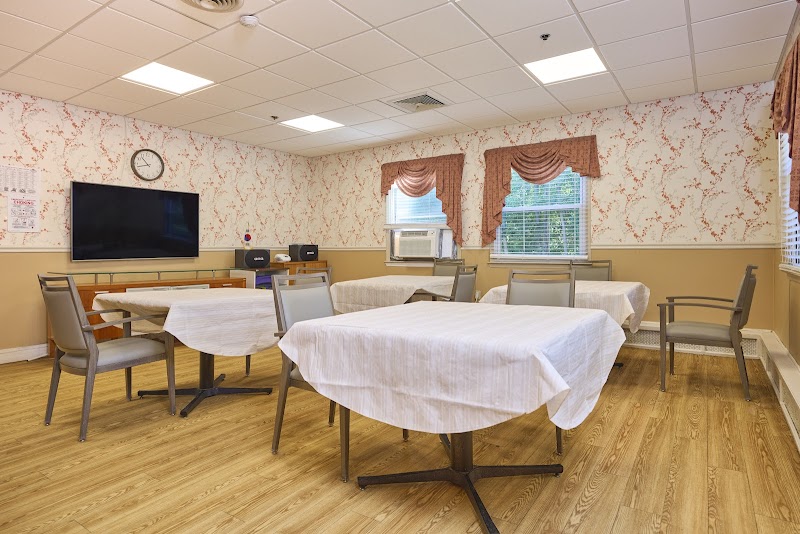
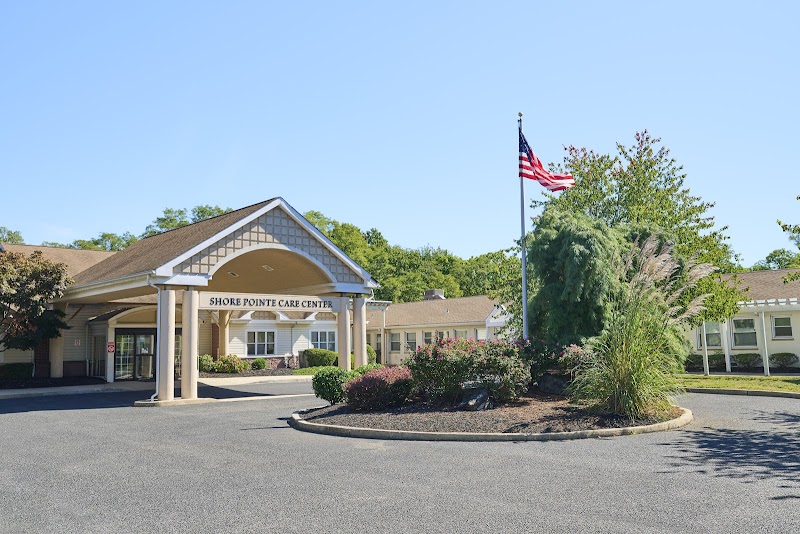
GATEWAY CARE CENTER

139 GRANT AVE, EATONTOWN, NJ 07724 (732) 542-4700
For profit - Partnership 178 Beds THE ROSENBERG FAMILY Data: November 2025
Trust Grade
70/100
#41 of 344 in NJ
Last Inspection: January 2025

Within standard 12-15 month inspection cycle. Federal law requires annual inspections.

Overview

Gateway Care Center in Eatontown, New Jersey, has a Trust Grade of B, indicating it is a good option for families, though not without some concerns. It ranks #41 out of 344 facilities in the state, placing it in the top half of New Jersey nursing homes, and #6 out of 33 in Monmouth County, meaning there are only a few local facilities that are better. However, the trend is worsening, with the number of issues increasing from 8 in 2023 to 9 in 2025. Staffing is a strong point with a 5/5 star rating and good RN coverage, better than 82% of facilities in the state, although turnover is at 42%, which is average. On the downside, the facility has accrued $27,641 in fines and has faced several issues, including failing to address significant weight loss in a resident and not ensuring that appropriate nutrition was provided, which raises concerns about the quality of care.

Trust Score
B
70/100
In New Jersey
#41/344
Top 11%
Safety Record
Moderate
Needs review
Inspections
Getting Worse
8 → 9 violations
Staff Stability
○ Average
42% turnover. Near New Jersey's 48% average. Typical for the industry.
Penalties
✓ Good
$27,641 in fines. Lower than most New Jersey facilities. Relatively clean record.
Skilled Nurses
✓ Good
Each resident gets 47 minutes of Registered Nurse (RN) attention daily — more than average for New Jersey. RNs are trained to catch health problems early.
Violations
⚠ Watch
25 deficiencies on record. Higher than average. Multiple issues found across inspections.
★★★★★
5.0
Overall Rating
★★★★★
5.0
Staff Levels
★★★★★
5.0
Care Quality
★★★☆☆
3.0
Inspection Score
Stable
2023: 8 issues
2025: 9 issues

The Good

  • 5-Star Staffing Rating · Excellent nurse staffing levels
  • 5-Star Quality Measures · Strong clinical quality outcomes
  • Full Sprinkler Coverage · Fire safety systems throughout facility
  • No fines on record
  • Staff turnover below average (42%)

    6 points below New Jersey average of 48%

Facility shows strength in staffing levels, quality measures, fire safety.

The Bad

Staff Turnover: 42%

Near New Jersey avg (46%)

Typical for the industry

Federal Fines: $27,641

Below median ($33,413)

Moderate penalties - review what triggered them

Chain: THE ROSENBERG FAMILY

Part of a multi-facility chain

Ask about local staffing decisions and management

The Ugly 25 deficiencies on record

1 actual harm
Jan 2025 9 deficiencies 1 Harm
SERIOUS (G)

Actual Harm - a resident was hurt due to facility failures

Deficiency F0692 (Tag F0692)

A resident was harmed · This affected 1 resident

**NOTE- TERMS IN BRACKETS HAVE BEEN EDITED TO PROTECT CONFIDENTIALITY** Based on observations, interviews, record review, and review of facility documents, it was determined that the facility failed t...

Read full inspector narrative →
**NOTE- TERMS IN BRACKETS HAVE BEEN EDITED TO PROTECT CONFIDENTIALITY** Based on observations, interviews, record review, and review of facility documents, it was determined that the facility failed to prevent unintended insidious (gradual but with harmful effects) weight loss of 31.5 pounds (lbs.) in one year from 1/3/24 through 1/1/25, and significant weight losses to include a 14 lb./10.5% loss in 6 months from 4/2/24 through 9/2/24; a 15 lb./11.2% loss in 6 months from 5/5/24 through 10/1/24; a 6.5 lb./5.6% loss in 1 month from 11/1/24 through 12/3/24; and an additional 4 lb. loss from 12/3/24 through 1/1/25; which was also a 16.5 lb./13.4% loss in 6 months from 8/1/24 through 1/1/25. The facility failed to prevent and address these weight losses in a timely manner, which included the failure to a.) ascertain (to find out) food preferences, b.) implement fortified foods (foods that are nutrient dense in calories and protein), c.) provide culturally appropriate alternate meal options d.) implement and monitor weekly weights, and e.) consistently monitor intake and record consumption of a physician prescribed supplement. In addition, the facility relied on cultural food brought in by family when they visited approximately once a month as a nutritional intervention. This deficient practice was identified for 1 of 5 residents (Resident #67) reviewed for weight loss. The evidence was as follows: A review of an undated facility policy Weight Management and Intervention Procedure, reflected that the interdisciplinary team would strive to prevent, monitor and intervene when a resident experienced an undesirable weight loss. It also included that a 5% weight loss in a one-month time frame was considered significant and a 10% loss within six months was considered significant and a weight loss greater than 10% in six months was considered severe. In addition, it reflected that the registered dietitian (RD) would review residents' weights by the 15th of each month and the team would discuss and analyze negative trends and interventions at the monthly weight meetings. A review of an undated facility policy Nutritional Procedure, reflected that all residents should receive appropriate nutrition tailored to their individual health needs and food preferences for overall health and quality of life. Nutritional assessments should include a resident's dietary habits, preferred foods, favorite meals and traditional foods from their cultural background. It also reflected that staff should report any changes in eating habits and weights to the RD promptly. In addition, it included to maintain accurate and current records of all assessments, care plans, and residents' food preferences. A review of an undated facility policy Interdisciplinary Care Planning Protocol, reflected that dietary should include an overview of their assessments of the residents needs and problems, which should be specific and individualized. On 1/03/25 at 12:46 PM, the surveyor observed Resident #67 in their room. There was an untouched lunch tray on the overbed table. On 1/06/25 at 12:20 PM, the surveyor observed the resident lying in their bed. Upon inquiry, the Certified Nurse Aide (CNA #1) stated that the resident refused lunch and that an alternate was usually offered; however, there were no culturally appropriate alternate meals available. On 1/07/25 at 12:21 PM, the surveyor observed the resident lying in their bed and there was no lunch tray in the room. Upon inquiry, the Licensed Practical Nurse (LPN #1) stated that the resident no longer ate well and the physician recently increased a supplement from three to four times a day, and also prescribed a medication to stimulate the appetite. On 1/08/25 at 12:15 PM, two surveyors observed the resident lying in their bed. At that time, the surveyor interviewed the Assistant Activities Director (AAD), who stated that the resident's daughter visited the resident every three to four weeks and brought in cultural foods. In addition, she stated that the daughter visited on Saturday and the resident ate very little but did drink the soymilk brought by the daughter. The AAD stated that ever since the resident had COVID-19, the resident lost their sense of taste and therefore appetite. She also added that she knew the resident liked marinated beef and did not like pork. In addition, she added that the resident enjoyed their supplements, and liked juice. The Activities Director entered the resident's room as well and translated in the resident's native language. Resident #67 confirmed that they enjoyed and completed supplements, soy milk when brought by the daughter and enjoyed juices. The resident stated that they preferred beverages and not food due to loss of taste. The surveyor reviewed the medical record for Resident #67. A review of the resident's admission Record (an admission summary) included diagnoses not limited to; hypertensive, heart and chronic kidney disease with heart failure. A review of the quarterly Minimum Data Set, an assessment tool used to facilitate the management of care dated 12/3/24, reflected a Brief Interview for Mental Status score of 5 out of 15 which indicated severe cognitive impairment. It also reflected the resident had a significant weight loss not on physician-prescribed weight-loss regimen. A review of the resident's comprehensive care plan reflected a nutrition care plan initiated 12/22/20. The focus reflected that the resident had weight loss related to diuretic use, advanced age and poor meal intake. It also included that in 8/2024 and 9/2024, they had gradual weight loss, in 11/2024, the resident had gradual weight loss and a significant weight loss over six months, in 12/2024, the resident had a significant weight loss over a one- and six-month period of time, and in 1/2025, the resident had a significant weight loss over three and six months. The goals initiated on 12/22/20, included that the resident would maintain their weight with no significant weight changes and would consume at least 75% of meals and supplements. Interventions included to Encourage family to bring food/snacks, which was initiated on 6/12/23, by the facility RD and provide House Supplement 237 ml four times a day, this intervention was revised on 1/2/25, by the facility RD. A review of the Order Summary Report (OSR) reflected the following physician orders (PO): A PO dated 8/9/23, for Glucerna (a supplement with less sugar) 237 milliliters (mls) twice a day; A PO dated 2/2/24, for Glucerna three times a day and record amount; A PO dated 3/22/24, for House Supplement NSA (no sugar added) three times a day; A PO dated 6/26/24, for House Supplement NSA (no sugar added) three times a day; A PO dated 12/3/24, for House Supplement four times a day for supplement for poor appetite; and A PO dated 12/27/24, for a Regular diet; A PO dated 12/27/24, for House Supplement four times a day. A review of the Medication Administration Record (MAR) reflected the above PO dated 6/26/24. Further review of the MAR for the dates 6/27/24 through 8/1/24, reflected the House Supplement was administered three times a day (09:00 AM, 2:00 PM, 09:00 PM) with a check mark; however, there was an X marked for the amt (amount consumed) row, which did not quantify the amount of supplement consumed. The surveyor reviewed the weight record in the electronic medical record (EMR) which did not include weekly weight monitoring. Weights documented were as follows: 1/3/24 139 lbs. 2/2/24 135.5 lbs. 3/7/24 132.5 lbs. 4/2/24 134 lbs. 5/5/24 134 lbs. 6/5/24 128.5 lbs. 7/1/24 128 lbs. 8/1/24 124 lbs. 9/2/24 120 lbs. 10/1/24 119 lbs. 11/1/24 118 lbs. 12/3/24 111.5 lbs. 1/1/25 107.5 lbs. The Director of Nursing (DON) provided the surveyor with documentation that Resident #67 was discussed at a monthly weight meeting on 11/6/24, for a 16 lb./11.9% weight loss over six months. Interventions/Notes reflected the weight loss was expected due to diuretic use (a medication used to increase the production of urine, helping the body to get rid of excess fluid), the age of the resident and that the resident preferred food from the family. In addition, the resident's weights were discussed at a weight meeting dated 12/9/24, for a 6.5 lb./5.5% loss over one month and a 17 lb./13.2% loss over six months. Interventions/Notes reflected the weight loss was undesired, but that the resident was on a diuretic with improved edema (fluid retention); had poor intake of meals but good intake of supplements. At that time, there was a recommendation to increase the supplement from three to four times a day. Further review of the residents OSR, reflected a PO for the diuretic Furosemide 20 milligrams (mg) one tablet once a day with a start date 3/11/23 through 1/7/25. There was also no PO for a multivitamin and mineral supplement. A review of the resident's meal tickets dated 1/7/24, for breakfast, lunch and dinner included whole milk not soy milk, no fortified foods and a Korean Meal, for lunch and dinner. It also included hot cereal at breakfast (not fortified hot cereal) and a four-ounce cranberry juice (not a calorically dense Nutritional Juice.) A review of the resident's progress notes from 5/1/24 through 1/8/25 reflected the following documentation: -Physician Progress Note Narratives reflected the resident had mild bilateral (both sides) edema on 7/18/24 at 4:23 PM and 8/19/24 at 12:27 PM. -Physician Progress Note Narratives reflected the resident had improved bilateral edema on 9/6/24 at 10:29 AM and on 10/25/24 at 1:50 PM. -CRNP [Nurse Practitioner] Progress Note Narratives reflected the resident had trace edema on the following dates and times: 5/9/24 at 1:54 PM, 5/13/24 at 1:35 PM, 5/30/24 at 10:52 AM, 6/27/24 at 11:46 AM, 7/2/24 at 11:22 AM, 7/24/24 at 11:48 AM, 8/1/24 at 1:35 PM, 8/15/24 at 2:00 PM, 8/16/24 at 11:21 AM, 8/20/24 at 1:36 PM, 8/28/24 at 4:42 PM, 9/4/24 at 11:21 AM, and 9/13/24 at 11:46 AM. -Nursing Progress Note's reflected the resident had trace edema on 6/20/24 at 1:11 PM and 9/20/24 at 7:43 PM. A review of multiple progress notes from the Physician, Nurse Practitioner, and Nurse reflected no documented evidence that the resident had more than mild or trace edema. A Dietary progress note dated 2/2/24 at 11:54 AM, reflected the resident's weight was 135.5 lbs. which was a gradual undesired loss. It further reflected the resident was not a big breakfast eater. In addition, the RD noted that nursing informed her that the resident had good consumption of foods brought by the family, had poor to fair consumption of facility food and took 100% of the supplement Glucerna 237 ml twice a day. The RD would recommend increasing the Glucerna to three times a day. A quarterly Nutritional assessment dated [DATE] at 8:55 AM, reflected the resident's weight was 132.5 lbs. which was a gradual undesired loss. It also included the residents usual body weight/goal weight at 135-145 lbs. and that the resident's meal intake met 26-100% of their estimated nutritional needs. It further reflected that the resident had poor intake of facility meals, but had good consumption of food and snacks brought by the family when they visited. A quarterly Nutritional assessment dated [DATE] at 11:13 AM, reflected the resident's weight was 128.5 lbs., which was a gradual undesired loss and now their usual body weight/goal weight was 130-140 lbs. It reflected the resident's meal intake met 26-100% of the resident's estimated nutritional needs. It further reflected that the resident had poor intake of facility meals but had good consumption of food brought by the family. The RD notes the resident had trace edema and that she would continue to monitor the residents weights and intake. A Dietary progress note dated 8/2/24 at 11:05 AM, reflected the resident's weight was 124 lbs. which was a gradual undesired loss. The RD further documented that the resident had good consumption of food brought by the daughter per a translator and had good intake of supplements and preferred to drink them at medication pass times. The RD indicated she would continue to monitor the resident's weight and intake of meals and supplements. An annual Dietary note dated 8/30/24 at 8:50 AM, reflected the resident's weight was 124 lbs. The note reflected the resident received Vitamin C, Vitamin D and folic acid (but not a complete vitamin/mineral supplement). The RD further documented that the resident had good consumption of food brought by the daughter about once a month per a translator and had fair to good intake of supplements as per staff. The RD indicated she would continue to monitor the resident's weight and intake of meals and supplements. A Dietary progress note dated 11/1/24 at 3:18 PM, reflected the resident's weight was 118 lbs. which was a gradual weight loss over one month and a significant weight loss over six months (16 lbs./11.9%). The RD documented that the loss was expected due to an improvement of edema as per a progress note dated 10/25/24. In addition, it reflected that the resident had poor intake of facility meals since the resident enjoyed foods brought by the daughter and was consuming 100% of the House Supplement NSA three times a day. A quarterly Nutritional assessment dated [DATE] at 12:42 PM, reflected the resident's weight was 118 lbs., which was a gradual weight loss over one month and a significant weight loss over six months (16 lbs./11.9%). The assessment now indicated that the resident's usual body weight/goal weight fluctuates. The RD documented that the loss was expected due to an improvement of edema as per a progress note dated 11/15/24. It reflected the resident's meal intake met 26-100% of the resident's estimated nutritional needs. It further reflected that the resident had poor intake of facility meals since the resident enjoyed foods brought by the daughter. In addition, it reflected the resident had fair to good consumption of the House Supplement NSA 237 ml three times a day. A Physician Progress Note Narrative dated 12/2/24 at 3:03 PM, reflected the resident had improved bilateral edema, check TSH (thyroid stimulating hormone, which is a test to check thyroid function), monitor weights and intake, RD to follow up. A Nursing Progress Note dated 12/2/24 at 3:21 PM, reflected the resident had a poor appetite and the resident's physician and daughter were notified. A Nursing Progress Note dated 12/2/24 at 8:12 PM, reflected the resident refused dinner but consumed 100% of the House Supplement. A Nursing Progress Note dated 12/3/24 at 11:29 AM, reflected the RD and speech therapist were notified of the resident's poor appetite. A Dietary note dated 12/3/24 at 12:35 PM, reflected that the resident's weight was 111.5 lbs. which was an undesired significant weight loss of 6.5 lbs./5.5% over one month and 17 lbs./13.2% over six months. It reflected that edema improved and that as per the staff the resident's meal consumption was less than 25% and sometimes refused meals but consumed 100% of the supplements. The RD indicated that she would increase the supplements from three to four times per day and continue to monitor weights and intake of meals and supplements. A Dietary note dated 12/25/24 at 9:54 AM, reflected the resident continued to have poor intake of facility meals and enjoyed food brought by family when they visited. Also, per nursing, the resident was taking the supplements well which was increased to four times a day on 12/3/24 (which was not evidenced in the OSR or MAR). The RD also documented that the resident did not have a history of diabetes and therefore requested the diet be liberalized to a regular not a diabetic diet and the same for the supplements. A Dietary note dated 1/2/25 at 11:47 AM, reflected the resident's weight was 107.5 lbs. which reflected a gradual four pound weight loss over one month, a significant weight loss of 11.5 lbs./9.7% over three months and a 20.5 lb./16% significant weight loss over six months, all of which were undesired. The RD included that on 12/27/24, the diet was liberalized to regular, and the supplement was changed to a regular House Supplement 237 ml to four times a day. She included that the resident had variable intake of facility meals and enjoyed food brought by the family. Intake of supplements was 100% and that nursing requested the physician order a medication to stimulate the appetite. In addition, it reflected the RD would continue to monitor the resident's weight and intake of meals and supplements. There was no documented evidence that the RD implemented interventions related to the residents insidious and significant weight changes since the 2/2/24, Dietary progress note until December 2024 (10 months later). A Nursing Progress Note dated 1/1/25 at 12:40 PM, reflected the resident did not eat breakfast or lunch and only consumed the House Supplement in the morning and at lunch. In addition, the resident's daughter and physician were notified. A Nursing Progress Note dated 1/3/25 at 9:16 PM, reflected the resident had a poor appetite and consumed 25% of their meals. A Nursing Progress Note dated 1/5/25 at 3:40 PM, reflected the physician ordered a medication to stimulate the appetite for Resident #67. A Nursing Progress Note dated 1/7/25 at 3:21 PM, reflected the resident refused lunch despite two attempts. The resident did consume 90% of the House Supplement and the resident's daughter and physician were notified. On 1/07/25 at 1:07 PM, the surveyor interviewed the RD in presence of survey team. She stated that she was aware that the resident had weight loss but was not sure of the details. She stated that there were no alternate Korean meals available if a resident refused a meal; there was only American items available. The RD stated that if a resident was not eating, she would order supplements. She stated a House Supplement was either Ensure Plus or Boost Plus. The RD acknowledged that she should have tried foods first. The RD stated that when she obtained food preferences, she relayed that information to the kitchen and ensured the resident received them via meal rounds. The RD stated that the family brought in food; however, she could not speak to how often or what foods. In addition, she stated that the facility had fortified foods which were calorically dense and served as a nutritional intervention to abate and/or reverse unplanned weight loss. She could not answer why fortified foods were not tried for Resident #67; such as Super Cereal as that was a calorically dense hot cereal that could have replaced the hot cereal the resident received each morning. In addition, the RD could not answer why she did not try a calorically dense juice to replace the resident's regular juice which the resident enjoyed. Furthermore, she could not answer why the resident was not ordered a multivitamin and mineral supplement since their meal intake was inadequate. The RD stated she would have to get back to the surveyor regarding what interventions she put into place for the resident's weight loss which was now significant. She could not answer why the resident was not placed on weekly weights for closer monitoring. On 1/09/25 at 9:52 AM, the survey team met with the administrative team: the DON, the Regional DON, the Assistant DON (ADON), the Licensed Nursing Home Administrator (LNHA) and the Regional LNHA. The LNHA stated the RD would not be available for a follow up interview since she had an emergency. The administrative team acknowledged that residents and families were made aware that the always available meal substitute items were from the American menu and acknowledged that residents on the Korean unit received American breakfast. The administrative team stated that the residents supplement was changed from Glucerna to Ensure Plus on 12/3/24. The LNHA stated that his expectation was that the RD would have identified weight losses and the causation, update food preferences, reassess, implement interventions and follow up. The DON stated she could not answer whether the RD did this for Resident #67. She provided the surveyor with documentation that the resident was discussed at the November and December 2024 monthly weight meetings. She also stated that the resident should have been on weekly weights for closer monitoring. The Regional LNHA stated that when he spoke to the RD, she stated that she had interviewed the resident, but did not document the conversations. In addition, he stated that the RD indicated that the family provided cueing at meals which increased the resident's meal consumption. Furthermore, he acknowledged that if the resident's family was visiting every three to four weeks, the facility could not rely on food brought from home or the family member cuing as nutrition interventions. The ADON stated that the physician was aware of the weight loss and ordered an appetite stimulant medication on 1/5/25. The LNHA stated that the resident's weight losses should have been addressed by the RD or Consultant RD, and that he was ultimately responsible to ensure the RD had addressed the weight losses appropriately. A review of the Korean units four-week menu cycle reflected that one meal choice was available for lunch and dinner. A review of a recipe for the fortified food Super Cereal, reflected that a portion size of this hot cereal would have provided 511 calories and 11 grams of protein. A review of an unsigned and undated job description for Dietitian, reflected that job responsibilities included but were not limited to; provide substitute foods of similar nutritive value to resident's who refuse foods served, interview residents or family members as necessary to obtain diet history, participate in maintaining records of the residents food likes and dislikes, visit residents periodically to evaluate the quality of meals served, likes and dislikes, etc., involve the resident's/family in planning dietary objectives and goals for the resident, and assist in developing diet plans for individual residents. NJAC 8:39-11.2(e)(2), 17.1(c), 17.4(a)(1), 27.1(a)
CONCERN (D)

Potential for Harm - no one hurt, but risky conditions existed

Safe Environment (Tag F0584)

Could have caused harm · This affected 1 resident

**NOTE- TERMS IN BRACKETS HAVE BEEN EDITED TO PROTECT CONFIDENTIALITY** Based on observation and interview, it was determined that the facility failed to maintain the residents' environment and living...

Read full inspector narrative →
**NOTE- TERMS IN BRACKETS HAVE BEEN EDITED TO PROTECT CONFIDENTIALITY** Based on observation and interview, it was determined that the facility failed to maintain the residents' environment and living areas in a sanitary and homelike manner. This deficient practice was identified for 2 of 6 residents (Resident #90 and Resident #125) having lunch in the East Unit Sunshine Room in wheelchairs or recliners and 1 of 2 residents (Resident #124) utilizing overbed tables. This deficient practice was evidenced by the following: 1.On 1/02/25 at 11:10 AM, the surveyor observed Resident #90 out of bed, in a recliner in the Sunshine Room. A bead [NAME] activity center was noted on an overbed table in front of the resident. The resident was noted with closed eyes. No distress was noted. On 1/06/25 at 12:07 PM, the surveyor observed facility staff sitting next to Resident #90 in the Sunshine Room providing verbal cues/assisting as needed with lunch. The surveyor observed Resident #90's recliner with dried brown substances on sides of recliner. A review of the admission record reflected that Resident #90 had diagnoses included but not limited to; dementia and diabetes. A review of the most recent quarterly Minimum Data Set (MDS), an assessment tool, dated 11/13/24, indicated that the resident had a Brief Interview for Mental Status (BIMS) score of 4 out of 15, indicating severely impaired cognition. On 1/07/25 at 12:05 PM, the surveyor observed Resident #90 in the Sunshine Room. The resident's recliner was observed with dried brown substances on the sides of recliner. When the Unit Manager was asked about it, she stated that's a hospice chair and another staff member present in the room at that time stated, the resident spits all the time. 2. On 1/06/25 at 12:08 PM, the surveyor observed Resident #125 in the Sunshine Room. The resident was being assisted with lunch by a staff member. The surveyor observed Resident #125's wheelchair with dried brownish, white substances on the resident's left wheel of the wheelchair. A review of the admission record reflected that Resident #125 had diagnoses that included but not limited to; dementia and hyperlipidemia (high cholesterol). A review of the most recent quarterly MDS, dated [DATE], reflected that the resident had a BIMS score of 3 out of 15, indicating severely impaired cognition. On 1/07/25 at 12:05 PM, the surveyor observed Resdient #15 in the Sunshine Room. The surveyor observed the wheelchair with dried brownish, white substances all over the left wheel of the wheelchair. The surveyor showed the wheelchair to the Unit Manager, who stated she would text housekeeping and they'll come do it right after lunch. 3. On 1/02/25 at 11:13 AM, the surveyor observed Resident #124 in a wheelchair in the Sunshine Room. The resident was doing a large piece puzzle. A review of the admission record reflected that Resident #124 had diagnoses that included but not limited to; dementia and diabetes. A review of the most recent quarterly MDS, dated [DATE], indicated that the resident had a Brief Interview for Mental Status (BIMS) score of 4 out of 15, indicating severely impaired cognition. On 01/07/25 at 12:12 PM, the surveyor interviewed the Unit Manager, who stated there was a schedule for wheelchair and recliner cleaning. She also stated housekeeping usually does them and that they were just cleaned in the last 2 weeks. She further stated that if the chairs were dirty, we tell them (housekeeping) and they clean them as soon as possible. On 1/08/25 at 8:18 AM, during observation of tube feeding administration, the surveyor observed Resident #124's bottom of their overbed table with multiple dried brownish spots. The Licensed Practical Nurse (LPN) stated that housekeeping was in charge of cleaning overbed tables. The LPN acknowledged that the overbed table bottom was not clean. On 1/08/25 at 9:06 AM, the surveyor interviewed a housekeeper, who stated she cleans the bathroom first, then the room, including the overbed table. The Director of Housekeeping (DH) joined the interview and stated they generally clean five wheelchairs and recliners a week. He explained in the nice weather they are taken outside and cleaned with the power washer. He went on to explain that now (winter) it's harder, and they are taken into the shower room to clean. On 1/08/25 at 10:12 AM, the surveyor conducted rounds with the DH. The DH acknowledged Resident # 90's recliner with the brownish substances on the side and stated, that's a rental chair. When asked if they clean rental chairs, he stated they do. The DH acknowledged Resident #125's wheelchair with the brownish substances on the left wheel. The DH acknowledged Resident #124's overbed table with brownish substances on the bottom and stated, I'll have them scrape that. A review of facility provided policy Wheelchair and Geri Chair Cleaning, undated, included: Policy: The policy for this facility and the Environmental Services Director is to ensure the scheduling of each chair for cleaning at least once a month. Schedule: Weekly wheelchair schedule is as follows: Monday, East Wing, Rooms 100 through 131 A review of facility provided cleaning calendar for January 2025 showed one room for each wing on each day ex. [DATE] has rooms [ROOM NUMBER]. On 1/09/25 at 9:53 AM, the surveyor interviewed the Regional Licensed Nursing Home Administrator, who stated that regarding wheelchair cleaning they typically follow the policy on the schedule and adjusted it on a as needed basis. He also stated that they listen to the residents and pay attention to details, to make sure everyone is in a safe and comfortable environment. He further stated that if they observe a chair that needs cleaning, they follow policy, but sometimes the needs of the building overrule. The chairs are cleaned on an as needed basis. N.J.A.C. 8:39-31.4(a)(c)(f)
CONCERN (D)

Potential for Harm - no one hurt, but risky conditions existed

Abuse Prevention Policies (Tag F0607)

Could have caused harm · This affected 1 resident

Based on observation, interview, record review and review of pertinent facility documents, it was determined that the facility failed to report and initiate an investigation for an injury of unknown o...

Read full inspector narrative →
Based on observation, interview, record review and review of pertinent facility documents, it was determined that the facility failed to report and initiate an investigation for an injury of unknown origin in accordance with their abuse and neglect policy until surveyor inquiry. This deficient practice was identified for one (1) of one (1) resident reviewed for abuse (Resident #47), and was evidenced by the following: On 1/2/25 at 10:44 AM, the surveyor observed Resident #47 in bed. The resident had a line down the bridge of their nose with a reddish/brown colored marking and a dried scab. The surveyor attempted to interview the resident but the resident was not responding to the surveyor. On 1/3/25 at 9:00 AM, the Director of Nursing (DON) provided the surveyor with two investigations for Resident #47 from August 2024 and October 2024. The DON verified that there were two investigations in the past six (6) months and no other investigations. A review of the two investigations for Resident #47 revealed that there was no investigation regarding a marking on the resident's nose. On 1/3/25 at 12:54 PM, the surveyor interviewed the Certified Nursing Assistant (CNA#1), who stated that she had worked at the facility for less than two months and was familiar with Resident #47. CNA#1 stated that she had cared for the resident yesterday but that another CNA (CNA#2) had fed the resident that day. CNA#1 added that she had seen a mark on the resident's nose and thought it was always there. CNA#1 also stated that she had not told anyone regarding the mark on the resident's nose. On 1/3/25 at 12:59 PM, the surveyor interviewed CNA#2, who stated that she had started working at the facility yesterday and had cared for Resident #47 that morning. CNA#2 stated that she had seen the mark on the resident's nose but thought the staff already knew about it and had not told anyone. On 1/3/25 at 1:01 PM, the surveyor interviewed the acting Unit Manager/Infection Preventionist/Licensed Practical Nurse (UM/IP/LPN), who stated that she was unaware of a mark on Resident #47's nose. At that time, the surveyor with the UM/IP/LPN, observed Resident #47 in their room in bed. The UM/IP/LPN acknowledged that there was a marking on the resident's nose that looked like a scratch. The UM/IP/LPN was able to interview the resident in the presence of the surveyor. The resident shook their head yes when asked if there was a scratch on their nose. The UM/IP/LPN asked the resident how the scratch occurred, and the resident stated, I was trying to make it shiny. The UM/IP/LPN stated that a risk management report would have to be completed. The UM/IP/LPN added that the CNAs were to report any skin issues to the nurses and thought maybe the medication nurse was aware. The UM/IP/LPN could not speak to why the CNAs or nurse had not reported to her the scratch on Resident #47's nose. The surveyor reviewed the medical record for Resident #47. A review of the admission Record revealed diagnoses of but not limited to; schizophrenia (a disorder that affects ability to think, feel, and behave clearly) and an unspecified mood (affective) disorder. A review of the most recent quarterly comprehensive Minimum Data Set, an assessment tool used to facilitate the management of care dated 12/11/24, reflected the resident had a brief interview for mental status score of 12 out of 15, indicating that the resident had a moderately impaired cognition. A review of the resident's individualized plan of care (IDPC) revealed a focus area Resident #47 has an ADL (activities of daily living) deficit related to: [They] requires assistance with ADL's in transfers, dressing, bed mobility, bathing/showering, toileting, eating and mobility. With an initiated date of 6/13/22 and revised date of 12/10/24. Another focus area Resident #47 has an alteration in skin integrity and requires EBP (enhanced barrier protection-gown and glove use during high contact procedures) 1. Sacrum, 2. 10/09/24-DTI (deep tissue injury) Right lateral Fifth Toe. with an initiated date of 10/25/23 and revision date 12/31/24. A review of the resident's Body Check assessments dated 12/3, 12/6, 12/12, 12/17, 12/20, 12/26, 12/27 for December 2024 revealed that there were no new identified areas that were previously identified. On 1/6/25 at 12:45 PM, the DON provided the surveyor with an investigation titled Self-inflicted report for the unwitnessed scratch on Resident #47's face that was completed on 1/3/25 at 1:17 PM by a Registered Nurse (RN#1). The report included an unwitnessed incident description of Alerted by CNA that resident has a scratch on [their] nose. Resident stated to this writer My nose was itchy I did scratch myself. In addition, the report included employee statements from 1/2/24 and 1/3/24. The employee statements indicated that they had not seen a mark on the resident's nose except for the statements of CNA#1 and CNA#2 that included that they had seen a mark. On 1/6/25 at 12:47 PM, the surveyor interviewed the Licensed Practical Nurse (LPN#1) who stated that she was familiar with Resident #47. LPN#1 also stated that the resident speaks slowly and sometimes does not respond to unfamiliar faces. LPN#1 introduced Resident #47 to the surveyor and left the room. On 1/6/25 at 12:57 PM, the surveyor interviewed Resident #47, who stated that they had scratched their nose and that the nurse put medicine on it. The resident was unable to speak to when they had scratched their nose but felt that their nails were short enough and felt safe in the facility. On 1/7/25 at 9:15 AM, the surveyor interviewed the UM/IP/LPN who stated that CNA#2 was training with CNA#1 on 1/3/25. On 1/7/25 at 10:17 AM, the Assistant Director of Nursing (ADON) provided the staff education that was completed for CNA#1 and CNA#2. A review of the staff education for CNA#1 revealed a Zero Tolerance for Abuse and neglect undated form describing What is Abuse? signed by the CNA#1. In addition, a Resident Abuse quiz dated 12/10/24 completed by CNA#1 with a question All injuries or conditions below can suggest physical abuse except: A. Bruises, B. A runny nose, C. A broken bone, D. Burns and the CNA#1 correctly answered, B. A runny nose. A review of the staff education for CNA#2 revealed a Zero Tolerance for Abuse and neglect undated form describing What is Abuse? signed by the CNA#2. In addition, a Resident Abuse quiz dated 1/2/25 completed by CNA#2 with a question All injuries or conditions below can suggest physical abuse except: A. Bruises, B. A runny nose, C. A broken bone, D. Burns and the CNA#2 correctly answered, B. A runny nose. On 1/8/25 at 9:38 AM, the surveyor interviewed the ADON who stated that she reviewed Abuse training with all new employees and explains to report any skin impairments to the nurse immediately. The ADON also stated that usually a new orientee CNA will work alongside a seasoned CNA. The ADON could not speak to why CNA#1 who had worked at the facility approximately less than two months was training CNA#2. The ADON added that she thought CNA#1 and CNA#2 had worked as CNAs prior to coming to the facility. On 1/8/25 at 9:56 AM, the surveyor interviewed RN#1, who verified that she was the medication nurse and had completed the Self-inflicted report for Resident #47 on 1/3/24 and wrote the description Alerted by CNA that resident has a scratch on [their] nose. Resident stated to this writer My nose was itchy I did scratch myself. RN#1 stated that she was told by CNA#2 about the scratch on the resident's nose after surveyor inquiry. RN#1 added that she had not seen the scratch prior to CNA#2 making her aware. RN#1 acknowledged that she had spoken to the resident after the UM/IP/LPN was in the resident's room with the surveyor. Further review of the resident's medical record revealed that there was no Body Check assessment completed from 12/27/24 until after surveyor inquiry. On 1/8/25 at 12:09 PM, the surveyor interviewed the UM/IP/LPN, who stated that body checks were performed on shower days and Resident #47 had a shower schedule of Tuesday and Friday. The UM/IP/LPN stated that on 12/31/24 the resident had a bed bath completed and could not speak to why there was no Body Check form completed. The UM/IP/LPN stated that a body check was to be performed on shower days whether the resident received a bed bath or even refused to be bathed. The UM/IP/LPN added that on 1/1/25 the resident was seen by a physician for a wound consult. On 1/8/25 at 2:37 PM, the survey team met with the facility administrative team. The DON stated that staff were to report to a nurse immediately any time there was a new skin impairment on a resident. The DON added that an investigation was completed, and the CNAs were educated to report immediately any skin issues. A review of the facility policy dated 3/18/2024 Prohibition of Resident Abuse & Neglect provided by the Licensed Nursing Home Administrator revealed Any witness, alleged, or suspected violations involving mistreatment, neglect or abuse. Including injuries of an unknown source and misappropriation of resident property, MUST BE REPORTED IMMEDIATELY TO THE EMPLOYEE'S SUPERVISOR. NJAC 8:39-4.1(a)(5), 13.4(c)(ii), 27.1(a)
CONCERN (D)

Potential for Harm - no one hurt, but risky conditions existed

Deficiency F0658 (Tag F0658)

Could have caused harm · This affected 1 resident

REFER to F759 Based on observation, interview, and record review, it was determined that the facility failed to follow acceptable professional standards of clinical practice by borrowing a medication ...

Read full inspector narrative →
REFER to F759 Based on observation, interview, and record review, it was determined that the facility failed to follow acceptable professional standards of clinical practice by borrowing a medication (Lidocaine 4% patch) from another resident's supply. The deficient practice was identified for one (1) of three (3) nurses observed during medication administration for one (1) of six (6) residents, (Resident #122). The deficient practice was evidenced by the following: Reference: New Jersey Statutes Annotated, Title 45. Chapter 11. Nursing Board. The Nurse Practice Act for the State of New Jersey states: The practice of nursing as a registered professional nurse is defined as diagnosing and treating human responses to actual and potential physical and emotional health problems, through such services as case finding, health teaching, health counseling, and provision of care supportive to or restorative of life and wellbeing, and executing medical regimens as prescribed by a licensed or otherwise legally authorized physician or dentist. Reference: New Jersey Statutes Annotated, Title 45, Chapter 11. Nursing Board. The Nurse Practice Act for the State of New Jersey states: The practice of nursing as a licensed practical nurse is defined as performing tasks and responsibilities within the framework of case finding; reinforcing the patient and family teaching program through health teaching, health counseling and provision of supportive and restorative care, under the direction of a registered nurse or licensed or otherwise legally authorized physician or dentist. On 1/3/25 at 8:59 AM, during the morning medication administration pass, the surveyor observed Registered Nurse (RN#1) at the door of Resident #122's room with the medication cart. RN#1 stated that she was about to administer the resident's eye drops and patches. RN#1 showed the surveyor the container of eye drops and two (2) packages of Max Strength Aspercreme with 4% Lidocaine pain relief patch (a topical patch used for pain relief) that was on the resident's overbed table. The RN#1 stated that the resident had physician's orders (PO) for the Lidocaine patches to be applied to two (2) different sites, the right shoulder and the left shoulder. Upon returning to the medication cart, RN#1 showed the surveyor the electronic medication administration record (EMAR) which revealed a PO dated 9/29/24 for Lidocaine External Patch 5% (Lidocaine) Apply to left shoulder topically one time a day for pain and remove per schedule. In addition, another PO dated 9/29/24 for Lidocaine External Patch 5% (Lidocaine) Apply to right shoulder topically one time a day for pain and remove per schedule. After RN#1 acknowledged that she had administered the wrong strength of Lidocaine, she stated that Resident #122 had no Lidocaine patches in the medication cart and she had to borrow both Lidocaine patches from another resident. RN#1 then showed the surveyor a box of Max Strength Aspercreme with 4% Lidocaine pain relief patch labeled by the provider pharmacy for an unsampled resident that she had removed the two Lidocaine 4% patches to use for Resident #122. The surveyor reviewed the Order Summary Report for the unsampled resident and verified that there were active physician's orders (PO) with a start date of 11/13/24 for Lidocaine External Patch 4% (Lidocaine) Apply to left knee topically in the morning for pain and remove per schedule and Lidocaine External Patch 4% (Lidocaine) Apply to lower back topically in the morning for pain and remove per schedule. On 1/3/25 at 10:47 AM, the surveyor interviewed the Assistant Director of Nursing (ADON), who stated that she was responsible for nursing staff education. The ADON stated that nurses were not allowed to borrow any medications from another resident. The ADON stated that Lidocaine 5% patches were provided by the provider pharmacy and if the 5% patch was not available then the nurse would have to call the provider pharmacy to see why the medication was not available and the nurse would also have to call the physician for a follow up order as to what she should do. The ADON also stated that the facility had Lidocaine 4% patches as a house stock over the counter medication meaning that the facility had stock available for any resident that had a PO. The ADON added that some residents do get the Lidocaine 4% patches from the pharmacy if the insurance paid for them. The ADON stated that she would have to look into why the Lidocaine 5% was not available. On 1/3/25 at 1:27 PM, the surveyor interviewed the ADON who stated that she was unsure why the Lidocaine 5% patches were not available for Resident #122, but the nurse should not have borrowed Lidocaine patches from another resident. On 1/6/25 at 12:12 PM, the surveyor, with the Director of Nursing (DON), reviewed the EMAR for Resident #122. The DON explained that the RN#1 had not signed that she administered the Lidocaine 5% patches to the left and right shoulders because RN#1 had realized she had applied the wrong strength and had obtained a one-time PO for the 4% patch. The DON added that there should be documentation indicating what RN#1 had done. The DON stated that the nurses were not to borrow medications but was unsure if there was a policy. A review of the resident's nursing progress notes dated 1/3/25 at 11:36 AM completed by RN#1 revealed Notified MD for lidocaine patch. New ordered received and carried out. On 1/6/25 at 12:45 PM, the surveyor interviewed the DON, who stated that there was no policy regarding borrowing of medications. On 1/6/25 at 2:16 PM, the surveyor interviewed the Consultant Pharmacist (CP), via the telephone, who stated that she had been the CP for a while. The CP stated that the nurses cannot borrow any medications from another resident. The CP added that if the Lidocaine 5% patch was not available then the nurse should have called the physician for a follow-up order as to what to do. The CP added that she tells the nurses during her inservices and medication passes that they cannot borrow medications and that can lead to a medication error. NJAC 8:39-11.2(b), 29.2(a)(d), 29.3(5)(6)
CONCERN (D)

Potential for Harm - no one hurt, but risky conditions existed

Unnecessary Medications (Tag F0759)

Could have caused harm · This affected 1 resident

REFER to F658 Based on observation, interview, and record review, it was determined that the facility failed to ensure that all medications were administered without error of 5% or more. During the mo...

Read full inspector narrative →
REFER to F658 Based on observation, interview, and record review, it was determined that the facility failed to ensure that all medications were administered without error of 5% or more. During the morning medication administration observation on 1/3/25, the surveyor observed three (3) nurses administer medications to six (6) residents. There were 27 opportunities, and two (2) errors were observed which calculated to a medication administration error rate of 7.4%. The deficient practices were identified for one (1) of six (6) residents, (Resident #122), that were administered medications by one (1) of three (3) nurses that were observed. The deficient practices were evidenced by the following: On 1/3/25 at 8:59 AM, during the morning medication administration pass, the surveyor observed Registered Nurse (RN#1) at the door of Resident #122's room with the medication cart. RN#1 stated that she was about to administer the resident's eye drops and patches. RN#1 showed the surveyor the container of eye drops, and two (2) packages labeled Max Strength Aspercreme with 4% Lidocaine pain relief patch (a topical patch containing Lidocaine used for pain relief) that were on the resident's overbed table. RN#1 stated that the resident had physician's orders (PO) for the Lidocaine patches to be applied to two (2) different sites, the right shoulder and the left shoulder. At that time, the surveyor observed RN#1 open each Lidocaine 4% patch package and wrote the date on the patch and then applied one patch to the left shoulder and one patch to the right shoulder. The surveyor obtained one of the empty Lidocaine 4% patch packages for review. RN#1 then spoke to Resident #122 in the resident's language. The surveyor observed the resident smiling and lifted both elbows halfway up in the air and then back down. RN#1 translated for the surveyor and stated that the resident had said that they felt that the pain was improving. Upon returning to the medication cart, RN#1 showed the surveyor the electronic medication administration record (EMAR) which revealed a PO dated 9/29/24 for Lidocaine External Patch 5% (Lidocaine) Apply to left shoulder topically one time a day for pain and remove per schedule. In addition, another PO dated 9/29/24 for Lidocaine External Patch 5% (Lidocaine) Apply to right shoulder topically one time a day for pain and remove per schedule. The surveyor then showed RN#1 the empty package of the Lidocaine patch which revealed the strength of 4%. RN#1 acknowledged that the Lidocaine 4% patches that she had applied to each site was not the 5 % strength that was ordered. The RN#1 stated, I gave the wrong amount. (ERROR #1 and ERROR #2) The surveyor reviewed the medical record for Resident #122. A review of the admission Record revealed diagnoses that included, but not limited to, dementia and a history of falling. A review of a comprehensive quarterly Minimum Data Set (MDS), an assessment tool used to facilitate the management of care, with an assessment reference date of 11/27/2024, reflected the resident had a brief interview for mental status (BIMS) score of five (5) out of 15, indicating that the resident had a severely impaired cognition. A review of the Order Summary Report revealed two active PO's with a start date of 9/30/24 for Lidocaine External Patch 5% (Lidocaine) Apply to left shoulder topically one time a day for pain and remove per schedule and Lidocaine External Patch 5% (Lidocaine) Apply to right shoulder topically one time a day for pain and remove per schedule. On 1/3/25 at 10:47 AM, the surveyor interviewed the Assistant Director of Nursing (ADON), who stated that she was responsible for nursing staff education. The ADON stated that Lidocaine 5% patches were provided by the provider pharmacy and if the 5% patch was not available then the nurse would have to call the provider pharmacy to see why the medication was not available and the nurse would also have to call the physician for a follow up order as to what she should do. The ADON stated that the Consultant Pharmacist (CP) had provided information on Med Pass and would provide a med pass that was completed for RN#1. On 1/3/25 at 12:11 PM, the ADON provided the surveyor with a completed medication pass for RN#1 and an inservice on Medication Pass that had been completed for the nurses. The ADON stated that she was aware RN#1 did not have Lidocaine 5% patches for Resident #122 and thought RN#1 had called the physician. A review of a Medication Pass Observation dated 3/25/24 for RN#1 completed by the CP revealed that there were no errors observed and that the correct drug, correct amount, correct dosage form was administered during that medication pass observation. A review of the Inservice Log dated 9/25/24 for Med Pass completed by the CP revealed that RN#1 was in attendance. On 1/3/25 at 1:27 PM, the surveyor interviewed the ADON, who acknowledged that she spoke with RN#1, and she had administered the wrong dose of Lidocaine patch to each site. The ADON added that the physician was called and allowed the Lidocaine 4% patches. The ADON added that there may have been a problem with insurance and was unsure why the Lidocaine 5% patches were not available. On 1/6/25 at 12:12 PM, the surveyor, with the Director of Nursing (DON), who stated that she was unaware that the surveyor had shown the RN#1 the strength of the two patches that had been applied on the resident's shoulders was not 5% as ordered. The DON verified that there was a medication error report being completed. On 1/6/25 at 2:16 PM, the surveyor interviewed the CP via the telephone who stated that she had been the CP for a while. The CP stated that the nurse cannot interchange 4% Lidocaine patches for the 5% Lidocaine patches and that the nurses must follow the PO for the correct strength. The CP added that if the Lidocaine 5% patch was not available then the nurse should have called the physician for a follow-up order as to what to do. The CP also stated that she had completed medication observations with some of the nurses and reviewed the instructions with them. In addition, the CP stated that she had also provided the facility with a handout that she used for the inservices. A review of the Medication Pass handout that was reviewed during the Med Pass inservice by the CP on 9/25/24 revealed that for accuracy the rights of med pass included ensuring the right dose. In addition, the handout indicated Medication checked against the MAR/eMAR before administering. On 1/8/25 at 2:37 PM, the survey team met with the administrative team. The DON questioned that the error that occurred for the strength of Lidocaine be considered one error due to being the same medication. The DON acknowledged that the Lidocaine 5% patch had POs for applications to two different sites and was considered two opportunities for the medication nurse to follow the correct medication pass procedures for assuring that the right dose was administered. A review of the facility undated policy for Medication Administration provided by the DON had not reflected procedures for ensuring the administration of the correct dosage. NJAC 8:39-11.2(b), 29.2(d)
CONCERN (D)

Potential for Harm - no one hurt, but risky conditions existed

Infection Control (Tag F0880)

Could have caused harm · This affected 1 resident

Based on observations, interviews, and record review it was determined that the facility failed to ensure that staff wear the appropriate personal protective equipment (PPE) for residents on Enhanced ...

Read full inspector narrative →
Based on observations, interviews, and record review it was determined that the facility failed to ensure that staff wear the appropriate personal protective equipment (PPE) for residents on Enhanced Barrier Precautions (EBP)(designed to reduce transmission of multidrug-resistant organisms (MDROs) in nursing homes) to address the risk for infection transmission, in accordance with the facility policy and acceptable standards of infection control practice. This was observed for 2 of 3 unsampled residents (Resident #99 and #Resident #106) reviewed for EBP on 2 of 2 units (North Unit and East Unit) and was evidenced by the following: 1. On 1/03/25 at 07:58 AM, during incontinence rounds with the Acting Unit Manager / Infection Preventionist (UM/IP) on the North Unit, the surveyor observed the UM/IP approach unsampled Resident #99 who was lying in bed. The UM/IP donned gloves, asked permission to check the resident's brief, the resident granted permission. The UM/IP pulled down Resident #99's pants, opened the brief, pulled down the front of the brief, and allowed the surveyor to observe that the brief was wet, but not saturated and the pants were dry. After the surveyor's observation, the UM/IP then pulled up the front of the brief, refastened the brief, and pulled the resident's pants up. The UM/IP then removed her gloves and performed hand hygiene. On the way out of the room, the surveyor observed an EBP sign which indicated gloves and a gown were required for High-Contact Resident Care Activities. Examples of High-Contact Resident Care Activites listed on the sign included changing briefs or assisting with toileting. The surveyor questioned the UM/IP about the sign, and she stated that the resident was on dialysis so therefore on EBP. When asked about wearing a protective gown, theUM/IP stated that she should've had a gown on. On 1/03/25 at 08:46 AM, the UM/IP approached the surveyor to clarify that she had not worn a gown because she was just checking the brief, she was not changing the resident. She further stated that if the resident had been soiled, she would have then donned the required PPE for EBP. A review of the admission record reflected that Resident #99 had diagnoses that include but not limited to; end stage renal disease on dialysis. A review of the interdisciplinary care plan revealed an intervention dated 4/1/24 for Enhanced Barrier Precautions for Infection Prevention: Perform hand hygiene, don gloves and gowns during high contact resident care. 2. On 1/03/25 at 08:12 AM, during incontinence rounds with the East wing Unit Manager (UM), the surveyor and UM entered the room of unsampled Resident #106 to find a Certified Nursing Assistant (CNA) performing care on the resident. The incontinent brief was clean and dry and the CNA stated she had already changed the brief. The CNA noted to be wearing gloves and no protective gown. EBP sign was noted on the wall over the bed. When asked at that time, the UM stated the CNA should have been wearing a gown for care. On 1/03/25 at 12:05 PM, the CNA stated to the surveyor that this morning she was done with providing care and had to step out of the to get a brief so that's why she did not had a gown on when observed earlier. When the surveyor asked her what she did with that brief that she went out of the room for, the CNA stated she then put the clean brief on the resident and did not need a gown at that time. On 1/03/25 at 12:11 PM, the surveyor observed the garbage can in Resident #106's room. There was noted garbage present in the can, no blue gown was noted in garbage. A review of the admission record reflected that Resident #106 had diagnosis that include but not limited to; diabetes. A review of the physician orders included an order dated 12/17/24 for EBP related to a sacral area wound. A review of the interdisciplinary care plan revealed an intervention dated 12/13/24 for enhanced barrier precautions related to sacral wound: Staff to perform hand hygiene, don gown and gloves before performing high-contact resident care. On 1/08/25 at 03:02 PM, the surveyor interviewed the Corporate Clinical Nurse, who stated that the UM/IP was only checking the brief of Resident #99, she had no intention of performing any high contact with the resident. She just opened the brief, she did not provide care. On 1/08/25 at 03:02 PM, the surveyor interviewed the Director of Nursing (DON), who stated the CNA should have been wearing a gown to put a clean brief on Resident #106. Review of facility provided policy Enhanced Barrier Precautions included: Policy Statement: Gateway Care Center is committed to ensuring the safety of patients, visitors and healthcare personnel (HCP) by implementing effective measures to prevent the transmission of Multi Drug Resistant Organisms (MDROs) within our facility. This policy outlines the procedures for identifying, managing, and controlling MDRO infections and colonization, including the implementation of Contact Precautions, with targeted gown and glove use during high contact resident care activities. Scope: EBP are used in conjunction with standard precautions and expand the use of PPE to donning of gown and gloves during high-contact resident care activities that provide opportunities for transfer of MDROs to staff hands and clothing. Procedures: For residents for who EBP are indicated, EBP is employed when performing the following high-contact resident care activities: o bathing/showering o transferring o providing hygiene o changing linens o changing briefs or assisting with toileting o dressing o device care or use: central line, urinary catheter, feeding tube, tracheostomy/ventilator o wound care: any skin opening requiring a dressing NJAC 8:39-19.4(a)(2)(c)
CONCERN (F)

Potential for Harm - no one hurt, but risky conditions existed

Menu Adequacy (Tag F0803)

Could have caused harm · This affected most or all residents

**NOTE- TERMS IN BRACKETS HAVE BEEN EDITED TO PROTECT CONFIDENTIALITY** Based on observation, interviews, and review of pertinent facility documents, it was determined that the facility failed to ensu...

Read full inspector narrative →
**NOTE- TERMS IN BRACKETS HAVE BEEN EDITED TO PROTECT CONFIDENTIALITY** Based on observation, interviews, and review of pertinent facility documents, it was determined that the facility failed to ensure a.) the facility's Registered Dietitian (RD) reviewed and approved the menus (American and Korean) for nutritional adequacy and in accordance with nationally accredited standards, and b.) residents received care planned and physician ordered fortified foods for 3 of 3 residents (Resident's #41, 71 and 118) reviewed for food. The deficient practice was evidenced by the following: 1. On 1/2/25 at 9:46 AM, two surveyors toured the kitchen with the Food Service Director (FSD), the Regional RD and the Assistant Licensed Nursing Home Administrator (ALNHA). At that time, the FSD stated that the facility followed a three-week cycle menu (a menu prepared in advance which was repeated after three weeks). On 1/2/25 at 10:38 AM, the surveyor met with the facility Licensed Nursing Home Administrator (LNHA), the Director of Nursing (DON) and the Assistant DON (ADON). At that time, the LNHA informed the surveyor that their East Wing was the unit where their Korean population resided. On 1/2/25, the FSD provided the surveyor with a copy of the American three-week cycle menus dated 12/22/24, 12/29/24 and 1/5/25. In addition, he provided the surveyor with a copy of menu extensions (listed portion sizes and substitutions based on physician prescribed diets) for week three dated 12/29/24 and week one dated 1/5/25. These extensions indicated that residents should be served a four-ounce portion of milk for lunch and dinner. Furthermore, the FSD provided the surveyor with copy of the undated Korean four-week cycle menus, which did not include beverages or the breakfast meal. None of the seven menus provided were signed and dated by the RD to ensure they were reviewed for adequacy. On 1/3/25 at 11:06 AM, the surveyor met with six residents for the resident council meeting. Six of six residents stated that sometimes they received food items on their trays that did not match the meal ticket (with listed meal items and preferences). On 1/7/25 at 1:07 PM, the surveyor interviewed the RD, in the presence of the survey team. The RD stated that the Food Service Department developed the American menus and she looked at them for nutritional adequacy by ensuring there was a protein, starch and vegetable. The RD stated that she chose to be more clinical and did not really get involved with the menu extensions. At this same time, the RD stated that she was unaware of who developed the Korean menus, nor did she know who reviewed and approved them to ensure they were nutritionally adequate. On 1/7/25 at 2:14 PM, the surveyor interviewed the FSD, who stated the RD reviewed the American menus for adequacy and signed them; however, no one reviewed the Korean menus for nutritional adequacy. On 1/8/25 at 9:26 AM, the surveyor interviewed the FSD, in the presence of a second surveyor. The FSD provided the surveyor a Diet Manual (the 7th Edition), dated 2018 for review. The Diet Manual of the Dietetics in Health Care Communities of New Jersey (Compiled by a Committee of RD's) included the purpose of the Regular diet was to provide a variety of foods to meet nutritional needs of individuals. The Diet Manual further reflected that This diet is nutritionally adequate in all nutrients when planned according to Dietary Reference Intakes, established by the Food and Nutrition Board; Institute of Medicine, USDA Dietary Guidelines for Americans 2015-2020. These are consistent with the USDA Dietary Guidelines for Americans 2020-2025. It included that an eight-ounce portion of milk should be served at lunch and dinner. On 1/8/25 at 12:33 PM, the surveyor observed the lunch trays on both the Korean wings and the North wing (American menu). The surveyor observed the trays on both wing with four-ounce portions of milk which was reflected on the menu. On 1/9/25 at 9:52 AM, the survey team met with the Regional LNHA, LNHA, DON, Regional DON and the ADON. The Regional LNHA stated that the menus should have been reviewed by the RD or the consultant RD for nutritional adequacy. He further acknowledged that the menus were not reviewed by an RD for this building. The LNHA stated he was ultimately responsible. 2. On 01/02/25 at 11:31 AM, the surveyor observed Resident #41 in bed, awake and alert. The resident offered no concerns or complaints. On 1/08/25 at 11:04 AM, the surveyor interviewed the resident in their room. The resident stated that they disliked fish but enjoyed shellfish (shrimp) and did not like meat other than chicken. A review of the admission Record (an admission summary) reflected Resident #41 had diagnoses that included but were not limited to; hypertension (high blood pressure), dysphagia (difficulty swallowing) and chronic obstructive pulmonary disease (lung disease that block airflow and make it difficult to breathe.) A review of the quarterly MDS (Minimum Data Set), a tool to facilitate the management of care dated 12/6/24, reflected a Brief Interview of Mental Status (BIMS) score of 9 out of 15, which indicated an impaired cognition. A review of the comprehensive care plan included a Nutrition care plan initiated on 5/9/23, which included to honor the resident's food preferences as needed and to provide fortified (provided additional calories and protein) pudding four ounces twice a day. A review of the Medication Review Report reflected a physician's order (PO) dated 12/2/24, for a four-ounce fortified pudding twice a day. A review of the Nutritional assessment dated [DATE], reflected the resident disliked fish, including tuna but liked shrimp. In addition, the RD noted she recommended fortified pudding twice a day to prevent weight loss. A review of the list of labeled snacks the FSD provided to the surveyor on 1/2/25, did not include fortified puddings for the resident. A review of the resident's breakfast, lunch and meal tickets dated 1/7/25 did not include fortified pudding twice a day or the food preferences of disliking fish but liked shellfish (shrimp) and did not like meat other than chicken which the resident verbalized to the surveyor on 1/8/25. A review of the resident's breakfast, lunch and dinner meal tickets dated 1/9/25, did not include fortified pudding twice a day. A review of the resident's breakfast, lunch and dinner meal tickets for 1/10/25, included fortified pudding twice a day after multiple surveyor inquiries. 3. On 01/02/25 at 11:38 AM, the surveyor observed Resident #71 in their room sitting in a chair, awake and alert. The resident offered no concerns or complaints. A review of the admission Record reflected Resident #71 had diagnoses that included but were not limited to; hypertension, moderate protein-calorie malnutrition, and chronic obstructive pulmonary disease. A review of the quarterly MDS dated [DATE], reflected a BIMS score of 7 out of 15, which indicated a severely impaired cognition. A review of the comprehensive care plan included a Nutrition care plan initiated on 1/26/21, which reflected to provide fortified pudding at lunch and dinner - preferred vanilla. A review of the Medication Review Report reflected a (PO) dated 9/3/24, for a four-ounce fortified pudding twice a day preferred vanilla as available. A review of the Nutritional Assessment (quarterly) dated 11/7/24, reflected the resident received fortified pudding twice a day. A review of the list of labeled snacks the FSD provided to the surveyor on 1/2/25, did not include fortified puddings for the resident. And a review of the resident's breakfast, lunch and meal tickets dated 1/7/25, did not include fortified pudding twice a day. A review of the resident's breakfast, lunch and dinner meal tickets dated 1/9/25, did not include fortified pudding twice a day. A review of the resident's breakfast, lunch and dinner meal tickets dated 1/10/25, included fortified pudding twice a day at lunch and dinner after multiple surveyor inquiries. Furthermore, it did not reflect the resident's preference for vanilla. 4. On 1/2/25 at 11:13 AM, the surveyor observed Resident #118 sitting in a wheelchair in the day room with their eyes closed. On 1/3/24 at approximately 12:40 PM, the surveyor observed the resident eating lunch in the dayroom. The pureed meal intake was approximately 25% completed and when the surveyor inquired if the resident was hungry or had an appetite, the resident shook their head no. A review of the admission Record reflected they had diagnoses that included but were not limited to; unspecified dementia, dysphagia and depression. A review of a significant change MDS dated [DATE], reflected the resident had a short- and long-term memory problem with moderate impairment of cognitive skills for daily decision making. A review of the comprehensive care plan included a Nutrition care plan initiated on 2/9/24, which reflected to honor the resident's food preferences which included lactose free milk, disliked tomatoes but liked tomato sauce and hot sauce. A review of the Order Summary Report reflected a PO dated 8/31/24, for a super mashed potatoes at lunch and dinner two times a day. A review of the RD progress note dated 8/23/24, reflected the resident was lactose intolerant and would be provided lactose free milk per the resident's preference. A review of the RD progress note dated 9/9/24, 9/25/24, 10/2/24, 10/15/24, and 12/6/24 reflected the resident recieved super mashed potatoes at lunch and dinner. A review of the list of the resident's breakfast, lunch and meal tickets dated 1/6/25, did not include super mashed potatoes for lunch and dinner or the noted preferences. A review of the resident's breakfast, lunch and dinner meal tickets dated 1/9/25, did not include super mashed potatoes for lunch and dinner. A review of the resident's breakfast, lunch and dinner meal tickets dated 1/10/25, included super mashed potatoes for lunch and dinner after multiple surveyor inquiries. Furthermore, it did not reflect the residents' preferences for lactose free milk, disliked tomatoes but liked tomato sauce and hot sauce. On 1/7/25 at 1:07 PM, the surveyor interviewed the RD in the presence of the survey team. The RD stated when she recommended a resident to receive fortified food, she would give that request in writing to the nurse via a diet slip and nursing then contacted the physician for a PO. Then nursing sent a diet slip to the FSD. She then stated the Electronic Medical Record (EMR) was linked to the Food Service software program which automatically populated the information to the resident's meal tickets. The RD also stated that when she updated residents' food preferences, she provided that information to the FSD via a diet slip and when she conducted meal rounds, she ensured the residents received the accurate items. During this same interview, the surveyor reviewed the meal tickets and labeled snacks for Resident #41, #71 and #118. She could not speak to why Resident #41's food preferences related to fish nor the PO for fortified pudding twice a day was not provided. She acknowledged the same for Resident #71. Furthermore, she stated she had just mentioned this yesterday to the kitchen. She stated when she was in the kitchen during the tray line process (items are placed on the trays in accordance with the resident's diet order, menu, food and beverage preferences and POs for fortified foods), she observed that the fortified pudding was not listed on Resident #71's meal ticket. In addition, the RD stated I just told them to add it; however, she could not speak to who them was and why she did not follow up. The RD also acknowledged that Resident #118's food preferences and PO for super mashed potatoes for lunch and dinner were not listed on the meal tickets. The RD stated that in relation to these discrepancies, she would get on that right away. The RD stated that she had no formal way to ensure recommendations she made for a fortified food PO and/or updated food preferences for residents were carried out and accepted. On 1/7/25 at 2:14 PM, the surveyor interviewed the FSD. He stated that the facility's EMR was linked to the FS software program and when there was a new or readmitted resident or a change in diet or supplements, it automatically populated to the kitchen software program. In addition, he stated that he also received a diet slip (written communication) from the RD or nursing, when the resident had a change in food preferences and that would be added or changed manually in the FS software system. On 1/9/25 at 9:52 AM, the LNHA stated to the survey team that the RD had an emergency and would be unavailable for any follow up interviews. In addition, he acknowledged that he would have expected the RD to follow up on her recommendations and to have an audit and follow up system in place. A review of an undated facility Job Description for the Dietitian included the following responsibilities: -Ensure that menus are maintained and filed in accordance with established policies and procedures. -Visit residents periodically to evaluate the quality of meals served, likes and dislikes, etc. -Assist in planning regular and special diet menus as prescribed by the attending physician. -Review therapeutic and regular diet plans and menus to assure they are in compliance with the physician's orders. -Develop, implement, and maintain and ongoing quality assurance program for the Dietary Department. A review of an undated facility policy Nutritional Procedure, reflected that all residents should receive appropriate nutrition tailored to their individual health needs and food preferences for overall health and quality of life. In addition, it included to maintain accurate and current records of all assessments, care plans, and residents' food preferences. A review of an undated facility policy Interdisciplinary Care Planning Protocol, reflected that dietary should include an overview of their assessments of the residents needs and problems, which should be specific and individualized. NJAC 8:39-17.1 (b), 17.2 (a), 17.4 (a) (1) (3) (e)
CONCERN (F)

Potential for Harm - no one hurt, but risky conditions existed

Deficiency F0882 (Tag F0882)

Could have caused harm · This affected most or all residents

Based on the interview and review of pertinent facility documents, it was determined that the facility failed to ensure the designated Infection Preventionist (IP) was dedicated solely to the infectio...

Read full inspector narrative →
Based on the interview and review of pertinent facility documents, it was determined that the facility failed to ensure the designated Infection Preventionist (IP) was dedicated solely to the infection prevention and control program (IPCP) from 8/9/24 and ongoing. This deficient practice was evidenced by the following: Reference: State of New Jersey Department of Health Executive Directive No 20-026-1 dated October 20, 2020, revealed the following: ii. Required Core Practices for Infection Prevention and Control: Facilities are required to have one or more individuals with training in infection prevention and control employed or contracted on a full-time basis or part-time basis to provide on-site management of the Infection Prevention and Control (IPC) program. The requirements of this Directive may be fulfilled by: a. An individual certified by the Certification Board of Infection Control and Epidemiology or meets the requirements under N.J.A.C. 8:39-20.2; or b. A Physician who has completed an infectious disease fellowship; or c. A healthcare professional licensed and in good standing by the State of New Jersey, with five (5) or more years of Infection Control experience. iv. Facilities with 100 or more beds or on-site hemodialysis services must: 1. Hire a full-time employee in the infection prevention role, with no other responsibilities and must attest to the hiring no later than August 10, 2021. On 1/07/25 at 11:07 AM, the surveyor interviewed the Infection Preventionist (IP), who indicated that she was also the acting Unit Manager on the North wing since August 2024. When asked how she splits her time, she stated that she usually spends an hour to an hour and half each day on her IP duties and the majority of her days is spent on her UM duties. She also stated that she felt it was enough time. Review of facility provided job description for Infection Control Preventionist, revised 5/10 included: Position Summary: The IP Nurse takes the management lead over infection Prevention of the facility by directing and supervising and coordination of all services and assist the DON/ADON with the managerial and clinical activities of units assigned. Position Action Form, provided by the facility, dated 8/9/24, reflected that previous Unit Manager's last day of work was 8/9/24. On 1/08/25 at 03:06 PM, the surveyor interviewed the VP of corporate clinical, who stated that the IP is a part time position, and that the acting UM position was temporary. She also stated that the IP/UM was up to date on everything, both her IP and her UM duties. She has a desk nurse to assist her with the UM work. When asked if eight hours was enough for IP? The VP of corporate clinical stated she was not sure why the IP/UM said that as it is a 20 hour position and she is well aware of that. On 1/09/25 at 09:53 AM, the surveyor interviewed the Director of Nursing, who stated the IP was up to date with infection control and the building was not affected negatively. NJAC 8:39-19.1(b)
MINOR (C)

Minor Issue - procedural, no safety impact

Deficiency F0836 (Tag F0836)

Minor procedural issue · This affected most or all residents

Based on observation, interview, and review of pertinent facility documents it was determined that the facility failed to notify CMS (Centers for Medicare & Medicaid Services) and receive authorizatio...

Read full inspector narrative →
Based on observation, interview, and review of pertinent facility documents it was determined that the facility failed to notify CMS (Centers for Medicare & Medicaid Services) and receive authorization for a change in the facility's name in accordance with 42 CFR (Code of Federal Regulations) 424.516. This deficient practice was evidenced by the following: According to 42 CFR 424.516 Additional provider and supplier requirements for enrolling and maintaining active enrollment status in the Medicare Program: (a) Certifying compliance. CMS enrolls and maintains an active enrollment status for a provider or supplier when that provider or supplier certifies that it meets, and continues to meet, and CMS verifies that it meets, and continues to meet, all of the following requirements: (1) Compliance with title XVIII of the Act and applicable Medicare regulations. (2) Compliance with Federal and State licensure, certification, and regulatory requirements, as required, based on the type of services, or supplies the provider or supplier type will furnish and bill Medicare. (3) Not employing or contracting with individuals or entities that meet either of the following conditions: (i) Excluded from participation in any Federal health care programs, for the provision of items and services covered under the programs, in violation of section 1128 A(a)(6) of the Act. (ii) Debarred by the General Services Administration (GSA) from any other Executive Branch procurement or nonprocurement programs or activities, in accordance with the Federal Acquisition and Streamlining Act of 1994, and with the HHS Common Rule at 45 CFR part 76 (d) Reporting requirements for physicians, nonphysician practitioners, and physician and nonphysician practitioner organizations. Physicians, nonphysician practitioners, and physician and nonphysician practitioner organizations must report the following reportable events to their Medicare contractor within the specified timeframes: (1) Within 30 days - (i) A change of ownership; (ii) Any adverse legal action; or (iii) A change in practice location. (2) All other changes in enrollment must be reported within 90 days. Prior to the survey, the surveyor accessed the facility's website which listed the facility's name as Shore Point Care Center at the address listed for the registered name Gateway Care Center. On 1/2/2025 at 9:10AM, upon arrival to the facility, the surveyor observed a facility sign and the name on the building written into the stone overhang in the front of the build that read, Shore Point Care Center. That name did not correspond with the CMS licensed, approved name and provider registered name Gateway Care Center. On 1/2/2025 at 10:38 AM, the surveyor met with the Licensed Nursing Home Administrator (LNHA), the Director of Nursing (DON) and the Assistant DON for entrance conference. The LNHA and the DON provided the surveyor with their business cards with the name of Shore Pointe Care Center on each card. The LNHA stated the facility has been working as Shore Points Care Center for just under 3 years. He further stated that licensing (state department) was aware of this. The surveyor requested a copy of the facility's license. A review of the facility provided license revealed the New Jersey Department of Health Division of Certificate of Need & Licensing issued a license to Gateway Care Center LLC (Limited Liability Company) was licensed to operate Gate Care Center, effective 11/1/2024, Expires 10/31/2025, issued: 9/23/2024. On 1/2/2025 at 02:07 PM, the surveyor requested the NJ approved license and the application for the name change to CMS from the LNHA. On 1/3/2025 at 9:05 AM, the LNHA informed the surveyor that he had requested the name change information from his corporate office. On 1/6/2025 at 11:00 AM, the LNHA provided a copy of the alternate name documentation to the surveyor. A review of the document revealed a document from the NJ Department of the Treasury. On 1/6/2025 at 12:24 PM, the surveyor met with the LNHA and the Regional LNHA (RLNHA) and requested documentation that the New Jersey Department of Health Division of Certificate of Need was notified and the form 855B to CMS was completed. At that time, the RLNHA stated it wasn't done. On 1/6/2025 at 12:57 PM, the surveyor met with the LNHA, who stated we do not have form 855 B, it (the name change) was intended for marketing purpose. He stated the facility will start operating under Gateway Care Center. On 1/6/25 at 1:24 PM, the surveyor met with the RLNHA, who stated he spoke with corporate and we are going to function under Gateway Care Center; the sign will be changed back to Gateway. NJAC 8:39-5.1 (a)
Sept 2023 8 deficiencies
CONCERN (D)

Potential for Harm - no one hurt, but risky conditions existed

Comprehensive Care Plan (Tag F0656)

Could have caused harm · This affected 1 resident

Based on observation, interviews, and review of medical record it was determined that the facility failed to develop and implement a comprehensive person-centered care plan for a resident's personal p...

Read full inspector narrative →
Based on observation, interviews, and review of medical record it was determined that the facility failed to develop and implement a comprehensive person-centered care plan for a resident's personal preference to wear a specific urinary collection device (leg bag) during the day while the resident was out of bed. This deficient practice was identified for 1 of 29 residents reviewed, (Resident #25) and was evidenced by the following: On 09/21/23 at 11:19 AM, during tour the surveyor observed the resident sitting up in his/her wheelchair in their room. The resident was interviewed at this time and stated that he/she had an indwelling urinary catheter. The resident stated that he/she wore a leg bag (urine collection storage bag) during the day and a urinary drainage storage bag at night that hung on the resident's bedframe. According to the admission Record, Resident #25 was admitted to the facility with the diagnoses which included but was not limited to: heart failure, history of urinary tract infections (UTI), benign prostatic hyperplasia (enlarged prostate), and obstructive uropathy (obstructed urinary flow and can be either structural or functional). According to the significant change in status Minimum Date Set (MDS), an assessment tool utilized to facilitate care dated 08/17/23, indicated that the resident had moderate cognitive impairment, required extensive assistance with activities of daily living and had an indwelling urinary catheter (device inserted into the bladder to drain urine). On 09/21/23 at 12:26 PM, the surveyor reviewed the resident's medical record and the Care Plan (CP) did not indicate that the resident wore a leg bag during the day. Based on record review the resident had not had a UTI since 2017. On 09/27/23 at 11:00 AM, the surveyor interviewed the Certified Nursing Assistant (CNA) who stated that he had been employed in the facility for approximately 9 (nine) months. The CNA stated that the resident required extensive assistance with care and had a urinary catheter. He added that Resident #25 was continent of the bowel and was able to be toileted. He stated that the resident wore a urinary leg bag (collection device that holds urine, can be concealed under clothing, and may assist with optimizing independence with activities of daily living during the day). He added that the leg bag was applied during morning care. He stated that he had to disconnect the drainage bag and hook up to the leg bag. The CNA stated that he wiped the end on the drainage bag connector with disinfectant wipes and then attached the leg bag. He stated that the drainage bag was thrown away daily and a new bag urinary drainage bag was obtained daily. He stated that he knew the resident and that was why he knew that the resident wore a leg bag during the day. He stated that he did not document that the resident wore a leg bag during the day. On 09/27/23 at 11:05 AM, the surveyor interviewed the Licensed Practical Nurse (LPN) who stated that Resident #25 had an indwelling urinary catheter. The LPN reviewed the physician orders and reviewed the Care Plan in the presence of the surveyor and revealed that there was no documentation that indicated that the resident utilized a urinary leg bag during the day nor that the drainage tubing to the leg bag was changed daily during the day. He stated that there should be documentation on the Care Plan related to the resident's personal preference on wearing a leg bag during the day, however, he could not find the documentation in the resident's medical records. The LPN stated that he had only been employed in the facility for one month and was not familiar with the process of who was responsible to assure that the resident had a leg bag applied during the day but would find out the information. On 09/27/23 at 11:16 AM, the surveyor interviewed the Licensed Practical Nurse Unit Manager (LPN/UM) who stated that Resident #25 wore a urinary leg bag during the day and had a regular drainage bag applied at night. The surveyor asked the LPN/UM where it was documented in the resident's medical record that the resident had a preference to wear a urinary leg bag during the day. The LPN/UM stated that it should be documented on the resident's CP. The LPN/UM reviewed the residents CP in the presence of the surveyor and admitted to the surveyor that there was no documentation on the CP or in the resident's medical record that indicated that the resident had the preference to wear a urinary leg bag during the day. The LPN/UM stated that it would have been important to document the resident's preference on the CP so that the staff knew what care was to be provided for the resident and what the resident's preference was. On 09/29/23 at 10:38 AM, the surveyor interviewed the Director of Nursing who stated that any personal preference the resident had should have been addressed on the CP. The facility policy dated 02/2023 and titled, Cleaning of the foley and applying the leg bag-Urine Collection Device indicated that application of the leg bag was required to be documented on the resident's Care Plan and CNA assignment sheet. The facility undated policy titled, Care Plans indicated that residents would have comprehensive person-centered comprehensive care plans. NJAC 8:39-11.2 (d)
CONCERN (D)

Potential for Harm - no one hurt, but risky conditions existed

Deficiency F0658 (Tag F0658)

Could have caused harm · This affected 1 resident

Based on observation, interview, review of the medical record, and review of other facility documentation, it was determined that the facility failed to complete an incident report, after a resident s...

Read full inspector narrative →
Based on observation, interview, review of the medical record, and review of other facility documentation, it was determined that the facility failed to complete an incident report, after a resident sustained an injury in the facility. This deficient practice was identified for 1 of 3 residents reviewed for skin issues (Resident #28), and was evidenced by the following: Reference: New Jersey Statutes Annotated, Title 45, Chapter 11. Nursing Board. The Nurse Practice Act for the State of New Jersey states: The practice of nursing as a licensed practical nurse is defined as performing tasks and responsibilities within the framework of case finding; reinforcing the patient and family teaching program through health teaching, health counseling and provision of supportive and restorative care, under the direction of a registered nurse or licensed or otherwise legally authorized physician or dentist. Reference: New Jersey Statutes Annotated Title 45. Chapter 11. New Jersey Board of Nursing Statutes 45:11-23. Definitions b. The practice of nursing as a registered professional nurse is defined as diagnosing and treating human responses to actual or potential physical and emotional health problems, through such services as case finding, health teaching, health counseling, and provision of care supportive to or restorative of life and wellbeing, and executing medical regimens as prescribe by a licensed or otherwise legally authorized physician or dentist. Diagnosing in the context of nursing practice means that identification of and discrimination between physical and psychosocial signs and symptoms essential to effective execution and management of the nursing regimen. Such diagnostic privilege is distinct from a medical diagnosis. Treating means selection and performance of those therapeutic measures essential to the effective management and execution of the nursing regimen. Human response means those signs, symptoms and processes which denote the individual's health need or reaction to an actual or potential health problem. On 09/21/2023 at 10:56 AM, the surveyor observed Resident #28 sitting in a wheelchair next to their bed. The resident was and alert and oriented to person, place, and time. The surveyor observed Resident #28 with an undated bandage on the right shin area. Resident #28 stated that they developed the wound by accidentally hitting their shin on the bedframe. Resident #28 indicated that the wound/injury occurred approximately two weeks ago and that they still had pain in the area. According to the admission Record Resident #28 was admitted to the facility with the following but not limited to diagnoses: Peripheral vascular disease (a blood circulation disorder that causes the blood vessels outside of your heart and brain to narrow, block, or spasm), pressure ulcer, anemia (a condition in which the blood doesn't have enough healthy red blood cells), hemiplegia and hemiparesis affecting the left dominant side (weakness), polyneuropathy (damage or disease affecting peripheral nerves in roughly the same areas on the body, featuring weakness, numbness, and burning pain). According to the quarterly Minimum Data Set (MDS), an assessment tool used to facilitate care dated XX/XX.XX, Resident #28 had a Brief Interview for Mental Status score of 15/15, indicating intact cognitive status. A further review of Section G - Functional Mobility of the MDS, indicated Resident #28 required extensive assistance with bed mobility, dressing, toilet use, and personal hygiene. Resident #28 required limited assist with transfers and was an independent eater. Section I - Diagnoses of the MDS revealed that Resident #28 had active diagnoses of hemiplegia/hemiparesis, polyneuropathy, and absence of left leg above the knee. Section M - Skin Conditions revealed Resident #28 had an open lesion(s). A review of the Order Summary Report, dated 08/01/23 - 08/31/23, Resident #28 had the following physician order: Cleanse [sic] right anterior lower leg with nss [normal saline solution, a mixture of sodium chloride and water], apply bactroban [an antibiotic that prevents bacteria from growing on your skin] adaptic [a dressing designed as a primary wound contact layer for use in the management of dry to heavy exuding, partial and full-thickness chronic wounds] with ABD pad [a pad essential for controlling bleeding and preventing contamination of large wounds] and wrap with kerlix [bandage rolls that provide fast-wicking action, superior aeration, and excellent absorbency] qd [every day]. A review of the Order Summary Report, with active orders as of 09/28/23, revealed the following physician order: Cleanse [sic] right anterior lower leg with nss apply santyl [an ointment used to remove damaged tissue from chronic skin ulcers and severely burned areas] ABD pad and wrap with kerlix qd every day shift. A review of the Medical Record revealed the following progress note, dated effective date: 08/18/2023 14:04: Seen by [name redacted] DNP [doctor of nursing practice], wound care. Right posterior heel resolved to nursing. Left lateral arm skin tear 1.0 x 0.5 x 0.2 and left arm 3.0 x 1.0 x 0.2 bacitracin [an antibiotic cream/ointment] and cover daily proximal left lateral arm 2.0 x 1.3 x 0.2 bacitracin daily and cover right anterior lower leg 3.5 x 4.0 x 0 bactroban adaptic abd pad and wrap with kerlix qd. According to Resident #28's comprehensive care plan, Resident #28 had a care plan Focus of: [Resident name redacted] has alteration in his/her skin integrity R/T (related to) fragile skin condition upper and lower extremities manifested by skin tears, created on 03/31/23 and revision on 09/12/23. Interventions included, 8/18/2023 Administer wound treatment as prescribed MD [medical doctor], wound consult. Revision on: 8/30/2023. On 09/27/23 at 11:10 AM, the surveyor requested any incident/accident reports for Resident #28 for the past 90 days from the facility Director of Nursing (DON). On 09/28/2023 at 09:24 AM, the surveyor conducted an interview with the Registered Nurse (RN) assigned to Resident #28 on that shift. The surveyor asked the RN when an accident/incident report should have been completed for a resident who sustained an injury. The RN explained, Usually they are filled out on the date of incident. The surveyor asked the RN if an accident/incident report should have been completed and if the resident was cognitively intact and was able to explain how the injury occurred. The RN responded that she would still have filled out an incident report if a cognitively intact resident told her what happened because the skin was opened. The RN further stated that she would have also written a progress note that described what happened. On 09/28/2023 at 10:43 AM, the DON told the surveyor that there was only one incident/accident report for Resident #28 on 08/18/23 related to an abrasion to Resident #28's left buttock. The DON stated that there was not an accident/incident form completed on 08/18/23 related to Resident #28's right lower anterior leg injury. The surveyor asked the DON if an accident/incident form should have been completed for the right lower leg anterior injury Resident #28 sustained and in what time frame. The DON stated, An accident/incident report should be filled out within 24 - 48 hours of the incident, I would say. I would fill out an incident report for any skin tear, yes. The DON further explained, An incident report should have been filled out for Resident #28 because [gender redacted] had an injury to his/her shin. The nurse should have documented it in a progress note. The family should have been notified and the care plan should have been updated, as well. On 09/28/2023 at 12:38 PM, the facility DON provided the surveyor with documentation that revealed Resident #28 sustained a right lower anterior extremity injury on 8/18/2023. The DON further acknowledged that the nurse who observed and obtained a physician's order for the treatment of the right anterior lower leg injury failed to fill out an accident/incident report. On 09/29/2023 at 9:01 AM, during a meeting with the facility administration, the Licensed Nursing Home Administrator stated that after the fact, the facility created the incident and accident report for Resident #28. The facility's DON explained that the main purpose of doing the incident and accident report was so that everyone knew there was an incident and there was a full investigation that was reviewed to rule out abuse and neglect for the resident. The DON did not mention implementing interventions to prevent future accidents as part of the facility's incident/accident investigative process. The surveyor reviewed a facility policy titled Accidents and Incidents - Investigating and Reporting, date: 5/18/2023. The following was revealed under Policy Statement: All accidents or incidents involving residents, employees, visitors, vendors, etc., occurring on our premises shall be investigated and results reported to the appropriate department manager and the Administrator. The following was revealed under Policy Interpretation and Implementation: 1. The Nurse Supervisor/Charge Nurse and/or department director or supervisor shall promptly initiate and document investigation of accidents or incidents as appropriate. N.J.A.C. 18:39-27.1(a)
CONCERN (D) 📢 Someone Reported This

A family member, employee, or ombudsman was alarmed enough to file a formal complaint

Potential for Harm - no one hurt, but risky conditions existed

ADL Care (Tag F0677)

Could have caused harm · This affected 1 resident

Complaint NJ: 165453, 163618 Based on observation, interview, review of the medical record and review of other facility documentation, it was determined that the facility failed to provide dependent r...

Read full inspector narrative →
Complaint NJ: 165453, 163618 Based on observation, interview, review of the medical record and review of other facility documentation, it was determined that the facility failed to provide dependent residents with routine and appropriate incontinence care, specifically by applying double briefs. This deficient practice was identified for 1 of 6 residents observed for incontinence care, (Resident #71) and was evidenced by the following: On 09/27/2023 at 8:47 AM, the surveyor performed a care tour of the 200 unit with the Licensed Practical Nurse/Unit Manager (LPN/UM). At 08:55 AM, Resident # 71 gave permission to the surveyor and the LPN/UM to observe his/her adult brief. The surveyor observed that Resident #71 had two green colored briefs on. The briefs were dry. At that time the LPN/UM confirmed that Resident #71 had two briefs on and said, I am sorry. On 09/27/2023 at 9:01 AM, the surveyor interviewed the assigned Certified Nursing Assistant (CNA) who confirmed she was assigned to Resident #71. When asked when the last time incontinence care was provided for Resident #71 the CNA said, When I come in, I start rounds. I was a little late today and I started rounds and then breakfast came so I stopped to pass trays and feed residents. She said not yet when the surveyor asked if she had provided incontinence care for Resident #71. The surveyor then asked the CNA how many briefs a resident was to wear, and the CNA replied, one. On the same date at 9:03 AM, the LPN/UM said, It was probably night shift when asked who would have put double briefs on this resident. On 09/27/2023 at 12:51 PM, the surveyor placed a telephone call to the 11:00 PM -7:00 AM assigned CNA on 09/26/2023 and left a message requesting a call back. The 11:00 PM - 7:00 AM CNA did not return the surveyor's call. The surveyor reviewed the medical record for Resident #71. According to the admission Record, Resident # 71 was admitted to the facility with diagnoses including but not limited to: epilepsy, unspecified dementia, personal history of Traumatic Brain Injury (TBI). A review of the most recent Minimum Data Set (MDS), an assessment tool used to facilitate the management of care, dated 08/29/2023, that revealed Resident #71 had a Brief Interview for Mental Status (BIMS) score 10/15 indicating Resident #71 had moderately impaired cognition. The MDS further revealed Resident #71 was dependent for toileting and required staff assistance of one person. The MDS also indicated Resident #71 was incontinent of bladder and bowel. A review of Resident #71's Care Plan (CP) revealed a focus area with an initiated date of 05/31/2022, [Resident name] had an ADL (Activities Daily Living) deficient related to TBI. He/She requires total assistance with ADL's. Under the Goal section [Resident name] will maintain current level of participation without farther{sic}[further] decline through the next review dated. Interventions included but were not limited to Resident #71 required total assist x one by staff with toileting with a Date Initiated: 05/31/2022. A further review of the CP with an initiated date of 05/31/2022, revealed Resident #71 was at risk for alteration in skin integrity R/T B&B (bladder and bowel) incontinence and decreased mobility. Under the Goal section with an initiated date of 05/31/2022, Resident's skin integrity would remain intact within the next review date. Interventions included call physician with any concerns. Preventative skin care, lotion to dry skin, Zinc oxide after each inc (incontinent) episode. On 09/28/2023 at 8:39 AM, the surveyor interviewed the assigned CNA who stated that the facility incontinence policy was to check the resident every two hours and change the resident if needed. The CNA told the surveyor that the staff would have offered the bathroom if the resident could have used the bathroom and ambulated. The CNA further stated, Just one brief is to be on a resident and never to put two briefs on a resident. The CNA added that the aides were responsible to provide incontinence care. On 09/28/2023 at 9:22 AM, the surveyor interviewed the Director of Nursing (DON) who was asked what the facility's incontinence policy was. The DON replied that they do preventative care and use barrier cream for each incontinence care. They (residents) should be checked every two hours. Some residents were changed every two hours. Some residents were alert and would tell you and then care was provided as needed. When asked by the surveyor if CNAs were to apply double briefs on residents, the DON said, Not at all. The DON went on to say that not unless the resident was awake, alert and oriented x3 with a BIMS score of eleven out of fifteen and the residents asked to be able to wear double briefs. We would have an IDCP (Interdisciplinary Care Plan) meeting and would decide if a double brief was appropriate for them. The DON said that is not good when the surveyor reviewed the observation for Resident #71. The DON also said They (staff) will be disciplined, not good, it shouldn't happen. On 09/29/2023 at 09:05 AM, the surveyor interviewed the [NAME] President of Clinical Services (VPCS) who stated that the 11:00 PM - 7:00 AM CNA was educated along with the rest of the staff and was disciplined. The VPCS went on to say this could lead to skin breakdown and possibly could lead to infections, and all sorts of skin issues. A review of an facility policy reveiewed 2023, titled Bowel and Bladder Incontinence did not address the use of double briefs. NJAC 8:39-27.2(h)
CONCERN (D) 📢 Someone Reported This

A family member, employee, or ombudsman was alarmed enough to file a formal complaint

Potential for Harm - no one hurt, but risky conditions existed

Quality of Care (Tag F0684)

Could have caused harm · This affected 1 resident

Complaint#: NJ157073 Based on interview, review of clinical records, and other pertinent facility documentation it was determined that the facility failed to provide timely treatment and care for a re...

Read full inspector narrative →
Complaint#: NJ157073 Based on interview, review of clinical records, and other pertinent facility documentation it was determined that the facility failed to provide timely treatment and care for a resident. This deficient practice was identified for 1 for 32 residents, (Resident #252) reviewed for quality of care and was evidenced by the following: According to the admission Record (AR), Resident #252 was admitted to the facility with the diagnoses which included but were not limited to chronic obstructive pulmonary disease (COPD - a condition involving constriction of the airways and difficulty or discomfort in breathing) and benign prostatic hyperplasia (BPH - an enlarged prostate). The admission Minimum Data Set (MDS), an assessment tool utilized to facilitate the management of care dated 07/01/2022, indicated that the resident was cognitively intact and required extensive assistance of two staff members for activities of daily living. The surveyor was unable to interview Resident #252. The resident was discharged from the facility on 07/28/22, with a Deep Vein Thrombosis (DVT - blood clot) in the right leg. The surveyor reviewed the medical records for Resident #252. The Incident Report (IR) dated 07/28/22 at 17:45 (5:45 PM), indicated that the resident made the nurse aware about bruising on his/her right leg. The IR indicated that the resident stated that he/she tried to transfer himself from wheelchair (w/c) the to bed and got the right leg stuck on the w/c and that was how he/she got the bruise. The nursing assessment of the bruised area revealed a lump that could be felt under the skin. The IR indicated that Resident #252 was on the medication Aspirin 81 mg prophylactic (prevention). The IR indicated that Resident #252 denied pain. The IR also revealed that the resident's wife reported to the Director of Nursing (DON) on 07/28/22 that the resident was prone to DVTs. The IR reflected that the physician was notified and informed about the incident and that the nurse received an order for venous doppler on right lower leg on 07/28/23 at 07:00 AM. The surveyor reviewed the Nursing Progress Note (NPN) dated 07/28/22 at 17:44 (05:44 PM), that indicated that the physician ordered Resident #252 to have a doppler of the right lower leg. The physician progress note dated 07/30/22 at 07:16 AM, indicated that the had a history of DVT and a thigh hematoma (is a collection (or pooling) of blood outside the blood vessel). The note did not specify what leg. The surveyor reviewed that nursing progress noted dated 07/31/22 at 18:35 (06:35 PM), indicated that the resident had a venous doppler performed of the right lower extremity and the technician reported that the resident had a DVT. The physician was notified and ordered the resident to be sent to the hospital and the family was made aware. The surveyor then reviewed the right duplex scan report which revealed that the right lower extremity venous ultrasound including doppler was not performed until 07/31/22. This study was not performed until three (3) days after the physician ordered the test to be performed. The test results indicated that the resident was positive for a thrombus (blood clot) of the right common femoral of popliteal veins. On 09/22/23 at 10:11 AM, the surveyor interviewed the Assistant Director of Nursing (ADON) who went over the IR with surveyor. The ADON stated that the nurses and Director of Nursing (DON) that documented the incident that occurred with Resident #252s right leg on 07/28/22, were not employed at the facility any longer and could not be interviewed. The ADON explained to the surveyor that if a DVT was suspected on Resident #252's right lower extremity on 07/28/22, that a doppler study should have been done the same day. On 09/27/23 at 09:44 AM, the surveyor interviewed the Licensed Practical Nurse Unit Manager (LPN/UM) for the north 300 unit. The LPN/UM stated that if a resident was suspected of having a DVT the facility would contact the resident's physician, assure that the resident was non-weight bearing to that area, assess the area for redness, swelling, pain and check the resident's pulses. She then added that findings would be reported to the resident's physician. She stated that the physical therapy department would also be informed so that the therapy department does not perform therapy to the extremity that was suspected of having a DVT. She stated that if a resident was suspected on having a blood clot you would not want to move that extremity. She also stated that if a Doppler study was ordered that the facility would call an outside company to come to the facility to perform the study. She continued to explain that the nurses would usually ask the company what an estimated time they would come out to perform the study. She said that if the doppler could not be done within 24 hours, then the physician would be notified to see what he would want to do. She confirmed that it would be important not to wait for the doppler and to get the study done right away because you would want to start treatment right away, so the clot doesn't move. She stated that you would not want to wait over 24 hours for the doppler study because if the blood clot moved and lodged somewhere else in the body it could be life threatening to the resident. The surveyor reviewed the Occupational Therapy notes dated 07/29/22 that indicated that the resident was waiting for a doppler study to be performed and educated on the importance of decreasing activity and reducing mobility until the doppler results were received. On 09/27/23 09:57 AM, the surveyor interviewed Registered Nurse (RN) who stated that she had been employed in the facility for two years. She explained to the surveyor the process the facility took if a DVT was suspected for any resident in the facility. She stated that if a DVT was suspected, the nurse would assess the extremity for redness, swelling and pain. She explained that the nurse would get the residents vital signs, call the physician and the family. She explained that if a doppler study was ordered by the physician, the nurse would call the company the facility used to perform the doppler study. The study should be ordered stat (right away) because the clot could dislodge and go to the resident's lungs, brain or the resident could have a stoke. The RN confirmed that you should not wait 3 days to get a doppler study done for a resident suspected of having a DVT and that if the doppler could not get done right away then the resident should be discharged to the hospital for the study and treatment. On 09/27/23 at 10:07 AM, the surveyor interviewed the current DON who stated that if Resident #252 had a doppler study ordered on 07/28/22, then it should have been done right away. She stated that the resident could have had life threatening complication if the blood clot dislodged and that why it was important to have the study the same day if was ordered. The DON stated that she was not employed by the facility at the time of this incident and could not speak to why the doppler study was not performed until 07/31/22. On 09/29/23 at 10:38 AM, the surveyor interviewed the Regional [NAME] President of Clinical Services in the presence of the survey team who stated that when the physician ordered the doppler study to be done on 07/28/22, then it should have been done immediately and should not have been completed three days later on 07/31/22. The 09/29/23 at 09:32 AM, Licensed Nursing Home Administrator stated that there was not a specific policy pertaining to timeframe of when a doppler study was to be performed, but that the doppler study should have been performed of the resident's right lower extremity on 07/28/22 when it was ordered by the physician. The undated facility policy titled, Change of Condition indicated that the purpose of the policy was to provide a safe and appropriate care when there is a change in a resident's medical condition or status. The policy also indicated that staff would carry out any physician/medical provider orders as a result of the change of condition. NJAC 8:39-27.1(a)
CONCERN (D) 📢 Someone Reported This

A family member, employee, or ombudsman was alarmed enough to file a formal complaint

Potential for Harm - no one hurt, but risky conditions existed

Pressure Ulcer Prevention (Tag F0686)

Could have caused harm · This affected 1 resident

**NOTE- TERMS IN BRACKETS HAVE BEEN EDITED TO PROTECT CONFIDENTIALITY** 2.) On 09/21/23 at 10:34 AM, during the initial tour, the surveyor interviewed the Licensed Practical Nurse/Unit Manager (LPN/UM...

Read full inspector narrative →
**NOTE- TERMS IN BRACKETS HAVE BEEN EDITED TO PROTECT CONFIDENTIALITY** 2.) On 09/21/23 at 10:34 AM, during the initial tour, the surveyor interviewed the Licensed Practical Nurse/Unit Manager (LPN/UM) for the 200 unit who stated that Resident #49 had a facility acquired pressure ulcer (PU). The surveyor observed Resident #49 lying in bed with his/her air mattress set to the firm setting at 350 pounds (lbs) on the following dates and times: -9/21/23 at 11:01 AM -9/22/23 at 10:14 AM -9/26/23 at 09:26 AM The surveyor further observed Resident #49 lying in bed with his/her air mattress set between 120 lbs to 150 lbs on the following date and time: -09/26/23 at 12:33 PM According to the admission Record, Resident #49 had diagnoses which included, muscle weakness, functional quadriplegia (complete immobility due to severe physical disability or frailty), adult failure to thrive, and Parkinson's Disease. Review of the quarterly Minimum Data Set (MDS), dated [DATE], included a BIMS score which was blank. Further review of the MDS included the resident had one Stage 4 pressure ulcer (full thickness tissue loss with exposed bone, tendon, or muscle) that was not present on admission. Review of the Order Summary Report as of 09/26/23, included a physician's order dated 05/20/23, for, air loss mattress - every shift check for placement and function. Review of the September 2023 TAR included the air mattress PO and was signed with a check mark on each shift from 09/01/23 through 09/26/23. Review of the (CP) revised 08/09/23, included a focus area of, 3/25/23 Stage 4 pressure ulcer sacrum unavoidable due to end stage Parkinson's on hospice care. A further review of the resident's CP specified an intervention, 3/25/23 air loss mattress for the maintenance of skin. Review of the Braden Scale for Predicting Pressure Sore Risk dated 07/21/23, revealed the resident was at high risk for PU. Review of the list of weights in the electronic medical record (EMR) revealed the resident's weight on 04/14/23 was 97 lbs. On 09/26/23 at 09:30 AM, the surveyor interviewed the CNA who stated to prevent pressure ulcer residents were placed on an air mattress. The CNA stated that the air mattress was set up by the maintenance department and that they were responsible for checking the numbers on it and to ensure it was working properly. When asked did the nurses adjust the setting to assure it was accurate? The CNA stated she was not sure if the nurse adjusted the air mattress setting. On 09/26/23 at 09:32 AM, the surveyor interviewed LPN #2 who stated that the PU precautions included to reposition the resident every two (2) hours and to follow the PO. LPN #2 stated that if the resident had an air mattress the nurse was responsible for checking the mattress. He stated when they checked the air mattress, they looked at the pounds (lbs) to see if it was accurate and to see if the air mattress had a leak. When asked why they checked to assure the lbs were accurate? LPN #2 stated because if it was not set correctly, it could make the PU worse. LPN #2 stated when they signed off in the electronic medical record (EMR) they were confirming that the air mattress setting was checked and set accurately. LPN #2 further stated that the air mattress should be set to the lbs of the resident because not every air mattress should be the same. He explained if there were any issues with the air mattress then there was an alarm to go off to let you know something was wrong. On 09/26/23 at 09:42 AM, the LPN/UM came into the resident's room in the presence of LPN #2 and the surveyor. At that time, the LPN/UM stated that the air mattress was set correctly to firm and normal pressure. She further stated that since it was not beeping that meant it was working good. On 09/26/23 at 09:43 AM, the surveyor asked what the numbers on the air mattress meant? LPN #2 in the presence of the LPN/UM and the surveyor stated the air mattress had to be set to a certain weight to prevent pressure ulcers. At that time, the LPN/UM in the presence of LPN #2 and the surveyor stated the air mattress needed to be set to the accurate weight to prevent pressure sores. The LPN/UM stated that the resident had a Stage 4 sacral pressure ulcers but that it had decreased in size. On 09/26/23 at 09:45 AM, the surveyor again asked if the current air mattress setting of 350 lbs firm an accurate setting for Resident #49? Both the LPN/UM and LPN #2 stated yes, the air mattress was set correctly. On 09/26/23 at 12:17 PM, the surveyor interviewed LPN #1 who stated that the purpose of an air mattress was to prevent wounds. LPN #1 stated that the nurses were responsible to ensure the air mattress was at the appropriate setting to coincide with the weight. For prevention we also repositioned the resident. LPN #1 explained the air mattress had to coincide with the resident's weight because if a resident was 200 lbs then the air mattress should be between the 200 to 300 lbs. When asked if a resident was 100 lbs, should the air mattress be set to 350lbs? LPN #1 replied no, because it would be too firm for the frail resident. LPN #1 stated again that the air mattress should have been set to the accurate weight to prevent pressure ulcers and promote wound healing. She reiterated the air mattress should be based off the weight not soft to firm. LPN #1 stated she was not sure if they had to document in the EMR but knew they had to check it to ensure the accuracy. On 09/26/23 at 12:31 PM, the surveyor interviewed the DON who stated that the purpose of the air mattress was to prevent residents from acquiring a PU, especially if they stayed in bed for a long period of time. The DON stated that staff adjusted the setting, but it was mostly the unit managers who adjusted them. The DON stated that the setting was based on the weight of the resident. She further stated that it was important to be based on the weight for safety of the resident and to prevent the resident from rolling if the bed was too firm. When asked if the resident weighed 150lbs and it was set to 300lbs would that be appropriate? The DON replied, it should be within the range of the weight. On 09/26/23 at 12:33 PM, the surveyor and the DON went into the resident's room and at the time observed the air mattress was set between 120 lbs and 150 lbs. The surveyor informed the DON of the air mattress 350lbs setting from 9/21/23 to that morning 9/26/23. The surveyor informed the DON that both the LPN/UM and LPN #2 confirmed that the air mattress was accurately set at 350 lbs. The DON stated that it should not be set to firm and should have been set towards soft and on the appropriate weight setting. On 09/27/23 at 09:47 AM, the surveyor interviewed the Licensed Nursing Home Administrator (LNHA) who provided a documented email from the hospice company. The LNHA stated that the documented email reflected the hospice company manufacturer's guideline for the air mattress. The LNHA stated that the hospice company provided the air mattress to the facility. On 09/27/23 at 01:25 PM, the DON in the presence of the LNHA, Regional Nurse #1, Regional Nurse #2, the Regional LNHA, and the survey team confirmed that Resident # 49's current weight was 97 lbs and acknowledged that the air mattress was still set to the incorrect weight when both the surveyor and DON observed it together yesterday, 9/26/23. On 09/29/23 at 10:39 AM, the [NAME] President of Clinical Services (VPCS) acknowledged, in the presence of the LNHA and the survey team, that the air mattress should have been set to the appropriate weight setting. She stated that it was important that it was set to the appropriate setting to ensure that the resident was comfortable and to prevent pressure on the wound. A review of the provided documented email from the hospice company dated 9/26/23, reflected low air loss mattresses are designed to distribute the patient's body weight over a broad surface area and to help prevent skin breakdown. Air continually flows through tiny laser-made air holes in the top of the mattress surface so that the user floats on a soft cushion of air. A review of an in-service dated 9/26/23 after surveyor inquiry revealed the dial [is set] to as close to the resident's weight as possible. A review of the facility's Pressure Ulcers policy, undated, included To implement best practices aimed at prevention and treatment of pressure ulcers .Interventions will be resident-specific and may include items such as turning and positioning, elevating heels, heel boots, moisture barriers, specialty cushions, and air mattress. NJAC 8:39-27.1(a) Complaint NJ#: 164539; 165453 Based on observation, interview, record review, and review of facility documents it was determined that the facility failed to: a.) accurately document body check assessments, b.) obtain physician orders based on the recommendations of the wound care consultant in a timely manner, and c.) ensure that an air mattress was accurately set according to the resident's weight. This deficient practice was identified for 2 of 4 residents (Resident #49 and #255) reviewed for pressure ulcers and was evidenced by the following: 1.) The surveyor reviewed Resident #255's closed Electronic Medical Record (EMR). According to the admission Record, Resident #255 had diagnoses which included, but were not limited to: multiple sclerosis (MS), pressure ulcer of sacral region stage 4, difficulty in walking, vascular dementia with behavioral disturbance, and muscle weakness. Review of the significant change in status Minimum Data Set (MDS), an assessment tool used to facilitate the management of care dated 10/22/22, included the resident had a Brief Interview for Mental Status (BIMS) score of 3 out of 15, which indicated the resident's cognition was severely impaired. Further review of the MDS included the resident had an unstageable pressure ulcer that was not present on the resident's admission to the facility. Review of the Care Plan (CP) included focuses that the resident was experiencing skin break down R/T [related to] impaired mobility, MS, contracture, & neuro [neurological] impairment, and, New sacral wound 10/3. Further review of the CP included the following interventions: follow up with wound nurse weekly initiated 10/03/22, air mattress initiated 10/03/22, and cleanse sacral wound with NS [normal saline] and apply medihoney [medical-grade honey that aids in the healing of wounds] daily initiated 10/03/22. The CP did not include any interventions to document weekly body check assessments. Review of the September 2022 Treatment Administration Record (TAR) included a physician's order for body checks weekly every evening shift every Sun [Sunday] for skin checks, Open body check under assessment tab in [the EMR] and complete with an order date of 02/12/21. The order was signed out as completed on 09/04/22, 09/11/22, 09/18/22, and 09/25/22. Review of the assessments tab in the EMR revealed the only body check assessment completed in September 2022 was on 09/11/22 which indicated that the resident's skin was intact. According to the SBAR [Situation Background Assessment Request] Communication Form, dated 09/17/22, the resident was observed to have a stage 2 pressure ulcer on the sacrum on that day. Review of a Progress Notes (PN) written by the Wound Care Consultant (WCC), dated 09/21/22 at 9:32 AM, included, This week staff notes skin breakdown to [Resident #255's] sacrum. Further review of the PN revealed the resident had a Stage 3 sacral pressure ulcer and the WCC recommended changing the wound care treatment to medihoney and dry dressing daily. The WCC also recommended to offload pressure using an air mattress. Review of a PN written by the WCC, dated 09/28/22 at 8:59 AM, included that the resident's stage 3 sacral pressure ulcer was improving, but that the WCC still recommended changing the wound care treatment to medihoney and the use of an air mattress to offload pressure. Further review of the September 2022 TAR indicated that the treatment order, cleanse the sacrum with normal saline, apply medihoney with dry dressing daily every day shift for wound care, was not ordered until 09/28/22 at 9:17 PM. Further review of the TAR revealed there was no order for an air mattress. Review of a PN written by the WCC, dated 10/05/22 at 9:33 AM, included that the resident's stage 3 sacral pressure ulcer was larger and that the WCC still recommended the use of an air mattress to offload pressure. Review of the October 2022 TAR indicated that the physician's order for air mattress every shift for [sic] prevent skin breakdown, was not ordered until 10/14/22 at 3:47 PM. Further review of the TAR included the aforementioned weekly body check order which was signed out as completed on 10/02/22, 10/09/22, 10/16/22, 10/23/22, and 10/30/22. Further review of the assessments tab in the EMR revealed the only body check assessment completed in October 2022 was on 10/02/22 which indicated that the resident's skin was intact. On 09/27/23 at 11:48 AM, the surveyor interviewed the Certified Nursing Assistant (CNA) who stated that when she observed a new skin impairment, she notified the nurse. The CNA further stated that Resident #255 had a sacral pressure ulcer and interventions the CNA performed included frequent incontinence care and repositioning. On 09/27/23 at 11:55 AM, the surveyor interviewed the Licensed Practical Nurse (LPN) #1 who stated that skin assessments were signed off in the TAR and the details of the assessment were documented in a body check assessment in the EMR. LPN #1 further stated that the WCC comes to the facility weekly and that recommendations made by the WCC should be ordered the same day as the consult to prevent further wounds. On 09/28/23 at 10:00 AM, the surveyor interviewed the LPN/Unit Manager (LPN/UM) who stated skin assessments were performed weekly and documented in the TAR and in the assessments tab in the EMR. The LPN/UM further stated that the WCC comes to the facility weekly, and recommendations made by the WCC were verified with the physician to obtain new orders the same day as the WCC visit. The LPN/UM further stated that she was on vacation at the time Resident #255 developed a sacral wound, but would expect nurses to accurately document the skin impairment during the weekly body check assessments and to obtain physician's orders the same day that the WCC made the recommendations. On 09/28/23 at 10:15 AM, the surveyor interviewed the Director of Nursing (DON) who stated that weekly skin assessments are signed off on the TAR and there should be a corresponding body check assessment in the EMR. The DON further stated that the WCC comes to the facility weekly and if a recommendation was made, the nurse should have notified the physician and obtained orders for the recommendations within 24 to 48 hours. The DON added that it was important that interventions for pressure ulcers were put into place in a timely manner to prevent further wounds and to aid in the healing process. When asked about Resident #255, the DON stated she was not the DON at the facility when the resident's sacral pressure ulcer developed, but that she would expect nurses to accurately document the skin impairment during the weekly body check assessments and to obtain physician's orders based on the WCC recommendations within 24 to 48 hours. On 09/29/23 at 10:10 AM, in the presence of the survey team, the surveyor interviewed the Licensed Nursing Home Administrator (LNHA) and the [NAME] President of Clinical Services (VPCS) who verified that if the body check was signed off on the resident's TAR, there should have been a corresponding body check assessment in the EMR that included any skin impairments the resident had. The VPCS further stated that she had no explanation for why the resident's wound care treatment was not changed until a week after the WCC made the recommendation, and that the nurse should have obtained a physician's order for the air mattress the same day it was recommended. Review of the facility's Body Checks policy, undated, included, A weekly skin check will be scheduled in [the EMR] in the TAR upon admission/readmission, and, On the designated day, the licensed nurse document in the TAR and will open and complete a [EMR] body check form. The facility was unable to provide a policy related to Wound Care Consultant recommendations.
CONCERN (D)

Potential for Harm - no one hurt, but risky conditions existed

Deficiency F0698 (Tag F0698)

Could have caused harm · This affected 1 resident

Based on observation, interview, and record review it was determined that the facility failed to maintain ongoing complete communication notes between the facility and the dialysis center. This defici...

Read full inspector narrative →
Based on observation, interview, and record review it was determined that the facility failed to maintain ongoing complete communication notes between the facility and the dialysis center. This deficient practice was identified for 1 of 1 resident reviewed for dialysis, (Resident #110) and was evidenced by the following: On 09/26/23 at 09:45 AM, on the North wing 300 unit, Resident #110 was observed seated in a chair in the main dining room. The resident stated that before he/she went to dialysis (a treatment to remove waste and extra fluids from your blood when the kidneys are not able to) that the nurse checked his/her vital signs and that he/she would take the dialysis binder with them. The resident denied the nurse ever checked the fistula (a surgically created connection between a vein and artery for direct access to the bloodstream for dialysis) in their arm or listened to it with a stethoscope. On 09/26/23 at 12:26 PM, the surveyor interviewed the Licensed Practical Nurse (LPN #1) who stated that Resident #110 went to dialysis every Tuesday, Thursday, and Saturday and that she would fill out their dialysis binder with vital signs and then the resident would take the binder to dialysis. LPN #1 stated that when the resident returned to the facility the LPN #1 would document the after-dialysis weight, as per the dialysis center, into the electronic medical record and that she would assess the resident's fistula skin visually and listen for a thrill which would then be documented in the dialysis binder. On 09/27/23 at 10:43 AM, the surveyor interviewed the Registered Nurse (RN) who stated that prior to and upon return from dialysis that a resident's vital signs were taken, the fistula skin was assessed for wounds or discolorations and the bruit and thrill were also checked and recorded in the MAR and in the dialysis binder. The surveyor and RN reviewed the resident's dialysis binder together and the RN acknowledged that there was no documentation for the bruit and thrill recorded on the forms. The RN stated that it was important to fill out the form correctly to make sure the fistula was working correctly. On 09/27/23 at 10:50 AM, the surveyor interviewed the LPN Unit Manager (LPN/UM) who stated that the nurse's responsibility with a dialysis resident included communicating the vital signs, assessment of the dialysis site, and resident weight via the dialysis binder. The surveyor and the LPN/UM reviewed the dialysis binder, and the LPN/UM acknowledged that the bruit and thrill were not documented and that they should have been. The LPN/UM stated, I can't say with 100% confidence that it was done. On 09/27/23 at 11:01 AM, the surveyor interviewed the Registered Nurse/Director of Nursing (RN/DON) who stated that when a resident went to dialysis that there was a sheet in the binder that the nurse completed prior to dialysis and upon return which included the vital signs and that the bruit and thrill were checked. The surveyor and the RN/DON reviewed the resident's dialysis binder and the RN/DON acknowledged that the bruit and thrill were not documented. On 09/27/23 at 11:29 AM, the surveyor interviewed LPN #2 who stated for a dialysis resident that he would complete the form in the dialysis binder with the blood pressure and the observation of the fistula site. When the surveyor inquired as to whether the bruit and thrill were checked, LPN #2 stated he could not recall what bruit nor thrill were. The surveyor and LPN #2 reviewed the resident's dialysis binder and the LPN acknowledged that on 09/14/23, he had the resident and that he did not fill out the bruit and thrill section. On 09/27/23 at 01:25 PM, the surveyors met with the administration team who acknowledged that Resident #110's dialysis communication form was not filled out correctly and that it was the expectation of the nurses to fill the form out in its entirety. On 09/29/23 at 10:22 AM, the surveyors met with the Licensed Nursing Home Administrator and the RN [NAME] President of Clinical who acknowledged that no bruit and no thrill could have been a complication with the fistula and that all nurses who cared for residents on dialysis should have checked for bruit and thrill to make sure the fistula was functioning. The surveyor reviewed the medical record for Resident #110. A review of the resident's admission Record (an admission Summary) reflected that Resident #110 was admitted to the facility with diagnoses that included but were not limited to: dependence on renal dialysis, end stage renal disease, and chronic kidney disease. A review if the resident's most recent quarterly Minimum Data Set (MDS), an assessment tool used to facilitate the management of care dated 7/27/23, indicated that the resident had a Brief Interview for Mental Status (BIMS) score of 15 out of 15 which meant that the resident was cognitively intact. The MDS also indicated that the resident required dialysis. A review of the resident's September 2023 Order Summary Report revealed an order dated 06/19/23, that stated Access AV (arteriovenous) fistula site left arm every shift Check AV Fistula/AV Graft site left arm (Specify Location) for presence of bleeding, drainage, and signs of infection. Notify physician of abnormal findings. A review of the resident's September 2023 Medication Administration Record (MAR) revealed that the above order was documented as completed every shift. A review of the resident's Care Plan (CP) revealed an Intervention, dated 07/25/2022, to Check for Thrill [vibration caused by blood flowing through the fistula, felt with finger]/Bruit [whooshing sound assessed by listening with a stethoscope] q [every] shift to left arm arm [sic]. A review of the facility's dialysis binder/communication book revealed Hemodialysis Dialysis Communication Sheet for Dialysis Book-COVID-19: (Negative) forms. The form had three sections: two for the facility to communicate resident information to the dialysis center prior to and post treatment, and one section Information from the Dialysis Center. Further review of the dialysis communication sheets noted that on 09/26/23, 09/23/23, 09/14/23, 09/12/23, 09/09/23, 09/07/23, 09/05/23, and 09/02/23 the facility did not document AV Shunt Only: Bruit () Thrill () (indicate (+) (or -), nor Access Site: Swelling () Drainage () Pain () on the upper portion of the form and Once resident return from dialysis SPCC nurse is to sign resident back in below and check AV Shunt only: Bruit () Thrill () (indicate (+) (or -) on the bottom portion of the form. The dialysis communication sheets dated 09/21/23 and 09/16/23 revealed that the facility did not document Once resident return from dialysis SPCC nurse is to sign resident back in below and check AV Shunt only: Bruit () Thrill () (indicate (+) (or -) on the bottom portion of the form. A review of the undated facility policy, Dialysis Policy, revealed, Purpose: The primary goals of dialysis care is to maintain integrity of the site is to prevent infection and promote patency of the catheter (preventing clots). Procedure: 6. Check for patency at the access site by palpating the site to feel the thrill, or use a stethoscope to hear the whoosh' or bruit of blood flow through the access q shift, pre and post dialysis visits, and/or as per orders. Care of Resident prior to Dialysis Treatment: 2. Assess the dialysis access sites for signs of infection/patency. 3. Complete the staff section of the dialysis communication form. NJAC 8:39 - 27.1 (a)
CONCERN (E) 📢 Someone Reported This

A family member, employee, or ombudsman was alarmed enough to file a formal complaint

Potential for Harm - no one hurt, but risky conditions existed

Safe Environment (Tag F0584)

Could have caused harm · This affected multiple residents

**NOTE- TERMS IN BRACKETS HAVE BEEN EDITED TO PROTECT CONFIDENTIALITY** Complaint NJ #165453; 159439; 156933; 164687 Based on observation, interview, and review of pertinent facility documentation, it...

Read full inspector narrative →
**NOTE- TERMS IN BRACKETS HAVE BEEN EDITED TO PROTECT CONFIDENTIALITY** Complaint NJ #165453; 159439; 156933; 164687 Based on observation, interview, and review of pertinent facility documentation, it was determined that the facility failed to maintain a clean, comfortable, homelike environment for the residents. This deficient practice was identified on 3 of 3 nursing units, (the 100, 200, and 300 units) and was evidenced by the following: On 09/21/23 at 12:54 PM, in room [ROOM NUMBER], the surveyor observed that the window in the resident's room had a portable air conditioning unit which had a piece of cardboard surrounding the cylinder that was positioned outside of the window. The cardboard was observed to be bent, exposing outside air. On 09/22/23 at 8:50 AM, on the 300 unit, the surveyor was standing in Resident #104 and Resident #149's room and observed a small black bug flying around the room. A Certified Nursing Assistant (CNA) was also in the room at the time of the surveyor's observation. The surveyor asked the CNA if she saw the bug and the CNA did not respond to the surveyor. Resident #104 told the surveyor to go look in the bathroom. The surveyor entered the resident's bathroom and observed approximately 30 small black spots that appeared to be dead bug carcasses throughout the walls in the resident's bathroom. Resident #104 told the surveyor that the black spots on the walls were bugs that he/she had killed. On 09/22/23 at 9:55 AM, the surveyor observed a large horizontal picture hanging on the wall in between rooms [ROOM NUMBERS]. The picture was crooked with the left-hand side of the picture frame hanging lower than the right. At 10:56 AM, the surveyor observed on the 200 unit, a crooked picture of a [NAME] hanging on the wall to the left of the nurse's station. The right-hand side of the picture frame was hanging lower than the left. At 11:20 AM, in room [ROOM NUMBER], the surveyor observed a blue piece on masking tape on the plastic molding next the sink. The plastic molding was observed peeling up from the floor. Further observations in the room included black scratches and indentations on and in the wall between the sink and the bathroom. The surveyor further observed black horizontal scratches in the wall to the left of the resident's bedroom door and a small rectangular hole in the wall. At 11:26 AM, in room [ROOM NUMBER], the surveyor observed that the edges of the wall surrounding the heating and air conditioner unit were not flat, exposing an opening around the upper left area of the heating and air conditioner unit. The wall above the heating and air conditioning unit was painted a light brown and the surrounding wall was a white color. Further holes, indentations and scratches were observed on the wall under the window next to the heating and air conditioner unit. In addition, the walls to the resident's room were bare. There was one picture on the resident's wall to the right of the television. At 11:35 AM, the surveyor observed that the wood doors to the entrance of the main dining area on the 200 unit were scratched and chipping on the edges, bottom section, and in between the door closure, leaving exposed and chipped, lighter colored wood present. On 09/26/23 at 8:33 AM, in room [ROOM NUMBER], the surveyor observed a hole in the wall to the right of the bathroom door, above the gray plastic molding on the floor. At 9:32 AM, on the 100 unit, the surveyor observed in the hallway by the kitchen entryway, the bottom portion of the wall under the grab bar between the maintenance shop and shower room, had a thick yellowish-brown colored wall covering that was peeling from the wall. In addition, the surveyor observed that the plastic, grey colored molding was peeling up from the bottom of the wall. There was a crack, observed to the right of the wall by the maintenance door, leaving an open, exposed area. On 09/27/23 at 10:22 AM, on the 300 unit, the surveyor observed scratches and indentations on the bottom half of the door into the main dining/activity room on the unit. The scratches and indentations were black against the yellow painted door. At 10:24 AM, on the same unit, in the main dining/activity room the surveyor observed under the dry erase board, that the wallpaper was peeling from the wall throughout and at the edges. At 10:49 AM, the surveyor interviewed the Housekeeping Director (HD) who stated that the Maintenance Department was responsible for fixing holes in the walls, spackling, and painting. The HD further stated that the housekeeping department was responsible for the cleanliness of the common areas and resident rooms. He explained that housekeeping staff were supposed to go into the resident's rooms, clean, dust, and wash the curtains in the resident's rooms. The HD stated that the hallways were swept, mopped, and the handrails were routinely wiped and cleaned. The HD stated that if his staff saw dead bugs throughout a resident room or bathroom, the expectation would be for staff to clean the area, remove the bugs, and disinfect the area. At 11:17 AM, the surveyor interviewed the Licensed Practical Nurse/Unit Manger (LPN/UM) on the 100 unit who stated that the holes in the walls were a problem which were usually caused by the resident's wheelchairs knocking into the walls. The LPN/UM further stated that when she identified that there was a hole in the resident's wall, she would notify Maintenance to patch up the hole. At 11:25 AM, in room [ROOM NUMBER], the surveyor observed to the left of the entryway door, black scratches, and indentations throughout the wall. Yellow paint was observed surrounding the black scratches. In addition, the plastic molding that was touching the floor and the wall was observed to be slightly peeling from the wall. At 11:35 AM, the surveyor made a second observation of room [ROOM NUMBER] and observed in the window to the left, a portable air conditioning unit that had a piece of cardboard surrounding the cylinder that was positioned outside of the window. The cardboard was observed to be bent, exposing outside air. At 11:42 AM, the surveyor interviewed the Maintenance Director (MD) who stated that the maintenance department was currently working to fix the holes in the walls throughout the facility and was in the process of spackling and painting. The MD told the surveyor that in the past, the building had flooring concerns, so the facility was working to fix the resident's environment based on priority and safety. On 09/29/23 at 10:12 AM, the surveyor interviewed the Licensed Nursing Home Administrator (LNHA) who stated that the facility was committed to making the facility comfortable for the residents and his staff were focused on the cleanliness of the furniture, air quality, and safety of the building for the resident's. The LNHA told the surveyor that he implemented a program called, Guardian Angel Rounds in which the facility staff had assigned rooms to monitor, so they could focus on maintaining a clean, comfortable, homelike environment for the residents. A review of the Housekeeper's Job description dated 4/20, indicated, Under the close direction of the Director and/or Supervisor is responsible to perform designated cleaning duties, routine housekeeping and preventative maintenance services in an efficient manner. A review of the Director of Environmental Services (Housekeeping Director) Job description dated 4/20, indicated, The position of Environmental Service Director is to plan, organize, develop, and direct the overall operation of the Environmental Services Department in accordance with current federal, state and local standards, guidelines and regulations, our established policies and procedures, as may be directed by the Administrator. The HD's Job Description further included, Keep abreast of current federal and state regulations, economic conditions, as well as professional standards, and make recommendations on changes in the department's policies and procedures to the Administrator to assure the facility's continued ability to provide a clean, safe comfortable environment for its residents, visitors, and staff. A review of the Director of Building Management Services (Maintenance Director) Job Description, revised 3/11, indicated the MD was to, Ensure the overall operations of the Building Maintenance is operated based on the facility's policy and procedures as regulated by Department of Health and Federal Standards. A further review of the Job Description indicated that the MD was, Responsible for contract vendors providing a variety of repair, maintenance or building management services for buildings and property, which may include medical waste management and recycling. Assist in ensuring the effective maintenance of property including building infrastructure and exterior grounds, and efficient administration management through establishment of quantitative and qualitative controls. Participates in Quality Rounds to inspect and evaluate the physical condition of the facility including residents' rooms, bathrooms, solariums, dining rooms, laundry area, grounds and Parking lots. Demonstrate knowledge of State & Federal regulations specific to Maintenance Services. A review of the facility's Environmental Policy annually reviewed 2023, indicated, Our facility is committed to providing person-entered care to our residents, prioritizing their comfort, independence, and personal needs and preferences. We believe that a homelike environment can significantly improve the quality of life for our residents Therefore, we have established the following environmental policy: 1. Cleanliness and order: We maintain cleanliness and order at all times to promote a healthy and safe living environment for our residents We are committed to providing our residents with the best possible care in a safe, comfortable, and homelike environment. NJAC 8:39-31.4(a)(f)
CONCERN (E) 📢 Someone Reported This

A family member, employee, or ombudsman was alarmed enough to file a formal complaint

Potential for Harm - no one hurt, but risky conditions existed

Deficiency F0925 (Tag F0925)

Could have caused harm · This affected multiple residents

**NOTE- TERMS IN BRACKETS HAVE BEEN EDITED TO PROTECT CONFIDENTIALITY** Complaint NJ#: 159439; 165453 Based on observation, interview, and review of pertinent facility documentation, it was determined...

Read full inspector narrative →
**NOTE- TERMS IN BRACKETS HAVE BEEN EDITED TO PROTECT CONFIDENTIALITY** Complaint NJ#: 159439; 165453 Based on observation, interview, and review of pertinent facility documentation, it was determined that the facility failed to maintain an effective pest control program. This deficient practice was identified on 2 of 3 nursing units, (the 200 and the 300 unit), for 4 of 29 residents, (Resident #17, #64, #104 and #149), reviewed for concerns related to pests, and by 5 out of 6 alert and oriented residents during the Resident Council meeting. This deficient practice was evidenced by the following: On 09/21/23, the surveyor toured the 200 unit and observed dead insects on the floors in rooms [ROOM NUMBERS]. At 11:16 AM, on the 200 unit, the surveyor observed a fly on Resident #17's forehead. At that time, the resident stated that the facility had, quite a few flies. Resident #64, the roommate, told the surveyor that the facility supposedly fumigated a couple of days ago. The surveyor asked if the residents had seen bugs in their rooms since. Both residents told the surveyor that they stayed mostly in their room and had only seen flies and not roaches. On 09/22/23, the surveyor observed the dead insect still on the floor in resident room [ROOM NUMBER]. That same day the surveyor observed additional dead and living insects in rooms [ROOM NUMBERS]. On 09/21/23 at 11:41 AM, the surveyor toured the 300 unit and interviewed Resident #104 in his/her room. The resident stated that he/she had issues with bugs, namely flies, and roaches. The resident stated that he/she had flies frequently land on his/her lunch tray and had taken pictures to prove it. Resident #104 then showed the surveyor the pictures he/she had taken on their cell phone which corroborated the resident's interview. The resident then pointed and showed the surveyor a plastic, plug-in night light with fragrance. Insects were observed throughout the plug-in light. The surveyor saw three roaches stuck on the sticky material on the plug-in light fixture. The resident asked the surveyor to show it to a staff member. At 11:47 AM, the surveyor showed the 300 unit Licensed Practical Nurse/Unit Manger (LPN/UM) the resident's plug-in light fixture. The LPN/UM stated that Resident #104 mentioned to her approximately a week ago that there were bugs in his/her room and pest management came to the facility one day last week to resolve the issue. The LPN/UM told the surveyor that the residents should not have bugs in their rooms. At 12:03 PM, the surveyor interviewed Resident #149, the roommate of Resident #104 in the main dining room on the 300 unit. The resident stated that he/she had seen a bug scurry off their roommate's meal tray, they told the staff, and someone came in and sprayed to get rid of the bugs about a week ago, but there were still bugs. On 09/22/23 at 8:50 AM, the surveyor was standing in Resident #104 and Resident #149's room and observed a small black bug flying around. A Certified Nursing Assistant (CNA) was also in the room at the time of the surveyor's observation. The surveyor asked the CNA if she saw the bug and the CNA did not respond to the surveyor. Resident #104 told the surveyor to go look in the bathroom. The surveyor entered the resident's bathroom and observed approximately 30 small black spots that appeared to be dead bug carcasses throughout the walls in the resident's bathroom. Resident #104 told the surveyor that the black spots on the walls were bugs that he/she had killed. On 09/27/23 at 10:40 AM, the surveyor conducted the Resident Council Meeting. Five out of the six alert and oriented residents stated that they had seen flies in their rooms for a few weeks. Three out of the six stated that they had seen roaches. The residents told the surveyor that the pest control company had recently come to the facility. On 09/26/23 at 11:53 AM, the surveyor interviewed the CNA on the 300 unit who stated that she had worked at the facility since January 2023. The surveyor asked the CNA if he had seen bugs around the facility and the CNA responded, Not really. The surveyor further asked the CNA if residents had complained to him of bugs being in their rooms and the CNA nodded his head up and down indicating yes. The CNA told the surveyor that he didn't remember how many residents had complained. The CNA stated that if a resident complained to him about pests, he would let the nurse know and the nurse would inform the housekeeping and maintenance department. On 09/26/23 at 12:24 PM, the surveyor interviewed the CNA on the 200 unit who had worked at the facility for 23 years. The CNA stated that she had seen pests or bugs in and around the facility about three weeks prior. The CNA further stated since then, the pest company had come into the facility and she had not seen any pests. On 09/27/23 at 10:35 AM, the surveyor interviewed the Licensed Practical Nurse (LPN) on the 200 unit who stated that she had seen bugs on the unit from time to time throughout the past year such as ants, crickets, and roaches. The LPN told the surveyor that if she saw pests on the unit, she would have notified the housekeeping department and the housekeeping department would have contacted the pest control company. The LPN further stated that the pest control company came to the facility about a week ago, had sprayed and since then she noticed that there were less bugs. On 09/27/23 at 10:51 AM, the surveyor interviewed the Housekeeping Director (HD) who stated that the pest control company came weekly to the facility. The HD stated that if the staff observed a pest, they would document in the pest control logbook which was located on every unit, the staff would notify him, and he would then call the pest control company. The surveyor asked the HD if he had seen any pests. The HD stated that he had seen, a few fruit flies in the resident's rooms because they were leaving out food. The surveyor further questioned the HD about the time frame that the pests had been observed throughout the facility and the HD could not specify a time frame. The HD told the surveyor that the facility recently entered into a contract with a new pest control company about a week or two ago and they had performed, a deeper spray of the facility to rectify the pests that were in the facility. The HD stated that if his staff saw dead bugs throughout a resident room or bathroom, the expectation would be for staff to clean the area, remove the bugs, and disinfect the area. At 11:44 AM, the surveyor interviewed the Maintenance Director (MD) who stated that there was a pest control book behind every nurse's station and the nurses were supposed to write down what they saw and the location into the book and the pest company would come in and take care of the issue. The MD told the surveyor that the facility had a company that was coming in before and they weren't really on top of stuff, so that contributed to the pest problem. The MD explained that the facility hired a new company about one to two months ago and that had seemed to help. The MD stated that officially the roaches started in the 100 unit and gradually spread throughout the facility. He further stated that he and his staff were, really on top of it due to resident concerns. The MD told the surveyor that the facility identified that some of the pests were related to resident food storage, so the facility educated the residents about proper food storage and provided them with plastic containers to put their food in. The surveyor reviewed the 300-unit Pest Special Service Record (PSSR) from 03/01/23 to present which revealed the following: 03/01/23 - Roaches in breakroom and at nurse's station. The PSSR indicated that the technician came to the facility on [DATE] and 03/13/23. 03/29/30 - Roaches in room [ROOM NUMBER]. The PSSR indicated that the technician came to the facility on [DATE]. 04/17/23 - Mice in kitchen, doors, and halls. The PSSR indicated that the technician came to the facility on [DATE]. 04/26/23 - Roaches in the kitchen. The PSSR indicated that the technician came to the facility on [DATE]. 05/01/23 - Bugs crawling at nurse's station. The PSRR indicated that the technician came to the facility on [DATE]. 05/17/23 - Gnat's in the bathroom. No specific bathroom specified. The PSSR did not reveal a technician signature. 07/28/23 - Mouse in room [ROOM NUMBER]. The PSSR did not reveal a technician signature. The surveyor reviewed the 200-unit PSSR from 02/13/23 to present which revealed the following: 02/13/23 - Roaches all over. The PSSR indicated that the technician came to the facility on [DATE]. 03/03/23 - Roaches all over. The PSSR indicated that the technician came to the facility on [DATE]. 04/24/23 - Roaches in rooms 200 - 218. Lots of roaches. The PSSR indicated that the technician came to the facility on [DATE]. 06/05/23 - Roaches in drawer of room [ROOM NUMBER]B. The PSSR indicated that the technician came to the facility on [DATE]. The technician signed the PSSR approximately one month before the problem was documented in the PSSR. 06/07/23 - Roaches 200 - 219 in the rooms and hallways. The PSSR indicated that the technician came to the facility on [DATE]. 06/19/23 - Roaches 211A. A lot of roaches. The PSSR indicated that the technician came to the facility on [DATE]. 08/11/23 - Roaches and flies on the unit, nurse's station and in rooms [ROOM NUMBER]. The PSSR indicated that the technician came to the facility on [DATE]. 09/10/23 - Cockroaches A lot at the nurse's station. The PSSR did not reveal a technician signature. A review of the facility's Pest Control Policy and Procedure dated 08/31/23, indicated that the facility would maintain an effective pest control program and, This facility maintains an on-going pest control program to ensure that the building is kept free of insect and rodents. On 09/29/23 at 10:09 AM, the facility's Regional Registered Nurse (R/RN) stated that the pest problem was identified by the facility prior to the survey team entering the facility and the facility had recently switched pest control companies to help rectify the situation. The R/RN further stated that the facility would resolve the issue in its entirety and systematically. NJAC 8:39-31.5
May 2022 8 deficiencies
CONCERN (D)

Potential for Harm - no one hurt, but risky conditions existed

Resident Rights (Tag F0550)

Could have caused harm · This affected 1 resident

Based on observation, interview, and pertinent facility documentation, it was determined that the facility failed to provide privacy for a resident during hygienic care by not using the privacy curtai...

Read full inspector narrative →
Based on observation, interview, and pertinent facility documentation, it was determined that the facility failed to provide privacy for a resident during hygienic care by not using the privacy curtain, exposing the resident. The deficient practice was identified for 1 out of 2 residents reviewed for Dignity, (Resident #55). This deficient practice was evidenced by the following: On 5/10/22 at 9:43 AM, in the hallway of the North Unit, the surveyor observed Resident #55 in bed laying on his/her left side. Resident #55's buttocks were exposed and visible from the hallway. At that time, Certified Nursing Assistant (CNA) #2 saw the surveyor in the hallway and pulled the privacy curtain around Resident #55's bed. During an interview with the surveyor on the same date at 9:56 AM, CNA #2 said the resident's door was open and it should have been closed during care. During an interview with the surveyor on 5/16/22 at 11:10 AM, the Director of Nursing said her expectation of privacy for the residents during care was that the privacy curtains are pulled at all times. She further stated that doors (to the room) should be closed. N.J.A.C. 8:39-4.1(a)(16)
CONCERN (D)

Potential for Harm - no one hurt, but risky conditions existed

Deficiency F0577 (Tag F0577)

Could have caused harm · This affected 1 resident

Based on observation and interview, it was determined that the facility failed to maintain the most recent State of New Jersey inspection results in a place readily accessible to the residents, famili...

Read full inspector narrative →
Based on observation and interview, it was determined that the facility failed to maintain the most recent State of New Jersey inspection results in a place readily accessible to the residents, families, and the general public. This deficient practice was evidenced by the following: On 5/12/2022 at 11:00 AM, the surveyor conducted a group meeting with five alert and oriented residents (#106, # 34, #98, # 76, and #118 in attendance.) Five of the five residents stated that they were not aware of the location of the State Survey results and that facility staff has never spoken to them about the results. On 05/12/22 at 12:41 PM, the surveyor observed a green folder containing the survey results in a common hallway in a plastic holder attached to the wall approximately 5 feet of off the floor. The surveyor observed there was no signage to direct resident's, families, and the general public to the location of the survey results. On 05/12/22 at 12:54 PM the surveyor observed Resident # 34 in his/her wheelchair access the survey results. Resident #34 stated he/she can reach the results but it was a struggle. The surveyor inspected the front lobby as well as all hallways and units. The surveyor observed that there was no signage to direct resident's, families, and the general public to the location of the survey results. On 5/12/22 at 12:54 PM the Licensed Nursing Home Administrator confirmed that there are no survey results on the units. When asked if the results are accessible to all residents, he stated that maybe he should lower the holder on the wall. He stated that there was previously a sticker on the plastic holder reflecting that it was the survey results, but it must have fallen off. The facility was unable to provide a policy regarding posting of survey results. NJAC 8:39-4.1 (a)(34)
CONCERN (D)

Potential for Harm - no one hurt, but risky conditions existed

Safe Environment (Tag F0584)

Could have caused harm · This affected 1 resident

**NOTE- TERMS IN BRACKETS HAVE BEEN EDITED TO PROTECT CONFIDENTIALITY** Surveyor: [NAME], [NAME] Based on observation, interview, and review of other facility documentation, it was determined that the...

Read full inspector narrative →
**NOTE- TERMS IN BRACKETS HAVE BEEN EDITED TO PROTECT CONFIDENTIALITY** Surveyor: [NAME], [NAME] Based on observation, interview, and review of other facility documentation, it was determined that the facility failed to maintain the facility in a clean and sanitary environment. This deficient practice was identified for 2 of 3 units, (North Wing and [NAME] Wing) and was evidenced by the following: On the [NAME] Wing the surveyor #1 observed the following: 1. On 5/10/22 at 11:45 AM, an orange-colored stain on the floor next to the treatment cart. 2. On 5/10/22 at 11:46 AM there were black colored and red colored stains on the floor by the back wall next to the entrance of the nurse's station. 3. On 5/10/22 at 11:46 AM, a Geri chair in the hallway had white colored stains on the front portion of the footrest. 4. On 5/10/22 at 11:47 AM, next to the cabinet on which the fax machine was sitting, there were rust colored stains on the floor. 5. On 5/13/22 at 10:50 AM, the entrance floor into the main dining room had a large ring of brown and dark colored debris on the floor. 6. On 5/13/22 at 10:51 AM, the door leading into the main dining room has large area of chipped paint and the threshold area had dark colored stains. 7. On 5/13/22 at 10:52 AM, the high numbered hallway floor had brown colored stains. 8. On 5/13/22 at 10:54 AM, the floor outside the nurse's station had brown colored stains and debris against the silver support bar. 9. On 5/13/22 at 10:55 AM, the threshold to room [ROOM NUMBER] has wood exposed (no laminate flooring) with dark black stain on the floor inside the room. 10. On 5/13/22 at 10:58 AM, the floor by the back wall behind the nurse station has brown colored stains and the trash can had stains down the outside. On the North Wing surveyor #2 observed the following: 1. On 5/10/22 at 9:43 AM, soiled briefs and wipes were on the floor of a resident's room while they received care. 2. On 5/12/22 at 8:52 AM, soiled linen and used gloves overflowed in a resident's garbage can. During an interview with surveyor #2 on 5/10/22 at 9:56 AM, Certified Nursing Assistant (CNA) #2 said as soon as she is done with soiled linens, she places them in a bag. Surveyor #2 asked CNA #2 if she would like to see photographs of the soiled linens on the ground, she replied, No, thank you. During an interview with surveyor #2 on 5/12/22 at 10:27 AM, the Infection Prevention Nurse stated, We handle and bag trash in the room prior to exiting the room. We bag it (linens) up prior to bringing it out of the room. She continued and said, I always tell them you have to bag up your linen; you can't just throw it on the floor and then bag it up later like that's infection you know that's infection control we don't do that, you know? During an interview with surveyor #1 on 05/10/22 at 1:00 PM, the housekeeper said she is responsible for cleaning all of [NAME] Wing. She said she cleans resident rooms two times per day. She went on to say that the porter is responsible for cleaning the hallways including the floors twice a day. During an interview with surveyor #1 on 05/10/22 at 1:20 PM, the porter said he cleans the floors in the entire building every day in morning. He stated it takes 1/2 day to clean the floors and the floors are done by lunch. He said he sweeps (dry) then uses the floor machine, then cleans floor with a pad on front and vacuum on the back using chemical with water. On 5/10/22, Surveyor #1, accompanied by the Director of Housekeeping and the porter observed the floor on [NAME] Wing and they stated the floor was stained. They stated that the facility uses a special product to get the stains off. We do special projects at night. There are no policies we have schedules. During an interview with surveyor #2 on 5/12/22 at 10:27 AM, the Infection Prevention Nurse stated, We handle and bag trash in the room prior to exiting the room. We bag it (linens) up prior to bringing it out of the room. She continued and said, I always tell them you have to bag up your linen; you can't just throw it on the floor and then bag it up later like that's infection you know that's infection control we don't do that, you know? On 5/16/22 at 12:44 PM, the Director of Housekeeping provided surveyor #1 with copies of the Buffing/Wax Room monthly plan calendar. A review of the calendar for April 2022 revealed that on Monday, Wednesday, and Friday clean all hallways and buff. The May of 2022 calendar revealed that on Monday, and Fridays buff lobby and hallways. NJAC 8:39-31.4(a)
CONCERN (D)

Potential for Harm - no one hurt, but risky conditions existed

Deficiency F0657 (Tag F0657)

Could have caused harm · This affected 1 resident

Based on observation, interview, record review, and review of other facility documentation, it was determined that the facility failed to review and revise a care plan to reflect changes to a resident...

Read full inspector narrative →
Based on observation, interview, record review, and review of other facility documentation, it was determined that the facility failed to review and revise a care plan to reflect changes to a resident's activities of daily living (ADL's) status for 1 of 36 sampled residents, (Resident #35). This deficient practice was evidenced by the following: On 5/5/2022 at 11:26 AM, the surveyor completed a record review for Resident #35 as follows; According to Resident #35's most recent admission face sheet, Resident #35 had diagnosis including Alzheimer's disease, dementia, osteoarthritis, muscle weakness, history of falls, and difficulty walking. According to section C of the significant change Resident Assessment Instrument/Minimum Data Set (RAI/MDS) (an assessment tool), dated 2/9/2022, Resident #35 had a Brief Interview for Mental Status score of 5/15, which indicated severe cognitive impairment. In addition, section G revealed that Resident #35 required extensive assistance of one-person physical assist for bed mobility, transfer, dressing, eating, toilet use, and personal hygiene. A review of Resident #35's current care plan under the Focus section titled [Resident name] has an ADL deficit related to cognitive decline. He/she requires limited assistance with ADL's. He/she can assist with eating, dressing, toileting, ambulates with no assistive device with limited assist. The care plan was initiated on 2/1/2021 and revised on 12/9/2021 and 3/3/2022. The following was revealed under the Interventions section: [Resident name] requires limited assist x1 by staff with showering and bathing. Date initiated: 11/10/2021 [Resident name] requires limited assist x1 by staff with bed mobility. Date initiated: 11/9/2021 [Resident name] requires limited assist x1 by staff with transfer. Date initiated: 11/9/2021 [Resident name] requires limited assist x1 by staff with dressing. Date initiated: 11/10/2021 [Resident name] requires limited assist x1 by staff with eating. Date initiated: 11/9/2021 [Resident name] requires limited assist x1 by staff with toileting. Date initiated: 11/9/2021. On 5/9/2022 at 10:43 AM, the surveyor observed Resident #35 in the Apple Room. Resident #35 was observed to be seated in a wheelchair and working on a puzzle at a table. On 5/10/2022 at 9:17 AM, the surveyor interviewed the facility MDS Coordinator to determine what significant change in status had occurred with resident #35 in February of 2022. The MDS Coordinator responded, He/she jumped up to extensive assist with his/her ADL's in more than one area. I checked with staff to ensure the decline was accurate prior to initiating the significant change in status assessment. Once it was confirmed, I proceeded with the significant change MDS. On 5/12/2022 the surveyor conducted an interview with the Physical Therapist (PT) at 10:44 AM. On interview the PT revealed, I evaluated Resident #35 on March 10th for decline in functional status which was referred by nursing. He/she had a decline in functional status. His/her prior level of function was independent for bed mobility, transfer, and supervision for ambulation. On evaluation on 3/10/2022, Resident #35 was determined to be max (maximum) assist for bed mobility and transfers and was not able to ambulate at all. He/She was placed on PT for 4 times a week for 4 weeks. On 5/12/2022 at 10:55 AM, the surveyor interviewed the Occupational Therapist (OT). The OT provided the following information: I evaluated Resident #35 as a result of a significant decline in ADL's. Upon evaluation his/her status was moderate (MOD) to maximum (MAX) assistance with ADL's due to his/her severe cognitive decline. After 2 months he/she has made very little progress secondary to lack of motivation and cognitive decline. We discharged him/her as MOD assist with ADL's. MOD assist is staff providing approximately 75% of the care. That would equate to extensive assist for nursing. On 5/12/2022 at 11:44 AM, the surveyor interviewed Certified Nursing Assistant (CNA #4) assigned to Resident #35 that day. When interviewed CNA #4 revealed the following: He/she is extensive assist with his/her ADL's. He/she got therapy, but I still have to do it all, except brush teeth. He/she used to be able to do more but he/she declined, and therapy didn't help. On 5/13/2022 at 9:32 AM, the surveyor interviewed the facility Assistant Director of Nursing (ADON) who had initiated Resident #35's ADL care plan on 11/9/2021. The ADON stated, Yes, he/she had a significant change in ADL status in February (2022). The care plan should be updated at the time of the significant change to update the resident's current ADL status. The surveyor asked the ADON if Resident #35's care plan should have been updated at the time the significant change in status was identified. The ADON replied, Yes, the care plan should have been updated at the time of the significant change to reflect the current ADL status of the resident. Everything is extensive with the resident. He/she needs cueing and extensive assist with ADL's. On 5/16/2022 at 12:57 PM, the surveyors conducted an interview with the facility administrative staff which included the Licensed Nursing Home Administrator, Director of Nursing, Regional Director of Nursing and (2) Regional Administrator's. When made aware of Resident #35's significant change in status that occurred on 2/9/2022, the Regional DON responded, The care plan should be updated at the time the significant change in status occurred. Yes, it should have been done in February (2022) when the change in status was completed. The surveyor reviewed an undated facility policy titled Interdisciplinary Care Planning Policy and Procedures. The following was revealed under the heading Policy: It is the policy of this facility to establish an individualized interdisciplinary plan of care for each resident within seven days of completion of MDS assessment. In addition, the interdisciplinary care plan team (IDCP) must evaluate resident progress a minimum of quarterly or as required by changes in the resident's condition. The interdisciplinary team includes at a minimum nursing, the physician, the resident and/or responsible party, social services, dietary, activities, and other disciplines as determined by the resident's needs. In addition, under the heading PROCEDURE the following was identified: 9. The IDC team will assess each resident at a minimum of once every three months to determine if any changes are needed to the plan of care. 10. In the interim between quarterly assessments, any significant changes in resident condition will be reviewed by the interdisciplinary team to determine if a significant change in condition MDS is required. N.J.A.C. 8:39-39-27.1(a)
CONCERN (D)

Potential for Harm - no one hurt, but risky conditions existed

Quality of Care (Tag F0684)

Could have caused harm · This affected 1 resident

**NOTE- TERMS IN BRACKETS HAVE BEEN EDITED TO PROTECT CONFIDENTIALITY** Based on observation, interview, record review and review of other pertinent facility documents, it was determined that the faci...

Read full inspector narrative →
**NOTE- TERMS IN BRACKETS HAVE BEEN EDITED TO PROTECT CONFIDENTIALITY** Based on observation, interview, record review and review of other pertinent facility documents, it was determined that the facility failed to A.) implement a resident-directed care consistent with the resident's care plan by not providing bilateral heel boots when in bed and B.) to transfer a resident consistent with the resident's care plan by not using a Hoyer lift (mobility tool used to help lift people out of bed or the bath) to transfer a resident from the bed into a wheelchair. This deficient practice was observed for 2 out of 4 residents (Resident #83 and Resident #55) reviewed for Position and Mobility. The deficient practice was evidenced by the following: A.) On 5/10/22 at 9:12 AM, the surveyor observed Resident #83 in bed. The resident was not wearing heel boots while in bed. Resident #83's heels were in contact with mattress. At that time, Resident #83 told the surveyor that he/she never has them on. He/She revealed that they would wear them if the heel boots were prescribed. Resident # 83 explained that there was not a wound on his/her feet but has had wounds in the past. On 5/12/22 at 8:52 AM, the surveyor observed Resident #83 in bed. The resident was not wearing heel boots or using any heel support devices. Resident #83's heels were in contact with the mattress. At that time, during an interview with the surveyor, Resident #83 said he/she has not had any heel support devices on throughout the night. A review of Resident #83's annual Minimal Data Set (MDS) (an assessment tool) dated 3/20/22, revealed a Brief Interview for Mental Status score of 11 of 15 indicating moderate cognitive impairment. The MDS further revealed that Resident #83 was at risk of developing pressure ulcers and injuries. A review of the Order Summary Report located in the electronic medical record (EMR) revealed a physician's order with a start date of 8/12/21 to apply heel protectors to off load both heels while in bed. A review of Resident #83's care plan revealed an intervention, initiated on 3/18/16 affirming, I will wear bilateral heel boots when in bed. During an interview with the surveyor on 5/16/22 at 11:10 AM, the Director of Nursing explained that the nurse is ultimately responsible for ensuring heel boots were in place. During an interview with the surveyor on 5/17/22 at 9:38 AM, the Regional Director of Nursing stated that, Heel booties and heel protector devices are the same product. Further she provided a memo dated May 16, 2022 that reaffirmed heel booties and heel protector devices are the same product. The facility did not provide a policy describing the procedure for heel boots or heel protector devices. B.) On 5/10/22 at 9:56 AM, the surveyor observed Resident #55 sitting on the edge of his/her bed. A wheelchair was adjacent to the bed. At this time, the surveyor observed Certified Nursing Assistant (CNA) #2 begin assisting Resident #55 to a standing position. Resident #55 began to pivot with the assistance of CNA #2 into the wheelchair. A review of Resident #55's annual MDS dated [DATE], revealed that he/she required total dependence on staff for transferring. A review of Resident #55's care plan with an initiation date of 2/15/19 revealed that he/she required total assistance by two staff members via a mechanical lift for transfer. A review of the Care Conference Review dated 2/23/22, located in the EMR under Progress Notes revealed that Resident #55 is, transferred via mechanical lift x 2 to her wheelchair daily. A review of Resident #55's [NAME] (system used to communicate a resident's data) located in the EMR revealed under Transferring that Resident #55 required total assistance by two staff via mechanical lift for transfer. During an interview with the surveyor on 5/10/22 at 12:19 PM, CNA #2 revealed that Resident #55 required limited assistance (physical help to perform an activity) when transferring. CNA #2 revealed that she helped Resident #55 plant his/her feet, stand, and guided him/her to the wheelchair. During an interview with the surveyor on 5/10/22 at 12:22 PM, CNA #3 revealed that Resident #55 required assistance from two people to stand and pivot. CNA #3 stated, Personally, I have never seen it. when asked if Resident #55 uses a Hoyer lift. During an interview with the surveyor on 5/10/22 at 12:35 PM, Resident #55 revealed staff assists him/her to stand and pivot. He/she further revealed sometimes staff uses a Hoyer lift when he/she cannot stand. During an interview with the surveyor on 5/10/22 at 1:34 PM, Registered Nurse Unit Manager (RNUM) clarified that Resident #55 used a Hoyer lift to transfer. The RNUM clarified further that a Hoyer lift is in the care plan. A review of the EMR revealed Resident #55 did not suffer any adverse outcomes from not using a Hoyer lift. A review of a memo provided by the Regional Director of Nursing, dated May 16, 2022 revealed, Upon admission the resident is screened by the therapy department for recommended transfer requirements. Once a transferring recommendation has been made, the care plan is updated to identify the transfer method. All clinical staff upon orientation and annual competencies are educated on proper safe patient handling. The facility did not provide a policy describing the procedure for transferring residents using a Hoyer lift. N.J.A.C. 8:39-27.1(a)
CONCERN (D)

Potential for Harm - no one hurt, but risky conditions existed

Deficiency F0688 (Tag F0688)

Could have caused harm · This affected 1 resident

**NOTE- TERMS IN BRACKETS HAVE BEEN EDITED TO PROTECT CONFIDENTIALITY** Based on observations, interviews, review of the medical record and other facility documentation, it was determined that the fac...

Read full inspector narrative →
**NOTE- TERMS IN BRACKETS HAVE BEEN EDITED TO PROTECT CONFIDENTIALITY** Based on observations, interviews, review of the medical record and other facility documentation, it was determined that the facility failed to apply a splint as ordered by a physician to prevent/reduce a contracture (a permanent tightening of the muscles, tendons, skin, and nearby tissues that cause the joints to shorten and become stiff). This deficient practice was identified for 1 of 4 residents reviewed for position/mobility, (Resident #14), and was evidenced by the following: During the initial tour of the [NAME] Unit on 05/03/22 at 09:54 AM, the surveyor observed Resident #14 in bed with his/her eyes closed. The resident's hands were resting on top of the blanket. At that time, the surveyor observed that the resident's right hand was contracted. There was no splint or hand roll in place at that time. On 05/04/22 at 9:56 AM, the surveyor observed a Certified Nursing Assistant (CNA) bring Resident #14 in a recliner chair into the Main Dining Room (MDR) for activities. There was no splint on the resident's hand. At 12:06 PM, the Assistant Director of Nurse (ADON) was observed feeding the resident in the MDR. There were no splints on the resident's hands. On 05/05/22 at 11:35 AM, the surveyor observed Resident #14 in the MDR, there was not a splint in the resident's hands. According to the Face Sheet Resident #14 was admitted to the facility with the medical diagnoses which included but were not limited to; Multiple Sclerosis (MS), (a disease that impacts the brain and spinal cord which make up the central nervous system and controls everything we do) and Vascular Dementia (a decline in thinking skills caused by conditions that block or reduce blood flow to various regions of the brain). According to the Minimum Data Set (MDS) an assessment tool dated 4/23/2022, Resident #14 scored a 3/15 on the Basic Interview for Mental Status (BIMS) which indicated that the resident had severe cognitive impairment. The MDS also reflected that the resident required total care with Activities of Daily Living. A review of the Occupational Therapist Progress & Discharge summary dated [DATE], revealed under Prosthetic/Orthotic use: The patient will tolerate R (right) hand orthotic with Mod A (moderate assistance) to don/doff (put on/take off) improving to 4 hours of wear with no s/s (signs/symptoms) irritation in order to decrease risk of further contracture. It further revealed that Goal Met on 10/29/2021-Caregiver will appropriately don and doff palm guard orthotic to RUE (right upper extremity) and monitor skin condition for effective contracture prevention and ROM (range of motion) management. Patient/Caregiver Training: Caregiver training on positioning and wear schedule for palm guard. A review of the physician orders with an active order dated 10/28/21, revealed Patient to wear R(right) hand palm guard splint during waking hours, off before hour of sleep for ROM. Skin checks prior to donning and following doffing. A review of the electronic Medication Administration Record (eMAR) and the electronic Treatment Administration Record (eTAR) from October 2021 did not reflect the above corresponding physician's order. A review of the eMARs from October 2021 until May 2022 revealed that the 24-hour chart checks (a check completed at the end of 24 hours to ensure accuracy of orders are in place) were completed as ordered. A review of the Progress Notes dated 10/28/21 through 5/6/20, did not include documentation of the splint being applied or removed. During an interview with the surveyor on 05/10/22 at 11:15 AM, the Rehabilitation Director stated that when an order was written for a splint, the eTAR would be updated, education is done with the resident's CNA and the nurse. The Rehabilitation Director went on to say that the care plan would be updated. During an interview with the surveyor on 05/10/22 at 11:22 AM, CNA #1 stated that she knew the resident well. CNA #1 said there is a resident's care plan book so that the CNAs knows how to care for a resident. She stated that Resident #14 wears heel booties but does not wear a hand splint. A review of the resident's CNA care plan dated 5/5/2022, revealed an intervention that heel booties were to be on at all times. It did not include an intervention for a right-hand palm guard. A review of the care plan for Resident #14 did not include an intervention for the resident to wear a R (right) hand palm guard splint during waking hours, off before hour of sleep for ROM, Skin checks prior to donning and following doffing every day shift for contracture management prior to 05/09/2022. During an interview with the surveyor on 05/10/22 at 11:58 AM, Licensed Practical Nurse (LPN #1) stated that she knew the resident well. She stated that therapy would enter an order for a splint and it should carry over to the eTAR so that nursing would be aware of the order. Then nursing would make sure the splint was applied as ordered and then would sign the eTAR as completed. She stated that because the splint wasn't on the eTAR, she was unaware of a hand splint for this resident. The LPN then stated that the 11 PM to 7 AM shift nurses should verify all new orders or changes and complete the 24-hour chart check. During an interview with the surveyor on 05/10/22 at 12:38 PM, the ADON and the Director of Nursing (DON) stated that when a new order was entered into the electronic medical record, it should carry over to the eMAR or eTAR and that the 11 PM to 7 AM shift should review the order and verify it was carried over to the eMAR or eTAR during the 24-hour chart check. The ADON stated that it was just discovered that the palm guard for this resident was ordered in October 2021, but it did not show on the eTAR. She stated that if a resident refused a medication or treatment, the nurse would document it on the eMAR or eTAR with a yes or no and add additional documentation if it was needed. The DON and the ADON were unable to provide an answer to the surveyor when asked how it can be verified if a medication or treatment was done as ordered by the physician if it was not on the eMAR or eTAR. A review of the facility's undated policy Physician Order Chart Check Policy revealed under Policy Statement: To ensure that physician orders are correctly carried over from POS (physician order sheet) to MAR/TAR. Under the section titled Procedure: 11-7 Nurse will: Review each chart checking for medication orders, lab orders from written POS, Consultation Sheets against the MAR/TAR and Lab Book. If the order has been missed the 11 PM-7 AM nurse will transcribe the order, sign that it was noted on to the TAR/MAR/Lab sheet sign the POS .At the bottom of that POS the nurse will right 24 chart check and sign it. The nurse will report any missed orders to the Unit Manager to educate staff members on the importance of accuracy in health care. NJAC 8:39-27.1 (a)
CONCERN (E)

Potential for Harm - no one hurt, but risky conditions existed

Deficiency F0558 (Tag F0558)

Could have caused harm · This affected multiple residents

Based on observation, interview, and review of other pertinent facility documentation, it was determined that the facility failed to ensure the resident's call bell was in reach and able to be used. T...

Read full inspector narrative →
Based on observation, interview, and review of other pertinent facility documentation, it was determined that the facility failed to ensure the resident's call bell was in reach and able to be used. The deficient practice was observed on the North Unit, for 3 out of 3 residents (Residents #444, #55, #83) reviewed for the Environmental Task . The deficient practice was evidenced by the following: On 5/3/22 at 10:08 AM during the initial tour, the surveyor observed Resident #444 in bed. At that time, the surveyor observed the call bell on the floor out of reach from the resident. On 5/9/22 at 9:27 AM, the surveyor observed Resident #55 in bed. At that time, the surveyor observed the call bell between the bed frame and mattress, out of reach from the resident. On 5/9/22 at 9:26 AM, the surveyor observed Resident #83 in bed. At that time, the surveyor observed the call bell attached to the privacy curtain, out of reach from the resident. During an interview with the surveyor, Resident #83 stated, I can't reach it from there. On 5/10/22 at 8:51 AM, the surveyor observed Resident #83 in bed. At that time, the surveyor observed the call bell on the floor out of reach from the resident. On 5/16/22 at 8:54 AM, the surveyor observed Resident #55 in bed. At that time, the surveyor observed the call bell on the floor out of reach from the resident. On 5/16/22 at 8:55 AM, the surveyor observed Resident #444 in bed. At that time, the surveyor observed the call bell on the floor out of reach from the resident. During an interview with the surveyor on 5/16/22 at 11:10 AM, the Director of Nursing stated that a call bell should not be on the floor and had to be within arms reach of a resident. A review of an undated facility policy titled, Answering the Call Bells under General Guidelines number 5. revealed, When the resident is in bed or confined to a chair in their room be sure the call light is within easy reach of the resident. NJAC 8:39-31.8(c)
CONCERN (F)

Potential for Harm - no one hurt, but risky conditions existed

Food Safety (Tag F0812)

Could have caused harm · This affected most or all residents

Based on observation, interview, and review of other facility documentation, it was determined that the facility failed to handle potentially hazardous foods and maintain sanitation in a safe and cons...

Read full inspector narrative →
Based on observation, interview, and review of other facility documentation, it was determined that the facility failed to handle potentially hazardous foods and maintain sanitation in a safe and consistent manner to prevent food borne illness. This deficient practice was evidenced by the following: On 5/3/2022 from 9:38 to 10:24 AM, the surveyor, accompanied by the Dietary Aide (DA) observed the following in the kitchen: 1. In the dish room on a top shelf of the drying rack, a stack of 5 bowls and an additional solo bowl used to serve resident meals were not in the inverted position or covered. The food contact surfaces were exposed to contamination. The DA stated, We have bins that we store them in covered. They should be covered. On a middle shelf of the same drying rack a cleaned and sanitized pot used to cook resident meals was stored uncovered and not in the inverted position with the food contact surface exposed. The DA agreed the pot should be in the inverted position. On a separate drying rack adjacent to the above referenced rack (2) stacks of resident meal tray's used to serve ethnic food were stored with the food contact surfaces exposed, not in the inverted position and uncovered. The DA stated, They should be inverted. On 5/10/2022 from 9:40 AM to 9:54 AM the surveyor, accompanied by the Licensed Practical Nurse/Unit Manager (LPN/UM) observed the following on the East Wing Unit Pantry: 1. Upon entry to the East Wing pantry the surveyor observed the REFRIGERATOR TEMPS log/East Unit Pantry for the months of March, April, and May. Observation of the refrigerator temperature log revealed that no refrigerator temperatures had been recorded for the dates 5/6, 5/7, 5/8, 5/9, and 5/10/2022. 2. A clear plastic container in the East Wing unit pantry refrigerator contained FreshLine Carrot Sticks. The container had no dates labeled and had no manufacturer's use by or best by date. A clear plastic Zip lock style bag contained what appeared to be black olives. The bag had no date, name, or room number. A clear plastic container, contained what appeared to be mayonnaise. The container had no dates. A glass jar contained Natto (a traditional Japanese food made from whole soybeans) and had a manufacturer's use by date of 051821. On interview the LPN/UM stated, 11-7 nursing staff is responsible for monitoring and documenting refrigerator temperatures. According to the LPN/UM, Housekeeping is responsible for monitoring the refrigerator and ensuring that foods are labeled and dated and expired foods are removed but I'm not sure about that. I'm guessing I'll end up doing it now. On 5/10/2022 from 10:06 to 10:29 AM the surveyor, accompanied by the Registered Nurse Unit Manager #1 (RNUM#1) observed the following on the North Wing Pantry: 1. In the freezer a clear plastic container contained Sour Cream. The container had a Pack Date of 03 26 22 and a sell by date of 04 25 22. The container had no open or use by date. The container had been previously opened and only contained approximately 1/8 of the product left. 2. On a middle shelf of the refrigerator, a container of applesauce was dated 5/3. The RNUM#1 stated, That should have been thrown away. On the same shelf a plastic container of Macro Vegetarian Seaweed Salad had a date of 5 4 22 and an Enjoy by (manufacturer's) date of 05-9-22. A plastic container with a red lid contained what appeared to be cooked chicken legs. The container had no name or dates. 3. On an upper shelf of the same refrigerator, a Styrofoam bowl with a plastic lid had no name or dates. On the same shelf a brown paper bag contained a cardboard style soup take out container. The container had the residents name but no dates. On interview RNUM #1 stated, I don't see any dates. 4. (2) facility kitchen provided bowls with plastic lids appeared to contain hot breakfast cereal. The containers had no name or dates. On the bottom shelf of the refrigerator, a plastic shopping bag contained a clear plastic container. The product was a Greek Salad that had not been opened. The lettuce appeared wet and slimy and had turned a brownish tint. The product had a sell by date of 05/04/22. RNUM #1stated, That all needs to go in the trash. I am familiar with the facility policy. I'm not sure at the moment who is responsible for monitoring the food dates and removing foods that are expired. 5. On 5/10/2022 at 10:29 AM the surveyor opened the lid to the ice machine in the North Wing Pantry. The surveyor observed brown debris on the upper white plastic drip shield. The surveyor rubbed their right index finger along the plastic shield and observed brown unidentified wet debris on their index finger. The surveyor observed water droplets on the plastic drip shield. The water droplets, which were in contact with the unidentified brown debris were dripping down onto the ice supply used for residents' consumption. RNUM#1 stated, The ice is used for everything. Like when we provide residents with water and for keeping juice cold and supplements during med pass. Usually, it's clean. I started this position 2 weeks ago. I am trying my best. 6. On 5/10/2022 at 10:43 AM the surveyor interviewed a maintenance #1 worker in the North Wing pantry after the maintenance worker had observed the unidentified brown debris on the ice machine drip plate. The maintenance worker replied, I guess we share the responsibility with housekeeping. Sometimes we do it, sometimes they do. I don't know how often we clean the ice machine; we don't have a schedule. At 10:45 AM, the facility administrator arrived in the North Unit pantry. The surveyor identified the brown debris on the drip plate and the facility administrator was able to observe water droplets drip from the contaminated drip plate onto the clean ice supply. The facility administrator immediately instructed the maintenance person to shut the ice machine down for cleaning and sanitizing. The facility administrator stated, I'm shutting it down now. I will be able to get you a copy of a cleaning schedule and policy and procedure for the maintenance of the machine. At approximately 10:52 AM, the facility administrator stated to the surveyor, Maintenance is responsible for the cleaning of the ice machines. At 11:46 AM, the facility administrator provided the surveyor with a copy of the ICE MACHINE CLEANING LOG. The log provided no specificity as to which ice machine in the facility the log pertained to. The log revealed that the ice machine was last cleaned on 4/15/2022 and was due to be cleaned on 5/15/2022. The facility administrator further stated that the facility did not have a policy or procedure for cleaning of the ice machine and that it was done once a month. On 5/16/2022 from 10:35 to 11:11 AM the surveyor, accompanied by the DA observed the following in the kitchen: 1. In the walk-in freezer an opened box of chopped broccoli placed under the refrigeration unit had an excessive amount of ice buildup on the surface and interior of the box. The surveyor and the DA observed water dripping onto the food stored beneath the refrigeration unit from the fan. The DA removed the broccoli to the trash. In addition, an opened box of collard greens stored below the refrigeration unit also had excessive ice buildup on the lid and interior of the box. The DA removed the collard greens to the trash. The facility administrator provided the surveyor with an invoice dated 5/16/2022. The invoice revealed under the box labeled Description of Work, Fixing Evaporator Freezer #1. 2. The cook, prior to conducting tray line temps, obtained a pair of disposable gloves from a box under the prep table. The cook donned the gloves. The cook did not perform hand hygiene prior to donning the gloves. When interviewed the cook stated, You're right. I absolutely should have washed my hands before putting the gloves on. The surveyor reviewed the facility policy titled Foods Brought by Family/Visitors, undated. The following was revealed under the heading Policy Interpretation and Implementation: 6. Perishable foods must be stored in re-sealable containers with tightly fitting lids in the refrigerator. Containers will be labeled with the resident's name, the item and the use by date. 7. The nursing staff is responsible for discarding perishable foods on or before the use by date. 8. The nursing and/or food service staff must discard any foods prepared for the resident that show obvious signs of potential foodborne danger (for example, mold growth, foul odor, past due package expiration date. An additional policy and procedure provided by the facility titled Personal Food Storage/Food Brought by Family/Visitors, undated, revealed the following under the heading PROCEDURE: 1. Individuals will be educated on safe food handling and storage techniques by designated facility staff as needed. Staff will examine food for quality (visual, smell, packaging) before storing food in pantry or refrigerators. a. Food or beverages in their original containers marked with manufacturer expiration dates do not have to be re-labeled for storage. b. Food or beverage items without manufacturer expiration dates will be discarded in 3 days (72 hours). Day 1 starts with the date marked. c. Foods in unmarked or unlabeled containers should be marked with current date before food is stored. d. Any suspicious or obviously contaminated food or beverage should be thrown away immediately. 2. Designated facility staff will be assigned to monitor pantry refrigeration units for food or beverage disposal. The surveyor reviewed the facility provided policy titled Handwashing/Hand Hygiene, undated. The following was revealed under the heading Protocol Interpretation and Implementation: 2. All personnel shall follow the handwashing/hand hygiene procedures to help prevent the spread of infections to other personnel, residents, and visitors. 6. The use of gloves does not replace handwashing/hand hygiene. N.J.A.C. 8:39.2-17.2(g)
Understanding Severity Codes (click to expand)
Life-Threatening (Immediate Jeopardy)
J - Isolated K - Pattern L - Widespread
Actual Harm
G - Isolated H - Pattern I - Widespread
Potential for Harm
D - Isolated E - Pattern F - Widespread
No Harm (Minor)
A - Isolated B - Pattern C - Widespread

Questions to Ask on Your Visit

  • "Can I speak with families of current residents?"
  • "What's your RN coverage like on weekends and overnight?"

Our Honest Assessment

Strengths
  • • 42% turnover. Below New Jersey's 48% average. Good staff retention means consistent care.
Concerns
  • • 25 deficiencies on record, including 1 serious (caused harm) violation. Ask about corrective actions taken.
  • • $27,641 in fines. Higher than 94% of New Jersey facilities, suggesting repeated compliance issues.
Bottom line: Mixed indicators with Trust Score of 70/100. Visit in person and ask pointed questions.

About This Facility

What is Gateway's CMS Rating?

CMS assigns GATEWAY CARE CENTER an overall rating of 5 out of 5 stars, which is considered much above average nationally. Within New Jersey, this rating places the facility higher than 99% of the state's 100 nursing homes. This rating reflects solid performance across the metrics CMS uses to evaluate nursing home quality.

How is Gateway Staffed?

CMS rates GATEWAY CARE CENTER's staffing level at 5 out of 5 stars, which is much above average compared to other nursing homes. Staff turnover is 42%, compared to the New Jersey average of 46%. This relatively stable workforce can support continuity of care.

What Have Inspectors Found at Gateway?

State health inspectors documented 25 deficiencies at GATEWAY CARE CENTER during 2022 to 2025. These included: 1 that caused actual resident harm, 23 with potential for harm, and 1 minor or isolated issues. Deficiencies causing actual harm indicate documented cases where residents experienced negative health consequences.

Who Owns and Operates Gateway?

GATEWAY CARE CENTER is owned by a for-profit company. For-profit facilities operate as businesses with obligations to shareholders or private owners. The facility is operated by THE ROSENBERG FAMILY, a chain that manages multiple nursing homes. With 178 certified beds and approximately 135 residents (about 76% occupancy), it is a mid-sized facility located in EATONTOWN, New Jersey.

How Does Gateway Compare to Other New Jersey Nursing Homes?

Compared to the 100 nursing homes in New Jersey, GATEWAY CARE CENTER's overall rating (5 stars) is above the state average of 3.3, staff turnover (42%) is near the state average of 46%, and health inspection rating (3 stars) is at the national benchmark.

What Should Families Ask When Visiting Gateway?

Based on this facility's data, families visiting should ask: "Can I visit during a mealtime to observe dining assistance and food quality?" "How do you handle medical emergencies, and what is your hospital transfer rate?" "Can I speak with family members of current residents about their experience?"

Is Gateway Safe?

Based on CMS inspection data, GATEWAY CARE CENTER has a clean safety record: no substantiated abuse findings (meaning no confirmed cases of resident harm), no Immediate Jeopardy citations (the most serious violation level indicating risk of serious injury or death), and is not on the Special Focus Facility watch list (a federal program monitoring the lowest-performing 1% of nursing homes). The facility has a 5-star overall rating and ranks #1 of 100 nursing homes in New Jersey. While no facility is perfect, families should still ask about staff-to-resident ratios and recent inspection results during their visit.

Do Nurses at Gateway Stick Around?

GATEWAY CARE CENTER has a staff turnover rate of 42%, which is about average for New Jersey nursing homes (state average: 46%). Moderate turnover is common in nursing homes, but families should still ask about staff tenure and how the facility maintains care continuity when employees leave.

Was Gateway Ever Fined?

GATEWAY CARE CENTER has been fined $27,641 across 1 penalty action. This is below the New Jersey average of $33,355. While any fine indicates a compliance issue, fines under $50,000 are relatively common and typically reflect isolated problems that were subsequently corrected. Families should ask what specific issues led to these fines and confirm they've been resolved.

Is Gateway on Any Federal Watch List?

GATEWAY CARE CENTER is not on any federal watch list. The most significant is the Special Focus Facility (SFF) program, which identifies the bottom 1% of nursing homes nationally based on persistent, serious quality problems. Not being on this list means the facility has avoided the pattern of deficiencies that triggers enhanced federal oversight. This is a positive indicator, though families should still review the facility's inspection history directly.