PREFERRED CARE AT MERCER
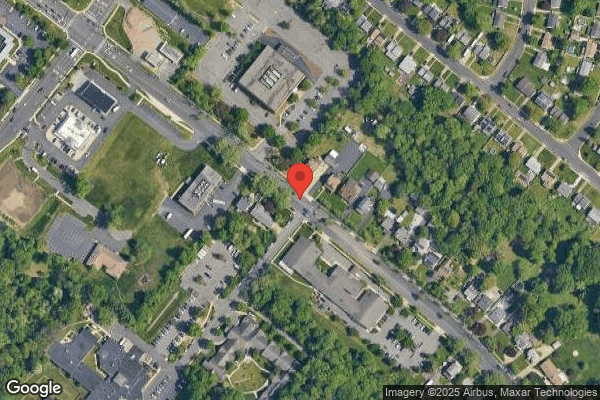
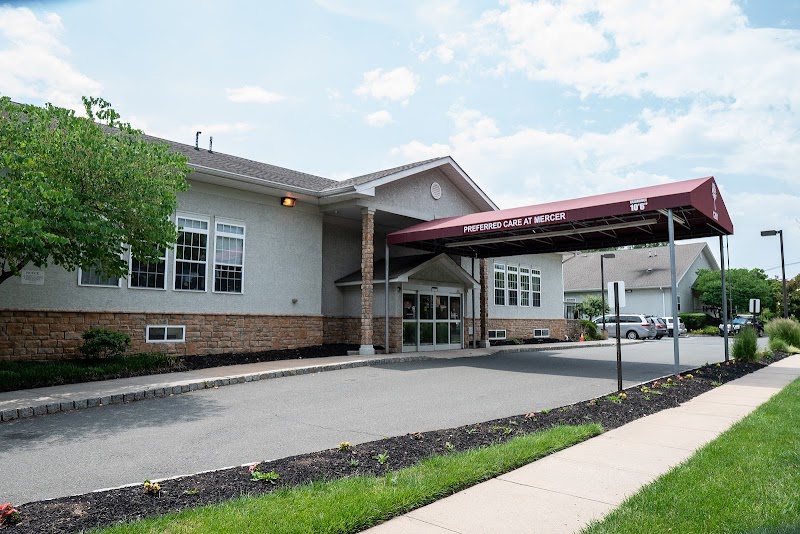
1201 PARKWAY AVENUE, EWING, NJ 08628 (609) 882-6900
For profit - Limited Liability company 100 Beds PREFERRED CARE Data: November 2025
Trust Grade
85/100
#62 of 344 in NJ
Last Inspection: August 2024

Within standard 12-15 month inspection cycle. Federal law requires annual inspections.

Overview

Preferred Care at Mercer in Ewing, New Jersey, has a Trust Grade of B+, which means it is above average and recommended for families considering nursing home options. It ranks #62 out of 344 facilities in New Jersey, placing it in the top half, and #2 out of 16 in Mercer County, indicating only one other local facility is rated higher. However, the facility's trend is worsening, with the number of issues increasing from 2 in 2024 to 3 in 2025. Staffing has a below-average rating of 2 out of 5 stars, and while turnover is at 37%, which is slightly better than the state average, it suggests some instability in staff. Notably, the facility has no fines on record, which is a positive sign. However, there are specific concerns, such as a medication error rate of 6.97%, exceeding the acceptable threshold, and a lack of recognition for Veteran's Day on the activity calendar, which implies a failure to honor residents' preferences. On another occasion, food safety practices were inadequate, as potentially hazardous foods were improperly stored and kitchen staff did not follow hygiene protocols. Overall, while Preferred Care at Mercer has some strengths, such as a solid reputation and no fines, there are critical areas needing improvement to ensure resident safety and dignity.

Trust Score
B+
85/100
In New Jersey
#62/344
Top 18%
Safety Record
Low Risk
No red flags
Inspections
Getting Worse
2 → 3 violations
Staff Stability
○ Average
37% turnover. Near New Jersey's 48% average. Typical for the industry.
Penalties
✓ Good
No fines on record. Clean compliance history, better than most New Jersey facilities.
Skilled Nurses
○ Average
Each resident gets 33 minutes of Registered Nurse (RN) attention daily — about average for New Jersey. RNs are the most trained staff who monitor for health changes.
Violations
⚠ Watch
14 deficiencies on record. Higher than average. Multiple issues found across inspections.
★★★★★
5.0
Overall Rating
★★☆☆☆
2.0
Staff Levels
★★★★★
5.0
Care Quality
★★★★☆
4.0
Inspection Score
Stable
2024: 2 issues
2025: 3 issues

The Good

  • 5-Star Quality Measures · Strong clinical quality outcomes
  • Full Sprinkler Coverage · Fire safety systems throughout facility
  • No fines on record
  • Staff turnover below average (37%)

    11 points below New Jersey average of 48%

Facility shows strength in quality measures, fire safety.

The Bad

Staff Turnover: 37%

Near New Jersey avg (46%)

Typical for the industry

Chain: PREFERRED CARE

Part of a multi-facility chain

Ask about local staffing decisions and management

The Ugly 14 deficiencies on record

Aug 2025 3 deficiencies
CONCERN (D) 📢 Someone Reported This

A family member, employee, or ombudsman was alarmed enough to file a formal complaint

Potential for Harm - no one hurt, but risky conditions existed

Deficiency F0760 (Tag F0760)

Could have caused harm · This affected 1 resident

Complaint #: 2575153 Based on interviews, record review, and review of other pertinent facility documents on 08/01/2025, it was determined that the facility failed to ensure that a resident (Resident ...

Read full inspector narrative →
Complaint #: 2575153 Based on interviews, record review, and review of other pertinent facility documents on 08/01/2025, it was determined that the facility failed to ensure that a resident (Resident #2) received the correct intravenous (IV) antibiotic medication. This deficient practice was identified for one of three residents reviewed for medication errors and was evidenced by the following: According to the admission Record (AR), Resident #2 was admitted to the facility with diagnoses including but not limited to peritoneal abscess (pocket of pus and infected fluid in the tissue lining the abdomen); sepsis (life-threatening condition caused by the body's response to an infection), unspecified organism; bacteremia (bacteria in the blood); pneumonia (inflammation and fluid in the lungs), unspecified organism; and other specified anxiety disorders (conditions that cause fear, dread and other symptoms out of proportion to the situation). According to the most recent Minimum Data Set (MDS), an assessment tool dated 07/28/2025, Resident #2 had a Brief Interview of Mental Status score of 15 out of 15, which indicated the resident's cognition was intact. A review of the facility incident report dated 07/26/2025 at 6:26 P.M., was conducted. Under, Incident Description, the document revealed the following: Nursing Description: [Resident #2] received IV Ceftin [an antibiotic] instead of the ordered Daptomycin [an antibiotic]. Resident admitted to this facility on 07/23/205 after a brief stay at [hospital name] to complete IV [antibiotic] therapy for blood infection/MRSA [methicillin-resistant Staphylococcus aureus, a bacterium that is resistant to antibiotics] bacteremia. A facility Witness Statement, document from RN #2 with the date July 27 with a six written over the 7 was reviewed. The statement revealed that at 6:00 P.M., RN #2 brought two bags of IV medication into Resident #2's room, one belonged to Resident #2 and the other belonged to a different resident. RN #2 began the administration of Ceftin which belonged to another resident instead of the Daptomycin, which was the IV antibiotic prescribed to Resident #2. The statement further revealed that RN #2 noticed the error and stopped the Ceftin infusion in less than three minutes. The physician was notified, and the resident was monitored for signs of complication. Resident #2 was no longer at the facility. A closed record review was conducted. A review of the Order Summary Report (OSR), for Resident #2 revealed the following physician order (PO): Daptomycin-Sodium Chloride Intravenous Solution 700-0.9 MG [milligrams]/100 ML [milliliters]- %(Daptomycin-Sodium Chloride) Use 100 ml intravenously one time a day for Cholecrtectomy until 07/27/2025 23:59 [11:59 P.M.]. The order had a start date of 07/24/2025 and an end date of 07/27/2025. A further review of the OSR revealed no POs for Ceftin for Resident #2. A telephone interview was conducted with RN #2 on 08/01/2025 at 12:53 P.M. RN #2 stated that the medication administration process included verification of the resident's name, medication dose, medication route, and documentation. RN #2 stated that on 07/26/2025 he gave the wrong IV medication to Resident #2. RN #2 stated that he brought two medications into Resident #2's room (one for Resident #2, and one for a resident in another room). RN #2 stated that he administered Ceftin instead of daptomycin to Resident #2. RN #2 stated that prior to administering the medication, he verified Resident #2's identity but not the medication he was giving. RN #2 stated that he noticed the error as soon as he left the resident's room, which was in less than one minute. RN #2 further stated that following the rights of medication administration was important for preventing errors and that medication errors could cause allergy, itching, or diarrhea depending on the medication. An interview was conducted with the Unit Manager (UM #1) on 08/01/2025 at 3:02 P.M. UM #1 stated that the expectation was that medications were given following the rights of medication administration, facility policies, and physician orders. UM #1 further stated that if medications were not administered according to facility policies and her expectations, harm could be caused to a resident and, that's the last thing we want. An interview was conducted with Director of Nursing (DON) on 08/01/2025 at 3:46 P.M. The DON stated that the expectation every time medication was administered was that it was done according to the facility medication administration policy and the five rights of medication administration. The DON stated that when the wrong antibiotic was administered to Resident #2, the five rights of medication administration were not followed. The DON further stated that if medications were not administered according to the facility policy and the five rights of medication administration, the consequences to the resident could range from sneezing to death. A review of the facility's, Medication Administration policy with a reviewed date of 1/2025 revealed under, Policy Explanation and Compliance Guidelines; .10. Review EMAR to identify medication to be administered. 11. Compare medication source (bubble pack, vial, etc.) with EMAR [electronic medication administration record] to verify resident name, medication name, form, dose, route, and time [.] 14. Administer medication as ordered in accordance with manufacturer specifications. NJAC 8:39-29.2 (d)
CONCERN (D) 📢 Someone Reported This

A family member, employee, or ombudsman was alarmed enough to file a formal complaint

Potential for Harm - no one hurt, but risky conditions existed

Infection Control (Tag F0880)

Could have caused harm · This affected 1 resident

**NOTE- TERMS IN BRACKETS HAVE BEEN EDITED TO PROTECT CONFIDENTIALITY** Complaint #: 2575153Based on observation, interviews, record review, and review of other pertinent facility documents it was det...

Read full inspector narrative →
**NOTE- TERMS IN BRACKETS HAVE BEEN EDITED TO PROTECT CONFIDENTIALITY** Complaint #: 2575153Based on observation, interviews, record review, and review of other pertinent facility documents it was determined that the facility failed to maintain appropriate infection control practices during medication administration in accordance with in nationally accepted guidelines for infection prevention and control and the facility's policies and procedures. This deficient practice was identified for 2 of 2 residents (Resident #1 and Resident #2) reviewed for infection prevention and was evidenced by the following:1. A facility incident report dated 07/26/2025 at 6:26 P.M., was reviewed. Under, Incident Description, the document revealed the following: Nursing Description: [Resident #2] received IV Ceftin [an antibiotic] instead of the ordered Daptomycin [an antibiotic]. [Resident #2] admitted to this facility on 07/23/205 after a brief stay at [hospital name] to complete IV [antibiotic] therapy for blood infection/MRSA [methicillin-resistant Staphylococcus aureus, a bacterium that is resistant to antibiotics] bacteremia. A facility Witness Statement, document written by the Registered Nurse (RN #2) with the date July 27 with a six written over the seven was reviewed. The statement revealed that at 6:00 P.M., RN #2 brought two bags of IV medication into Resident #2's room, one belonged to Resident #2 and the other belonged to a different resident. RN #2 then administered another resident's IV antibiotic to Resident #2. Resident #2 was no longer at the facility. A closed record review was conducted. According to the admission Record (AR), Resident #2 was admitted to the facility with diagnoses included but were not limited to: peritoneal abscess (pocket of pus and infected fluid in the tissue lining the abdomen); sepsis (life-threatening condition caused by the body's response to an infection), unspecified organism; bacteremia (bacteria in the blood); pneumonia (inflammation and fluid in the lungs), unspecified organism; and other specified anxiety disorders (conditions that cause fear, dread and other symptoms out of proportion to the situation). According to the most recent Minimum Data Set (MDS), an assessment tool dated 07/28/2025, Resident #2 had a Brief Interview of Mental Status score of 15 out of 15, which indicated the resident's cognition was intact. A review of the Order Summary Report (OSR), for Resident #2 revealed the following physician orders (POs): Maintain contact isolation precautions due to MRSA; every shift for isolation precautions. The order start date was 07/23/2025. Midline single lumen (vascular access device used for infusion therapies) RUA (right upper arm) measurement 4.5 Fr (French) 15 CM (centimeters) long. The order start date was 07/23/2025. Daptomycin-sodium chloride intravenous solution 700-0.9 MG [milligrams]/100 ML [milliliters]. Use 100 ml intravenously one time a day until 07/27/2025 11:59 P.M. The order had a start date of 07/24/2025 and an end date of 07/27/2025. A review of the Care Plan (CP) for Resident #2 revealed a Focus, that the resident required enhanced barrier precautions (EBPs) related to a wound, a midline catheter, and MRSA. Interventions included but were not limited to: clear signage posted on or near the room door; good hand hygiene when entering or leaving the room; and maintaining EBP for the duration of the stay, until wound healing, or removal of the indwelling device. The CP for Resident #2 also included a Focus, that the resident had MRSA bacteremia. Interventions included but were not limited to: observation of standard precautions (minimum set of interventions considered standards of care that prevent the transmission of microorganisms); thorough cleaning of resident areas using disinfectants; and cleaning, disinfecting or sterilizing resident care equipment. A telephone interview was conducted with RN #2 on 08/01/2025 at 12:53 P.M. RN#2 stated that on 07/26/2025 he brought two bags containing intravenous (IV) medications into Resident #2's room (one for Resident #2, and one for a resident in another room). RN #2 stated that he then administered Ceftin instead of Daptomycin to Resident #2. 2.) A medication administration observation was conducted on 08/01/2025 at 10:13 A.M. The surveyor observed RN #1 during the administration of IV antibiotics to Resident #1. After exiting the room RN #1 returned wearing gloves that she touched the door and door handle with. RN #1 wearing the same gloves that she touched the door handle with then removed an empty IV medication bag from the IV pole and hung the new medication. RN #1 then set the IV pump and connected the new tubing to Resident #1's IV line while wearing the same gloves. A review of Resident #1's AR revealed that the resident was admitted with diagnoses that included but were not limited to acute and subacute infective endocarditis (infection of the heart lining or valves), and presence of cardiac pacemaker. Resident #1's most recent MDS dated [DATE], was reviewed. The MDS revealed that the resident had a BIMS score of 15 out of 15, indicating that the resident's cognition was intact. The MDS further revealed that the resident had central IV access on admission to the facility. A review of Resident #1's OSR revealed the following PO: Maintain enhanced barrier precautions due to IV line every shift. Every shift for enhanced barrier precautions. The order start date was 07/24/2025. A review of the CP for Resident #1 revealed a Focus, that the resident required EBPs related to the presence of an IV line. Interventions included but were not limited to maintaining EBP for the duration of the stay, until wound healing, or removal of the indwelling device. Interventions also included Educate and encourage good hand hygiene before entering and when leaving the room. The CP for Resident #1 also included a Focus, that the resident had a peripherally inserted central catheter (PICC) for the administration of intravenous medication. Interventions included but were not limited to, Perform hand hygiene before and after access with IV An interview was conducted with RN #1 on 08/01/2025 at 1:40 P.M. RN#1 stated that during medication administration observation that morning she touched items in the room including the pump, then touched the resident's PICC without washing her hands and changing gloves. An interview was conducted with the Unit Manager (UM #1) on 08/01/2025 at 3:02 P.M. UM #1 stated that the expectation was that nurses followed the rights of medication administration and good infection prevention (IP) practices during medication administration. The expectation was that nurses washed their hands and changed gloves prior to touching a resident's PICC if other items were touched first. UM #1 stated that touching other patient care items and then touching a resident's PICC did not meet her expectations for good IP practices. UM #1 stated that facility staff received continuing education on IP regularly. UM #1 further stated that if good IP practices were not followed patient harm or infections could occur. The facility's IP Nurse was not available for an interview. An interview was conducted with Director of Nursing (DON) on 08/01/2025 at 3:46 P.M. The DON stated that the expectation was for EBP and good IP practices to be followed for resident care. The DON stated that RN #1 taking medications for another resident into Resident #2's room was against the facility's IP and EBP policies. The DON stated that following good IP practices was important because the facility had a vulnerable population that was susceptible to bugs, to make sure staff was safe, and to prevent any transmissions. The DON further stated that the IP nurse, DON, UMs, Administrator, and Human Resources were responsible to ensure that IP practices were maintained in the facility. The facility's Hand Hygiene, policy with a created date of 8/10/24 was reviewed. The policy revealed under, Policy: All staff will perform proper hand hygiene procedures to prevent the spread of infection to other personnel, residents, and visitors. This applies to all staff working in all locations within the facility. Under, Policy Explanation and Compliance Guidelines: the policy revealed, 1. Staff will perform hand hygiene when indicated, using proper technique consistent with accepted standards of practice. [.] 6. Additional considerations: a. The use of gloves does not replace hand hygiene. If your task requires gloves, perform hand hygiene prior to donning gloves, and immediately after removing gloves. The facility's Medication Administration, policy with a created date of 1/2025 was reviewed. The policy revealed under, Policy Explanation and Compliance Guidelines: [.] 4. Wash hands/sanitize prior to administering medication per facility protocol and product. NJAC 8:39-19.4 (a) (1) (n)
CONCERN (E) 📢 Someone Reported This

A family member, employee, or ombudsman was alarmed enough to file a formal complaint

Potential for Harm - no one hurt, but risky conditions existed

Unnecessary Medications (Tag F0759)

Could have caused harm · This affected multiple residents

**NOTE- TERMS IN BRACKETS HAVE BEEN EDITED TO PROTECT CONFIDENTIALITY** Complaint #:2575153 Based on observation, interviews, medical record review, and review of pertinent facility documents, it was ...

Read full inspector narrative →
**NOTE- TERMS IN BRACKETS HAVE BEEN EDITED TO PROTECT CONFIDENTIALITY** Complaint #:2575153 Based on observation, interviews, medical record review, and review of pertinent facility documents, it was determined that the facility failed to administer medications with less than a 5% medication error rate. The surveyor observed one nurse administer medications to four residents with a total of 43 opportunities. Three errors were observed, which calculated to a medication administration error rate of 6.97%. This deficient practice was identified for two of four residents that were administered medications by 1 nurse on the first-floor sub-acute nursing unit.This deficient practice was evidenced by the following: 1.) On 08/01/2025 at 8:45 A.M., the surveyor observed the Registered Nurse (RN #1) preparing and administering medications for an unsampled resident. RN #1 removed a jar labeled as vitamin C 500 milligram (MG) tablets from the medication cart and poured one tablet into the medication cup with the other medications being prepared for the resident. RN #1 continued to prepare the resident's medication. At that time the surveyor observed the physician's order (PO) for vitamin C which indicated to administer one 250 MG tablet, not a 500 MG. The surveyor stopped RN #1 to confirm that she was finished preparing medication for the resident and was prepared to administer them. RN #1 reviewed the vitamin C order and stated, I didn't notice that. The RN obtained 250 MG tablets for administration to the resident. (error #1) During the same medication preparation and administration observation, the surveyor observed RN #1 place two carbamazepine (a medication used to treat seizures, nerve pain, and mental health disorders) chewable 100 MG tablets into the medication cup with other medications being prepared for the unsampled resident. The chewable tablets were administered to the resident with their other medications and swallowed by the resident without being chewed. RN #1 confirmed that the carbamazepine 100 MG tablets were swallowed along with the resident's other medications without being chewed. (error #2) A review of the unsampled resident's admission Record (AR) revealed that the resident was admitted with diagnoses including but not limited to epilepsy (brain condition that causes recurring seizures), unspecified, intractable, without status epilepticus; chronic kidney disease, unspecified; bipolar disorder (disorder that causes intense shifts in mood, energy levels and behavior), unspecified; and type 2 diabetes mellitus with unspecified complications. The most recent Minimum Data Set (MDS), an assessment tool dated 06/25/2025, was reviewed. The MDS revealed that the resident had a brief interview for mental status (BIMS) score of 12 out of 15, indicating that the resident's cognition was moderately impaired. A review of the resident's physician orders POs revealed the following orders: Ascorbic acid (commonly known as vitamin C) tablet 250 MG; give 1 tablet by mouth two times a day for supplement. carbamazepine tablet chewable 100 MG; give 2 tablets by mouth two times a day for seizures related to epilepsy, unspecified, intractable, without status epilepticus 2.) On 08/01/2025 at 10:00 A.M., the surveyor observed RN #1 prepare Resident #1's medications for administration. The surveyor observed RN #1 pour 30 milliliters (ML) of lactulose (a laxative medication also used to treat complications of liver disease) 10 grams (GM)/15 milliliter (ML) solution for administration to Resident #1. At that time the surveyor observed the PO for lactulose which indicated to administer 15 ML, not 30 ML. The surveyor stopped the RN #1 and confirmed that she was finished preparing medication for the resident and was prepared to administer them. RN #1 reviewed the lactulose order and confirmed that 15 ML was ordered. RN #1 poured 15 ML of Lactulose and administered it to Resident #1 with the resident's other medications. (error #3) A review of the Resident #1's AR revealed that the resident was admitted with diagnoses including but not limited to acute and subacute infective endocarditis (infection of the heart lining or valves); unspecified cirrhosis of the liver (healthy liver cells replaced by scar tissue); presence of cardiac pacemaker; hypo-osmolality (decrease in levels of electrolytes, chemicals, and other fluids in the blood) and hyponatremia (low sodium level in the blood); and irritable bowel syndrome (a chronic condition that causes abdominal pain and trouble with bowel habits). Resident #1's most recent MDS dated [DATE], was reviewed. The MDS revealed that the resident had a BIMS score of 15 out of 15, indicating that the resident's cognition was intact. The MDS further revealed that the resident was frequently incontinent of stool and was dependent on a helper for toilet transfers and toileting hygiene. A review of Resident #1's POs revealed the following order: Lactulose oral solution 10 GM/15 ML; give 15 ml by mouth three times a day for cirrhosis. An interview was conducted with RN #1 on 08/01/2025 at 1:40 P.M. RN #1 confirmed that she was prepared to administer 500 MG ascorbic acid to the unsampled resident and 30 ML of lactulose to Resident #1. RN #1 stated that she was unsure if the unsampled resident's carbamazepine should have been chewed. RN #1 confirmed that the resident swallowed the carbamazepine without chewing it. During the same interview, RN #1 stated that medications should have been administered ensuring: the right resident, right dose, right route, right medication, and right time. RN #1 stated that the process was to make sure that the right medication and dose were taken out for each resident, then to identify the resident, then to ensure that the resident took those medications. RN #1 stated that the process needed to be followed to make sure that residents received the treatments they needed. RN #1 further stated that if a resident received the wrong medication, and depending on the medication received, the resident could die. An interview was conducted with Unit Manager (UM #1) on 08/01/2025 at 3:02 P.M. UM #1 stated that the expectation was that medications were given following the rights of medication administration, facility policies, and physician orders. UM #1 further stated that if medications were not administered according to facility policies and her expectations, that harm could be caused to a resident and, that's the last thing we want. An interview was conducted with the Director of Nursing (DON) on 08/01/2025 at 3:46 P.M. The DON stated that the expectation every time medication was administered was that it was done according to the facility medication administration policy and the five rights of medication administration. The DON stated that the issues identified during that morning's medication administration observation did not meet her expectations for medication administration. The DON further stated that if medications were not administered according to the facility policy and the five rights of medication administration, the consequences to the resident could range from sneezing to death. A review of the facility's, Medication Administration policy with a reviewed date of 1/2025 revealed under, Policy Explanation and Compliance Guidelines; [.]11. Compare medication source (bubble pack, vial, etc.) with EMAR [electronic medication administration record] to verify resident name, medication name, form, dose, route, and time [.] 14. Administer medication as ordered in accordance with manufacturer specifications. NJAC 8:39-11.2(b)
Aug 2024 2 deficiencies
CONCERN (D)

Potential for Harm - no one hurt, but risky conditions existed

Assessment Accuracy (Tag F0641)

Could have caused harm · This affected 1 resident

Based on observation, interview, record review, and review of pertinent documentation, it was determined that the facility failed to ensure that Minimum Data Sets (MDS), an assessment tool, were accur...

Read full inspector narrative →
Based on observation, interview, record review, and review of pertinent documentation, it was determined that the facility failed to ensure that Minimum Data Sets (MDS), an assessment tool, were accurate. This deficient practice was identified for 1 of 22 residents (Resident #66) reviewed for MDS and was evidenced by the following: This is a repeat deficiency. On 07/17/2024 at 10:38 AM, the surveyor observed Resident #66 being wheeled down the hall. The resident's speech was difficult to understand, but they were loudly speaking about no respect. On 07/19/2024 at 8:49 AM, the Certified Nursing Assistant (CNA) stated that Resident #66 can be combative and yells. A review of the hybrid medical records (MR) revealed that Resident #66 was admitted with diagnoses which included but were not limited to; Schizoaffective disorder, bipolar type (mental disorder in which a person experiences a combination of symptoms of schizophrenia and mood disorder) dated 09/29/2022, anoxic brain damage dated 09/29/2023, and epilepsy (neurological disorder that causes seizures or unusual sensations and behaviors) dated 04/29/2022. A review of the Order Summary Report active orders as of 07/23/2024, included orders dated 12/01/2022, for Haloperidol 2 milligram (mg) . for Schizoaffective Disorder bipolar type, and dated 10/19/2023, psyche follow up related to Schizoaffective disorder. A review of the resident-centered, on-going Care Plan (CP) included but was not limited to a focus area uses psychotropic medications r/t (related to) behavior management disease process Schizoaffective disorder, bipolar type). A review of the Pre-admission Screening and Resident Review (PASRR) dated 09/03/2022, identified Resident #66 as having a diagnosis of Schizoaffective disorder bipolar type. A review of nine Psychotropic Medication Use screening forms dated: 12/13/2022, 01/02/2023, 02/07/2023, 03/07/2023, 04/11/2023, 05/08/2023, 10/10/2023, 11/08/2023, and 12/13/2023 all documented Resident #66 had Schizoaffective disorder. A review of 11 psychiatric consult notes dated: 05/05/2023, 08/04/2023, 09/22/2023, 11/23/2023, 12/14/2023, 02/10/2023, 01/30/2024, 02/28/2024, 03/27/2024, 05/15/2024, and 06/26/2024 all documented Resident #66 had Schizoaffective disorder. A review of the MDS' Section I Psychiatric/Mood Disorder for Resident #66 revealed the following inaccuracies: Dated 06/04/2024: Bipolar yes, Psychotic disorder (other than schizophrenia) no, Schizophrenia yes. Dated 03/05/2024: Bipolar yes, Psychotic disorder (other than schizophrenia) no, Schizophrenia yes. Dated 12/11/2023: Bipolar yes, Psychotic disorder (other than schizophrenia) no, Schizophrenia yes. Dated 03/07/2023: Bipolar no, Psychotic disorder (other than schizophrenia) yes, Schizophrenia no. Dated 06/08/2023: Bipolar no, Psychotic disorder (other than schizophrenia) yes, Schizophrenia no. Dated 09/13/2023: Bipolar no, Psychotic disorder (other than schizophrenia) no, Schizophrenia no. On 07/23/2024, the surveyor requested to interview the MDS nurse, but the MDS nurse no longer worked at the facility. On 07/23/2024 at 10:46 AM, the surveyor interviewed the Director of Nursing (DON) in the presence of additional surveyors. The DON stated the MDS coordinator was responsible to review hospital records, nursing notes, diagnoses, behaviors, smoking, and any updates. She stated that information would be used to review and capture diagnoses and that it was important to have accurate diagnoses to see what specialist may be needed, for the care plans, optimum patient outcomes, and that the MDS' were reviewed in care conferences. On 07/24/2024 at 9:35 AM, the DON acknowledged the discrepancies in the MDS' and stated that they have all been corrected and resubmitted. A review of the facility provided job description, MDS Coordinator (Nursing), signed and dated by the previous MDS nurse on 12/19/2022, included but was not limited to; Job Description . overseeing the full collaborative, interdisciplinary assessment and care planning process . collection and transmission of data . Principle Duties: completes accurate coding of the MDS with information obtained via medical record reviews, observations, and interviews with the facility staff, resident and family members. A review of the facility provided job description, Director of Nursing (Nursing), signed and dated by the DON on 08/15/2019, included but was not limited to; M. Supervise, by daily rounds and conferences, the work of all nursing personnel. AF. Supervise the MDS/Care Plan Coordinator to ensure that all MDS forms are completed accurately and in a timely manner. A review of the facility provided policy, Minimum Data Set Policy and Procedure, revised 09/2023, included but was not limited to; Policy: In compliance with federal and state regulations, each resident shall have a comprehensive assessment of his/her functional capacity recorded on a designated MDS form .General Information: The MDS Coordinator will be responsible . to keep assessment data current at all times. Suggested reference areas to support MDS completion: . b. current plan of care . c. MD (medical doctor) notes/orders . g. medication record/treatment record . h. medical consults . k. documentation from other disciplines.
CONCERN (D)

Potential for Harm - no one hurt, but risky conditions existed

Respiratory Care (Tag F0695)

Could have caused harm · This affected 1 resident

Based on observation, interview, record review, and review of other facility documentation, it was determined that the facility failed to ensure that a resident who needed respiratory care was provide...

Read full inspector narrative →
Based on observation, interview, record review, and review of other facility documentation, it was determined that the facility failed to ensure that a resident who needed respiratory care was provided such care, consistent with professional standards of practice by failing to document the use of oxygen in the Electronic Medical Record (EMR) for 1 of 2 residents (Resident #46) reviewed for respiratory care. This deficient practice was evidenced by: On 07/17/2024 at 10:30 AM during the initial tour, the surveyor observed Resident # 46 in bed. Resident # 46 was observed receiving oxygen through a nasal cannula (a tube delivering oxygen into the nose). The oxygen concentrator was set at 2 liters. On 07/18/2024 at 10:11 AM, the surveyor observed Resident # 46 in bed. Resident # 46 was observed receiving oxygen through a nasal cannula. The oxygen concentrator was set at 2 liters. A review of Resident # 46's admission Record located in the EMR revealed that Resident # 46 was admitted to the facility with diagnoses that included but were not limited to encounter for palliative care, and heart failure (when the heart muscle doesn't pump blood as well as it should). A Review of Resident # 46's physicians orders located in the EMR revealed that he/she had an order to receive Oxygen at two liters per minute via nasal cannula as needed for shortness of breath. The order was started on 07/01/2024. A review of the July, 2024 Treatment Administration Record (TAR) did not reveal any documented use of oxygen for Resident # 46. On 07/23/2024 at 11:12 AM, during an interview with the surveyor, Licensed Practical Nurse (LPN) #1 said We give PRN [when required] orders upon request. We check the orders, inform the Doctor, sign the order out, and then check the resident in an hour to see if medication was effective. At that time, the surveyor asked to show where it was documented that Resident #46 was using oxygen on 07/17/2024 and 07/18/2024. LPN #1 replied, I don't see it documented anywhere. Lastly, the surveyor asked if the order for Oxygen should be signed out on the TAR. LPN #1 replied, Yes. On 07/24/2024 at 09:42 AM during an interview with the surveyor, the Director of Nursing (DON) said they [nursing staff] should be signing out the Oxygen use on the TAR. A review of the facility-provided policy titled, PRN Medications revised on 1/2024 revealed under section Policy Explanation and Compliance Guidelines that, 3. When administering a PRN medication: a. Verify physician's order for the medication. b. Document the reason voiced by the resident and or assessment findings that show why the resident needs the medication. Verify the reason is for the prescribed indication for the medication. c. Document the time of administration. d. Evaluate the effectiveness of the medication and document the findings. A review of the facility-provided policy titled, Oxygen Administration revealed under Procedures that, 9. Document initiation of oxygen in the resident medical record, including time, flow, indication and method: cannula or mask, in the TAR (Treatment Administration Record and or progress notes). Document use and resident reaction to oxygen. N.J.A.C. 8:39-29.2 (d)
Nov 2022 7 deficiencies
CONCERN (D)

Potential for Harm - no one hurt, but risky conditions existed

Assessment Accuracy (Tag F0641)

Could have caused harm · This affected 1 resident

Based on observation, interview, review of the medical record and other facility documentation, it was determined that the facility failed to ensure that an accurate Minimum Data Set (MDS), an assessm...

Read full inspector narrative →
Based on observation, interview, review of the medical record and other facility documentation, it was determined that the facility failed to ensure that an accurate Minimum Data Set (MDS), an assessment tool, was completed. This deficient practice was identified for 4 of 6 annual assessments of residents who were incorrectly coded as non-smoking (Residents #29, #62, #64, #65) and was evidenced by the following: 1. The surveyor reviewed the admission Record for Resident #29 which reflected that the resident was admitted with diagnoses that included hemiplegia (paralysis on one side of the body) and hemiparesis (weakness of one side of the body). The surveyor reviewed the Annual MDS tool with reference date of 06/30/2021 which identified the resident as a non-smoker. The surveyor observed the resident's name on the facilities' Safe Smoking List. The surveyor also located the resident's last quarterly safe smoking evaluation dated 10/6/2022. On 11/10/2022 at 12:10pm, the surveyor interviewed MDS Coordinator who stated that this resident should be identified as a smoker. 2. The surveyor reviewed the admission Record for Resident #62 which reflected that the resident was admitted with diagnoses that included osteomyelitis (infection of the bone) and tobacco use. The surveyor reviewed the Annual MDS tool with reference date of 01/21/2022 which identified the resident as a non-smoker. The surveyor observed the resident's name on the facilities' Safe Smoking List. The surveyor also located the resident's last quarterly safe smoking evaluation dated 11/9/2022. On 11/10/2022 at 12:10pm, the surveyor interviewed MDS Coordinator who when asked if this resident should have been identified as a smoker responded, yes. 3. The surveyor reviewed the admission Record for Resident #64 which reflected that the resident was admitted with diagnoses that included muscular sclerosis (a disease resulting in nerve damage that disrupts communication between the brain and body) and tobacco use. The surveyor reviewed the Annual MDS tool with reference date of 01/25/2022, which identified the resident as a non-smoker. The surveyor observed the resident's name on the facilities' Safe Smoking List. The surveyor also located the resident's last quarterly safe smoking evaluation dated 10/27/2022. On 11/10/2022 at 12:10pm, the surveyor interviewed MDS Coordinator who when asked if this resident should have been identified as a smoker responded, yes, he is on the [safe smoking] list. 4. The surveyor reviewed the admission Record for Resident #65 which reflected that the resident was admitted with diagnoses that included hemiplegia (paralysis on one side of the body) and hemiparesis (weakness of one side of the body. The surveyor reviewed the Annual MDS tool with reference date of 02/19/2022 which identified the resident as a non-smoker. The surveyor observed the resident's name on the facilities' Safe Smoking List. The surveyor also located the resident's last quarterly safe smoking evaluation dated 08/20/2022. On 11/10/2022 at 12:10pm, the surveyor interviewed MDS Coordinator who when asked if this resident should have been identified as a smoker responded, yes. During the interview with MDS Coordinator, she explained that smoking residents are identified through their medical record, nurse's assessments, and progress notes. In addition, MDS Coordinator confirmed that residents identified on the Safe Smoking List should also be identified as smoking on the Annual MDS Assessment. Review of facility policy titled Resident Smoking Policy, Policy No: ROP-29, Created 11-17, revealed under #6, that, All residents will be asked about tobacco use during the admission process, and during each quarterly, or comprehensive MDS assessment process. NJAC 8:39-33.2(d)
CONCERN (D)

Potential for Harm - no one hurt, but risky conditions existed

Comprehensive Care Plan (Tag F0656)

Could have caused harm · This affected 1 resident

Based on observation, interview, and record review it was determined that the facility failed to implement a comprehensive care plan for one (1) of 20 residents (Resident #76) reviewed for the impleme...

Read full inspector narrative →
Based on observation, interview, and record review it was determined that the facility failed to implement a comprehensive care plan for one (1) of 20 residents (Resident #76) reviewed for the implementation of a care plan. This deficient practice was evidenced by the following: On 11/07/22 at 11:32 AM, the surveyor observed Resident #76 in his/her room. An oxygen concentrator was observed to the left side of his/her bed. The surveyor observed that Resident #76 was not utilizing the oxygen. On 11/07/22 at 01:24 PM, the surveyor observed Resident #76 in bed. The surveyor observed that Resident #76 was not utilizing the oxygen. Resident # 76 stated that he/she uses the oxygen at night. On 11/09/22 at 11:07 AM, the surveyor observed Resident #76 in a meeting. The surveyor observed that Resident #76 was not utilizing oxygen. On 11/10/22 at 09:20 AM, the surveyor observed Resident #76 not utilizing oxygen. He/she stated that he/she used oxygen last night but had removed it already. The surveyor reviewed Resident #76's medical record which revealed the following: according to admission Record, Resident #68 was admitted to the facility with diagnoses that included but was not limited to heart failure. The Order Summary Report for Resident #76 had a Physician Order (PO) dated 9/2022 for Oxygen 3 liters per minute via nasal cannula continuous, every shift keep oxygen saturation >91% every shift The admission Minimum Data Set (MDS) an assessment tool dated 08/25/2022, indicated that Resident was cognitively intact and utilized oxygen. The care plan for Resident #76 was reviewed. The care plan for respiratory impairment does not have an intervention which reflected that the resident refused or removed his/her oxygen. During an interview on 11/10/22 at 01:38 PM, CNA #2 stated that Resident #76 uses oxygen everyday but takes it off and puts it back on when he/she feels like it. During an interview on 11/10/22 at 01:41 PM, RN#2 stated that Resident #76 uses oxygen but the resident removes the oxygen. When asked if the refusal should be documented, RN#2 confirmed it should. During an interview on 11/17/22 at 10:11 AM, the Director of Nursing (DON) stated the refusal of oxygen should have been care planned for Resident #76. On 11/21/22 at 12:00 PM, the DON provided the surveyor with the facility Care Plan Process Policy with a reviewed date of 01/24/2022. The policy reflected that the interdisciplanary team maintains care plans on a current status. N.J.A.C. 8:39-11.2 1, 2
CONCERN (D)

Potential for Harm - no one hurt, but risky conditions existed

Deficiency F0658 (Tag F0658)

Could have caused harm · This affected 1 resident

Based on interview, record review, and review of other facility documentation, it was determined that the facility failed to ensure that the care and documentation of a resident's dialysis access site...

Read full inspector narrative →
Based on interview, record review, and review of other facility documentation, it was determined that the facility failed to ensure that the care and documentation of a resident's dialysis access site was maintained in accordance with professional standards of practice. This was identified for Resident #52, one (1) of one (1) resident reviewed for dialysis. This deficient practice was evidenced by the following: On 11/14/22 at 11:00 AM, the surveyor went to visit Resident #52 in the room. The resident was not there, and a unit staff member informed the surveyor that the resident was at dialysis. Review of the admission Record from the electronic medical record (EMR) indicated that Resident #52 was admitted to the facility 12/2019. Review of the most recent quarterly Minimum Data Set (MDS), an assessment tool dated 08/11/2022, indicated the resident had a Brief Interview of Mental Status of 15, meaning Resident #52 was cognitively intact. Review of the functional status section, Resident #52 was a one-person physical assistance for ambulation, transfer, dressing, and toileting. Medical diagnoses included, but not limited to end stage renal disease, hypertension (high blood pressure), diabetes (high blood sugar), dependence on dialysis, and muscle weakness. On 11/14/22 at 11:05 AM, the surveyor reviewed Resident #52 Physician Order Sheet (POS) which indicated the resident attended hemodialysis on Mondays, Wednesdays, and Fridays. Further review of the POS showed an order to monitor the residents AV fistula (an arteriovenous fistula is created to be utilized for a dialysis access) in the right upper arm for signs and symptoms of bleeding and infection and an order for no lab work or blood pressures to the right upper arm. On 11/15/22 at 01:02 PM, the surveyor reviewed the Treatment Administration Record (TAR) which showed that the resident was not to have blood pressures in the right arm. The TAR was signed every shift by the nursing staff. The surveyor then reviewed the vital signs section of the EMR. Under the blood pressure section of the EMR, it was documented that 63 of 217 blood pressures taken between 08/24/22 and 11/16/22 were documented as taken in Resident #52 right arm. On 11/15/22 at 01:10 PM, the surveyor reviewed the resident's current care plan which showed the following focus: resident needs dialysis (Hemodialysis) related to end stage kidney disease and has an AV fistula access right arm. One of the interventions included no blood pressures or blood work in the right arm. On 11/16/22 at 11:12 AM, the surveyor interviewed unit Licensed Practical Nurse (LPN #1), who was caring for Resident #52. The surveyor asked where the residents dialysis access was and LPN #1 stated the right arm. She further stated we check for thrill and bruit (sound and feeling to assess for function) and no blood pressures in the right arm. The surveyor asked LPN #1 if the EMR showed that the blood pressure was done in the right arm what would you think, and the LPN stated, that the blood pressure was checked in the right arm. On 11/16/22 at 01:00 PM, the surveyor made the Director of Nursing (DON) and the Licensed Nursing Home Administrator (LNHA) aware of the issue that the documentation of the blood pressure site on dialysis resident with an AV fistula had discrepancies. On 11/17/22 at 10:00 AM, the surveyor reviewed the policy titled, Dialysis Management, dated 01/19/22. Under the procedure section, number 15 stated to assure plan of care indicates which limb contains the vascular access. Blood pressures and draws should not be done on the access arm. On 11/17/22 at 10:10 AM, the survey team met with the DON and the LNHA. The surveyor asked the DON what she would think if she looked at the EMR and saw documentation of blood pressures in the right arm and the DON told the surveyor, Yes I understand, it's a documentation error. NJAC 8:39-27.1 (a)
CONCERN (D)

Potential for Harm - no one hurt, but risky conditions existed

Respiratory Care (Tag F0695)

Could have caused harm · This affected 1 resident

Based on observation, interview, and review of the medical record and other facility documentation, it was determined that the facility failed to follow physician orders related to the use of oxygen f...

Read full inspector narrative →
Based on observation, interview, and review of the medical record and other facility documentation, it was determined that the facility failed to follow physician orders related to the use of oxygen for one (1) of two (2) residents (Resident #76) reviewed for respiratory care. This deficient practice was evidenced by: This deficient practice was evidenced by the following: On 11/07/22 at 11:32 AM, the surveyor observed Resident #76 in his/her room. An oxygen concentrator was observed to the left side of his/her bed. The surveyor observed that Resident #76 was not utilizing the oxygen. On 11/07/22 at 01:24 PM, the surveyor observed Resident #76 in bed. The surveyor observed that Resident #76 was not utilizing the oxygen. Resident # 76 stated that he/she uses the oxygen at night. On 11/09/22 at 11:07 AM, the surveyor observed Resident #76 in a meeting. The surveyor observed that Resident #76 was not utilizing oxygen. On 11/10/22 at 09:20 AM, the surveyor observed Resident #76 not utilizing oxygen. He/She stated that he/she used oxygen last night but had removed it already. The surveyor reviewed Resident #76's medical record which revealed the following: According to admission Record, Resident #76 was admitted to the facility with diagnoses that included but was not limited to heart failure. The Order Summary Report for Resident #76 had a Physician Order (PO) dated October 2022 for Oxygen three (3) liters per minute via nasal cannula continuous. every shift Keep oxygen saturation >91% every shift The September, October, and November 2022 Treatment Administration Record (TAR) reflected that Resident #76 received oxygen three (3) liters per minute via nasal canula continuously. The admission Minimum Data Set (MDS) an assessment tool dated 8/25/2022 indicated that Resident was cognitively intact and utilized oxygen. The Progress Notes dated 08/30/22 through 11/09/22 for Resident #76 were reviewed. The surveyor did not observe any progress note which reflected that Resident # 76 removed his/her oxygen. During an interview on 11/10/22 at 01:38 PM, CNA#2 stated that Resident #76 used oxygen everyday but will take it off and put it back on when he/she feels like it. During an interview on 11/10/22 at 01:41 PM, RN #2 stated that Resident #76 used oxygen, but the resident removed the oxygen. She stated that the oxygen order should be changed to as needed since the resident's oxygen saturation levels are within normal limits. During an interview on 11/17/22 09:08 AM, the Director of Nursing (DON) stated if oxygen is ordered continuously then it should be on continuously. On 11/17/2022, the DON provided the surveyor with the facility Medication Administration Policy with a reviewed date of 03/10/2022. The policy reflected that if a patient refuses an order or the status of patient changes that they no longer require an order, the physician will be notified. N.J.A.C. 8:39-27.1(a)
CONCERN (D)

Potential for Harm - no one hurt, but risky conditions existed

Infection Control (Tag F0880)

Could have caused harm · This affected 1 resident

**NOTE- TERMS IN BRACKETS HAVE BEEN EDITED TO PROTECT CONFIDENTIALITY** Based on observation, interview, and review of pertinent facility documents, it was determined that the facility failed to ensur...

Read full inspector narrative →
**NOTE- TERMS IN BRACKETS HAVE BEEN EDITED TO PROTECT CONFIDENTIALITY** Based on observation, interview, and review of pertinent facility documents, it was determined that the facility failed to ensure staff wore appropriate personal protection equipment (PPE) in accordance with nationally accepted guidelines for infection prevention and control upon entering a resident's room (Resident #433) that was identified as COVID-19 Persons Under Investigation (PUI). According to the U.S Centers for Disease Control and Prevention (CDC) guidelines, Interim Infection Prevention and Control Recommendations for Healthcare Personnel During the Coronavirus Disease 2019 (COVID-19) Pandemic updated 09/23/22, included resources for Recommended Infection Prevention and Control (IPC) practices, specifically the Personal Protection Equipment (PPE). The guidelines included, HCP [healthcare personnel] who enter the room of a patient with suspected or confirmed SARS-CoV-2 [COVID-19] infection should adhere to standard precautions and use a NIOSH-approved particulate respirator with N95 filters or higher, gown, gloves, and eye protection (i.e., goggles or a face shield that covers the front and sides of the face. This deficient practice was evidenced by the following: On 11/03/22 at 10:35 AM, during the initial tour the Registered Nurse/Unit Manager (RN/UM #1) for the [NAME] Unit, who informed the surveyor that Resident #433 was newly admitted on [DATE] and was a COVID-19 PUI for the next seven (7) days. On 11/03/22 at 11:14 AM, the surveyor observed Resident #433 sitting in a chair talking on the phone with the door opened. The surveyor then observed the Nursing Assistant (NA) enter the room of Resident #433 wearing an N95 respirator mask and eye protection. The NA entered the room without donning (putting on) a gown. The door remained opened, and the surveyor observed the NA donned gloves and made the resident's bed. On 11/03/22 at 11:16 AM, the surveyor interviewed Registered Nurse #1, who stated upon entry into a PUI room staff and visitors where required to wear a gown, N95 mask, a pair of gloves and eye protection. On 11/03/22 at 11:17 AM, the NA exited the resident's room and removed her gloves. The NA then proceeded and tied the back of a gown for a visitor. On 11/03/22 at 11:18 AM, the surveyor interviewed the NA who stated she was scheduled to take her exam to become a Certified Nursing Assistant (CNA) soon. The surveyor continued to interview the NA who stated she was required to wear a gown, gloves, and goggles upon entry to a PUI room. She further stated she was required to wear the full PPE every time she entered those rooms. The NA explained, she did not need to wear a gown inside the room because Resident #433 did not have COVID-19. The NA then stated, she actually didn't know she was required to wear inside the room until Registered Nurse (RN #1) informed her. The NA confirmed she was in-serviced by the Director of Nursing (DON) on Infection Control and the required PPE. The NA stated the importance of wearing a gown was to stay COVID-free and to protect yourself and the residents from the potential spread. The surveyor and the NA reviewed the signage posted outside the resident's room door together. The NA acknowledged she should have donned the full PPE which included a gown prior to entering a PUI room. The NA concluded, to be honest I've been going inside the rooms without a gown and that she just wore her goggles and an N95 mask. On 11/03/22 at 11:23 AM, the surveyor observed the NA who applied alcohol-based hand rub (ABHR), donned a yellow disposable gown, a pair of gloves and entered another PUI room. At that time, the surveyor reviewed the signage located on the wall next to the PUI room which reflected stop droplet precaution everyone must wear: PPE gown, mask or respirator, goggles or face shield, and gloves. On 11/03/22 at 11:26 AM, the surveyor observed the NA exited the room and by the door doffed (removed) the gown and gloves and placed them into the designated black trash bin and then applied ABHR. On 11/15/22 at 10:45 AM, the surveyor interviewed RN/UM #1, who stated the required PPE for PUI rooms included gloves, eye protection, N95 mask and a gown. RN/UM #1 stated if even a staff member was going into the room a make a bed, they were required to wear the full PPE. She explained the importance of wearing the full PPE which include a gown was for protection and to prevent the potential spread of an infection. RN/UM #1 stated that the NA was new to the [NAME] Unit where the PUIs were located. She further stated that all staff are educated, and that the NA should have known what she was required to wear upon entry into the PUI rooms. RN/UM #1 concluded between the Infection Preventionist (IP) and herself they are always educating the staff. On 11/15/22 at 12:46 PM, the surveyor interviewed the DON who stated if staff anticipated direct care to a resident, then they were expected to wear a gown, gloves, N95 mask and eye protection. The DON acknowledged the NA should have worn a gown inside the room. On 11/15/22 at 01:26 PM, the DON informed the surveyor she investigated to get clarity and confirmed from the NA, RN, and RN/UM #1 that the NA should have worn a gown prior to entering a PUI room even if the NA was just in there to make the resident's bed. The DON stated she could not justify the NA not wearing a gown inside the PUI room. She further stated the rooms were too small and there was no way they could maintain six (6) feet (ft) from each other especially since the resident had a roommate. A review of the in-services PPE don/doff, droplet/contact/standard precaution dated 04/04/22 and 08/18/22, reflected the NA was in attendance. A review of the NA's Personal Protection Equipment (PPE) Competency Validation Donning and Doffing Standard Precautions and Transmission Based Precautions dated 06/23/22, reflected she completed the appropriate steps for donning and doffing. A review of the facility policy Infection Control Program and Surveillance Plan dated reviewed 01/12/22, reflected General infection control practices, including personal protective measure, hand hygiene and guidelines for Standard and Transmission-Based Precautions. A review of the facility policy COVID-19 Testing and Cohort Plan dated revised 03/10/22, reflected New or readmitted asymptomatic patients/residents who are not up to date with all recommended COVID-19 vaccine doses and have a viral test negative for SARS-CoV-2 upon admission or readmission: these patients/residents should be placed in quarantine and cared for using full PPE (gown, gloves, eye protection that covers the front and sides of face, and NIOSH-approved N95 or equivalent or higher-level respirator), even if they have a negative test upon admission. NJAC 8:39-19.4(a)
CONCERN (D)

Potential for Harm - no one hurt, but risky conditions existed

Safe Environment (Tag F0921)

Could have caused harm · This affected 1 resident

**NOTE- TERMS IN BRACKETS HAVE BEEN EDITED TO PROTECT CONFIDENTIALITY** Based on observations, interviews, and review of facility documentation it was determined that the facility failed to provide a ...

Read full inspector narrative →
**NOTE- TERMS IN BRACKETS HAVE BEEN EDITED TO PROTECT CONFIDENTIALITY** Based on observations, interviews, and review of facility documentation it was determined that the facility failed to provide a clean and sanitary environment for one (1) of 20 residents reviewed (Resident #3). This deficient practice was identified by the following On 11/15/22 at 10:30 AM, the surveyor observed the floor in Resident #3's room was dirty and needed to be cleaned. There was dirt built up on the floor and woodwork. The surveyor also observed that there was no toilet paper or paper towels in the bathroom and the resident could use the bathroom independently. The bathroom floor was also dirty. Review of the Electronic Medical Record (EMR) revealed that Resident #3 had a Brief Interview of Mental Status of 03, meaning the resident had severe cognitive impairment. Review of the most recent annual Minimum Data Set (MDS), an assessment tool dated 08/10/22 indicated Resident #3 was a set-up help only for ambulation in room and corridors, and a one-person physical assist for dressing and eating. Medical diagnoses included, but not limited to chronic obstructive pulmonary disease (constriction of the airways making breathing difficult), major depressive disorder, lack of coordination, hyperlipidemia (high blood cholesterol), and chronic kidney disease. On 11/15/22 at 10:15 AM, the surveyor observed Resident #3 standing outside of the room in the hallway. On 11/15/22 at 10:33 AM, the surveyor entered room [ROOM NUMBER]. The resident was still standing in the hallway just outside the door holding onto a wheelchair. The resident was not able to be interviewed due to a cognitive impairment. When the surveyor entered the room, the surveyor observed a large dried brown area on the floor that appeared to be dried liquid or food splashes. The surveyor also observed in several areas of the room there were multiple loose black and brown particles on the floor surrounding the resident's bed and in the area in front of the dresser. The surveyor then entered the bathroom and there was no toilet paper or paper towels. The caulk surrounding the base of the toilet had a black substance on it. The floor was covered with what appeared to be shredded white paper. On 11/15/22 at 10:42 AM, the surveyor interviewed a housekeeper who was on the unit sweeping the hallway who in fact was the Housekeeping Director (HD). The HD entered the room with the surveyor and the HD was shown the floor in the room and the HD had no comment. The surveyor then asked the daily process for rooms being cleaned. The HD told surveyor that first the trash was pulled, then the room was swept and mopped. The HD was shown the areas of concern on the floor and the bathroom, and the HD said it's his department that should fill the paper products. He could not speak to why the resident had no paper products in the bathroom. The surveyor asked the HD how often the rooms received a deep cleaning, which included buffing the floors and the HD said deep cleaning was getting done on a monthly schedule room by room, but it was paused due to Covid-19. On 11/15/22 at 11:32 AM, the surveyor asked the facility for the housekeeping policy and the deep cleaning calendar. On 11/15/22 at 11:55 AM, the surveyor reviewed a cleaning schedule for deep cleaning provided by the facility. room [ROOM NUMBER] was on the schedule for 10/24/22. The surveyor asked if a log was signed or there was any documentation to show that the room was done, and nothing was provided. On 11/16/22 at 10:15 AM, the surveyor interviewed a unit Certified Nursing Assistant (CNA #1) regarding the cleaning of the rooms. CNA #1 told the surveyor deep cleans happened on the day shift. CNA #1 was shown dust in a resident's room, and CNA #1 told surveyor We need better housekeepers. On 11/16/22 at 11:55 AM, the surveyor reviewed the policy titled, Complete Room Cleaning, dated 01/01/2000. The policy purpose was the Complete Room Cleaning schedule ensures that each resident room is discharge cleaned on a monthly basis. On 11/17/22 at 10:10 AM, the Licensed Nursing Home Administrator (LNHA) provided surveyor with documentation that room [ROOM NUMBER] was found to be in an environmentally unsatisfactory condition, lacking toilet paper, and paper towels. NJAC 8:39-31.4 (a)
CONCERN (E)

Potential for Harm - no one hurt, but risky conditions existed

Resident Rights (Tag F0550)

Could have caused harm · This affected multiple residents

Based on observation, interview, and record review it was determined that the facility failed to preserve the dignity and personal preference for one (1) of 12 residents, Resident #51. The deficient p...

Read full inspector narrative →
Based on observation, interview, and record review it was determined that the facility failed to preserve the dignity and personal preference for one (1) of 12 residents, Resident #51. The deficient practice is evidenced as follows: On 11/15/22 at 10:30 AM, the surveyor observed the November 2022 activity calendar hanging on display in the hallway of the facility which did not reflect any actitives for Veteran's Day and it did not mention it as a holiday on the calendar. On 11/16/22 at 12:00 PM, the surveyor interviewed Resident #51 who stated that he/she observed the flag at the facility was flying outside on the flag pole and was frayed so he discussed it with his family and their family donated his/her dad's flag. Resident #51 stated the facility held the flag for four (4) months without putting the flag up and after asking the admission Director several times over the four (4) months when the flag would be put up, the resident asked for the flag back out of frustration. Resident #51 further stated to the surveyor that he/she was a Veteran and on Veteran's Day which was last week 11/11/22, the facility did not do anything for the veteran's that day nor throughout the month which was very upsetting to him/her. On 11/16/22 at 12:15 PM, the surveyor interviewed the Activity Director (AD) regarding were there any Veteran's at the facility. The AD identified there were 12 veterans at the facility. The surveyor asked about the activities for Veteran's day and reviewed the November calendar with the AD. The AD stated there should have been an activity for Veteran's day and the calendar should have identified Veteran's day as a holiday on the calendar. The AD stated that there was a Veteran's day activity that Hospice came in to do back in August but did acknowledge that the facility should have done their own. The AD was aware of the donated flag but stated she was never given the flag and was not aware of the reason it was never put up. On 11/16/22 at 01:00 PM, the surveyor interviewed the Admissions Director (ADD) who stated that Resident #51 did donate the flag to the facility and the facility had the flag for several months. The ADD stated the resident followed up and asked about the flag until the flag was returned to the resident and his/her sister. The ADD added that the Licensed Nursing Home Administrator (LNHA) stated they needed a cherry picker to put the flag on the pole. On 11/16/22 at 02:50 PM, the surveyor discussed dignity and personal preference concerns with the LNHA, the Director of Nursing (DON), and his administrative team to ask if they had any residents who were Veterans in the facility and how many. Neither were aware that there were 12 veterans at the facility. The surveyor asked about Veteran's day activities and showed them the September, October, and November calendars. The November calendar did not identify Veteran's day as a holiday and neither showed any veteran da activities. The LNHA stated Veteran's day should have been identified as a holiday on the calendar and there should have been a Veteran's day activity on the calendar. The LNHA further stated that they were aware of the donated flag and had it for a couple of months but needed a cherry picker to put the flag up. The LNHA confirmed the flag had been returned to the family because the family asked for it back. The current LNHA who had been at the facility for two months nor the previous LNHA could provide any additional information to show that a cherry picker was ever contacted or attempted to be located to hang the flag. On 11/17/22 at 11:55 AM, the surveyor reviewed the policy titled, Resident Rights, dated 01/24/2022. The policy purpose was the facility will inform the resident both orally and in writing in a language that the resident understands of his or her rights and all rules and regulations governing resident conduct and responsibilities during the stay in the facility. 5. Respect and dignity b. the right to retain and use personal possessions, including furnishings and clothing .C. right to reside and receive services in the facility with reasonable accomodation of resident needs and preferences .and 6. Self-determination .the resident has the right to and the facility must promote and facilitate resident self-determination through support of resident choice. NJAC 8:39-4.1(a) 12
Mar 2020 2 deficiencies
CONCERN (D)

Potential for Harm - no one hurt, but risky conditions existed

Infection Control (Tag F0880)

Could have caused harm · This affected 1 resident

**NOTE- TERMS IN BRACKETS HAVE BEEN EDITED TO PROTECT CONFIDENTIALITY** 2. On 03/10/20 at 12:22 PM, the surveyor observed lunch being delivered to residents who dined in their rooms on the subacute un...

Read full inspector narrative →
**NOTE- TERMS IN BRACKETS HAVE BEEN EDITED TO PROTECT CONFIDENTIALITY** 2. On 03/10/20 at 12:22 PM, the surveyor observed lunch being delivered to residents who dined in their rooms on the subacute unit. The surveyor observed CNA #1 (Certified Nursing Assistant) outside of room [ROOM NUMBER] near a lunch cart of residents' lunch trays. When CNA #1 opened the door of the cart to remove a resident's lunch tray, the surveyor observed a piece of cake on a small plastic plate in the left-hand corner of the lunch tray. The piece of cake was not covered with a lid or plastic wrap and was exposed to air. CNA #1 then proceeded to carry the tray down the hallway past three rooms to room [ROOM NUMBER] and delivered the tray to the resident. CNA #1 did not offer the resident hand wipes or sanitizer prior to eating the meal. CNA #1 continued the process until all trays were delivered to the residents who ate in their rooms on the subacute unit. The surveyor observed CNA #1 deliver trays to rooms 128, 130, 146 and 147 and did not offer any of the residents hand hygiene. On 03/10/20 at 12:30 PM, the surveyor interviewed CNA #1. When questioned about covering residents' food/desserts while being transported to residents rooms. CNA #1 stated that desserts were always served uncovered. The surveyor then asked CNA #1 if it was normal practice to clean a resident's hands or offer wipes prior to the residents eating. CNA #1 stated usually. CNA #1 did not offer an explanation as to why wipes or sanitizer were not offered to the residents on that day. On 03/10/20 at 12:35 PM, the surveyor entered Resident # 9's room and observed Resident #9 seated in a wheelchair waiting for his/her lunch to be delivered. When interviewed regarding hand hygiene prior to being served lunch, the resident stated that he/she was not usually offered hand hygiene. The surveyor asked Resident #9 if the desserts on the lunch tray was delivered covered or uncovered and the resident stated, no, always exposed to the germs. Review of Resident #9's admission record reflected that the resident was admitted to the facility with medical diagnoses that included: lung cancer, muscle weakness, diabetes mellitus (high blood sugar), hypertension (high blood pressure) and osteomyelitis (bone infection) The surveyor reviewed Resident #9's most recent significant change Minimum Data Set (MDS) dated [DATE]. The MDS showed that Resident #9 had Brief Interview of Mental Status of 14, meaning that the resident was cognitively intact. On 03/11/20 at 10:23 AM, the surveyor reviewed the policy titled Meal Service Plan, dated November 2001. The policy indicated that all residents/patients will be properly positioned, hands wiped and if necessary, have protective garments applied prior to meal delivery. On 03/11/20 at 11:40 AM, the Regional Food Service Director provided the surveyor with a policy titled Infection Control Overview and Policy. The policy had a revision date of 09/05/2017. Under the section - Preventing Spread of Infection, the policy indicated that the facility would properly store, handle, process, and transport (cover) linens/food to minimize possible contamination. NJAC 8:39-19.4 Based on observation, interview and record review, it was determined that the facility failed to a.) follow the appropriate infection control protocol for hand hygiene on 03/05/20 and on 03/10/20 during meal service on the subacute nursing unit and on long-term nursing units b.) transport soiled linen appropriately to prevent cross-contamination and c.) ensure that all residents' food were covered while being transported to residents' rooms. This deficient practice was identified in 2 of 2 units inspected and for 4 of 4 staff members observed and was evidenced by the following: 1. On 03/05/20 and on 03/06/20 during lunch, the surveyor observed as multiple staff members distributed lunch trays to residents who ate in their rooms. The surveyor noted that staff delivered the tray to residents but did not offer hand wipes to the residents. On 03/05/20 at 01:00 PM, the surveyor noted an isolation cart with Personal Protective Equipment (PPE- gloves, gowns, masks) which was parked by the entrance into Resident #68's room. The surveyor donned PPE and entered the room. When interviewed, the resident stated that he/she just returned from the hospital a couple of days ago due to nausea and vomiting. The resident stated that he/she was on contact isolation precaution because of infection in the urine. When asked about hand hygiene prior to meal service, Resident #68 stated that staff did not usually provide him/her with hand hygiene before serving their meals. Review of the quarterly Minimum Data Set (MDS)an assessment tool dated 02/11/20, indicated that Resident # 68 had BIMS of 15, which meant the resident was cognitively intact, required two person assistance with transfer and bed mobility. The MDS also reflected that the resident had diagnoses that included: Diabetes and Parkinson's disease. On 03/06/20 at 12:10 PM, the surveyor observed LPN #1 deliver a lunch tray residents in room [ROOM NUMBER] and room [ROOM NUMBER]. She set the resident's tray on the table, cut the food up for the resident and left the room. LPN #1 did not offer hand hygiene to either of the residents. She did use hand gel on her own hands after she left the residents' rooms. When interviewed on 03/11/20 at 10:09 AM, the LPN #1 stated that they were supposed to offer hand wipes to residents before meals and that she forgot to offer hand hygiene to residents. On 03/06/20 at 12:17 PM, the surveyor observed a Human resources (HR) staff member as she delivered food trays to different residents in their rooms. The surveyor followed the HR staff as she delivered tray to Resident # 59. She set the tray on the resident's table and left the room without offering hand sanitizer to the resident. The resident was not able to be interviewed at this time. On 03/11/20 at 11:00 AM, the surveyor interviewed the HR staff, and she stated that hand wipes were normally placed on lunch trays for the residents and that she did not offer hand wipes to residents because she assumed there was hand wipes on the lunch trays. When the surveyor informed her that there was no hand wipe on the trays, she stated that she did not know. On 03/06 at 12:20 PM, another staff nurse LPN #2 delivered tray to 149 bed -B (Resident #132) and no hand sanitizer offered to resident. At that time the surveyor interviewed Resident #132 who stated that he/she was not usually provided hand hygiene before meals. on 03/10/20 03:24 PM, the surveyor interviewed LPN #2 related to hand hygiene during meal service, she stated that their protocol was to offer hand wipes to residents prior to meal. She acknowledged that she gave lunch tray to the Resident #132 and that she did not know if wipes were already offered to the resident. On 03/10/20 at 11:38 AM, the surveyor observed CNA #1 as she transported soiled linen from a resident's room. The surveyor noted that CNA #1 held a bag full of soiled linen and walked through the hallway. The surveyor noted that the CNA #1 leaned the bag of soiled linen against her uniform as she walked from the resident's room, past the nurses' station and into the soiled utility room. When interviewed on 03/10/20 at 11:38 AM, the CNA#1 stated that she received infection control in-service last months and sometime last year. When questioned about soiled transport, CNA #1 acknowledged that she leaned the bag of soiled linen on her body and added that it was because the bag was heavy. During interview on 03/11/20 at 12:07 PM, with the Director of Nursing, who is also the Infection Control Practitioner, The DON stated that all residents should get hand hygiene prior to being served their meals. Review of the facility's Infection Control Overview Policy dated 09/05/17, indicated that staff would handle and transport linen in a manner to minimize possible contamination. Review a document titled: soiled linen and dated 05/18, showed that staff would transport soiled linen, carrying it away as much as possible from the body and clothing.
CONCERN (E)

Potential for Harm - no one hurt, but risky conditions existed

Food Safety (Tag F0812)

Could have caused harm · This affected multiple residents

Based on observation, interview, and record review, it was determined that the facility failed to a.) store and handle potentially hazardous foods and maintain kitchen sanitation in manner to prevent ...

Read full inspector narrative →
Based on observation, interview, and record review, it was determined that the facility failed to a.) store and handle potentially hazardous foods and maintain kitchen sanitation in manner to prevent the potential for the spread of food borne illness and b.) ensure that 2 of 2 kitchen staff with facial hair wore a beard restraint during food preparation in the kitchen. This deficient practice was evidenced by the following: On 03/05/20 from 9:48 AM until 10:45 AM, the surveyor observed the following in the kitchen in the presence of the Food Service Director (FSD): 1. In the walk-in refrigerator: a. On the upper three shelves of a free-standing metal rack, fruit cups, pudding and apple sauce, were stored uncovered beneath an operational fan that was affixed to the rear of the walk-in refrigerator. The fan circulated air with a moderate amount of force directly onto the exposed food items. b. On the fourth shelf from the top of a free-standing metal rack, a ten-pound box of bacon was marked with a received date of 03/3/20 and not labeled with a use-by date. The FSD stated that the bacon was good for 14 days. The FSD proceeded to write 03/17/20 on the box and stated that the bacon was now properly dated. The FSD further stated that it was everyone's responsibility to ensure that all items in the walk-in refrigerator were properly dated with a received date and a use-by date. He further stated that it was his responsibility to ensure that labeling and dating was done properly. On the fifth shelf from the top of a free-standing metal rack, there was a sealed ten-pound roll of raw ground hamburger that was not dated. The FSD stated that it was received frozen and placed in the walk-in refrigerator to thaw on 3/3/20. Another package of ground hamburger that was previously opened and was wrapped in clear wrap and without a use by date. When interviewed, the FSD stated that the hamburger would be utilized the next day. c. On the sixth shelf from the top of a free-standing metal rack, there was raw ten-pound pack of pork loin and two 2.5 lb. packages that were previously opened and did not have a use by date. d. On the bottom shelf of a free-standing metal rack, there were two seven-pound bags of raw chicken that was being thawed in their own juices. The FSD stated that they were marked with a pull date of 03/03/20 and would be used by 03/06/20. There was no use-by date on the chicken. e. On the top shelf of a three-tiered wired rack, there were two 1/3 pans of barbeque sauce that was dated 03/04/20, and had no use-by date. The FSD stated that the items should have been labeled with a use-by date. f. On the top shelf of a three-tiered wired rack, there was a 1/3 pan of mayonnaise that was covered with clear wrap that was dated 03/03/20 and had no use by date. The FSD stated that the item was good for 30 days and should have use-by date. g. On the top shelf of a three-tiered wired rack, there was a six pound and five-ounce container of cranberry sauce that was opened on 02/09/20 and no use -by date. The FSD stated that the cranberry was not out of date. h. On the second shelf from the top of a three-tiered wired rack, there was a quarter pan of noodles dated 03/01/20 and no use-by date. The FSD stated that the noodles were good for seven days. i. On the second shelf from the top of a three-tiered wired rack, there was pan of previously cooked turkey patties that was dated 03/03/20 and no use-by date. The FSD stated that the cooked turkey was good for three days. j. On the second shelf from the top of a three-tiered wired rack, there was a half-pan of stewed tomatoes that was dated 03/04/20 and no use-by date. k. On the second shelf from the top of a three-tiered wired rack, there was a sixth pan that contained hard boiled eggs that was dated 03/05/20 and failed to contain a use-by date. The FSD stated that the eggs were good for three days. l. On the second shelf from the top of a three-tiered wired rack, there were pears stored in a mixing bowl that were dated 03/04/20 but failed to contain a use-by date. The FSD stated that he had never seen this many items that failed to contain use by dates. j. On a four-tiered wired rack, on the third shelf from the top, there was a large bowl of sliced mushrooms stored in a clear liquid that was covered with clear plastic wrap that was labeled and dated 02/16/20, and no use-by date. FSD stated that the mushrooms were delivered in a ten - pound can and should have been covered with a lid and marked with a use-by date. k. On a four-tiered wired rack, on the third shelf from the top, there was a four-quart plastic container that contained tuna salad. The lid was dated 03/03/20 and failed to contain a use-by date. The FSD stated that the tuna was good for seven days. l. On a four-tiered wired rack, on the third shelf from the top, there was a four-quart plastic container that contained pudding and was dated 03/03/20, and failed to contain a use-by date. The FSD stated that the pudding was good for seven days. m. On a four-tiered wired rack, on the third shelf from the top, there was a four-quart plastic container that contained cooked ham that was dated 03/03/20 and no use-by date. The FSD stated that the ham was good for seven days. n. On a four-tiered wired rack, on the third shelf from the top, there was a four-quart plastic container that contained chicken salad that was dated 03/03/20 and no use-by date. The FSD stated that the chicken salad was good for seven days. 2. In the dry storage room: a. On the second shelf of a four-tiered wired rack, a five-pound container of peanut butter had a moderate amount of a soft, brown substance that the FSD identified as peanut butter on the outside of the lid and top of the container. There was also a sealed six-pound container of yellow mustard that was placed behind the peanut butter which was also soiled with brown substance. The FSD identified the substance as peanut butter and stated that the jars should have been wiped off after use. The FSD stated that the peanut butter was opened on 03/03/20 but there was no use by date. The FSD stated that once opened, peanut butter was good for 60 days. 3. On 03/06/20 from 12:37 PM to 12:56 PM, the surveyor observed the following during a follow-up visit to the kitchen in the presence of the FSD and the Head [NAME] (HC): The surveyor observed a pit ham (used for lunch meat) that was contained within in a six-inch half pan inside a sink at the food preparation area and being thawed. A quarter of the ham was exposed and was not submerged in the running water. There was plastic debris, a wire whisk soiled with a thick, white substance and two large pieces of plastic wrap in the sink around the pan with lunch meat. The HC stated that she placed the debris in the sink. The FSD stated that the pit ham was not fully frozen, and that it was placed in the walk-in refrigerator on 03/05/20. The HC stated that she normally utilized a 15-pound stock pot to fully submerge the ham to thaw. The stock pot was dirty and not available at the time. The HC stated that the ham should have been fully immersed under running water and acknowledged the pan in which the ham was being thawed, was not large enough. The FSD stated that the ham was still sealed in plastic and he thought that it wasn't a problem to thaw it in the sink that had debris. The FSD further stated that the ham should not have been defrosted in a sink that contained a soiled whisk, discarded plastic wrap and food debris. The FSD agreed that the pit Ham was not fully submerged under running while being defrosted and that it should have been fully submerged in water during thaw. On 03/06/20 at 1:06 PM, the surveyor interviewed the FSD and the District Manager (DM). The FSD and the DM stated that they would discard the ham to avoid a chance of contamination. On 03/09/20 from 11:12 AM to 12:06 PM, the surveyor observed the following in the presence of the FSD, DM and HC: On a lower shelf beneath the food preparation area, there was a utensil caddy that held adaptive eating utensils (utensils designed to assist those who have trouble feeding themselves). The utensil caddy was placed directly against a bucket that contained detergent and a rag. The FSD stated that the caddy should not have been near the rag and detergent. He removed the caddy from the shelf and stated that the utensils had to be washed. The surveyor observed that the FSD did not wear a beard restraint to cover a beard and mustache as he stood in front a steam table to obtain food temperatures. When interviewed, the FSD stated that he normally wore beard restraint and should have had one on. He further stated that he thought that a beard restraint was required for facial hair more than an eighth of an inch thick. A Dietary Aide (DA) who assisted with plating food from the steam table, had a mustache and did not wear a beard restraint. When interviewed, the DA stated that he had not been required to wear a beard restraint in the past. The DM stated that facial hair should be restrained, and he would recommend that the DA wear one. The surveyor reviewed the facility policy dated 05/2014 and titled: Food Storage Policies: Cold Food, Dry Goods, which revealed the following: The Food Services Director/Cook(s) insures that all food items are stored properly in covered containers, labeled and dated, and arranged in a manner to prevent cross contamination. The [NAME] (s) thaws frozen items requiring defrosting, before preparation, under refrigeration, in a microwave for immediate use, or in a sealed container immersed in cold running water. The policy also reflected that all food products should be marked with made on and use -by date. The Food Services Director or designee ensures that all packaged and canned food items shall be kept clean, dry and properly sealed. The Food Services Director insures that all staff members have their hair off the shoulders, confined in a hair net or cap, and facial hair properly restrained. NJAC 8:39-17.2(g)
Understanding Severity Codes (click to expand)
Life-Threatening (Immediate Jeopardy)
J - Isolated K - Pattern L - Widespread
Actual Harm
G - Isolated H - Pattern I - Widespread
Potential for Harm
D - Isolated E - Pattern F - Widespread
No Harm (Minor)
A - Isolated B - Pattern C - Widespread

Questions to Ask on Your Visit

  • "Can I speak with families of current residents?"
  • "What's your RN coverage like on weekends and overnight?"

Our Honest Assessment

Strengths
  • • Grade B+ (85/100). Above average facility, better than most options in New Jersey.
  • • No major safety red flags. No abuse findings, life-threatening violations, or SFF status.
  • • No fines on record. Clean compliance history, better than most New Jersey facilities.
  • • 37% turnover. Below New Jersey's 48% average. Good staff retention means consistent care.
Concerns
  • • 14 deficiencies on record. Higher than average. Multiple issues found across inspections.
Bottom line: Generally positive indicators. Standard due diligence and a personal visit recommended.

About This Facility

What is Preferred Care At Mercer's CMS Rating?

CMS assigns PREFERRED CARE AT MERCER an overall rating of 5 out of 5 stars, which is considered much above average nationally. Within New Jersey, this rating places the facility higher than 99% of the state's 100 nursing homes. This rating reflects solid performance across the metrics CMS uses to evaluate nursing home quality.
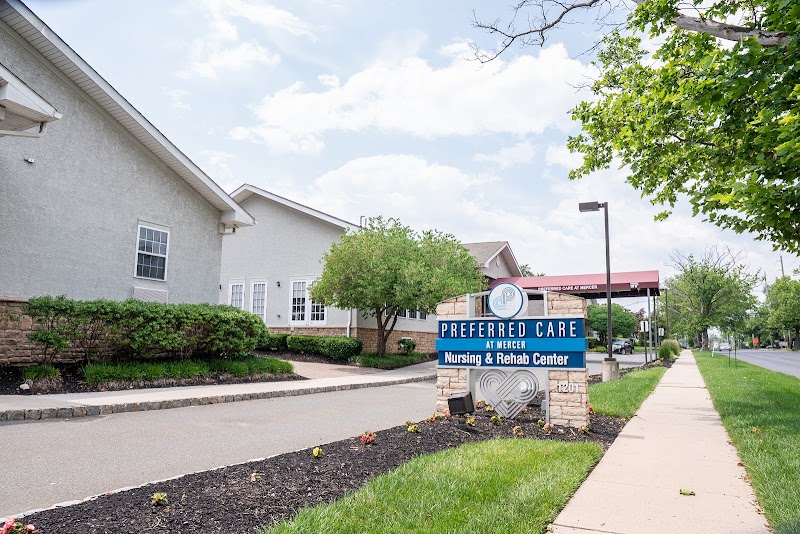
How is Preferred Care At Mercer Staffed?

CMS rates PREFERRED CARE AT MERCER's staffing level at 2 out of 5 stars, which is below average compared to other nursing homes. Staff turnover is 37%, compared to the New Jersey average of 46%. This relatively stable workforce can support continuity of care.

What Have Inspectors Found at Preferred Care At Mercer?

State health inspectors documented 14 deficiencies at PREFERRED CARE AT MERCER during 2020 to 2025. These included: 14 with potential for harm.
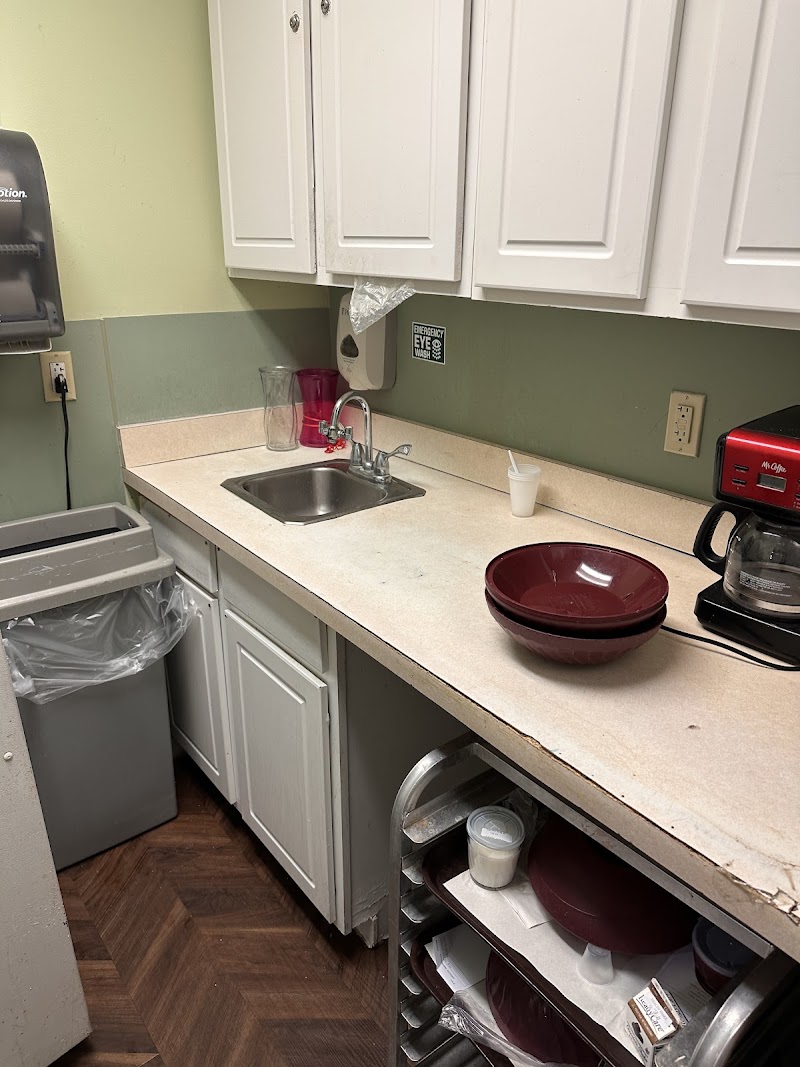
Who Owns and Operates Preferred Care At Mercer?

PREFERRED CARE AT MERCER is owned by a for-profit company. For-profit facilities operate as businesses with obligations to shareholders or private owners. The facility is operated by PREFERRED CARE, a chain that manages multiple nursing homes. With 100 certified beds and approximately 89 residents (about 89% occupancy), it is a mid-sized facility located in EWING, New Jersey.
How Does Preferred Care At Mercer Compare to Other New Jersey Nursing Homes?

Compared to the 100 nursing homes in New Jersey, PREFERRED CARE AT MERCER's overall rating (5 stars) is above the state average of 3.3, staff turnover (37%) is near the state average of 46%, and health inspection rating (4 stars) is above the national benchmark.

What Should Families Ask When Visiting Preferred Care At Mercer?

Based on this facility's data, families visiting should ask: "Can you walk me through typical staffing levels on day, evening, and night shifts?" "Can I visit during a mealtime to observe dining assistance and food quality?" "How do you handle medical emergencies, and what is your hospital transfer rate?" "Can I speak with family members of current residents about their experience?" These questions are particularly relevant given the below-average staffing rating.

Is Preferred Care At Mercer Safe?

Based on CMS inspection data, PREFERRED CARE AT MERCER has a clean safety record: no substantiated abuse findings (meaning no confirmed cases of resident harm), no Immediate Jeopardy citations (the most serious violation level indicating risk of serious injury or death), and is not on the Special Focus Facility watch list (a federal program monitoring the lowest-performing 1% of nursing homes). The facility has a 5-star overall rating and ranks #1 of 100 nursing homes in New Jersey. While no facility is perfect, families should still ask about staff-to-resident ratios and recent inspection results during their visit.

Do Nurses at Preferred Care At Mercer Stick Around?

PREFERRED CARE AT MERCER has a staff turnover rate of 37%, which is about average for New Jersey nursing homes (state average: 46%). Moderate turnover is common in nursing homes, but families should still ask about staff tenure and how the facility maintains care continuity when employees leave.

Was Preferred Care At Mercer Ever Fined?

PREFERRED CARE AT MERCER has no federal fines on record. CMS issues fines when nursing homes fail to meet care standards or don't correct problems found during inspections. The absence of fines suggests the facility has either maintained compliance or corrected any issues before penalties were assessed. This is a positive indicator, though families should still review recent inspection reports for the full picture.

Is Preferred Care At Mercer on Any Federal Watch List?

PREFERRED CARE AT MERCER is not on any federal watch list. The most significant is the Special Focus Facility (SFF) program, which identifies the bottom 1% of nursing homes nationally based on persistent, serious quality problems. Not being on this list means the facility has avoided the pattern of deficiencies that triggers enhanced federal oversight. This is a positive indicator, though families should still review the facility's inspection history directly.