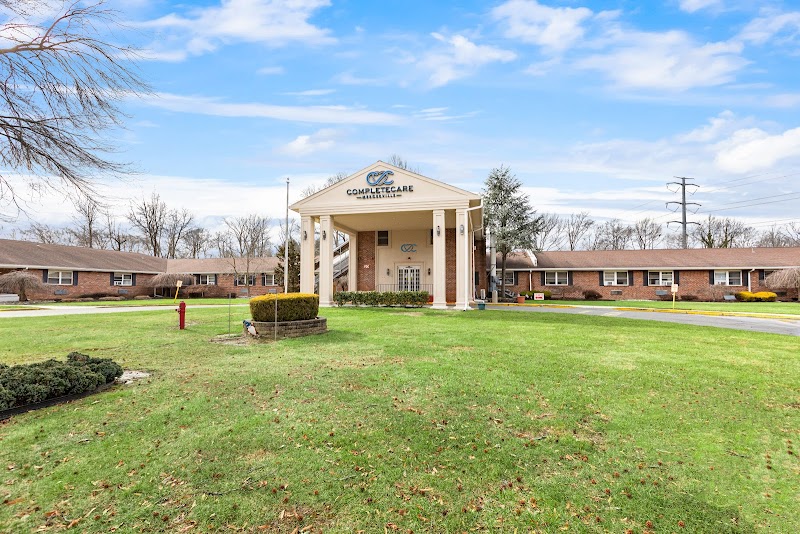
COMPLETE CARE AT MERCERVILLE LLC

2240 WHITEHORSE-MERCERVILLE ROAD, HAMILTON TOWNSHIP, NJ 08619 (609) 586-7500
For profit - Corporation 114 Beds COMPLETE CARE Data: November 2025
Trust Grade
70/100
#117 of 344 in NJ
Last Inspection: May 2025

Inspected within the last 6 months. Data reflects current conditions.

Overview

Complete Care at Mercerville LLC has a Trust Grade of B, indicating it is a good choice for families seeking a nursing home. Ranked #117 out of 344 facilities in New Jersey, they are in the top half, while their county rank of #4 out of 16 means only three local facilities perform better. The facility is improving, with reported issues decreasing from 11 in 2023 to 7 in 2025. Staffing is a concern, rated only 2 out of 5 stars, but they have an impressive 0% turnover, meaning staff stay long-term and likely know the residents well. Although there have been no fines issued, some recent incidents are troubling; for example, the facility failed to provide evening snacks to residents, and there were issues with kitchen sanitation practices, such as a broken trash bin and unrestrained hair in the kitchen. Overall, while there are strengths in staff retention and no fines, families should be aware of the staffing challenges and specific areas needing improvement.

Trust Score
B
70/100
In New Jersey
#117/344
Top 34%
Safety Record
Low Risk
No red flags
Inspections
Getting Better
11 → 7 violations
Staff Stability
○ Average
Turnover data not reported for this facility.
Penalties
✓ Good
No fines on record. Clean compliance history, better than most New Jersey facilities.
Skilled Nurses
○ Average
Each resident gets 36 minutes of Registered Nurse (RN) attention daily — about average for New Jersey. RNs are the most trained staff who monitor for health changes.
Violations
⚠ Watch
21 deficiencies on record. Higher than average. Multiple issues found across inspections.
★★★★☆
4.0
Overall Rating
★★☆☆☆
2.0
Staff Levels
★★★★★
5.0
Care Quality
★★★☆☆
3.0
Inspection Score
Stable
2023: 11 issues
2025: 7 issues

The Good

  • 5-Star Quality Measures · Strong clinical quality outcomes
  • Full Sprinkler Coverage · Fire safety systems throughout facility
  • No fines on record

Facility shows strength in quality measures, fire safety.

The Bad

Chain: COMPLETE CARE

Part of a multi-facility chain

Ask about local staffing decisions and management

The Ugly 21 deficiencies on record

May 2025 6 deficiencies
CONCERN (D)

Potential for Harm - no one hurt, but risky conditions existed

Deficiency F0565 (Tag F0565)

Could have caused harm · This affected 1 resident

Based on interviews, record review, and facility documentation it was determined that the facility failed to ensure the grievance process was followed to ensure that all concerns presented by the resi...

Read full inspector narrative →
Based on interviews, record review, and facility documentation it was determined that the facility failed to ensure the grievance process was followed to ensure that all concerns presented by the residents were consistently addressed. This deficient practice was identified for 1of 6 residents (Resident #86) reviewed for grievances. This deficient practice was evidenced by the following: On 4/29/25 at 10:02 AM, during a resident council meeting with 5 alert and oriented residents, Resident #86 stated they were not happy with the way a nurse treated their roommate so the resident pulled the curtain back and told LPN #1 the resident is telling you the air is too much, the nurse told me to mind my f*** business, proceeded to yell at me and when she was walking out of the room, she said your moms a b****, the resident stated what did you say? LPN #1 responded you heard me. The resident stated they made the Director of Nursing (DON #1) aware of the event when it happened in February or March. The resident stated, nothing was done about it (the event), so I was told to do a grievance about 2 weeks later. Resident #86 stated, I am not happy with the solution because there really wasn't one. The surveyor reviewed the electronic medical record for Resident #86. A review of the admission Record (an admission summary) revealed the resident was admitted to the facility with diagnoses which included but were not limited to; Unilateral (one side) Primary Osteoarthritis (occurs when flexible tissue at the ends of bones wears down), Left Knee and secondary arthritis. A review of the Minimum Data Set, an assessment tool dated 2/7/25, revealed the resident had a Brief Interview for Mental Status of 15 out of 15, indicating the resident was cognitively intact. A review of the individual comprehensive care plan revealed a focus of the resident was independent/dependent on staff for meeting emotional, intellectual, physical and social needs, date initiated 4/2/2024. Interventions: All staff to converse with resident while providing care. Further review revealed a focus of has a behavior problem (sexually inappropriate) r/t (related to) (making sexual remarks to staff members of both sexes), date initiated 12/30/24. Interventions: Caregivers to provide opportunity for positive interaction, attention. On 4/29/25 at 10:45 AM, the surveyor requested the LNHA to provide the survey team with all investigations, reportable events, and grievances for Resident # 86. A review of the Grievance form for Resident #86 provided by the facility dated 2/17/25 revealed: Date concern/incident occurred: Week of 2/10/25. Grievance: Resident reported to social worker and nursing on 2/17/25 that the night shift 11pm to 7am nurse spoke to them in a very unfriendly manner while giving them medications. The resident stated she (LPN #1) was very short with them and rolling her eyes. Further review revealed the following Departments were notified: X for DON (DON #1) and Social Services. Correction Action/Intervention Taken: Education/Inservice was completed with nursing staff for customer service and sensitivity The grievance was signed on 2/18/25 by the Director of Social Services (DSS) and the Licensed Nursing Home Administrator (LNHA). On 4/29/25 at 2:36 PM, the surveyor interviewed the DSS, who stated she was the Grievance Officer. She stated she was aware of the incident involving Resident #86. She stated the resident told her and the former DON (DON #1). She stated the resident basically told her the nurse spoke to them in a very unfriendly manner, the nurse was very short and rolling eyes. The DSS stated the conclusion was we educated the staff member, and an in-service was given to the nursing staff. The DSS reviewed the grievance form. She acknowledged the Correction Action/Intervention Taken: Education/Inservice was completed with nursing staff for customer service and sensitivity and stated, I could have elaborated on the conclusion. The DSS was unable to provide evidence of follow up to the grievance or follow up with the resident. On 4/29/25 at 3:10 PM, the surveyor interviewed the LNHA, in the presence of another surveyor. He stated he was the Abuse Officer. He stated this event was not called in because the resident felt that it was unfriendly. He admitted , I never spoke to the resident. The DON (DON #1) usually would deal with it directly. The LNHA reviewed Resident #86's grievance form and stated that his signature, dated 2/18/25, on the back of the form meant the grievance was resolved. He added to be honest I did not follow up on this (the grievance). A review of the facility's policy, Grievance Policy and Procedure revealed policy statement: All residents, responsible parties, interested family members and staff of [facility name] have the right to voice grievances that are free from interference coercion, discrimination, or reprisal concerning .[facility name] facilities will promptly address, investigate and then respond to each and every grievance that is received from all such parties .The Grievance Office will maintain a tracking file on each grievance. Besides making sue that all grievances are promptly considered, investigated, resolved, and answered, and later reviewed, this file will provide documentation for our continued commitment to optimum quality at our [facility name]. NJAC 8:39-4.1 (a)(29), 27.1(a)
CONCERN (D)

Potential for Harm - no one hurt, but risky conditions existed

Deficiency F0637 (Tag F0637)

Could have caused harm · This affected 1 resident

**NOTE- TERMS IN BRACKETS HAVE BEEN EDITED TO PROTECT CONFIDENTIALITY** Based on observations, interviews, review of medical records and other facility documentation, it was determined that the facili...

Read full inspector narrative →
**NOTE- TERMS IN BRACKETS HAVE BEEN EDITED TO PROTECT CONFIDENTIALITY** Based on observations, interviews, review of medical records and other facility documentation, it was determined that the facility failed to complete a Significant Change in Status Assessment (SCSA) using the Resident Assessment Instrument (RAI) process on a resident who was discharged from hospice benefits. This deficient practice was identified for 1 of 2 residents reviewed for hospice (Resident # 20). This deficient practice was evidenced by the following: On 4/29/25 at 09:27 AM, the surveyor observed Resident #20 lying on bed watching television. The resident stated they are doing well today. A review of Resident #20's admission record revealed the resident had diagnoses which included but not limited to; diabetes (high blood sugar) and schizophrenia (a mental disorder that affects the way a person thinks, acts, expresses emotions, perceives reality, and relates to others). The surveyor review of the electronic medical record (EMR) revealed a care plan meeting note dated 4/23/25 which indicated Resident #20 was discharged from hospice as of 4/9/25. The surveyor reviewed the resident's Minimum Data Set (MDS) 3.0 Assessment History, an assessment tool contained within the resident's EMR, revealed that a SCSA was not completed for the resident within 14 calendar days from the resident's hospice discharge as required. On 5/1/25, a review of Resident #20's comprehensive SCSA MDS, dated [DATE], revealed that it was in progress and not completed. On 5/01/25 at 1:31 PM, the surveyor interviewed the MDS Coordinator who stated this resident was discharged from hospice on 4/9/25 and the SCSA was scheduled for 4/19/25. She further stated her part was done and that she was waiting on social services to finish their sections. A review of the facility provided policy MDS 3.0 Completion revised 1/1/23, included: Policy: Residents are assessed, using a comprehensive assessment process, in order to identify care needs and to develop and interdisciplinary care plan. Policy Explanation and Compliance Guidelines: 1. According to federal regulations, the facility conducts initially and periodically a comprehensive, accurate and standardized assessment of each resident's functional capacity, using the RAI specified by the State. 2. Types of OBRA (Omnibus Budget Reconciliation Act) Assessments: d. Significant Change in Status Assessment (SCSA) - a comprehensive assessment completed within 14 days of the identification of a status change that meets the requirements outlined in Chapter 2 of the 3.0 Version RAI Manual. ii. A SCSA is required when a resident enrolls in a hospice program or changes hospice providers and remains in the facility, or a resident in the facility receiving hospice services discontinues those services (known as revocation of hospice care) and remains in facility. NJAC 8:39-11.2(i)
CONCERN (D)

Potential for Harm - no one hurt, but risky conditions existed

Assessment Accuracy (Tag F0641)

Could have caused harm · This affected 1 resident

**NOTE- TERMS IN BRACKETS HAVE BEEN EDITED TO PROTECT CONFIDENTIALITY** Based on observation, interview, review of medical records, other facility documentation, and review of the Resident Assessment ...

Read full inspector narrative →
**NOTE- TERMS IN BRACKETS HAVE BEEN EDITED TO PROTECT CONFIDENTIALITY** Based on observation, interview, review of medical records, other facility documentation, and review of the Resident Assessment Instrument (RAI) User's Manual, it was determined that the facility failed to accurately complete the Minimum Data Set (MDS), an assessment tool, for 2 of 32 residents reviewed (Resident #53 and Resident #96). This deficient practice was evidenced by the following: 1. On 4/28/25 at 9:58 AM, the surveyor observed Resident #53 lying on the bed and stated they have been in the facility for 5 or 6 weeks. A review of the resident's admission record reflected the resident was admitted with diagnoses which included but not limited to; pneumonia (an infection in the lungs) and heart failure. A review of the physician orders included an order dated 4/4/25, for Pradaxa (an anticoagulant) oral capsule 150 mg two times a day for a-fib (atrial fibrillation - an irregular heart rhythm). The individual comprehensive care plan (ICCP) included a focus area (Resident #53) is on anticoagulant therapy r/t (related to) atrial fibrillation. A progress noted dated 4/22/25, authored by Resident #53's attending physician noted the diagnosis of a fib and to continue with Pradaxa. A review of the comprehensive admission Minimum Data Set (MDS), an assessment tool, dated 4/10/25, revealed a Brief Interview for Mental Status (BIMS) score of 14 of 15, indicating intact cognition. Section I of the MDS, specifically question I0300, was not checked, indicating the resident did not have a diagnosis of atrial fibrillation. On 5/01/25 at 1:31 PM, the surveyor interviewed the MDS Coordinator, who stated that a-fib should have been coded and she would modify that MDS. 2. On 4/28/25 at 9:34 AM, the surveyor observed Resident #96 lying in bed. A review of the resident's admission record reflected the resident was admitted with diagnoses which included but not limited to; diffuse large B-cell lymphoma (a cancer of the blood). The surveyor did not observe a diagnosis of diabetes (high blood sugar). A review of the Medication Administration Record (MAR) for March 2025 did not reveal any insulin was received by the resident. A further review of the medical record did not reveal any use of insulin or a diagnosis of diabetes. A review of the comprehensive comprehensive MDS, dated [DATE], revealed a BIMS score of 8, indicating moderately impaired cognition. Section N of the MDS, specifically question N350A was coded 7, indicating the resident received 7 days of insulin injections. On 5/01/25 at 1:31 PM, the surveyor interviewed the MDS Coordinator, who stated, the resident is on Lovenox, it's not insulin, so I'm going to modify that. On 5/02/25 at 10:27 AM, a review of facility provided policy MDS 3.0 Completion revised 1/1/23 revealed: Policy: Residents are assessed, using a comprehensive assessment process, in order to identify care needs and to develop and interdisciplinary care plan. Policy Explanation and Compliance Guidelines: 1. According to federal regulations, the facility conducts initially and periodically a comprehensive, accurate and standardized assessment of each resident's functional capacity, using the RAI specified by the State. 4. Care Plan Team Responsibility for Assessment Completion: a. Interdisciplinary Responsibility for Completion of MDS Sections: ii. Persons completing part of the assessment must attest to the accuracy of the section they completed by signature and indication of the relevant sections. b. Coding of Assessment: i. All disciplines shall follow the guidelines in Chapter 3 of the current RAI Manual for coding each assessment. N.J.A.C 8:39-11.1
CONCERN (D)

Potential for Harm - no one hurt, but risky conditions existed

Deficiency F0838 (Tag F0838)

Could have caused harm · This affected 1 resident

Based on interviews and review of pertinent facility provided documents, it was determined that the facility failed to ensure the facility-wide assessment to determine what resources are necessary to ...

Read full inspector narrative →
Based on interviews and review of pertinent facility provided documents, it was determined that the facility failed to ensure the facility-wide assessment to determine what resources are necessary to care for its residents competently during both day-to-day operations and emergencies was reviewed and updated, as necessary, and at least annually. This deficient practice was evidenced by the following: On 4/28/25 at 9:14 AM, during the entrance conference with the Licensed Nursing Home Administrator (LNHA), the Regional Operator (RO), the Regional Clinical Director and the Director of Nursing (DON), the surveyor requested a copy of the Facility Assessment (FA). A review of the FA revealed the following: the Persons (name/titles) involved in completing assessment: Administrator Director of Nursing Governing Body Rep (representative): VPO (Vice President of Operations) Medical Director Other: CNA (Certified Nursing Aide) Date (s) of assessment or update: 3/16/2025 Date (s) assessment reviewed with QAA/QAPI (Quality Assurance/Quality assurance and Performance Improvement committee: 4/26/2025 On 5/02/25 at11:03 AM, the surveyor interviewed the LNHA. He stated the purpose of the FA was to make sure it has everything and is on the up and up and still relevant for resident care. The LNHA confirmed the DON started work at the facility on 3/24/2025. The surveyor asked how the DON reviewed the assessment on 3/16/2025 before her hire date of 3/24/2025. He could not speak to the DON reviewing the FA. The LNHA stated he made small changes to the FA and that the RO reviewed the changes. The LNHA was unable to provide evidence that the FA had been reviewed by the RO. He stated the FA should be reviewed at least annually The LNHA reviewed the QAPI minutes for the 4/23/25 meeting and confirmed the FA was not reviewed a that meeting. He continued to review the QAPI meetings minutes, in the presence of the surveyor. He confirmed he reviewed the minutes of all the meeting since April of 2024 and was unable to provide evidence the FA was reviewed and/or approved by the QAPI committee. The surveyor requested evidence of when the governing body and the QAPI committee reviewed and approved the FA. On 5/2/25 at 11:29 AM, the surveyor interviewed the DON and asked if she had reviewed the FA. She stated not really. I haven't had a chance. I was planning on it. The DON stated the FA was important to address the facility population, the facility needs, meeting the residents medical and psychological background, and helping them (the residents) to progress in their journey. On 5/2/25 at 11:43 AM, the surveyor interviewed the [NAME] President of Clinical Services (VPCS), who stated the RO was on vacation. The VPCS stated the FA should be reviewed at least annually and if any changes were made to staffing, the type of population or anything that changes to facility's operation that affect residents. She stated the FA should be reviewed and approved by the QAPI committee and it would reflect in the QAPI minutes that it was reviewed and approved. On 5/2/25 at 12:21 PM, the surveyor interviewed the VPO, who stated the FA should be reviewed yearly and as needed like staffing, diagnoses, or cultures. The VPO stated if the FA was reviewed by the QAPI committee it should be in the minutes. On 5/2/25 at12:46 PM, the LNHA verified he reviewed the QAPI minutes from April 2024 to present and could not provide evidence the FA was reviewed. A review of the facility's policy, Facility Assessment revised 6/18/24 revealed Policy: This facility conducts and documents a facility-wide assessment to determine what resources are necessary to care for our residents competently during both day-to-day operations and emergencies .10. The facility assessment will be reviwed and updated as necessary and at least annually .Any changes to the assessment will be documented, along with a revision history. N.J.A.C. 8:39-5.1(a)
CONCERN (D)

Potential for Harm - no one hurt, but risky conditions existed

Infection Control (Tag F0880)

Could have caused harm · This affected 1 resident

Based on observations, interviews, record review, and review of pertinent facility documentation, it was determined that a facility staff member failed to ensure infection control practices were imple...

Read full inspector narrative →
Based on observations, interviews, record review, and review of pertinent facility documentation, it was determined that a facility staff member failed to ensure infection control practices were implemented by not appropriately donning (put on) and doffing (remove) Personal Protective Equipment (PPE), in accordance with accepted national standards, Centers for Disease Control and Prevention (CDC) guidelines, before and after exiting one of one resident's room, (Resident #70), who was on Transmission Based Precautions (TBP) due to a Clostridium Difficile Infection (CDI) (infectious diarrhea that can be transmitted through direct contact), on one (1) of two (2) units and perform hand hygiene to prevent the spread of infection. The deficient practice was evidenced by the following: According to the U.S. CDC guidelines for Transmission-Based Precautions dated 4/3/2024, indicated to Use personal protective equipment (PPE) appropriately, including gloves and gown. Wear a gown and gloves for all interactions that may involve contact with the patient or the patient's environment. Donning PPE upon room entry and properly discarding before exiting the patient room is done to contain pathogens. On 4/28/25 at 8:43 AM, the surveyor interviewed the Unit Manager/Licensed Practical Nurse (UM/LPN), who stated that Resident #70 was a recent readmission to the facility from the hospital and was in a private room and on TBP because the resident had C.Diff (CDI) and was on Vancomycin (an antibiotic used to treat infections caused by bacteria) orally to treat C.Diff. On 4/28/25 at 8:59 AM, the surveyor observed, from the hallway, Resident #70 in bed in their room. The surveyor also observed signage on the frame of the door, outside of the resident's room which indicated Contact Precautions. Clean hands with alcohol-based hand rub or soap and water. Wear gown when providing direct care. Wear gloves when providing direct care, and a plastic cart with drawers containing PPE (gowns and gloves). In addition, the surveyor observed a covered garbage container on the inside of the room near the door. The surveyor reviewed the medical record for Resident #70. A review of the admission Record reflected diagnoses which included, but were not limited to, enterocolitis (inflammation in the small intestine and colon's inner lining) due to Clostridium Difficile. A review of the resident's interdisciplinary comprehensive Care Plan (ICCP) dated as initiated 4/25/2025 revealed a focus area, Contact ISO (isolation) readmitted with CDiff. Included was a goal that the resident will remain on Contact Isolation until the end of treatment and interventions 1. Oral abt (antibiotic) as ordered, 2. PPE/signage, 3. Follow policies for caregivers, 4. Maintain single-room isolation. All services rendered in room. A review of the Order Summary Report indicated a Physician's Order (PO) with a start date 4/26/2025 for the antibiotic medication Vancomycin HCL (hydrochloride) oral solution reconstituted 25 milligrams/milliliter (ML), give 5 ML by mouth every 6 hours for CDiff for 7 days. An additional PO indicated Resident is on contact isolation for C-Diff colitis. A review of the nursing progress note dated 4/24/25 at 22:23 (10:23 PM), indicated continue on isolation precaution. On 4/29/25 at 12:47 PM, the surveyor observed a Certified Nursing Assistant (CNA #1) enter Resident #70's room carrying a meal tray, placed the tray on the resident's overbed table and walked out of the resident's room and proceeded to take another resident's meal tray from the meal truck and delivered a tray to their room. The surveyor had not observed CNA #1 don gown and gloves when entering Resident #70's room and perform hand hygiene after exiting the room. On 4/29/25 at 12:49 PM, the surveyor interviewed CNA #1 who stated that she had worked at the facility approximately a year and was aware Resident #70 was on contact precautions. CNA #1 also stated she did not have to wear PPE to deliver a meal tray because she was not providing care. CNA #1 added that she thought she used the hand sanitizer after delivering the tray to Resident #70 and then delivered a lunch tray to another resident. On 4/29/25 at 12:51 PM, the surveyor interviewed Licensed Practical Nurse (LPN #1), who stated that Resident #70 was on contact precautions for C Diff and that contact precautions meant to gown and glove when providing care. LPN #1 added that a gown and gloves were not required when delivering a meal tray. LPN #1 also stated that the resident had soft stools and was on Vancomycin. On 4/29/25 at 12:52 PM, the surveyor interviewed the UM/LPN, who stated Resident #70 had signage regarding contact precautions, which required donning and doffing of PPE when care was provided. The UM/LPN added when delivering a meal tray, staff was not required to wear PPE because there was no physical contact and the bacteria was contained in the stool. On 4/29/25 at 2:41 PM, the surveyor interviewed the Infection Preventionist (IP/LPN), in the presence of Regional Clinical Director (RCD). The IP/LPN stated Contact Precautions required a gown and gloves to be worn before entering the resident's room and removed before exiting the room and perform hand hygiene. The IP/LPN also stated Resident #70 was being treated for CDI and was on Contact Precautions which required donning PPE before entering the room for any reason and doffing PPE before exiting. The IP/LPN acknowledged that she was following CDC guidelines. At that time, the surveyor, with the IP/LPN, in the presence of the RCD, reviewed the signage that was currently on Resident #70's door frame. The IP/LPN stated that was not the proper signage and could not speak to why that signage was being used. On 4/29/25 at 2:58 PM, the IP/LPN provided the surveyor with a copy of the proper Contact Precaution signage. The IP/LPN stated that she had removed the signage that was on the resident's door frame and replaced it with the proper CDC signage. A review of the CDC signage provided indicated STOP CONTACT PRECAUTIONS EVERYONE MUST: Clean their hands, including before entering and when leaving the room. PROVIDERS AND STAFF MUST ALSO: Put on gloves before room entry. Discard gloves before room exit. Put on gown before room entry. Discard gown before room exit. On 5/2/25 at 9:31 AM, the survey team met with Licensed Nursing Home Administrator, Director of Nursing, [NAME] President of Clinical Services (VPCS), RCD, Regional Nurse Consultant and Consultant Pharmacist. The VPCS acknowledged that Contact Precautions required staff to don PPE before entering a resident's room and stated inservices were completed. VPCS also stated that staff had copied and posted inaccurate signage and were instructed that no other signage was to be used other than signage provided by the IP/LPN. A review of the facility policy titled Transmission-Based (Isolation) Precautions revised 1/1/25, provided by IP/LPN, reflected It is the policy to take appropriate precautions to prevent transmission of pathogens, based on the pathogens' modes of transmission. The policy had the following definitions: Contact precautions refer to measure that are intended to prevent transmission of infectious agents which are spread by direct or indirect contact with the resident or the resident's environment. Transmission-based precautions (a.k.a.Isolation Precautions) refer to actions (precautions) implemented in addition to standard precautions that are based upon the means of transmission (airborne, contact and droplet) in order to prevent or control infections. The policy further reflected, Policy Explanation and Compliance Guidelines: 1. Facility staff will apply Transmission-Based Precautions, in addition to standard precautions, to residents who are known or suspected to be infected or colonized with certain infectious agents requiring additional controls to prevent transmission. 9. Initiation of Transmission-Based Precautions (Isolation Precautions) e. Signage that includes instructions for use of specific PPE will be placed in a conspicuous location outside the resident's room, wing, or facility-wide. Additionally, either the CDC category of transmission-based precautions (e.g., contact, droplet, or airborne) or instructions to see the nurse before entering will be included in the signage. 10. Contact Precautions a. Intended to prevent transmission of pathogens that are spread by direct or indirect contact with the resident or the resident's environment. c. Healthcare personnel caring for residents on Contact Precautions wear a gown and gloves for all interactions that may involve contact with the resident or potentially contaminated areas in the resident's environment. d. Donning personal protective equipment (PPE) upon entry and discarding before exiting the room is done to contain pathogens, especially those that have been implicated in transmission through environmental contamination (e.g. VRE, C. difficile, norovirus and other intestinal pathogens, RSV). Further review of the policy included a table for Recommendations for Personal Protective Equipment (PPE) which indicated for Contact Precaution, gloves was the type of PPE required with recommendations Whenever touching the patient's intact skin or surfaces and articles in close proximity to the patient (e.g., medical equipment, bed rails). [NAME] gloves upon entry into the room or cubicle. In addition, for Contact Precaution, gown was the type of PPE required with recommendations Whenever anticipating that clothing will have direct contact with the patient or potentially contaminated environmental surfaces or equipment in close proximity to the patient. [NAME] gown upon entry into the room or cubicle. Also, the policy included a table for Type and Duration of Transmission-Based Precautions Recommended for Selected Infections and Conditions indicated for the infection of Clostridium difficile to use Contact Precaution for the duration of the illness and to use hand hygiene with soap and water. NJAC 8:39-19.4 (a) (1, 2)
CONCERN (F)

Potential for Harm - no one hurt, but risky conditions existed

Deficiency F0809 (Tag F0809)

Could have caused harm · This affected most or all residents

Based on interviews, and review of pertinent facility documents, it was determined that the facility failed to serve and consistently document that resident's received a nourishing snack in the evenin...

Read full inspector narrative →
Based on interviews, and review of pertinent facility documents, it was determined that the facility failed to serve and consistently document that resident's received a nourishing snack in the evening when there was more than a 14-hour span between dinner and breakfast mealtimes. This deficient practice was identified for a.) 5 of 5 alert and oriented residents (Resident's #39, #52, #81, #84, and #86) during the resident council meeting, who represented 2 of 2 units and b.) 1 of 2 residents reviewed for Nutrition (Resident #83). This deficient practice was evidenced by the following: On 4/28/25 at 8:07 AM, the surveyor conducted a kitchen tour with the Food Service Director (FSD). At the end of the tour, the surveyor requested and the FSD provided a list snacks (items and amounts) that were sent to each unit in the evening, as well as a printout of residents who received labeled snacks (specific to the resident name, delivery time and item). On 4/28/25 at 11:05 AM, the surveyor interviewed Resident #83, who stated the evening staff do not offer snacks after dinner. The resident stated that a snack cart was brought to the unit, but staff do not offer snacks to the residents. On 4/29/25 at 9:00 AM, the FSD provided the surveyor with a copy of the facility's Meal Service Delivery Schedule updated 4/5/25, which reflected there was more than a 14-hour span between the dinner and breakfast mealtimes. On 4/29/25 at 10 AM, the surveyor conducted a resident council meeting with five residents. 5 out of 5 residents had a Brief Interview for Mental Status of 13 or above, which indicated their cognition was intact. During the meeting, 5 out of 5 residents stated they did not receive and were not offered evening snacks. The surveyor reviewed the electronic medical records (EMR) for Resident's #39, #52, #81, #83, #84 and #86. A review of a the EMR for Resident #39 reflected no documented evidence evening snacks were provided or offered. A review of a the EMR for Resident #52 reflected inconsistent documented evidence evening snacks were provided or offered. The snack accountability task reviewed for the last 30 days revealed the following: a snack was given on 4/13/25 and 4/19/25 and was marked Not Applicable on 4/15/25. There were no other entries. A review of a the EMR for Resident #81 reflected no documented evidence evening snacks were provided or offered. A review of a the EMR for Resident #83 reflected no documented evidence evening snacks were provided or offered. In addition, there was Registered Dietitian's (RD) Progress Note dated 1/21/25, which reflected HS (evening) snack in place. A review of the residents individualized comprehensive care plan (ICCP) for Nutrition, included an intervention dated 1/1/24, to Provide snacks at HS. A review of the list of labeled snacks provided by the FSD on 4/28/25, reflected a snack label for Resident #83 to receive a ½ cup of canned fruit at the HS (evening) time. A review of a the EMR for Resident #84 reflected no documented evidence evening snacks were provided or offered. A review of a the EMR for Resident #86 reflected no documented evidence evening snacks were provided or offered. The snack accountability task reviewed for the last 30 days revealed the following: a snack was given on 4/12/25 and 4/21/25 and was marked Not Applicable on 4/14/25, 4/18/25 and 4/24/25. There were no other entries. On 5/1/25 at 1:23 PM, the surveyor interviewed the FSD related to mealtimes and HS snacks. She stated that there could be no more than 16 hours between the dinner and breakfast meal and if it was more than 14 hours the residents needed to be provided with a substantial evening snack. The FSD stated they send extra snacks in the evening so that there was enough for everyone. She further stated, she was not aware of resident concerns about HS snacks and could not speak to an accountability process for snacks being provided or resident refusal. On 5/1/25 at 2:00 PM, the surveyor interviewed the Regional RD related to mealtimes and snacks. She stated that there could be no more than 16 hours between the dinner and breakfast meal and if it was more than 14 hours the residents must be served a substantial evening snack, such as a protein and a carbohydrate, a half of a peanut butter and jelly sandwich with milk or yogurt. She reviewed the EMR for Resident #83 and acknowledged the ICCP reflected they should have received an HS snack. In addition, she reviewed the list of labeled snacks with the surveyor and acknowledged the resident had a HS labeled snack for a ½ cup of canned fruit. The Regional RD reviewed the EMRs for the residents who attended the group meeting with the surveyor, and she acknowledged there was inconsistent to no documented evidence for HS snack accountability. On 05/01/25 at 4:21 PM, the survey team met with the administrative team (Licensed Nursing Home Administrator [LNHA], Regional Operator, [NAME] President of Clinical Services (VPCP), Director of Nursing (DON), Regional Nurse Consultant and the Regional Clinical Director to review the above concerns. On 05/02/25 at 9:31 AM, the survey team met with the LNHA, Regional Operator, VPCP, DON, Regional Nurse Consultant and the Regional Clinical Director. The VPCP stated they conducted a facility audit and acknowledged that the EMR reflected inconsistent to no documentation for snack accountability. The DON stated that about 4-5 weeks ago, she noticed snacks were not given out at night and was working on changes in the snack process. The DON also acknowledged lack of documentation for HS snack accountability. A review of a policy provided by the facility titled Offering/Serving Bedtime Snacks dated 1/1/24, reflected that it was the practice of the facility to offer and serve residents a nourishing snack (from the basic food groups, either singly or in combination) in accordance with their needs, preferences and requests at bedtime on a daily basis. It further reflected that dietary services delivered the snacks, the charge nurse was made aware, nursing staff delivered and served snacks to residents and documented this in the medical record. A review of the policy from [name redacted] provided by the facility titled Frequency of Meals dated 10/2022, reflected that a nourishing snack (from the basic food groups, either singly or in combination) would be provided to residents if the time span between dinner and breakfast the next morning exceeds 14 hours and not to exceed 16 hours. A review of the policy from [name redacted] provided by the facility titled Frequency of Meals dated 10/2022, reflected that snacks and beverages would be provided as identified in the individual plans of care, and bedtime (HS) snacks would be provided to all residents. It also reflected that snacks would be labeled and dated in accordance with the individual plan of care for each resident and these snacks as well as bulk snack items would be delivered to each unit by dining services to be offered at bedtime. It further reflected that nursing services was responsible for delivering the individual snacks to the identified residents and for offering evening snacks to all other residents. NJAC 8:39-17.2 (f) )(1) (i) (ii)
Mar 2025 1 deficiency
MINOR (B) 📢 Someone Reported This

A family member, employee, or ombudsman was alarmed enough to file a formal complaint

Minor Issue - procedural, no safety impact

Medical Records (Tag F0842)

Minor procedural issue · This affected multiple residents

Based on interviews, review of the medical records, and other pertinent facility documents on 2/27/25 and 3/11/25, it was determined that the facility failed to maintain an accurate and complete medic...

Read full inspector narrative →
Based on interviews, review of the medical records, and other pertinent facility documents on 2/27/25 and 3/11/25, it was determined that the facility failed to maintain an accurate and complete medical record in accordance with acceptable standards and practice by not updating a resident's Comprehensive Care Plan (CPP) to include a fall and fall intervention for 1 of 3 residents (Resident #2). This deficient practice was identified for 1 of 3 residents (Resident #2) who was reviewed for falls and was evidenced by the following: According to the admission record, Resident #2 was admitted to the facility with diagnoses which included but not limited to: Emphysema (a lung disease where the tiny air sacs (alveoli) in your lungs become damaged or destroyed, making it hard to breathe), Alcoholic Cirrhosis of Liver with Ascites (fluid in the belly), Unspecified Severe Protein-Calorie Malnutrition, Essential Hypertension, Depression, Anxiety Disorder. The Minimum Data Set (MDS), an assessment tool dated 5/27/24, indicated that Resident #2 had a Brief Interview for Mental Status (BIMS) score of 00 out of 15, which indicated that the Resident's cognition was severely impaired. A review of the Social Worker's note dated 5/7/24 revealed that Resident #2 refused to complete his/her BIMS. A review of the Progress Notes (PN) dated 4/30/24 at 11:47 AM revealed that Resident #2 was found on the floor on the right side of the bed sitting up. Resident #2 denied any pain. Vital signs were checked, and neurological checks were started. A review of the PN's dated 05/01/24 at 09:31 revealed a late entry note by RN #2 that Resident #2's care plan was updated. A review of Resident #2's Care Plan, dated 5/14/24, revealed that the Resident #2 is high risk for falls related to deconditioning. A review of Resident #2's Care Plan, dated 5/14/24, revealed there was no documented evidence that the Care Plan was updated to reflect the fall that occurred on 04/30/24. There was also no documented evidence of interventions to address the fall that occurred on 04/30/24. 12 10:52 A.M., the MDS Coordinator stated that when a resident is admitted to the facility, she has 14 days to complete a RAP (Resident Assessment Protocol) summary, and the RAP will initiate the triggered problems that she will then review and assure they are being addressed. She stated the Unit Manager (UM) is responsible for the initial care plan. The UM is also responsible for updating the care plan. The MDS Coordinator stated that the UM should have updated Resident #2's care plan to reflect Resident #2's fall on 4/30/24. During an interview with the surveyor on 3/11/2025 at 10:59 A.M., LPN #1/UM stated that the UM oversees updating a resident's care plan if there is a change with the resident, including when a resident falls. LPN #1/UM stated that she should have updated Resident #2's care plan when Resident #2 fell on 4/30/24. During an interview with the surveyor on 3/11/2025 at 11:59 A.M., the Licensed Nursing Home Administrator (LNHA) acknowledged that Resident #2's care plan should have been updated by the UM to reflect resident's fall on 4/30/2024. NJAC 8:39-11.2(2)(h)(i)
Oct 2023 9 deficiencies
CONCERN (D) 📢 Someone Reported This

A family member, employee, or ombudsman was alarmed enough to file a formal complaint

Potential for Harm - no one hurt, but risky conditions existed

Safe Environment (Tag F0584)

Could have caused harm · This affected 1 resident

**NOTE- TERMS IN BRACKETS HAVE BEEN EDITED TO PROTECT CONFIDENTIALITY** 2.) On 10/04/23 at 12:16 PM, and 10/05/23 at 11:13 AM, on the North wing, the surveyor observed in Resident #44's room, next to ...

Read full inspector narrative →
**NOTE- TERMS IN BRACKETS HAVE BEEN EDITED TO PROTECT CONFIDENTIALITY** 2.) On 10/04/23 at 12:16 PM, and 10/05/23 at 11:13 AM, on the North wing, the surveyor observed in Resident #44's room, next to their bed, a tube feeding pump attached to an IV pole. There were several areas of dried tan drainage observed on the feeding pump, IV pole, base of the IV pole, and the floor, which was consistent with the tube feeding formula that was used for the resident's feeding. The resident was not in their room. On 10/06/23 at 09:23 AM, the surveyor observed Resident #44 in their bed asleep. The resident was observed with a gastrostomy tube (G tube, a tube inserted through the abdomen that allows nutrition directly to the stomach) attached to a tube feeding that was infusing via a feeding pump that was attached to an IV pole. There were several areas of dried tan drainage observed on the feeding pump, IV pole, base of the IV pole, and the floor, which was consistent with the tube feeding formula that was used for the resident's feeding. Review of Resident #44's admission Record (an admission summary) revealed the resident was admitted to the facility with diagnoses which included but were not limited to: nontraumatic intracranial hemorrhage (a ruptured blood vessel that causes bleeding inside the brain), aphasia (loss of ability to understand or express speech), and gastrostomy. Review of Resident #44's admission Minimum Data Set (MDS), an assessment tool utilized to facilitate the management of care, dated 03/22/23, revealed that the resident's brief interview of mental status (BIMs) score was 99, which indicated the resident was unable to complete the interview. The MDS also revealed that the resident was dependent for all activities of daily living and had a feeding tube. Review of Resident #44's Order Summary Report revealed a physician order dated 03/16/23 for Jevity 1.5 @ (at) 60mL/hr (milliliters per hour) via PEG tube up at 4pm down until TV (total volume) 1080 mL infused. Review of Resident #44's October 2023 Medication Administration Record (MAR) reflected the above physician's order and was documented as administered. On 10/06/23 at 10:17 AM, the surveyor interviewed the Registered Nurse (RN) caring for Resident #44, in the resident's room. The RN stated the resident received nothing by mouth and that all nutrition was administered via the feeding tube. The RN stated that she thought it was the housekeeper's responsibility to clean the pump and IV pole but that she was not sure. Together, the surveyor and the RN observed the dirty feeding pump and IV pole. The RN acknowledged the tan dried drainage and stated it was some kind of feeding solution and that it should not have been there. The RN stated that if she saw the debris that she would have cleaned it and that it was important to keep resident equipment clean for infection control. On 10/06/23 at 10:30 AM, the surveyor interviewed the housekeeper/porter (HK/P) who stated his role was to clean the unit's floors, take the linen out, take the trash out, and to clean mechanical lifts, wheelchairs, oxygen condensers, IV poles and feeding pumps. The HK/P stated that he would clean the IV poles and feeding pumps once they were no longer needed when the nurse placed them on the cart across from the utility room, which indicated they were dirty. On 10/06/23 at 10:35 AM, the surveyor interviewed the Housekeeping Director (HD) who stated that it was the housekeeper's responsibility to clean the resident's IV pole and feeding pump daily and once it was no longer used that it was cleaned and bagged. The surveyor informed the HD of the HK/P interview and he stated that he was a porter and that the housekeeper was responsible to clean the IV pole and feeding pump daily. The surveyor escorted the HD to Resident #44's bedside to observe the IV pole and feeding pump. The HD stated he did not know what the tan dried drainage was and that it should not have been there. The HD further stated that for disinfection, to prevent bacterial growth, and for infection control, that the equipment should have been cleaned. On 10/06/23 at 10:43 AM, the surveyor interviewed the Licensed Practical Nurse/Unit Manager (LPN/UM) of the North wing who stated that the HK was responsible for cleaning any resident's IV pole and feeding pump and that the nurse should have been cognizant to report dirty equipment to the LPN/UM or HK so it could have been cleaned. The surveyor showed the LPN/UM photographs of Resident #44's IV pole/feeding pump that was observed on 10/04/23, 10/05/23, and 10/06/23. The LPN/UM acknowledged the tan dried debris and stated that it appeared to be feeding residue and that it should not have been on the IV pole/feeding pump. The LPN/UM stated that for infection control that she would have cleaned the equipment and then also informed the HK to make sure the equipment was cleaned. On 10/06/23 at 10:56 AM, in the presence of the Director of Clinical Services/RN, the surveyor interviewed the Director of Nursing (DON) who stated that cleaning the IV pole/feeding pump was the nurse's responsibility for immediate needs such as a spill but that the HK was responsible for cleaning them. The surveyor showed the DON photographs of Resident #44's IV pole/feeding pump that was observed on 10/04/23, 10/05/23, and 10/06/23. The DON acknowledged the debris and stated that the debris was probably from tube feeding and that it should not have been there. The DON further stated that it was important to maintain overall cleanliness for the residents. On 10/12/23 at 12:45 PM the surveyors met with the administrative team who were made aware of Resident #44's dirty IV pole/feeding pump. Review of Maintenance Supervisor Education, dated 11/12/2023, indicated, It is the maintenance supervisor's responsibility to complete all maintenance - related tasks in their entirety. This includes: filling all repaired holes and sanding rough edges. Painting any repaired areas with the correct colors. Review of the facility's undated Routine Cleaning and Disinfection policy revealed, Policy: It is the policy of this facility to ensure the provision of routine cleaning and disinfection in order to provide a safe, sanitary environment and to prevent the development and transmission of infections to the extent possible. Definitions: Cleaning refers to the removal of visible soil from objects and surfaces .Policy Explanation and Compliance Guidelines: 1. Routine cleaning and disinfection of frequently touched or visibly soiled surfaces will be performed in common areas, resident rooms .4. Routine surface cleaning and disinfection will be conducted with a detailed focus on visible soiled surfaces and high touch areas to include, but not limited to: h. Monitor control panels, touch screens and cables, j. IV poles. Review of the facility's undated Medical equipment cleaning Policy and Procedure indicated that it was the housekeeping staffs responsibility to check and clean rooms daily. The facility's Medical equipment cleaning Policy and Procedure further indicated, During daily cleaning of resident rooms all equipment should be cleaned and sanitized using appropriate disinfectant Feeding poles, pumps, concentrators, and nebulizers should be cleaned daily. Review of the facility's undated Daily room cleaning details Policy and Procedure indicated that room cleaning was done daily. Further review of the policy indicated, What to Clean: High dusting and cleaning of window sills, Heating/cooling units, over bed lights, medical equipment, nightstands, dressers, closets, Bedrails, floor mats, Spot clean walls, Door frames, Doors, Bathroom lights, toilets, Sink, Mirrors, ect. Sweep and mop entire floor in room and bathroom to include corners, edges under and behind furniture and equipment. Review of the Job Title: Light Housekeeper dated 1/01/2000, indicated, The Light Housekeeper performs a variety of tasks, such as dust mopping floors, cleaning and sanitizing bathrooms including sinks, tubs, and commodes. They are responsible for the daily cleaning and sanitizing of patient room furniture, as well as sitting room and dining room furniture. Light Housekeepers also do discharge cleaning and may also be called on for utility work in any area of the building. Review of the undated Housekeeping Director's Job Description indicated that the HD was responsible for, Manages and supervises the environmental service staff at a single site according to policies and procedures, and state/federal requirements. Review of the Maintenance Manager Job Position dated January 2023, indicated, The primary purpose of the job position is to plan, organize, develop, and direct the general and preventative maintenance of physical plant and grounds as directed by the Administrator, to assure that out facility is maintained according to policy. NJAC 8:39-31.4(a)(f) Complaint NJ: #159452 Based on observation, interview, record review, and review of pertinent facility documentation it was determined that the facility failed to maintain a clean, comfortable, homelike environment. This deficient practice was identified in 2 of 50 resident rooms, for 1 of 1 resident, (Resident #44) reviewed for cleanliness of their Tube Feeding pump and pole, and on 2 of 2 nursing units. The deficient practice was evidenced by the following: 1.) On 10/04/23 at 11:36 AM, the surveyor entered room [ROOM NUMBER] and observed black scuff marks throughout the floor which resembled wheels from a wheelchair. The surveyor further observed that the heating and air conditioner unit in the room, had a perforated vent cover which was covered with a caked on brownish grey material. At that time, the surveyor observed a dead fly on the windowsill. There was brownish- grey colored debris observed throughout the windowsill. The room contained four beds and four overbed tables. The surveyor observed that the edges of the overbed tables were lighter brown in color with indentations, scratches, peeling material, and broken pieces throughout. In addition, all 4 tables had an unknown residue on top of them and the bottoms of the overbed tables had caked on brown, white, and grey residue. There were three garbage cans observed in the room without a liner (garbage bag). All the three garbage cans were filled with debris and food. On 10/04/23 at 11:45 AM, the surveyor entered the bathroom for room [ROOM NUMBER] and observed a garbage can without a liner. Paper towels and other garbage was observed in the garbage can. The surveyor observed scratches and indentations throughout the walls in the resident's bathroom. The bottom of the wall across from the toilet was missing, exposing a large, deep open area. On 10/05/23 at 12:04 PM, the surveyor re-entered room [ROOM NUMBER] and observed that the black scuff marks on the tile in the resident's room appeared lighter in color, not as prominent, but still existed. The surveyor further observed the first bed to the right of the bathroom had black scuff marks in between the resident's dresser and refrigerator in the room. The liner inside on of the garbage cans was not correctly placed in the garbage can, leaving the sides of the garbage can exposed. The liner was observed scrunched up in the bottom of the garbage can. The tiles in front of the heating and air conditioner unit were observed to be indented into the floor with black coating in between the flooring in the resident's room. The heating and air conditioner unit in the room was observed in the same condition as the previous observation, with the caked on brownish - grey material and scratches throughout. The tops of the residents over bed tables had been wiped clean but remained in same tattered condition as prior observation. The bottom portion of the over bed tables legs and base supporting the structure were observed to have caked on debris on all 4 tables. On 10/05/23 at 12:16 PM, the surveyor observed that the wall between the shower room and room [ROOM NUMBER] had black vertical markings which extended throughout the center of the wall. On 10/05/23 at 12:31 PM and on 10/11/23 at 10:41 AM, the surveyor entered room [ROOM NUMBER] and observed spackle to the left of the window on the wall. The spackle was white in color and the wall behind the spackle was green. The spackle was upraised and bumpy, indicating that it had not been sanded. The surveyor further observed above the resident's window, that there were three holes in the wall which resembled past evidence of a curtain rods prior existence. Grey, flaky debris was observed over top of the window. To the left of the resident's window, the surveyor observed that the green paint on the wall was peeling, exposing white paint underneath. On 10/11/23 at 11:13 AM, the surveyor observed in between the medical supply room and room [ROOM NUMBER], yellow caked on material above the plastic molding attached to the bottom of the floor. The surveyor further observed that there was an orange-reddish colored stain on the wall. On 10/11/23 at 11:16 AM, the surveyor observed behind the South wing nurses' station, where the wheelchair scale and Hoyer lifts were stored, black horizontal scratches throughout the bottom portion of the wall. On 10/12/23 at 09:49 AM, the surveyor interviewed the Housekeeping Director (HD) who stated that he was responsible for the oversite of the housekeeping staff members in the facility. The HD explained the housekeeping staff were responsible for cleaning common areas which included bathrooms, resident rooms, and day rooms. He told the surveyor the protocol for cleaning resident rooms was top to bottom. The housekeeping staff were to start by dusting the room, sweeping the rooms, and would mop the floors last. The HD further stated that his expectation would be for the staff to put a liner in the garbage can, take out the trash and put a new liner in the garbage can when the garbage can was full of garbage. He stated that the expectation for the housekeeping staff was for them to dust the corners in the resident's rooms, the windows sills, and window frames. On 10/12/23 at 09:56 AM, the surveyor interviewed the Maintenance Supervisor (MS) who stated that his job was basically to keep the building, up and running by making sure that things such as toilets and air conditioners were fixed. The MS further stated he was responsible for fixing holes in walls, spackling, and painting. The MS told the surveyor that fixing the scratches and indentations on the walls depended on how bad they were. He stated that the facility tried to fix the walls, but some residents would bang into the walls with their wheelchairs which caused the indentations and created the scratches throughout the walls. The MS told the surveyor that the Maintenance and Housekeeping department would work together to maintain the cleanliness of the building. On 10/12/23 at 11:07 AM, the surveyor interviewed the Licensed Nursing Home Administrator (LNHA) who stated that he met with the HD and MS and asked them if anything was preventing them from doing their jobs, such as staffing. The LNHA further stated that the facility prioritized the cleanliness of the building based off what they observed and resident concerns. On 10/16/23 at 09:46 AM, the surveyor conducted an additional interview with the facility's LNHA who stated that he and the HD re-educated the staff regarding the room cleaning and dirty Tube Feeding poles. The LNHA stated that the housekeeping staff had not yet cleaned room [ROOM NUMBER] when the surveyor made the observations on 10/04/23 at 11:36 AM. The LNHA did not speak to cleaning the bottom of the overbed tables in the room.
CONCERN (D)

Potential for Harm - no one hurt, but risky conditions existed

PASARR Coordination (Tag F0644)

Could have caused harm · This affected 1 resident

**NOTE- TERMS IN BRACKETS HAVE BEEN EDITED TO PROTECT CONFIDENTIALITY** Based on observation, interview, and record review it was determined that the facility failed to conduct a new Preadmission Scre...

Read full inspector narrative →
**NOTE- TERMS IN BRACKETS HAVE BEEN EDITED TO PROTECT CONFIDENTIALITY** Based on observation, interview, and record review it was determined that the facility failed to conduct a new Preadmission Screening and Resident Review (PASRR) Level I assessment after a resident was newly diagnosed with a mental illness. This deficient practice was identified in 1 of 1 resident reviewed for PASRR (Resident #70) and was evidenced by the following: On 10/05/23 at 10:09 AM, the surveyor observed Resident #70 lying in bed talking on the phone. According to the admission Record, Resident #70 had diagnoses which included: schizophrenia, post-traumatic stress disorder (PTSD), paranoid personality disorder, and depression. Review of the admission Minimum Data Set (MDS), an assessment tool utilized to facilitate care, dated 06/10/22, revealed under Section I: Active Diagnoses did not reflect an active diagnosis of schizophrenia. Review of the quarterly MDS, dated [DATE], included a Brief Interview for Mental Status (BIMS) score 10 out of 15, which indicated a moderate intact cognition. A further review of the MDS Section I: Active Diagnoses included an active diagnosis of schizophrenia. A review of the resident's Preadmission Screening and Resident Review (PASRR) Level I (a federal requirement to help ensure that individuals are not inappropriately placed in nursing homes for long term care) dated 05/21/22, indicated the resident did not have any major mental illness such as schizophrenia, schizoaffective, mood (bipolar and major depressive type), paranoid or delusional, panic, or other severe anxiety disorder, somatoform, personality disorder, atypical psychosis or other psychotic disorder that may lead to chronic disability. A review of the Psychiatric Evaluation, dated 06/09/22, revealed the resident had a diagnosis of schizophrenia, paranoid personality disorder, PTSD, depression and anxiety. On 10/05/23 at 12:28 PM, the surveyor interviewed the Director of Social Services (DSS), who stated the process for the Preadmission Screening and Resident Review (PASRR) Level I screen was that if the resident came from the hospital, then the PASRR was completed prior to the admission and that the Social Worker (SW) reviewed them to ensure it was completed and accurate. The DSS stated that if the PASRR was not completed correctly then the SW would update it accordingly. She stated that sometimes the PASRR could be a false negative and then she would have to resubmit it. She further stated that the SW was responsible for ensuring the PASRRs were accurate. The surveyor and the DSS reviewed the PASRR level 1 for Resident #70 in the electronic medical record (EMR) together. At that time, the surveyor asked if Section II - Mental Illness Screen question one should be checked as yes or no since the resident had a diagnosis (dx) of schizophrenia? The DSS stated that for Section II question one with an active dx of schizophrenia it should be checked yes. The DSS then stated that the resident was diagnosed on [DATE] which was after the PASRR level 1 was completed. She then stated that typically a new one should have been completed. The DSS confirmed that a new PASRR should have been completed for Resident #70 after the first PASRR since the resident was diagnosed with schizophrenia after the resident was admitted . On 10/05/23 at 12:44 PM, the surveyor interviewed the Director of Nursing (DON), who stated that the SW was responsible for completing the PASRR but that she was not too familiar with it. She stated that the SW was responsible for checking if the resident had any mental health illnesses and if the PASRR was completed accurately. The DON stated that if the PASRR was not accurate then the SW would reach out to the corporate office to be directed on how to complete a whole new PASRR form. The DON stated that if a resident had a new dx of schizophrenia then she believed that they would need a new PASRR Level I completed. On 10/16/23 at 09:33 AM, the DSS in the presence of the survey team stated that it was identified the end of last year/the beginning of this year that the PASRR Level I was not being completed accurately upon admission. She stated that a QAPI (Quality Assurance Performance Improvement) was started and that the PASRRs were not all done correctly. The surveyor inquired if a resident was diagnosed with a mental health illness after admission whether a new PASRR Level I should have been completed. The DSS stated that if a resident had any new psych diagnoses then a new PASRR should have been completed. At that time, the DSS acknowledged that Resident #70 should have had a new PASRR Level I completed prior to surveyor inquiry. A review of the Social Worker Job Description, included Perform administrative requirements, such as completing necessary forms, reports, etc. and submitting such as required. A review of the QAPI Plan for 01/03/23, 04/05/23, and 07/05/23, all reflected the following: -PASRR are not 100% updated. -Upon admission and ongoing nursing and social services staff will identify any new and/or updated diagnoses r/t [related to] Mental Illness and/or Development Delay/Intellectual Disability by physician and/or psychiatry and update the PASRR as appropriate. A review of the facility's Coordination - Pre-admission Screening and Resident Review (PASRR) program, revised January 2023, included the facility to assure that all residents admitted to the facility receive a Pre-admission Screening and Resident Review, in accordance with State and Federal Regulations. 1. The facility will coordinate assessments with the pre-admission screening and resident review (PASRR) program under Medicaid subpart C of this part to the maximum extent practicable to avoid duplicative testing and effort. NJAC 8:39-5.1(a);27.1 (a)
CONCERN (D)

Potential for Harm - no one hurt, but risky conditions existed

Deficiency F0658 (Tag F0658)

Could have caused harm · This affected 1 resident

Based on observation, interview, record review, and review of pertinent facility documentation, it was determined that the facility failed to: a.) obtain a Physician's Order (PO) for a treatment after...

Read full inspector narrative →
Based on observation, interview, record review, and review of pertinent facility documentation, it was determined that the facility failed to: a.) obtain a Physician's Order (PO) for a treatment after removal of a wound vac (a device that decreases air pressure on a wound which helps heal the wound faster and b.) re-apply the wound vac after it was removed by the physician. This deficient practice was identified for 1 of 23 residents, (Resident #71) reviewed for professional standards of nursing practice and was evidenced by the flowing: Reference: New Jersey Statutes Annotated, Title 45, Chapter 11. Nursing Board. The Nurse Practice Act for the State of New Jersey states: The practice of nursing as a licensed practical nurse is defined as performing tasks and responsibilities within the framework of case finding; reinforcing the patient and family teaching program through health teaching, health counseling and provision of supportive and restorative care, under the direction of a registered nurse or licensed or otherwise legally authorized physician or dentist. Reference: New Jersey Statutes Annotated Title 45. Chapter 11. New Jersey Board of Nursing Statutes 45:11-23. Definitions b. The practice of nursing as a registered professional nurse is defined as diagnosing and treating human responses to actual or potential physical and emotional health problems, through such services as case finding, health teaching, health counseling, and provision of care supportive to or restorative of life and wellbeing, and executing medical regimens as prescribe by a licensed or otherwise legally authorized physician or dentist. Diagnosing in the context of nursing practice means that identification of and discrimination between physical and psychosocial signs and symptoms essential to effective execution and management of the nursing regimen. Such diagnostic privilege is distinct from a medical diagnosis. Treating means selection and performance of those therapeutic measures essential to the effective management and execution of the nursing regimen. Human response means those signs, symptoms and processes which denote the individual's health need or reaction to an actual or potential health problem. On 10/04/23 at 01:02 PM, the surveyor observed Resident #71 in their room seated on his/her bed looking out the window. The surveyor observed a yellow sock on the resident's left foot with a white dressing peeking out from the sides of the sock. The resident told the surveyor that he/she was at the facility receiving antibiotic treatment for osteomyelitis (an infection in the bone) related to a chronic diabetic foot ulcer. At that time, the surveyor observed a wound vac by the resident's bed which was not attached to the residents left foot. The resident told the surveyor that the wound care physician had come to the facility that morning, removed the wound vac, saw the resident's wound, slapped on a dressing and he/she was waiting for the nurse to re-apply his/her wound vac. On 10/05/23 at 01:22 PM, the surveyor saw the resident in their room. At the time of the observation, the wound vac was not attached to the resident's left foot. The resident told the surveyor that the nursing staff had not re-applied the wound vac. On 10/05/23 at 01:48 PM, the surveyor interviewed the resident's Certified Nursing Aide (CNA) who stated that the resident was alert and oriented to person, place, and time. The CNA told the surveyor that the resident did not have a wound vac and she was not responsible for the care of the wound vac because the resident's primary nurse would be. On 10/05/23 at 02:10 PM, the surveyor interviewed the resident's Licensed Practical Nurse (LPN) who stated she saw the resident during her AM medication pass, and noticed that the wound vac was not functioning and was not attached to the resident's foot. The LPN stated that the resident told her that the wound vac was supposed to be changed every Monday, Wednesday, and Friday and the 3:00 PM - 11:00 PM nurse the night before never attached the wound vac after the doctor saw him/her yesterday. The LPN stated that she had to finish her morning medication pass and was going to change the residents wound vac now. The LPN further stated that she had no idea why the wound vac was not attached to the resident, but it should have been. The LPN told the surveyor that the resident told her that, they just slapped a dressing on the wound and never reapplied the wound vac. The surveyor's interview with the LPN corroborated the surveyor's interview with Resident #71. On 10/05/23 at 02:22 PM, the surveyor interviewed the LPN/Unit Manager (LPN/UM) who stated that the resident was alert and oriented to person, place, and time and when the resident was admitted to the facility, they came with PO for the wound vac to the left toe amputation site. The LPN/UM stated that the vascular surgeon (wound care physician) came to the facility at 8:30 AM - 9:00 AM the day prior, saw the resident, removed the wound vac to assess the wound, and applied a wet to dry dressing to the amputation site. The LPN/UM told the surveyor that the 3:00 PM - 11:00 PM nurse reapplied the wound vac on 10/04/23. At the time of the interview, the LPN/UM never mentioned that she had assisted the 3:00 PM - 11:00 PM nurse with the application of the wound vac. The LPN/UM explained that the resident did not have a PO for a wet to dry dressing to be applied because, that was just the way he [the physician] does it. The LPN/UM further stated that technically if a different treatment was applied to the resident, there should be a PO that reflected the treatment. The LPN/UM could not speak to why the wound vac was not currently attached to the residents left foot and made no metion that she assisted the 3:00 PM - 11:00 PM nurse in the application of the wound vac the day prior. On 10/05/23 at 02:36 PM, the surveyor interviewed the Director of Nursing (DON) who stated that she did not know why the vascular surgeon would not have reapplied the wound vac to the resident after he assessed the wound, and the wound vac should have been immediately reapplied after the physician's assessment. The DON told the surveyor that the LPN/UM who made rounds with the physician could have also immediately reapplied the wound vac after it was removed. The DON told the surveyor that if the resident had a wet to dry dressing applied to their left lower extremity, there should have been a physician's order for the treatment. The surveyor reviewed the medical record for Resident #71. Review of the resident's admission Record (an admission Summary) indicated that the resident had diagnoses which included but were not limited to: encounter for orthopedic aftercare flowing surgical amputation, acquired absence of left toe(s), non-pressure chronic ulcer of other part of left foot with necrosis (death) of muscle, other acute osteomyelitis, left ankle and foot, and muscle weakness. Review of the resident's October 2023 Order Summary Report (OSR) reflected a PO, dated 09/15/23, to cleanse wound with normal saline, pat dry, apply green foam to the wound amputation site on left foot at 125 mm HG (millimeters of mercury - a unit/measurement of pressure), continuous pressure on evening shifts every Monday, Wednesday, and Friday for wound care. A further review of the resident's October 2023 OSR did not reflect a PO for a wet to dry dressing if the wound vac was not functioning. Review of the resident's admission Minimum Data Set (MDS), an assessment tool used to facilitate the management of care, dated 09/21/23, reflected that the resident had a Brief Interview for Mental Status (BIMS) score of 15 out of 15 which indicated the resident was cognitively intact. A further review of the resident's MDS, Section M - Skin Conditions revealed that the resident had an infection of the foot, a diabetic foot ulcer, and surgical wounds. Section M - Skin Conditions further indicated that the resident was receiving surgical wound care and had a dressing to their feet. Review of the October 2023 Treatment Administration Record (TAR) revealed a PO, dated 09/15/23, to cleanse wound with normal saline, pat dry, apply green foam to the wound amputation site on left foot at 125 mm HG, continuous pressure on evening shifts every Monday, Wednesday, and Friday for wound care. A further review of the October 2023 TAR reflected that the nurses had signed that the wound vac was applied to the resident's left foot on Monday, 10/02/23 and Wednesday, 10/04/23 during the evening shift hours. This indicated that the resident did not have their wound vac applied during the day shift on 10/04/23. A further review of the resident's October 2023 TAR did not reveal a PO for the treatment and care of the wound on the resident's left foot after the wound vac was removed by the wound care physician. Review of the resident's Progress Notes (PN), dated 10/12/23 and timed at 22:36 (10:36 PM), indicated that the resident had been non-compliant with wound care, was educated not to remove the wound vac on their own and was further educated to ask the nurse for assistance. A further review of the resident's PN did not reveal documentation that the resident was removing their wound vac on 10/04/23 or 10/05/23. On 10/16/23 at 09:57 AM, the surveyor conducted a follow-up interview with the DON who stated that she investigated the wound vac for the resident and the resident stated that he/she only liked the LPN/UM to apply the wound vac. The DON told the surveyor that she had interviewed the 3:00 PM - 11:00 PM nurse who was responsible for applying the wound vac to the resident on 10/04/23 and the nurse told her that the resident wanted the LPN/UM to apply the wound vac, not her. So, the LPN/UM applied the wound vac to the resident, the resident did not like the way it was applied, so he/she removed it. The DON stated that she educated the nurses that after the doctor removed a wound vac, it needed to be re-applied. The DON could not speak to why the nurses had not documented in the PN that the resident removed the wound vac on 10/04/23 or 10/05/23. Review of the facility's Negative Pressure Wound Therapy Policy and Procedure, dated 2023, indicated, To promote wound healing of various types of wounds, it is the policy of this facility to provide evidence-based treatments in accordance with current standards of practice and physician orders. The Negative Pressure Wound Therapy Policy further indicated, Negative pressure wound therapy will be provided in accordance to physician orders, including the desired pressure setting, continuous or intermittent therapy, and frequency of dressing change. Clean technique shall be utilized unless otherwise specified by the physician. NJAC 8:39-27.1(a)
CONCERN (D)

Potential for Harm - no one hurt, but risky conditions existed

ADL Care (Tag F0677)

Could have caused harm · This affected 1 resident

Complaint NJ: #161368 Based on observation, interview and review of the medical record, it was determined that the facility failed to provide care in a manner to maintain the grooming needs of a resid...

Read full inspector narrative →
Complaint NJ: #161368 Based on observation, interview and review of the medical record, it was determined that the facility failed to provide care in a manner to maintain the grooming needs of a resident who was dependent on staff for activities of daily living and grooming. This deficient practice was identified for 1 of 23 residents reviewed, (Resident #76), and was evidenced by: According to the admission Record, Resident #76 was admitted to the facility with the diagnoses which included but was not limited to: cerebral infarction (stoke), pulmonary embolism (blood clot in the lung), and depression. The quarterly Minimum Data Set (MDS-an assessment tool utilized to facilitate care) dated 09/15/23, indicated that the resident had severe cognitive impairment and required total care with all aspects of activities of daily living (ADLs). On 10/05/23 at 11:09 AM, the surveyor observed Resident #76 lying in bed with the head of bed up and tube feeding infusing via (by way of) a feeding pump. The surveyor was not able to interview the resident due to severe cognitive impairments. While the surveyor was present in the resident's room, two nurses came in and changed the resident's position in bed. The surveyor observed that the resident appeared clean, and no odors were present. The surveyor observed the resident's hair to be uncombed with small braids and with matted hair in the back. The surveyor interviewed the Licensed Practical Nurse Unit Manger (LPN/UM) at this time who stated that the residents were showered two (2) times a week and the shower list was documented on the daily assignment schedule with residents highlighted who took a shower. The LPN/UM provided the surveyor with the North Unit shower schedule which indicated that Resident # 76 received showers on the 7:00 AM-3:00 PM shift on Wednesdays and Saturdays. On 10/05/23 at 11:20 AM, the surveyor reviewed the Point of Care (POC) area of Resident #76's electronic medical record (EMR). The LPN/UM explained to the surveyor that the POC section of the EMR was where the Certified Nursing Assistants (CNAs) documented an ADL was performed. On 10/05/23 at 11:32 AM, the surveyor interviewed the CNA who stated that she had been employed in the facility for 20 years. She stated that resident's that were scheduled for a shower were written by the nurse on the daily assignment sheet and were highlighted to indicate the importance of performing the shower. She continued to explain that the nurse was responsible to write the resident showers on the daily assignment sheet. She stated that the facility process for showers were that all residents received showers or bed baths two times a week. She stated that the CNAs were responsible to document showers that were performed on the POC. She stated that if a resident refused a shower, the CNAs would offer the shower a little later and then if the resident continued to refuse the shower, the CNA would notify the nurse and the nurse would document it. She stated, We try to make a couple attempts. The CNA then explained that if the CNA documented in the POC not applicable then the CNA was not able to perform the shower, however the CNA would have to document if a bed bath was performed if the resident could not take a shower. She added that the CNA was responsible to wash, dress and brush the resident's hair during care. The CNA stated that all resident's hair should be brushed daily and that it was important to make sure that the resident's hair was not matted to the residents head because the resident could get a headache. On 10/05/23 at 12:07 PM, the LPN/UM accompanied the surveyor to Resident # 76's room. The surveyor asked the LPN/UM how often the resident's hair was washed and brushed. The LPN/UM stated that the resident's hair should be brushed daily with care and that the resident's hair should be washed in bed during shower days. The LPN/UM and the surveyor observed that the resident had matted hair on the back of his/her head. The LPN/UM confirmed that the resident's hair was matted on the back of his/her head and that it should not look like that. On 10/05/23 at 12:12 PM, the surveyor interviewed the CNA who stated that yesterday (10/04/23) was the first time that she had worked in the facility in at least 1 (one) year. She stated that when a CNA performed ADL care it consisted of washing the resident, brushing the resident's teeth, brushing the resident's hair, changing the resident's clothes and toileting and providing incontinent care. She stated that she fixed the front of the Resident #76's hair today, but not the back of the resident's hair. She stated that she didn't know that the resident had his/her hair matted on the back of the head that she should have checked it. She admitted that she did not brush the back and the resident's hair during AM care. On 10/05/23 at 01:40 PM, the surveyor attempted to telephone interview the resident's son, however the phone was out of service. The surveyor also called the resident's daughter and she stated that she was not sure what type of care her mother needed because she lived in a different country. The surveyor reviewed Resident #76's Care Plan (CP) which indicated that the resident was totally dependent on staff for ADL's and staff was to provide a bath twice weekly. The CP also indicated that the resident would be bathed in bed for safety reasons and behaviors. There was no documentation on the CP regarding hair care or refusals of hair care. The facility policy titled Activities of daily living, with a revised date of 2013, indicated that based on the comprehensive assessment of the patient and consistent with the patient's needs and choices, the center must provide the necessary care and services to ensure that a patient's ability in activities of daily living do not diminish unless circumstances of the individuals clinical condition demonstrate that such diminution was unavoidable. The policy also indicated that ADL care was to be documented every shift by the nursing assistant on the ADL flow sheet. The policy also indicated that a patient who is unable to carry out ADLs receives the necessary services to maintain good nutrition, grooming and personal and oral hygiene. NJAC 8:39- 27.2 (g)
CONCERN (D)

Potential for Harm - no one hurt, but risky conditions existed

Deficiency F0678 (Tag F0678)

Could have caused harm · This affected 1 resident

**NOTE- TERMS IN BRACKETS HAVE BEEN EDITED TO PROTECT CONFIDENTIALITY** Based on interview, record review, and review of facility documents, it was determined that the facility failed to honor a resid...

Read full inspector narrative →
**NOTE- TERMS IN BRACKETS HAVE BEEN EDITED TO PROTECT CONFIDENTIALITY** Based on interview, record review, and review of facility documents, it was determined that the facility failed to honor a resident's preference for DNR (Do Not Resuscitate), as directed on the New Jersey Practitioner Orders for Life-Sustaining Treatment (POLST) form, by performing Cardiopulmonary Resuscitation (CPR) when the resident was found unresponsive for 1 of 1 resident (Resident #102) reviewed for death. This deficient practice was evidenced by the following: According to the admission Record, Resident #102 was admitted to the facility with diagnoses which included, but were not limited to: orthopedic aftercare, acquired absence of left leg above knee, bacteremia, sepsis, candidal sepsis, unspecified severe protein-calorie malnutrition, and Methicillin Resistant Staphylococcus Aureus infection (an antibiotic resistant infection.) The resident expired three days after admission. The surveyor reviewed the resident's closed paper medical record which included two copies of the same POLST form in the front of the record. The POLST form, dated [DATE], was signed by the resident and Physician/Advanced Nurse Practitioner/Physician's Assistant, and indicated the following under the section titled, Cardiopulmonary Resuscitation (CPR): If the person has no pulse and/or is not breathing, Do not attempt resuscitation/DNAR, and, Allow Natural Death. The surveyor reviewed the resident's Electronic Medical Record (EMR): Review of the admission Assessment, dated [DATE], revealed the resident was alert and oriented to person, place, time, and situation. Review of the Care Plan, initiated [DATE], included a focus that [Resident #59] has advance directive, with a goal of, [Resident #59's] wishes will be followed thru next review, and an intervention of, DNR. Review of the Order Summary Report (OSR), as of [DATE], revealed the resident's profile included the resident's name, location, admission date, gender, date of birth , physician, pharmacy, allergies, and diagnoses. The profile did not include the resident's code status. Further review of the OSR did not include a physician's order for the resident's code status. Review of the Medication Administration Record (MAR) and Treatment Administration Record (TAR) for [DATE] included a section at the top for Advance Directive, but there was no code status indicated. Further review of the MAR and TAR did not include a physician's order for the resident's code status. Review of a Progress Note, dated [DATE] at 7:21 AM, included, Pt [patient] found unresponsive at approximately 5:30 AM. Code Emergency activated, CPR initiated, 911 called. EMT responded to the unit. Pt pronounced at 5:48 AM. During an interview with the surveyor on [DATE] at 10:50 AM, Certified Nursing Assistant (CNA) #1 stated that she was an agency CNA and that if she found a resident unresponsive, she would call for help. When asked how the CNA would know a resident's code status, she stated she was not sure where to look to find out the code status. The CNA further stated that it was important to follow a resident's code status in case of an emergency. During an interview with the surveyor on [DATE] at 10:55 AM, CNA #2 stated that if she found a resident unresponsive, she would immediately notify the nurse. When asked how the CNA would know a resident's code status, she stated that if the resident had a purple sticker next to their name on the doorway, it meant they were a DNR, but if there was no sticker on the door, then that meant the resident was full code and to perform CPR. The CNA further stated it was important to follow the resident's code status to honor their rights. During an interview with the surveyor on [DATE] at 11:04 AM, the Licensed Practical Nurse (LPN) explained that the POLST form is like an advance directive and tells the staff the resident's code status. The LPN further stated that if a resident came from the hospital with a POLST form, the POLST would be confirmed with the resident and placed in the front of the resident's chart. The LPN then stated that the resident's code status should also be documented in the resident's EMR under the resident's profile, there should be a physician's order, and it should be at the top of the MAR. The LPN added that it was important to follow a resident's code status in order to honor the resident's wishes. During an interview with the surveyor on [DATE] at 11:12 AM, the Registered Nurse (RN) explained that a POLST form was a document that stated the wishes of the resident in terms of CPR, intubation, and tube feeding. She further stated that when a resident was transferred from one facility to another, their POLST form traveled with them, but was unsure what happened when a resident was admitted to the facility with a POLST form already completed. The RN stated that a resident's code status was documented in their medical record with the POLST form in the paper chart, the physician's order in the EMR, and in the profile at the top of the MAR. When asked what the RN does when a resident is unresponsive, the RN stated she would look in the EMR at the resident's orders or at the POLST in the paper chart to find out the resident's code status.The RN further stated that if the resident was full code, she would call a code and perform CPR. The RN stated the importance of following a resident's code status was to honor the resident's wishes. During an interview with the surveyor on [DATE] at 11:18 AM, the LPN/Unit Manager (LPN/UM) stated that a resident's POLST form was filed under Advance Directives in the resident's paper chart and that if a resident was admitted with a POLST form completed, the staff should follow the instructions on the POLST form. The LPN/UM further stated that residents were automatically a full code when they were admitted , but the physician's order would have changed based on the POLST form. The LPN/UM explained that the resident's code status should have been in the resident's profile in the EMR and at the top of the MAR. The LPN/UM also explained that if a resident was DNR, they would have a purple sticker next to their name at their doorway and also on their paper chart. The LPN/UM added that it was important to follow a resident's code status because that was the resident's wishes. When asked about Resident #59, the LPN/UM stated she thought the resident was a DNR and was unsure if staff performed CPR on the resident. She further stated that if the resident was DNR, the staff should not have performed CPR, and there should have been a physician's order to indicate DNR in the EMR. During an interview with the surveyor on [DATE] at 11:32 AM, the Director of Nursing (DON) stated that all residents were a full code when they were admitted to the facility unless they had a POLST, or something else in writing, that stated differently. The DON explained that if a resident was admitted to the facility with a POLST, the physician's orders in the EMR should have been updated according to the POLST, then the POLST form was placed in the paper chart. The DON also stated that the resident's code status was an ancillary physician's order that shows up across the top of the MAR. The DON explained that the POLST form gives the resident the option of how to proceed in the event of an emergency, such as CPR, ventilation, and tube feeding, and let the resident make their wishes known. The DON stated that if a resident was found unresponsive, the nurse should have gone into the EMR and looked for the resident's code status in order to honor the resident's wishes. When asked about Resident #59, the DON was unsure of the resident's code status, but believed the staff performed CPR when the resident was found unresponsive. The surveyor informed the DON of the resident's POLST form which indicated DNR and the DON confirmed that the staff should not have performed CPR according to the resident's POLST. The DON stated that once the POLST was obtained from the hospital, the nurse should have notified the physician and obtained a physician's order for the DNR code status. Review of the facility's Advance Directives policy, updated 01/2019, included, The plan of care for each resident will be consistent with his or her documented treatment preferences and/or advance directive, and, Do Not Resuscitate indicates that, in case of respiratory or cardiac failure, the resident, legal guardian, health care proxy, or representative (sponsor) has directed that no cardiopulmonary resuscitation (CPR) or other life sustaining treatments or methods are to be used. Review of the New Jersey Department of Health, Practitioner Orders for Life-Sustaining Treatment (POLST) guidelines, reviewed [DATE], included, The Practitioner Orders for Life Sustaining Treatment (POLST) form enables patients to indicate their preferences regarding life-sustaining treatment. This form, signed by a patient's attending physician, advanced practice nurse or physician's assistant, provides instructions for health care personnel to follow for a range of life-prolonging interventions. This form becomes part of a patient's medical records, following the patient from one healthcare setting to another, including hospital, nursing home or hospice. NJAC 8:39-27.1(a)
CONCERN (D)

Potential for Harm - no one hurt, but risky conditions existed

Pressure Ulcer Prevention (Tag F0686)

Could have caused harm · This affected 1 resident

Based on observation, interview, record review, and review of facility documents, it was determined that the facility failed to ensure that an air mattress was accurately set according to the resident...

Read full inspector narrative →
Based on observation, interview, record review, and review of facility documents, it was determined that the facility failed to ensure that an air mattress was accurately set according to the resident's weight for 1 of 1 resident (Resident #59) reviewed for pressure ulcers. This deficient practice was evidenced by the following: On 10/04/23 at 12:25 PM, 10/05/23 at 11:02 AM, and 10/06/23 at 9:42 AM, the surveyor observed Resident #59 lying in bed. The resident had an air mattress and the weight setting on the control unit was set to 350 pounds (lbs), which was the highest setting. When interviewed, the resident stated he/she had a wound that received daily wound care. According to the admission Record, Resident #59 had diagnoses which included, but were not limited to hemiplegia and hemiparesis following cerebral infarction affecting right dominant side (right sided weakness caused by a stroke) and pressure ulcer of right elbow stage 3. Review of the quarterly Minimum Data Set (MDS), an assessment tool used to facilitate the management of care, dated 09/18/23, included the resident had a Brief Interview for Mental Status score of 12 out of 15, which indicated the resident's cognition was moderately impaired. Further review of the MDS included the resident had one stage 3 pressure ulcer that was not present on the resident's admission to the facility. Review of the resident's weights listed in the Electronic Medical Record, revealed the resident weighed 147.2 lbs on 10/02/23. Review of the Care Plan included a focus, revised 04/23/23, of open wound to right elbow, with an intervention of LAL [Low Air Loss] mattress on bed for protection and comfort. Review of the Order Summary Report, as of 10/06/23, included a physician's order for LAL mattress on bed, check functioning every shift (facility owned) every shift for prevention, with an order date of 09/13/22. Review of the Progress Note (PN), dated 02/07/23, indicated the resident was observed with a new wound to his/her right elbow. Further review of the PN included, maintained on LAL mattress. Review of the Wound Care Consult (WCC), dated 02/07/23, included the resident had a left buttock pressure ulcer that was resolved, an existing stage 3 right ankle pressure ulcer, and a new stage 3 pressure ulcer to the right elbow. Further review of the WCC included under a section titled Off-Loading, Low Air-Loss (LAL) mattress in place with correct settings. During an interview with the surveyor on 10/06/23 at 12:00 PM, the Certified Nursing Assistant (CNA) stated Resident #59 was alert and oriented and had a wound on his/her right elbow. The CNA further stated the resident had an air mattress and the nursing staff was responsible for ensuring the air mattress was set correctly. The CNA added that it was important for the air mattress to be set correctly in order to prevent pressure ulcers. During an interview with the surveyor on 10/06/23 at 12:04 PM, the Licensed Practical Nurse (LPN) explained that when a resident needed an air mattress, maintenance would have set up the mattress in the room and the nursing staff would have adjusted the weight setting on the control unit. The LPN further stated that the air mattress settings should have been correct to help heal pressure ulcers. When asked about Resident #59, the LPN stated the resident had a pressure ulcer and used an air mattress. The surveyor then accompanied the LPN to the resident's room. The LPN confirmed the air mattress was set to 350 lbs and the surveyor informed the LPN that the resident's most recent weight was listed as 147.2 lbs. The LPN then adjusted the weight setting on the control unit to just below the 150 lbs setting and stated the nurses should have been checking to ensure the air mattress is set correctly. During an interview with the surveyor on 10/06/23 at 12:10 PM, the LPN/Unit Manager (LPN/UM) stated that when a resident needed an air mattress, the facility would either provide one in-house or obtain a rental. The LPN/UM further stated that maintenance would have put the air mattress on the bed frame and set the mattress to the highest setting to inflate the mattress. The LPN/UM added that it was the nursing staff's responsibility to adjust the weight setting according to the resident's weight and ensure the air mattress was set correctly. When asked about the importance of the weight setting, the LPN/UM stated that if the air mattress was set too high, it would make the mattress harder, and if it was set too low, it will not have enough air flow. The LPN/UM further stated that Resident #59's air mattress should have been set to the resident's correct weight. During an interview with the surveyor on 10/06/23 at 12:20 PM, the Director of Nursing (DON) stated when a resident needed an air mattress, maintenance would have installed it and the nurse would have adjusted the settings. The DON further stated that the nurses were responsible for ensuring the air mattress was set correctly. The DON also stated that it was important to set the air mattress correctly because otherwise it could cause more issues with skin integrity. The DON explained that the air mattress setting was to distribute the air flow according to the resident's weight. When the surveyor informed the DON that Resident #59's air mattress was set to 350 lbs and the resident weighed 147.2 lbs, the DON stated the air mattress settings should have been adjusted to the resident's weight and that the nurses should have been checking the air mattress settings every shift. Review of the facility's Prevention of Pressure Ulcers/Injuries policy, updated 10/2022, included under the section, Support Surfaces and Pressure Redistribution, to Select appropriate support surfaces based on the resident's mobility, continence, skin moisture and perfusion, body size, weight, and overall risk factors. Review of the air mattress Operation Manual, undated, included under the section titled Pressure-adjust Knob, Determine the patient's weight and set the control knob to that weight setting on the control unit. NJAC 8:39-27.1(a)
CONCERN (E)

Potential for Harm - no one hurt, but risky conditions existed

Deficiency F0698 (Tag F0698)

Could have caused harm · This affected multiple residents

Based on observation, interview, and record review it was determined that the facility failed to a.) document the appropriate blood pressure (B/P) site b.) maintain ongoing consistent complete communi...

Read full inspector narrative →
Based on observation, interview, and record review it was determined that the facility failed to a.) document the appropriate blood pressure (B/P) site b.) maintain ongoing consistent complete communication notes between the facility and the dialysis center post dialysis and c.) document post dialysis weight as per standards of practice. This deficient practice was identified for 1 of 1 resident reviewed for dialysis, (Resident #8), and was evidenced by the following: According to the admission Record, Resident #8 was admitted to the facility with the diagnoses which included but was not limited to: end stage renal disease (ESRD) and dependence on renal dialysis (a treatment to filter wastes and water from the blood). The surveyor reviewed the quarterly Minimum Data Set (MDS-an assessment tool utilized to facilitate care) dated 08/21/23, which indicated that Resident #8 was cognitively intact and required extensive to total care with activities of daily living (ADLs). The MDS also indicated that the resident received hemodialysis. On 10/06/23 at 09:16 AM, the surveyor interviewed Resident #8 who stated that he/she felt good. He/she stated that they did not have any issues regarding care and had no complaints. The resident stated that he/she had a new Arteriovenous (AV) fistula (when an artery and vein connect directly and is used for hemodialysis) in the left wrist area. He/she stated that they had no medical issues or complications in the left arm due to the AV fistula. He/she stated that the nursing staff took blood pressure (B/P) readings in the right arm, but not the left arm due to the AV fistula. On 10/06/23 at 09:22 AM, the surveyor interviewed the Registered Nurse (RN #1) who stated that she had been employed in the facility for approximately 20 years. RN #1 stated that Resident #8 required total care with ADLs. She stated that the resident had some developmental disabilities however was able to voice their needs and wants. She stated that the family made decisions for the resident. RN #1 stated that the resident was a diabetic, received dialysis and had a wound. She stated that the resident's B/P was taken in the right arm, due to a AV fistula that was positioned in the left arm. The surveyor reviewed the Medication Administration Record (MAR) with the RN who explained to the surveyor that when she documented the resident's B/P on the MAR on 10/5/2023 at 16:05, she made a mistake and documented that she took the B/P in the left arm. The RN indicated that this was a documentation error. RN #1 acknowledged that she had to be careful documenting accurately because the resident was only to have B/P's taken on the resident's right arm, not the left. The surveyor reviewed the physician Order Summary Sheet, dated 11/23/2022, which reflected a physician's order (PO) NO BP in the left wrist. The surveyor reviewed the documented B/Ps for Resident #8 in August 2023. In 12 out of 31 days, the nurses documented that they took Resident #8's B/P in the left arm instead of the right arm. These are the following dates and times: 08/03/23 at 17:23 (05:23 PM), 08/07/23 at 16:37 at (04:37 PM), 08/08/23 at 17:30 (05:30 PM), 08/09/23 at 16:18 (04:18 PM), 08/11/23 at 17:27 (05:27 PM), 08/13/23 at 18:16 (06:16 PM), 08/14/23 at 16:08 (04:08 PM), 08/15/23 at 16:18 (04:18 PM), 08/16/23 at 16:12 (04:12 PM), 08/24/23 At 17:26 (05:26 PM), 08/30/23 at 16:40 (04:40 PM). The surveyor reviewed the documented B/Ps for Resident #8 in September 2023. In 17 out of 30 days, the nurses documented that they took Resident #8's B/P in the left arm instead of the right arm. These are the following dates and times: 09/05/23 at 17:14 (05:14 PM), 09/07/23 at 16:14 (04:14 PM), 09/08/23 at 16:26 (04:26 PM), 09/10/23 at 16:04 (04:04PM), 09/12/23 at 17:10 (05:10 PM), 09/13/23 at 16:48 (04:48 PM), 09/14/23 at 16:00 (04:00 PM), 09/21/23 at 16:10 (04:10 PM), 09/23/23 at 08:33 AM, 09/23/23 at 08:58, 09/23/23 at 14:48 (02:48 PM), 09/23/23 at 15:49 (03:49 PM), 09/24/23 at 08:55 AM, 09/25/23 at 08:45 AM, 09/26/23 at 15:31 (03:31 PM), 09/27/23 at 16:17 (04:17 PM), and 09/30/23 at 16:39 (04:39 PM). The surveyor reviewed the documented B/Ps for Resident #8 in October 2023. In 3 out of 11 days, the nurses documented that they took Resident #8's B/P in the left arm instead of the right arm. These are the following dates: 10/02/23 at 20:08 (08:08 PM), 10/05/23 at 16:05 (04:05 PM), and 10/11/23 at 08:02 AM. The surveyor reviewed Resident #8's medical record and there was no documentation or indication that the resident had any complications associated with the AV fistula of the left arm. On 10/06/23 at 09:53 AM, the surveyor interviewed the Licensed Practical Nurse Unit Manager (LPN/UM) for the North Unit who stated that Resident #8 had the AV fistula put in the left wrist area on 11/23/22. She stated that the nurses should not be documenting in the EMR that they are taking the resident's blood pressure readings on the left arm. She stated that she re-wrote a separate physician's order not to take the residents blood pressure in the left arm. On 10/06/23 at 10:00 AM, the surveyor reviewed the dialysis communication book which contained the dialysis Nursing facility/dialysis center communication sheets. The surveyor observed that the communication sheets dated 08/31/23, 09/02/23, 09/07/23, 09/12/23, 09/16/2023, and 10/05/23 were not filled out completely and the bottom section of the sheets were blank. On 10/06/23 at 10:08 AM, the surveyor interviewed the LPN/UM for the North Unit who stated that sometimes the dialysis center did not always send the communication sheet back with the resident from dialysis or did not always complete their section of the form to include the resident's post dialysis weight or vital signs (VS-blood pressure, pulse, or temperature). She stated that she had never personally called the dialysis center to inquire as to why the dialysis communication sheets were not filled out by dialysis center or why the communication sheets were not returned to the facility, but she had heard other nurses call the dialysis center to inquire why the information was not completed on the form. The LPN/UM stated that she did not know if the Director of Nursing (DON) was aware of the issue with the dialysis center not returning the communication sheets or why the dialysis center did not consistently complete the communication forms. On 10/06/23 at 10:39 AM, the surveyor interviewed the Director of Nursing (DON) who stated that the nurses should not be documenting in the electronic medical record (EMR) that they were taking Resident #8's B/P in the left arm when the physician order indicated no B/P in resident's left wrist. The DON reviewed the resident's dialysis communication book in the presence of the surveyor. The surveyor asked the DON what the bottom section of the dialysis communication sheet was. The DON explained that the bottom section was to be completed by the dialysis center. The surveyor asked why some of the communication sheets were blank or not filled out. The DON stated that the dialysis center was to complete was this section with the communication sheets and confirmed that the communication sheets dated 08/31/23, 09/02/23, 09/07/23, 09/12/23, 09/16/2023, and 10/05/23 were blank or not competed entirely. The DON stated that she was not aware that the dialysis center was not completing their section of the form. She stated that it would be important for the dialysis center to complete their section to include the residents' weights and VS because the facility utilized that information for their documentation. She stated that she was not notified that this was not being done. She also stated that she usually audited the communication books for the dialysis residents but must have missed Resident #8's. On 10/06/23 at 12:17 PM, the surveyor reviewed the physician order sheet. There was an physician's order written on 05/31/2022 for the staff to enter Resident #8's post dialysis weight in EMR every Tuesday, Thursday and Saturday every evening shift. The LPN/UM was interviewed at this time and stated that the nurses obtain the post dialysis weight after the resident returns from dialysis. She stated that the dialysis center weighed the resident and documented the weight on the dialysis communication sheet. The nurses in the facility then would take that post-dialysis weight and document it on the Medication Administration Record (MAR). The surveyor asked the LPN/UM what if the resident did not come back from dialysis with the communication sheet or the communication sheet was blank when the resident returned from dialysis. The LPN/UM explained that the nurse should have called the dialysis center to find out the information and then documented in the progress notes what had happened. The LPN/UM reviewed the post dialysis communication sheet with the surveyor and confirmed that the communication sheet post dialysis was not consistently filled out by the dialysis center on 08/31/23, 09/02/23, 09/07/23, 09/12/23, 09/16/2023, and 10/05/23. The LPN/UM stated that the nurse would not be able to document in the MAR that the post dialysis weight was done if it was not documented on the dialysis communication sheet. The LPN/UM reviewed the MAR in the presence of the surveyor and confirmed that on 08/31/23 the nurse documented that they had received and documented the resident's post dialysis weight however there was no post dialysis weights documented on the communication from the dialysis center. The LPN/UM stated that when there was a check mark and signature on the MAR, it meant that the nurse received and documented the post-dialysis weight on the EMR however on 08/31/23 there was no weight documented in the EMR. On 10/10/23 at 10:51 AM, the surveyor reviewed additional information that the DON had provided the surveyor and according to the MAR dated August 31, 2023, the nurse signed in the signature spot on the MAR that she obtained a post dialysis weight and that she documented the weight in the EMR. When the surveyor reviewed the weight section in the resident's EMR dated August 31, 2023, there was no post-dialysis weight documented. The surveyor also reviewed the dialysis communication sheet and there were no post dialysis weights documented on the dialysis communication sheet. The DON confirmed that the nurse failed to document the post-dialysis weight in the EMR. On 10/11/23 at 09:24 AM, the surveyor interviewed RN #2 who stated that she had been employed in the facility been since 2022. RN#2 explained the process for monitoring hemodialysis residents that resided in the facility. She explained that prior to a resident going to the dialysis provider, the nurses would have completed the top section of the dialysis communication sheet that included monitoring of the dialysis site, complications or complaints and VS. The dialysis provider would then have been responsible to complete the bottom section of the sheet which would have included VS, post dialysis weight and any medications that were provided in dialysis. She stated that if the dialysis facility did not complete their section that the nurse would have called the dialysis center and requested the missing information or that the dialysis provider would have faxed their completed dialysis communication section back to the facility. RN #2 stated that if a resident had an AV fistula that the blood pressure would have been taken on the arm that did not have the fistula to avoid complications with the site. She stated that it would be important to document the correct site that you took the resident's blood pressure to ensure accurate documentation. She added that it would be important to document the correct arm especially if a resident had an AV fistula. On 10/12/23 at 09:49 AM, the DON provided the surveyor with three (3) statements from LPN #1, RN #3 and RN #4, all who documented that they took Resident #8's blood pressure in the left arm when they shouldn't have. The DON explained that all three nurses stated that they had made errors in documentation and that they all took the blood pressures in the right arm but made a mistake and documented the left arm. A review of the facility policy titled Dialysis Patients with a revised date of 11/2022, indicated that whether residents were receiving hemodialysis, were transported out of the center or were receiving in house, communication was essential for the continuity of care. Communication between the dialysis provider and the center staff should include written communication to include medication list, changes in condition and mood, evaluation of the access site. The policy also indicated that blood pressures should be done prn (as needed) or as ordered by the physician and that blood pressures should not be taken in the arm that the fistula was in. A review of the facility policy titled, Charting and Documentation with a revised date of 2017, indicated that documentation in the medical record would be objective, complete and accurate. NJAC 8:39-27.1(a)
CONCERN (E)

Potential for Harm - no one hurt, but risky conditions existed

Food Safety (Tag F0812)

Could have caused harm · This affected multiple residents

Based on observation, interviews and review of facility documentation it was determined that the facility failed to: a.) maintain equipment and kitchen areas in a manner to prevent microbial growth an...

Read full inspector narrative →
Based on observation, interviews and review of facility documentation it was determined that the facility failed to: a.) maintain equipment and kitchen areas in a manner to prevent microbial growth and cross contamination and b.) maintain adequate infection control practices during food service in the kitchen. This deficient practice was observed and evidenced by the following: On 10/04/23 at 09:45 AM, the surveyor started the kitchen tour in the presence of the cook, while awaiting the arrival of the Director of Dining Services (DDS). At 09:52 AM, the surveyor was met by the Food Services Director (FSD) of a sister facility and continued the tour. The surveyor observed the following: 1. On the metal dried storage rack, there were two 6-inch-deep pans with clear liquid between them. The FSD acknowledged the liquid and stated that it should not have been wet nested because it could have caused bacterial growth. 2. Under the cook service area in a rack on the lower metal shelf, there were several cutting boards. There was a large yellow cutting board with black scratches on both sides of the board. The FSD acknowledged the scratches and stated that that was what happened when they were used for cutting and that she did not think the scratches should have been there. The FSD stated that it was important to make sure food surfaces were clean. The FSD removed the yellow cutting board to the three-compartment sink area for rewashing and stated that if the scratches did not come off the cutting board, that it would be replaced. 3. The large standing mixer was covered with a clear plastic bag. The FSD stated that once equipment was cleaned and sanitized that they were covered. The FSD removed the plastic bag and there was white debris noted on the base leg and dried brown smudged debris on the outside of the mixing bowl. The FSD wiped the white debris with her finger then scraped at the brown debris with her fingernail. The FSD stated the brown debris was chocolate and that it was a small mark, but the inside of the bowl was clean. When the surveyor inquired as to whether the debris should have been on the mixer, the FSD stated, It's just a small mark, they did a pretty good job (of cleaning the mixer). The FSD stated that it was important to keep equipment clean to prevent contamination. On 10/05/23 at 10:52 AM, the surveyor toured the kitchen in the presence of the DDS and observed the following: 4. At the dishwasher dirty side, there was a dish washer (DW) observed cleaning off the dishes and placing them into the dishwasher. The DW was wearing a hairnet on the back of her head with her long bangs on her forehead exposed and not contained in the hairnet. The DW stated that everyone who entered the kitchen was to wear a hairnet and acknowledged that she was not wearing the hairnet correctly. She stated that her hairnet should have been pulled down and motioned to her bangs. The DW stated it was important to keep all hair covered by the hairnet, so no hair went into the food. The DDS witnessed the interaction between the surveyor and the DW and apologized. The DDS stated that before entering the kitchen that all hair was to be covered by a hairnet or beard net and that the DW was not wearing her hairnet correctly. The DDS further stated that it was important to make sure all hair was covered with a hairnet to prevent hair from contaminating the food or the kitchen equipment. A review of the facility documentation, Dietary Department Inservice, dated 8/29/2022, revealed there was a review of the hairnet policy which the DW signed in attendance. A review of the undated facility policy, Staff Attire, revealed Policy Statement: All employees wear approved attire for the performance of their duties. Procedures: 1. All staff members will have their hair off the shoulders, confined in a hair net . A review of the facility policy, Warewashing, with a revision date of 9/2017, revealed Procedures: 4. All dishware will be air dried and properly stored. A review of the facility policy, Equipment, with a revision date of 9/2017, revealed Policy Statement: All foodservice equipment will be clean, sanitary, and in proper working order. Procedures: 3. All food contact equipment will be cleaned and sanitized after every use. 4. All non-food contact equipment will be clean and free of debris. NJAC 8:39-17.2(g)
MINOR (B)

Minor Issue - procedural, no safety impact

Staffing Information (Tag F0732)

Minor procedural issue · This affected multiple residents

Based on observation, interview, and review of facility documents, it was determined that the facility failed to ensure that the daily posted nurse staffing information was current and completed in it...

Read full inspector narrative →
Based on observation, interview, and review of facility documents, it was determined that the facility failed to ensure that the daily posted nurse staffing information was current and completed in its entirety. This deficient practice was evidence by the following: On 10/04/23 at 9:05 AM, when the survey team entered the facility, the surveyor observed the facility's Nursing Home Resident Care Staffing Report posted at the receptionist desk was dated 09/22/23 Day Shift and did not include Certified Nurse Aides (CNA) information, such as the total number of hours worked. The Staffing Report was inside of a plastic frame and there was no other Staffing Report visible at the receptionist desk. On 10/05/23 at 12:20 PM, the surveyor observed there was a staffing schedule posted at the receptionist desk in a plastic frame, but was unable to locate the nurse staffing information that included the total number of hours worked by licensed and unlicensed nursing staff directly responsible for resident care per shift. There was a second plastic frame at the receptionist desk which contained the sign announcing the recertification survey. When the surveyor asked the receptionist where the current Staffing Report was posted, the receptionist stated she would have to call the Scheduler. At 12:25 PM, the Scheduler arrived at the receptionist's desk. When asked where the current Staffing Report was posted, the Scheduler was unsure what the surveyor was talking about and stated she would have to ask the Licensed Nursing Home Administrator (LNHA). At 12:28 PM, the surveyor accompanied the Scheduler to the LNHA's office to ask about the Staffing Report. The LNHA stated that the facility was currently between Schedulers, as the previous Scheduler was terminated, and the new Scheduler was recently hired. The LNHA further stated that the previous Scheduler was responsible for posting the daily Staffing Report for each shift until she was terminated and then the Director of Concierge (DOC) was responsible until the new Scheduler could be trained on the process. When asked who the surveyor should speak to regarding the Staffing Reports, the LNHA stated that maybe the Director of Nursing (DON) was posting the Staffing Report while between Schedulers and that he would get the DON for the surveyor. At 12:32 PM, the surveyor observed the DON and the Scheduler at the receptionist desk together holding the current Staffing Report. The DON stated that the current Staffing Report was placed behind the sign announcing the recertification survey at the receptionist desk. At 12:34 PM, the surveyor interviewed the DON and the Scheduler. The DON stated the Scheduler was responsible for completing the Staffing Report every shift. The DON further stated the prior Scheduler was terminated on 09/22/23 and had completed the Staffing Reports through 09/24/23, and afterwards, the DOC completed the Staffing Reports starting 09/25/23. The DON also stated that the Staffing Reports should not be hidden behind other signs at the receptionist desk. At 12:40 PM, the Scheduler stated she started at the facility on 09/26/23 and was responsible for completing the Staffing Reports accurately and in their entirety. The Scheduler further stated that she posted the Day Shift report in the morning and then posted the Evening and Night Shift reports on the 3:00 - 11:00 PM shift. The Scheduler added that on the weekends, the Staffing Reports were printed for the Supervisors to post, and that the Staffing Reports were posted at the receptionist desk. The Scheduler then stated that the 09/22/23 Day Shift Staffing Report had been posted by the previous Scheduler and that it should have included CNA information. When asked about the Staffing Reports from 09/22/23 Evening Shift to 10/04/23 Night Shift, the Scheduler stated she does not maintain copies of the Staffing Report since she can go online to print them. At 12:56 PM, the surveyor accompanied the Scheduler to the receptionist desk to print the Staffing Reports for 09/22/23 Dayshift through 10/05/23 Day Shift. The surveyor reviewed the Staffing Reports in the presence of the Scheduler who verified the following: -The 09/22/23 Day Shift was missing CNA information. -The 09/22/23 Evening Shift was missing CNA information. -The 09/23/23 Day Shift had no shift information available. -The 09/23/23 Evening Shift had no shift information available. -The 09/23/23 Night Shift had no shift information available. -The 09/24/23 Day Shift had no shift information available. -The 09/24/23 Evening Shift had no shift information available. -The 09/24/23 Night Shift had no shift information available. -The 09/25/23 Day Shift had no shift information available. -The 09/25/23 Evening Shift had no shift information available. -The 09/25/23 Night Shift had no shift information available. -The 09/28/23 Day Shift had no shift information available. At 1:25 PM, the surveyor interviewed the DOC who stated the previous Scheduler was responsible for the Staffing Reports for Friday 09/22/23 through Monday 09/25/23, and should have printed them to be given to the weekend Supervisor to post 09/23/23 through 09/24/23. When asked who was responsible for posting the 09/25/23 Staffing Report, the DOC stated they were between Schedulers at that time, so he was unsure who was responsible. The DOC further stated that starting on 09/26/23, the new Scheduler was responsible for posting the Staffing Reports. When asked about the Staffing Reports that were missing CNA information or the entire shift information, the DOC stated they should have been completed in their entirety. The DOC also stated that the current Staffing Report should have been posted at the receptionist desk. Review of the facility's Nurse Staffing Posting Information policy, revised 01/2023, included, The Nurse Staffing Sheet will be posted on a daily basis and will contain the following information: . Certified Nurse Aides, and, The facility will post the Nurse Staffing Sheet at the beginning of each shift. The information posted will be: . In a prominent place readily accessible to residents and visitors. Further review of the policy included, Nursing schedules and posting information will be maintained in the Human Resources Department for review for a minimum of 18 months or as required by State law, whichever is greater. NJAC 8:39-41.2 (a)
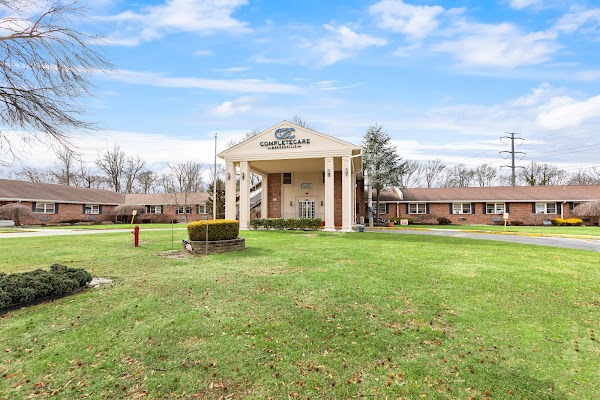
Jun 2023 2 deficiencies
CONCERN (D) 📢 Someone Reported This

A family member, employee, or ombudsman was alarmed enough to file a formal complaint

Potential for Harm - no one hurt, but risky conditions existed

Deficiency F0658 (Tag F0658)

Could have caused harm · This affected 1 resident

**NOTE- TERMS IN BRACKETS HAVE BEEN EDITED TO PROTECT CONFIDENTIALITY** Complaint #: NJ00163579 Based on observation, interview, and review of pertinent facility documentation, it was determined that ...

Read full inspector narrative →
**NOTE- TERMS IN BRACKETS HAVE BEEN EDITED TO PROTECT CONFIDENTIALITY** Complaint #: NJ00163579 Based on observation, interview, and review of pertinent facility documentation, it was determined that the facility failed to provide care and services according to acceptable standards of clinical nursing practice by the following: 1.) remove medicated gel from a resident's room after wound care treatment for one 1 of 1 residents (Resident #1) observed for wound care, and 2.) sign and date resident's wound dressings for 2 of 2 residents (Resident #1 and Resident #2) whose wound dressings were observed. The deficient practice was evidenced by the following: Reference: New Jersey Statues, Annotated Title 45, Chapter 11 Nursing Board, The Nurse Practice Act for the State of New Jersey states; The practice of nursing as a registered professional nurse is defined as diagnosing and treating human responses to actual or potential physical and emotional health problems, through such services as case finding, health teaching, health counseling, and provision of care supportive to or restorative of life and wellbeing, and executing a medical regimens as prescribed by a licensed or otherwise legally authorized physician or dentist. Reference: New Jersey Statutes Annotated, Title 45, Chapter 11. Nursing Board. The Nurse Practice Act for the State of New Jersey states: The practice of nursing as a licensed practical nurse is defined as performing tasks and responsibilities within the framework of case finding; reinforcing the patient and family teaching program through health teaching, health counseling and provision of supportive and restorative care, under the direction of a registered nurse or licensed or otherwise legally authorized physician or dentist. 1. On 06/06/23 at 8:40 AM, the surveyor observed Licensed Practical Nurse (LPN) #1 take treatment supplies for Resident #1's pressure ulcer treatment for their coccyx (tailbone) including TheraHoney Gel out of the South Unit treatment supply cart. On 06/06/23 at 8:49 AM, the surveyor observed that LPN #1 carried the wound care supplies including TheraHoney Gel into Resident #1's room and set them on the resident's overbed table. LPN #1 began the pressure ulcer treatment at this time. LPN #1 turned Resident #1 on their side and the surveyor observed the foam dressing that was on Resident #1's coccyx was not signed or dated. LPN #1 acknowledged to the surveyor that the foam dressing that was on the resident was not signed or dated, and that it should have been. On 06/06/23 at 9:10 AM, After the treatment was finished, the surveyor observed that LPN #1 repositioned Resident #1 in bed to a seated position with their overbed table positioned next to the resident. On 06/06/23 at 9:11 AM, the surveyor observed LPN #1 leave Resident #1's room. On 06/06/23 at 9:30 AM, the surveyor entered Resident #1's room and observed the TheraHoney Gel was on the resident's overbed table and that it was within the resident's reach. The surveyor interviewed Resident #1 at this time. Resident #1 stated that they did not know what the TheraHoney Gel was. Resident #1 also stated that the nursing staff clean and dress their wound every day. The surveyor reviewed Resident #1's electronic medical record (EMR): The admission Record revealed that Resident #1 was admitted to the facility on [DATE] with medical diagnoses that included but were not limited to Amyloidosis (abnormal buildup of proteins deposited around tissues and organs), Multiple Myeloma (white blood cell cancer), and Secondary Malignant Neoplasm of Bone (bone cancer). The admission Minimum Data Set (MDS), an assessment tool used to facilitate the management of care, dated 05/07/23 indicated that the resident had a Brief Interview for Mental Status (BIMS) score of 10 out of a possible 15 which indicated that the resident had moderately impaired cognition. The Order Summary Report (OSR) revealed that Resident #1 had an active physician's order (PO) dated 04/28/23, [ .] Resident MAY NOT administer own meds. [ .]. The OSR also revealed an active PO dated 05/15/23 to Cleanse open area to coccyx with NSS [normal saline solution], apply Medihoney and foam dressing once daily every day shift for wound care. The 06/23 Treatment Administration Record (TAR) revealed that LPN #1 had signed that she had completed the previous dressing change on 06/05/23. During an interview with the surveyor on 06/06/23 at 9:34 AM, LPN #1 stated that the TheraHoney Gel was dedicated to Resident #1 and that, I can throw that in the trash. During an interview with the surveyor on 06/06/23 at 12:05 PM, The Licensed Practical Nurse/Unit Manager (LPN/UM) stated that LPN #1 should not have left the TheraHoney Gel in Resident #1's room because it was a potential safety issue. During an interview with the surveyor on 06/06/23 at 2:11 PM, the Director of Nursing (DON) stated that the TheraHoney Gel should not have been left in Resident #1's room and that it should have been discarded after LPN #1 finished the pressure ulcer treatment. The facility policy, Administering Medications with an updated date of 10/22 indicated in the Policy Interpretation and Implementation section, 13. Residents may self-administer their own medications only if the Attending Physician, in conjunction with the Interdisciplinary Care Planning Team, has determined that they have the decision-making capacity to do so safely. 2. On 06/06/23 at 9:36 AM, the LPN/ UM and the surveyor entered Resident #2's room. The surveyor observed that Resident #2 had four border foam dressings covering wounds on their right kneecap and one border foam dressing covering a wound on their right upper leg. The surveyor observed that none of these dressings were signed or dated. The LPN/UM stated that Resident #2's wound dressings were supposed to be changed every day and that wound dressings should have been signed and dated to make sure that they were changed daily. During an interview with the surveyor on 06/06/23 at 9:43 AM, Resident #2 stated that the staff change their wound dressings every day. The surveyor reviewed Resident #2's EMR: The admission Record revealed that Resident #2 was admitted to the facility on [DATE] with medical diagnoses which included but were not limited to Encounter for Other Orthopedic Aftercare, Laceration (deep cut) with Foreign Body, Right Knee, and Driver Injured in Collision with Unspecified Motor Vehicles in Traffic Accident. The OSR revealed a 06/02/23 active PO to, Cleanse right leg wound with NSS [normal saline solution] apply boarderfoam dressing daily & PRN [as needed] every day shift for wound care. The 06/23 TAR revealed that nurses documented that they changed Resident #2's right leg wound dressings on 06/05/23 and 06/06/23. The admission MDS dated [DATE] indicated that Resident #2 had a BIMS score of 15 out of 15 which indicated that they were cognitively intact. The MDS also indicated that the resident had surgical wounds. During an interview with the surveyor on 06/06/23 at 2:11 PM, the Director of Nursing (DON) stated it was best practice for wound dressings to be dated because then it was known when the wound dressing was last changed. On 06/06/23 at 3:34 PM, the surveyor expressed these concerns to the DON, Licensed Nursing Home Administrator (LNHA), Regional LNHA, and Regional Clinical Supervisor. No additional information was provided. The facility policy Wound Care with an updated date of 10/21 indicated in the Steps in the Procedure section, 8. Dress wound. [NAME] tape with initials, time, and date and apply to dressing [ .]. NJAC 8:39-11.2(b), 8:39-29.4(h)
CONCERN (D) 📢 Someone Reported This

A family member, employee, or ombudsman was alarmed enough to file a formal complaint

Potential for Harm - no one hurt, but risky conditions existed

Infection Control (Tag F0880)

Could have caused harm · This affected 1 resident

**NOTE- TERMS IN BRACKETS HAVE BEEN EDITED TO PROTECT CONFIDENTIALITY** Complaint #: NJ00163579 Based on observation, interview, and review of facility documentation, it was determined that the facili...

Read full inspector narrative →
**NOTE- TERMS IN BRACKETS HAVE BEEN EDITED TO PROTECT CONFIDENTIALITY** Complaint #: NJ00163579 Based on observation, interview, and review of facility documentation, it was determined that the facility failed to 1.) implement infection control techniques that would decrease the possibility of spreading infection during a wound treatment for 1 of 1 wound treatment observed (Resident #1) and 2.) follow enhanced barrier precautions during a wound care treatment for 1 of 1 wound treatment observed (Resident #1). The deficient practice was evidenced by the following: On 06/06/23 at 8:40 AM, the surveyor observed as Licensed Practical Nurse (LPN) #1 prepared treatment supplies to provide wound care for a pressure ulcer on Resident #1's coccyx (tailbone). LPN #1 removed items from the South Unit treatment cart including gauze pads, 0.9% Sodium Chloride (normal saline solution), a border foam dressing, and TheraHoney Gel. On 06/06/23 at 8:41 AM, the surveyor observed a sign posted on Resident #1's door which indicated, STOP, Enhanced Barrier Precautions, Providers and staff must also: wear gloves and a gown for the following high-contact resident care activities. dressing, bathing/showering, transferring, changing linens, providing hygiene, changing briefs or assisting with toileting device care or use: central line, urinary catheter, feeding tube, tracheostomy, wound care: any skin opening requiring a dressing. On 06/06/23 at 8:49 AM, LPN #1 entered Resident #1's room and removed their breakfast tray from their overbed table and placed it in the meal delivery truck in the hallway. LPN #1 walked to the treatment cart and gathered the wound treatment supplies that she had taken out of the cart including the gauze pads, 0.9% Sodium Chloride solution, border foam dressing, and TheraHoney Gel and placed them on the resident's overbed table. LPN #1 failed to clean or sanitize the overbed table, or to create a clean field on the overbed table prior to putting the items down. On 06/06/23 at 8:54 AM, LPN #1 went into the hallway and returned to Resident #1's room carrying supplies for incontinence care including washcloths and an incontinence brief. LPN #1 went to the resident's bathroom and wet the washcloths. On 06/06/23 at 8:57 AM, LPN #1 donned (put on) gloves and approached the resident. LPN #1 unlatched the resident's soiled incontinence brief and turned the resident on their side. The surveyor observed a border foam dressing on Resident #1's coccyx and feces in the cleft between the resident's buttocks. LPN #1 removed the border foam dressing and discarded it in the trash can. LPN #1 then used the wet washcloths to wipe feces out of the cleft between the resident's buttocks. On 06/06/23 at 9:01 AM, The surveyor observed as LPN #1 poured the 0.9% Sodium Chloride solution on the gauze pads and began to clean Resident #1's coccyx wound with the saline solution. The surveyor observed that LPN #1 did not change gloves and did not perform hand hygiene between when they finished providing incontinence care and when they began to clean the resident's wound. LPN #1 applied TheraHoney Gel to the wound and covered it with a border foam dressing before they applied a new incontinence brief to the resident, rolled the resident on their back, and doffed (took off) gloves. LPN #1 did not wear an isolation gown during any portion of the incontinence care or wound care treatment. On 06/06/23 at 9:09 AM, the surveyor observed LPN #1 discard wound care supplies including the 0.9% Sodium Chloride Solution and leave the resident's room with the trash bag and the remaining pack of gauze pads. The surveyor observed that the LPN failed to sanitize the overbed table after finishing the wound care treatment. On 06/06/23 at 9:11 AM, the surveyor observed as LPN #1 returned the pack of gauze that was on the resident's uncleaned overbed to the South Side treatment cart. During an interview with the surveyor on 06/06/23 at 9:17 AM, LPN #1 stated that Resident #1 was not on any transmission-based precautions. She stated that she should have sanitized the resident's overbed table prior to placing wound care supplies on it. LPN #1 continued that she should have thrown the pack of gauze away and not returned it to the treatment cart. LPN #1 stated that she changed gloves between providing incontinence care for the resident and touching the gauze to clean the resident's wound. The surveyor stated that she observed that the gloves were not changed. During an additional interview with the surveyor on 06/06/23 at 11:25 AM, LPN #1 stated that Resident #1 was on enhanced barrier precautions and acknowledged that she should have worn an isolation gown during wound care. LPN #1 also stated that she should have cleaned the resident's overbed table after she completed wound care. The surveyor reviewed Resident #1's electronic medical record: The admission Record revealed that Resident #1 was admitted to the facility on [DATE] with medical diagnoses that included but were not limited to Amyloidosis (abnormal buildup of proteins deposited around tissues and organs), Multiple Myeloma (white blood cell cancer), and Secondary Malignant Neoplasm of Bone (bone cancer). The 05/07/23 Minimum Data Set, an assessment tool used to facilitate the management of care indicated that the resident had a Brief Interview for Mental Status score of 10 out of a possible 15 which indicated that the resident had moderately impaired cognition. The Order Summary Report revealed that Resident #1 had an active physician's order dated 05/15/23 to Cleanse open area to coccyx with NSS [normal saline solution], apply Medihoney and foam dressing once daily every day shift for wound care. The 06/01/23 enhanced barrier precautions care plan indicated, [Resident #1] requires enhanced barrier precautions R/T [related to] (wound, indwelling catheter) Resident has an indwelling medical device: Indwelling urinary catheters, Resident has any skin opening requiring a dressing. During an interview with the surveyor on 06/06/23 at 12:05 PM, the Licensed Practical Nurse/ Unit Manager (LPN/UM) stated that she expected that a nurse would sanitize a resident's overbed table prior to placing wound care supplies on it. She stated that Resident #1 was on enhanced barrier precautions and that staff needed to wear a gown and gloves during wound care treatments. The LPN/UM stated that the pack of gauze that went into the resident's room should not have been returned to the treatment cart and that it should have been placed in the garbage. She continued that hand hygiene should be completed when moving from dirty to clean during resident care. During an interview with the surveyor on 06/06/23 at 2:11 PM, the Director of Nursing (DON) stated that LPN #1 should have cleaned the overbed table when the breakfast tray was removed. The DON stated that LPN #1 should have, followed the sign on the door and wore an isolation gown during the wound care treatment. The DON continued that the LPN should have changed gloves between performing incontinence care and wound care and that hand hygiene should have been completed when changing gloves. The DON stated that the pack of gauze should not have been brought into the resident's room because LPN #1 should have just taken what she needed into the resident's room. The DON continued that if a pack of gauze did go into the resident's room that it should not have been returned to the treatment cart after. On 06/06/23 at 3:34 PM, the surveyor expressed these concerns to the DON, Licensed Nursing Home Administrator (LNHA), Regional LNHA, and Regional Clinical Supervisor. No additional information was provided. The facility policy, Wound Care, with a reviewed date of 10/21 included under the Steps in the Procedure section to 1. Use disposable cloth (paper towel is adequate) to establish clean field on resident's overbed table. Place all items to be used during procedure on the clean field. Arrange the supplies so they can be easily reached. 4. Put on exam glove. Loosen tape and remove dressing. Pull glove over dressing and discard into appropriate receptacle. Wash and dry your hands thoroughly. 12. Use clean field saturated with alcohol to wipe overbed table. 15. Take only the disposable supplies that are necessary for the treatment into the room. Disposable supplies cannot be returned to the cart. The facility policy, Handwashing/Hand Hygiene, with a reviewed date of 1/22 included under the Policy Interpretation and Implementation Section to Use an alcohol-based hand rub containing at least 70% alcohol; or alternatively, soap (antimicrobial or non-antimicrobial) and water for the following situations: [ .] g. Before handling clean or soiled dressings, gauze pads, etc.; h. Before moving from a contaminated body site to a clean body site during resident care; i. After contact with a resident's intact skin; [ .] k. After handling used dressings, contaminated equipment, etc.; [ .] m. After removing gloves; n. Before and after entering isolation precaution settings;. The facility policy, Enhanced Barrier Precautions Policy and Procedure, with an adapted date of 11/21/22 indicated under the Policy section EBP [Enhanced Barrier Precautions] will be implemented (when Contact Precautions do not otherwise apply for residents with any of the following: Wounds or indwelling medical devices, regardless of MDRO [Multi-Drug Resistant Organism] colonization status. The policy also indicated, Examples of high-contact resident care activities requiring gown and glove use for Enhanced Barrier Precautions include: [ .] Wound care: any skin opening requiring a dressing. NJAC 8:39-19.4 (a, n).
May 2022 3 deficiencies
CONCERN (D)

Potential for Harm - no one hurt, but risky conditions existed

Infection Control (Tag F0880)

Could have caused harm · This affected 1 resident

Based on observations, interviews, and review of other facility documentation, it was determined that the facility failed to ensure that mitigation measures were followed to prevent the potential spre...

Read full inspector narrative →
Based on observations, interviews, and review of other facility documentation, it was determined that the facility failed to ensure that mitigation measures were followed to prevent the potential spread of COVID-19, a contagious respiratory infection, by ensuring that newly admitted and readmitted residents were consistently maintained on transmission-based precautions in accordance with the facility policy and current infection control standards. This deficient practice was identified for 1 of 2 residents reviewed for transmission based precautions, (Resident #425) on 1 of 2 nursing units, South Wing and was evidenced by the following: On 04/18/22 at 10:28 AM, during the initial tour of the facility, surveyor #2 observed and interviewed Resident #425 who stated that all staff wore full Personal Protective Equipment (PPE, equipment designed to protect the wearer's body from injury or infection) when they entered the room and performed care. The resident further stated that he/she was vaccinated against COVID-19 but had not received a booster. On 04/19/22 at 10:56 AM, surveyor #4 observed that Resident #425's door was closed and a blank piece of paper hung on the outside of the door. The surveyor flipped the paper over and noted the following: Extended Contact Plus Droplet Precautions For Special Respiratory Circumstances. Please see the Nurse before entering the Patient's room! Further review of the signage revealed the following: Perform hand hygiene before and after patient contact, contact with environment and after removal of PPE. Wear a Face mask, gown, eye protection and gloves upon entering this room. The was no PPE cart outside of the resident's room from which to obtain the required PPE specified on the signage to donn (put on) prior to entering the resident's room. At 11:00 AM, the Licensed Practical Nurse/Unit Manager (LPN/UM) approached surveyor #4 as she attempted to locate the required PPE in a triple-drawer plastic bin that was in the hallway adjacent to the resident's room. The LPN/UM stated that the signage on the resident's door was turned over to the blank side before the surveyor arrived to the unit which indicated that although Resident #425 was on the unit designated for those admitted Under Observation (AUO) for COVID-19, he/she was vaccinated and rather than full PPE, only a surgical mask was required to enter the resident's room. The LPN/UM stated that she was unsure if the resident had received a booster or if a booster was required to be considered up-to-date with vaccination requirements. The surveyor knocked on the resident's door prior to entering and observed an Occupational Therapy Aide (OTA), who wore a surgical mask and goggles as she worked with the resident. At 11:22 AM, surveyor #4 observed Resident #425 who was lying in bed awake. When interviewed, the resident stated that he/she was vaccinated against COVID-19 but did not accept the booster when it was offered because he/she was ill at that time. Review of the admission Record (an admission summary) revealed that Resident #425 was re-admitted to the facility in April of 2022 with diagnosis which included but were not limited to: Acute on chronic respiratory failure with hypoxia (oxygen deficiency), chronic obstructive pulmonary disease (COPD), pneumonia, dependence on supplemental oxygen and anxiety disorder. Review of Resident #425's admission Minimum Data Set (MDS), an assessment tool dated 04/21/22, revealed that the resident had a Brief Interview for Mental Status (BIMS) of 15 which indicated that the resident's cognition was fully intact. Further review of the MDS revealed that the resident required limited assistance of one person for bed mobility and extensive assistance of one person for transfers. During an interview with surveyor #4 on 04/26/22 at 11:14 AM, the Director of Nursing (DON) stated that the facility placed admissions/readmissions on AOU status. She stated if the resident had two COVID-19 vaccines and was not boosted, they were considered vaccinated and staff were only required to wear a surgical mask. She stated that residents were offered a booster upon admission to the facility and upon discharge from the facility because this was the most vulnerable population. She stated that the resident's were required to be tested for COVID-19 upon admission and on day five and if they tested negative, they could move out of the AUO area. The DON stated that isolation signs were hung on the resident's door with the blank side facing out which indicated that only a surgical mask was required to enter the room unless the resident was on isolation precautions and full PPE were needed, then we flipped the sign around to indicate that . She stated that this was done so that staff were not continually looking for signs when they were needed. During an interview with surveyor #4 on 04/26/22 at 11:52 AM, LPN #3 stated that when anyone went past the double doors onto the AOU Unit an N-95 respirator mask (a filtering facepiece respirator that filters at least 95% of airborne particles) and goggles were required for everyone for a period of 14 days after a resident was admitted /re-admitted to the facility. She stated if the resident was tested on the first and fifth day and tested negative and was fully vaccinated, they may move off of the unit sooner. During an interview with the surveyor on 04/26/22 at 12:55 PM, the OTA stated that she routinely wore goggles and a surgical mask throughout the facility unless she was assigned to the area designated for COVID positive residents. She stated that otherwise, she determined the PPE required to be worn on the area of the facility designated for residents AUO based on a piece of paper that was posted on the resident's door. She stated that if the paper were flipped to the blank side then full PPE (gown, gloves, goggles/face shield, N-95 respirator mask) was not required to enter the resident's room. She stated that she never had to wear full PPE when she cared for Resident #425 because the paper on the resident's door did not instruct to do so. She stated that prior to survey, everyone on the AUO unit was required to wear full PPE as the papers that were pinned to the door were always front facing and directed full PPE usage. During an interview with the surveyor on 04/26/22 at 03:06 PM, the Director of Clinical Services (DCS) who was responsible for Infection Prevention at the facility, stated that Resident #425 should have been on both contact and droplet precautions for a period of seven days and tested for COVID-19 on days one and five. The DON who was present at that time, stated that full PPE should have been required to enter the resident's room and an isolation cart should have been placed outside of the resident's room to ensure that the PPE was readily available prior to entry. She stated that the resident should have been on isolation or Contact and Droplet Precautions as the resident was not up to date with the COVID-19 vaccination series. The surveyor reviewed the facility policy, Considerations for Cohorting COVID-19 Patients in Post-Acute Care Facilities (March 3, 2022) which revealed the following: New or readmitted asymptomatic patients/residents who are not up to date* with all recommended COVID-19 vaccine doses and have a viral test negative for SARS-CoV-2 upon admission or readmission: These patients/residents should be placed in quarantine and cared for using full PPE (gowns, gloves, eye protection that covers the front and sides of face, and NIOSH-approved (National Institute for Occupational Safety) N95 or equivalent or higher level respirator), even if they have a negative test upon admission. Testing is recommended immediately (upon admission) and, if negative, again 5-7 days after their admission. Quarantine may be discontinued after day 7 if a viral test is negative for SARS-CoV-2 and they do not develop symptoms. The specimen should be collected and tested within 48 hours before the time of the planned discontinuation of quarantine . NJAC 8:39 19.4
CONCERN (D)

Potential for Harm - no one hurt, but risky conditions existed

Deficiency F0888 (Tag F0888)

Could have caused harm · This affected 1 resident

Based on observations, interviews, and review of other facility documentation, it was determined that the facility failed to ensure that mitigation measures were followed to prevent the potential spre...

Read full inspector narrative →
Based on observations, interviews, and review of other facility documentation, it was determined that the facility failed to ensure that mitigation measures were followed to prevent the potential spread of COVID-19, a contagious respiratory infection, in accordance with the facility policy and current infection control standards. This deficient practice was identified for 2 of 2 unvaccinated staff, on 1 of 2 nursing units, North Wing, and was evidenced by the following: During an interview with surveyor #1 on 04/19/22 at 11:38 AM, in the presence of the survey team, the Director of Clinical Services (DCS) stated that unvaccinated staff were required to wear a surgical mask only, and no face shield or goggles were required throughout the facility as they were tested for COVID-19 weekly. She stated that since the facility was not in an outbreak, unvaccinated staff were not required to wear an N-95 respirator mask (a filtering facepiece respirator that filters at least 95% of airborne particles) as the facility had not seen a reason for concern. She stated any time they tested and there was a positive case then it would become a concern. She further stated that if there were an outbreak, unvaccinated staff would be required to wear both an N-95 mask and a face shield or goggles. When surveyor #1 referenced the facility policy, Staff COVID-19 Vaccination Policy and Procedure (2022), which indicated that unvaccinated staff were required to wear an N-95 respirator mask and a face shield or goggles throughout the facility, the DCS stated that the policy was more of a guidance and this was not a concern since the facility had not experienced an outbreak for the past four months. She stated that she was unable to reassign nursing staff who were not vaccinated to alternate job responsibilities other than resident care. The DCS stated that if there were a concern of infection control, then the facility would have adhered to the policy. She further stated, A surgical mask provided source control, it was not like we were not wearing anything. During an interview with surveyor #2 on 04/19/22 at 03:11 PM, Licensed Practical Nurse (LPN) #1 was observed wearing a surgical mask and no additional personal protective equipment (PPE, equipment designed to protect the wearer's body from injury or infection) on the North Wing care unit. LPN #1 stated that she was assigned to work the 3-11 shift on the front hall of the North Wing and her duties included passing medications and administering treatments to her assigned residents. She stated that she might wear an N-95 mask if the unit had them, but she normally wore a surgical mask. She stated that she was previously fit-tested for N-95 mask use. She denied having had any education provided by the facility in reference to being required to wear an N-95 mask during resident care. During an interview with surveyor #3 on 04/22/22 at 11:02 AM, LPN #2, was observed wearing only a surgical mask and no additional PPE at the North Wing nurse's station. LPN #2 stated that a surgical mask was the only PPE that was required to be worn throughout the facility unless there was a positive case of COVID-19 in the building. She stated that in that case, she would then be required to wear an N-95 respirator mask and goggles. She stated that her job duties included administering medications and treatments to her assigned residents. She stated that she also assisted the Certified Nursing Aides (CNA's) when they transferred residents via a mechanical lift as needed. LPN #2 explained that no one was exempt from wearing whatever PPE was recommended by the facility at any given time whether they were vaccinated or not. She further stated that she had received education on PPE use on an as needed basis as changes occurred at the facility. During an interview with surveyor #4 on 04/28/22 at 10:20 AM, in the presence of the survey team, the DCS stated that surveyor #1 misinterpreted the facility policy, Staff COVID-19 Vaccination Policy and Procedure (2022), as the policy required that staff were required to wear an N-95 mask and eye protection when the facility was in contingency mode. She stated that the facility was now in conventional mode which indicated that there was no outbreak and N-95 respirator mask usage was not required. She stated that was why both vaccinated and unvaccinated staff were allowed to wear surgical masks instead of an N-95 mask and eye protection. Review of the facility policy,Staff COVID-19 Vaccination Policy and Procedure (2022) revealed the following: .III. Additional Precautions to Mitigate the Transmission and Spread of COVID-19 For All Staff Not Fully Vaccinated for COVID-19: Staff who are not yet fully vaccinated, have a pending exemption request, have been granted an exemption, or who have a temporary delay in vaccination approval must adhere to additional precautions based on national infection prevention and control standards for unvaccinated health care personnel that are intended to mitigate the spread of COVID-19. The Facility will take or require the following precautions, as deemed appropriate or necessary: If possible, Staff who have not completed their primary vaccination series will be reassigned to non-patient care areas, to duties that can be performed remotely (i.e., telework), or to duties which limit exposure to those most at risk (e.g., assigning to residents who are not immunocompromised or unvaccinated). Staff who have not completed their primary vaccination series will be required to follow additional CDC (Centers for Disease Control)-recommended precautions, such as adhering to universal source control and physical distancing measures in areas that are restricted from patient access (e.g., staff meeting rooms, kitchen), even if the Facility is located in a county with low to moderate community transmission. .Staff who have not completed their primary vaccination series will be required to use a NIOSH (National Institute for Occupational Safety and Health) approved N95 or equivalent or higher-level respirator, and face shield or goggles at all times when in the Facility, regardless of whether they are providing direct care to or otherwise interacting with residents. All unvaccinated staff who have approved exemptions must continue to wear mask and eye protection while using public or employee rest rooms. NJAC 8:39 5.1(a), 19.4
CONCERN (F)

Potential for Harm - no one hurt, but risky conditions existed

Food Safety (Tag F0812)

Could have caused harm · This affected most or all residents

Based on observations, interviews, and a review of documentation provided by the facility, it was determined that the facility failed to maintain proper kitchen sanitation practices in a safe and sani...

Read full inspector narrative →
Based on observations, interviews, and a review of documentation provided by the facility, it was determined that the facility failed to maintain proper kitchen sanitation practices in a safe and sanitary environment to prevent the potential development of food-borne illness. This deficient practice was observed and was evidenced by the following: On 04/18/22 from 09:51 AM until 10:40 AM, during the initial tour of the kitchen in the presence of the Food Service Director (FSD), the surveyor observed the following: 1. The trash bucket at the handwashing sink had a broken foot pedal, causing the lid of the trash bucket to not open when stepped on. The FSD tried to fix it but said it was broken and had to be replaced. 2. The administrator entered the kitchen not wearing a hair net, leaving his black hair unrestrained. The administrator stated he came in to see how everything was going but, should have had a hair net on. 3. There was a white substance on the handles of both the top and bottom convection ovens. The inside of the top and bottom convection ovens had a build-up of a black substance on the racks, sides, and bottom. The FSD stated that the ovens should have been cleaned on the weekend, but it does not look like they were cleaned this past weekend. 4. The outside of the regular oven had brown and red drip marks on the door. There was a black and white residue on the inside bottom of the oven. 5. The stovetop backslash had multiple brown substance splash marks on it. The FSD took a paper towel and wiped off some of the brown substance. He stated that it should not be that way due to infection control. 6. The shelf above the stovetop had a buildup of brown residue and brown and white crumbs. The FSD stated that it should have been kept clean due to infection control. 7. There was a mixer covered in a clear plastic bag. The FSD stated that the clear plastic bag indicated that the mixer was clean and ready for use. When the FSD removed the plastic bag, there was a white substance on the mixer guards, a white substance on the inside of the mixer bowl, and a white substance on the ball mount of the mixer. The FSD acknowledged that the substance should not be there due to infection control. 8. There was a robot coupe processor that the FSD stated was clean and ready for use. When the FSD removed the lid, there was a brown substance on the inside blade. The FSD stated that it should not have been there due to infection control. 9. There were six cutting boards with multiple stains and gouges: 2 white cutting boards, a green cutting board, a yellow cutting board, and a blue cutting board with multiple gouges and a black substance. A red cutting board had a large, gouged area that the FSD stated: it looks like it was melted. The FSD stated that the cutting boards should have been replaced and he threw the cutting boards away. 10. Dietary Aide (DA) # 1 was scraped food off plates and placed them on the shelf on the side of the sink. Then DA #2, who was wearing gloves, picked up the plates, rinsed them in the sink, loaded them onto the plastic dishwasher rack, and then pushed the plastic dishwasher rack into the dishwasher. DA#2 then walked over to the other side of the dish washing machine. DA#2 did not remove her gloves or change gloves or perform hand washing before she removed 3 plates from the plastic dishwasher rack and set them aside. She then picked up the plastic dishwasher rack and stacked it on top of other plastic dishwasher racks. The FSD confirmed that the dishes on the other side of the dishwasher were clean. He then stated that the process was that staff on the dirty side of the dishwasher should scrape the food and rinse the dishes, load them into the dishwasher, then the gloves should be removed, hand washing performed, and new gloves applied before going to the clean side of the dishwasher to prevent cross-contamination. The FSD confirmed DA#2 did not remove her gloves or perform handwashing after leaving the dirty side and going to the clean side. On 04/27/22 at 02:40 PM, these findings were reviewed with the Administrator, the Director of Nursing, the Associate Regional Director, and the Director of Clinical Services via speakerphone. A review of the facility's policy, HCSG Policy 030, Dispose of Garbage and Refuse with an original date of 8/2017, revealed Procedures: 2. The Dining Services Director will ensure that: Appropriate lids are provided for all containers. A review of the facility's policy, HCSG Policy 027, Equipment with a revised date of 9/2017, revealed Policy Statement: All foodservice equipment will be clean, sanitary, and in proper working order. Procedures: 3. All food contact equipment will be cleaned and sanitized after every use, 4. All non-food contact equipment will be clean and free of debris. A review of the facility's policy, HCSG Policy 024, Staff Attire with a revised date of 9/2017, revealed Procedures: 1. All staff members will have their hair off the shoulders, confined in a hair net or cap, and facial hair properly restrained. A review of the facility's policy, HCSG Policy 025, Authorized Kitchen Personnel with a revised date of 9/2017, revealed Policy Statement: Only authorized individuals will have access through food preparation, storage, and service areas to minimize the potential for cross contamination. Procedures: 2. All authorized personnel must wear appropriate head covering while in the kitchen or production area. A review of the facility's policy, HCSG Policy 016, Food: Preparation with a revised date of 9/2017, revealed Procedures: 3. All utensils, food contact equipment, and food contact surfaces will be cleaned and sanitized after every use. A review of the facility's policy, HCSG Policy 022, Warewashing with a revised date of 9/2017, revealed Policy Statement: All dishware, serviceware, and utensils will be cleaned and sanitized after each use. Procedures: 1. The Dining Services staff will be knowledgeable in the proper technique for processing dirty dishware through the dish machine, and proper handling of sanitized dishware. A review of the facility's Department Cleaning Schedule revealed the top oven is cleaned on Sunday by the AM cook and the bottom oven is cleaned on Sunday by the PM cook. NJAC 8:39- 17.2 (g)
Understanding Severity Codes (click to expand)
Life-Threatening (Immediate Jeopardy)
J - Isolated K - Pattern L - Widespread
Actual Harm
G - Isolated H - Pattern I - Widespread
Potential for Harm
D - Isolated E - Pattern F - Widespread
No Harm (Minor)
A - Isolated B - Pattern C - Widespread

Questions to Ask on Your Visit

  • "Can I speak with families of current residents?"
  • "What's your RN coverage like on weekends and overnight?"

Our Honest Assessment

Strengths
  • • No major safety red flags. No abuse findings, life-threatening violations, or SFF status.
  • • No fines on record. Clean compliance history, better than most New Jersey facilities.
Concerns
  • • 21 deficiencies on record. Higher than average. Multiple issues found across inspections.
Bottom line: Mixed indicators with Trust Score of 70/100. Visit in person and ask pointed questions.

About This Facility

What is Complete Care At Mercerville Llc's CMS Rating?

CMS assigns COMPLETE CARE AT MERCERVILLE LLC an overall rating of 4 out of 5 stars, which is considered above average nationally. Within New Jersey, this rating places the facility higher than 99% of the state's 100 nursing homes. This rating reflects solid performance across the metrics CMS uses to evaluate nursing home quality.

How is Complete Care At Mercerville Llc Staffed?

CMS rates COMPLETE CARE AT MERCERVILLE LLC's staffing level at 2 out of 5 stars, which is below average compared to other nursing homes.

What Have Inspectors Found at Complete Care At Mercerville Llc?

State health inspectors documented 21 deficiencies at COMPLETE CARE AT MERCERVILLE LLC during 2022 to 2025. These included: 19 with potential for harm and 2 minor or isolated issues.

Who Owns and Operates Complete Care At Mercerville Llc?

COMPLETE CARE AT MERCERVILLE LLC is owned by a for-profit company. For-profit facilities operate as businesses with obligations to shareholders or private owners. The facility is operated by COMPLETE CARE, a chain that manages multiple nursing homes. With 114 certified beds and approximately 103 residents (about 90% occupancy), it is a mid-sized facility located in HAMILTON TOWNSHIP, New Jersey.

How Does Complete Care At Mercerville Llc Compare to Other New Jersey Nursing Homes?

Compared to the 100 nursing homes in New Jersey, COMPLETE CARE AT MERCERVILLE LLC's overall rating (4 stars) is above the state average of 3.3 and health inspection rating (3 stars) is at the national benchmark.

What Should Families Ask When Visiting Complete Care At Mercerville Llc?

Based on this facility's data, families visiting should ask: "Can you walk me through typical staffing levels on day, evening, and night shifts?" "Can I visit during a mealtime to observe dining assistance and food quality?" "How do you handle medical emergencies, and what is your hospital transfer rate?" "Can I speak with family members of current residents about their experience?" These questions are particularly relevant given the below-average staffing rating.

Is Complete Care At Mercerville Llc Safe?

Based on CMS inspection data, COMPLETE CARE AT MERCERVILLE LLC has a clean safety record: no substantiated abuse findings (meaning no confirmed cases of resident harm), no Immediate Jeopardy citations (the most serious violation level indicating risk of serious injury or death), and is not on the Special Focus Facility watch list (a federal program monitoring the lowest-performing 1% of nursing homes). The facility has a 4-star overall rating and ranks #1 of 100 nursing homes in New Jersey. While no facility is perfect, families should still ask about staff-to-resident ratios and recent inspection results during their visit.

Do Nurses at Complete Care At Mercerville Llc Stick Around?

COMPLETE CARE AT MERCERVILLE LLC has not reported staff turnover data to CMS. Staff turnover matters because consistent caregivers learn residents' individual needs, medications, and preferences. When staff frequently change, this institutional knowledge is lost. Families should ask the facility directly about their staff retention rates and average employee tenure.

Was Complete Care At Mercerville Llc Ever Fined?

COMPLETE CARE AT MERCERVILLE LLC has no federal fines on record. CMS issues fines when nursing homes fail to meet care standards or don't correct problems found during inspections. The absence of fines suggests the facility has either maintained compliance or corrected any issues before penalties were assessed. This is a positive indicator, though families should still review recent inspection reports for the full picture.

Is Complete Care At Mercerville Llc on Any Federal Watch List?

COMPLETE CARE AT MERCERVILLE LLC is not on any federal watch list. The most significant is the Special Focus Facility (SFF) program, which identifies the bottom 1% of nursing homes nationally based on persistent, serious quality problems. Not being on this list means the facility has avoided the pattern of deficiencies that triggers enhanced federal oversight. This is a positive indicator, though families should still review the facility's inspection history directly.