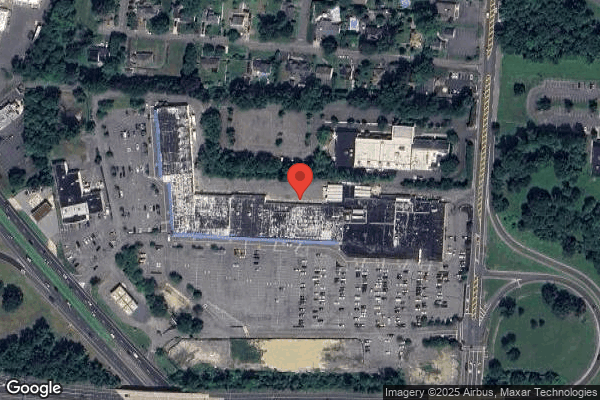
APPLEWOOD VILLAGE

ONE APPLEWOOD DRIVE, FREEHOLD, NJ 07728 (732) 303-7403
Non profit - Corporation 60 Beds Independent Data: November 2025
Trust Grade
80/100
#89 of 344 in NJ
Last Inspection: November 2024

Within standard 12-15 month inspection cycle. Federal law requires annual inspections.

Overview

Applewood Village has a Trust Grade of B+, indicating it is above average and recommended for families considering care options. It ranks #89 out of 344 nursing homes in New Jersey, placing it in the top half, and #11 out of 33 in Monmouth County, meaning only a few local facilities perform better. However, the facility is experiencing a worsening trend, with issues increasing from 1 in 2022 to 2 in 2024. Staffing is a concern, rated only 1 out of 5 stars with a 40% turnover rate, which is below the state average but still suggests potential instability. On the positive side, Applewood Village has no fines on record, reflecting good compliance, and it boasts excellent quality measures with a 5 out of 5 star rating. Nonetheless, there have been specific incidents that raised concerns, such as issues with the call bell system not functioning properly, which could prevent residents from easily alerting staff in emergencies. Additionally, there were lapses in infection control practices, including a nurse failing to wash hands between administering medications to different residents, posing a risk of infection. While the facility has strengths in quality and compliance, families should consider these weaknesses in staffing and specific incidents when making a decision.

Trust Score
B+
80/100
In New Jersey
#89/344
Top 25%
Safety Record
Low Risk
No red flags
Inspections
Getting Worse
1 → 2 violations
Staff Stability
○ Average
40% turnover. Near New Jersey's 48% average. Typical for the industry.
Penalties
✓ Good
No fines on record. Clean compliance history, better than most New Jersey facilities.
Skilled Nurses
○ Average
RN staffing data not reported for this facility.
Violations
✓ Good
Only 3 deficiencies on record. Cleaner than most facilities. Minor issues only.
★★★★☆
4.0
Overall Rating
★☆☆☆☆
1.0
Staff Levels
★★★★★
5.0
Care Quality
★★★★☆
4.0
Inspection Score
Stable
2022: 1 issues
2024: 2 issues

The Good

  • 5-Star Quality Measures · Strong clinical quality outcomes
  • Full Sprinkler Coverage · Fire safety systems throughout facility
  • No fines on record
  • Staff turnover below average (40%)

    8 points below New Jersey average of 48%

Facility shows strength in quality measures, fire safety.

The Bad

Staff Turnover: 40%

Near New Jersey avg (46%)

Typical for the industry

The Ugly 3 deficiencies on record

Nov 2024 2 deficiencies
CONCERN (D)

Potential for Harm - no one hurt, but risky conditions existed

Infection Control (Tag F0880)

Could have caused harm · This affected 1 resident

Based on observation, interview, record review, and review of facility documents, it was determined that the facility failed to maintain proper infection control practices by; a) performing hand hygie...

Read full inspector narrative →
Based on observation, interview, record review, and review of facility documents, it was determined that the facility failed to maintain proper infection control practices by; a) performing hand hygiene during medication administration and b) donning (putting on) the appropriate Personal Protective Equipment (PPE) prior to entering an Enhanced Barrier Precaution room. This deficient practice was identified for 1 of 6 residents observed during medication administration (Resident #20) and 1 of 3 residents observed for wound care (Resident #28), and was evidenced by the following: 1. On 11/24/24 at 9:45 AM, the surveyor observed the Licensed Practical Nurse (LPN #1) conduct medication administration. After administering medications to Resident #26, LPN #1, without performing hand hygiene and still holding the cup of water which Resident #26 used to drink from, went directly over to Resident #20. LPN #1 proceeded to adjust Resident #20's blanket and brushed her hand overtop the resident's hair while informing Resident #20 that she would administer their medications. LPN #1 then proceeded back to the medication cart, located in the hallway outside the resident's door, and disposed of Resident #26's used cup of water. LPN #1, without performing hand hygiene, documented in the computer on of the medication cart; then accessed the medication cart drawer to obtain Resident #20's assistive hearing devices. LPN #1, still with no performed hand hygiene, obtained the blood pressure machine and proceeded to Resident #20's bedside where she donned disposable gloves and placed the resident's assistive hearing devices on the resident. LPN #1 then doffed (took off) her gloves and without performing hand hygiene, placed the blood pressure cuff on the resident to obtain the resident's vital signs. LPN #1 then removed the blood pressure cuff off the resident's arm and brought the machine back out to the hallway. Without performing hand hygiene, LPN #1 then donned clean gloves and disinfected the machine using disinfecting wipes. LPN #1 then disposed of the wipe, doffed and disposed the gloves and then performed hand hygiene with alcohol-based hand rub (ABHR). On 11/24/24 at 10:05 AM, the surveyor interviewed LPN #1 who confirmed that she forgot to perform hand hygiene in between residents during medication administration and that it was important for infection control purposes. On 11/26/24 at 10:02 AM, the surveyor interviewed the Infection Preventionist/Registered Nurse (IP/RN), who stated that the general expectation was to perform hand hygiene with soap and water or use ABHR before starting a procedure and in between residents. The IP/RN further stated that hand hygiene was to be performed in between glove changes always. The IP/RN confirmed LPN #1 should have performed hand hygiene after administering Resident #26's medications before touching Resident #20; prior to accessing the medication cart; and prior to donning and after doffing gloves. On 11/27/24 at 9:41 AM, the Director of Nursing (DON), in the presence of the survey team, the [NAME] President of Clinical Operations (VPCO), the Licensed Nursing Home Administrator (LNHA), and the Director of Clinical Operations (DCO), acknowledged that proper hand hygiene was to be performed by all nurses while administering medications. 2. On 11/24/24 at 11:32 AM, the surveyor reviewed Resident #28's electronic medical record which indicated the following: A review of the admission Record face sheet (an admission summary) reflected that the resident was admitted to the facility with diagnosis which included but was not limited to; infection of the skin and subcutaneous tissue (layer underneath the skin) and pressure ulcer of the sacral region (lower back). A review the most recent comprehensive Minimum Data Set (MDS), an assessment tool dated 10/16/24, indicated the resident had a Brief Interview for Mental Status (BIMS) score of 15 out of 15, which indicated a fully intact cognition. A further review in Section M Skin Conditions indicated the resident had one stage 4 (full tissue thickness) pressure ulcer. A review of the individualized comprehensive care plan (ICCP) included a focus area dated 10/11/24, for risk for impaired skin integrity and updated 10/11/24, to include a sacral pressure ulcer dated 11/20/24. Interventions included to provide treatment to sacral pressure ulcer as ordered and monitor for effectiveness. A review of the November 2024 Treatment Administration Record (TAR) included a physician's order dated 11/21/24, to cleanse sacral wound with normal saline solution (NSS)and apply Polymed non-adhesive pad (gauze pad and dressings) every day shift for wound care. If dressing loosens, apply Tegaderm (clear adhesive bandage). On 11/26/24 at 12:24 PM, the surveyor observed LPN #2 and LPN #3 perform wound care for Resident #28. On the resident's room door was a sign which indicated Enhanced Barrier Precautions (EBP) that required everyone to wear PPE which included gloves and a gown for the following high-contact resident care activities which included wound care. The surveyor observed a PPE bin outside the resident's door which contained gloves and gowns. The surveyor observed LPN #2 and LPN #3 preparing and gathering supplies for wound care; donned gloves prior to entering the resident's room, but did not don a gown. LPN #2 and LPN #3 then performed wound treatment on Resident #28 without wearing a gown. On 11/26/24 at 1:04 PM, LPN #2 and LPN #3 completed wound care and exited the resident's room. At that time, the surveyor interviewed both LPNs, who confirmed that a gown was required as part of the PPE needed to be worn during wound care and confirmed that the EBP sign on the resident's door indicated that as well. LPN #2 and LPN #3 both acknowledged that they forgot to put on a gown as required prior to and during the wound care treatment procedure. On 11/26/24 at 1:46 PM, the surveyor interviewed the DON, who confirmed Resident #28 had a sacral wound and that wound care would be classified as close contact care and required the person providing the care to wear a gown and gloves. On 11/27/24 at 9:41 AM, the DON, in the presence of the survey team, the VPCO, the LNHA, and the DCO, acknowledged that the LPNs should have worn a gown during wound care since the resident was on EBP. A review of the facility's Infection Control General Guidelines for All Nursing Procedures policy revised September 2019, included; .4. in most situations, the preferred method of hand hygiene is with an alcohol-based hand rub. If hands are not visibly soiled, use an alcohol-based hand rub containing 60-95% ethanol or isopropanol for all the following situations: a. before and after direct contact with residents; b. before donning sterile gloves; c. before performing any non-surgical invasive procedures; d. before preparing or handling medications; e. before handling clean or soiled dressings, gauze pads, etc.; f. before moving from a contaminated body site to a clean body site during resident care; g. after contact with a resident's intact skin; h. after handling used dressings, contaminated equipment, etc.; i. after contact with objects (e.g., medical equipment) in the immediate vicinity of the resident; and j. after removing gloves; 5. Wear personal protective equipment as necessary to prevent exposure to spills or splashes of blood or body fluids or other potentially infectious materials; 6. In addition to these general guidelines, refer to procedures for any specific infection control precautions that may be warranted . A review of the facility's Enhanced Barrier Precautions policy revised 3/25/24, included; .Enhanced Barrier Precautions expand the use of PPE and refer to the use of gown and gloves during high-contact resident care activities that provide opportunities for transfer of MDROs (multi-drug resistant organisms) to staff hands and clothing. The policy further included, for residents for whom EBP are indicted, EBP is employed when performing the following high contact resident care activities: .wound care: any skin opening requiring a dressing . NJAC 8:39 - 19.4(a); 27.1(a)
CONCERN (F)

Potential for Harm - no one hurt, but risky conditions existed

Deficiency F0919 (Tag F0919)

Could have caused harm · This affected most or all residents

**NOTE- TERMS IN BRACKETS HAVE BEEN EDITED TO PROTECT CONFIDENTIALITY** Based on observations and interviews on 11/25/24, in the presence of the Director of Plant Operations (DOPO), it was determined ...

Read full inspector narrative →
**NOTE- TERMS IN BRACKETS HAVE BEEN EDITED TO PROTECT CONFIDENTIALITY** Based on observations and interviews on 11/25/24, in the presence of the Director of Plant Operations (DOPO), it was determined that the facility failed to ensure that the resident call bell system properly functioned by a.) ensuring the call bell system volume was set to a level to be heard and b.) devices used to identify call bell notifications were functioning properly. This deficient practice had the potential to affect all residents and was evidenced by the following: On 11/25/24 at 1:08 PM, the surveyor observed when the call bell was tested for Resident room [ROOM NUMBER], there was no audible notification of the call. There was visual notification on the computer screen at the nurse's station and by light outside of the resident room. At the time of the observation, the surveyor interviewed the DOPO, who confirmed that there was no audible notification and stated that there should have been audible notification at the nurse's station. The DOPO stated that the aides also carried pagers that identified when a call bell had been activated. The DOPO then approached the nurse on duty and asked if they had a pager for the call bell system. The nurse stated that they did and proceeded to check their pockets. The nurse was unable to locate the pager in their pocket but was able to find it locked in the top drawer of the medication cart. The DOPO retrieved the pager to show the surveyor that the pager received notifications from the call bell system. The DOPO was unable to show that the pager received notifications from the call bell that was tested and stated that the pager was on vibrate mode. The DOPO was unsure of why the pager was not receiving notifications. On 11/25/24 at 1:24 PM, the surveyor observed when the call bell was tested for Resident room [ROOM NUMBER], there was no audible notification of the call bell system. The DOPO, while carrying the call bell pager, confirmed that they did not receive notification on the pager of the call bell activation. On 11/25/24 at 1:31 PM, the surveyor observed when the call bell was tested for Resident room [ROOM NUMBER], there was no audible notification of the call bell system. However, the aide on that unit received notification by pager of the call bell activation. On 11/25/24 at 2:00 PM, the surveyor interviewed the DOPO, who stated that they were able to figure out the problem with the audible notification at the nurse's station; that the volume had been turned down at the main computer. The DOPO stated he turned the volume up so that it could be heard. NJAC 8:39-31.2(e), 31.8(c)9
Sept 2022 1 deficiency
CONCERN (D)

Potential for Harm - no one hurt, but risky conditions existed

Garbage Disposal (Tag F0814)

Could have caused harm · This affected 1 resident

Based on observation and interview it was determined that the facility failed to properly dispose and maintain waste in 1 of 1 garbage dumpster areas as evidenced by the following: On 9/12/22 at 11:40...

Read full inspector narrative →
Based on observation and interview it was determined that the facility failed to properly dispose and maintain waste in 1 of 1 garbage dumpster areas as evidenced by the following: On 9/12/22 at 11:40 AM, the surveyor in the presence of the Food Service Director (FSD) inspected the garbage dumpster area which included two dumpsters on a concrete pad. The dumpster lids were closed however there was extensive debris including soiled gloves, plastic cups, plastic bags, candy wrappers, shipping envelopes, papers, and discarded cigarettes on the concrete pad behind the dumpsters and in the grass adjacent to the dumpsters. The FSD stated the Housekeeping Department was responsible for maintaining the dumpster area. On 9/13/22 at 1:20 PM, the surveyor interviewed the Housekeeping Supervisor (HS) who confirmed the Housekeeping Department was responsible for maintaining the garbage dumpster area. The HS stated that she did not see the garbage and debris around the back of the dumpster area and further stated, it was an oversight. At this time, the surveyor requested a copy of the facility's policy related to maintaining and cleaning of the garbage area. On 9/20/22 at 11:30 AM, the surveyor interviewed the License Nursing Home Administrator (LNHA) who confirmed the Housekeeping Department was responsible for maintenance of the dumpster area including cleanliness. The LNHA stated the facility had no policy regarding maintaining the garbage dumpster area. On 9/21/22 at 11:31 AM, the LNHA in the presence of the Director of Nursing and the survey team acknowledged that the garbage dumpster area should be maintained free of garbage and cigarette debris. NJAC 8:39-19.7(a)(b)
Understanding Severity Codes (click to expand)
Life-Threatening (Immediate Jeopardy)
J - Isolated K - Pattern L - Widespread
Actual Harm
G - Isolated H - Pattern I - Widespread
Potential for Harm
D - Isolated E - Pattern F - Widespread
No Harm (Minor)
A - Isolated B - Pattern C - Widespread

Questions to Ask on Your Visit

  • "Can I speak with families of current residents?"
  • "What's your RN coverage like on weekends and overnight?"

Our Honest Assessment

Strengths
  • • Grade B+ (80/100). Above average facility, better than most options in New Jersey.
  • • No major safety red flags. No abuse findings, life-threatening violations, or SFF status.
  • • No fines on record. Clean compliance history, better than most New Jersey facilities.
  • • Only 3 deficiencies on record. Cleaner than most facilities. Minor issues only.
Concerns
  • • No significant concerns identified. This facility shows no red flags across CMS ratings, staff turnover, or federal penalties.
Bottom line: Generally positive indicators. Standard due diligence and a personal visit recommended.

About This Facility

What is Applewood Village's CMS Rating?

CMS assigns APPLEWOOD VILLAGE an overall rating of 4 out of 5 stars, which is considered above average nationally. Within New Jersey, this rating places the facility higher than 99% of the state's 100 nursing homes. This rating reflects solid performance across the metrics CMS uses to evaluate nursing home quality.

How is Applewood Village Staffed?

CMS rates APPLEWOOD VILLAGE's staffing level at 1 out of 5 stars, which is much below average compared to other nursing homes. Staff turnover is 40%, compared to the New Jersey average of 46%. This relatively stable workforce can support continuity of care.

What Have Inspectors Found at Applewood Village?

State health inspectors documented 3 deficiencies at APPLEWOOD VILLAGE during 2022 to 2024. These included: 3 with potential for harm.

Who Owns and Operates Applewood Village?

APPLEWOOD VILLAGE is owned by a non-profit organization. Non-profit facilities reinvest revenue into operations rather than distributing to shareholders. The facility operates independently rather than as part of a larger chain. With 60 certified beds and approximately 34 residents (about 57% occupancy), it is a smaller facility located in FREEHOLD, New Jersey.

How Does Applewood Village Compare to Other New Jersey Nursing Homes?

Compared to the 100 nursing homes in New Jersey, APPLEWOOD VILLAGE's overall rating (4 stars) is above the state average of 3.3, staff turnover (40%) is near the state average of 46%, and health inspection rating (4 stars) is above the national benchmark.

What Should Families Ask When Visiting Applewood Village?

Based on this facility's data, families visiting should ask: "Can you walk me through typical staffing levels on day, evening, and night shifts?" "Can I visit during a mealtime to observe dining assistance and food quality?" "How do you handle medical emergencies, and what is your hospital transfer rate?" "Can I speak with family members of current residents about their experience?" These questions are particularly relevant given the below-average staffing rating.

Is Applewood Village Safe?

Based on CMS inspection data, APPLEWOOD VILLAGE has a clean safety record: no substantiated abuse findings (meaning no confirmed cases of resident harm), no Immediate Jeopardy citations (the most serious violation level indicating risk of serious injury or death), and is not on the Special Focus Facility watch list (a federal program monitoring the lowest-performing 1% of nursing homes). The facility has a 4-star overall rating and ranks #1 of 100 nursing homes in New Jersey. While no facility is perfect, families should still ask about staff-to-resident ratios and recent inspection results during their visit.

Do Nurses at Applewood Village Stick Around?

APPLEWOOD VILLAGE has a staff turnover rate of 40%, which is about average for New Jersey nursing homes (state average: 46%). Moderate turnover is common in nursing homes, but families should still ask about staff tenure and how the facility maintains care continuity when employees leave.

Was Applewood Village Ever Fined?

APPLEWOOD VILLAGE has no federal fines on record. CMS issues fines when nursing homes fail to meet care standards or don't correct problems found during inspections. The absence of fines suggests the facility has either maintained compliance or corrected any issues before penalties were assessed. This is a positive indicator, though families should still review recent inspection reports for the full picture.

Is Applewood Village on Any Federal Watch List?

APPLEWOOD VILLAGE is not on any federal watch list. The most significant is the Special Focus Facility (SFF) program, which identifies the bottom 1% of nursing homes nationally based on persistent, serious quality problems. Not being on this list means the facility has avoided the pattern of deficiencies that triggers enhanced federal oversight. This is a positive indicator, though families should still review the facility's inspection history directly.